
1967 Chevrolet
Camaro RS
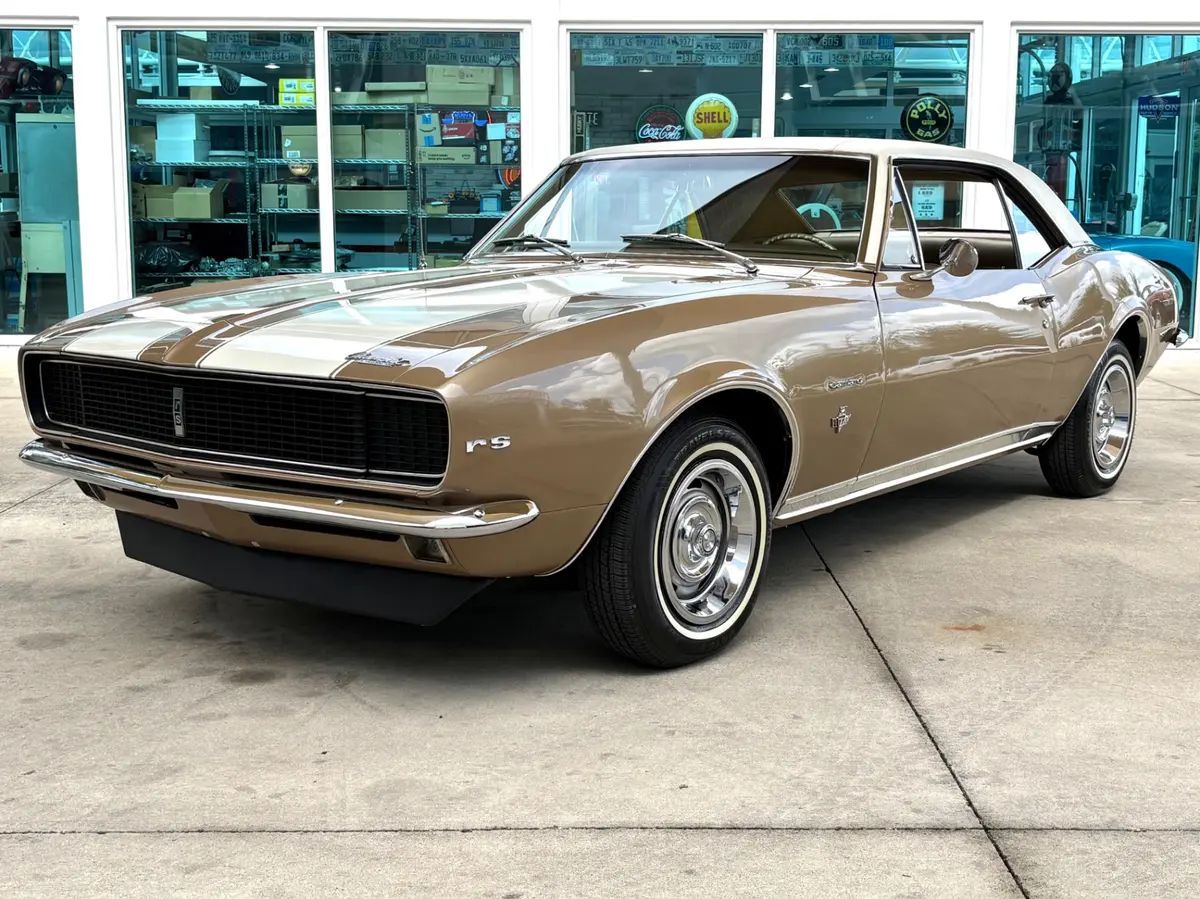
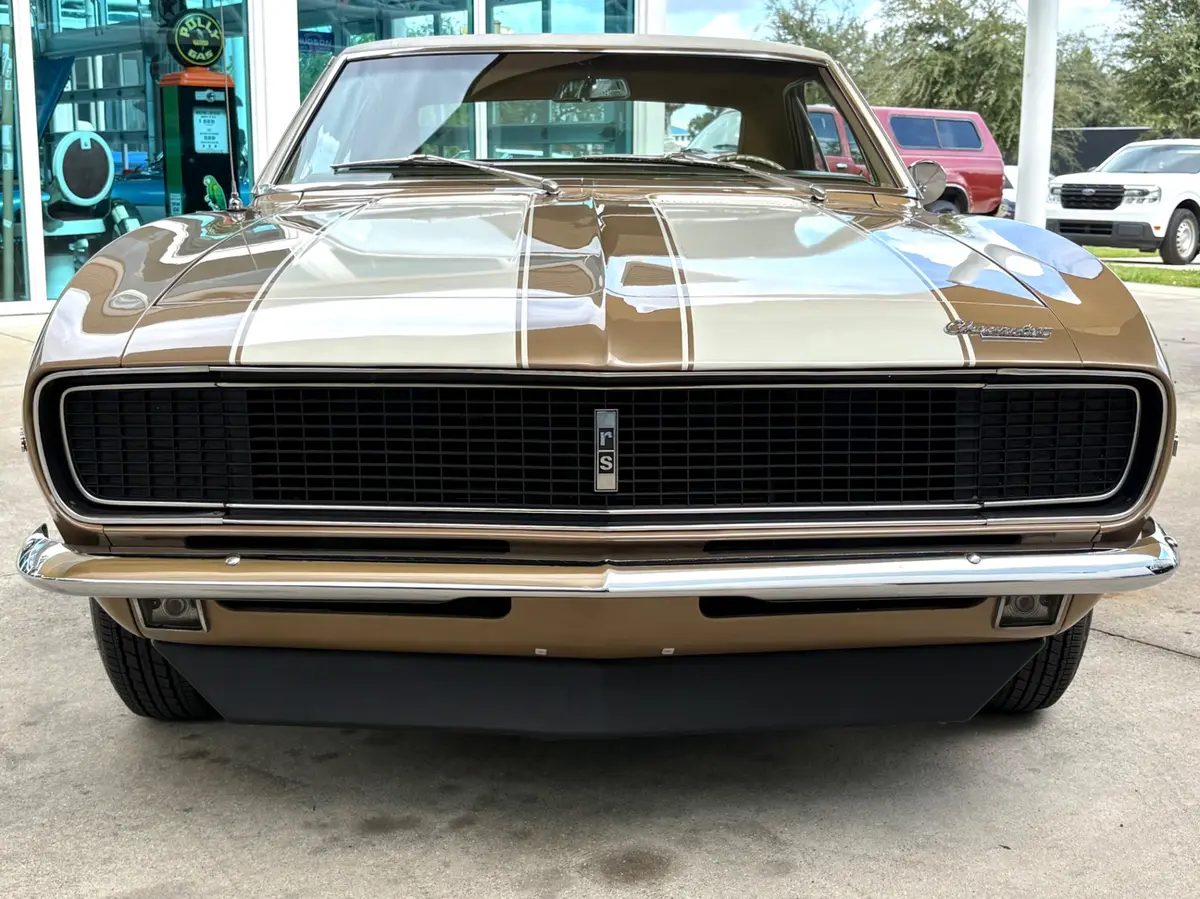
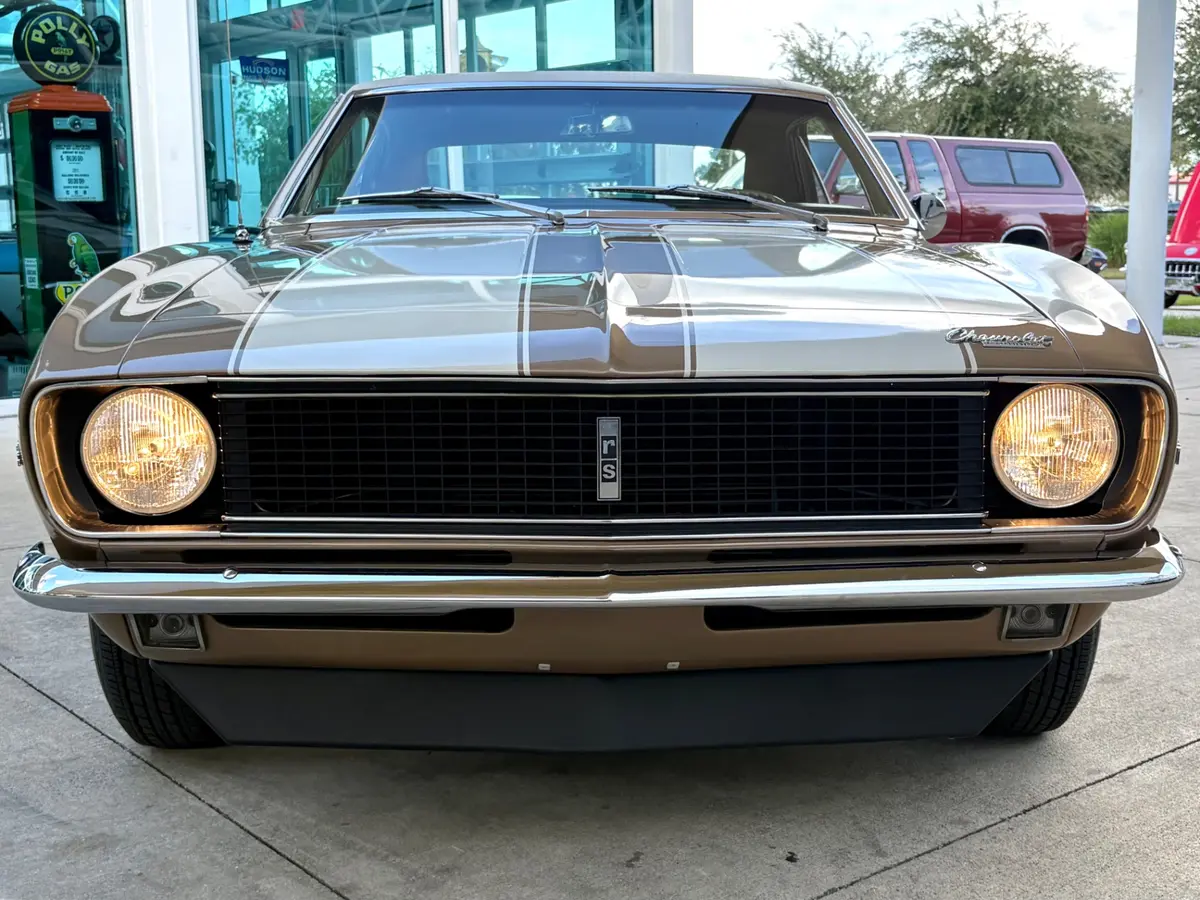
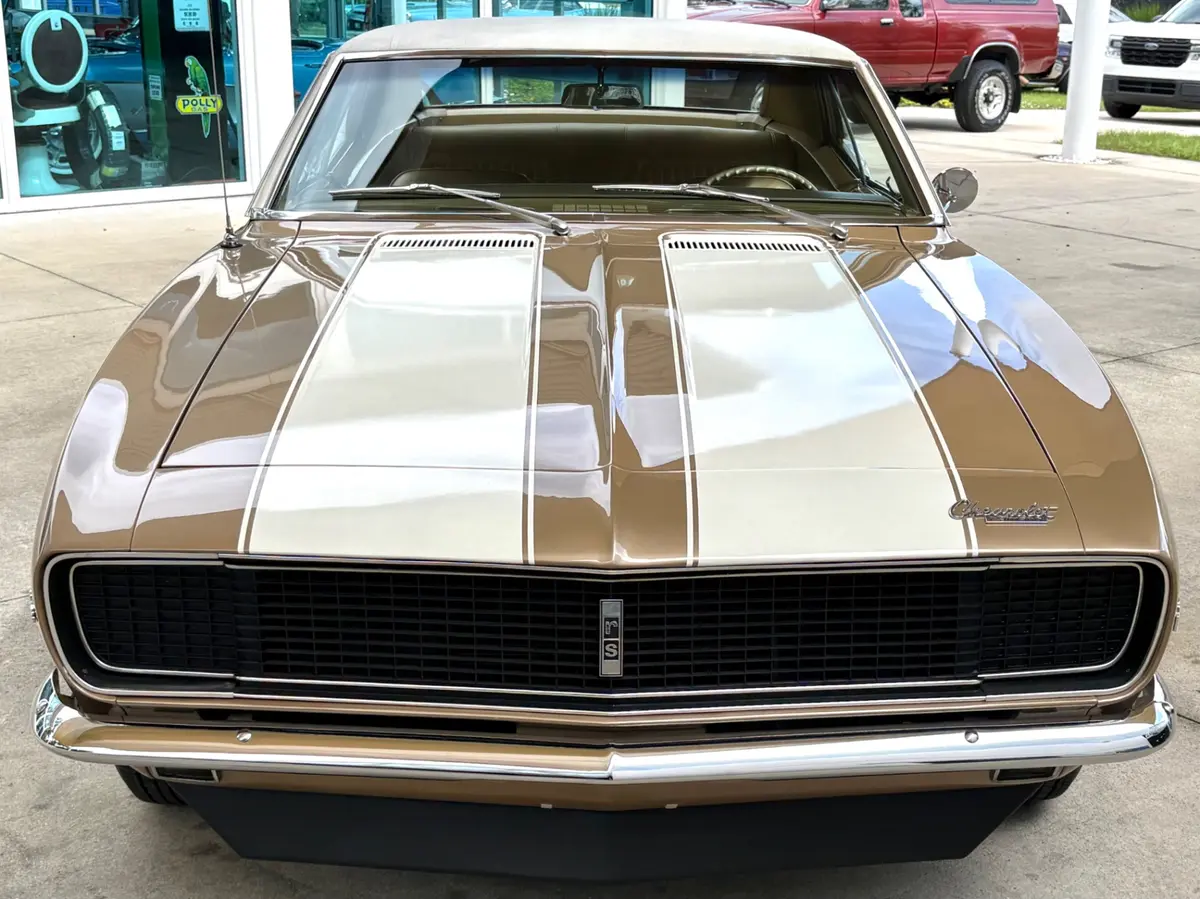
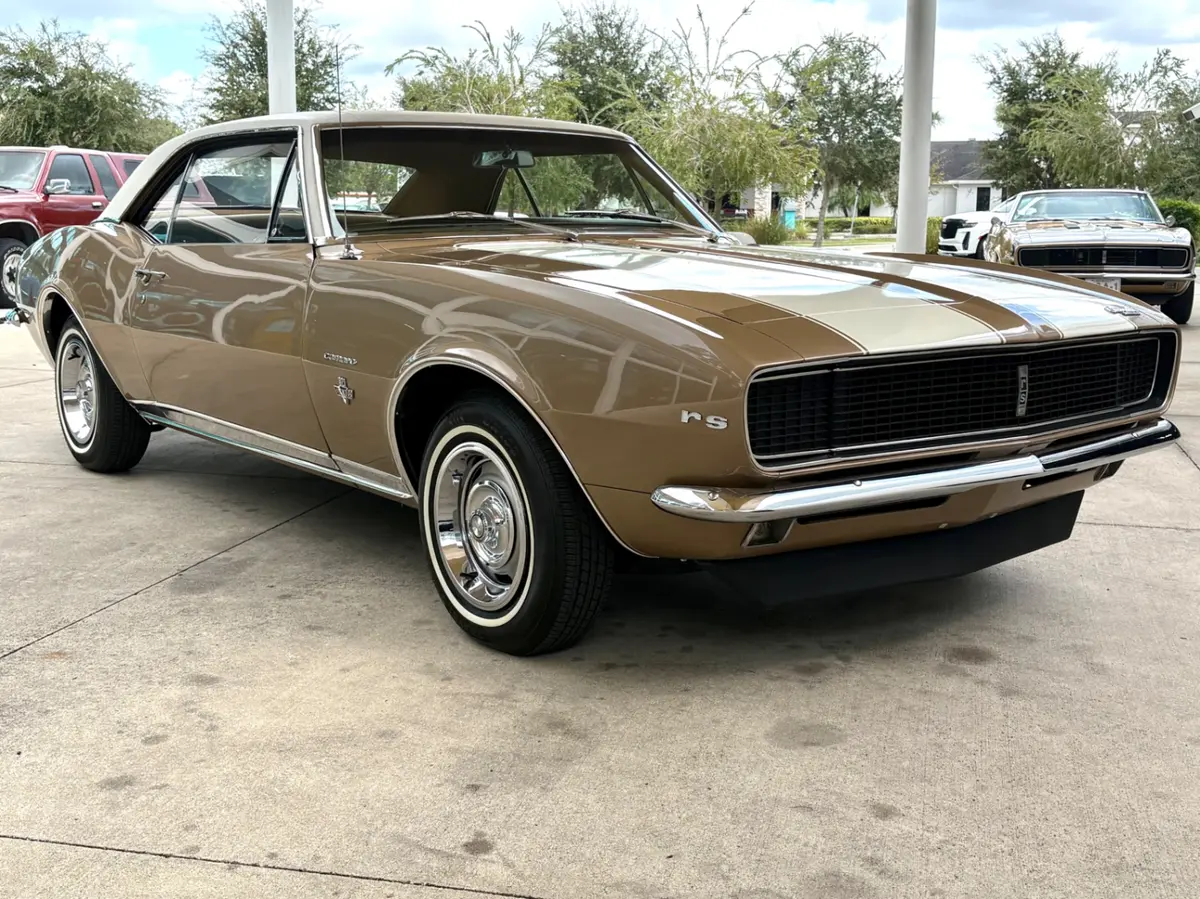
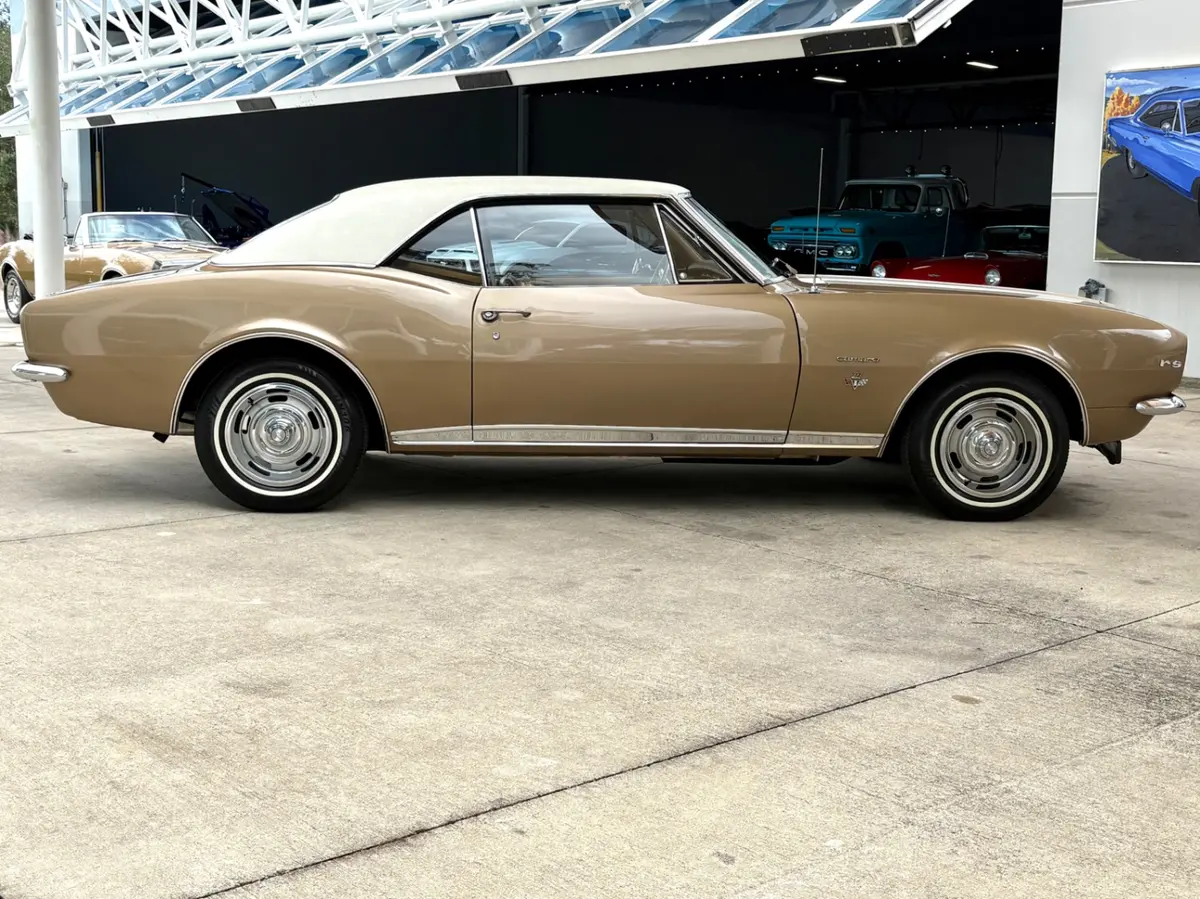
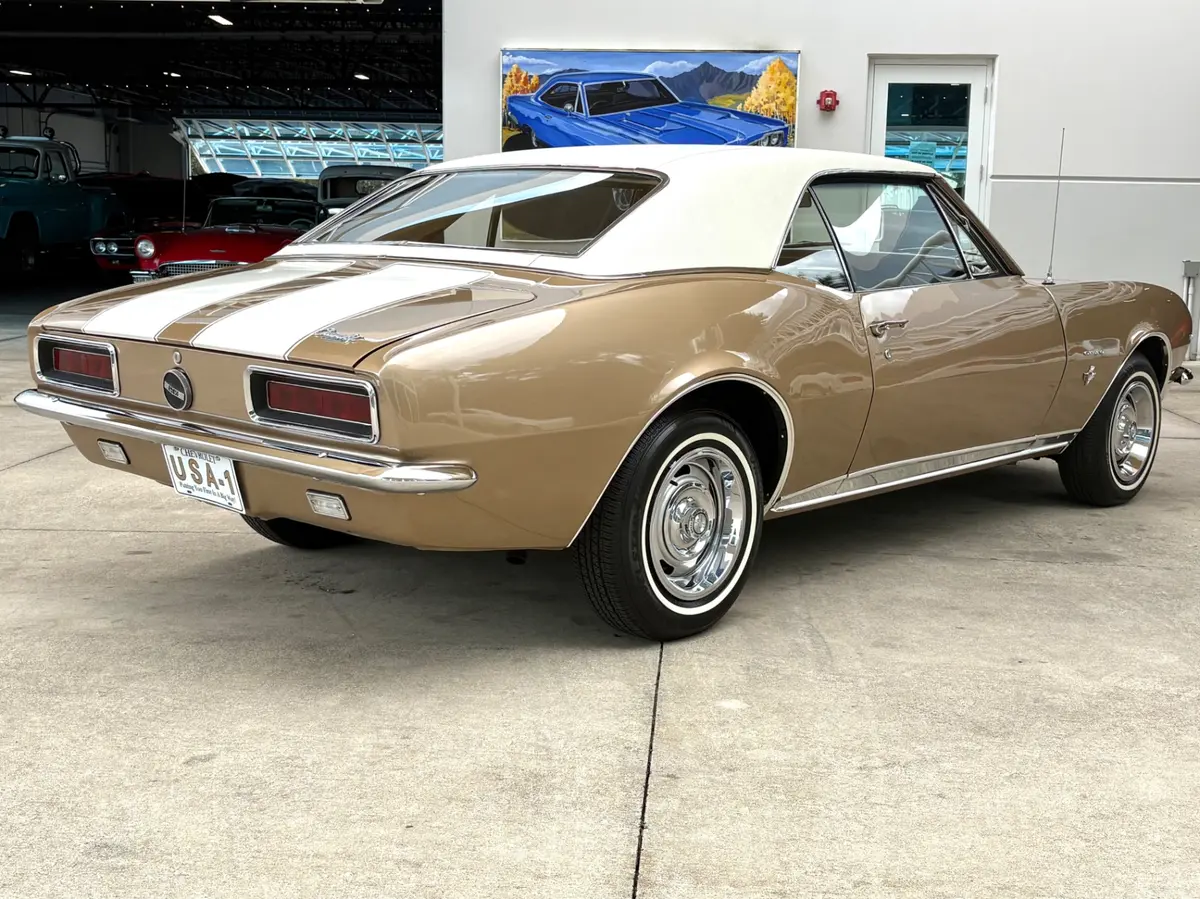
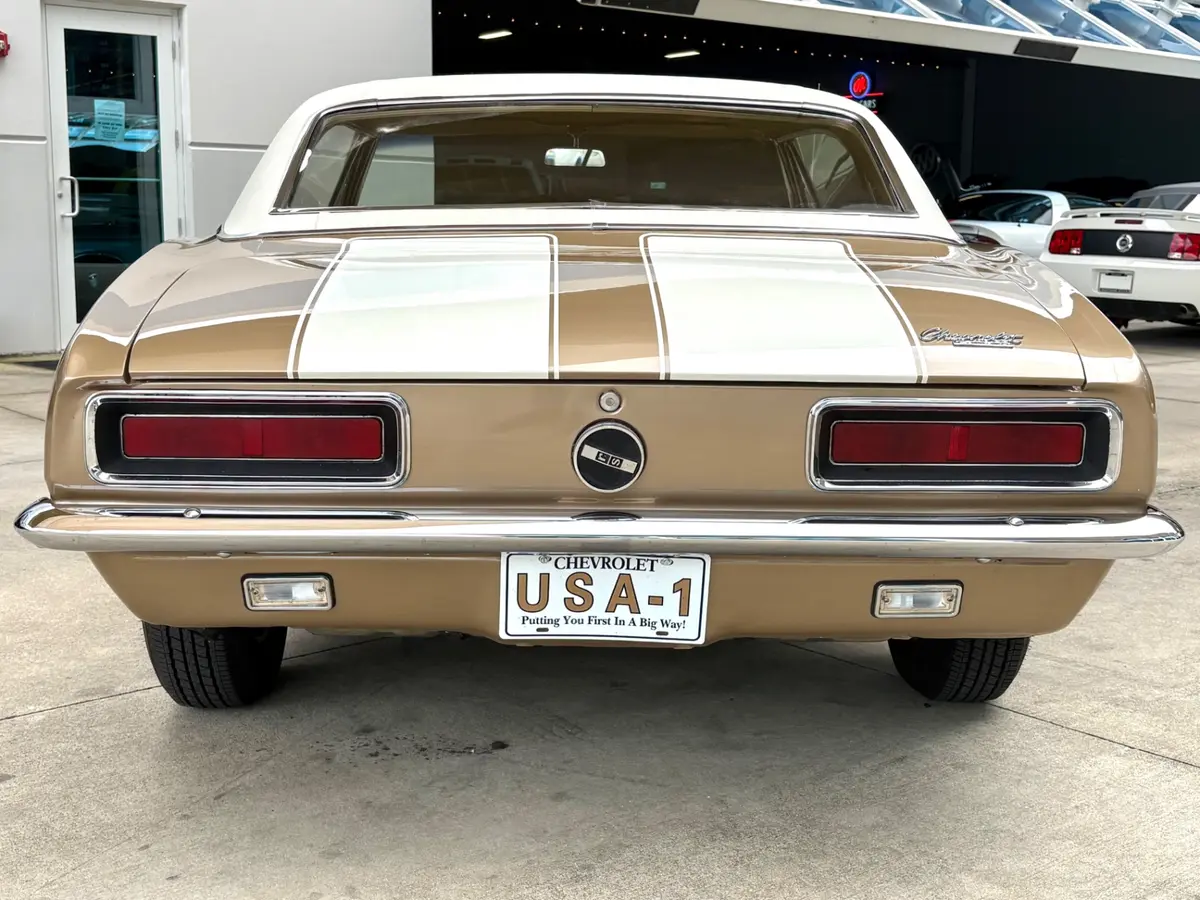
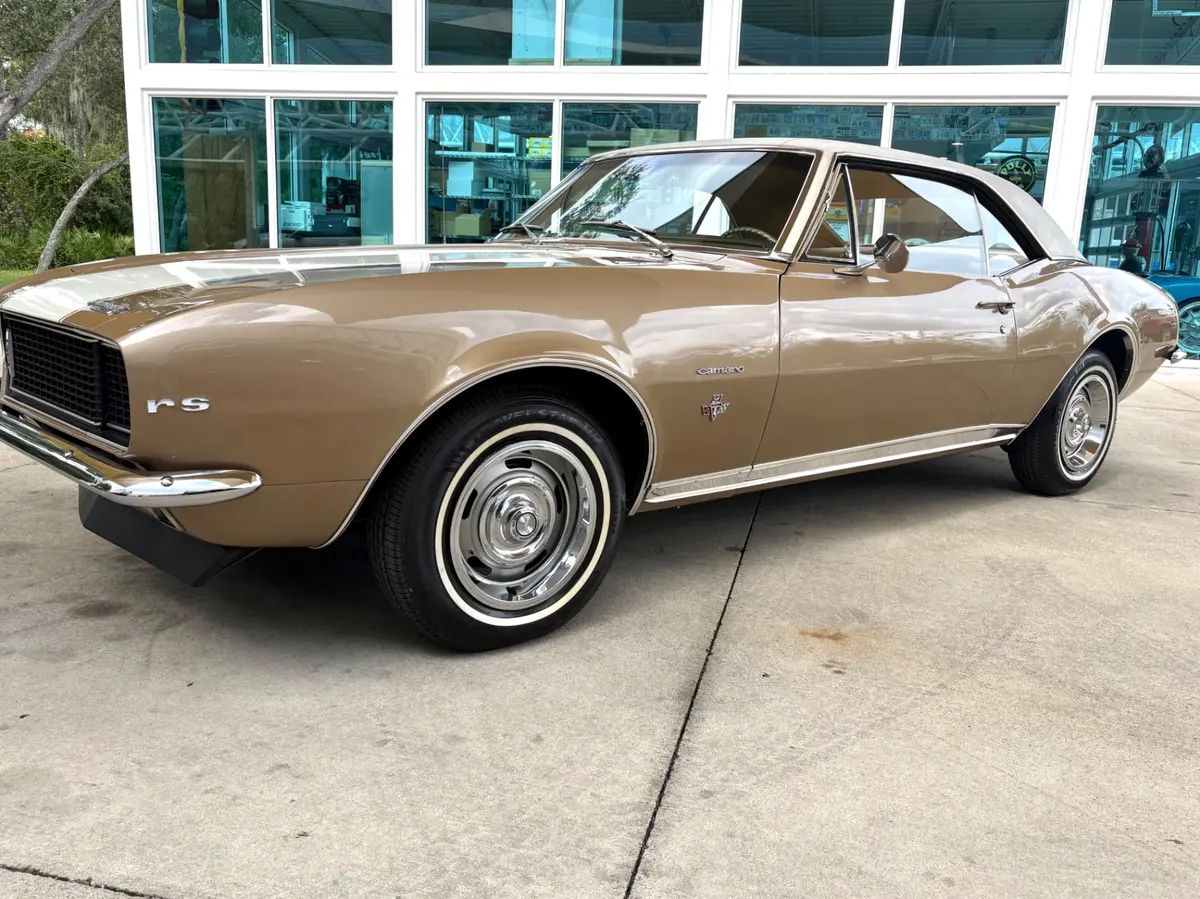
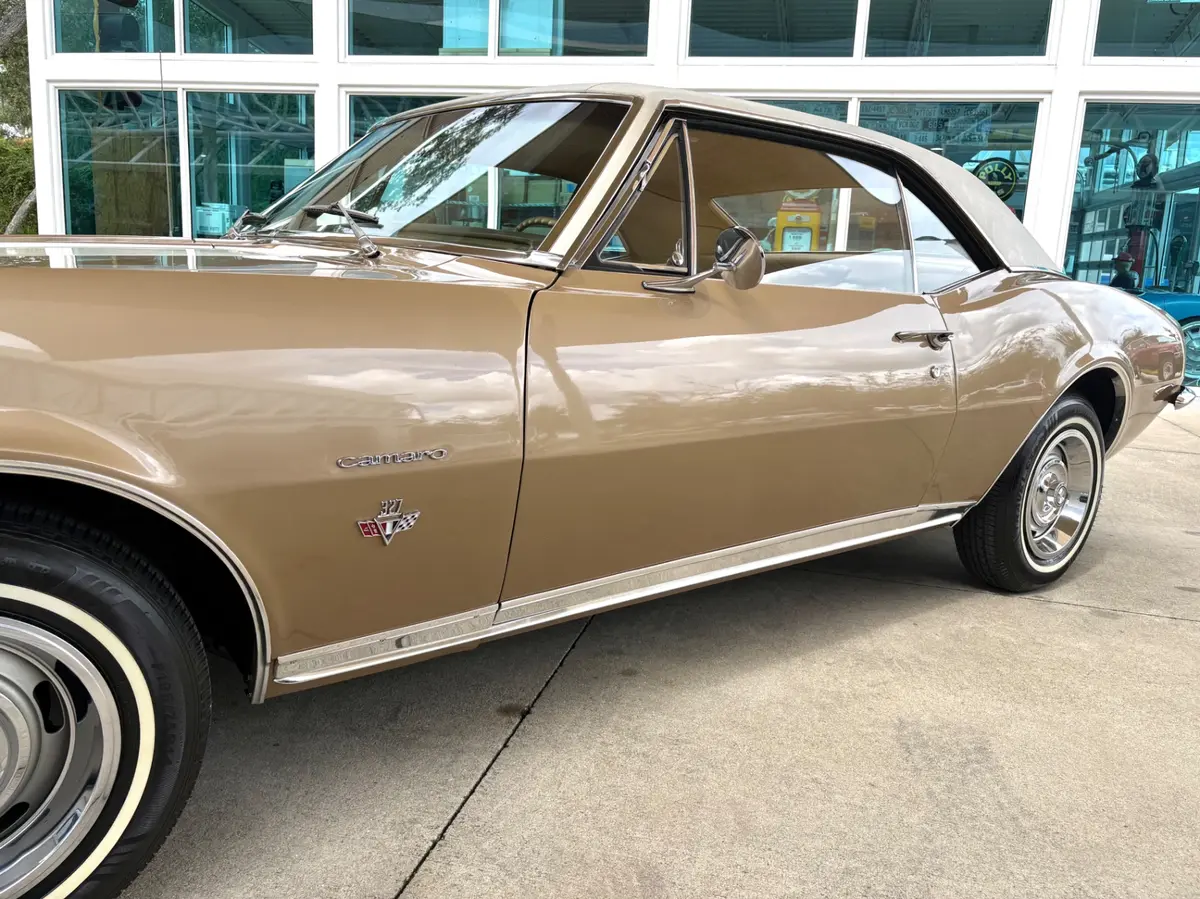
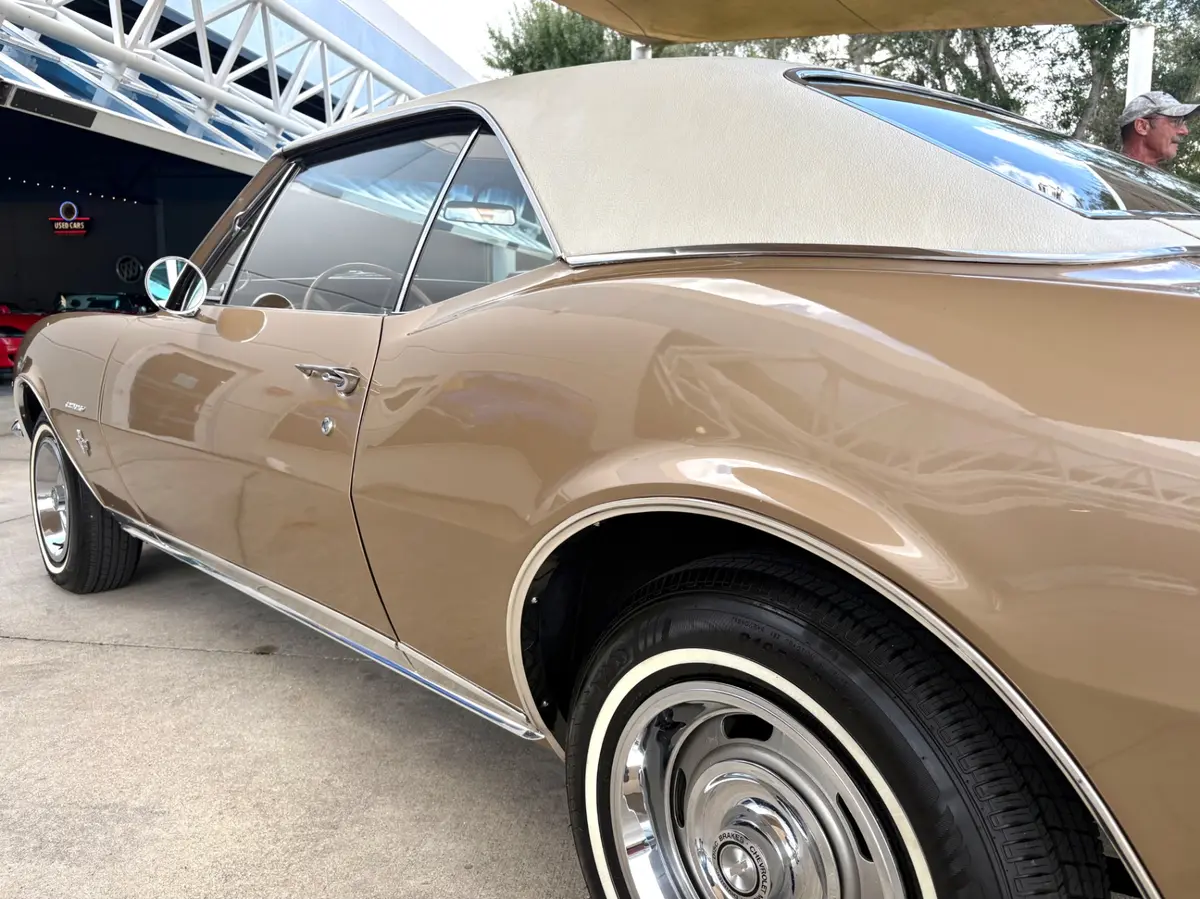
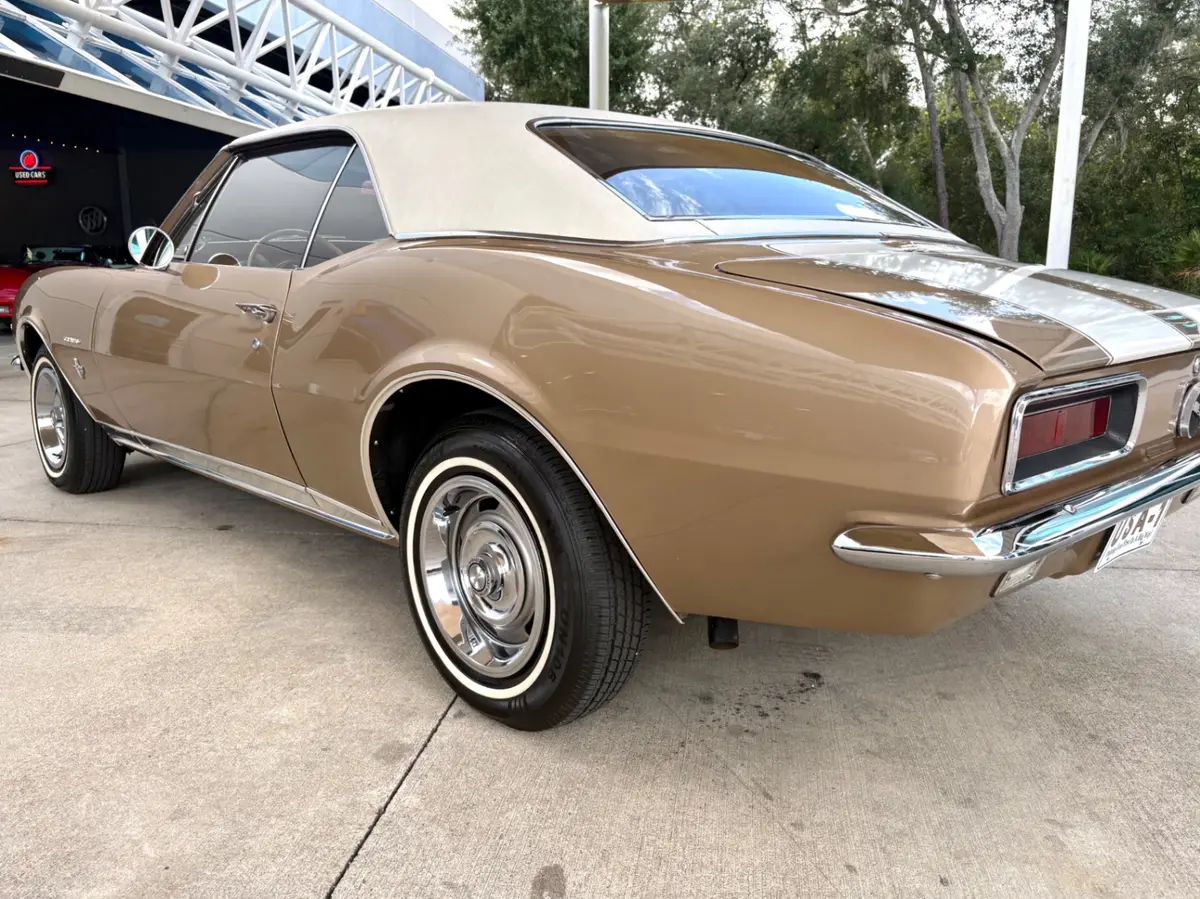
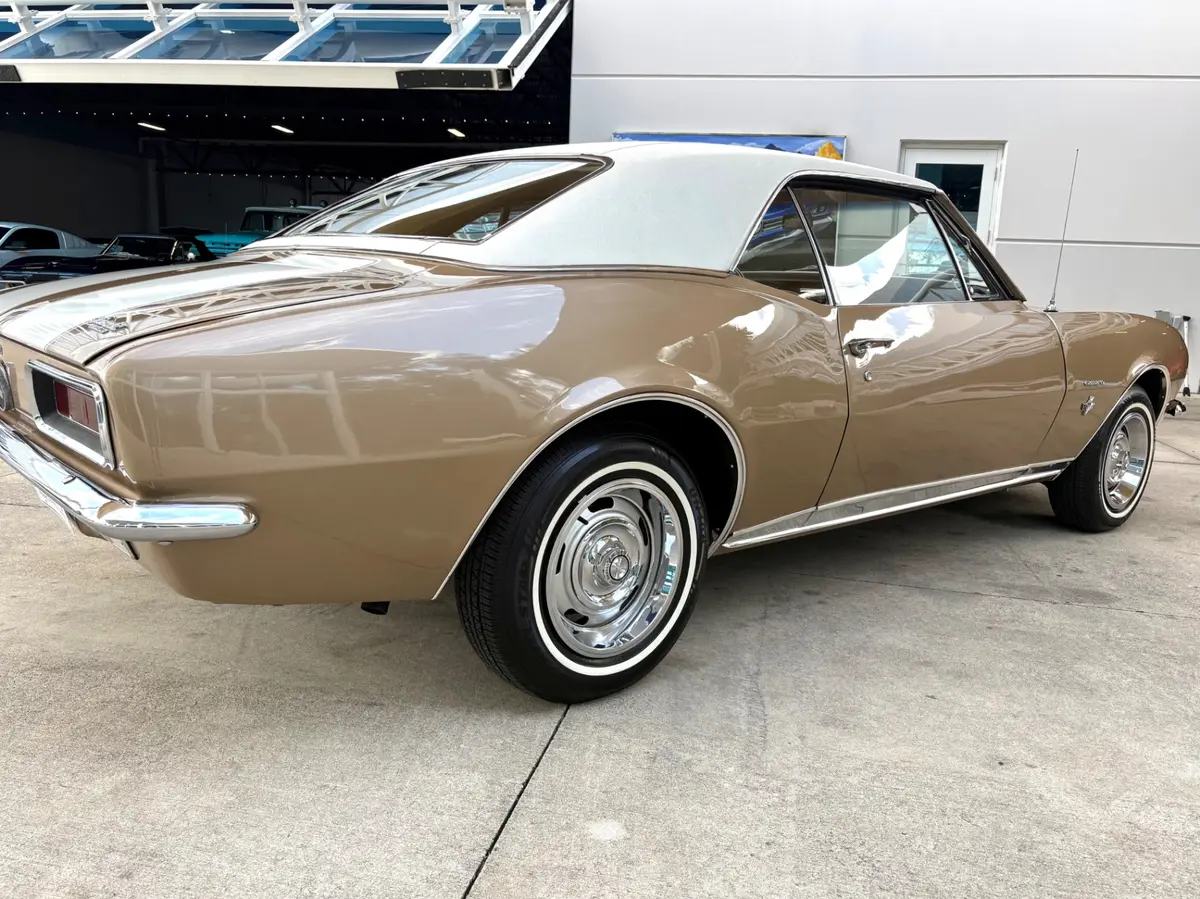
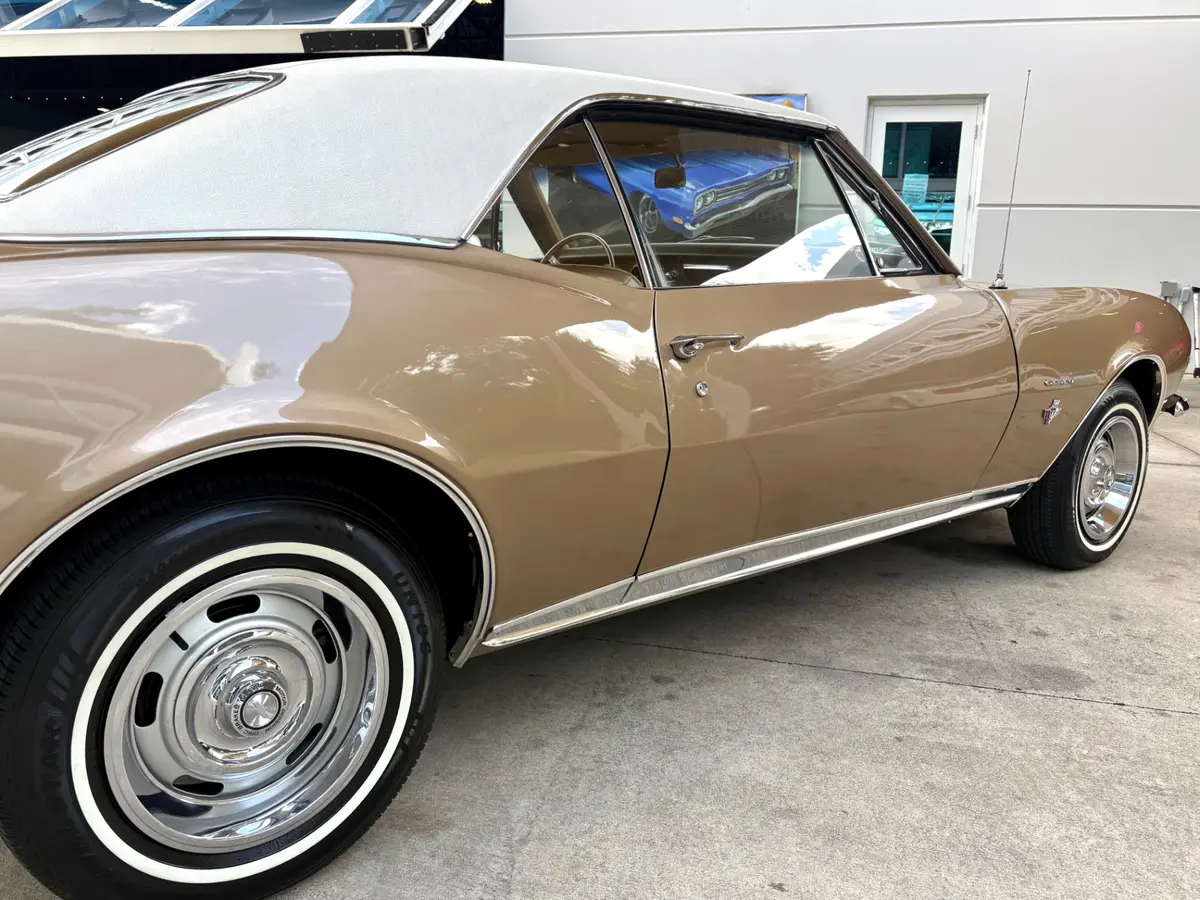
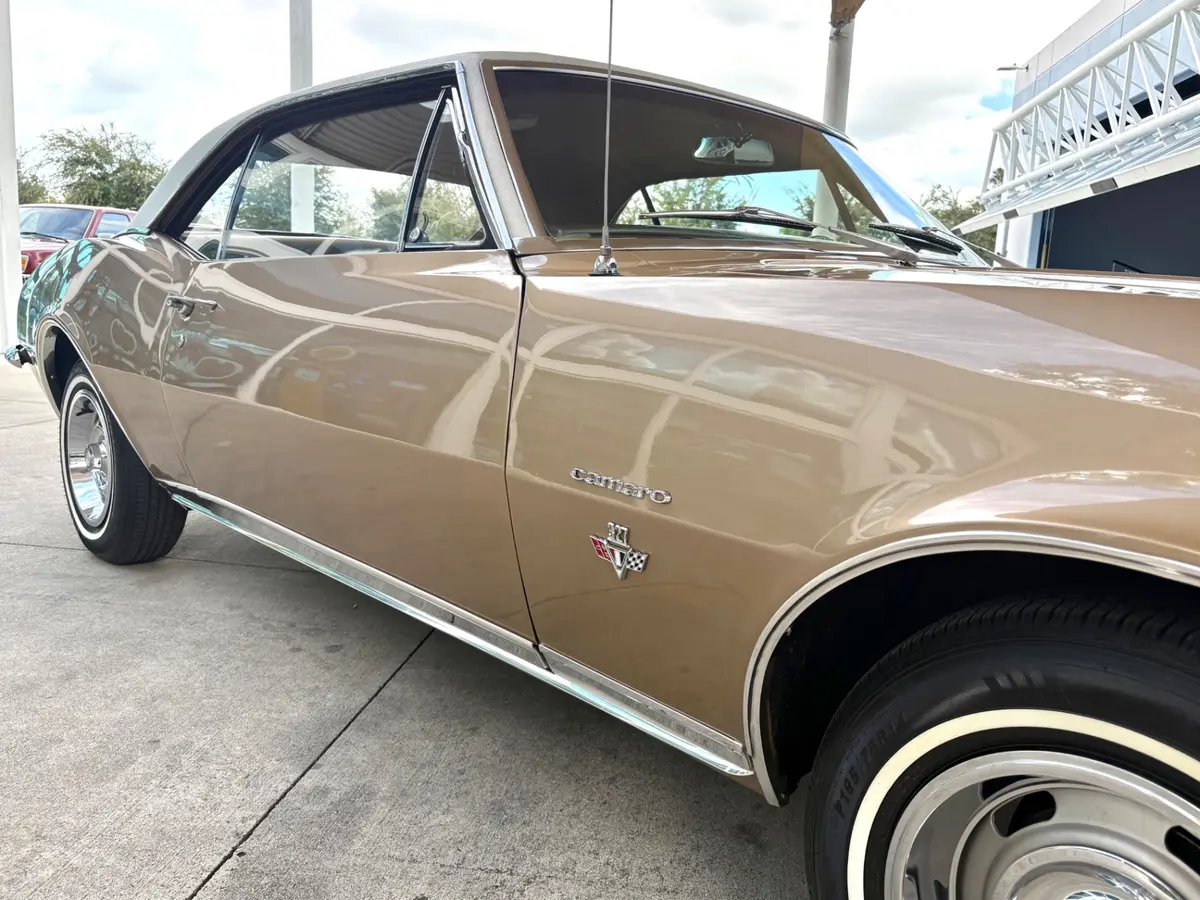
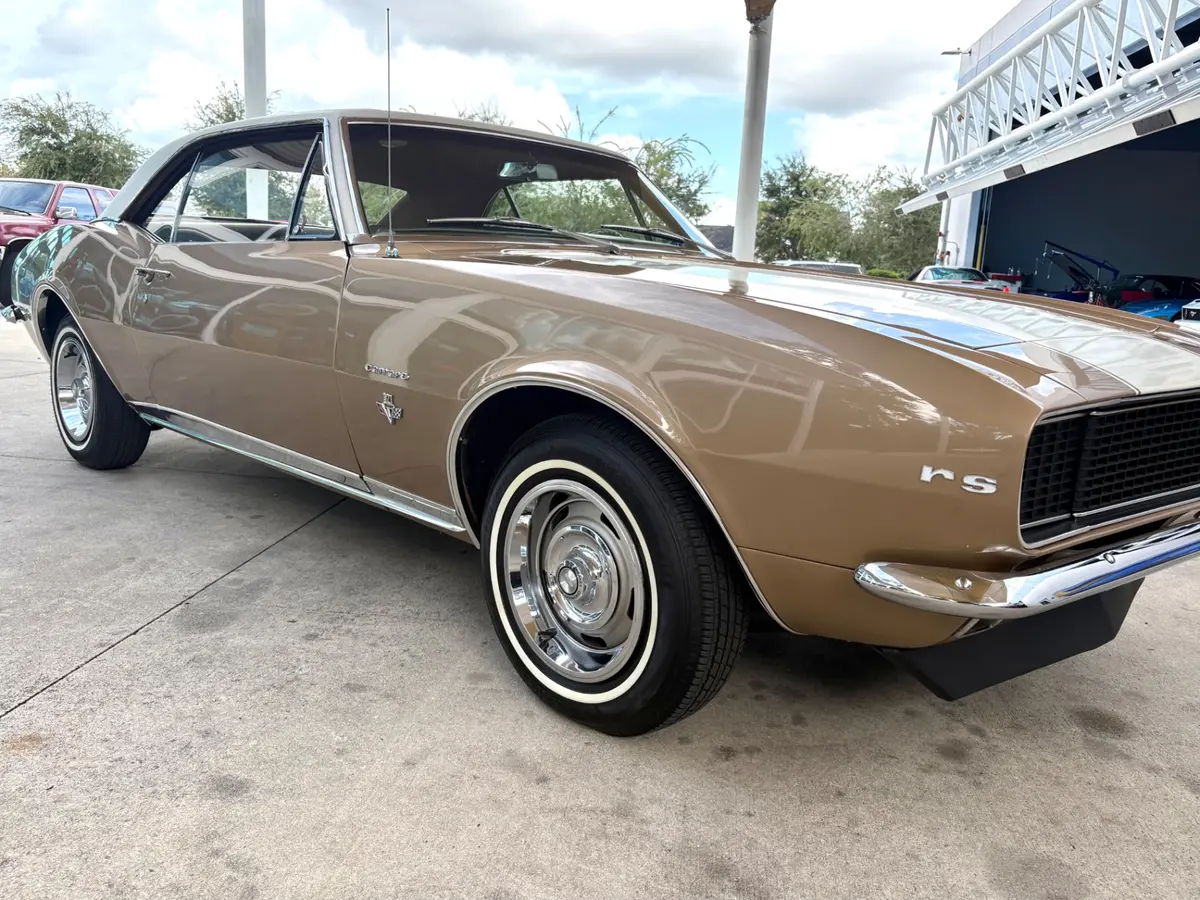
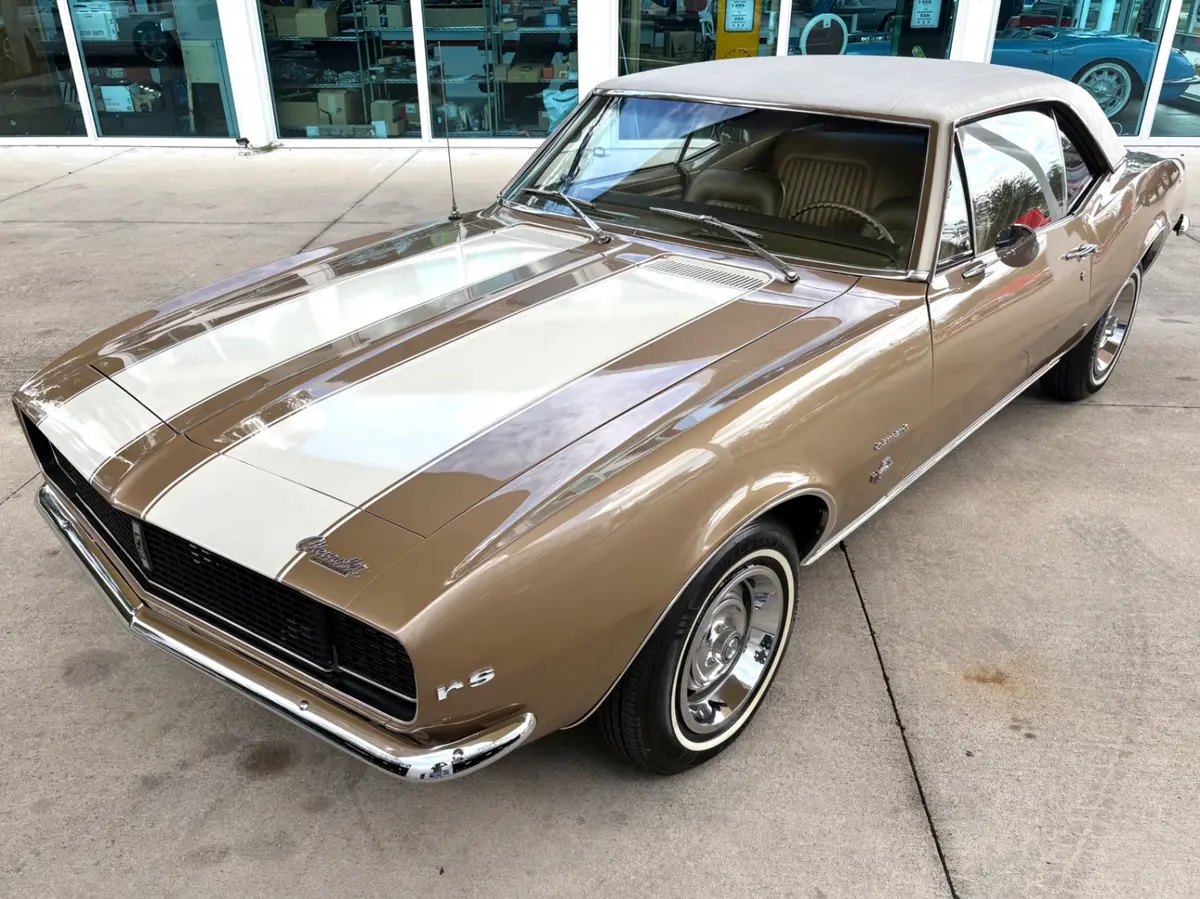
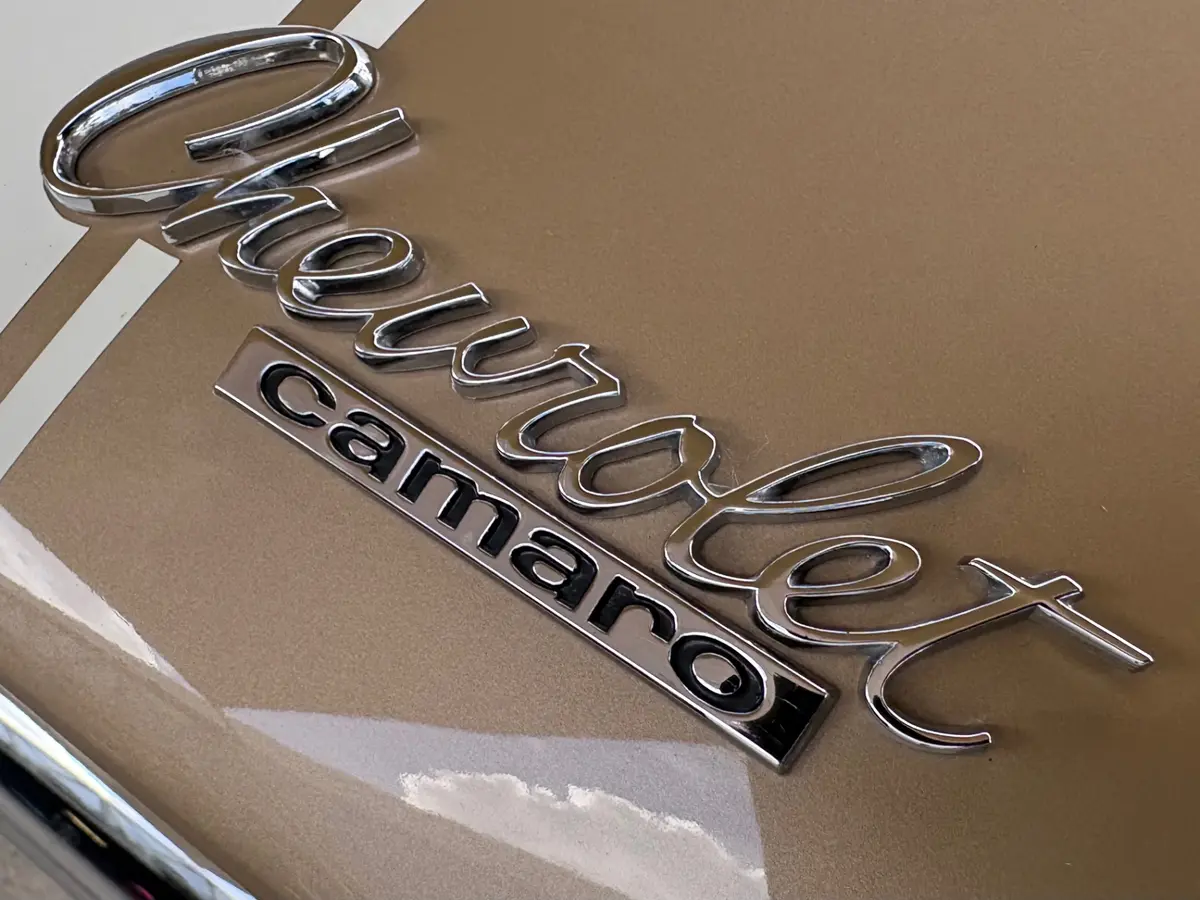
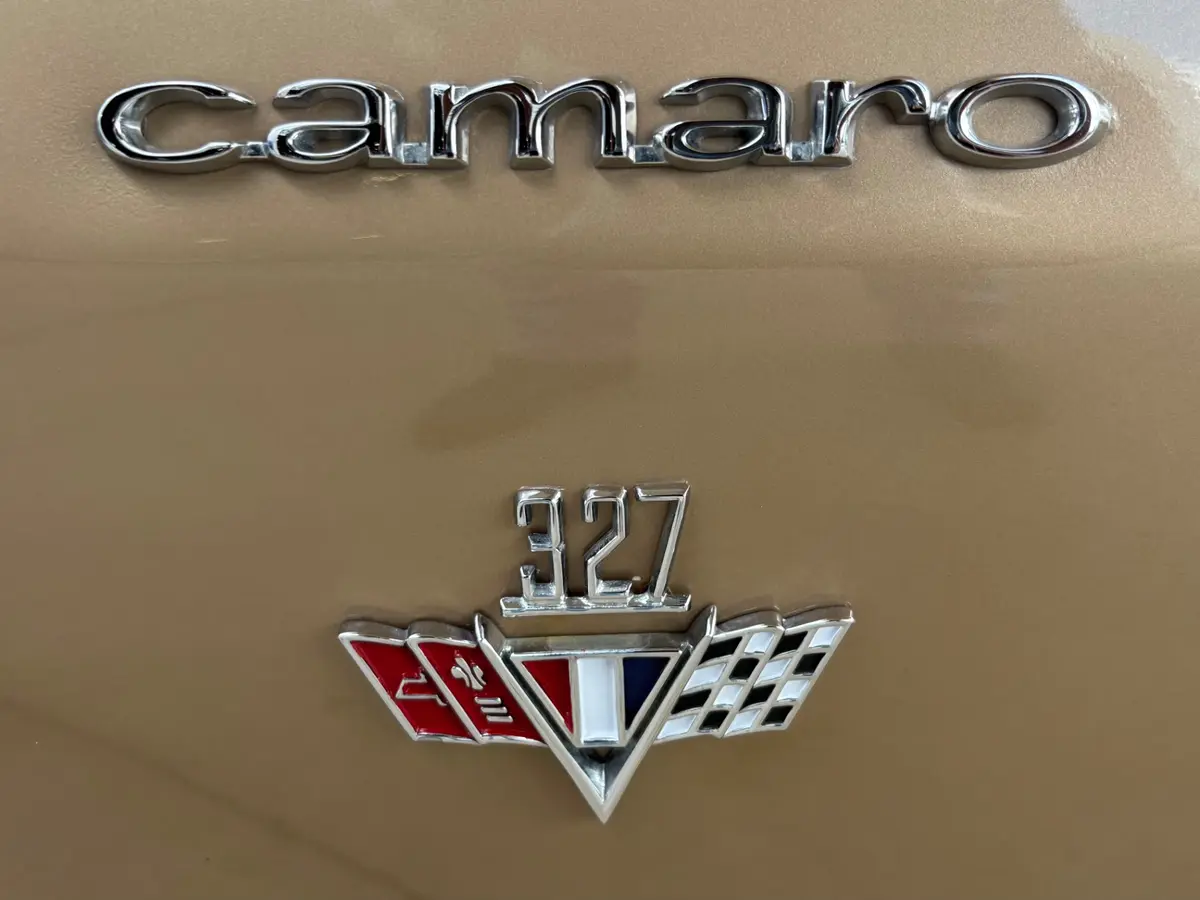
1967 Chevrolet Camaro RS — 327 V8, Granada Gold, Factory RS Package with Hideaway Headlights
Why This Car Is Special
The 1967 Chevrolet Camaro was GM's direct answer to the Ford Mustang, which had been on the market for three years and selling in enormous numbers. Chevrolet developed the first-generation Camaro on what they called the F-body platform, and they did it quickly — the car went from concept approval to showroom in roughly three years. When it arrived for the 1967 model year, it arrived with a staggering number of factory options. Chevrolet offered more than 80 factory options and 40 dealer accessories on the first-year Camaro, which meant buyers could configure the car almost any way they wanted. That flexibility is a big part of why first-year 1967 Camaros are so collectible today — no two are exactly alike.
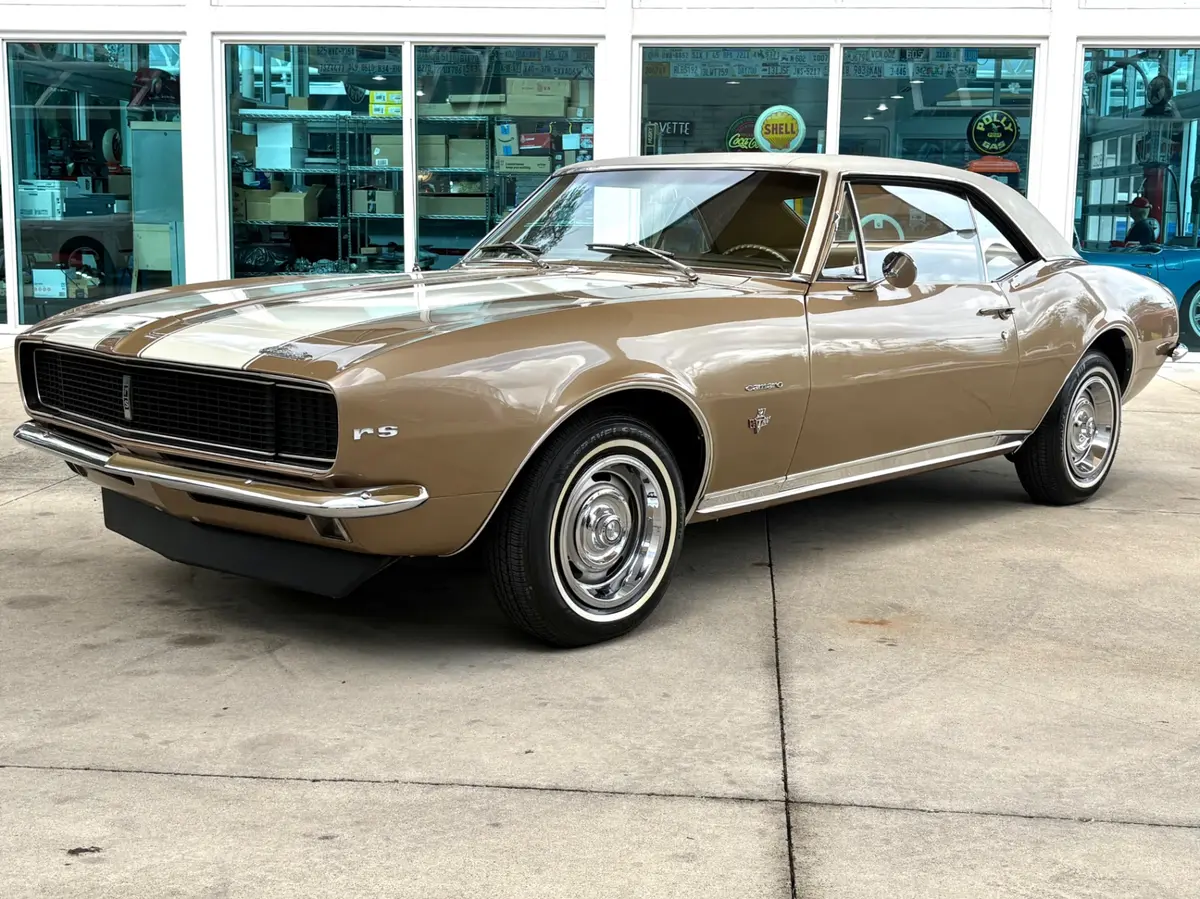
This particular 1967 Chevrolet Camaro RS is a well-documented example of how buyers optioned these cars when they wanted style alongside substance. The RS, or Rally Sport, package was a pure appearance group in 1967. It did not add horsepower or change the suspension. What it did do was transform the front end of the car. The standard Camaro wore its headlights in open bezels in the grille. The RS covered them with vacuum-operated doors that swung open when the lights were switched on, giving the car a smooth, uninterrupted grille appearance during the day. That detail alone made the RS one of the most visually distinct factory options available on any American car in 1967.
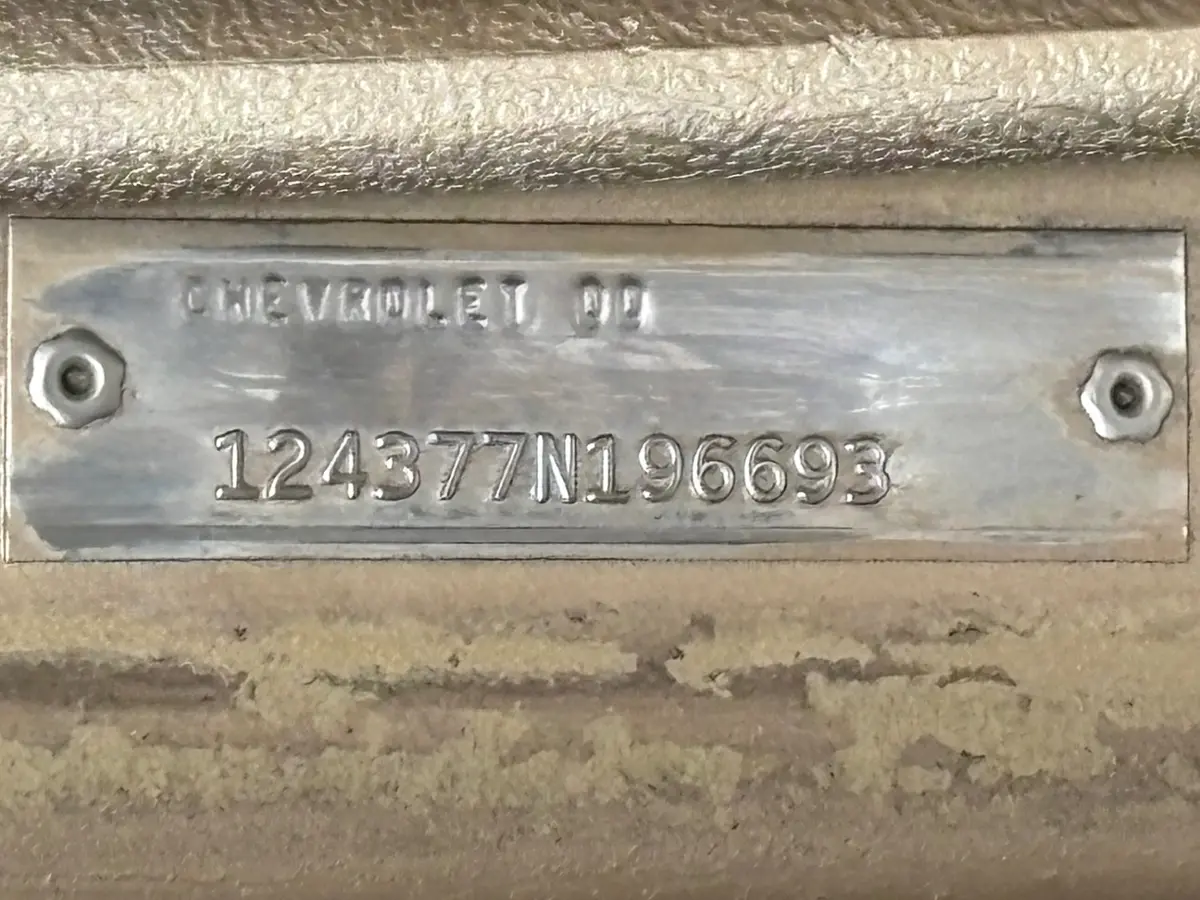
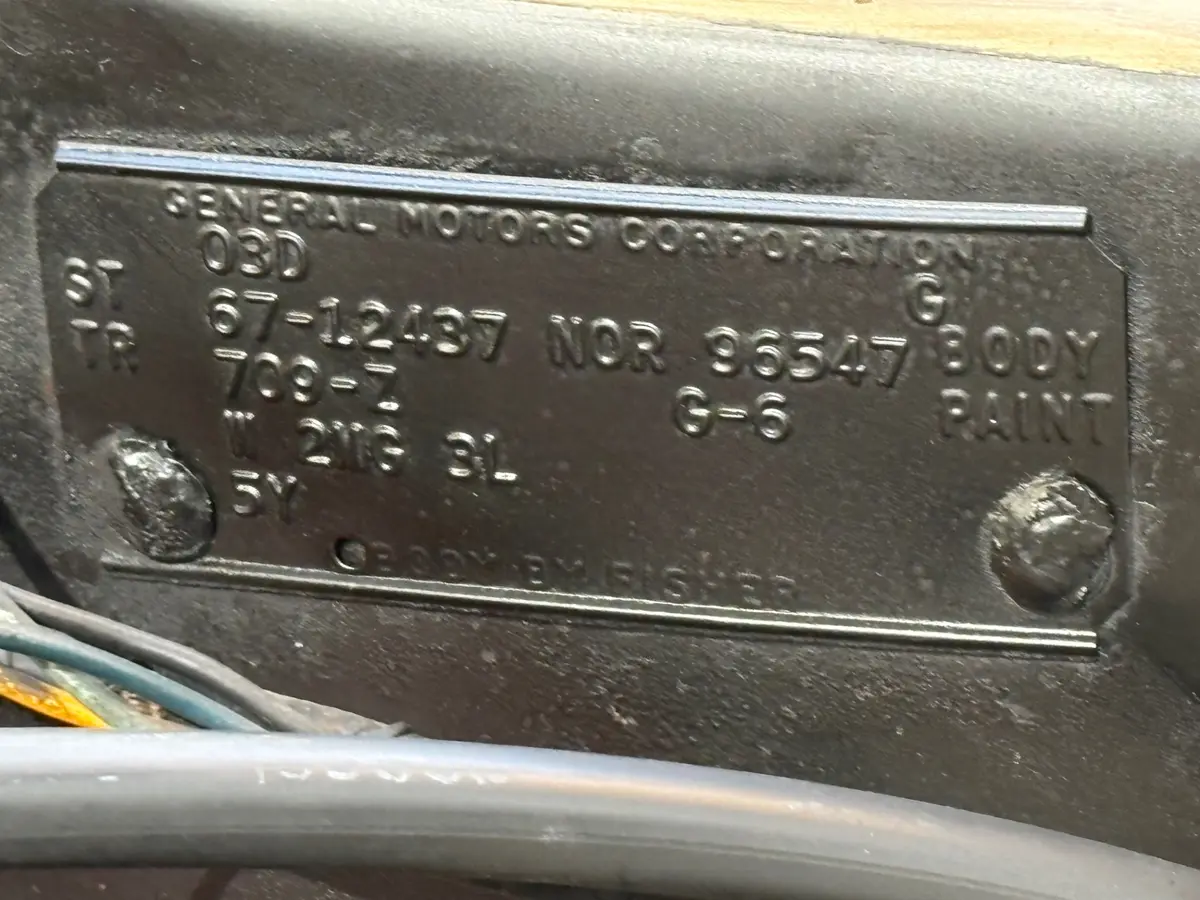
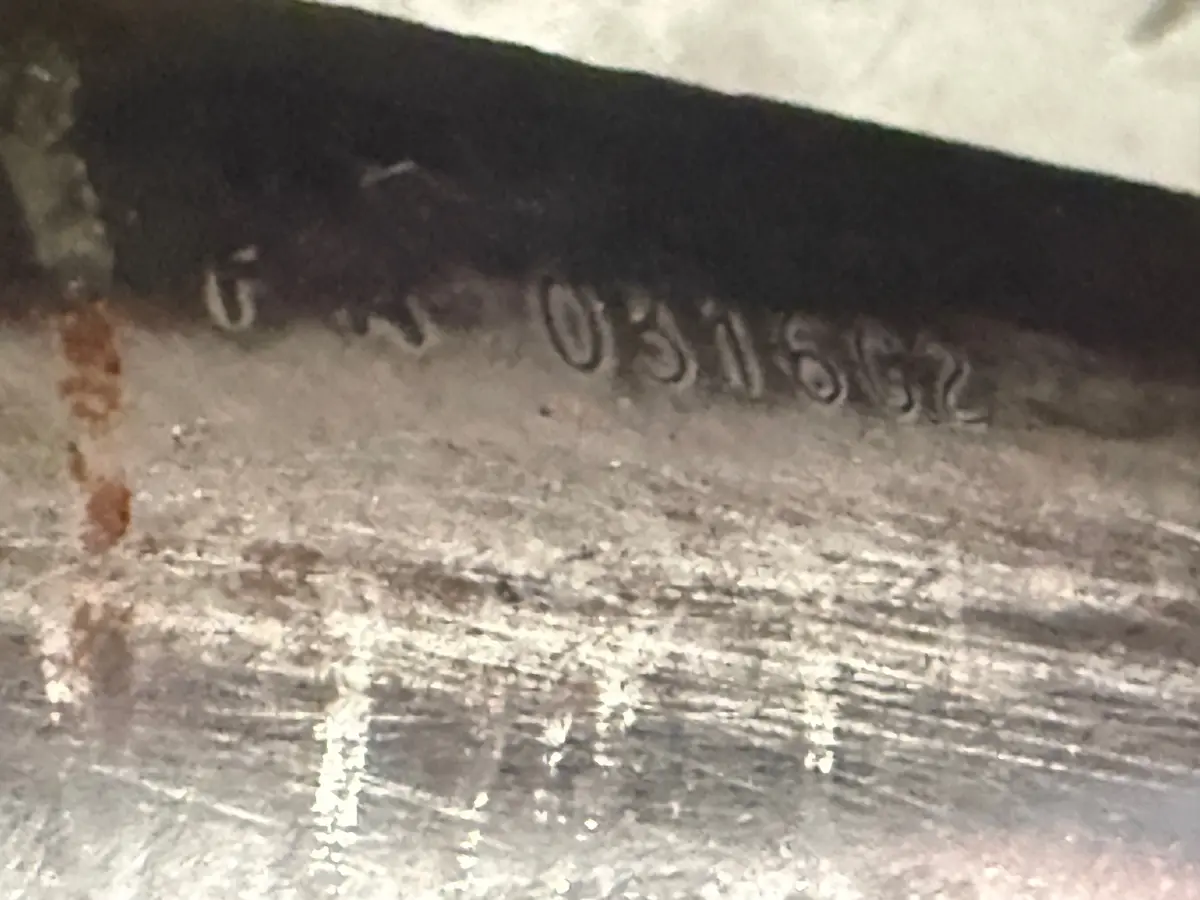
The VIN on this car decodes to confirm it was built at the Norwood, Ohio assembly plant, one of two plants that produced first-generation Camaros. The model year, body style, engine, and assembly location are all consistent with the features present on the car.
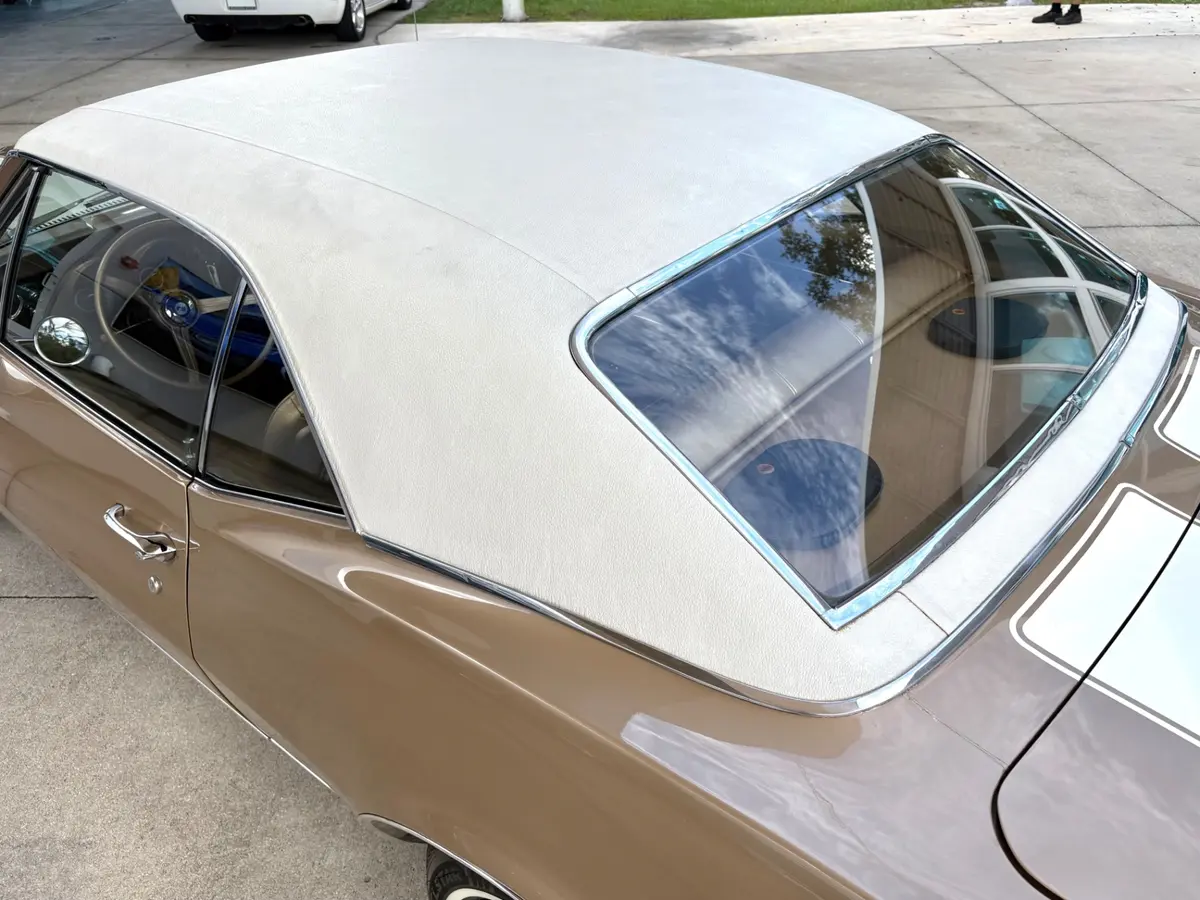
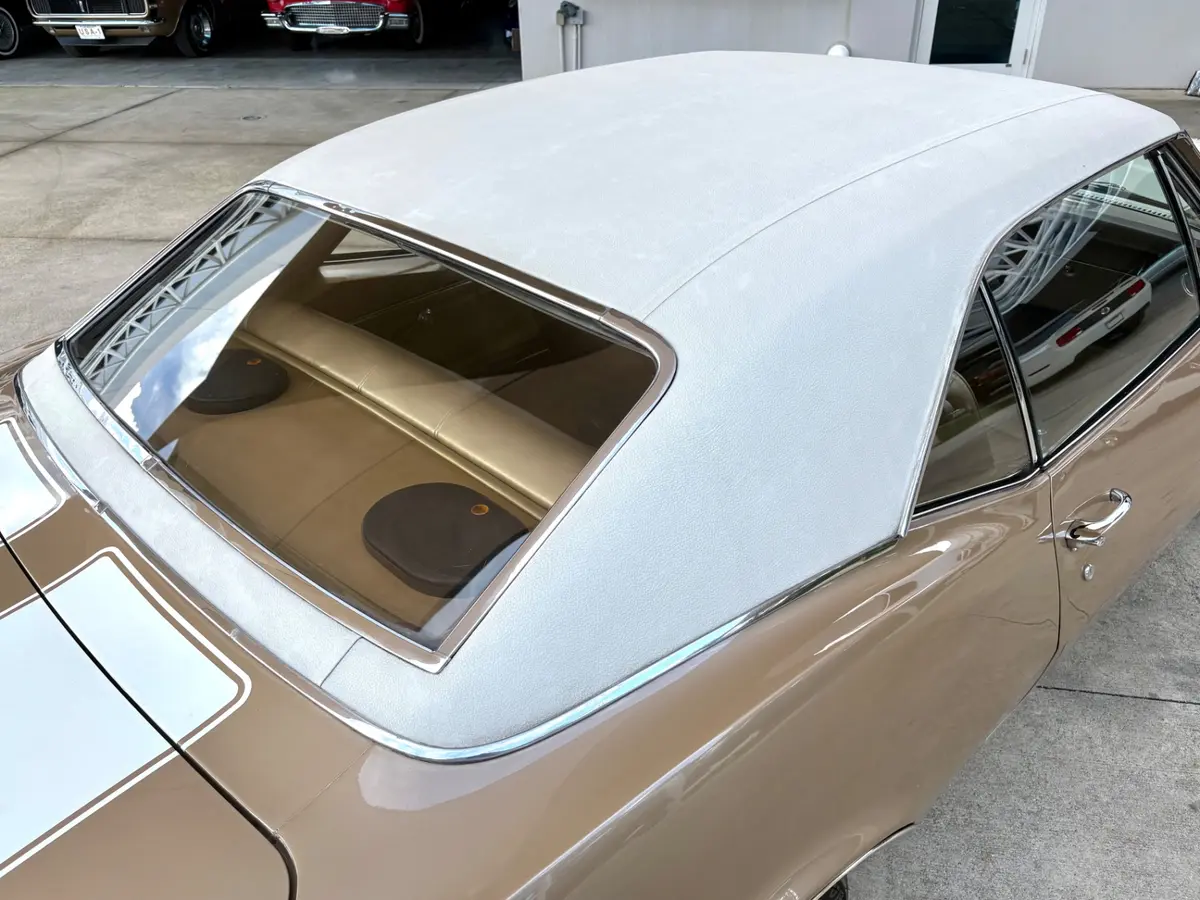
Finished in Granada Gold with a matching gold vinyl interior and a white vinyl top, this 1967 Camaro RS occupies a specific and appealing place in the collector market — it is a correctly optioned, low-drama first-year car with a strong engine, factory power disc brakes, and a list of comfort options that show its original buyer knew exactly what they were doing at the order desk.
Features List
- 327ci V8 Engine
- 2-Speed Powerglide Automatic Transmission
- RS (Rally Sport) Package
- Vacuum-Operated Hideaway Headlights
- Power Front Disc Brakes
- Power Steering
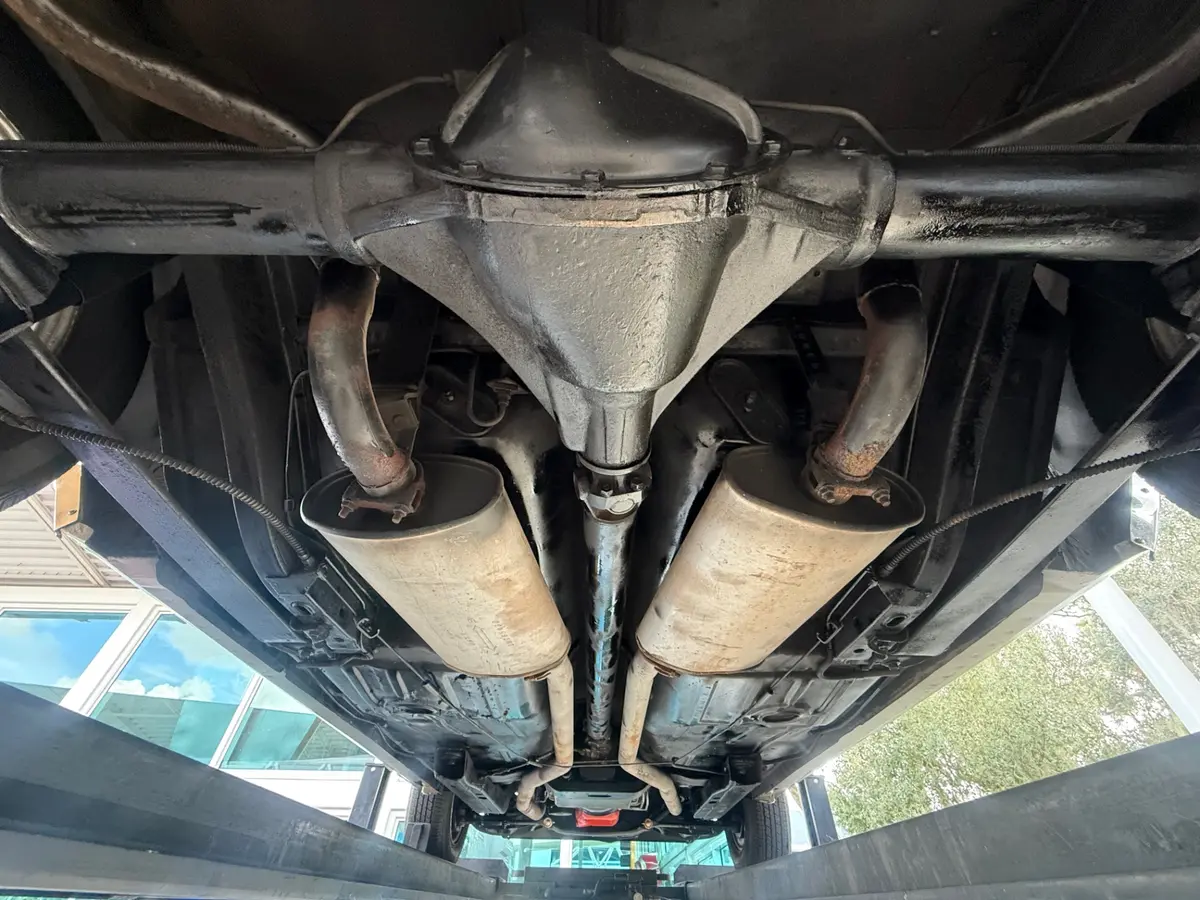
- Dual Exhaust
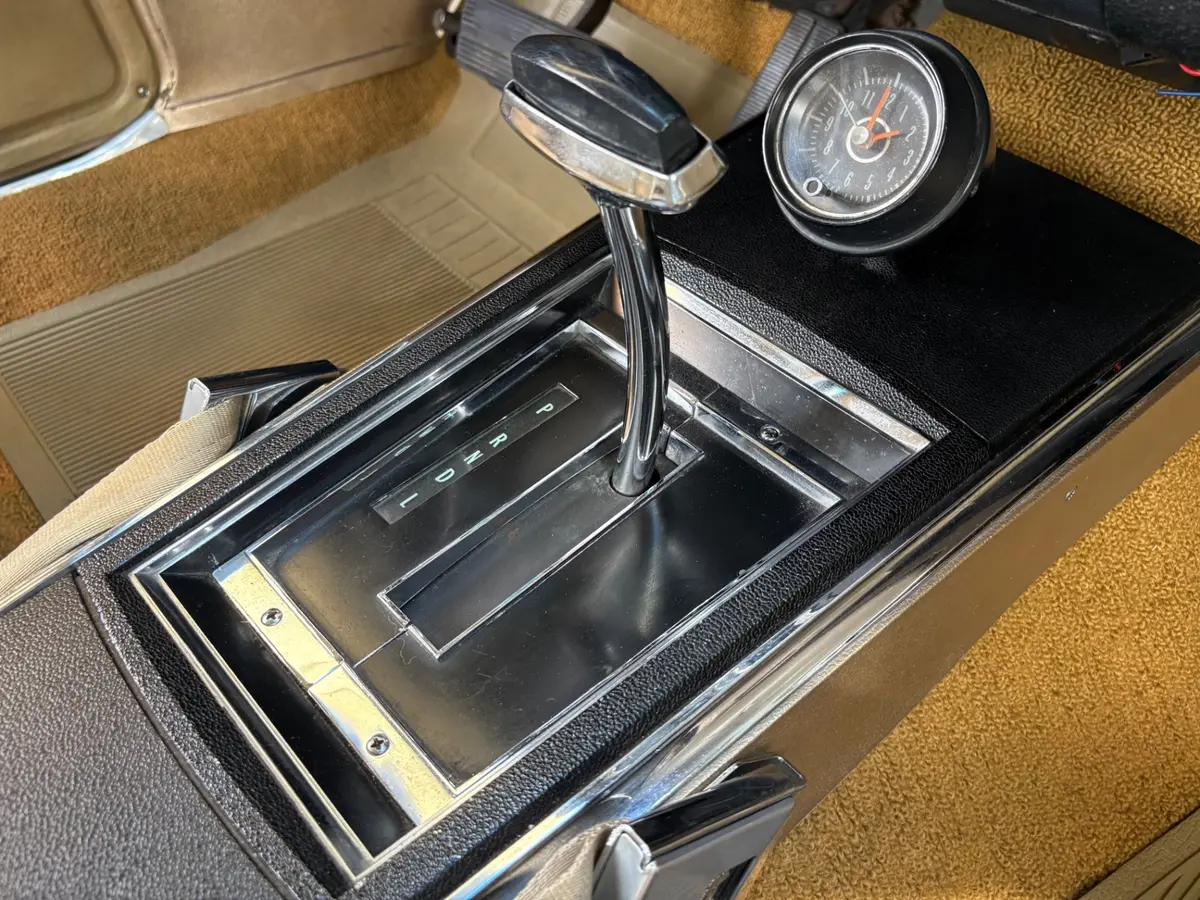
- Center Console with Console-Mounted Clock
- Bucket Seats, Front
- Rear Bench Seat
- White Vinyl Top
- Granada Gold Exterior
- Gold Vinyl Interior
- White Racing Stripes
- Whitewall Tires
- Chrome Bumpers
- Chrome Rocker Moldings
- 327 Fender Badge
- AM/FM Stereo Radio
Mechanical
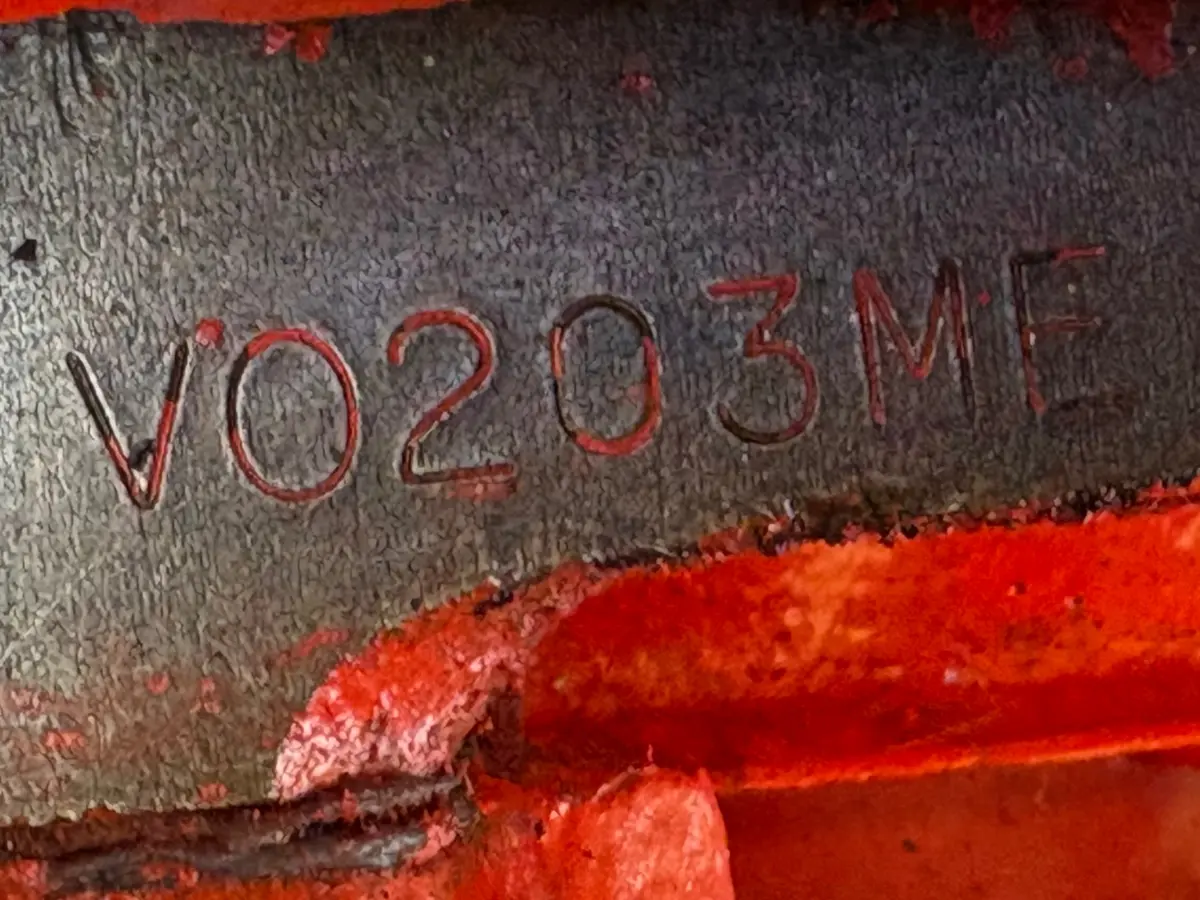
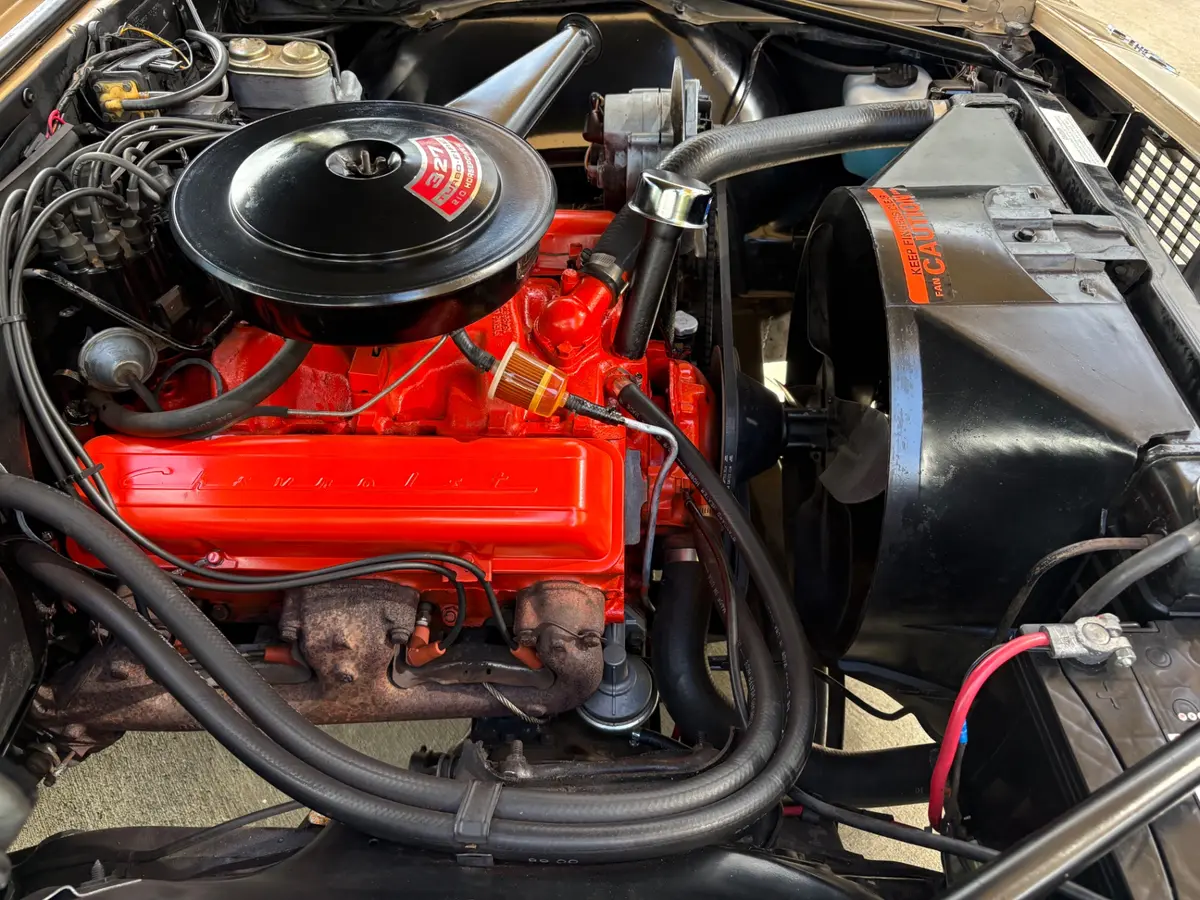
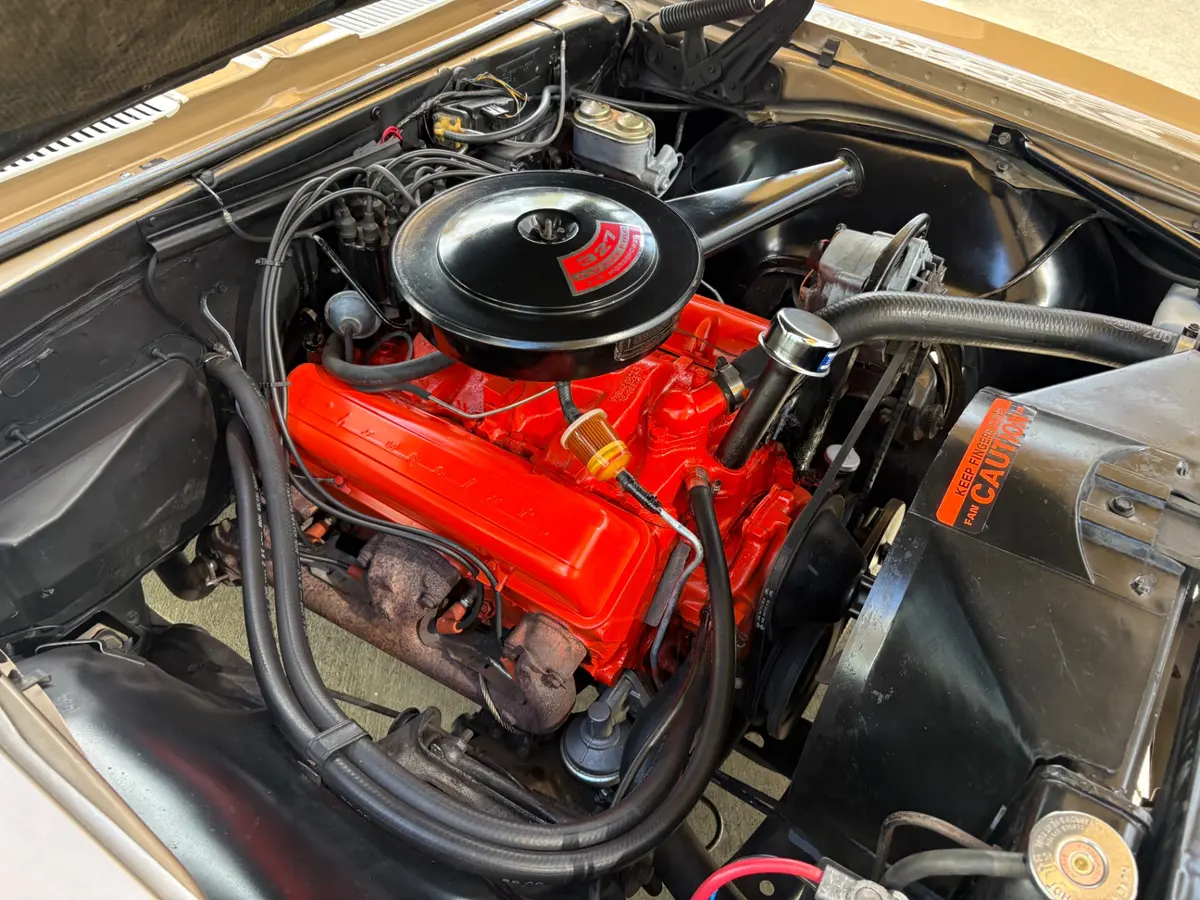
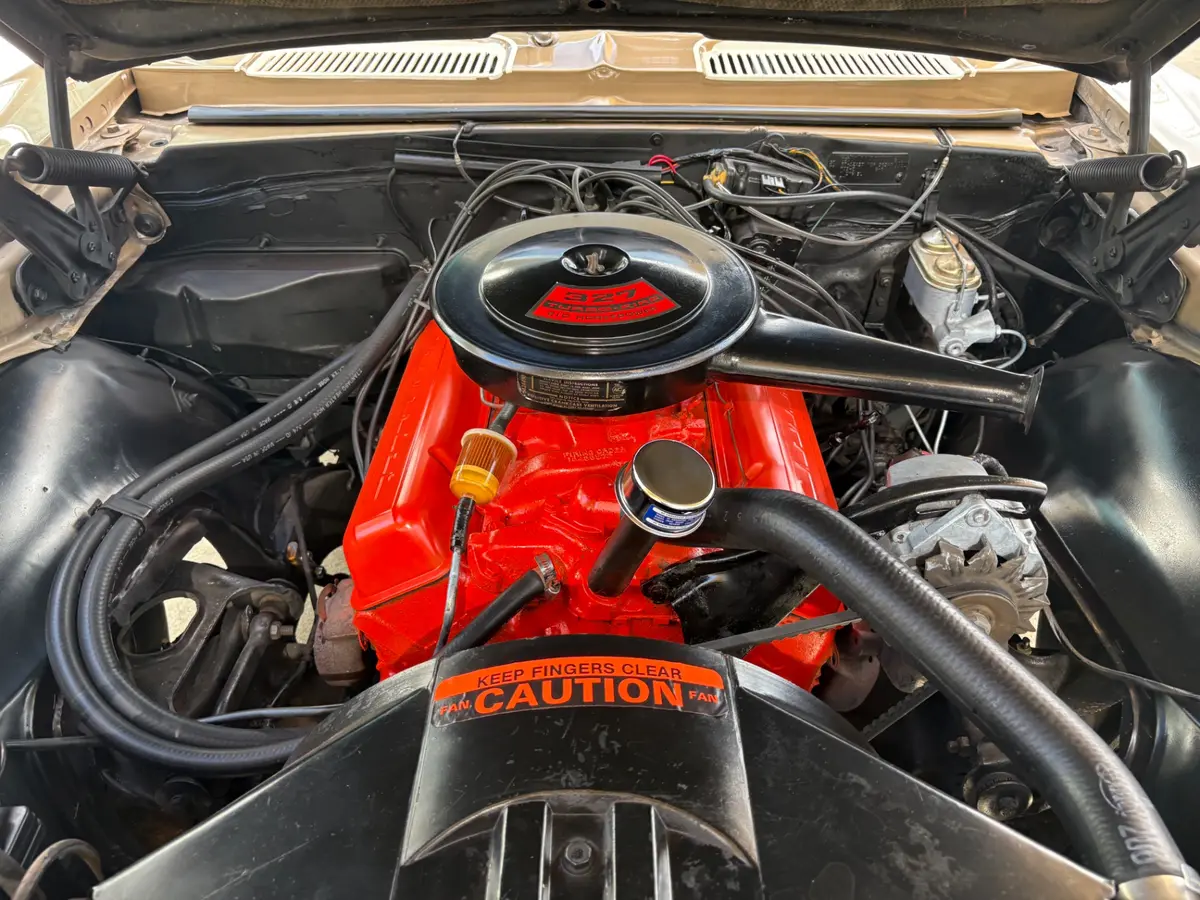
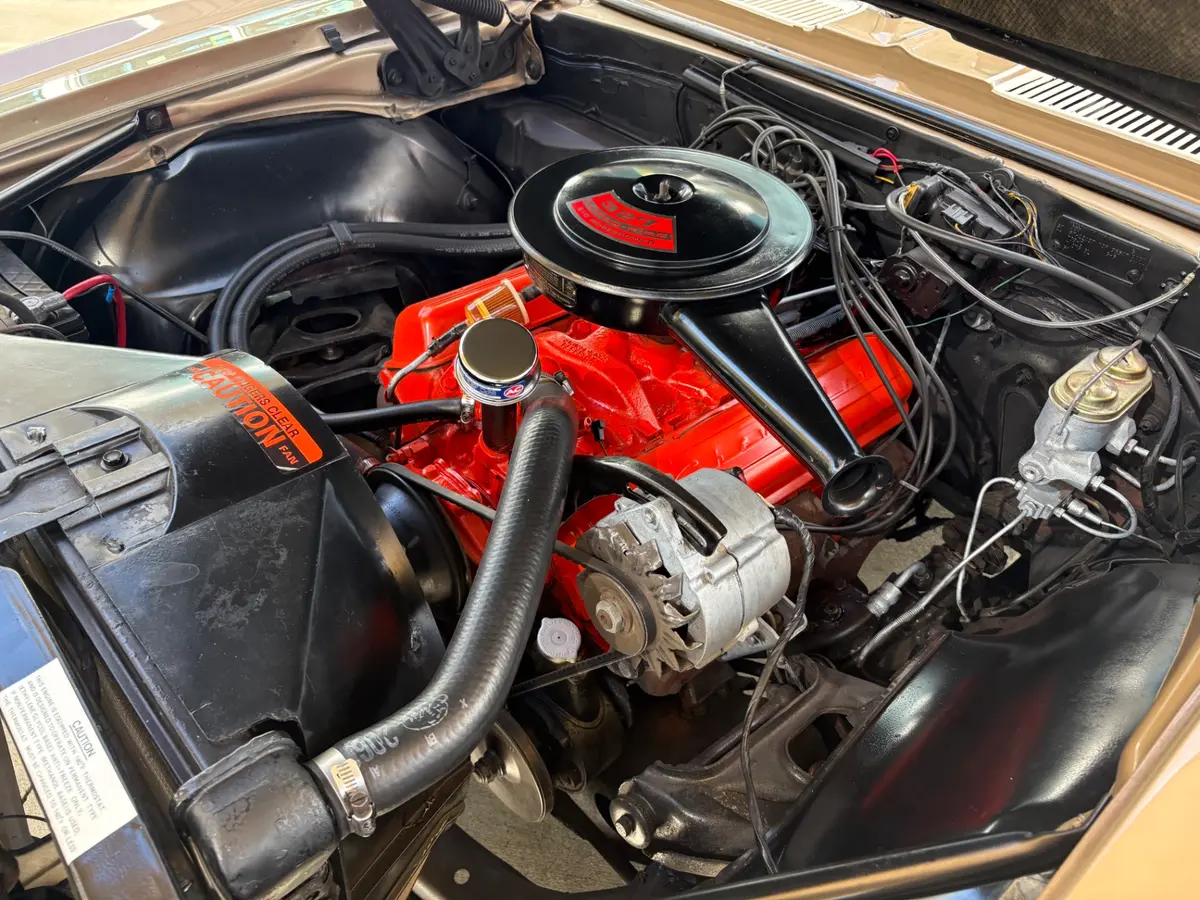
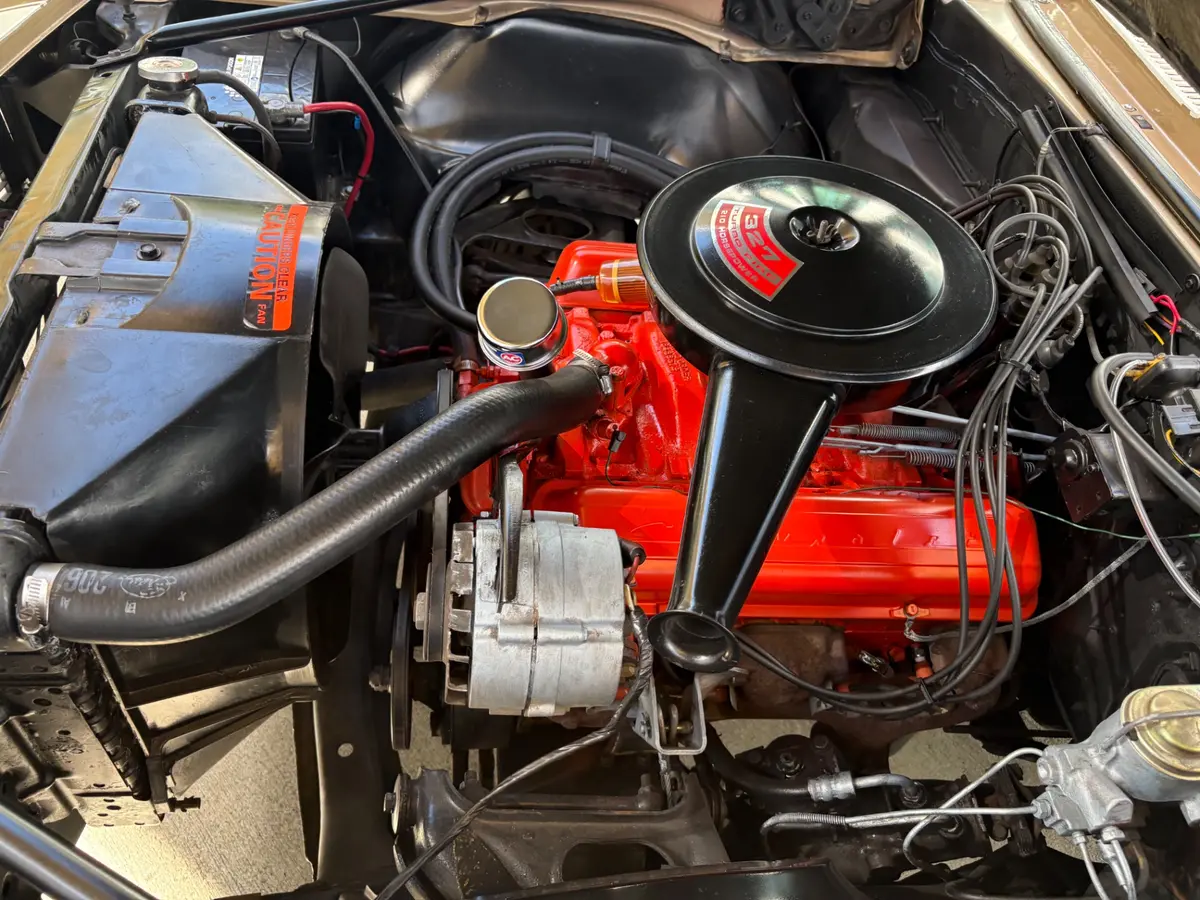
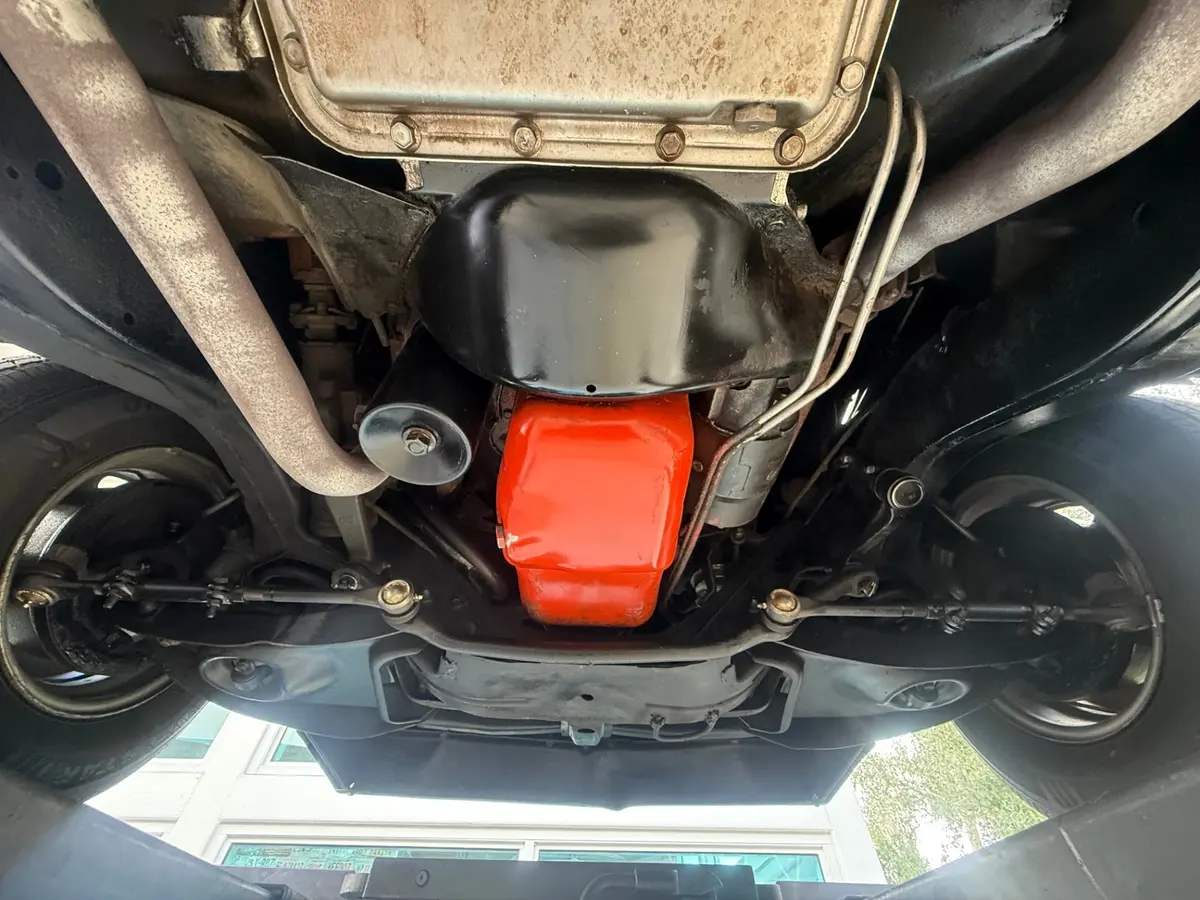
The 327 cubic inch small-block V8 was one of Chevrolet's most respected engines during this era. It had already proven itself in the Corvette before it found its way into the Camaro lineup, and by 1967 it was a known quantity — smooth, reliable, and responsive. The 327 was offered in multiple states of tune in the 1967 Camaro. This car's fender badge and air cleaner decal identify it as a 327, and the engine bay presents with the correct red-painted block and Chevrolet-script valve covers consistent with factory appearance.
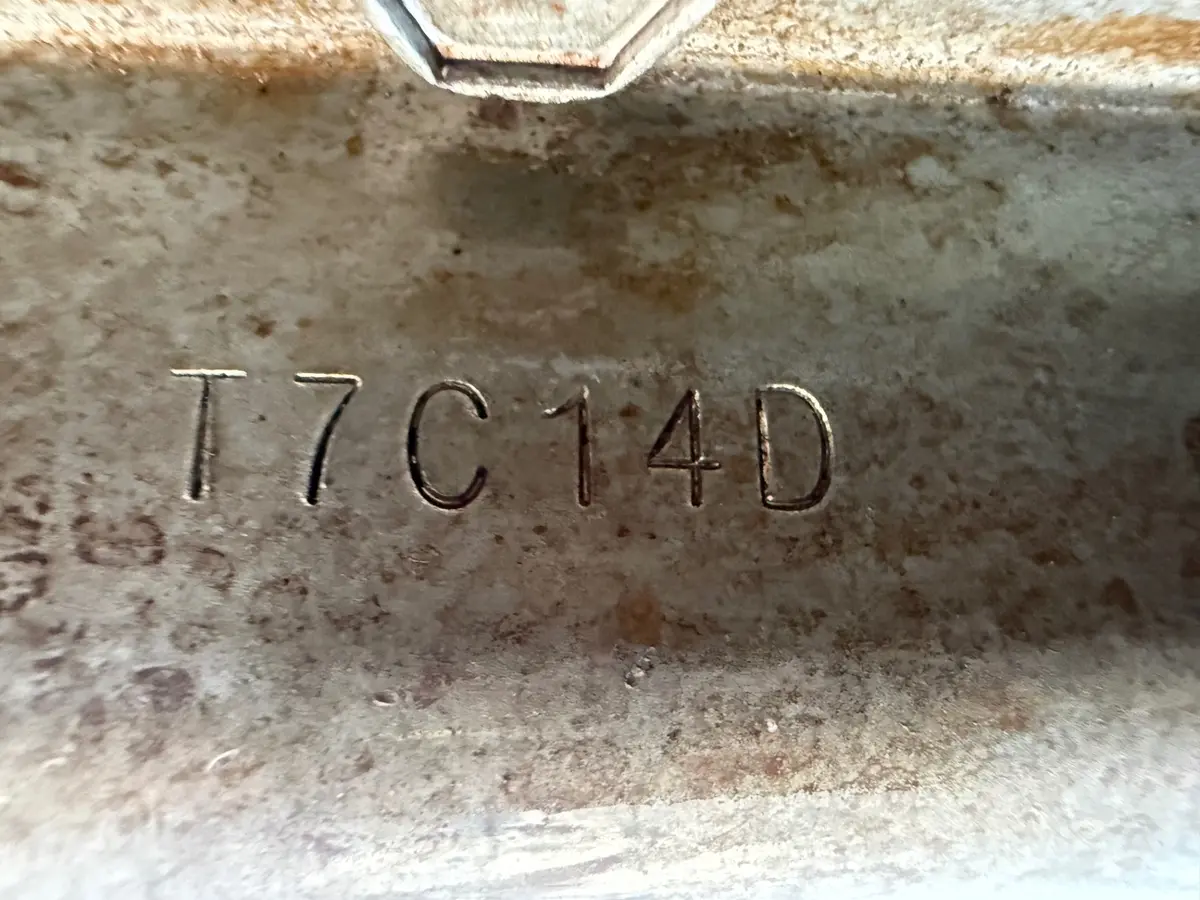
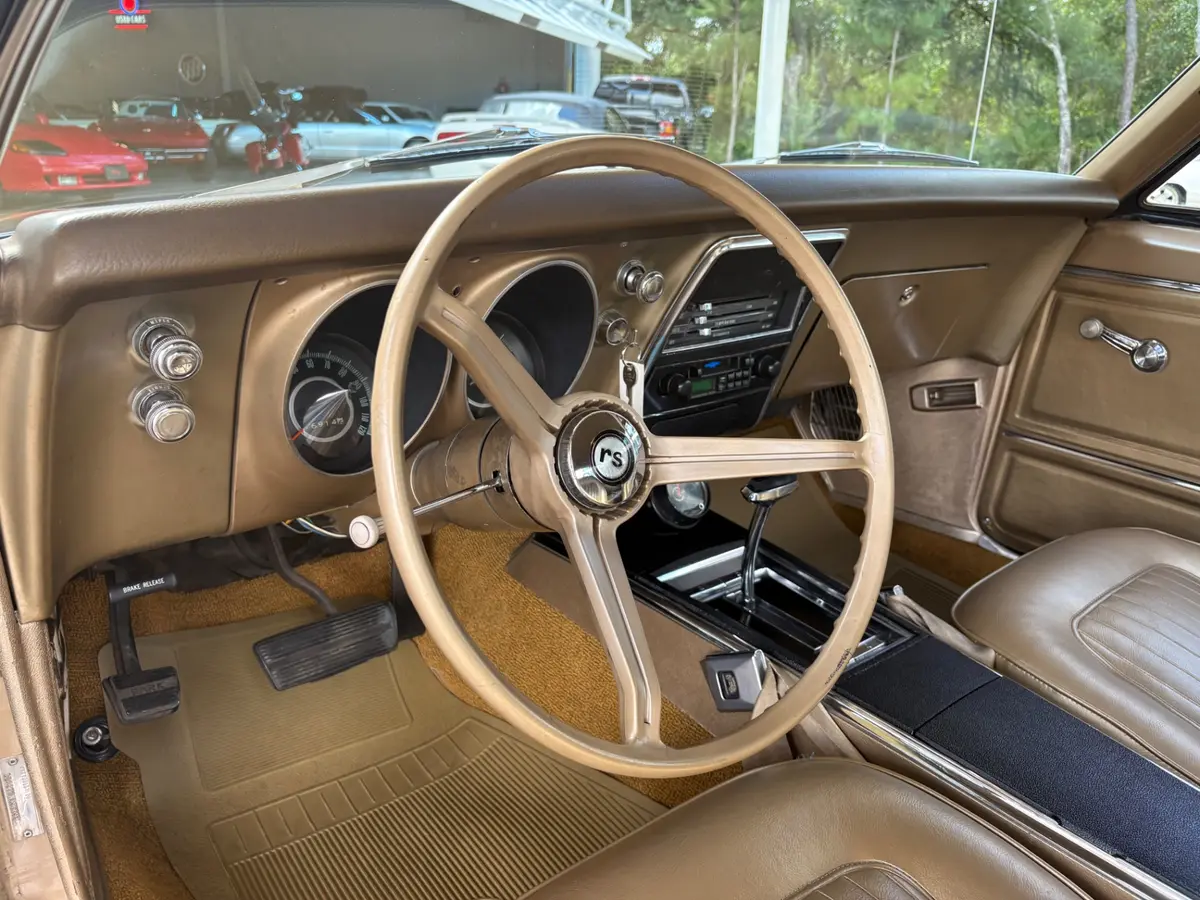
Backing the 327 is a 2-speed Powerglide automatic, which Chevrolet had offered since 1950 and refined considerably by the time this car was built. The Powerglide was not the performance choice — that would have been the 4-speed manual — but it was durable and smooth, and it made the RS a more relaxed daily driver. The floor-shifted console shifter retains the period-correct chrome T-handle and indicator gate, and it presents well.
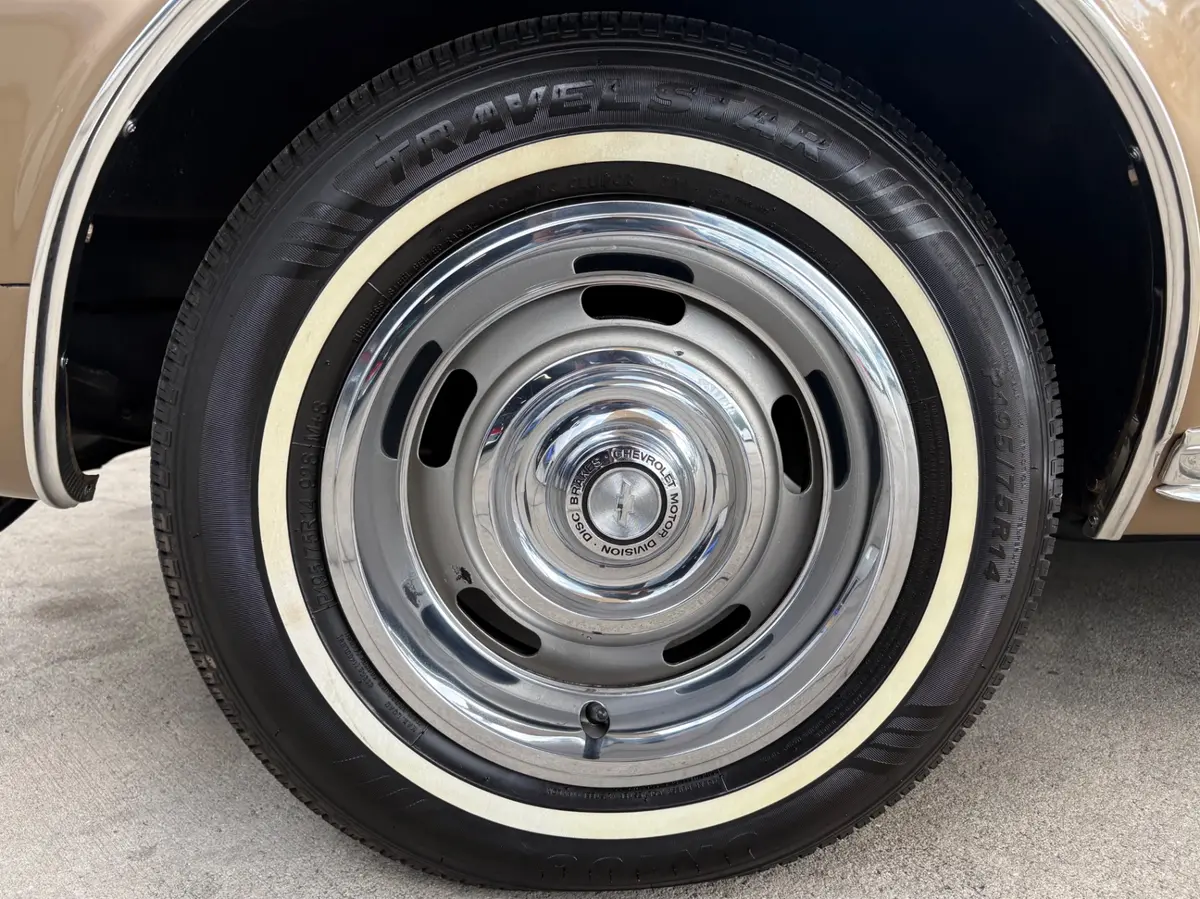
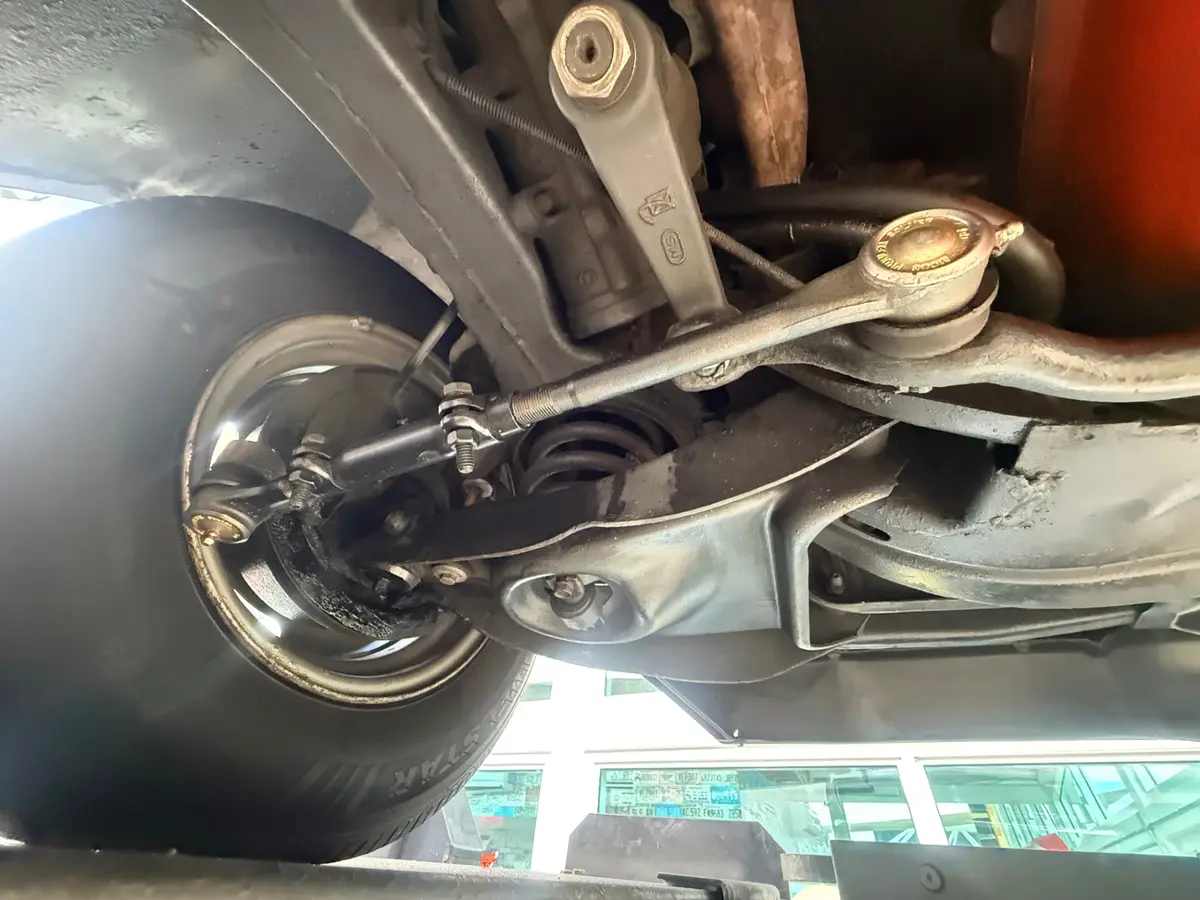
This car is equipped with factory power front disc brakes, which were a meaningful upgrade in 1967. The standard Camaro came with four-wheel drums. Disc brakes up front gave significantly better stopping performance, especially under repeated use, and they remain one of the most practical options a first-year Camaro buyer could have checked. Power steering is also fitted, which rounds out this car as a comfortable, capable driver rather than a stripped performance machine.
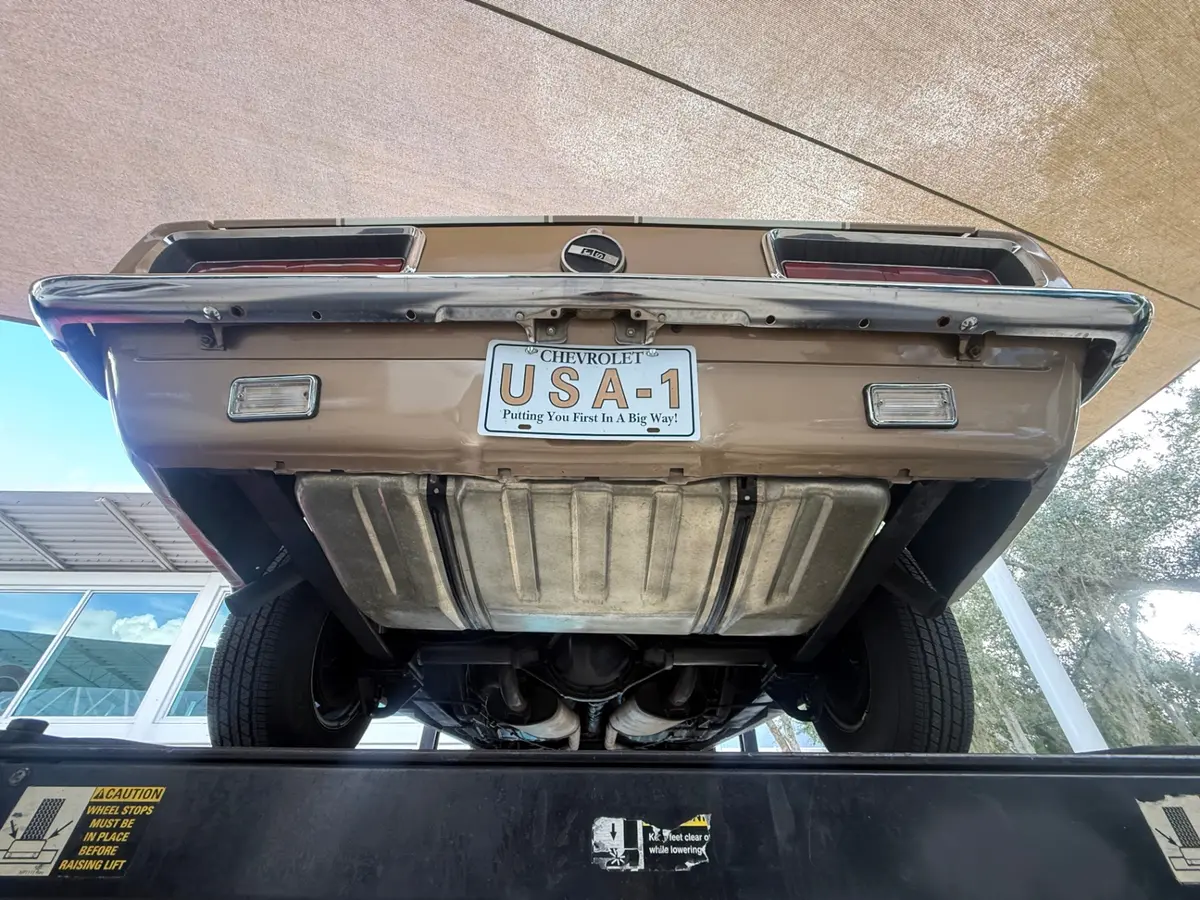
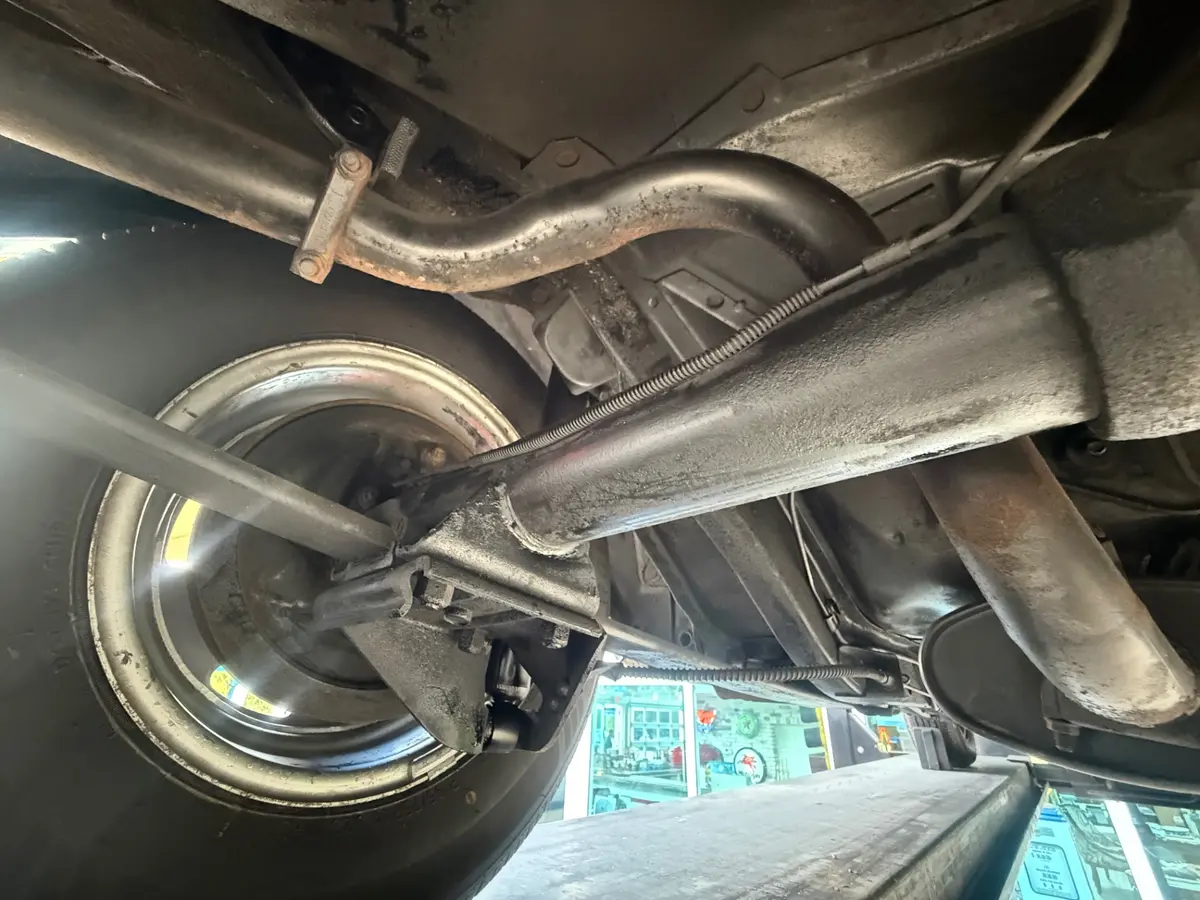
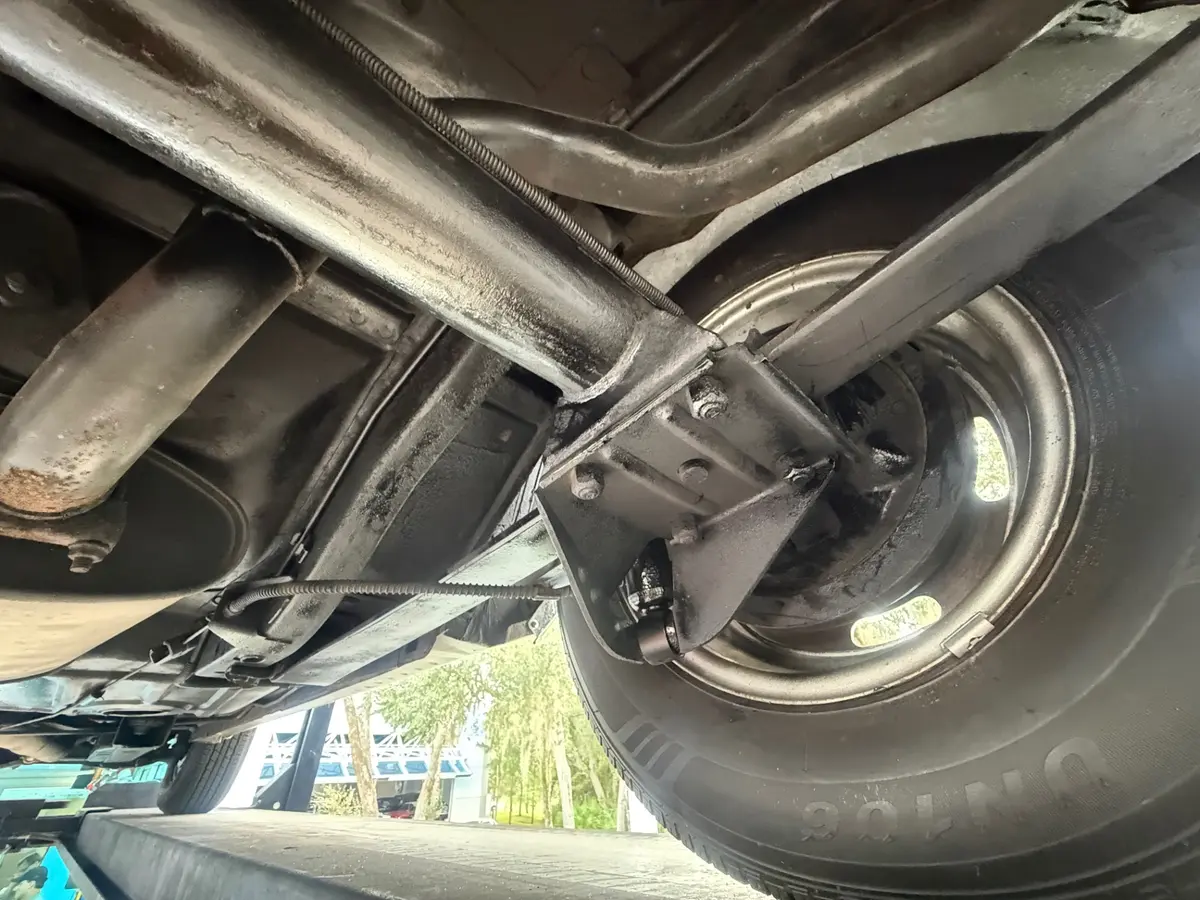
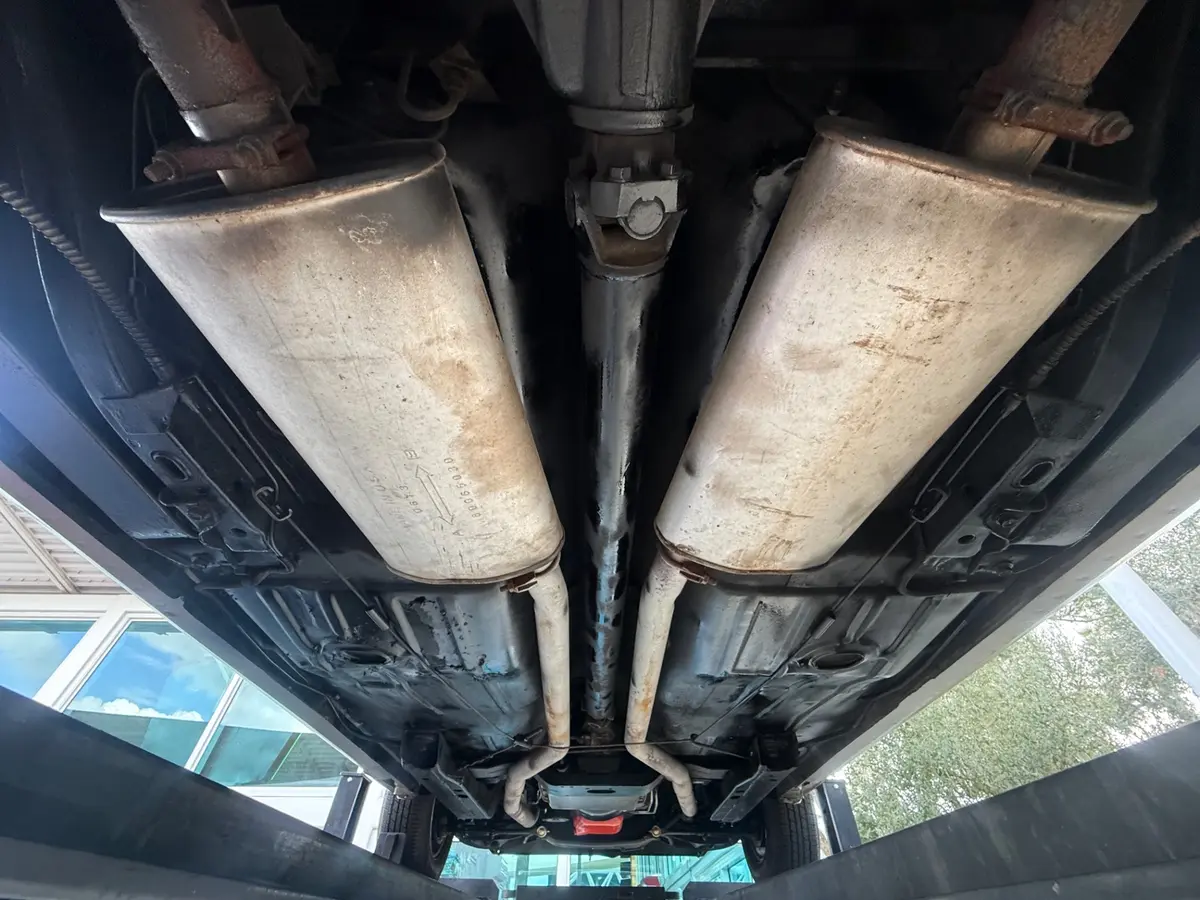
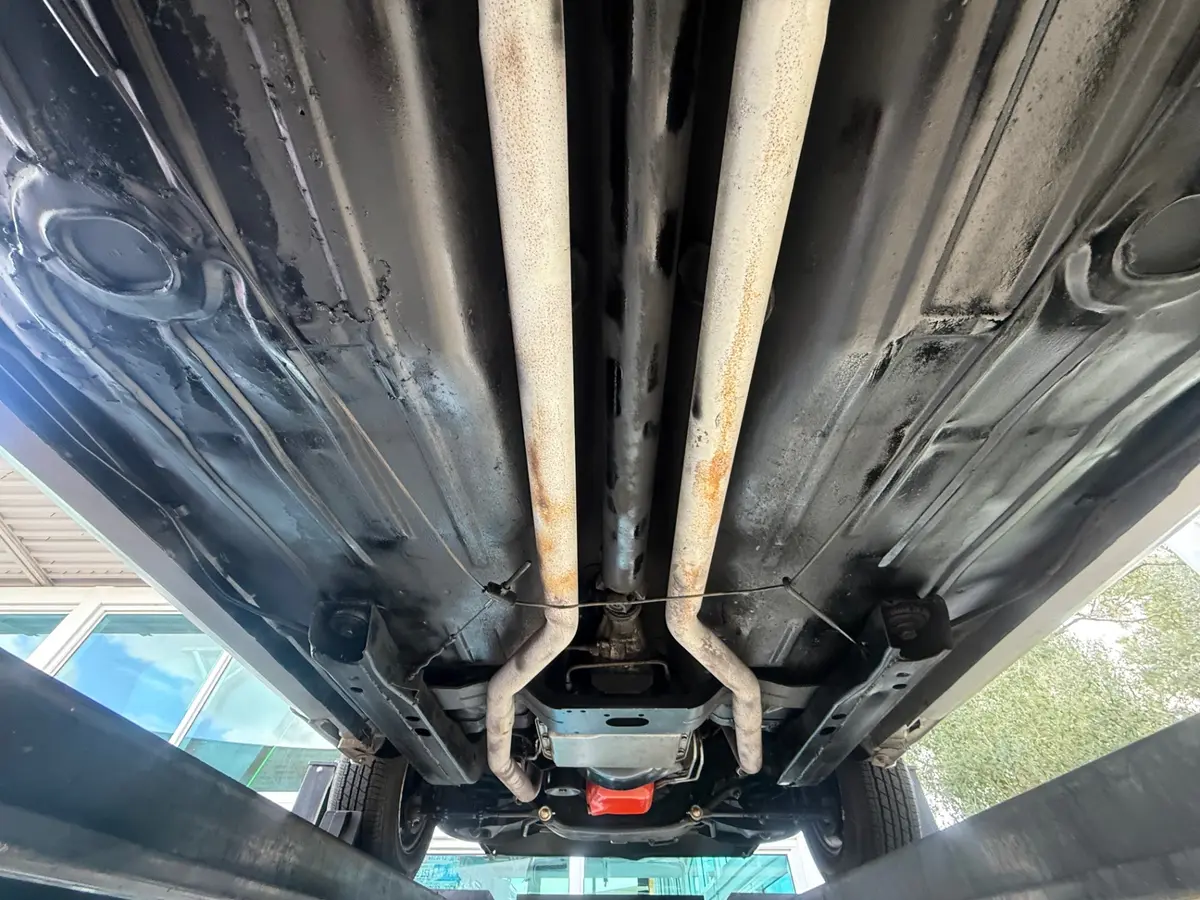
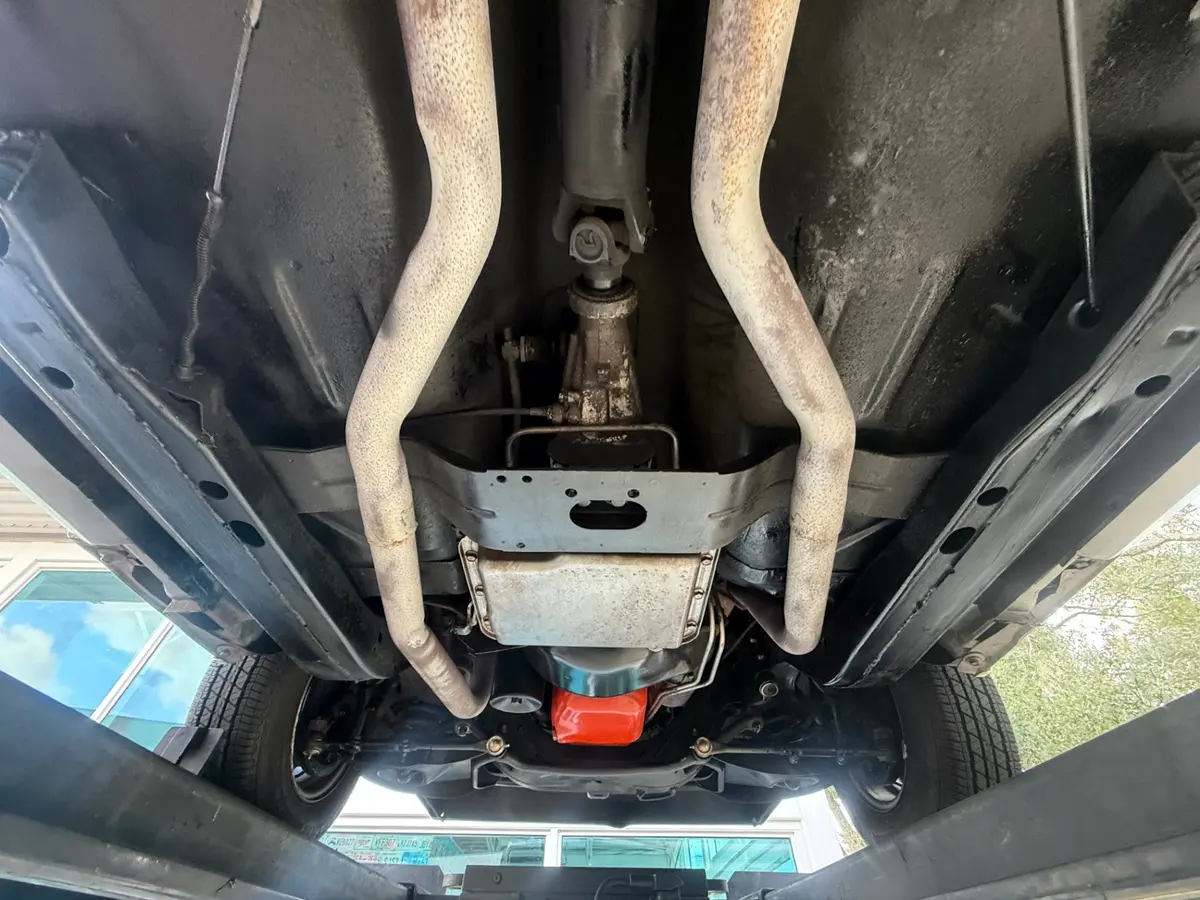
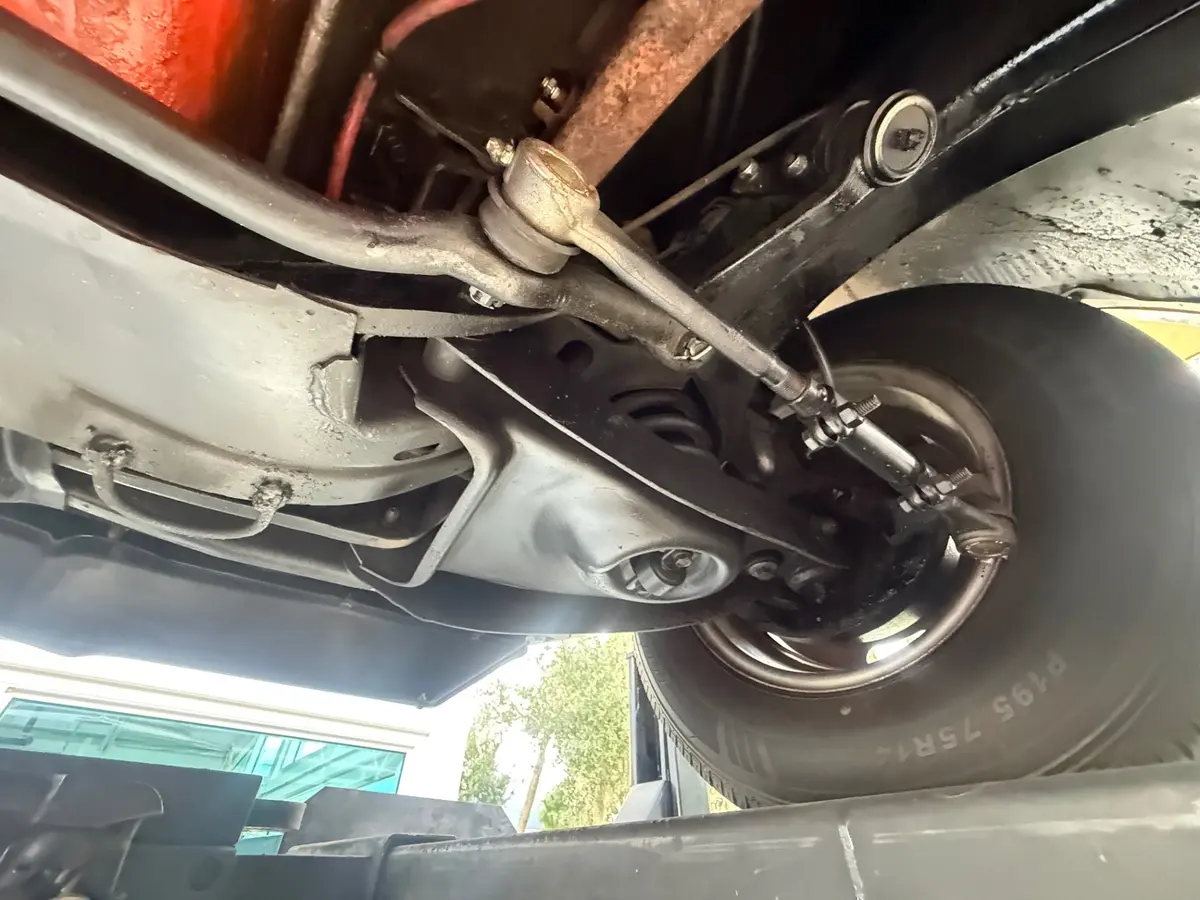
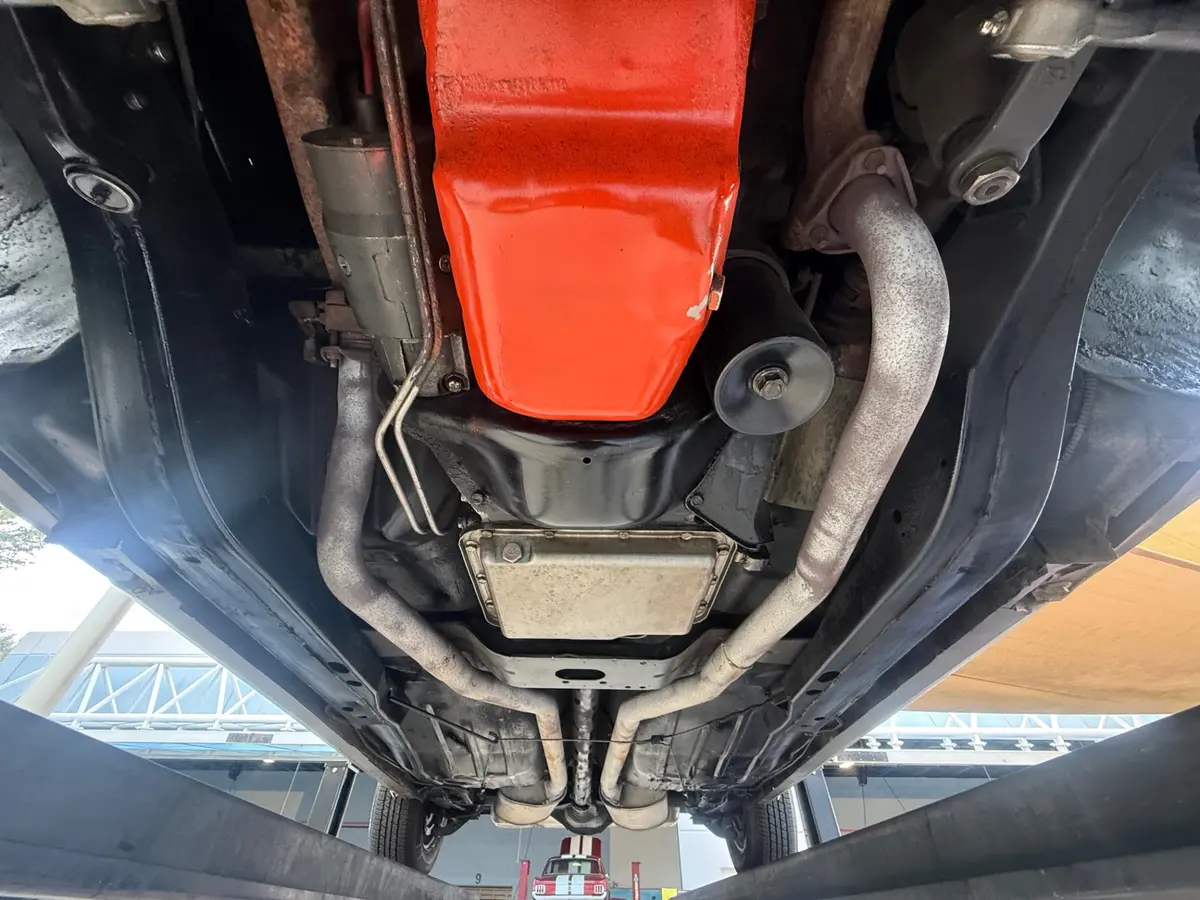
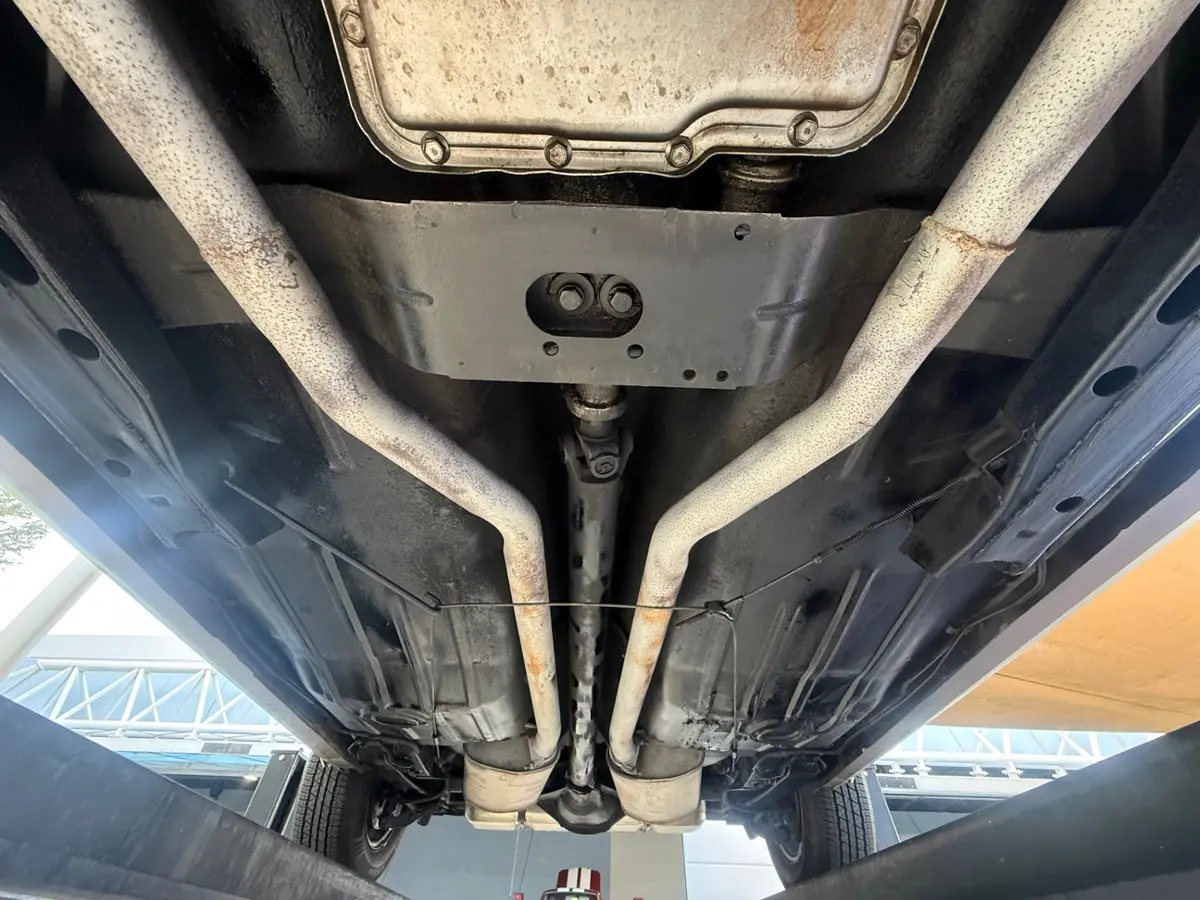
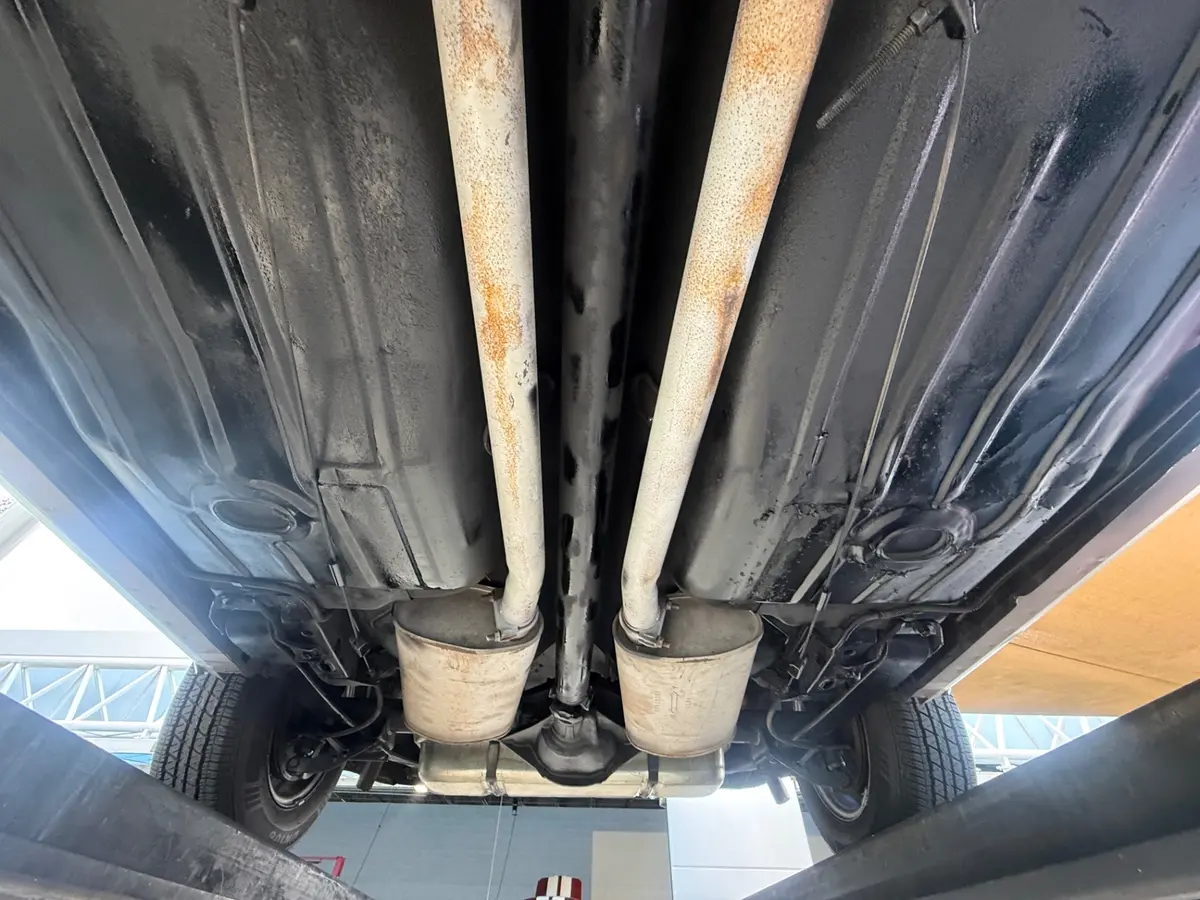
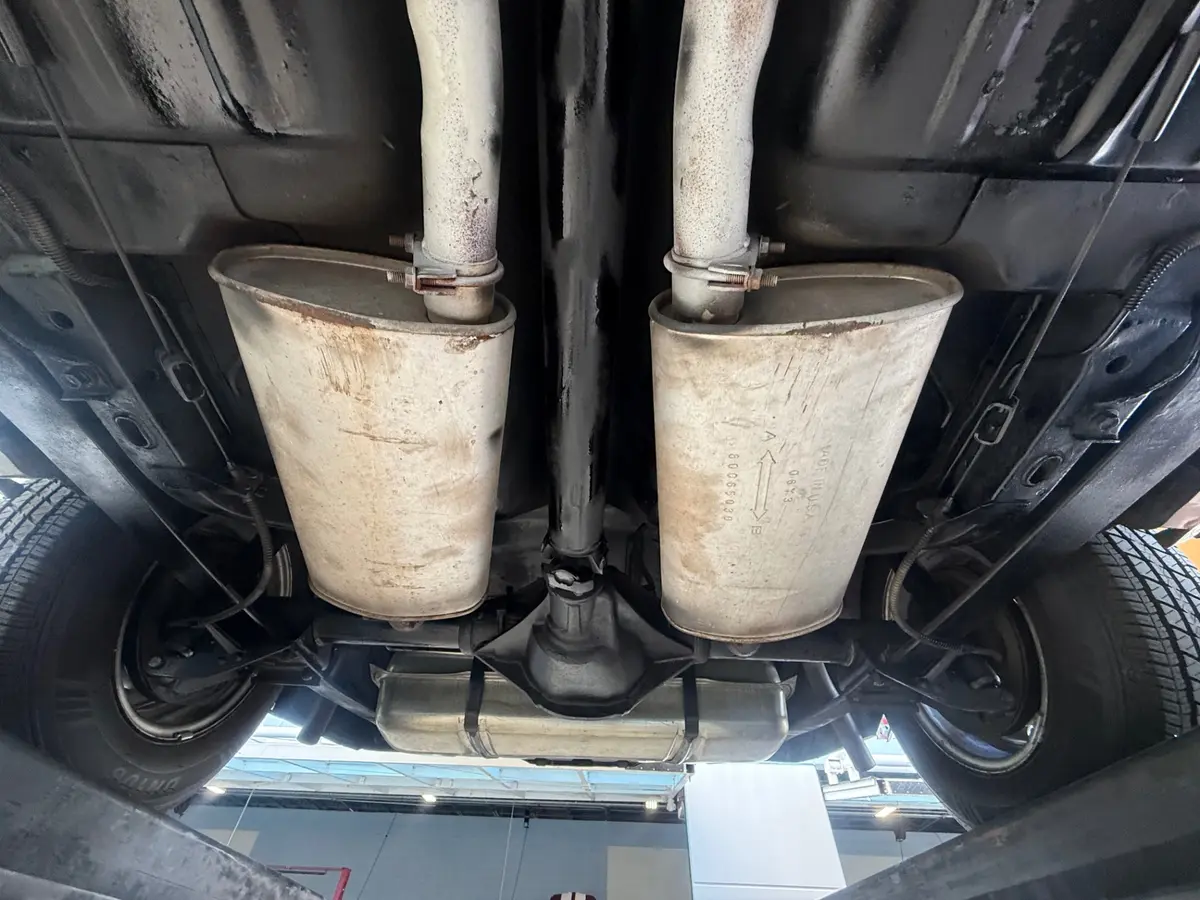
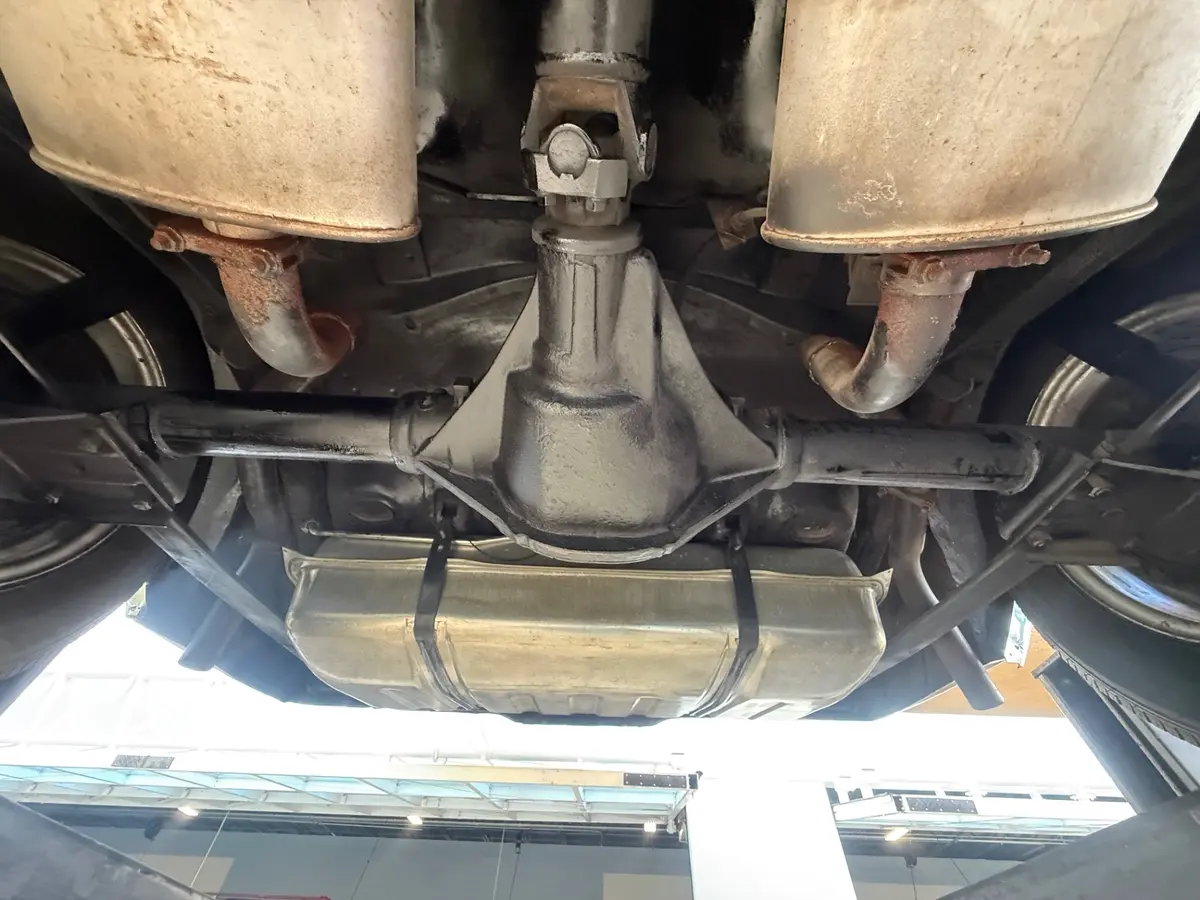
The dual exhaust exits cleanly under the rear valance. The undercarriage photos show a solid, well-preserved bottom — no visible patches, the floors appear intact, and the frame rails look straight and uncompromised. The rear axle housing is correct for the application, and the suspension components visible in the photos look to be in serviceable condition without obvious replacement or modification.
Interior
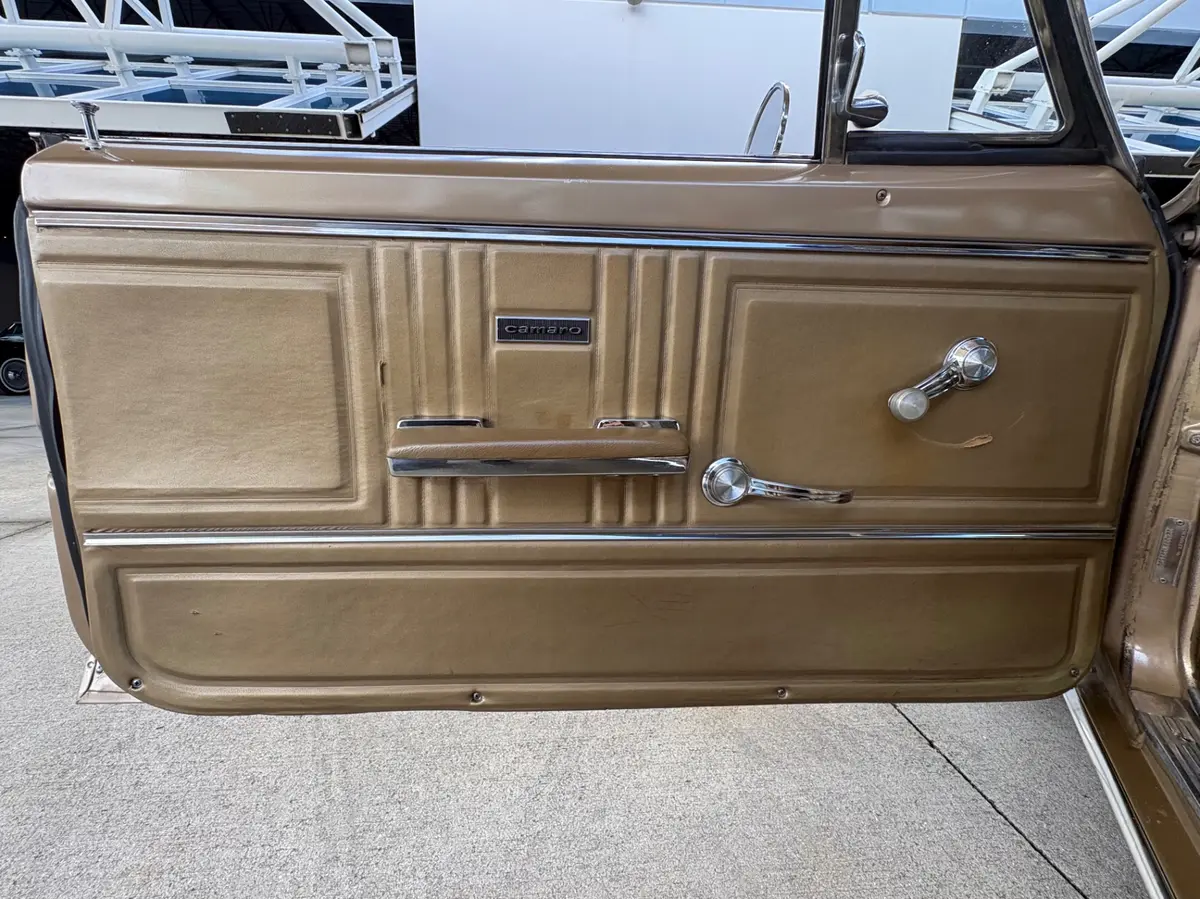
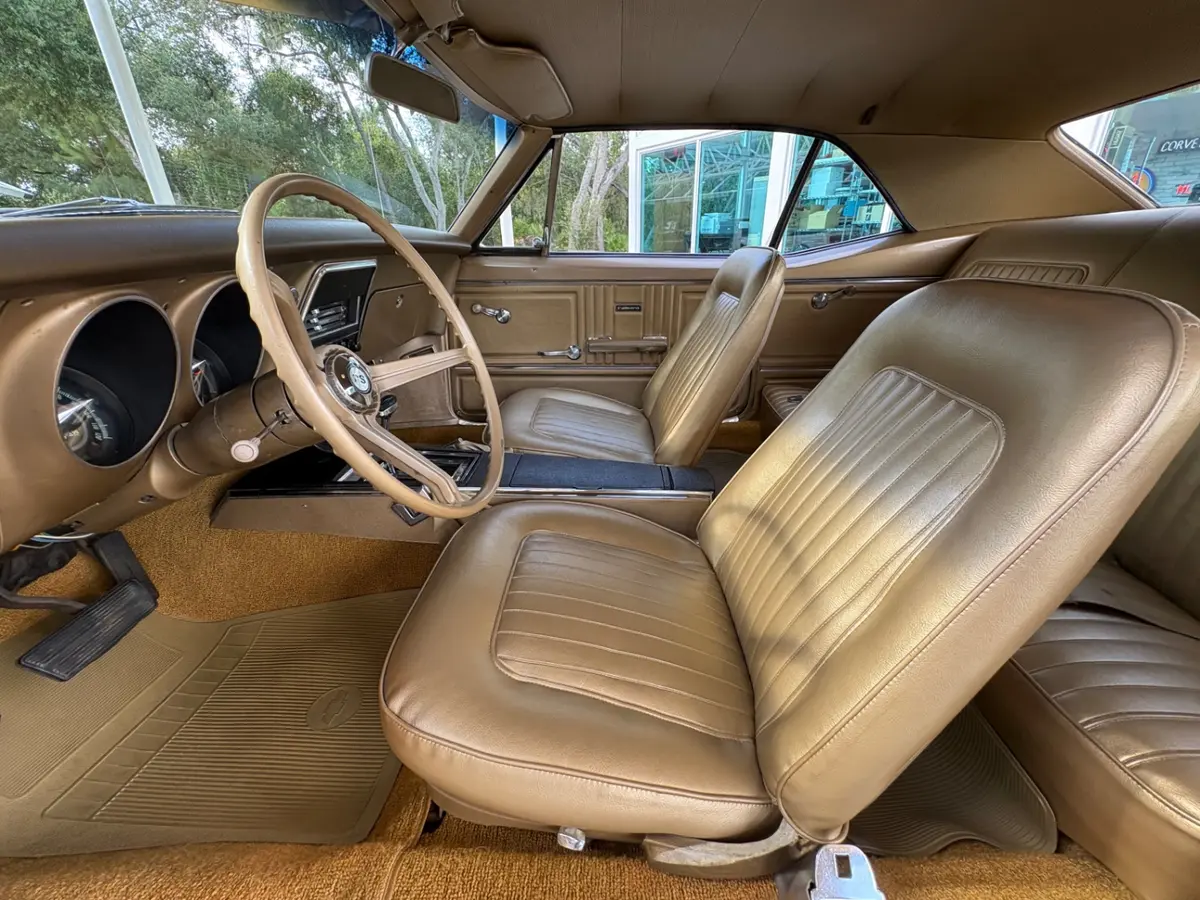
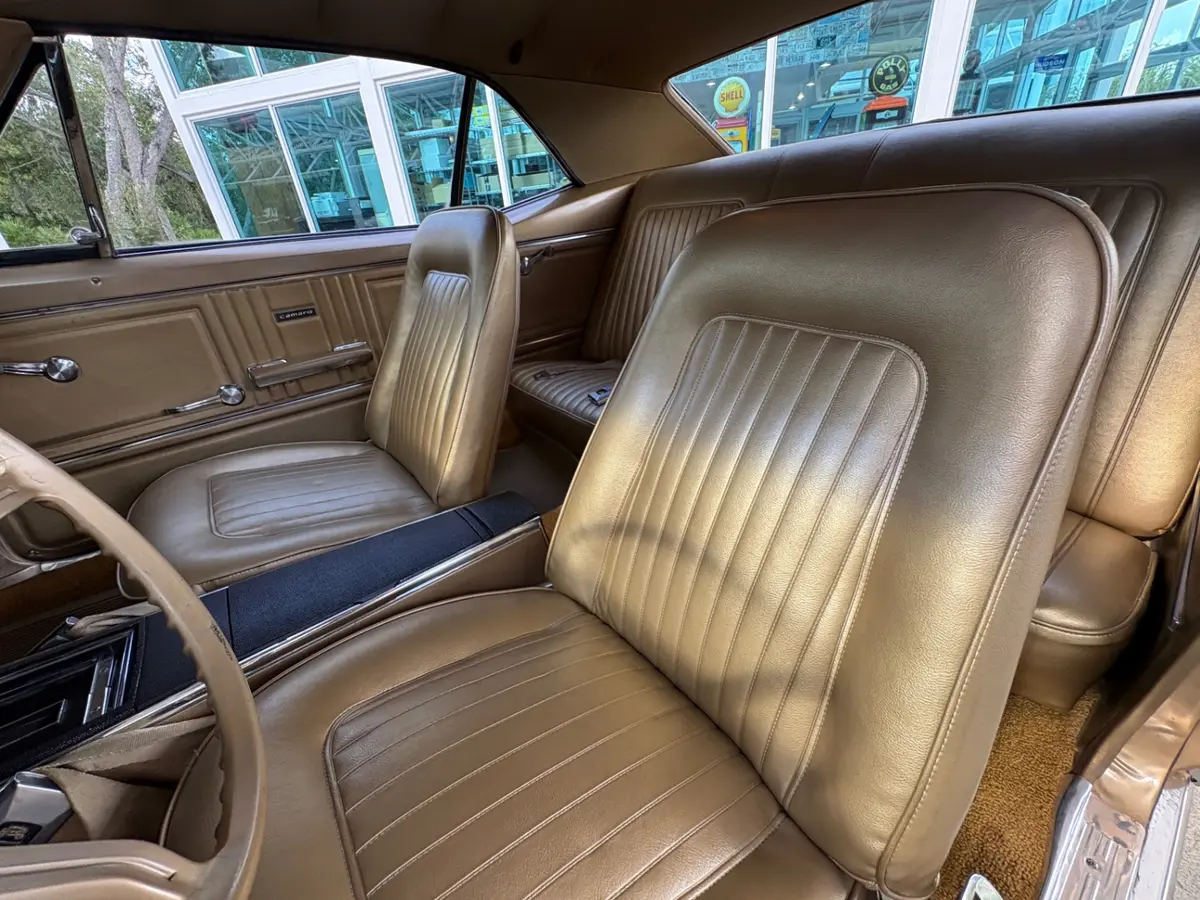
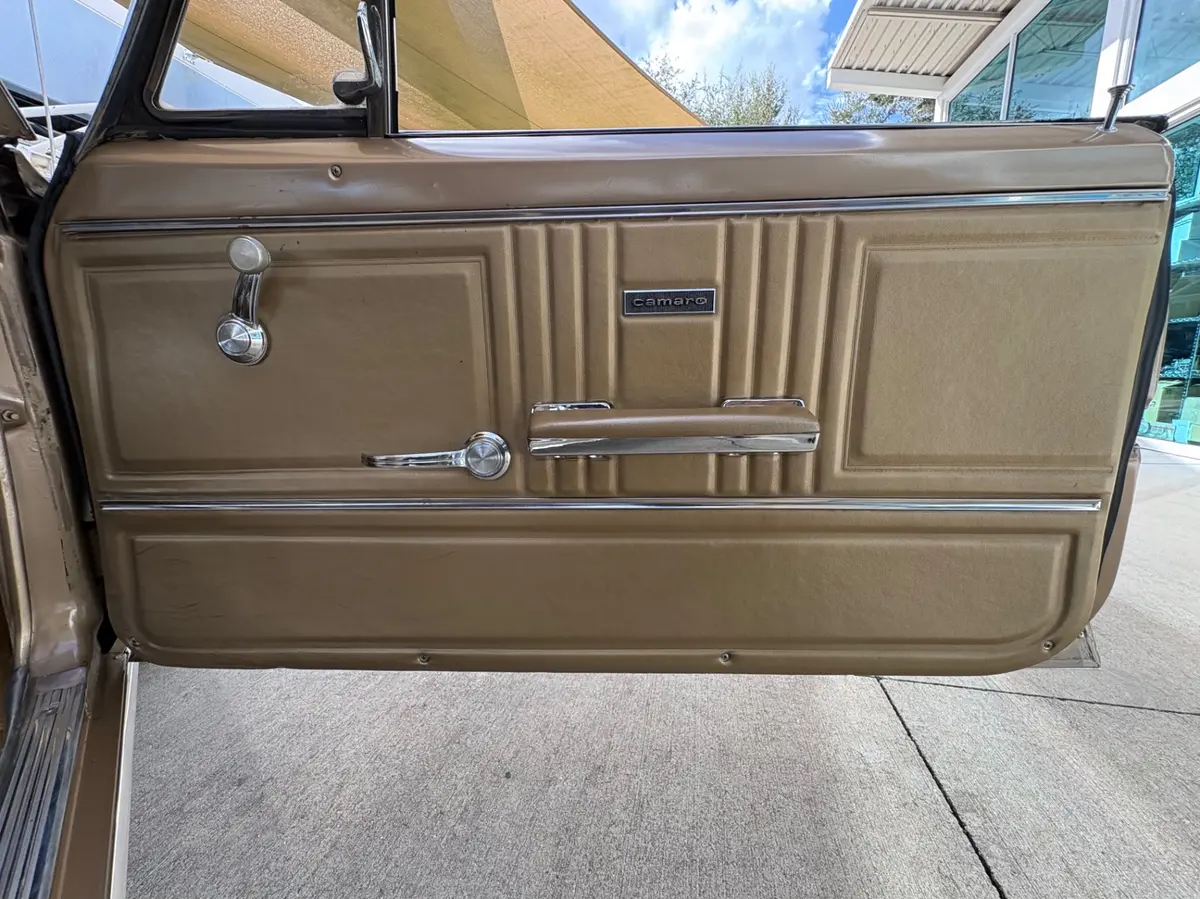
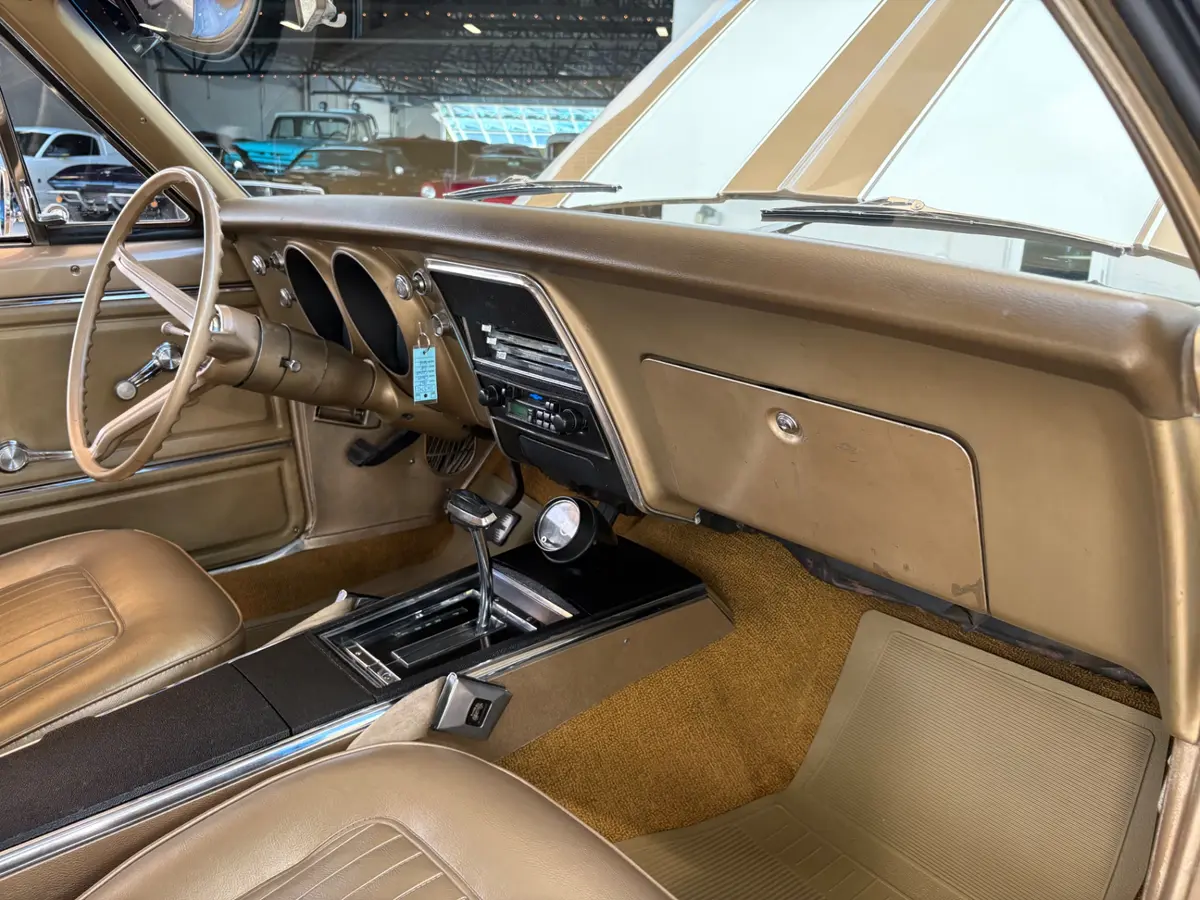
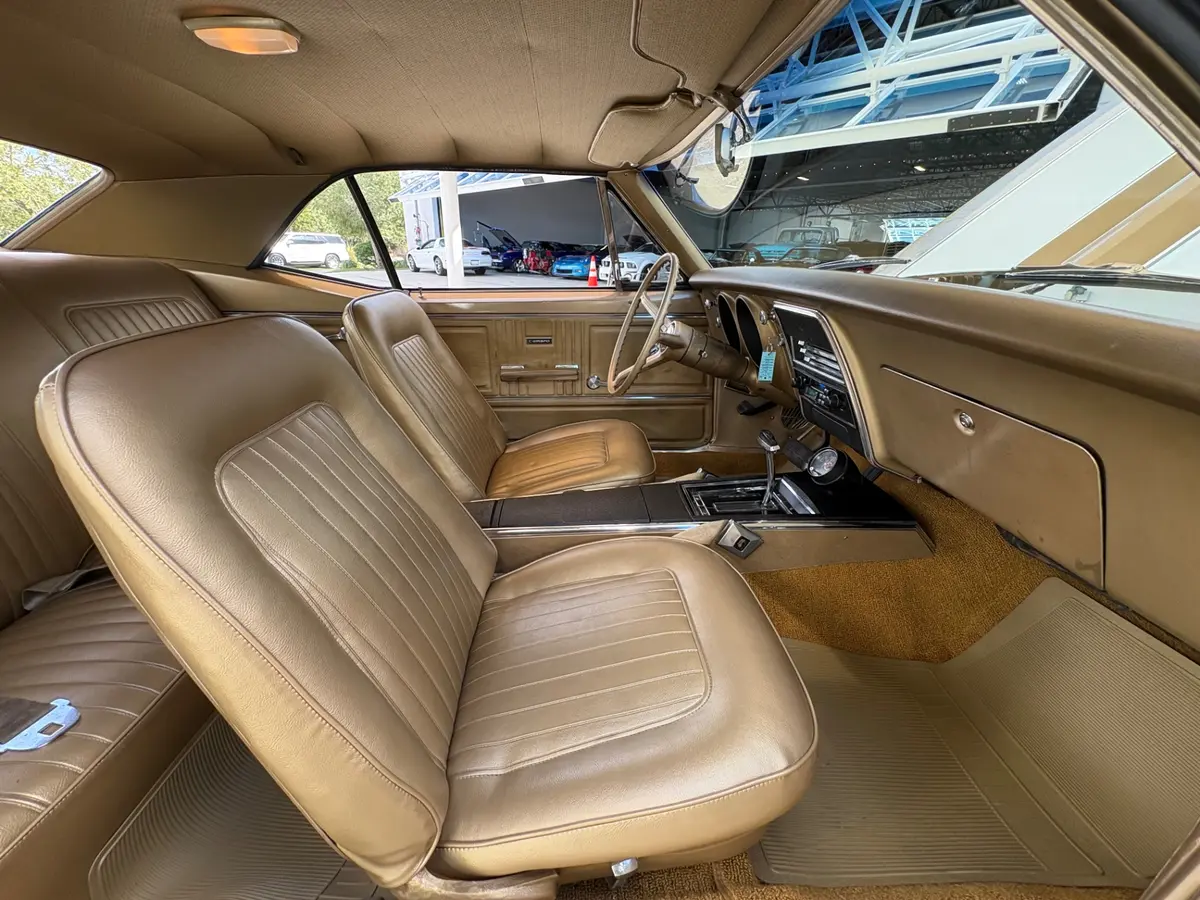
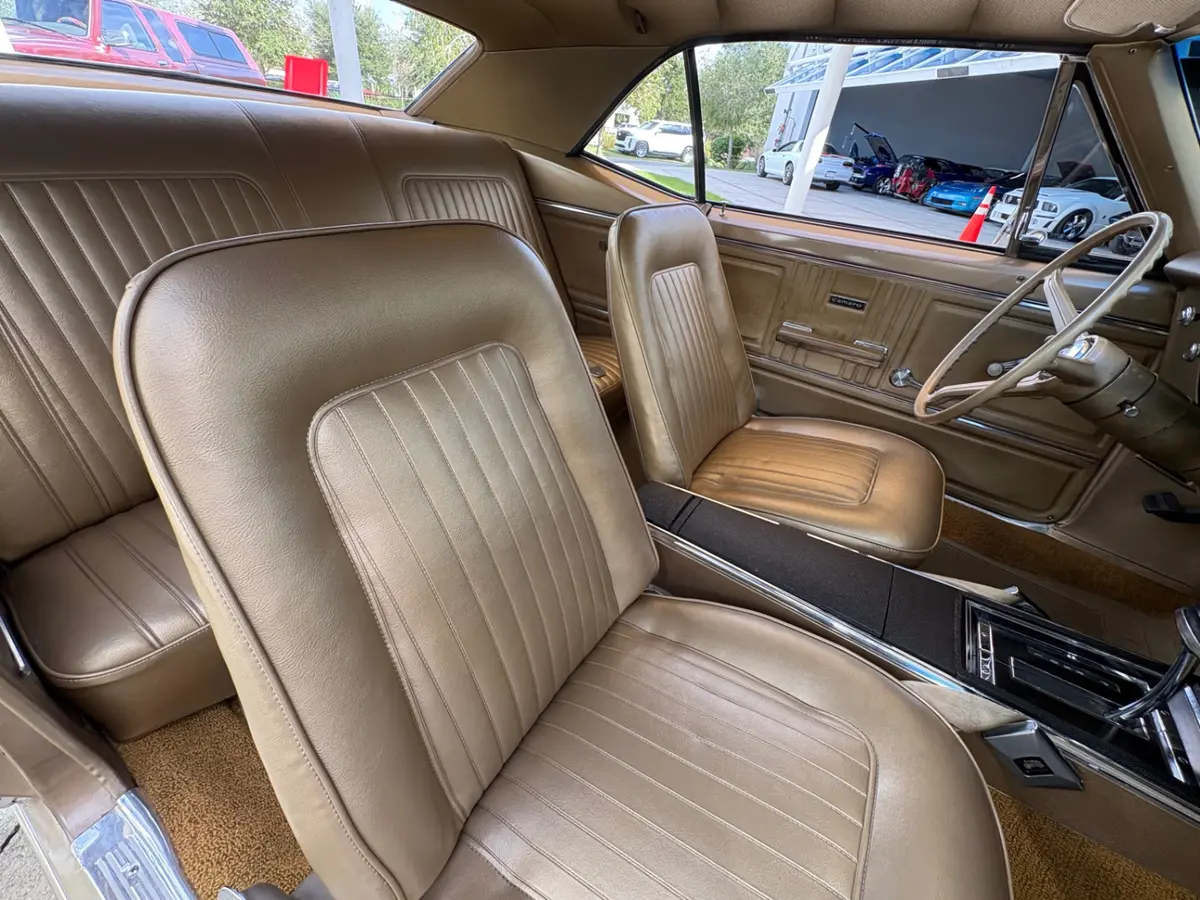
The gold vinyl interior in this 1967 Camaro RS is a strong complement to the Granada Gold exterior. The color coordination was clearly intentional — the door panels, dashboard, headliner, and seats all carry the same warm gold tone, creating a cohesive look that holds up well nearly six decades on. The vinyl has aged gracefully. The seat surfaces show the original ribbed stitching pattern, and the door panels retain their embossed Camaro script badges and chrome window cranks and door handles.
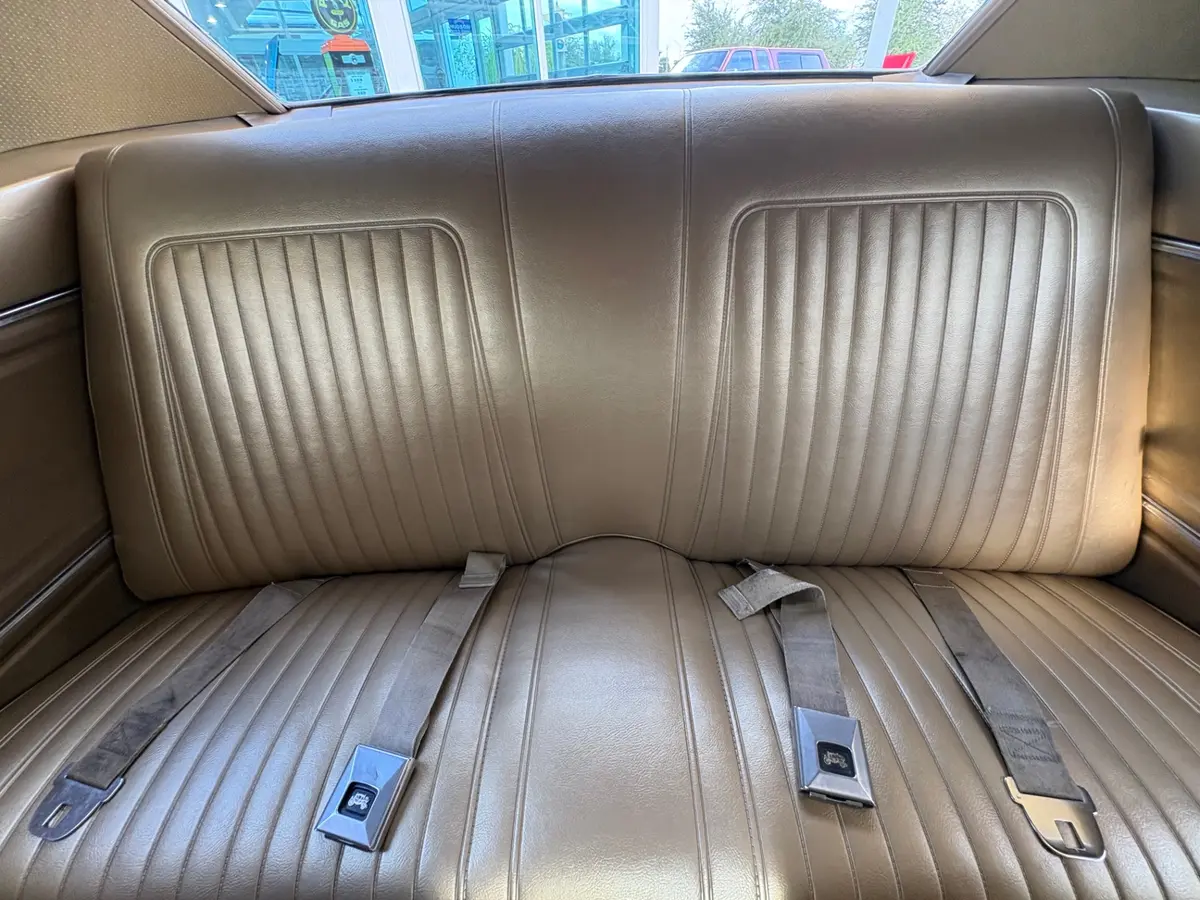
Front bucket seats are fitted, which was the correct pairing with the center console. The rear seat is a bench, also in matching gold vinyl, and it looks to have been well maintained — the stitching is intact and the cushion shape is preserved. The original factory lap belts are still present in the rear.
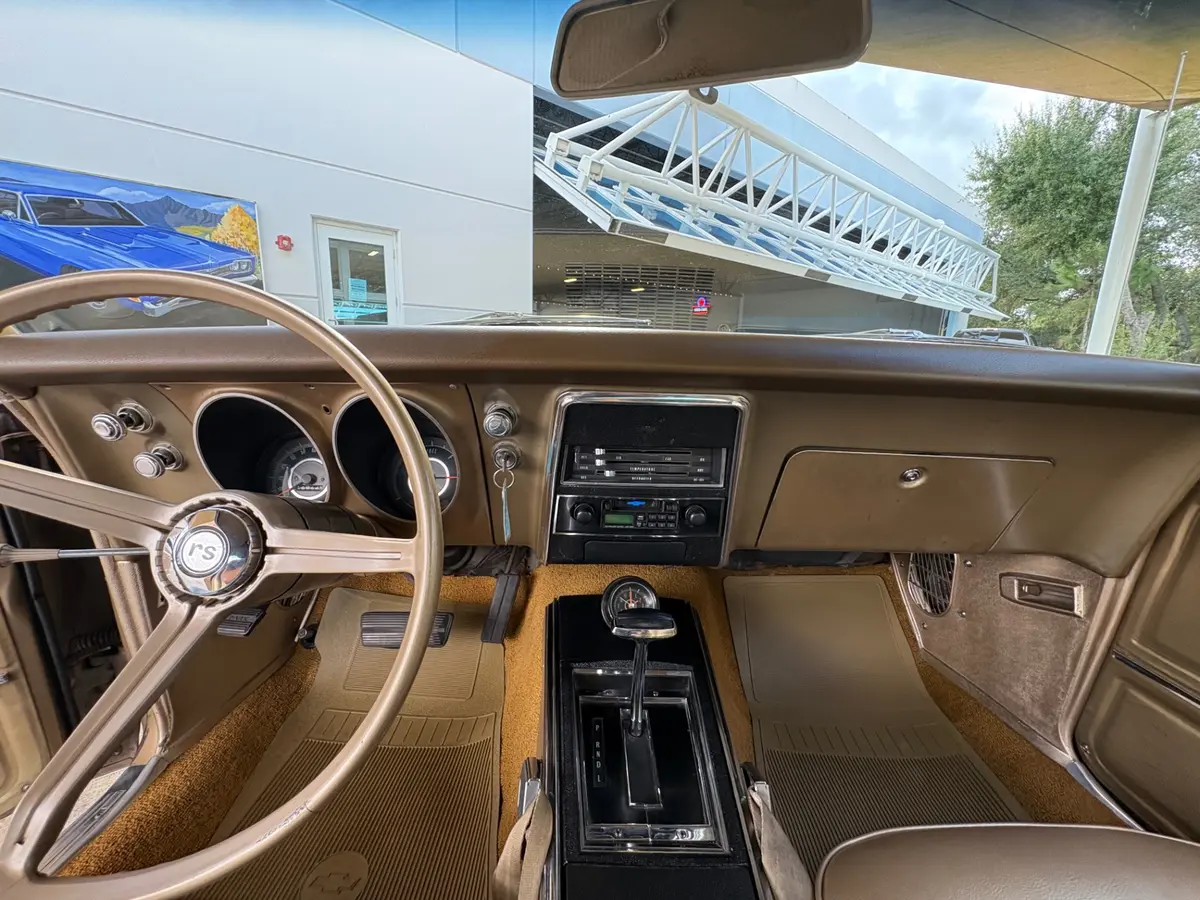
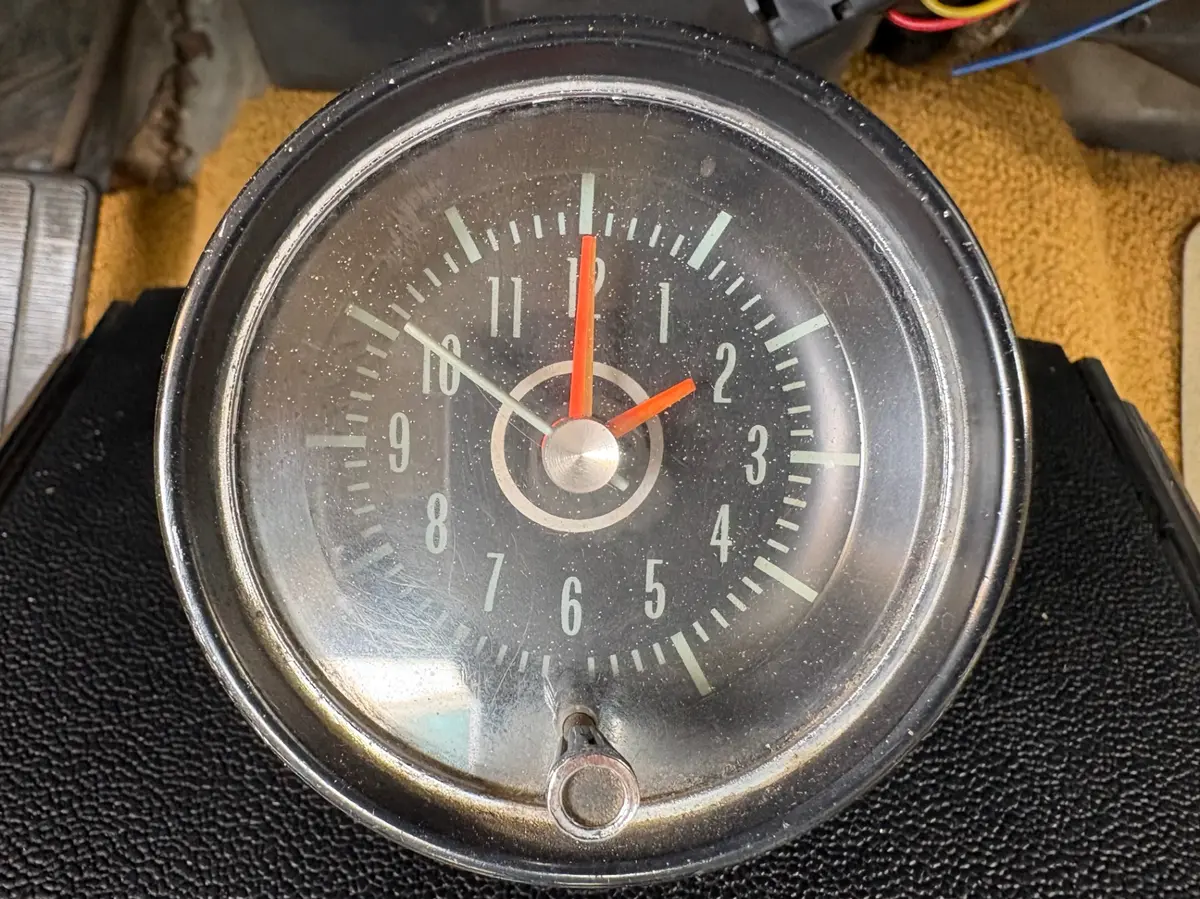
The center console is one of this car's most interesting interior details. It houses the floor-shifted Powerglide selector and, mounted ahead of it, a round console clock — an accessory that Camaro buyers could add through the dealer. The clock face, with its orange sweep hands and black dial, is period-correct and typical of the console-mounted timepieces offered in this era.
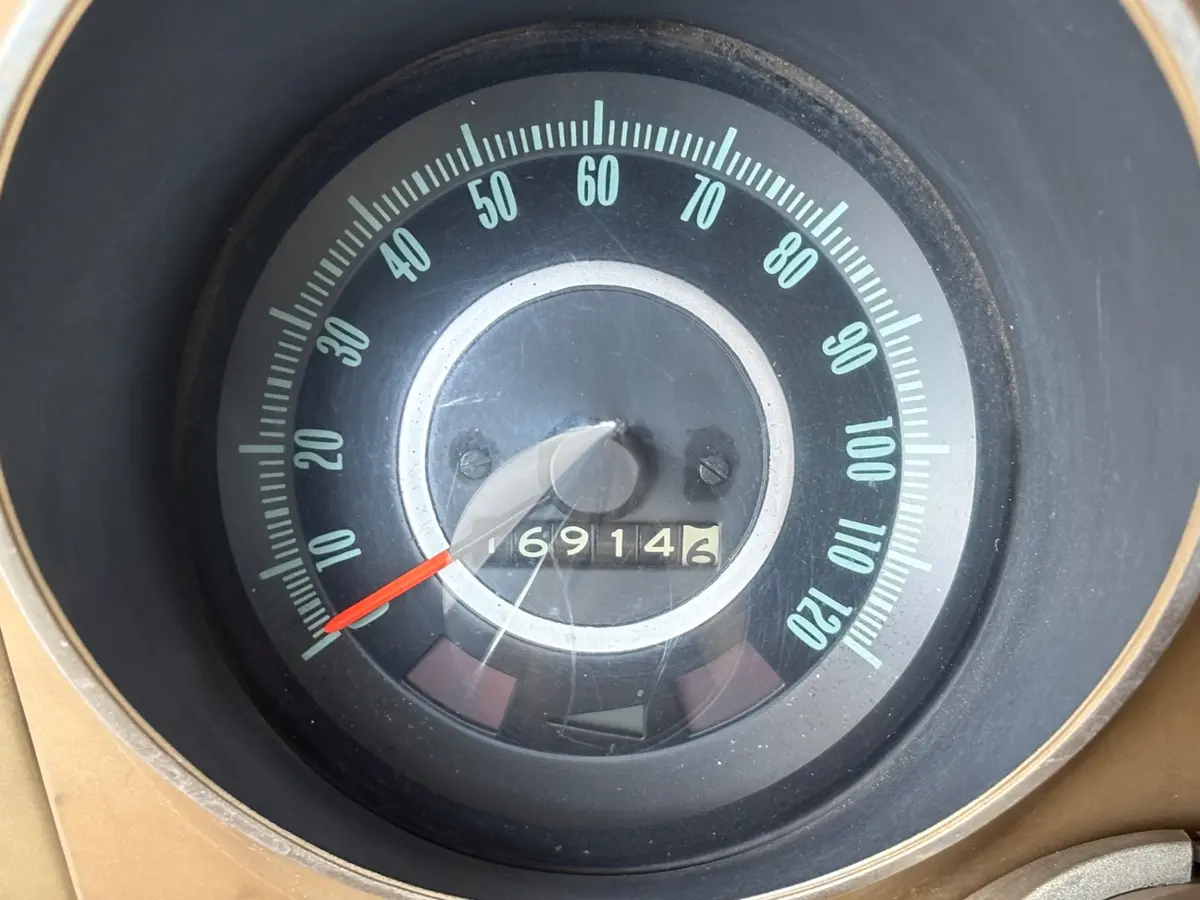
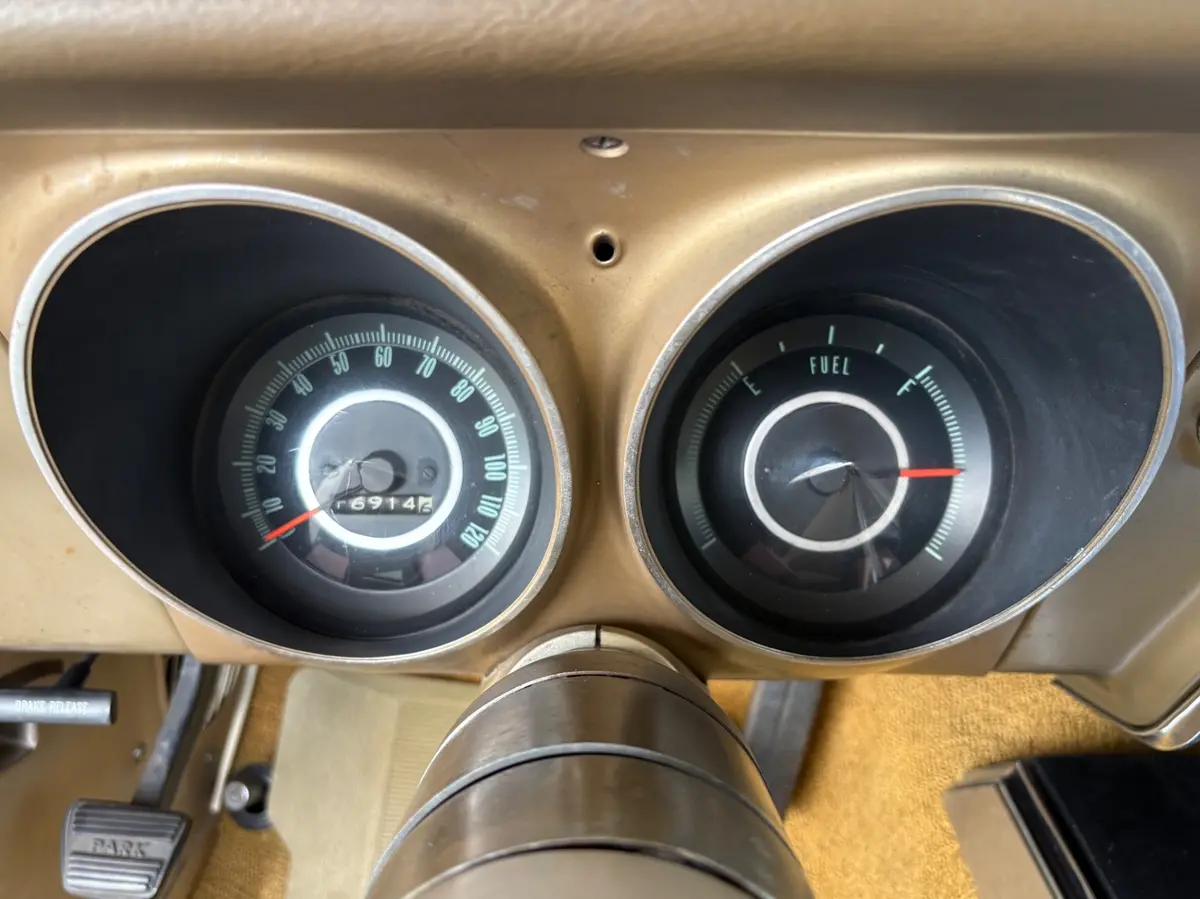
The instrument cluster follows the RS-specific layout, with the round pod housing the speedometer and fuel gauge flanked by additional round gauges. The RS steering wheel — a three-spoke design with an RS center horn button emblem — is present and correct. The AM/FM stereo radio occupies the center dash position and appears to be an aftermarket unit installed in the factory location, which is a common and reversible modification on these cars. The gold carpet shows wear consistent with use but is intact throughout the cabin.
Exterior
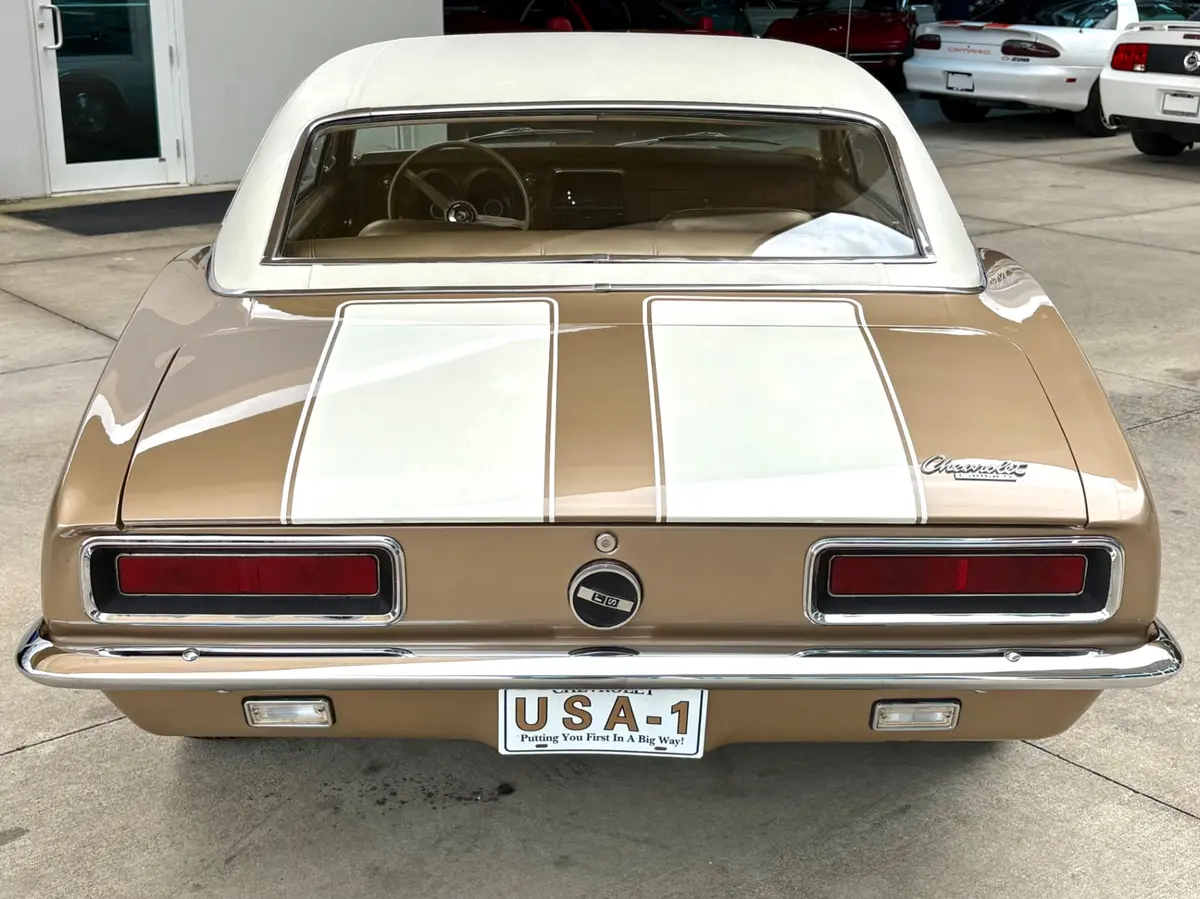
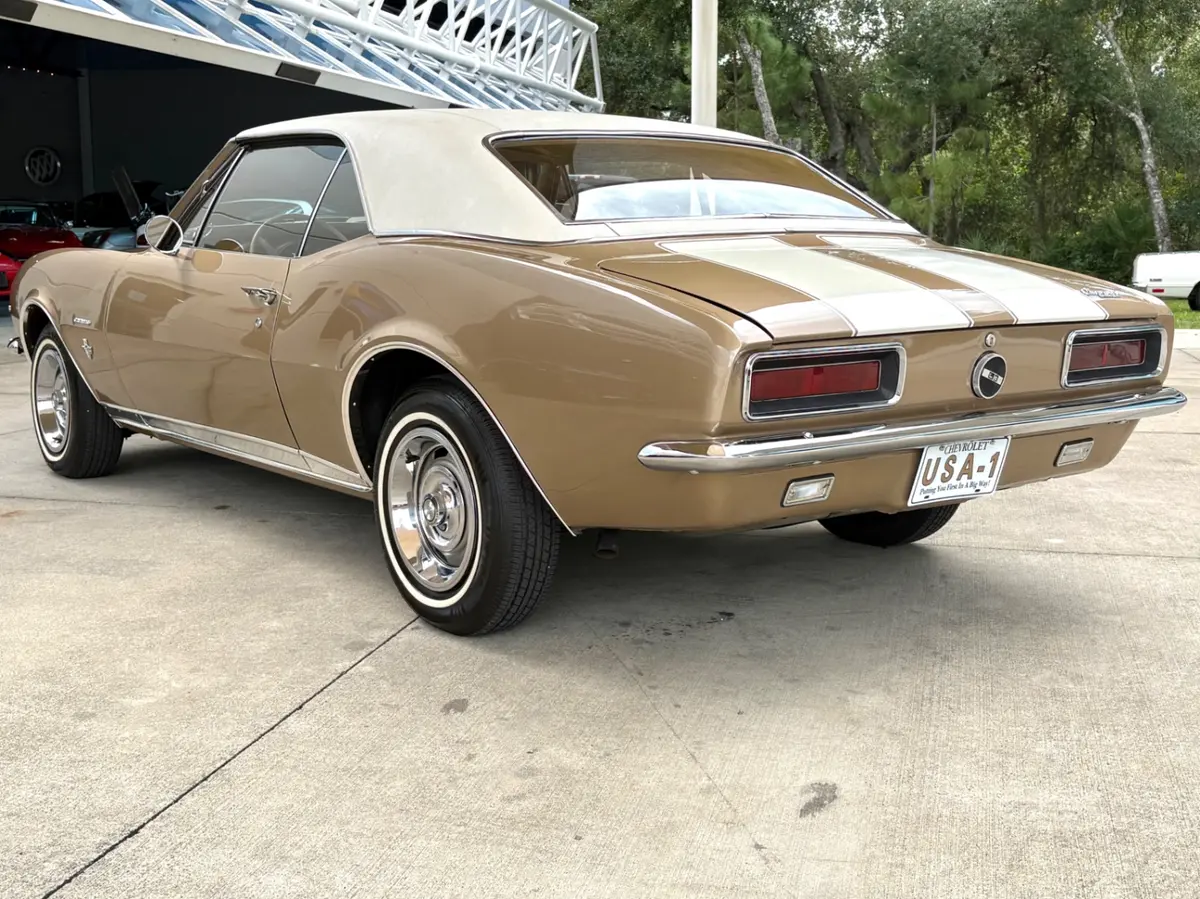
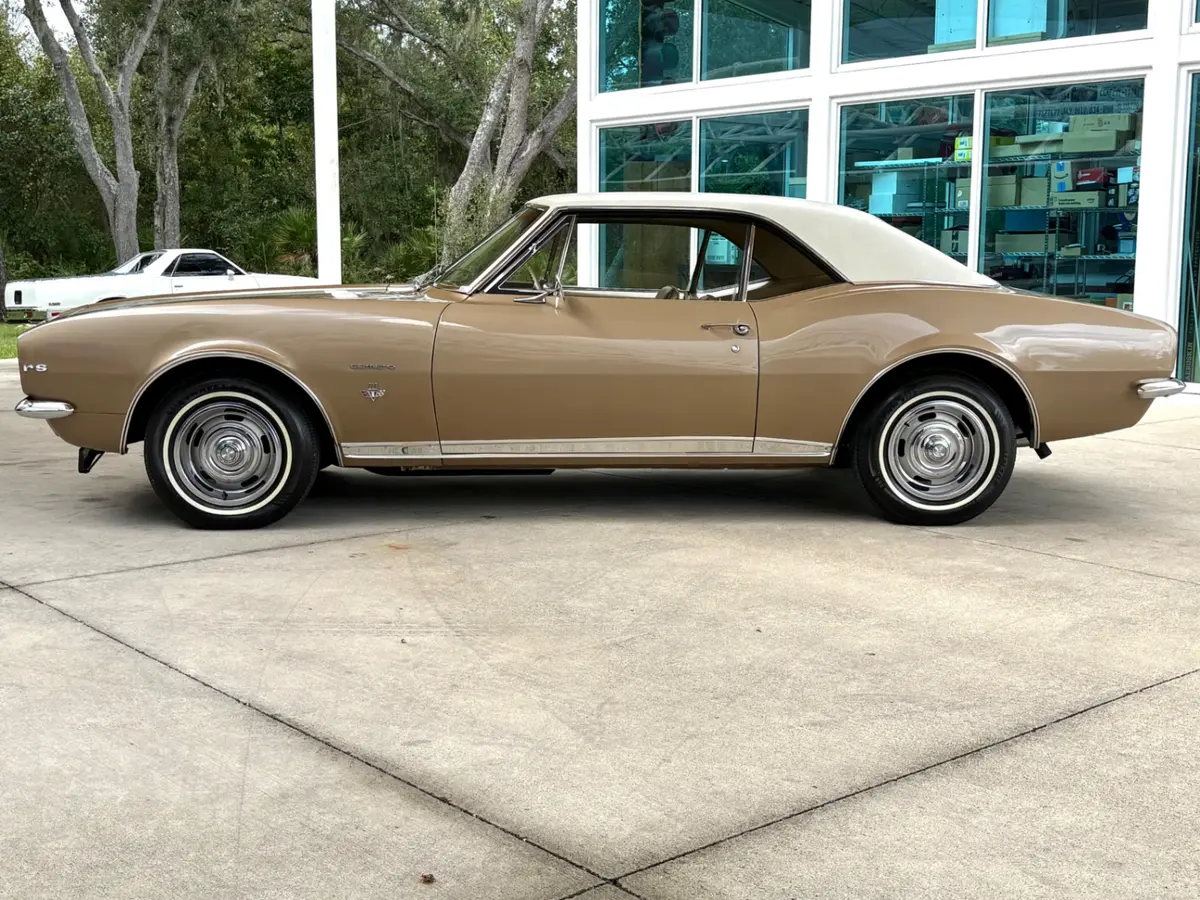
Granada Gold was a factory color offered on the 1967 Chevrolet Camaro, and it reads differently depending on the light — sometimes a warm tan, sometimes a richer antique gold. It is not a common color on first-generation Camaros compared to brighter options like Rally Green or Bolero Red, which makes it a more distinctive choice for a collector. The paint on this example has depth and coverage consistent with a respectable repaint, and the body panels show good alignment and consistent gaps.
The white vinyl top adds contrast and was a popular factory option on 1967 Camaros — particularly on cars ordered in earth tones where the two-tone effect worked well. It is in solid condition without visible cracking or lifting at the seams.
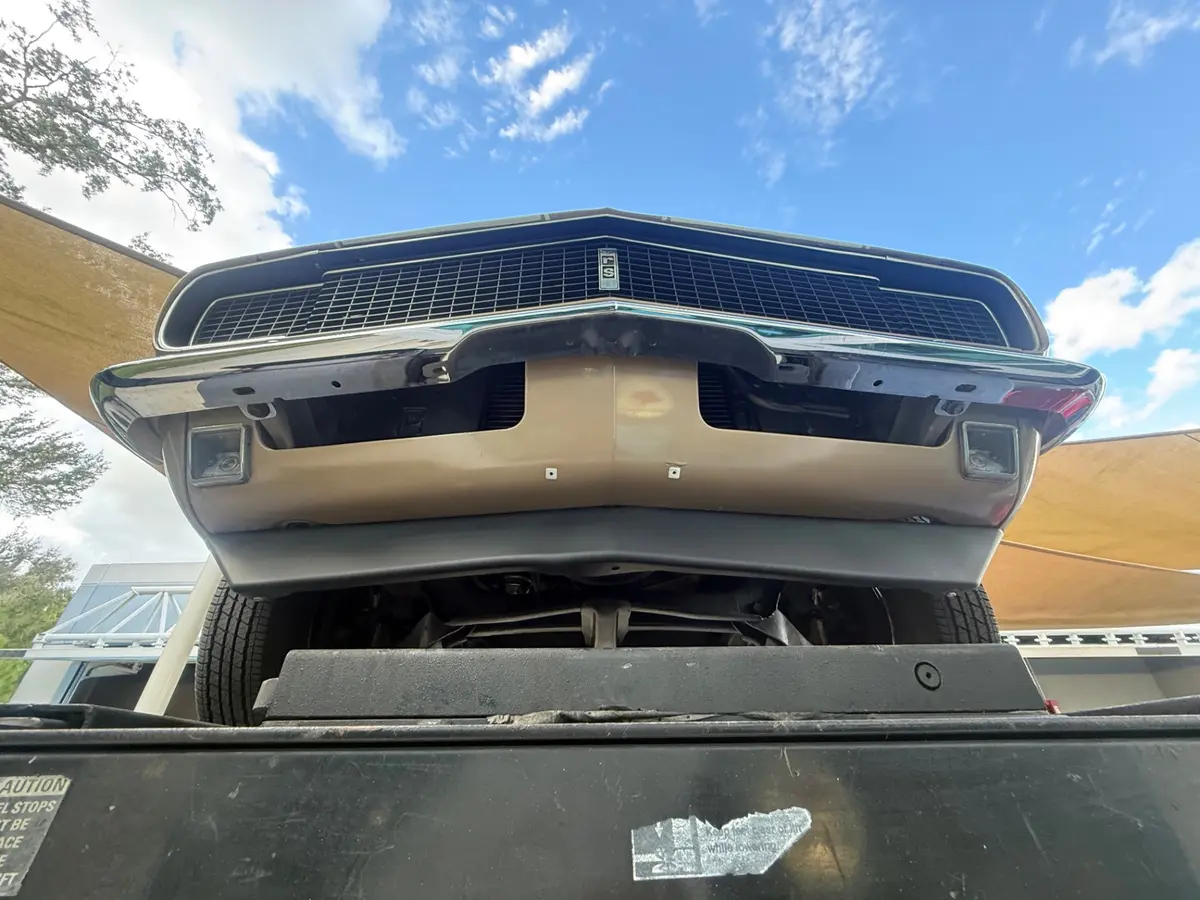
The RS front end is the visual centerpiece of the car. The hideaway headlight doors are present and the surrounding RS grille is intact. The grille carries the correct RS badge, and the front bumper is chrome in good condition. At the rear, the RS package deleted the standard Camaro's backup lights from the taillight panel and relocated them to small square housings below the rear bumper on each side — a detail visible in the rear photos that confirms the RS equipment is complete and correct.
White racing stripes run along the hood and decklid, providing a contrast against the gold paint that references the sport character of the car without overwhelming the color scheme. Chrome rocker panel moldings run along the lower body, and the 327 fender badges are present on both front quarters. Whitewall tires are mounted on what appear to be standard steel wheels with chrome hubcaps, keeping the look consistent with the car's original mid-level sport character.
Conclusion
The 1967 Chevrolet Camaro RS represents the first year of one of the most followed nameplates in American automotive history. This particular car brings together a solid combination of factory options — the RS appearance package with its signature hideaway headlights, a 327 small-block V8, power front disc brakes, center console, and a color combination that is correct to the era and less common than many first-year survivors. It is not a high-strung SS or a Z/28, and it makes no pretense of being one. What it is, is an honest, well-preserved example of how the RS package elevated the standard Camaro into something worth looking at twice, in a color and configuration that the original buyer clearly thought through carefully.
The undercarriage is solid, the interior is cohesive and largely intact, and the RS-specific details are all present and accounted for. For a buyer looking for a first-generation 1967 Camaro RS that drives without drama and shows with confidence, this car is worth a serious look.
To learn more about this 1967 Chevrolet Camaro RS, call Skyway Classics in Sarasota, Florida at 941-254-6608.
Disclaimer
Information found on the website is presented as given to us by the owner of the car, whether on consignment or from the owner we bought it from. Some Photos, materials for videos, descriptions and other information are provided by the consignor/seller and is deemed reliable, but Skyway Classics does not warranty or guarantee this information. Skyway Classics is not responsible for information that may incorrect or a publishing error. The decision to purchase should be based solely on the buyers personal inspection of the vehicle or by a professional inspection service prior to offer or purchase being made.
1967 Chevrolet
Camaro RS
Why Choose Skyway Classics?
Explore our curated inventory of classic and collector cars—thoughtfully selected, ready to drive, and supported by experts who make ownership simple.
Expert Curation
Every vehicle is hand-selected by our experts for quality, authenticity, and investment potential.
Fast Transactions
Streamlined buying and selling process with quick financing and immediate delivery options.
Only National Dealer With Classic Service & Repair
We’re the only national dealership that services and repairs the classics we sell—before and after the sale.
Nationwide Network
Access to our extensive network of collectors, restorers, and classic car enthusiasts nationwide.
Concierge Ownership Support
From financing and insurance to paperwork, shipping, and titling—we handle the details so you can enjoy the drive.
Passion-Driven Service
We're classic car enthusiasts first, providing personalized service with genuine passion for the hobby.