
1967 Pontiac
Firebird 326
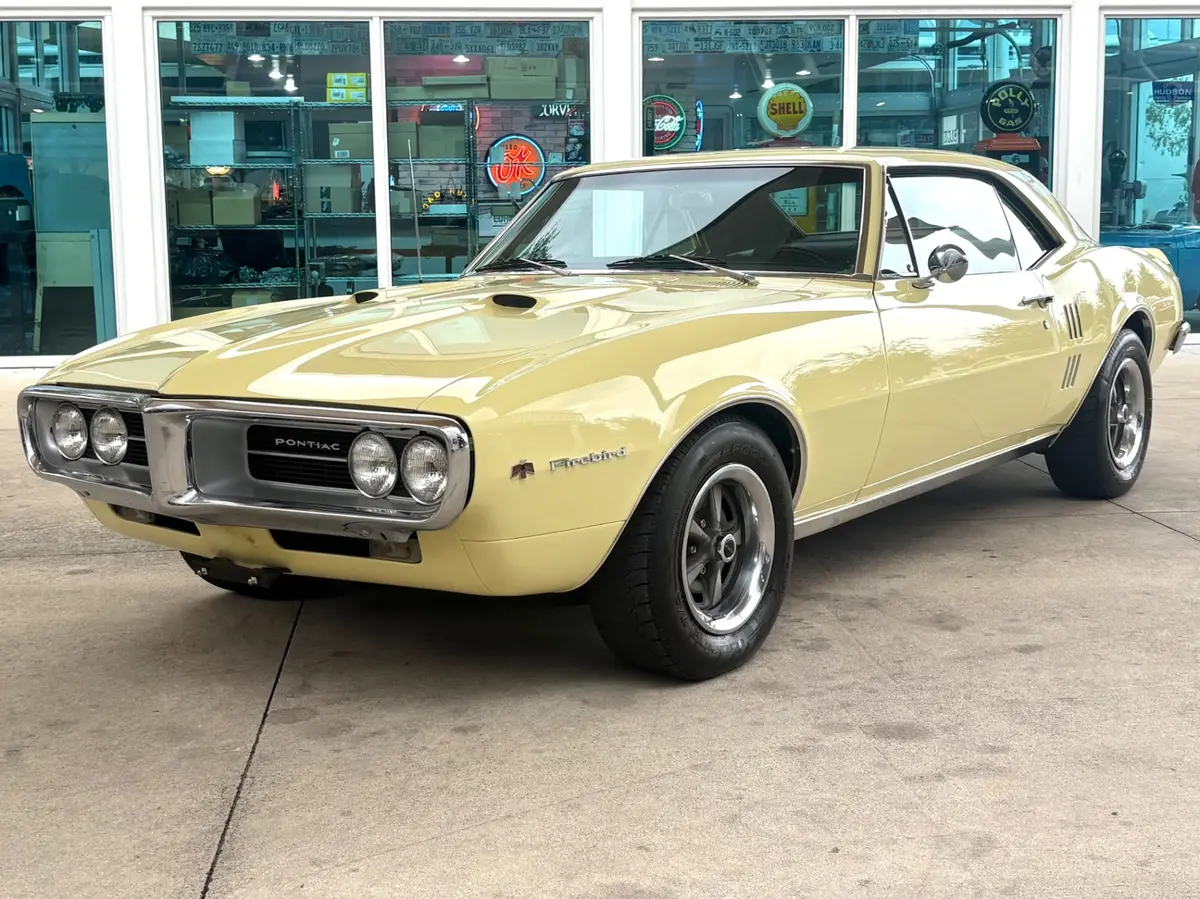
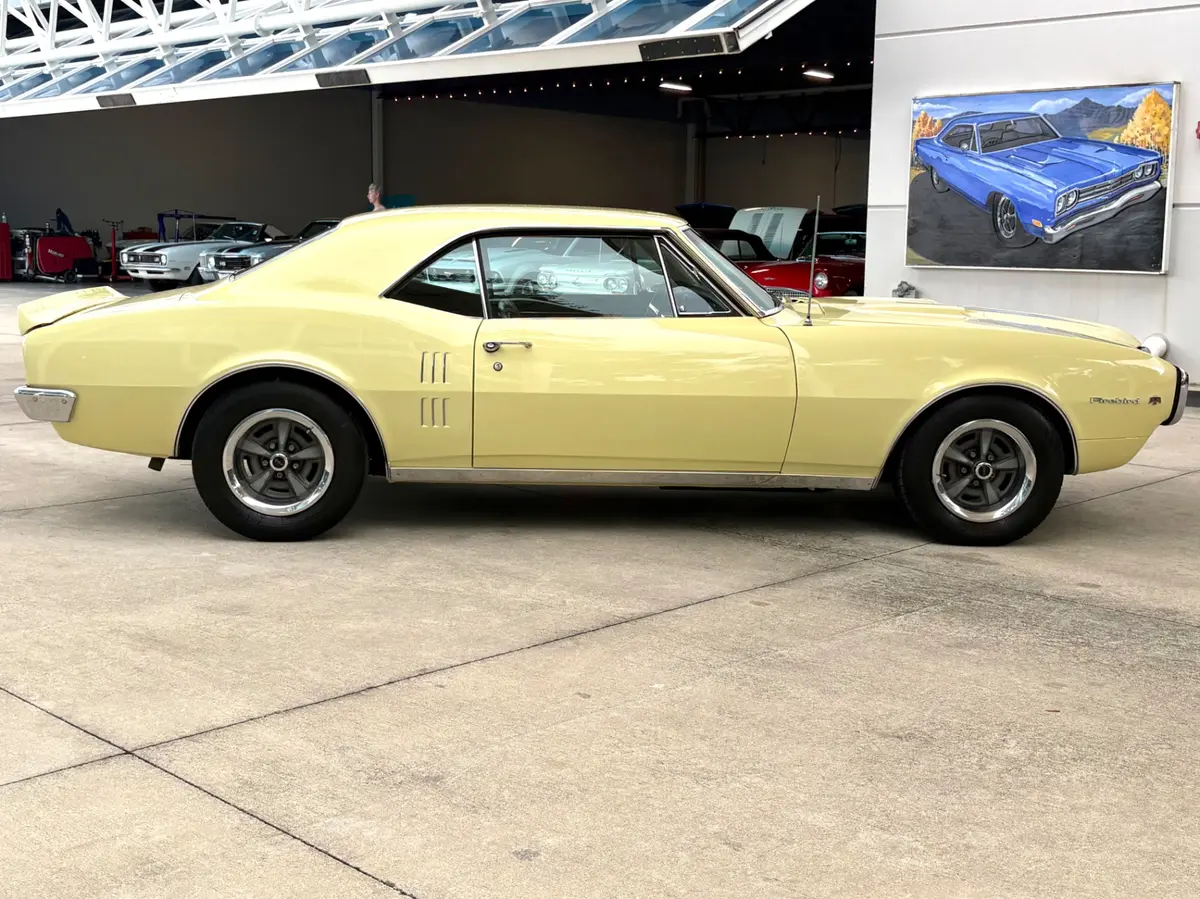
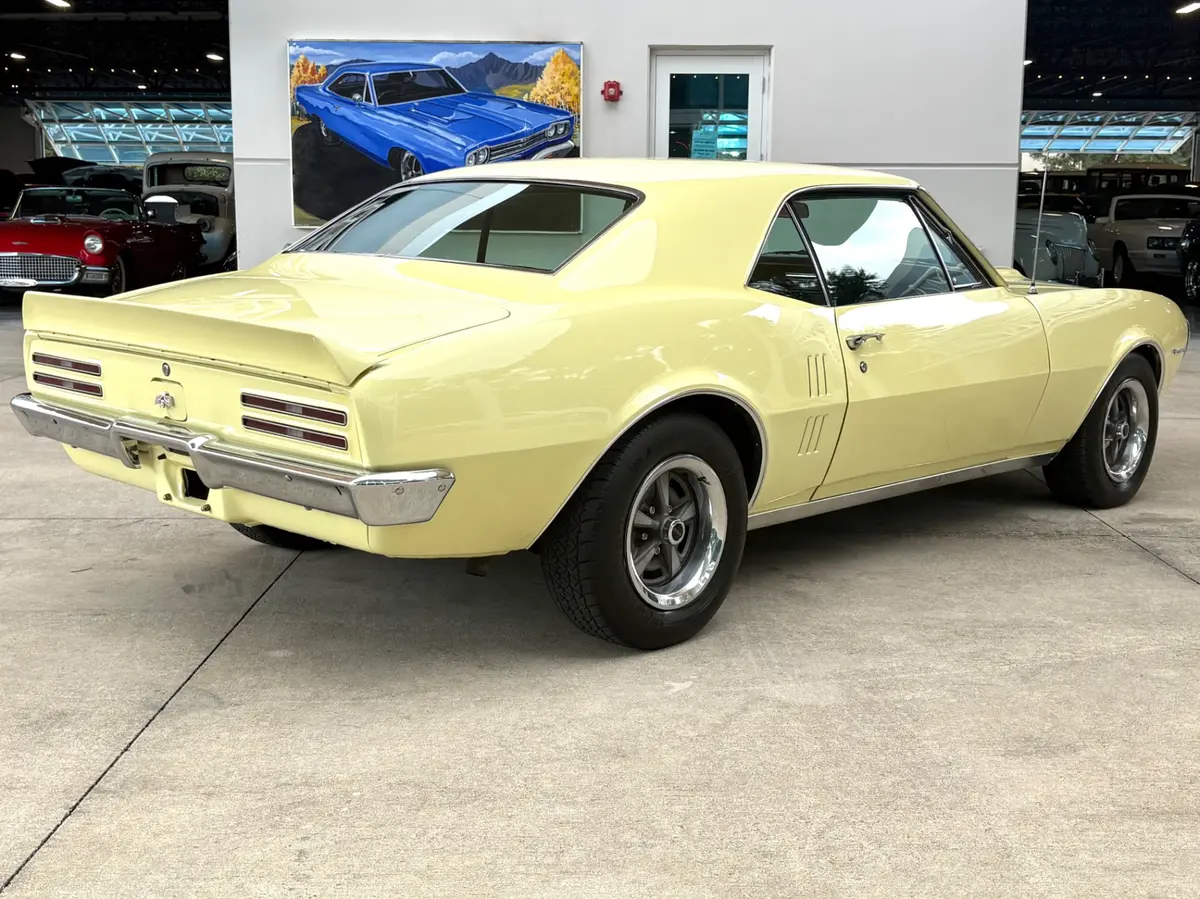
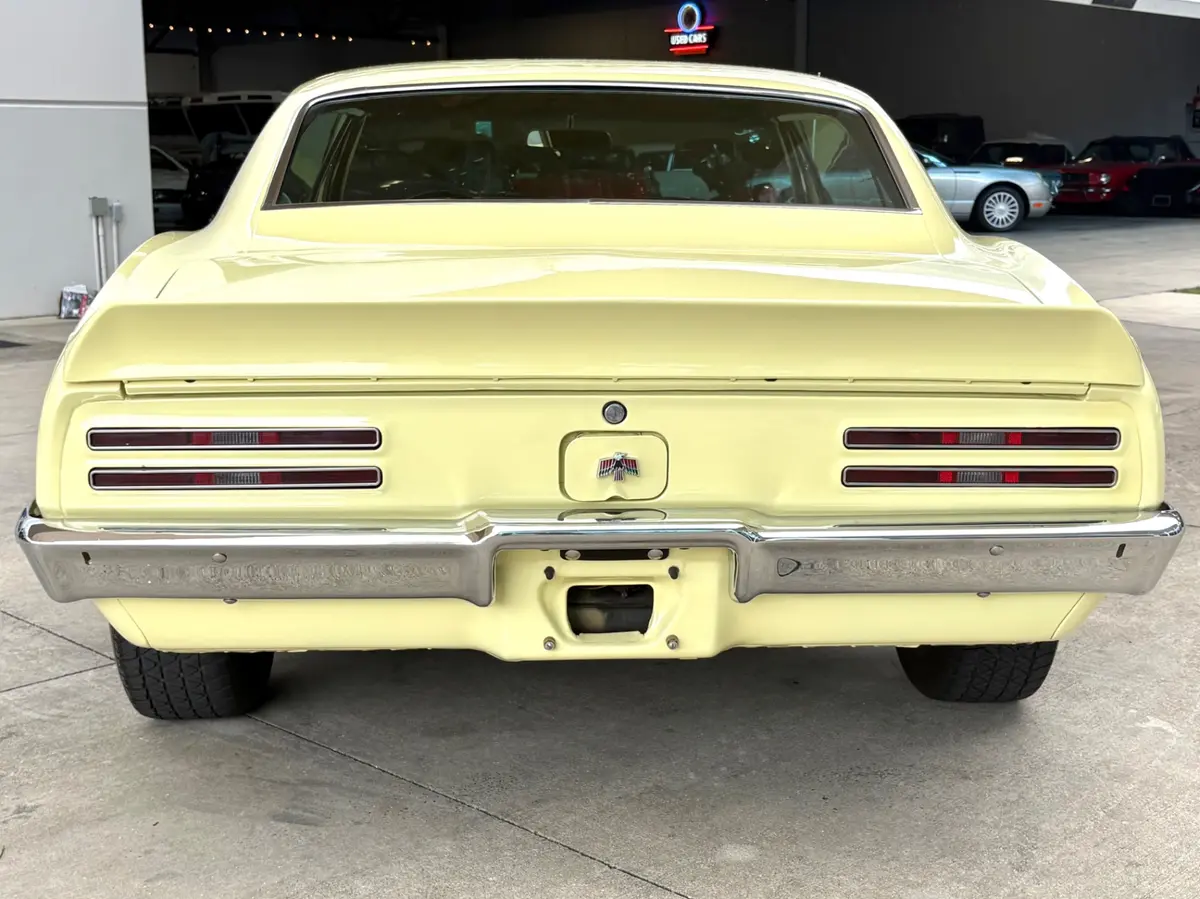
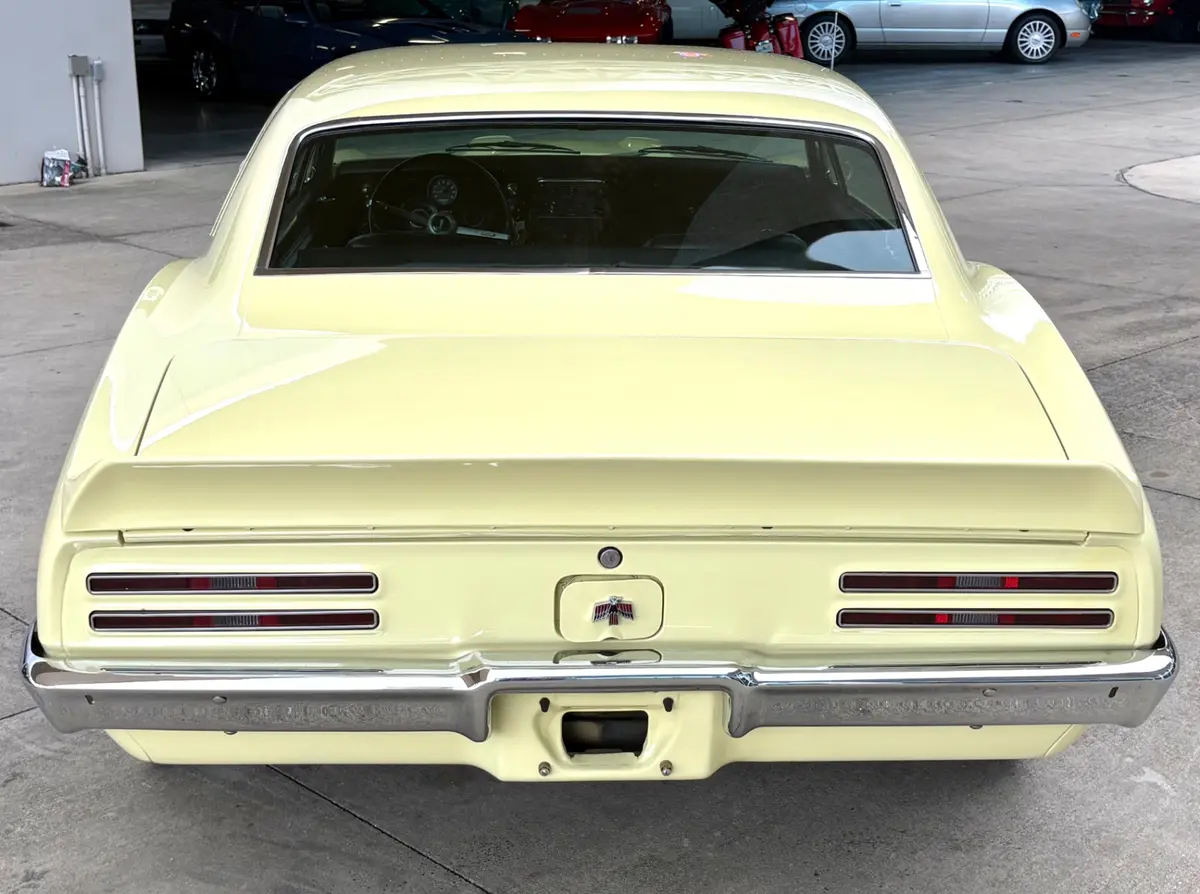
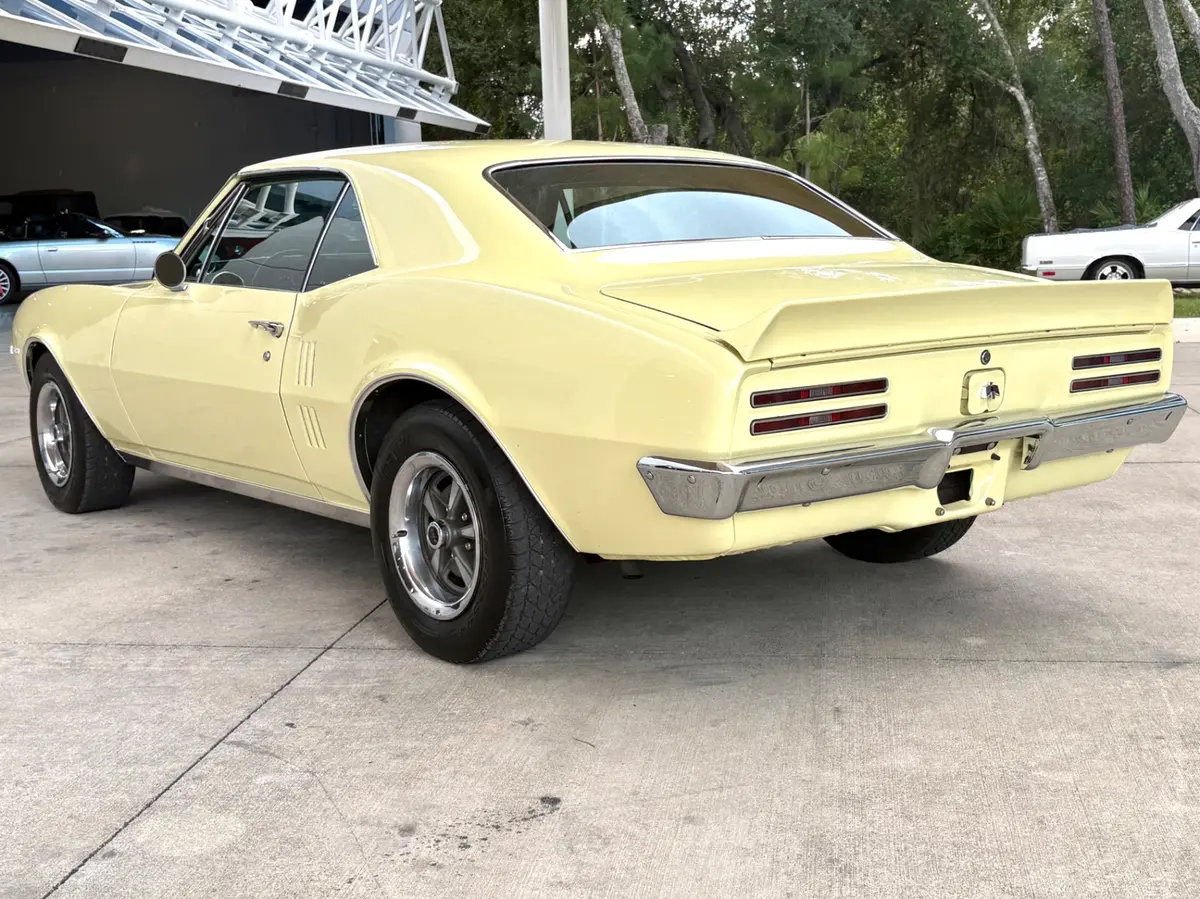
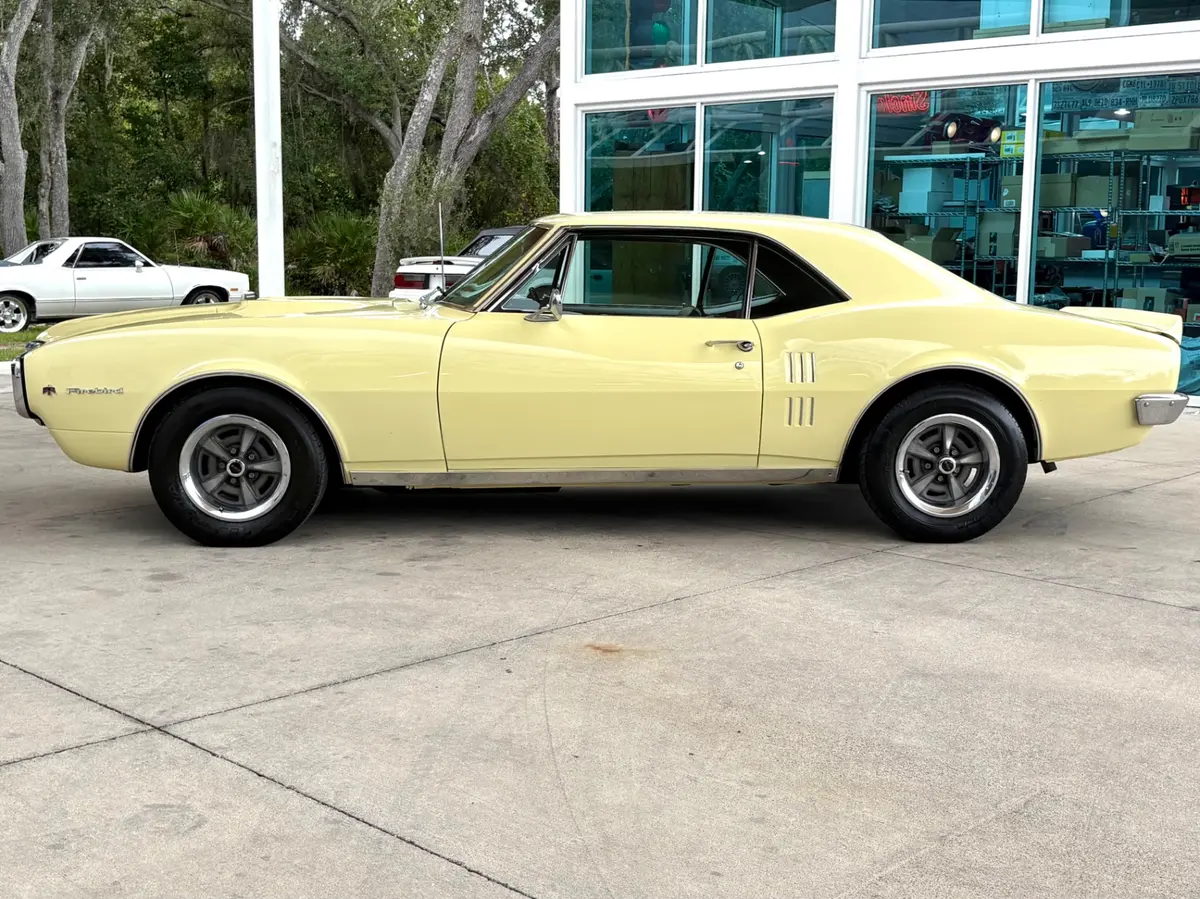
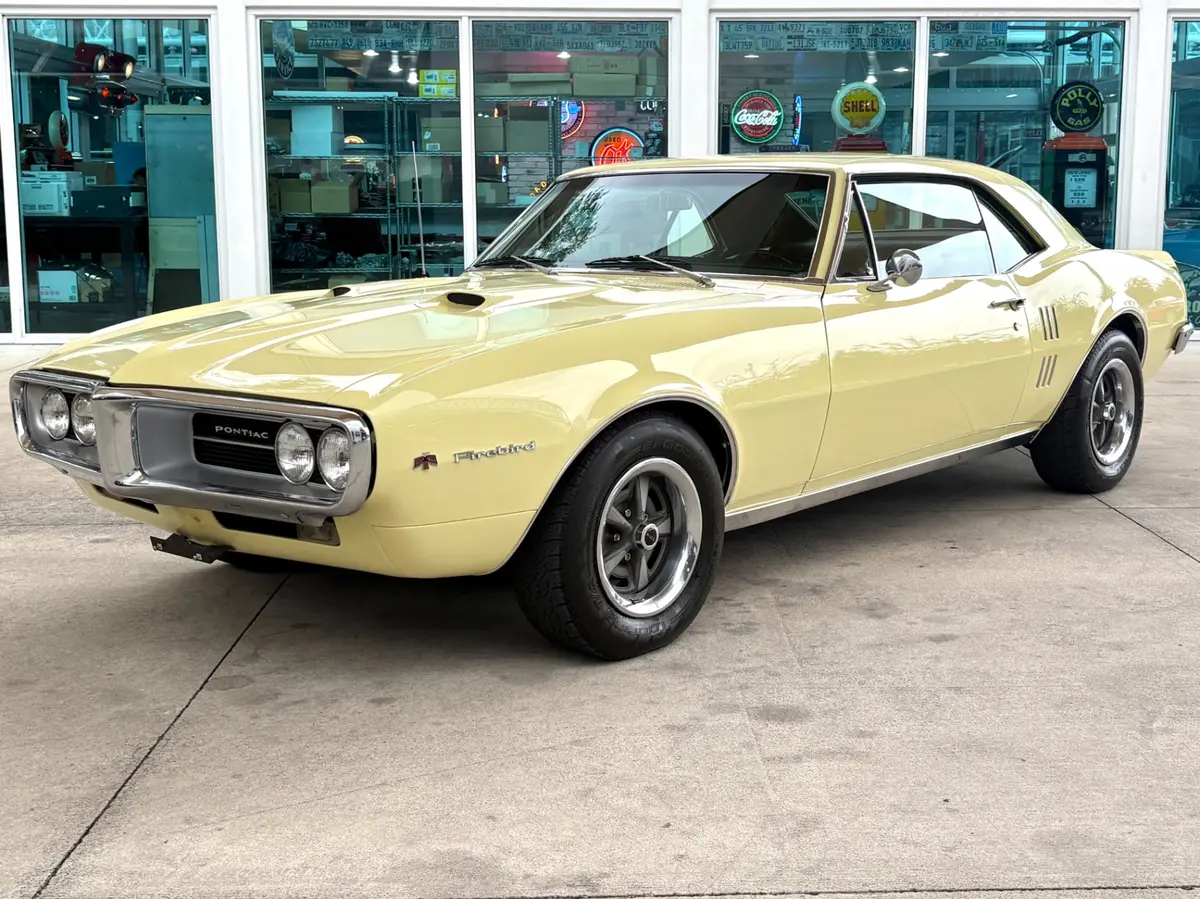
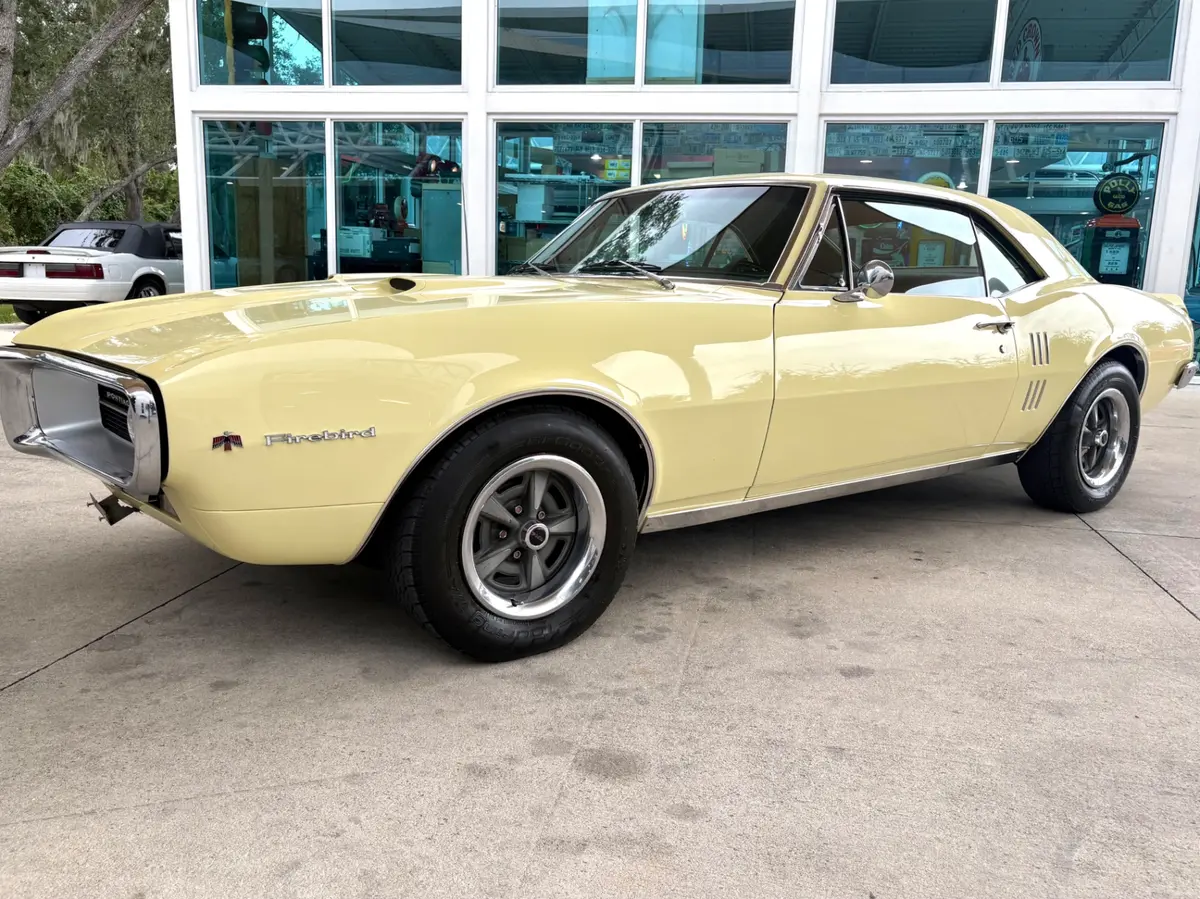
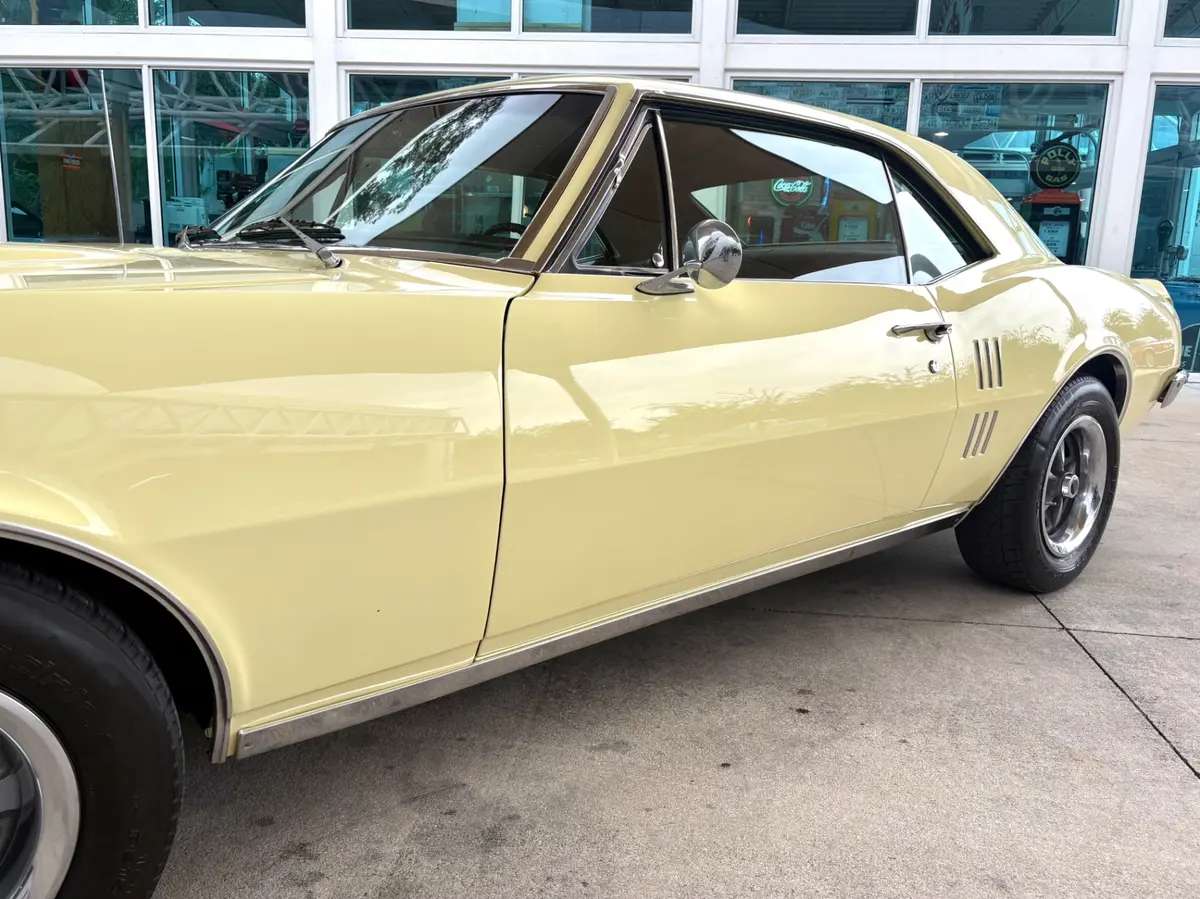
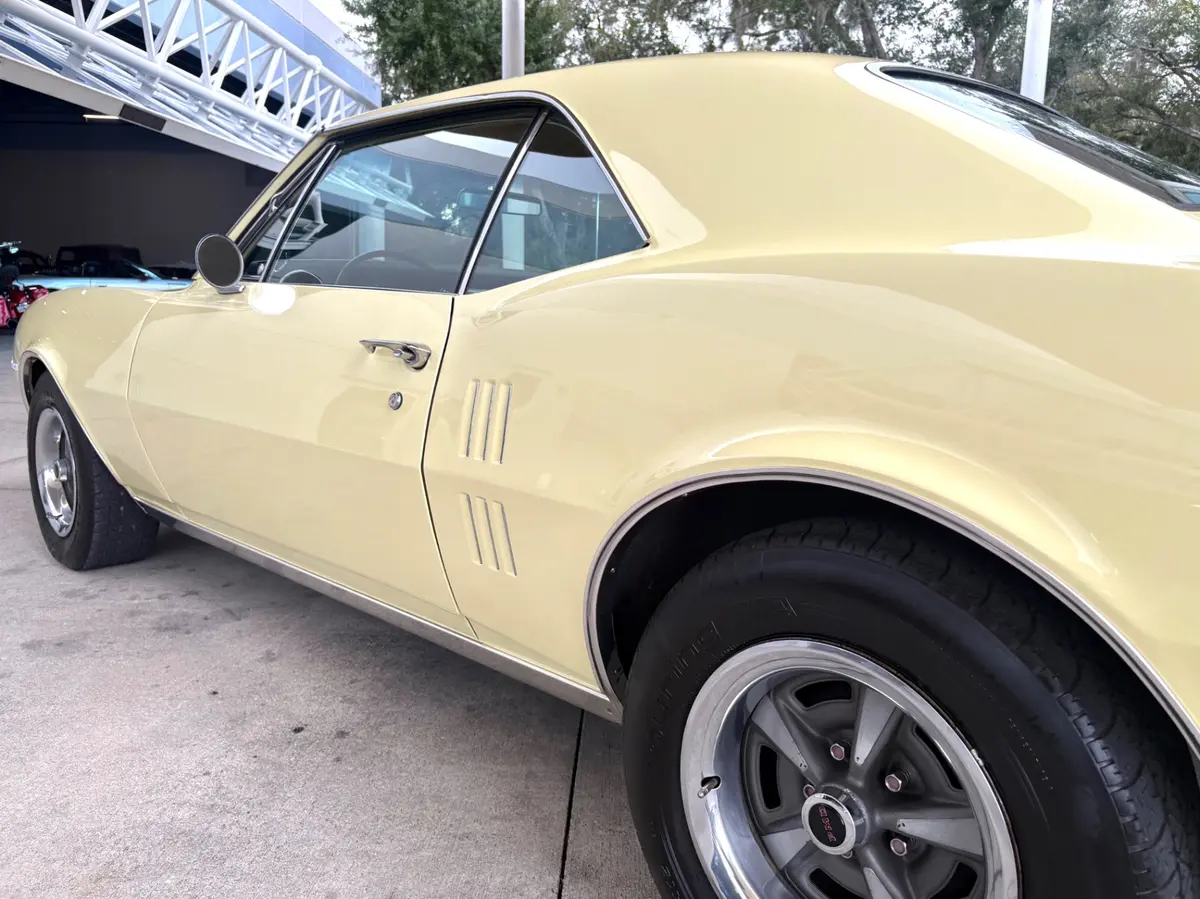
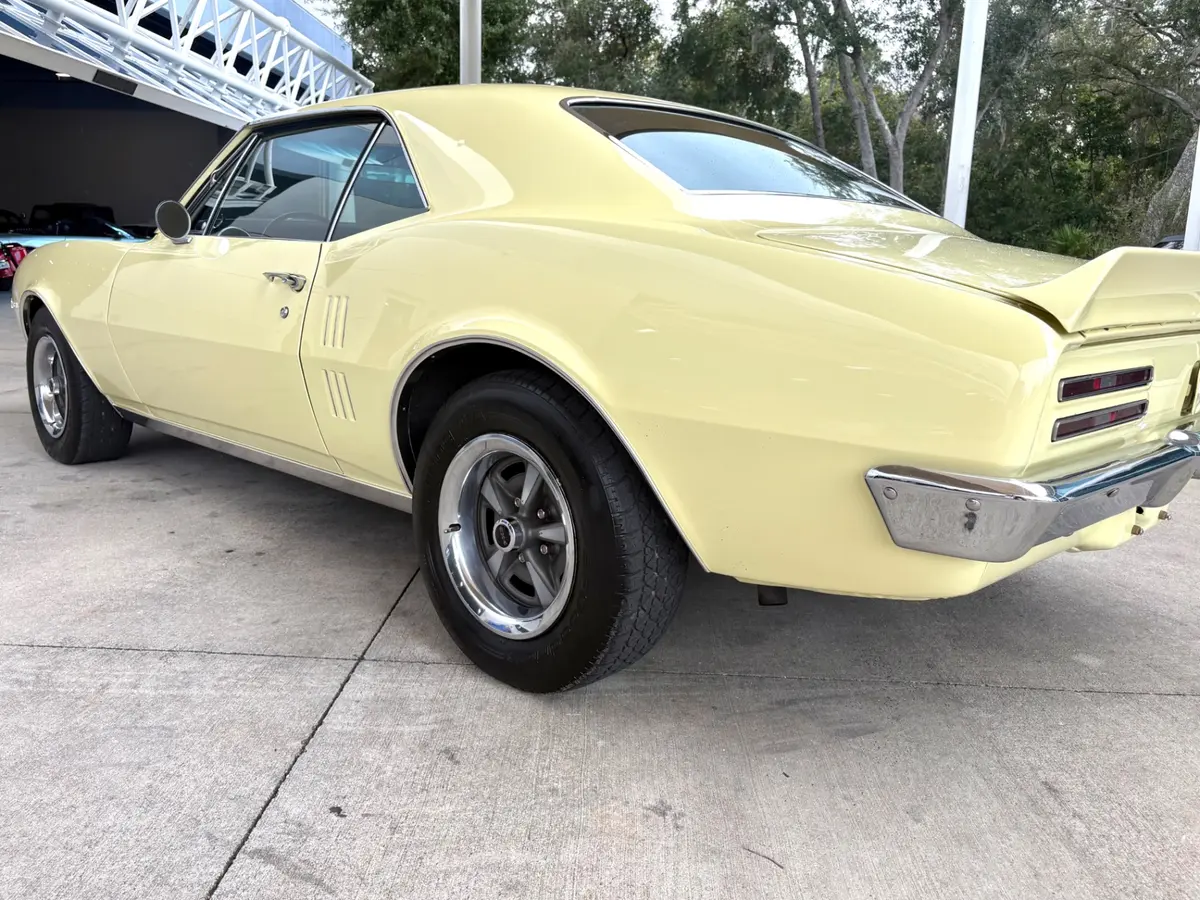
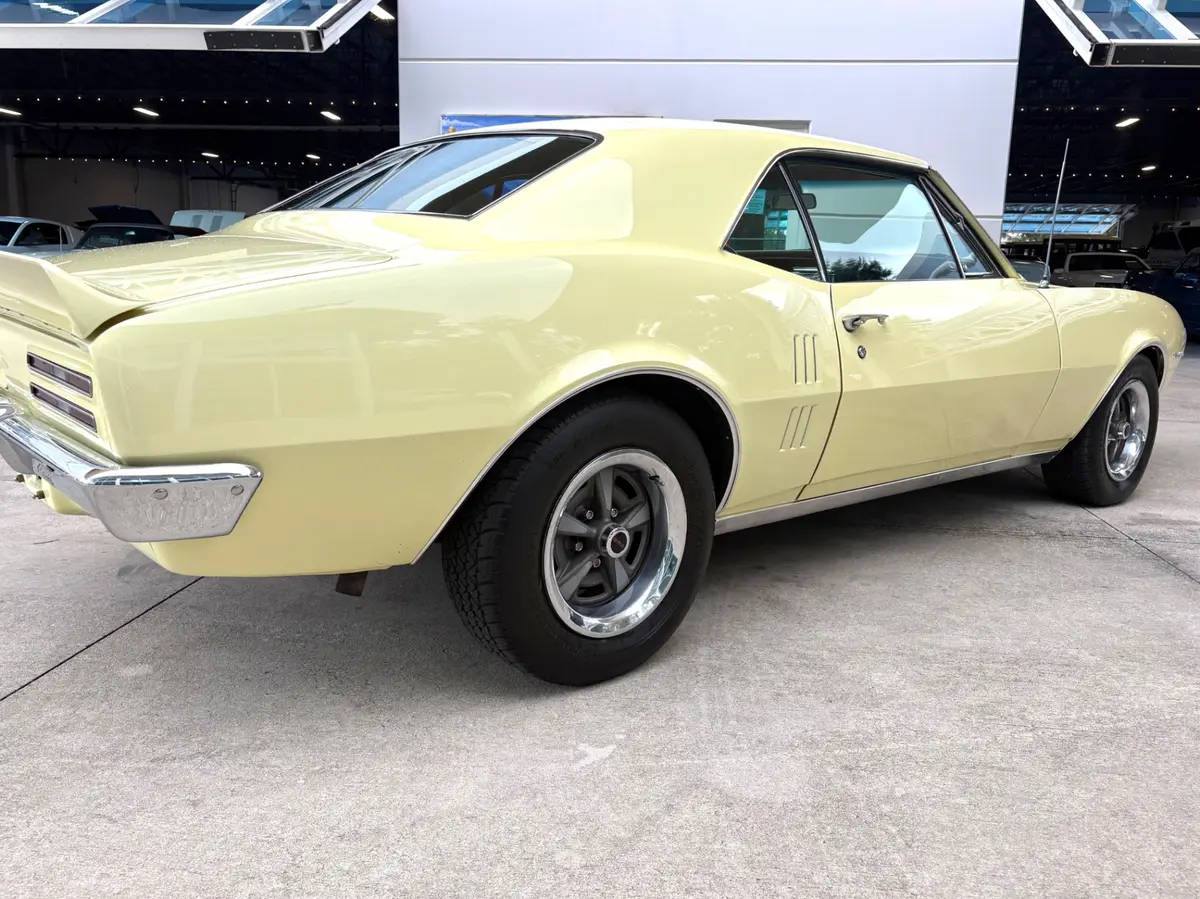
1967 Pontiac Firebird 326 — Primavera Yellow, 4-Speed, Factory Air
Why This Car Is Special
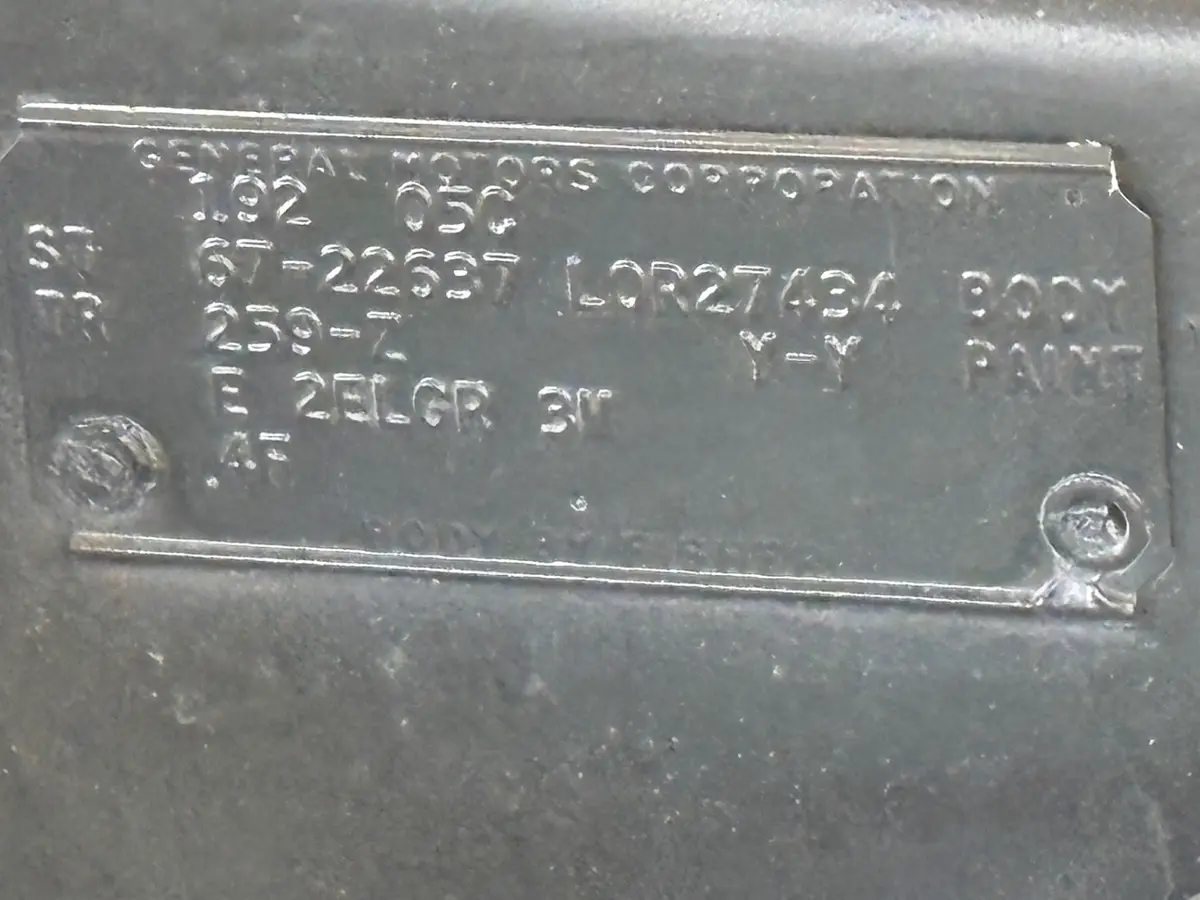
The 1967 Pontiac Firebird is one of the most historically significant American cars of the entire postwar era, and not just because it launched a nameplate that would run for 35 years. The Firebird debuted on February 23, 1967 — roughly nine months after the Camaro — sharing its F-body platform but bringing a distinctly Pontiac character to the formula. Where the Camaro was available with a single base six-cylinder, Pontiac introduced the Firebird with five different engine and trim combinations right out of the gate, each identified by its own distinct badging and equipment. This car wears the Firebird 326 fender emblems, placing it in the middle of that original lineup as a genuine V8 car with the equipment to back it up.
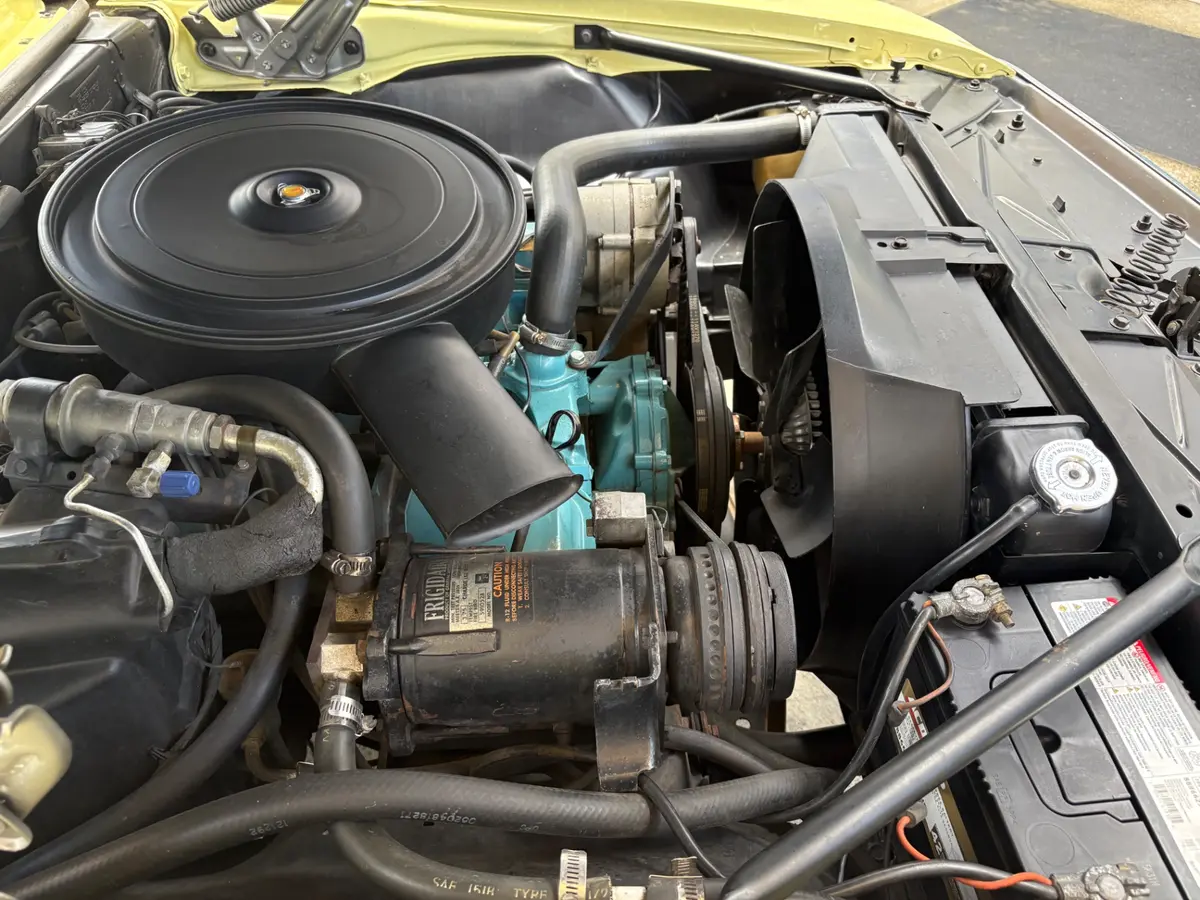
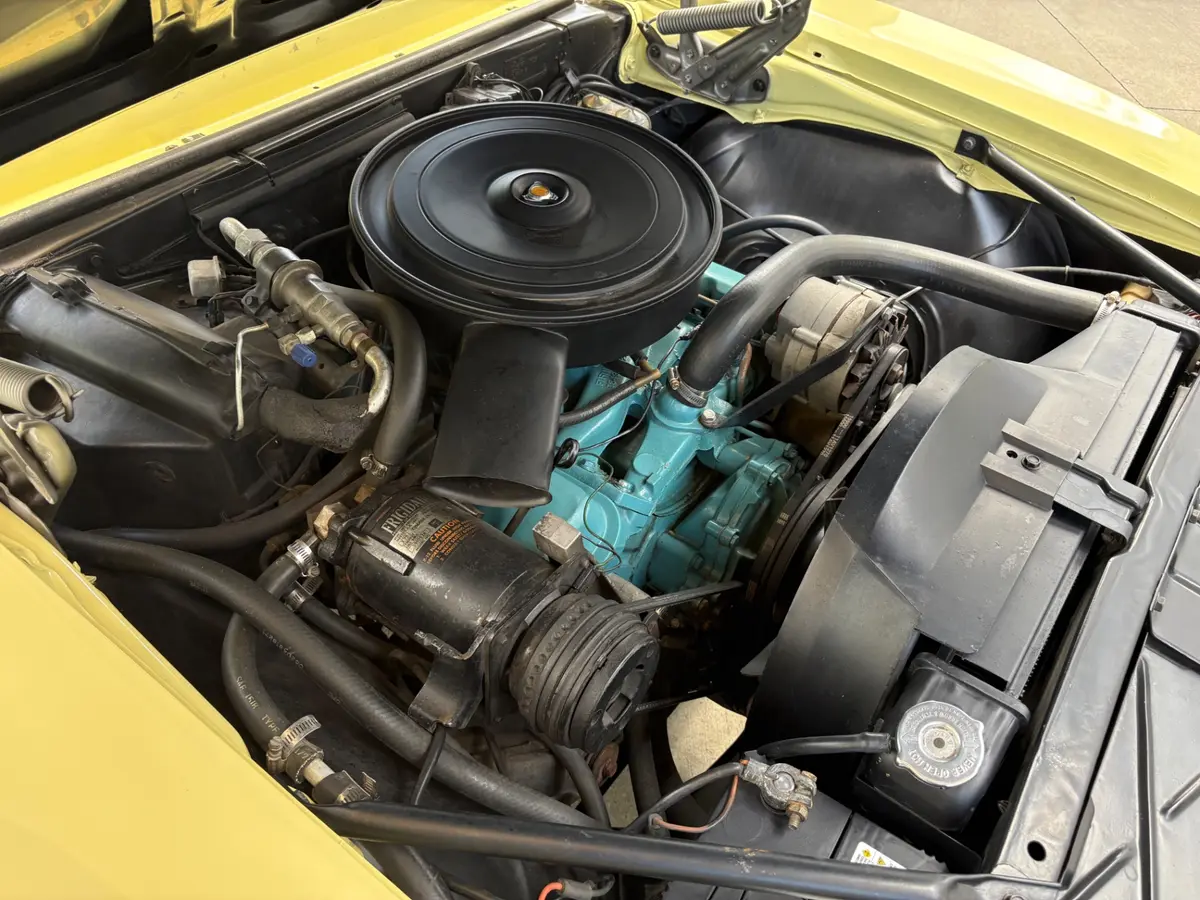
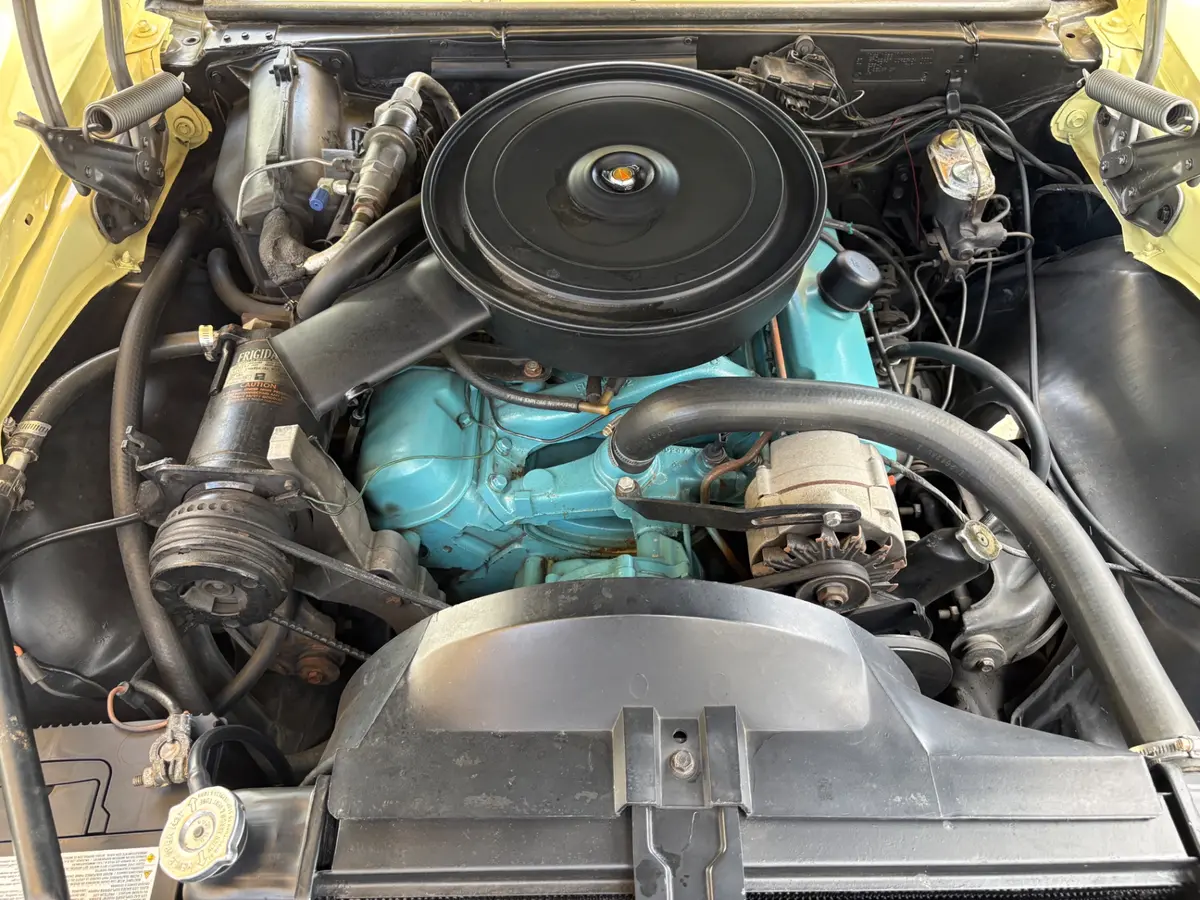
The 326 cubic inch V8 was a Pontiac engine through and through — not a shared or rebadged unit, but a displacement derived from Pontiac's own family of overhead-valve V8s that dated back to 1955. In the Firebird application, the 326 produced 250 horsepower in standard form, making it a capable and well-balanced powerplant that suited the car's sporting character without the insurance penalties associated with the larger 400. For buyers in 1967 who wanted a real V8 with a four-speed manual and a livable daily-driver personality, the 326 Firebird hit the mark precisely.
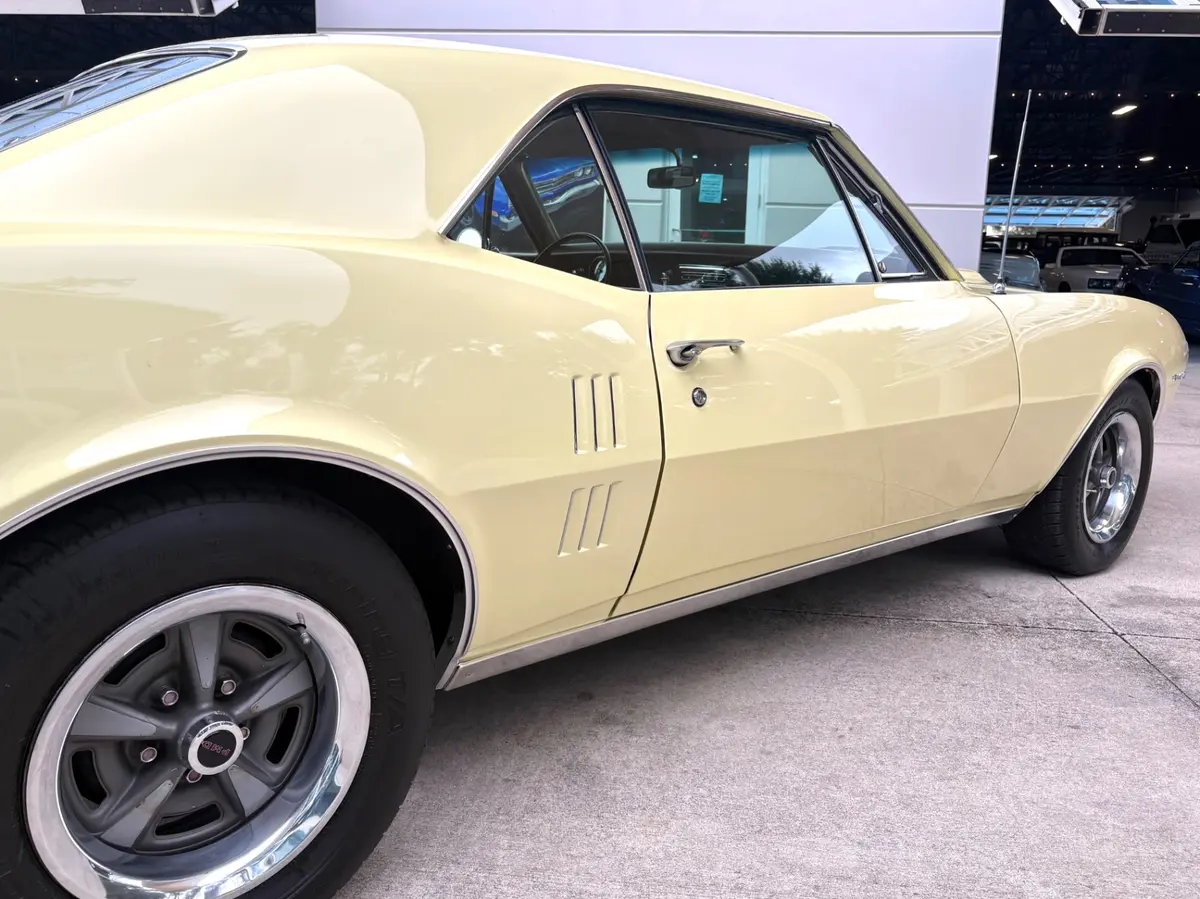
What makes this particular 1967 Pontiac Firebird 326 stand out is the combination of options it was ordered with. Factory air conditioning on a four-speed manual first-year Firebird is a relatively uncommon pairing — Pontiac used a Frigidaire compressor for its A/C systems in this era, and that original Frigidaire unit is still present and visible in the engine compartment. Add in power steering, the Rally Gauge Cluster, and the Hurst shifter, and you have a car that was clearly ordered by someone who wanted the full experience. The exterior color — Primavera Yellow — is one of those period-correct hues that photographs exactly as well in person as it does in pictures, and it pairs cleanly with the all-black vinyl interior.
First-year Firebirds are increasingly difficult to find in honest, honest condition. Pontiac built just over 82,000 Firebirds for the abbreviated 1967 model year, which ran only from February through September before the 1968 models arrived. That relatively short production window, combined with decades of attrition, means well-preserved examples are genuinely scarce.
Features List
- 326ci Pontiac V8 Engine
- 4-Speed Manual Transmission
- Hurst Shifter
- Air Conditioning with original Frigidaire Compressor
- Power Steering
- PMD Rally II Wheels
- BFGoodrich Radial T/A Tires
- Dual Exhaust
- Center Console
- Front Bucket Seats
- Rear Bench Seat
- Rally Gauge Cluster
- Auto Meter Tachometer
- Woodgrain Dash Trim
- Upgraded CD Stereo
- Chrome Bumpers (front and rear)
- Black Vinyl Interior
- Hood Scoops
- Firebird 326 Fender Emblems
Mechanical
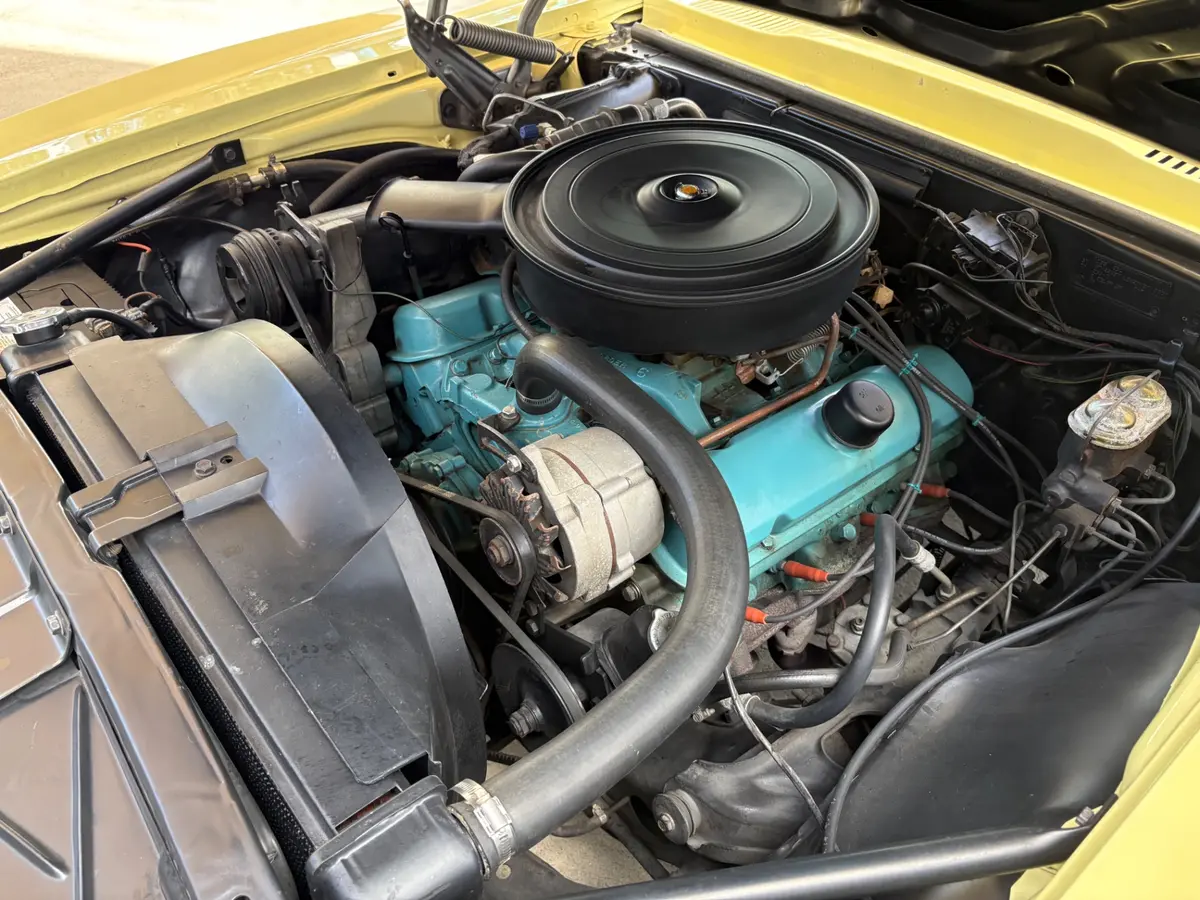
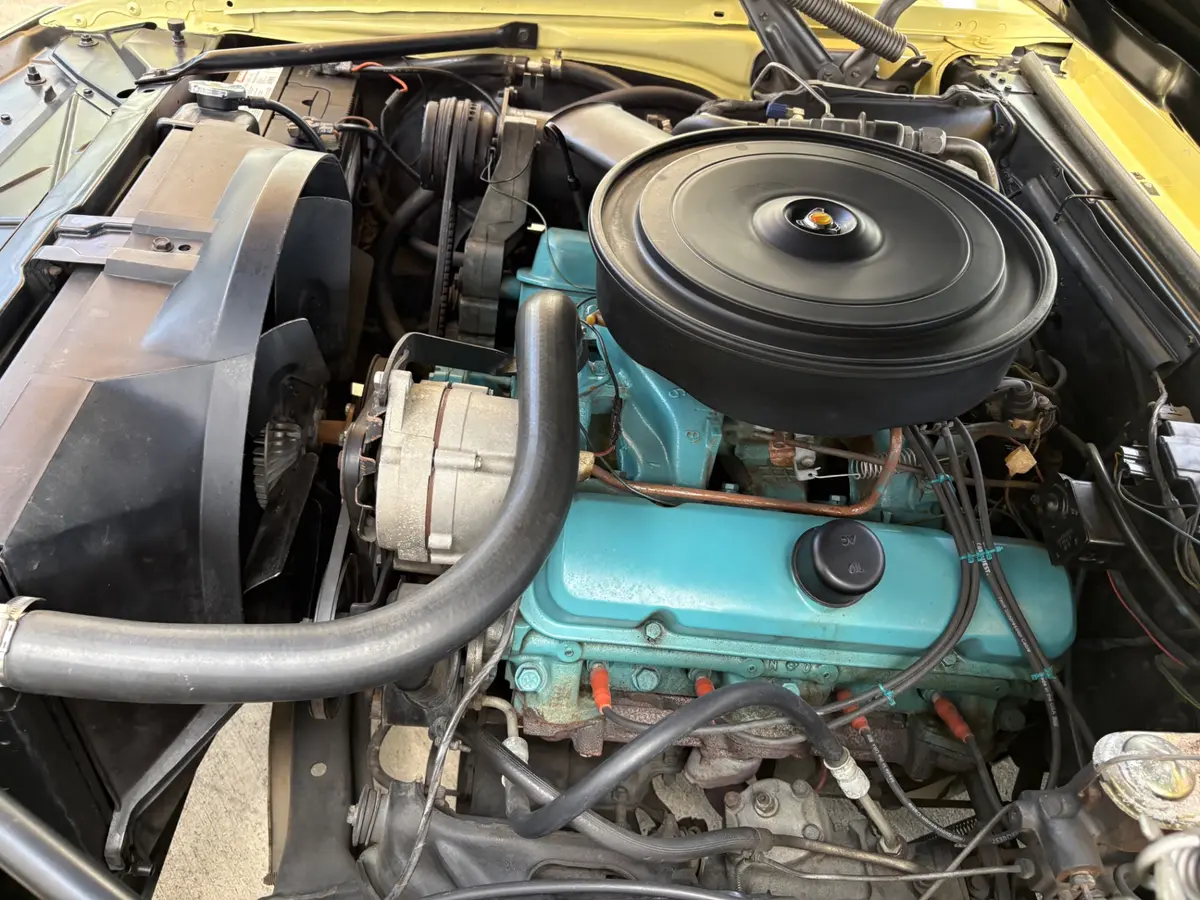
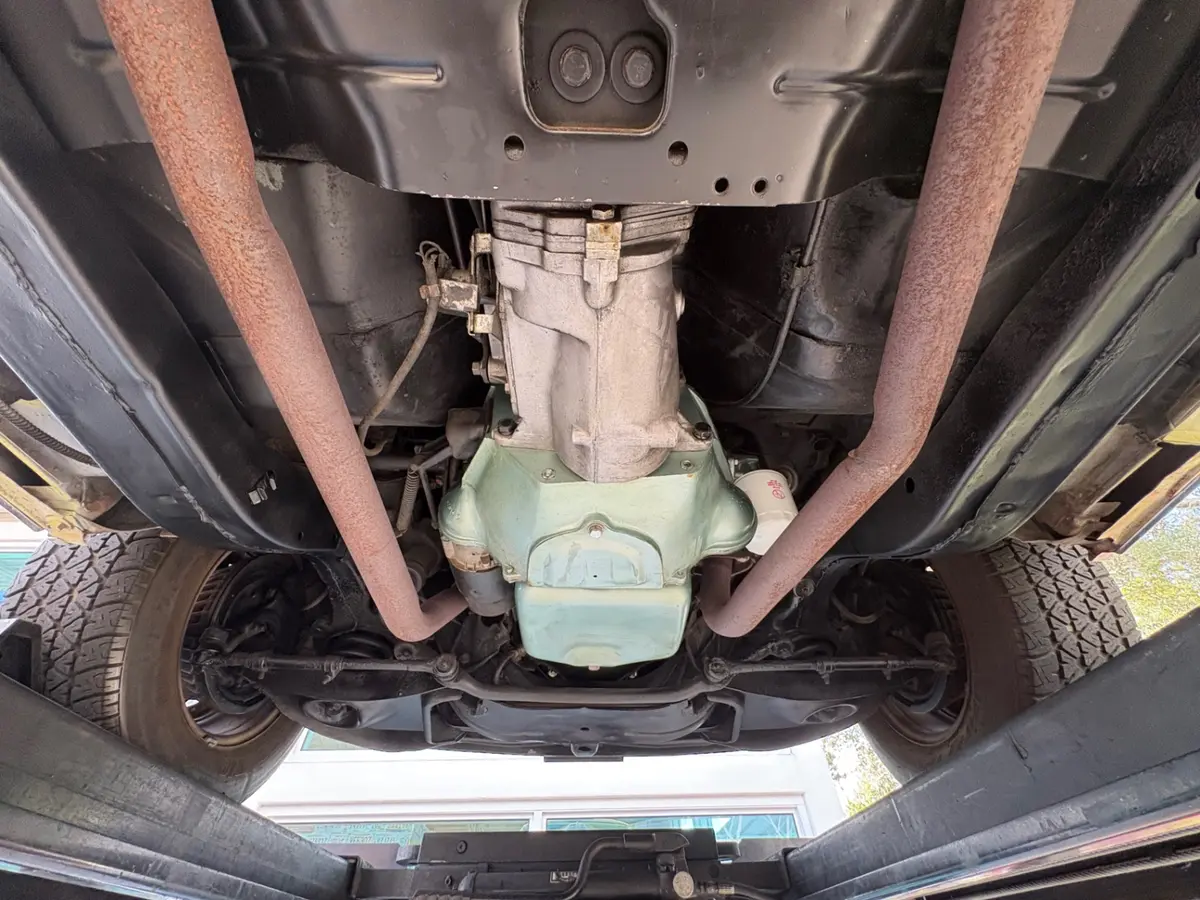
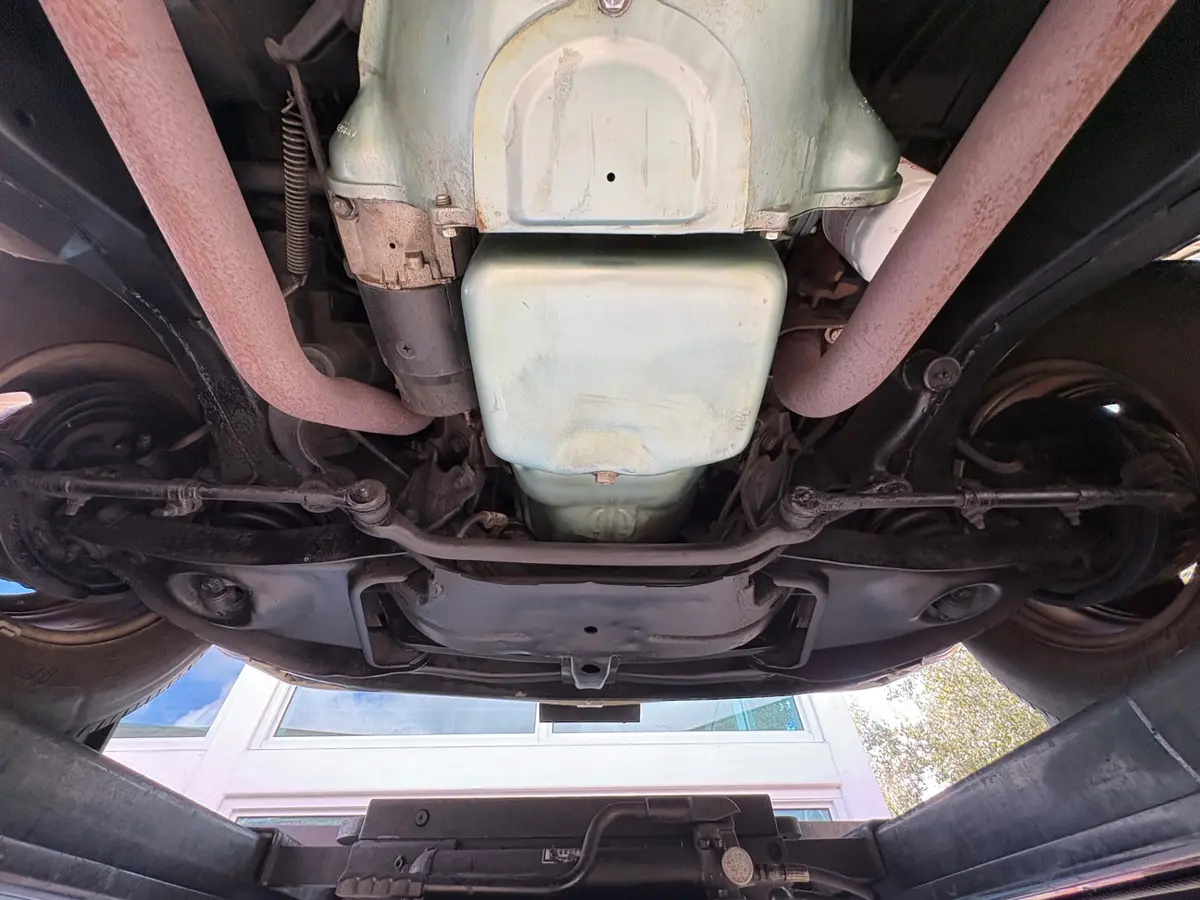
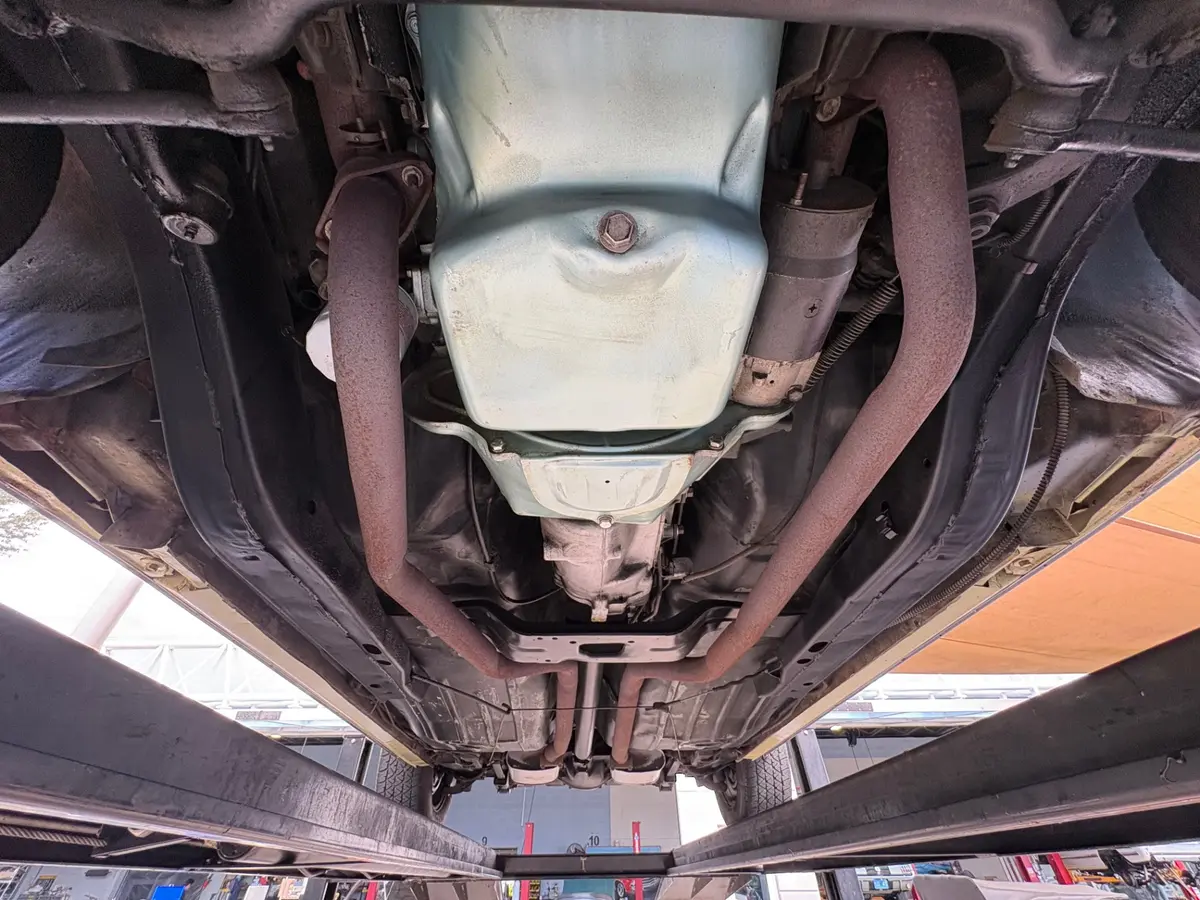
The 326 cubic inch V8 under the hood is the correct engine for this car, finished in Pontiac's characteristic teal-blue paint that collectors familiar with the marque will recognize immediately. The engine bay presents honestly — this is not a show-quality engine compartment detail job, but the major components are correct and present, including the original Frigidaire air conditioning compressor mounted on the driver's side of the block. That compressor is a meaningful detail. Pontiac sourced its A/C compressors from Frigidaire, a GM subsidiary, and the presence of an original unit rather than a modern retrofit speaks to the car's authenticity. Pairing factory A/C with a 4-speed manual was an option-box exercise that took some deliberate effort on the part of the original buyer, and it results in a car that can be driven comfortably in warm weather without sacrificing the engagement of a manual gearbox.
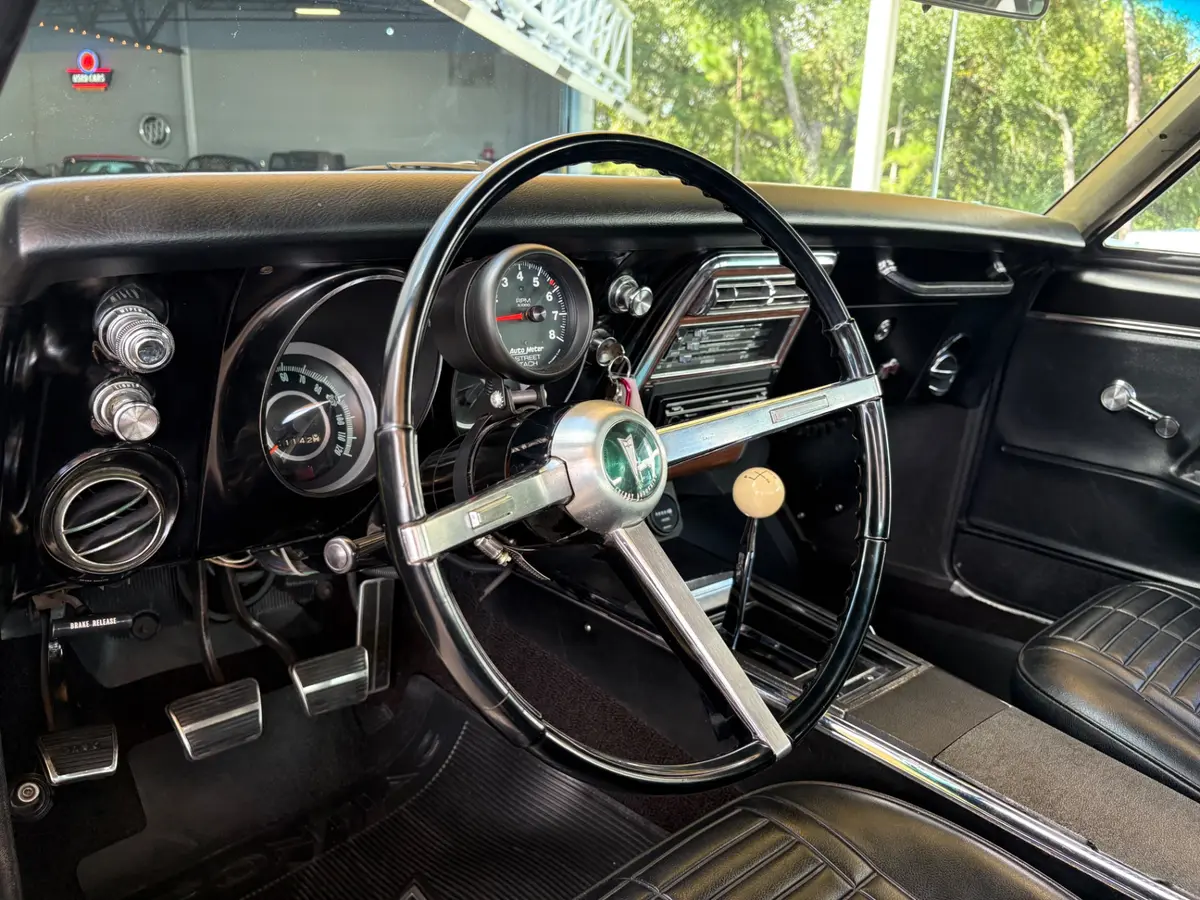
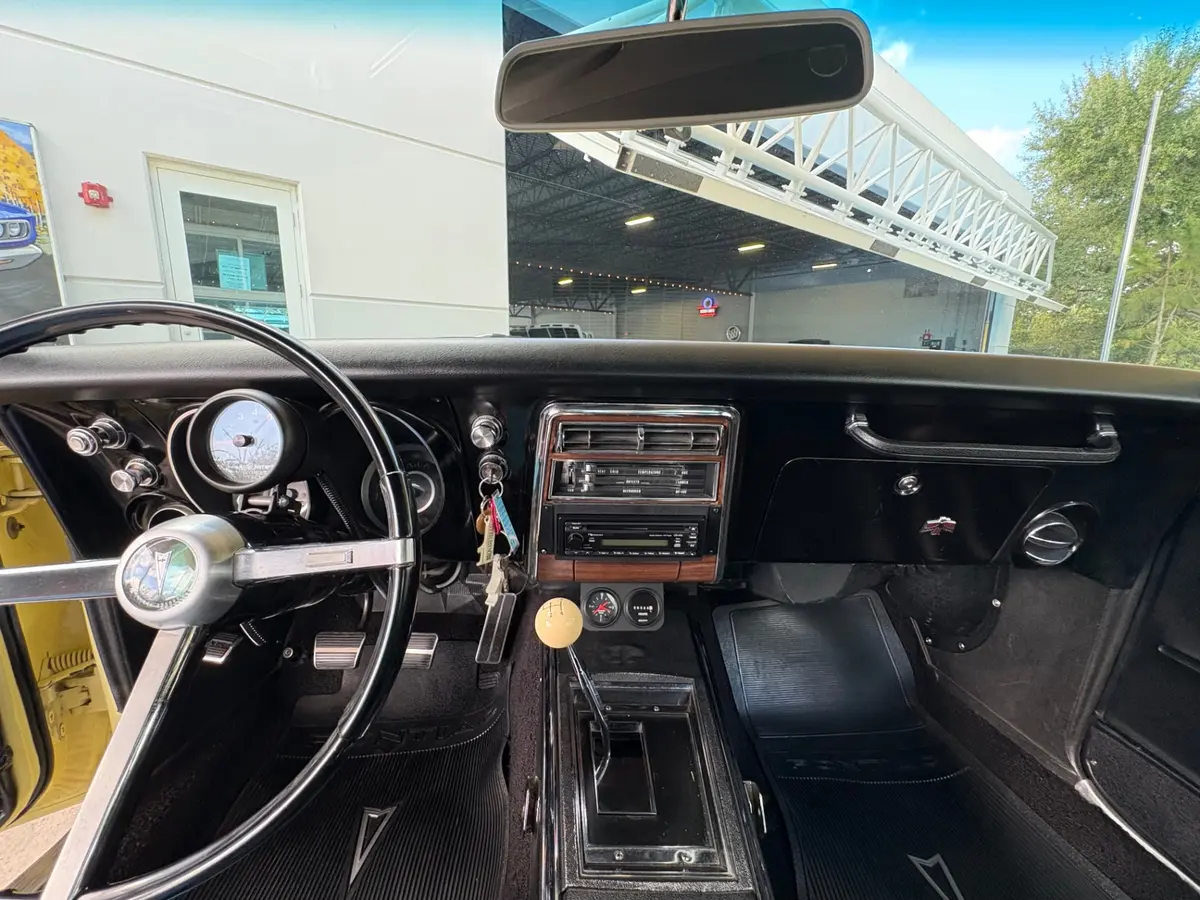
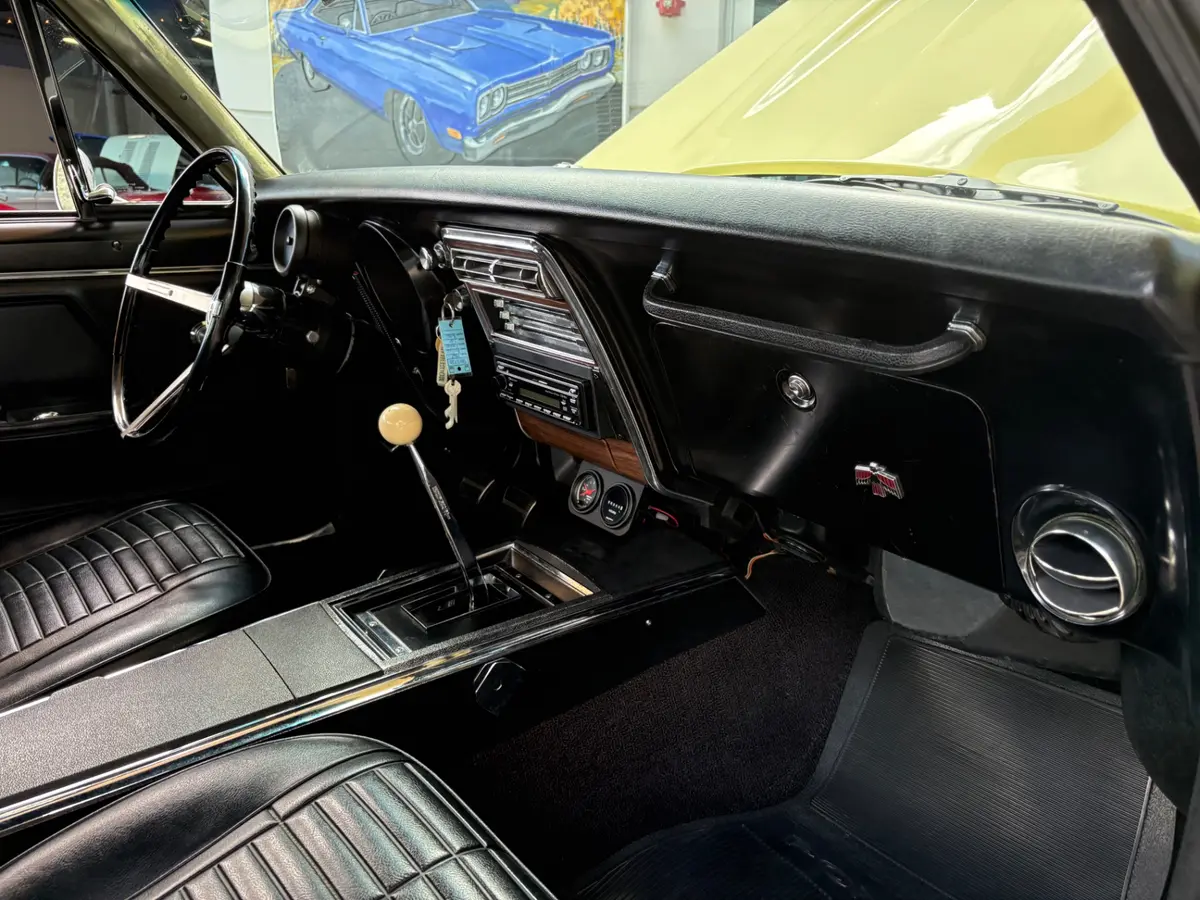
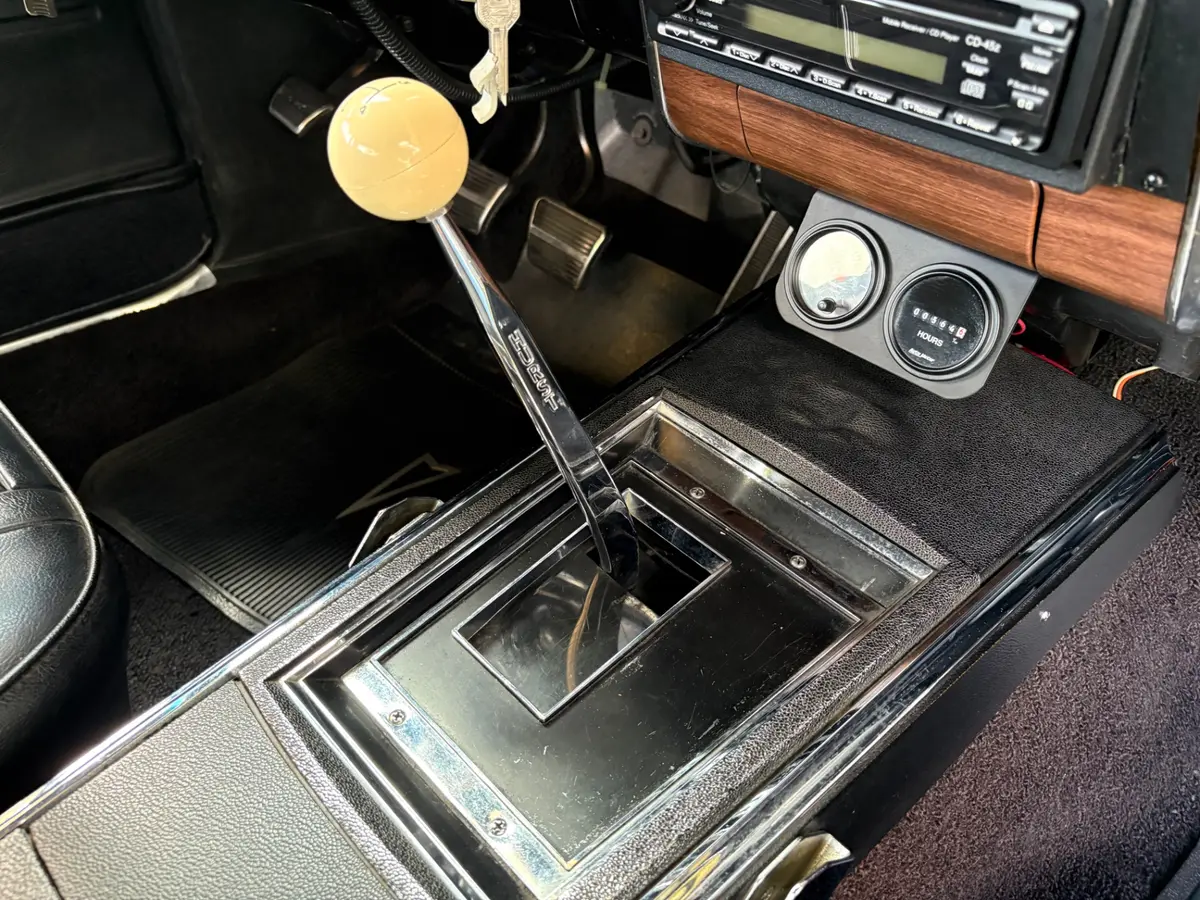
The 4-speed transmission is topped by a Hurst shifter — the aftermarket brand that became so closely associated with Pontiac performance cars of this era that Pontiac eventually made Hurst linkage standard equipment on some models. The shifter shown in the photos has a classic ball-style knob and the characteristic Hurst shift rod, giving the center console area an appropriate period look.
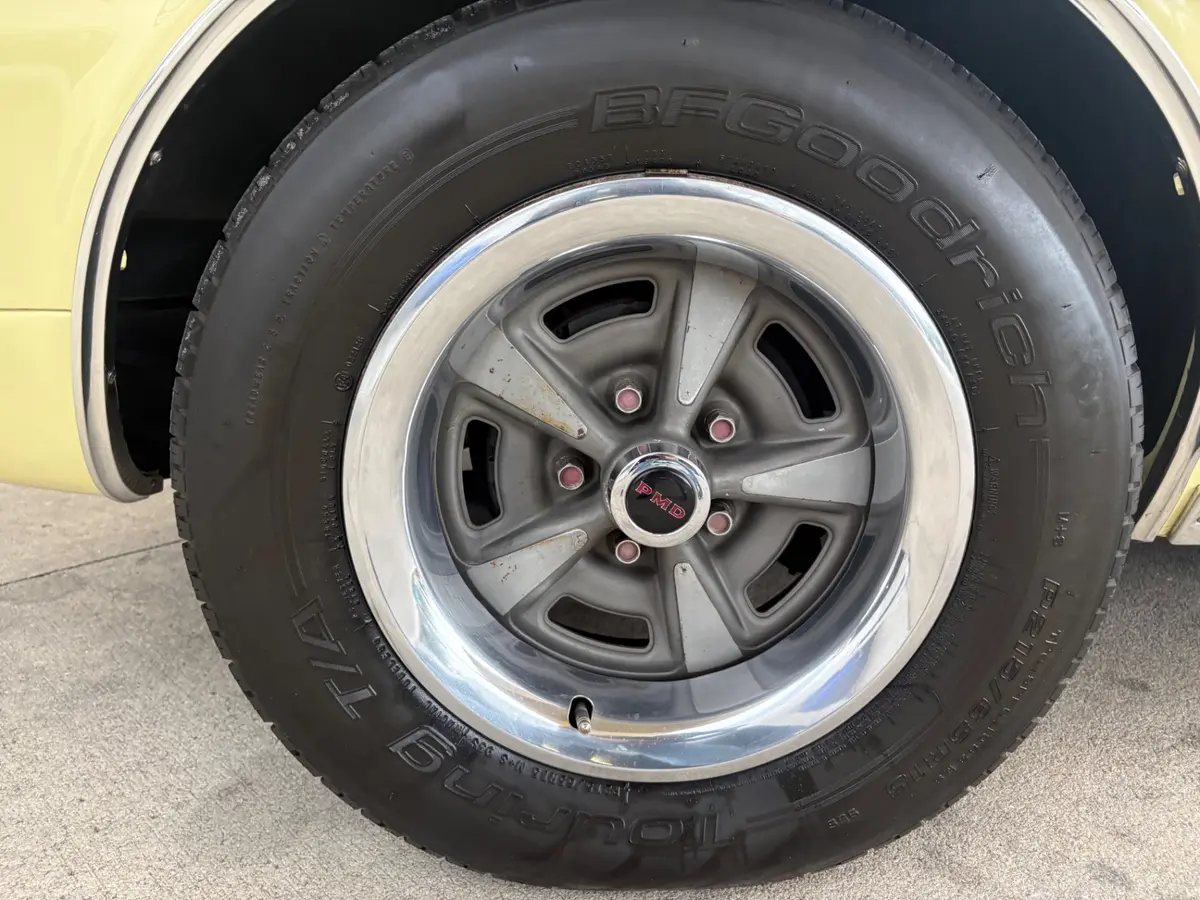
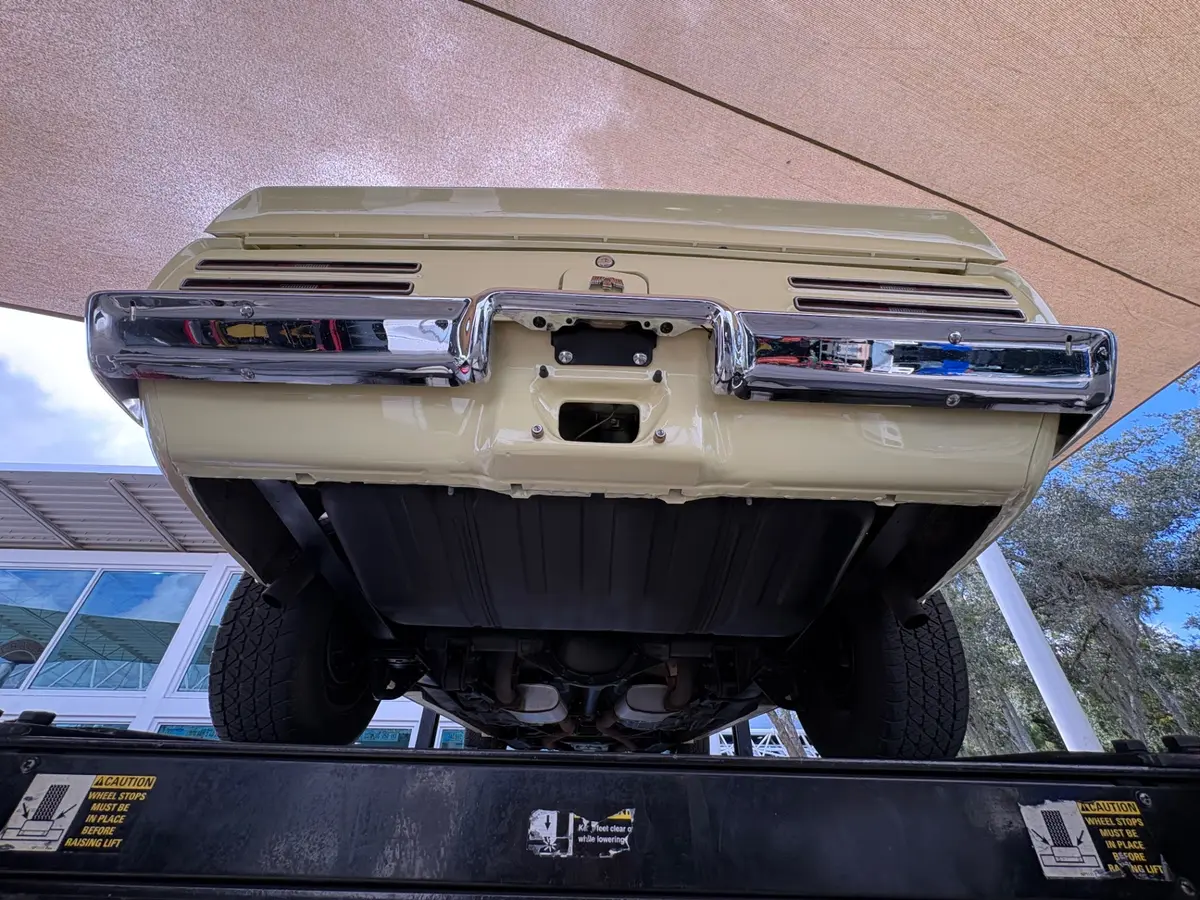
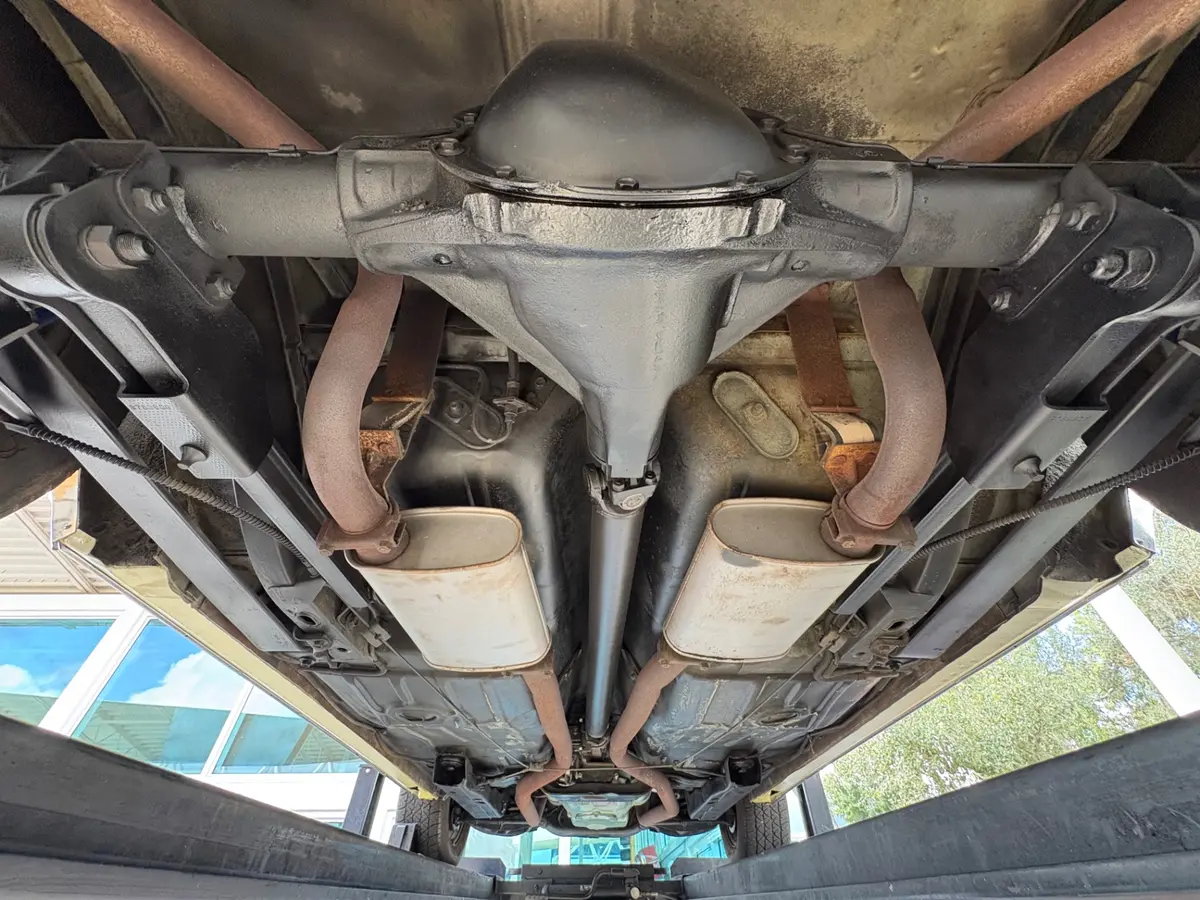
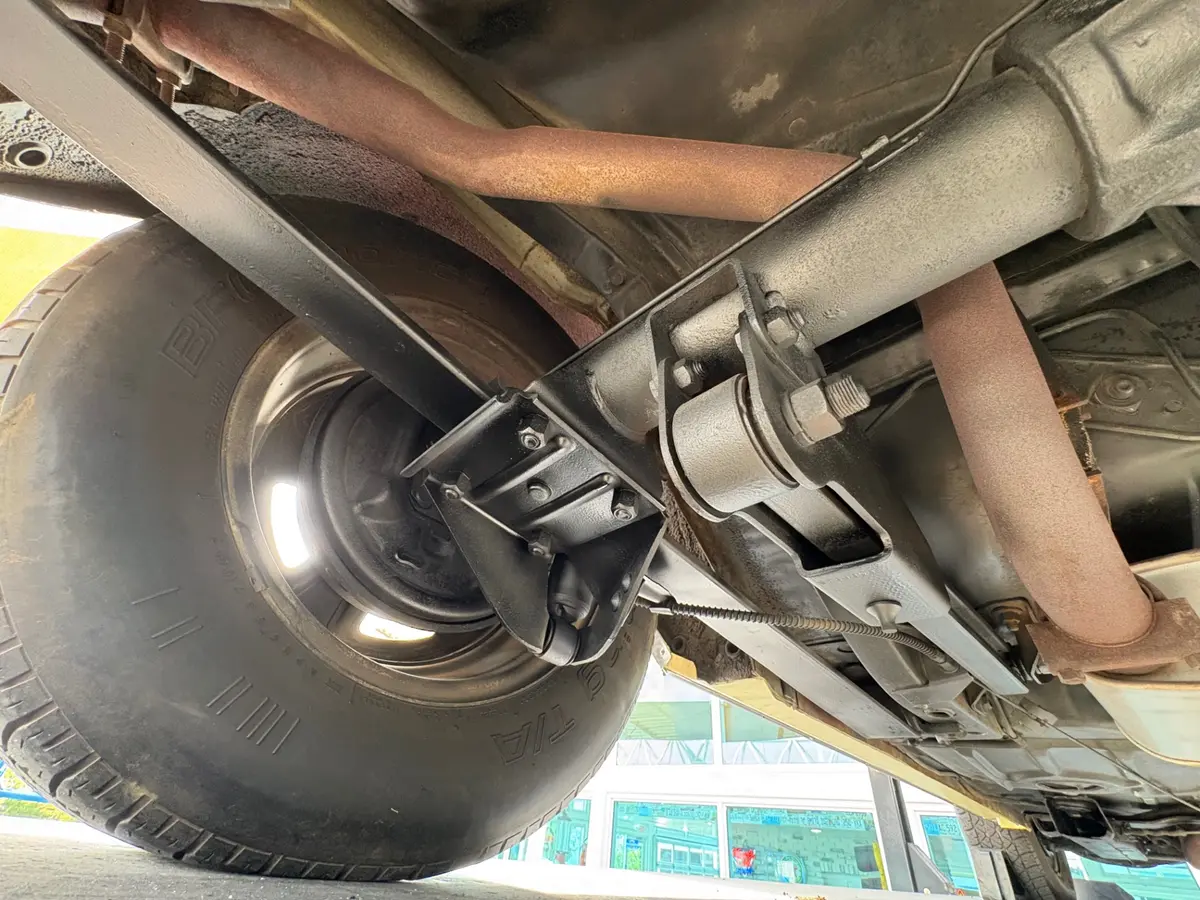
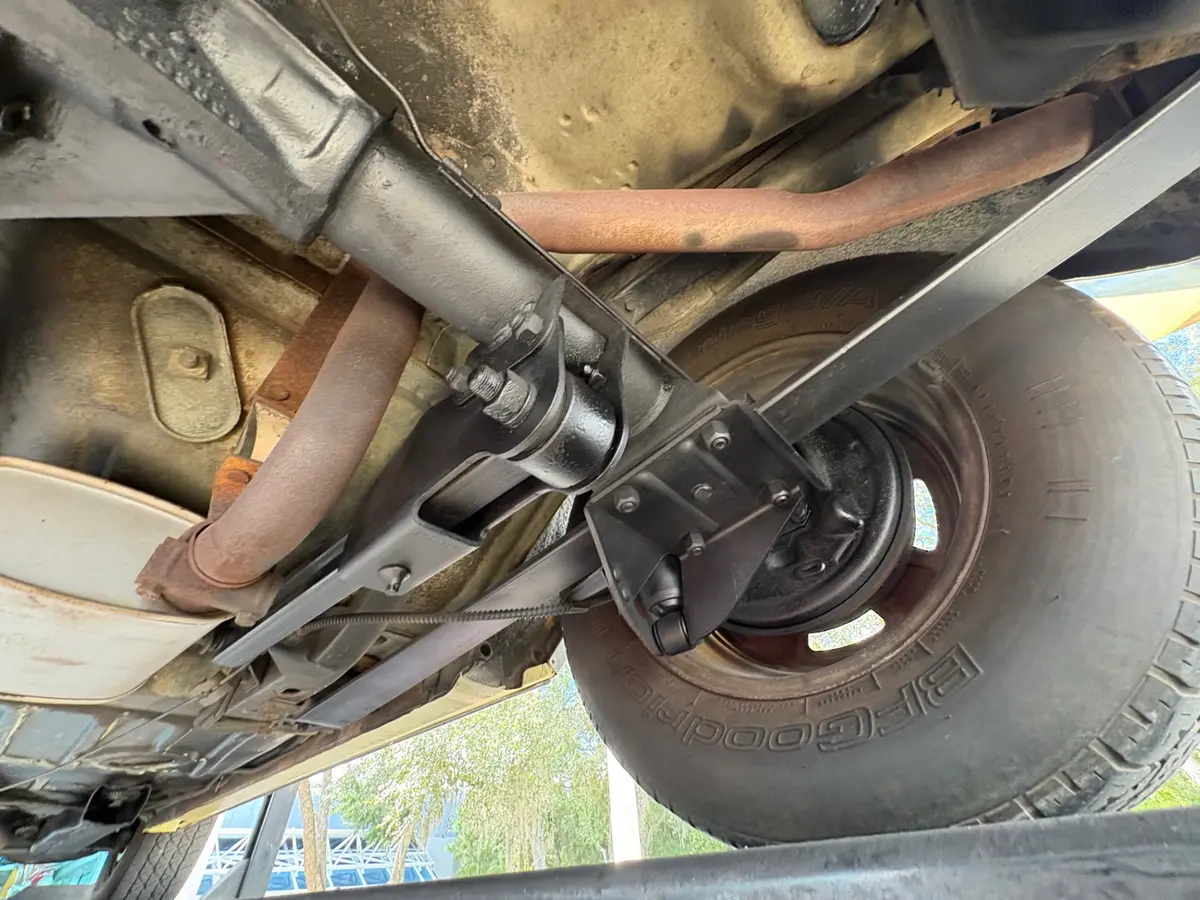
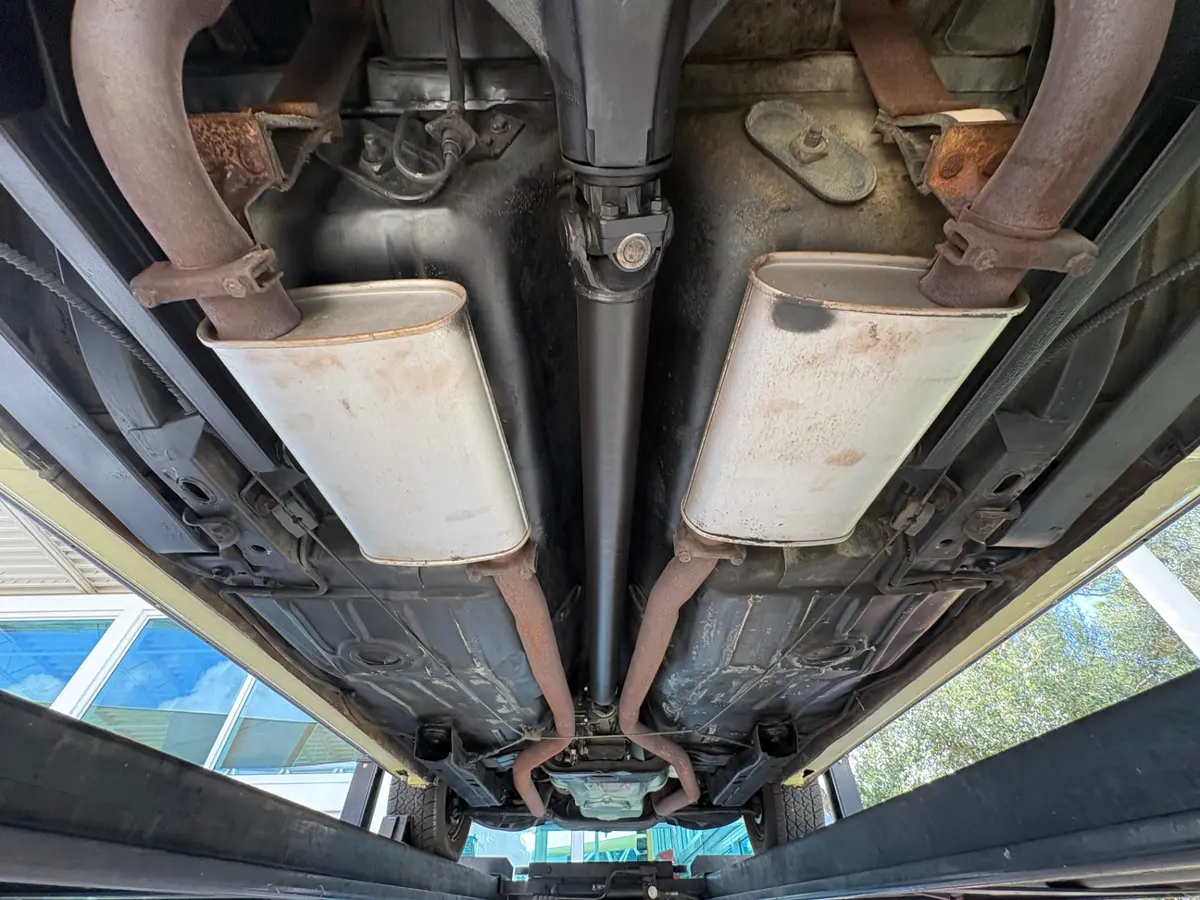
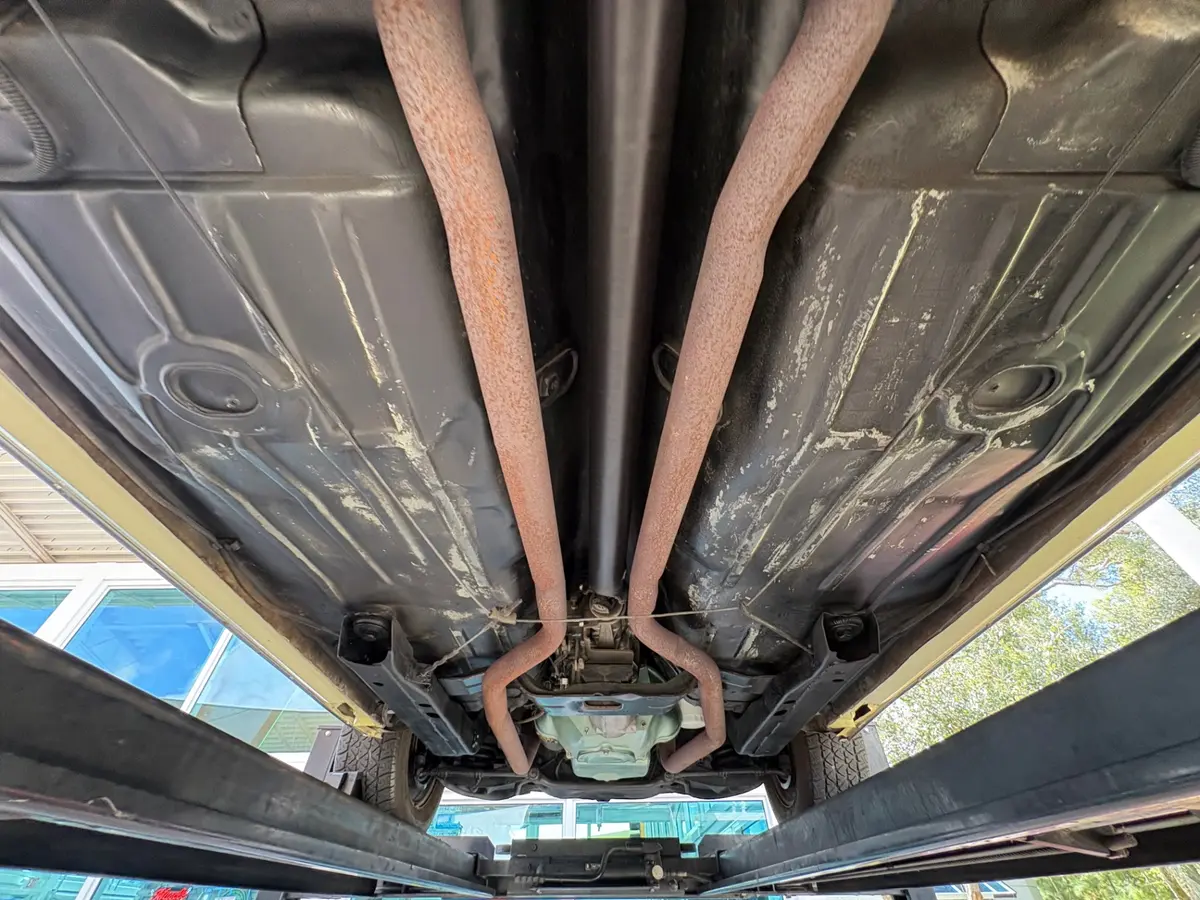
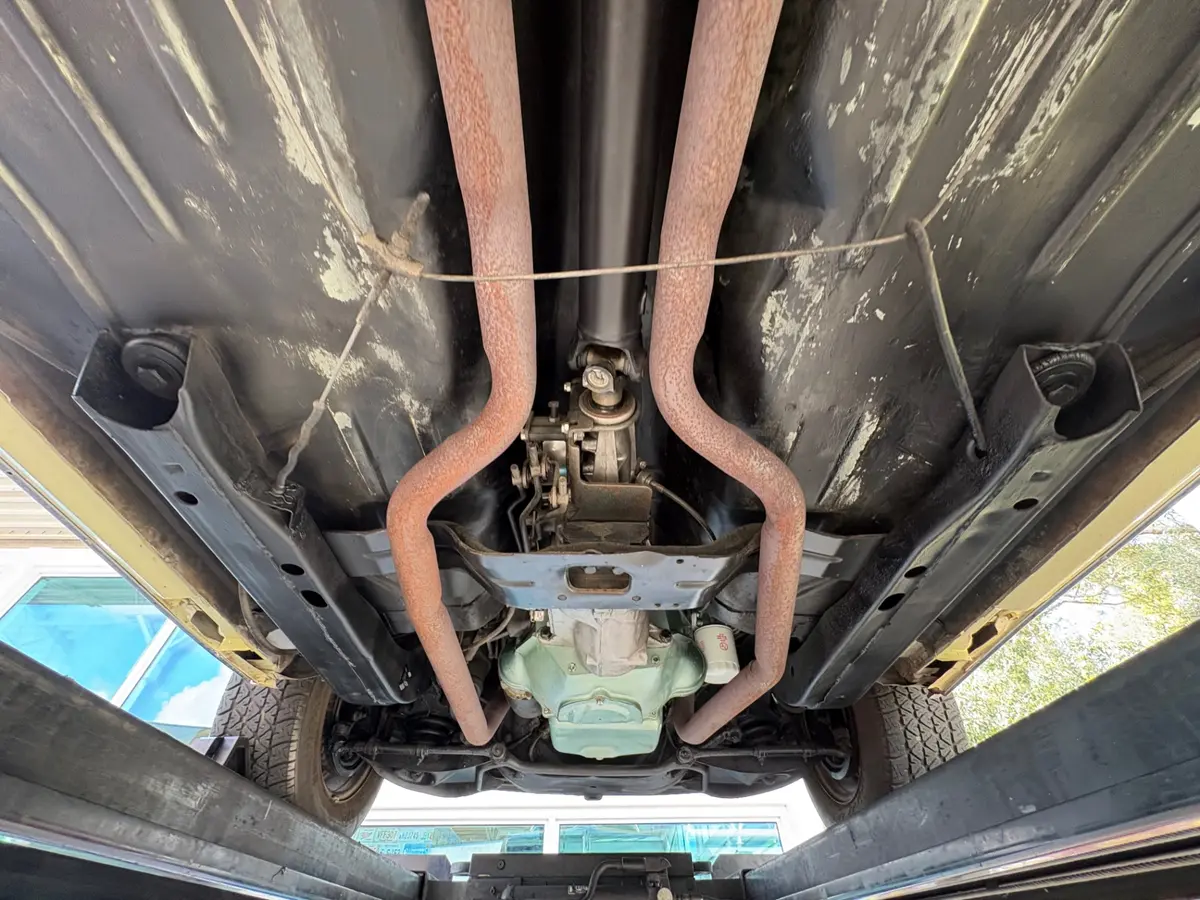
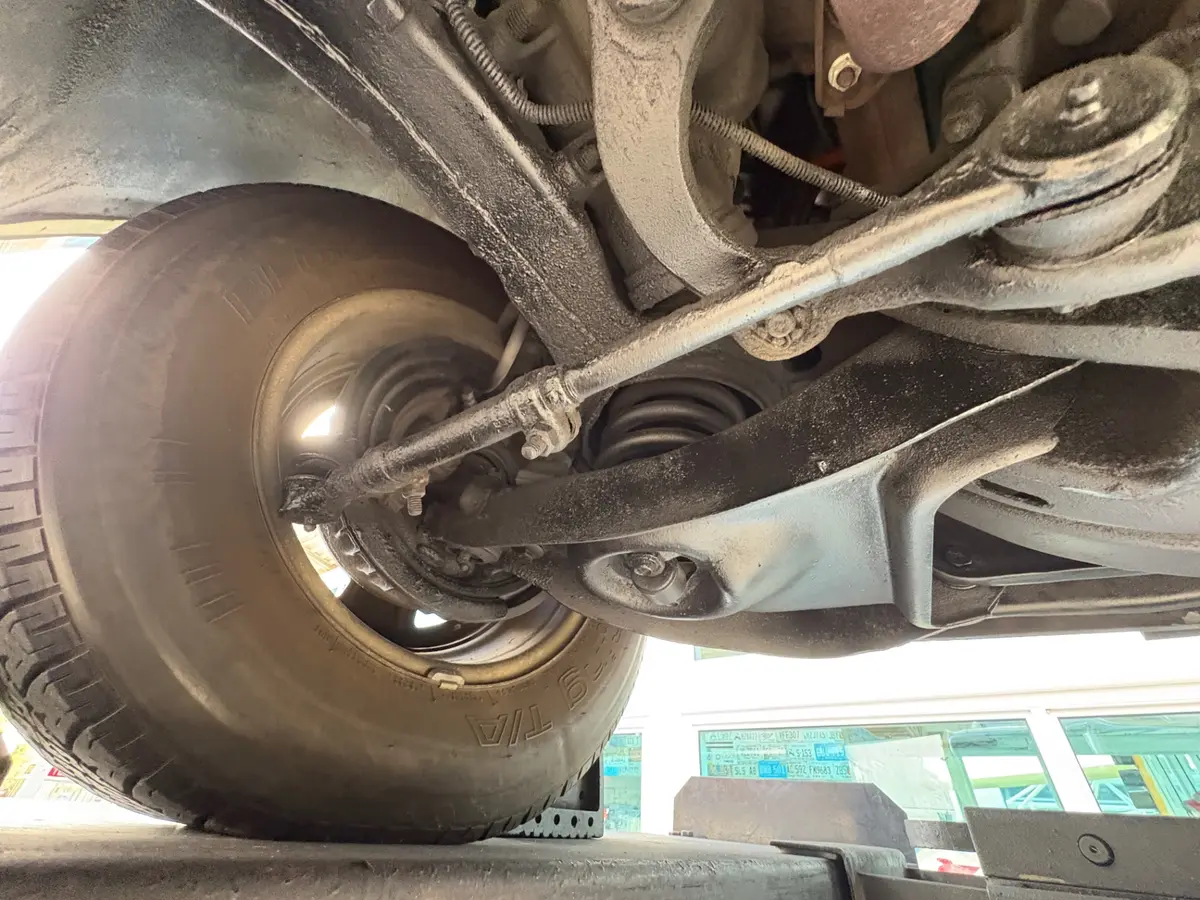
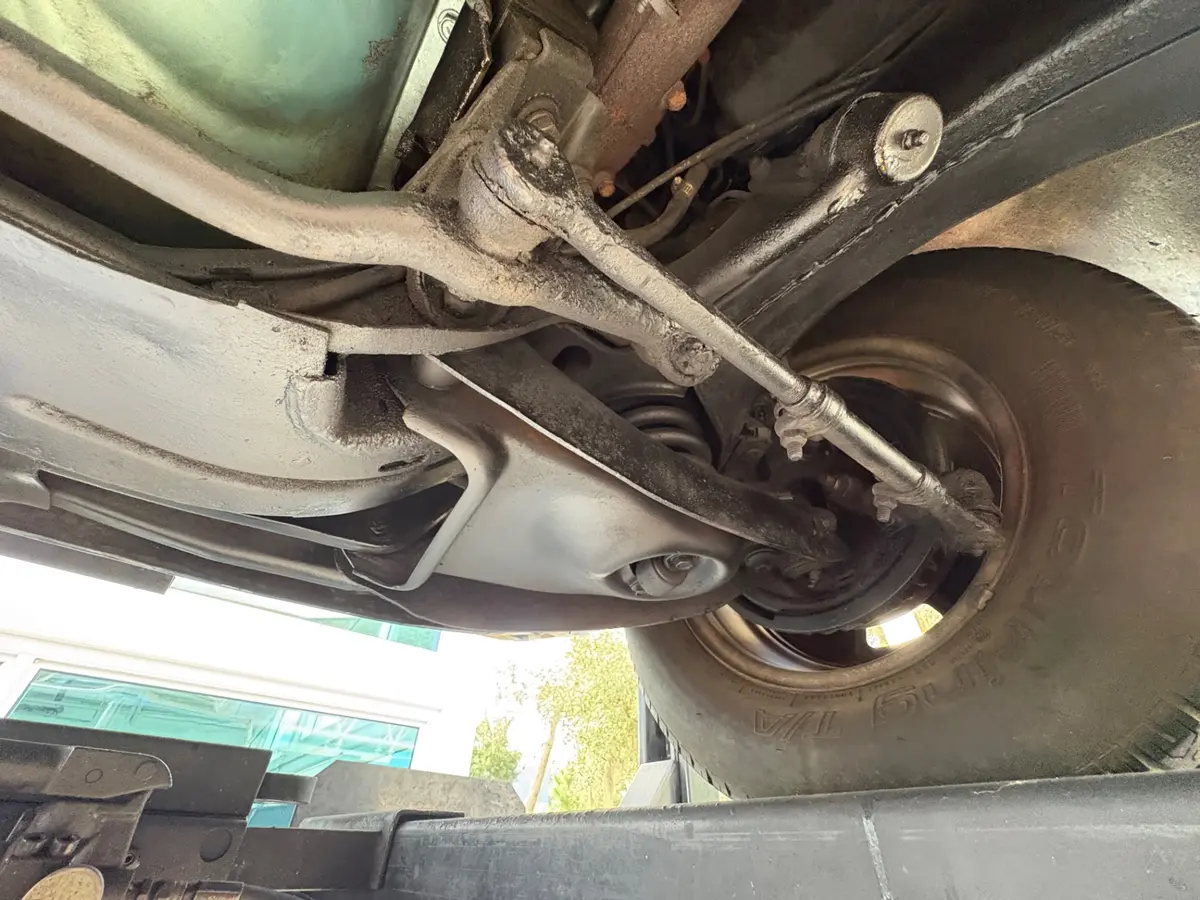
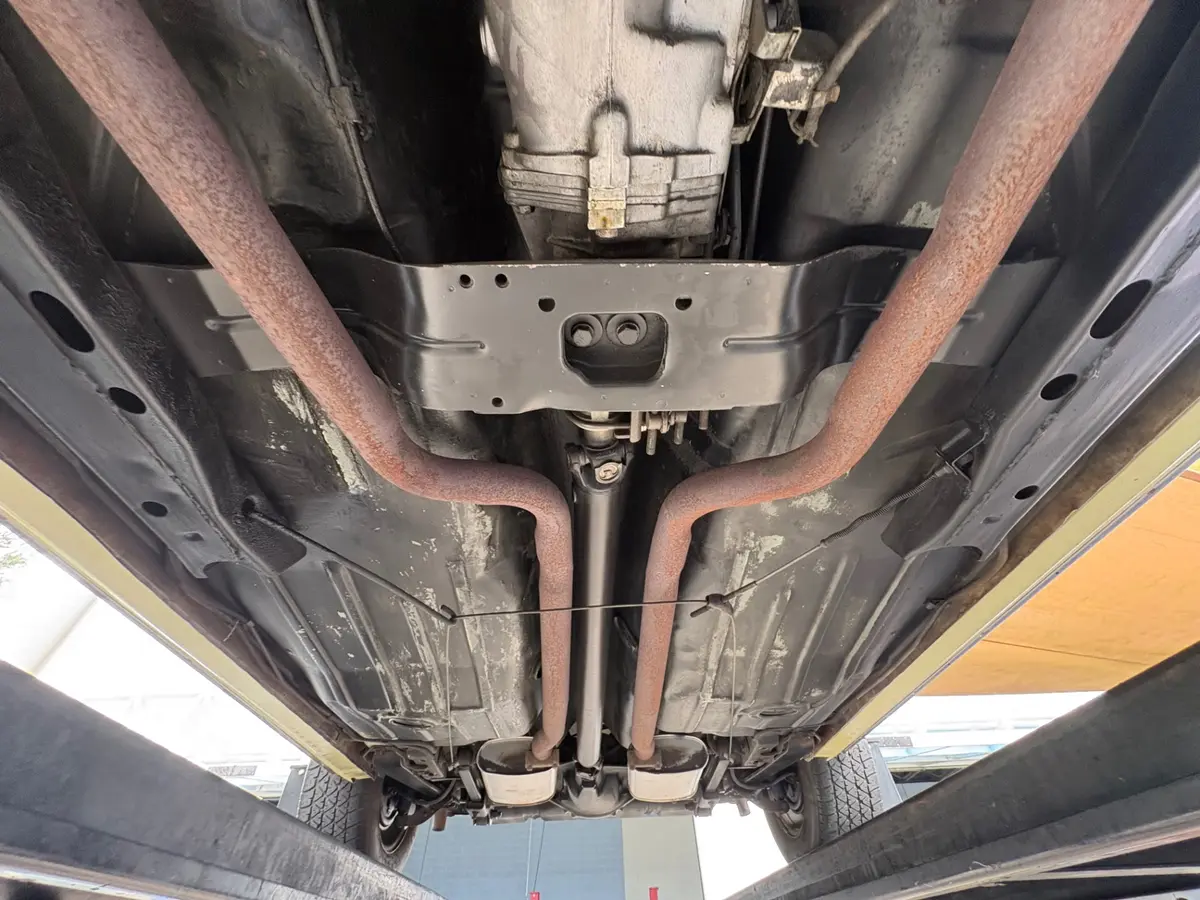
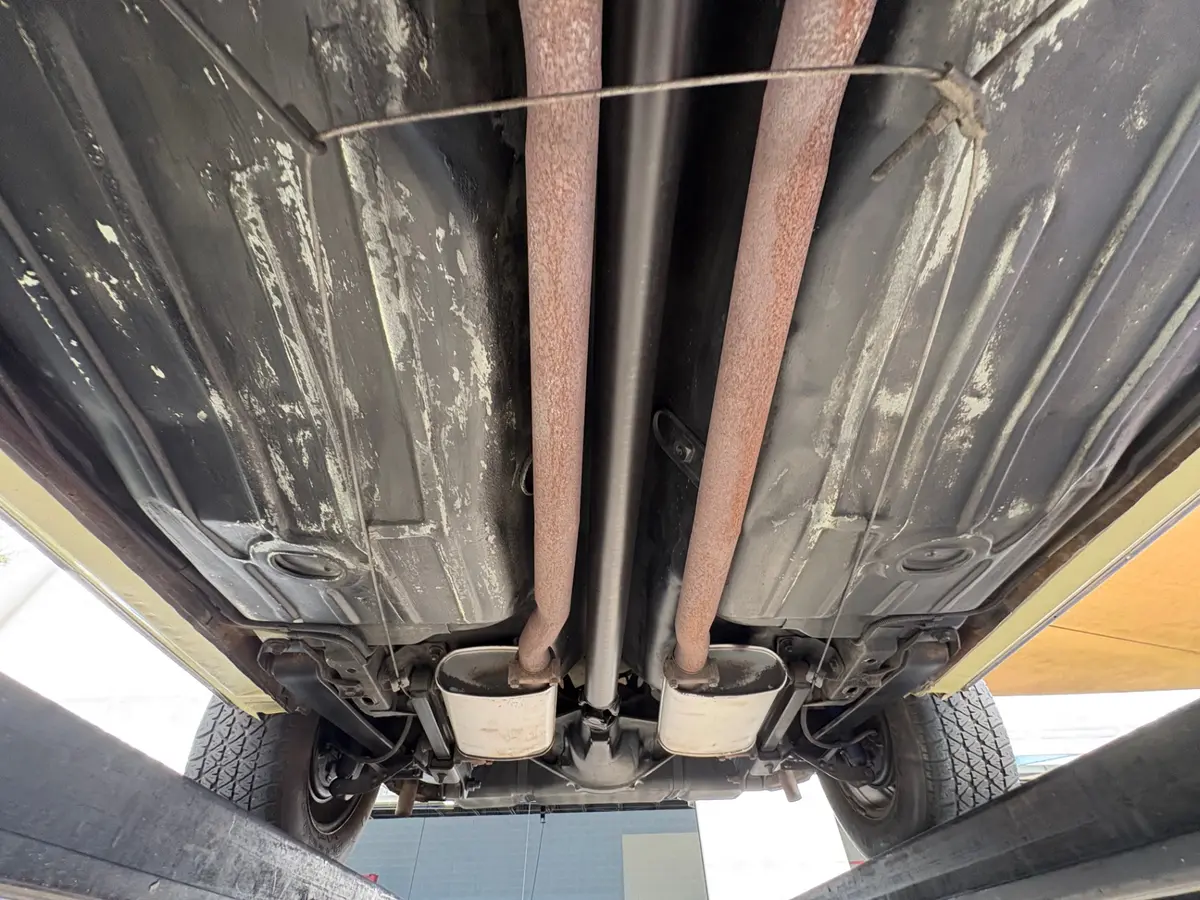
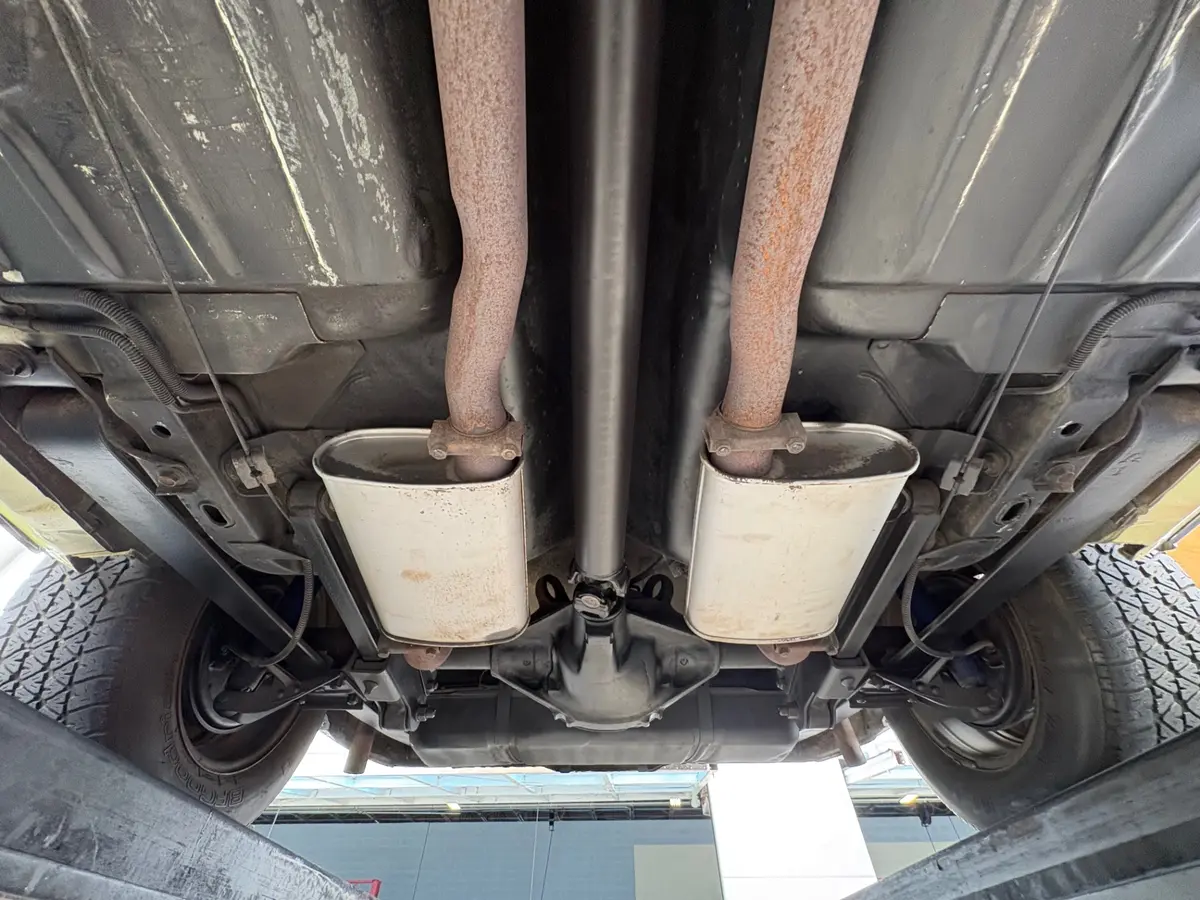
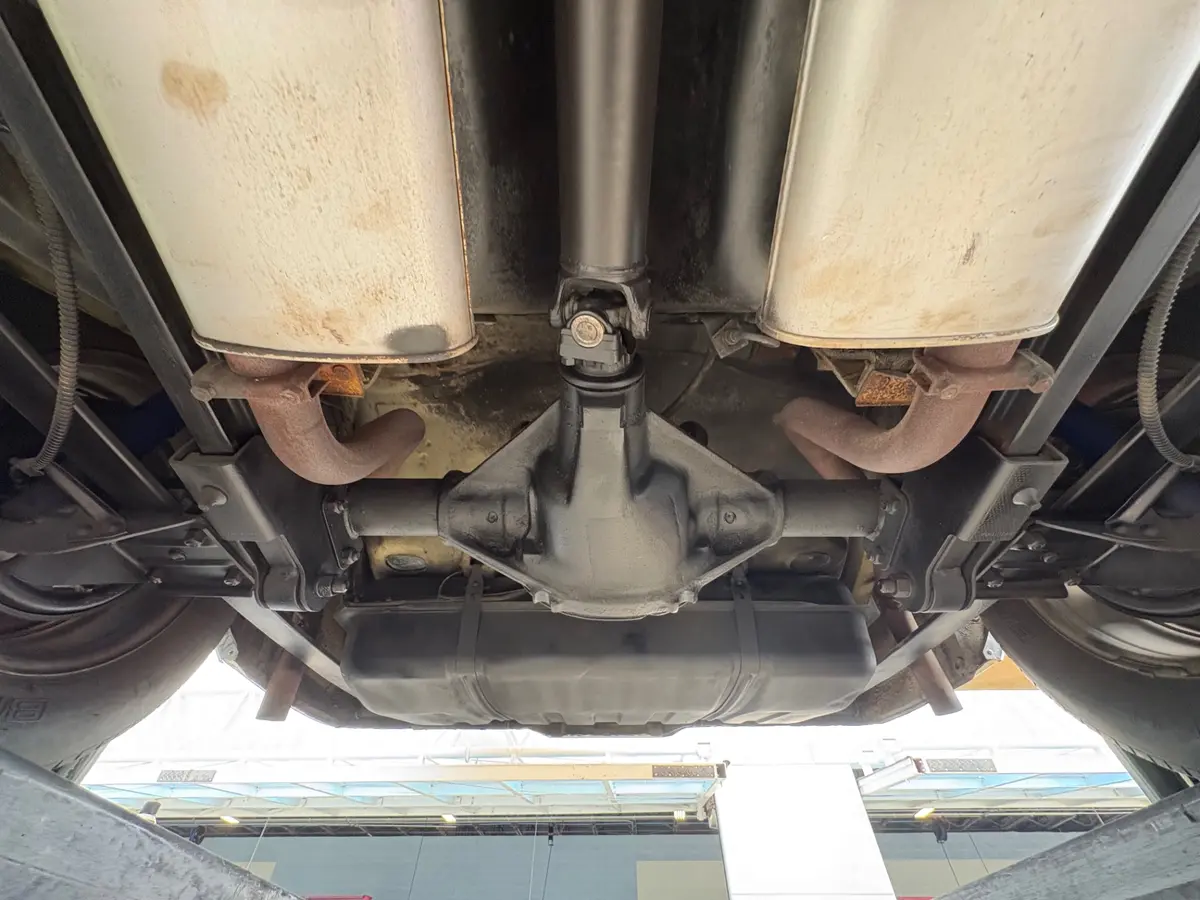
Dual exhaust routes back from the 326, and the underside photos reveal a floor pan that shows the car's age but no catastrophic structural issues. The undercar coating appears to have been applied at some point, and the suspension components, rear end housing, and exhaust system are all visible and intact. The front suspension uses the Firebird's standard A-arm setup, and the rear axle is the conventional leaf-spring solid axle configuration shared with the Camaro platform. BFGoodrich Radial T/A tires are mounted all around — a tire with genuine street credibility and a tread pattern that suits the car's character without looking out of place on a first-year Firebird.
Interior
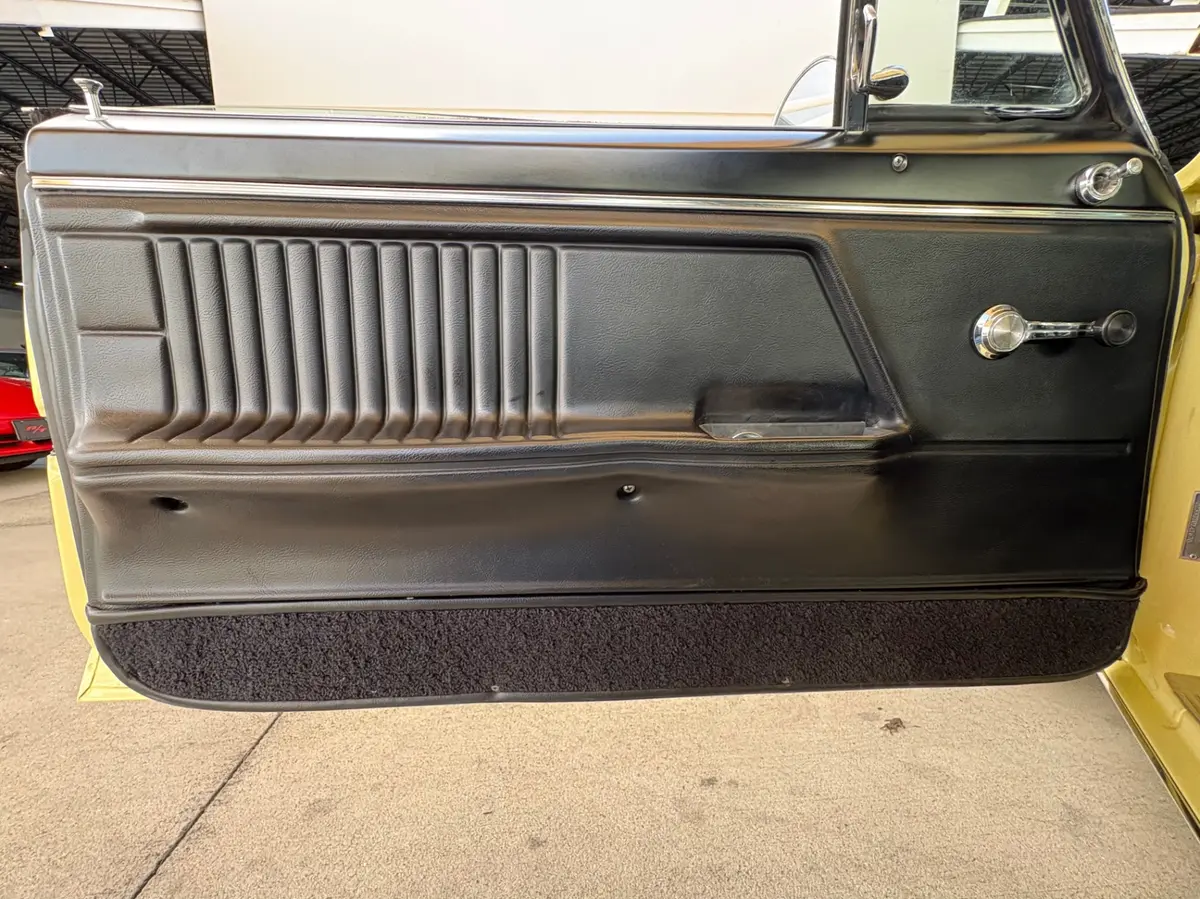
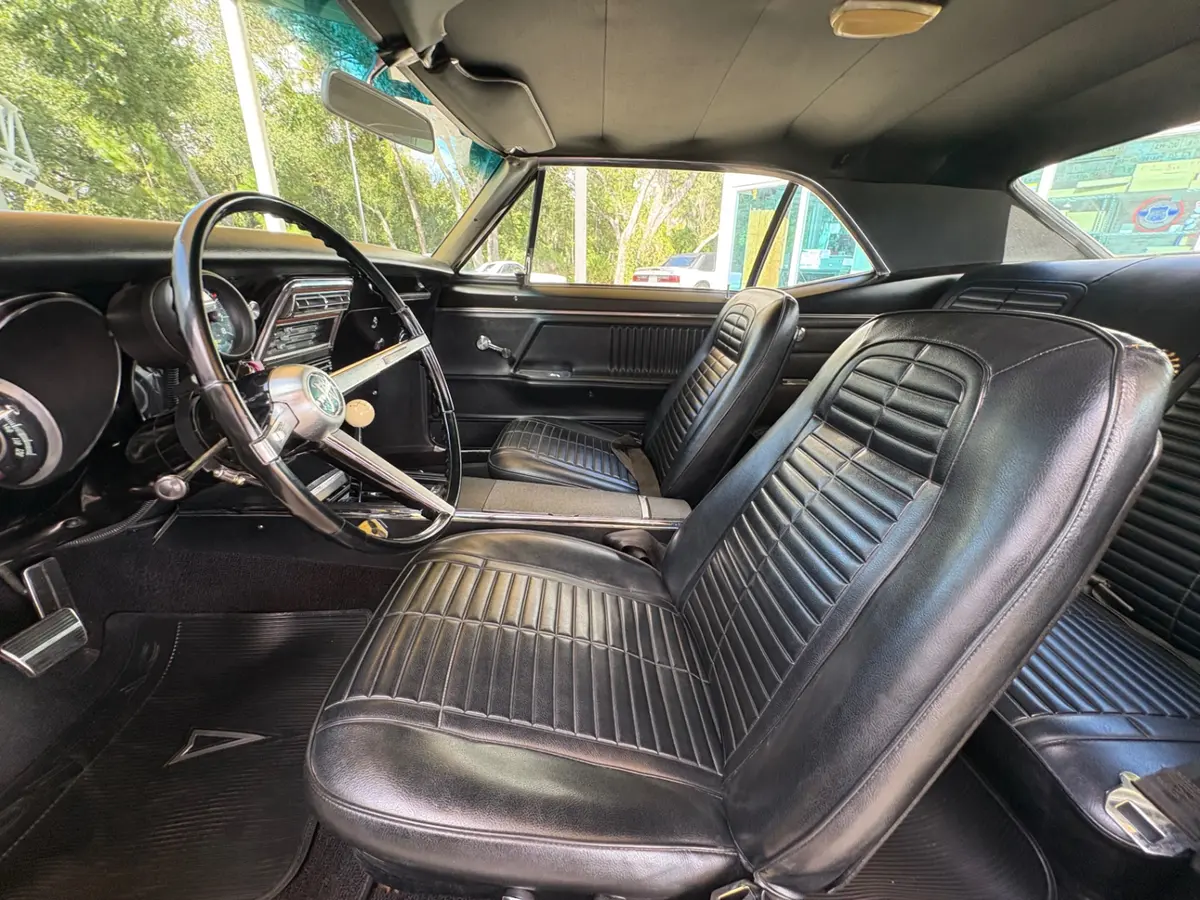
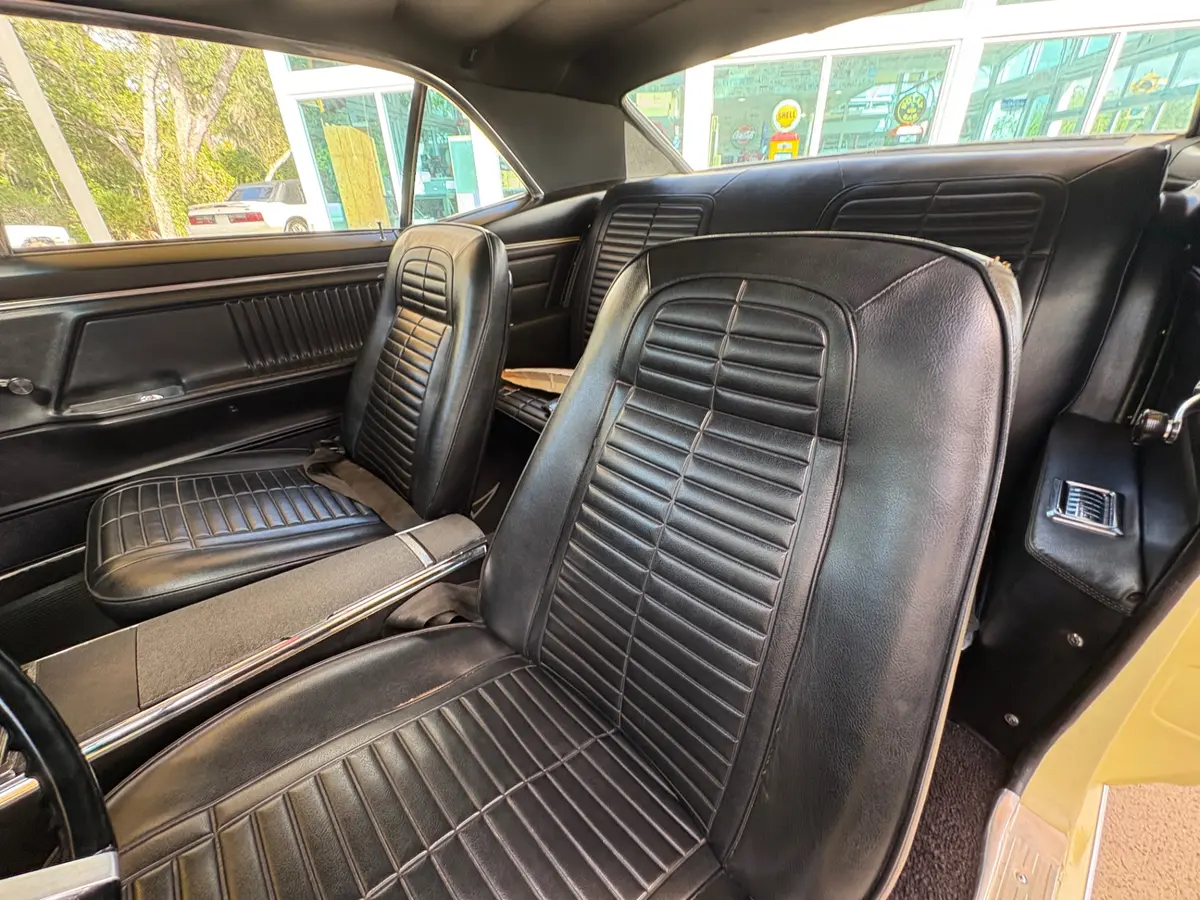
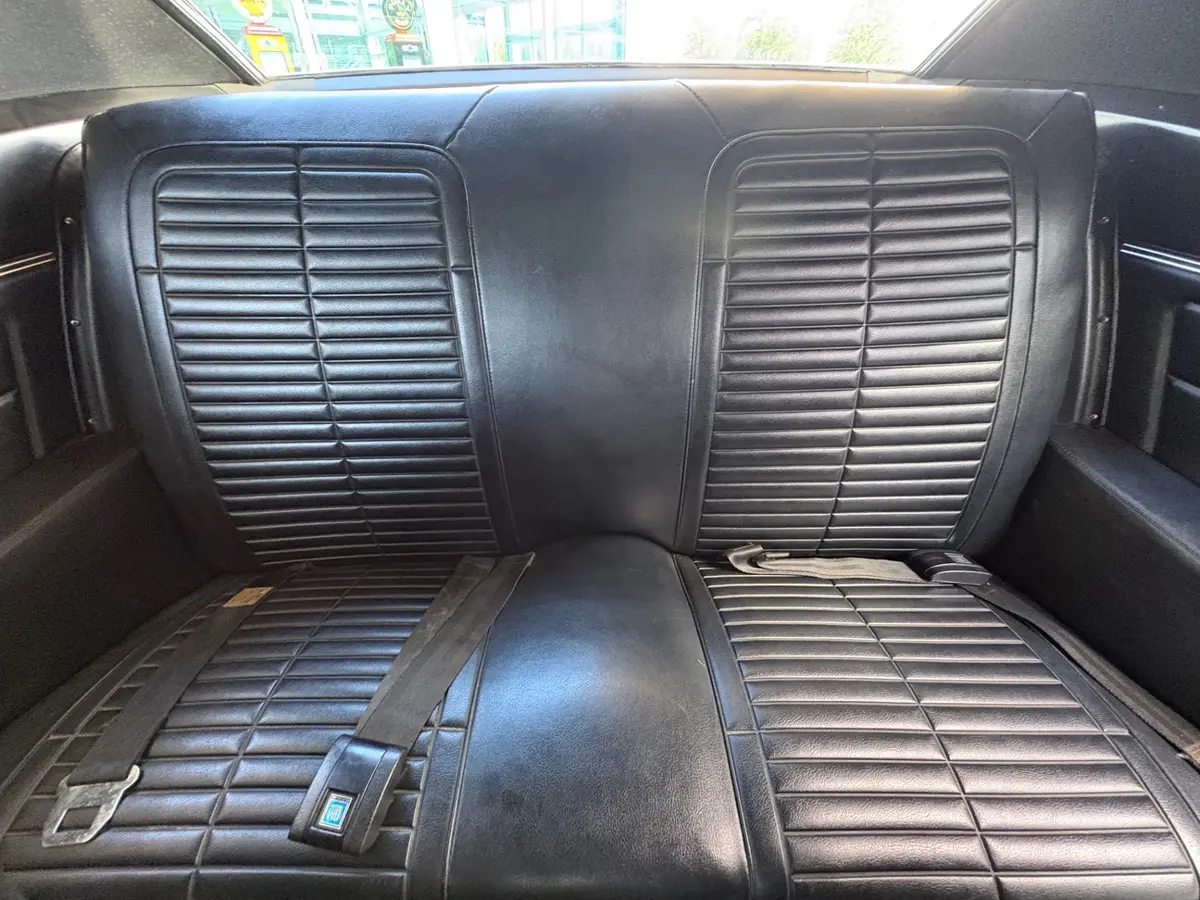
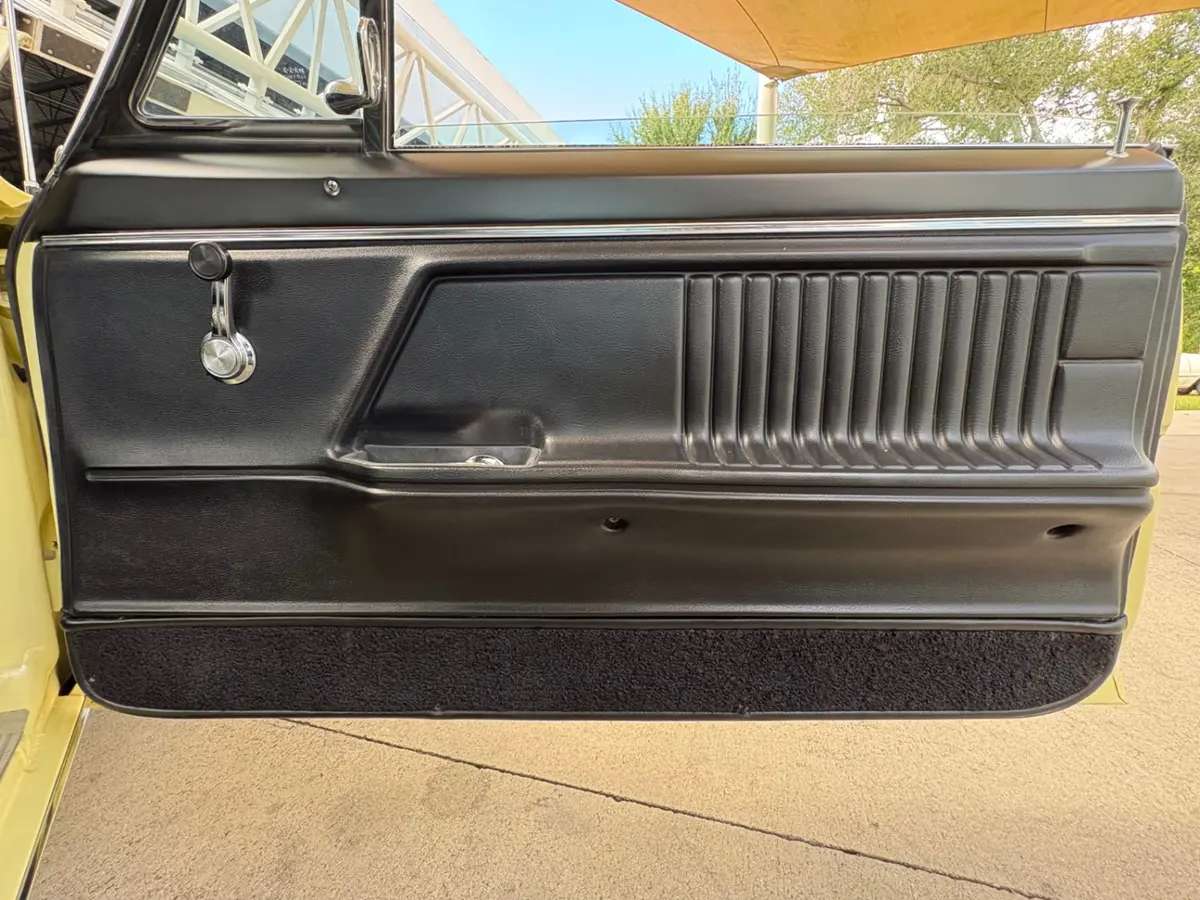
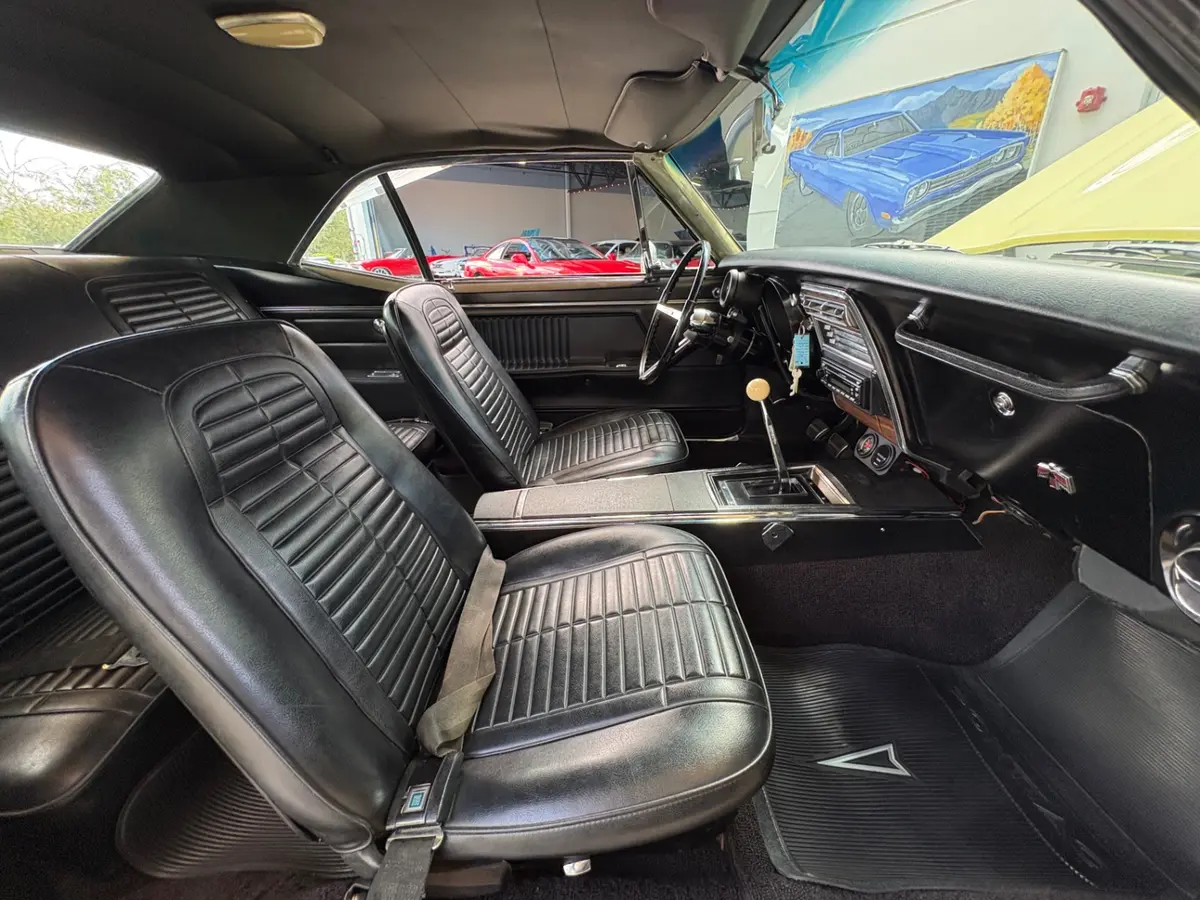
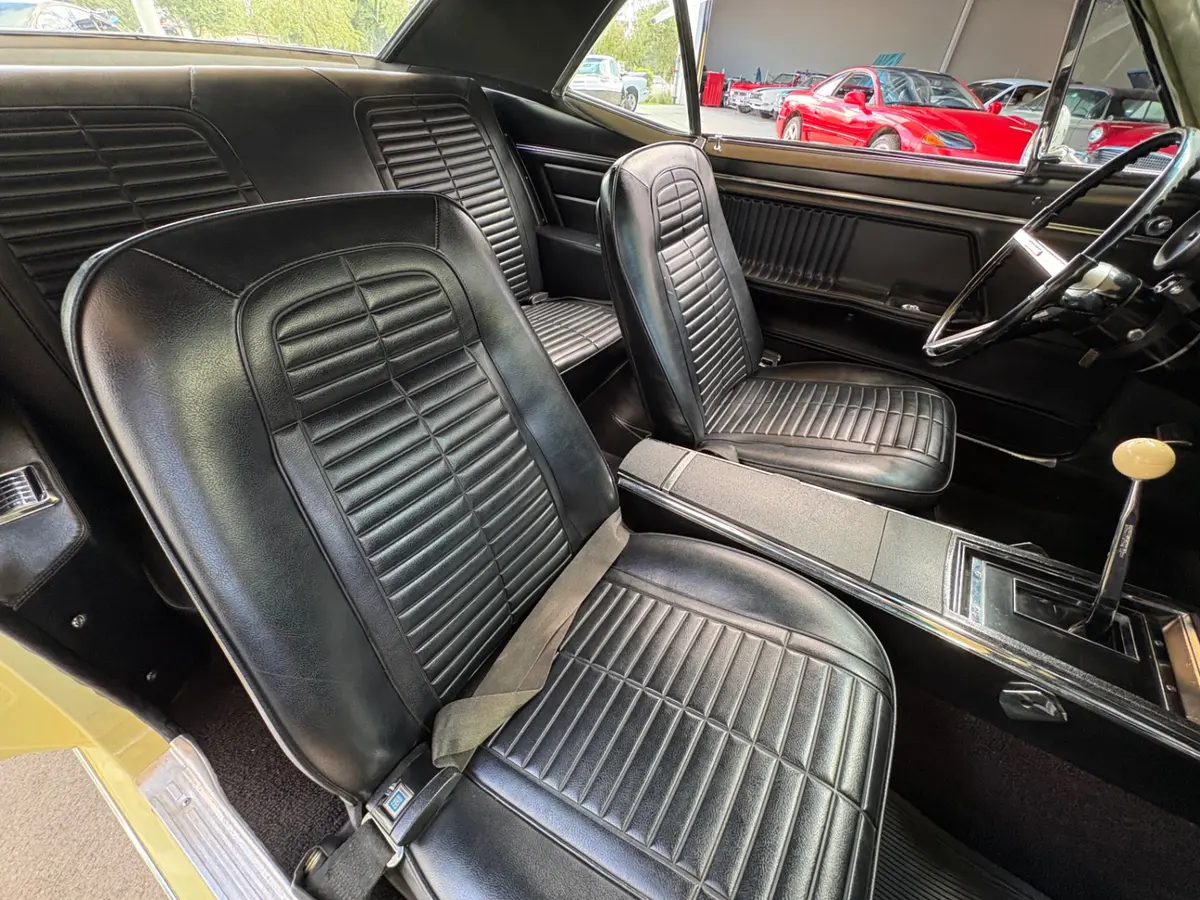
The black vinyl interior is in keeping with the car's original specification. Pontiac offered the 1967 Firebird with several interior color options, and black was among the most popular — it wears well over time, cleans up easily, and provides strong contrast against the Primavera Yellow exterior. The front bucket seats show the expected wear of a used car that has actually been driven, with the quilted vinyl pattern still clearly defined. The rear bench seat, visible in the photos, retains its shape and stitching.
The center console runs the length of the floor between the bucket seats, housing the Hurst shifter and providing the cockpit feel that separated the Firebird from more pedestrian transportation. On the console top, additional gauges have been added — consistent with the overall approach of a previous owner who wanted more instrumentation without radically altering the car's appearance.
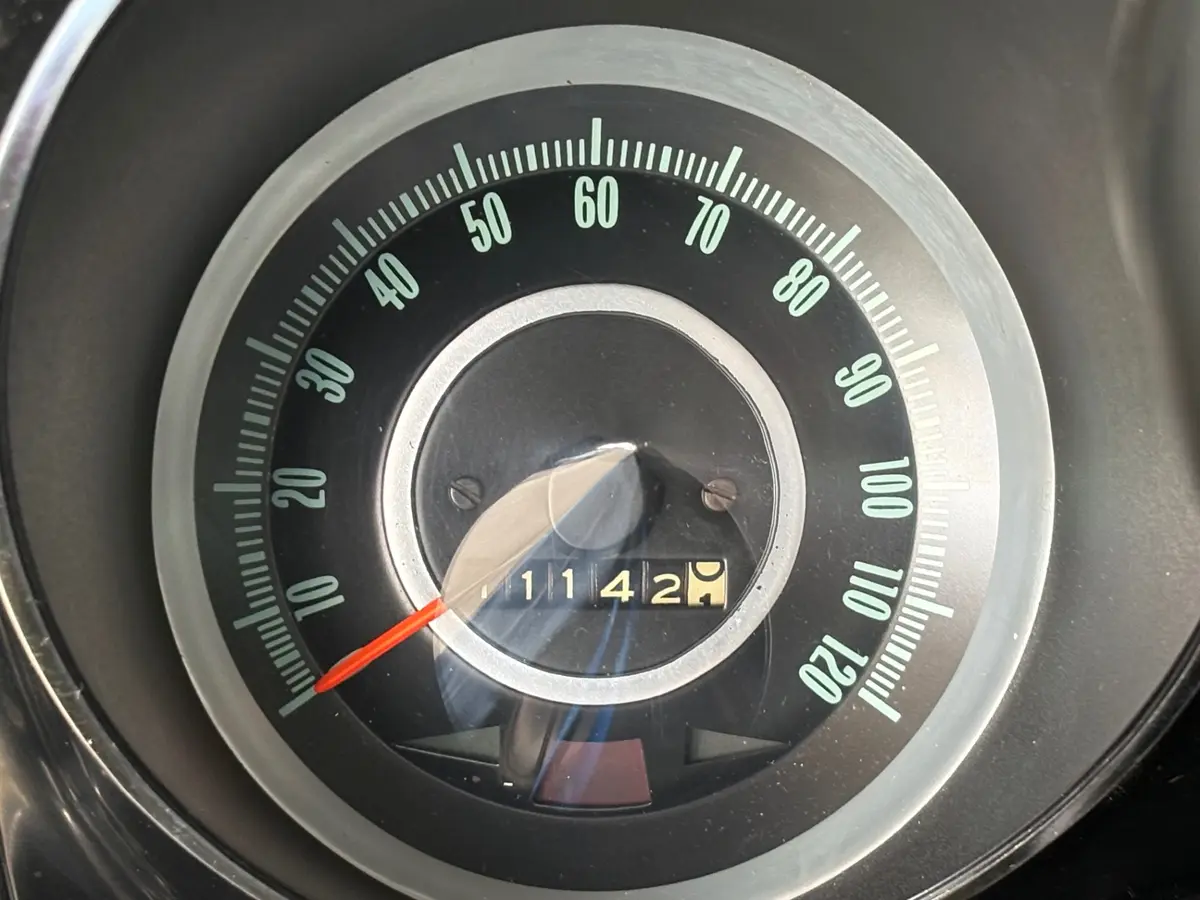
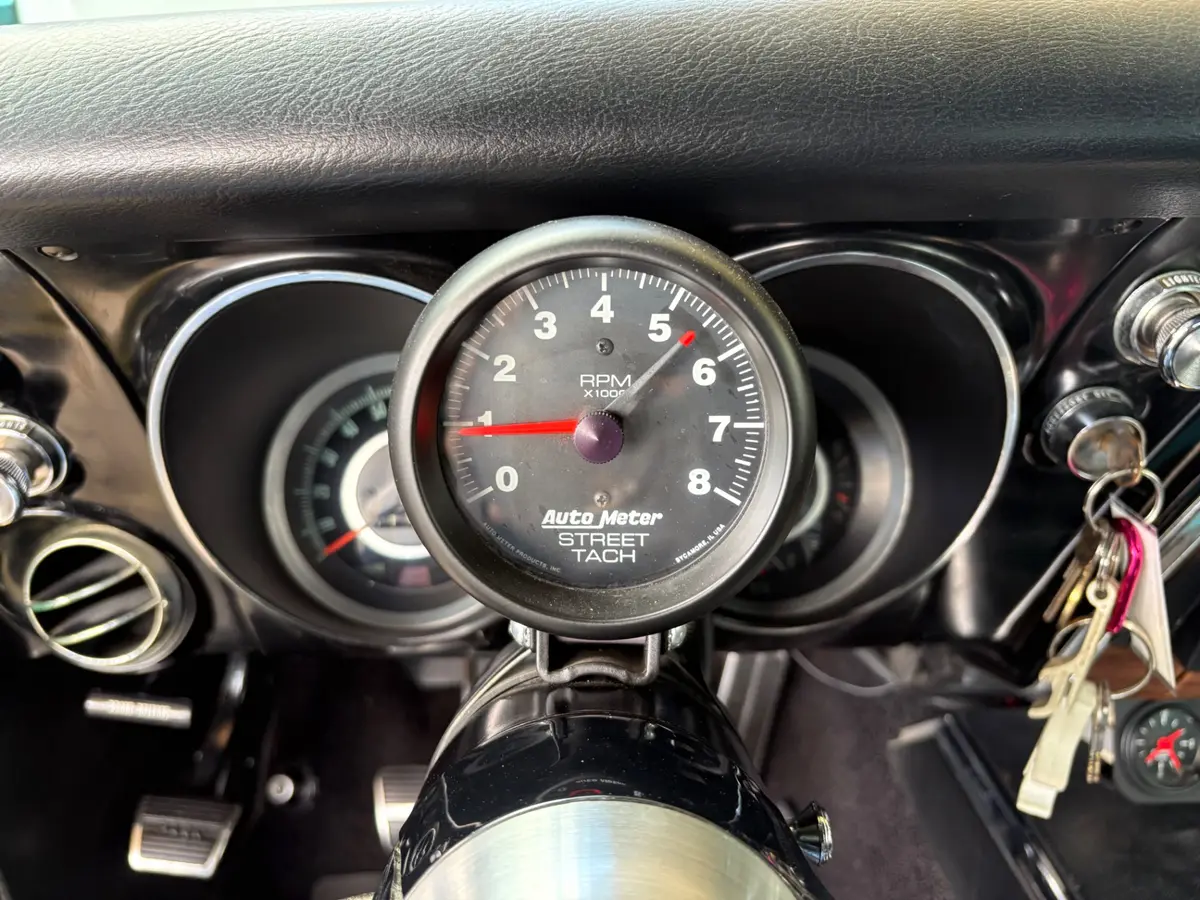
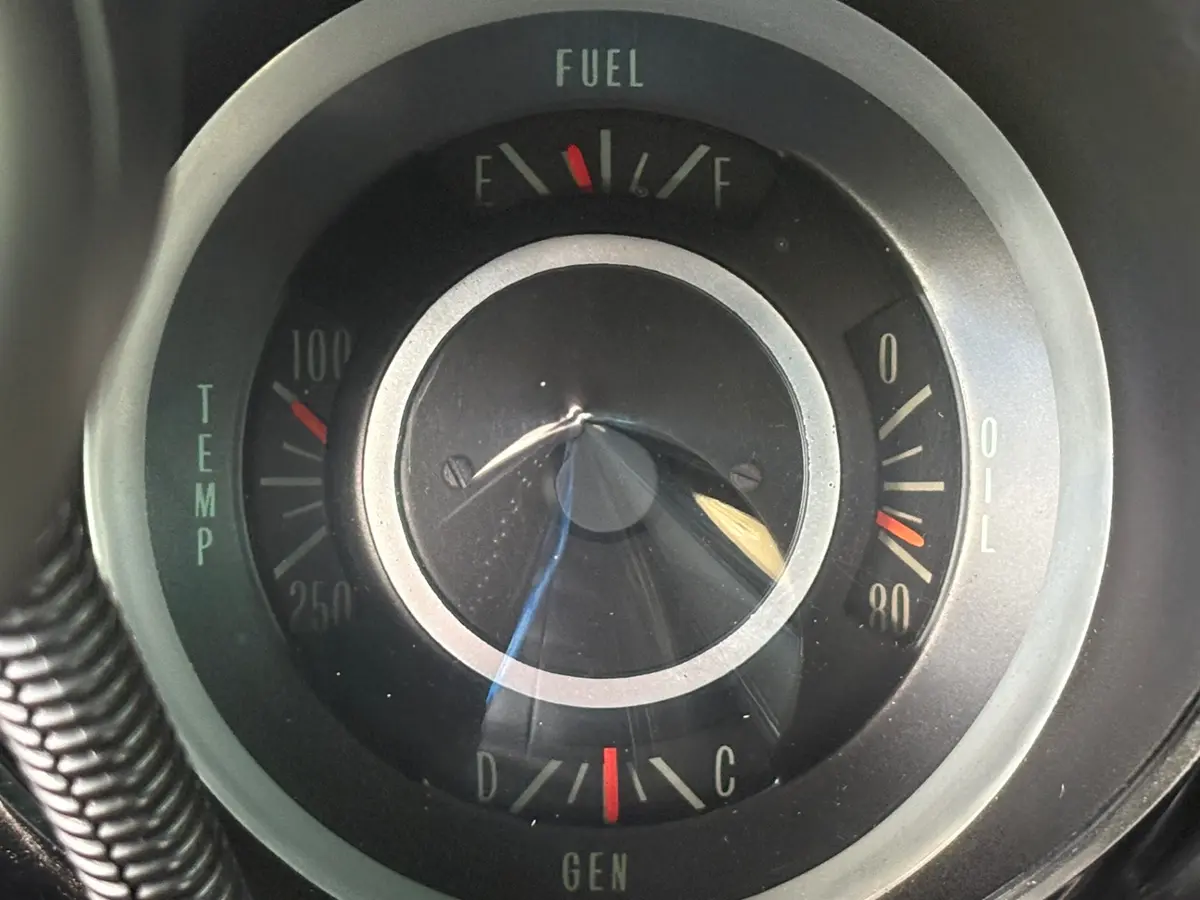
The Rally Gauge Cluster is one of the most desirable factory options on the 1967 Firebird. It replaced the standard instrument pod with individual round gauges for fuel, temperature, oil pressure, and generator output, giving the driver real information rather than idiot lights. Pontiac's gauge design for 1967 had a clean, purposeful look with silver bezels and black faces that read well at a glance. Supplementing the factory gauges is an Auto Meter Street Tach mounted on the steering column — a common period-correct addition that gives the driver a clearly readable tachometer directly in the sightline.
The dashboard carries woodgrain trim inserts, a factory option that added a touch of refinement to the Firebird's otherwise straightforward instrument panel. A modern CD stereo has been installed in the dash opening, fitted within a woodgrain-trimmed bezel that blends reasonably well with the surrounding interior. This is a practical upgrade that most daily drivers appreciate, and it does not appear to have required significant modification to the dash structure.
Power steering is confirmed on this car, routed through the factory column. On a car of this weight and with the standard-ratio steering box, power assist makes a meaningful difference in parking-lot and low-speed maneuverability. The steering wheel itself is the original-style three-spoke design with the Firebird logo at the center hub.
Exterior
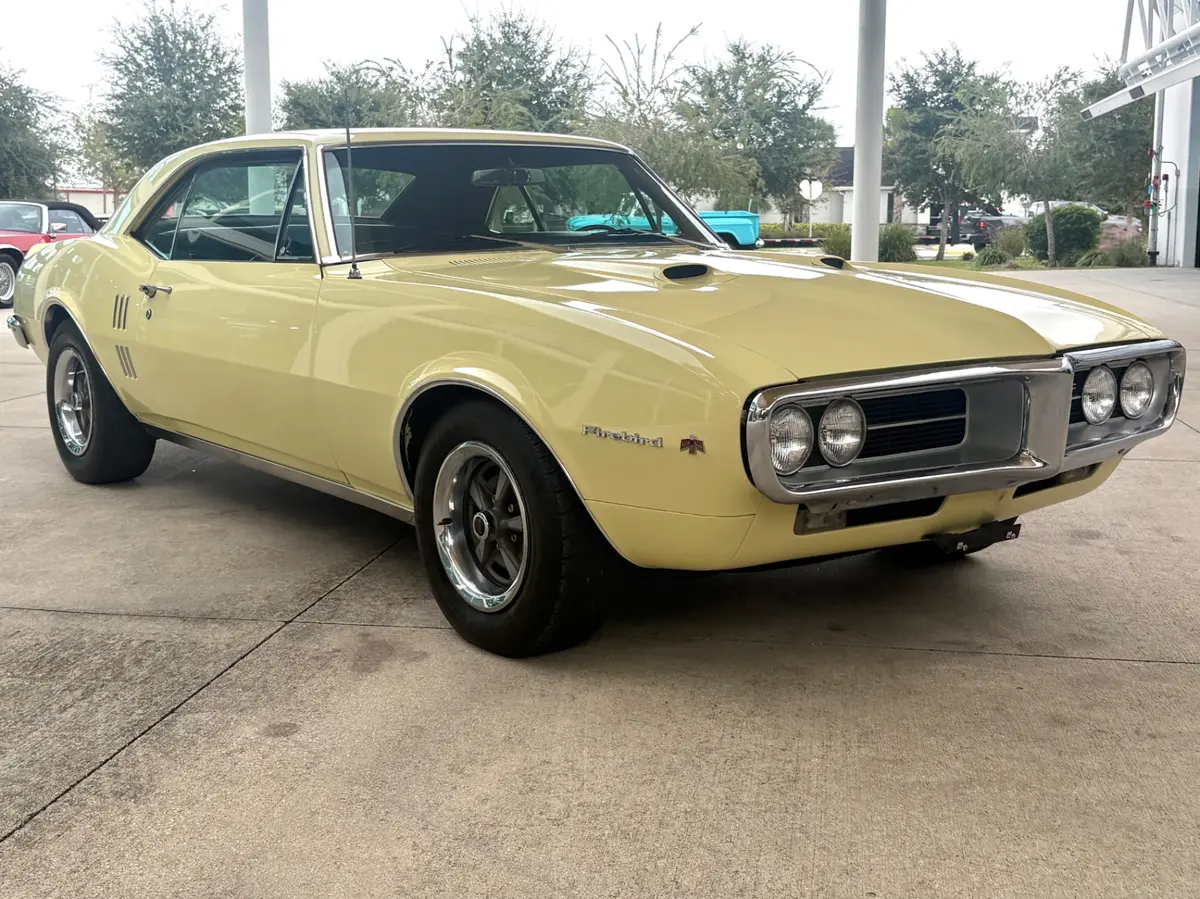
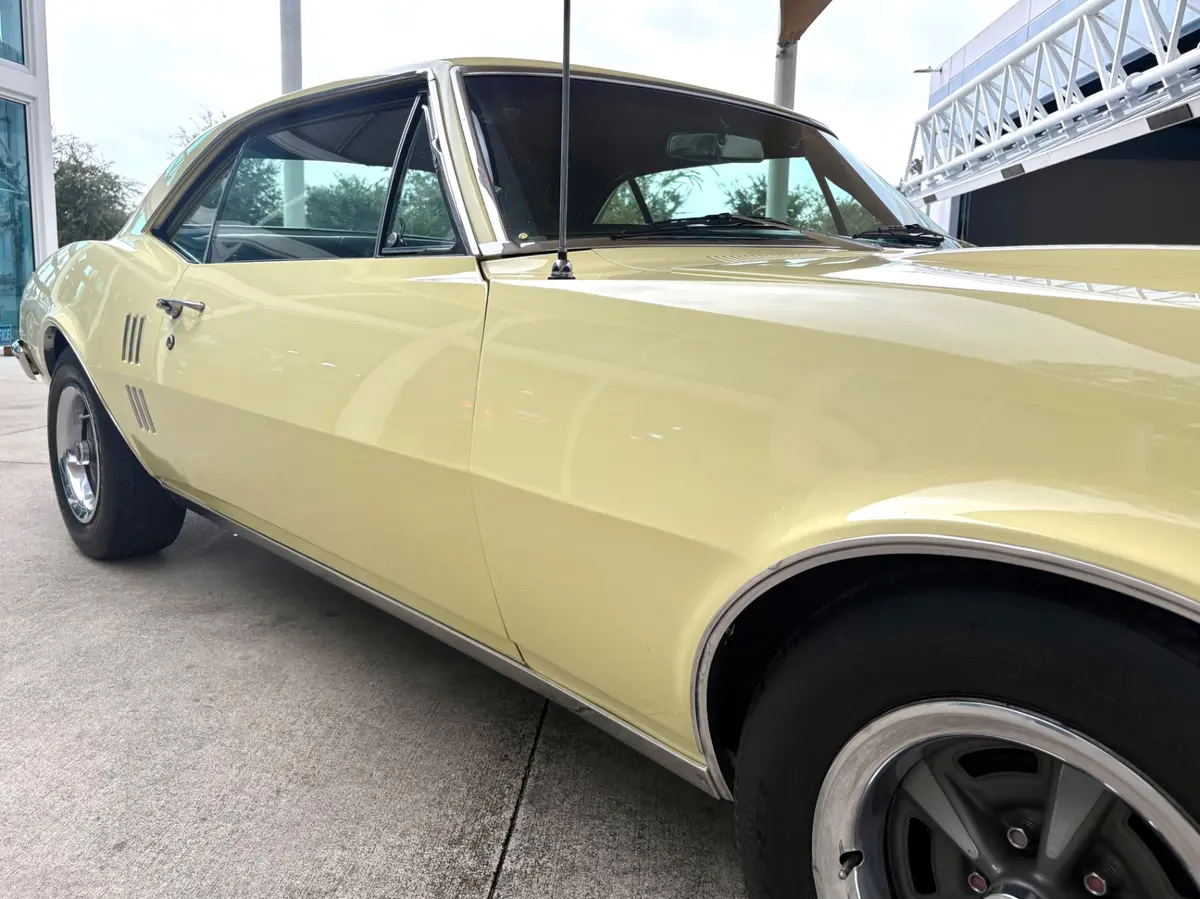
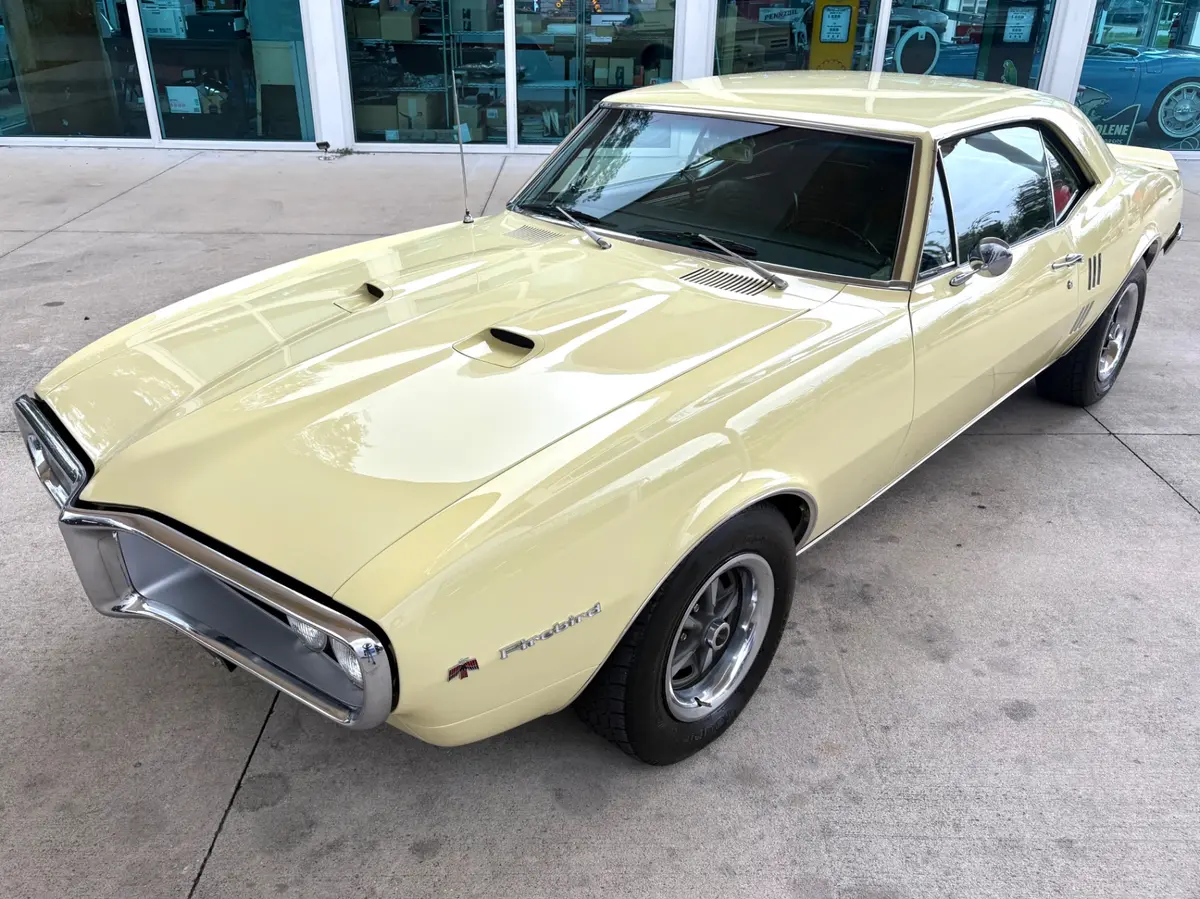
Primavera Yellow is one of those colors that defined the late 1960s American muscle car era. It sits in the warm, slightly muted range of yellow that photographs as gold in certain light and as a clean soft yellow in others. On the 1967 Firebird's body — which designer John DeLorean's team shaped with a longer hood and shorter deck than the Camaro, giving it a slightly more European proportion — the color works particularly well with the car's clean lines and minimal chrome trim.
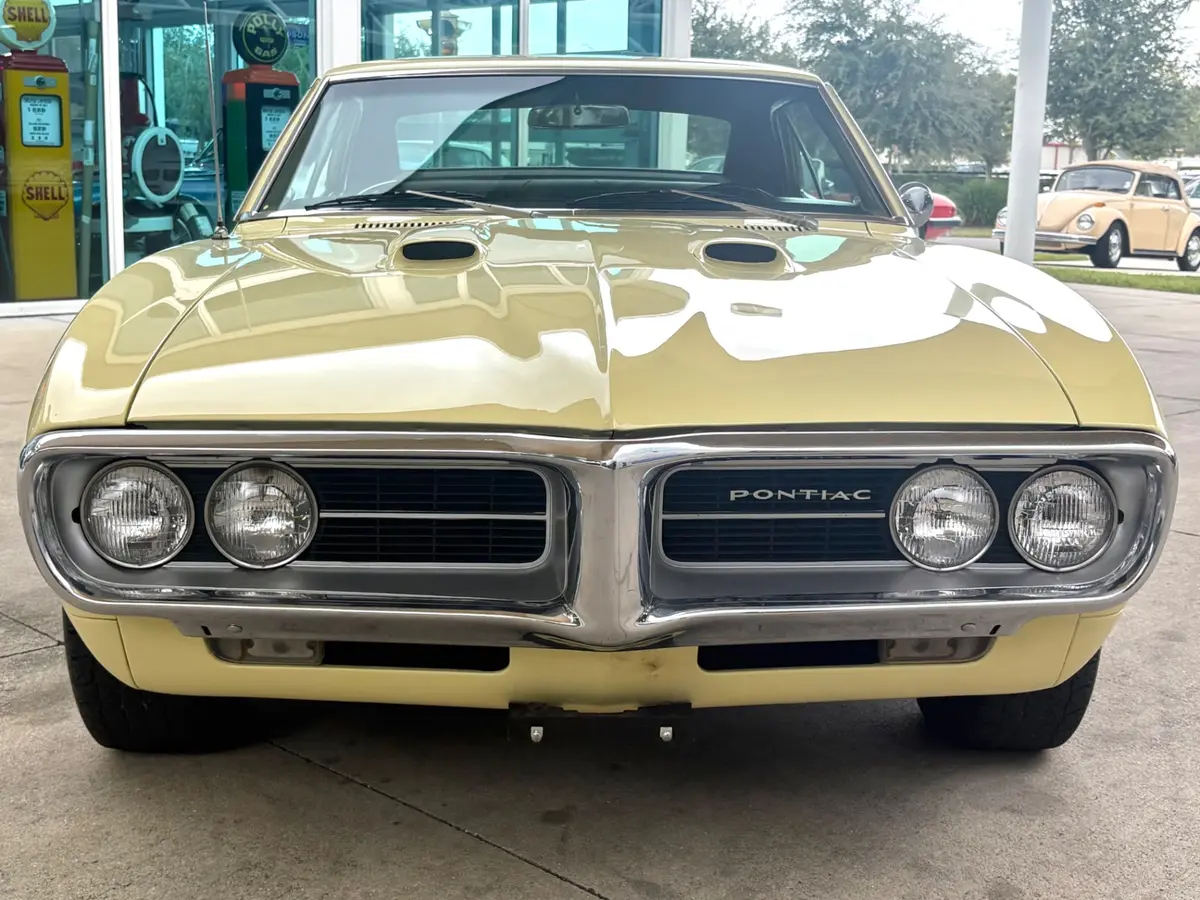
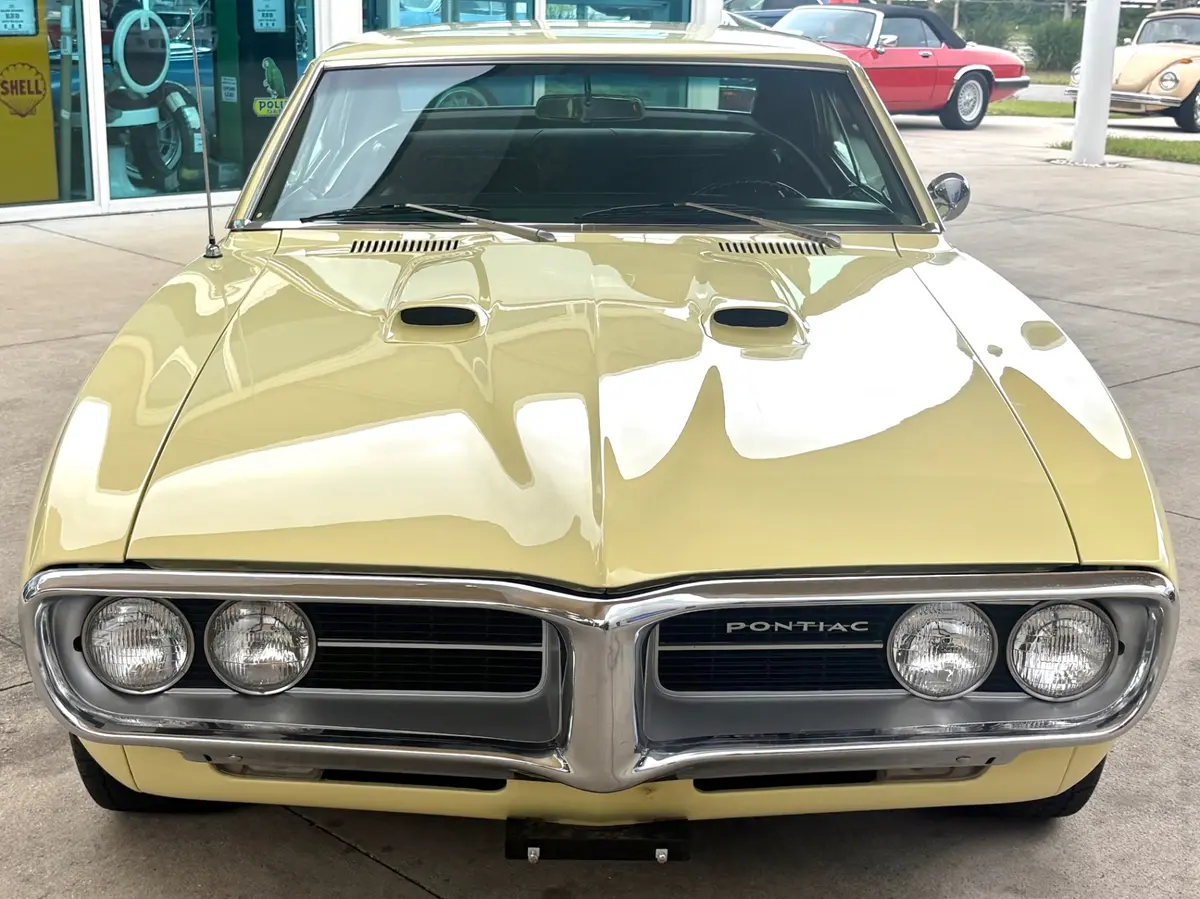
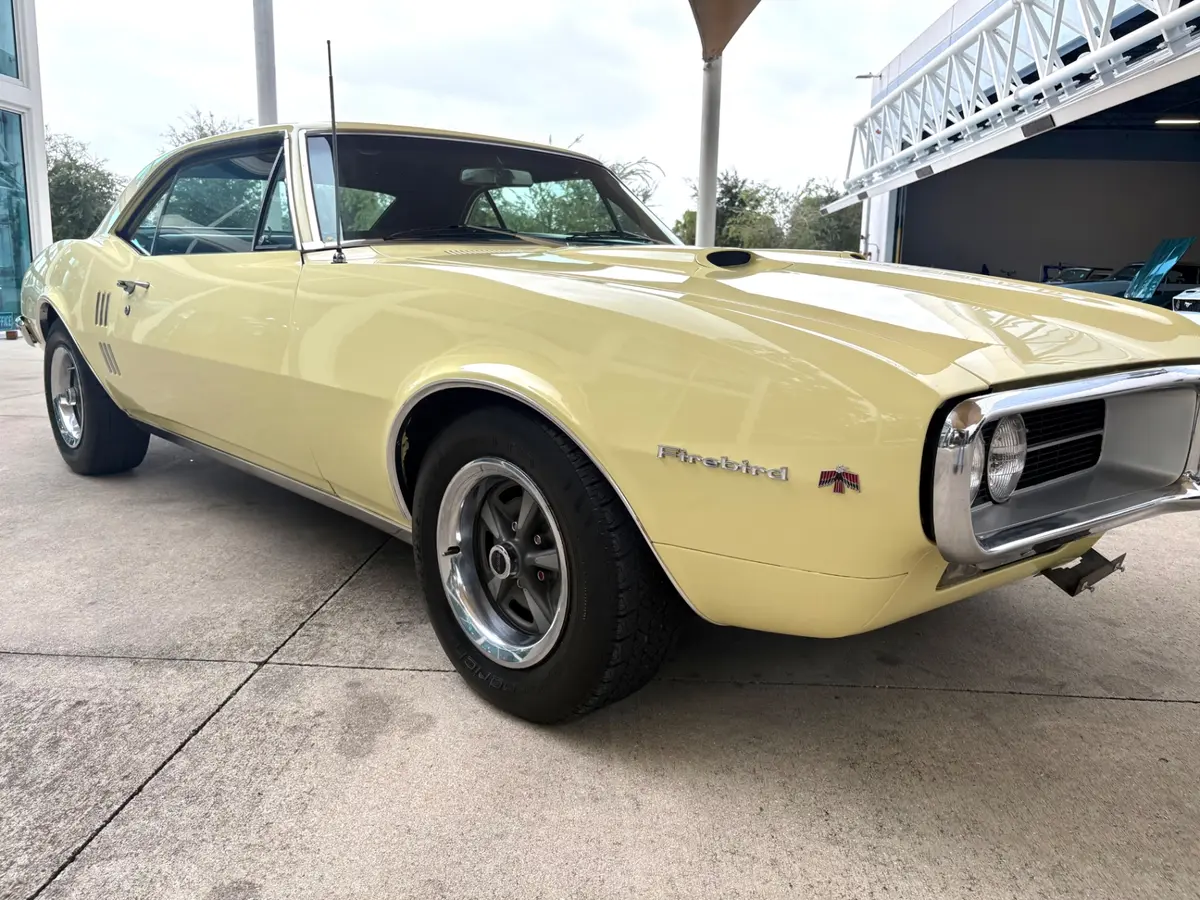
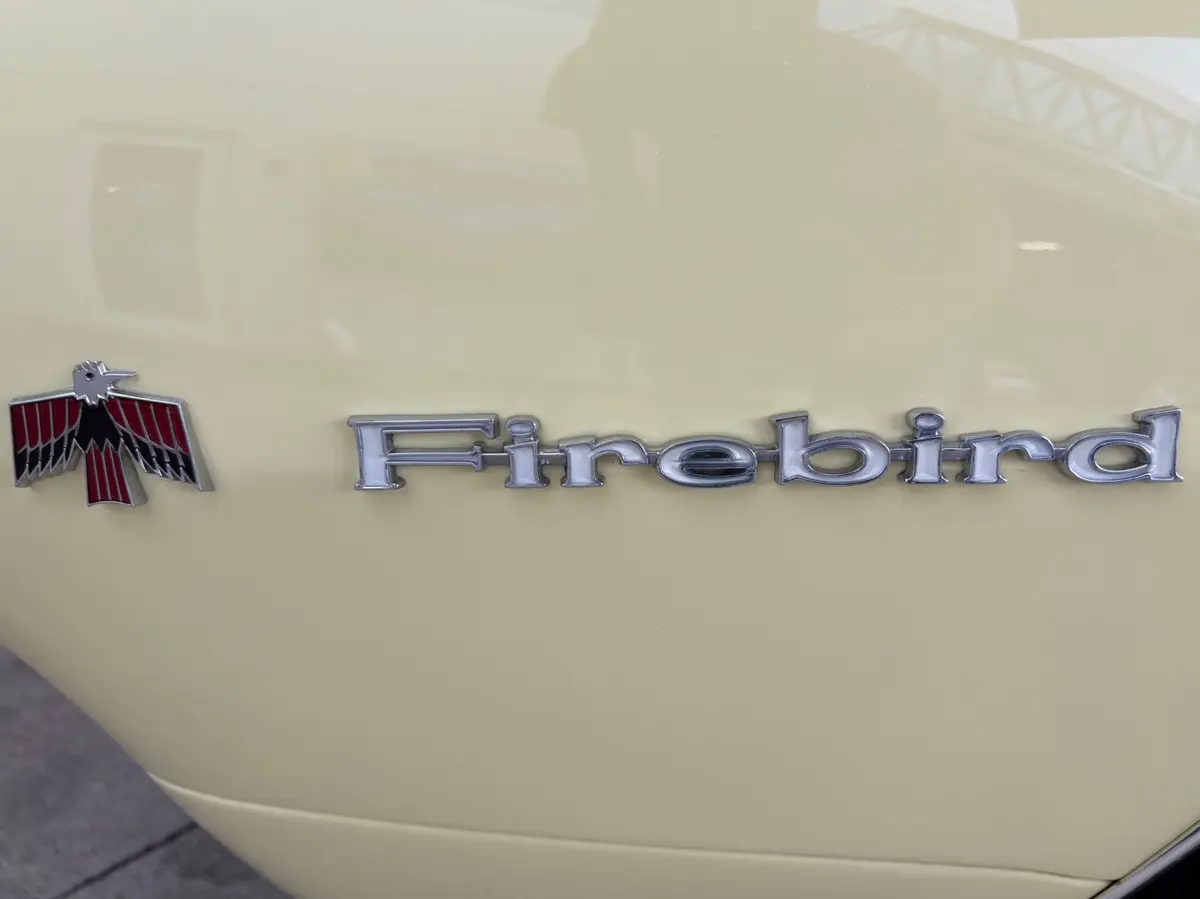
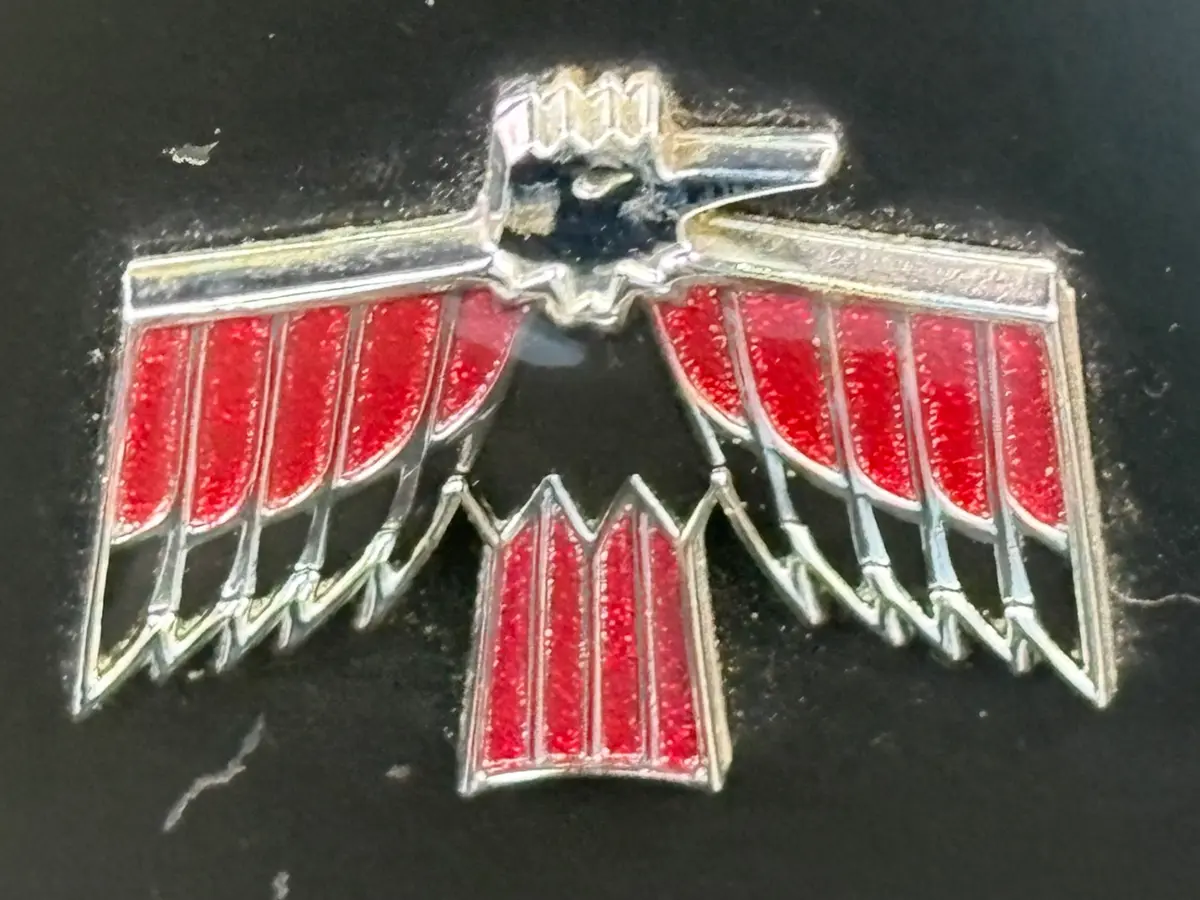
The hood scoops are a functional-looking design element that Pontiac used on the Firebird to reinforce its performance identity. On the 326 car, they are non-functional but period-correct to the model. The Firebird 326 fender emblems are present on both sides, correctly identifying the engine specification and adding the small red and chrome Firebird bird emblem that appeared on all Firebirds of this generation.
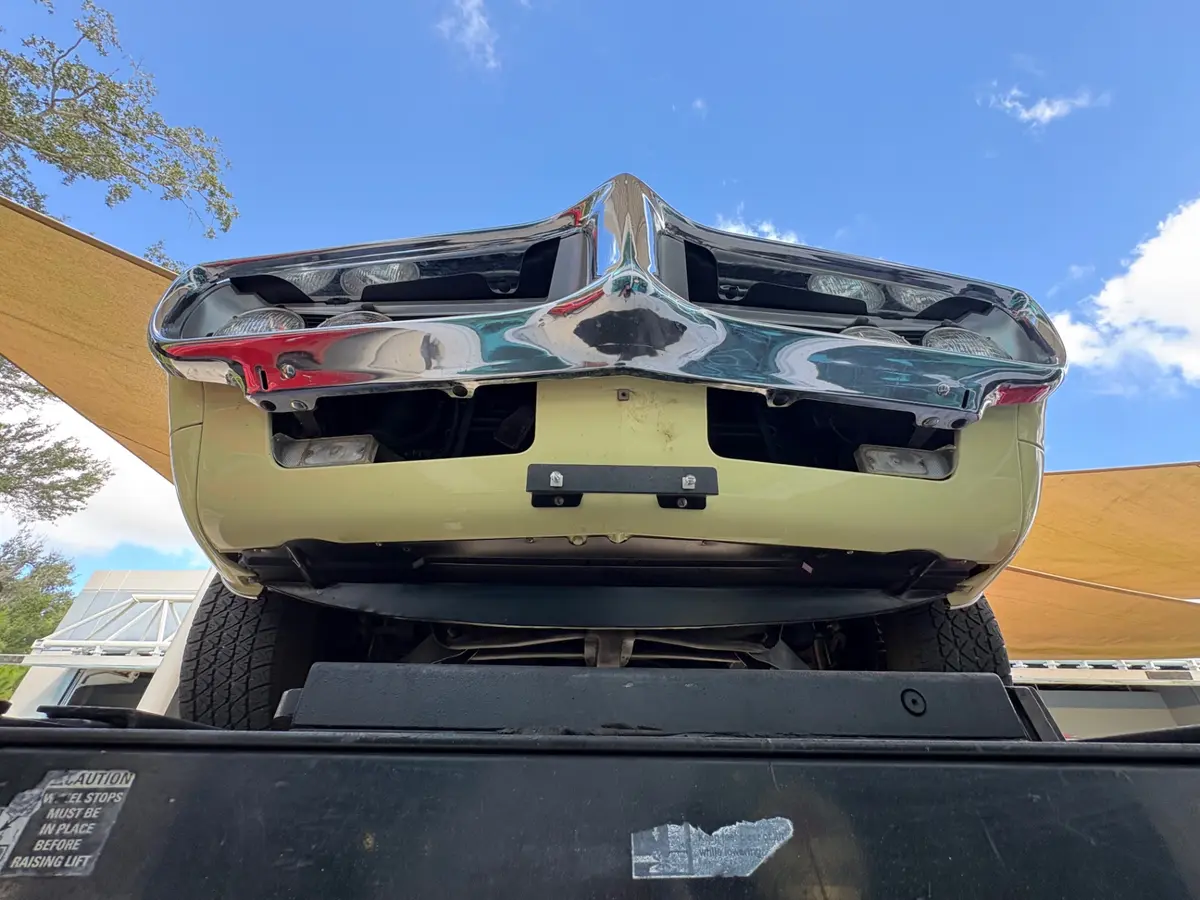
Chrome bumpers front and rear are present and show well in the photos. The front bumper wraps around the quad round headlights — a styling element unique to the Firebird that distinguished it visually from the Camaro's stacked rectangular headlights. The rear bumper sits beneath the taillight panel, which uses horizontal bar-style lenses set into the rear fascia. Both bumpers appear straight with no major pitting visible in the photos.
The PMD Rally II wheels are the correct Pontiac Motor Division five-spoke steel wheel that became standard equipment on performance-oriented Pontiacs throughout the late 1960s and into the 1970s. They are the right wheel for this car, and they wear the BFGoodrich Radial T/A tires that give the car a planted, purposeful stance consistent with its original personality.
Conclusion
The 1967 Pontiac Firebird 326 doesn't need to be the most powerful version of itself to be a significant and desirable car. What this example offers is a first-year Firebird with a genuine V8, a 4-speed manual, factory air conditioning, power steering, and the Rally Gauge Cluster — all in a color combination that reads as correct for the period. It is an honest car with a well-documented spec sheet and the mechanical foundation to be driven and enjoyed without apology. For the collector who wants a first-year Firebird that hasn't been sanitized into a show car, or for the enthusiast who wants a real four-speed American classic with the creature comforts to actually use it, this 1967 Pontiac Firebird 326 deserves a serious look.
To schedule a time to inspect this 1967 Pontiac Firebird 326 in person or to ask any questions, call Skyway Classics at 941-254-6608. We're located in Sarasota, Florida, and we're happy to assist buyers nationwide.
Disclaimer
Information found on the website is presented as given to us by the owner of the car, whether on consignment or from the owner we bought it from. Some Photos, materials for videos, descriptions and other information are provided by the consignor/seller and is deemed reliable, but Skyway Classics does not warranty or guarantee this information. Skyway Classics is not responsible for information that may incorrect or a publishing error. The decision to purchase should be based solely on the buyers personal inspection of the vehicle or by a professional inspection service prior to offer or purchase being made.
1967 Pontiac
Firebird 326
Why Choose Skyway Classics?
Explore our curated inventory of classic and collector cars—thoughtfully selected, ready to drive, and supported by experts who make ownership simple.
Expert Curation
Every vehicle is hand-selected by our experts for quality, authenticity, and investment potential.
Fast Transactions
Streamlined buying and selling process with quick financing and immediate delivery options.
Only National Dealer With Classic Service & Repair
We’re the only national dealership that services and repairs the classics we sell—before and after the sale.
Nationwide Network
Access to our extensive network of collectors, restorers, and classic car enthusiasts nationwide.
Concierge Ownership Support
From financing and insurance to paperwork, shipping, and titling—we handle the details so you can enjoy the drive.
Passion-Driven Service
We're classic car enthusiasts first, providing personalized service with genuine passion for the hobby.