
1939 Ford
De Luxe Convertible
1939 Ford De Luxe Custom Street Rod — Full Custom Build, 350 V8, TH400 Automatic
Why This Car Is Special
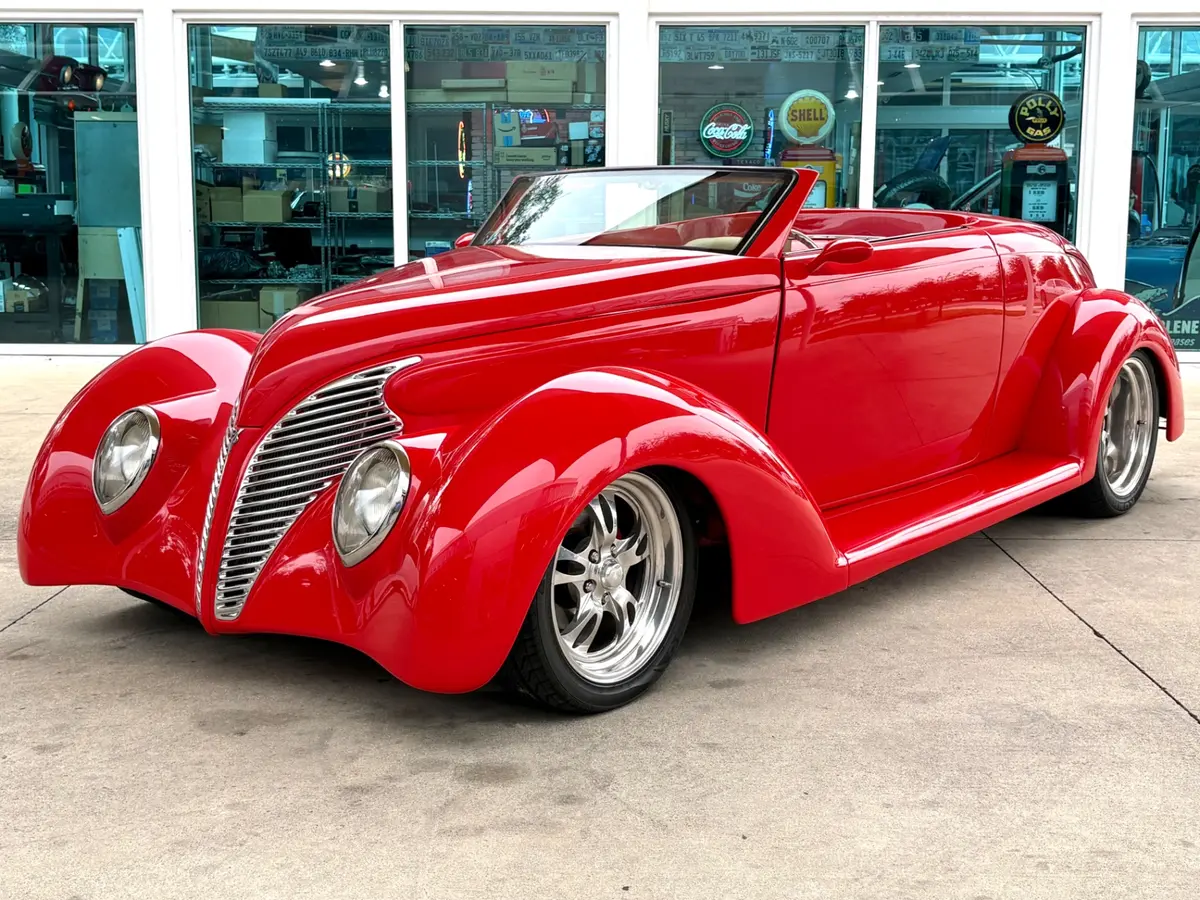
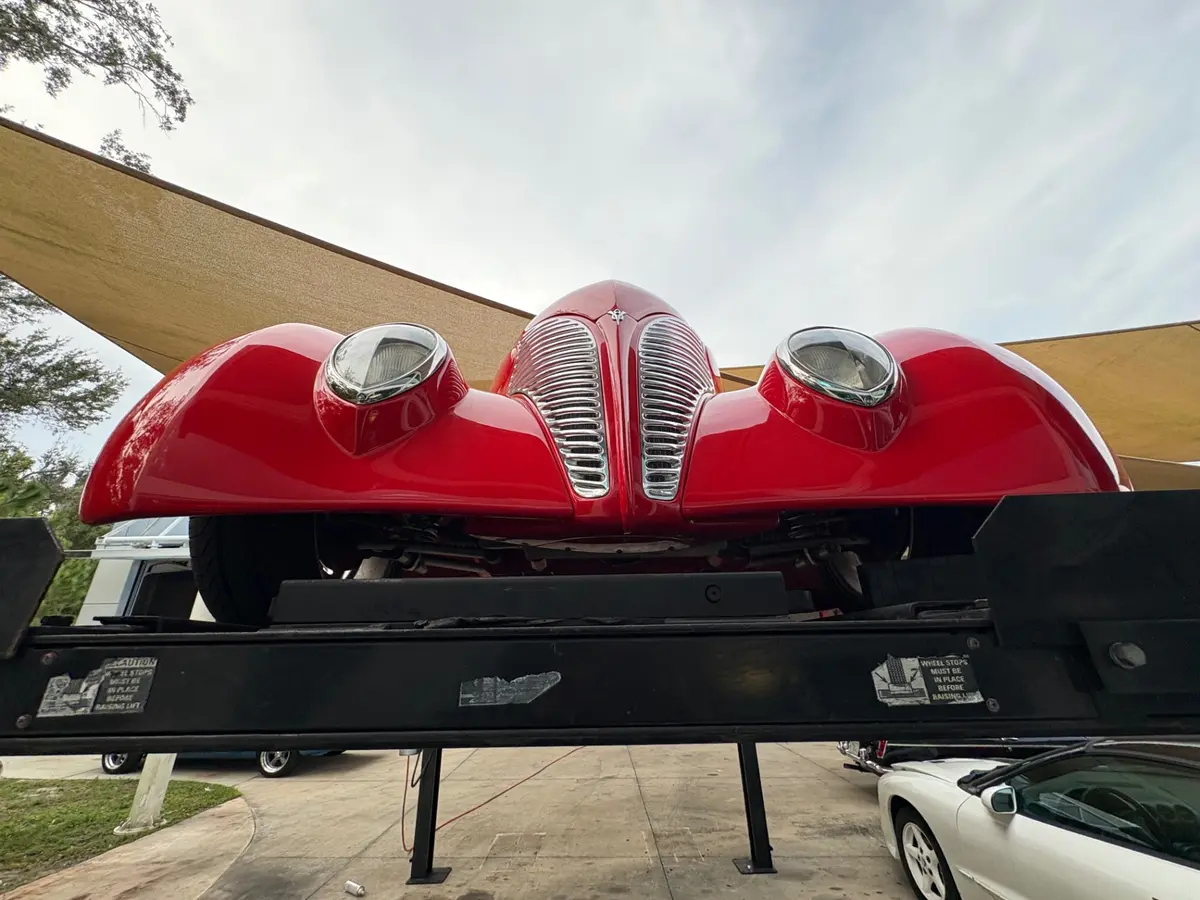
The 1939 Ford De Luxe is one of the most recognizable shapes in hot rod history, and for good reason. Ford's styling team, led by Bob Gregorie, gave the 1939 De Luxe a low, streamlined body with integrated headlights recessed into pontoon fenders, a vertical center-spine grille, and a fastback roofline that looked more like something from a European coachbuilder than a Dearborn assembly plant. It was the last full year for the classic pre-war Ford body style before the more slab-sided 1940 models arrived, which makes the 1939 the definitive version of that generation's design — slightly more detailed, slightly more dramatic than what came after.
Ford sold the De Luxe as its premium trim line in 1939, sitting above the standard series. Available body styles included the Tudor sedan, Fordor sedan, coupe, convertible, and the elegant convertible sedan. The flathead V8 — Ford's signature engine since 1932 — powered the entire lineup, and that flathead's torquey, accessible power is a large part of why the 1939 Ford De Luxe became a favorite canvas for hot rodders from the 1940s onward. Countless early dry lakes racers and Bonneville competitors started with pre-war Ford bodies just like this one.
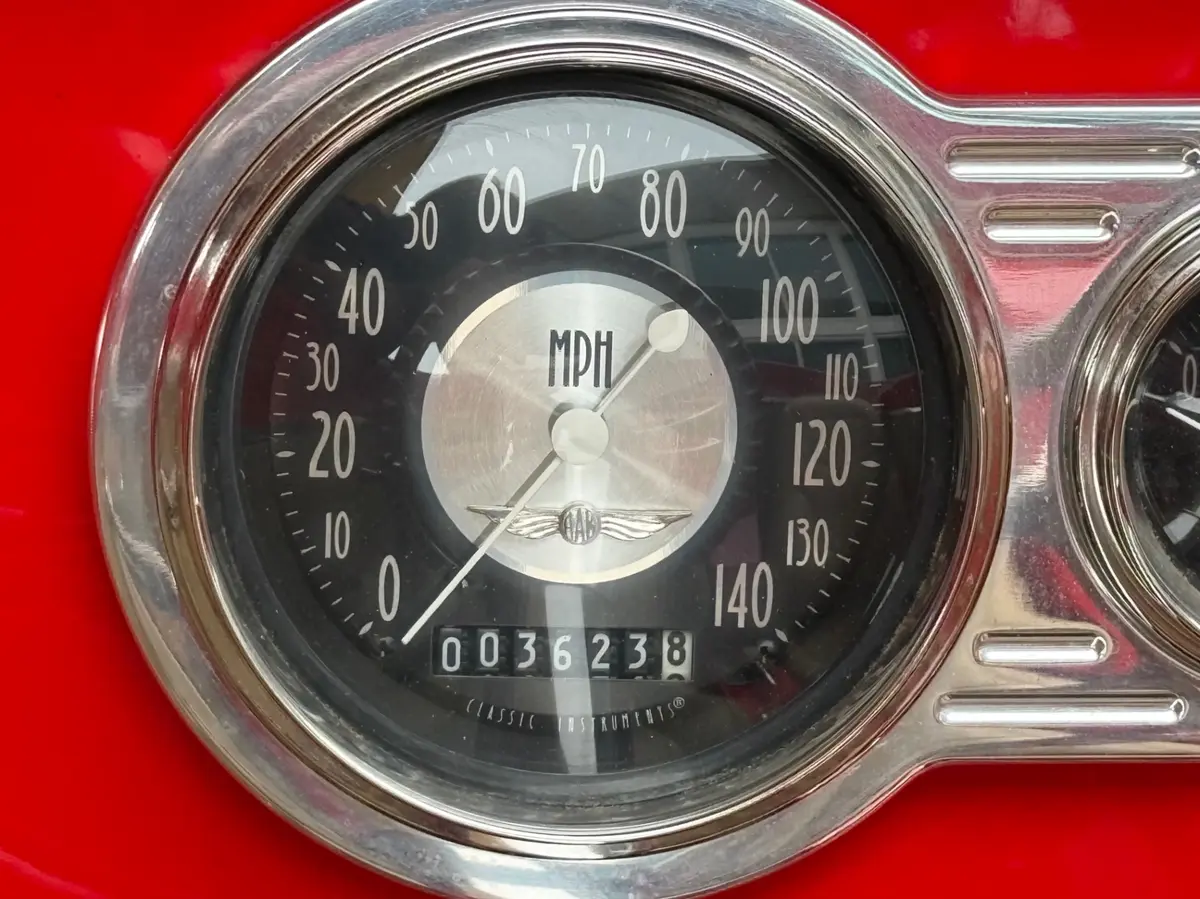
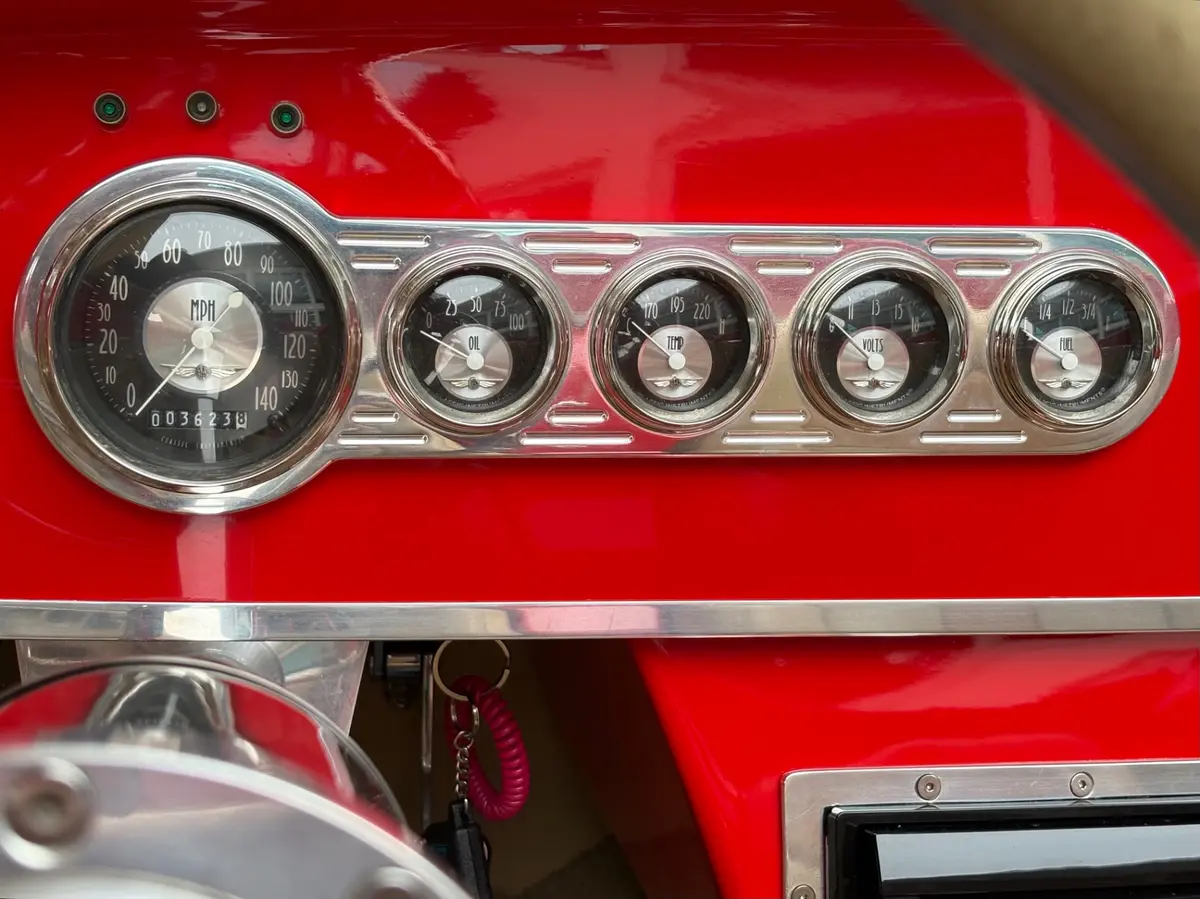
This particular 1939 Ford De Luxe has been built as a full custom street rod from the ground up. The build philosophy here is clear: take the most visually compelling pre-war American body ever produced, strip it to bare metal, and rebuild every system with components that make it reliable, comfortable, and genuinely fast. The result is a car that carries the original 1939 Ford De Luxe's silhouette — those sweeping fenders, that narrow grille spine, those faired-in headlight pods — but runs and drives like a modern performance machine. The odometer shows just 3,623 miles, consistent with a car that was built to be shown and driven on select occasions rather than accumulated as everyday transportation.
The gauge cluster photo confirms the mileage reading of 3,623, and the overall condition of the drivetrain components under the car supports that low-use history.
Features List
- 350 V8
- Holley 4-barrel carburetor
- Electric fuel pump
- MSD Digital 6A ignition system
- Polished aluminum valve covers
- Polished aluminum oval air cleaner
- Wrapped headers
- Dual exhaust with Flowmaster mufflers
- TH400 3-speed automatic transmission
- Polished TH400 transmission pan
- Independent front suspension
- Coilover shocks, front and rear
- Custom four-link rear suspension
- 4-wheel disc brakes
- Red powder-coated brake calipers
- Polished billet wheels
- Performance tires
- Vintage Air climate control system
- Pioneer touchscreen stereo (AVH-X7500BT)
- Billet steering wheel with tilt steering column
- Custom tan leather bucket seats with suede inserts
- Custom door panels with integrated speakers
- Classic Instruments gauge cluster (speedometer, oil, temp, volts, fuel)
- Center console with shifter
- Backup camera
- Red exterior
- Tan leather interior
Mechanical
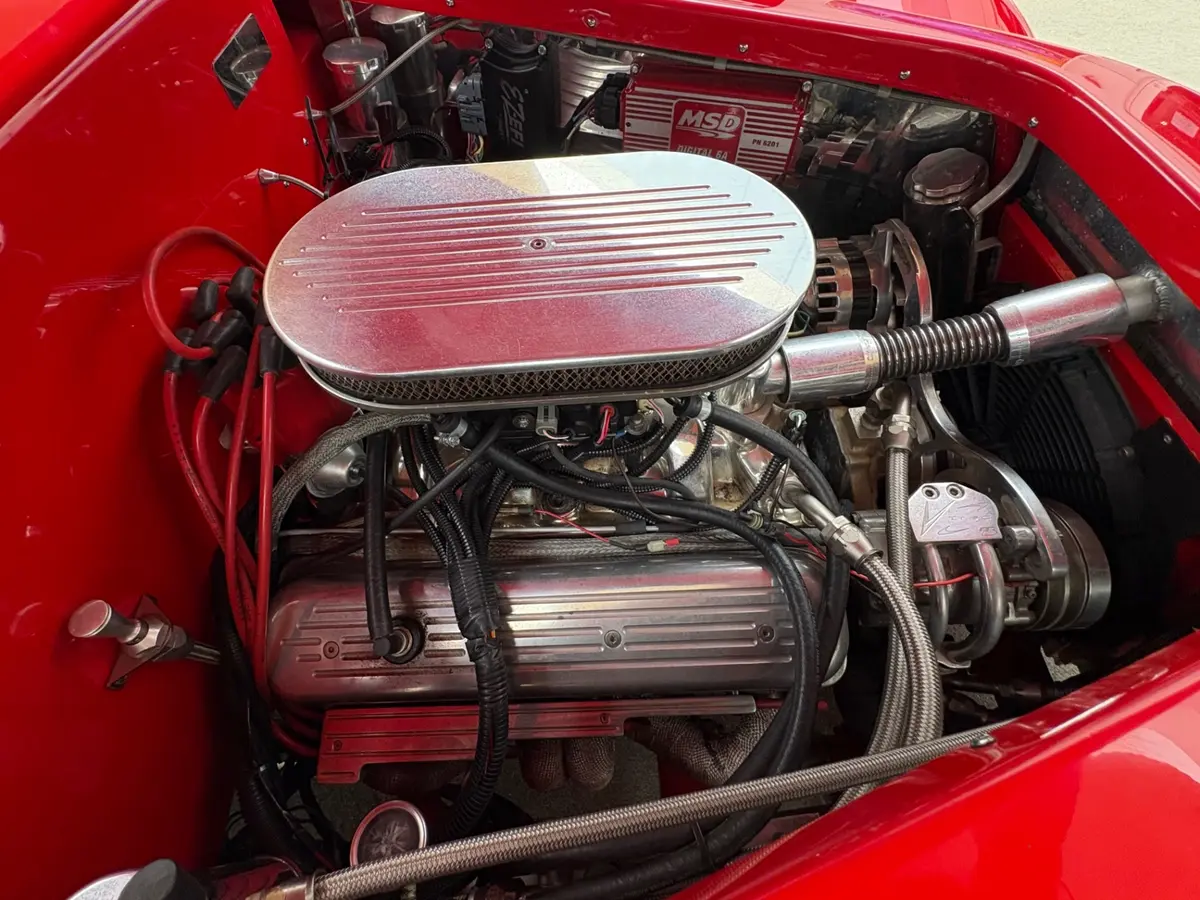
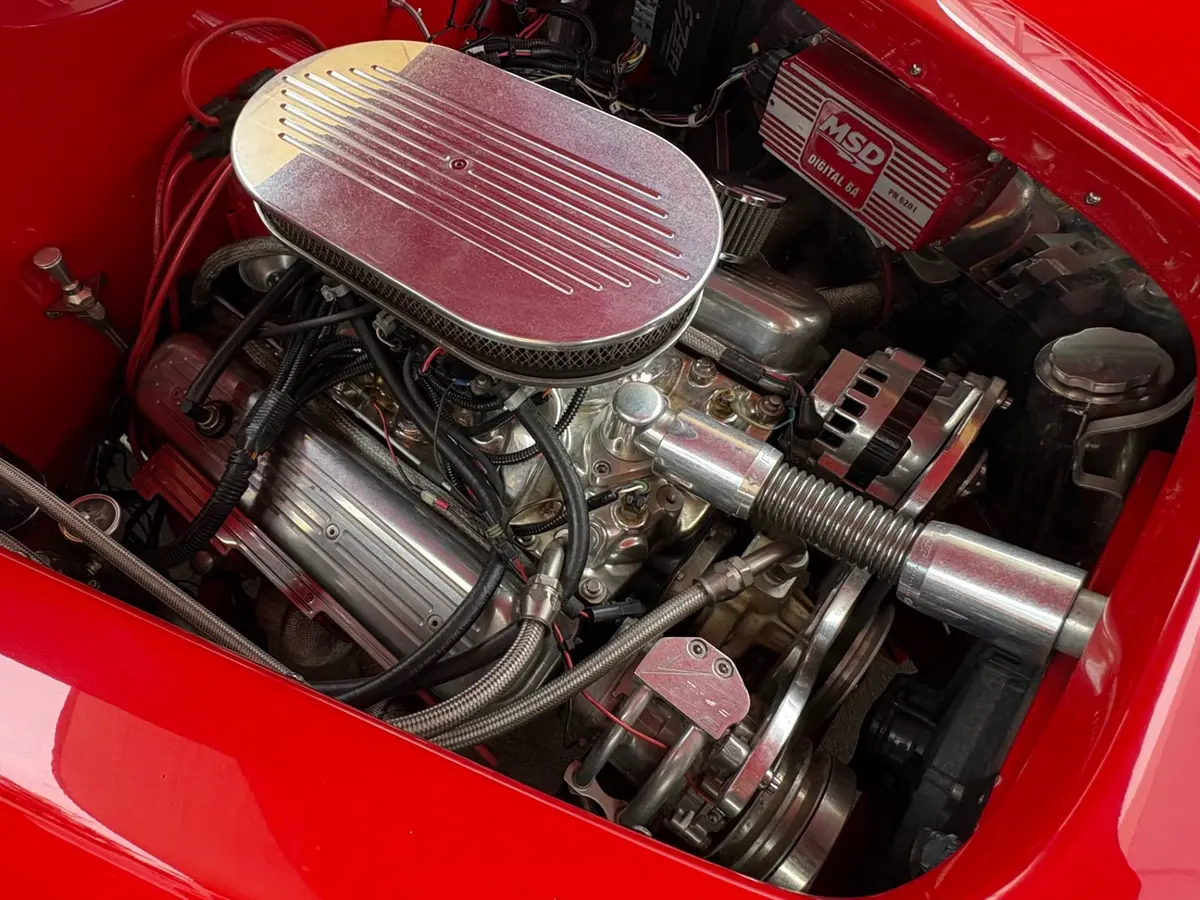
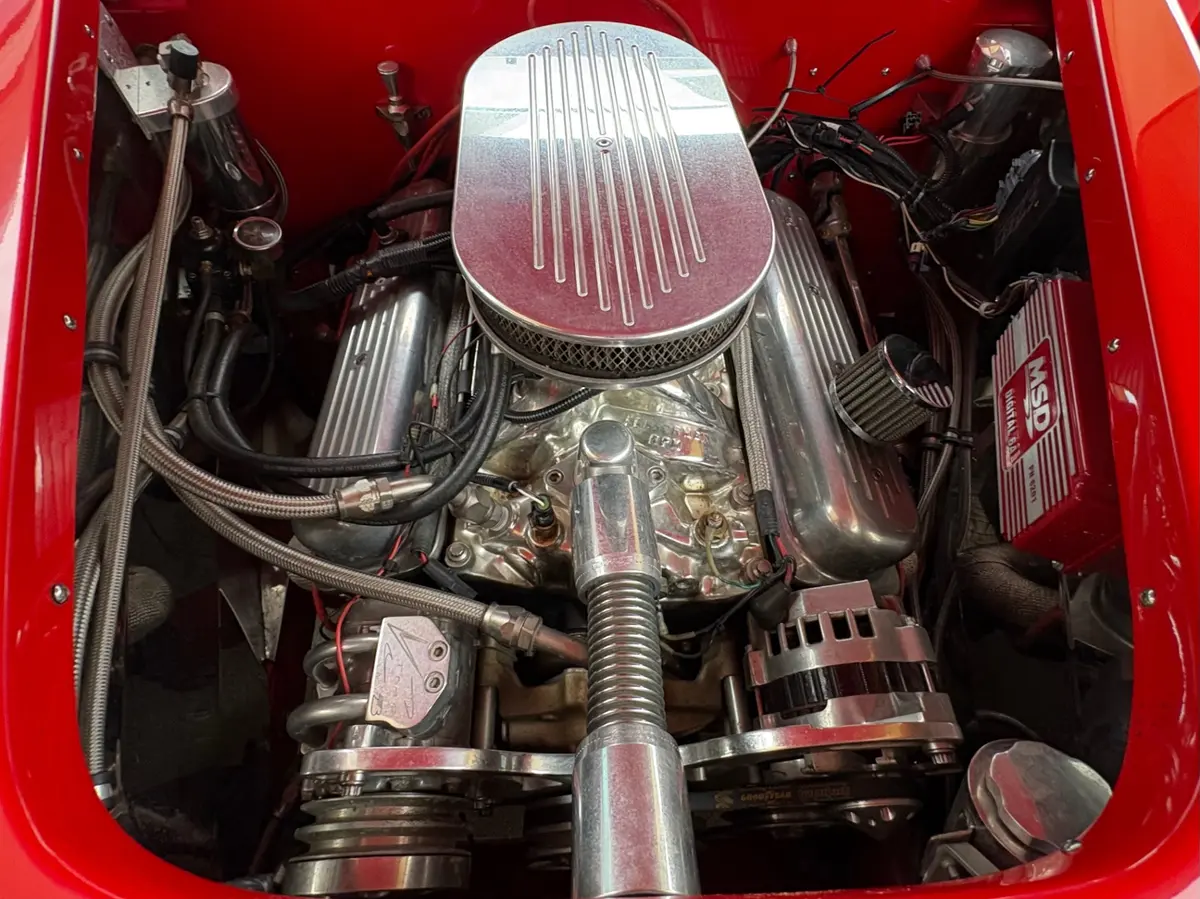
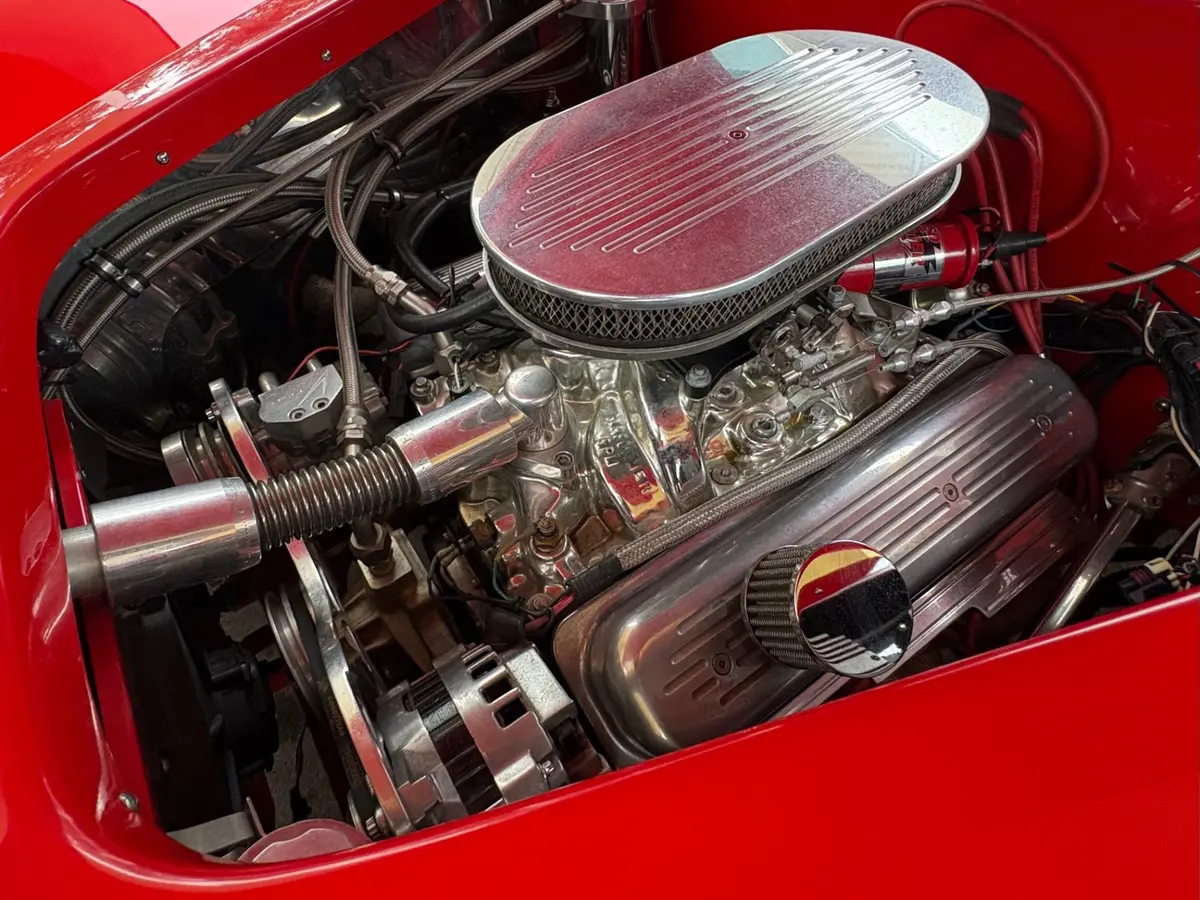
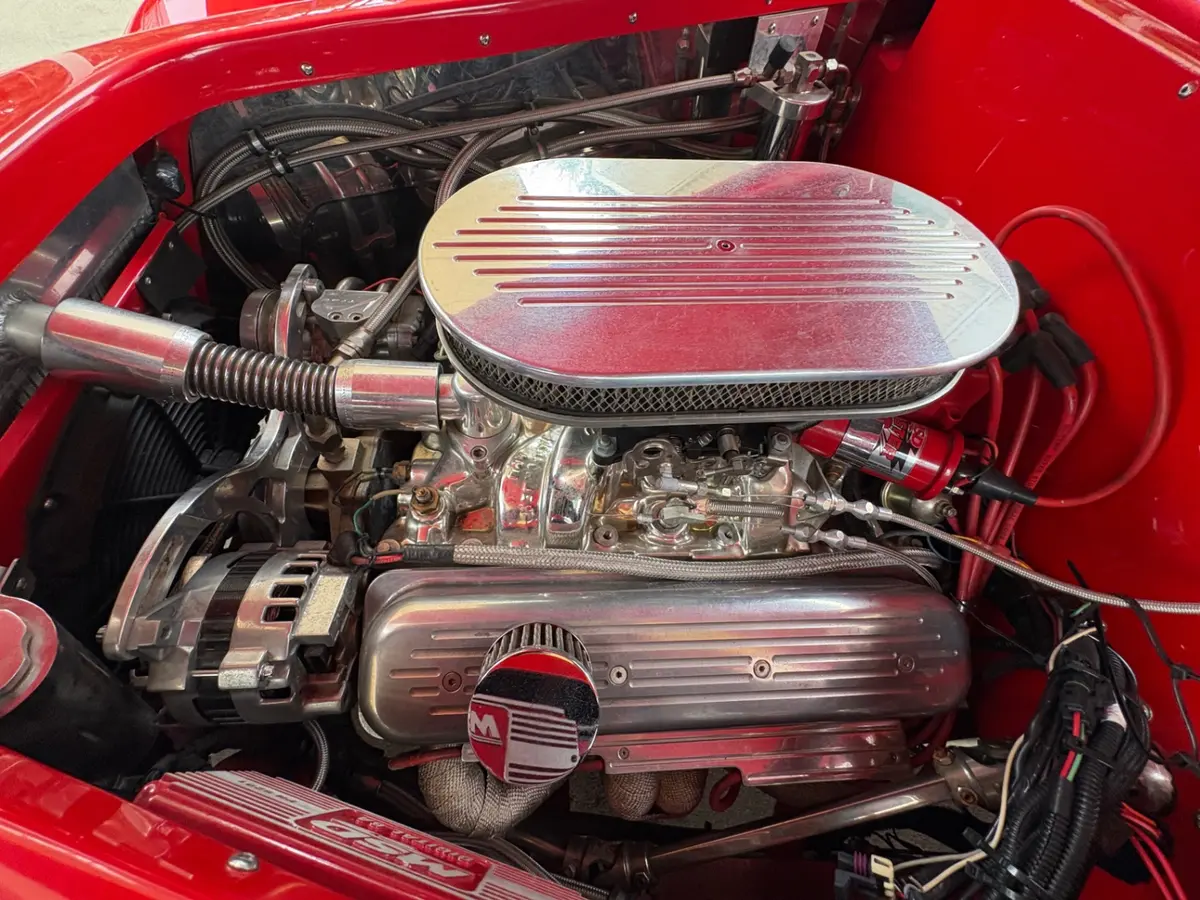
The engine bay of this 1939 Ford De Luxe is built around a small block Chevy-style V8, topped with a Holley 4-barrel carburetor and finished with polished aluminum valve covers and a matching polished aluminum oval air cleaner. The combination is a proven street rod formula: the small block Chevy family of engines has been used in custom builds for decades because of its compact dimensions, broad aftermarket support, and inherent reliability when properly built. Fuel delivery is handled by an electric pump — the correct choice when running a carburetor in a street rod application, since it provides consistent pressure without the vapor lock issues that can plague mechanical pumps in hot engine bays.
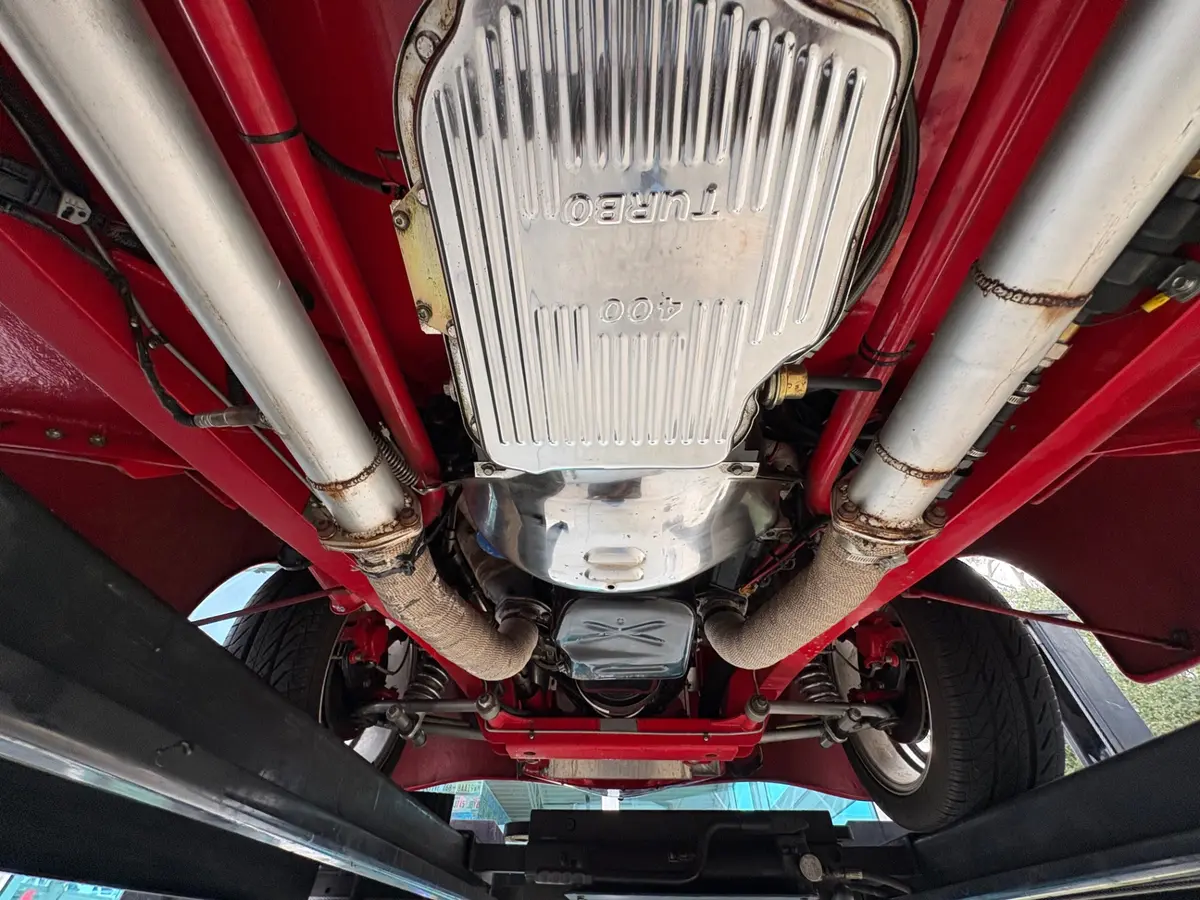
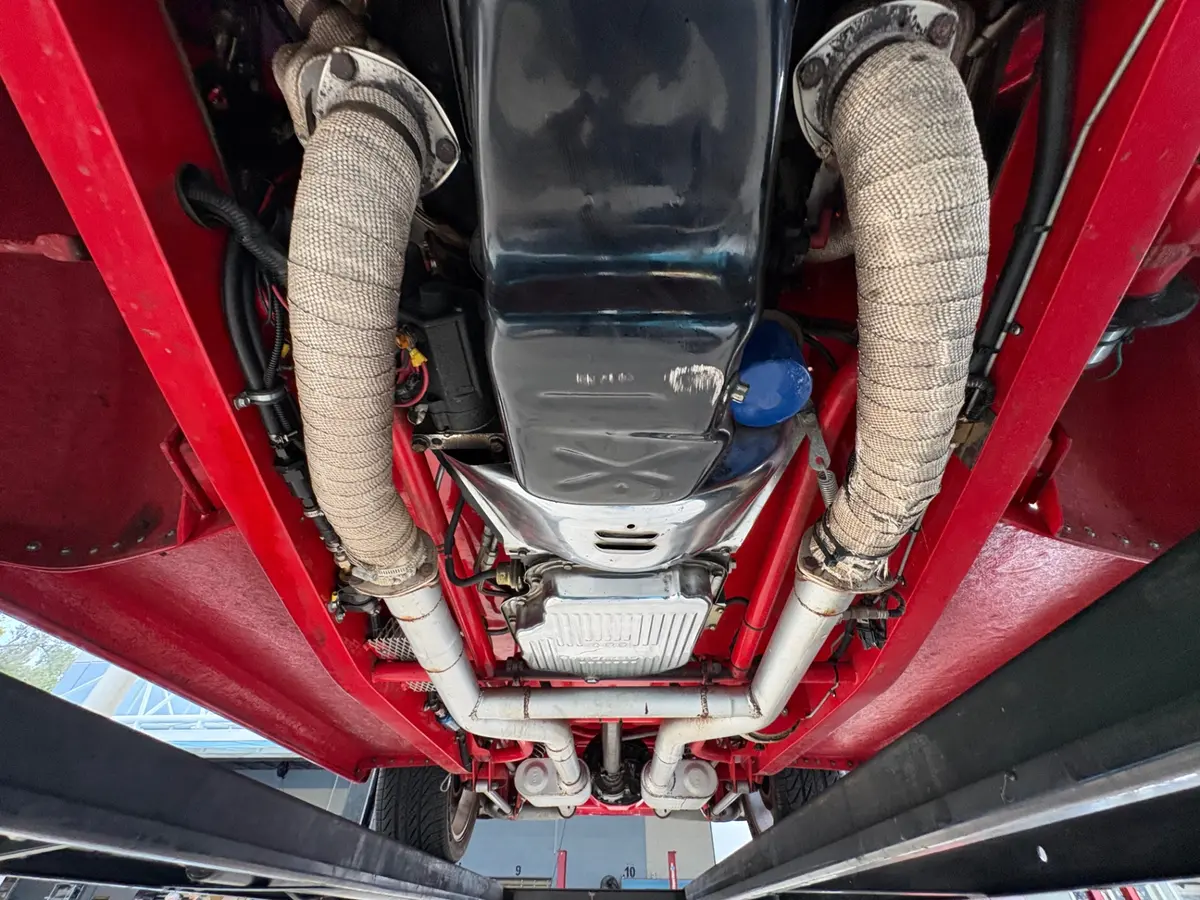
Ignition is managed by an MSD Digital 6A unit, which is visible in the engine bay photos. The 6A is a capacitive discharge system that fires a full 530 volts at the spark plug, compared to the roughly 40 volts a stock points-style system produces. At idle and low RPM — where a street-driven car spends most of its time — the multiple spark discharge feature fires the plug up to 20 times per revolution, which improves combustion efficiency and idle quality noticeably. The headers are wrapped with heat management wrap, which keeps radiated heat in the pipes and out of the engine bay, extending the life of nearby components and keeping underhood temperatures manageable.
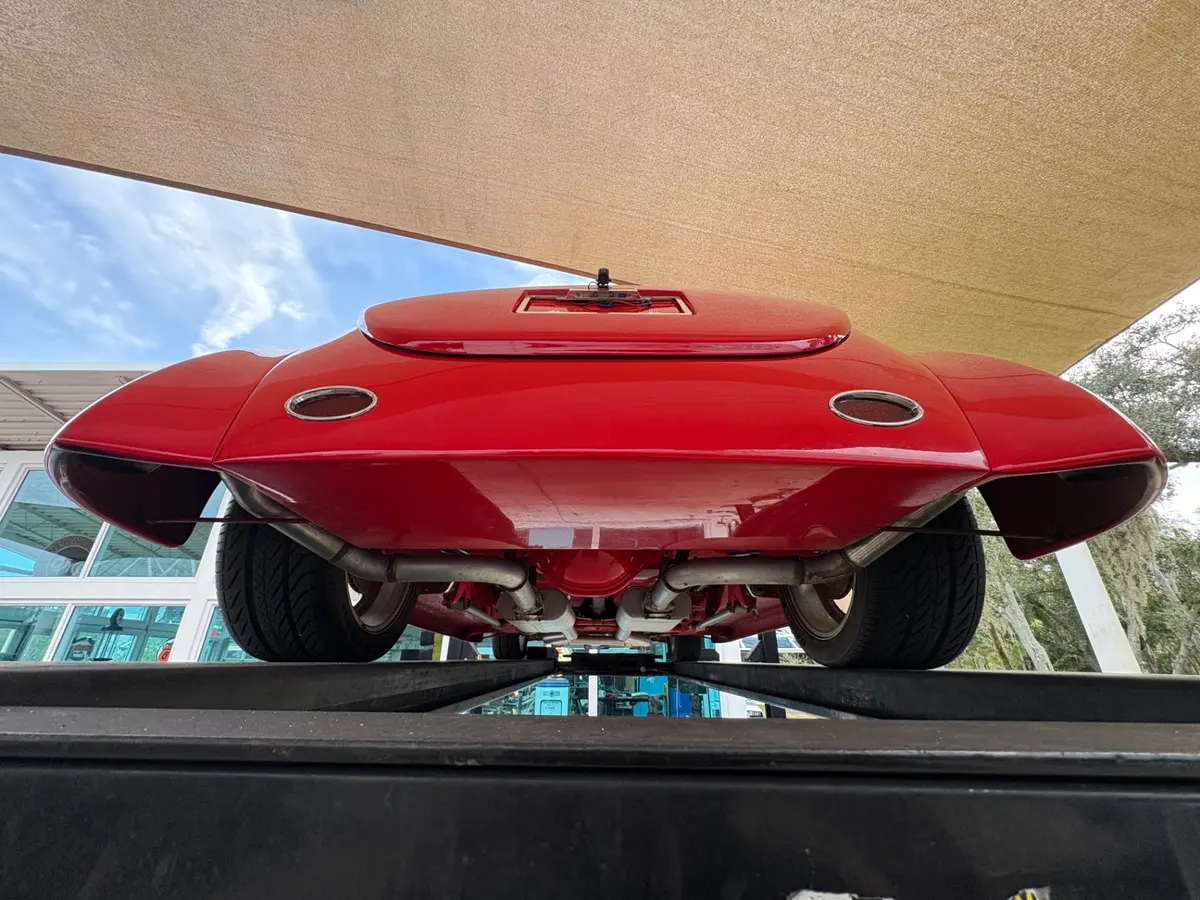
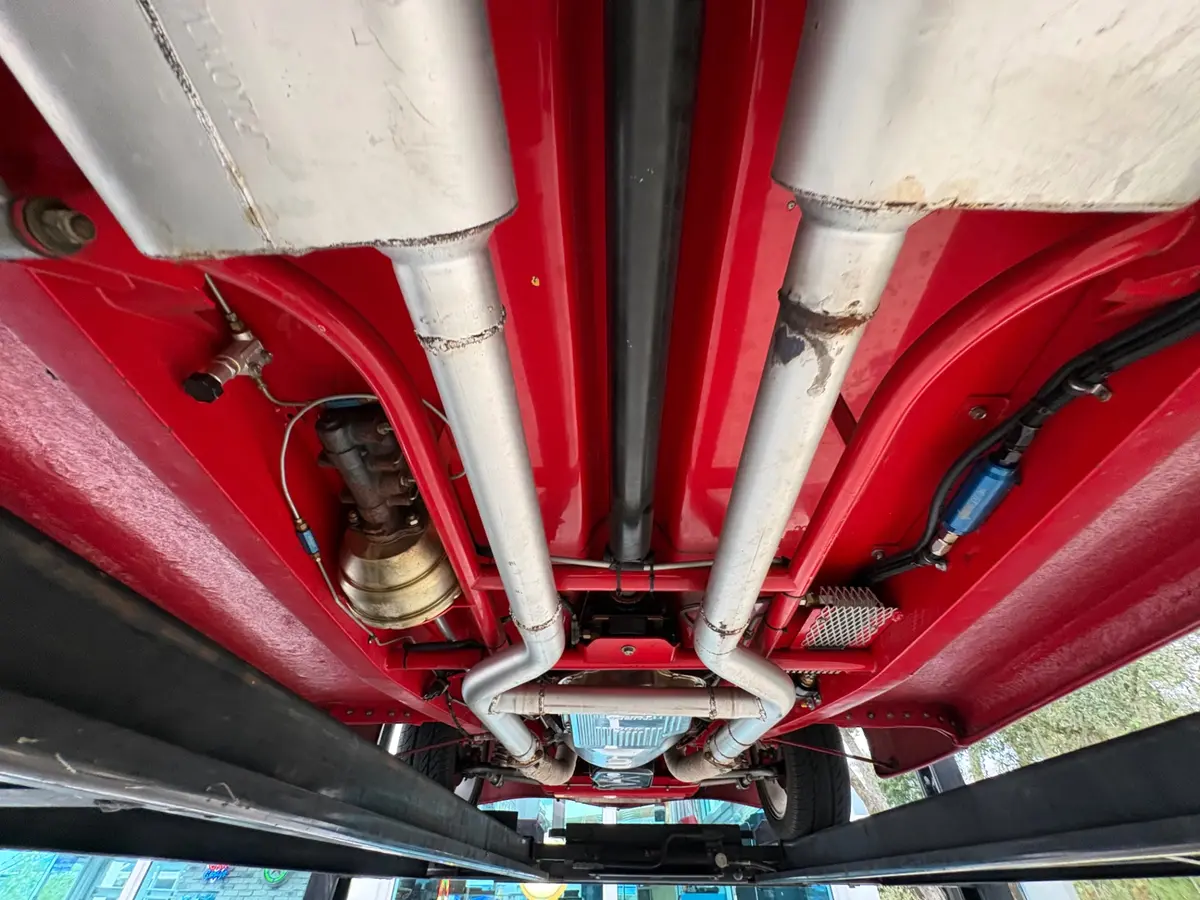
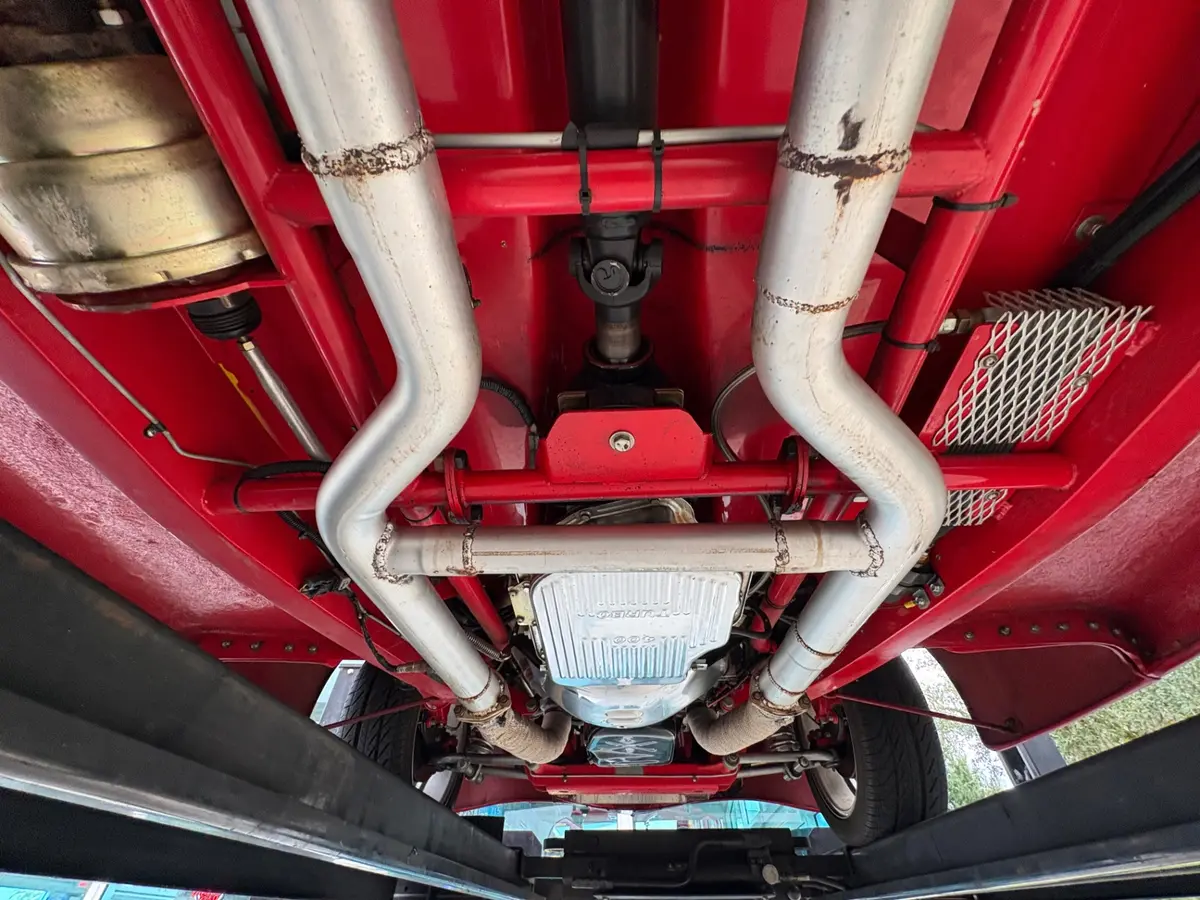
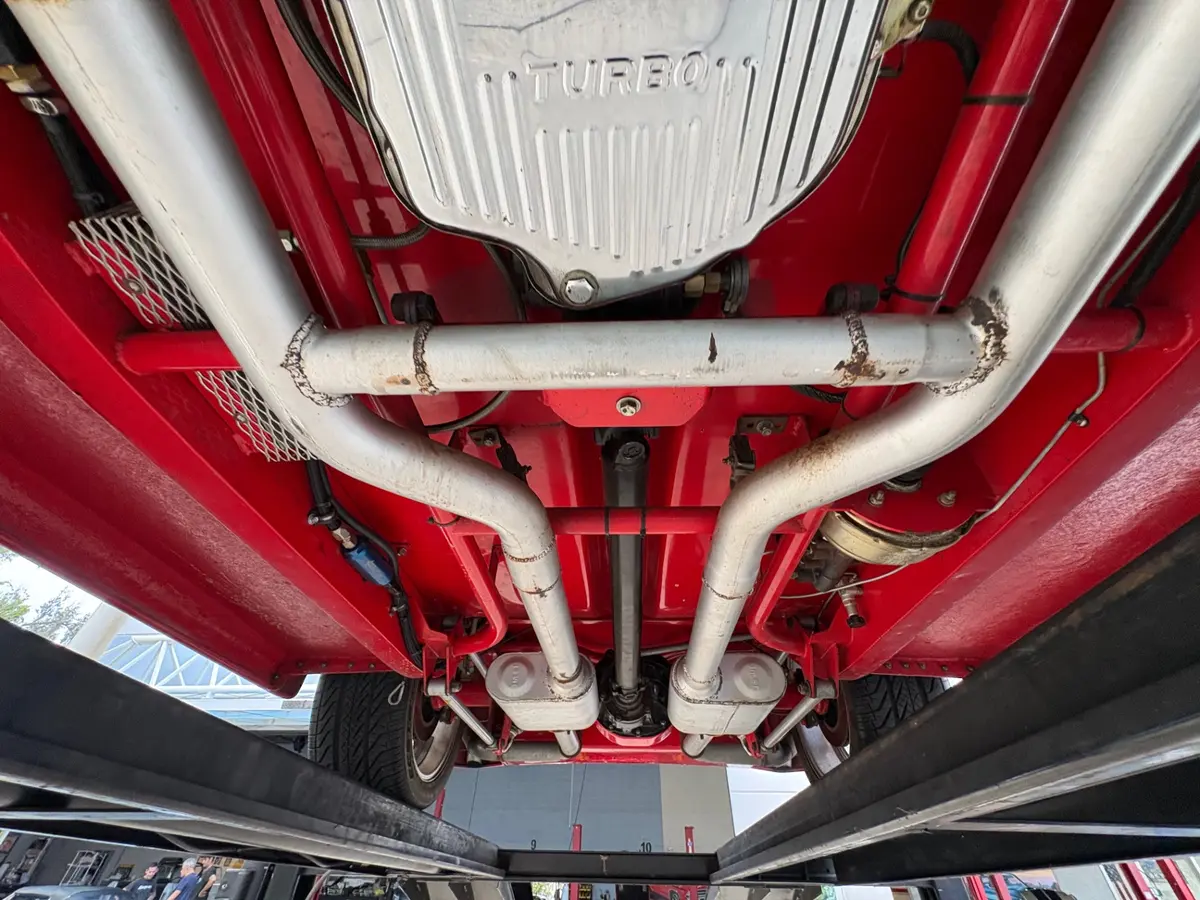
Behind the engine sits a GM Turbo-Hydramatic 400, identifiable by the polished "Turbo 400" transmission pan visible in the undercarriage photos. The TH400 is a 3-speed automatic that was introduced by GM in 1964 and became the transmission of choice for high-torque applications — it was used in everything from full-size Cadillacs to drag race cars because of its broad ratio spread and exceptional strength. In a street rod of this weight and intended use, the TH400 is a sound choice. It shifts positively, handles power well, and requires minimal maintenance.
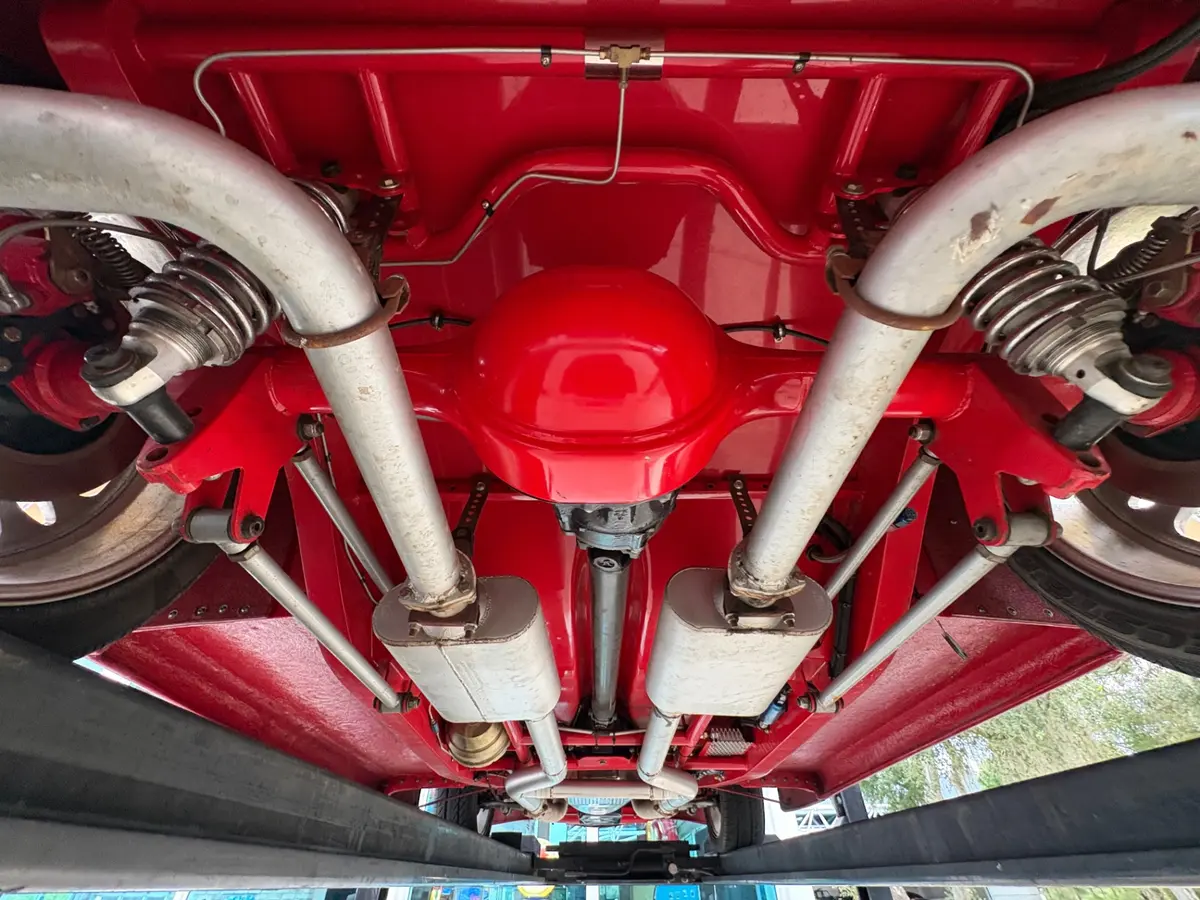
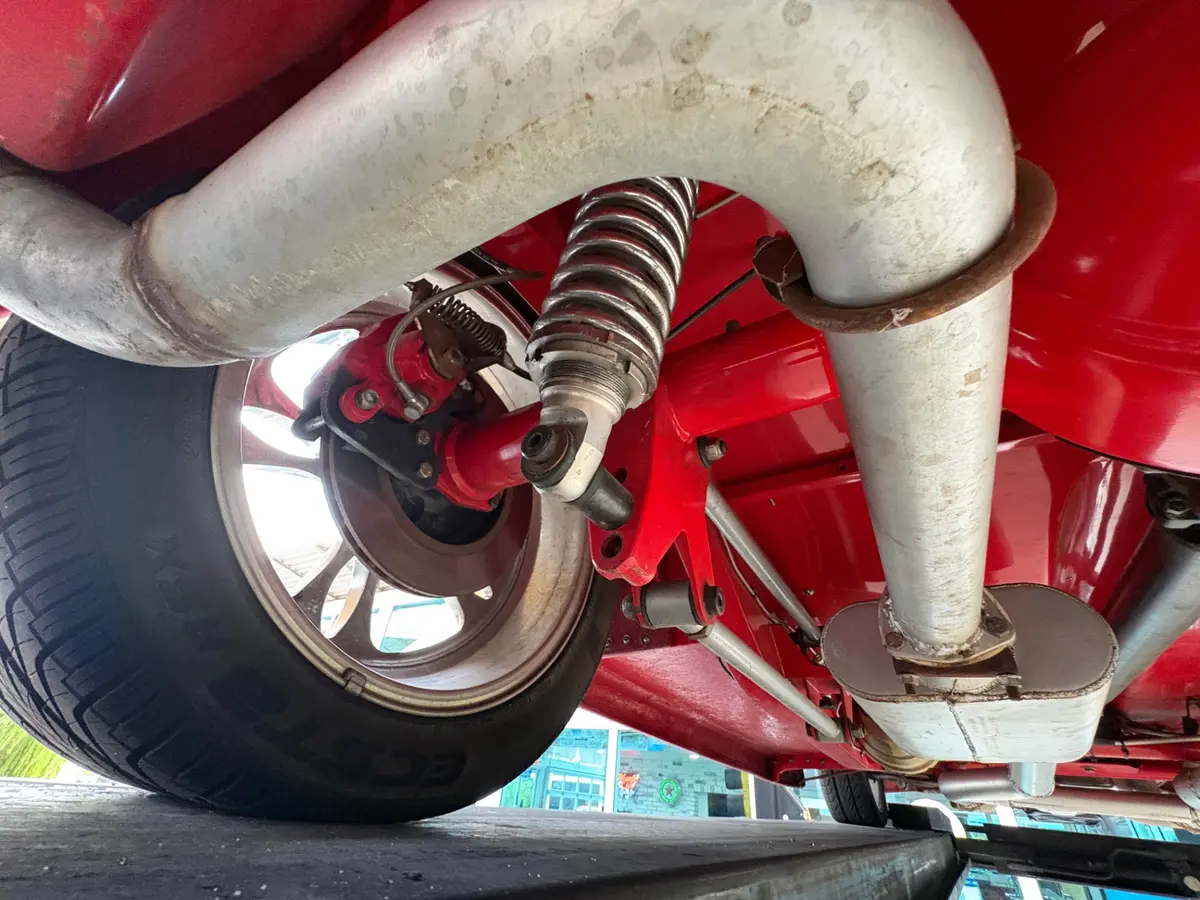
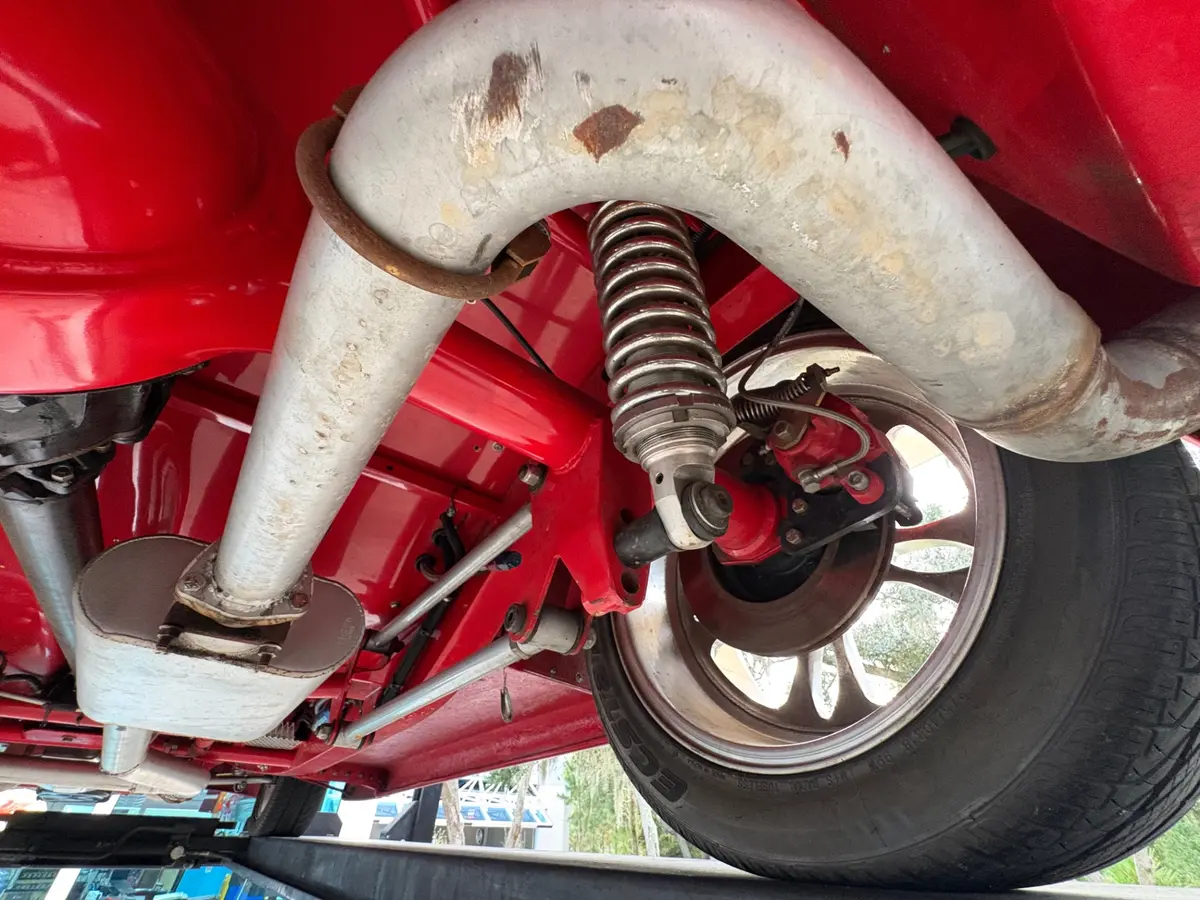
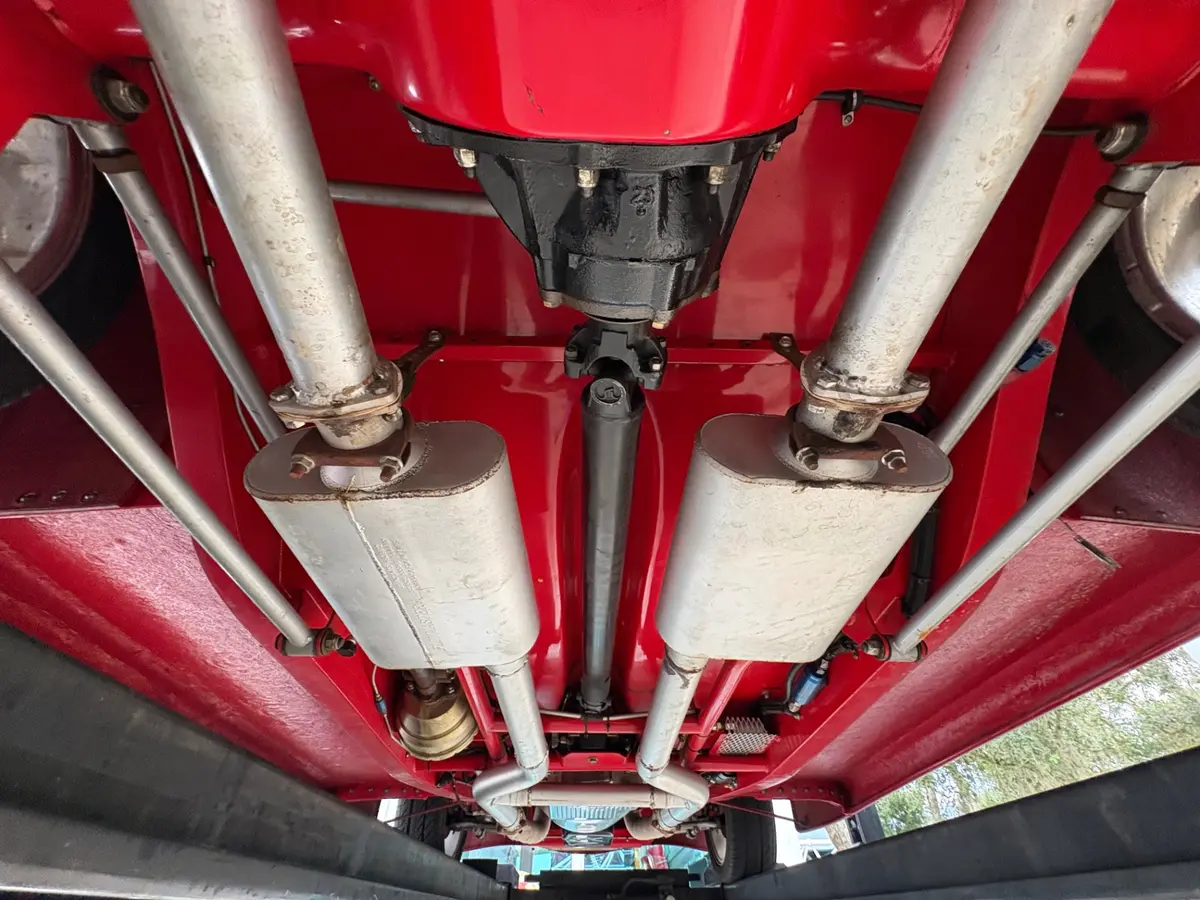
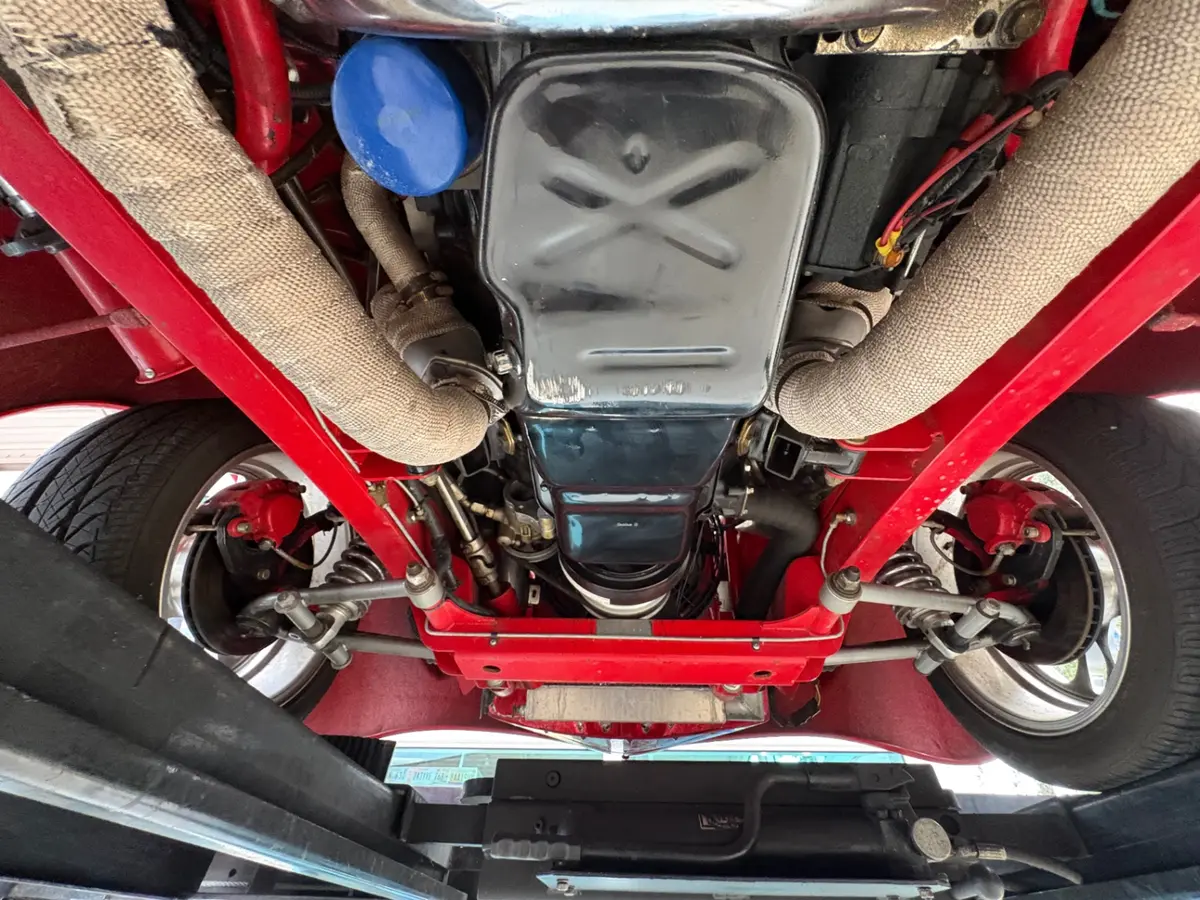
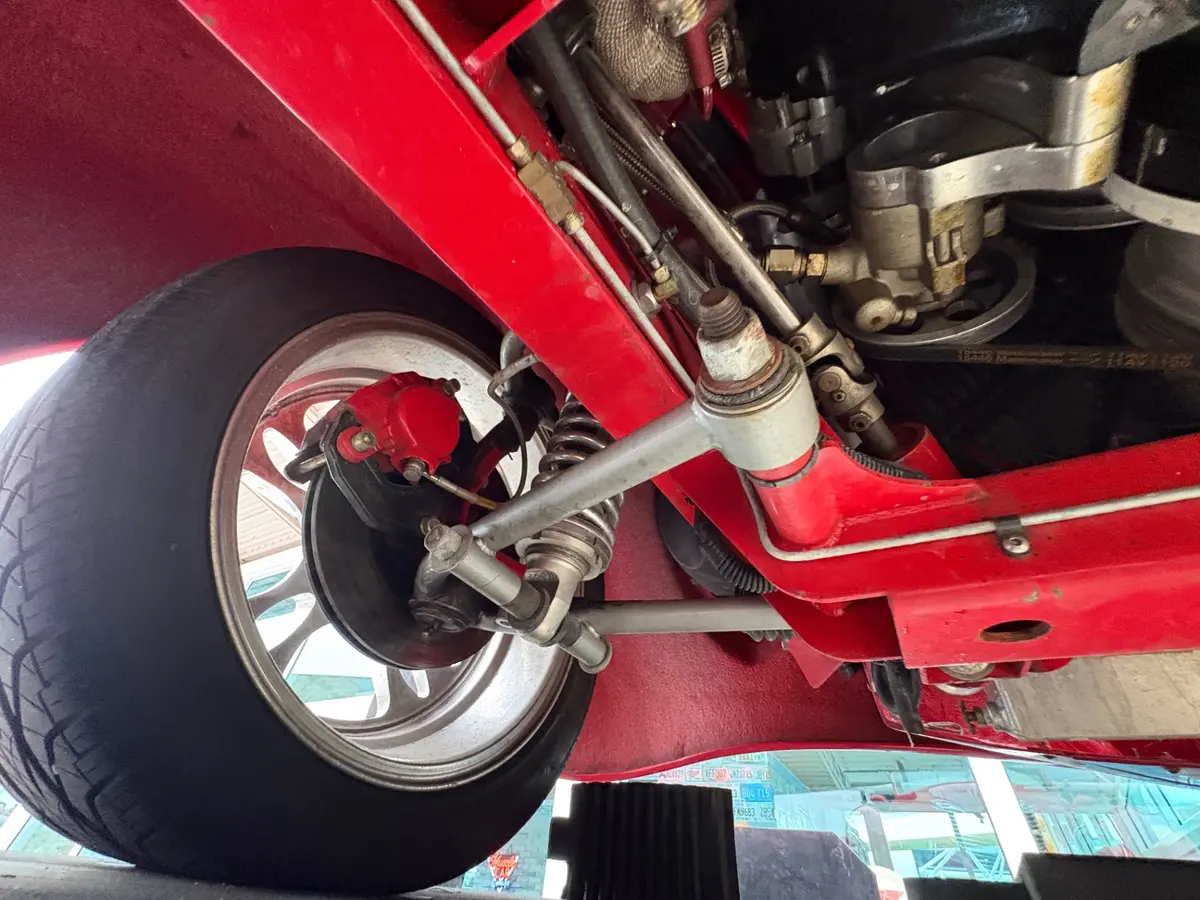
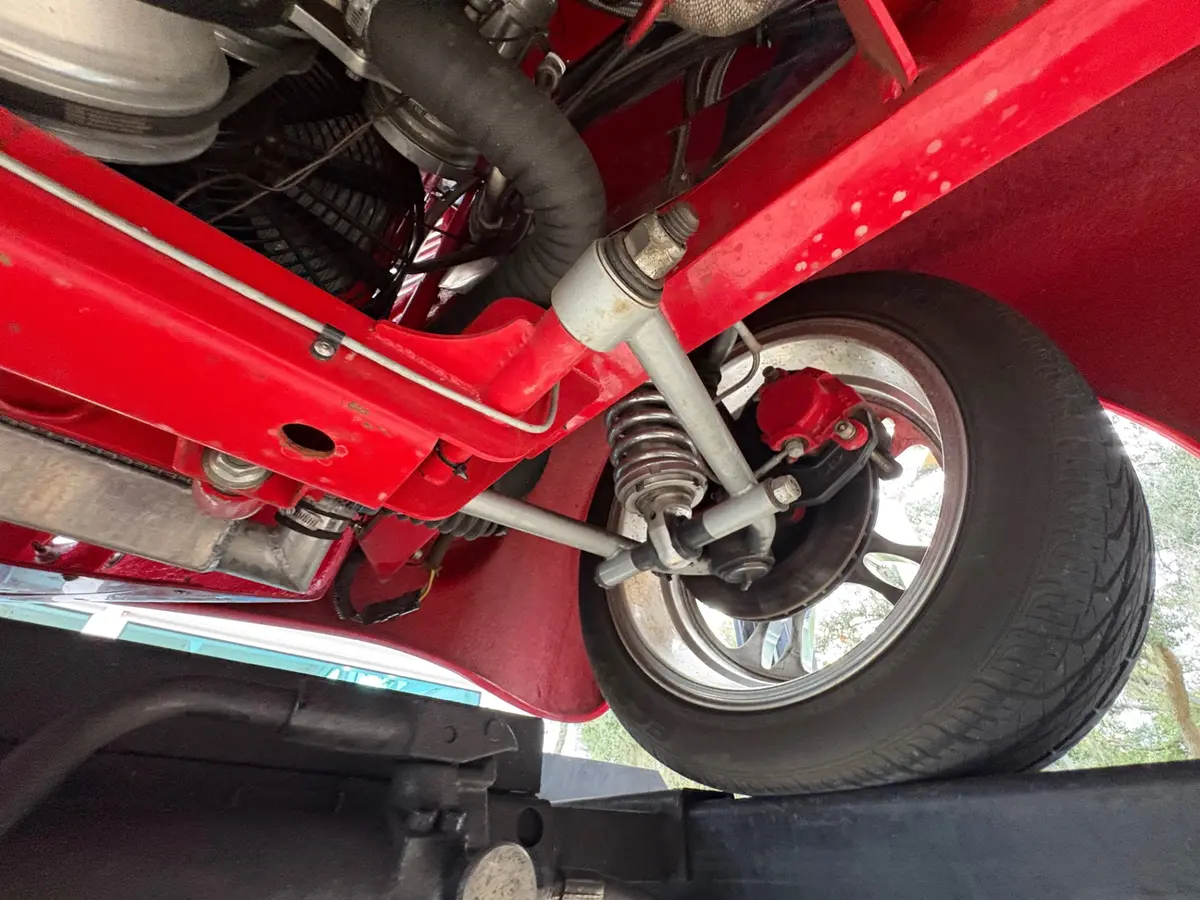
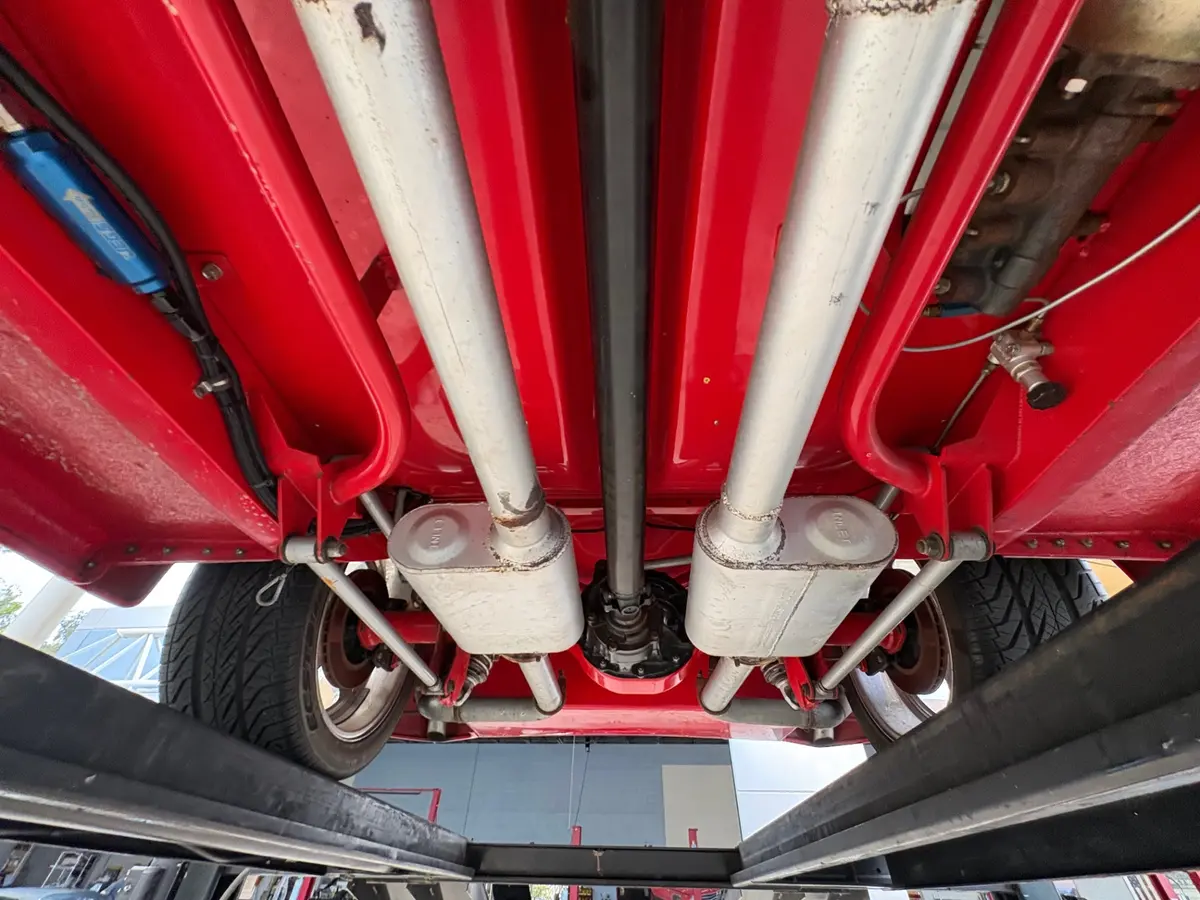
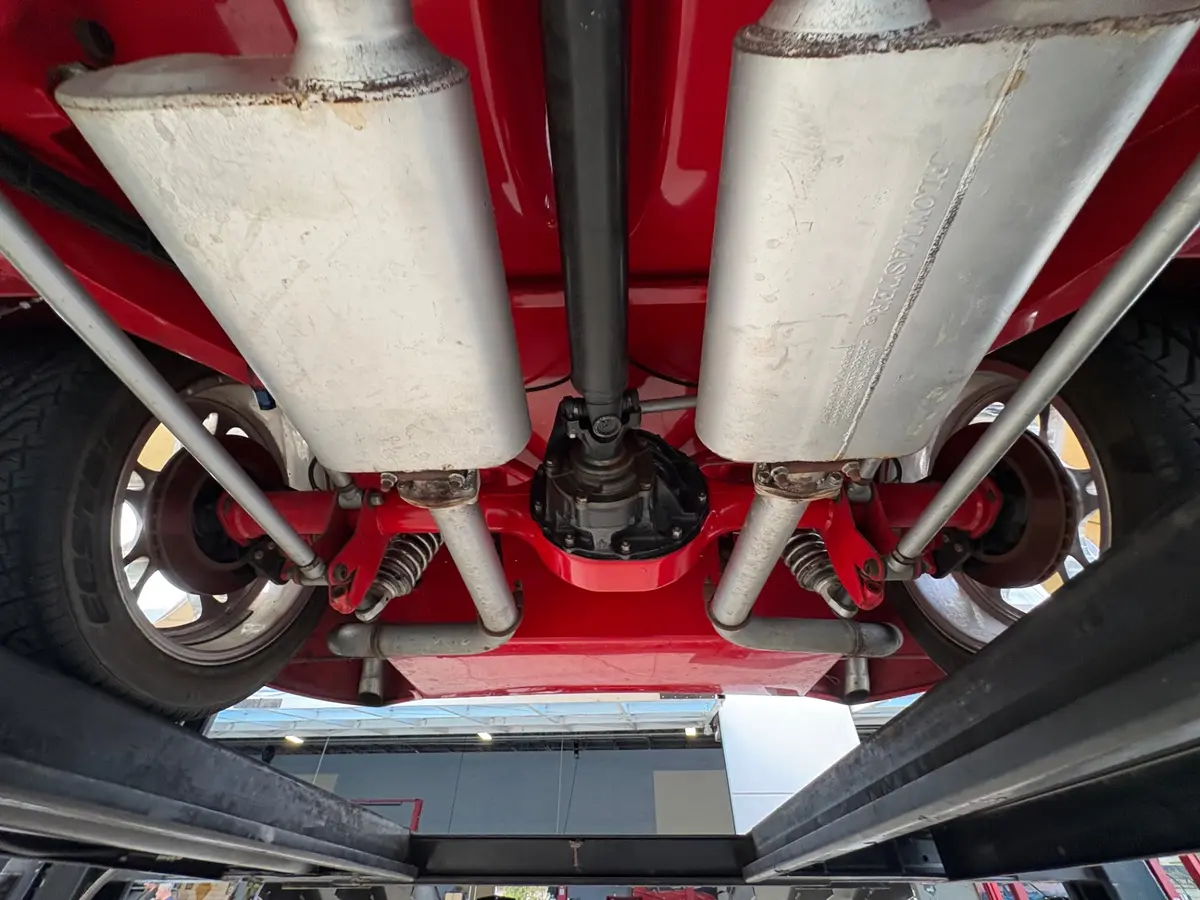
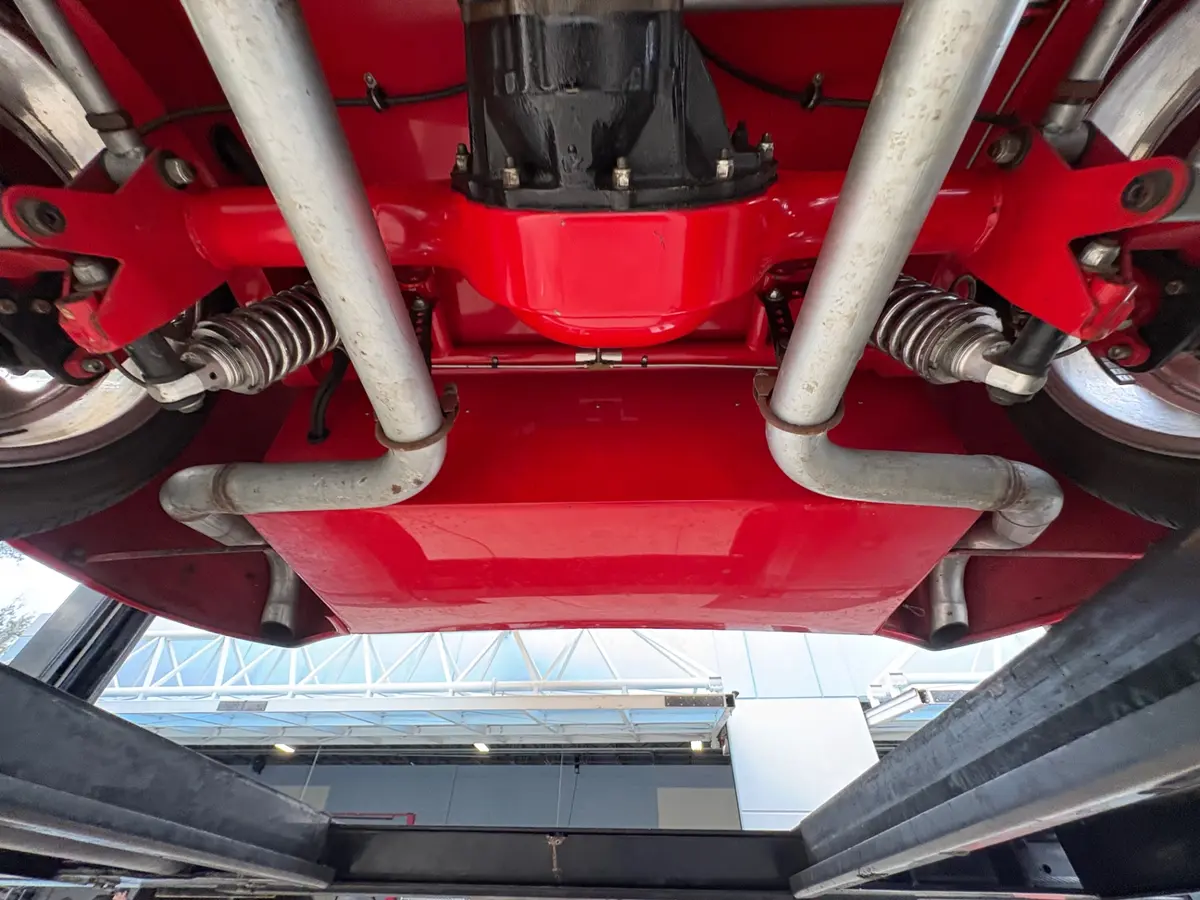
The chassis underneath this 1939 Ford De Luxe is where the builder made the most significant departures from stock. The front suspension is fully independent with coilover shocks — a major upgrade from the original transverse leaf and wishbone setup that Ford used on pre-war cars. Independent front suspension allows each wheel to react to the road independently, which translates directly to better straight-line tracking and more predictable cornering behavior. The rear uses a custom four-link suspension setup — four control arms locate the rear axle precisely while coilover shocks handle the damping. This eliminates the axle windup and wheel hop that come with leaf spring setups, and it allows the builder to dial in ride height and suspension geometry independently of spring rate. The undercarriage paint is in excellent condition throughout, consistent with the low-mileage history.
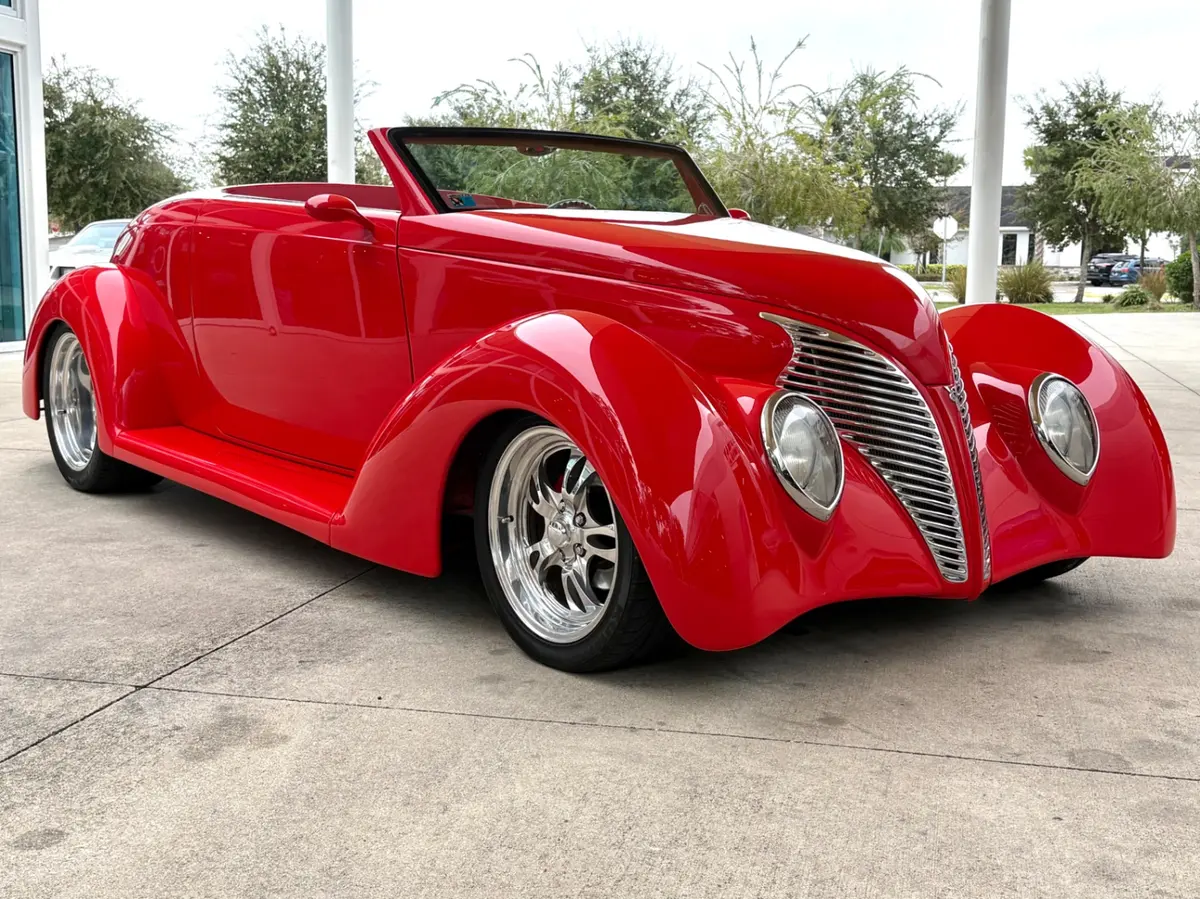
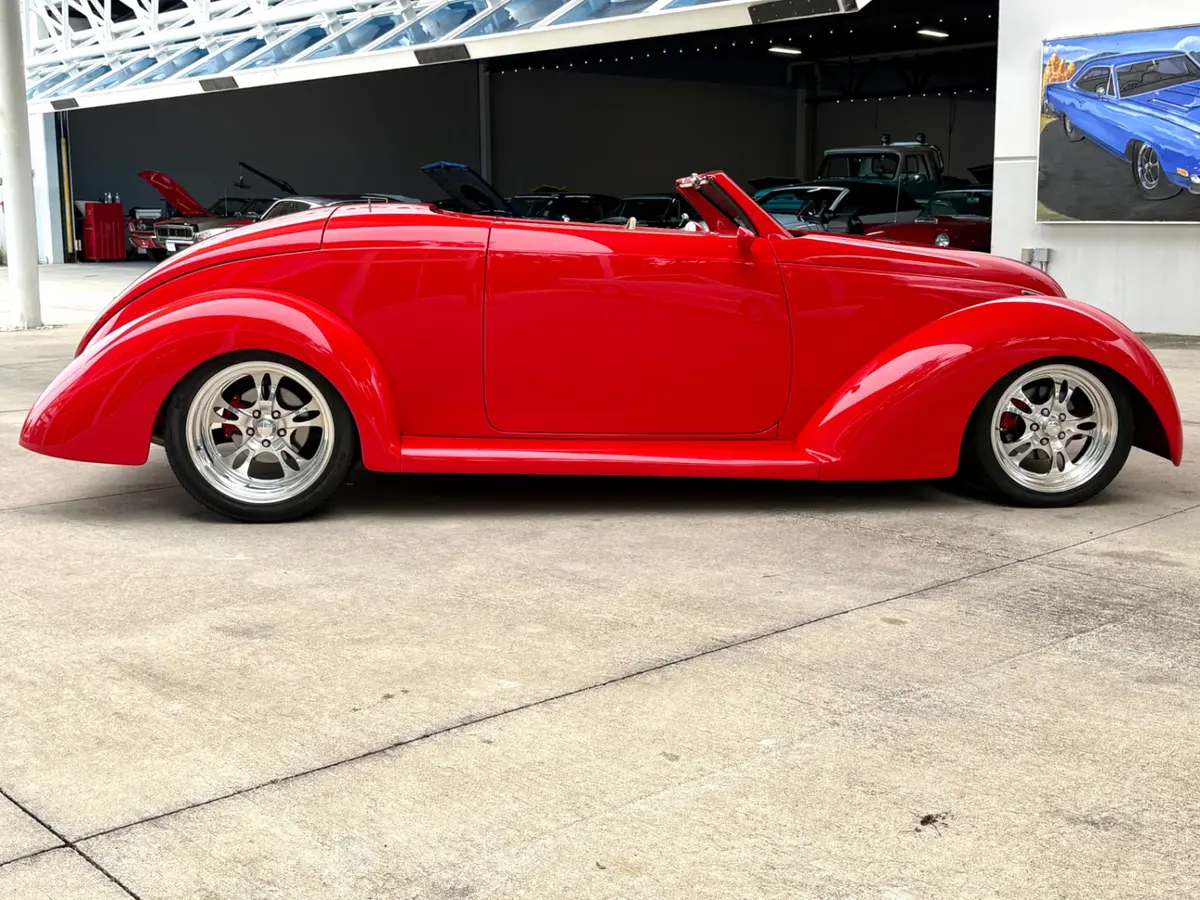
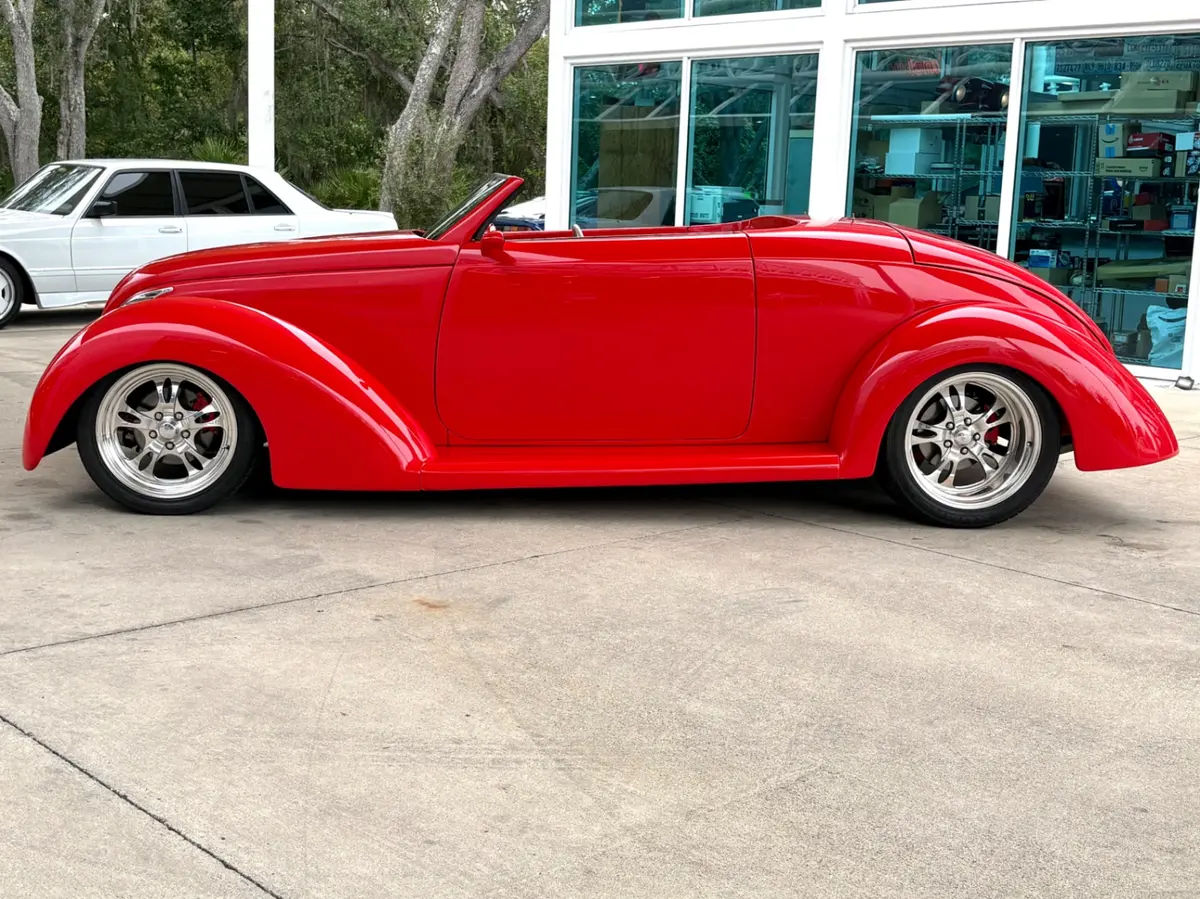
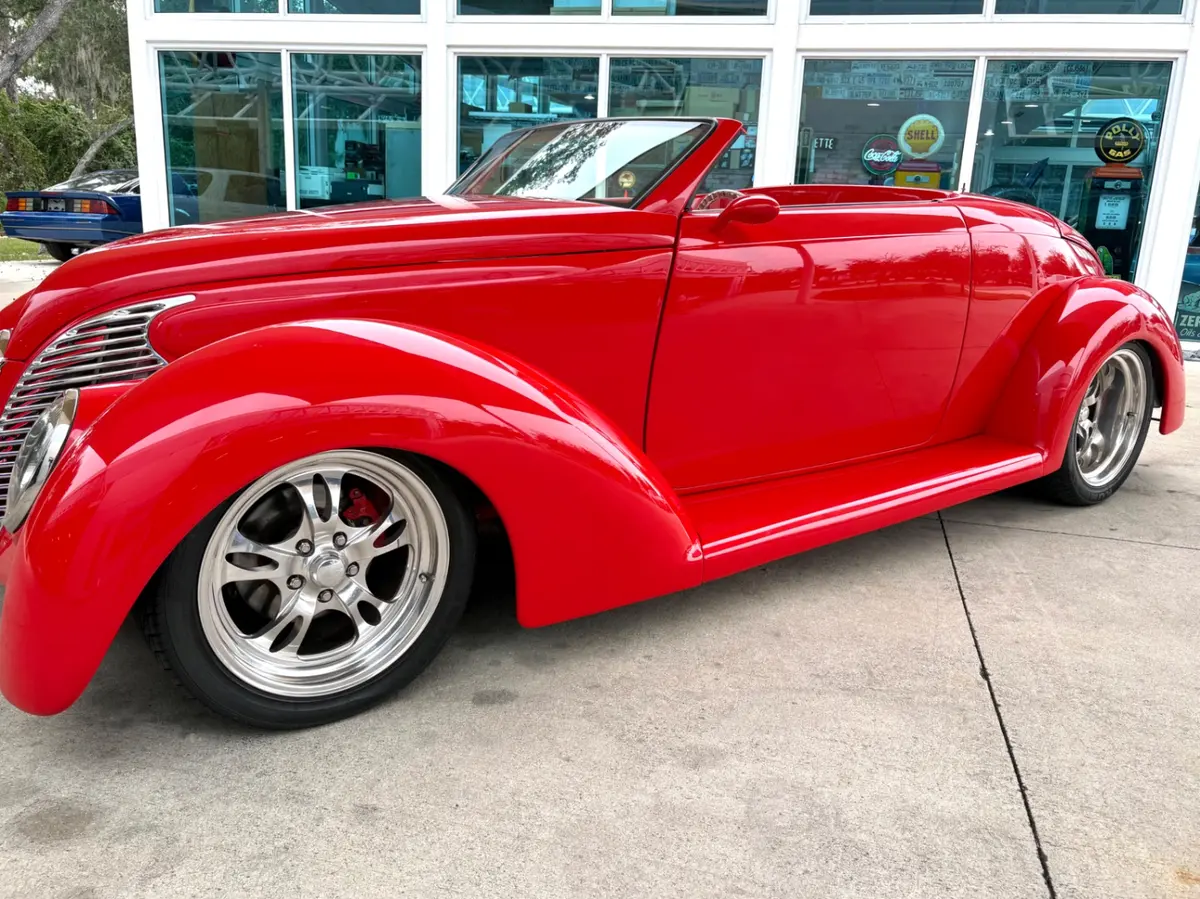
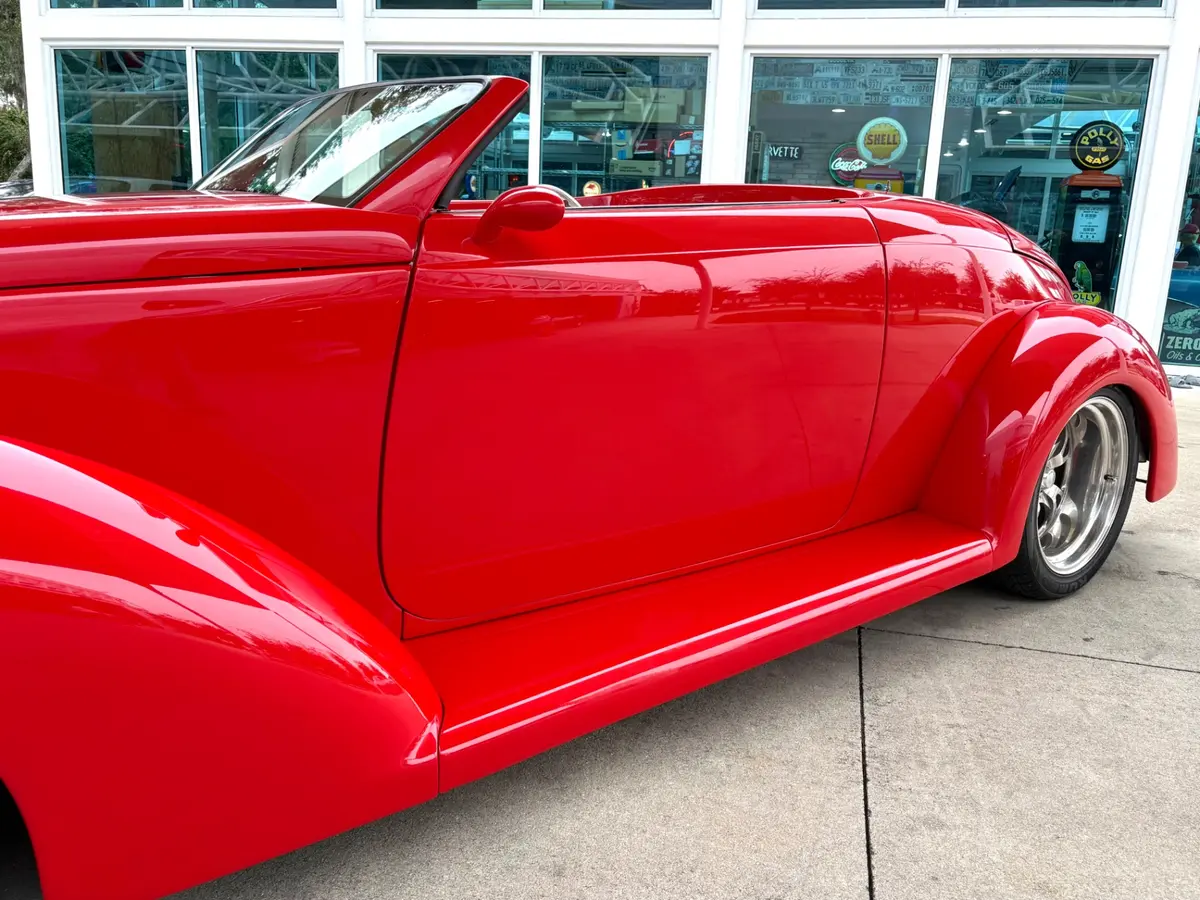
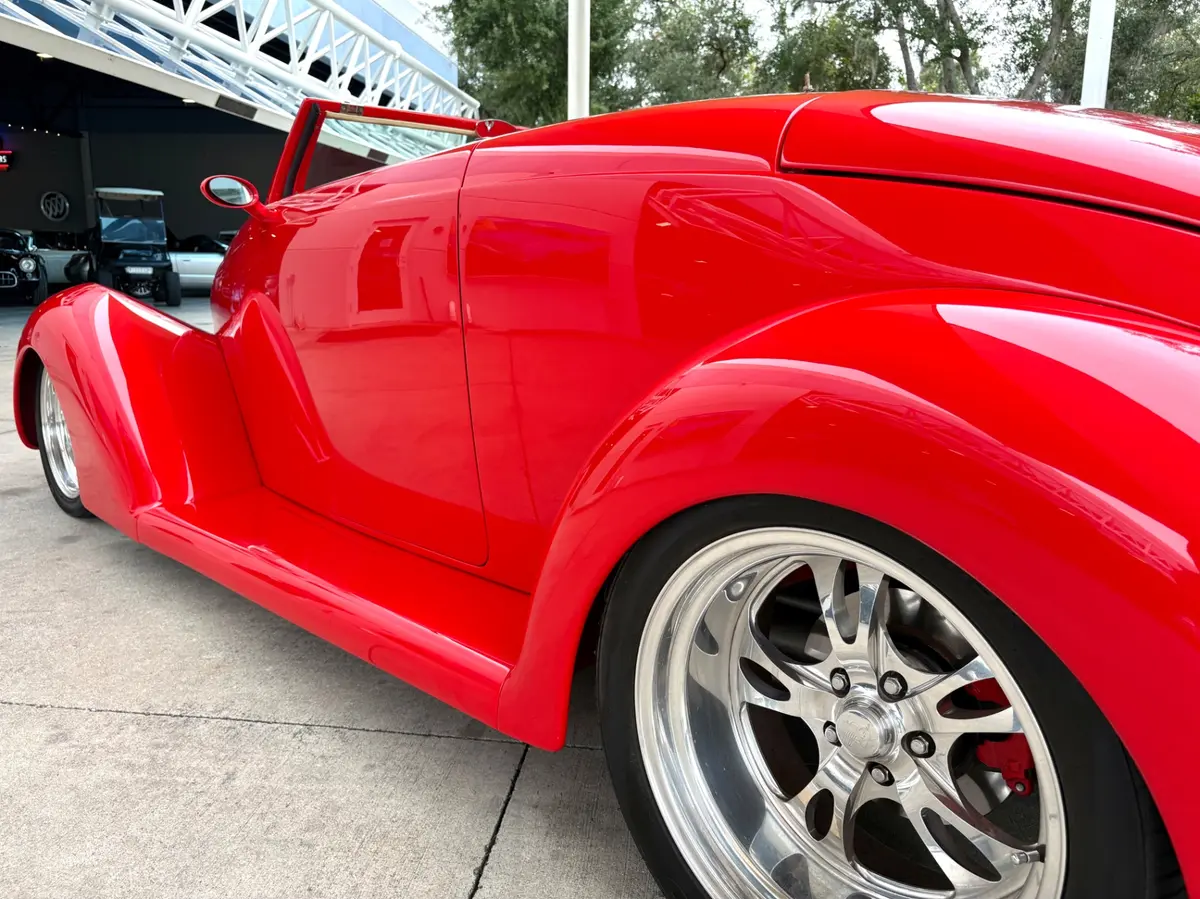
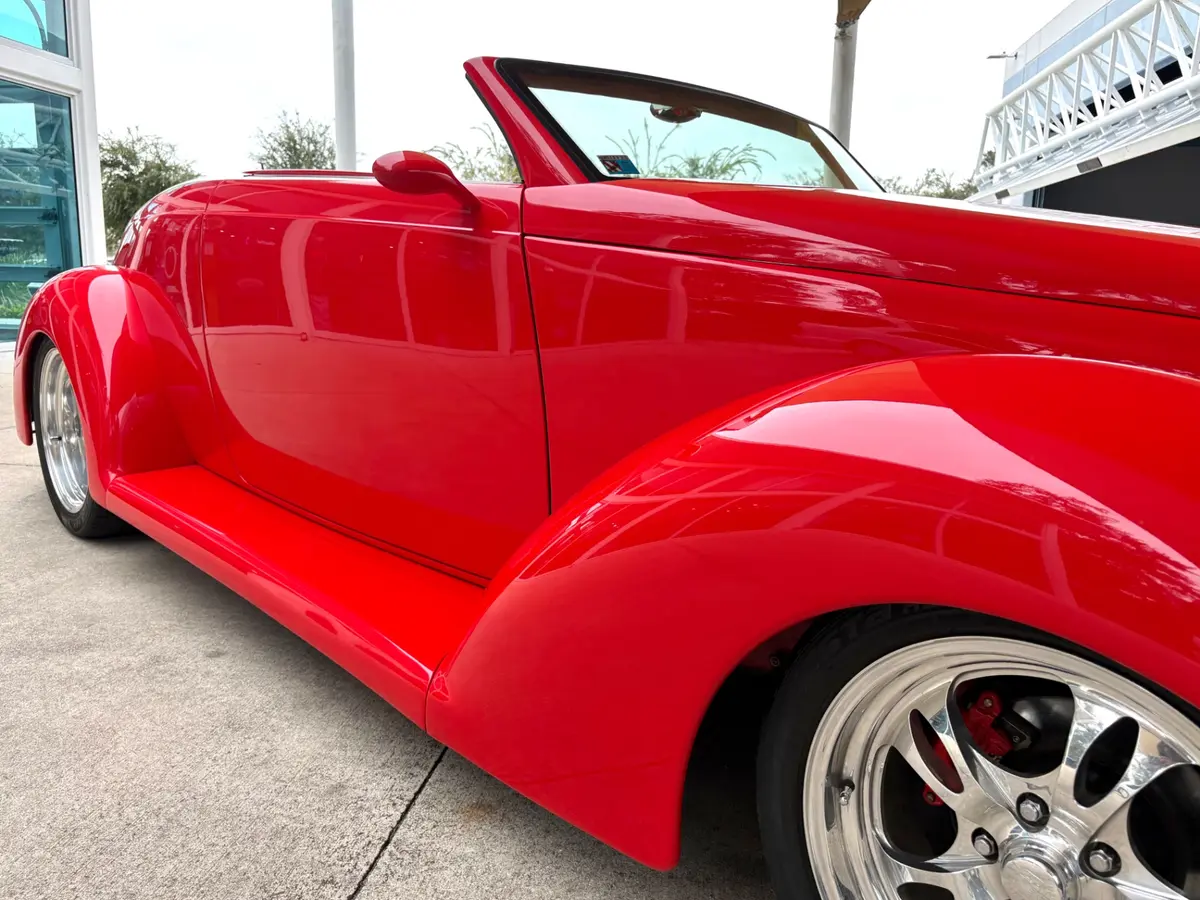
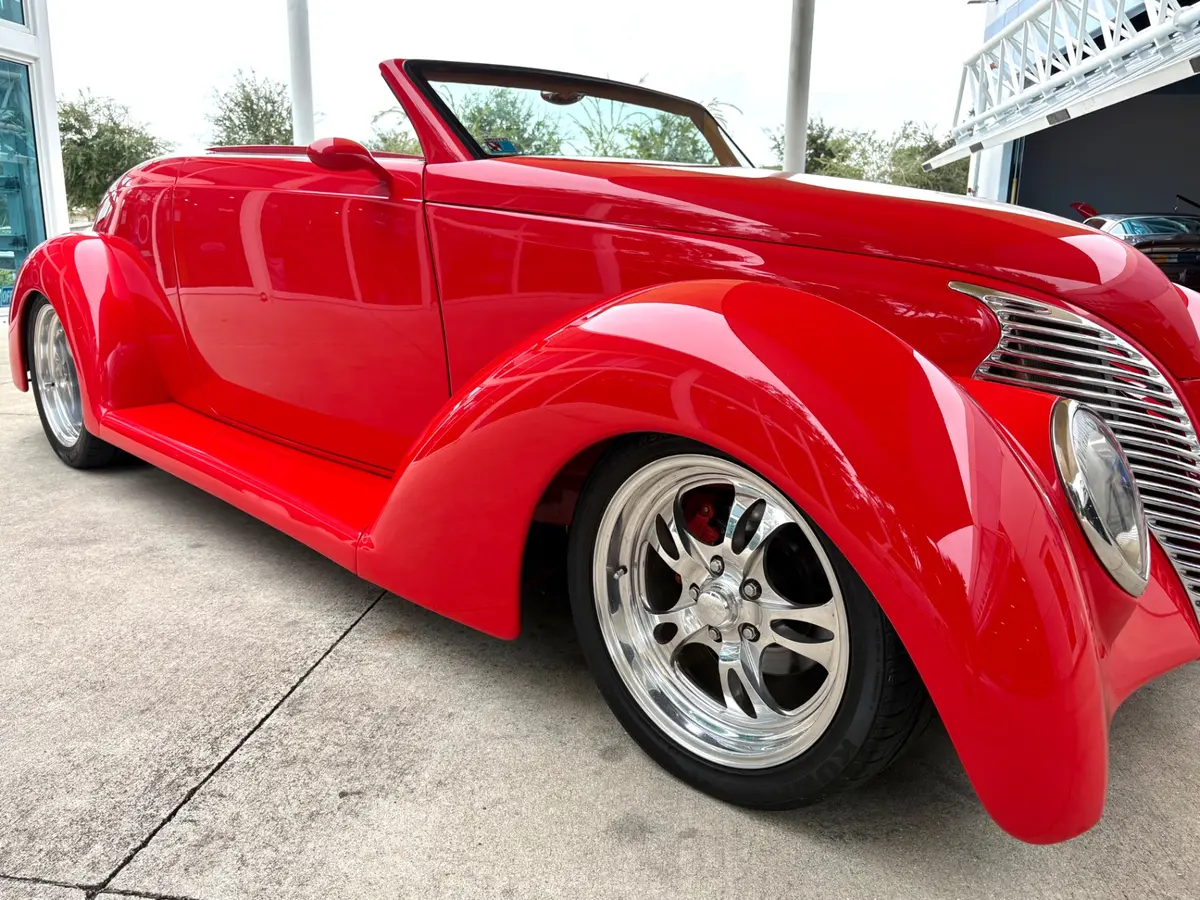
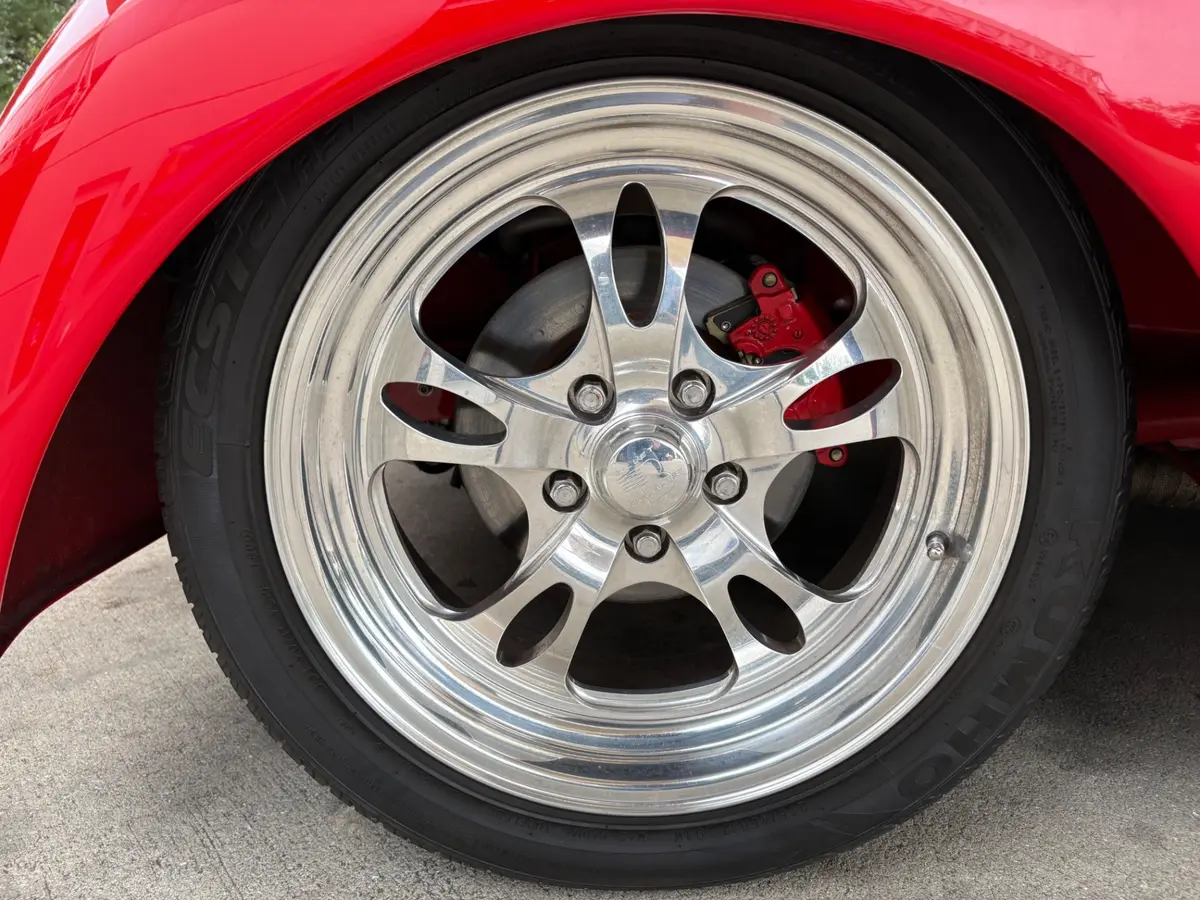
Stopping power comes from four-wheel disc brakes with red powder-coated calipers at all corners — another upgrade that the original 1939 Ford De Luxe would not have had. Factory-spec drum brakes were standard across the entire Ford lineup in 1939, and upgrading to discs at all four corners gives this car far superior fade resistance and shorter stopping distances. The polished billet wheels are shod with performance tires sized appropriately for the bodywork, sitting flush inside the custom fender openings.
Interior
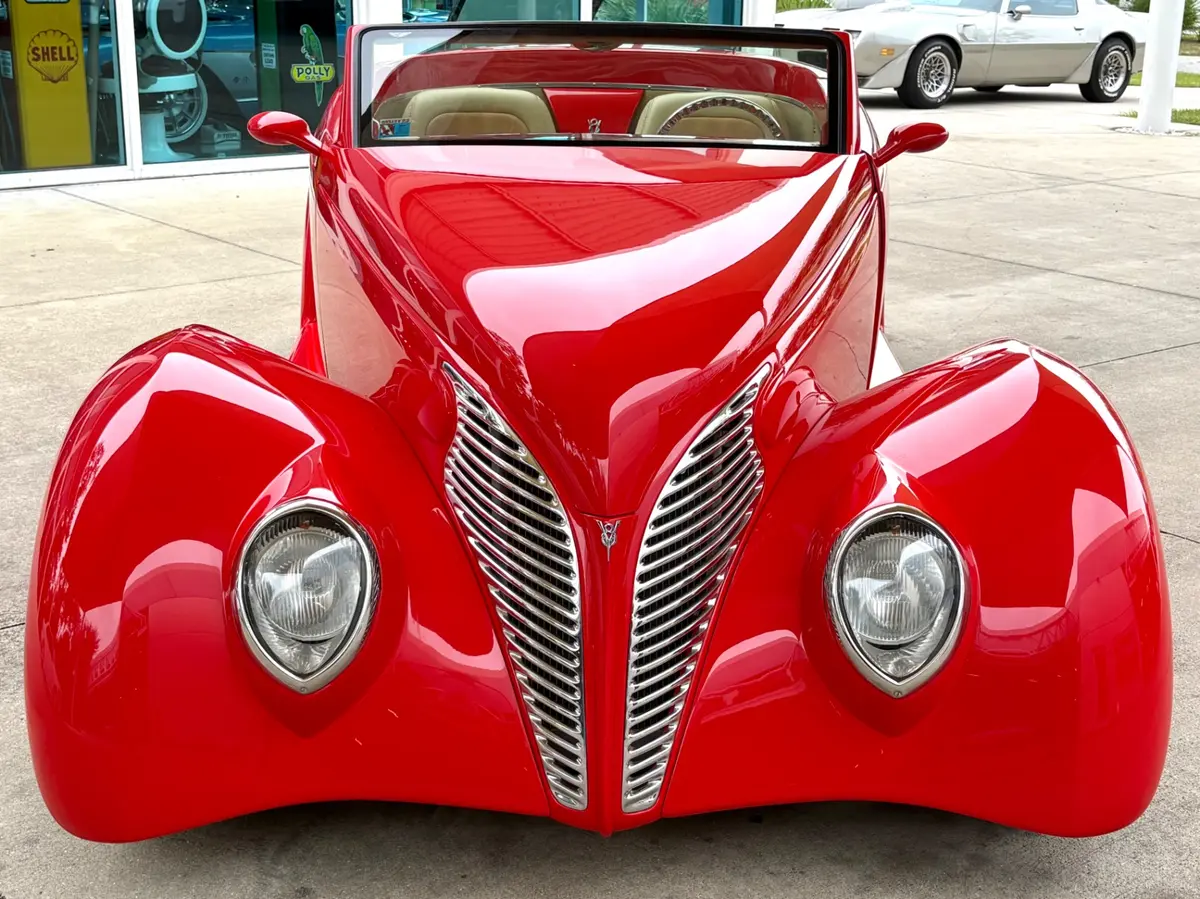
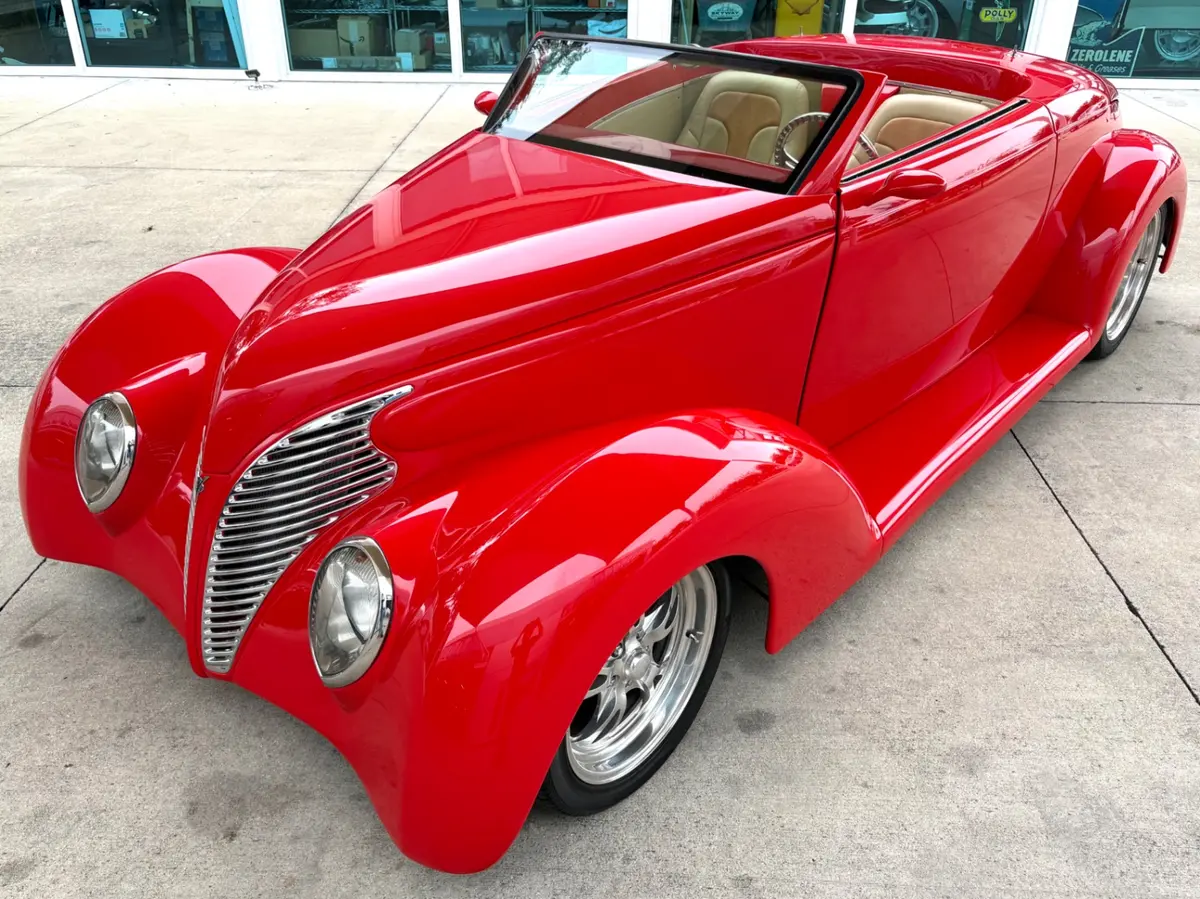
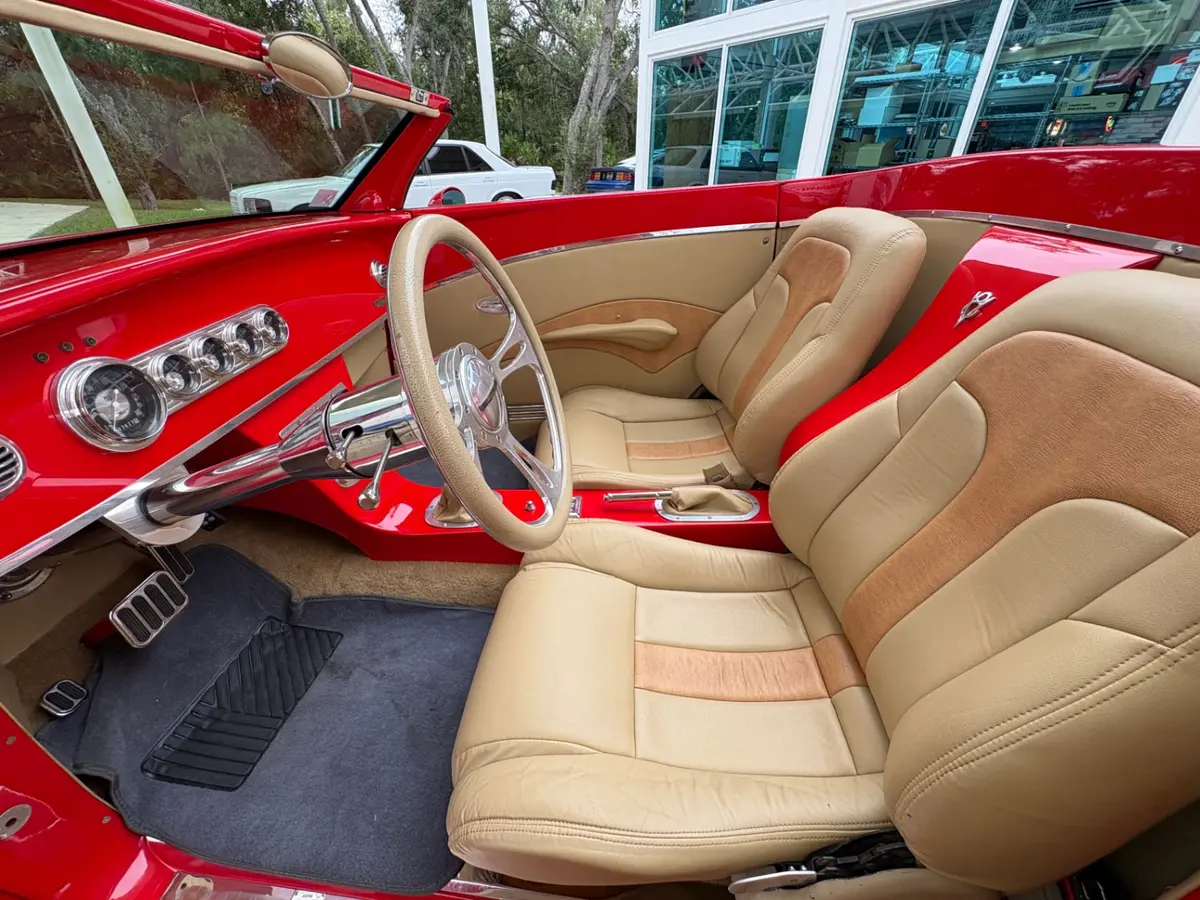
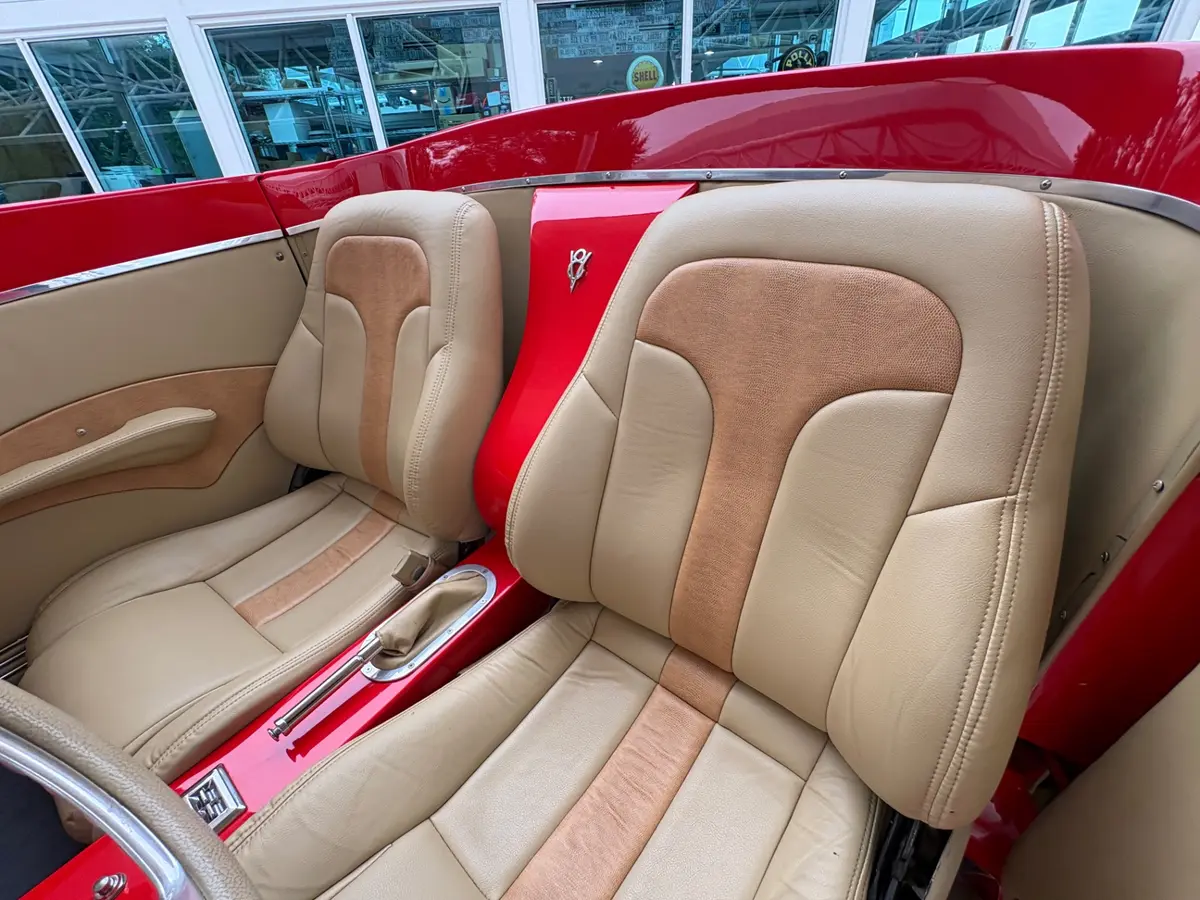
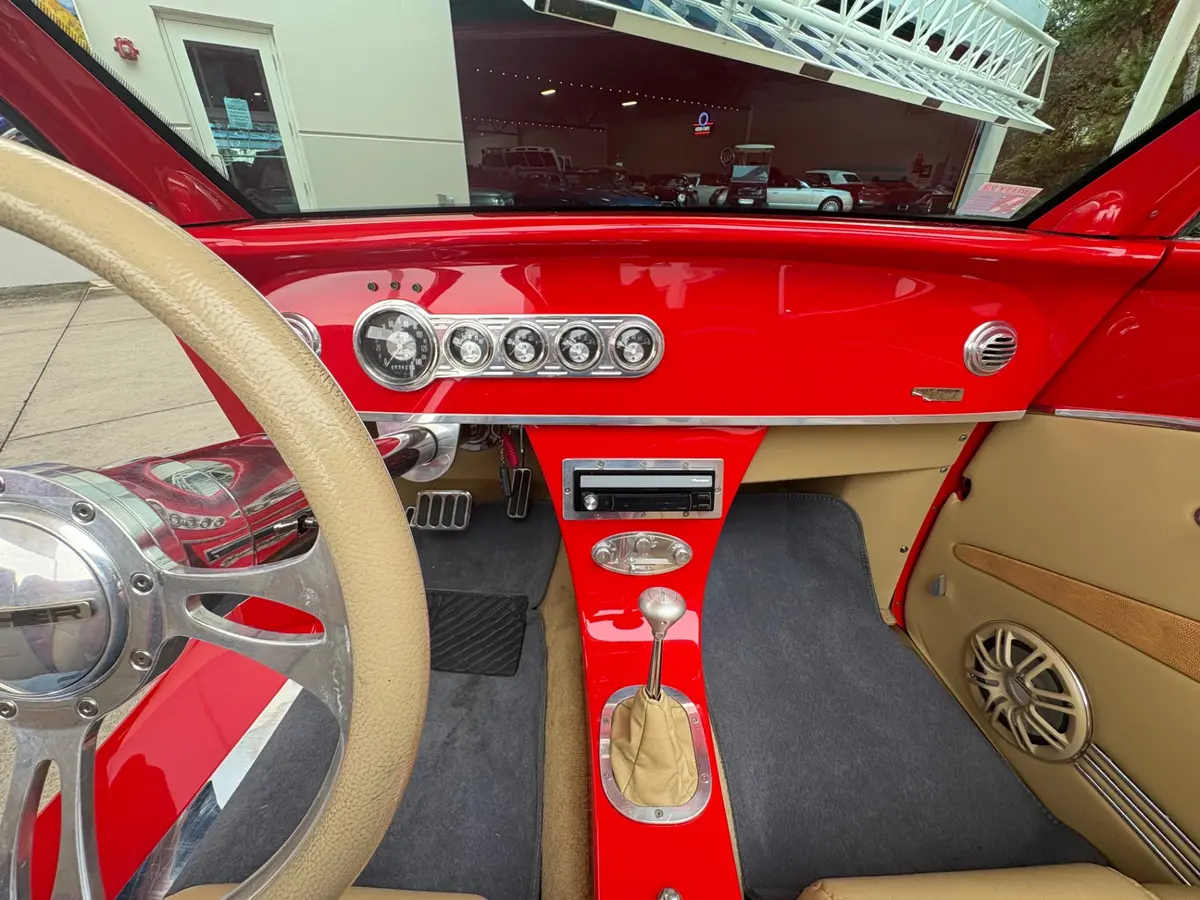
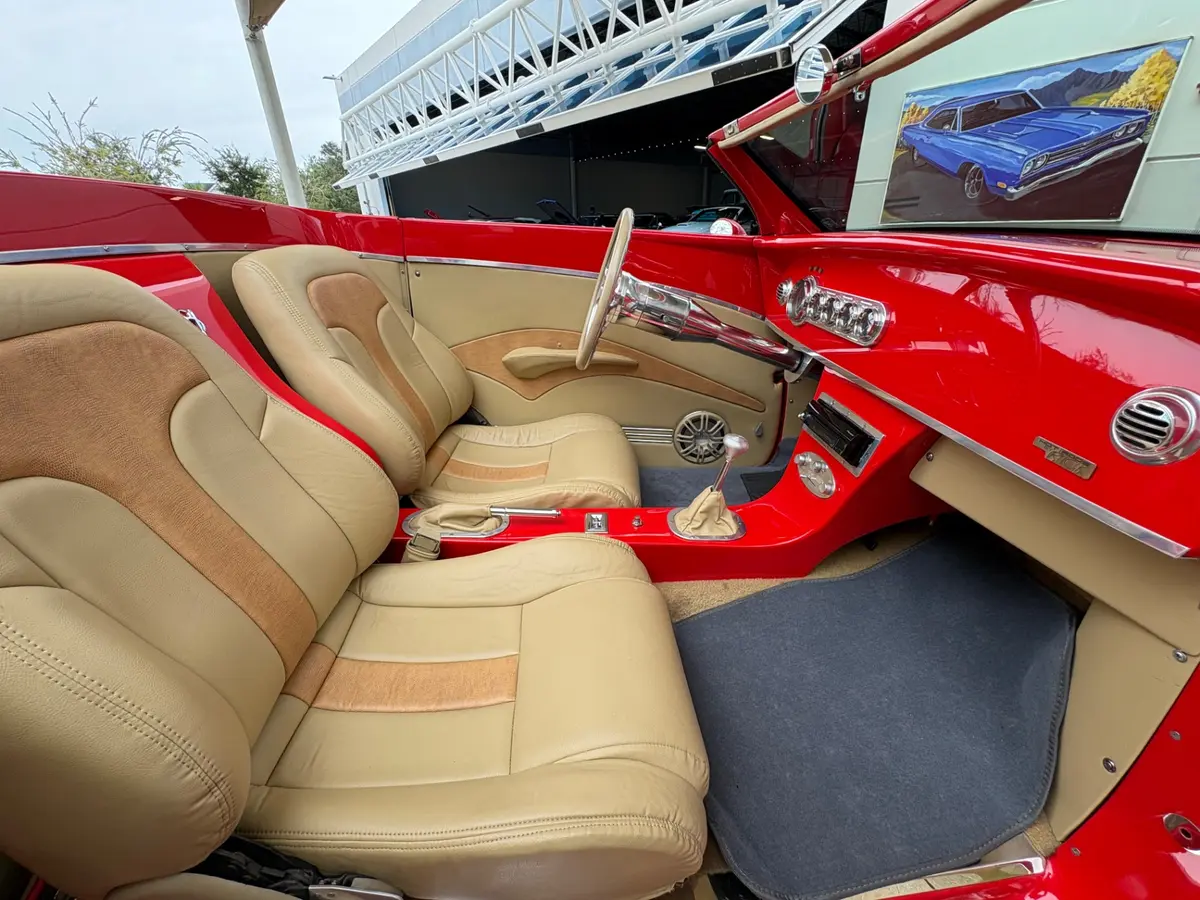
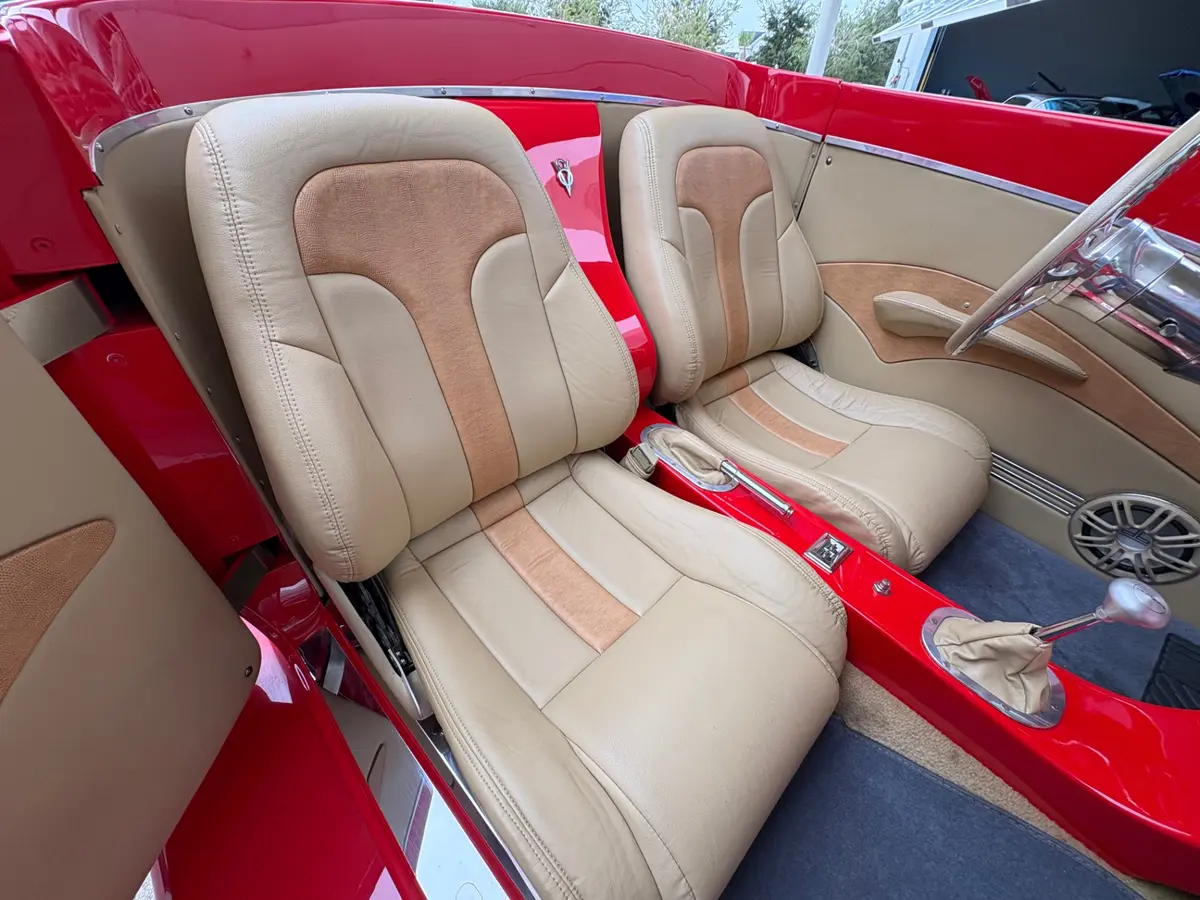
The interior of this 1939 Ford De Luxe is a full custom build that respects the car's Art Deco origins without trying to replicate a stock 1939 cabin. The seats are custom-built bucket units trimmed in tan leather with contrasting suede inserts on the seatback and cushion bolsters. The two-tone approach — smooth leather for the main surfaces, textured suede for the inserts — is a recognized custom upholstery technique that adds visual depth and improves grip when seated. The stitching is clean and even throughout both seats, and the overall leather condition reflects the low mileage.
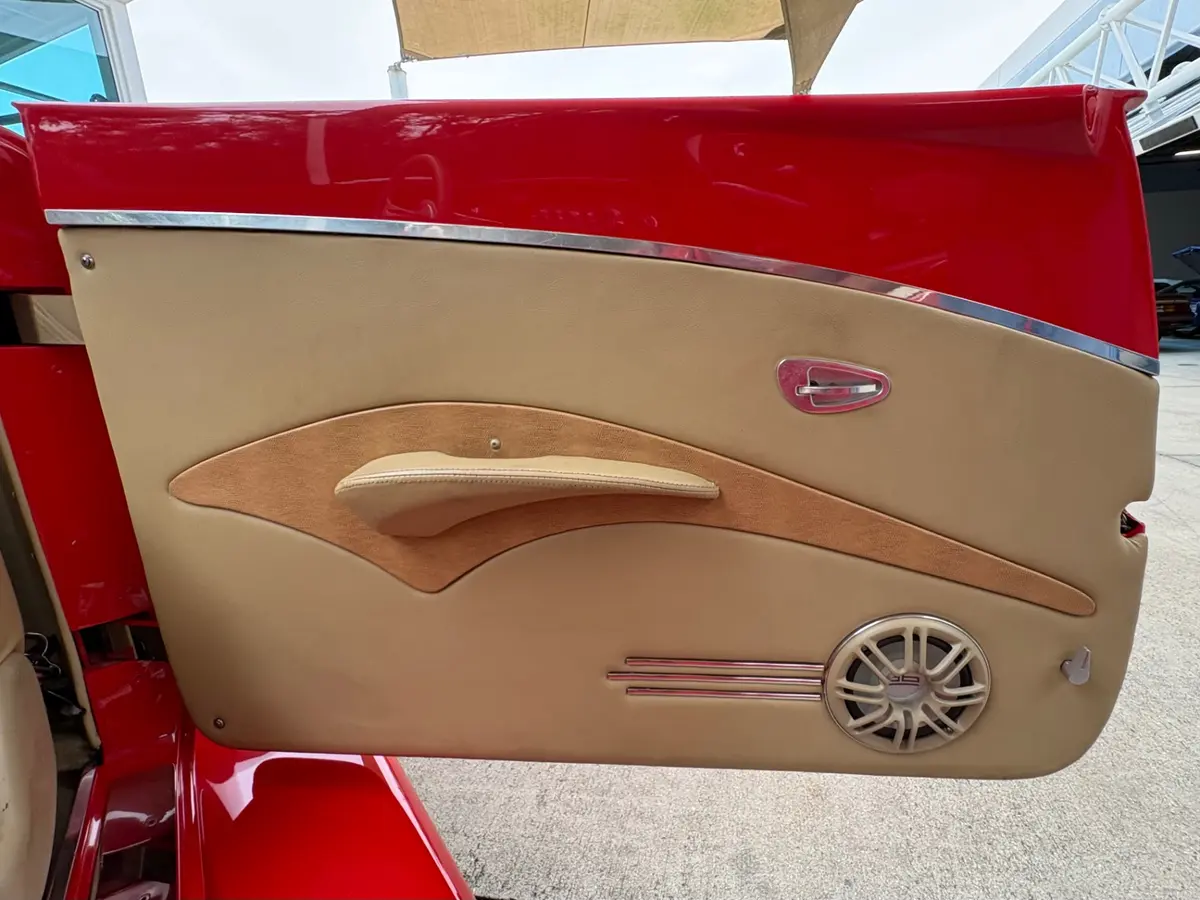
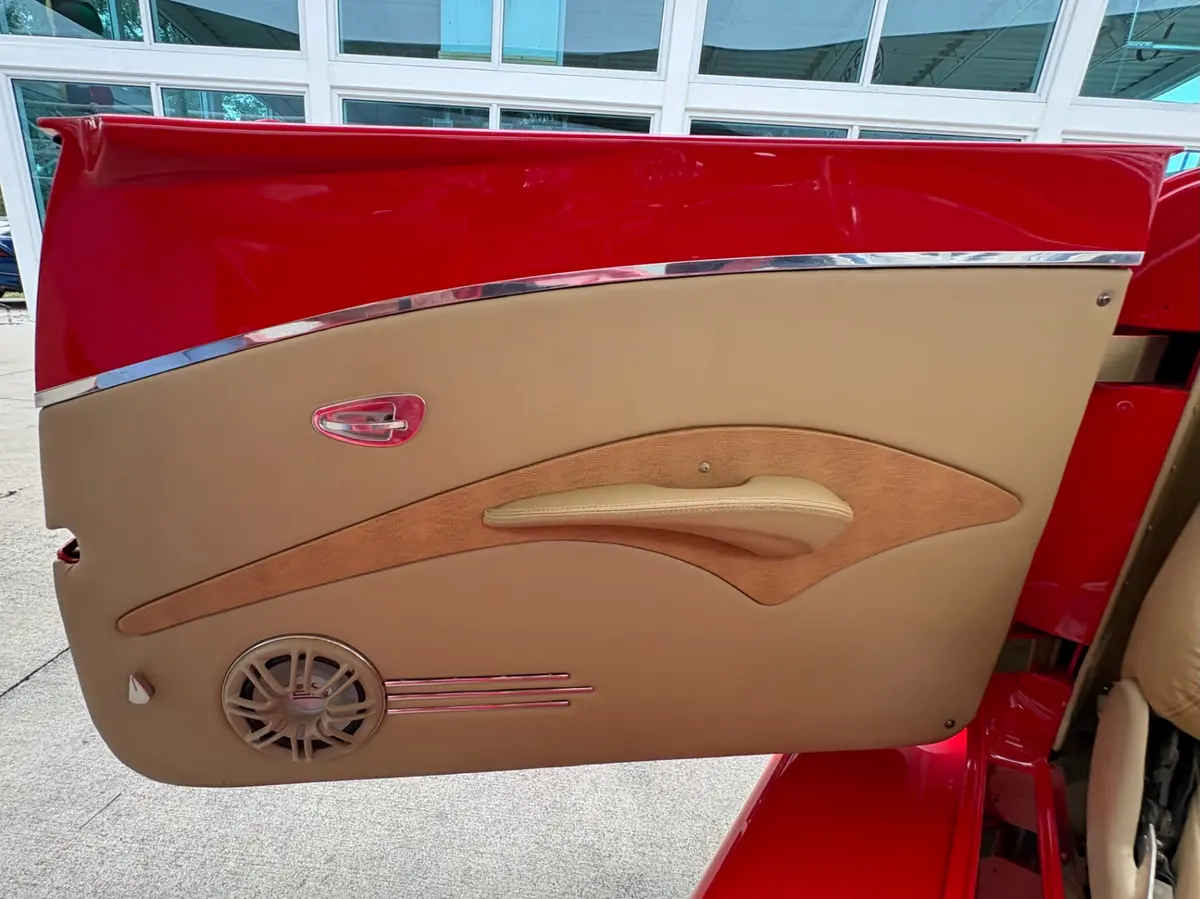
The door panels are full custom pieces wrapped in matching tan leather, each featuring a sculpted pull handle, an integrated speaker housing, and a small chrome interior handle. The speaker openings are finished with matching trim rings that tie back to the billet detailing used elsewhere on the car. A chrome cap rail runs along the top of each door panel, separating the painted body from the upholstered surface below.
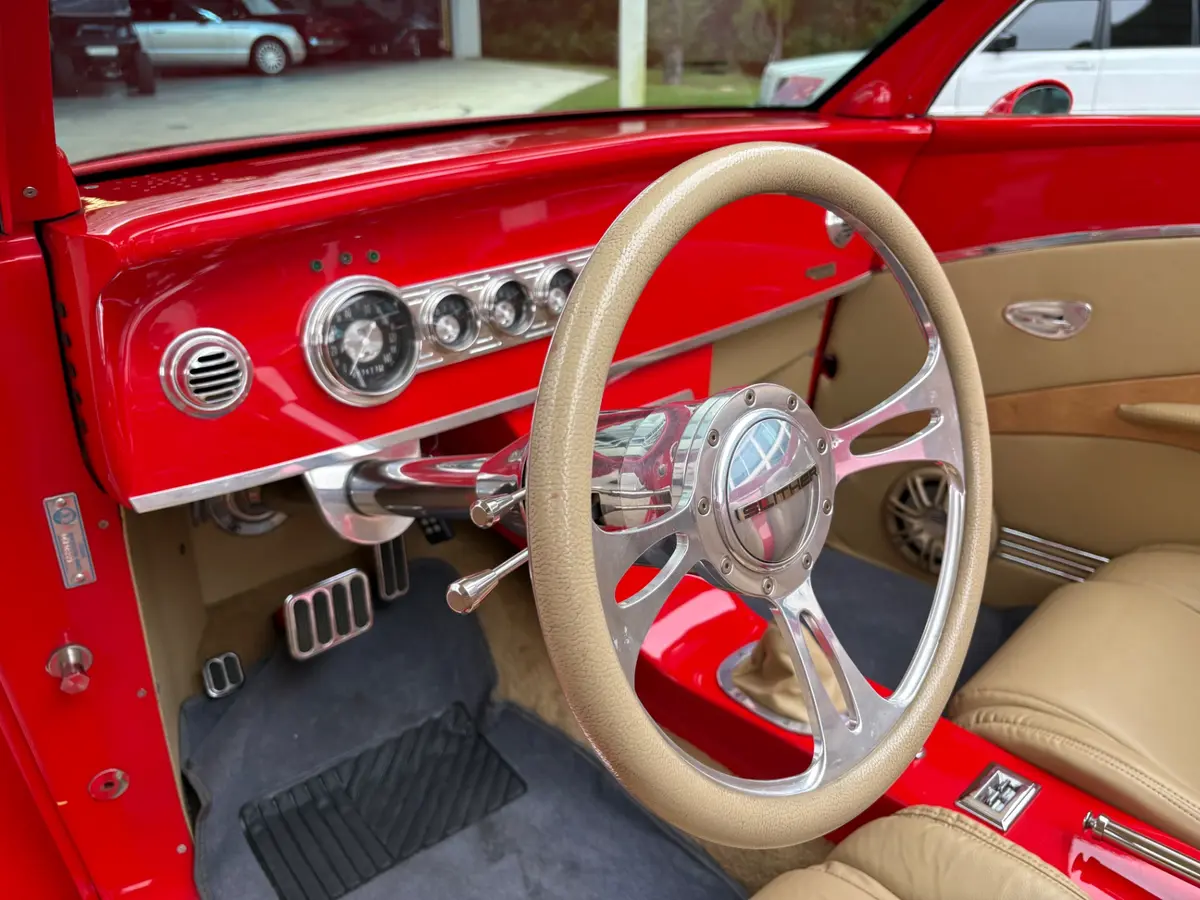
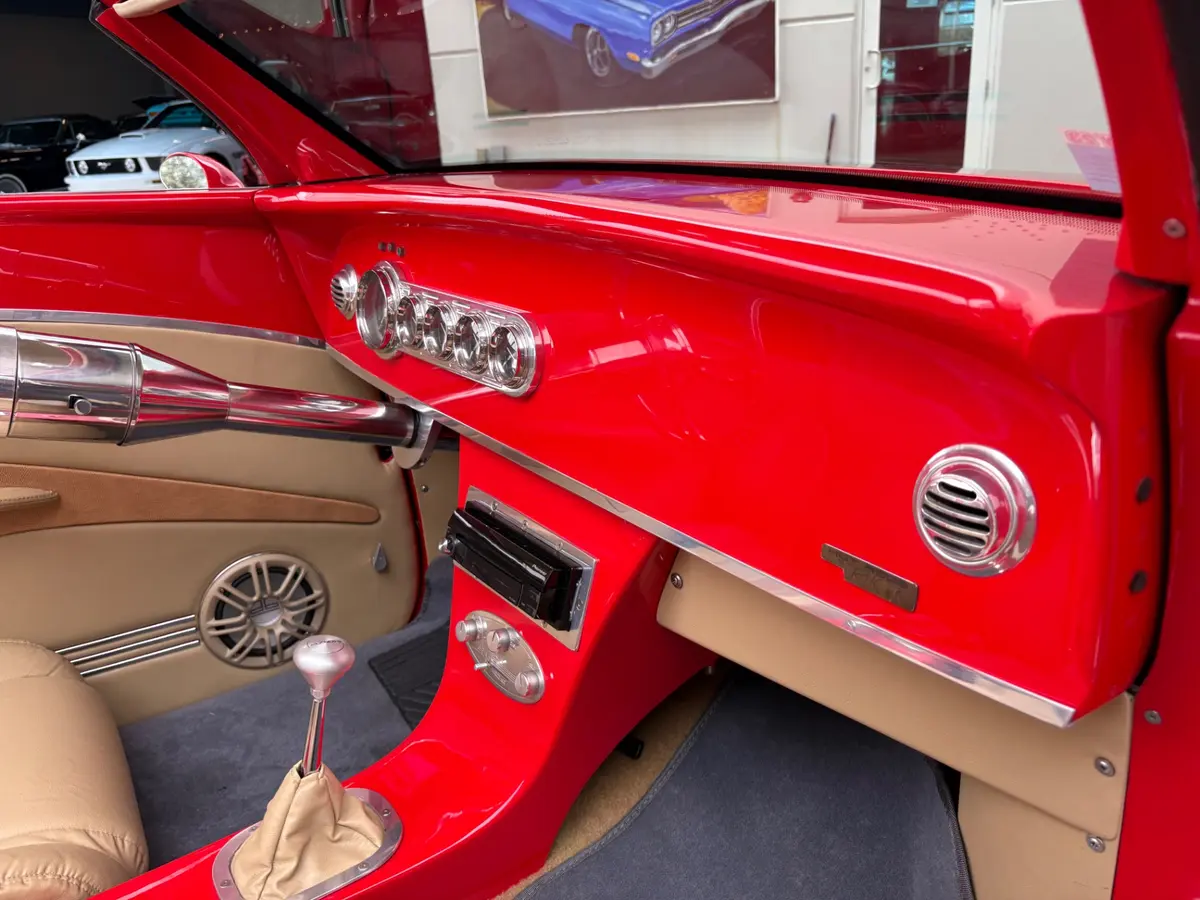
Instrumentation comes from Classic Instruments, a well-regarded American manufacturer that specializes in gauges designed for street rod and custom applications. The cluster in this car includes a large-diameter 140-mph speedometer flanked by four auxiliary gauges: oil pressure, coolant temperature, voltmeter, and fuel level. All five are mounted in a machined aluminum panel that sits in the original 1939 Ford instrument panel opening, maintaining the horizontal sweep of the factory dash while providing modern, accurate readouts. The gauges use a consistent black face and brushed aluminum surround throughout.
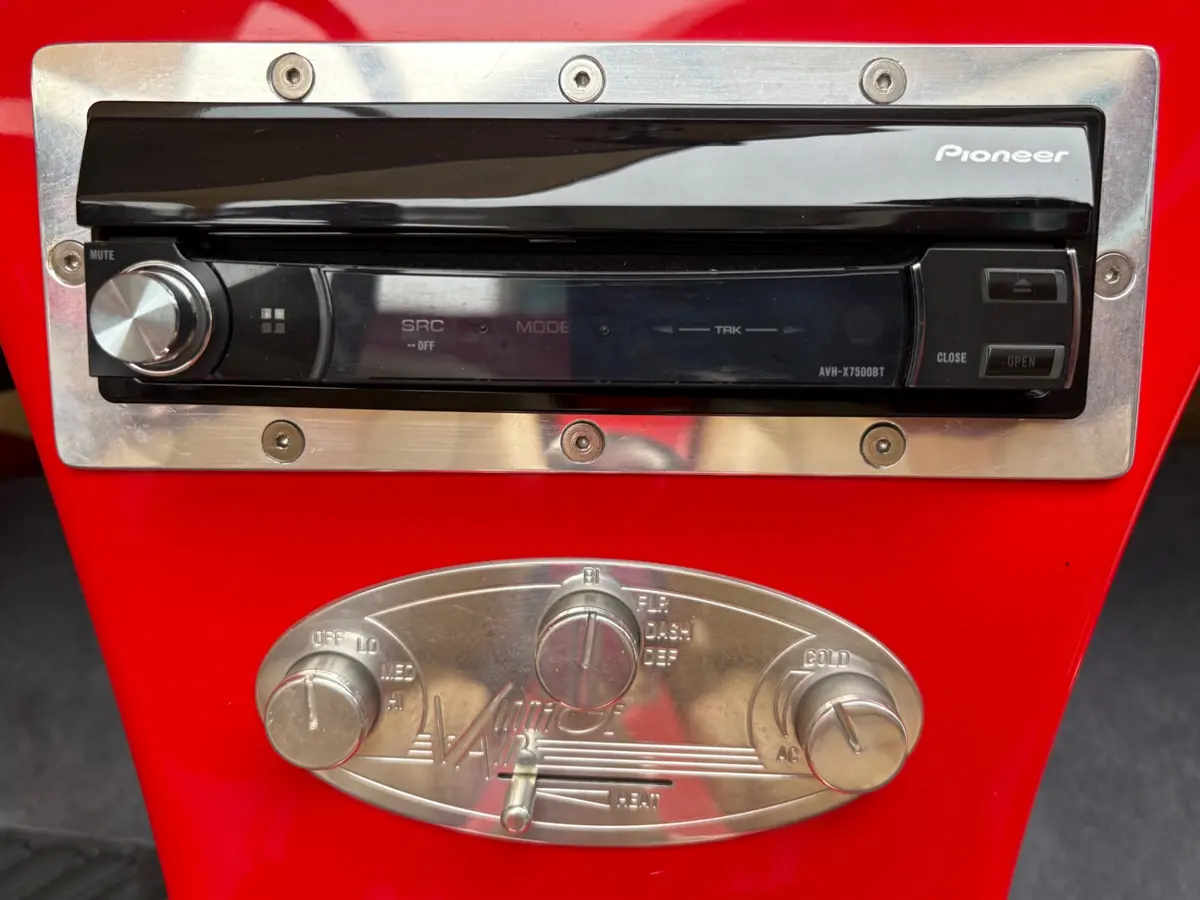
Climate control is handled by a Vintage Air system, which is the industry standard for custom car air conditioning. The Vintage Air control panel is mounted in the center console area and uses three rotary knobs for fan speed, distribution, and temperature. Vintage Air systems are specifically engineered for pre-1980 vehicles and are known for reliable, consistent cooling performance. Given Florida's climate, this is a practical and well-considered addition.
The Pioneer AVH-X7500BT touchscreen head unit is integrated into the dash with a machined aluminum bezel surround that keeps it looking intentional rather than aftermarket. The unit supports Bluetooth connectivity and drives the door-mounted speakers. A tilt steering column positions the billet steering wheel for comfortable driving, and the floor-mounted shifter for the TH400 is fitted with a tan leather boot that matches the seat trim. A backup camera is also fitted, which is a sensible addition given the limited rear visibility inherent to a 1939 Ford convertible body.
Exterior
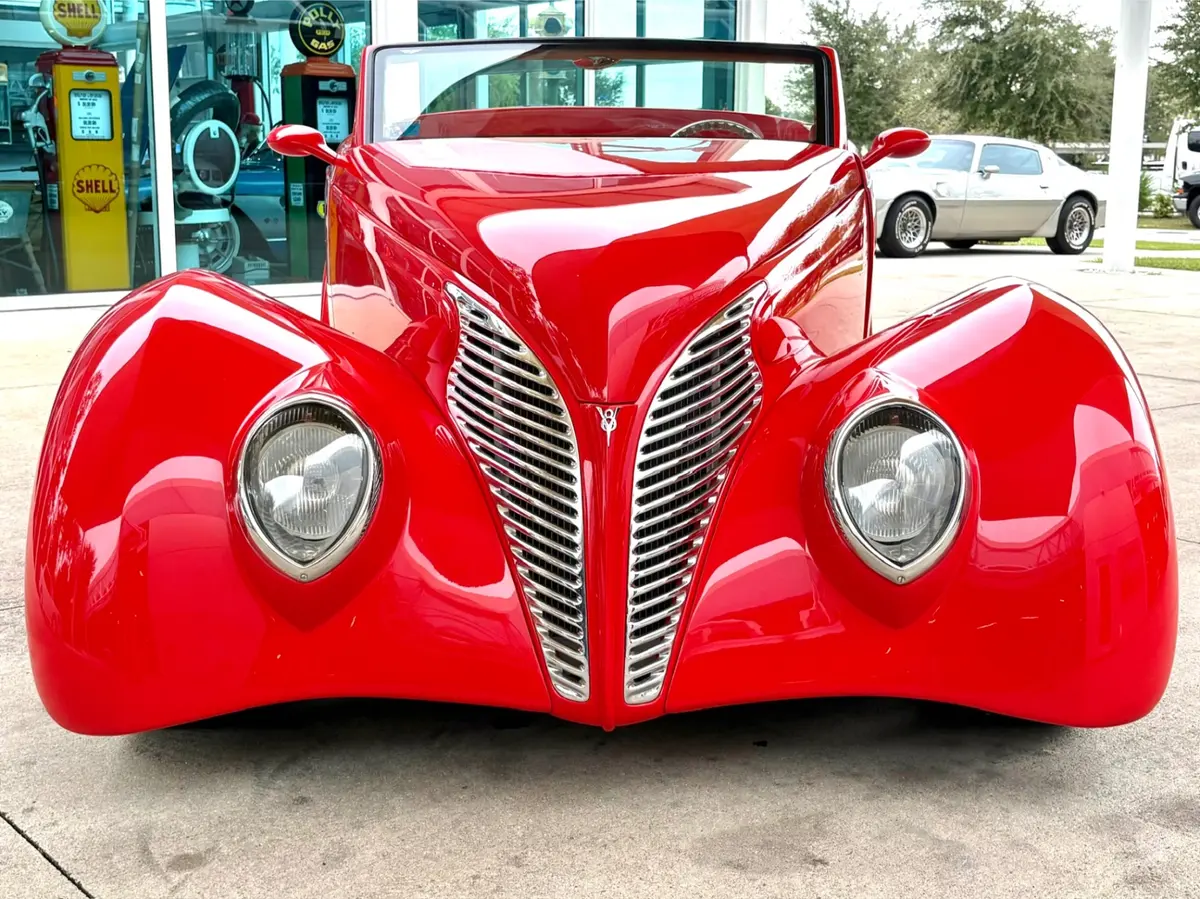
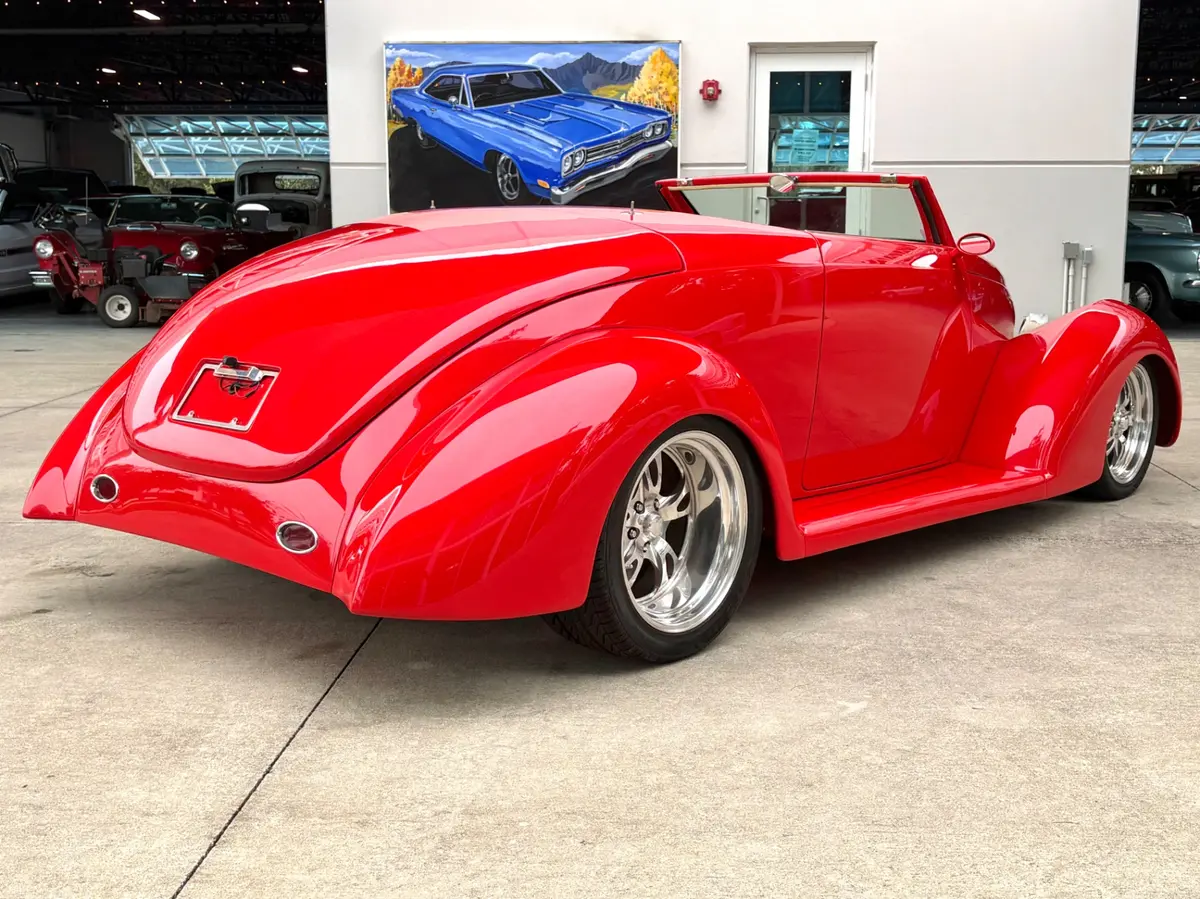
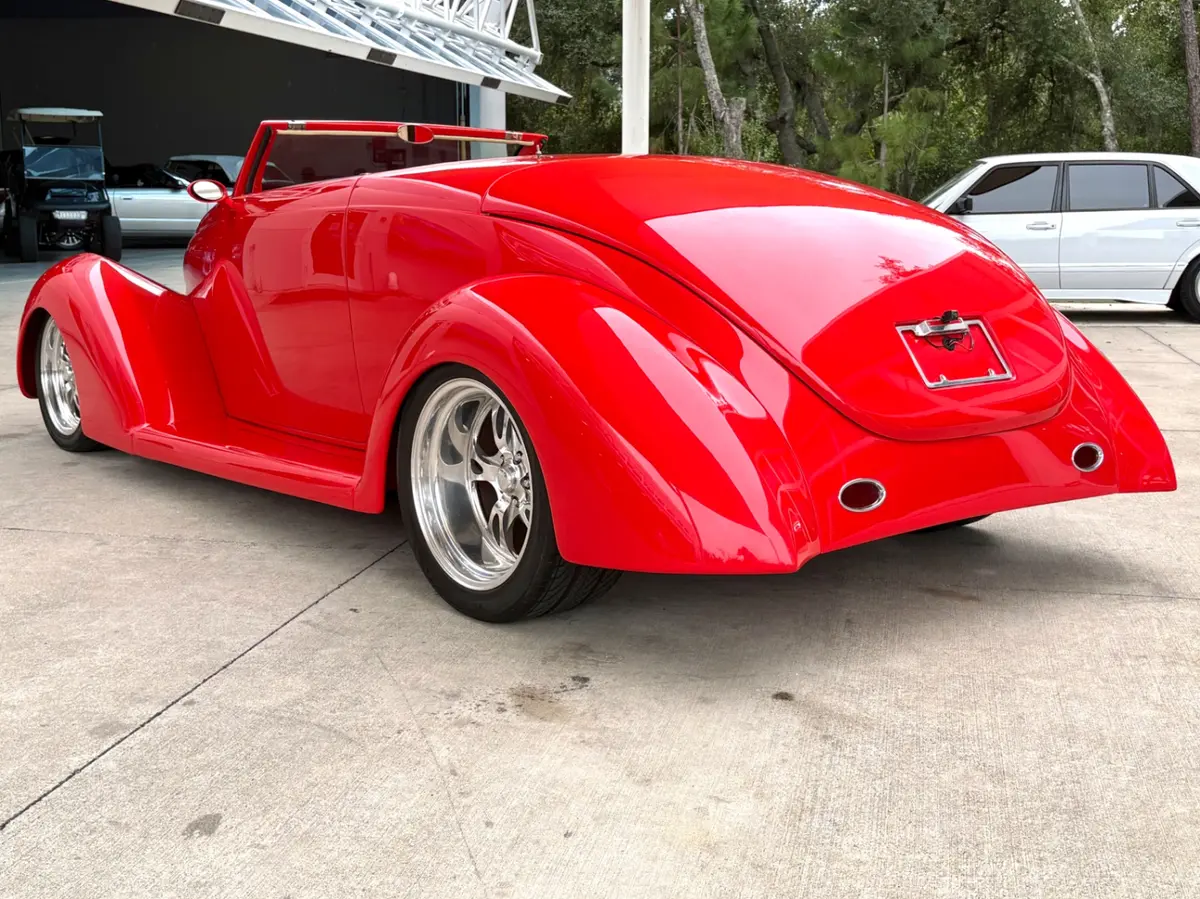
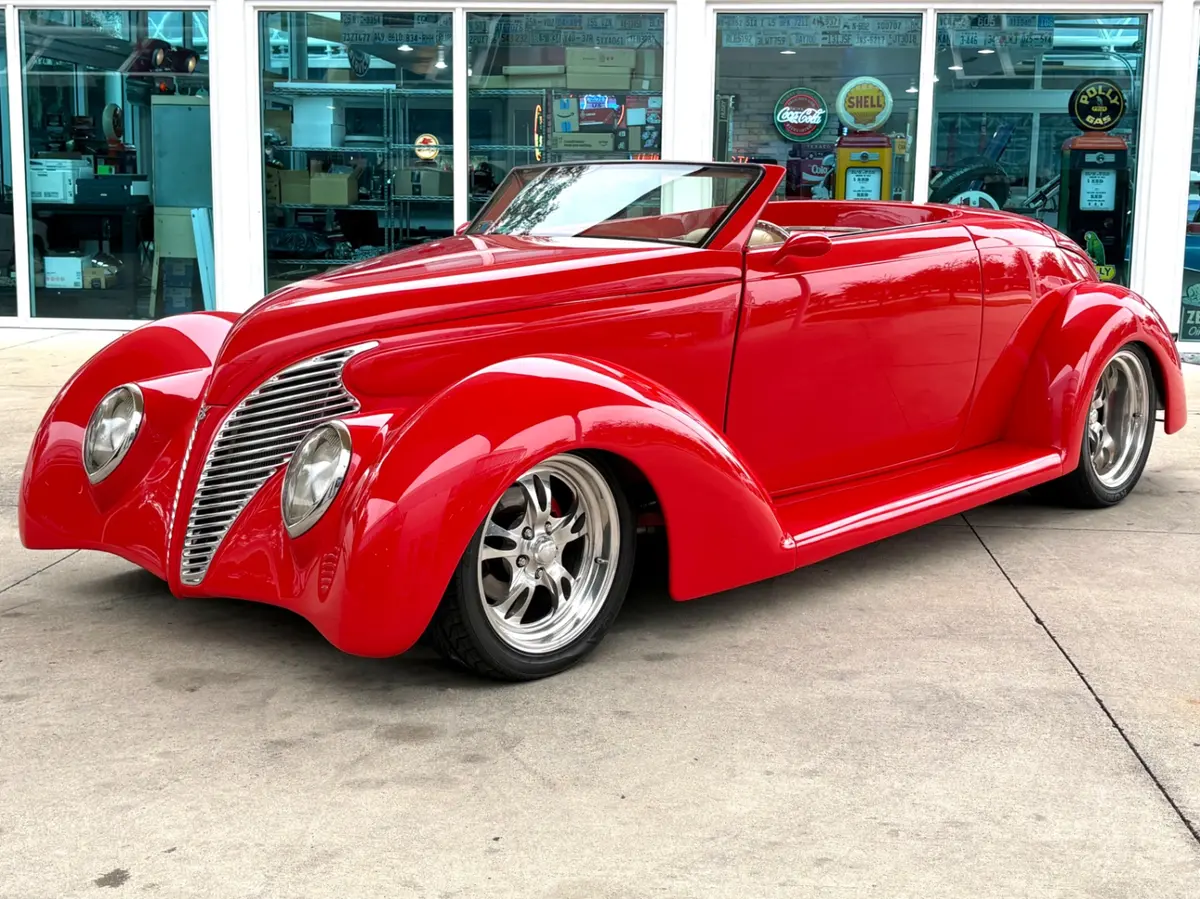
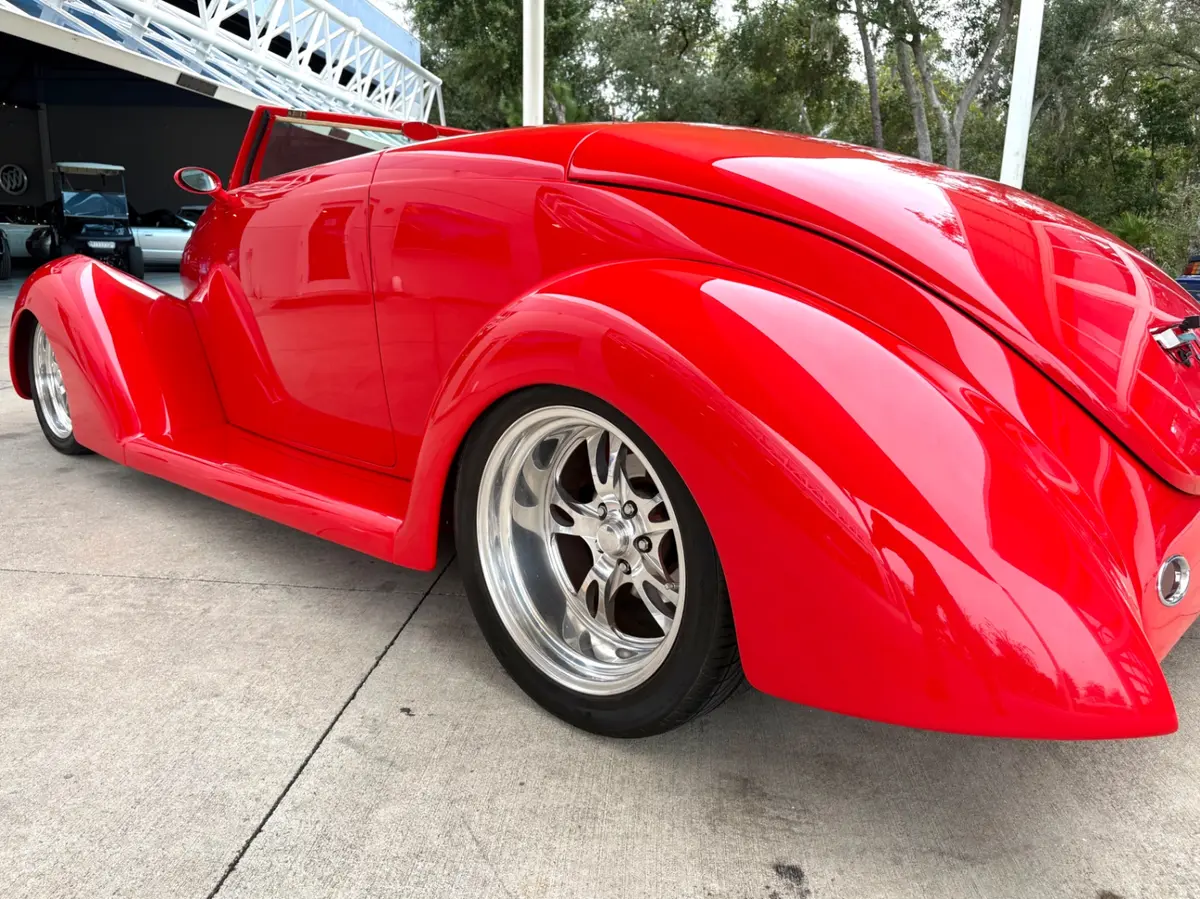
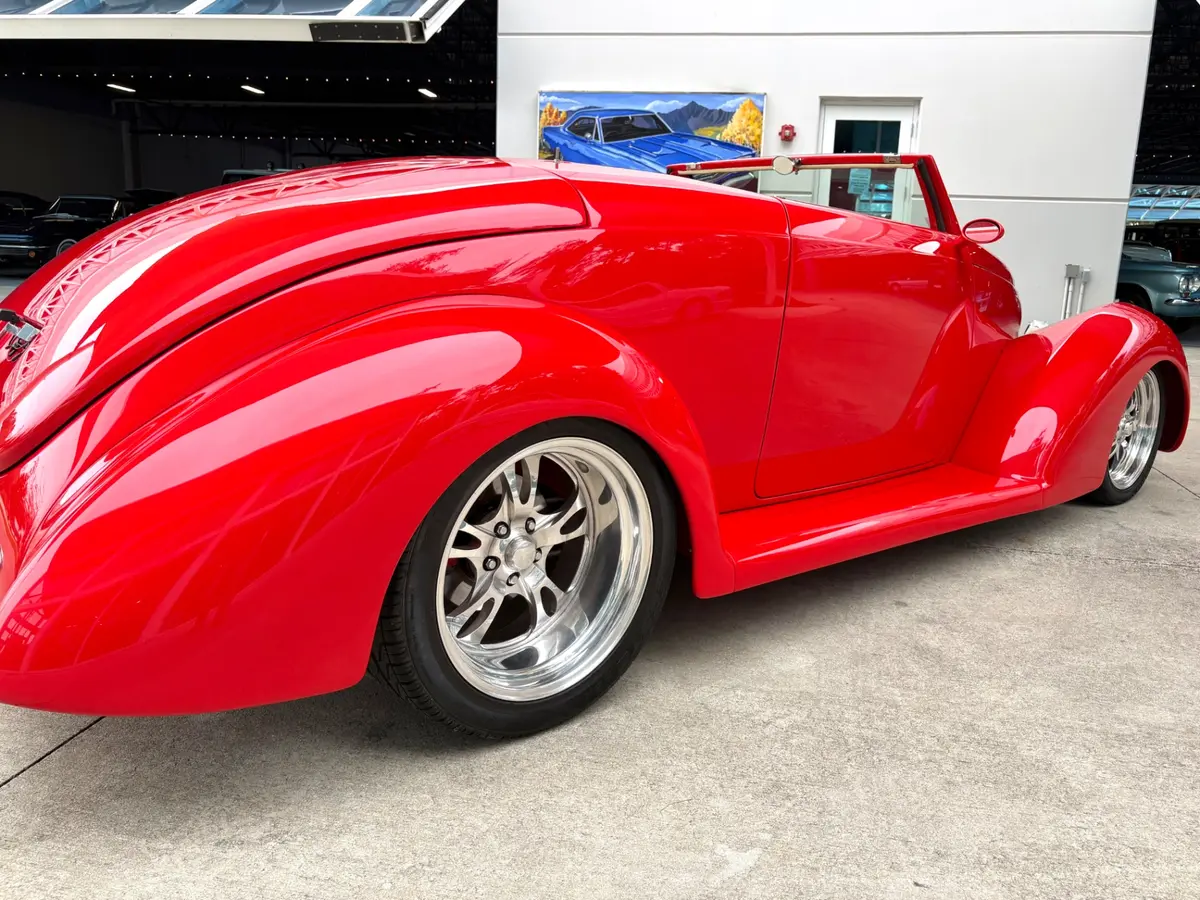
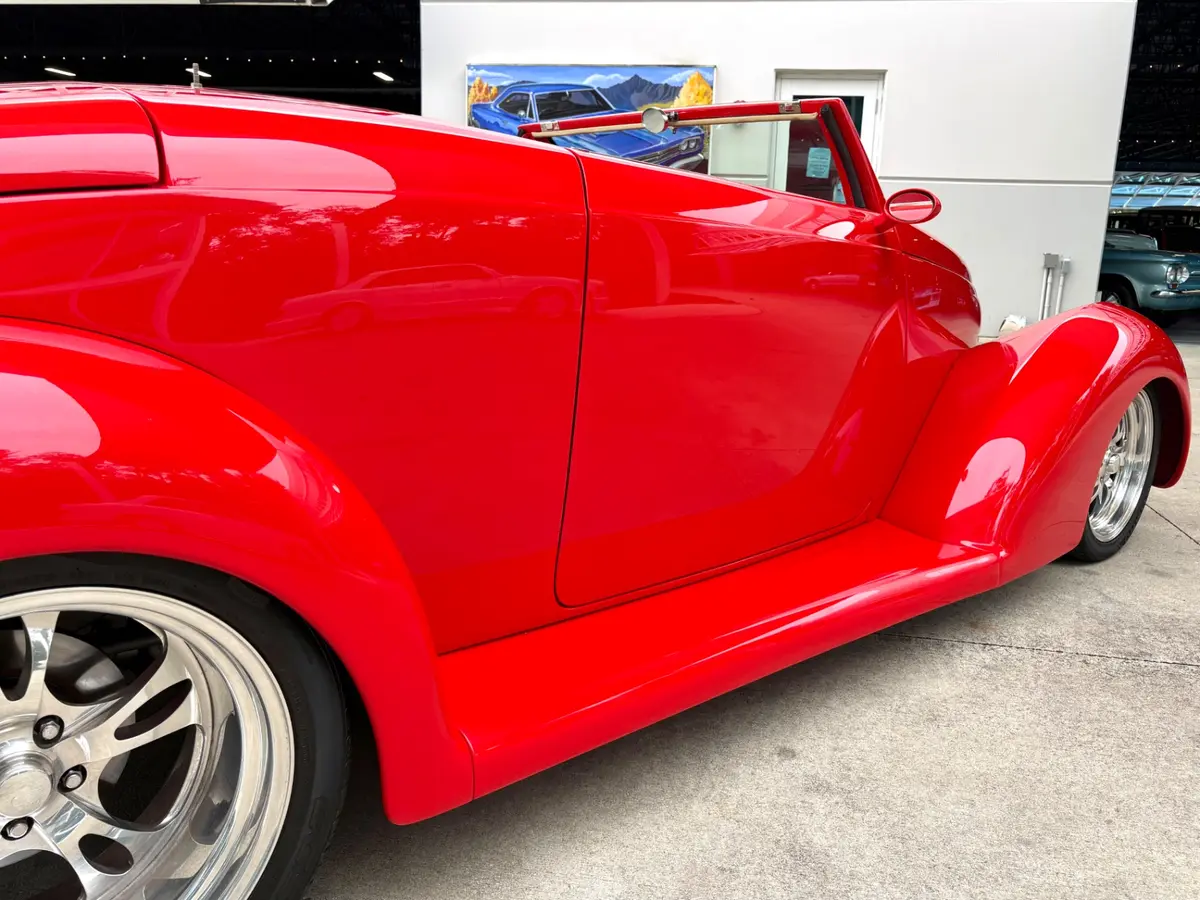
The body of this 1939 Ford De Luxe is finished in red — a color that works particularly well on this generation of Ford because it emphasizes the depth of the bodylines rather than hiding them. The 1939 De Luxe body has a series of compound curves that run from the leading edge of the front fenders, over the hood, and back through the door to the tail — and the red finish makes those transitions easy to read and appreciate. The paint has the depth and clarity consistent with a high-quality custom application, with no visible orange peel, runs, or repairs visible in the photos.
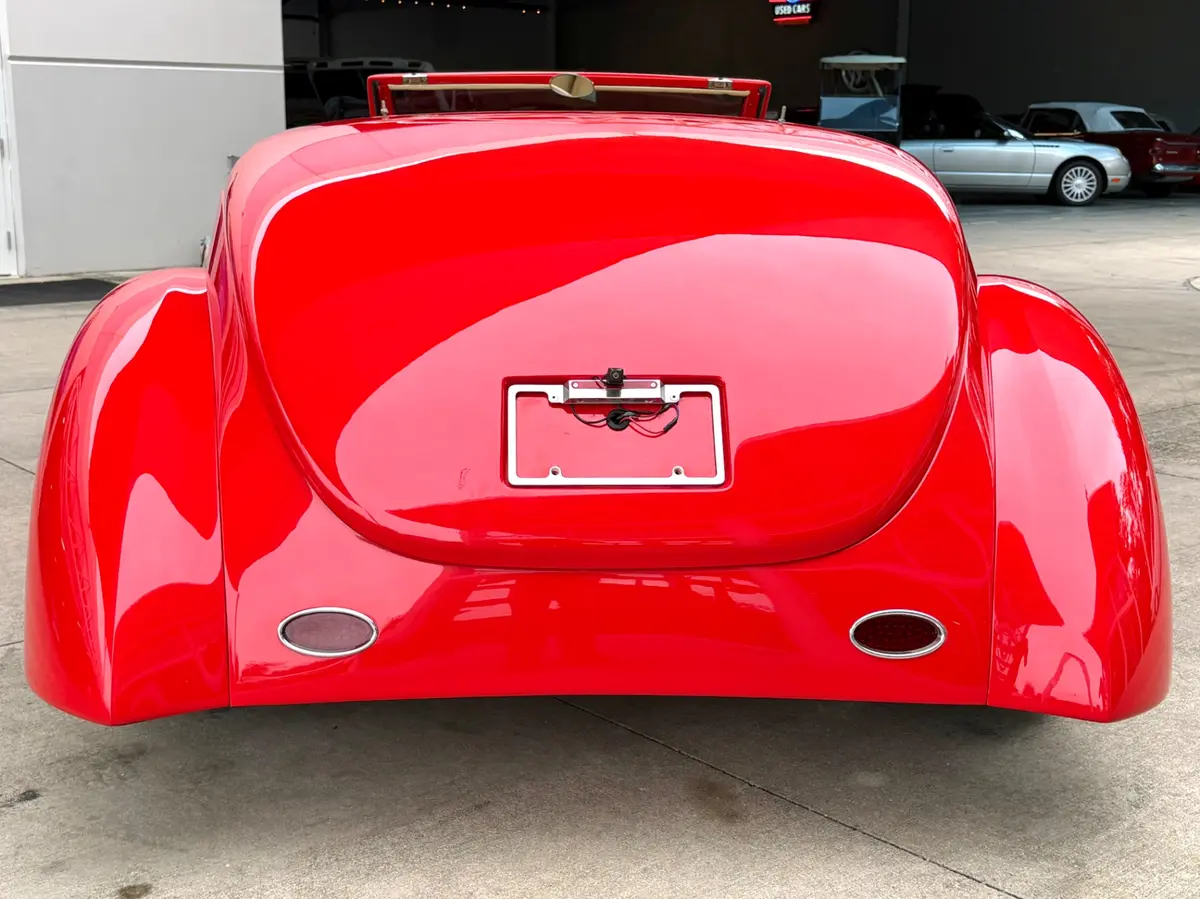
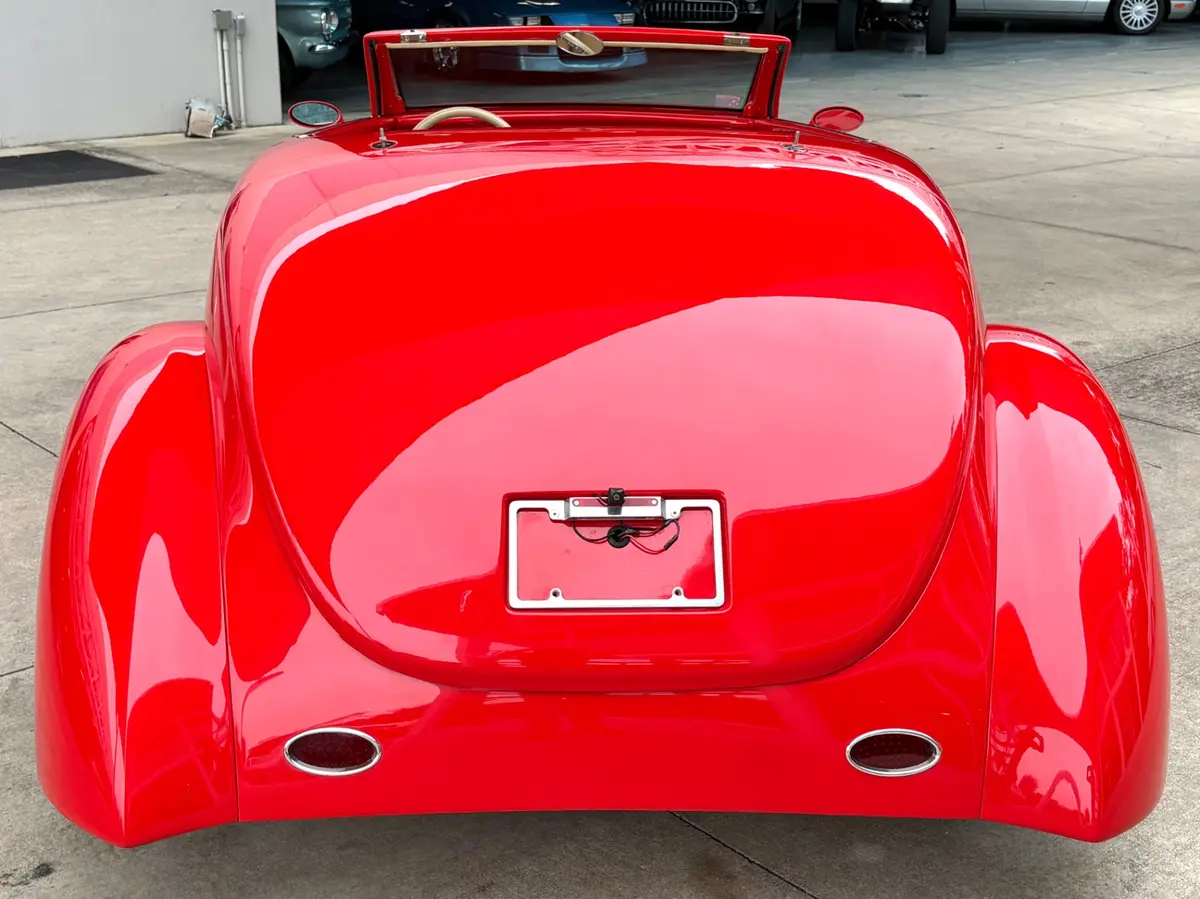
The front end retains the 1939 Ford De Luxe's characteristic vertical grille with its fine horizontal bars and center spine, flanked by the faired-in circular headlight pods. These elements are what make the 1939 Ford immediately identifiable and what have kept it at the top of the hot rod hierarchy for more than 70 years. The chrome on the grille surround and headlight trim rings is clean and free of pitting. The body appears to be a custom-built or heavily modified roadster/convertible configuration, with the rear deck area smoothed and the bodywork massaged to eliminate the factory seams and trim mounting holes — a common and labor-intensive step in a build of this nature.
The undercarriage is painted in matching red, which is visible in the lift photos. This is a show-level detail that takes significant time and prep work to execute correctly, and it confirms that the builder approached this 1939 Ford De Luxe with a complete, all-corners execution rather than a cosmetics-only build. The frame, suspension components, and exhaust routing are all clearly visible from below and show the kind of organized, thought-out construction that holds up under inspection.
Conclusion
The 1939 Ford De Luxe has earned its place in American car culture not just because it looks right, but because it has always been the right starting point for a build like this one. The body is proportionally correct from every angle — narrow at the cowl, wide at the fenders, low to the ground — and those proportions are exactly what this custom street rod preserves and enhances. Underneath that classic shape, the builder installed a drivetrain and suspension package that solves every real-world problem the original car had: inadequate power, drum brakes, a solid front axle, no air conditioning, and no modern amenities. What you have here is a 1939 Ford De Luxe that you can drive in Florida summer heat, merge onto a highway with confidence, and stop reliably when you need to. At 3,623 miles, it has been driven enough to be sorted, but not enough to show any meaningful wear.
To schedule a viewing or ask specific questions about this 1939 Ford De Luxe, call Skyway Classics in Sarasota, Florida at 941-254-6608.
Disclaimer
Information found on the website is presented as given to us by the owner of the car, whether on consignment or from the owner we bought it from. Some Photos, materials for videos, descriptions and other information are provided by the consignor/seller and is deemed reliable, but Skyway Classics does not warranty or guarantee this information. Skyway Classics is not responsible for information that may incorrect or a publishing error. The decision to purchase should be based solely on the buyers personal inspection of the vehicle or by a professional inspection service prior to offer or purchase being made.
1939 Ford
De Luxe Convertible
Why Choose Skyway Classics?
Explore our curated inventory of classic and collector cars—thoughtfully selected, ready to drive, and supported by experts who make ownership simple.
Expert Curation
Every vehicle is hand-selected by our experts for quality, authenticity, and investment potential.
Fast Transactions
Streamlined buying and selling process with quick financing and immediate delivery options.
Only National Dealer With Classic Service & Repair
We’re the only national dealership that services and repairs the classics we sell—before and after the sale.
Nationwide Network
Access to our extensive network of collectors, restorers, and classic car enthusiasts nationwide.
Concierge Ownership Support
From financing and insurance to paperwork, shipping, and titling—we handle the details so you can enjoy the drive.
Passion-Driven Service
We're classic car enthusiasts first, providing personalized service with genuine passion for the hobby.