
1968 Ford
Mustang Fastback
1968 Ford Mustang Fastback — Custom Pro-Touring Build with Ford 302 EFI and Full Chassis Upgrade
Why This Car Is Special
The 1968 Ford Mustang Fastback is widely regarded as the peak of the first-generation Mustang's design. Ford restyled the entire Mustang lineup for 1967, adding width, length, and muscle car presence that the original 1965 body simply couldn't accommodate. The fastback roofline — officially called the SportsRoof starting in 1969, but carrying the same flowing rear glass design in 1968 — is the body style that defined the pony car era and still commands the most attention today. When Steve McQueen drove a 1968 Mustang Fastback through the streets of San Francisco in Bullitt that same year, the body style's place in American culture was permanently cemented.
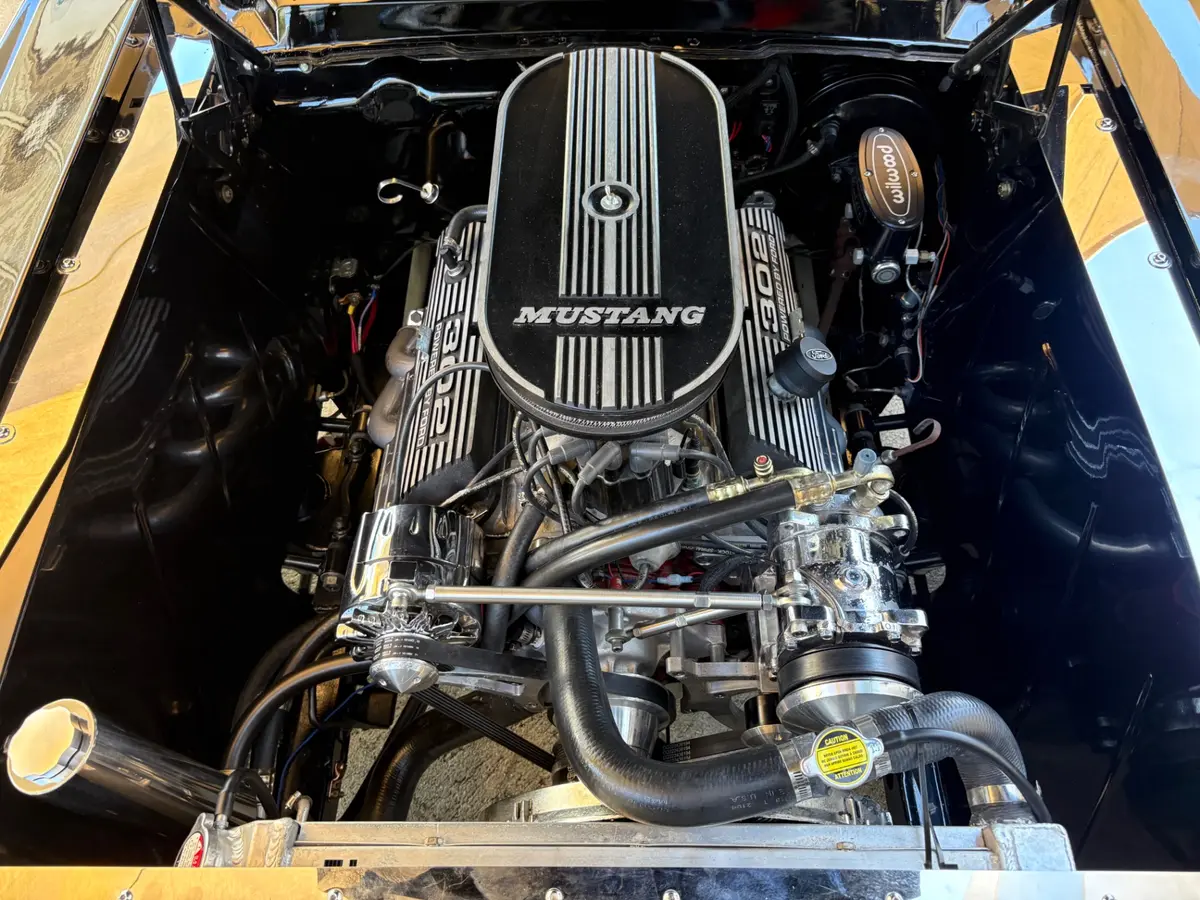
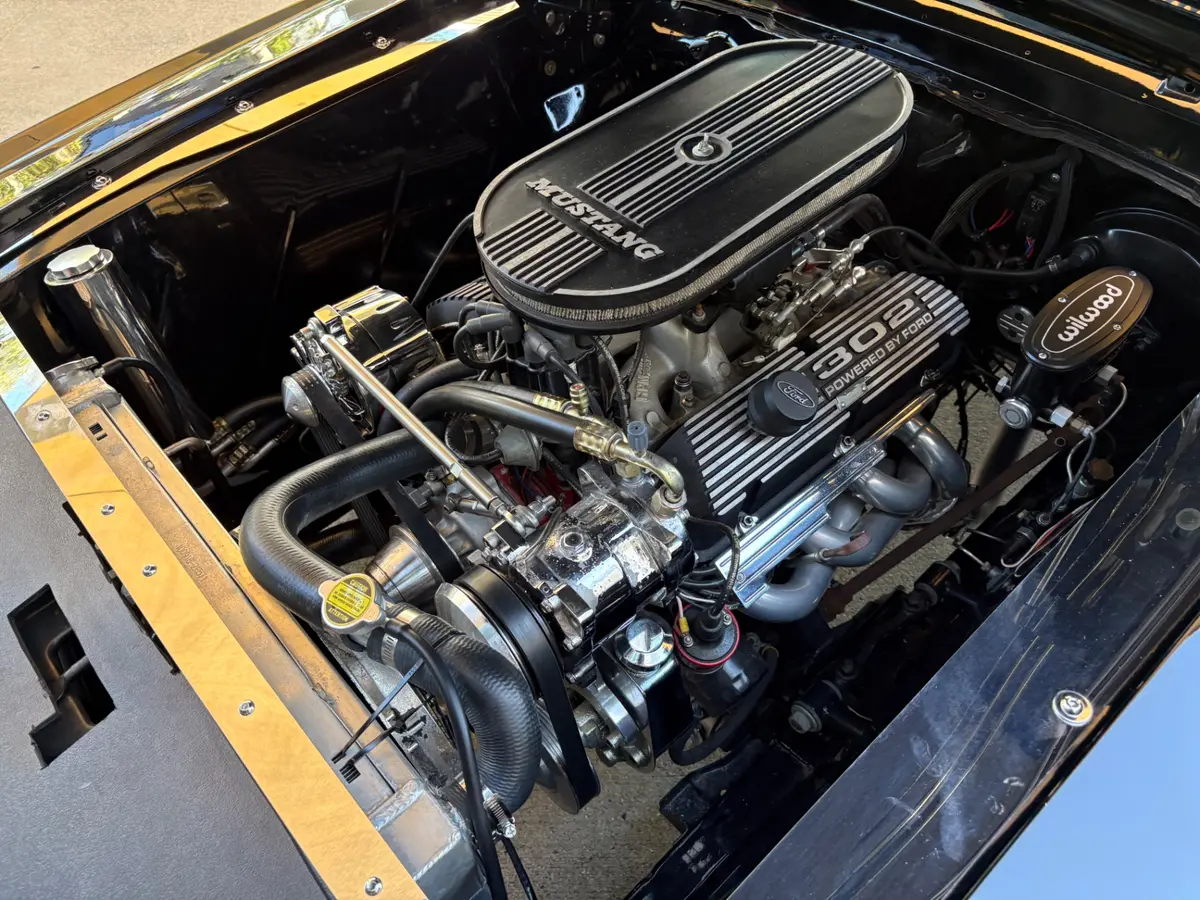
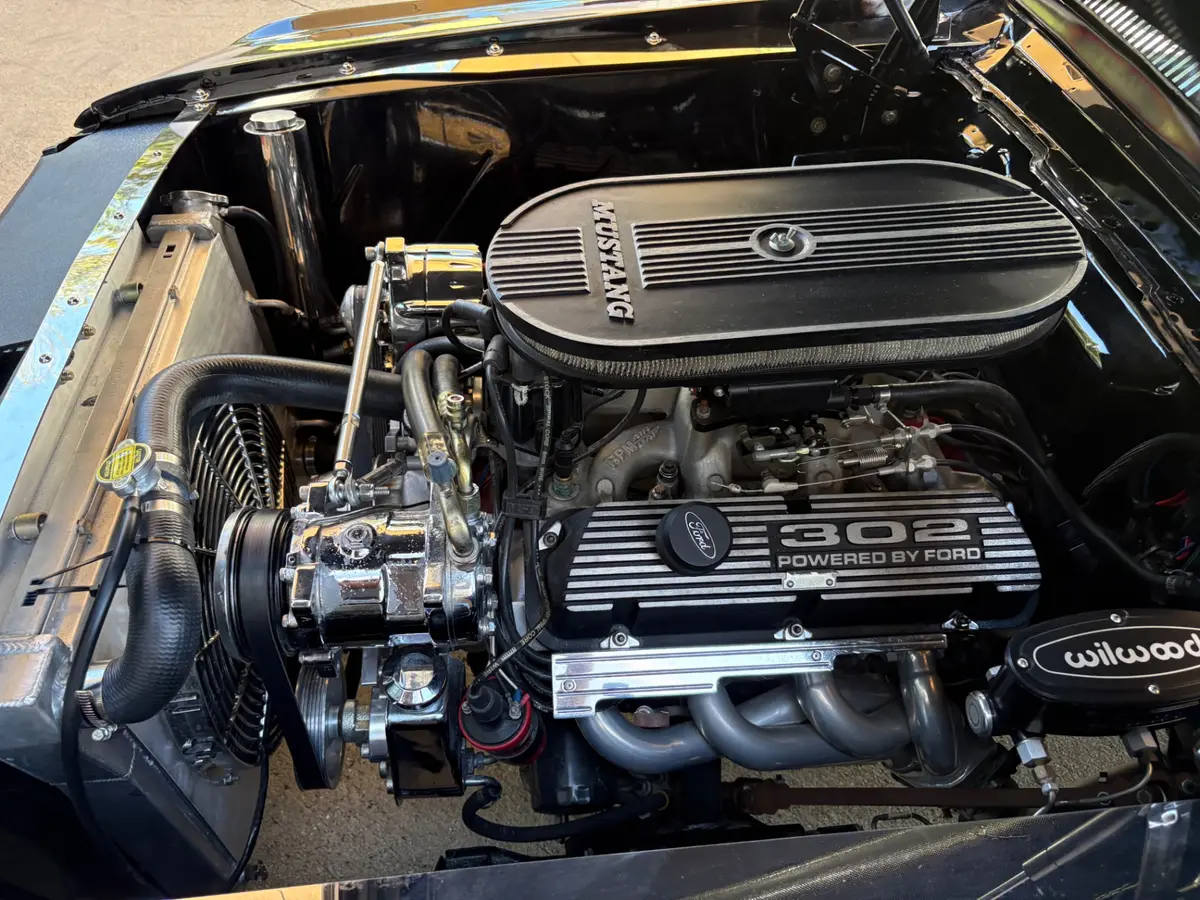
This particular 1968 Ford Mustang Fastback is not a preservation car. It was built to be driven. The owner invested in every major system — engine management, brakes, suspension, structure, and interior — with modern performance hardware chosen for reliability and street driveability, not just show. The VIN confirms this is a Fastback body (the "01" position in the sequence identifies the two-door SportsRoof hardtop body style) assembled at the San Jose, California plant, with a small-block V8 as the original engine designation. What sits in the engine bay today is a Ford 302 equipped with a Holley Sniper EFI system — a combination that keeps the small-block character intact while replacing the carburetor's cold-start and hot-soak frustrations with closed-loop fuel injection that self-tunes automatically.
The build philosophy here is pro-touring: period-correct body with a chassis and drivetrain capable of handling modern roads and modern traffic. The result is a 1968 Ford Mustang Fastback that you can get in and drive anywhere, any time.
Features List
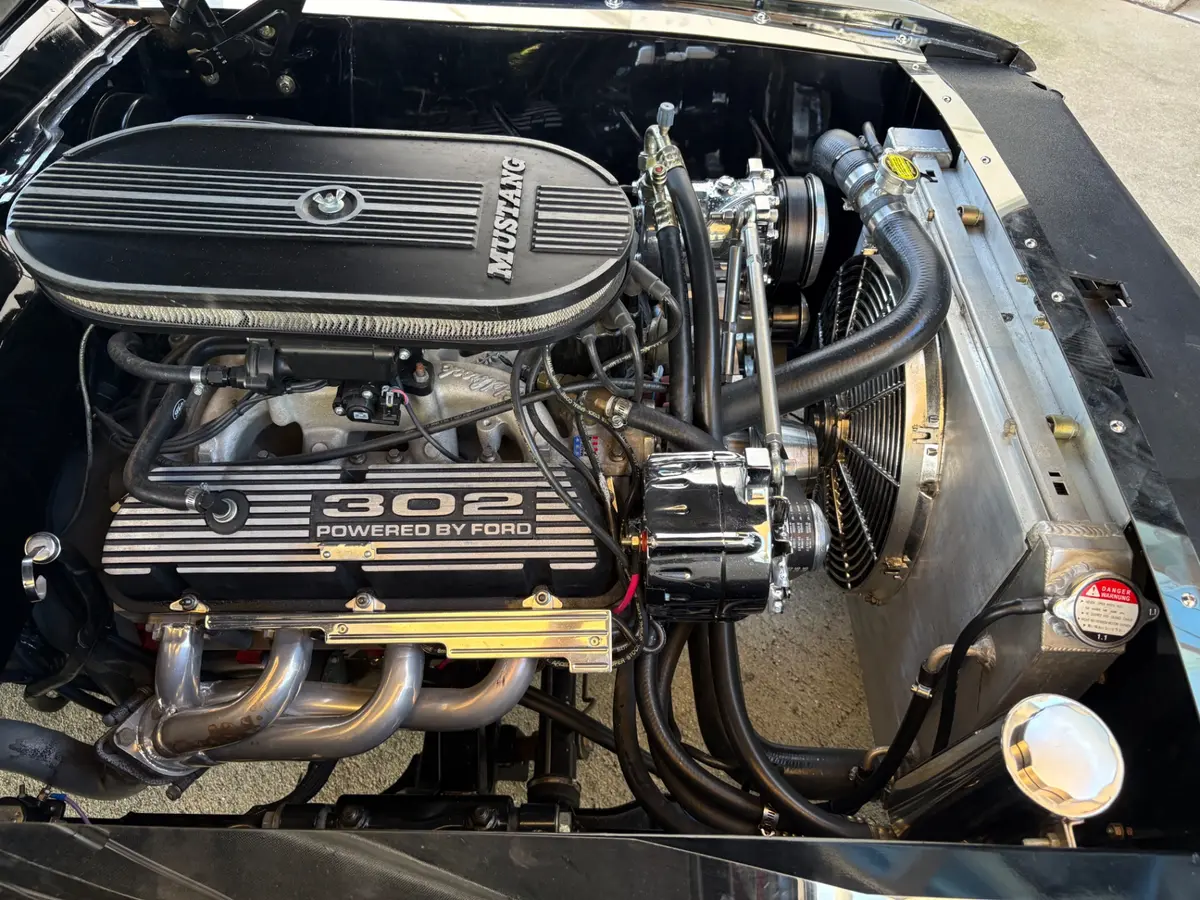
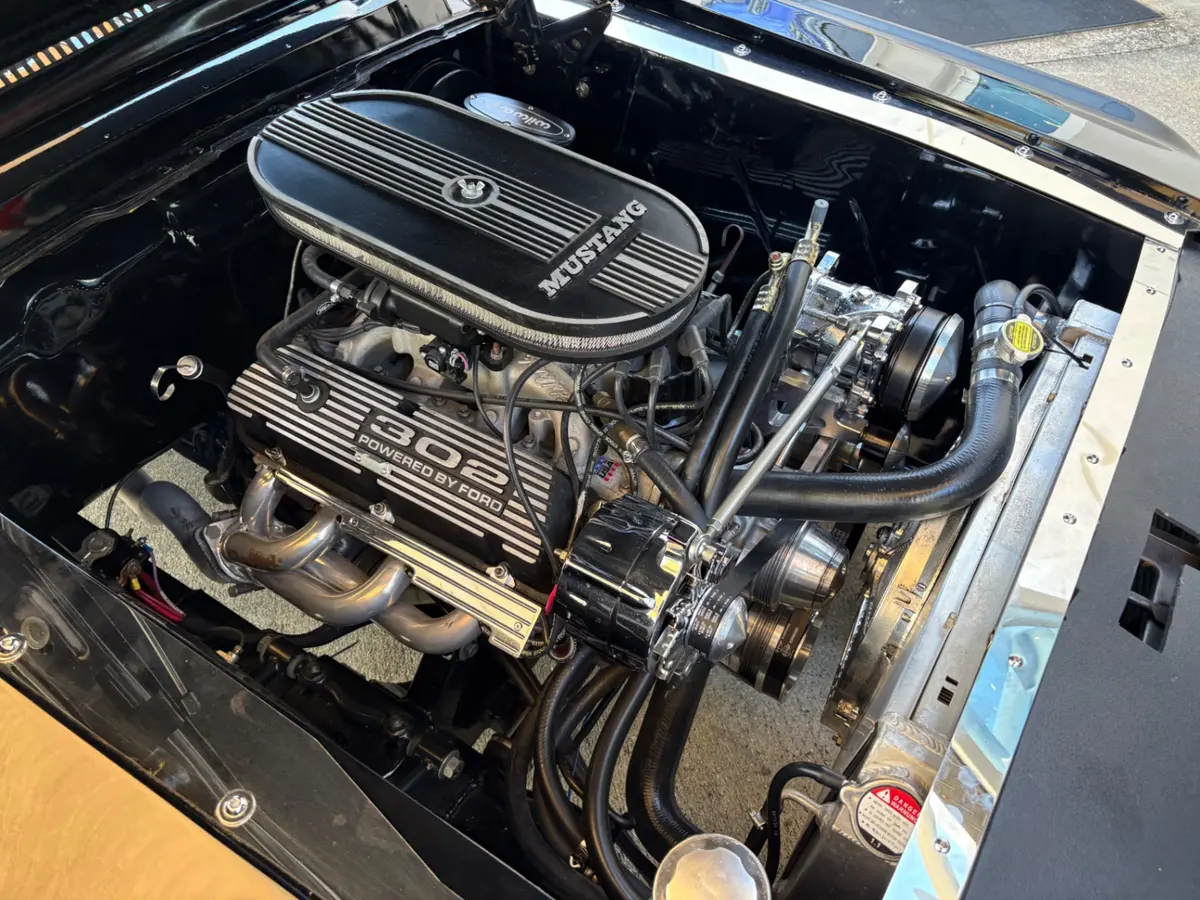
- Ford 302 V8 with Holley Sniper EFI system
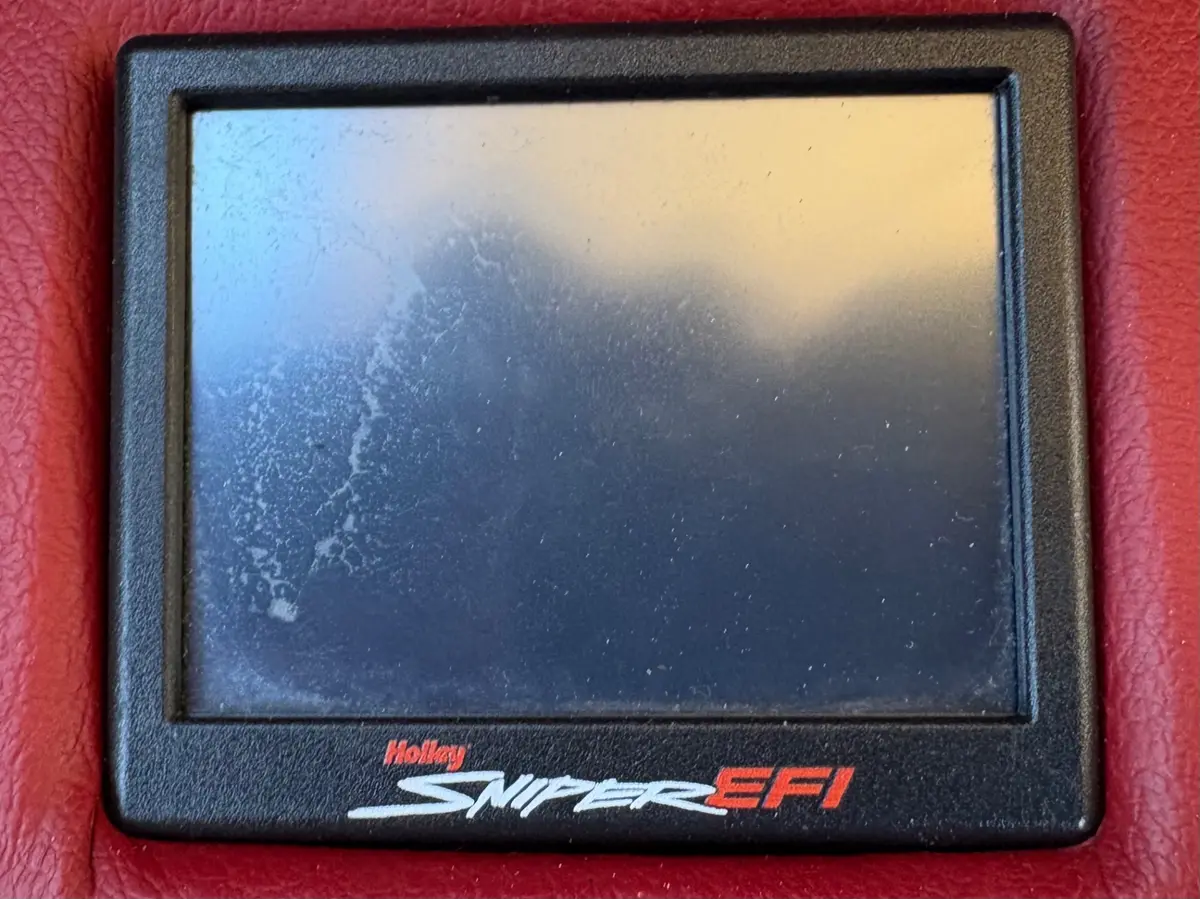
- Holley Sniper EFI touchscreen display
- Long-tube headers
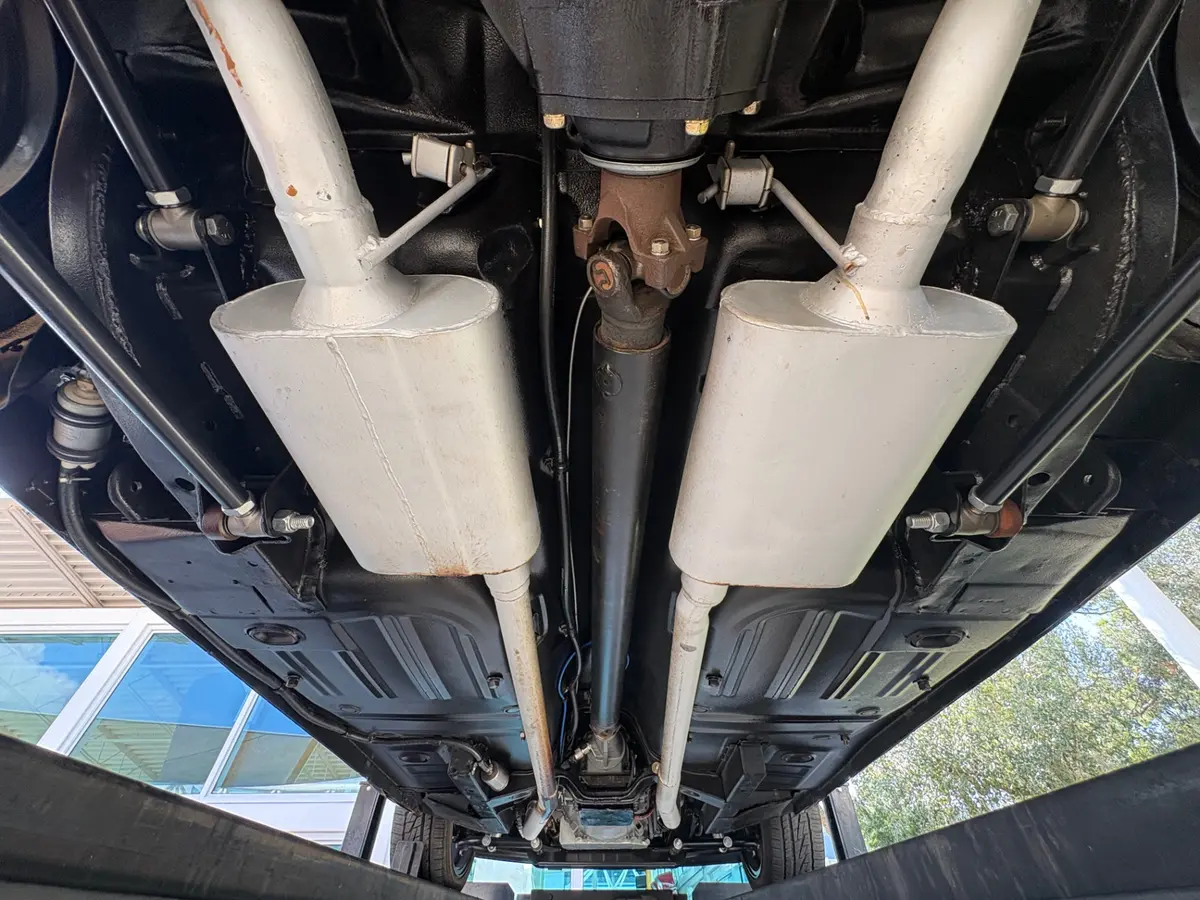
- Dual exhaust with polished tips
- Manual transmission
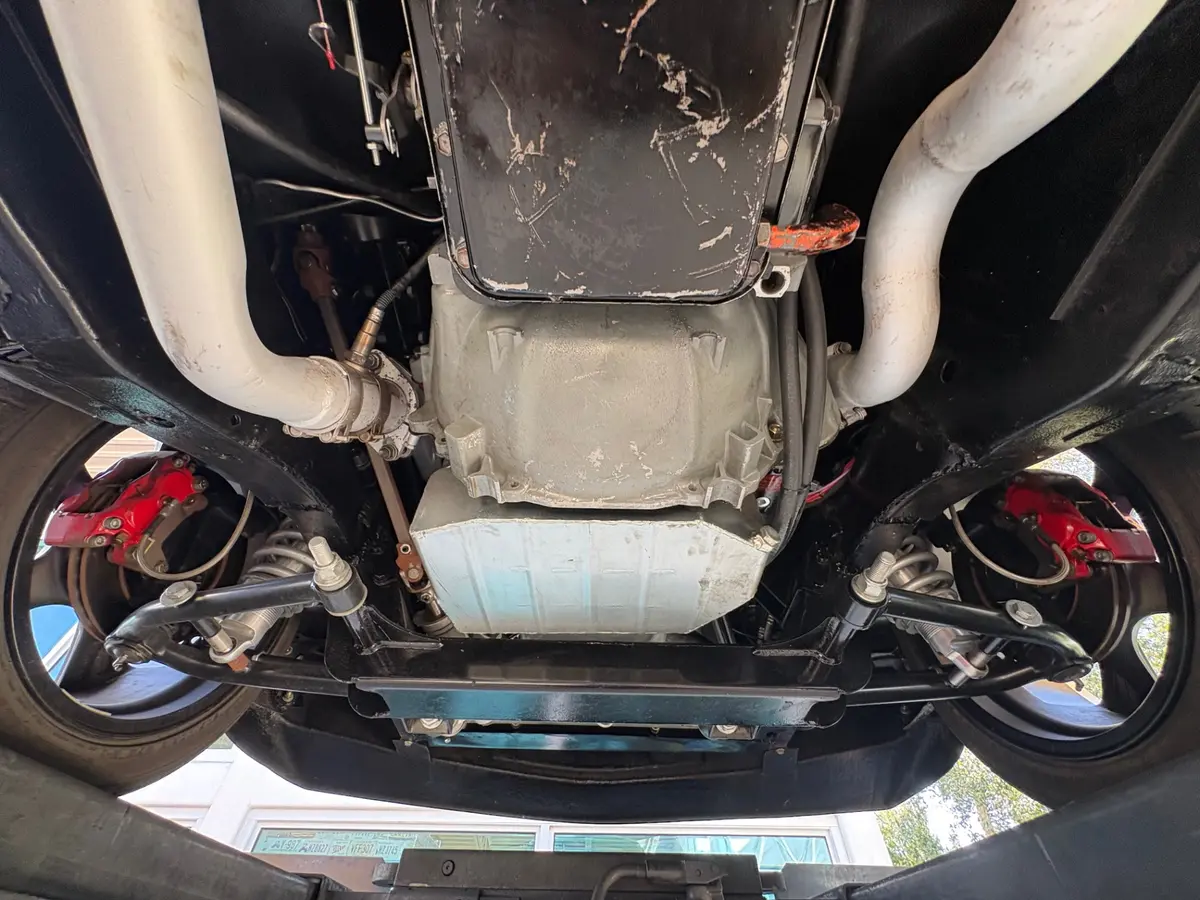
- Coilover suspension, all four corners
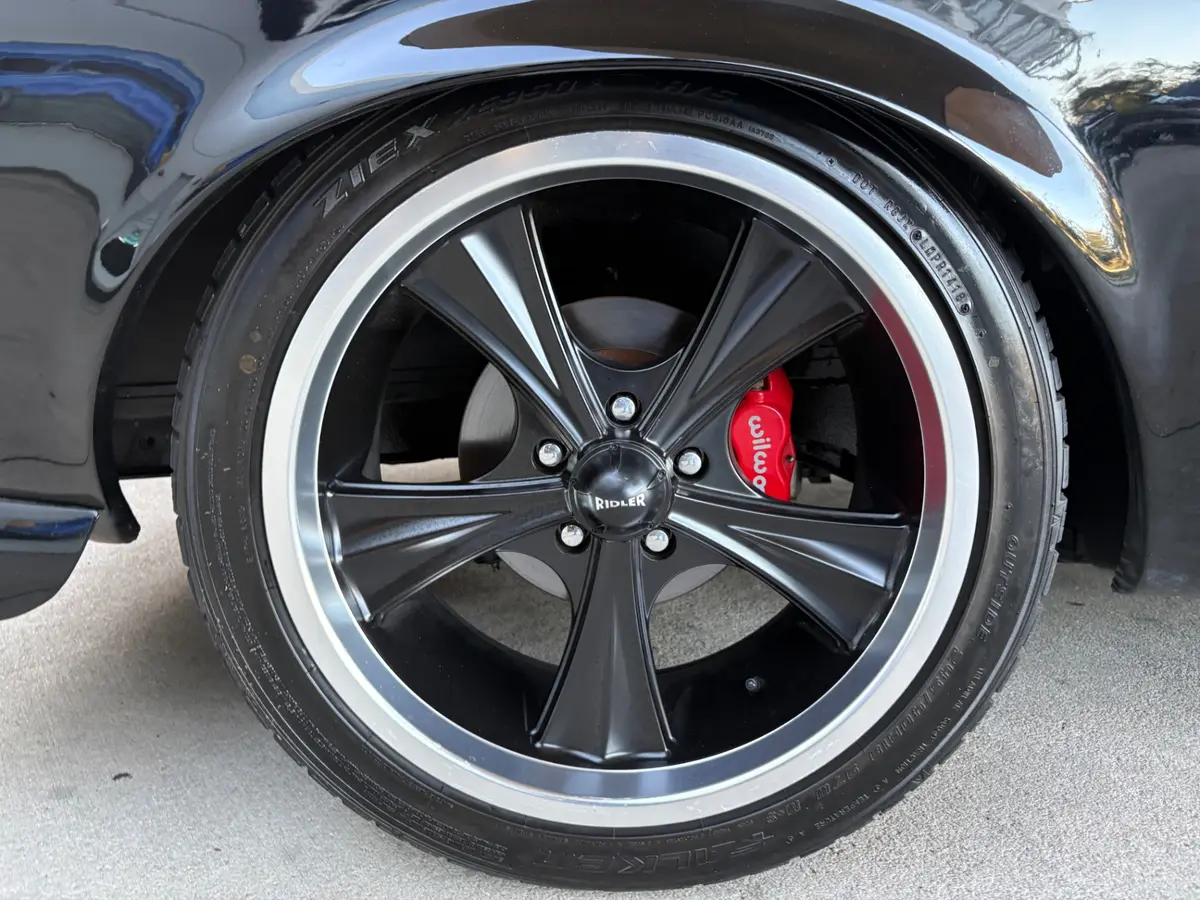
- 4-wheel Wilwood disc brakes with red calipers
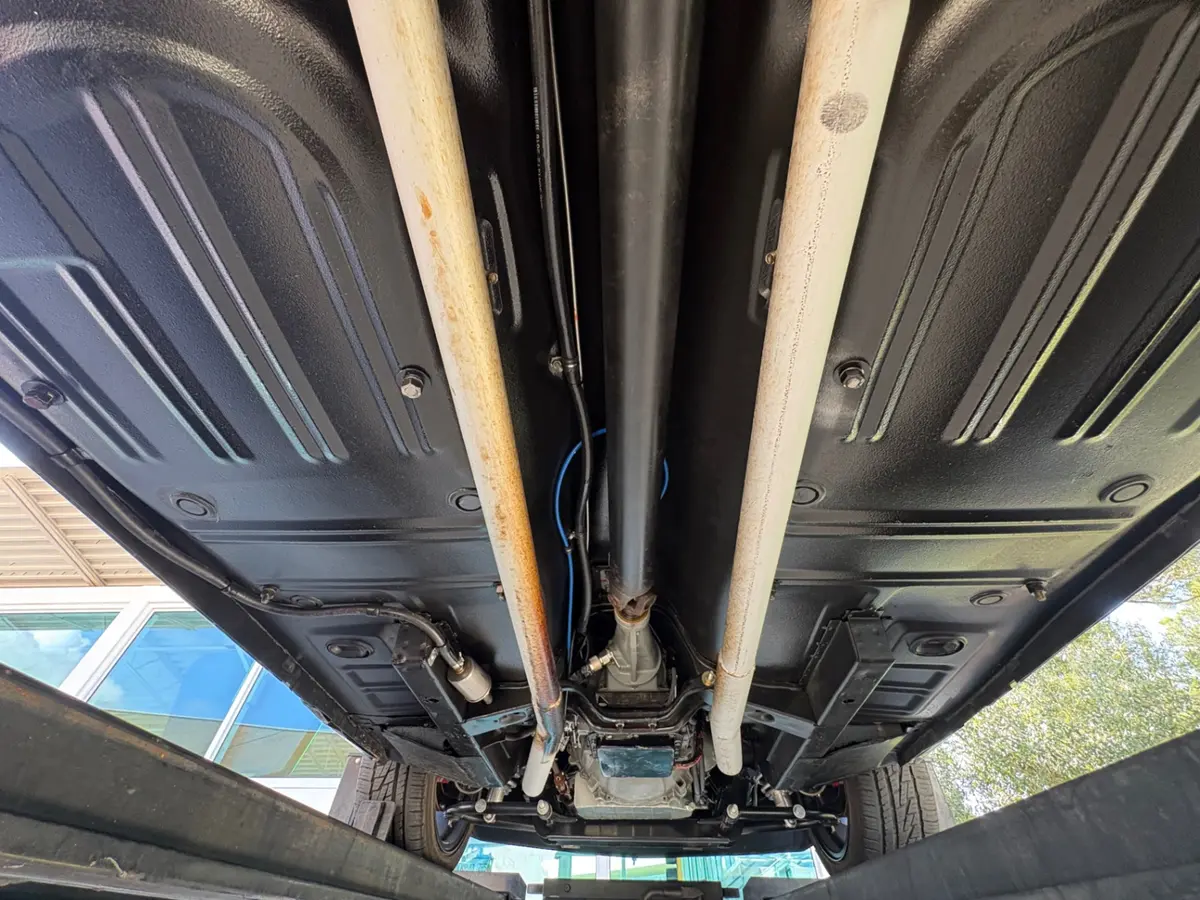
- Subframe connectors
- Power steering
- Aluminum radiator with electric cooling fan
- Ridler wheels
- Falken Ziex performance tires
- Custom front splitter
- Billet grille
- Front driving lights
- Red racing stripe
- Full red leather interior
- Custom door panels
- Custom center console with dual cup holders
- Custom chrome steering wheel
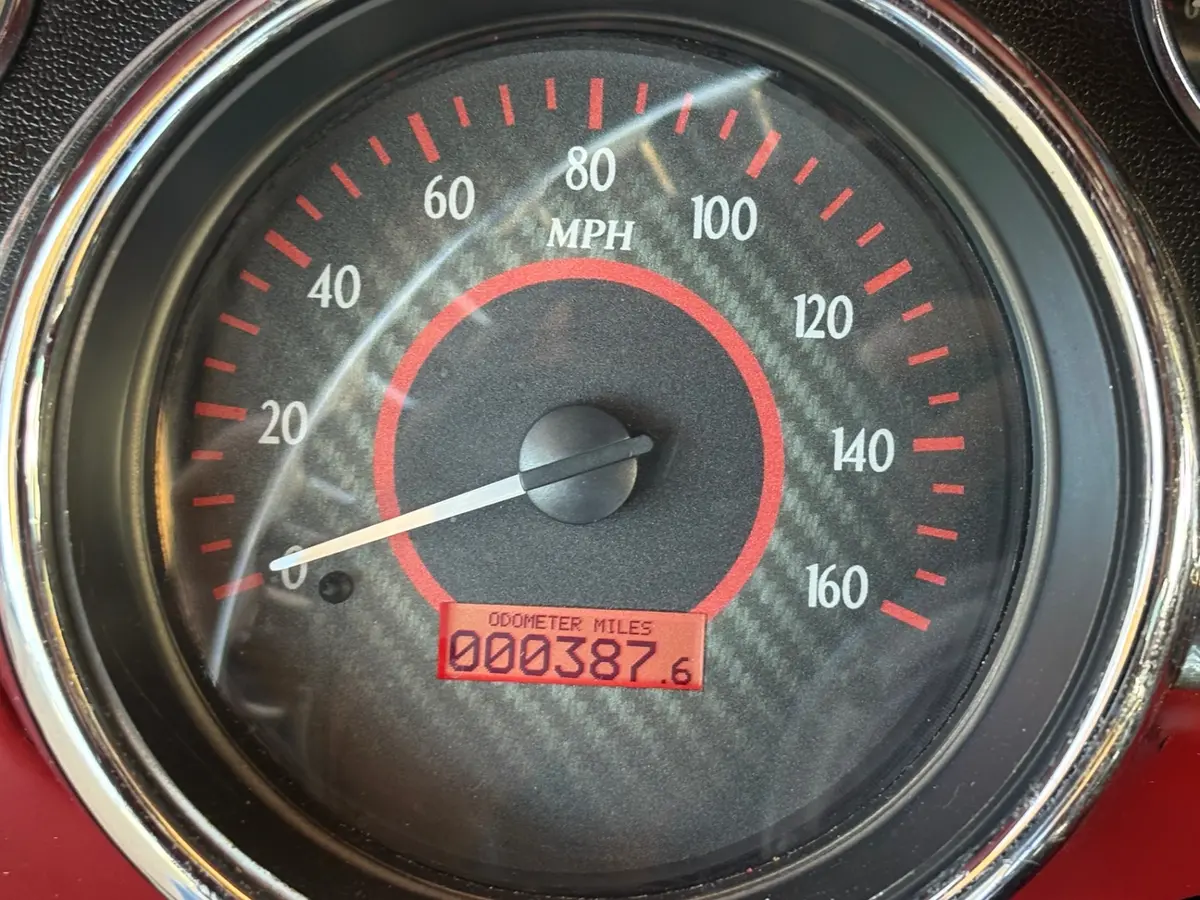
- Tachometer gauge cluster
- Holley Sniper EFI dash-mounted display
- Dual Arc Audio amplifiers
- Arc Audio subwoofers
- Arc Audio speakers throughout
Mechanical
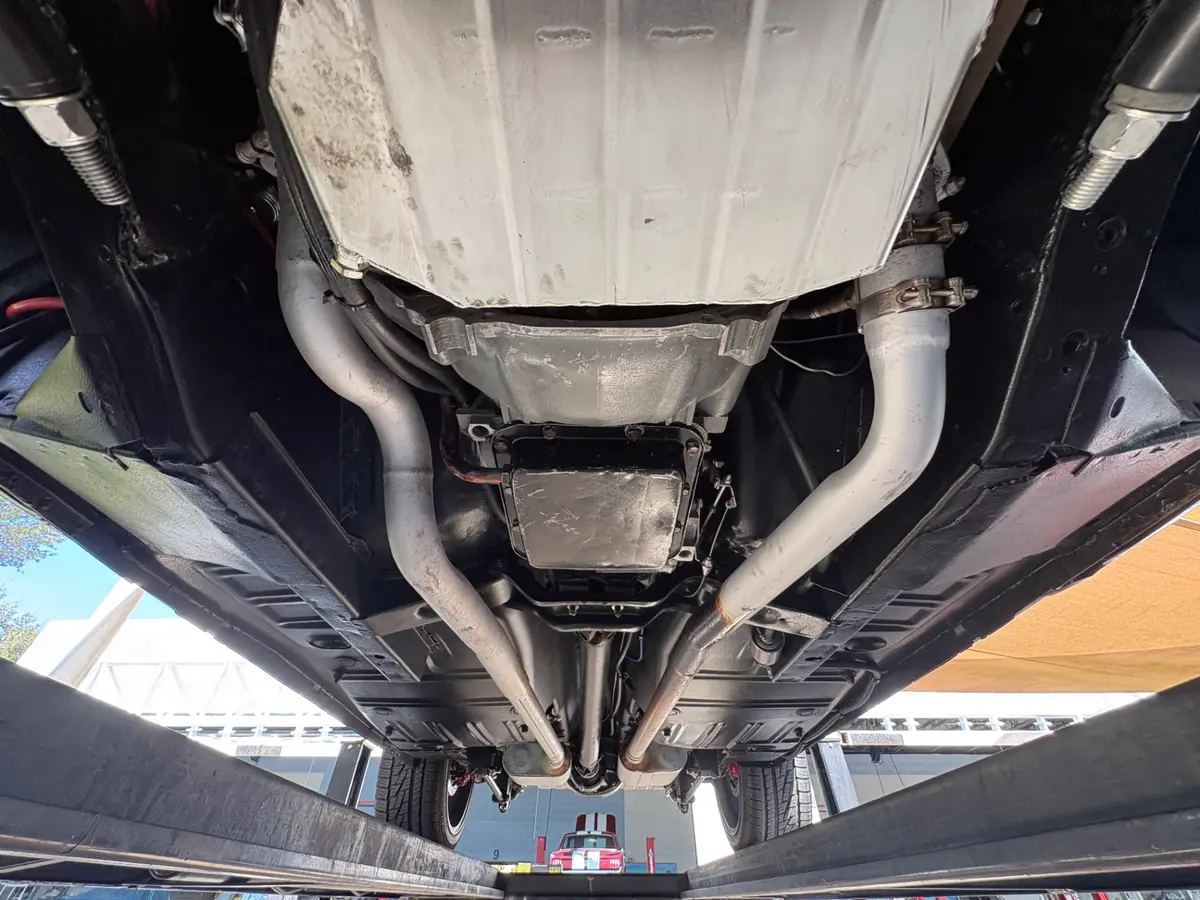
The heart of this 1968 Ford Mustang Fastback is a Ford 302 cubic inch V8 — the small-block that Ford introduced for 1968 as a bored and stroked derivative of the 289. In stock form the 302 was a torquey, rev-willing engine that fit perfectly in the Mustang's engine bay. Here it has been updated with a Holley Sniper EFI throttle body injection system mounted on the intake, which replaces the original carburetor with a self-learning fuel injection unit. The Sniper system uses an internal ECU and oxygen sensor feedback to calculate and adjust fuel delivery in real time. It handles cold starts, hot restarts, and high-altitude operation without any manual tuning after the initial setup. A dash-mounted Holley Sniper EFI display lets the driver monitor engine data including fuel mixture, coolant temperature, and throttle position. Long-tube headers feed into a true dual exhaust system, which improves scavenging across the RPM range and gives the 302 an exhaust note that matches the visual character of the car.
Cooling is handled by an aluminum radiator paired with an electric cooling fan — a meaningful upgrade over the original mechanical fan setup, which robbed horsepower and provided inconsistent airflow at idle. The electric fan runs on demand, keeping temperatures stable in traffic without parasitic drag on the engine.
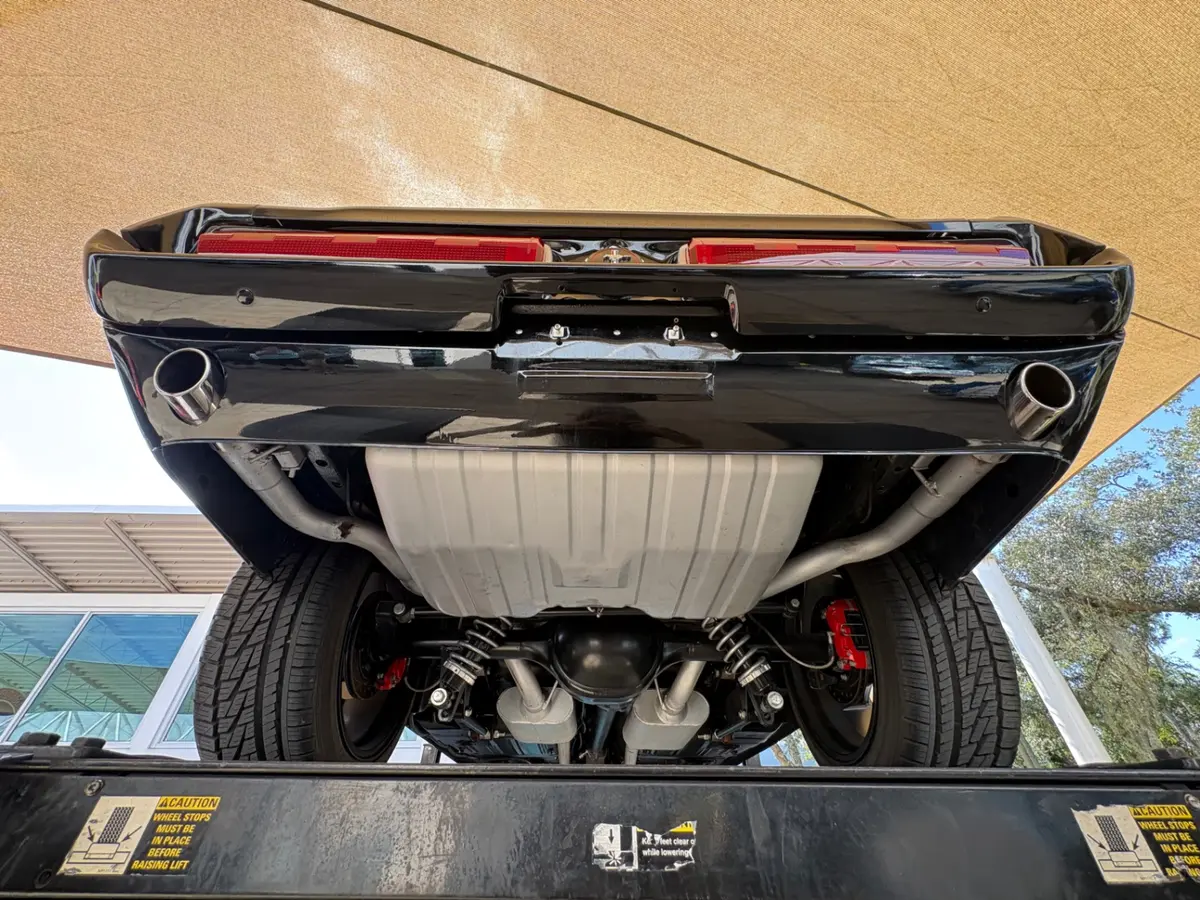
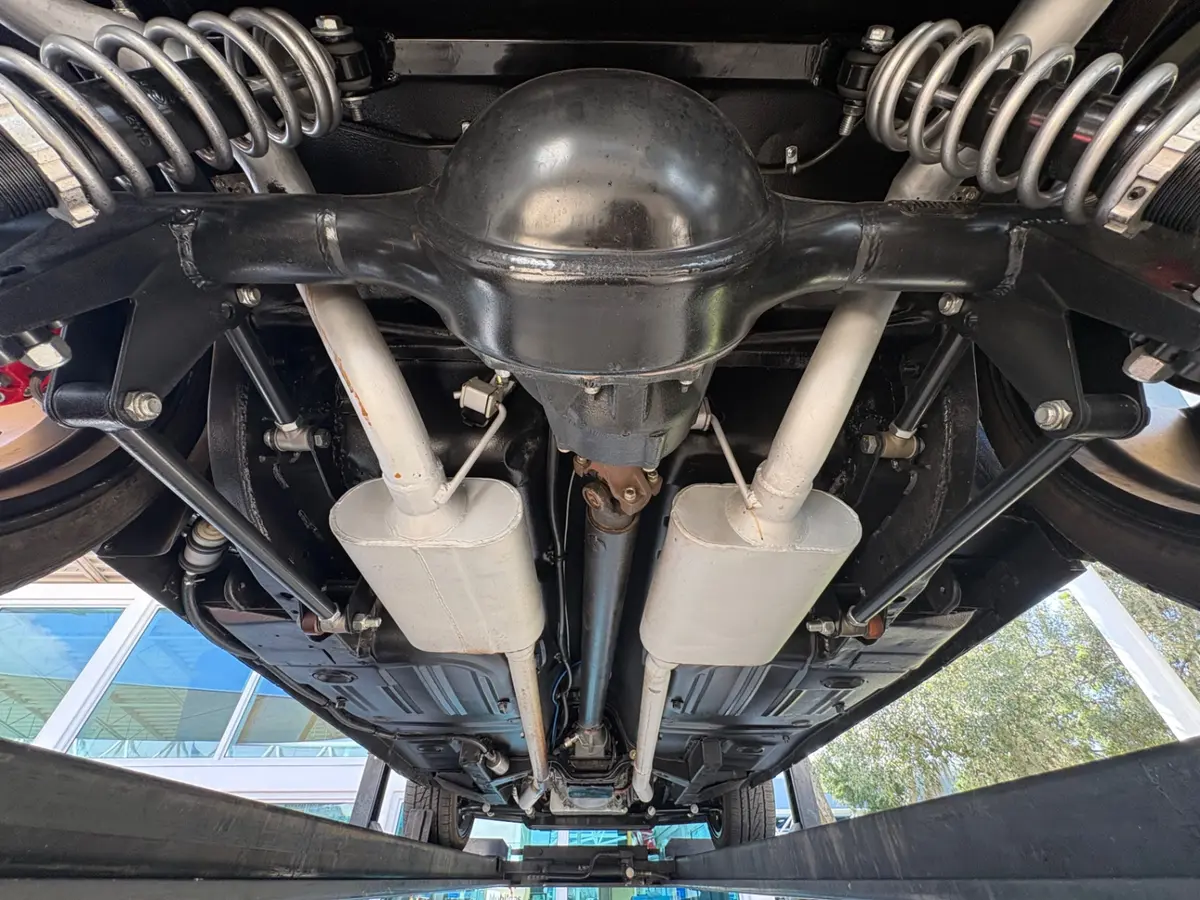
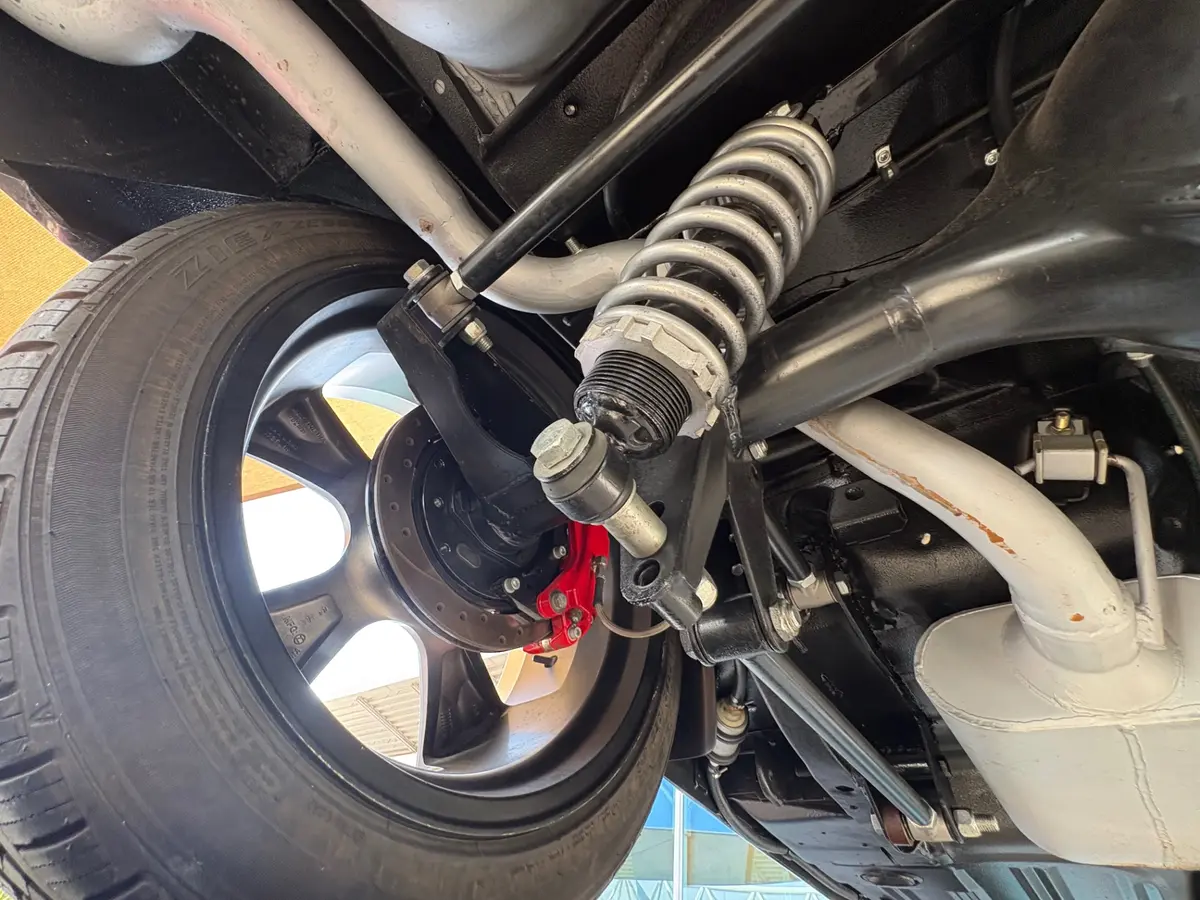
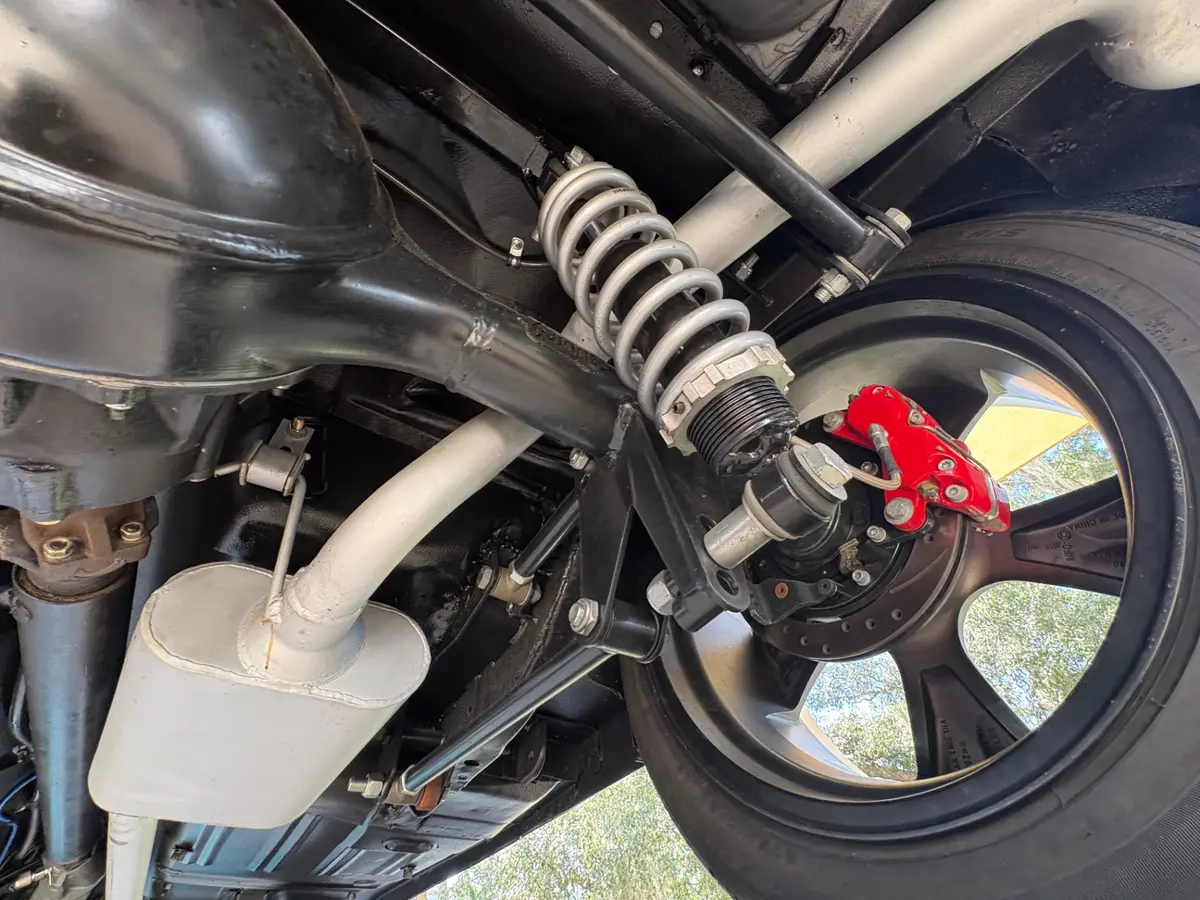
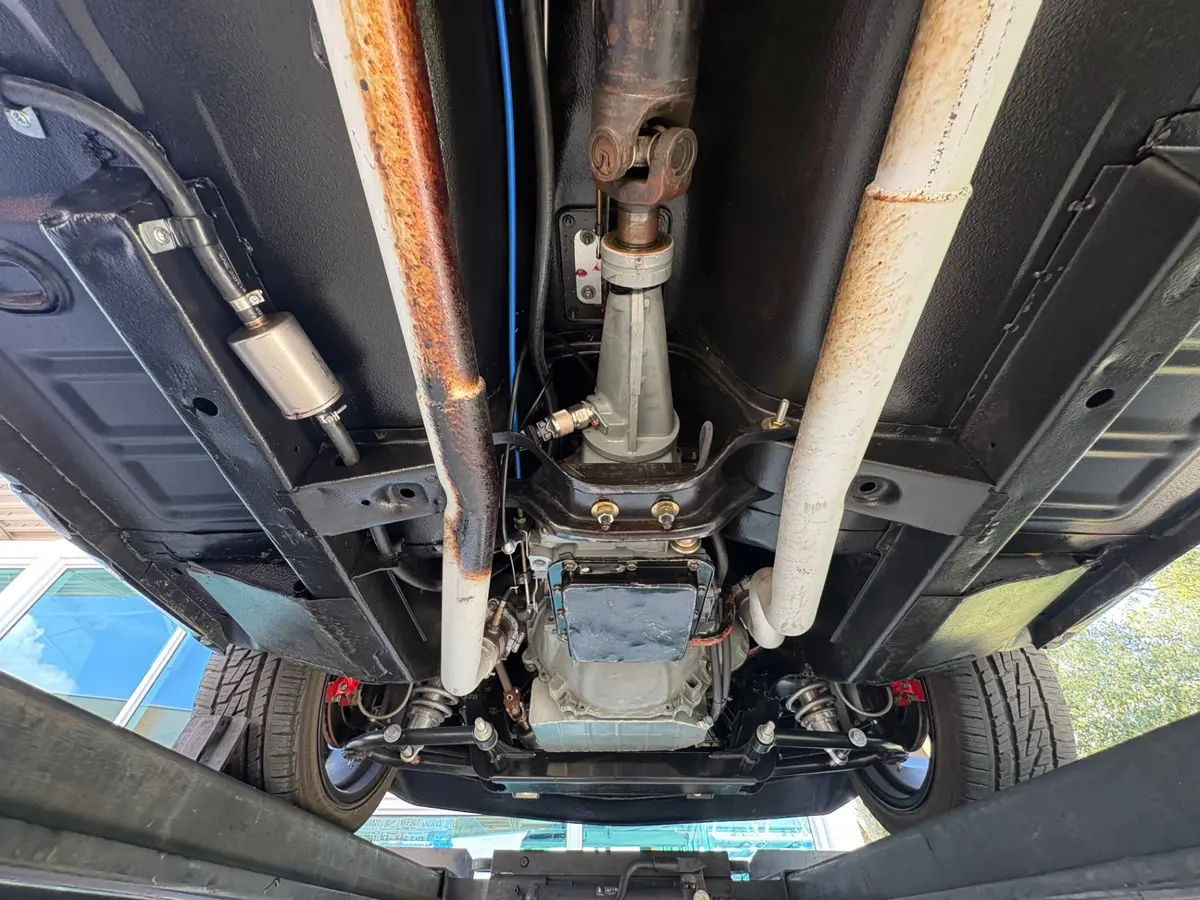
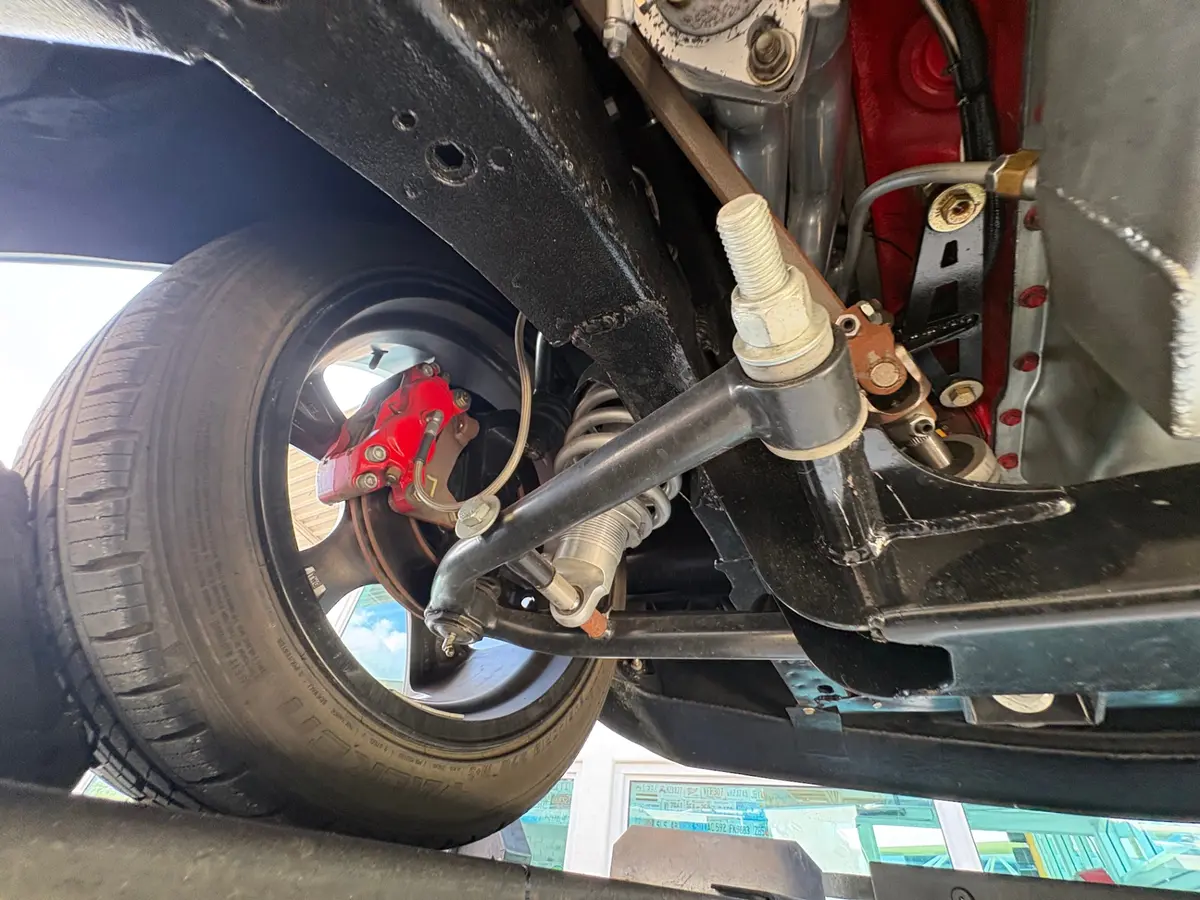
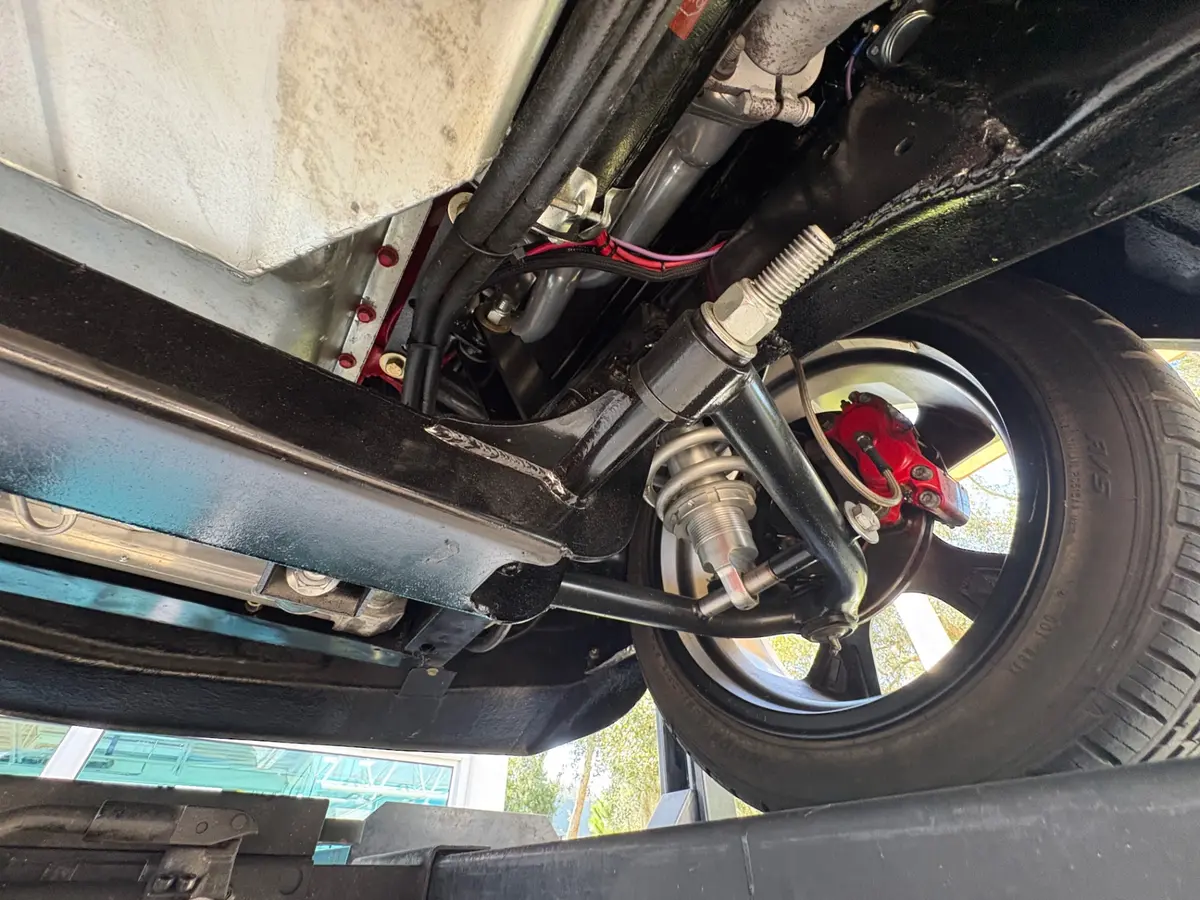
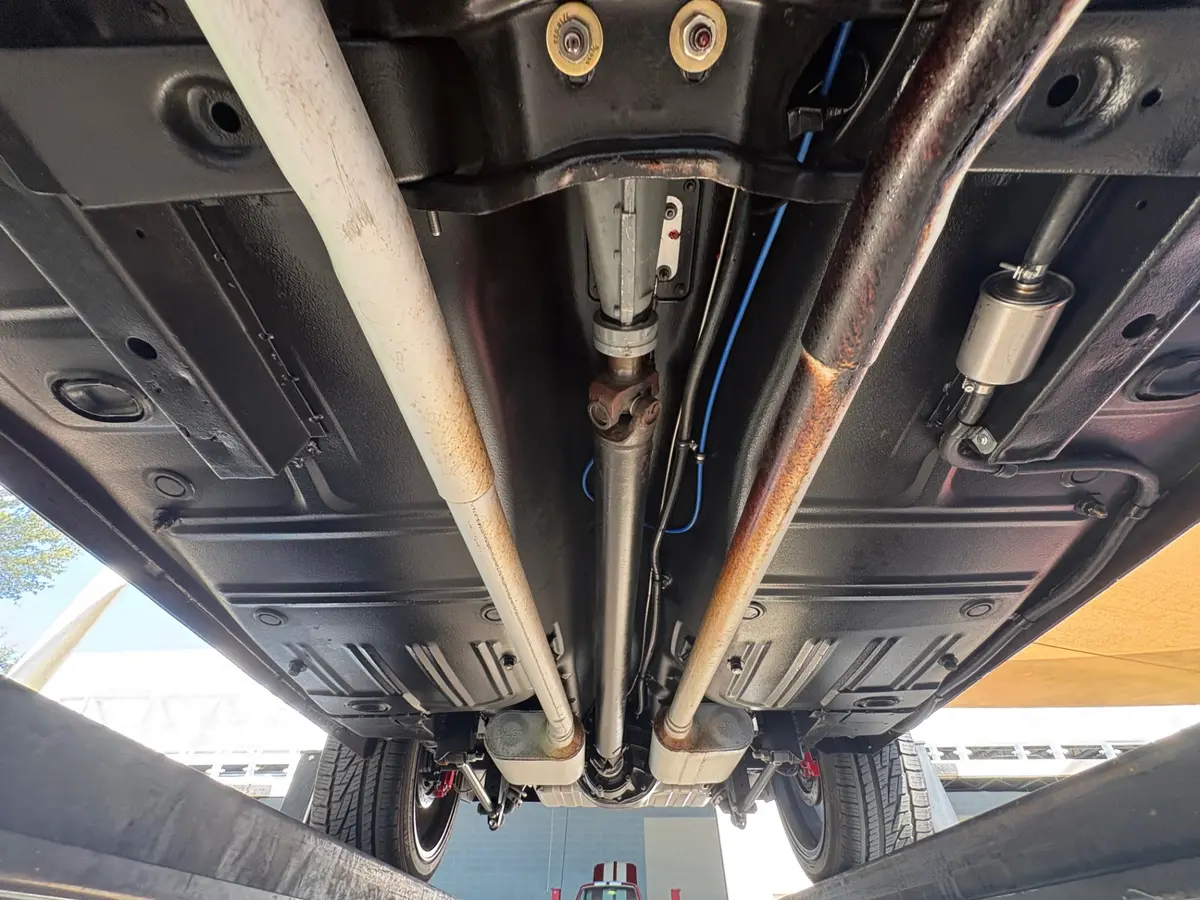
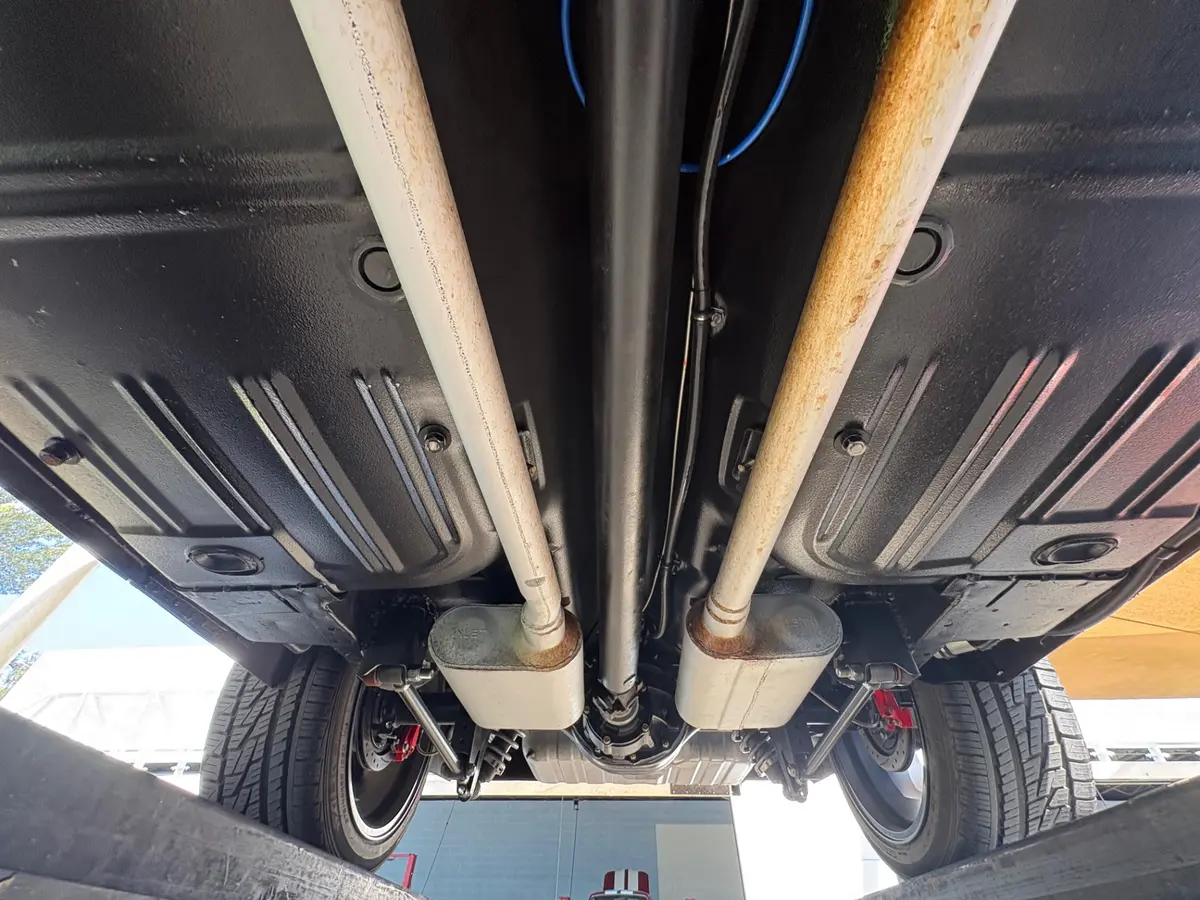
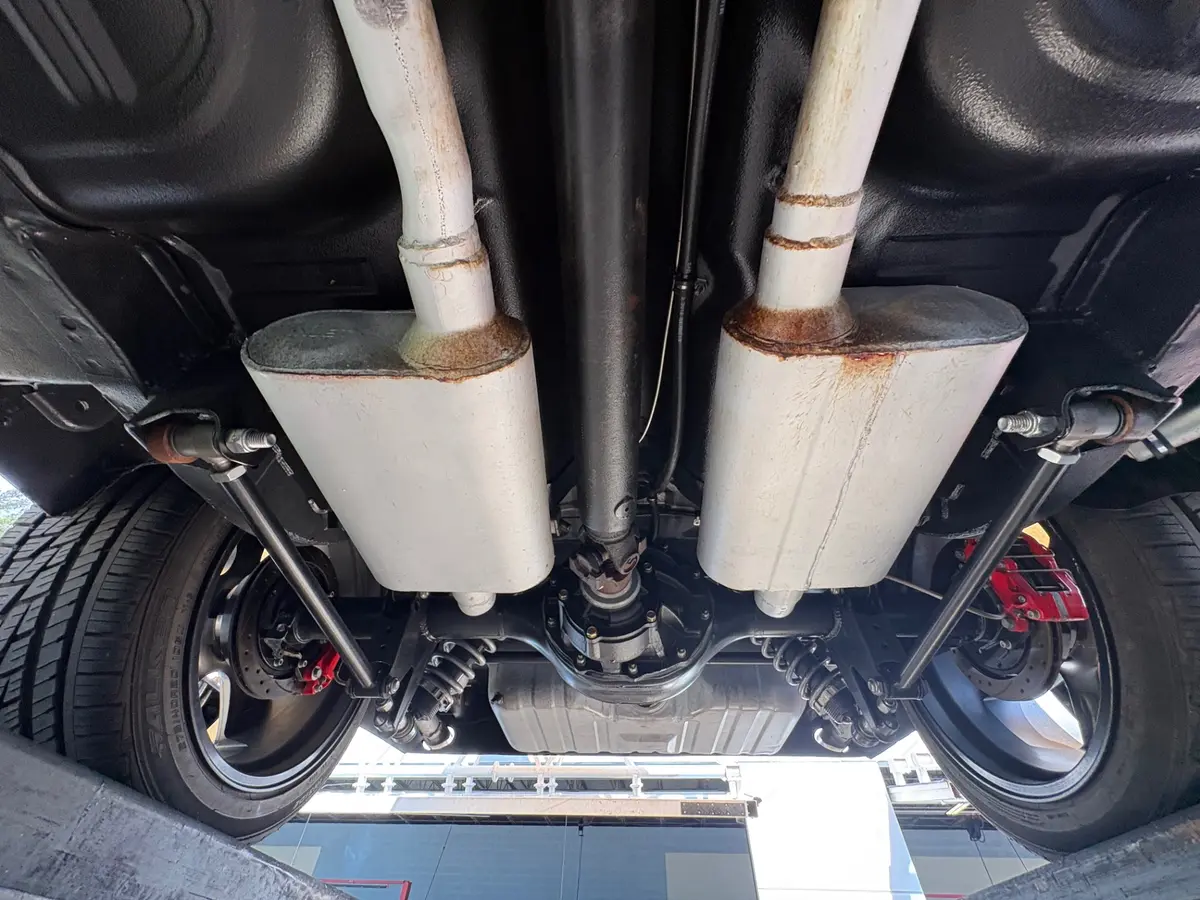
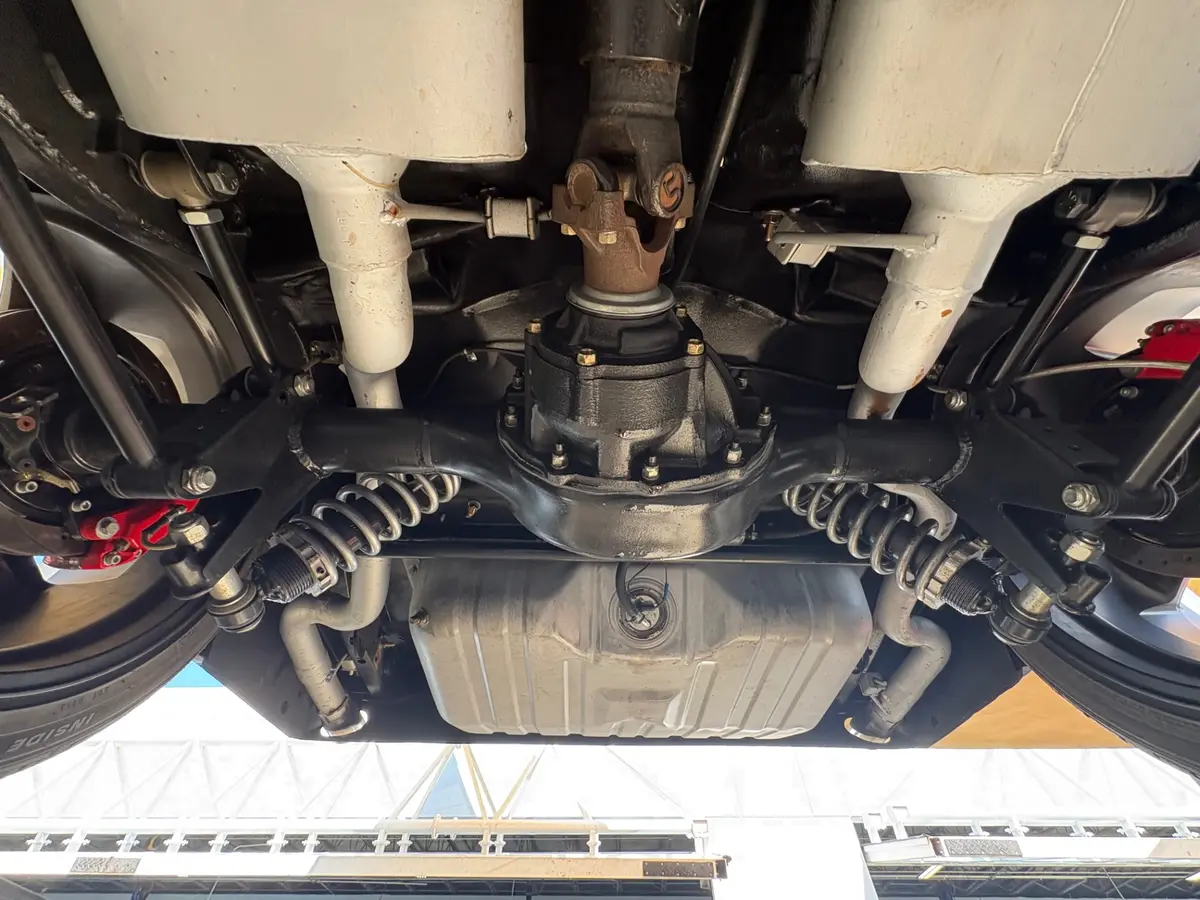
Underneath the car, the builder addressed the two most common criticisms of first-generation Mustang dynamics: chassis flex and inadequate braking. Subframe connectors tie the front unibody subframe to the rear frame rails, significantly reducing the torsional flex that all early Mustangs suffer from without subframe connectors. The result is a stiffer, more predictable chassis that responds accurately to driver input. Coilover suspension units replace the original shock and spring setup at all four corners, allowing ride height and damping to be adjusted. Four-wheel Wilwood disc brakes with red-painted calipers replace the original front disc / rear drum combination, providing consistent, fade-resistant stopping power. The underside of this 1968 Ford Mustang Fastback is finished in black and shows the detail work of a builder who intended this car to be inspected.
Power steering makes the car manageable at parking lot speeds without taking away feel on the highway. The drivetrain runs through a manual transmission, keeping the driver connected to the engine in the way that suits a car built around involvement.
Ridler wheels wear Falken Ziex performance tires, a tire line developed specifically for street-driven performance applications with a focus on dry and wet grip combined with reasonable road noise.
Interior
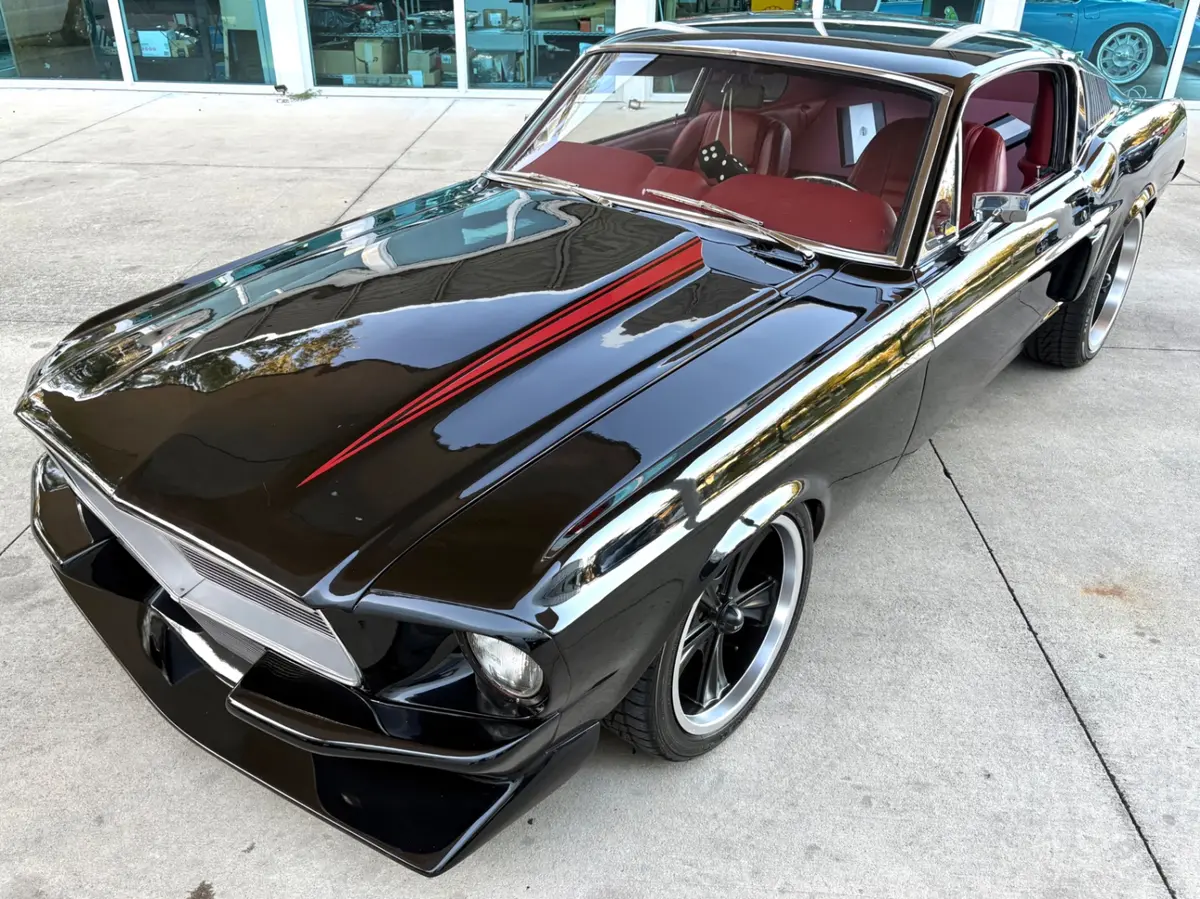
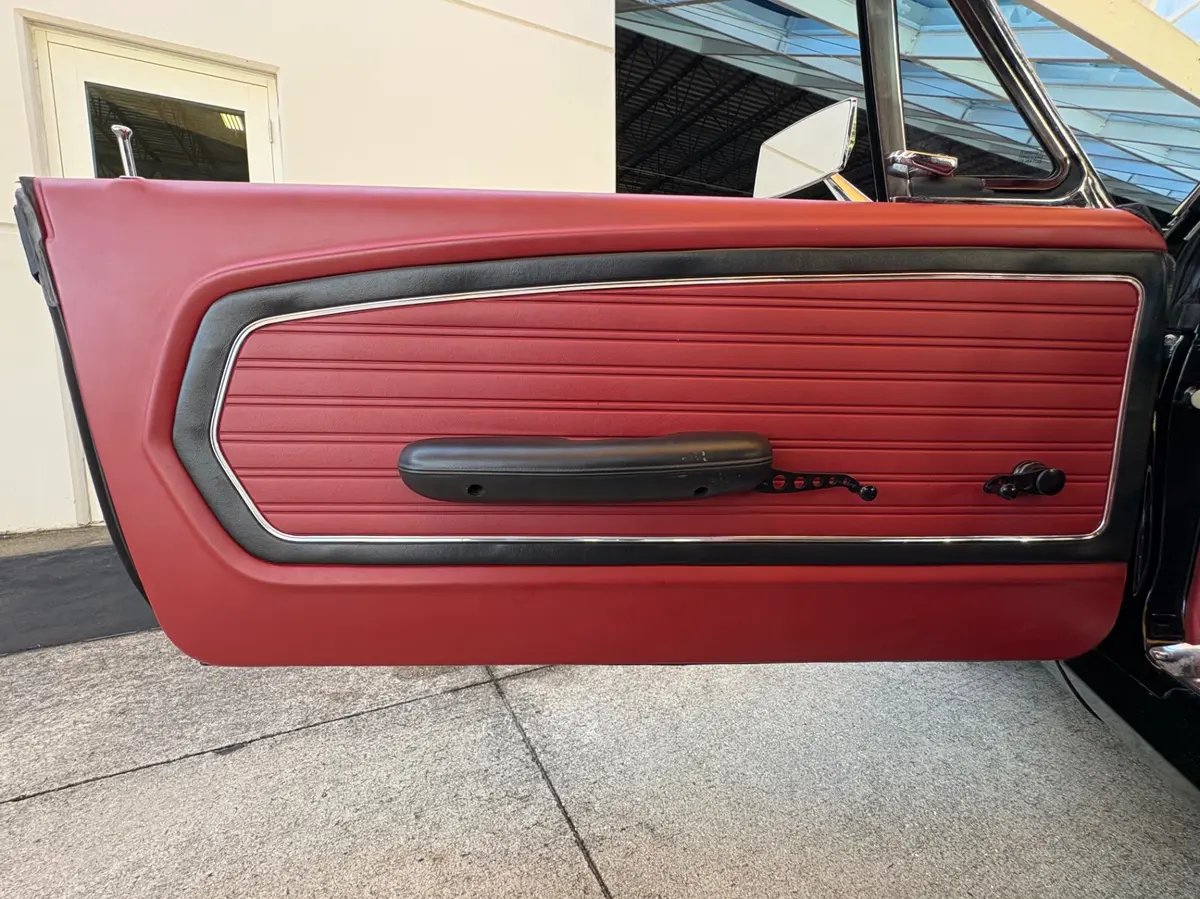
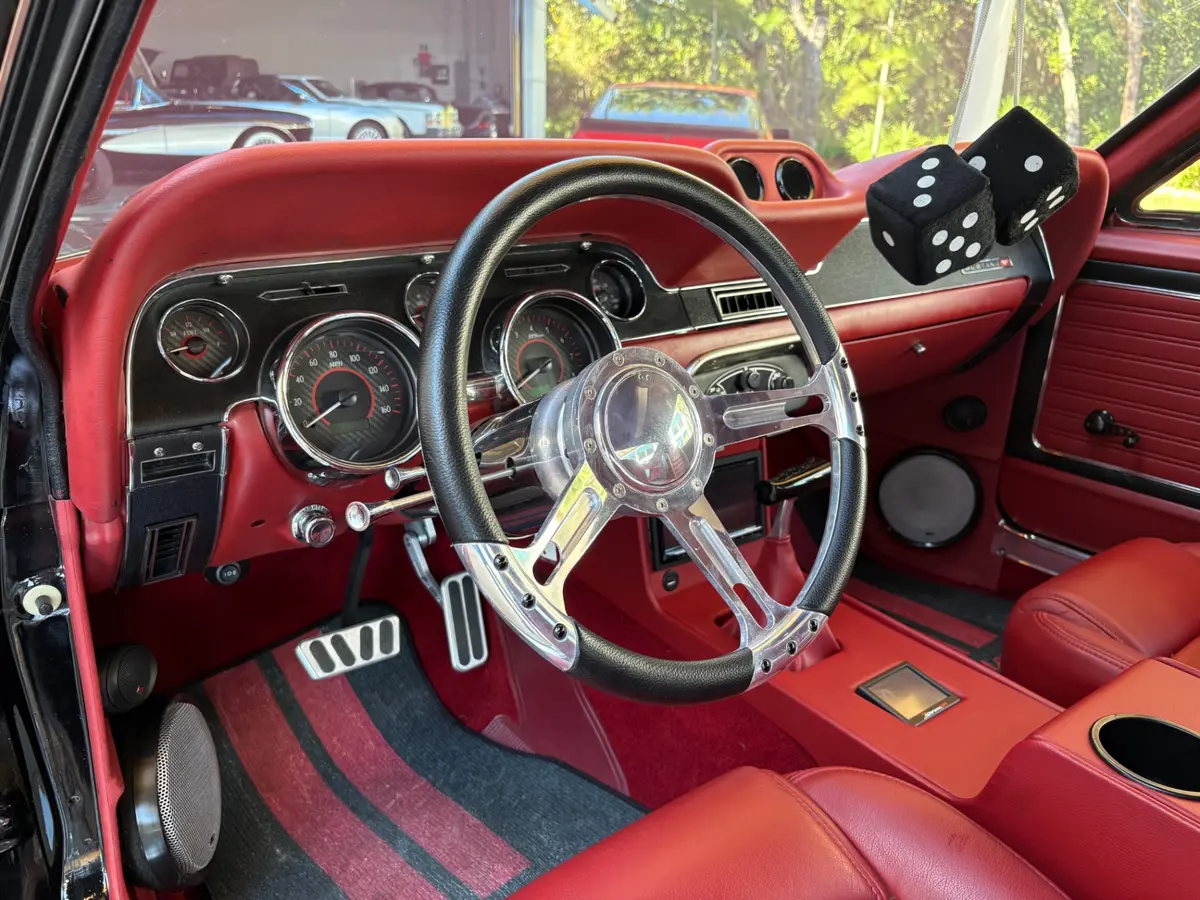
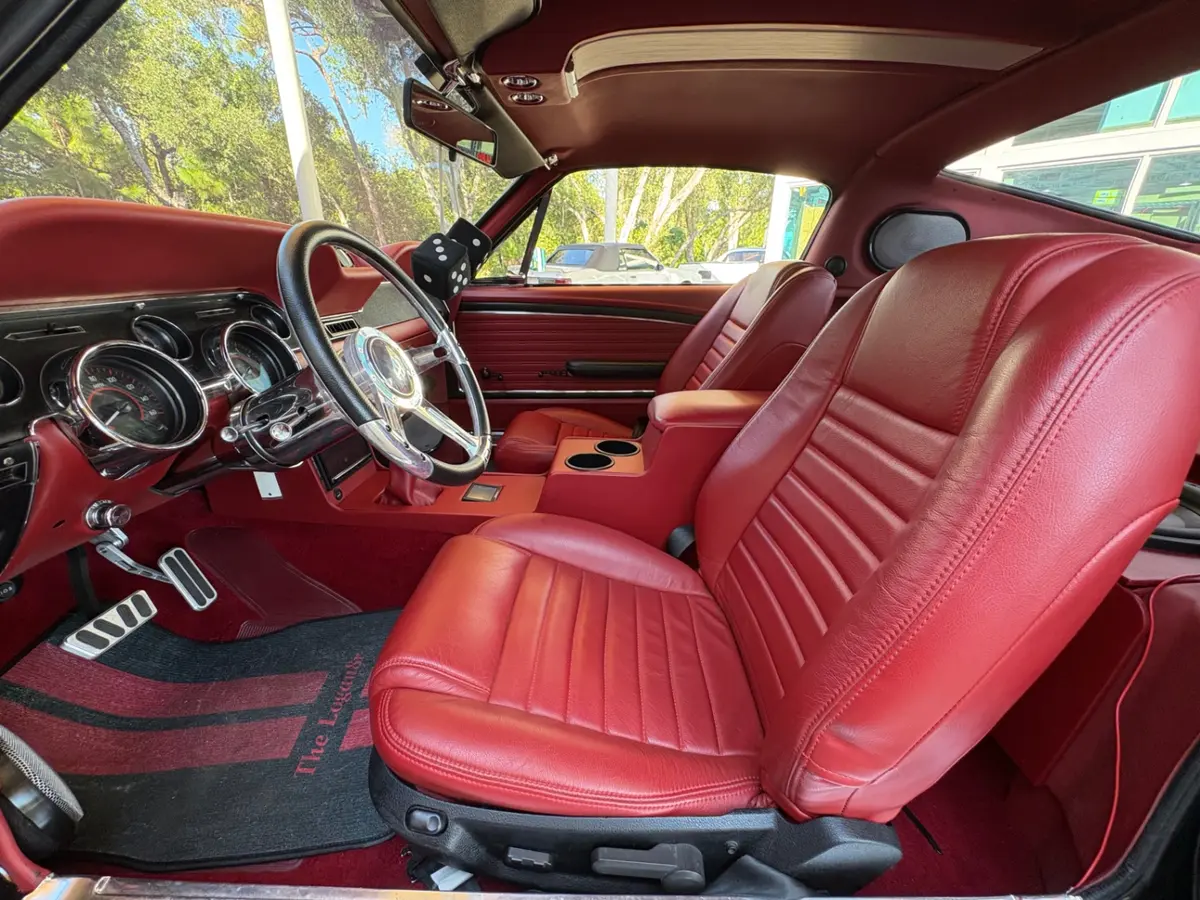
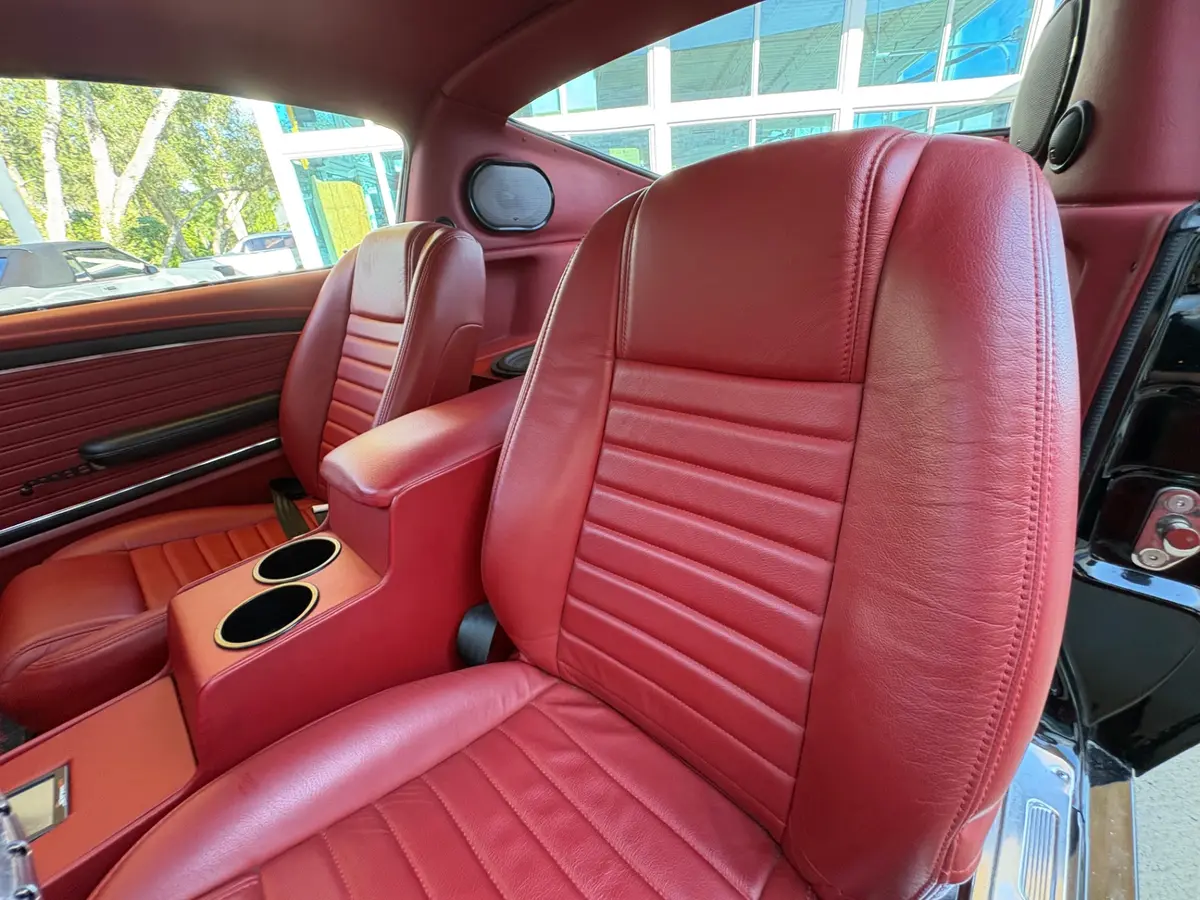
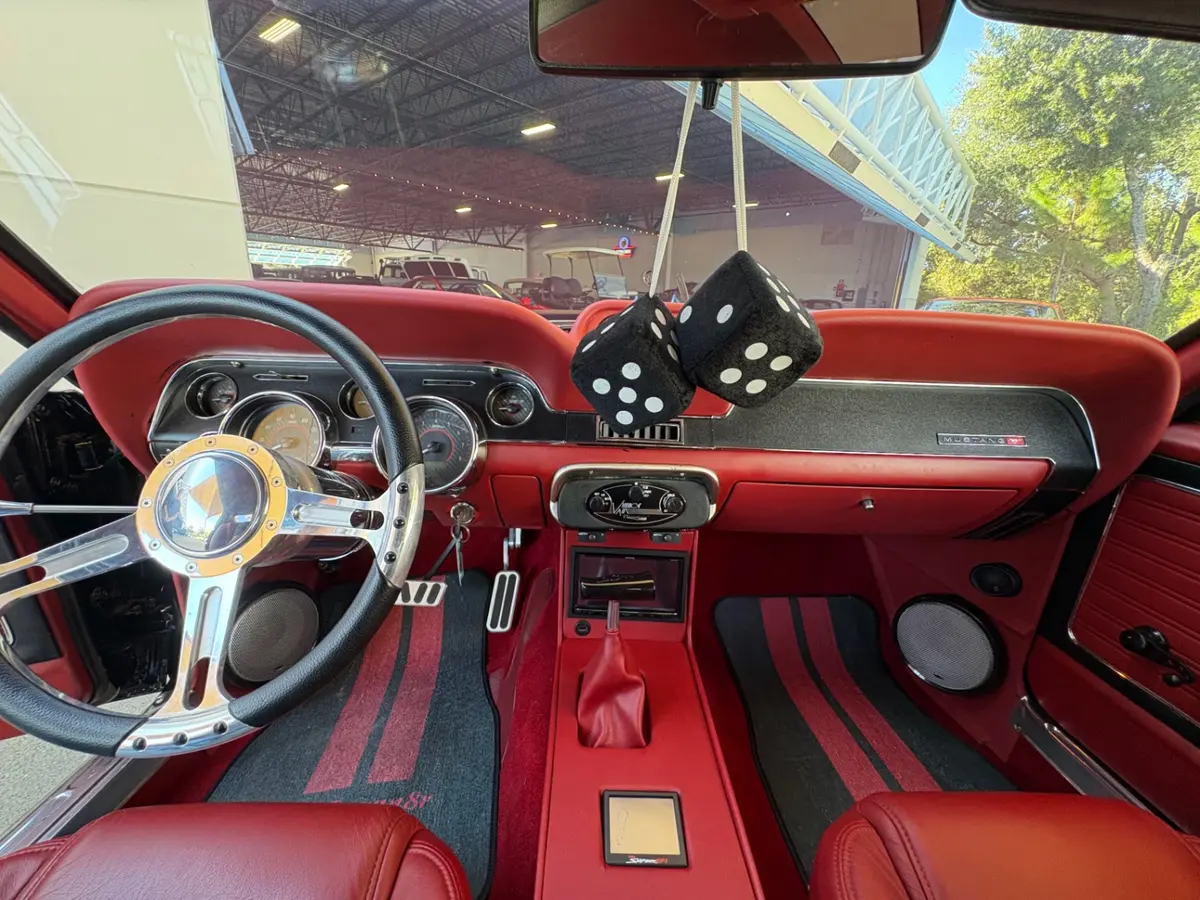
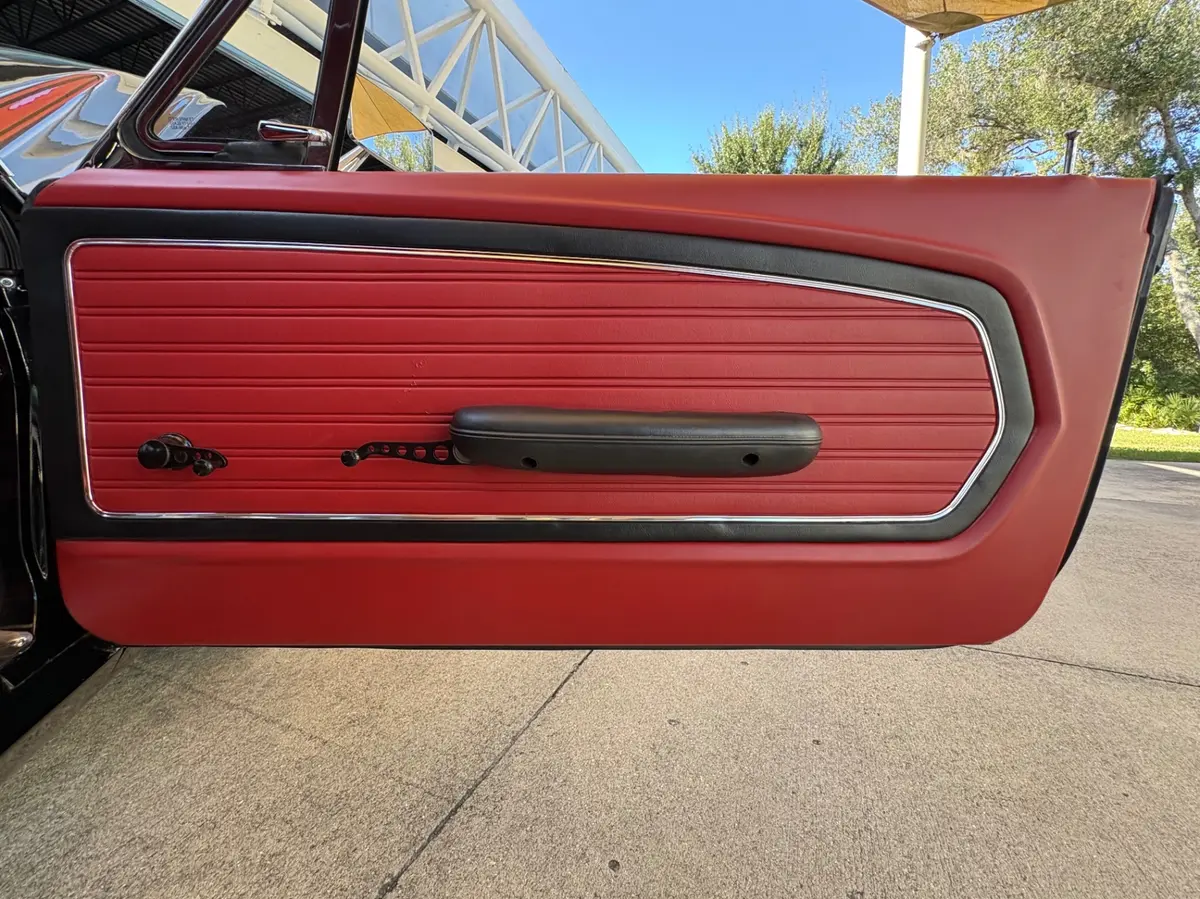
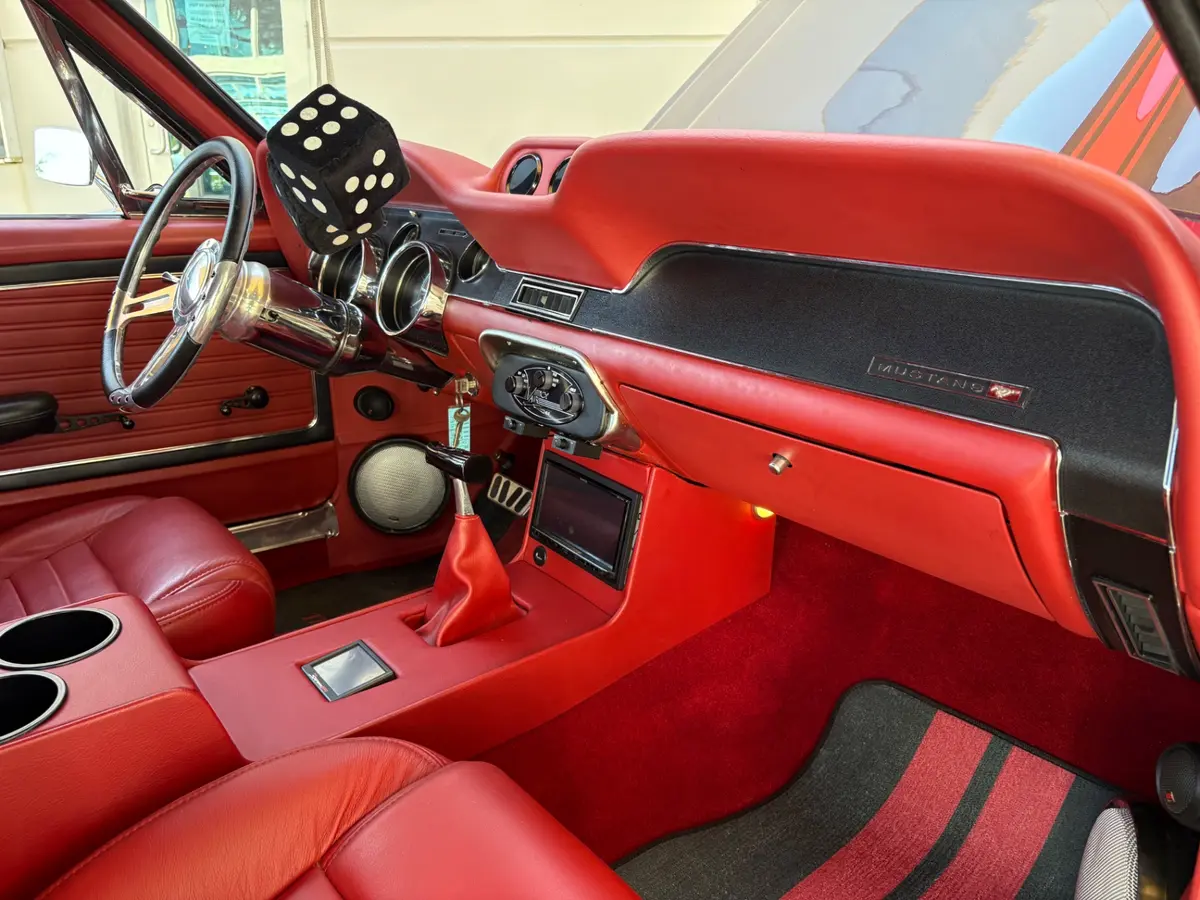
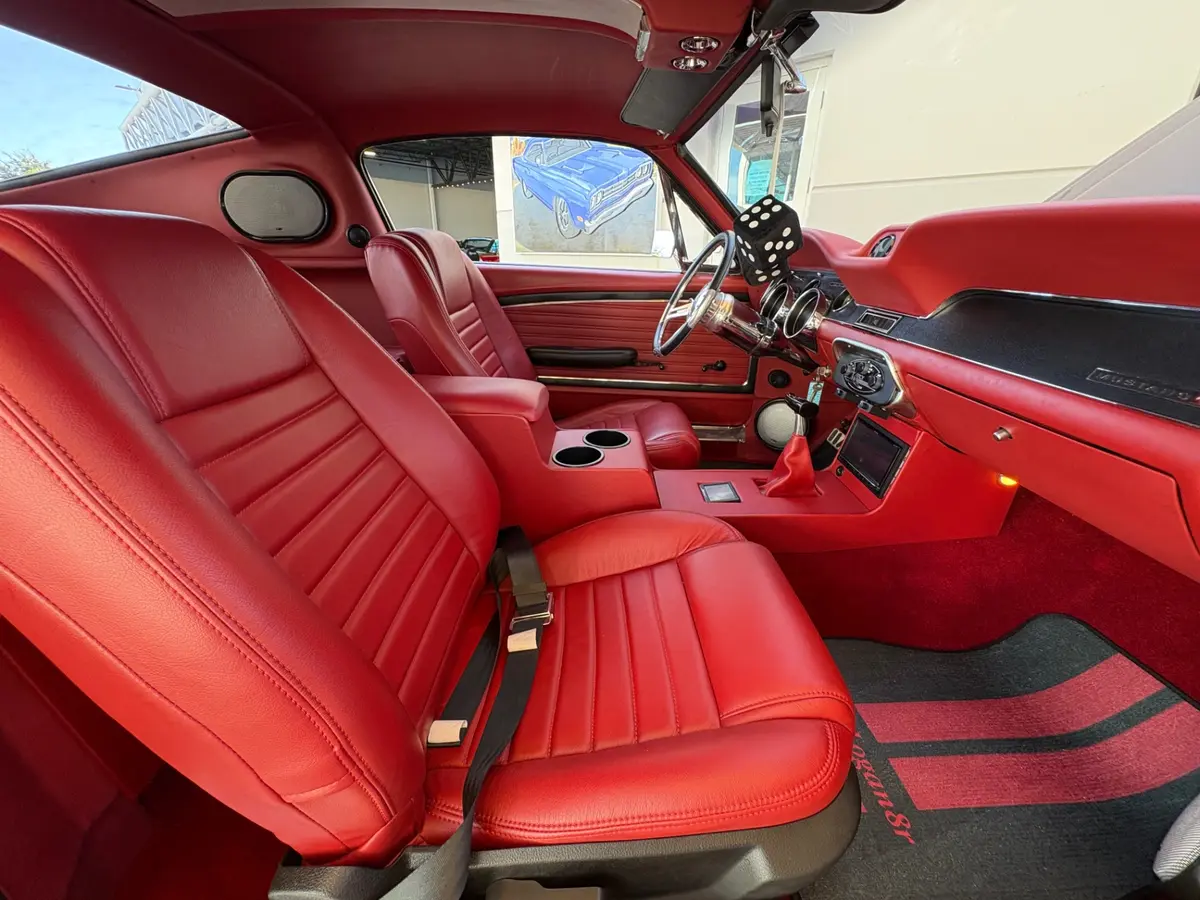
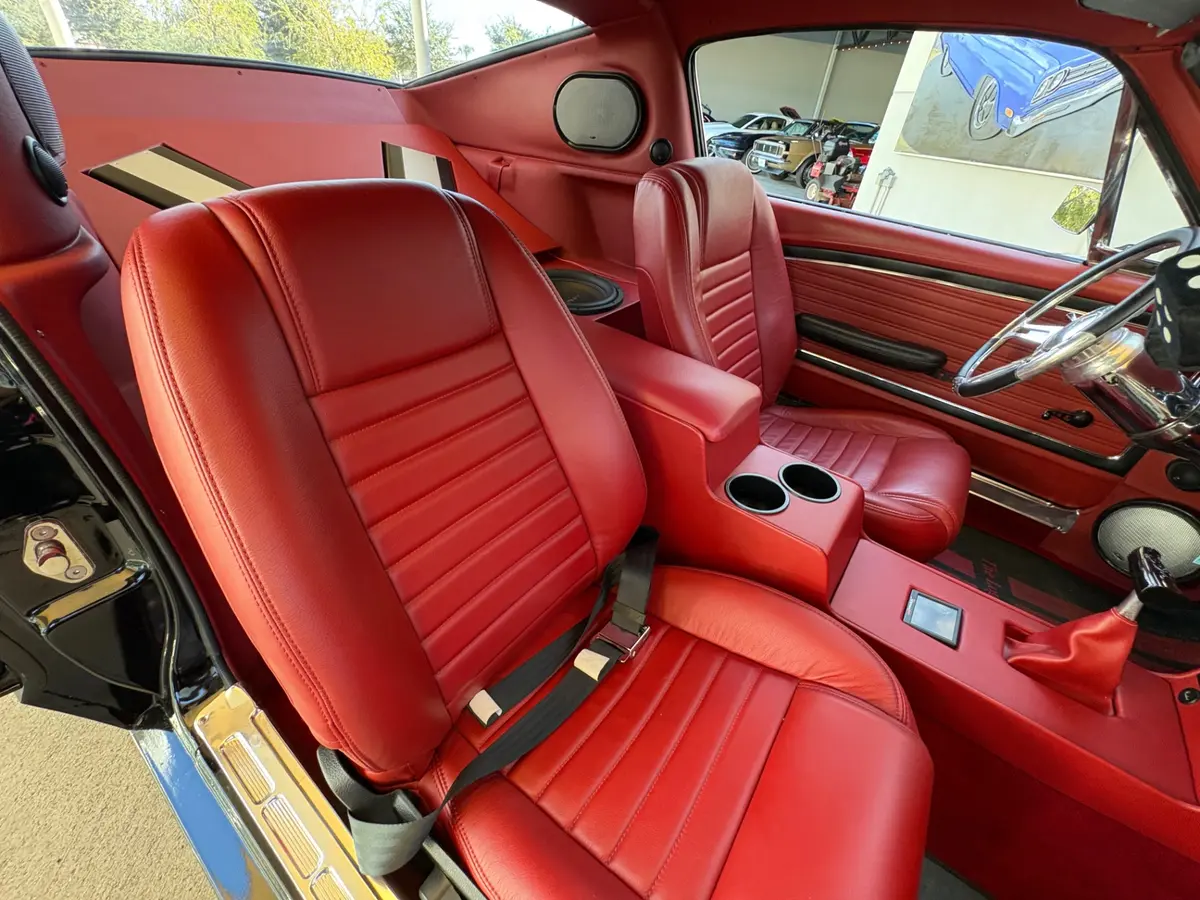
The interior of this 1968 Ford Mustang Fastback was built from scratch around a red leather theme that runs consistently from door to door. The front seats are custom units with vertically pleated leather in a deep red, shaped to provide lateral support without being restrictive. The rear seat carries the same pleated red leather treatment, and both front and rear headrests are upholstered to match. The door panels are custom pieces trimmed in red leather with chrome accent surrounds that reference the original 1968 panel shape while executing it in a cleaner, more finished way.
The center console is a custom fabrication that runs the full length of the floor tunnel, housing dual cup holders and a floor-mounted shifter with a red leather boot. The carpet is a two-tone black and red striped design that picks up both the exterior and interior color scheme. A custom embroidery detail is visible in the carpet — a personal touch from the previous owner that adds character without cluttering the space.
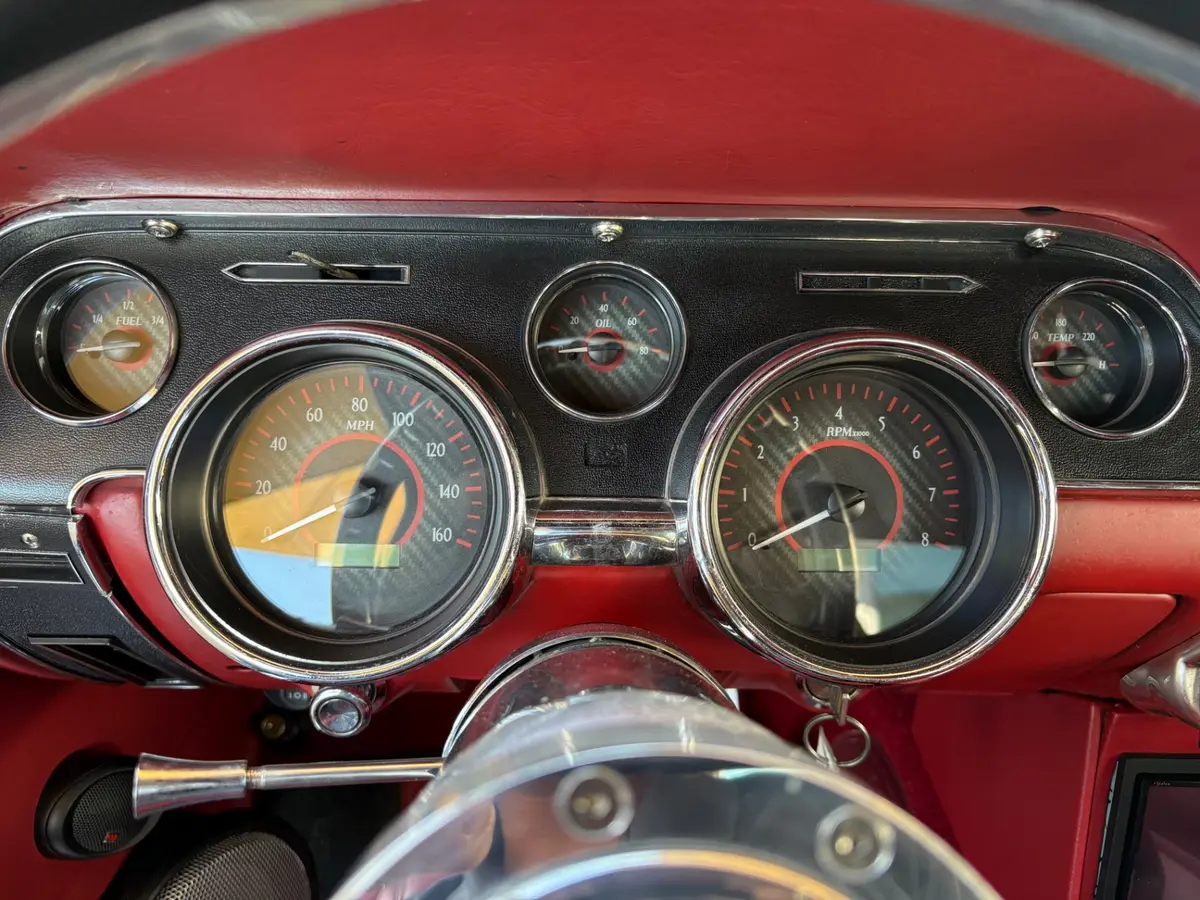
At the wheel, the driver faces a custom chrome steering wheel with a classic three-spoke design and a chrome horn cap. The gauge cluster is a full-function tachometer unit with large-diameter speedometer and tachometer as the primary instruments, flanked by oil pressure, fuel, and temperature gauges with carbon fiber-style faces and red sweep needles. The Holley Sniper EFI display is mounted cleanly into the center console, sitting flush in a custom bezel so it reads as an intentional part of the interior rather than an afterthought.
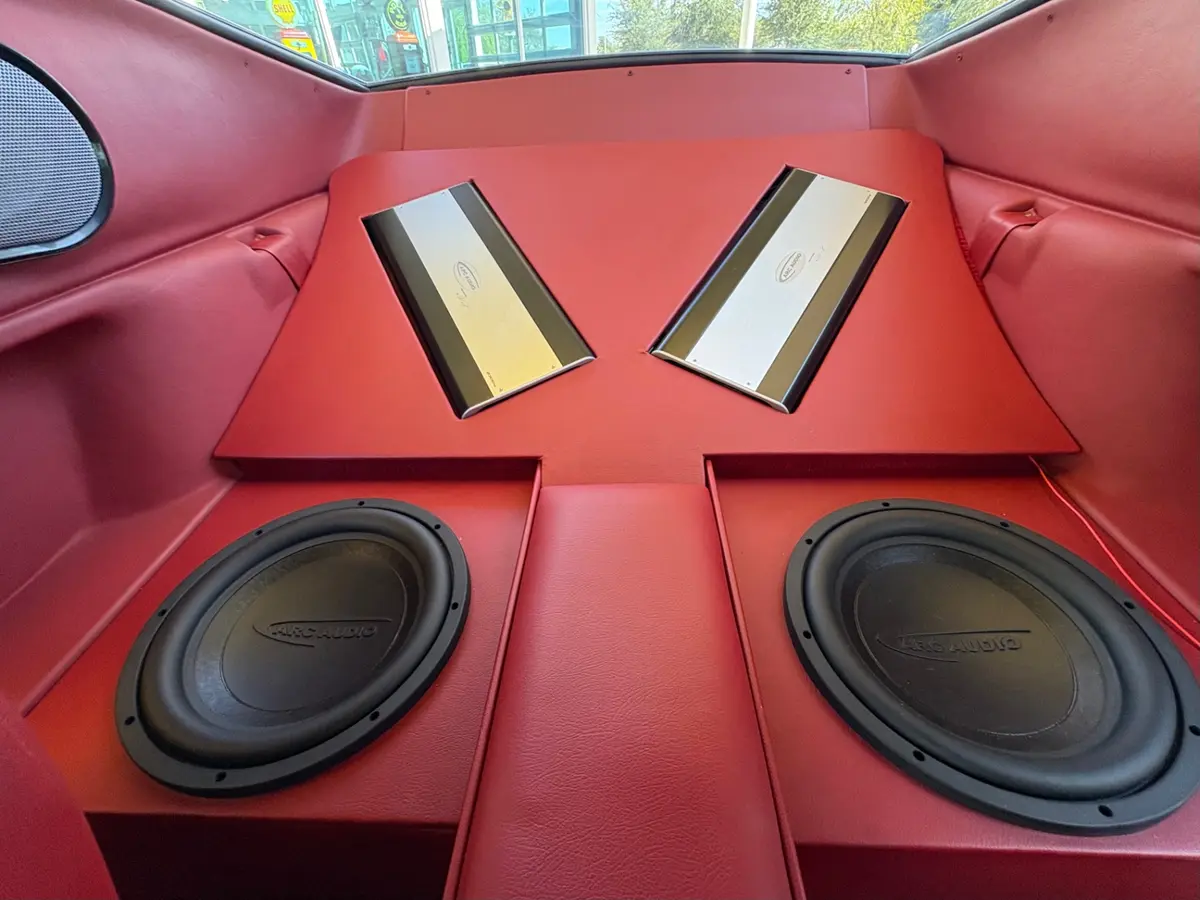
The fastback body gives this 1968 Ford Mustang a usable rear cargo area, and the builder took full advantage of it. Two Arc Audio subwoofers are mounted in a custom red leather-wrapped enclosure in the rear compartment, flanked by two Arc Audio amplifiers mounted in matching trim panels. The installation is symmetrical and finished with the same care as the rest of the interior. Additional Arc Audio speakers are located in the doors and the rear sail panels, giving the system coverage throughout the cabin.
Exterior
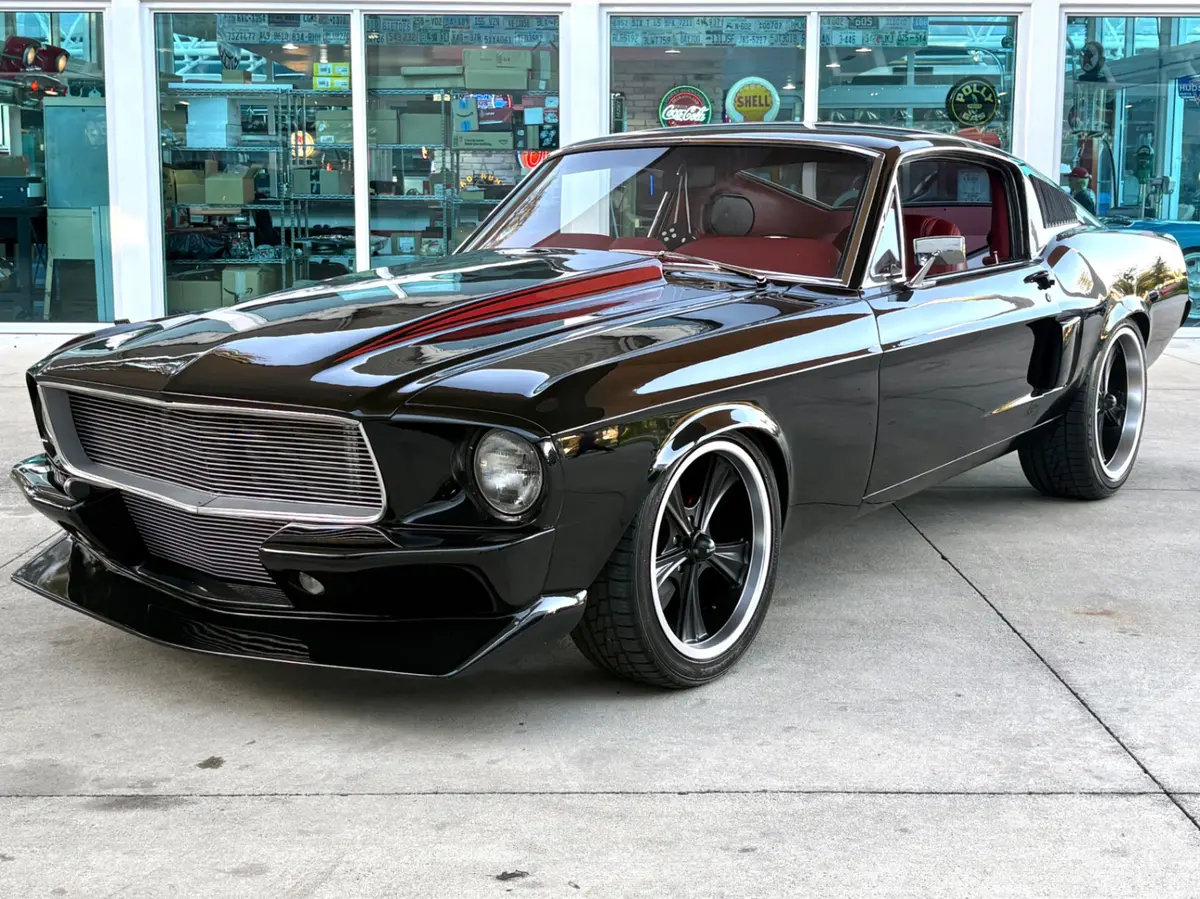
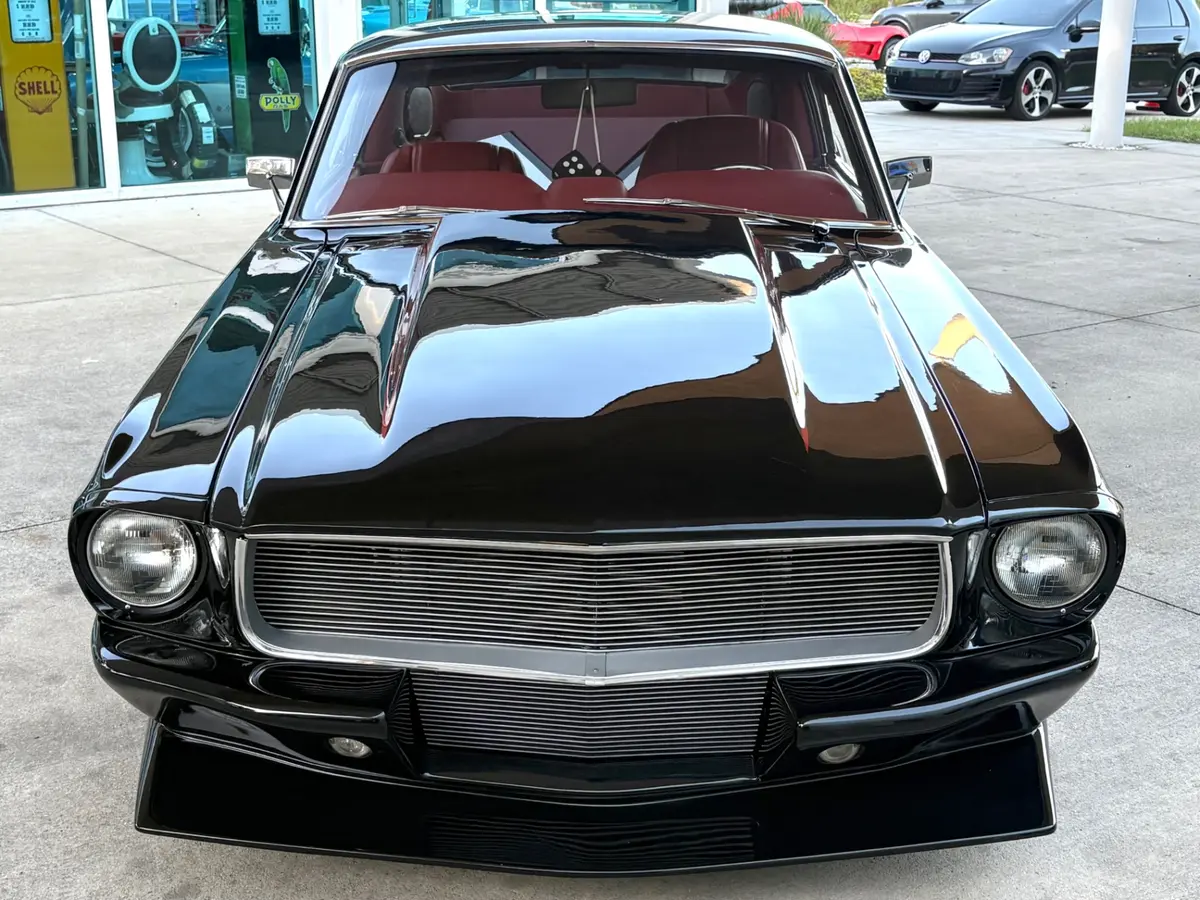
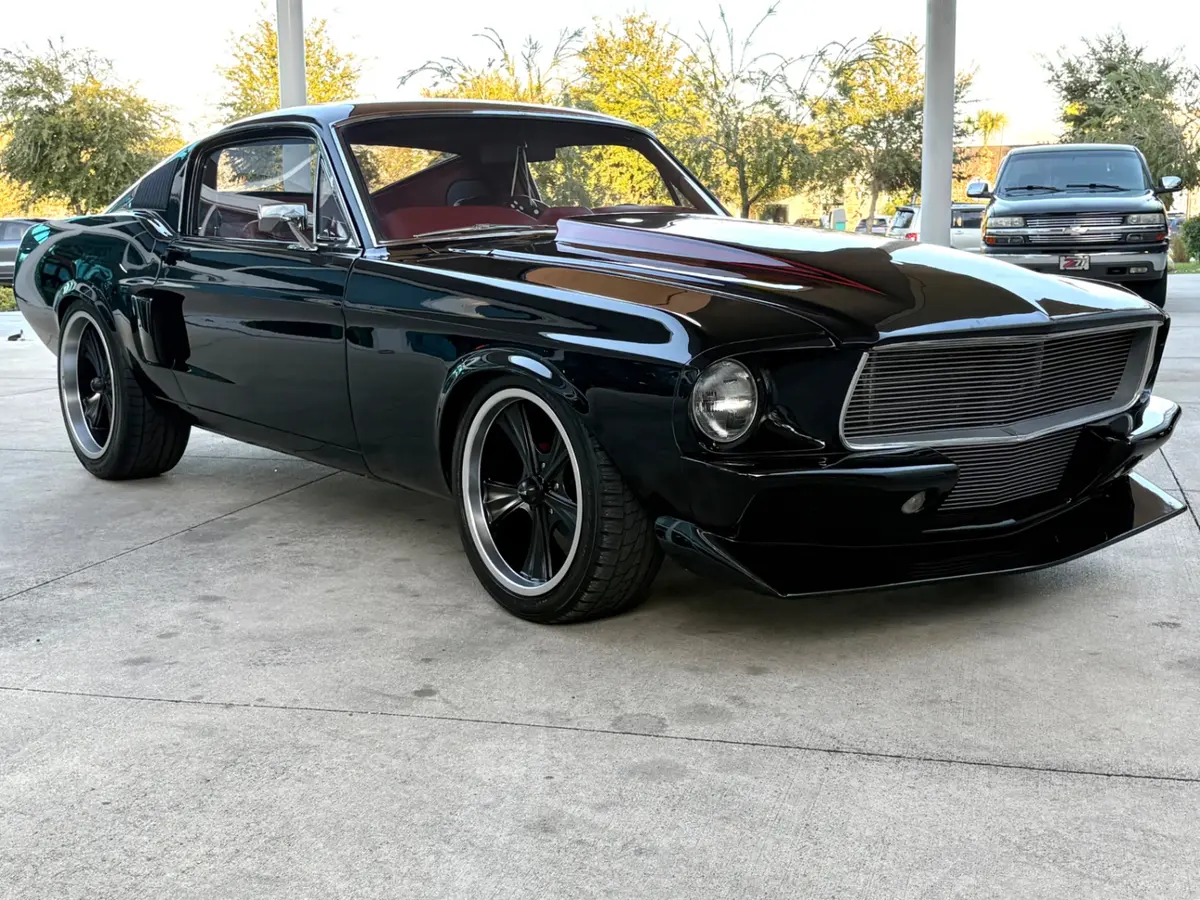
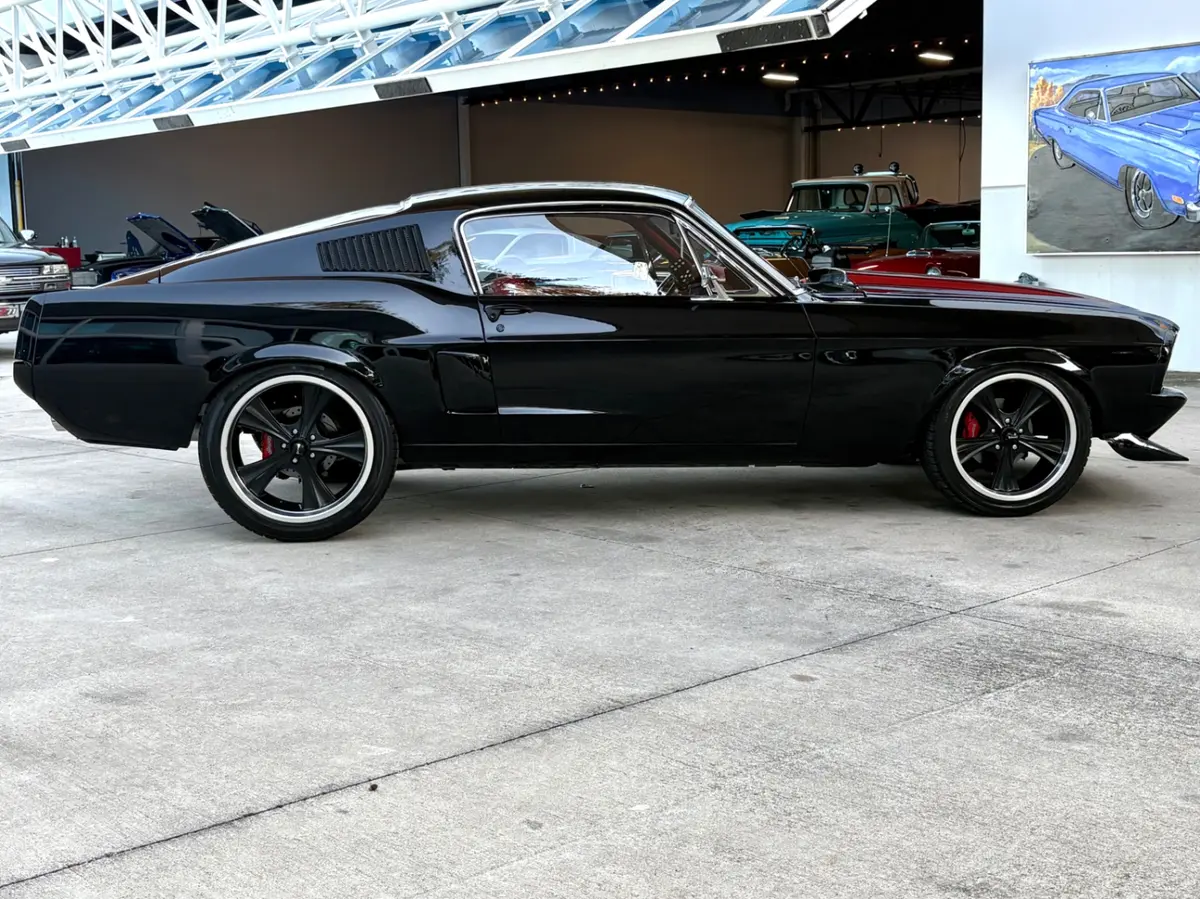
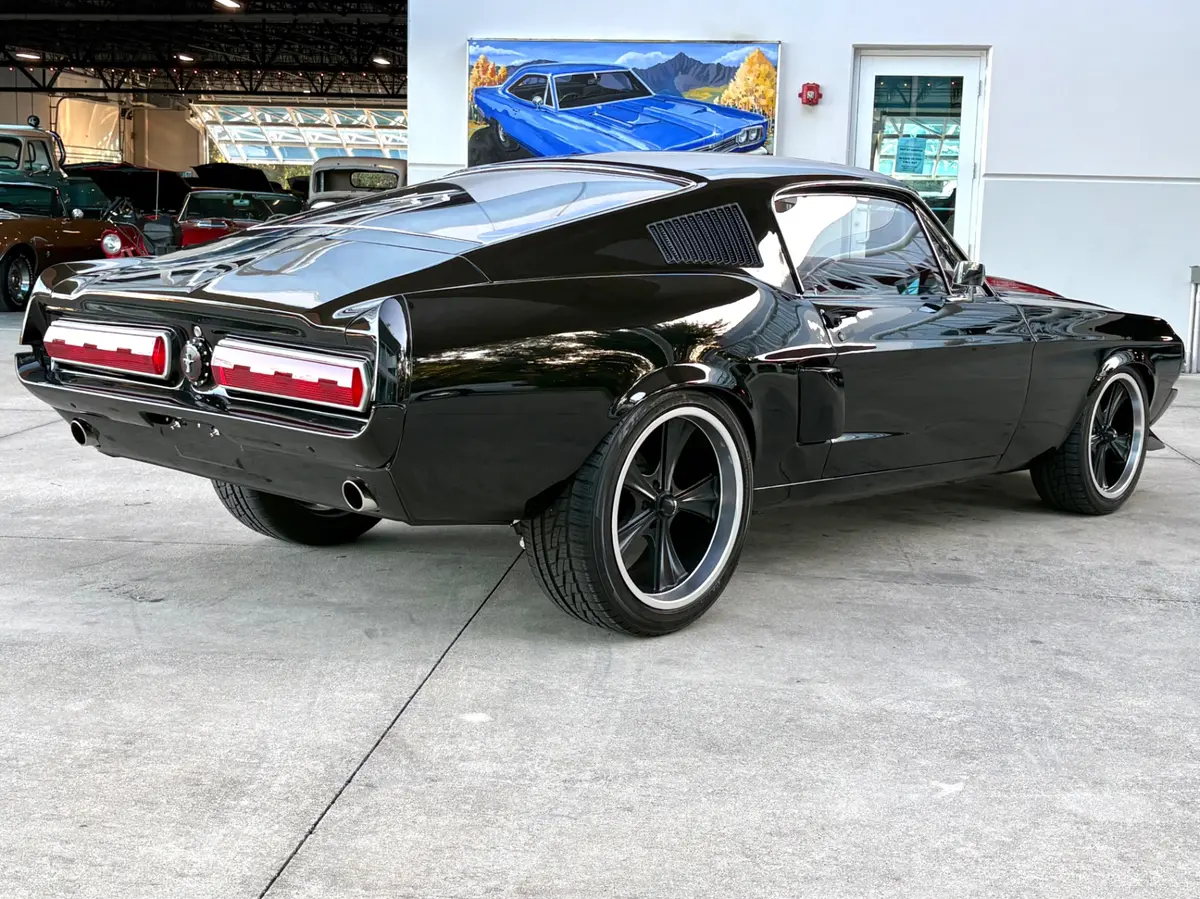
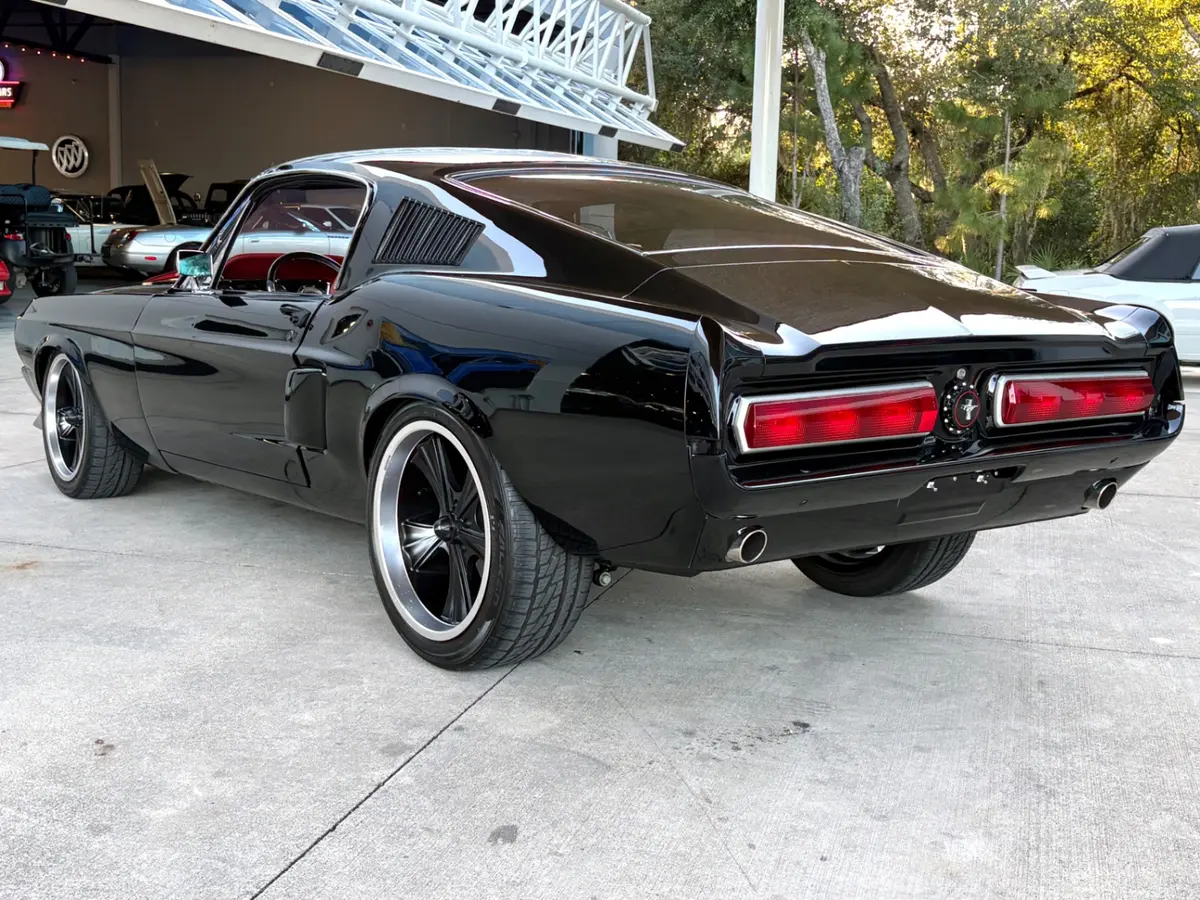
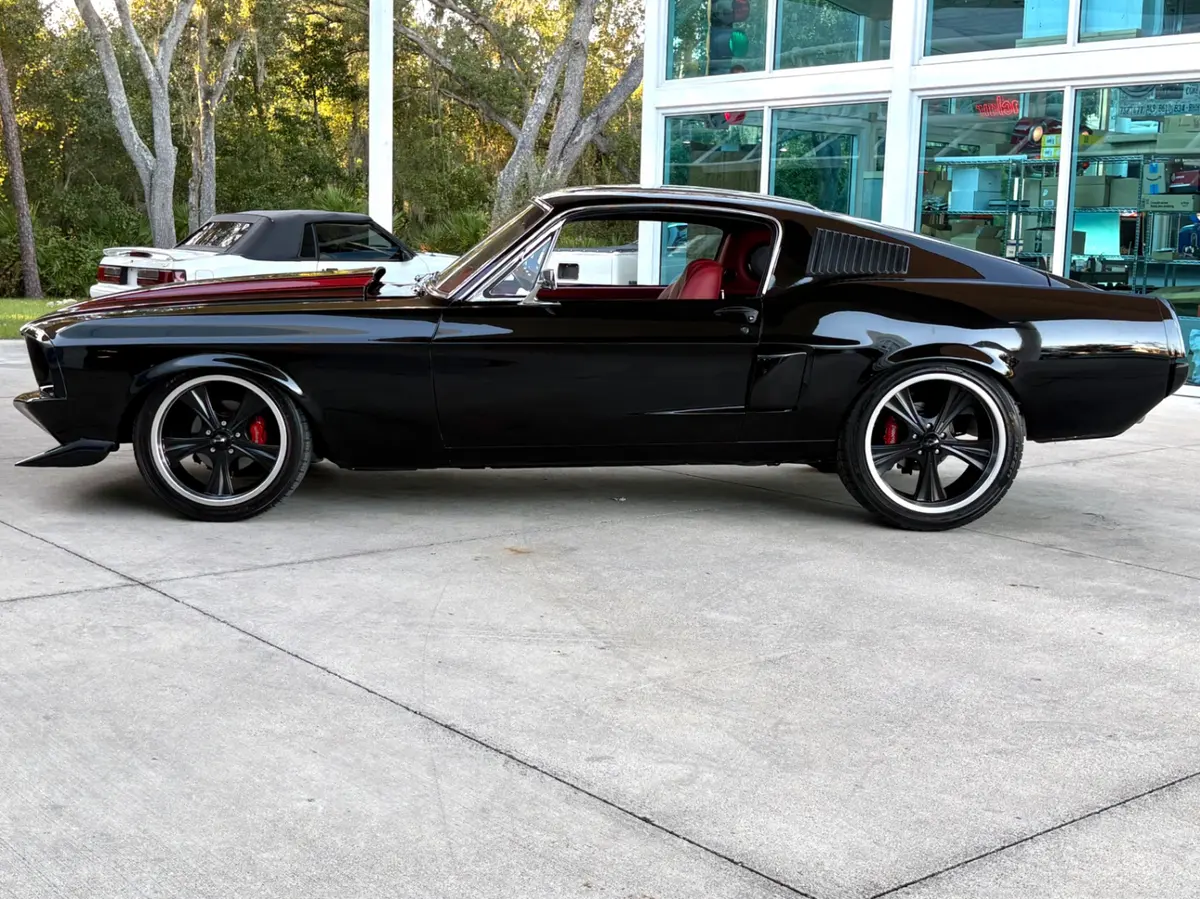
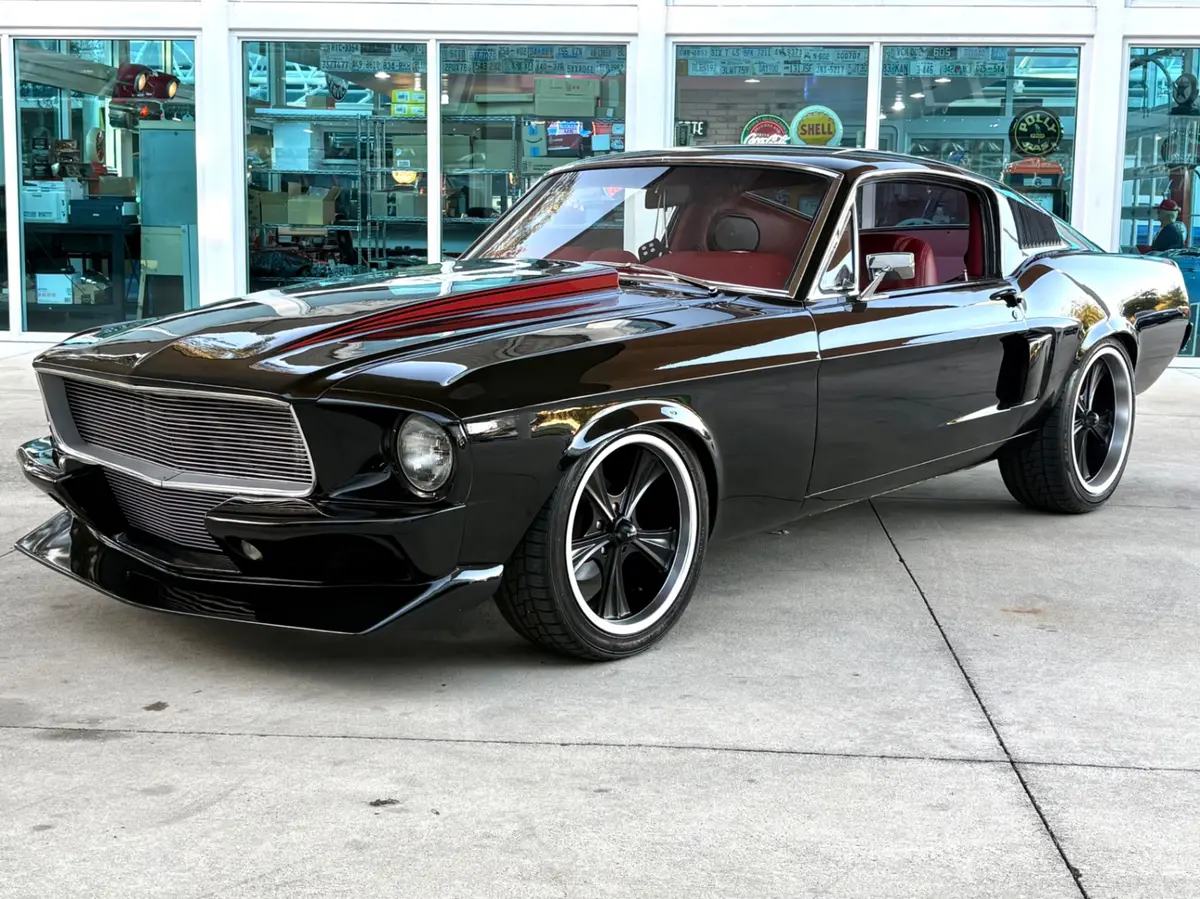
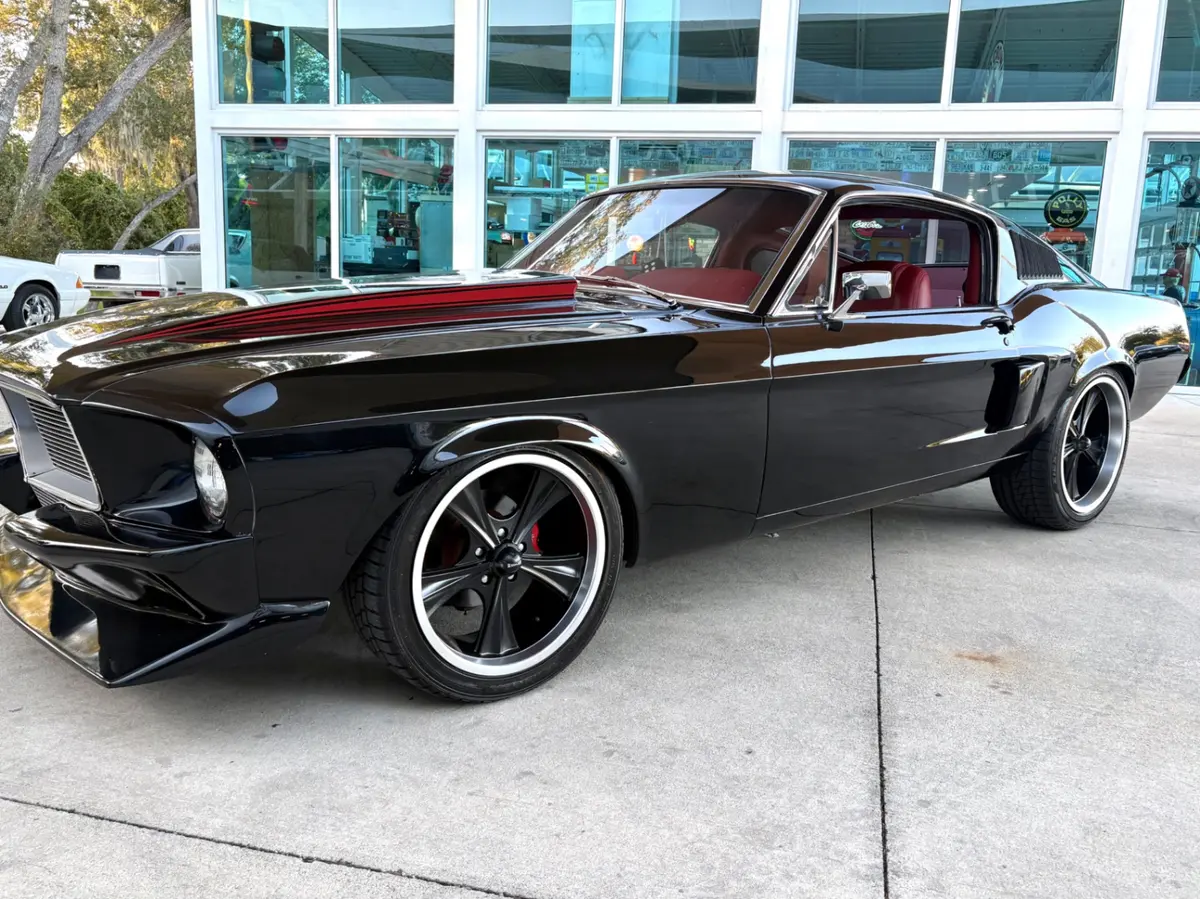
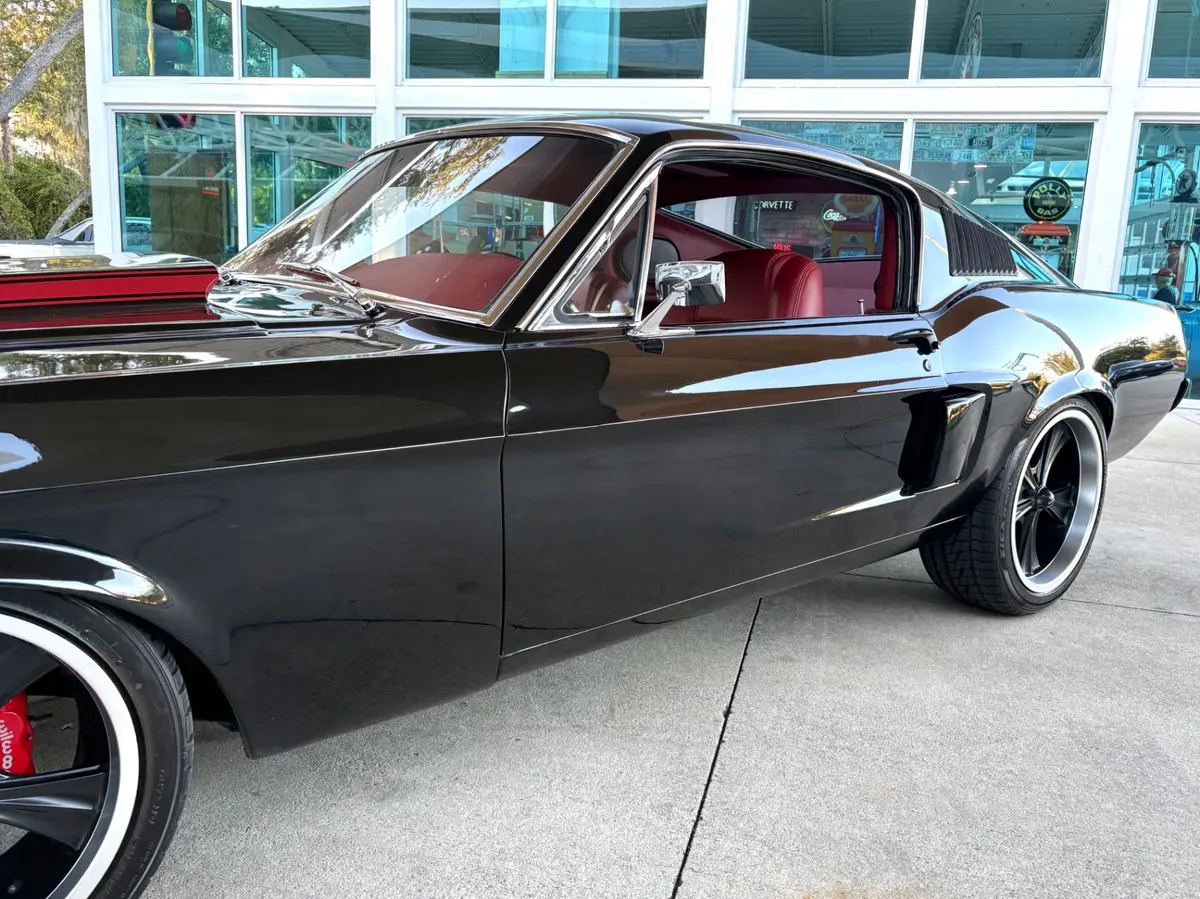
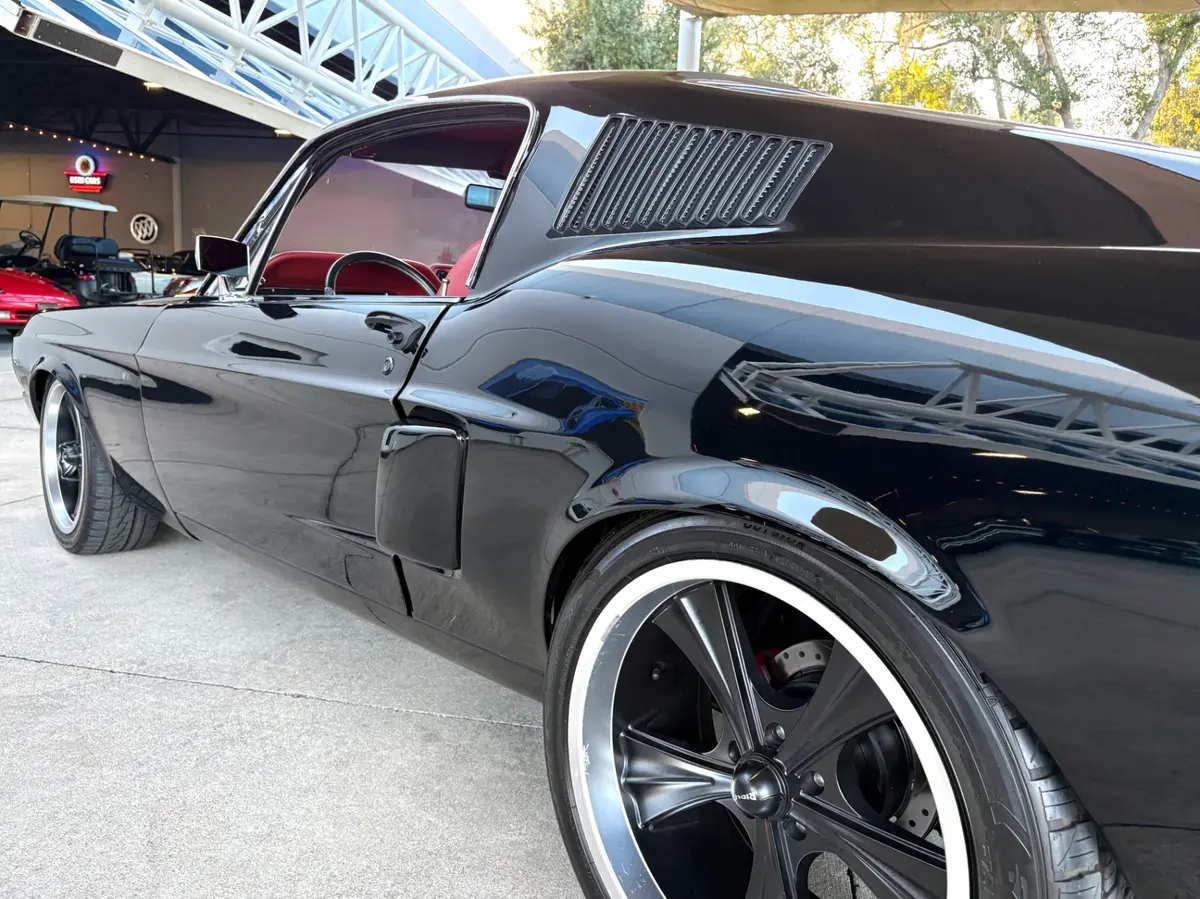
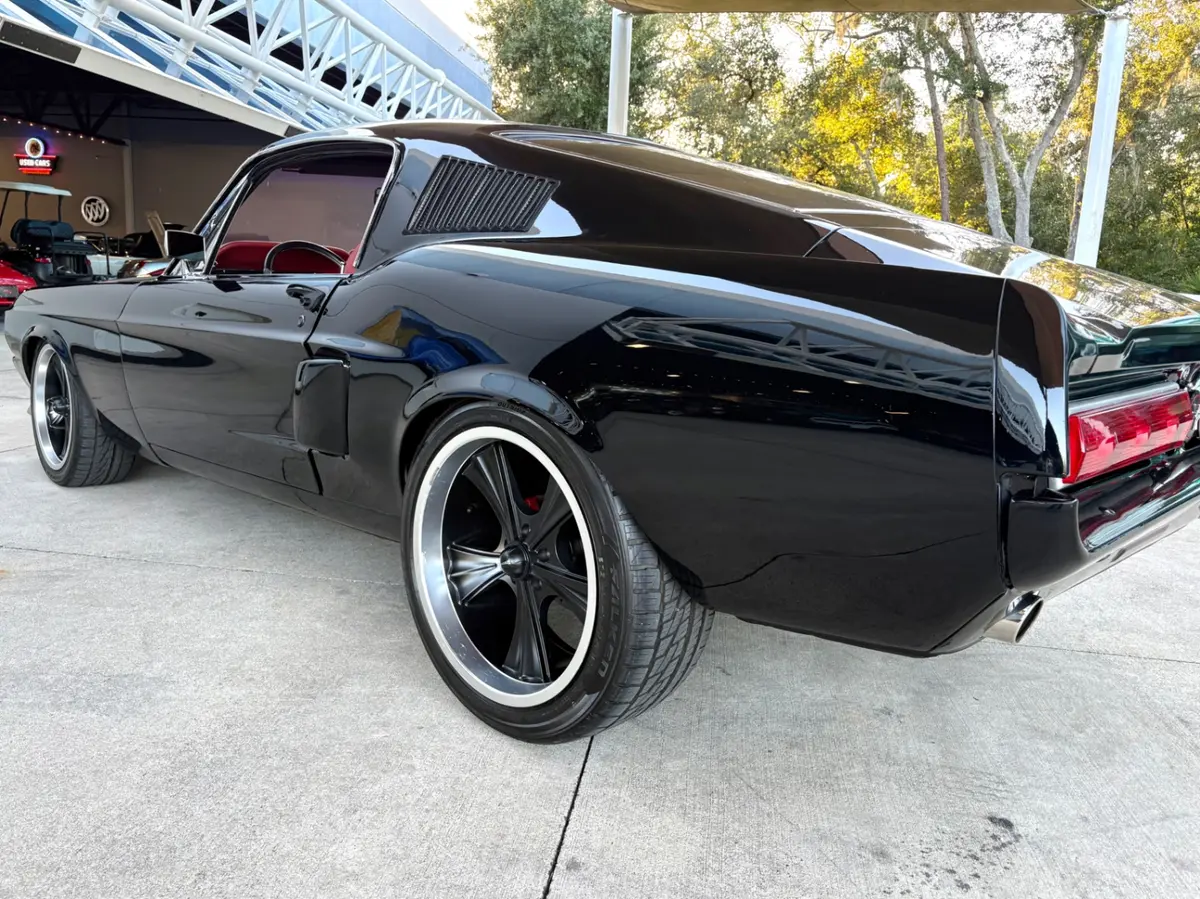
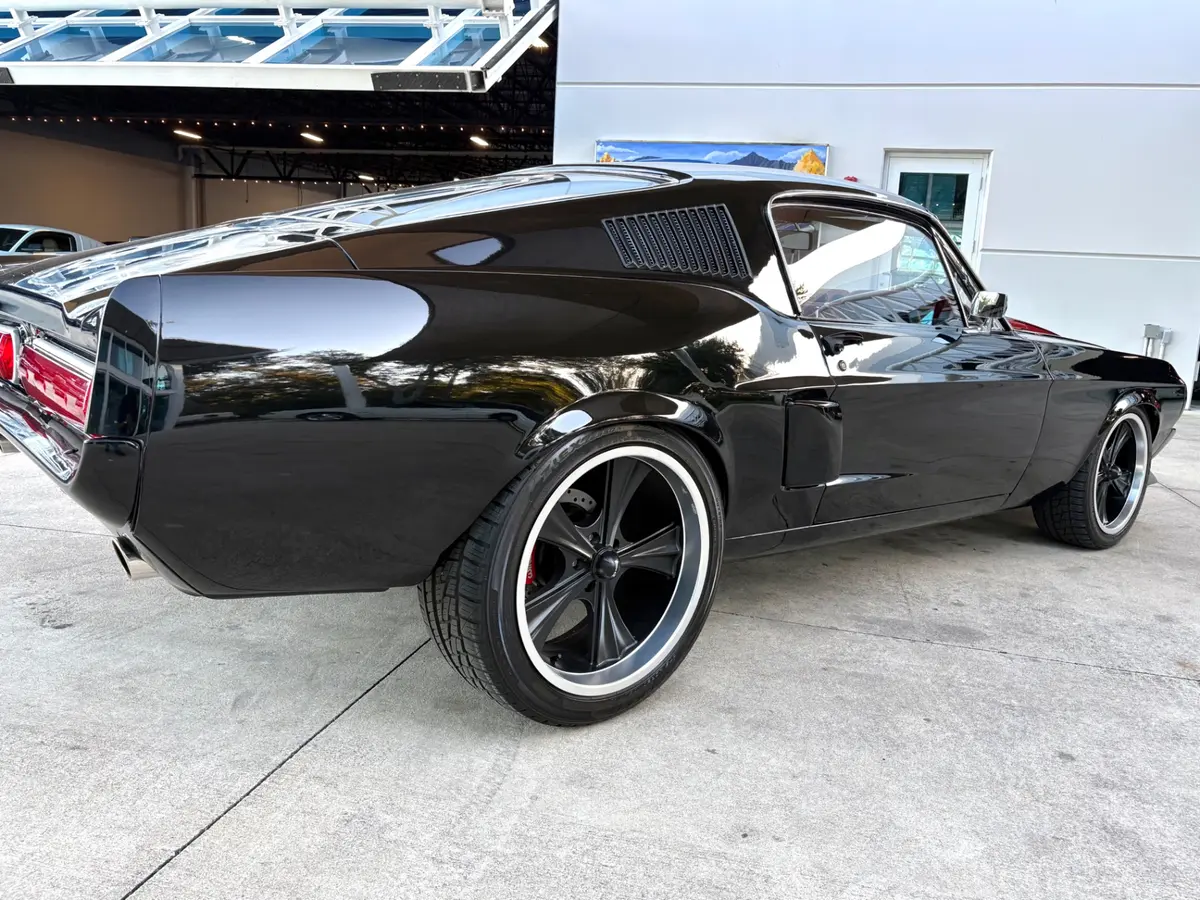
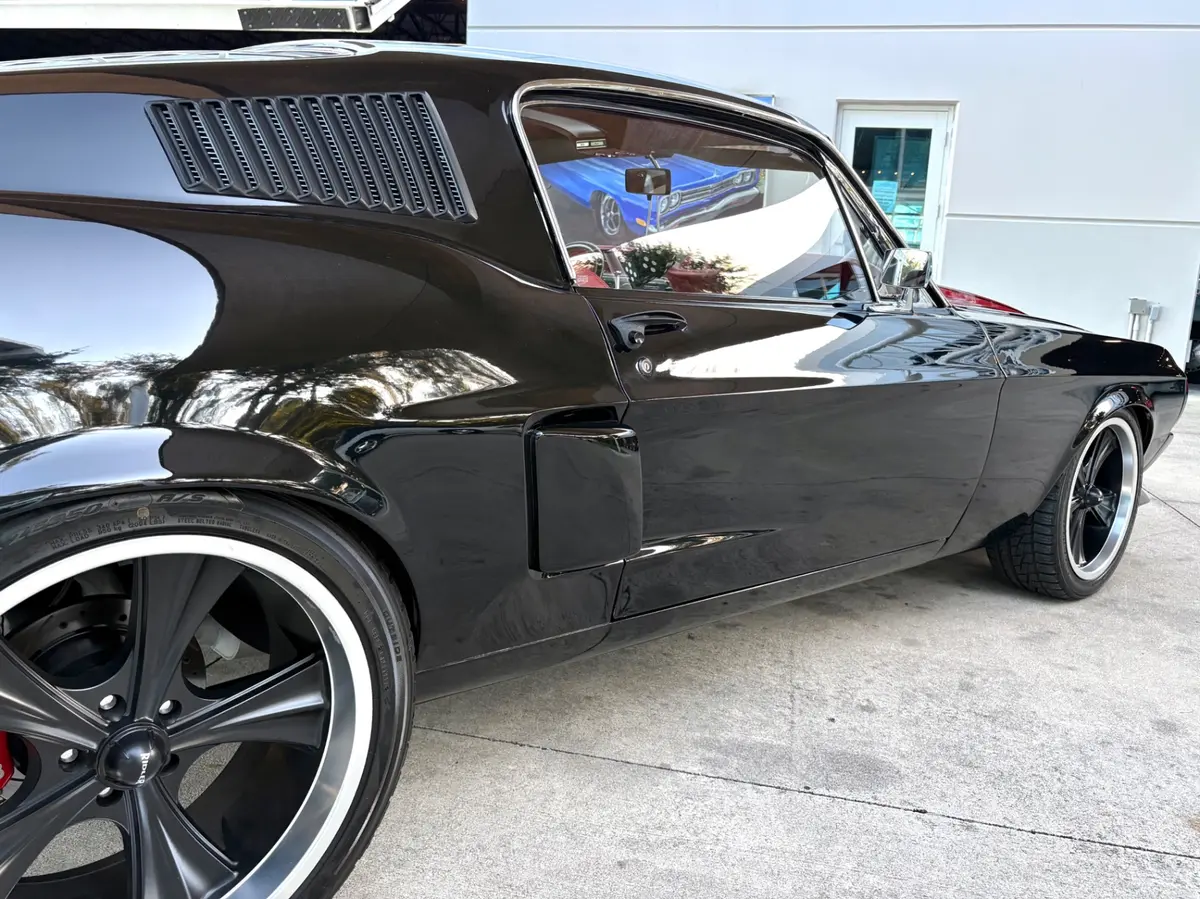
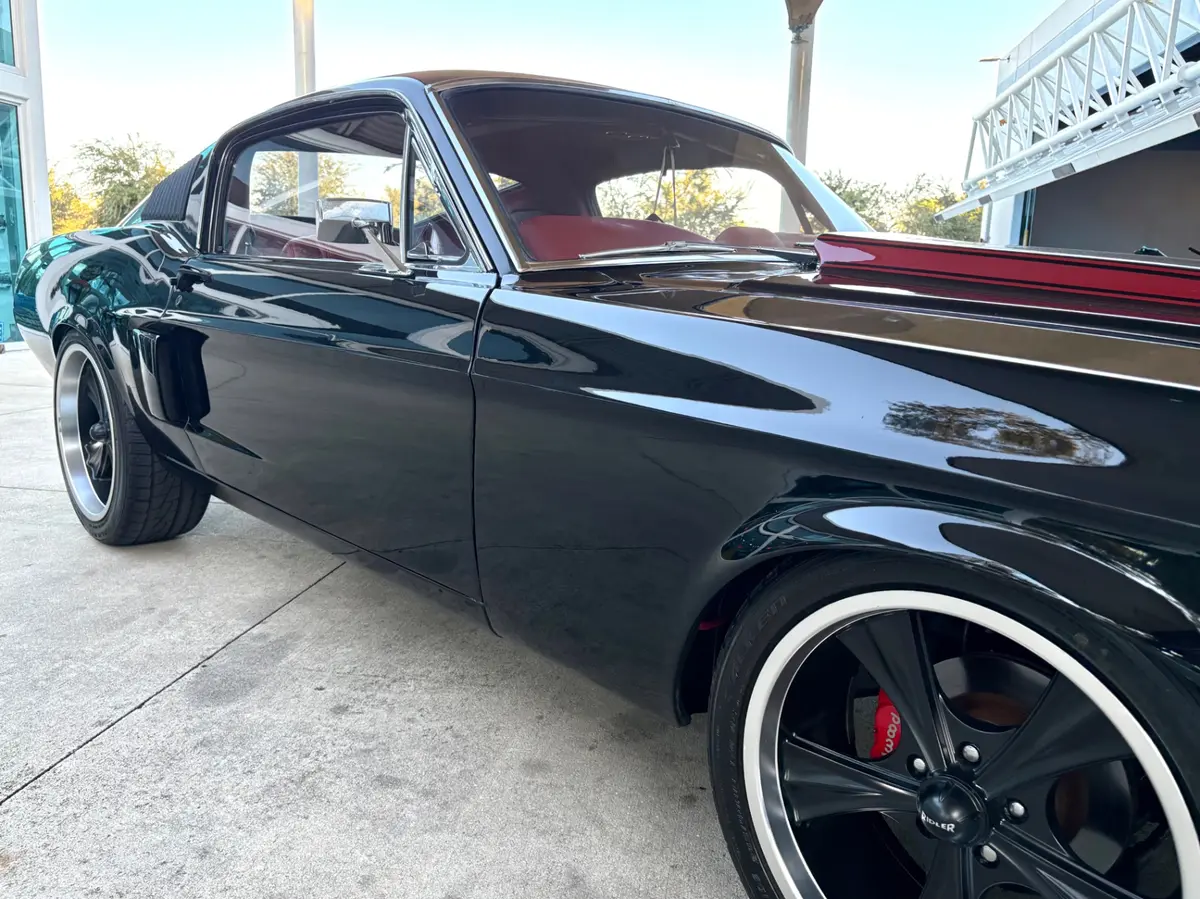
The 1968 Ford Mustang Fastback wears a custom black exterior finish that covers every panel cleanly and evenly. The fastback roofline flows from the C-pillar down to the decklid in one unbroken plane — a shape that Ford's designers executed better in 1967-68 than on any other first-generation Mustang body. The red racing stripe runs down the hood centerline and continues over the roof, providing the only break in the black and tying the exterior palette to the interior.
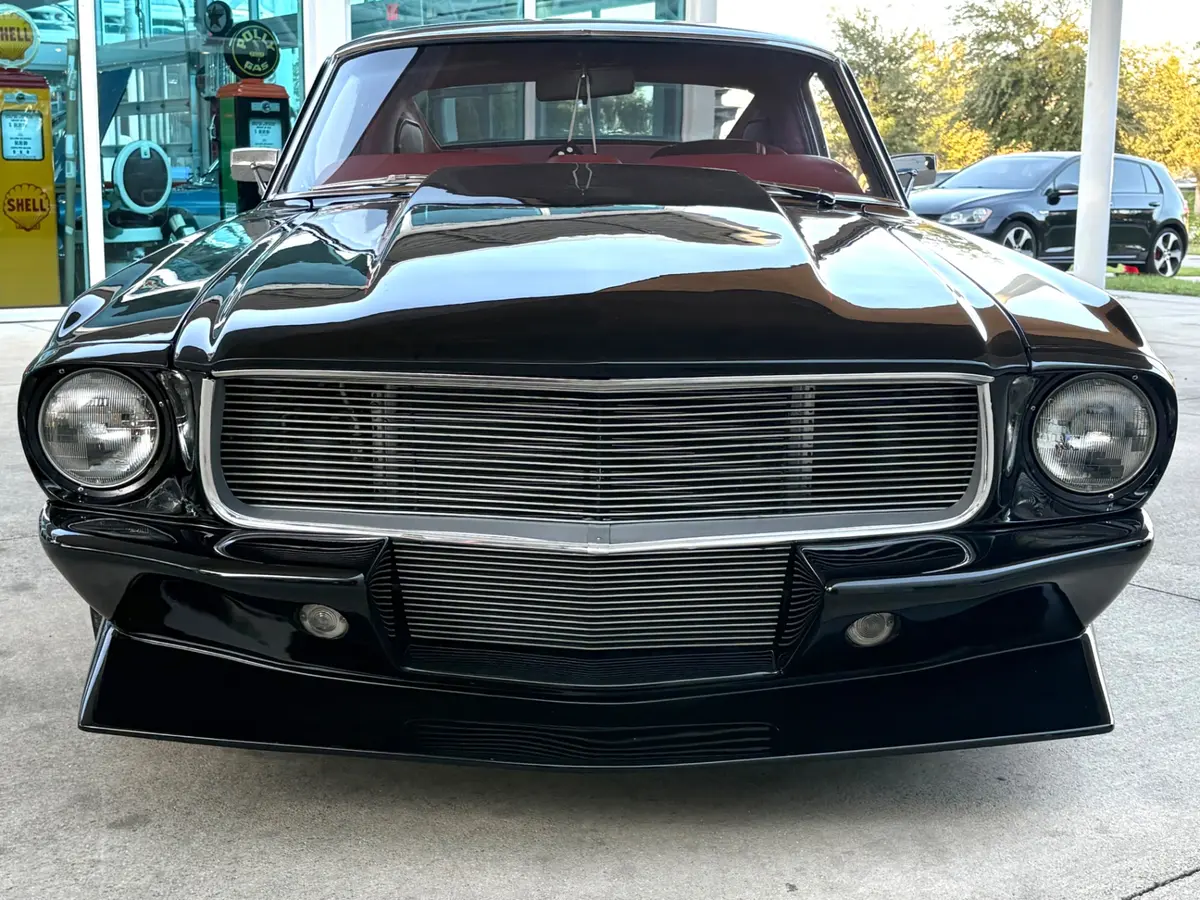
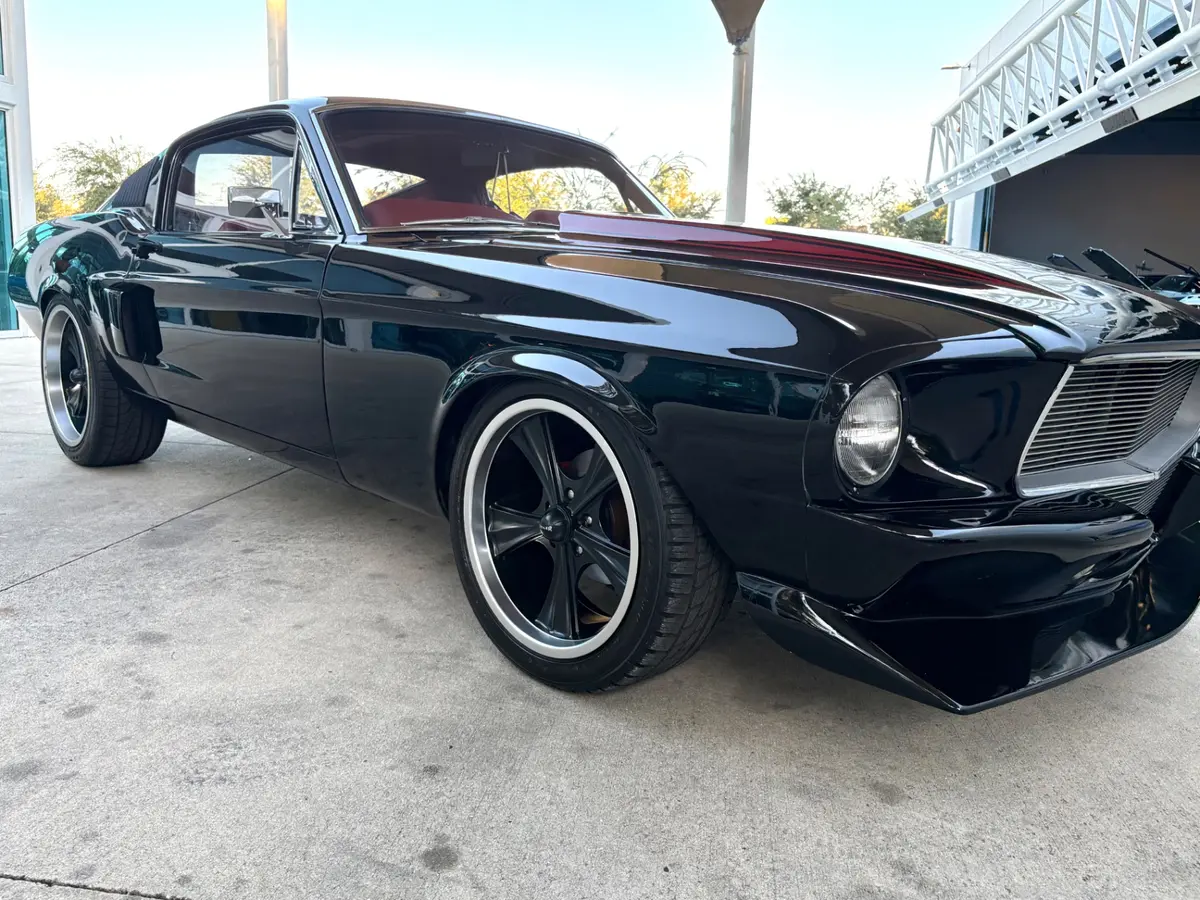
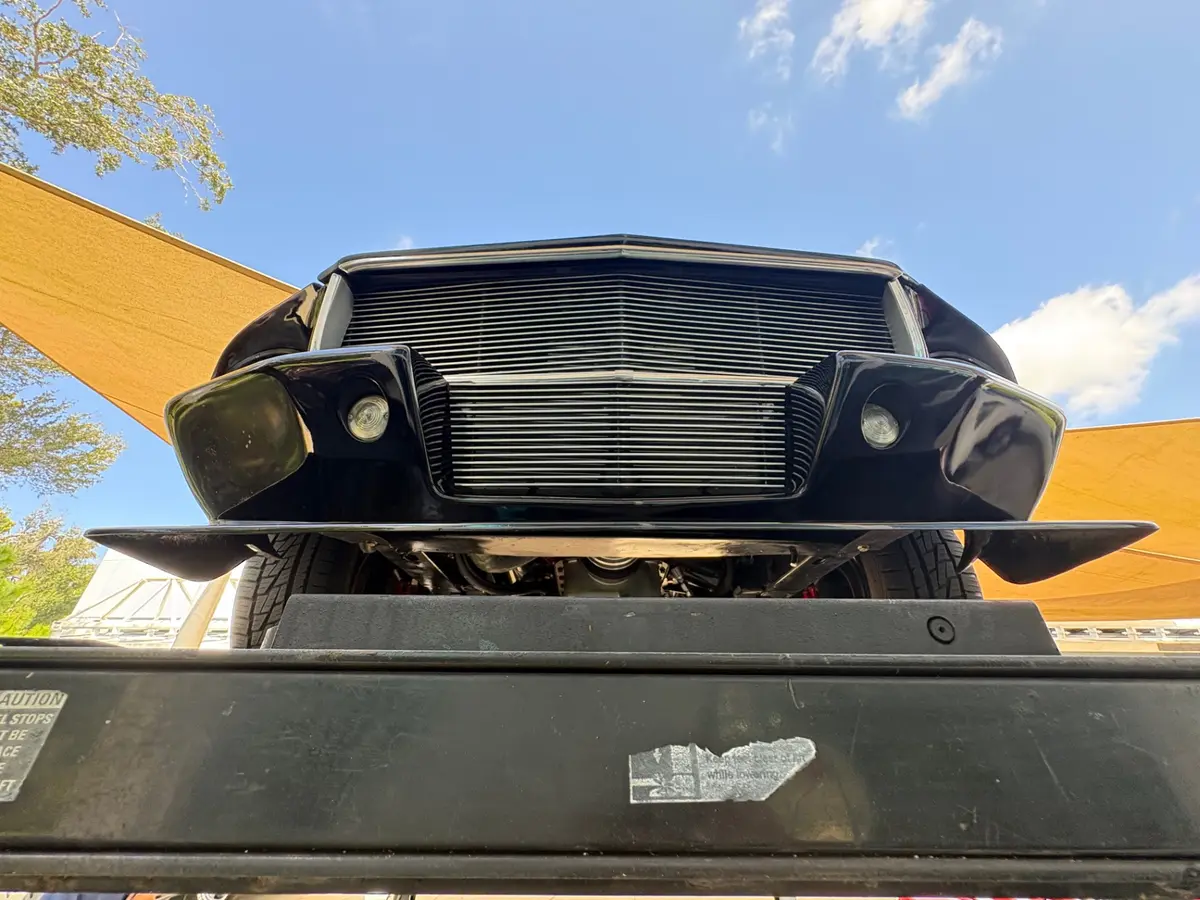
The front end has been modified with a billet grille in place of the original horizontal bar design — a popular and visually clean change that opens the face of the car without altering the surrounding sheetmetal. Front driving lights are mounted in the lower fascia openings, flanking the grille. A custom front splitter runs below the bumper, adding a visual ground effect while also functioning to reduce front-end lift at speed. The combination of the billet grille, splitter, and driving lights gives the front of this 1968 Ford Mustang Fastback a purposeful, forward-leaning stance.
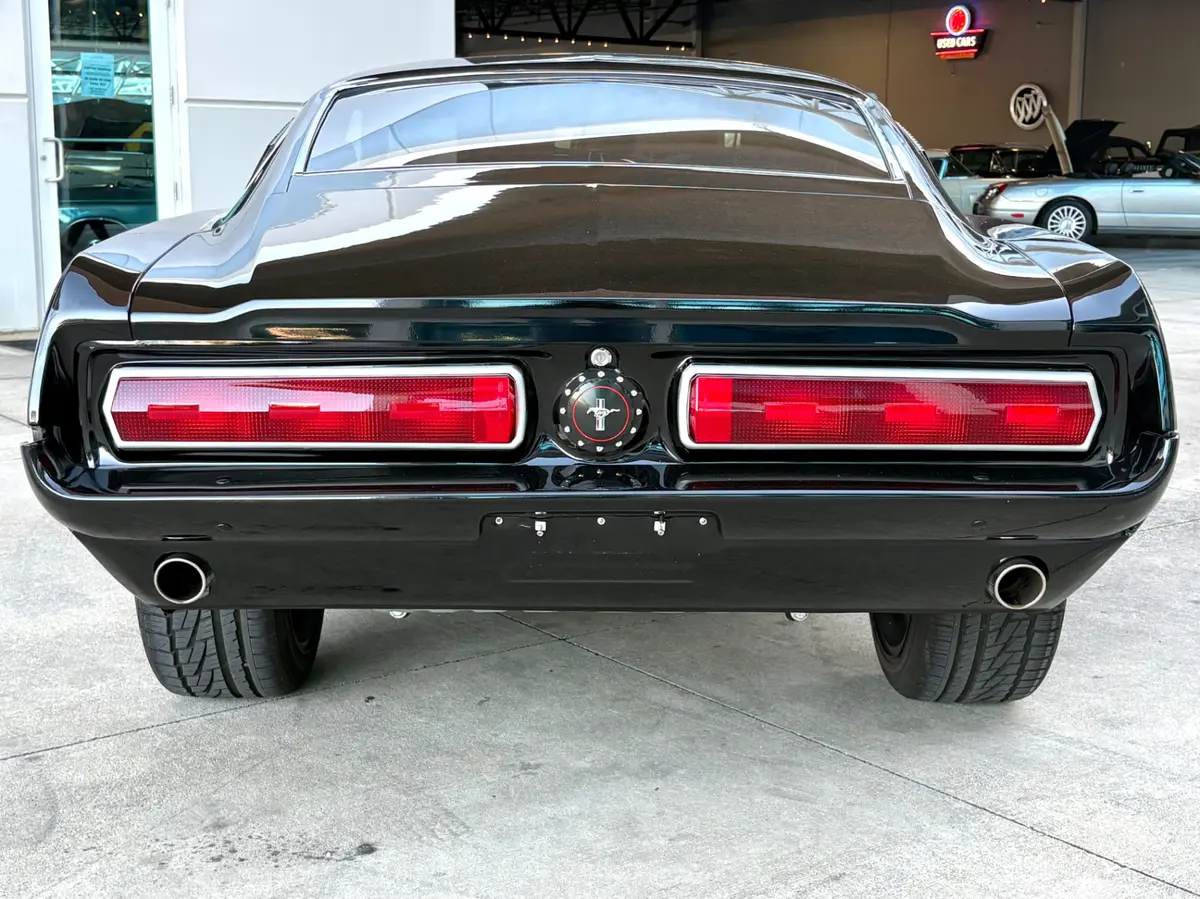
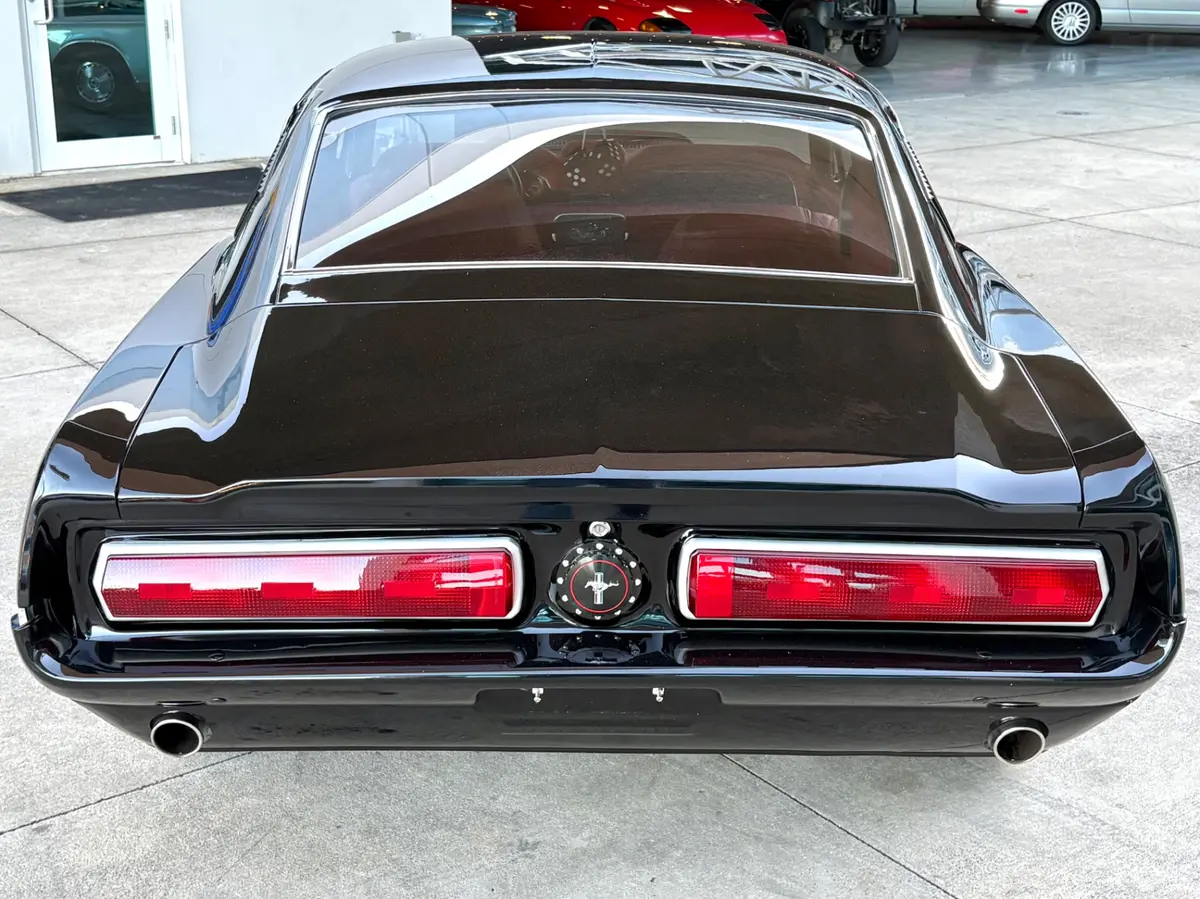
Ridler wheels fill the wheel openings with a modern spoke design that complements the pro-touring intent of the build without looking out of place on a 1960s body. The black center with machined lip treatment works against the black body in a way that keeps the wheel visible without competing with the paint. The Falken Ziex tires are sized to fill the arches properly without requiring fender modification. Looking at the car from the rear, the dual exhaust tips exit symmetrically below the bumper, centered under a clean black tailpanel with the original sequential taillights intact.
Conclusion
This 1968 Ford Mustang Fastback represents a specific type of build — one where the owner made real decisions about how the car would be used and built accordingly. The Holley Sniper EFI system means the 302 starts and runs reliably in any weather. The Wilwood four-wheel disc brakes mean the car stops in proportion to how it accelerates. The coilover suspension and subframe connectors mean it handles with control rather than the original Mustang's characteristic understeer and body flex. And the red leather interior means the driver and passenger are sitting in a space that was designed with the same intention as the rest of the car.
The 1968 Ford Mustang Fastback is one of the most recognizable shapes in American automotive history. This one was built to match that reputation mechanically, not just visually.
To schedule a time to see this 1968 Ford Mustang Fastback in person, call Skyway Classics at 941-254-6608. We're located in Sarasota, Florida and welcome serious inquiries from buyers nationwide.
Disclaimer
Information found on the website is presented as given to us by the owner of the car, whether on consignment or from the owner we bought it from. Some Photos, materials for videos, descriptions and other information are provided by the consignor/seller and is deemed reliable, but Skyway Classics does not warranty or guarantee this information. Skyway Classics is not responsible for information that may incorrect or a publishing error. The decision to purchase should be based solely on the buyers personal inspection of the vehicle or by a professional inspection service prior to offer or purchase being made.
1968 Ford
Mustang Fastback
Why Choose Skyway Classics?
Explore our curated inventory of classic and collector cars—thoughtfully selected, ready to drive, and supported by experts who make ownership simple.
Expert Curation
Every vehicle is hand-selected by our experts for quality, authenticity, and investment potential.
Fast Transactions
Streamlined buying and selling process with quick financing and immediate delivery options.
Only National Dealer With Classic Service & Repair
We’re the only national dealership that services and repairs the classics we sell—before and after the sale.
Nationwide Network
Access to our extensive network of collectors, restorers, and classic car enthusiasts nationwide.
Concierge Ownership Support
From financing and insurance to paperwork, shipping, and titling—we handle the details so you can enjoy the drive.
Passion-Driven Service
We're classic car enthusiasts first, providing personalized service with genuine passion for the hobby.