
1970 Dodge
Challenger Base
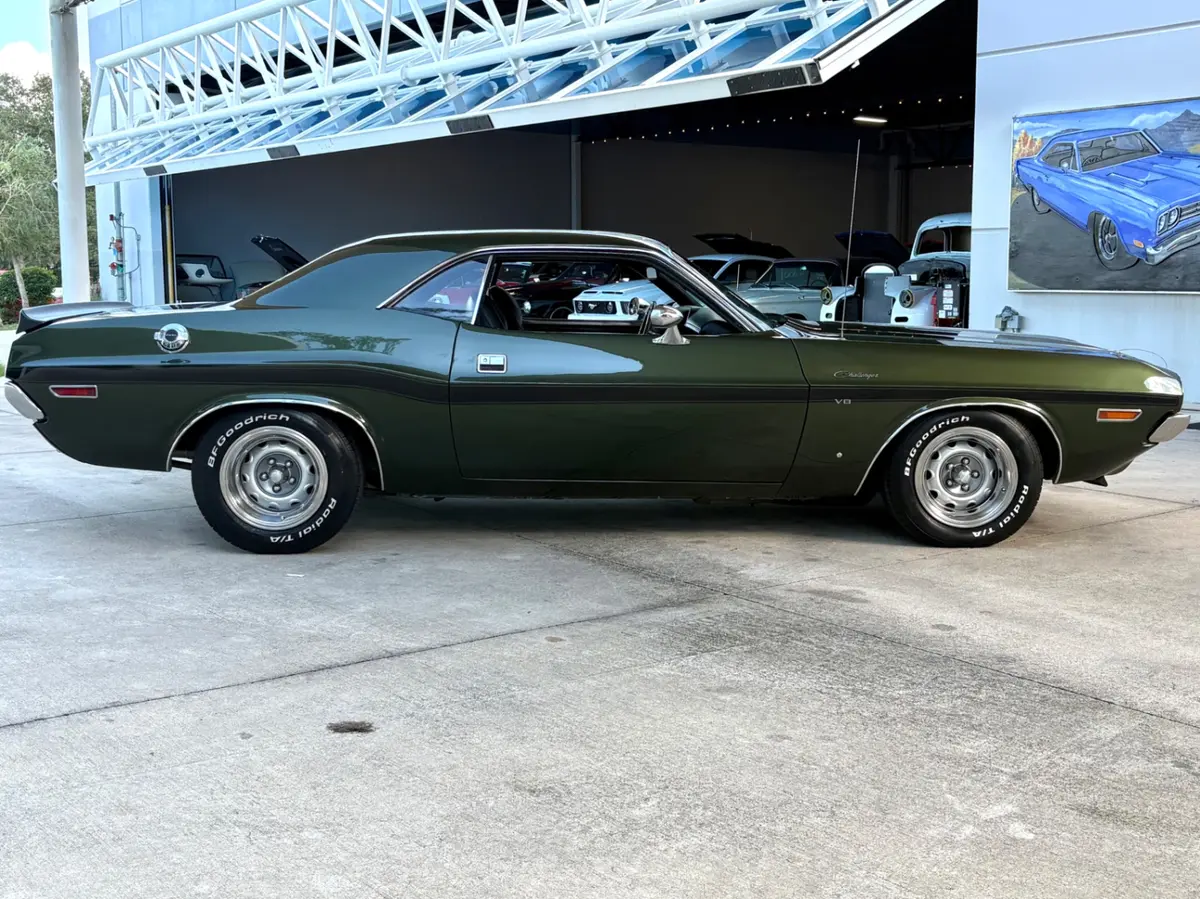
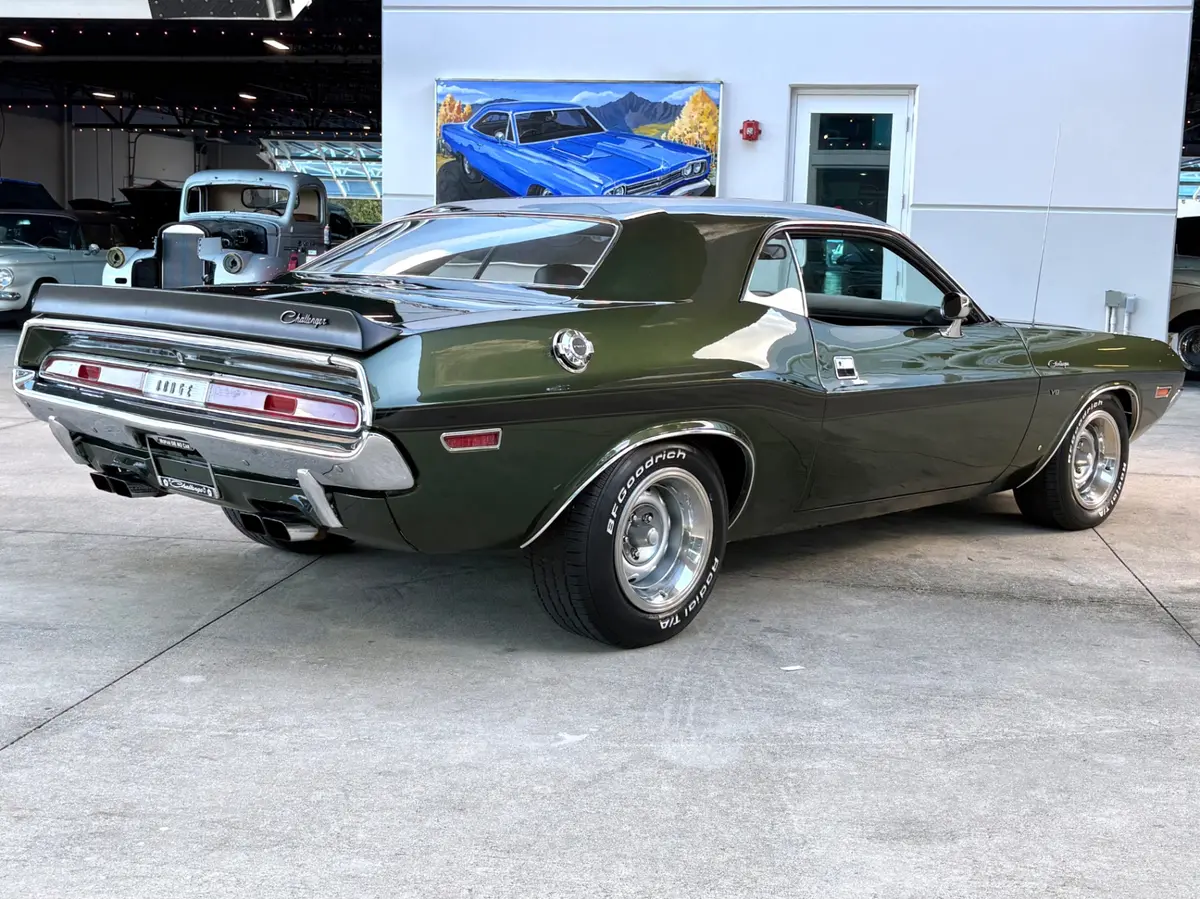
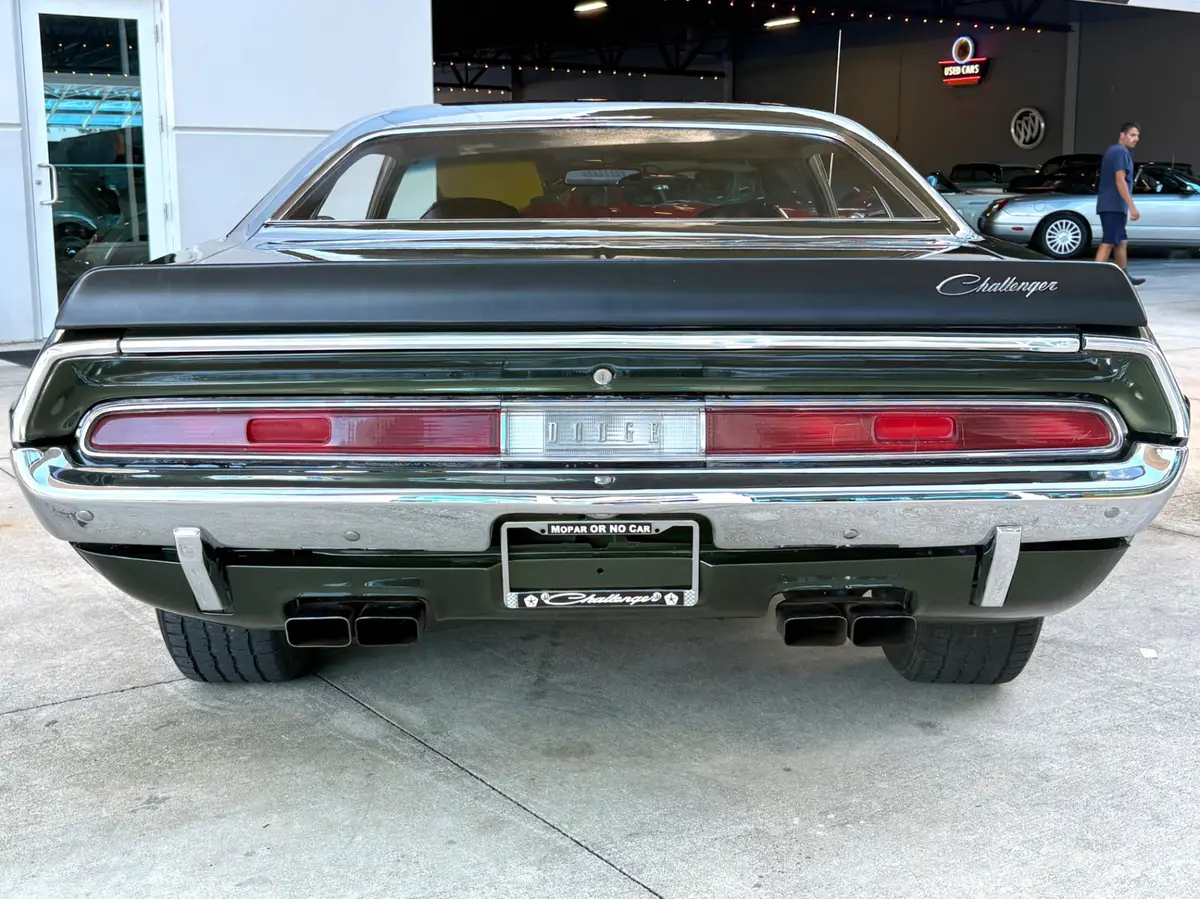
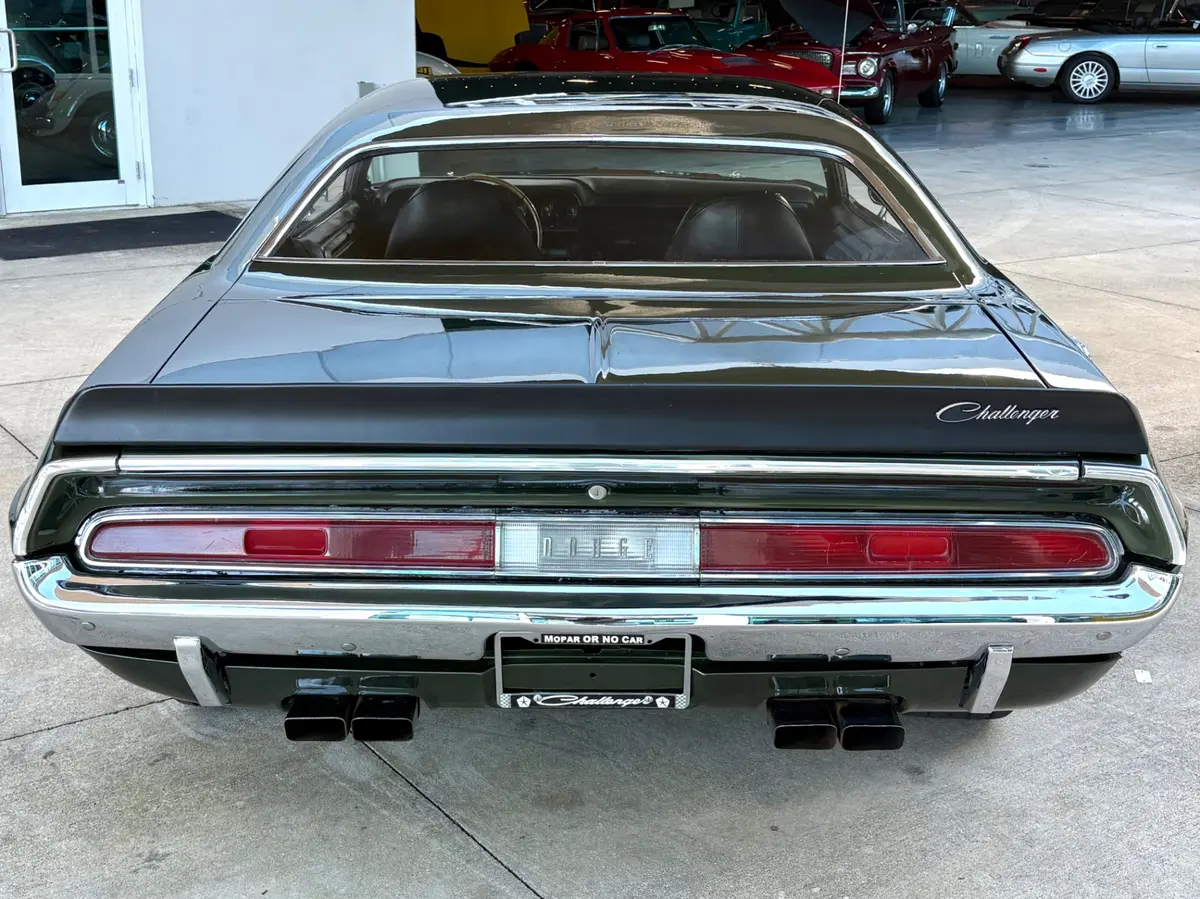
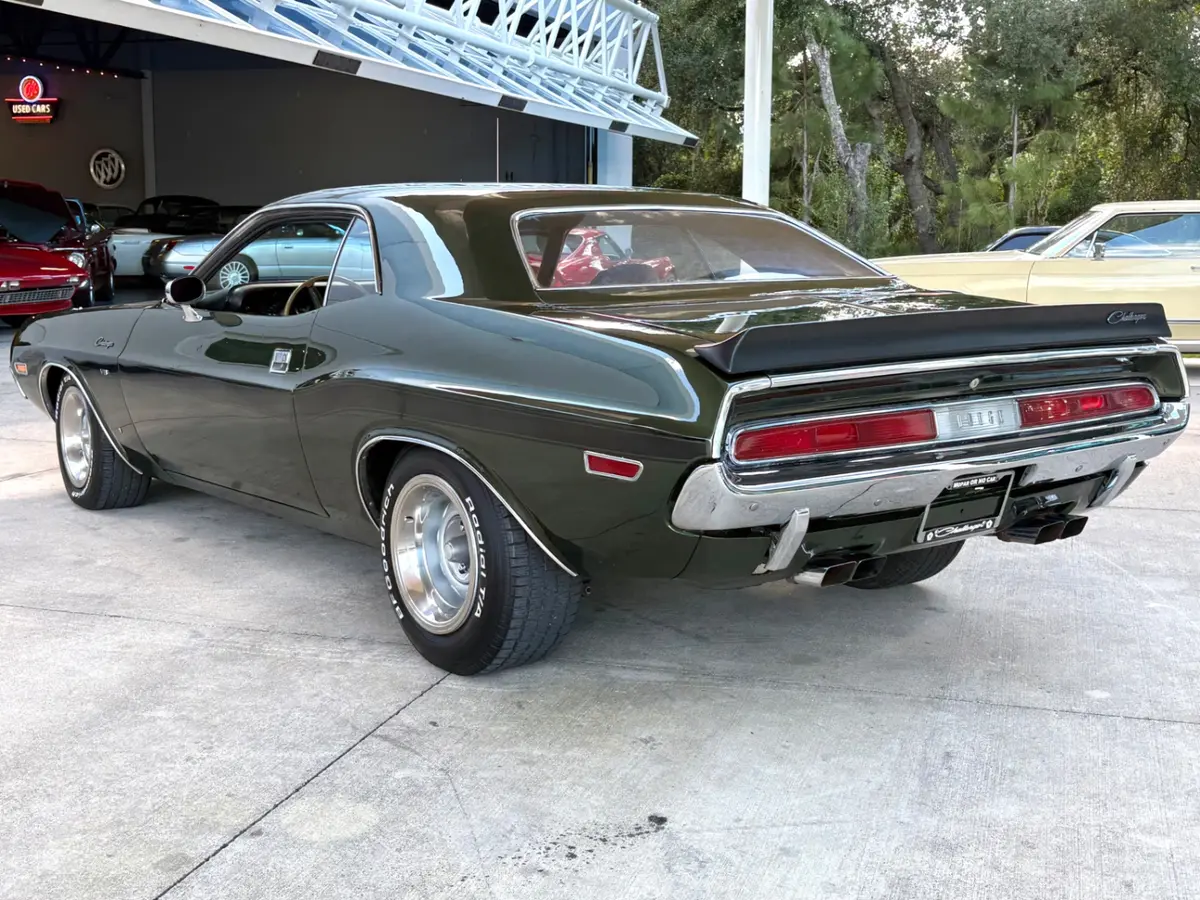
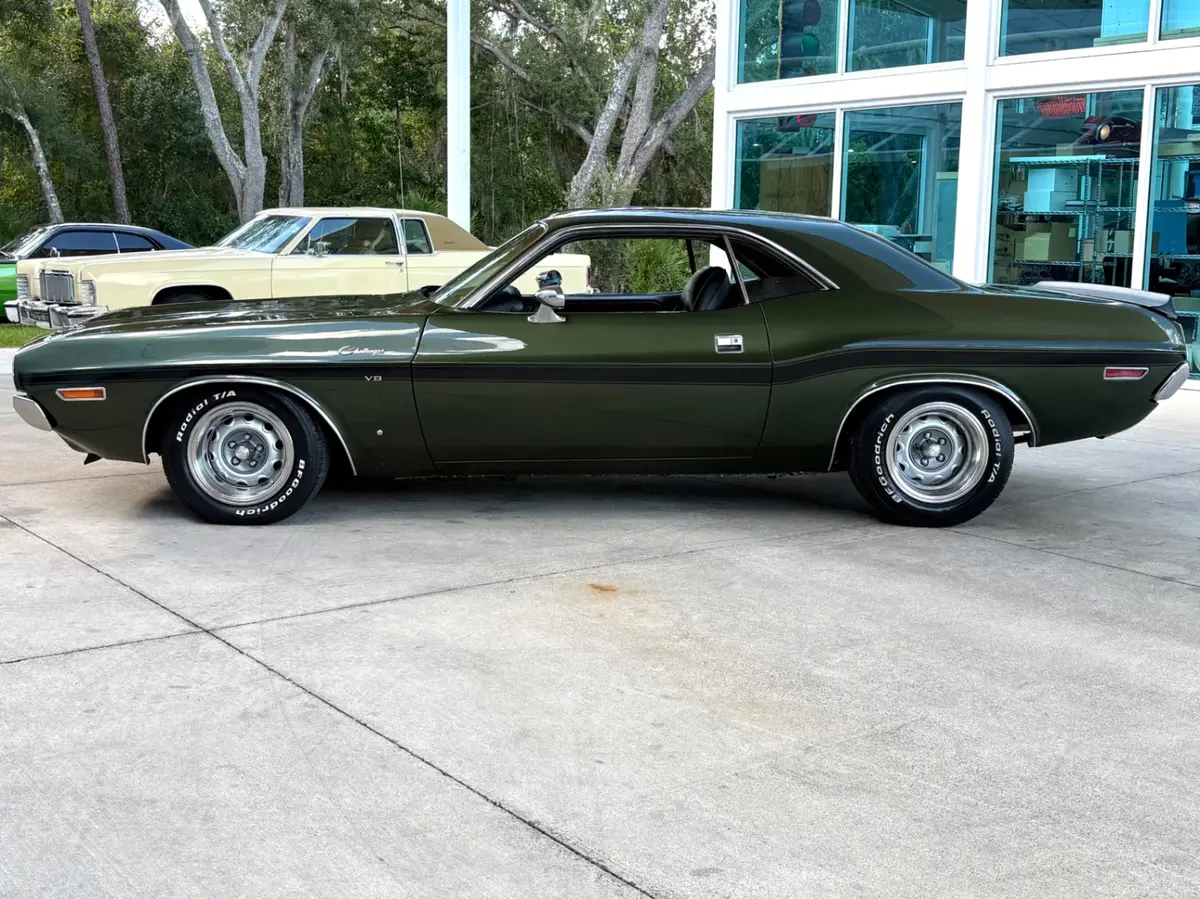
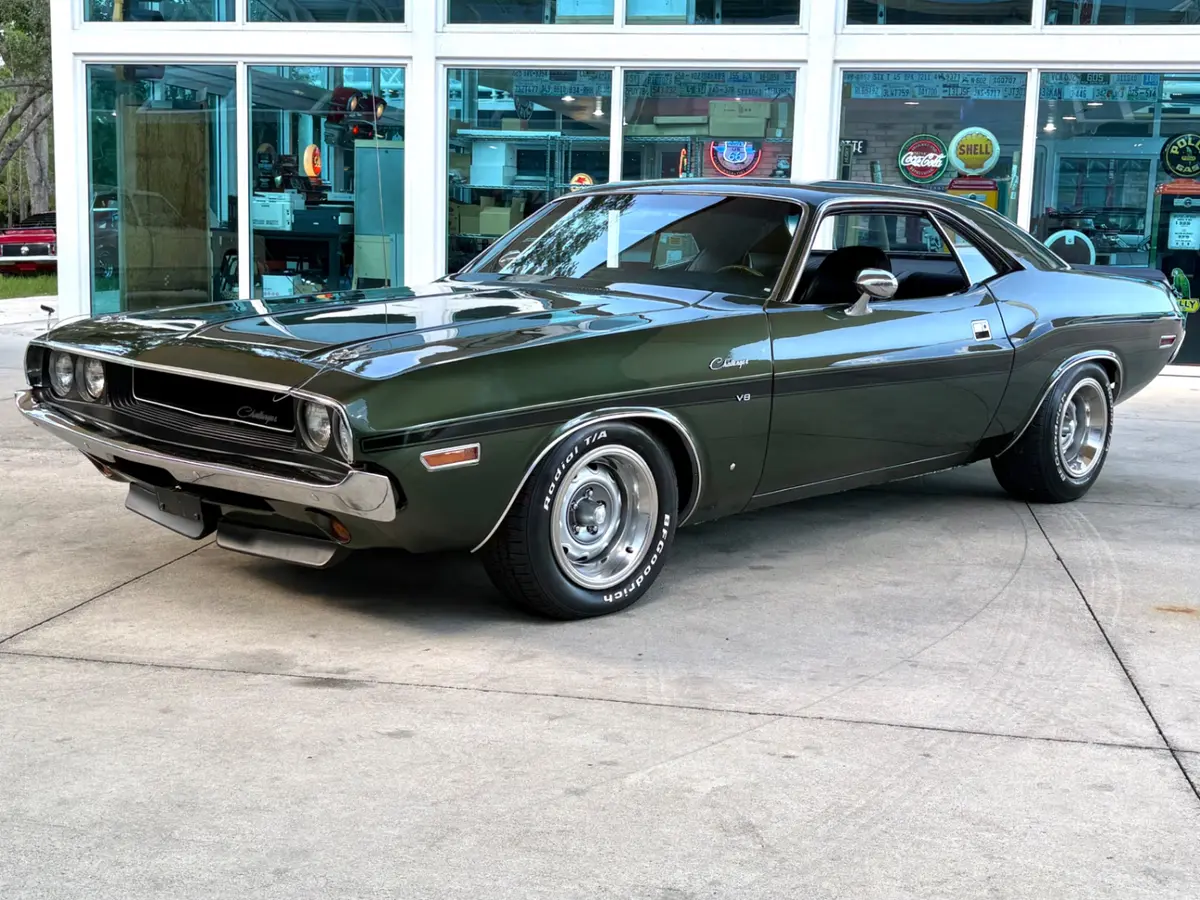
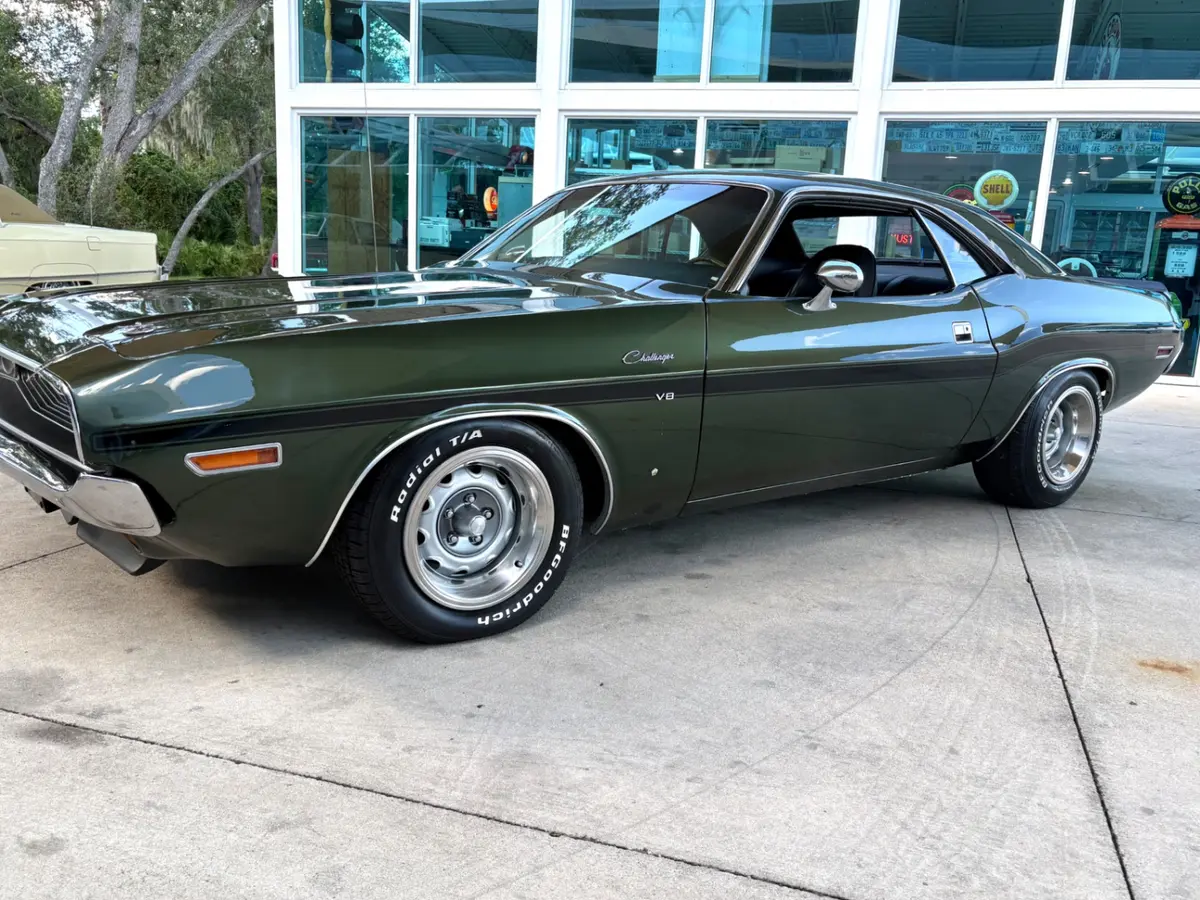
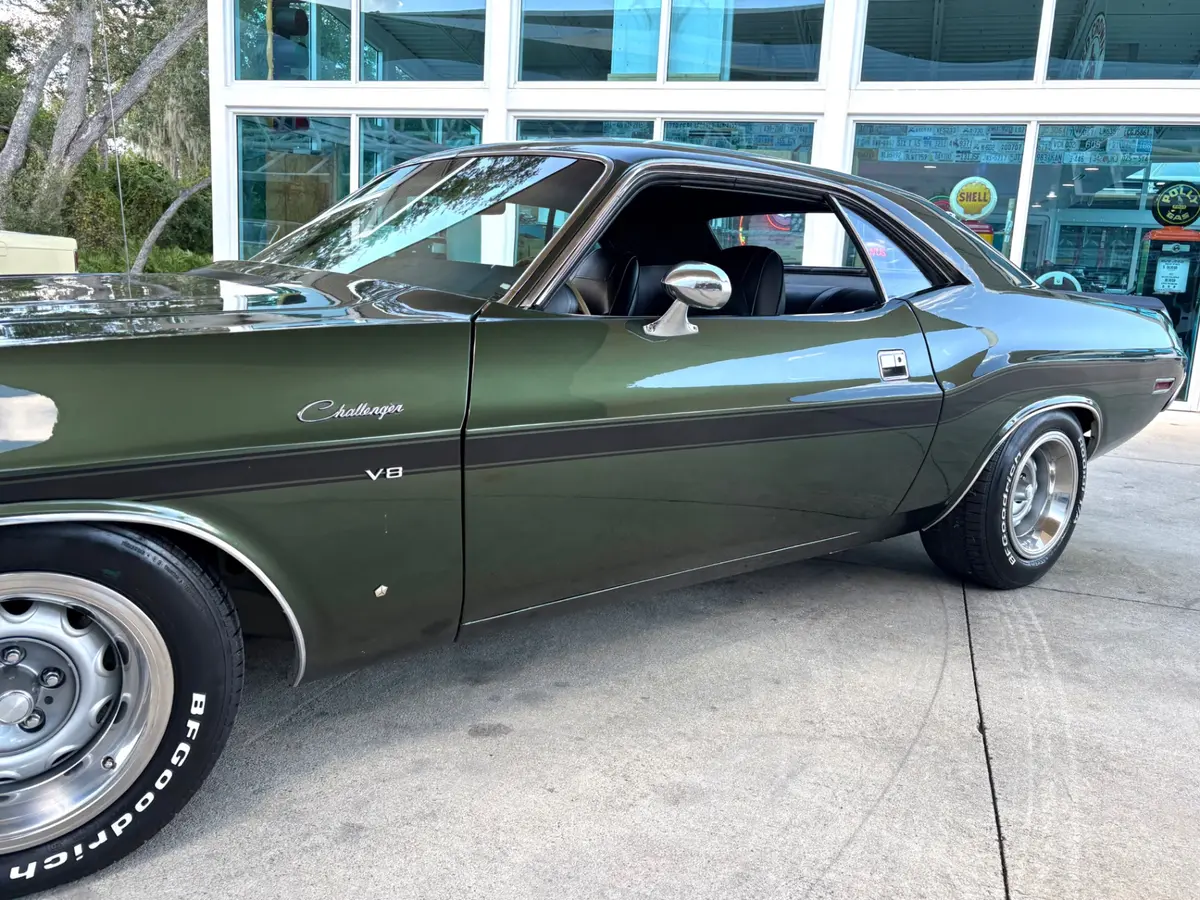
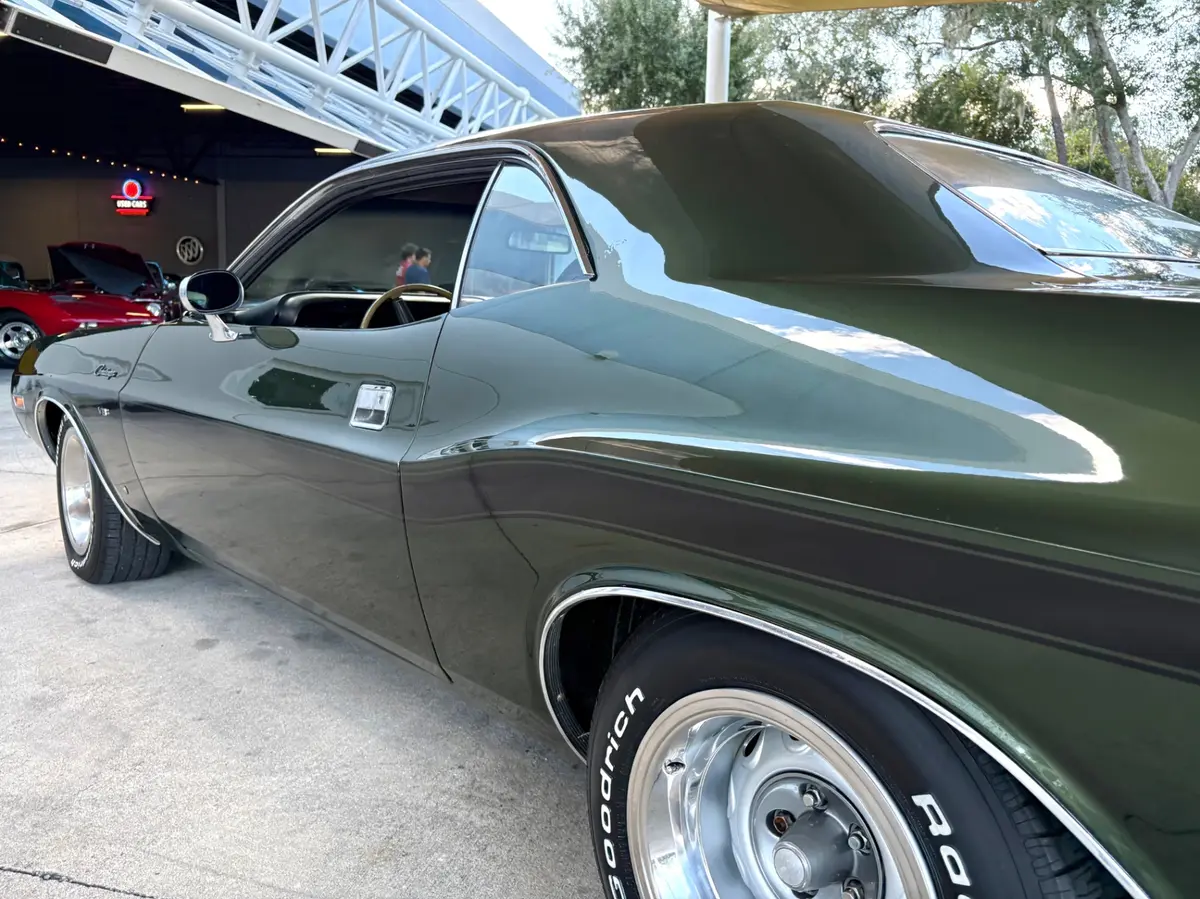
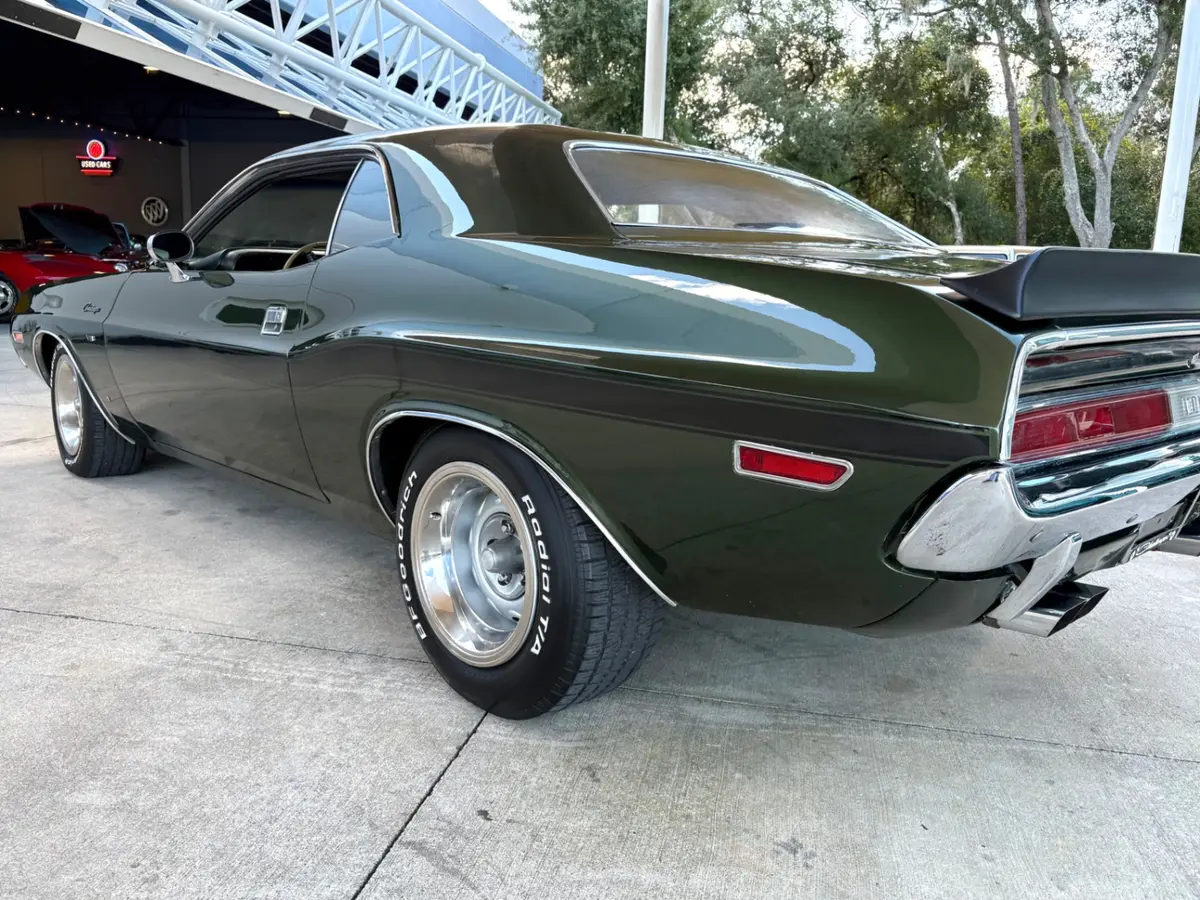
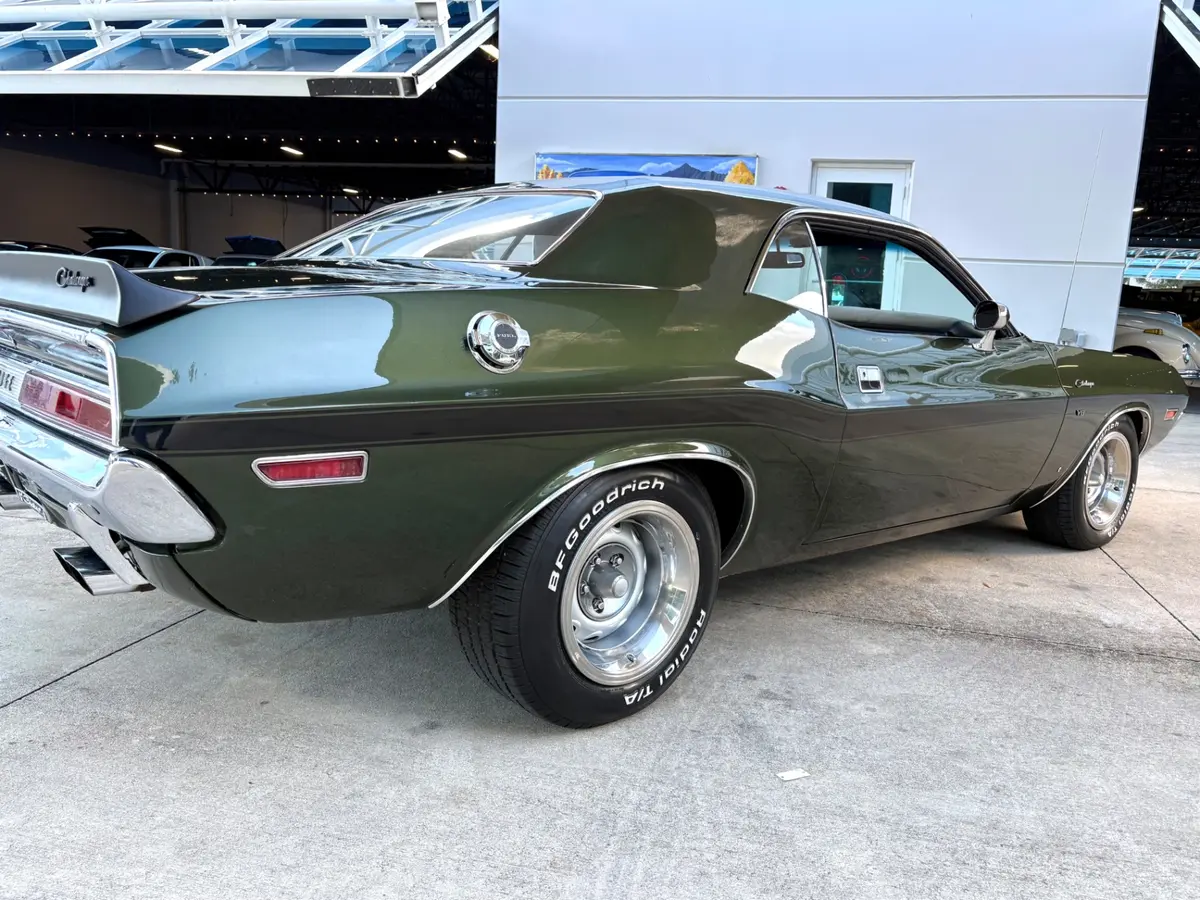
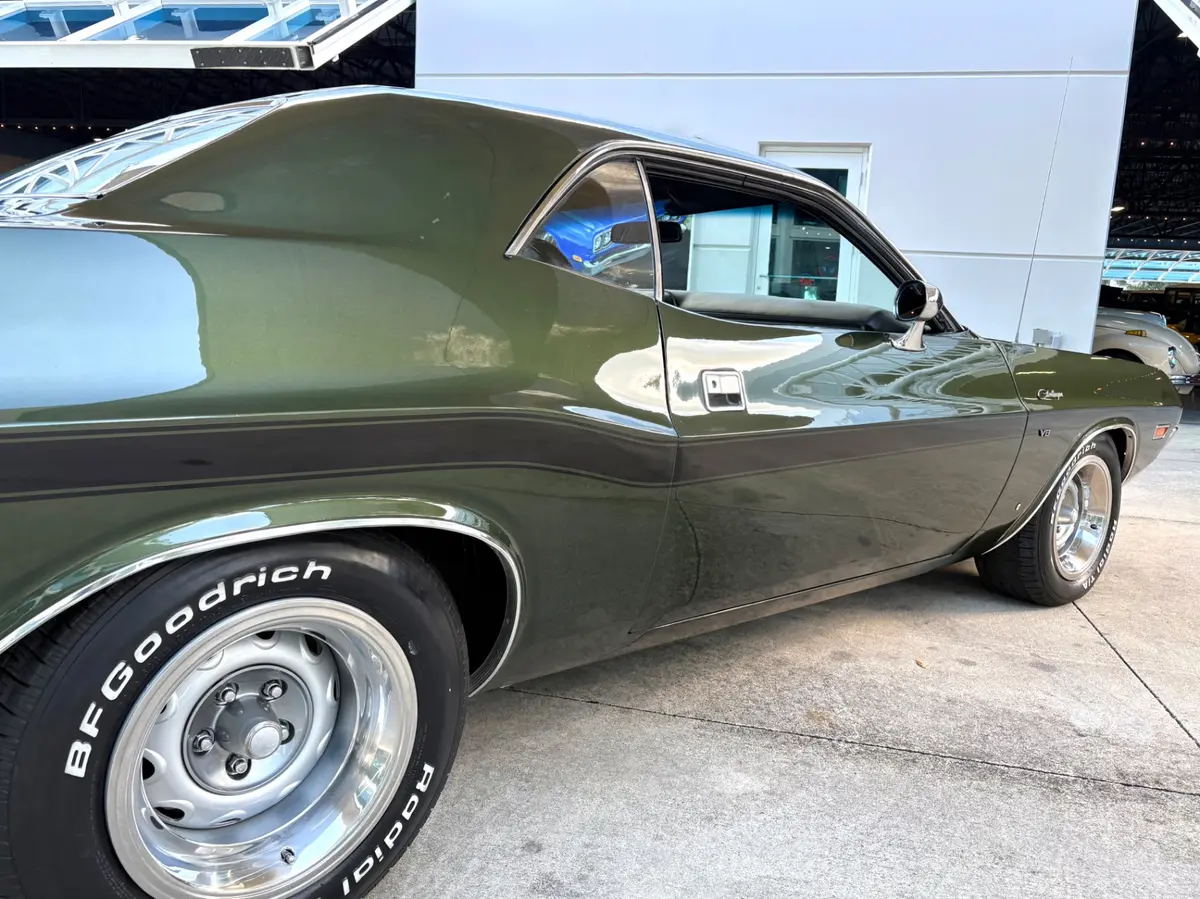
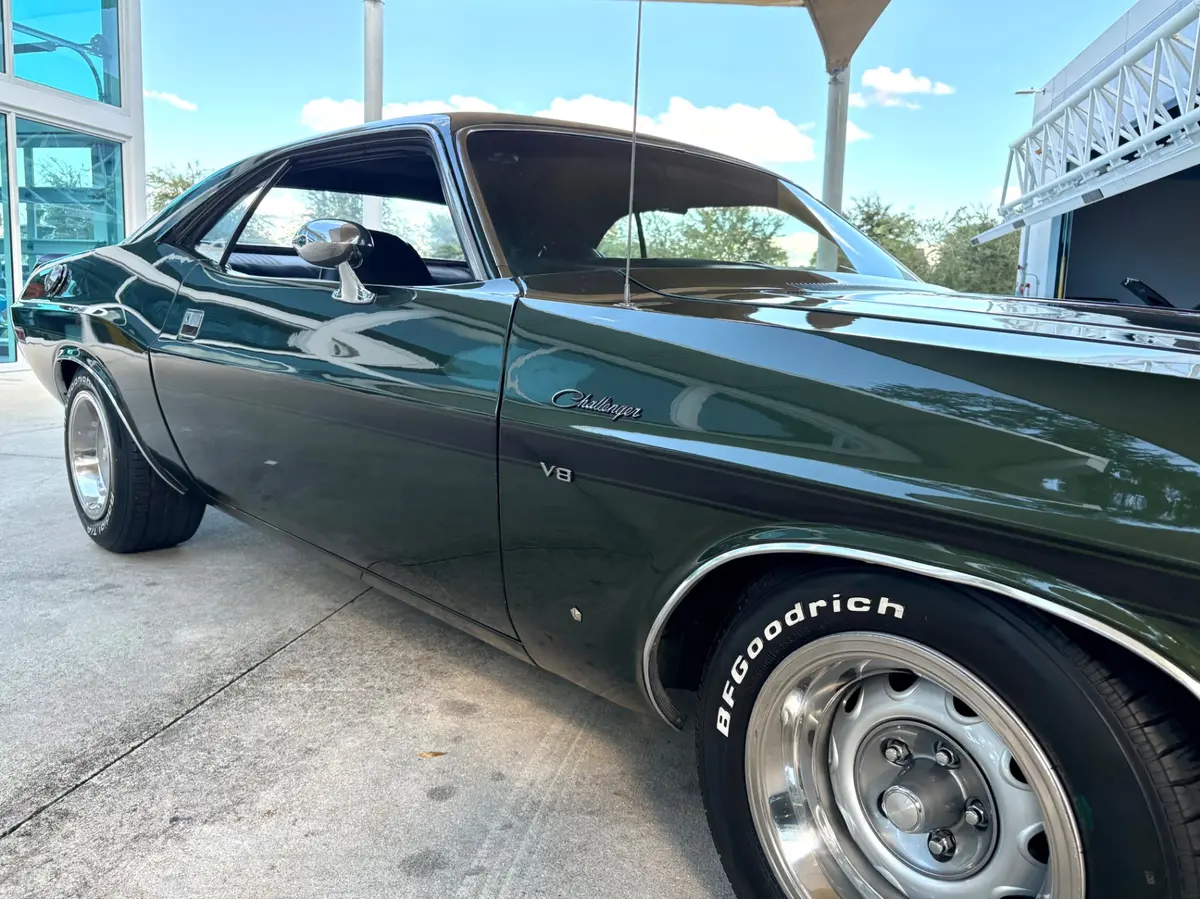
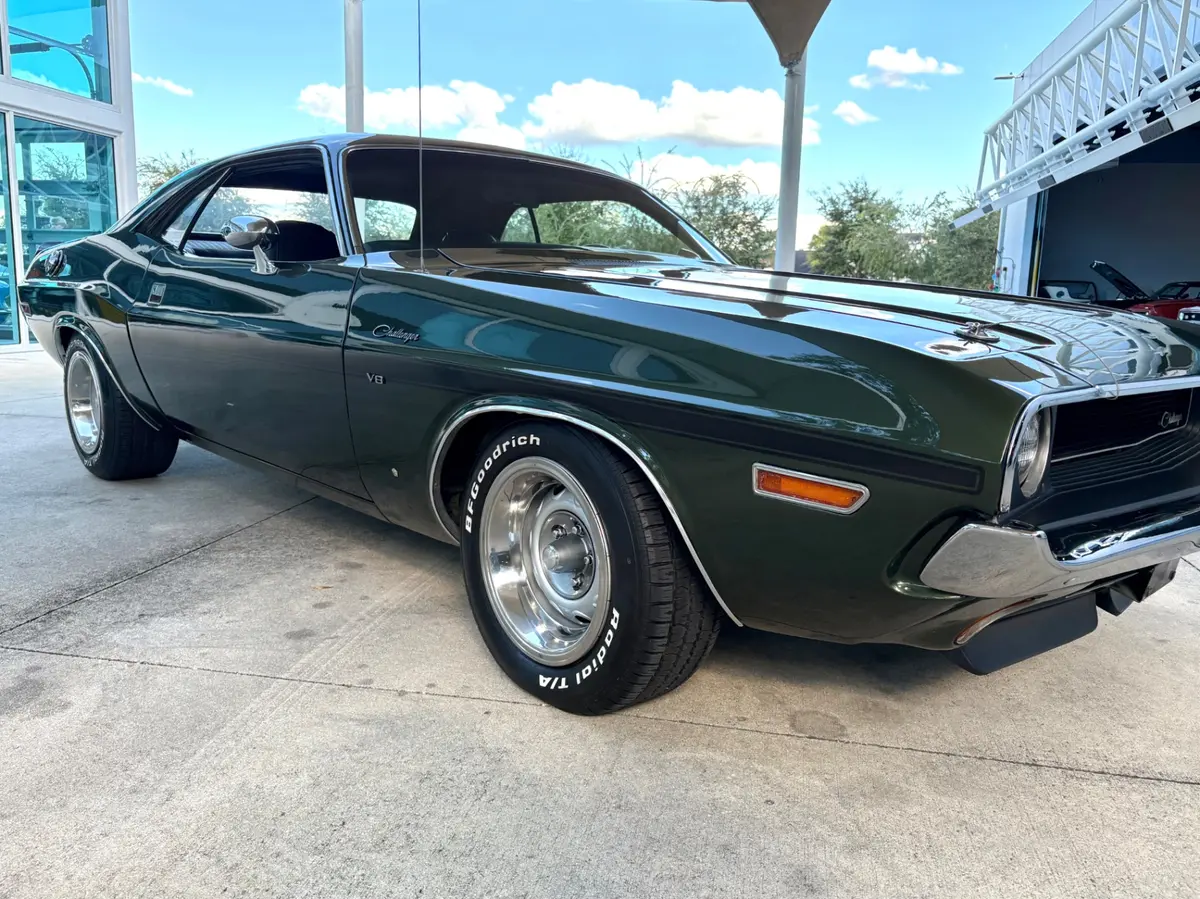
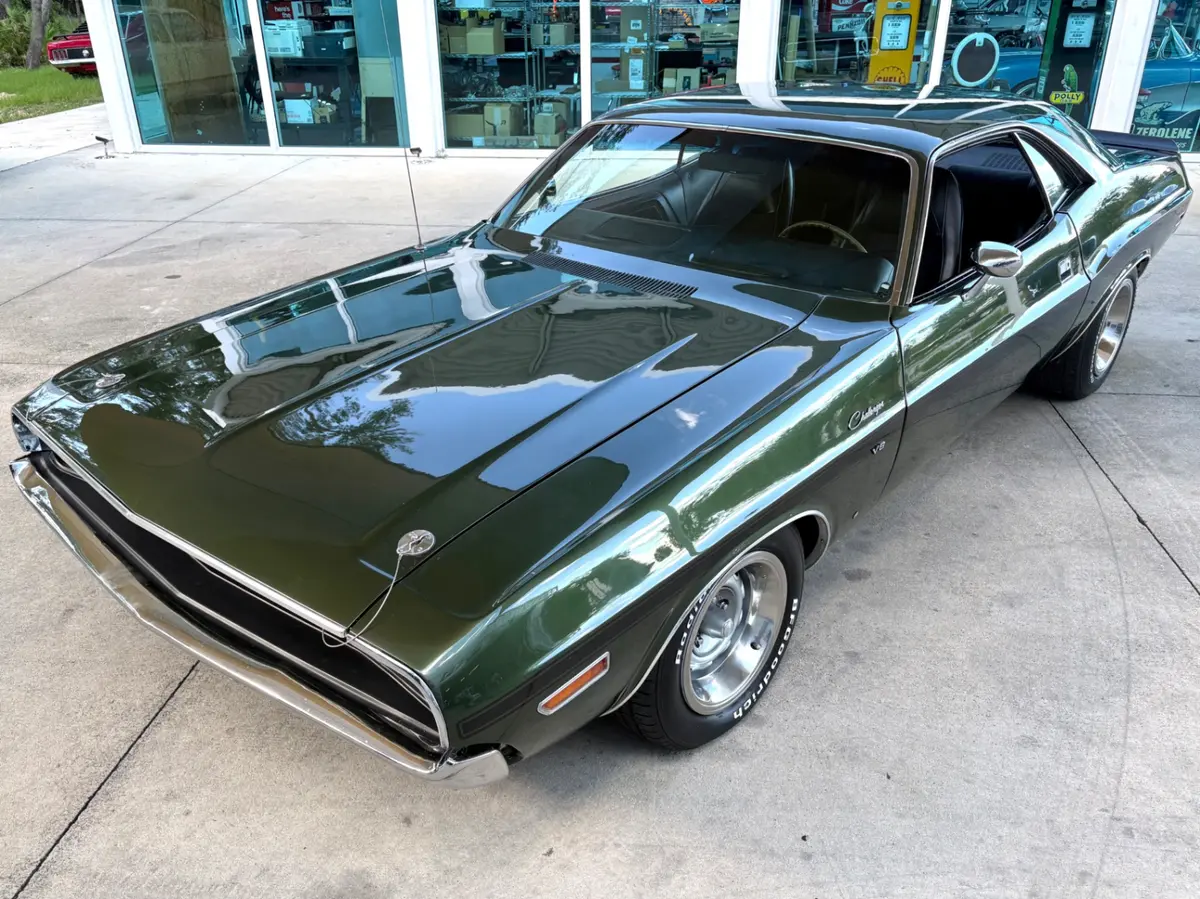
1970 Dodge Challenger 383 Big Block — Green Over Black with Console, Vinyl Top, and Quad-Tip Exhaust
Why This Car Is Special
The 1970 Dodge Challenger arrived at exactly the right moment — and then the moment passed. Dodge built the Challenger for only a handful of years before insurance rates, emissions regulations, and the oil embargo conspired to end the first-generation muscle car era. That makes the 1970 model year particularly significant: it was the first year of production, and it came to market when Chrysler was still willing to build big-block pony cars without compromise. More than 76,000 Challengers were produced for the 1970 model year across all body styles and engine combinations, and the 383 cubic inch big block was one of the most popular powerplant choices — offering genuine performance without the insurance penalty and premium price of the 440 or 426 Hemi.
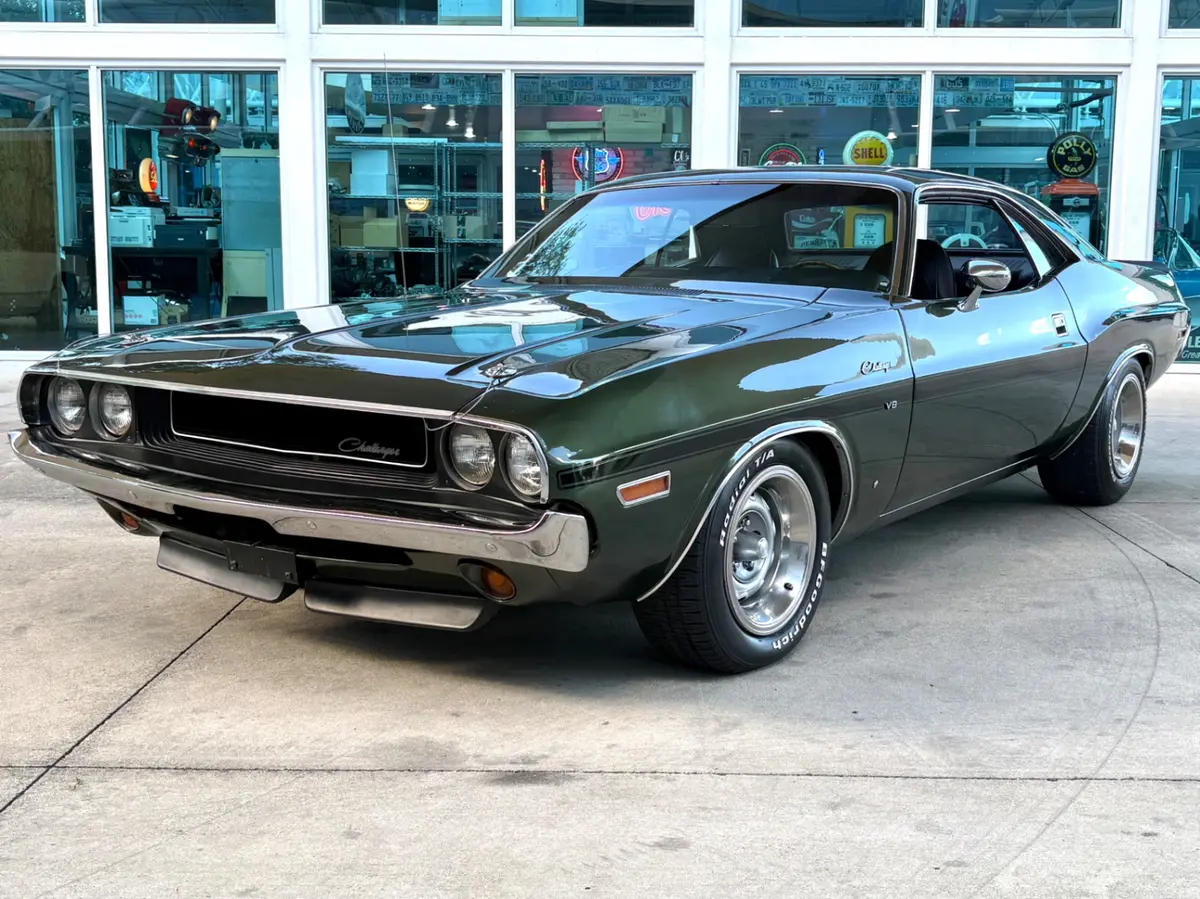
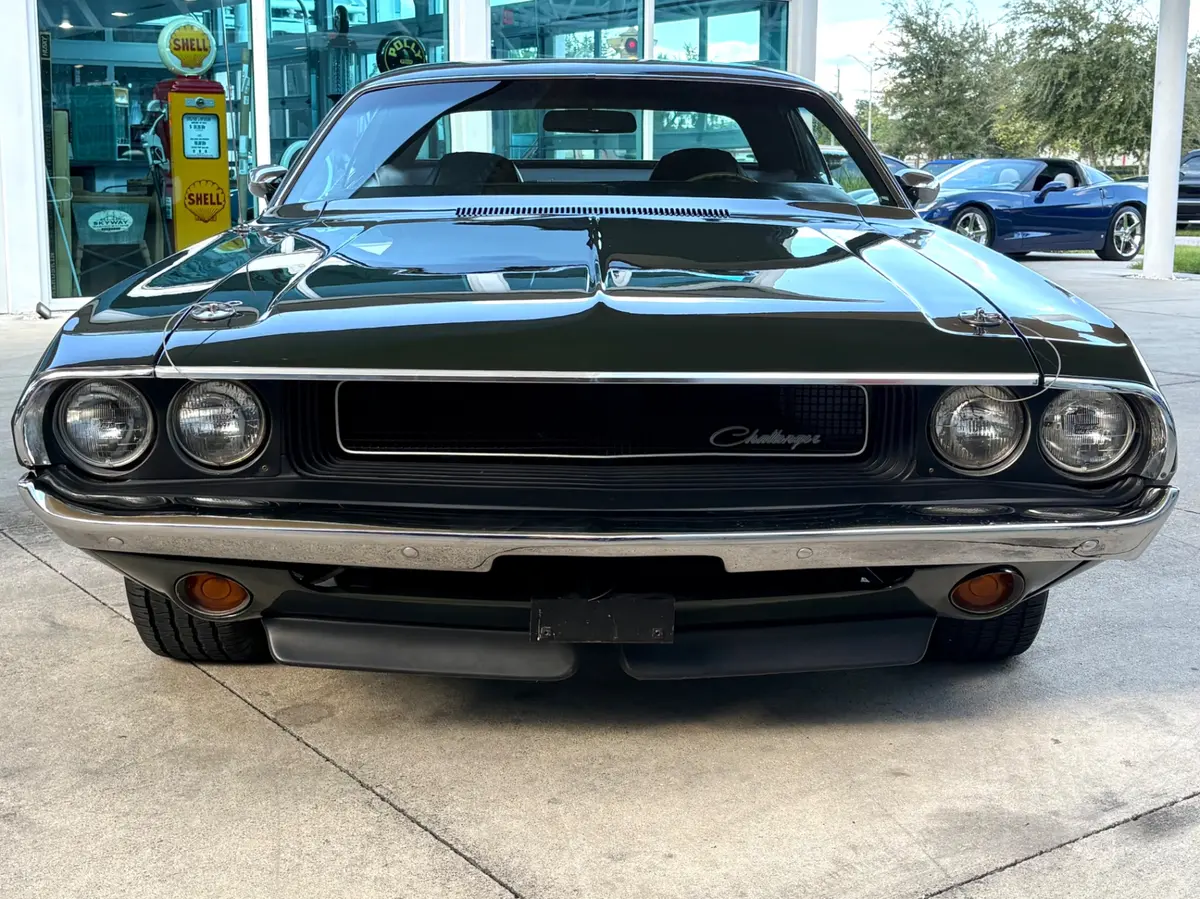
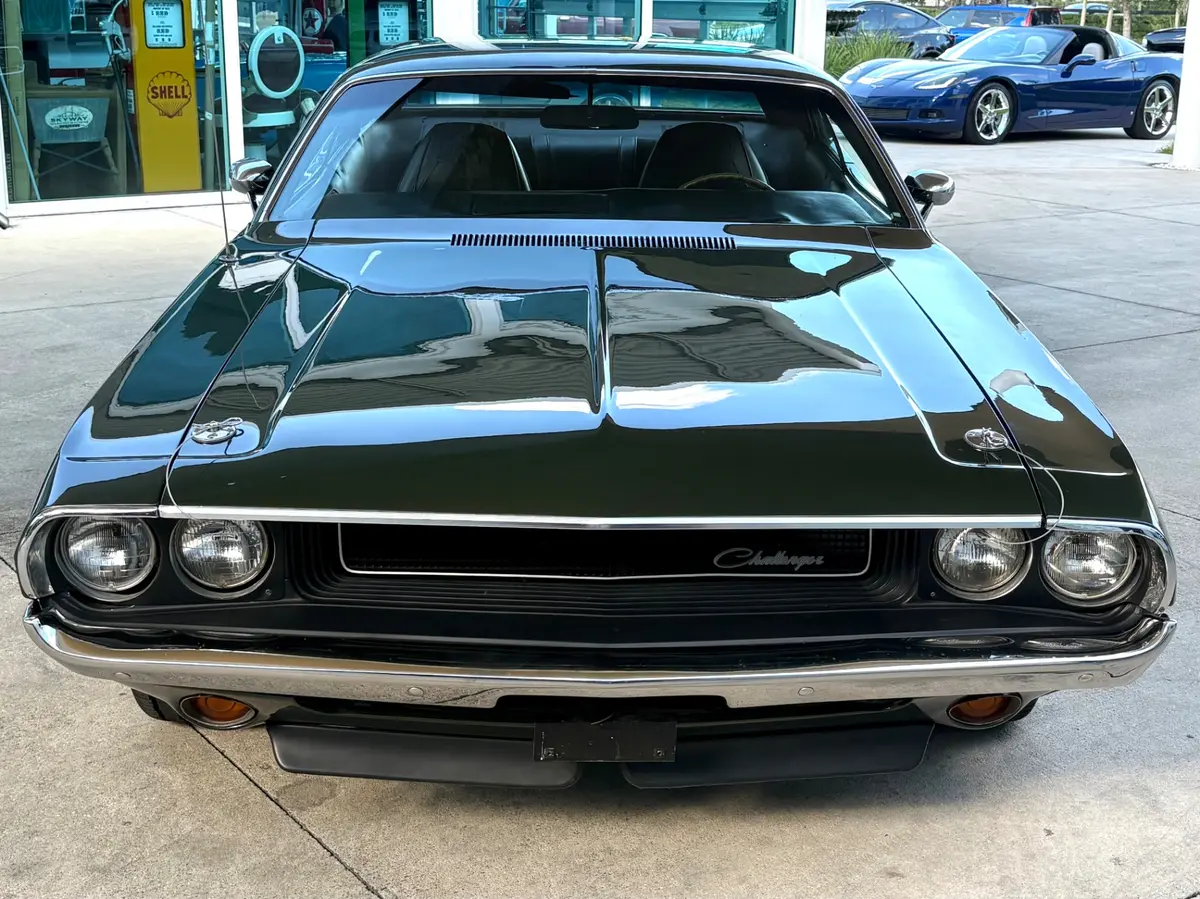
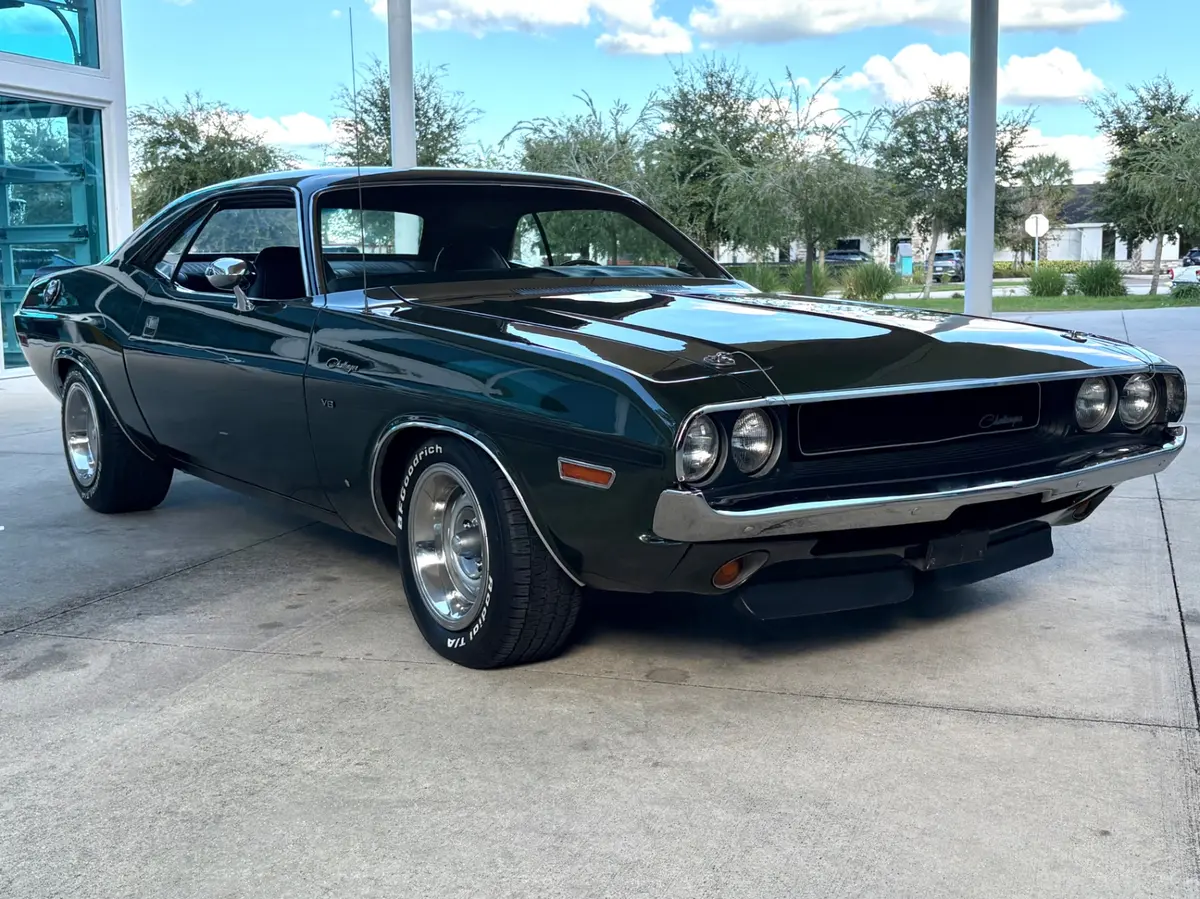
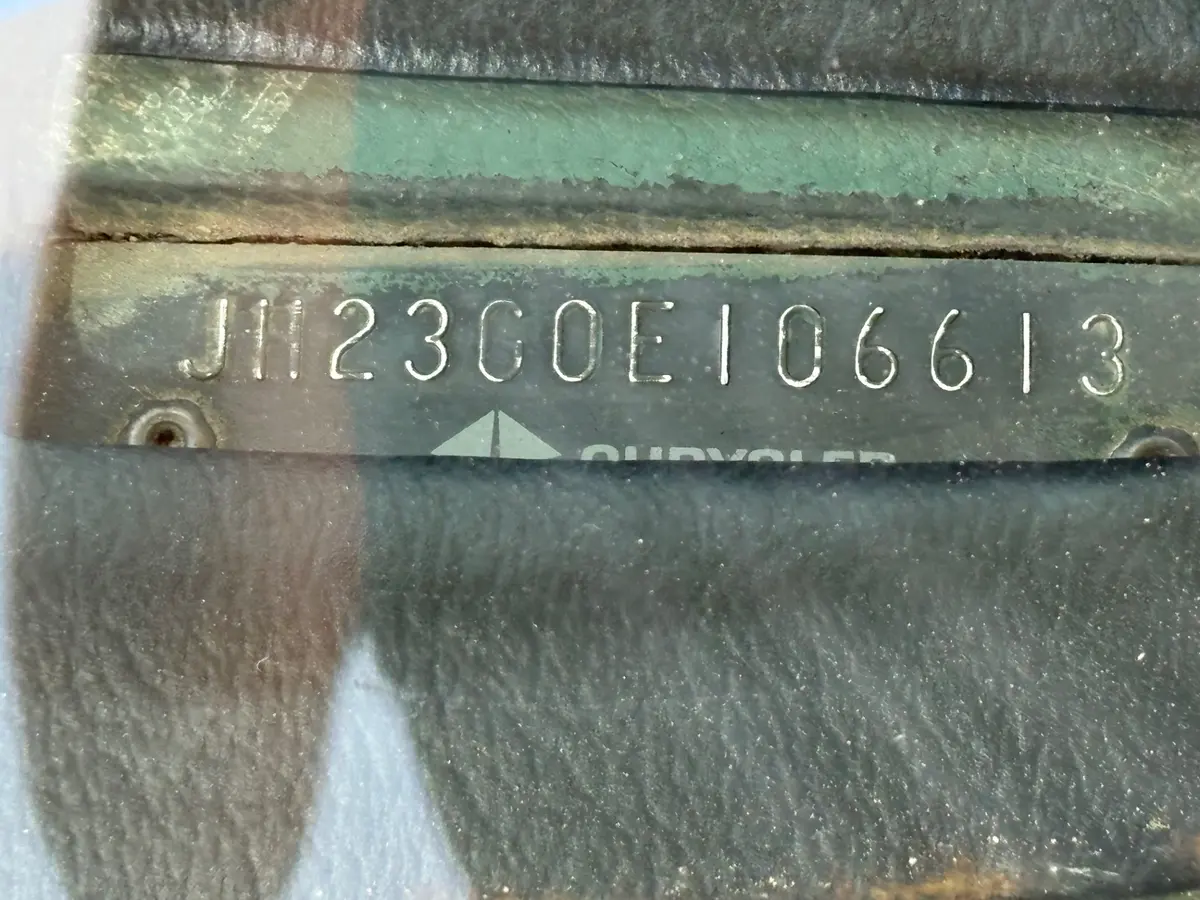
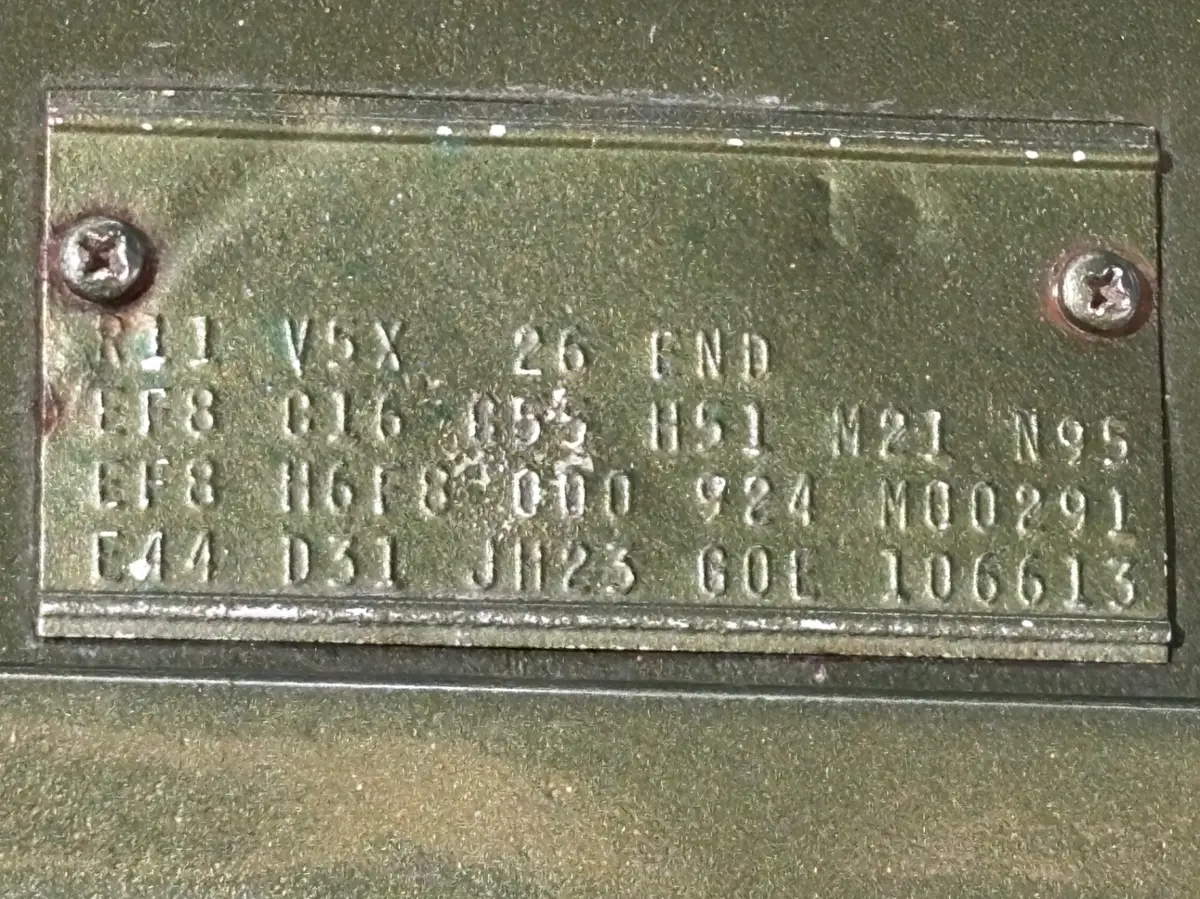
This specific 1970 Dodge Challenger is a hardtop coupe finished in green with a black vinyl top and a black interior. The engine code in the VIN decodes to "G," confirming the factory 383 cubic inch big block V8, which was rated at 335 horsepower in standard two-barrel form or 330 horsepower in four-barrel configuration for 1970. The car is backed by a 3-speed automatic transmission with a console-mounted floor shifter — a combination that makes this Challenger as enjoyable on a Sunday cruise as it is at a car show. Someone has taken care of this car and added a thoughtful collection of performance and appearance upgrades over the years, all in a style that stays true to the Mopar tradition.
The 1970 Dodge Challenger was built on the Chrysler E-body platform, which it shared with the Plymouth Barracuda. What set the Challenger apart from other pony cars of the era was its sheer size — at 110 inches of wheelbase, it was two inches longer than a Camaro and a full four inches longer than a Mustang. That extra length gave the Challenger a longer, more proportional body, and designers used the space to create one of the most cleanly styled muscle cars of the period. The long hood, short rear deck, and wide rear haunches gave the car a stance that still reads correctly more than five decades later.
Features List
- 383ci V8 Big Block (VIN engine code "G" confirmed)
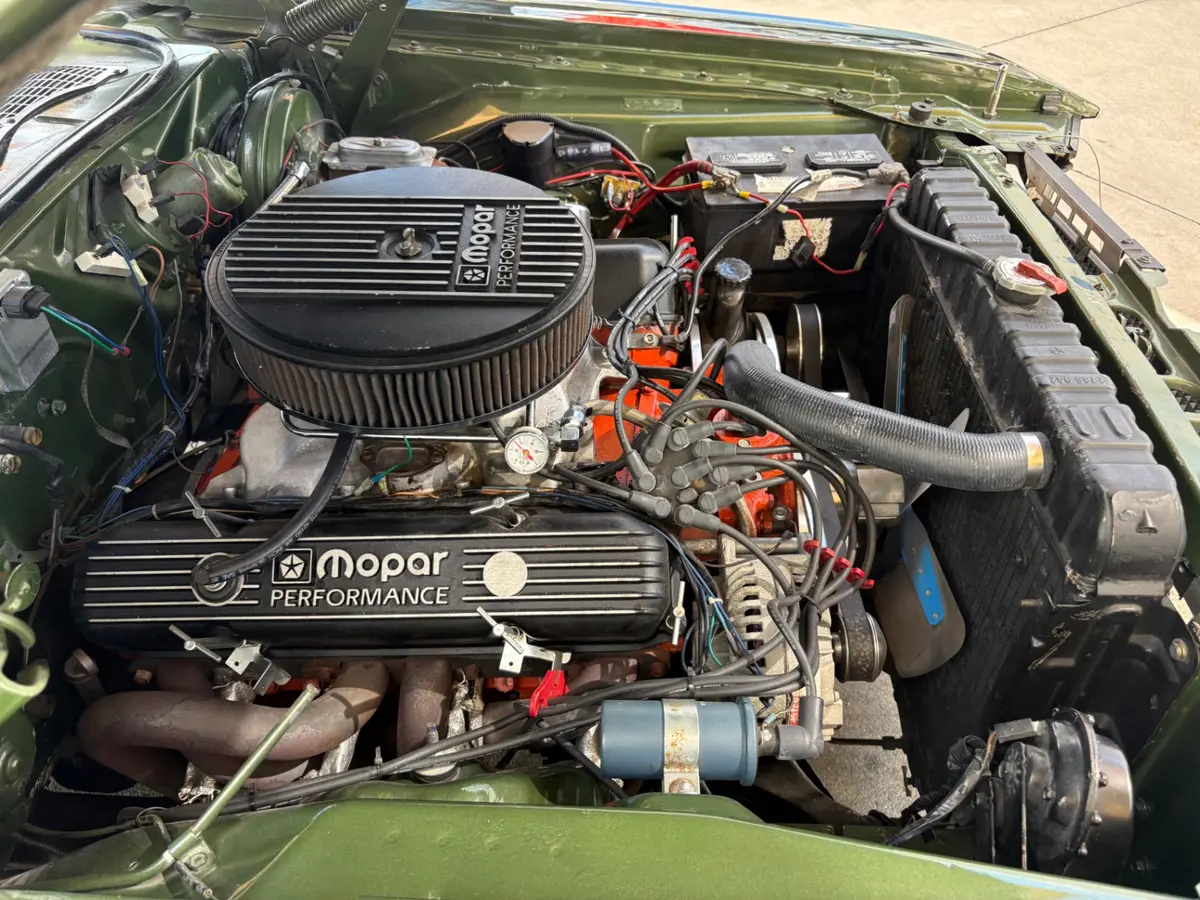
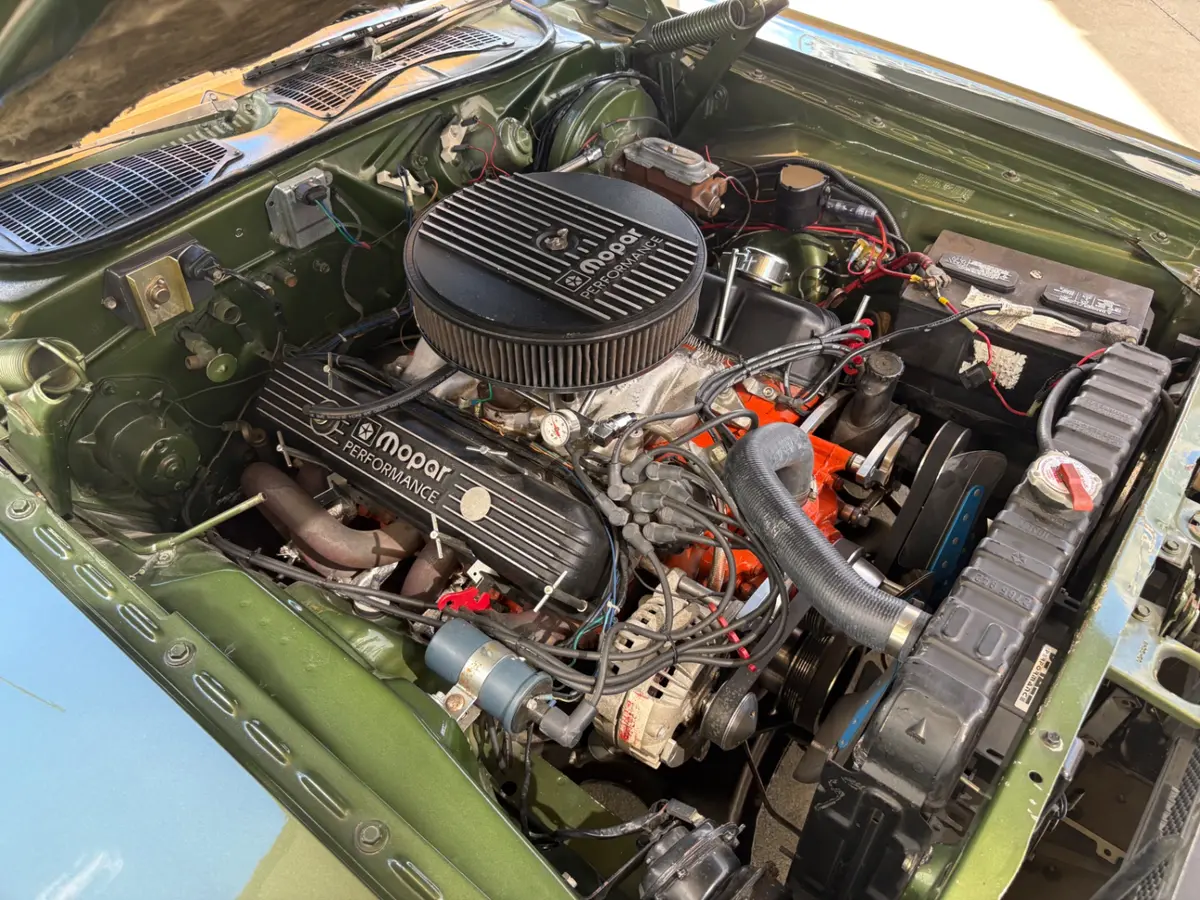
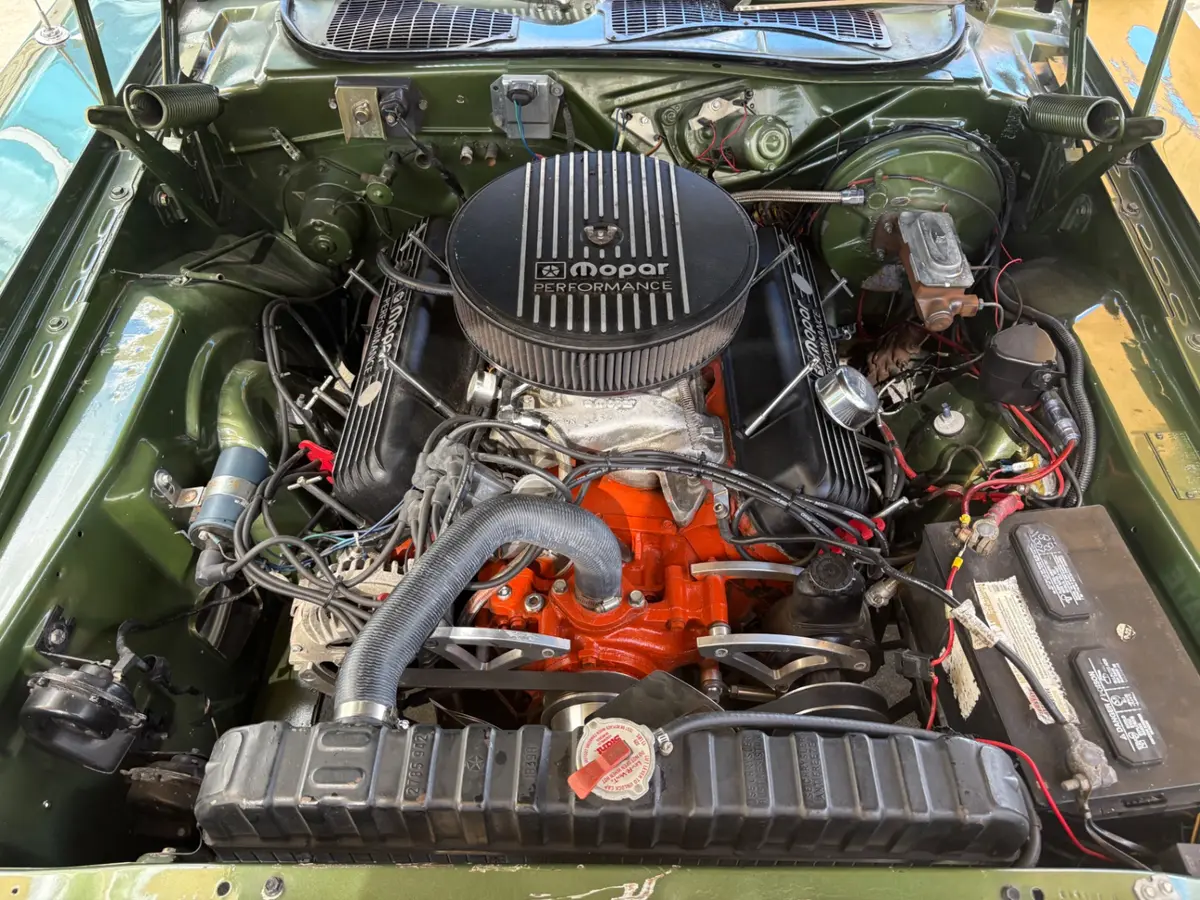
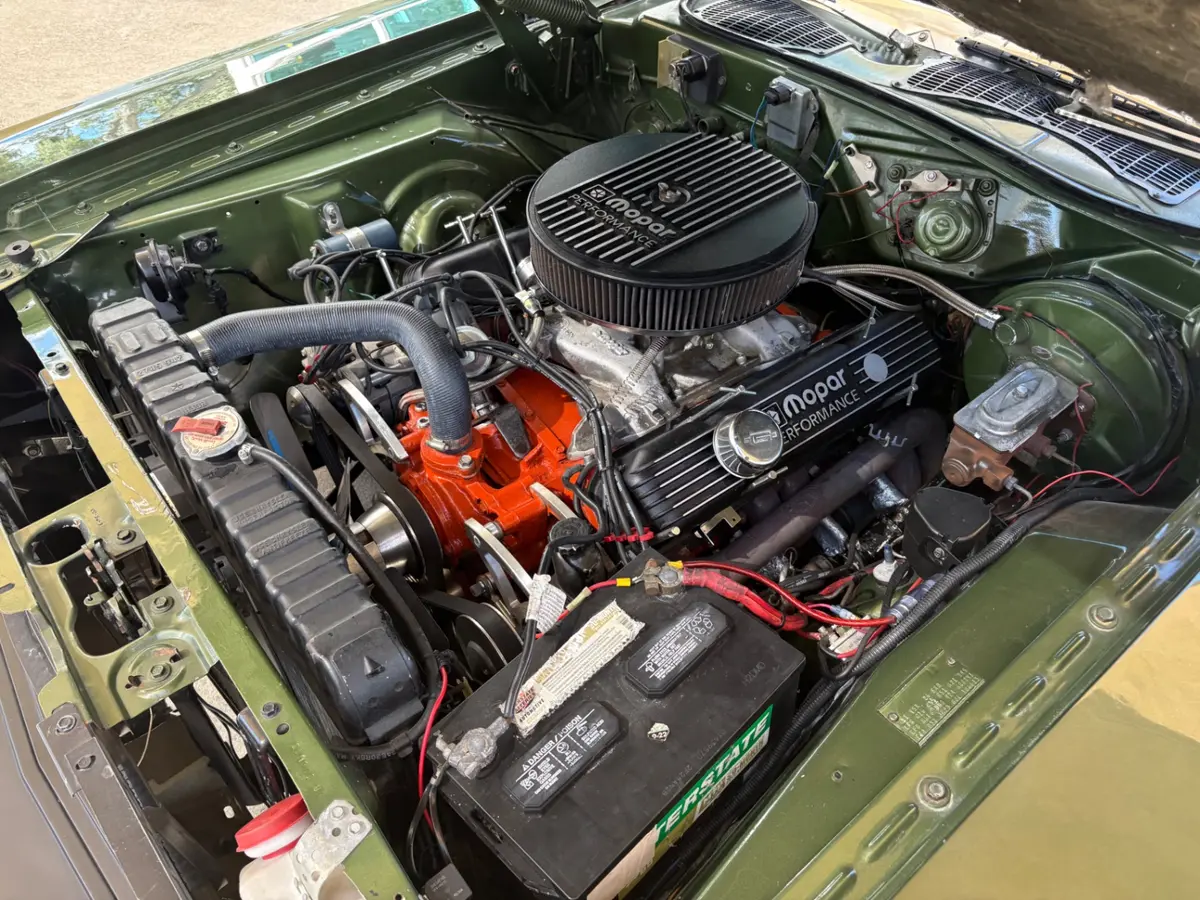
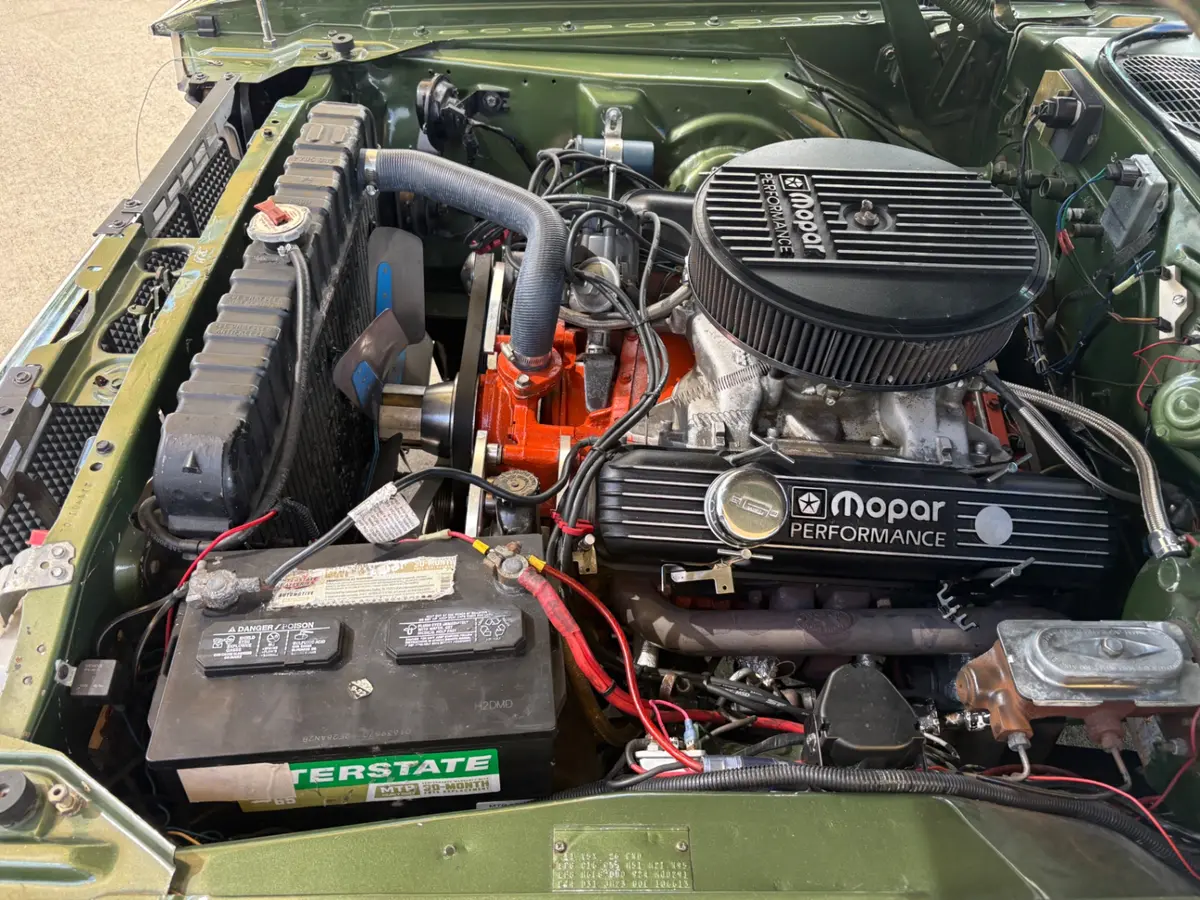
- Mopar Performance valve covers and air cleaner
- 3-speed automatic transmission with floor shift and center console
- Dual exhaust with Flowmaster mufflers and quad-tip outlet
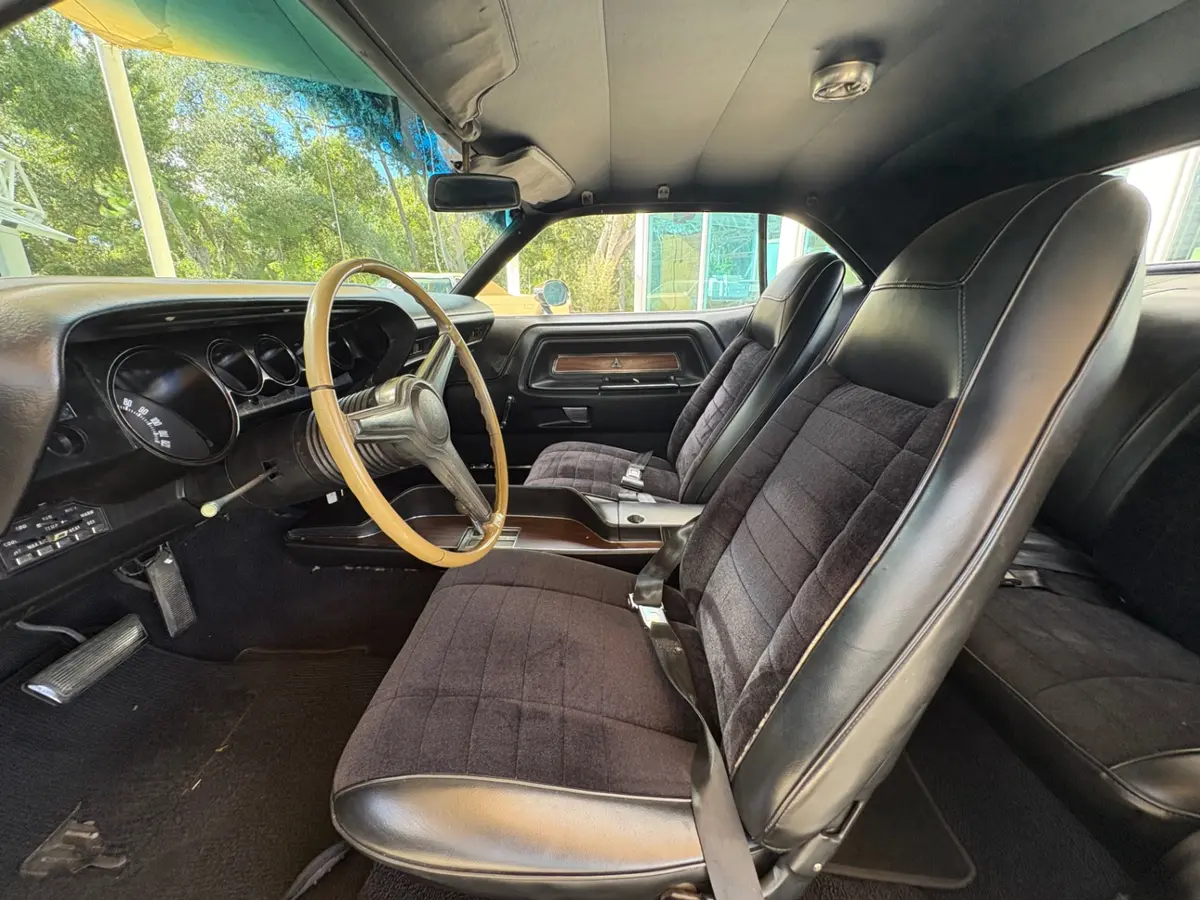
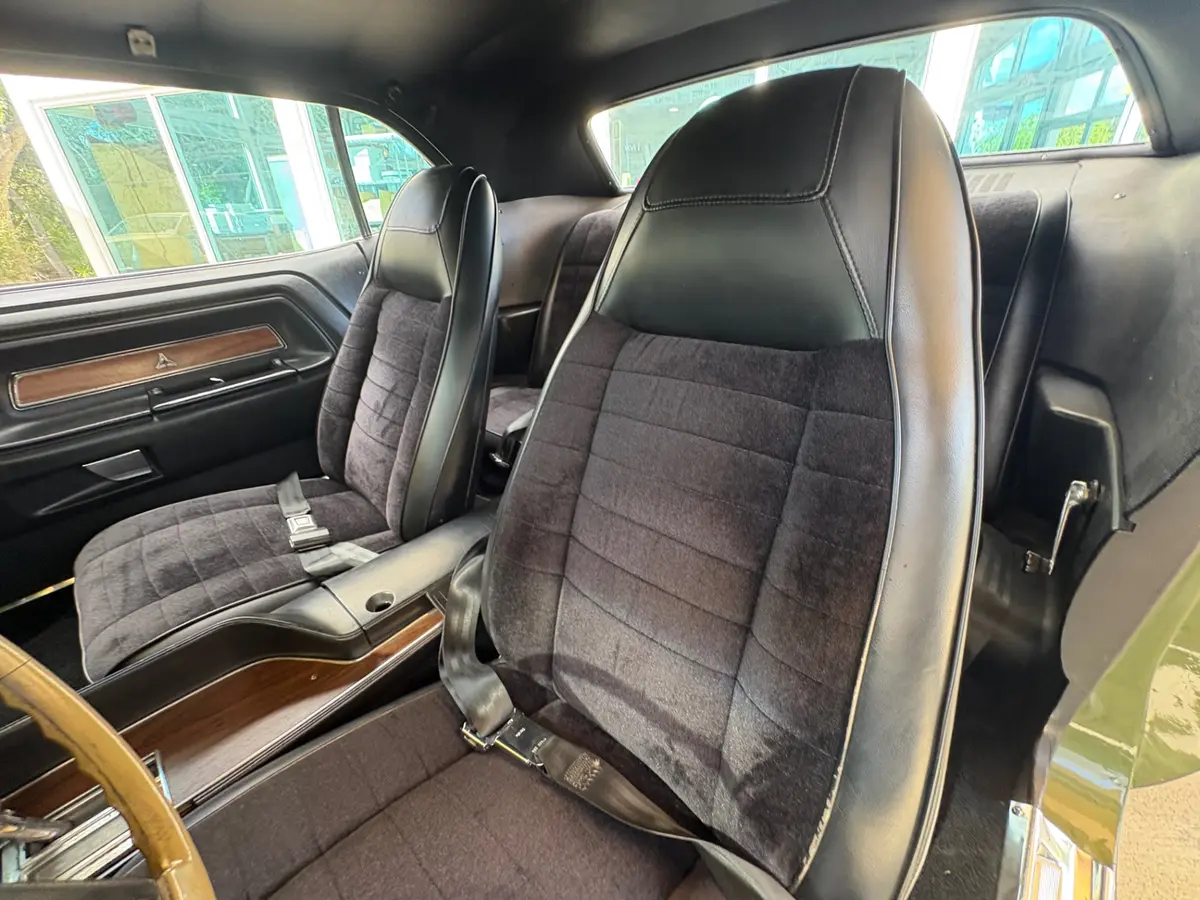
- Black bucket seats with vinyl and cloth upholstery
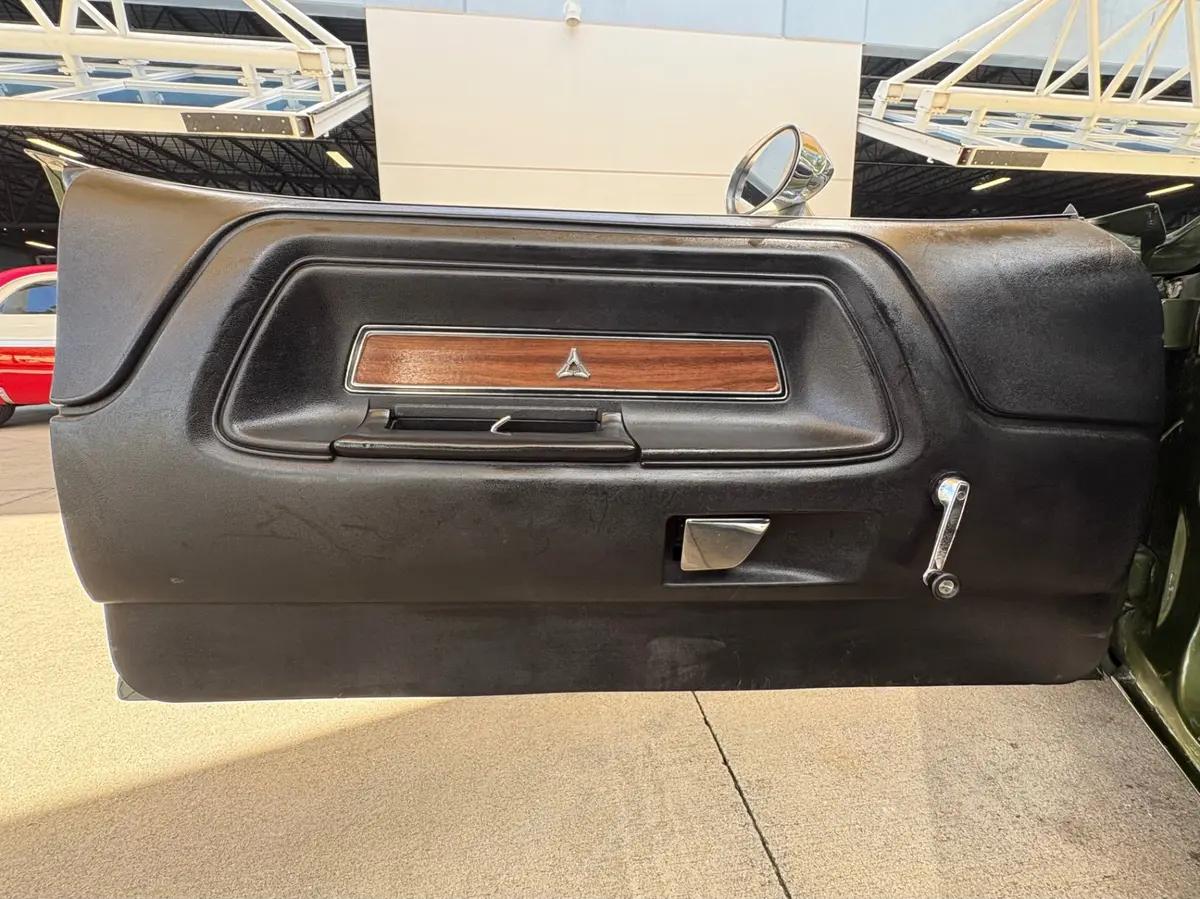
- Wood-grain interior accents on door panels, dashboard, and console
- BFGoodrich Radial T/A tires
- Chrome rally wheels
- Black vinyl top
- Pioneer stereo head unit
- Clean undercarriage
Mechanical
Under the hood of this 1970 Dodge Challenger sits the 383 cubic inch big block V8, confirmed by the "G" engine position code in the VIN. The 383 B-series big block was a proven, long-running Mopar powerplant that had been in production since the late 1950s. By 1970, it was a well-sorted engine with a reputation for durability and broad torque output across the rpm range. It was the standard performance engine for buyers who wanted more than the 318 could offer but weren't ready to step up to the 440 or the Hemi. In the Challenger, the 383 gave buyers a genuinely quick car — one that was quick enough for the street and light enough on the premium option list to be within reach of a larger segment of buyers.
This example has been fitted with Mopar Performance valve covers and a Mopar Performance air cleaner, both of which are period-appropriate additions that reinforce the factory performance character of the engine rather than departing from it. The Mopar Performance parts program has been part of Chrysler's aftermarket support network for decades, and these components are widely recognized and respected within the Mopar community.
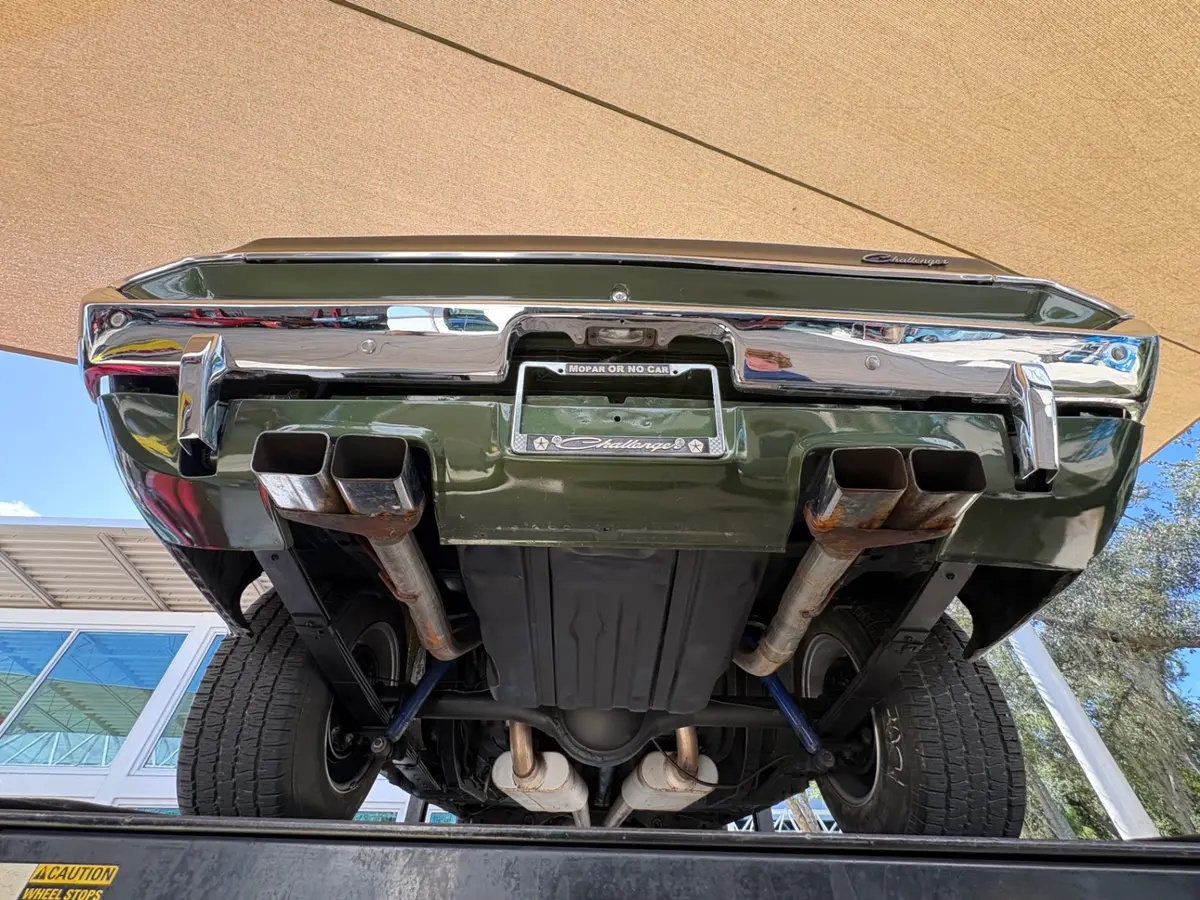
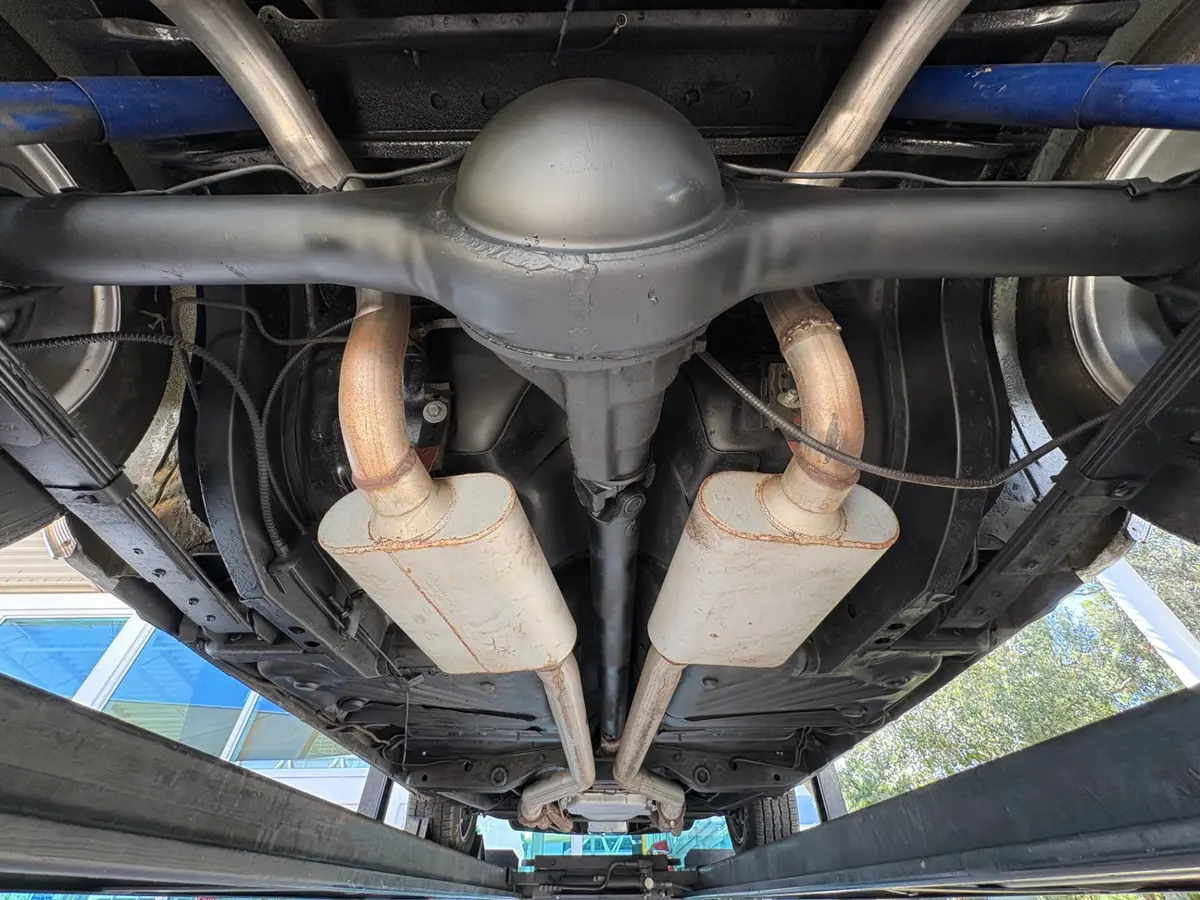
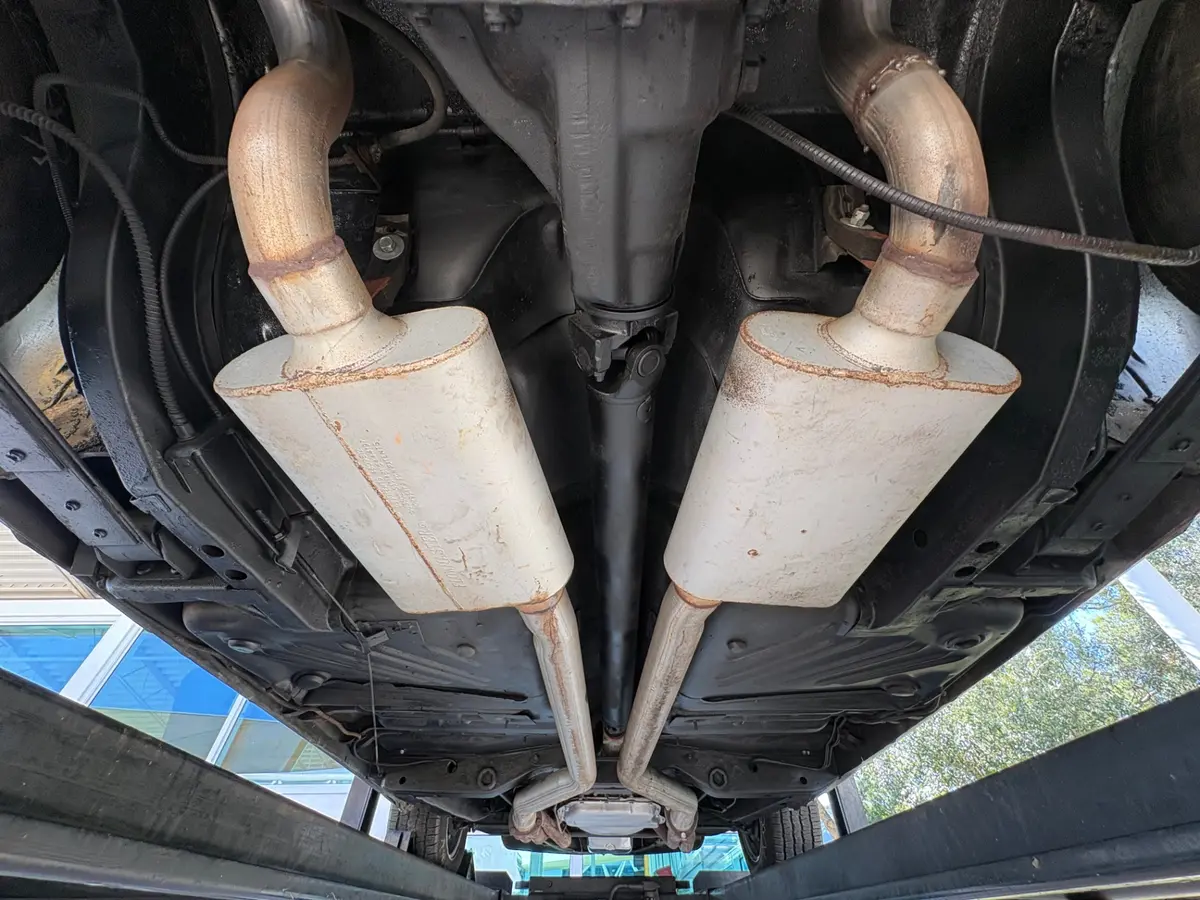
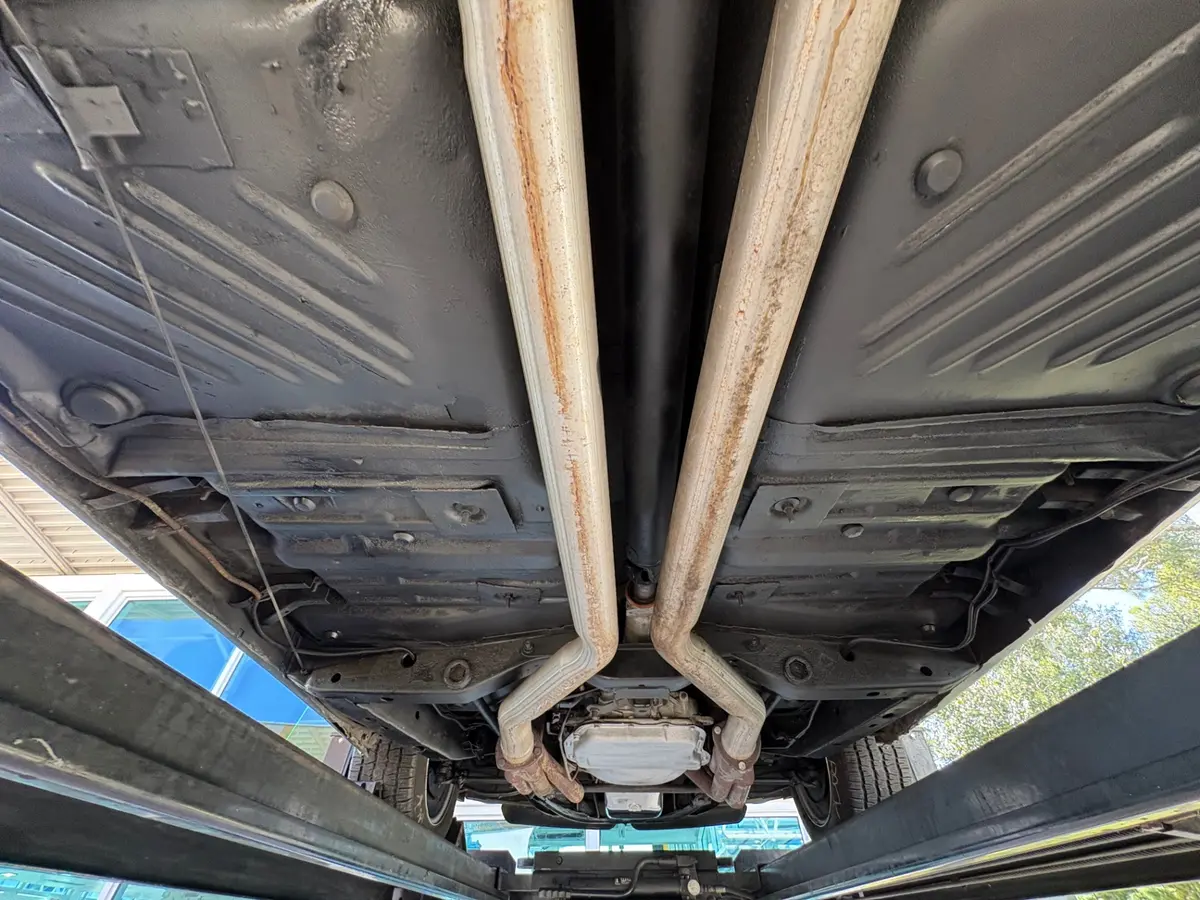
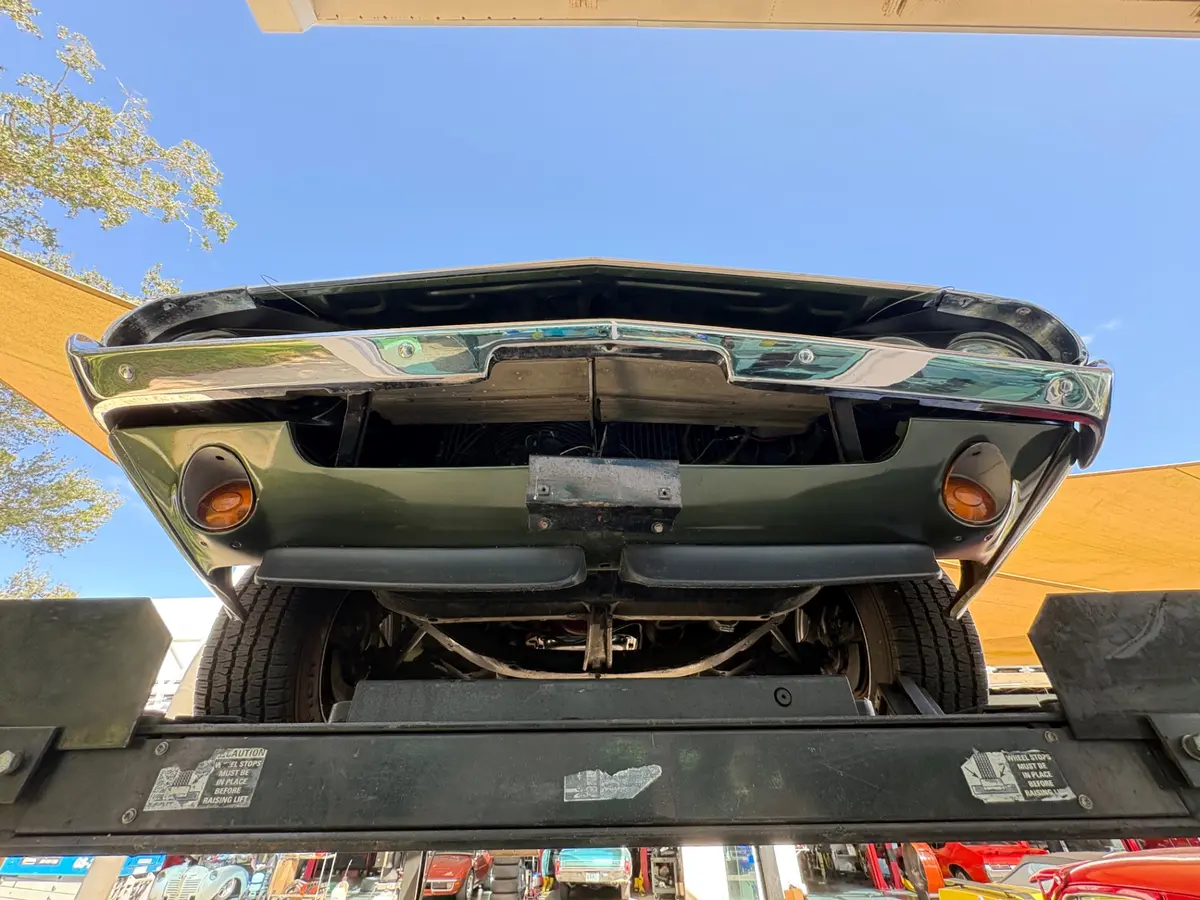
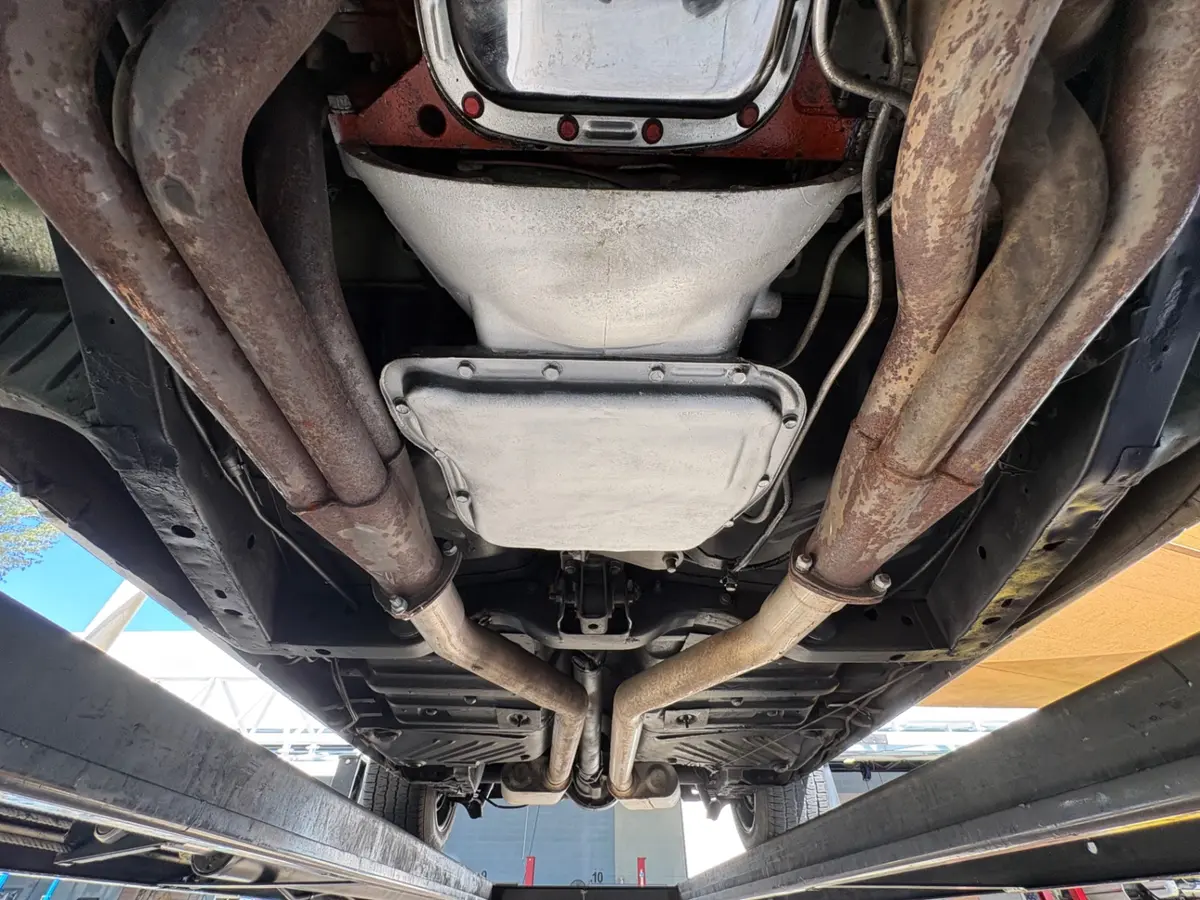
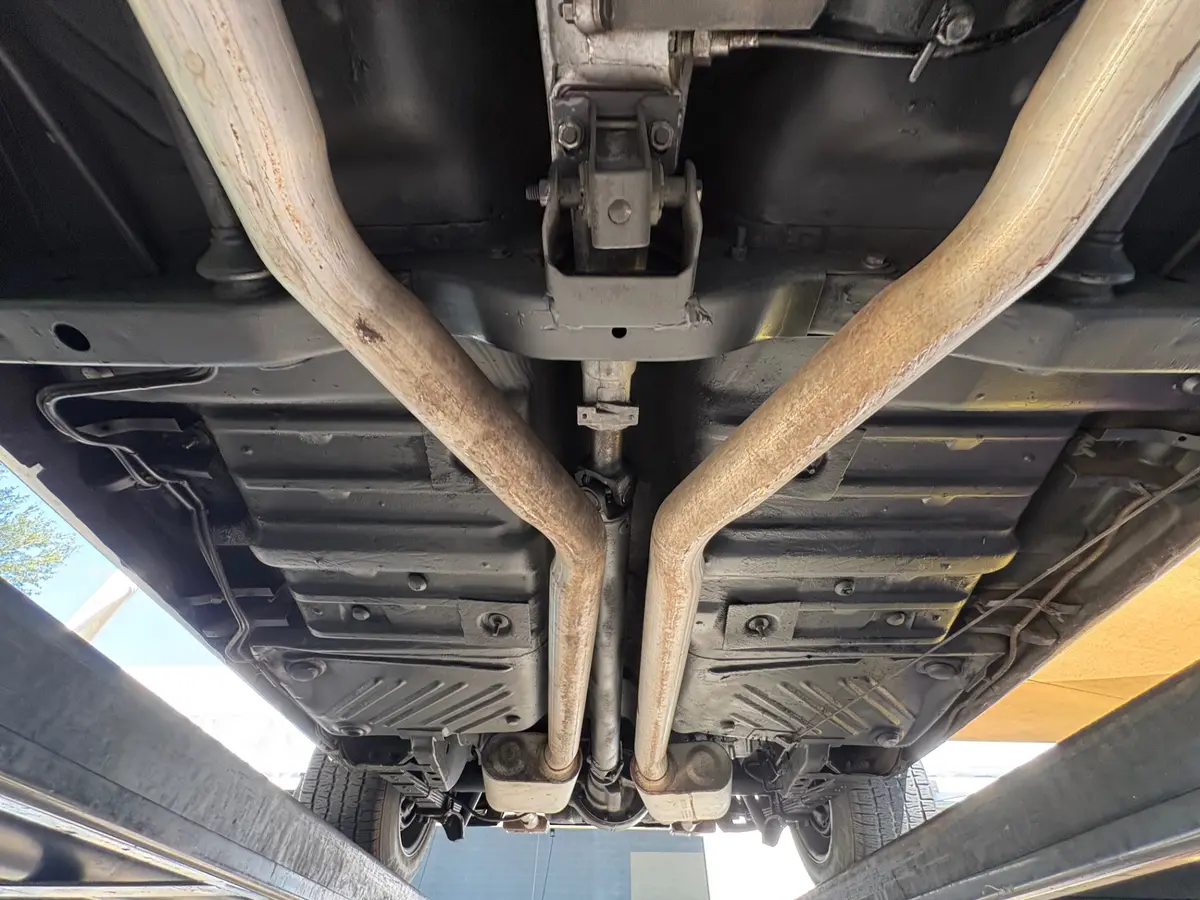
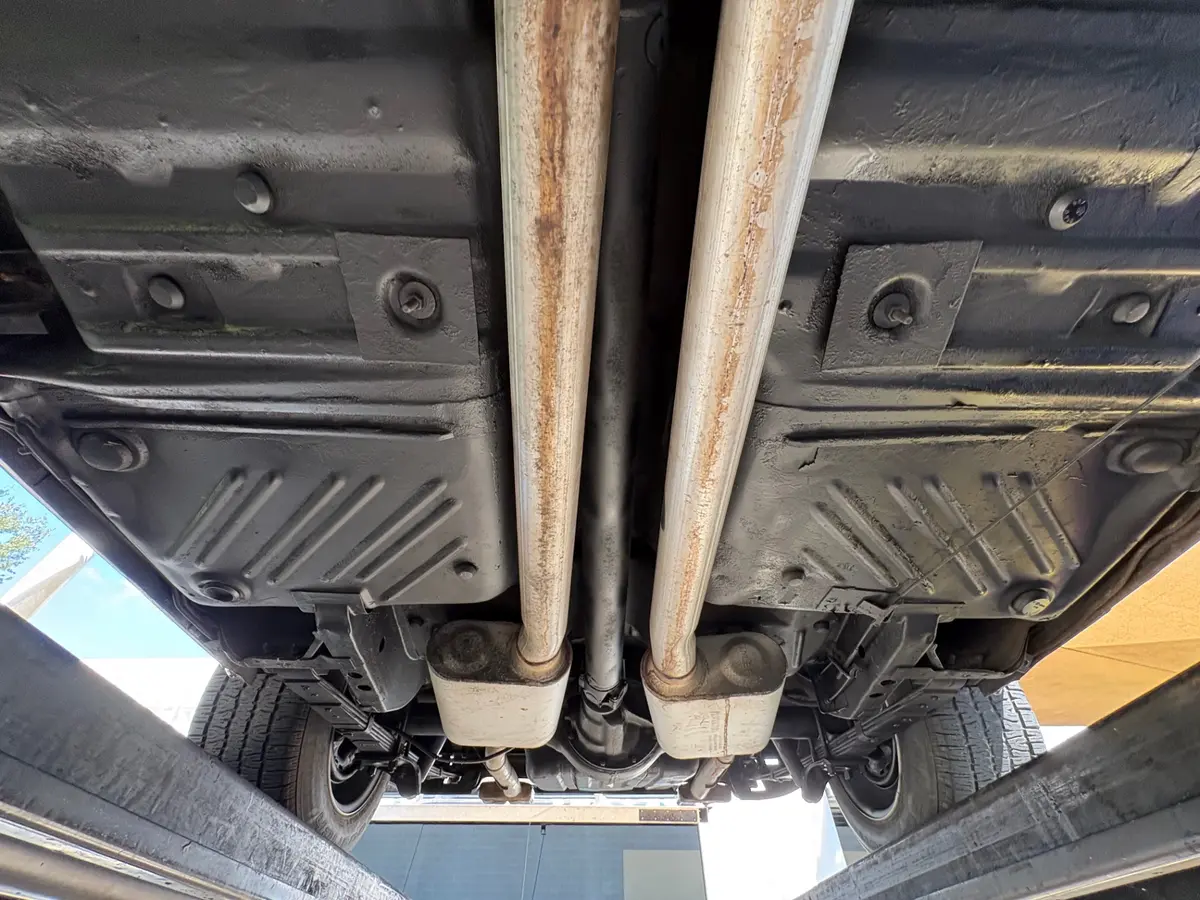
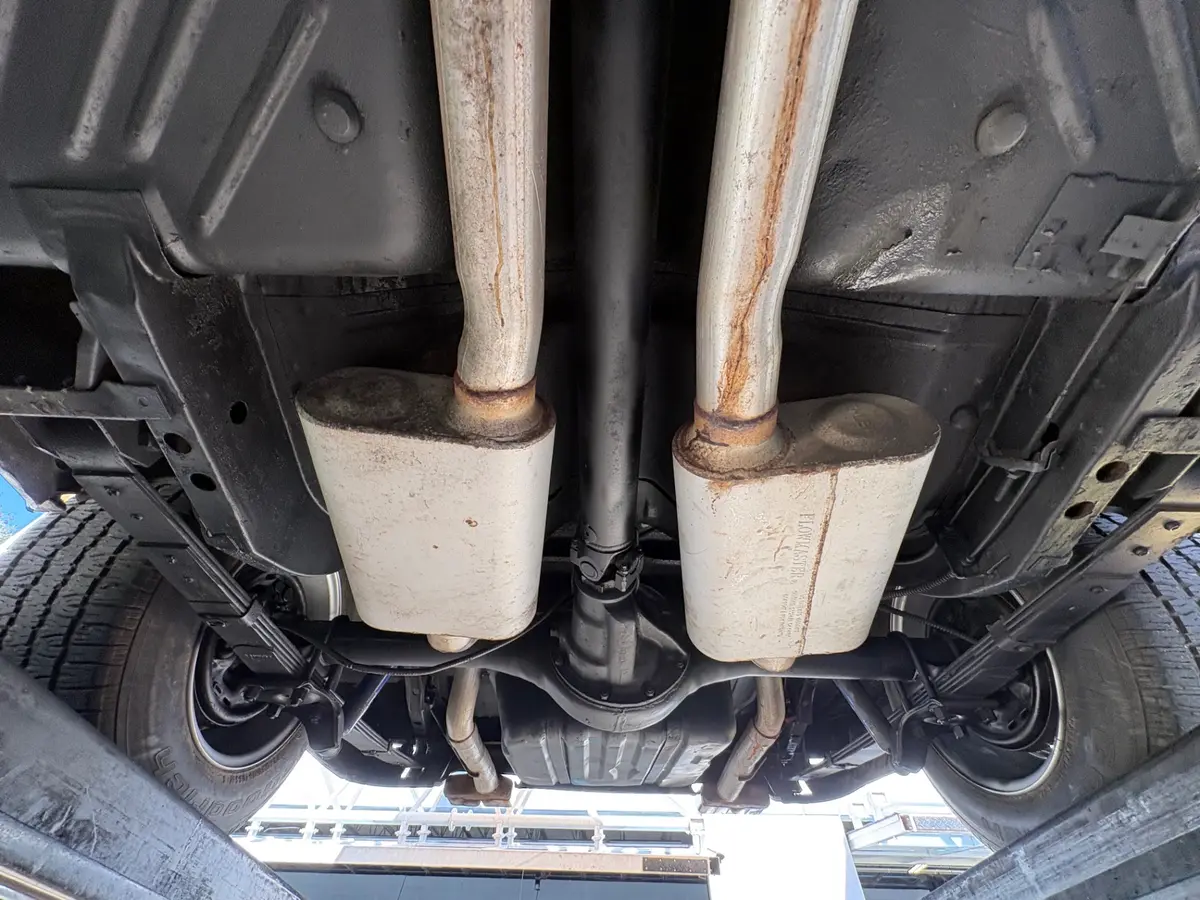
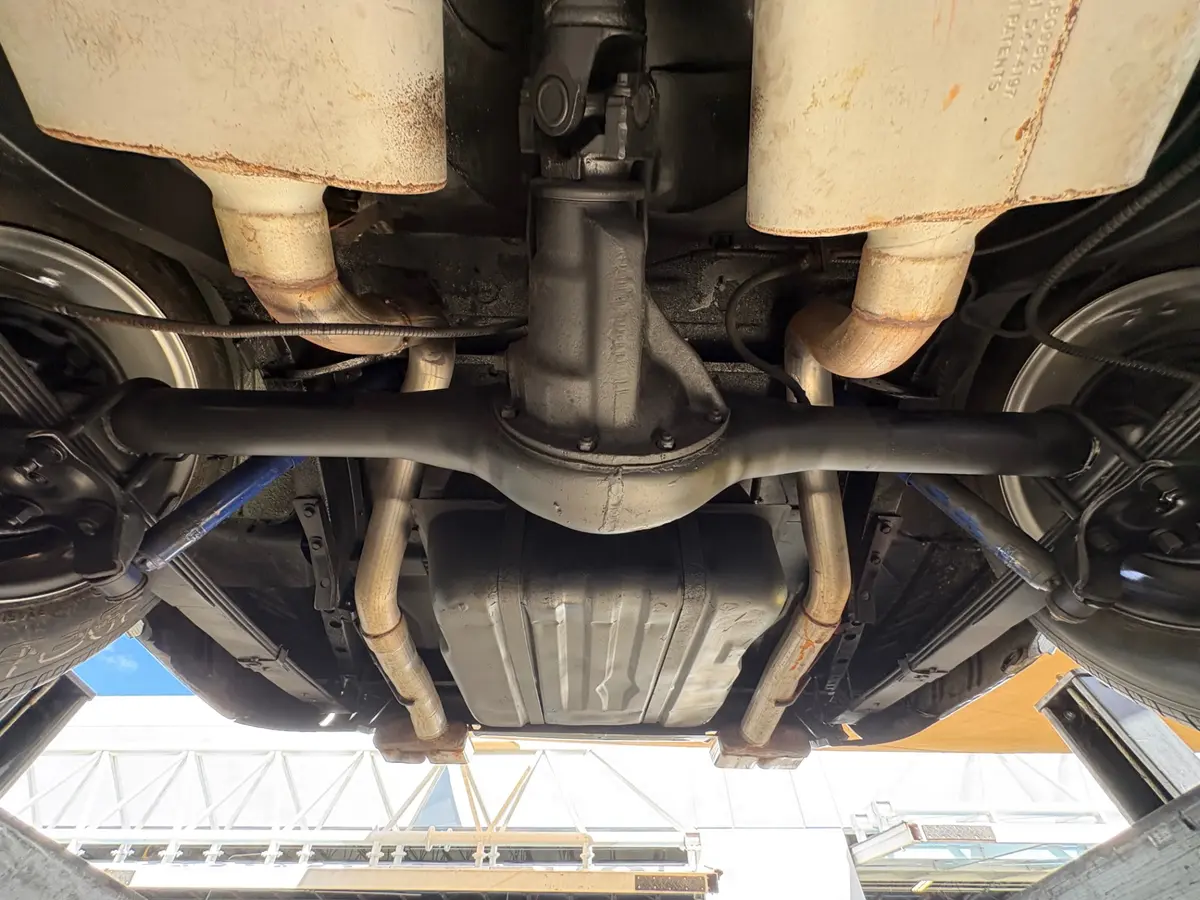
The exhaust system is a full dual setup running Flowmaster mufflers and exiting through a set of quad-tip outlets at the rear bumper. Flowmaster's chambered muffler design produces a distinctly aggressive exhaust note that complements the big block character of the 383 without being unreasonably loud at cruise. The quad-tip outlet is a visual statement that works well with the Challenger's wide rear end.
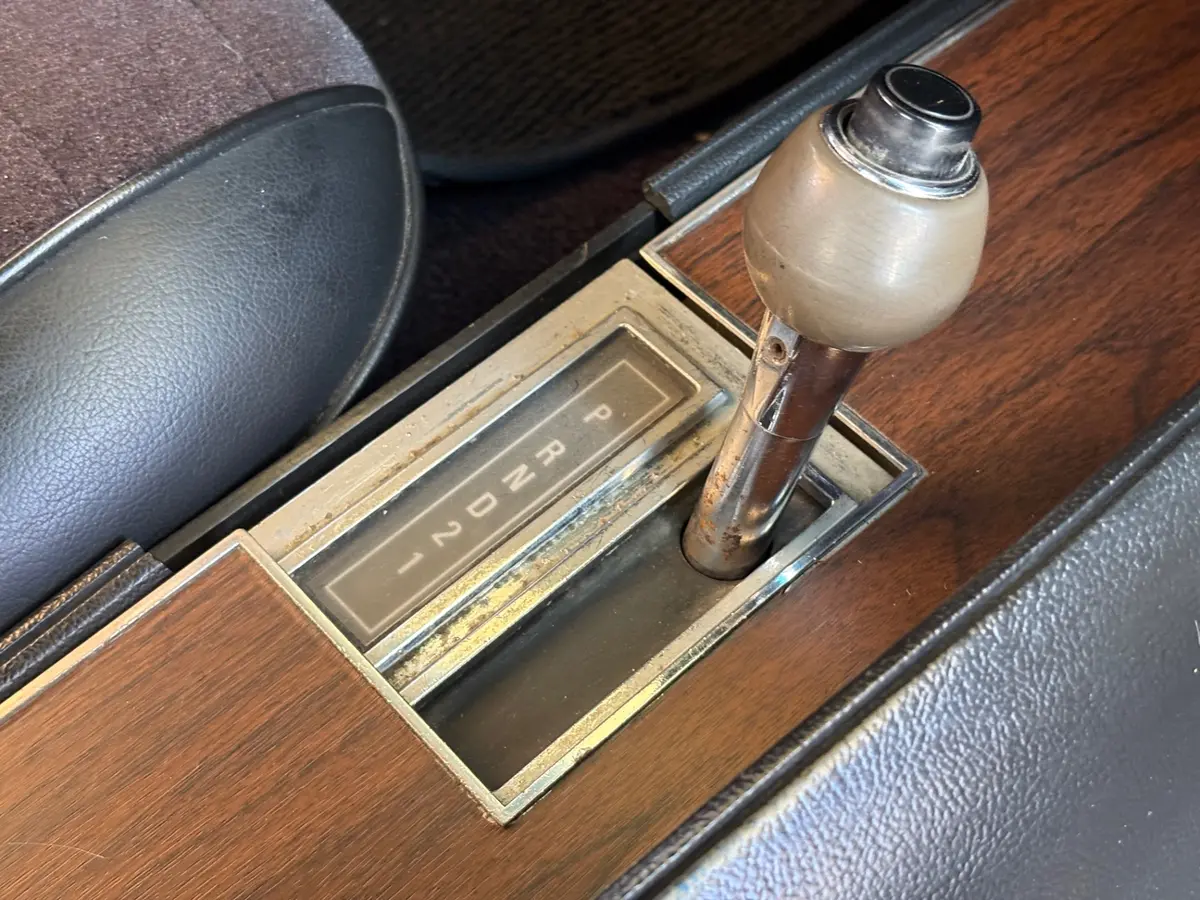
The 3-speed automatic transmission — the TorqueFlite, Chrysler's well-regarded unit — is shifted via a floor-mounted console shifter, which is exactly how a Challenger should be equipped. The TorqueFlite was considered one of the best automatic transmissions of the muscle car era, known for its strength and reliability when paired with big block engines.
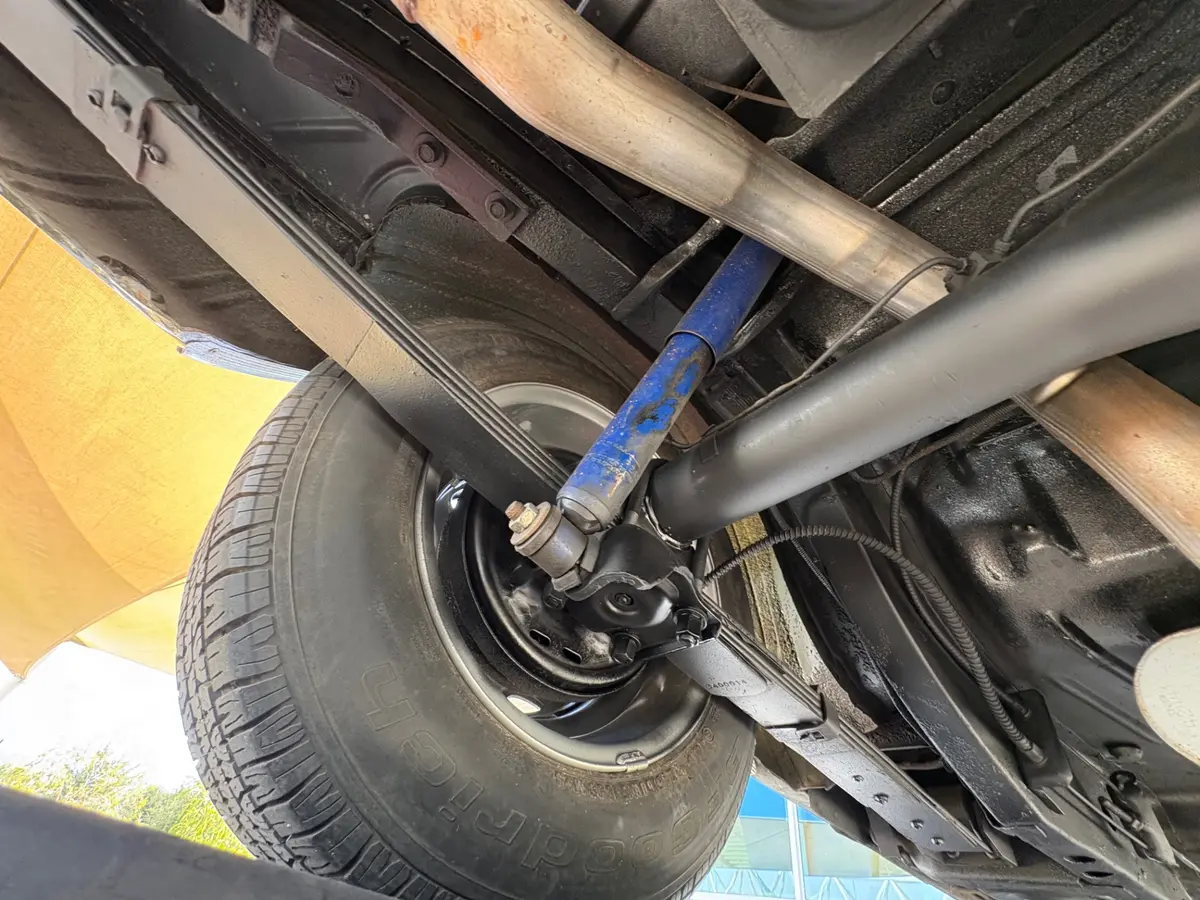
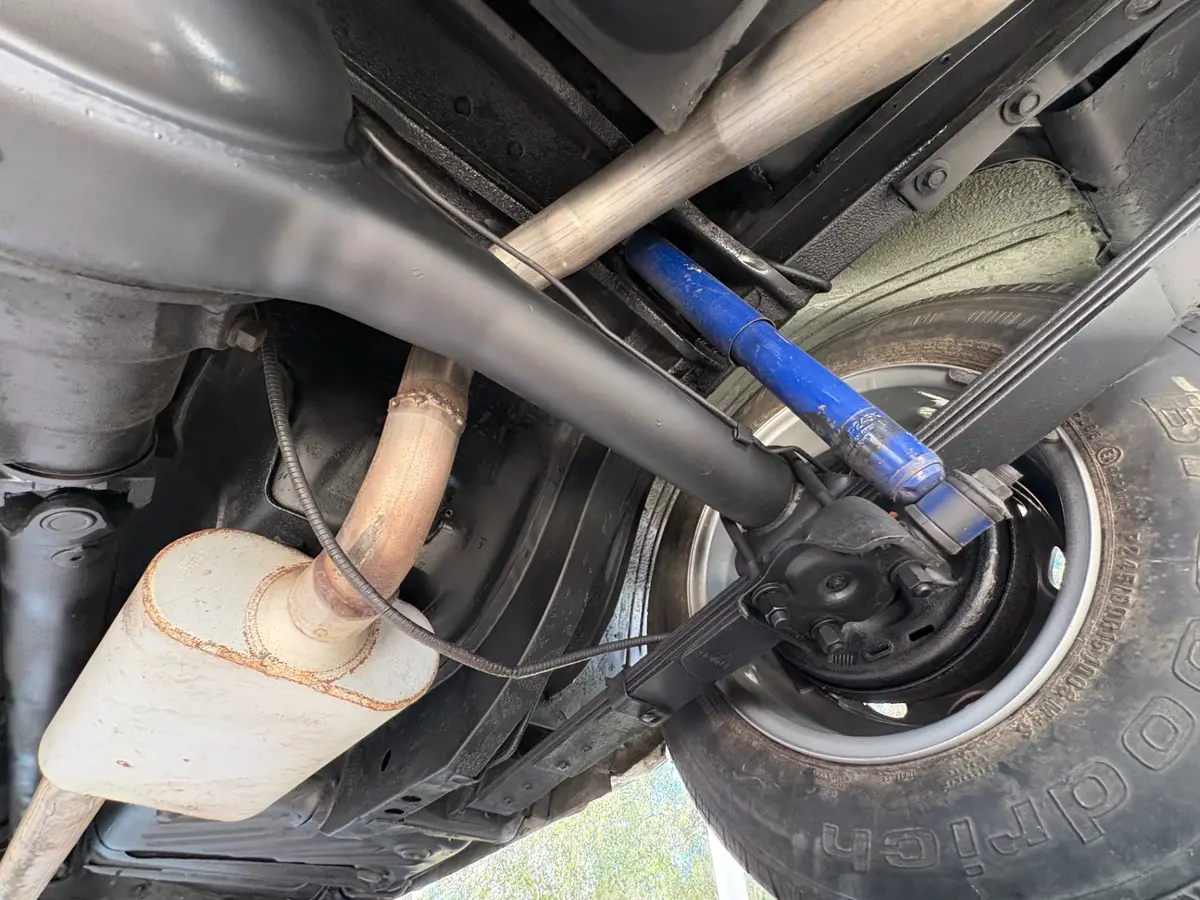
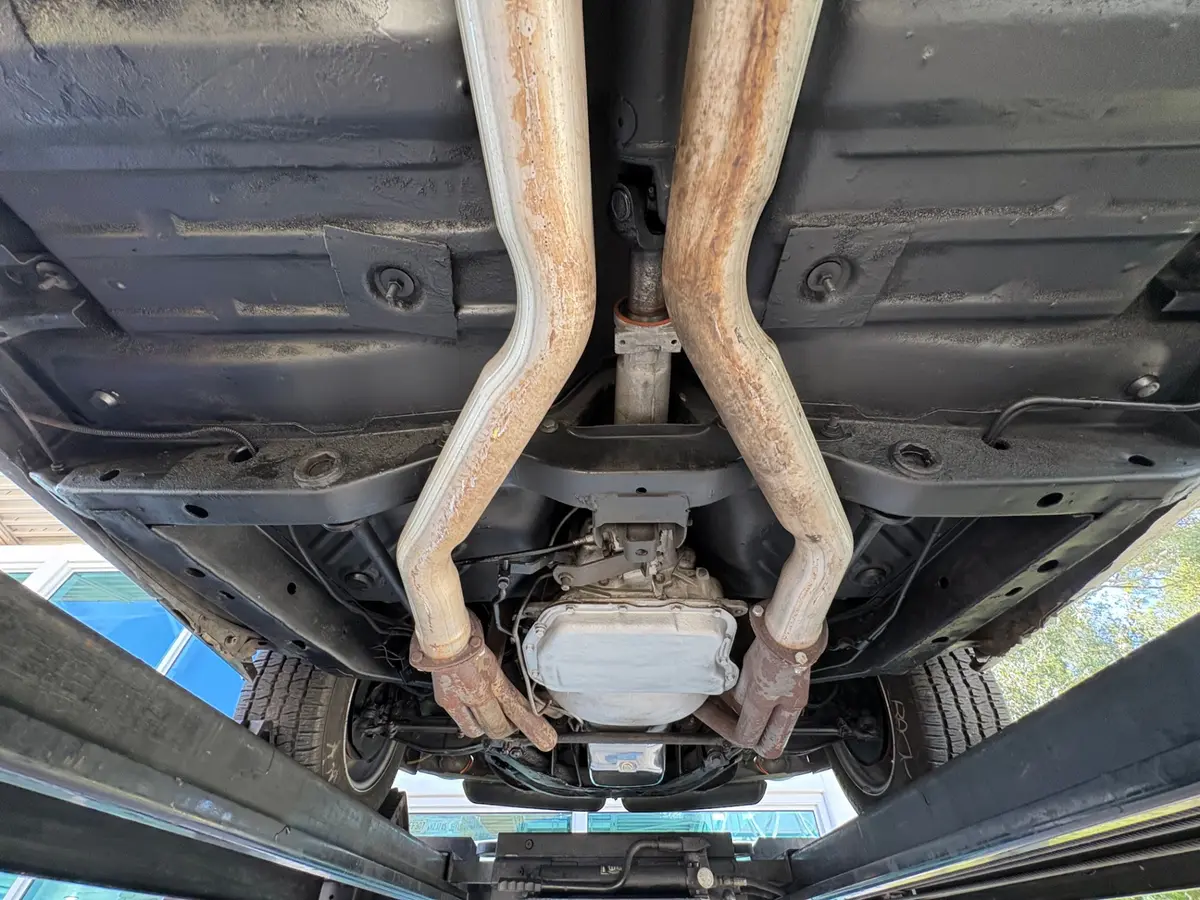
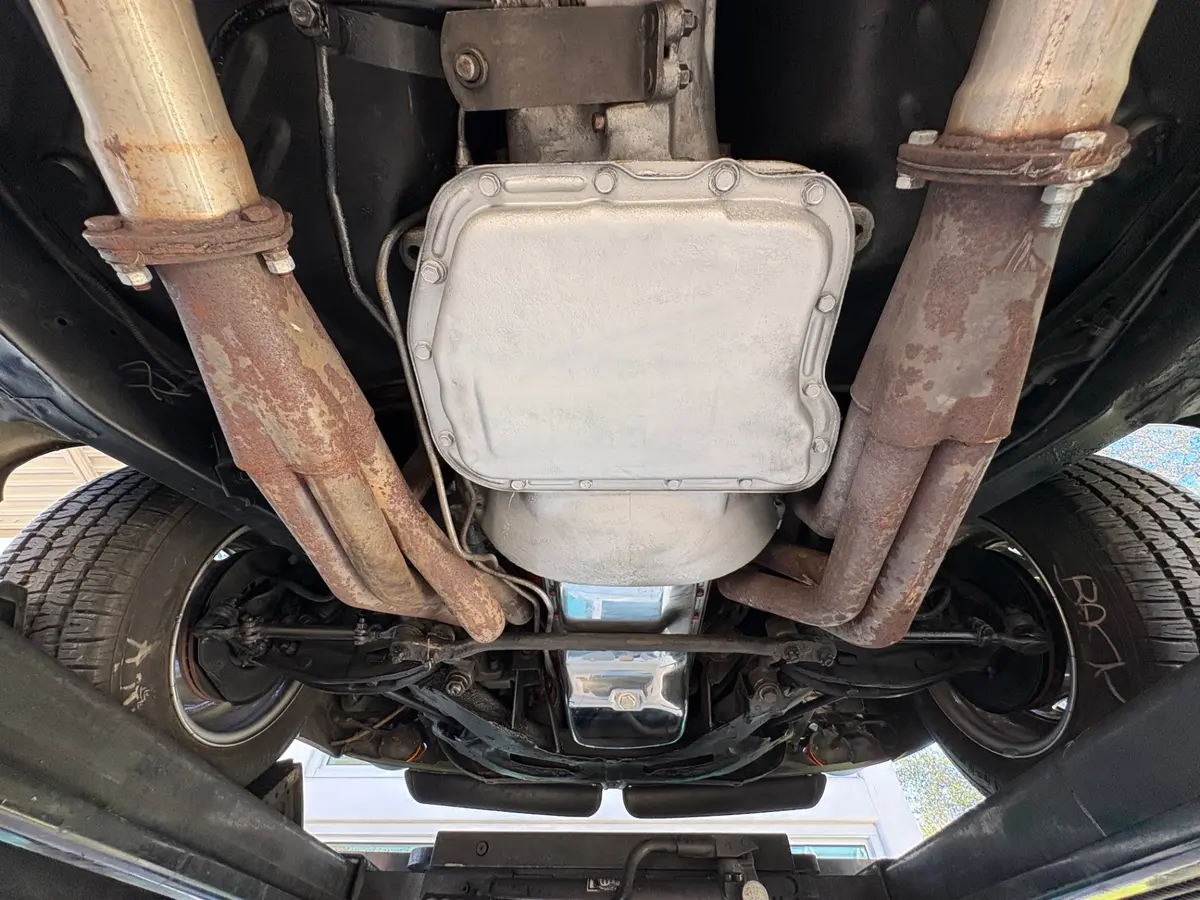
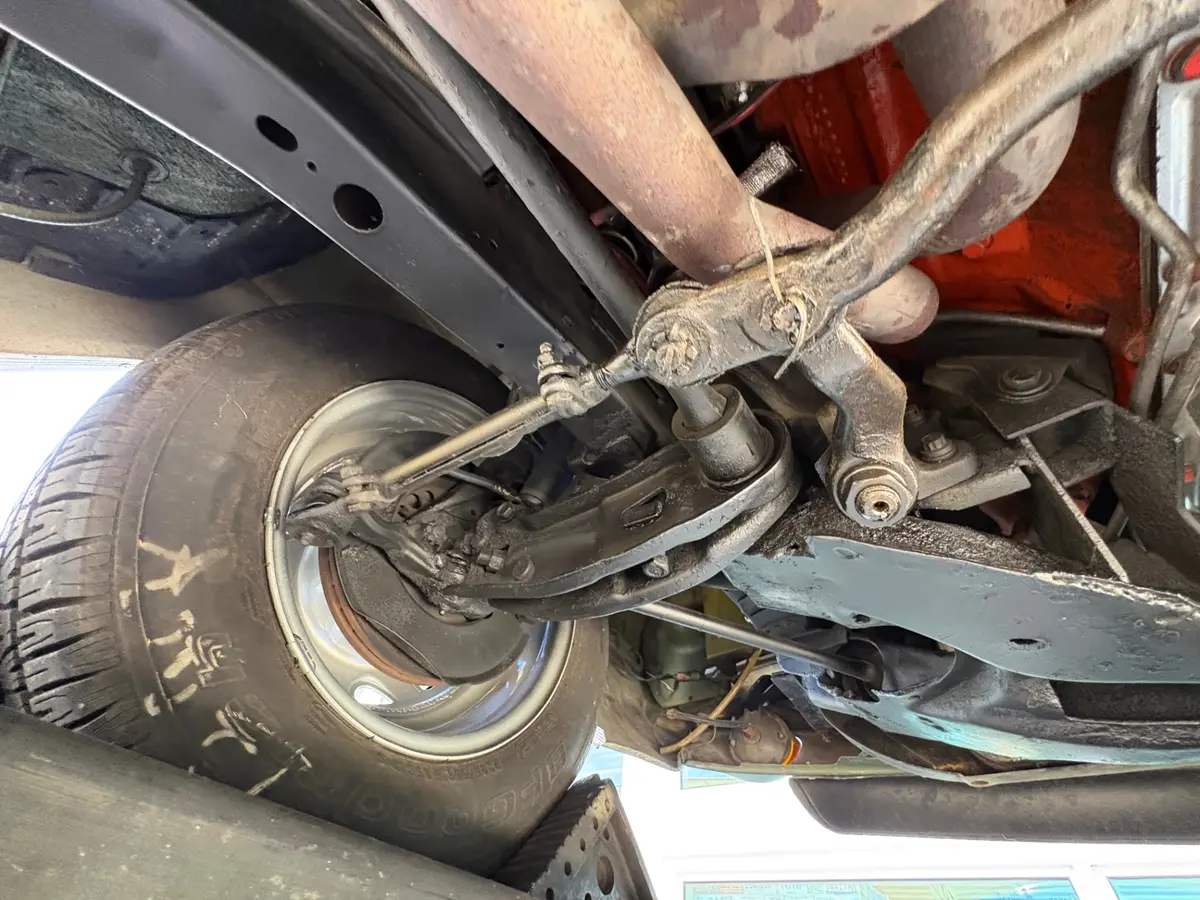
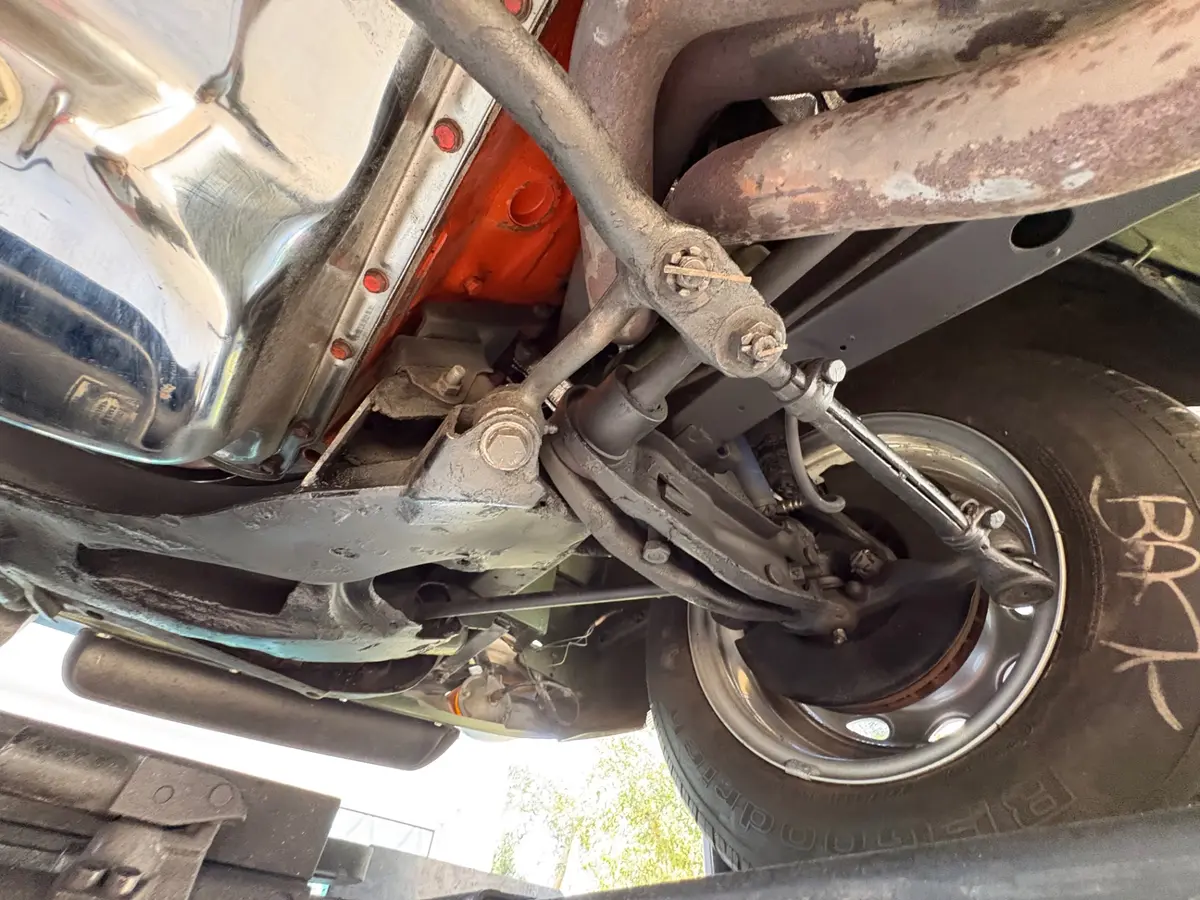
The undercarriage photos show a clean, solid floor and frame with no visible rot or structural compromise. For a car of this age, particularly one that spent any part of its life in the Sun Belt, a clean undercarriage is a meaningful data point that tells you something about how the car was stored and maintained over its lifetime.
Interior
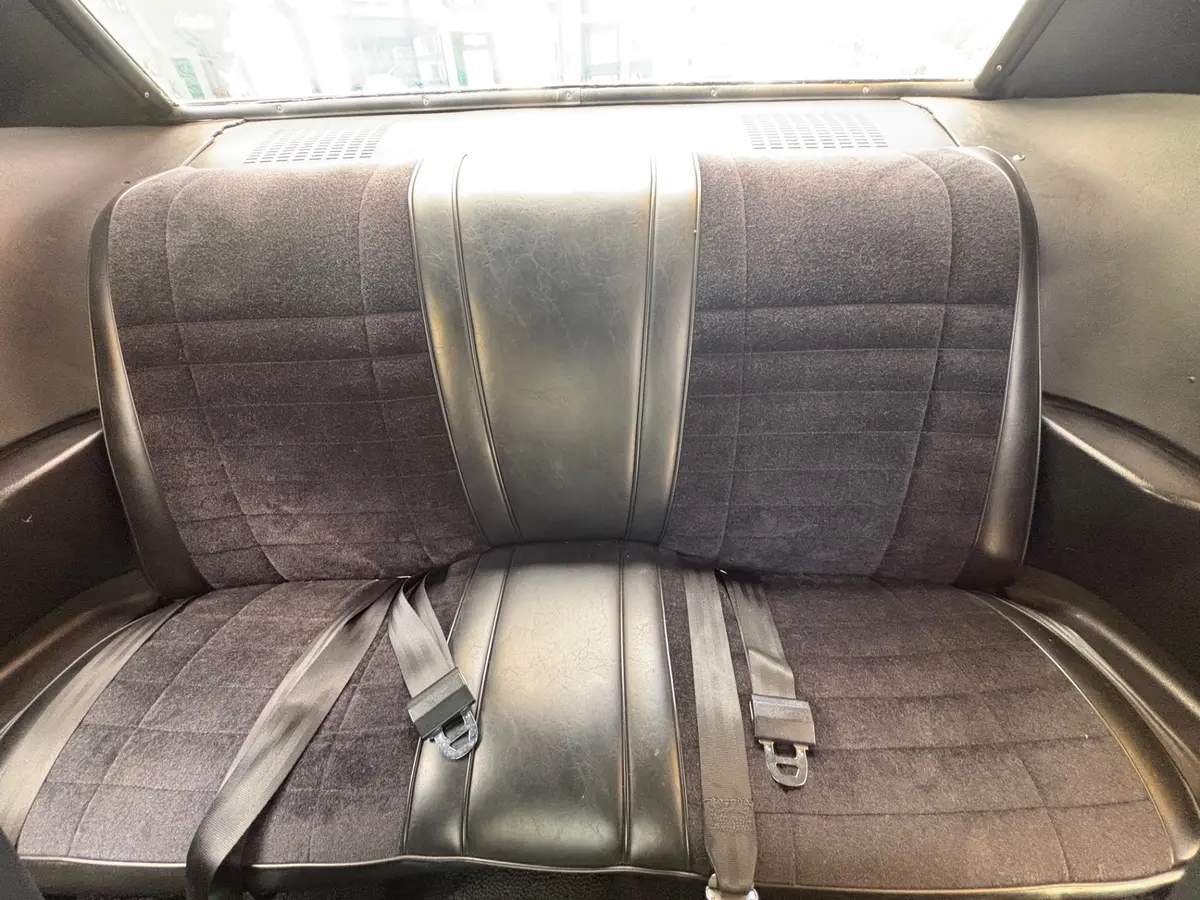
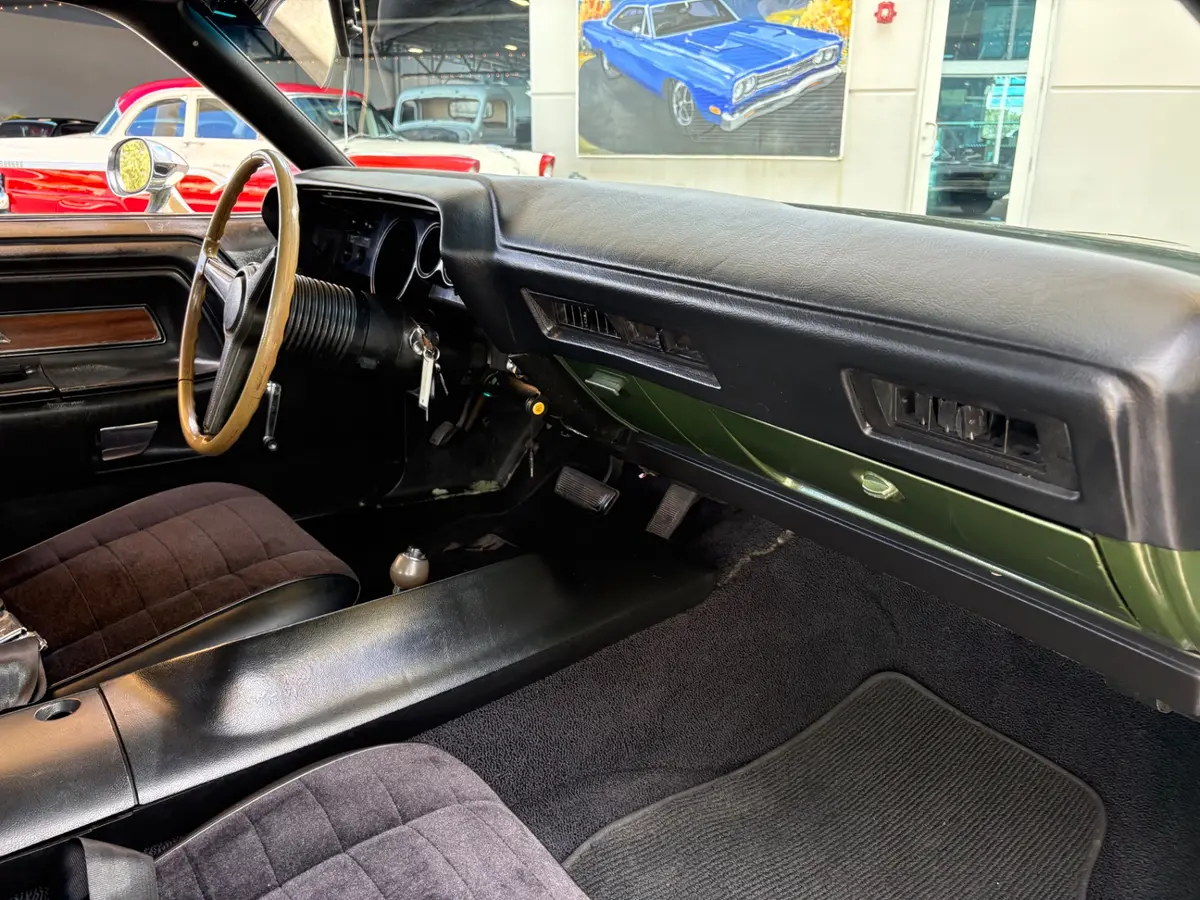
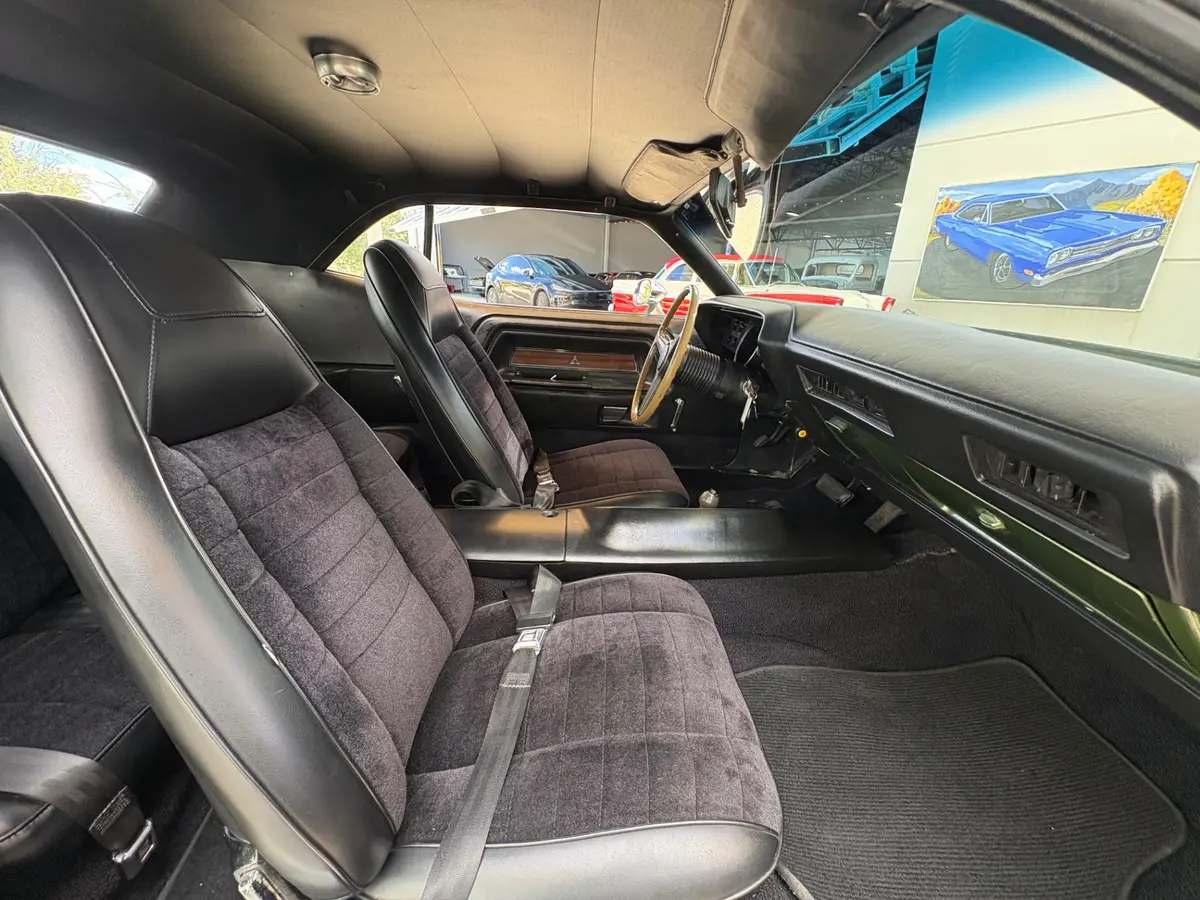
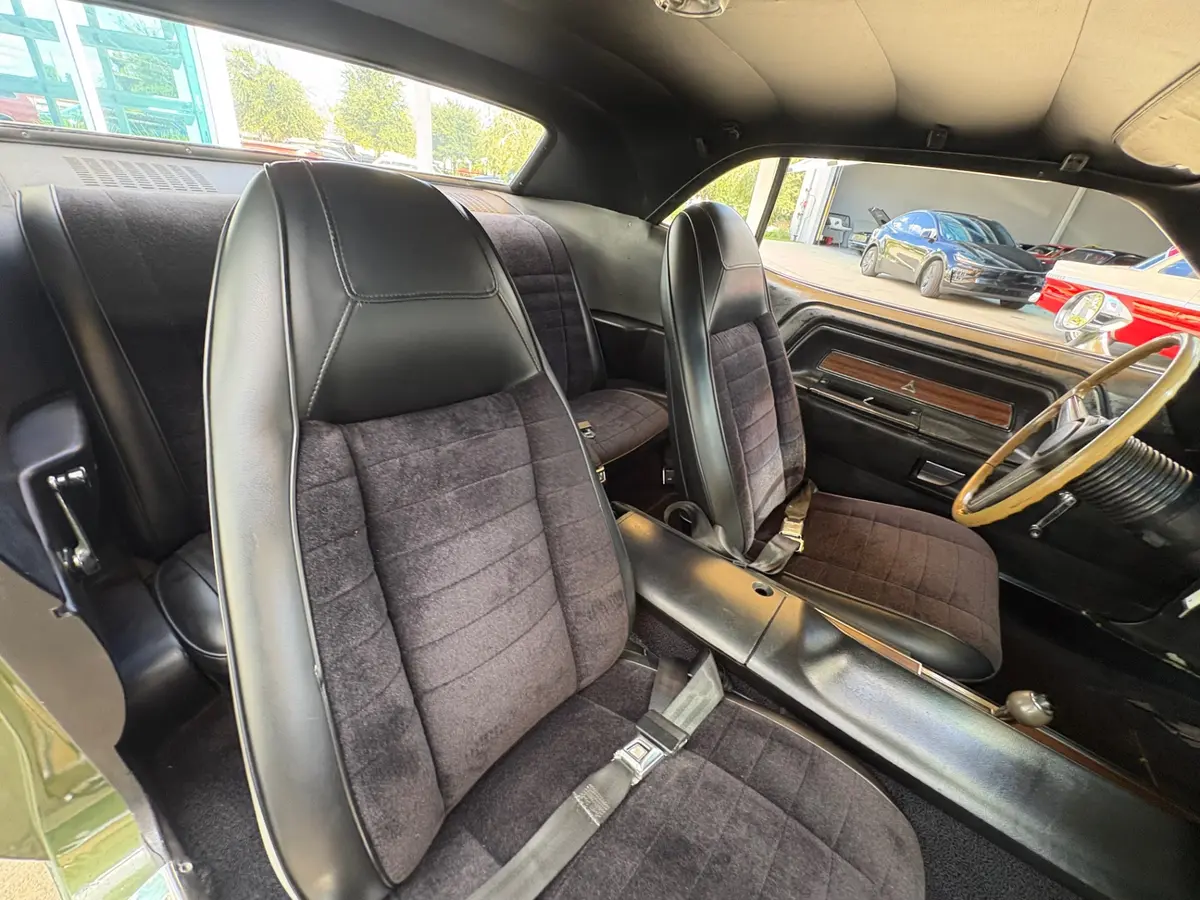
The interior of this 1970 Dodge Challenger is finished in black throughout, using a combination of vinyl and cloth. The bucket seats retain a traditional look with their pleated cloth inserts and vinyl bolsters, and they present well in the photos — no sagging bolsters, no cracked vinyl along the seams. The rear seat, which shows the characteristic Challenger bench configuration, also presents cleanly. For a car that is used and enjoyed rather than sealed in a climate-controlled garage, the interior is in good shape.
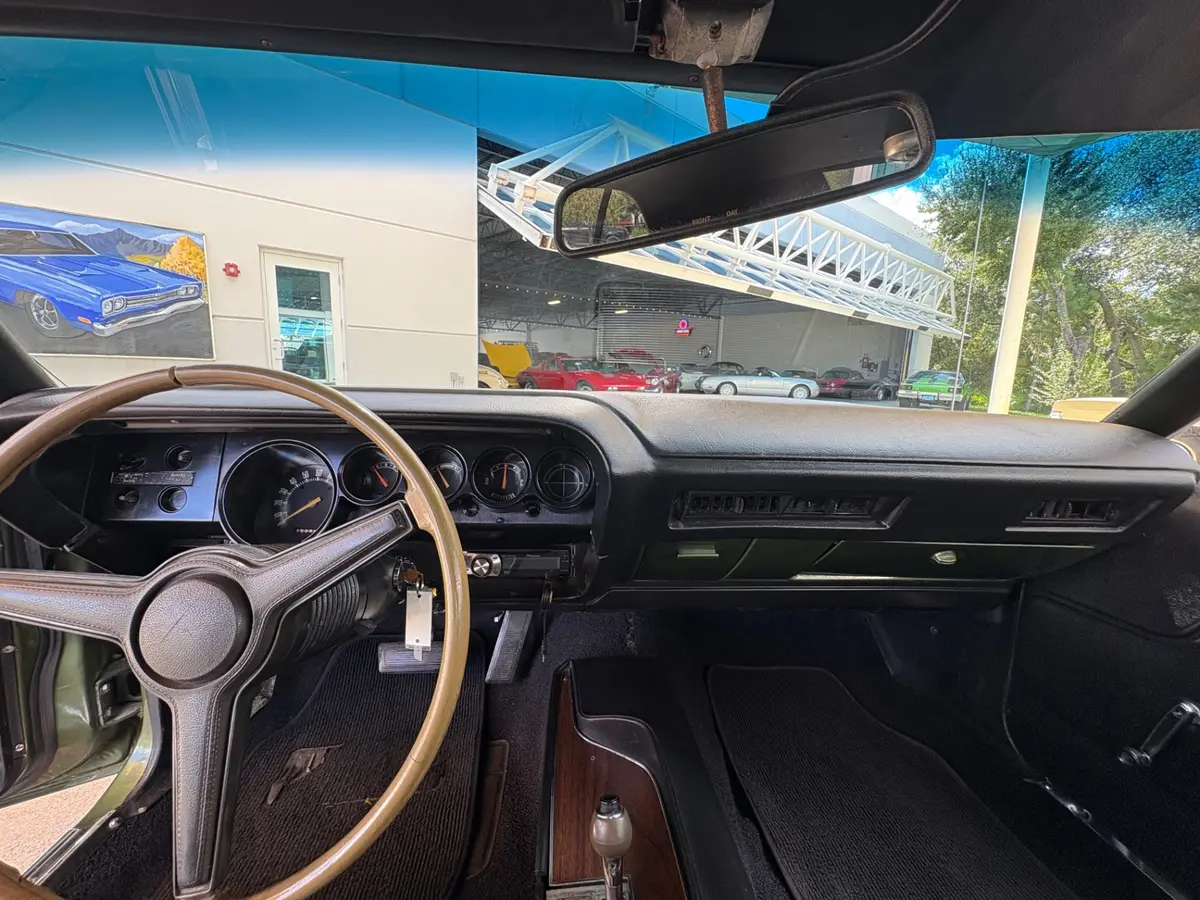
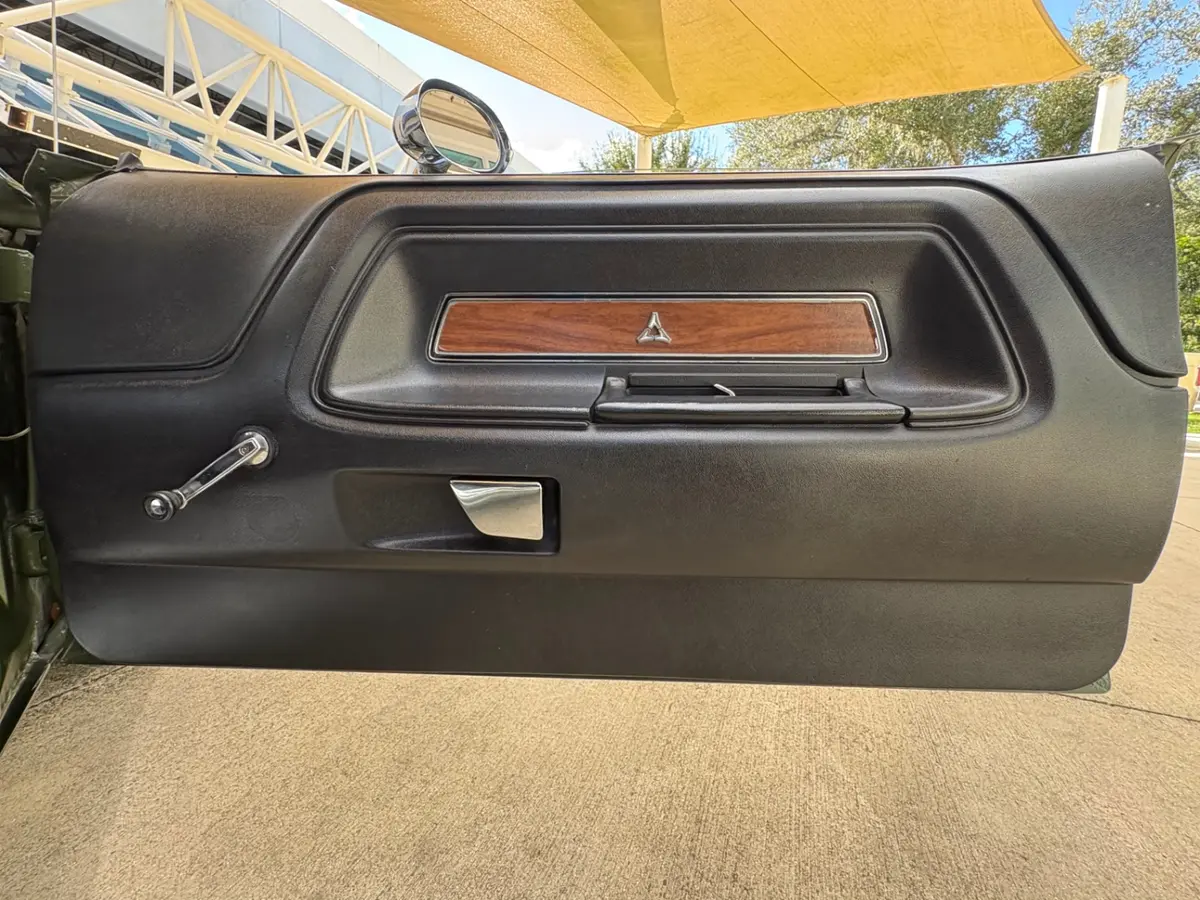
The wood-grain accents are present on the door panels, the center console, and the dashboard area, which was a popular interior package on Challengers during the 1970 model year. The combination of black surfaces with wood-grain trim gave the interior a more upmarket feel than the competition, and it remains a defining visual element of the early Challenger cockpit.
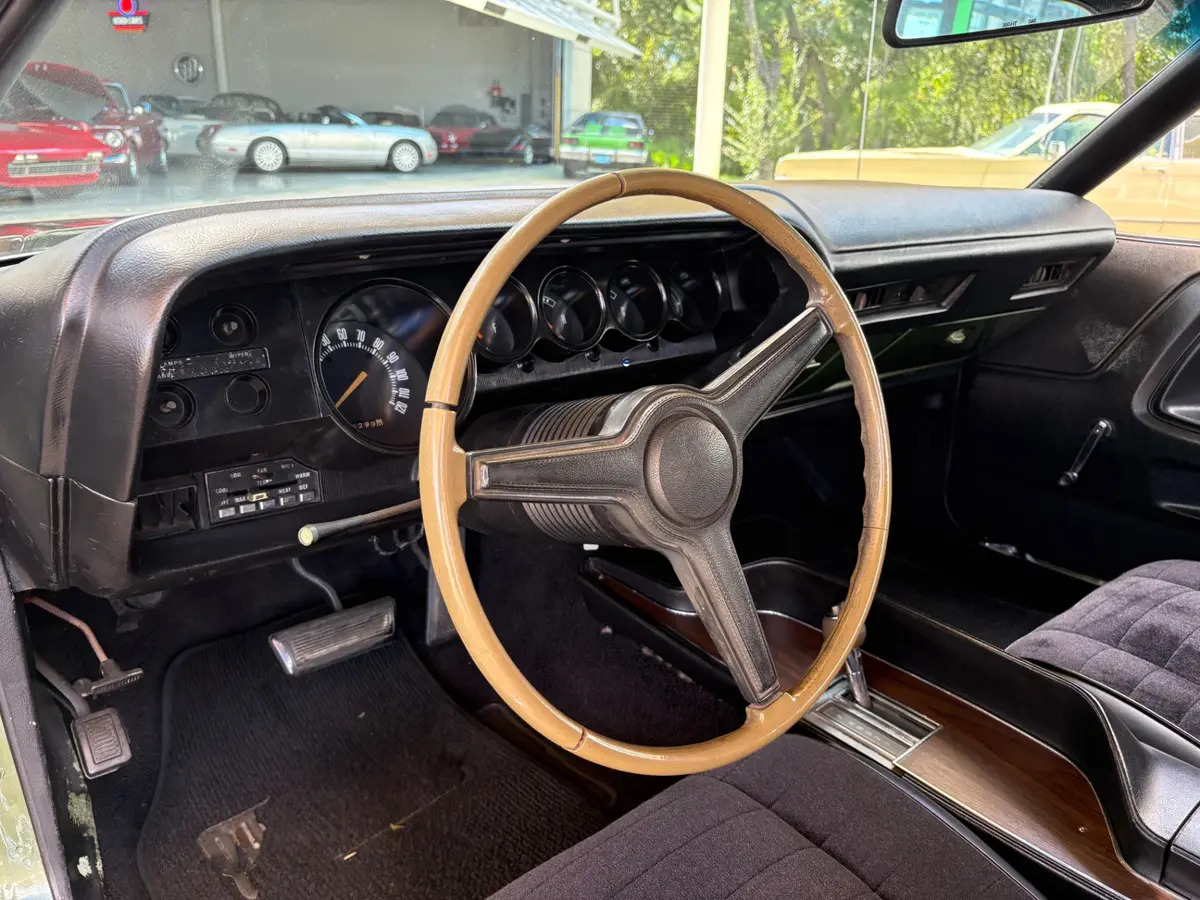
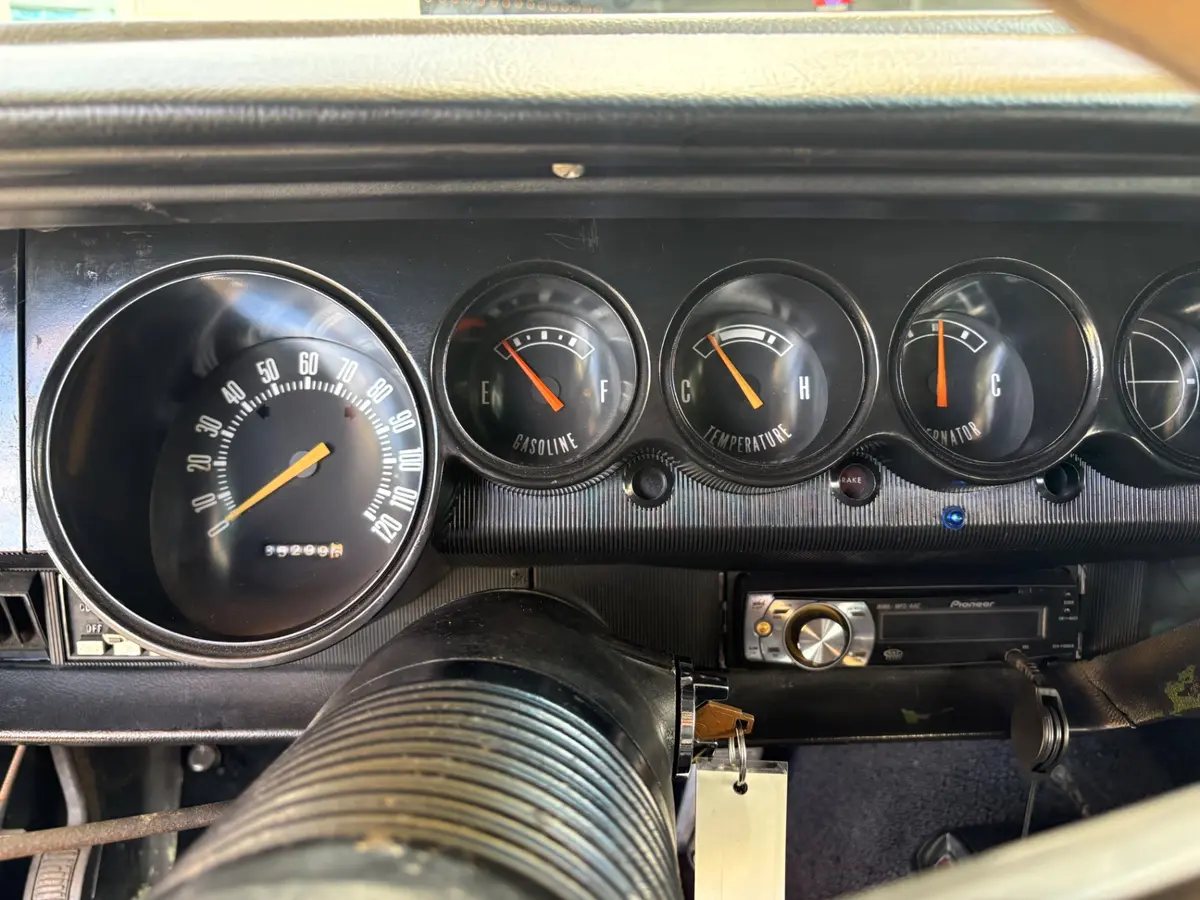
The center console houses the floor shifter for the automatic transmission, and the gear selector indicator is correct in its position. The console itself shows some age around the selector indicator bezel — consistent with a car that has been driven and used — but it remains intact and complete. The factory instrument cluster with its individual round gauges is present and correct, giving the driver a direct readout of fuel level, temperature, and alternator output. A Pioneer stereo head unit has been installed in the dashboard, which is a practical update that adds modern audio capability without requiring significant modification to the dashboard itself.
The steering wheel appears to be the factory style piece with a wood-grain rim — a period-correct option that fits the interior theme. The black headliner is intact, and the overall impression of the cabin is that of a car that has been used and maintained over the years rather than restored or neglected.
Exterior
The 1970 Dodge Challenger wears a green exterior finish — a color that suits the body lines of the E-body particularly well. The long, flat hood and the clean body sides show the color without distraction, and the green is complemented by the black vinyl top that covers the roof from the windshield header to the rear window surround. The vinyl top was a popular option on the 1970 Challenger hardtop and contributes to the formal, substantial appearance that distinguished the Challenger from the more sport-focused Barracuda.
The chrome rally wheels are a correct and attractive choice for this car. They are a period-style five-spoke chrome wheel that fits the Challenger's proportions without looking out of place, and they are fitted with BFGoodrich Radial T/A tires — a tire that has been associated with classic American muscle cars for decades. The Radial T/A offers a modern radial construction and improved handling characteristics over original bias-ply tires while maintaining an appearance that reads correctly on a car of this era.
The quad exhaust tips exit symmetrically at either side of the rear bumper, making the most of the Challenger's wide rear fascia. The chrome bumpers show appropriate age. The body panels sit correctly in their gaps, and the overall exterior presents as a solid, driver-quality example of one of the most recognizable first-year American muscle cars.
Conclusion
The 1970 Dodge Challenger was a significant car when it was new — wide, well-styled, and offered with a range of big block engines that put it squarely in competition with the best pony cars of the era. This particular 1970 Dodge Challenger brings together a numbers-confirmed 383 big block, a correct floor-shift automatic, a clean undercarriage, and a set of practical upgrades — Mopar Performance dress-up pieces, Flowmaster exhaust, and a modern Pioneer stereo — that keep the car in the Mopar family while making it more enjoyable to drive. The green exterior with the black vinyl top and black interior is a combination that works on this body, and the car presents as a solid driver that is ready to be used and enjoyed.
If you have questions about this 1970 Dodge Challenger or would like to arrange a time to see it in person, call the team at Skyway Classics in Sarasota, Florida at 941-254-6608. We are happy to provide additional photos, answer technical questions, and work with your transport company or financing source.
Disclaimer
Information found on the website is presented as given to us by the owner of the car, whether on consignment or from the owner we bought it from. Some Photos, materials for videos, descriptions and other information are provided by the consignor/seller and is deemed reliable, but Skyway Classics does not warranty or guarantee this information. Skyway Classics is not responsible for information that may incorrect or a publishing error. The decision to purchase should be based solely on the buyers personal inspection of the vehicle or by a professional inspection service prior to offer or purchase being made.
1970 Dodge
Challenger Base
Why Choose Skyway Classics?
Explore our curated inventory of classic and collector cars—thoughtfully selected, ready to drive, and supported by experts who make ownership simple.
Expert Curation
Every vehicle is hand-selected by our experts for quality, authenticity, and investment potential.
Fast Transactions
Streamlined buying and selling process with quick financing and immediate delivery options.
Only National Dealer With Classic Service & Repair
We’re the only national dealership that services and repairs the classics we sell—before and after the sale.
Nationwide Network
Access to our extensive network of collectors, restorers, and classic car enthusiasts nationwide.
Concierge Ownership Support
From financing and insurance to paperwork, shipping, and titling—we handle the details so you can enjoy the drive.
Passion-Driven Service
We're classic car enthusiasts first, providing personalized service with genuine passion for the hobby.