
1969 Chevrolet
Corvette Stingray
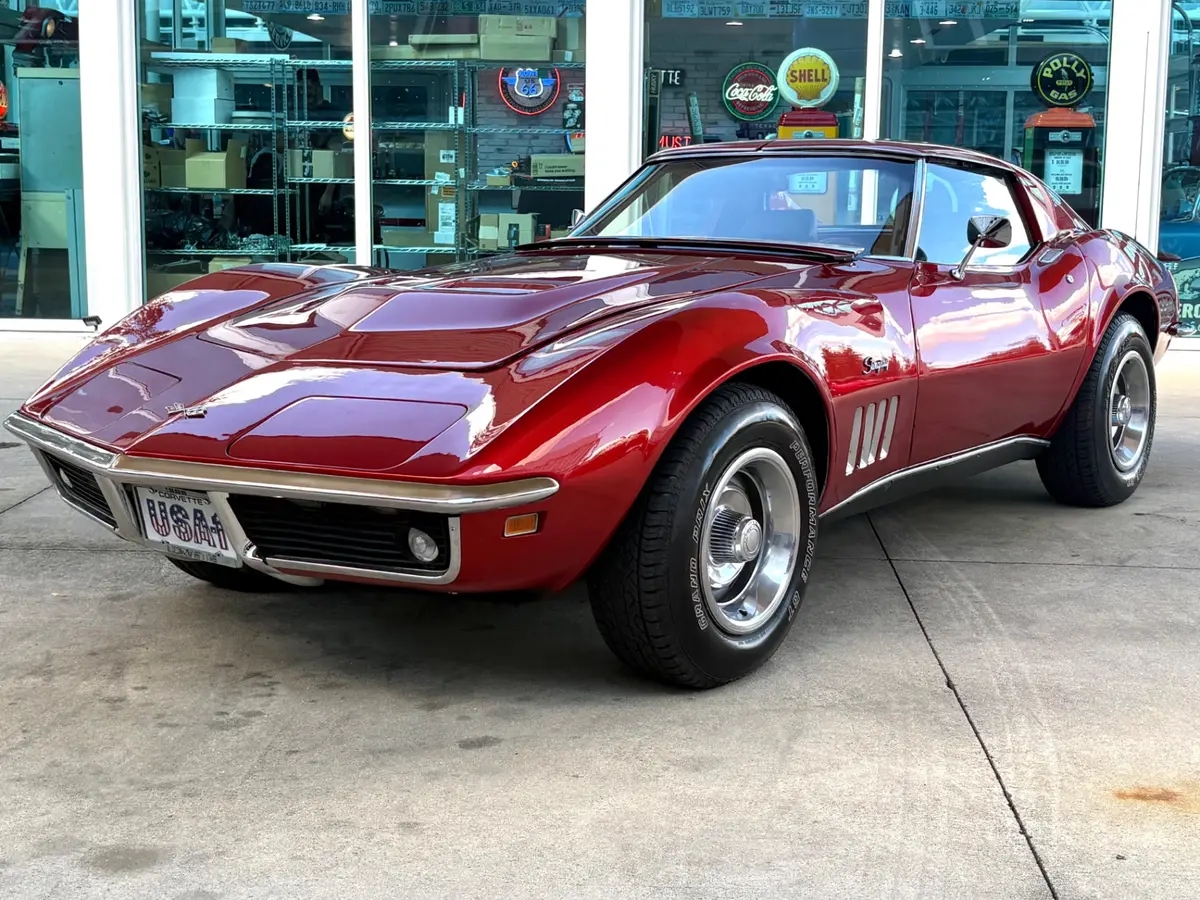
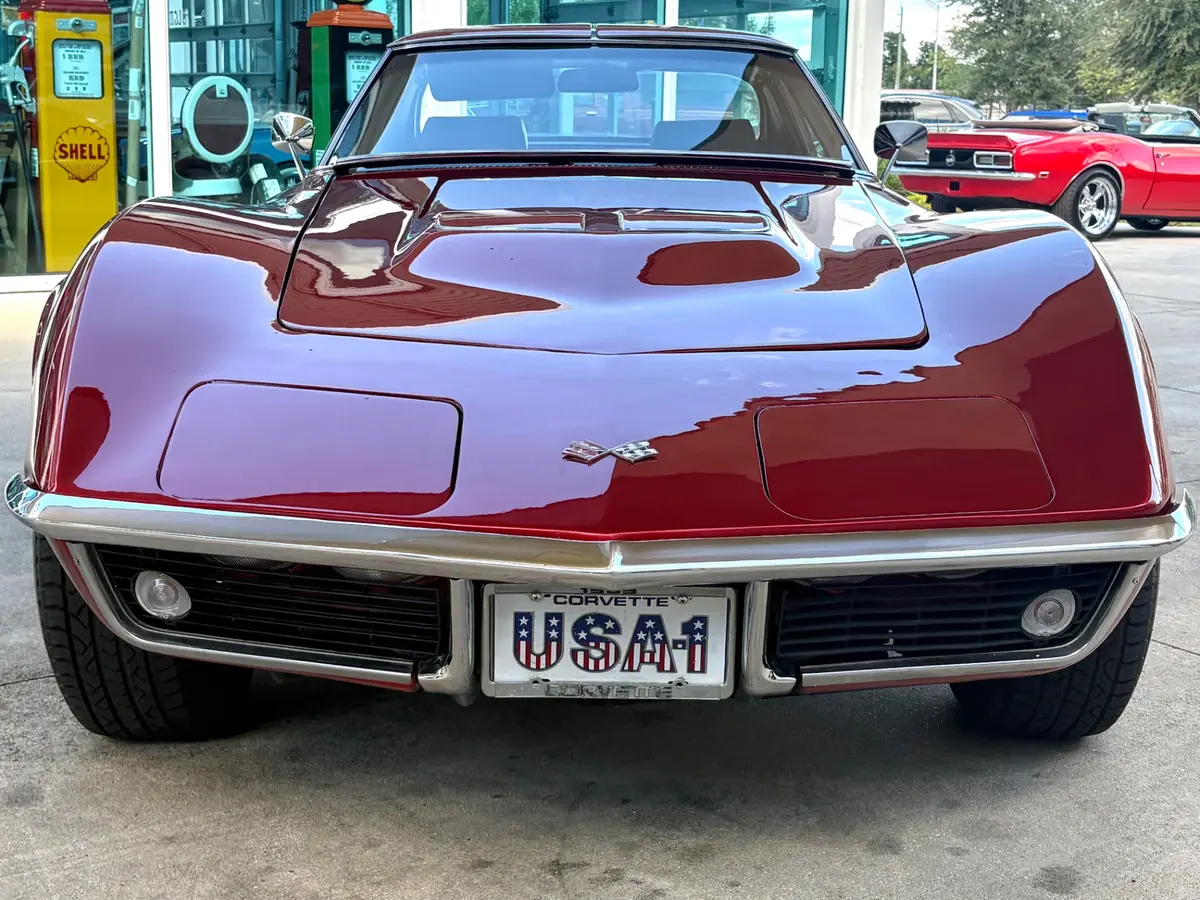
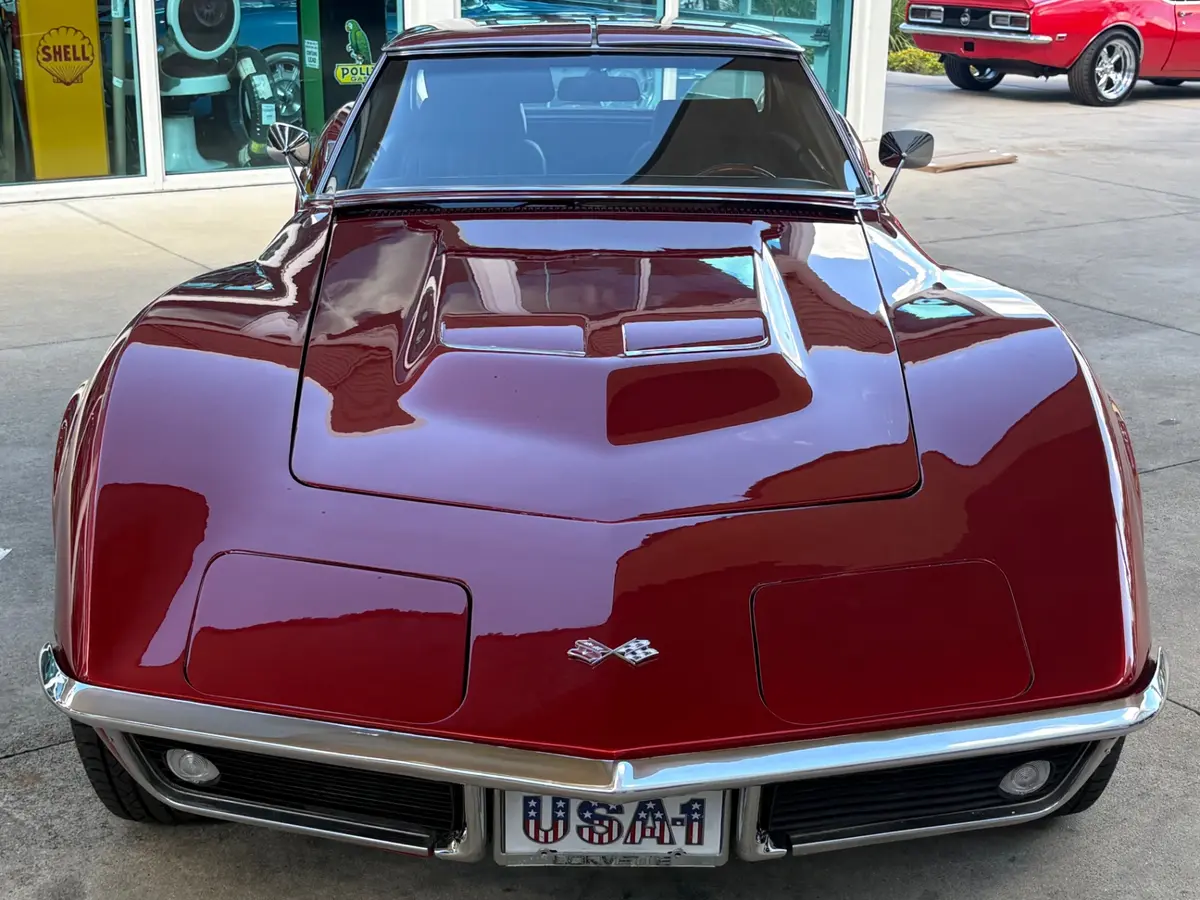
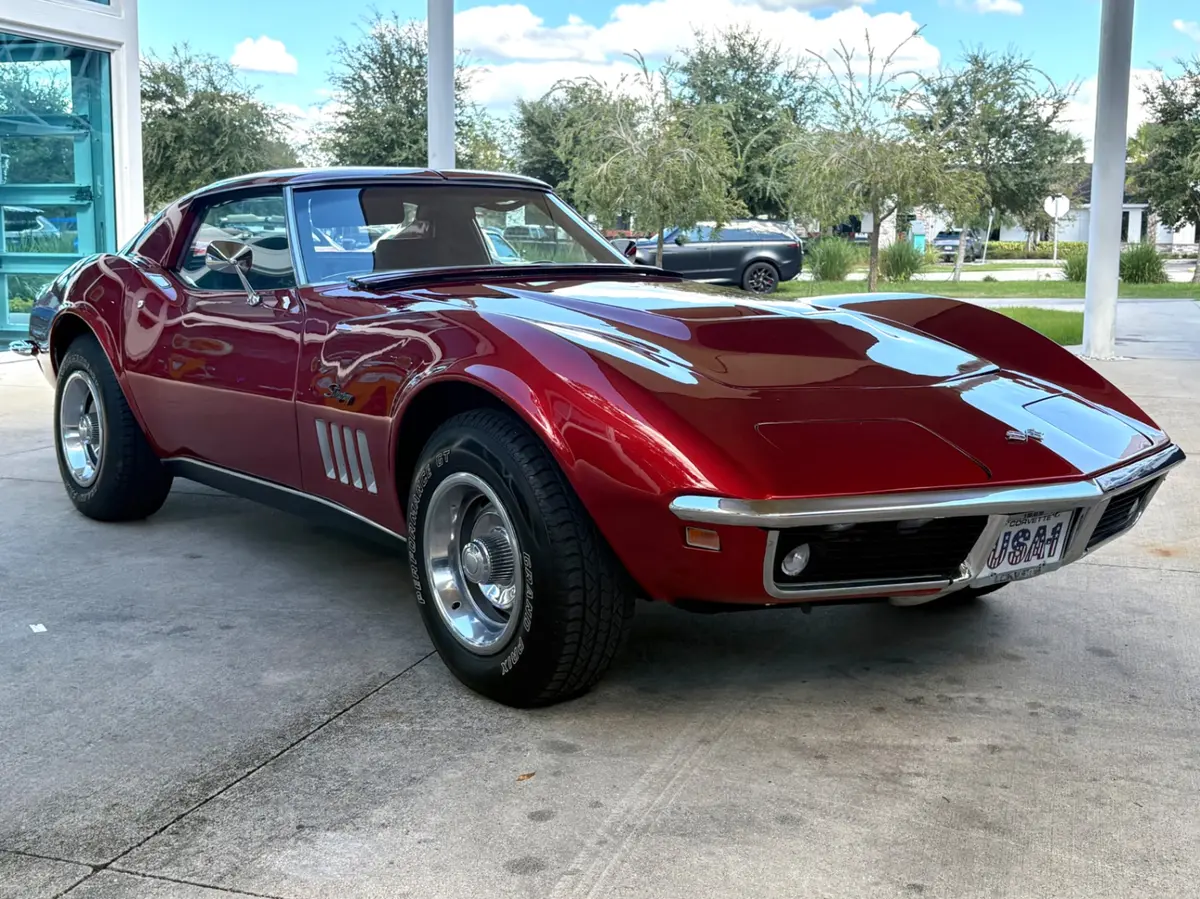
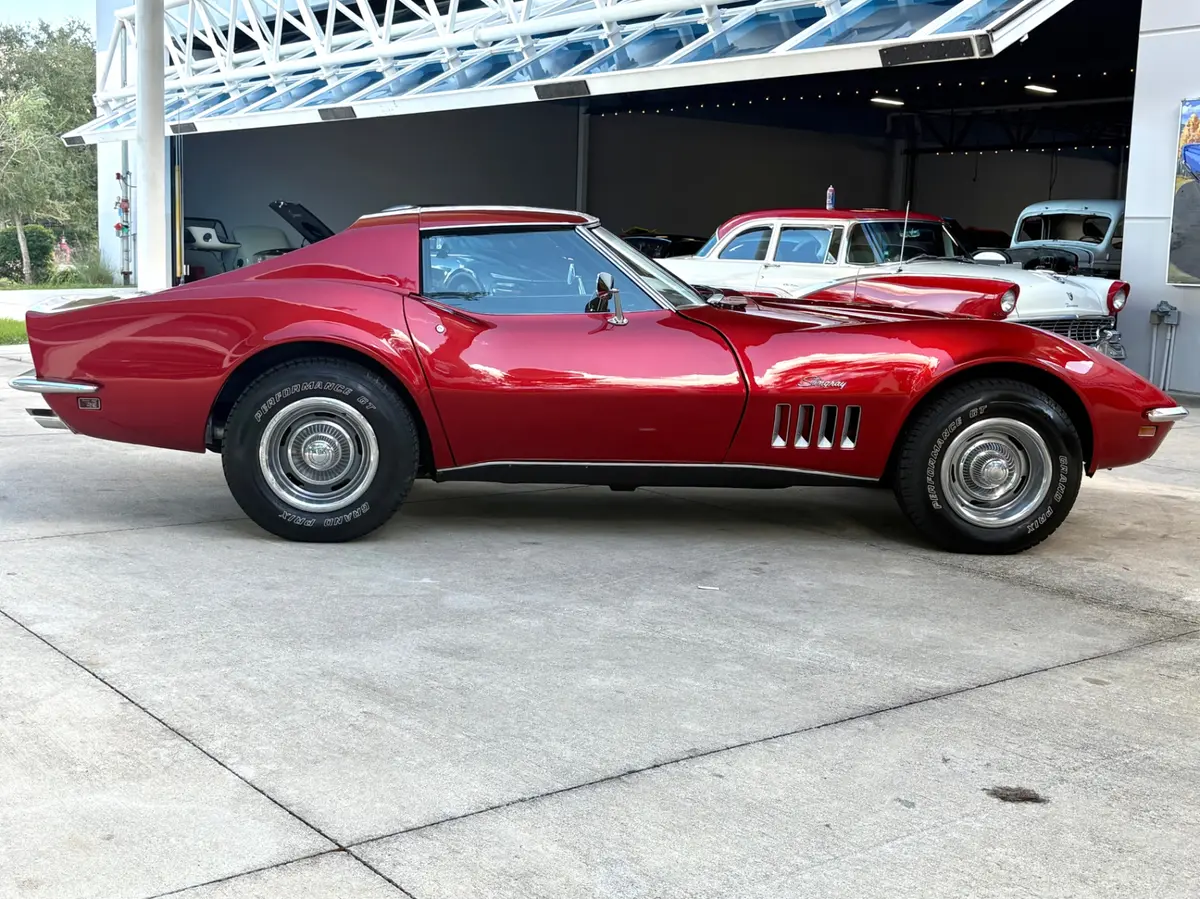
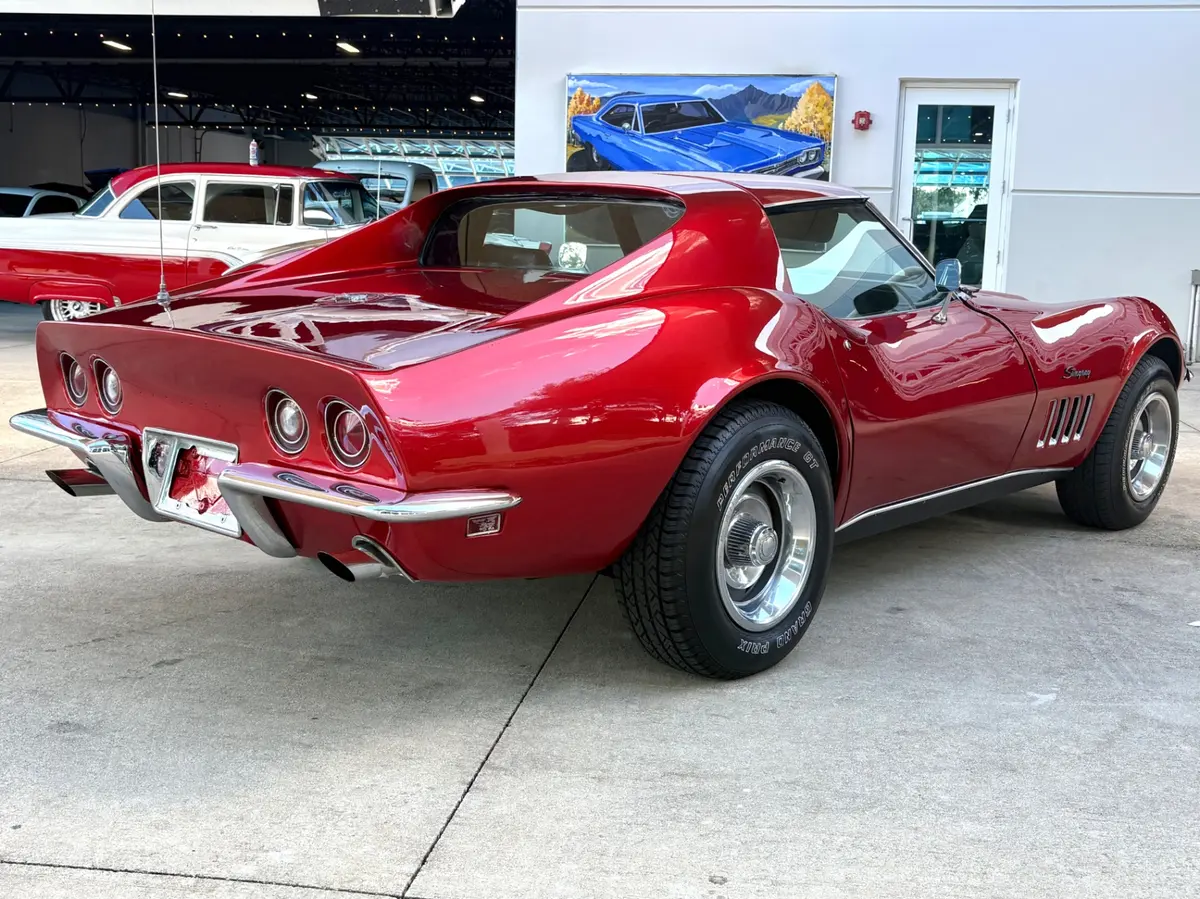
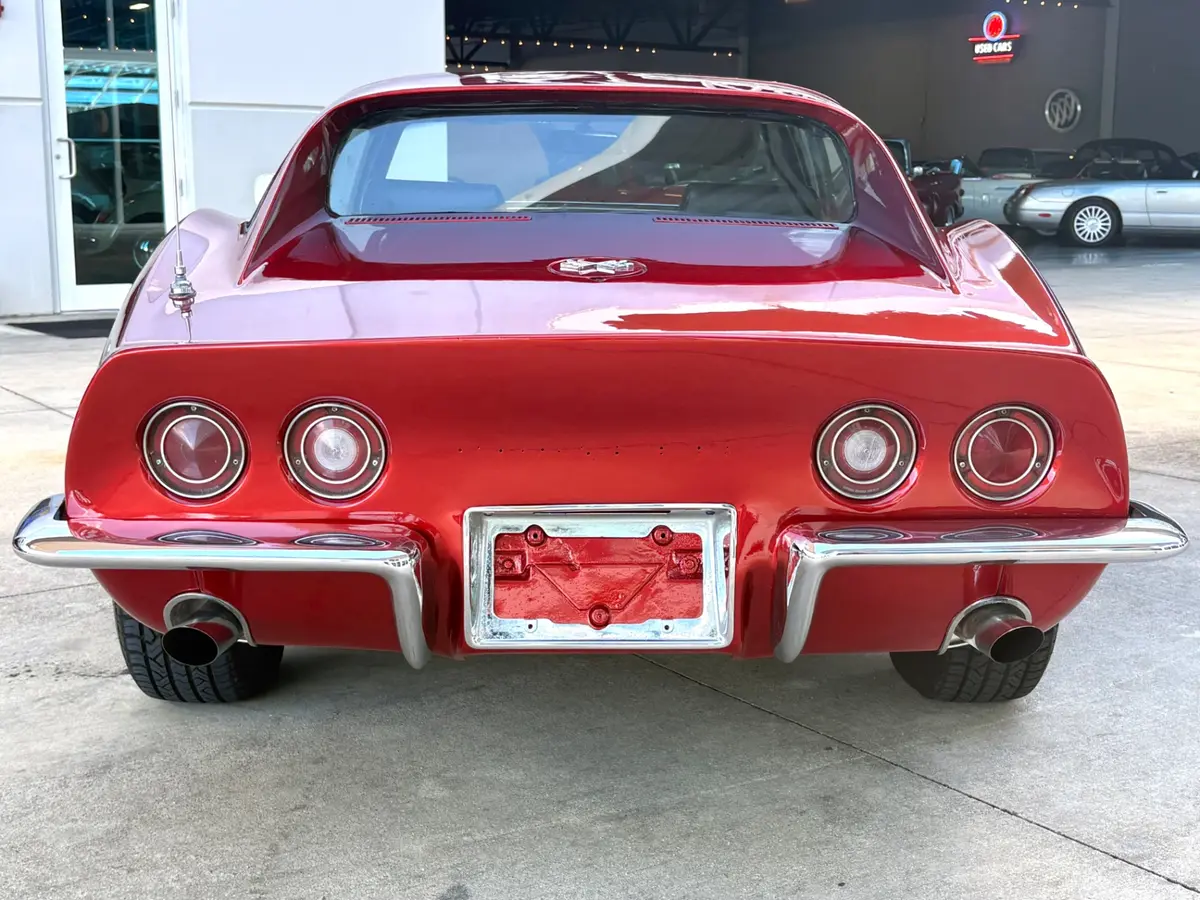
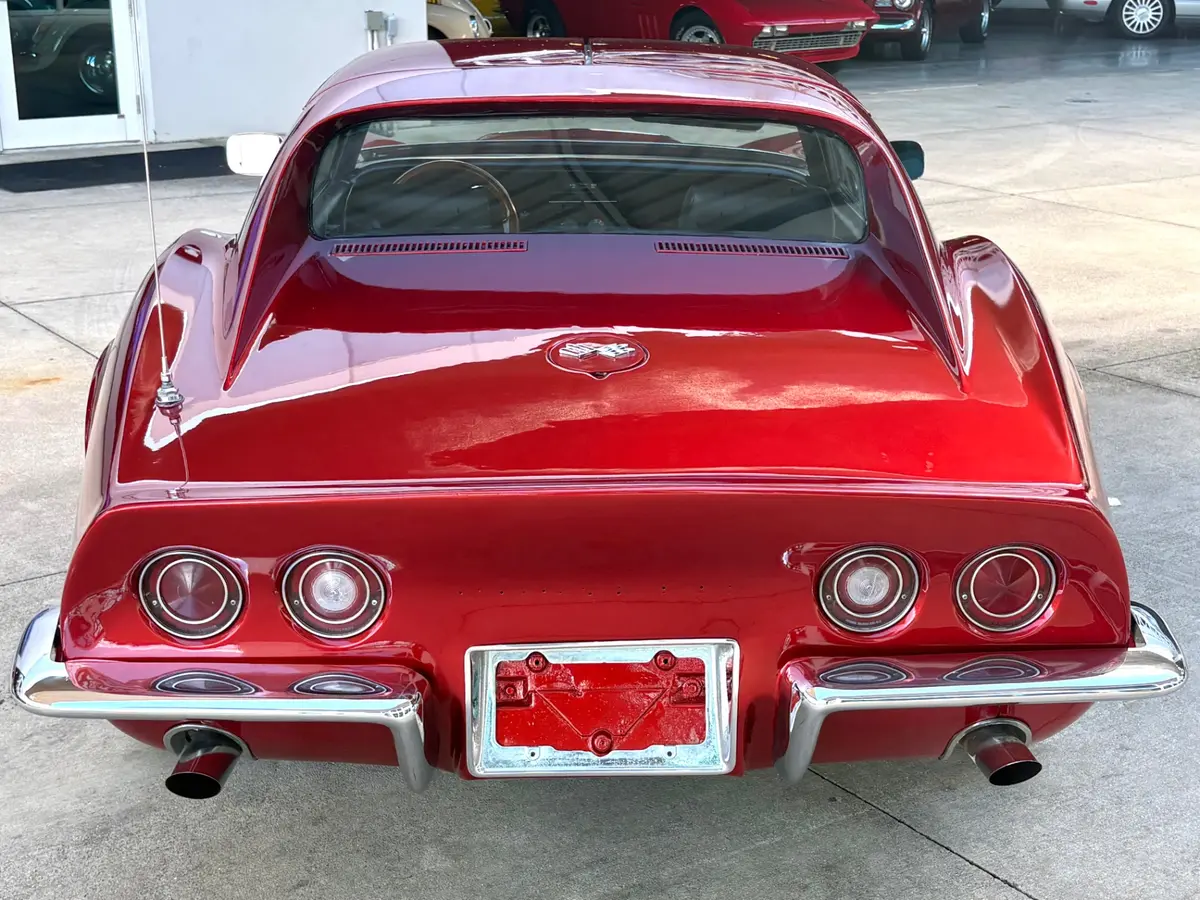
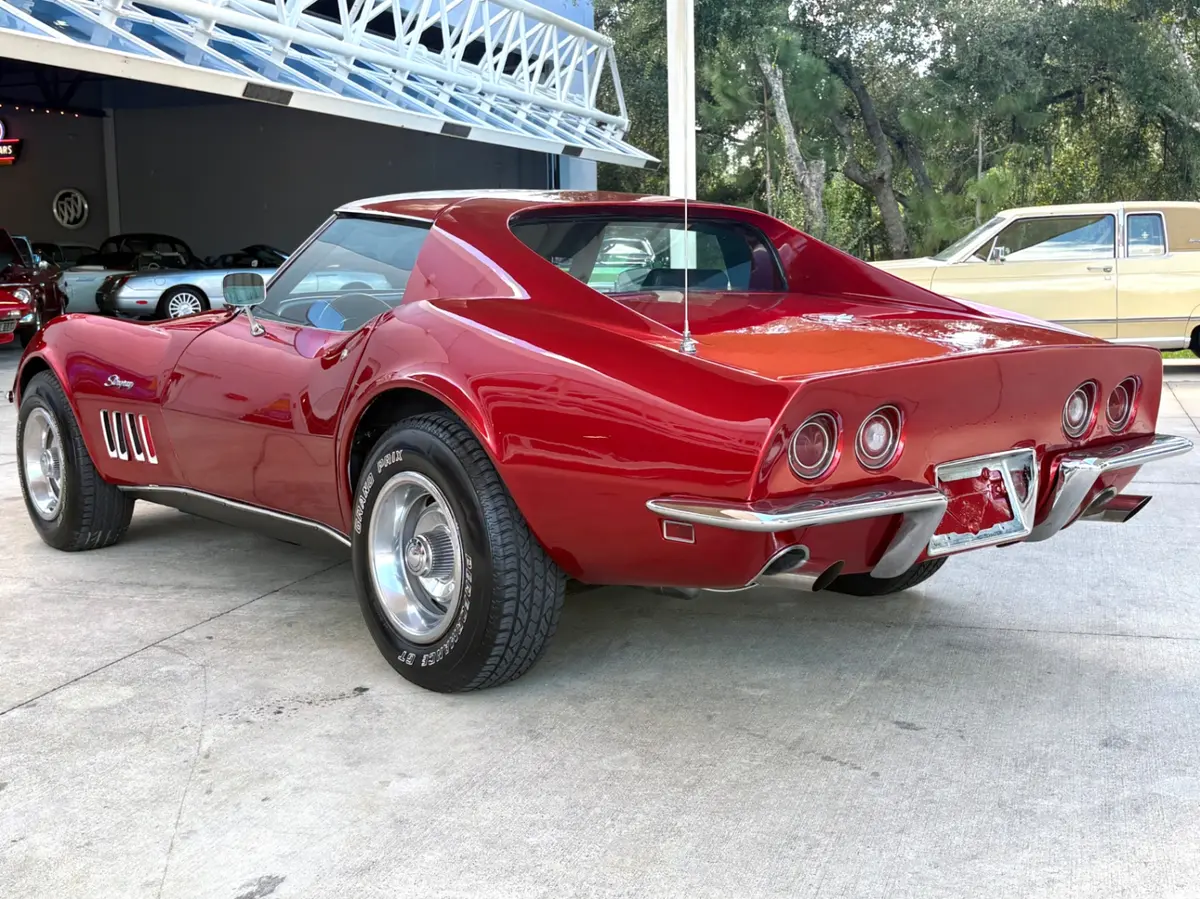
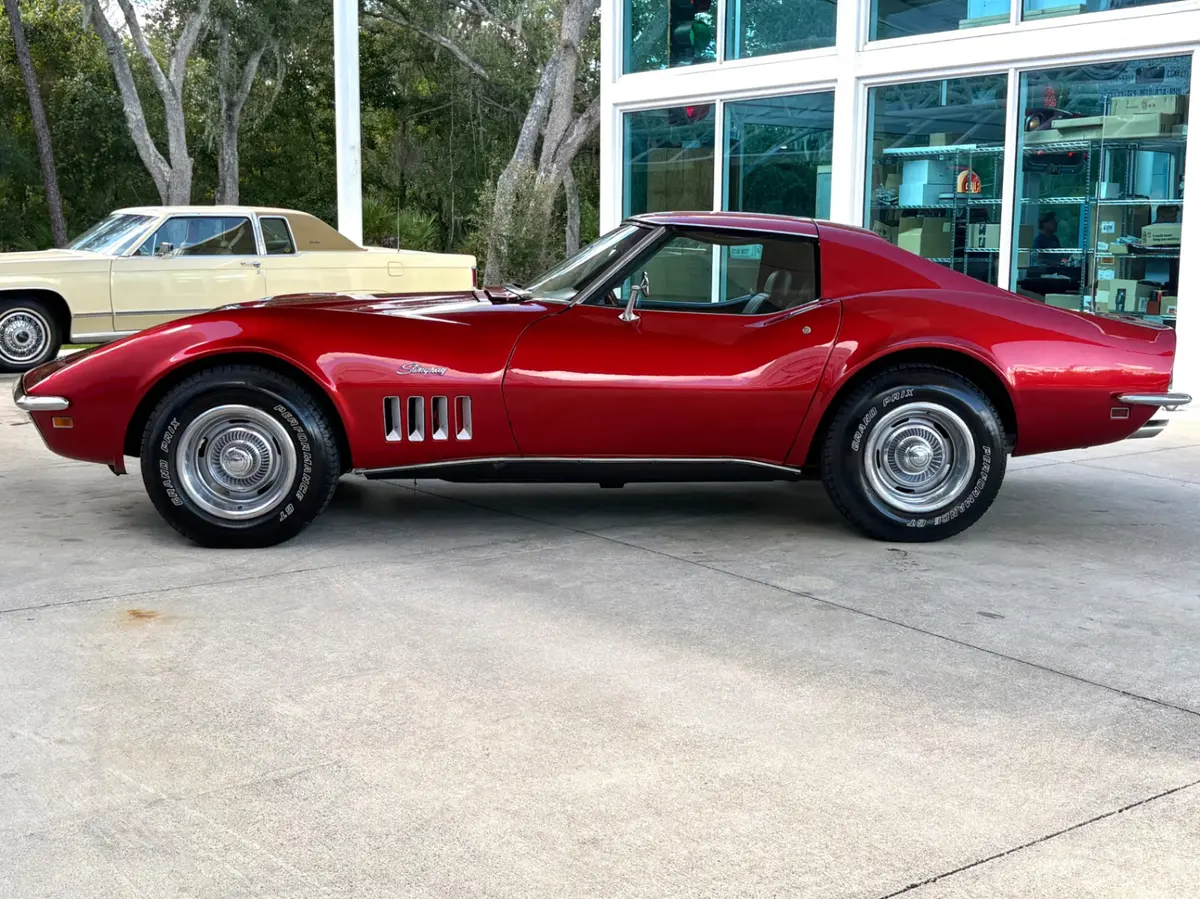
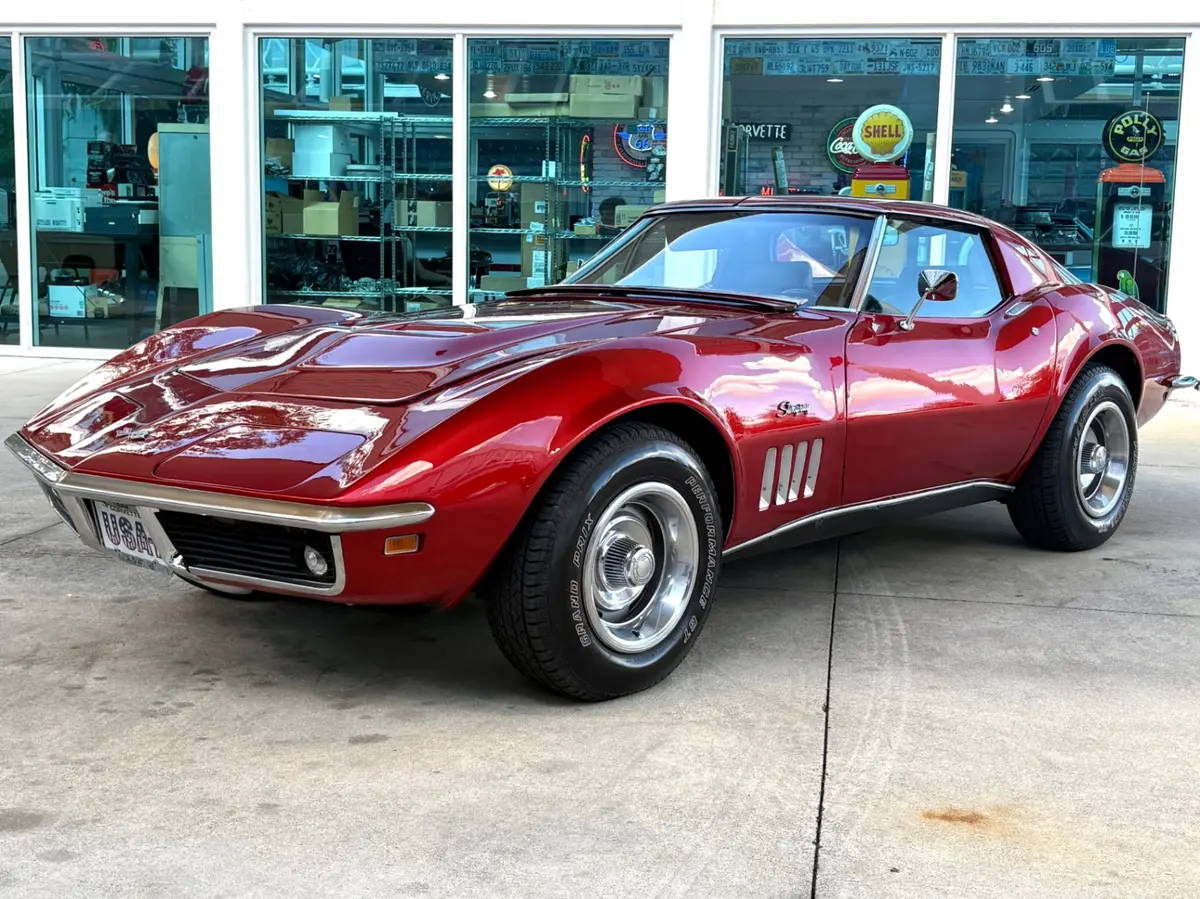
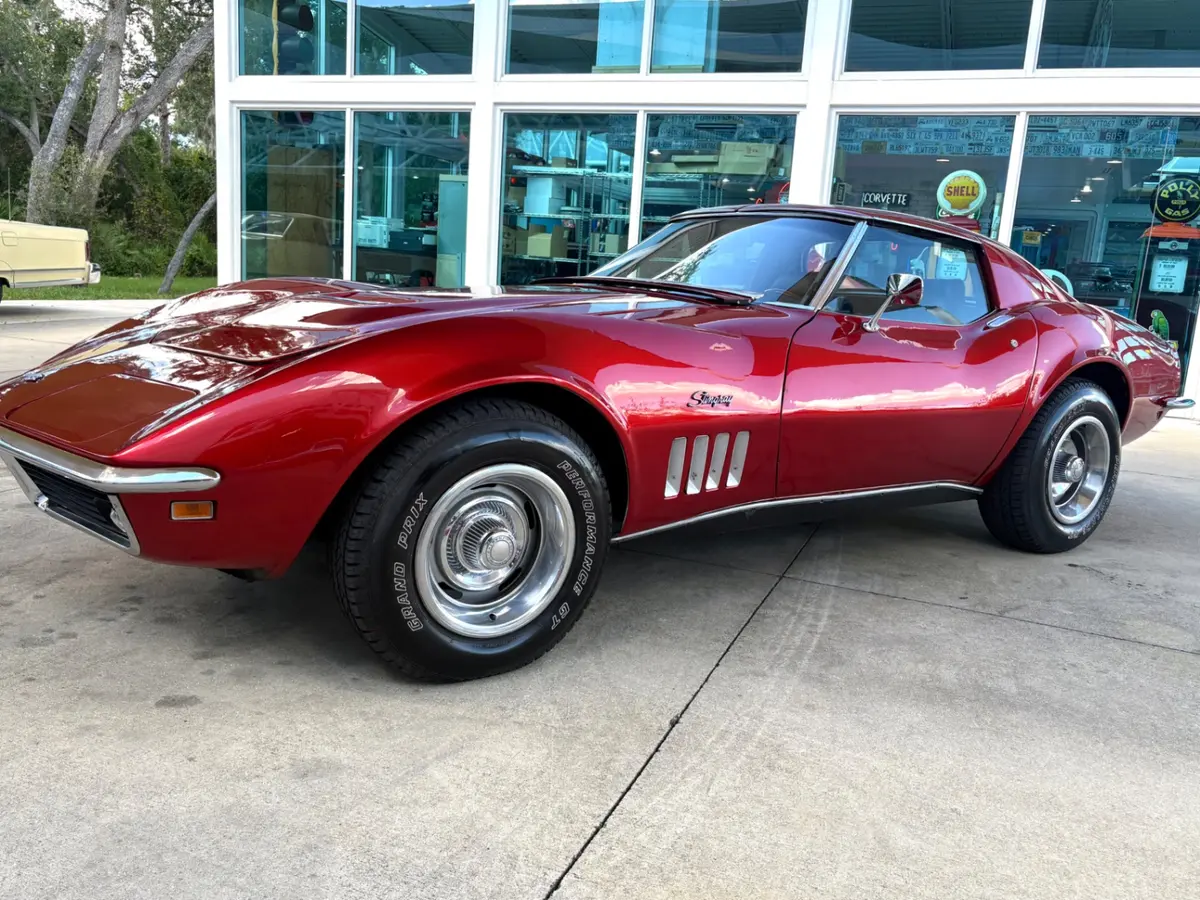
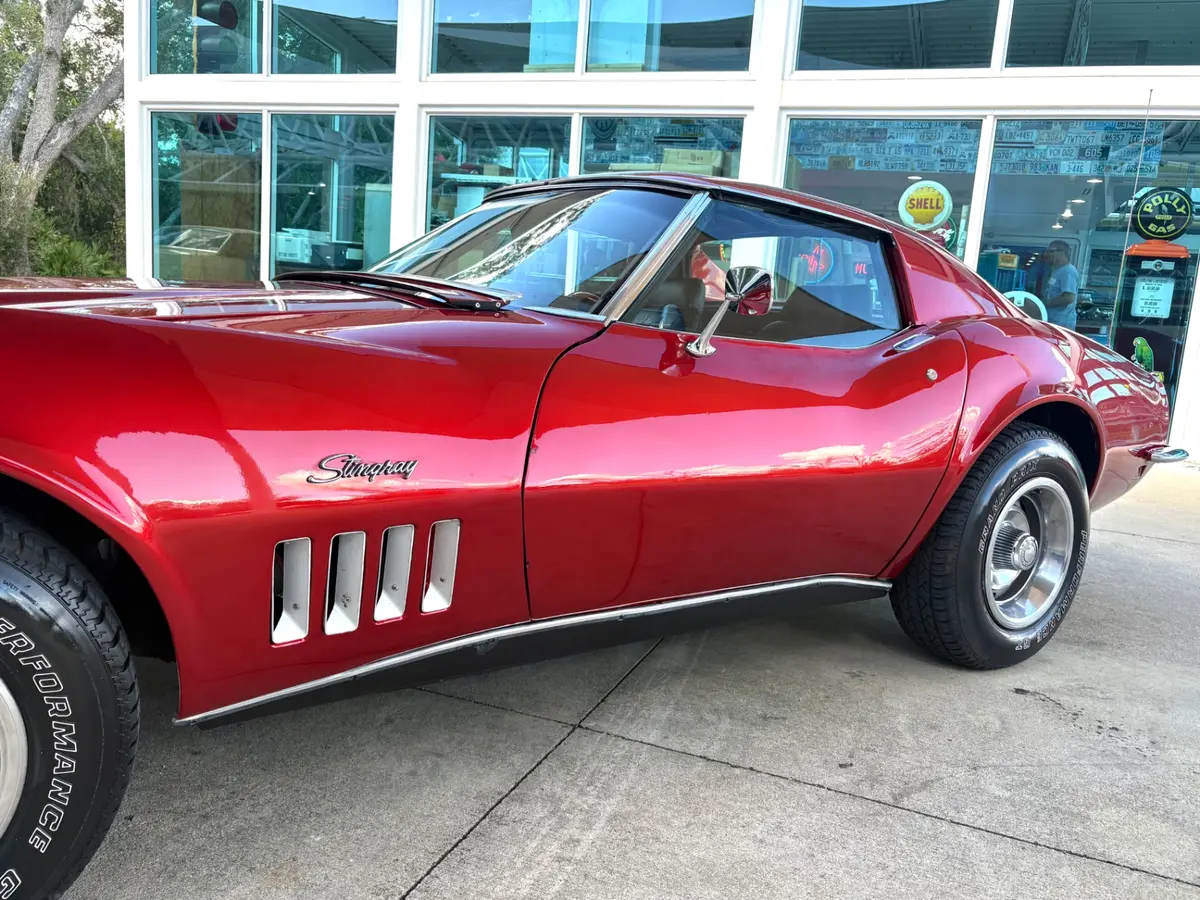
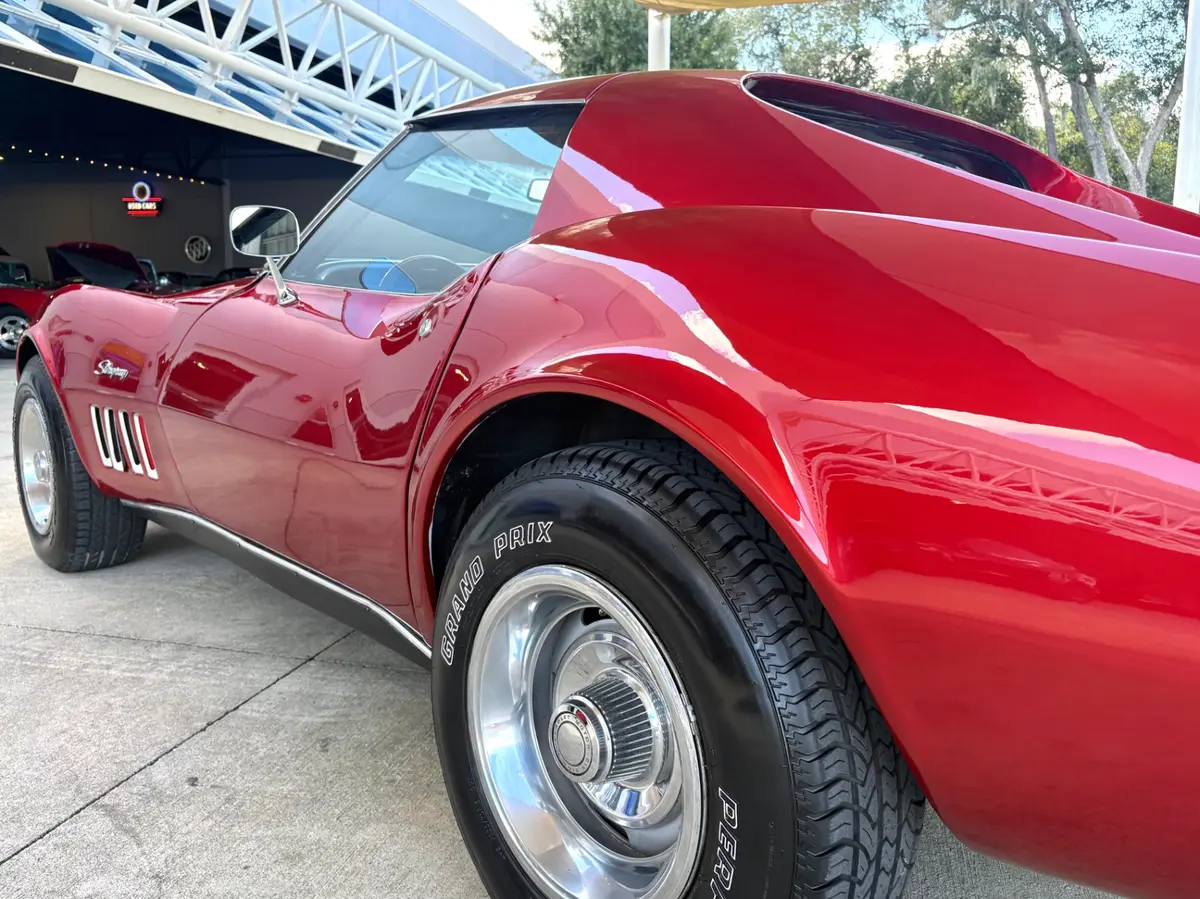
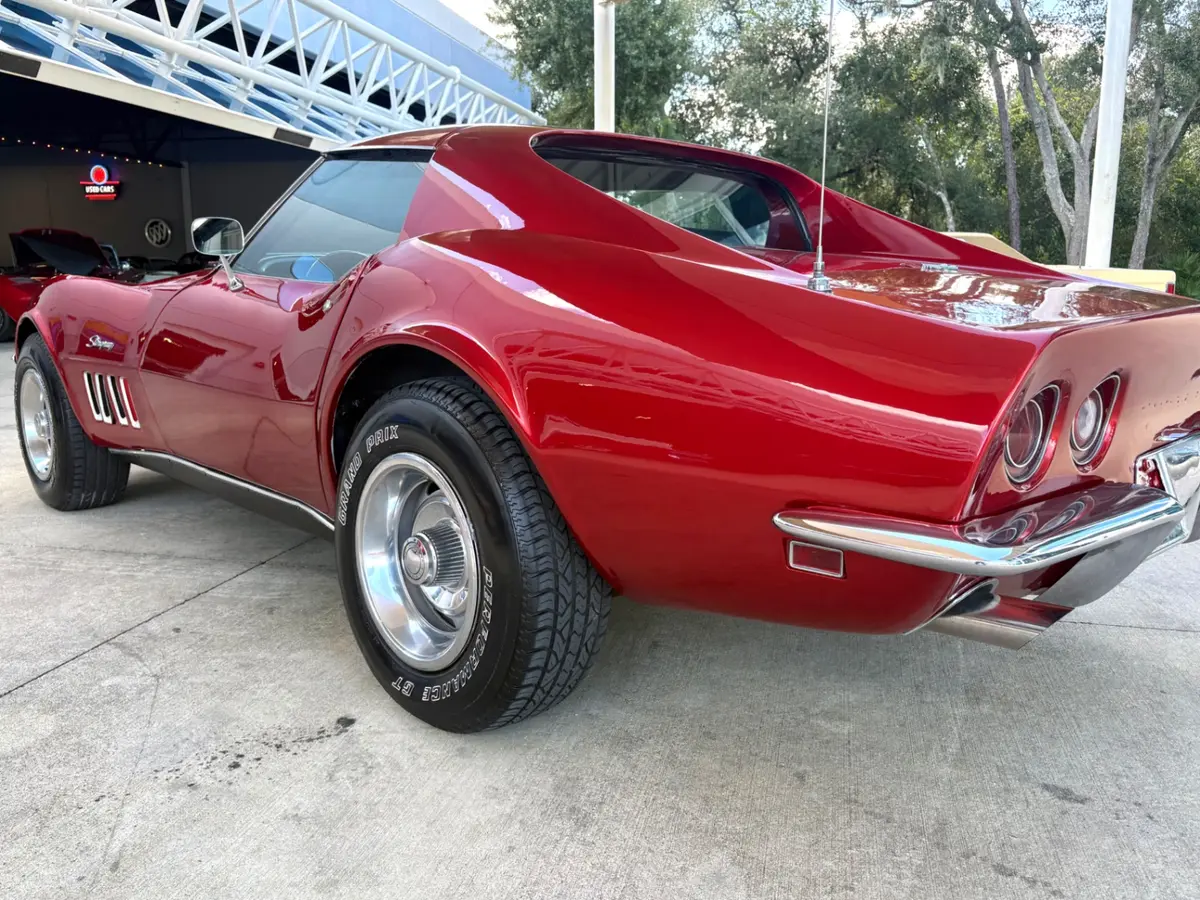
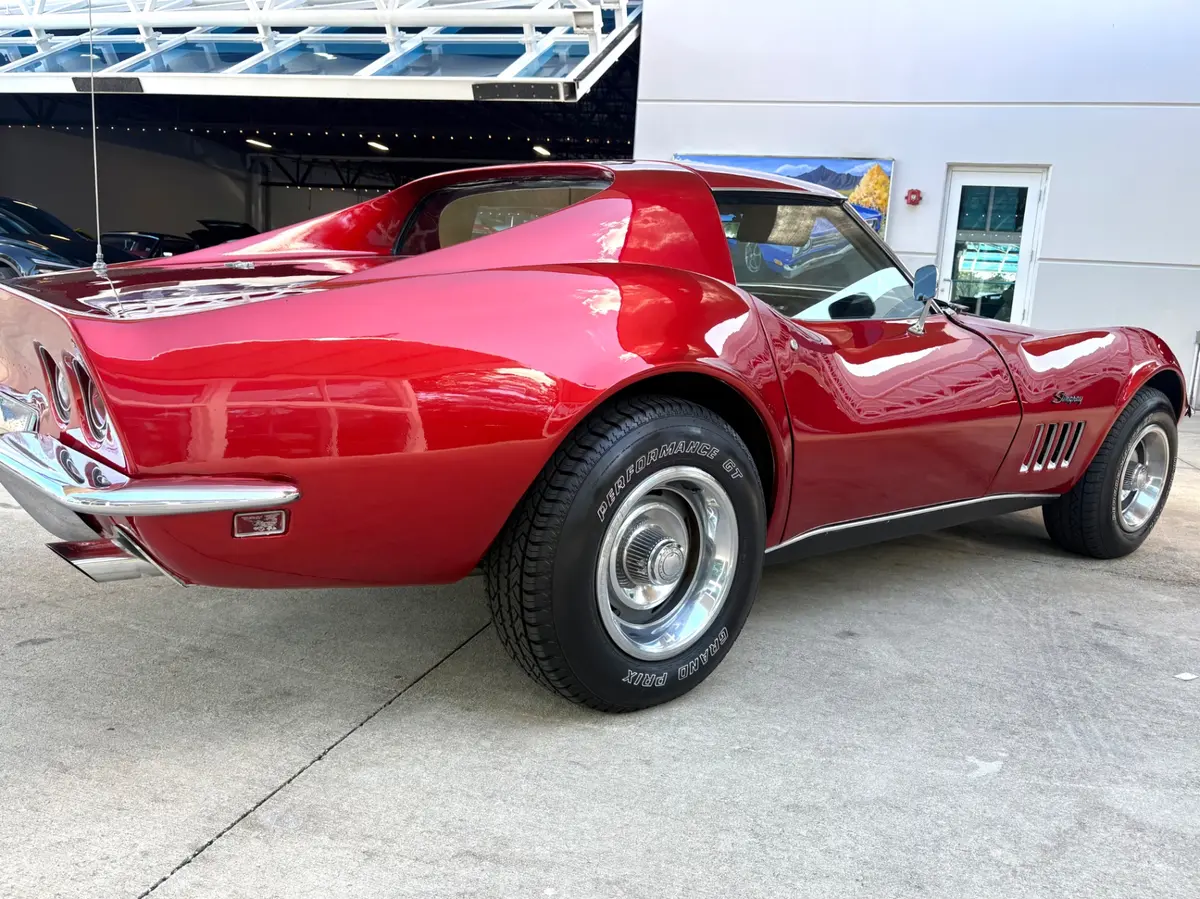
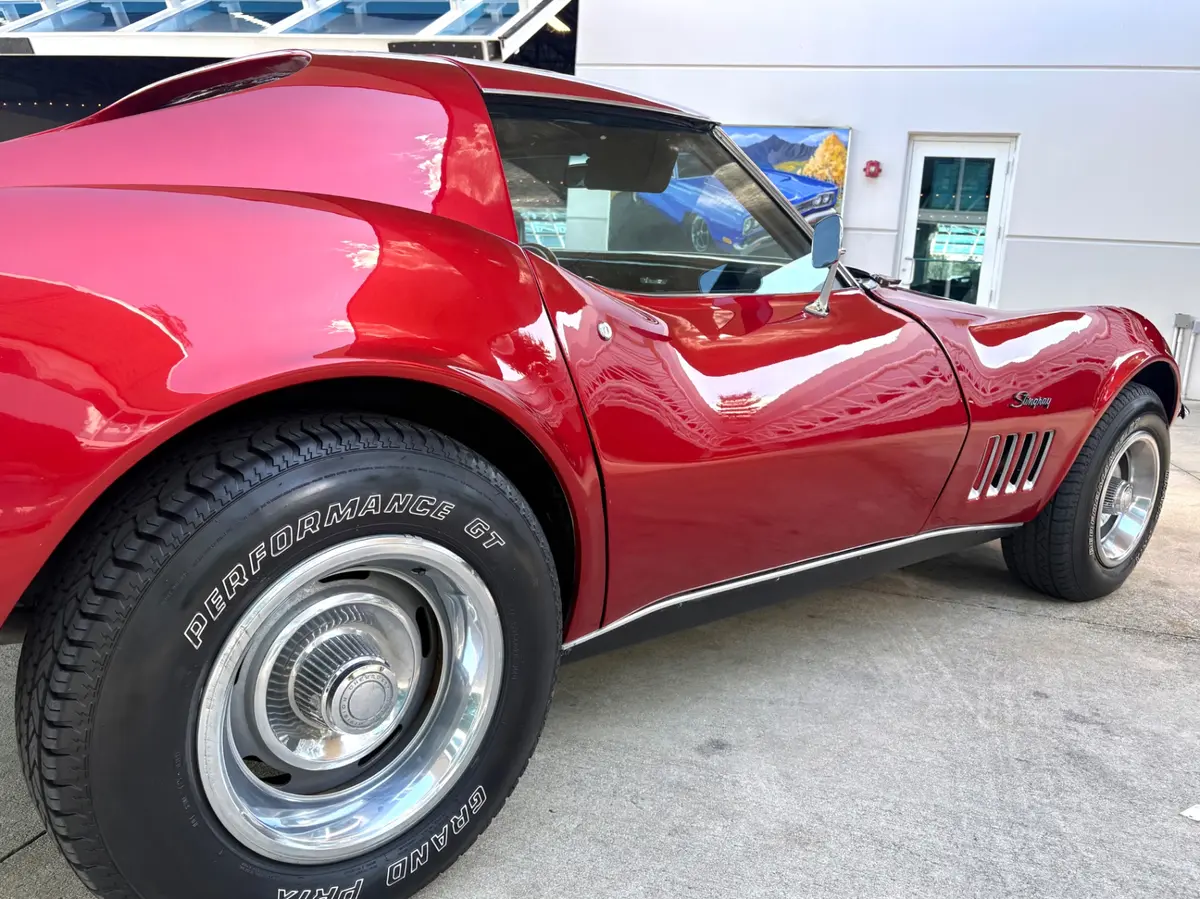
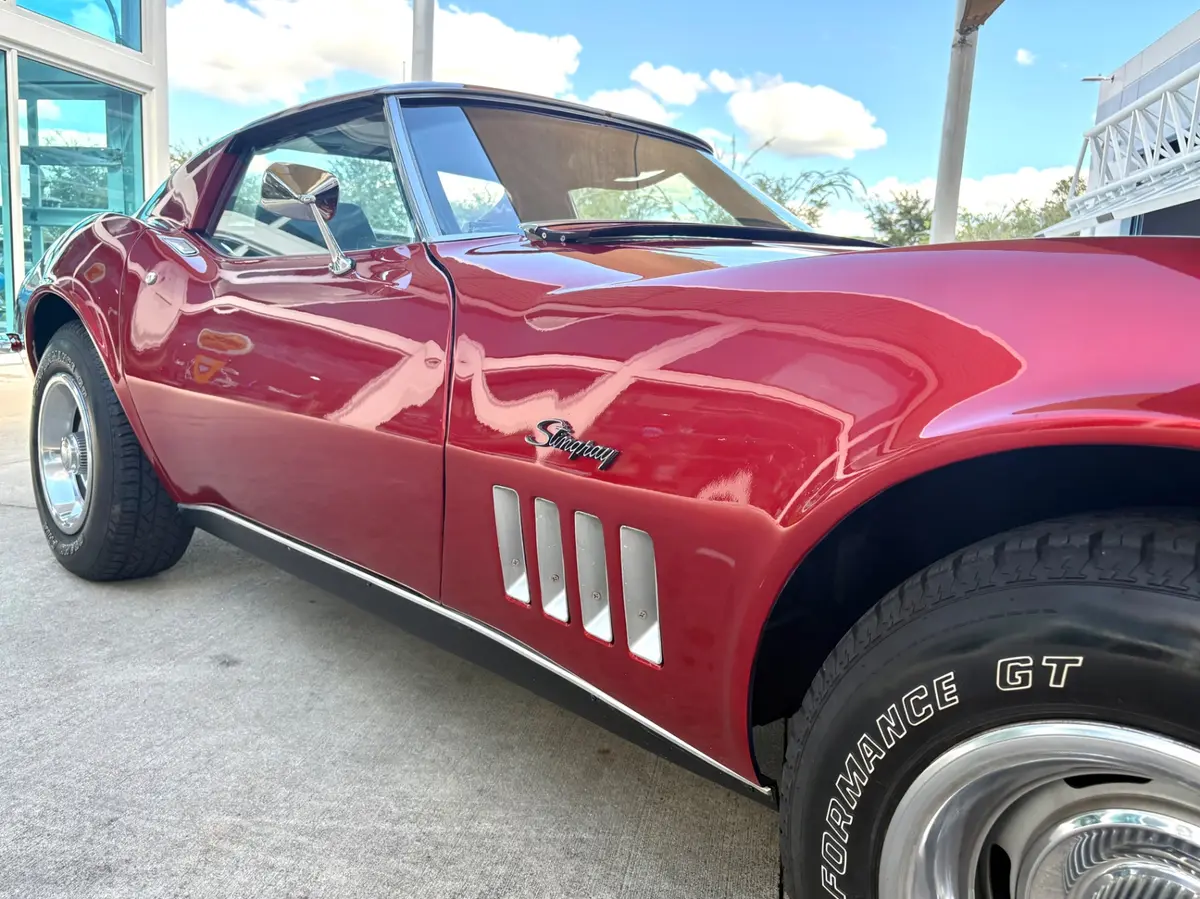
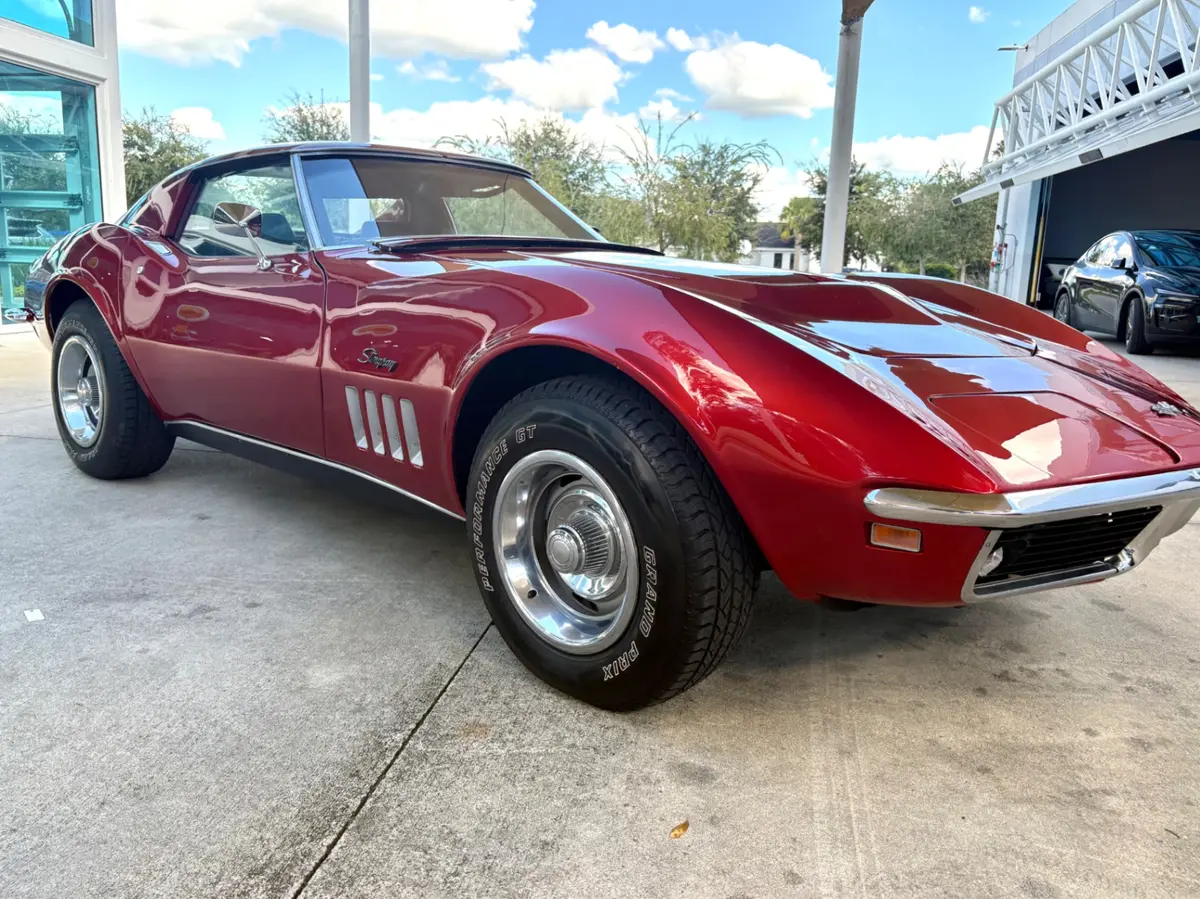
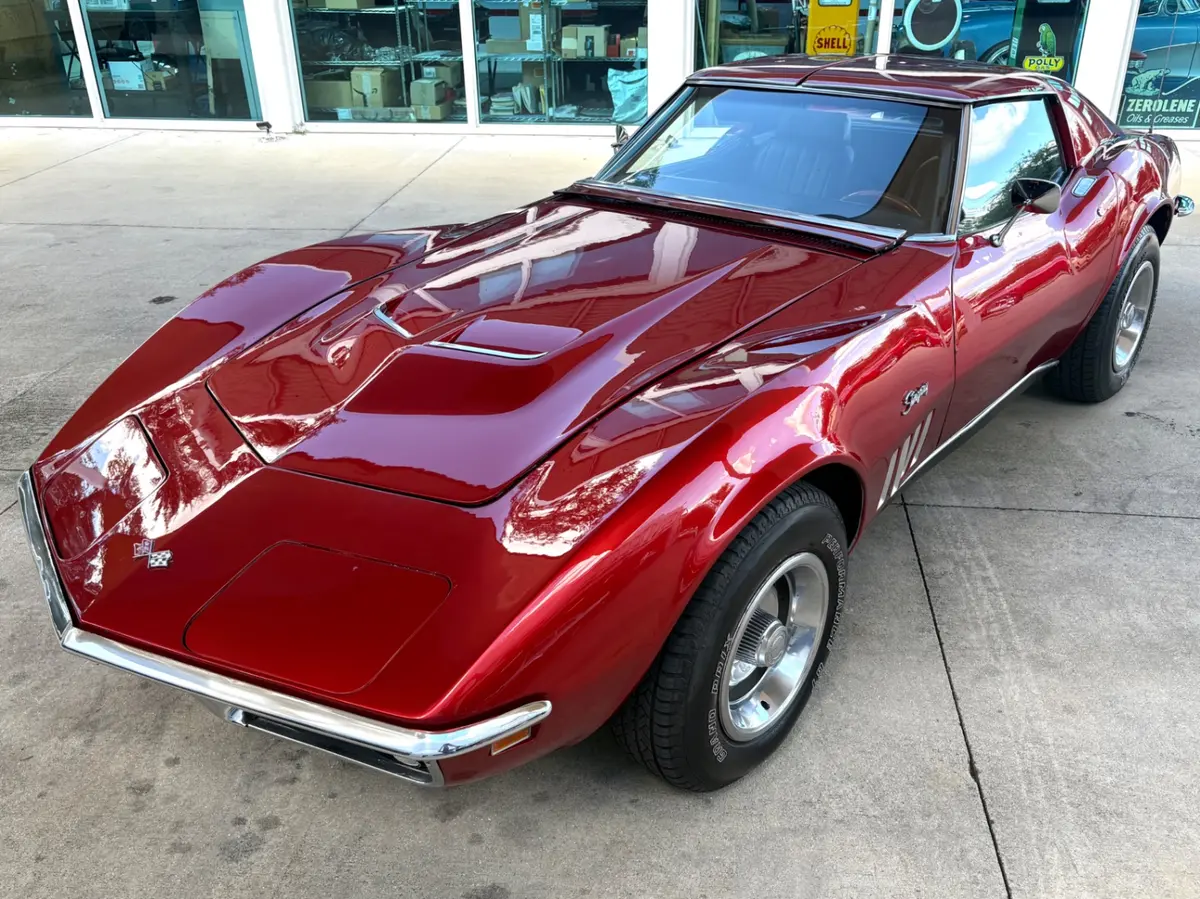

1969 Chevrolet Corvette Stingray T-Top — 350 Small Block, 4-Speed Hurst, Monza Red
Why This Car Is Special
The 1969 Chevrolet Corvette Stingray represents the peak of the C3 generation in terms of driver engagement and mechanical refinement. Model year 1969 was significant for several reasons. It was the first year the "Stingray" name returned as a single word on the car's bodywork after being absent since 1967. Chevrolet also widened the body slightly compared to the 1968 introduction of the C3 platform, which allowed for a wider interior and improved ergonomics. The door openings were made deeper that year to make entry and exit easier, and the steering wheel diameter was reduced from 16 inches to 15 inches to give the driver a better sense of connection. These were not random changes — they were targeted refinements made in direct response to driver feedback from the first year of the C3 body style.
Production for 1969 reached 38,762 units, making it the highest-production year in Corvette history up to that point. Of those, 22,154 were sport coupes with the removable T-top roof panels, which is the body style you see here. The T-top coupe was the practical choice for buyers who wanted the open-air experience without committing to a convertible, and its structural advantages made it the more sorted-driving car of the two body options.
This particular 1969 Chevrolet Corvette Stingray wears Monza Red over a black vinyl interior — one of the most period-correct and visually direct color combinations available that year. The 350 cubic inch small block V8 is backed by a 4-speed manual transmission topped with a Hurst shifter, a combination that represents exactly how most buyers in 1969 ordered their Corvette when they planned to drive it rather than display it. The 350 was introduced to the Corvette lineup in 1969 as a replacement for the 327, and it went on to become one of the most widely respected American V8 engines ever produced.
Features List
- 350ci Small Block V8
- 4-Speed Manual Transmission with Hurst Shifter
- Removable T-Top Roof Panels
- Removable Rear Window
- 4-Wheel Disc Brakes
- Independent Rear Suspension
- Wood Rim Steering Wheel
- Center Console
- Full Auxiliary Gauge Cluster
- Tachometer
- Bucket Seats with Headrests
- Dual Exhaust
- Chrome Air Cleaner
- Rally Wheels
- White Letter Tires
- Chrome Bumpers
- AM Radio
- Black Vinyl Interior
- Black Carpet
- Pop-Up Headlights
Mechanical
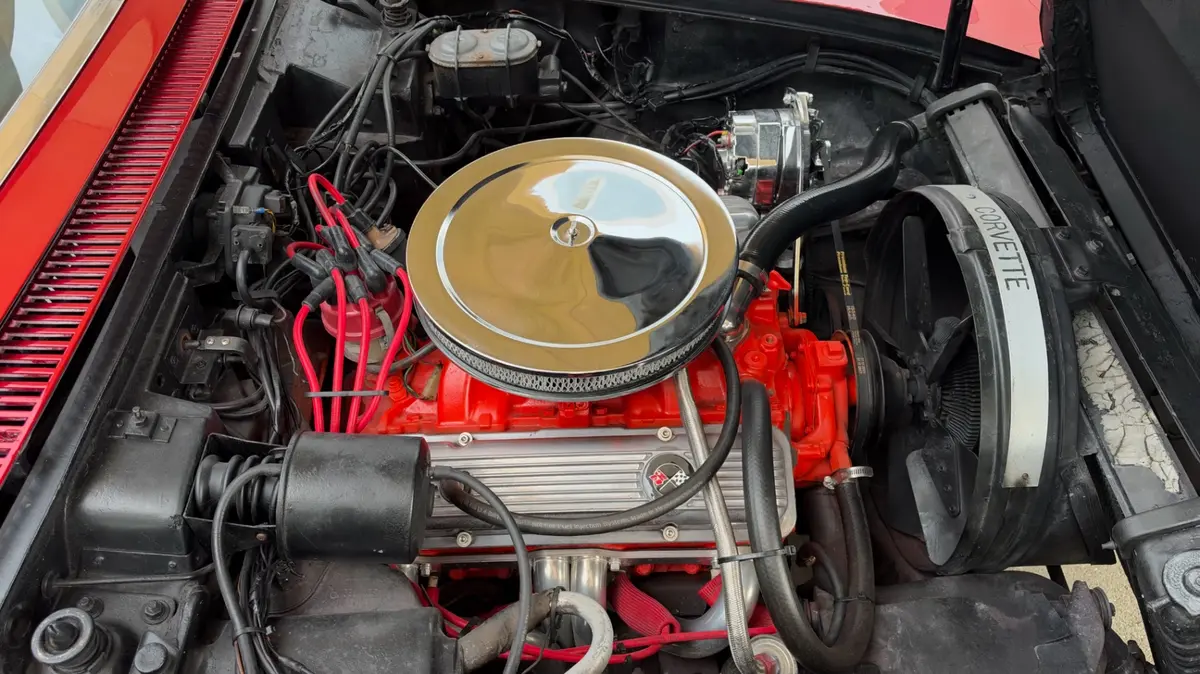
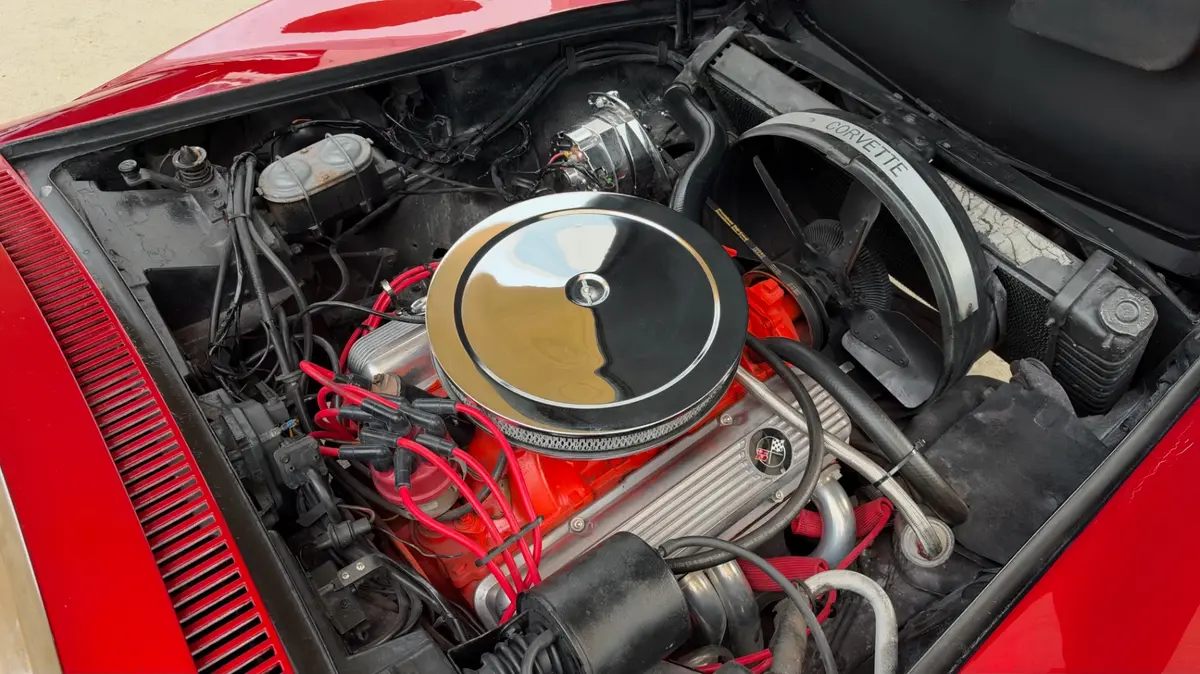
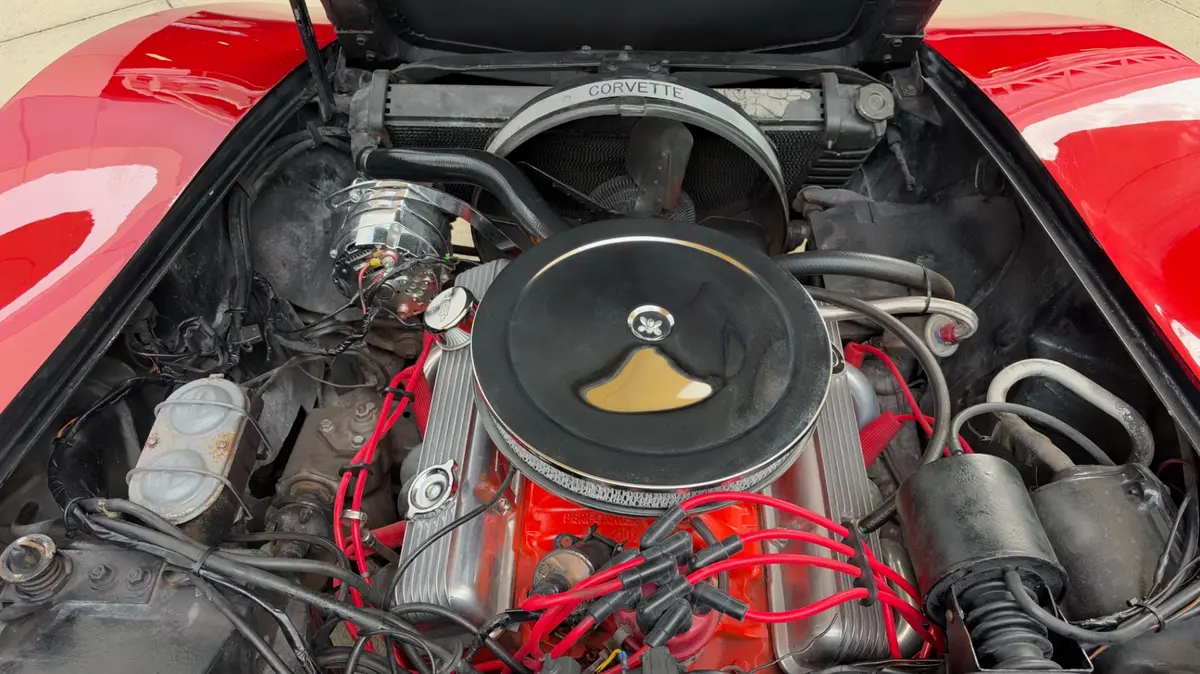
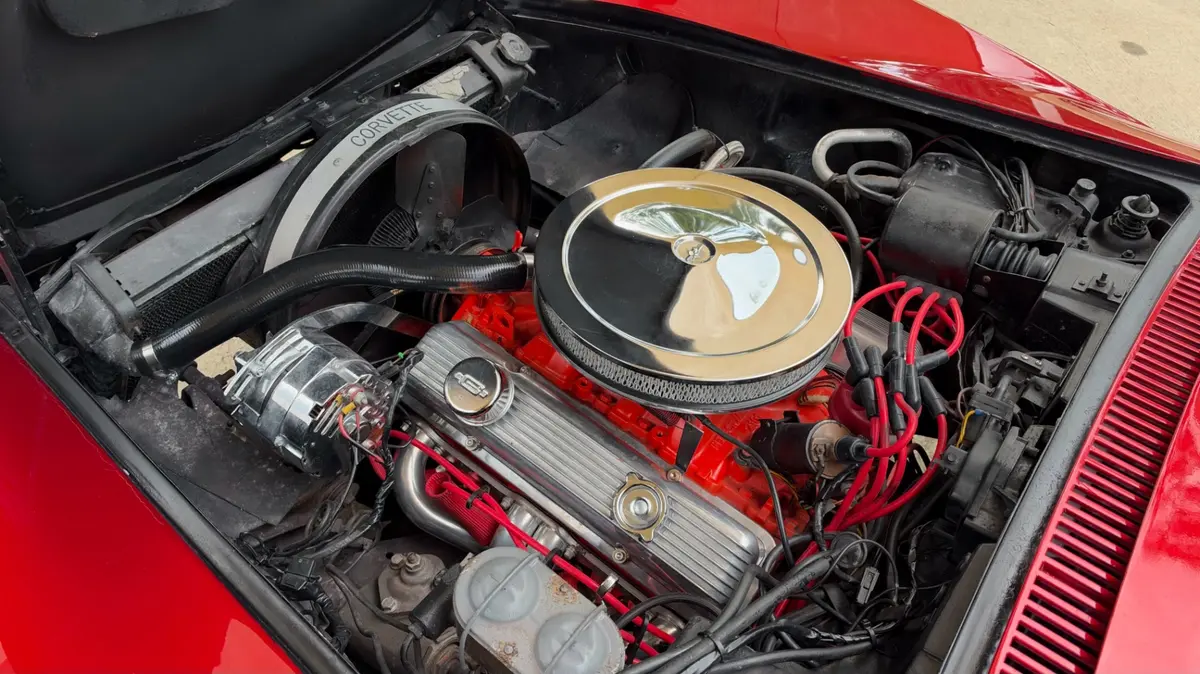
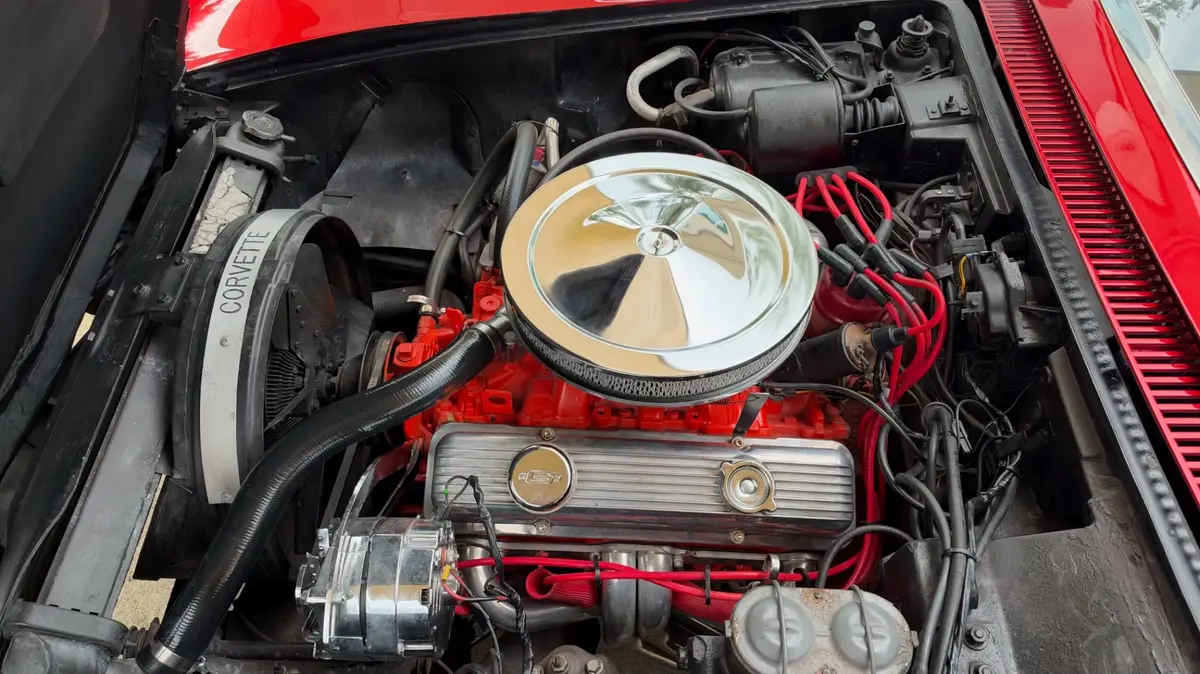
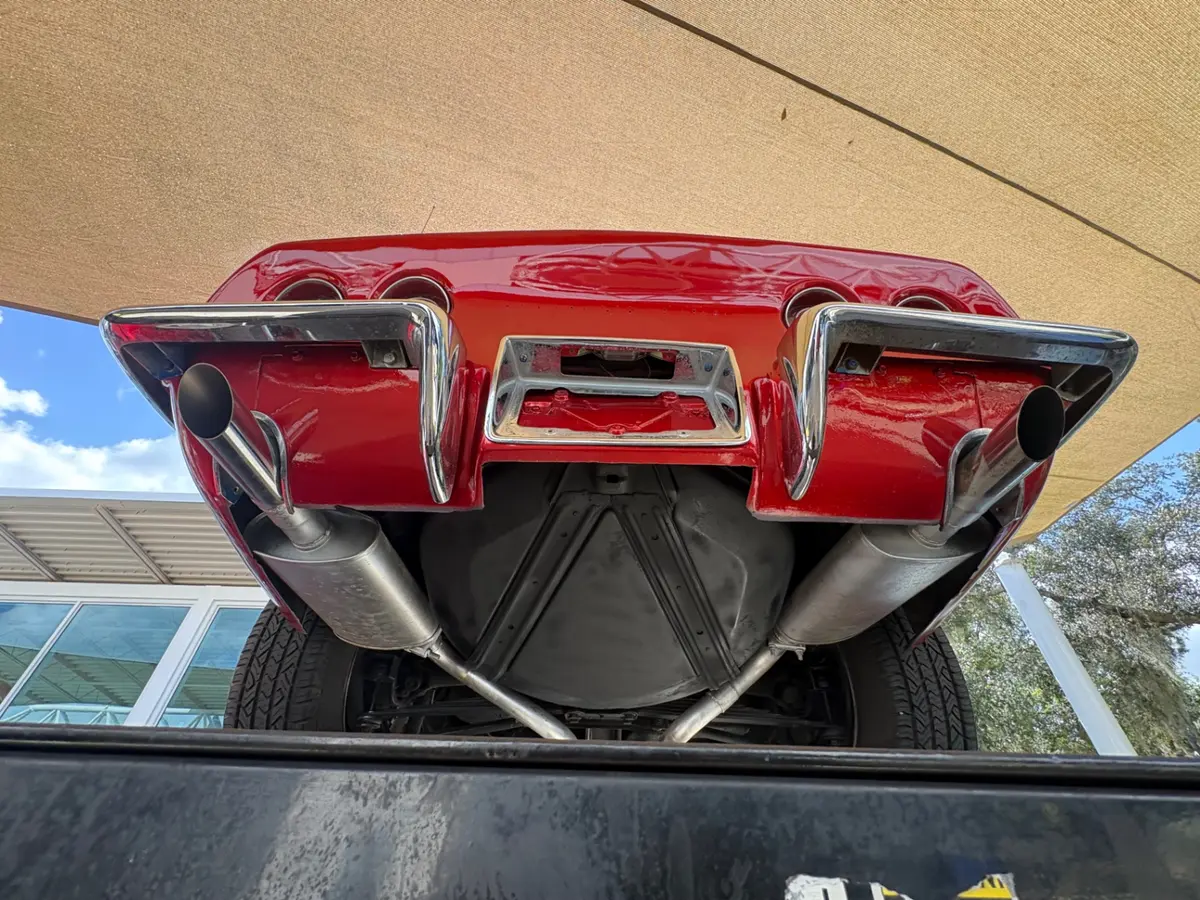
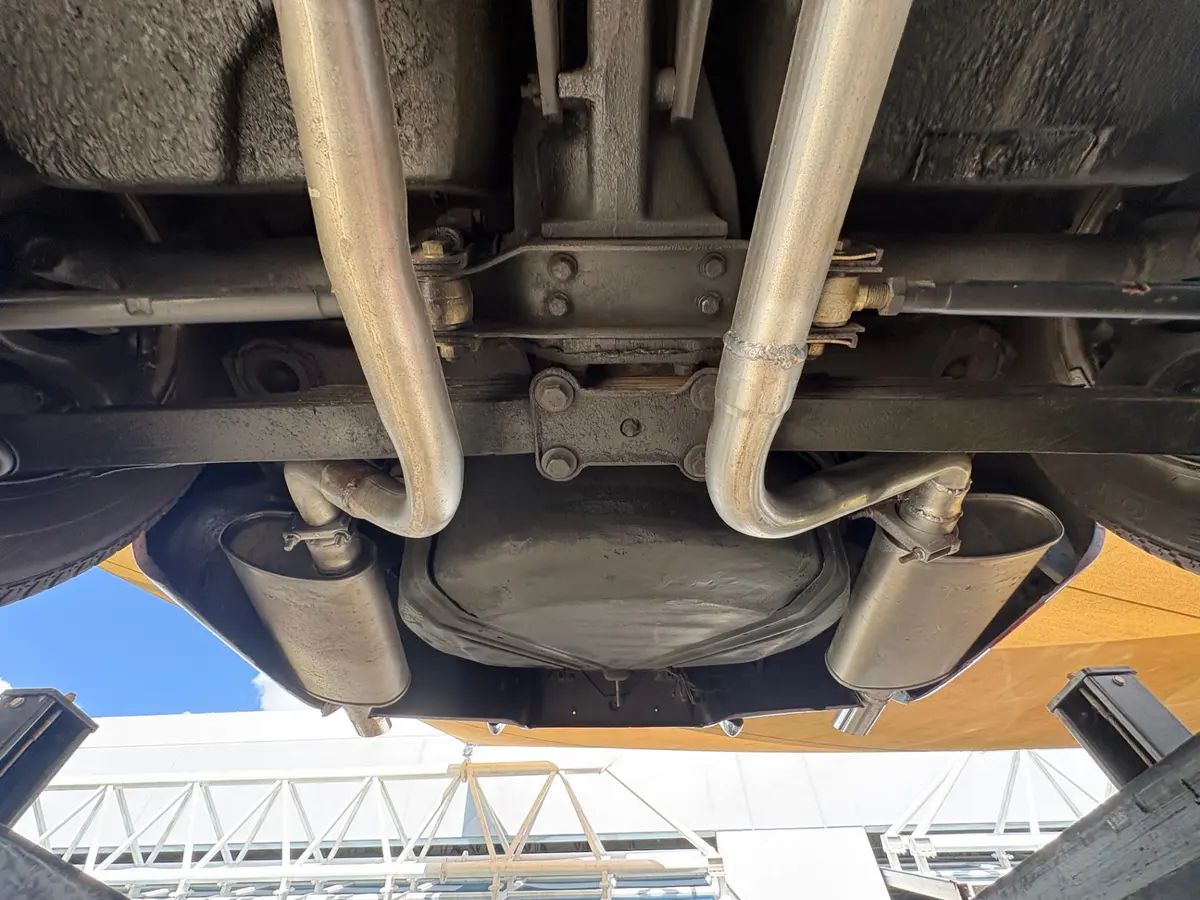
The 350 cubic inch small block V8 under this Corvette's hood was a brand-new displacement option for 1969, and it became the foundation of the Corvette's engine lineup for the next two decades. The engine bay is presented with a chrome air cleaner, polished valve covers, and red engine paint — a clean, period-appropriate presentation that reflects the way these cars were built to look the part both inside and out. The dual exhaust system exits through the correct chrome-tipped rear outlets, which are a recognizable visual signature of the C3 Corvette from the rear.
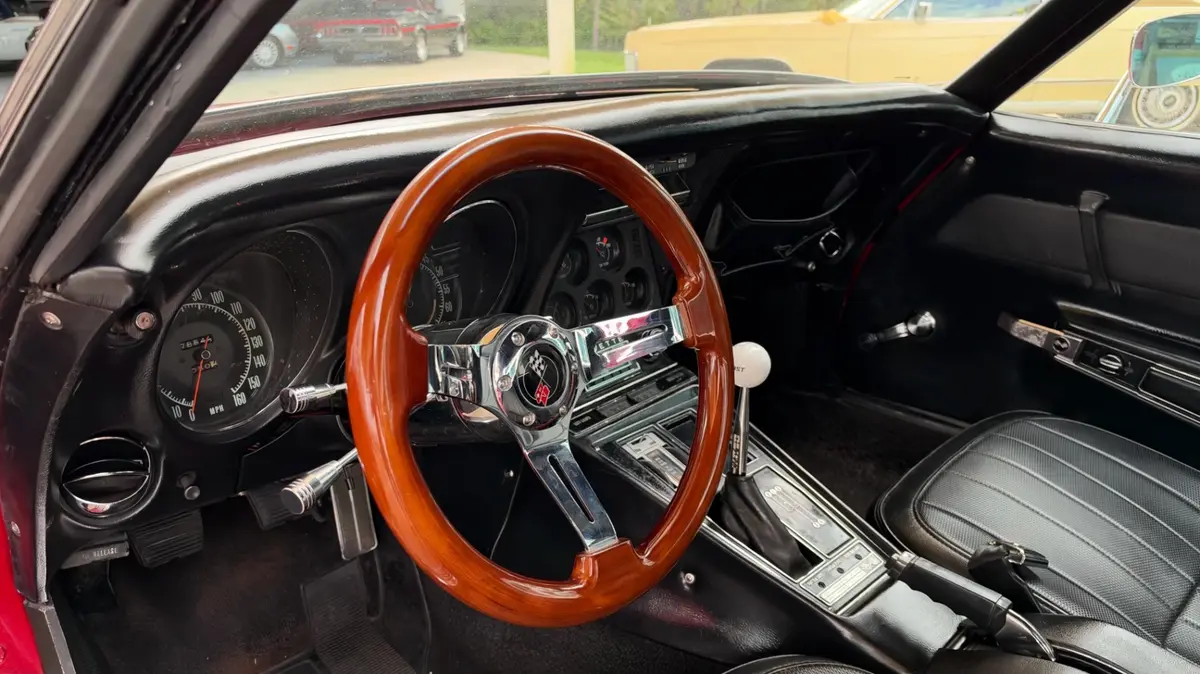
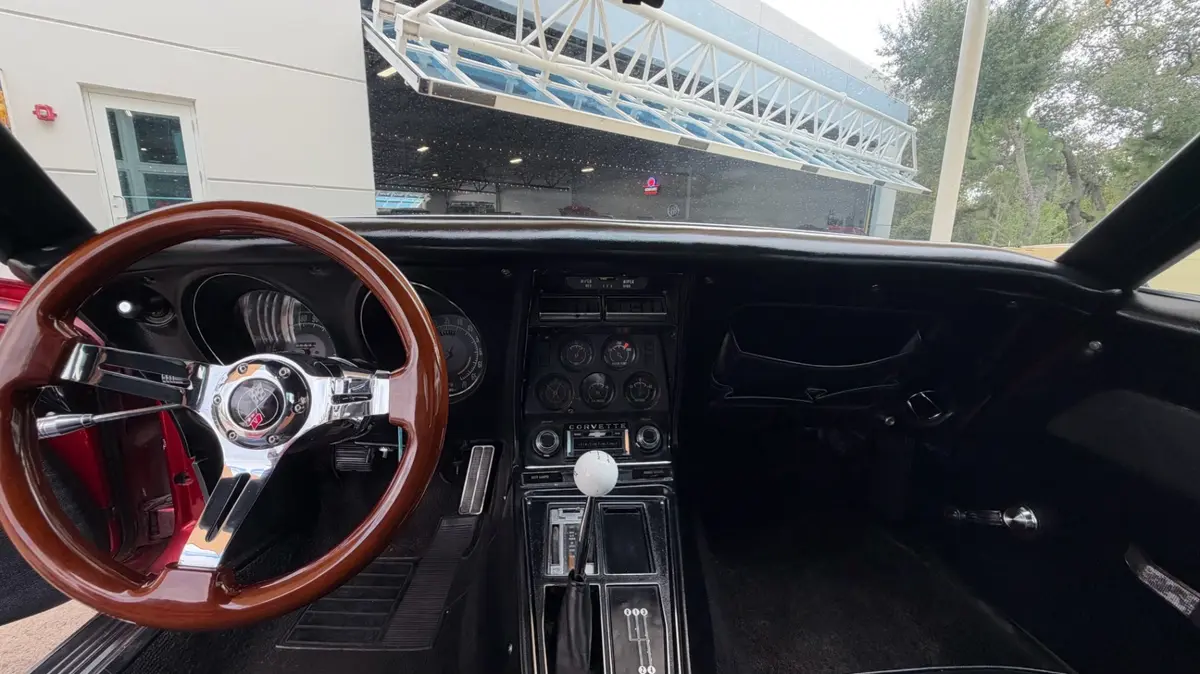
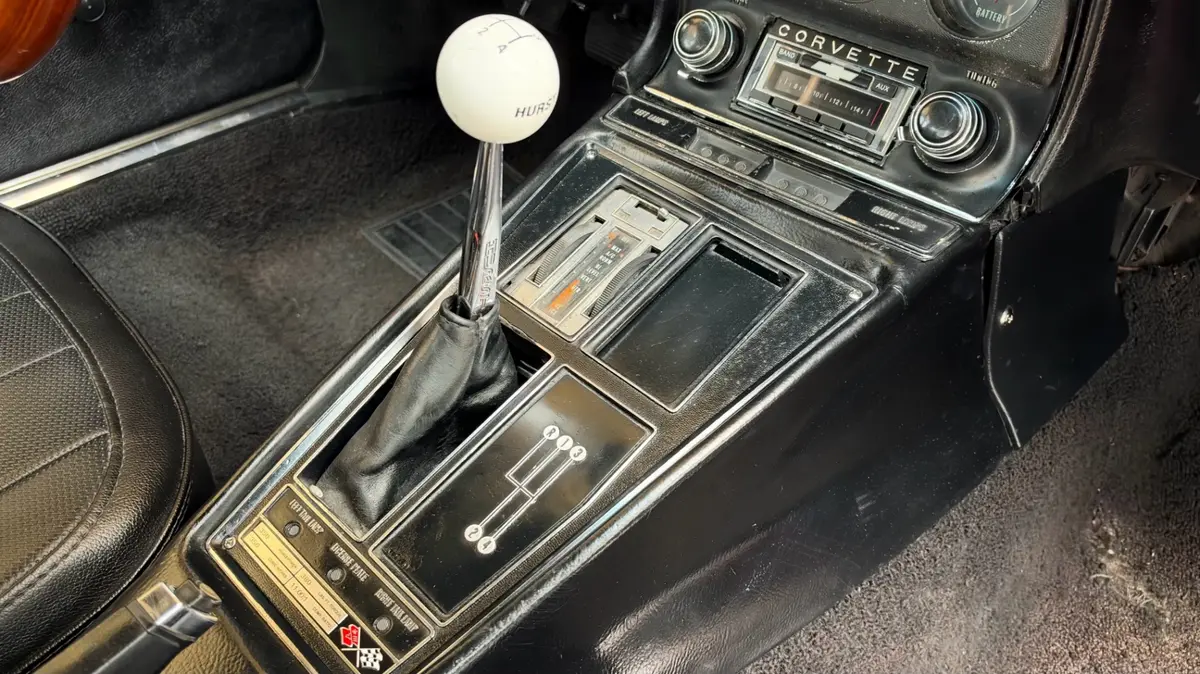
The 4-speed manual gearbox is equipped with a Hurst shifter, which was the industry standard for precision gear changes on performance cars of this era. Hurst was not a budget option — it was what serious drivers specified. The shifter's white ball knob is visible and correct for the period.
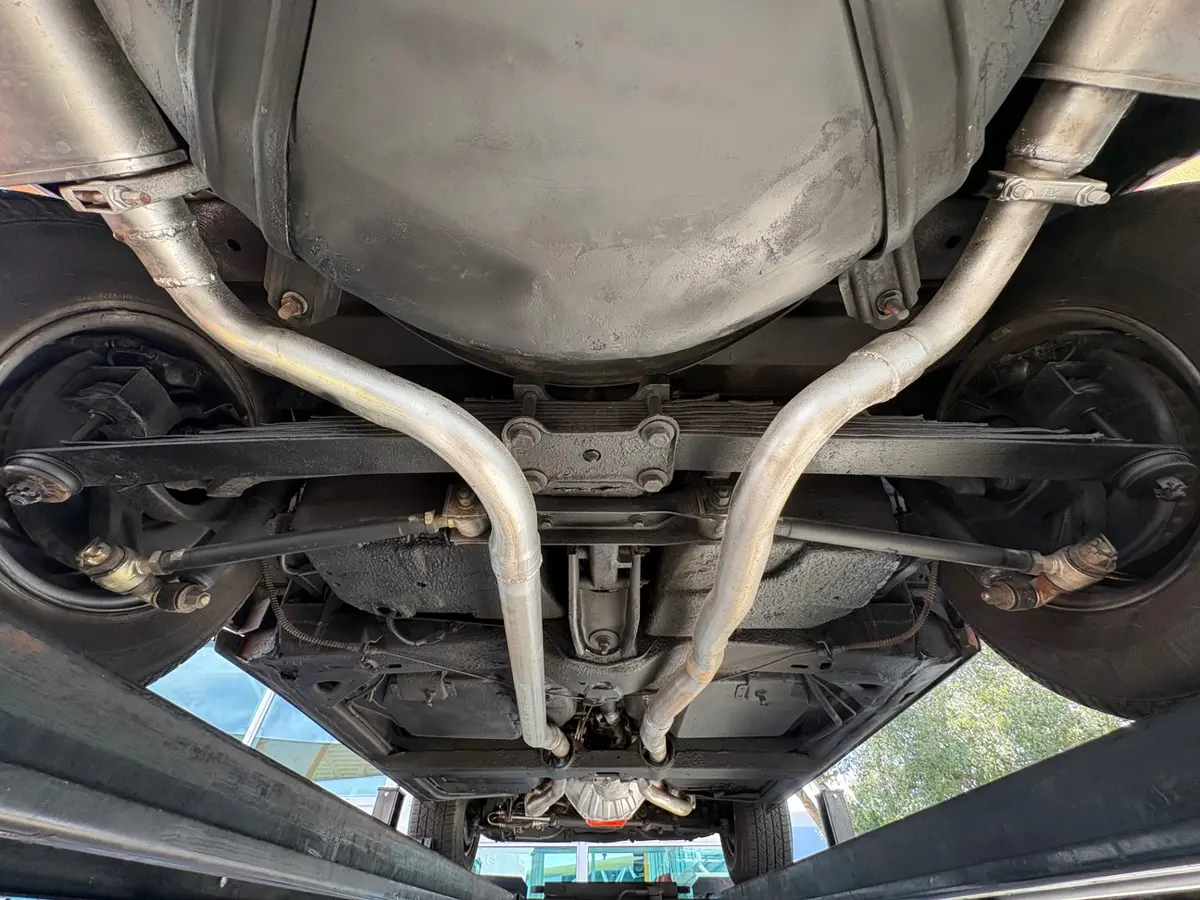
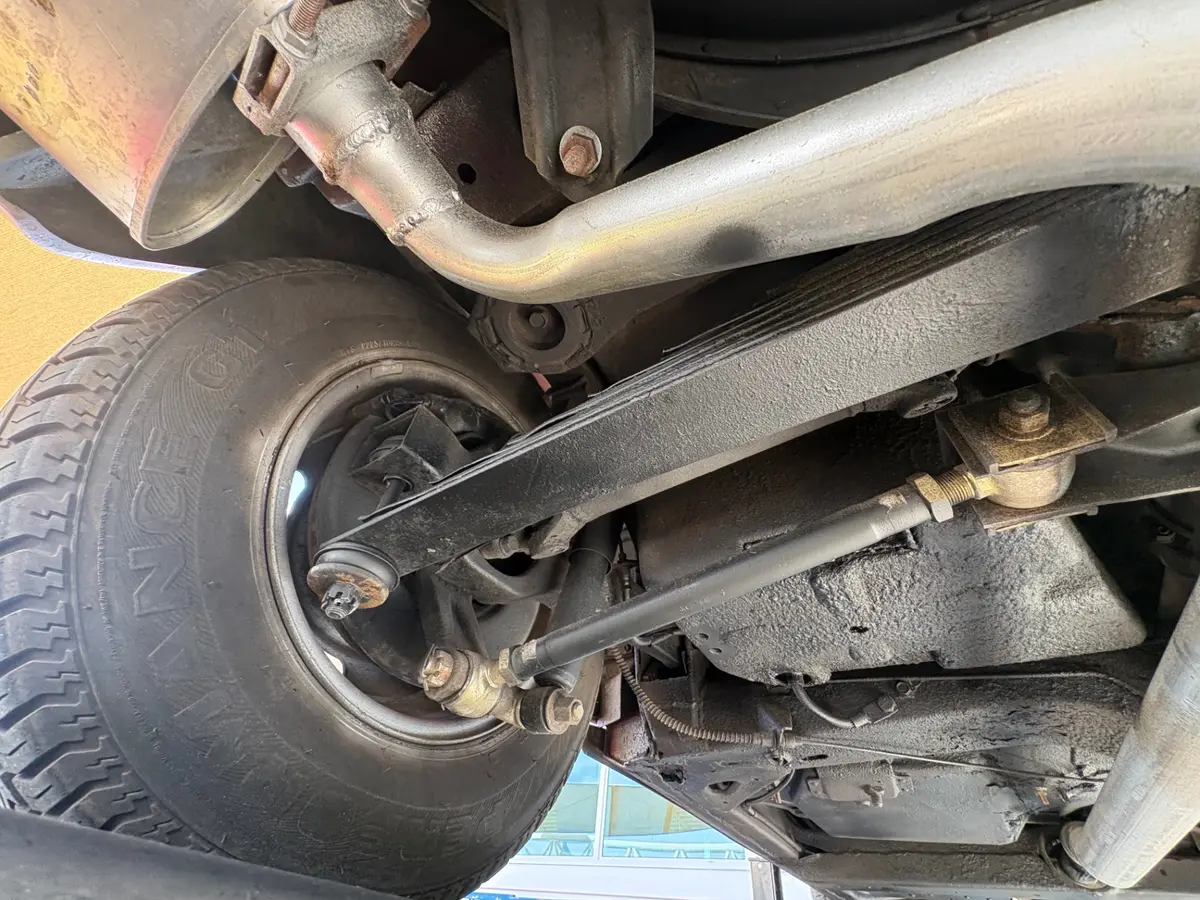
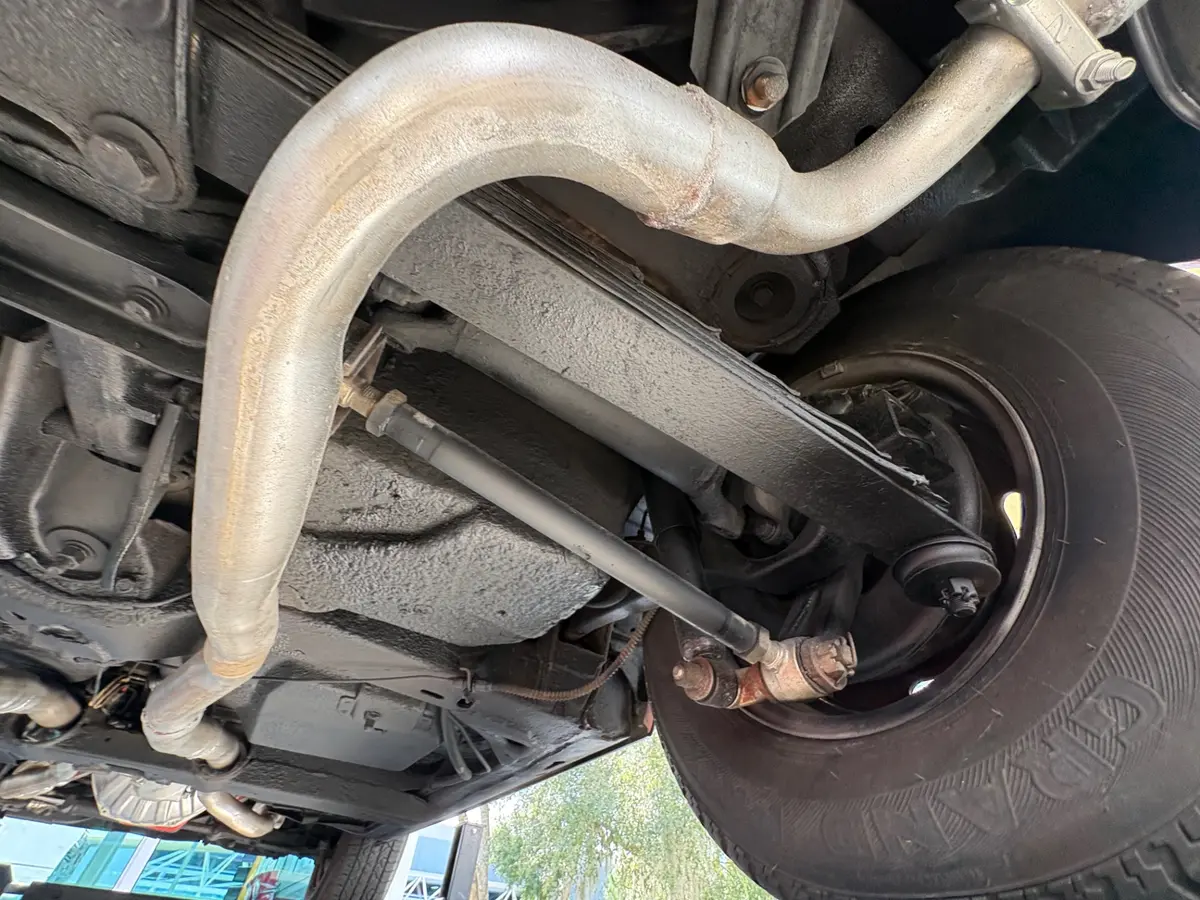
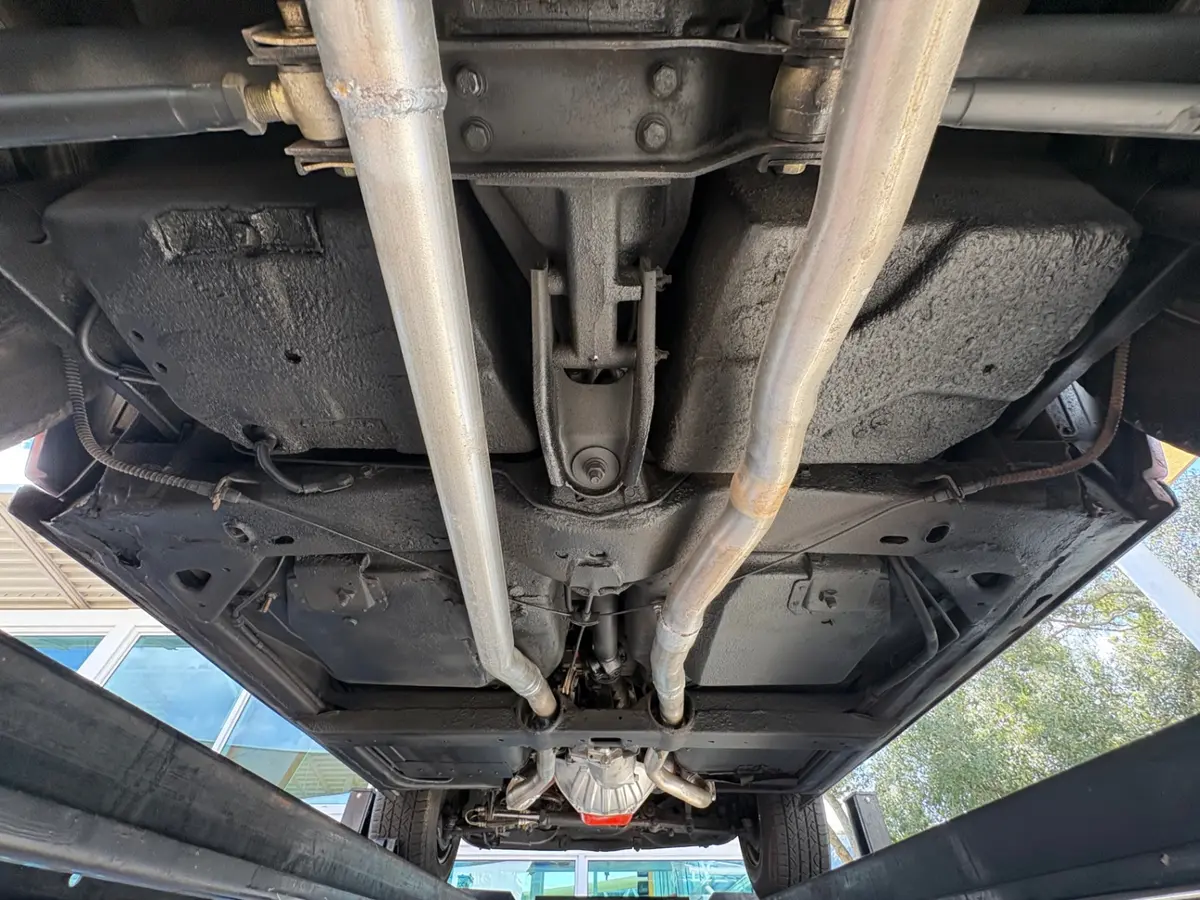
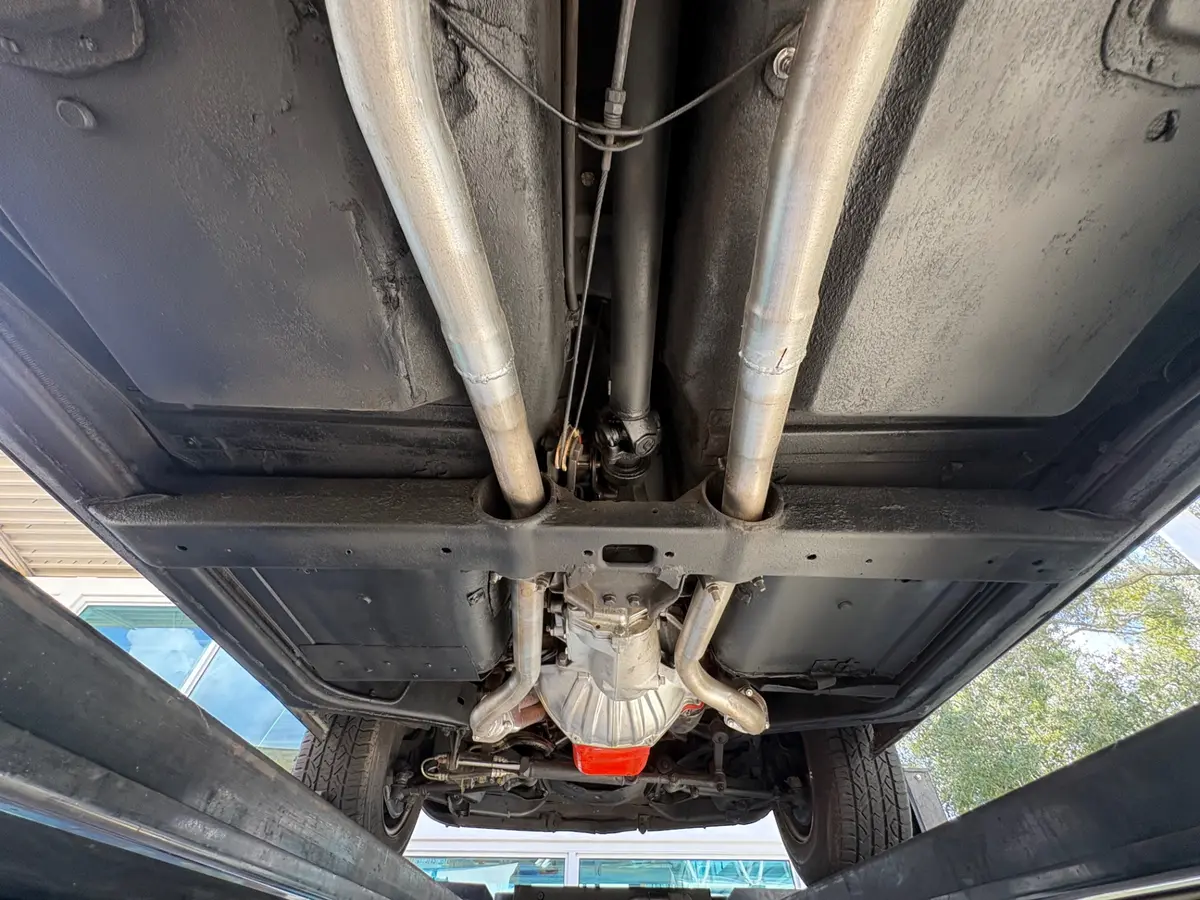
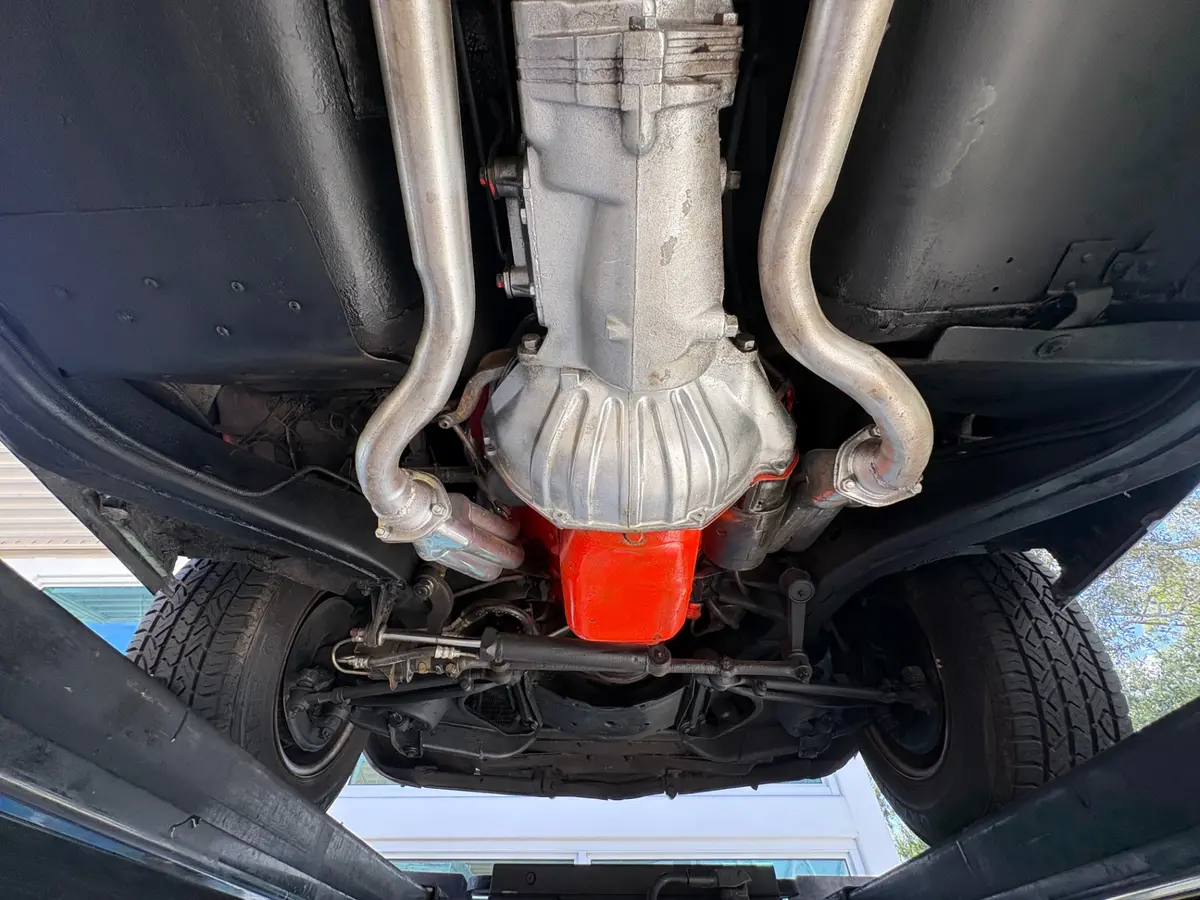
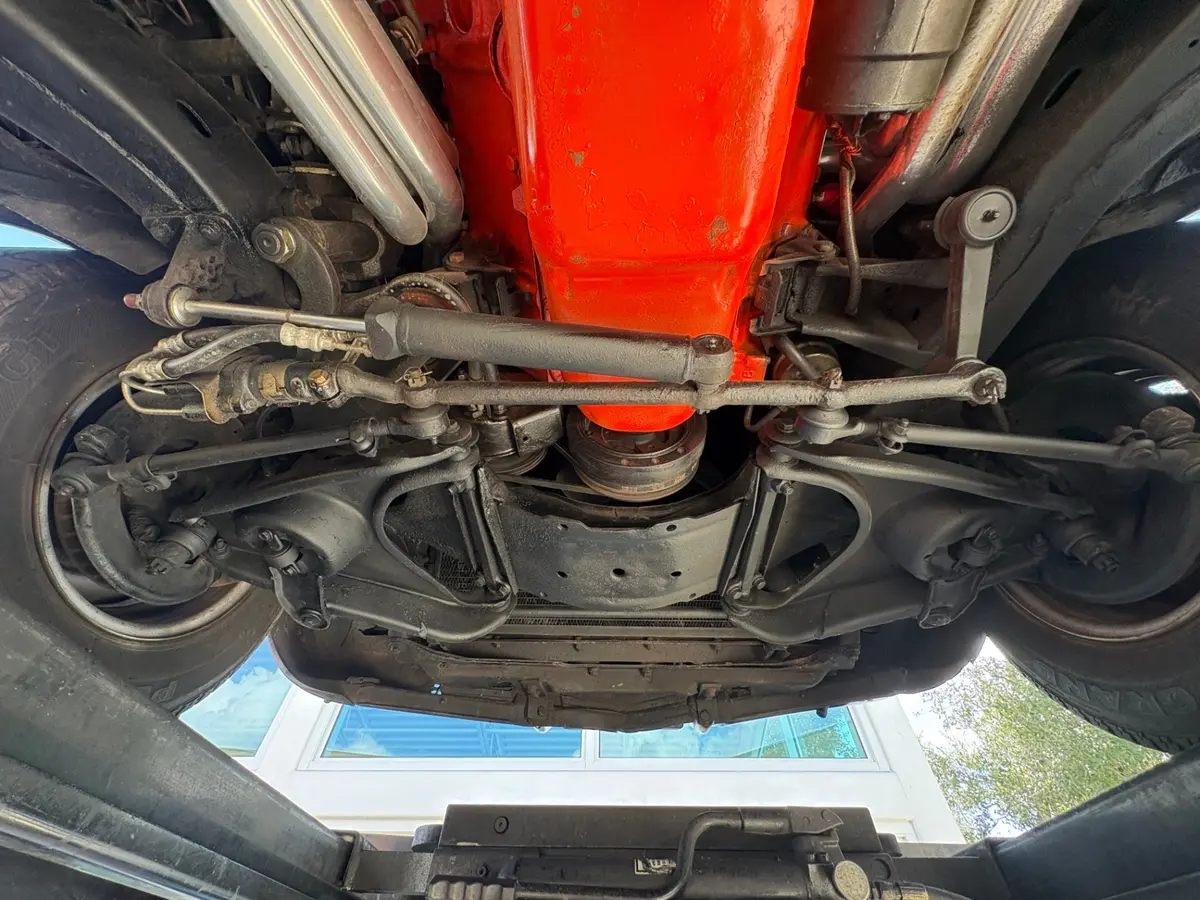
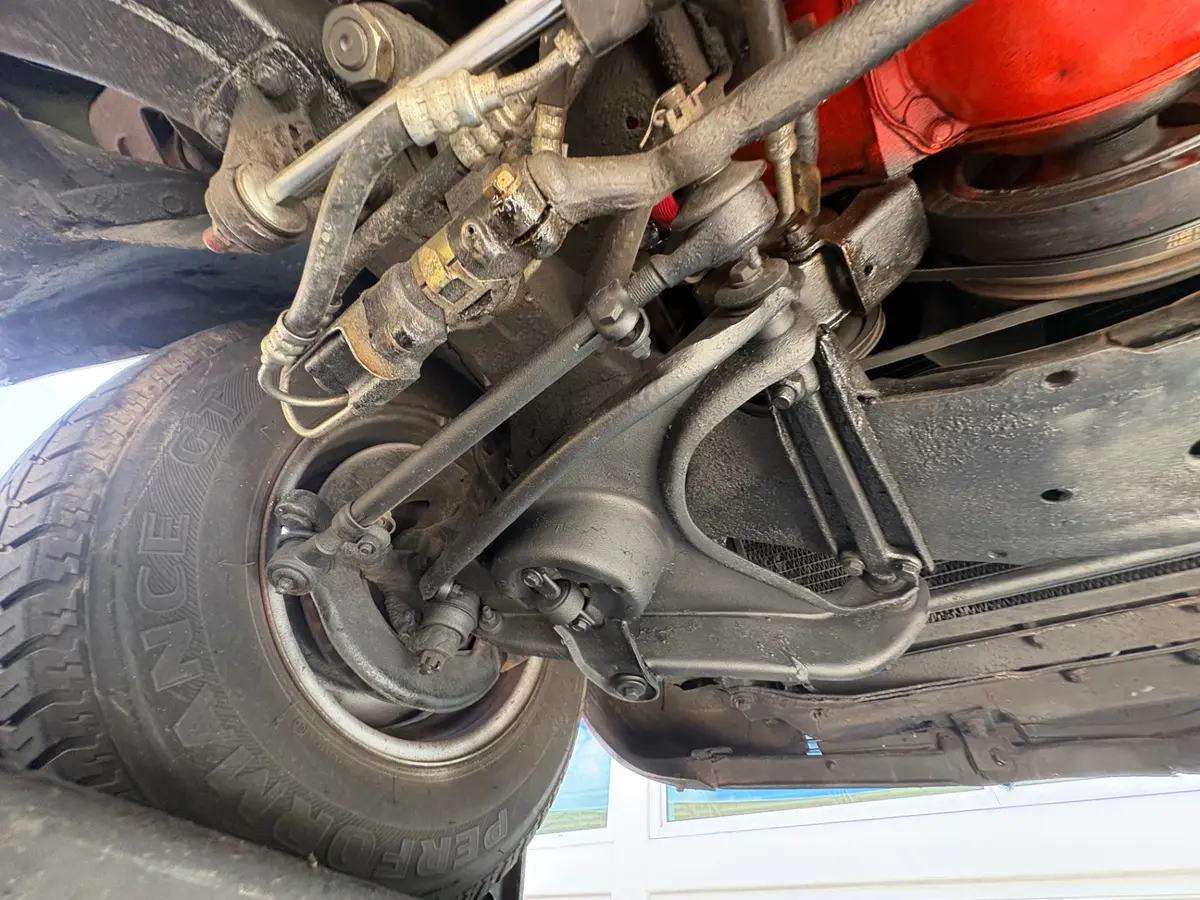
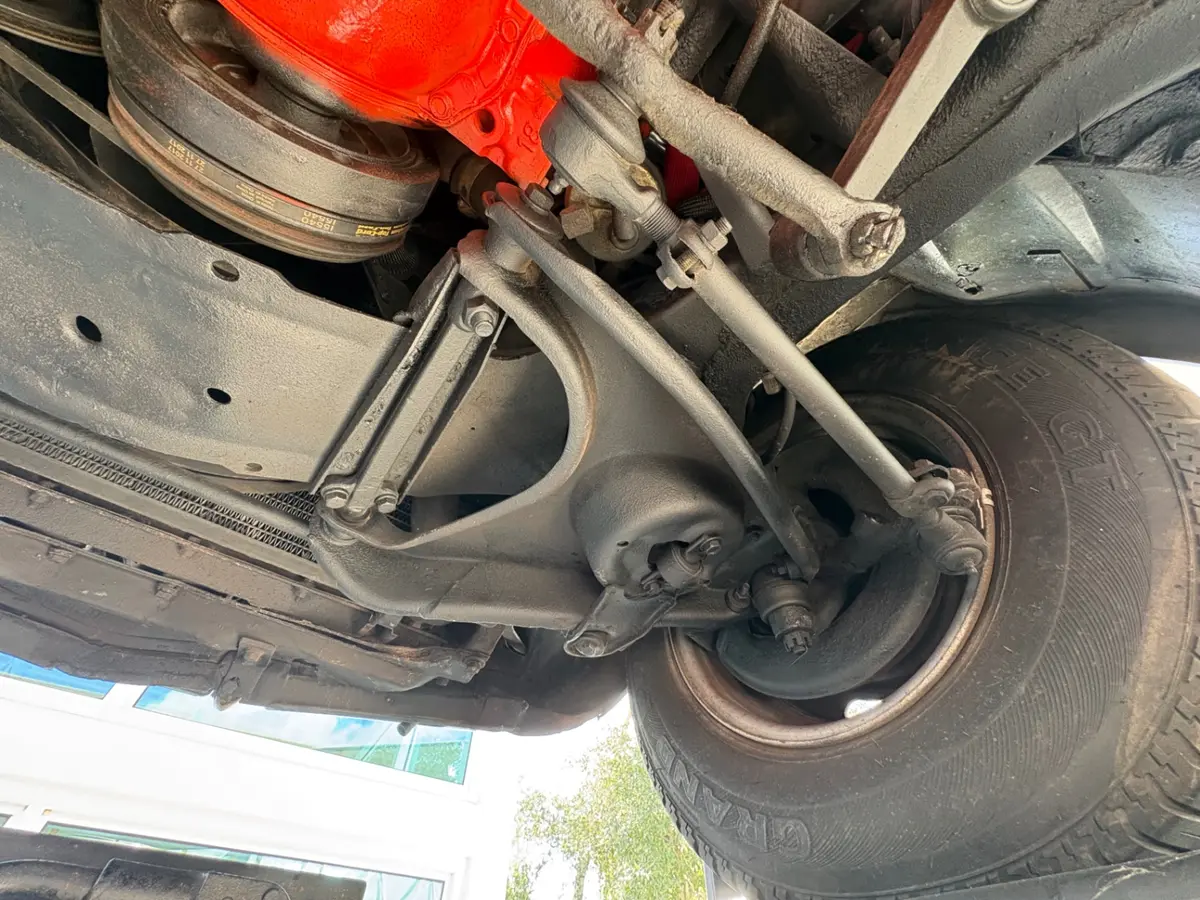
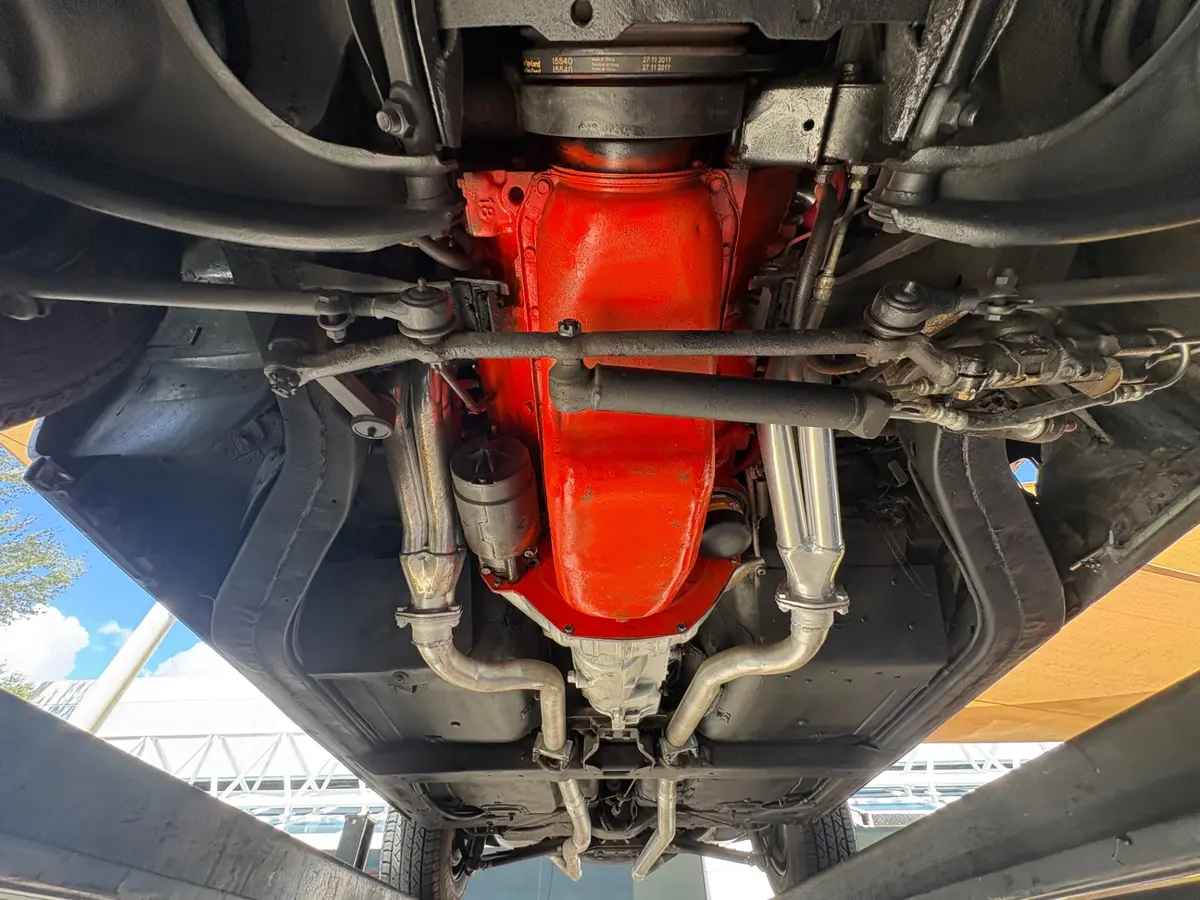
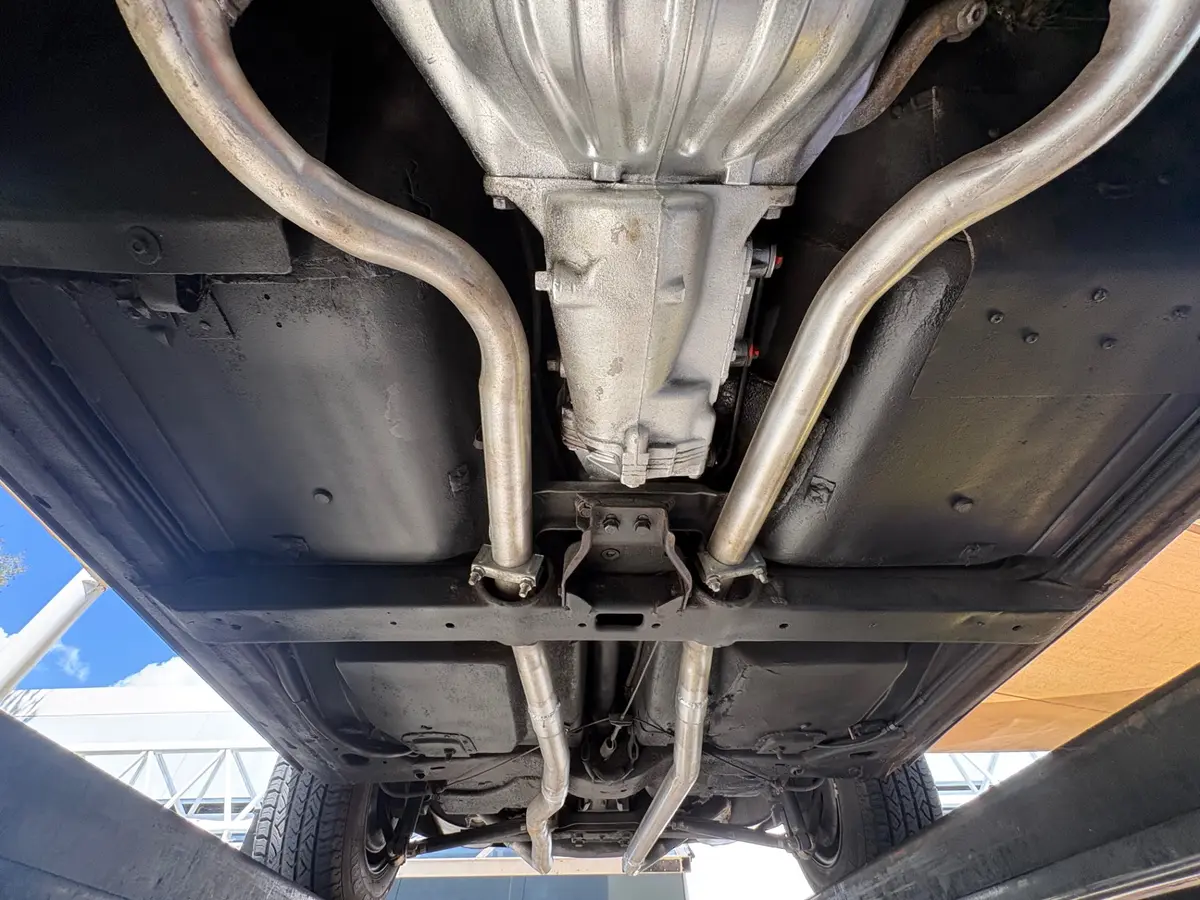
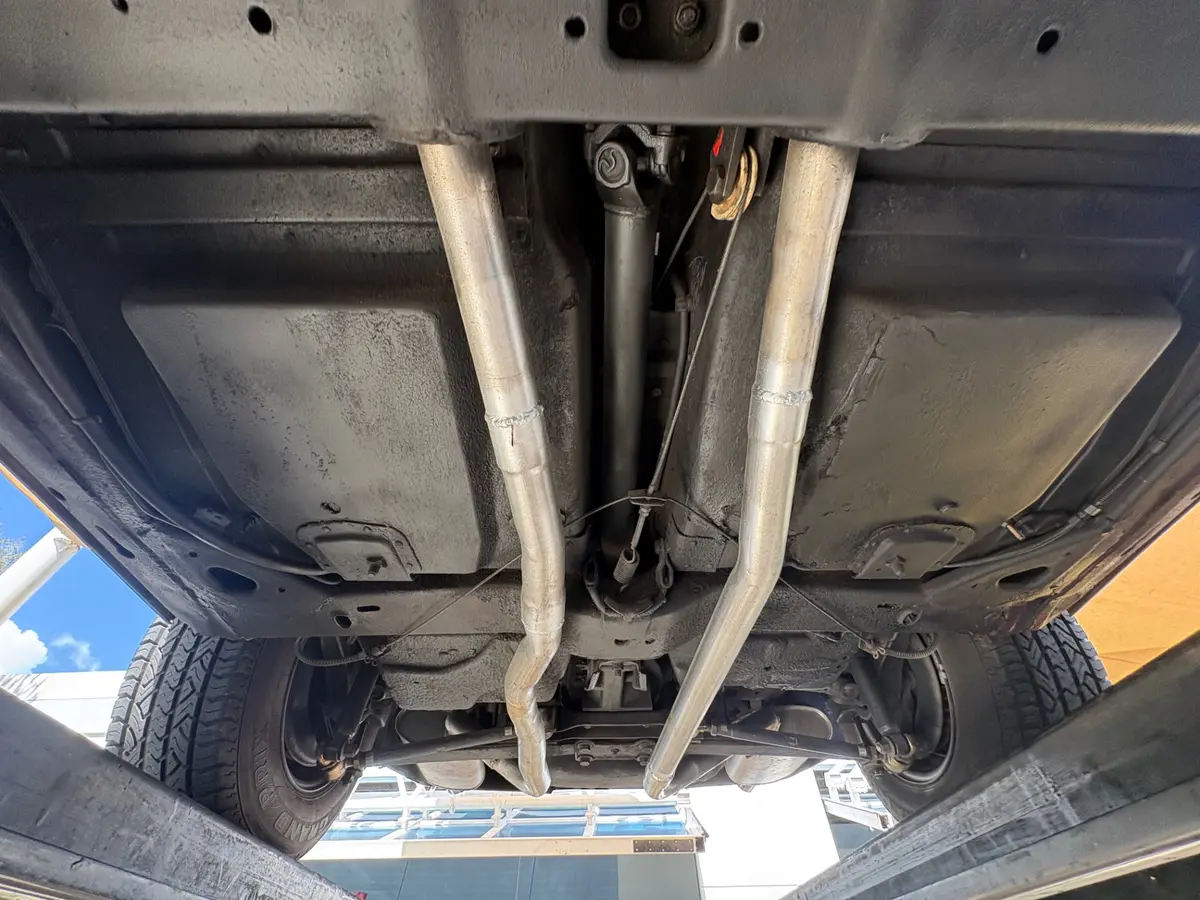
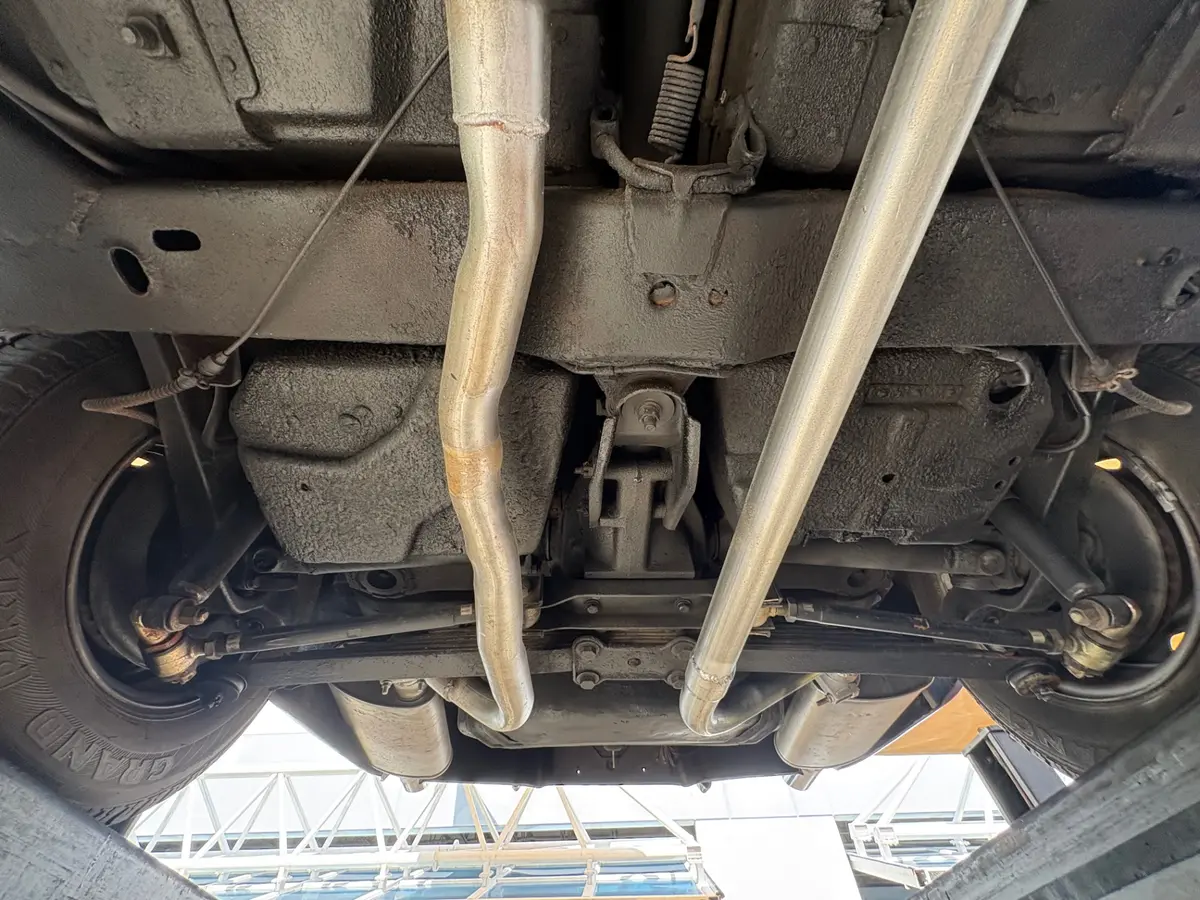
Underneath, this 1969 Corvette Stingray benefits from one of the most sophisticated chassis setups in American production cars at the time. Four-wheel disc brakes were standard equipment on every 1969 Corvette — Chevrolet had made them standard across the entire lineup starting in 1965, at a time when most American cars were still relying on front drums. The independent rear suspension, which Corvette had carried since 1963, uses a three-link design with a multi-leaf transverse spring. The undercarriage photos show the suspension, exhaust routing, and differential housing in honest, unrestored condition. There are no signs of structural compromise.
Interior
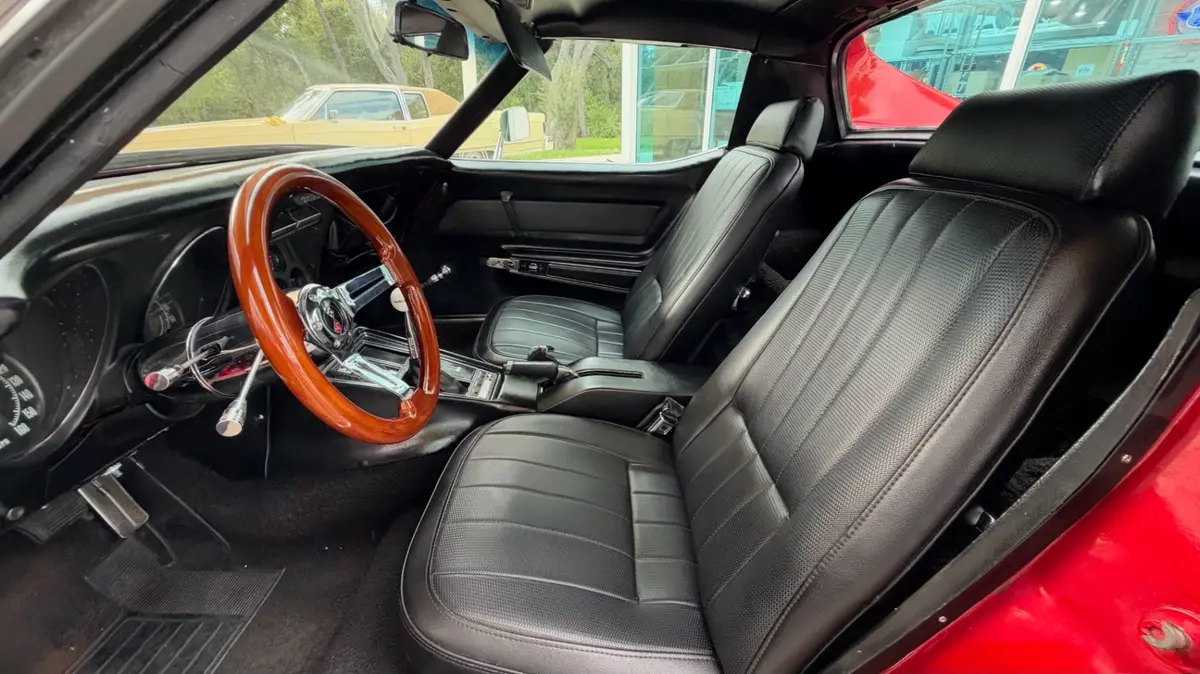
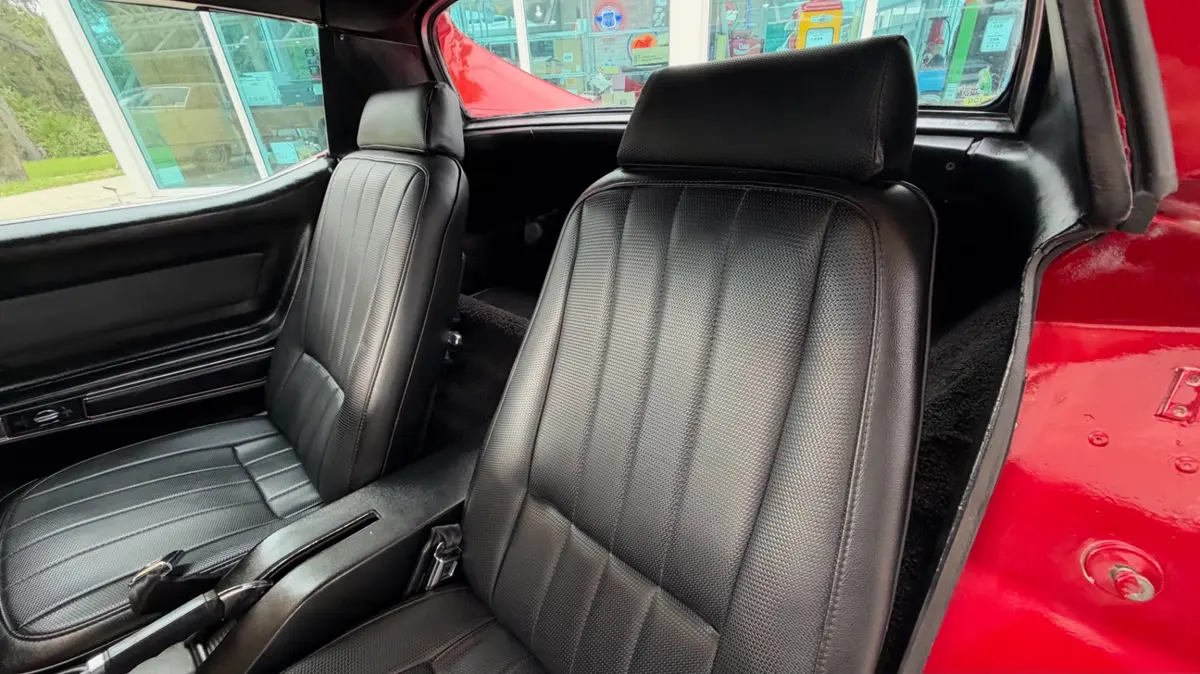
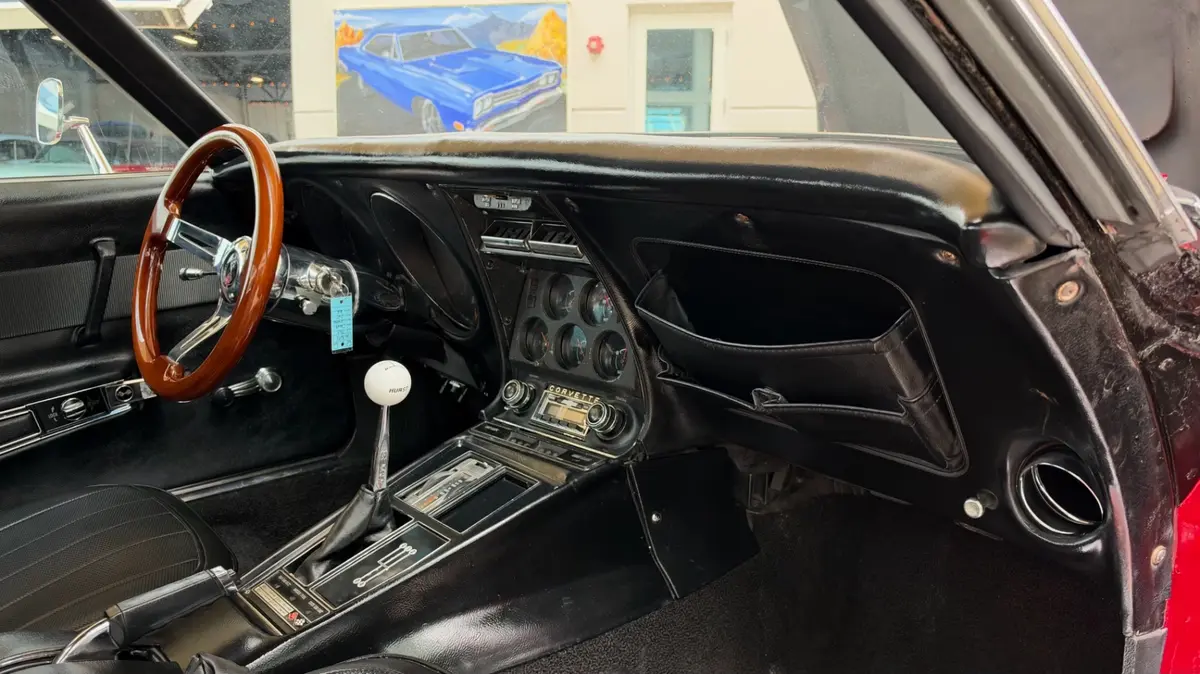
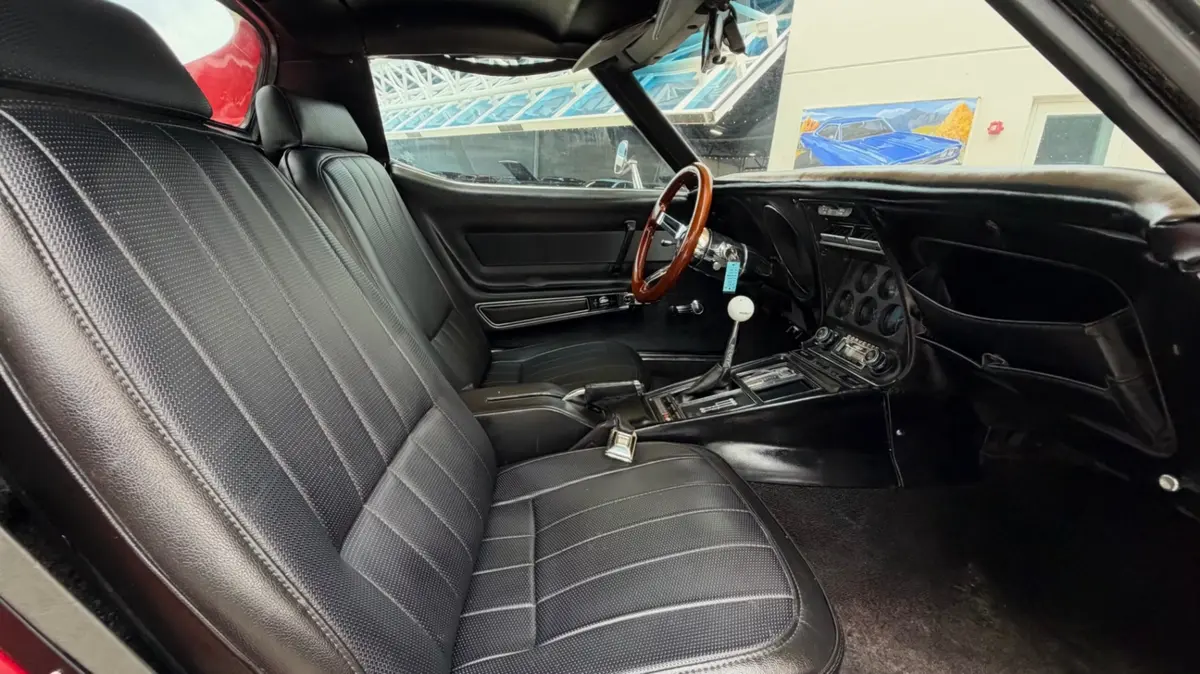
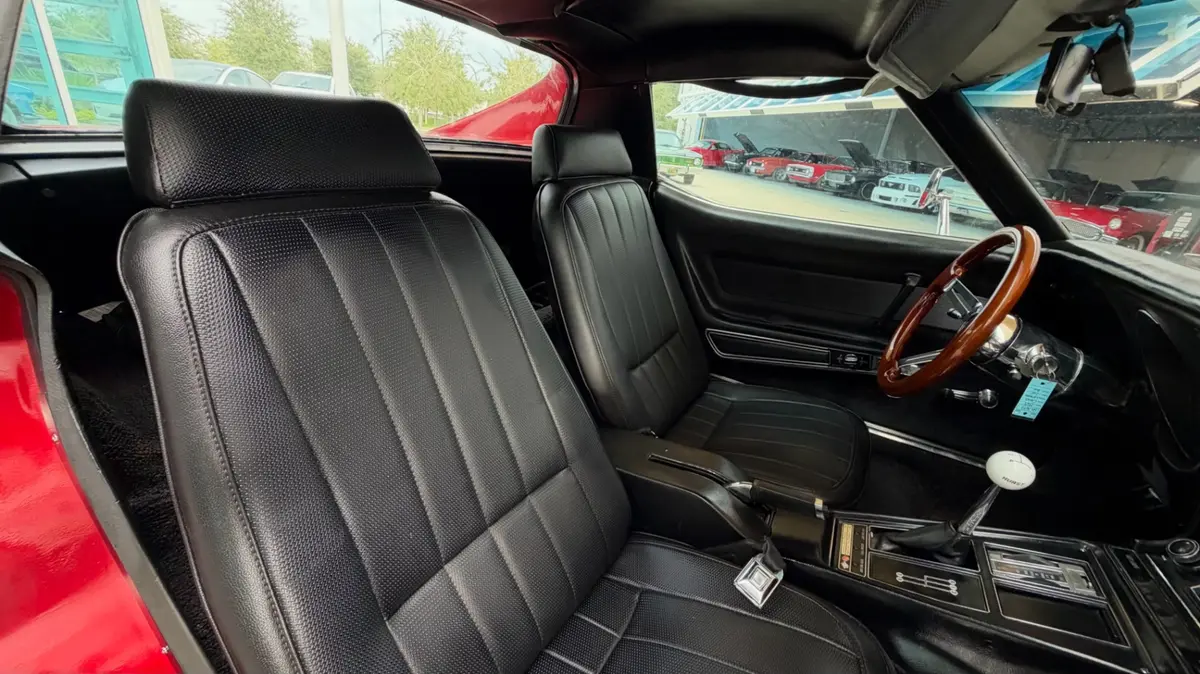
Inside the 1969 Chevrolet Corvette Stingray, the black vinyl bucket seats are in good condition with the ribbed center panels and textured bolsters that are correct for this model year. Both seats include the factory headrests that became federally mandated for 1969 model year vehicles, and they sit at a low, reclined angle that places the driver close to the center of the car. The fitment of the seats is tight against the center console, which reinforces the cockpit feel that made the C3 Corvette's interior so distinct from other American cars of the period.
The wood rim steering wheel is a standout piece in the cabin — a three-spoke design with a chrome center hub carrying the correct Corvette crossed-flags emblem. The rim has a warm, medium brown tone and appears in excellent condition. In 1969, the wood-rimmed wheel was a desirable option that added a more refined, European character to the interior.
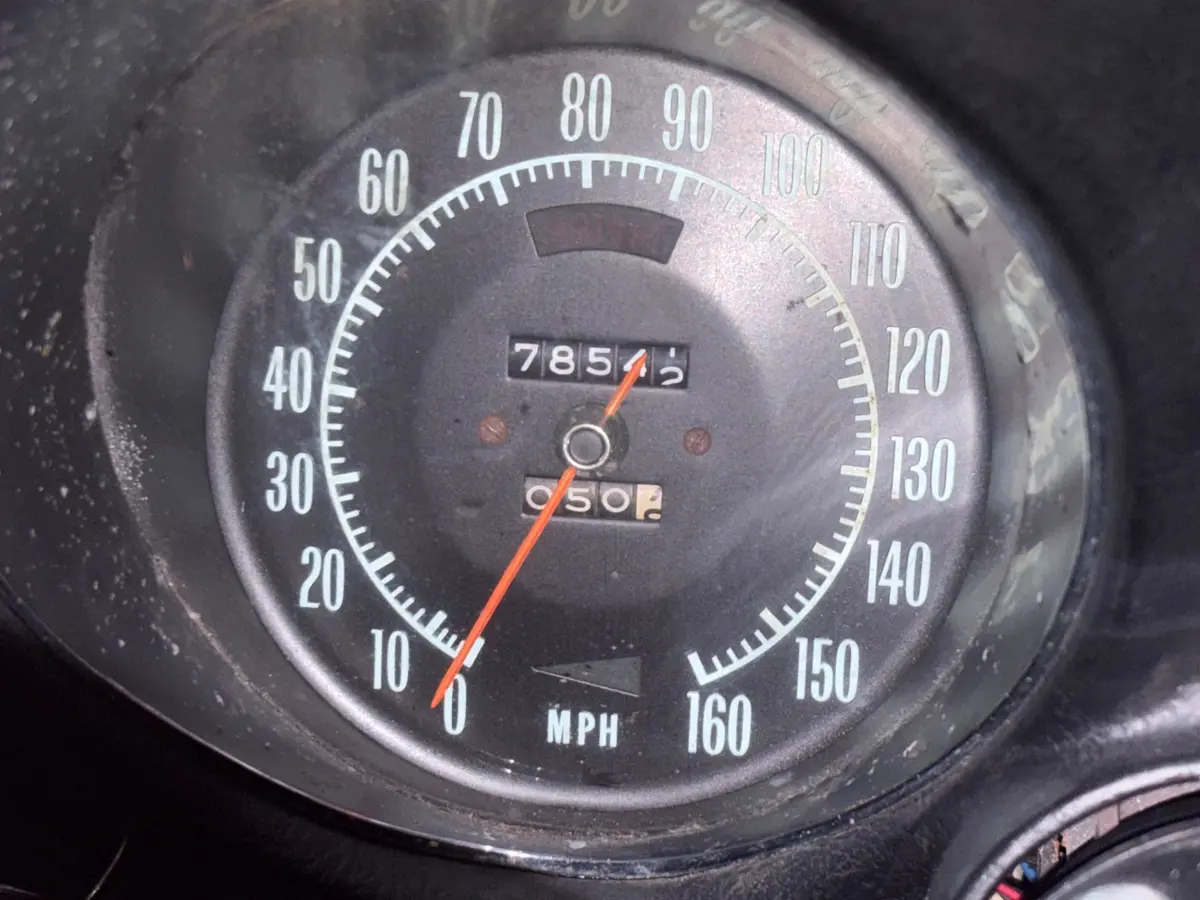
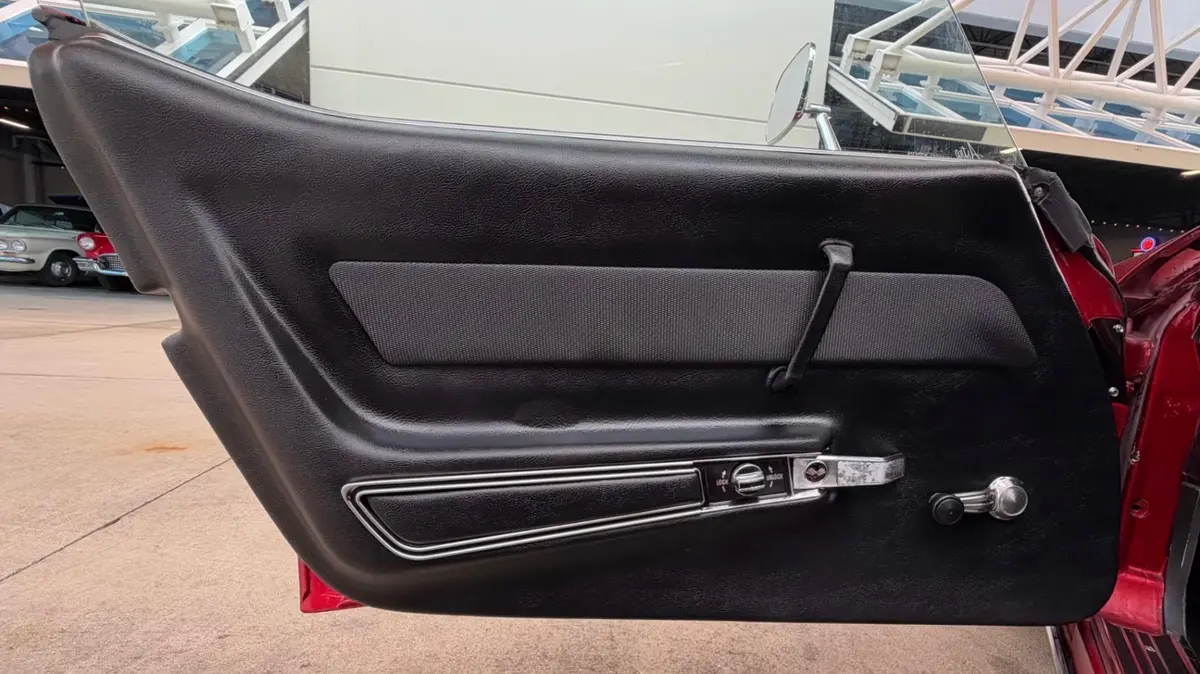
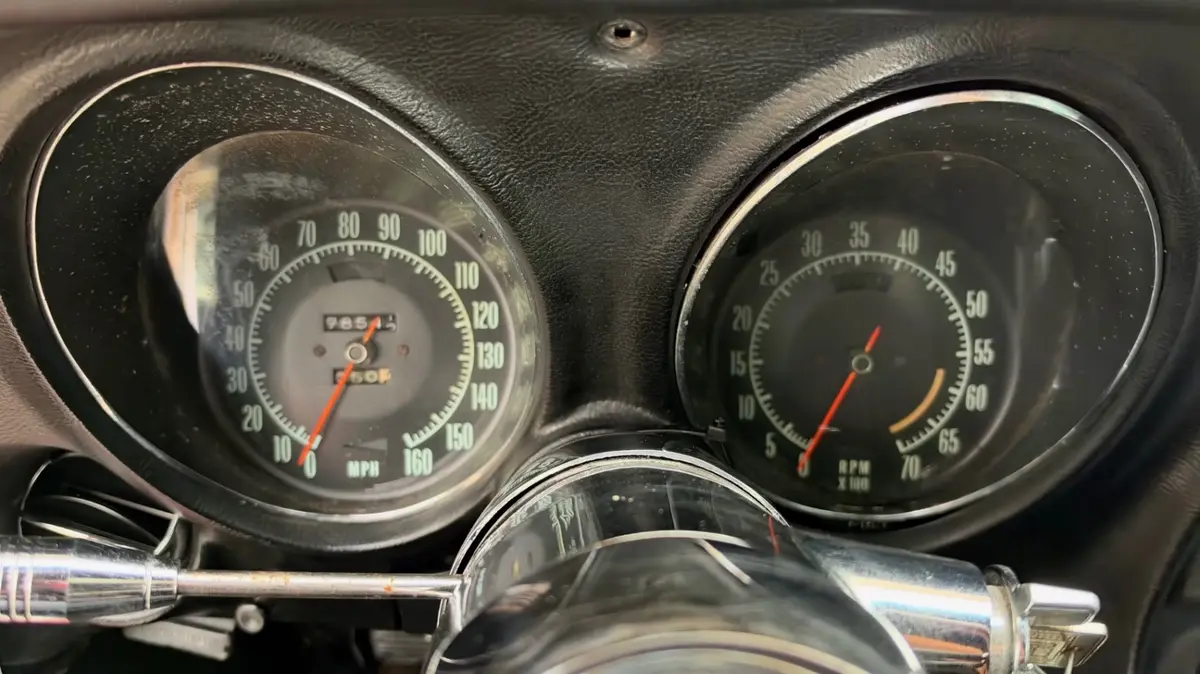
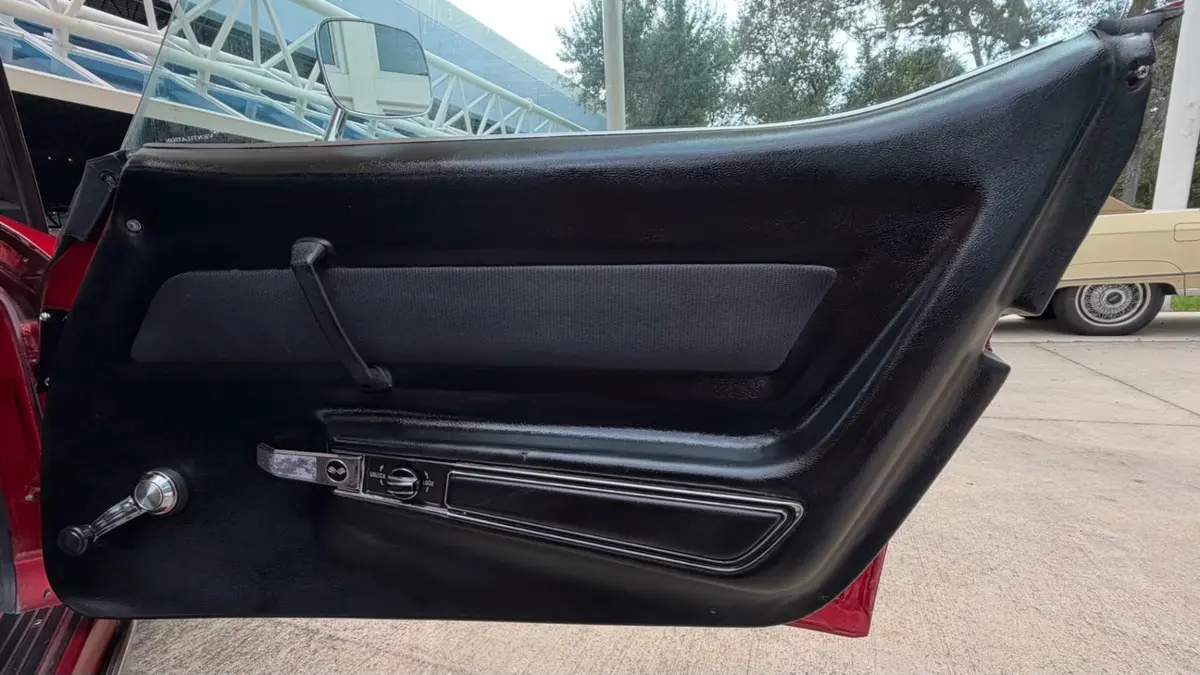
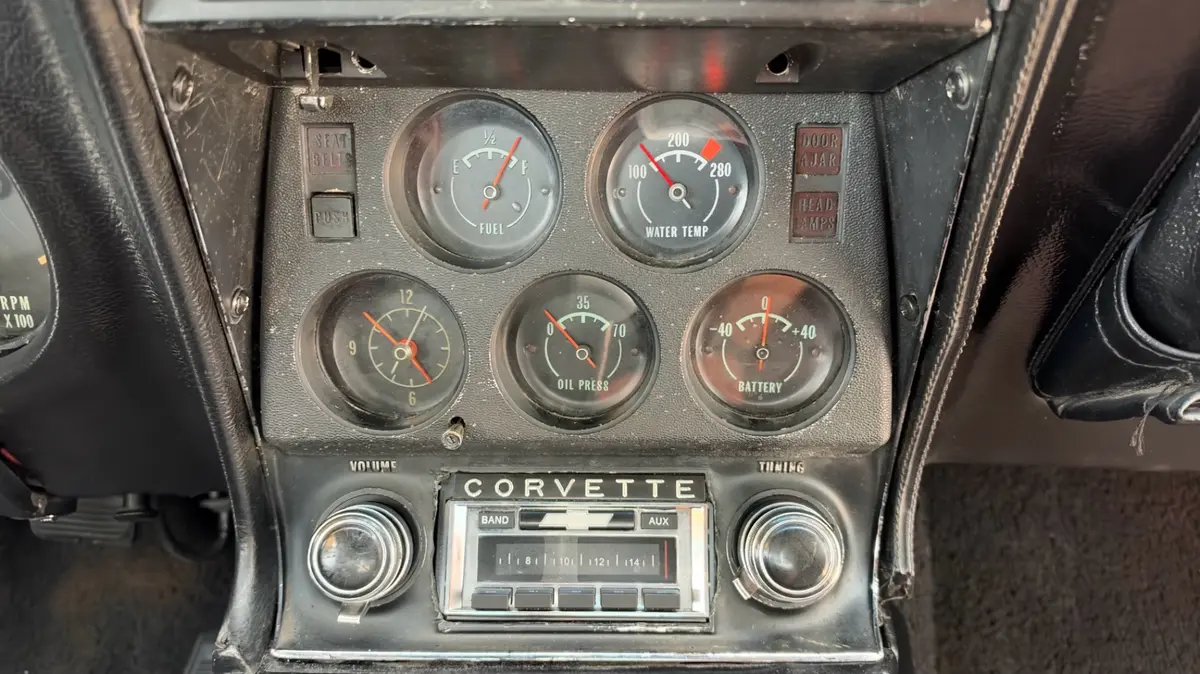
The center console runs the full length of the cabin and houses the Hurst shifter, with the gear pattern diagram still visible on the console plate. Behind the shifter sits the AM radio unit, which carries the correct Corvette-branded face. Above it, the auxiliary gauge cluster presents six instruments in a tight, legible arrangement: fuel level, water temperature, oil pressure, battery charge, and a clock — all functional and correct for the year. The main instrument pod directly behind the steering wheel contains the large 160 mph speedometer and the tachometer. Black carpet covers the floor throughout, and the door panels are trimmed in matching black vinyl. The overall interior presents as a driver-quality cabin — used and honest, with no major deferred maintenance visible in the photos.
Exterior
The Monza Red paint on this 1969 Chevrolet Corvette Stingray is a deep, slightly cooler red that reads differently in sunlight than the brighter red options of later years. It is one of three red shades available on the 1969 Corvette, and it pairs directly with the black interior to create a combination that has remained one of the most sought-after on C3 Corvettes since the cars were new.
The C3 body style, designed by Larry Shinoda under the direction of Bill Mitchell, introduced a dramatically sculpted fuselage that drew clear influence from the Mako Shark II concept car shown in 1965. The 1969 body carried forward the twin-fender humps, the recessed door handles hidden in the body crease, and the fast Kamm-style tail. The removable T-top panels and the separate removable rear window give this car three distinct roof configurations — fully closed, T-top open, and fully open with the rear glass removed as well. All three configurations change the driving experience noticeably.
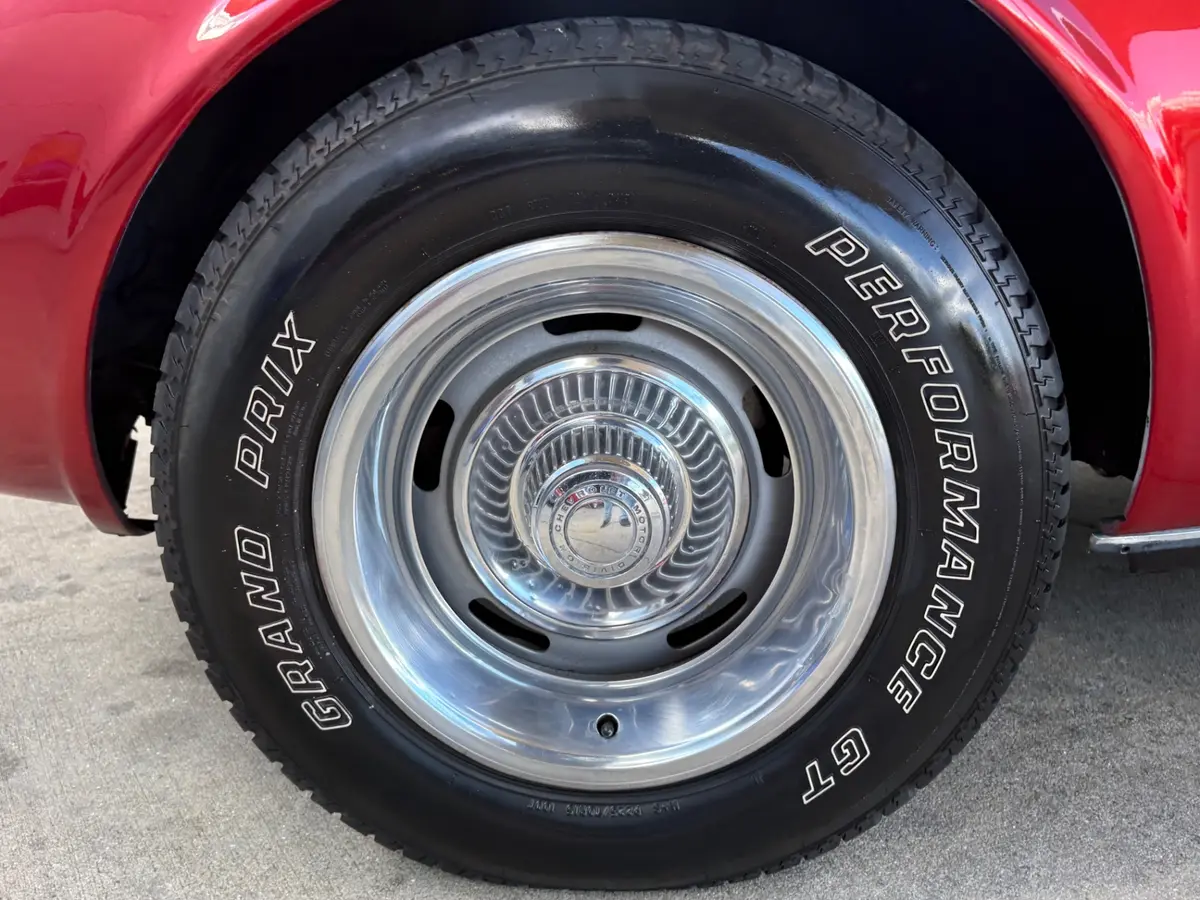
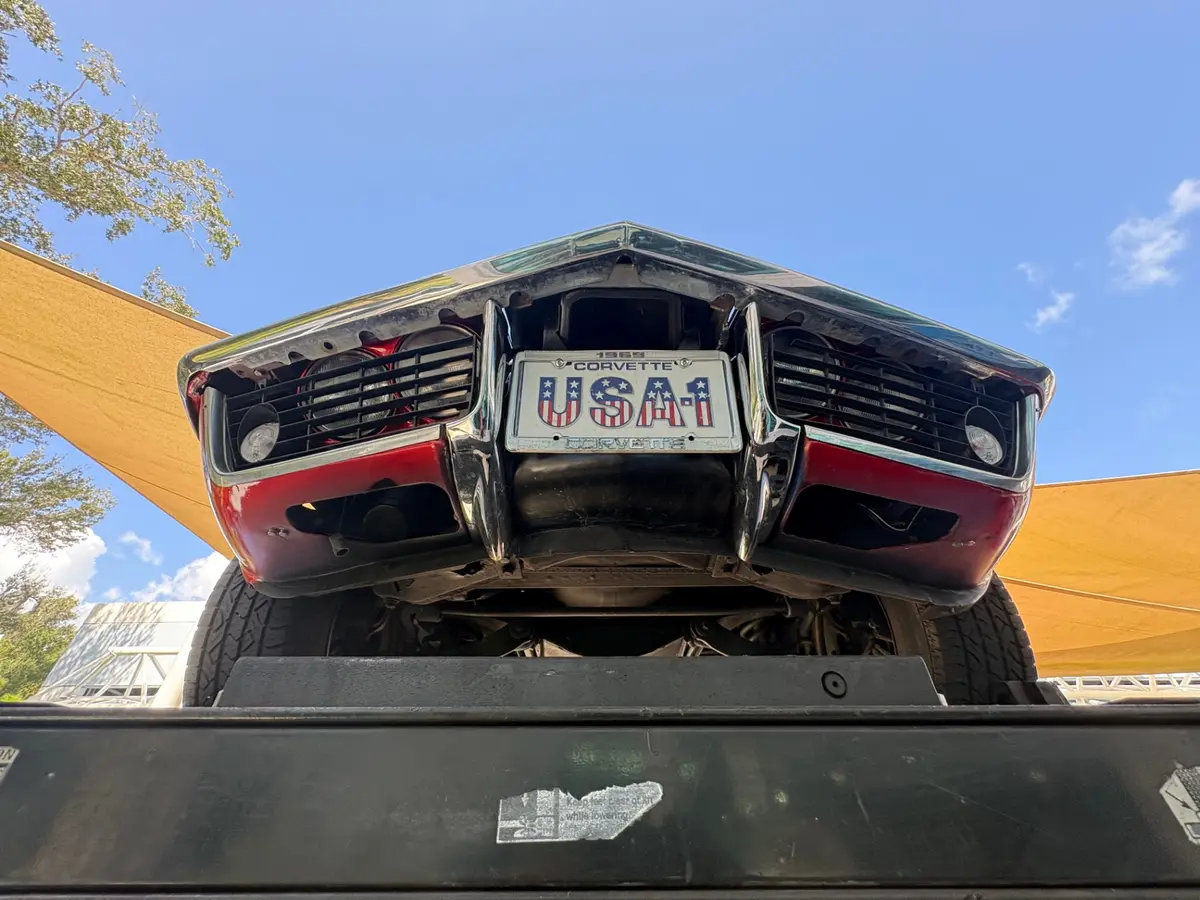
The front of the car features the vacuum-operated pop-up headlights that are correct for the C3 generation. Rally wheels are fitted at all four corners with white letter tires, which is the correct period look for a 1969 Corvette Stingray in street-driver trim. Chrome bumpers front and rear are present and intact. The chrome-tipped dual exhausts exit symmetrically below the rear valance. The body panels show the natural character of a used original-era Corvette, with no significant damage apparent in the photos.
Conclusion
The 1969 Chevrolet Corvette Stingray occupies a specific and well-earned place in American automotive history. It was the best-sorted version of a body style that had just arrived the year before, and it carried the highest production numbers the Corvette nameplate had ever seen — which itself reflects the demand the car generated when buyers could actually get their hands on one. This example combines the right engine, the right transmission, the right body style, and the right color to represent exactly what a C3 Corvette was meant to be: a genuine American sports car built to be driven.
The combination of the 350 small block, the Hurst-shifted 4-speed, four-wheel disc brakes, independent rear suspension, and the T-top coupe body makes this a complete and usable classic — not a trailer queen, not a project, but a car that can go to a show on Saturday and down a two-lane road on Sunday.
To learn more about this 1969 Chevrolet Corvette Stingray or to schedule a time to see it in person, call Skyway Classics at 941-254-6608. We are located in Sarasota, Florida and welcome buyers traveling from out of state.
Disclaimer
Information found on the website is presented as given to us by the owner of the car, whether on consignment or from the owner we bought it from. Some Photos, materials for videos, descriptions and other information are provided by the consignor/seller and is deemed reliable, but Skyway Classics does not warranty or guarantee this information. Skyway Classics is not responsible for information that may incorrect or a publishing error. The decision to purchase should be based solely on the buyers personal inspection of the vehicle or by a professional inspection service prior to offer or purchase being made.
1969 Chevrolet
Corvette Stingray
Why Choose Skyway Classics?
Explore our curated inventory of classic and collector cars—thoughtfully selected, ready to drive, and supported by experts who make ownership simple.
Expert Curation
Every vehicle is hand-selected by our experts for quality, authenticity, and investment potential.
Fast Transactions
Streamlined buying and selling process with quick financing and immediate delivery options.
Only National Dealer With Classic Service & Repair
We’re the only national dealership that services and repairs the classics we sell—before and after the sale.
Nationwide Network
Access to our extensive network of collectors, restorers, and classic car enthusiasts nationwide.
Concierge Ownership Support
From financing and insurance to paperwork, shipping, and titling—we handle the details so you can enjoy the drive.
Passion-Driven Service
We're classic car enthusiasts first, providing personalized service with genuine passion for the hobby.