
1963 Volkswagen
Beetle Custom
1963 Volkswagen Beetle — Custom-Built Performance Street and Strip Machine
Why This Car Is Special
The 1963 Volkswagen Beetle occupies a unique place in automotive history. By 1963, Volkswagen was producing the Beetle in numbers that would eventually make it the best-selling car of all time, surpassing the Ford Model T in cumulative production in 1972. The 1963 model year is part of what enthusiasts call the "pre-1967" era — a generation defined by its smaller rear window, simpler mechanical layout, and lighter curb weight compared to the later emissions-era cars. These early-sixties examples used a 6-volt electrical system from the factory, and the standard engine displaced just 1192cc, producing around 40 horsepower. That modest foundation is exactly what makes a well-built custom Beetle so interesting: when you start with a car that weighs roughly 1,600 pounds and replace the drivetrain with serious performance hardware, the power-to-weight ratio changes dramatically.
This particular 1963 Volkswagen Beetle is not a restoration. It is a purpose-built performance custom that uses the original body and platform as a starting point for a complete mechanical and aesthetic transformation. The build philosophy here is consistent from top to bottom and front to back — every major system has been upgraded, and the choices made throughout reflect the work of someone who understands how these cars perform and what they need to handle real power. The result is a car that looks at home at a car show but is mechanically prepared for the drag strip, with M/T drag slicks included, a line-lock installed, a roll cage in place, and racing harnesses securing both front and rear seats.
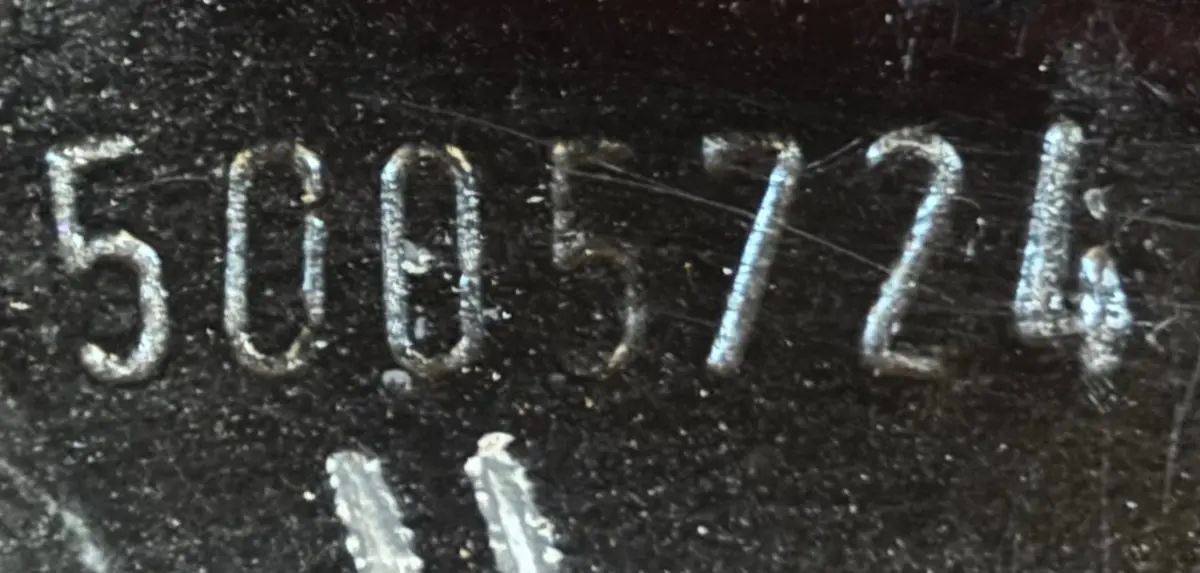
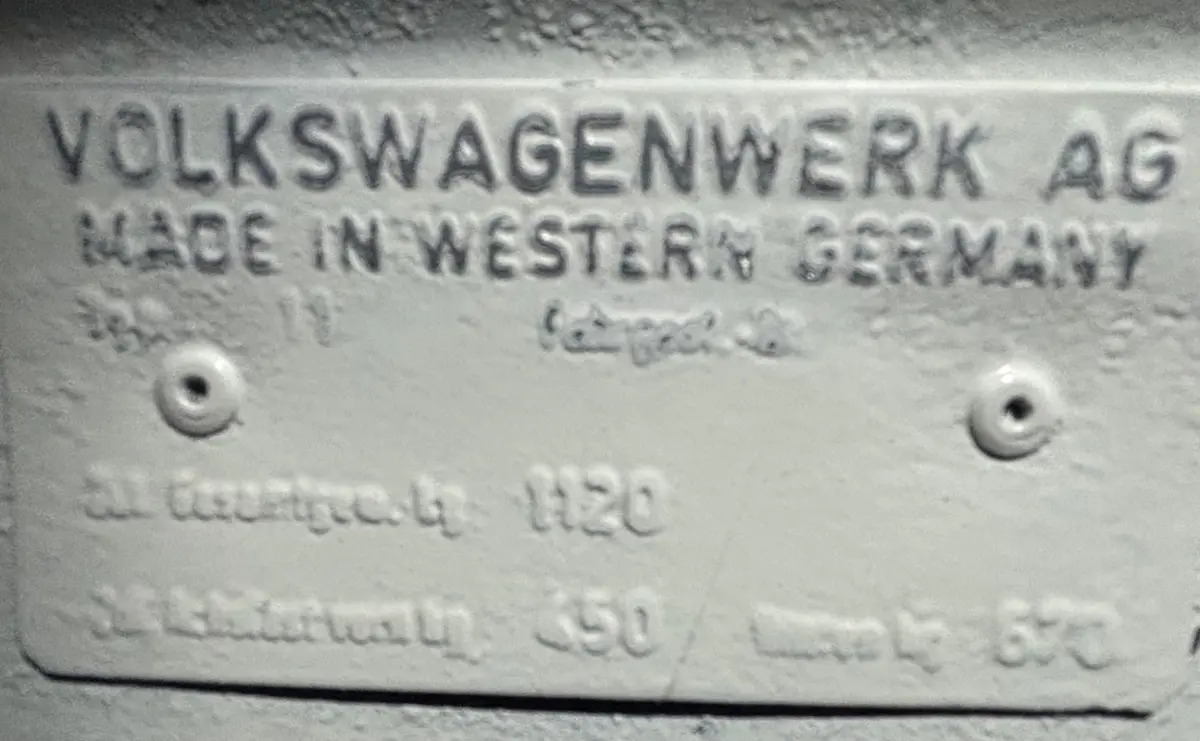
The seven-digit chassis number on this car places it as a legitimate 1963 model year Beetle produced at the Wolfsburg factory, consistent with VW's sequential numbering system used during this era.
Features List
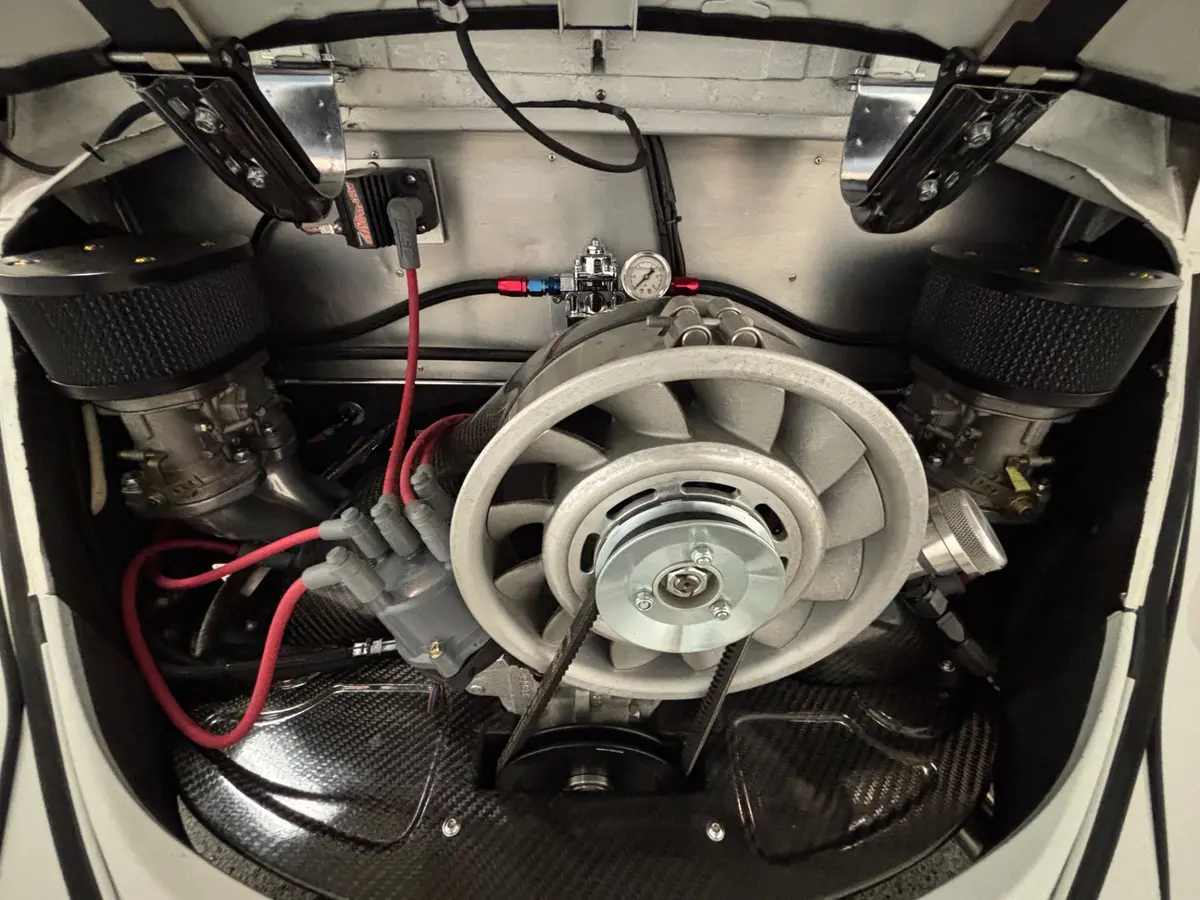
- 2332cc Upgraded Air-Cooled Flat-4 Engine
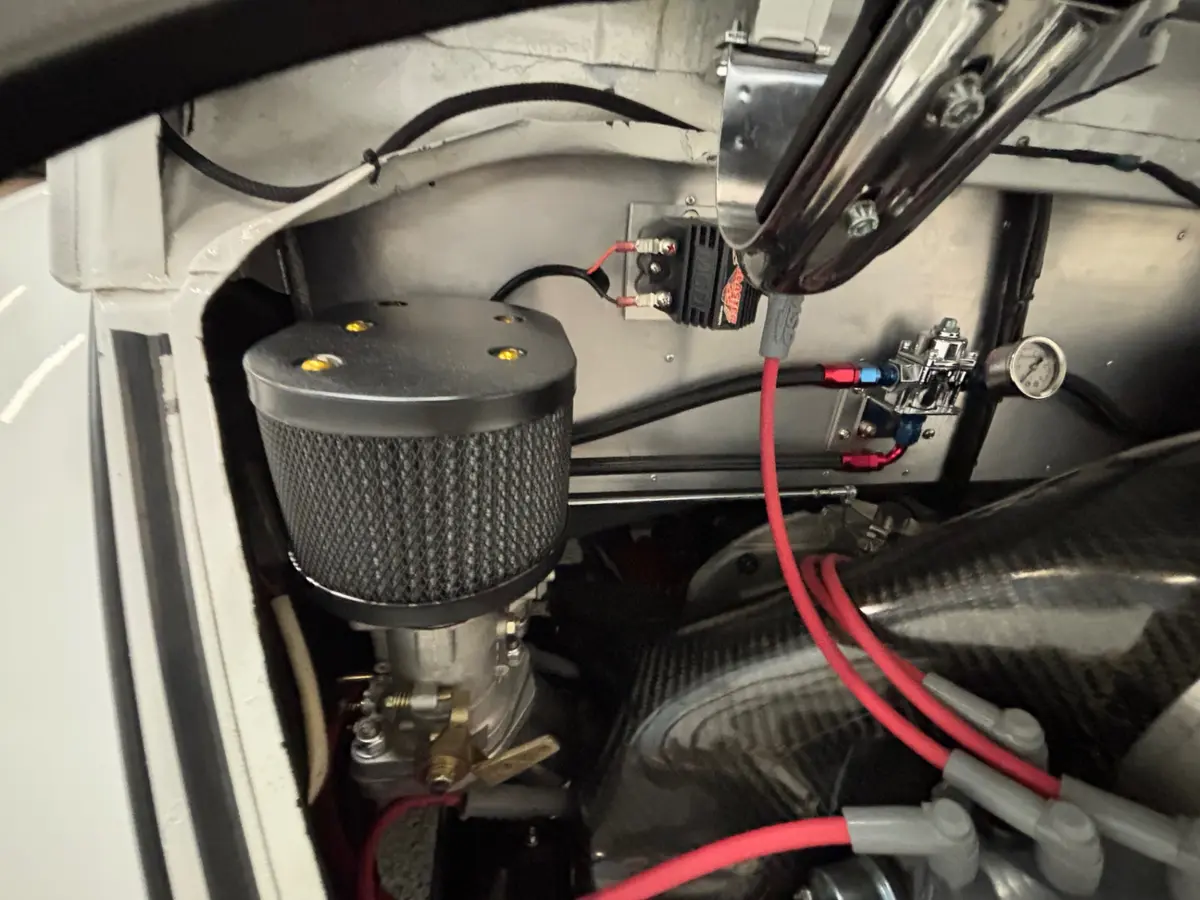
- Dual Upgraded Carburetors with Individual Cone Air Filters
- Aftermarket Ignition System
- Fuel Pressure Regulator with Gauge
- Carbon Fiber Engine Bay Panels
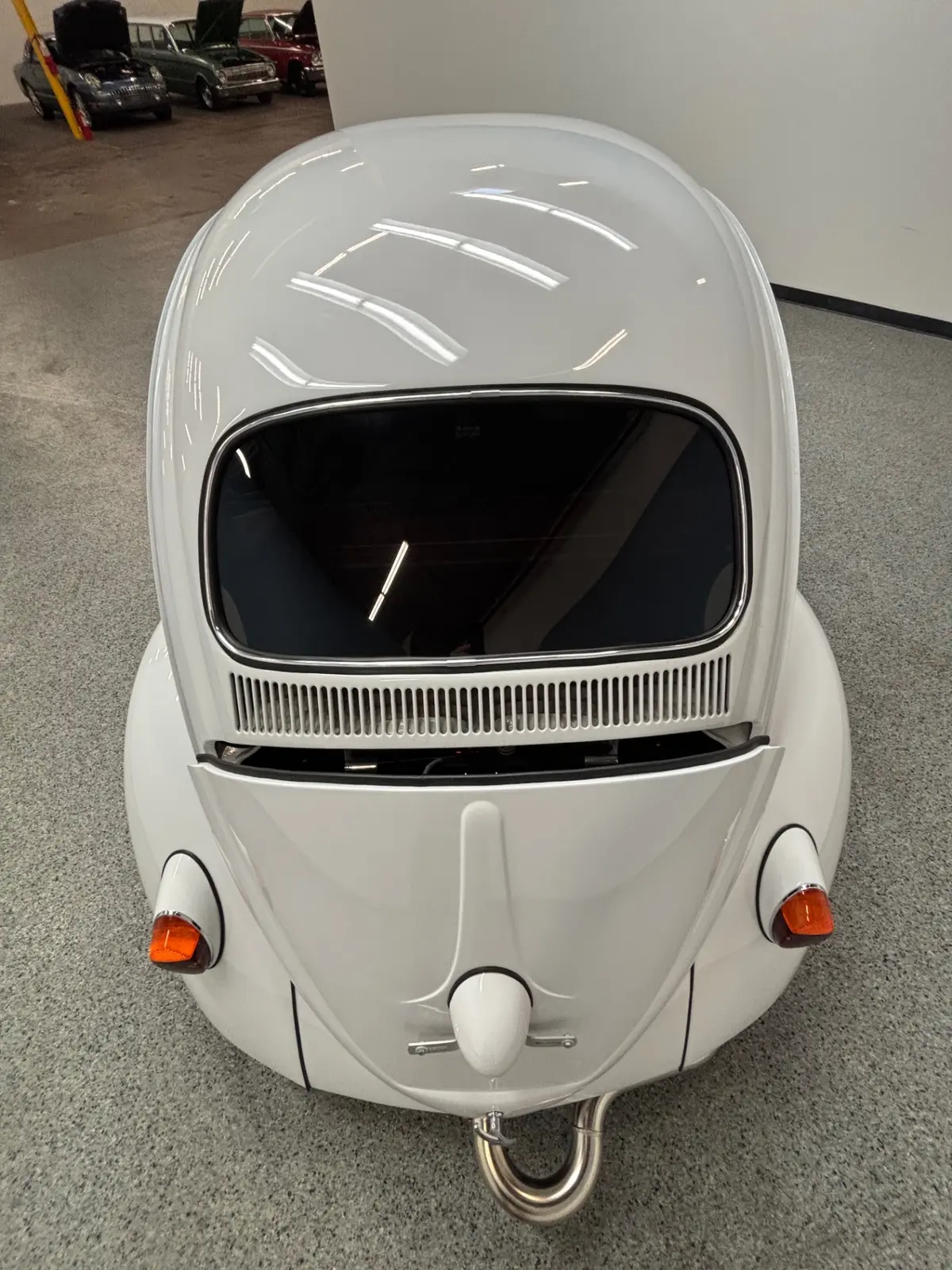
- Stainless Headers Exhaust
- Oil Cooler Installed
- Floor-Shift Manual Transmission
- 4-Wheel Disc Brakes
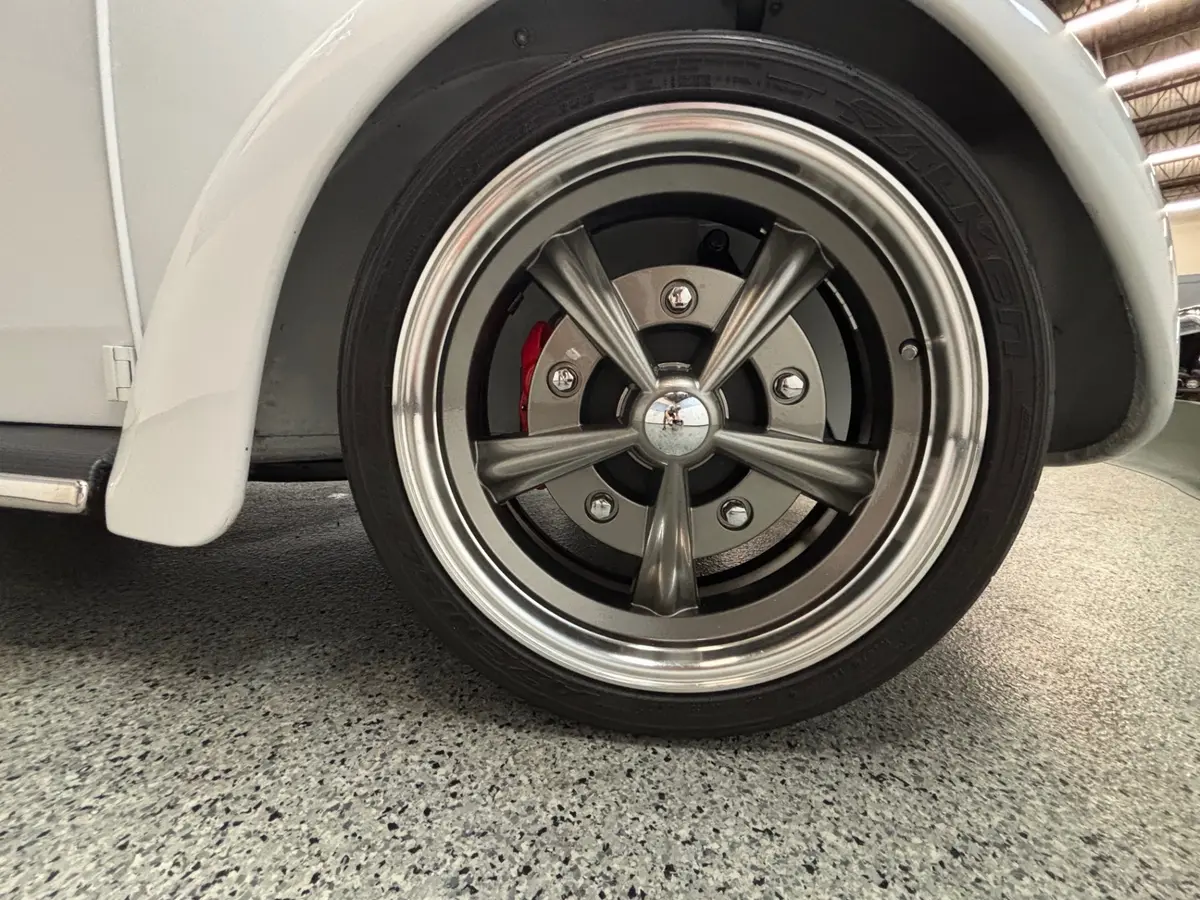
- Red Brake Calipers
- Braided Stainless Brake Lines
- Adjustable Coilover Shocks
- Front Sway Bar
- Lowered Suspension
- Powder Coated Chassis
- Custom 6-Spoke Alloy Wheels
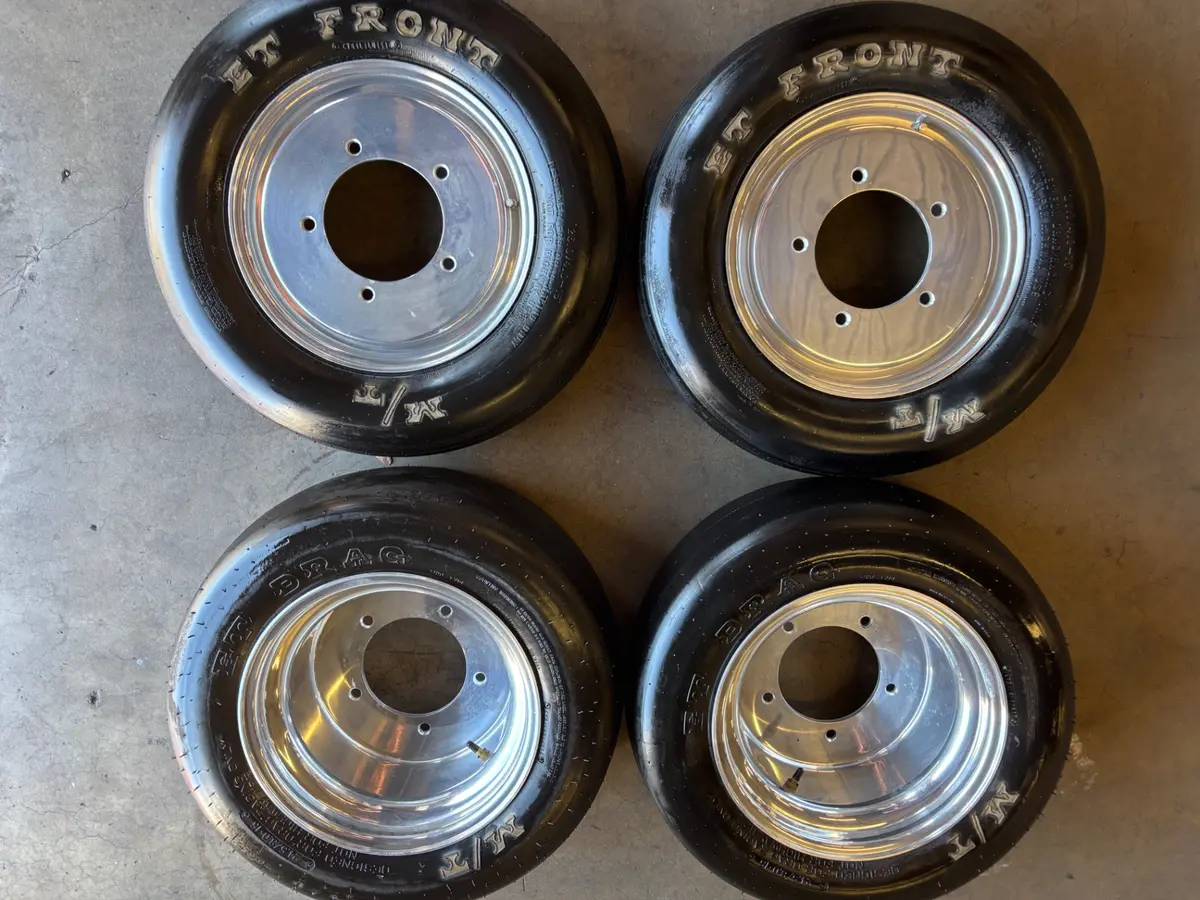
- M/T Drag Slicks Included
- Line-Lock Installed
- Roll Cage Installed
- Racing Harnesses Front and Rear
- Fire Extinguisher Mounted
- Optima Battery Relocated
- Custom Red Vinyl Interior
- Prototipo Aftermarket Steering Wheel
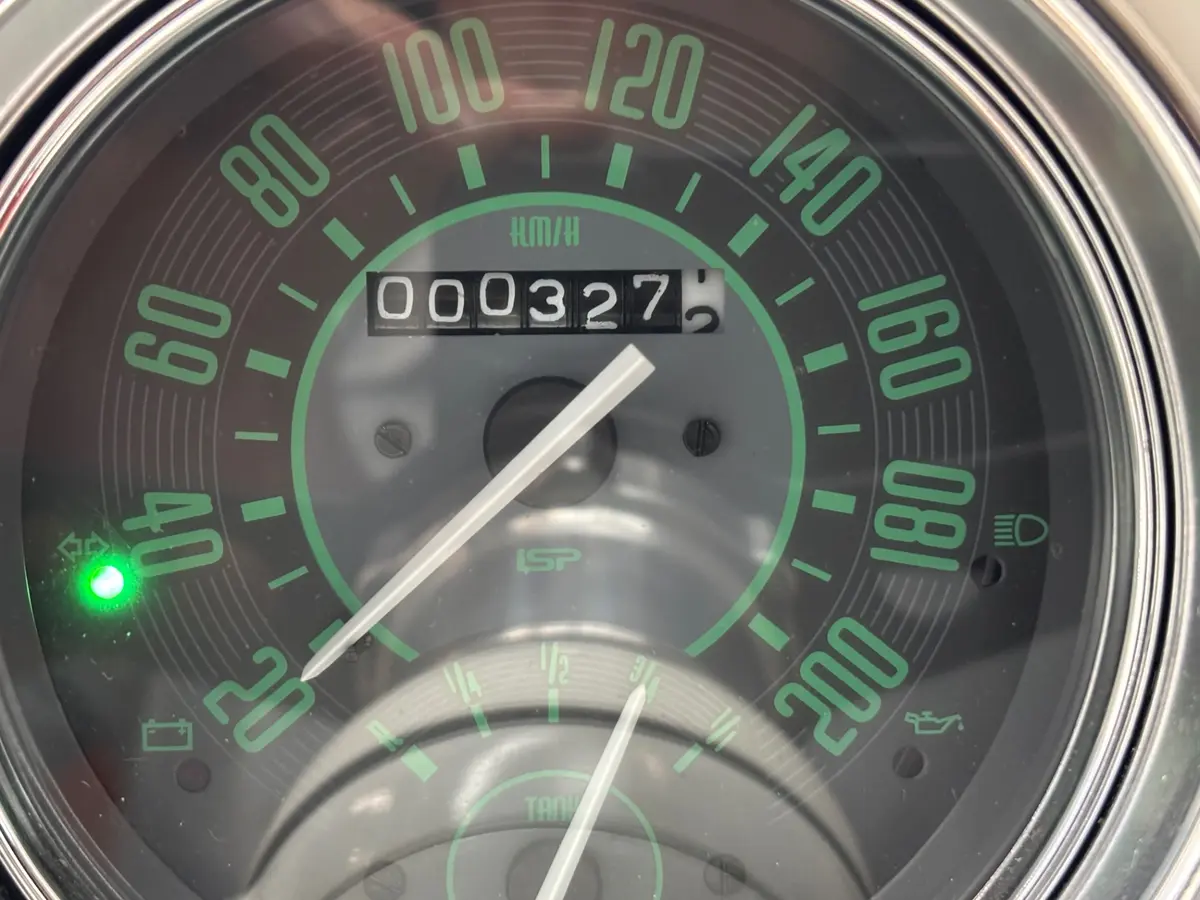
- Aftermarket Gauge Cluster
- Diamond Plate Floorboards
- Custom Perforated Headliner
- Chrome Side Mirrors
- Chrome Bumpers
- Side Pinstripe Accent
- Tinted Windows
- White Exterior
Mechanical
The factory 1963 Beetle came with a 1192cc air-cooled flat-four that produced somewhere around 40 horsepower — enough to move a lightweight car, but not enough to do much else. This build replaces that engine entirely with a 2332cc air-cooled flat-four, which is one of the most common and well-supported displacement combinations in the VW performance community. A 2332cc build typically involves a stroked crankshaft paired with larger bore cylinders, and when properly assembled with matching heads and carburetion, it produces power that is entirely unrecognizable compared to the stock configuration.
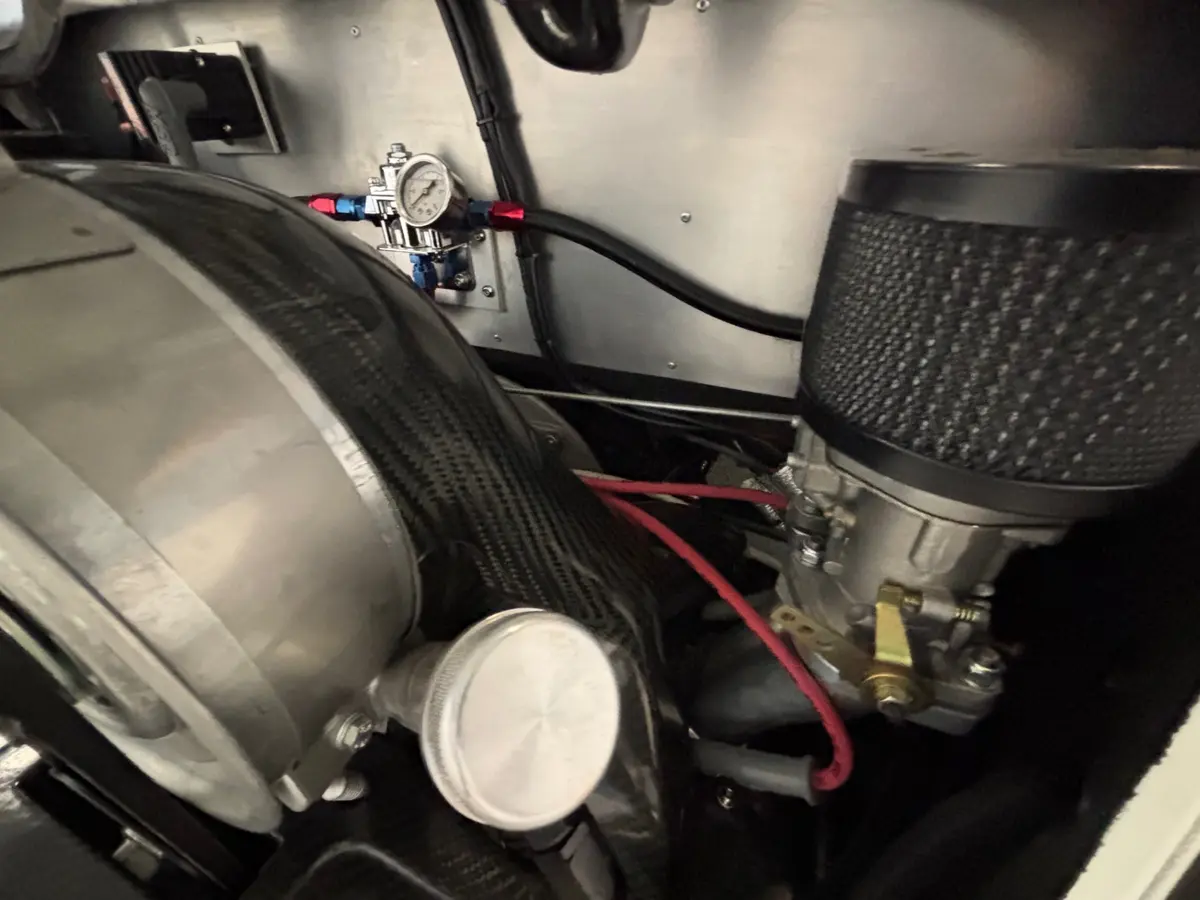
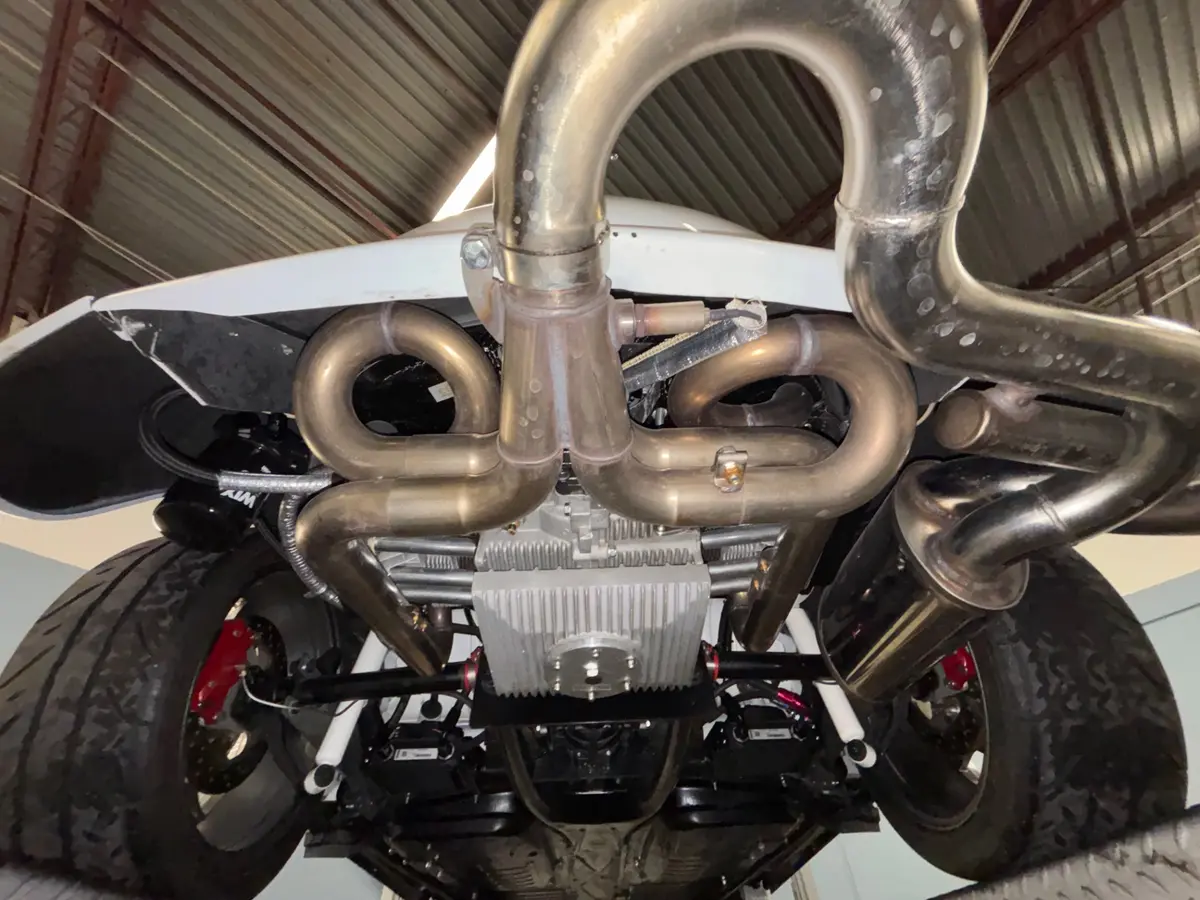
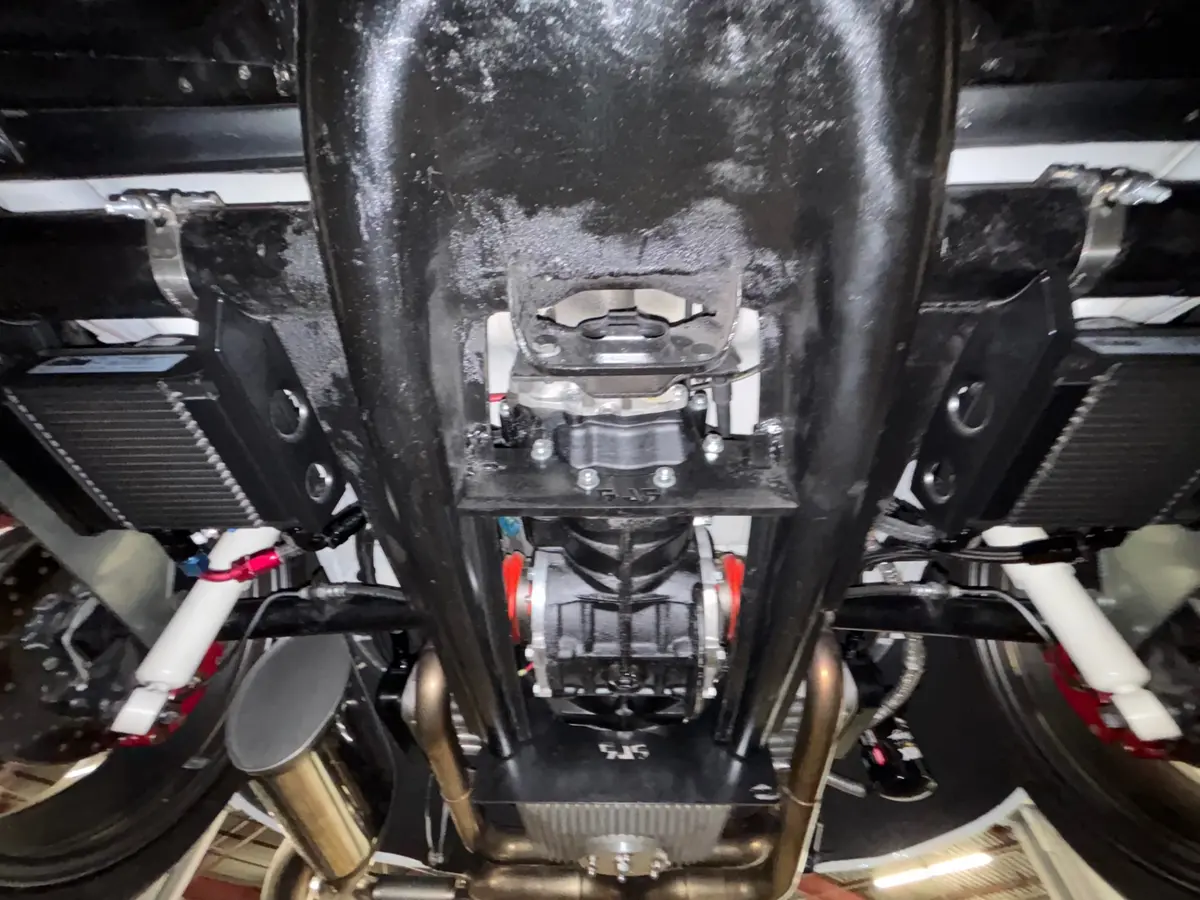
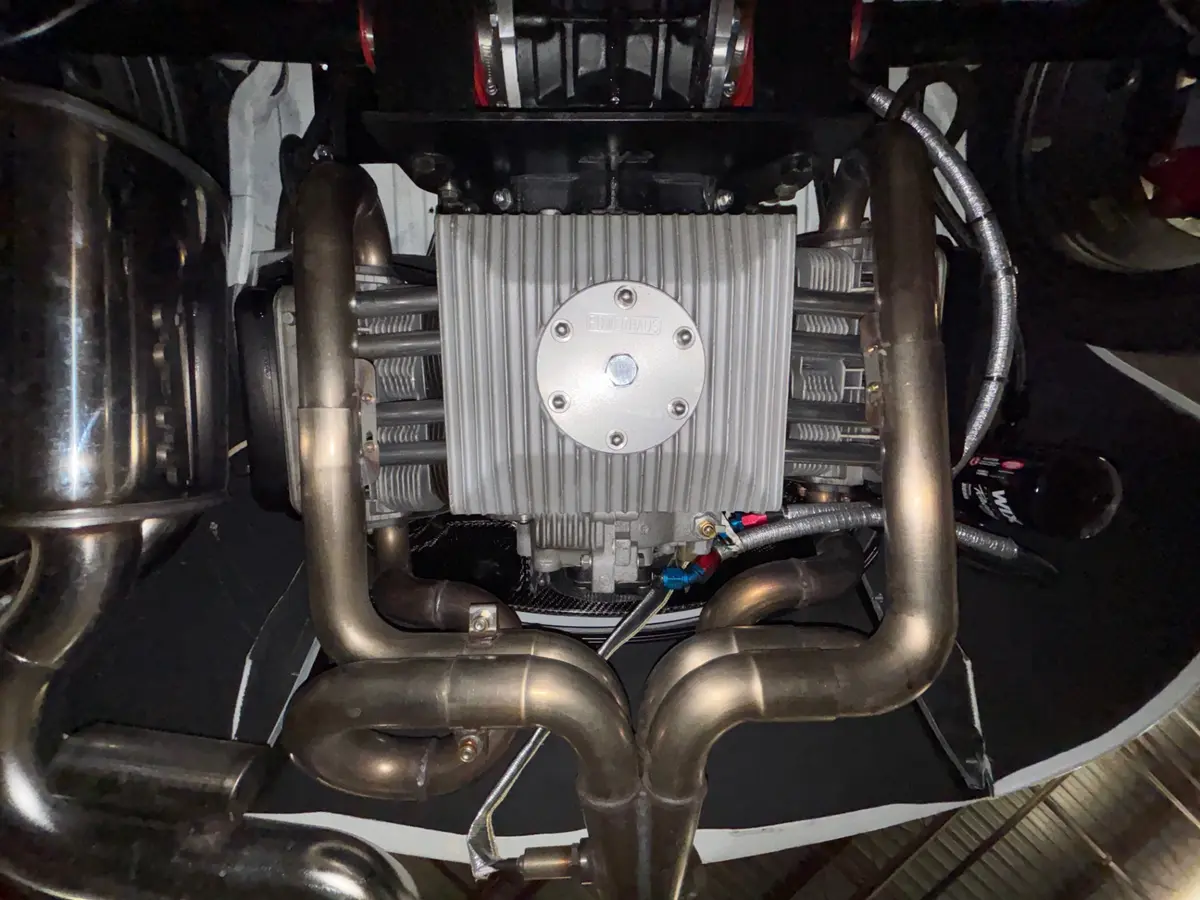
Fuel delivery is handled by dual upgraded carburetors, each topped with an individual cone air filter. A fuel pressure regulator with a visible gauge is mounted in the engine bay, giving the driver the ability to monitor delivery pressure directly. The ignition system has been replaced with an aftermarket unit designed to provide consistent spark across the rpm range. Stainless headers replace the factory exhaust manifolds, which on a modified air-cooled VW is one of the most important upgrades for extracting power. An oil cooler has been added, which is a critical addition on any high-displacement air-cooled build since these engines rely entirely on oil and airflow for thermal management. The engine bay itself is lined with carbon fiber panels, which keep the presentation clean and reduce heat soak into surrounding components.
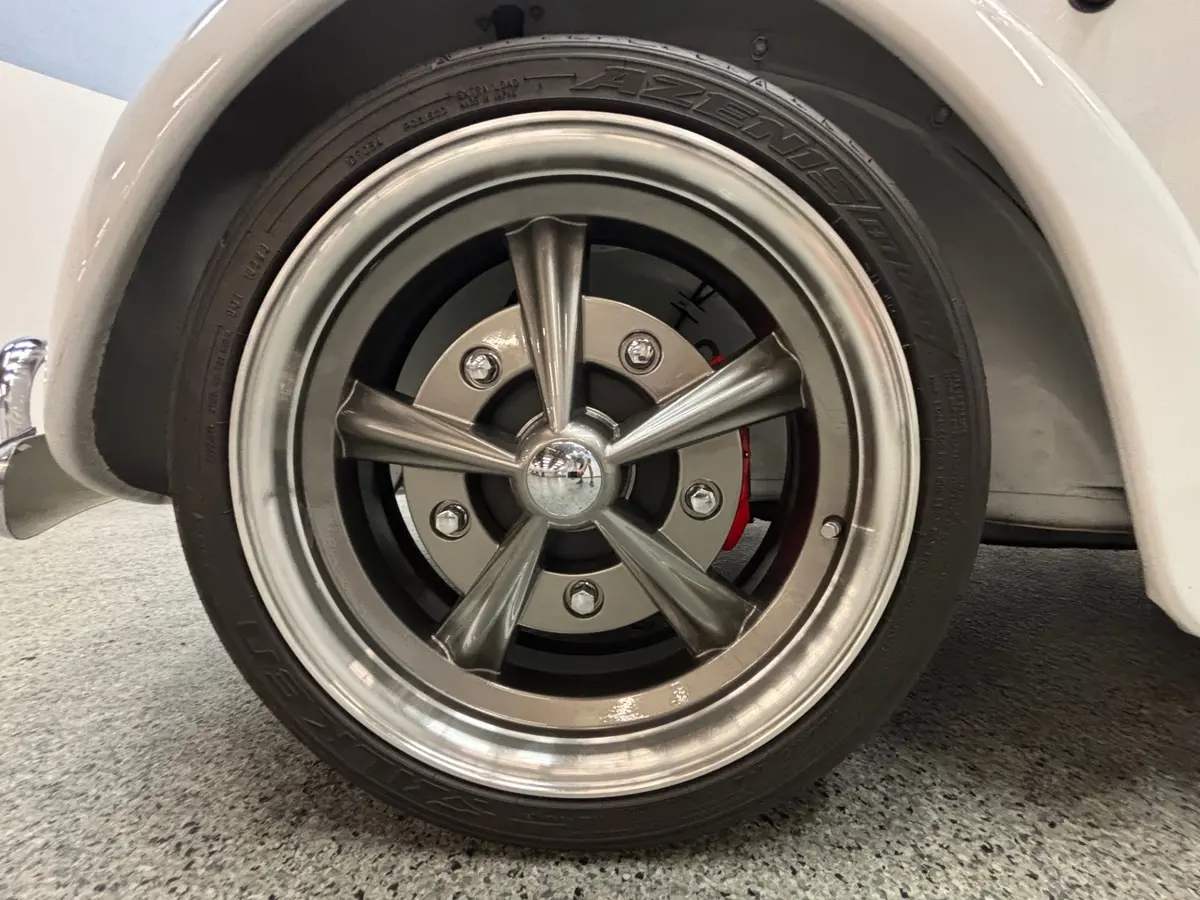
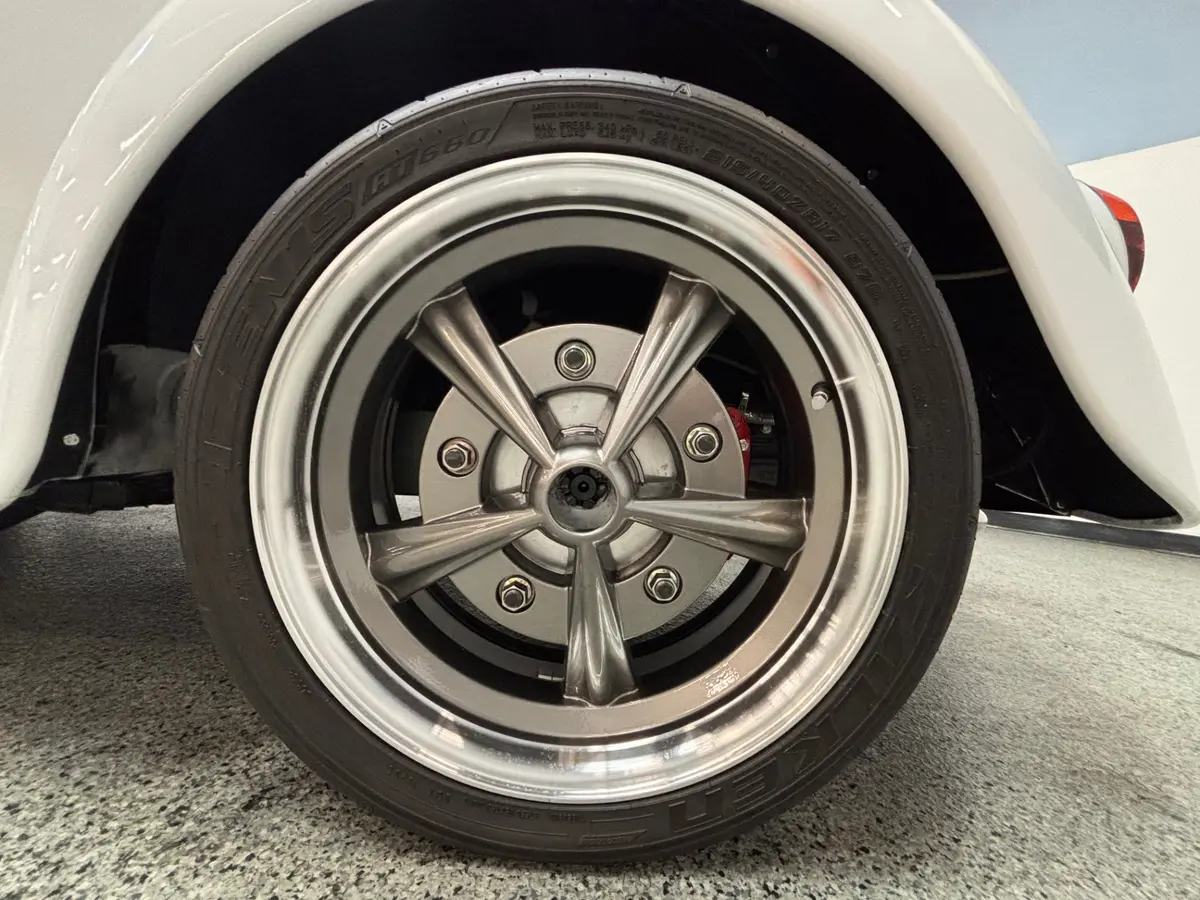
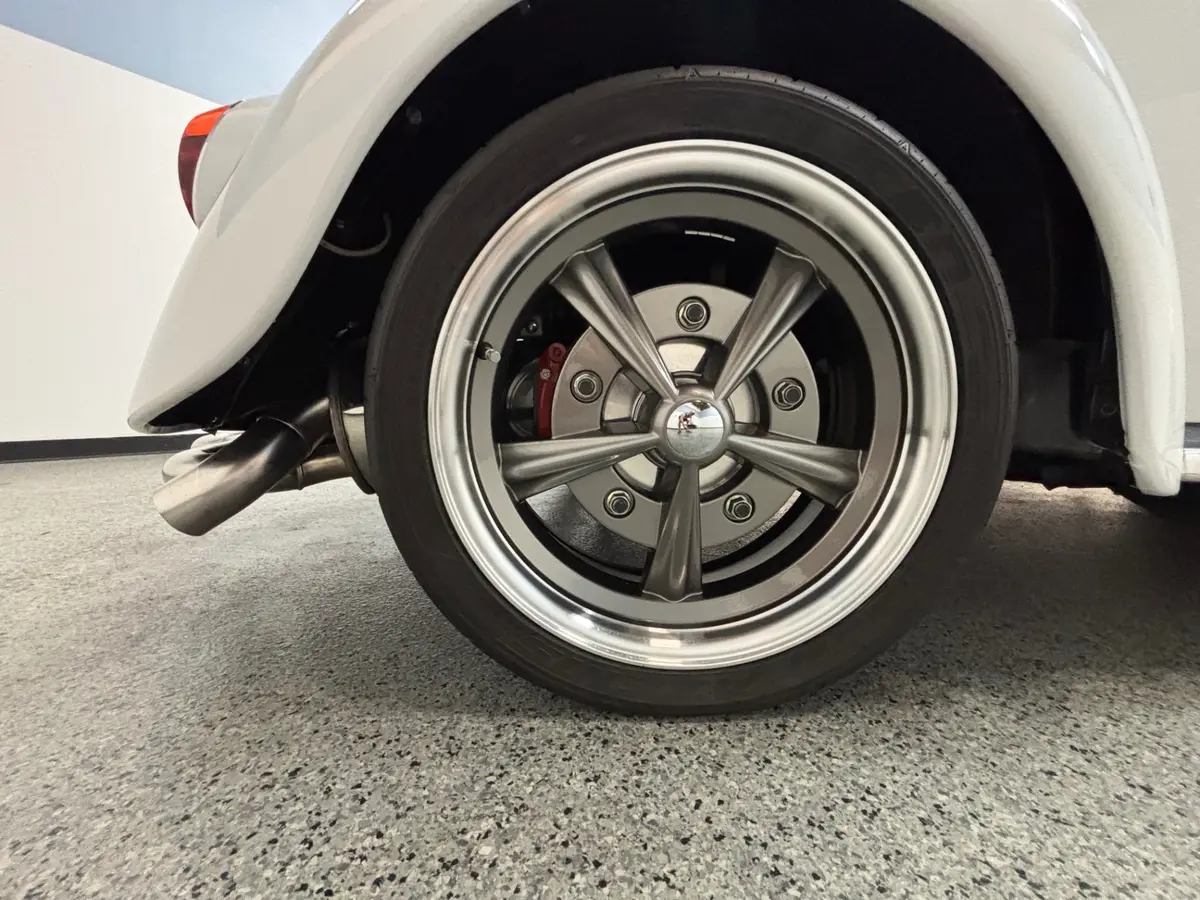
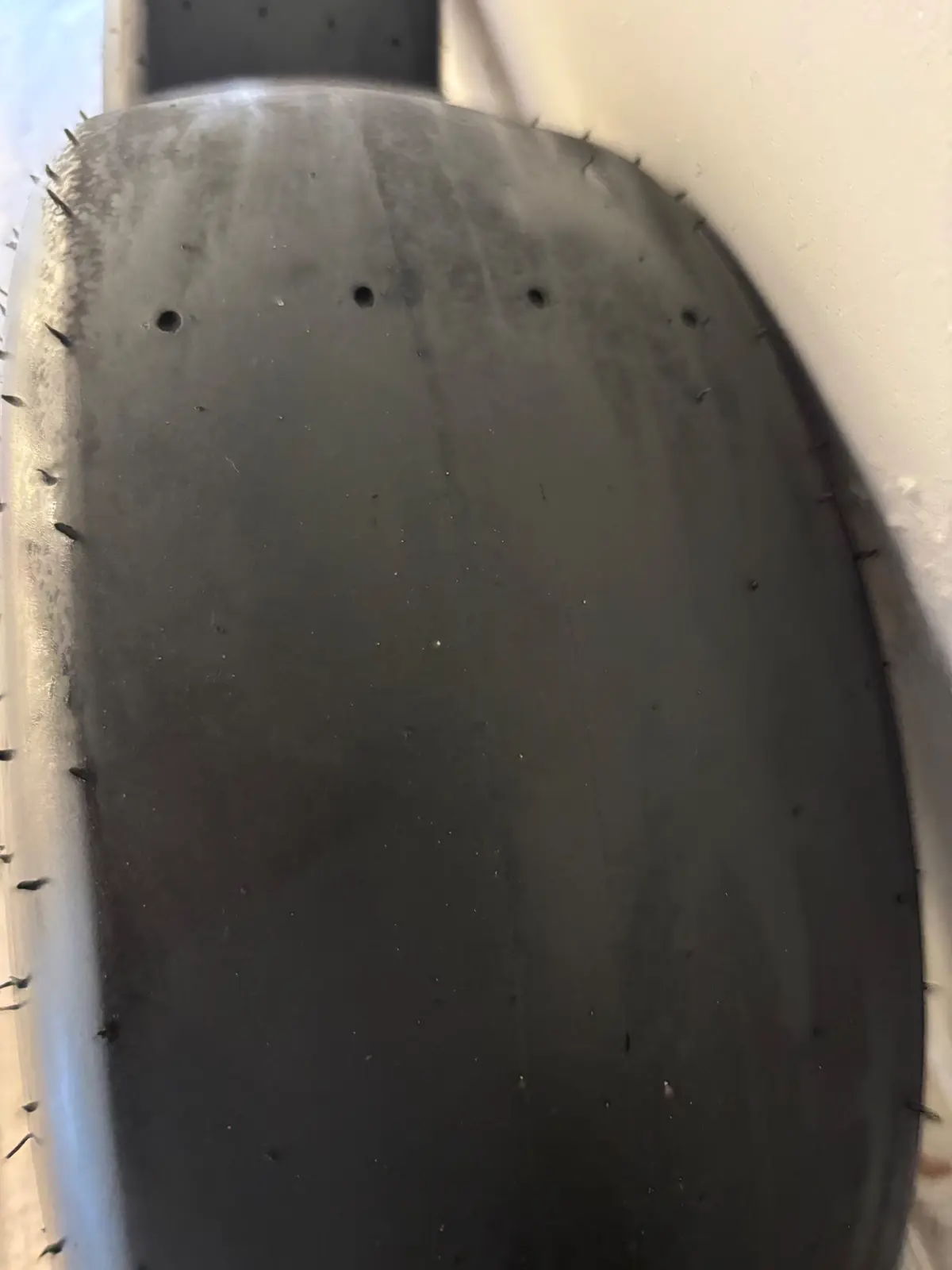
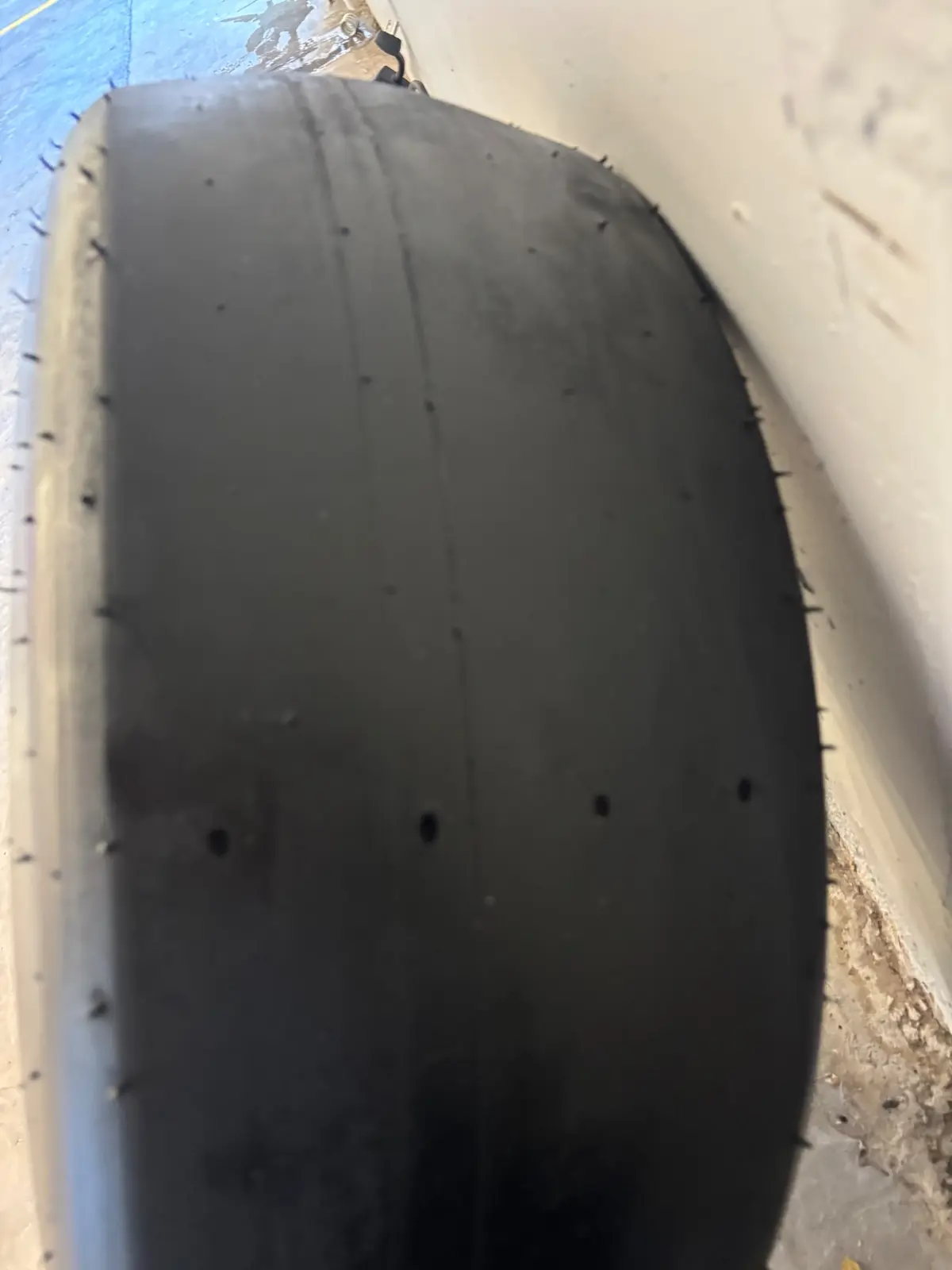
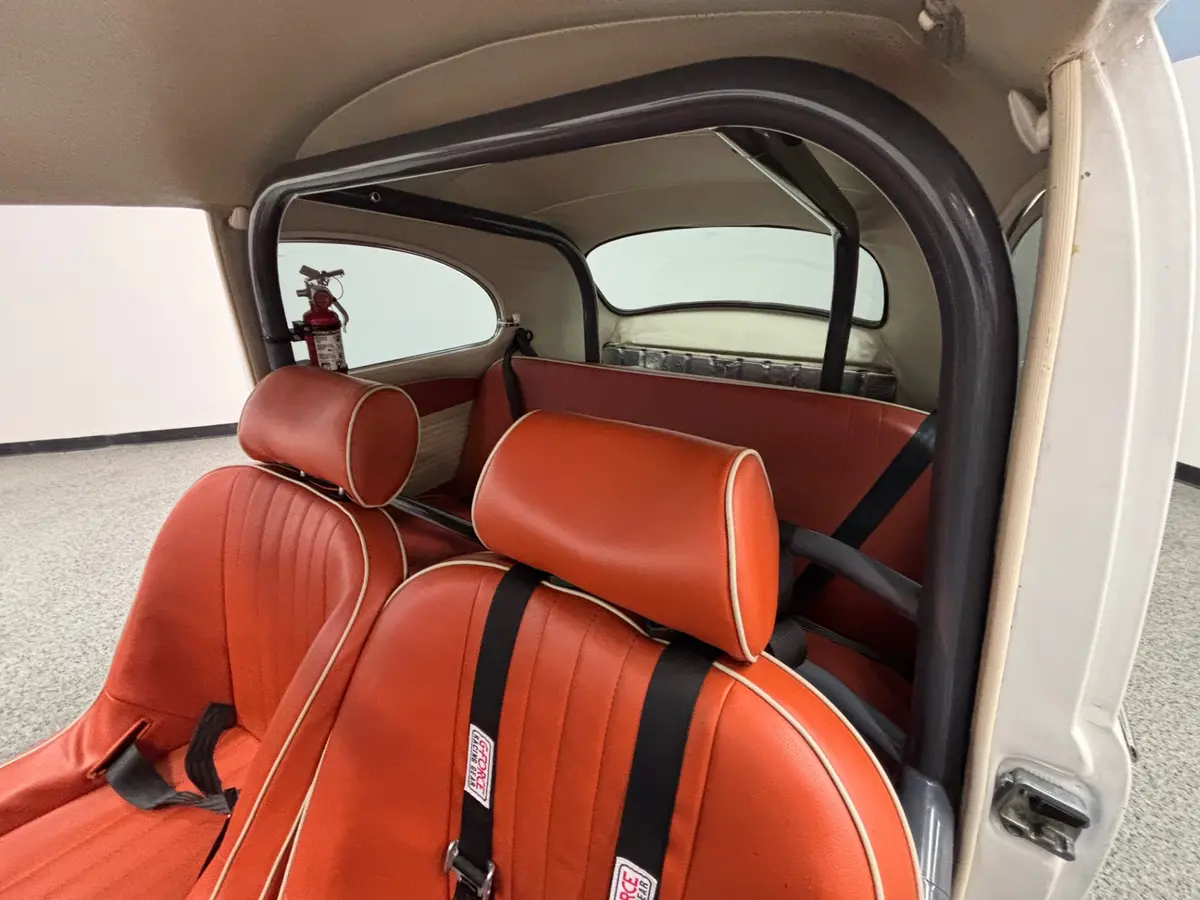
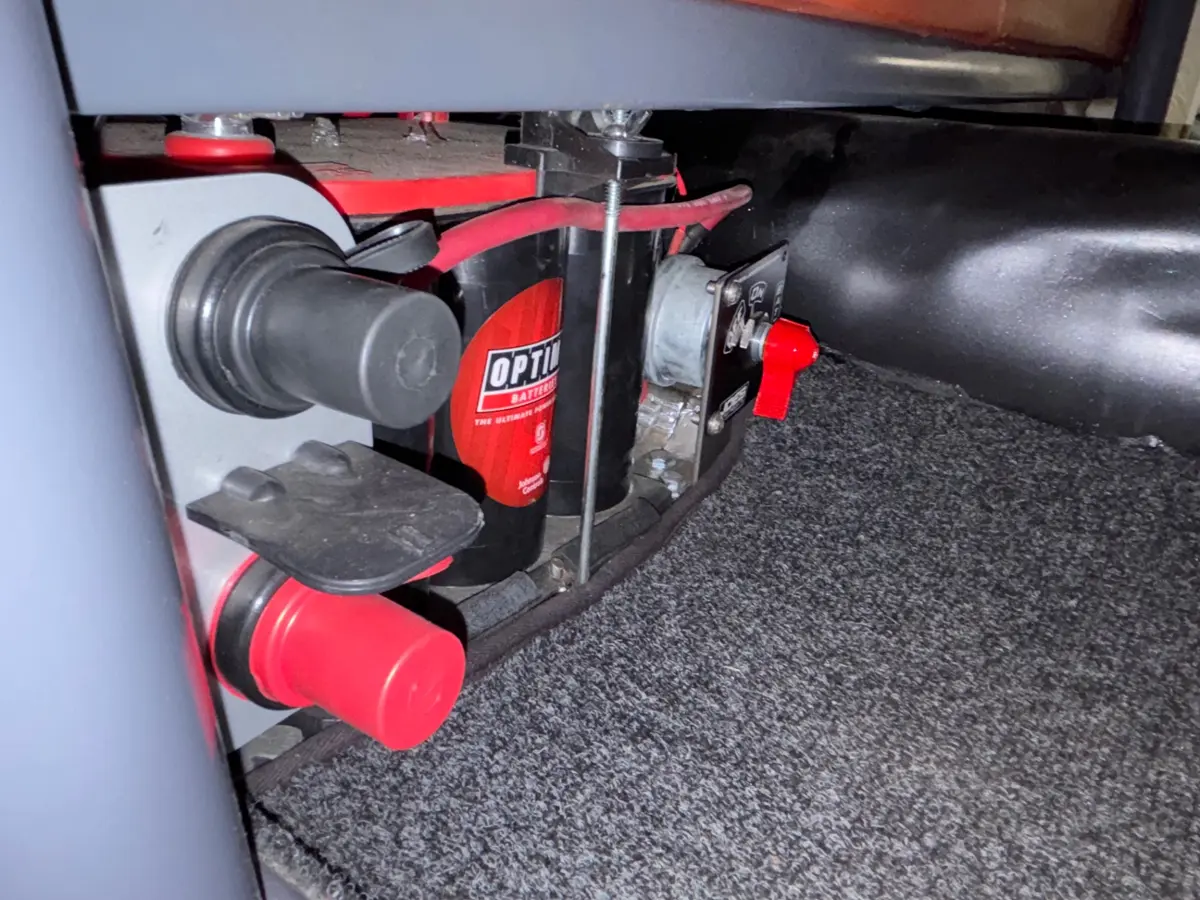
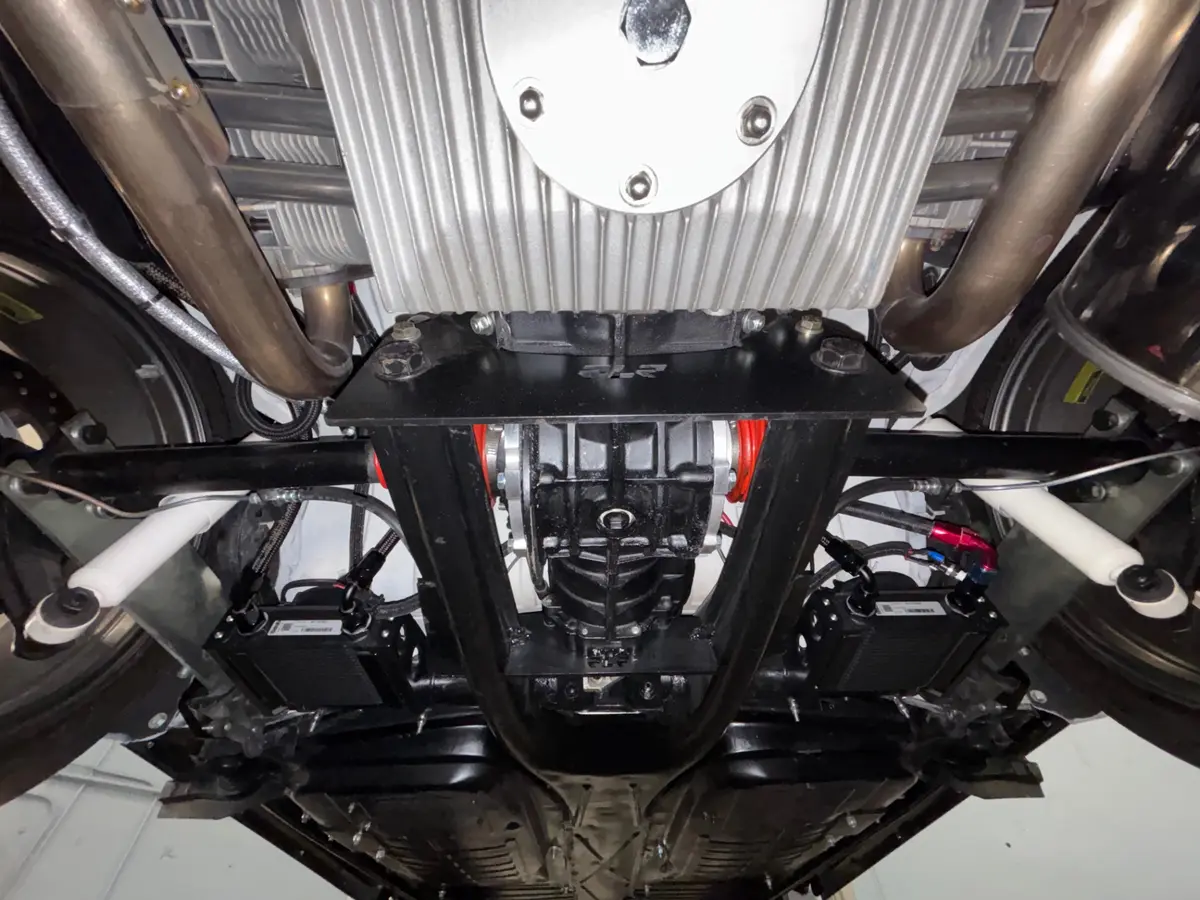
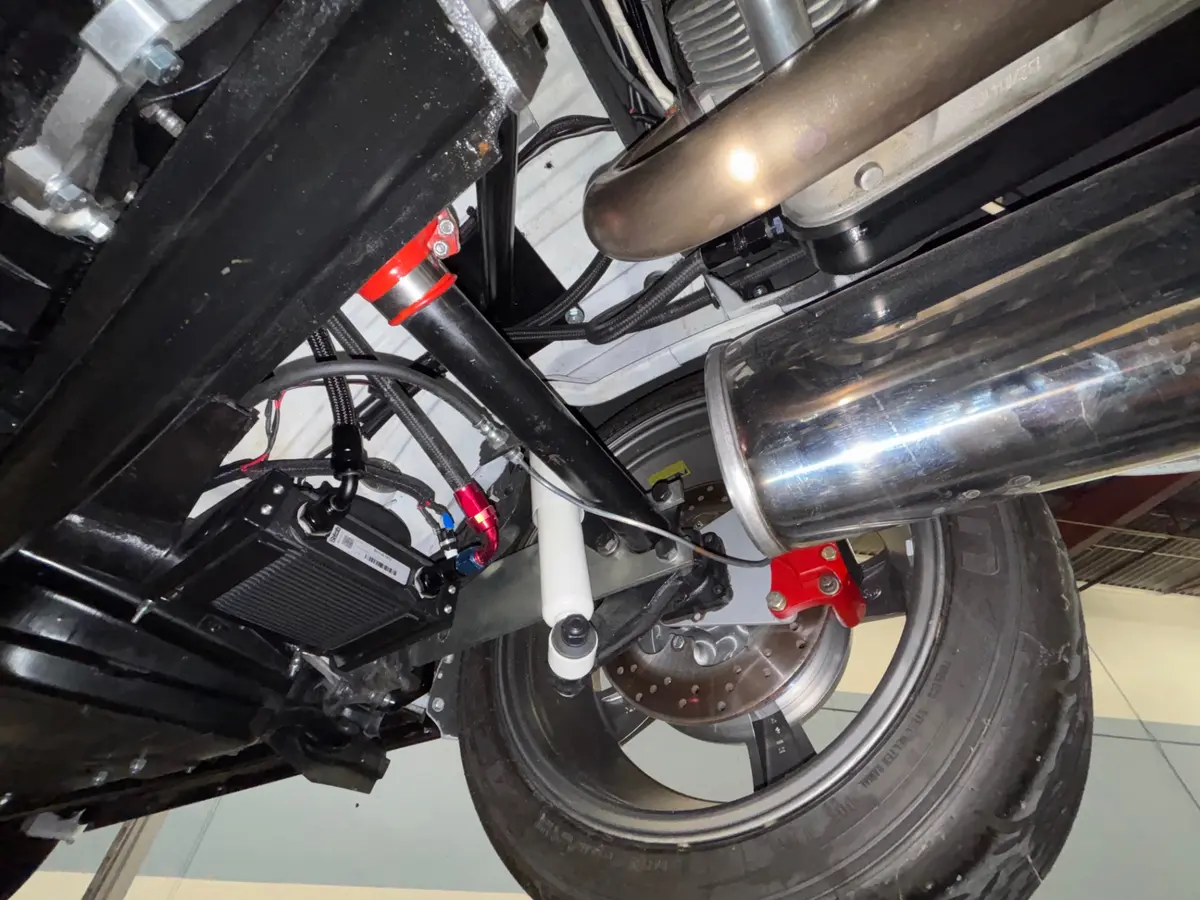
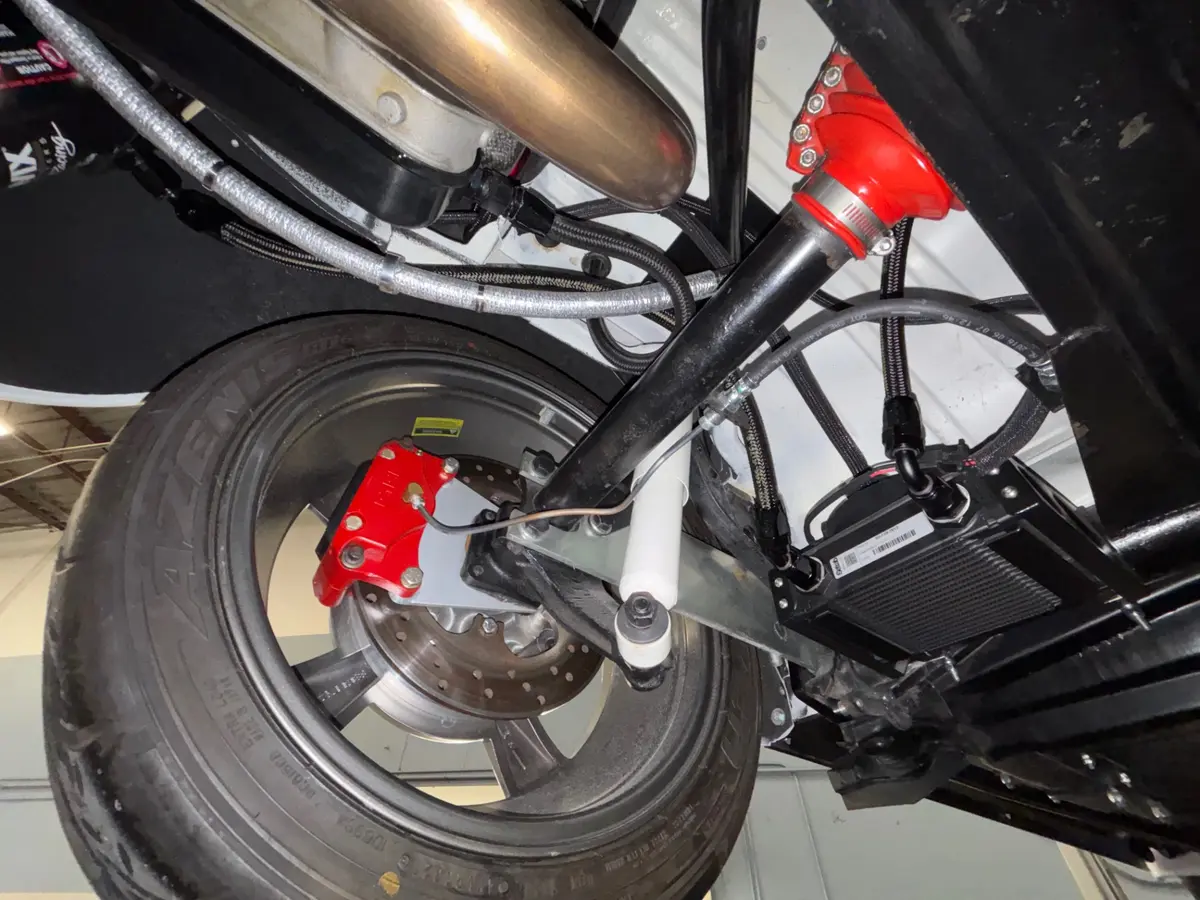
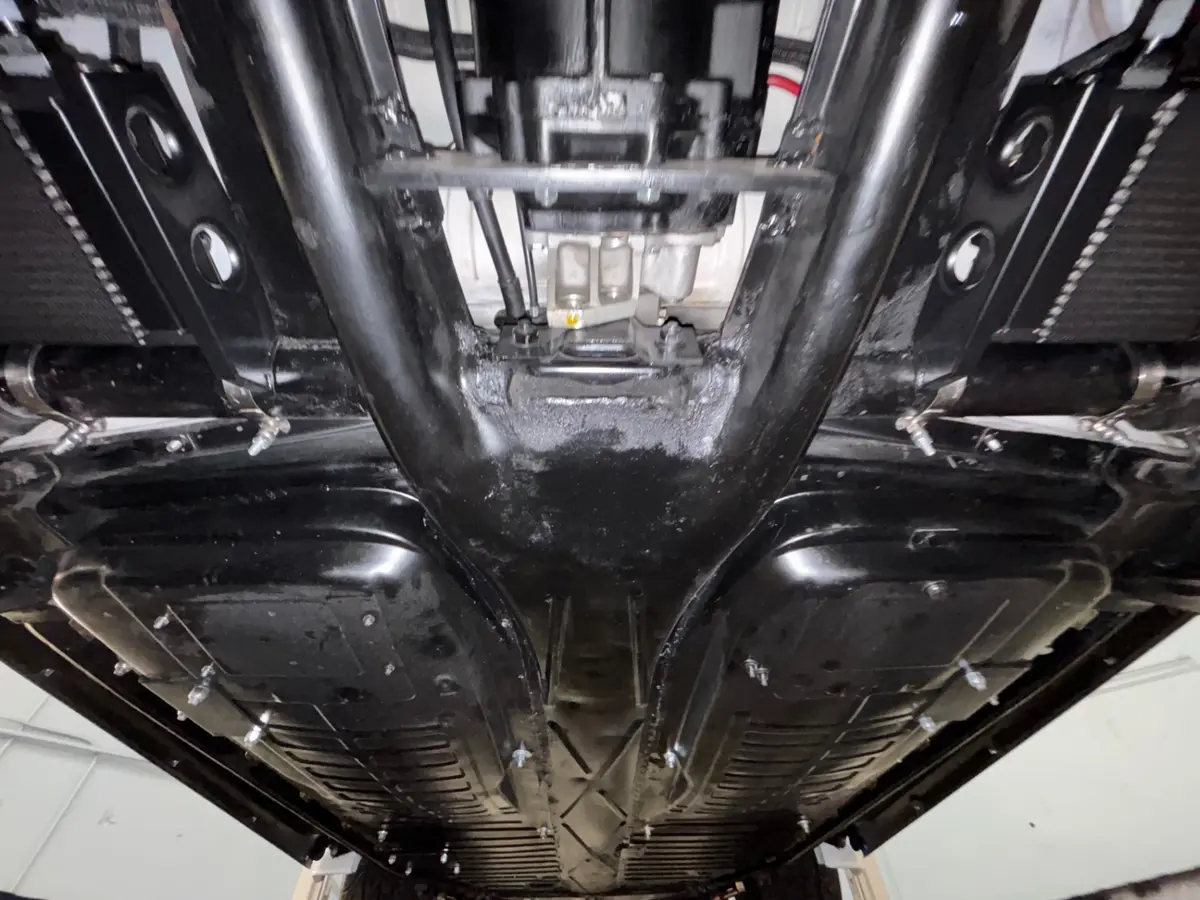
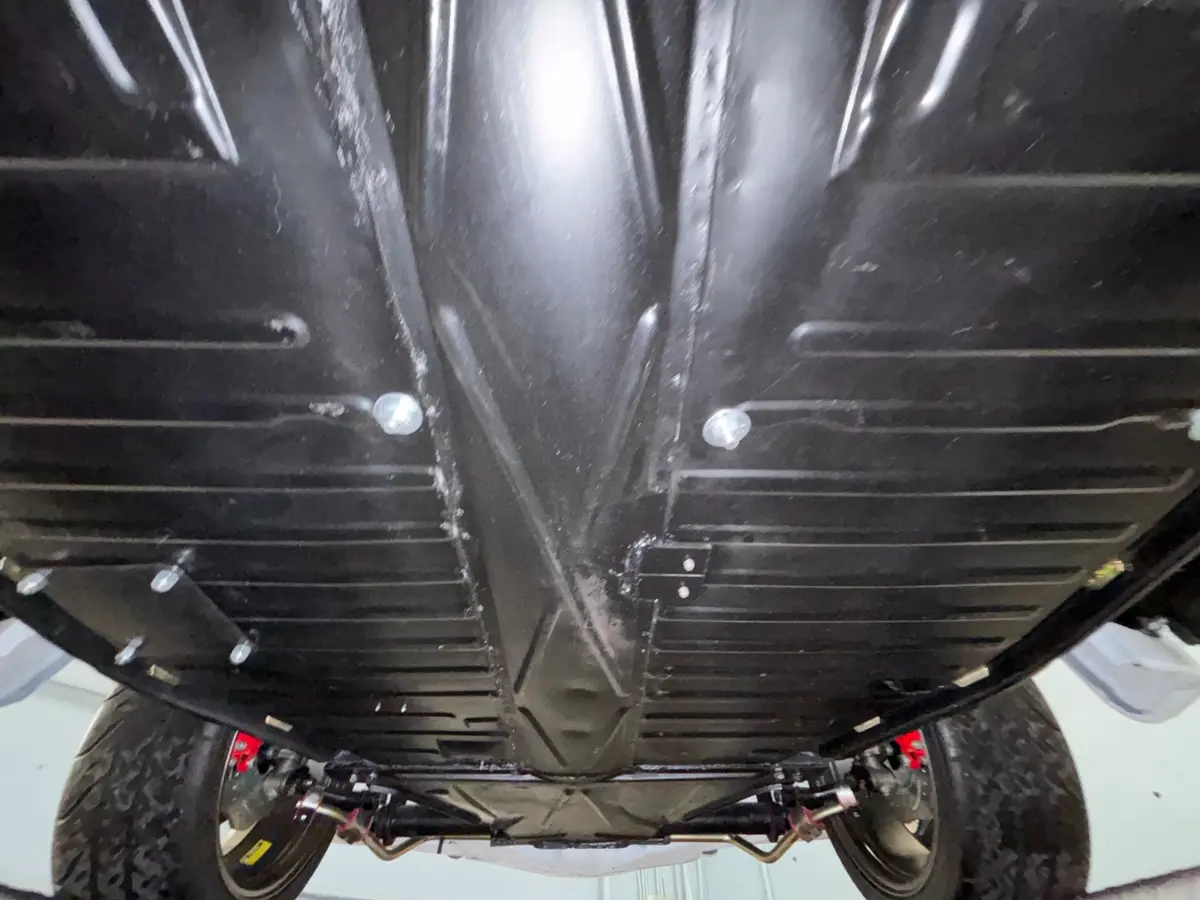
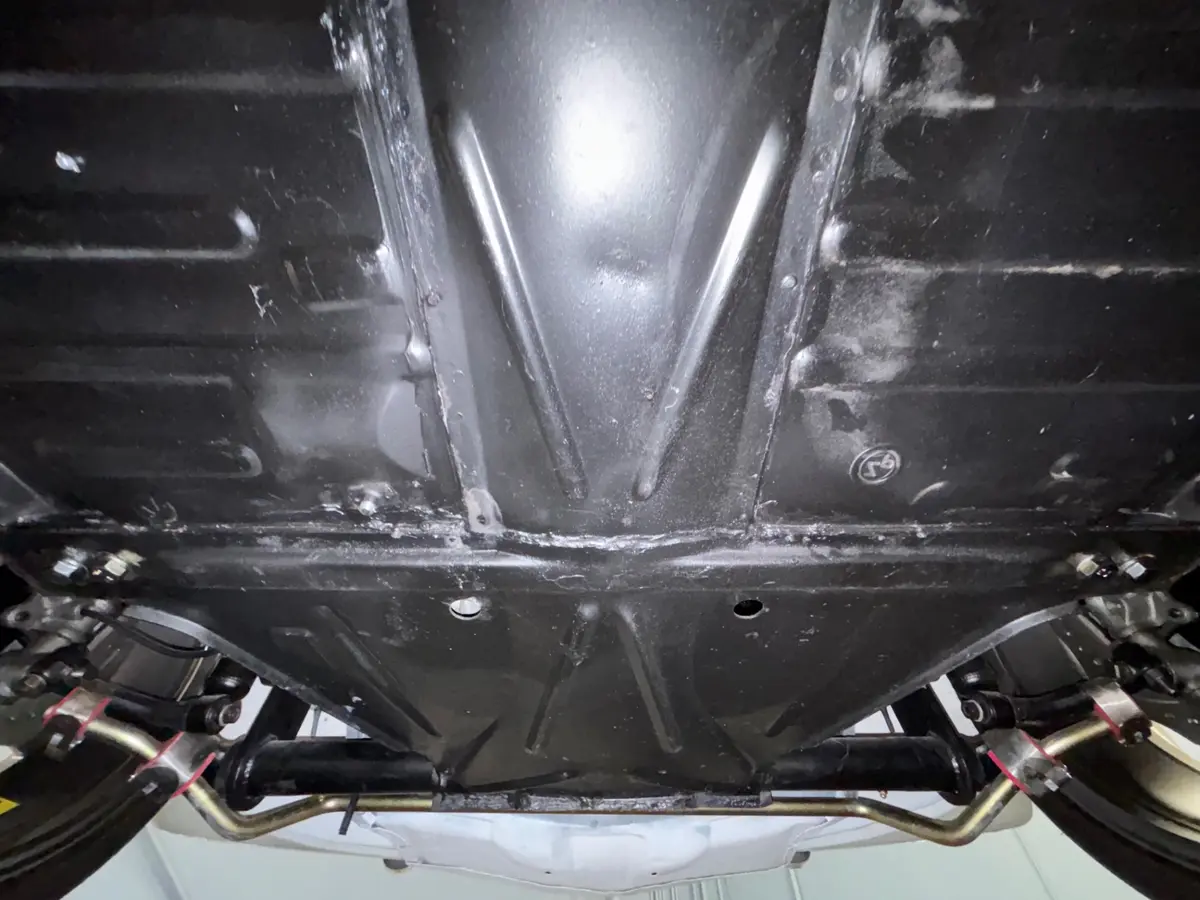
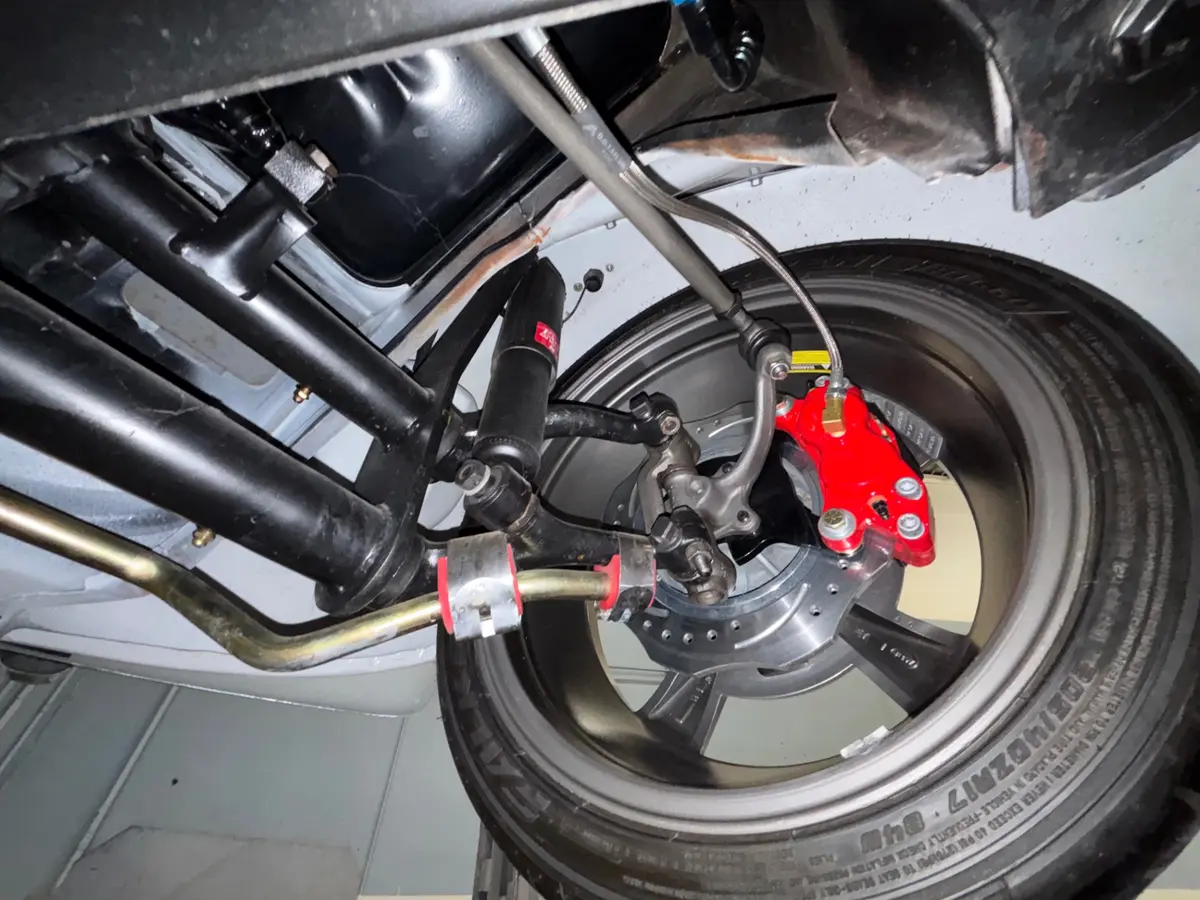
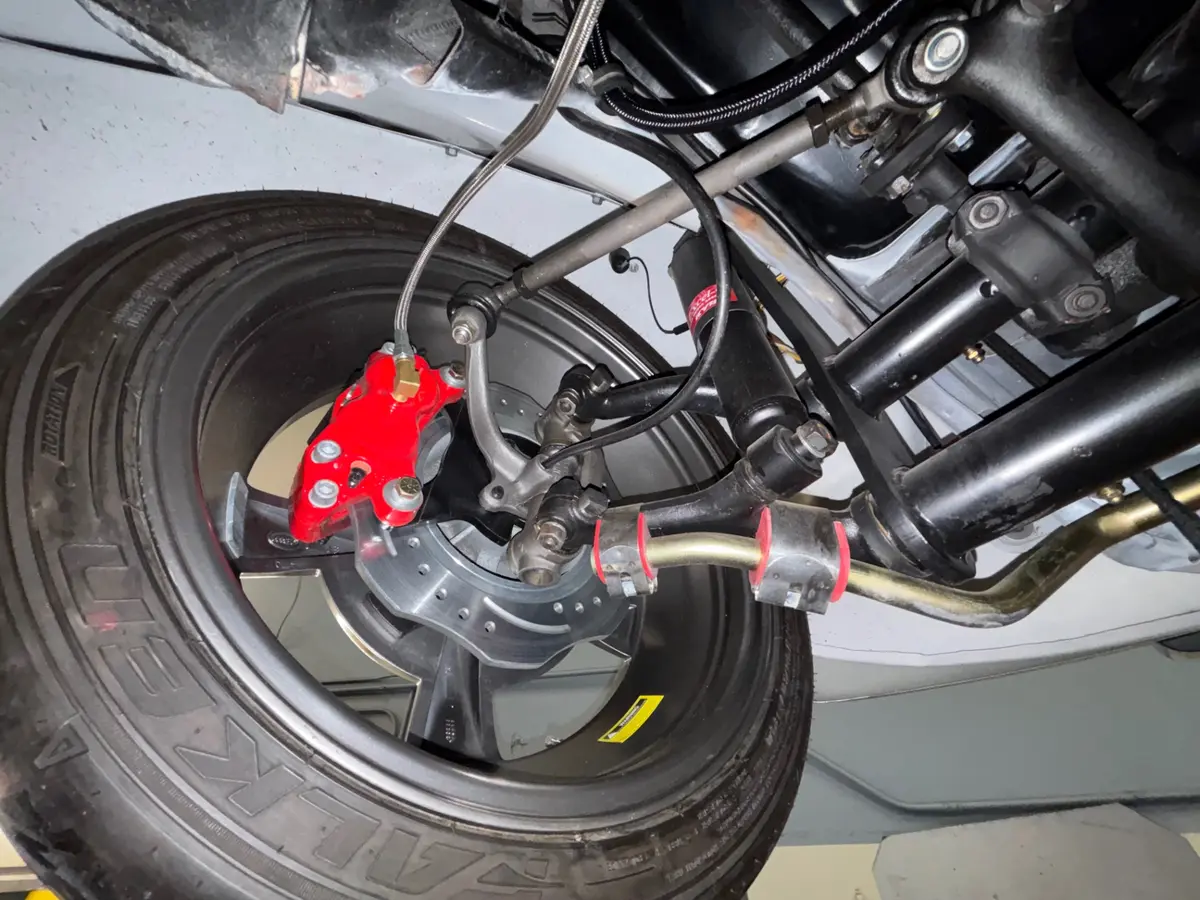
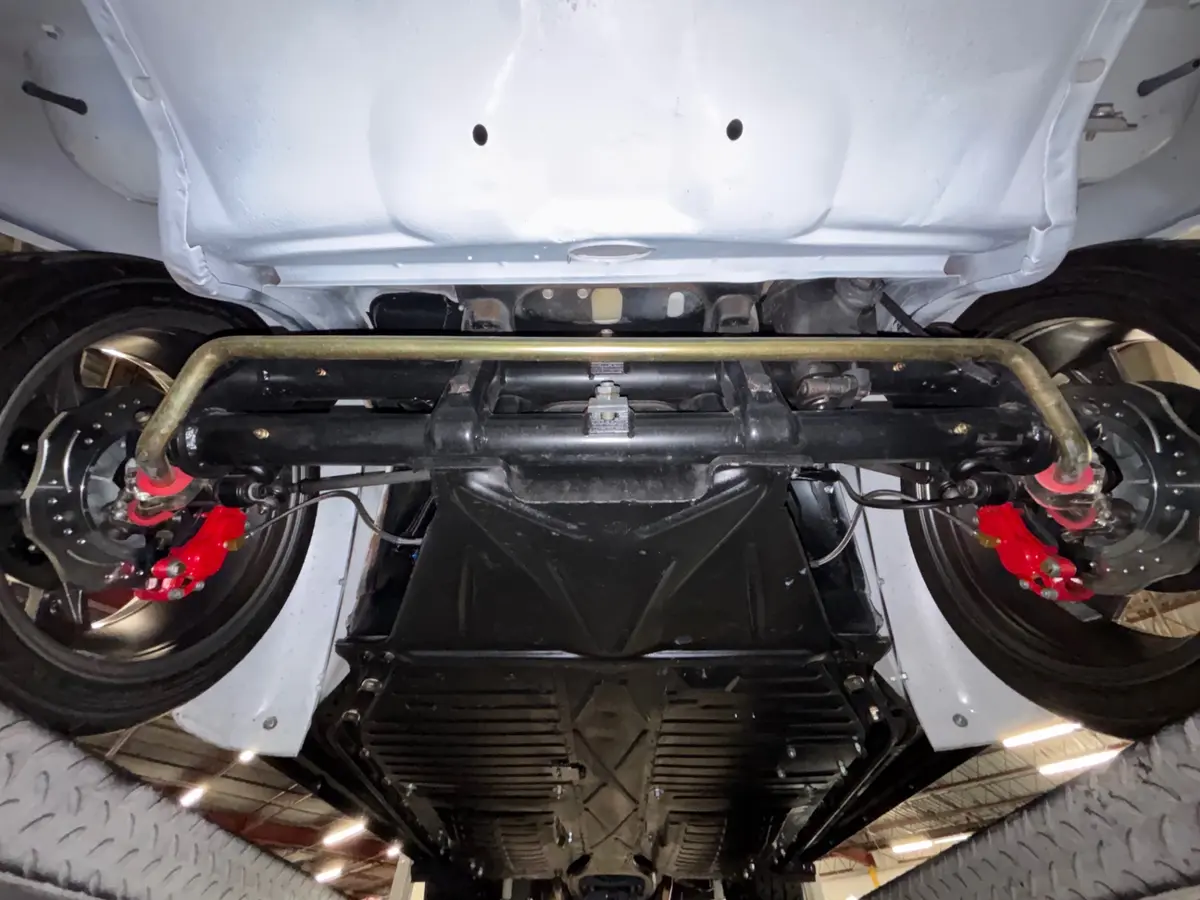
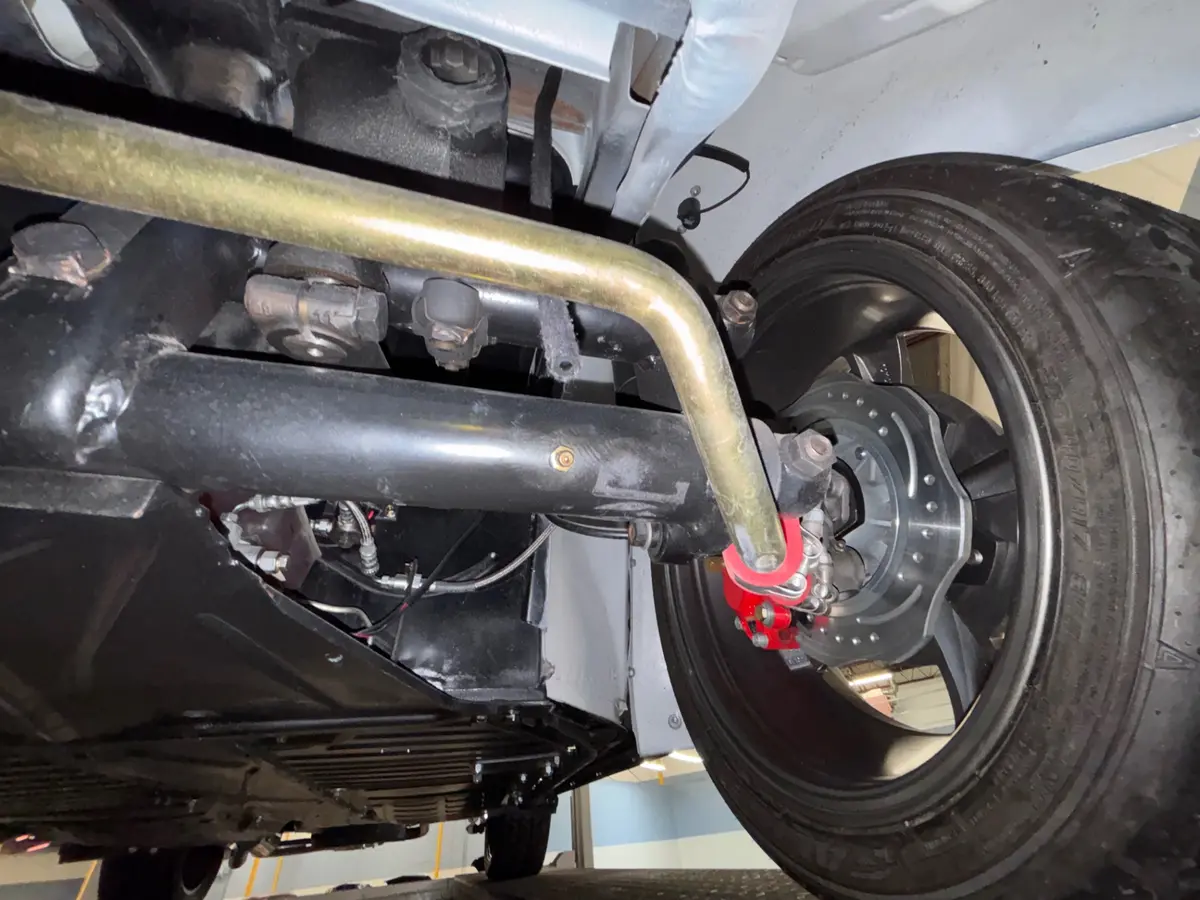
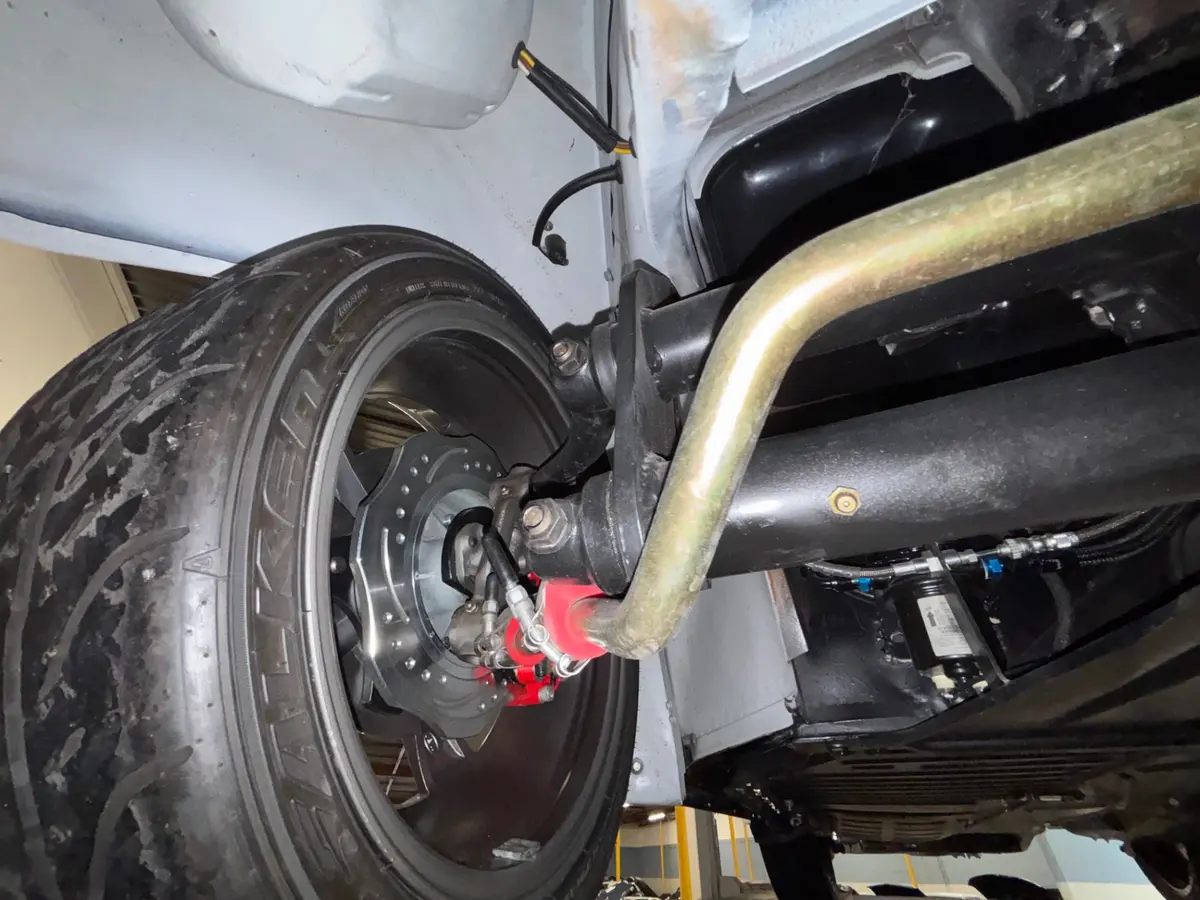
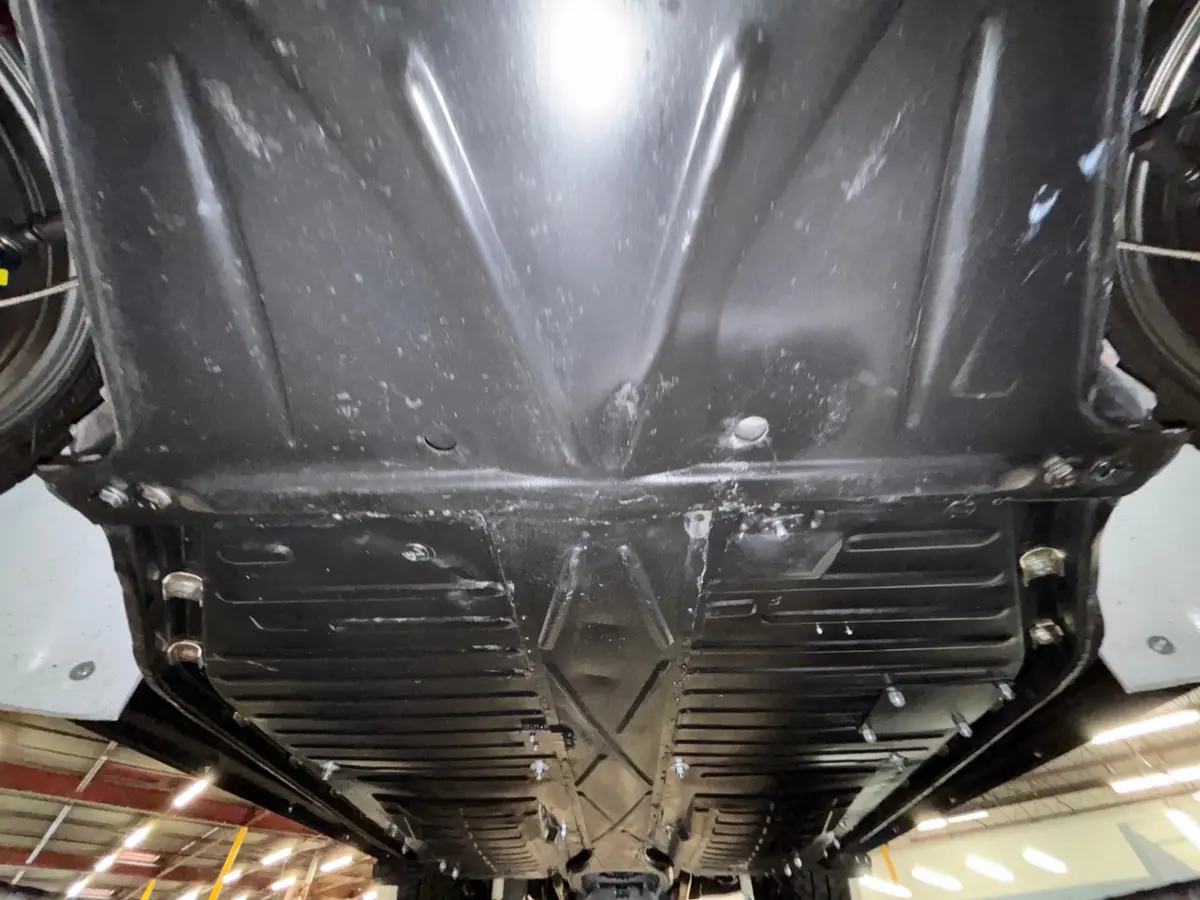
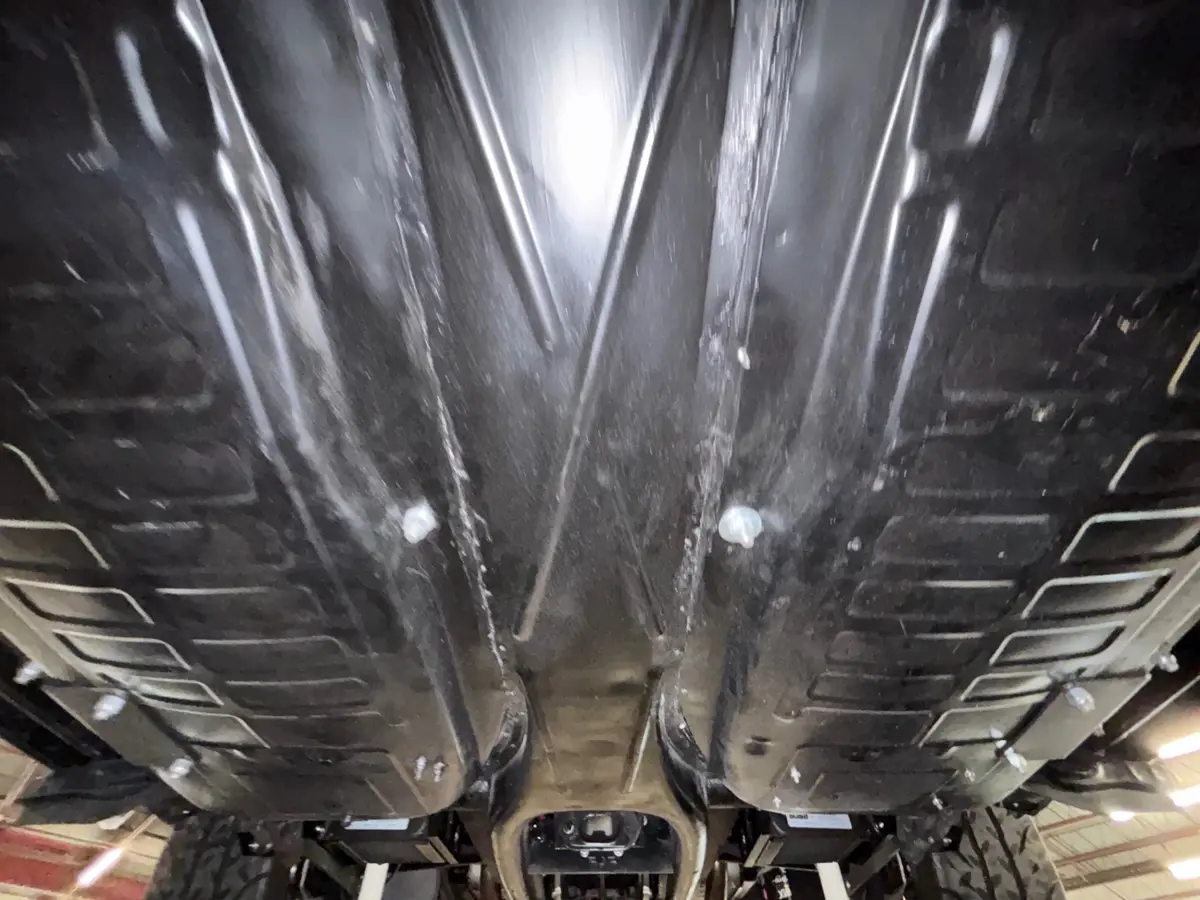
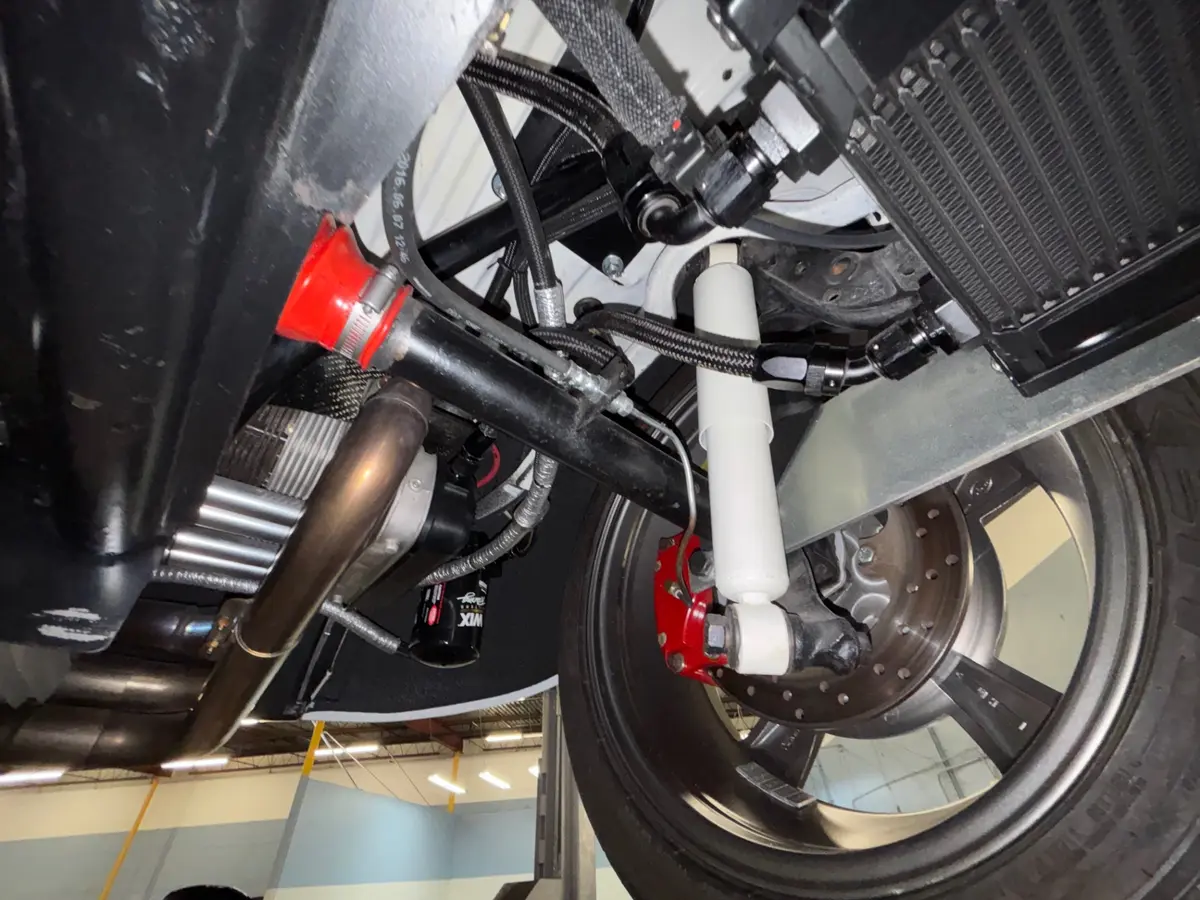
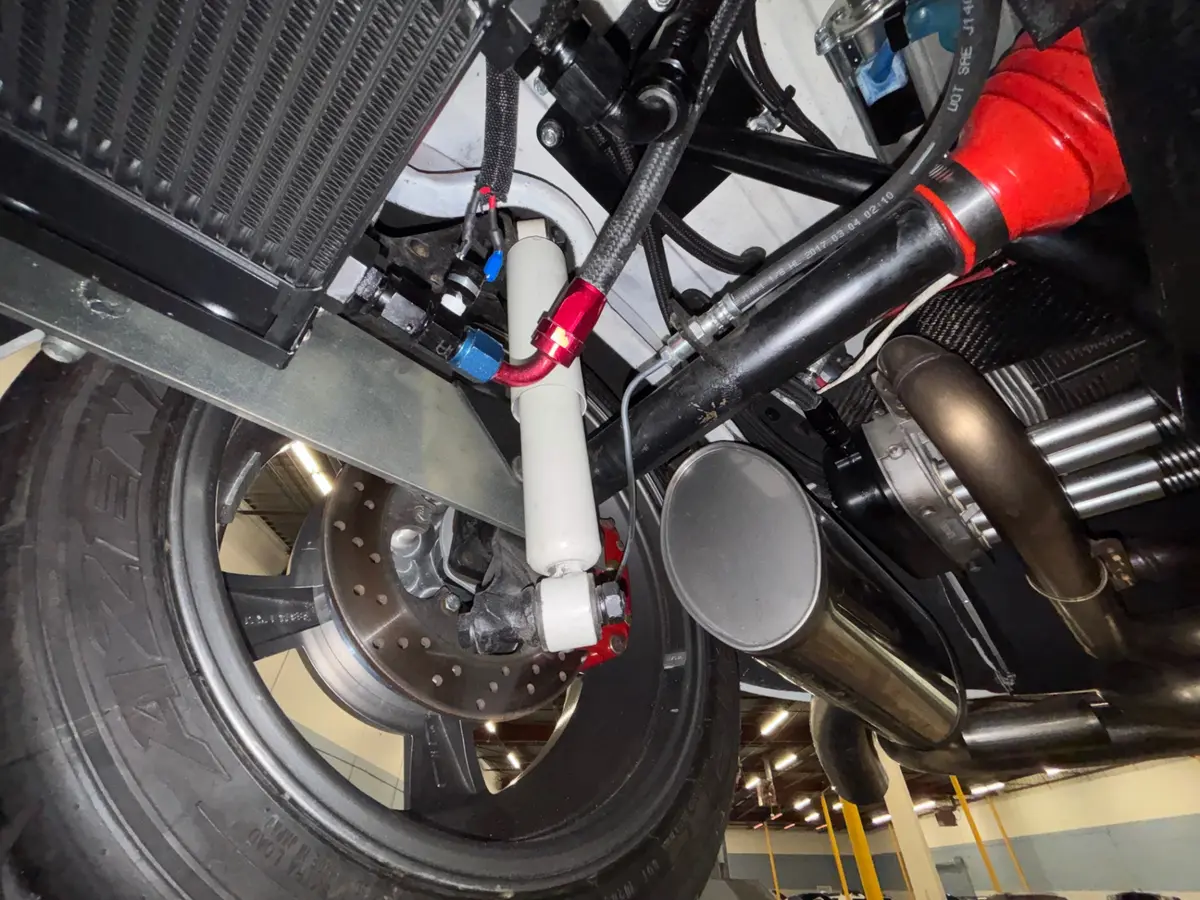
The chassis tells just as complete a story as the engine. The entire undercarriage has been powder coated, and the condition visible in the underside photos confirms that this was not a cosmetic-only treatment — the metal underneath is solid. Suspension is handled by adjustable coilover shocks at all four corners, paired with a front sway bar to manage body roll. The car has been lowered, which improves both center of gravity and visual stance. Four-wheel disc brakes replace the factory drums, with red calipers at all four corners and braided stainless steel brake lines throughout to eliminate the pedal softness that comes from flexible rubber hose. A line-lock is installed and operational, which allows the front brakes to be held independently while the rear wheels spin — a standard setup for drag strip staging. M/T drag slicks are included with the sale. The Optima battery has been relocated out of the engine compartment, which is a common practice on performance VWs to improve weight distribution and free up space. The roll cage is welded in place and visible in the cabin photos, consistent with a car that was built to be driven at the track as well as on the street.
Interior
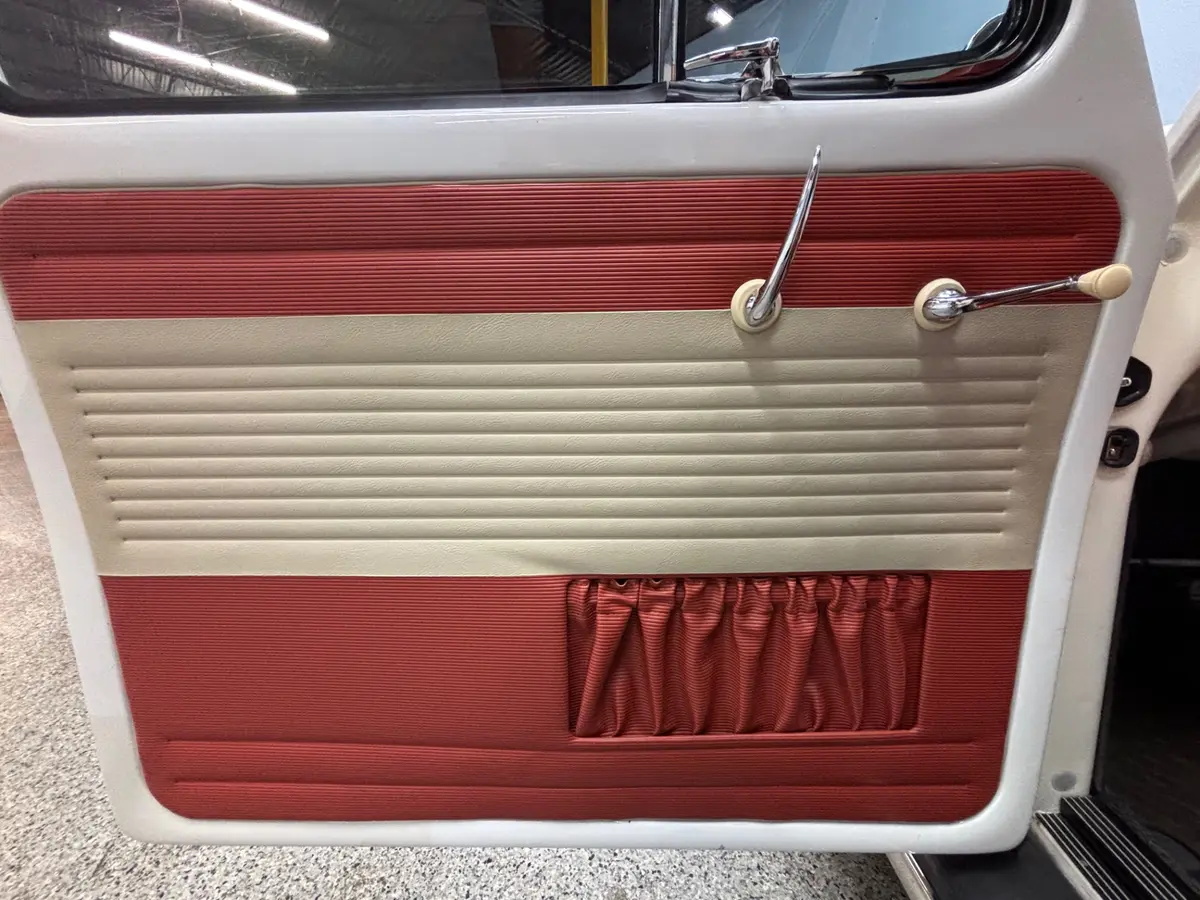
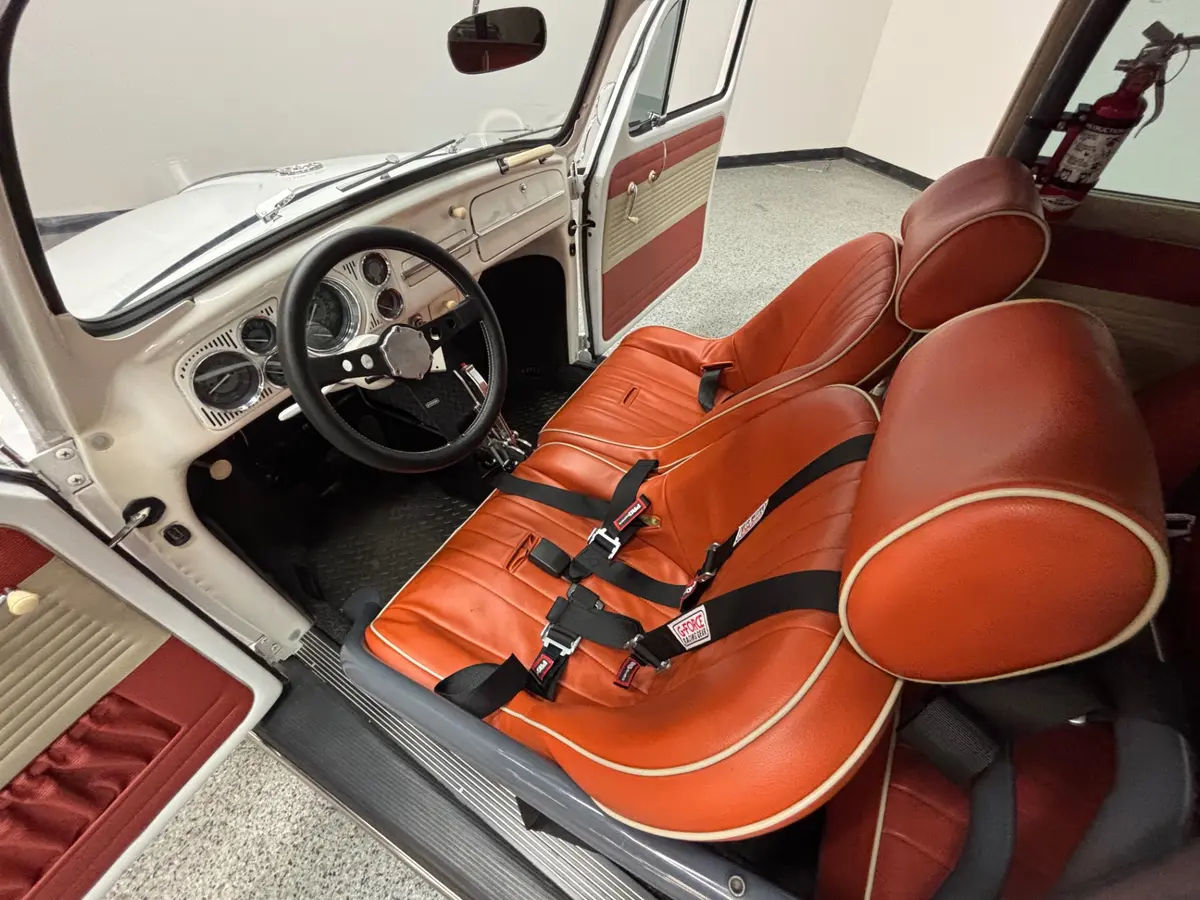
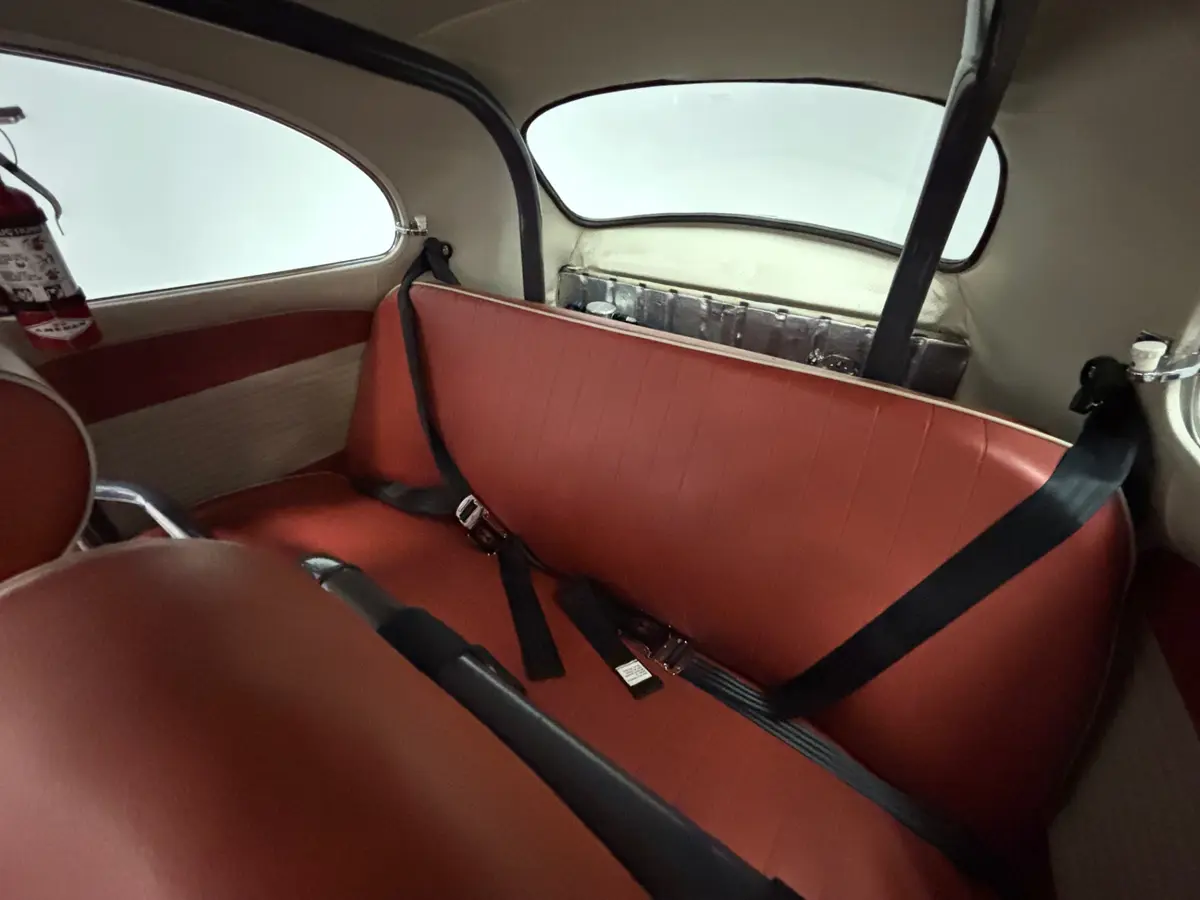
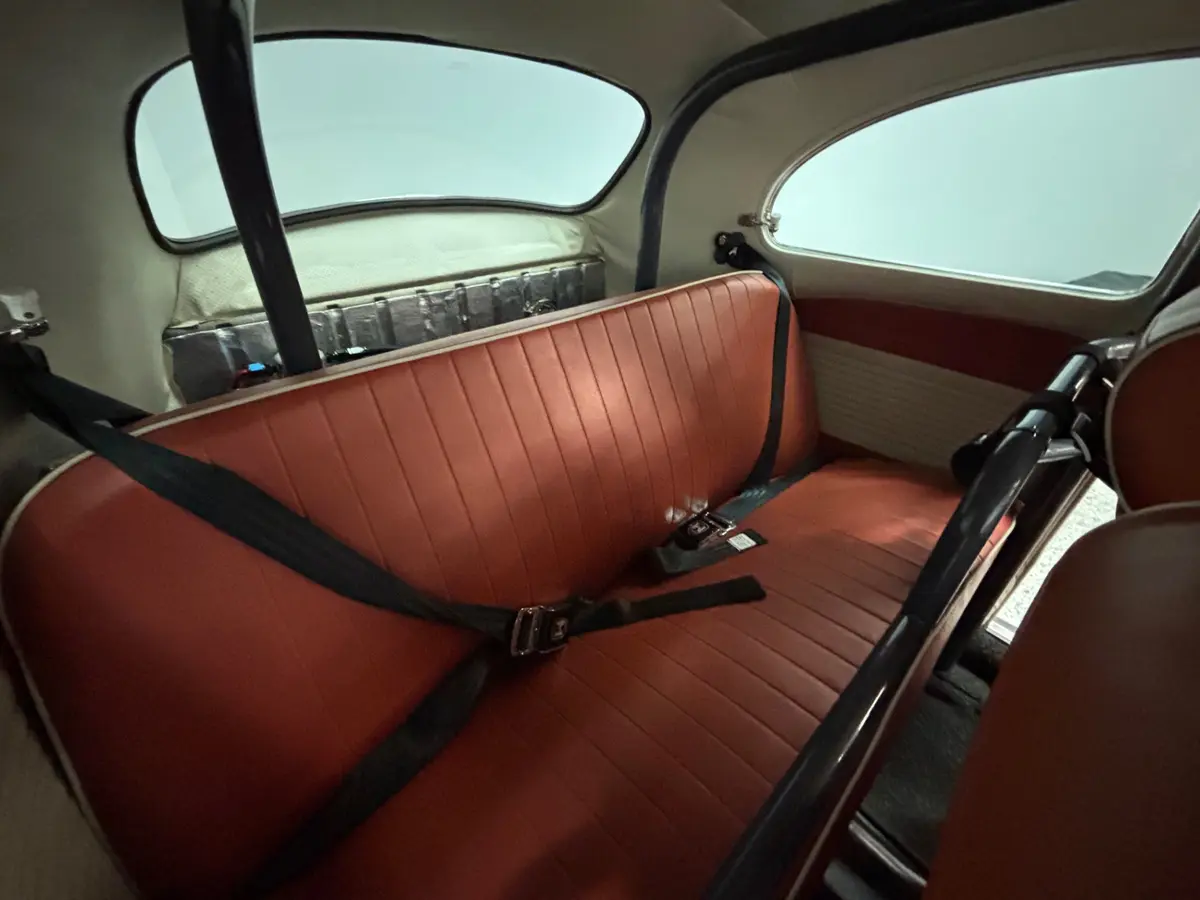
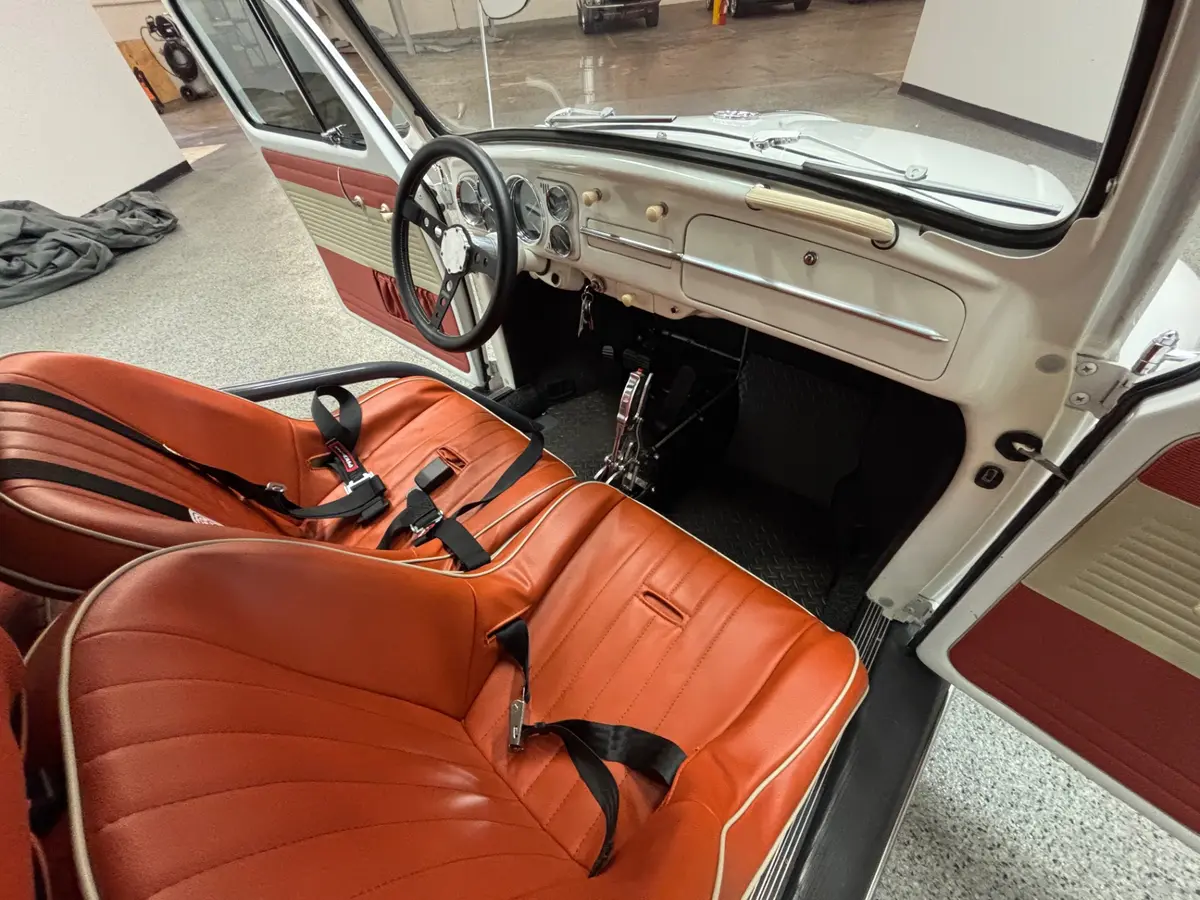
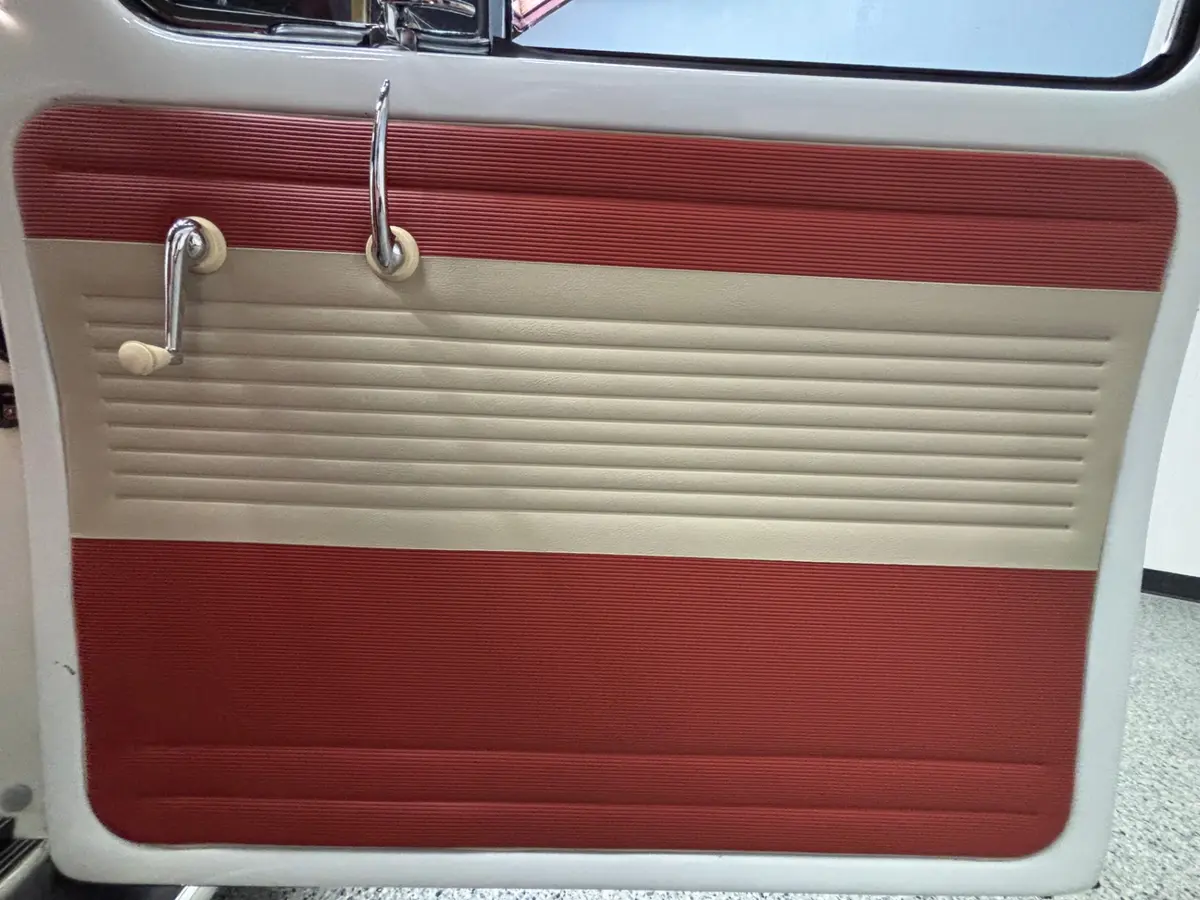
The interior of this 1963 Volkswagen Beetle is finished entirely in red vinyl, including the front bucket seats, rear bench seat, and door panels. The door panels use a two-tone red and cream ribbed vinyl treatment that fits the early 1960s period of the body while clearly being custom work. The front seats are individual buckets with pronounced bolsters and cream piping along the edges, and both are fitted with multi-point racing harnesses. The rear bench carries matching red vinyl with the same piping detail, and racing harnesses are installed there as well. All four occupant positions are properly restrained, which matters on a car with a roll cage and track capability.
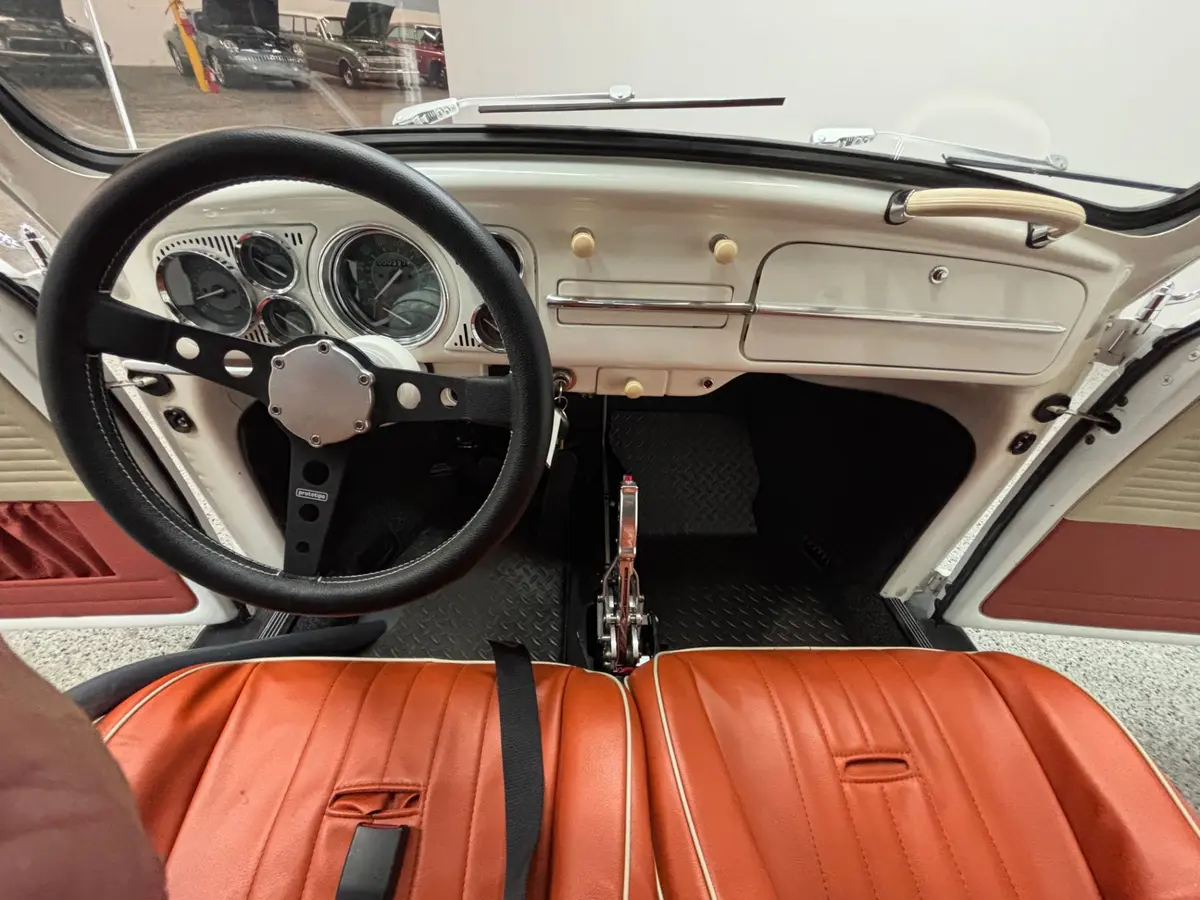
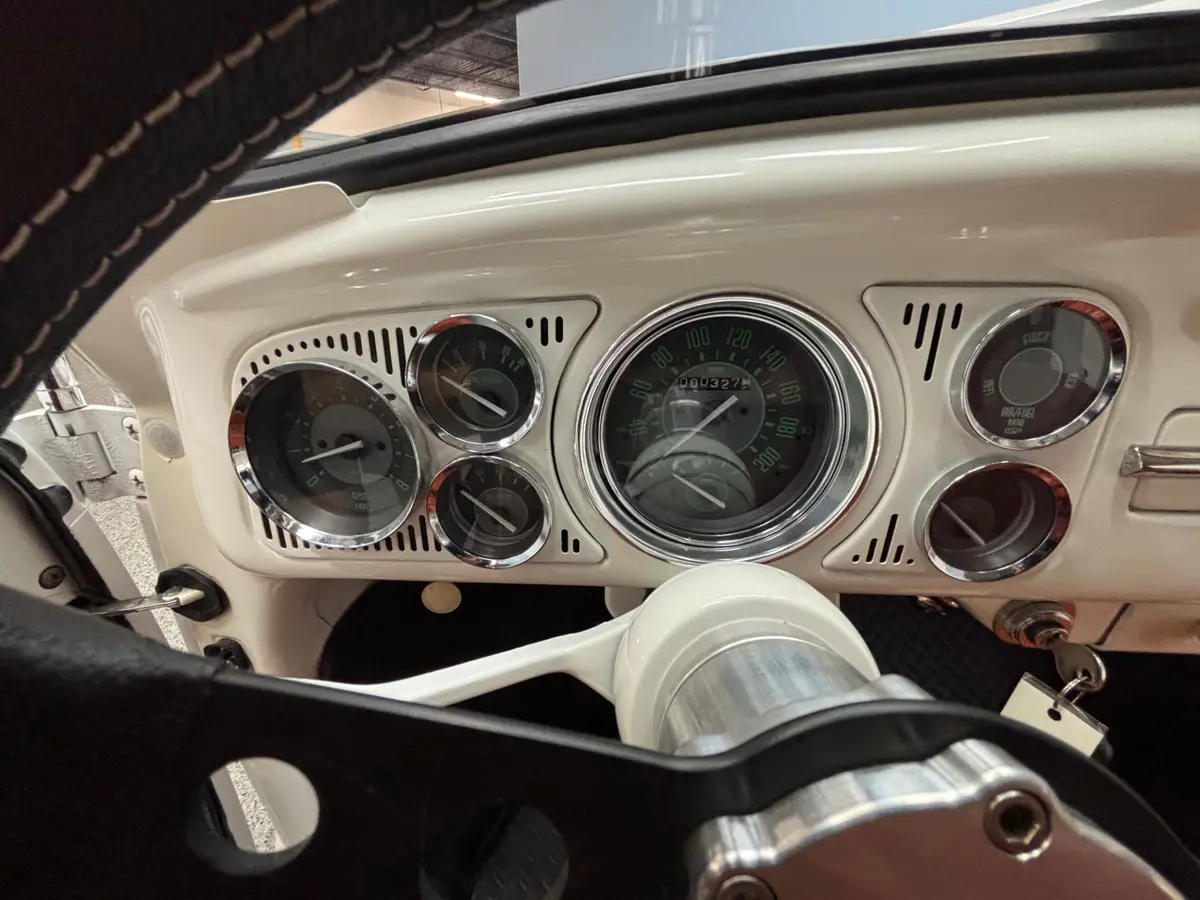
The steering wheel is a Prototipo aftermarket unit — a three-spoke design with a perforated leather grip and a polished center hub. Prototipo is an Italian manufacturer with a long history in motorsport-inspired steering wheels, and the choice fits the overall direction of this build. The factory gauge cluster has been replaced with an aftermarket unit that fills the original dashboard pod with a full set of gauges including a large central speedometer, and multiple auxiliary gauges for additional monitoring. The dashboard itself retains the original 1963 shape and color, painted in cream to match the door panel inserts, which ties the interior palette together.
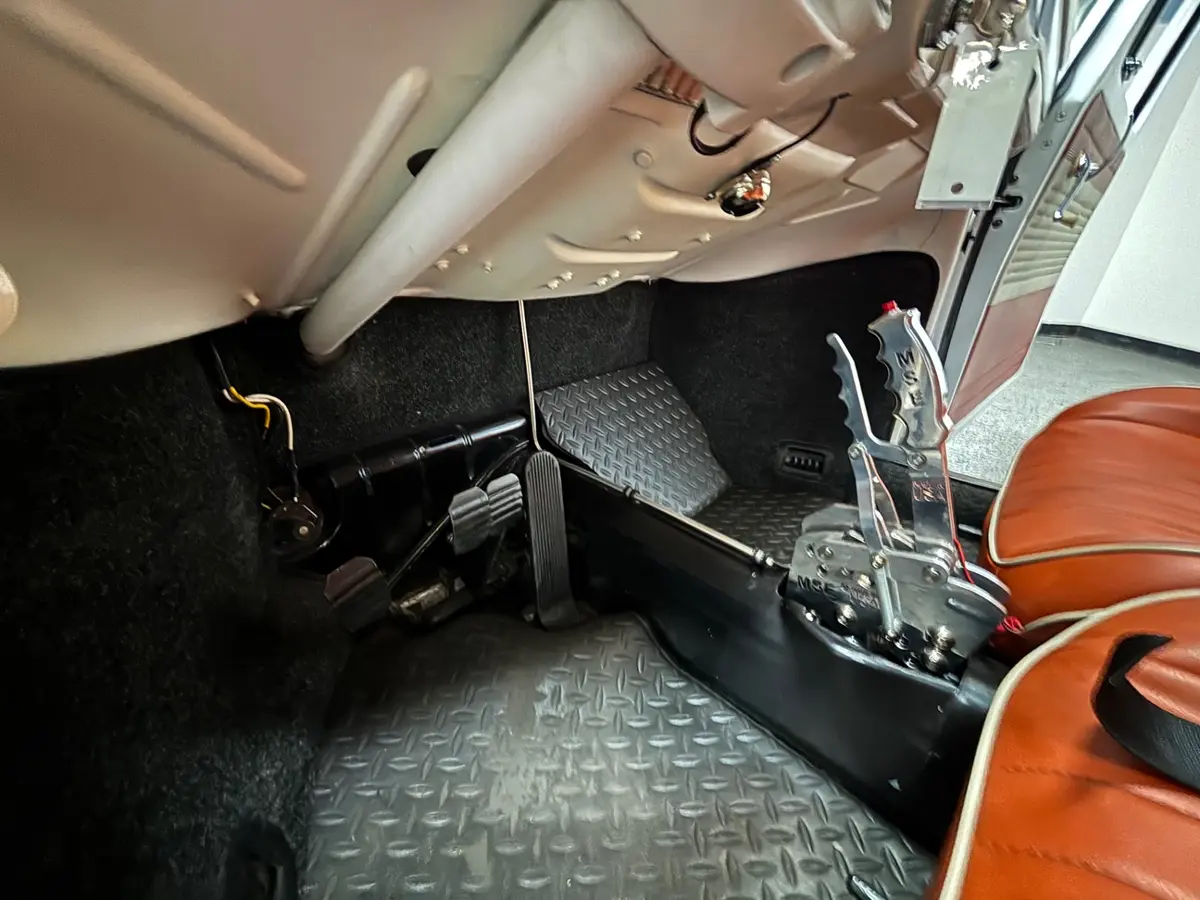
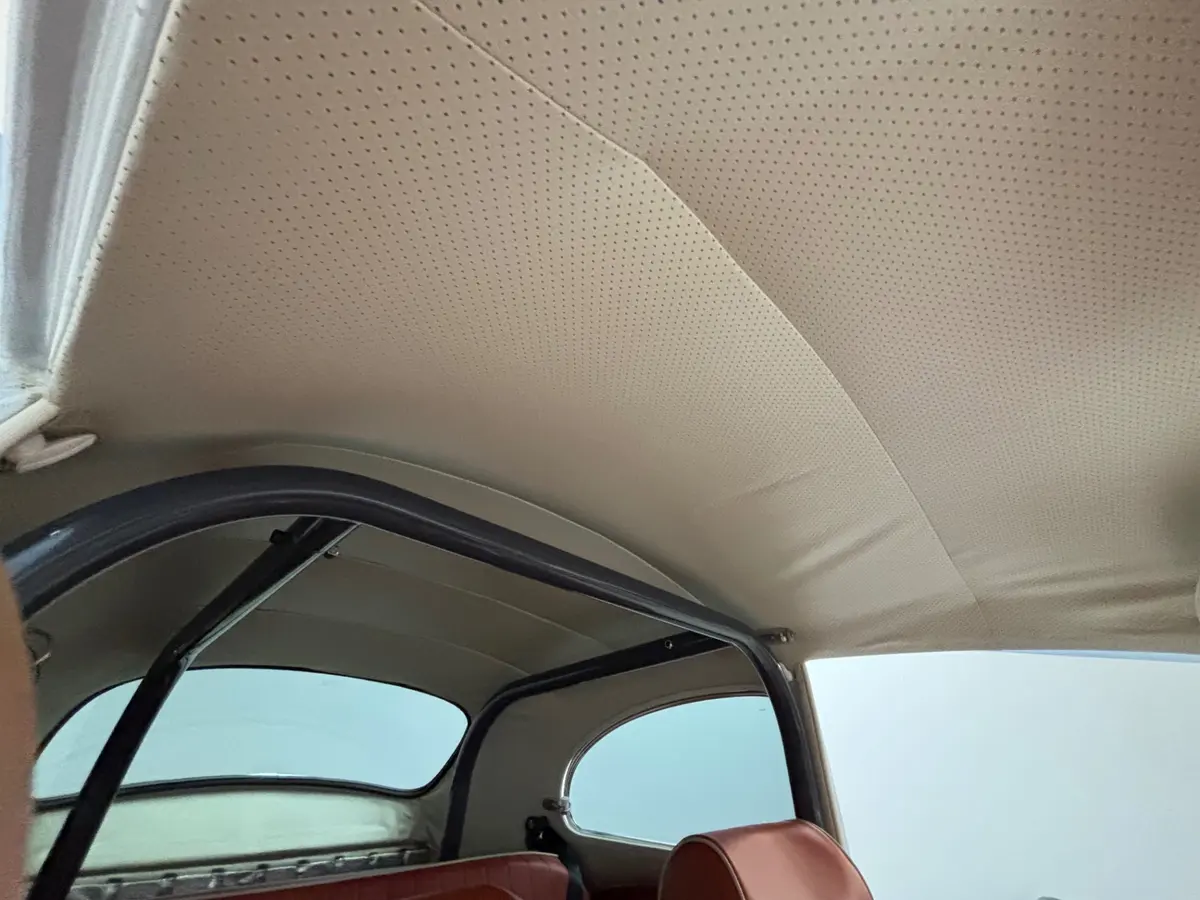
The floorboards are covered in diamond plate metal throughout the footwell area, and the headliner uses a custom perforated material in cream that complements the two-tone interior theme. A floor-shift manual transmission replaces the original tunnel-mounted shifter arrangement, and the shift mechanism is clearly visible in the interior photos. A mounted fire extinguisher is positioned within reach of the driver in the rear cabin area. The Optima battery is visible tucked along the front firewall area inside the cabin, mounted securely in a bracket with a kill switch accessible from the exterior.
Exterior
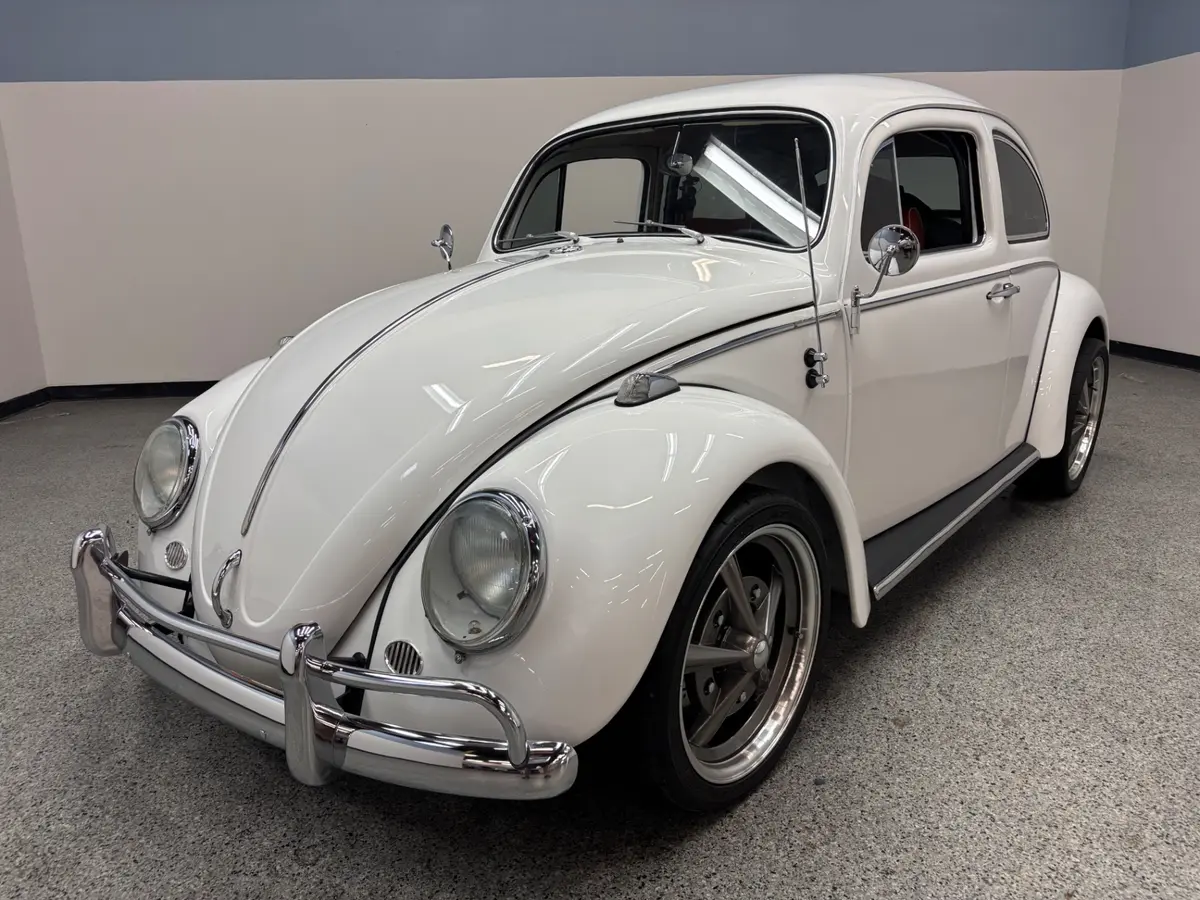
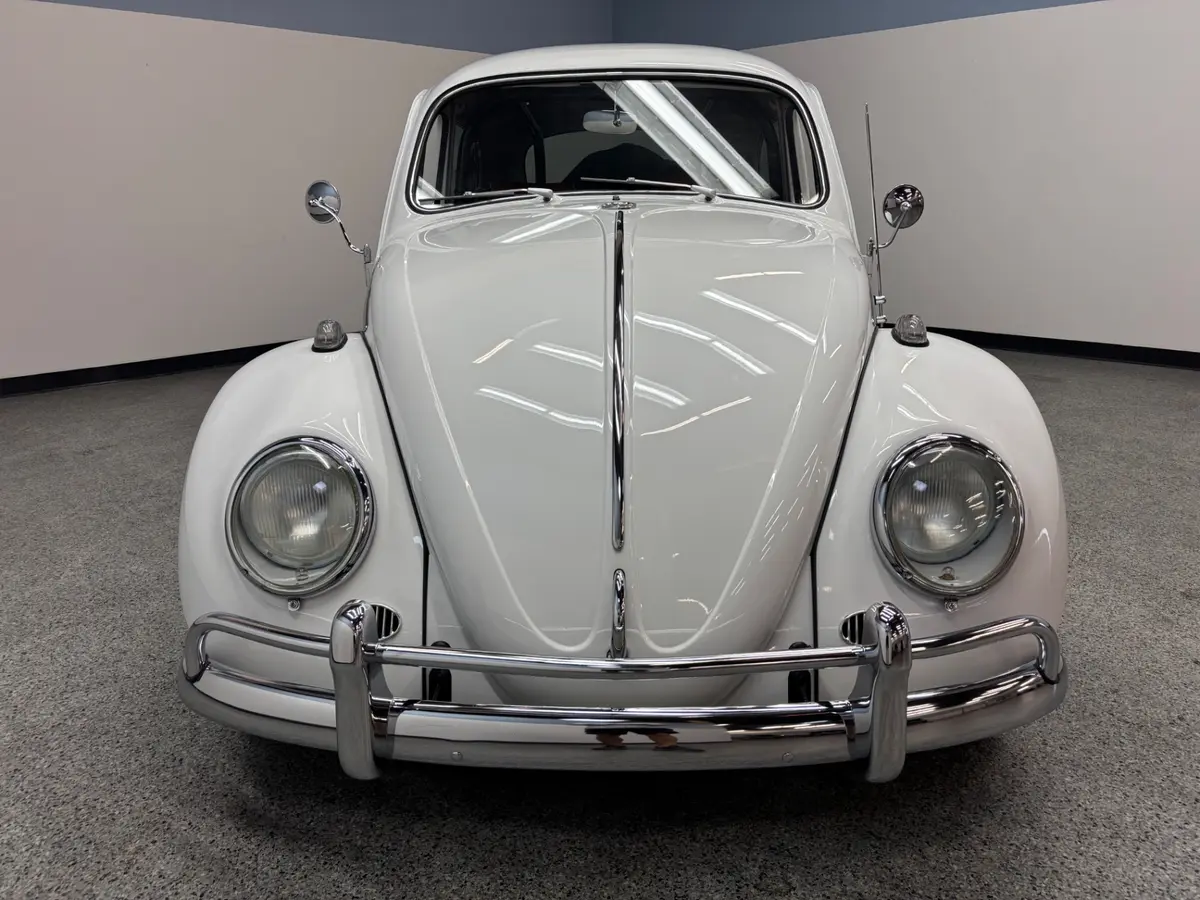
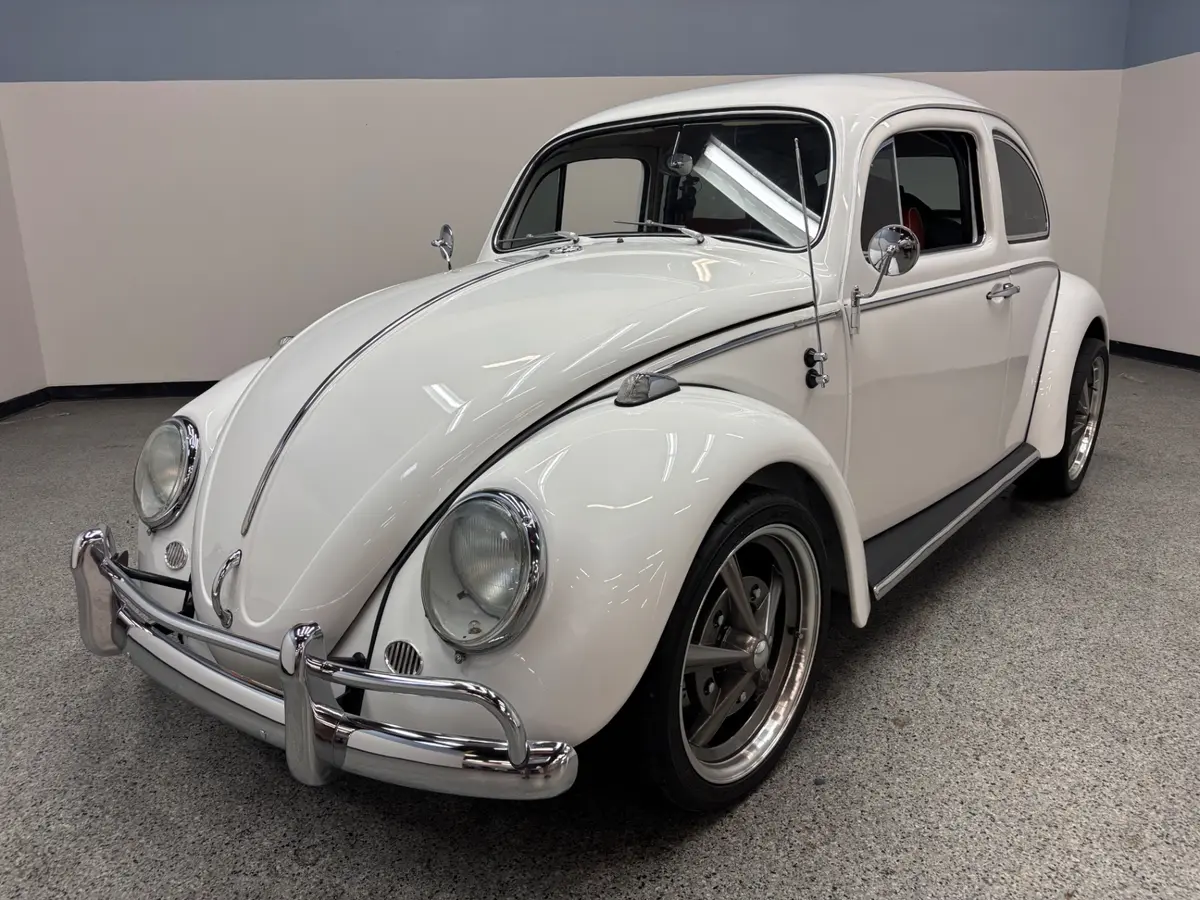
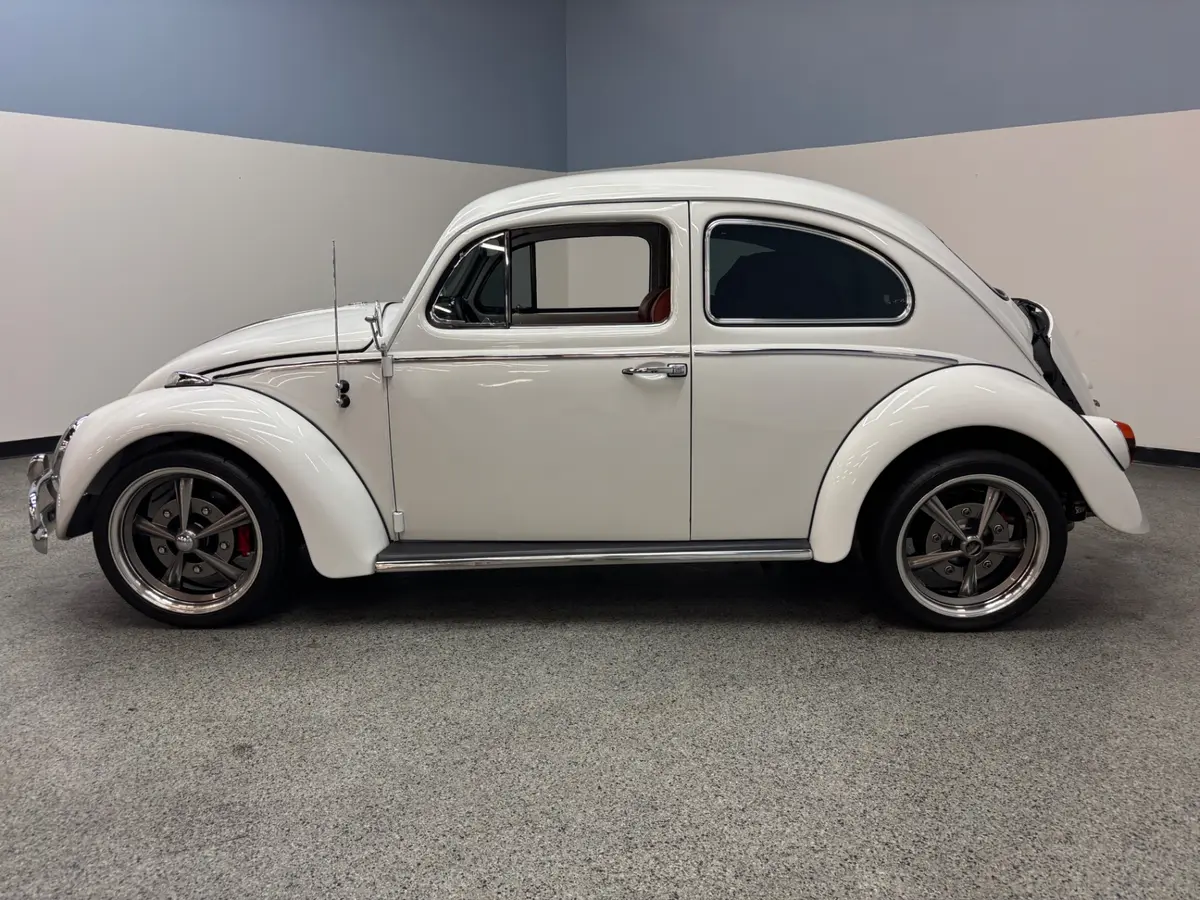
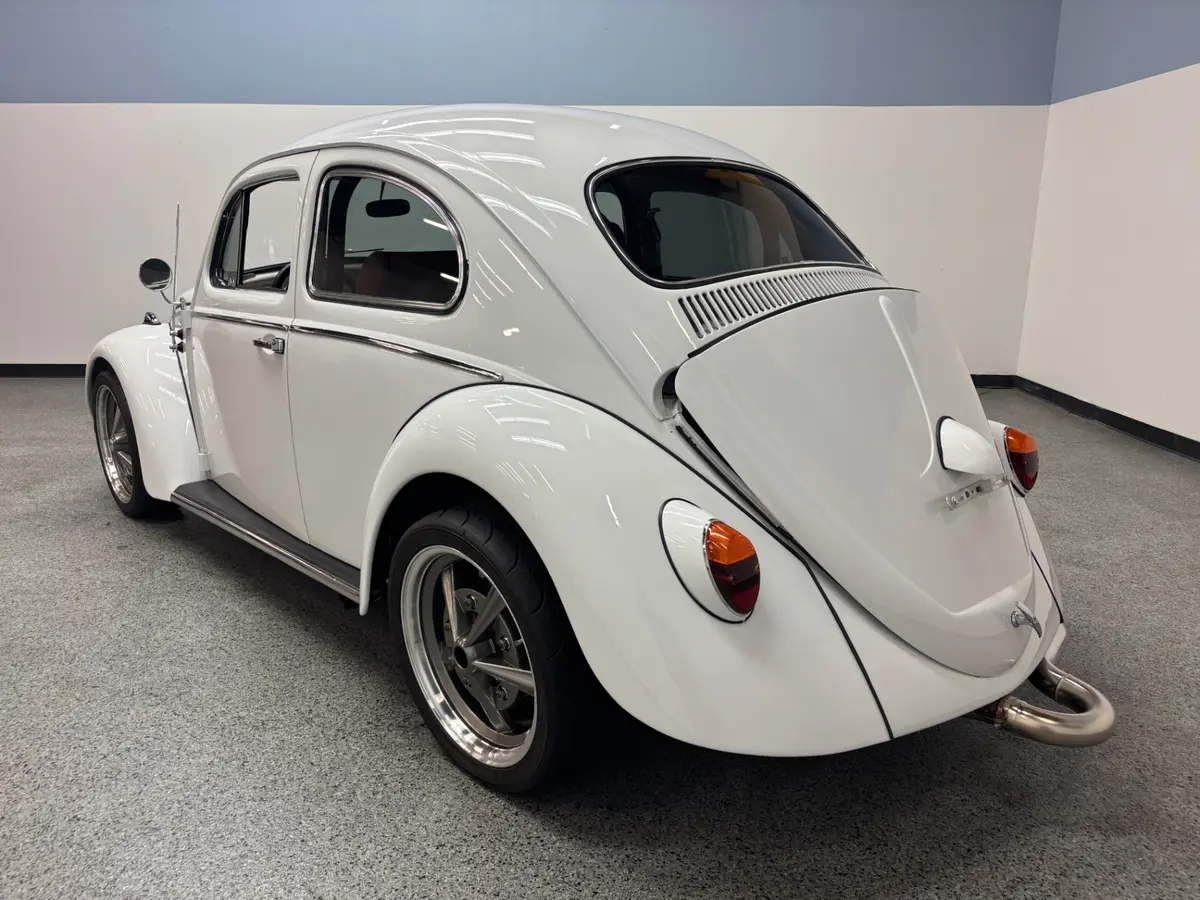
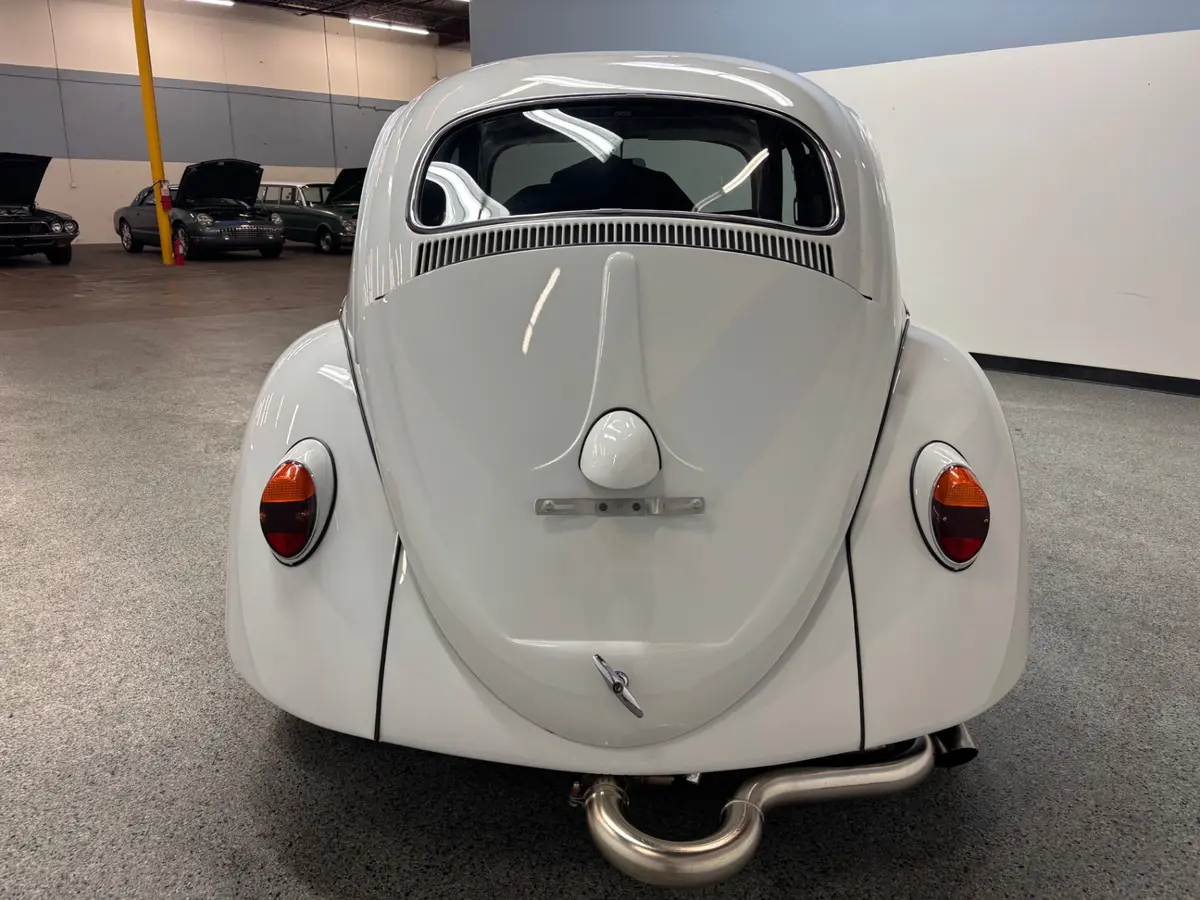
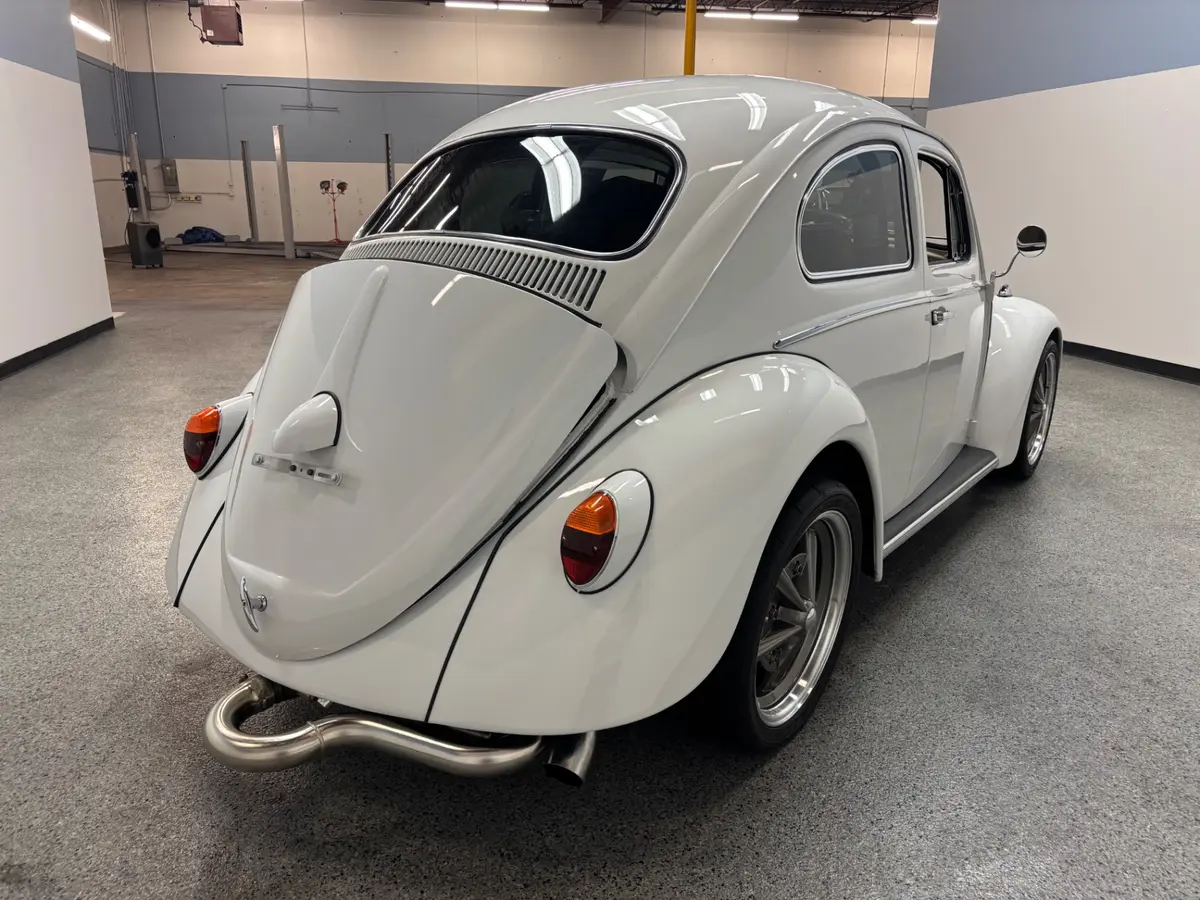
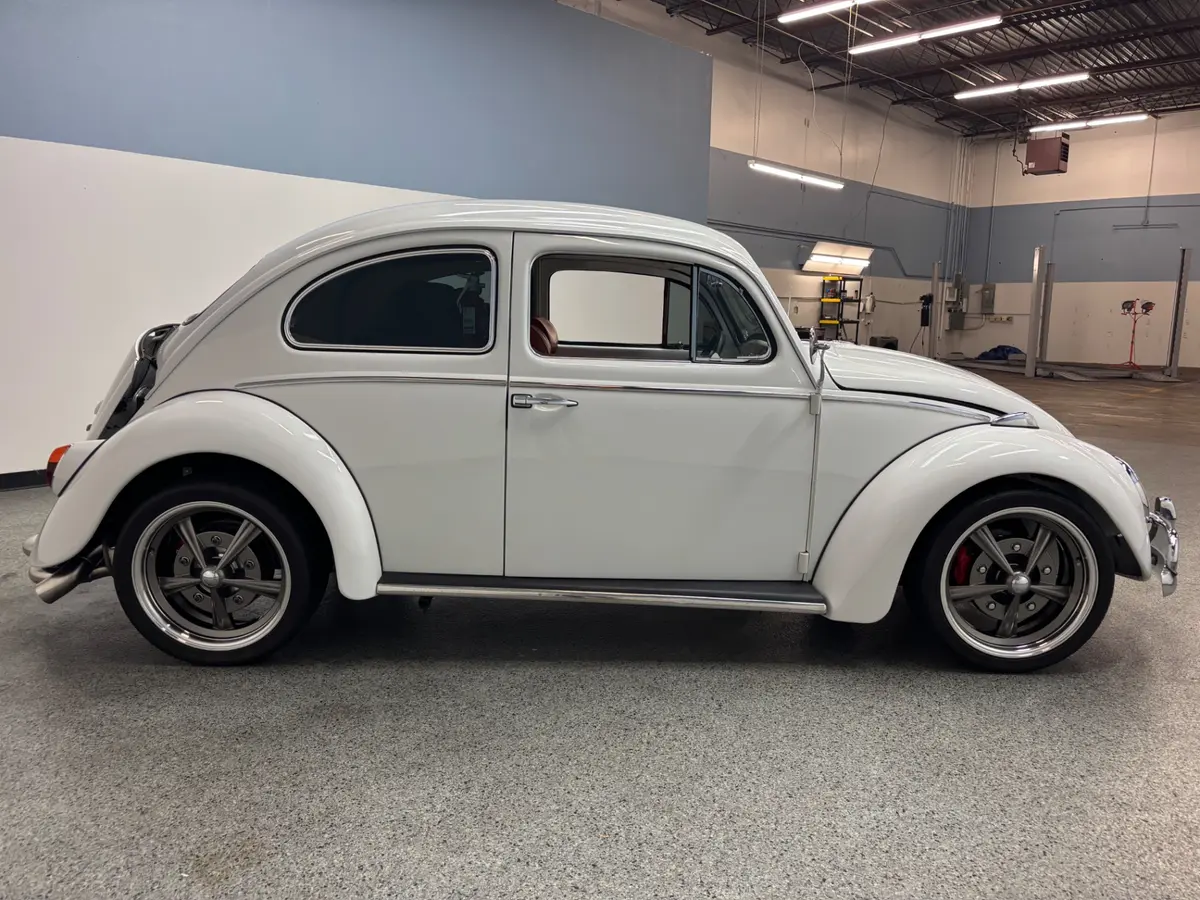
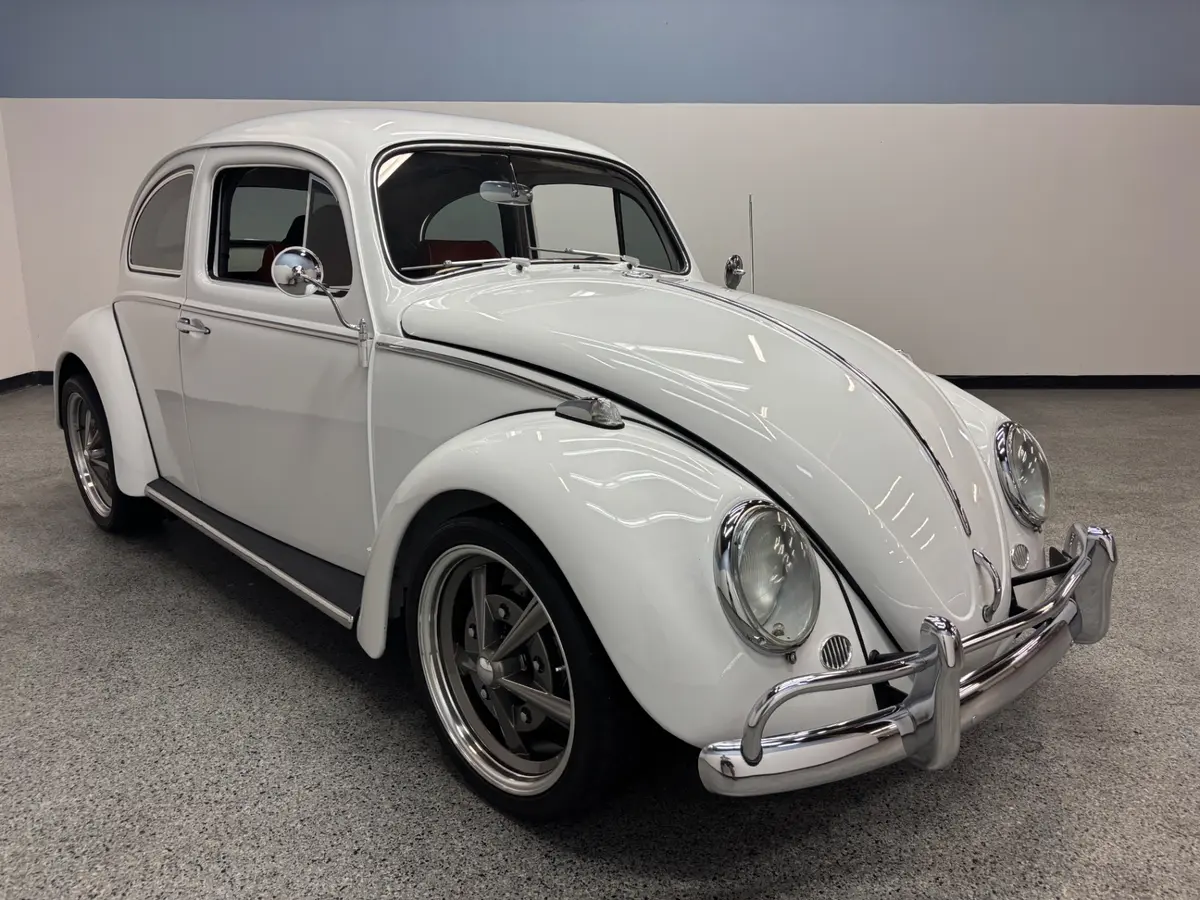
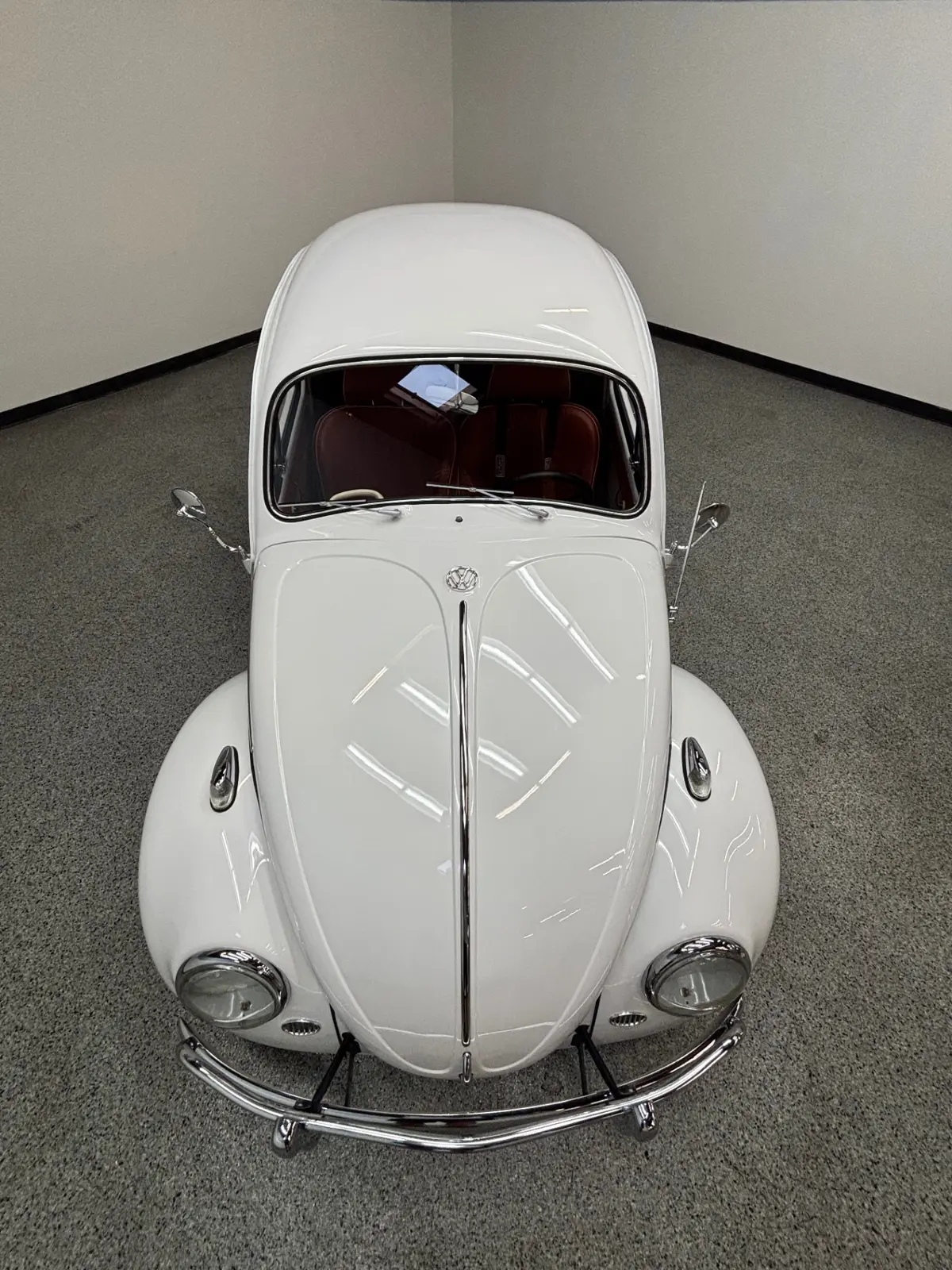
The 1963 Volkswagen Beetle body is presented in white, which is a correct period color for this generation of car and works particularly well against the red interior visible through the glass. The body retains the original shape of the pre-1967 Beetle, including the smaller rear window, the oval taillights, and the gently curved hood and decklid lines that define this era. A side pinstripe accent runs along the body character line, adding a subtle visual detail without cluttering the otherwise clean presentation. The windows are tinted, which reduces glare and gives the exterior a more purposeful look.
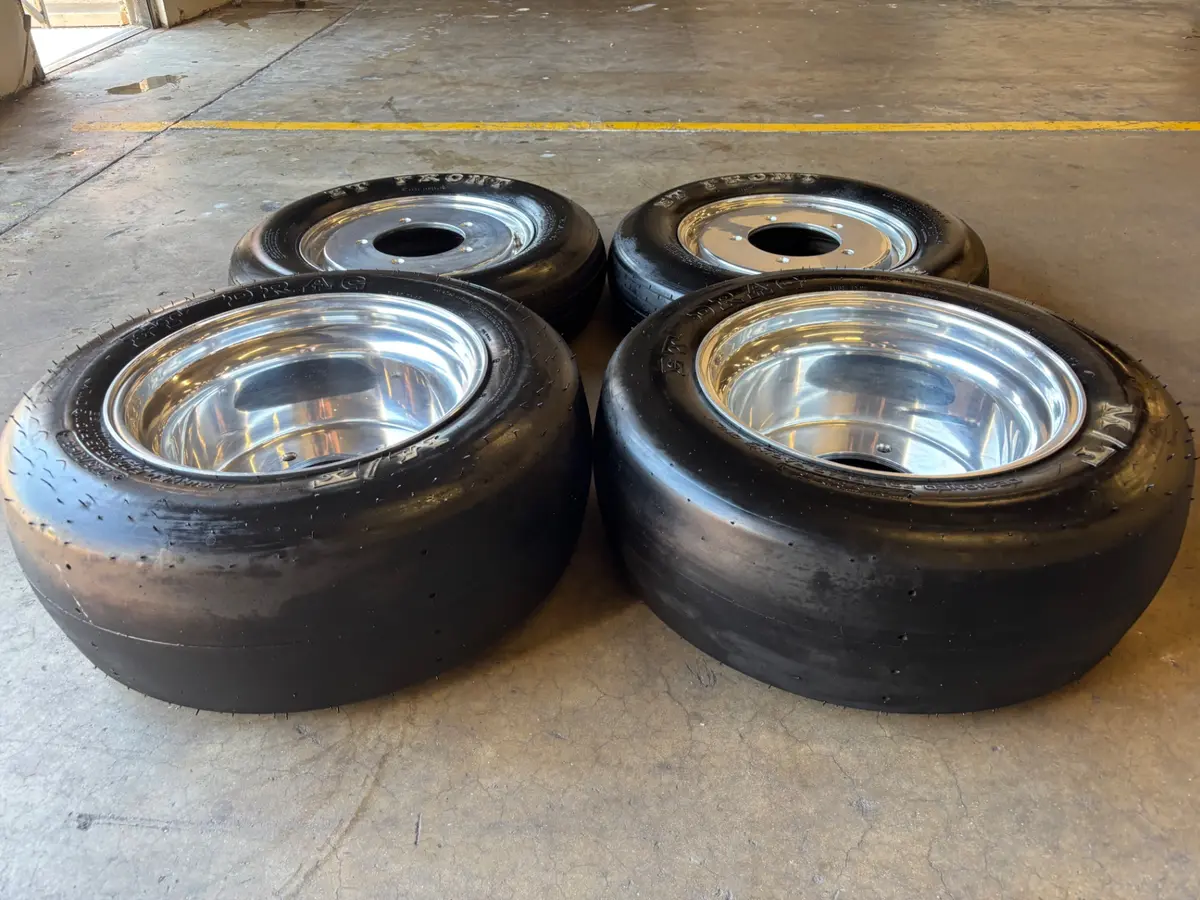
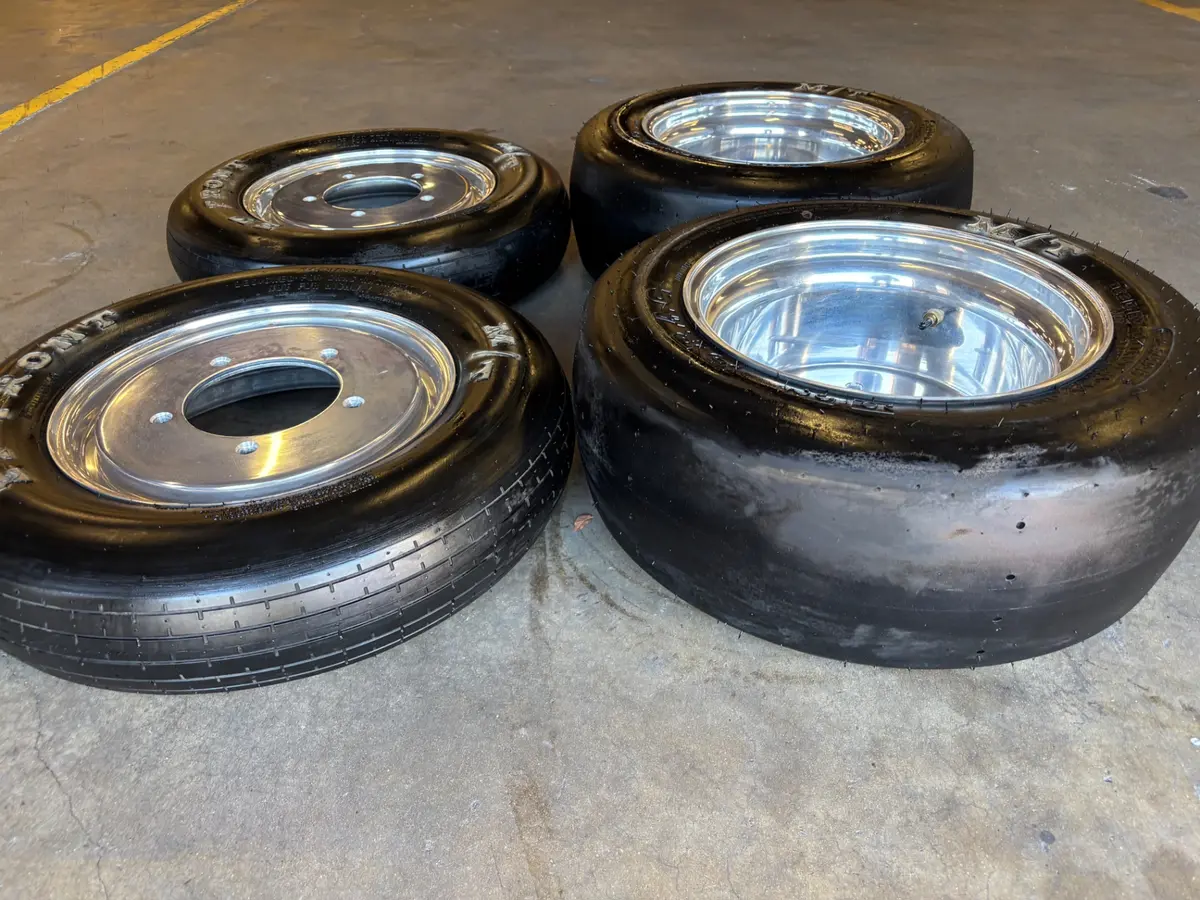
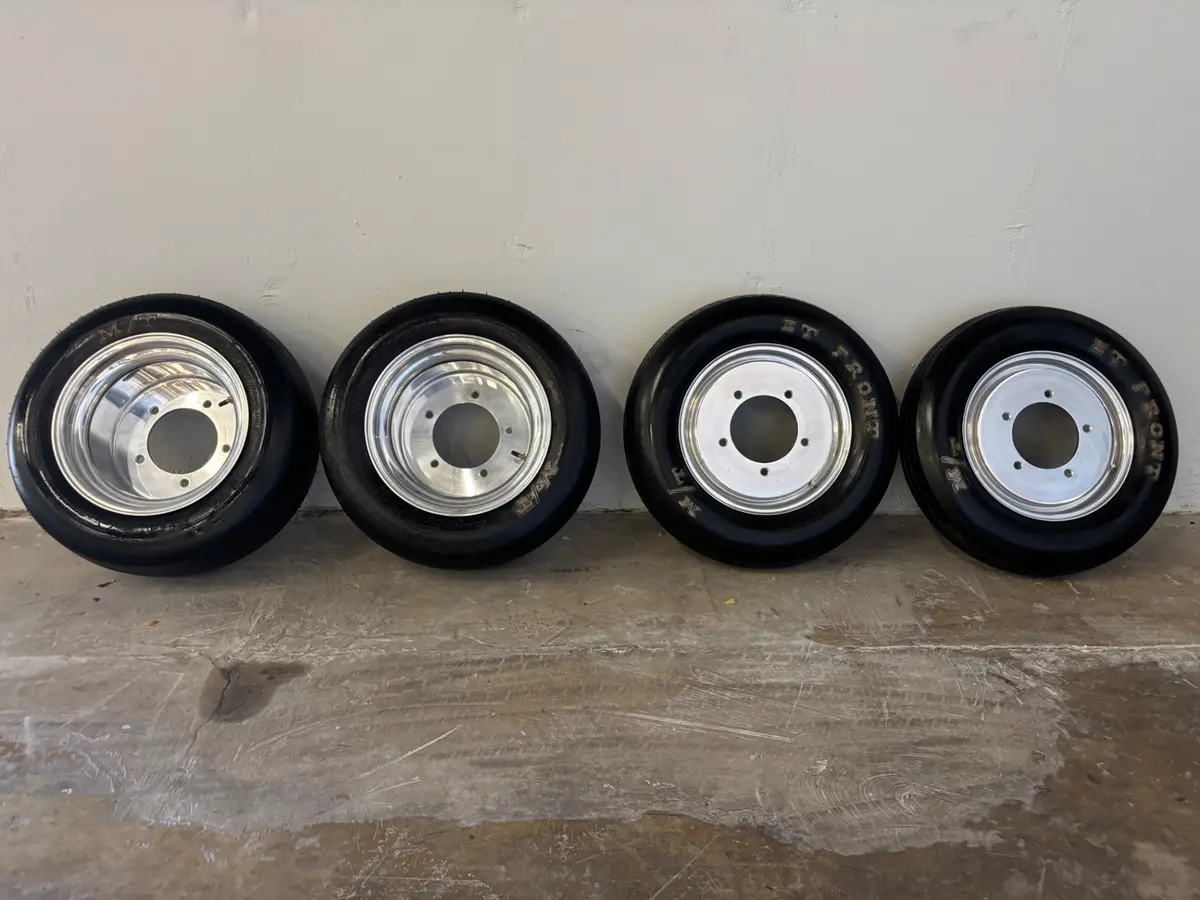
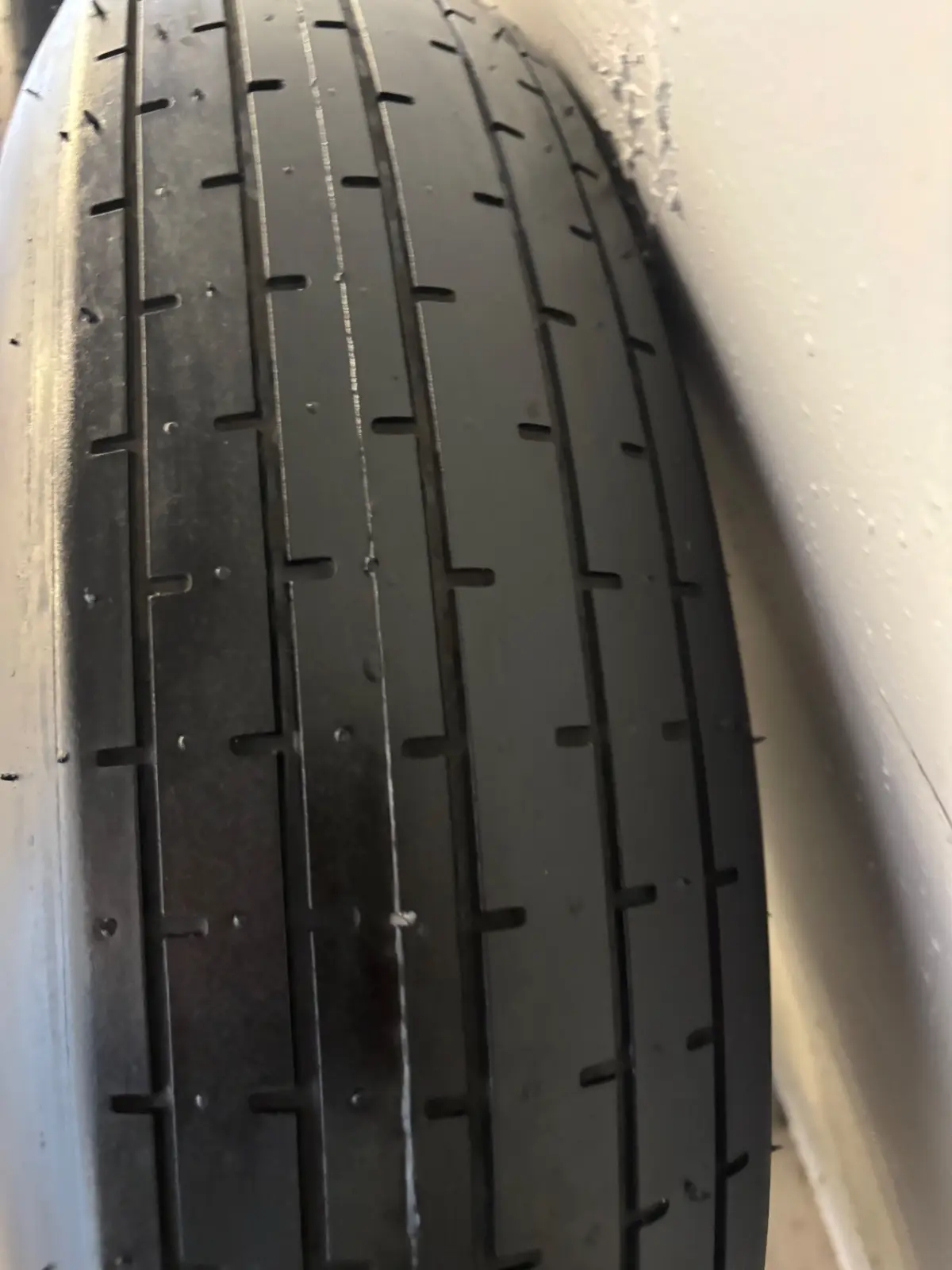
Chrome bumpers front and rear are in good condition, maintaining the period-correct trim while giving the car a finished appearance. Chrome side mirrors are fitted on both doors. The 6-spoke custom alloy wheels carry a dark gunmetal finish with a polished outer lip, and the fitment is appropriate for the lowered stance of the car. The rear wheels are mounted with M/T drag slicks, which are wide, bias-ply racing tires specifically designed for maximum traction on a prepared surface. The contrast between the narrow front tires and the wide rear slicks is a classic drag car visual signature that suits the overall character of this build.
The underside of the car, visible in the lift photos, shows the full extent of the chassis work: powder coated in gloss black from the tunnel to the suspension pickup points, with the stainless header tubes snaking out from the engine and running forward and rearward in the familiar four-into-one pattern common to performance VW builds. The red brake calipers are clearly visible at all four corners against the dark alloy wheels, and the braided stainless brake lines run cleanly along the suspension arms.
Conclusion
This 1963 Volkswagen Beetle represents a specific kind of build that takes real time and money to execute correctly. It is not a stock car that has been lightly modified, and it is not a show car that trades function for appearance. Every major system — engine, brakes, suspension, fuel delivery, ignition, safety equipment — has been addressed with purpose-built components. The fact that drag slicks are included, a line-lock is operational, and a roll cage is in place tells you what this car was designed to do. The fact that it is finished in clean white with a complete red vinyl interior and chrome trim tells you the builder cared equally about how it looks doing it.
The 1963 Volkswagen Beetle body shell is one of the lightest and most aerodynamically efficient platforms ever mass produced, which is exactly why the VW community has been building performance versions of these cars for sixty years. This one is ready to drive.
To schedule a viewing or ask specific questions about this 1963 Volkswagen Beetle, call Skyway Classics at 941-254-6608.
Disclaimer
Information found on the website is presented as given to us by the owner of the car, whether on consignment or from the owner we bought it from. Some Photos, materials for videos, descriptions and other information are provided by the consignor/seller and is deemed reliable, but Skyway Classics does not warranty or guarantee this information. Skyway Classics is not responsible for information that may incorrect or a publishing error. The decision to purchase should be based solely on the buyers personal inspection of the vehicle or by a professional inspection service prior to offer or purchase being made.
1963 Volkswagen Beetle — Custom-Built Performance Street and Strip Machine
Why This Car Is Special
The 1963 Volkswagen Beetle occupies a unique place in automotive history. By 1963, Volkswagen was producing the Beetle in numbers that would eventually make it the best-selling car of all time, surpassing the Ford Model T in cumulative production in 1972. The 1963 model year is part of what enthusiasts call the "pre-1967" era — a generation defined by its smaller rear window, simpler mechanical layout, and lighter curb weight compared to the later emissions-era cars. These early-sixties examples used a 6-volt electrical system from the factory, and the standard engine displaced just 1192cc, producing around 40 horsepower. That modest foundation is exactly what makes a well-built custom Beetle so interesting: when you start with a car that weighs roughly 1,600 pounds and replace the drivetrain with serious performance hardware, the power-to-weight ratio changes dramatically.
This particular 1963 Volkswagen Beetle is not a restoration. It is a purpose-built performance custom that uses the original body and platform as a starting point for a complete mechanical and aesthetic transformation. The build philosophy here is consistent from top to bottom and front to back — every major system has been upgraded, and the choices made throughout reflect the work of someone who understands how these cars perform and what they need to handle real power. The result is a car that looks at home at a car show but is mechanically prepared for the drag strip, with M/T drag slicks included, a line-lock installed, a roll cage in place, and racing harnesses securing both front and rear seats.
The seven-digit chassis number on this car places it as a legitimate 1963 model year Beetle produced at the Wolfsburg factory, consistent with VW's sequential numbering system used during this era.
Features List
- 2332cc Upgraded Air-Cooled Flat-4 Engine
- Dual Upgraded Carburetors with Individual Cone Air Filters
- Aftermarket Ignition System
- Fuel Pressure Regulator with Gauge
- Carbon Fiber Engine Bay Panels
- Stainless Headers Exhaust
- Oil Cooler Installed
- Floor-Shift Manual Transmission
- 4-Wheel Disc Brakes
- Red Brake Calipers
- Braided Stainless Brake Lines
- Adjustable Coilover Shocks
- Front Sway Bar
- Lowered Suspension
- Powder Coated Chassis
- Custom 6-Spoke Alloy Wheels
- M/T Drag Slicks Included
- Line-Lock Installed
- Roll Cage Installed
- Racing Harnesses Front and Rear
- Fire Extinguisher Mounted
- Optima Battery Relocated
- Custom Red Vinyl Interior
- Prototipo Aftermarket Steering Wheel
- Aftermarket Gauge Cluster
- Diamond Plate Floorboards
- Custom Perforated Headliner
- Chrome Side Mirrors
- Chrome Bumpers
- Side Pinstripe Accent
- Tinted Windows
- White Exterior
Mechanical
The factory 1963 Beetle came with a 1192cc air-cooled flat-four that produced somewhere around 40 horsepower — enough to move a lightweight car, but not enough to do much else. This build replaces that engine entirely with a 2332cc air-cooled flat-four, which is one of the most common and well-supported displacement combinations in the VW performance community. A 2332cc build typically involves a stroked crankshaft paired with larger bore cylinders, and when properly assembled with matching heads and carburetion, it produces power that is entirely unrecognizable compared to the stock configuration.
Fuel delivery is handled by dual upgraded carburetors, each topped with an individual cone air filter. A fuel pressure regulator with a visible gauge is mounted in the engine bay, giving the driver the ability to monitor delivery pressure directly. The ignition system has been replaced with an aftermarket unit designed to provide consistent spark across the rpm range. Stainless headers replace the factory exhaust manifolds, which on a modified air-cooled VW is one of the most important upgrades for extracting power. An oil cooler has been added, which is a critical addition on any high-displacement air-cooled build since these engines rely entirely on oil and airflow for thermal management. The engine bay itself is lined with carbon fiber panels, which keep the presentation clean and reduce heat soak into surrounding components.
The chassis tells just as complete a story as the engine. The entire undercarriage has been powder coated, and the condition visible in the underside photos confirms that this was not a cosmetic-only treatment — the metal underneath is solid. Suspension is handled by adjustable coilover shocks at all four corners, paired with a front sway bar to manage body roll. The car has been lowered, which improves both center of gravity and visual stance. Four-wheel disc brakes replace the factory drums, with red calipers at all four corners and braided stainless steel brake lines throughout to eliminate the pedal softness that comes from flexible rubber hose. A line-lock is installed and operational, which allows the front brakes to be held independently while the rear wheels spin — a standard setup for drag strip staging. M/T drag slicks are included with the sale. The Optima battery has been relocated out of the engine compartment, which is a common practice on performance VWs to improve weight distribution and free up space. The roll cage is welded in place and visible in the cabin photos, consistent with a car that was built to be driven at the track as well as on the street.
Interior
The interior of this 1963 Volkswagen Beetle is finished entirely in red vinyl, including the front bucket seats, rear bench seat, and door panels. The door panels use a two-tone red and cream ribbed vinyl treatment that fits the early 1960s period of the body while clearly being custom work. The front seats are individual buckets with pronounced bolsters and cream piping along the edges, and both are fitted with multi-point racing harnesses. The rear bench carries matching red vinyl with the same piping detail, and racing harnesses are installed there as well. All four occupant positions are properly restrained, which matters on a car with a roll cage and track capability.
The steering wheel is a Prototipo aftermarket unit — a three-spoke design with a perforated leather grip and a polished center hub. Prototipo is an Italian manufacturer with a long history in motorsport-inspired steering wheels, and the choice fits the overall direction of this build. The factory gauge cluster has been replaced with an aftermarket unit that fills the original dashboard pod with a full set of gauges including a large central speedometer, and multiple auxiliary gauges for additional monitoring. The dashboard itself retains the original 1963 shape and color, painted in cream to match the door panel inserts, which ties the interior palette together.
The floorboards are covered in diamond plate metal throughout the footwell area, and the headliner uses a custom perforated material in cream that complements the two-tone interior theme. A floor-shift manual transmission replaces the original tunnel-mounted shifter arrangement, and the shift mechanism is clearly visible in the interior photos. A mounted fire extinguisher is positioned within reach of the driver in the rear cabin area. The Optima battery is visible tucked along the front firewall area inside the cabin, mounted securely in a bracket with a kill switch accessible from the exterior.
Exterior
The 1963 Volkswagen Beetle body is presented in white, which is a correct period color for this generation of car and works particularly well against the red interior visible through the glass. The body retains the original shape of the pre-1967 Beetle, including the smaller rear window, the oval taillights, and the gently curved hood and decklid lines that define this era. A side pinstripe accent runs along the body character line, adding a subtle visual detail without cluttering the otherwise clean presentation. The windows are tinted, which reduces glare and gives the exterior a more purposeful look.
Chrome bumpers front and rear are in good condition, maintaining the period-correct trim while giving the car a finished appearance. Chrome side mirrors are fitted on both doors. The 6-spoke custom alloy wheels carry a dark gunmetal finish with a polished outer lip, and the fitment is appropriate for the lowered stance of the car. The rear wheels are mounted with M/T drag slicks, which are wide, bias-ply racing tires specifically designed for maximum traction on a prepared surface. The contrast between the narrow front tires and the wide rear slicks is a classic drag car visual signature that suits the overall character of this build.
The underside of the car, visible in the lift photos, shows the full extent of the chassis work: powder coated in gloss black from the tunnel to the suspension pickup points, with the stainless header tubes snaking out from the engine and running forward and rearward in the familiar four-into-one pattern common to performance VW builds. The red brake calipers are clearly visible at all four corners against the dark alloy wheels, and the braided stainless brake lines run cleanly along the suspension arms.
Conclusion
This 1963 Volkswagen Beetle represents a specific kind of build that takes real time and money to execute correctly. It is not a stock car that has been lightly modified, and it is not a show car that trades function for appearance. Every major system — engine, brakes, suspension, fuel delivery, ignition, safety equipment — has been addressed with purpose-built components. The fact that drag slicks are included, a line-lock is operational, and a roll cage is in place tells you what this car was designed to do. The fact that it is finished in clean white with a complete red vinyl interior and chrome trim tells you the builder cared equally about how it looks doing it.
The 1963 Volkswagen Beetle body shell is one of the lightest and most aerodynamically efficient platforms ever mass produced, which is exactly why the VW community has been building performance versions of these cars for sixty years. This one is ready to drive.
To schedule a viewing or ask specific questions about this 1963 Volkswagen Beetle, call Skyway Classics at 941-254-6608.
Disclaimer
Information found on the website is presented as given to us by the owner of the car, whether on consignment or from the owner we bought it from. Some Photos, materials for videos, descriptions and other information are provided by the consignor/seller and is deemed reliable, but Skyway Classics does not warranty or guarantee this information. Skyway Classics is not responsible for information that may incorrect or a publishing error. The decision to purchase should be based solely on the buyers personal inspection of the vehicle or by a professional inspection service prior to offer or purchase being made.
1963 Volkswagen
Beetle Custom
Why Choose Skyway Classics?
Explore our curated inventory of classic and collector cars—thoughtfully selected, ready to drive, and supported by experts who make ownership simple.
Expert Curation
Every vehicle is hand-selected by our experts for quality, authenticity, and investment potential.
Fast Transactions
Streamlined buying and selling process with quick financing and immediate delivery options.
Only National Dealer With Classic Service & Repair
We’re the only national dealership that services and repairs the classics we sell—before and after the sale.
Nationwide Network
Access to our extensive network of collectors, restorers, and classic car enthusiasts nationwide.
Concierge Ownership Support
From financing and insurance to paperwork, shipping, and titling—we handle the details so you can enjoy the drive.
Passion-Driven Service
We're classic car enthusiasts first, providing personalized service with genuine passion for the hobby.