
1973 Volkswagen
Thing Electric
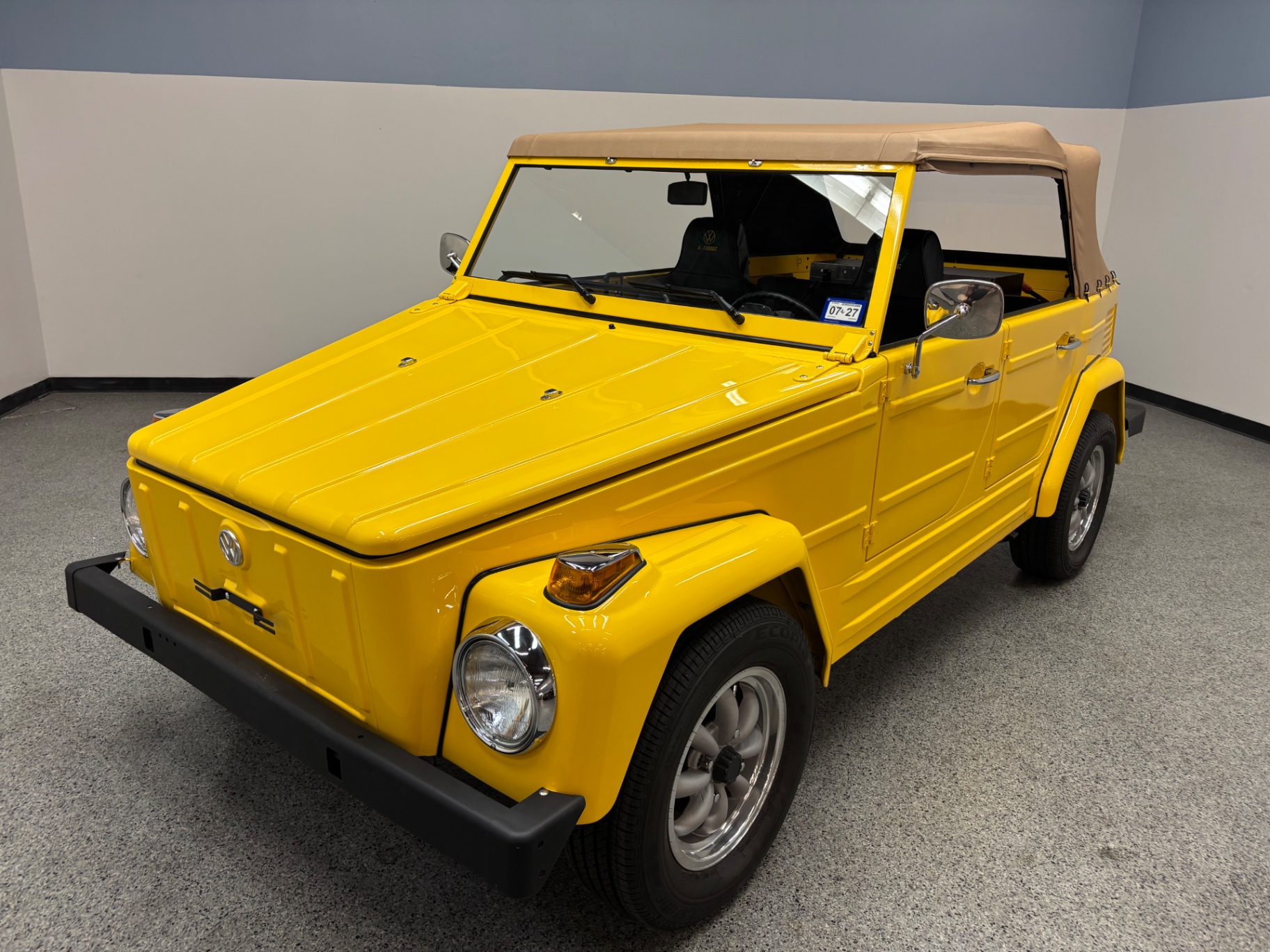
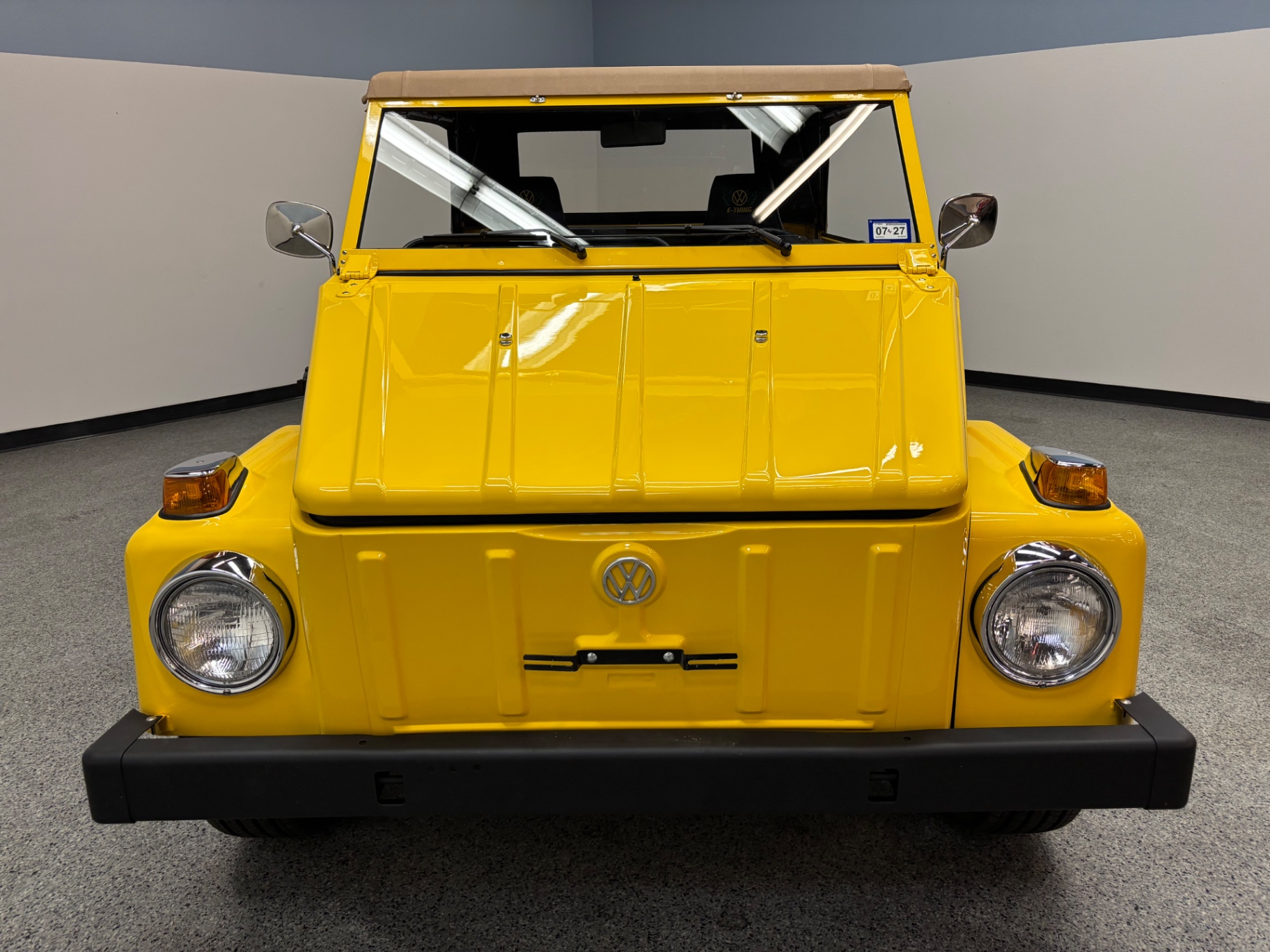
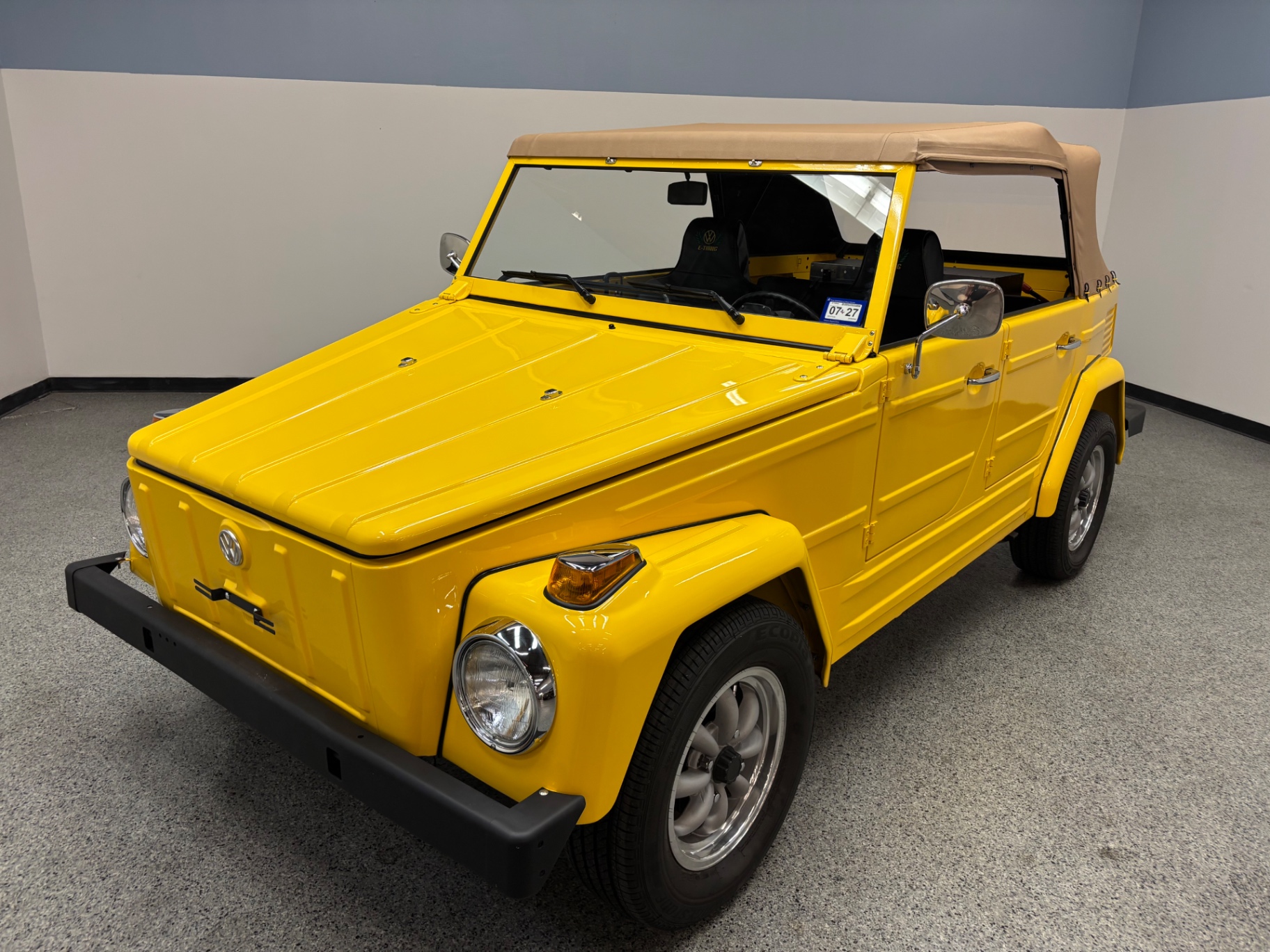
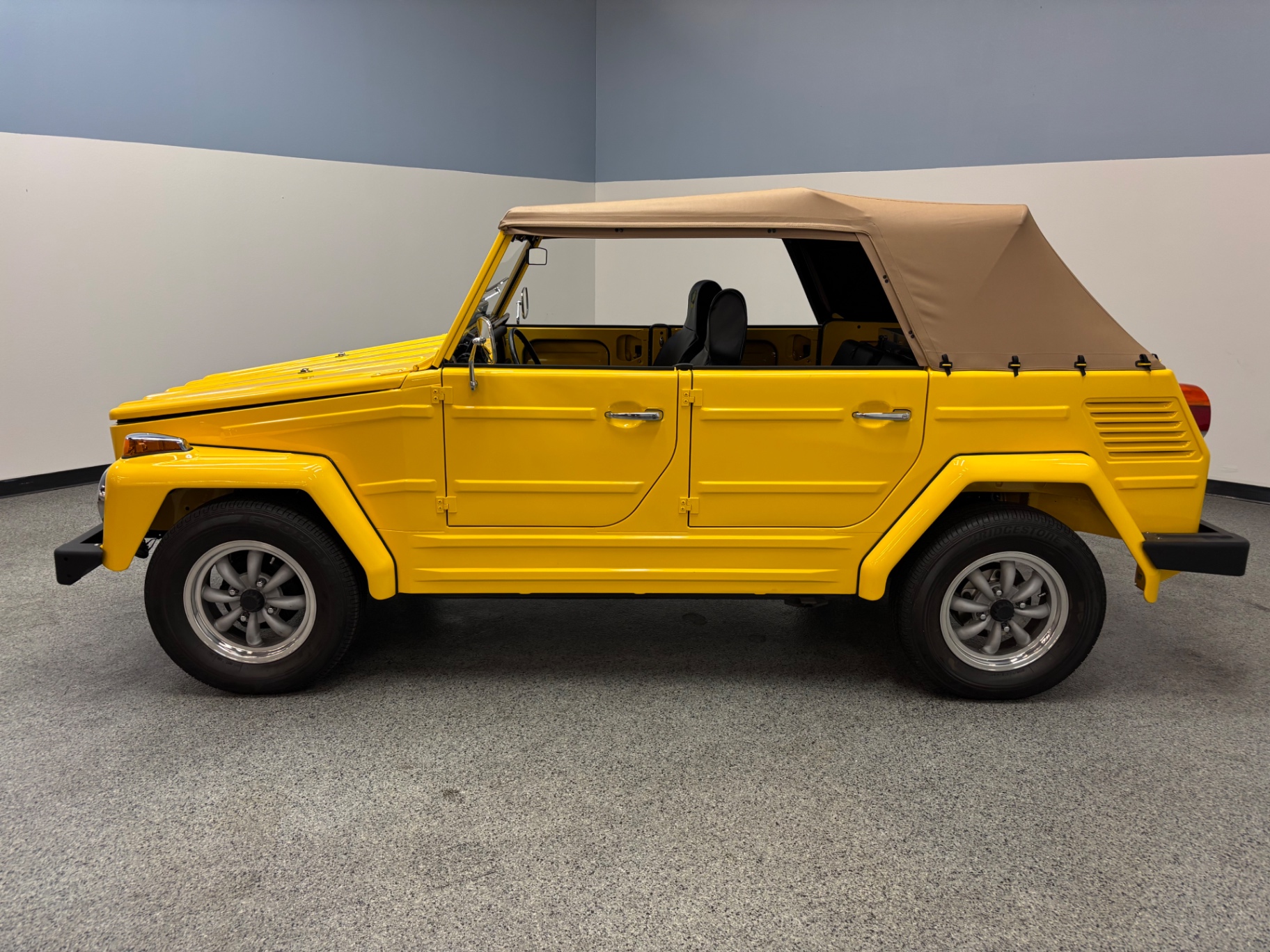
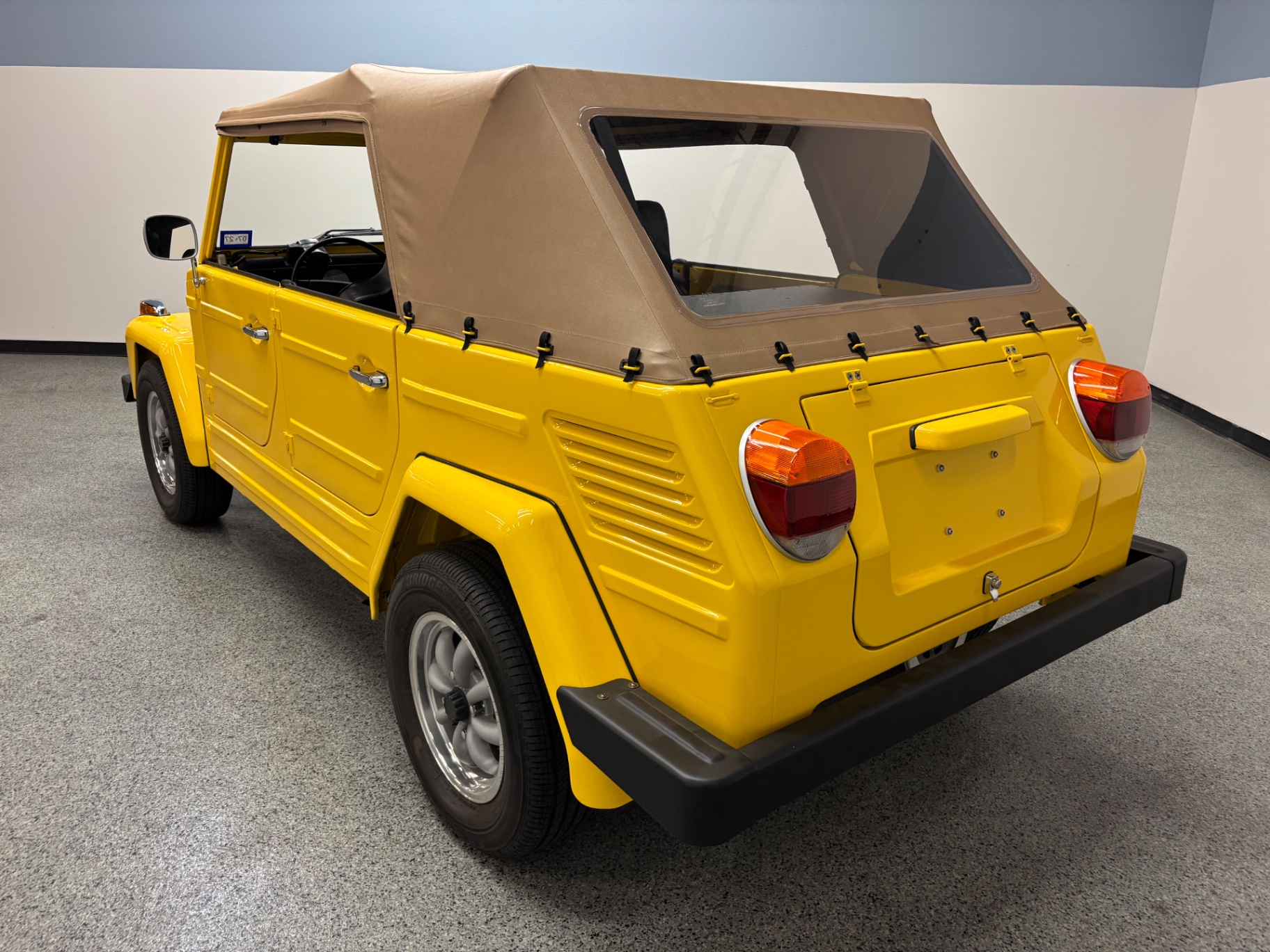
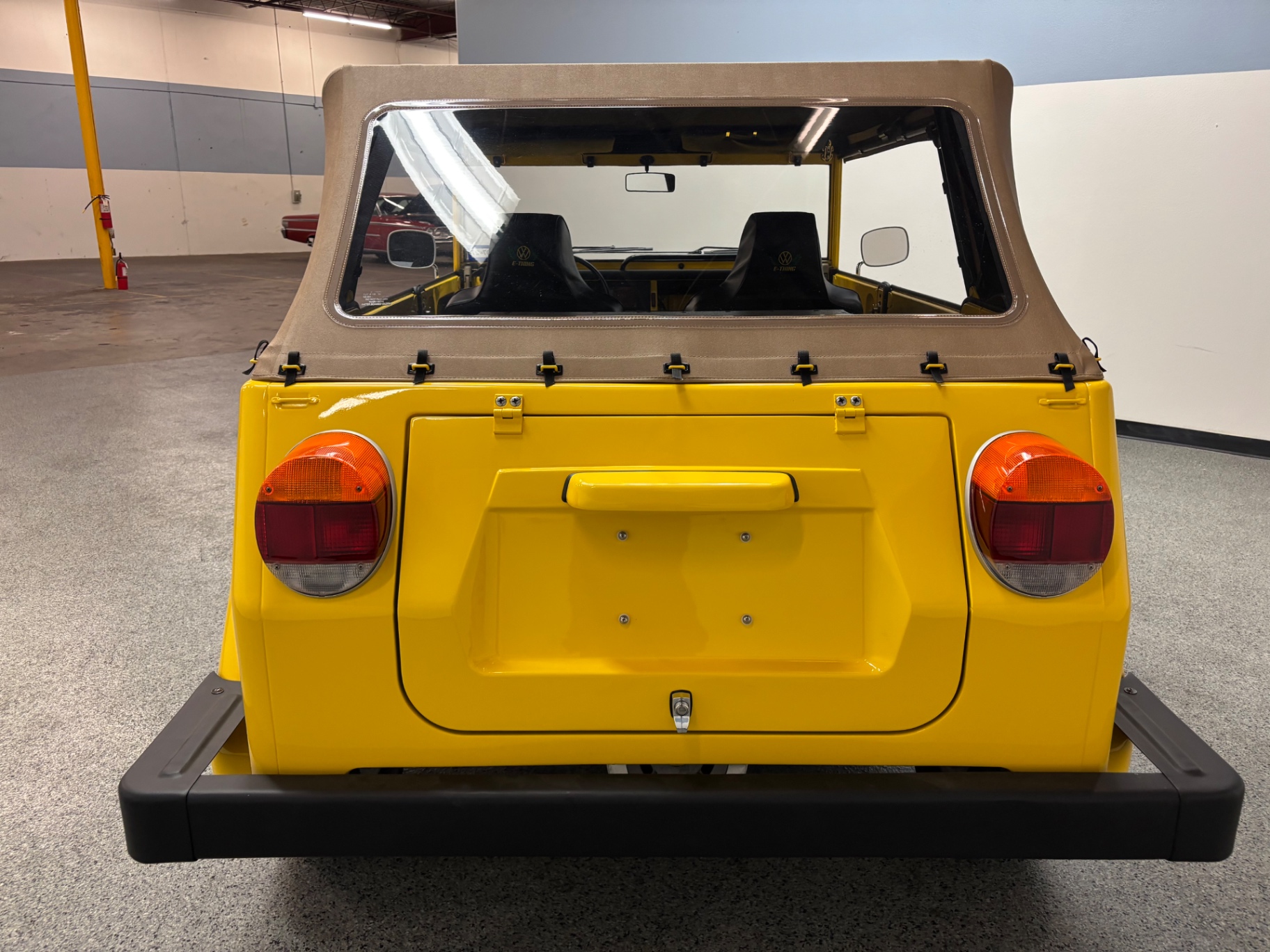
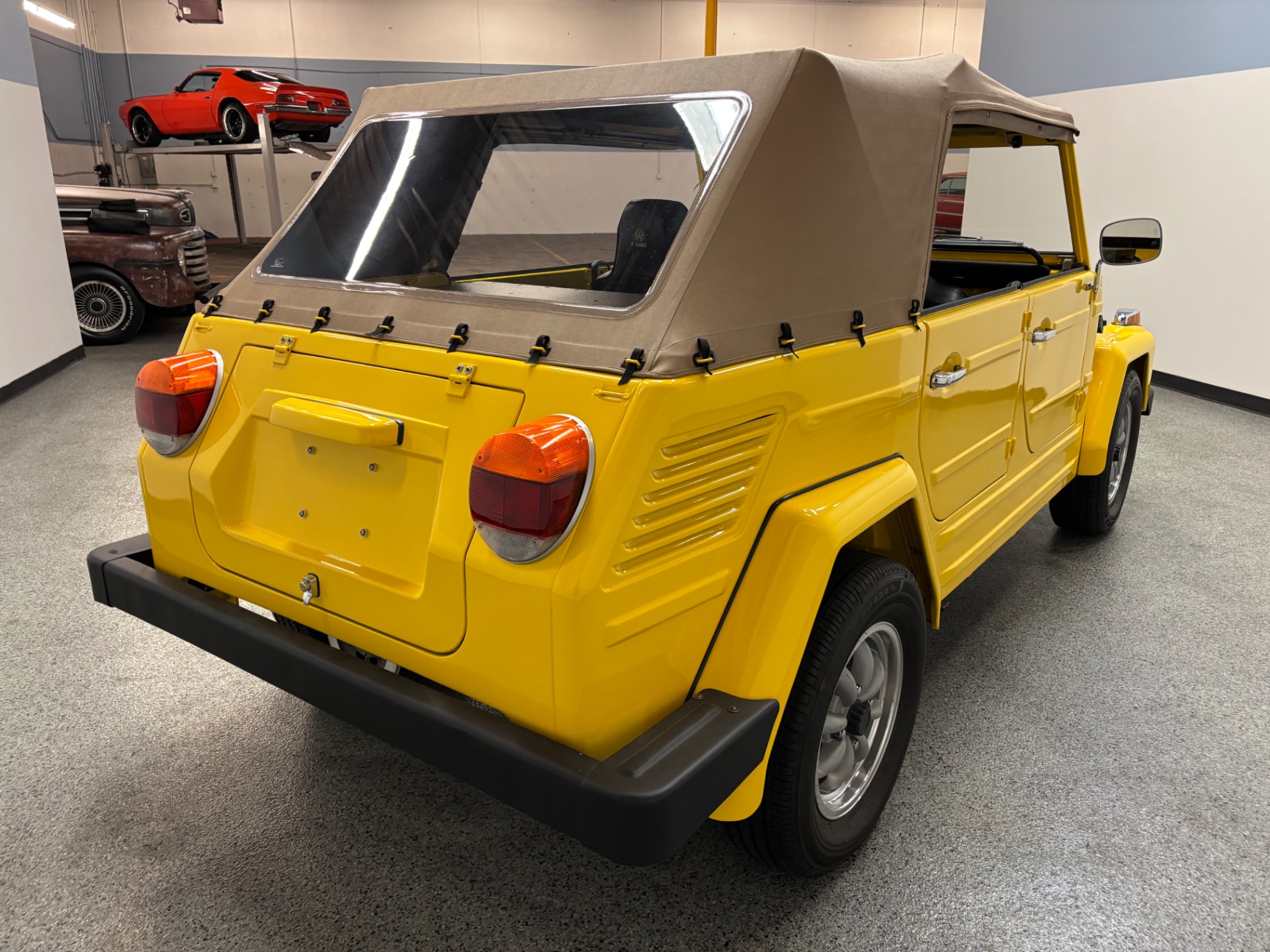
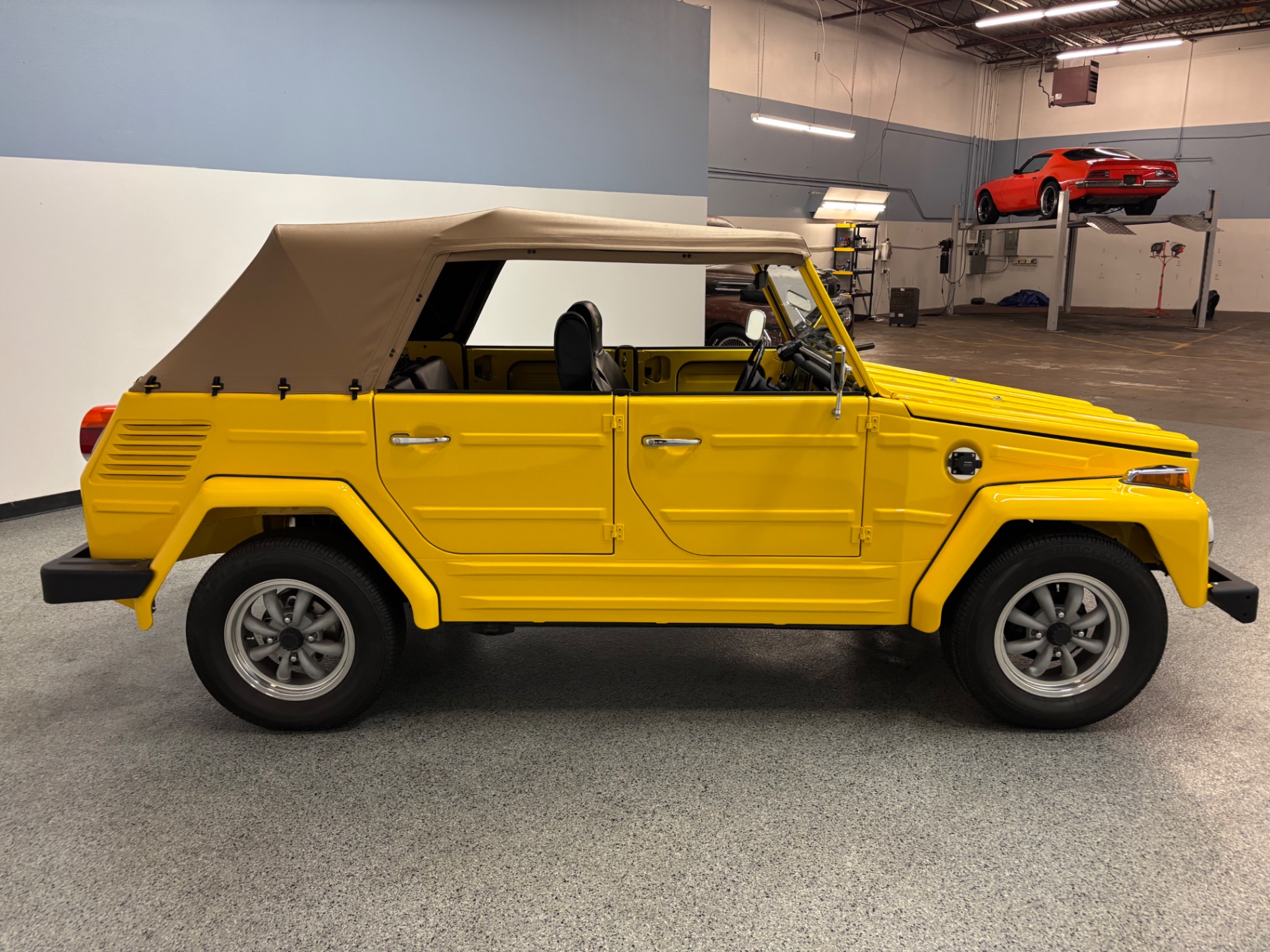
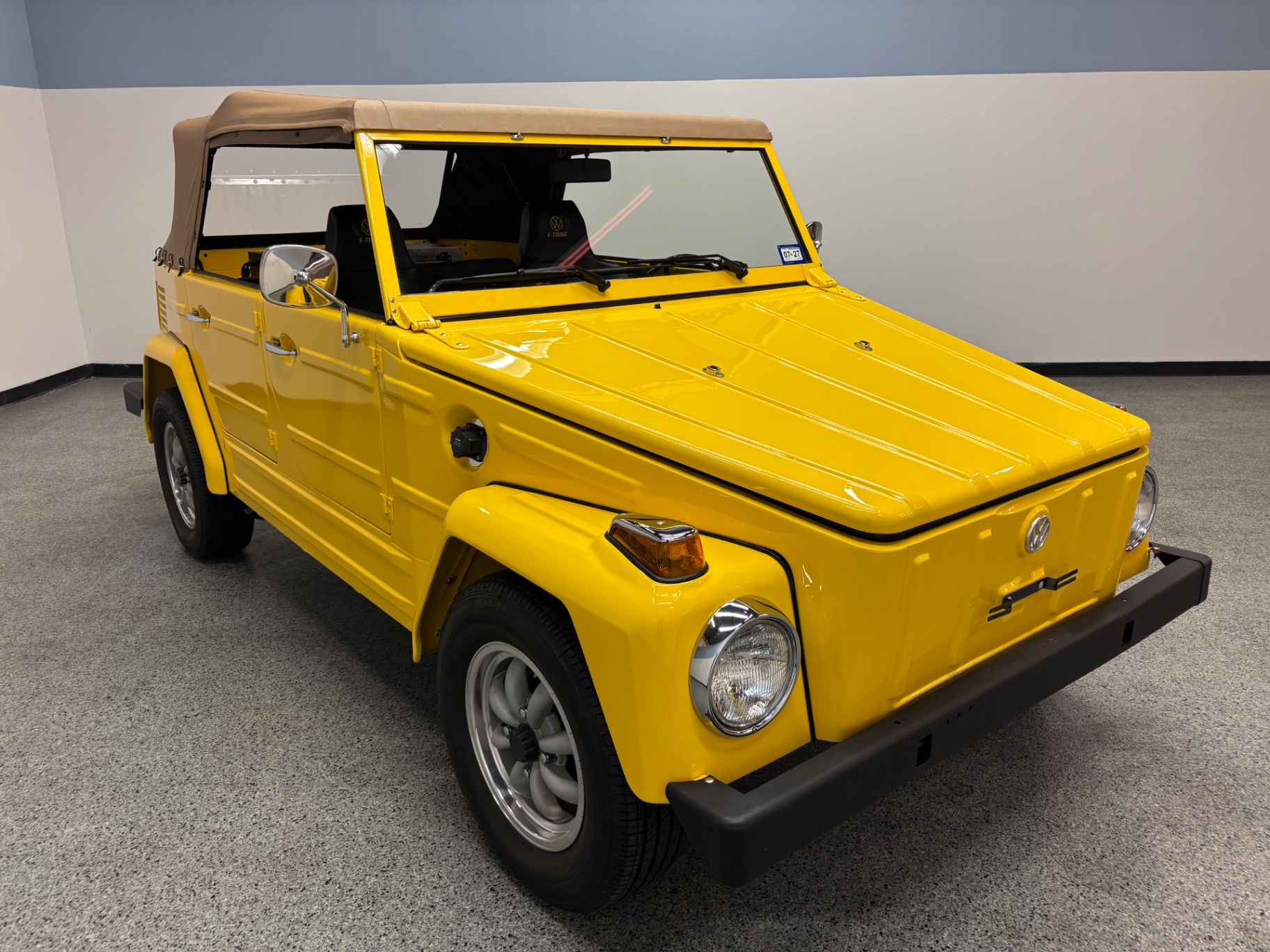

1973 Volkswagen Thing — EV West Electric Conversion with Bilstein Suspension and J1772 Charge Port
Why This Car Is Special
The 1973 Volkswagen Thing is already a rare vehicle by any measure. Volkswagen produced the Type 181 — sold in the United States as the Thing — for only four model years in this market, from 1973 through 1974, and import numbers were relatively small. The Thing was originally developed at the request of the German military as a civilian-legal version of the Kubelwagen concept, and its flat-panel, folding-door body design reflected that utilitarian DNA directly. What you see is what you get with a Thing: no pretense, no excess, just a purpose-built open-air vehicle with a personality that no other car on the road can match.
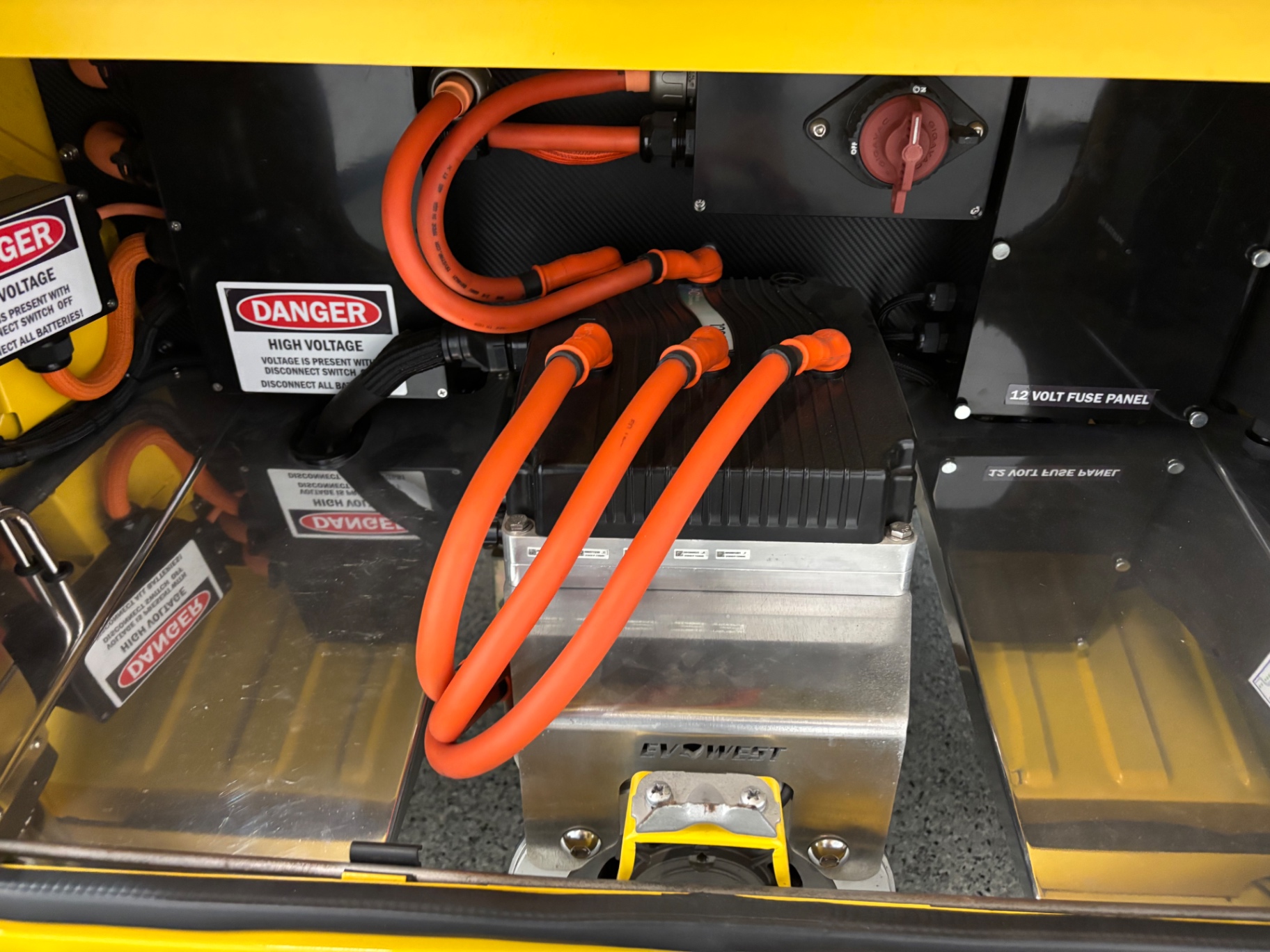
This particular 1973 Volkswagen Thing takes that already-distinctive platform and adds a layer of engineering that very few examples in existence can claim. The original air-cooled flat-four has been removed and replaced with an EV West electric motor, one of the most respected names in the classic car EV conversion space. EV West, based in California, has built a reputation for high-quality electric drivetrain components designed specifically for vintage vehicle applications. The result here is a 1973 Volkswagen Thing that retains its original character — the open top, the fold-flat windshield, the jump seats, the spartan aesthetic — while eliminating the maintenance demands of a nearly 55-year-old internal combustion engine. No carburetor to rebuild. No points to set. No oil leaks to manage. Just charge it and drive it.
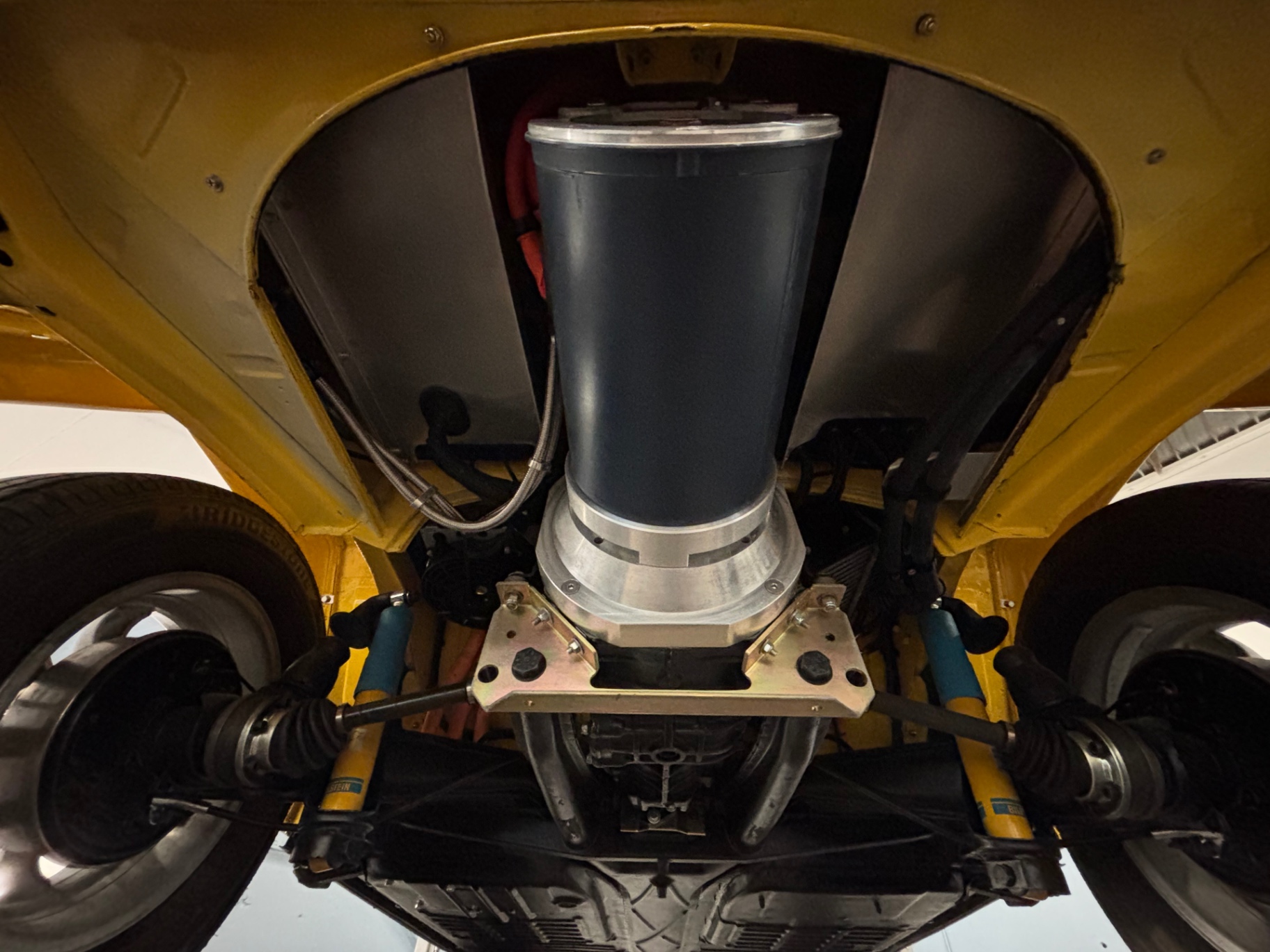
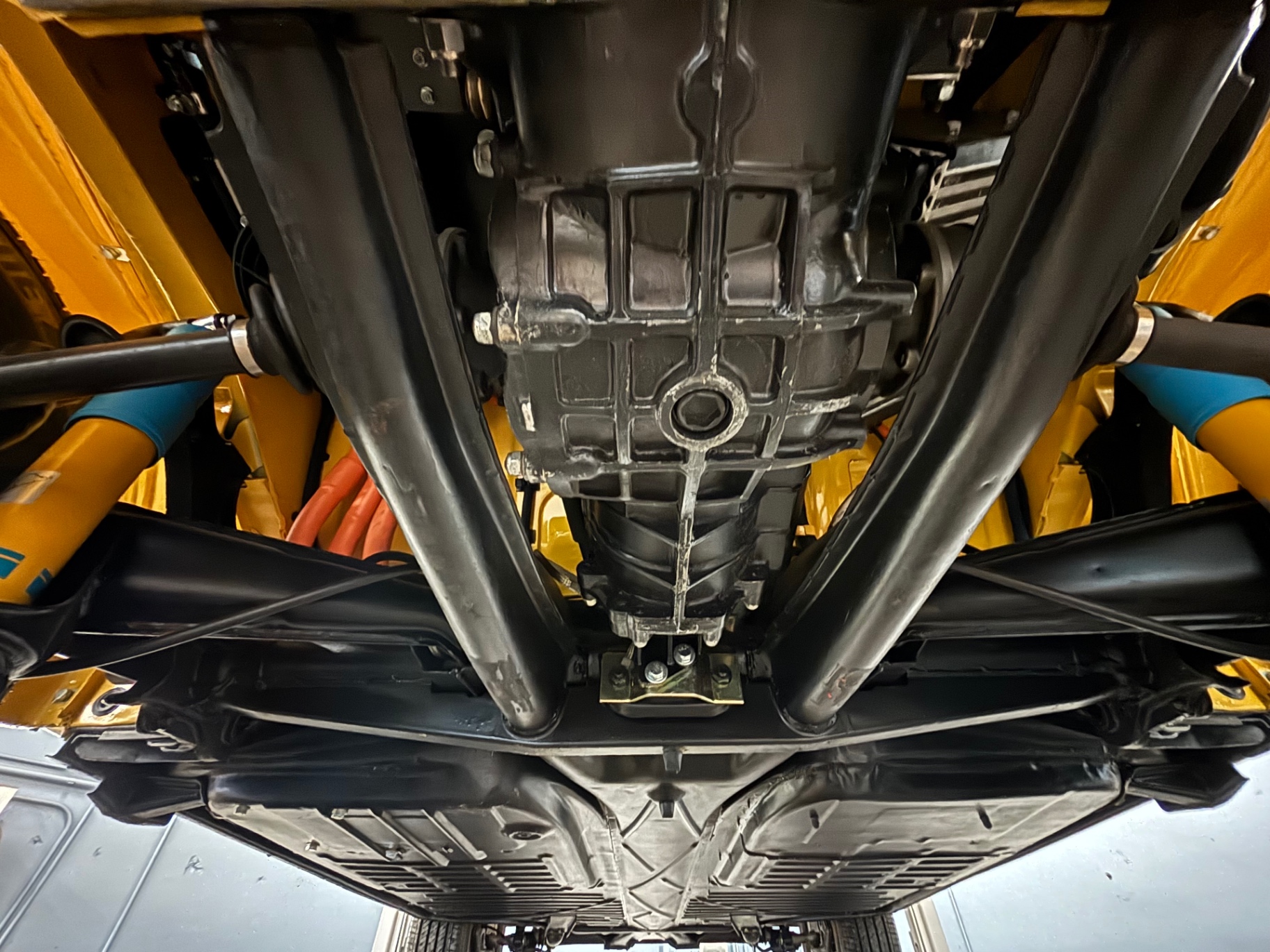
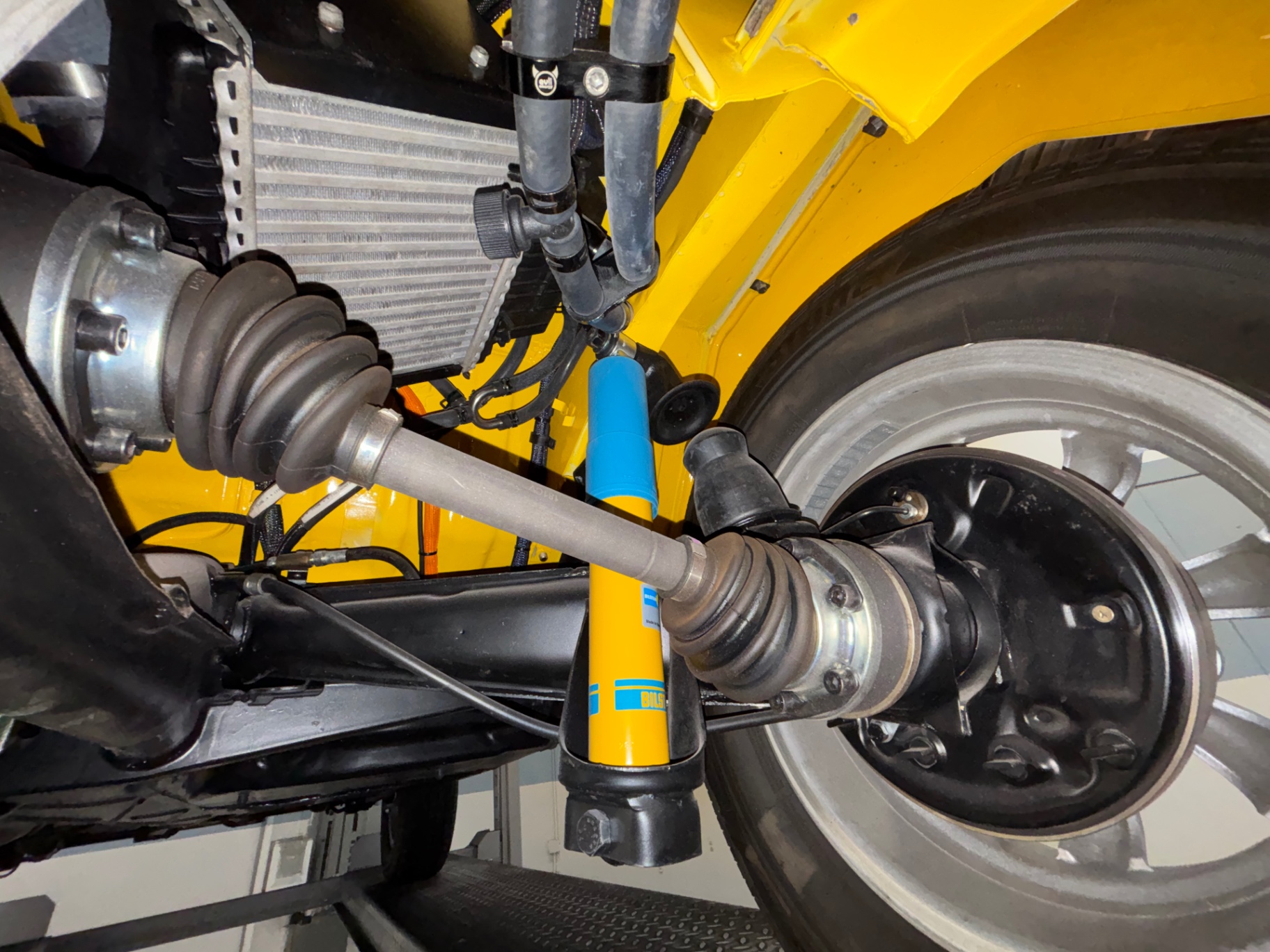
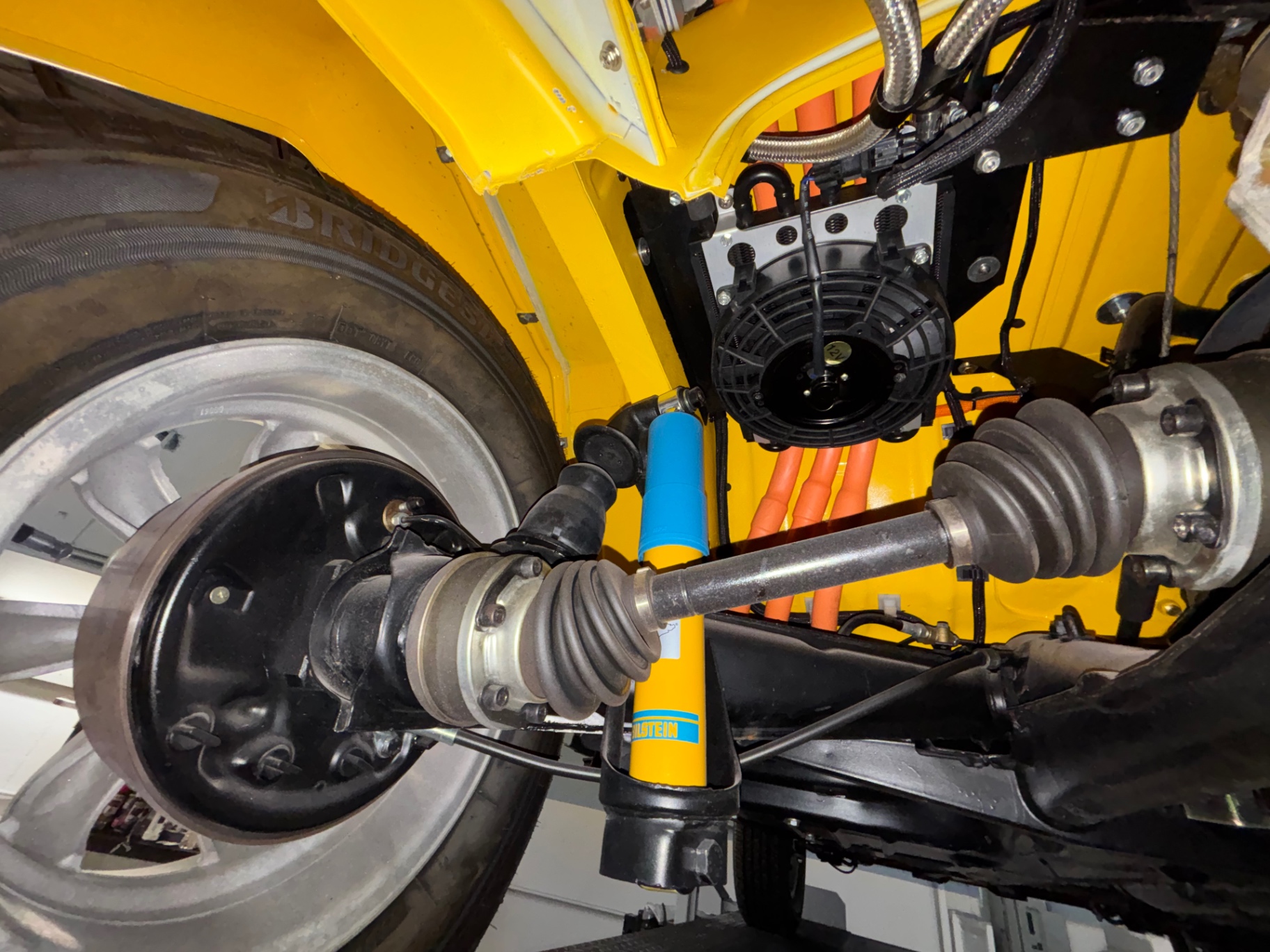
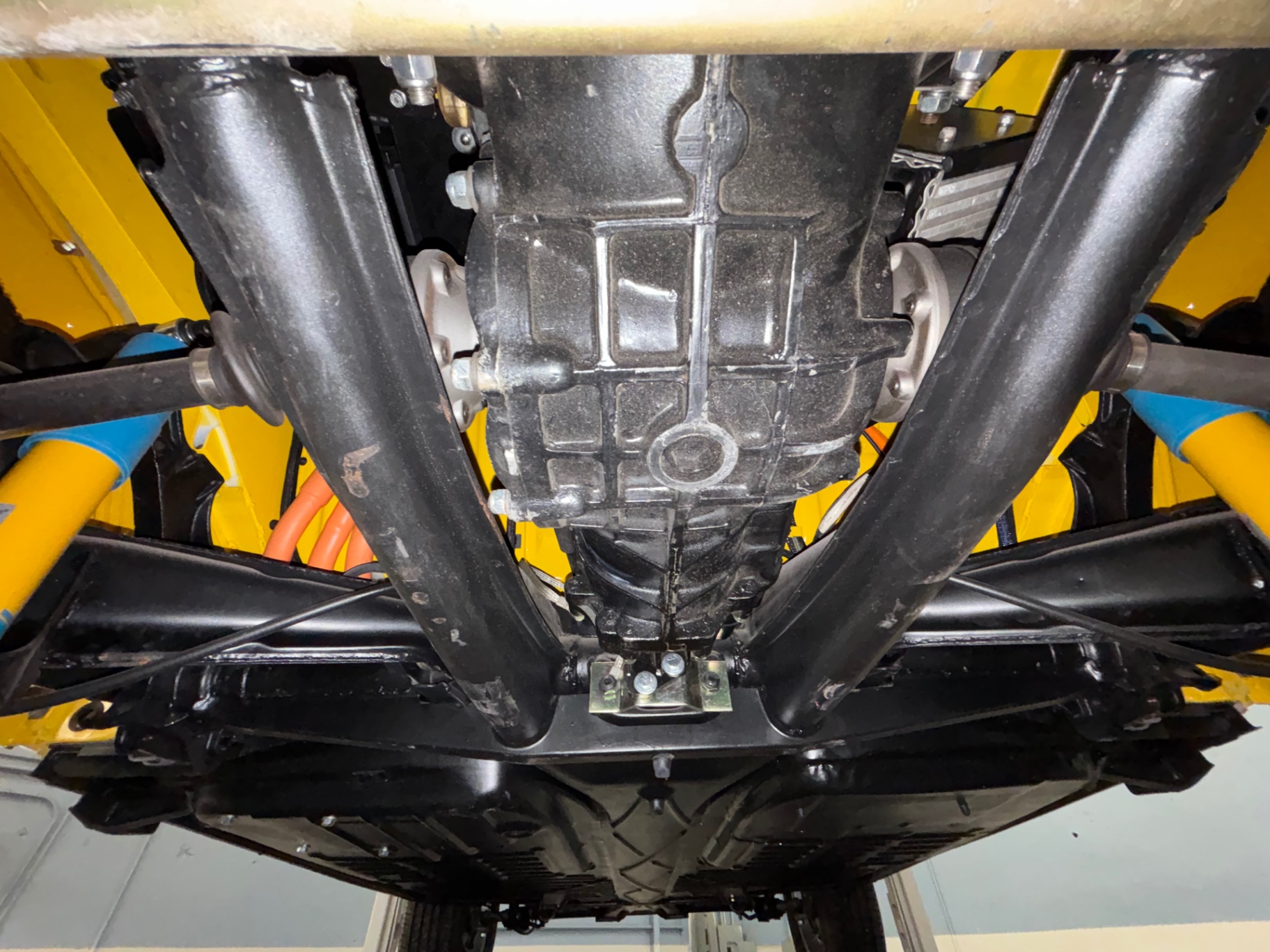
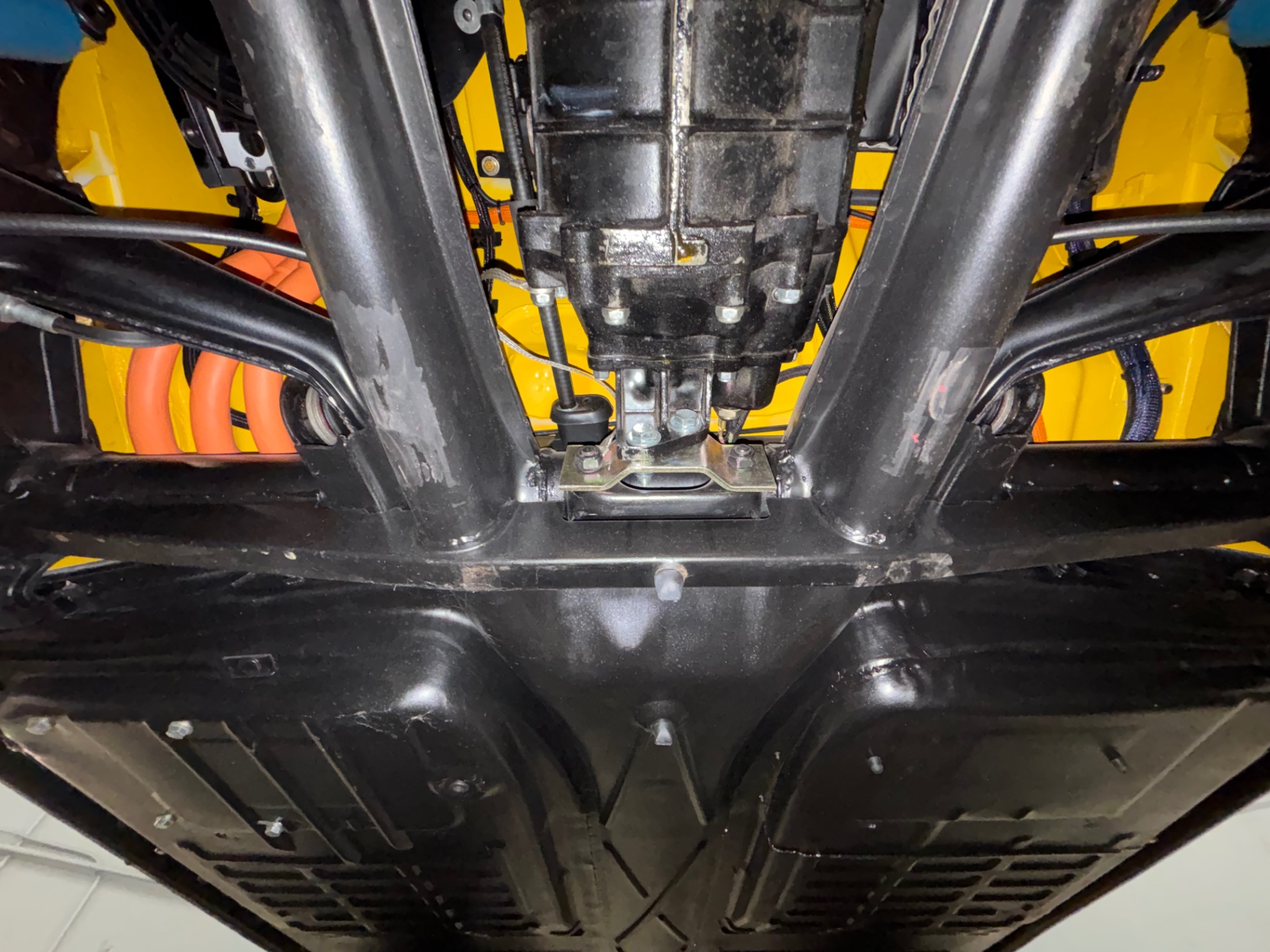
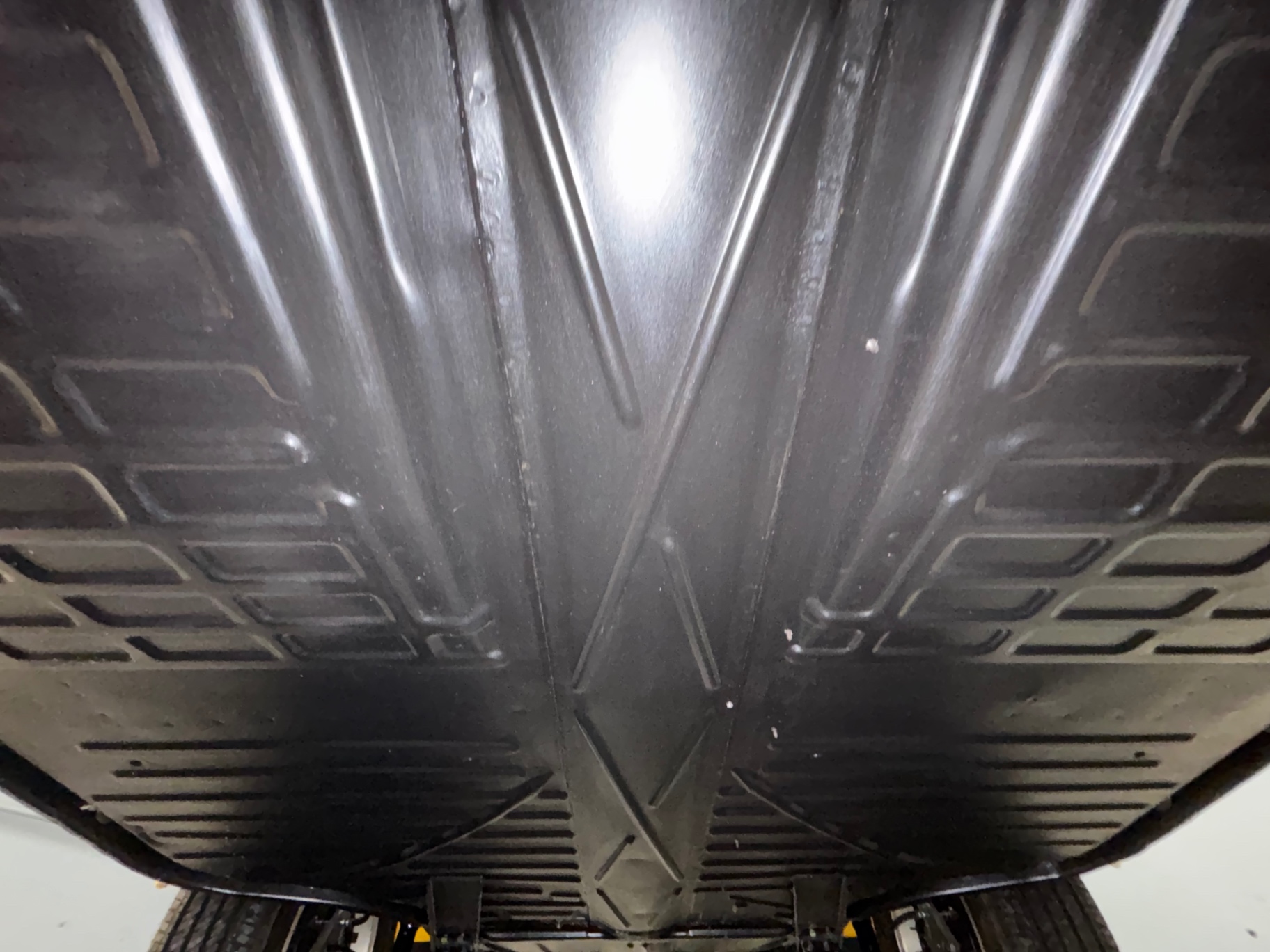
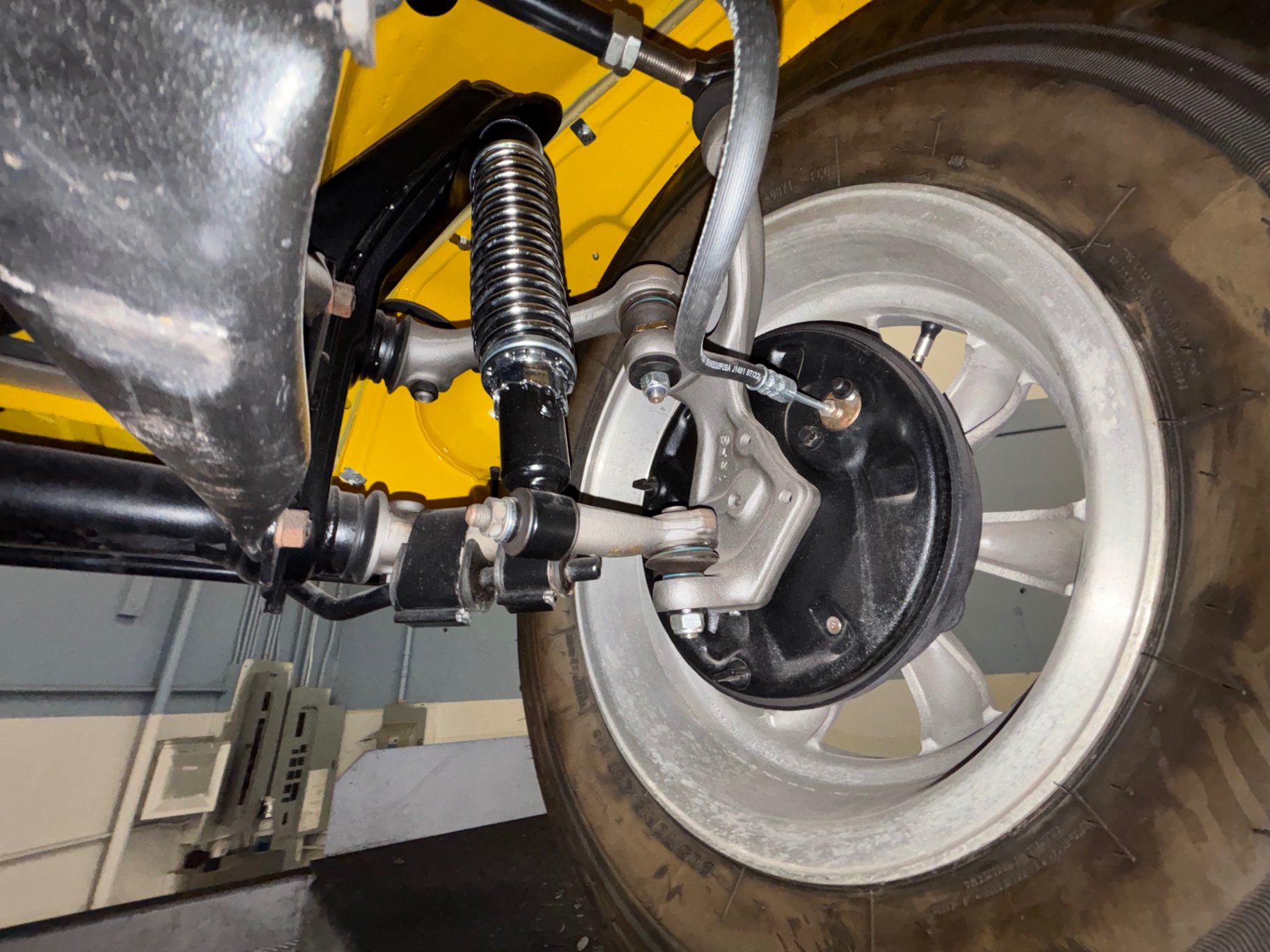
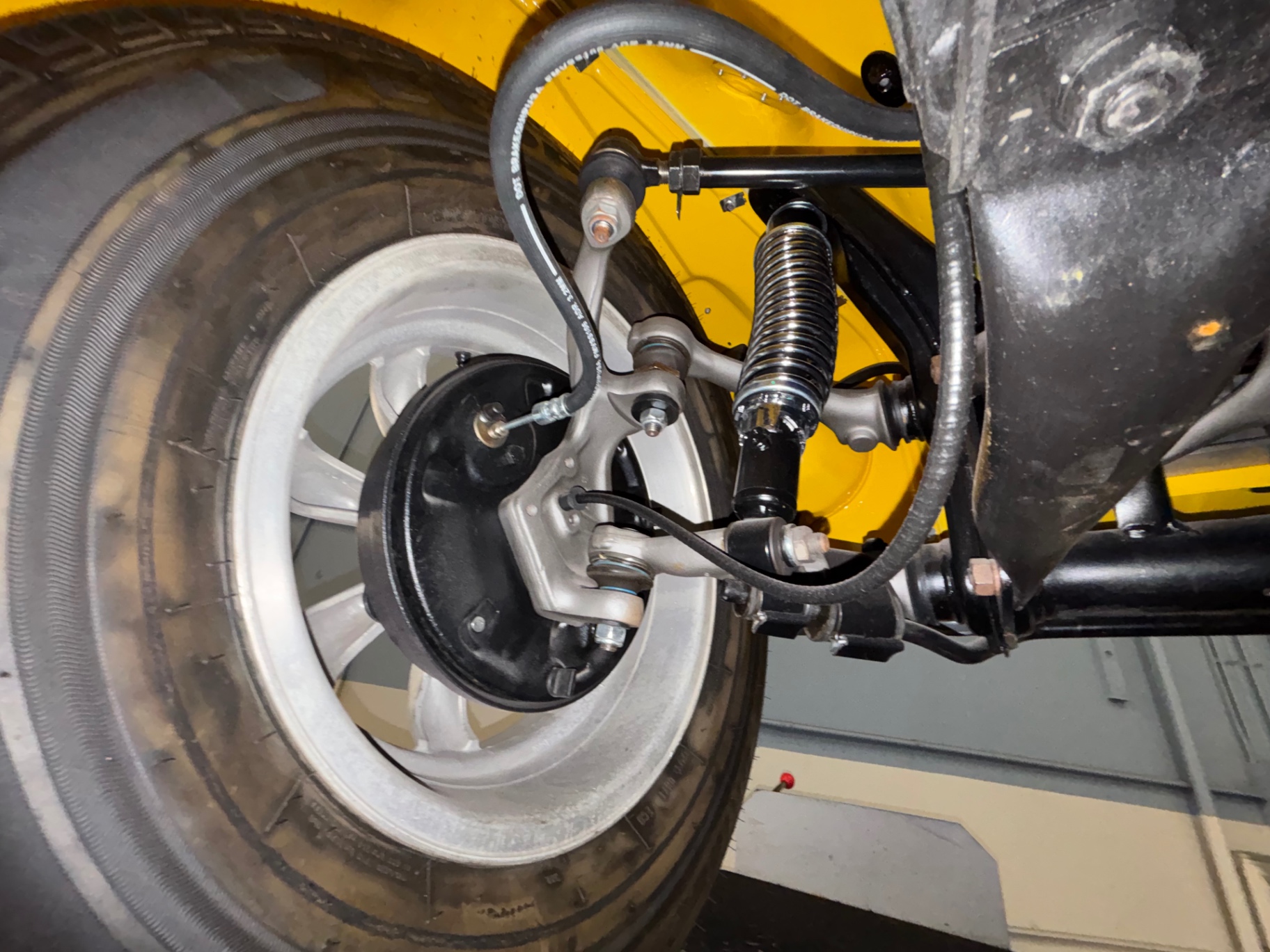
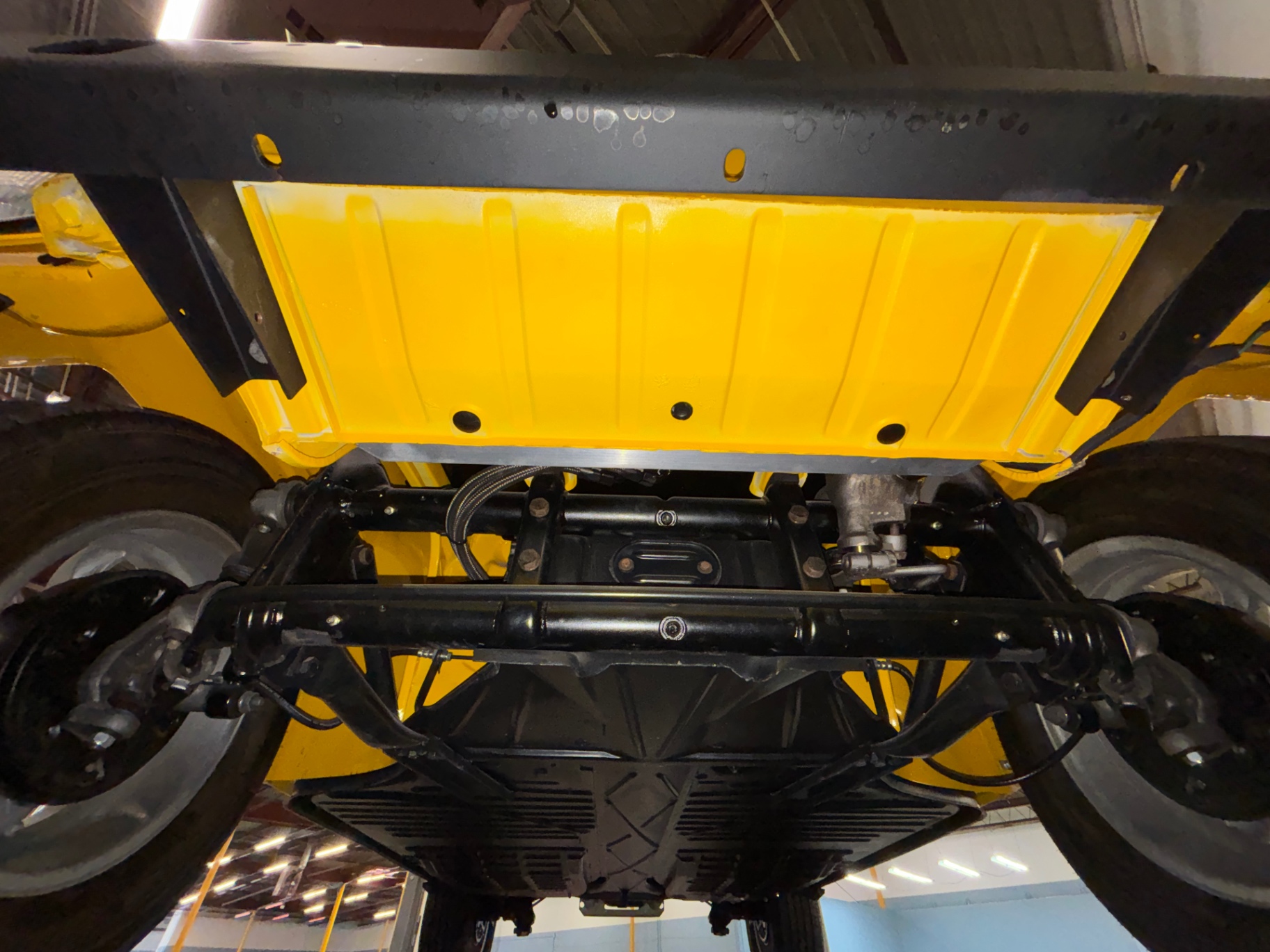
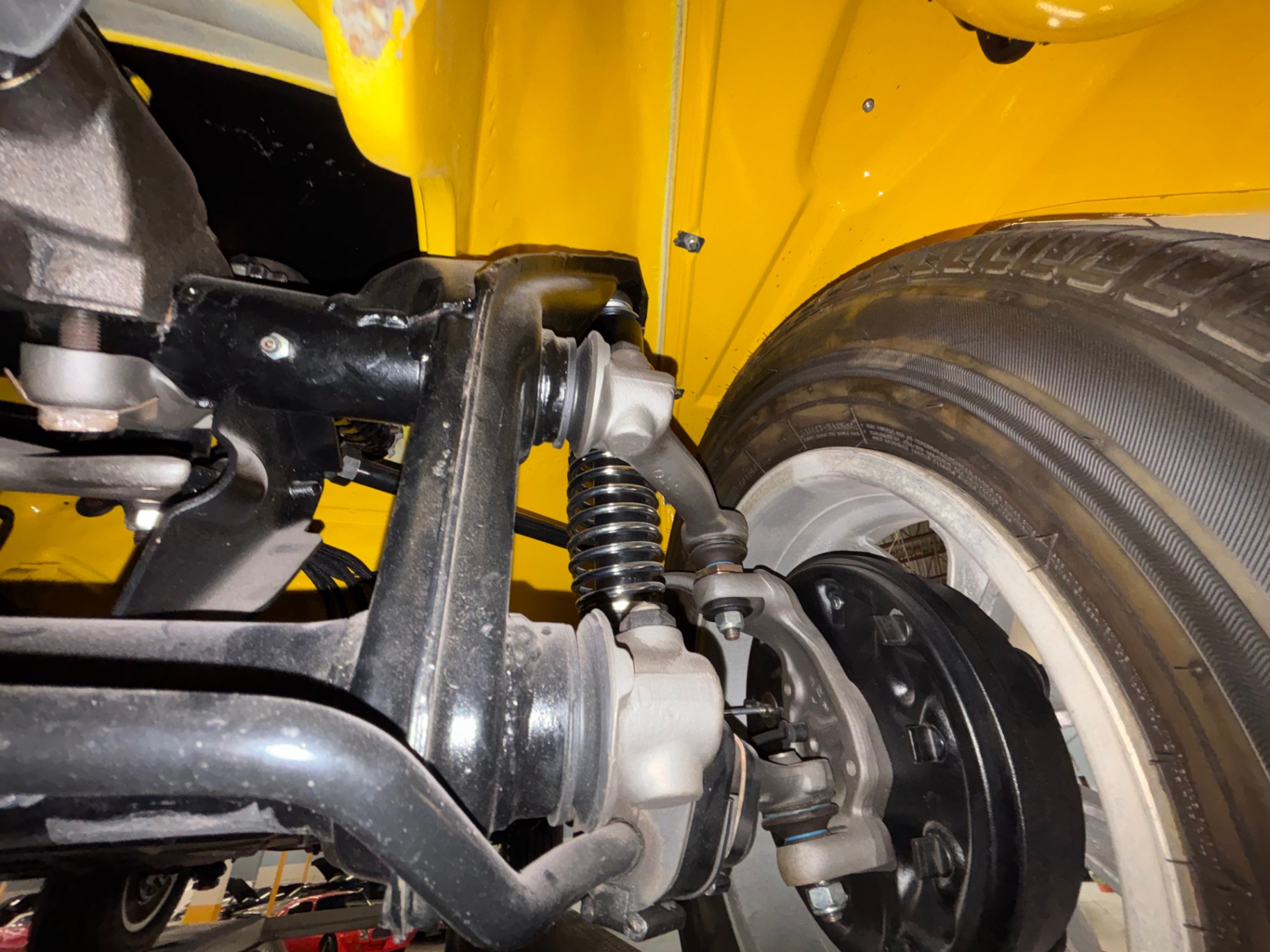
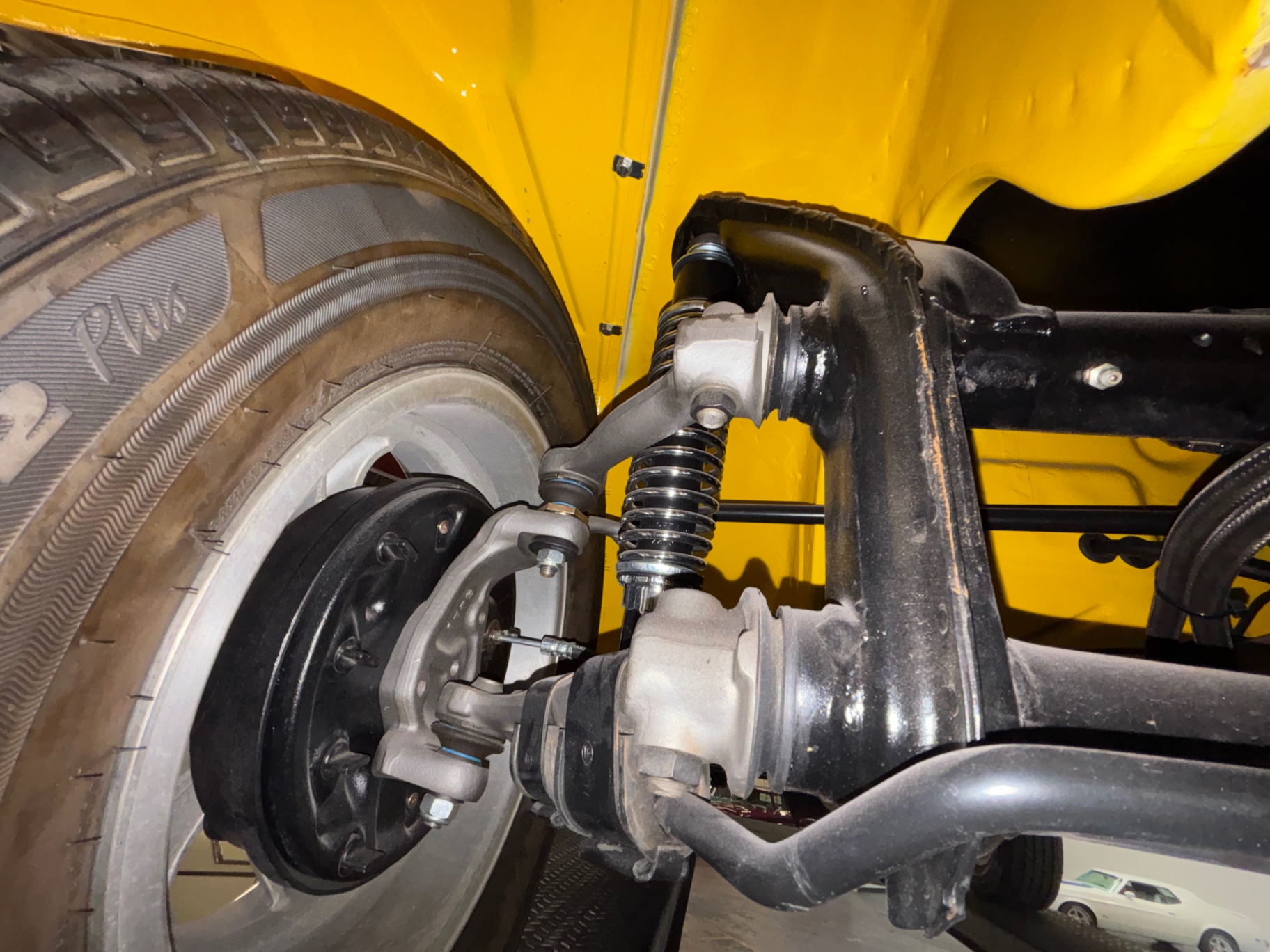
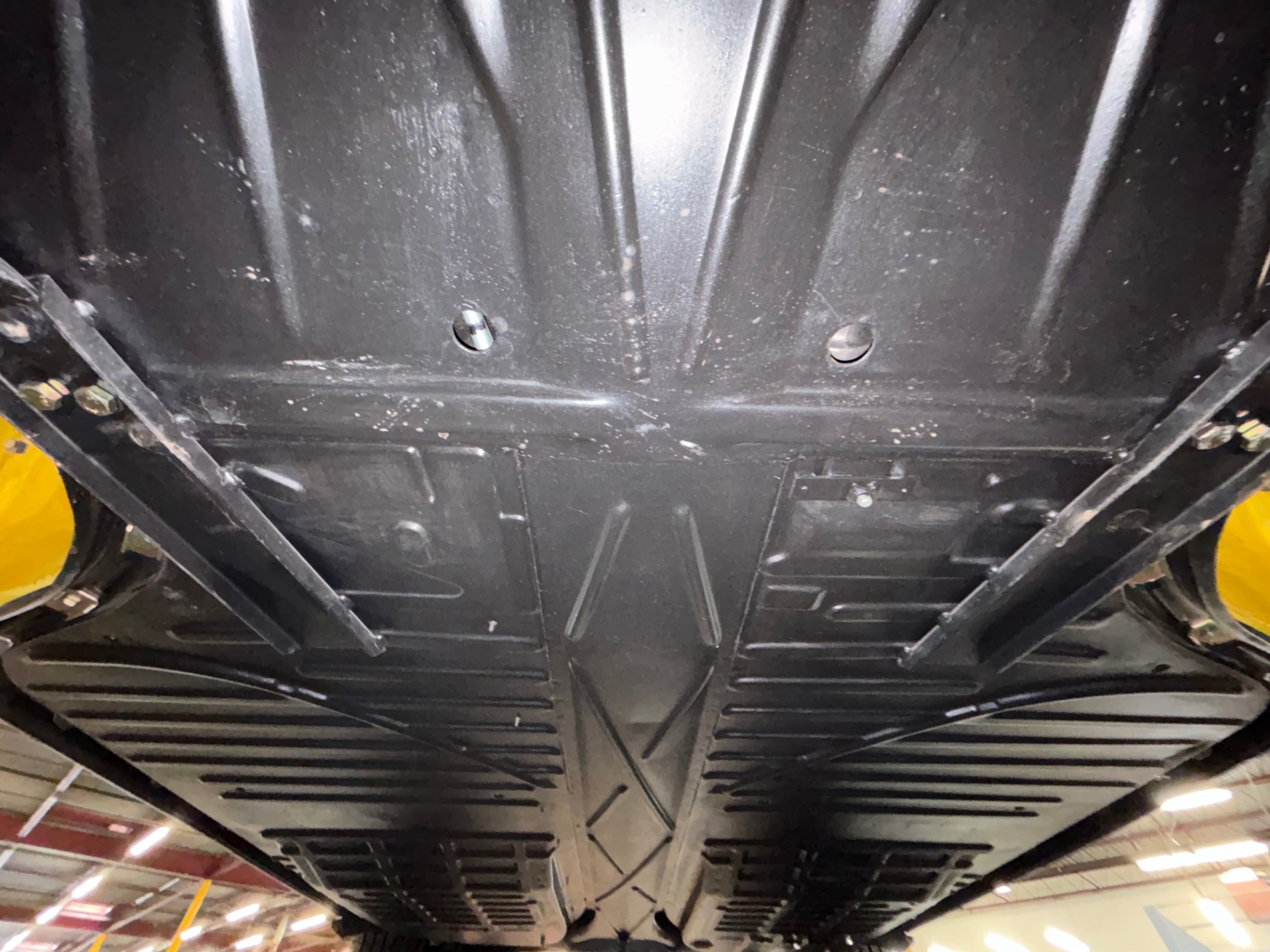
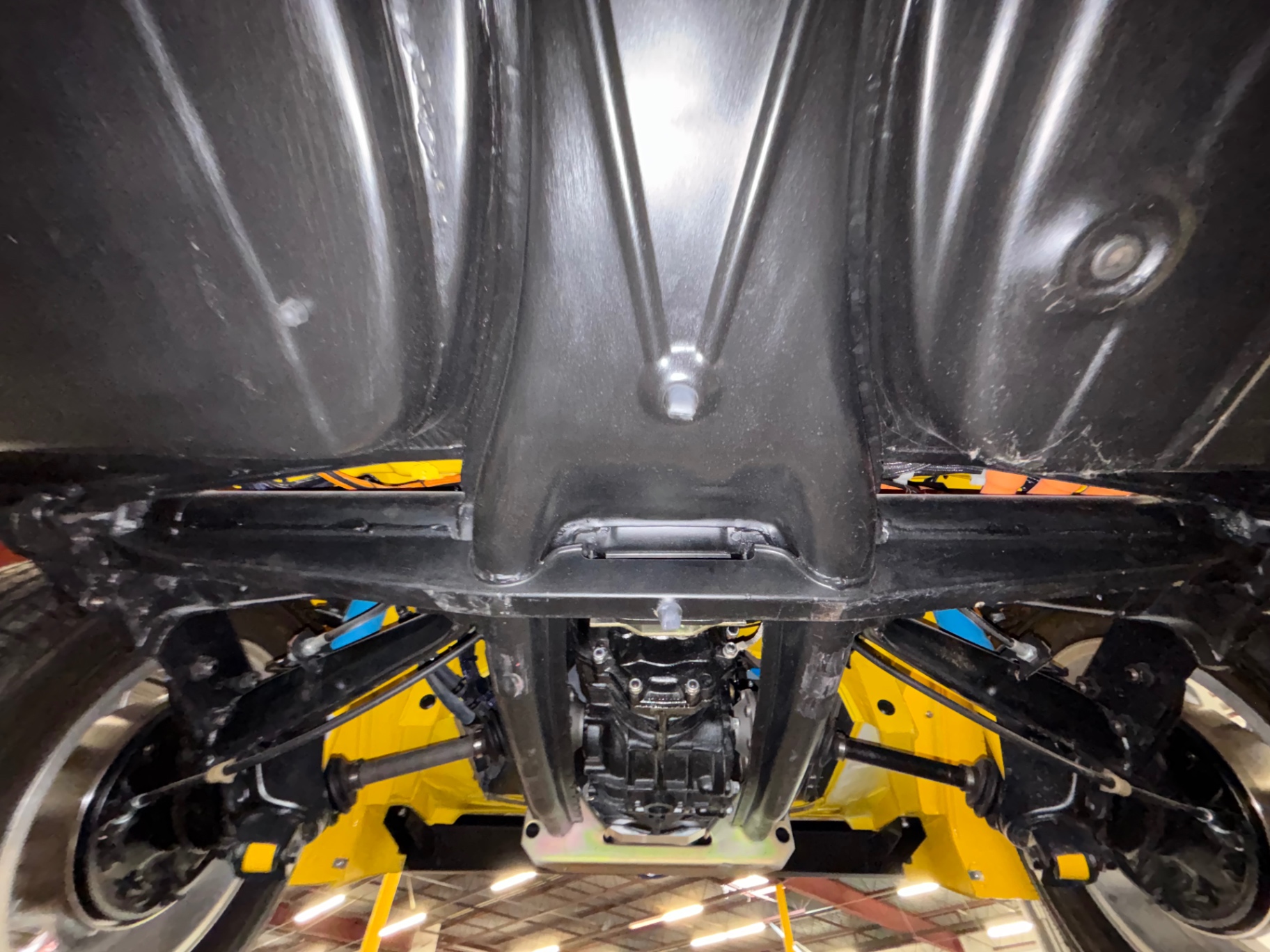
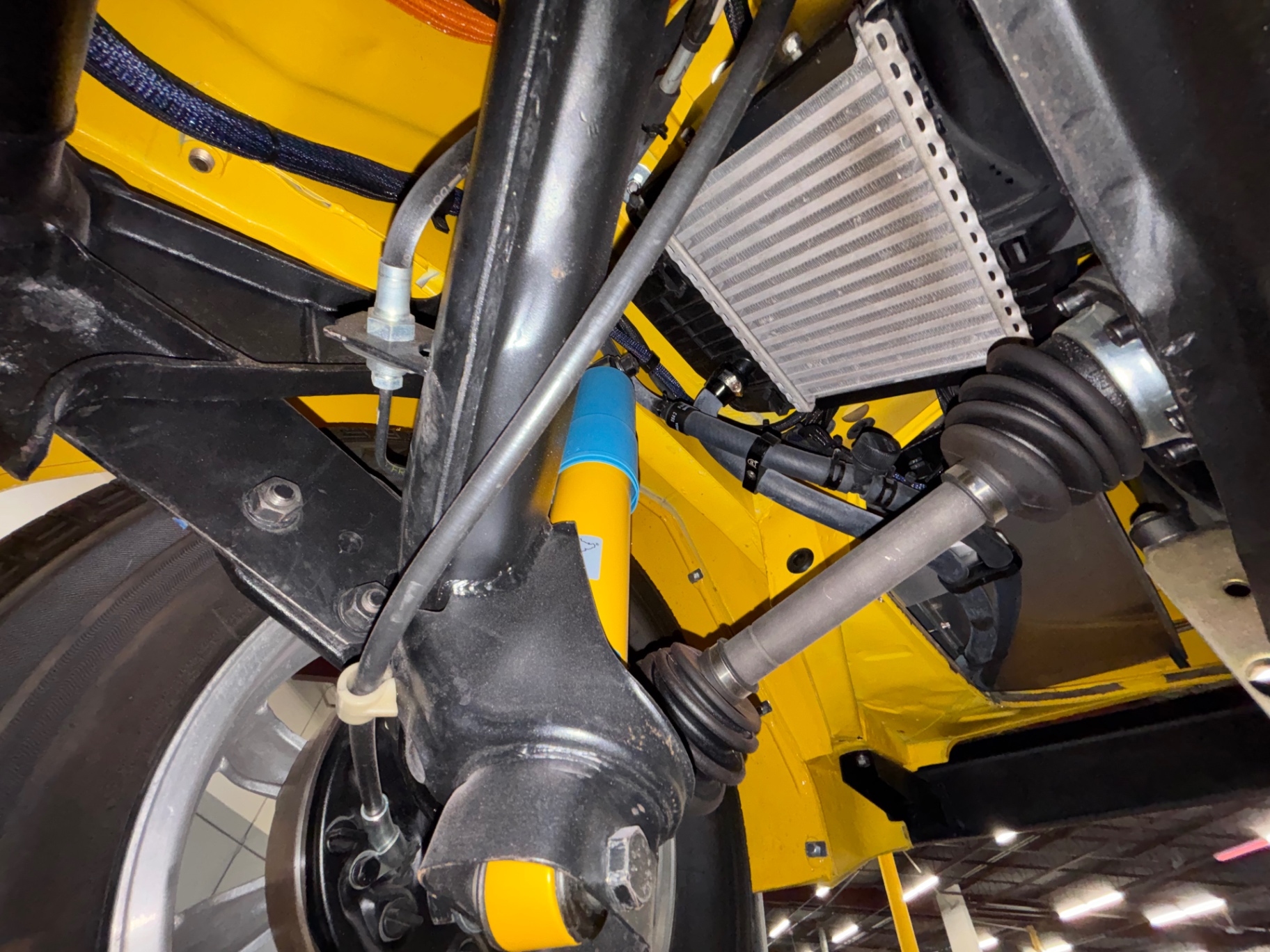
What makes this conversion particularly well-executed is that it was not done at the expense of the car's mechanical integrity. The undercarriage photos tell the real story: the floorpan is clean and solid, the chassis tubes are properly coated, and the Bilstein shock absorbers are visible on all four corners — a damper brand that VW enthusiasts have trusted for decades in air-cooled applications. The body is rust-free, which on a 1973 Thing is a genuine accomplishment and a prerequisite for any serious investment in a vehicle of this type.
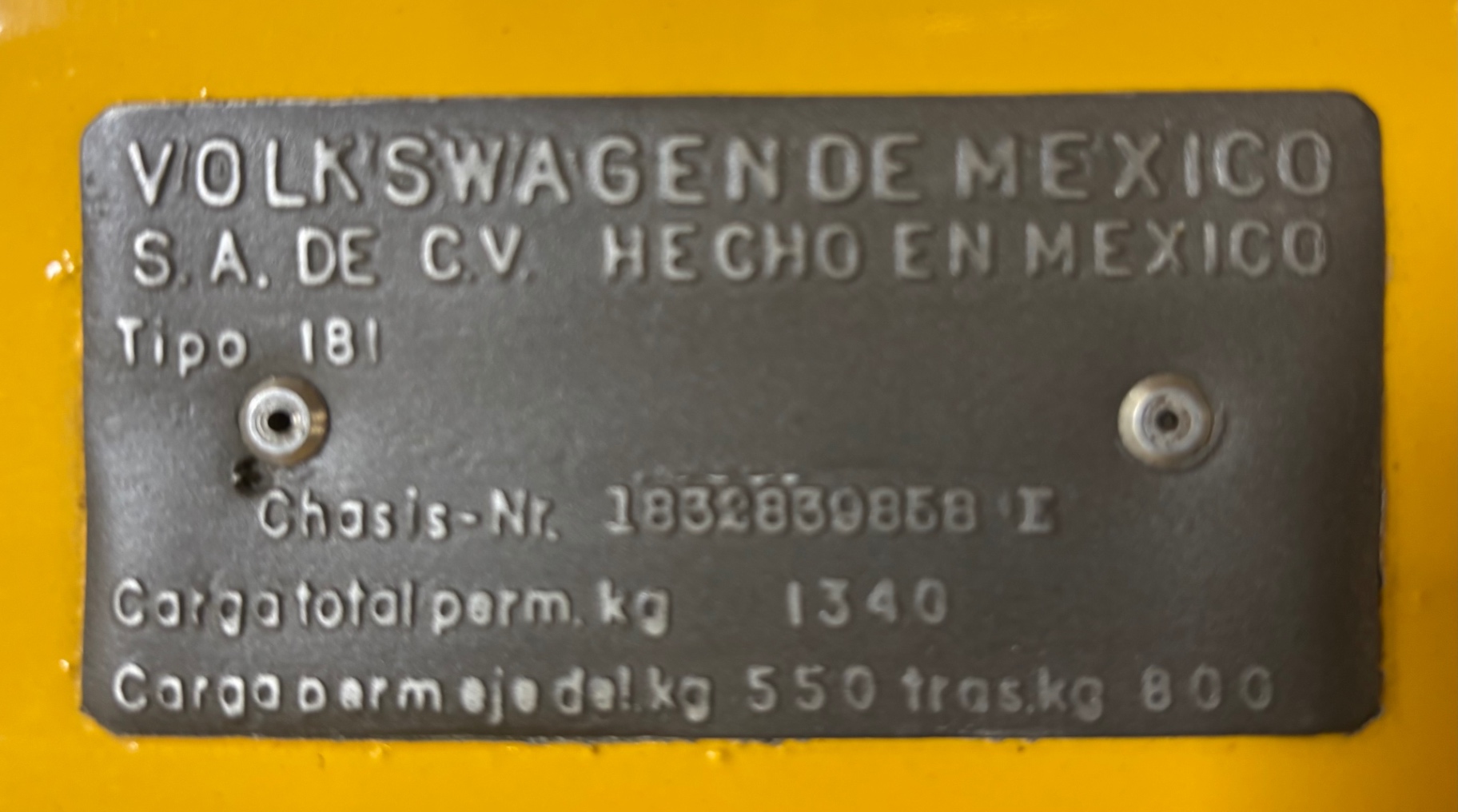
The "E" at the end of the partial VIN sequence identifies this as a vehicle assembled at the Puebla, Mexico facility, which is where Volkswagen built all Things destined for the North American market. That factory provenance is consistent with a US-spec car, confirming this is the correct North American configuration.
Features List
- EV West electric motor conversion
- High-voltage battery pack
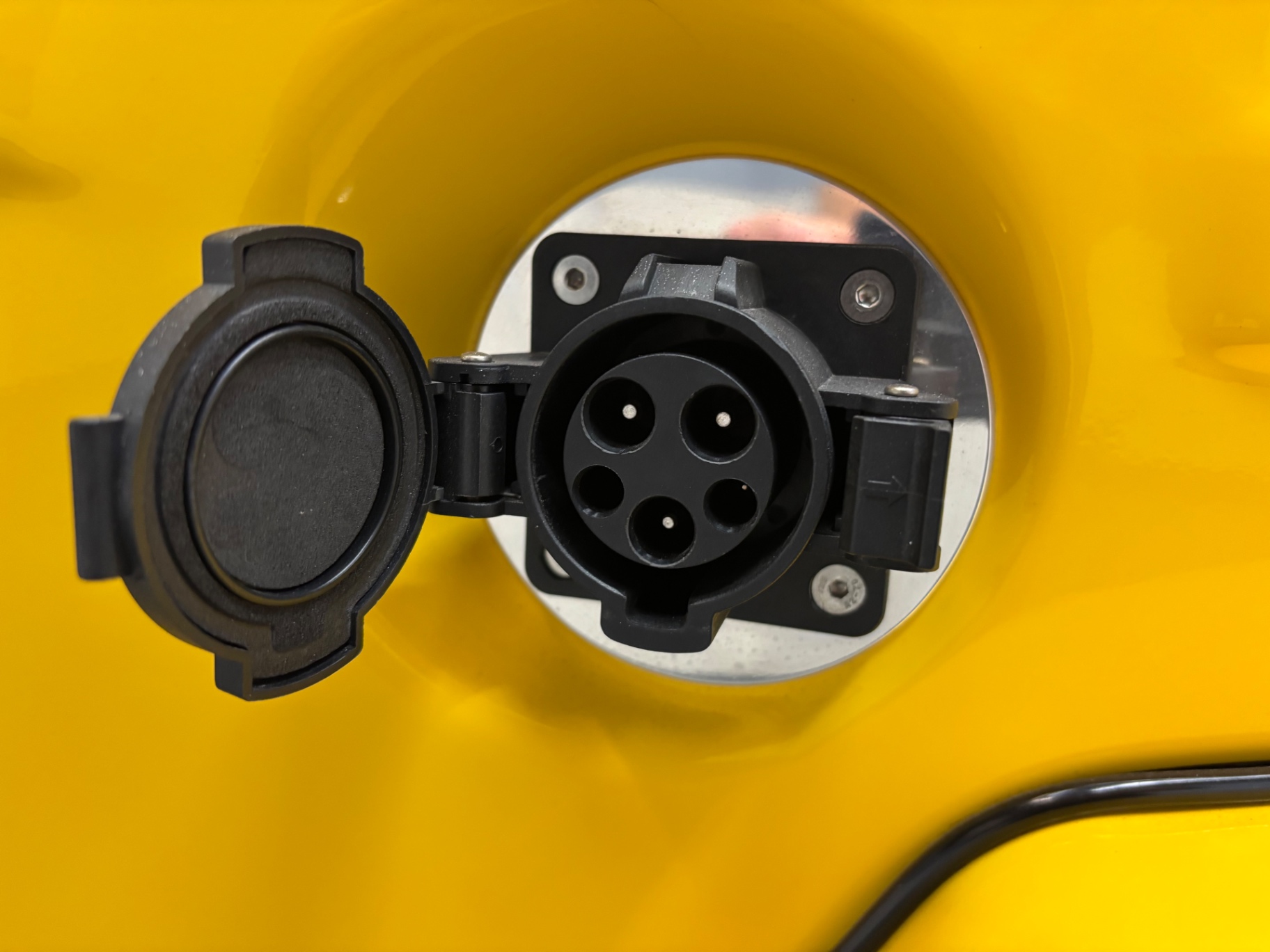
- J1772 charge port (industry-standard Level 2 charging compatibility)
- 4-speed manual transmission retained
- Bilstein shock absorbers, all four corners
- 12V fuse panel (separate from the high-voltage system)
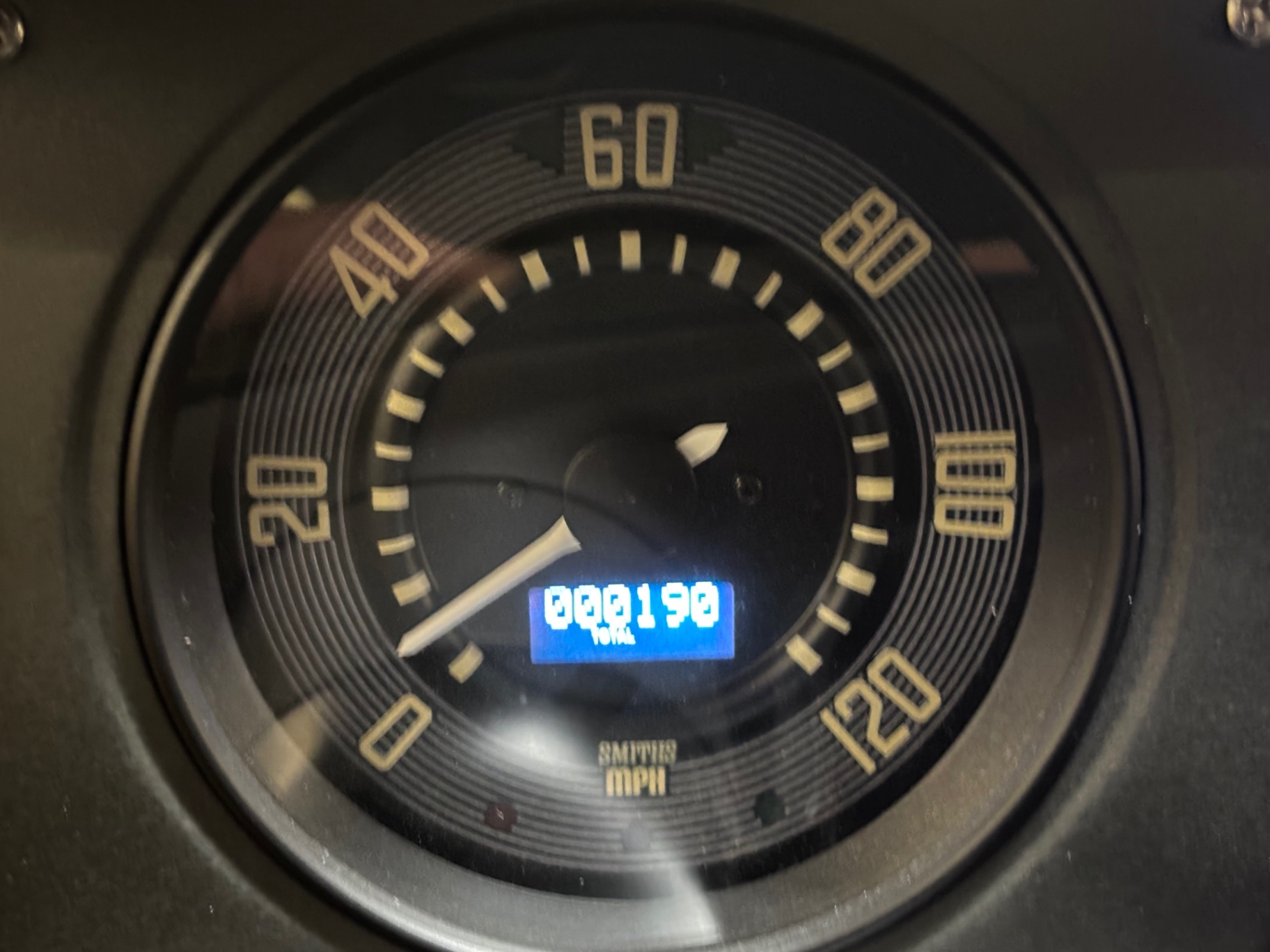
- Digital speedometer
- Upgraded alloy wheels
- Bridgestone tires
- Tan convertible soft top
- Black leather interior
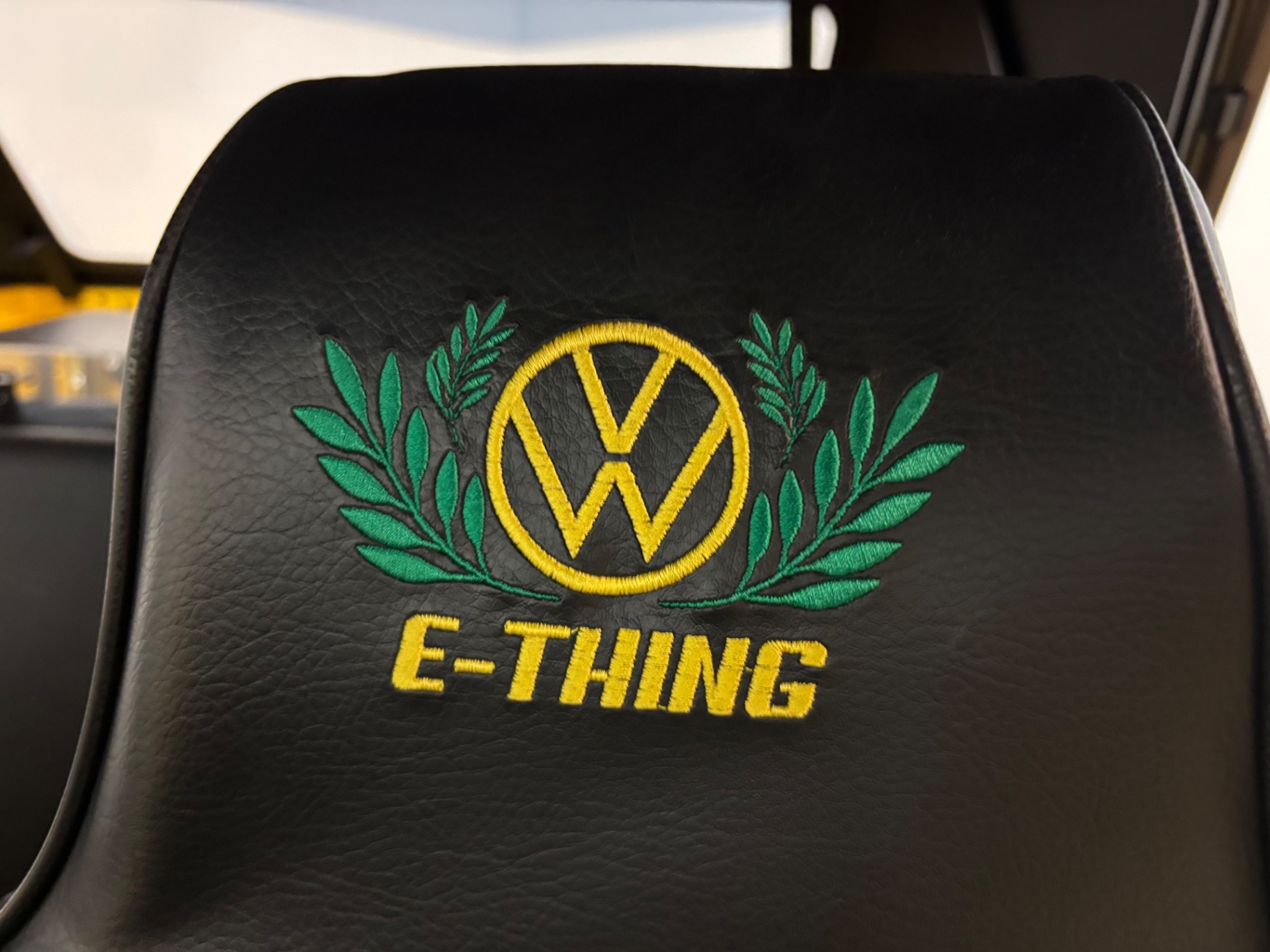
- E-Thing embroidered front seats
- Rear jump seats
- Clean, rust-free undercarriage
- Yellow exterior
Mechanical
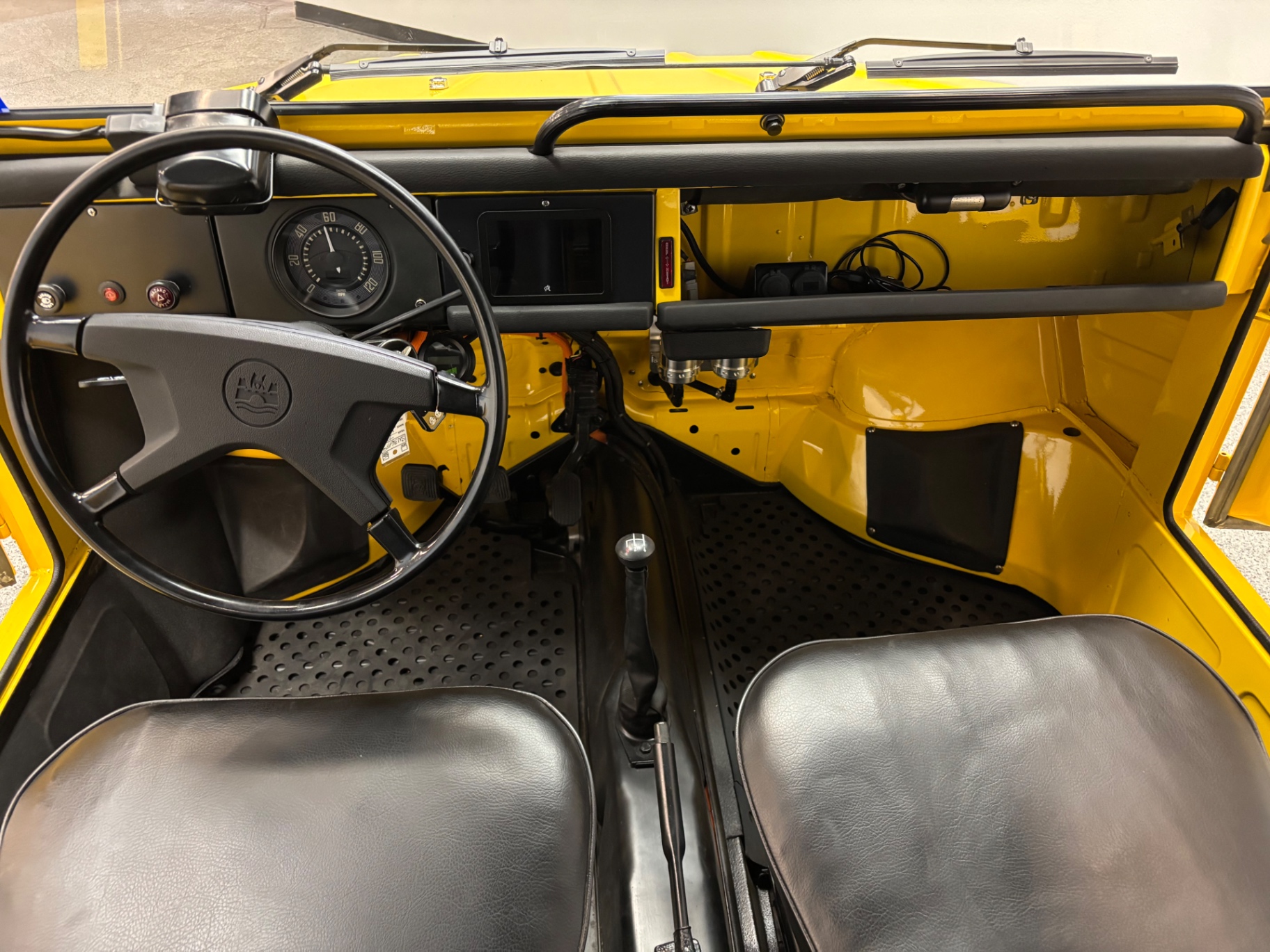
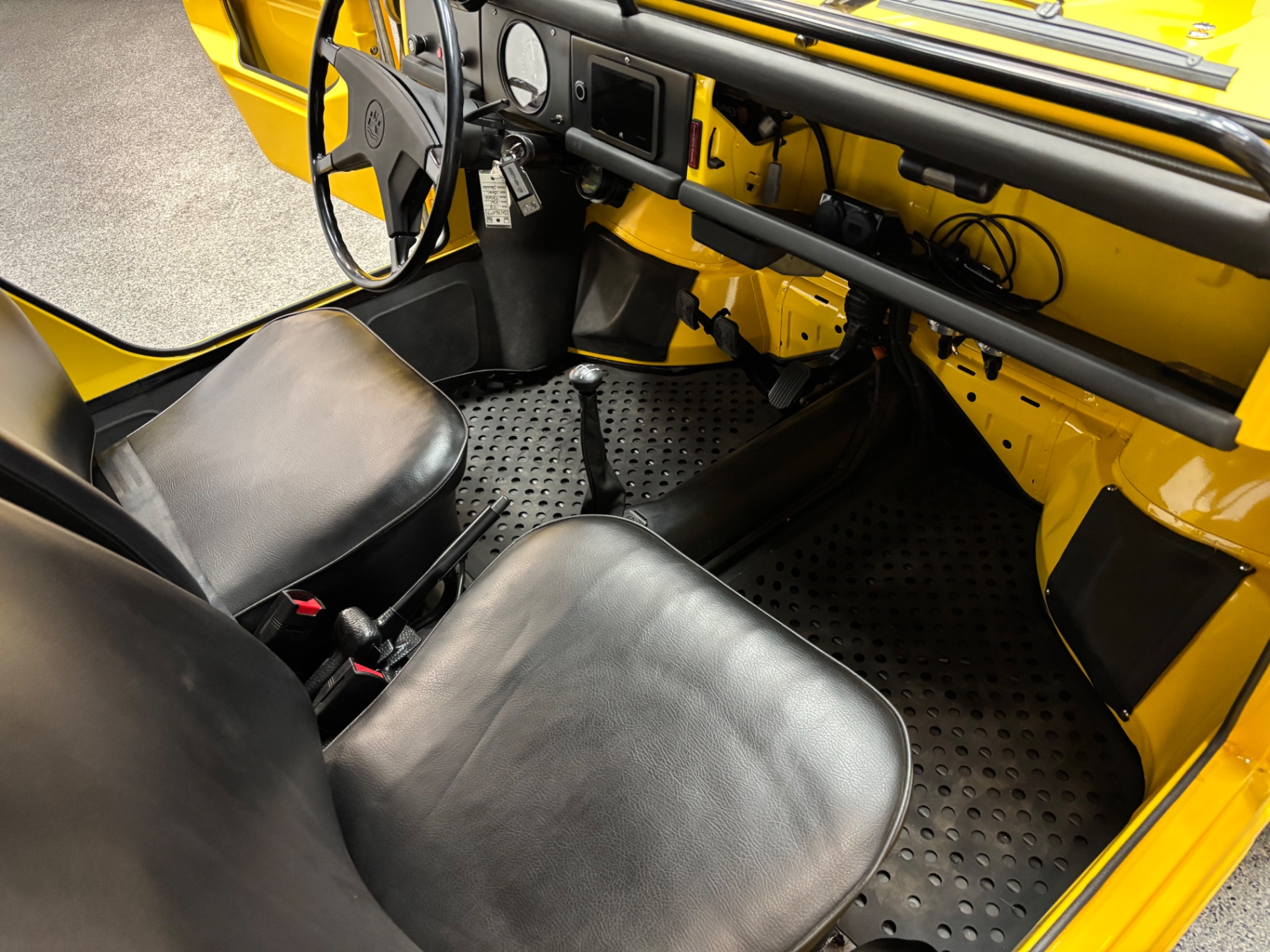
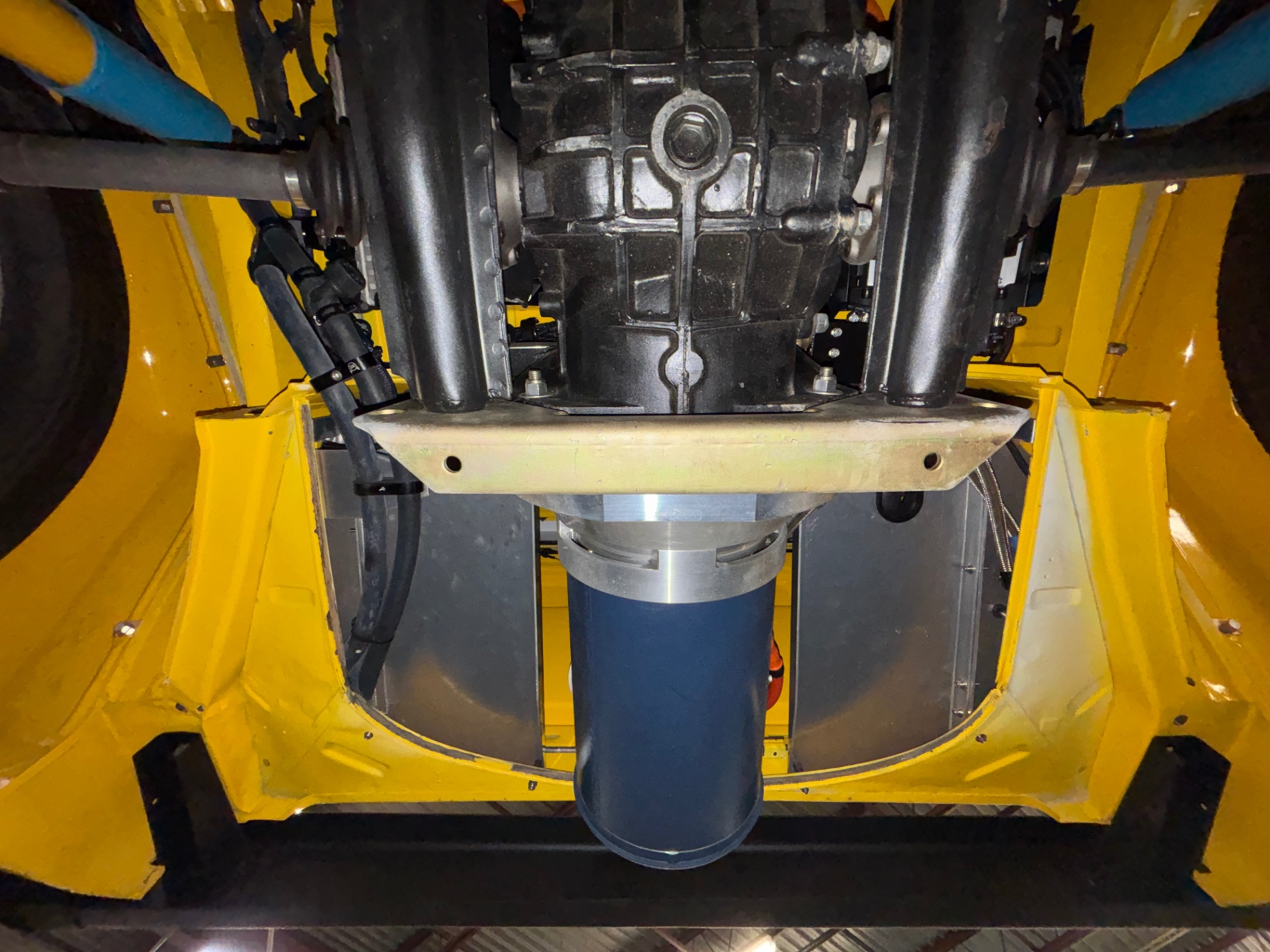
The heart of this conversion is the EV West electric motor, mounted in the rear engine bay where the original Type 1-derived flat-four once lived. The original 4-speed manual transaxle has been retained, which means you still row through the gears with the floor-mounted shifter. This is an important detail for drivers who want an engaged, mechanical driving experience rather than a single-speed electric appliance. The clutch pedal remains in use, and the gear changes are deliberate and tactile, exactly as they were from the factory.
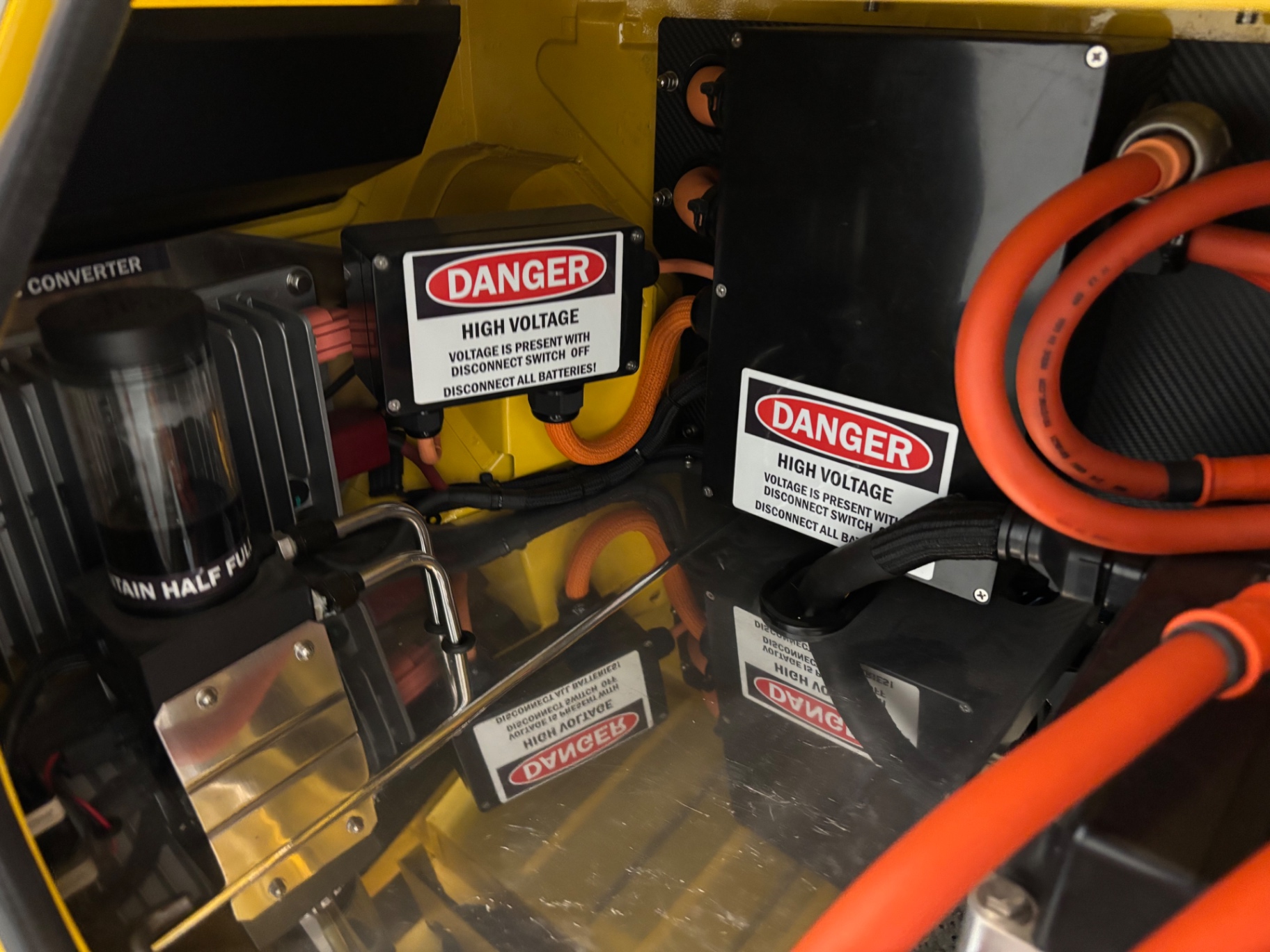
Power from the motor feeds through a high-voltage battery pack that is neatly integrated into the vehicle. Charging is handled through a J1772 port, the same standard connector used by the majority of public Level 2 charging stations and home charging equipment. This is not a proprietary or obscure charging solution — the infrastructure to support this car is already everywhere.
The suspension work here is not cosmetic. Bilstein is a German manufacturer that has supplied dampers to VW and Porsche applications for generations, and their monotube gas-pressure design provides a consistent, controlled ride quality that the original shock absorbers on a 50-year-old vehicle could not match. The undercarriage photos confirm that the suspension components are clean and properly installed. The floorpan itself shows no rust, no patch panels, and no visible repairs — it is a solid, original-metal foundation that justifies the investment made in the drivetrain above it.
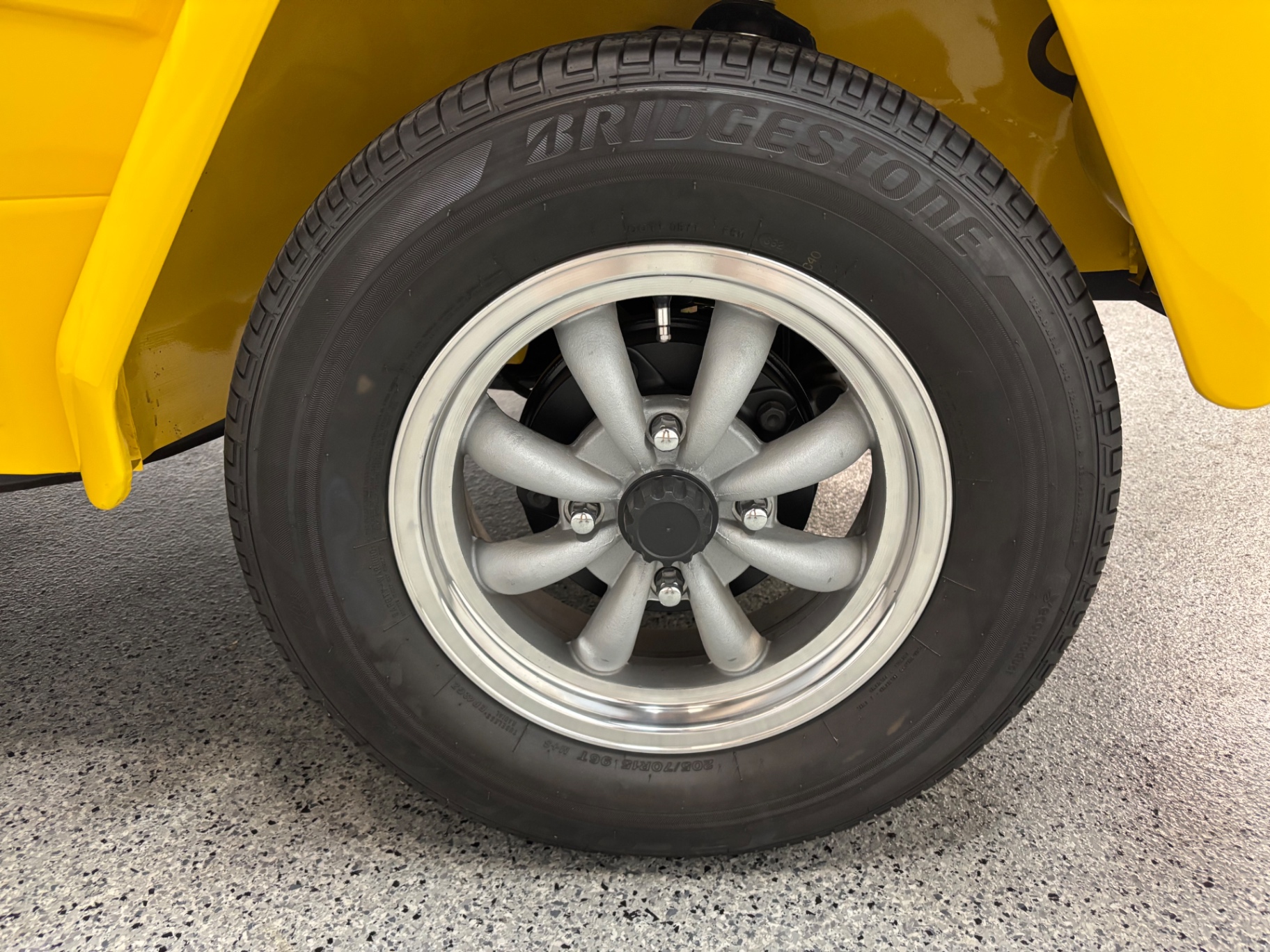
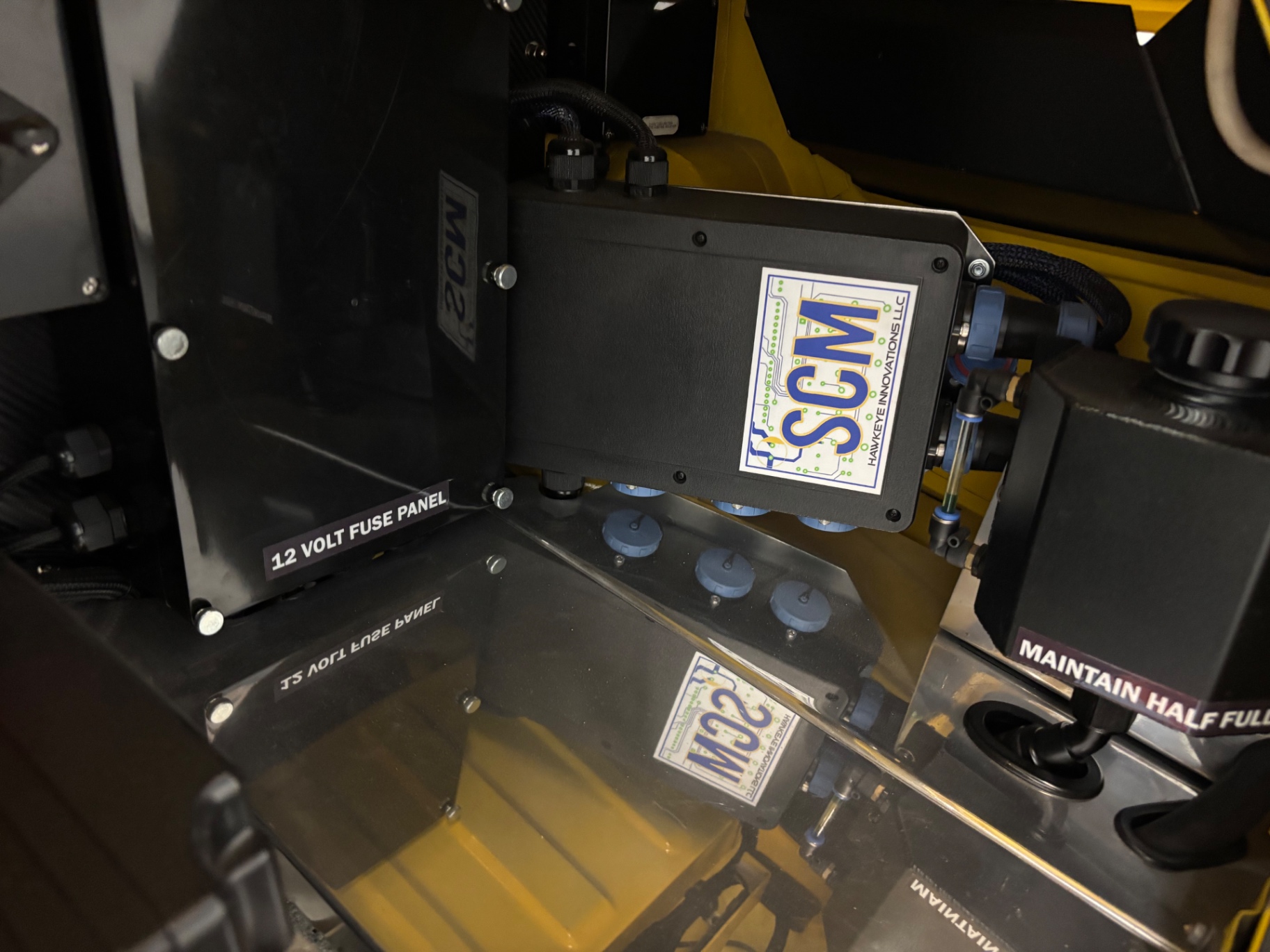
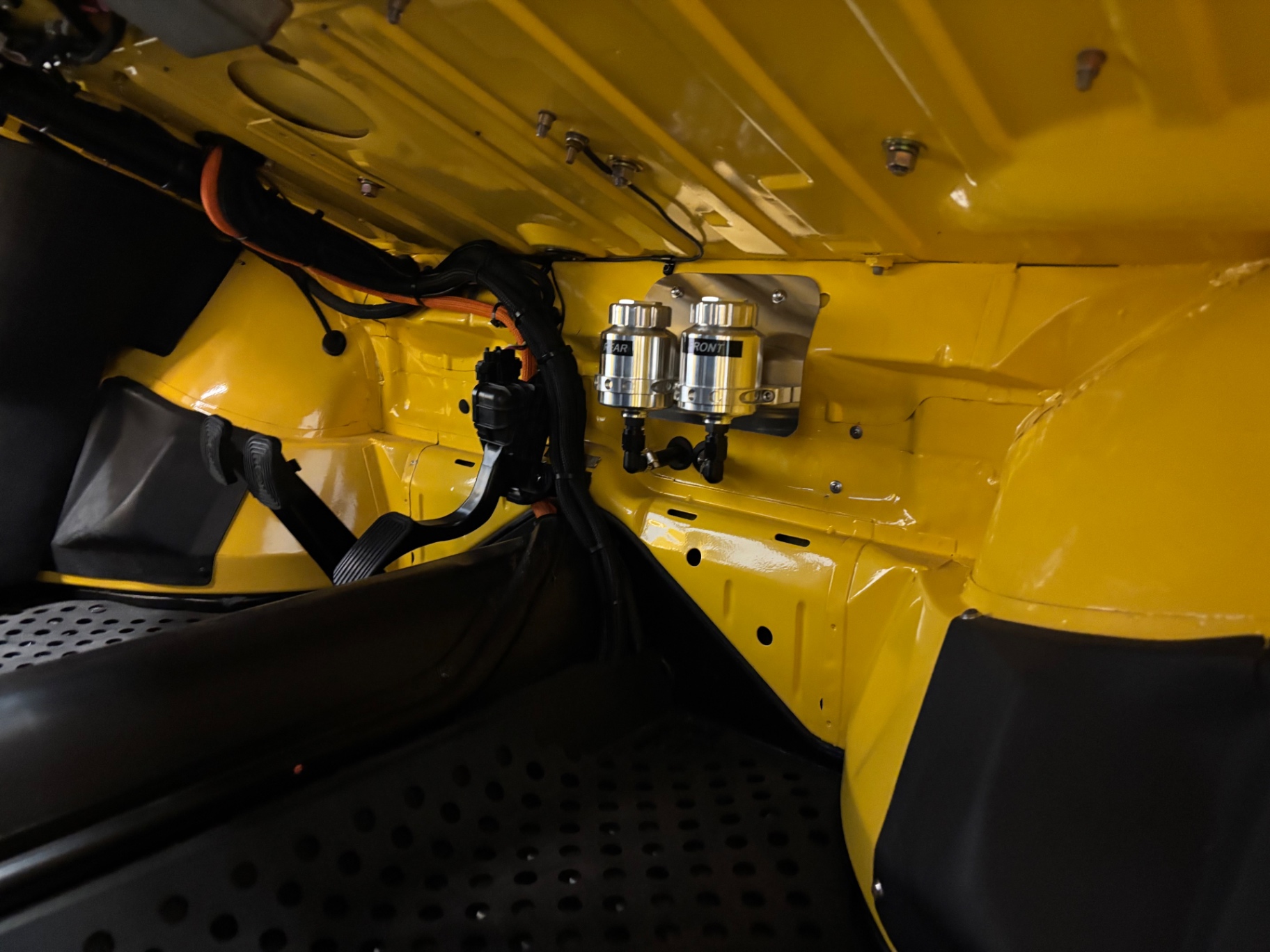
A dedicated 12V fuse panel handles the conventional electrical loads — lights, accessories, and ancillary systems — completely separate from the high-voltage drivetrain. This is the correct way to build a conversion of this type, and it reflects the level of care that went into the project. Bridgestone tires on upgraded alloy wheels complete the running gear, replacing the narrow original rubber with a more modern contact patch.
Interior
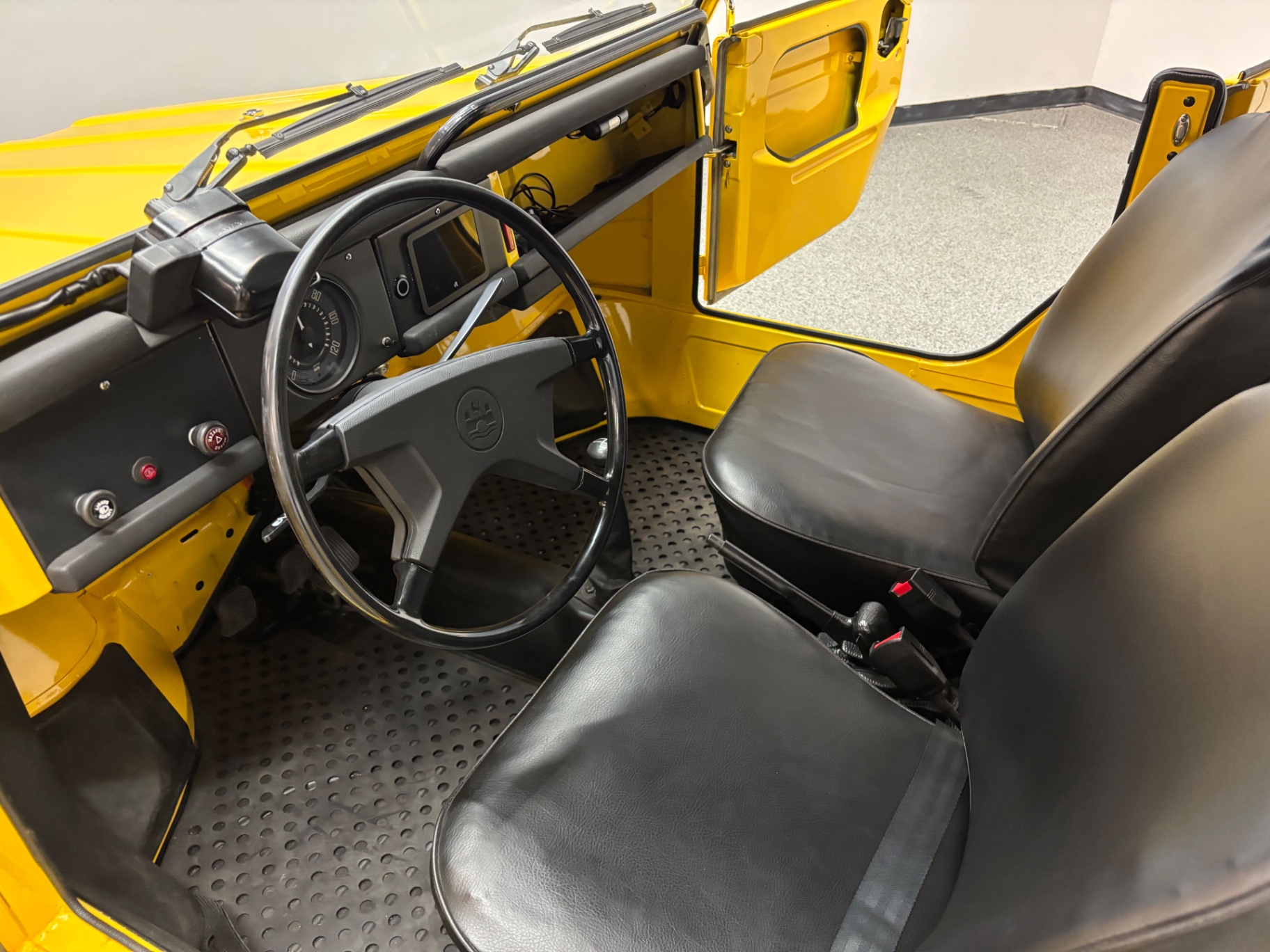
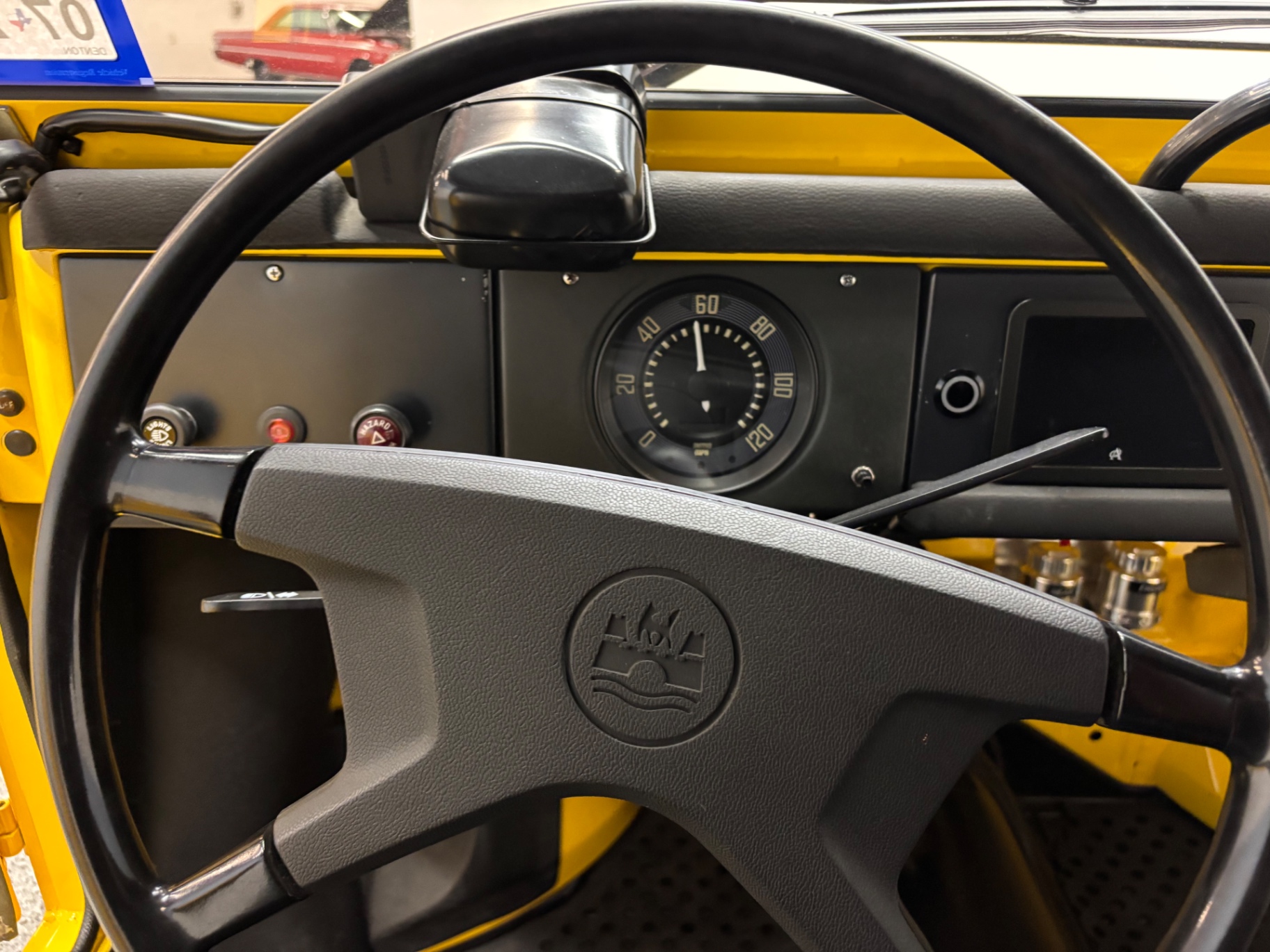
Step inside the 1973 Volkswagen Thing and the combination of old and new is immediately apparent. The original three-spoke VW steering wheel with its Wolfsburg crest is present and correct. The dashboard is the original pressed-steel unit, simple and direct, with a round instrument cluster at center. Alongside the factory speedometer, a digital speedometer has been added to give the driver accurate speed readout calibrated to the electric drivetrain rather than relying on a gauge linked to a mechanical cable from a gearbox that has since been modified.
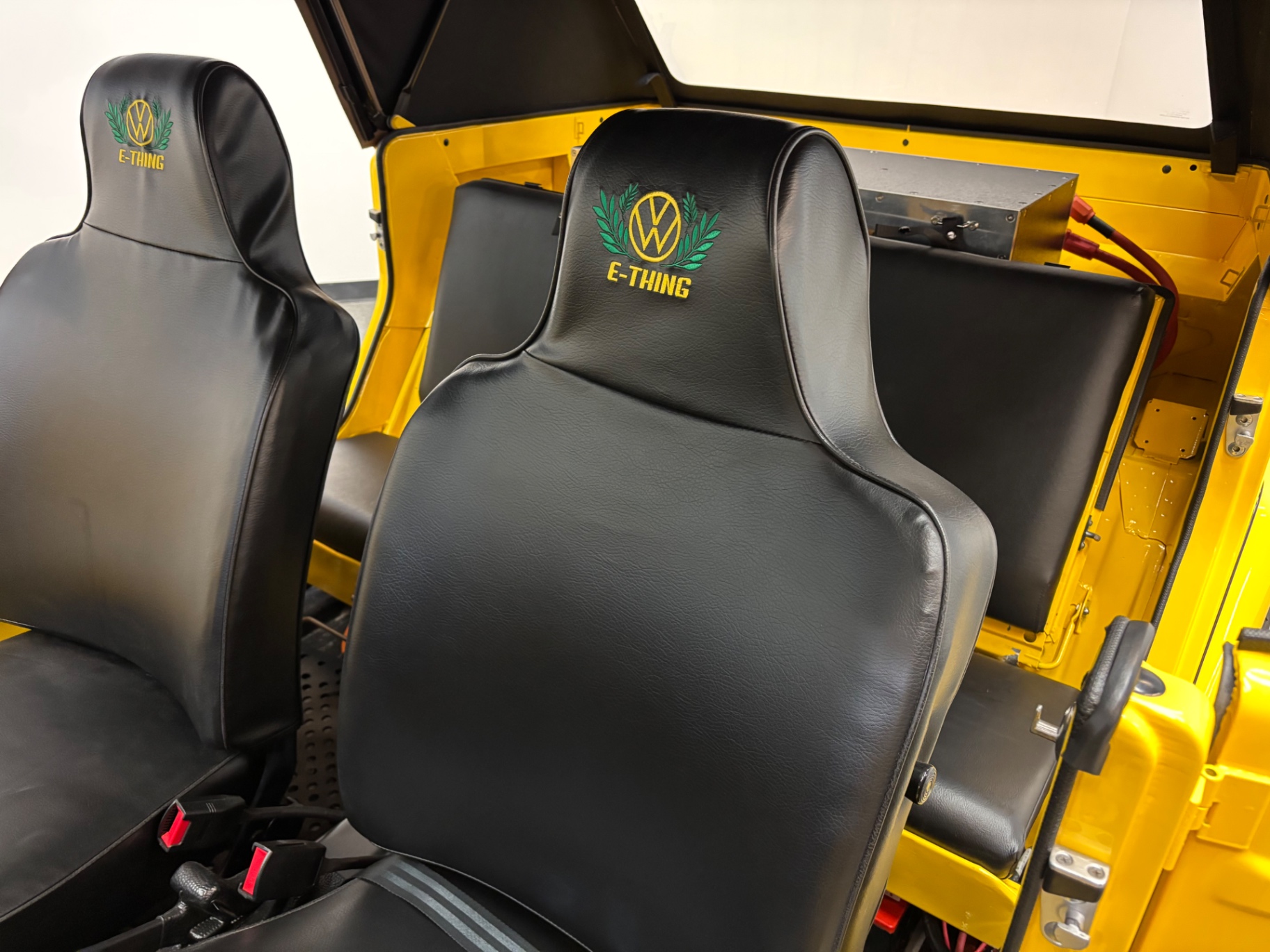
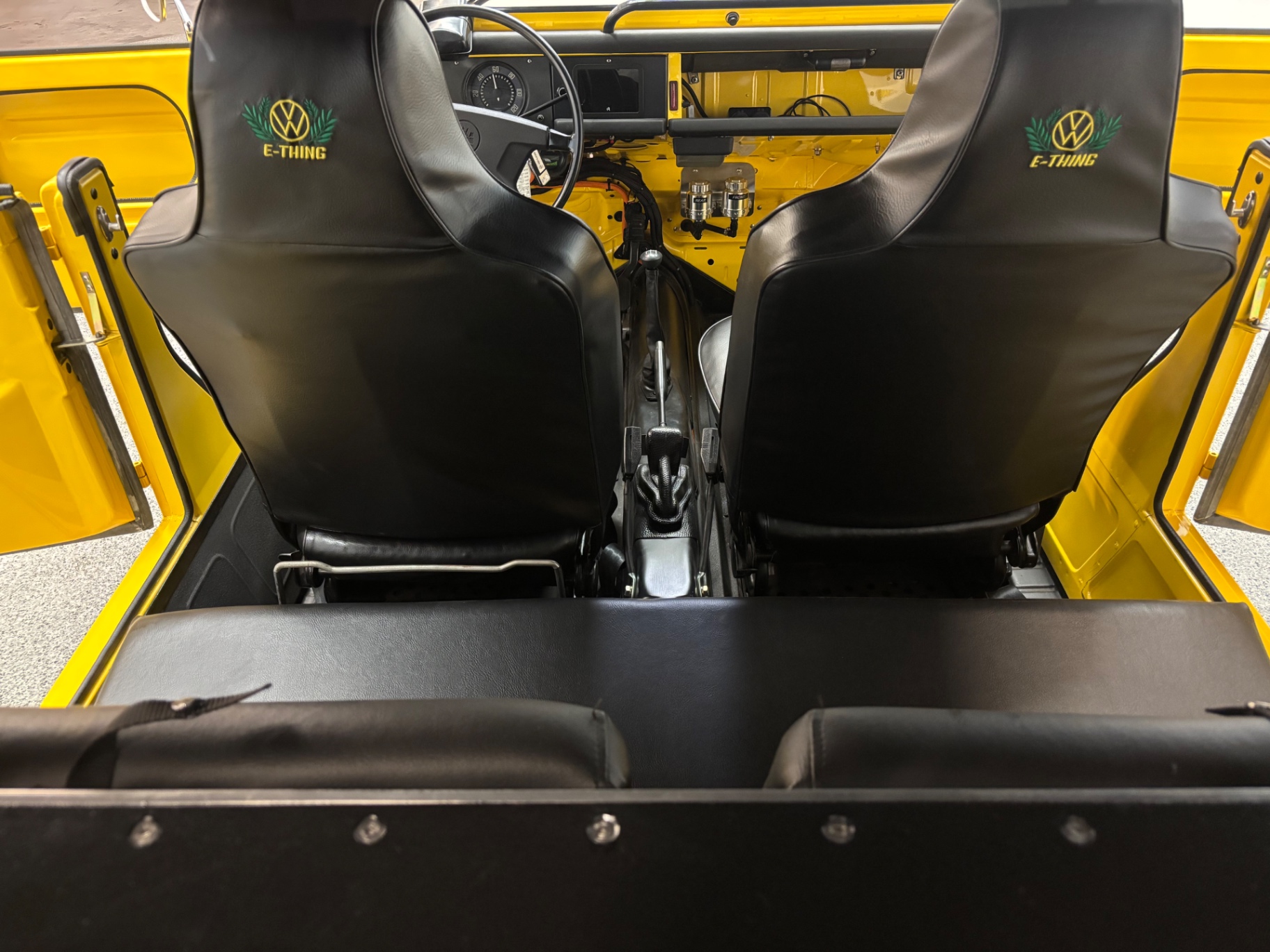
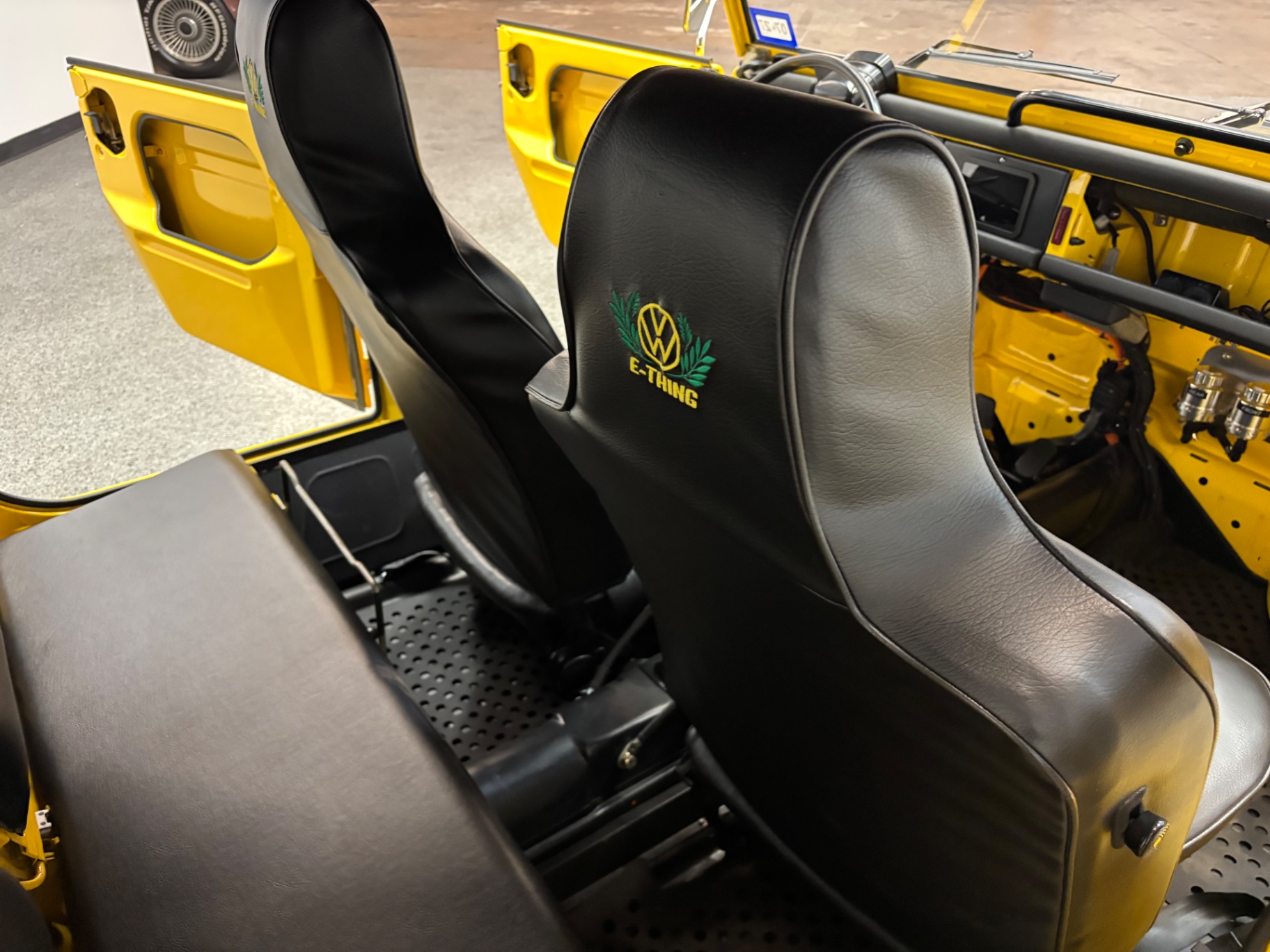
The front seats have been reupholstered in black leather and feature embroidered "E-Thing" badging on the headrests — a VW roundel with laurel wreath in gold and green, a detail that acknowledges the electric conversion without being heavy-handed about it. The leather is clean and shows no cracking or damage. The floor is covered in the correct rubber matting that is correct for the Thing's design intent as a washable, all-weather open vehicle.
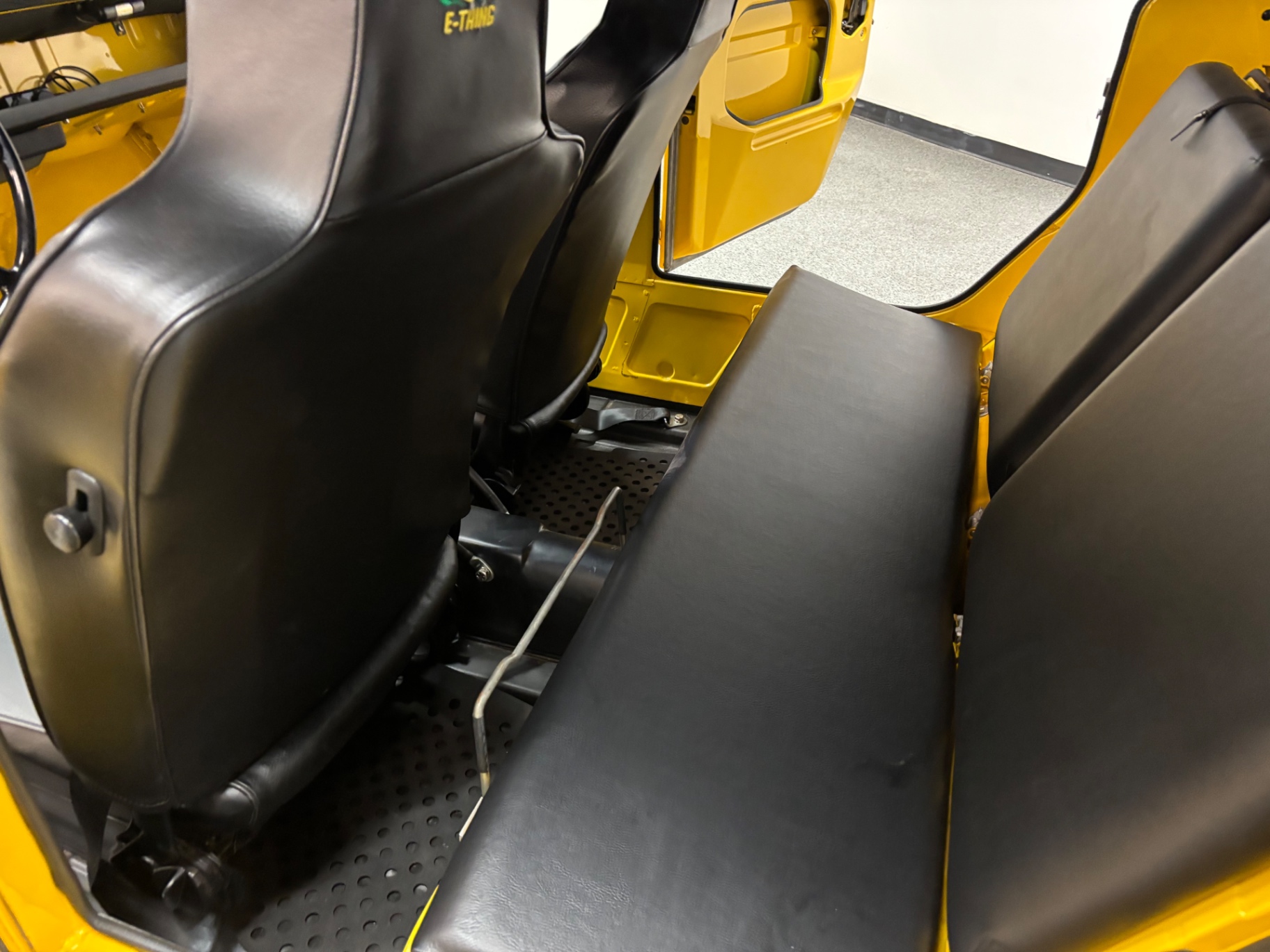
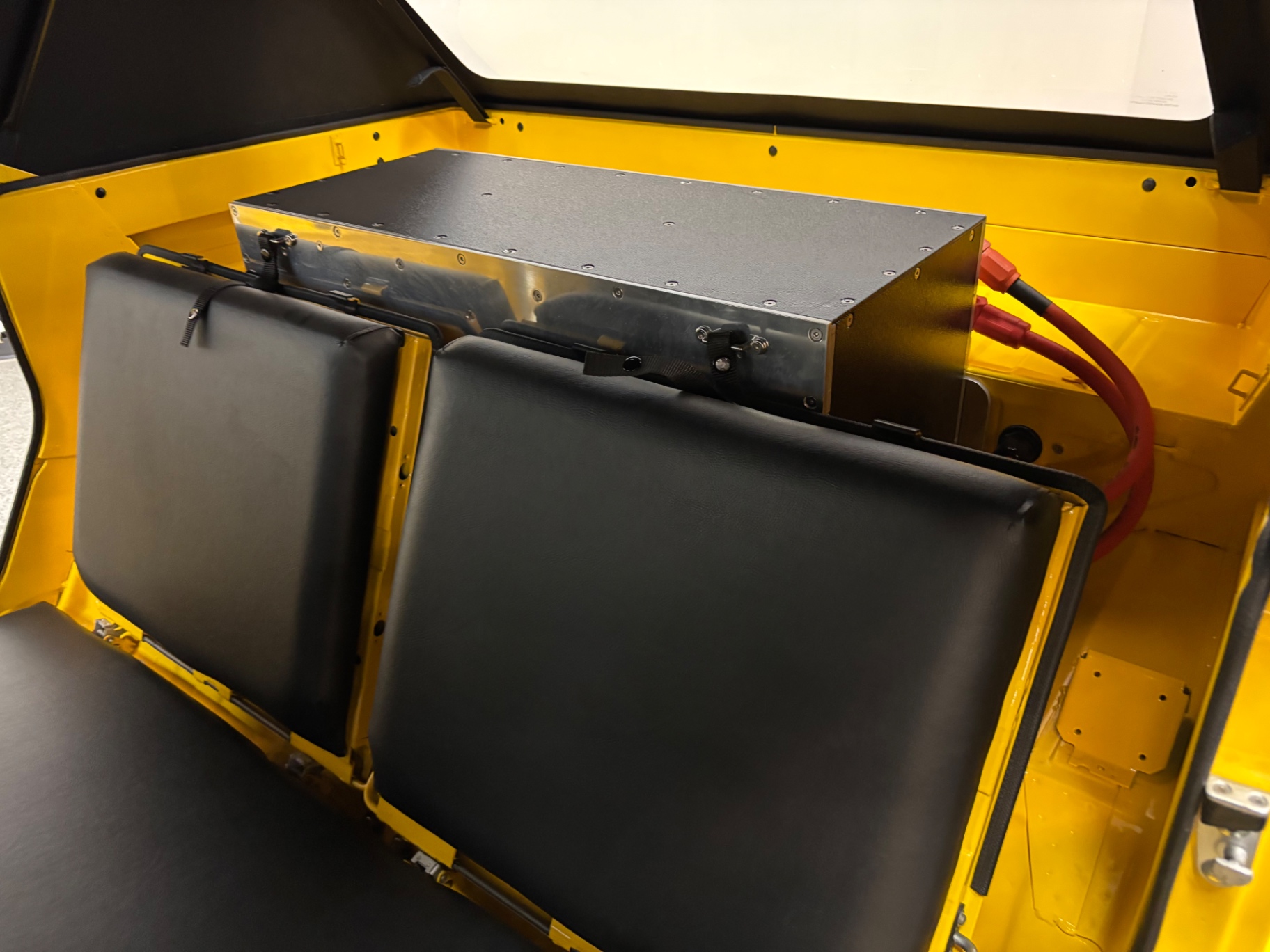
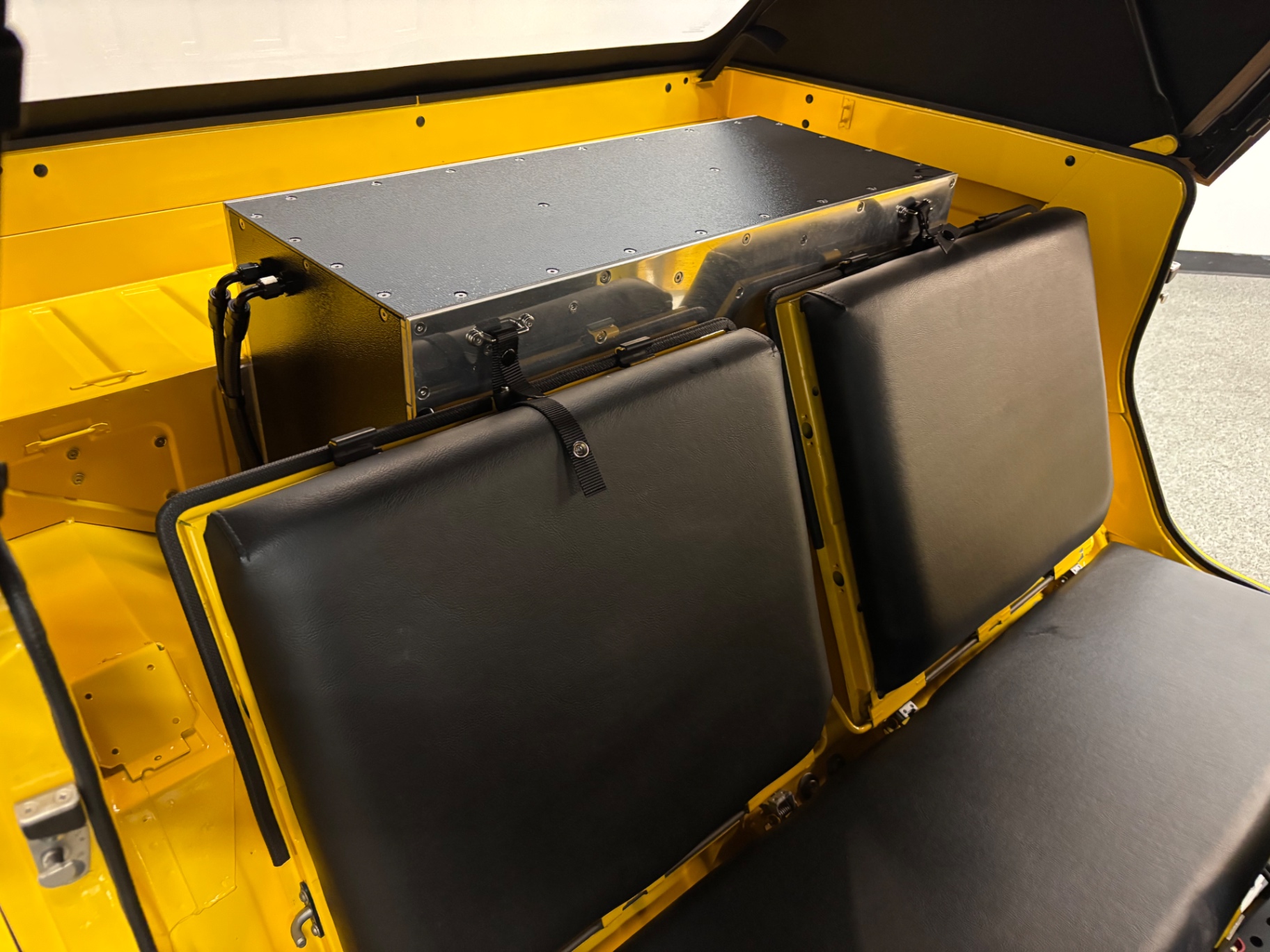
The rear jump seats are in place and upholstered to match the fronts. On the 1973 Volkswagen Thing, these rear seats fold down to create a cargo platform, and they fold up to seat two additional passengers facing rearward — a feature carried over from the vehicle's military utility roots. The rear compartment also houses a portion of the battery system, visible above the folded rear seat backs, mounted cleanly in a brushed aluminum enclosure. The high-voltage cabling is properly routed and labeled, consistent with a professionally executed build.
The interior color throughout is black, which contrasts well with the yellow body panels visible through the open sides and folding doors.
Exterior
The body is finished in yellow, which is one of the most period-correct and visually appropriate colors available on a 1973 Volkswagen Thing. The stamped steel panels — hood, doors, rear body sides — show the characteristic flat, angular geometry that defines the Thing's appearance. There are no soft curves here, no chrome grille, no ornamentation. The design is functional geometry made into a vehicle, and the yellow finish reinforces how intentional that look is.
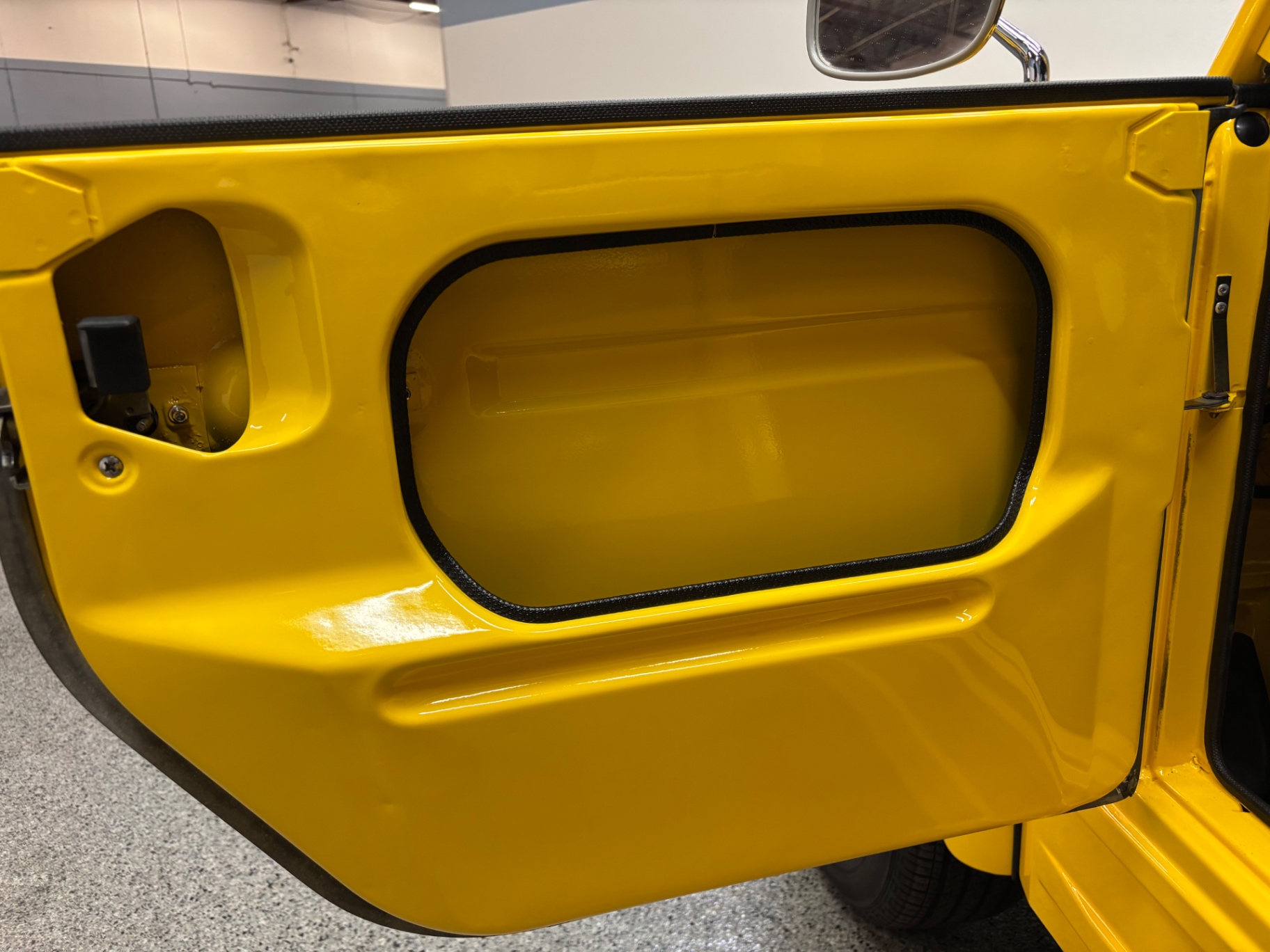
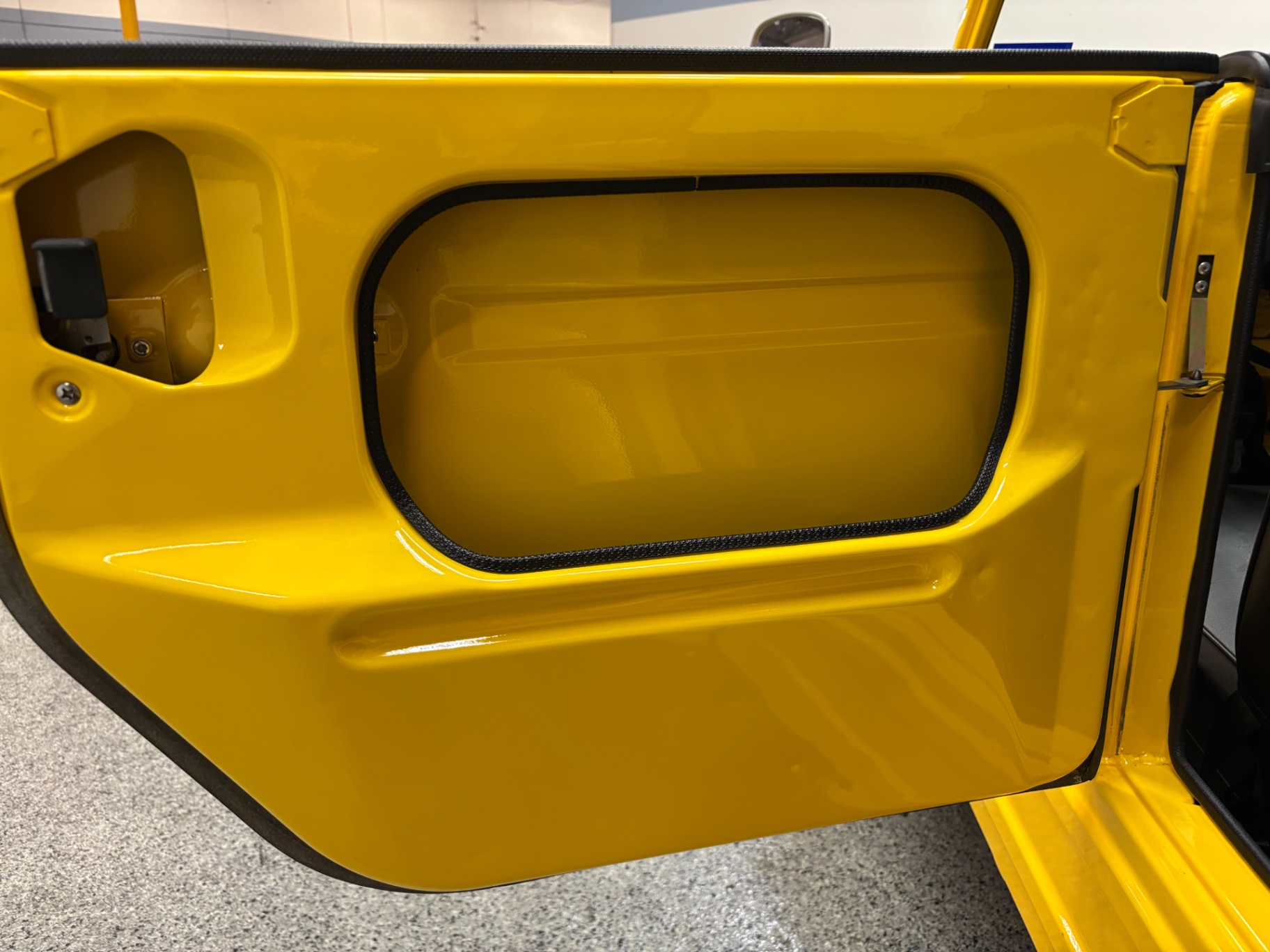
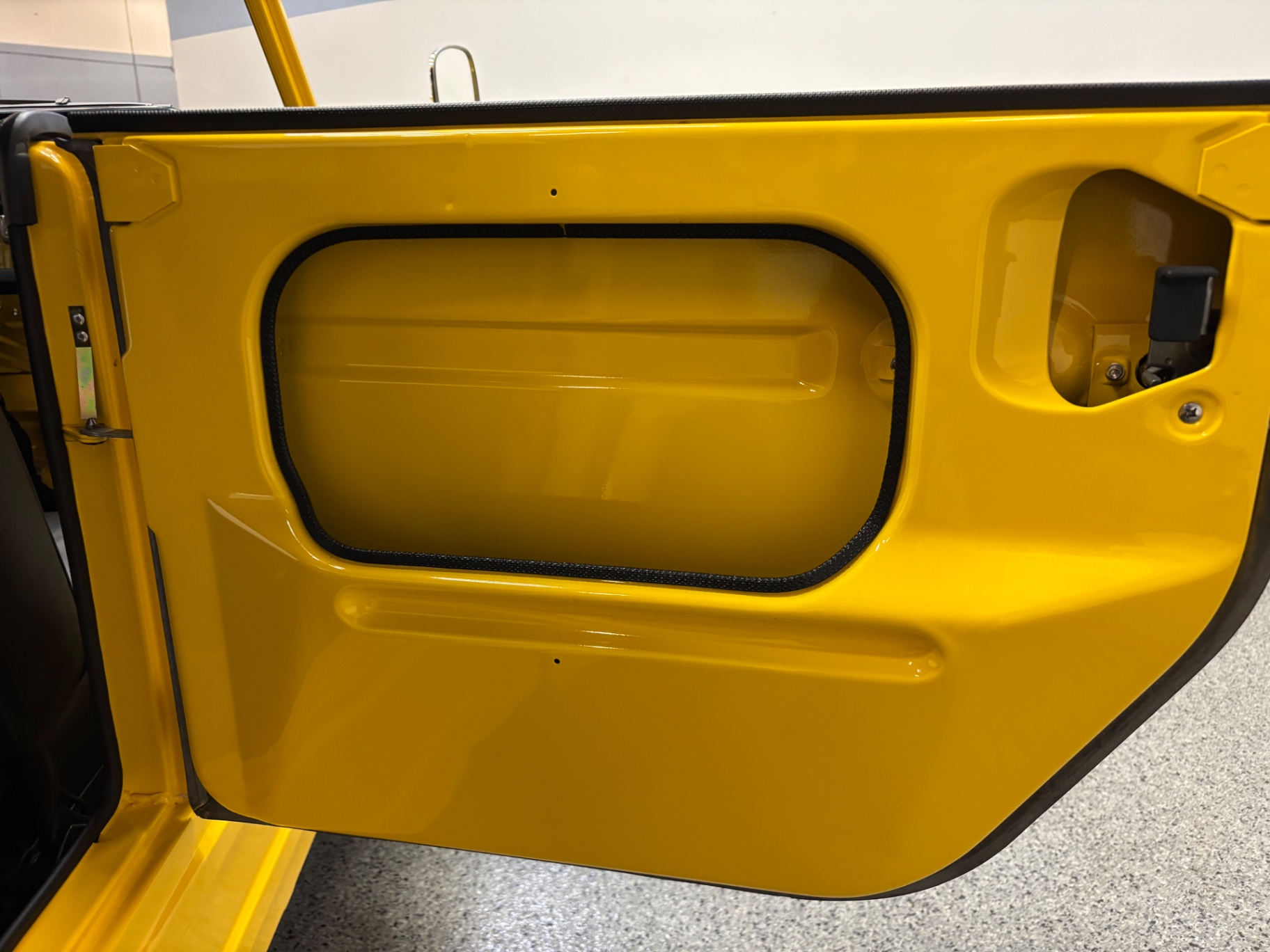
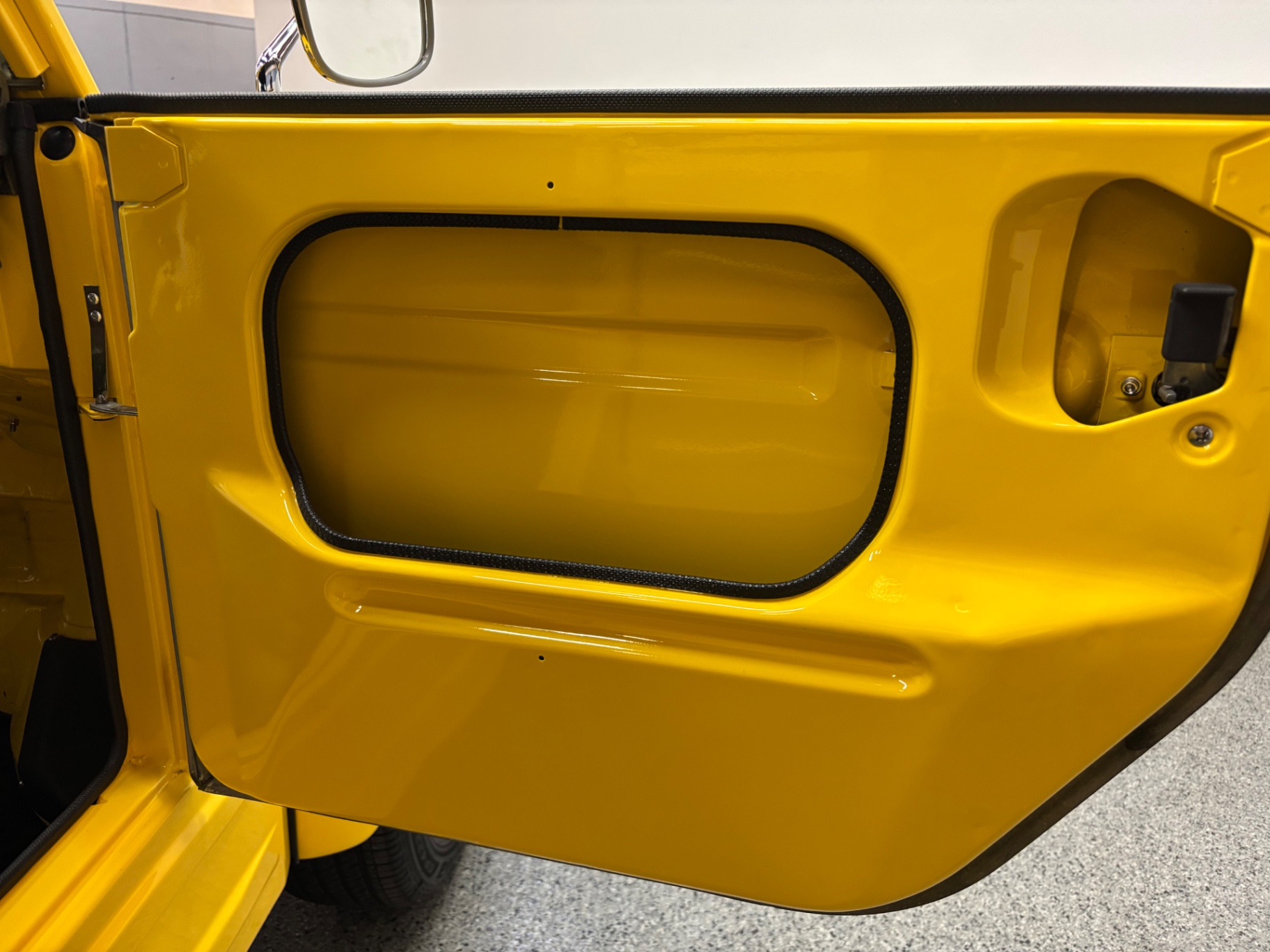
The fold-flat windshield, the removable doors with their rubber-sealed oval window openings, and the tan convertible soft top are all present and in good condition. The soft top fits properly over the tubular roll hoop that forms the structural header above the windshield. With the top removed and the windshield folded, the 1973 Volkswagen Thing becomes a fully open vehicle — a configuration that works particularly well in the Florida climate where this car currently resides.
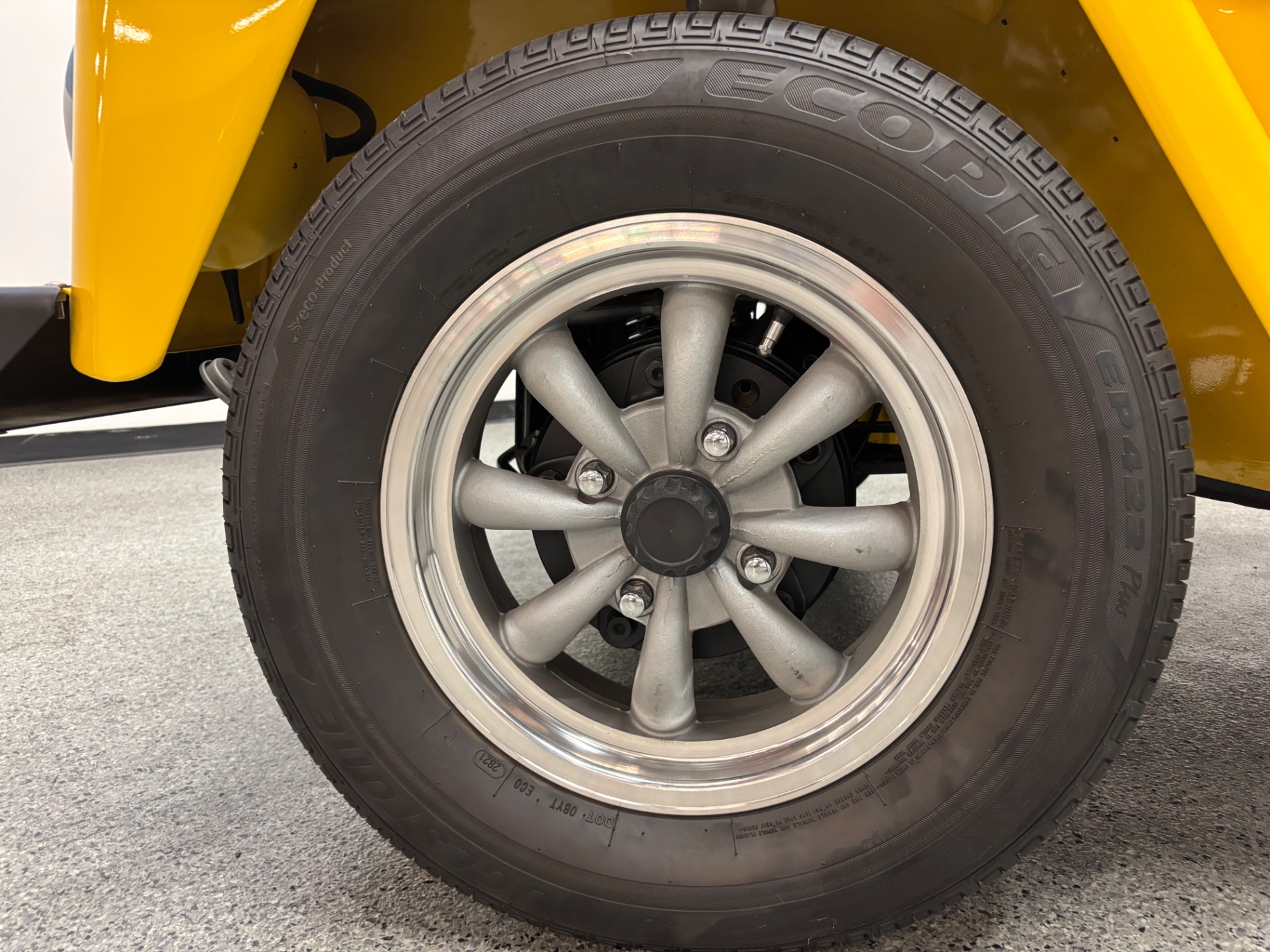
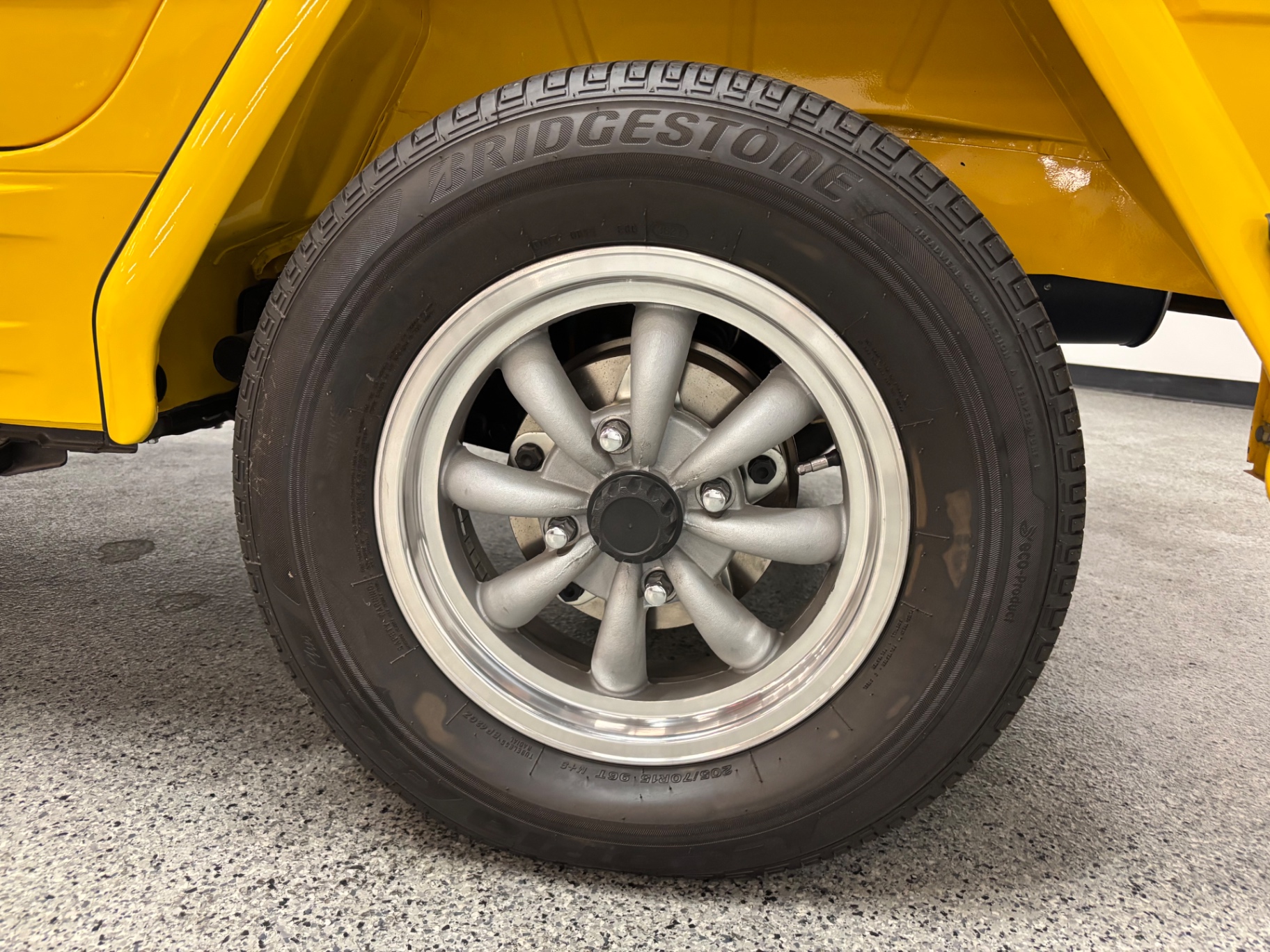
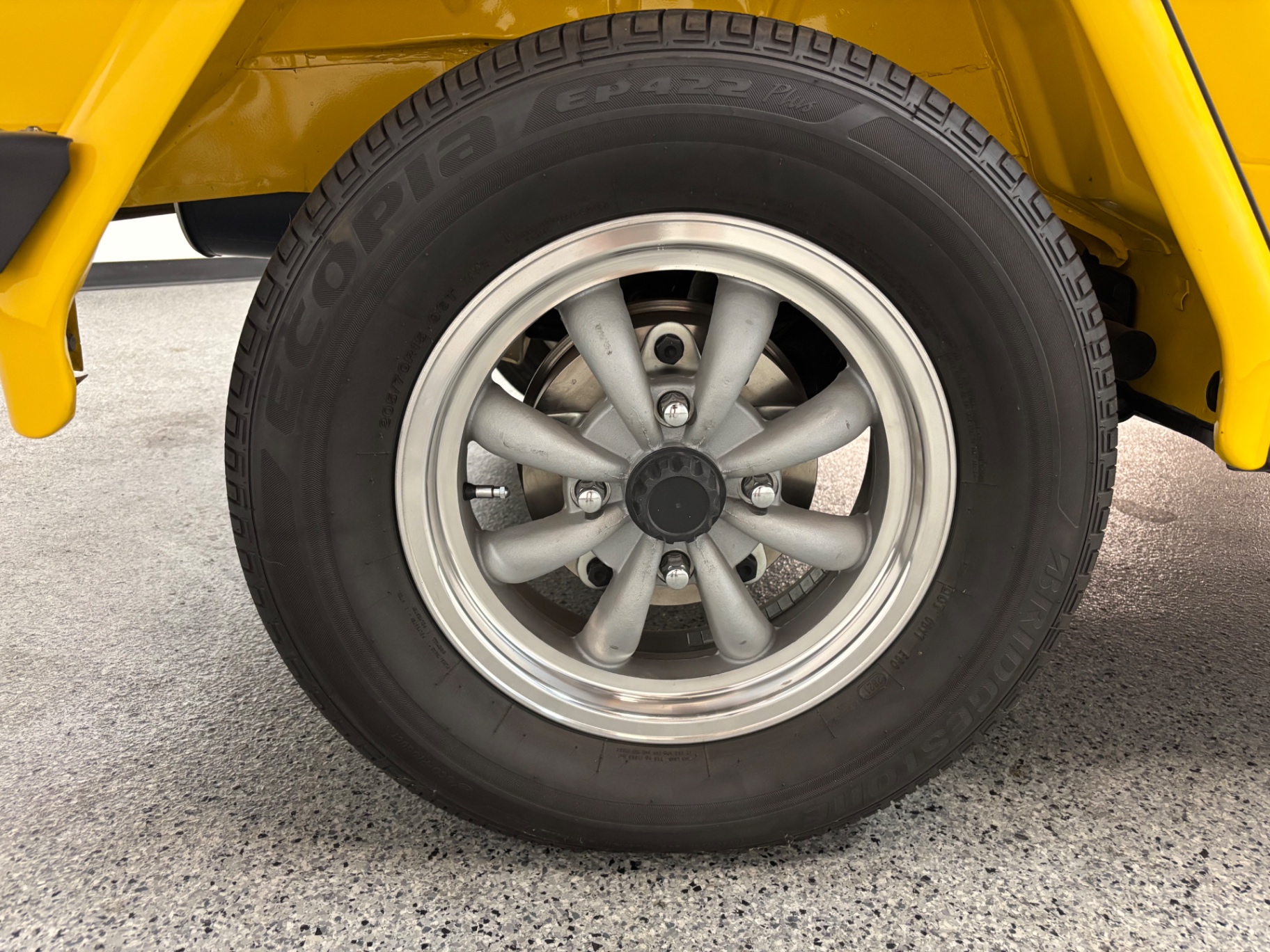
The alloy wheels are a tasteful upgrade over the original steel units — multi-spoke in a silver finish that suits the car's color combination without being visually distracting. The Bridgestone tires have adequate sidewall for the Thing's ride height and suspension geometry. The exterior body panels are rust-free, the door gaps are consistent, and the chrome on the mirrors and exterior trim is in good condition.
The underside of the car matches the presentation above: the floor pan is solid and properly coated, the frame tubes are clean, and there is no evidence of rot or prior repairs in the critical structural areas.
Conclusion
The 1973 Volkswagen Thing was already a collector vehicle before this conversion was done. Fewer than 26,000 Things were sold in the United States across the entire 1973 and 1974 model years combined, and finding one in this condition — rust-free body, solid floorpan, proper undercarriage — is a prerequisite that eliminates most of the examples you will encounter. What sets this one apart from a standard survivor or restoration is the EV West conversion, which solves the one legitimate weakness of any vintage air-cooled VW: the ongoing mechanical attention that aging carbureted engines require. This 1973 Volkswagen Thing drives on electric power, charges on standard Level 2 infrastructure, and does it all while retaining the manual gearbox and the open-air character that made the Thing worth preserving in the first place.
This is a vehicle for someone who understands what they are looking at — the rarity of the platform, the quality of the conversion, and the condition of the body and chassis underneath it all.
To learn more or schedule a time to see this 1973 Volkswagen Thing in person, contact Skyway Classics in Sarasota, Florida at 941-254-6608.
Disclaimer
Information found on the website is presented as given to us by the owner of the car, whether on consignment or from the owner we bought it from. Some Photos, materials for videos, descriptions and other information are provided by the consignor/seller and is deemed reliable, but Skyway Classics does not warranty or guarantee this information. Skyway Classics is not responsible for information that may incorrect or a publishing error. The decision to purchase should be based solely on the buyers personal inspection of the vehicle or by a professional inspection service prior to offer or purchase being made.
1973 Volkswagen Thing — EV West Electric Conversion with Bilstein Suspension and J1772 Charge Port
Why This Car Is Special
The 1973 Volkswagen Thing is already a rare vehicle by any measure. Volkswagen produced the Type 181 — sold in the United States as the Thing — for only four model years in this market, from 1973 through 1974, and import numbers were relatively small. The Thing was originally developed at the request of the German military as a civilian-legal version of the Kubelwagen concept, and its flat-panel, folding-door body design reflected that utilitarian DNA directly. What you see is what you get with a Thing: no pretense, no excess, just a purpose-built open-air vehicle with a personality that no other car on the road can match.
This particular 1973 Volkswagen Thing takes that already-distinctive platform and adds a layer of engineering that very few examples in existence can claim. The original air-cooled flat-four has been removed and replaced with an EV West electric motor, one of the most respected names in the classic car EV conversion space. EV West, based in California, has built a reputation for high-quality electric drivetrain components designed specifically for vintage vehicle applications. The result here is a 1973 Volkswagen Thing that retains its original character — the open top, the fold-flat windshield, the jump seats, the spartan aesthetic — while eliminating the maintenance demands of a nearly 55-year-old internal combustion engine. No carburetor to rebuild. No points to set. No oil leaks to manage. Just charge it and drive it.
What makes this conversion particularly well-executed is that it was not done at the expense of the car's mechanical integrity. The undercarriage photos tell the real story: the floorpan is clean and solid, the chassis tubes are properly coated, and the Bilstein shock absorbers are visible on all four corners — a damper brand that VW enthusiasts have trusted for decades in air-cooled applications. The body is rust-free, which on a 1973 Thing is a genuine accomplishment and a prerequisite for any serious investment in a vehicle of this type.
The "E" at the end of the partial VIN sequence identifies this as a vehicle assembled at the Puebla, Mexico facility, which is where Volkswagen built all Things destined for the North American market. That factory provenance is consistent with a US-spec car, confirming this is the correct North American configuration.
Features List
- EV West electric motor conversion
- High-voltage battery pack
- J1772 charge port (industry-standard Level 2 charging compatibility)
- 4-speed manual transmission retained
- Bilstein shock absorbers, all four corners
- 12V fuse panel (separate from the high-voltage system)
- Digital speedometer
- Upgraded alloy wheels
- Bridgestone tires
- Tan convertible soft top
- Black leather interior
- E-Thing embroidered front seats
- Rear jump seats
- Clean, rust-free undercarriage
- Yellow exterior
Mechanical
The heart of this conversion is the EV West electric motor, mounted in the rear engine bay where the original Type 1-derived flat-four once lived. The original 4-speed manual transaxle has been retained, which means you still row through the gears with the floor-mounted shifter. This is an important detail for drivers who want an engaged, mechanical driving experience rather than a single-speed electric appliance. The clutch pedal remains in use, and the gear changes are deliberate and tactile, exactly as they were from the factory.
Power from the motor feeds through a high-voltage battery pack that is neatly integrated into the vehicle. Charging is handled through a J1772 port, the same standard connector used by the majority of public Level 2 charging stations and home charging equipment. This is not a proprietary or obscure charging solution — the infrastructure to support this car is already everywhere.
The suspension work here is not cosmetic. Bilstein is a German manufacturer that has supplied dampers to VW and Porsche applications for generations, and their monotube gas-pressure design provides a consistent, controlled ride quality that the original shock absorbers on a 50-year-old vehicle could not match. The undercarriage photos confirm that the suspension components are clean and properly installed. The floorpan itself shows no rust, no patch panels, and no visible repairs — it is a solid, original-metal foundation that justifies the investment made in the drivetrain above it.
A dedicated 12V fuse panel handles the conventional electrical loads — lights, accessories, and ancillary systems — completely separate from the high-voltage drivetrain. This is the correct way to build a conversion of this type, and it reflects the level of care that went into the project. Bridgestone tires on upgraded alloy wheels complete the running gear, replacing the narrow original rubber with a more modern contact patch.
Interior
Step inside the 1973 Volkswagen Thing and the combination of old and new is immediately apparent. The original three-spoke VW steering wheel with its Wolfsburg crest is present and correct. The dashboard is the original pressed-steel unit, simple and direct, with a round instrument cluster at center. Alongside the factory speedometer, a digital speedometer has been added to give the driver accurate speed readout calibrated to the electric drivetrain rather than relying on a gauge linked to a mechanical cable from a gearbox that has since been modified.
The front seats have been reupholstered in black leather and feature embroidered "E-Thing" badging on the headrests — a VW roundel with laurel wreath in gold and green, a detail that acknowledges the electric conversion without being heavy-handed about it. The leather is clean and shows no cracking or damage. The floor is covered in the correct rubber matting that is correct for the Thing's design intent as a washable, all-weather open vehicle.
The rear jump seats are in place and upholstered to match the fronts. On the 1973 Volkswagen Thing, these rear seats fold down to create a cargo platform, and they fold up to seat two additional passengers facing rearward — a feature carried over from the vehicle's military utility roots. The rear compartment also houses a portion of the battery system, visible above the folded rear seat backs, mounted cleanly in a brushed aluminum enclosure. The high-voltage cabling is properly routed and labeled, consistent with a professionally executed build.
The interior color throughout is black, which contrasts well with the yellow body panels visible through the open sides and folding doors.
Exterior
The body is finished in yellow, which is one of the most period-correct and visually appropriate colors available on a 1973 Volkswagen Thing. The stamped steel panels — hood, doors, rear body sides — show the characteristic flat, angular geometry that defines the Thing's appearance. There are no soft curves here, no chrome grille, no ornamentation. The design is functional geometry made into a vehicle, and the yellow finish reinforces how intentional that look is.
The fold-flat windshield, the removable doors with their rubber-sealed oval window openings, and the tan convertible soft top are all present and in good condition. The soft top fits properly over the tubular roll hoop that forms the structural header above the windshield. With the top removed and the windshield folded, the 1973 Volkswagen Thing becomes a fully open vehicle — a configuration that works particularly well in the Florida climate where this car currently resides.
The alloy wheels are a tasteful upgrade over the original steel units — multi-spoke in a silver finish that suits the car's color combination without being visually distracting. The Bridgestone tires have adequate sidewall for the Thing's ride height and suspension geometry. The exterior body panels are rust-free, the door gaps are consistent, and the chrome on the mirrors and exterior trim is in good condition.
The underside of the car matches the presentation above: the floor pan is solid and properly coated, the frame tubes are clean, and there is no evidence of rot or prior repairs in the critical structural areas.
Conclusion
The 1973 Volkswagen Thing was already a collector vehicle before this conversion was done. Fewer than 26,000 Things were sold in the United States across the entire 1973 and 1974 model years combined, and finding one in this condition — rust-free body, solid floorpan, proper undercarriage — is a prerequisite that eliminates most of the examples you will encounter. What sets this one apart from a standard survivor or restoration is the EV West conversion, which solves the one legitimate weakness of any vintage air-cooled VW: the ongoing mechanical attention that aging carbureted engines require. This 1973 Volkswagen Thing drives on electric power, charges on standard Level 2 infrastructure, and does it all while retaining the manual gearbox and the open-air character that made the Thing worth preserving in the first place.
This is a vehicle for someone who understands what they are looking at — the rarity of the platform, the quality of the conversion, and the condition of the body and chassis underneath it all.
To learn more or schedule a time to see this 1973 Volkswagen Thing in person, contact Skyway Classics in Sarasota, Florida at 941-254-6608.
Disclaimer
Information found on the website is presented as given to us by the owner of the car, whether on consignment or from the owner we bought it from. Some Photos, materials for videos, descriptions and other information are provided by the consignor/seller and is deemed reliable, but Skyway Classics does not warranty or guarantee this information. Skyway Classics is not responsible for information that may incorrect or a publishing error. The decision to purchase should be based solely on the buyers personal inspection of the vehicle or by a professional inspection service prior to offer or purchase being made.
1973 Volkswagen
Thing Electric
Why Choose Skyway Classics?
Explore our curated inventory of classic and collector cars—thoughtfully selected, ready to drive, and supported by experts who make ownership simple.
Expert Curation
Every vehicle is hand-selected by our experts for quality, authenticity, and investment potential.
Fast Transactions
Streamlined buying and selling process with quick financing and immediate delivery options.
Only National Dealer With Classic Service & Repair
We’re the only national dealership that services and repairs the classics we sell—before and after the sale.
Nationwide Network
Access to our extensive network of collectors, restorers, and classic car enthusiasts nationwide.
Concierge Ownership Support
From financing and insurance to paperwork, shipping, and titling—we handle the details so you can enjoy the drive.
Passion-Driven Service
We're classic car enthusiasts first, providing personalized service with genuine passion for the hobby.