
1971 Chevrolet
Corvette Stingray
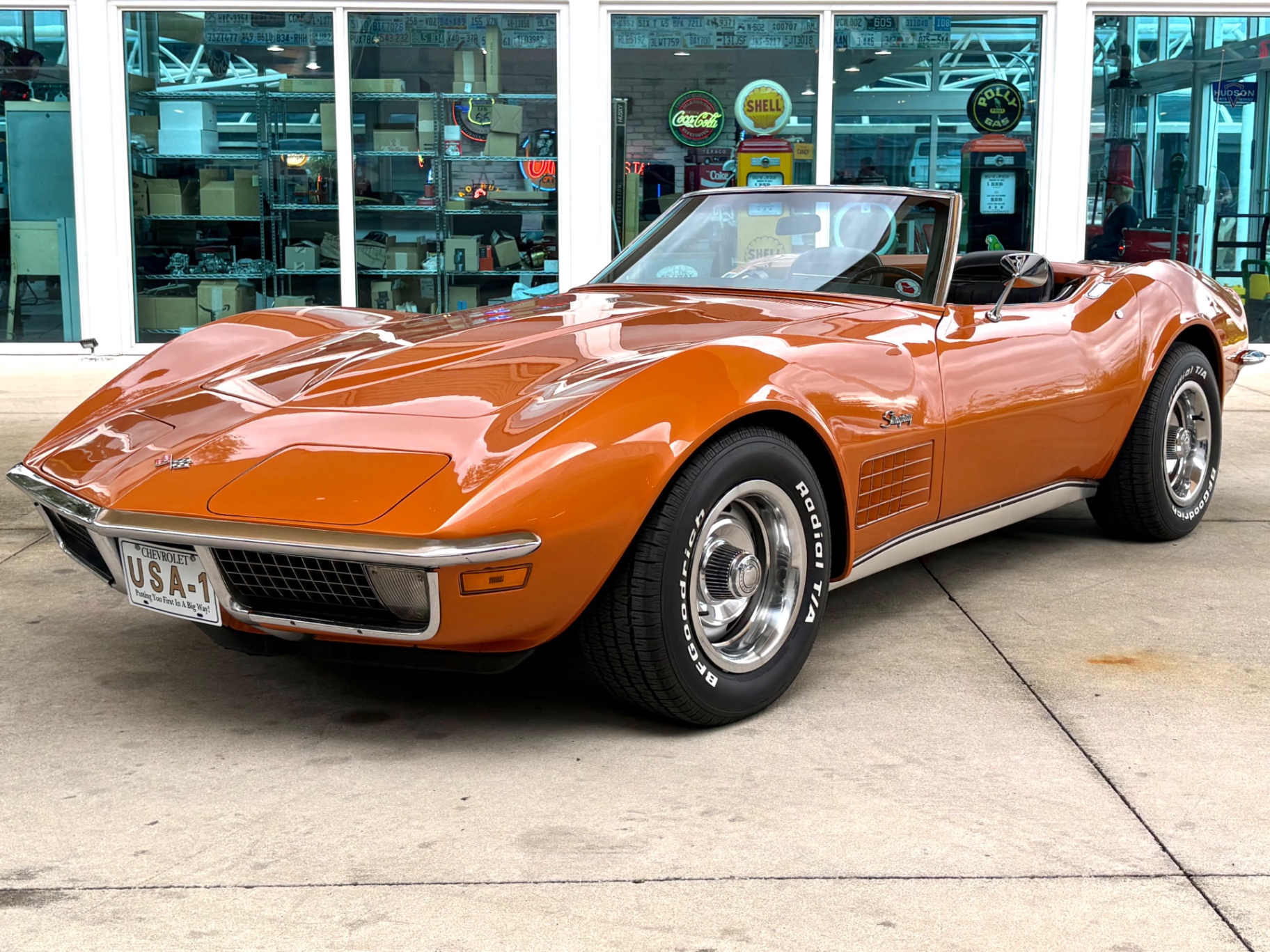
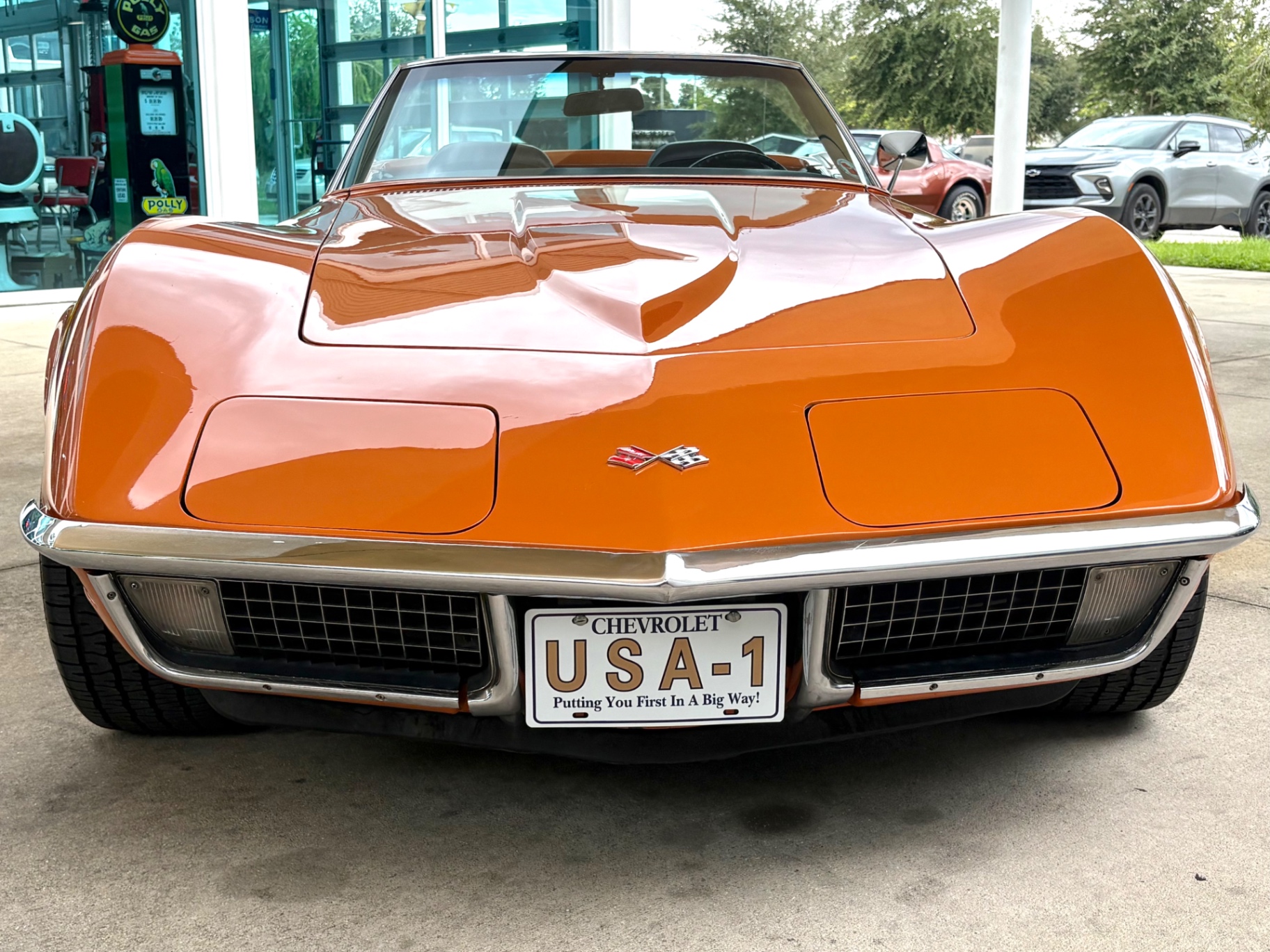
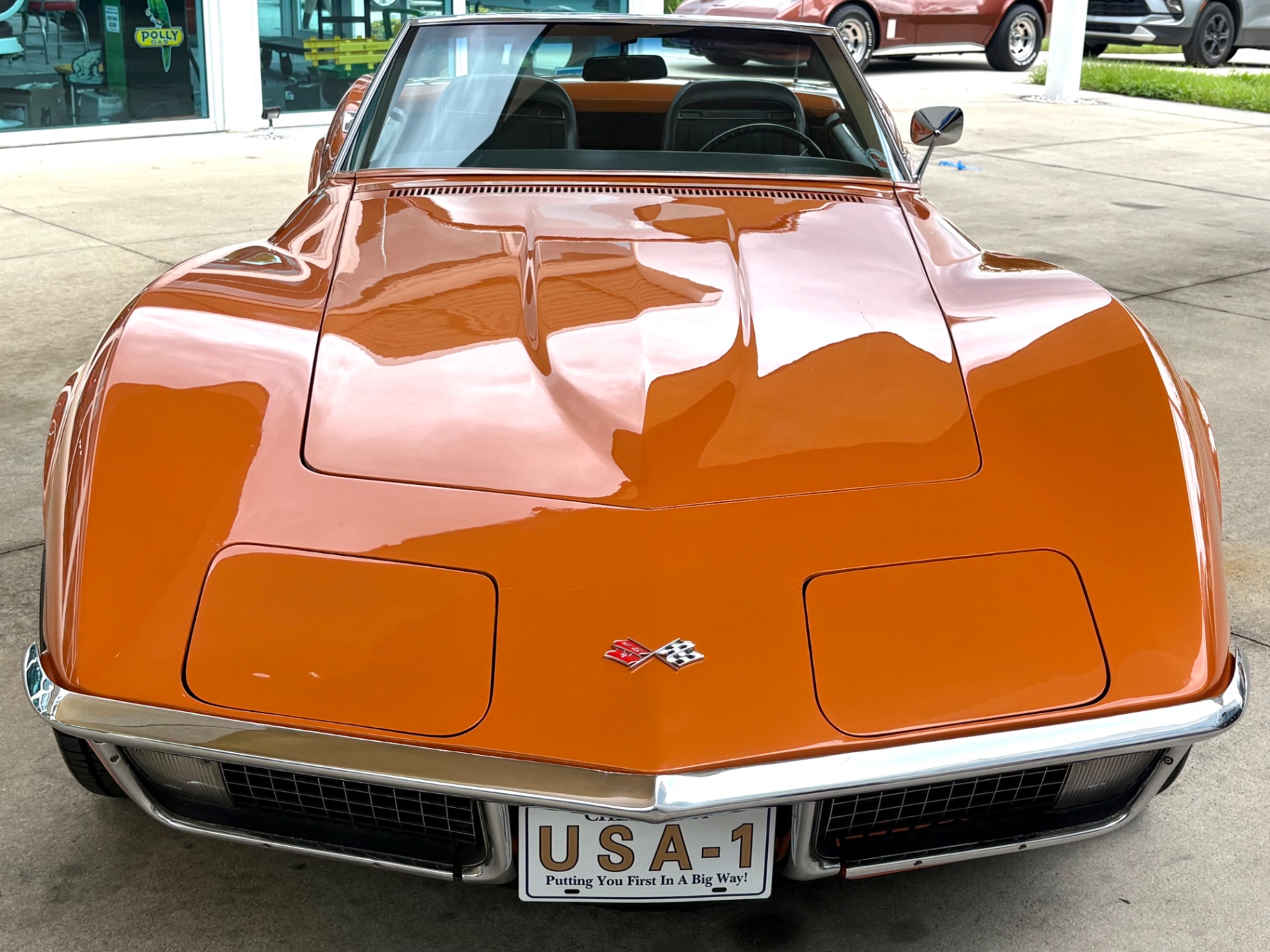
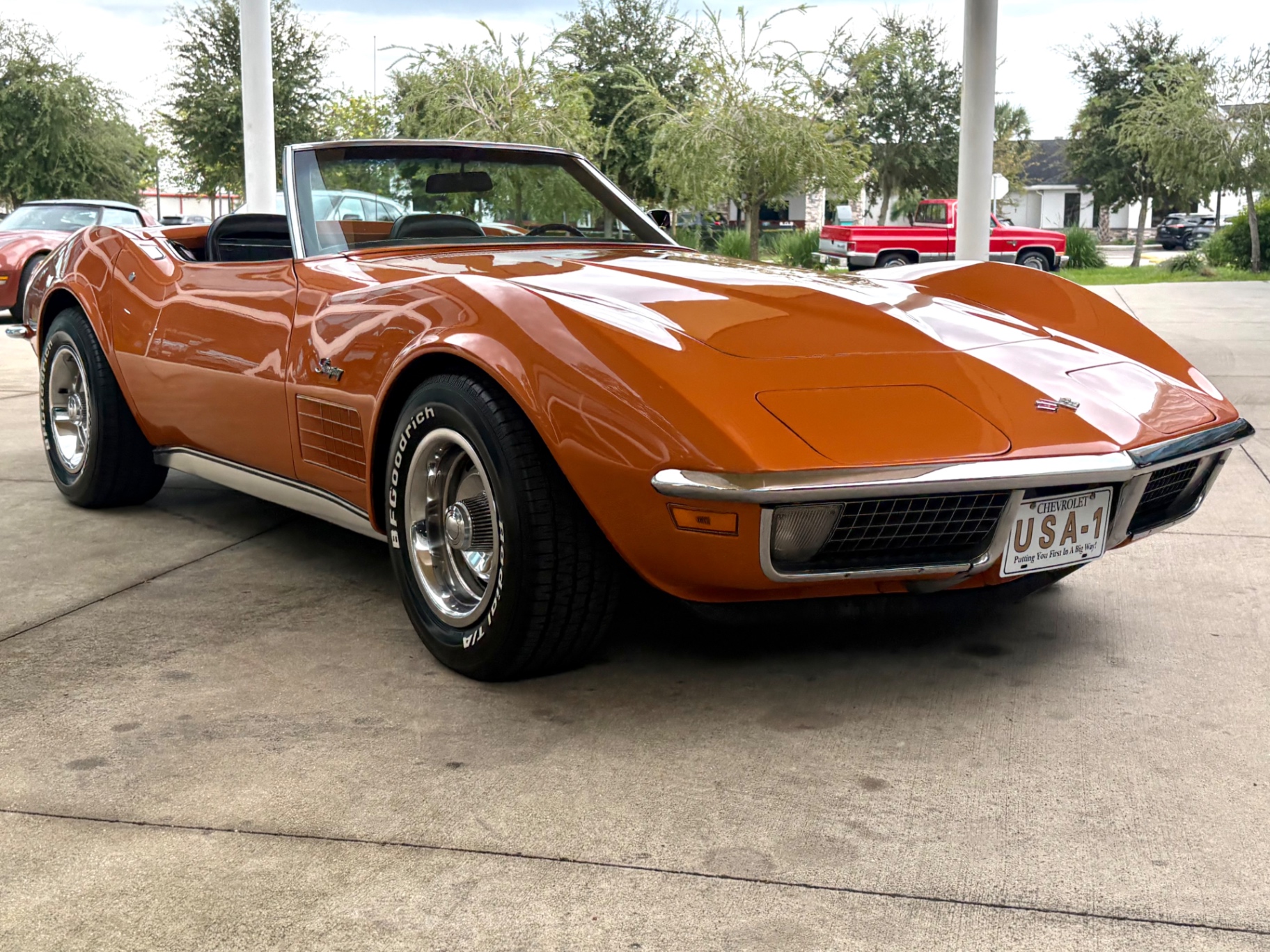
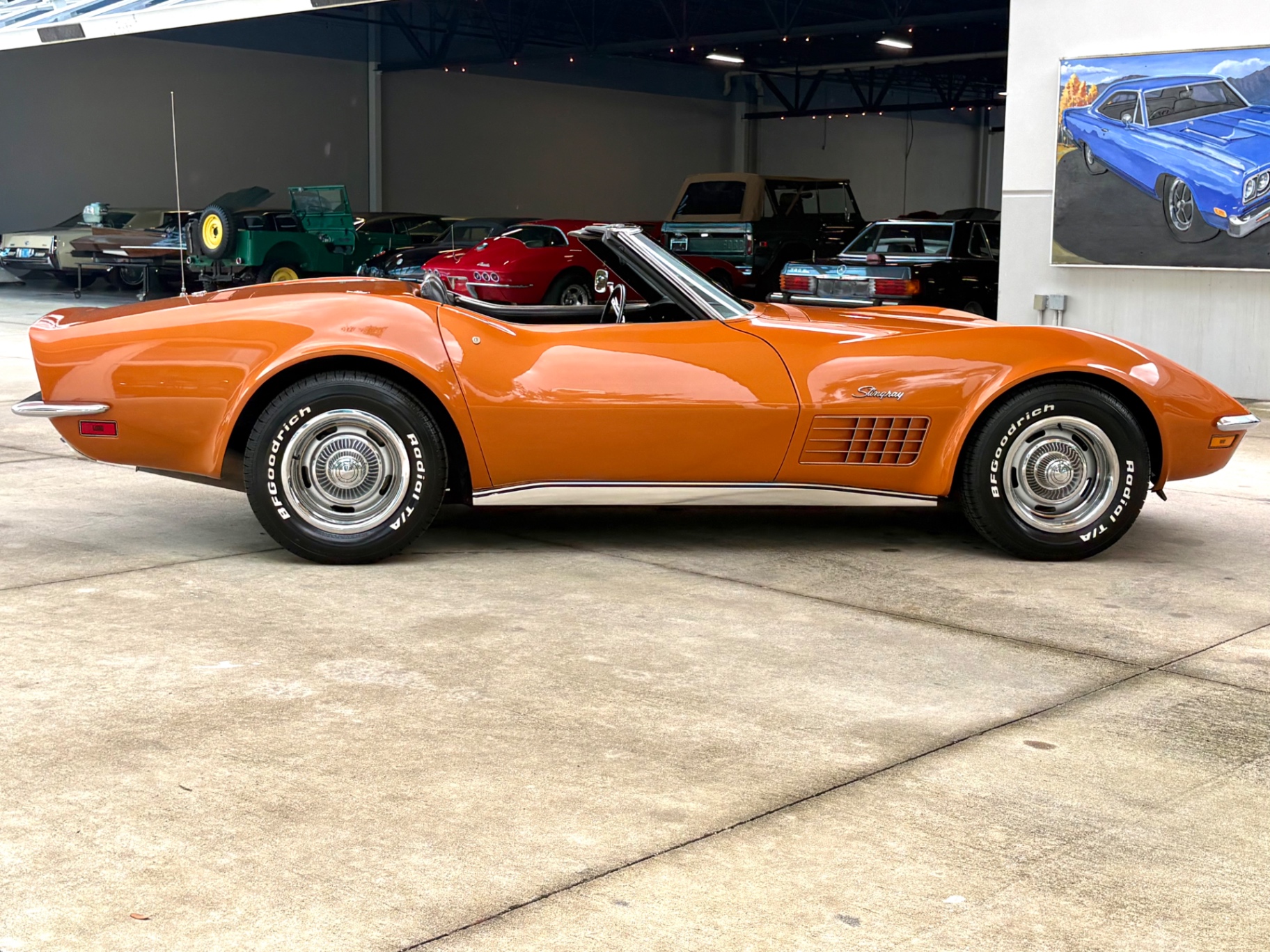
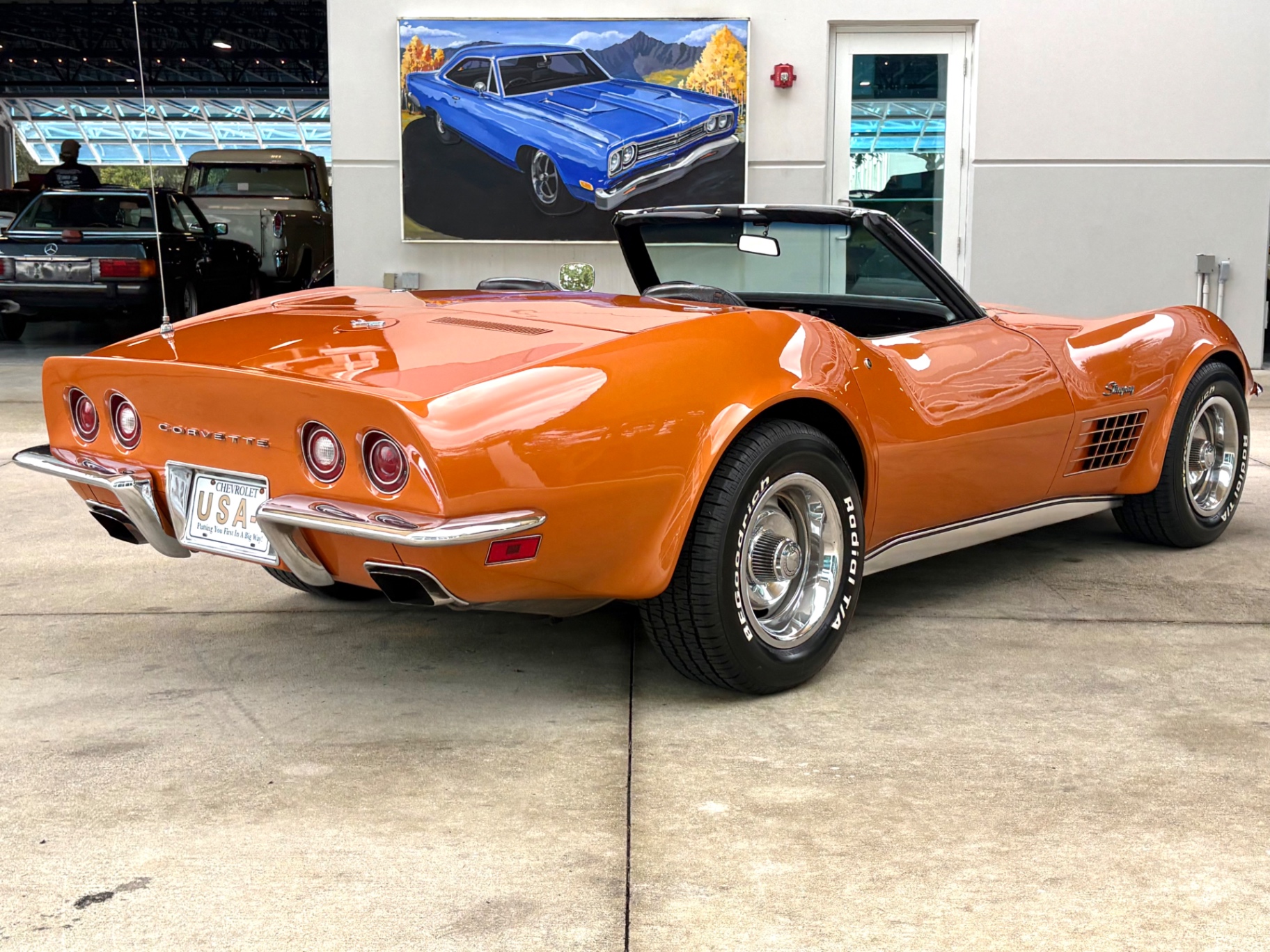
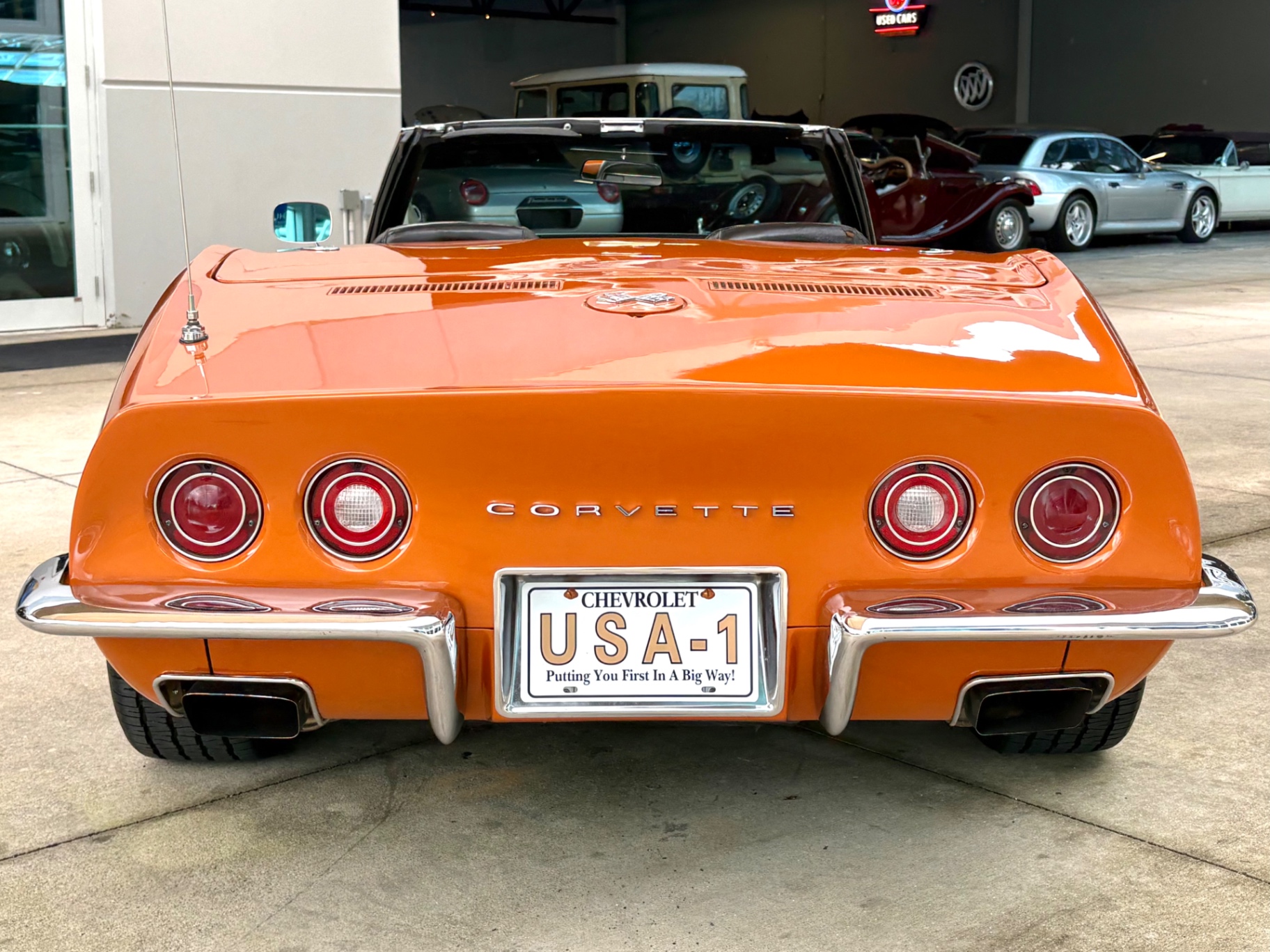
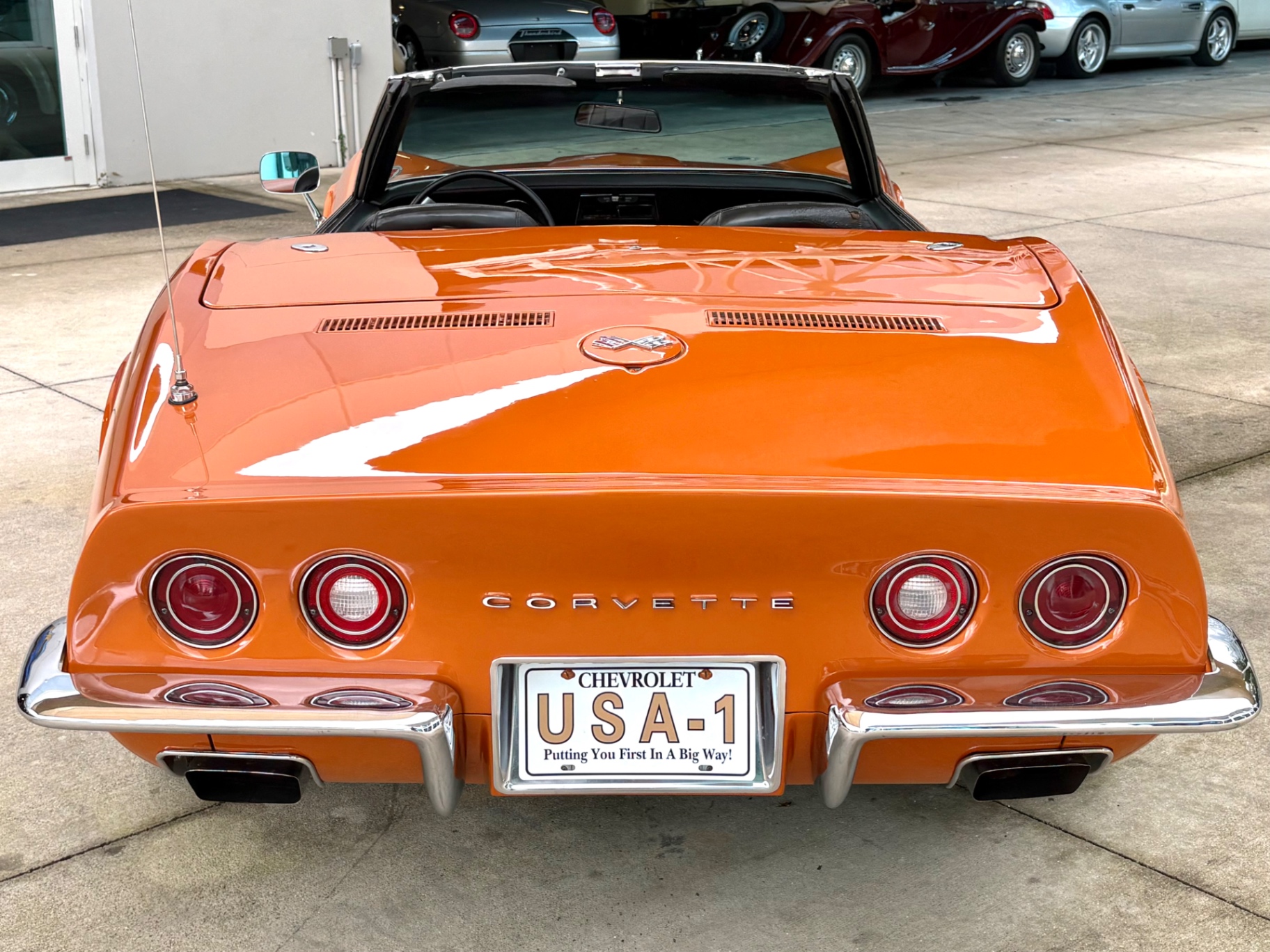
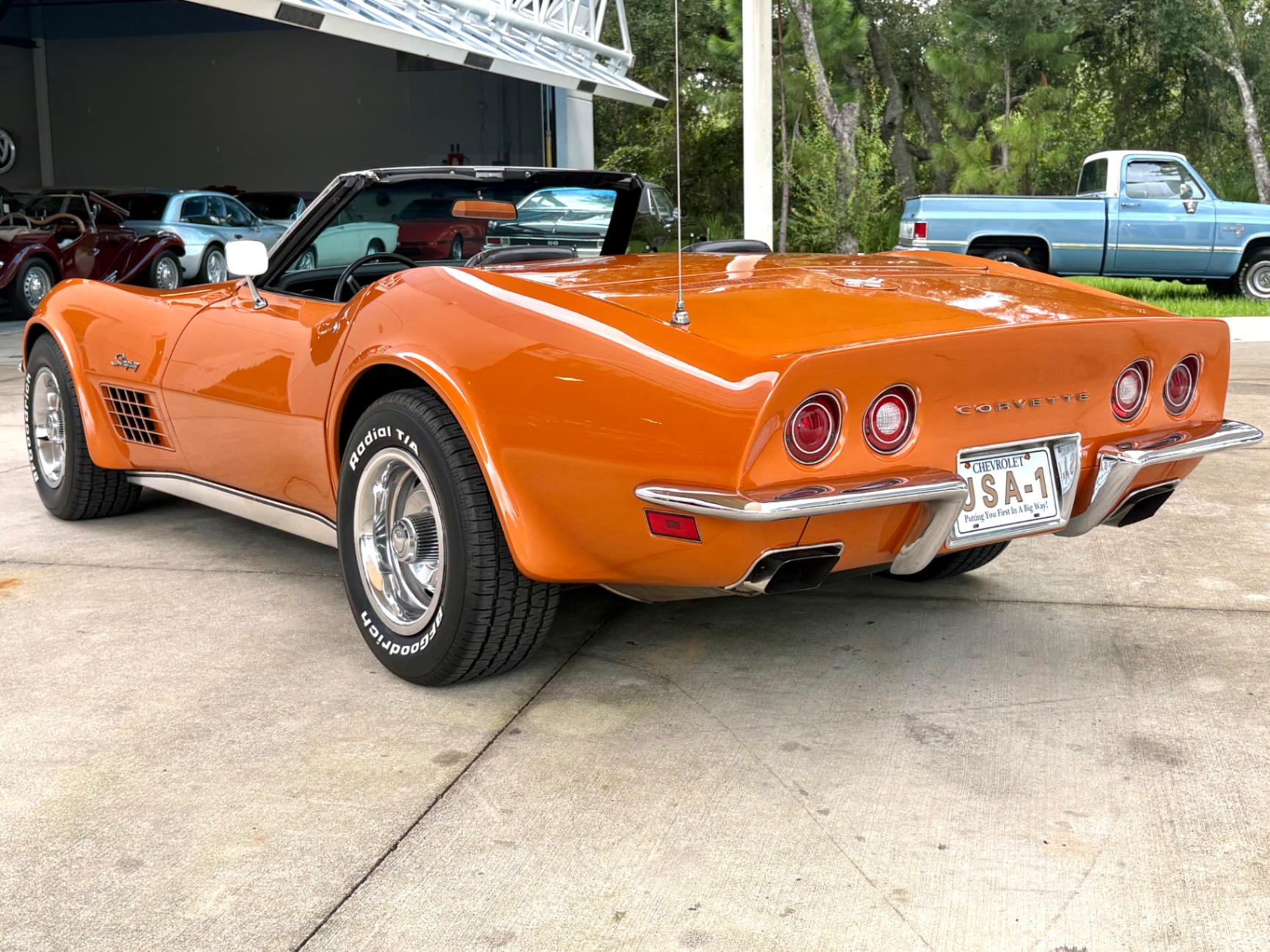
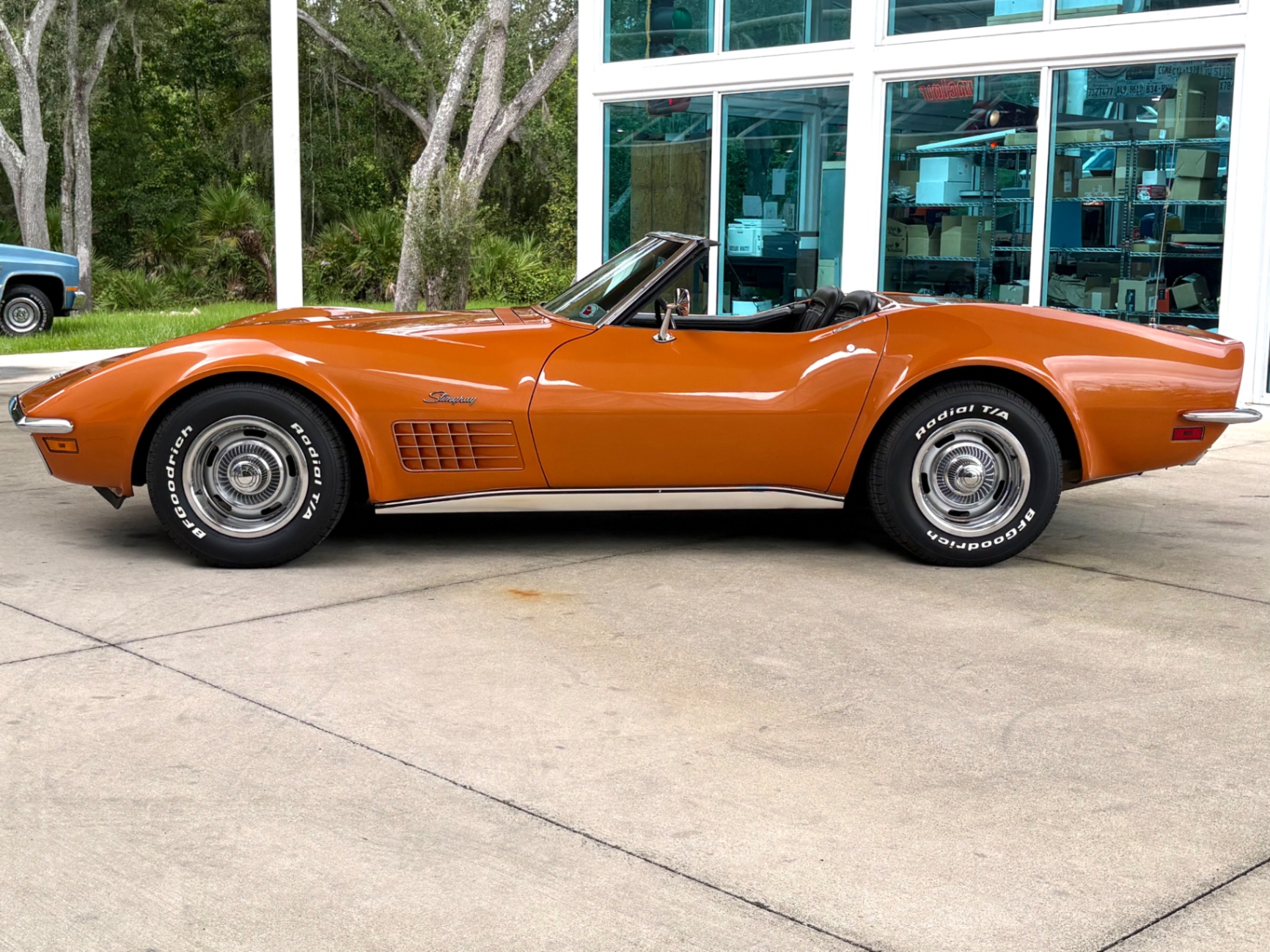
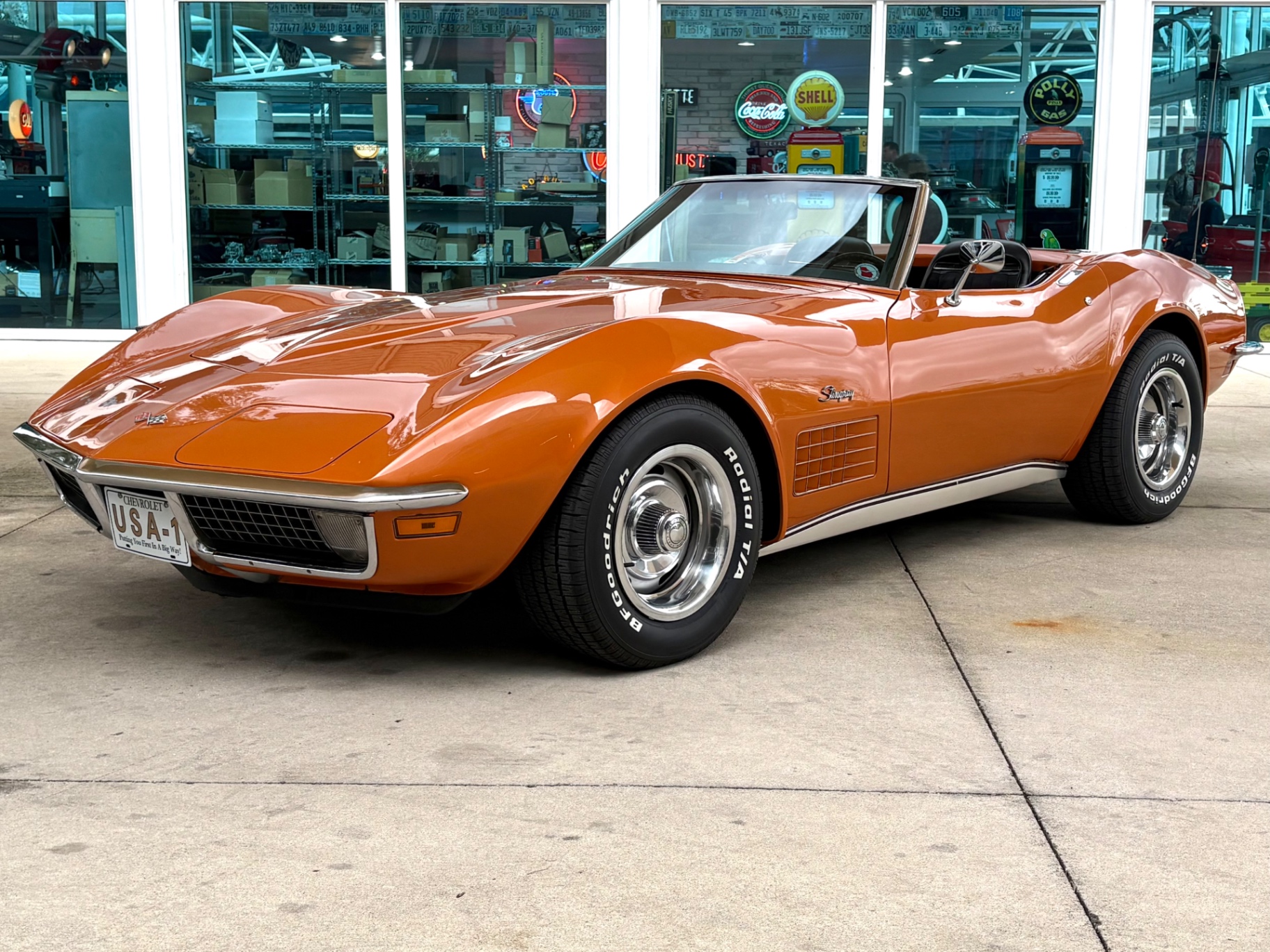
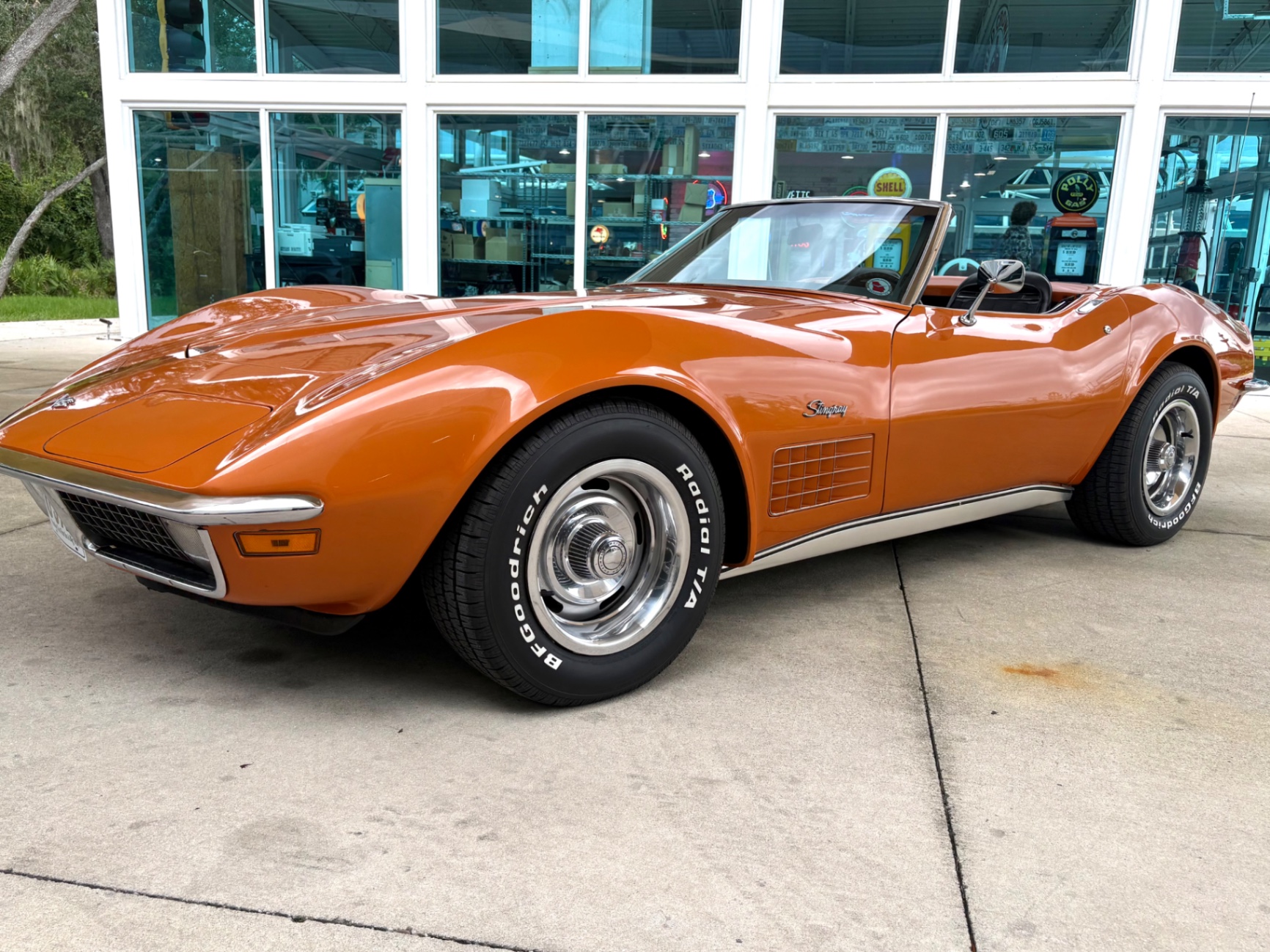
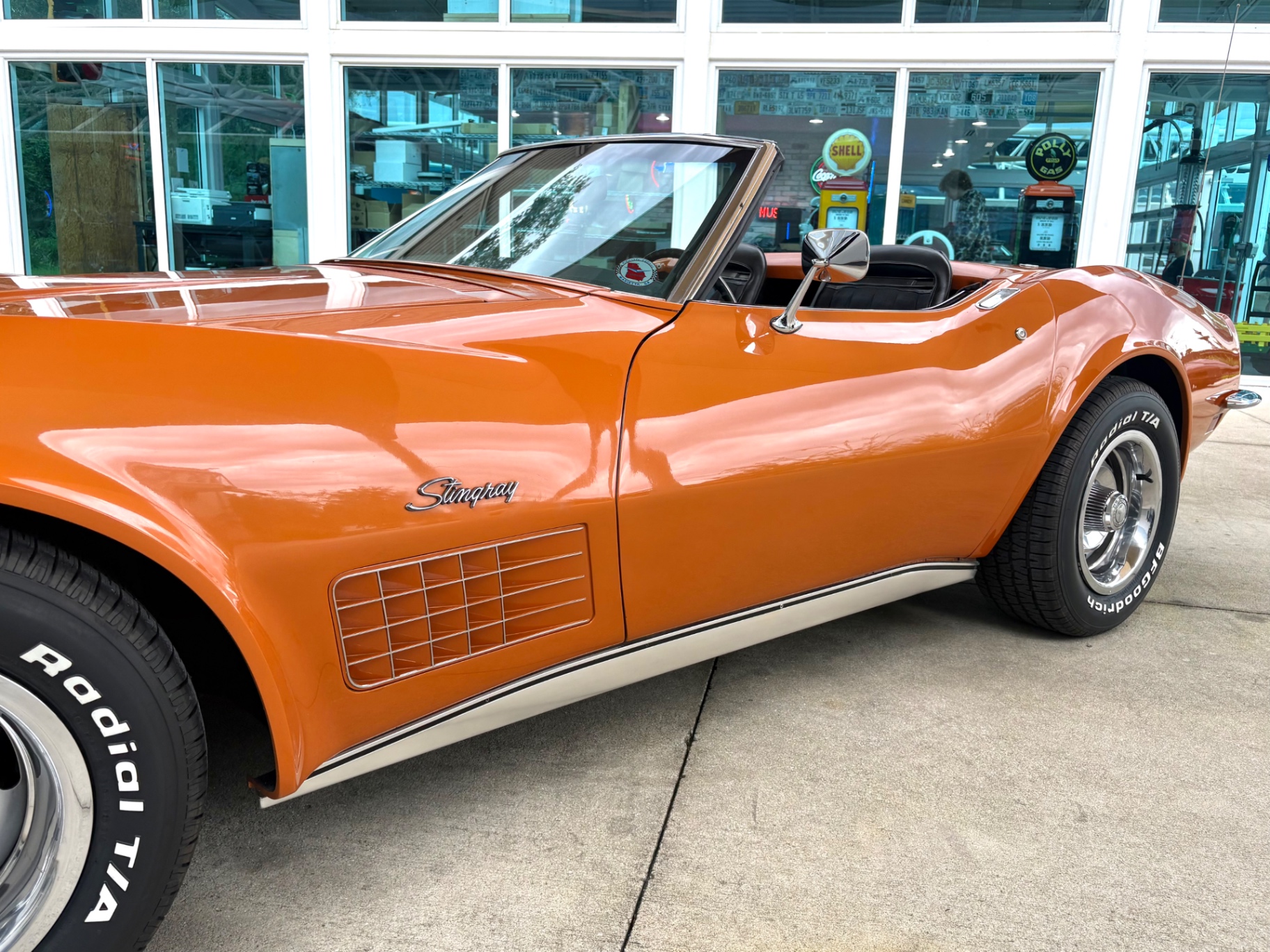
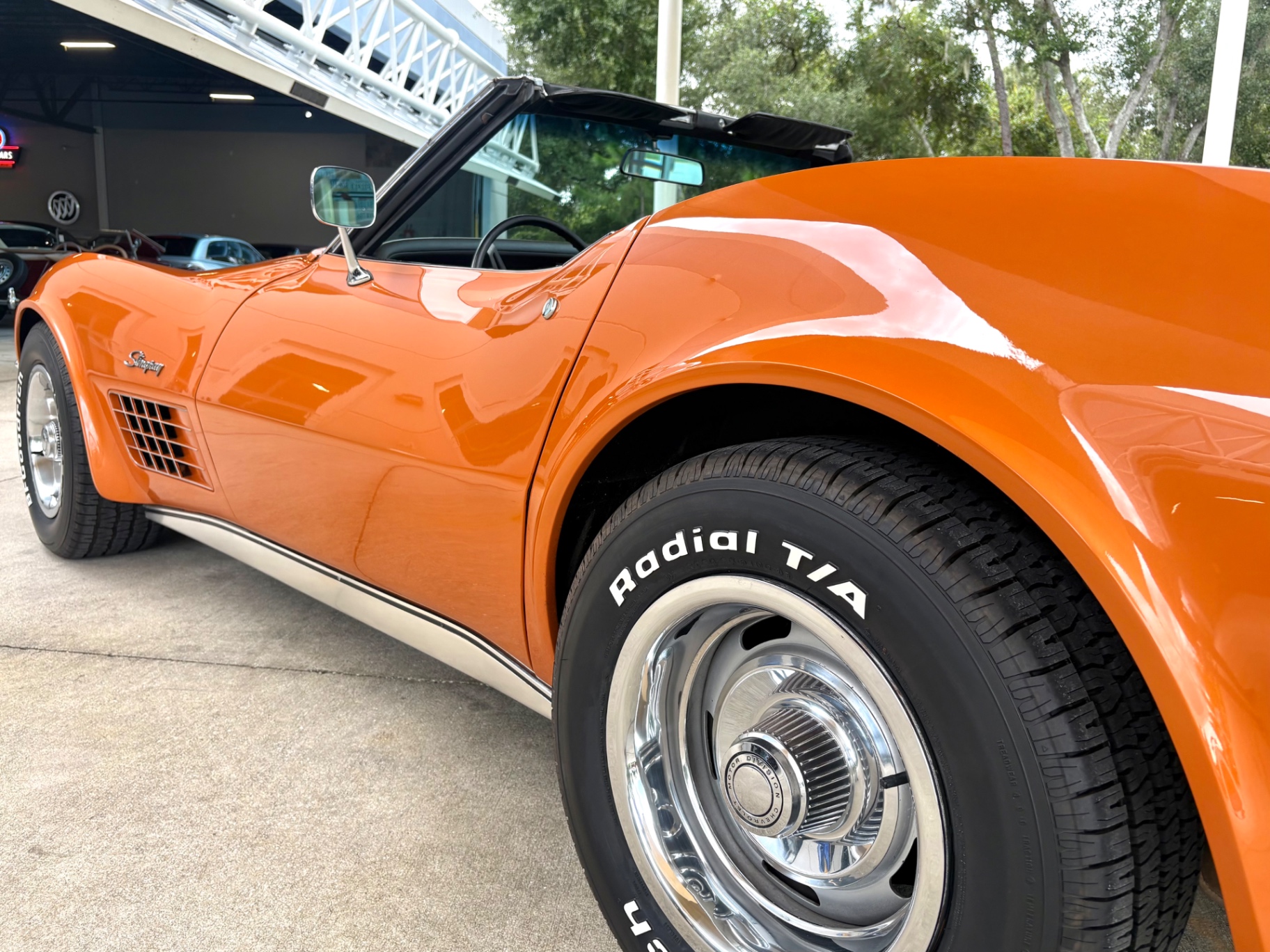
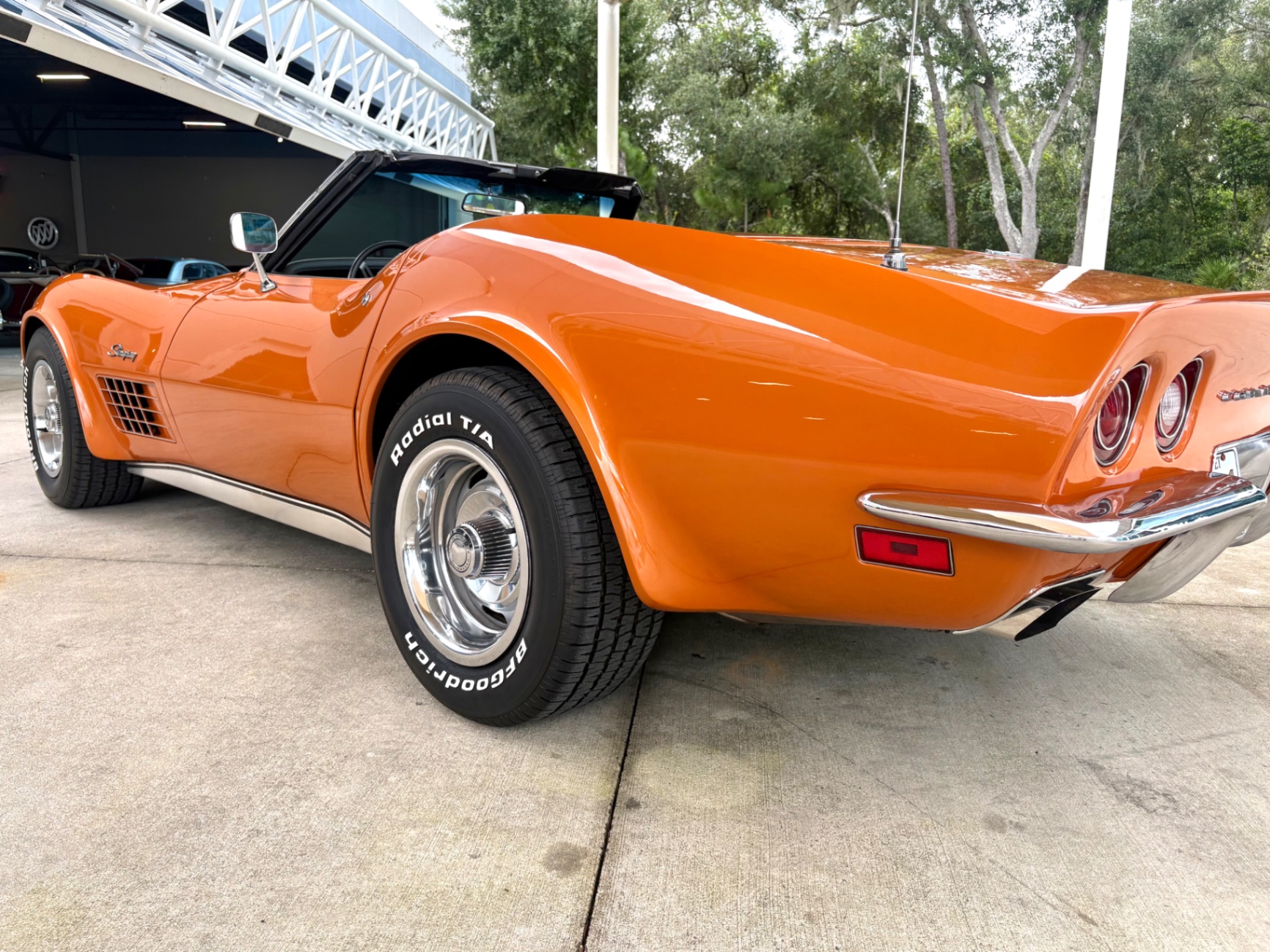
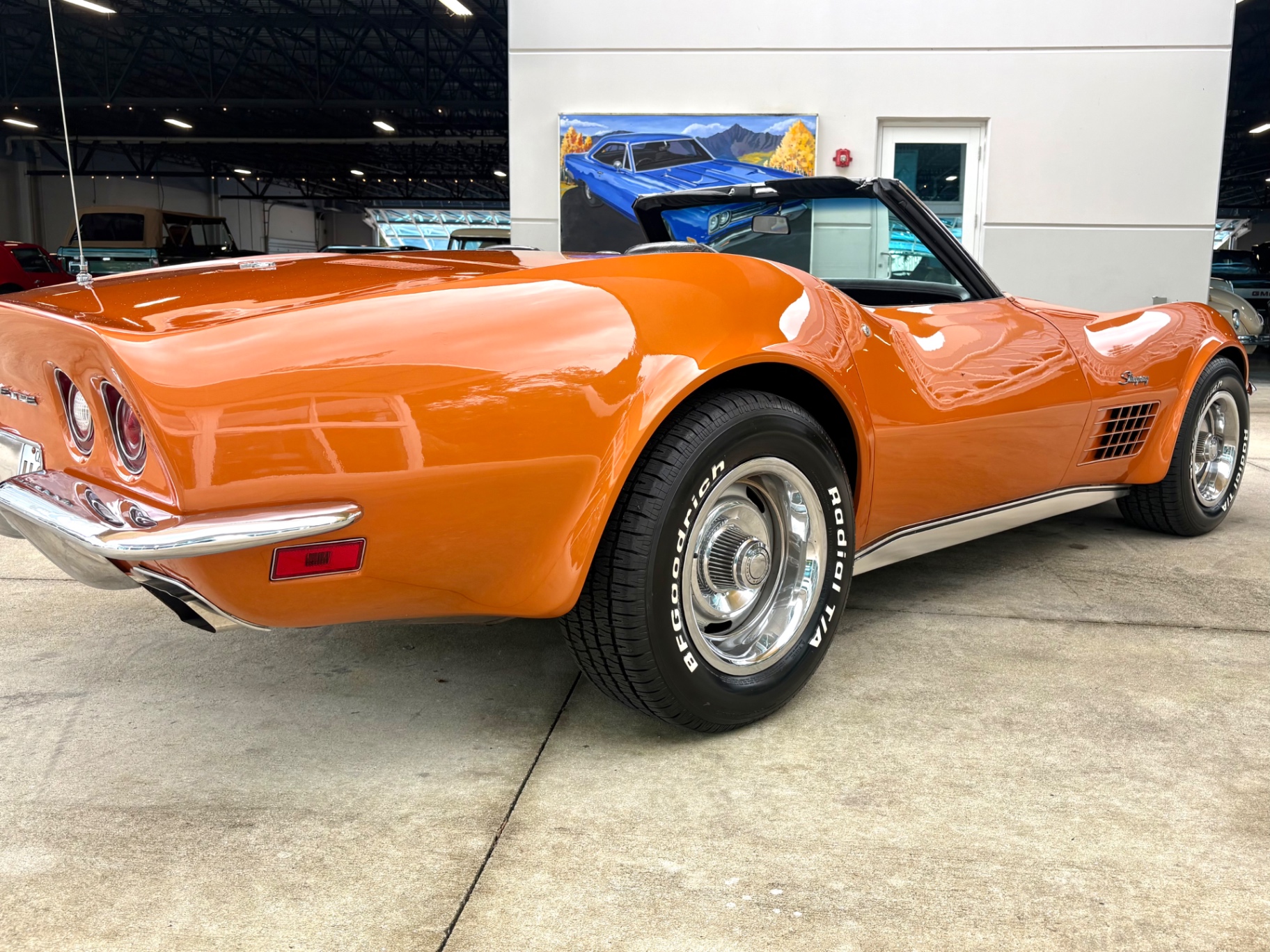
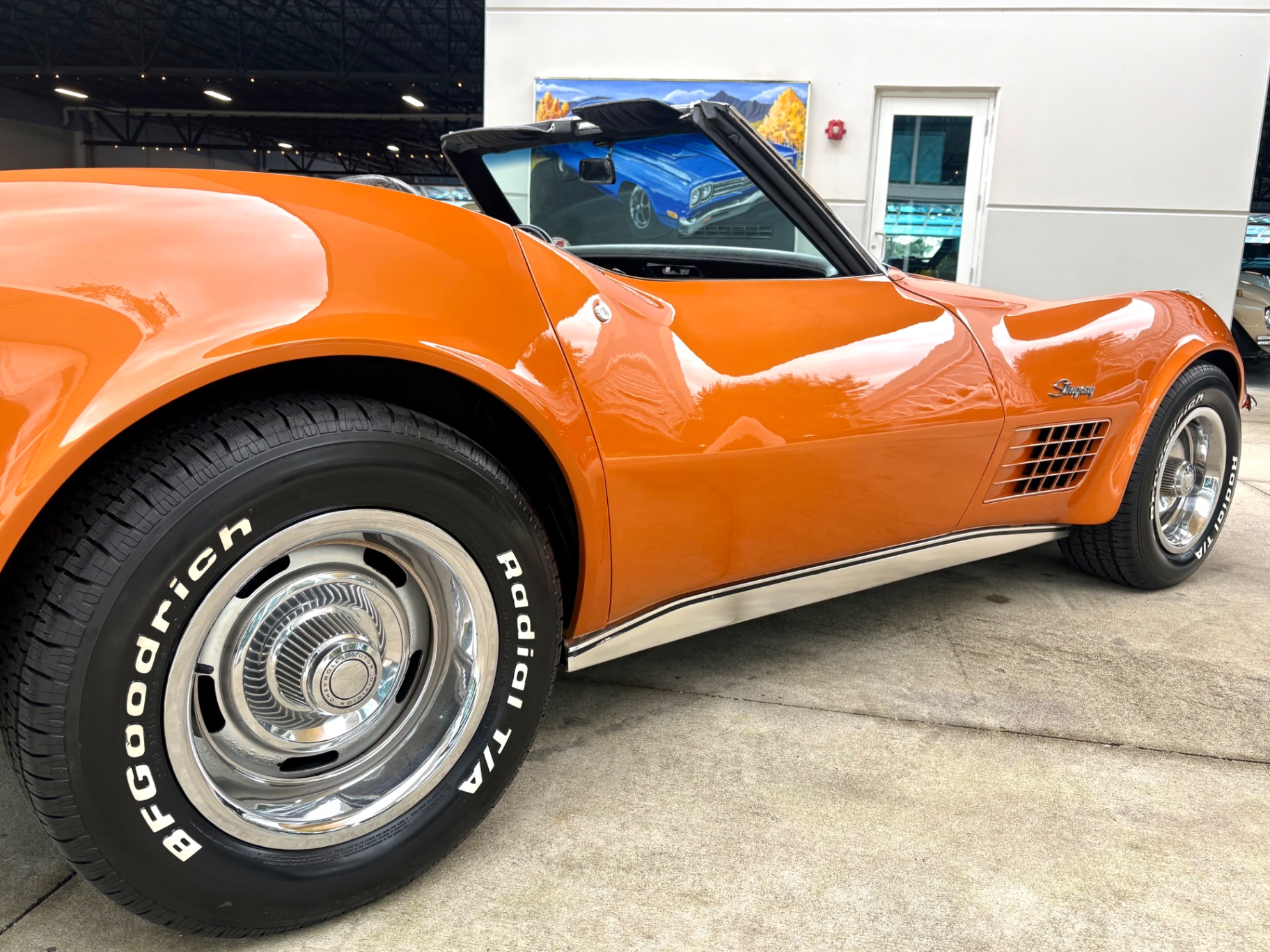
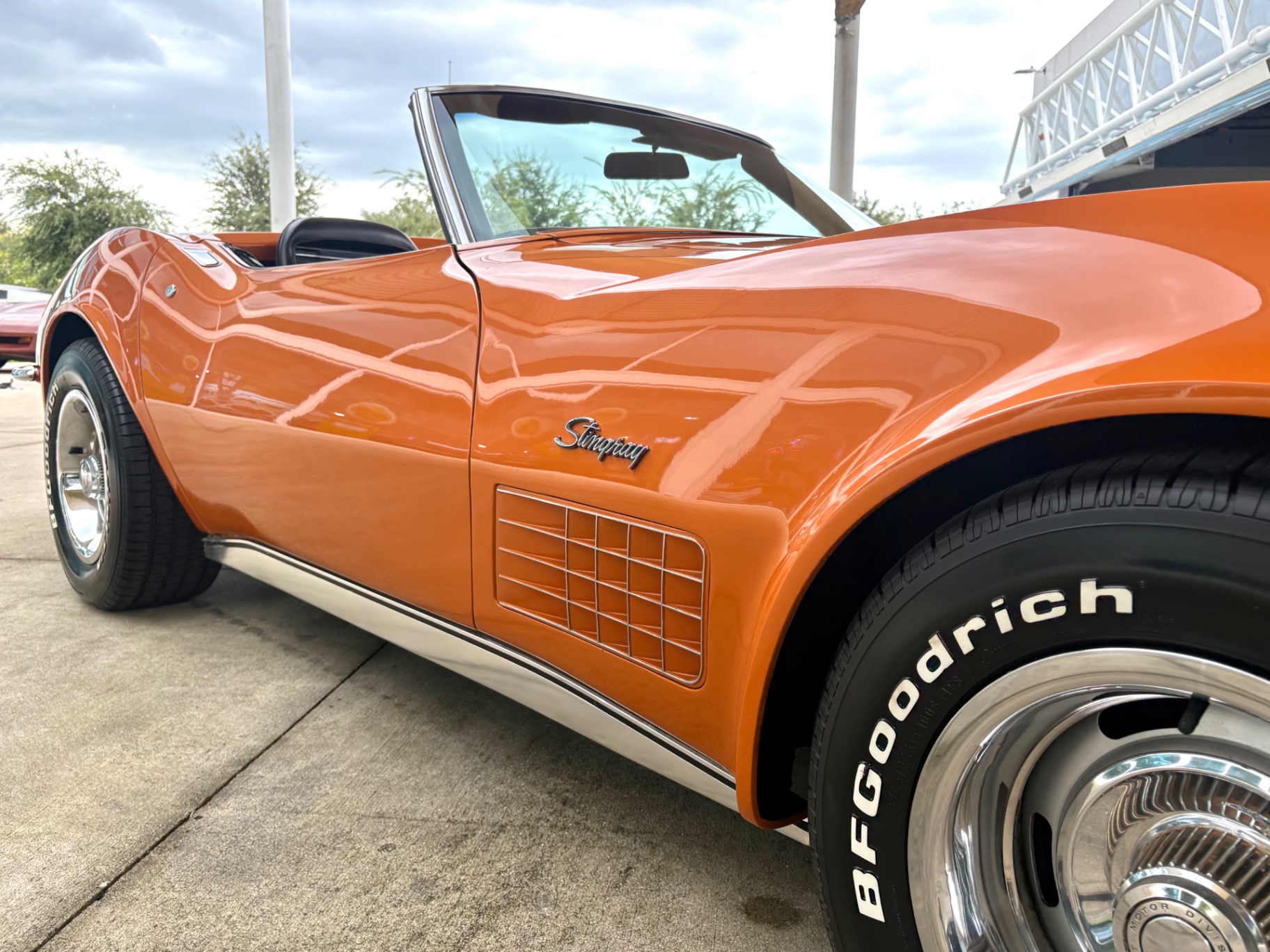
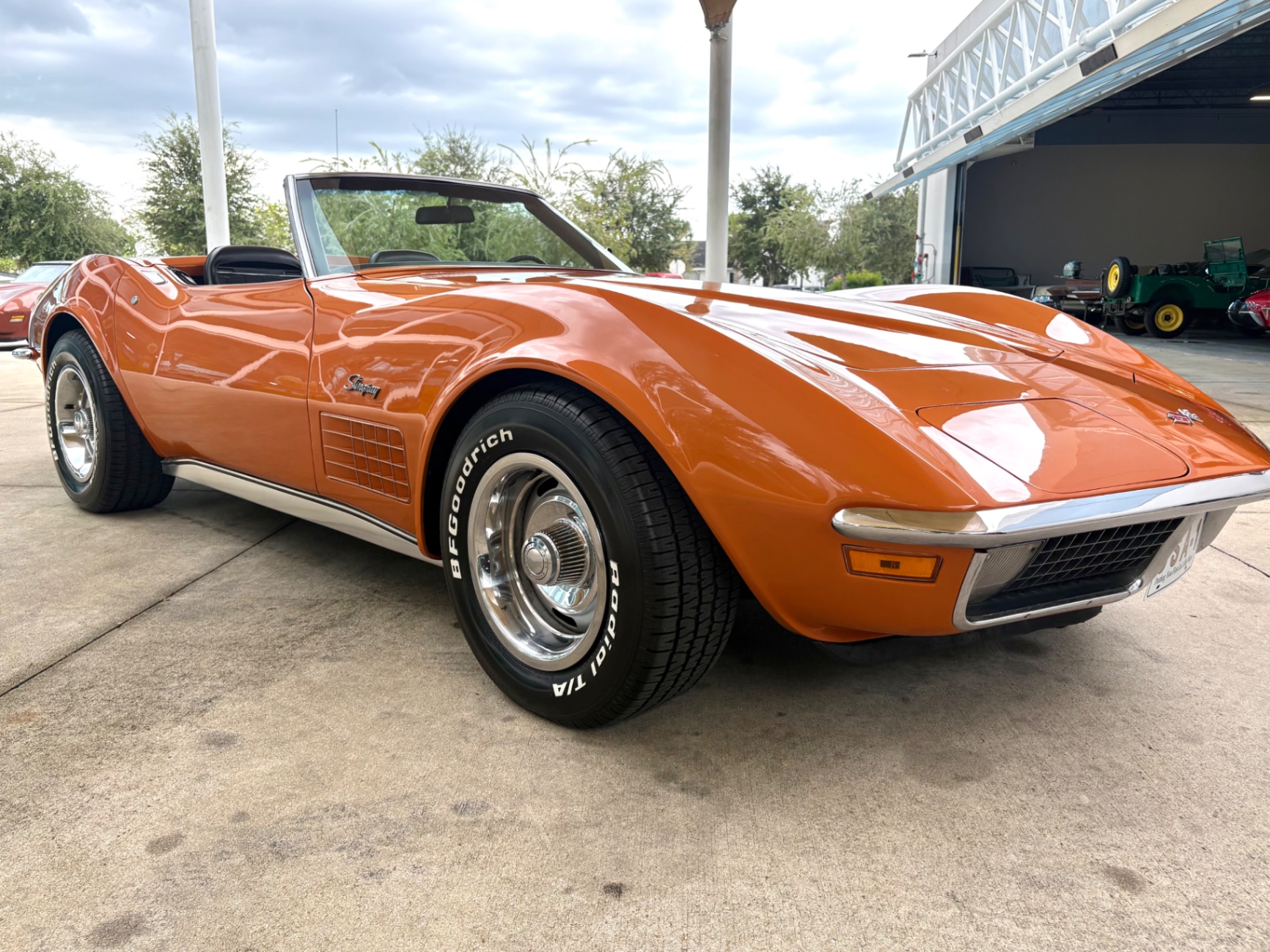
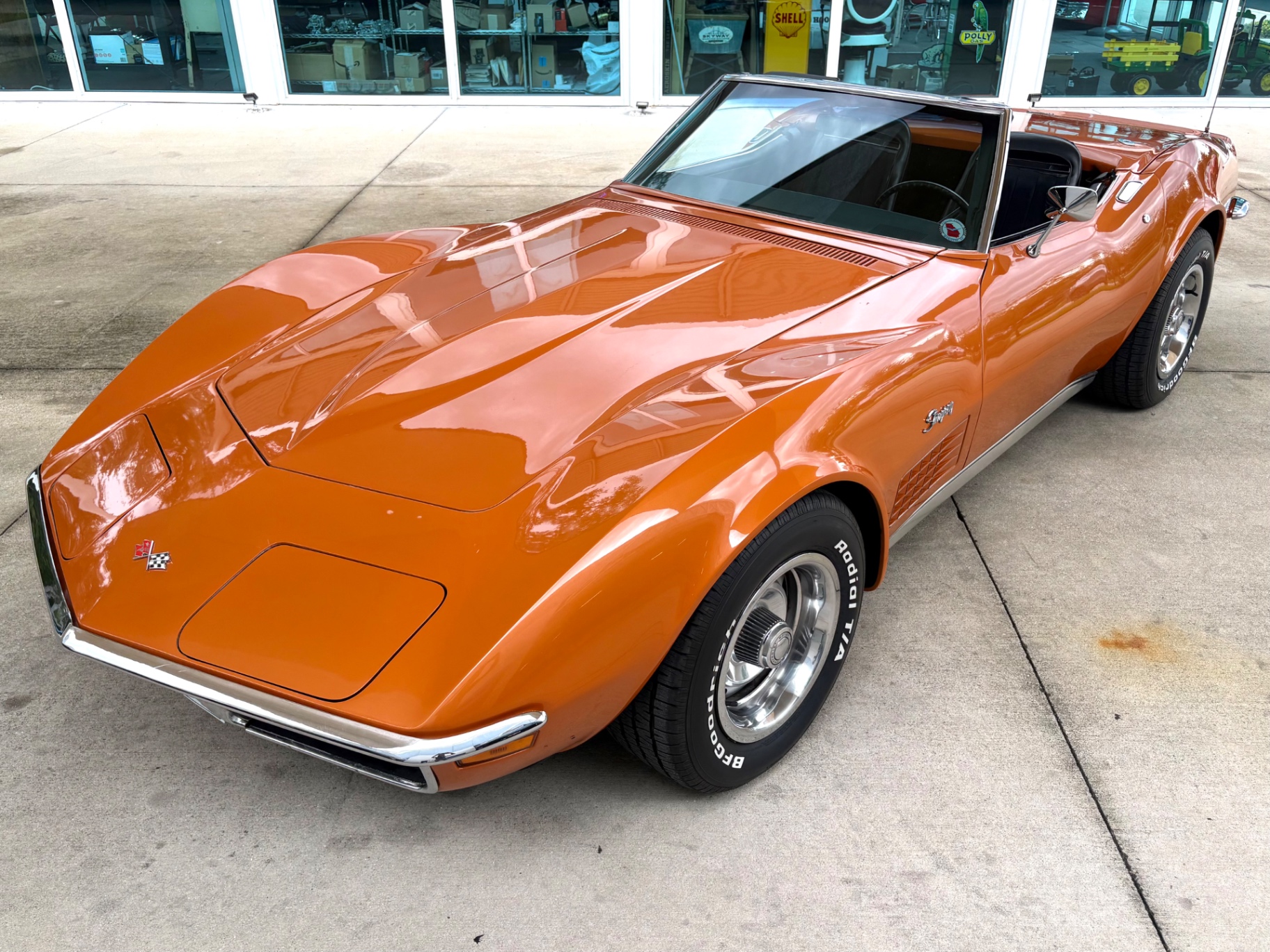
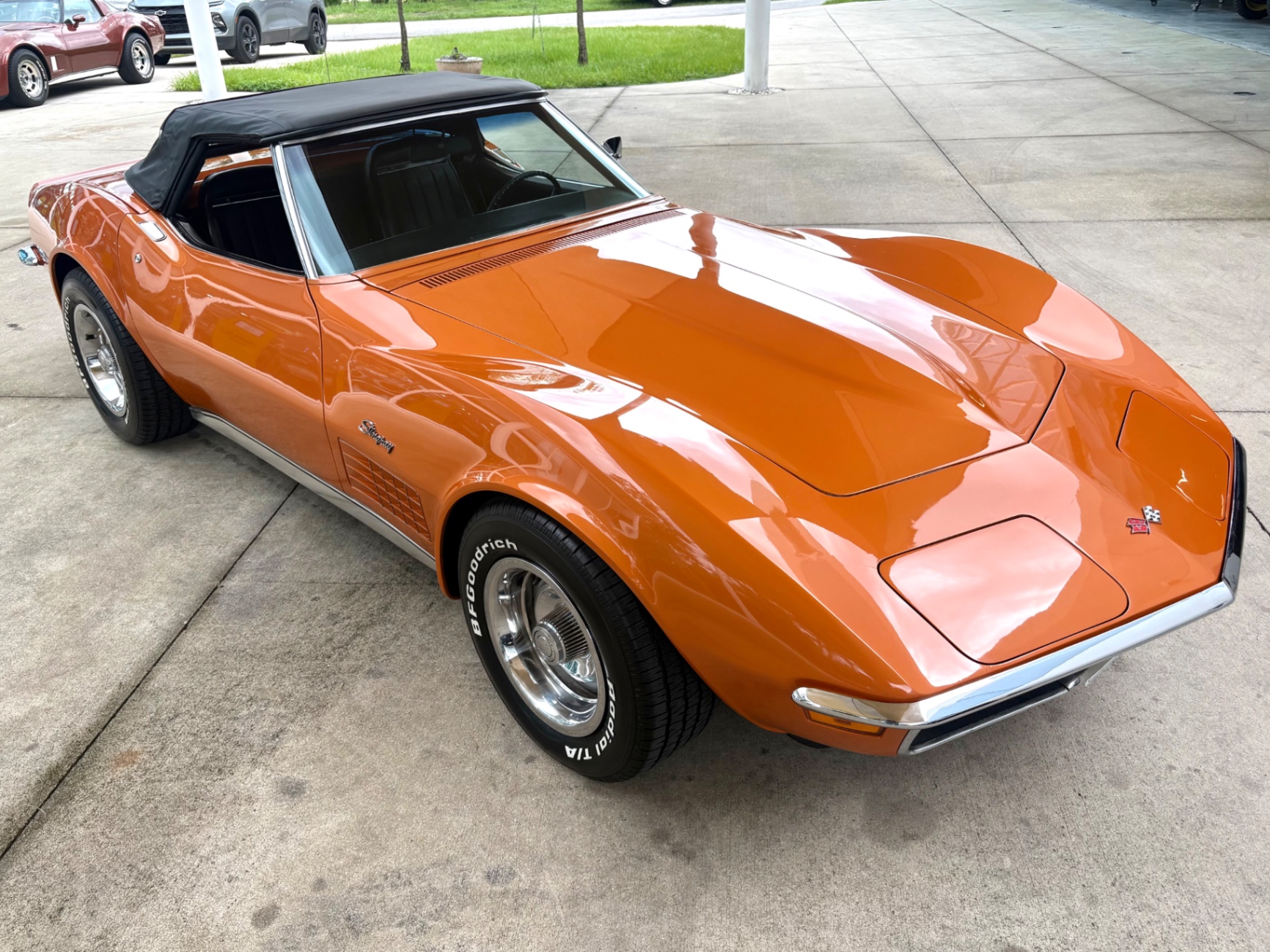
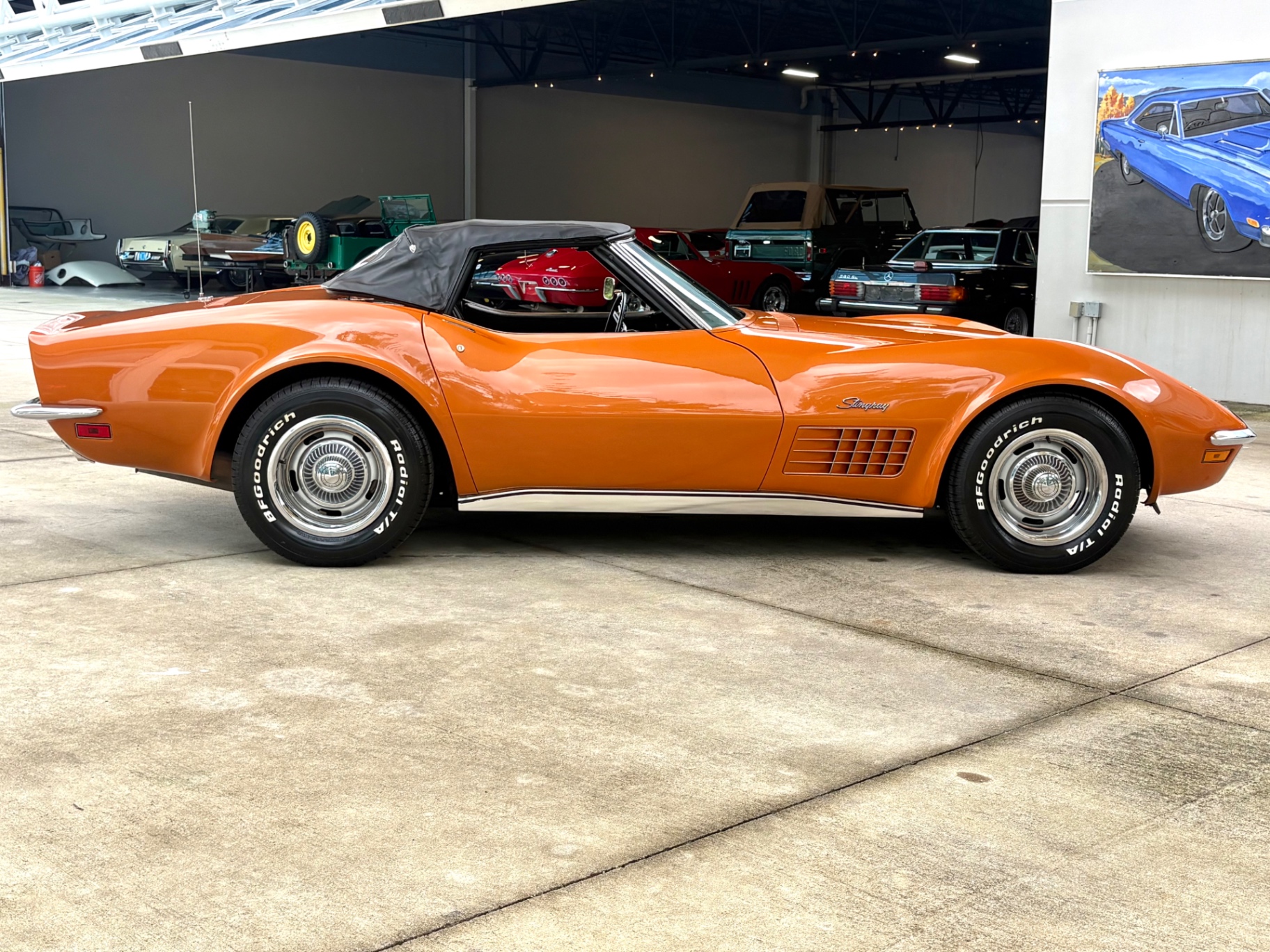
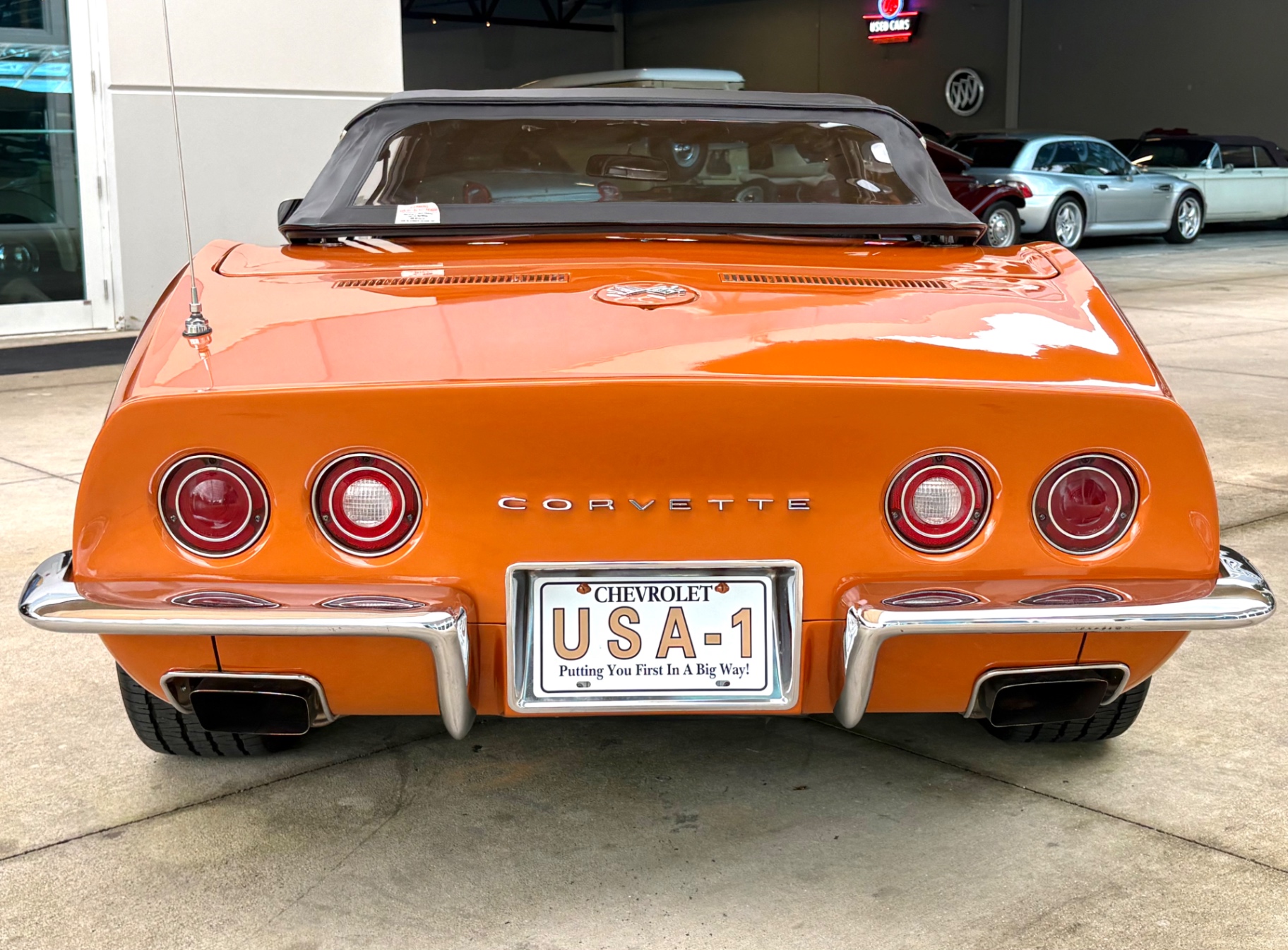
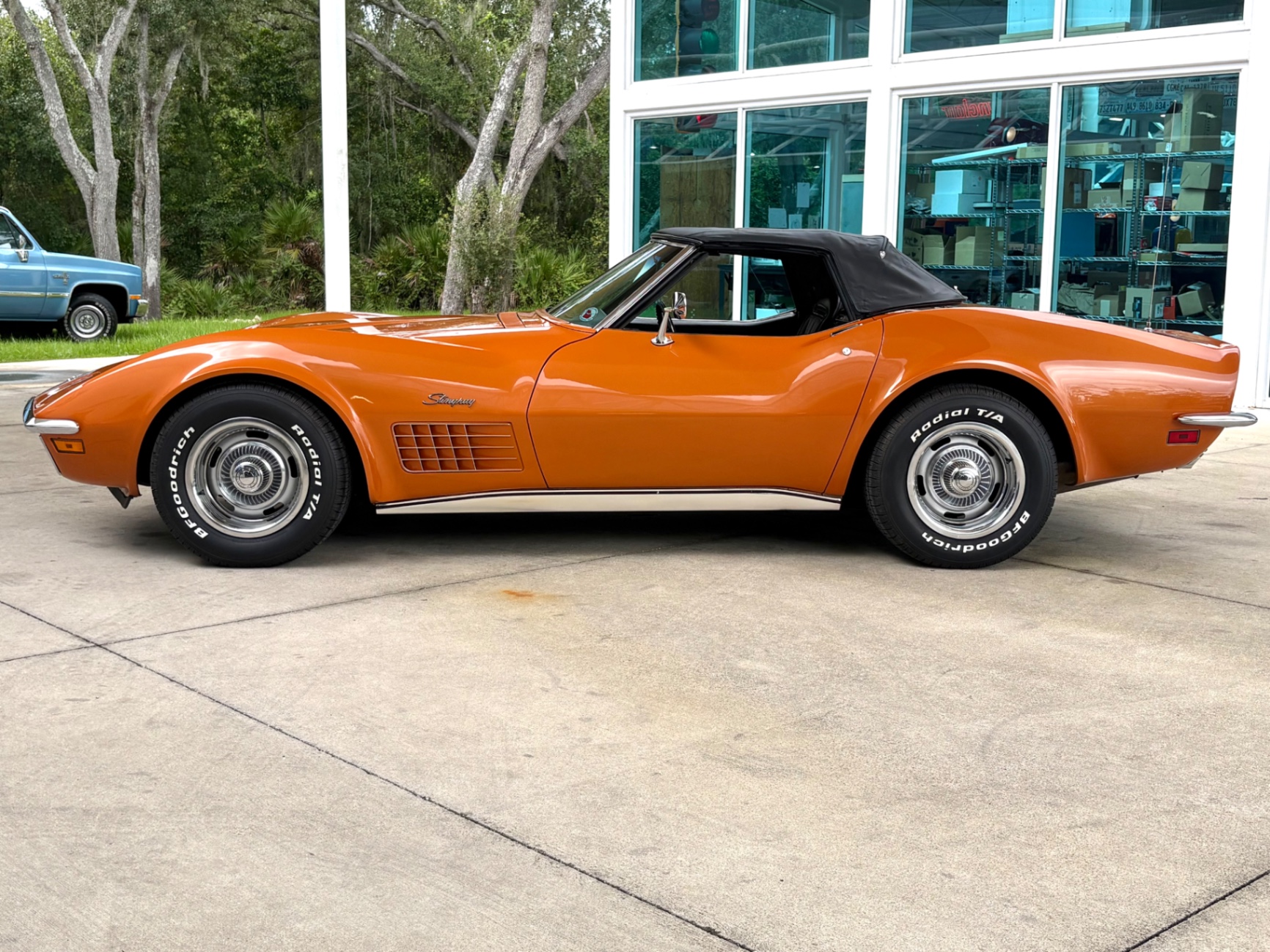
1971 Chevrolet Corvette Stingray Convertible — Ontario Orange, 350ci V8, Turbo-Hydramatic, Dual Top
Why This Car Is Special
The 1971 Chevrolet Corvette Stingray sits at an interesting crossroads in Corvette history. It was the fourth year of the C3 body that Chevrolet introduced in 1968, and in many ways 1971 represented the high-water mark before emissions regulations began to seriously chip away at horsepower. Chevrolet lowered compression ratios across the engine lineup that year to run on lower-octane regular fuel, which actually makes 1971 Corvettes more practical to drive today than their 1970 counterparts. Total Corvette production for the 1971 model year came in at 21,801 units, split between coupes and convertibles. The convertible body style would survive only through 1975 before being discontinued, making open-top C3s like this one a distinct and increasingly scarce configuration.
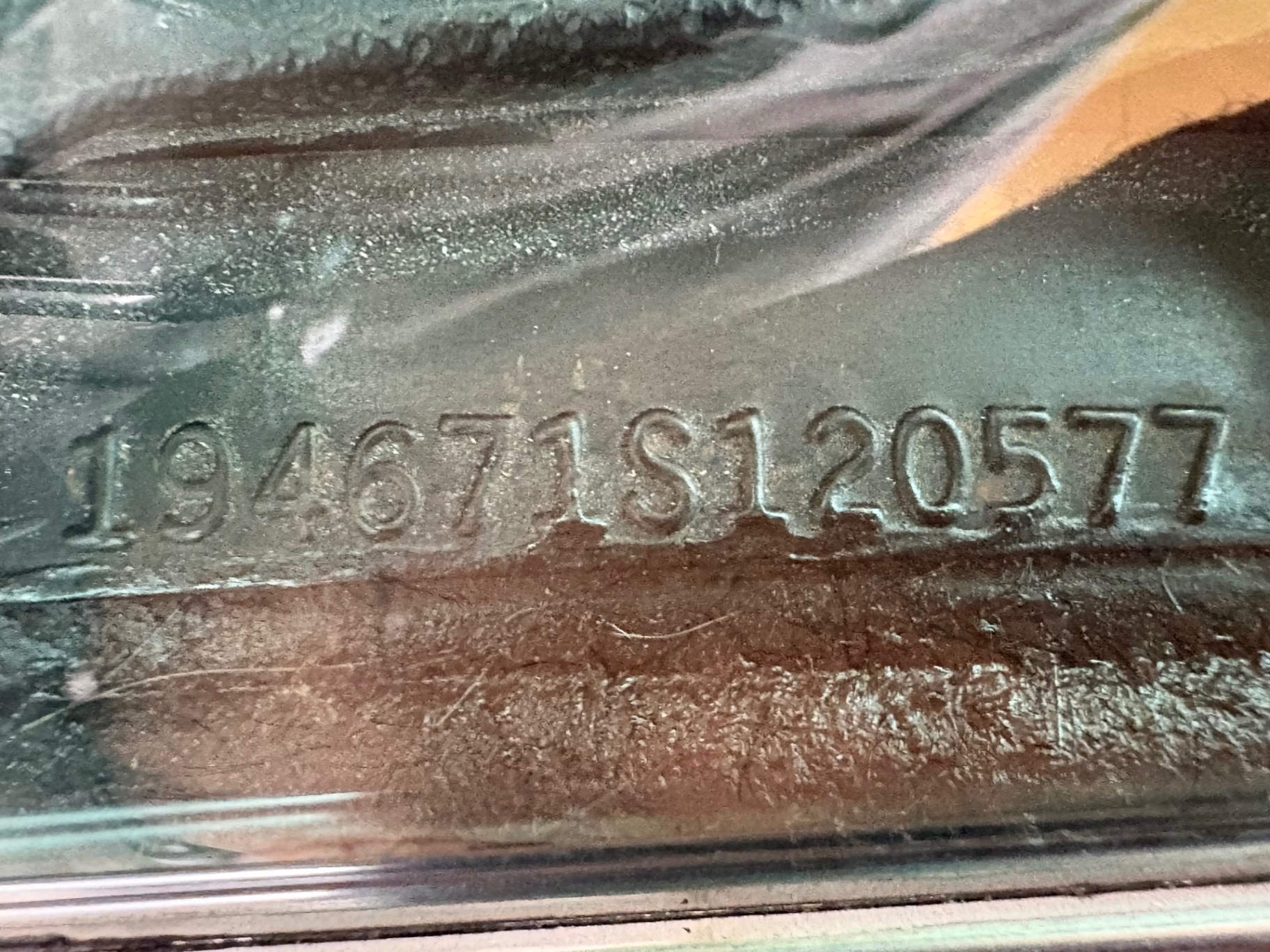
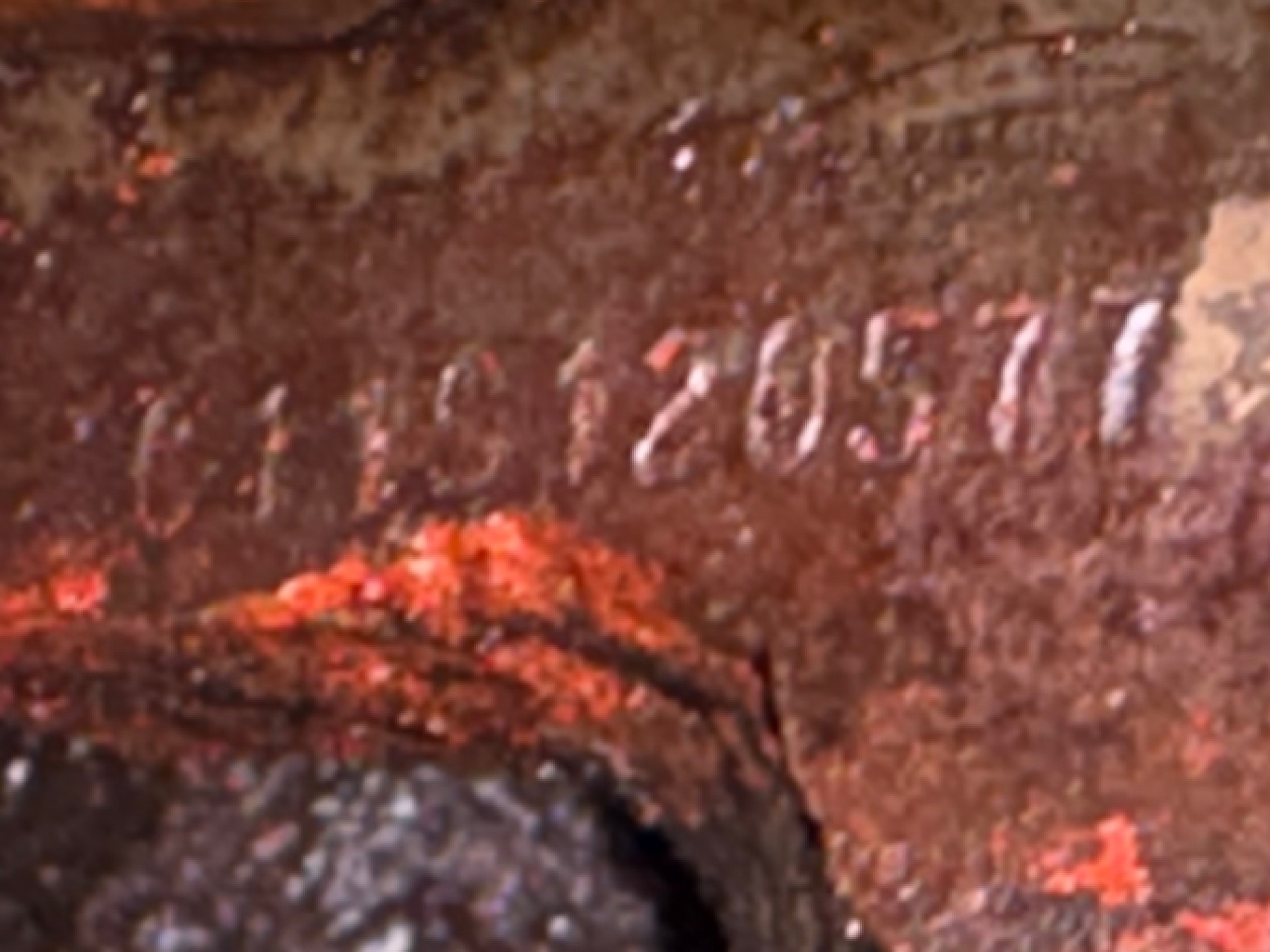
The VIN on this car decodes to confirm it is a genuine 1971 Corvette convertible, built at the St. Louis assembly plant. The model year designator, body style code, and plant code all check out correctly for an authentic, numbers-relevant example.
Ontario Orange is one of the more visually assertive colors Chevrolet offered during this era, and it suits the aggressive fender flares and long hood of the C3 body particularly well. Paired with a black soft top and black interior, this is a high-contrast combination that was clearly chosen by someone with a good eye for how the car would look in use.
This is not a museum car. It is a well-optioned, driver-quality 1971 Corvette Stingray convertible with a solid undercarriage, a running and driving drivetrain, and a usable interior. The options it carries — air conditioning, power steering, power brakes, and the Turbo-Hydramatic automatic — reflect exactly how buyers ordered Corvettes when they intended to put real miles on them comfortably.
Features List
- 350ci 270hp V8 (L48 small-block)
- Turbo-Hydramatic 3-speed automatic transmission
- Factory air conditioning
- Both hard top and soft top included
- Black convertible soft top
- Factory Rally wheels
- BFGoodrich Radial T/A tires
- Power steering
- Power brakes with 4-wheel disc brakes
- Independent rear suspension
- Black vinyl bucket seats
- Sport steering wheel with Corvette center emblem
- Center console
- Tachometer
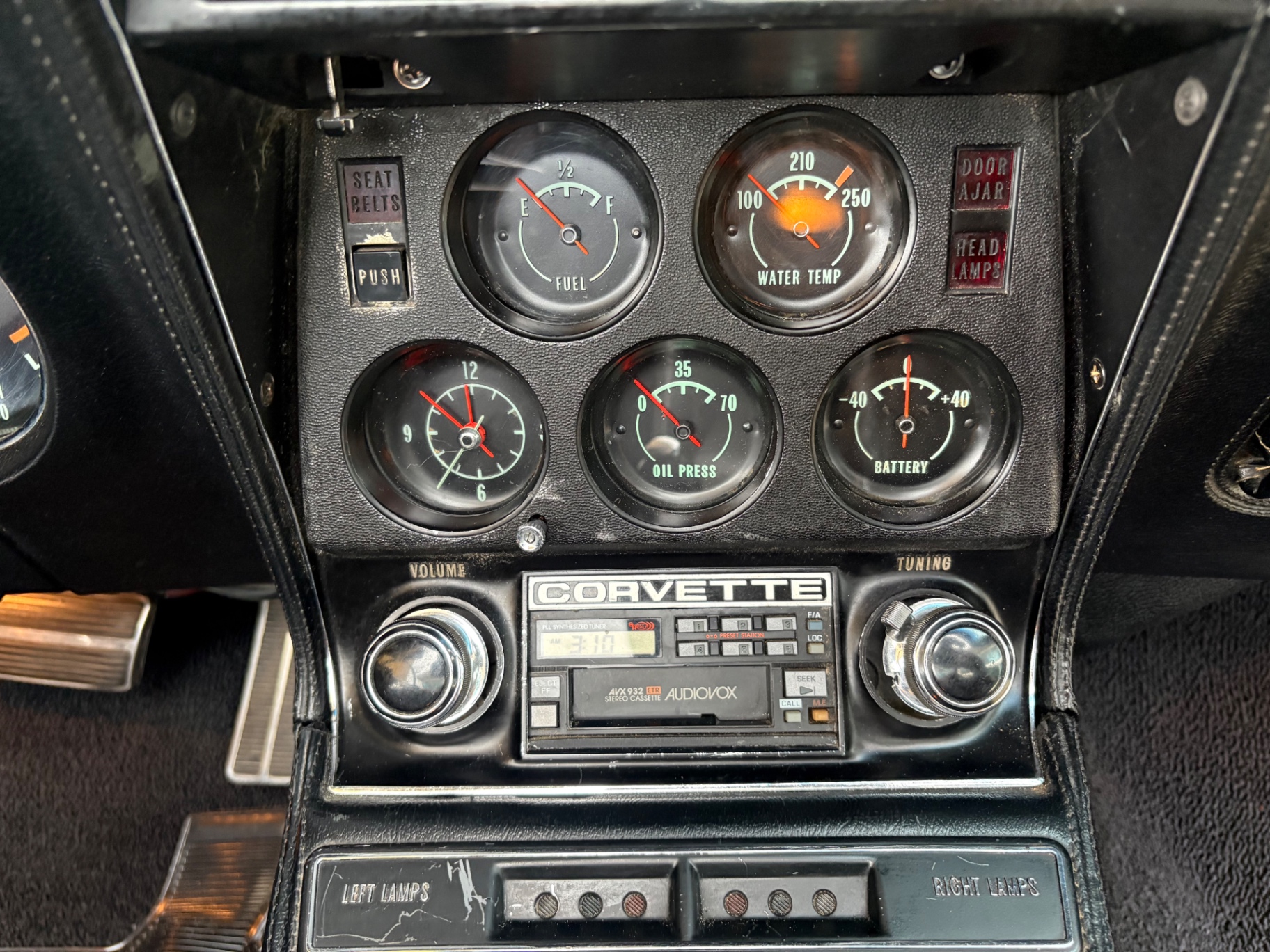
- Multi-gauge instrument cluster (fuel, water temperature, oil pressure, battery, clock)
- Dual outside mirrors
- Cassette stereo installed in factory radio location
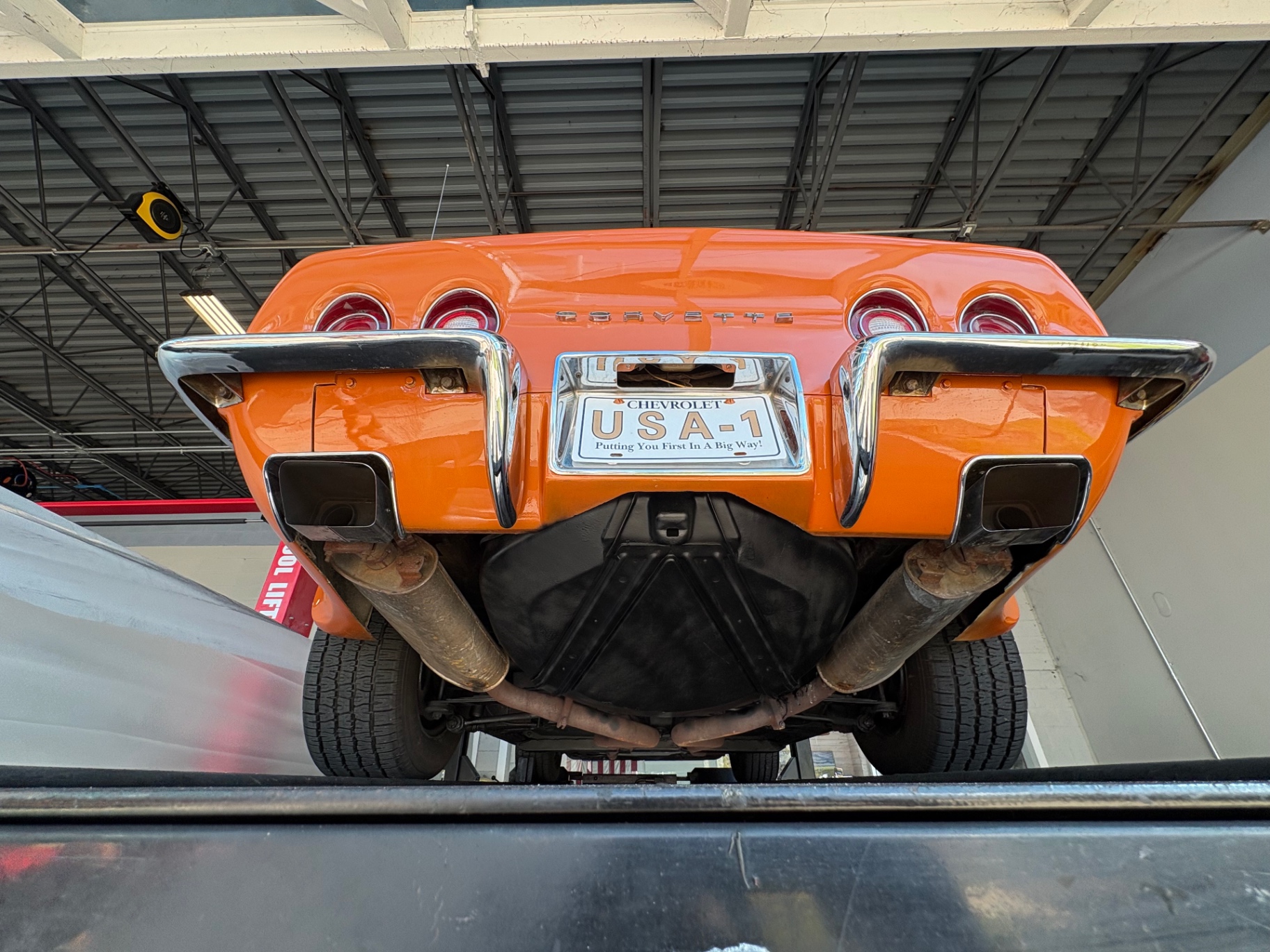
- Dual exhaust with factory-style square tips
- Clean undercarriage
- Stingray badging
Mechanical
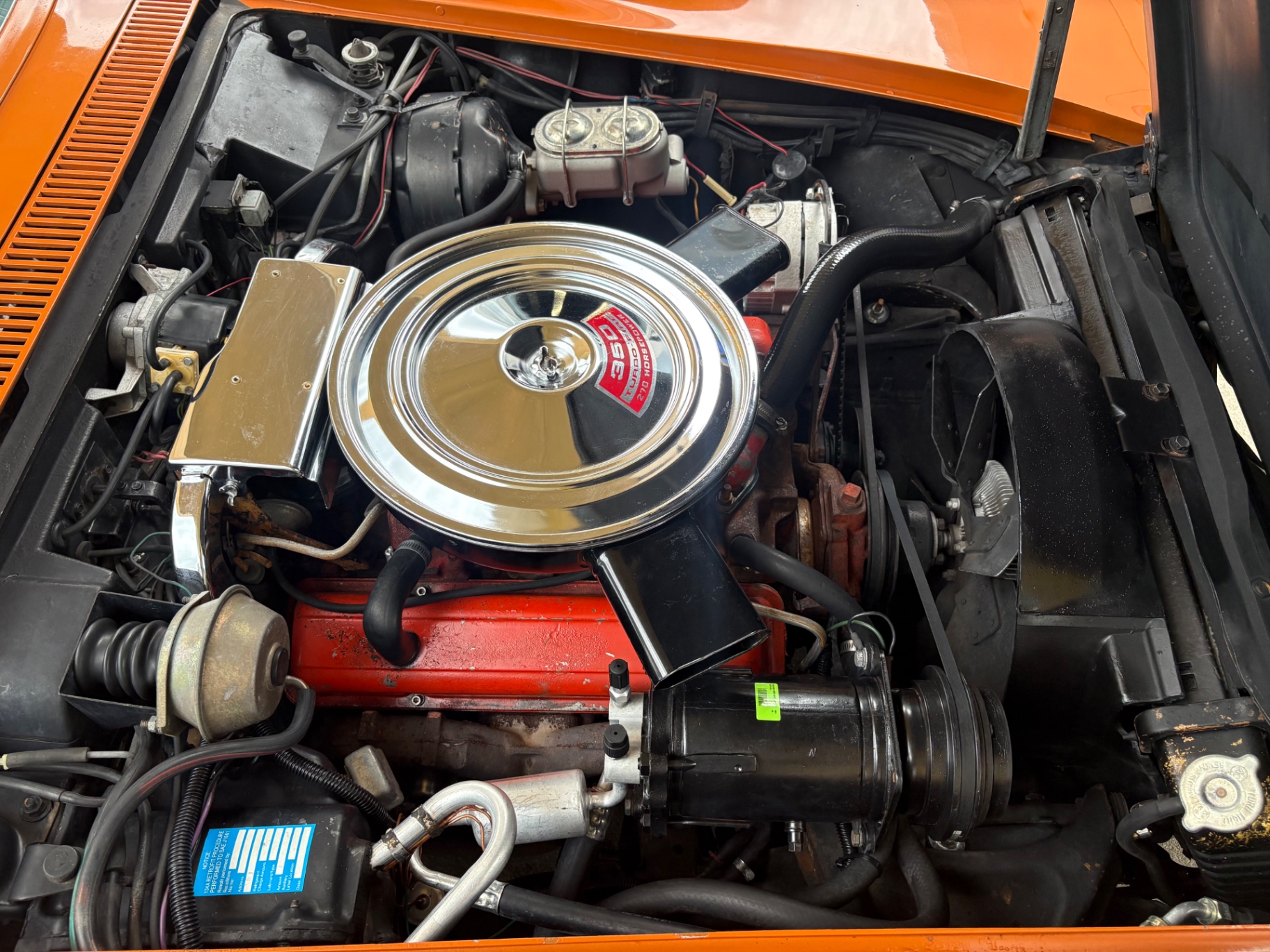
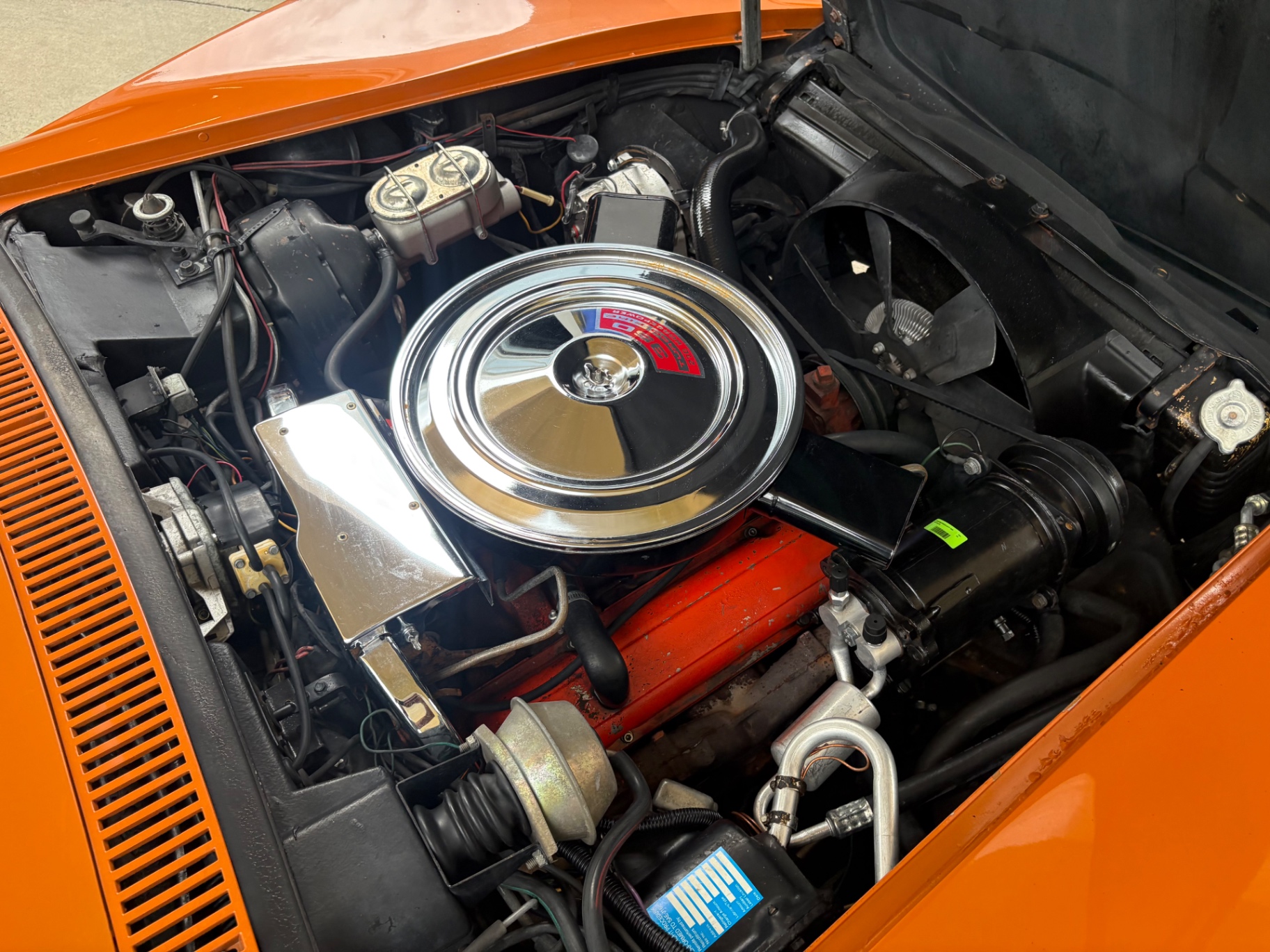
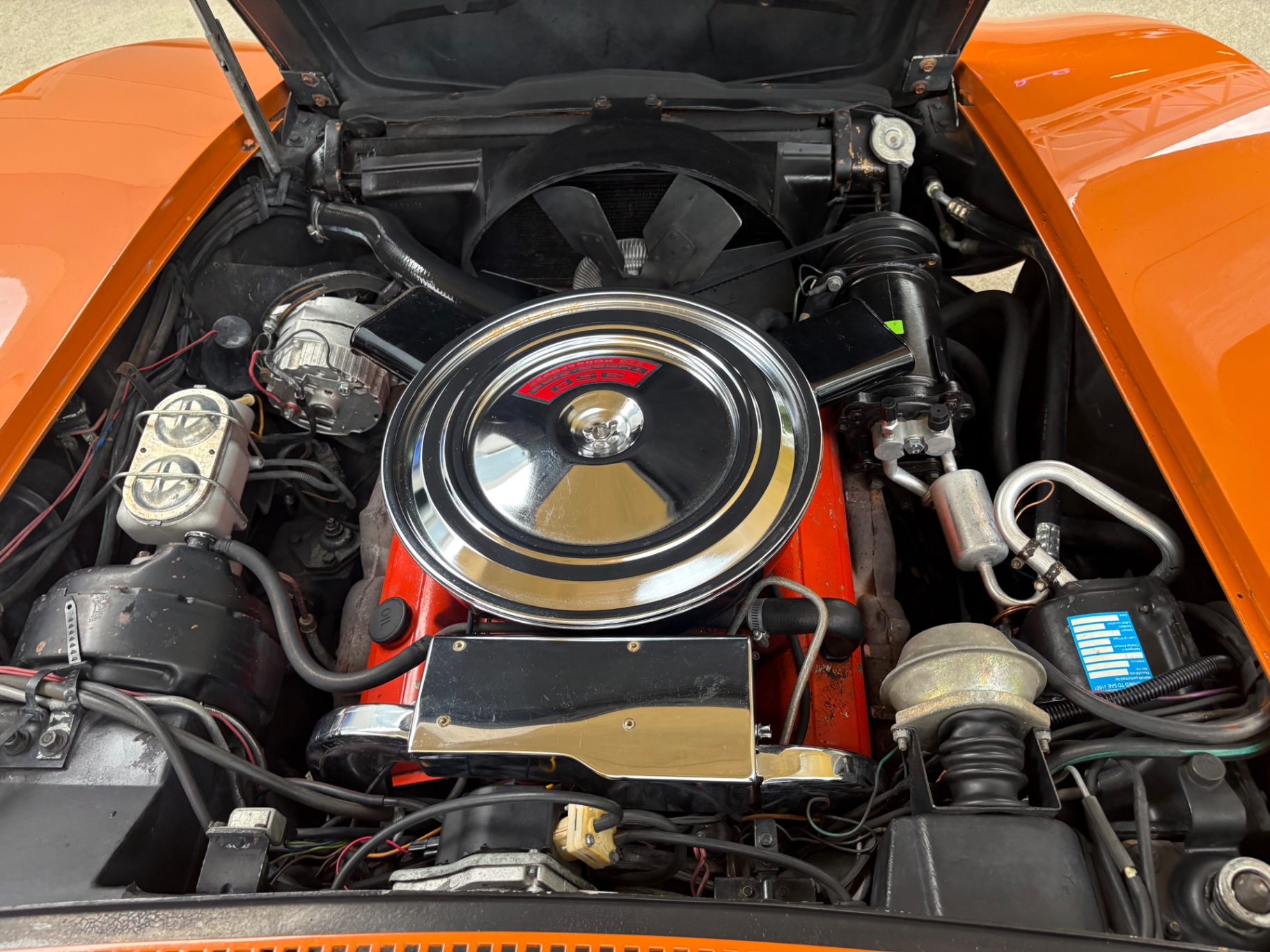
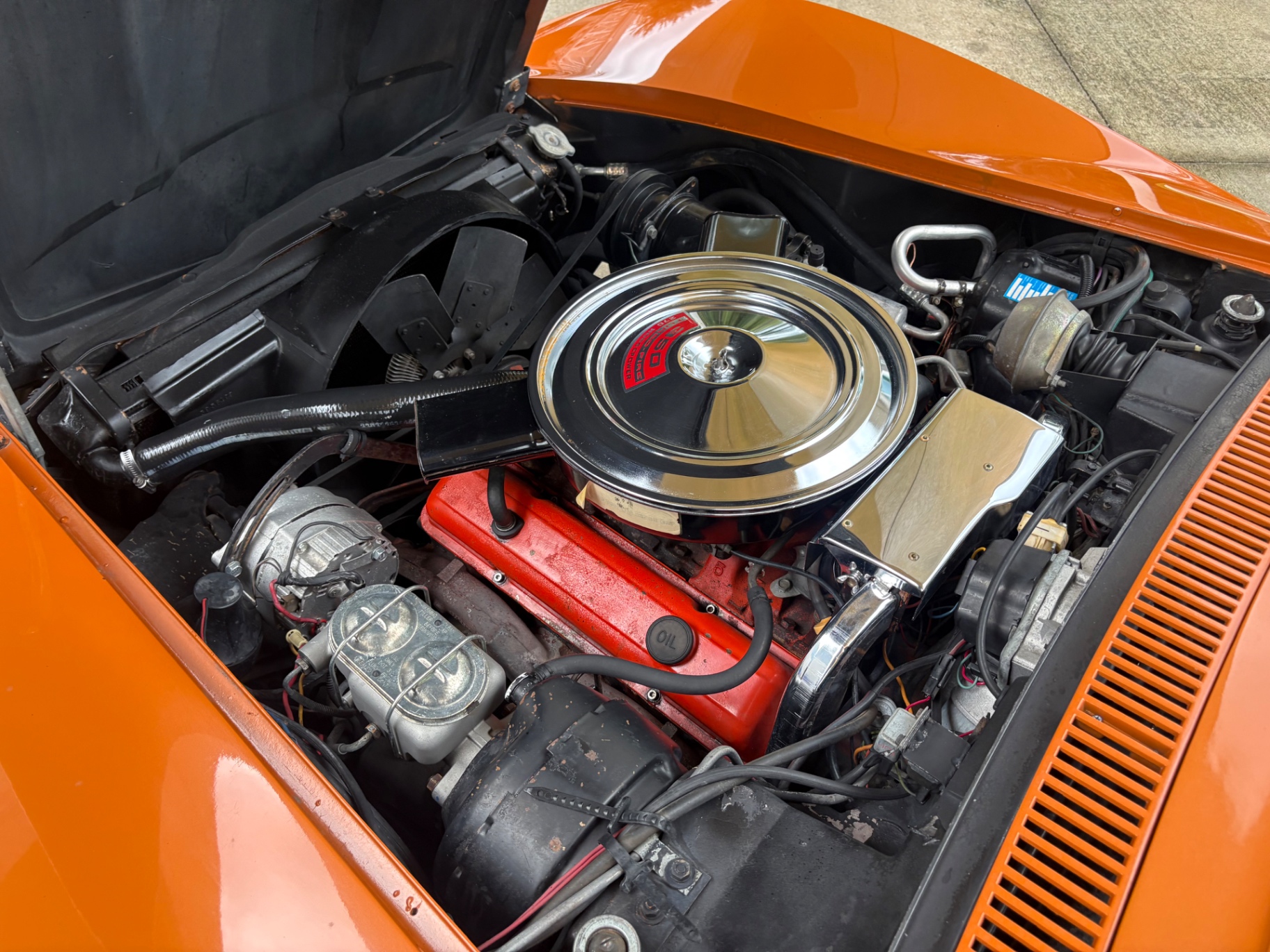
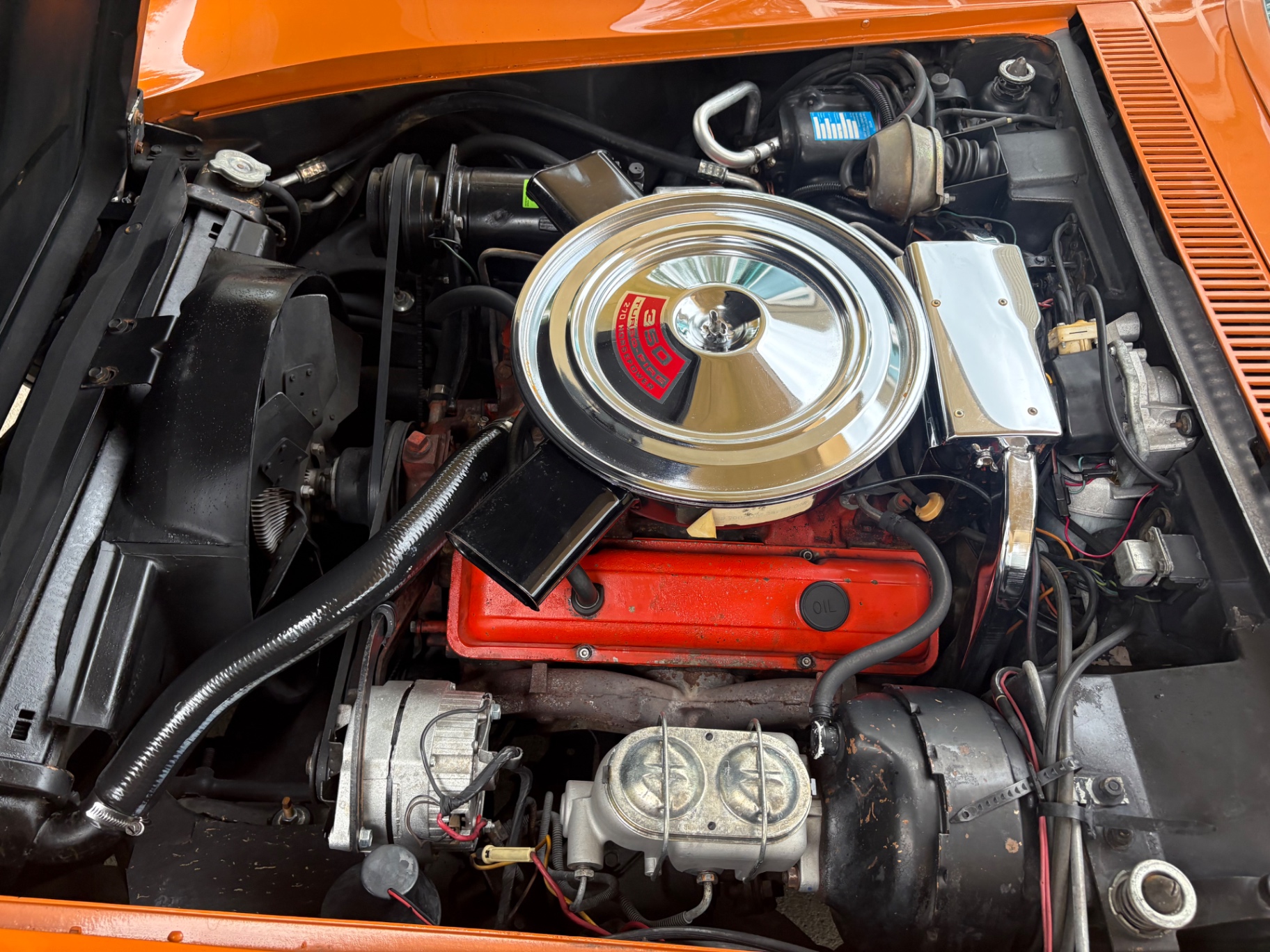
The engine under the hood of this 1971 Chevrolet Corvette Stingray is the L48 350 cubic inch V8, rated at 270 horsepower. In 1971, Chevrolet switched from gross horsepower ratings to net ratings across the board, so some context helps here. The 270hp net figure for the L48 is roughly equivalent to the 300hp gross rating it carried in 1970. Real-world output was largely unchanged. The 350 small-block in this configuration uses a Rochester Quadrajet four-barrel carburetor and breathes through a dual exhaust system that exits through the Corvette's signature square tips at the rear. The chrome air cleaner lid with the 350 Turbo-Fire badge is present and correct.
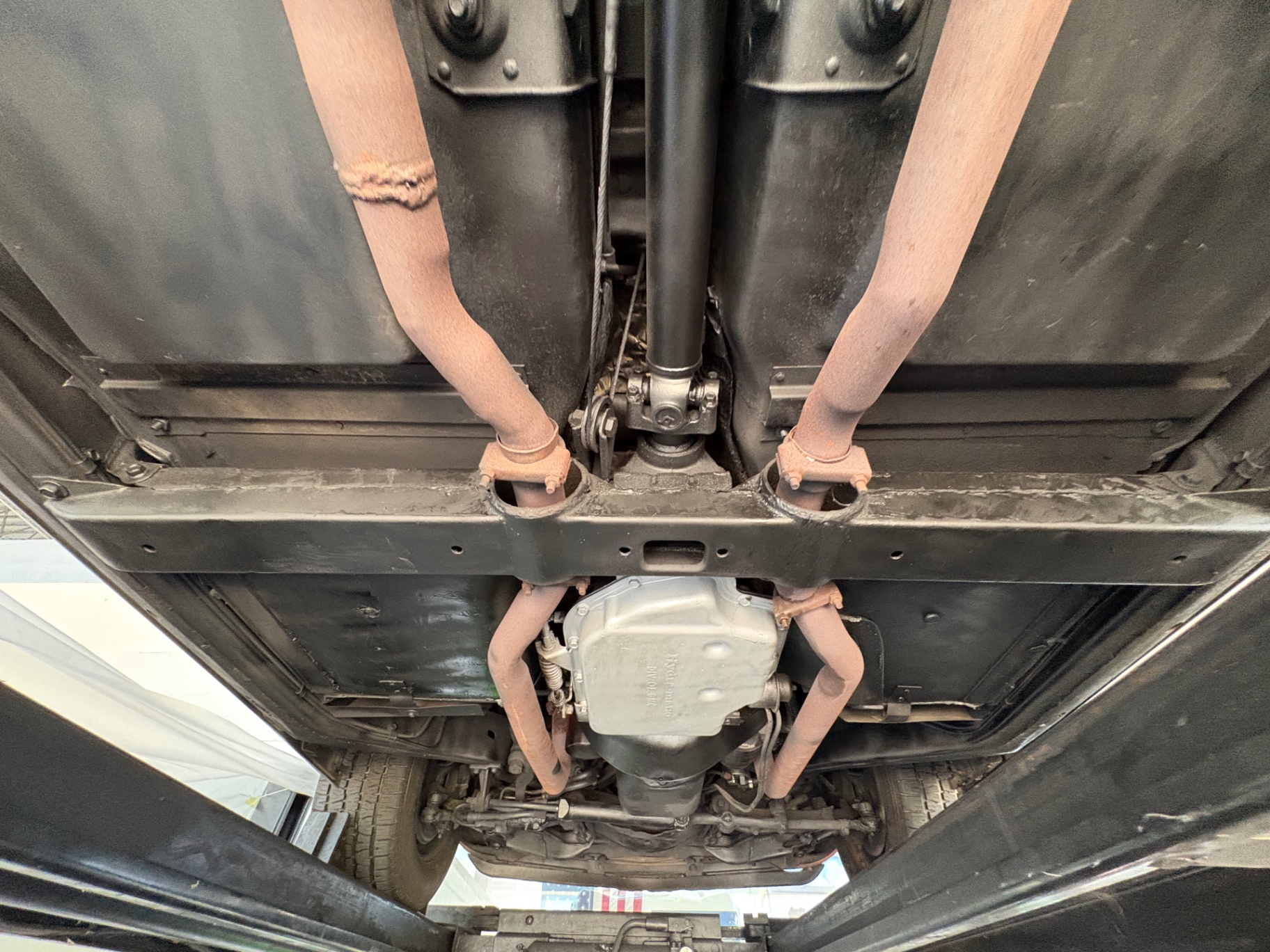
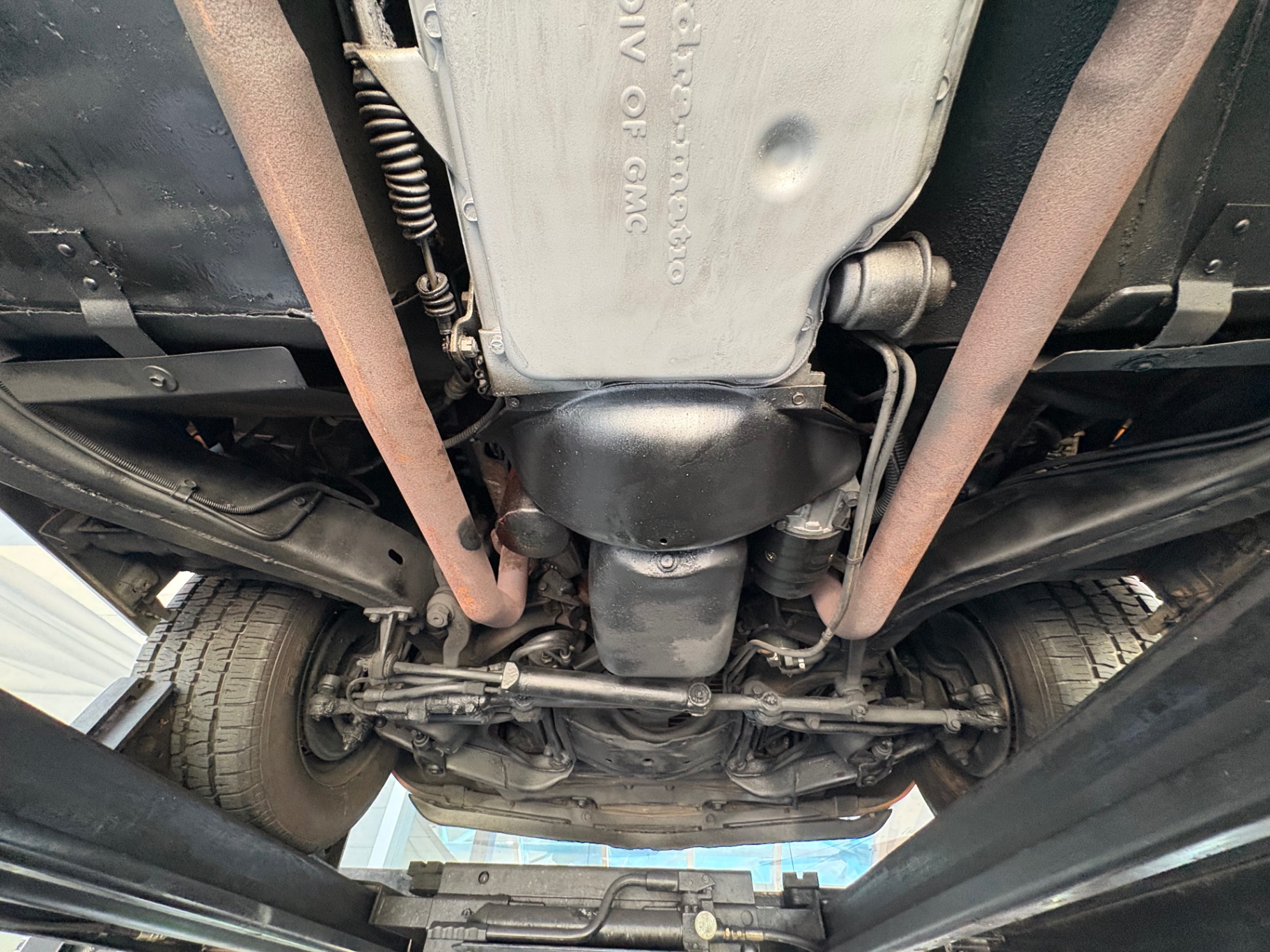
Backing the engine is the Turbo-Hydramatic 3-speed automatic transmission, which Chevrolet coded as M40. This was a popular choice among Corvette buyers who wanted a more relaxed driving experience. In 1971, the automatic was ordered on a substantial portion of Corvettes, reflecting that many buyers prioritized usability alongside performance. The Turbo-Hydramatic is a robust unit that holds up well over time with basic maintenance.
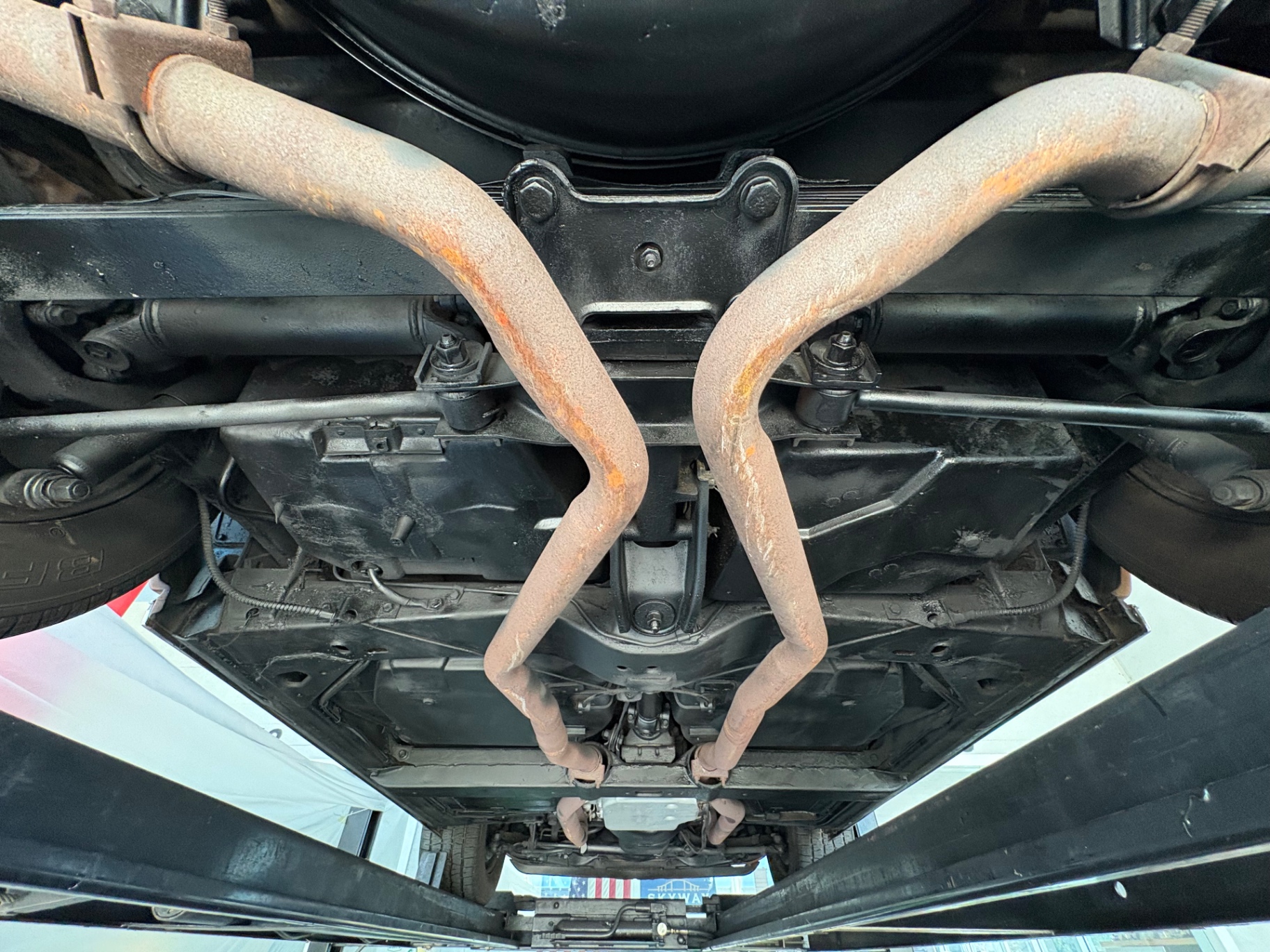
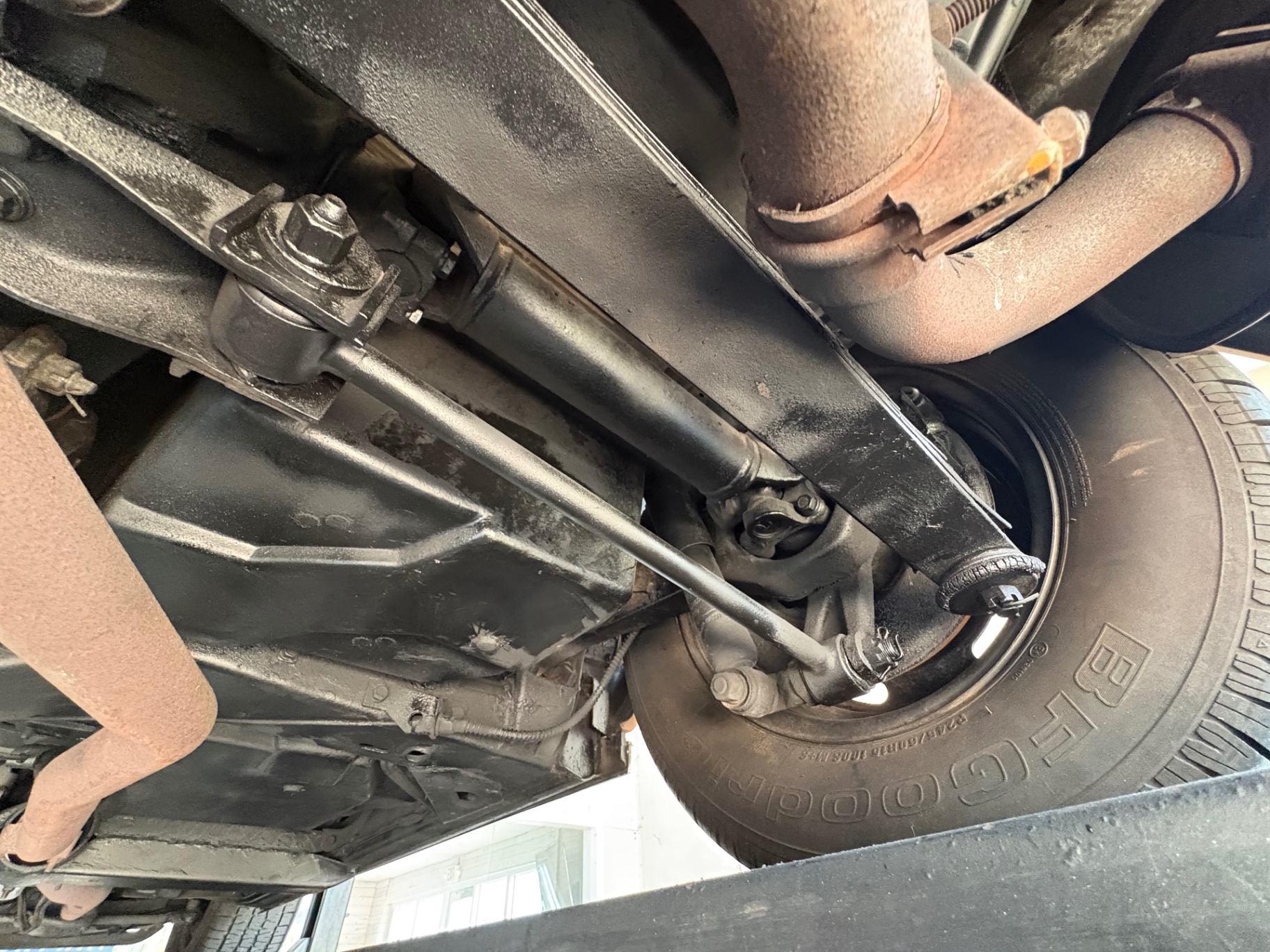
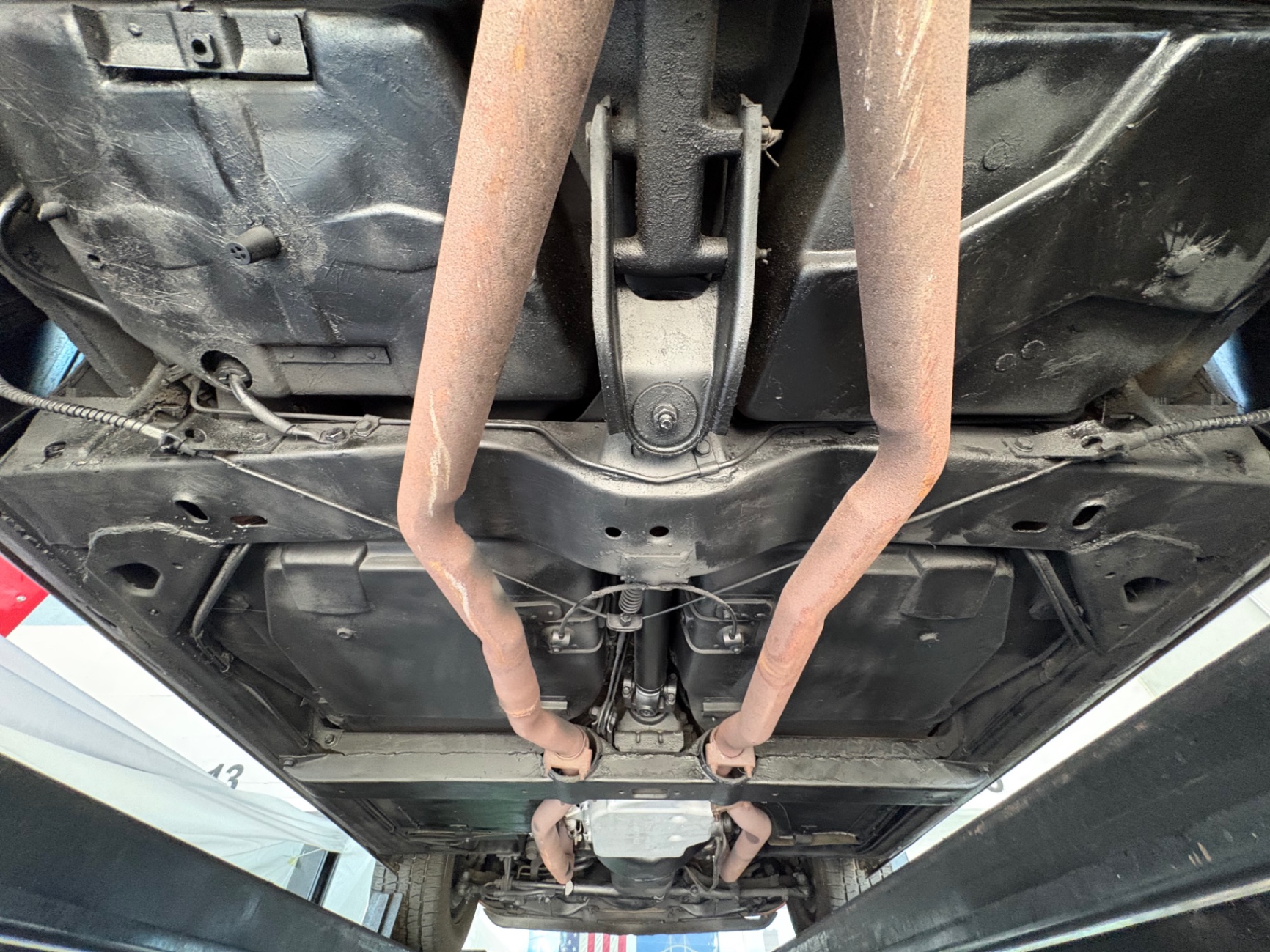
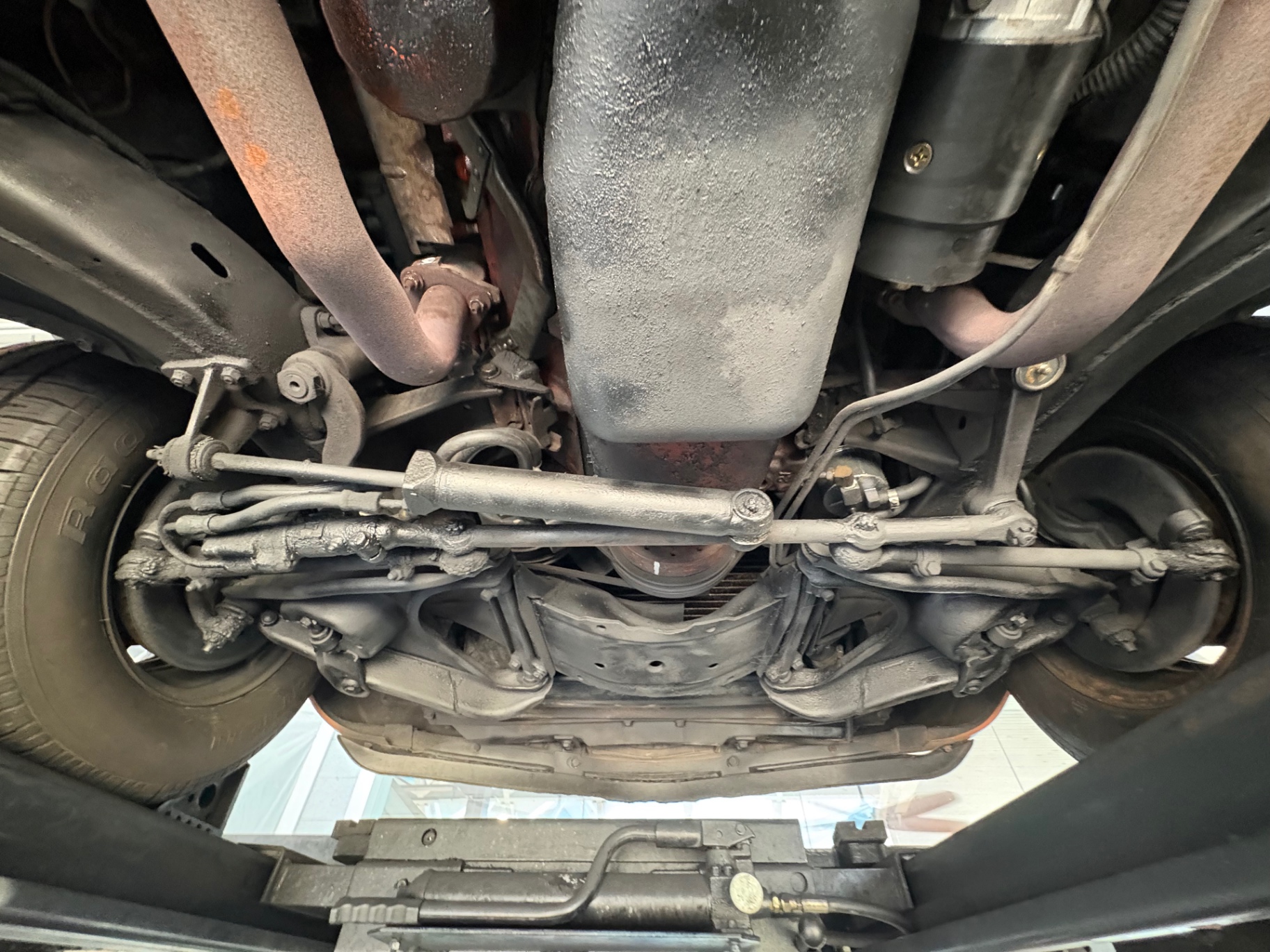
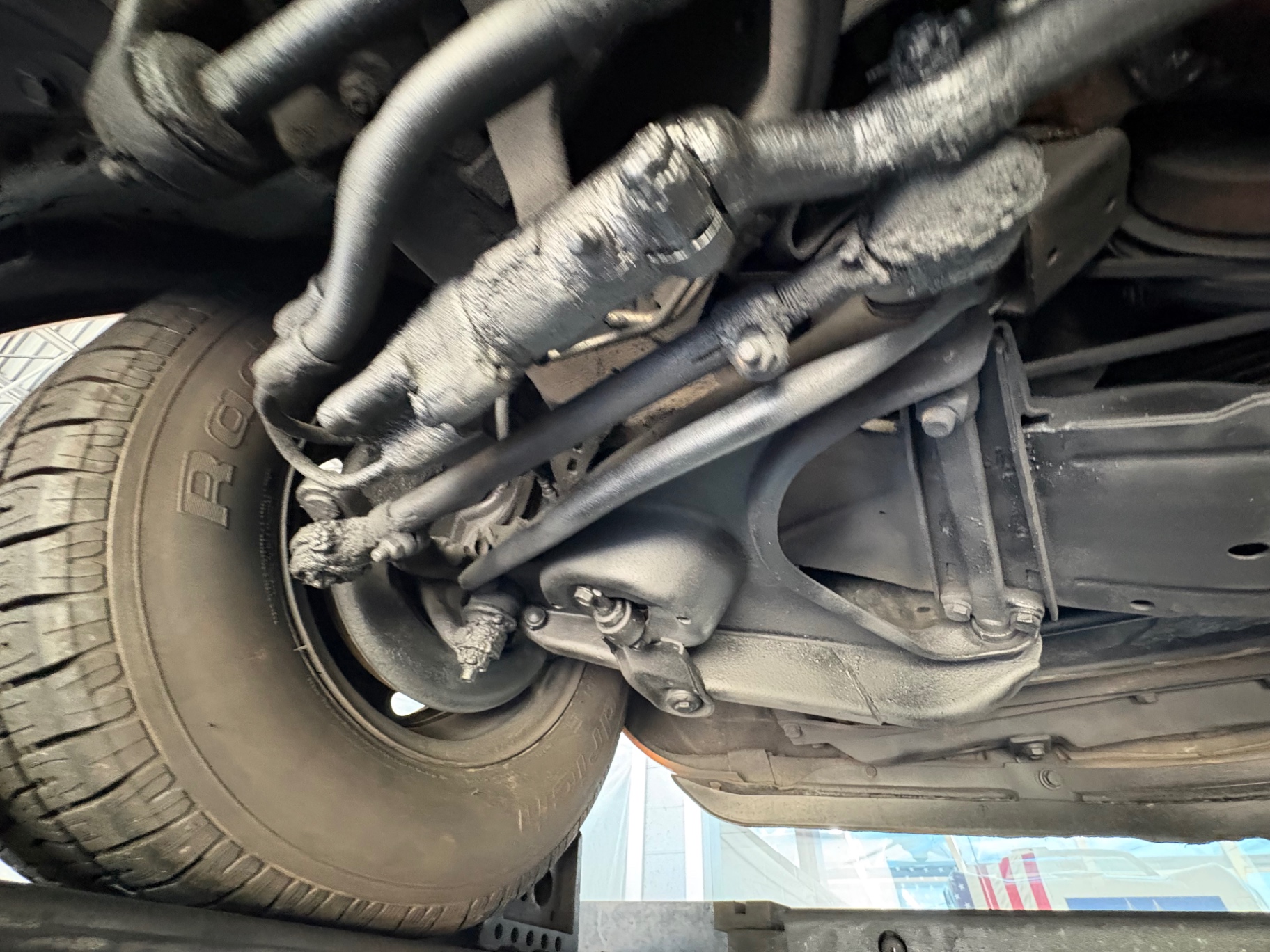
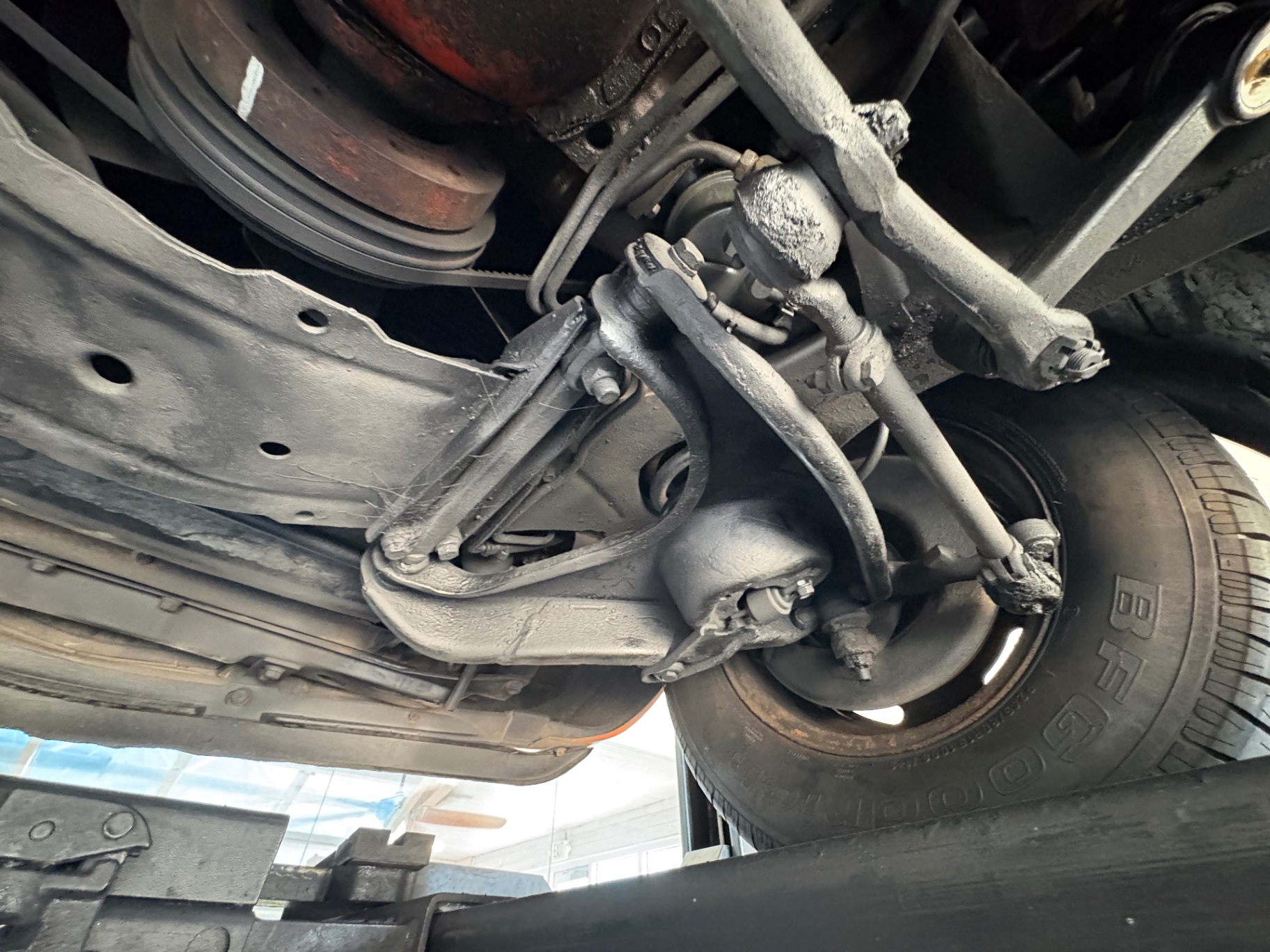
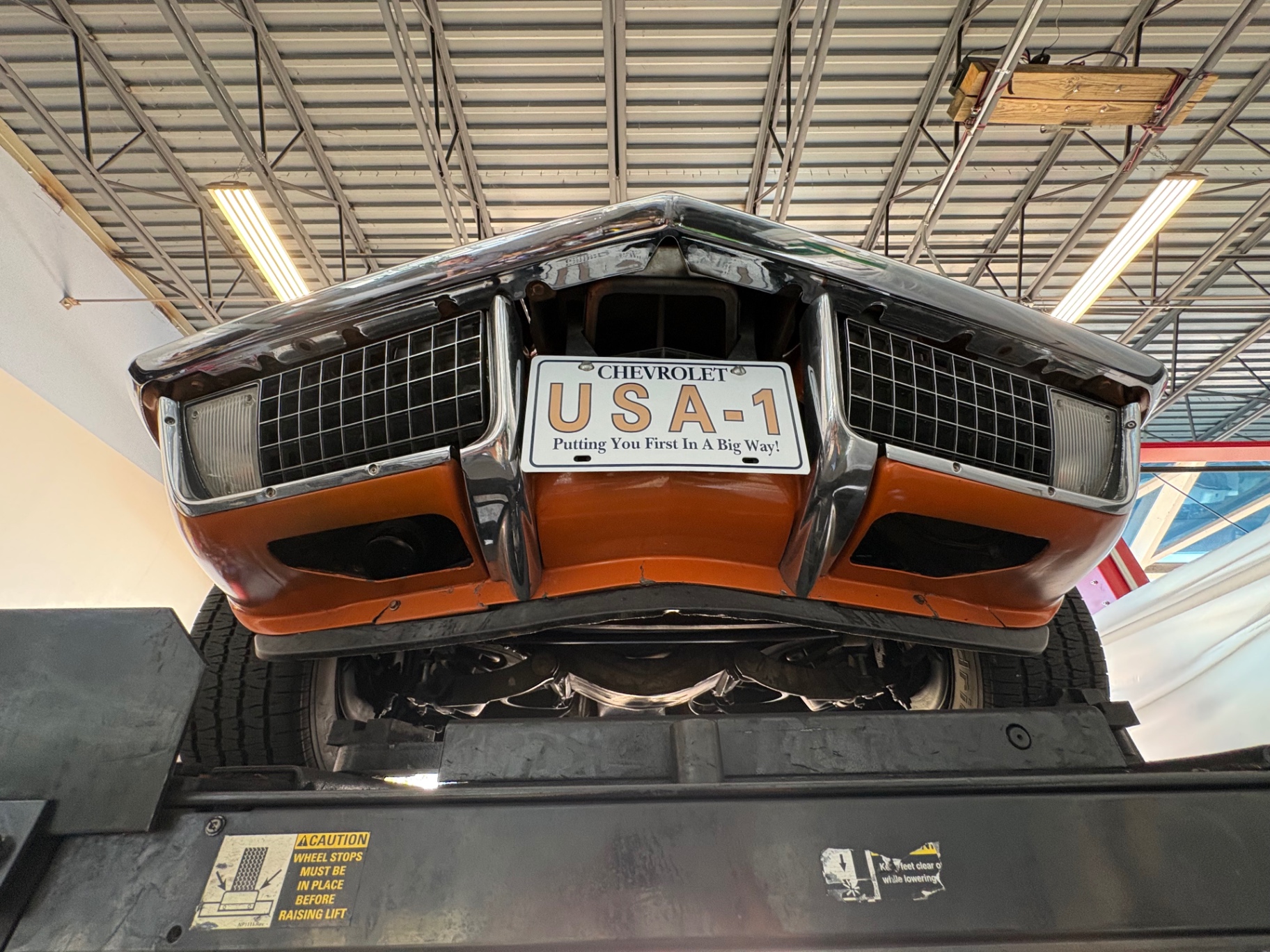
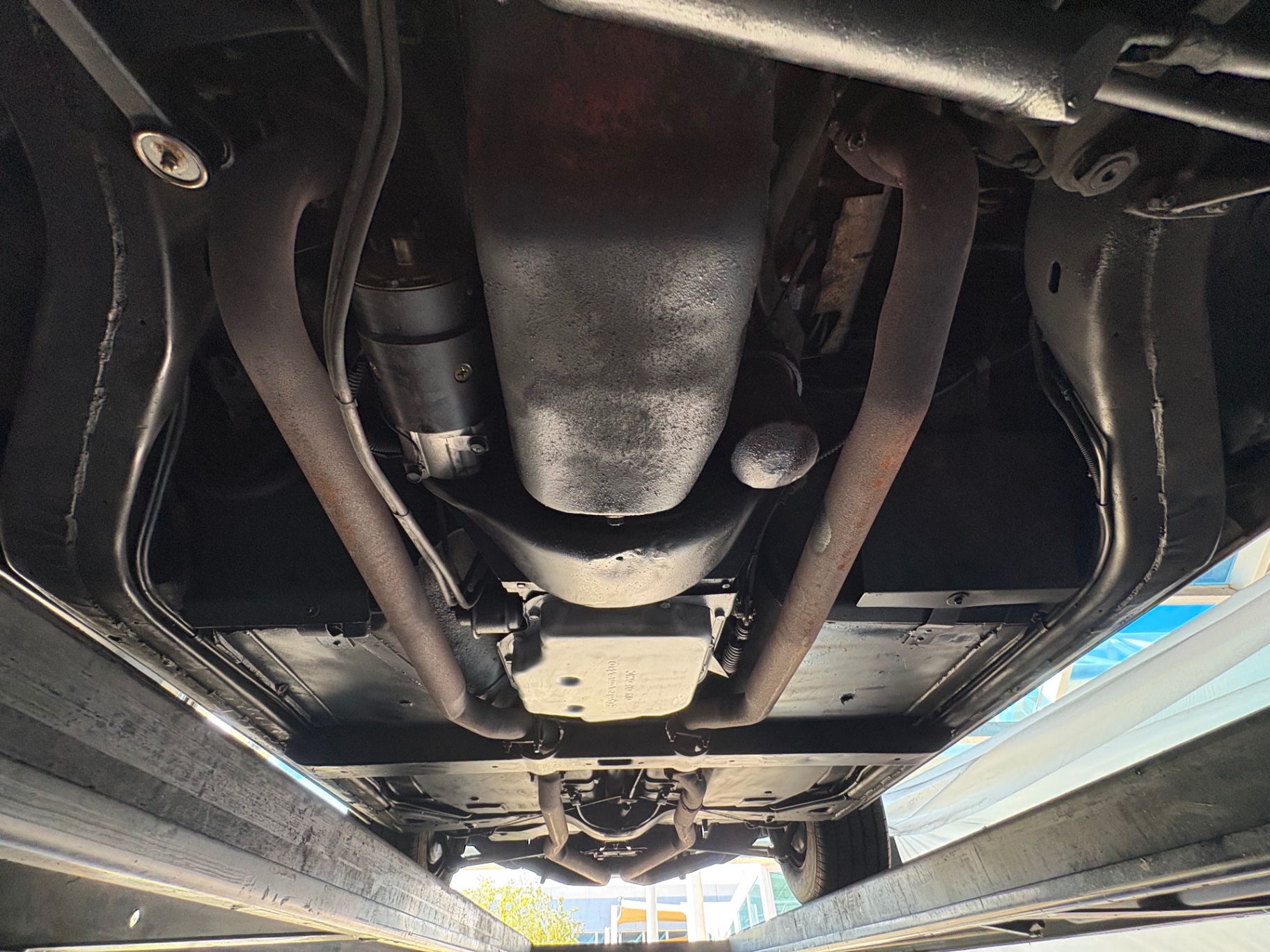
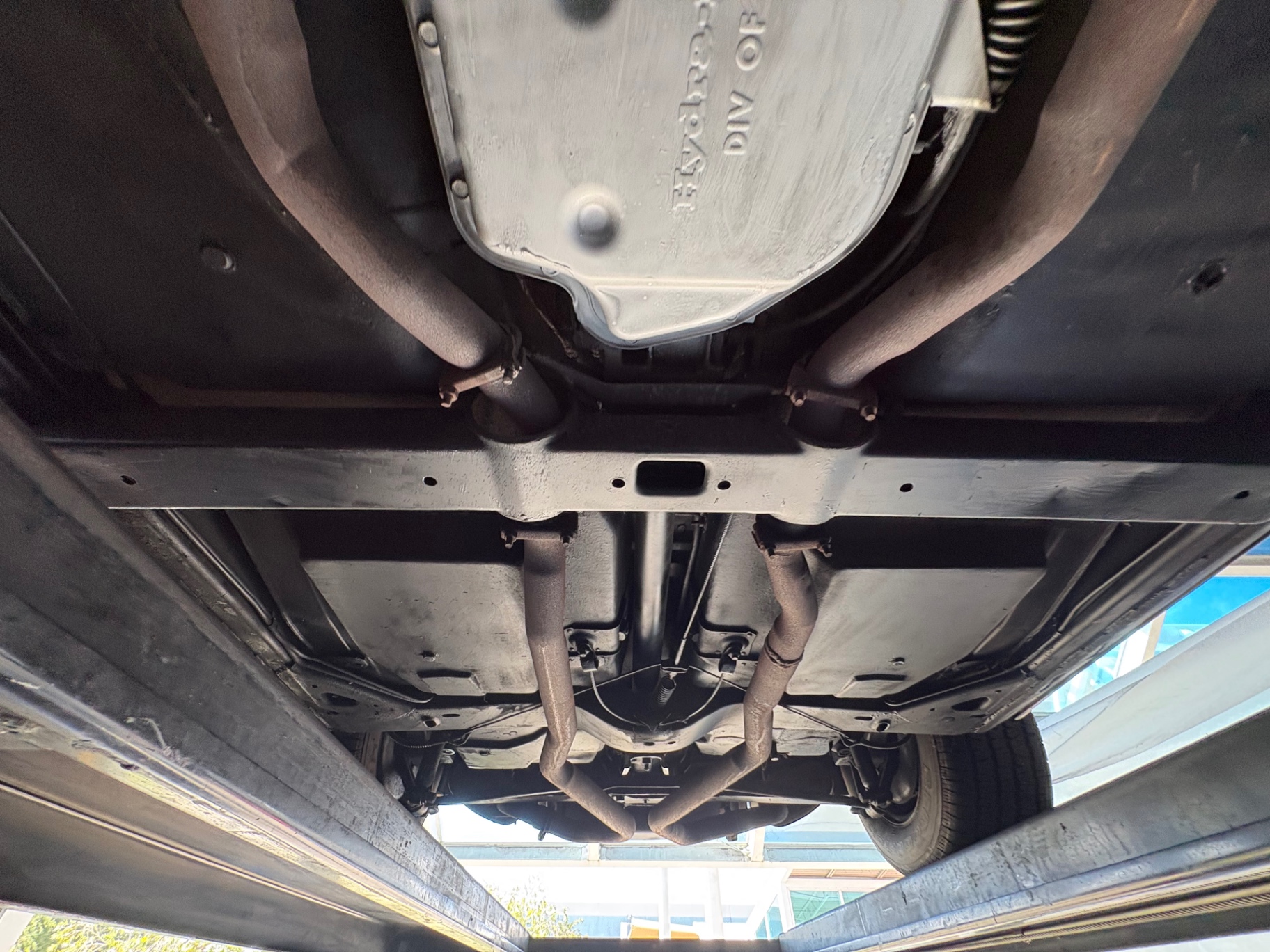
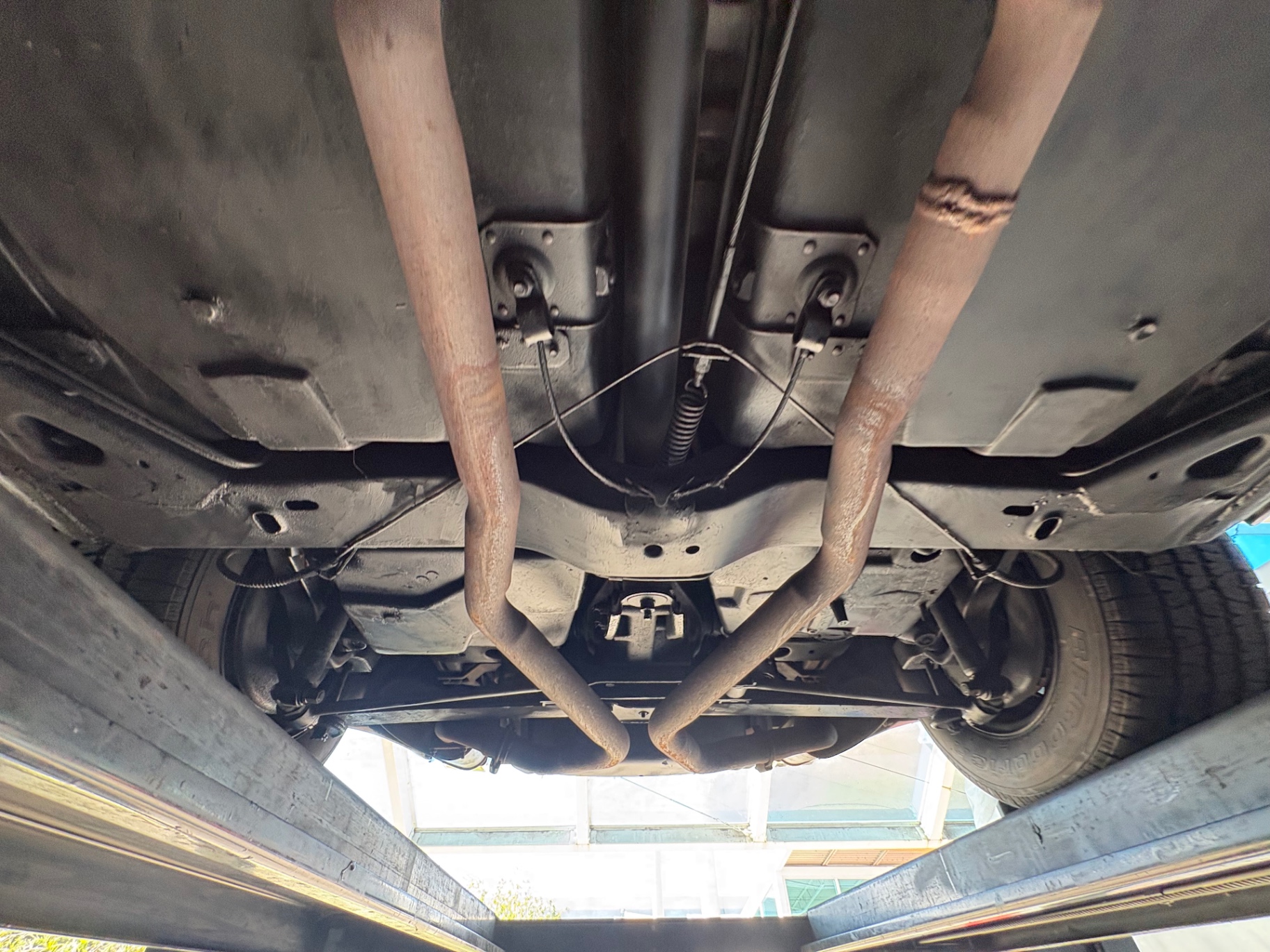
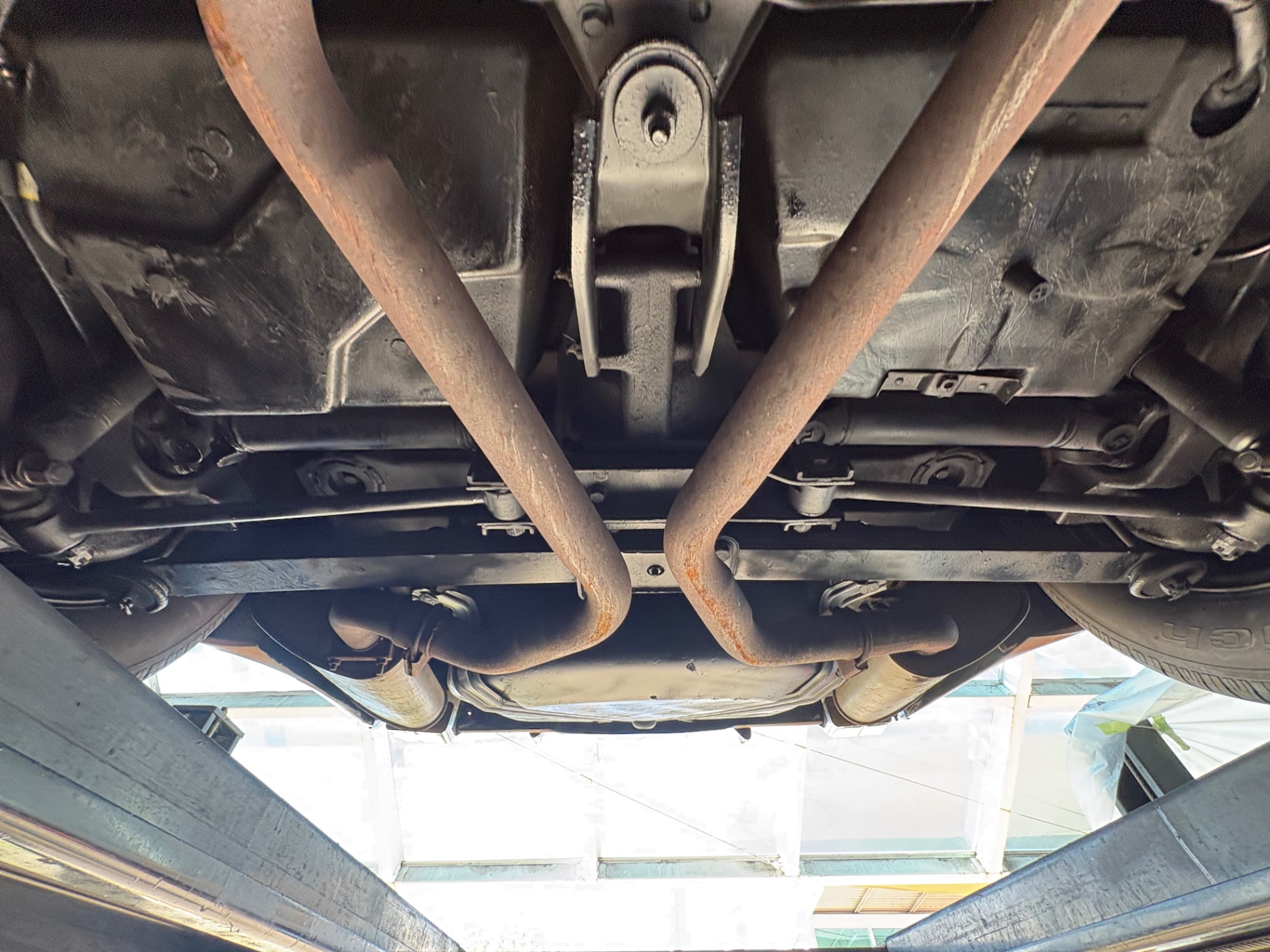
The chassis underneath this car is in clean condition. The photos taken on the lift show a solid floor, intact frame rails, and no visible signs of serious corrosion or prior collision repair. The exhaust pipes show surface rust consistent with age and use, but the structural components of the underbody are in good shape. The C3 Corvette's fiberglass body means rust on the body panels is not a concern, but the steel frame and underbody are where you want to look closely, and what you see here is encouraging.
The 1971 Corvette Stingray came standard with four-wheel disc brakes, which was a genuine engineering achievement at the time. Few American cars of this era offered four-wheel discs as standard equipment. Power-assisted steering is also fitted, which makes the relatively heavy C3 steering feel more manageable in everyday driving.
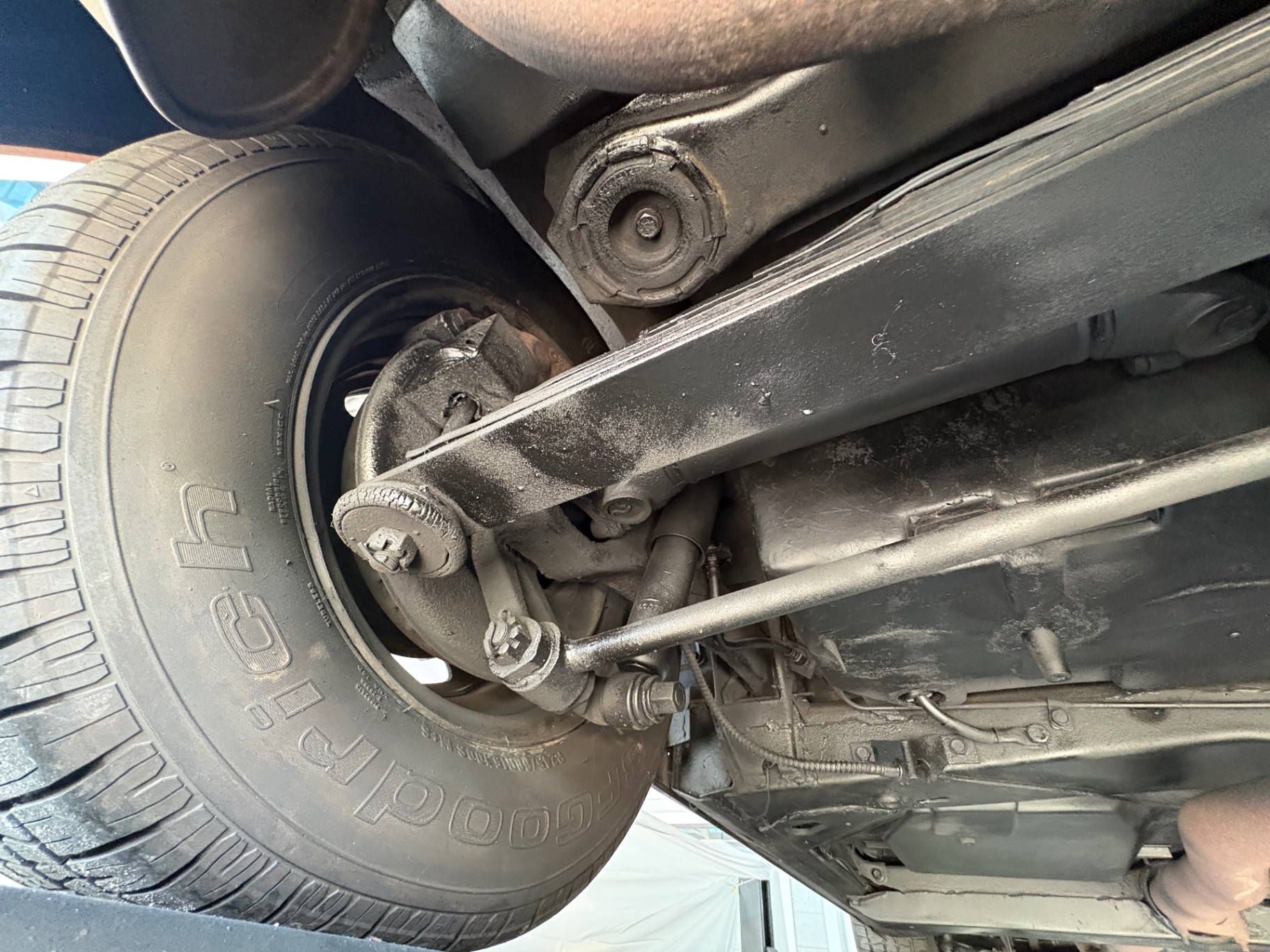
The independent rear suspension on the C3 Corvette uses a multi-link setup with a transverse leaf spring and half-shafts, a design that Chevrolet refined through the entire C3 run. The underside photos show the rear suspension components in solid, original-looking condition with no obvious damage or amateur repairs.
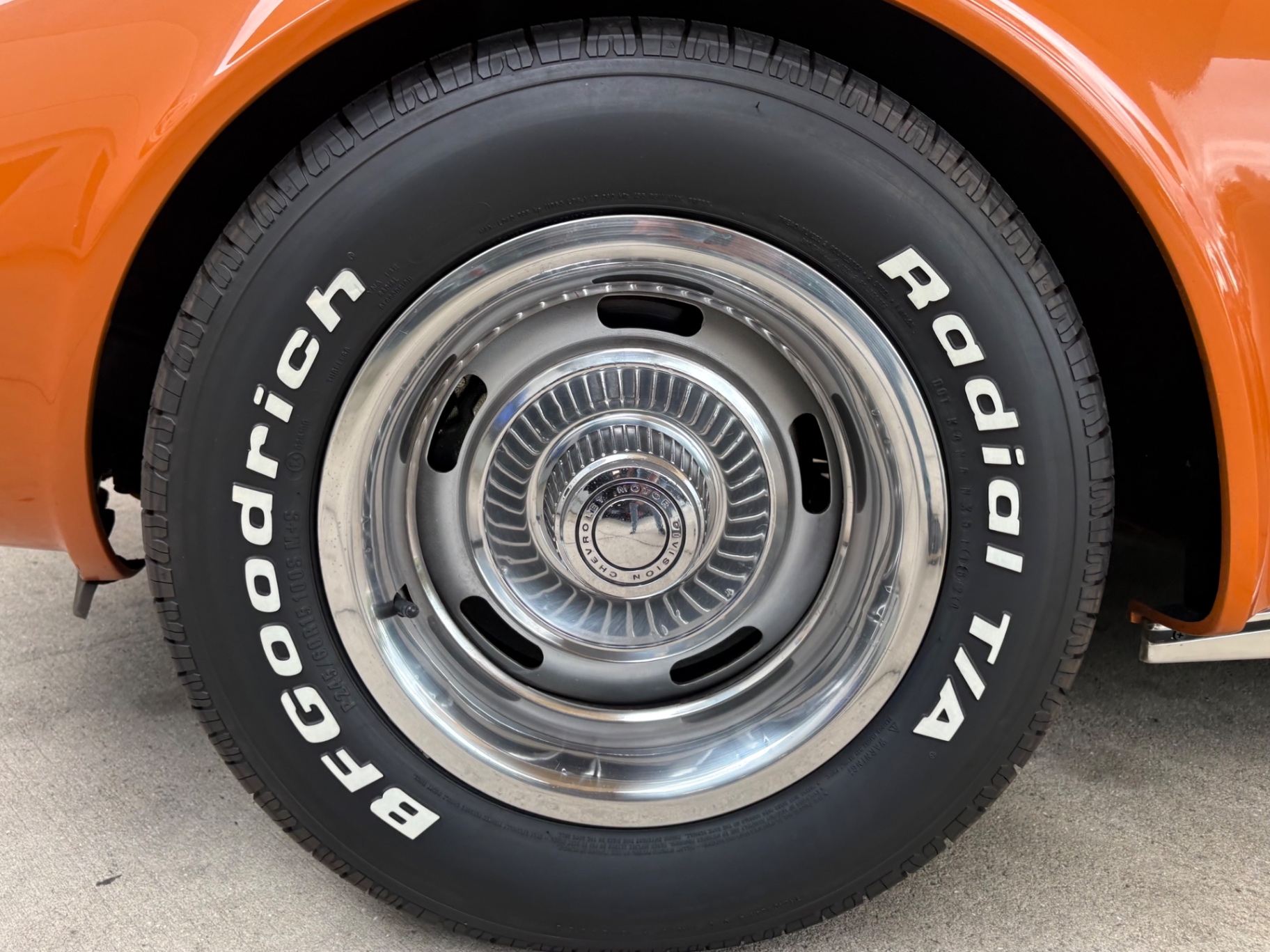
Tires are BFGoodrich Radial T/A, mounted on factory-style Rally wheels. The Radial T/A is one of the most period-correct tire choices you can make on a C3 Corvette — it was a tire very much associated with performance cars of the 1970s and it looks appropriate on this car.
Interior
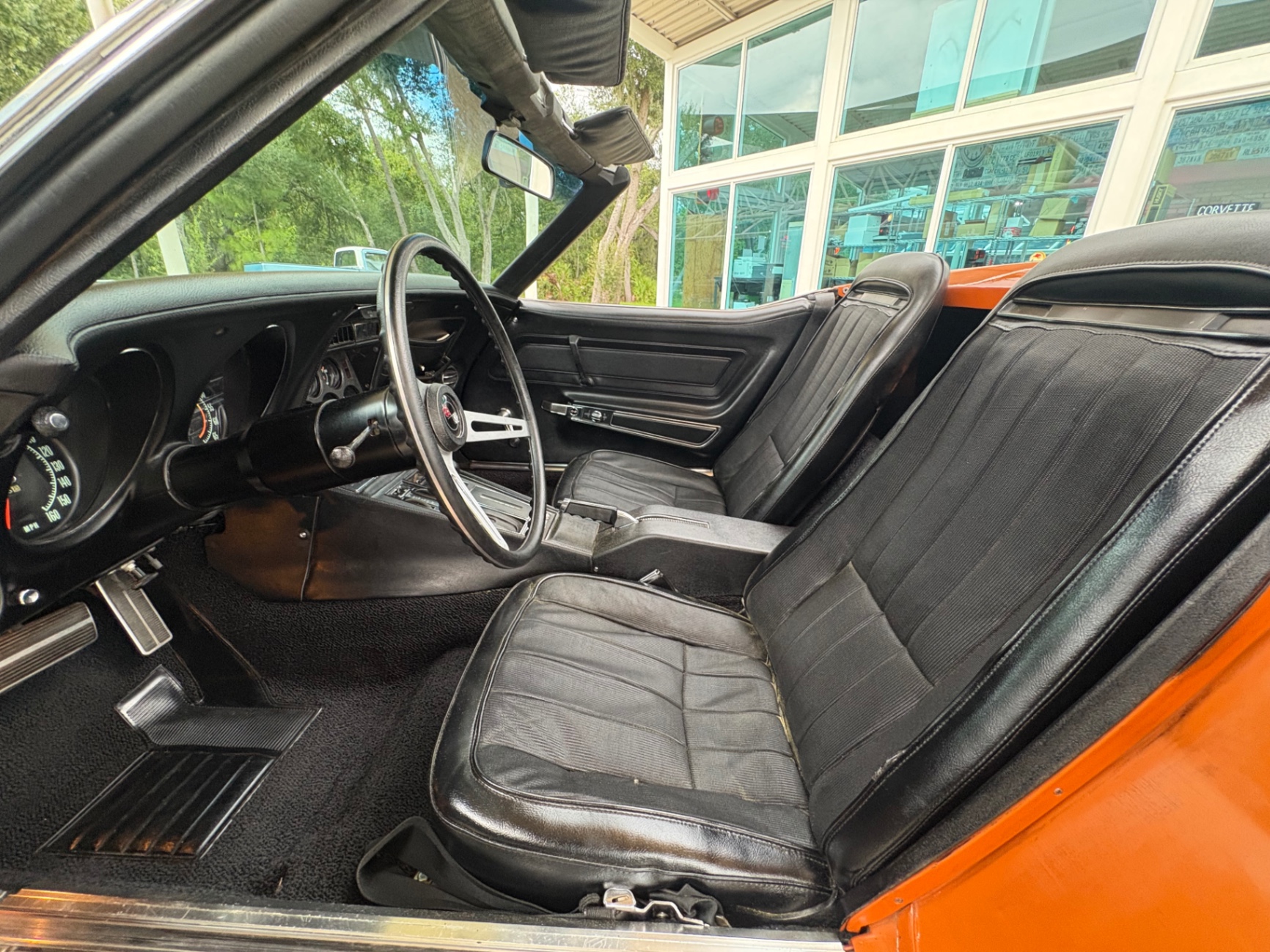
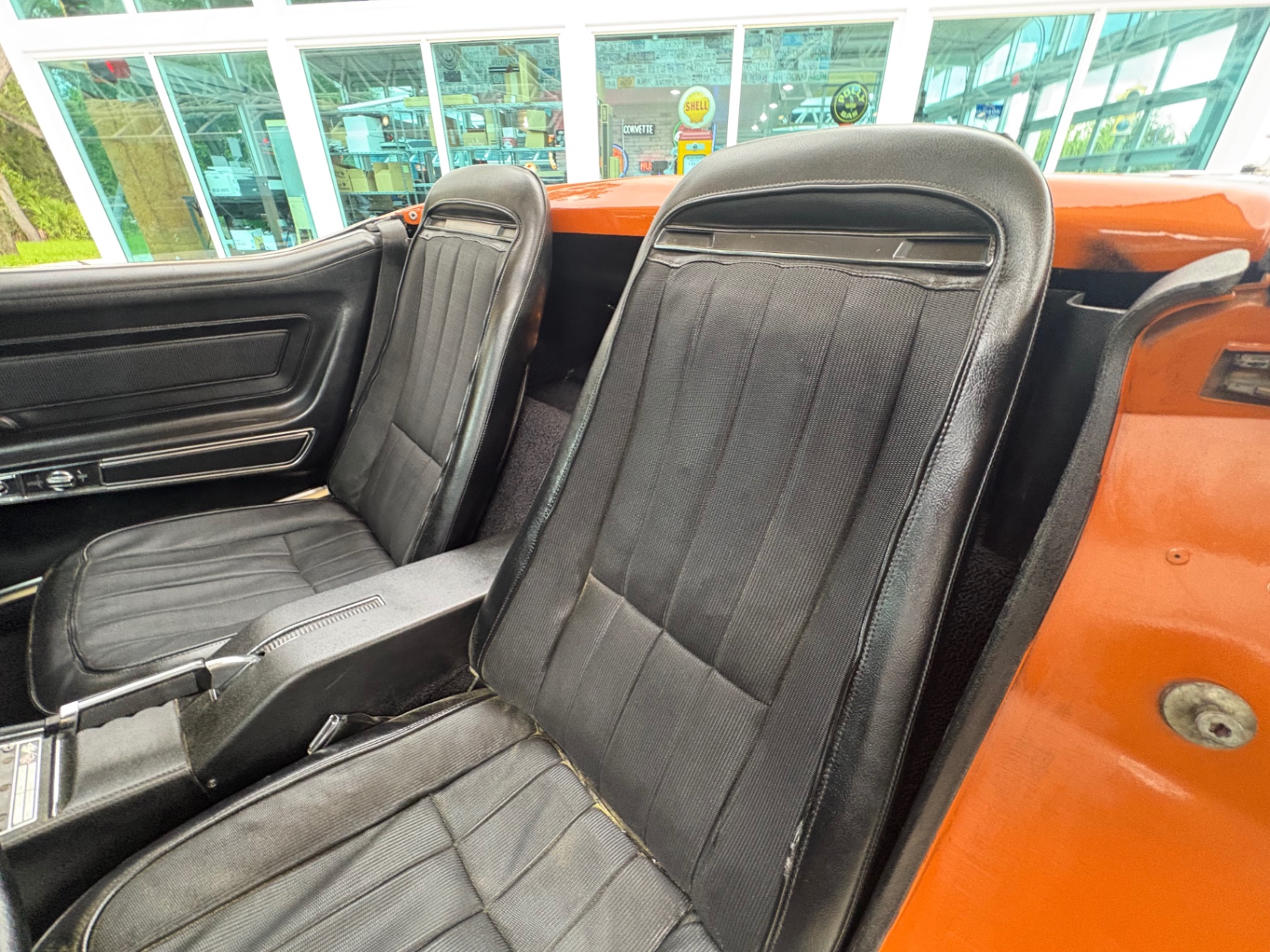
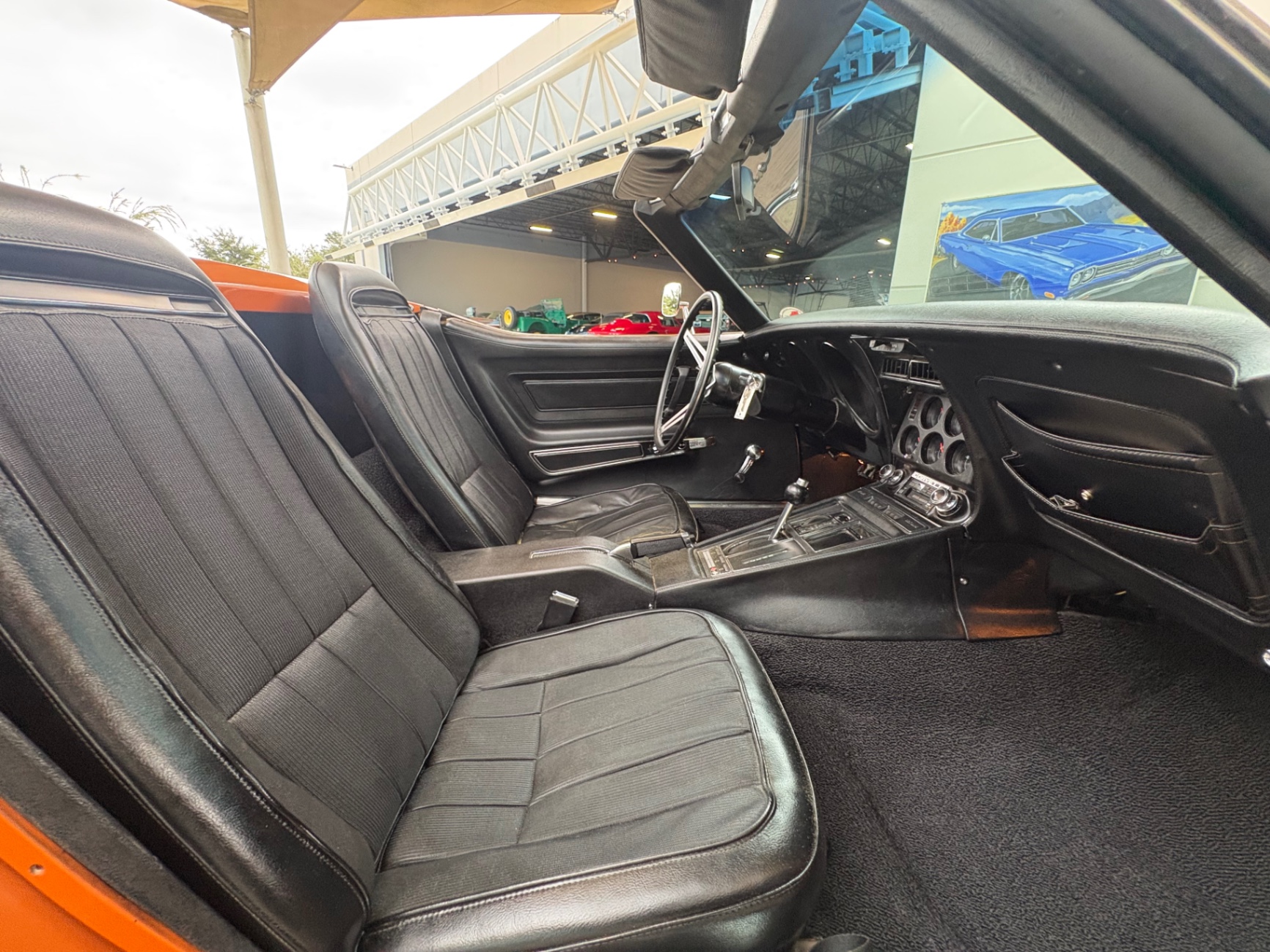
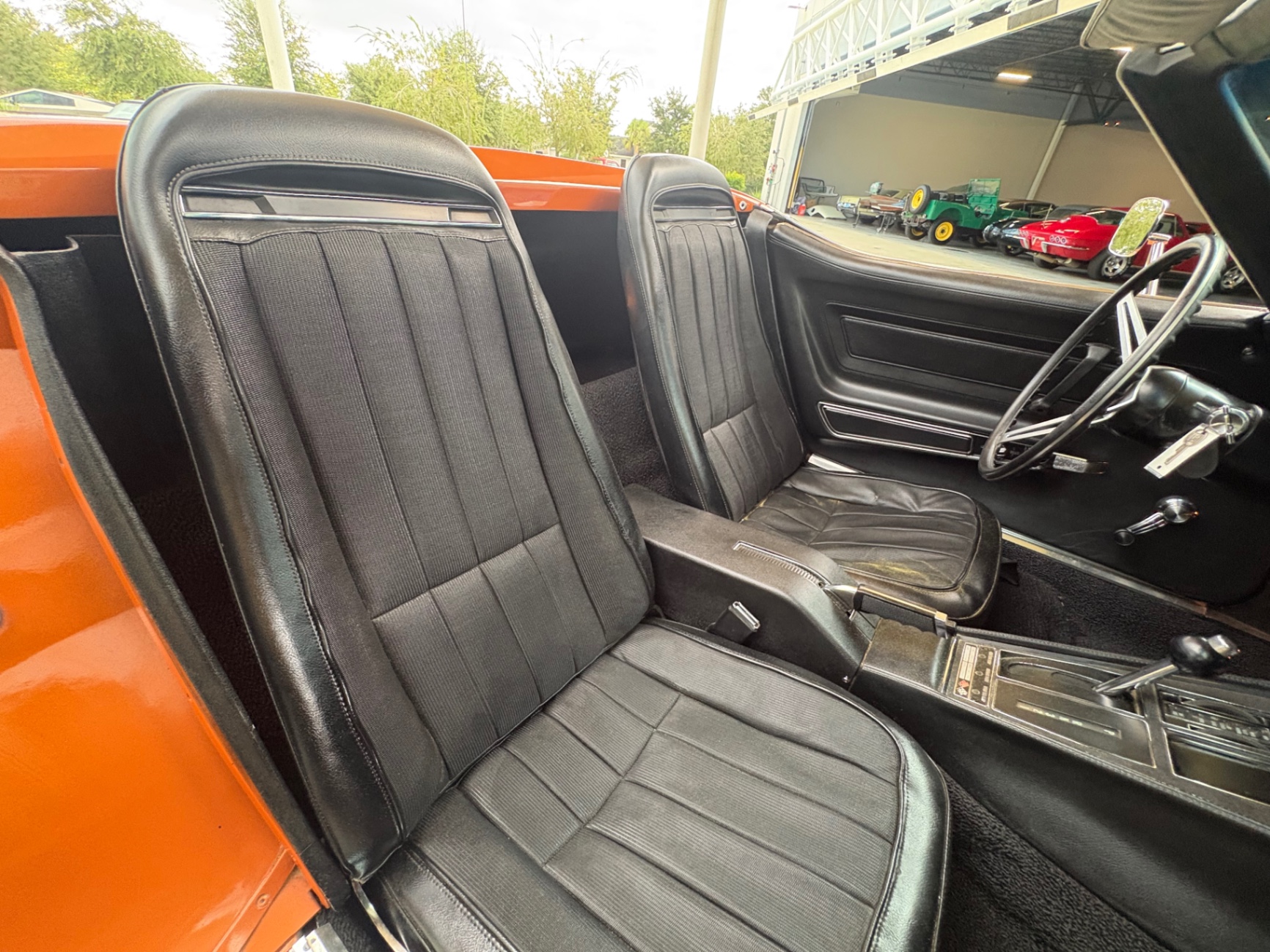
The cockpit of the 1971 Chevrolet Corvette Stingray is black vinyl throughout, which was the standard interior material. The bucket seats show honest wear consistent with a car that has been driven over the years. The seat bolsters and cushions retain their shape, and the ribbed vinyl and cloth insert panels are intact without major tears or damage.
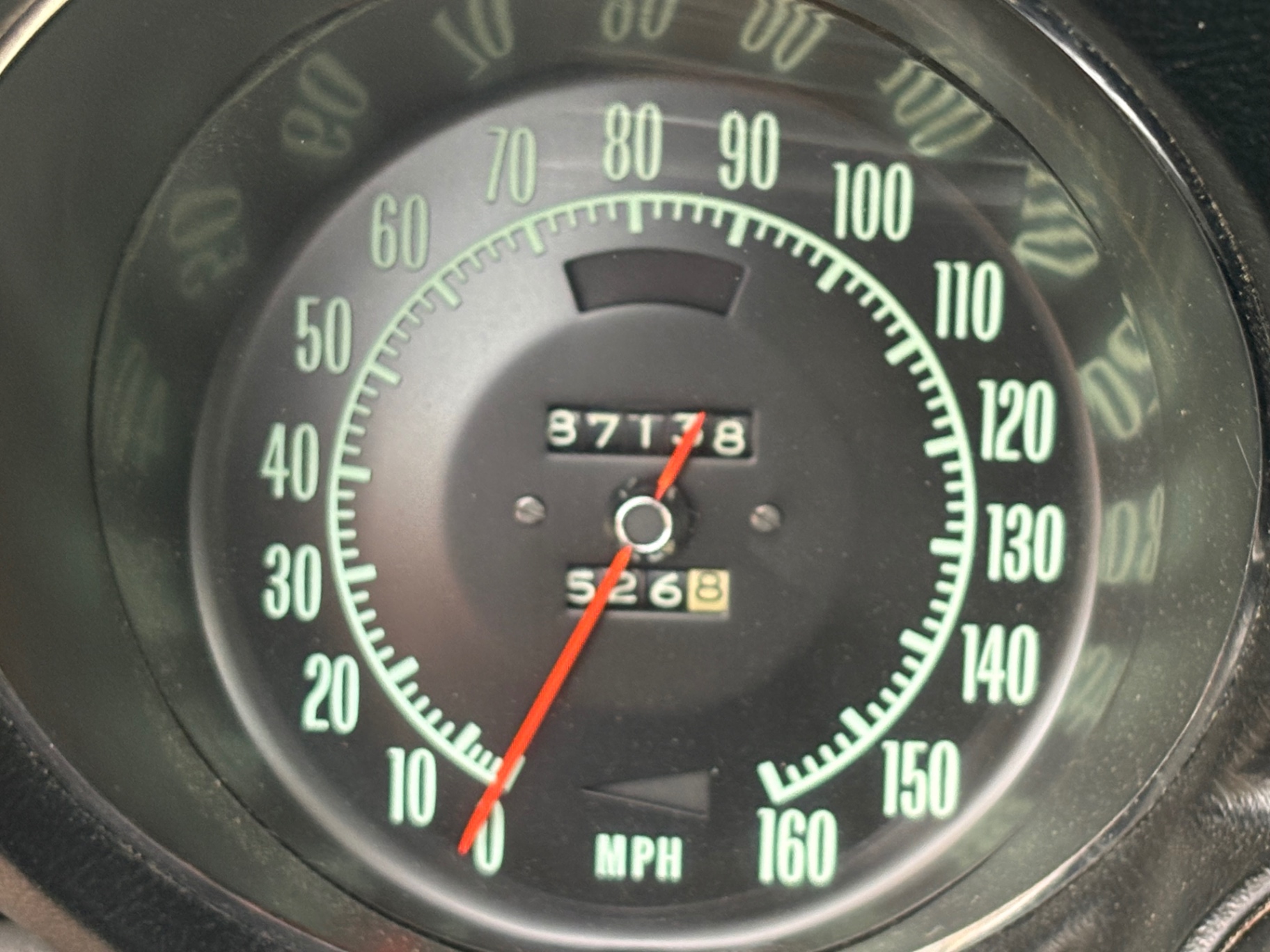
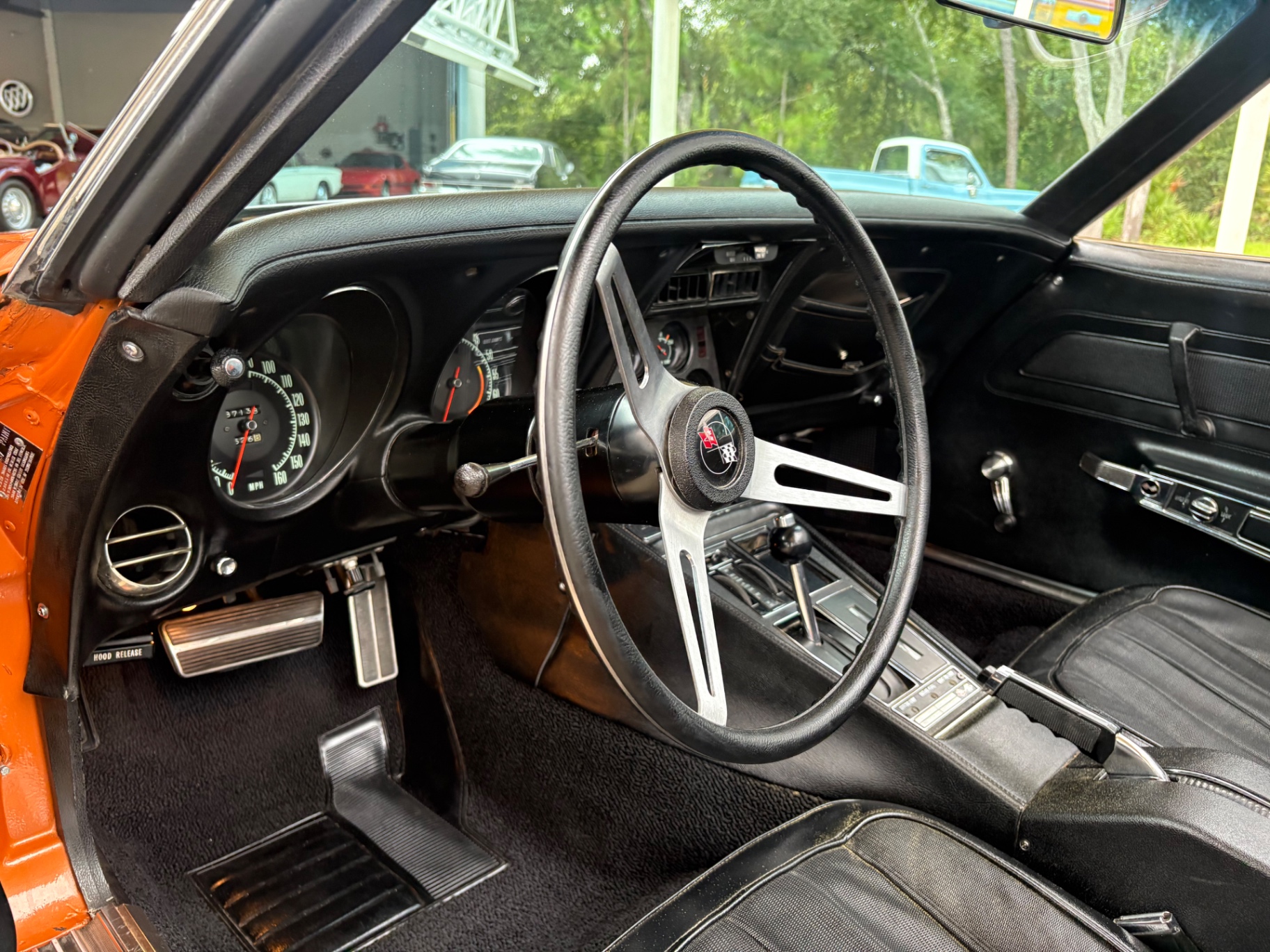
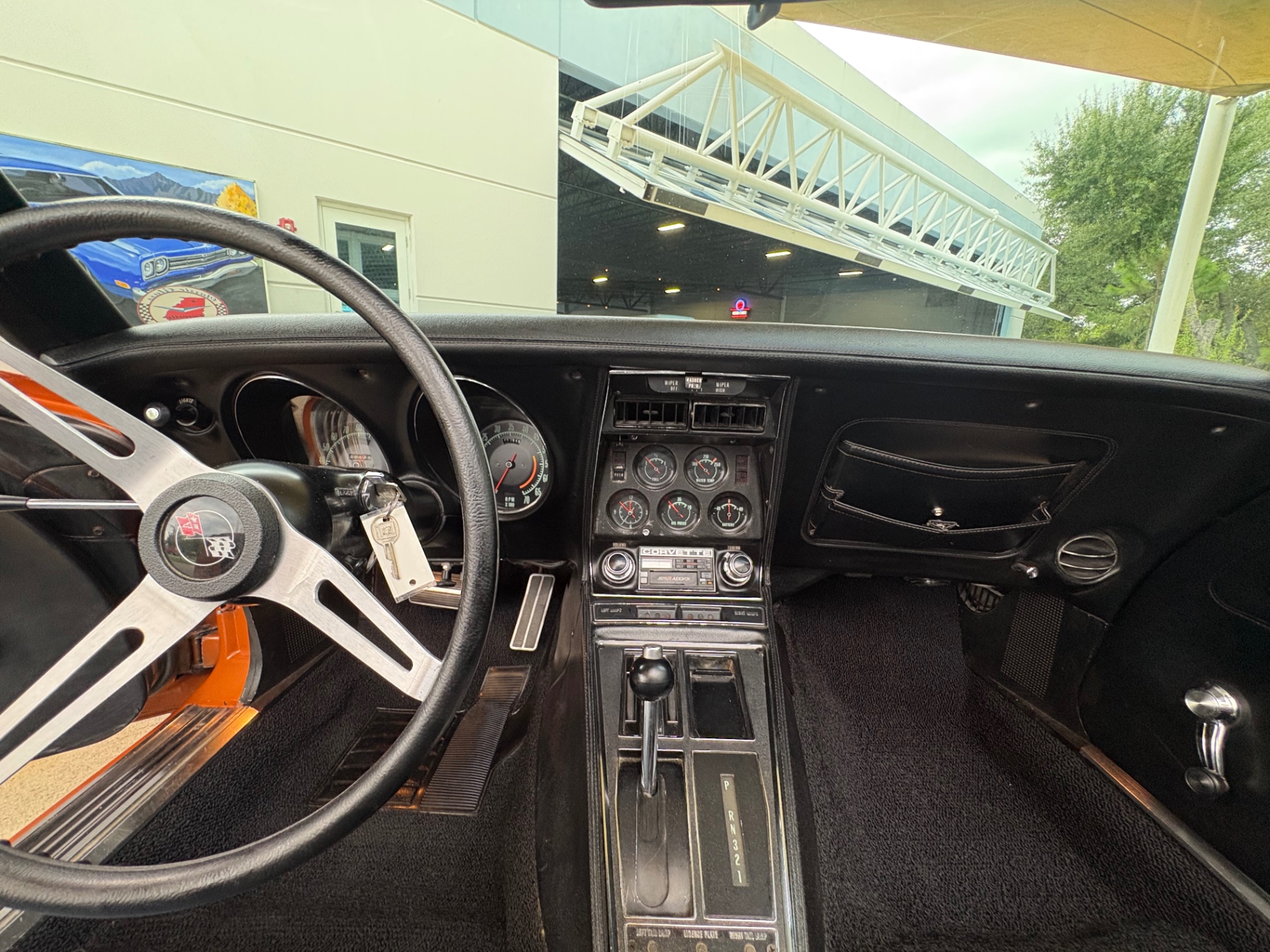
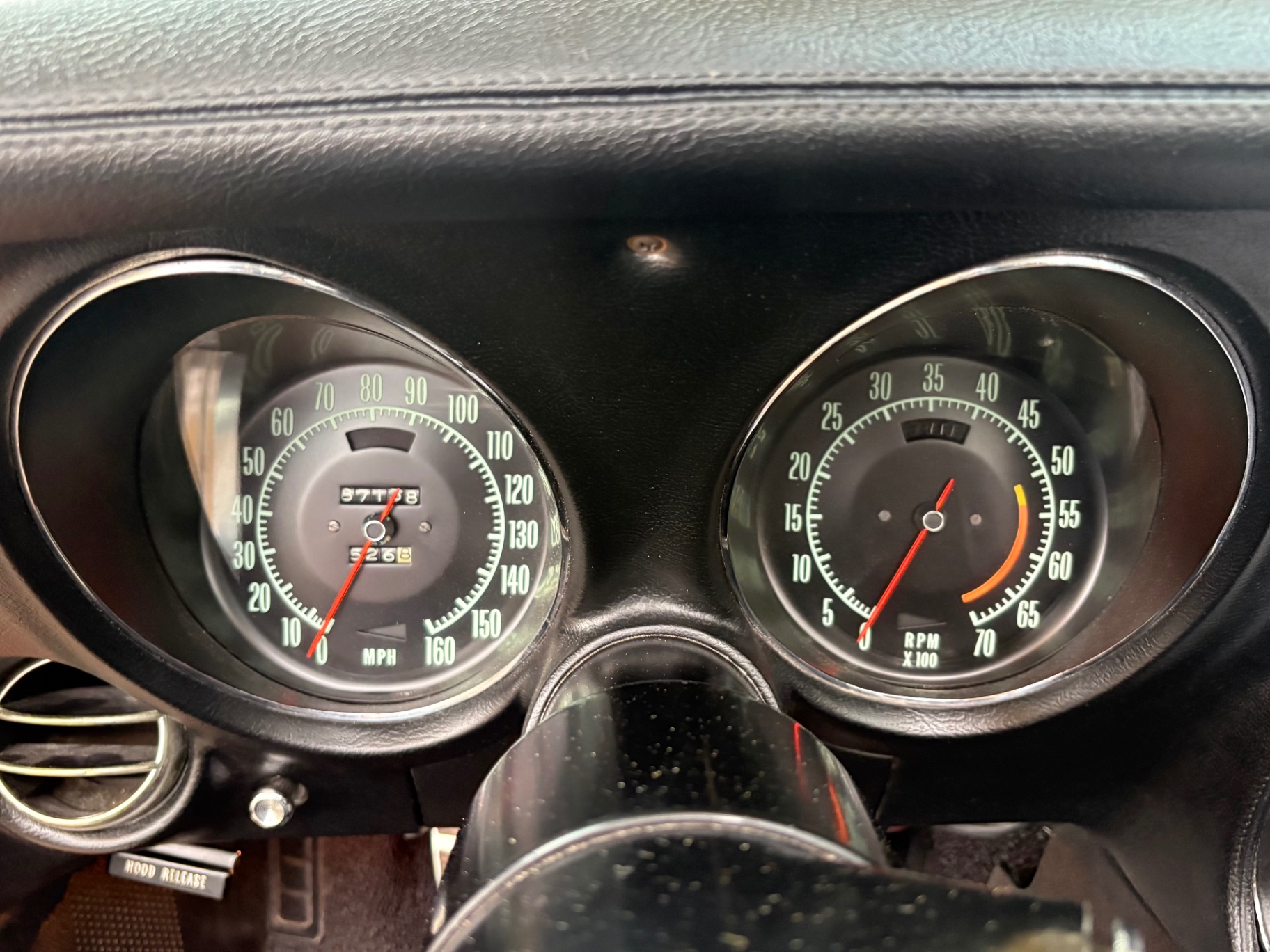
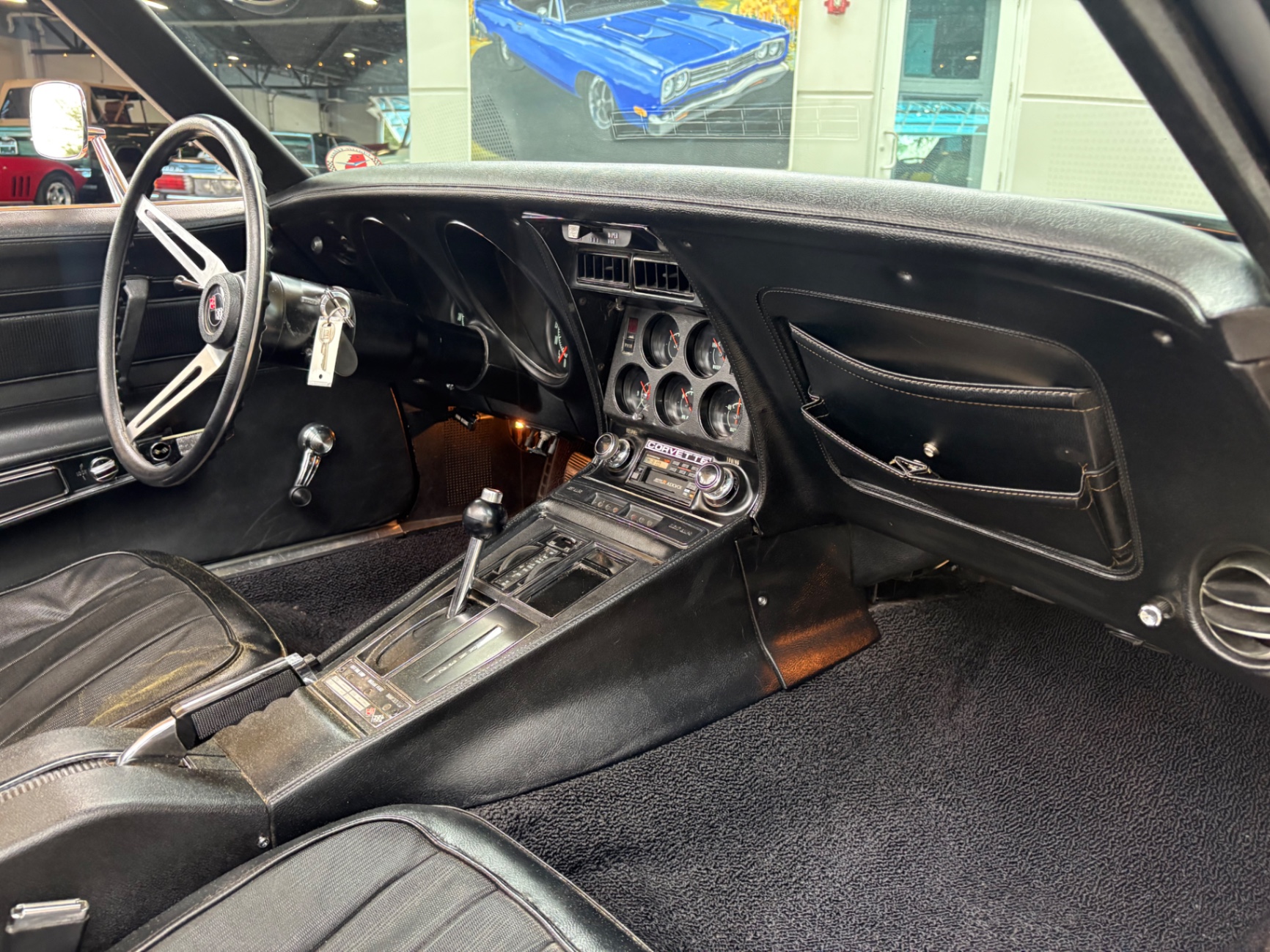
The dashboard layout is one of the more functional and visually interesting instrument arrangements of the C3 generation. The driver faces a large speedometer and tachometer housed in twin pod clusters directly ahead. The tachometer redlines at 6,500 rpm, correctly calibrated for the L48 engine. To the right of center, five auxiliary gauges are grouped together in the console — fuel level, water temperature, oil pressure, battery voltage, and a clock. This is the full gauge package, and all five gauges are present and appear to be functional based on the photos.
The sport steering wheel is the three-spoke design with machined aluminum spokes and a Corvette emblem on the center cap. This wheel was a factory option and is the correct period piece for this car. The center console runs the length of the cabin between the seats and houses the Turbo-Hydramatic gear selector. A cassette stereo has been installed in the factory radio location in the center stack, fitting within the period-correct CORVETTE-branded radio bezel visible in the photos.
Air conditioning is fitted, which required a specific under-dash evaporator unit on the C3. The controls are integrated into the center dash area. Having factory air conditioning on a convertible that sees Florida sun makes this car significantly more usable on a day-to-day basis than a non-air car.
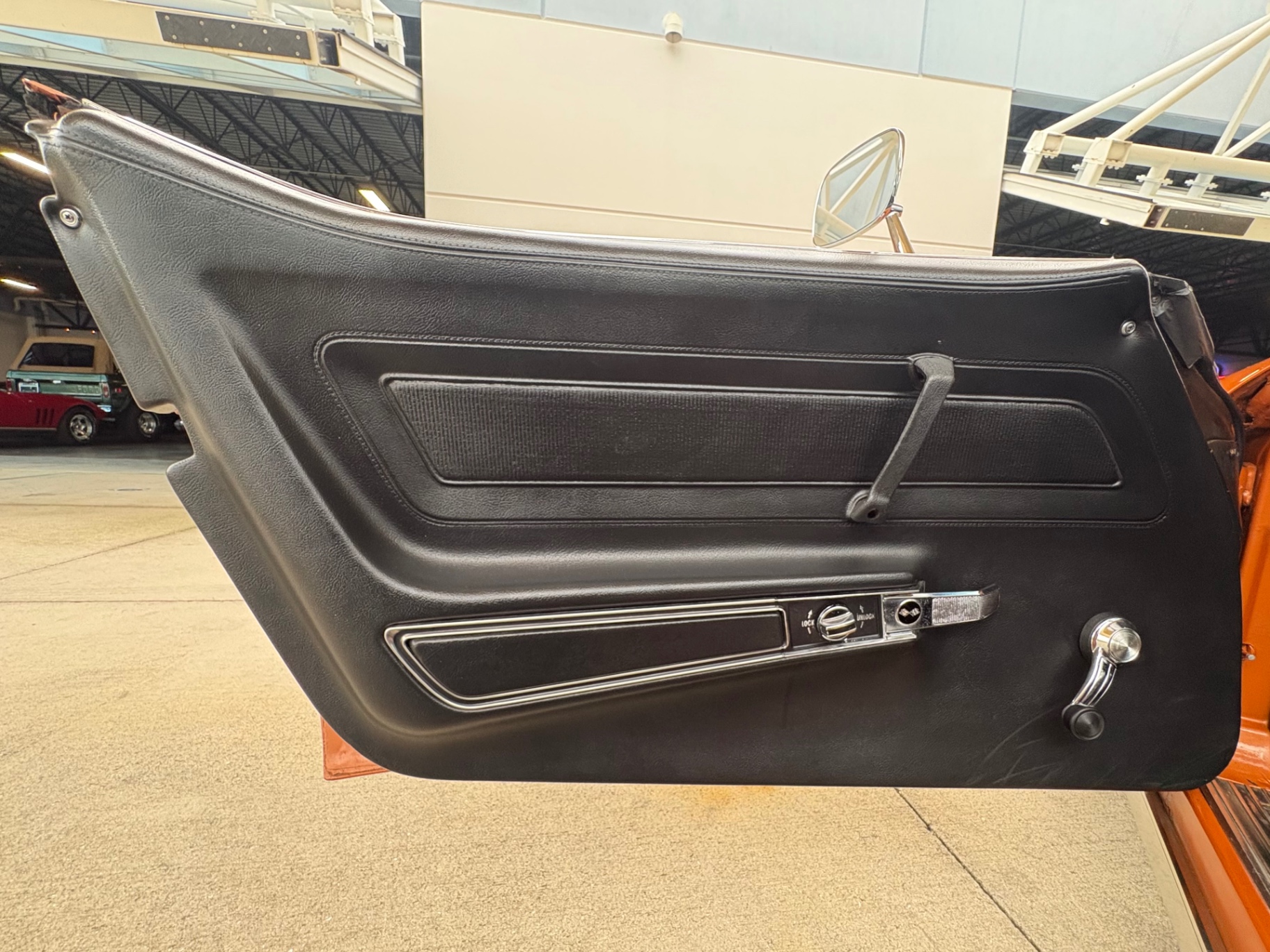
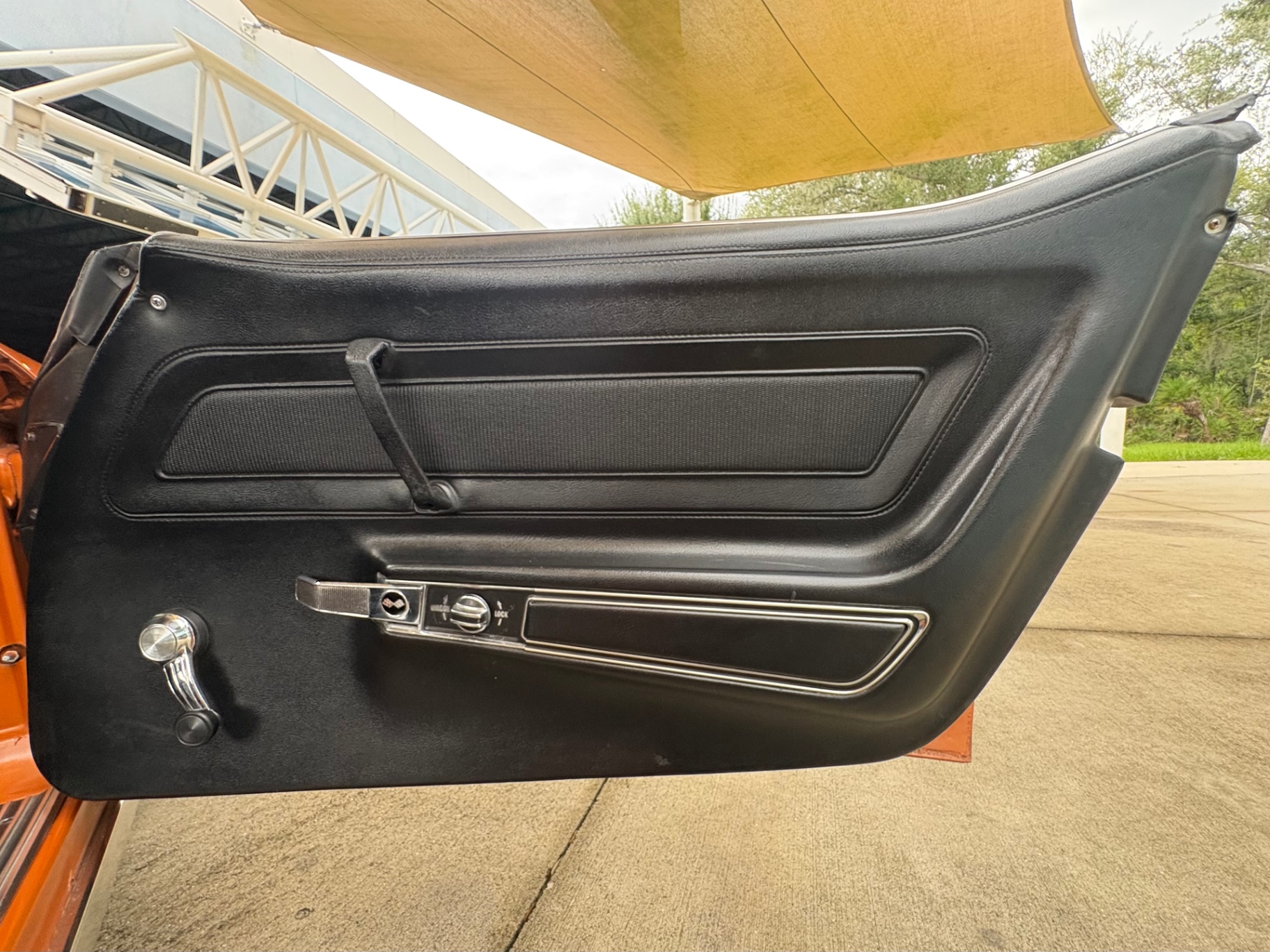
The door panels are correct for the year, with the chrome handle and lock mechanism on the correct side, and the pull strap for door closing is intact. The black carpet on the floors shows wear but is presentable. Overall the interior is an honest, original-appearing cockpit that has not been heavily modified.
Exterior
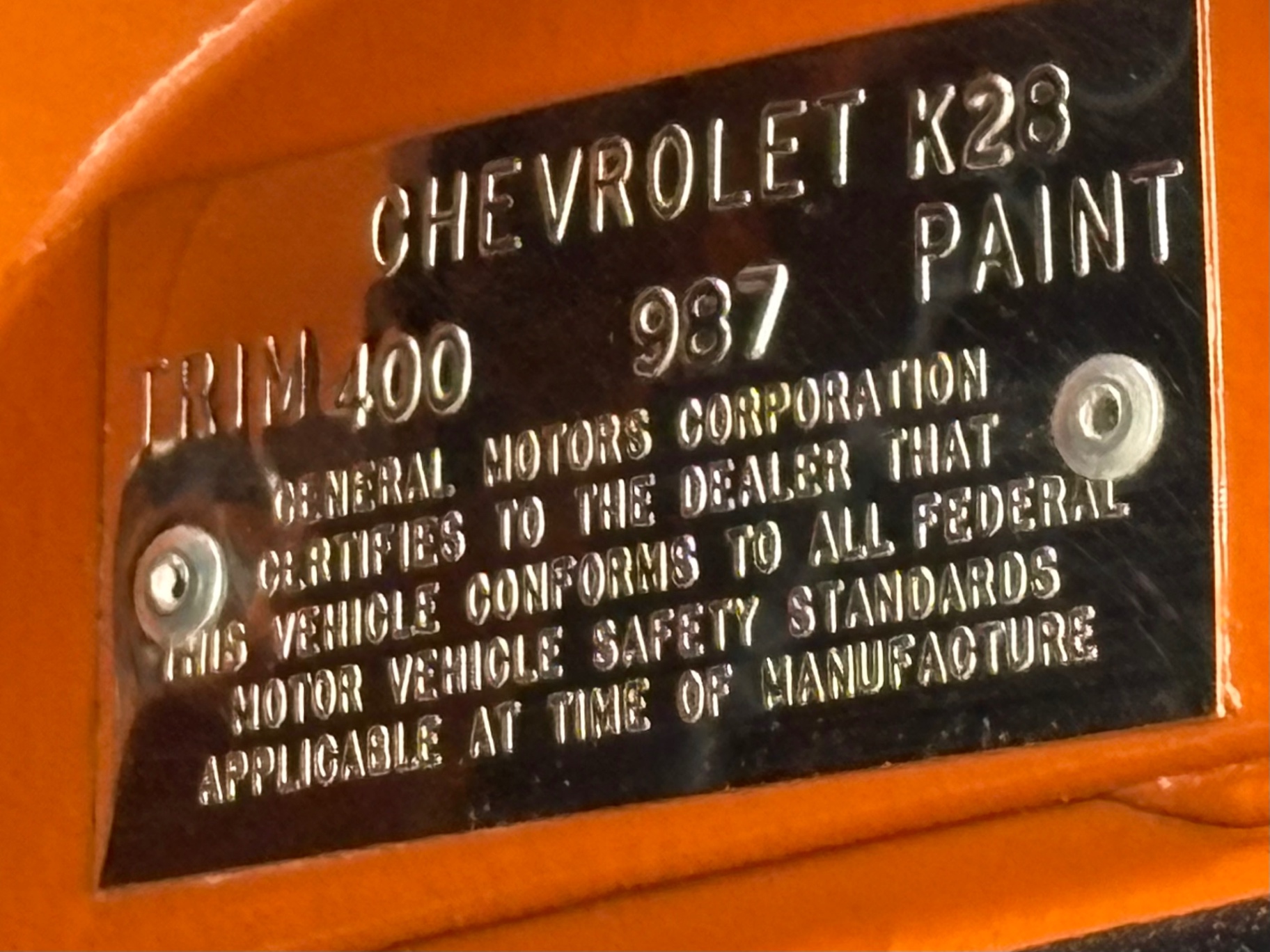
Ontario Orange, GM color code 56, was one of several vivid colors available on the 1971 Corvette Stingray. The C3 body with its wide rear haunches, recessed front grille, and hidden headlamps was designed by Larry Shinoda, and in Ontario Orange the dramatic bodywork reads particularly well. The paint presents solidly in the photos with good depth and no obvious signs of major repainting or panel damage.
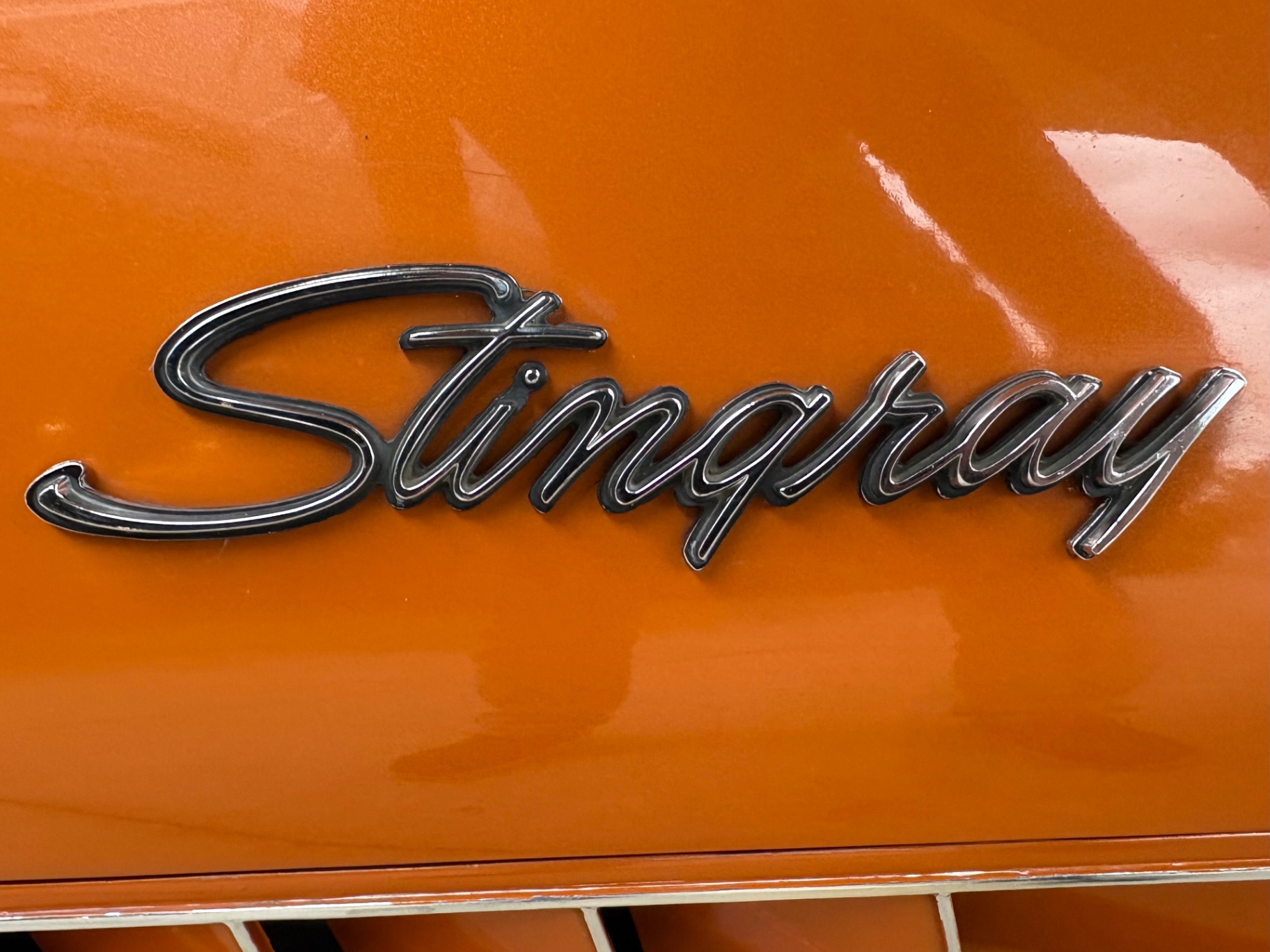
The Stingray badging on the front fenders is present. The chrome bumperettes at the front and rear are intact and show the expected light patina of an original car. The egg-crate grille texture on the front grille opening and the side fender vents are clean and undamaged.
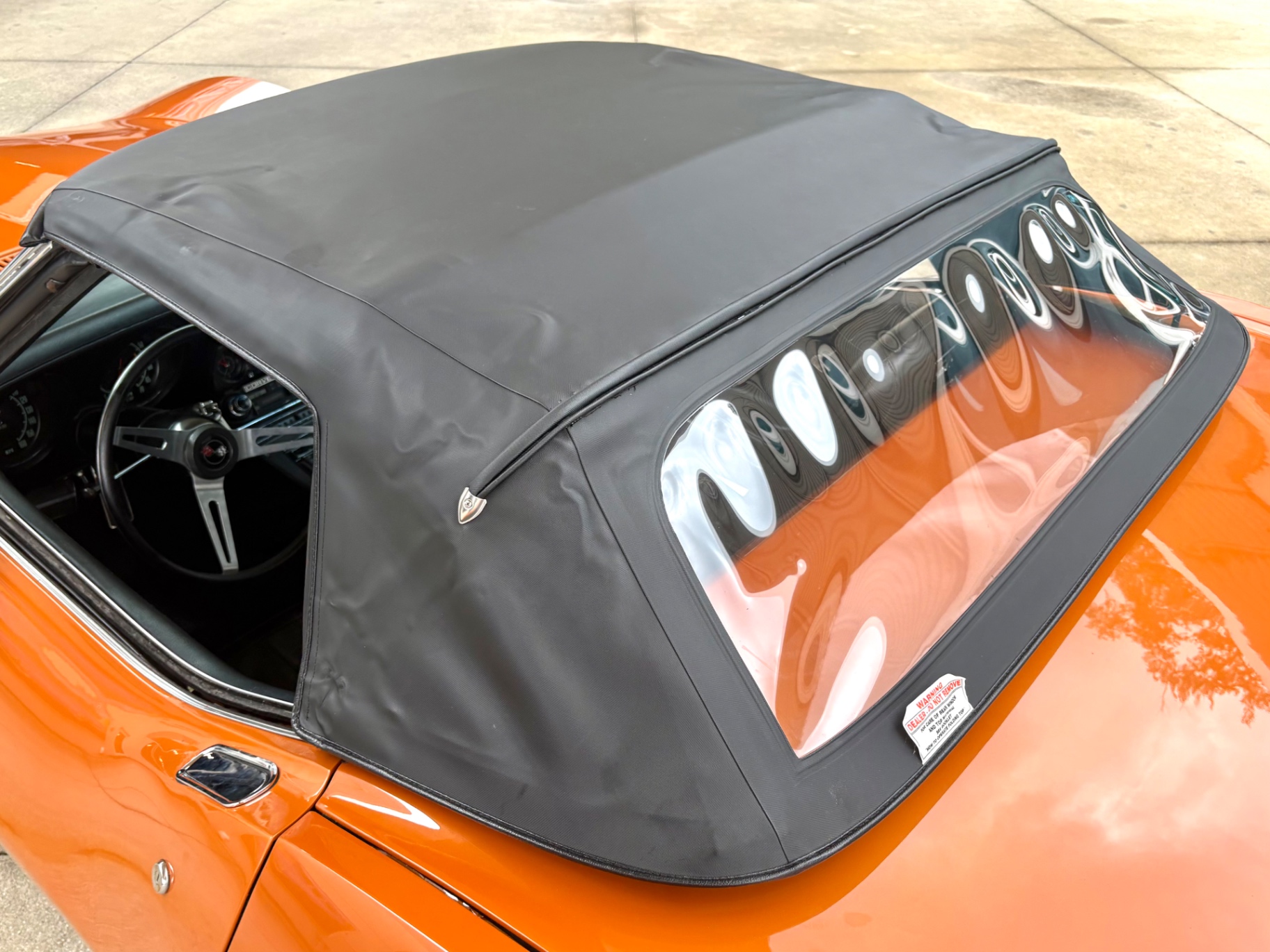
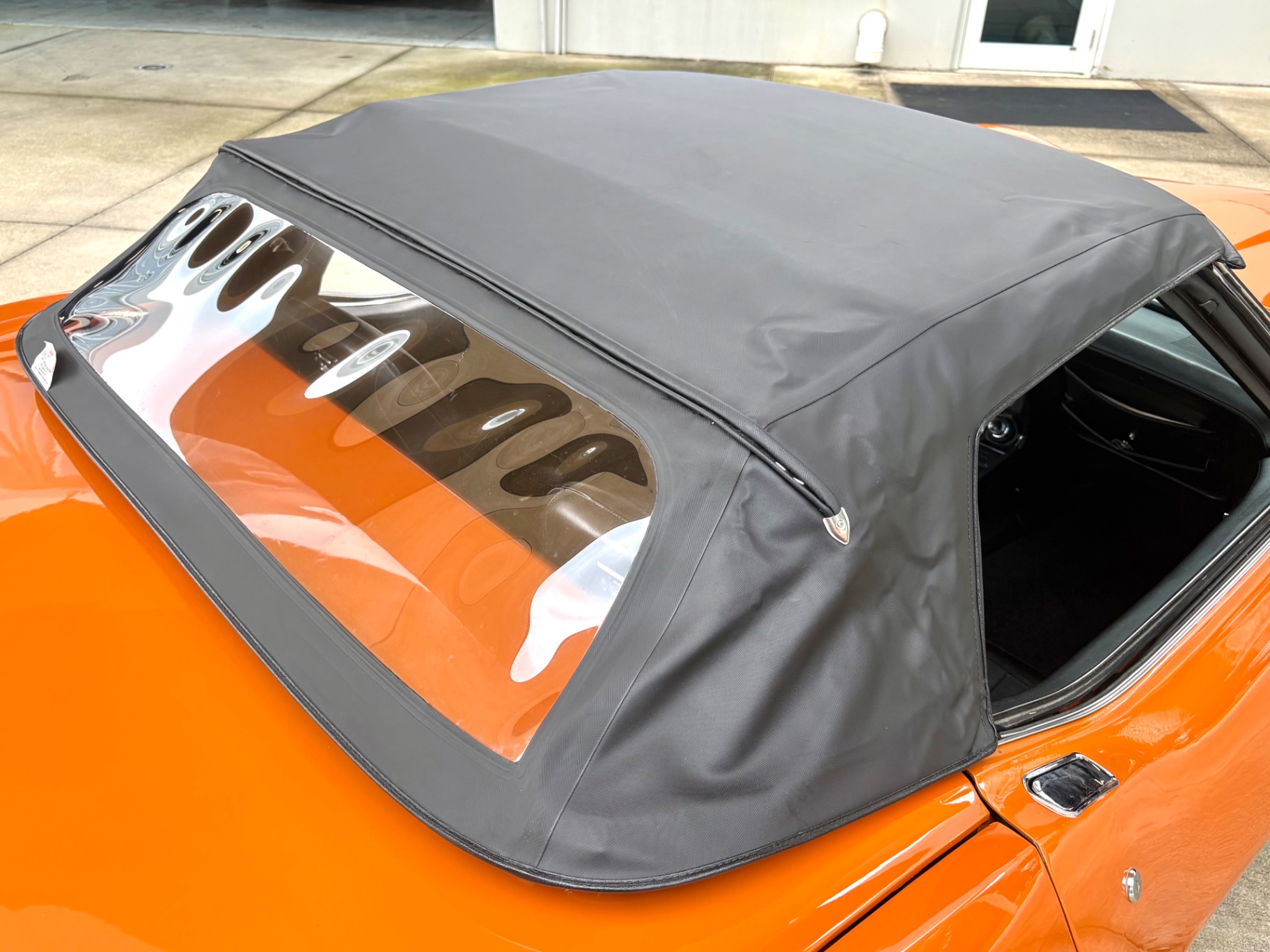
This car comes with both the black soft top and a hard top. The black convertible soft top is installed and appears to be in serviceable condition. Having both tops significantly increases the car's usability across different weather conditions and driving preferences. The soft top can be lowered for open-air driving or raised when needed, and the hard top can be installed for winter storage or when a more coupe-like feel is wanted.
Factory Rally wheels are fitted all around. These are the correct five-spoke steel wheels with chrome trim rings and center caps, a wheel that was standard equipment on the base 1971 Corvette and is entirely appropriate here. The BFGoodrich Radial T/A tires in white lettering complement the wheel choice well.
Dual outside mirrors are mounted on each door, providing adequate rear visibility for a car with the Corvette's limited sightlines. The rear of the car shows the four round taillights and square exhaust tips that are signature C3 design elements. The body panels in the photos appear straight and consistent with an original fiberglass body that has been maintained rather than heavily repaired.
Conclusion
The 1971 Chevrolet Corvette Stingray convertible occupies a specific sweet spot in the C3 story. The styling was fully evolved, the drivetrain was still producing genuine performance despite tightening regulations, and the option sheet was mature enough that a buyer could put together a genuinely comfortable and practical sports car. This particular example — Ontario Orange over black, with the Turbo-Hydramatic, air conditioning, four-wheel disc brakes, power steering, and both tops included — was clearly ordered and kept by someone who intended to use it. The undercarriage backs that up. It is a solid, honest 1971 Corvette Stingray that drives the way these cars were meant to be driven.
If you have questions about this 1971 Chevrolet Corvette Stingray convertible or would like to arrange a closer inspection, call Skyway Classics in Sarasota, Florida at 941-254-6608. Our team knows these cars and is happy to walk you through every detail.
Disclaimer
Information found on the website is presented as given to us by the owner of the car, whether on consignment or from the owner we bought it from. Some Photos, materials for videos, descriptions and other information are provided by the consignor/seller and is deemed reliable, but Skyway Classics does not warranty or guarantee this information. Skyway Classics is not responsible for information that may incorrect or a publishing error. The decision to purchase should be based solely on the buyers personal inspection of the vehicle or by a professional inspection service prior to offer or purchase being made.
1971 Chevrolet Corvette Stingray Convertible — Ontario Orange, 350ci V8, Turbo-Hydramatic, Dual Top
Why This Car Is Special
The 1971 Chevrolet Corvette Stingray sits at an interesting crossroads in Corvette history. It was the fourth year of the C3 body that Chevrolet introduced in 1968, and in many ways 1971 represented the high-water mark before emissions regulations began to seriously chip away at horsepower. Chevrolet lowered compression ratios across the engine lineup that year to run on lower-octane regular fuel, which actually makes 1971 Corvettes more practical to drive today than their 1970 counterparts. Total Corvette production for the 1971 model year came in at 21,801 units, split between coupes and convertibles. The convertible body style would survive only through 1975 before being discontinued, making open-top C3s like this one a distinct and increasingly scarce configuration.
The VIN on this car decodes to confirm it is a genuine 1971 Corvette convertible, built at the St. Louis assembly plant. The model year designator, body style code, and plant code all check out correctly for an authentic, numbers-relevant example.
Ontario Orange is one of the more visually assertive colors Chevrolet offered during this era, and it suits the aggressive fender flares and long hood of the C3 body particularly well. Paired with a black soft top and black interior, this is a high-contrast combination that was clearly chosen by someone with a good eye for how the car would look in use.
This is not a museum car. It is a well-optioned, driver-quality 1971 Corvette Stingray convertible with a solid undercarriage, a running and driving drivetrain, and a usable interior. The options it carries — air conditioning, power steering, power brakes, and the Turbo-Hydramatic automatic — reflect exactly how buyers ordered Corvettes when they intended to put real miles on them comfortably.
Features List
- 350ci 270hp V8 (L48 small-block)
- Turbo-Hydramatic 3-speed automatic transmission
- Factory air conditioning
- Both hard top and soft top included
- Black convertible soft top
- Factory Rally wheels
- BFGoodrich Radial T/A tires
- Power steering
- Power brakes with 4-wheel disc brakes
- Independent rear suspension
- Black vinyl bucket seats
- Sport steering wheel with Corvette center emblem
- Center console
- Tachometer
- Multi-gauge instrument cluster (fuel, water temperature, oil pressure, battery, clock)
- Dual outside mirrors
- Cassette stereo installed in factory radio location
- Dual exhaust with factory-style square tips
- Clean undercarriage
- Stingray badging
Mechanical
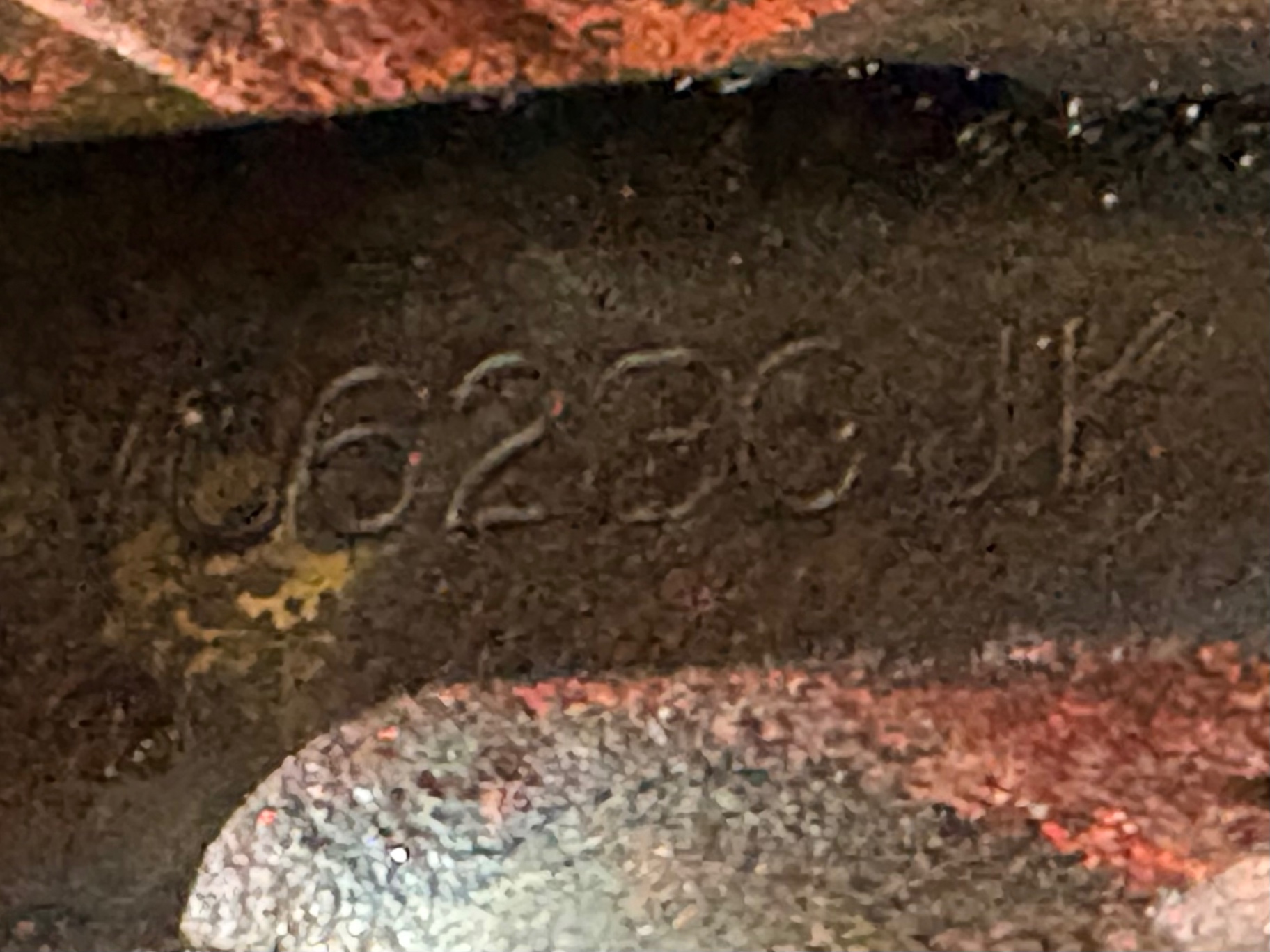
The engine under the hood of this 1971 Chevrolet Corvette Stingray is the L48 350 cubic inch V8, rated at 270 horsepower. In 1971, Chevrolet switched from gross horsepower ratings to net ratings across the board, so some context helps here. The 270hp net figure for the L48 is roughly equivalent to the 300hp gross rating it carried in 1970. Real-world output was largely unchanged. The 350 small-block in this configuration uses a Rochester Quadrajet four-barrel carburetor and breathes through a dual exhaust system that exits through the Corvette's signature square tips at the rear. The chrome air cleaner lid with the 350 Turbo-Fire badge is present and correct.
Backing the engine is the Turbo-Hydramatic 3-speed automatic transmission, which Chevrolet coded as M40. This was a popular choice among Corvette buyers who wanted a more relaxed driving experience. In 1971, the automatic was ordered on a substantial portion of Corvettes, reflecting that many buyers prioritized usability alongside performance. The Turbo-Hydramatic is a robust unit that holds up well over time with basic maintenance.
The chassis underneath this car is in clean condition. The photos taken on the lift show a solid floor, intact frame rails, and no visible signs of serious corrosion or prior collision repair. The exhaust pipes show surface rust consistent with age and use, but the structural components of the underbody are in good shape. The C3 Corvette's fiberglass body means rust on the body panels is not a concern, but the steel frame and underbody are where you want to look closely, and what you see here is encouraging.
The 1971 Corvette Stingray came standard with four-wheel disc brakes, which was a genuine engineering achievement at the time. Few American cars of this era offered four-wheel discs as standard equipment. Power-assisted steering is also fitted, which makes the relatively heavy C3 steering feel more manageable in everyday driving.
The independent rear suspension on the C3 Corvette uses a multi-link setup with a transverse leaf spring and half-shafts, a design that Chevrolet refined through the entire C3 run. The underside photos show the rear suspension components in solid, original-looking condition with no obvious damage or amateur repairs.
Tires are BFGoodrich Radial T/A, mounted on factory-style Rally wheels. The Radial T/A is one of the most period-correct tire choices you can make on a C3 Corvette — it was a tire very much associated with performance cars of the 1970s and it looks appropriate on this car.
Interior
The cockpit of the 1971 Chevrolet Corvette Stingray is black vinyl throughout, which was the standard interior material. The bucket seats show honest wear consistent with a car that has been driven over the years. The seat bolsters and cushions retain their shape, and the ribbed vinyl and cloth insert panels are intact without major tears or damage.
The dashboard layout is one of the more functional and visually interesting instrument arrangements of the C3 generation. The driver faces a large speedometer and tachometer housed in twin pod clusters directly ahead. The tachometer redlines at 6,500 rpm, correctly calibrated for the L48 engine. To the right of center, five auxiliary gauges are grouped together in the console — fuel level, water temperature, oil pressure, battery voltage, and a clock. This is the full gauge package, and all five gauges are present and appear to be functional based on the photos.
The sport steering wheel is the three-spoke design with machined aluminum spokes and a Corvette emblem on the center cap. This wheel was a factory option and is the correct period piece for this car. The center console runs the length of the cabin between the seats and houses the Turbo-Hydramatic gear selector. A cassette stereo has been installed in the factory radio location in the center stack, fitting within the period-correct CORVETTE-branded radio bezel visible in the photos.
Air conditioning is fitted, which required a specific under-dash evaporator unit on the C3. The controls are integrated into the center dash area. Having factory air conditioning on a convertible that sees Florida sun makes this car significantly more usable on a day-to-day basis than a non-air car.
The door panels are correct for the year, with the chrome handle and lock mechanism on the correct side, and the pull strap for door closing is intact. The black carpet on the floors shows wear but is presentable. Overall the interior is an honest, original-appearing cockpit that has not been heavily modified.
Exterior
Ontario Orange, GM color code 56, was one of several vivid colors available on the 1971 Corvette Stingray. The C3 body with its wide rear haunches, recessed front grille, and hidden headlamps was designed by Larry Shinoda, and in Ontario Orange the dramatic bodywork reads particularly well. The paint presents solidly in the photos with good depth and no obvious signs of major repainting or panel damage.
The Stingray badging on the front fenders is present. The chrome bumperettes at the front and rear are intact and show the expected light patina of an original car. The egg-crate grille texture on the front grille opening and the side fender vents are clean and undamaged.
This car comes with both the black soft top and a hard top. The black convertible soft top is installed and appears to be in serviceable condition. Having both tops significantly increases the car's usability across different weather conditions and driving preferences. The soft top can be lowered for open-air driving or raised when needed, and the hard top can be installed for winter storage or when a more coupe-like feel is wanted.
Factory Rally wheels are fitted all around. These are the correct five-spoke steel wheels with chrome trim rings and center caps, a wheel that was standard equipment on the base 1971 Corvette and is entirely appropriate here. The BFGoodrich Radial T/A tires in white lettering complement the wheel choice well.
Dual outside mirrors are mounted on each door, providing adequate rear visibility for a car with the Corvette's limited sightlines. The rear of the car shows the four round taillights and square exhaust tips that are signature C3 design elements. The body panels in the photos appear straight and consistent with an original fiberglass body that has been maintained rather than heavily repaired.
Conclusion
The 1971 Chevrolet Corvette Stingray convertible occupies a specific sweet spot in the C3 story. The styling was fully evolved, the drivetrain was still producing genuine performance despite tightening regulations, and the option sheet was mature enough that a buyer could put together a genuinely comfortable and practical sports car. This particular example — Ontario Orange over black, with the Turbo-Hydramatic, air conditioning, four-wheel disc brakes, power steering, and both tops included — was clearly ordered and kept by someone who intended to use it. The undercarriage backs that up. It is a solid, honest 1971 Corvette Stingray that drives the way these cars were meant to be driven.
If you have questions about this 1971 Chevrolet Corvette Stingray convertible or would like to arrange a closer inspection, call Skyway Classics in Sarasota, Florida at 941-254-6608. Our team knows these cars and is happy to walk you through every detail.
Disclaimer
Information found on the website is presented as given to us by the owner of the car, whether on consignment or from the owner we bought it from. Some Photos, materials for videos, descriptions and other information are provided by the consignor/seller and is deemed reliable, but Skyway Classics does not warranty or guarantee this information. Skyway Classics is not responsible for information that may incorrect or a publishing error. The decision to purchase should be based solely on the buyers personal inspection of the vehicle or by a professional inspection service prior to offer or purchase being made.
1971 Chevrolet
Corvette Stingray
Why Choose Skyway Classics?
Explore our curated inventory of classic and collector cars—thoughtfully selected, ready to drive, and supported by experts who make ownership simple.
Expert Curation
Every vehicle is hand-selected by our experts for quality, authenticity, and investment potential.
Fast Transactions
Streamlined buying and selling process with quick financing and immediate delivery options.
Only National Dealer With Classic Service & Repair
We’re the only national dealership that services and repairs the classics we sell—before and after the sale.
Nationwide Network
Access to our extensive network of collectors, restorers, and classic car enthusiasts nationwide.
Concierge Ownership Support
From financing and insurance to paperwork, shipping, and titling—we handle the details so you can enjoy the drive.
Passion-Driven Service
We're classic car enthusiasts first, providing personalized service with genuine passion for the hobby.