
1964 Ford
Thunderbird Base
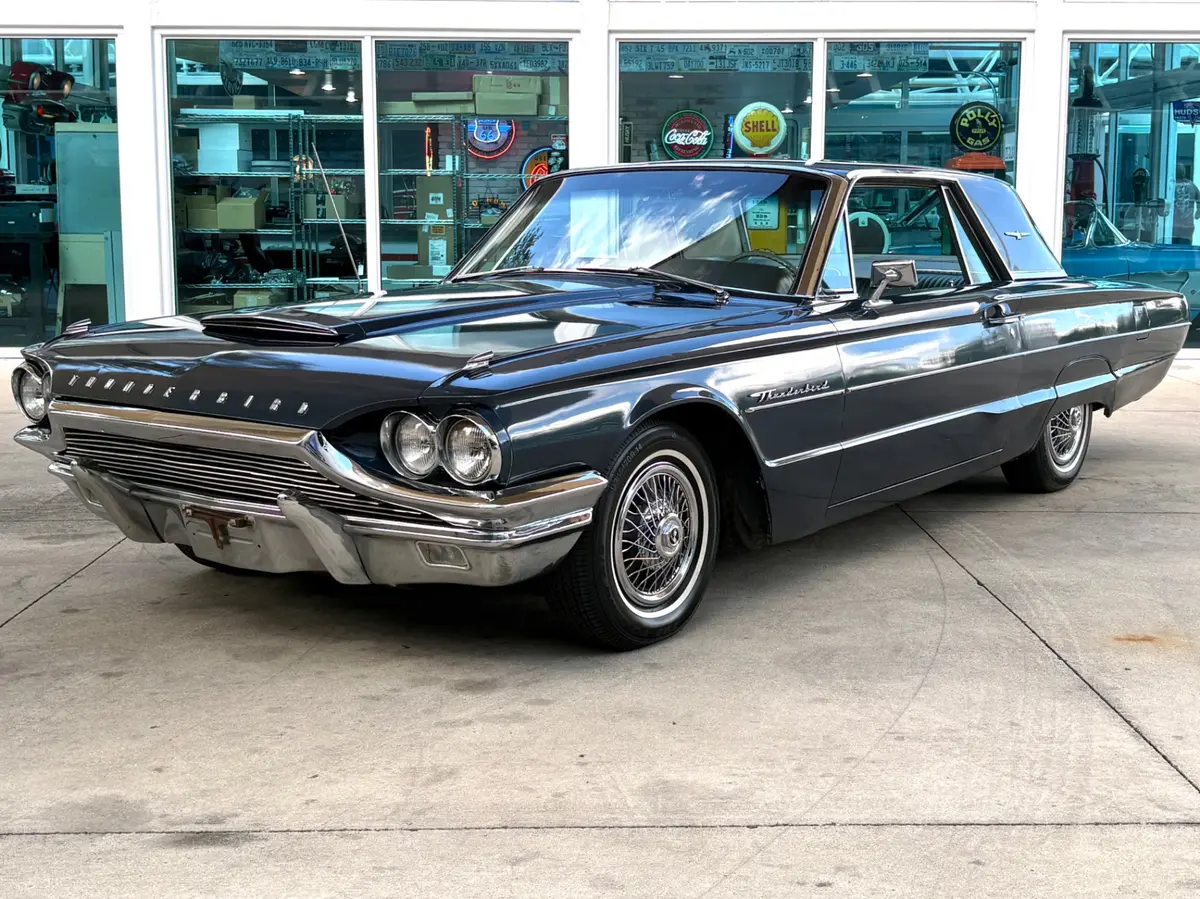
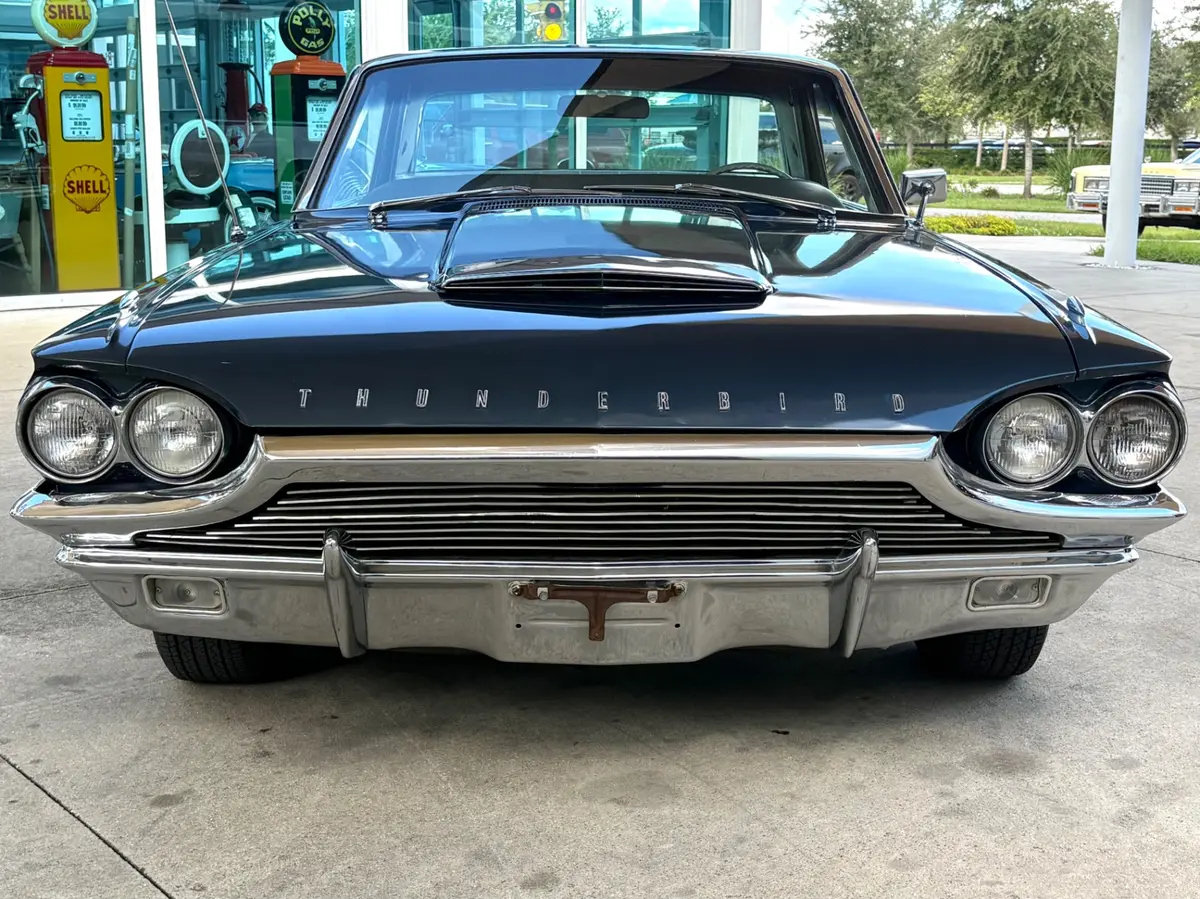
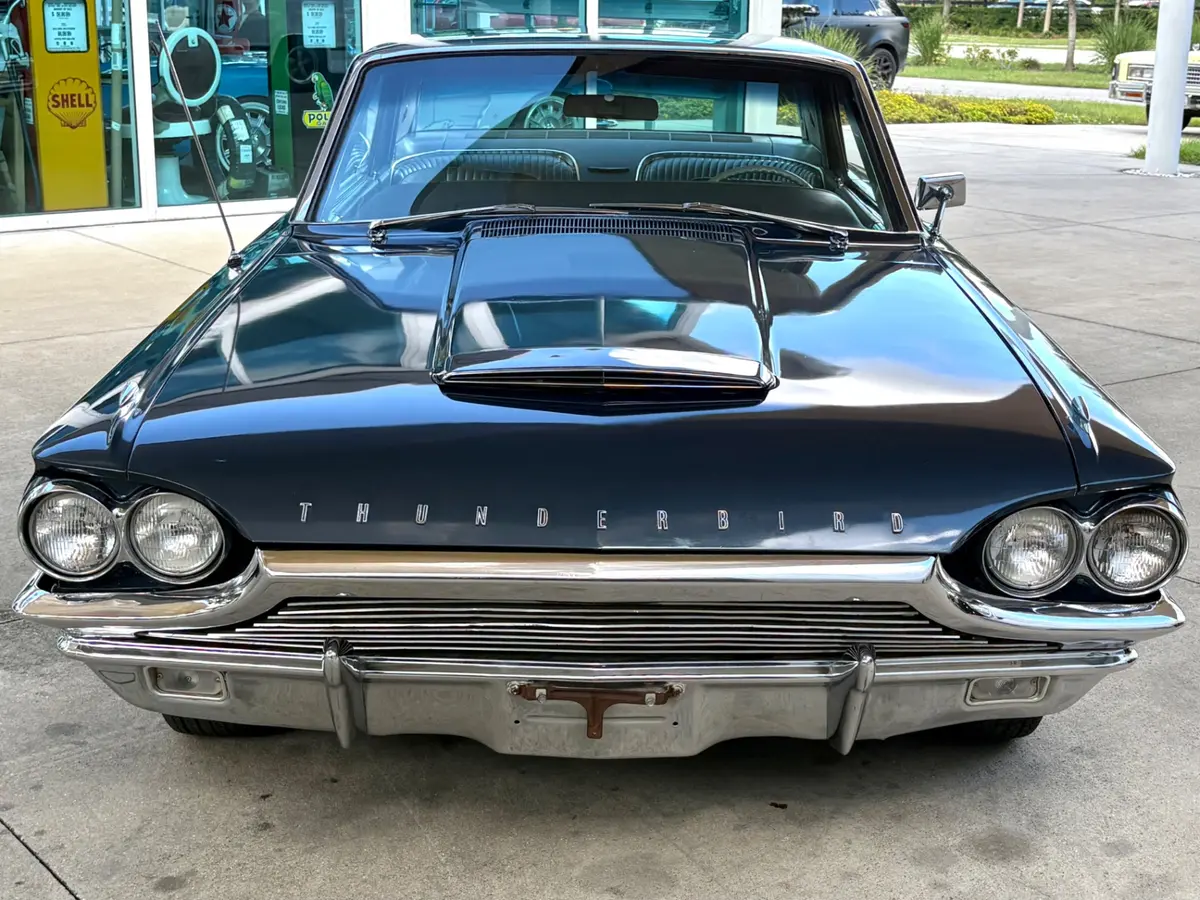
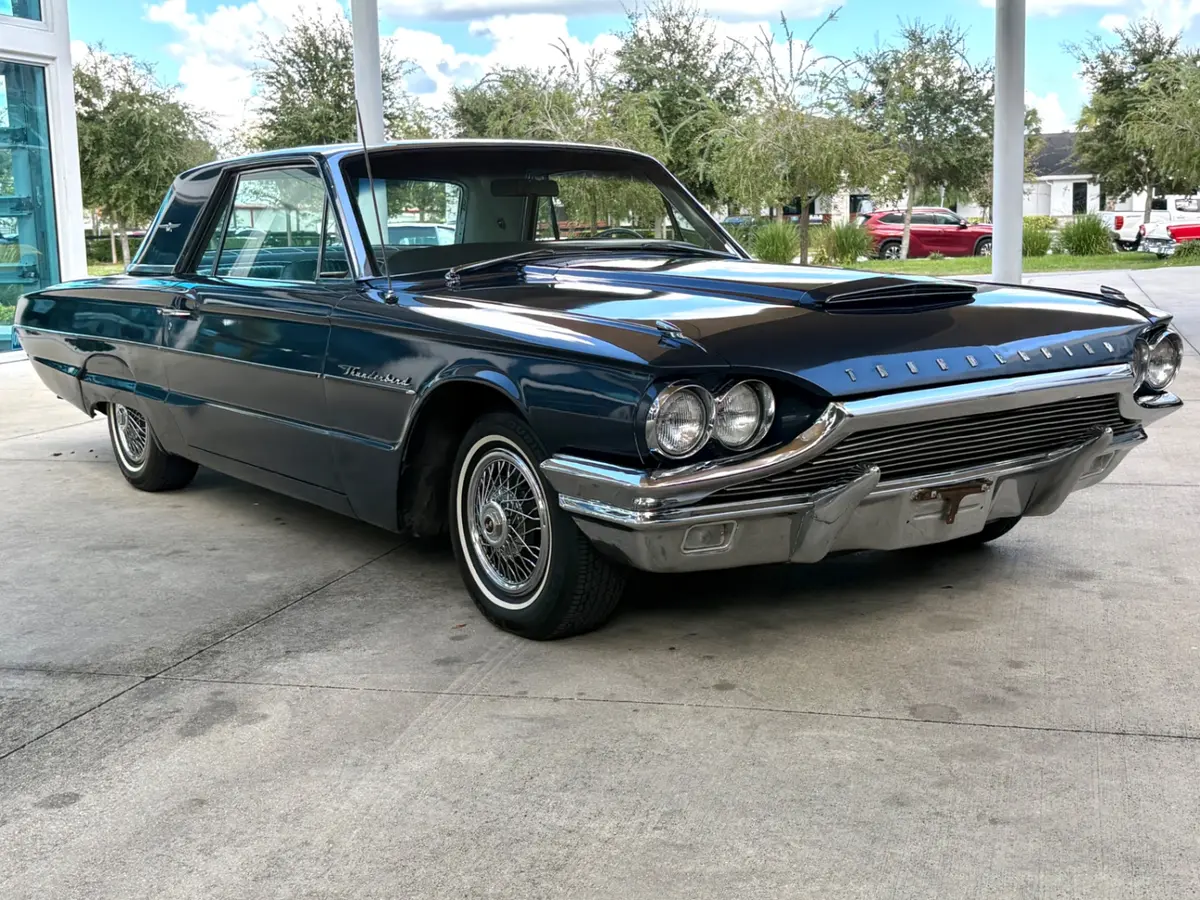
1964 Ford Thunderbird — Caspian Blue Hardtop with 390 V8, Factory Air, and Solid Undercarriage
Why This Car Is Special
The 1964 Ford Thunderbird sits at an interesting crossroads in the nameplate's history. It was the final year of the fourth-generation body style that Ford introduced for 1961 — a design that moved the Thunderbird decisively away from the two-seat sports car roots of the original 1955-57 cars and toward a four-seat personal luxury formula that Ford had pioneered with the 1958 model. By 1964, Ford had refined that formula to its highest point before a completely new fifth-generation body arrived for 1966. That makes the 1964 model year a mature, sorted-out expression of the design rather than an early experiment with it.
The 1964 Thunderbird was offered in three body styles: the Hardtop, the Convertible, and the Landau, which featured a vinyl-covered roof and a decorative S-bar on the C-pillar. Ford built approximately 60,552 Thunderbirds for the 1964 model year across all three body styles, with the Hardtop accounting for the largest share of that production. These cars were positioned as American personal luxury at its most complete — loaded with comfort and convenience equipment as standard or near-standard fare at a time when power windows and air conditioning were still genuinely premium items on most other vehicles.
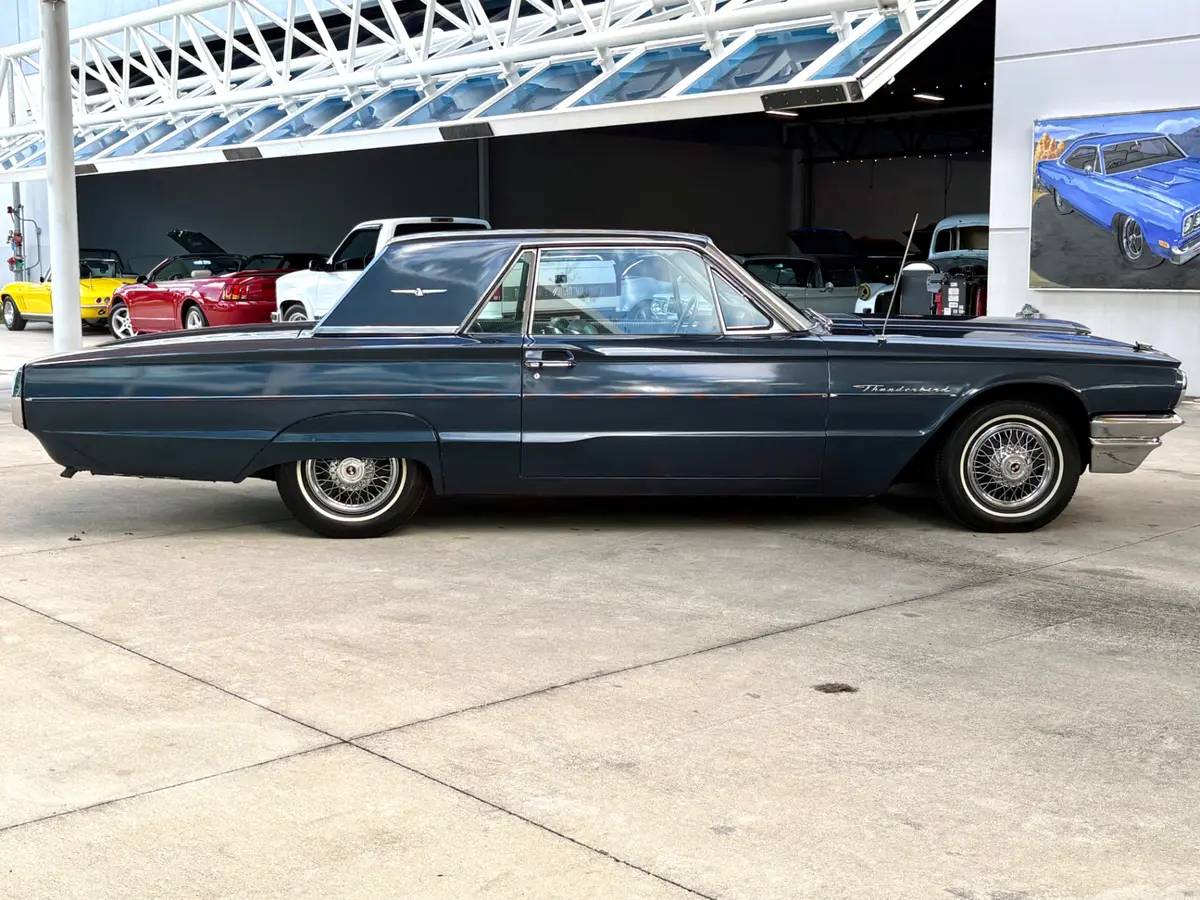
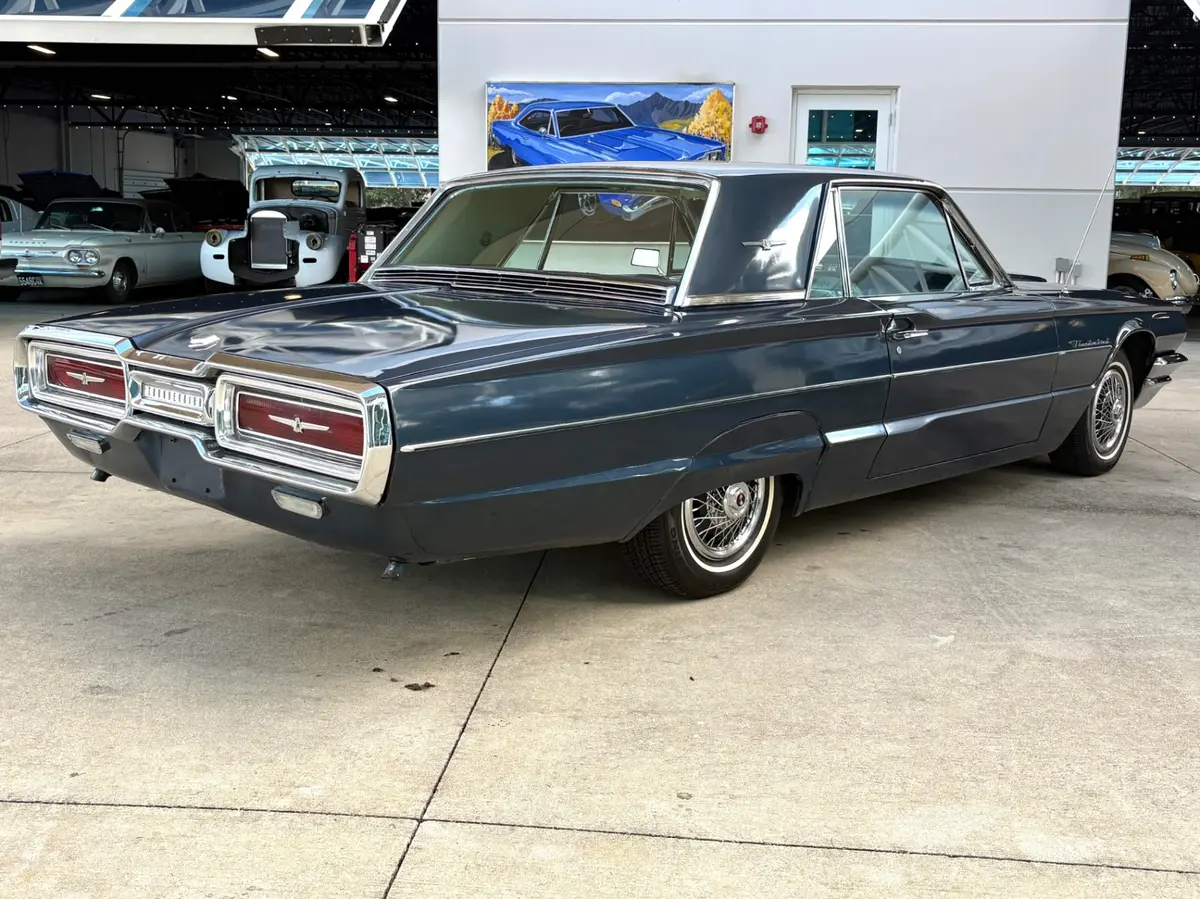
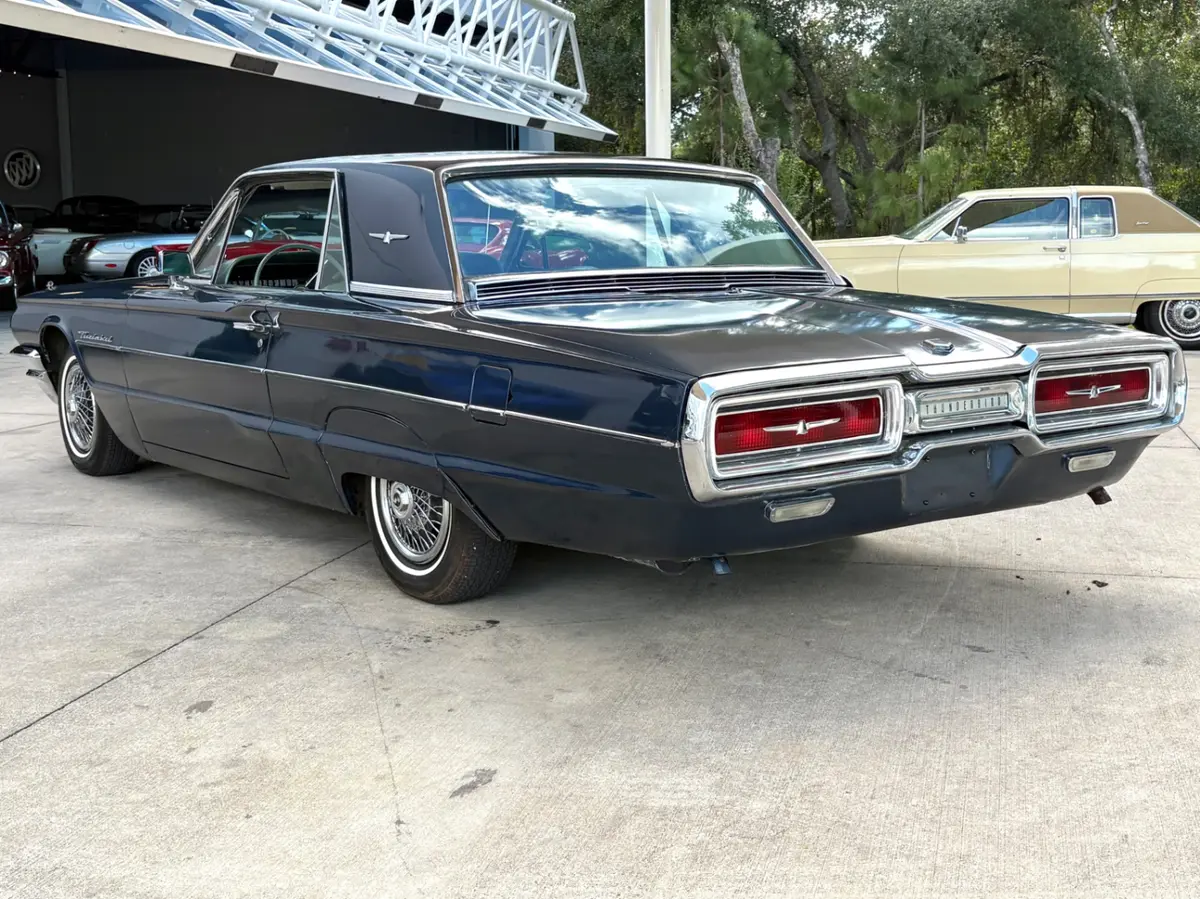
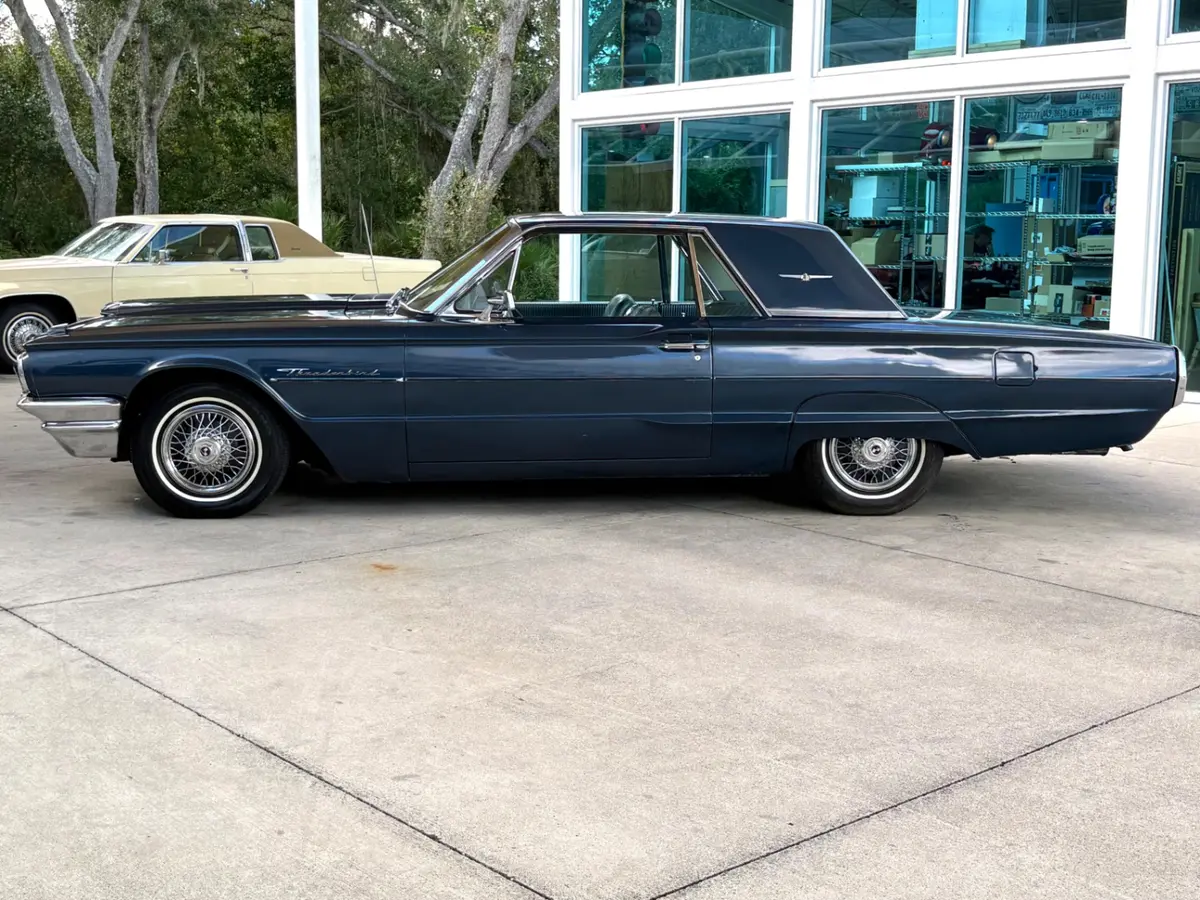
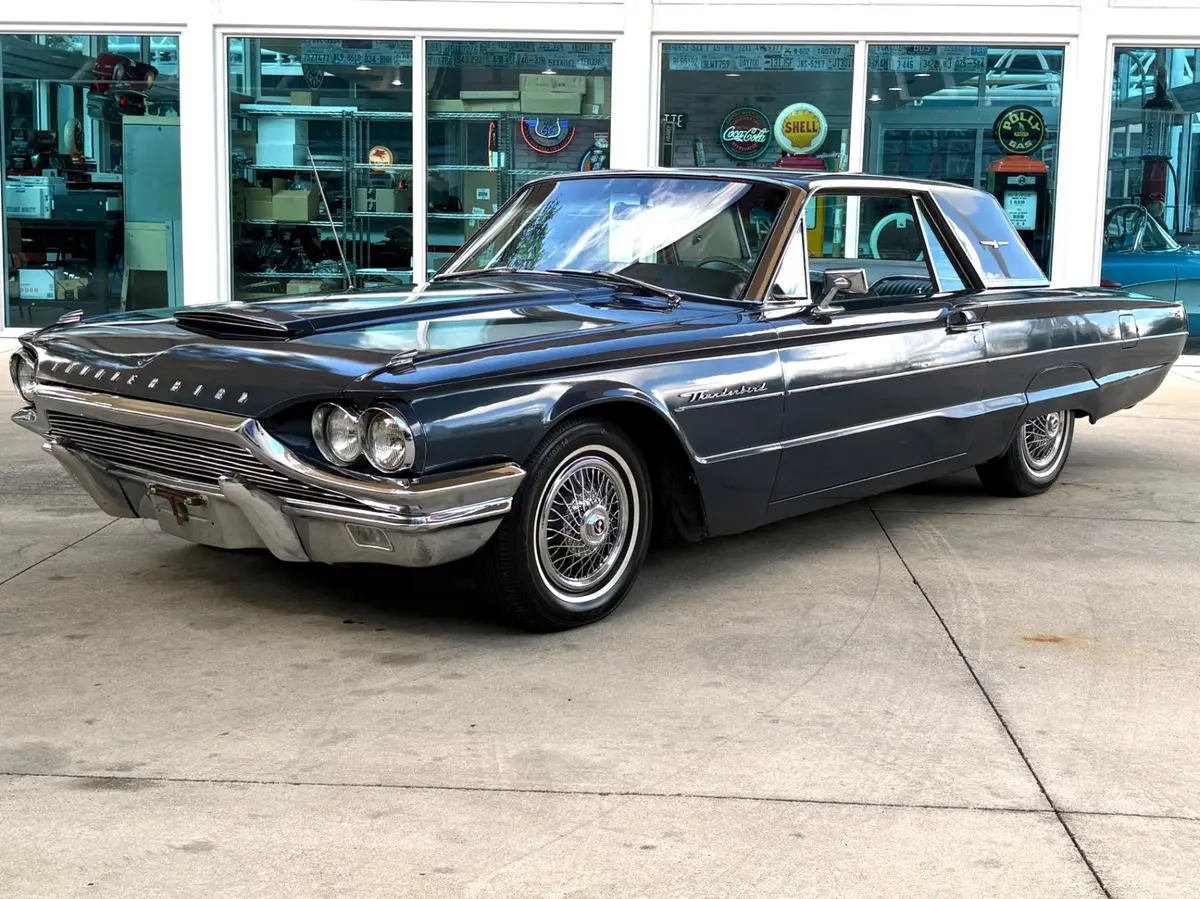
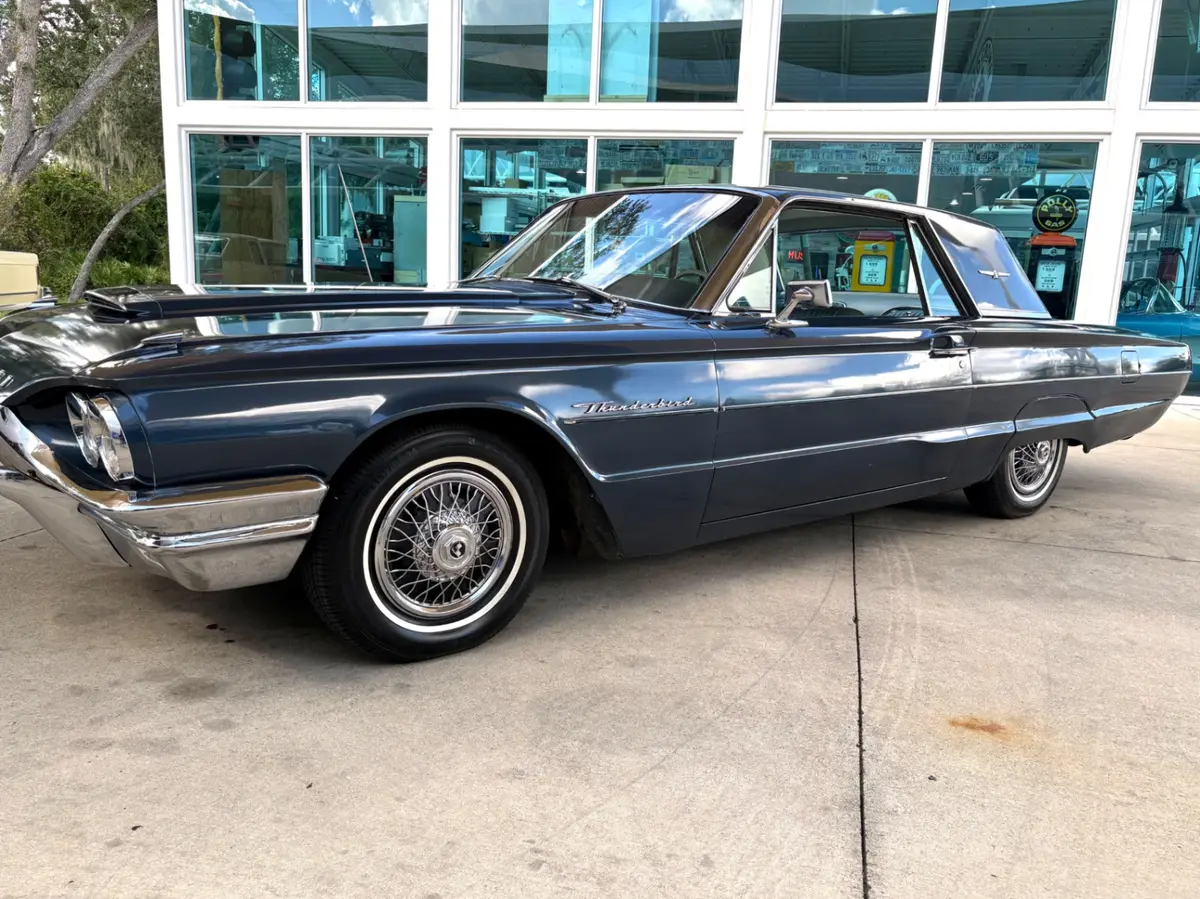
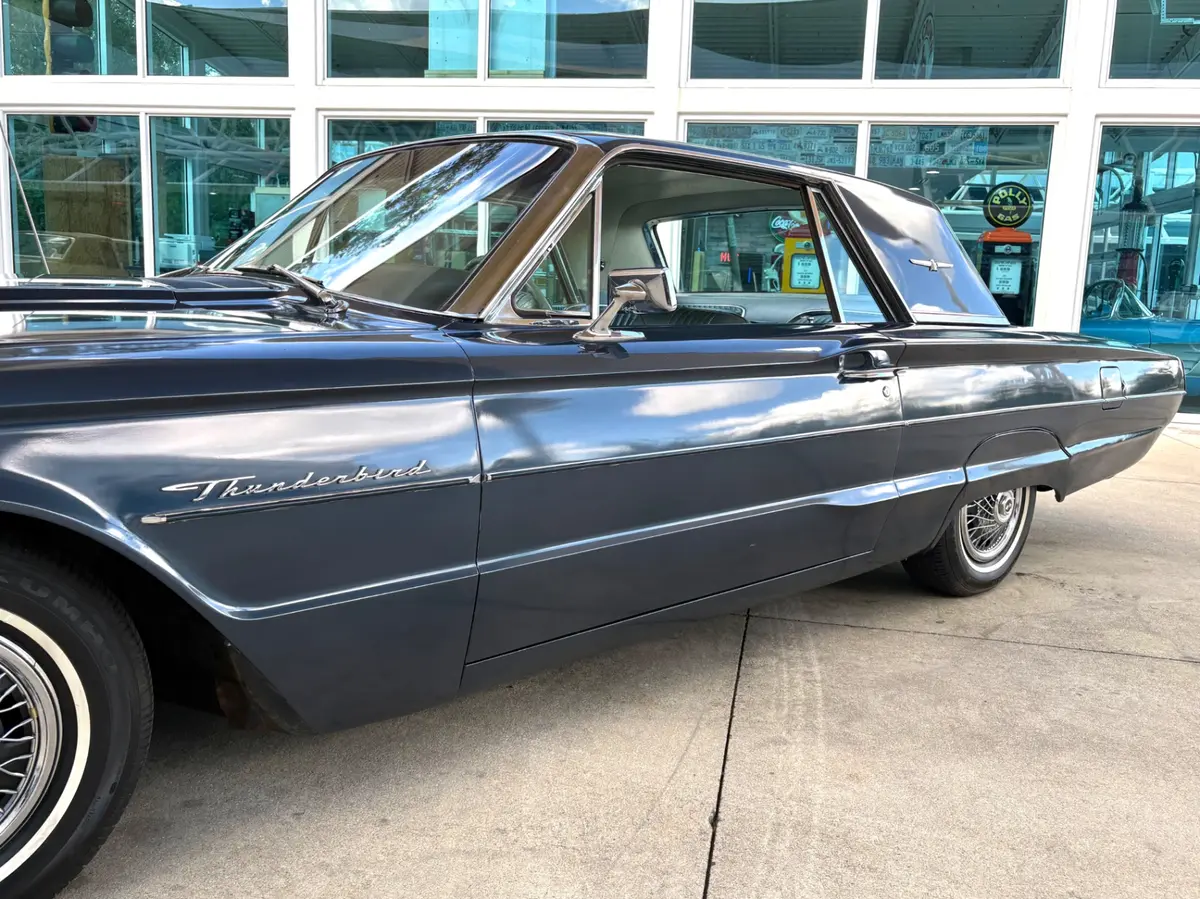
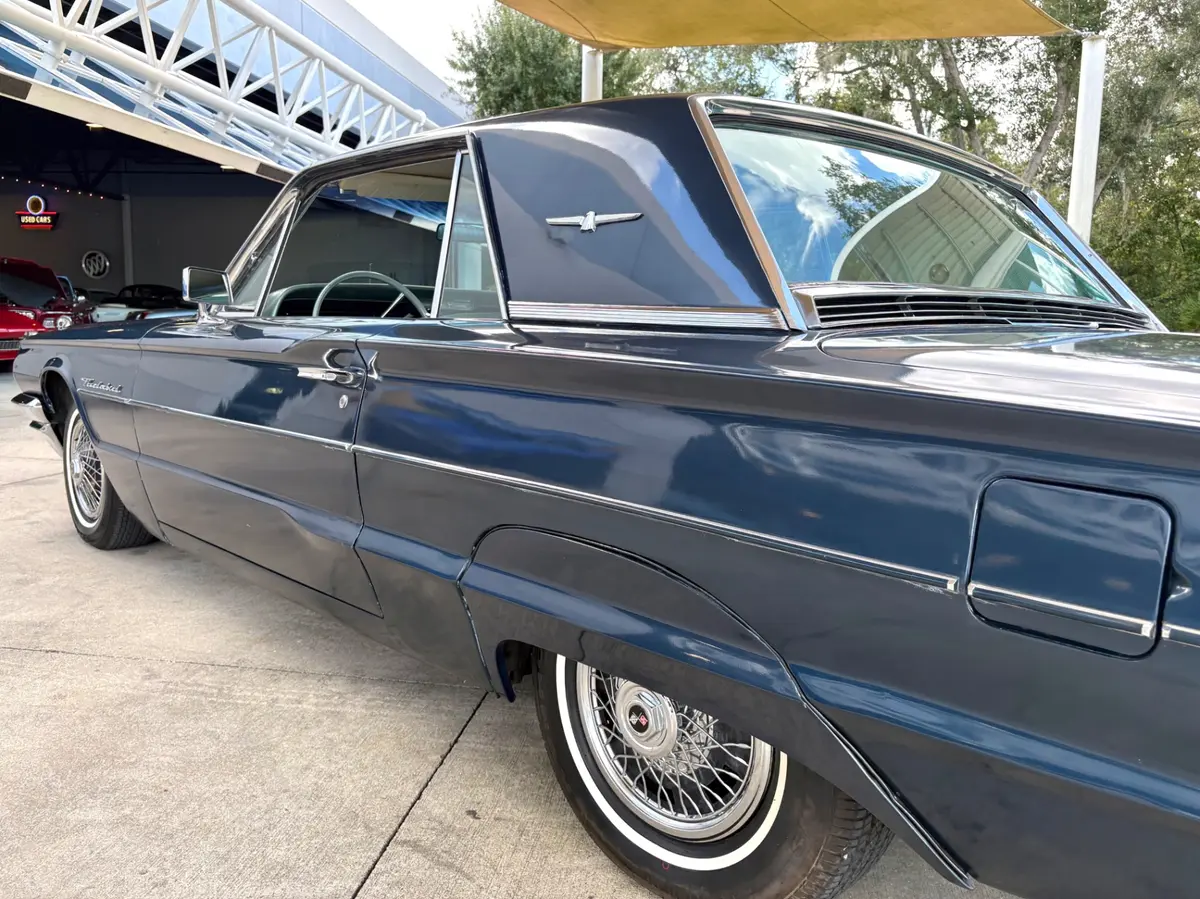
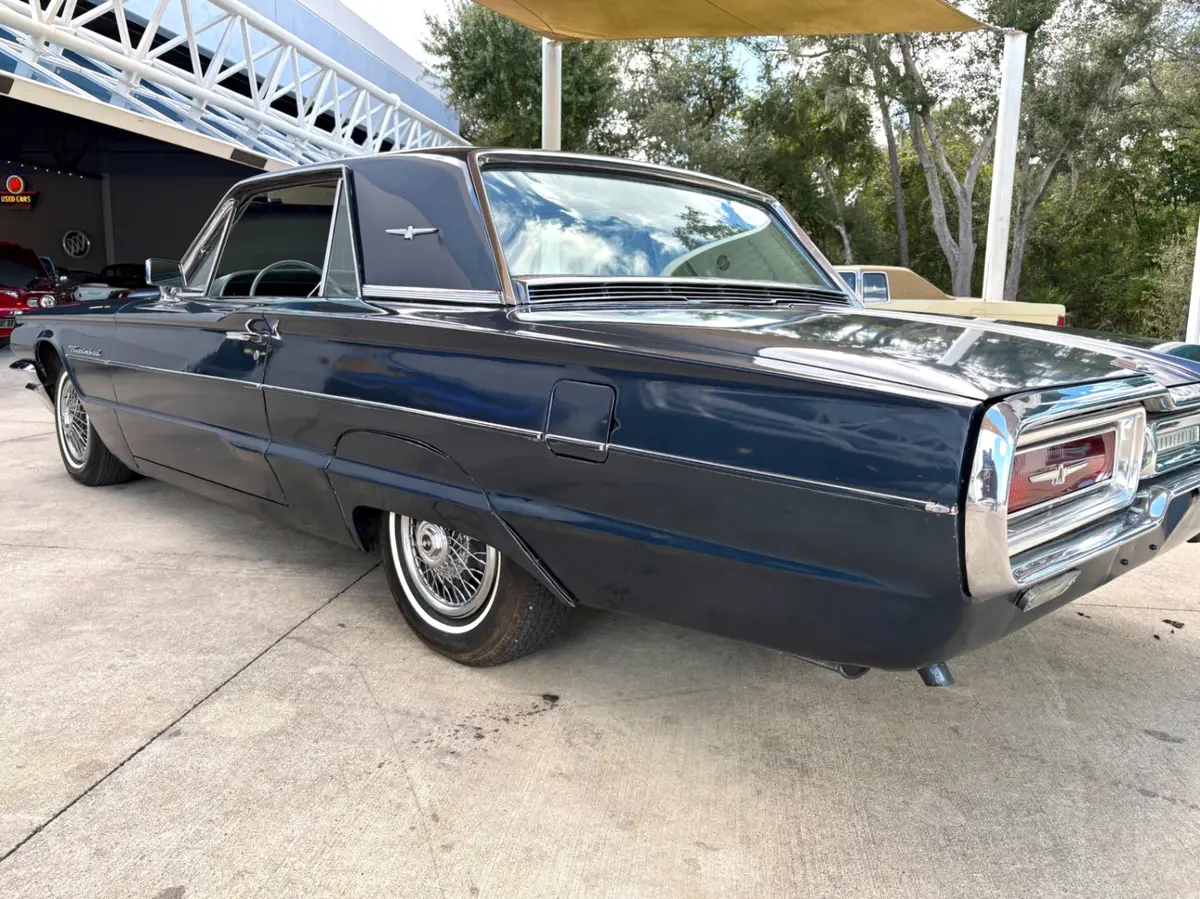
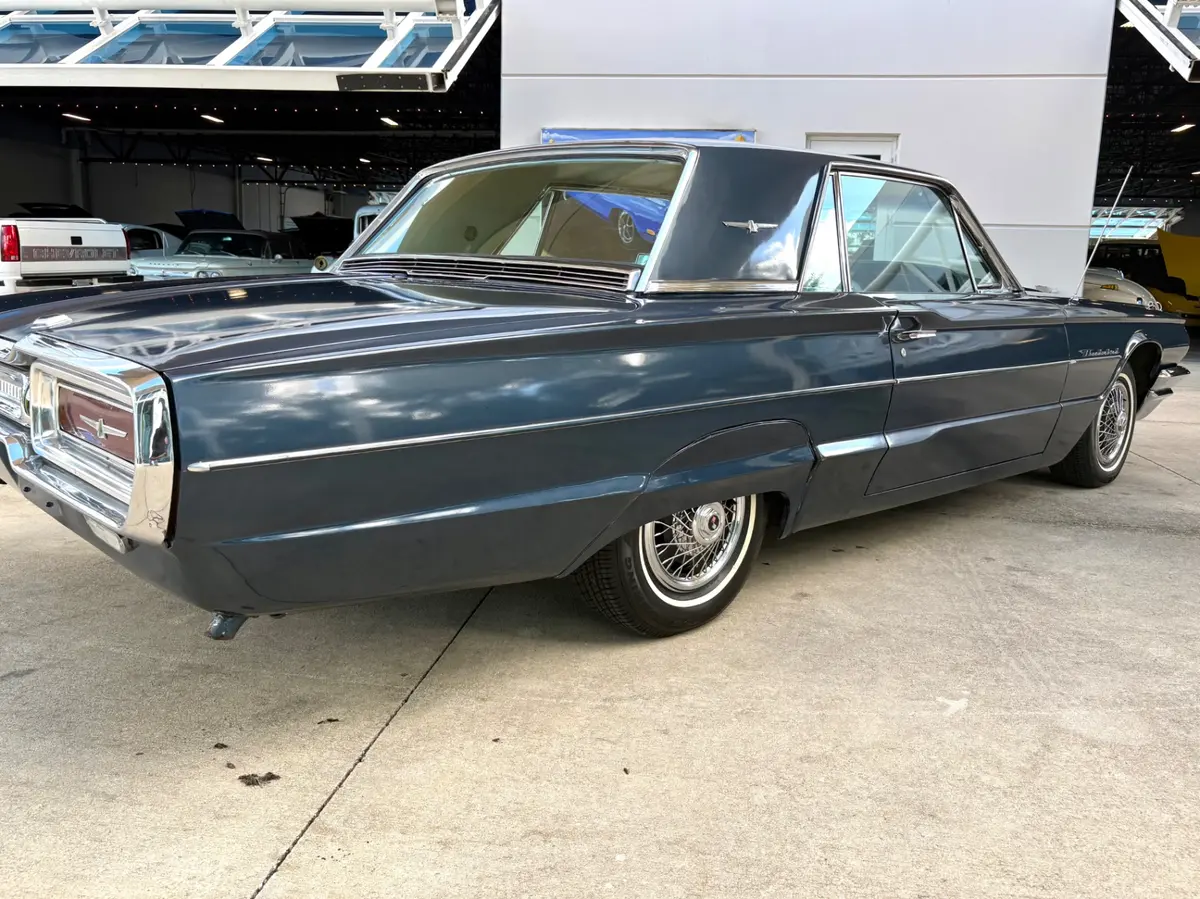
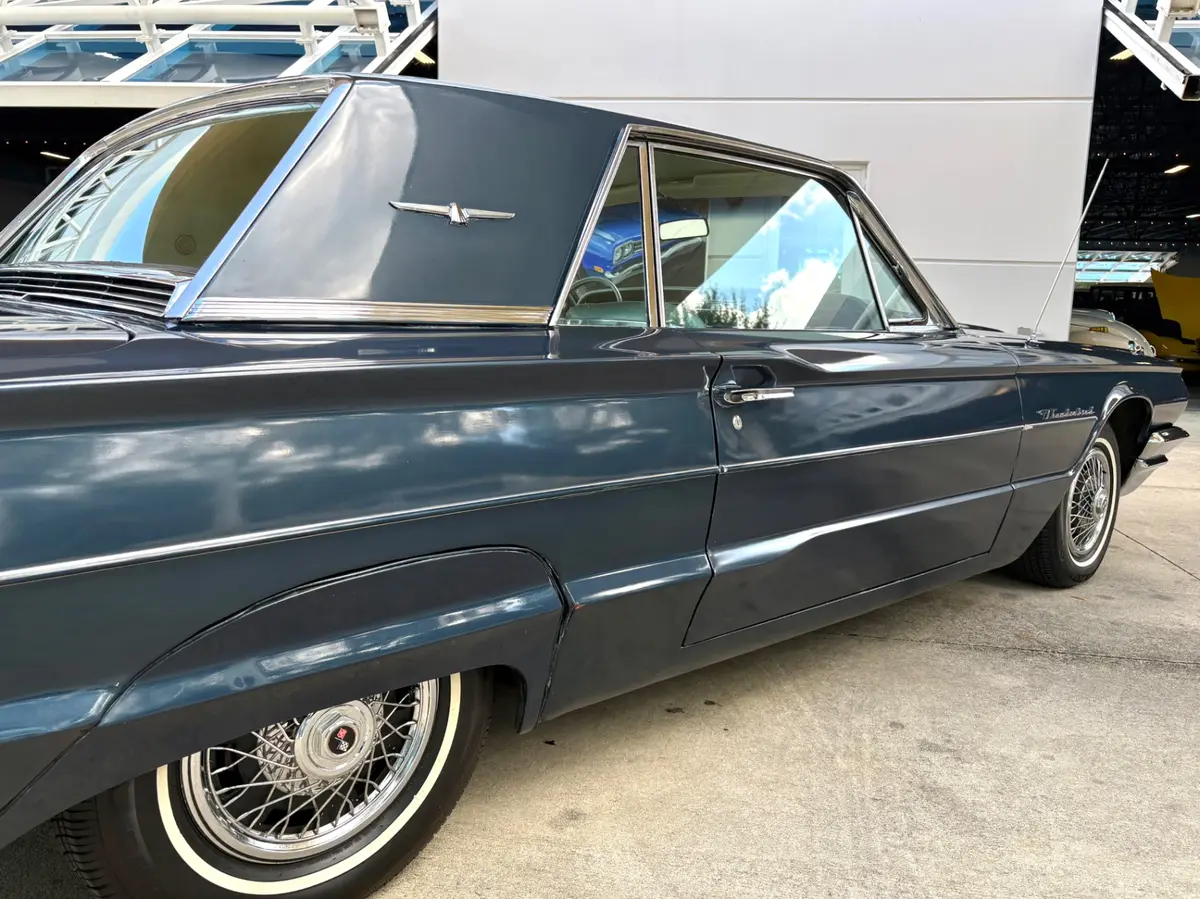
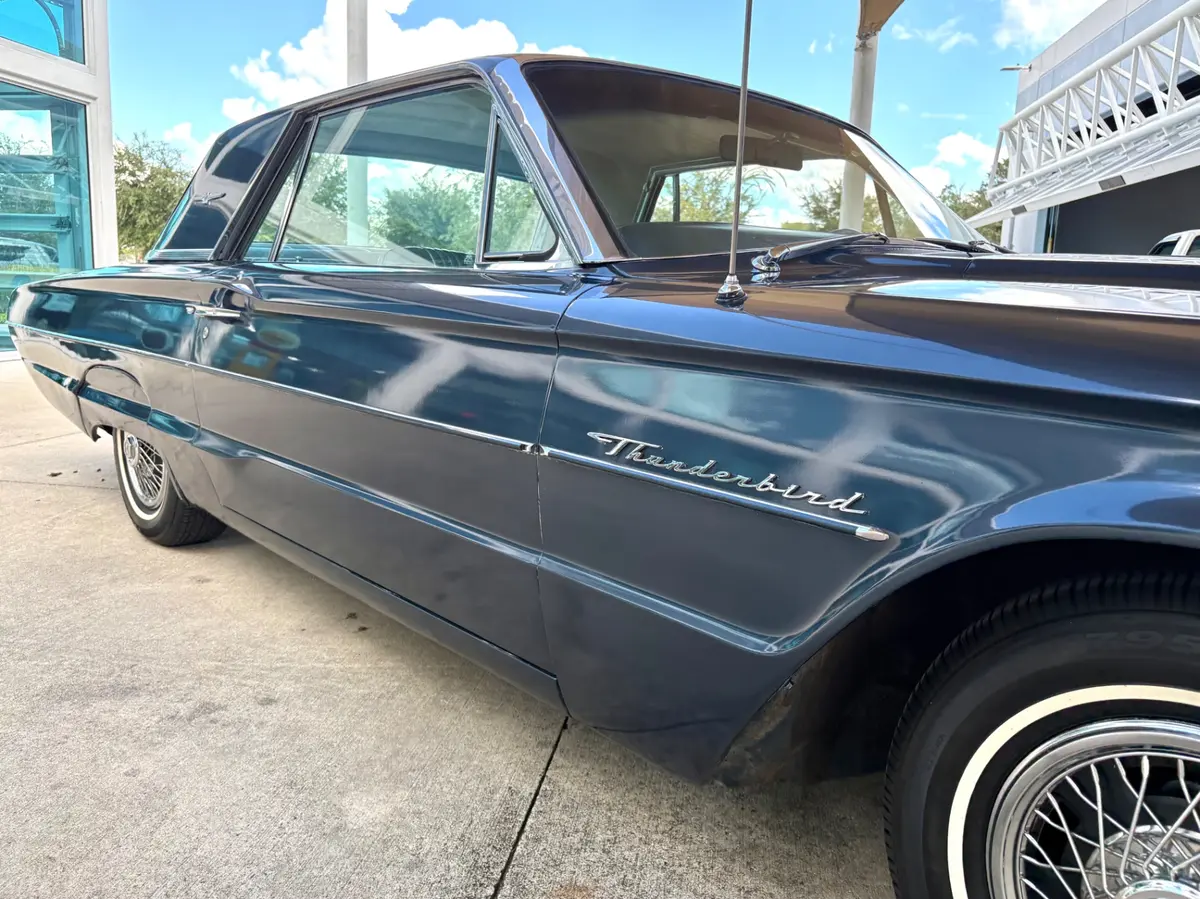
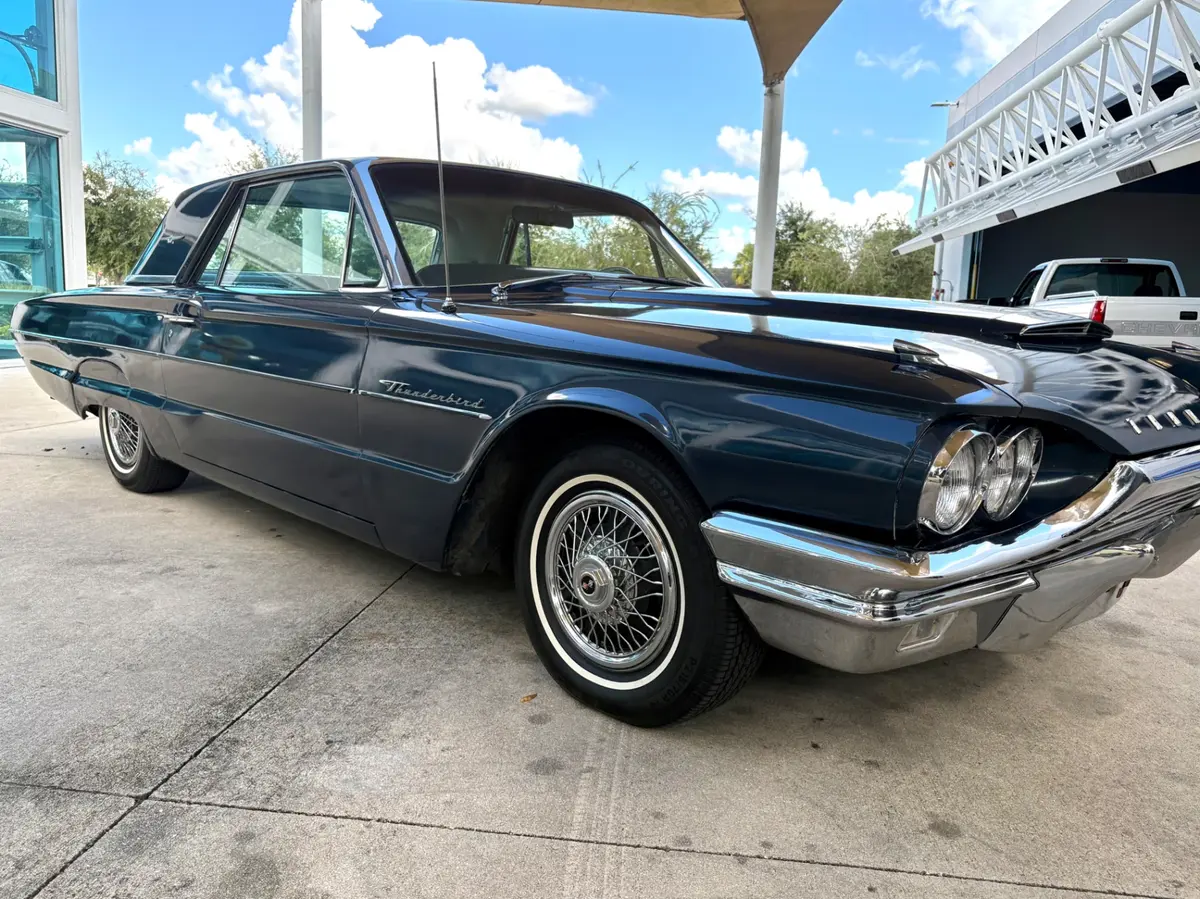
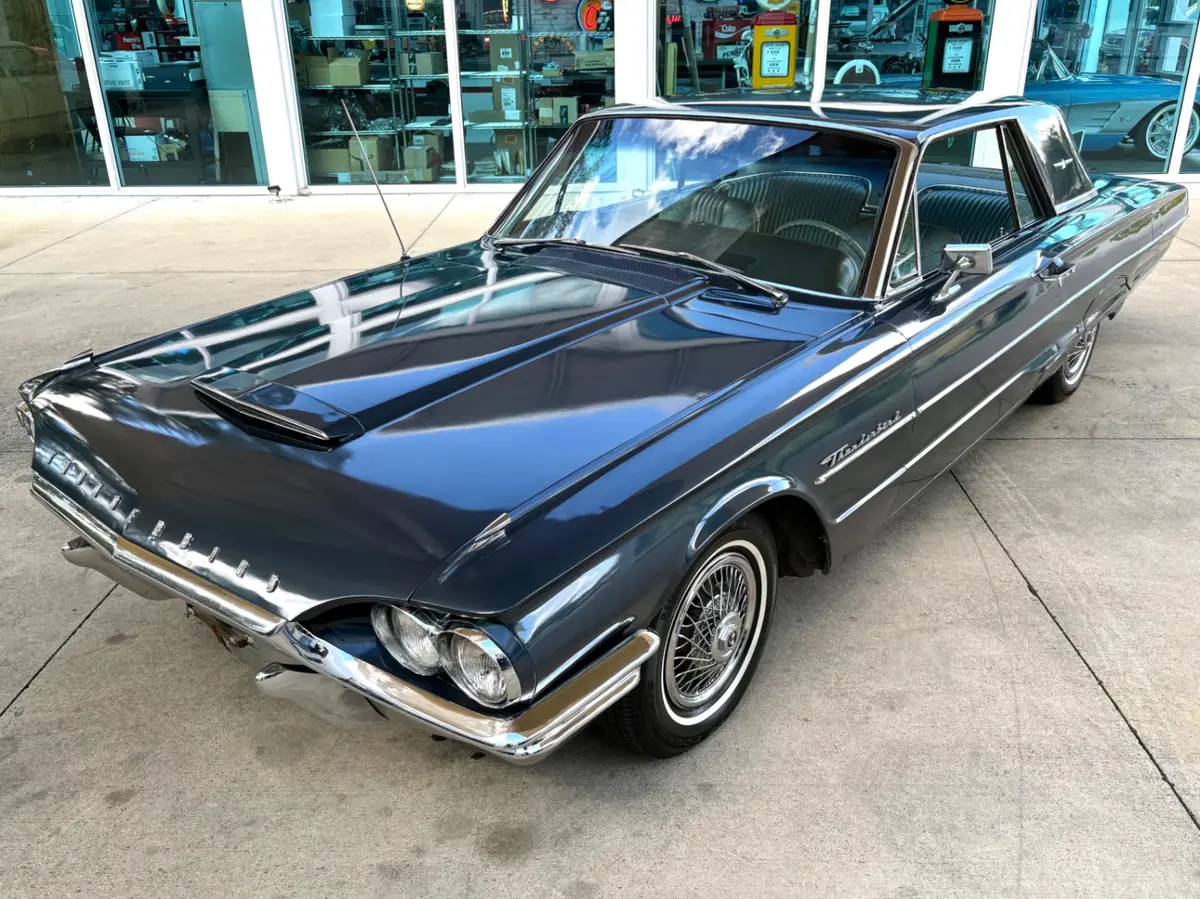
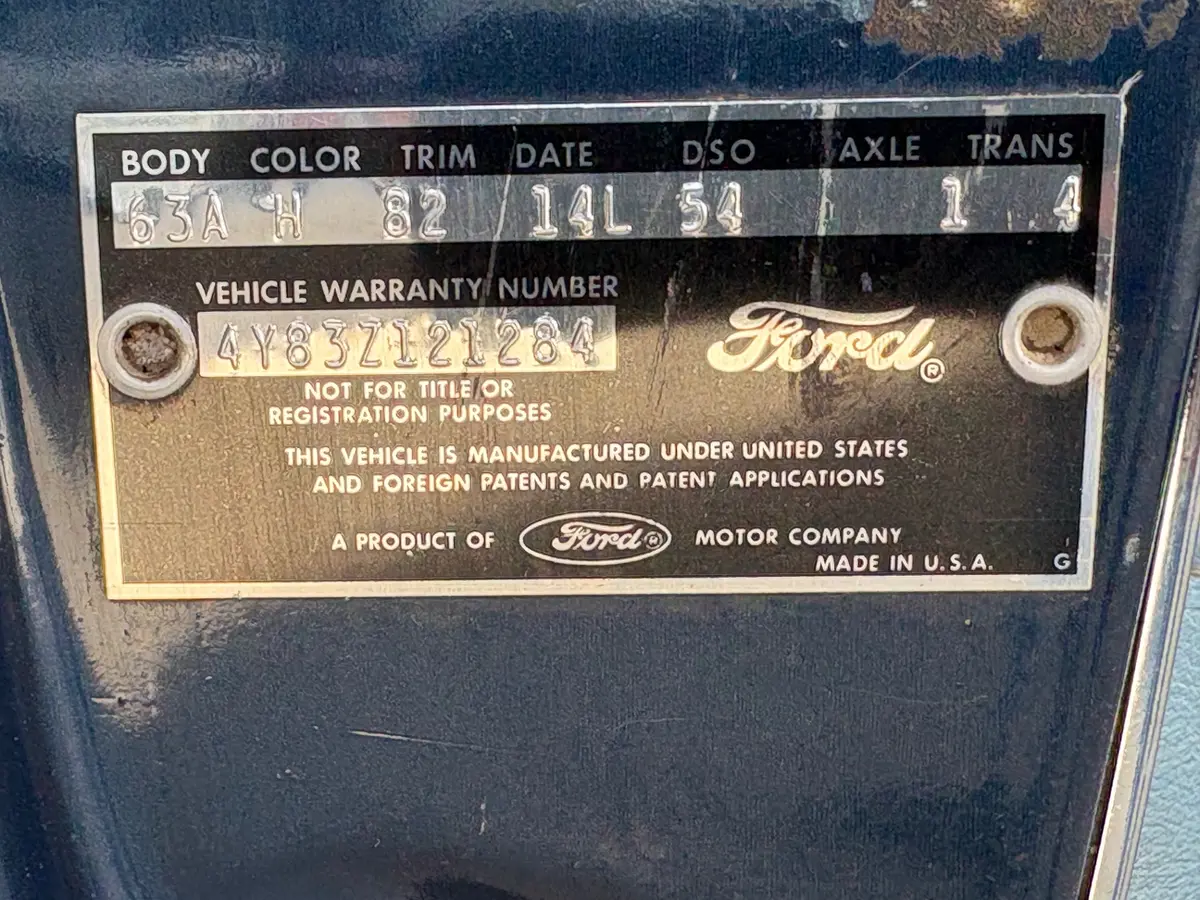
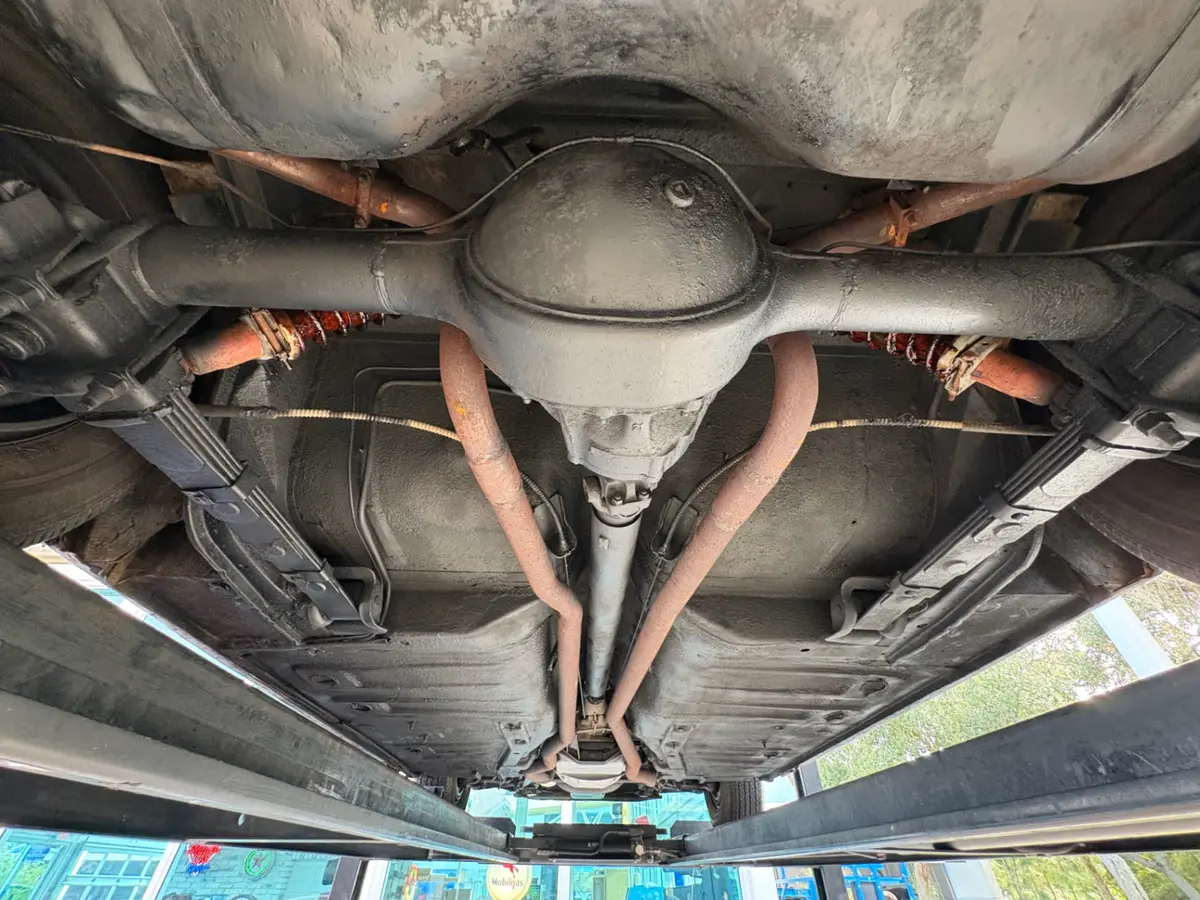
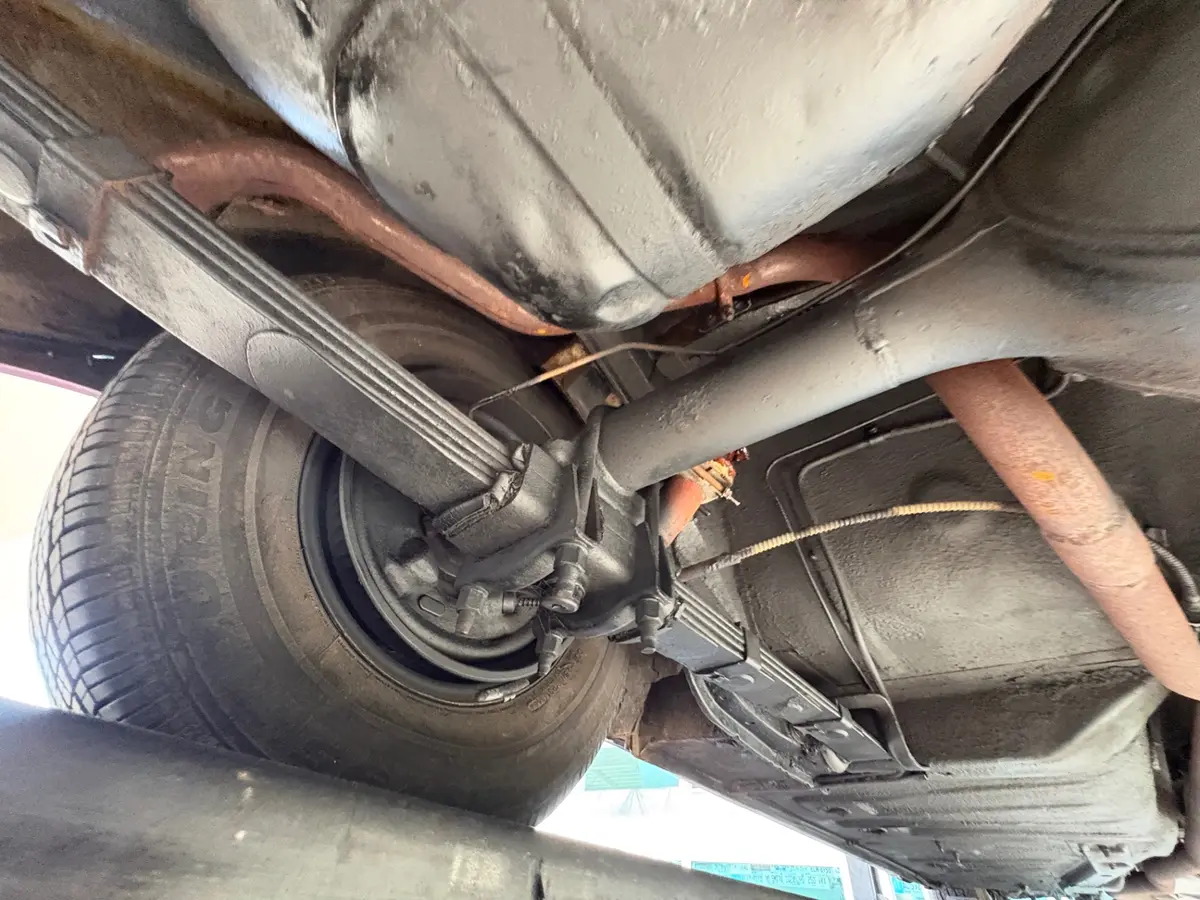
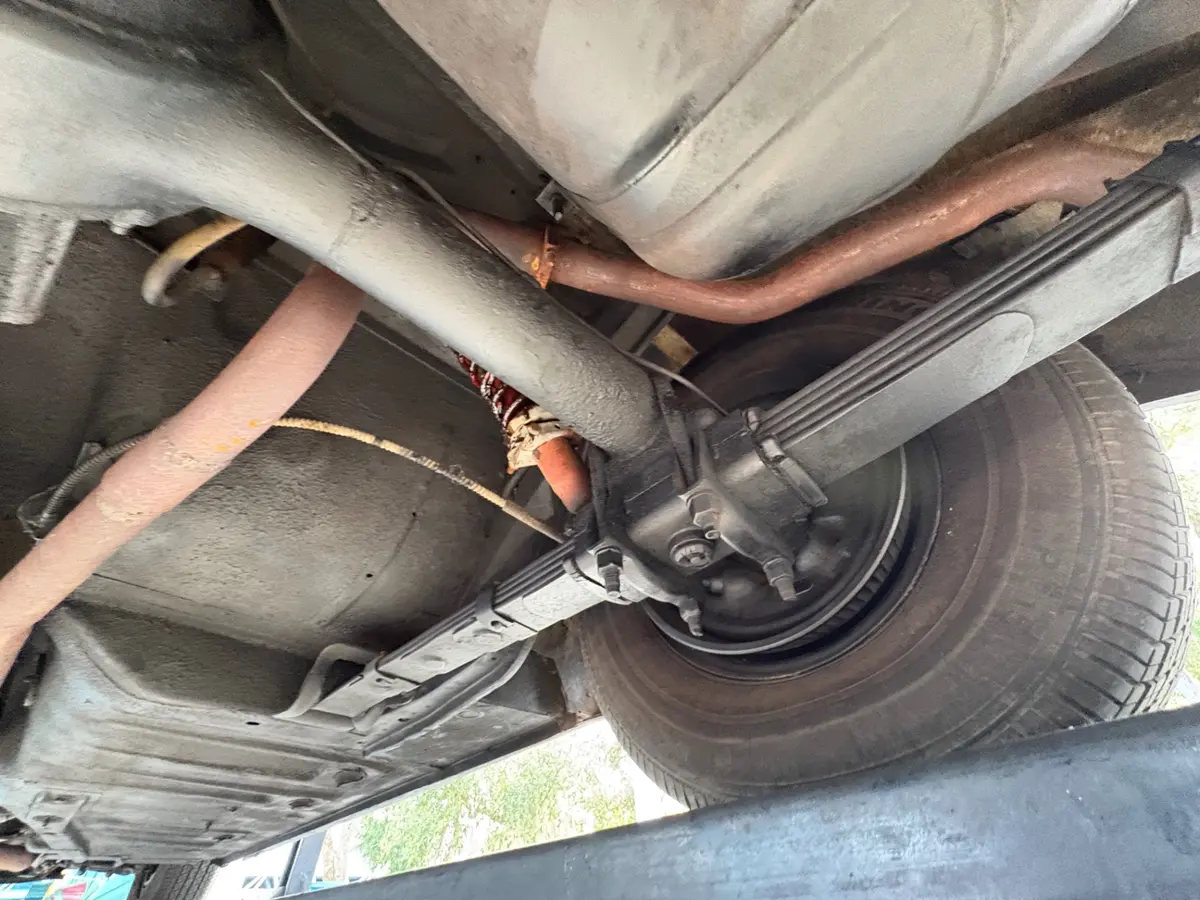
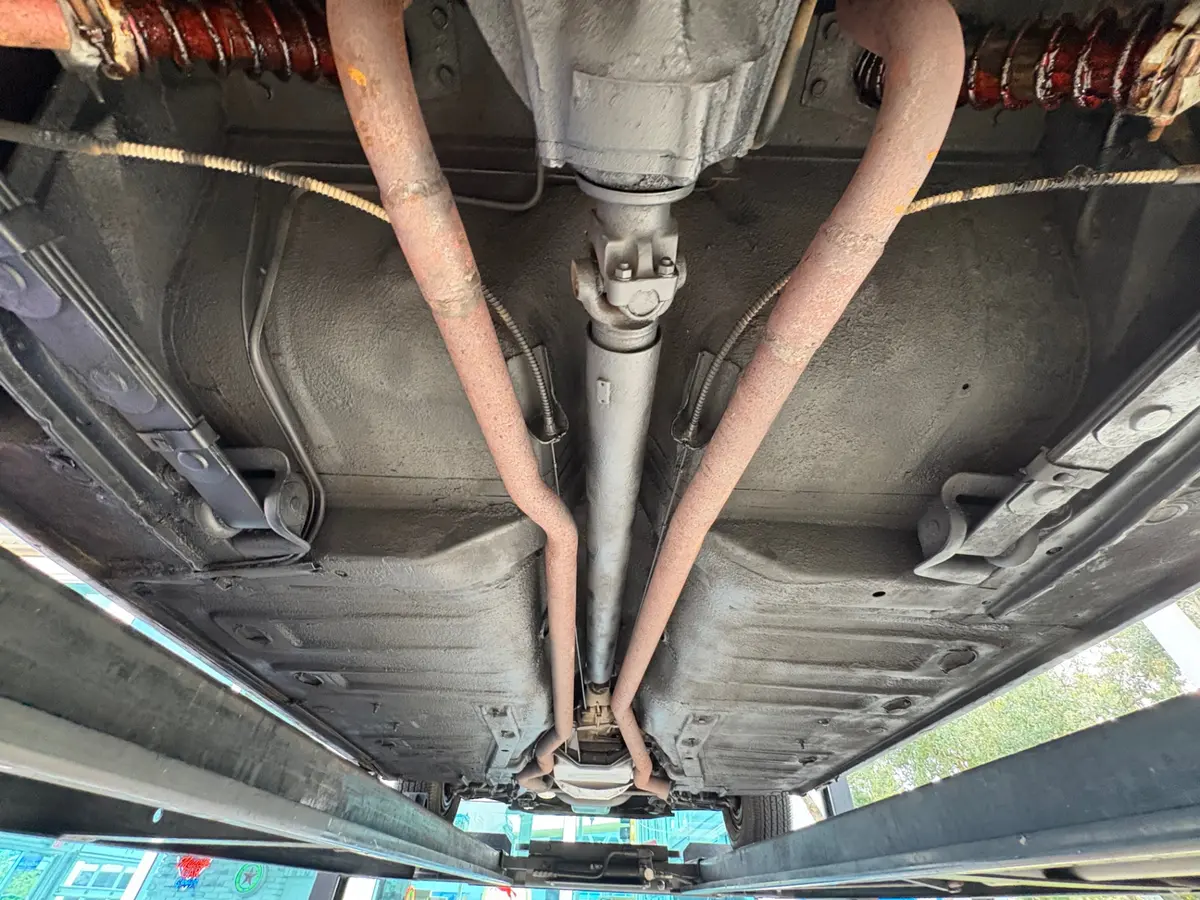
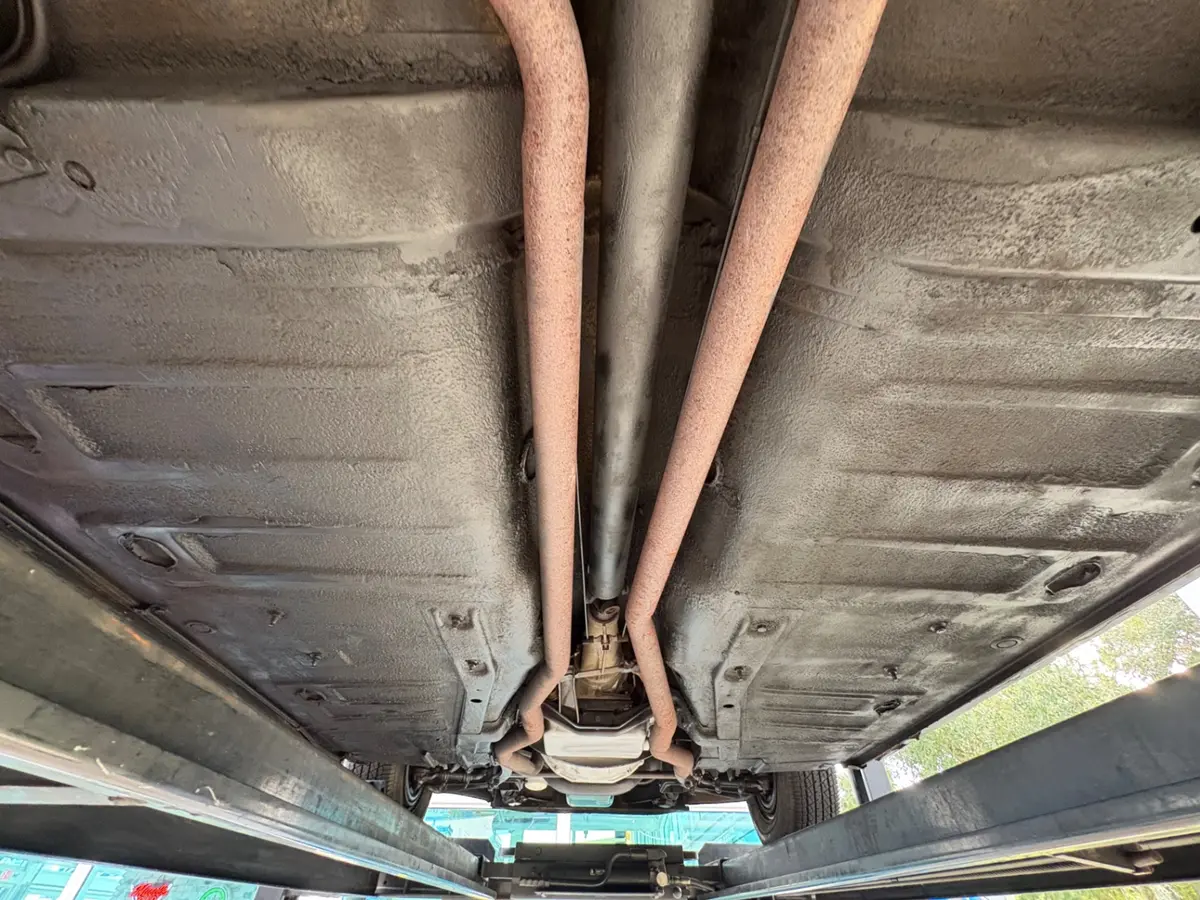
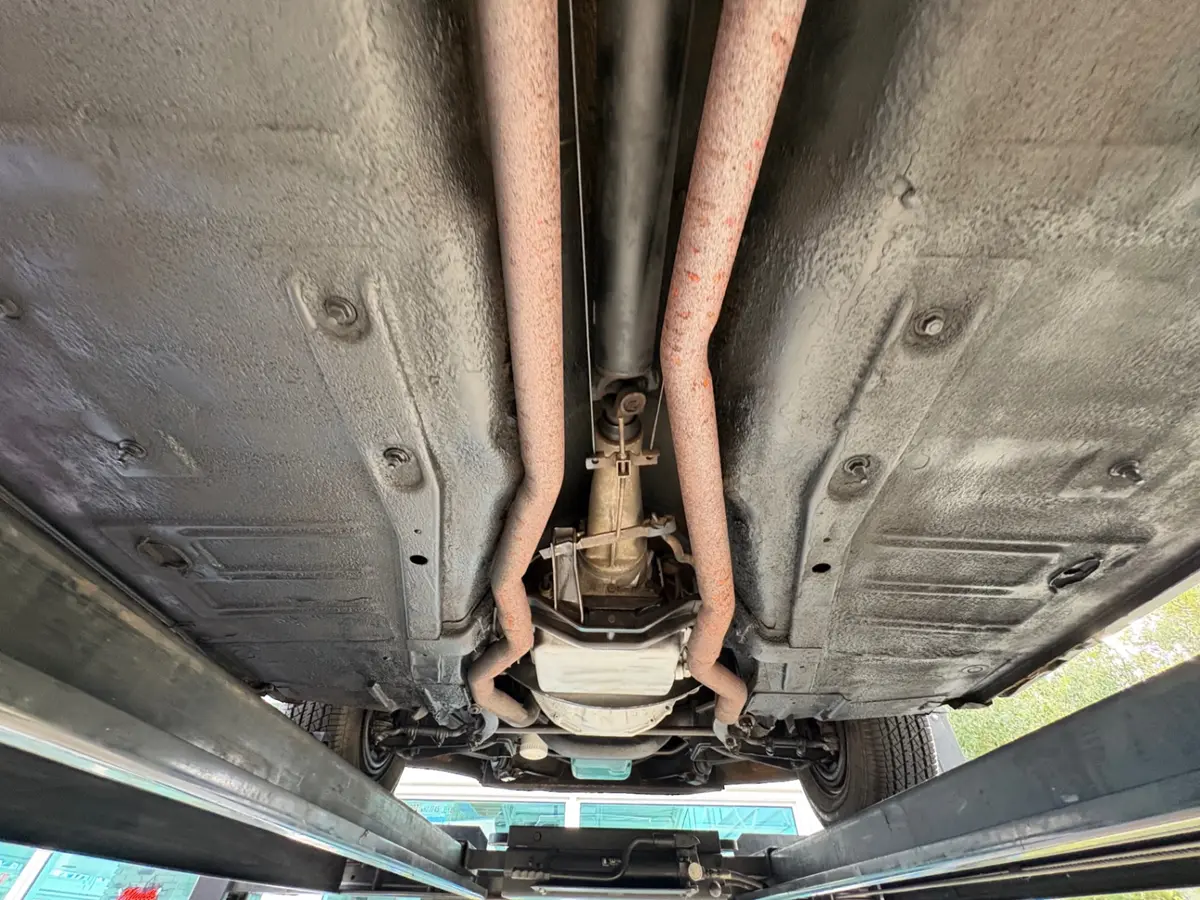
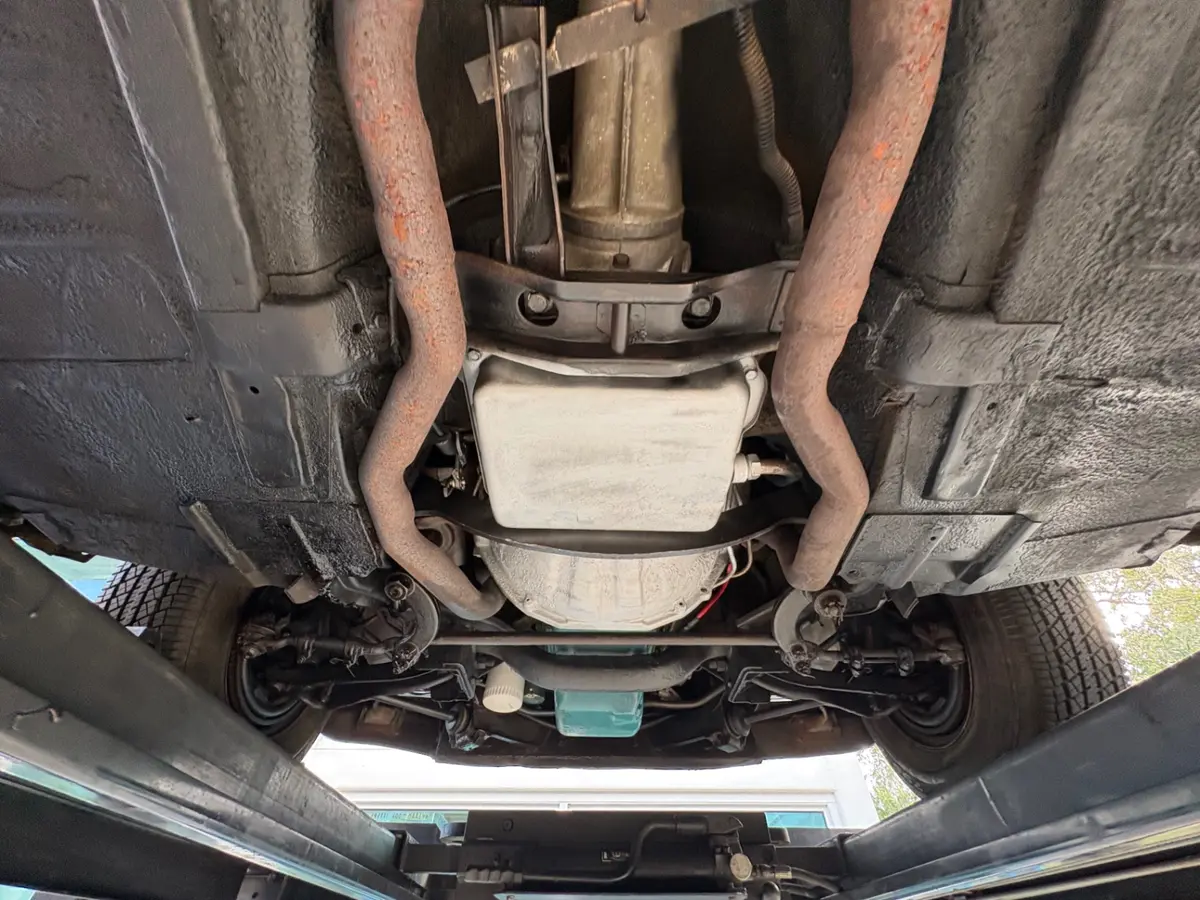
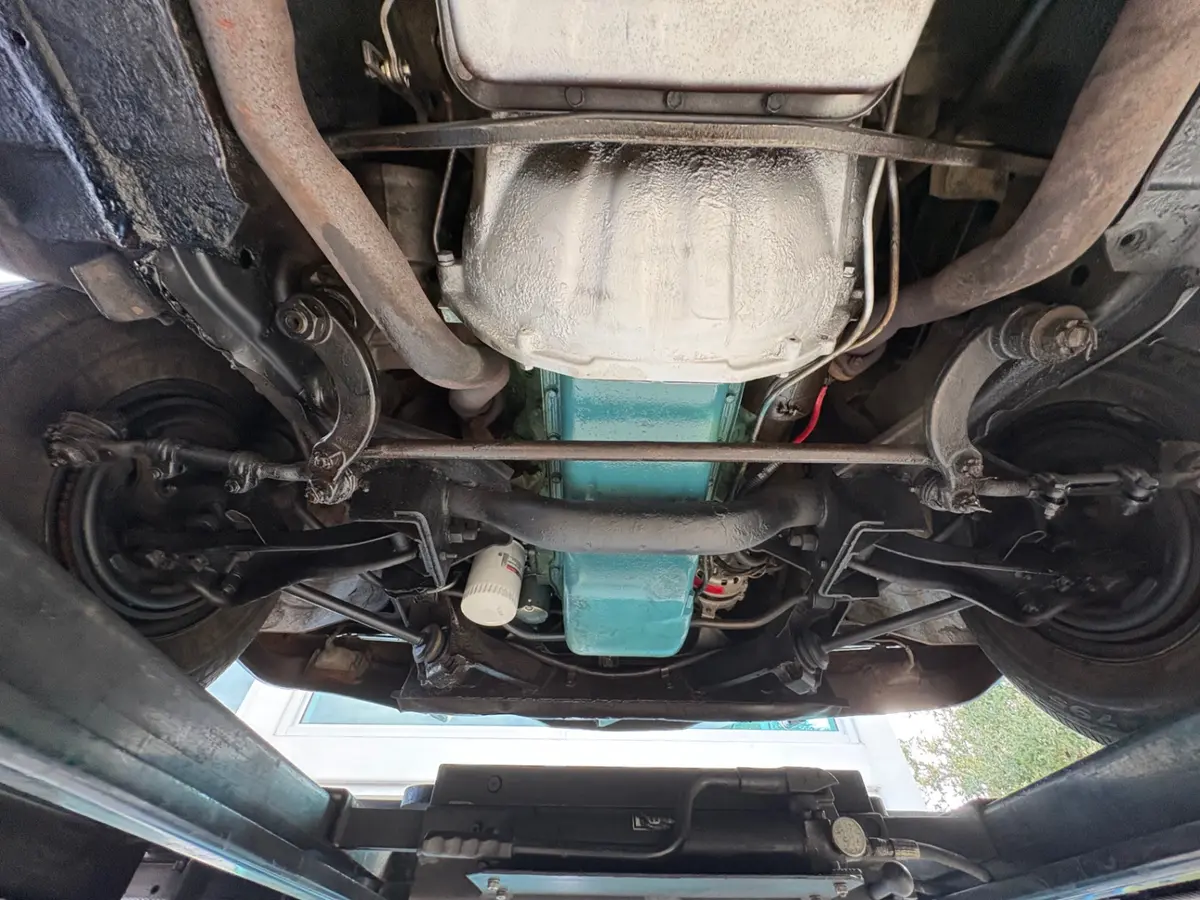
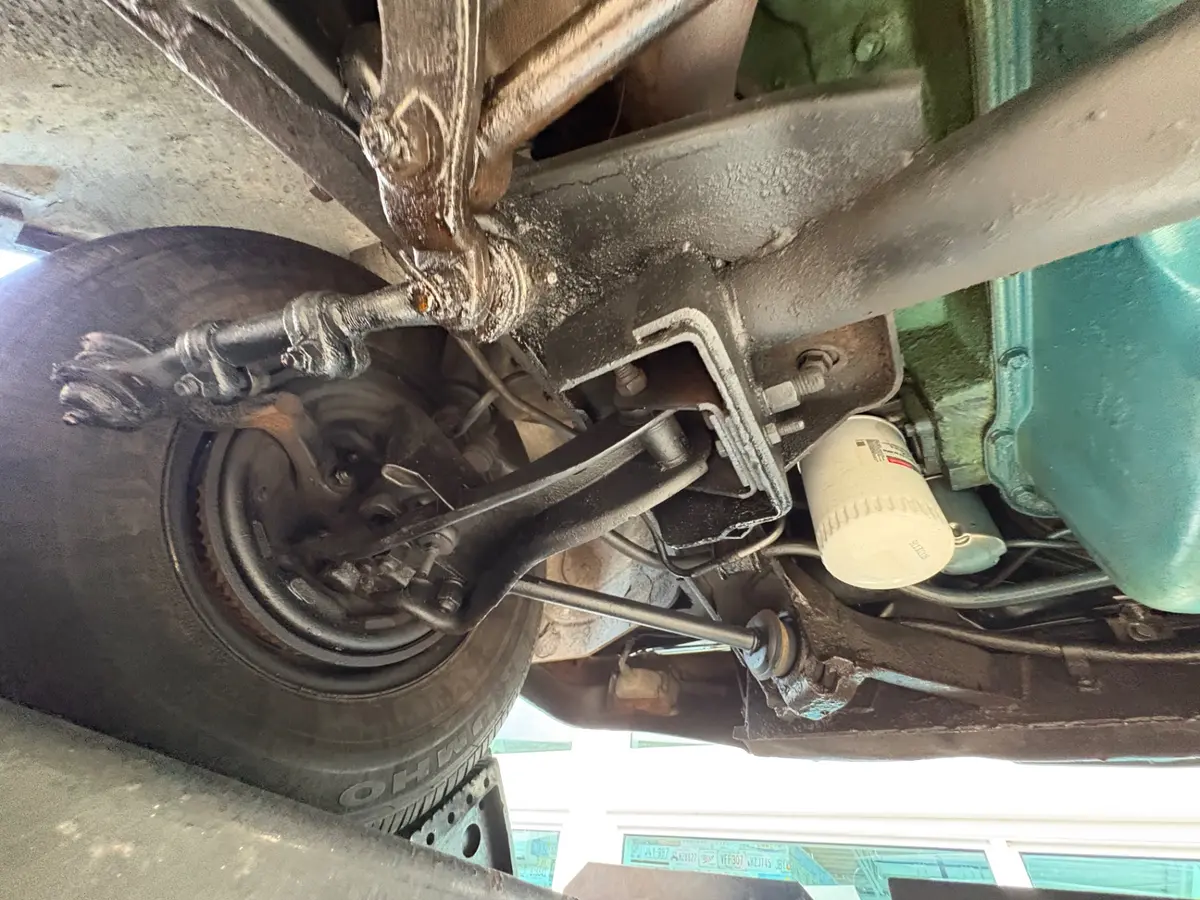
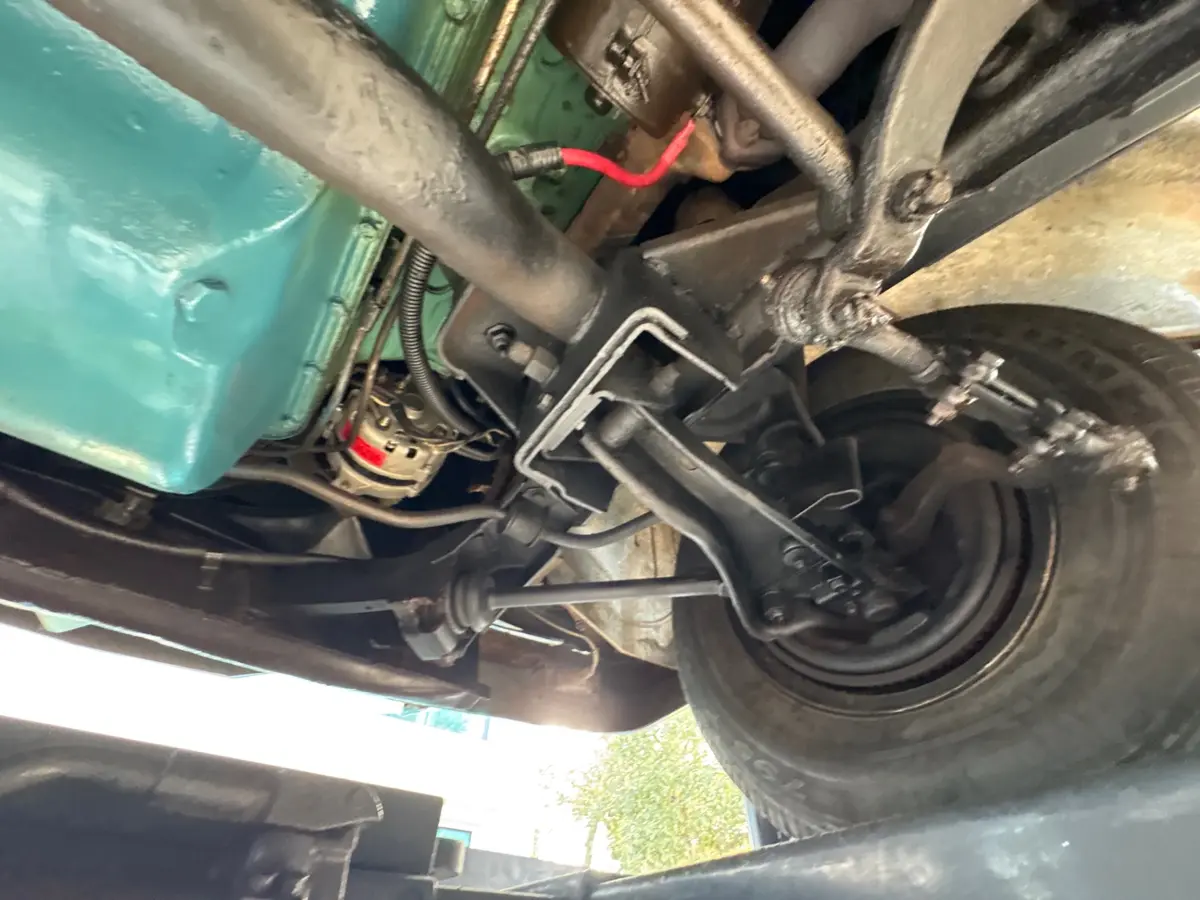
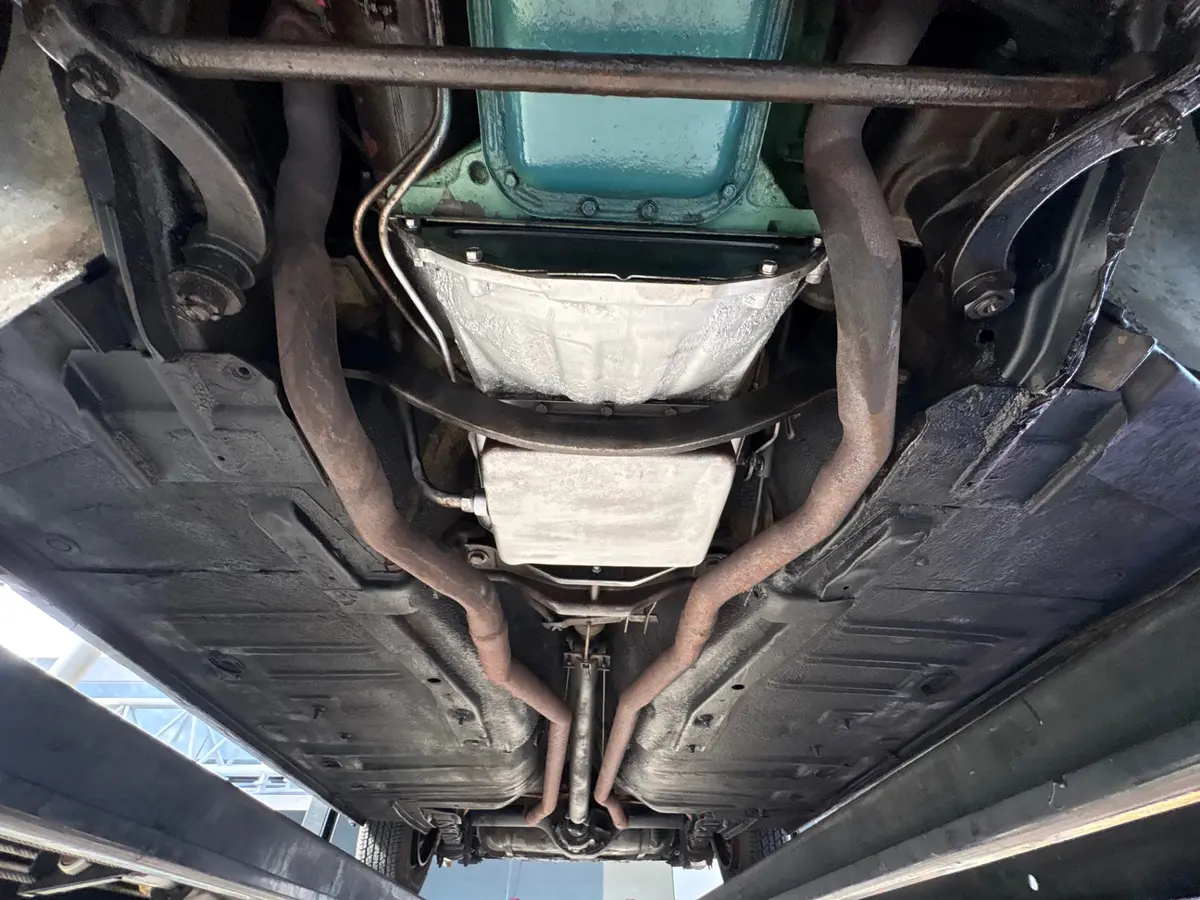
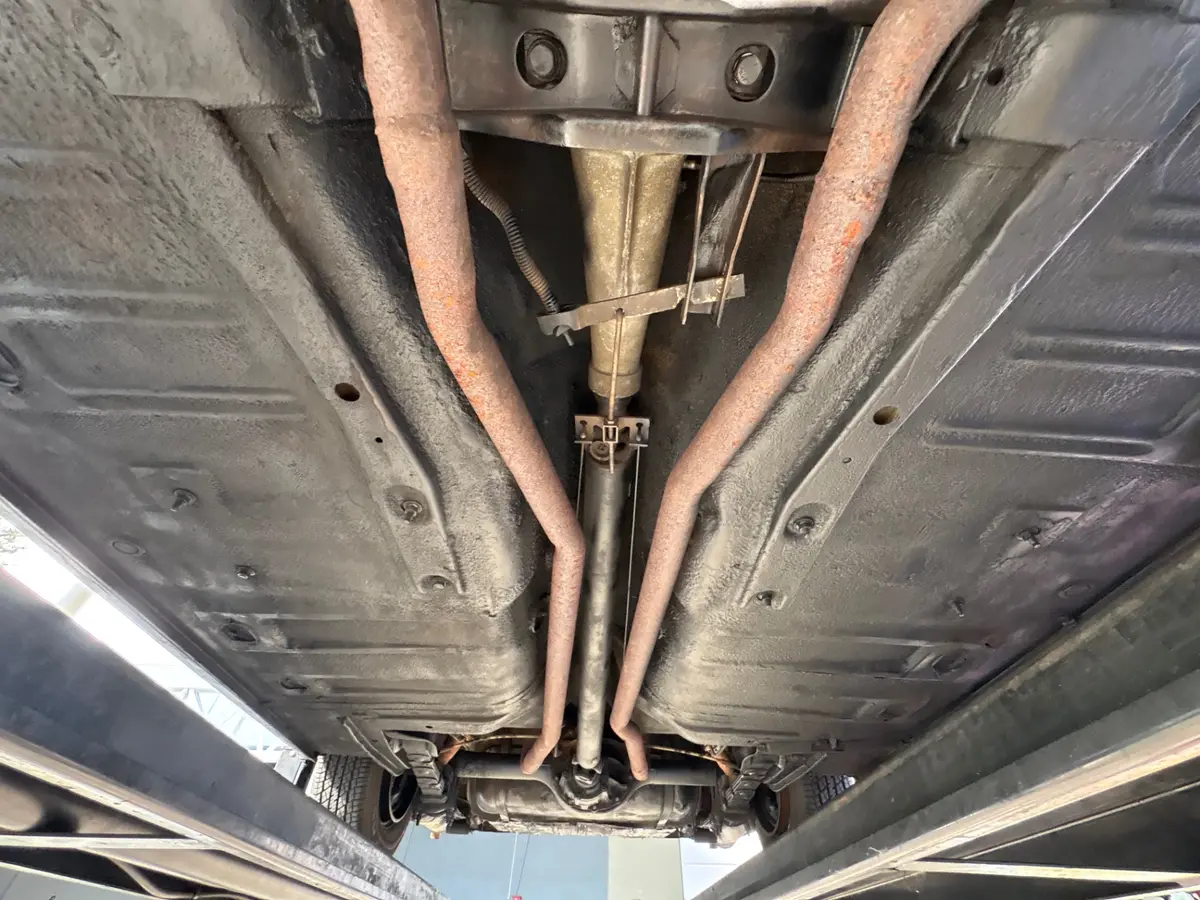
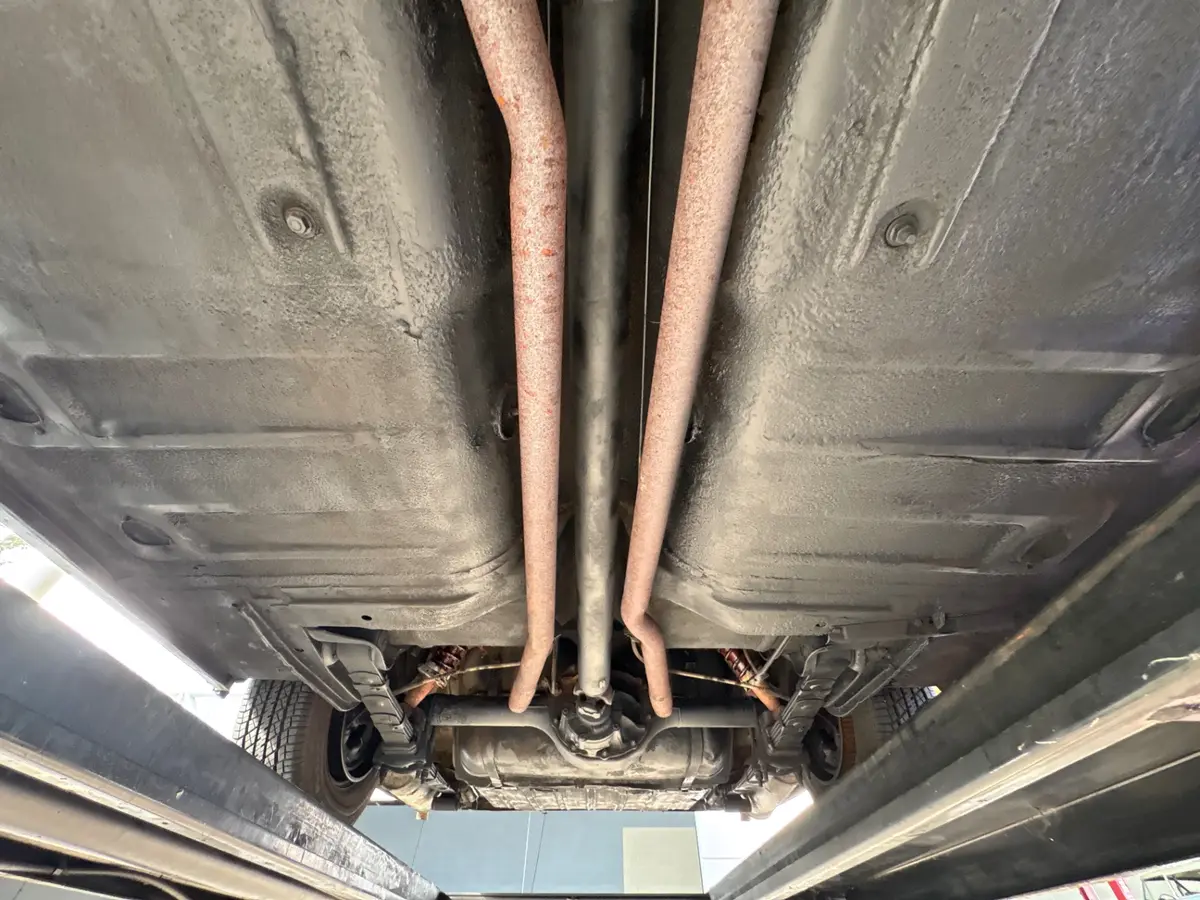
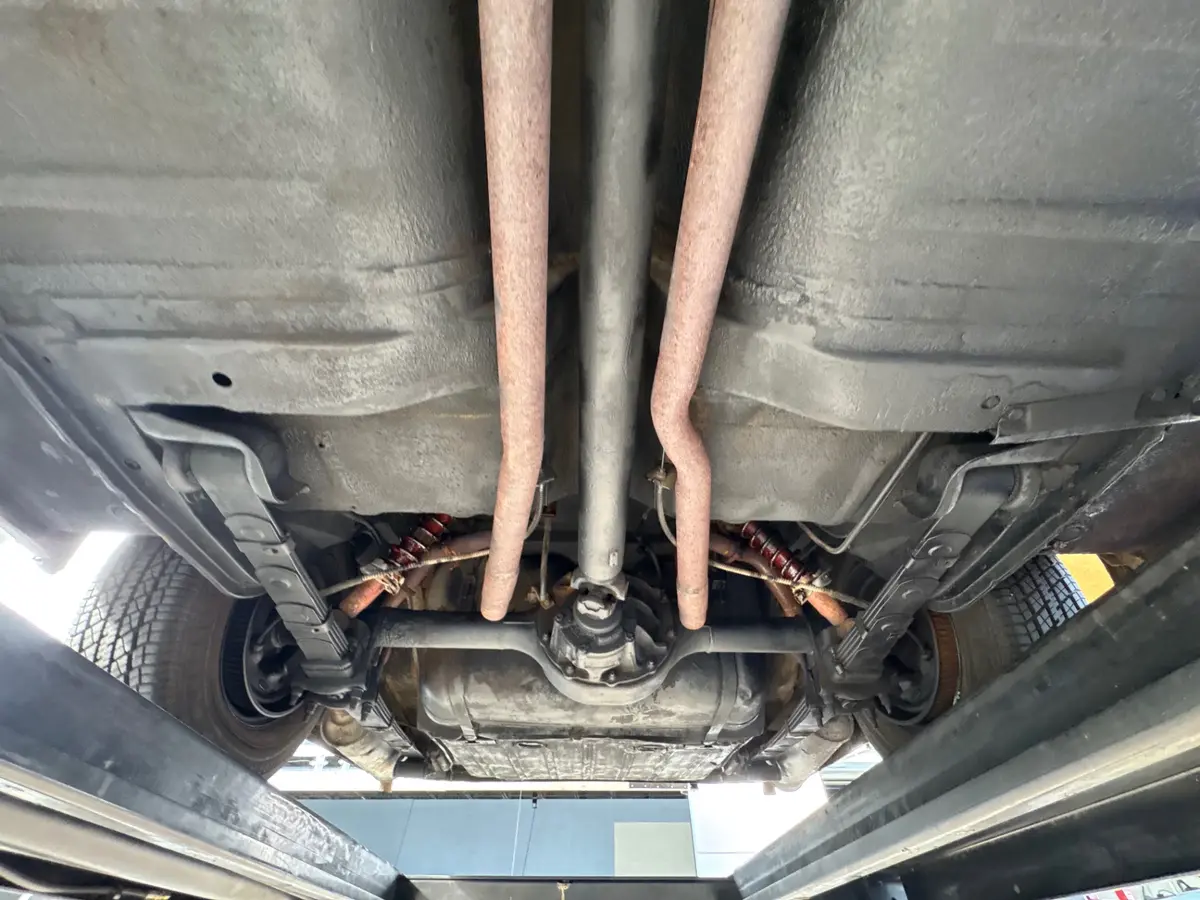
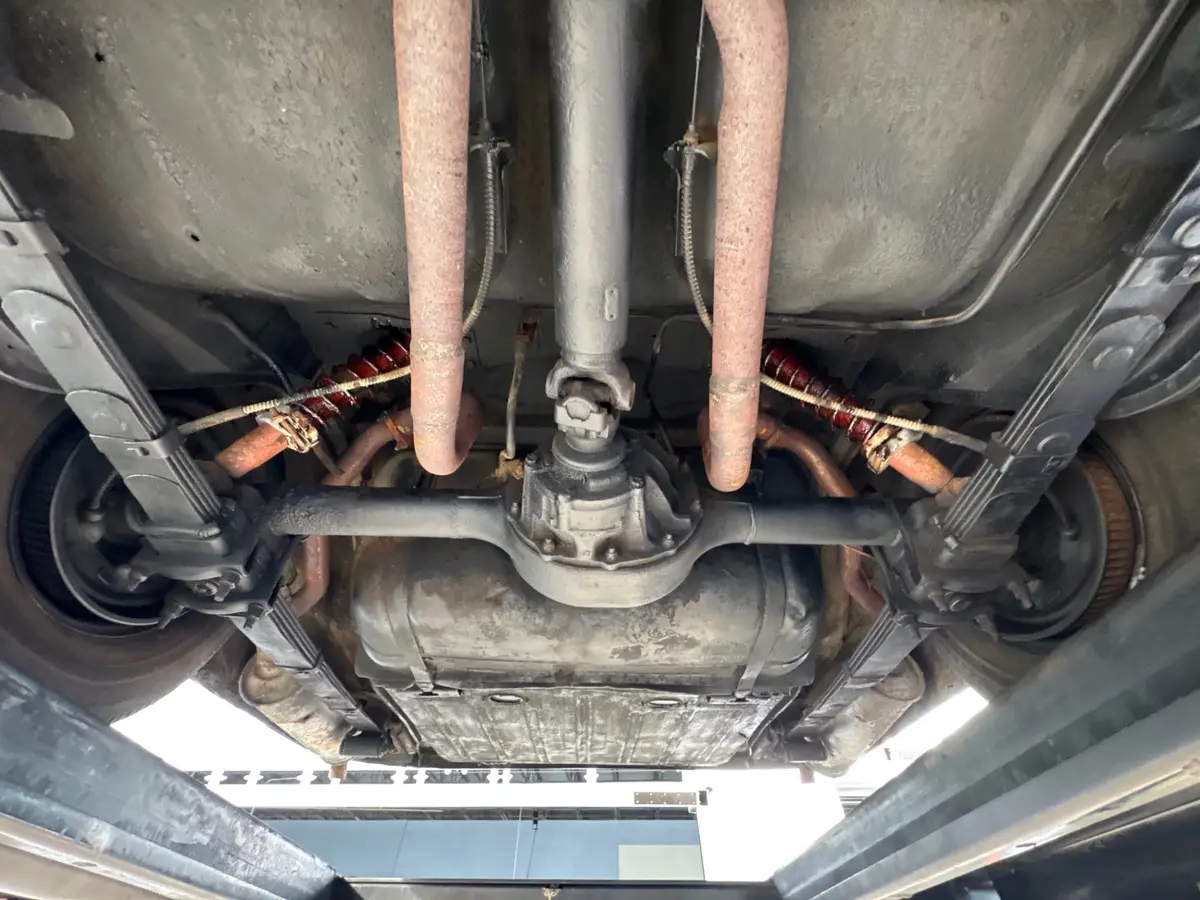
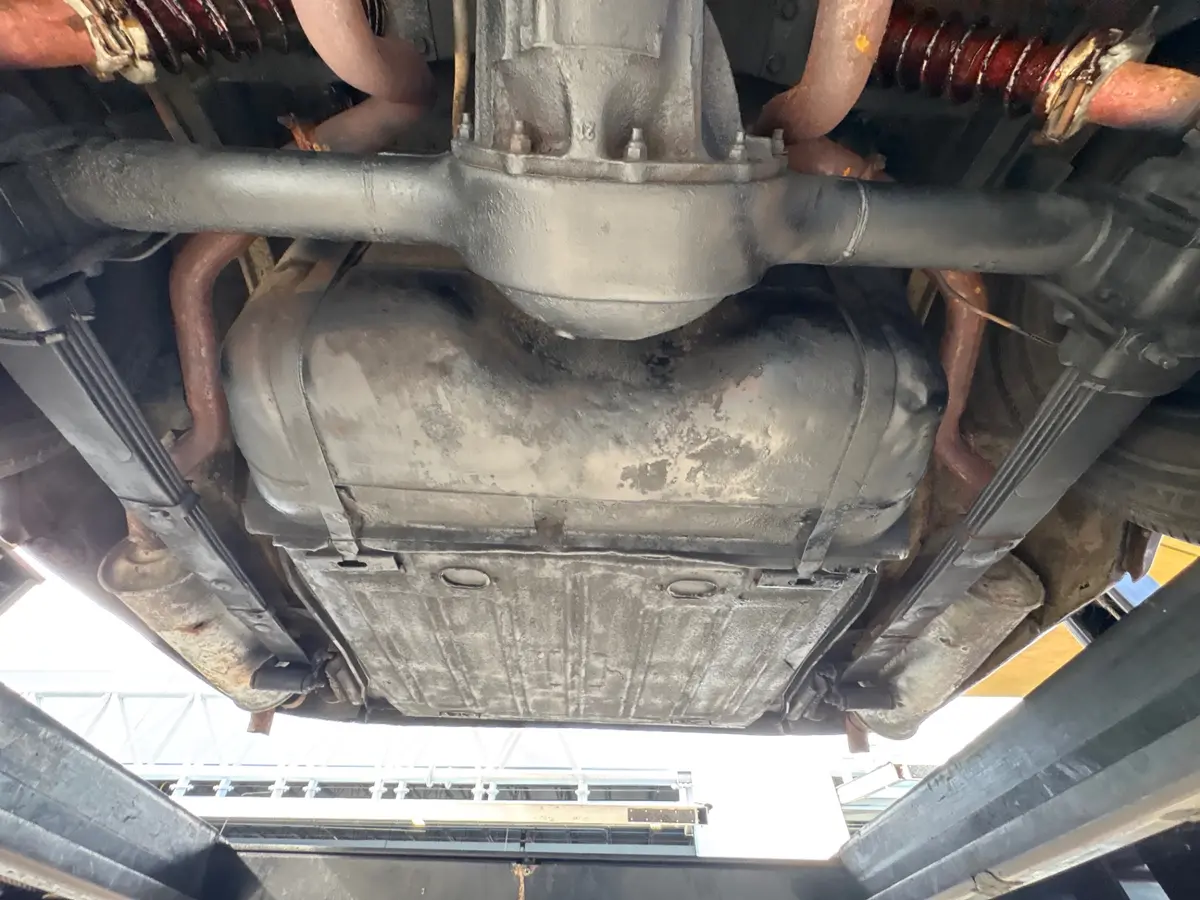
This particular 1964 Ford Thunderbird is finished in Caspian Blue, a deep, cool medium-dark blue that pairs naturally with the all-blue vinyl interior. The color combination is cohesive and period-correct, and the car presents as an honest original rather than a freshened-up driver. The undercarriage photos tell an important part of this car's story — the floor pans are solid, the framing is intact, and there is no evidence of the kind of structural corrosion that disqualifies so many cars from this era before the conversation even starts.
Features List
- 390ci 2-barrel V8 engine
- 3-speed SelectShift Cruise-O-Matic automatic transmission
- Factory air conditioning
- Power steering
- Power brakes
- Power windows
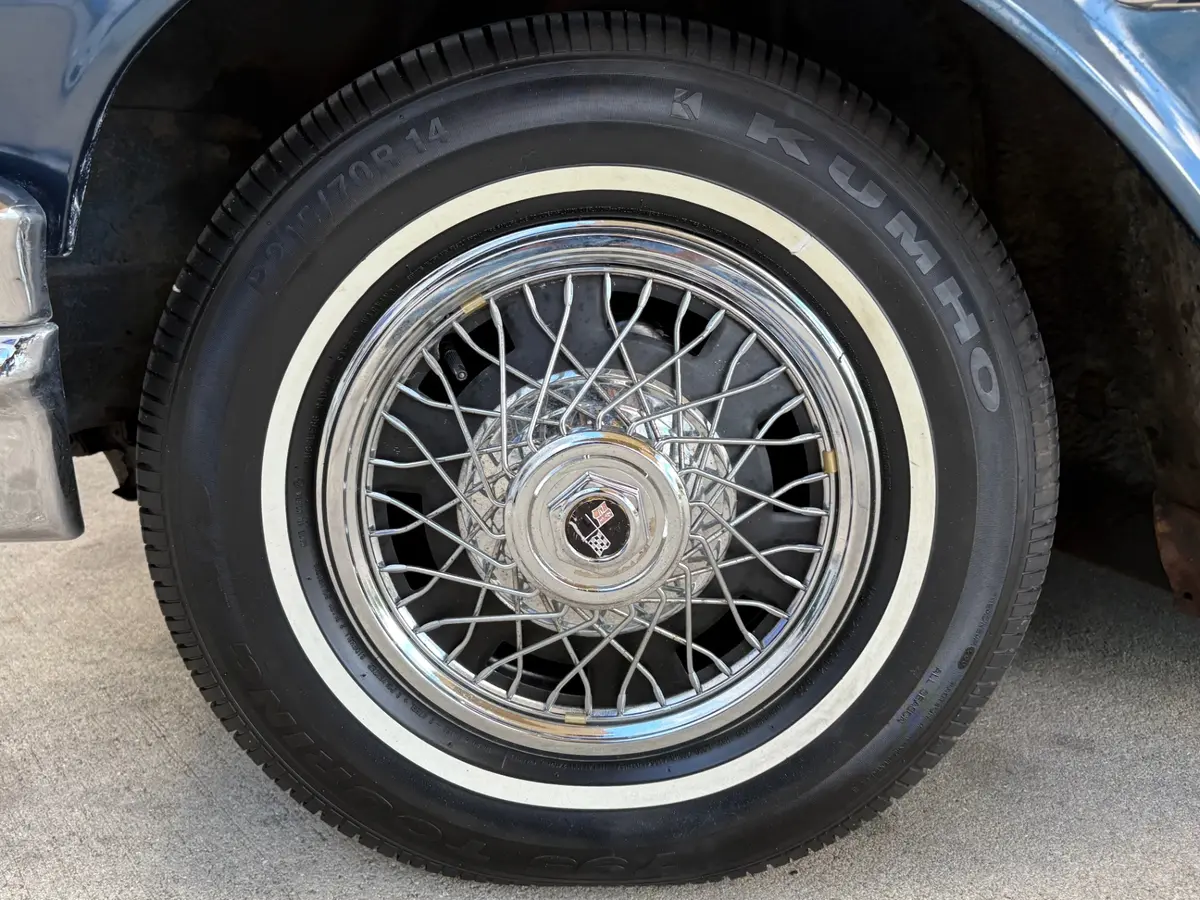
- Chrome wire wheels
- Whitewall tires
- Front bucket seats
- Rear bench seat
- Center console
- AM radio
- Dual exhaust
- Chrome front and rear bumpers
- Solid undercarriage
Mechanical
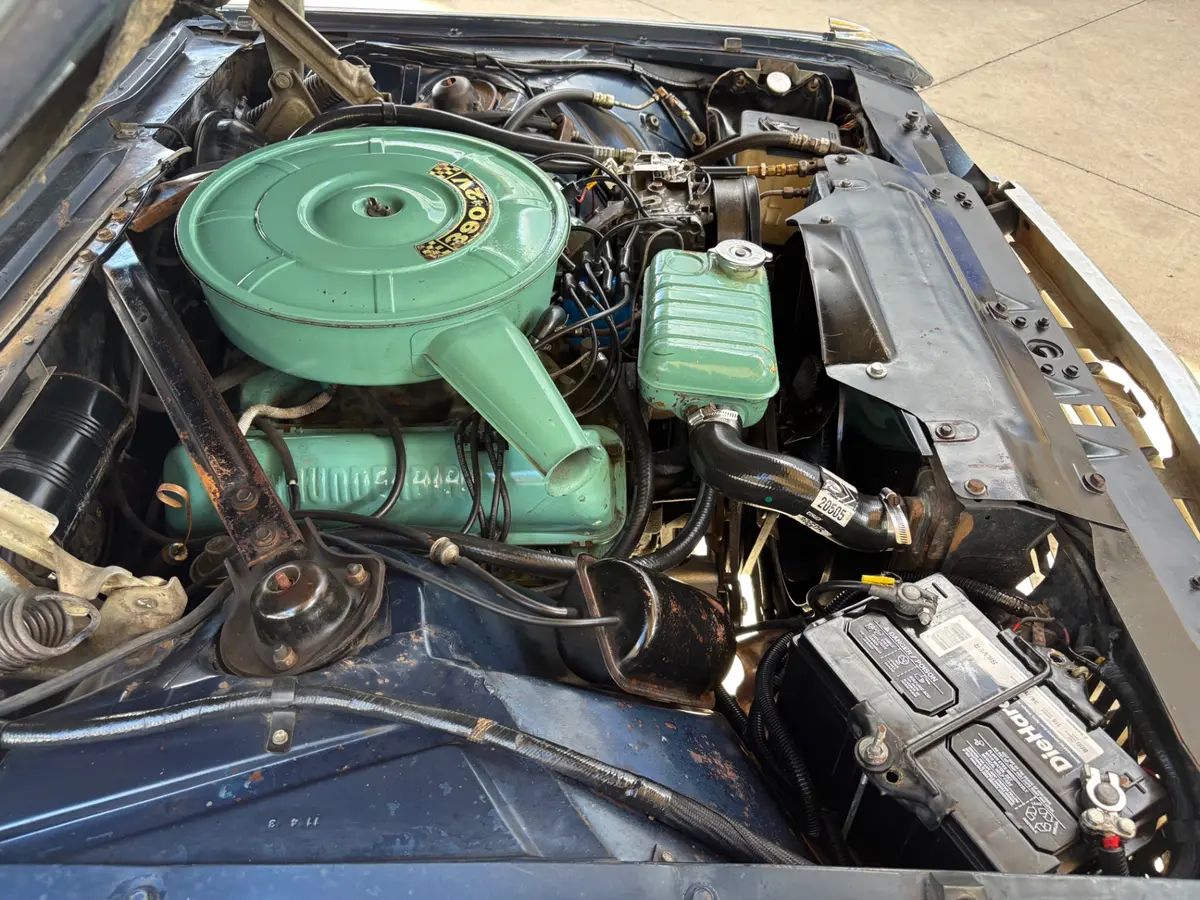
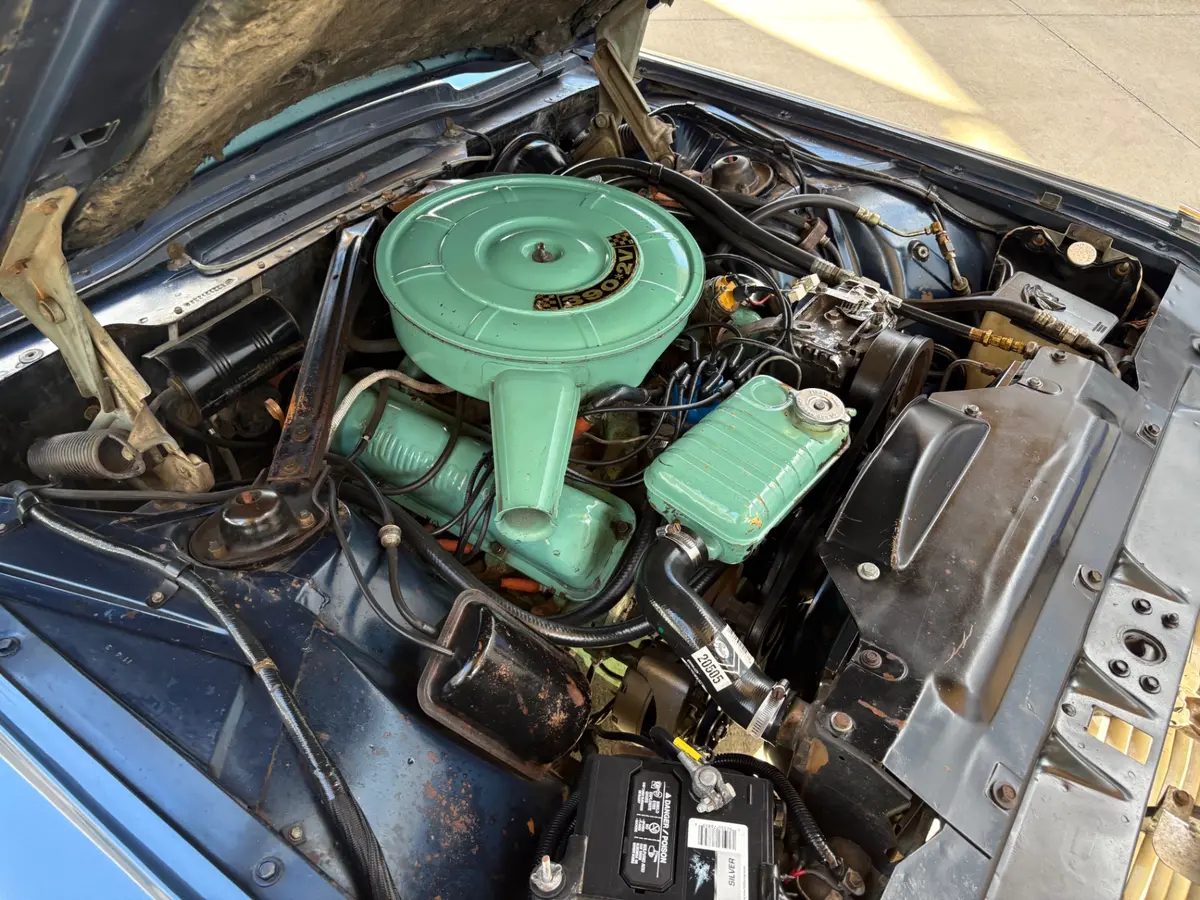
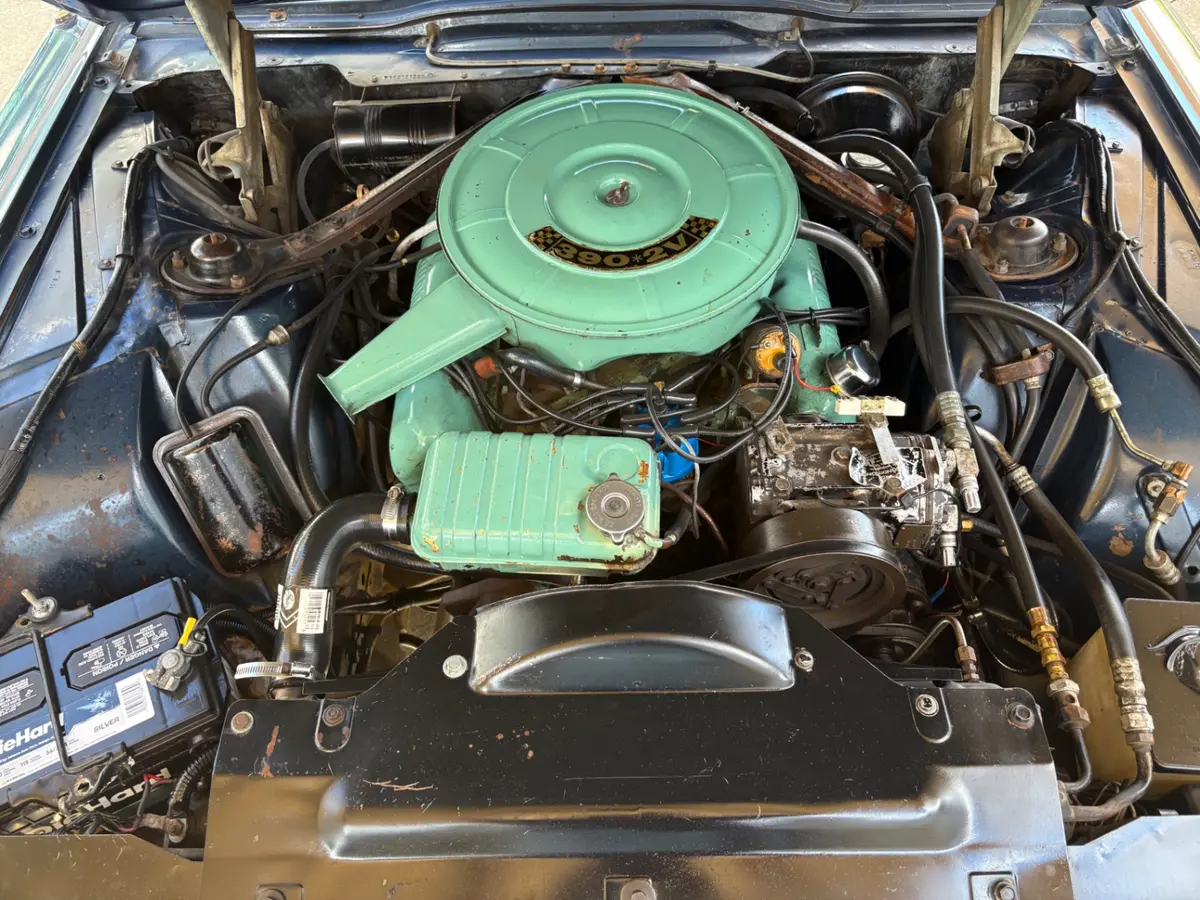
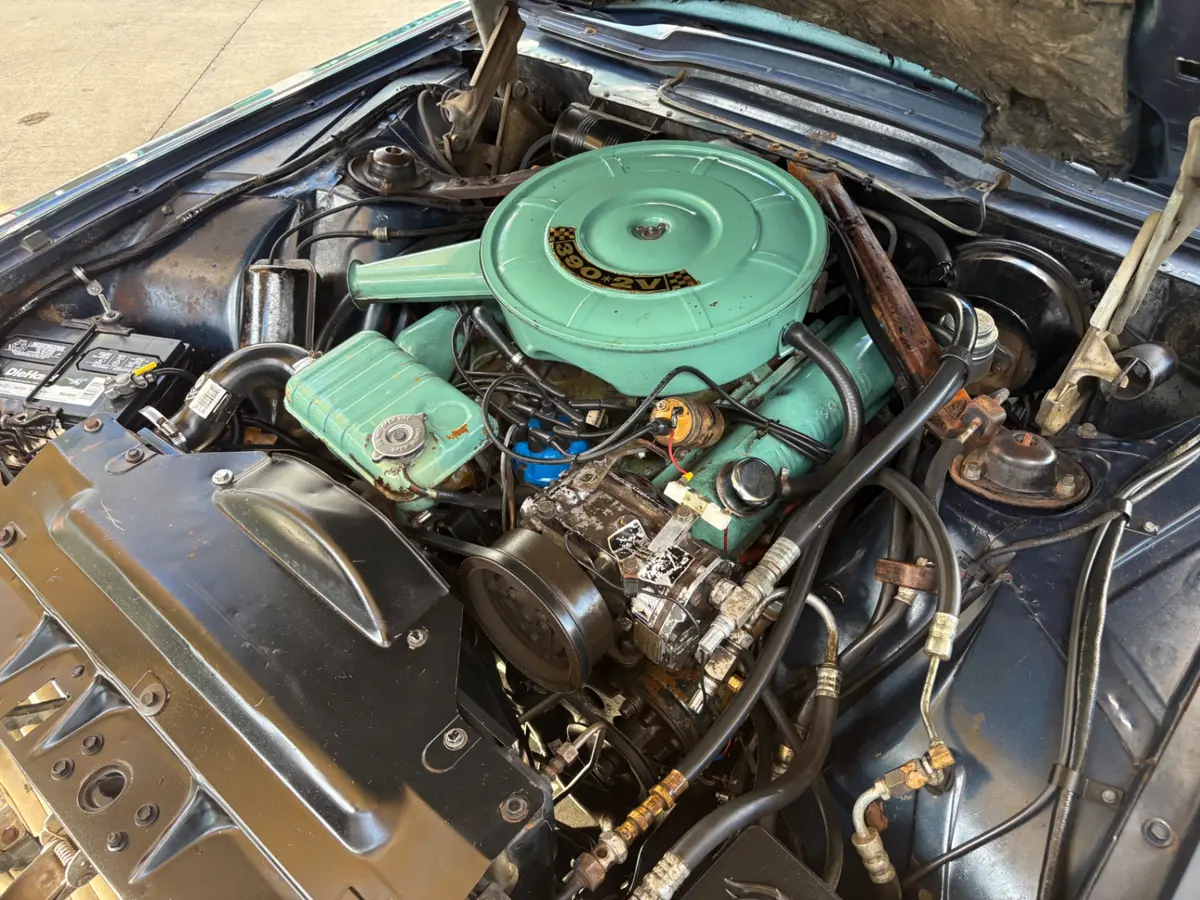
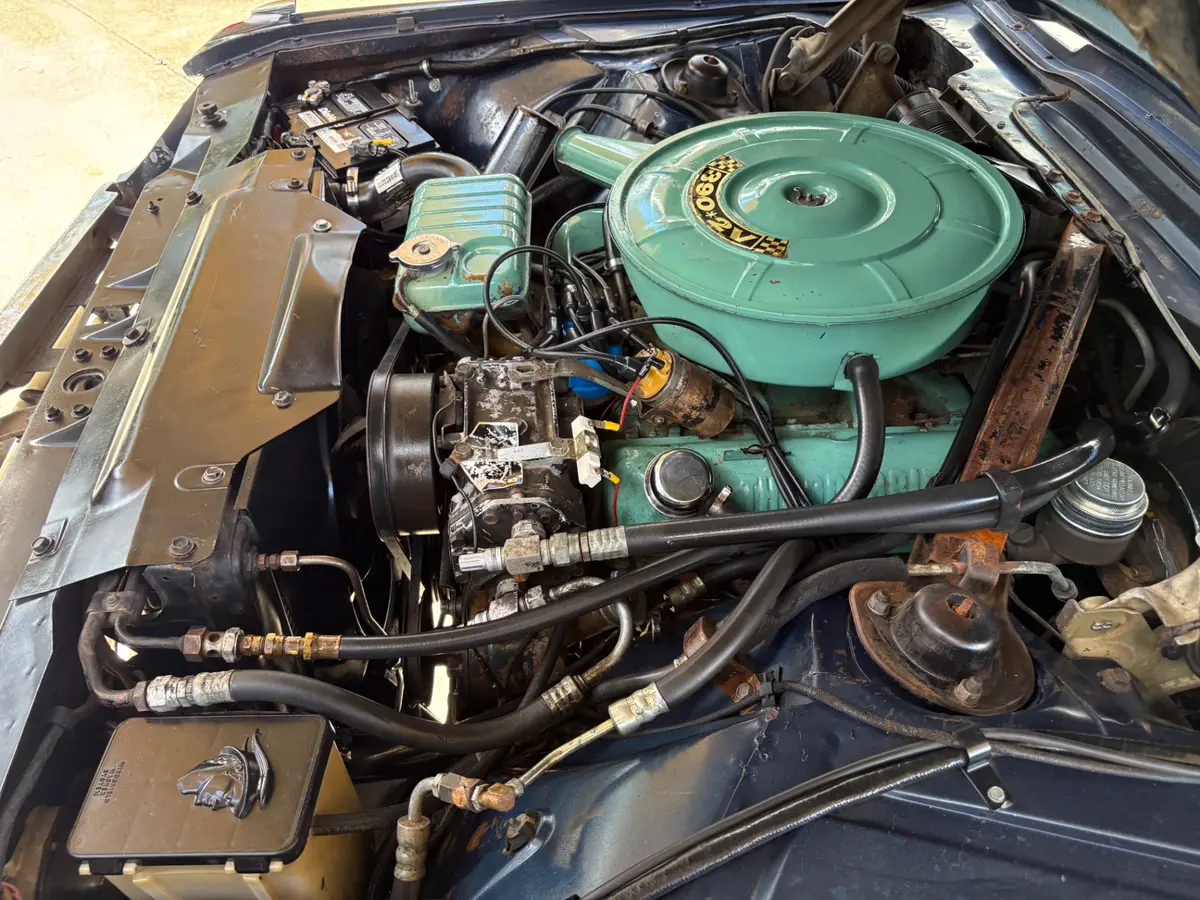
Power comes from Ford's 390 cubic inch FE-series V8, fitted here with a 2-barrel carburetor. In 1964 Thunderbird trim, the 390 2V was rated at 300 horsepower. This was the standard engine for the 1964 Thunderbird — Ford also offered a 390 4V at 330 horsepower and a higher-output 390 as part of the M-code package, but the 2V configuration in this car is the correct base specification and, for a personal luxury car designed around smooth highway cruising, it is entirely appropriate. The 390 FE is a physically large, torque-rich engine that moves a car like the Thunderbird with authority and without strain.
The transmission is Ford's 3-speed SelectShift Cruise-O-Matic, which was the standard automatic pairing for the 390 in 1964. The SelectShift designation indicated that the driver could manually hold individual gears if desired, though the overwhelming majority of owners simply left it in Drive. The combination of the 390 and the Cruise-O-Matic was well-matched to the Thunderbird's character — relaxed, smooth, and capable of effortless highway travel.
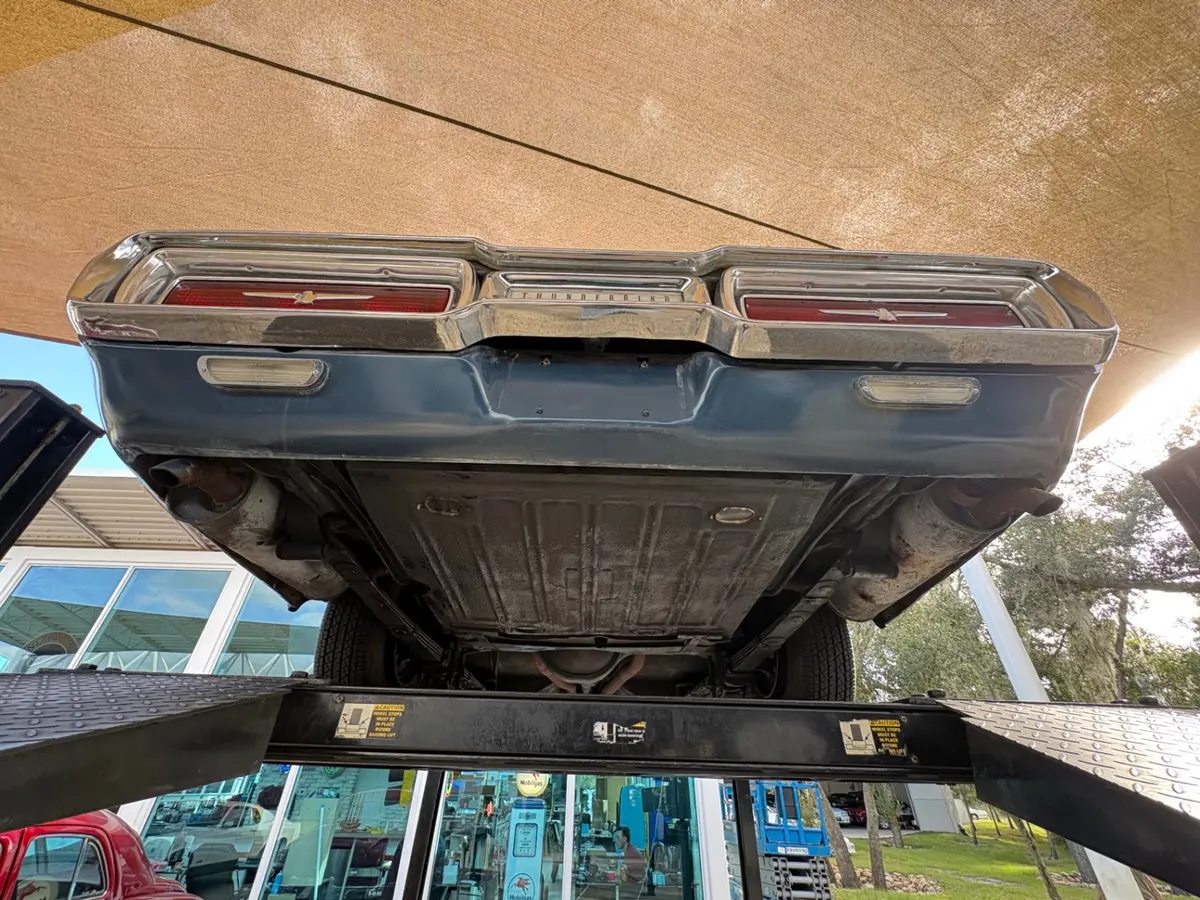
Looking at the undercarriage photos, the floor pans show consistent surface patina without any rot, holes, or structural compromise. The framing is intact on all four corners. The dual exhaust runs the full length of the car and exits cleanly at the rear. The front suspension — a conventional upper and lower control arm setup with coil springs — appears complete and unmolested. The rear axle and leaf spring arrangement look correct and original. This is not a car that has been hiding problems under fresh undercoating. What you see is honest metal with age on it.
Interior
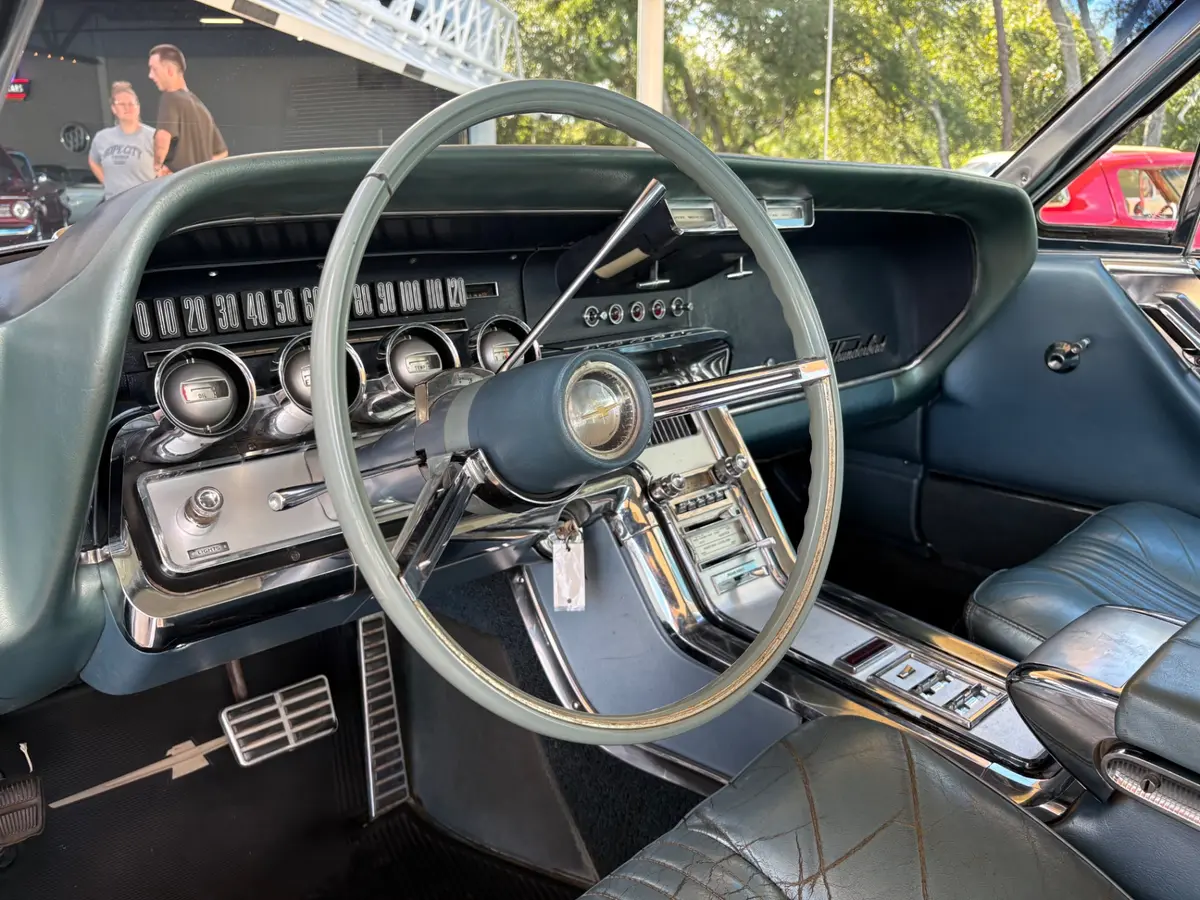
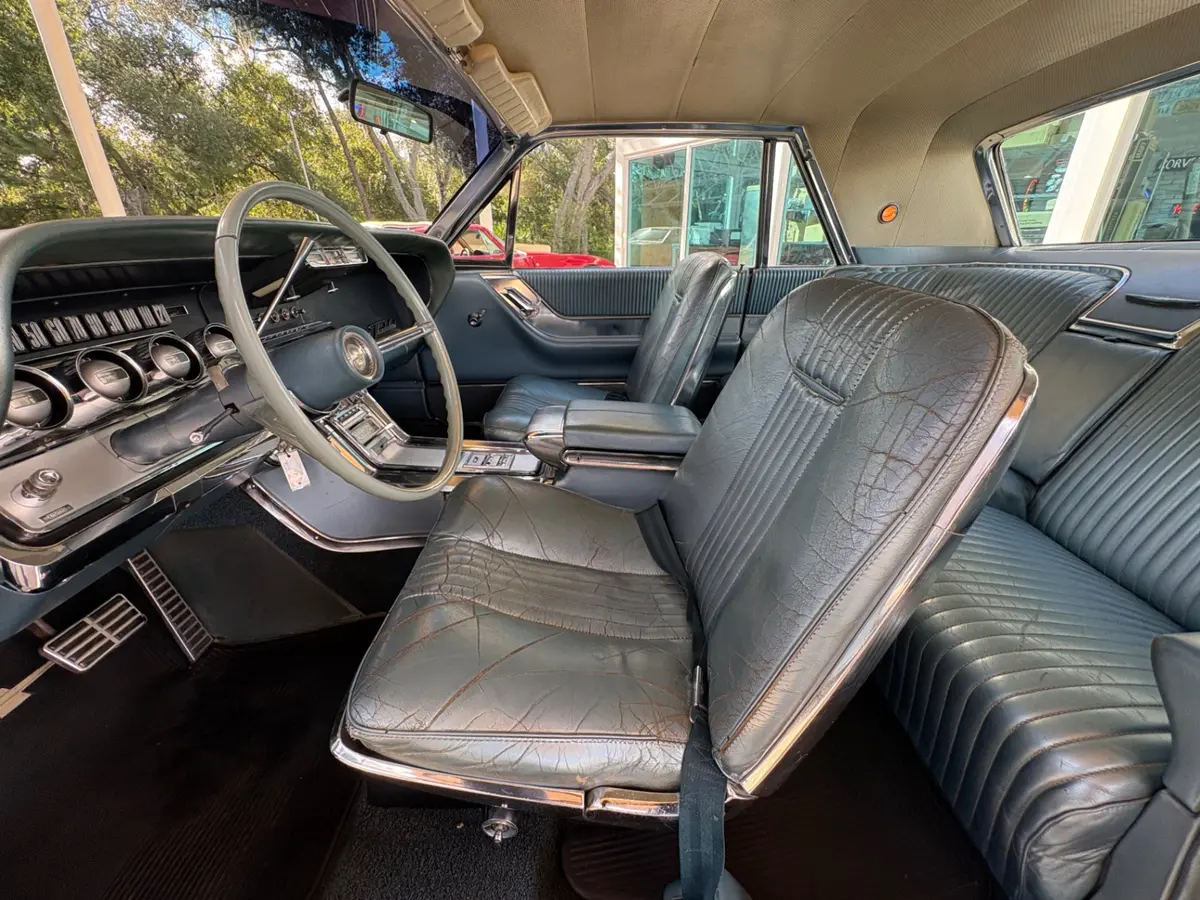
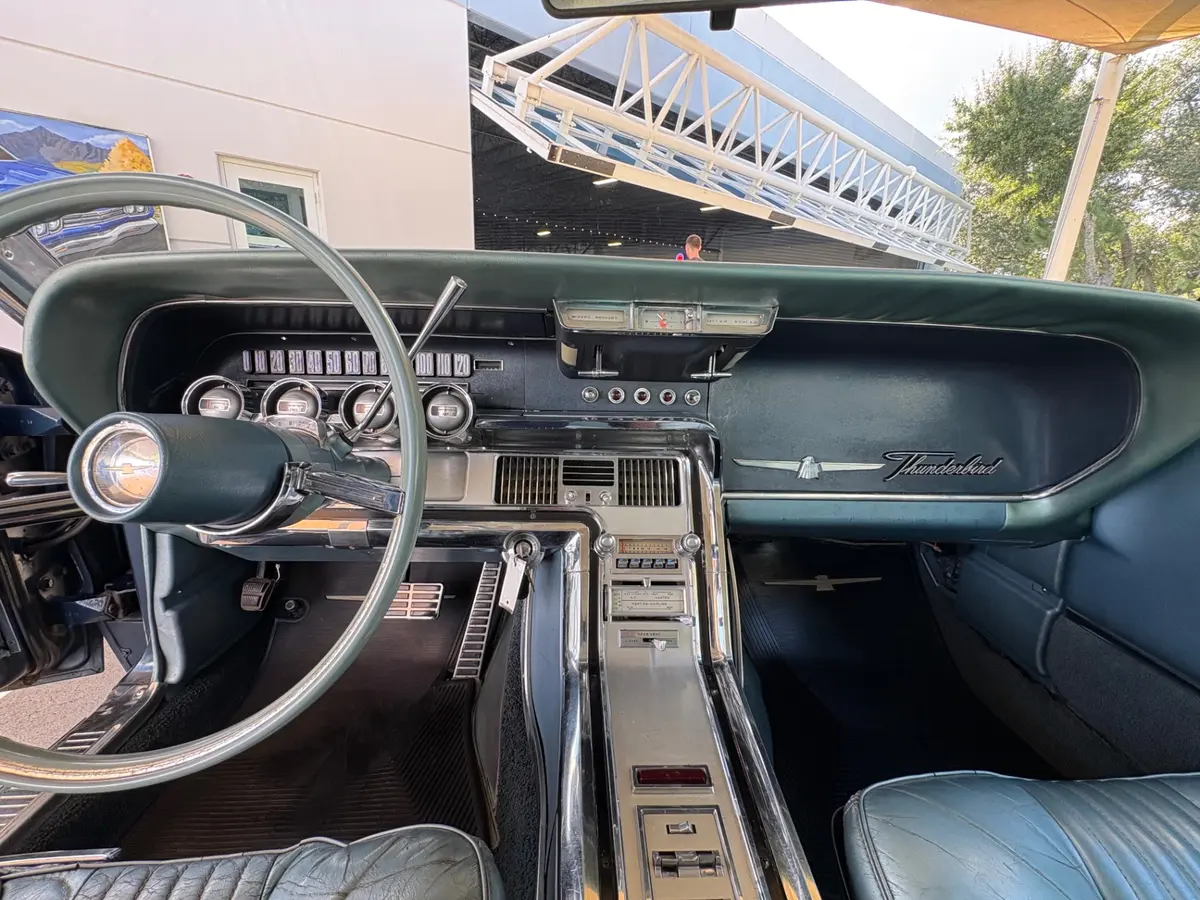
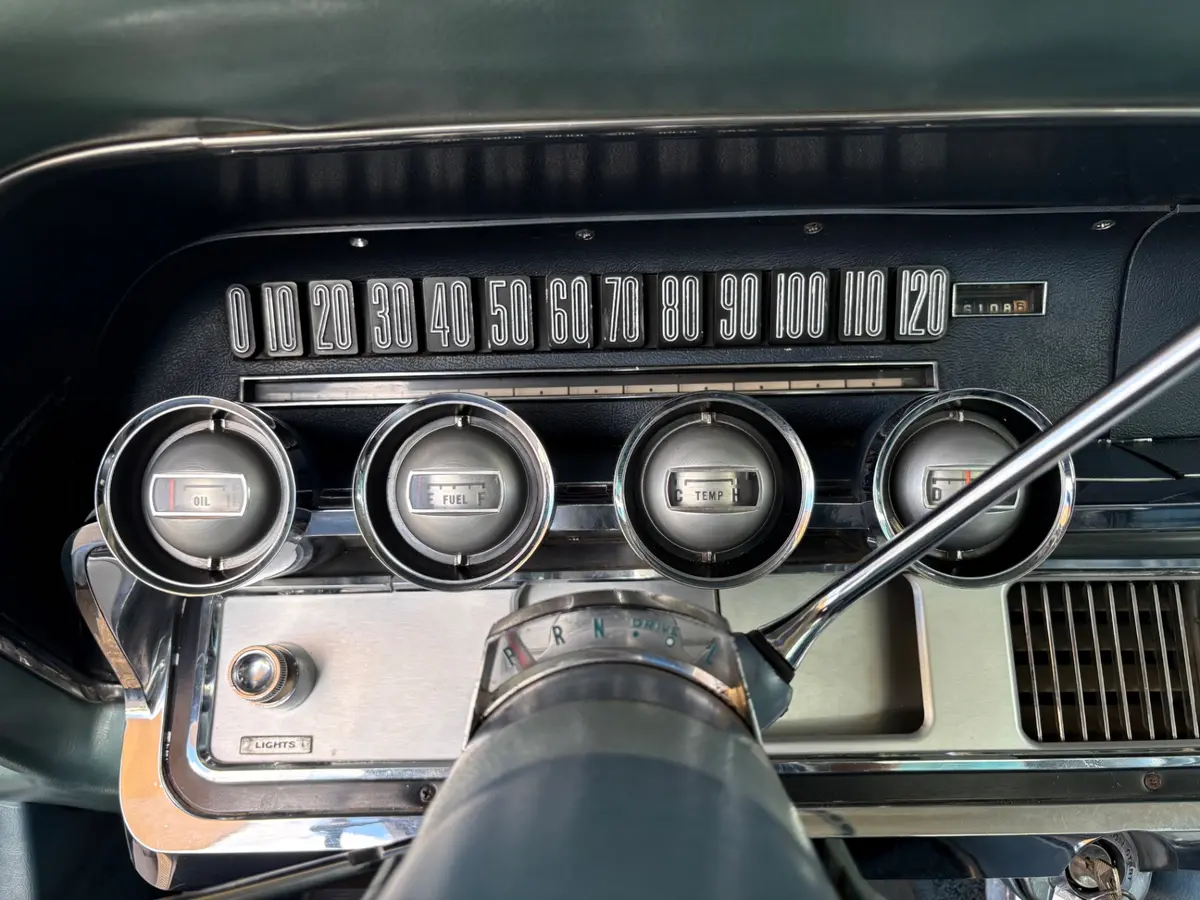
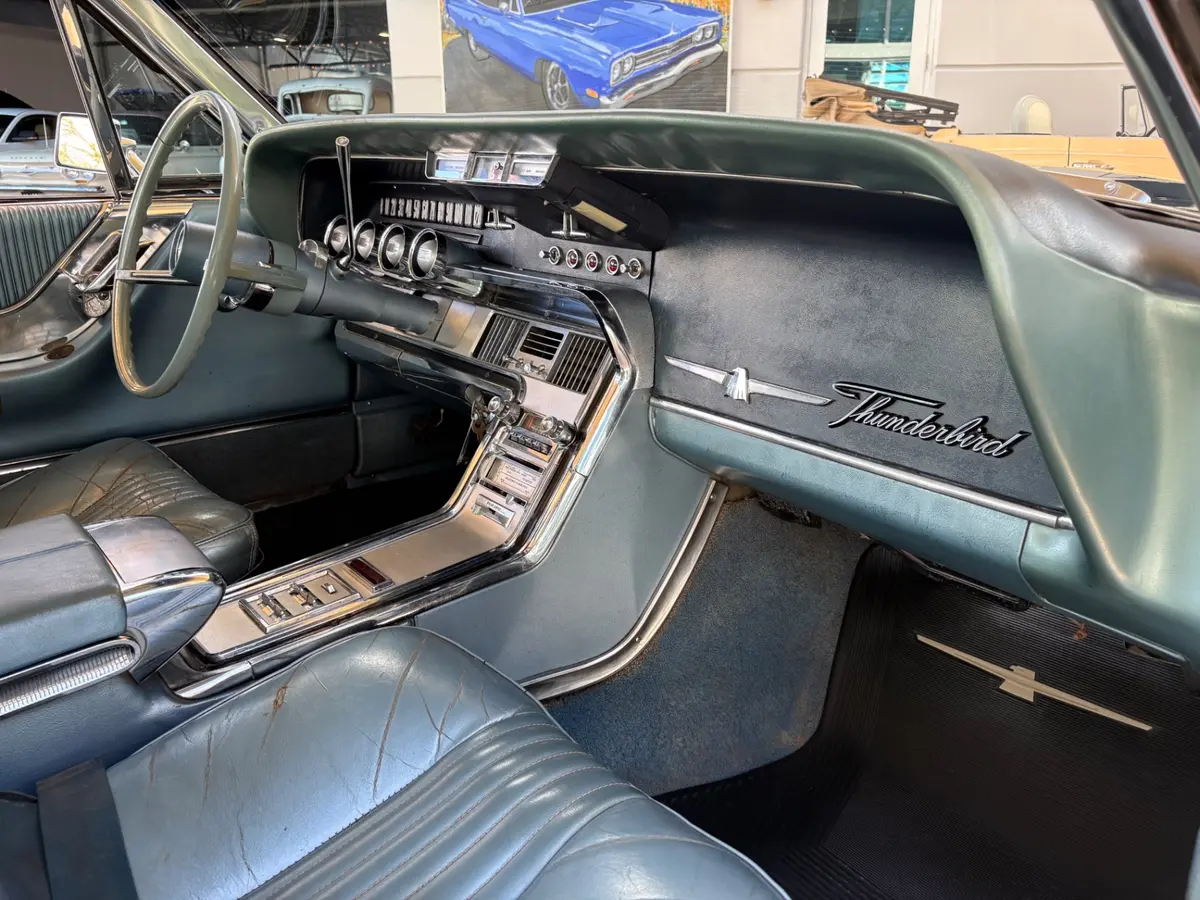
The 1964 Thunderbird interior was one of the most driver-focused cockpits Ford produced in the 1960s. The dashboard wraps around the driver in a way that feels deliberate rather than ornamental, and the instrument cluster is laid out with four round gauges — oil pressure, fuel, temperature, and ammeter — mounted below a horizontal speedometer that reads across a series of individual numerals rather than a conventional arc. It is an unusual and period-specific design that holds up well visually today.
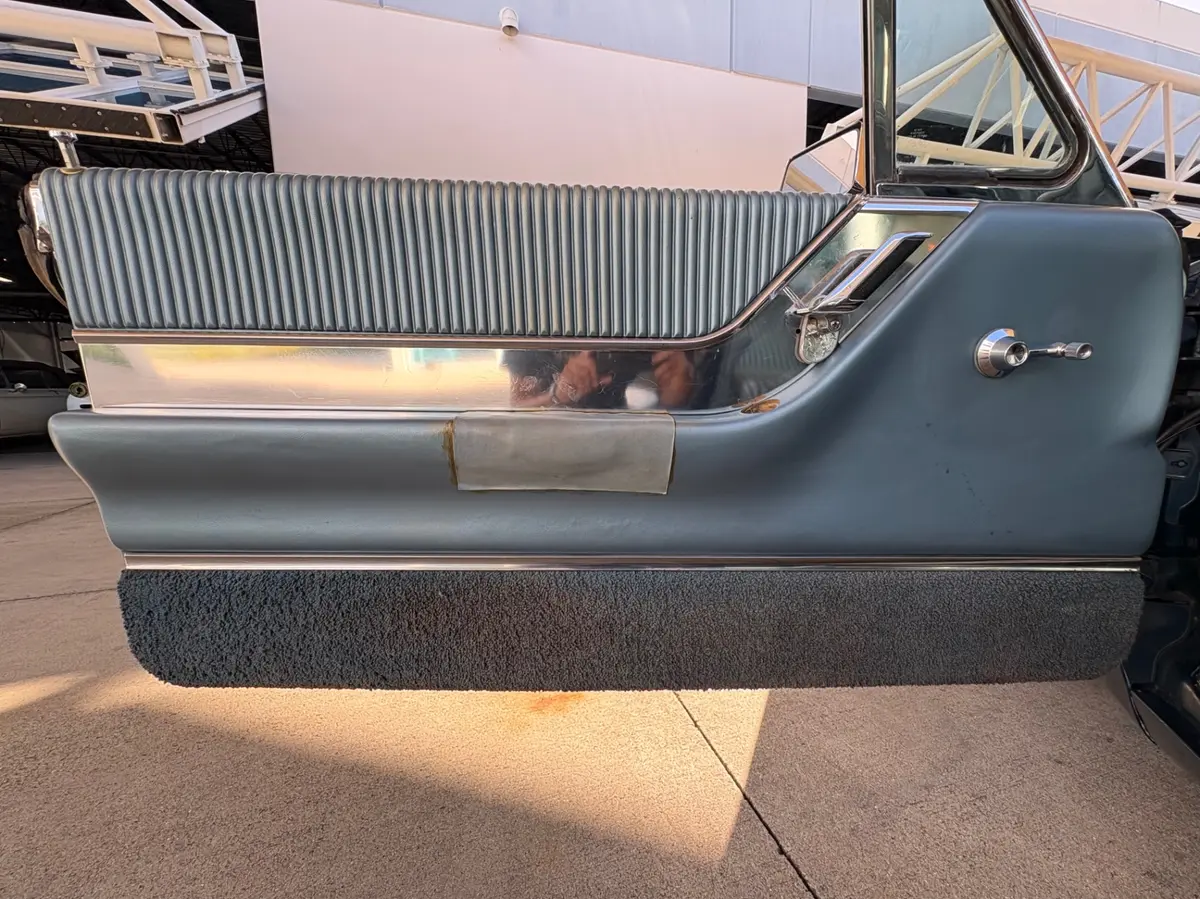
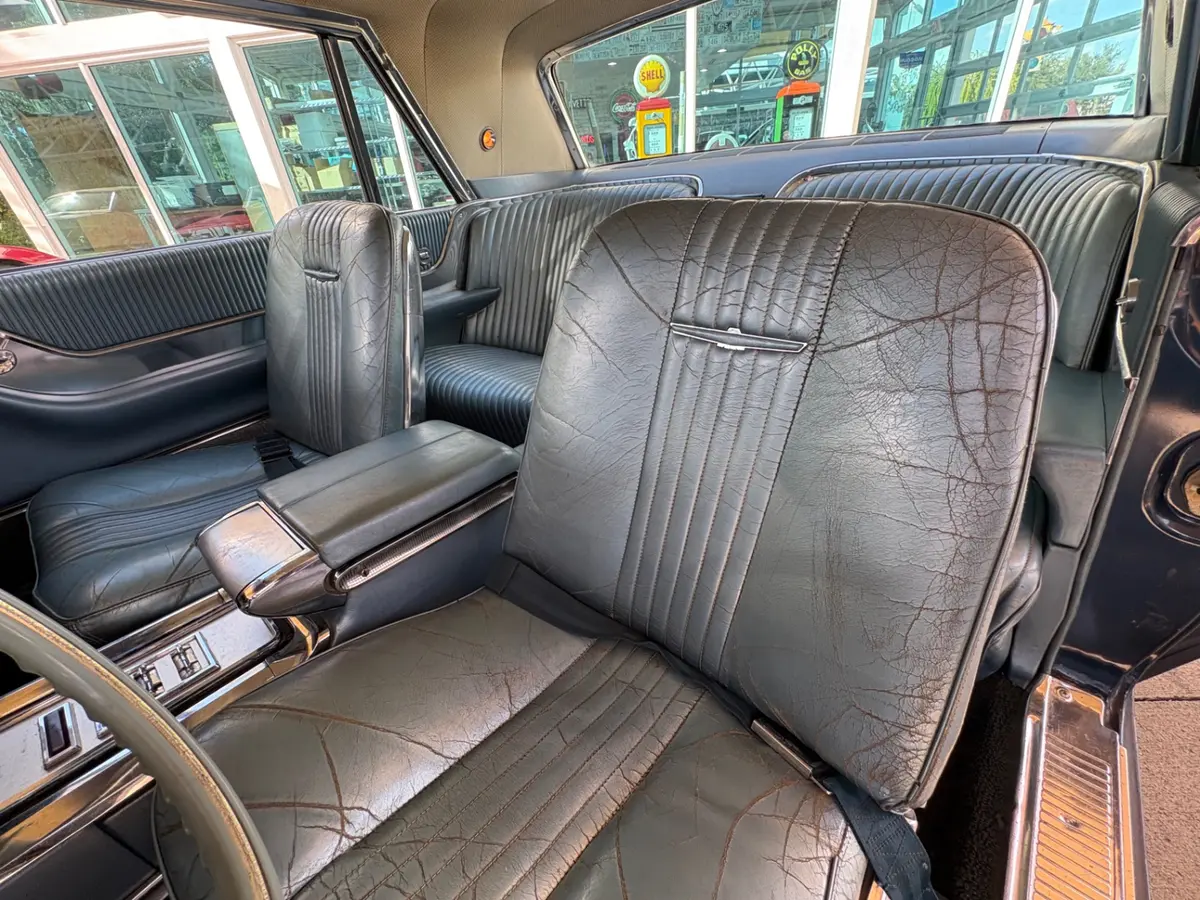
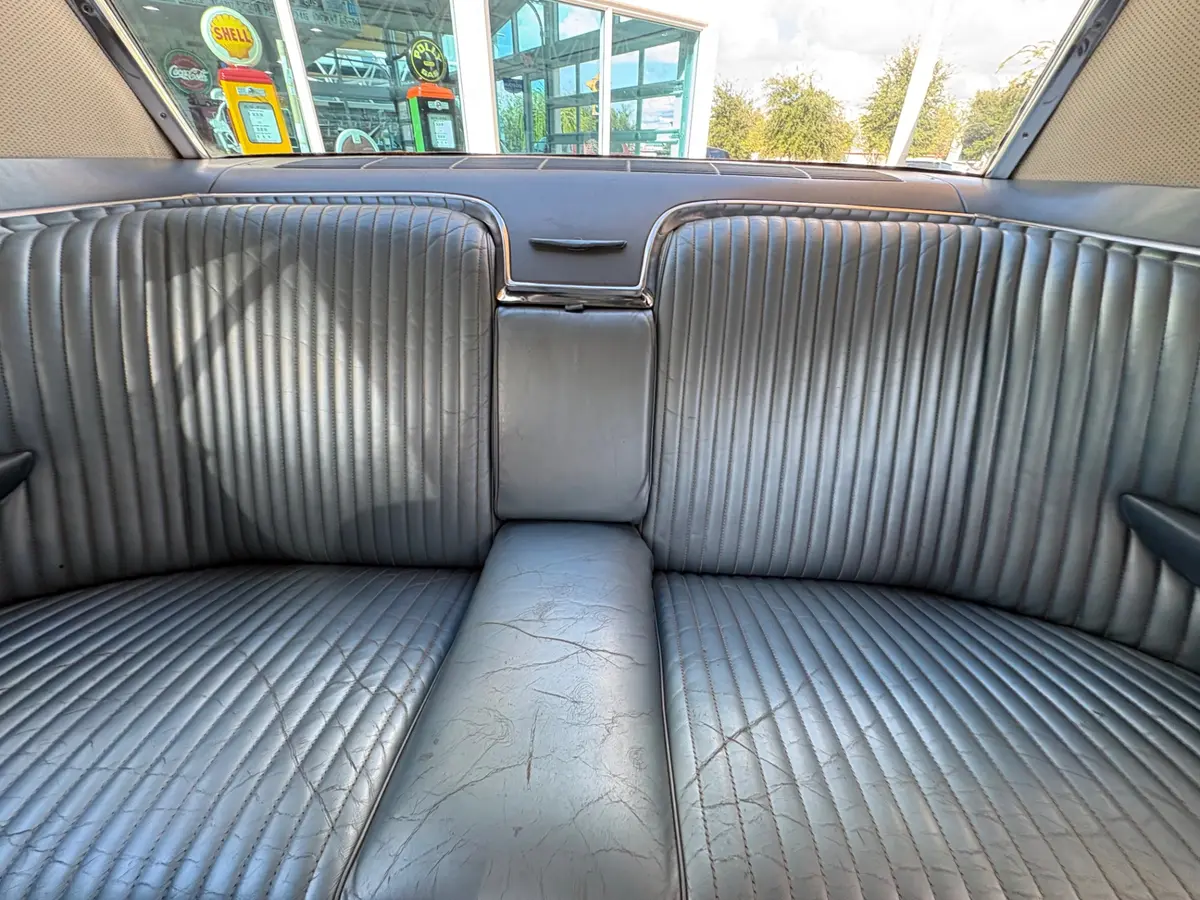
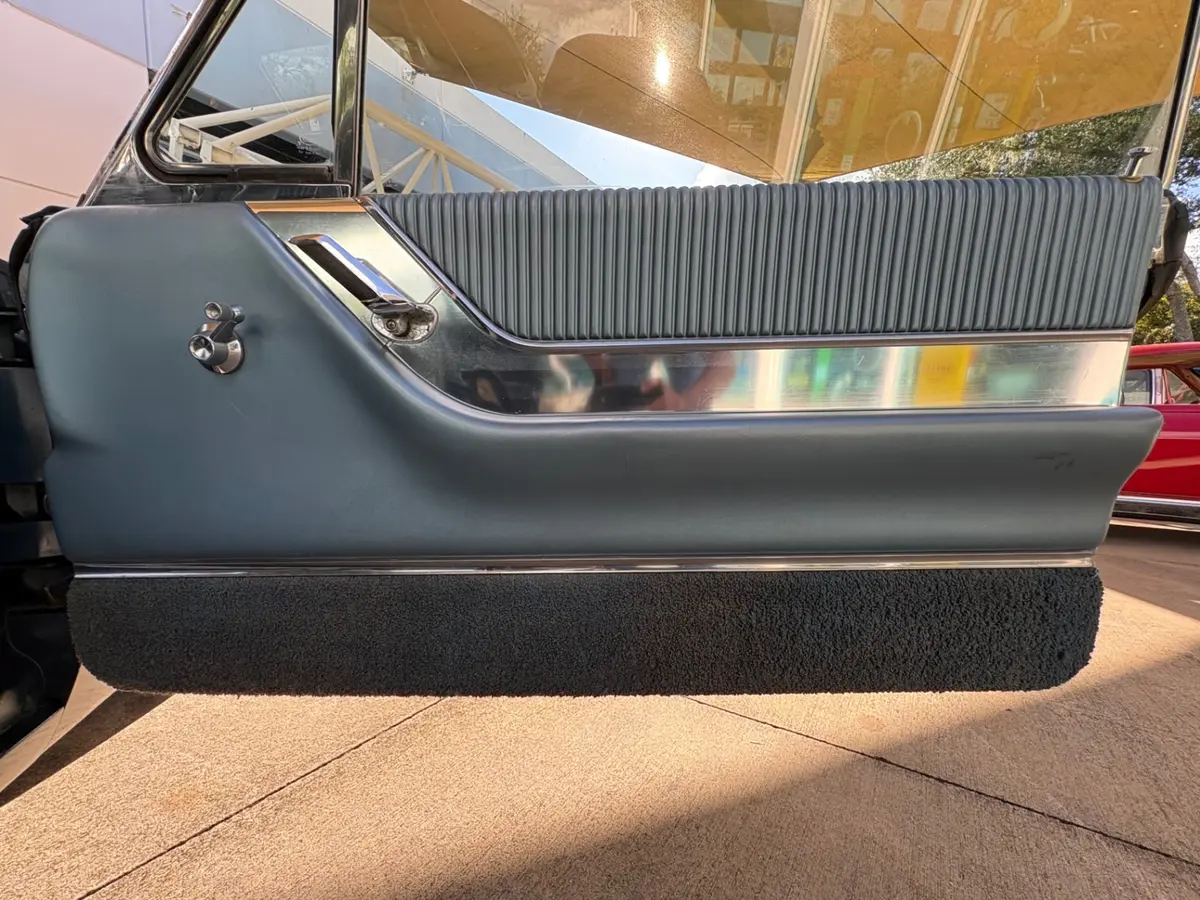
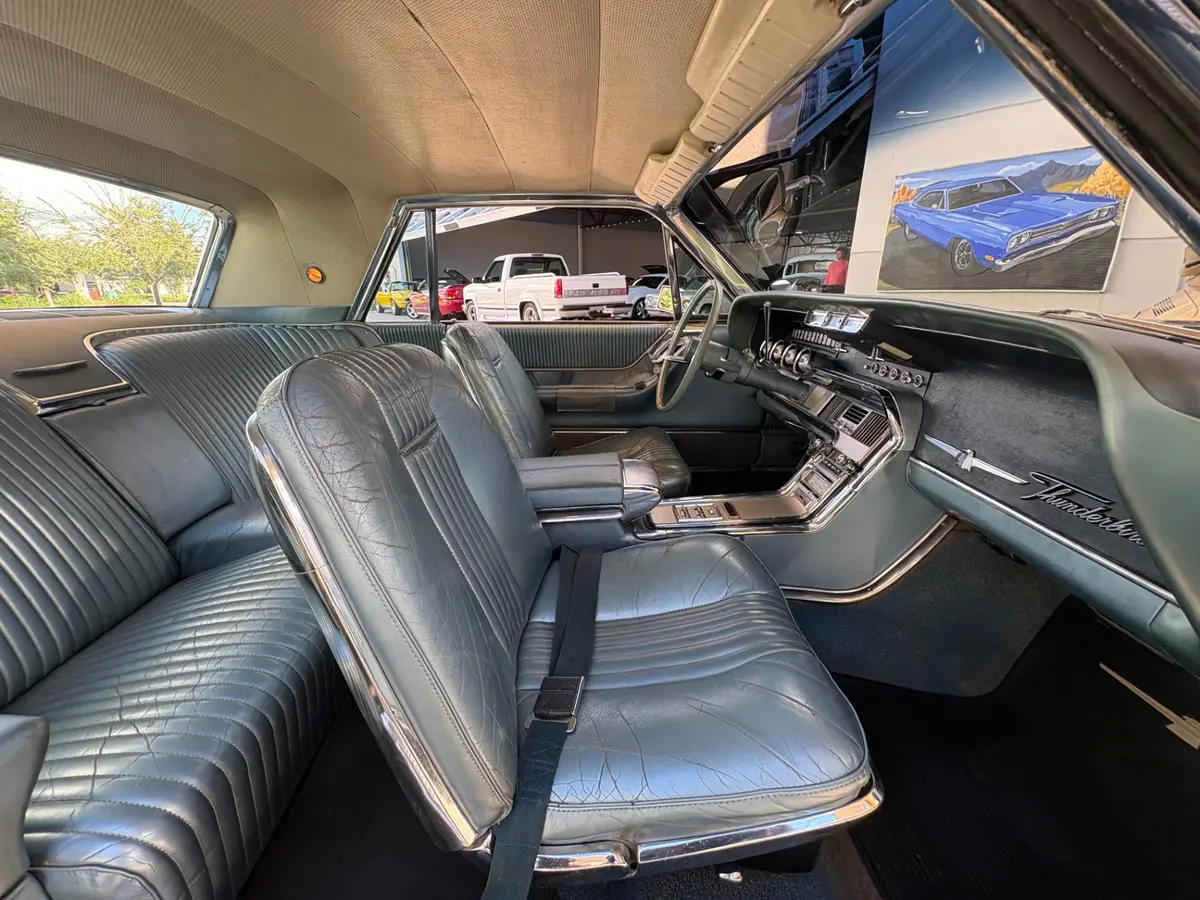
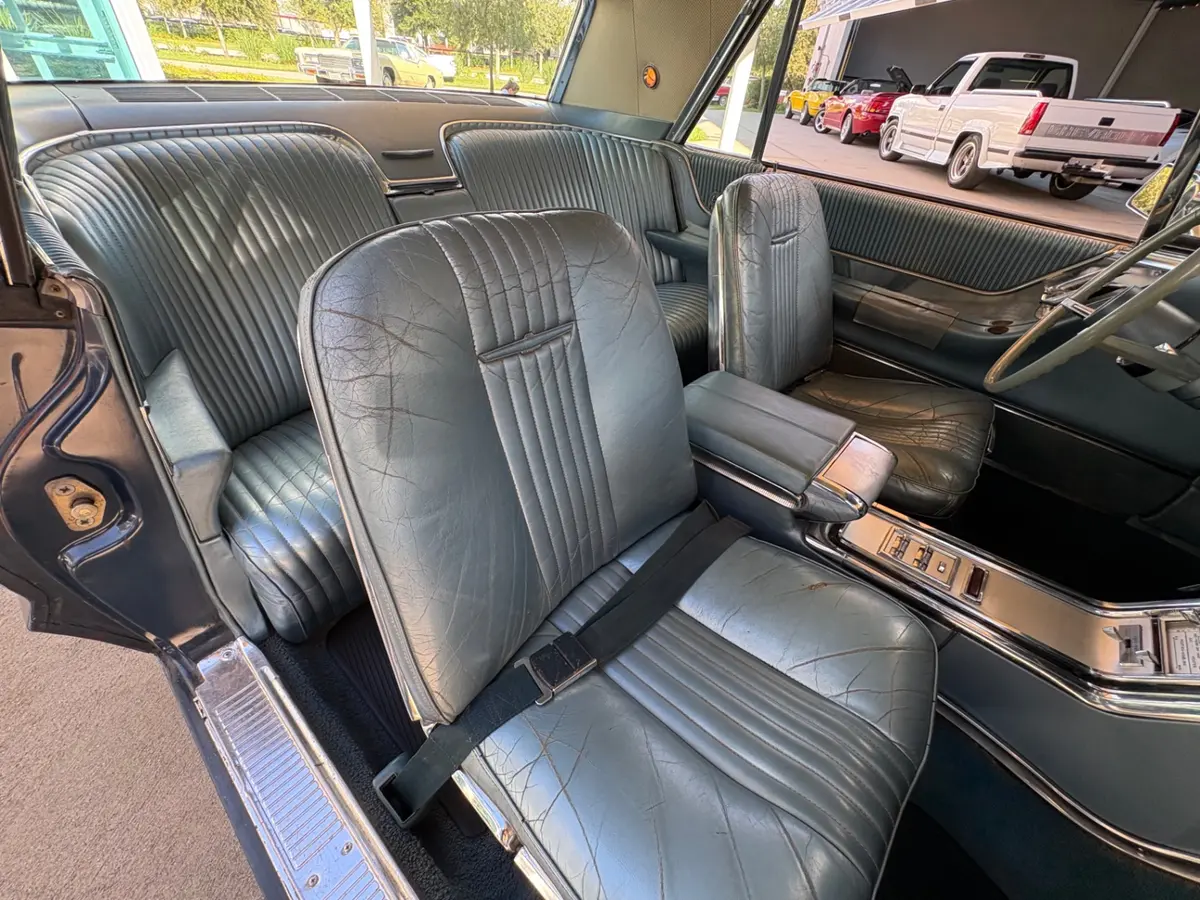
This car's interior is blue vinyl throughout, consistent with the Caspian Blue exterior. The front bucket seats are flanked by a center console that runs the length of the cabin, and the rear seat is a bench. The console houses the transmission selector and provides a visual dividing line between driver and passenger. Looking at the photographs, the front seat surfaces show cracking in the vinyl consistent with their age — this is not a reupholstered car, and the original material has developed the fine-line craze pattern typical of early-1960s Ford vinyl that has dried over decades. The rear seat shows similar age-related cracking on the seat back. The door panels retain their original ribbed upper sections with chrome trim and carpet lower sections, and they present well.
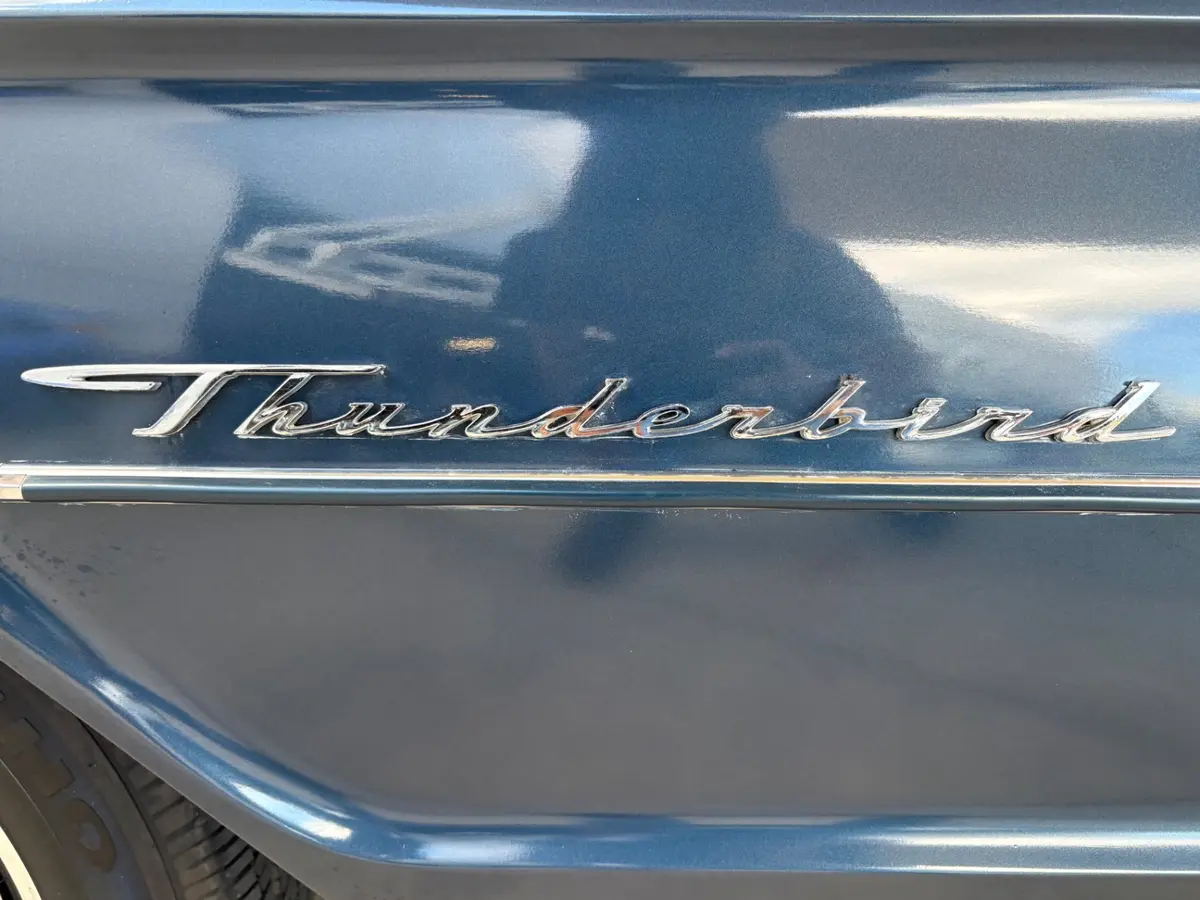
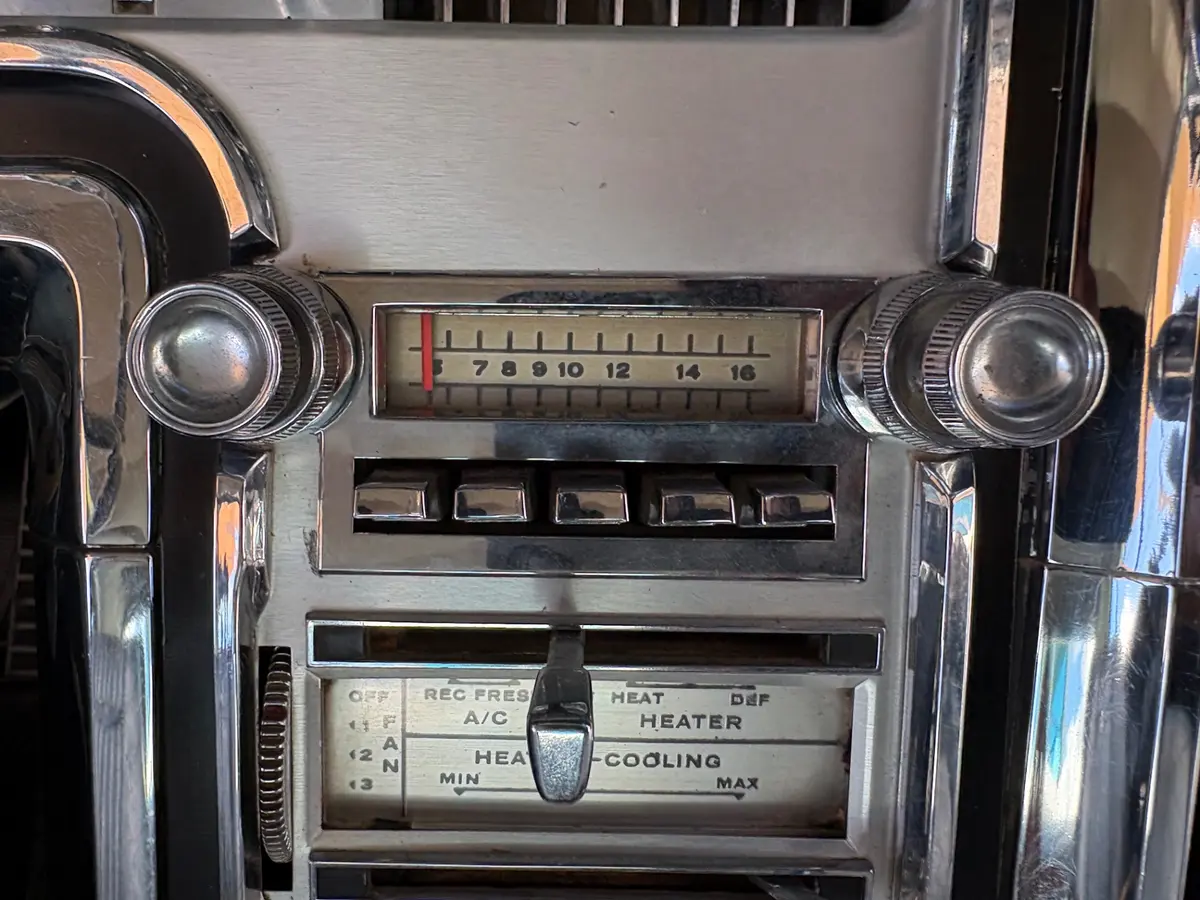
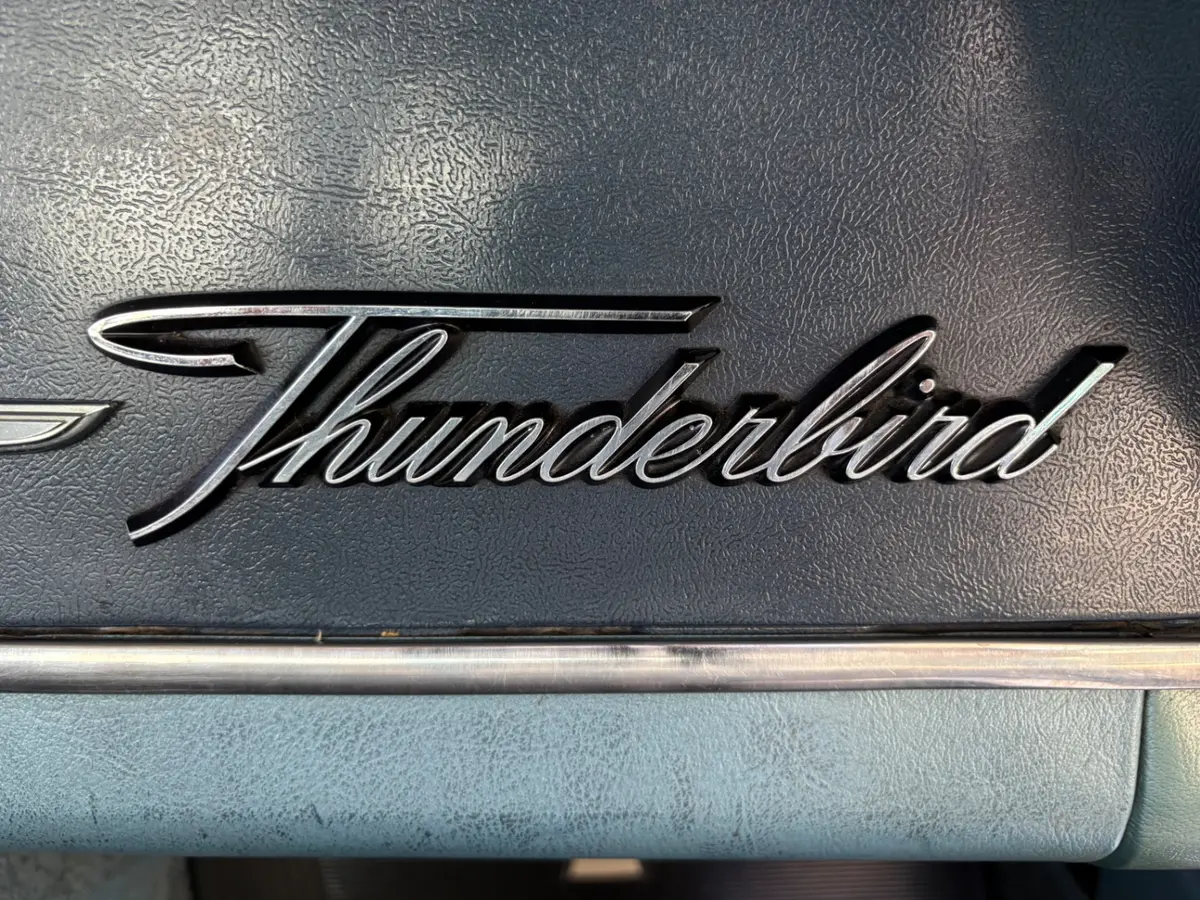
The dashboard shows the original AM radio mounted in the center console stack, along with the factory air conditioning controls below it. The Thunderbird script badge is present on the passenger-side dash pad. The steering wheel is the original Thunderbird unit with the correct hub emblem. The overall cabin is complete and original, which makes it a correct foundation for anyone who wants to bring it back to show condition, or simply preserve and drive it as-is.
Exterior
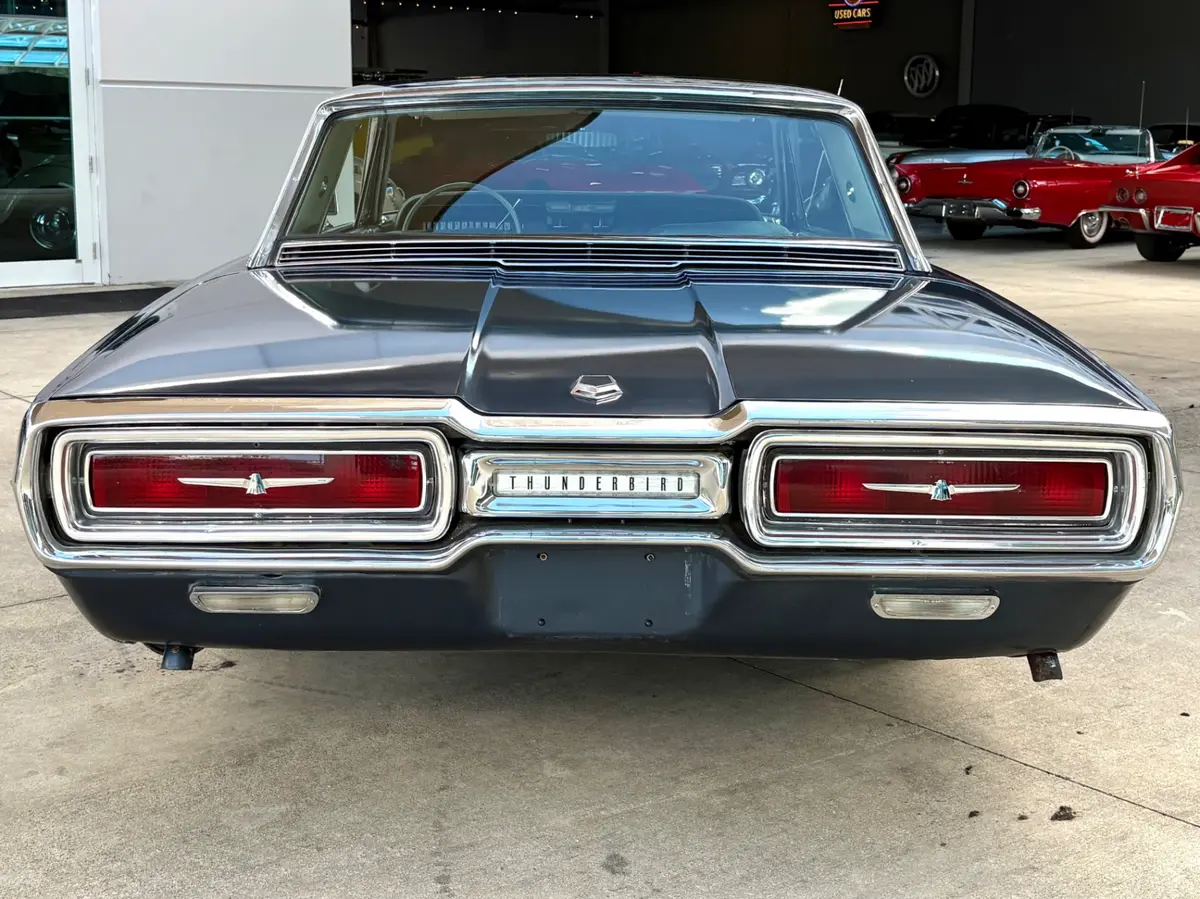
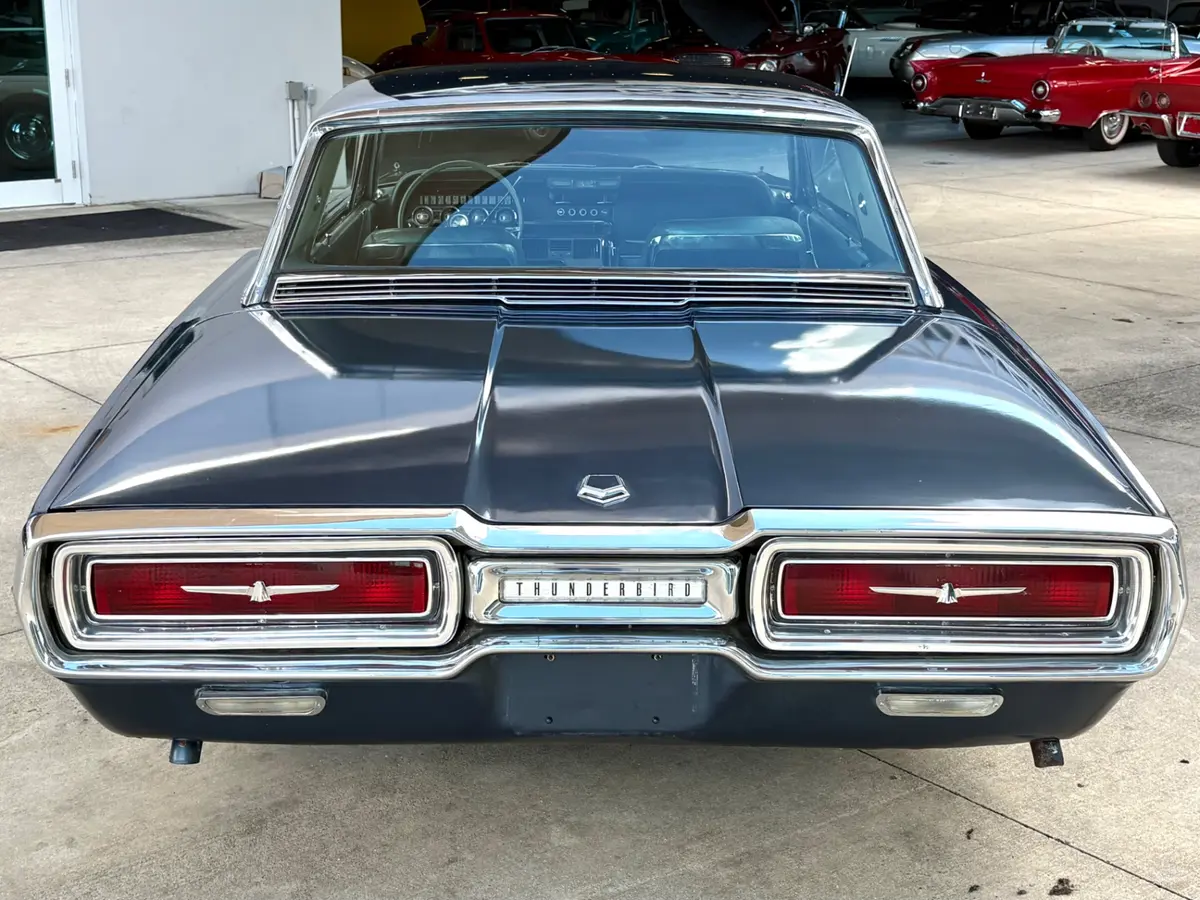
Caspian Blue is a color that photographs somewhat darker than it appears in person, showing as a deep cool blue with a slight metallic quality in direct sunlight. The body on this 1964 Ford Thunderbird carries the original sheet metal, and the panel gaps and body lines appear consistent and correct. The fourth-generation Thunderbird body was characterized by a long, low profile with a relatively formal roofline for a two-door, pronounced front fenders that incorporated the headlights in a dual-round stacked arrangement, and a full-width horizontal bar grille with the Thunderbird name spelled out in block letters across the front. The rear treatment featured a broad, flat tail with rectangular taillights spanning the full width of the car.
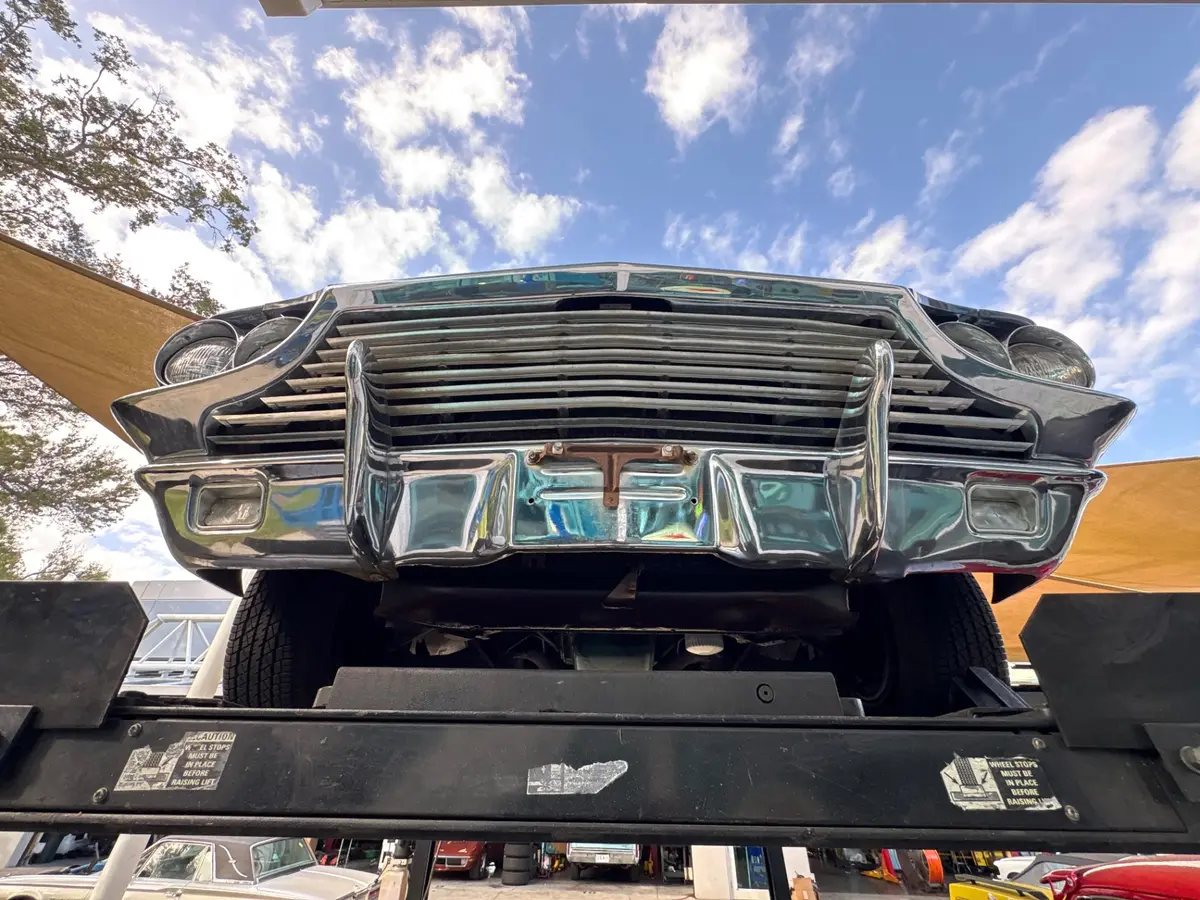
The chrome front and rear bumpers are present and show the expected patina of original chrome rather than replated pieces. The chrome wire wheels are fitted with whitewall tires, which is the correct and period-appropriate look for this car. The wire wheels were a popular factory option on 1964 Thunderbirds and add a significant visual element to the exterior. Looking at the underside photos taken with the car on a lift, the rear valance and bumper area show solid, uncompromised metal. There is no evidence of prior collision repair or filler work visible in the photos.
Conclusion
The 1964 Ford Thunderbird has never been a muscle car and was never marketed as one. Ford built it for buyers who wanted a well-equipped, comfortable, and visually distinctive personal car — something that could cross a state at highway speed with the air conditioning running and the radio on, without drama or fatigue. That is still exactly what this car delivers today. The 390 2V is not a high-strung engine, and that is appropriate. It is a durable, tractable unit that was designed to last and that has a well-established parts and knowledge base among Thunderbird enthusiasts.
The combination of solid structure, a complete and original interior, correct color pairing, and a full factory options list makes this 1964 Ford Thunderbird a genuinely useful starting point whether the goal is show preparation, preservation, or simply putting miles on a well-documented survivor. The undercarriage tells the most important story — the bones are there, and they are sound.
If you have questions about this 1964 Ford Thunderbird or would like to arrange an inspection, call Skyway Classics in Sarasota, Florida at 941-254-6608. We are glad to answer questions about the car's condition in detail and can accommodate out-of-state buyers with transport coordination.
Disclaimer
Information found on the website is presented as given to us by the owner of the car, whether on consignment or from the owner we bought it from. Some Photos, materials for videos, descriptions and other information are provided by the consignor/seller and is deemed reliable, but Skyway Classics does not warranty or guarantee this information. Skyway Classics is not responsible for information that may incorrect or a publishing error. The decision to purchase should be based solely on the buyers personal inspection of the vehicle or by a professional inspection service prior to offer or purchase being made.
1964 Ford
Thunderbird Base
Why Choose Skyway Classics?
Explore our curated inventory of classic and collector cars—thoughtfully selected, ready to drive, and supported by experts who make ownership simple.
Expert Curation
Every vehicle is hand-selected by our experts for quality, authenticity, and investment potential.
Fast Transactions
Streamlined buying and selling process with quick financing and immediate delivery options.
Only National Dealer With Classic Service & Repair
We’re the only national dealership that services and repairs the classics we sell—before and after the sale.
Nationwide Network
Access to our extensive network of collectors, restorers, and classic car enthusiasts nationwide.
Concierge Ownership Support
From financing and insurance to paperwork, shipping, and titling—we handle the details so you can enjoy the drive.
Passion-Driven Service
We're classic car enthusiasts first, providing personalized service with genuine passion for the hobby.