
1979 Chevrolet
K5 Blazer Silverado
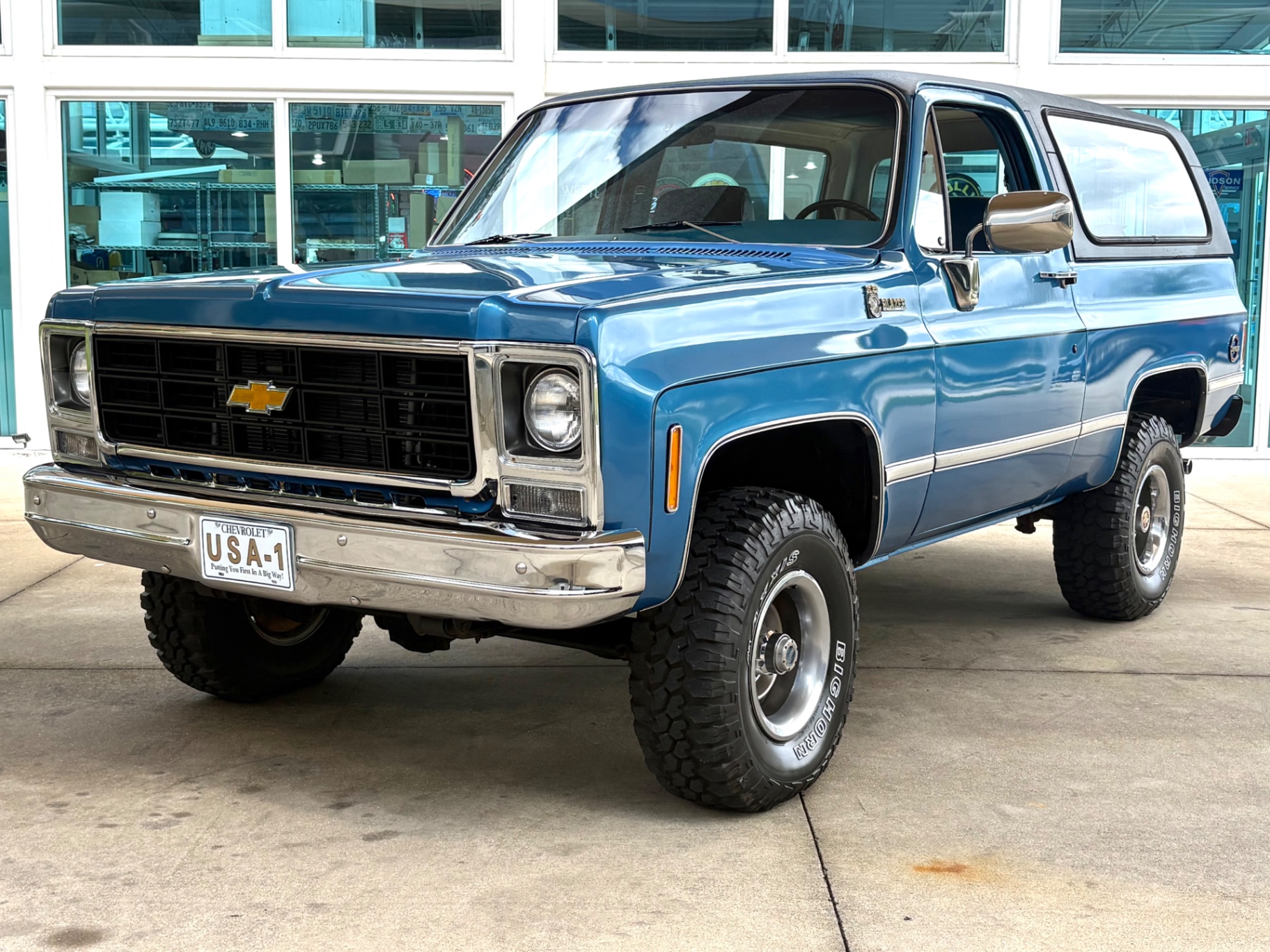
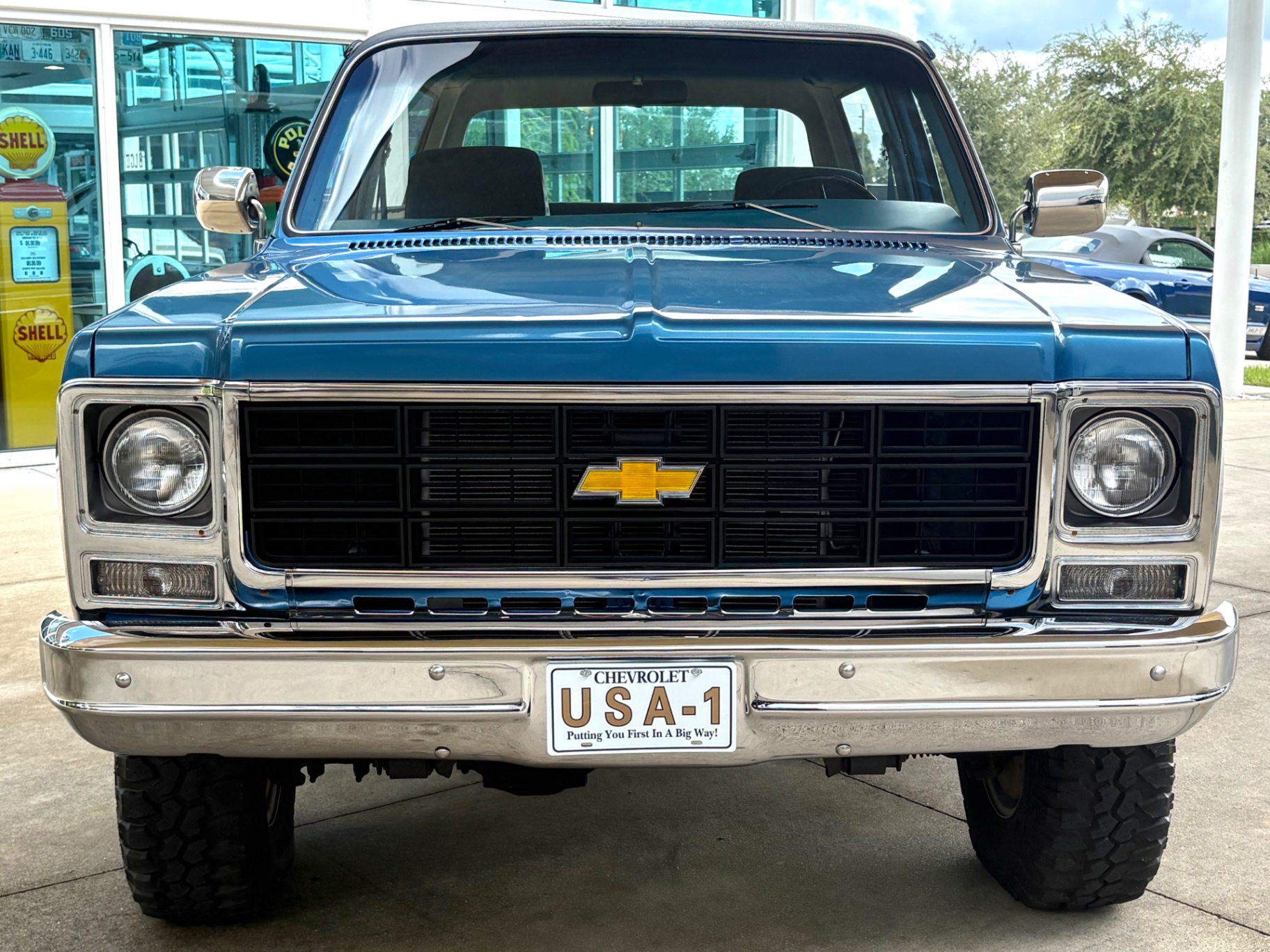
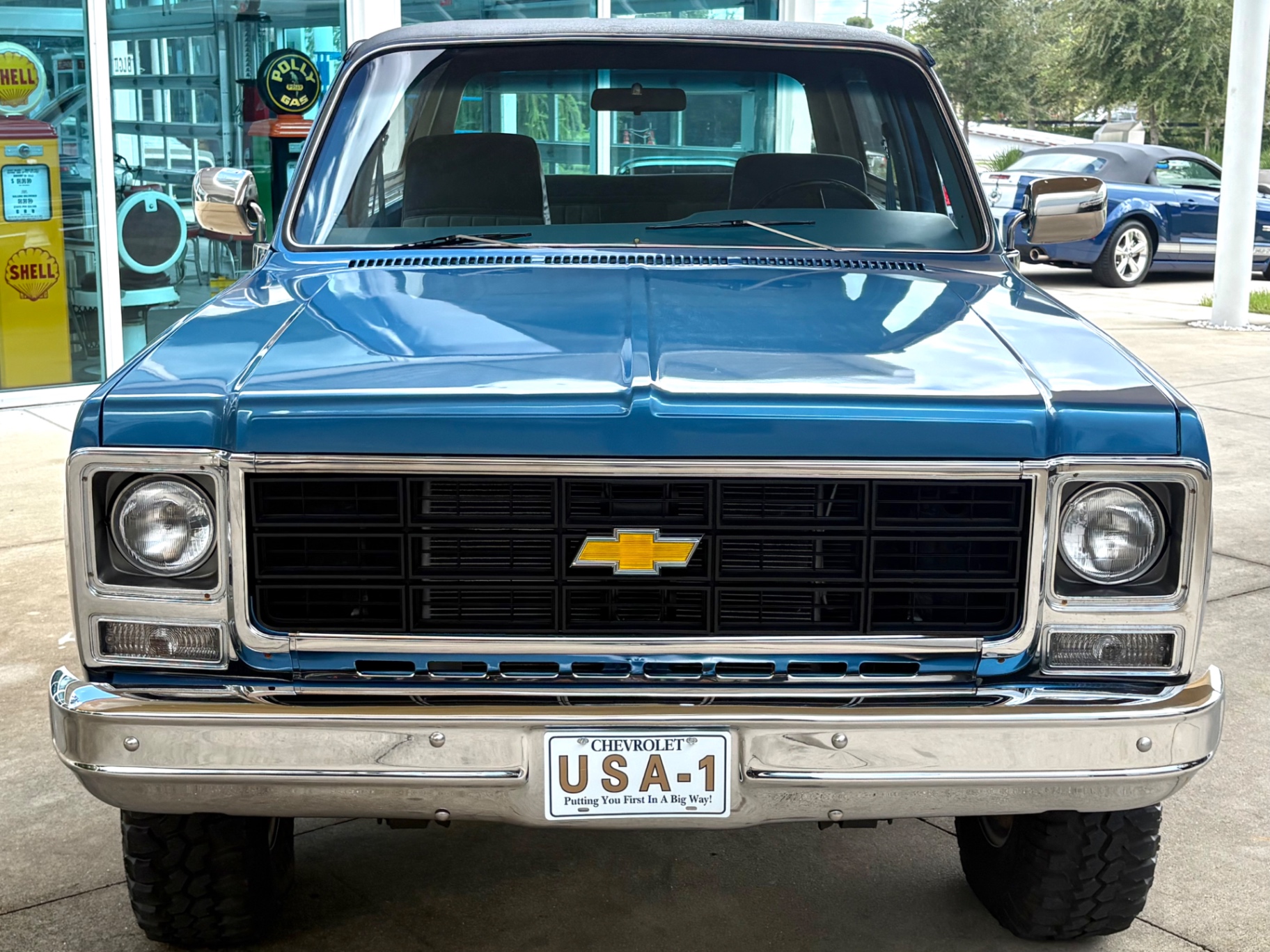
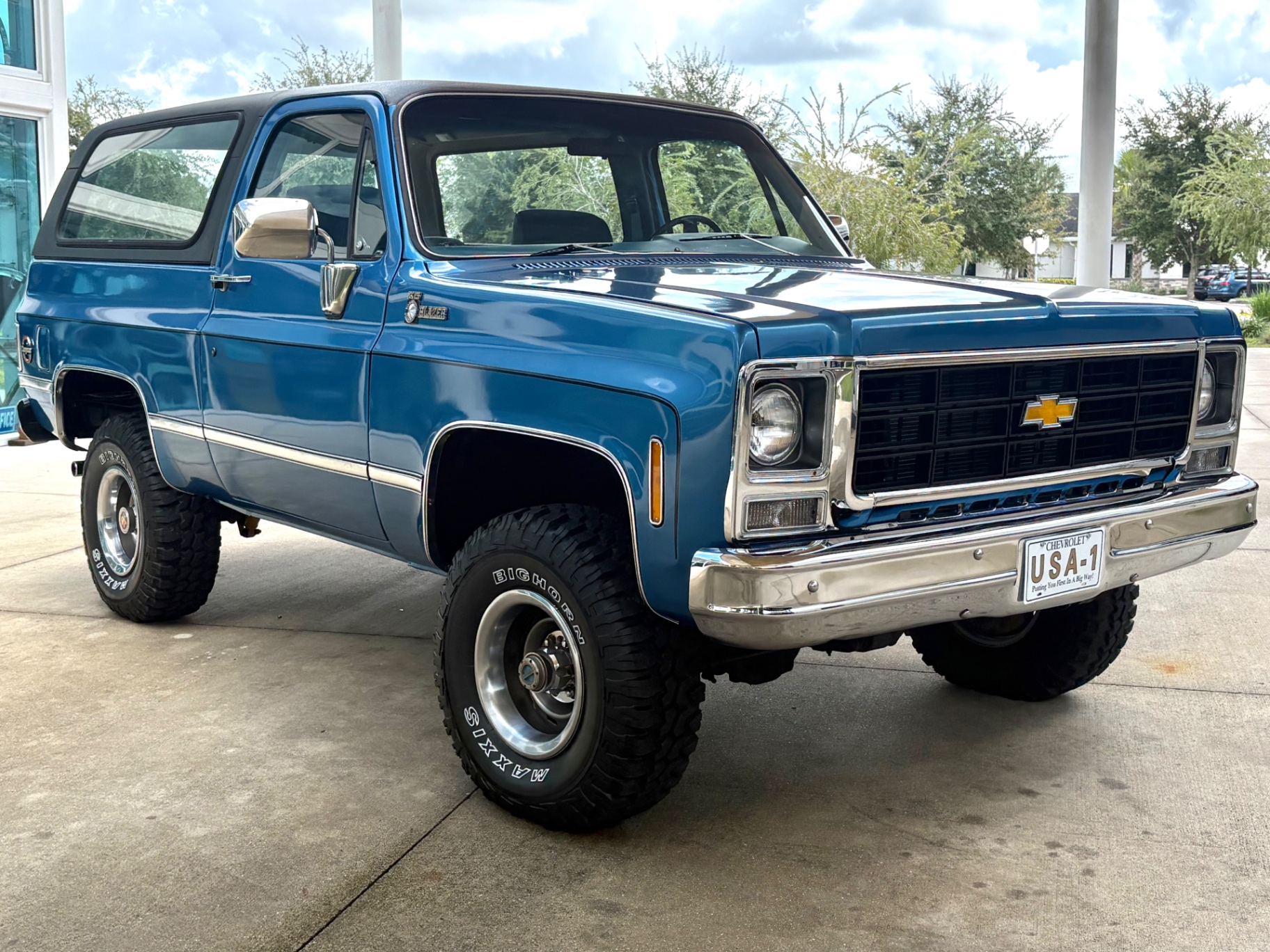
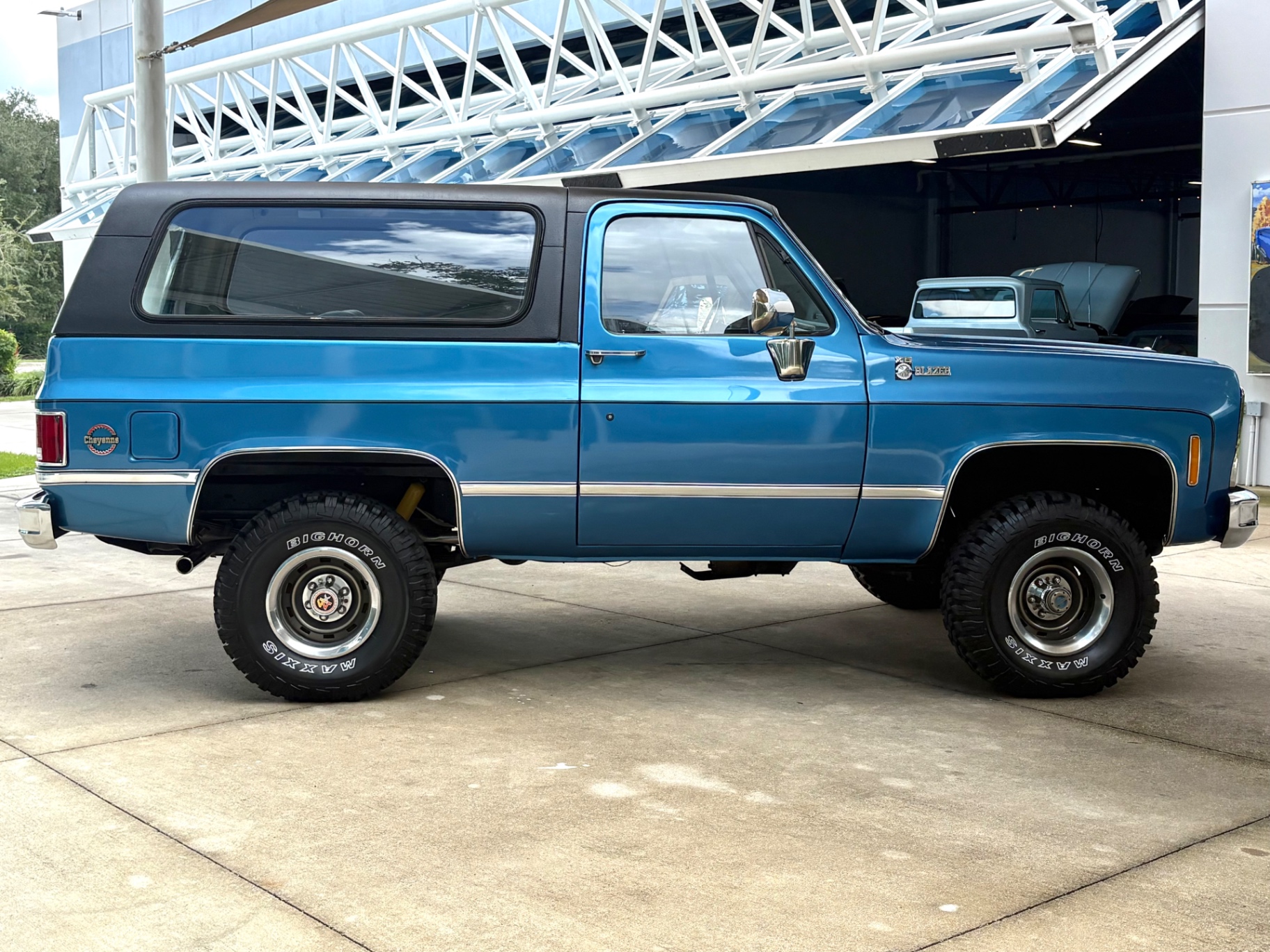
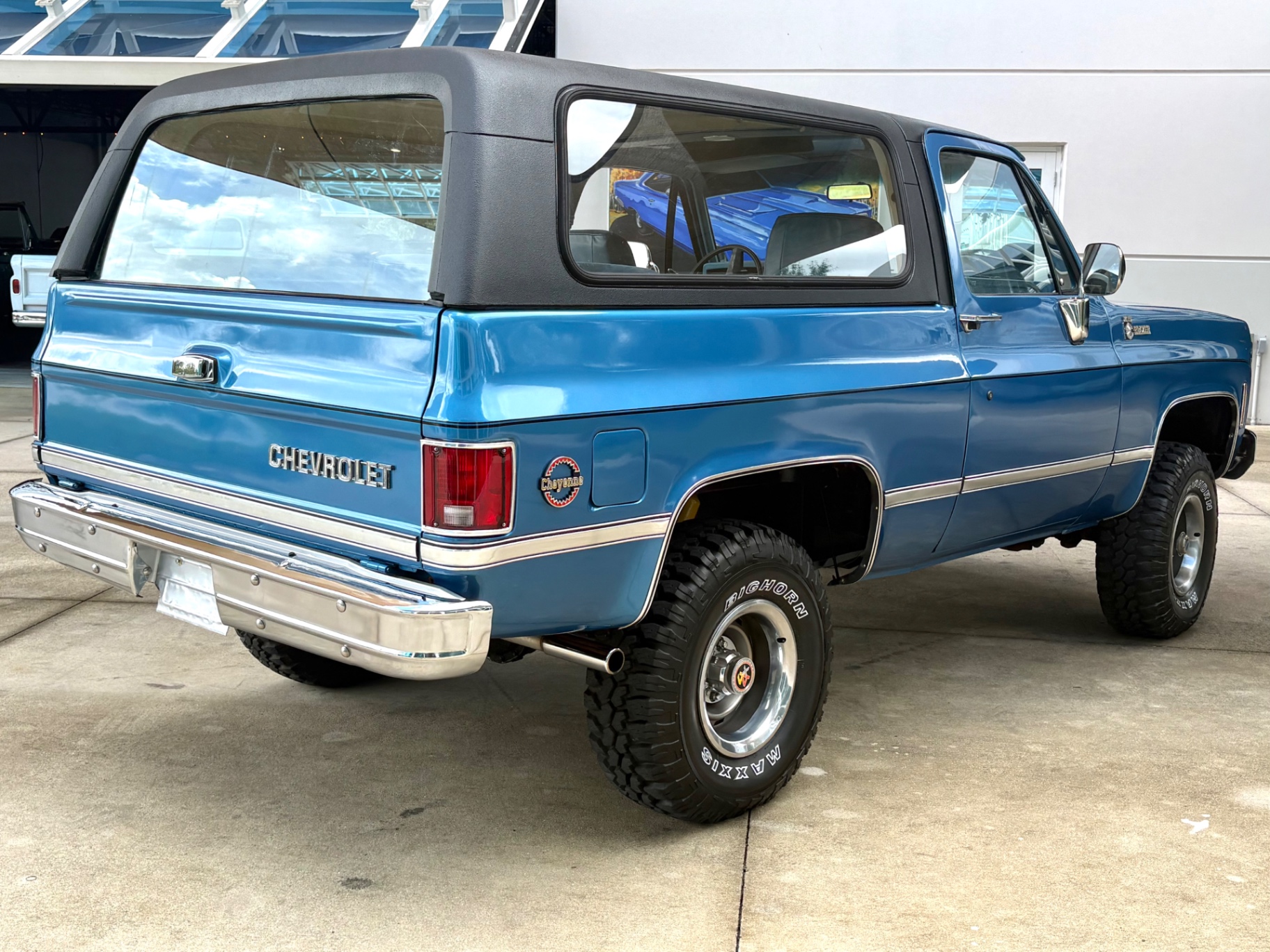
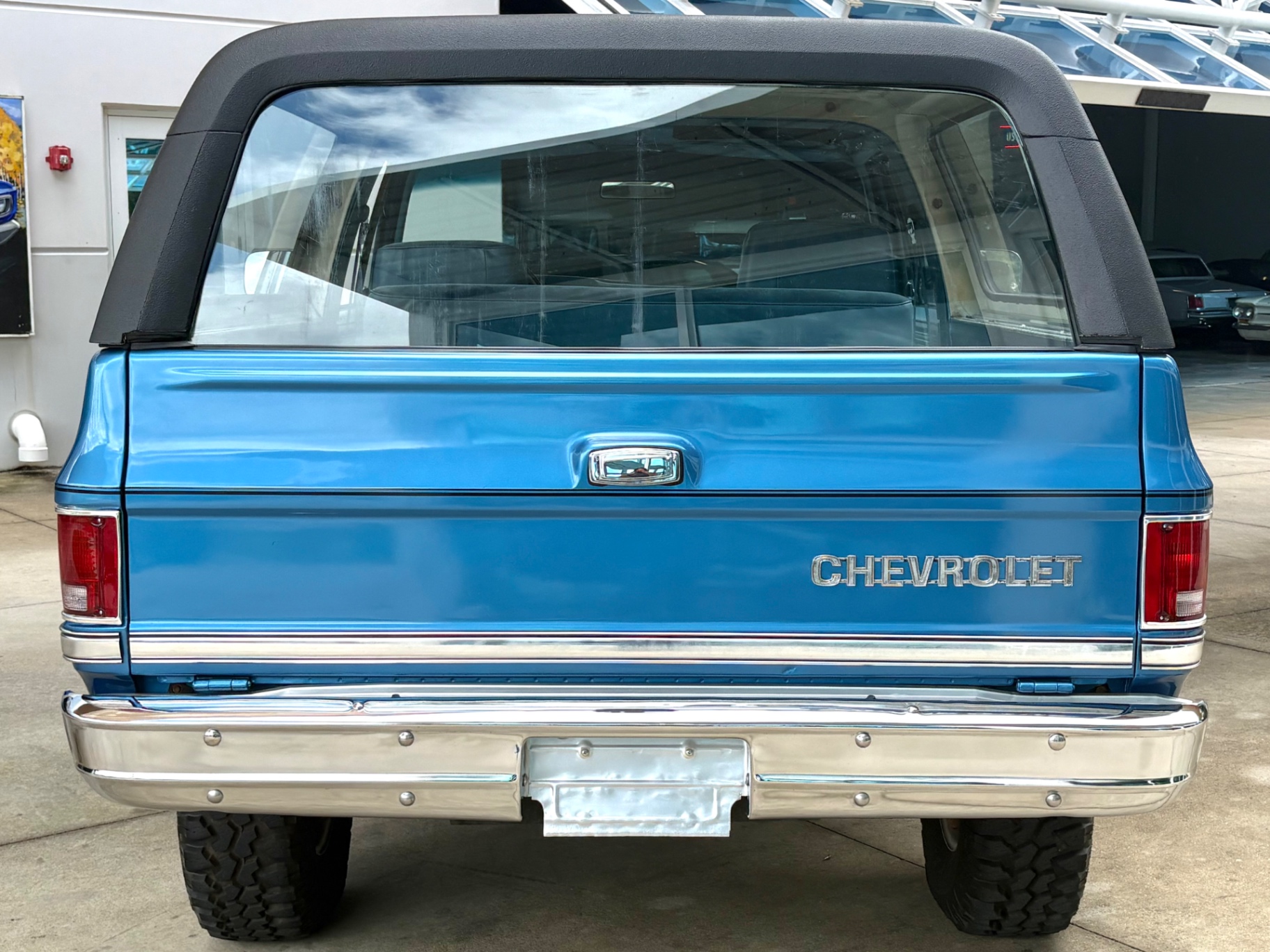
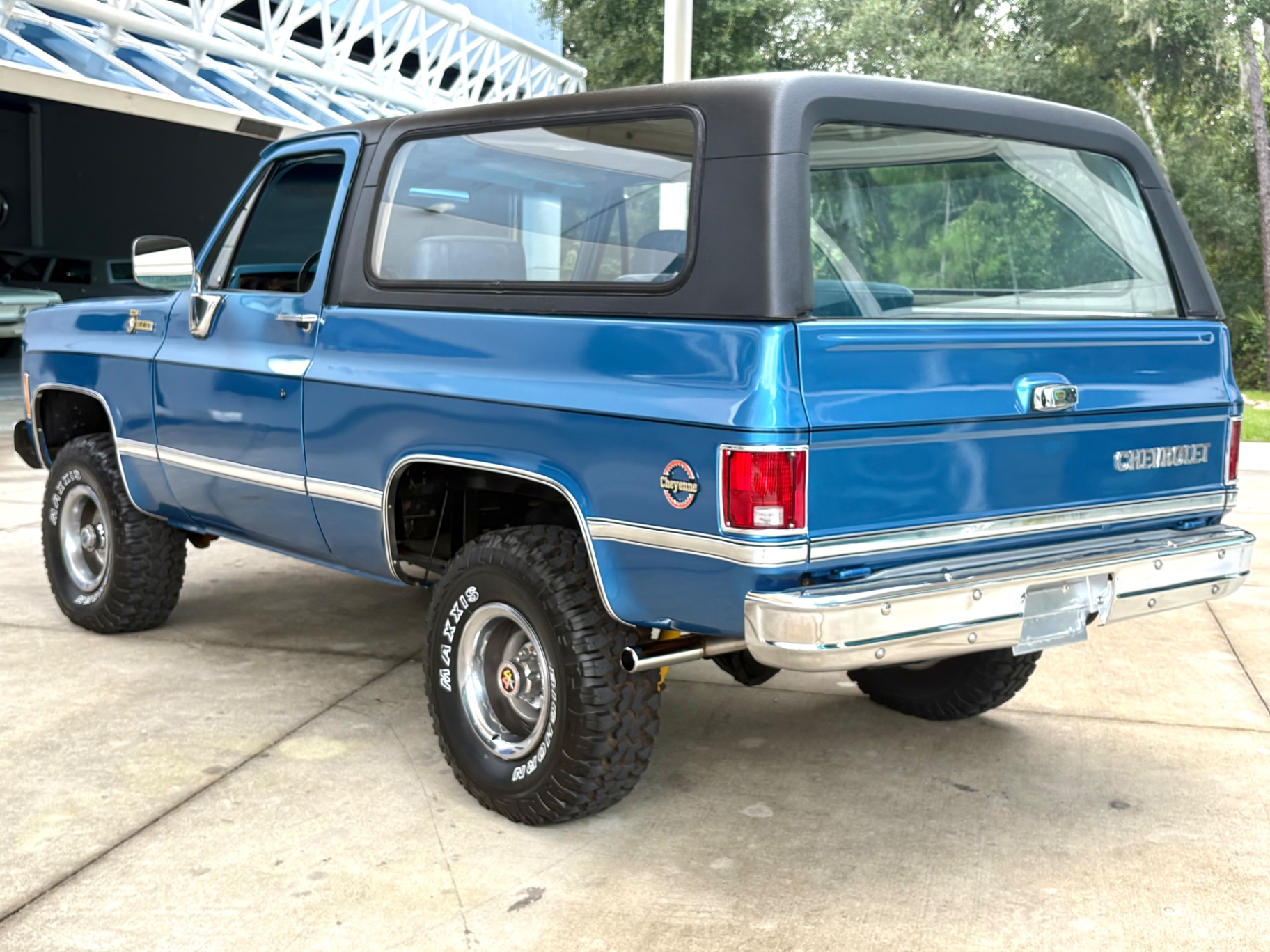
1979 Chevrolet K5 Blazer Cheyenne — 350 V8, 4-Speed Manual, Lifted, Undercoated
Why This Car Is Special
The 1979 Chevrolet K5 Blazer sits at a genuinely interesting crossroads in American truck history. By the late 1970s, the square-body generation — officially the C/K third generation, introduced for 1973 — had matured into the most refined version of itself. The Blazer variant of that platform offered something that almost nothing else on the market could: full-size four-wheel-drive capability in a two-door body with a removable hardtop, seating for up to five, and a level of interior comfort that put most SUVs of the era to shame.
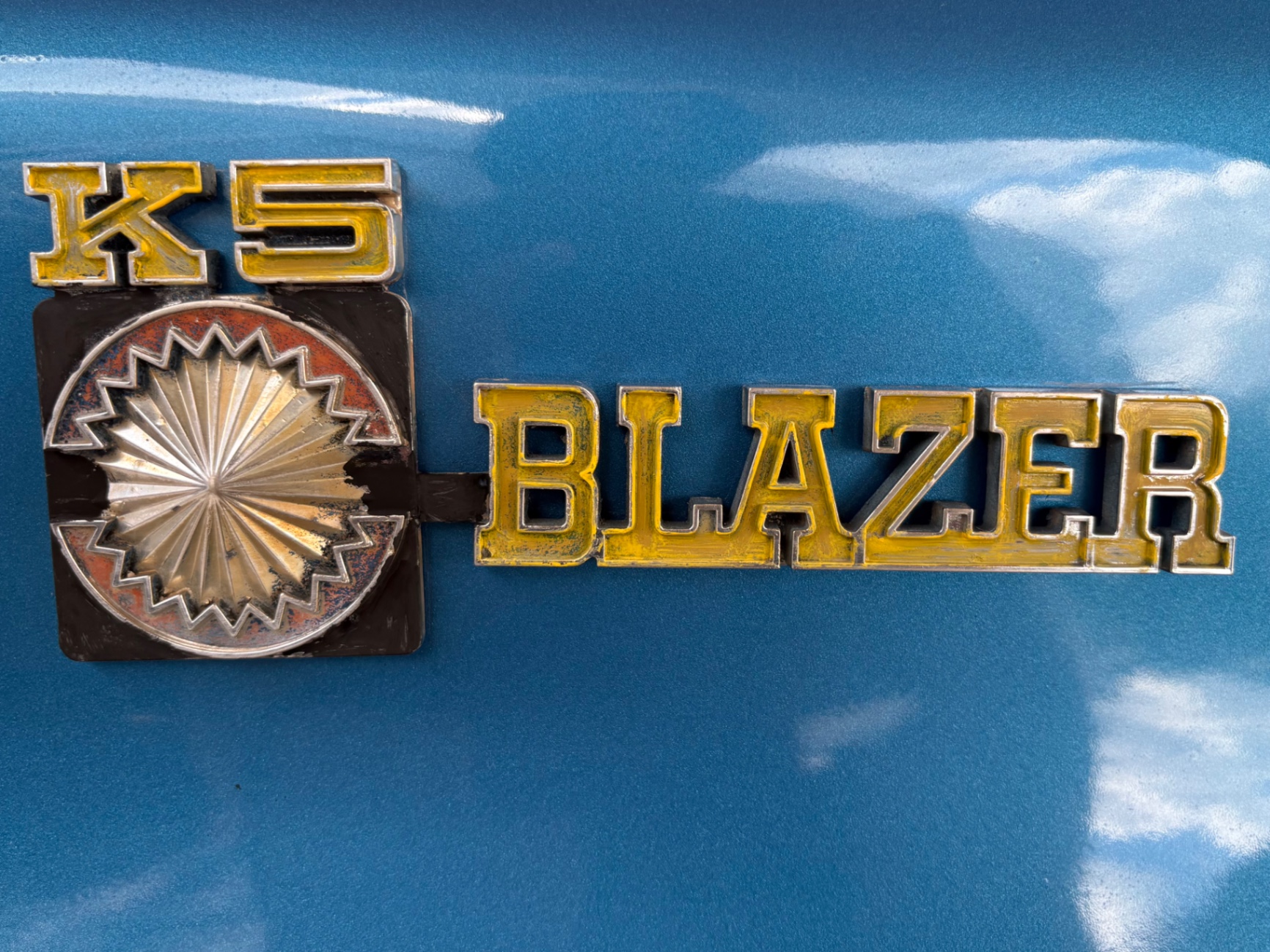
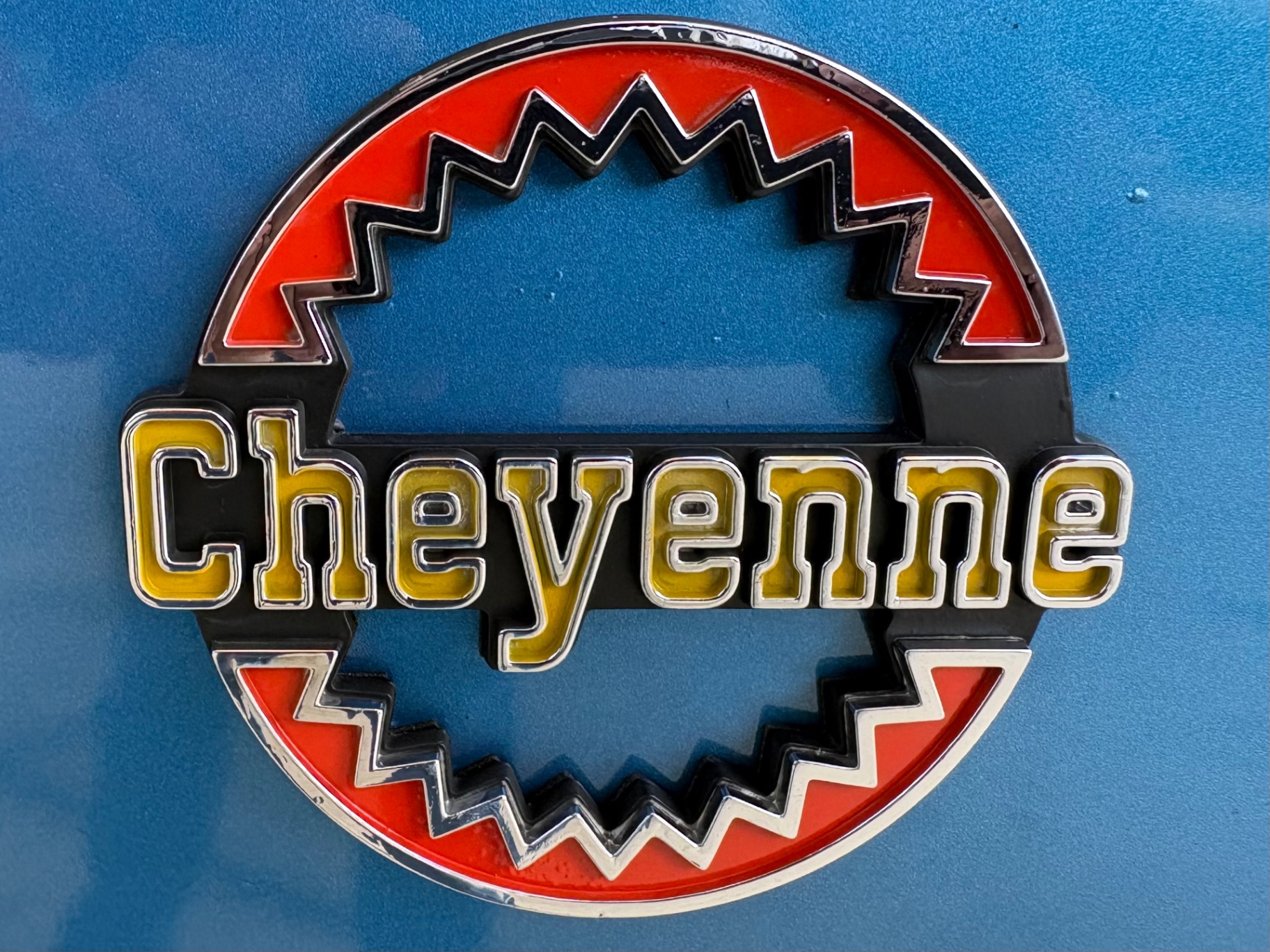
The "K" in K5 Blazer is the important letter here. It indicates four-wheel drive, as opposed to the two-wheel-drive C5. The "5" refers to the half-ton chassis. By 1979, the K5 Blazer was available in several trim levels, and this example carries the Cheyenne package, which placed it in the upper-middle tier of the lineup — above base and Custom trim, and offering a noticeably upgraded interior and exterior presentation without reaching all the way to Silverado pricing. Cheyenne-trimmed trucks from this era are well-regarded by collectors because they hit the right balance of livability and honest truck character.
What makes the 1979 model year specifically worth noting is that it came near the end of a very clean, uncompromised design run. Emissions regulations had taken a toll on domestic V8 output during this period, and GM was threading the needle between performance and compliance. The 350 cubic inch small-block was the engine of choice for buyers who wanted usable power without the complexity of the bigger-displacement offerings. It was proven, widely supported, and responded well to modifications — which is exactly the direction this truck went.
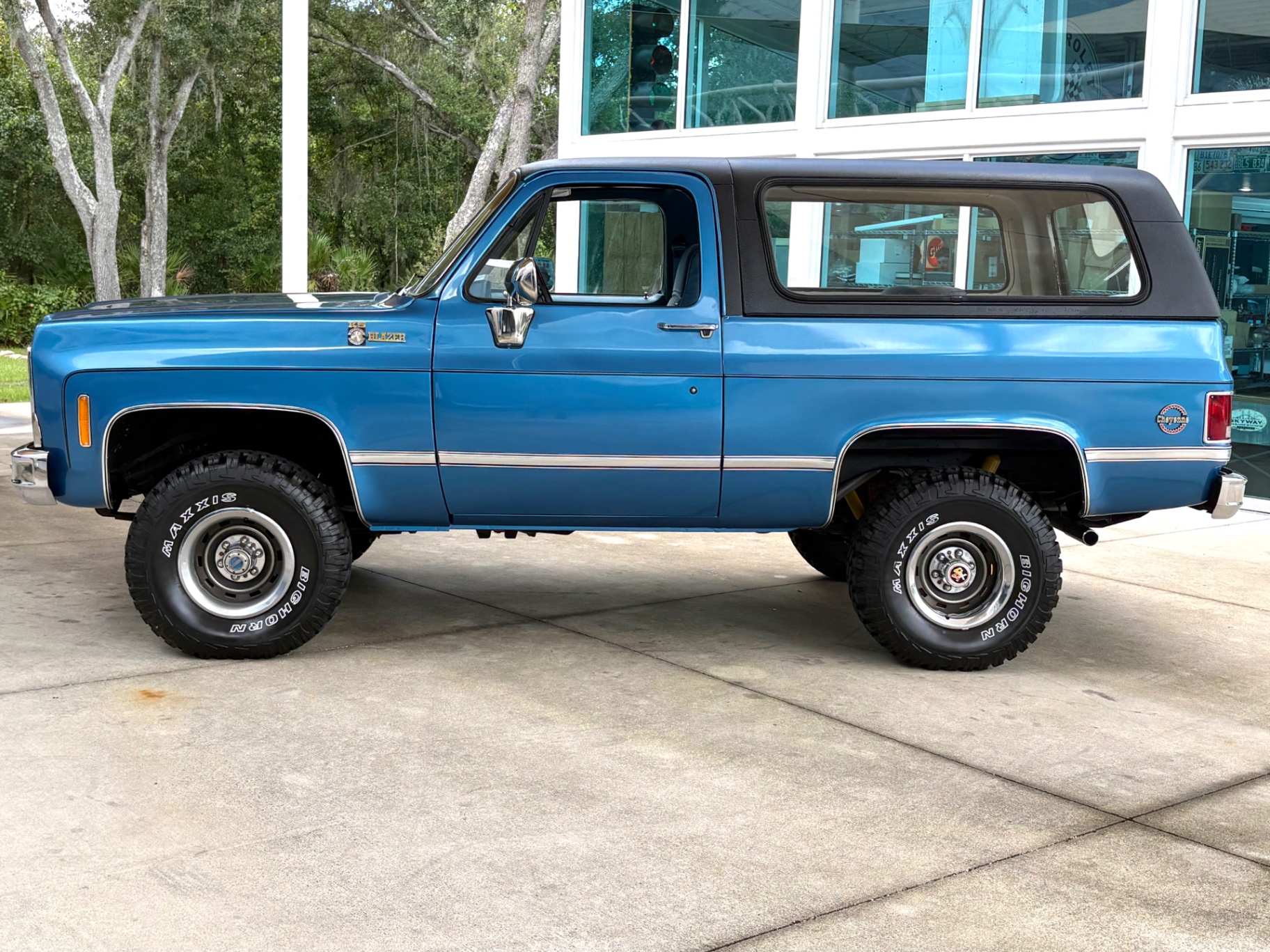
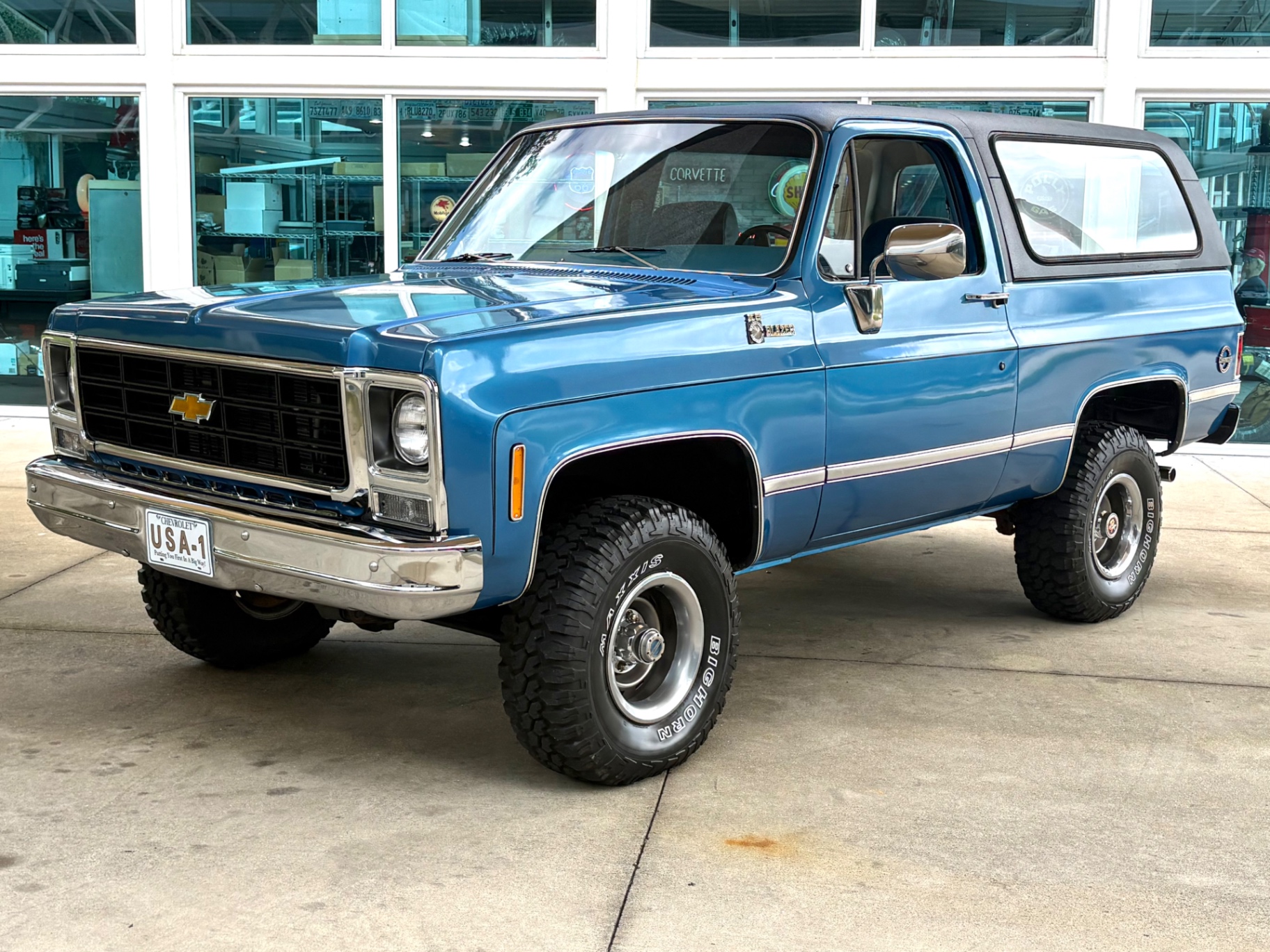
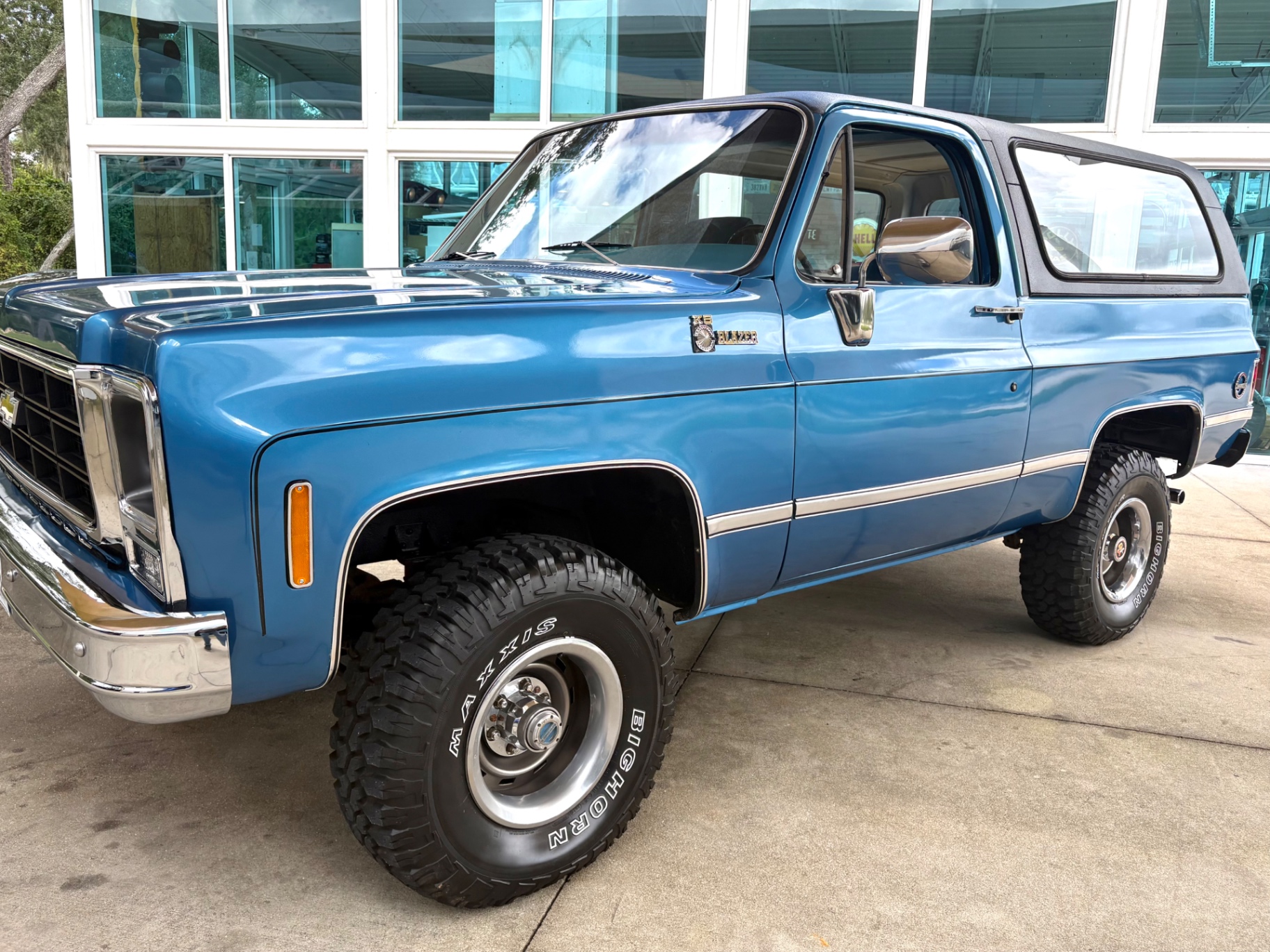
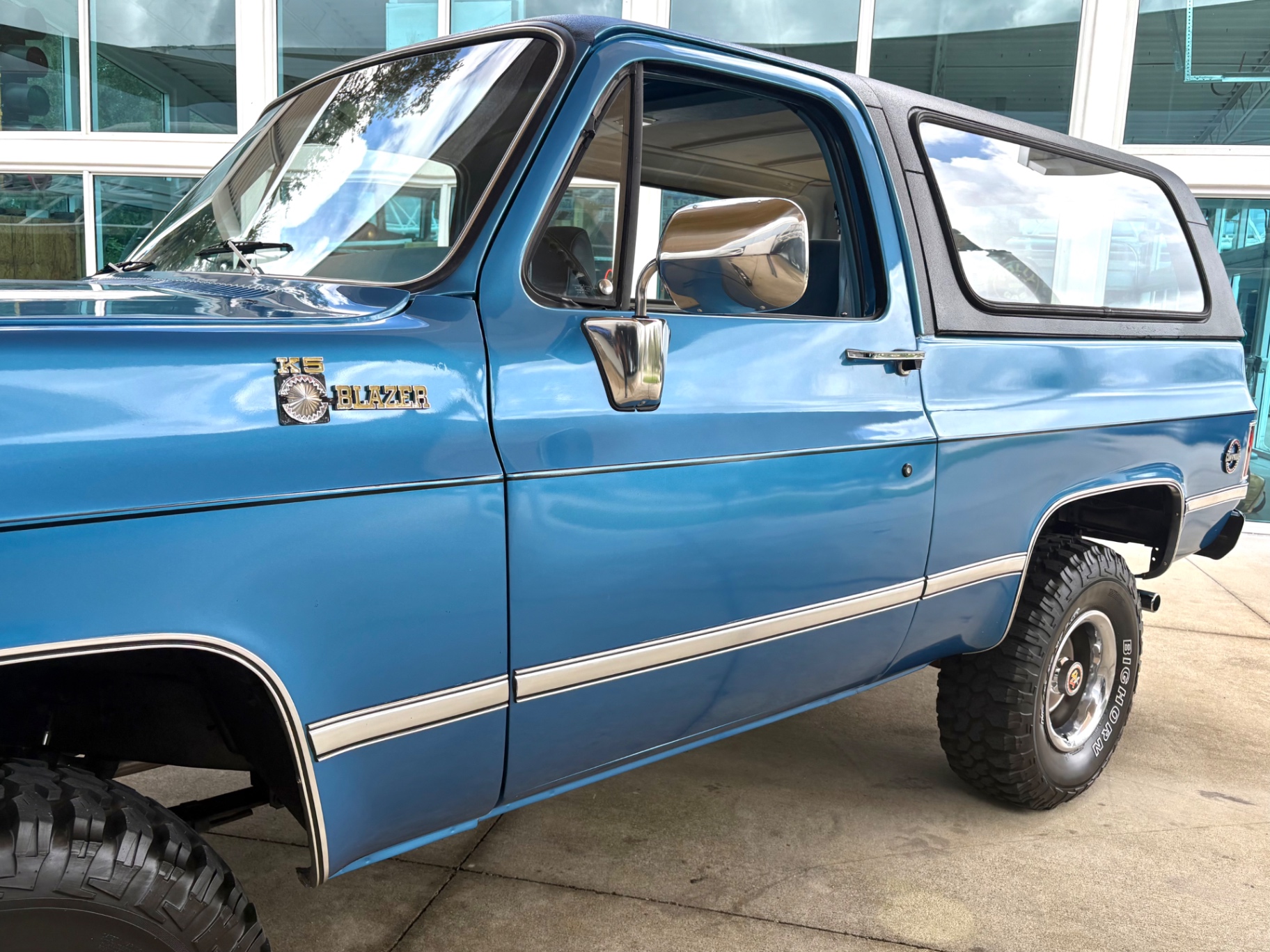
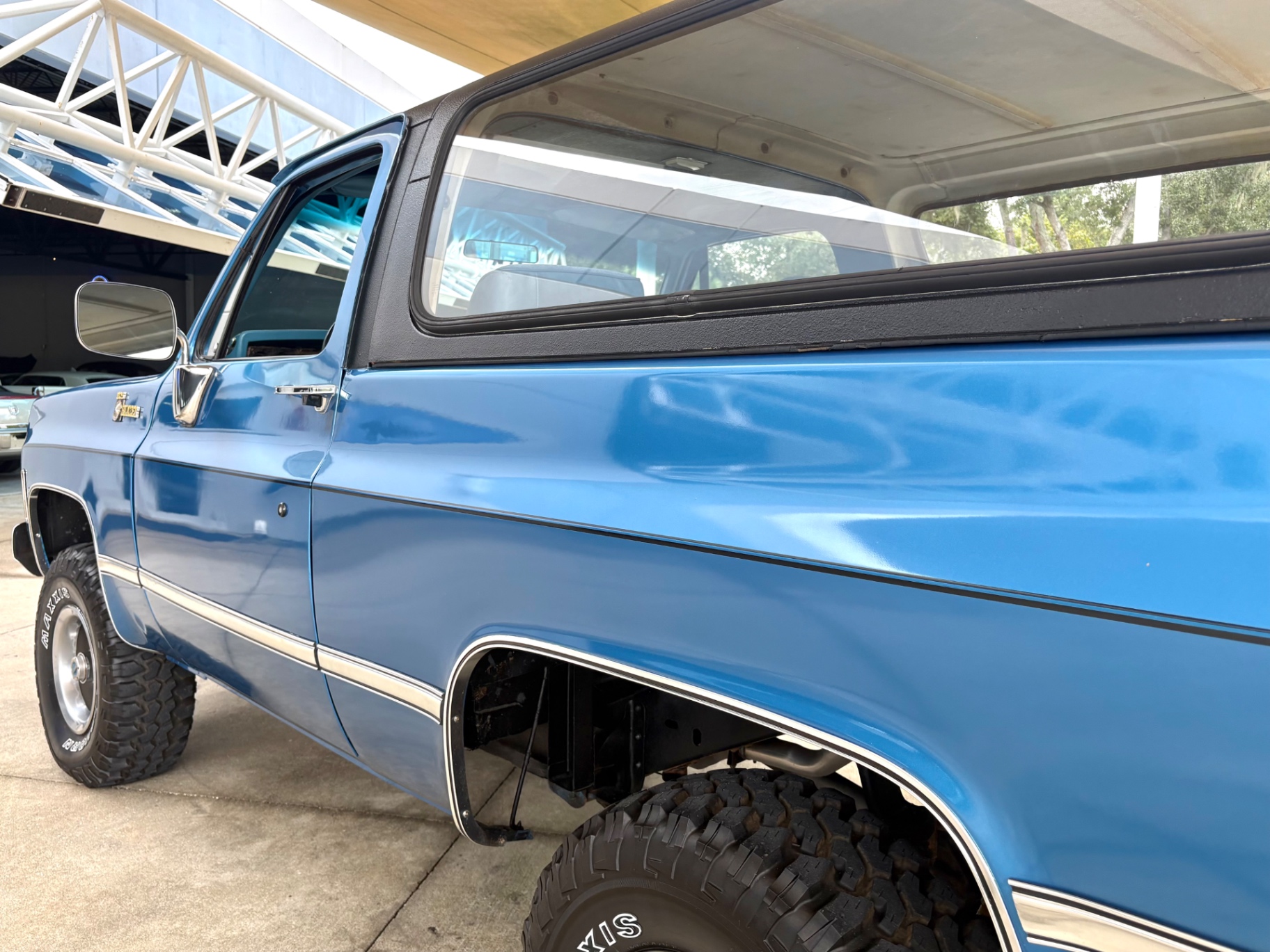
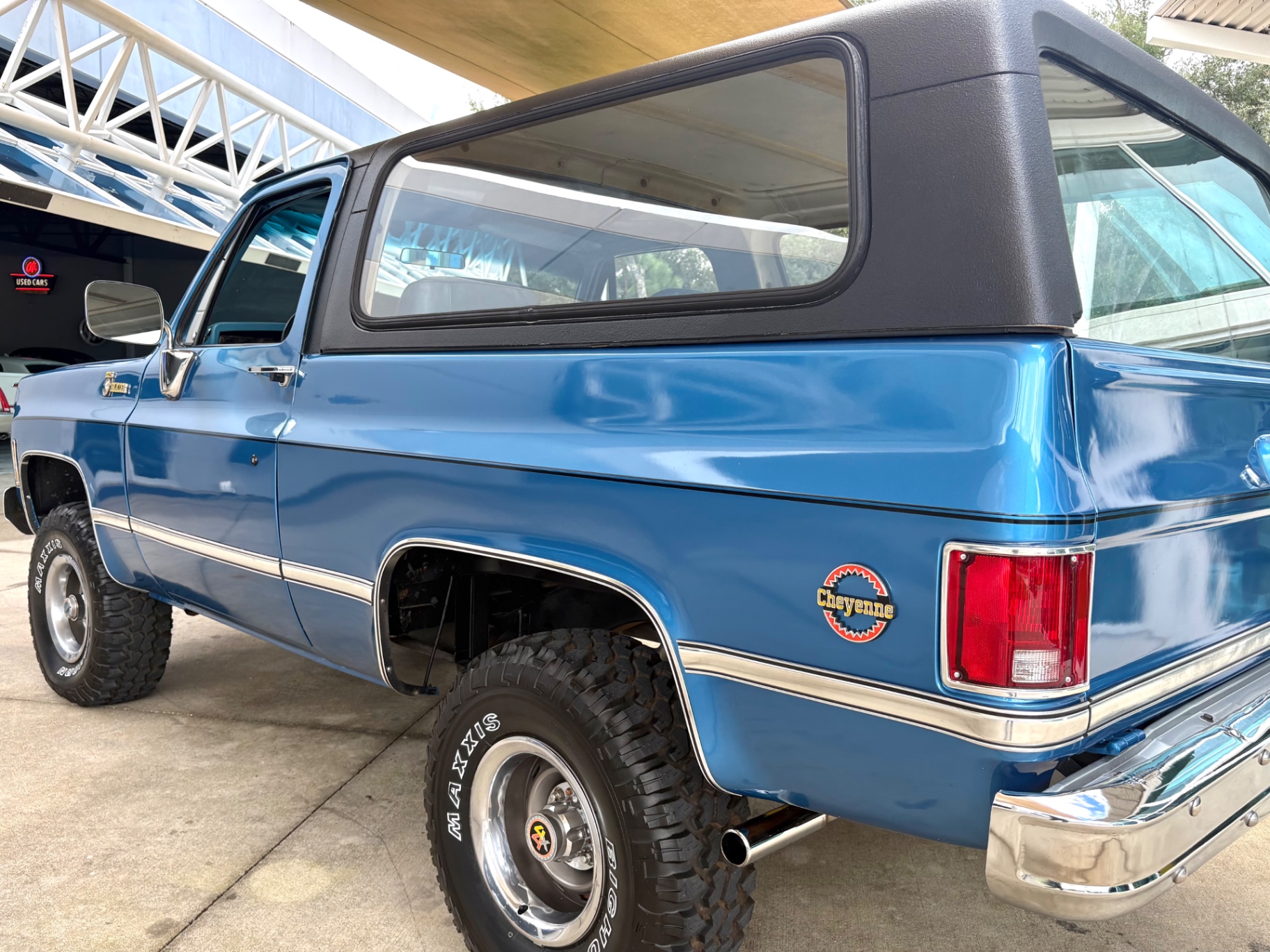
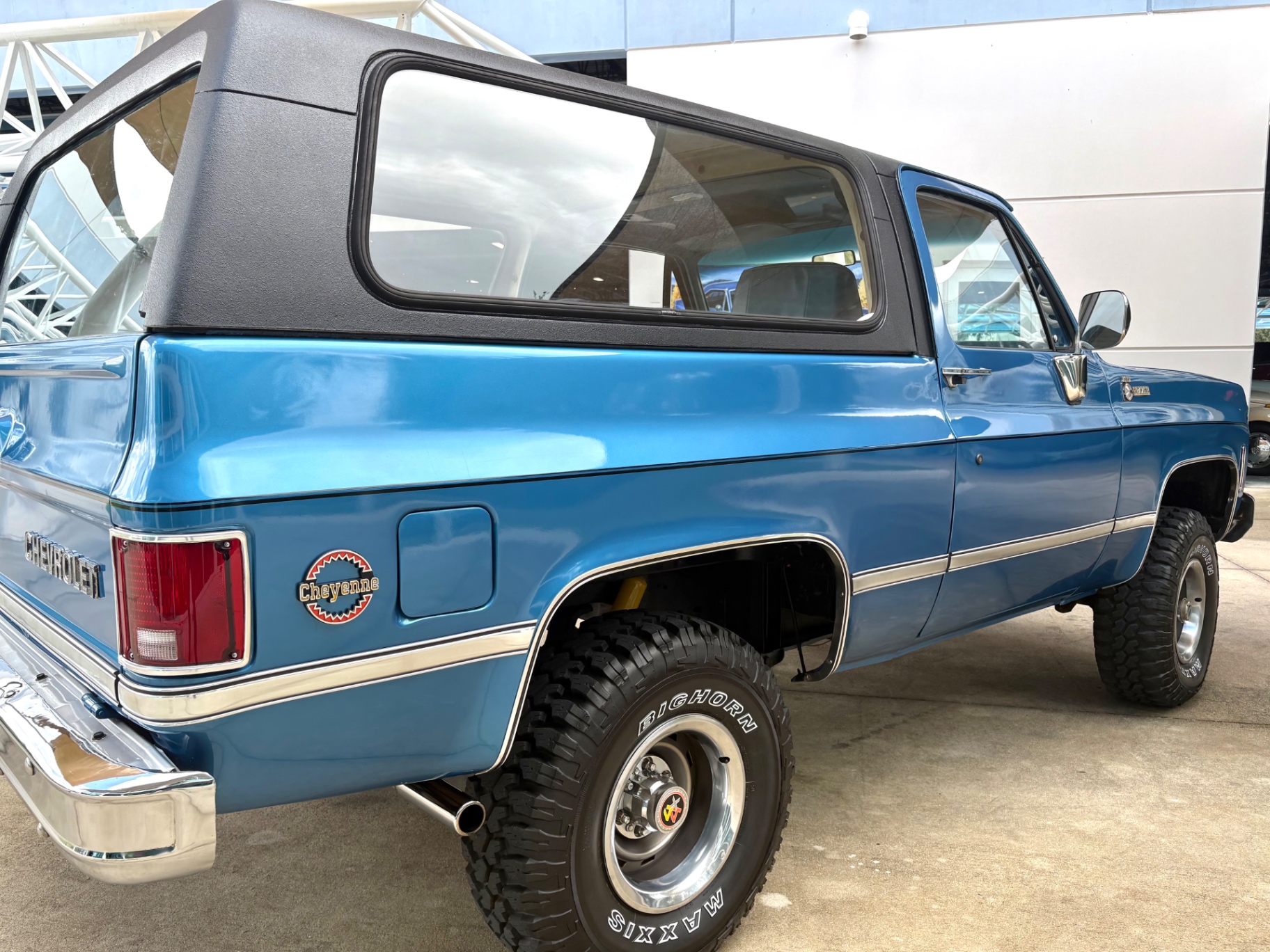
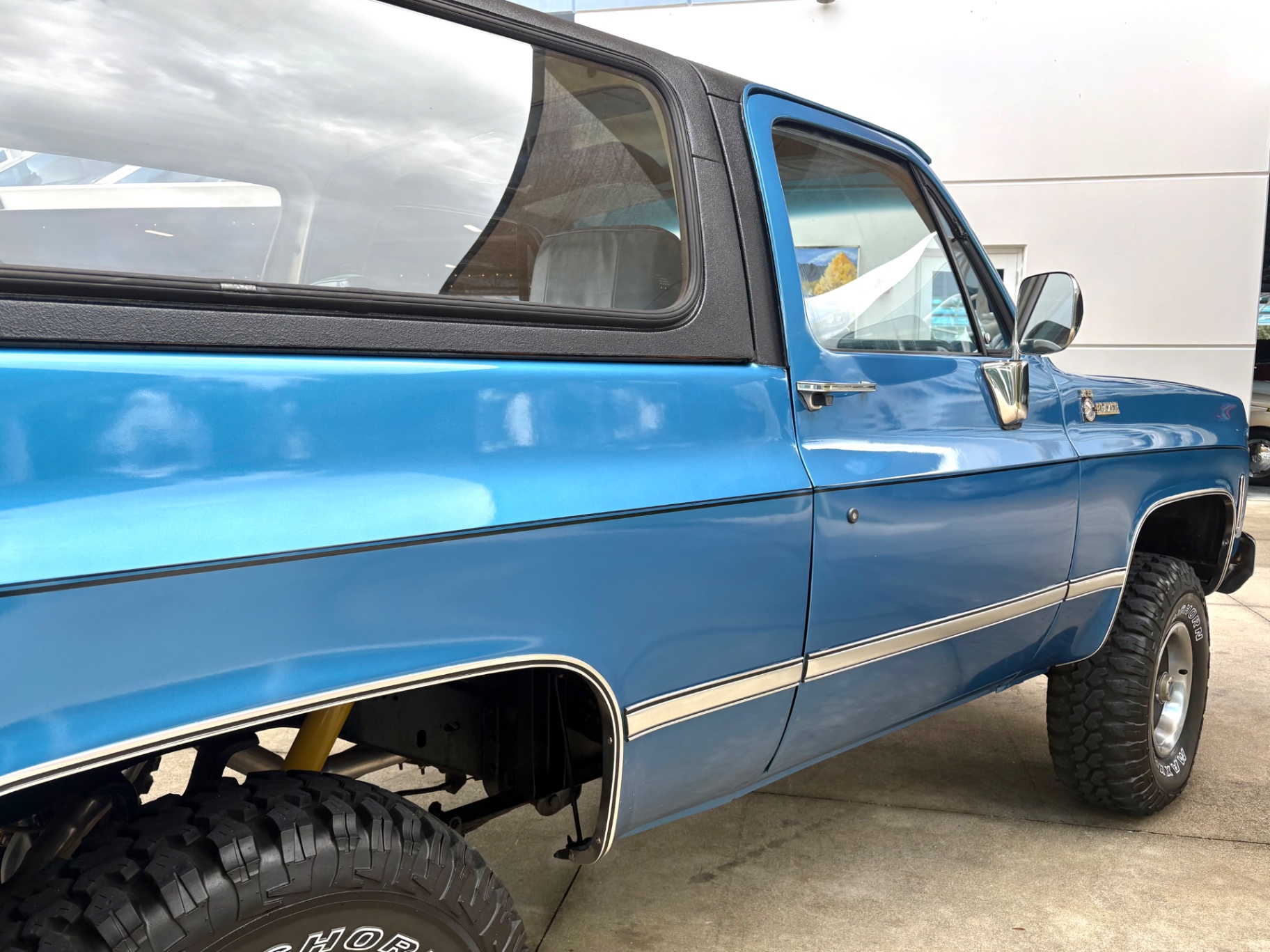
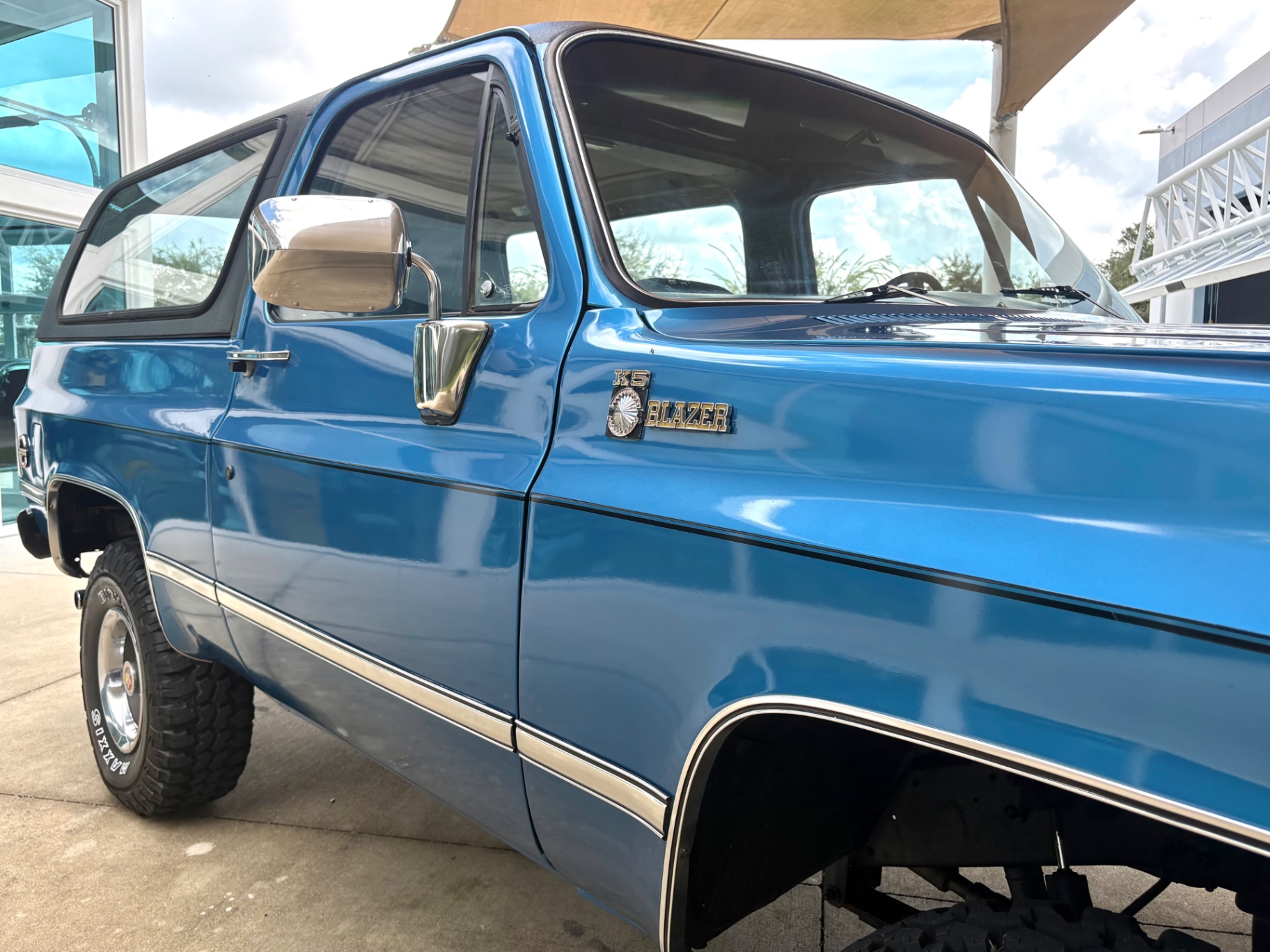
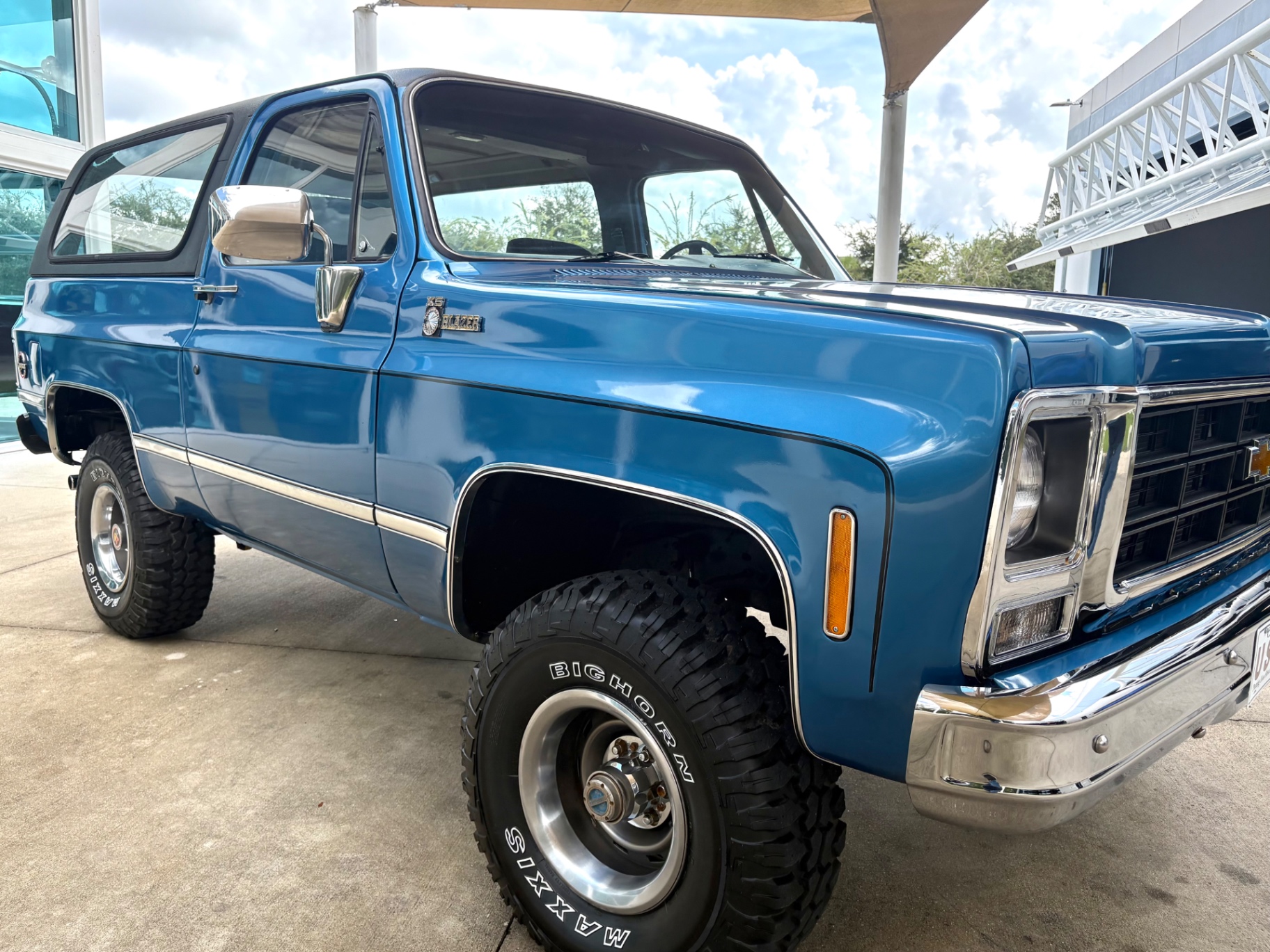
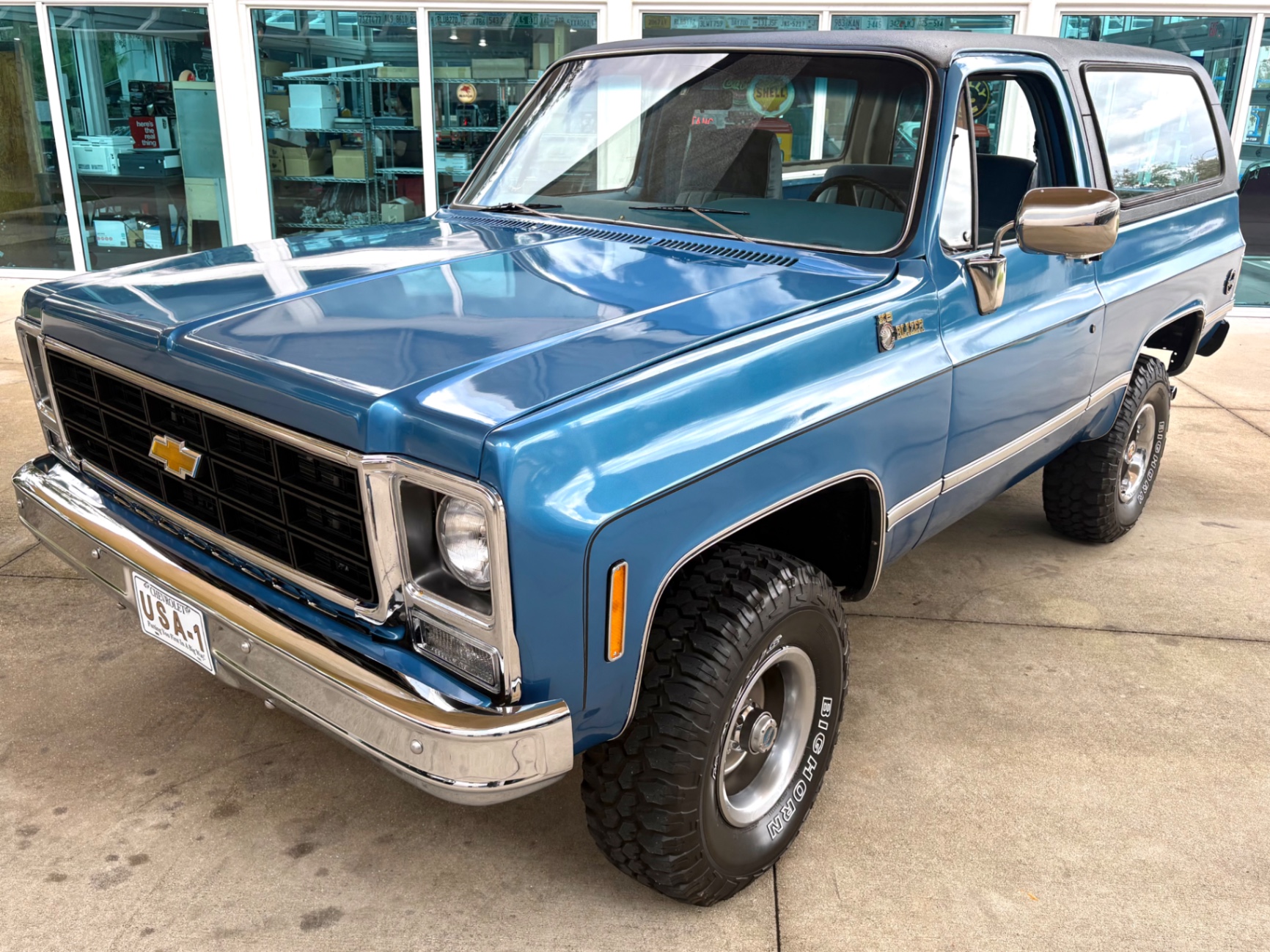
This particular 1979 Chevrolet K5 Blazer Cheyenne presents in Medium Blue over a matching Blue cloth interior. It has been thoughtfully modified for both on-road presence and off-road function, while retaining the factory bucket seat console configuration and hardtop body that made the K5 Blazer so desirable in the first place. The undercarriage has been coated, the frame is solid, and the work done to this truck reflects someone who understood what they had.
Features List
- GM 350ci V8 engine with headers
- Flowmaster dual exhaust
- 4-speed manual transmission
- Power steering
- Power front disc brakes
- Factory air conditioning
- 3-inch suspension lift kit
- Aftermarket performance shocks
- Maxxis Bighorn 32x11.5x15 radial mud-terrain tires
- Correct Chevrolet K5 steel wheels
- Superwench lock-out hubs
- Factory bucket seats with floor console
- Rear bench seat
- Removable hardtop
- Full gauge instrument cluster
- Woodgrain dash trim
- Cheyenne trim badges
- Body side moldings
- Chrome front bumper
- Chrome rear bumper
- Chrome tow mirrors
- Aftermarket stereo
- Undercoated undercarriage
Mechanical
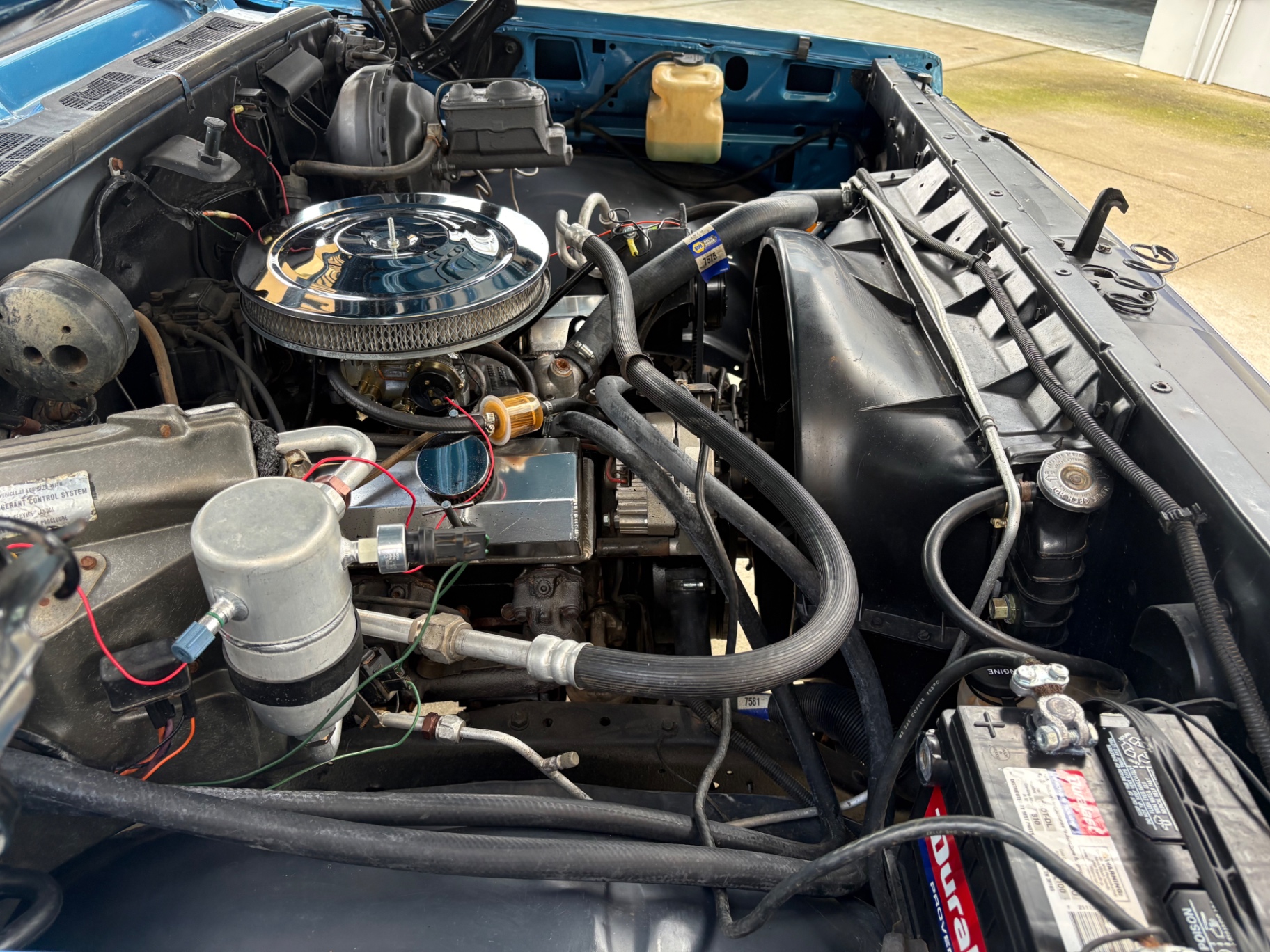
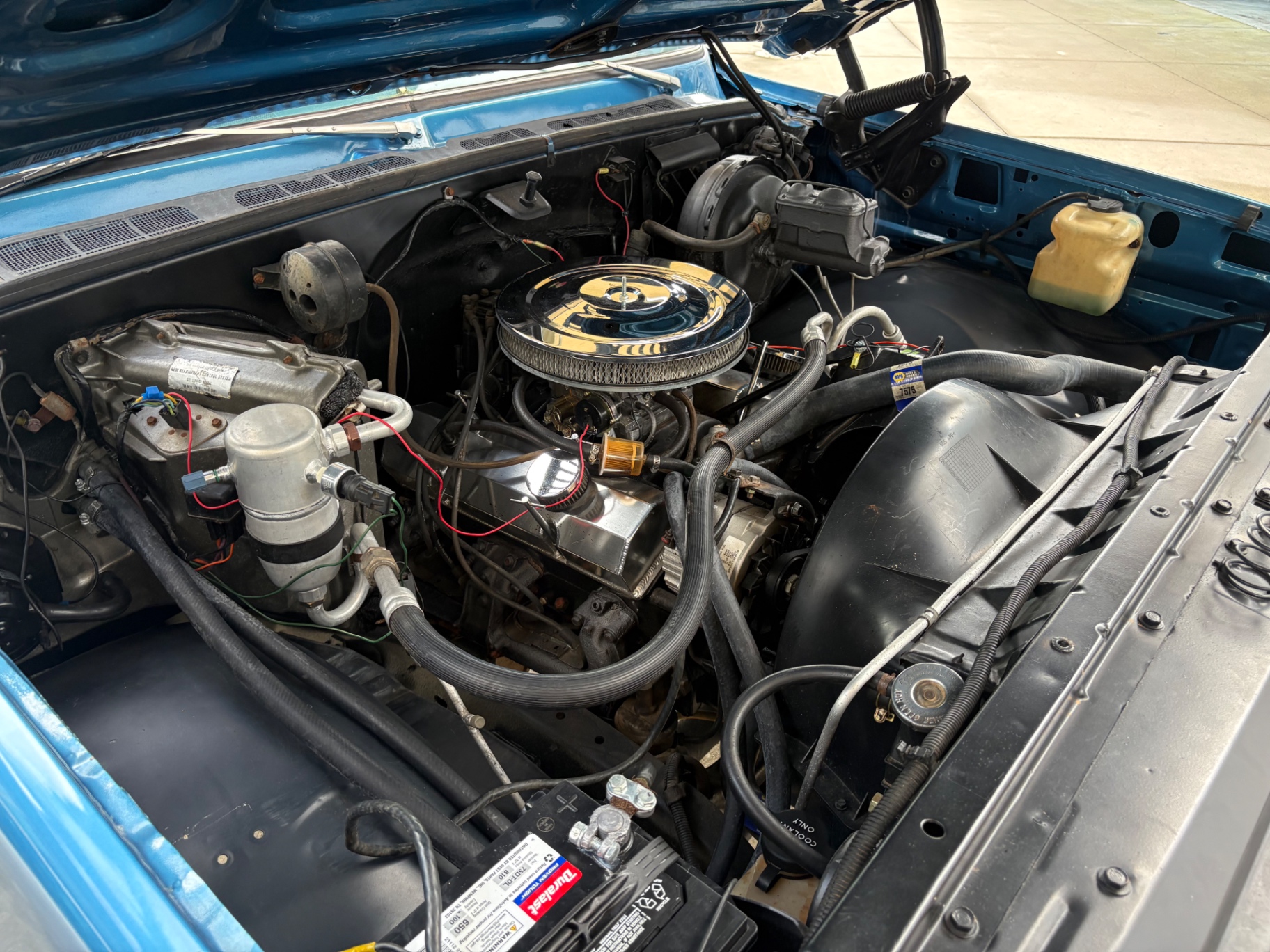
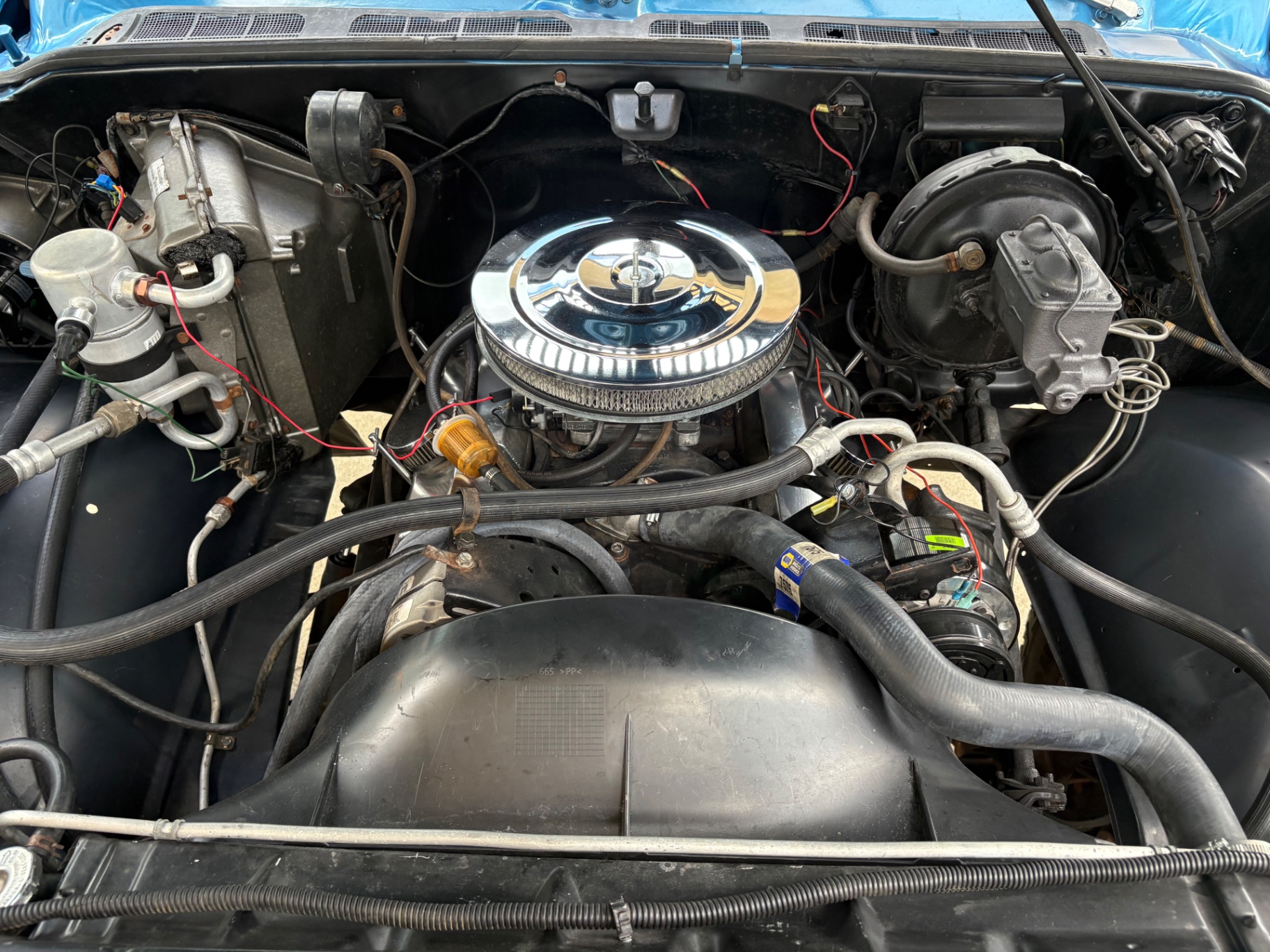
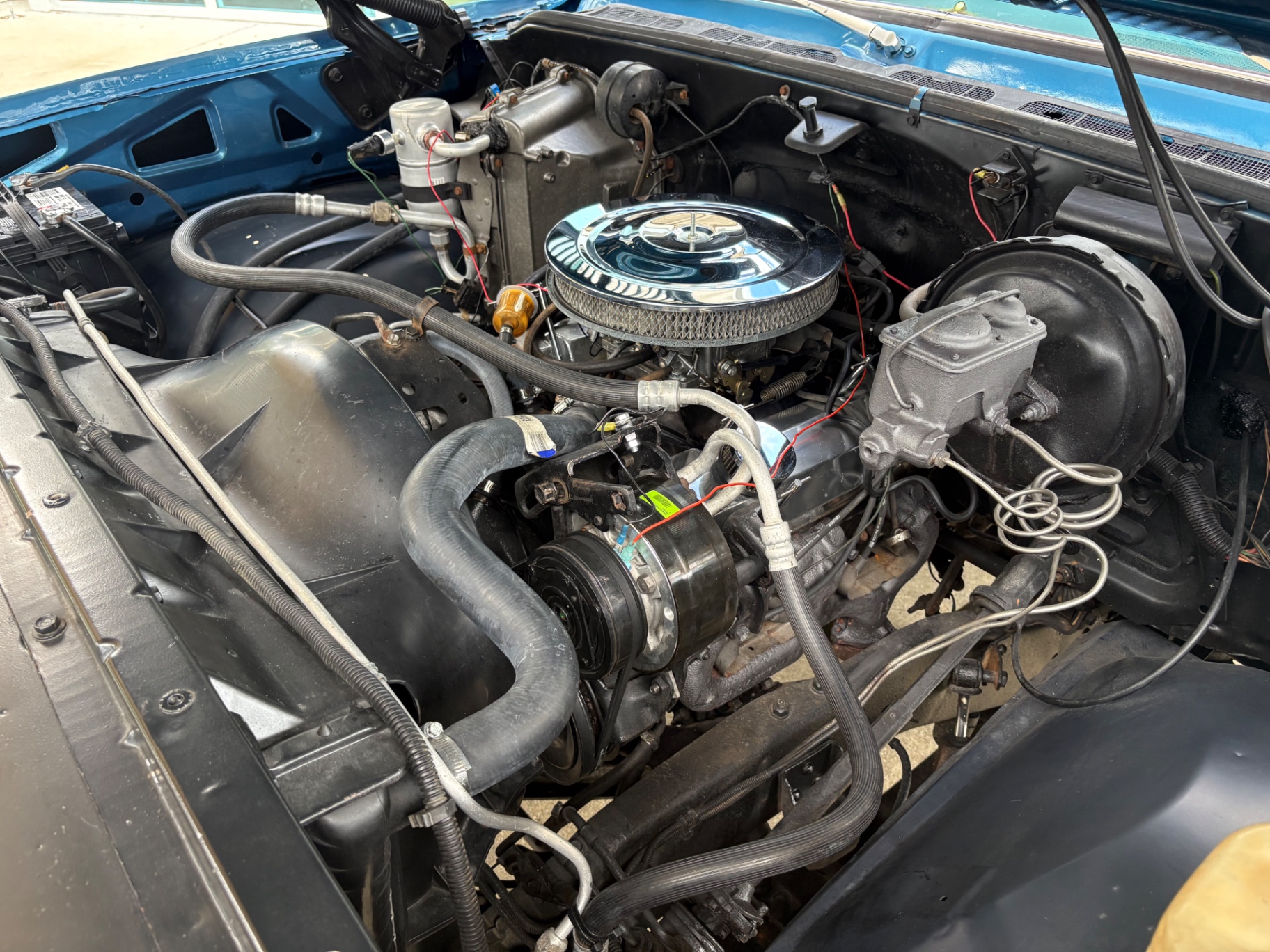
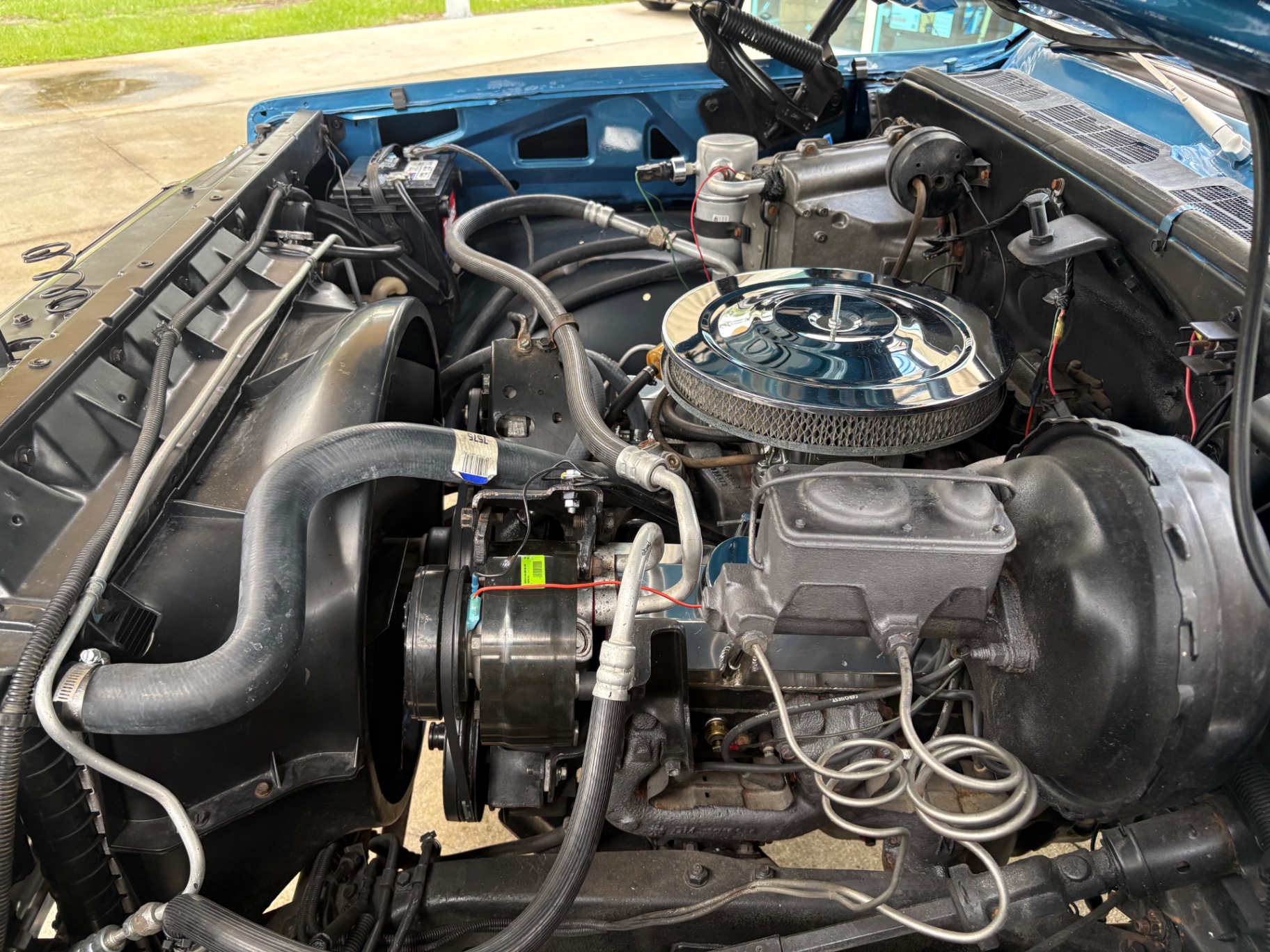
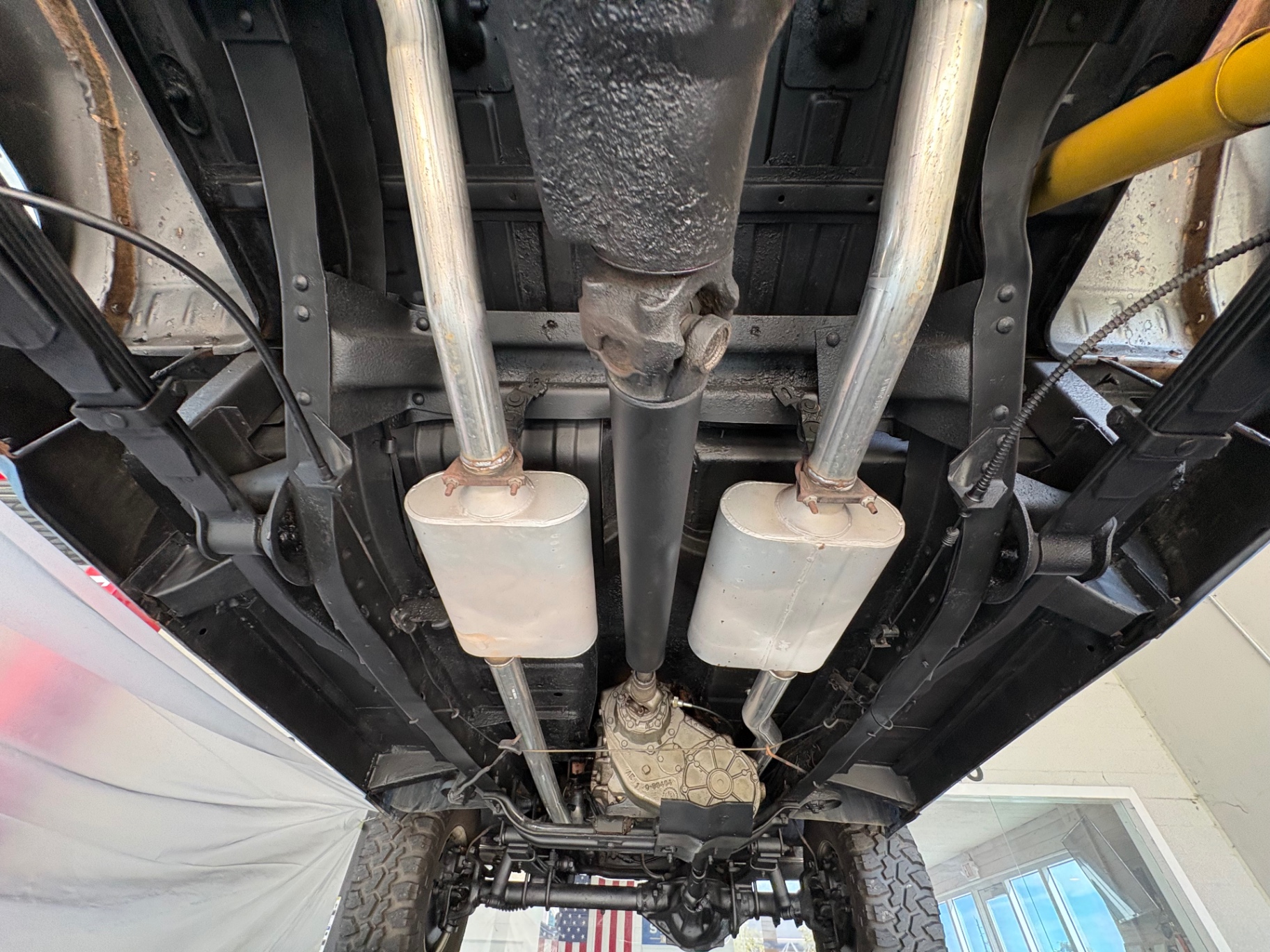
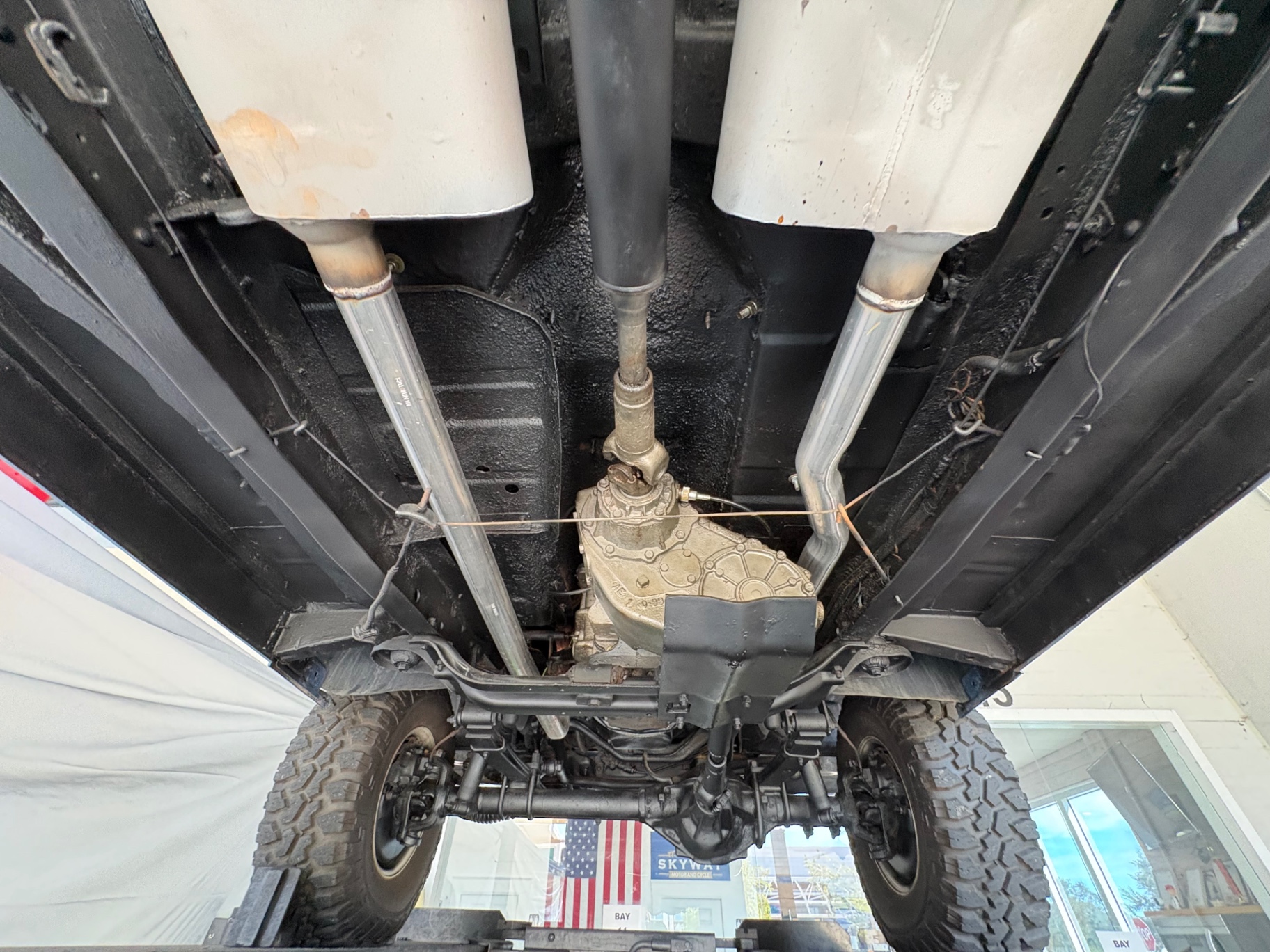
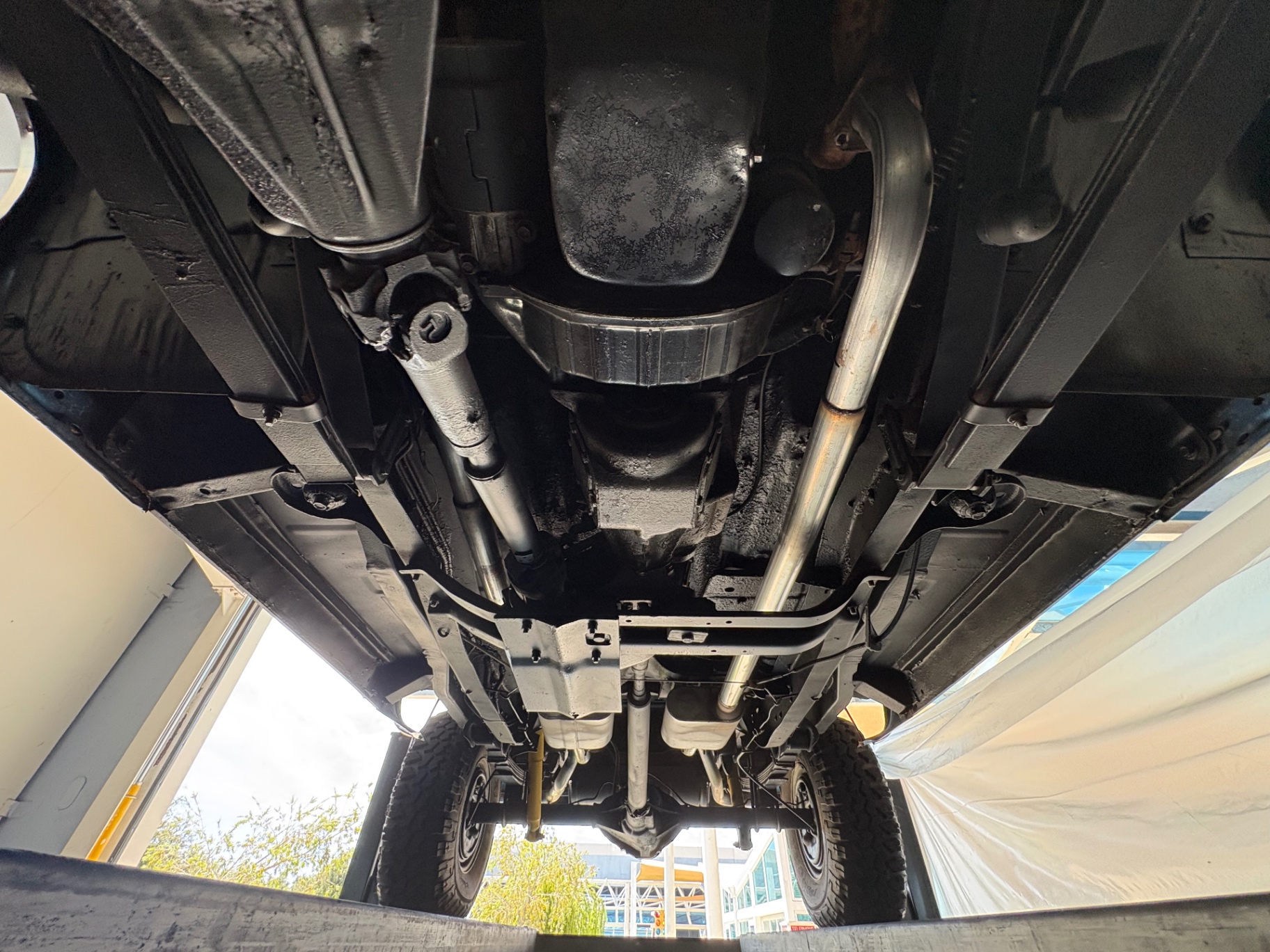
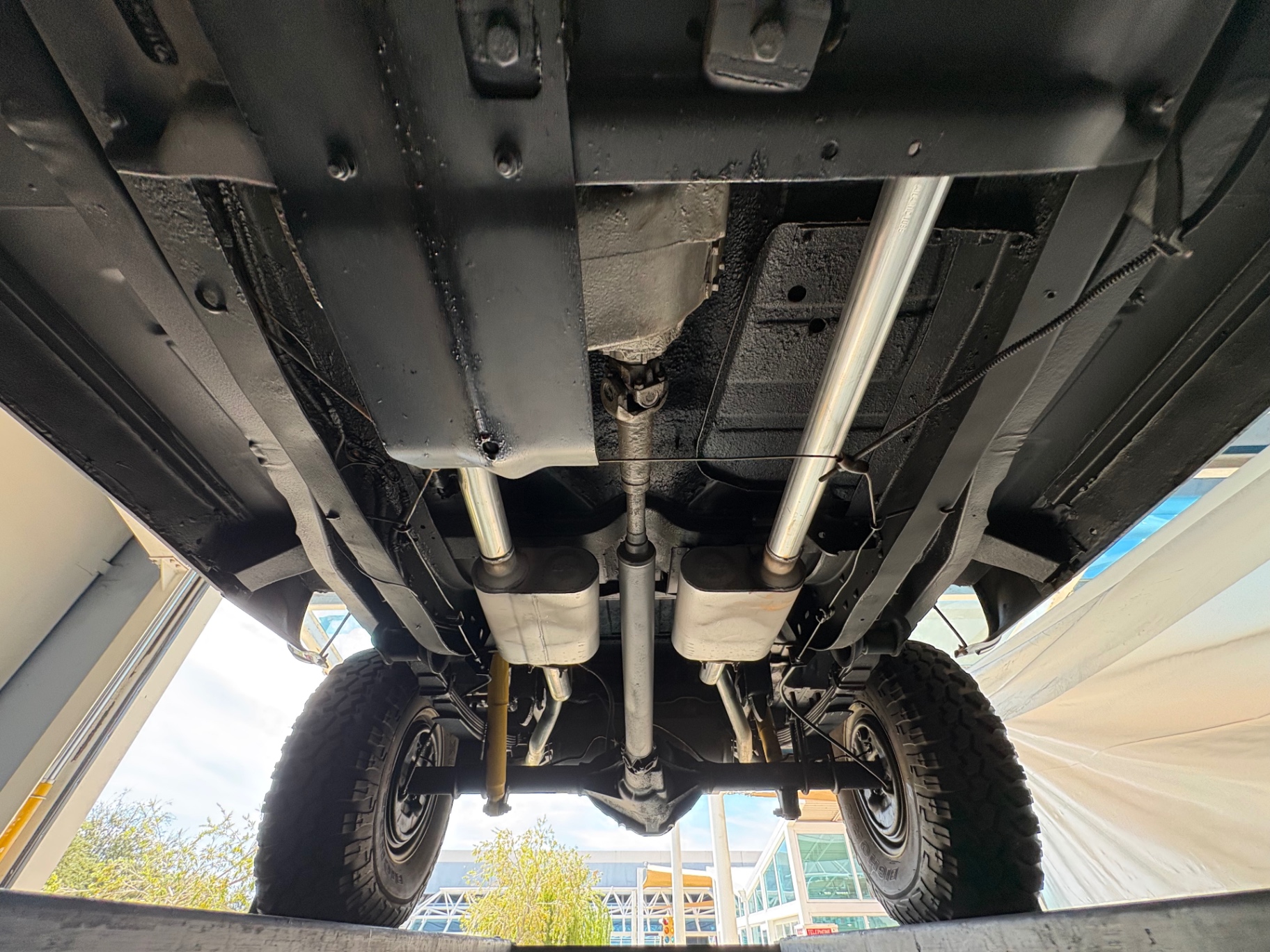
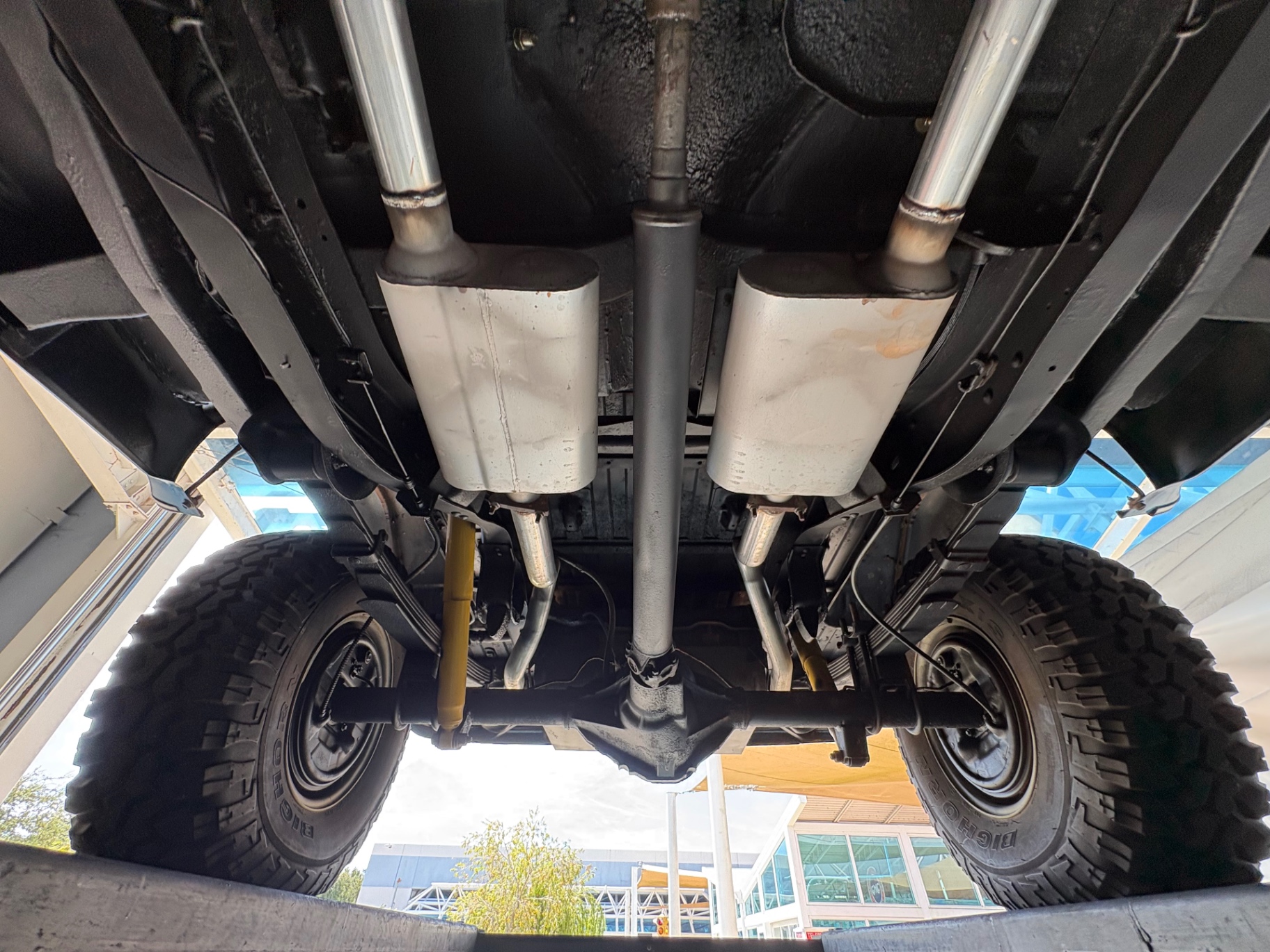
The heart of this 1979 Chevrolet K5 Blazer is the 350 cubic inch small-block V8 — a 5.7-liter engine that GM built in enormous quantities and that has earned a reputation for durability and tunability that few engines can match. From the factory, the 350 in a 1979 K5 Blazer produced around 165 horsepower in emissions-compliant trim. This truck has been upgraded with aftermarket headers and a Flowmaster dual exhaust system, which improves exhaust scavenging and reduces backpressure. The dual exhaust exits out the rear behind the chrome rear bumper, and the sound is noticeably more aggressive than stock without being obnoxious. The chrome air cleaner visible in the engine bay is a period-correct cosmetic touch that suits the build well.
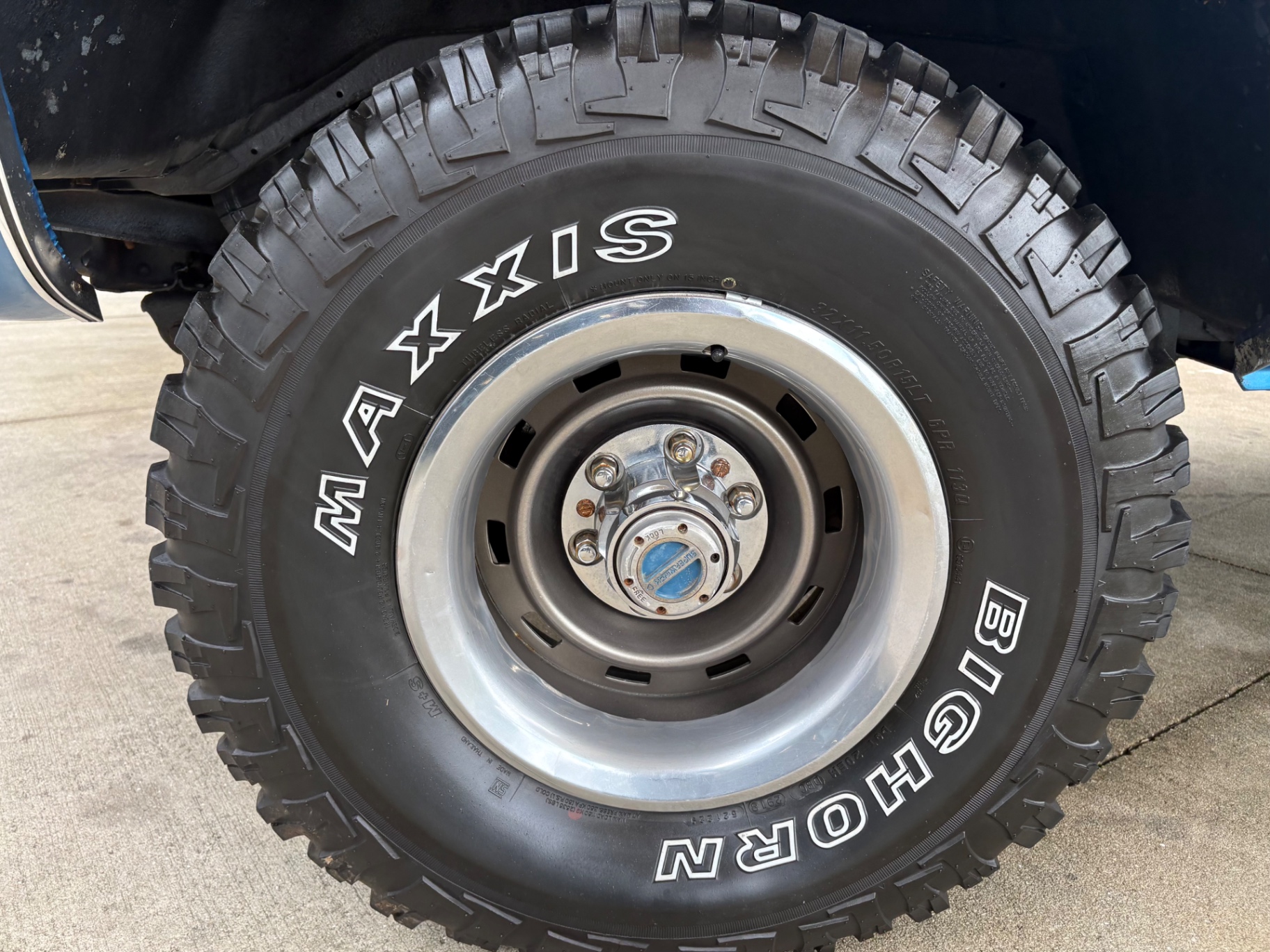
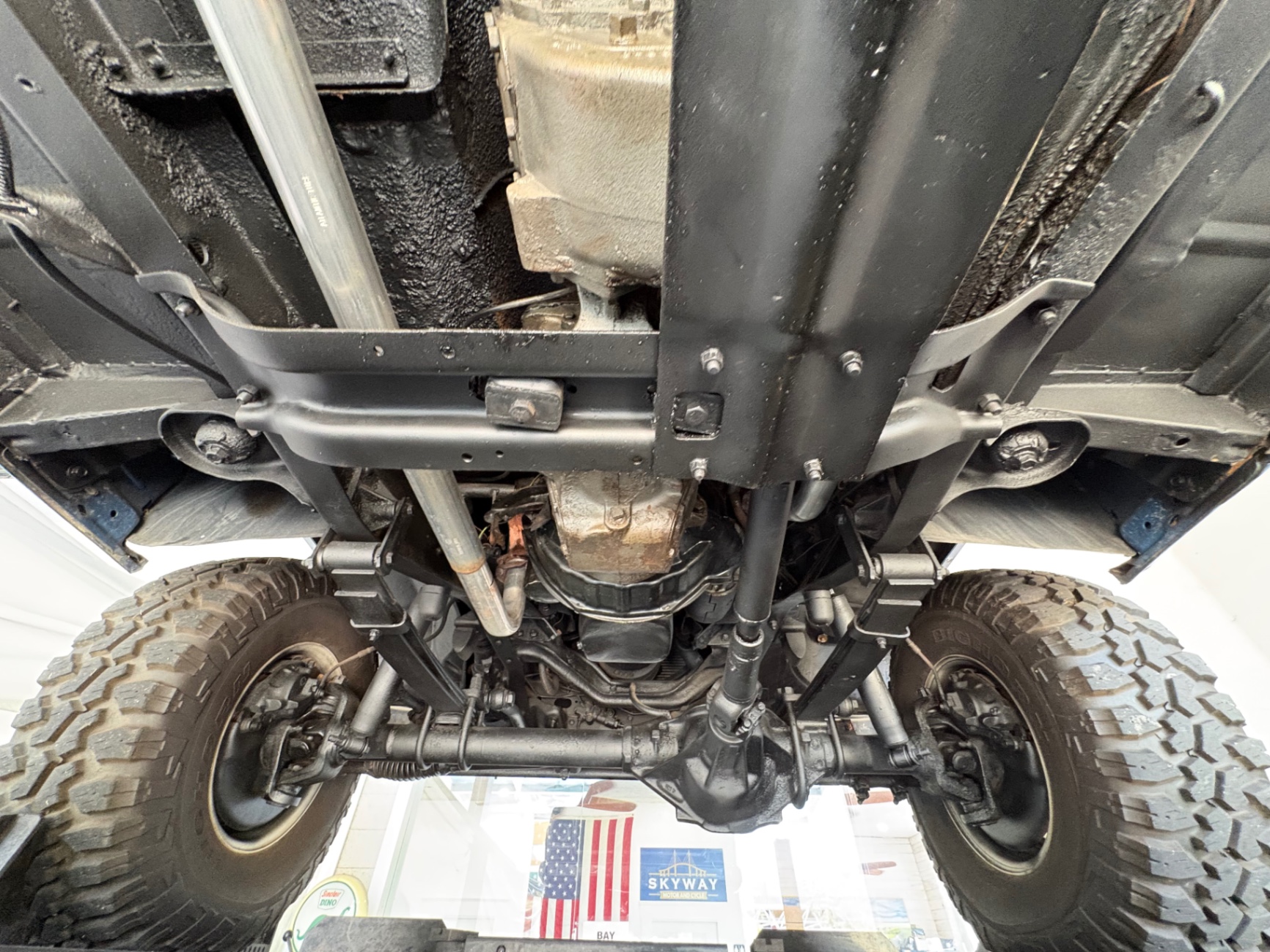
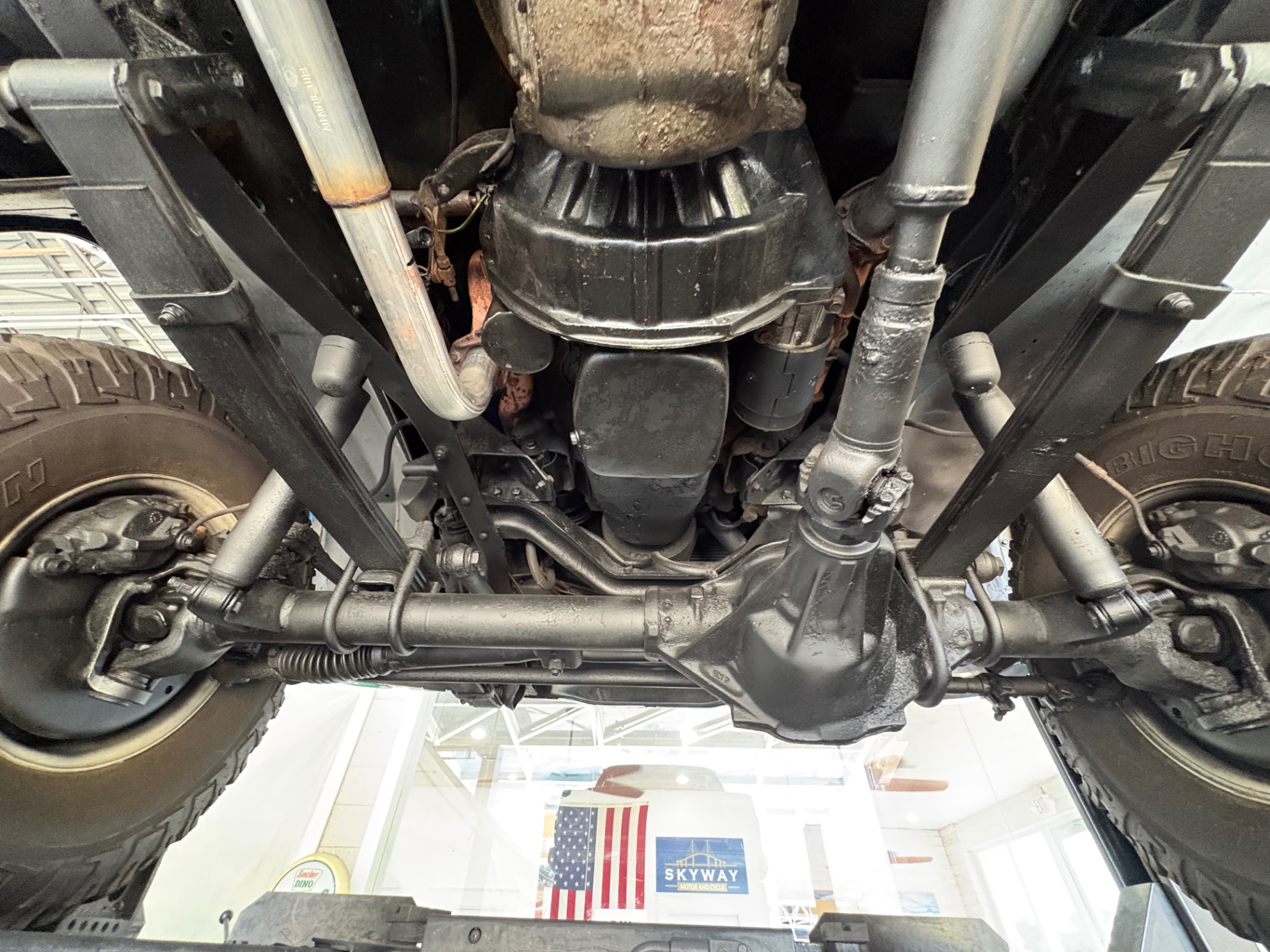
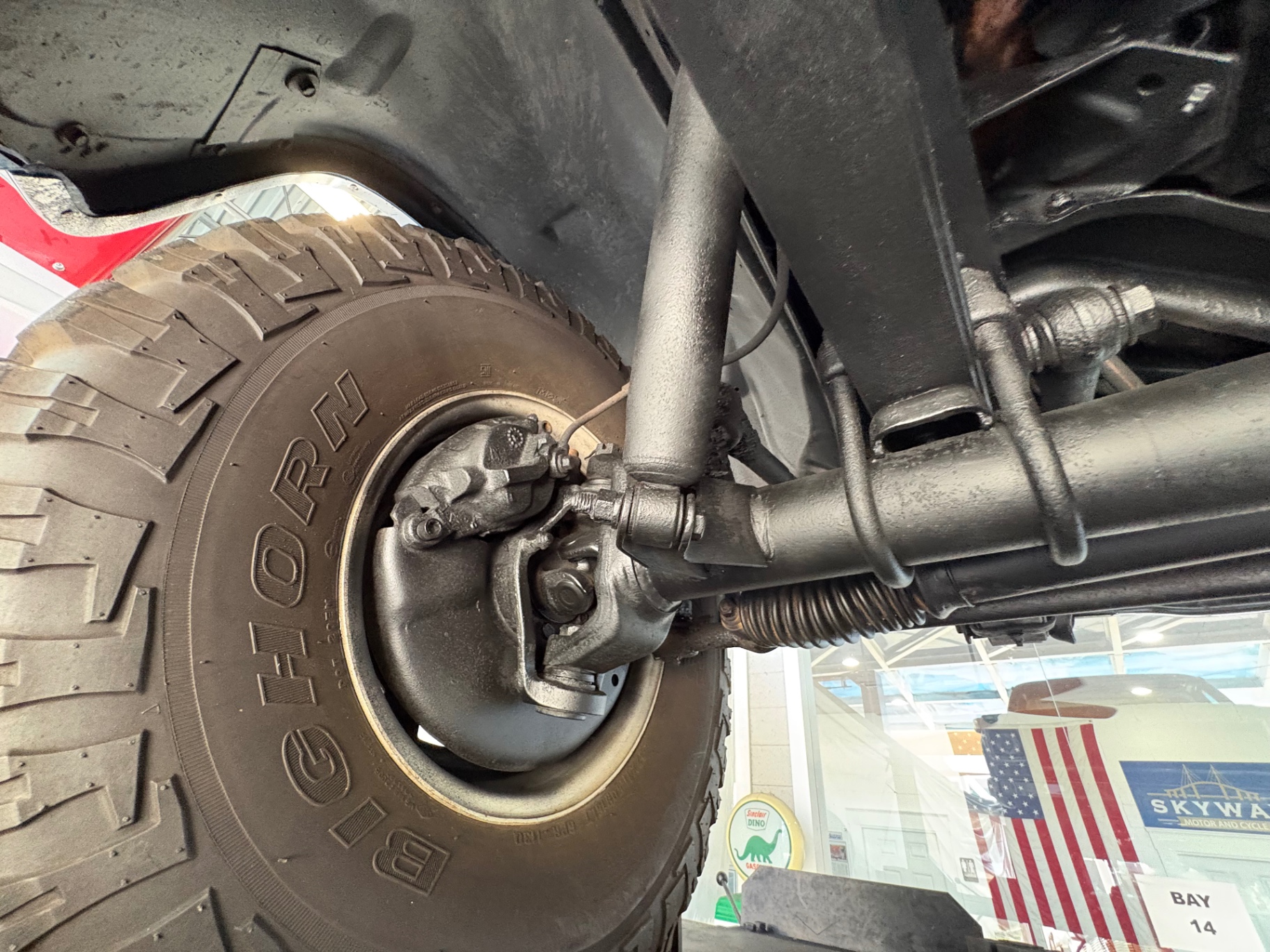
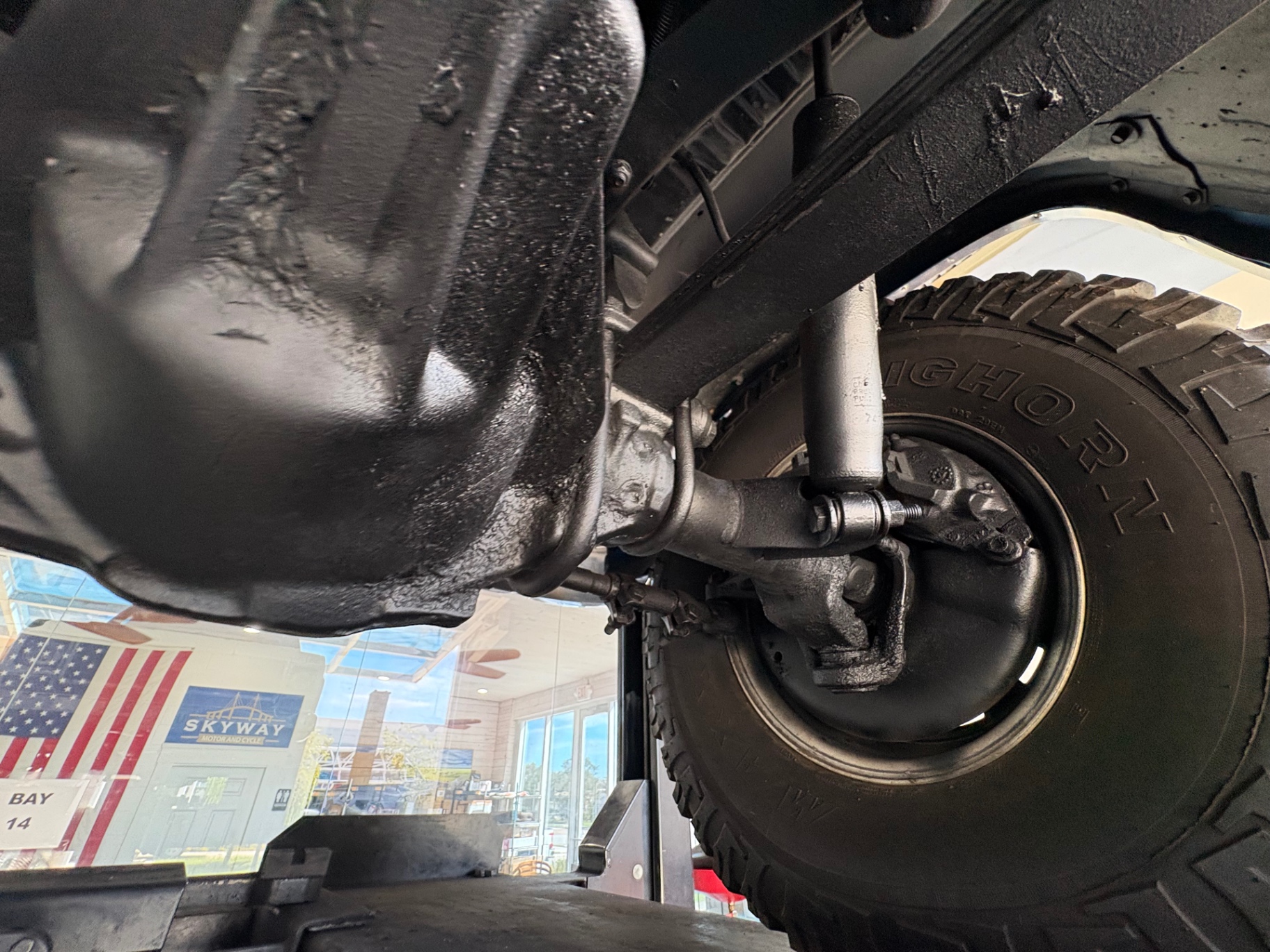
Behind the 350 sits a 4-speed manual transmission — the correct gearbox choice for a truck that is going to be used off-road with any seriousness. The manual gives the driver direct control over gear selection when picking lines on uneven terrain, and it pairs with the transfer case to put power exactly where you need it. The K5 Blazer in 1979 used a part-time four-wheel-drive system, and this truck is equipped with Superwench lock-out hubs at the front wheels. Lock-out hubs allow the front axle to disengage from the drivetrain when four-wheel drive is not needed, which reduces wear on front axle components and improves fuel economy during highway driving. It is a practical feature that serious off-road users appreciate.
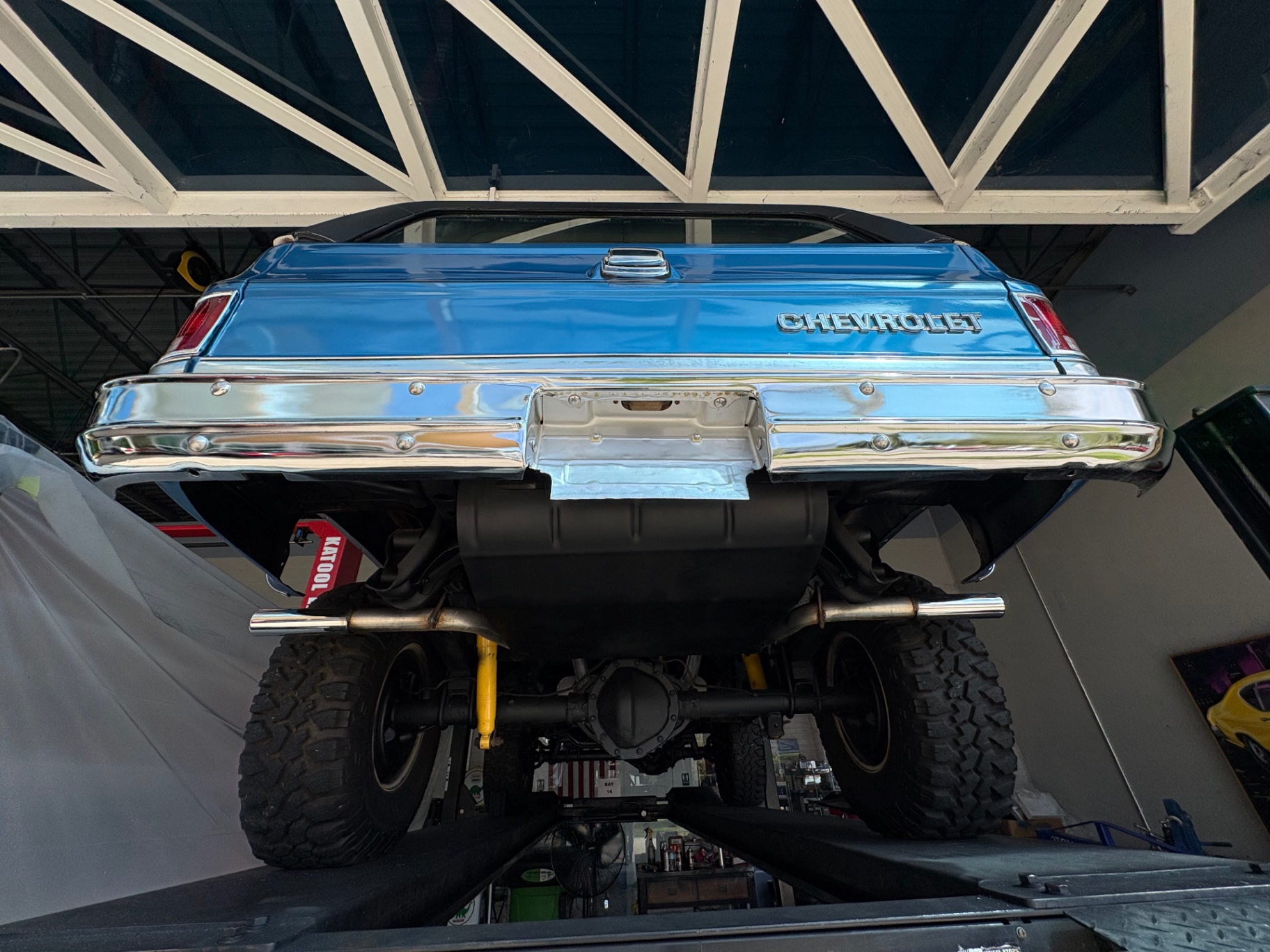
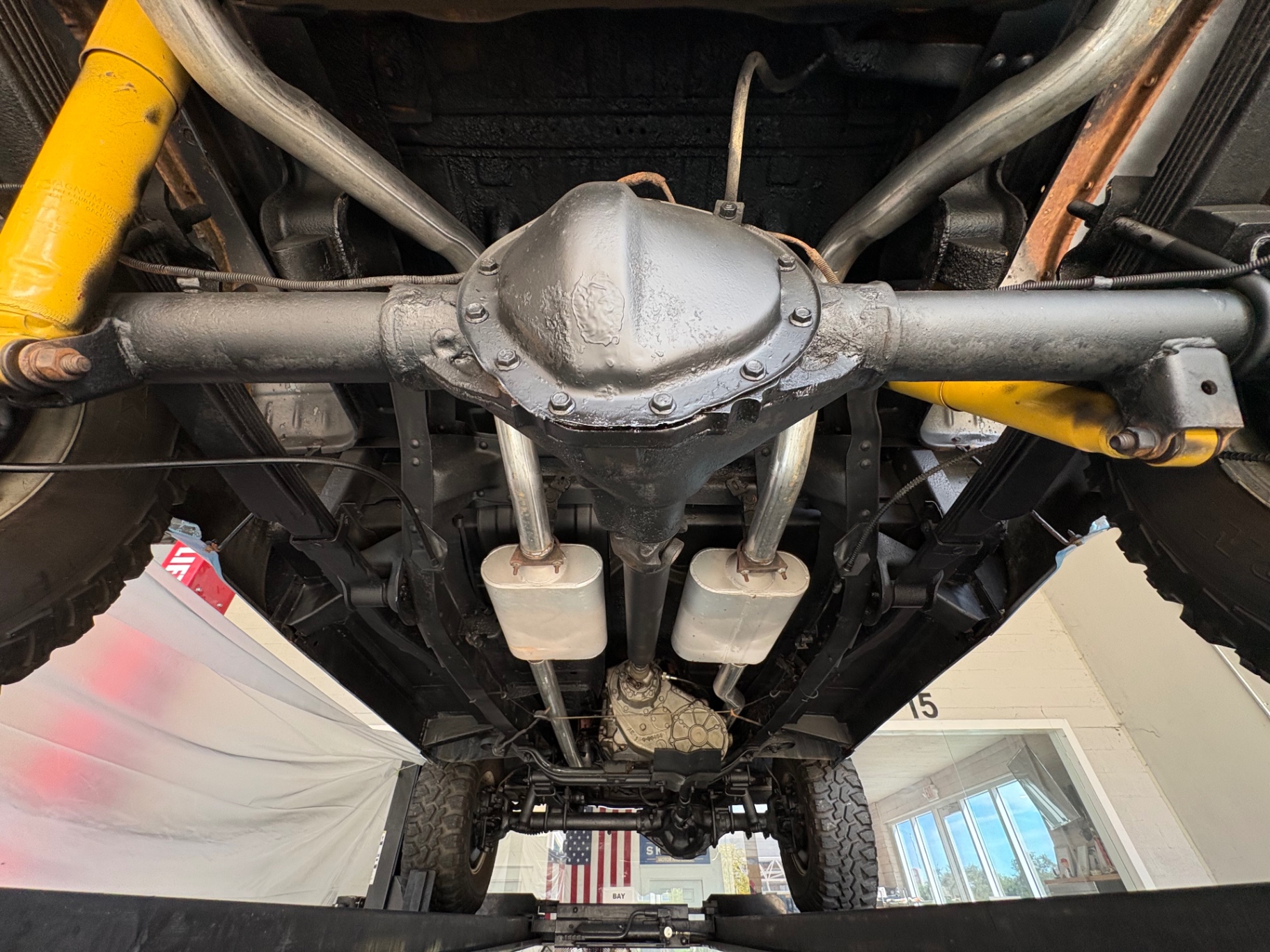
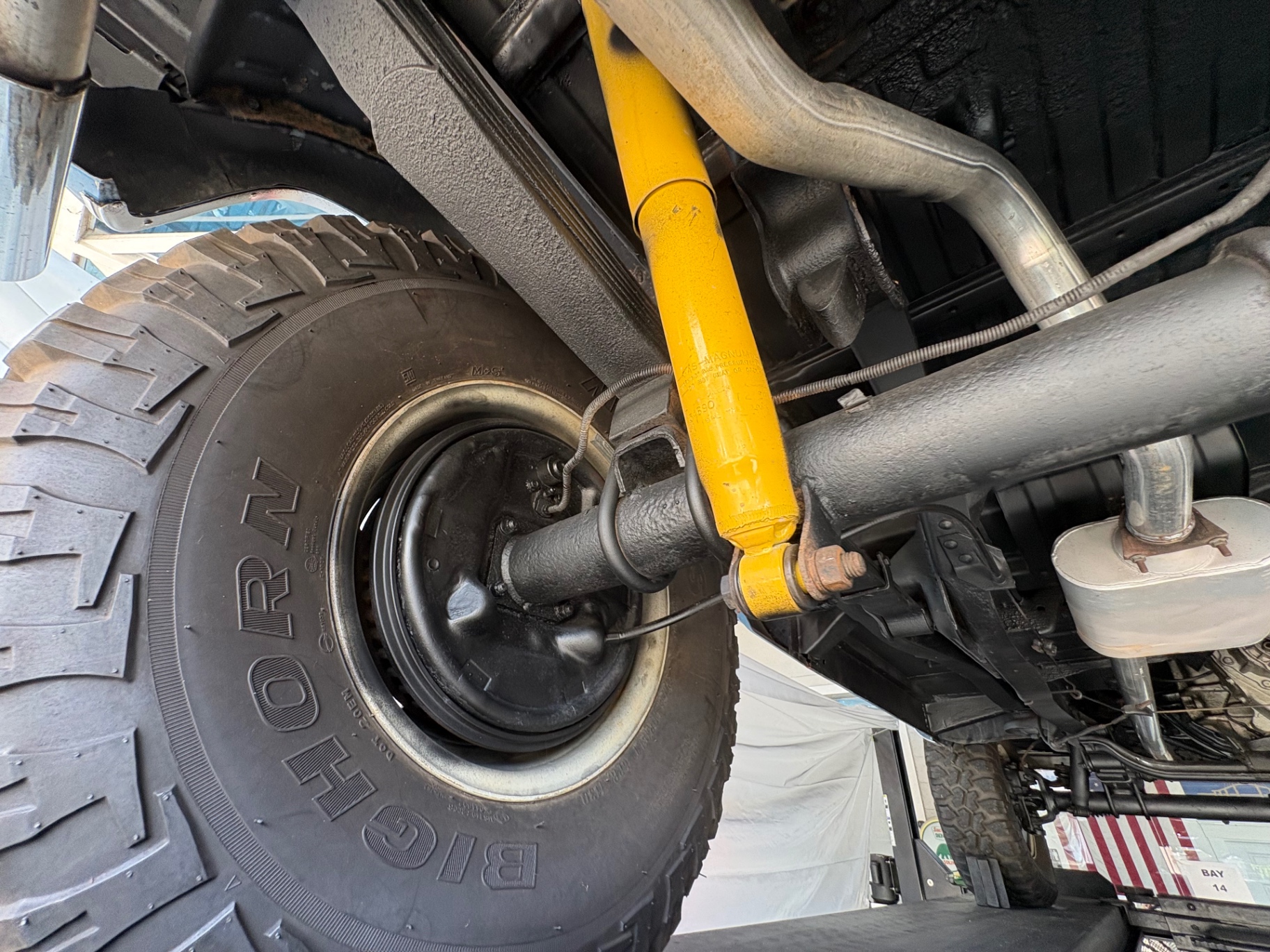
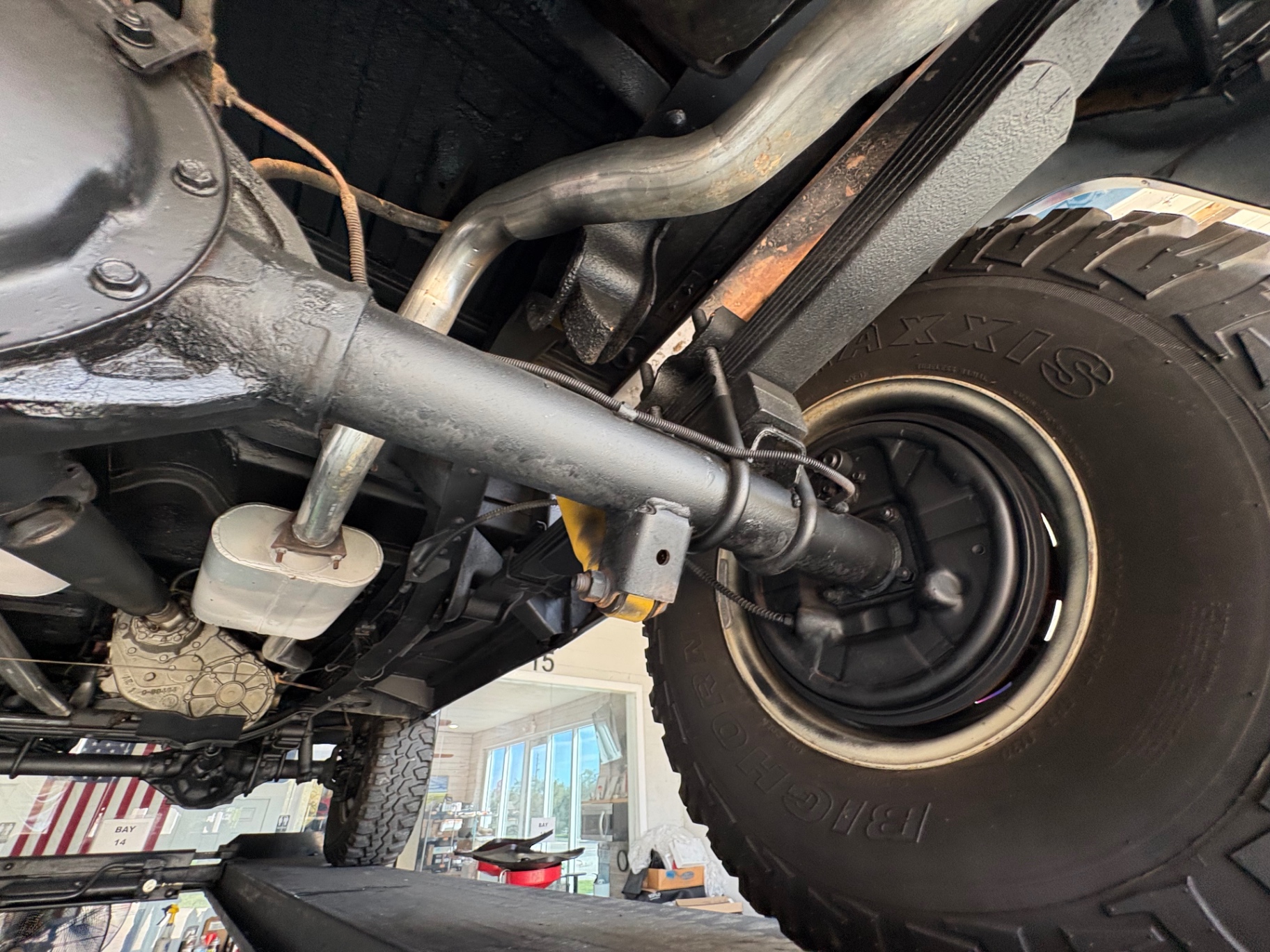
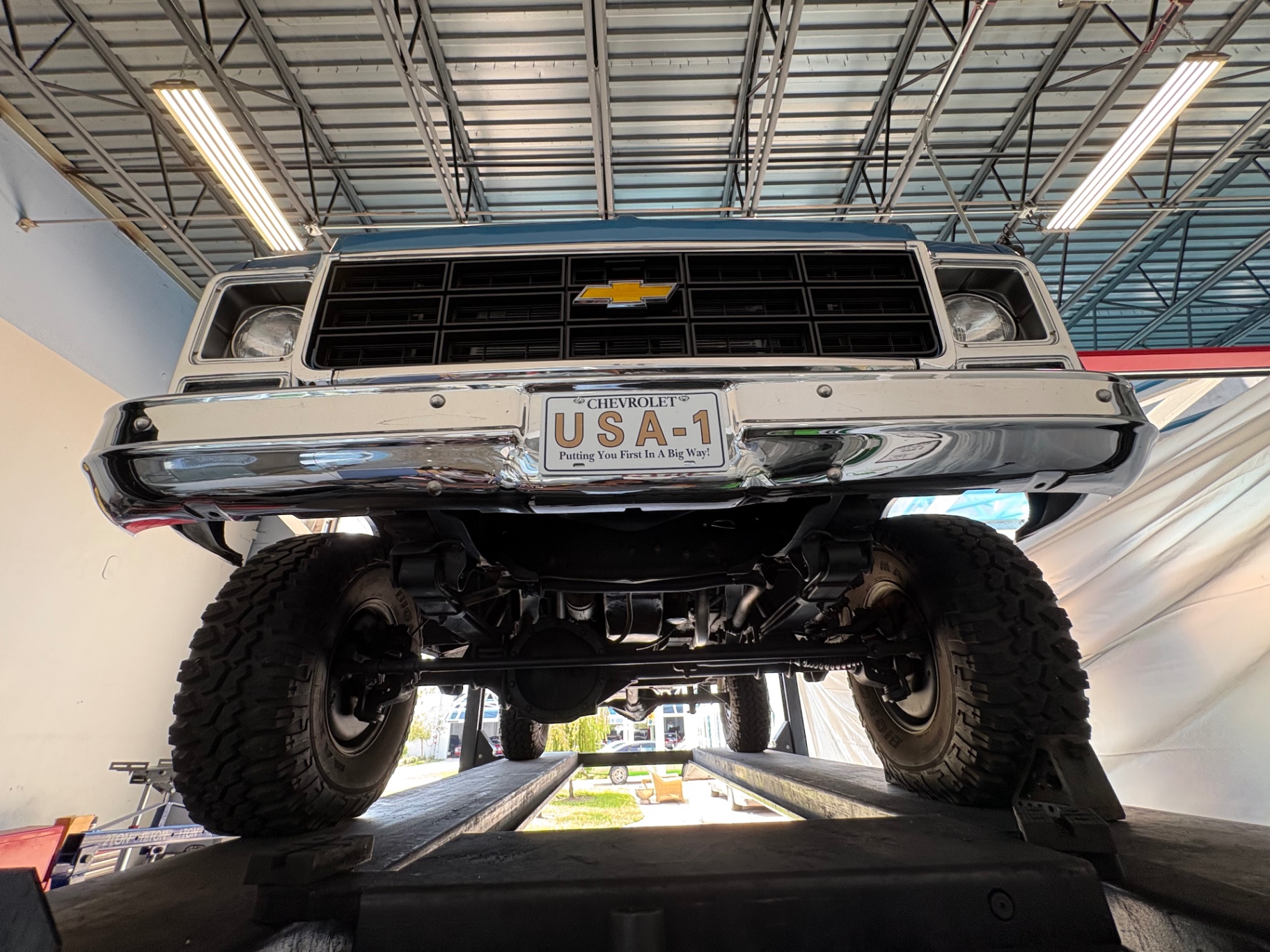
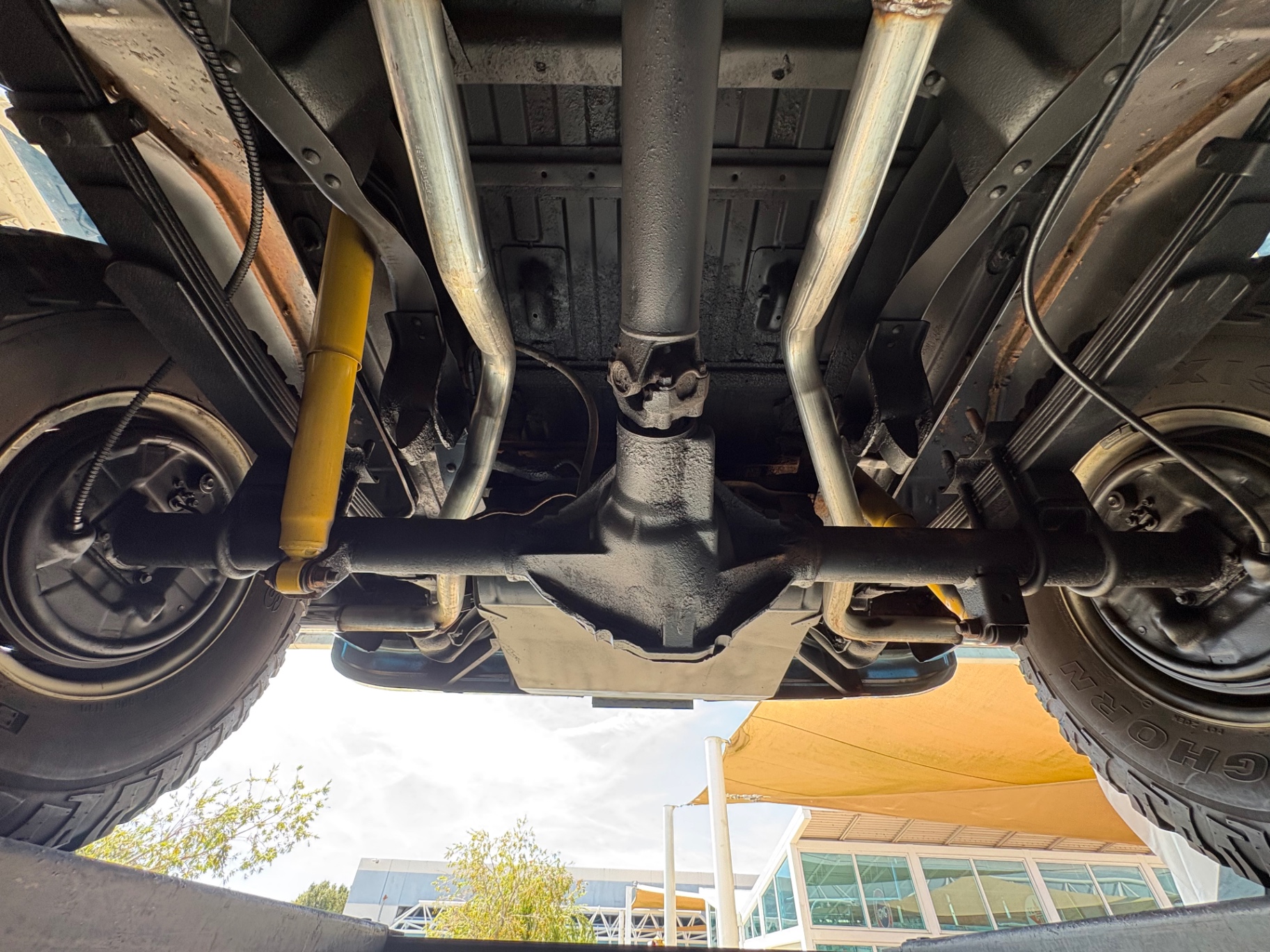
The suspension has been raised with a 3-inch lift kit, creating enough clearance to run the Maxxis Bighorn 32x11.5x15 tires without rubbing. The Bighorn is a well-regarded mud-terrain radial with a tread pattern aggressive enough for genuine off-road use while still being manageable on paved roads. Aftermarket performance shocks round out the suspension work, improving control over both on-road body movement and off-road articulation compared to the original hardware. Power steering and power front disc brakes are fitted, which are important for a lifted truck carrying wider tires — the additional mechanical assistance makes this truck considerably easier to manage at low speeds and in tight situations. The undercarriage has been coated in a rubberized undercoating, which is visible throughout the underside photos and protects the floor pans, frame rails, and crossmembers from moisture and road debris.
Interior
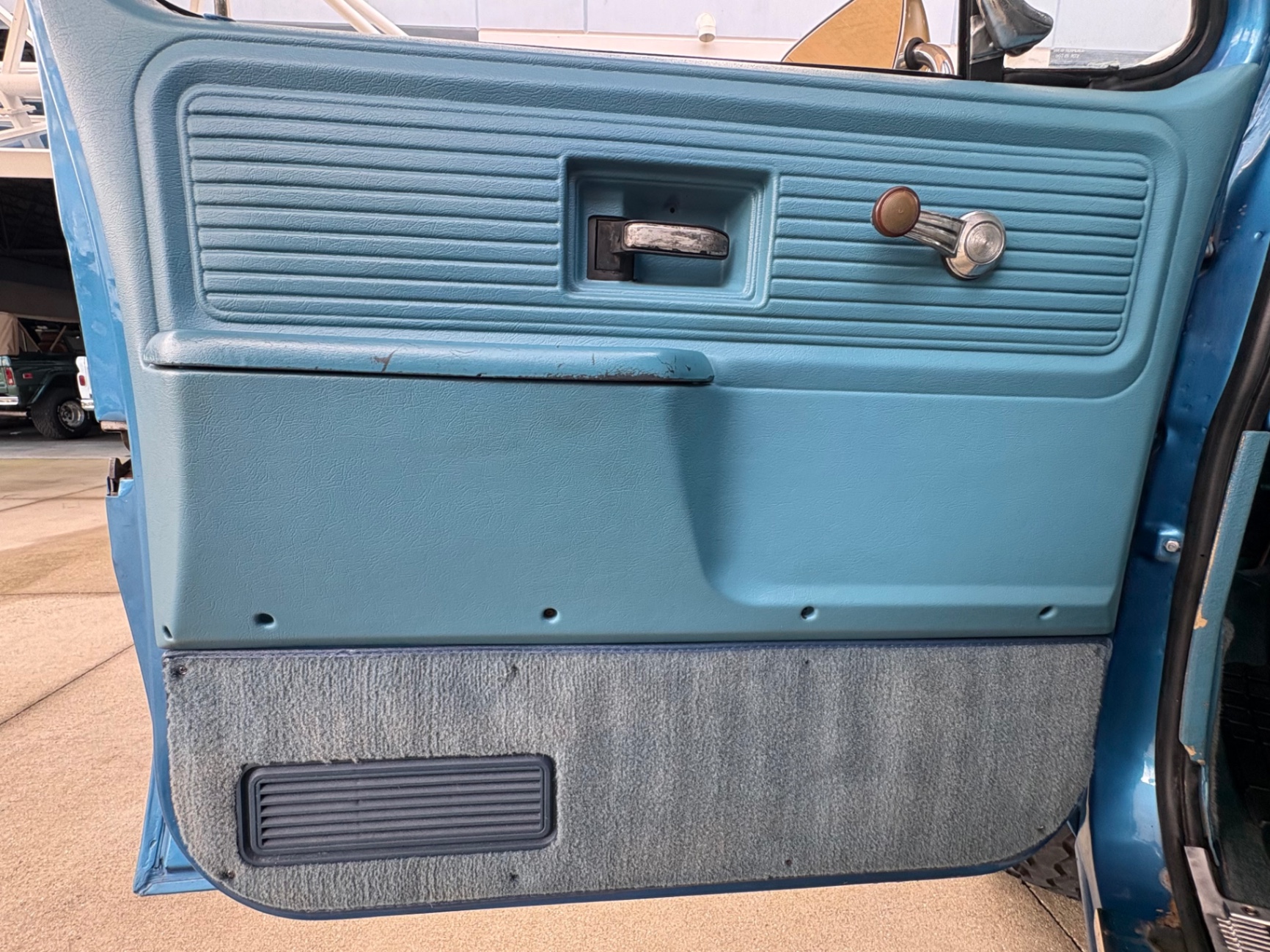
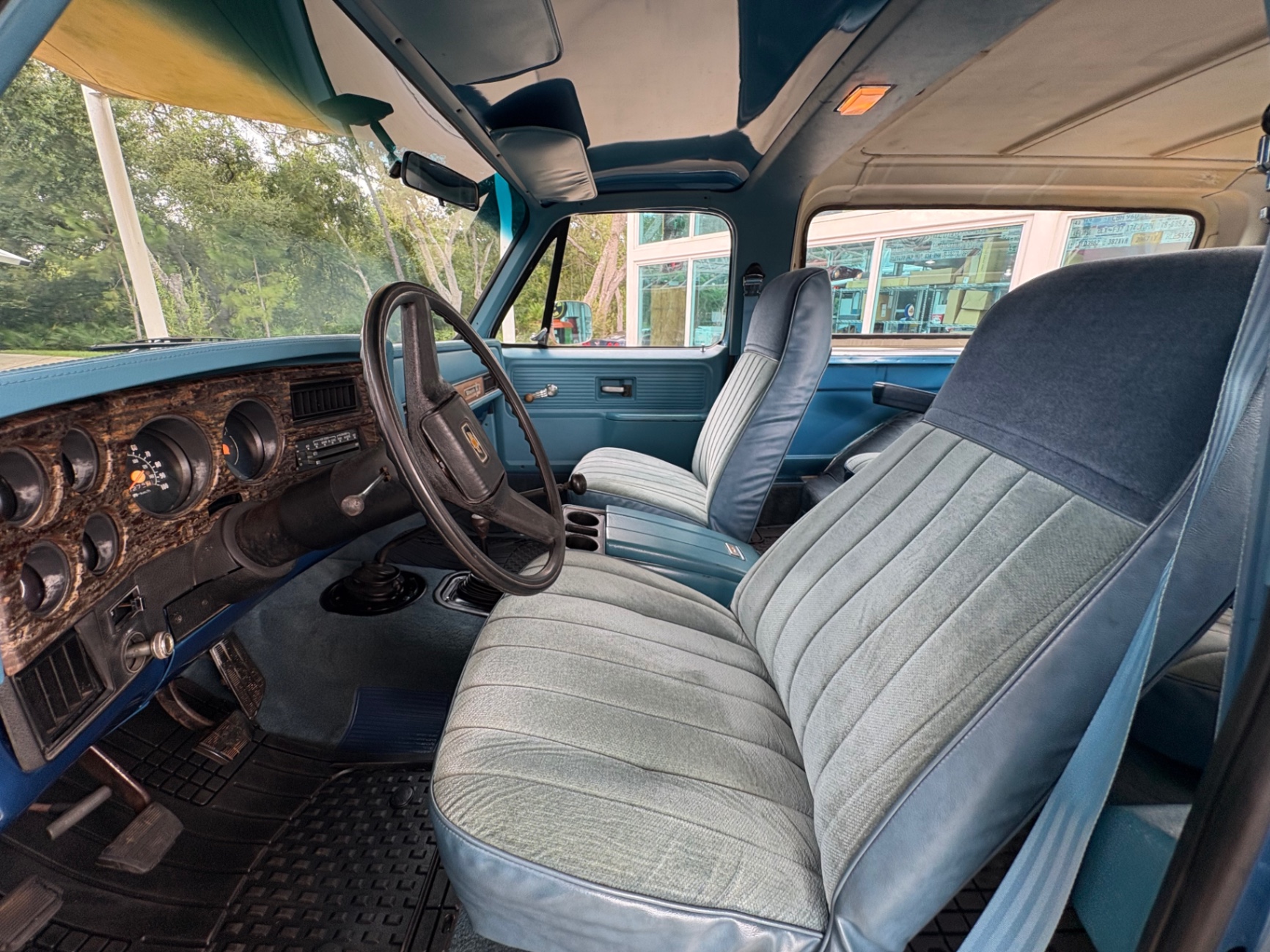
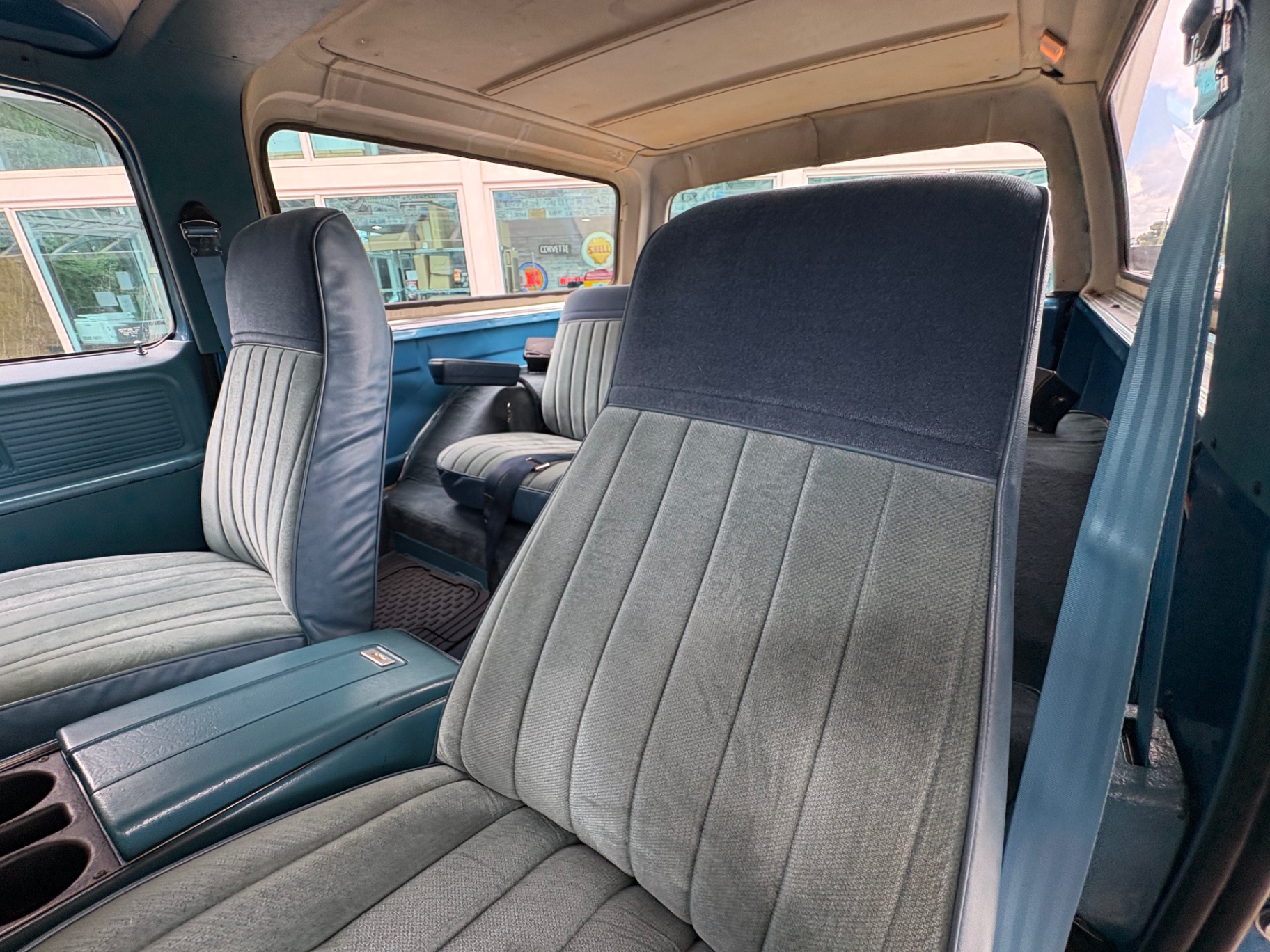
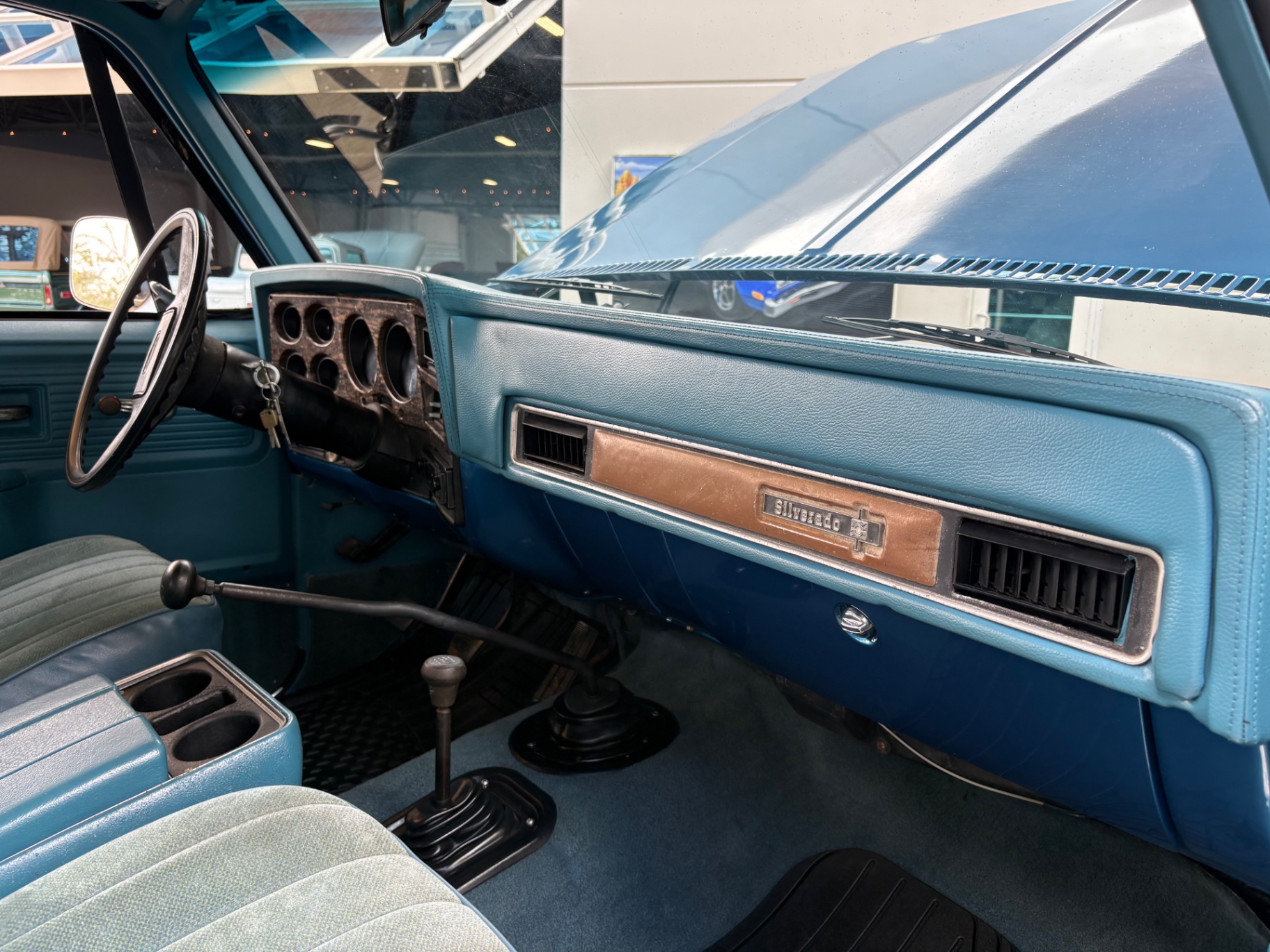
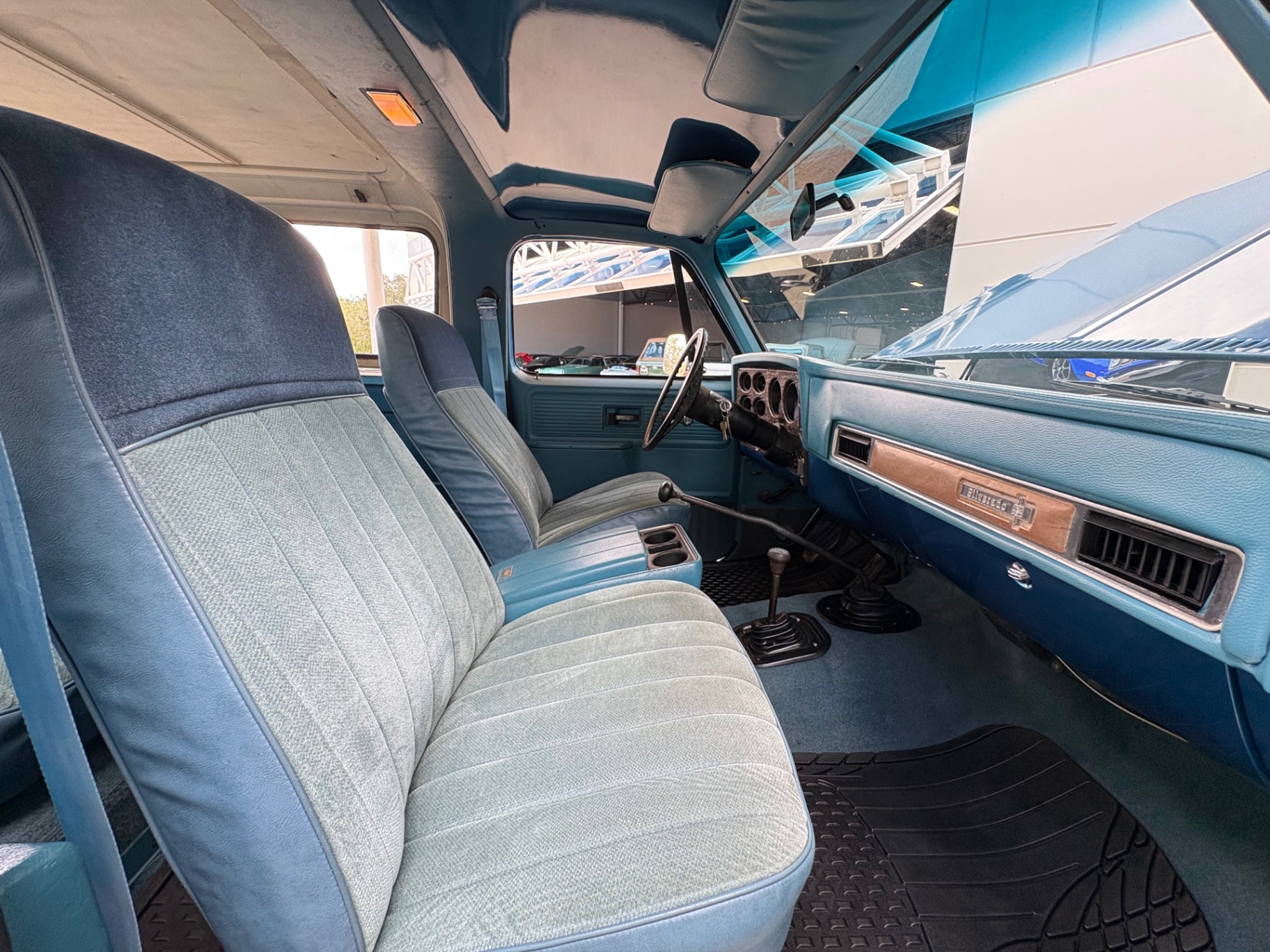
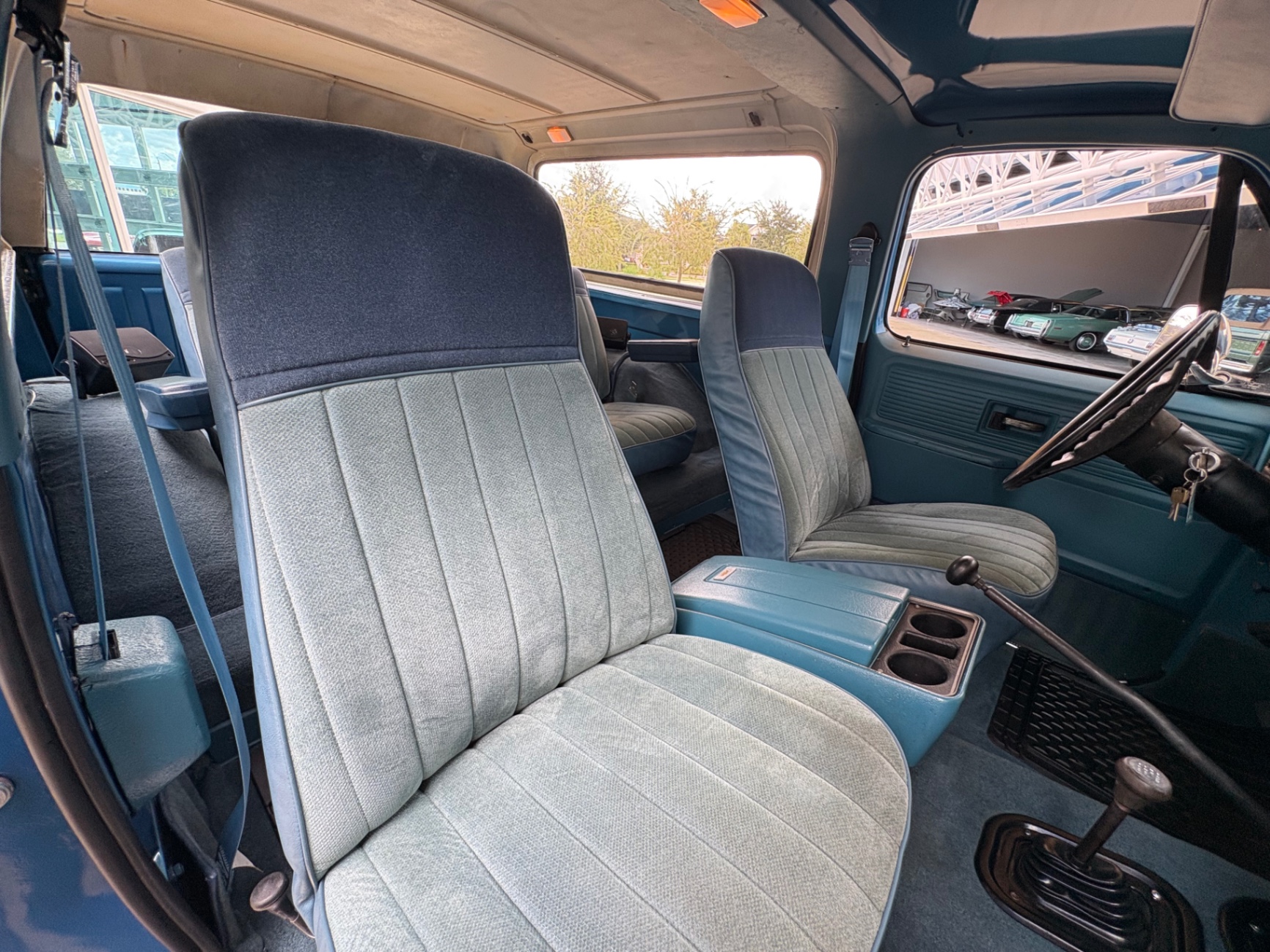
The interior of this 1979 Chevrolet K5 Blazer Cheyenne is configured with factory front bucket seats and a floor-mounted console between them. This setup was the preferred choice for buyers who wanted a sportier feel over the standard bench seat, and it works particularly well in the K5 Blazer's cab because it centers the shifter stack — the manual transmission lever and the transfer case lever — right between the driver and passenger in a way that feels intentional rather than crowded. The seats are upholstered in Blue cloth and show well, with the two-tone look of lighter cloth inserts against darker bolsters that was common on Cheyenne-grade interiors of this era.
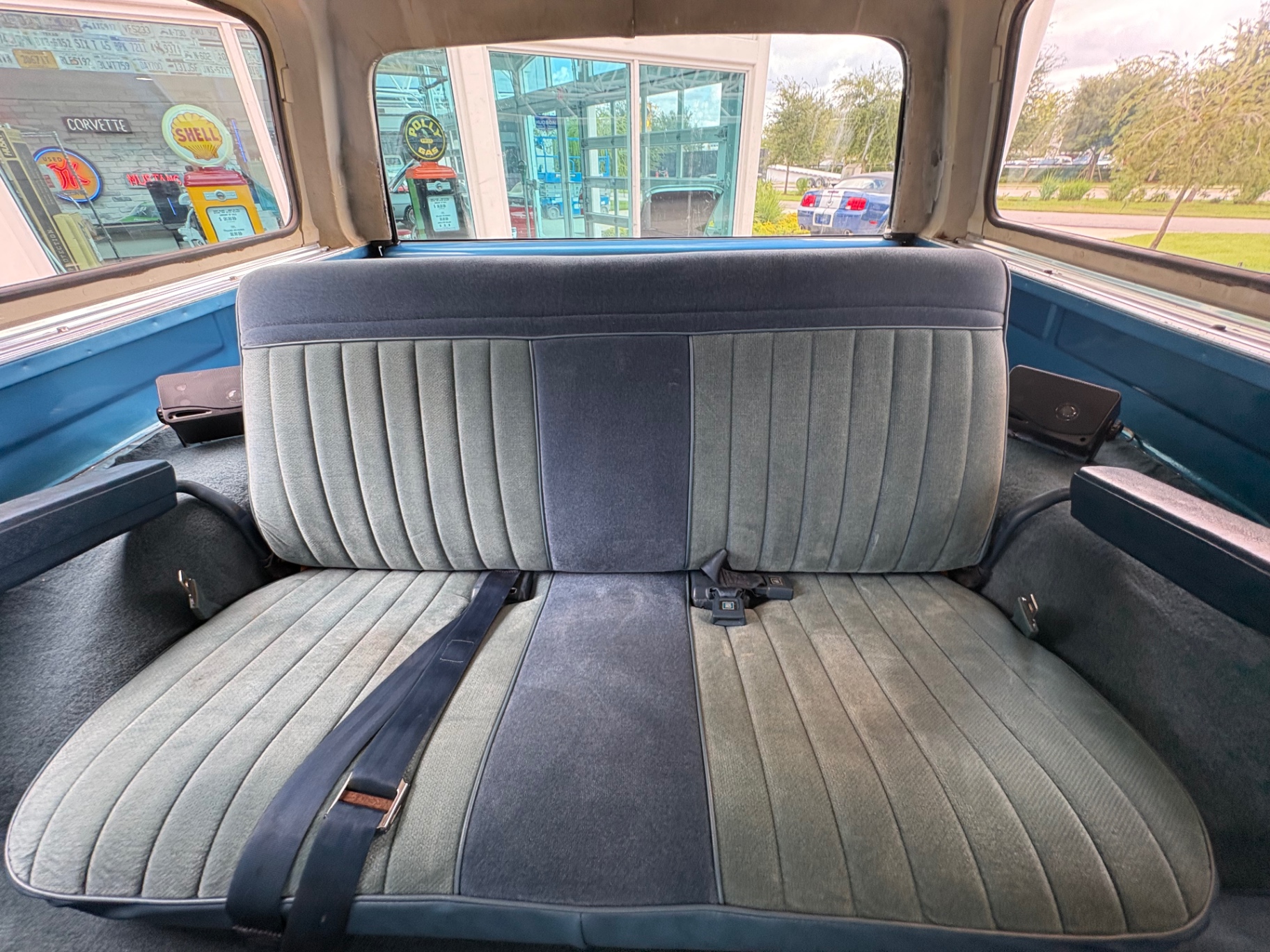
The rear bench seat is equally presentable and provides a full-width seating surface for additional passengers. Given the removable hardtop configuration, the rear cabin feels open and usable in a way that a traditional SUV with a fixed roof does not. With the top on, there is a substantial greenhouse and good visibility to the rear through the large fixed glass panels. With the top removed, the K5 Blazer becomes a completely different vehicle — open-air, practical, and well-suited to warm-weather driving.
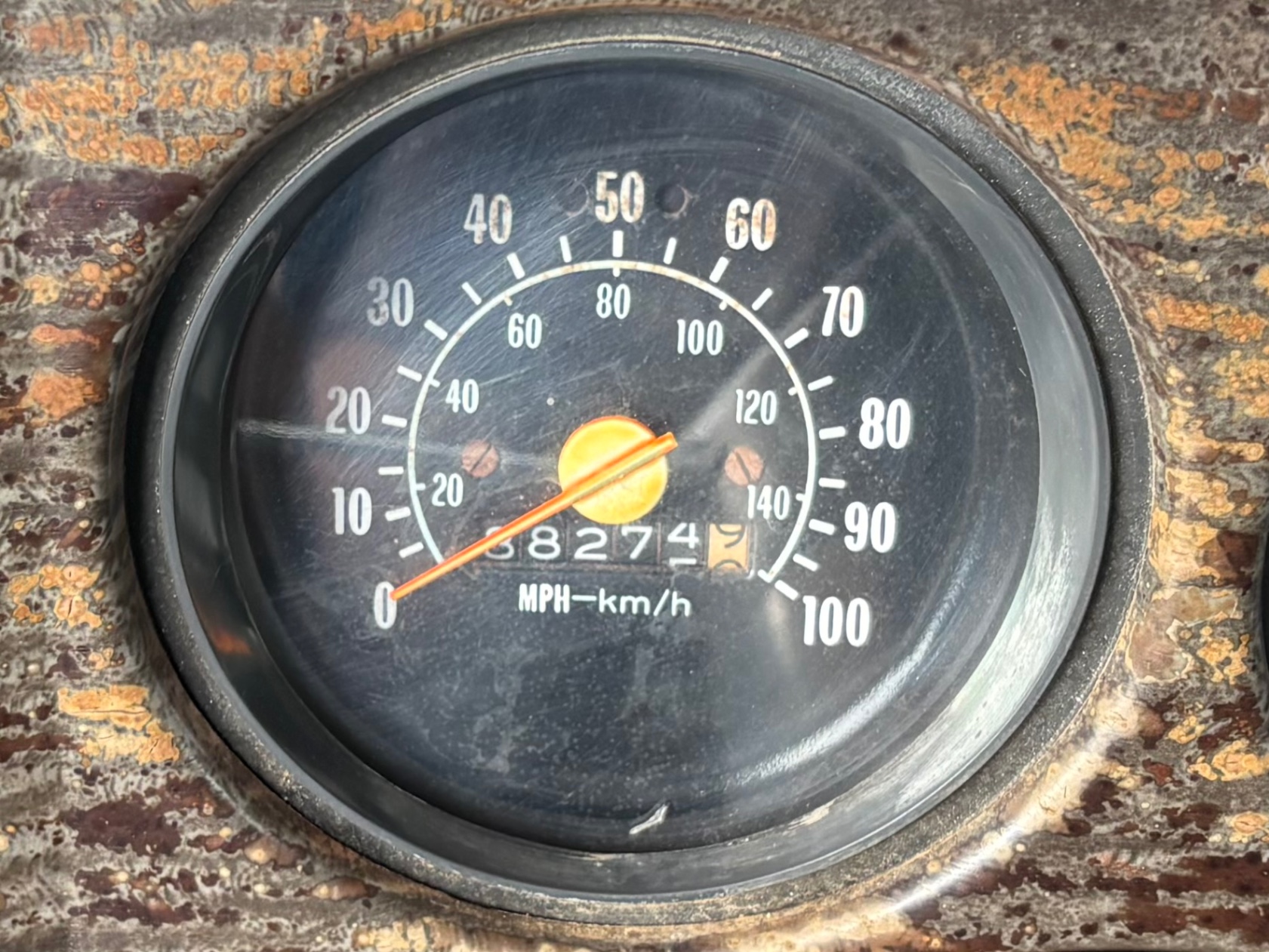
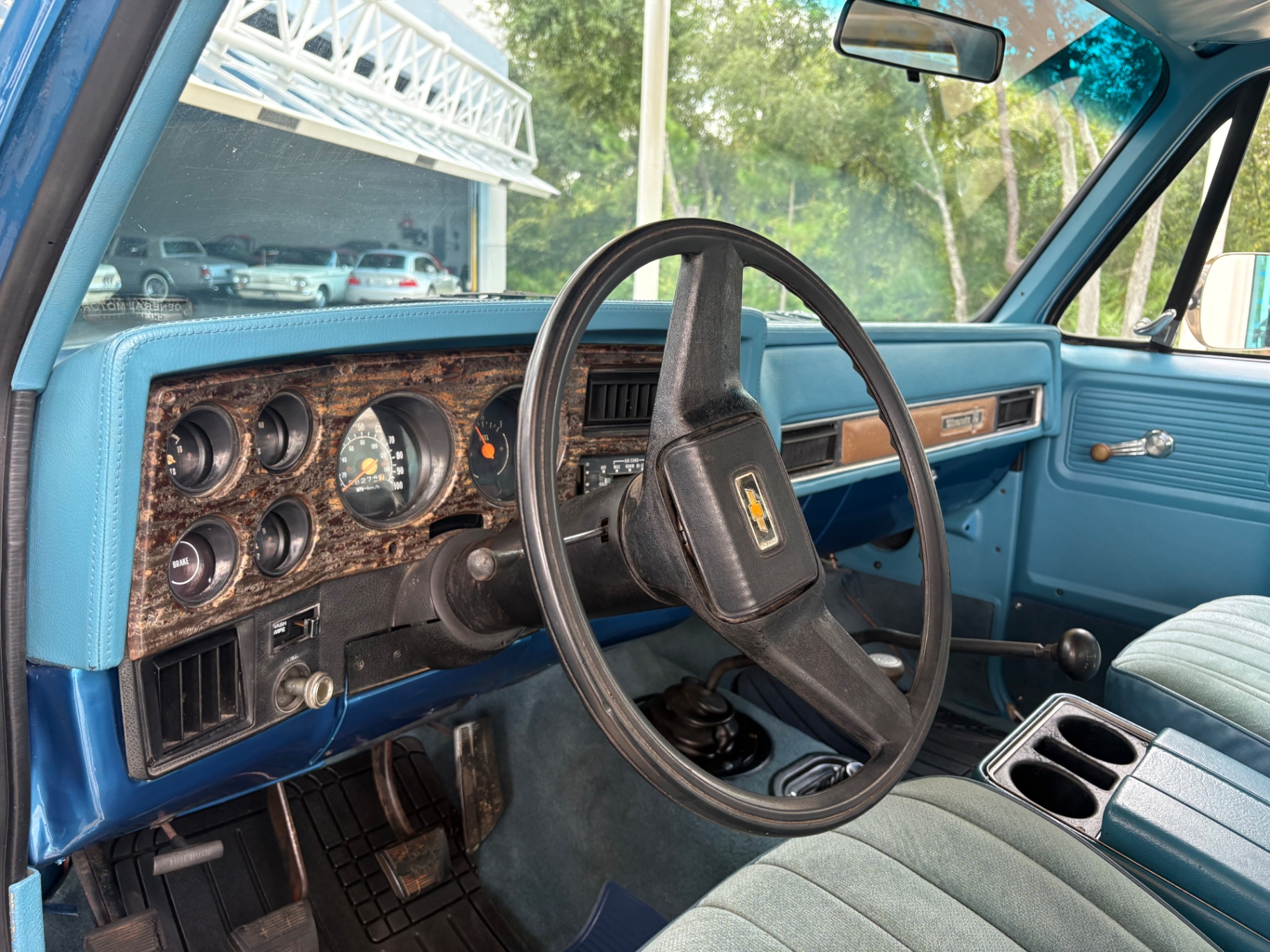
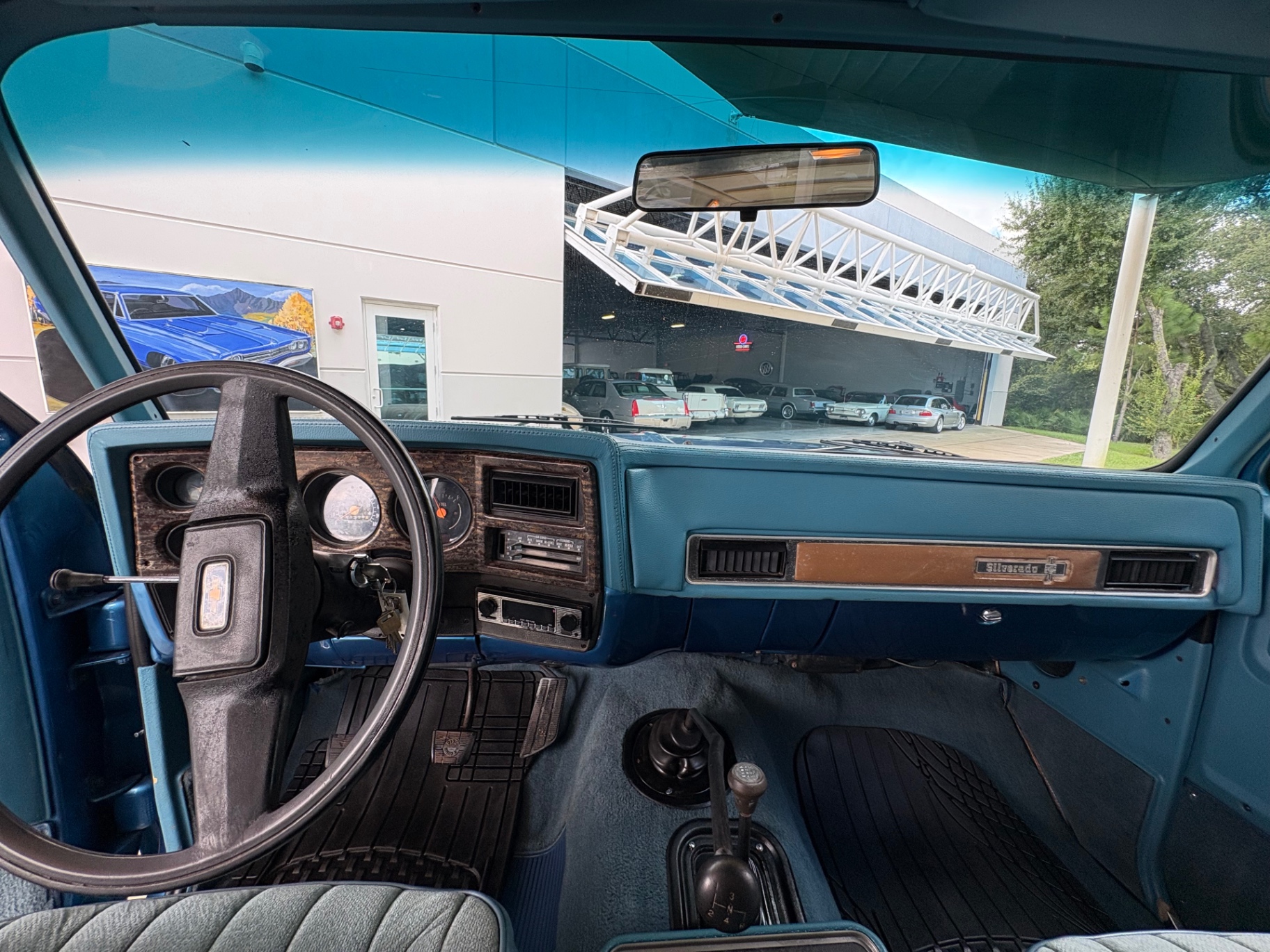
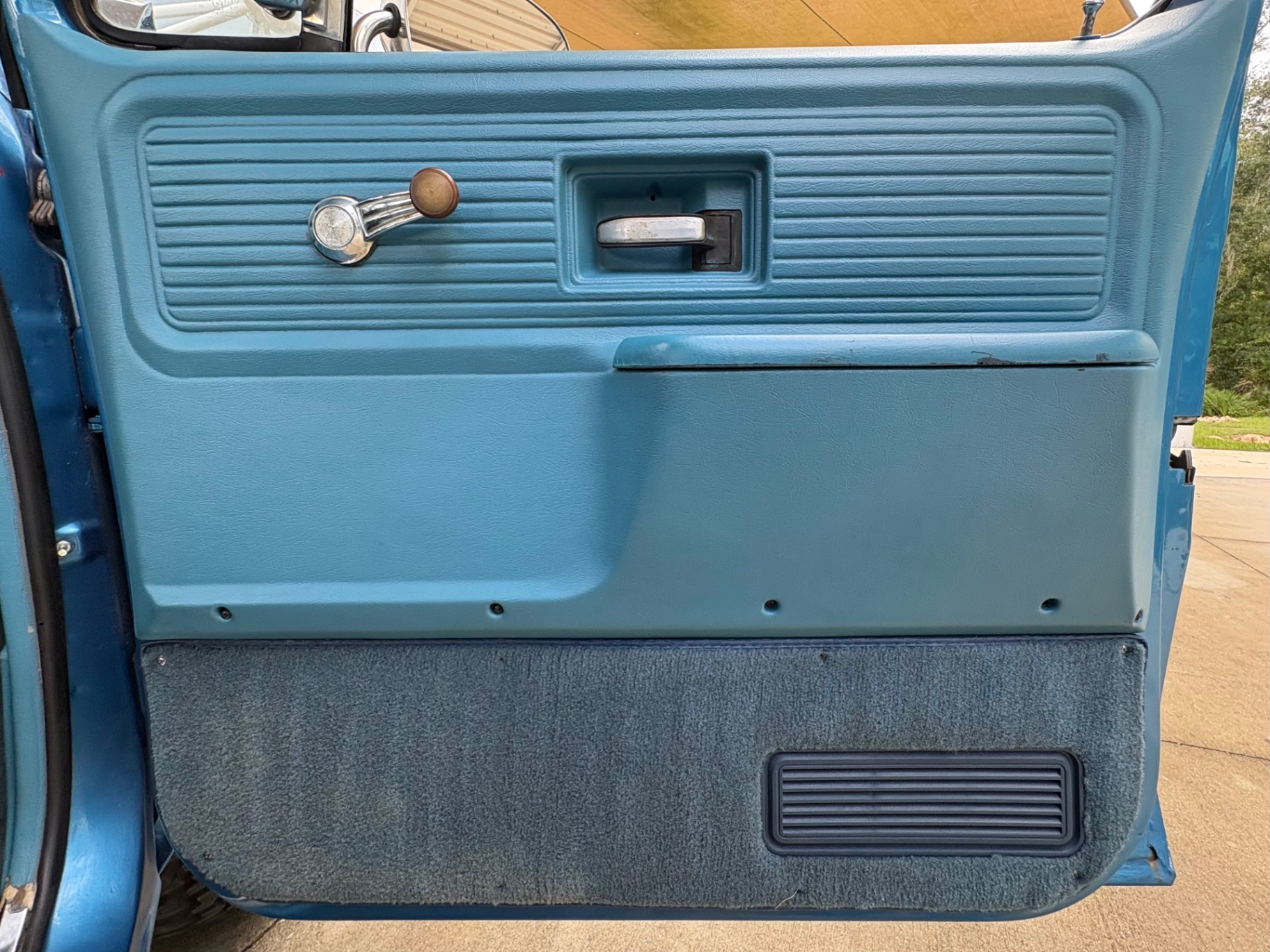
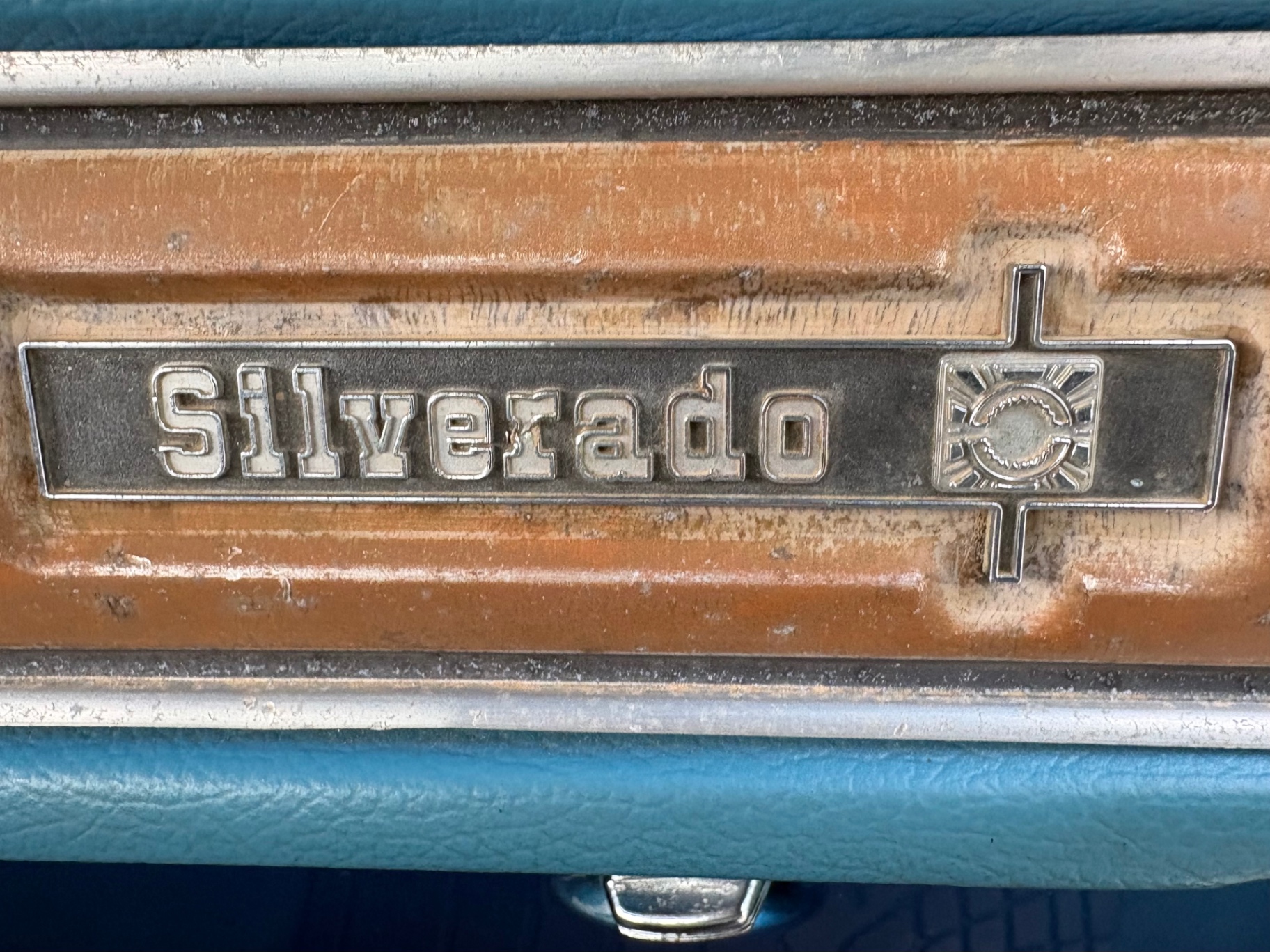
The dash is trimmed in woodgrain, which is one of the Cheyenne package's distinguishing interior details. The full gauge instrument cluster gives the driver access to oil pressure, coolant temperature, fuel level, and voltage readings at a glance — a meaningful upgrade over warning-light-only panels that were common on lower trim levels. Cheyenne badges appear on the dash and interior panels. There is also a Silverado badge visible on the glove box trim panel in the photos — this may indicate that the dash pad or glove box trim was sourced from a Silverado-grade donor at some point, which was a common practice among owners upgrading their interiors. An aftermarket stereo head unit has been installed in the dash. The factory air conditioning is present and functional, which in a Florida context is not a luxury — it is a necessity.
Exterior
The 1979 Chevrolet K5 Blazer Cheyenne wears Medium Blue paint across its body panels, with the square-body's characteristic flat hood, wide fenders, and upright greenhouse giving it the no-nonsense silhouette that has made this generation of GM truck one of the most collected full-size trucks of the past decade. The market for clean square-body Blazers has moved significantly upward in recent years, driven by a combination of nostalgia, internet-era visibility, and a genuine recognition that these trucks were built with a simplicity and solidity that later generations abandoned.
The chrome front bumper is in excellent shape and carries the factory-width appearance well. The rear bumper is equally polished and runs the full width of the tailgate, framing the Chevrolet lettering across the back panel cleanly. Chrome tow mirrors have been fitted in place of the standard units, providing a wider field of view — practical when towing or simply when dealing with the additional width added by the 32-inch tires under the fenders. Body side moldings run along the lower doors and provide some visual separation between the lower body and the blue paint above, consistent with how Cheyenne-trimmed Blazers were typically configured.
The removable hardtop is in place and fits cleanly to the body. The K5 Blazer's two-piece removable top was one of its signature features from the time the model was introduced in 1969, and it remains one of the most practical design decisions GM made on the platform. On 15-inch K5 steel wheels wearing Maxxis Bighorns, the truck sits with the additional 3 inches of lift that gives it a commanding road presence without being so tall that it becomes difficult to enter or impractical on the highway.
Conclusion
The 1979 Chevrolet K5 Blazer Cheyenne occupies a specific and increasingly valuable place in the collector truck market. It is big, honest, and mechanically straightforward — a truck built before computerized engine management, before traction control, and before the SUV became a crossover. The modifications on this example were made with genuine use in mind: the lift provides clearance for real tires, the headers and dual exhaust liberate what the emissions era took from the 350, and the undercoating protects the structure that everything else depends on. The factory bucket seat and console interior, the Cheyenne trim level, the removable hardtop, and the 4-speed manual transmission together make this a well-specified example of one of the most desirable American trucks of its generation.
To schedule an inspection or ask questions about this 1979 Chevrolet K5 Blazer Cheyenne, call Skyway Classics in Sarasota, Florida at 941-254-6608. Our team is happy to walk you through the truck in detail.
Disclaimer
Information found on the website is presented as given to us by the owner of the car, whether on consignment or from the owner we bought it from. Some Photos, materials for videos, descriptions and other information are provided by the consignor/seller and is deemed reliable, but Skyway Classics does not warranty or guarantee this information. Skyway Classics is not responsible for information that may incorrect or a publishing error. The decision to purchase should be based solely on the buyers personal inspection of the vehicle or by a professional inspection service prior to offer or purchase being made.
1979 Chevrolet K5 Blazer Cheyenne — 350 V8, 4-Speed Manual, Lifted, Undercoated
Why This Car Is Special
The 1979 Chevrolet K5 Blazer sits at a genuinely interesting crossroads in American truck history. By the late 1970s, the square-body generation — officially the C/K third generation, introduced for 1973 — had matured into the most refined version of itself. The Blazer variant of that platform offered something that almost nothing else on the market could: full-size four-wheel-drive capability in a two-door body with a removable hardtop, seating for up to five, and a level of interior comfort that put most SUVs of the era to shame.
The "K" in K5 Blazer is the important letter here. It indicates four-wheel drive, as opposed to the two-wheel-drive C5. The "5" refers to the half-ton chassis. By 1979, the K5 Blazer was available in several trim levels, and this example carries the Cheyenne package, which placed it in the upper-middle tier of the lineup — above base and Custom trim, and offering a noticeably upgraded interior and exterior presentation without reaching all the way to Silverado pricing. Cheyenne-trimmed trucks from this era are well-regarded by collectors because they hit the right balance of livability and honest truck character.
What makes the 1979 model year specifically worth noting is that it came near the end of a very clean, uncompromised design run. Emissions regulations had taken a toll on domestic V8 output during this period, and GM was threading the needle between performance and compliance. The 350 cubic inch small-block was the engine of choice for buyers who wanted usable power without the complexity of the bigger-displacement offerings. It was proven, widely supported, and responded well to modifications — which is exactly the direction this truck went.
This particular 1979 Chevrolet K5 Blazer Cheyenne presents in Medium Blue over a matching Blue cloth interior. It has been thoughtfully modified for both on-road presence and off-road function, while retaining the factory bucket seat console configuration and hardtop body that made the K5 Blazer so desirable in the first place. The undercarriage has been coated, the frame is solid, and the work done to this truck reflects someone who understood what they had.
Features List
- GM 350ci V8 engine with headers
- Flowmaster dual exhaust
- 4-speed manual transmission
- Power steering
- Power front disc brakes
- Factory air conditioning
- 3-inch suspension lift kit
- Aftermarket performance shocks
- Maxxis Bighorn 32x11.5x15 radial mud-terrain tires
- Correct Chevrolet K5 steel wheels
- Superwench lock-out hubs
- Factory bucket seats with floor console
- Rear bench seat
- Removable hardtop
- Full gauge instrument cluster
- Woodgrain dash trim
- Cheyenne trim badges
- Body side moldings
- Chrome front bumper
- Chrome rear bumper
- Chrome tow mirrors
- Aftermarket stereo
- Undercoated undercarriage
Mechanical
The heart of this 1979 Chevrolet K5 Blazer is the 350 cubic inch small-block V8 — a 5.7-liter engine that GM built in enormous quantities and that has earned a reputation for durability and tunability that few engines can match. From the factory, the 350 in a 1979 K5 Blazer produced around 165 horsepower in emissions-compliant trim. This truck has been upgraded with aftermarket headers and a Flowmaster dual exhaust system, which improves exhaust scavenging and reduces backpressure. The dual exhaust exits out the rear behind the chrome rear bumper, and the sound is noticeably more aggressive than stock without being obnoxious. The chrome air cleaner visible in the engine bay is a period-correct cosmetic touch that suits the build well.
Behind the 350 sits a 4-speed manual transmission — the correct gearbox choice for a truck that is going to be used off-road with any seriousness. The manual gives the driver direct control over gear selection when picking lines on uneven terrain, and it pairs with the transfer case to put power exactly where you need it. The K5 Blazer in 1979 used a part-time four-wheel-drive system, and this truck is equipped with Superwench lock-out hubs at the front wheels. Lock-out hubs allow the front axle to disengage from the drivetrain when four-wheel drive is not needed, which reduces wear on front axle components and improves fuel economy during highway driving. It is a practical feature that serious off-road users appreciate.
The suspension has been raised with a 3-inch lift kit, creating enough clearance to run the Maxxis Bighorn 32x11.5x15 tires without rubbing. The Bighorn is a well-regarded mud-terrain radial with a tread pattern aggressive enough for genuine off-road use while still being manageable on paved roads. Aftermarket performance shocks round out the suspension work, improving control over both on-road body movement and off-road articulation compared to the original hardware. Power steering and power front disc brakes are fitted, which are important for a lifted truck carrying wider tires — the additional mechanical assistance makes this truck considerably easier to manage at low speeds and in tight situations. The undercarriage has been coated in a rubberized undercoating, which is visible throughout the underside photos and protects the floor pans, frame rails, and crossmembers from moisture and road debris.
Interior
The interior of this 1979 Chevrolet K5 Blazer Cheyenne is configured with factory front bucket seats and a floor-mounted console between them. This setup was the preferred choice for buyers who wanted a sportier feel over the standard bench seat, and it works particularly well in the K5 Blazer's cab because it centers the shifter stack — the manual transmission lever and the transfer case lever — right between the driver and passenger in a way that feels intentional rather than crowded. The seats are upholstered in Blue cloth and show well, with the two-tone look of lighter cloth inserts against darker bolsters that was common on Cheyenne-grade interiors of this era.
The rear bench seat is equally presentable and provides a full-width seating surface for additional passengers. Given the removable hardtop configuration, the rear cabin feels open and usable in a way that a traditional SUV with a fixed roof does not. With the top on, there is a substantial greenhouse and good visibility to the rear through the large fixed glass panels. With the top removed, the K5 Blazer becomes a completely different vehicle — open-air, practical, and well-suited to warm-weather driving.
The dash is trimmed in woodgrain, which is one of the Cheyenne package's distinguishing interior details. The full gauge instrument cluster gives the driver access to oil pressure, coolant temperature, fuel level, and voltage readings at a glance — a meaningful upgrade over warning-light-only panels that were common on lower trim levels. Cheyenne badges appear on the dash and interior panels. There is also a Silverado badge visible on the glove box trim panel in the photos — this may indicate that the dash pad or glove box trim was sourced from a Silverado-grade donor at some point, which was a common practice among owners upgrading their interiors. An aftermarket stereo head unit has been installed in the dash. The factory air conditioning is present and functional, which in a Florida context is not a luxury — it is a necessity.
Exterior
The 1979 Chevrolet K5 Blazer Cheyenne wears Medium Blue paint across its body panels, with the square-body's characteristic flat hood, wide fenders, and upright greenhouse giving it the no-nonsense silhouette that has made this generation of GM truck one of the most collected full-size trucks of the past decade. The market for clean square-body Blazers has moved significantly upward in recent years, driven by a combination of nostalgia, internet-era visibility, and a genuine recognition that these trucks were built with a simplicity and solidity that later generations abandoned.
The chrome front bumper is in excellent shape and carries the factory-width appearance well. The rear bumper is equally polished and runs the full width of the tailgate, framing the Chevrolet lettering across the back panel cleanly. Chrome tow mirrors have been fitted in place of the standard units, providing a wider field of view — practical when towing or simply when dealing with the additional width added by the 32-inch tires under the fenders. Body side moldings run along the lower doors and provide some visual separation between the lower body and the blue paint above, consistent with how Cheyenne-trimmed Blazers were typically configured.
The removable hardtop is in place and fits cleanly to the body. The K5 Blazer's two-piece removable top was one of its signature features from the time the model was introduced in 1969, and it remains one of the most practical design decisions GM made on the platform. On 15-inch K5 steel wheels wearing Maxxis Bighorns, the truck sits with the additional 3 inches of lift that gives it a commanding road presence without being so tall that it becomes difficult to enter or impractical on the highway.
Conclusion
The 1979 Chevrolet K5 Blazer Cheyenne occupies a specific and increasingly valuable place in the collector truck market. It is big, honest, and mechanically straightforward — a truck built before computerized engine management, before traction control, and before the SUV became a crossover. The modifications on this example were made with genuine use in mind: the lift provides clearance for real tires, the headers and dual exhaust liberate what the emissions era took from the 350, and the undercoating protects the structure that everything else depends on. The factory bucket seat and console interior, the Cheyenne trim level, the removable hardtop, and the 4-speed manual transmission together make this a well-specified example of one of the most desirable American trucks of its generation.
To schedule an inspection or ask questions about this 1979 Chevrolet K5 Blazer Cheyenne, call Skyway Classics in Sarasota, Florida at 941-254-6608. Our team is happy to walk you through the truck in detail.
Disclaimer
Information found on the website is presented as given to us by the owner of the car, whether on consignment or from the owner we bought it from. Some Photos, materials for videos, descriptions and other information are provided by the consignor/seller and is deemed reliable, but Skyway Classics does not warranty or guarantee this information. Skyway Classics is not responsible for information that may incorrect or a publishing error. The decision to purchase should be based solely on the buyers personal inspection of the vehicle or by a professional inspection service prior to offer or purchase being made.
1979 Chevrolet
K5 Blazer Silverado
Why Choose Skyway Classics?
Explore our curated inventory of classic and collector cars—thoughtfully selected, ready to drive, and supported by experts who make ownership simple.
Expert Curation
Every vehicle is hand-selected by our experts for quality, authenticity, and investment potential.
Fast Transactions
Streamlined buying and selling process with quick financing and immediate delivery options.
Only National Dealer With Classic Service & Repair
We’re the only national dealership that services and repairs the classics we sell—before and after the sale.
Nationwide Network
Access to our extensive network of collectors, restorers, and classic car enthusiasts nationwide.
Concierge Ownership Support
From financing and insurance to paperwork, shipping, and titling—we handle the details so you can enjoy the drive.
Passion-Driven Service
We're classic car enthusiasts first, providing personalized service with genuine passion for the hobby.