
1966 Ford
Mustang Convertible
1966 Ford Mustang Convertible — Emberglo Copper, 302 V8, Custom Build
Why This Car Is Special
The 1966 Ford Mustang convertible is one of the most recognized automobiles in American history, and for good reason. Ford sold over 607,000 Mustangs in calendar year 1966, making it the best-selling model year of the first-generation run. Of those, convertibles accounted for roughly 72,000 units — a meaningful slice, but a fraction of the total production. When you factor in the color, the engine, and the level of custom work on this particular car, you're looking at a configuration that would not have been easy to find even the day it rolled off the Dearborn line.
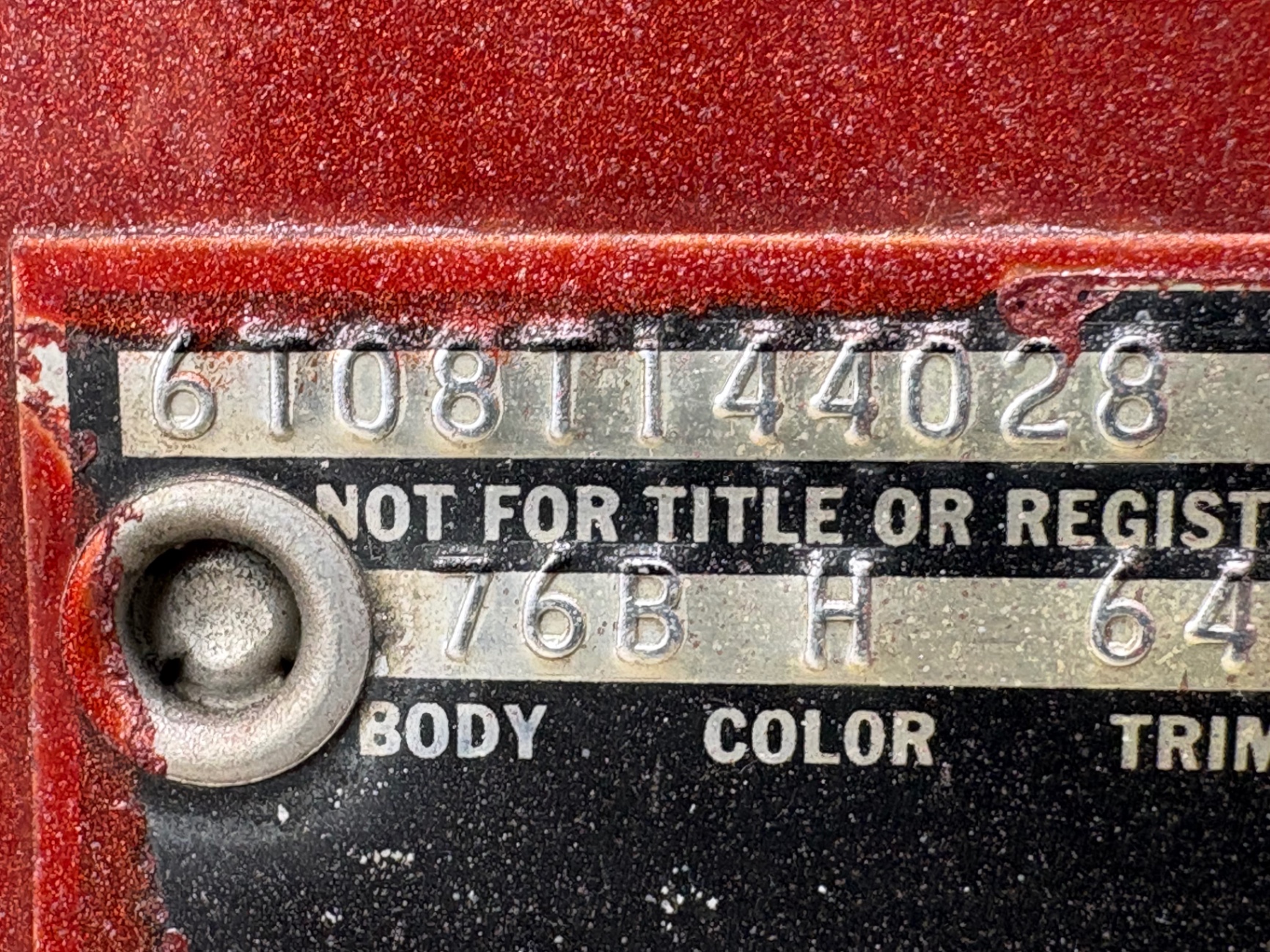
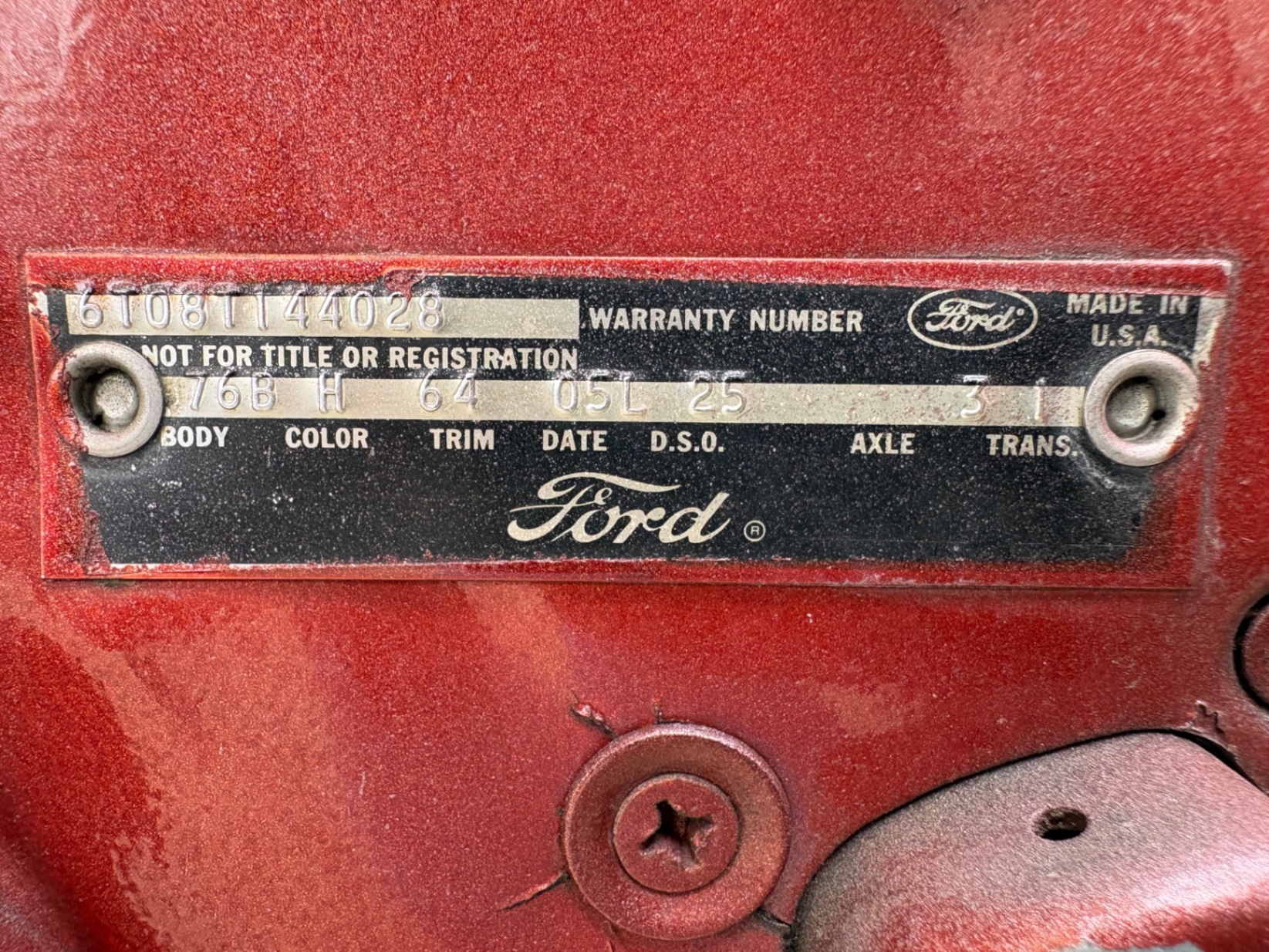
The VIN on this car decodes to confirm it was assembled at the San Jose, California plant — the "T" in the sixth position of the sequence identifies that facility. San Jose-built first-generation Mustangs are well-documented among collectors, and the California assembly origin adds a layer of regional history that enthusiasts appreciate. The body style code confirms the convertible body, and the sequence number places this car solidly within the 1966 model year production run.
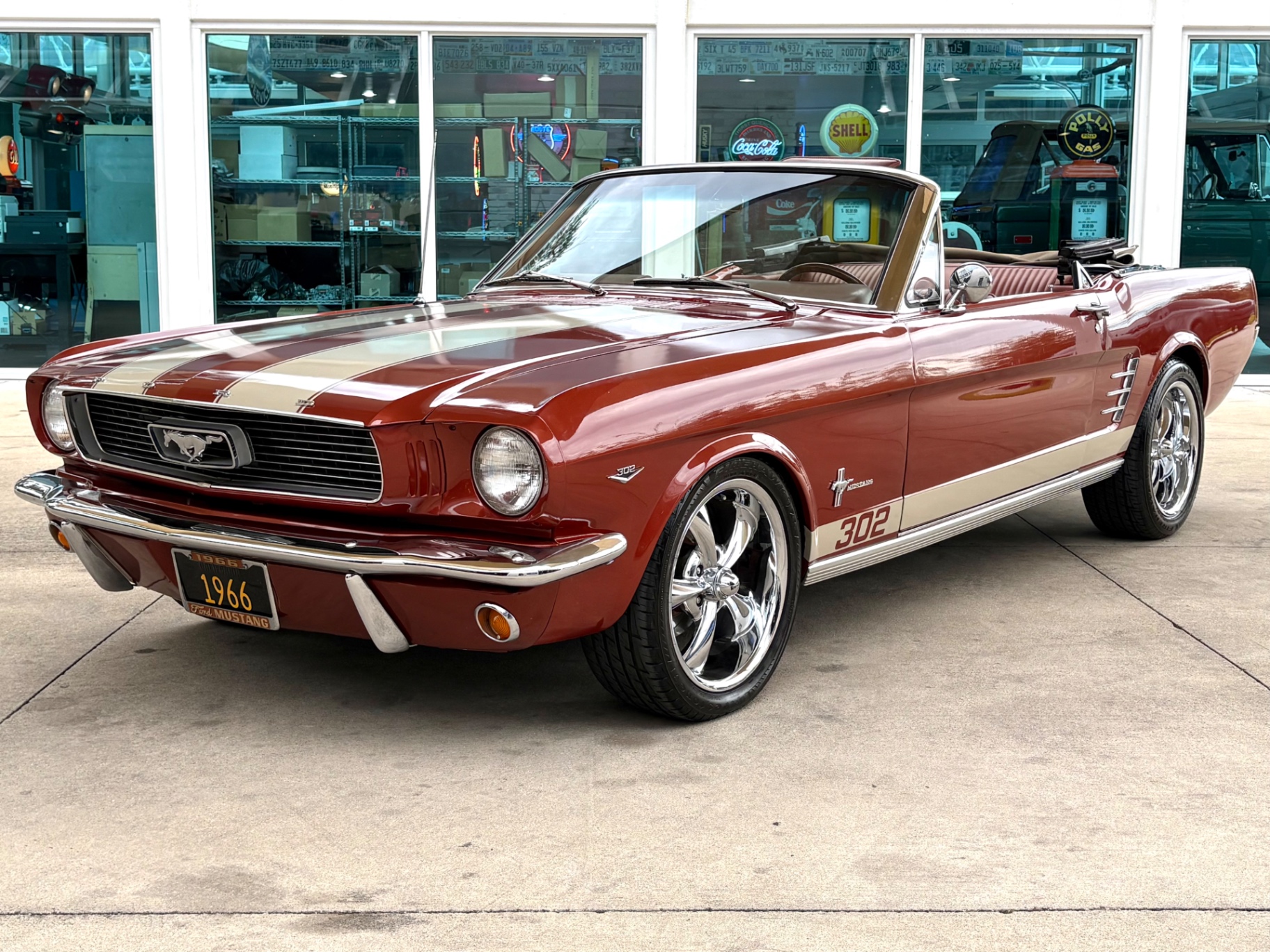
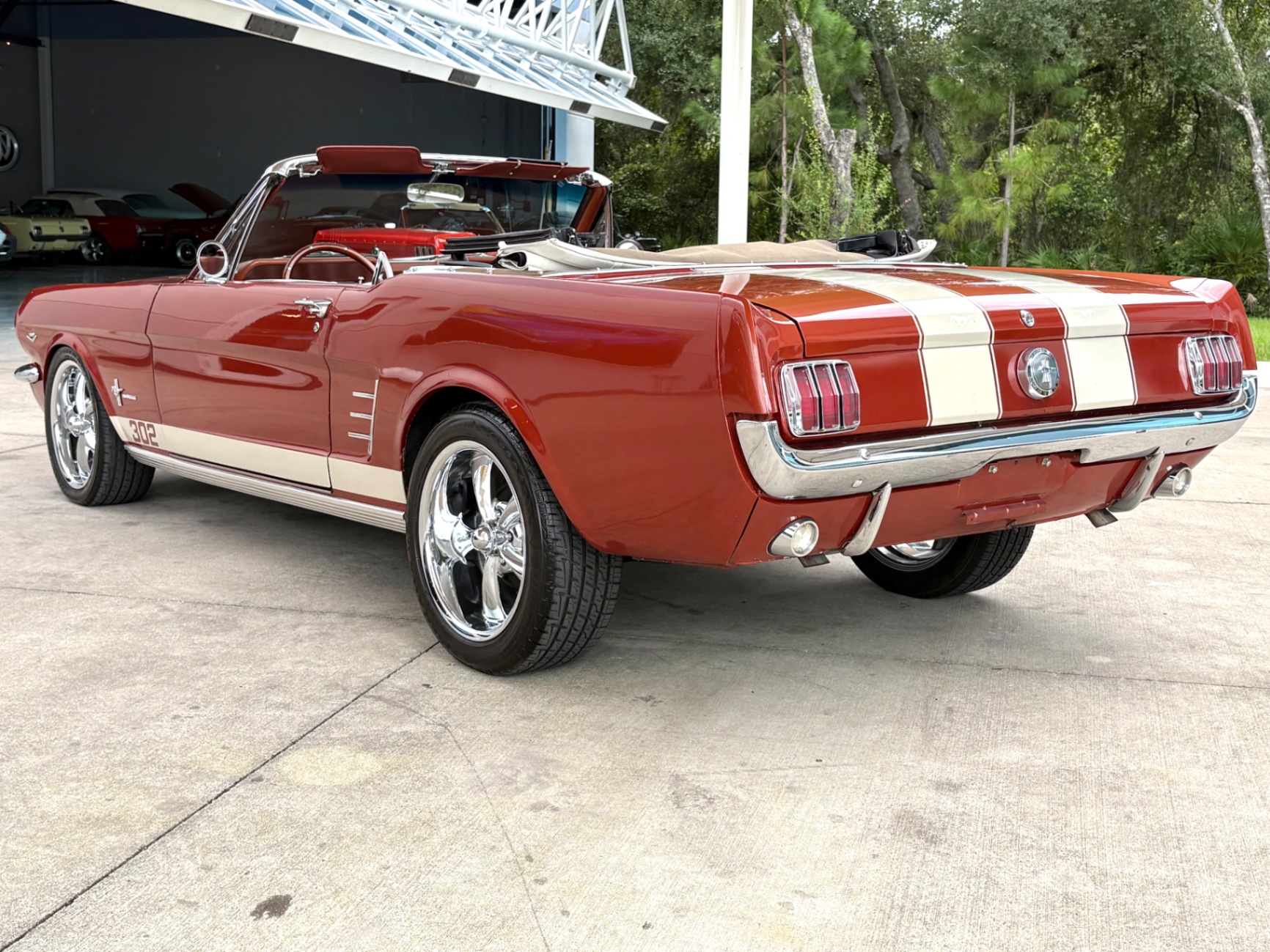
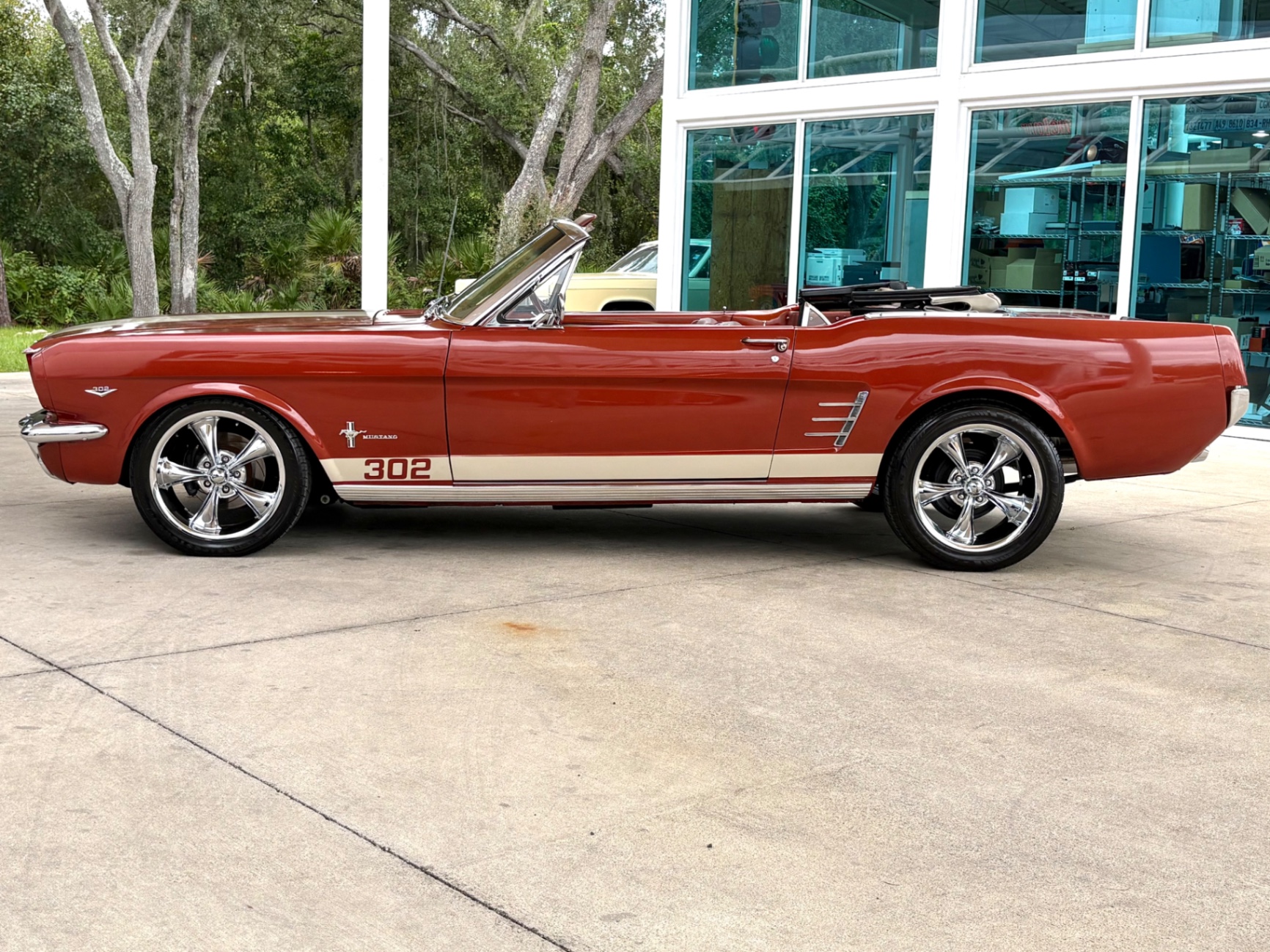
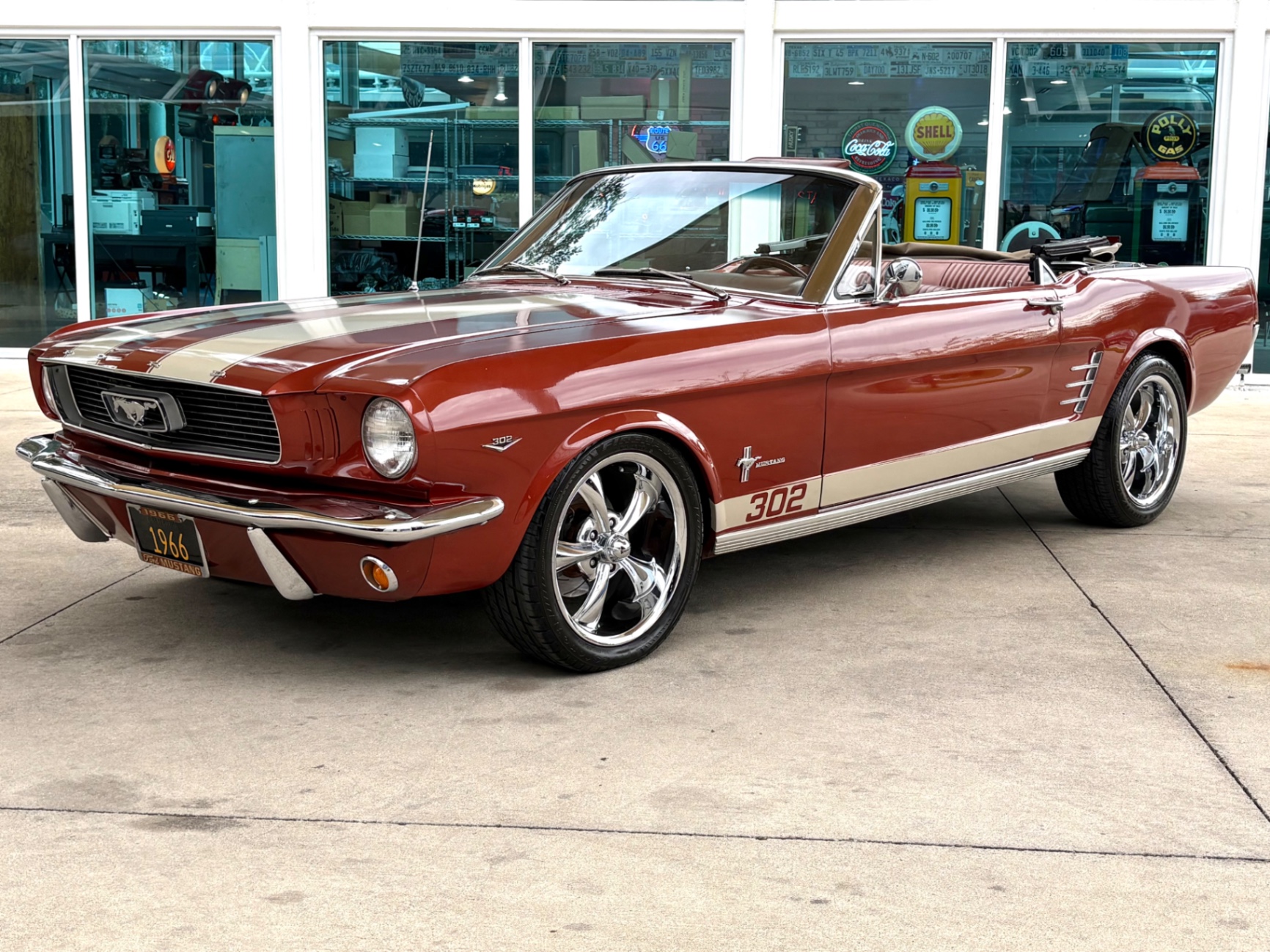
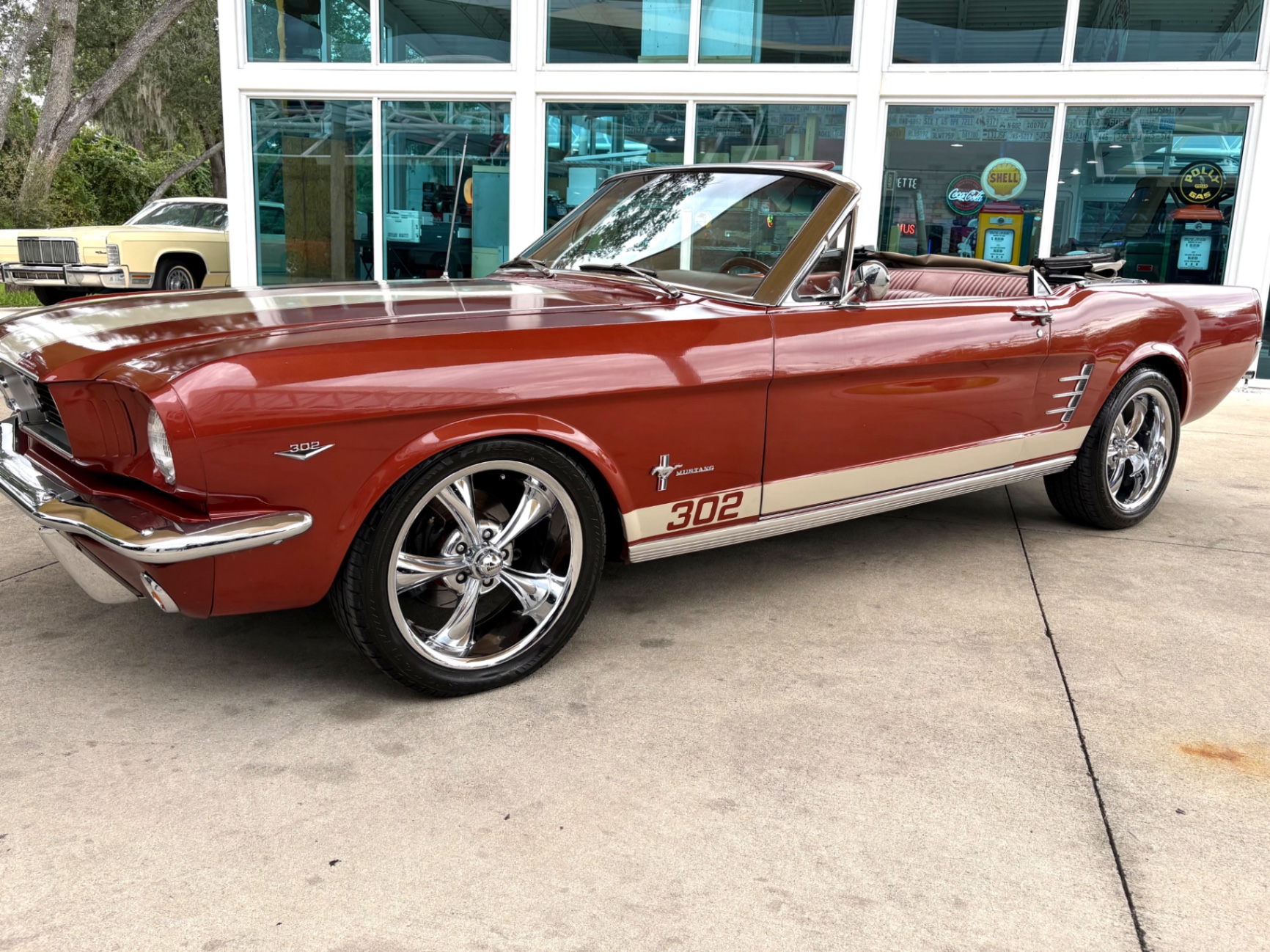
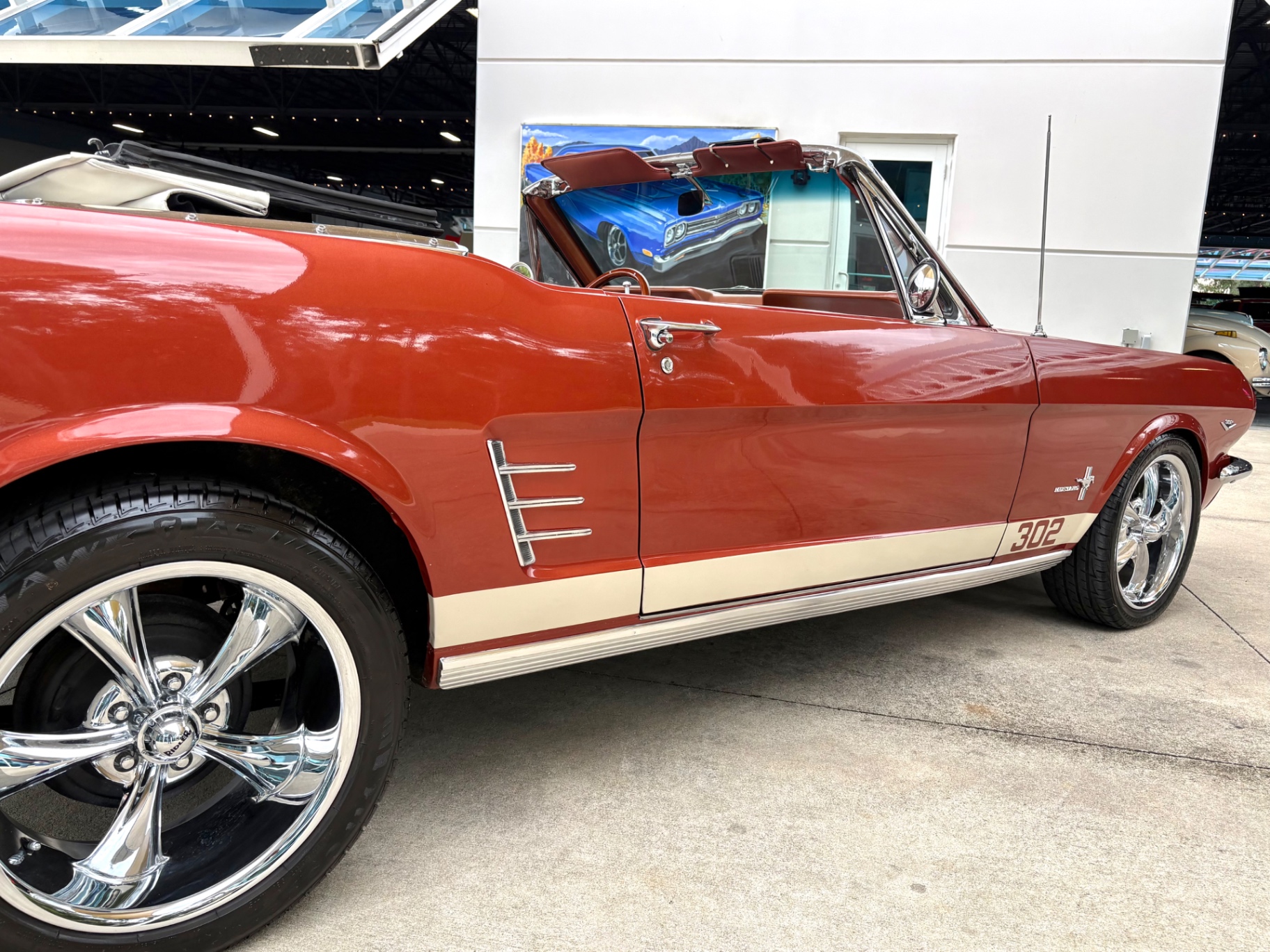
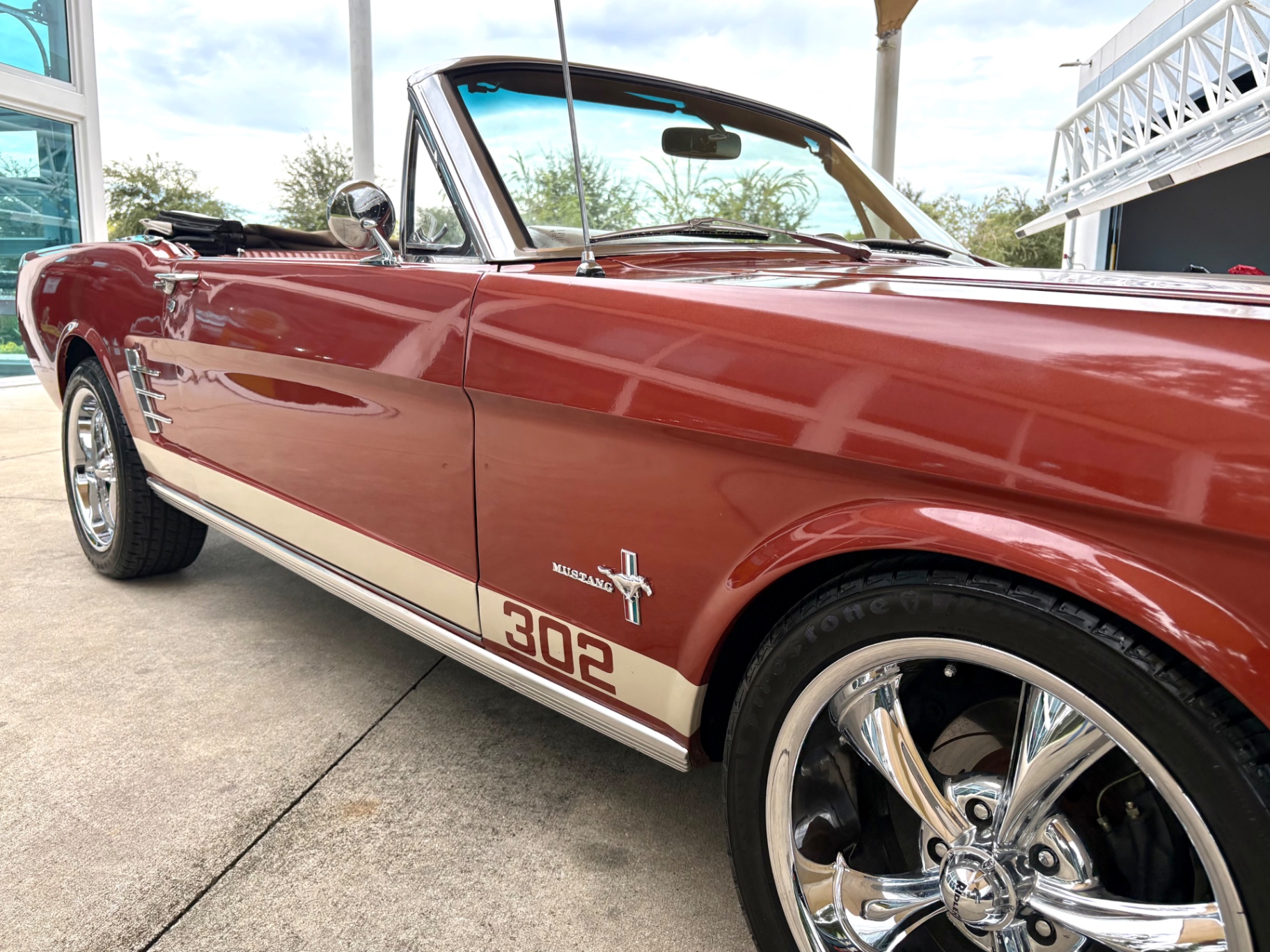
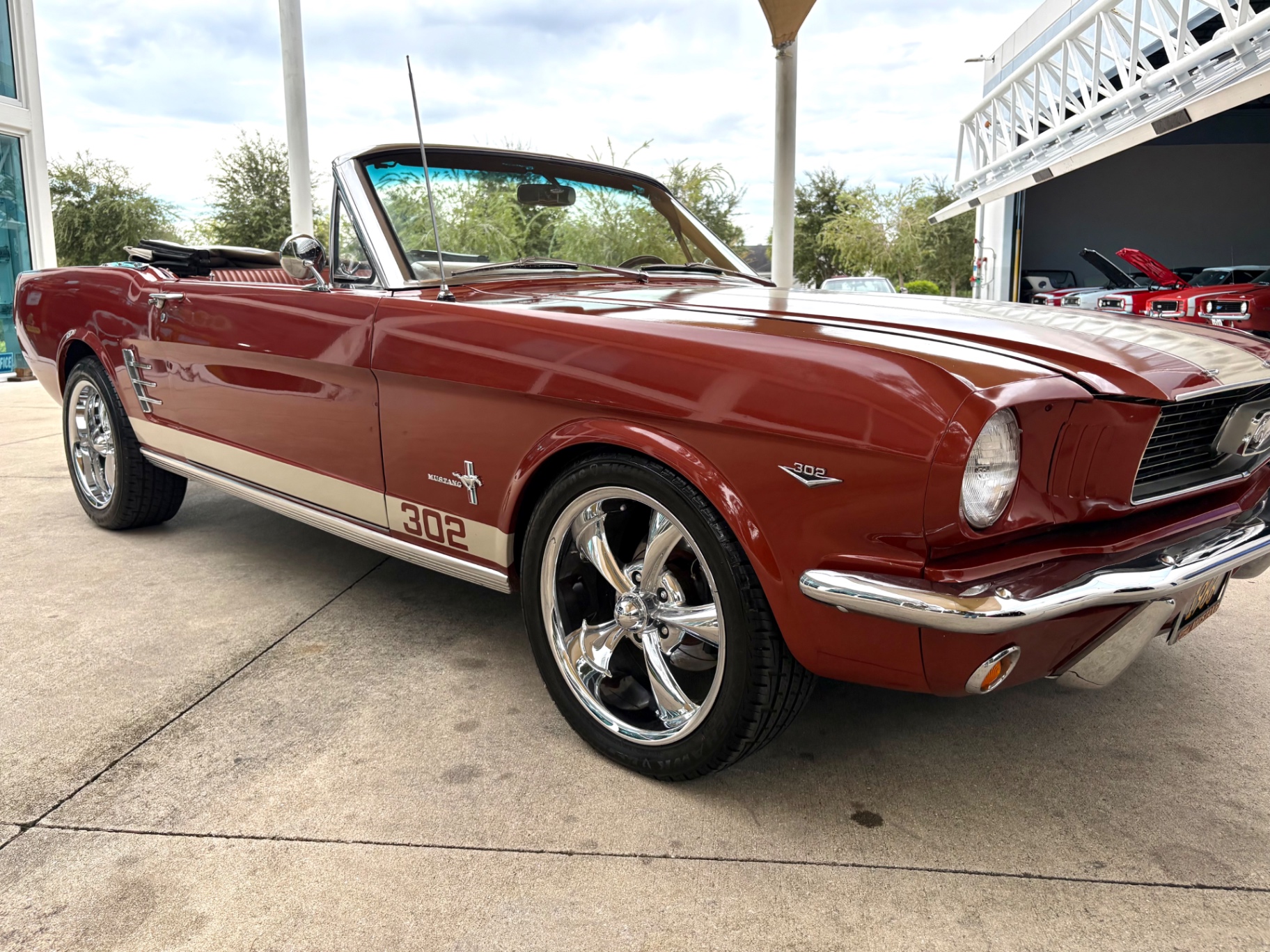
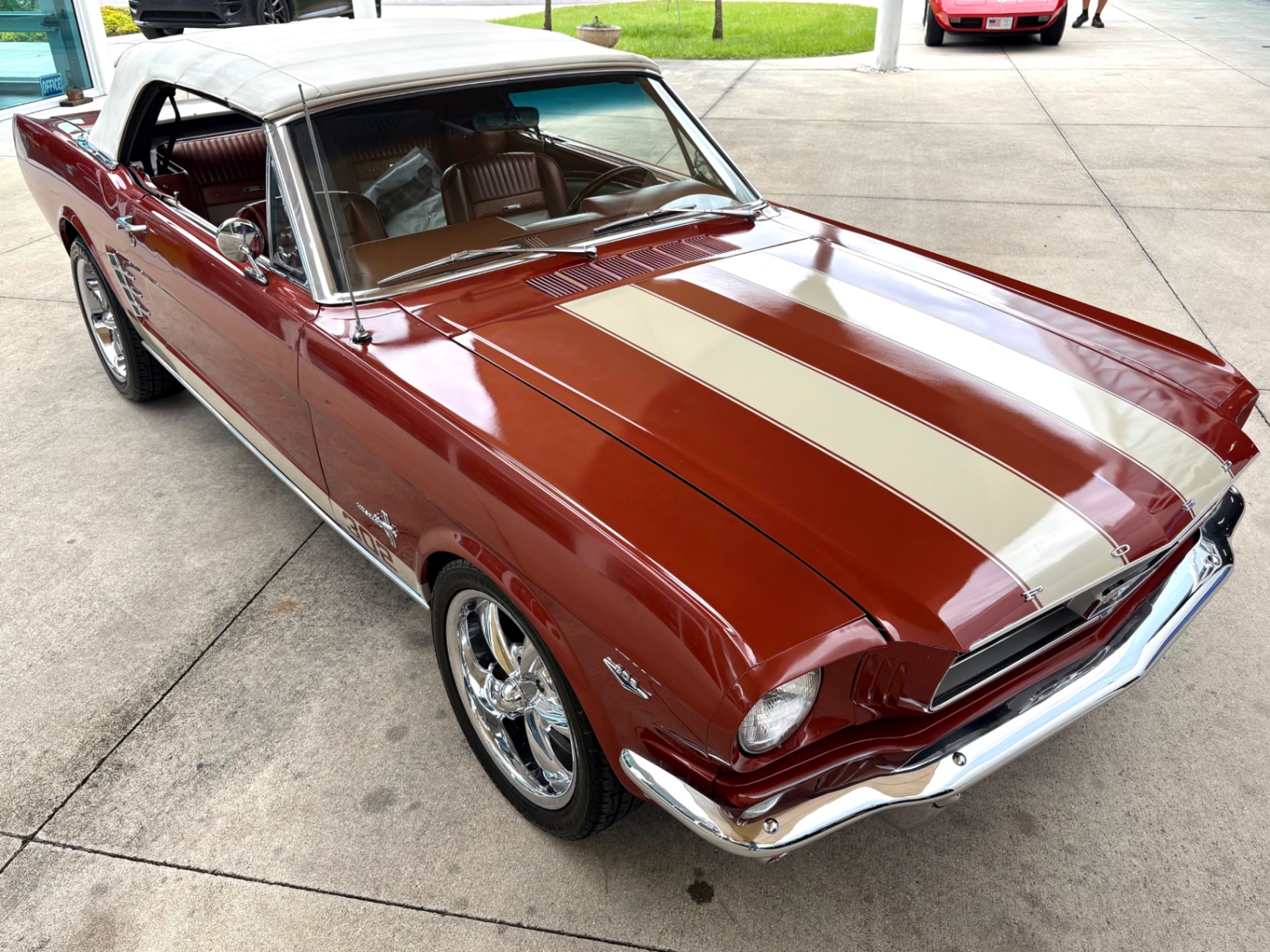
The color is Emberglo, Ford's factory copper-brown metallic that was offered during this period and has a warmth to it that photographs do not fully capture in person. It is a less common choice compared to the period's reds and blacks, which makes this car easy to identify in a crowd of first-generation Mustangs. Paired with a red and parchment two-tone vinyl interior and a white convertible top, the color combination is cohesive and period-correct in spirit, even as the car has been thoroughly updated mechanically and cosmetically.
This 1966 Ford Mustang convertible has been built as a driver — one that can be used regularly, driven confidently, and enjoyed without the anxiety that comes with a numbers-matching show car. The owner invested in a long list of practical upgrades: modern ignition, upgraded cooling, better braking, and a Magnaflow dual exhaust system, all while keeping the car's proportions and character true to the original design.
Features List
- 302ci V8 engine
- Cruise-O-Matic 3-Speed Automatic Transmission
- Ford Racing chrome valve covers
- MSD Ignition System
- Chrome Mustang air cleaner
- Aluminum radiator with electric cooling fan
- Exhaust header wrap
- Magnaflow dual exhaust
- Power steering
- Front disc brakes
- Chrome Ridler wheels
- Chrome front and rear bumpers
- Side scoops
- White convertible top
- Racing stripes
- 302 side stripe decals
- Tachometer gauge cluster
- Wood grain steering wheel
- Aftermarket AM/FM stereo
- Bucket seats with center console
- Custom Pony floor mats
- Undercoated floor pan
- Emberglo Copper exterior
- Red and Parchment vinyl interior
Mechanical
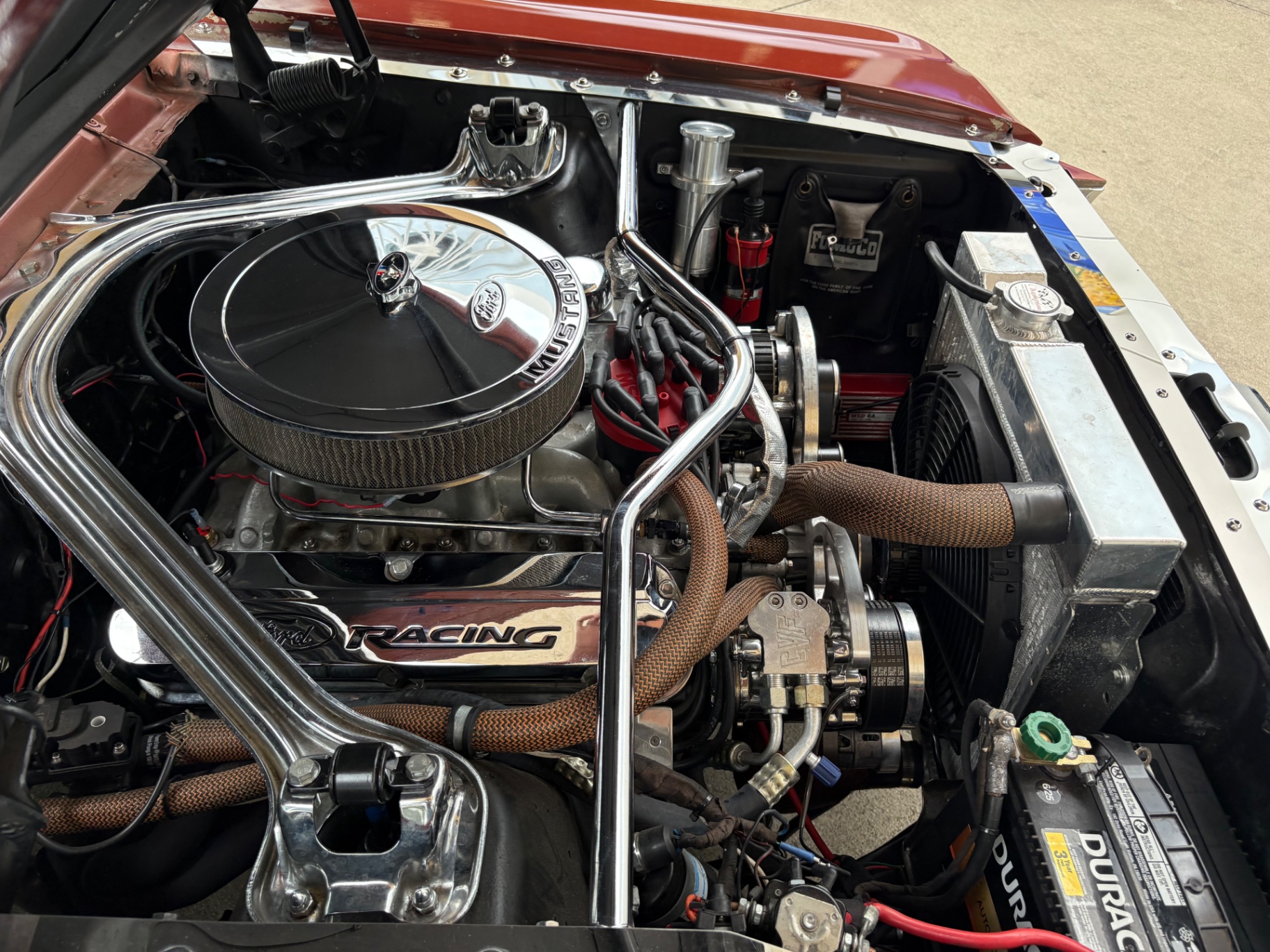
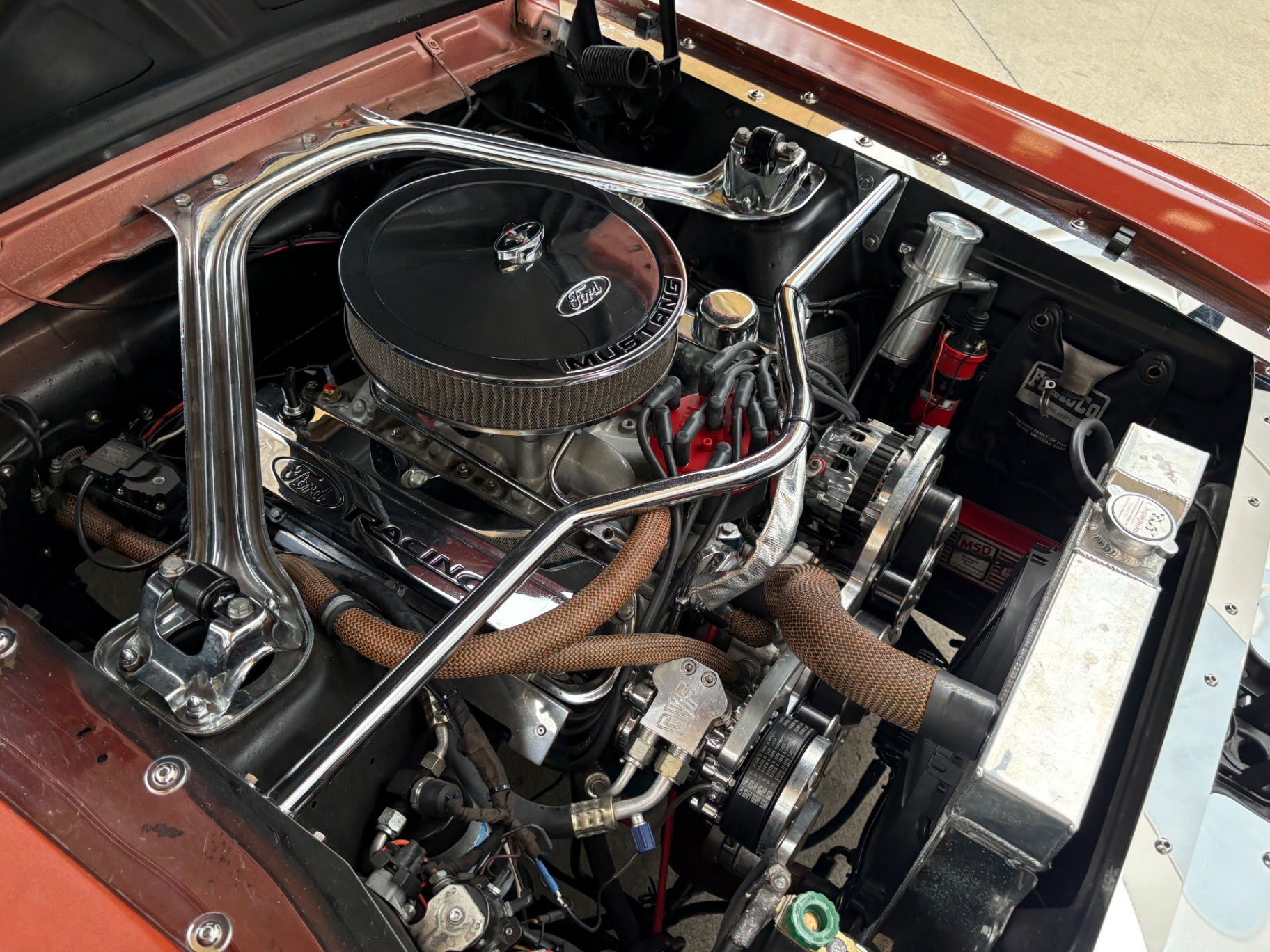
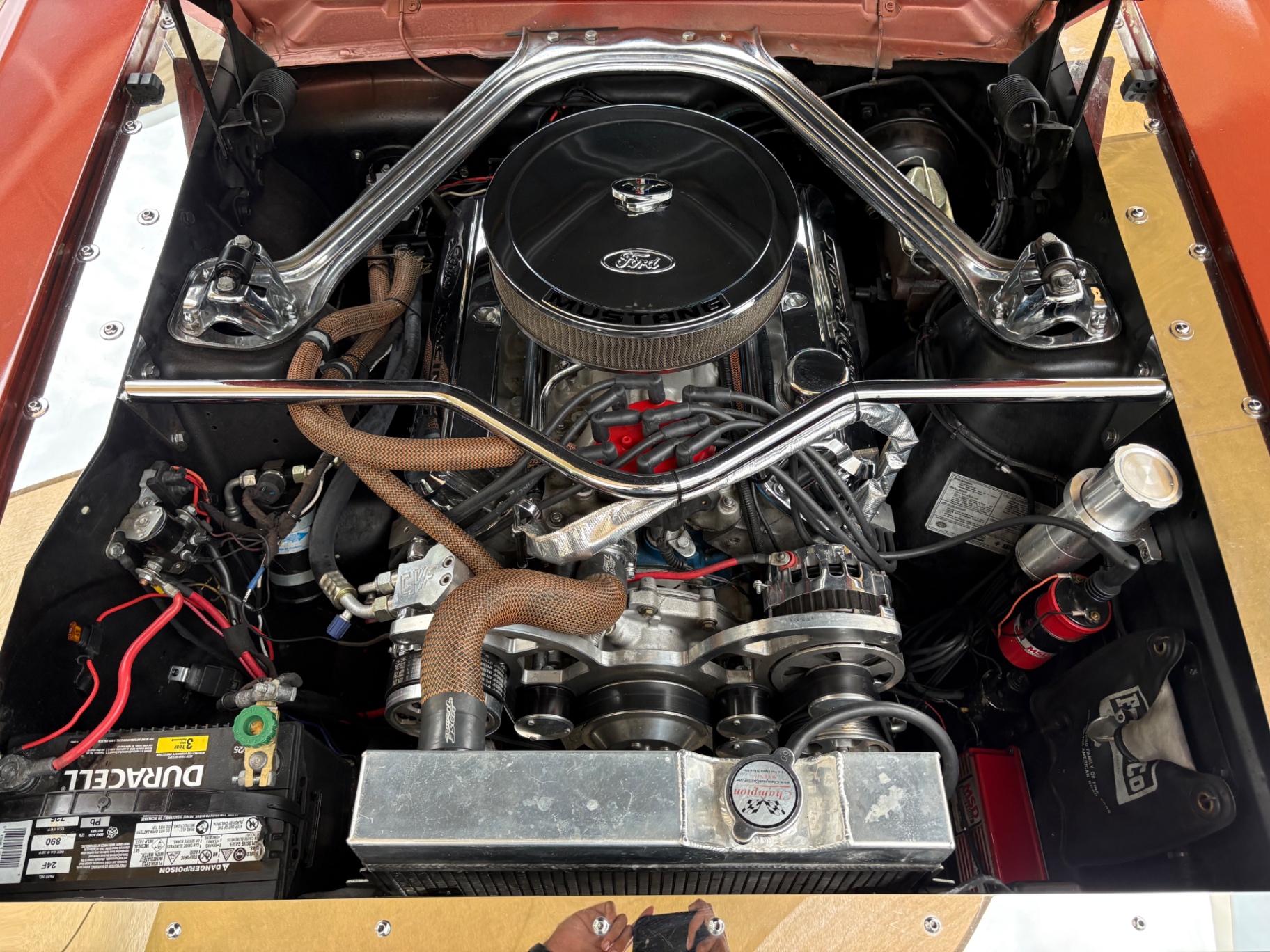
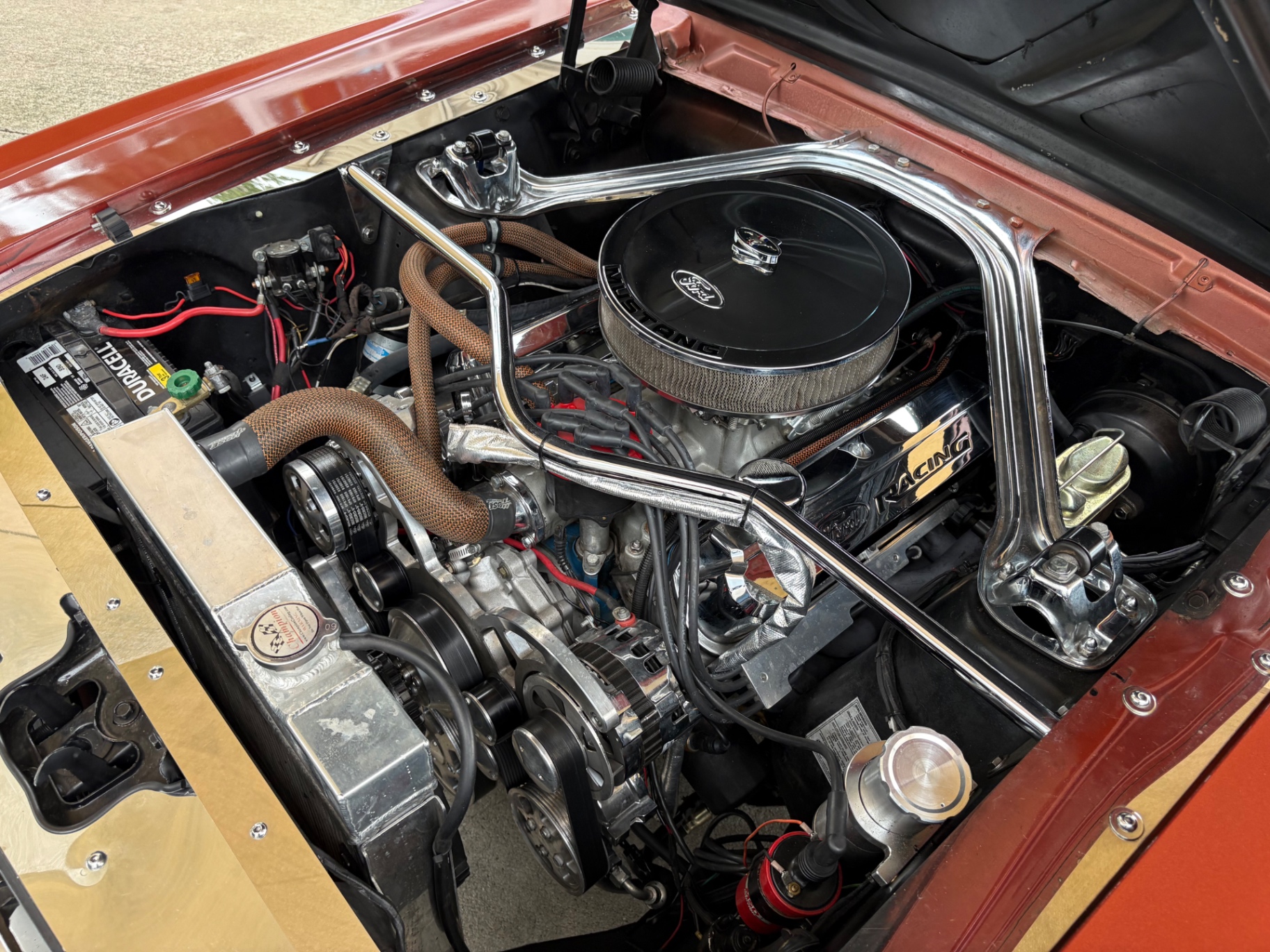
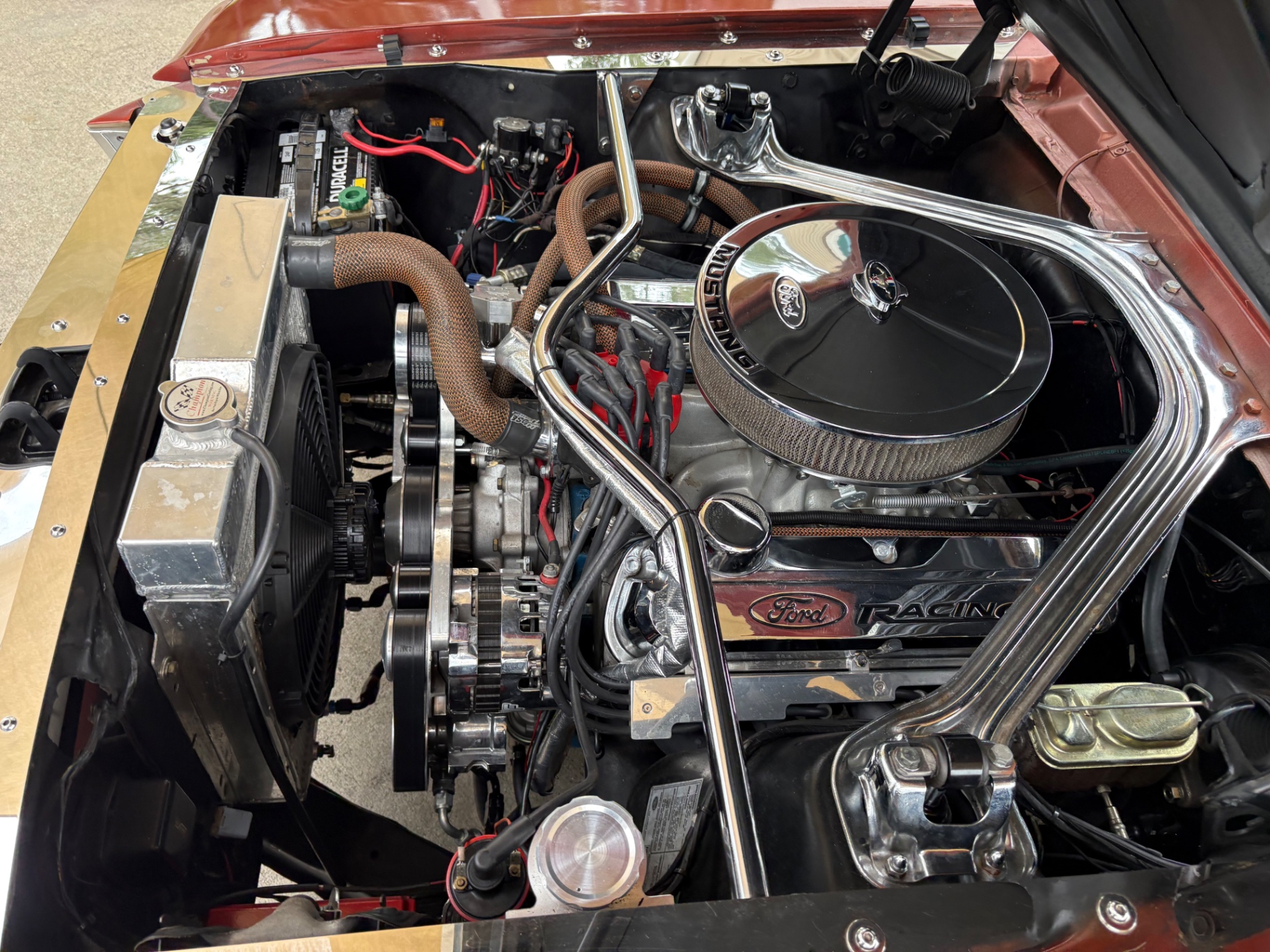
The 302 cubic inch V8 under the hood of this 1966 Ford Mustang convertible is a Ford small-block with a strong aftermarket upgrade list. The MSD ignition system replaces the factory points-style distributor with a more reliable, higher-output electronic unit that provides a hotter, more consistent spark across the RPM range. This is a well-understood upgrade in the classic Ford community and a practical one — MSD systems are easy to tune and easy to service. The Ford Racing chrome valve covers are more than cosmetic; they signal that someone with knowledge of these engines put time and money into this build with intention.
Cooling is handled by an aluminum radiator paired with an electric cooling fan — a combination that addresses one of the known weaknesses of running a small-block Ford in a convertible in warmer climates. The factory mechanical fan and single-row radiator were adequate for 1966 conditions, but removing the engine-driven fan reduces parasitic power loss and improves airflow management at low speeds and in traffic. In Florida heat, this matters.
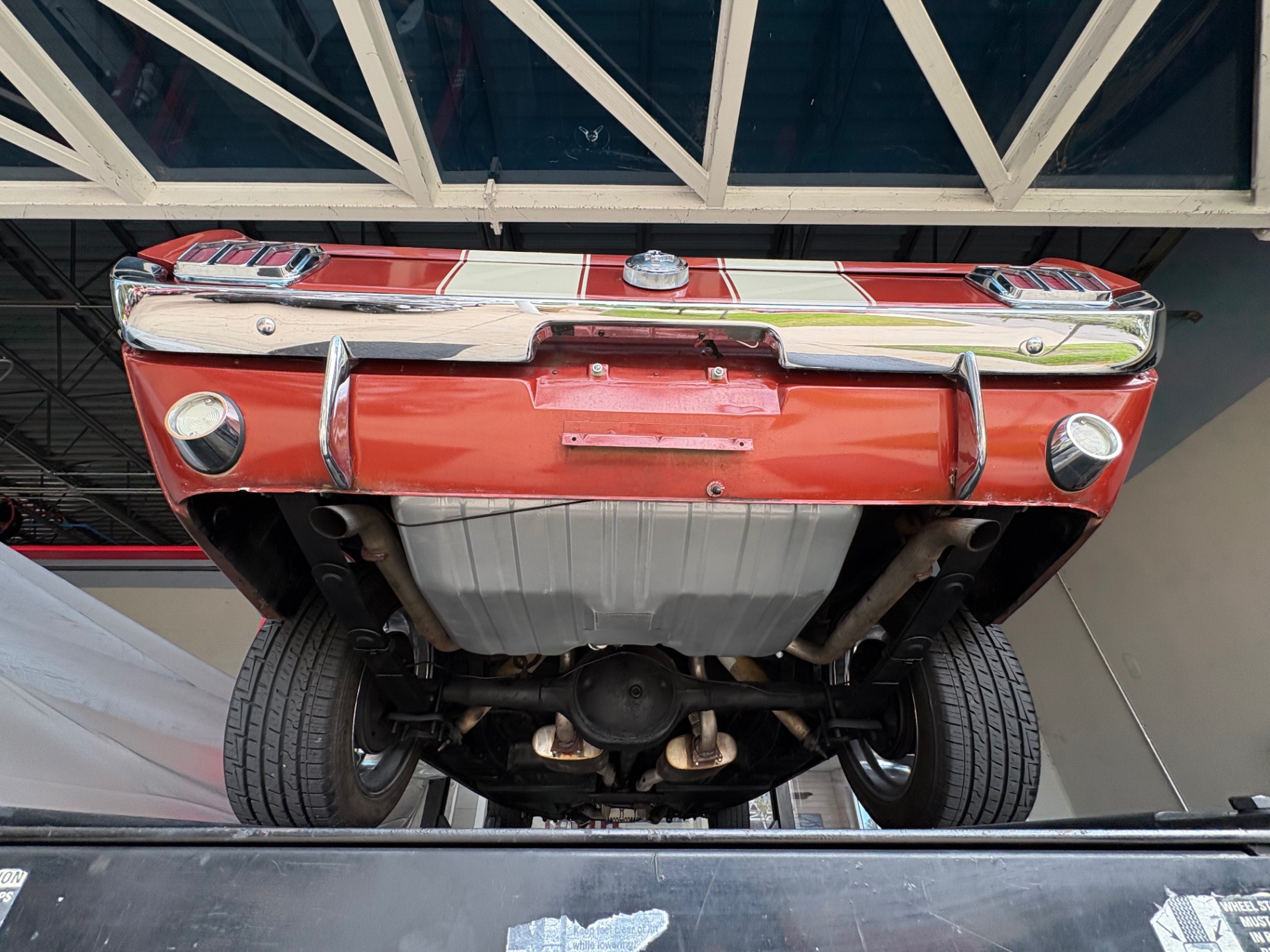
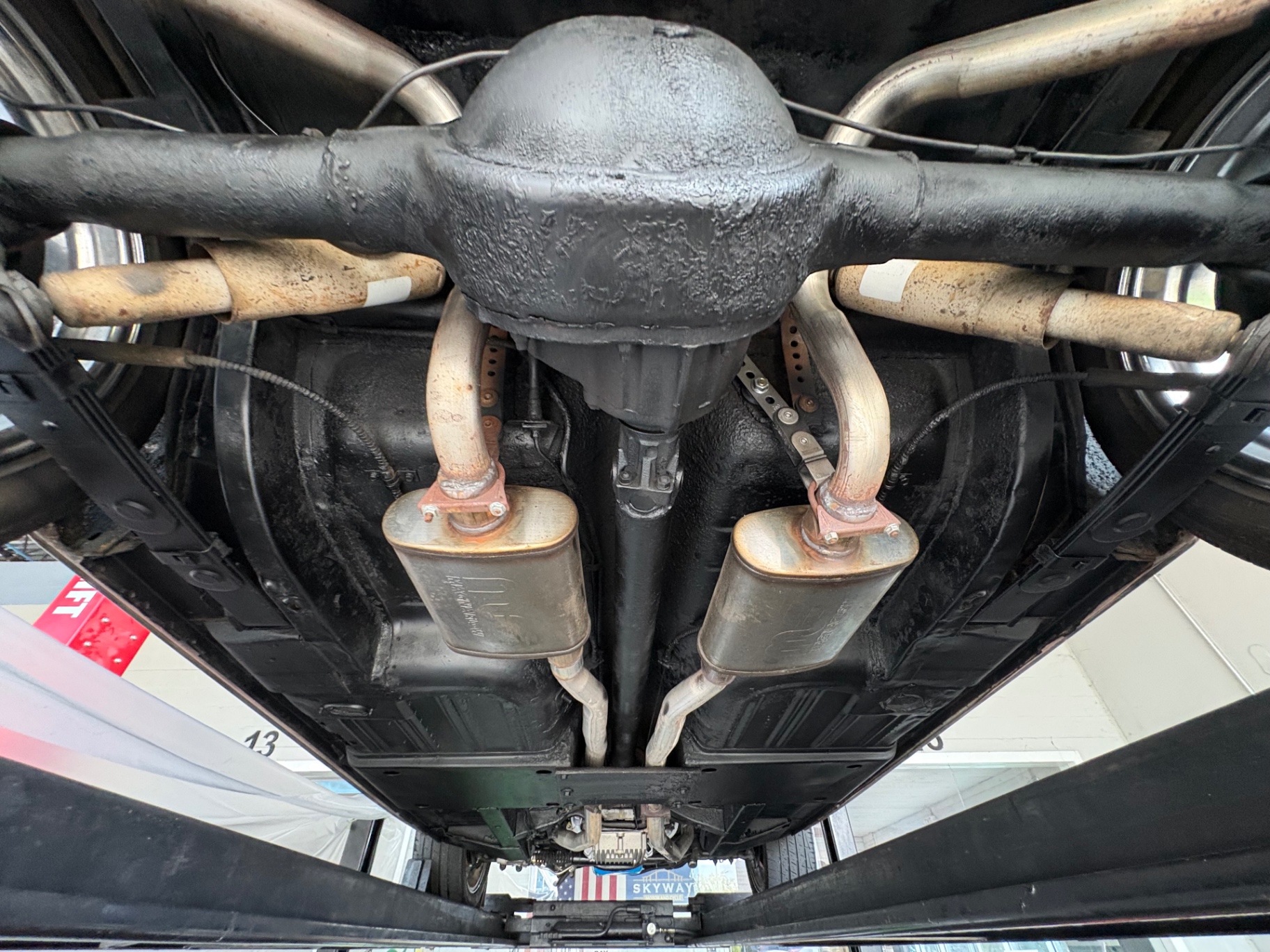
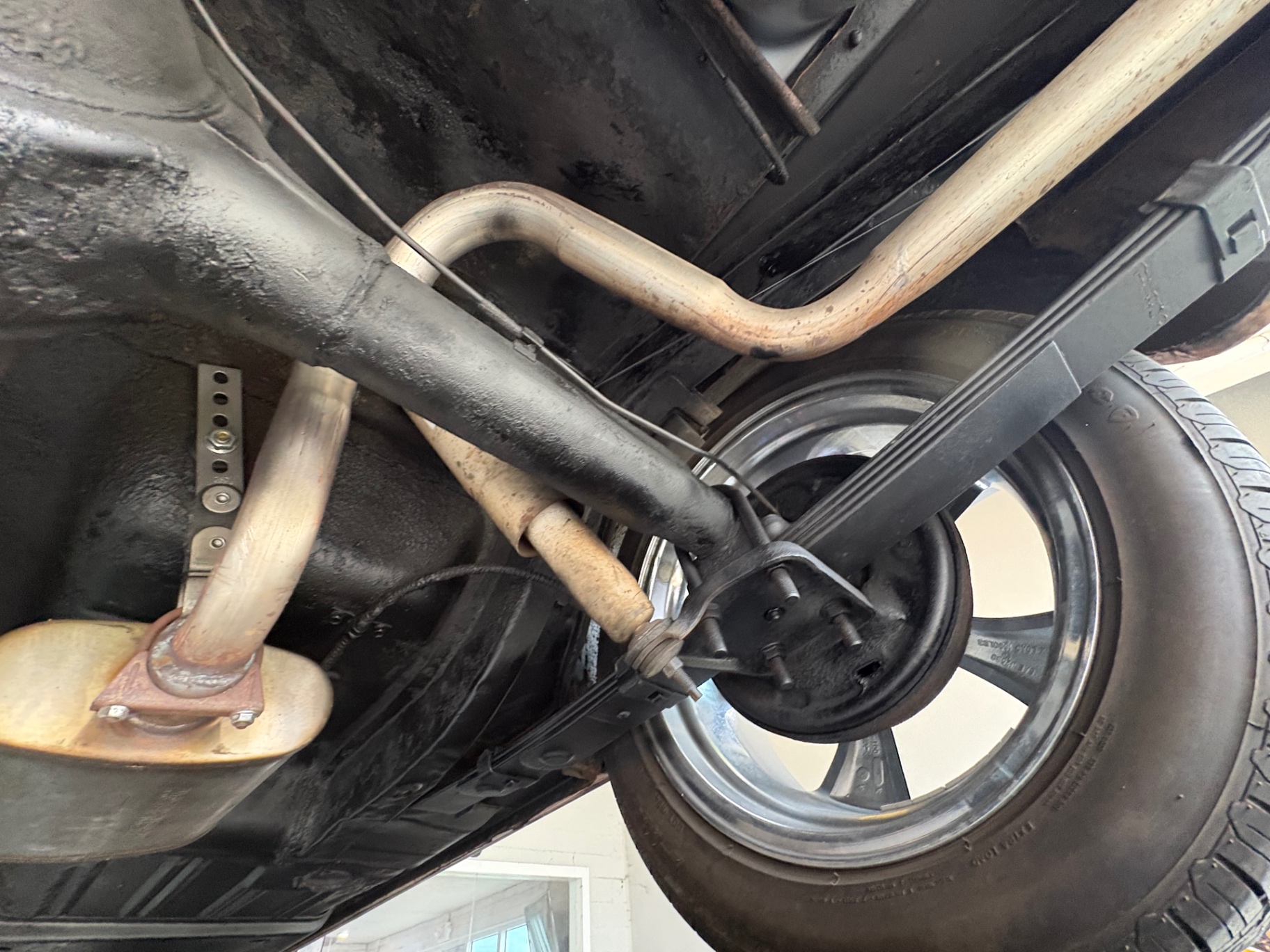
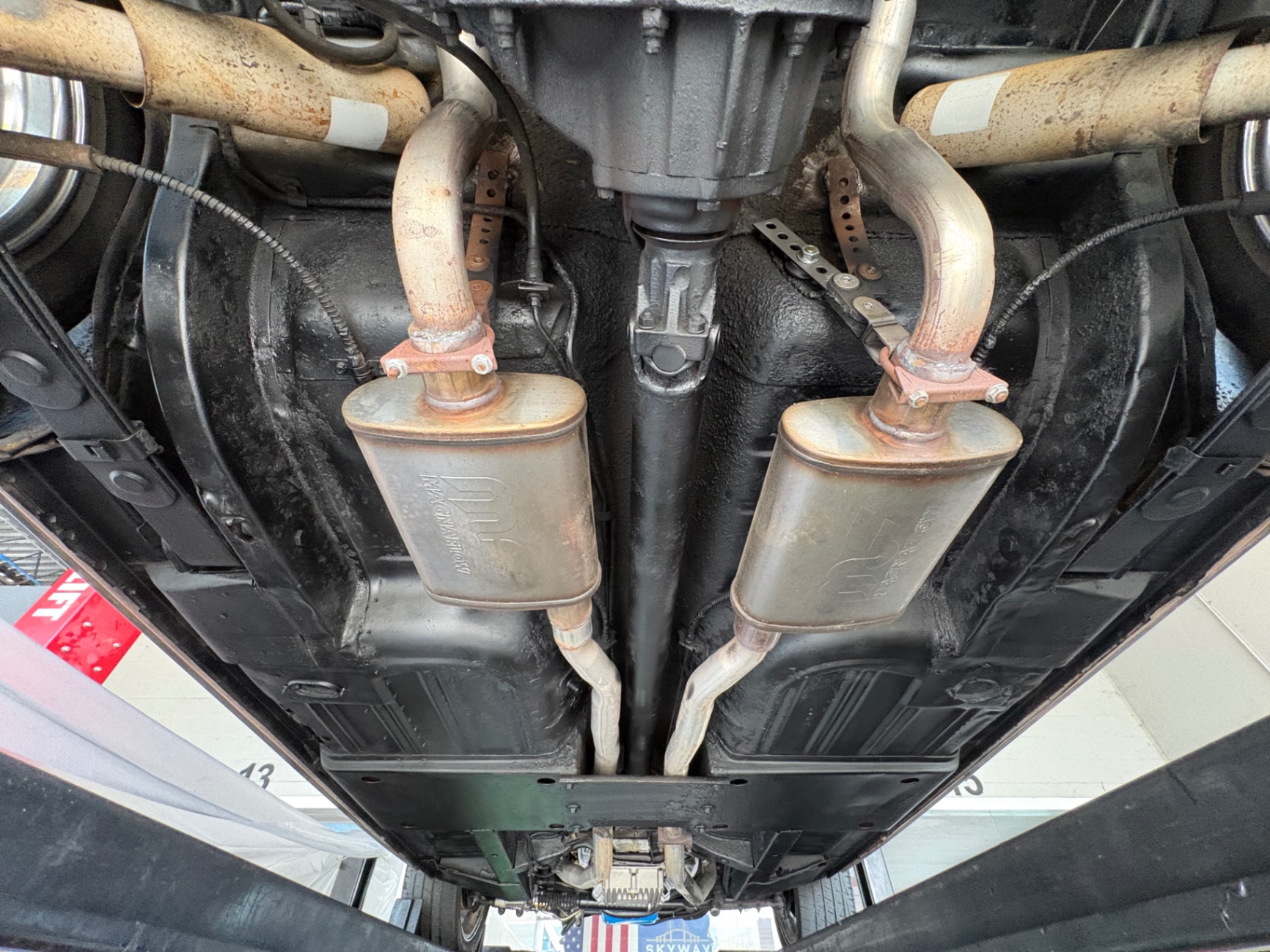
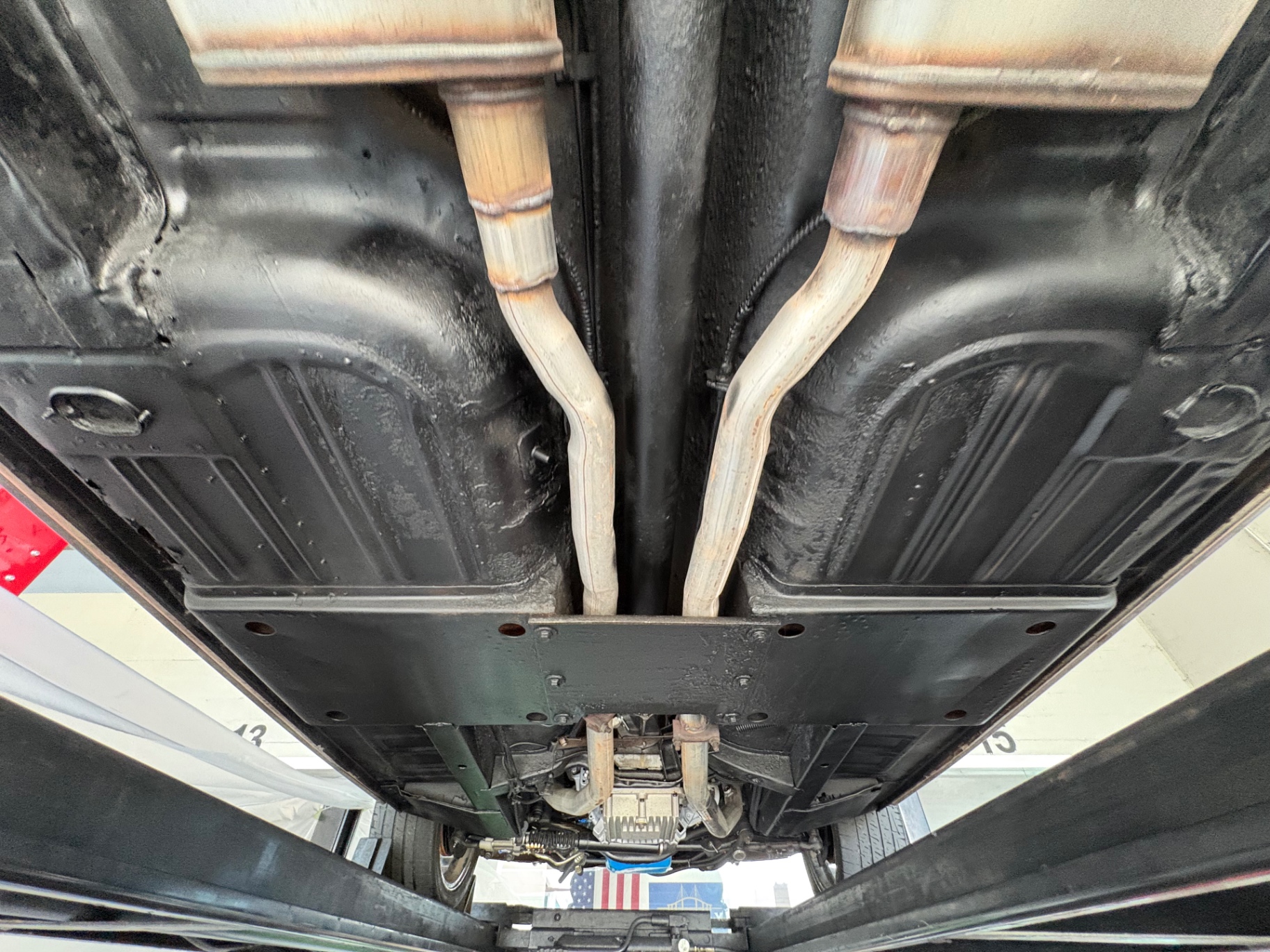
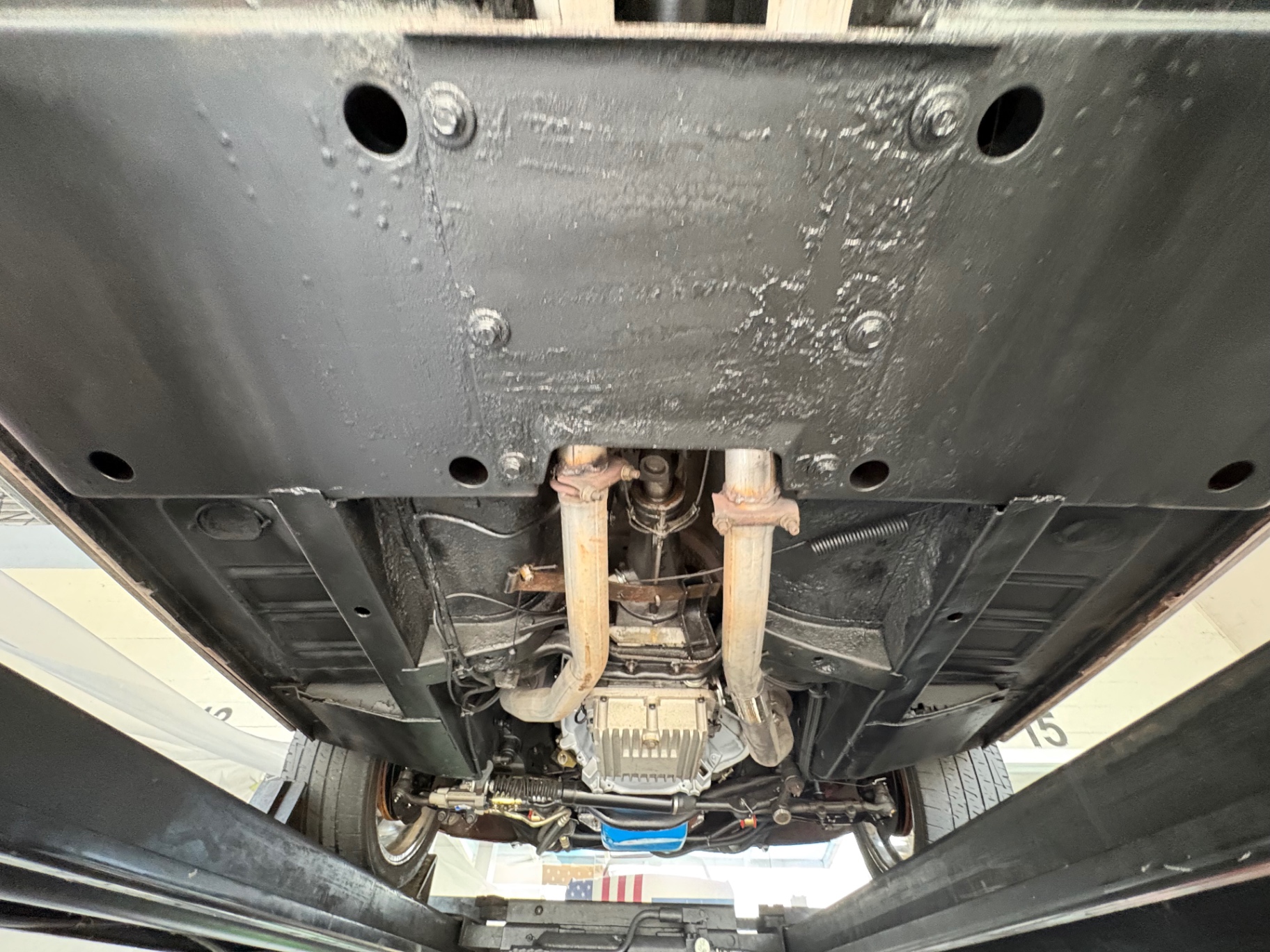
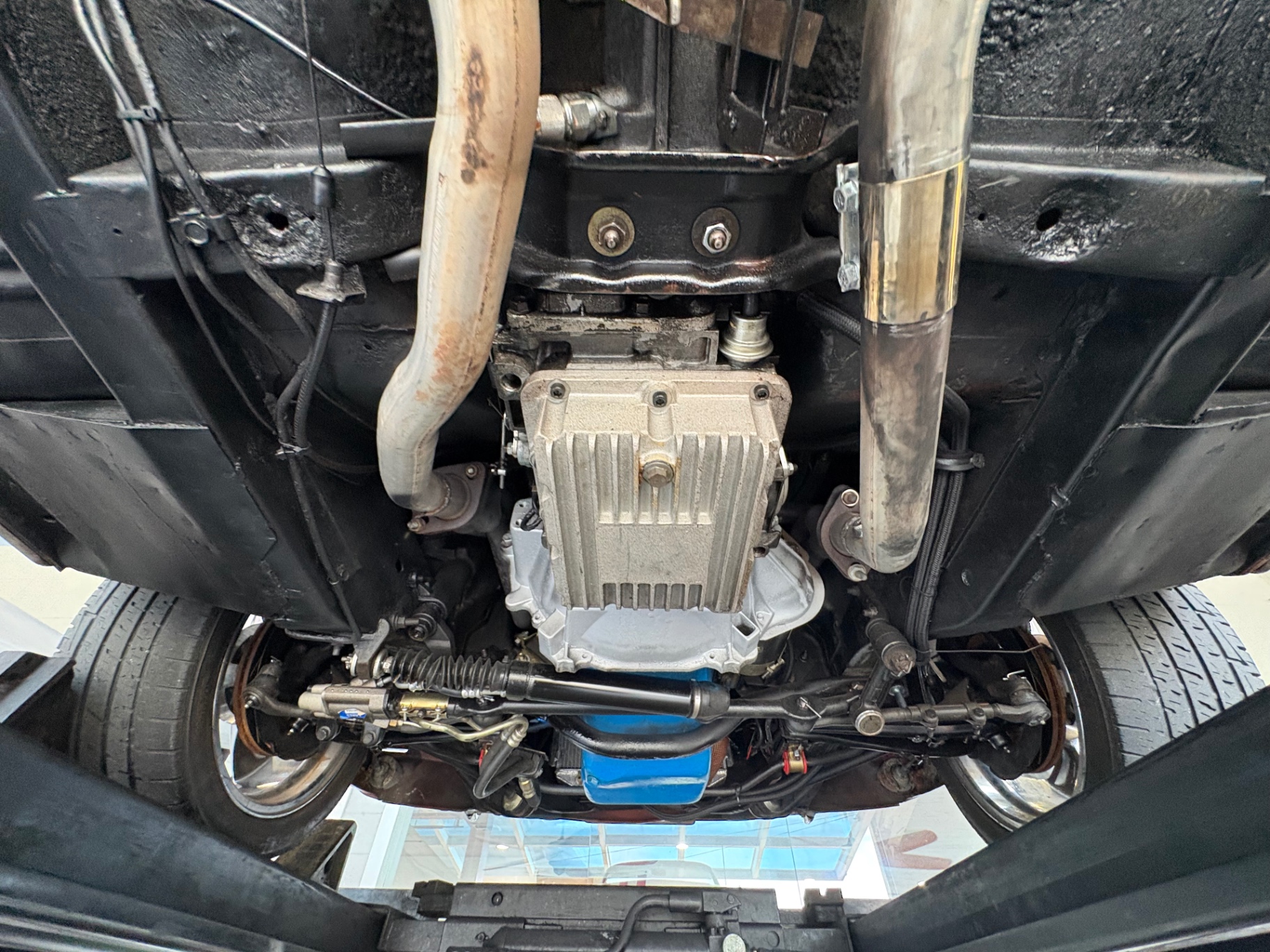
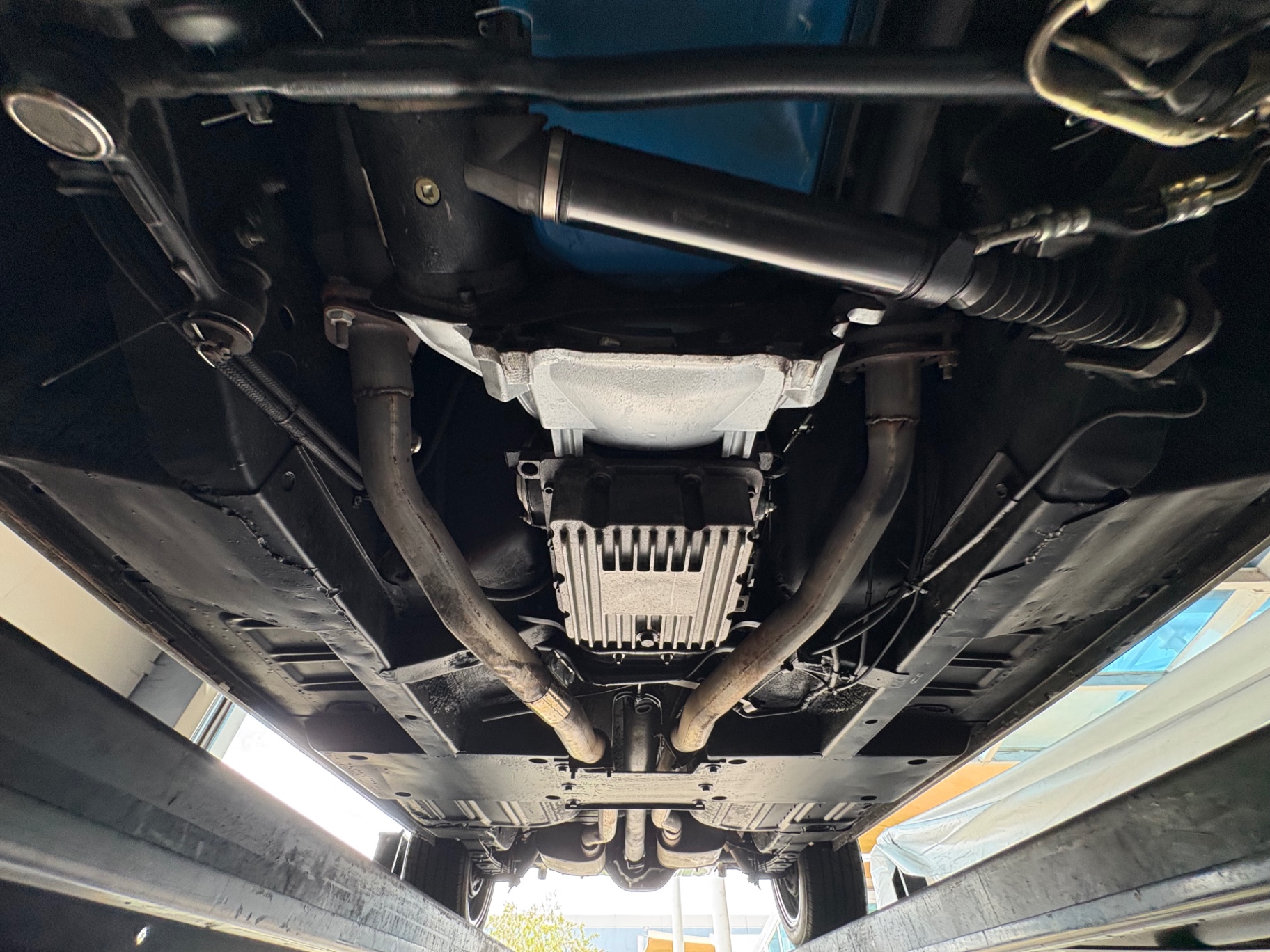
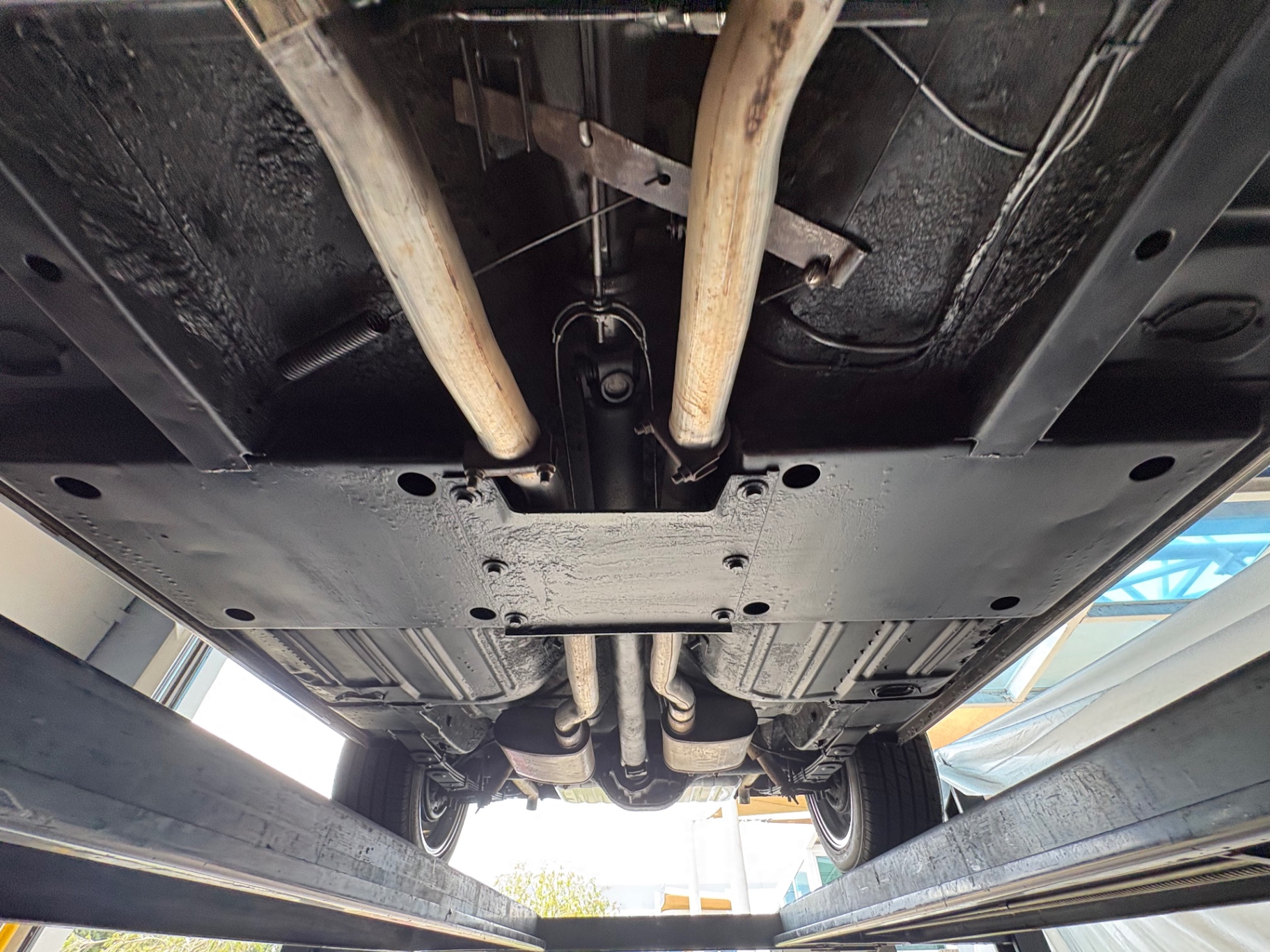
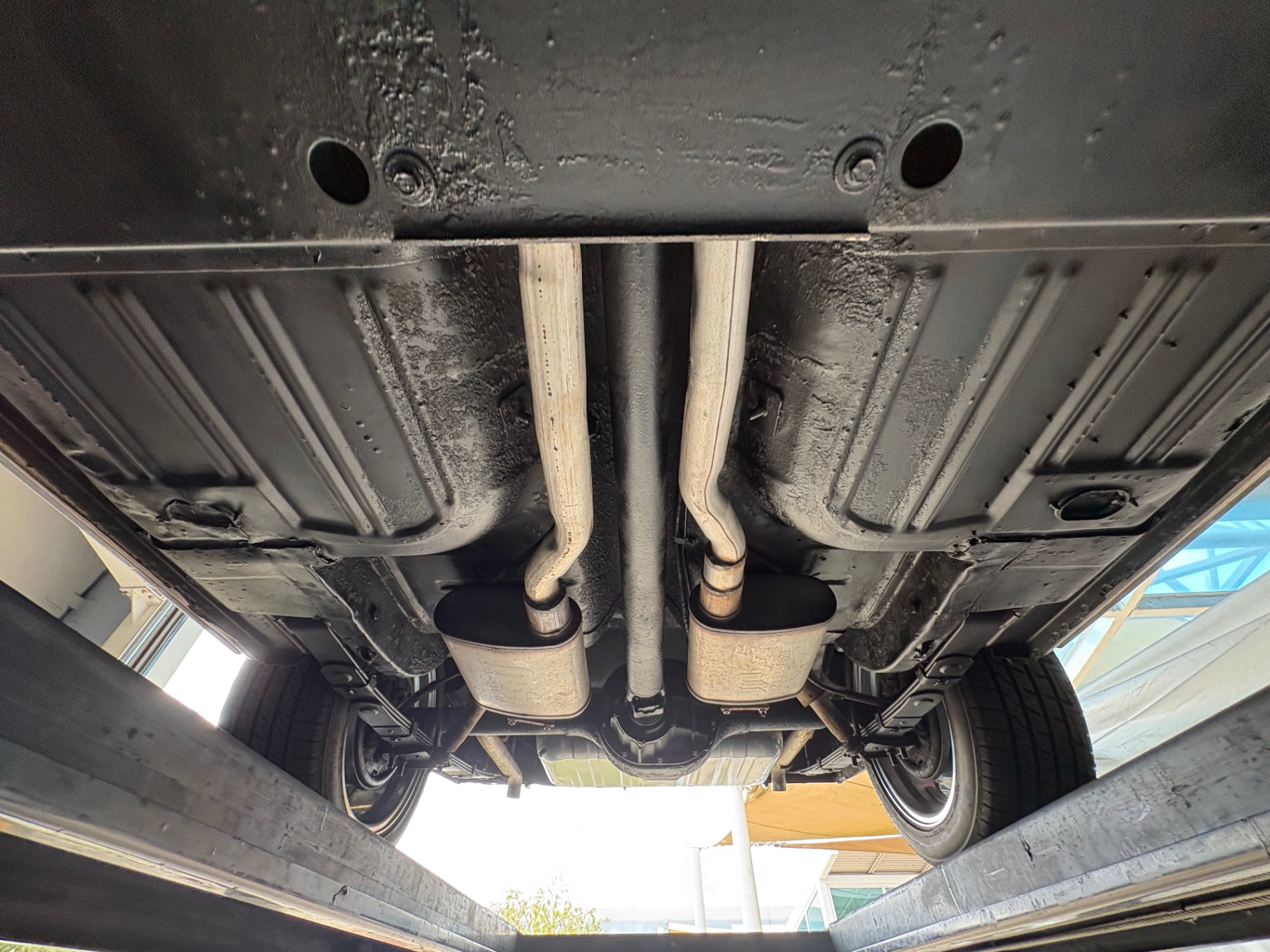
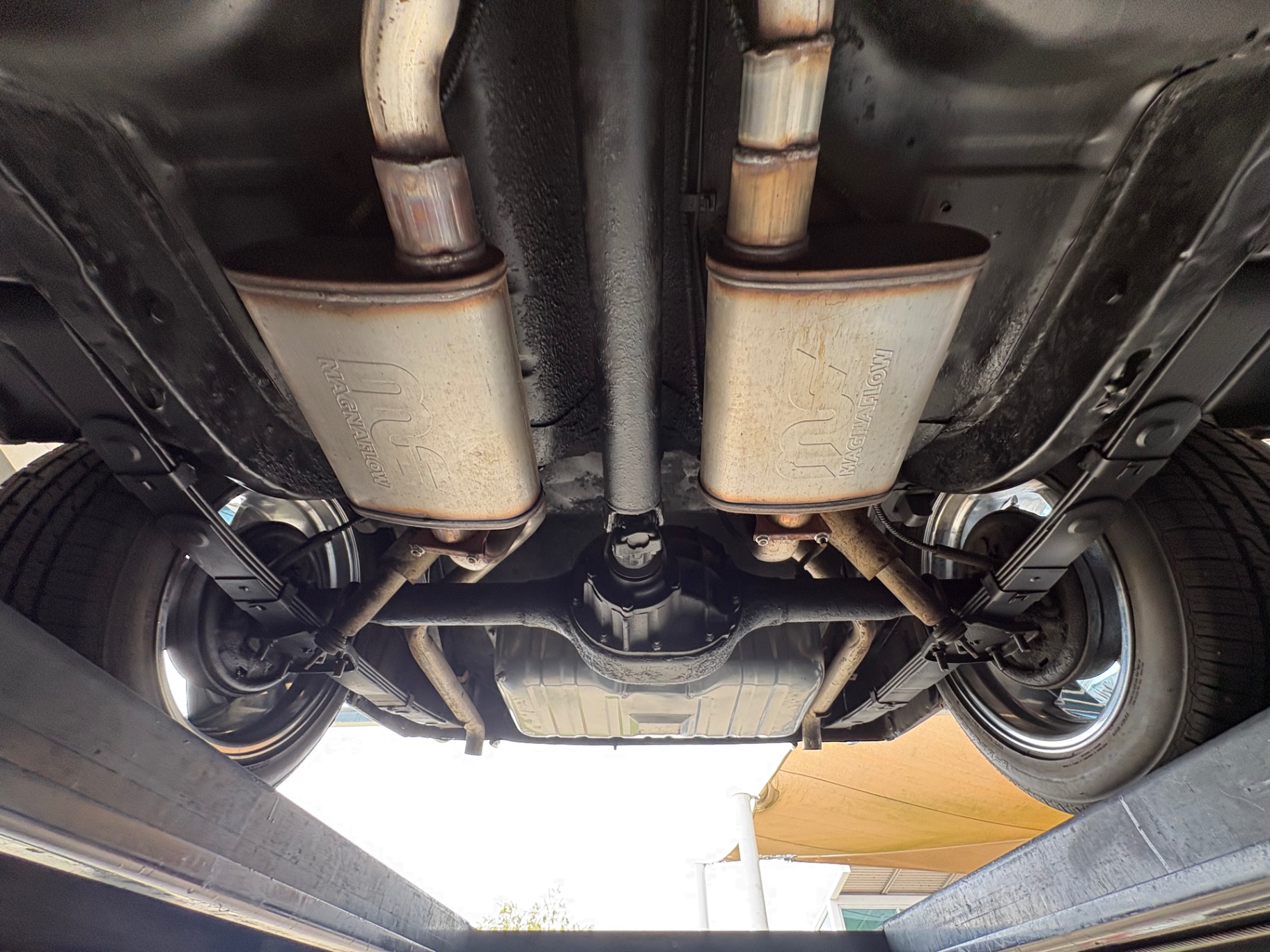
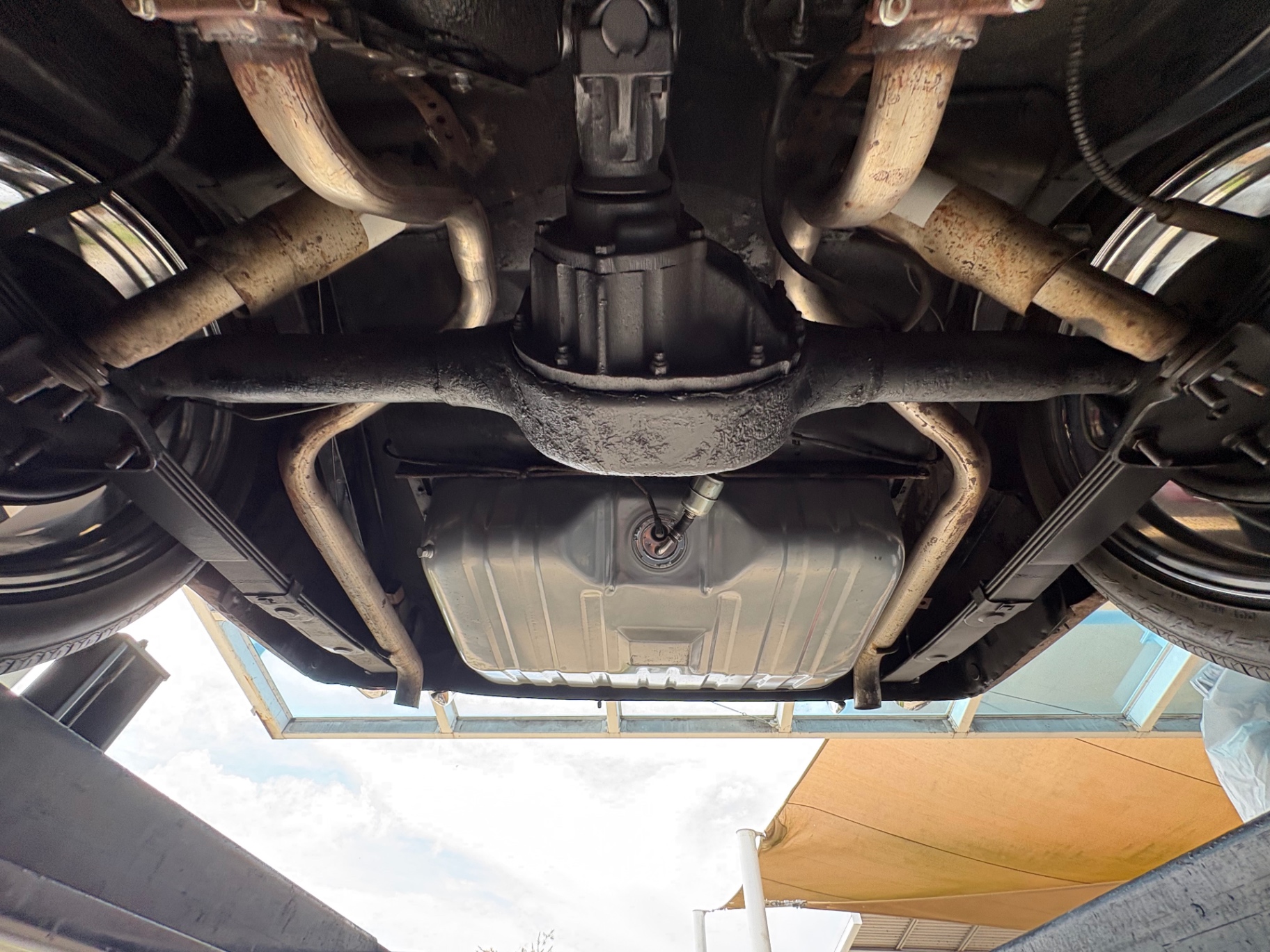
The exhaust starts with wrapped headers, which help retain heat in the exhaust stream and reduce under-hood temperatures. The Magnaflow dual exhaust system runs through two stainless-steel mufflers, visible from beneath the car, and exits cleanly at the rear. Magnaflow mufflers use a straight-through perforated core design that produces a full, low exhaust tone without the rasp that comes with cheaper alternatives. Viewed on the lift, the underside of this 1966 Ford Mustang is finished in black undercoating over a solid, clean floor pan — there is no patchwork, no visible rust repair, and no cause for concern.
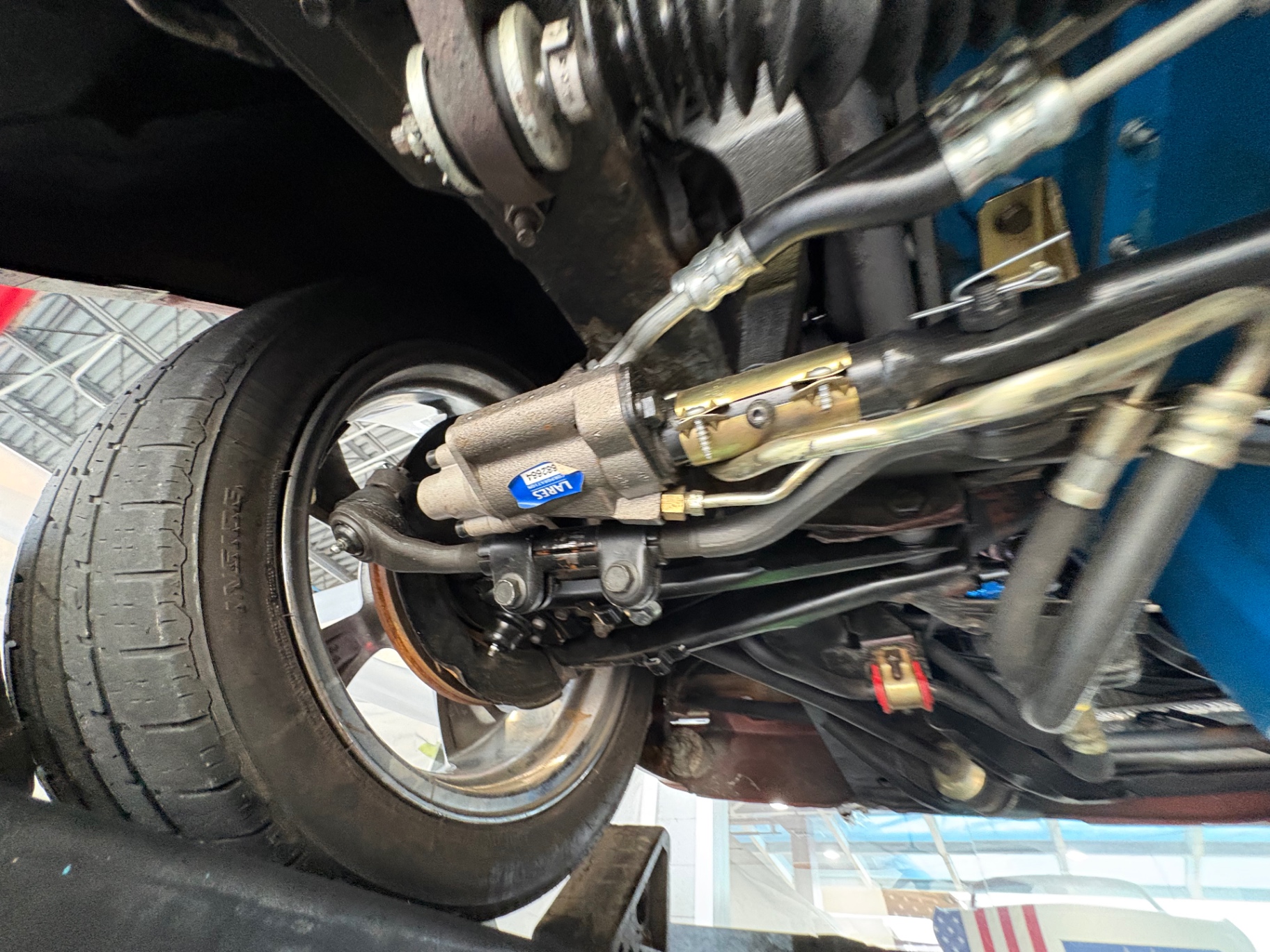
Braking is improved with front disc brakes, which were a factory option on 1966 Mustangs but not standard equipment. Many base cars left the factory with four-wheel drums. The addition of front discs here gives the car significantly shorter stopping distances and better fade resistance, which matters when you are actually driving the car instead of parking it at shows. Power steering is also fitted, making the 1966 Ford Mustang convertible a relaxed, manageable drive rather than a workout.
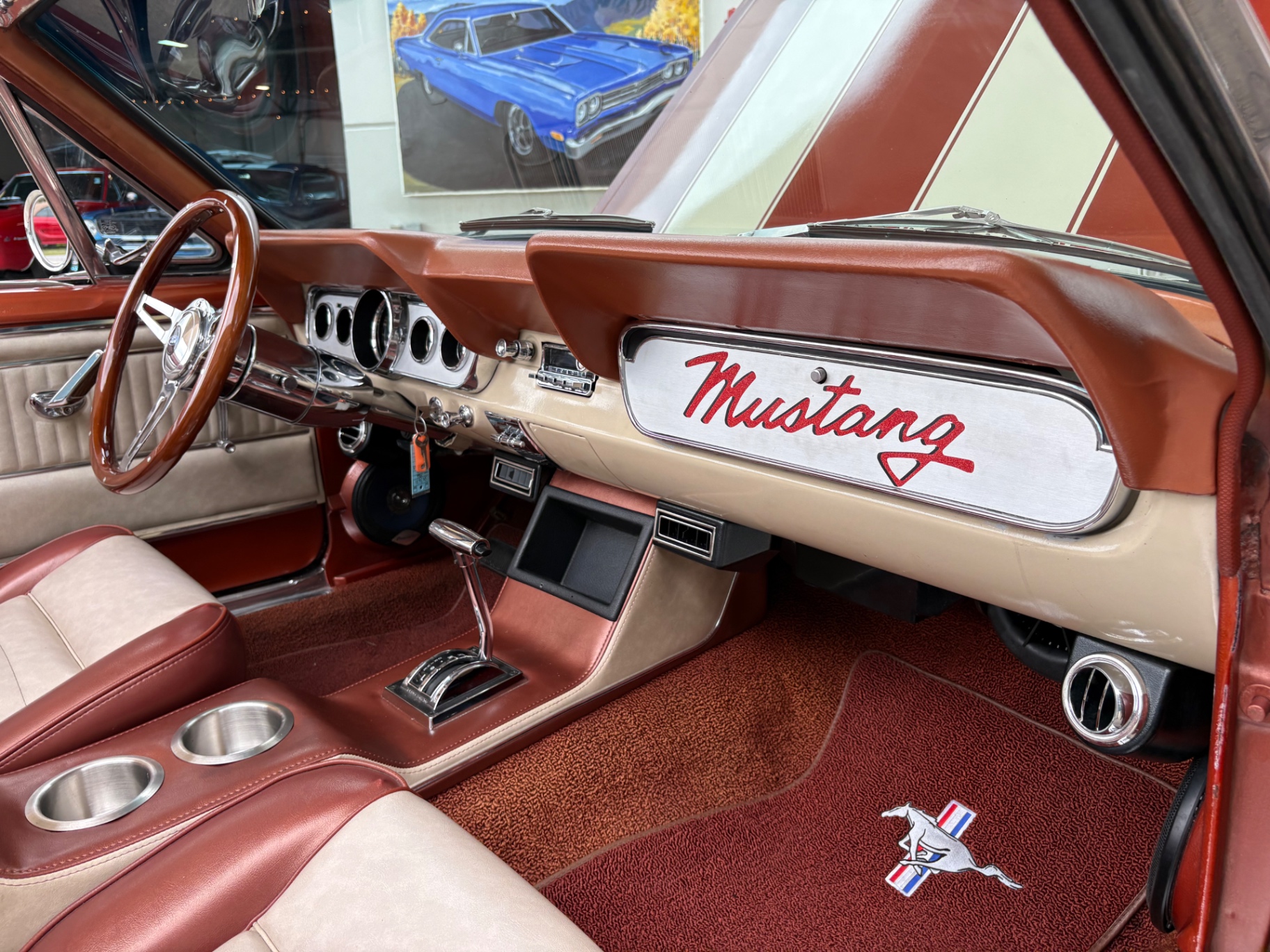
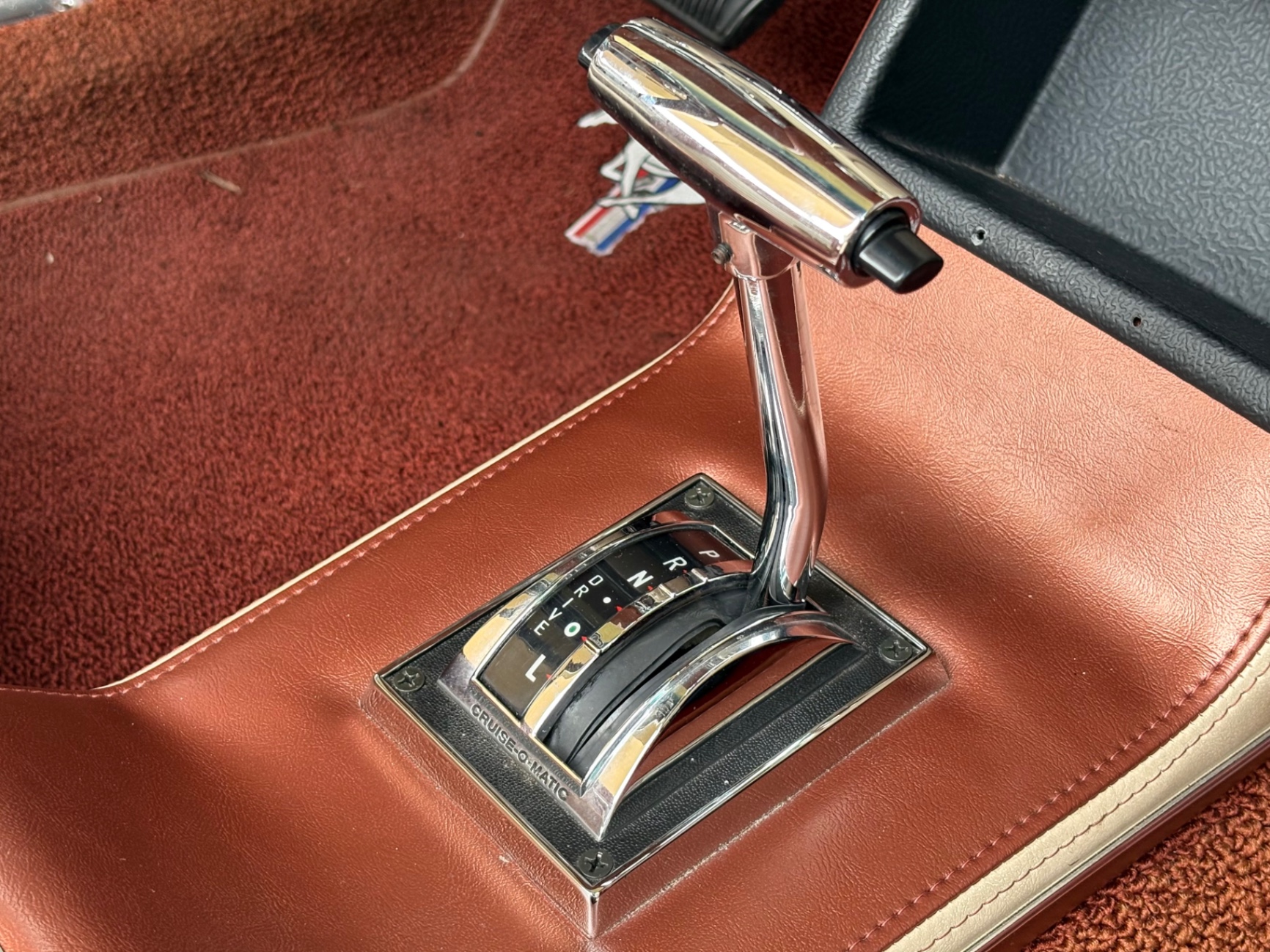
The Cruise-O-Matic 3-speed automatic transmission shifts smoothly through the console-mounted selector, and the chrome shift handle and indicator bezel are in excellent condition. The transmission is a sensible match for this engine and this car's intended use as a weekend driver.
Interior
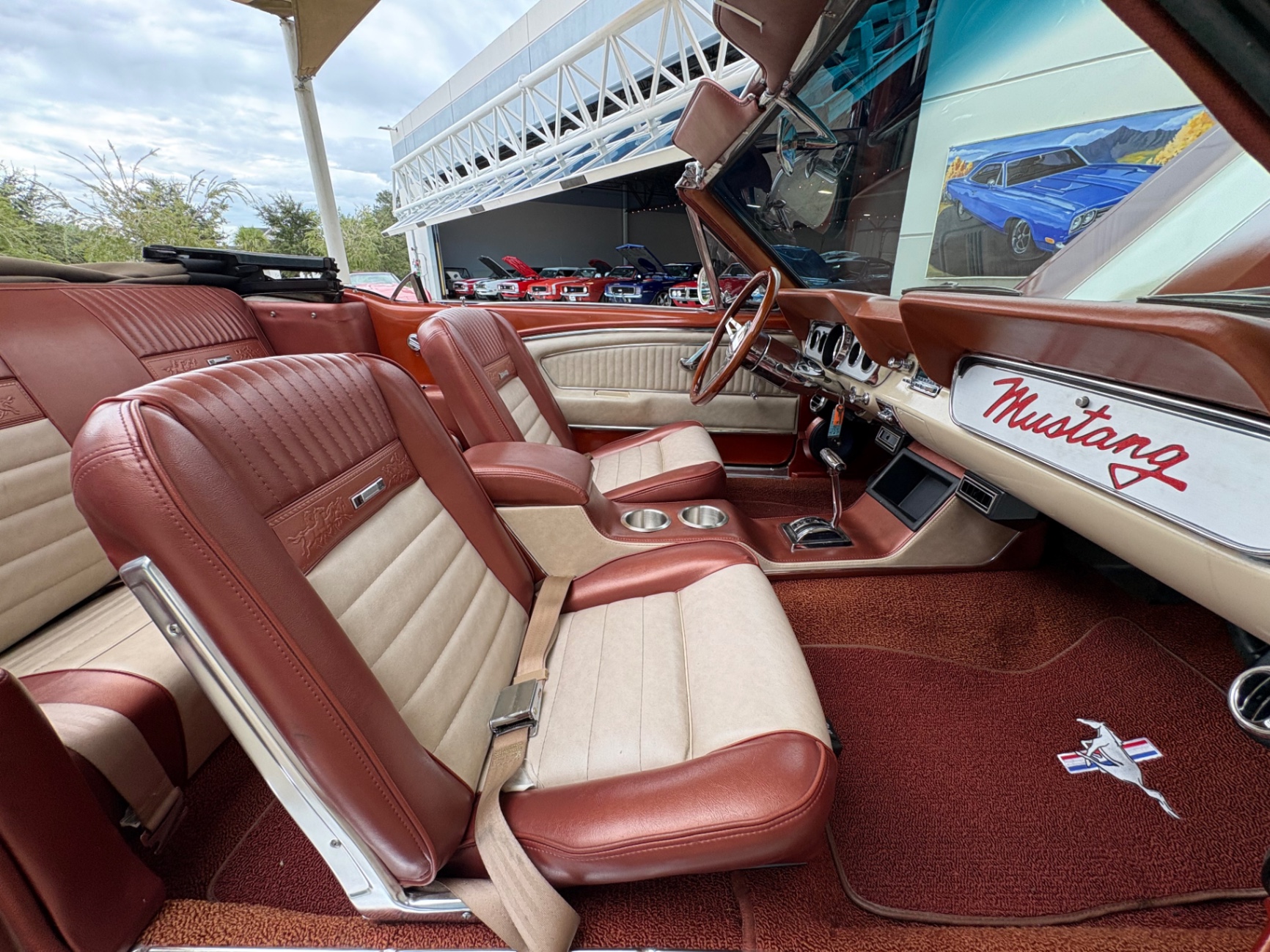
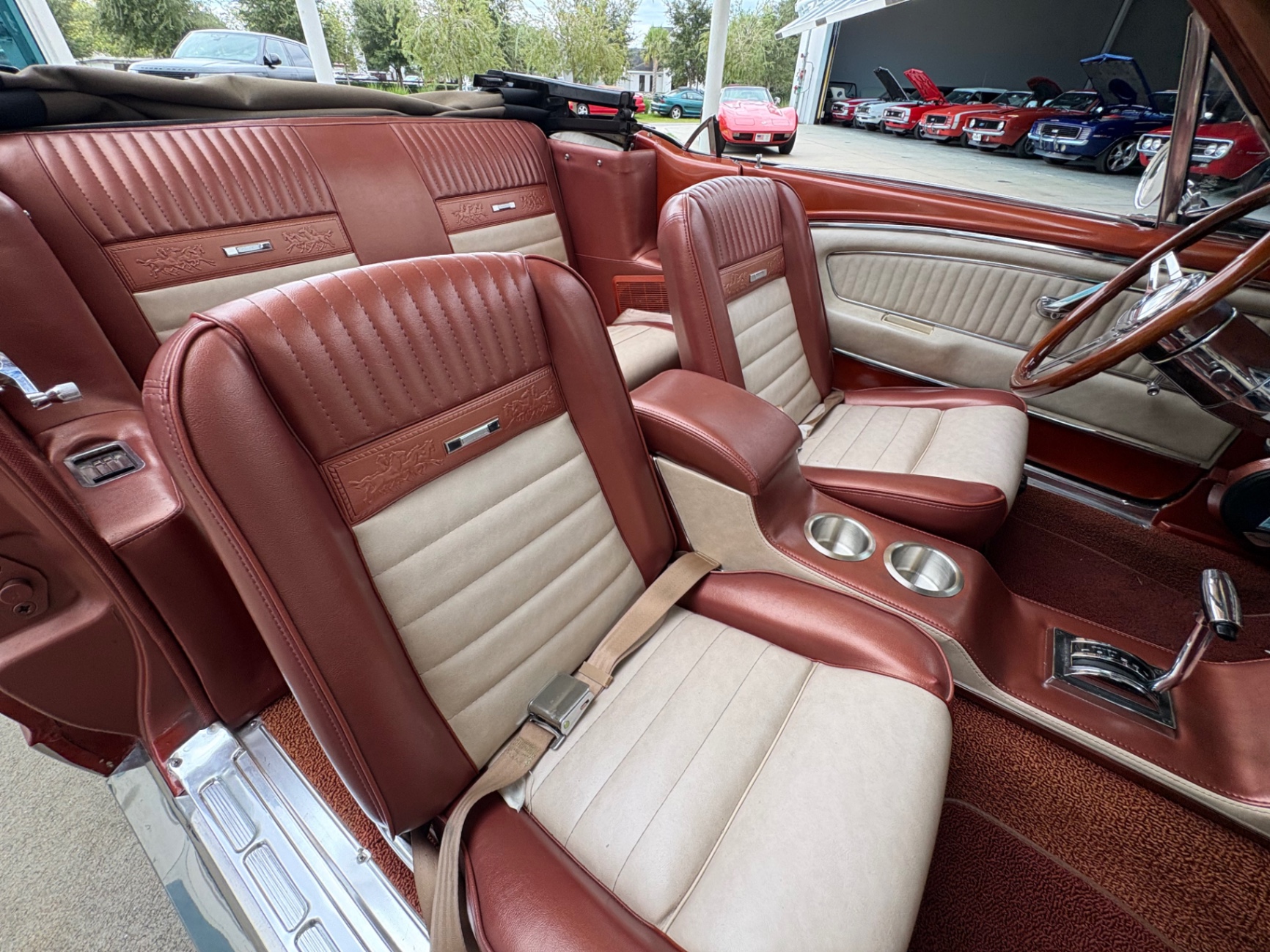
The 1966 Ford Mustang was one of the first American cars to fully commit to the bucket seat and center console layout as a standard presentation rather than an upgrade. Ford called this the "Total Performance" interior, and the combination of individual front seats, a floor-mounted console, and a driver-focused dash layout was part of what set the Mustang apart from the full-size cars of the era.
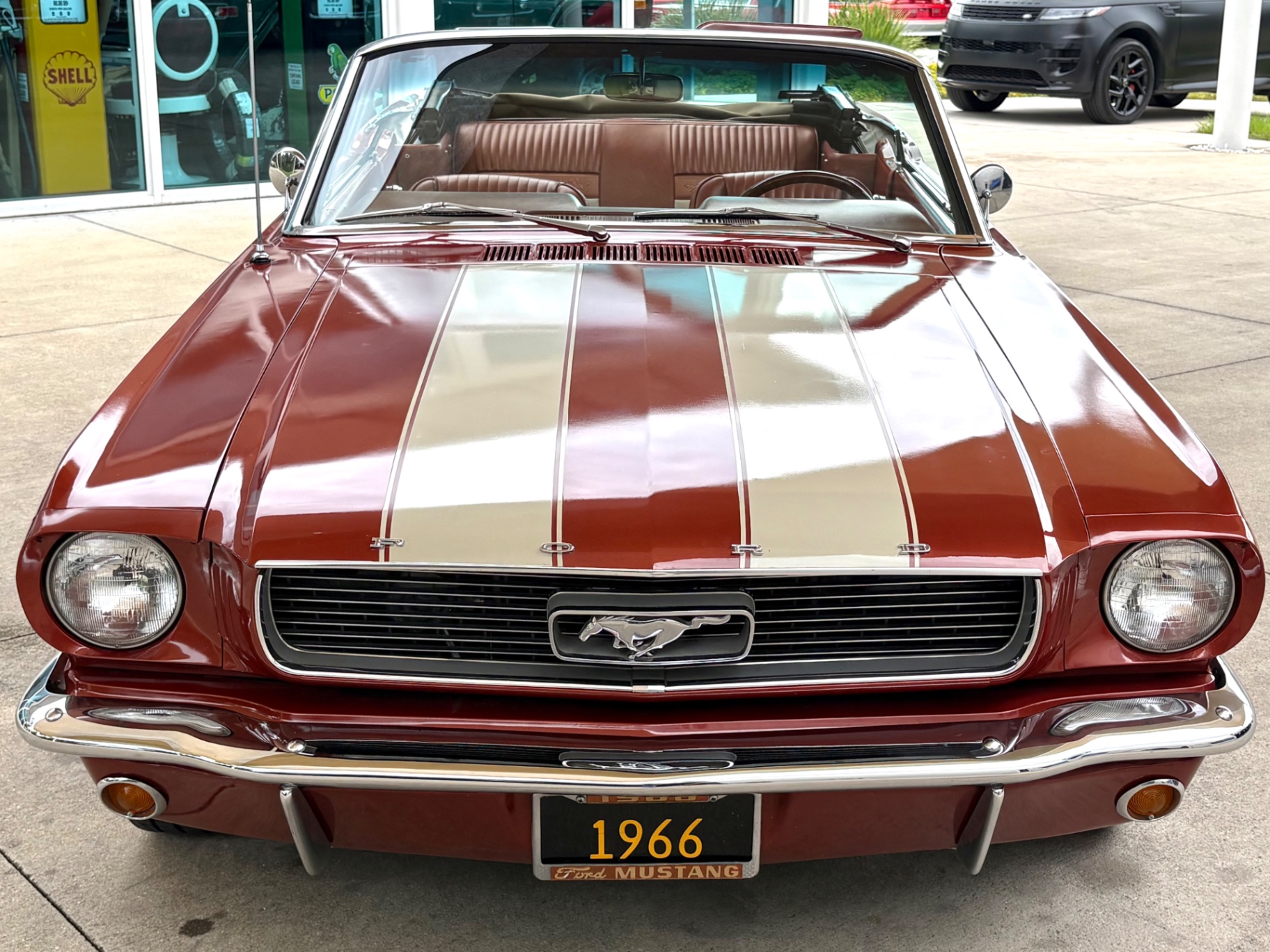
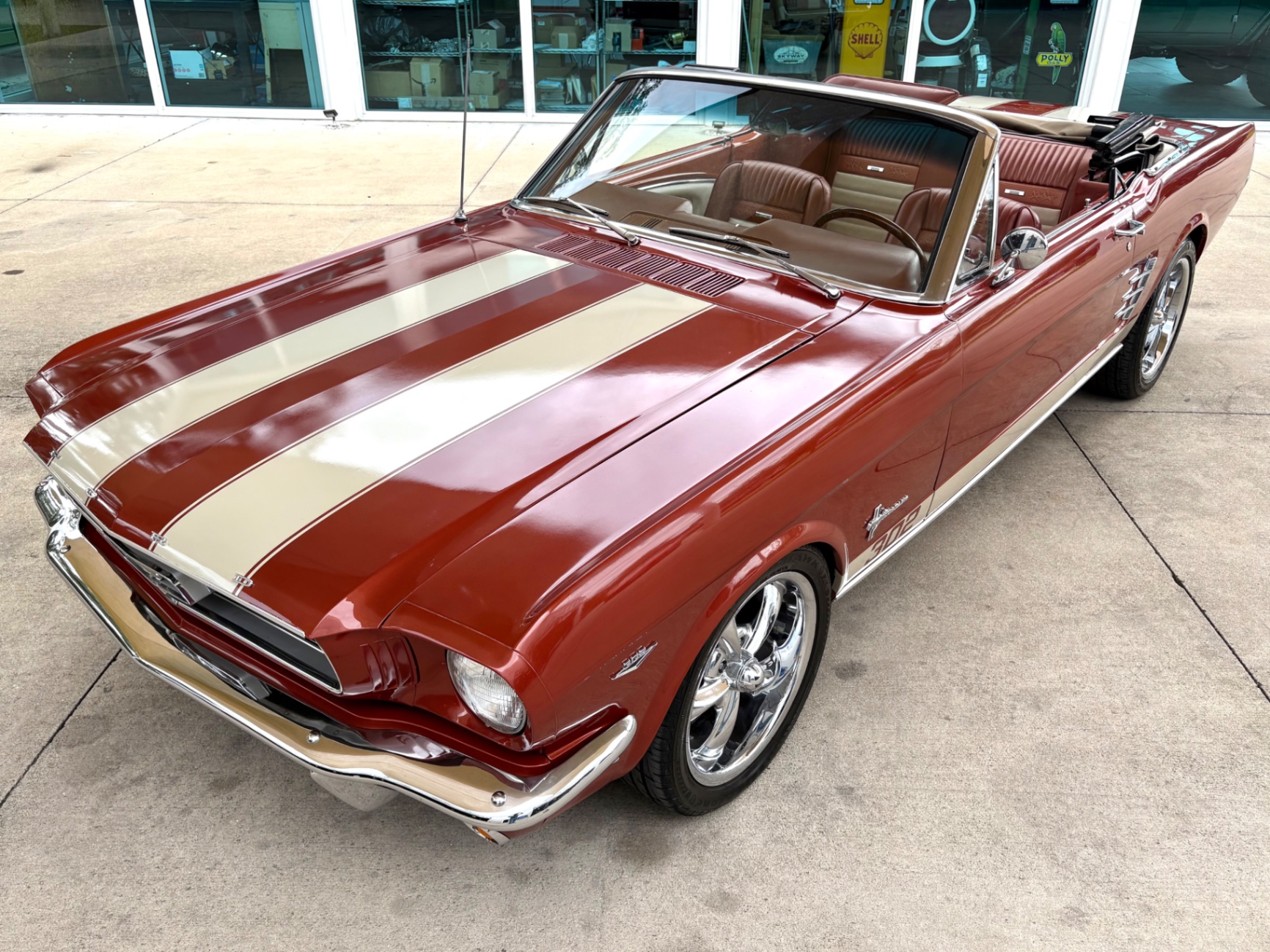
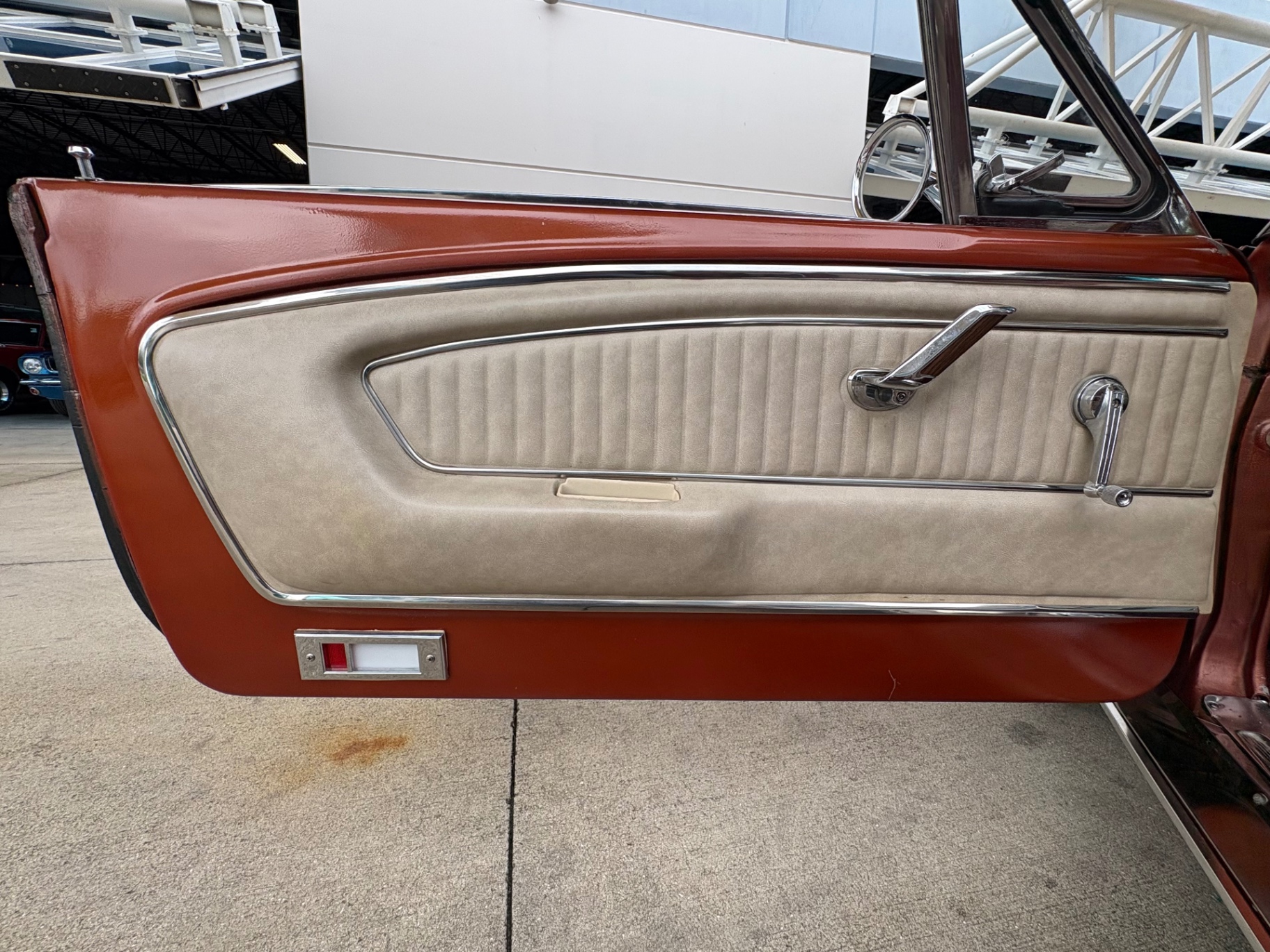
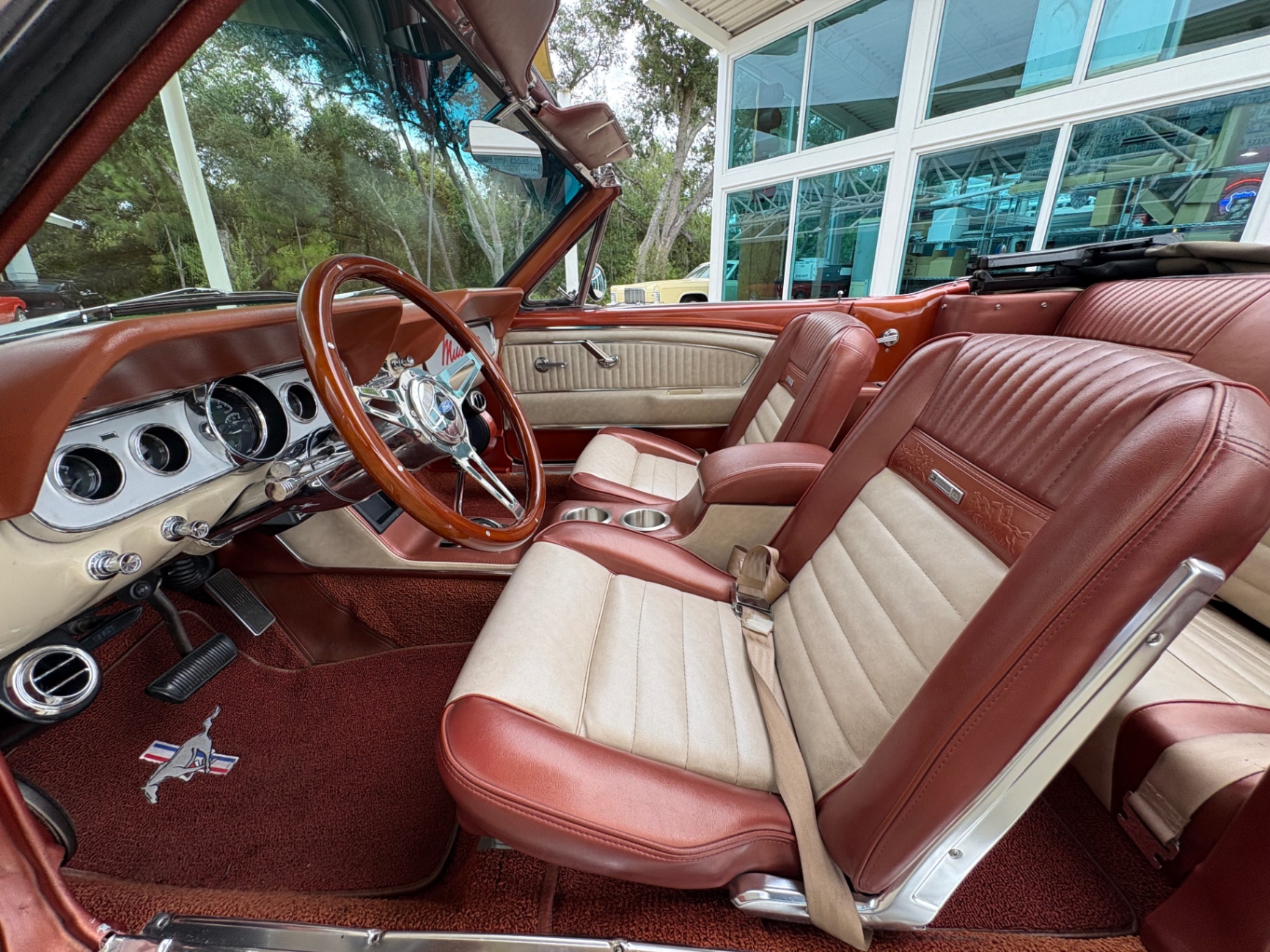
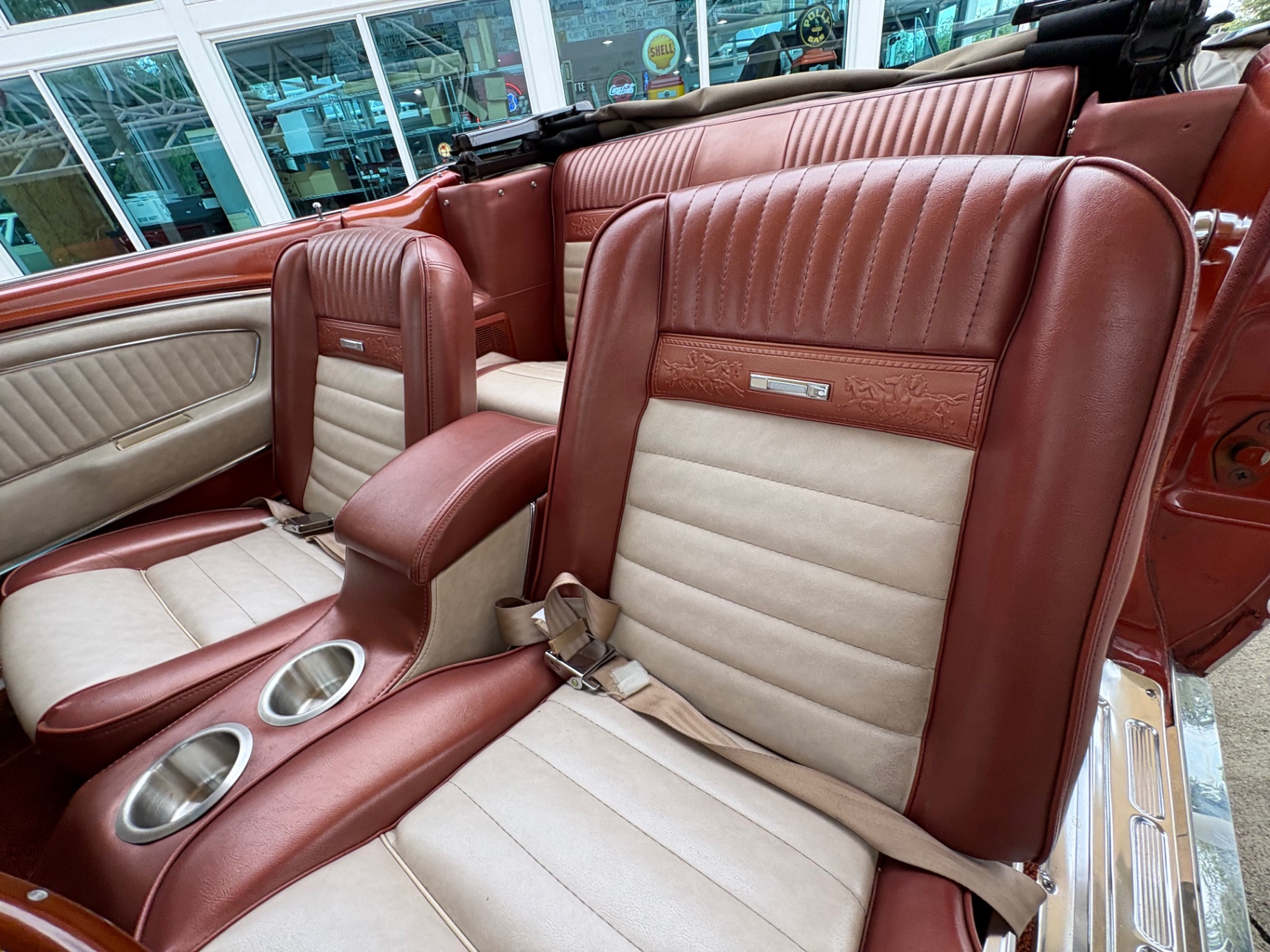
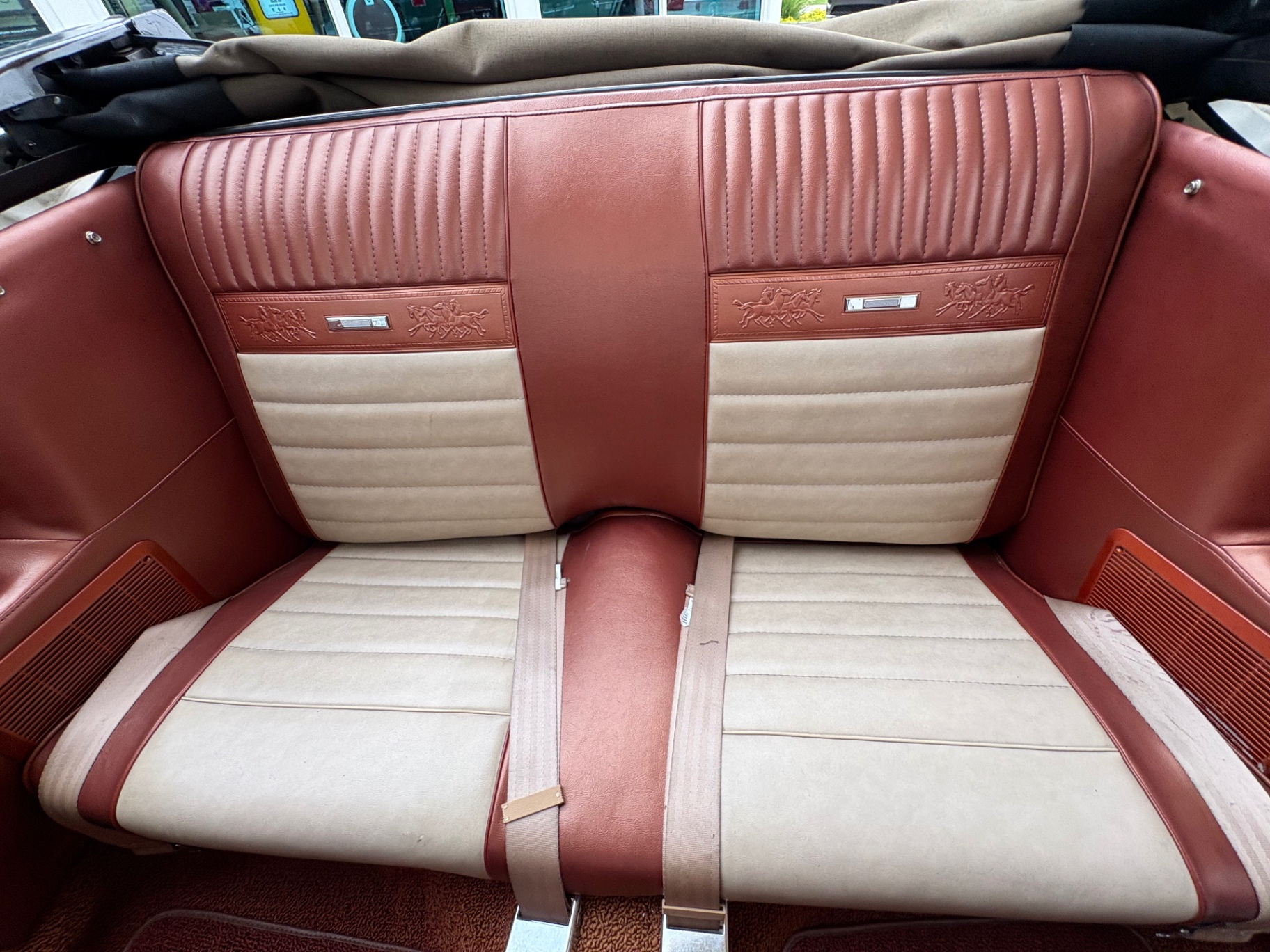
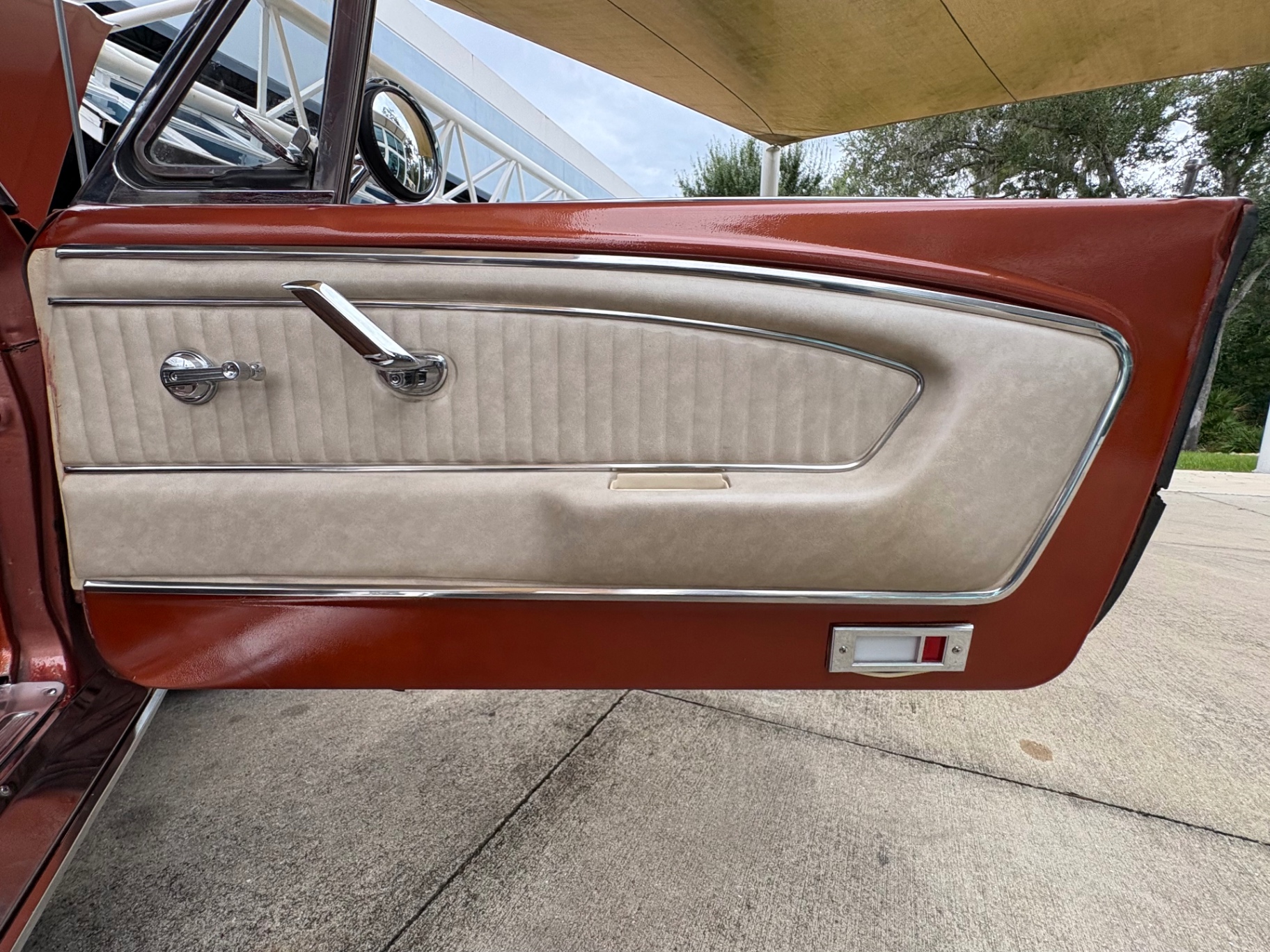
This car carries that layout forward with the red and parchment two-tone vinyl upholstery throughout — front buckets, rear bench, and door panels. The two-tone treatment uses a deeper red for the bolsters and a lighter parchment for the seat centers and lower door panels, which is a visually balanced combination that holds up well in a convertible setting where the interior is always visible. The embossed running horse detail on the seat backs is a factory-style touch that collectors recognize immediately.
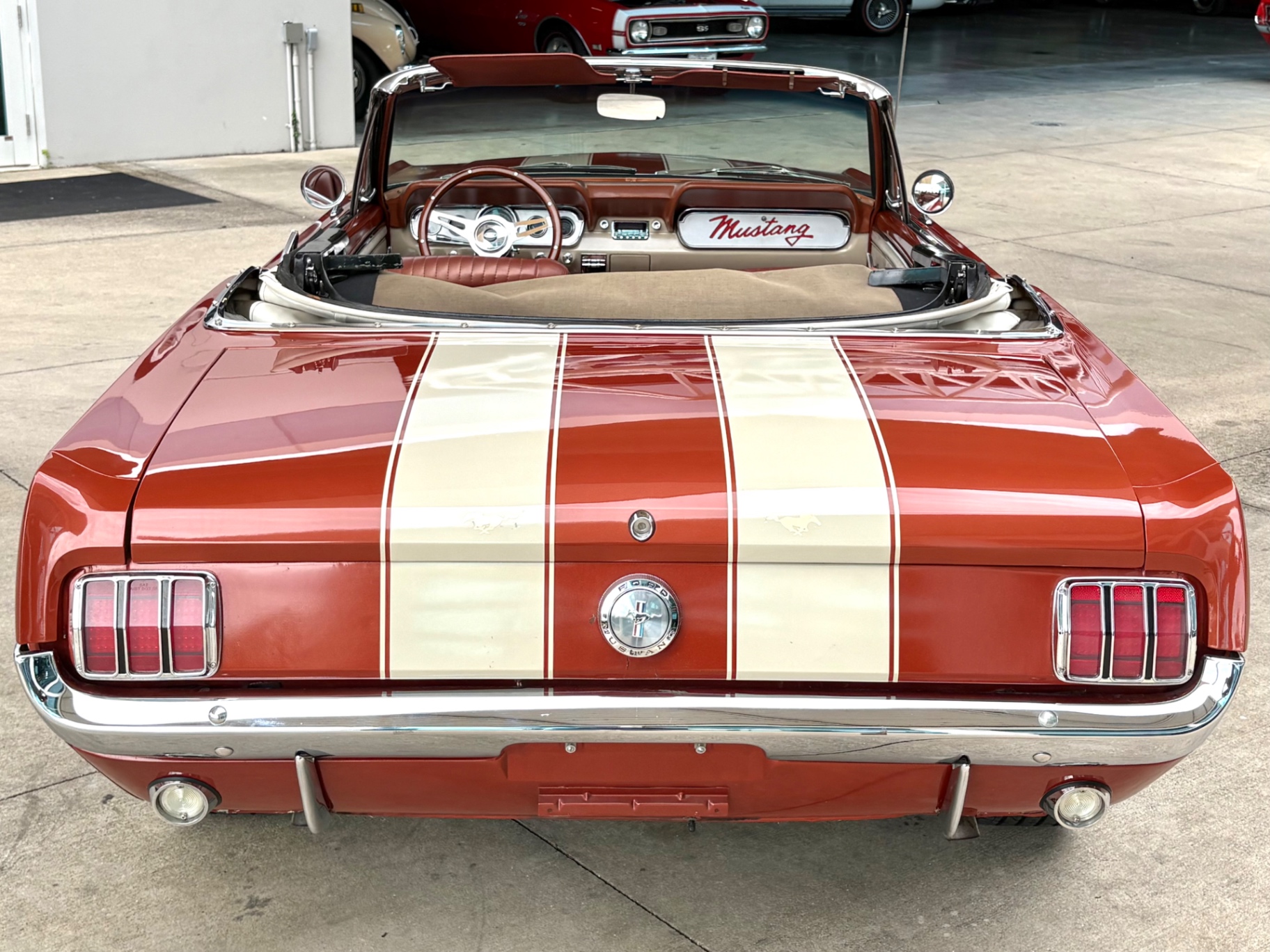
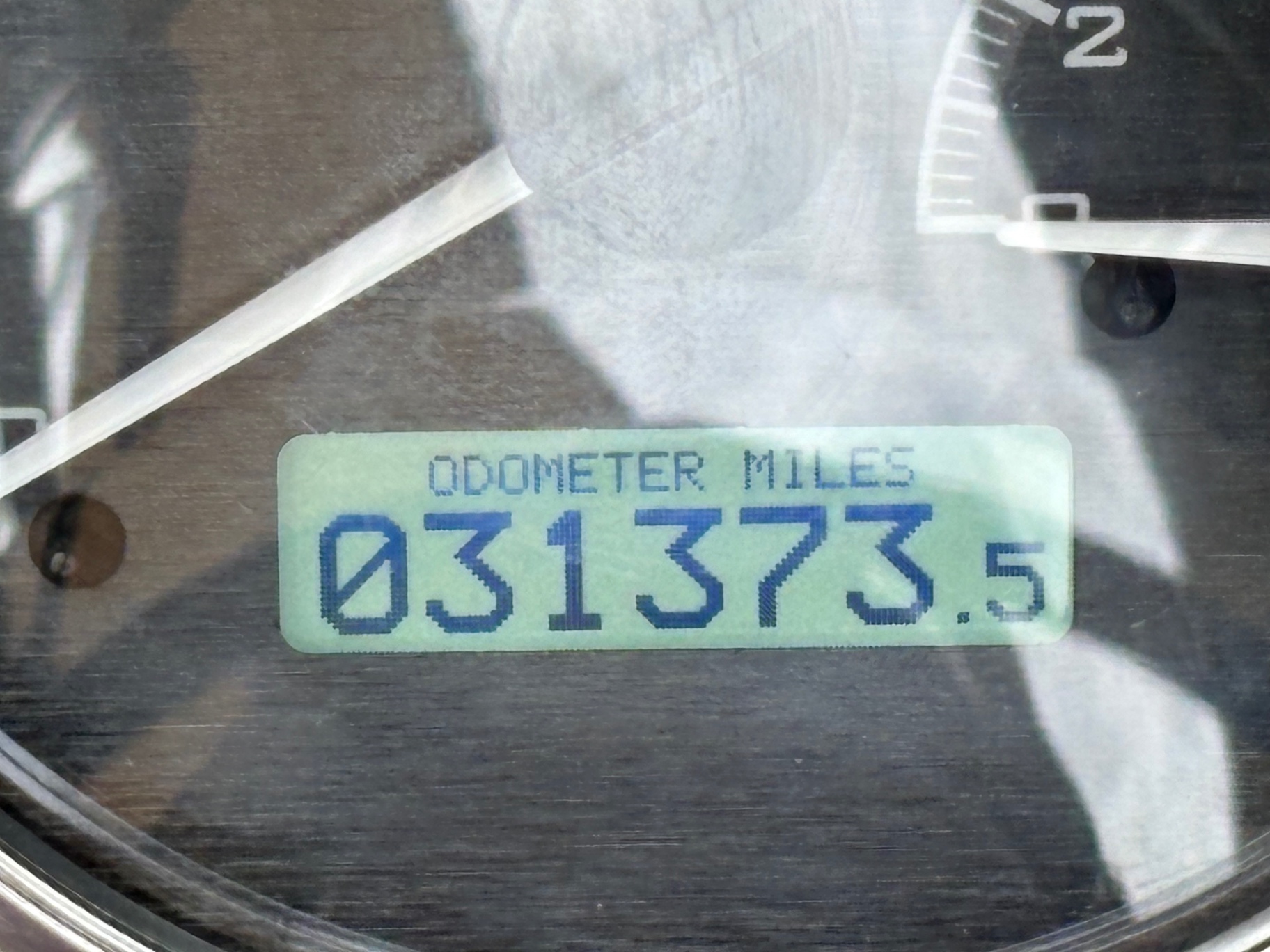
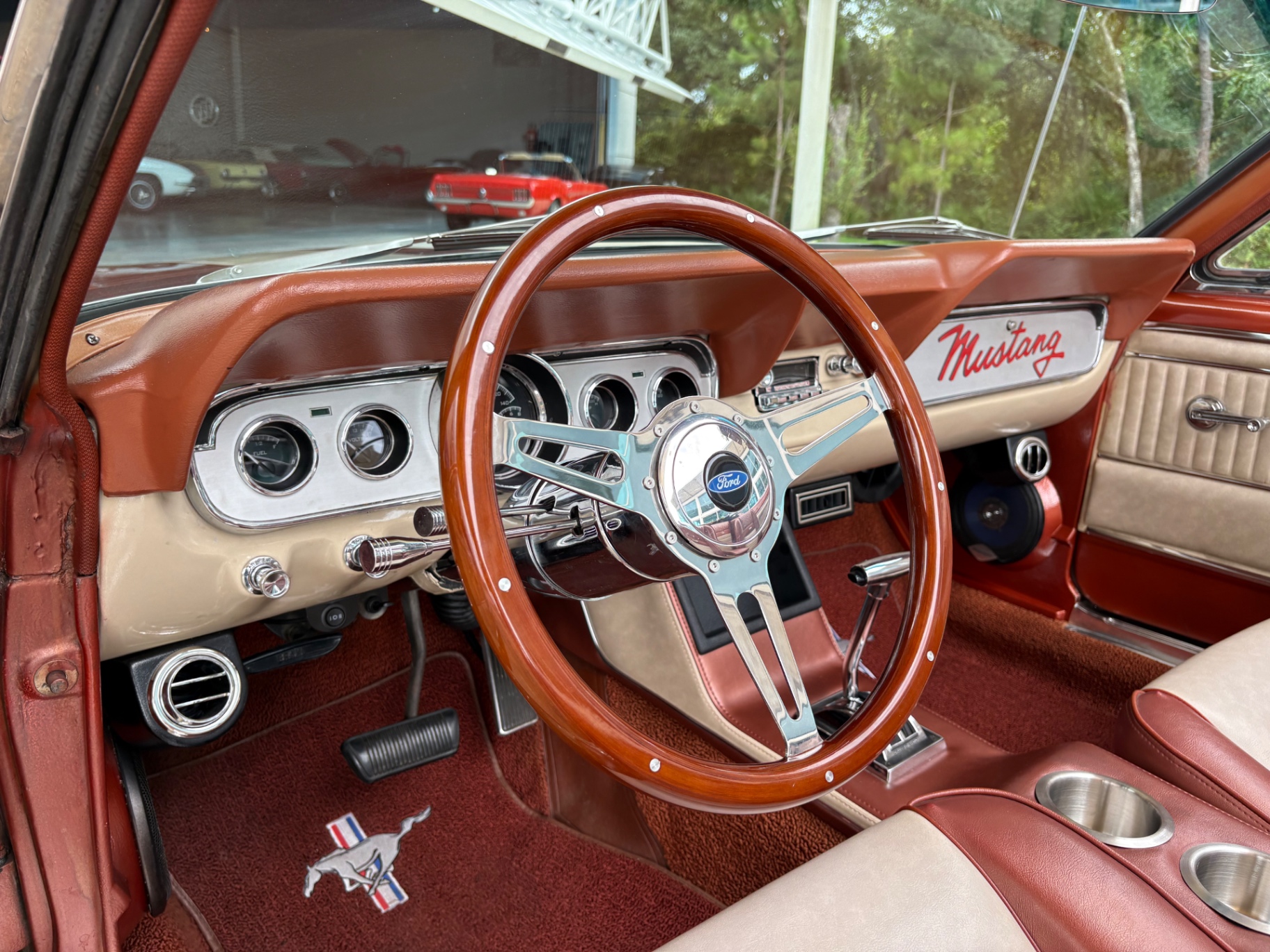
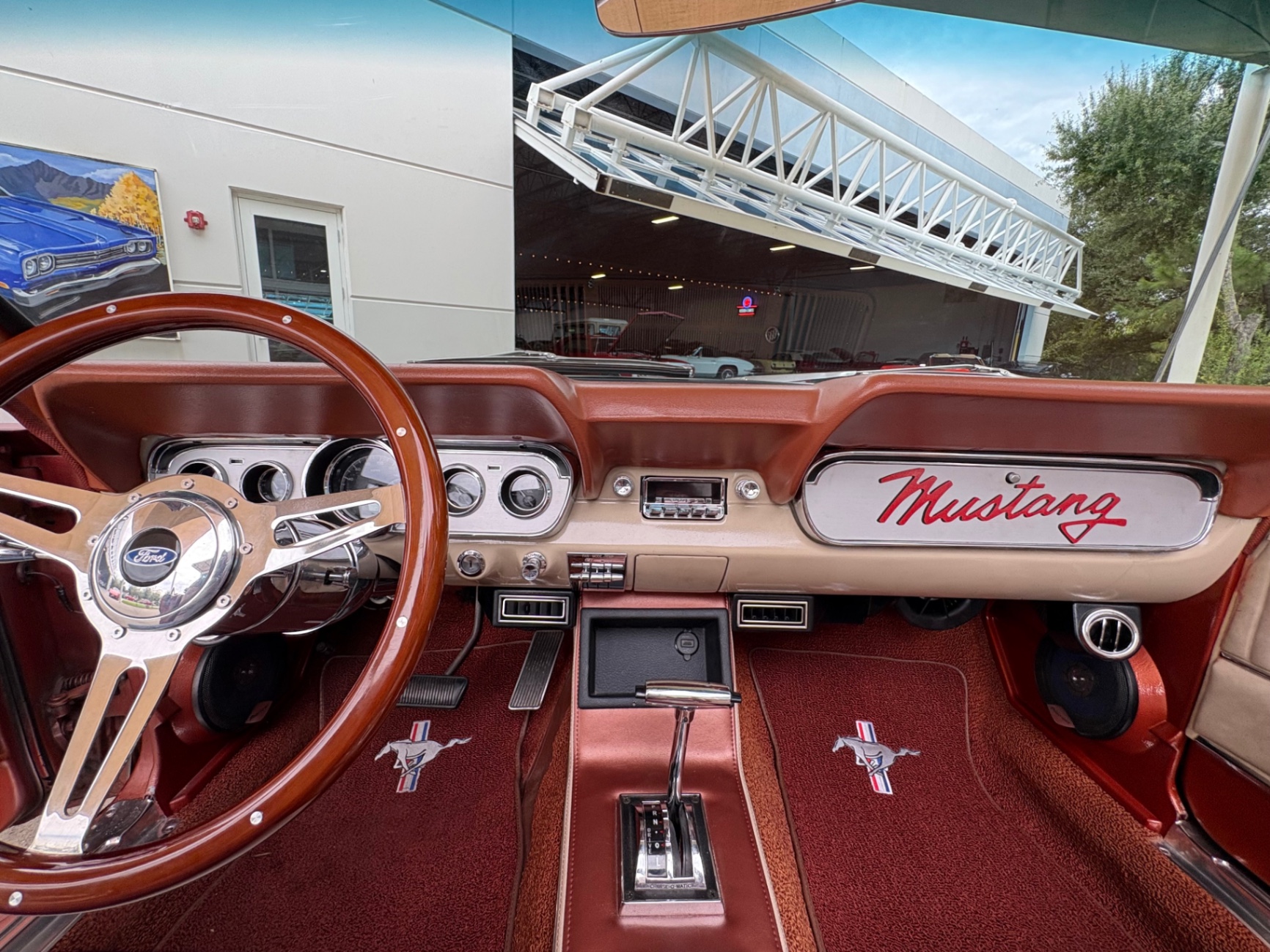
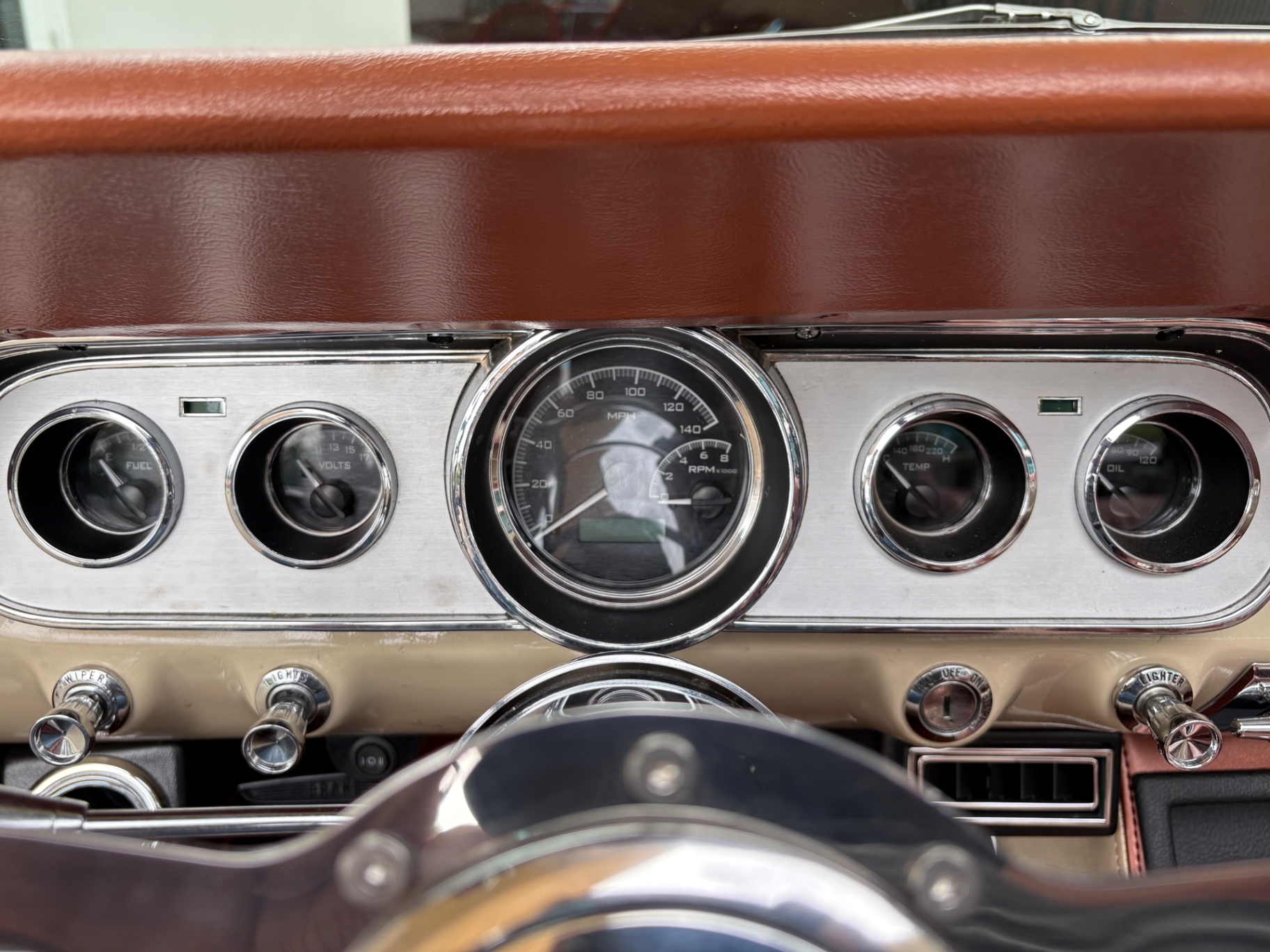
The wood grain steering wheel is a three-spoke design with a chrome center hub carrying the Ford oval. It replaces the original plastic wheel with something that feels more substantial in the hand and looks consistent with the period custom theme of the car. Behind it sits a five-gauge cluster that includes a tachometer at center — the factory 1966 Mustang dash used a five-dial instrument panel as an option, and this arrangement retains that spirit with updated gauges reading fuel, volts, speed/tach, temperature, and oil pressure. Having actual working gauges rather than idiot lights is a practical advantage on any car you plan to drive regularly.
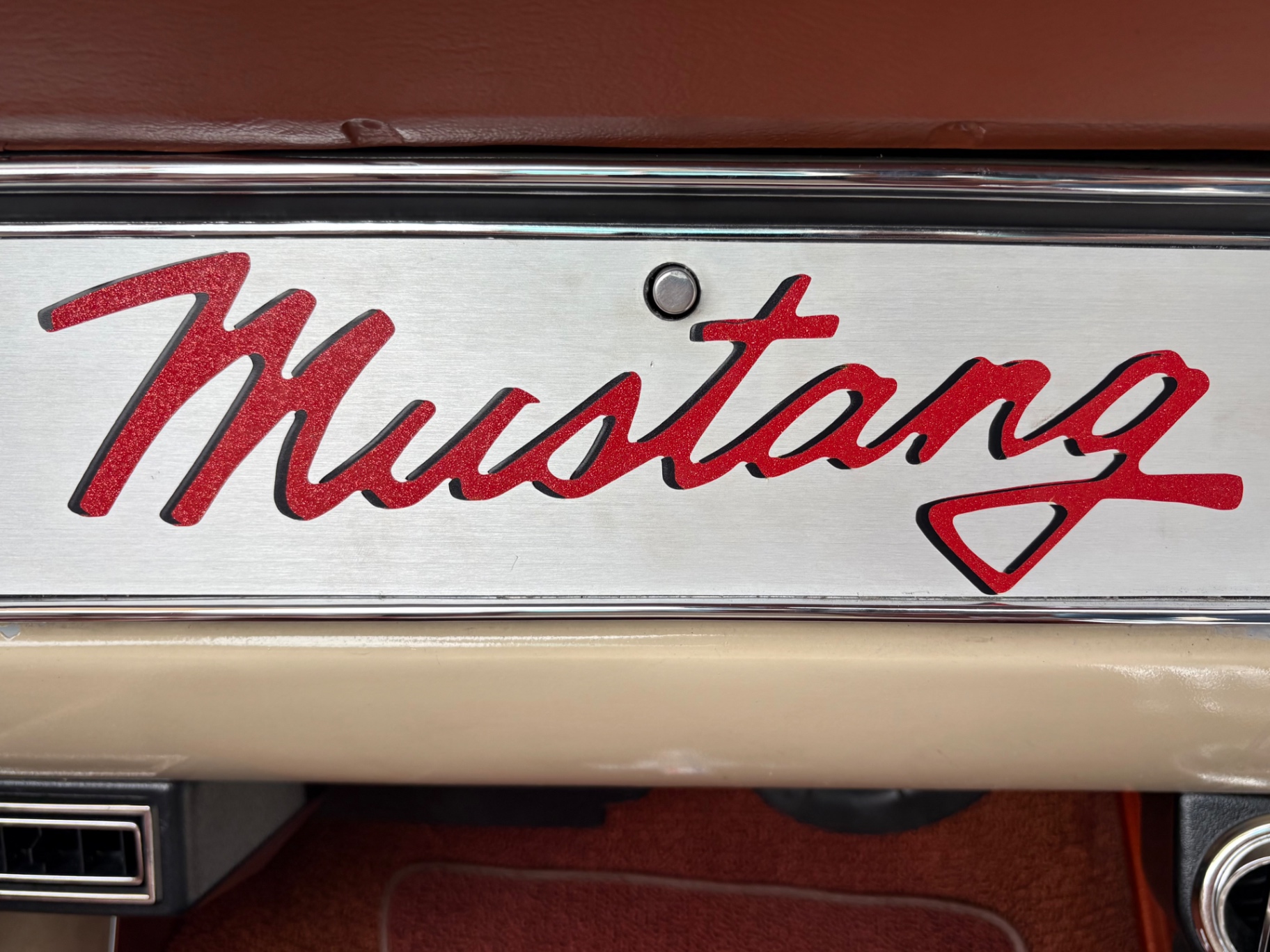
The center console runs the length of the cabin floor and integrates the Cruise-O-Matic floor shifter with the surrounding trim. Integrated cup holders have been added — a concession to modern usability that does not disrupt the overall look. The aftermarket AM/FM stereo is set into the dashboard in a clean, unobtrusive way. The floor is covered in red loop carpet with custom Pony floor mats that carry the running horse and tribar emblem. Everything is clean, intact, and appropriate to the build.
Exterior
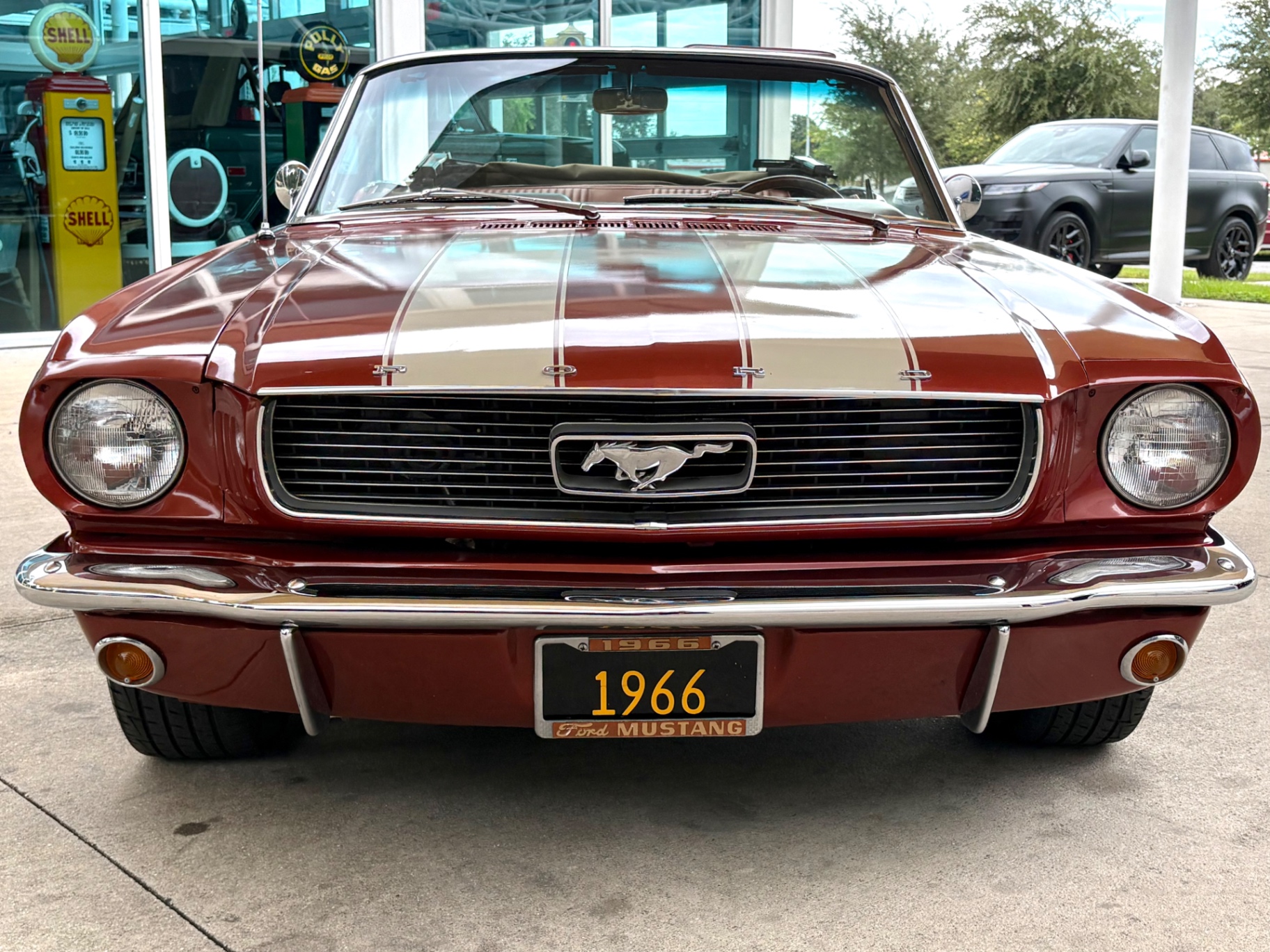
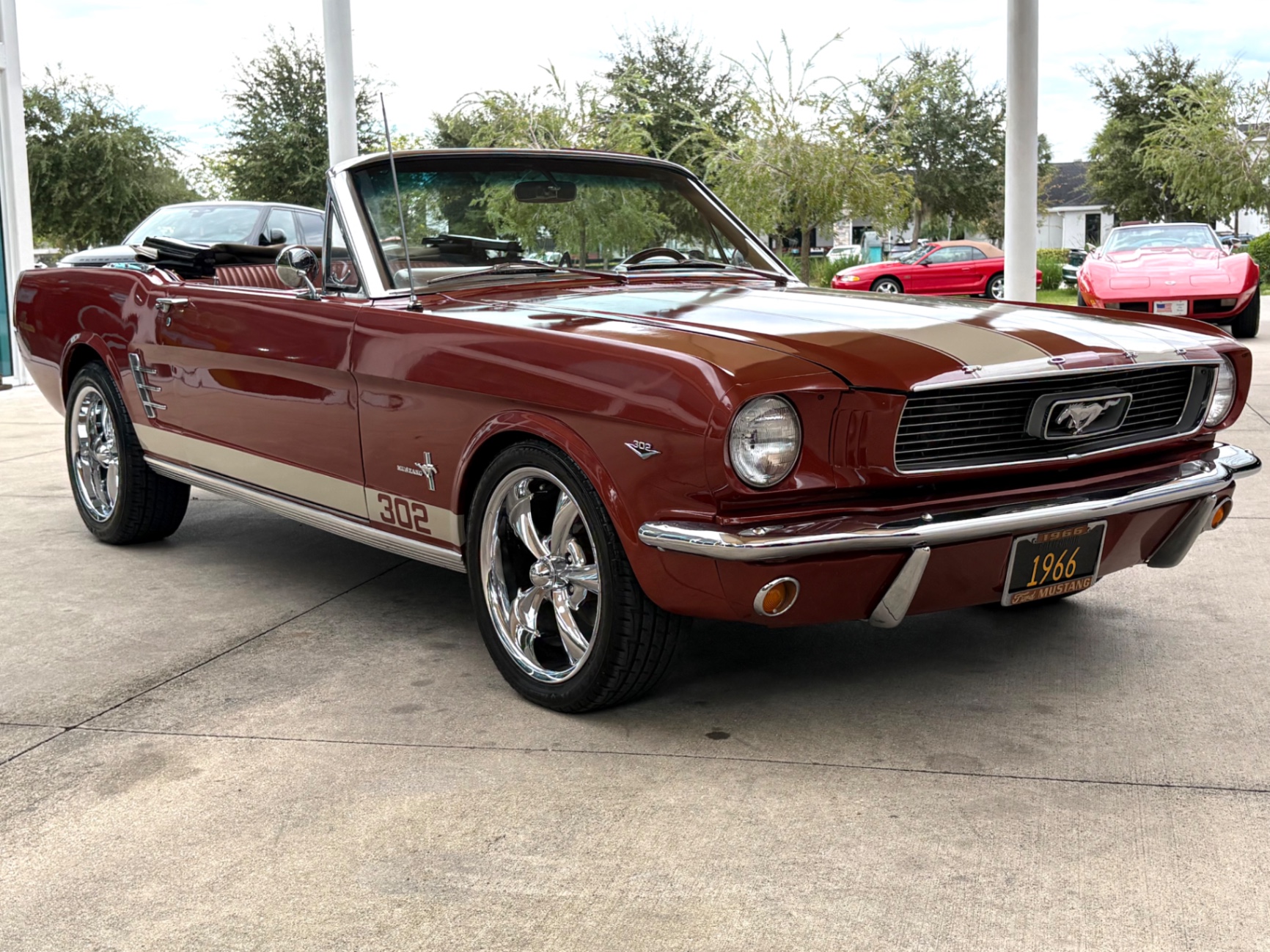
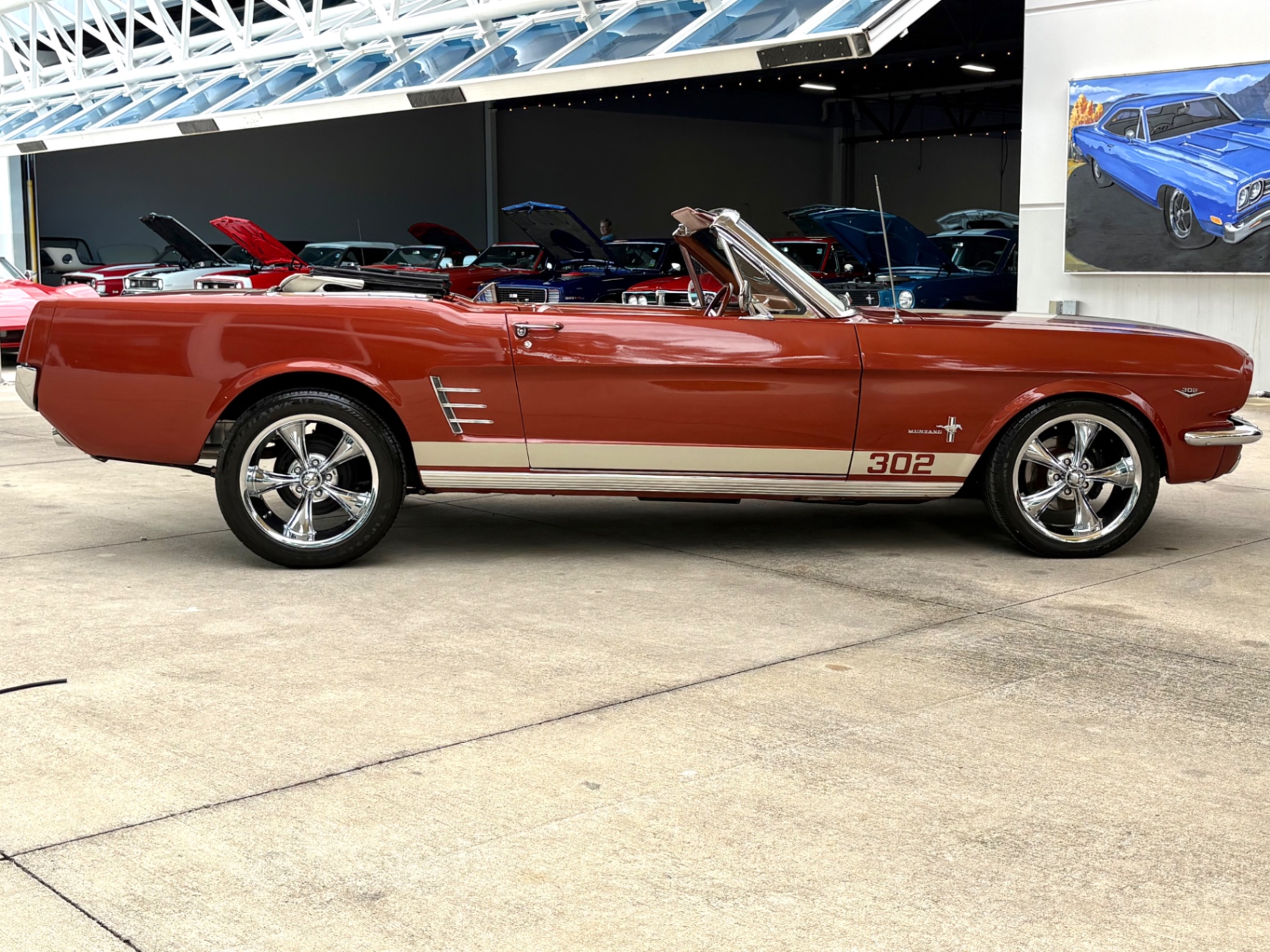
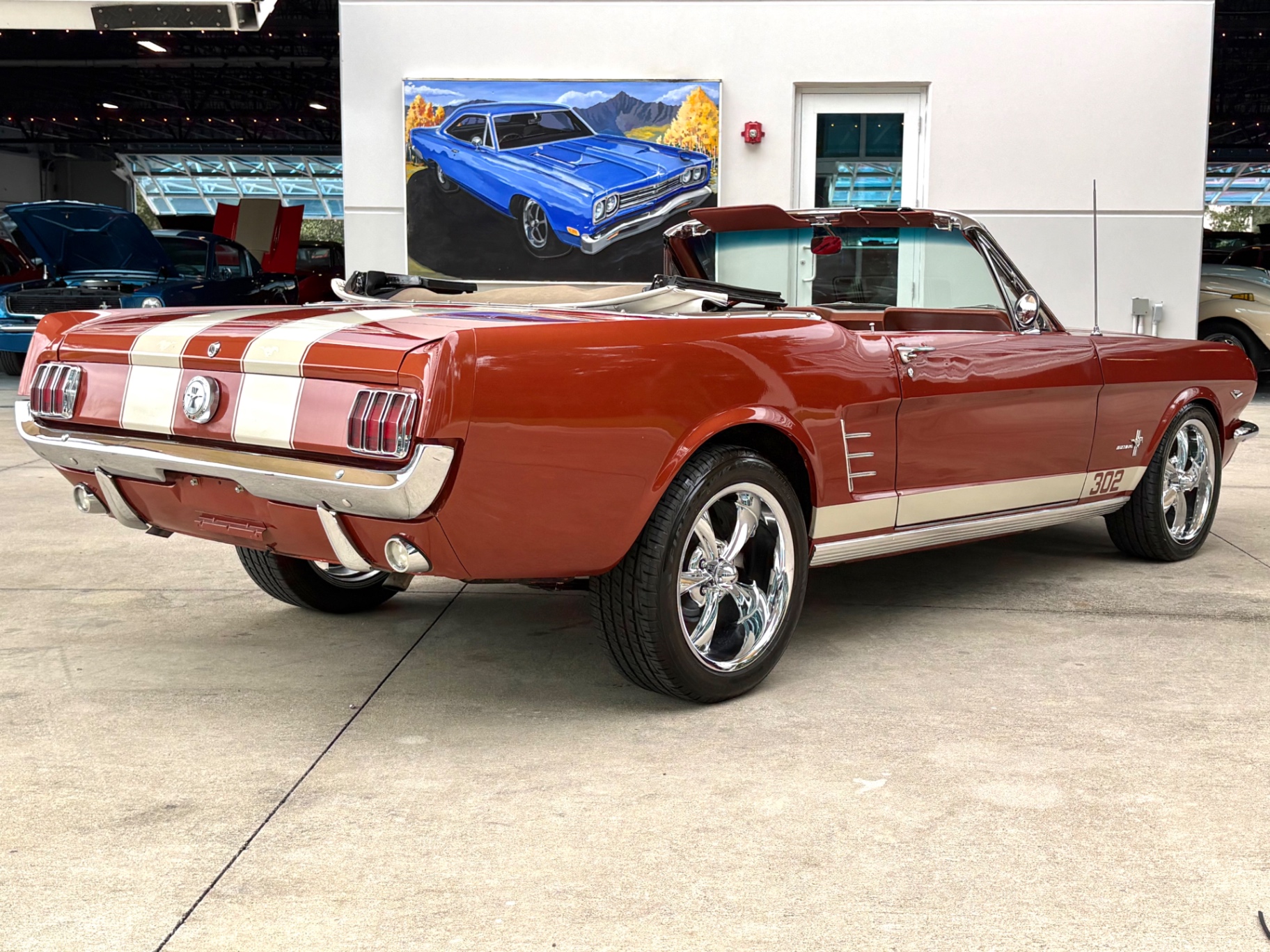
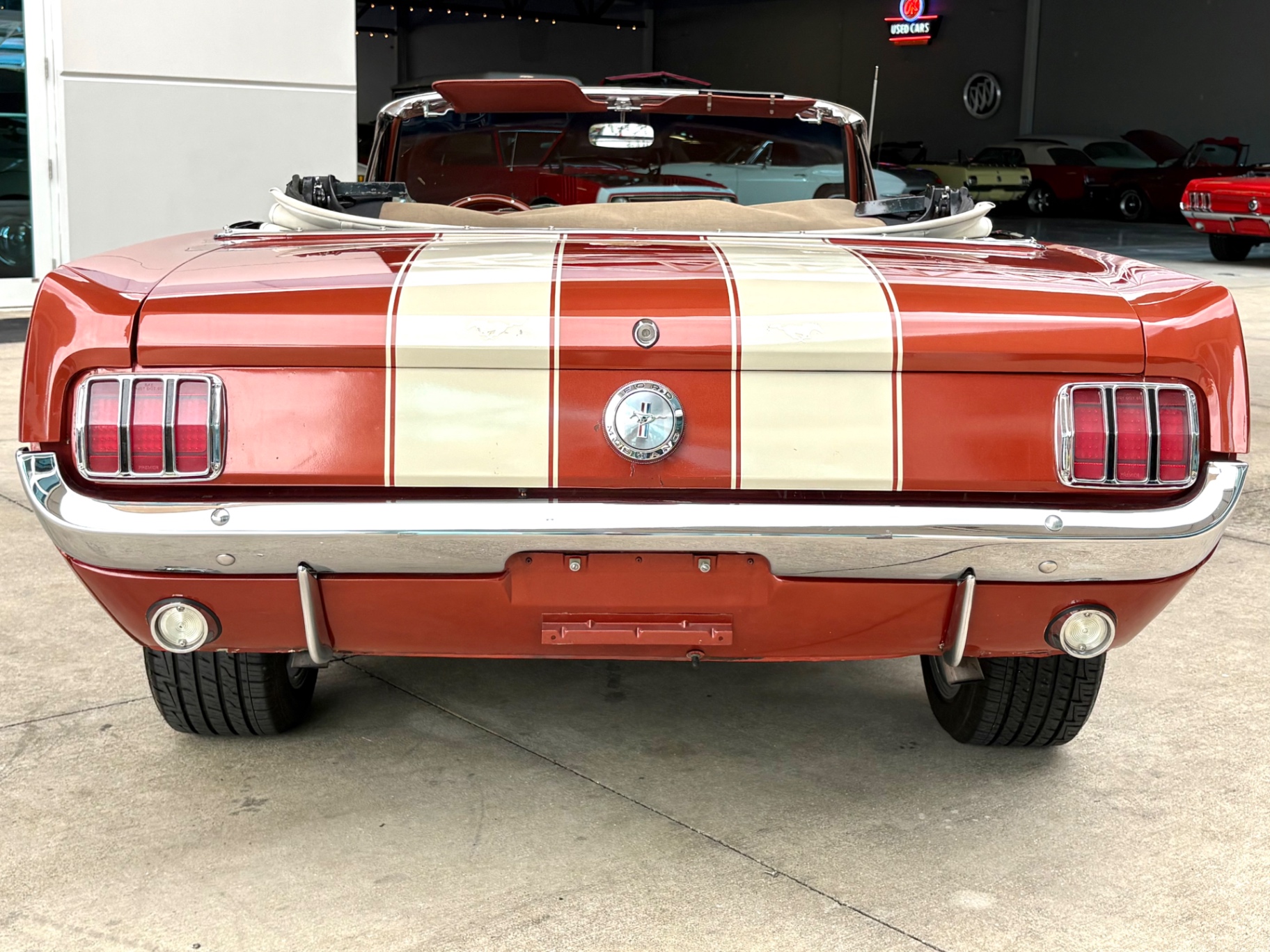
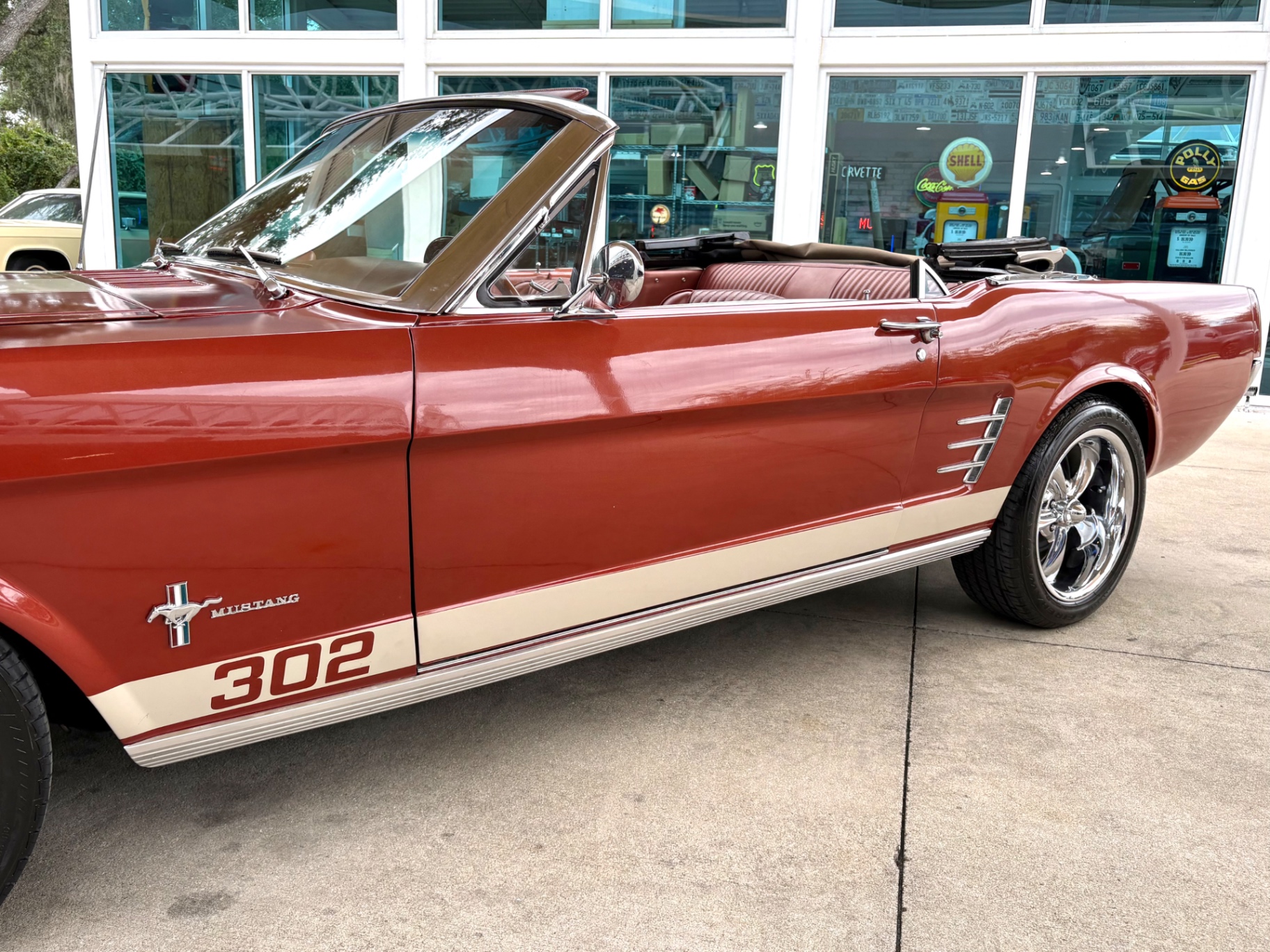
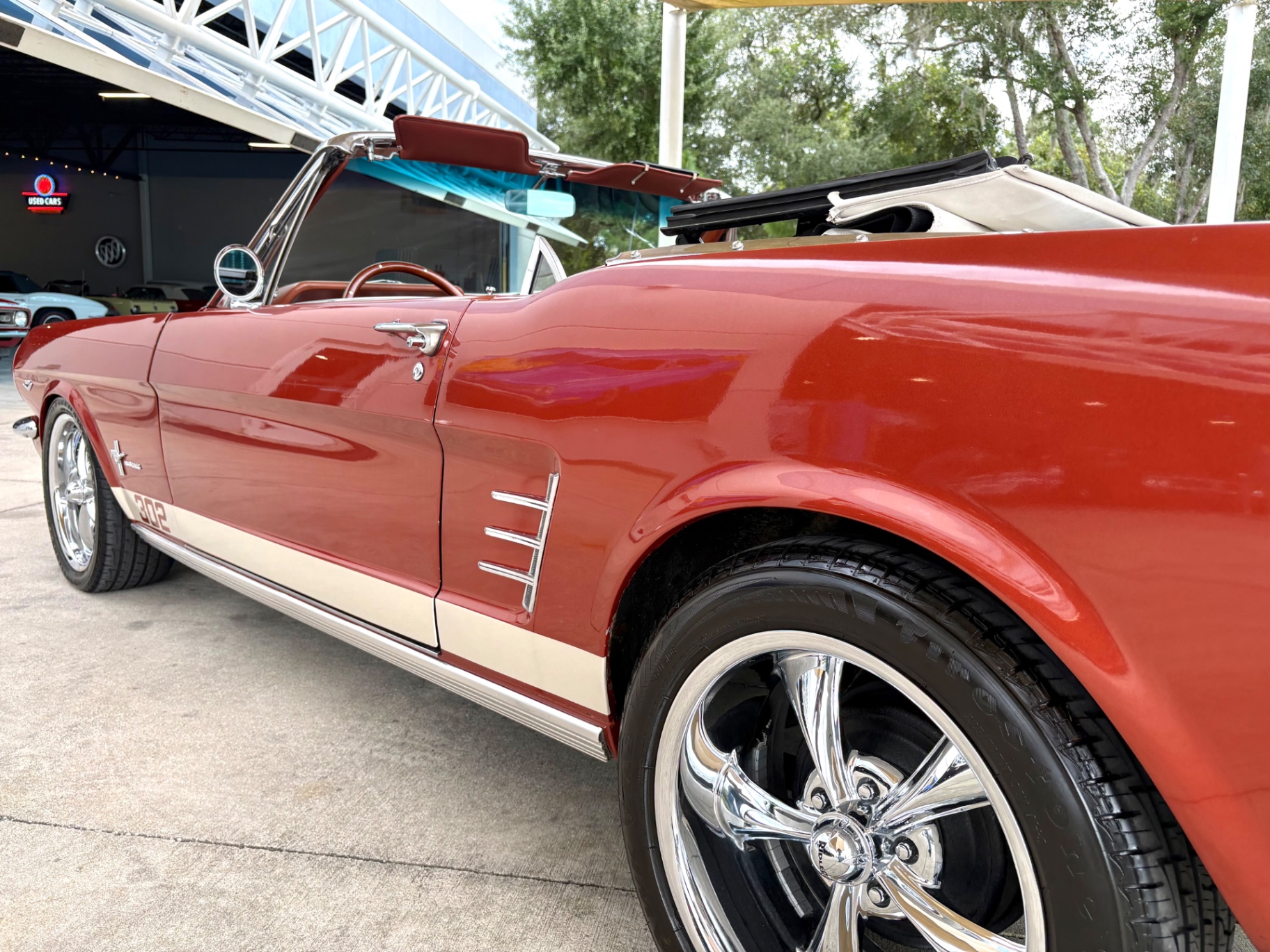
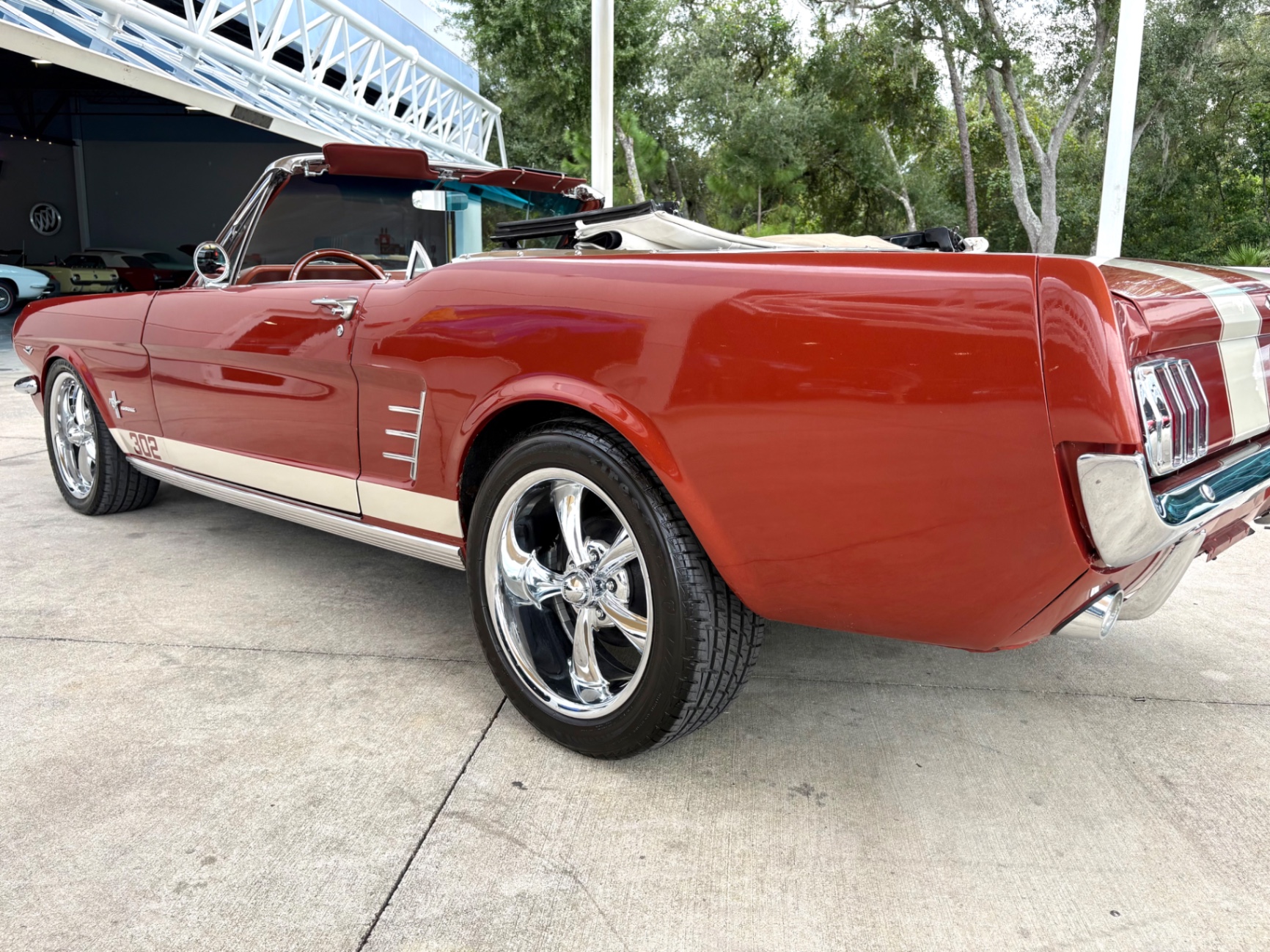
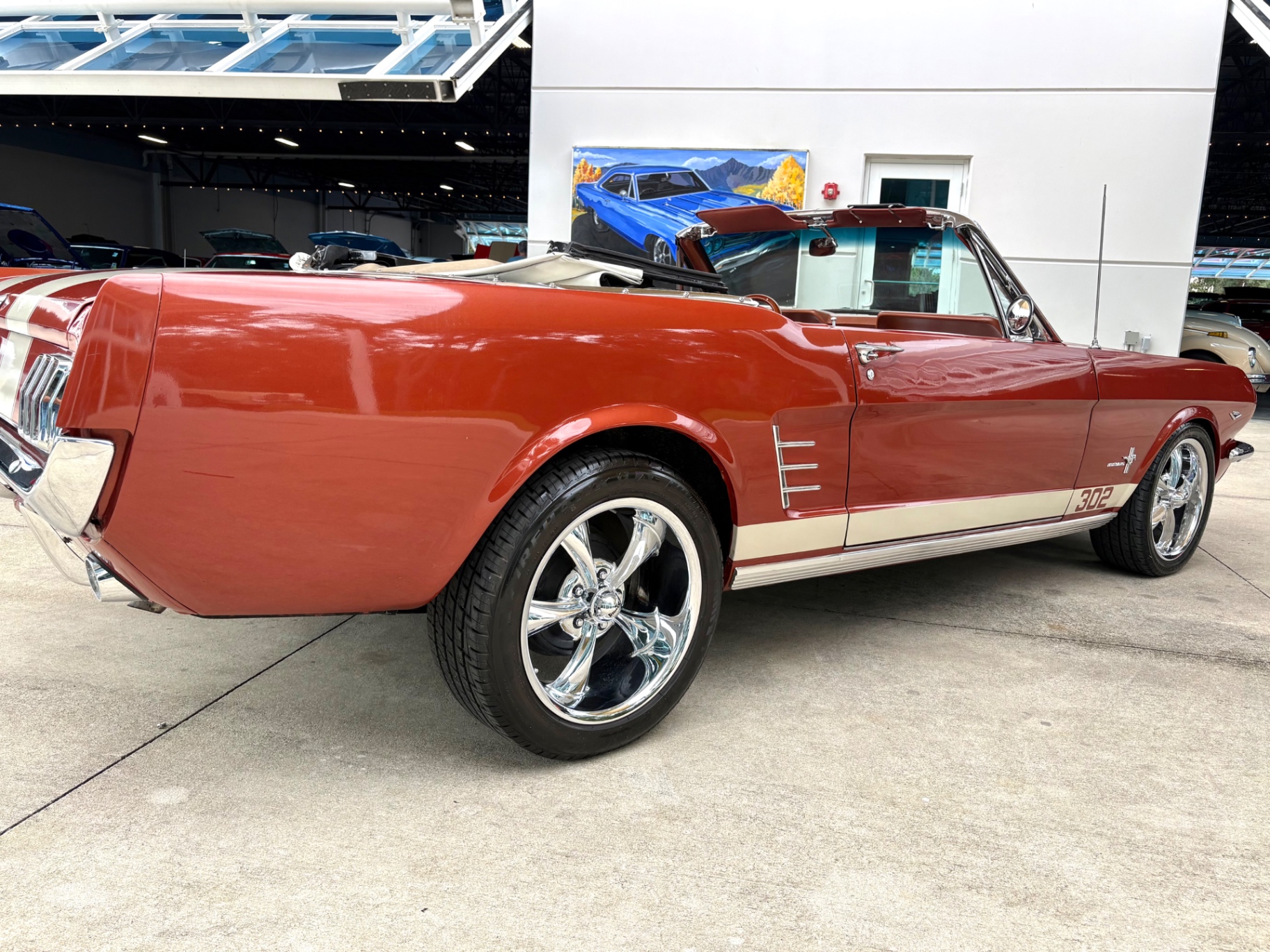
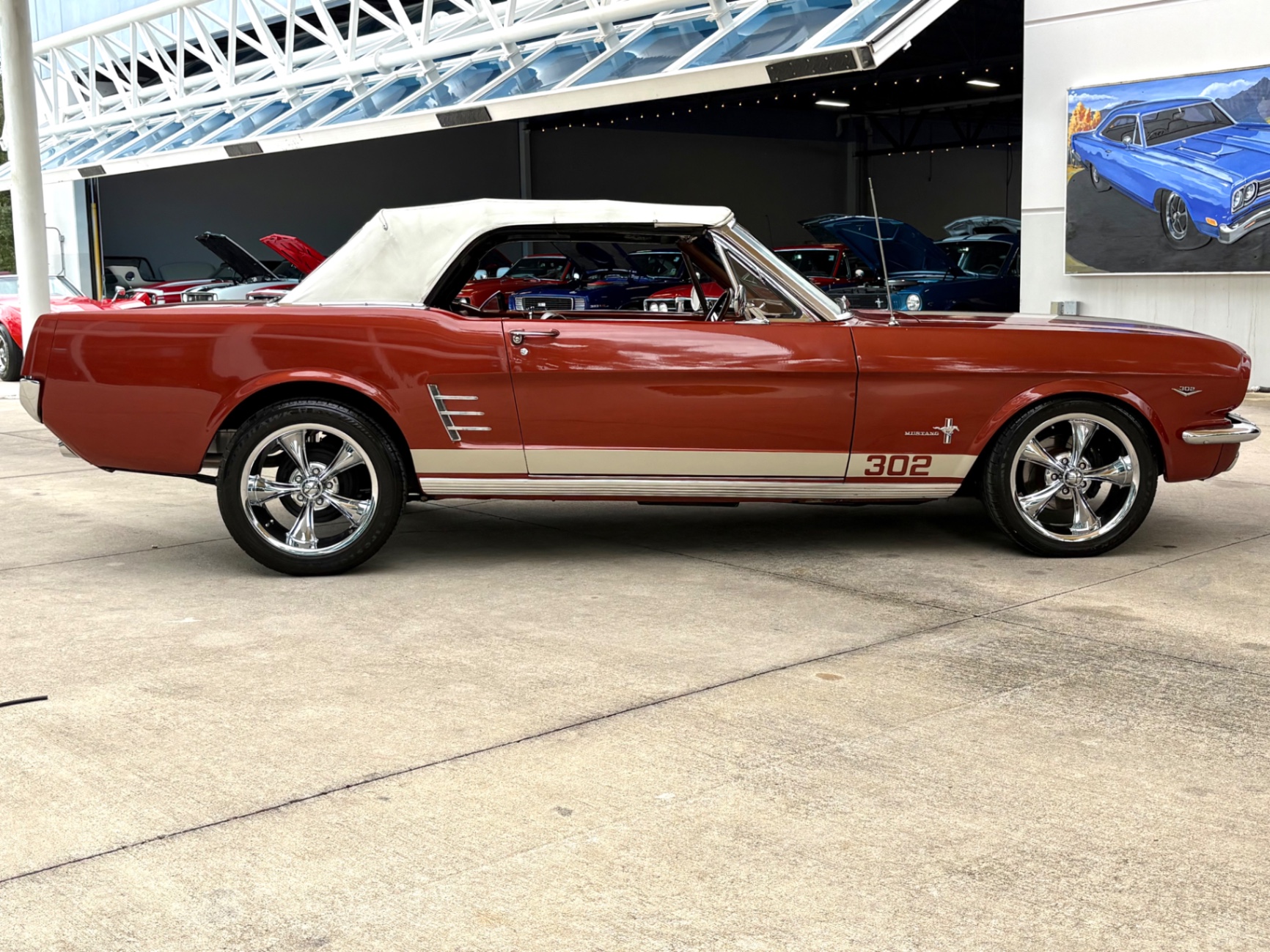
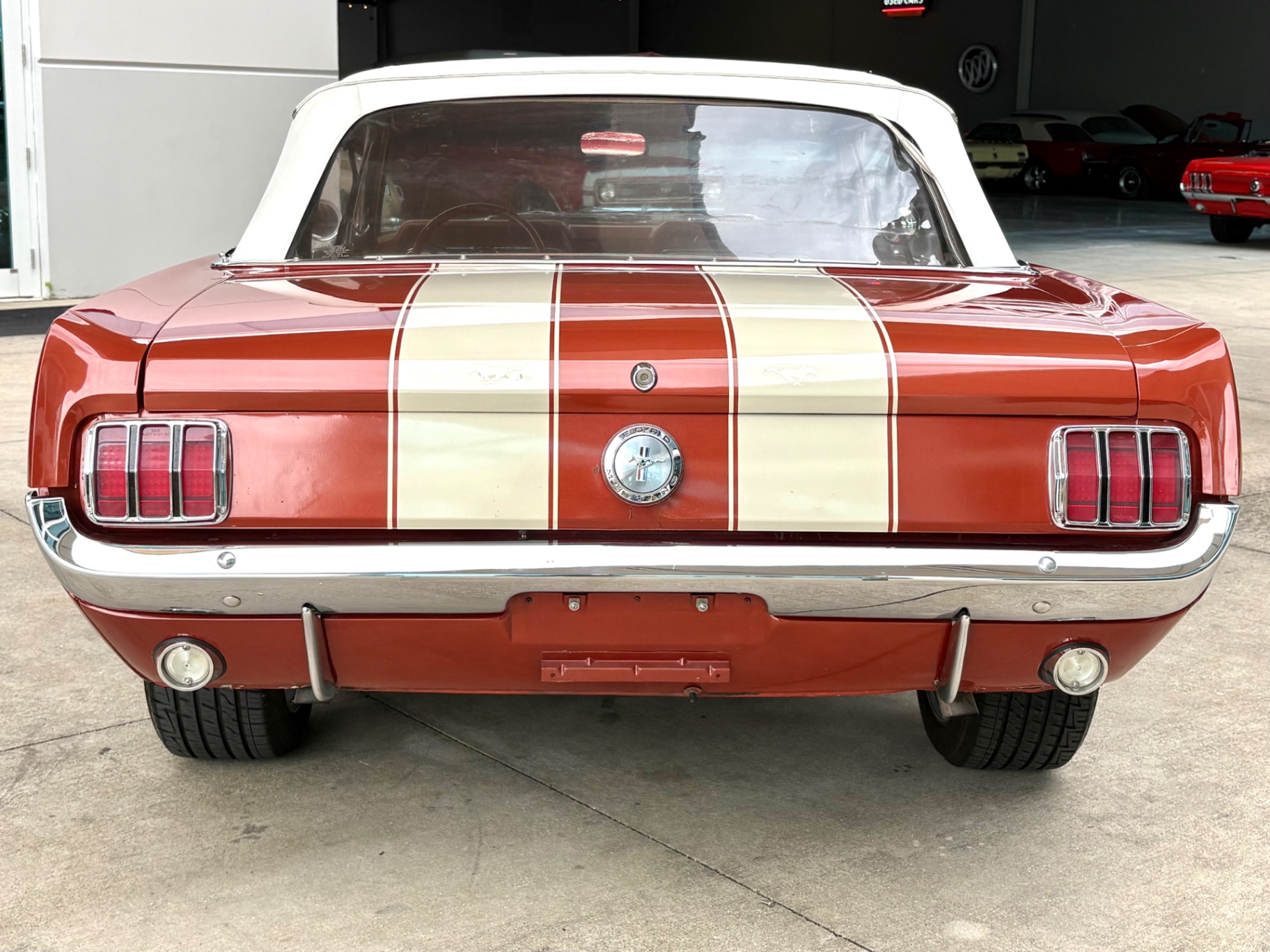
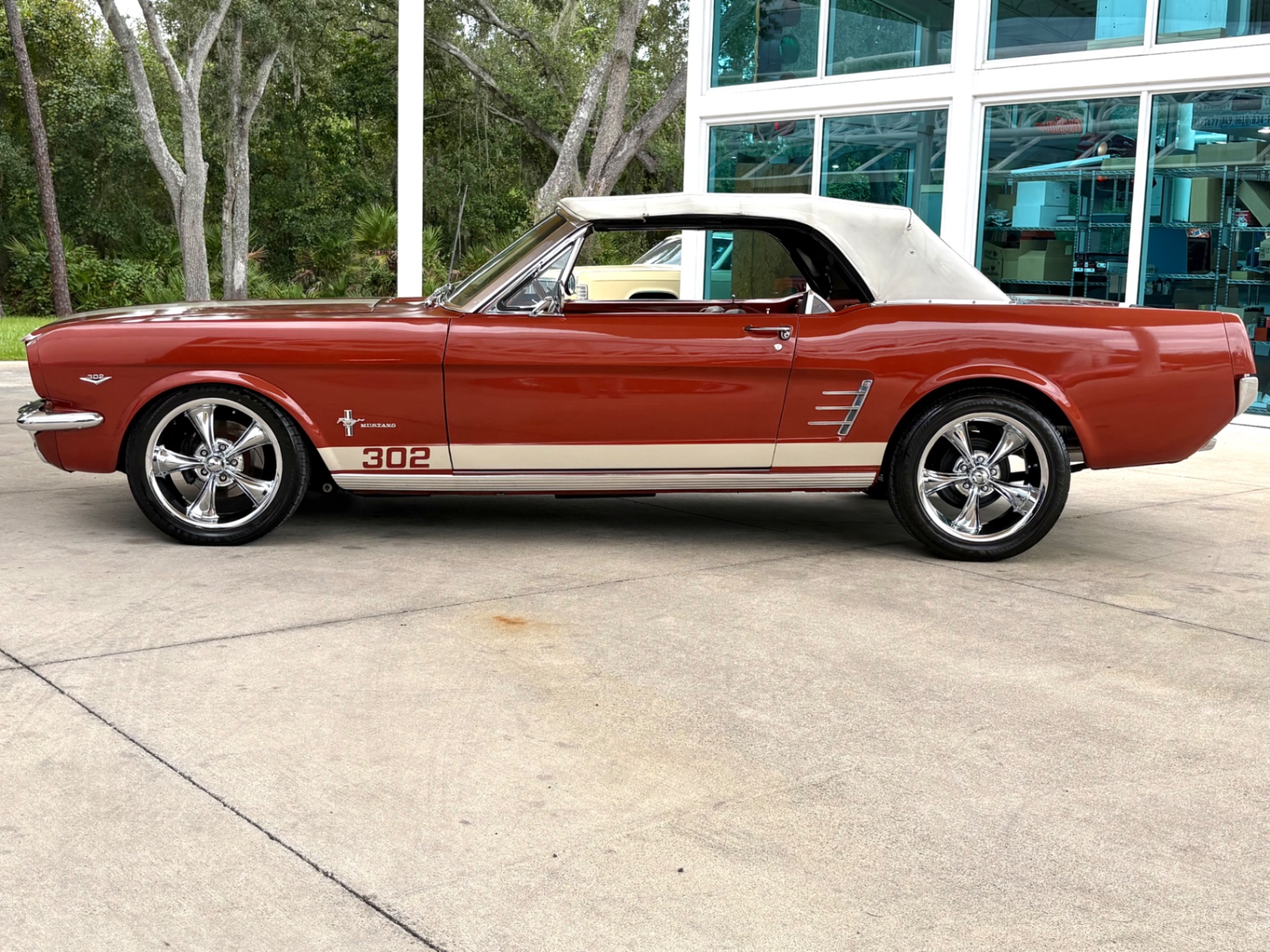
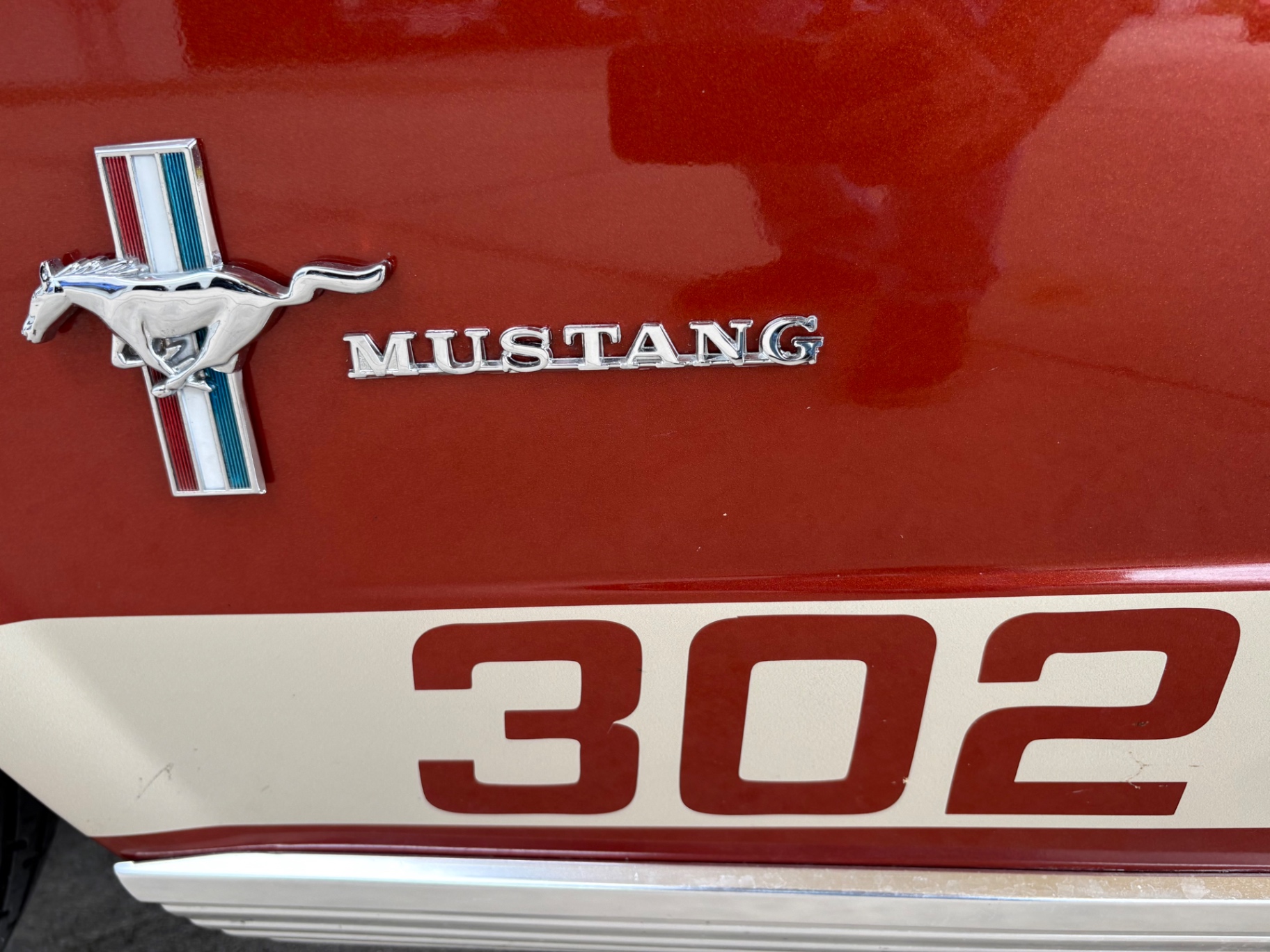
Emberglo was one of Ford's more distinctive color choices during the mid-1960s. It reads as a rich copper-brown metallic in direct sunlight and darkens considerably in shade, which gives the car a different character depending on the lighting. The racing stripes run over the hood and trunk in a contrasting lighter tone, which breaks up the mass of the body and gives the 1966 Ford Mustang convertible a more purposeful appearance without going into full race-replica territory. The 302 side stripe decals along the lower body identify the engine and add a period-correct performance cue.
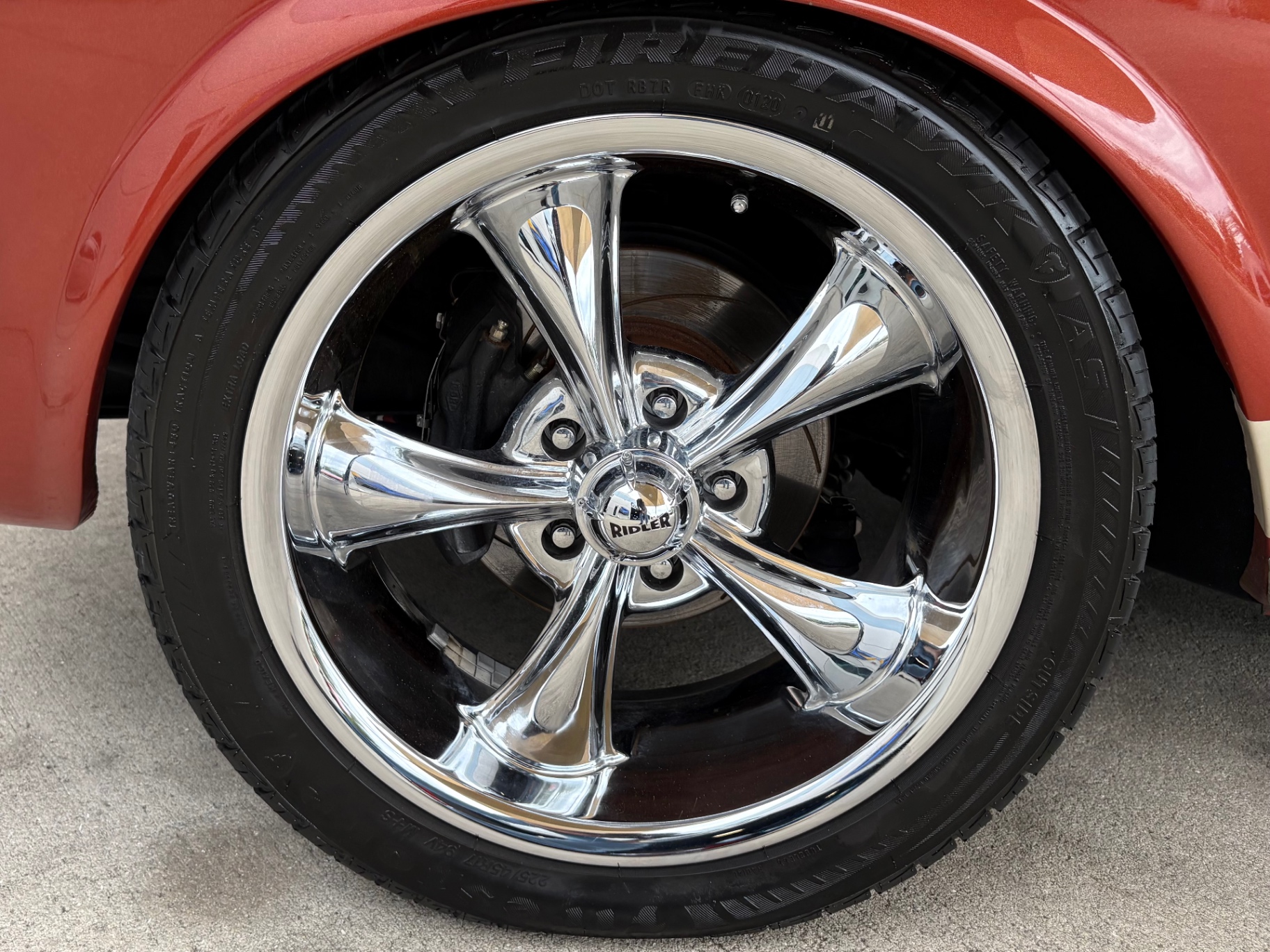
The chrome bumpers front and rear are in good condition, with the expected depth and reflection you want on a driver-quality car. The side scoops — a 1966-specific body detail that replaced the 1965's three-bar trim — are properly fitted and painted to match. Chrome Ridler wheels fill the wheel openings well and carry the car's chrome theme consistently from front to rear, tying together the bumpers, valve covers, and trim into a cohesive visual presentation.
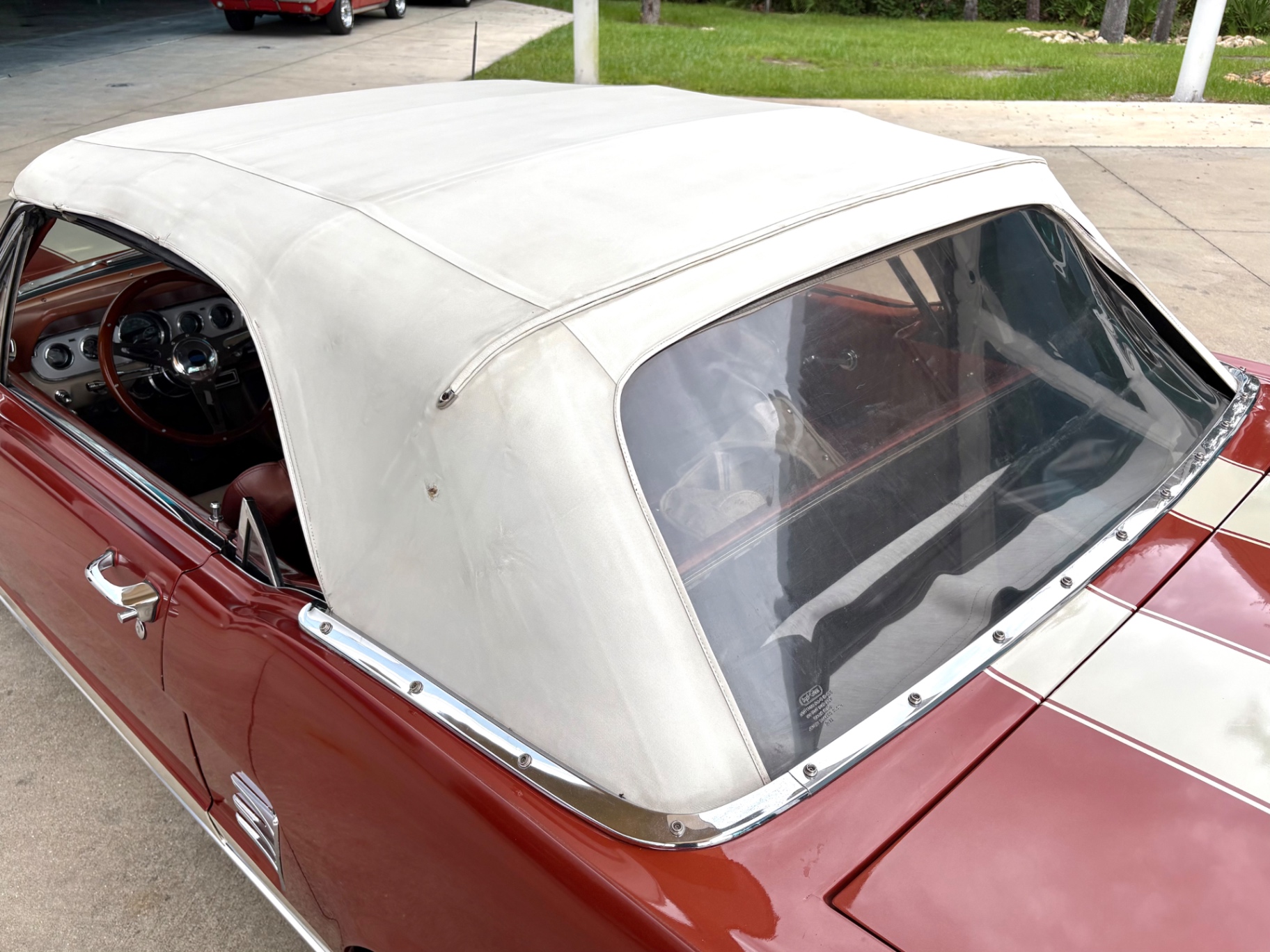
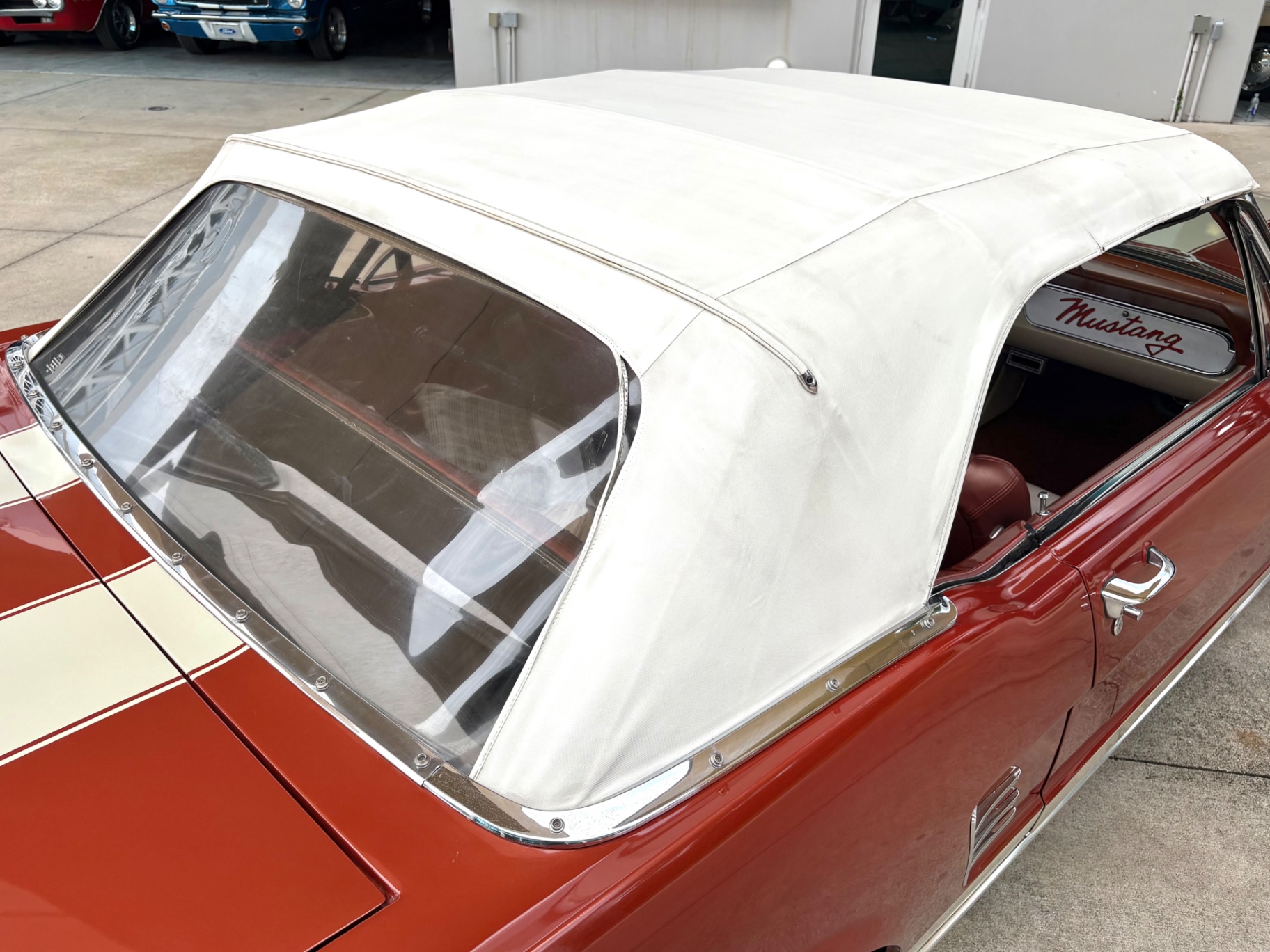
The white convertible top is fitted and functional. White against Emberglo Copper is a clean contrast, and the combination reads as intentional rather than accidental. With the top down, the red and parchment interior becomes the dominant visual element, which works in this car's favor given the quality of the upholstery work.
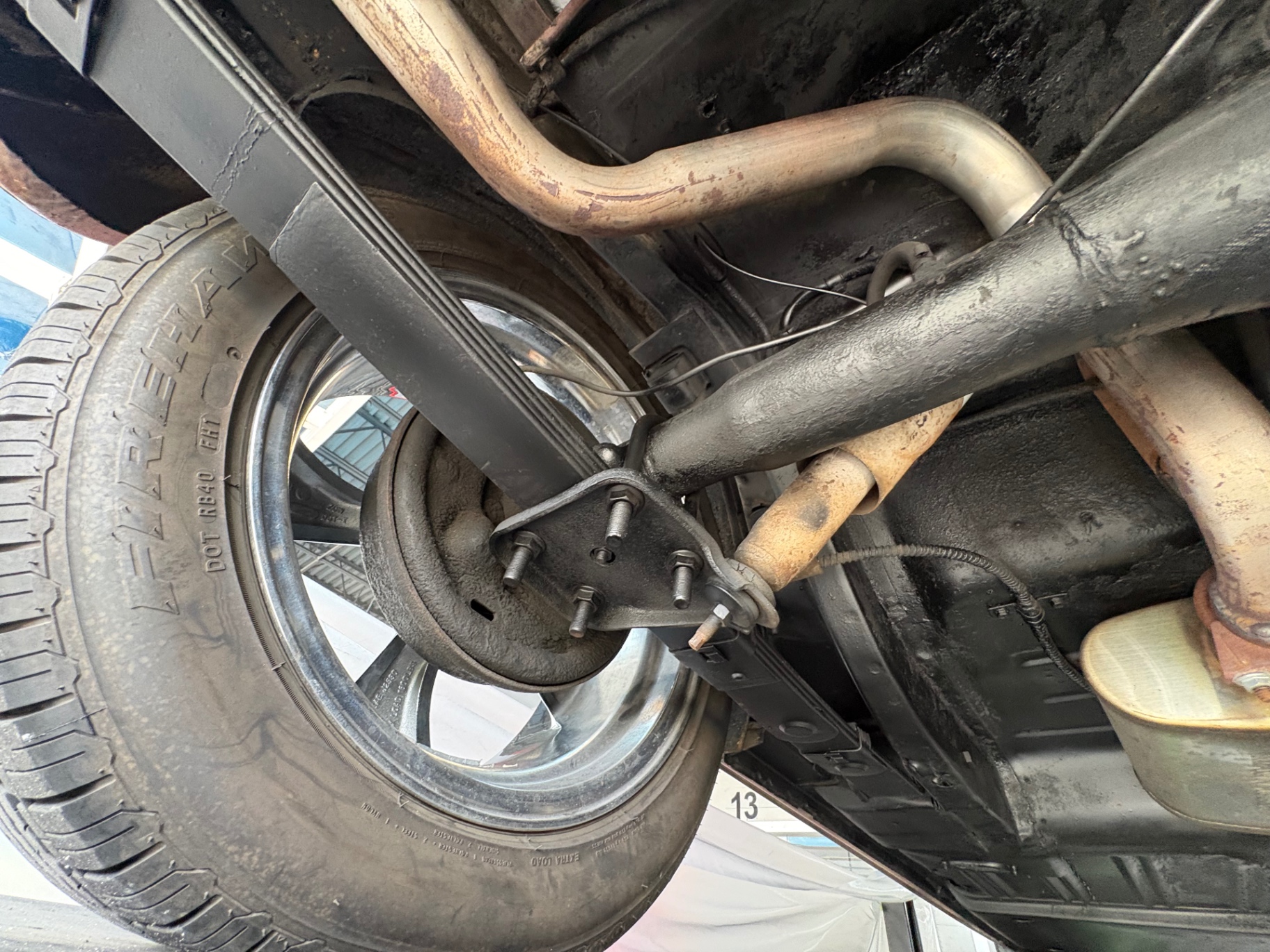
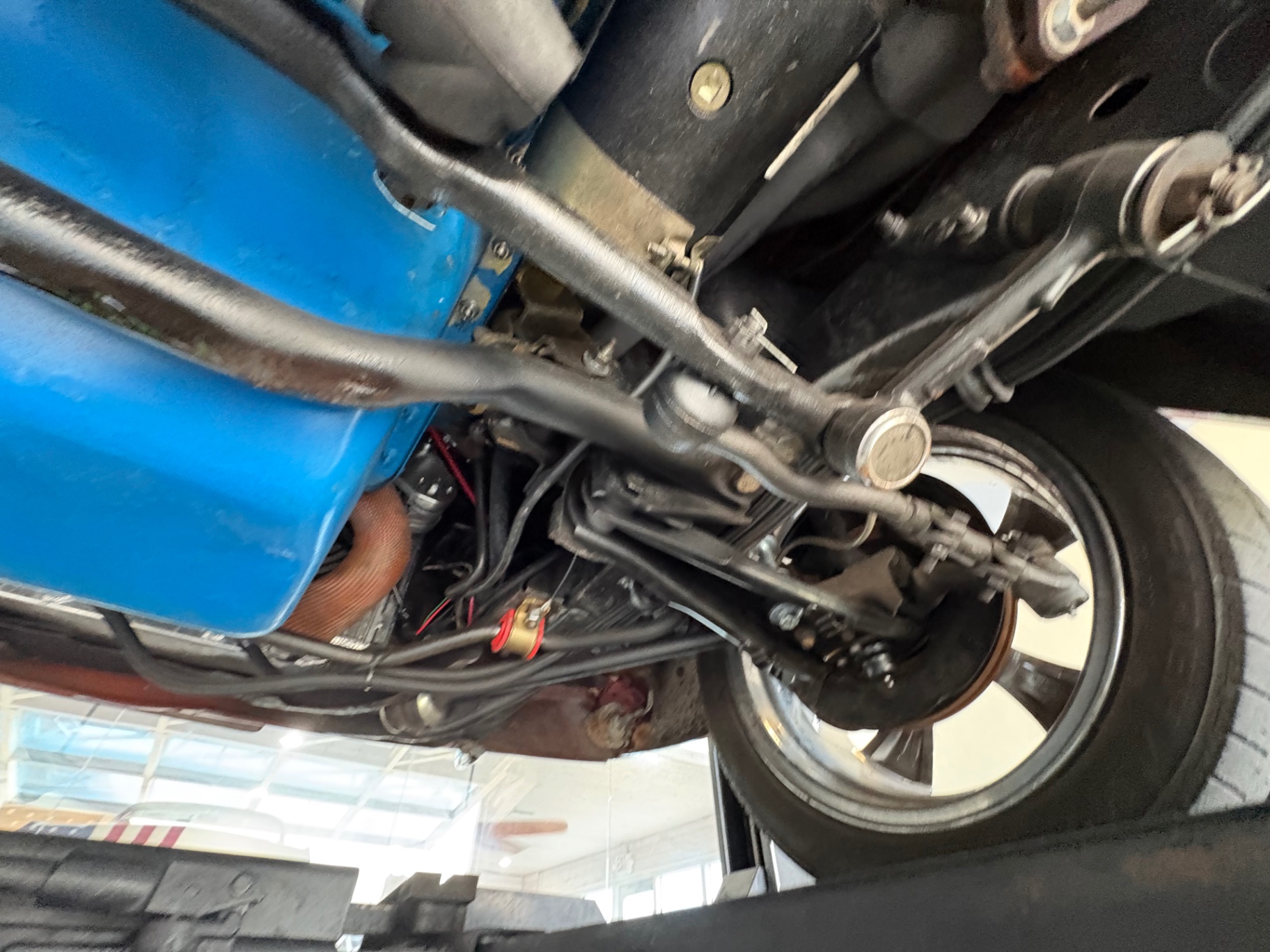
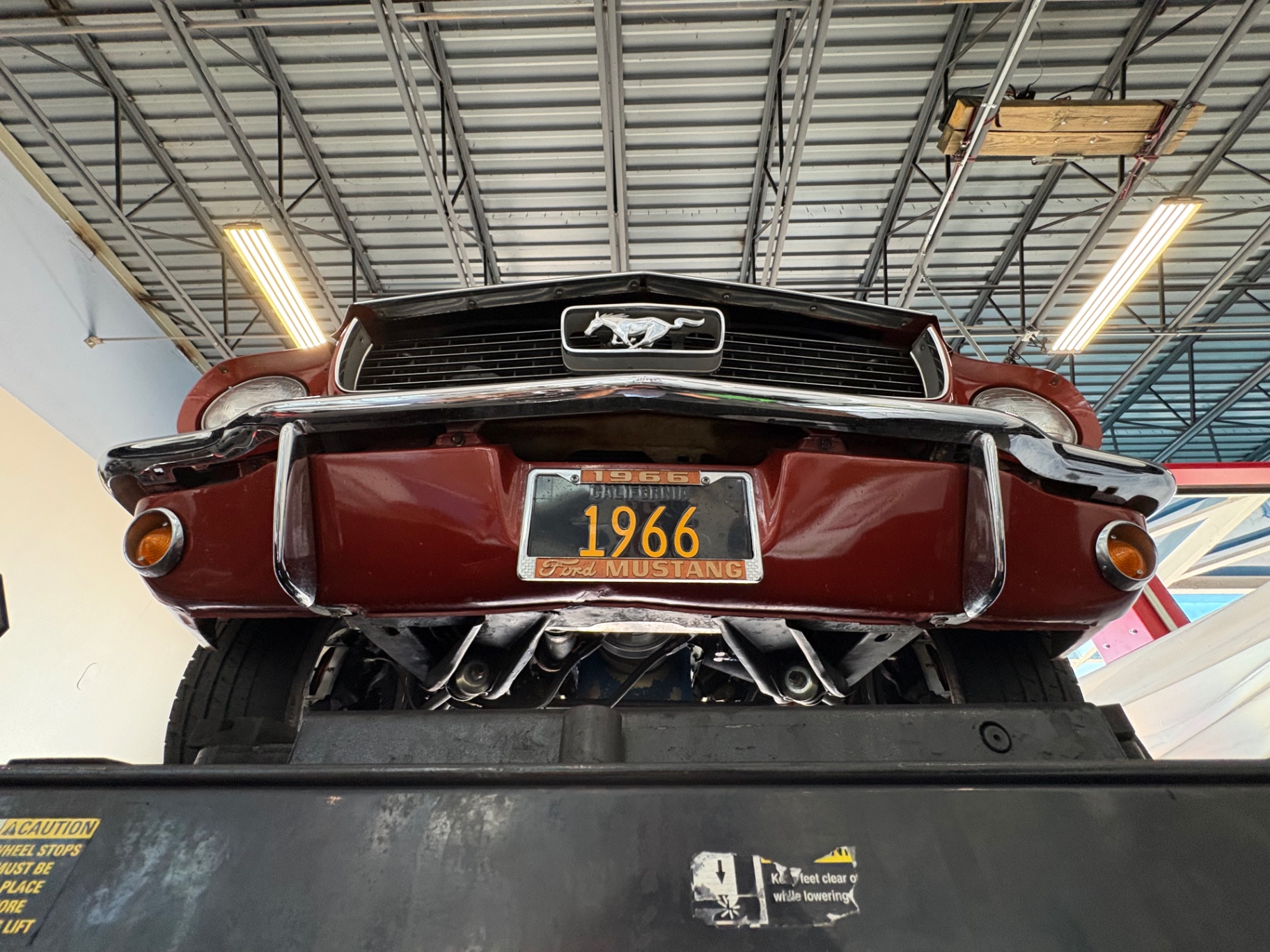
The underside of the car is finished in black undercoating over a solid floor pan. The Magnaflow mufflers are clearly marked and properly mounted. The rear axle, driveshaft, and suspension components are visible and clean, consistent with a car that has been maintained with attention to the whole vehicle rather than just what shows at eye level.
Conclusion
The 1966 Ford Mustang convertible has been a sought-after car since the moment it left the showroom floor, and the market for well-built, honest driver-quality examples continues to be strong. This particular car — built on a solid San Jose body in Emberglo Copper, upgraded with practical performance hardware, and finished with a quality interior — represents the kind of first-generation Mustang that you can actually drive without worrying about it. It has the look and the sound, and it has been set up to be used.
If you have been looking for a 1966 Ford Mustang convertible that is ready to go and built with real parts rather than cheap shortcuts, this car deserves a close look. Call Skyway Classics at 941-254-6608 to schedule a time to see it in person or to speak with someone who can answer your questions directly.
Disclaimer
Information found on the website is presented as given to us by the owner of the car, whether on consignment or from the owner we bought it from. Some Photos, materials for videos, descriptions and other information are provided by the consignor/seller and is deemed reliable, but Skyway Classics does not warranty or guarantee this information. Skyway Classics is not responsible for information that may incorrect or a publishing error. The decision to purchase should be based solely on the buyers personal inspection of the vehicle or by a professional inspection service prior to offer or purchase being made.
1966 Ford Mustang Convertible — Emberglo Copper, 302 V8, Custom Build
Why This Car Is Special
The 1966 Ford Mustang convertible is one of the most recognized automobiles in American history, and for good reason. Ford sold over 607,000 Mustangs in calendar year 1966, making it the best-selling model year of the first-generation run. Of those, convertibles accounted for roughly 72,000 units — a meaningful slice, but a fraction of the total production. When you factor in the color, the engine, and the level of custom work on this particular car, you're looking at a configuration that would not have been easy to find even the day it rolled off the Dearborn line.
The VIN on this car decodes to confirm it was assembled at the San Jose, California plant — the "T" in the sixth position of the sequence identifies that facility. San Jose-built first-generation Mustangs are well-documented among collectors, and the California assembly origin adds a layer of regional history that enthusiasts appreciate. The body style code confirms the convertible body, and the sequence number places this car solidly within the 1966 model year production run.
The color is Emberglo, Ford's factory copper-brown metallic that was offered during this period and has a warmth to it that photographs do not fully capture in person. It is a less common choice compared to the period's reds and blacks, which makes this car easy to identify in a crowd of first-generation Mustangs. Paired with a red and parchment two-tone vinyl interior and a white convertible top, the color combination is cohesive and period-correct in spirit, even as the car has been thoroughly updated mechanically and cosmetically.
This 1966 Ford Mustang convertible has been built as a driver — one that can be used regularly, driven confidently, and enjoyed without the anxiety that comes with a numbers-matching show car. The owner invested in a long list of practical upgrades: modern ignition, upgraded cooling, better braking, and a Magnaflow dual exhaust system, all while keeping the car's proportions and character true to the original design.
Features List
- 302ci V8 engine
- Cruise-O-Matic 3-Speed Automatic Transmission
- Ford Racing chrome valve covers
- MSD Ignition System
- Chrome Mustang air cleaner
- Aluminum radiator with electric cooling fan
- Exhaust header wrap
- Magnaflow dual exhaust
- Power steering
- Front disc brakes
- Chrome Ridler wheels
- Chrome front and rear bumpers
- Side scoops
- White convertible top
- Racing stripes
- 302 side stripe decals
- Tachometer gauge cluster
- Wood grain steering wheel
- Aftermarket AM/FM stereo
- Bucket seats with center console
- Custom Pony floor mats
- Undercoated floor pan
- Emberglo Copper exterior
- Red and Parchment vinyl interior
Mechanical
The 302 cubic inch V8 under the hood of this 1966 Ford Mustang convertible is a Ford small-block with a strong aftermarket upgrade list. The MSD ignition system replaces the factory points-style distributor with a more reliable, higher-output electronic unit that provides a hotter, more consistent spark across the RPM range. This is a well-understood upgrade in the classic Ford community and a practical one — MSD systems are easy to tune and easy to service. The Ford Racing chrome valve covers are more than cosmetic; they signal that someone with knowledge of these engines put time and money into this build with intention.
Cooling is handled by an aluminum radiator paired with an electric cooling fan — a combination that addresses one of the known weaknesses of running a small-block Ford in a convertible in warmer climates. The factory mechanical fan and single-row radiator were adequate for 1966 conditions, but removing the engine-driven fan reduces parasitic power loss and improves airflow management at low speeds and in traffic. In Florida heat, this matters.
The exhaust starts with wrapped headers, which help retain heat in the exhaust stream and reduce under-hood temperatures. The Magnaflow dual exhaust system runs through two stainless-steel mufflers, visible from beneath the car, and exits cleanly at the rear. Magnaflow mufflers use a straight-through perforated core design that produces a full, low exhaust tone without the rasp that comes with cheaper alternatives. Viewed on the lift, the underside of this 1966 Ford Mustang is finished in black undercoating over a solid, clean floor pan — there is no patchwork, no visible rust repair, and no cause for concern.
Braking is improved with front disc brakes, which were a factory option on 1966 Mustangs but not standard equipment. Many base cars left the factory with four-wheel drums. The addition of front discs here gives the car significantly shorter stopping distances and better fade resistance, which matters when you are actually driving the car instead of parking it at shows. Power steering is also fitted, making the 1966 Ford Mustang convertible a relaxed, manageable drive rather than a workout.
The Cruise-O-Matic 3-speed automatic transmission shifts smoothly through the console-mounted selector, and the chrome shift handle and indicator bezel are in excellent condition. The transmission is a sensible match for this engine and this car's intended use as a weekend driver.
Interior
The 1966 Ford Mustang was one of the first American cars to fully commit to the bucket seat and center console layout as a standard presentation rather than an upgrade. Ford called this the "Total Performance" interior, and the combination of individual front seats, a floor-mounted console, and a driver-focused dash layout was part of what set the Mustang apart from the full-size cars of the era.
This car carries that layout forward with the red and parchment two-tone vinyl upholstery throughout — front buckets, rear bench, and door panels. The two-tone treatment uses a deeper red for the bolsters and a lighter parchment for the seat centers and lower door panels, which is a visually balanced combination that holds up well in a convertible setting where the interior is always visible. The embossed running horse detail on the seat backs is a factory-style touch that collectors recognize immediately.
The wood grain steering wheel is a three-spoke design with a chrome center hub carrying the Ford oval. It replaces the original plastic wheel with something that feels more substantial in the hand and looks consistent with the period custom theme of the car. Behind it sits a five-gauge cluster that includes a tachometer at center — the factory 1966 Mustang dash used a five-dial instrument panel as an option, and this arrangement retains that spirit with updated gauges reading fuel, volts, speed/tach, temperature, and oil pressure. Having actual working gauges rather than idiot lights is a practical advantage on any car you plan to drive regularly.
The center console runs the length of the cabin floor and integrates the Cruise-O-Matic floor shifter with the surrounding trim. Integrated cup holders have been added — a concession to modern usability that does not disrupt the overall look. The aftermarket AM/FM stereo is set into the dashboard in a clean, unobtrusive way. The floor is covered in red loop carpet with custom Pony floor mats that carry the running horse and tribar emblem. Everything is clean, intact, and appropriate to the build.
Exterior
Emberglo was one of Ford's more distinctive color choices during the mid-1960s. It reads as a rich copper-brown metallic in direct sunlight and darkens considerably in shade, which gives the car a different character depending on the lighting. The racing stripes run over the hood and trunk in a contrasting lighter tone, which breaks up the mass of the body and gives the 1966 Ford Mustang convertible a more purposeful appearance without going into full race-replica territory. The 302 side stripe decals along the lower body identify the engine and add a period-correct performance cue.
The chrome bumpers front and rear are in good condition, with the expected depth and reflection you want on a driver-quality car. The side scoops — a 1966-specific body detail that replaced the 1965's three-bar trim — are properly fitted and painted to match. Chrome Ridler wheels fill the wheel openings well and carry the car's chrome theme consistently from front to rear, tying together the bumpers, valve covers, and trim into a cohesive visual presentation.
The white convertible top is fitted and functional. White against Emberglo Copper is a clean contrast, and the combination reads as intentional rather than accidental. With the top down, the red and parchment interior becomes the dominant visual element, which works in this car's favor given the quality of the upholstery work.
The underside of the car is finished in black undercoating over a solid floor pan. The Magnaflow mufflers are clearly marked and properly mounted. The rear axle, driveshaft, and suspension components are visible and clean, consistent with a car that has been maintained with attention to the whole vehicle rather than just what shows at eye level.
Conclusion
The 1966 Ford Mustang convertible has been a sought-after car since the moment it left the showroom floor, and the market for well-built, honest driver-quality examples continues to be strong. This particular car — built on a solid San Jose body in Emberglo Copper, upgraded with practical performance hardware, and finished with a quality interior — represents the kind of first-generation Mustang that you can actually drive without worrying about it. It has the look and the sound, and it has been set up to be used.
If you have been looking for a 1966 Ford Mustang convertible that is ready to go and built with real parts rather than cheap shortcuts, this car deserves a close look. Call Skyway Classics at 941-254-6608 to schedule a time to see it in person or to speak with someone who can answer your questions directly.
Disclaimer
Information found on the website is presented as given to us by the owner of the car, whether on consignment or from the owner we bought it from. Some Photos, materials for videos, descriptions and other information are provided by the consignor/seller and is deemed reliable, but Skyway Classics does not warranty or guarantee this information. Skyway Classics is not responsible for information that may incorrect or a publishing error. The decision to purchase should be based solely on the buyers personal inspection of the vehicle or by a professional inspection service prior to offer or purchase being made.
1966 Ford
Mustang Convertible
Why Choose Skyway Classics?
Explore our curated inventory of classic and collector cars—thoughtfully selected, ready to drive, and supported by experts who make ownership simple.
Expert Curation
Every vehicle is hand-selected by our experts for quality, authenticity, and investment potential.
Fast Transactions
Streamlined buying and selling process with quick financing and immediate delivery options.
Only National Dealer With Classic Service & Repair
We’re the only national dealership that services and repairs the classics we sell—before and after the sale.
Nationwide Network
Access to our extensive network of collectors, restorers, and classic car enthusiasts nationwide.
Concierge Ownership Support
From financing and insurance to paperwork, shipping, and titling—we handle the details so you can enjoy the drive.
Passion-Driven Service
We're classic car enthusiasts first, providing personalized service with genuine passion for the hobby.