
1979 Chevrolet
Corvette C3
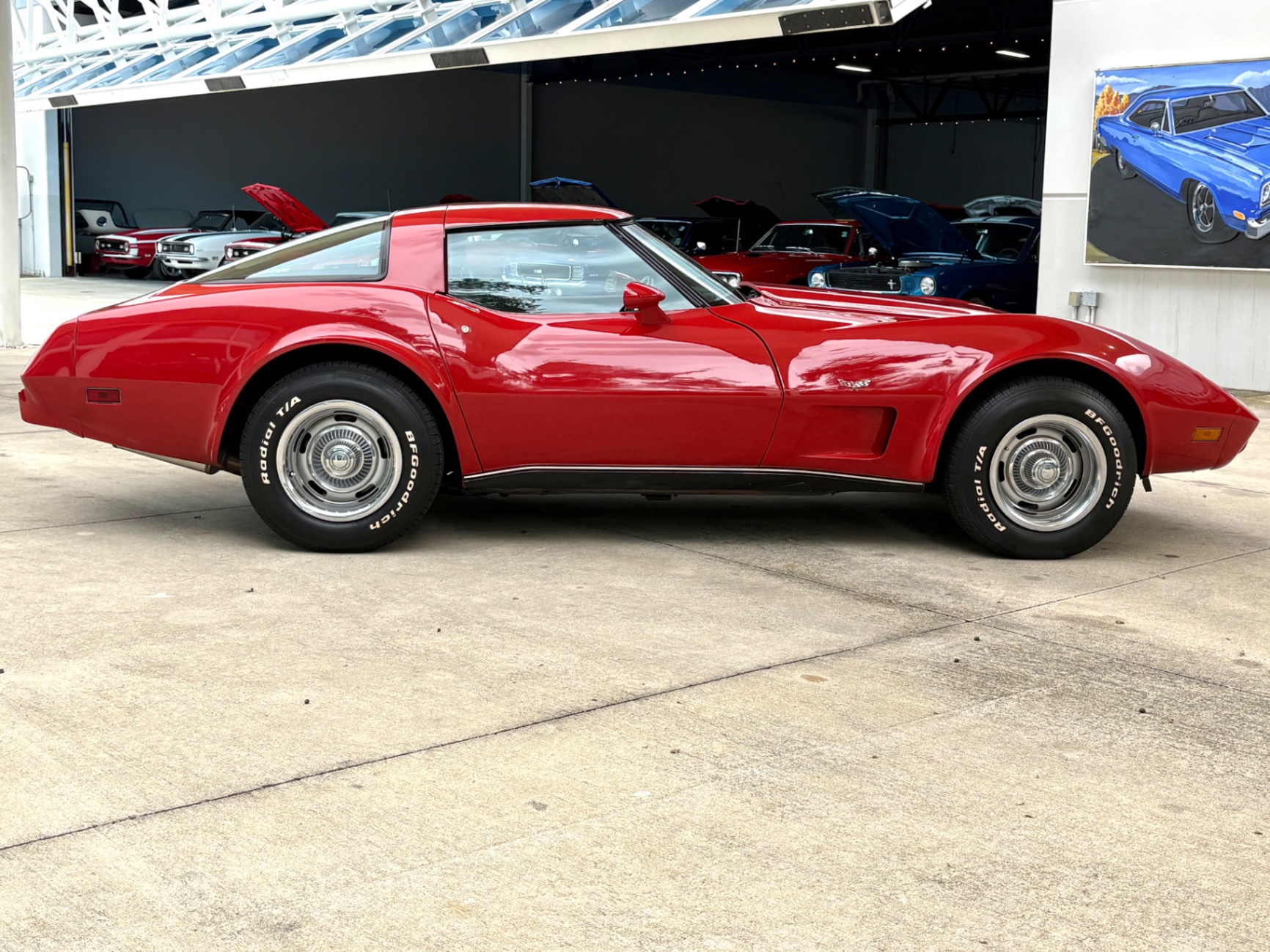
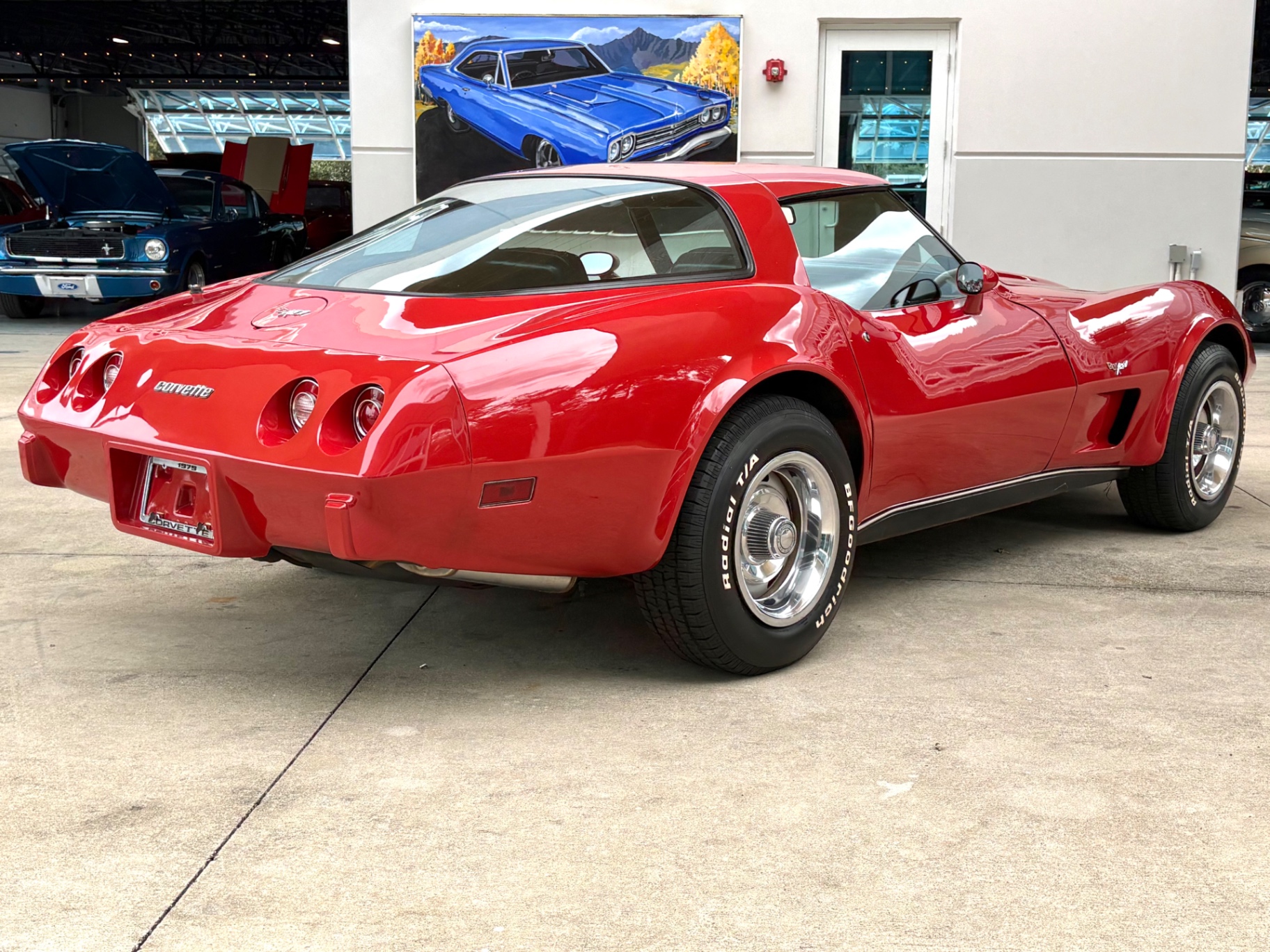
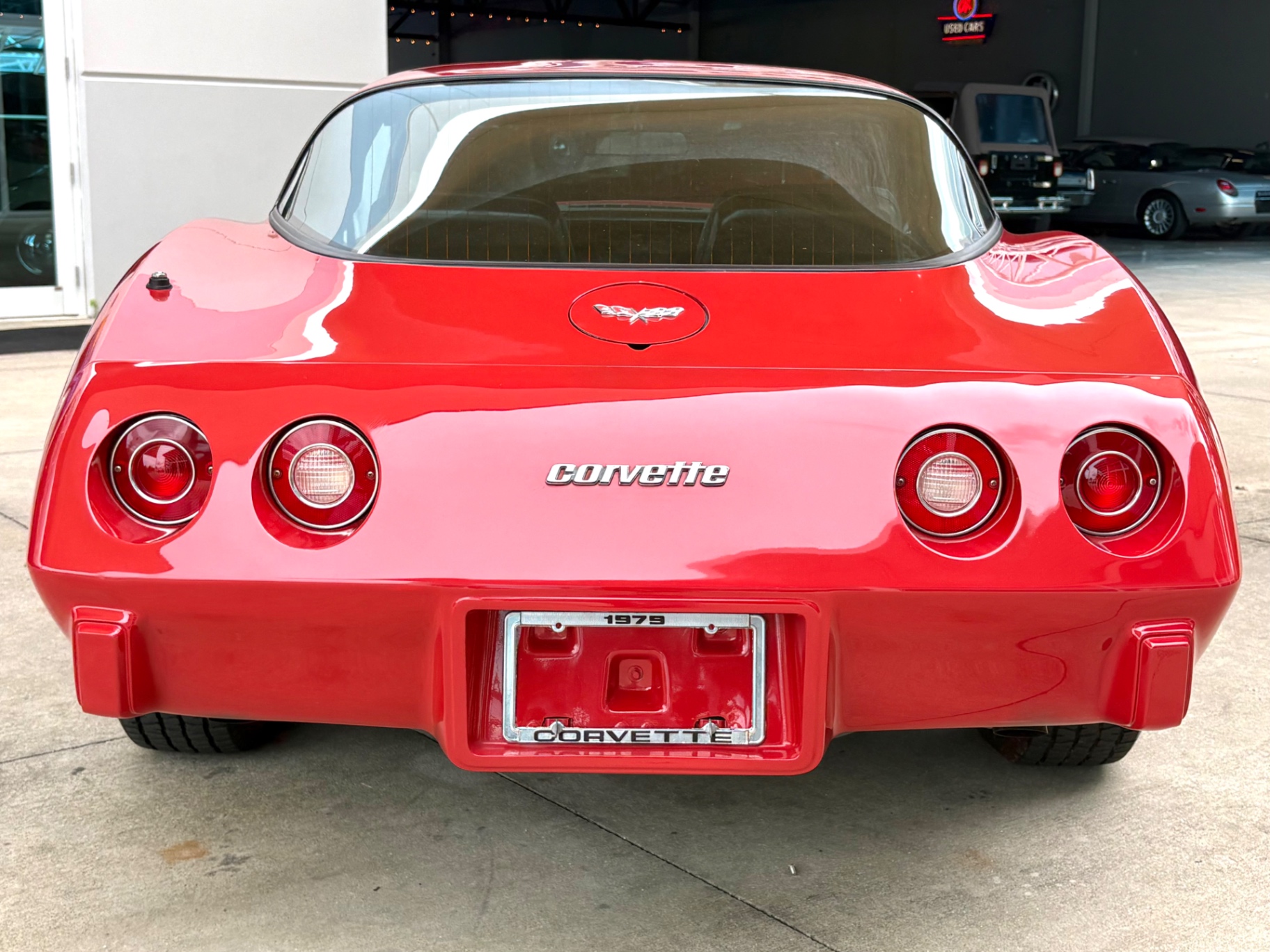
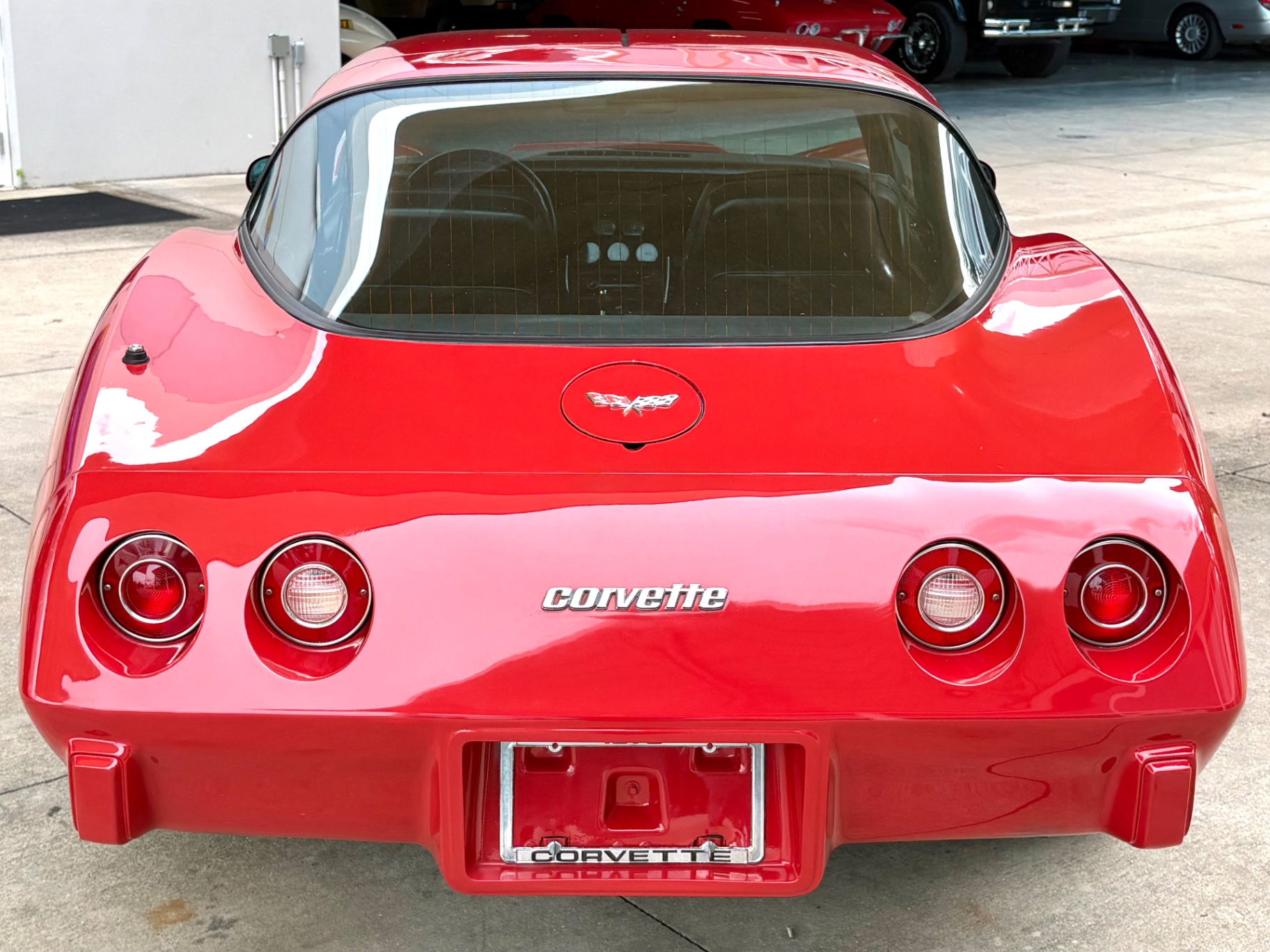
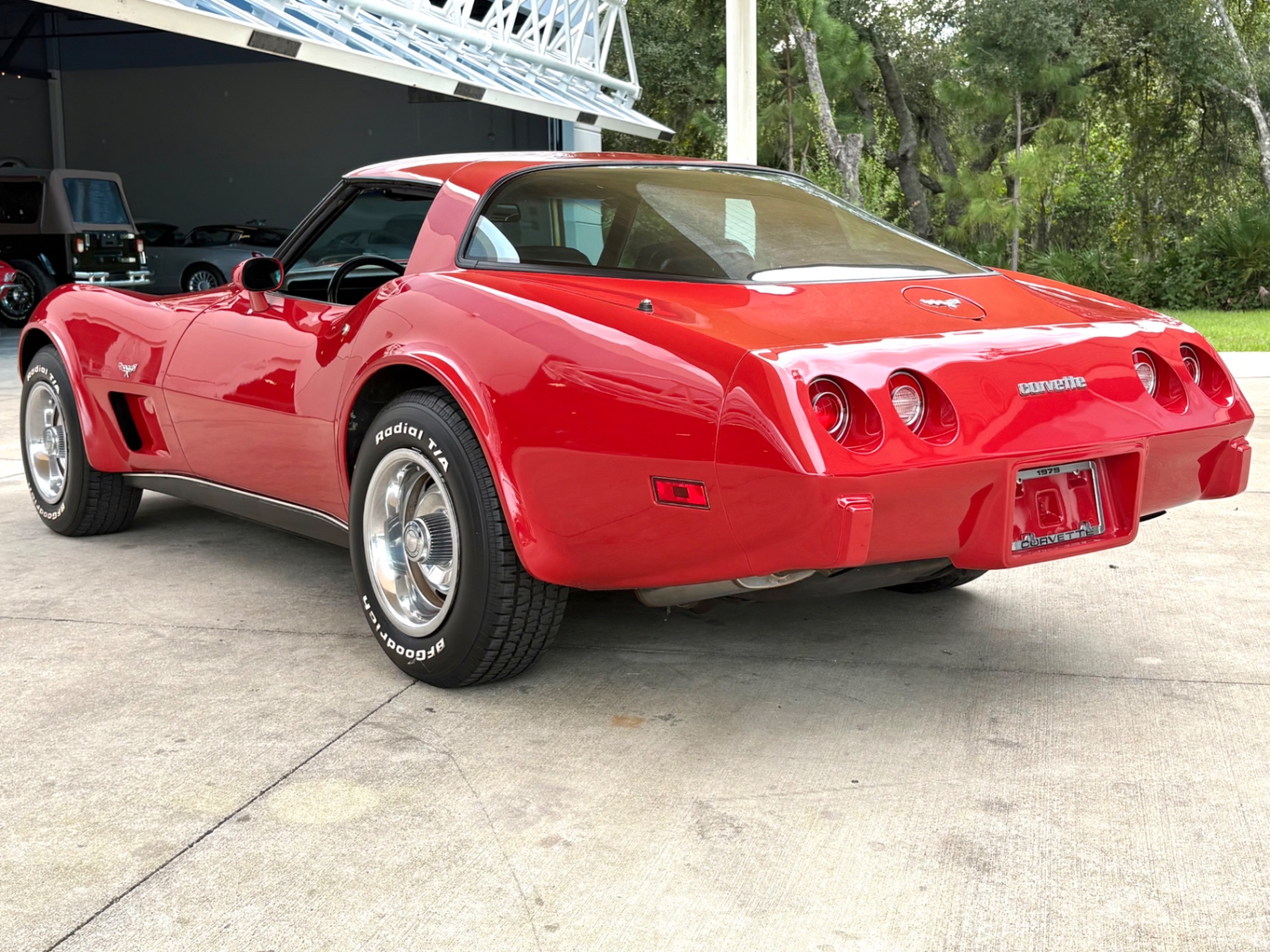
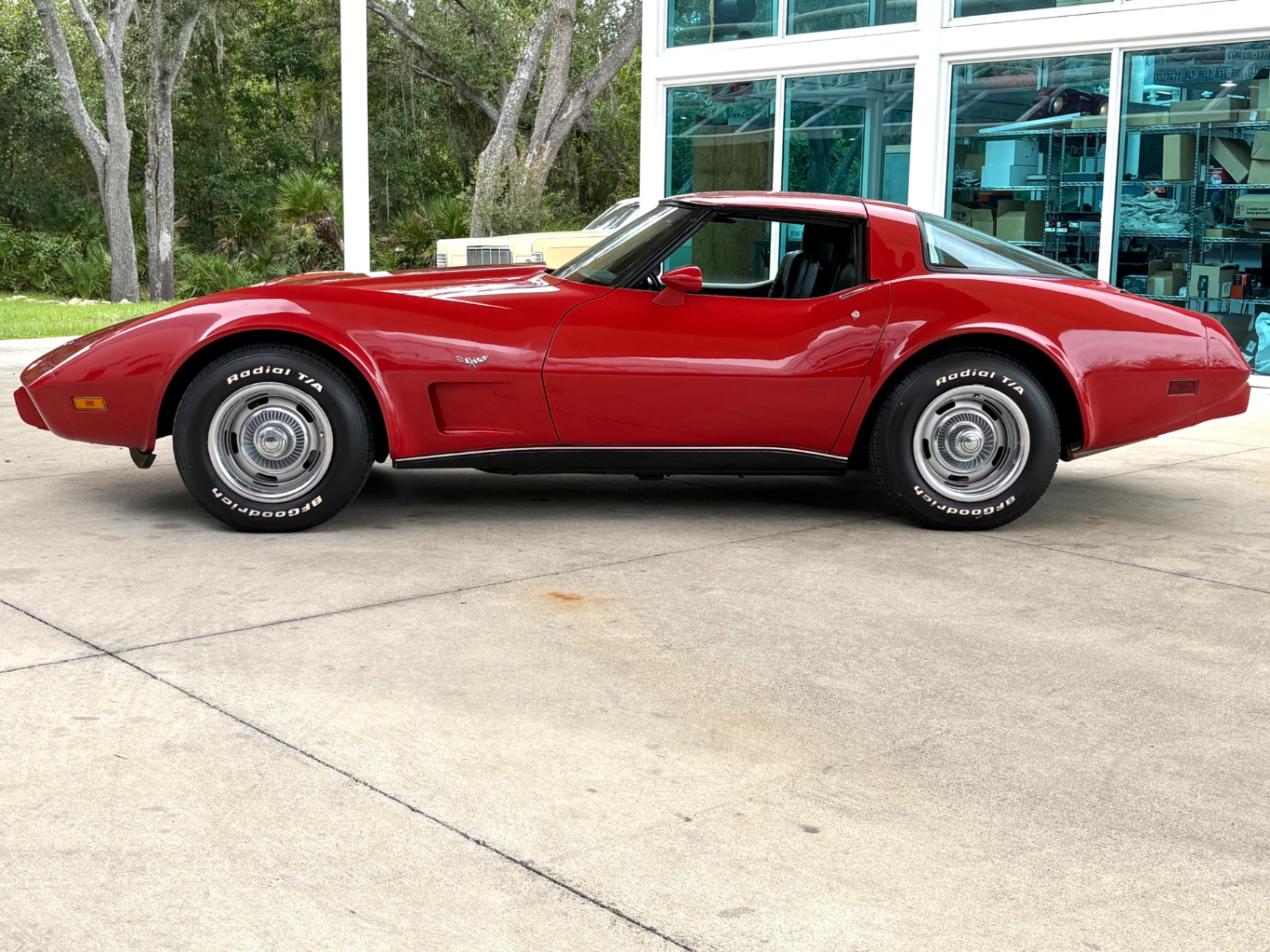
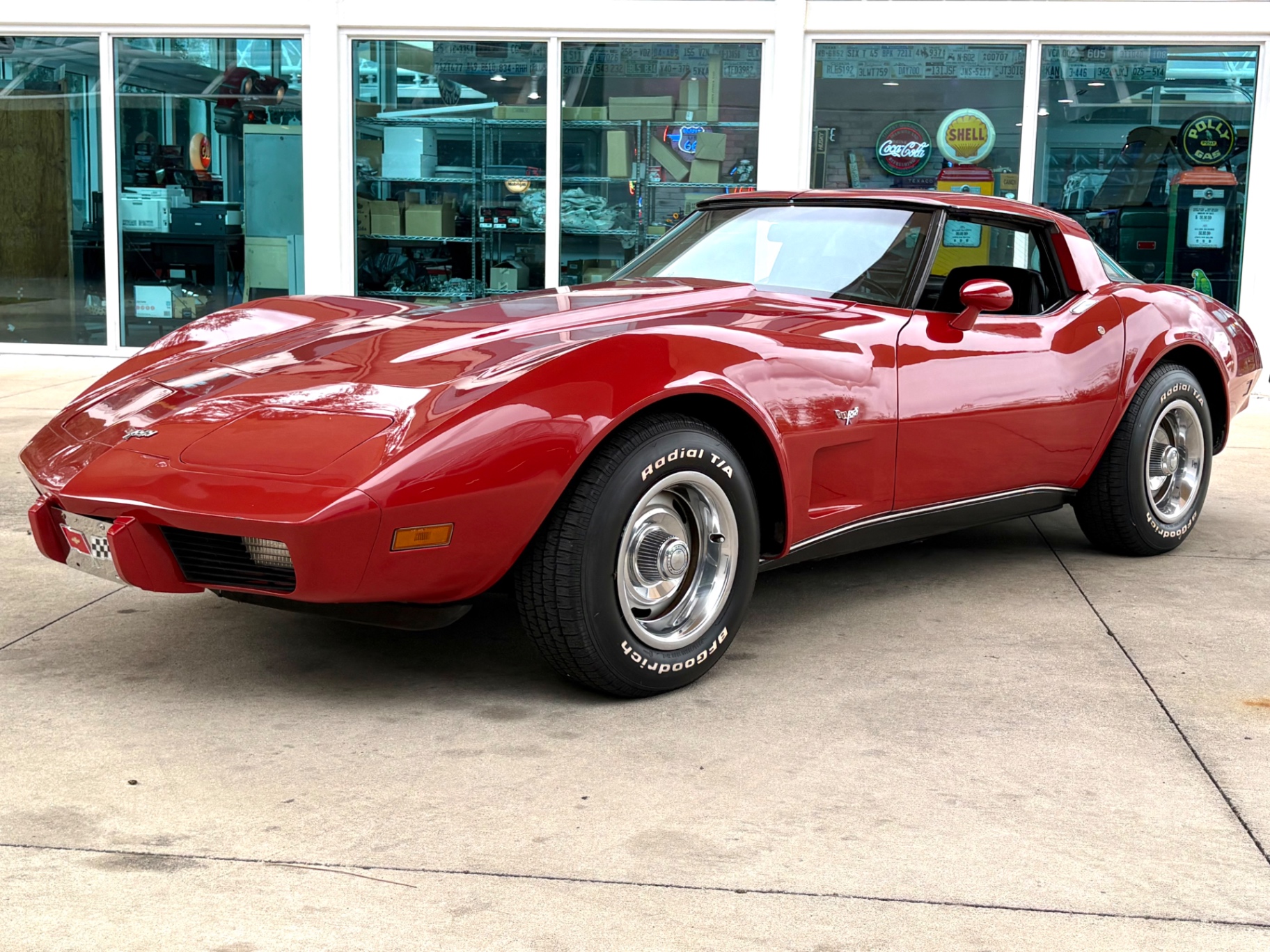
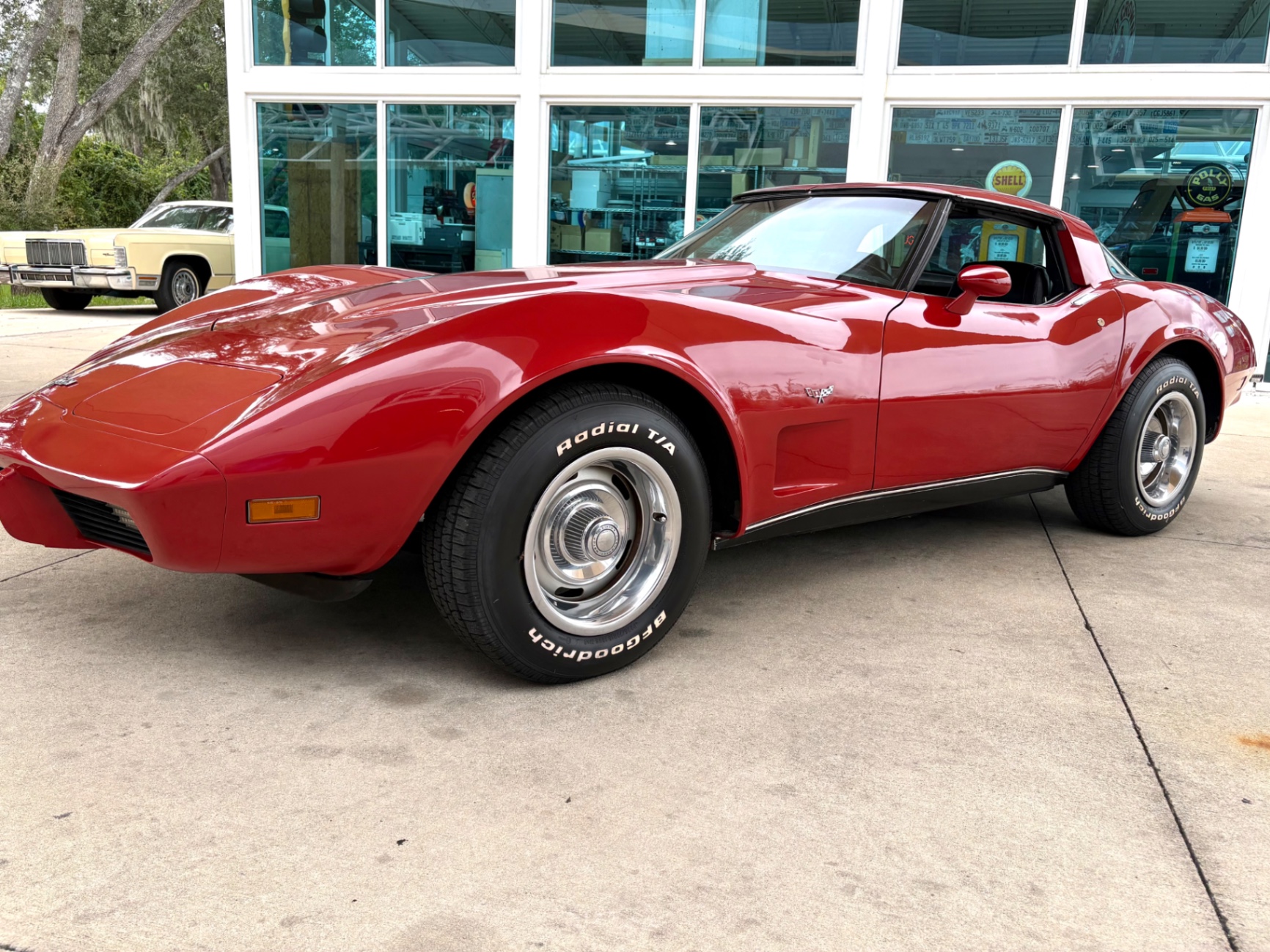
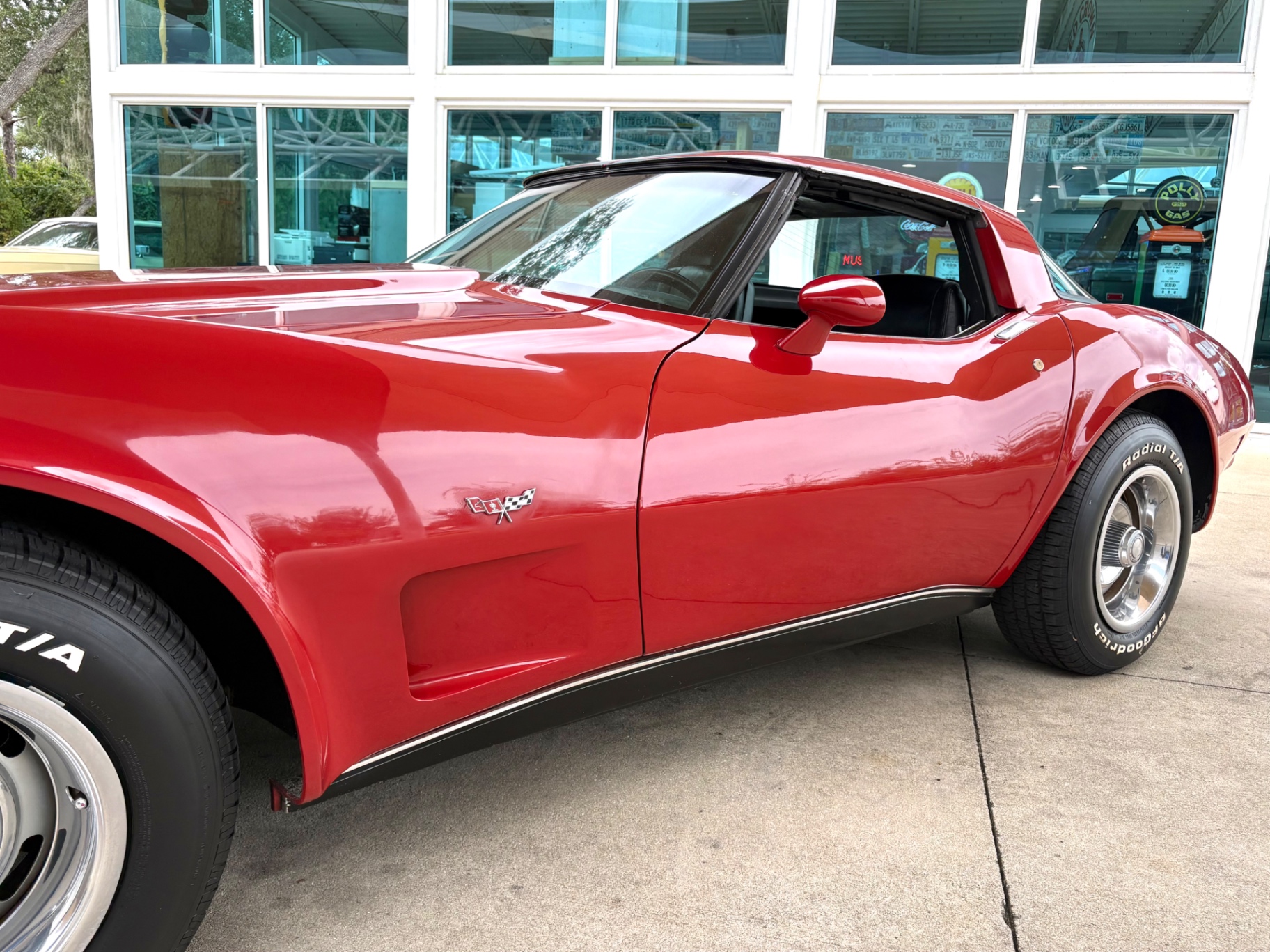
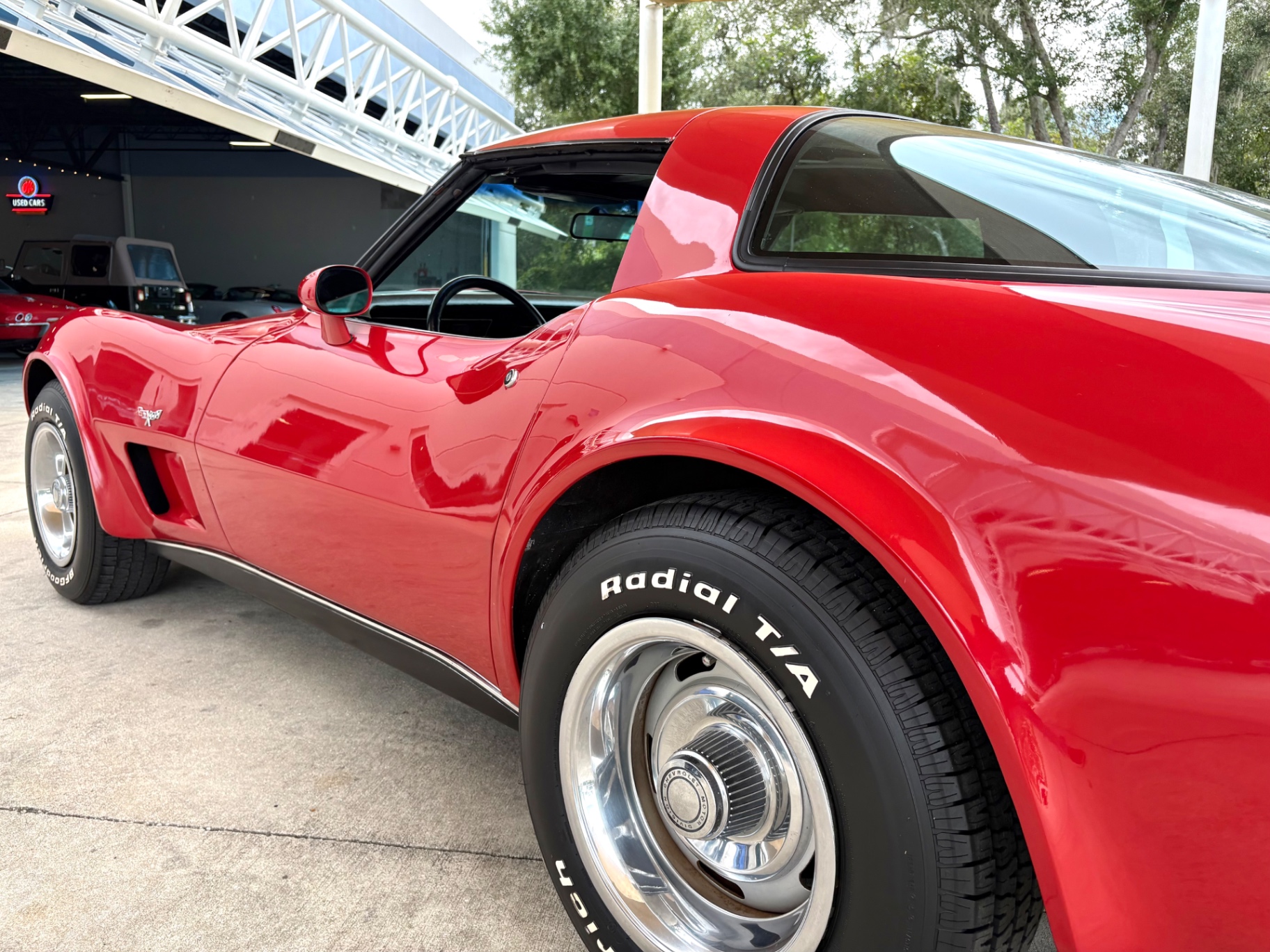
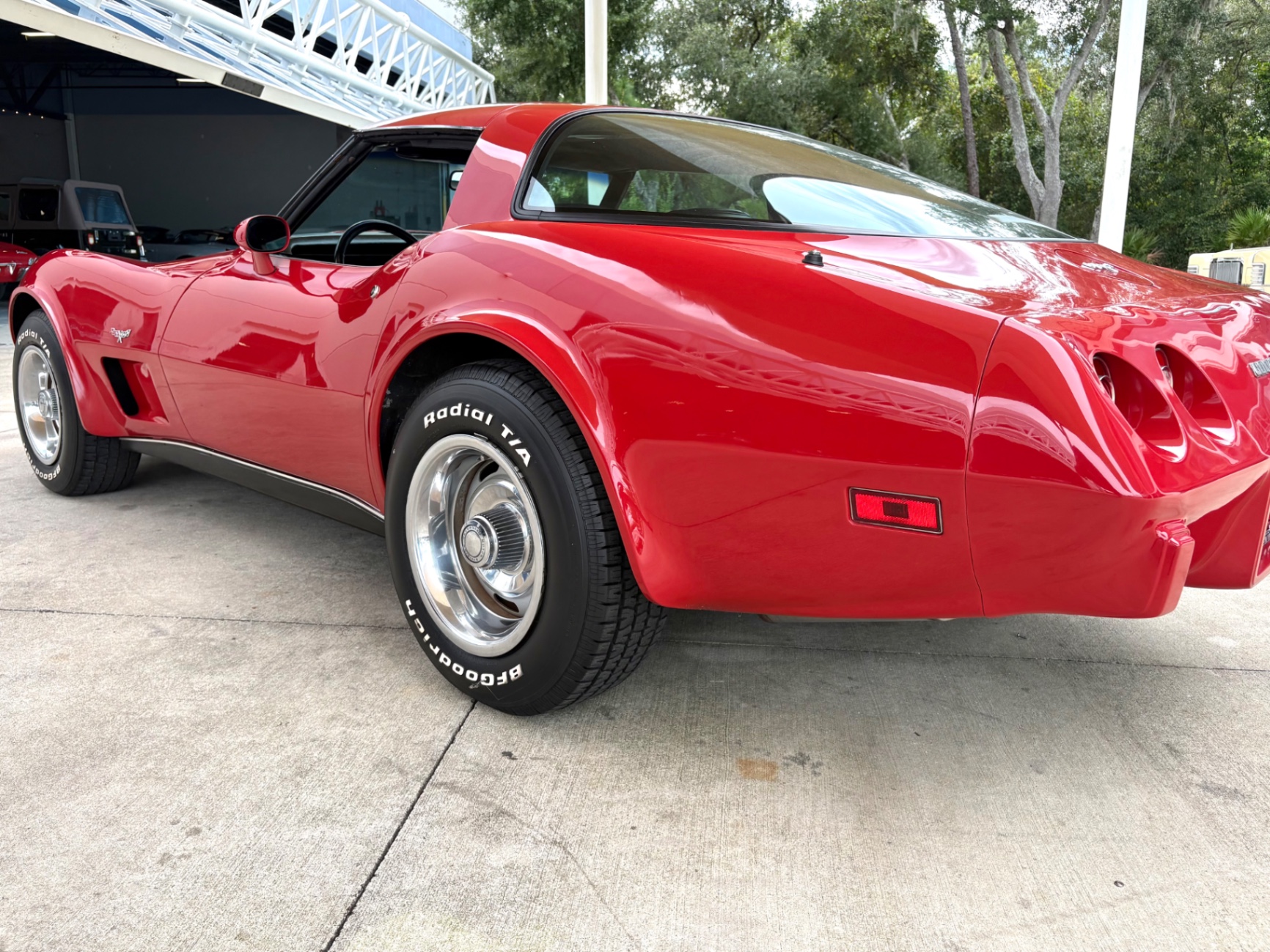
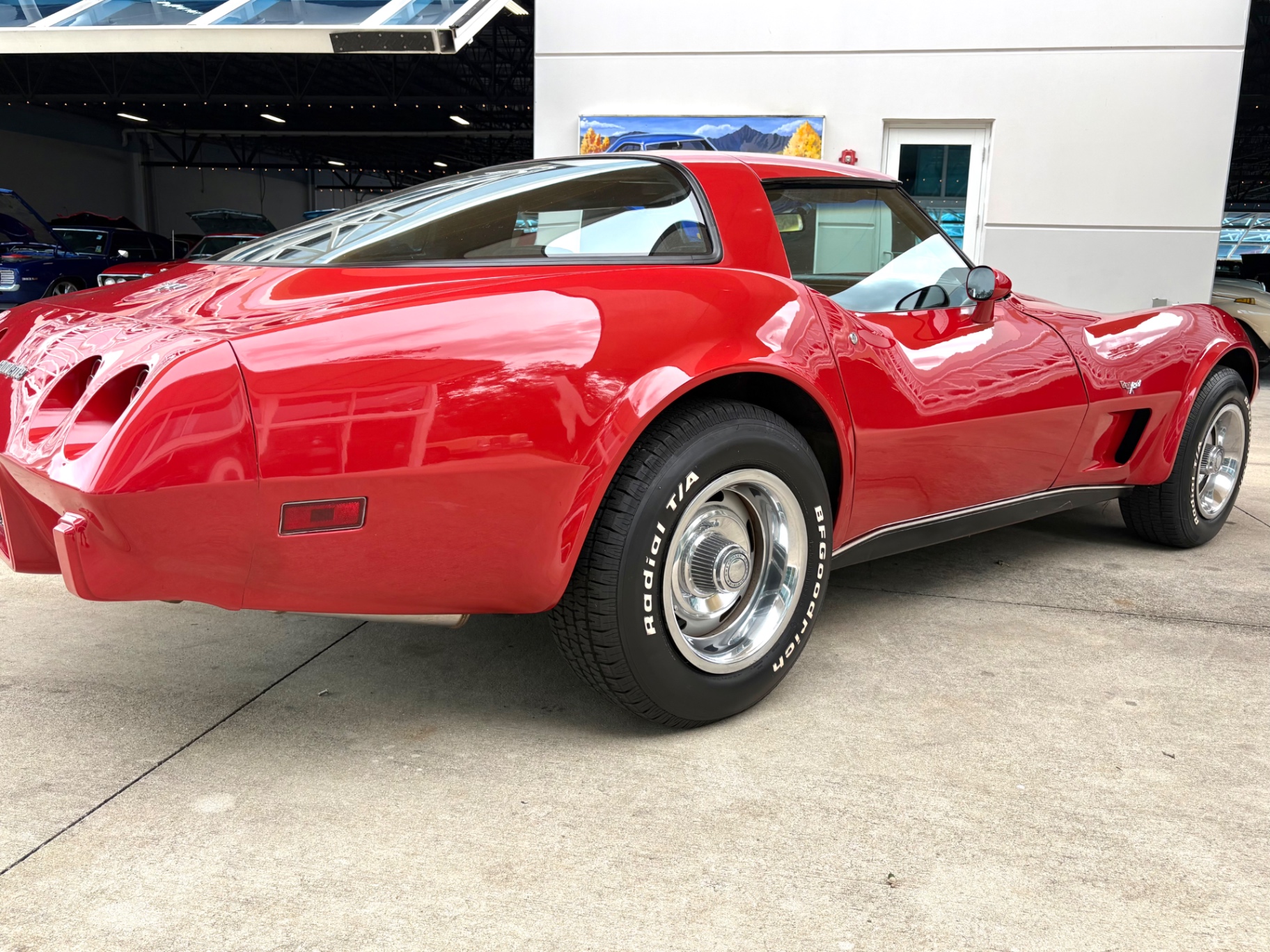
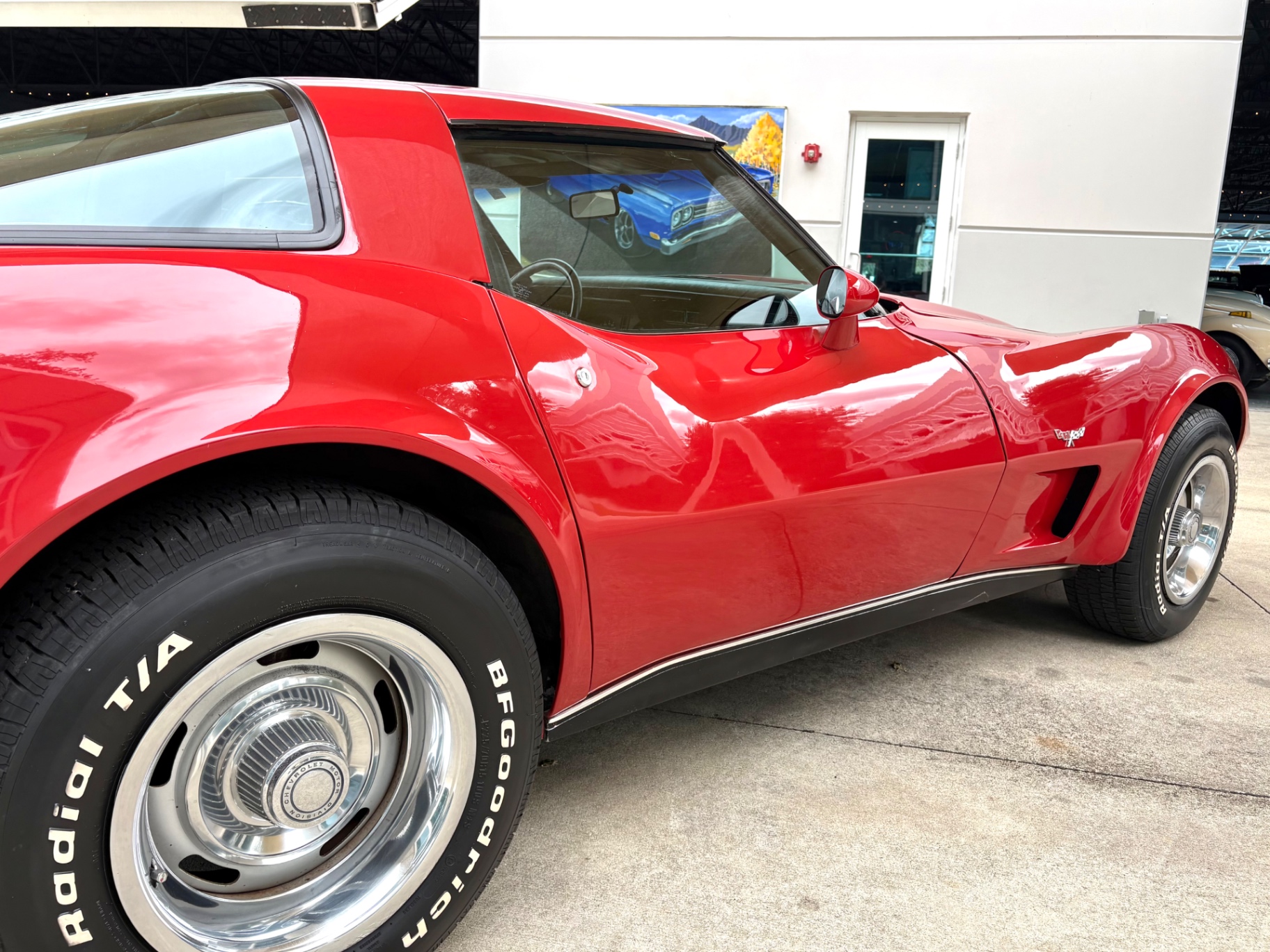
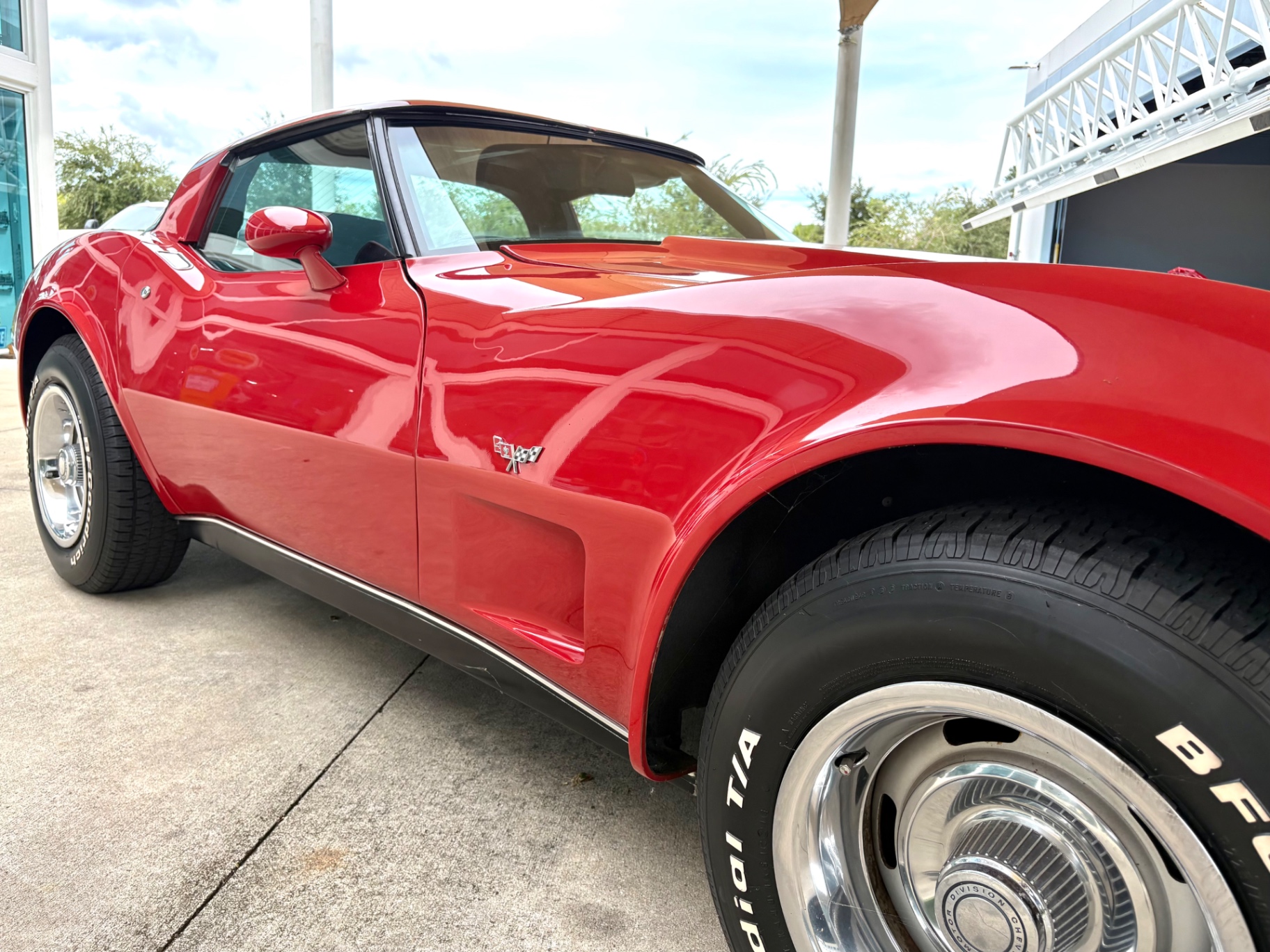
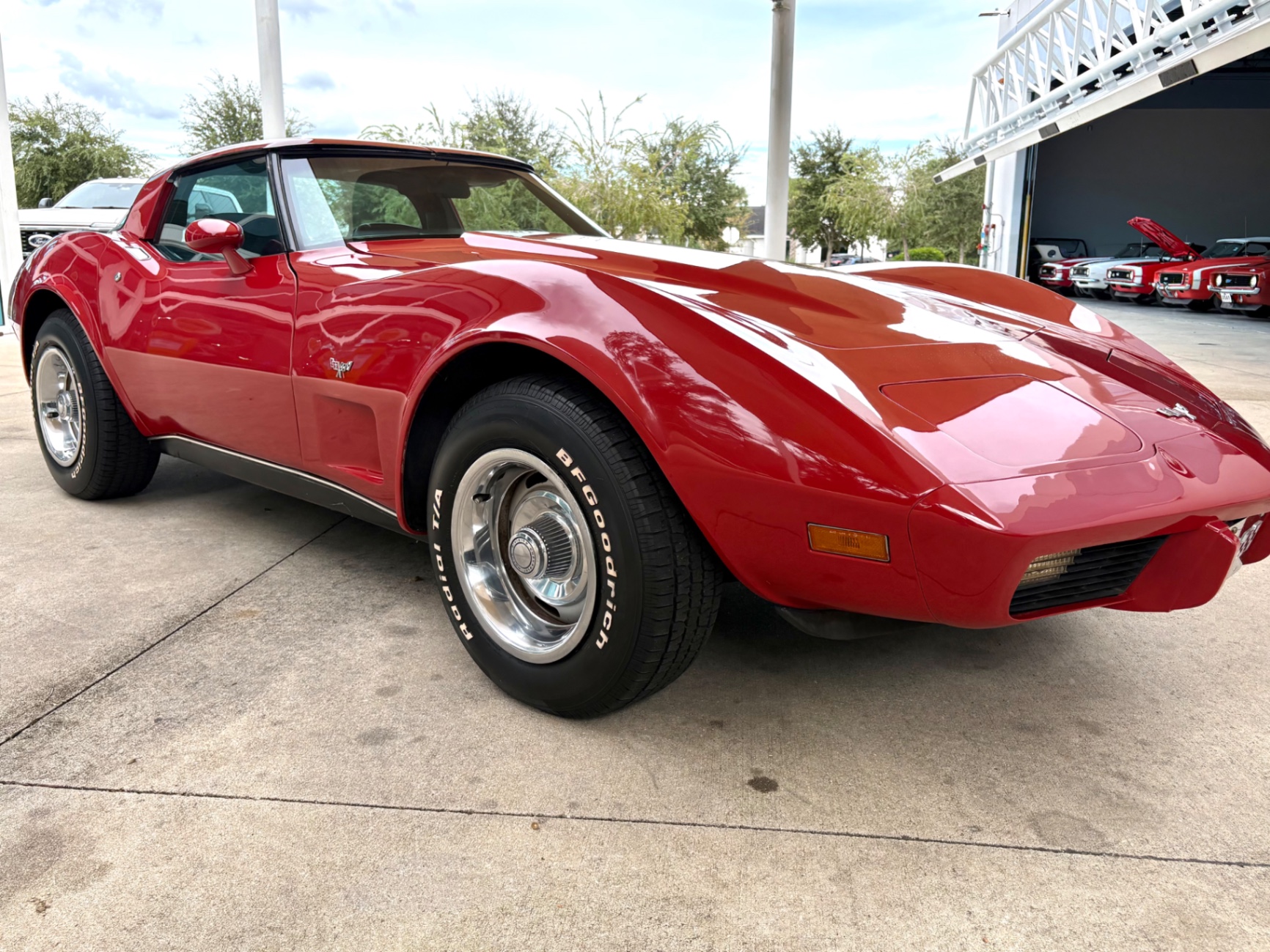
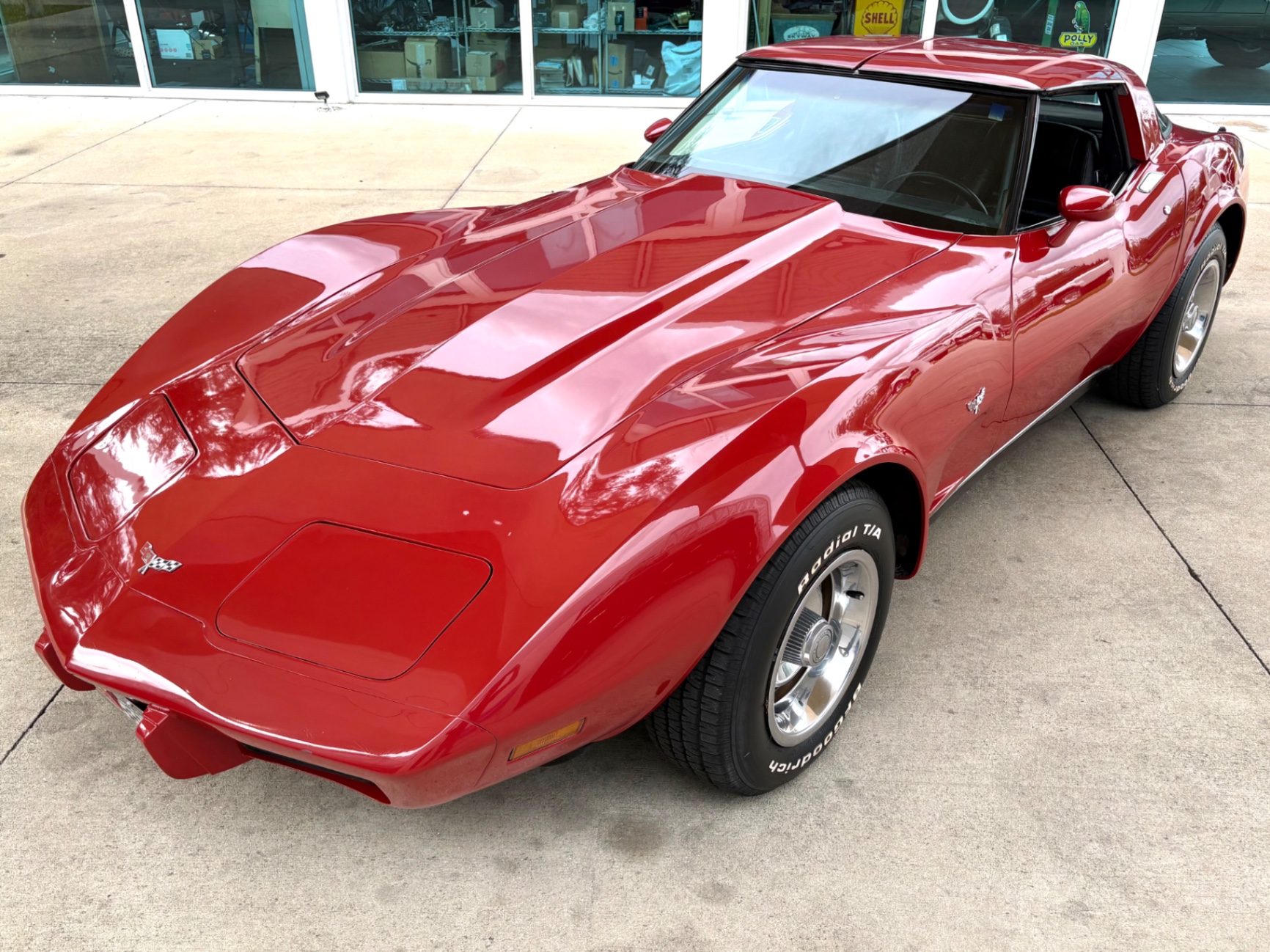
1979 Chevrolet Corvette — 350ci V8, 4-Speed Manual, T-Tops, Corvette Red
Why This Car Is Special
The 1979 Chevrolet Corvette holds a production record that still stands today. Chevrolet built 53,807 Corvettes that model year, making it the highest-volume production year in the nameplate's history up to that point. That number has never been surpassed. The C3 generation was in the final stretch of its 15-year run, and by 1979 Chevrolet had refined the formula considerably — the body was fully restyled from the 1978 redesign, the interior was improved with features borrowed from the pace car edition the year prior, and the standard equipment list grew longer than it had ever been. This was the Corvette at its most accessible, yet it still carried the bones of a genuine American sports car: a fiberglass body, independent suspension at all four corners, and a small-block V8 backed by a 4-speed manual gearbox.
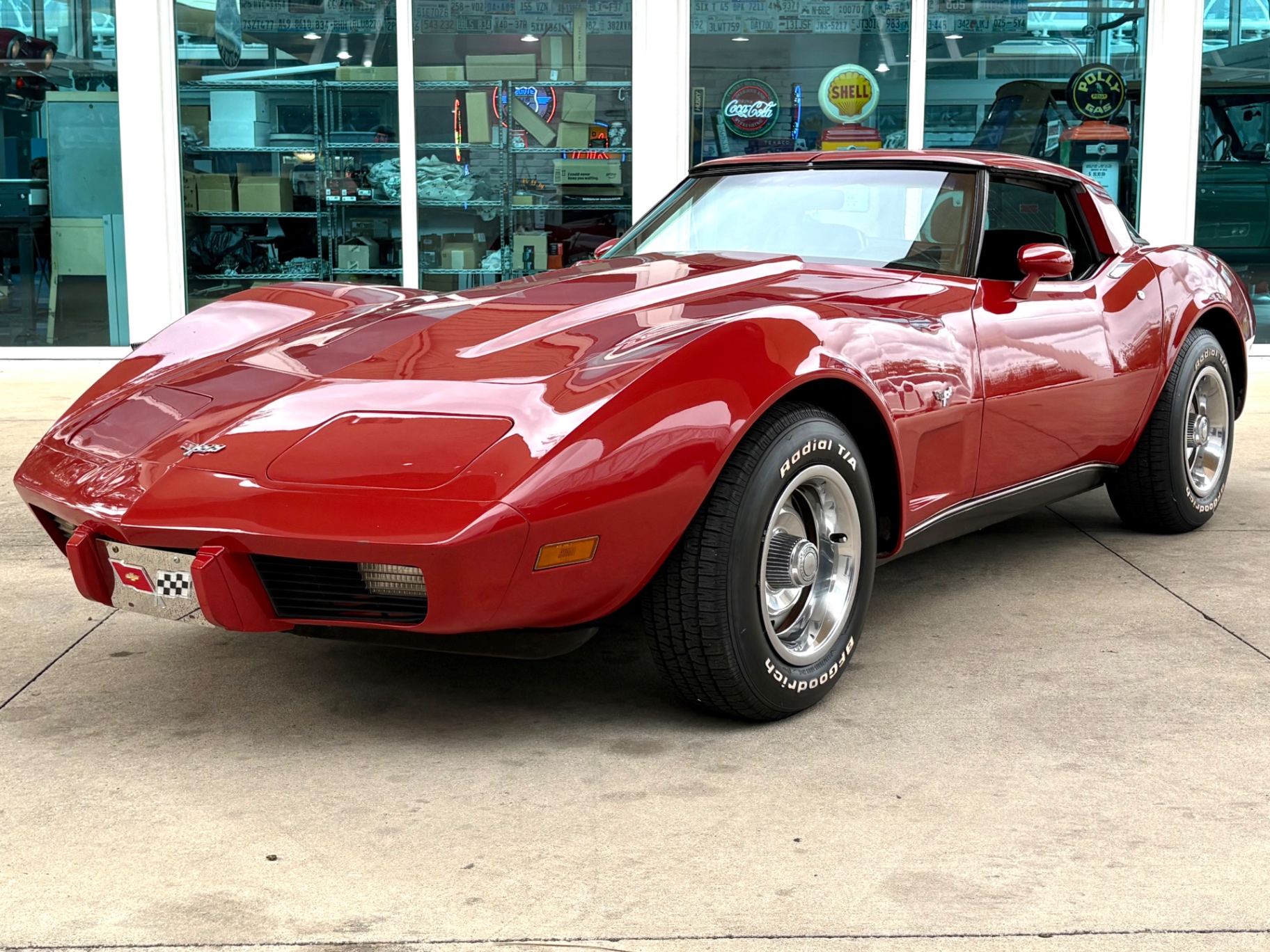
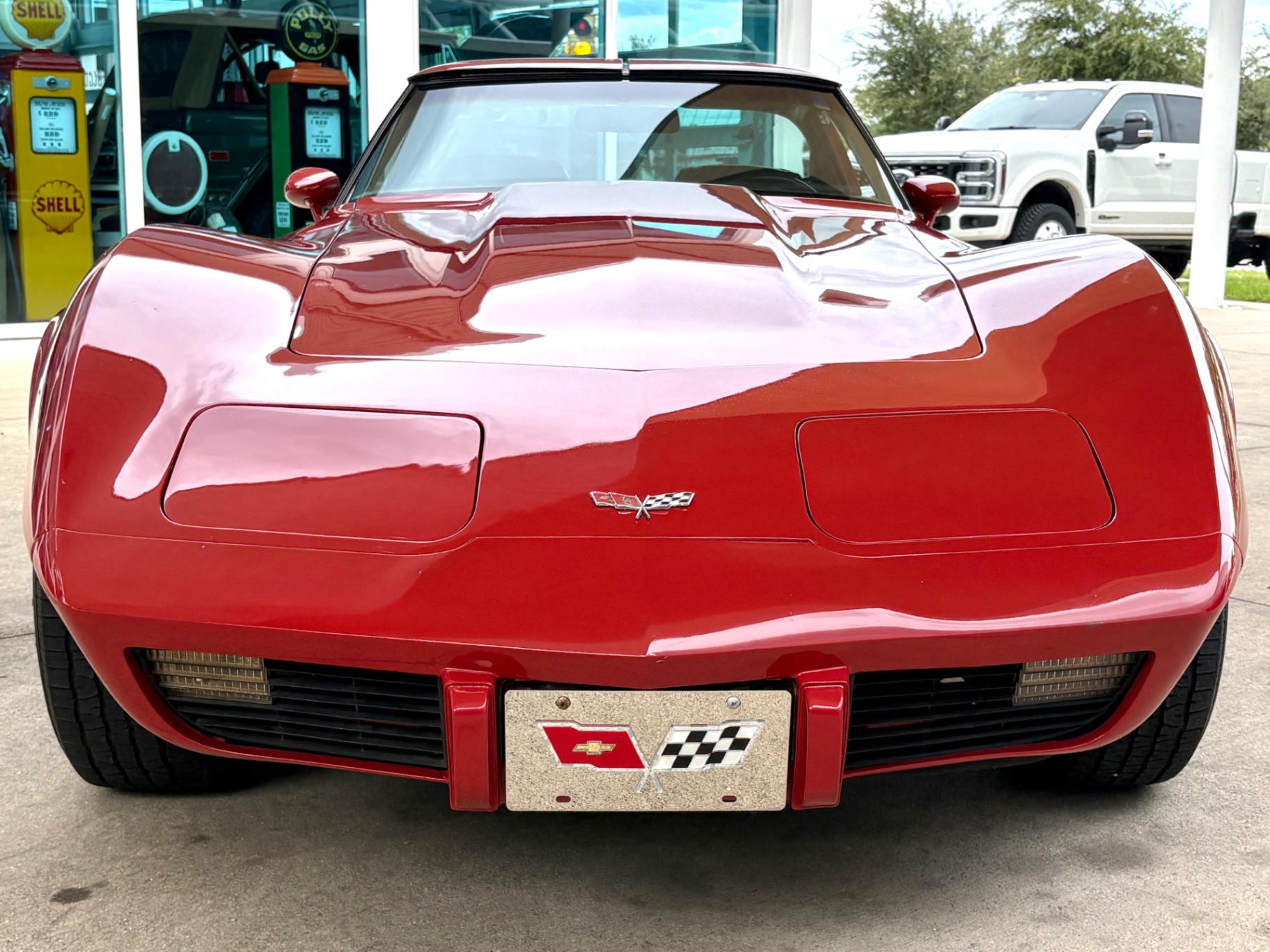
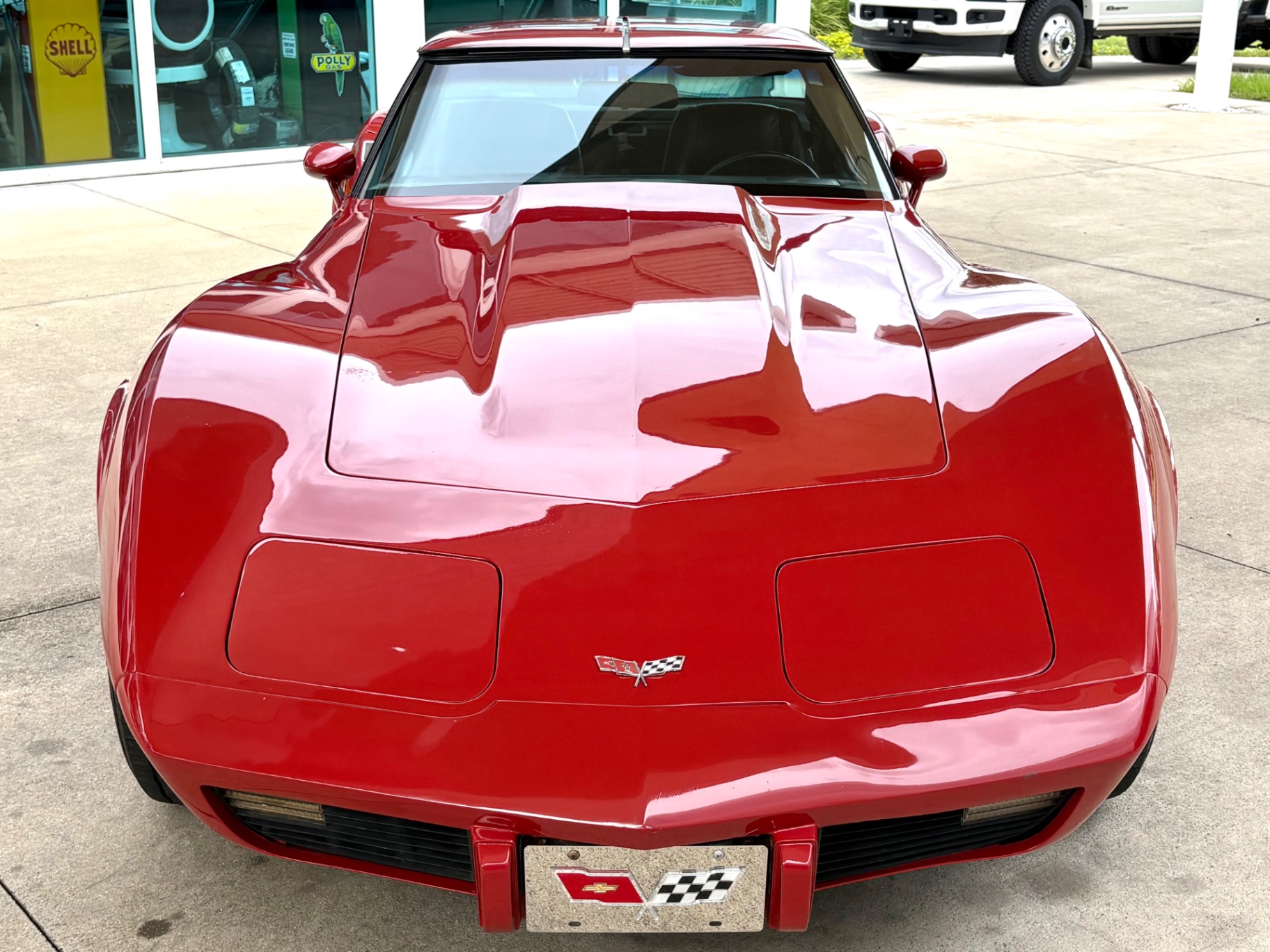
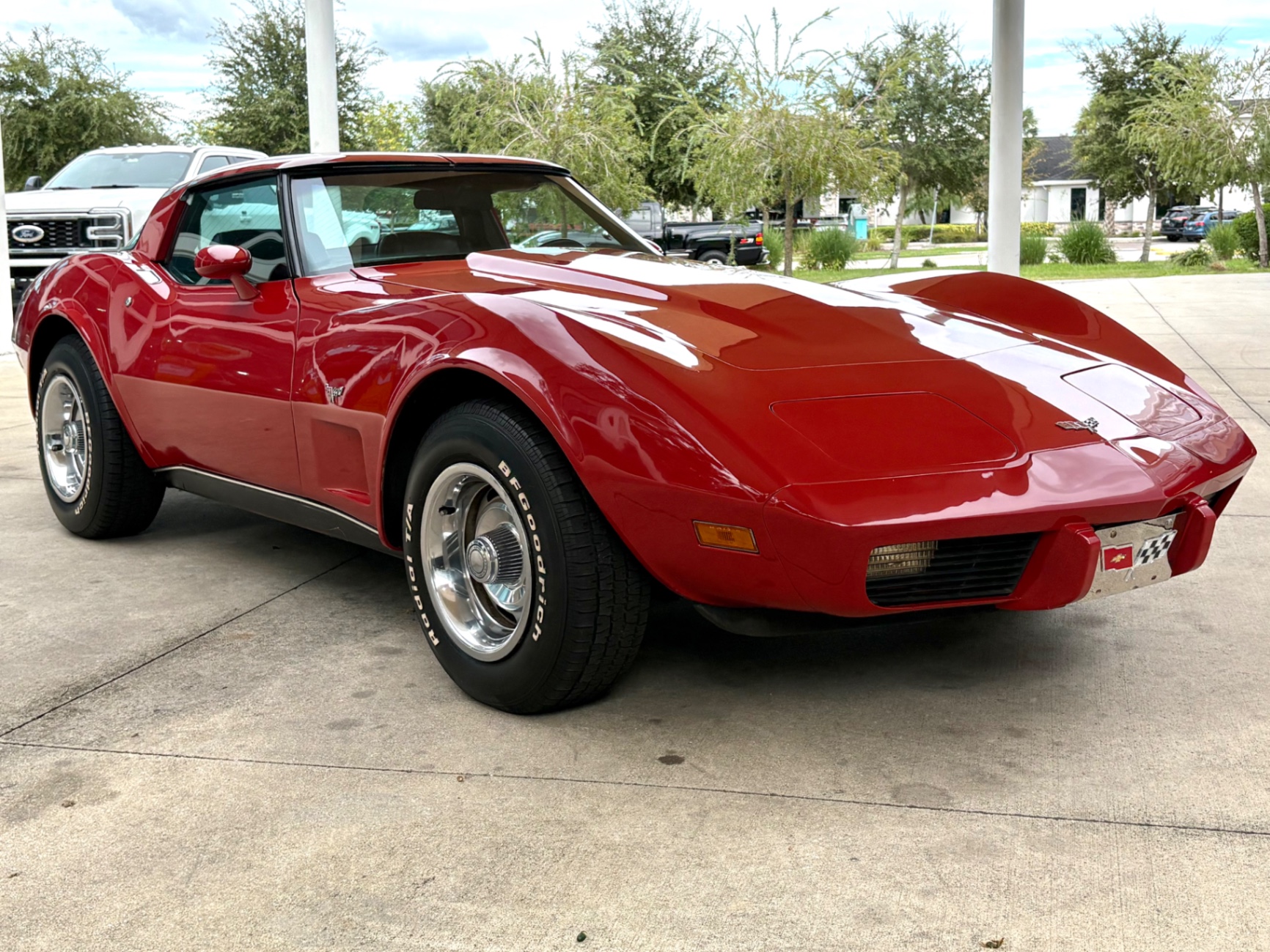
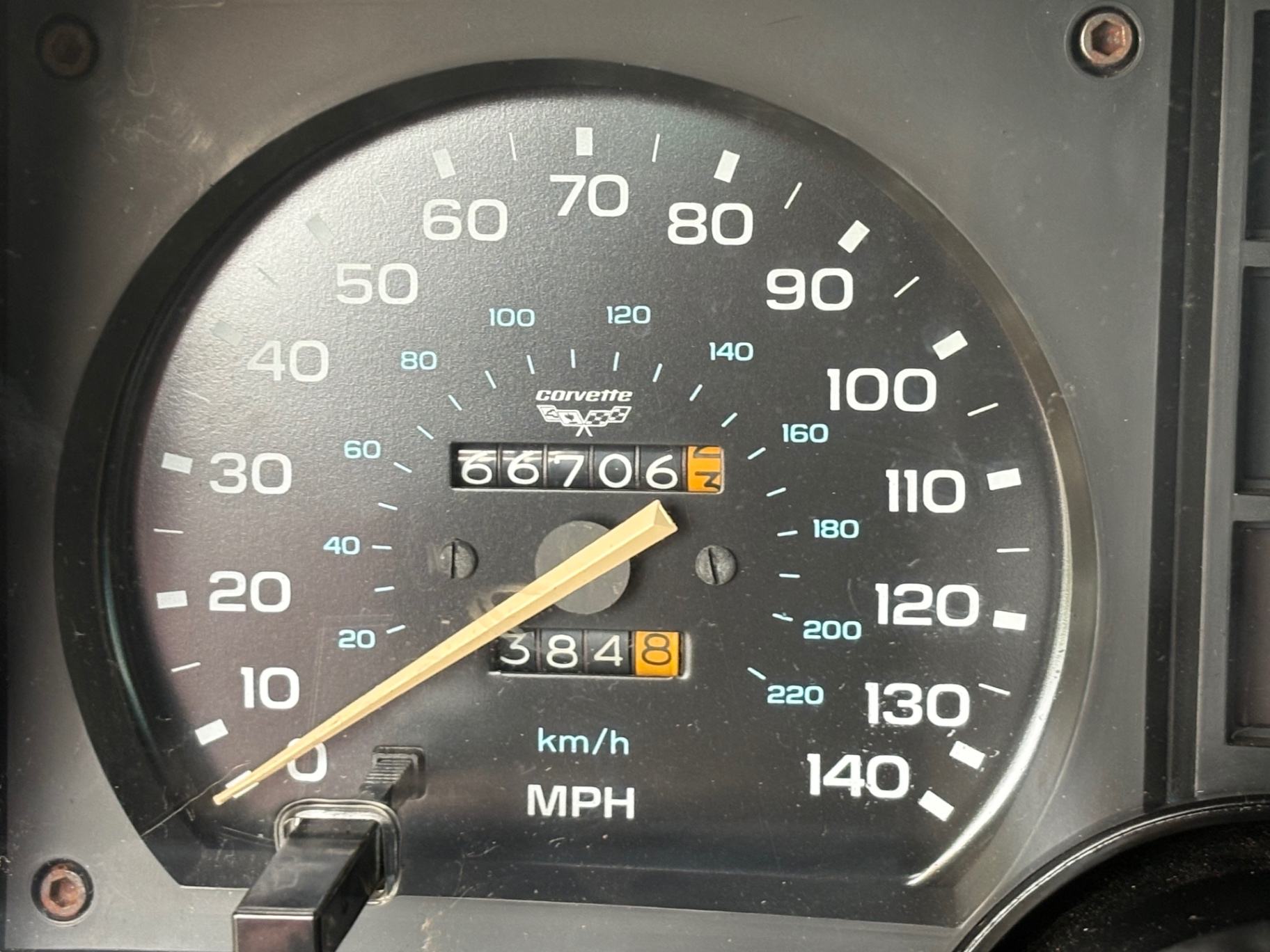
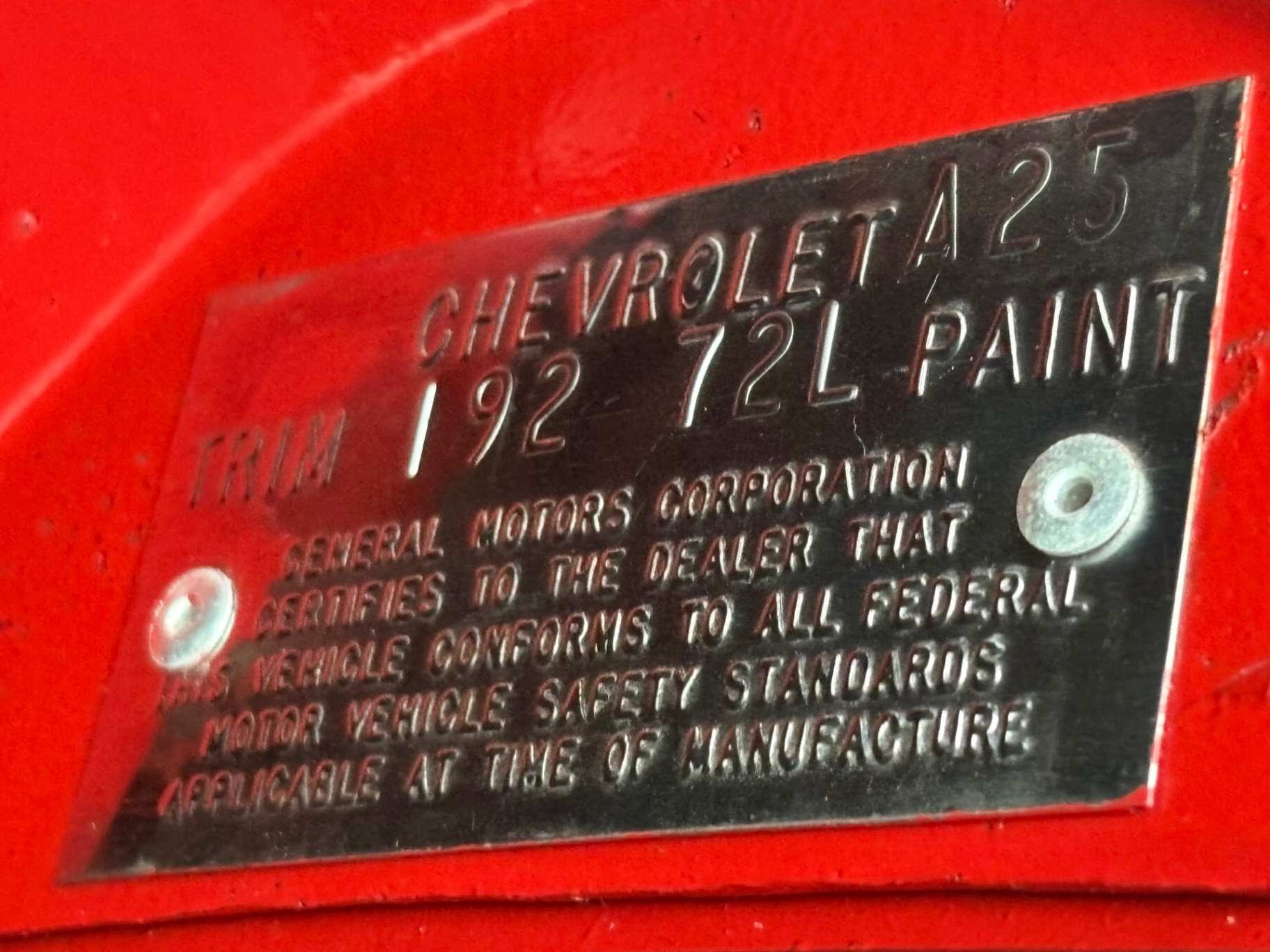
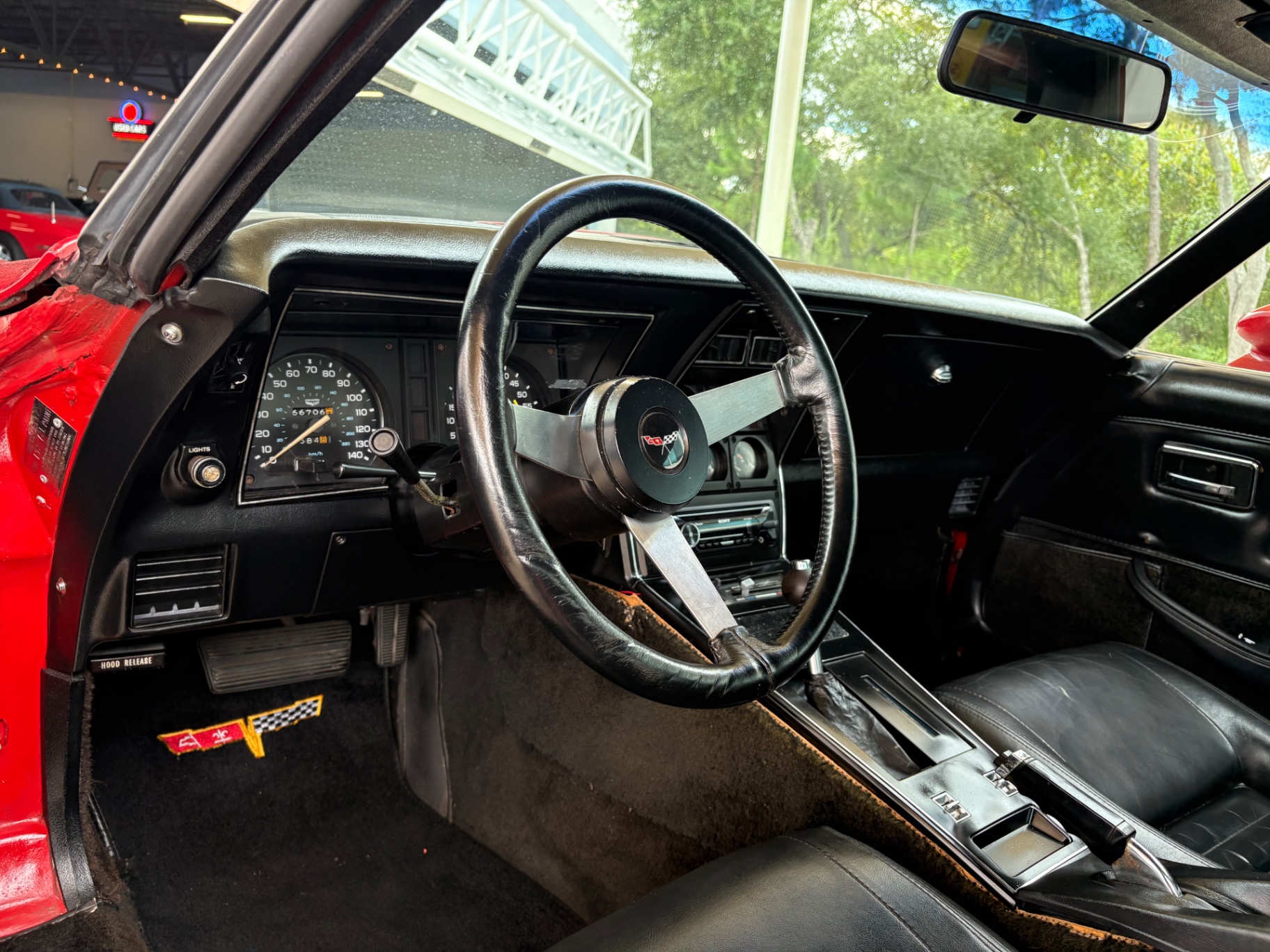
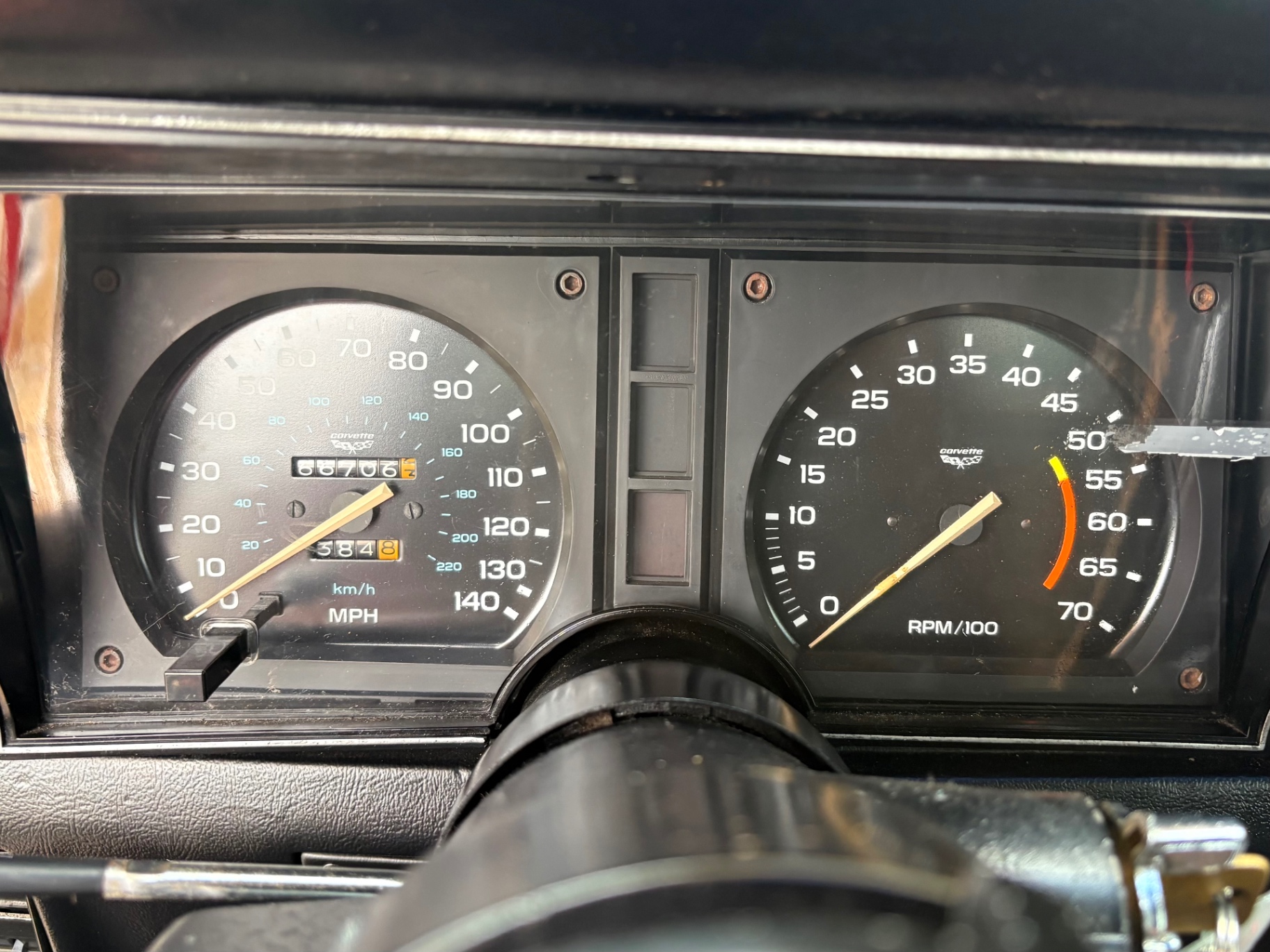
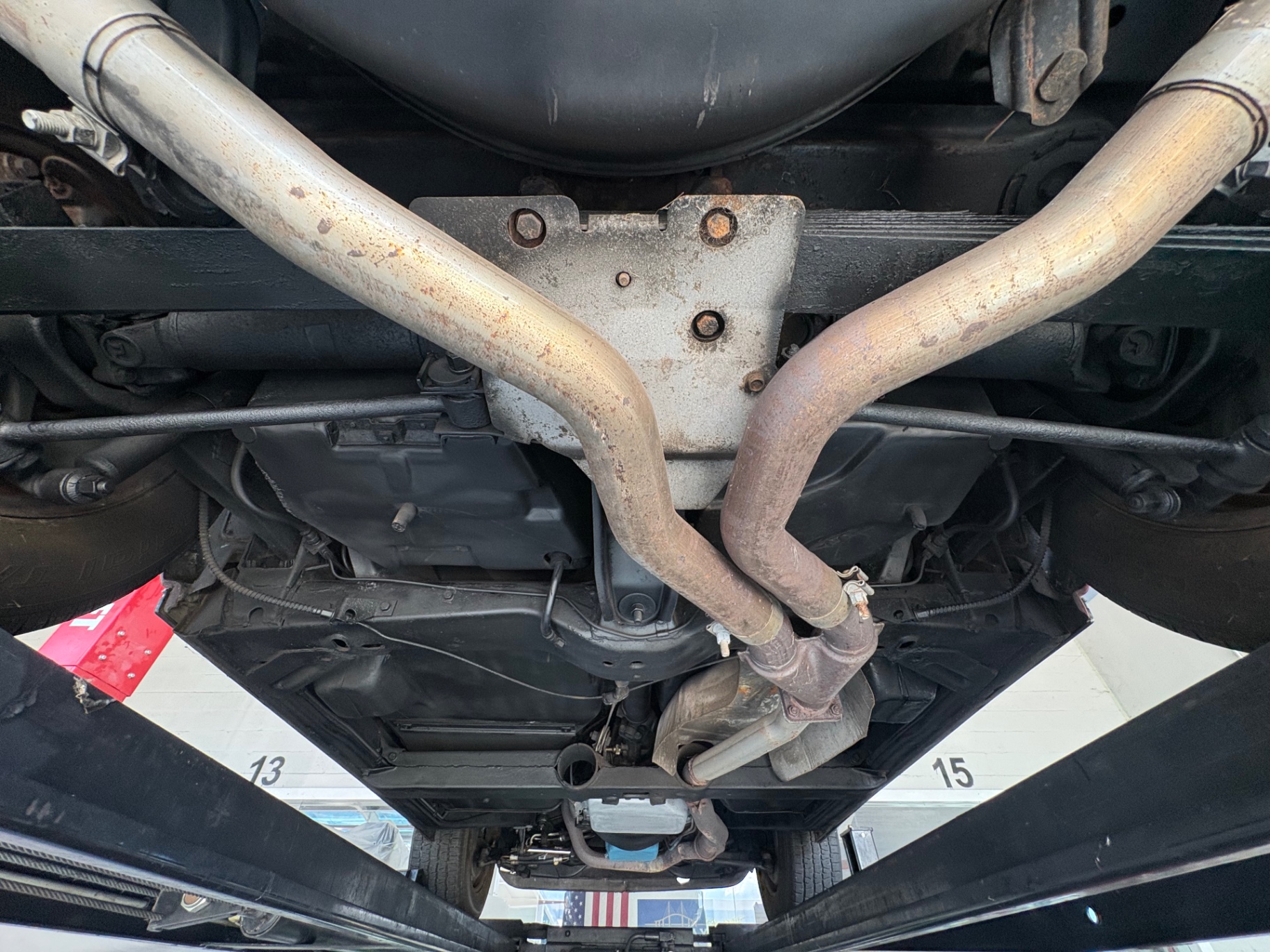
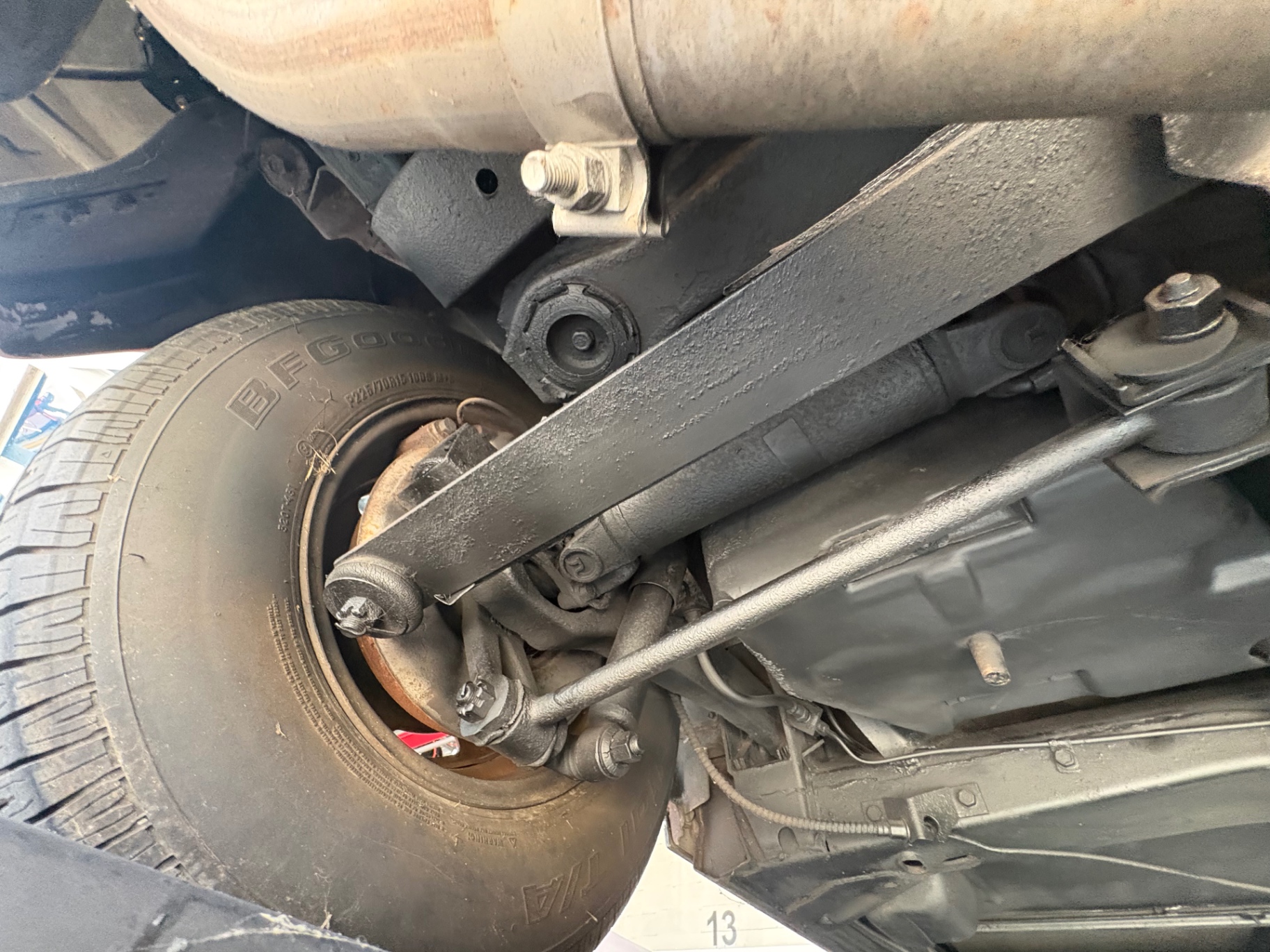
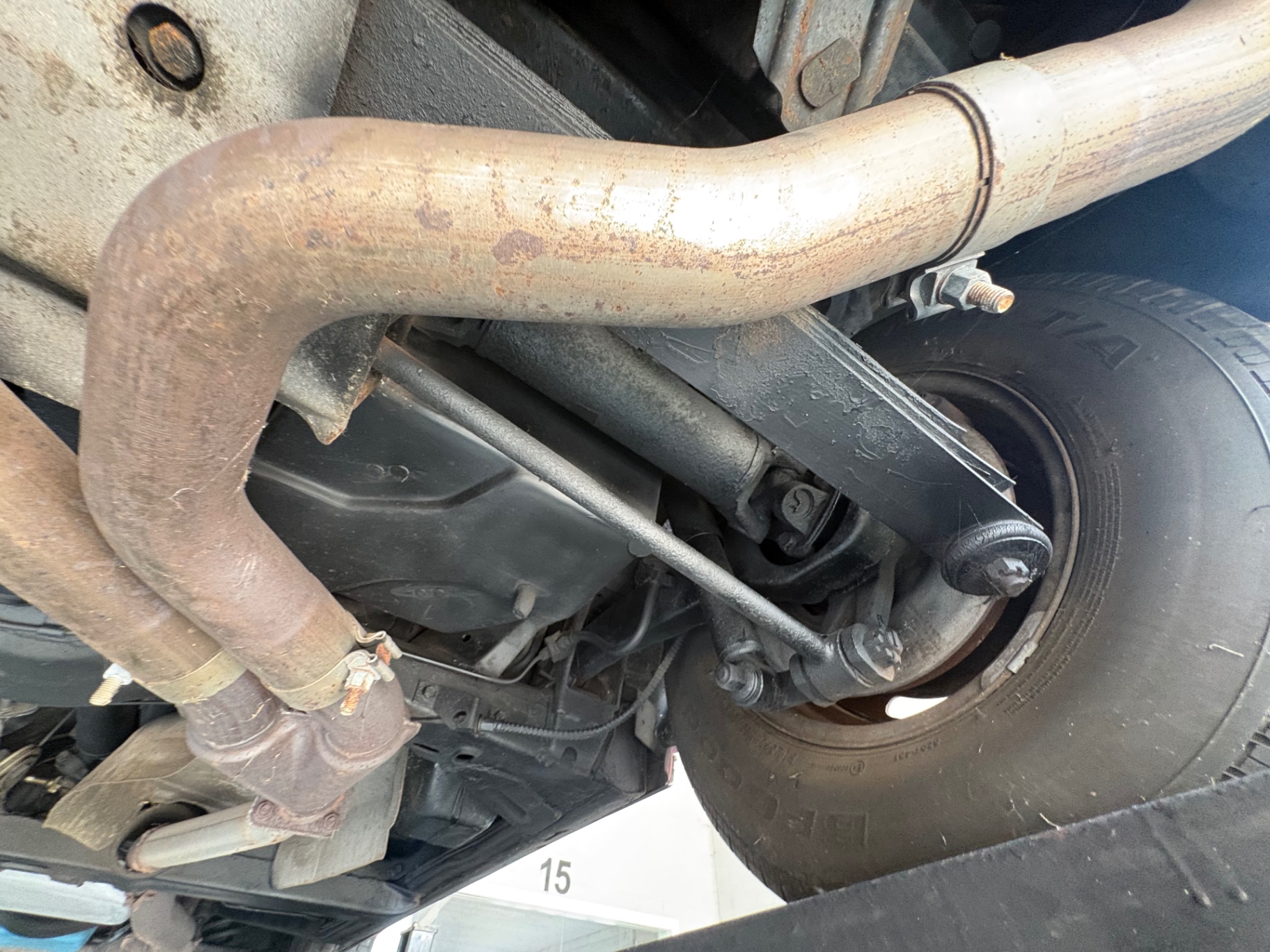
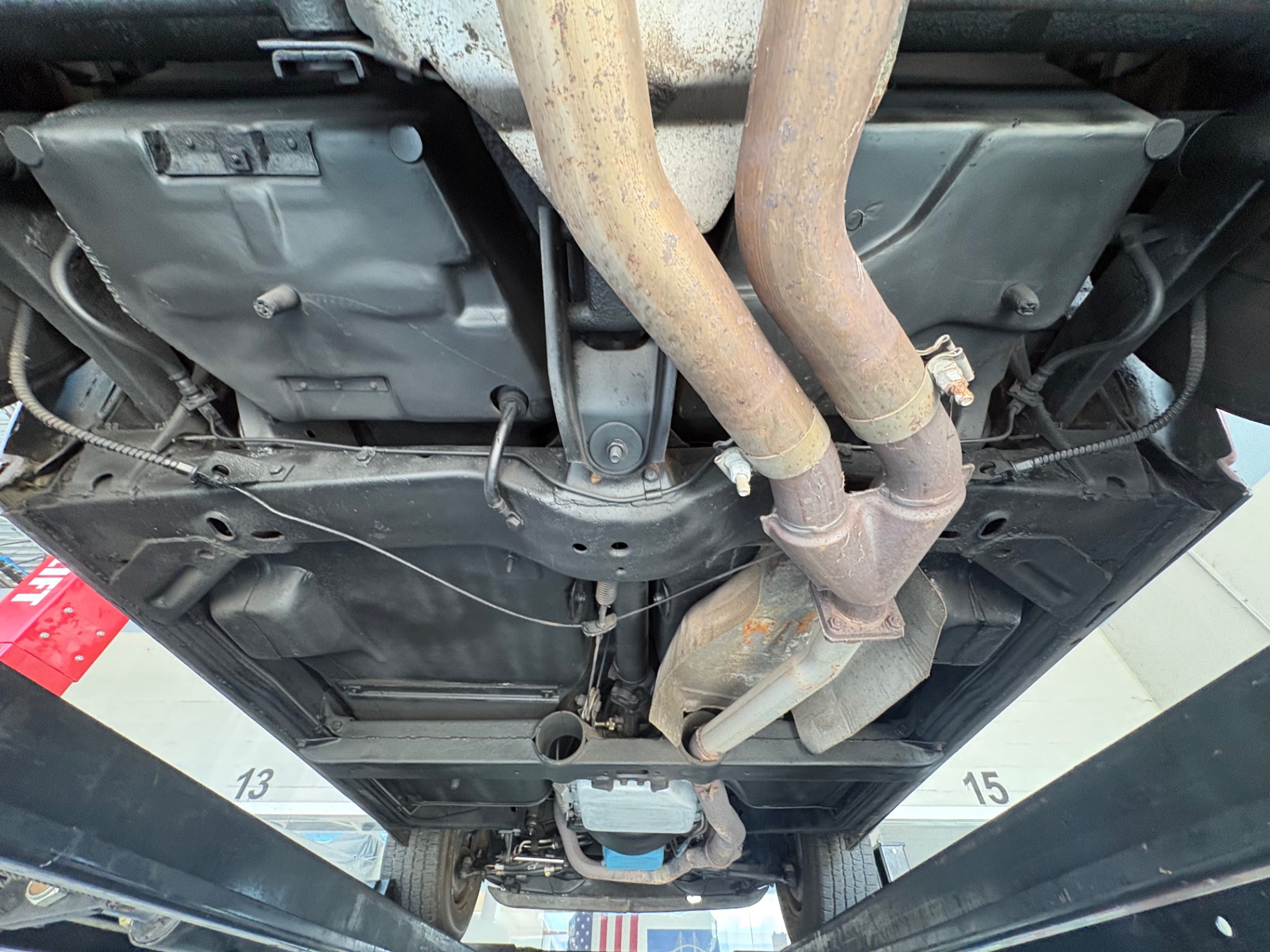
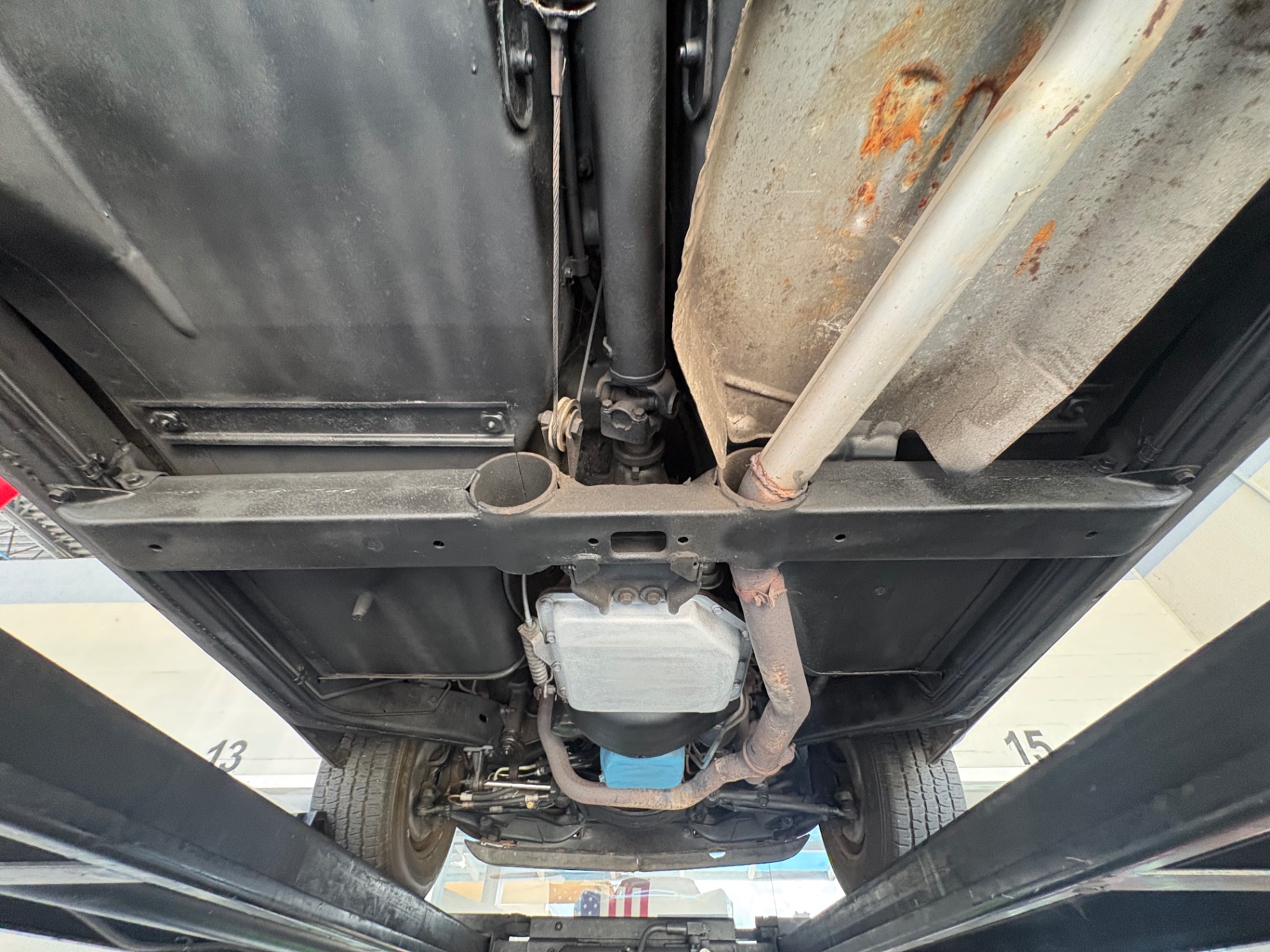
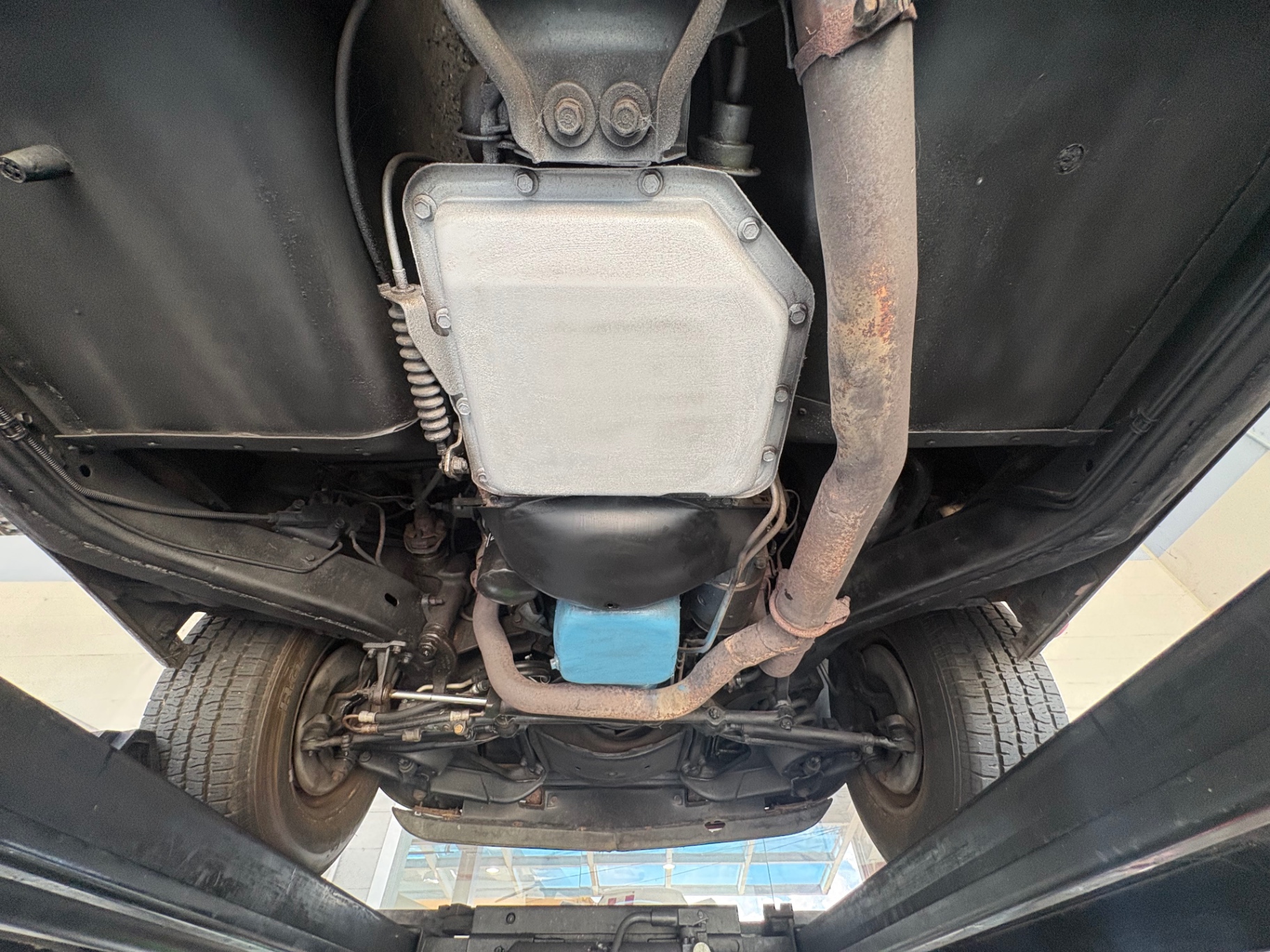
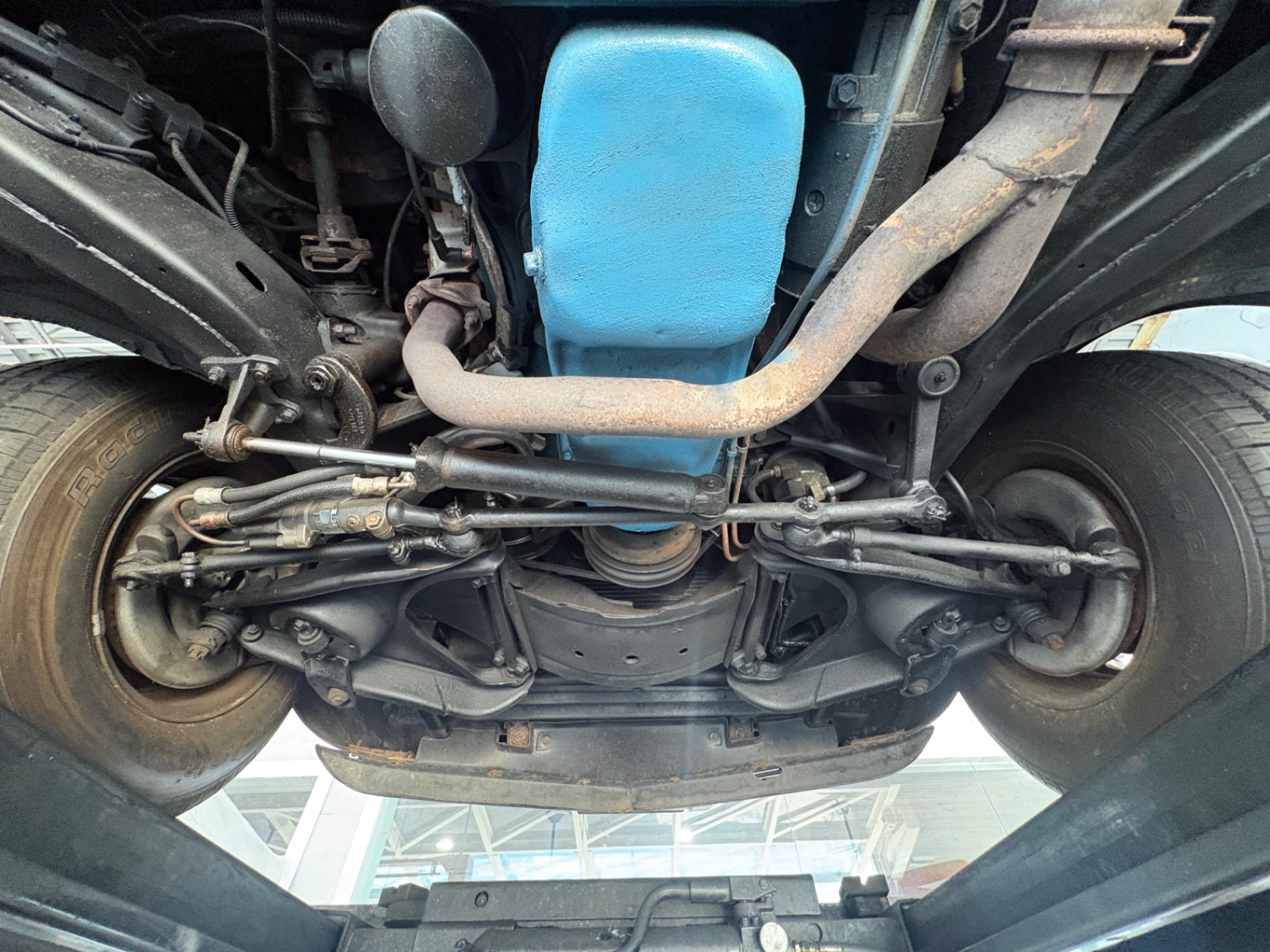
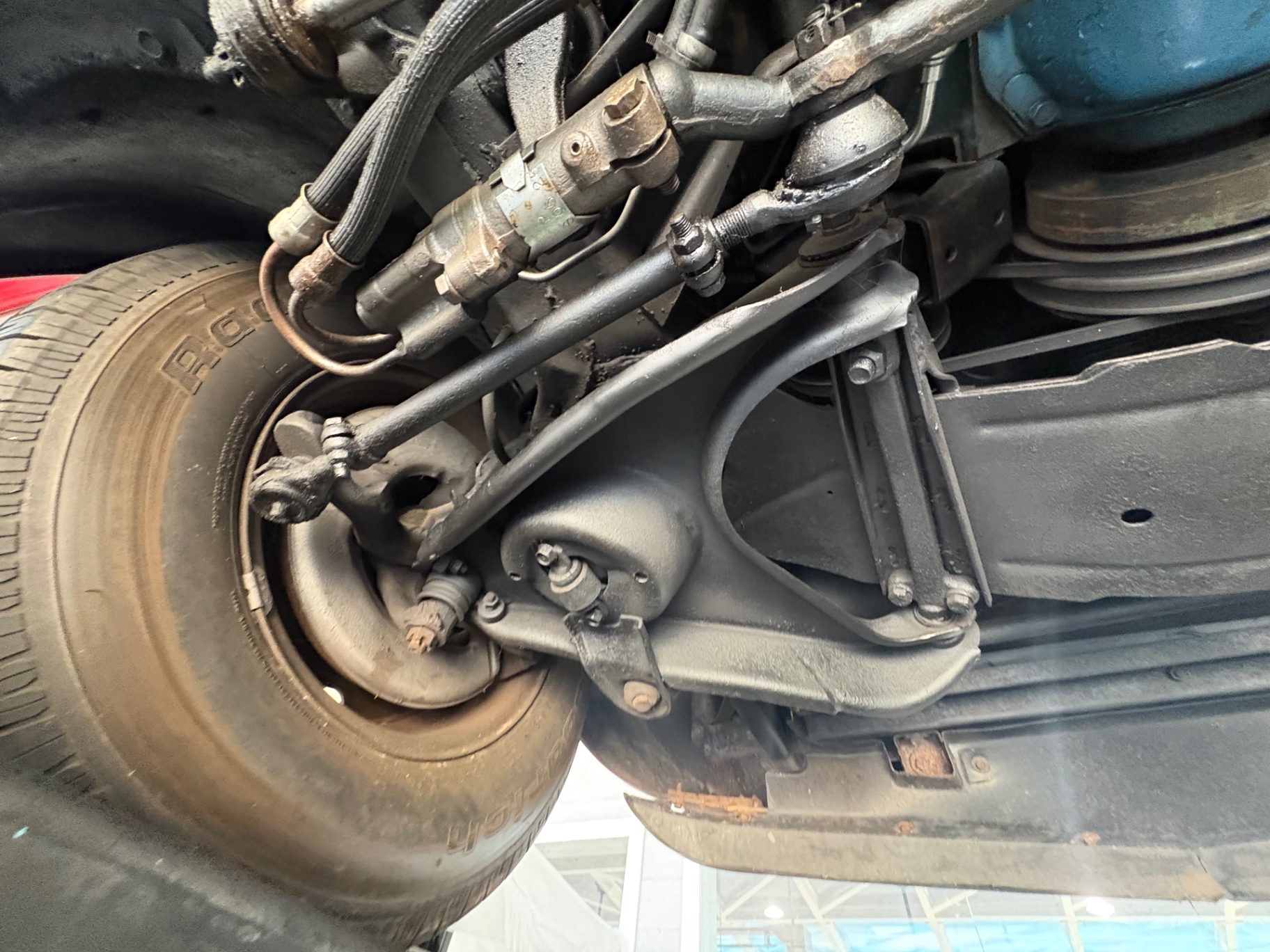
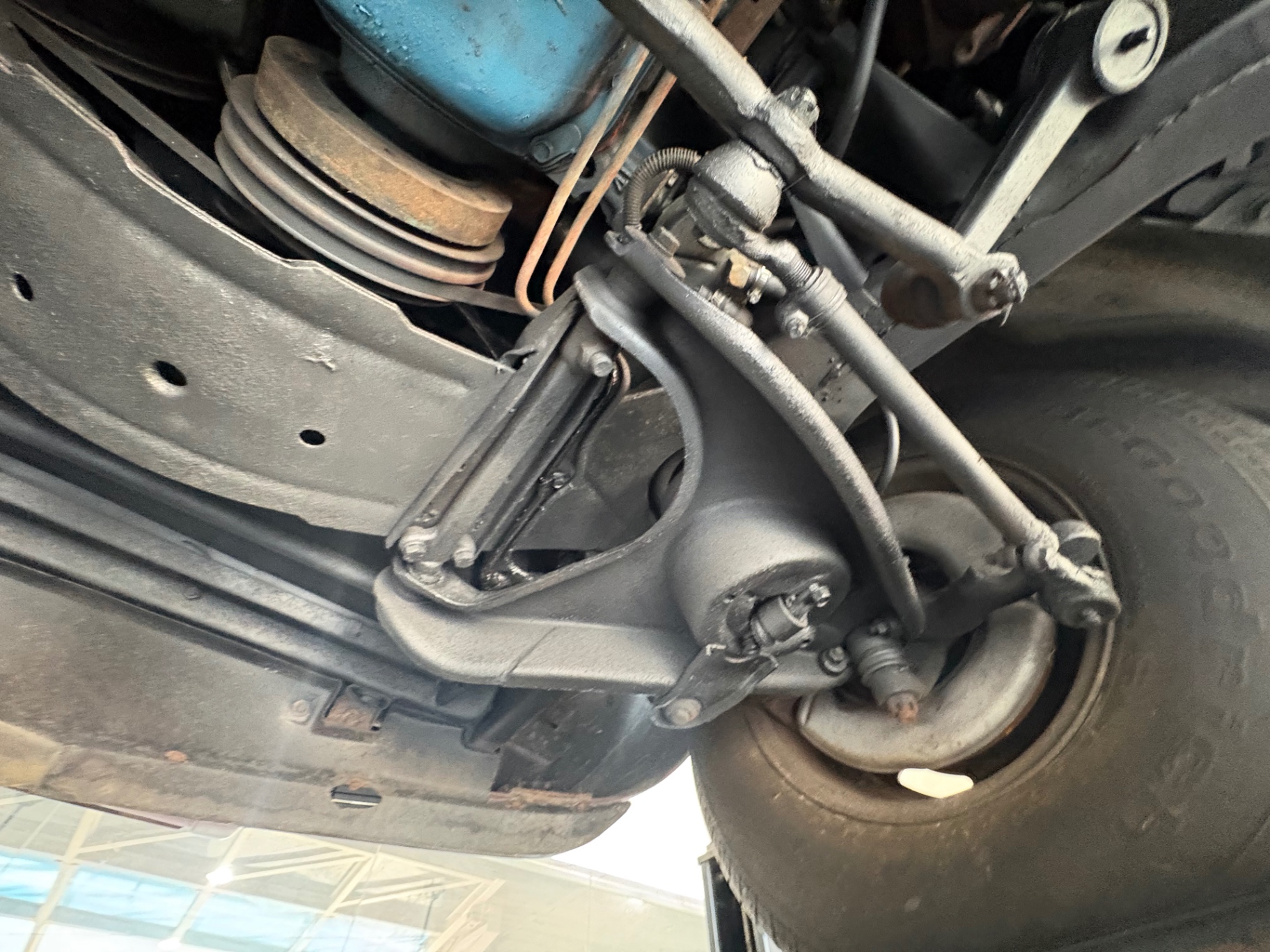
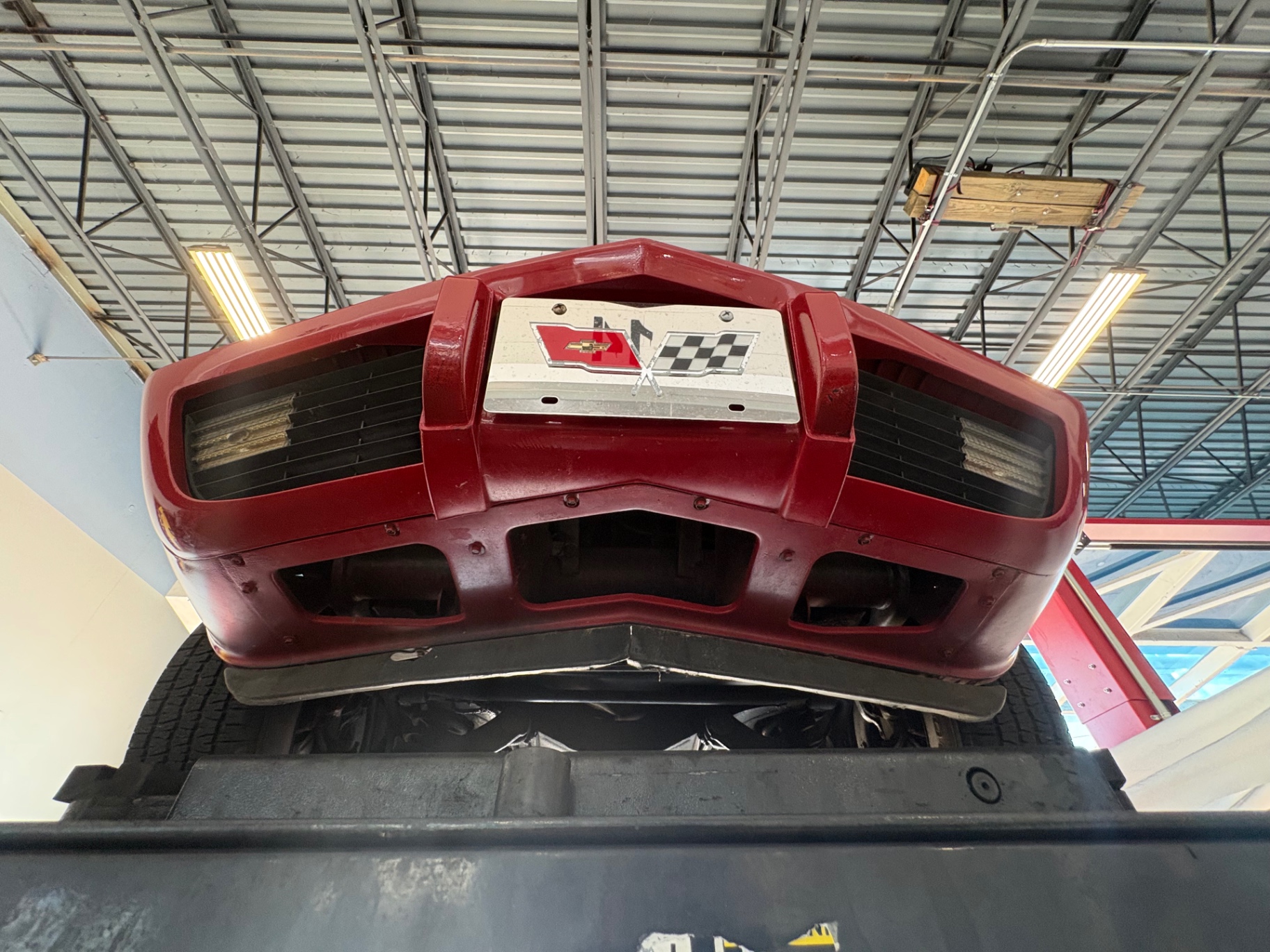
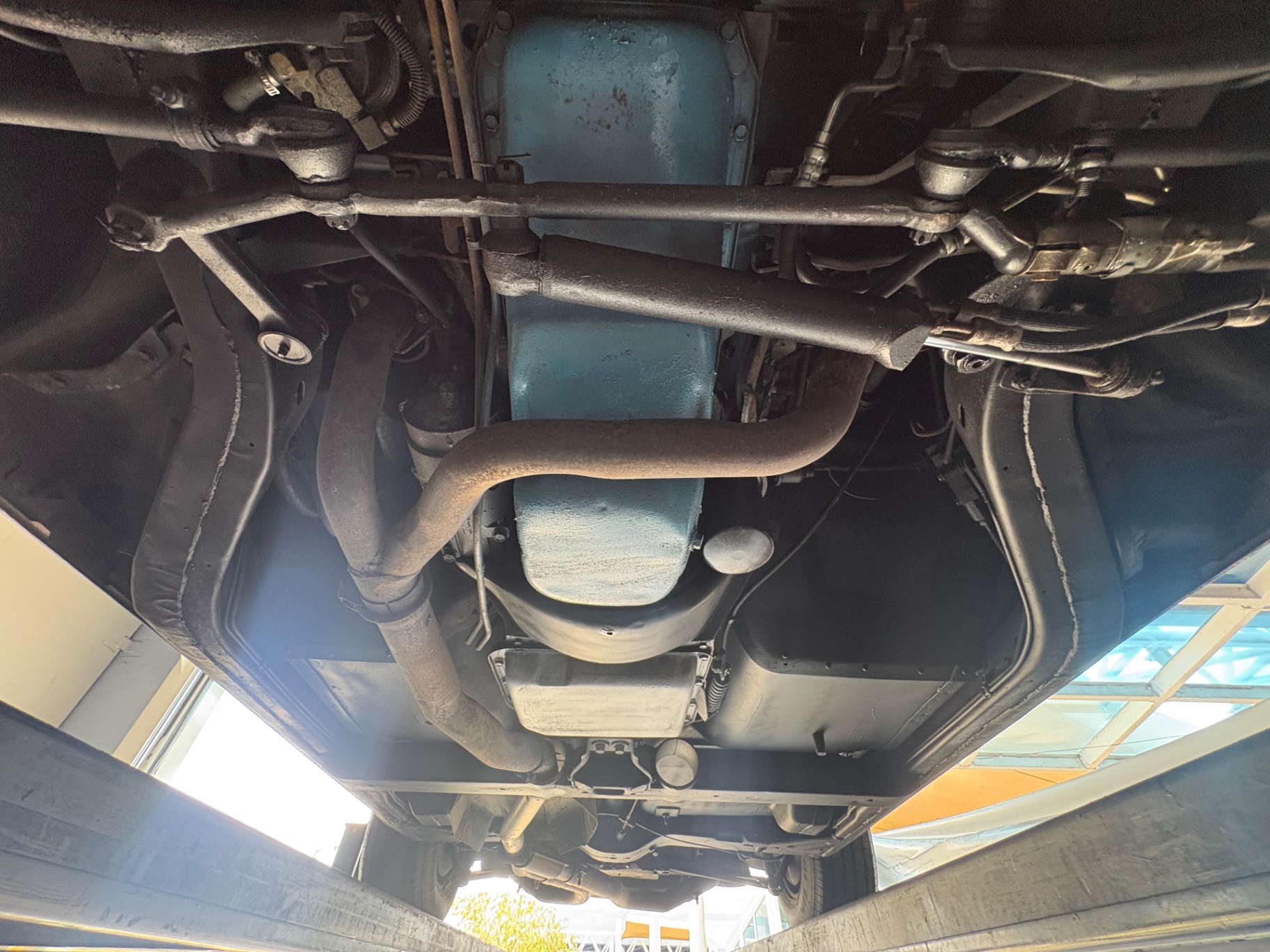
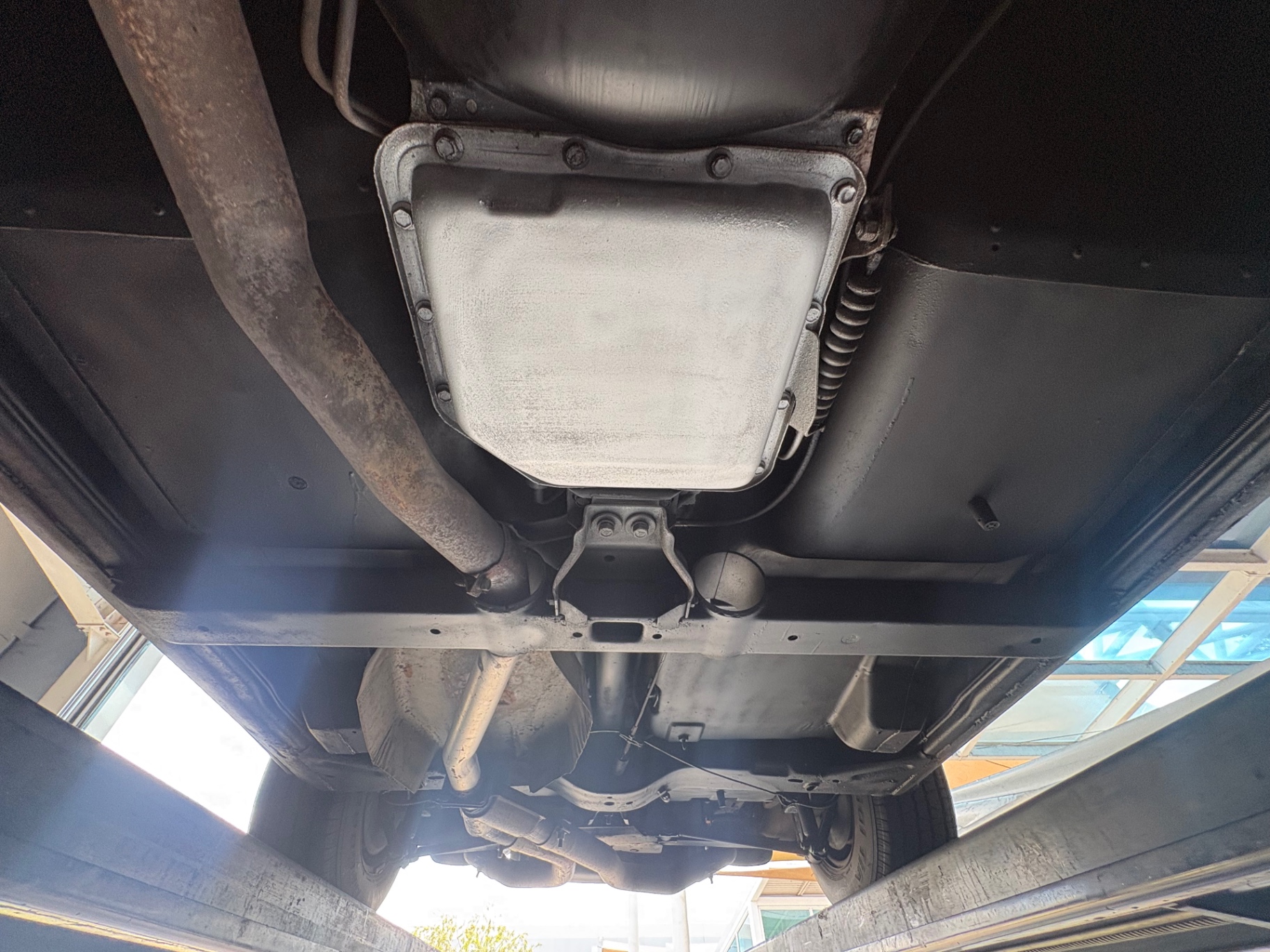
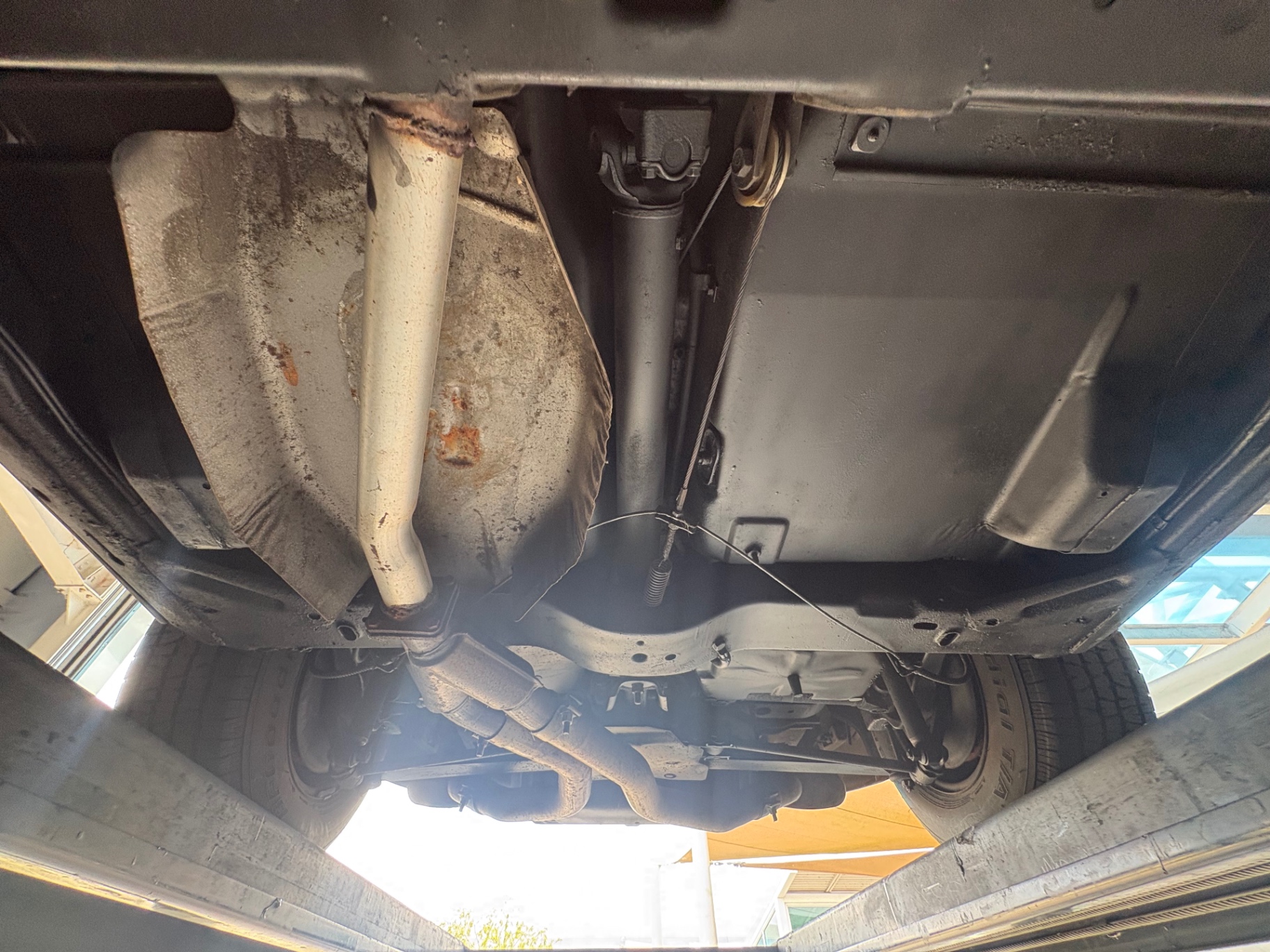
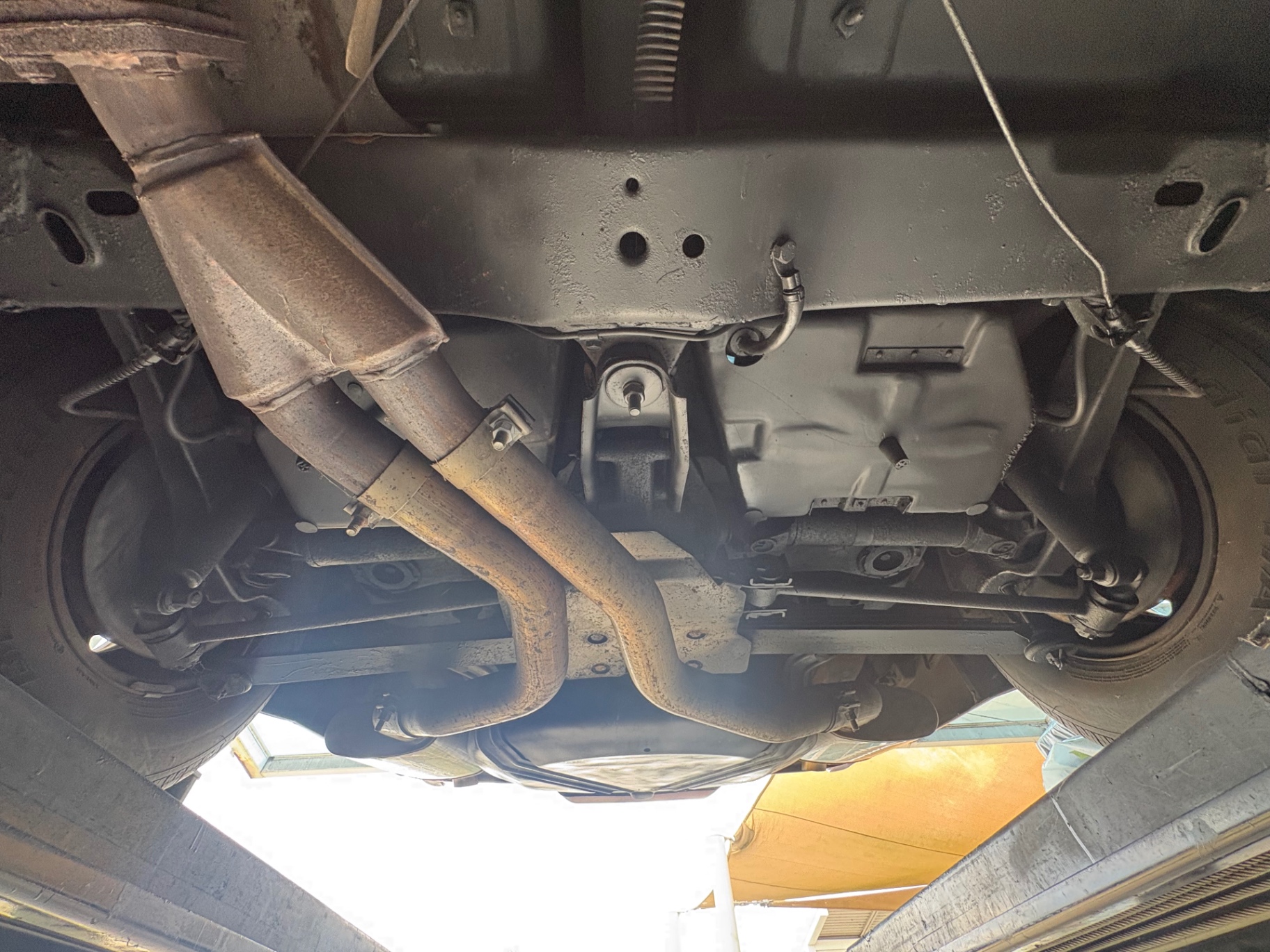
This particular 1979 Chevrolet Corvette is finished in Corvette Red over a black leather interior — a color pairing that defined the car's era and remains the most recognizable combination the C3 ever wore. The odometer reads 66,706 miles, which for a car of this age suggests it was driven and enjoyed rather than hidden away, but not used up. The underside shots tell an important part of the story: the floorpan and frame rails are solid and well-coated, with no visible rot or patch work — a meaningful detail on any 45-year-old car, and especially important on a Corvette where the steel ladder frame is the structural core beneath that fiberglass shell.
Features List
- 350ci 5.7L V8 engine
- 4-Speed manual transmission
- T-Top removable roof panels
- Limited-slip differential
- 4-wheel power disc brakes
- Power steering
- Air conditioning
- Power windows
- Tilt and telescopic steering column
- Black leather bucket seats
- Center console
- Full gauge cluster with tachometer
- Electric clock
- Rear window defogger
- Rally wheels
- BFGoodrich Radial T/A tires
- Dual exhaust
- Sony Bluetooth stereo
- Fiberglass body
Mechanical
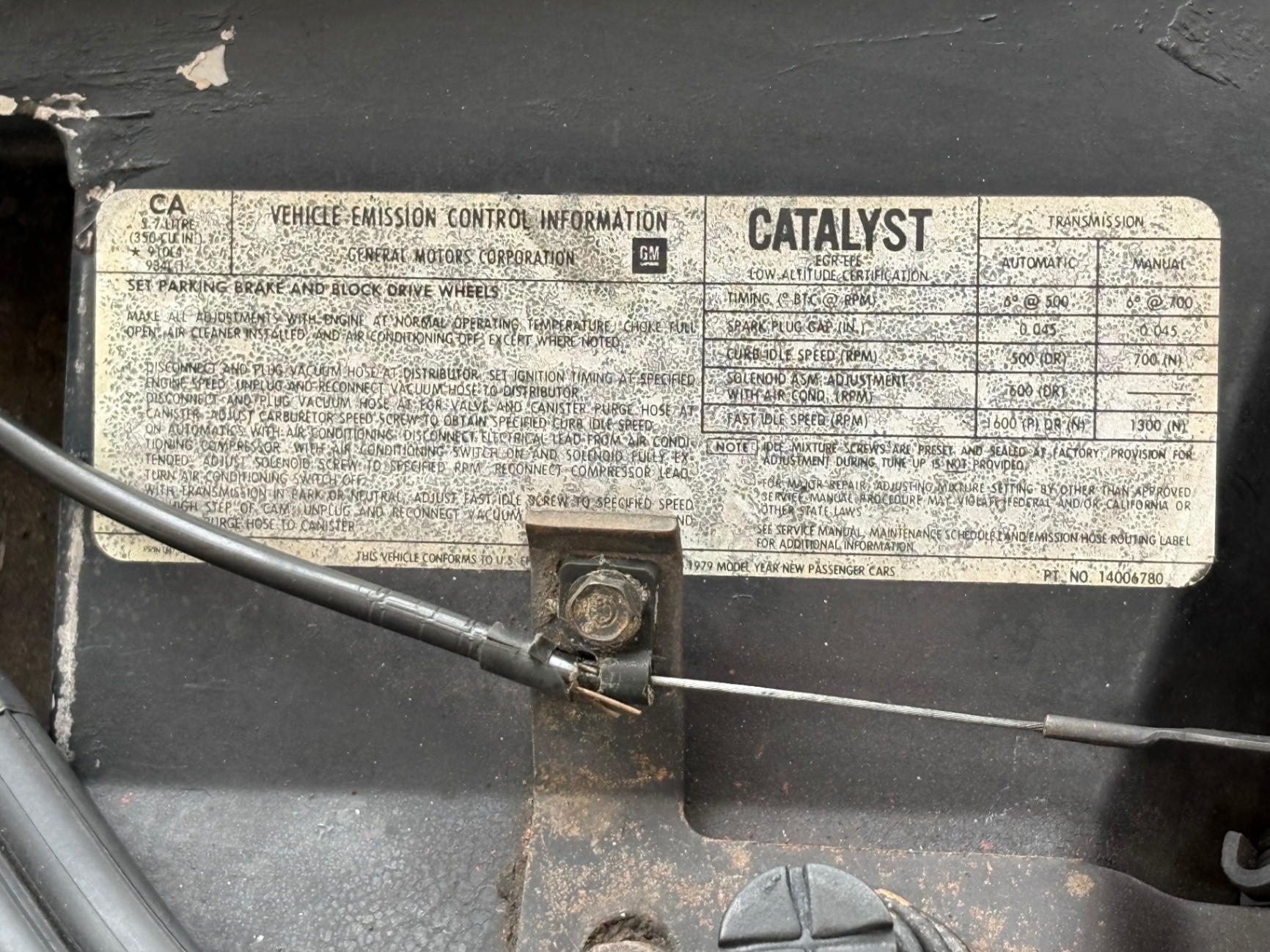
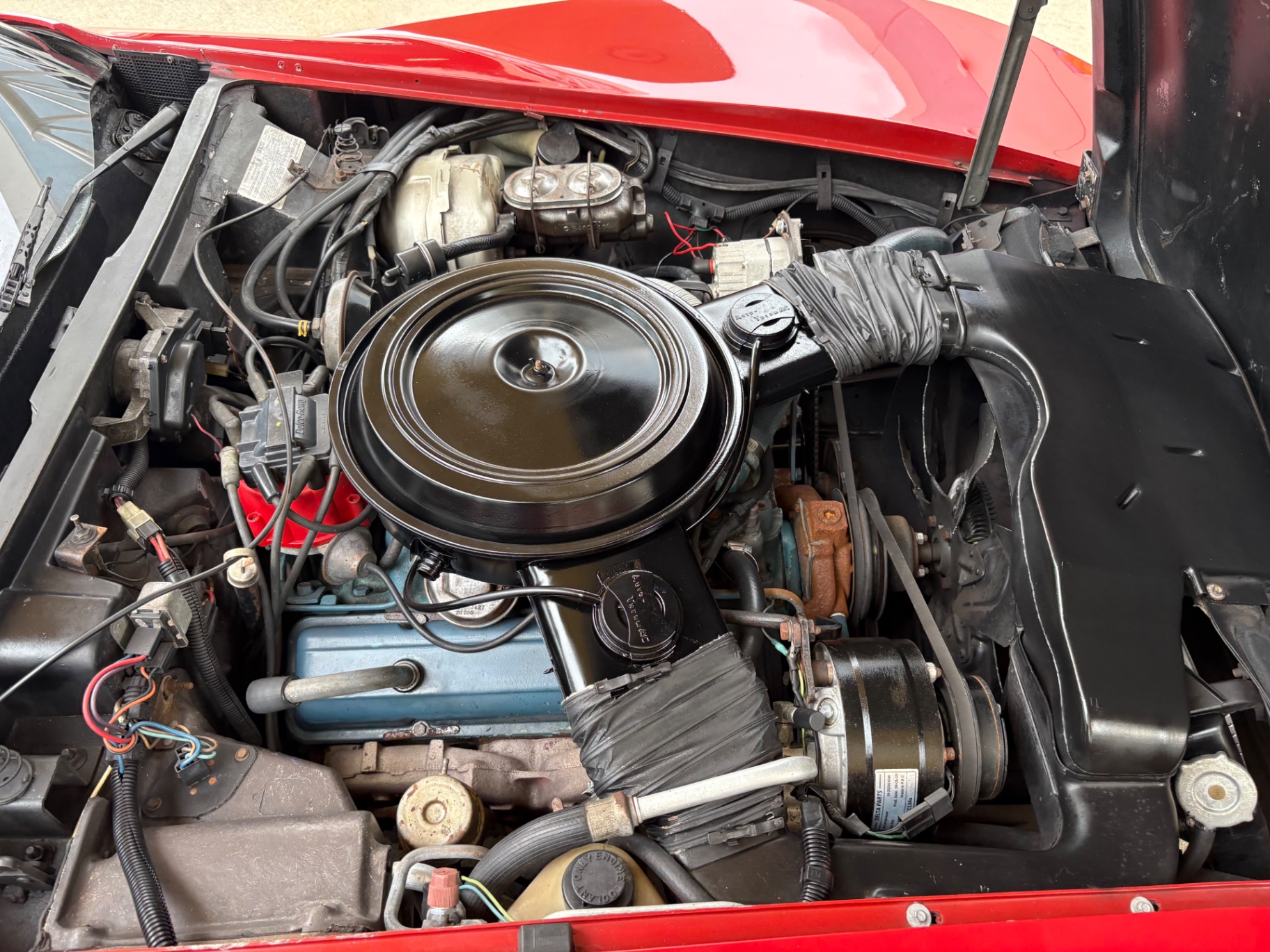
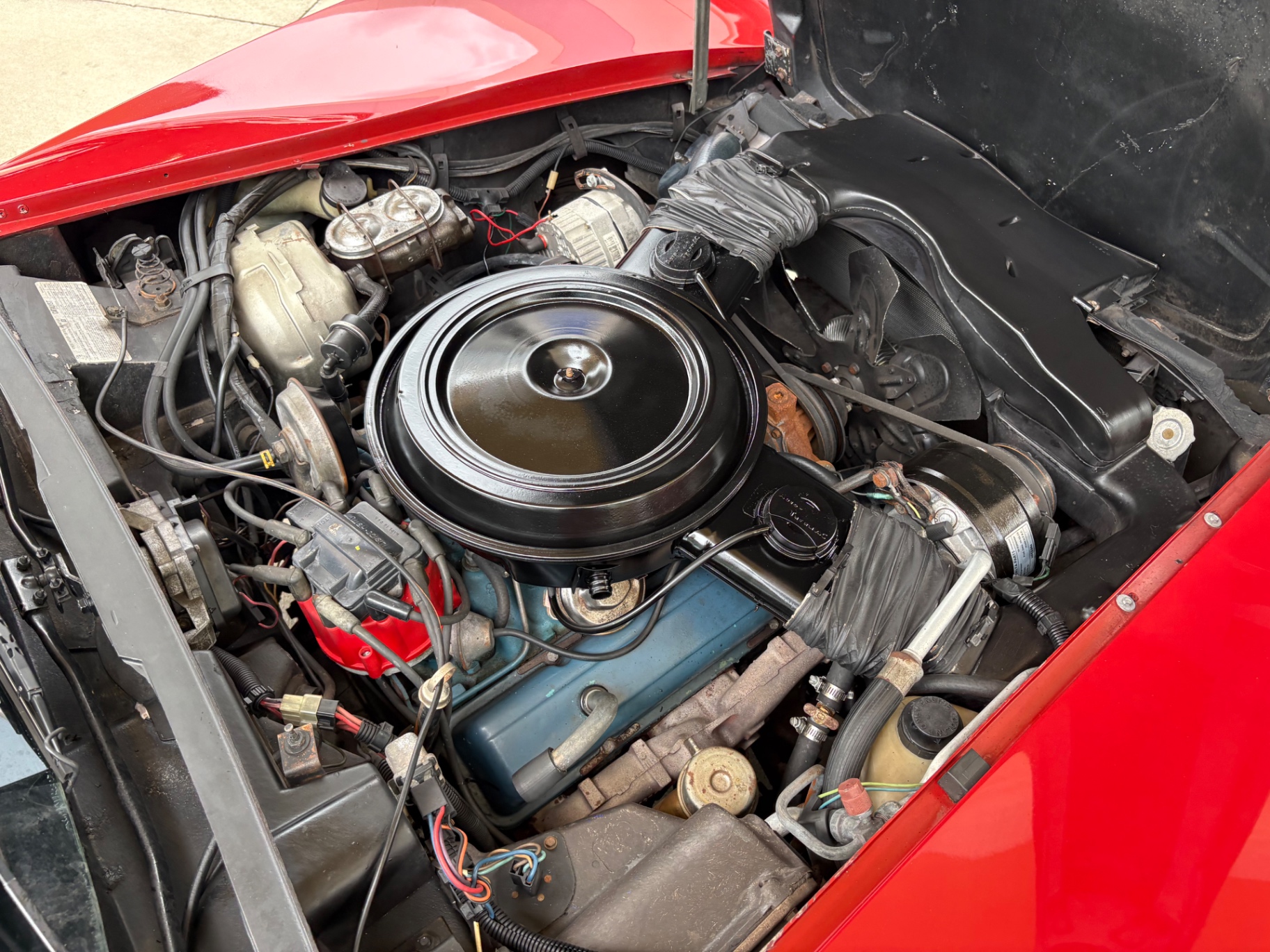
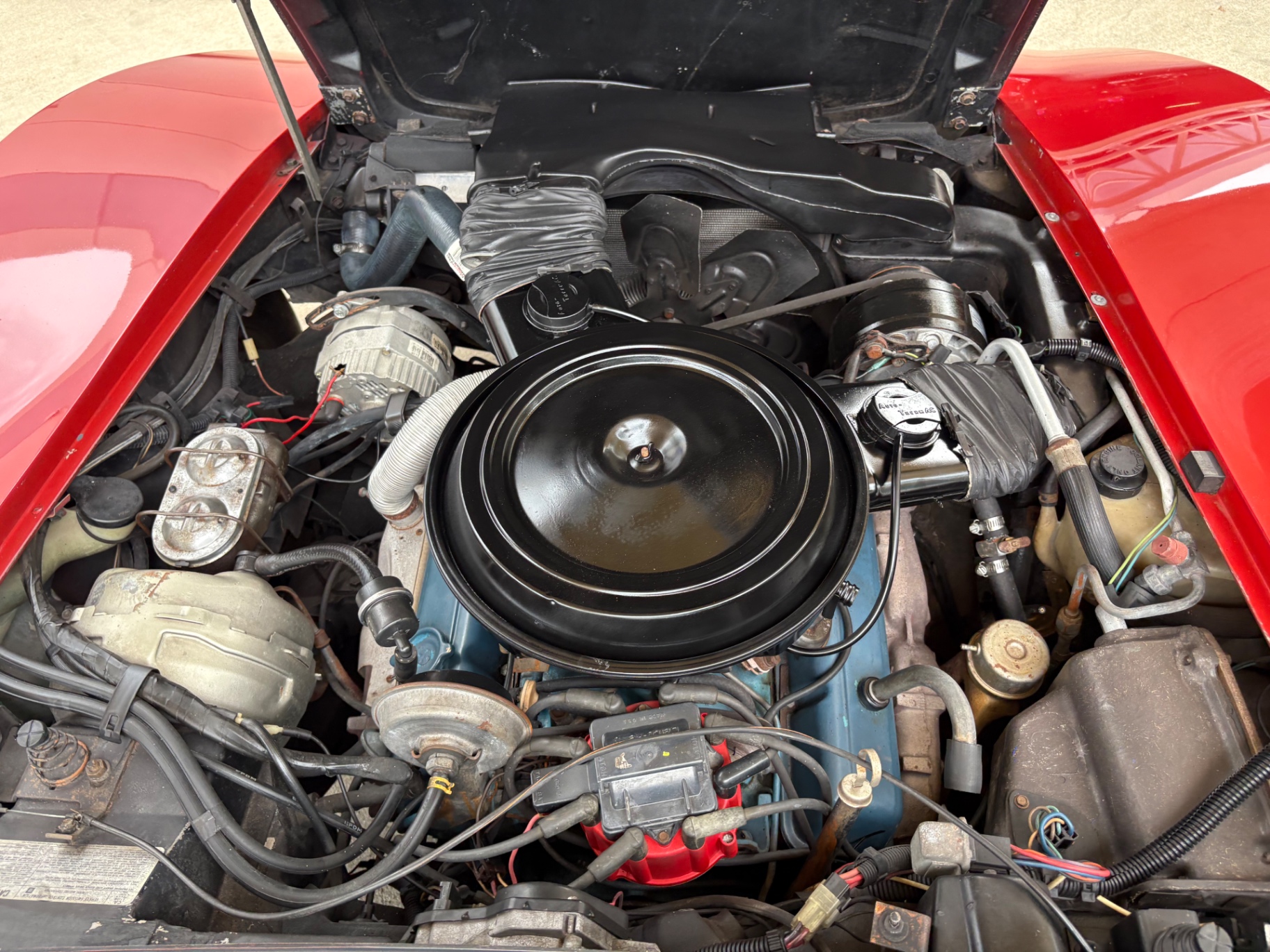
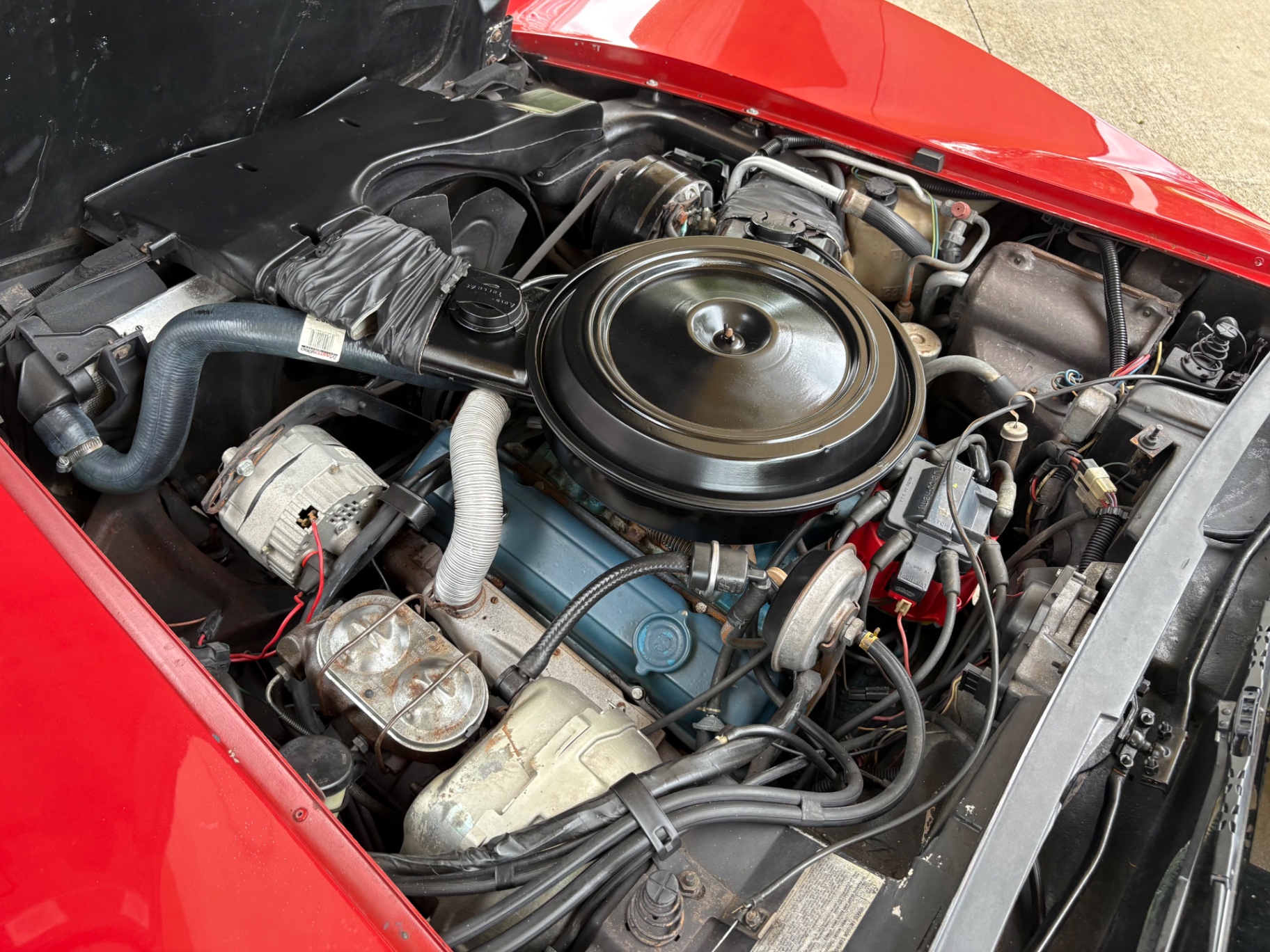
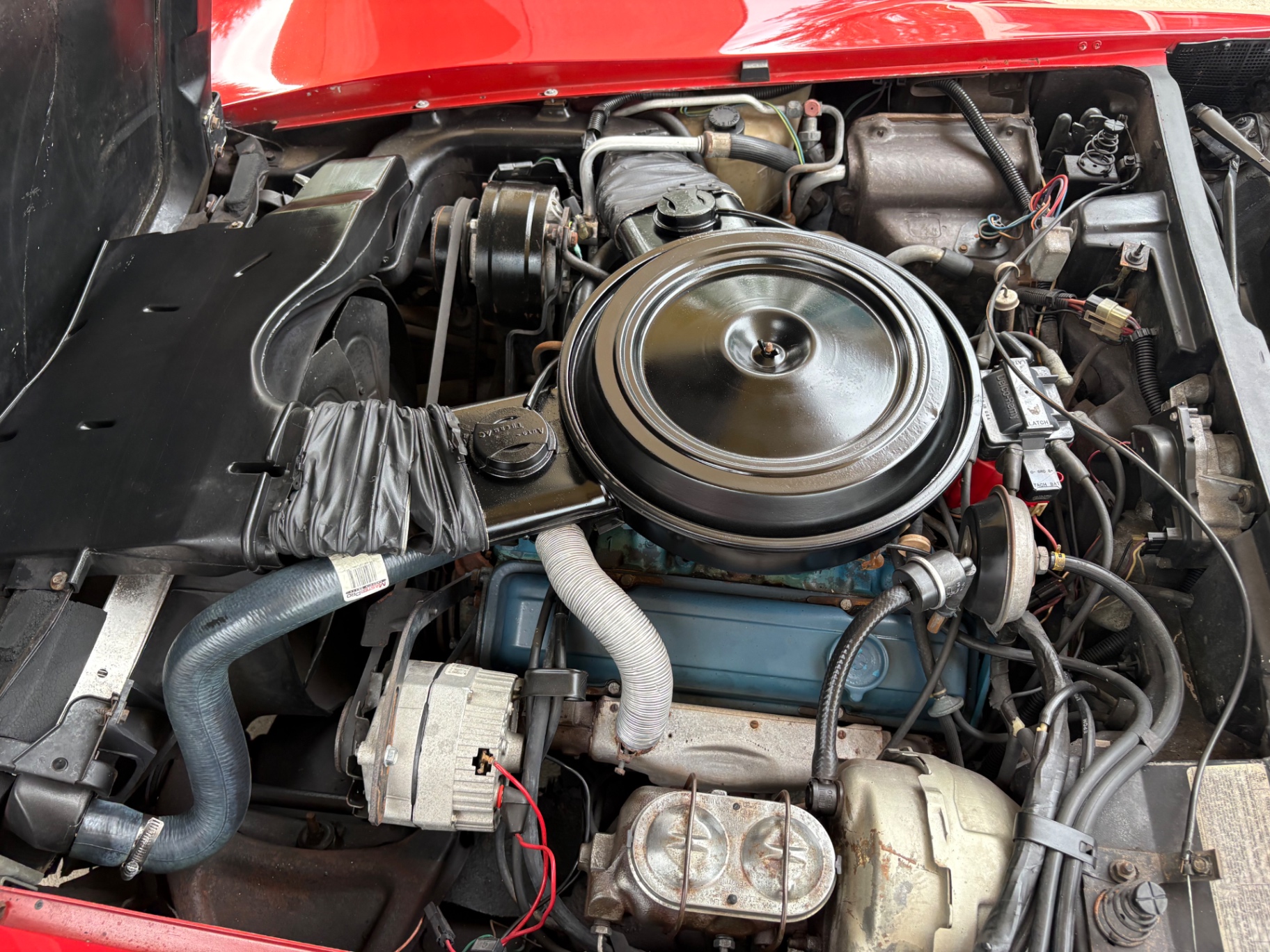
The engine under the hood is the L48 350ci 5.7-liter V8, which was the standard engine for 1979. In that model year it was rated at 195 horsepower — a figure that looks modest on paper, but context matters. The early 1970s emissions and compression ratio cuts had bottomed out, and Chevrolet was beginning to recover power numbers by the end of the decade. More importantly, the 350 small-block is one of the most proven, parts-supported V8 engines ever built. Rebuilds are straightforward, performance upgrades are well-documented, and finding a knowledgeable mechanic is never a problem. The engine bay photos show the block and accessories in honest, unrestored condition — this car has not been detailed to hide its history.
The 4-speed manual transmission is the configuration most drivers of this era actually wanted. In 1979, the majority of Corvette buyers were still ordering the manual, and the close-ratio or wide-ratio Muncie or Borg-Warner 4-speed was a defining part of the driving experience. Paired with a limited-slip differential, this car puts power to the pavement without the loss of control that an open diff invites under throttle. Four-wheel power disc brakes were a Corvette hallmark going back to 1965, and by 1979 the system was well sorted — significantly better stopping hardware than most of what was on the road at the time. The underside photos confirm the independent rear suspension with its distinctive multi-link geometry, which gave the C3 a handling advantage over most American cars of the period.
Interior
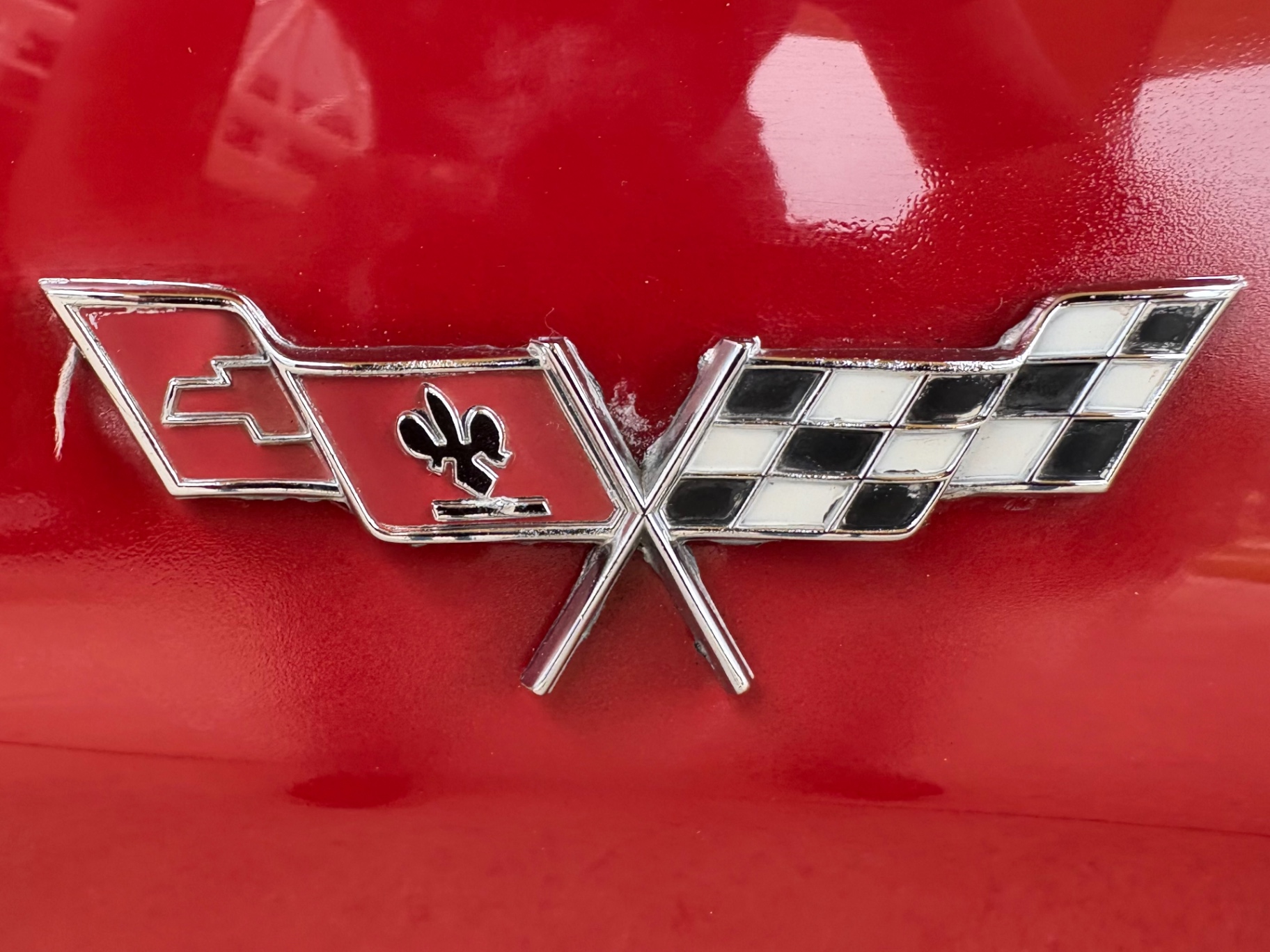
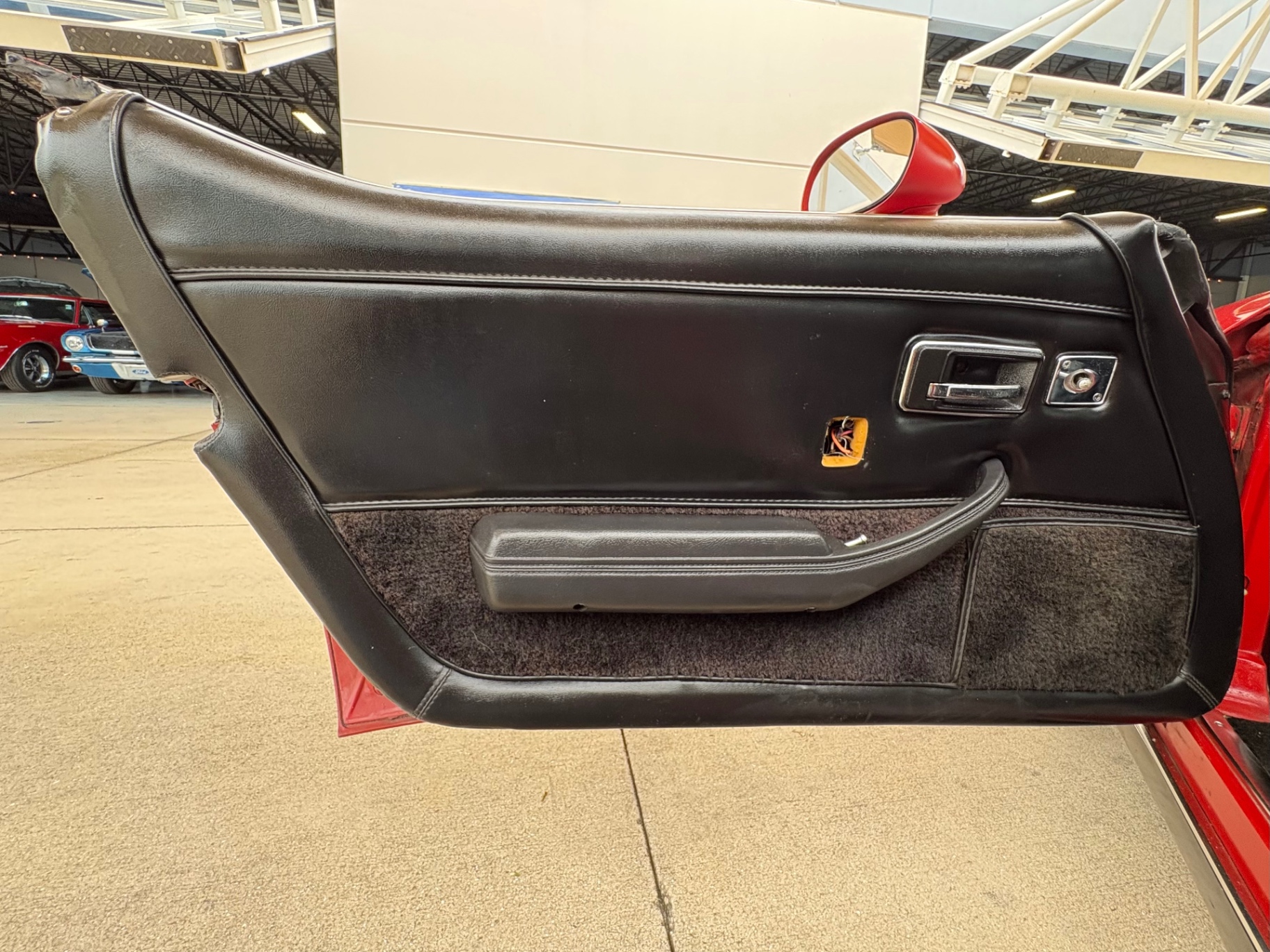
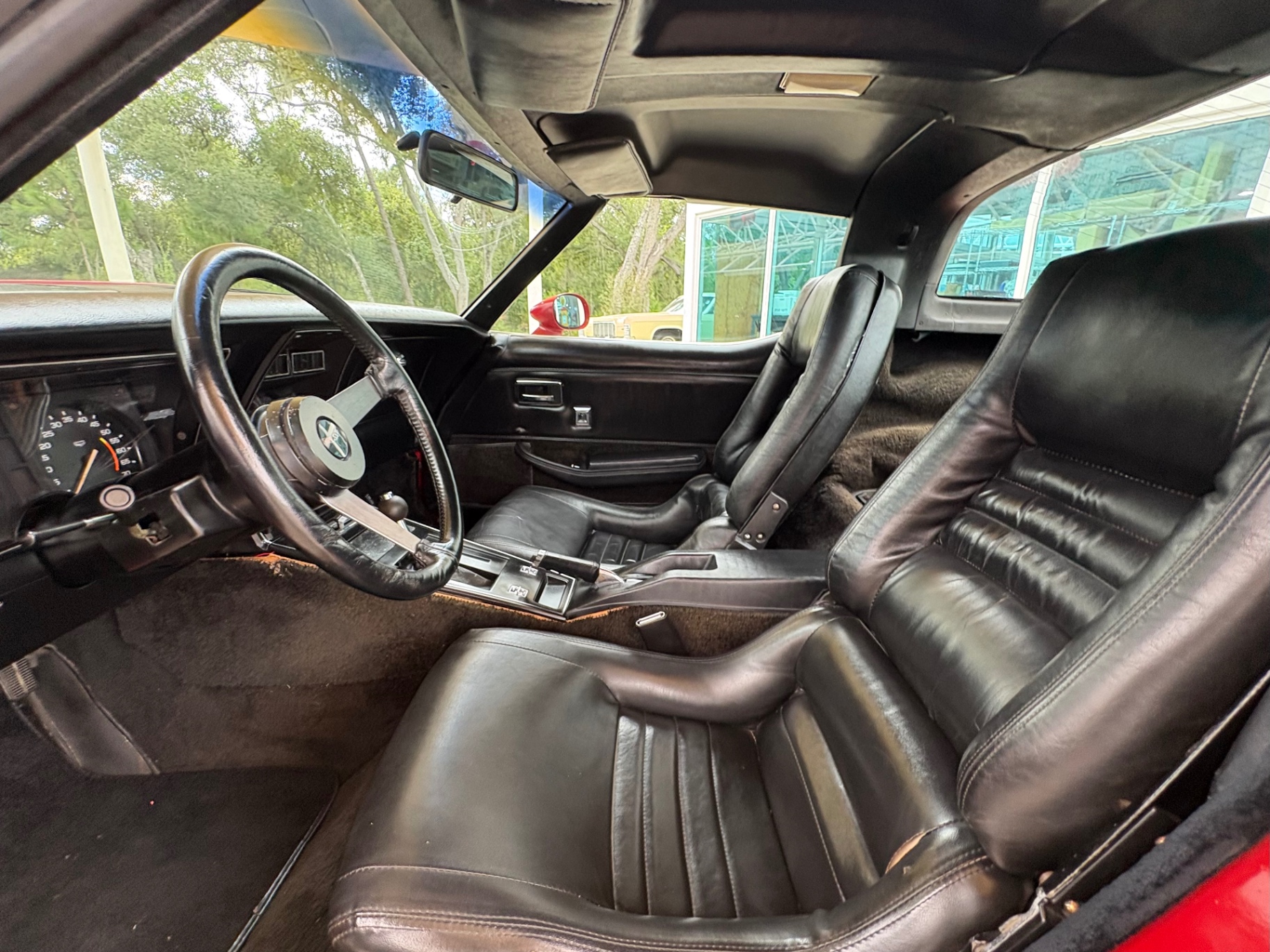
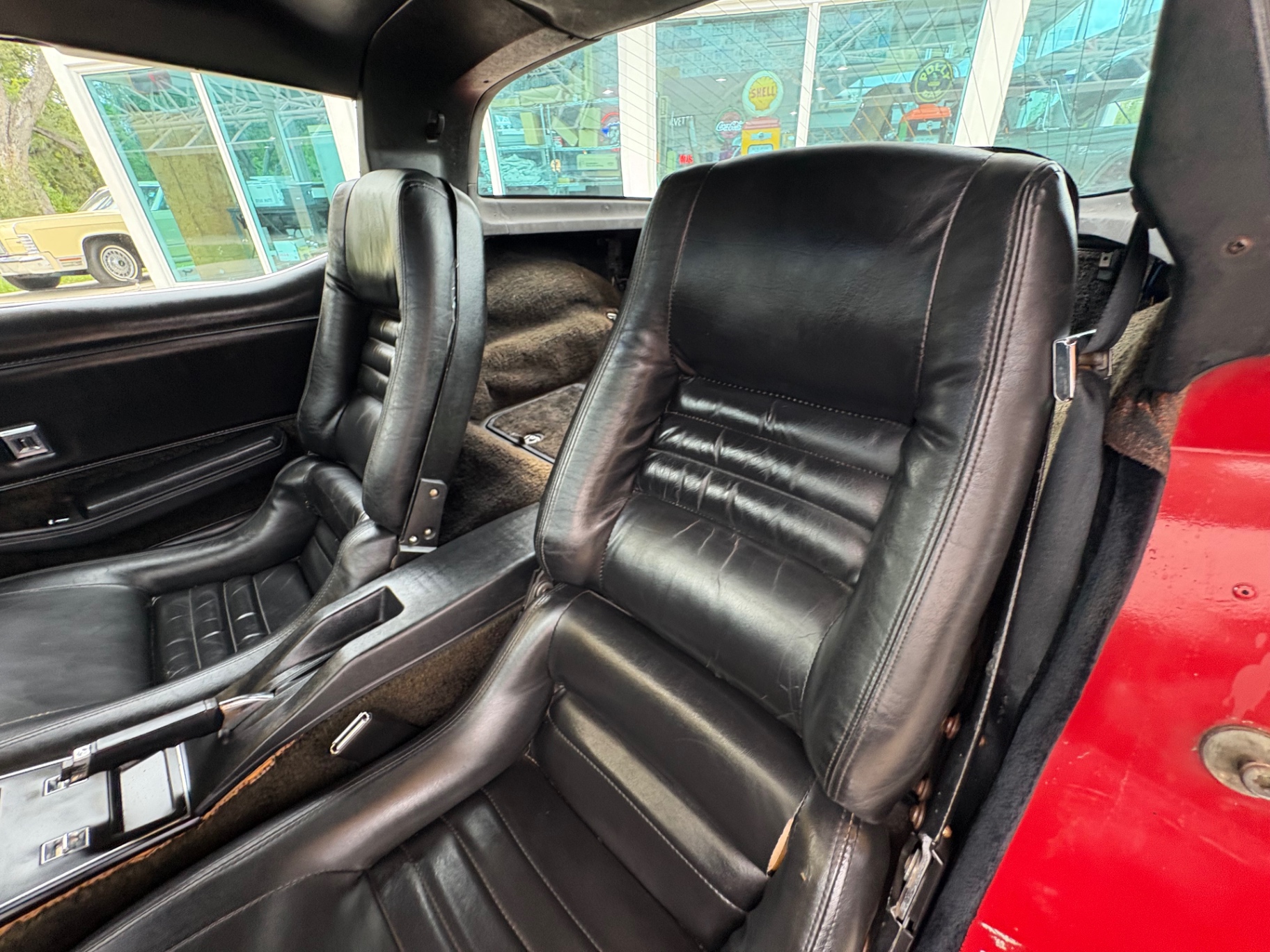
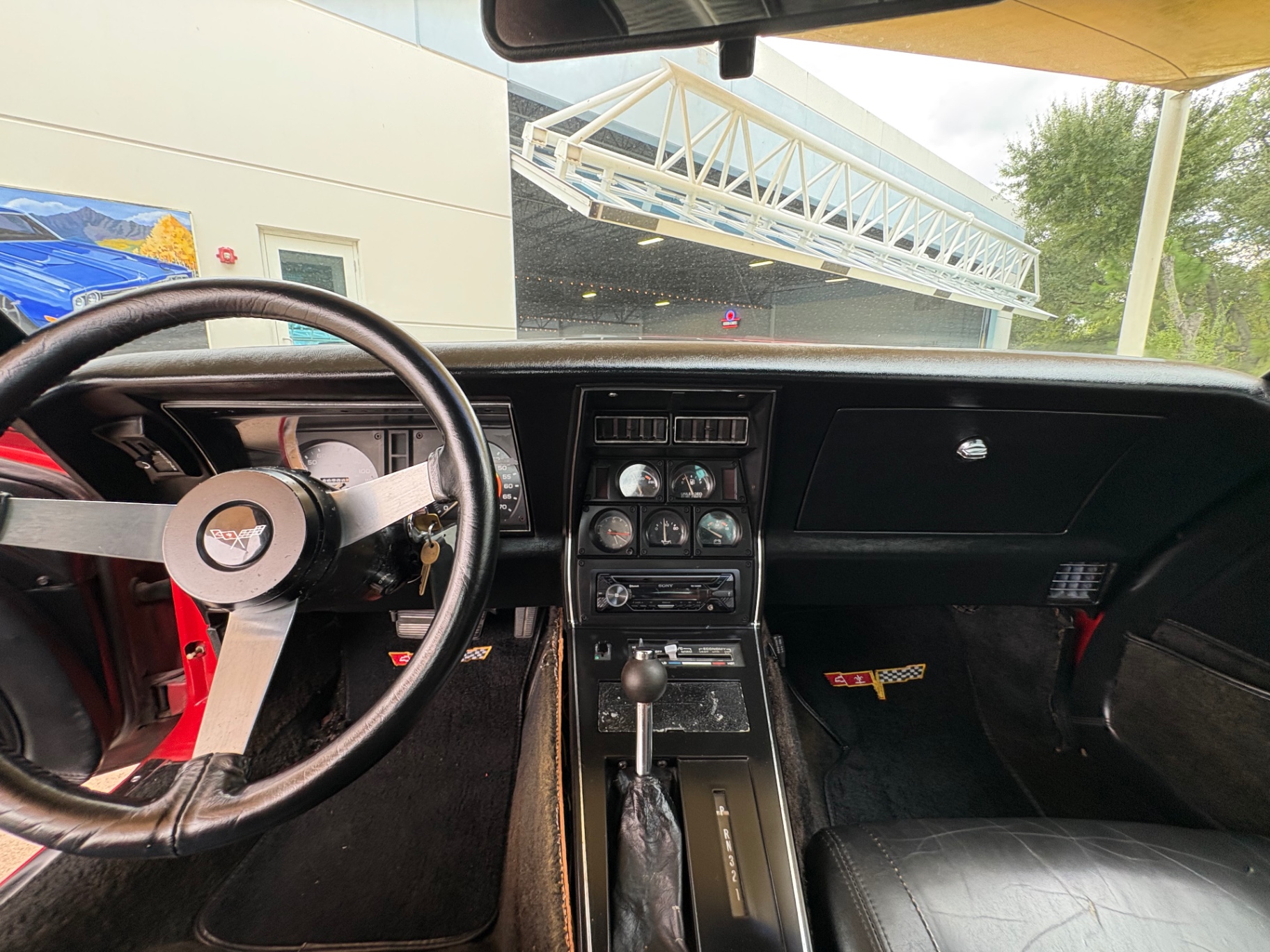
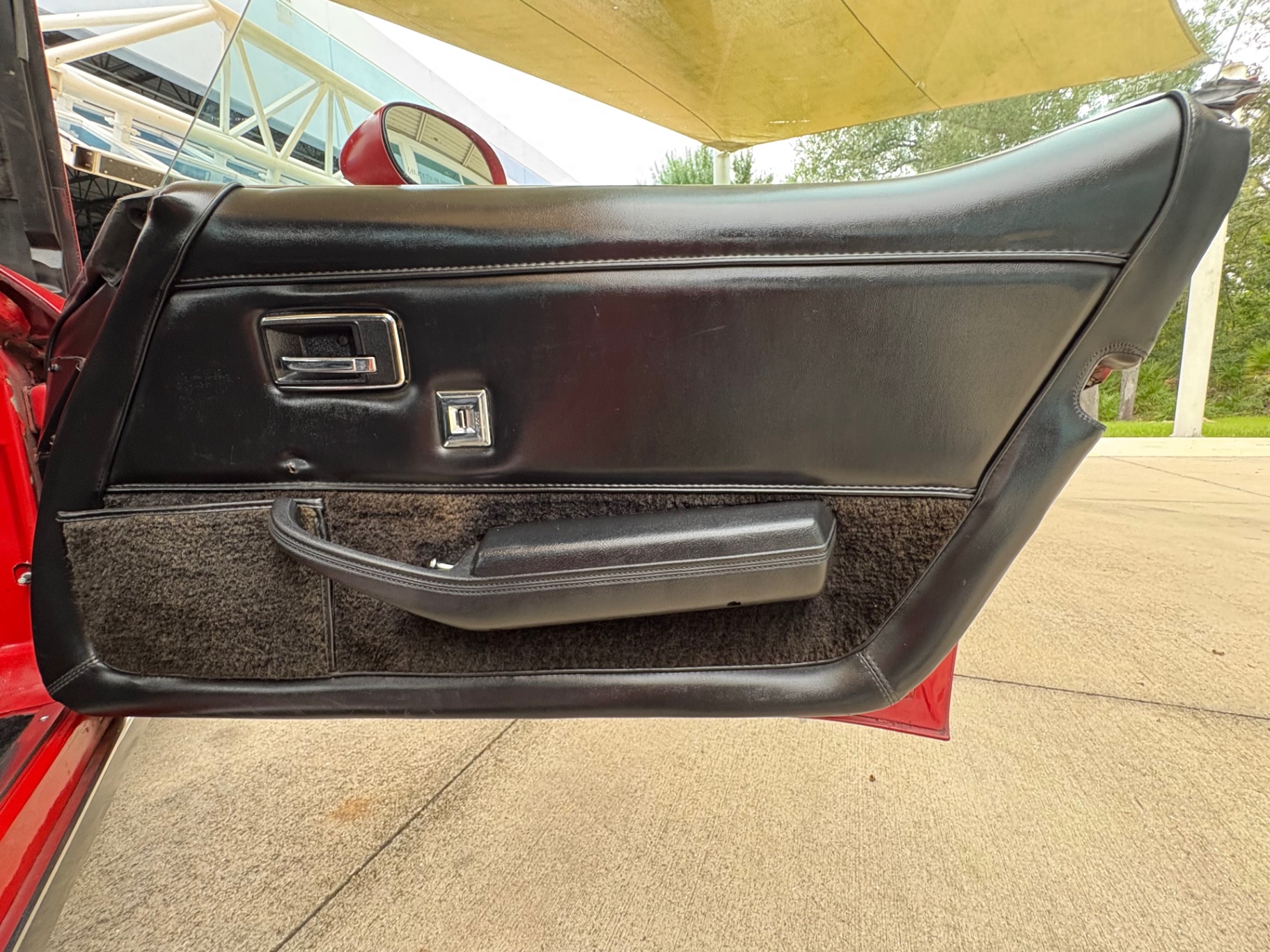
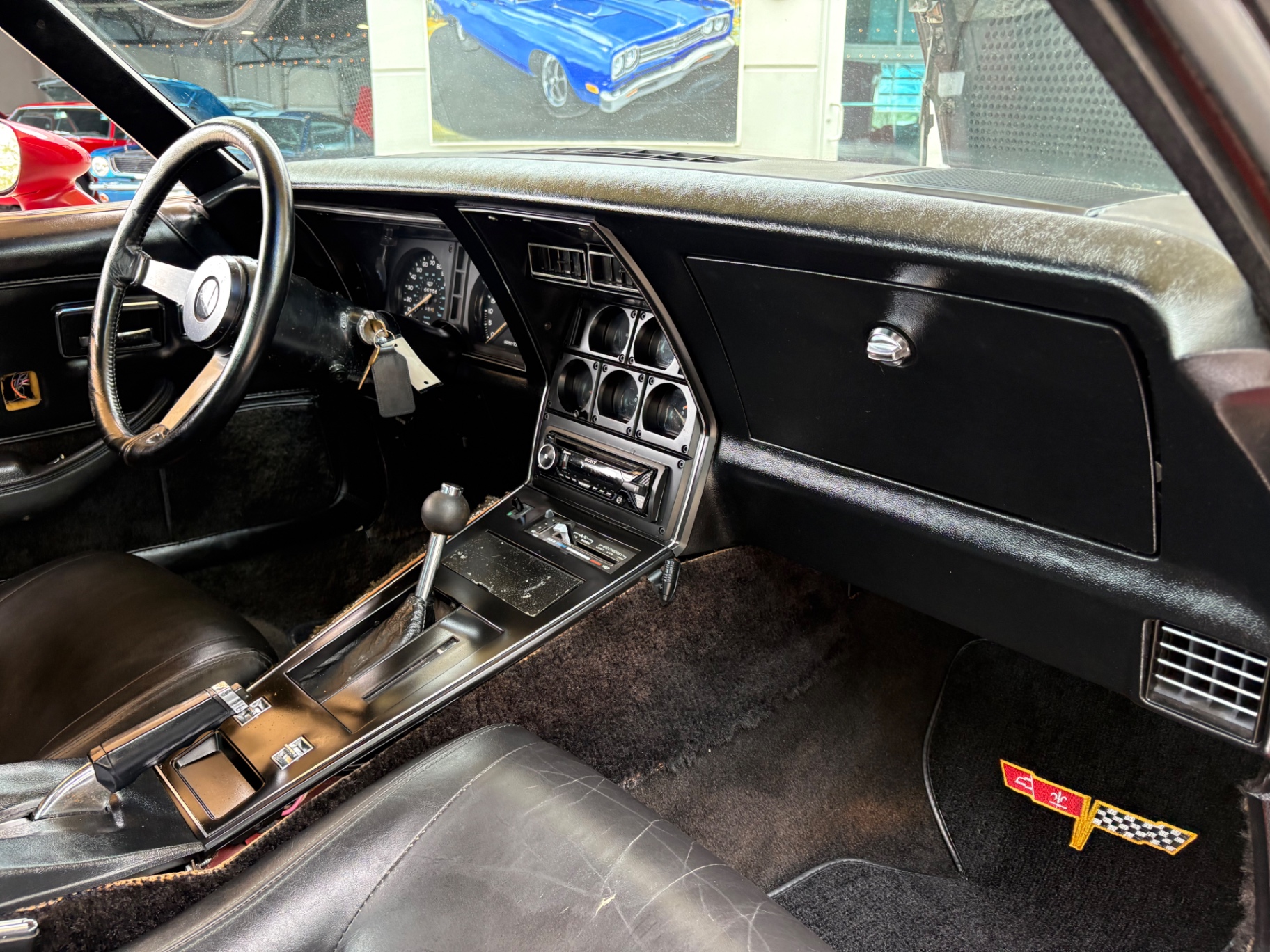
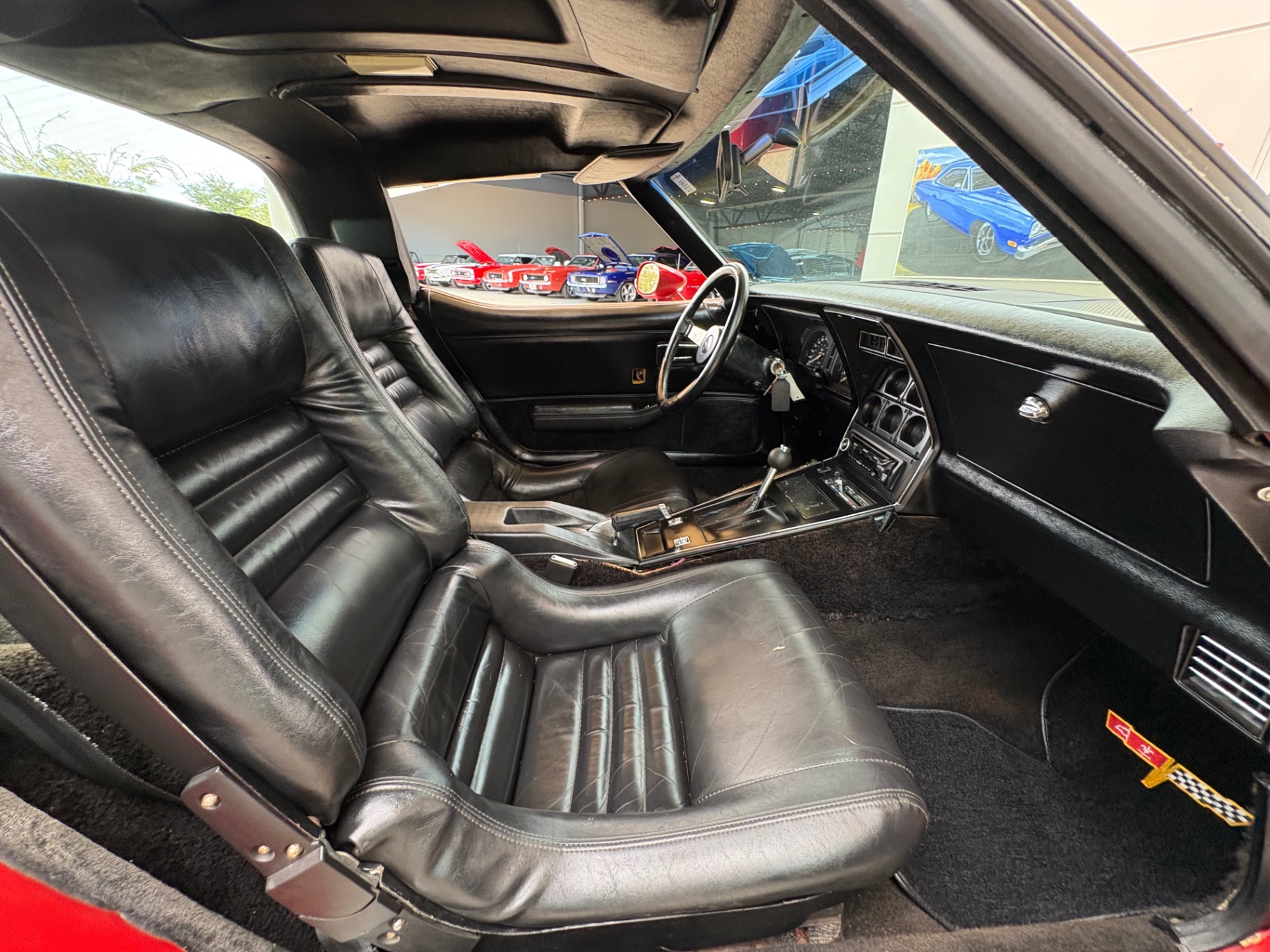
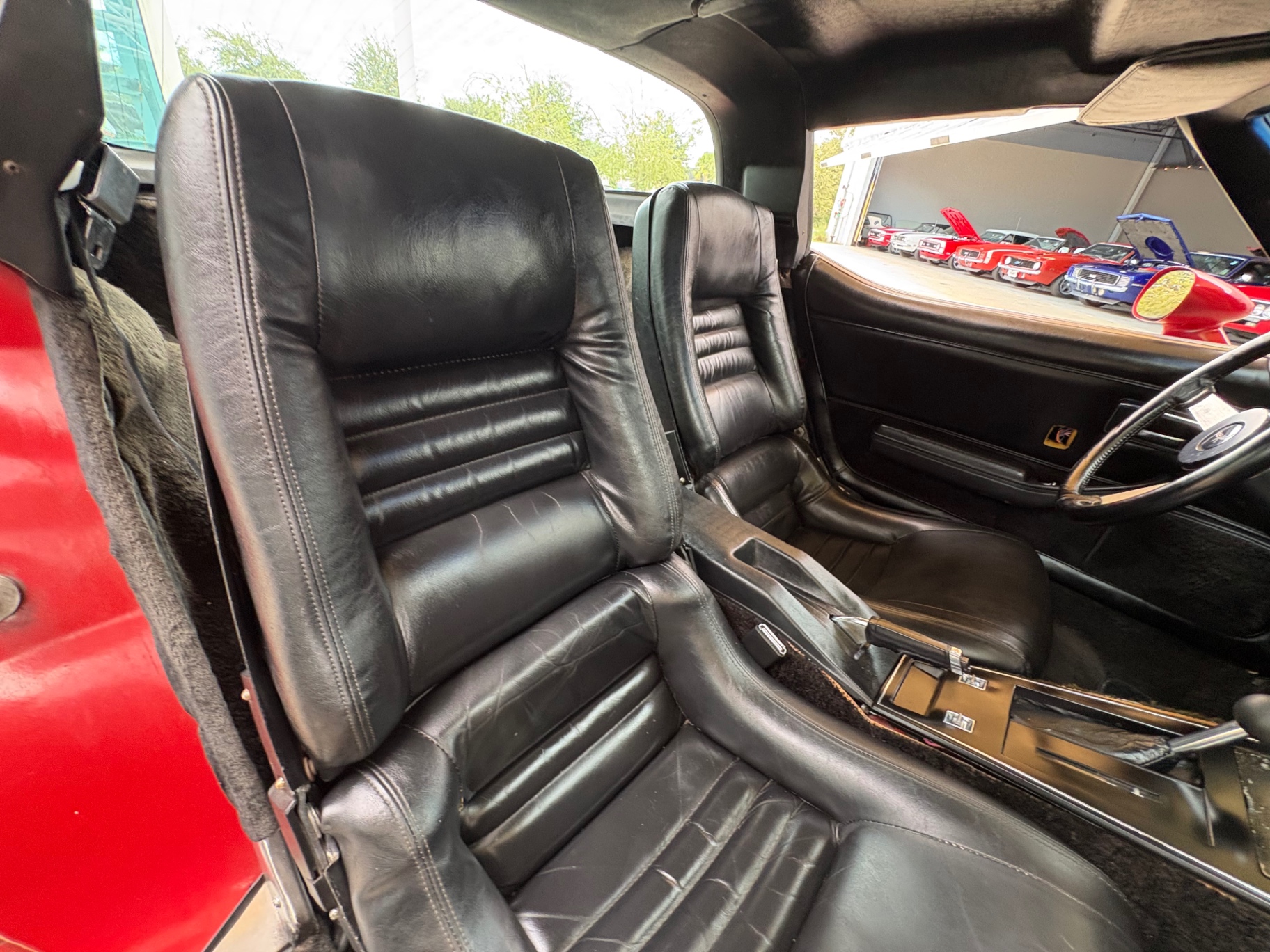
The black leather interior is in used but honest condition. The bucket seats show the kind of creasing and patina that accumulates on genuine leather over decades of real use — nothing torn or structurally compromised, but this is not a concours cabin. That said, the dashboard, door panels, and center console are all intact and present correctly. The steering wheel, a three-spoke design with the Corvette crossed-flags emblem at the center, matches the period look.
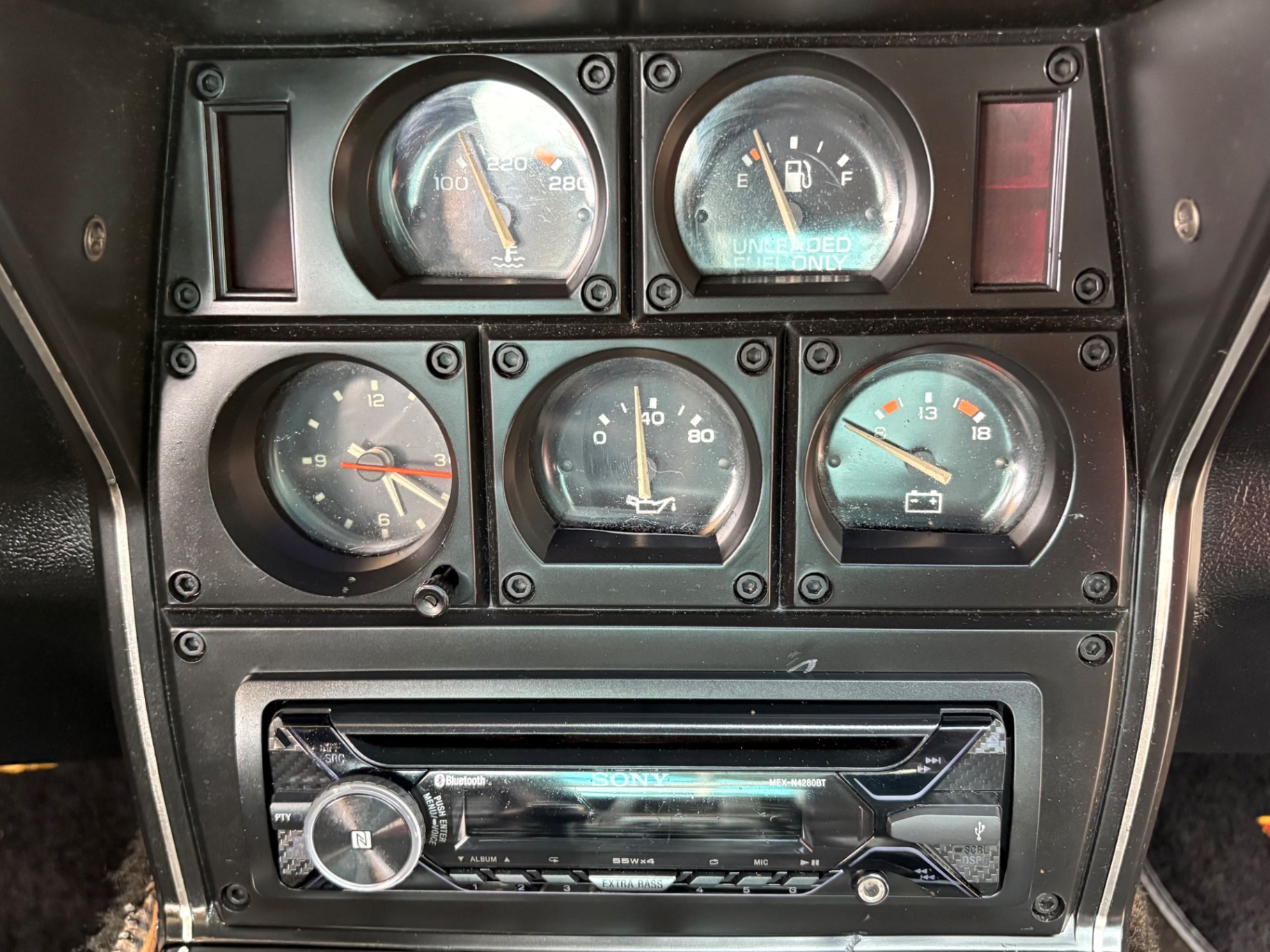
One of the best features of the 1979 Corvette interior is the instrument layout. The gauge cluster sits directly in front of the driver with a large speedometer and tachometer as the primary faces. The center console houses the secondary gauges — coolant temperature, oil pressure, fuel level, and voltmeter — arranged in a cluster that keeps all the information in easy view without requiring the driver to look away from the road. The electric clock is also present and accounted for in that center stack. The tilt and telescopic steering column lets the driver dial in their preferred seating position, a feature that was not universal on sports cars of this vintage.
The Sony Bluetooth stereo has been installed in the factory radio location and fits within the center stack without obvious modification to the surrounding trim. It provides modern audio connectivity while keeping the overall interior appearance tidy. Power windows are present and functional. Air conditioning rounds out the comfort equipment on a car that was clearly optioned for real-world use, not just weekend duty.
Exterior
Corvette Red is the color most people picture when they think of a C3 Corvette, and this car wears it well. The fiberglass body panels show no significant cracks or stress fractures visible in the photos, which is a meaningful checkpoint on any C3 — fiberglass doesn't rust, but it does crack around door edges, nose sections, and body seams if the car has been in accidents or handled roughly. The paint has the depth and reflectivity of a car that has been cared for, though this is not a fresh respray — it carries age-appropriate character.
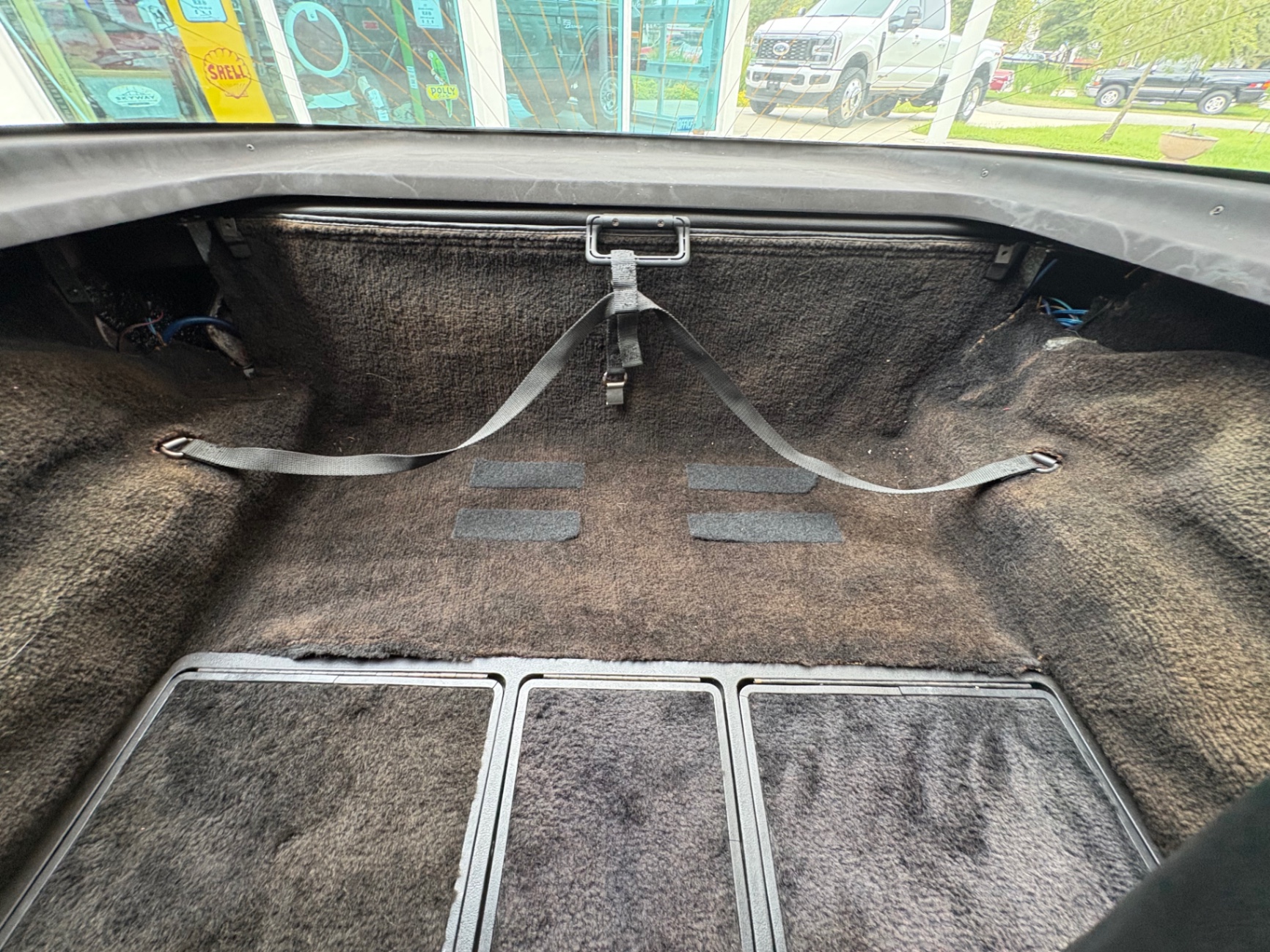
The T-top roof panels are present and in place. The C3 T-top was introduced in 1968 as a workaround to preserve the open-air experience after federal rollover standards made a true convertible difficult to certify. By 1979, the T-top had become one of the defining visual and functional traits of the Corvette. Both panels are removable and store in the cargo area behind the seats. The rear window defogger keeps the fixed backlight clear in cooler weather — a practical feature that owners of open-top configurations appreciate more than they expect to.
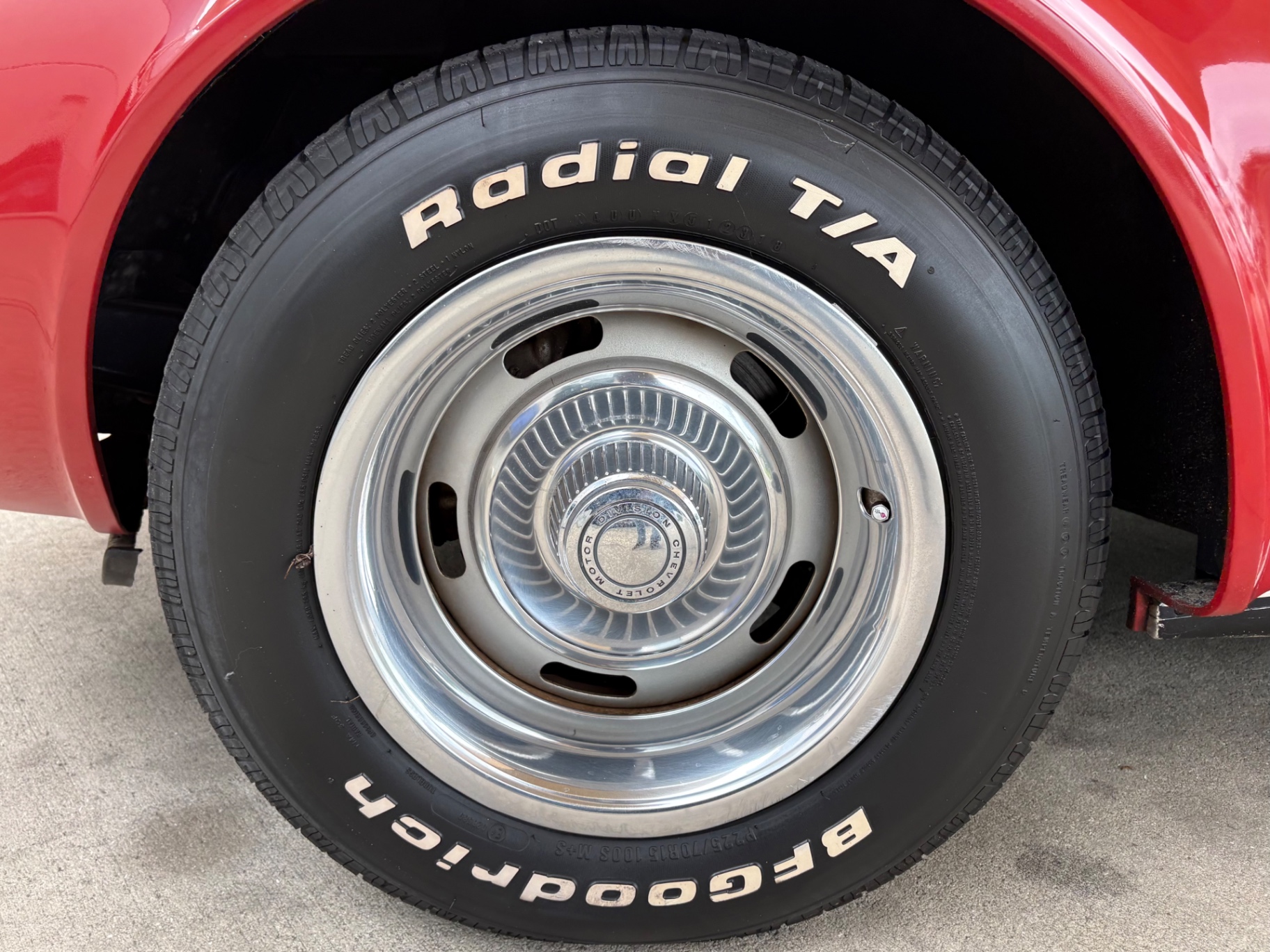
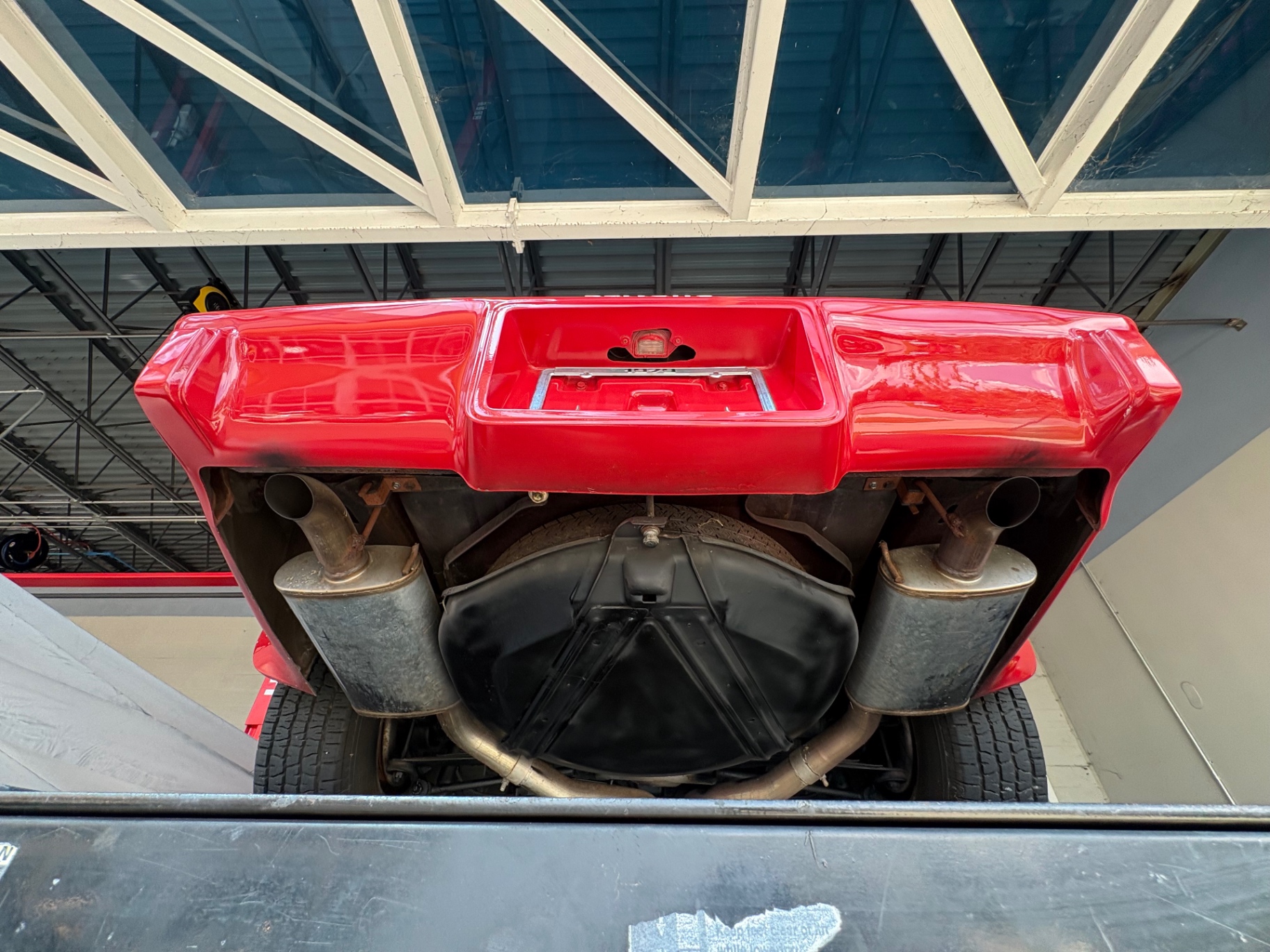
The Rally wheels are the correct period style for this car, fitted with BFGoodrich Radial T/A tires — a tire that was closely associated with the Corvette throughout the late 1970s and early 1980s and remains a popular correct-era choice today. The dual exhaust exits cleanly at the rear, framed by the body-colored bumper cover that was new for the 1978-79 redesign. That integrated rear fascia replaced the chrome bumper look of earlier C3s and gave the car a cleaner, more finished tail.
Conclusion
The 1979 Chevrolet Corvette was produced in record numbers because demand was there — buyers understood that this was a well-sorted, fully equipped American sports car with a 45-year parts supply chain and a driving experience that held up against considerably more expensive European alternatives. This example has the right engine, the right transmission, the right color, and an honest set of underpinnings that a serious buyer will want to inspect in person. It is not a trailer queen or a freshly restored show car. It is a 1979 Corvette that was driven, has documented character, and is ready for the road.
For more information or to schedule an in-person inspection, call Skyway Classics at 941-254-6608.
Disclaimer
Information found on the website is presented as given to us by the owner of the car, whether on consignment or from the owner we bought it from. Some Photos, materials for videos, descriptions and other information are provided by the consignor/seller and is deemed reliable, but Skyway Classics does not warranty or guarantee this information. Skyway Classics is not responsible for information that may incorrect or a publishing error. The decision to purchase should be based solely on the buyers personal inspection of the vehicle or by a professional inspection service prior to offer or purchase being made.
1979 Chevrolet Corvette — 350ci V8, 4-Speed Manual, T-Tops, Corvette Red
Why This Car Is Special
The 1979 Chevrolet Corvette holds a production record that still stands today. Chevrolet built 53,807 Corvettes that model year, making it the highest-volume production year in the nameplate's history up to that point. That number has never been surpassed. The C3 generation was in the final stretch of its 15-year run, and by 1979 Chevrolet had refined the formula considerably — the body was fully restyled from the 1978 redesign, the interior was improved with features borrowed from the pace car edition the year prior, and the standard equipment list grew longer than it had ever been. This was the Corvette at its most accessible, yet it still carried the bones of a genuine American sports car: a fiberglass body, independent suspension at all four corners, and a small-block V8 backed by a 4-speed manual gearbox.
This particular 1979 Chevrolet Corvette is finished in Corvette Red over a black leather interior — a color pairing that defined the car's era and remains the most recognizable combination the C3 ever wore. The odometer reads 66,706 miles, which for a car of this age suggests it was driven and enjoyed rather than hidden away, but not used up. The underside shots tell an important part of the story: the floorpan and frame rails are solid and well-coated, with no visible rot or patch work — a meaningful detail on any 45-year-old car, and especially important on a Corvette where the steel ladder frame is the structural core beneath that fiberglass shell.
Features List
- 350ci 5.7L V8 engine
- 4-Speed manual transmission
- T-Top removable roof panels
- Limited-slip differential
- 4-wheel power disc brakes
- Power steering
- Air conditioning
- Power windows
- Tilt and telescopic steering column
- Black leather bucket seats
- Center console
- Full gauge cluster with tachometer
- Electric clock
- Rear window defogger
- Rally wheels
- BFGoodrich Radial T/A tires
- Dual exhaust
- Sony Bluetooth stereo
- Fiberglass body
Mechanical
The engine under the hood is the L48 350ci 5.7-liter V8, which was the standard engine for 1979. In that model year it was rated at 195 horsepower — a figure that looks modest on paper, but context matters. The early 1970s emissions and compression ratio cuts had bottomed out, and Chevrolet was beginning to recover power numbers by the end of the decade. More importantly, the 350 small-block is one of the most proven, parts-supported V8 engines ever built. Rebuilds are straightforward, performance upgrades are well-documented, and finding a knowledgeable mechanic is never a problem. The engine bay photos show the block and accessories in honest, unrestored condition — this car has not been detailed to hide its history.
The 4-speed manual transmission is the configuration most drivers of this era actually wanted. In 1979, the majority of Corvette buyers were still ordering the manual, and the close-ratio or wide-ratio Muncie or Borg-Warner 4-speed was a defining part of the driving experience. Paired with a limited-slip differential, this car puts power to the pavement without the loss of control that an open diff invites under throttle. Four-wheel power disc brakes were a Corvette hallmark going back to 1965, and by 1979 the system was well sorted — significantly better stopping hardware than most of what was on the road at the time. The underside photos confirm the independent rear suspension with its distinctive multi-link geometry, which gave the C3 a handling advantage over most American cars of the period.
Interior
The black leather interior is in used but honest condition. The bucket seats show the kind of creasing and patina that accumulates on genuine leather over decades of real use — nothing torn or structurally compromised, but this is not a concours cabin. That said, the dashboard, door panels, and center console are all intact and present correctly. The steering wheel, a three-spoke design with the Corvette crossed-flags emblem at the center, matches the period look.
One of the best features of the 1979 Corvette interior is the instrument layout. The gauge cluster sits directly in front of the driver with a large speedometer and tachometer as the primary faces. The center console houses the secondary gauges — coolant temperature, oil pressure, fuel level, and voltmeter — arranged in a cluster that keeps all the information in easy view without requiring the driver to look away from the road. The electric clock is also present and accounted for in that center stack. The tilt and telescopic steering column lets the driver dial in their preferred seating position, a feature that was not universal on sports cars of this vintage.
The Sony Bluetooth stereo has been installed in the factory radio location and fits within the center stack without obvious modification to the surrounding trim. It provides modern audio connectivity while keeping the overall interior appearance tidy. Power windows are present and functional. Air conditioning rounds out the comfort equipment on a car that was clearly optioned for real-world use, not just weekend duty.
Exterior
Corvette Red is the color most people picture when they think of a C3 Corvette, and this car wears it well. The fiberglass body panels show no significant cracks or stress fractures visible in the photos, which is a meaningful checkpoint on any C3 — fiberglass doesn't rust, but it does crack around door edges, nose sections, and body seams if the car has been in accidents or handled roughly. The paint has the depth and reflectivity of a car that has been cared for, though this is not a fresh respray — it carries age-appropriate character.
The T-top roof panels are present and in place. The C3 T-top was introduced in 1968 as a workaround to preserve the open-air experience after federal rollover standards made a true convertible difficult to certify. By 1979, the T-top had become one of the defining visual and functional traits of the Corvette. Both panels are removable and store in the cargo area behind the seats. The rear window defogger keeps the fixed backlight clear in cooler weather — a practical feature that owners of open-top configurations appreciate more than they expect to.
The Rally wheels are the correct period style for this car, fitted with BFGoodrich Radial T/A tires — a tire that was closely associated with the Corvette throughout the late 1970s and early 1980s and remains a popular correct-era choice today. The dual exhaust exits cleanly at the rear, framed by the body-colored bumper cover that was new for the 1978-79 redesign. That integrated rear fascia replaced the chrome bumper look of earlier C3s and gave the car a cleaner, more finished tail.
Conclusion
The 1979 Chevrolet Corvette was produced in record numbers because demand was there — buyers understood that this was a well-sorted, fully equipped American sports car with a 45-year parts supply chain and a driving experience that held up against considerably more expensive European alternatives. This example has the right engine, the right transmission, the right color, and an honest set of underpinnings that a serious buyer will want to inspect in person. It is not a trailer queen or a freshly restored show car. It is a 1979 Corvette that was driven, has documented character, and is ready for the road.
For more information or to schedule an in-person inspection, call Skyway Classics at 941-254-6608.
Disclaimer
Information found on the website is presented as given to us by the owner of the car, whether on consignment or from the owner we bought it from. Some Photos, materials for videos, descriptions and other information are provided by the consignor/seller and is deemed reliable, but Skyway Classics does not warranty or guarantee this information. Skyway Classics is not responsible for information that may incorrect or a publishing error. The decision to purchase should be based solely on the buyers personal inspection of the vehicle or by a professional inspection service prior to offer or purchase being made.
1979 Chevrolet
Corvette C3
Why Choose Skyway Classics?
Explore our curated inventory of classic and collector cars—thoughtfully selected, ready to drive, and supported by experts who make ownership simple.
Expert Curation
Every vehicle is hand-selected by our experts for quality, authenticity, and investment potential.
Fast Transactions
Streamlined buying and selling process with quick financing and immediate delivery options.
Only National Dealer With Classic Service & Repair
We’re the only national dealership that services and repairs the classics we sell—before and after the sale.
Nationwide Network
Access to our extensive network of collectors, restorers, and classic car enthusiasts nationwide.
Concierge Ownership Support
From financing and insurance to paperwork, shipping, and titling—we handle the details so you can enjoy the drive.
Passion-Driven Service
We're classic car enthusiasts first, providing personalized service with genuine passion for the hobby.