
1972 Pontiac
Grand Prix Model J
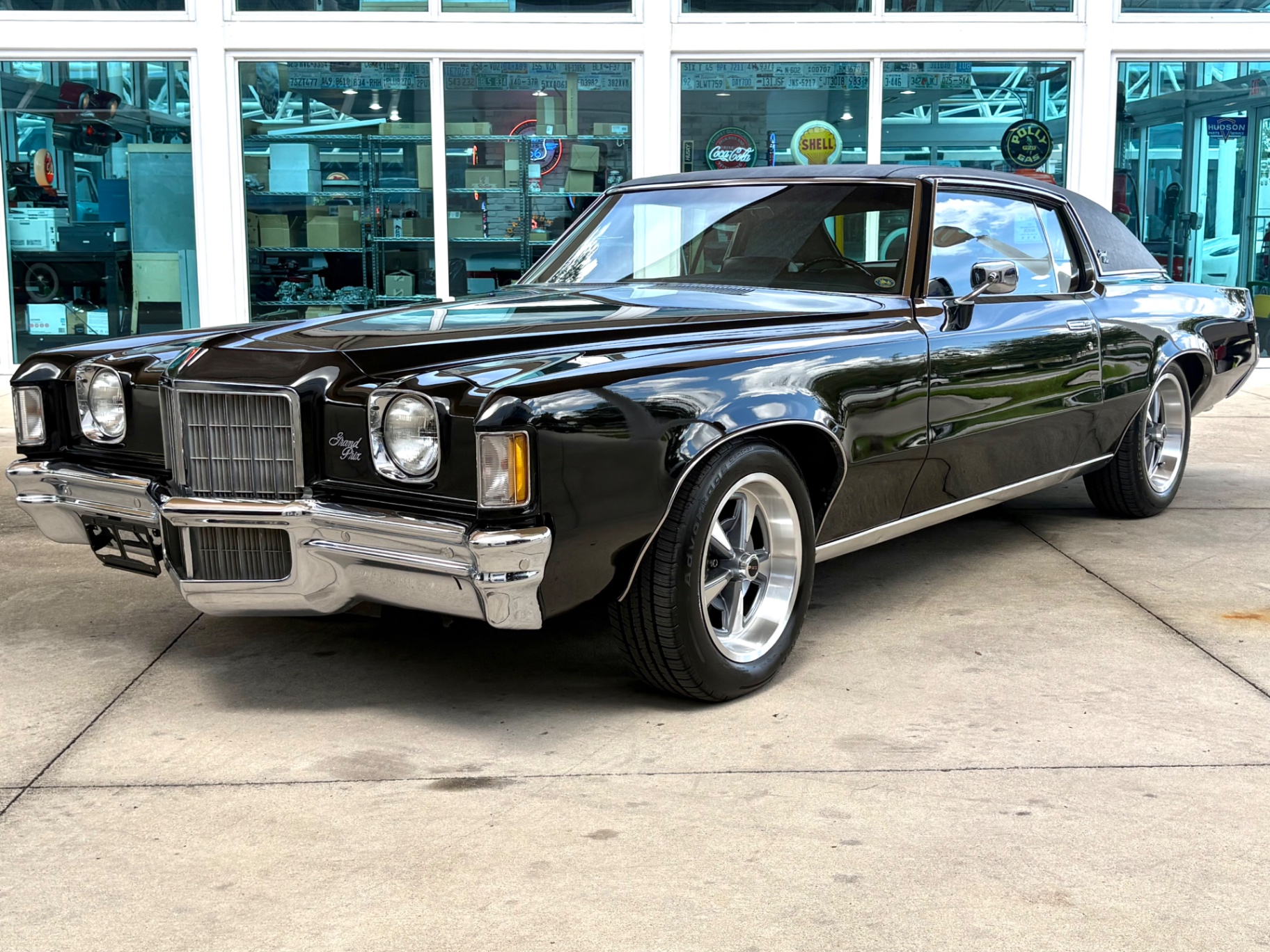
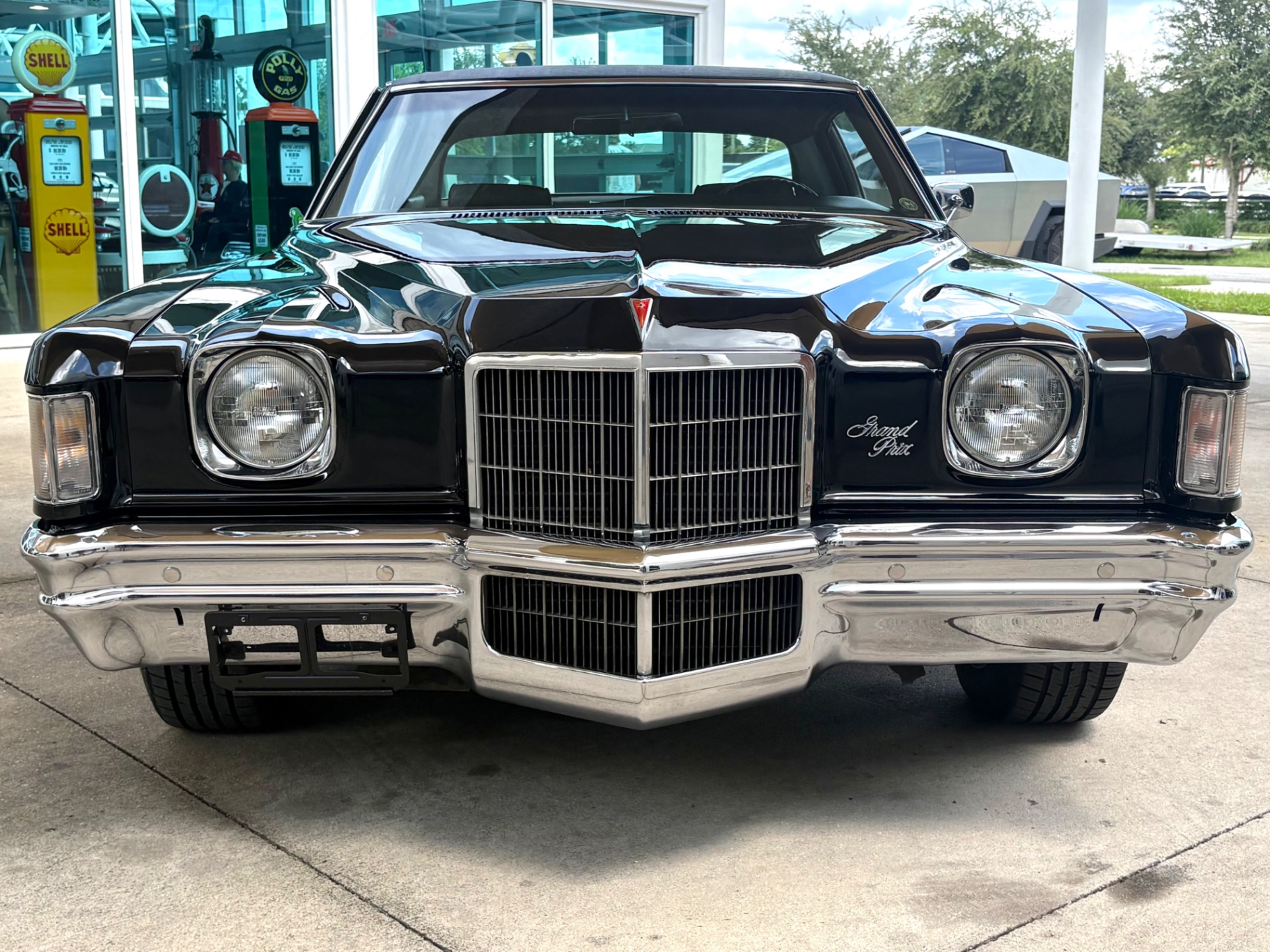
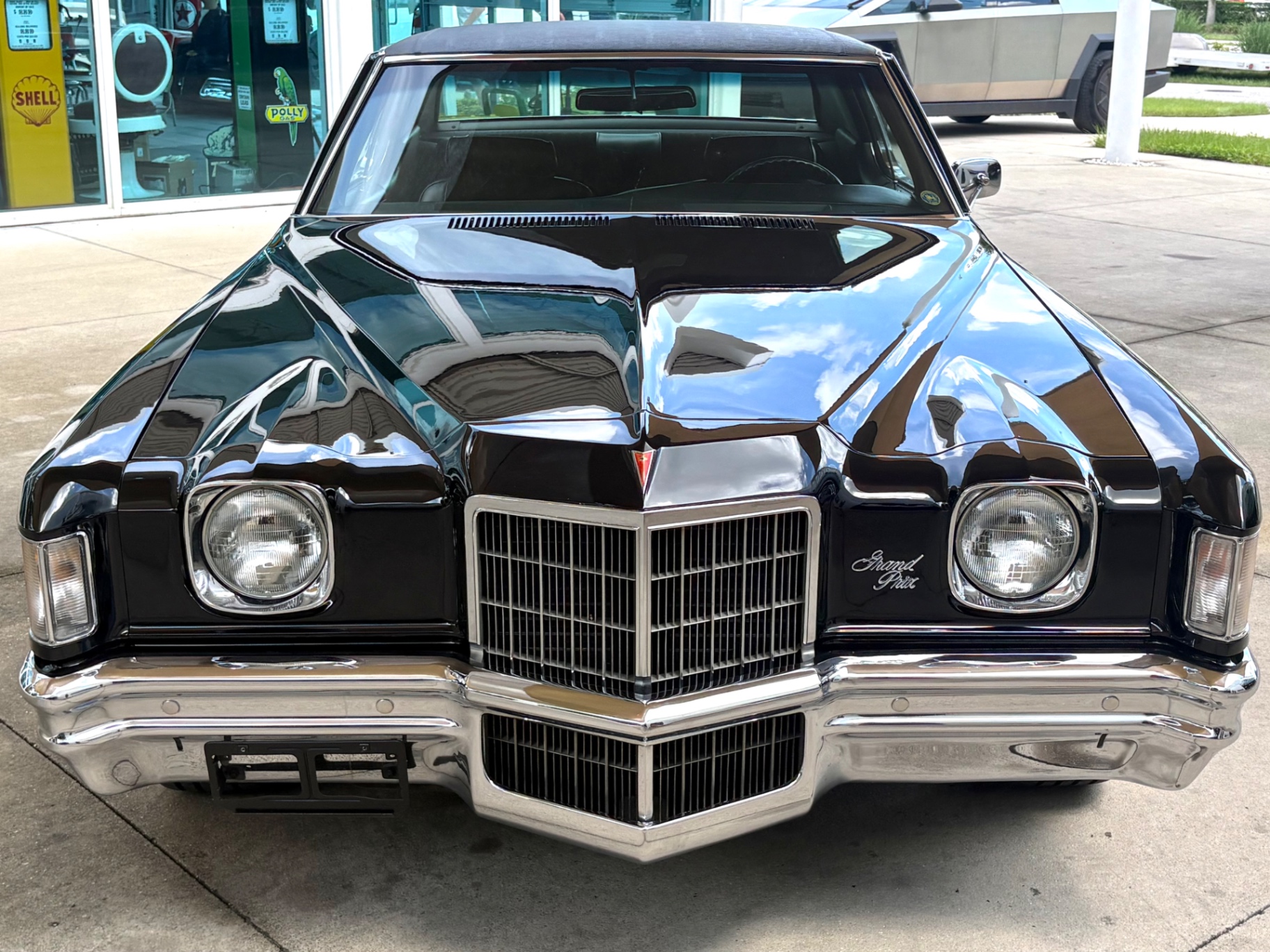
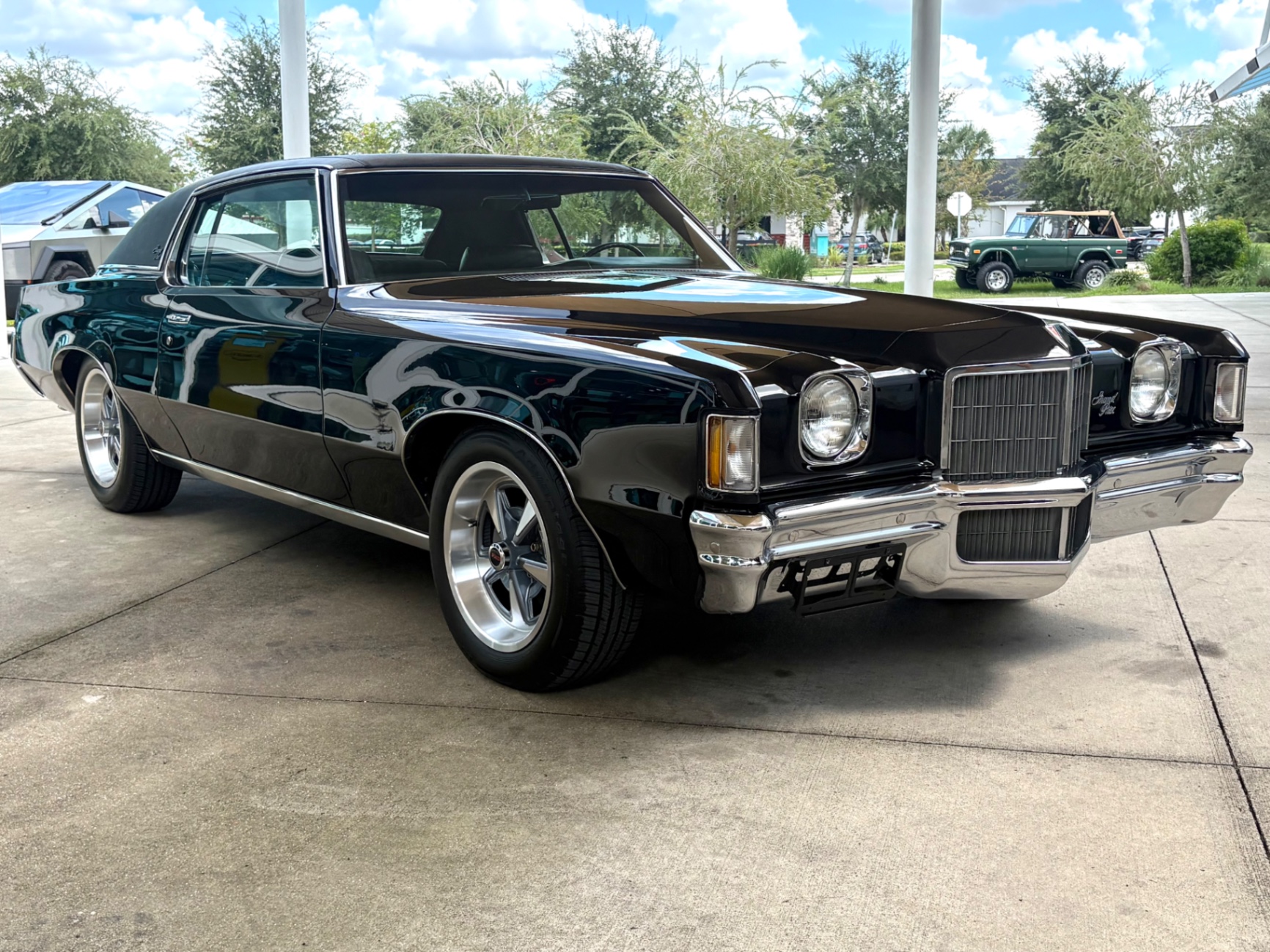
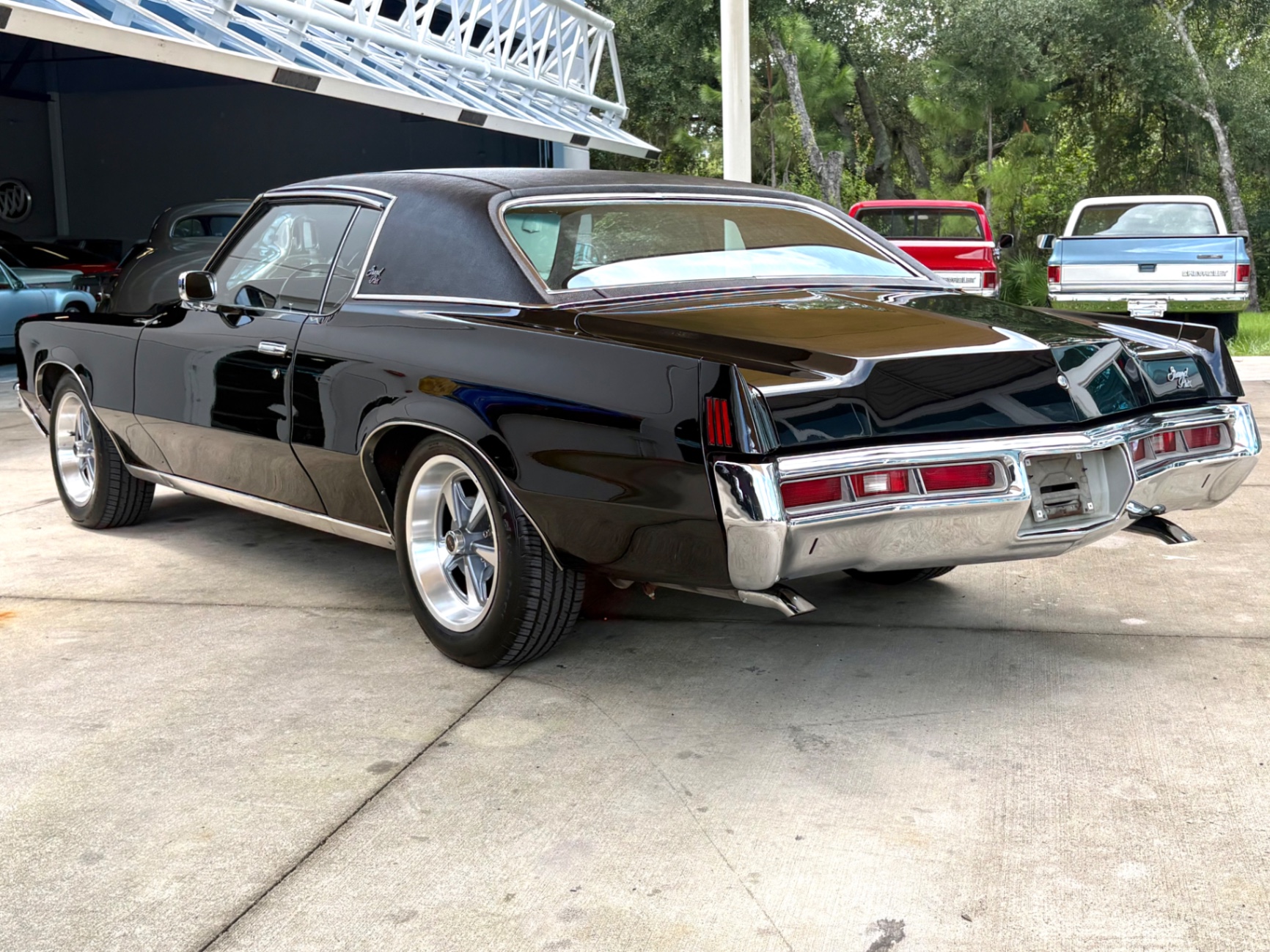
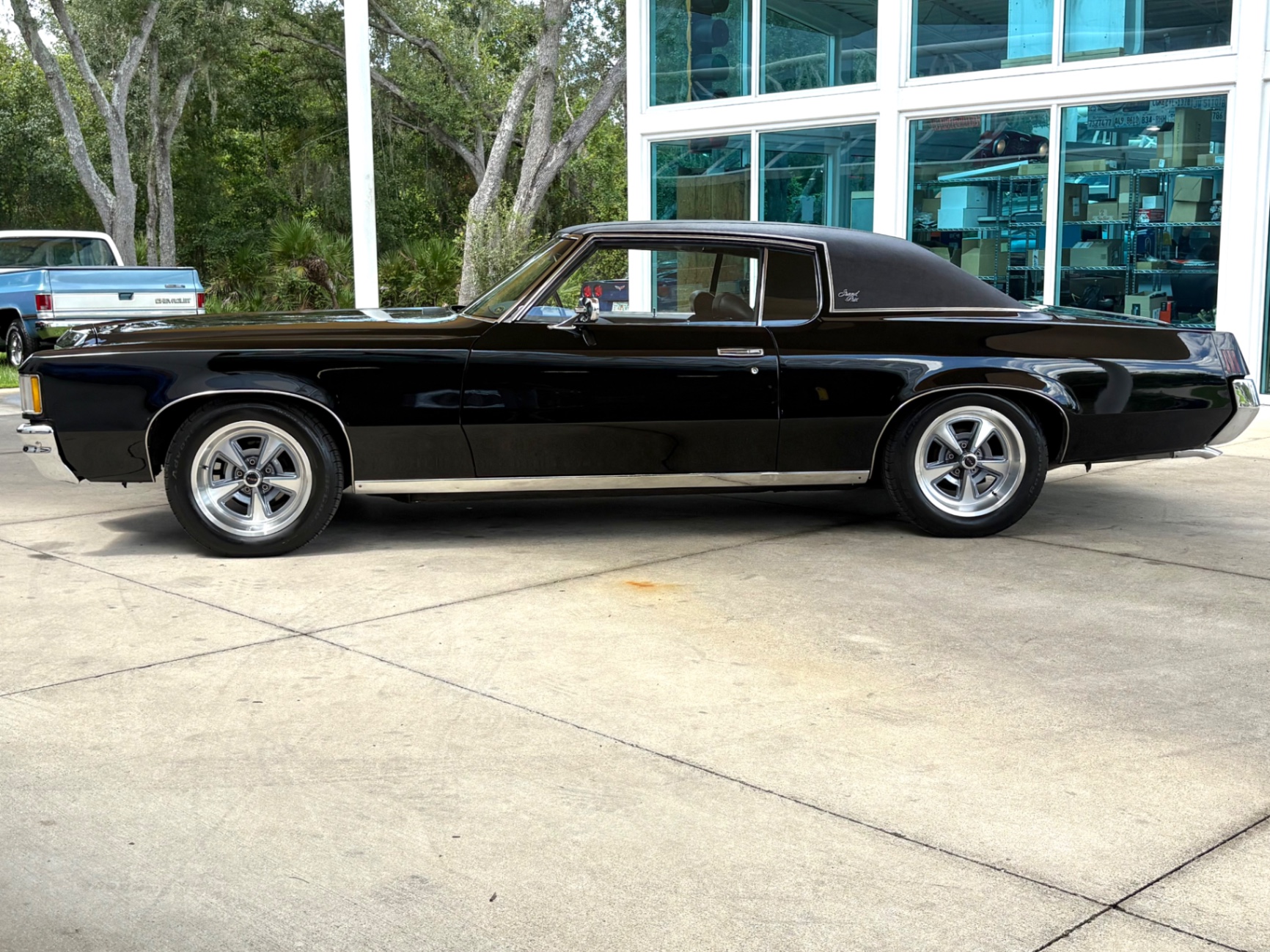
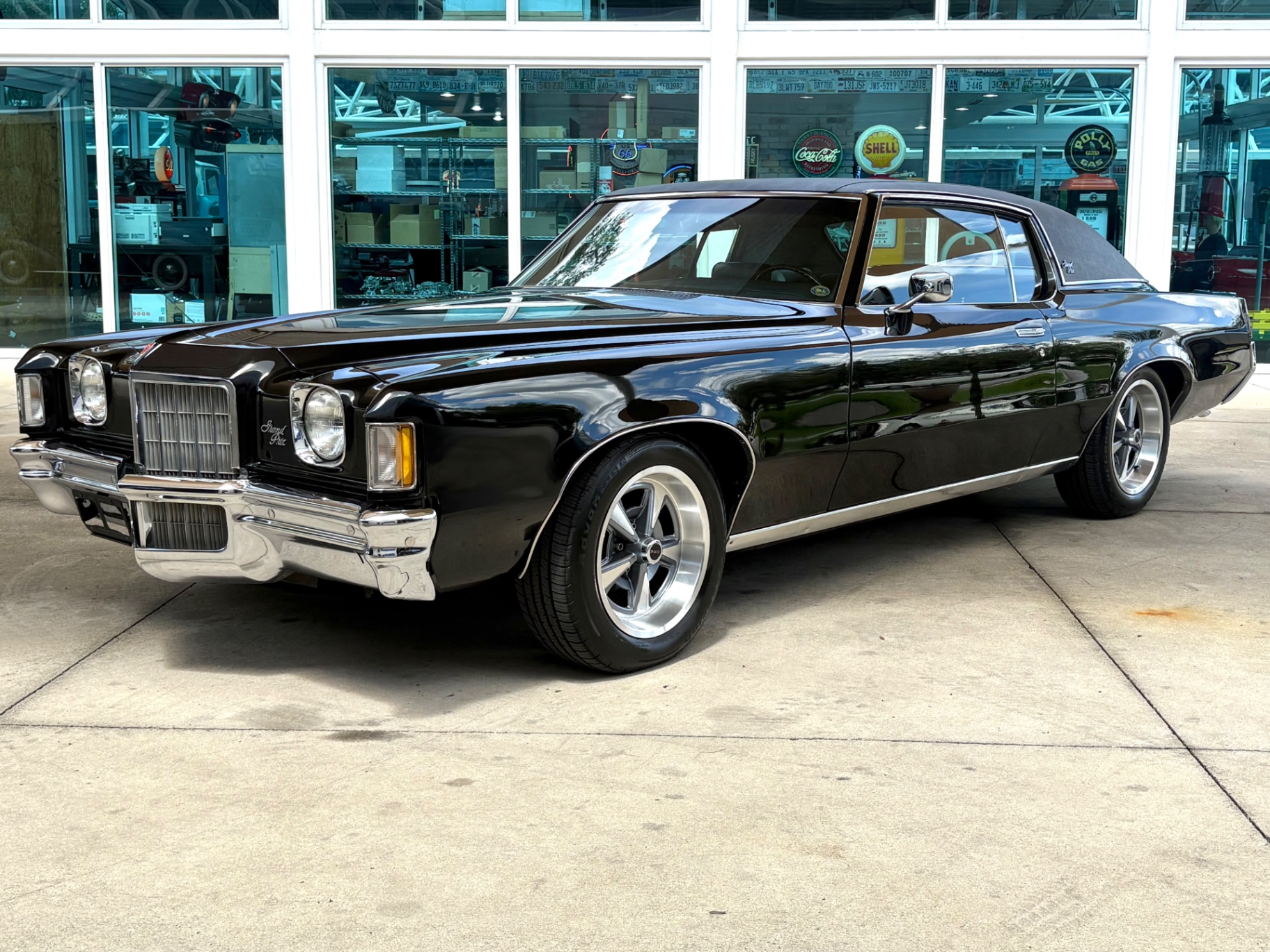
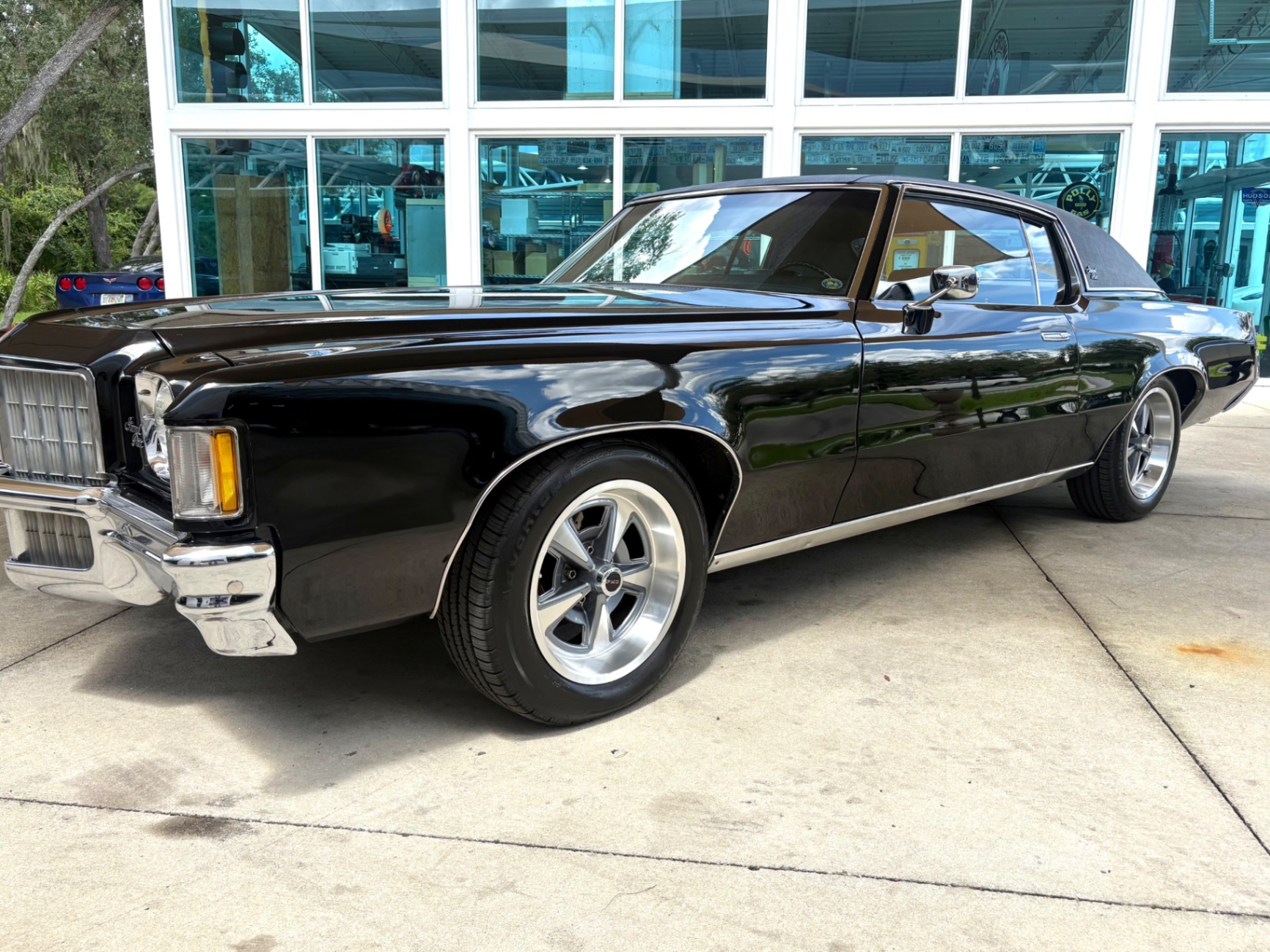
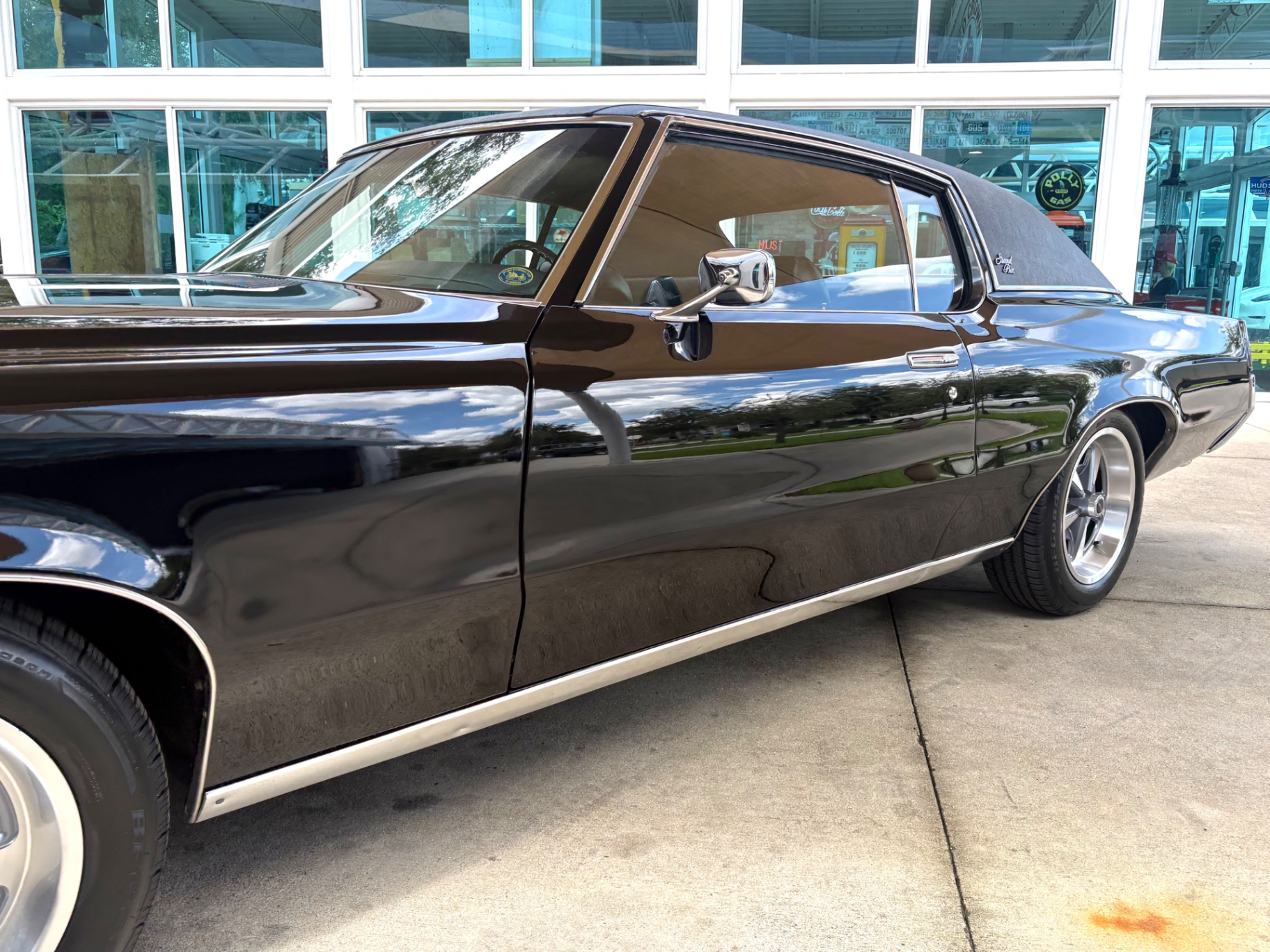
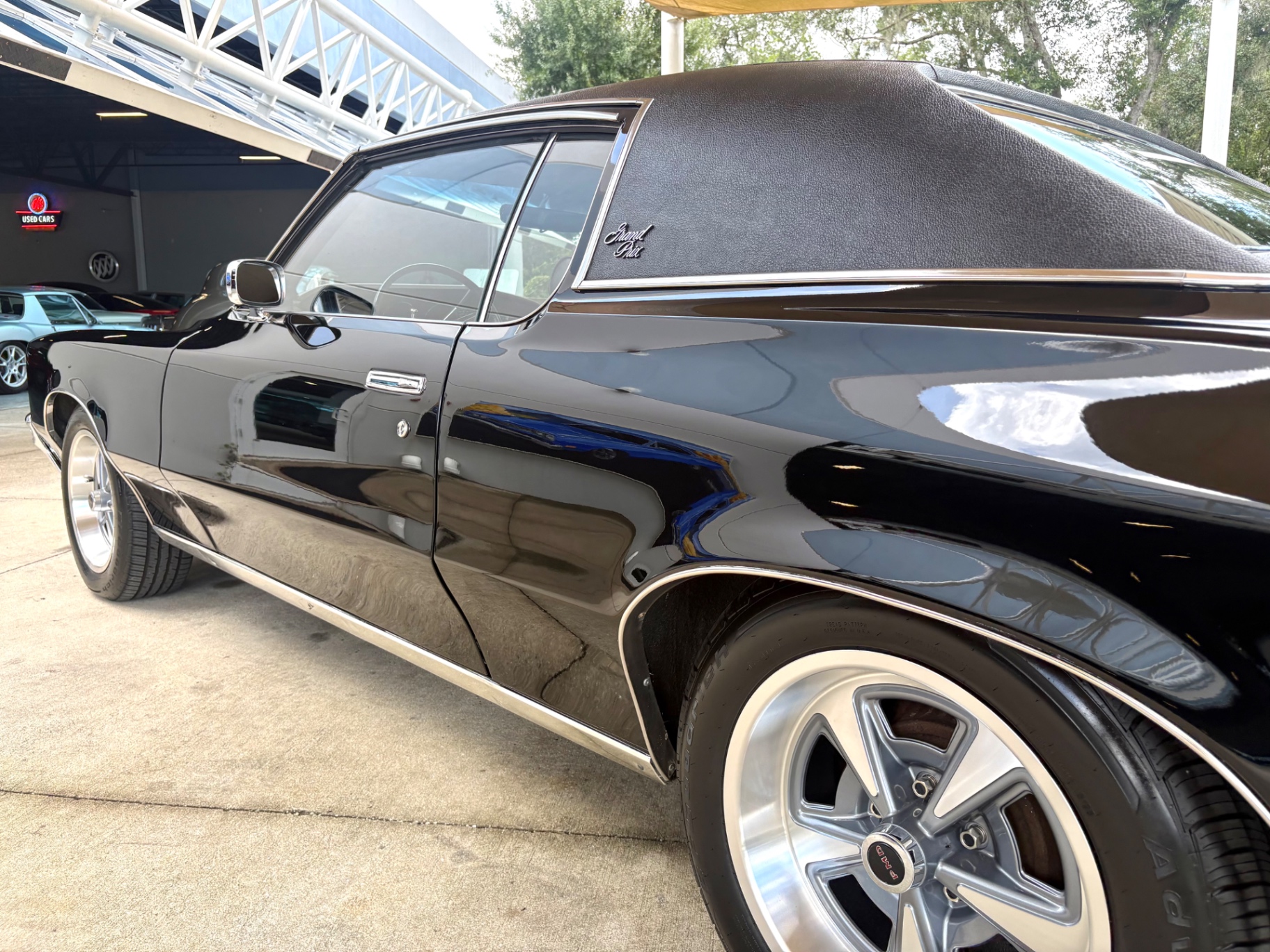
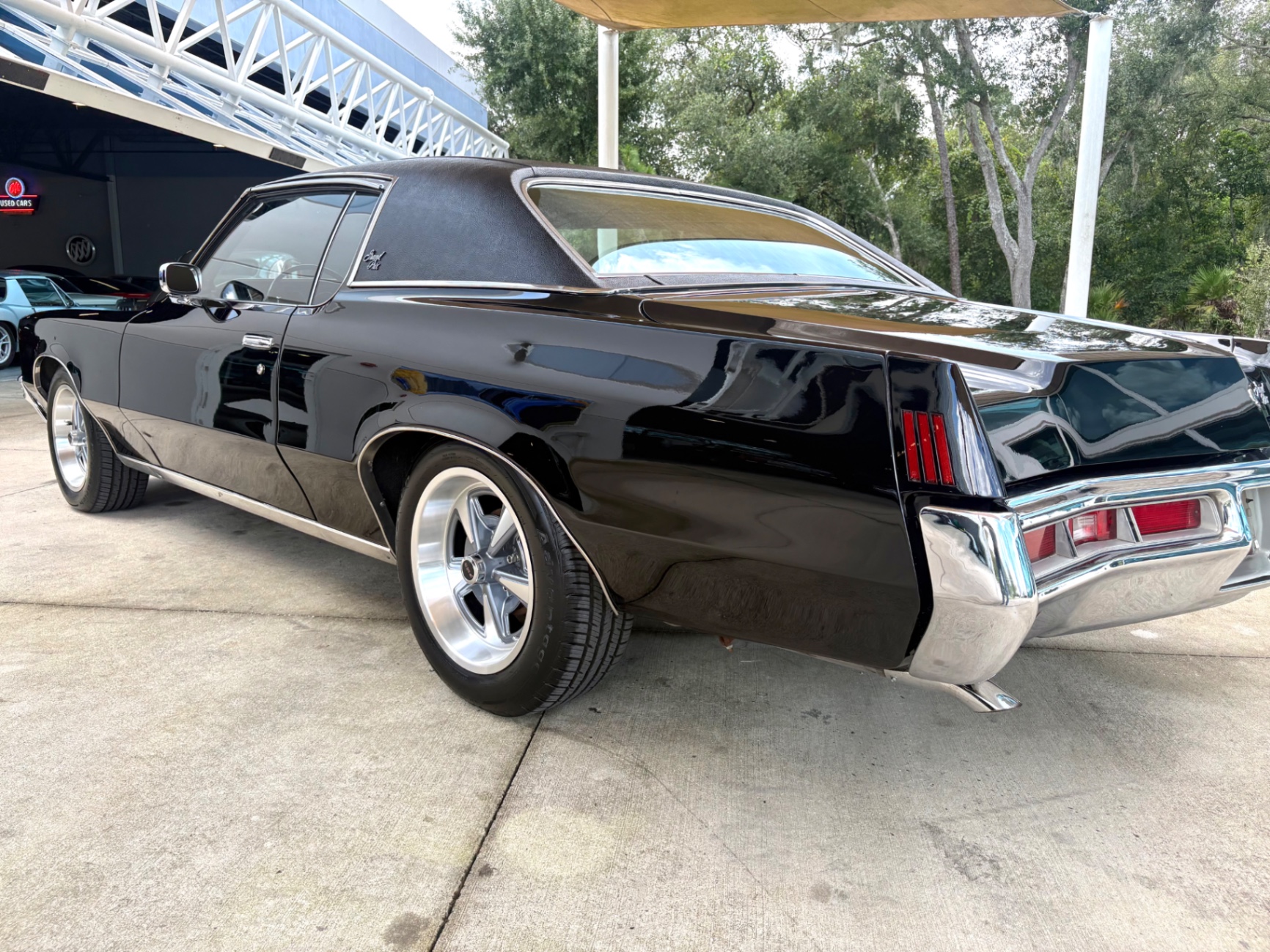
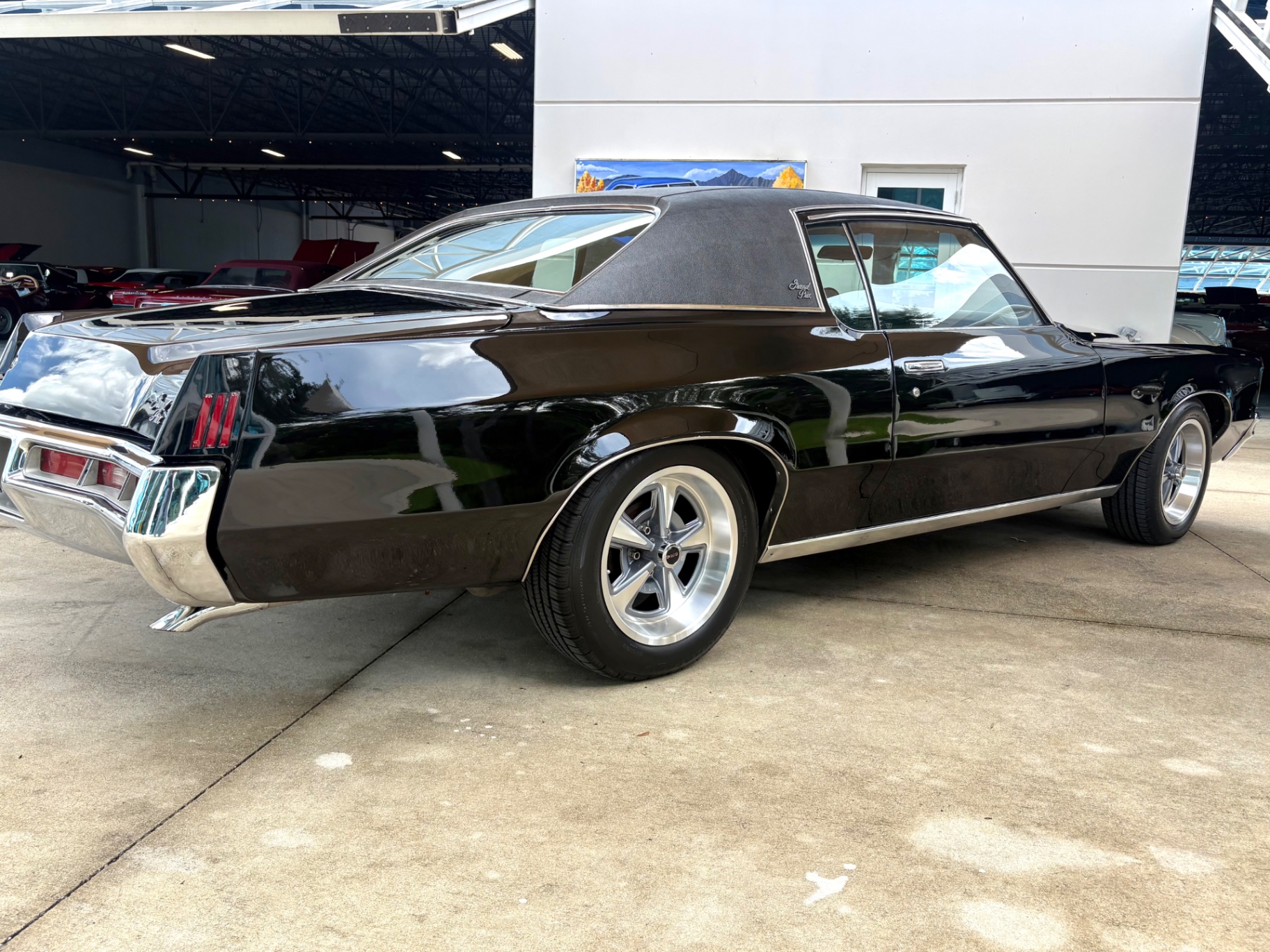
1972 Pontiac Grand Prix — Starlight Black, 400ci V8, Solid Florida Car
Why This Car Is Special
The 1972 Pontiac Grand Prix occupies a specific and interesting place in GM history. It was the second model year of the third-generation Grand Prix, a platform that Pontiac had completely redesigned for 1969 on a shorter, more personal-luxury-oriented wheelbase of 118 inches — down from the full-size 121-inch platform it previously shared with the Bonneville and Catalina. That redesign was a direct response to the Ford Thunderbird and the emerging personal luxury segment, and it worked. The Grand Prix became one of Pontiac's strongest sellers almost immediately.
By 1972, the muscle car era was winding down hard. New emissions regulations and insurance pressure had compressed compression ratios across the board, and Pontiac switched from gross horsepower ratings to the more honest SAE net figures that year — a change that made many engines look weaker on paper than they actually were in practice. The 400 cubic inch V8, however, remained the standard engine in the Grand Prix for 1972 and continued to deliver genuine torque and a character that smaller-displacement alternatives simply could not match. This was also the final year Pontiac would offer the 400 in the Grand Prix before displacement choices shifted in subsequent model years, giving the 1972 Grand Prix with its 400 a quiet historical significance among Pontiac enthusiasts.
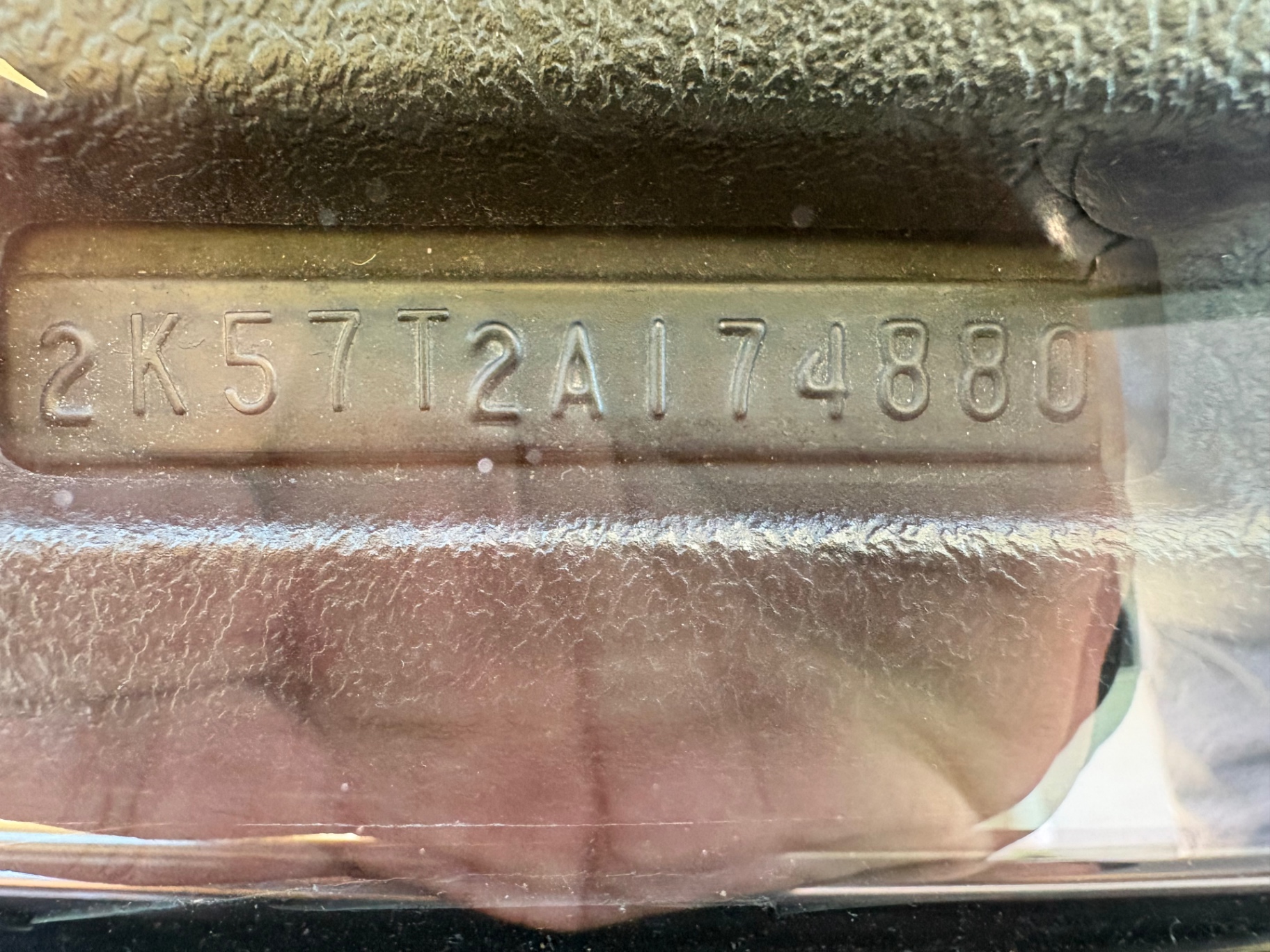
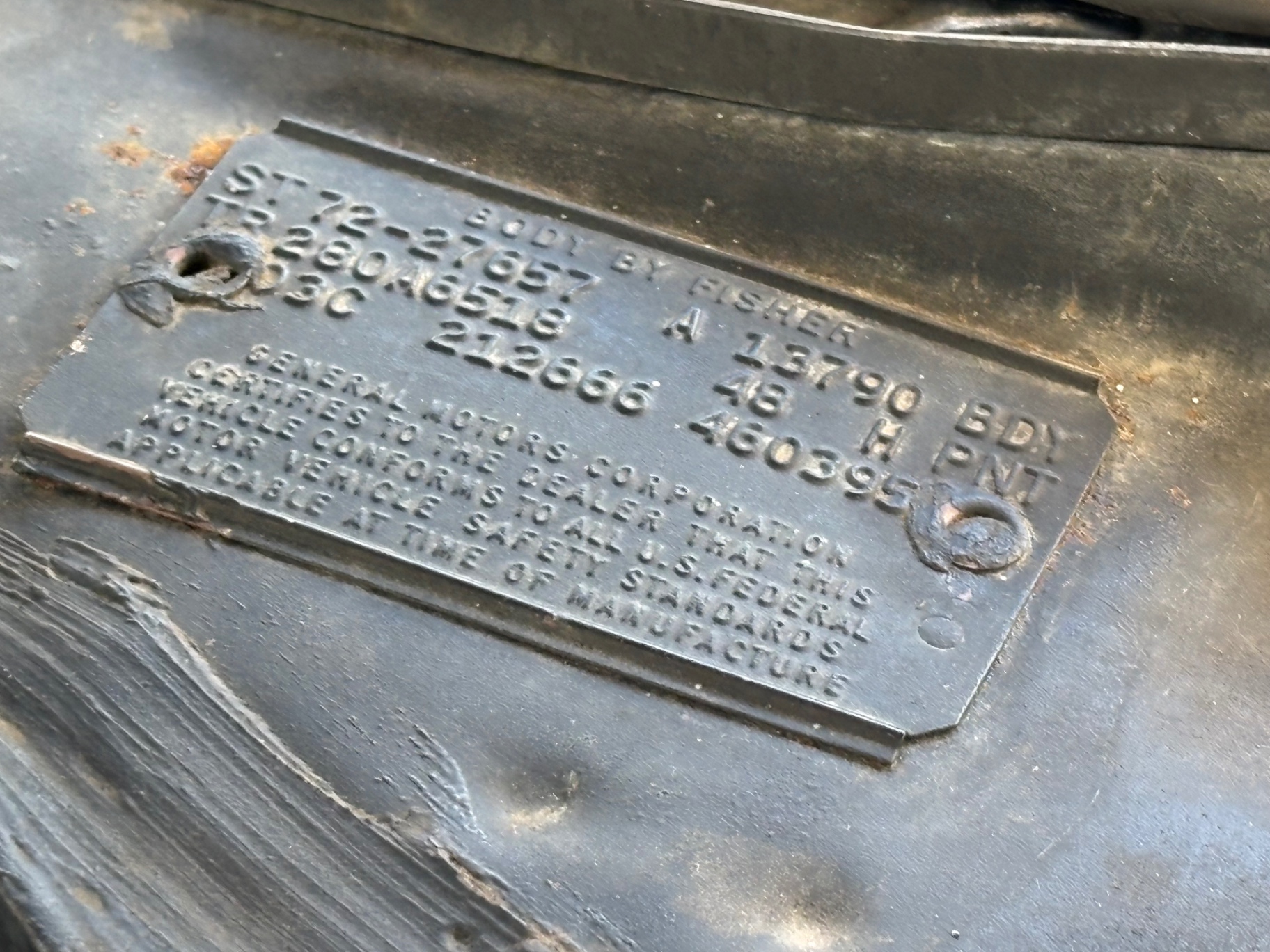
The VIN on this car decodes to confirm it was built at the Pontiac, Michigan assembly plant, with a body style of hardtop coupe and the 400ci V8 as the factory engine. The "T" in the VIN's engine position confirms the 400. This is a correctly documented, correctly powered example.
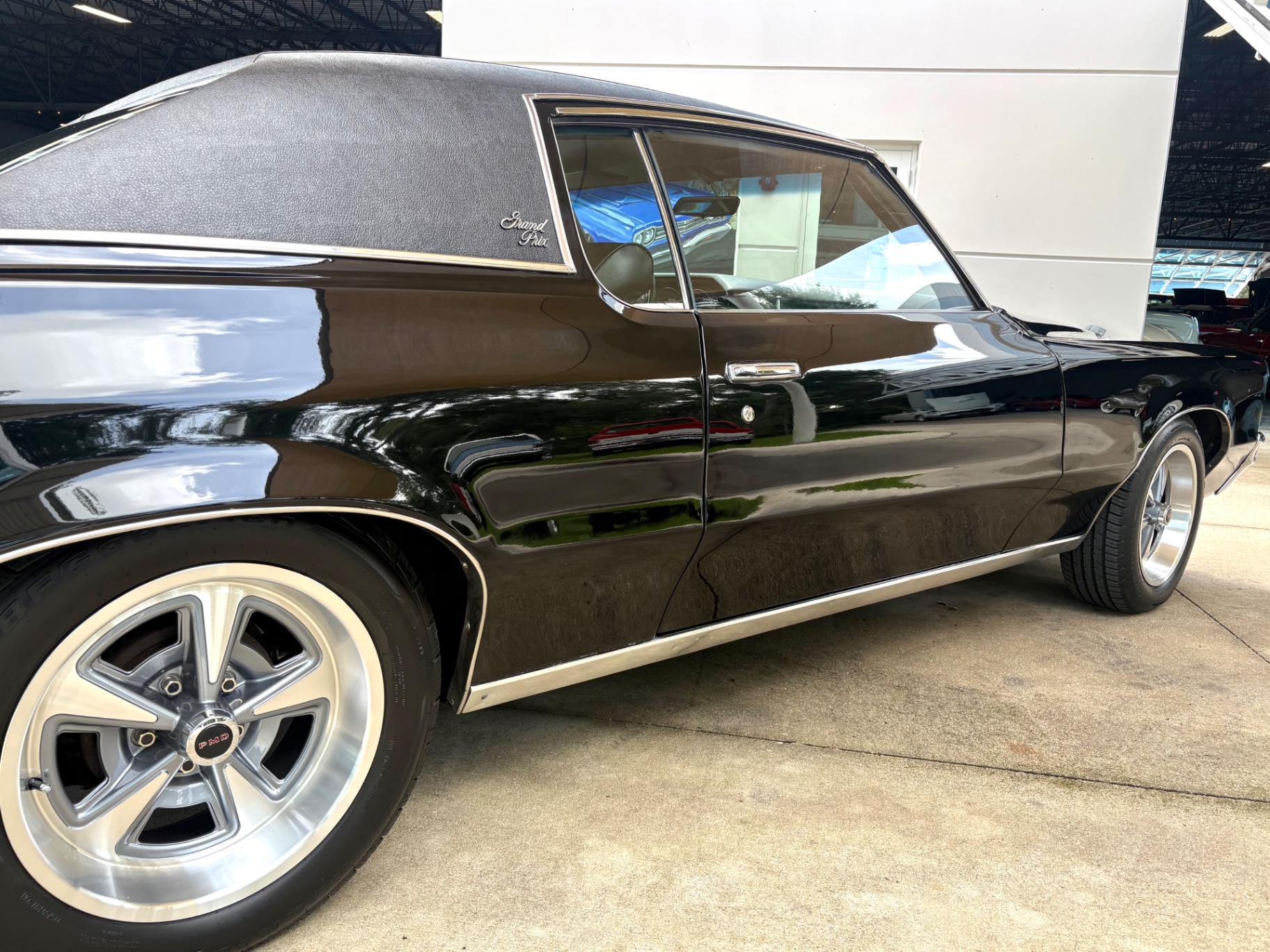
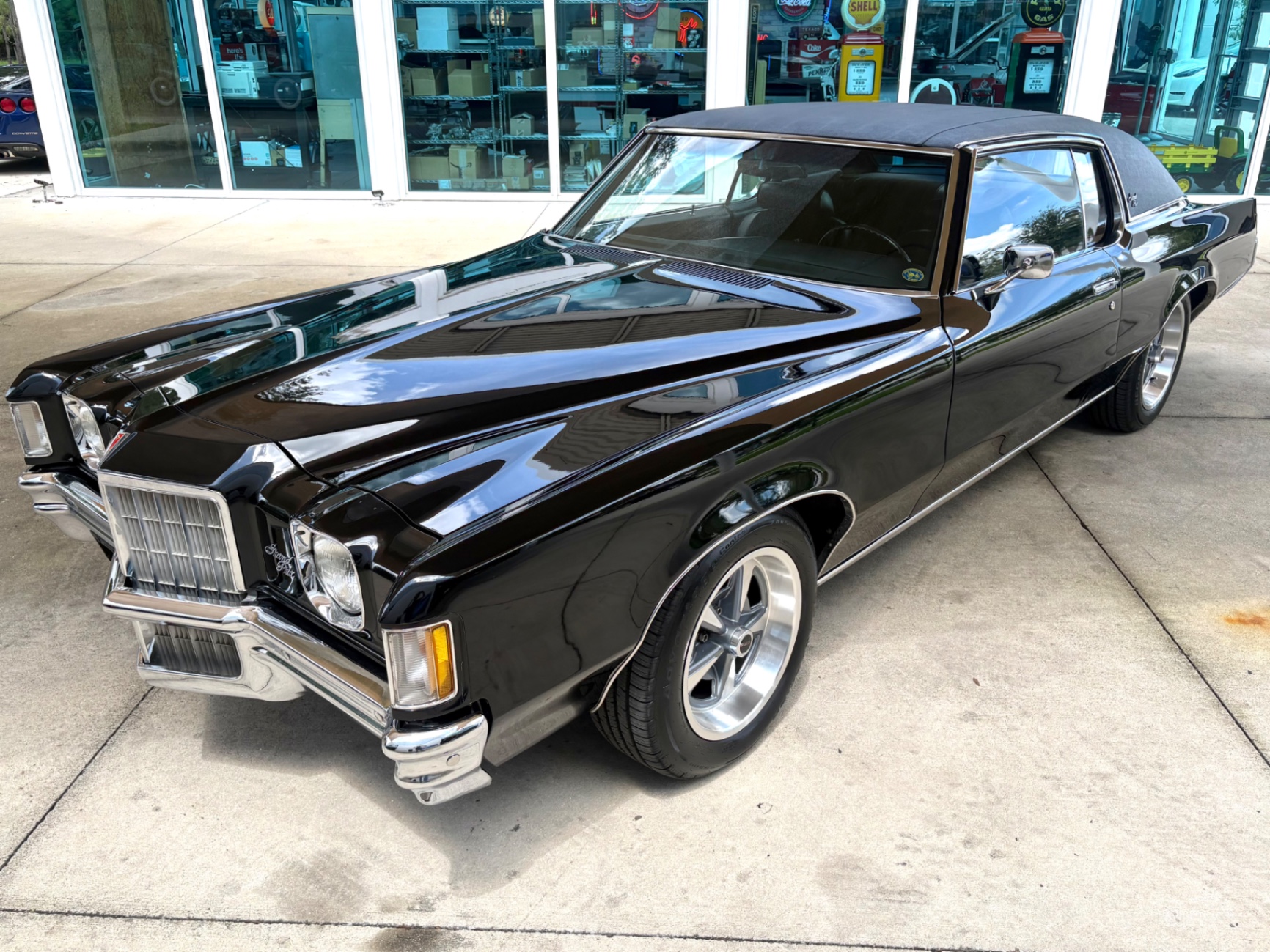
What makes this specific car compelling beyond the history is the combination of the Starlight Black exterior, black vinyl top, and a fully black interior — a color combination that gives the Grand Prix's long hood and formal roofline a clean, intentional look that holds up well five decades later. Add a solid undercarriage, a full complement of correct factory comfort options, and custom PMD alloy wheels that keep the period aesthetic while modernizing the stance, and you have a Grand Prix that is ready to use, not just display.
Features List
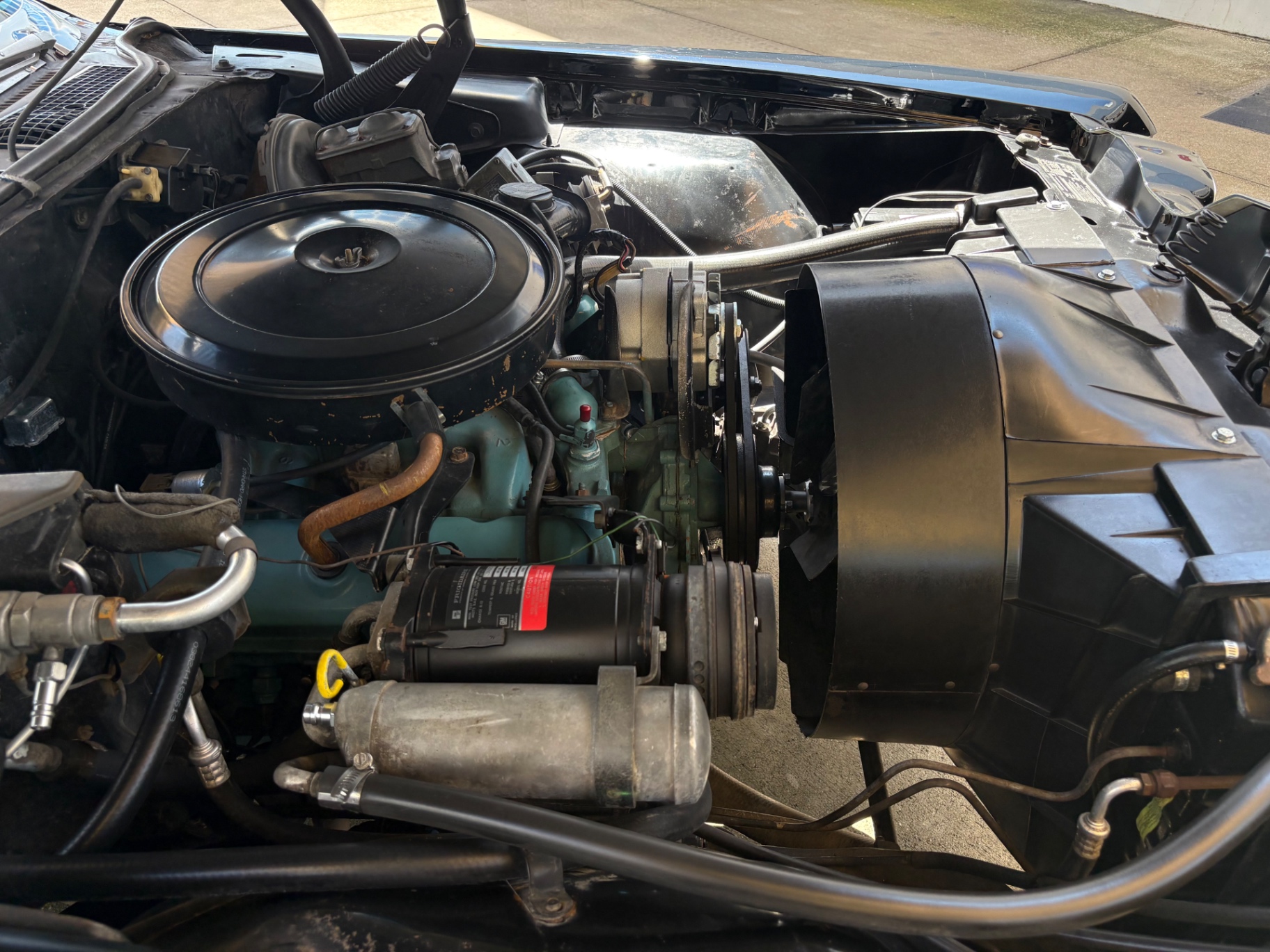
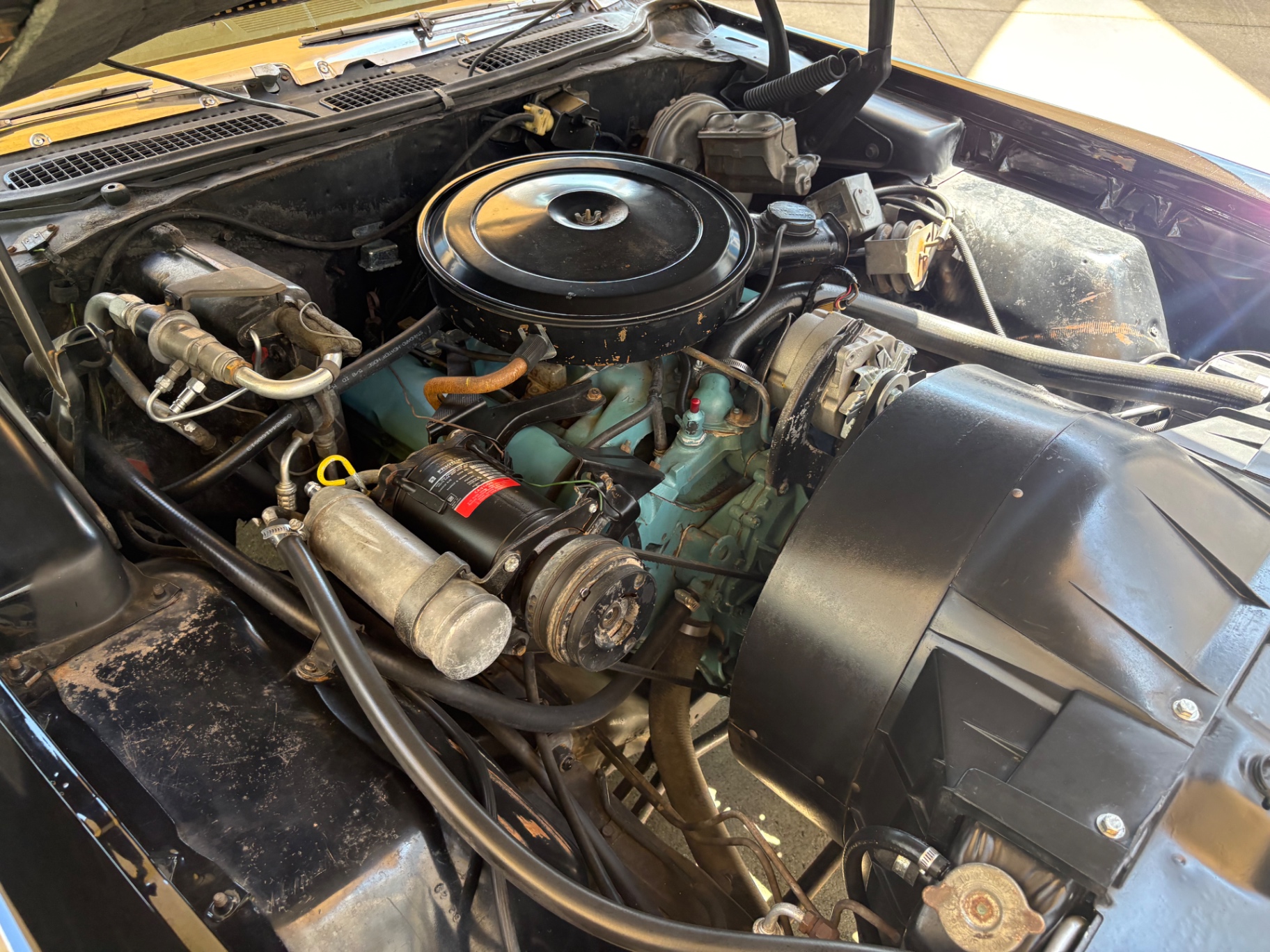
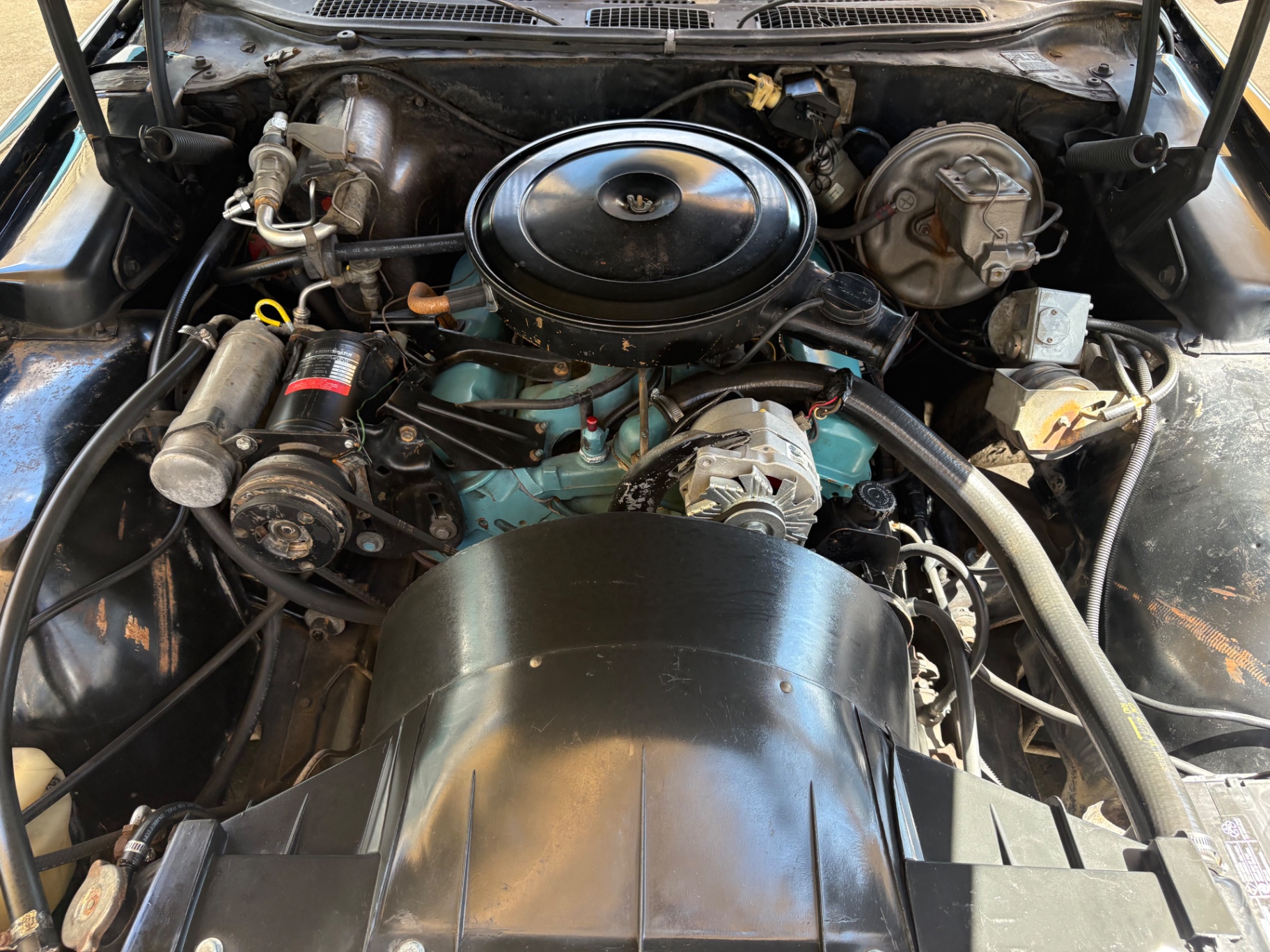
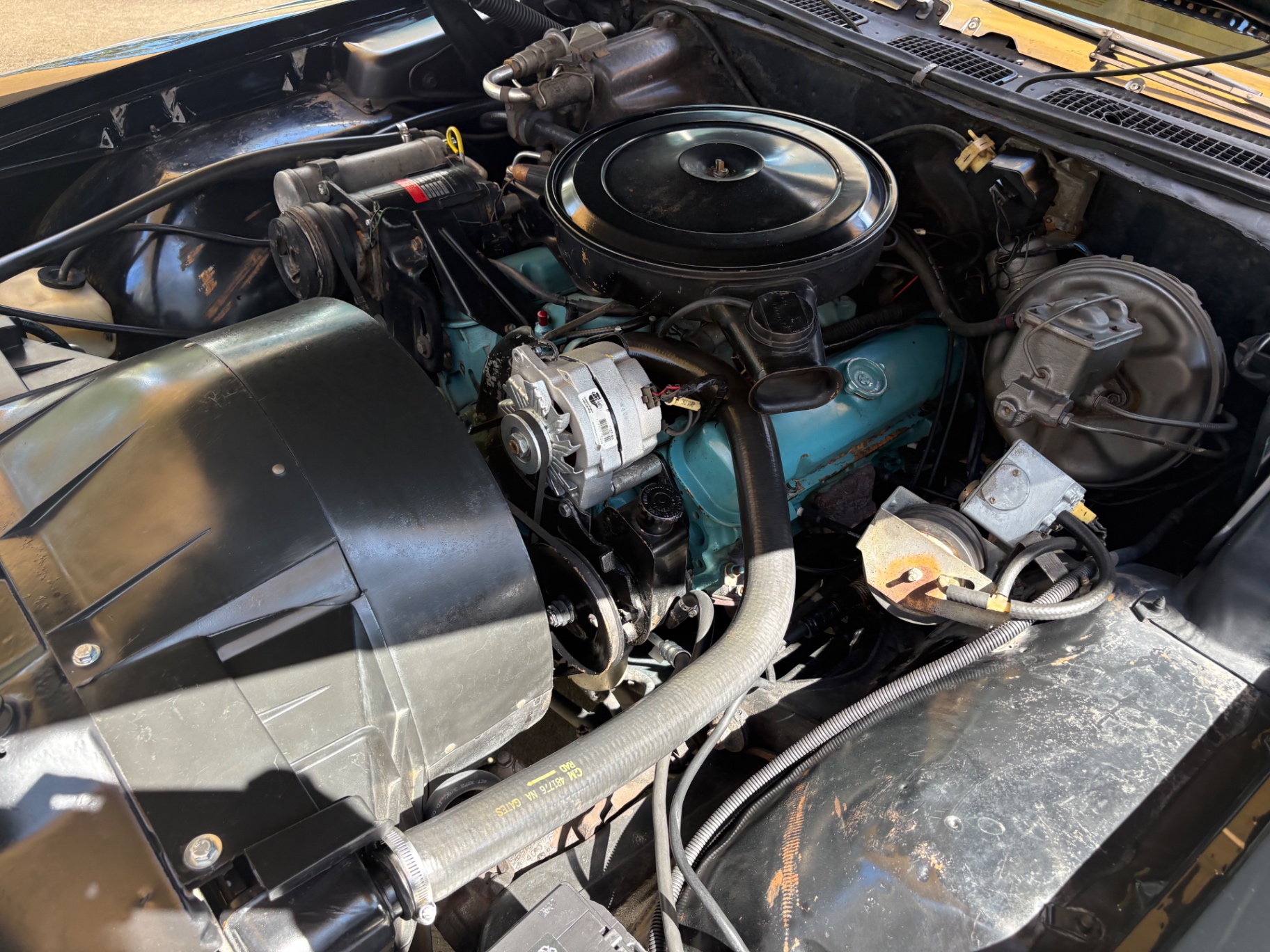
- 400ci Pontiac V8 engine with 4-barrel carburetor
- Hydra-Matic 3-speed automatic transmission
- Dual exhaust
- Front disc brakes with power assist
- Power steering
- Air conditioning
- Power windows
- Tilt steering column
- AM/FM radio (Delco)
- Rally clock
- Wood grain dash trim
- Black vinyl bench seats with cloth inserts
- Black vinyl top
- Custom PMD alloy wheels
- Chrome bumpers, front and rear
- Solid undercarriage
Mechanical
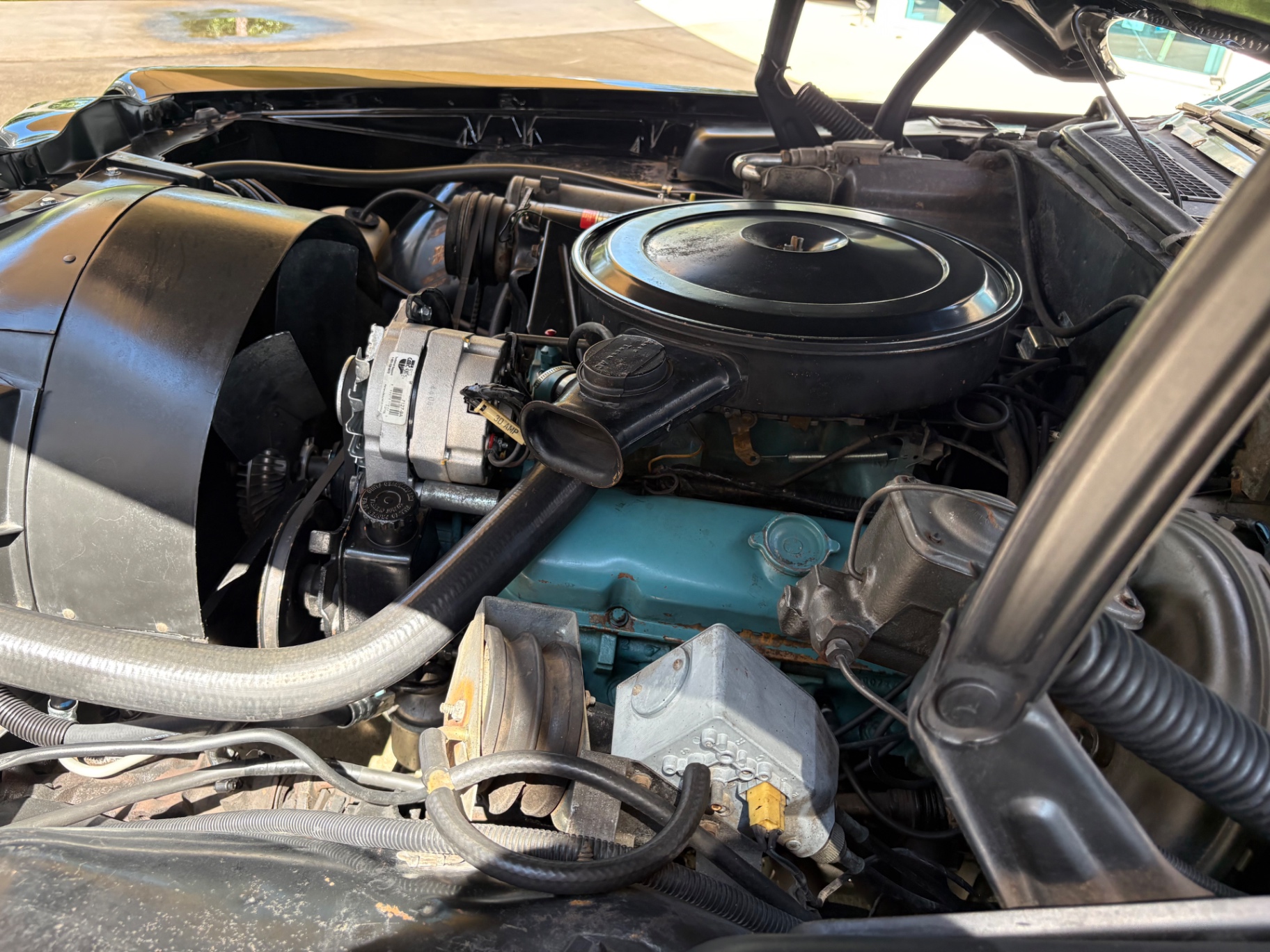
The 400 cubic inch Pontiac V8 was a different engine from the Chevrolet 400 and should not be confused with it. Pontiac developed and manufactured its own V8 family, and the 400 was among the most respected displacement options in that lineup throughout the late 1960s and into the early 1970s. Fed by a 4-barrel carburetor, it produces broad, usable torque across a wide RPM range — the kind of power delivery that suits a large personal luxury coupe well. It does not need to be revved hard to move the car with authority.
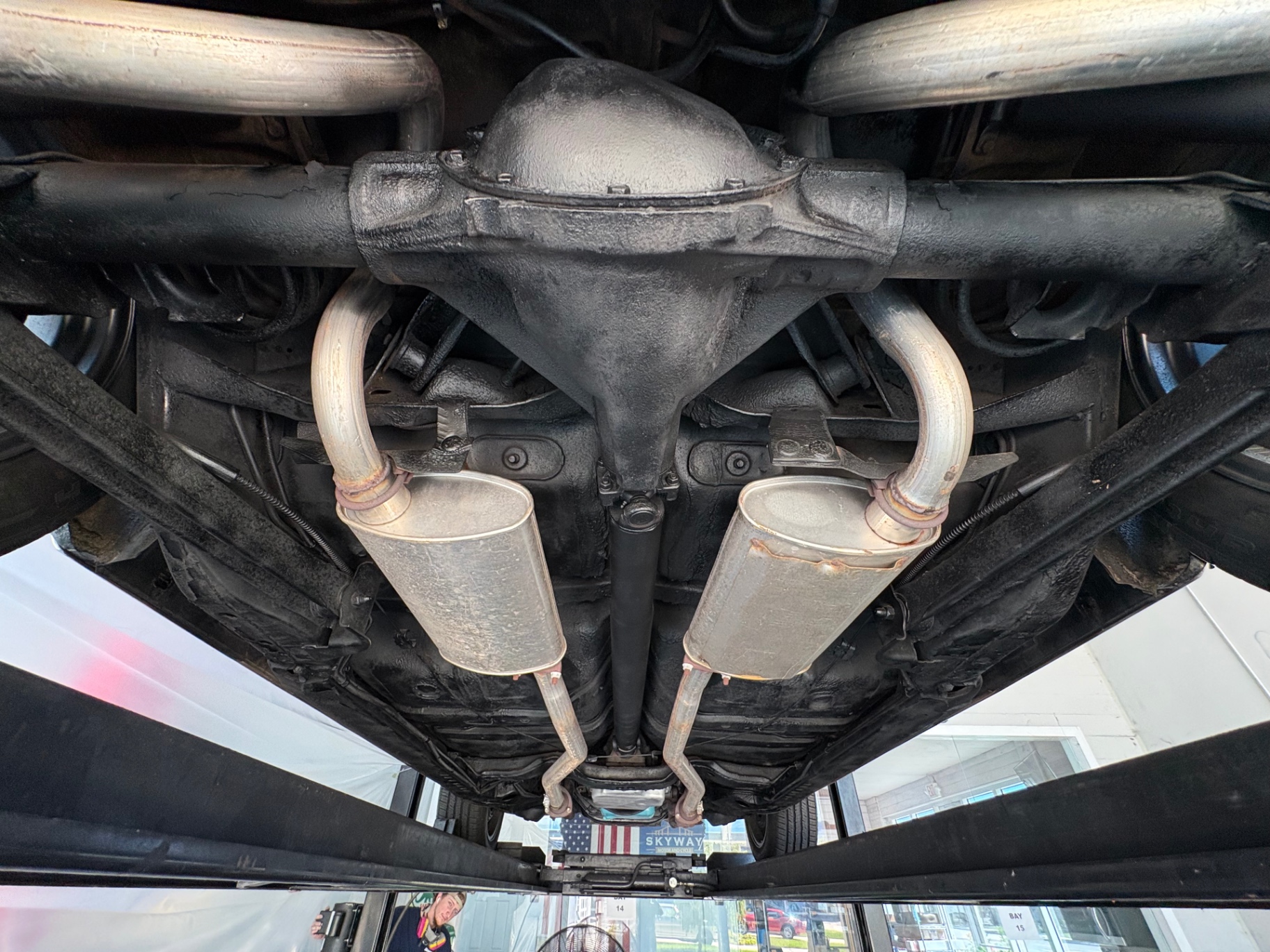
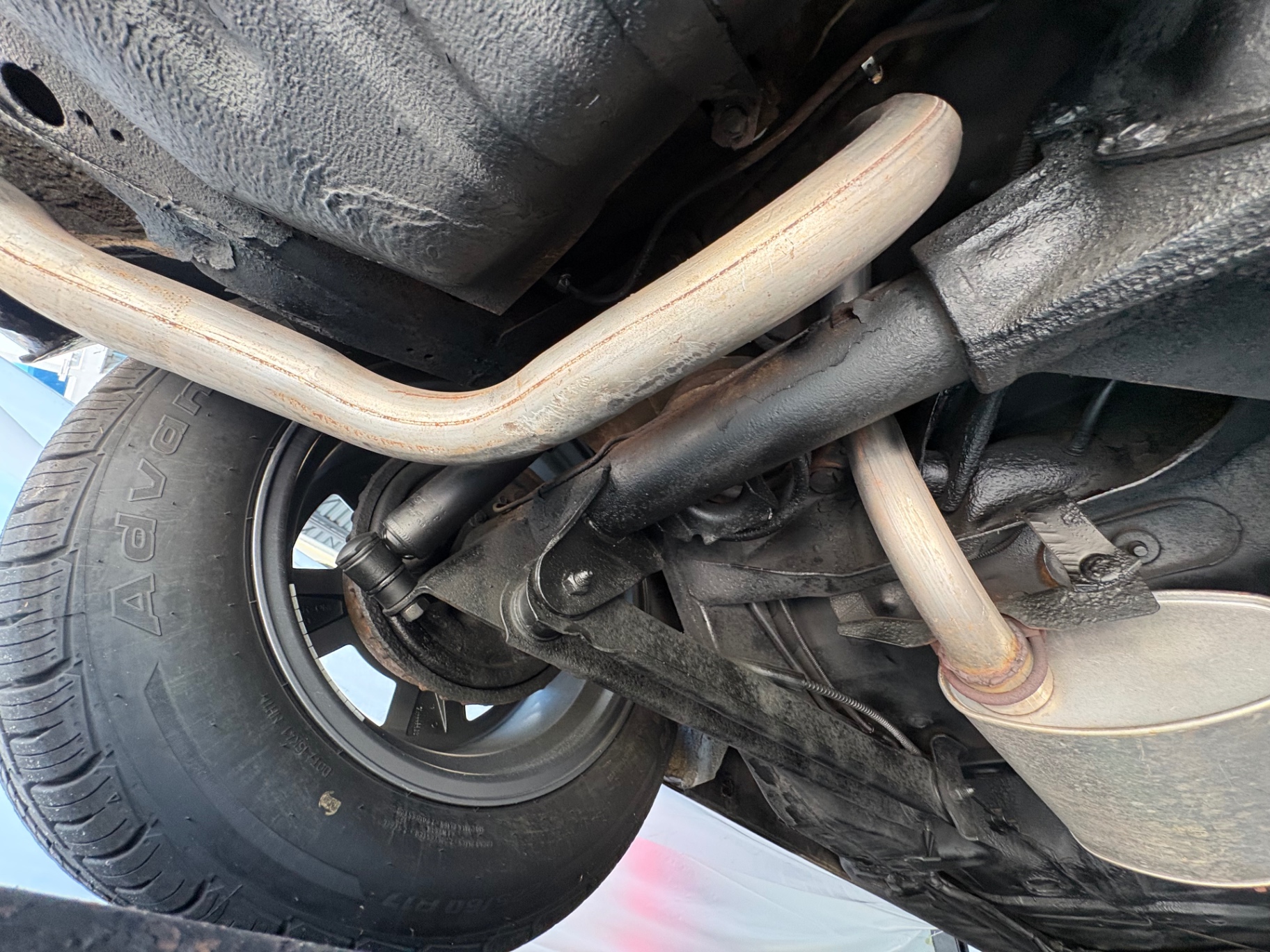
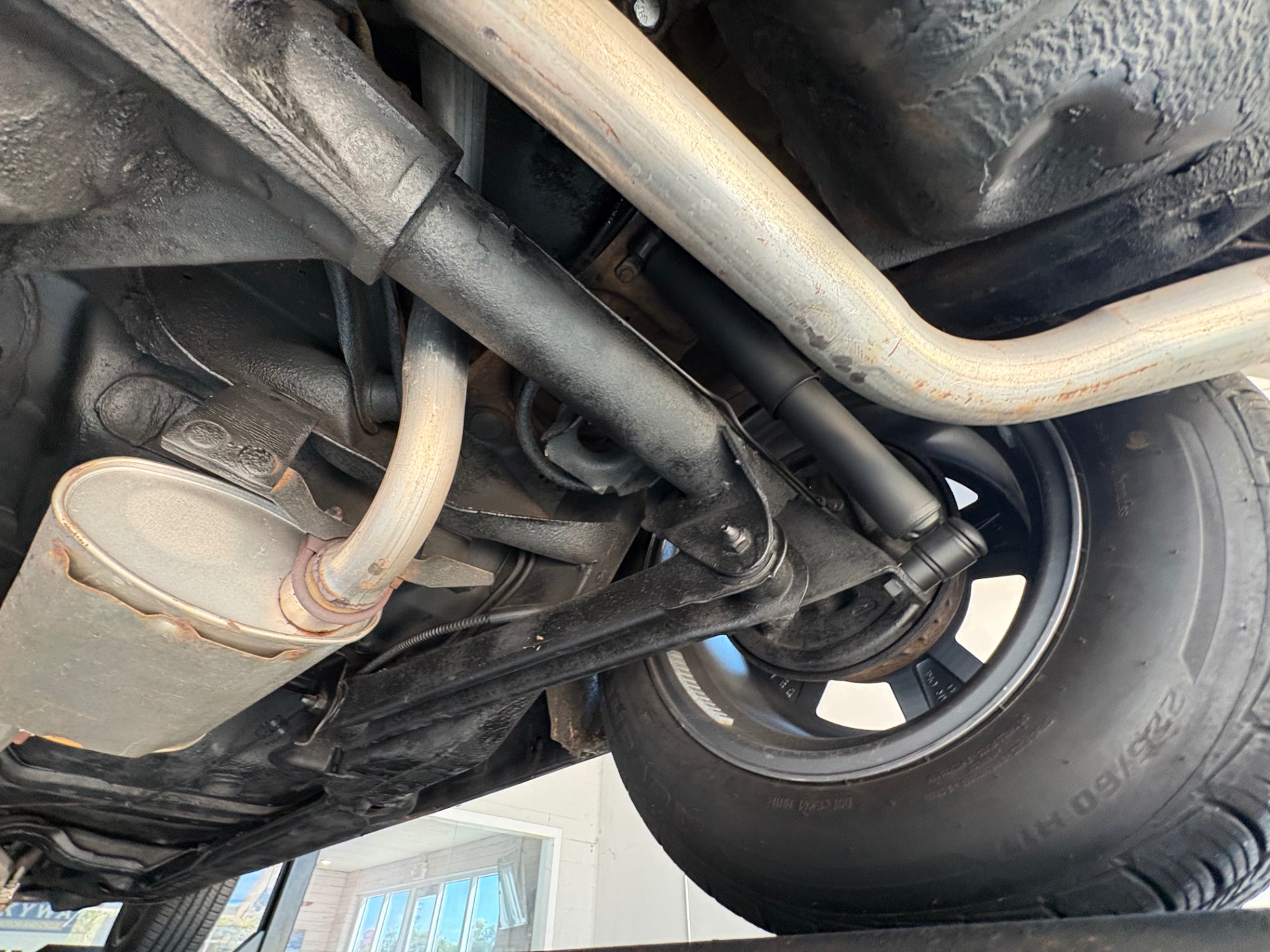
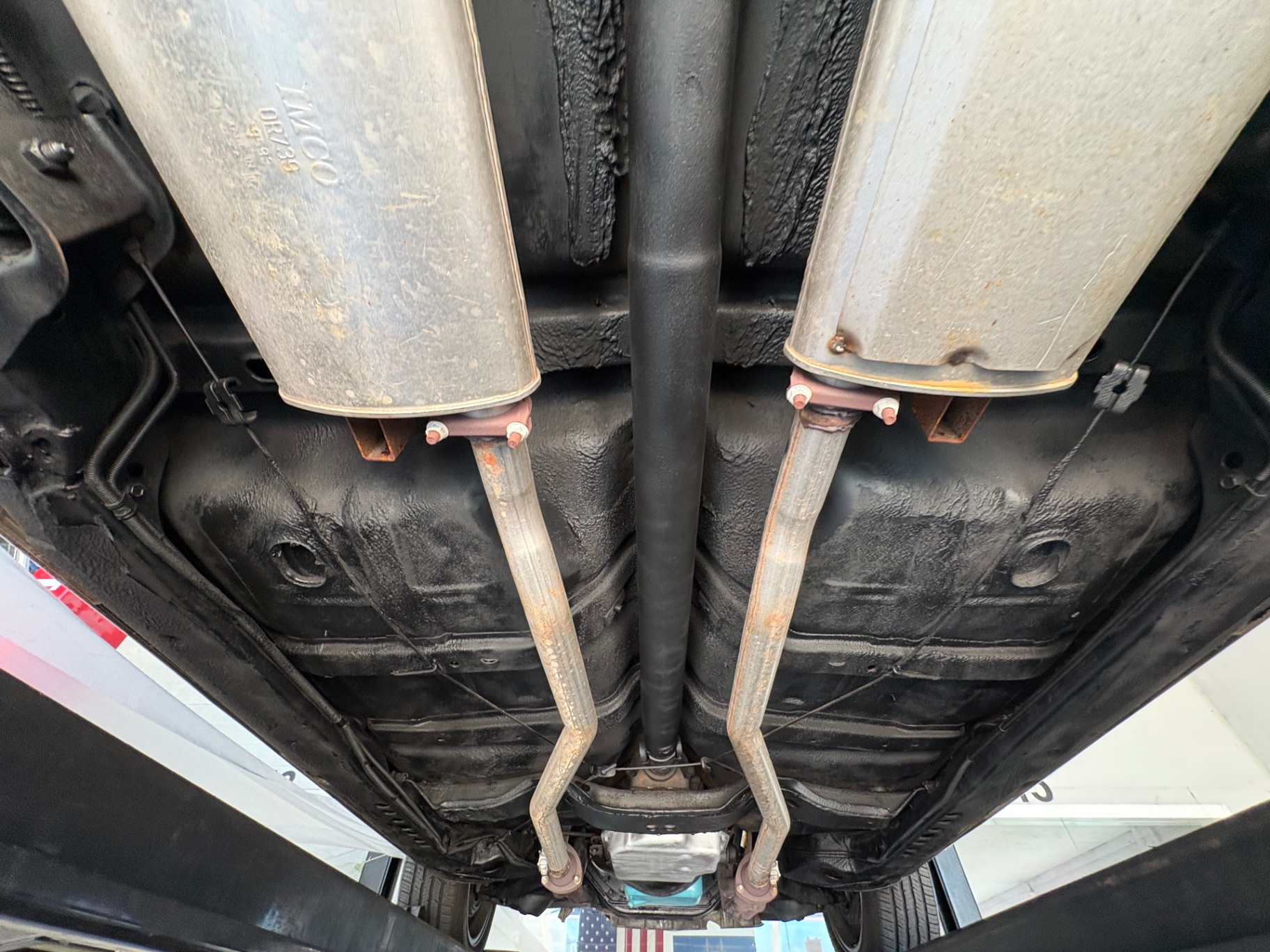
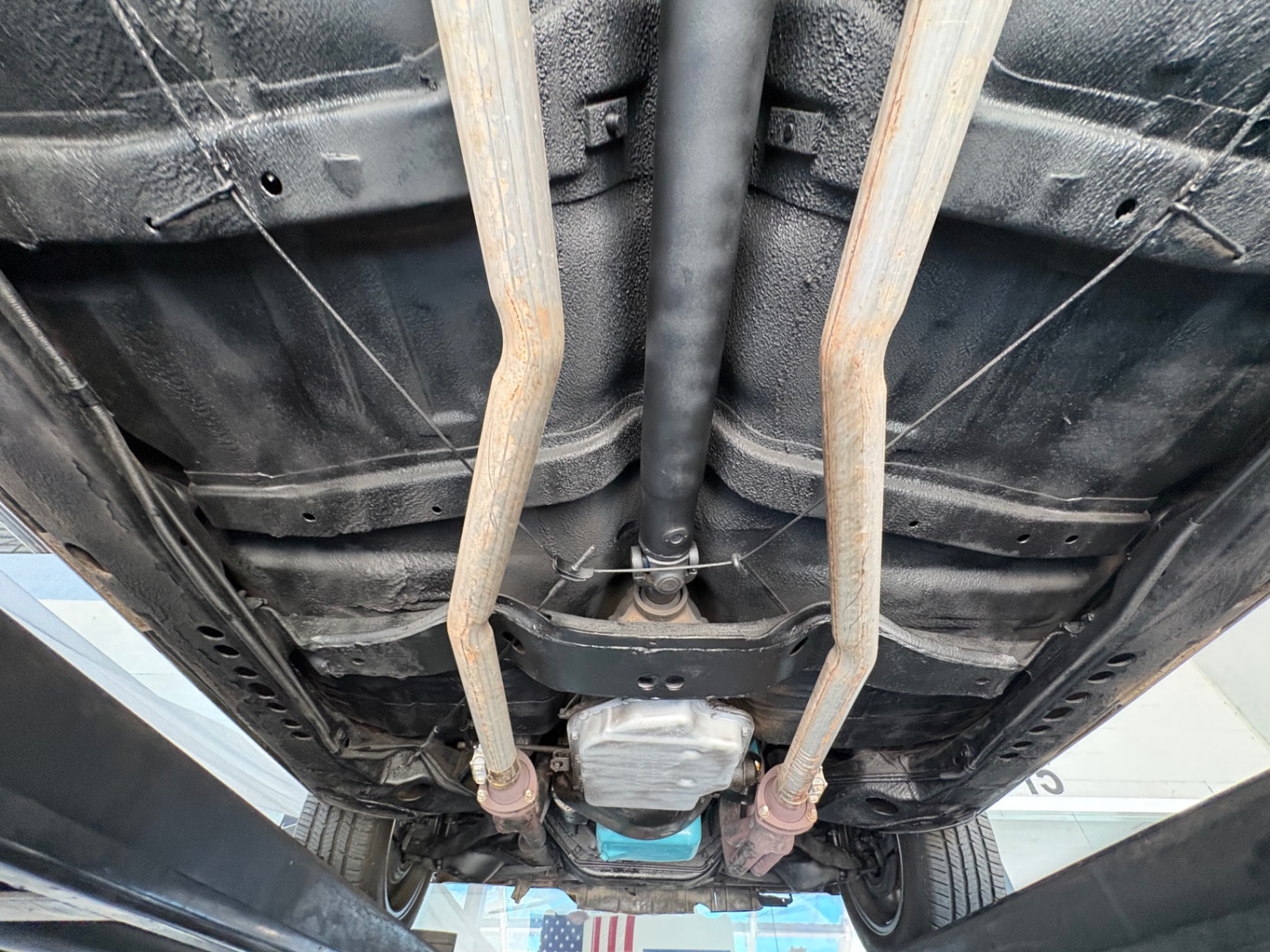
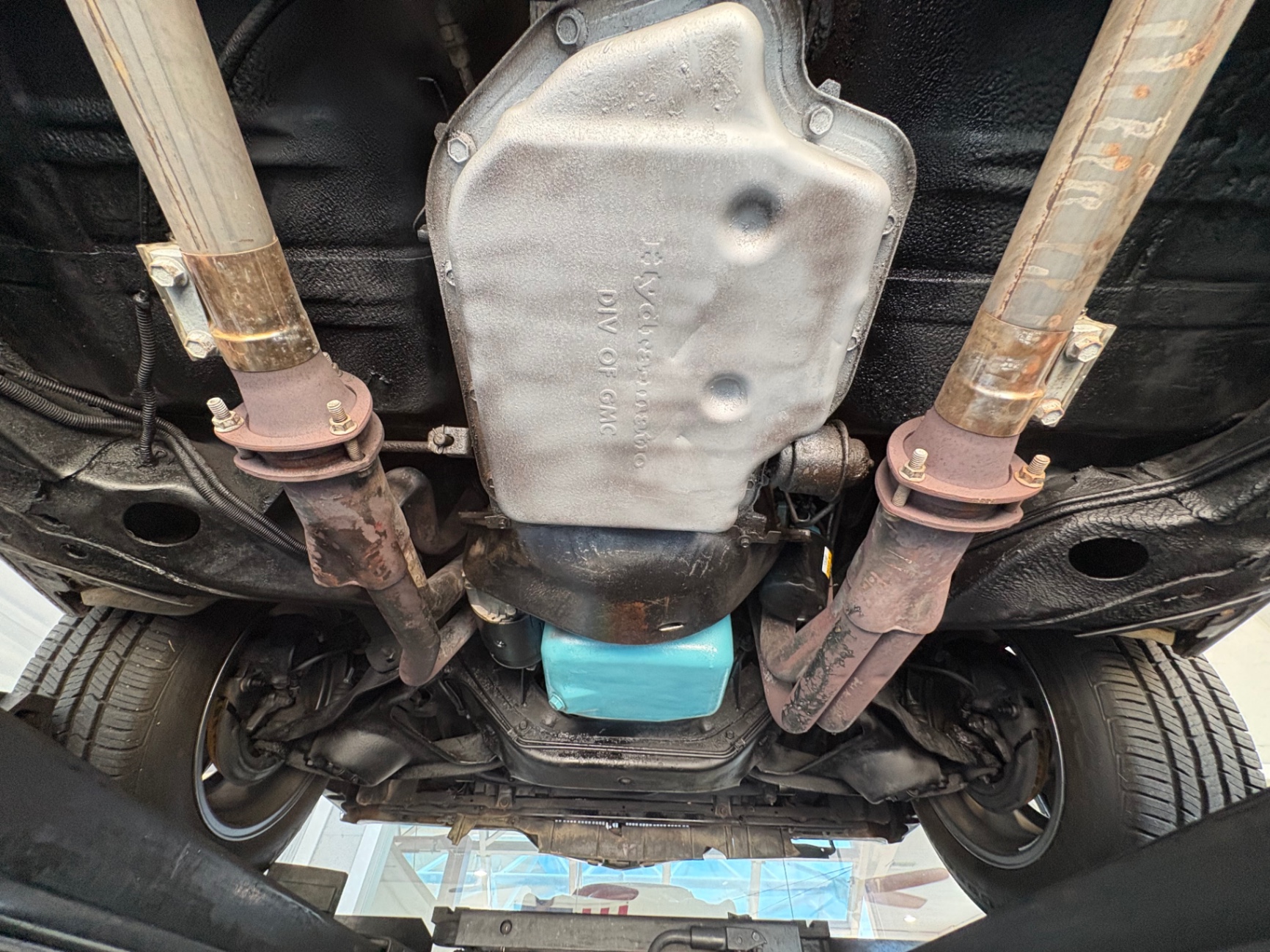
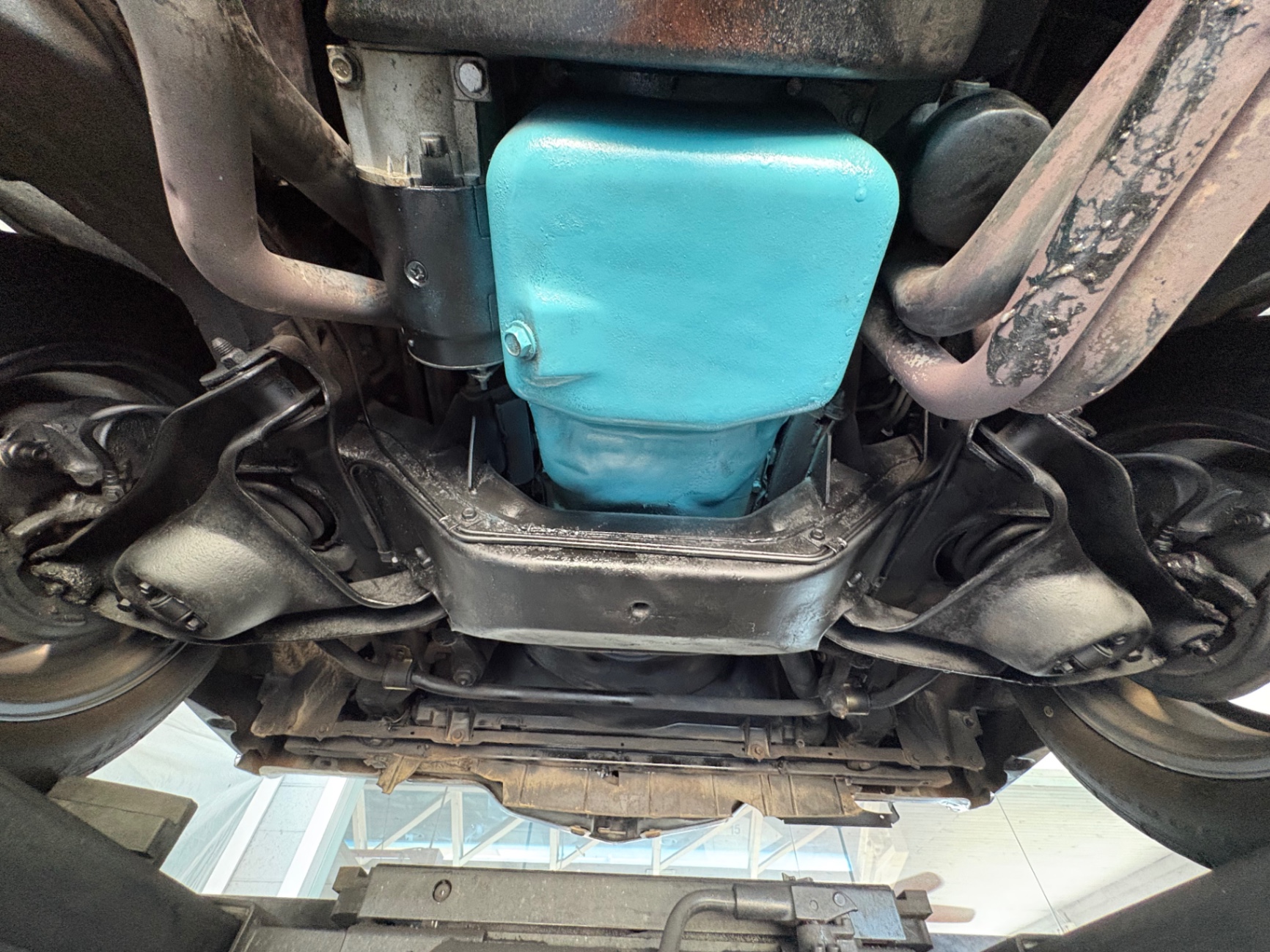
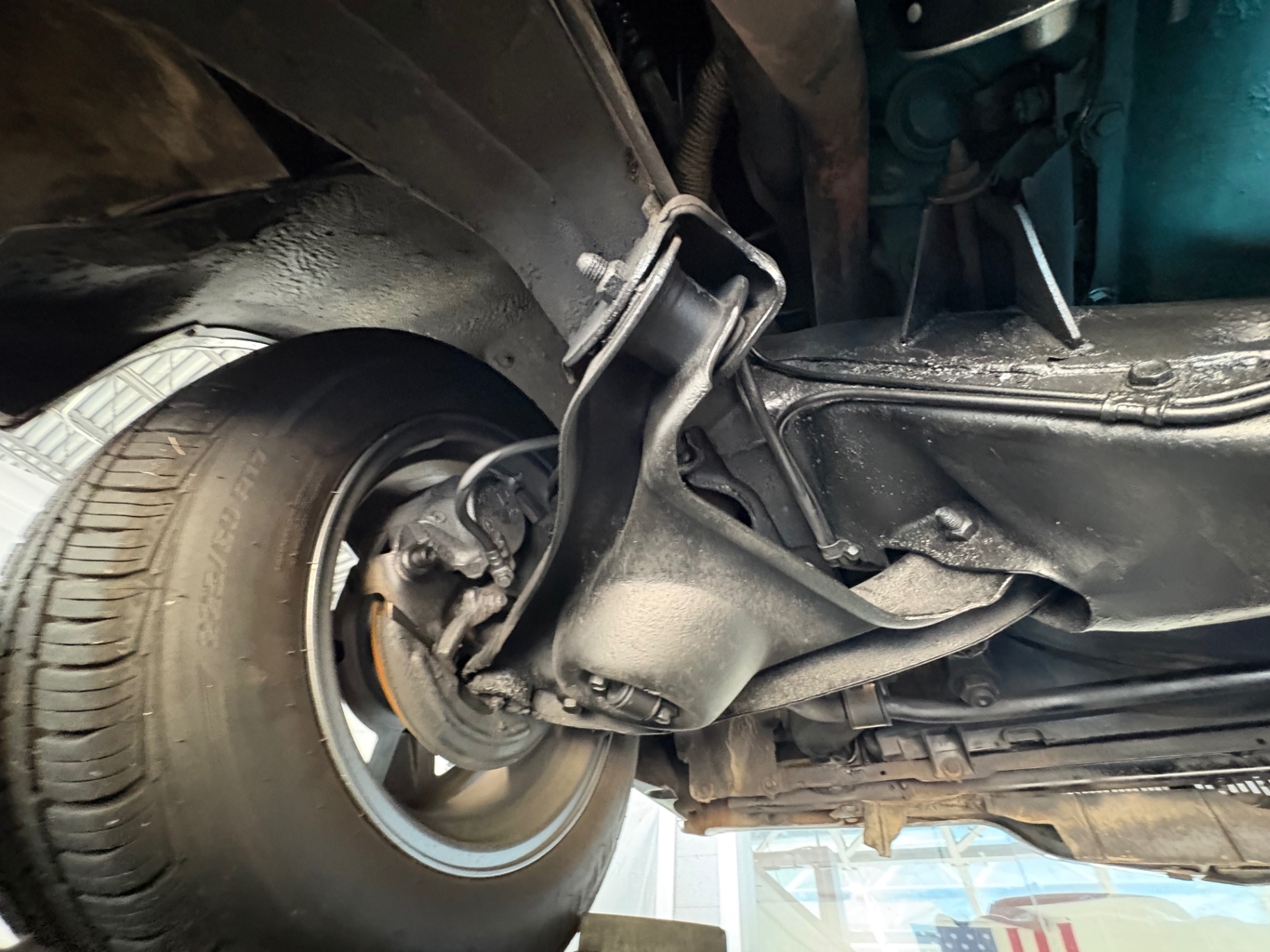
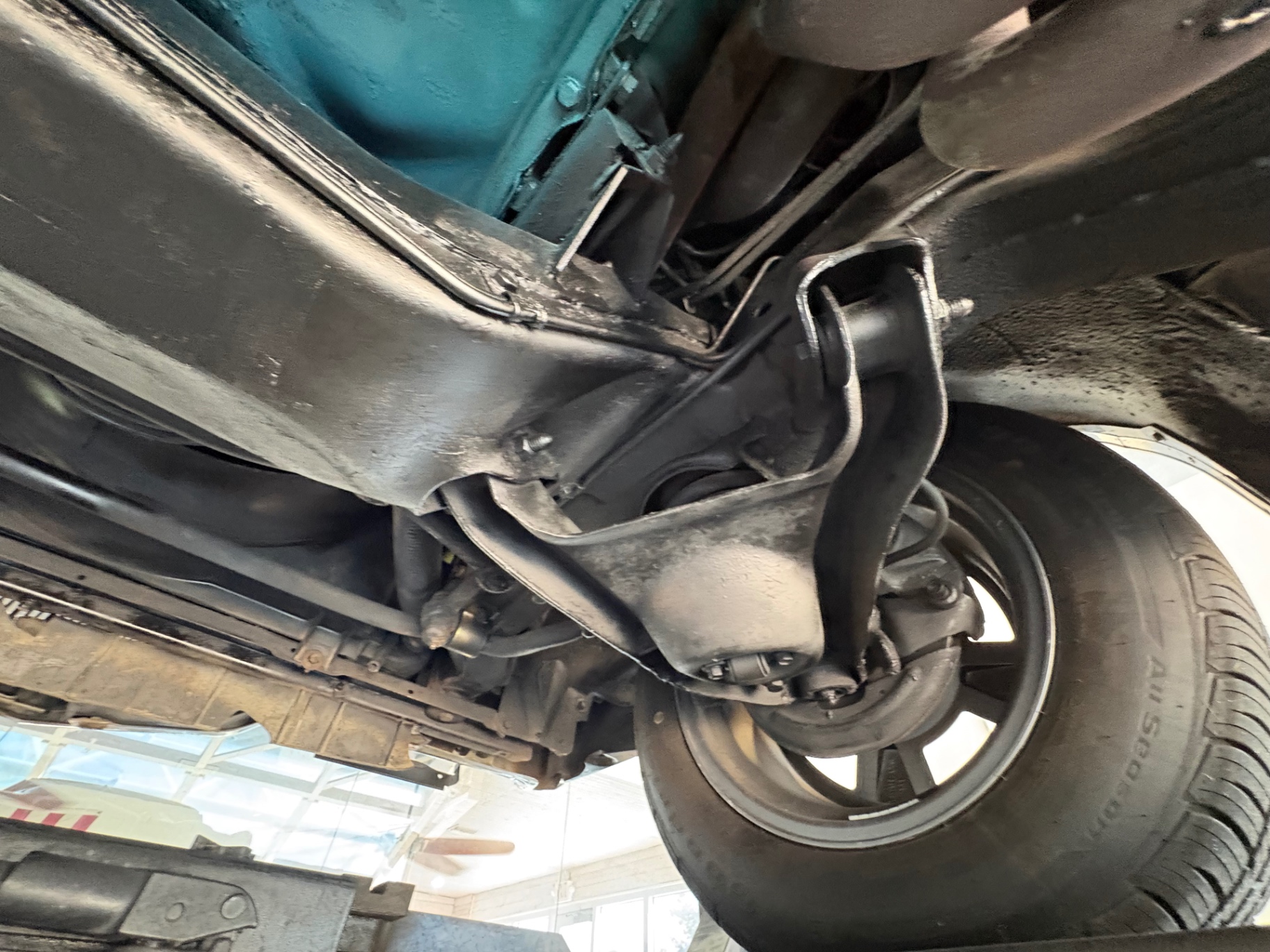
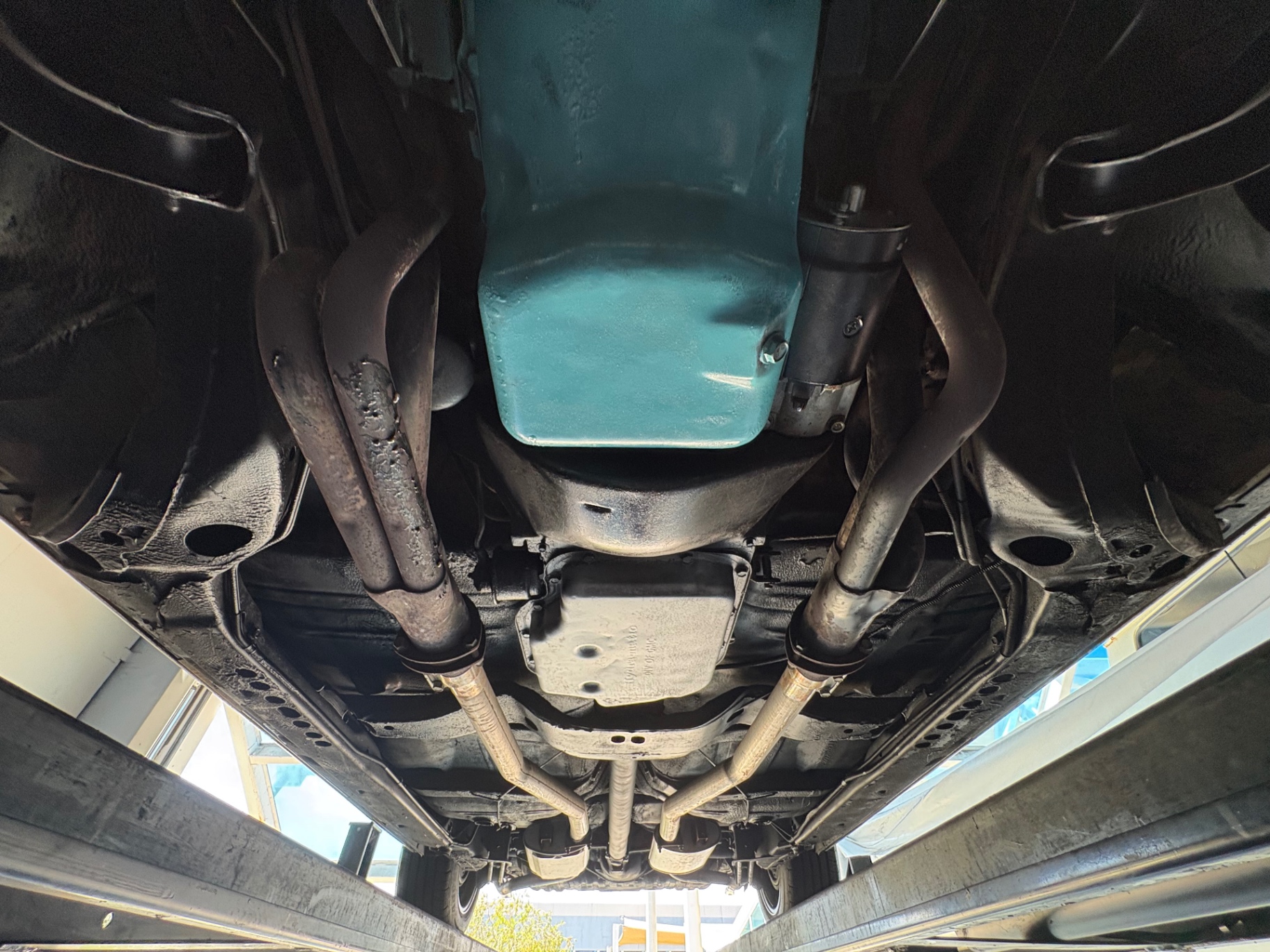
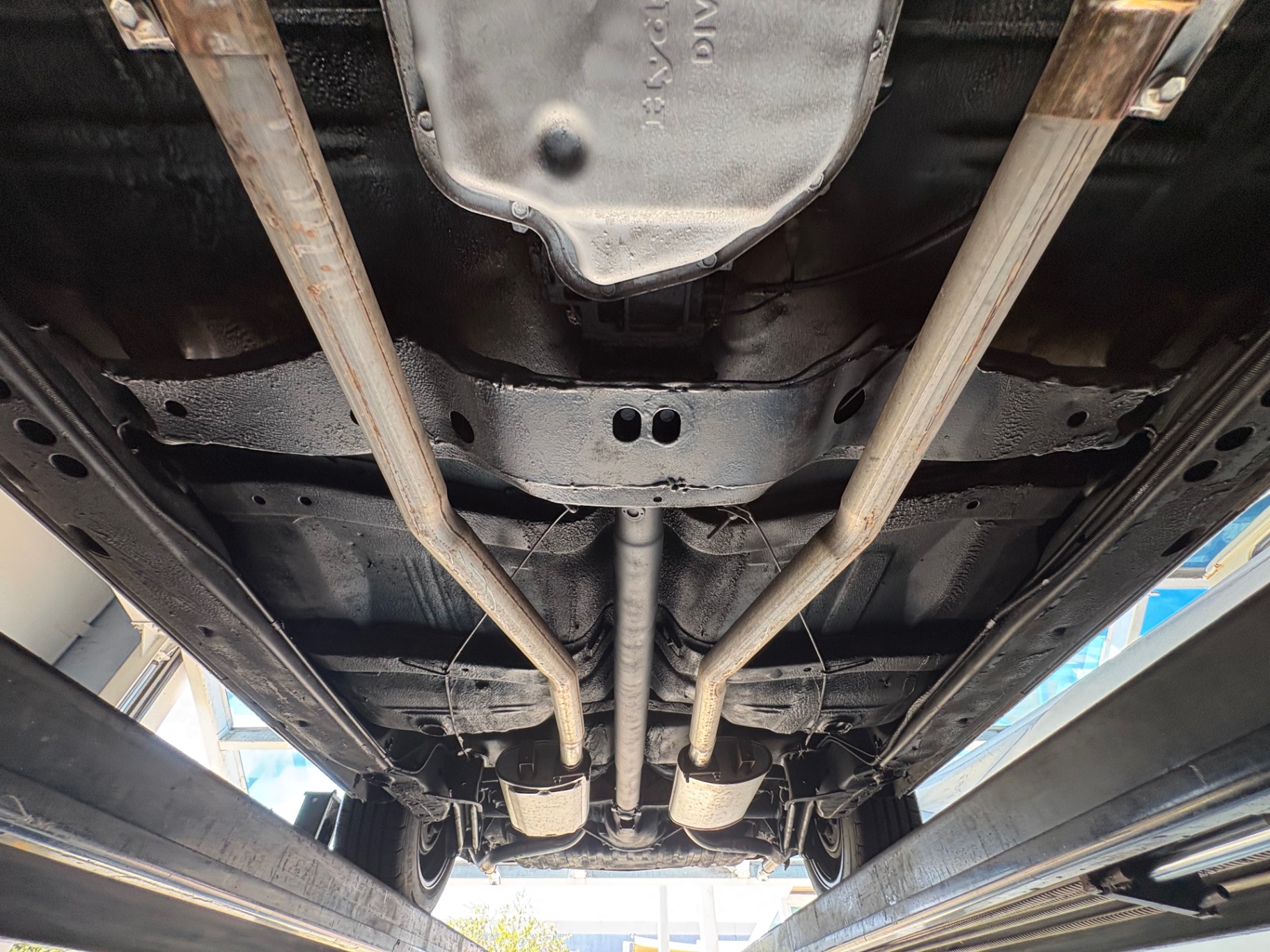
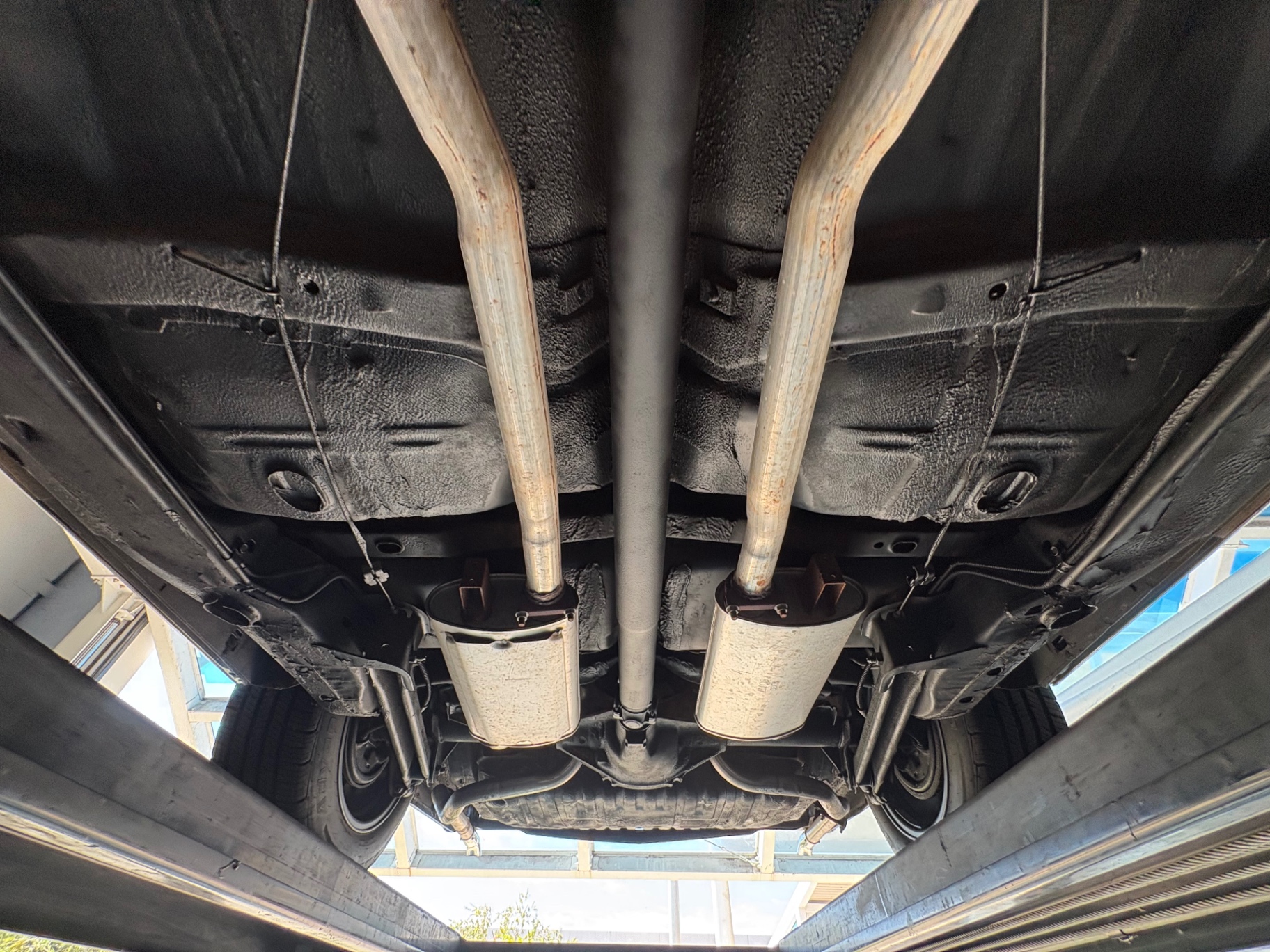
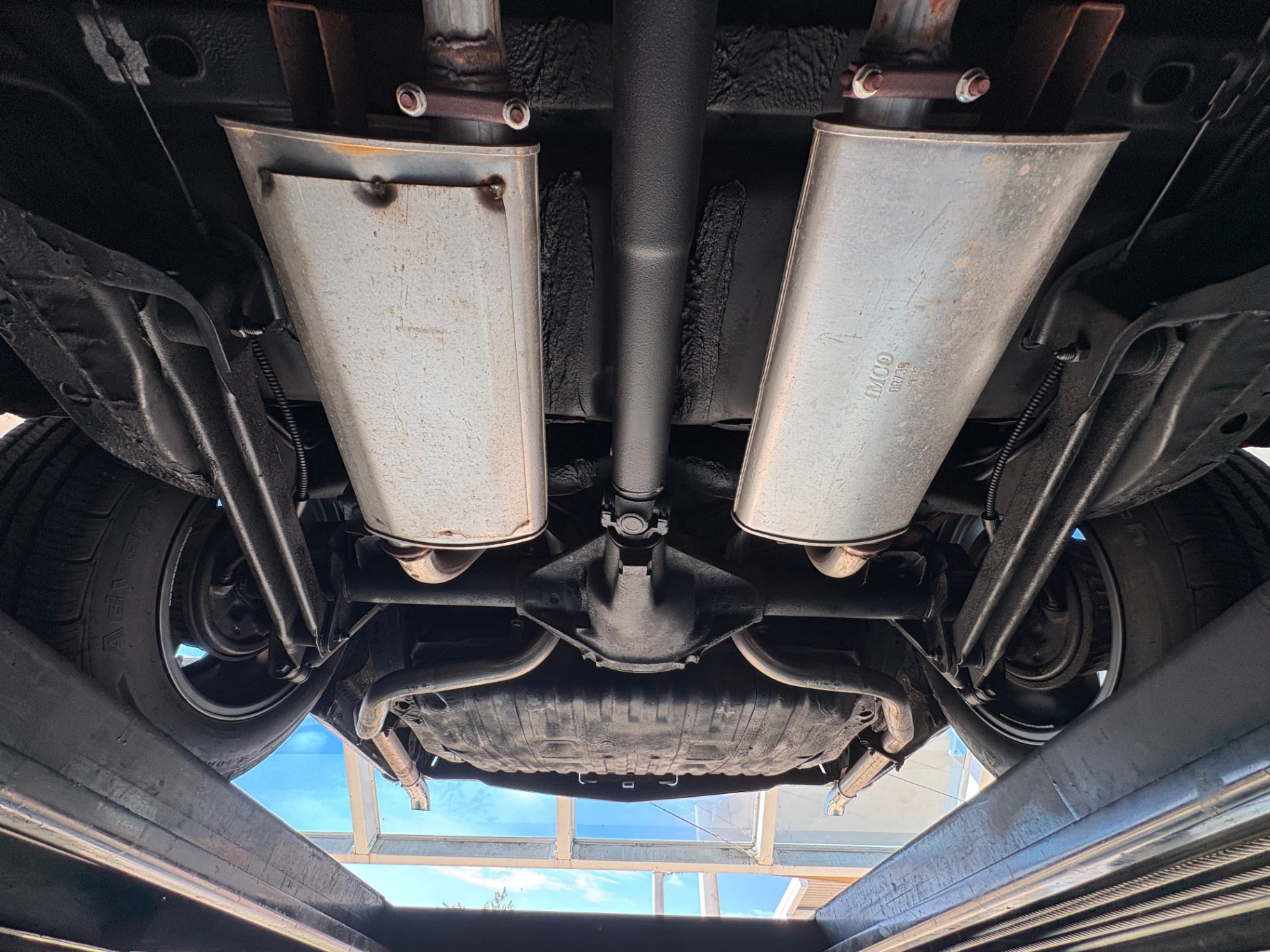
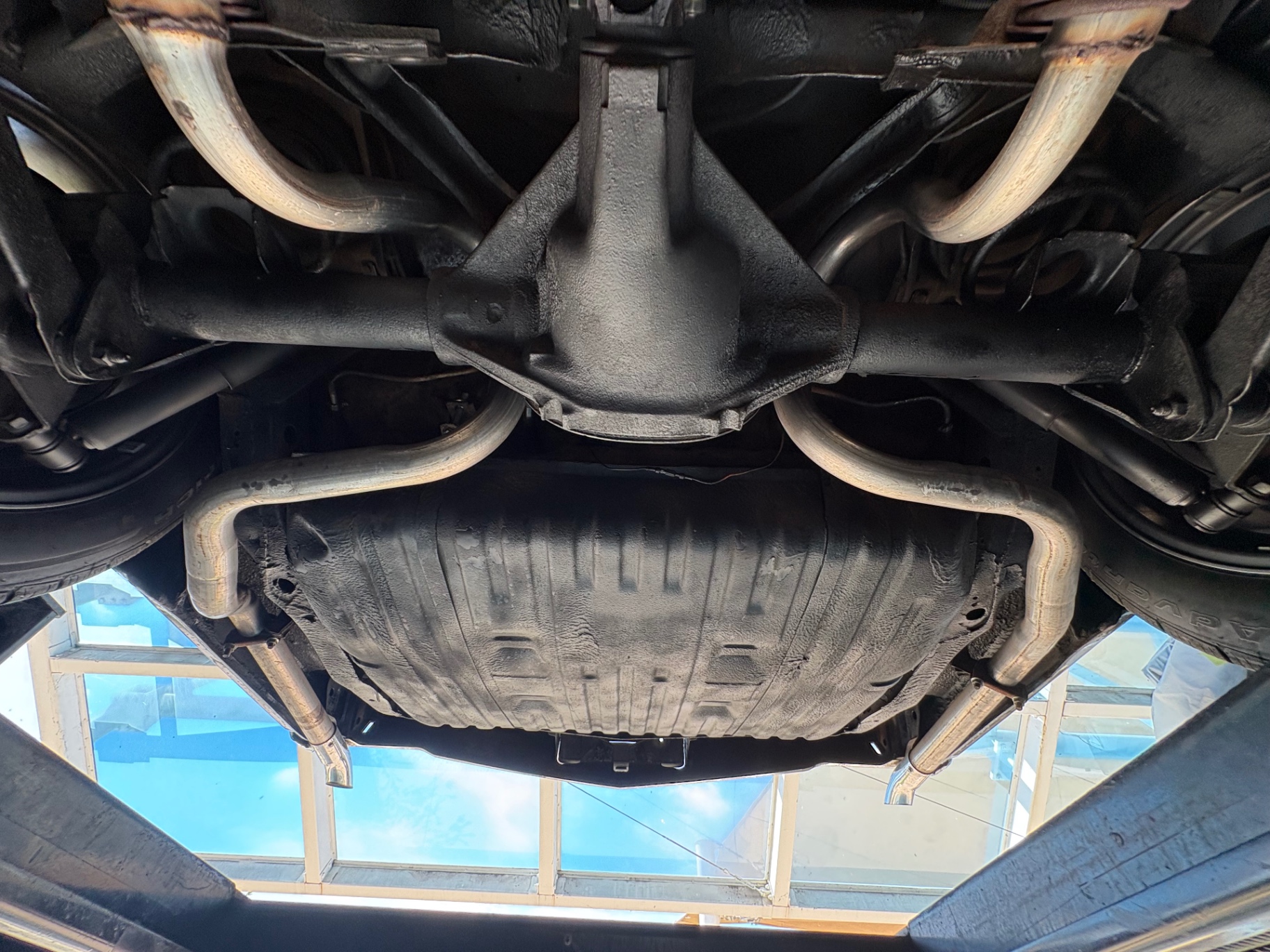
The Hydra-Matic 3-speed automatic transmission is the correct and expected pairing for this application. Pontiac's Hydra-Matic was well-regarded for its durability, and undercarriage photos on this car confirm the transmission is present and the pan shows no signs of leaks or damage. The undercarriage photos also reveal a clean, solid floor pan with consistent undercoating, no visible patch welds, and a dual exhaust system that runs correctly from front to rear. The exhaust layout is symmetrical and properly supported — this is not a cobbled-together system.
Braking is handled by front disc, rear drum — the correct factory configuration for a 1972 Grand Prix equipped with power brakes. Front discs were a meaningful upgrade over four-wheel drums and give this car confident, predictable stopping power. Power steering is also fitted, which was essentially expected on a car of this size and positioning in Pontiac's lineup.
Interior
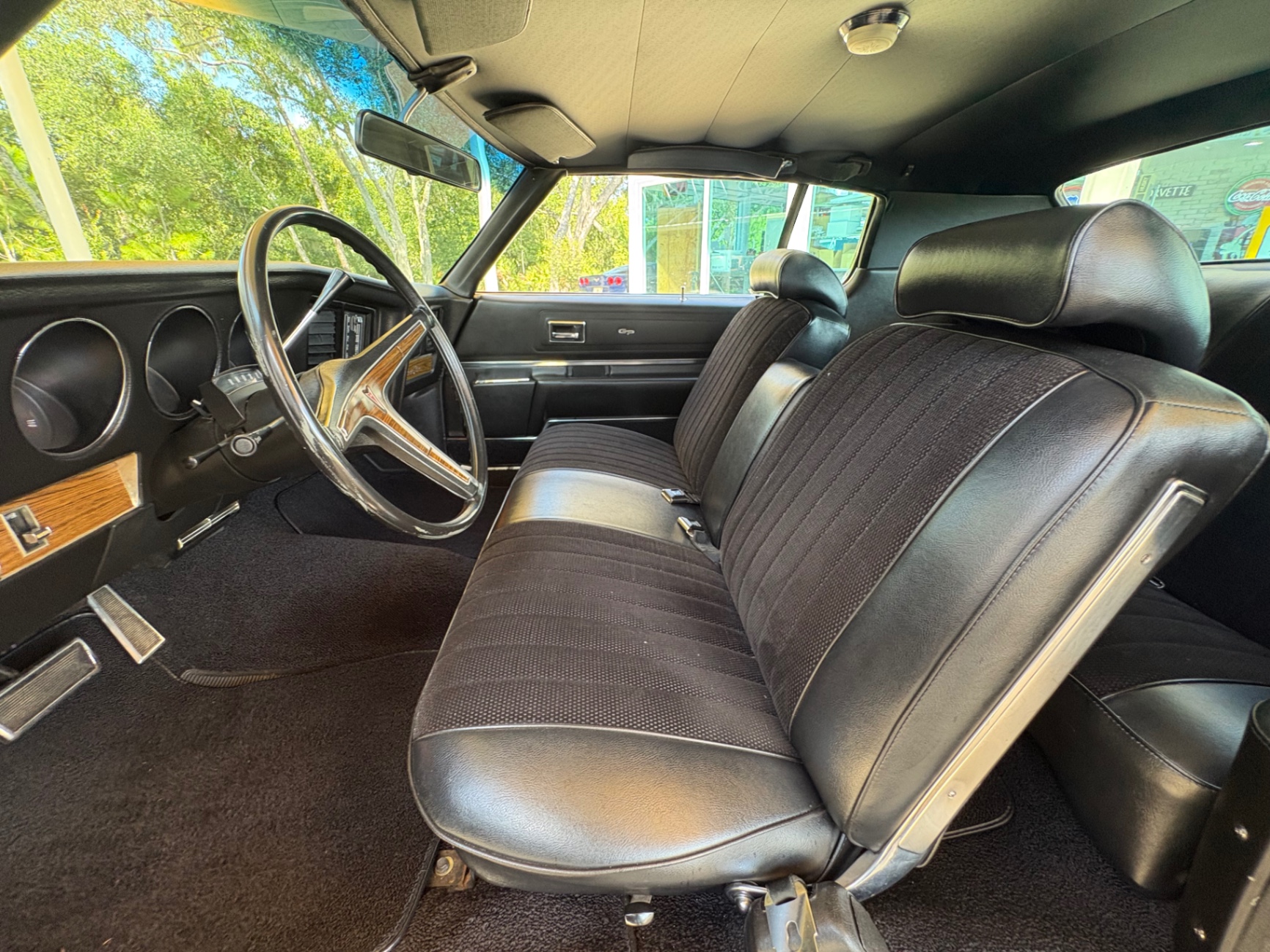
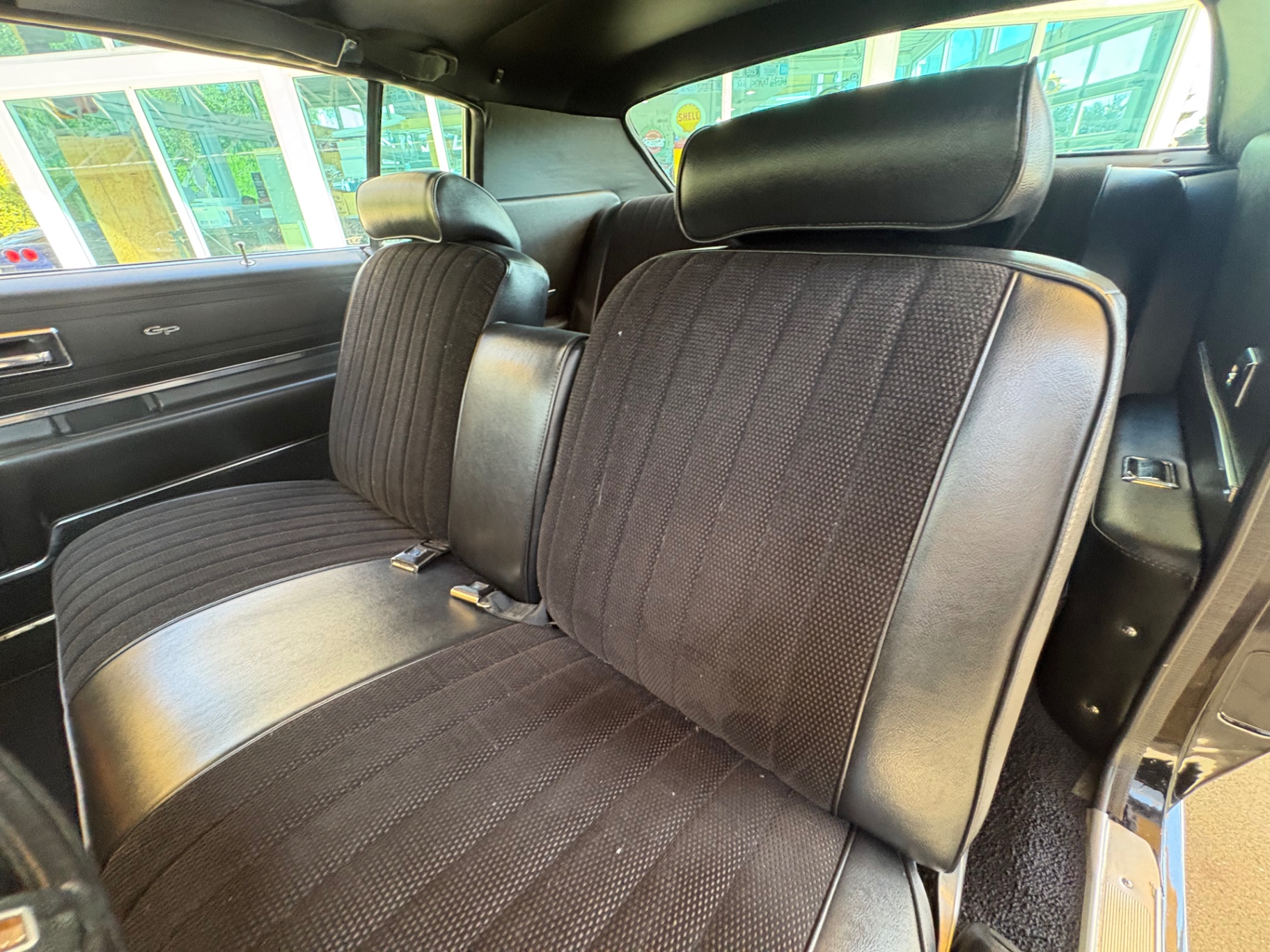
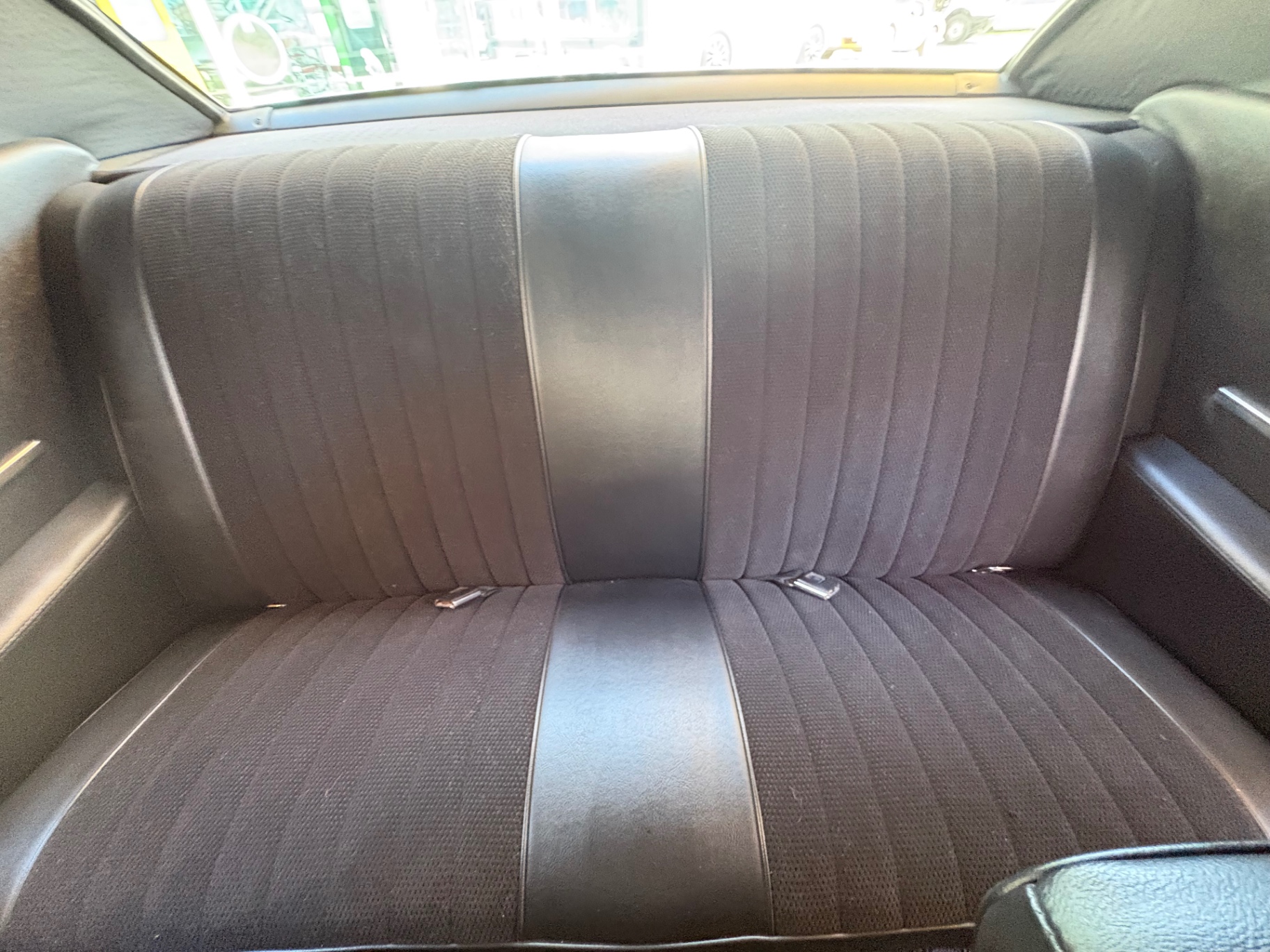
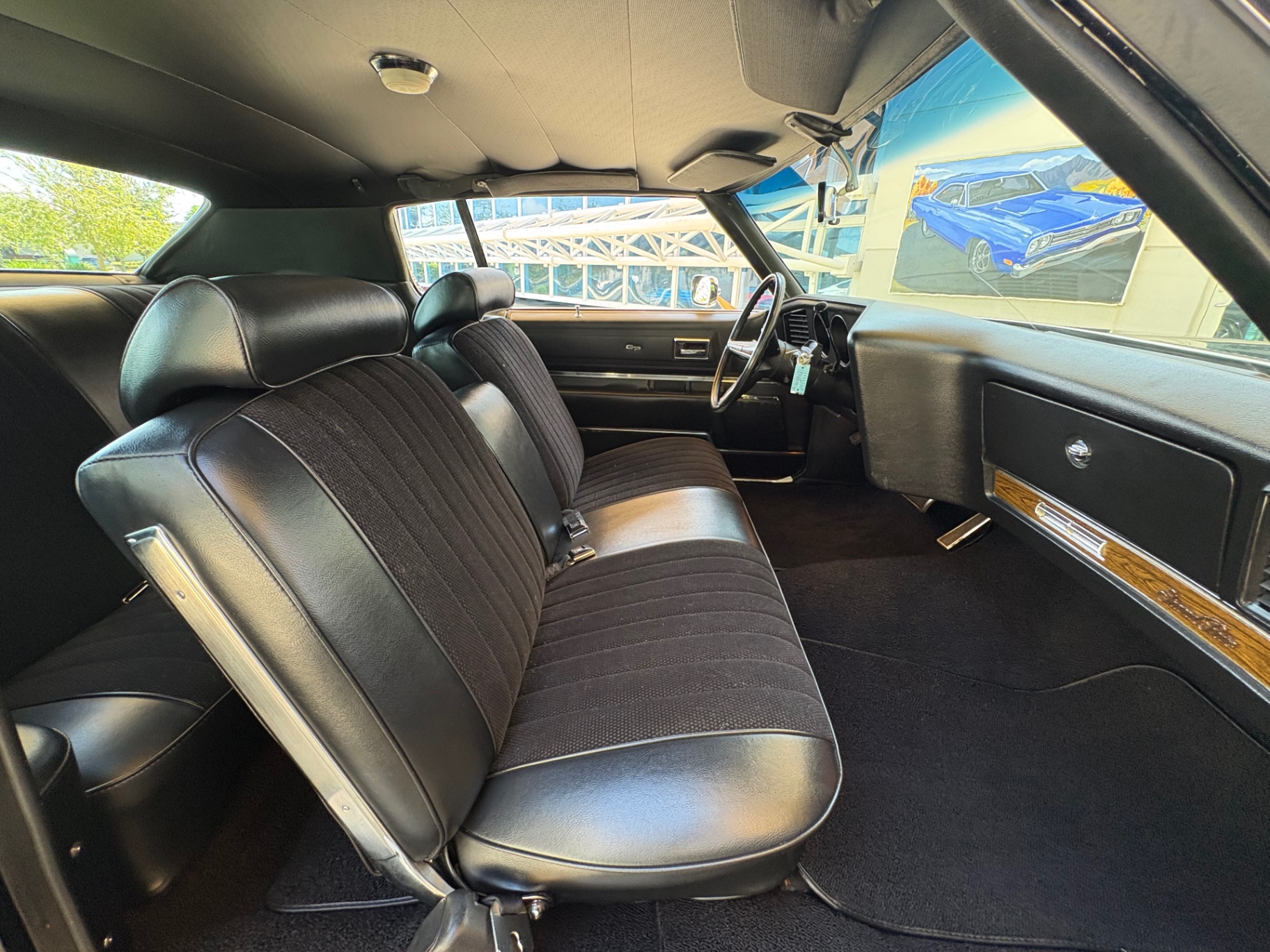
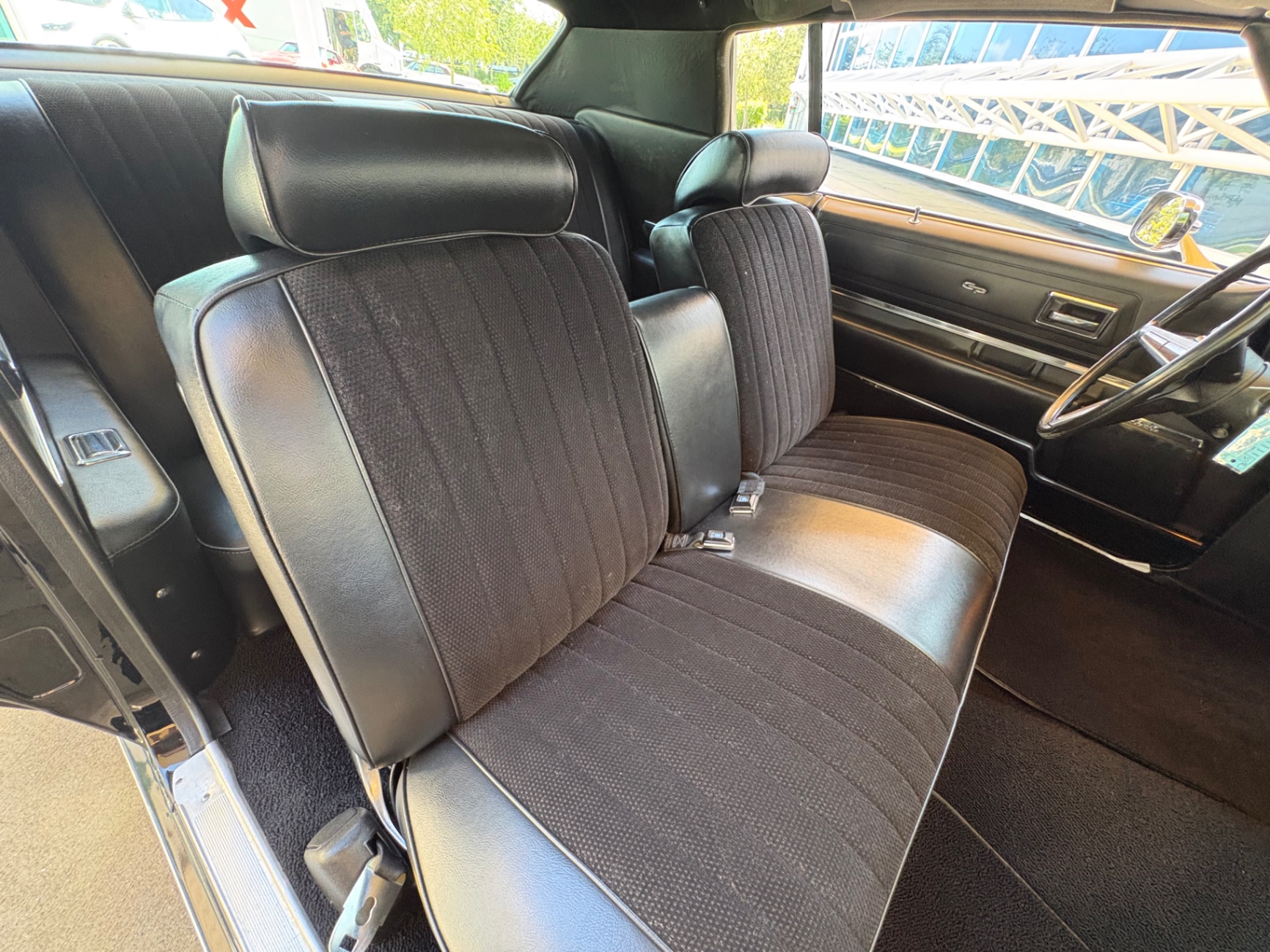
The 1972 Grand Prix interior was one of its selling points, and this car delivers a correct representation of what Pontiac intended. The bench seat is trimmed in black vinyl with a cloth insert panel — a combination that holds up better over time than all-vinyl because the cloth breathes and resists cracking in ways that solid vinyl does not. Both front and rear bench surfaces show their age honestly but remain structurally sound and presentable, with the ribbed cloth insert pattern clearly visible and intact.
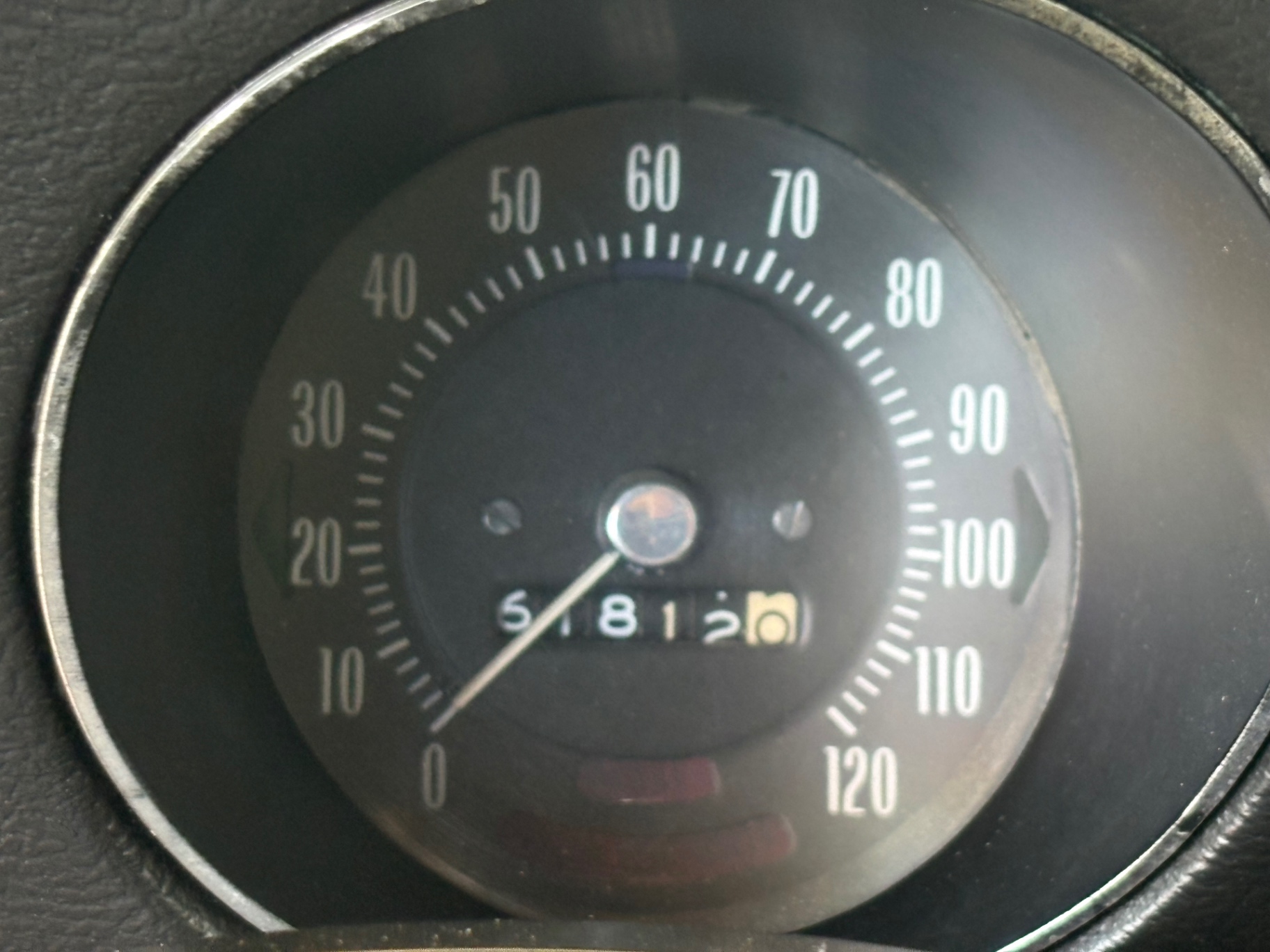
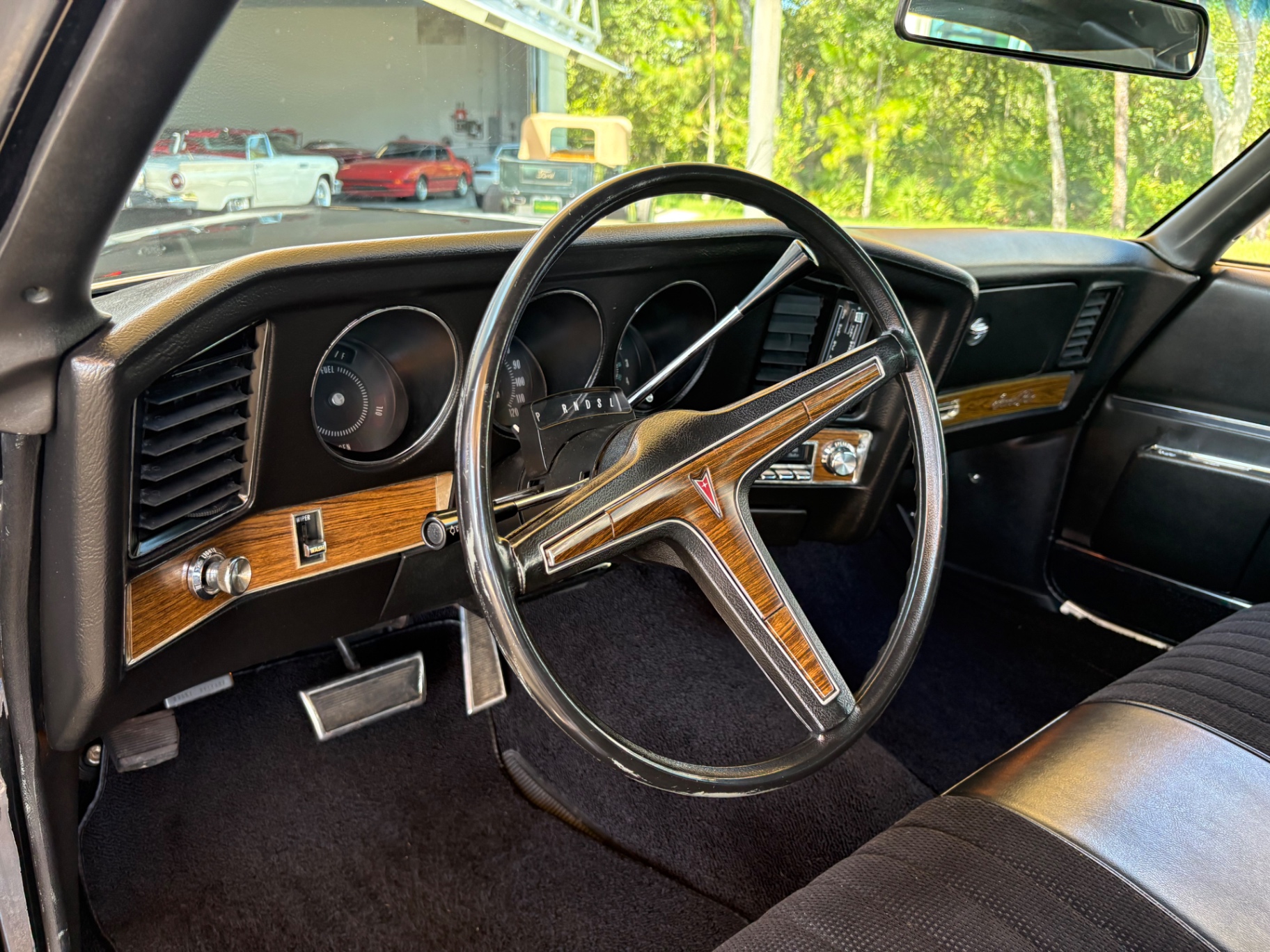
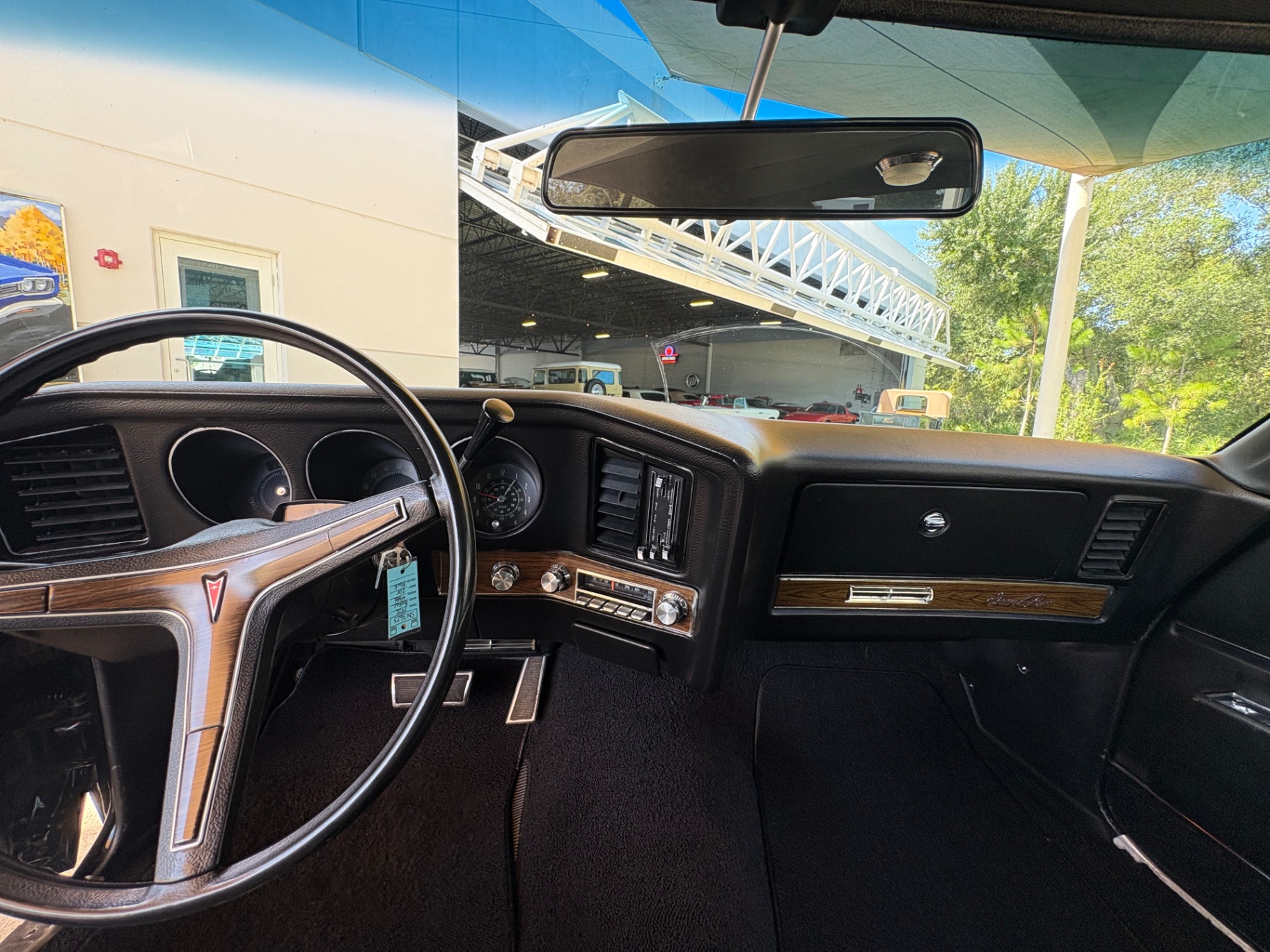
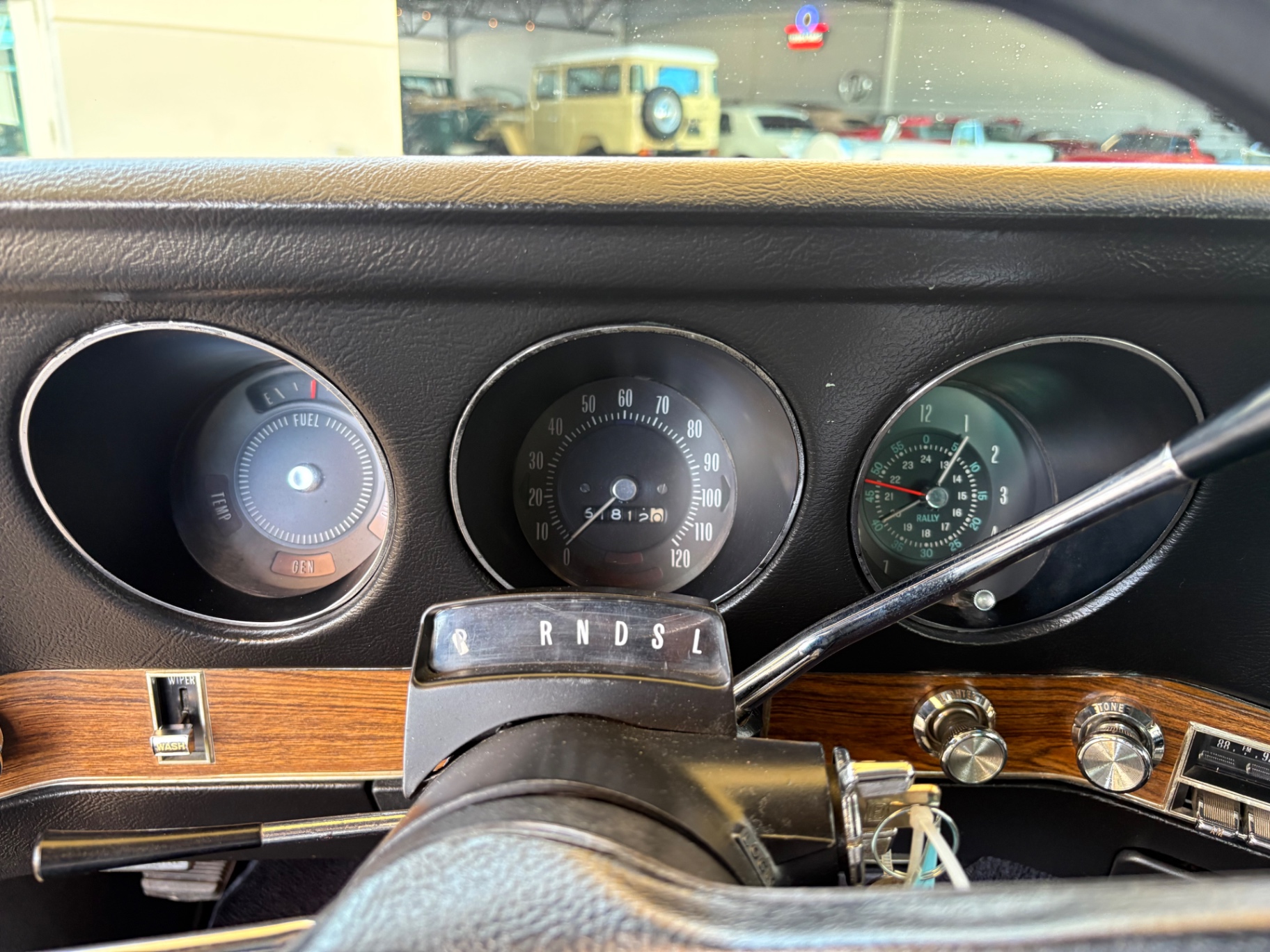
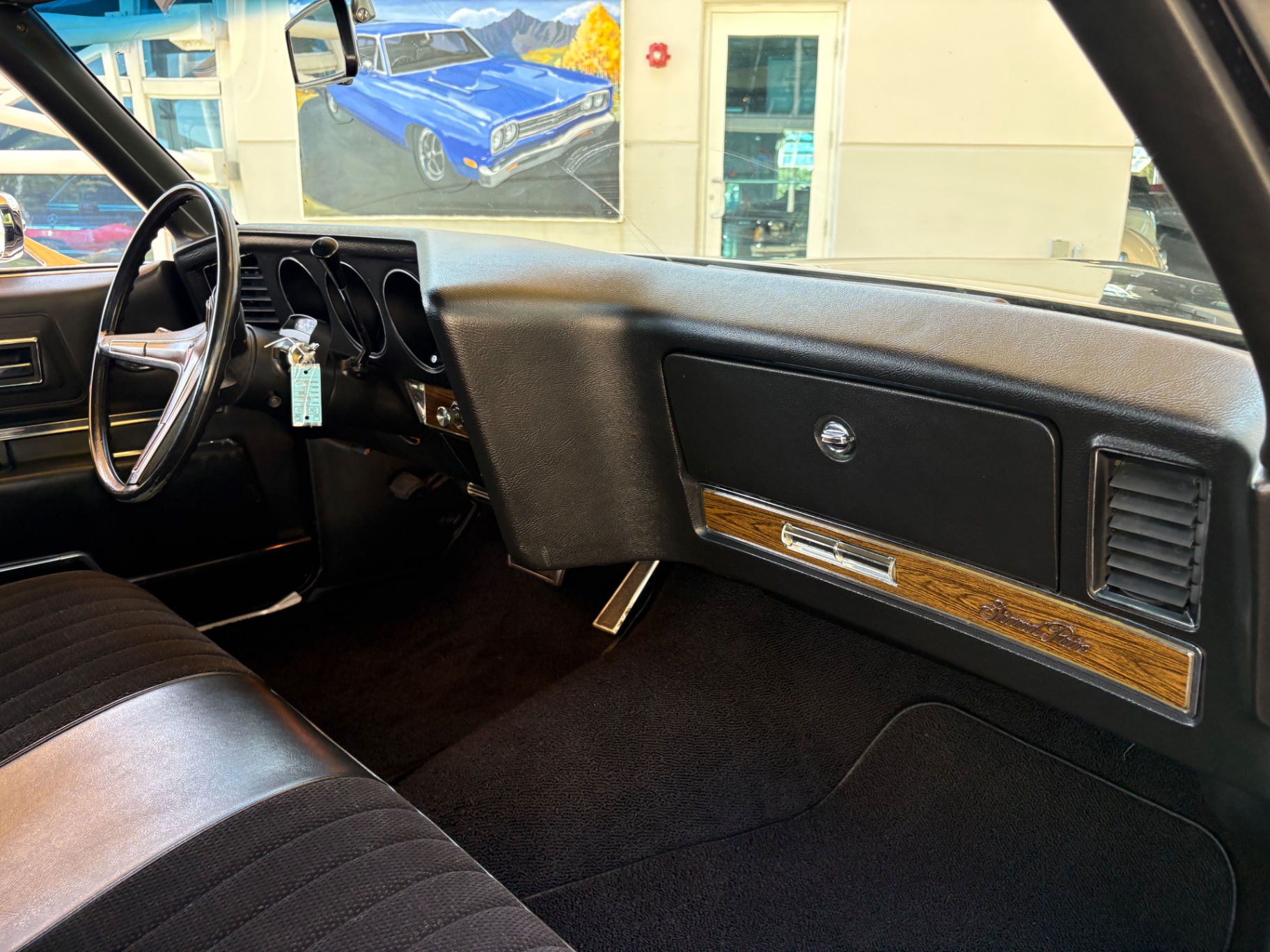
The dashboard is the correct Grand Prix layout, featuring a driver-focused instrument pod that wraps toward the driver rather than spreading flat across the dash. Three round gauges sit in deep pods directly in front of the driver — speedometer in the center flanked by a combined fuel and temperature gauge on the left and the Rally clock on the right. The Rally clock is a period-correct detail that adds function and authenticity. Wood grain trim runs across the dash face and around the instrument cluster, and it is present and intact on this car. The column-mounted shifter for the Hydra-Matic sits correctly in the steering column, with the RNDSL indicator visible in the dash pod — a Grand Prix-specific detail that kept the center console area clean and open.
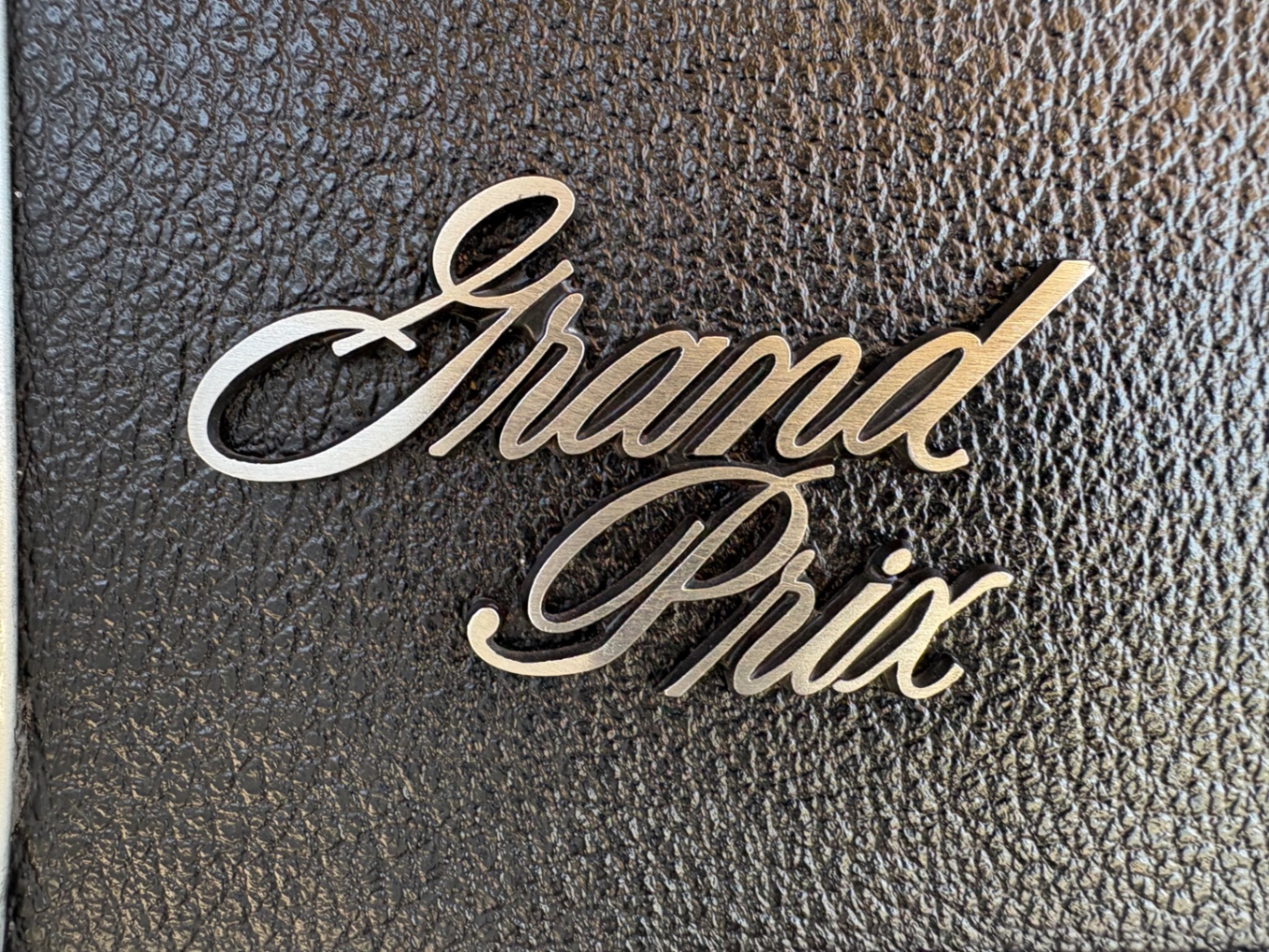
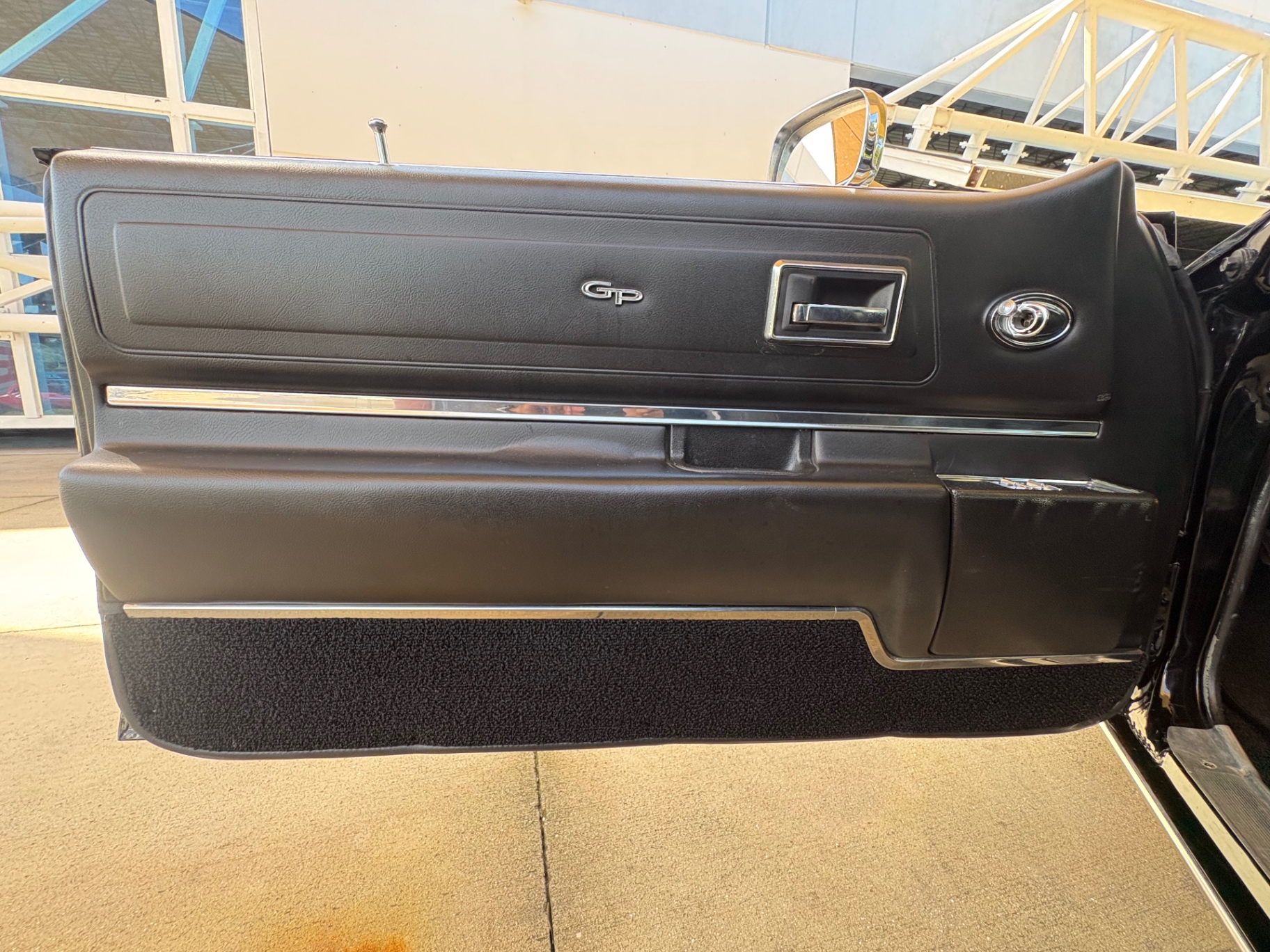
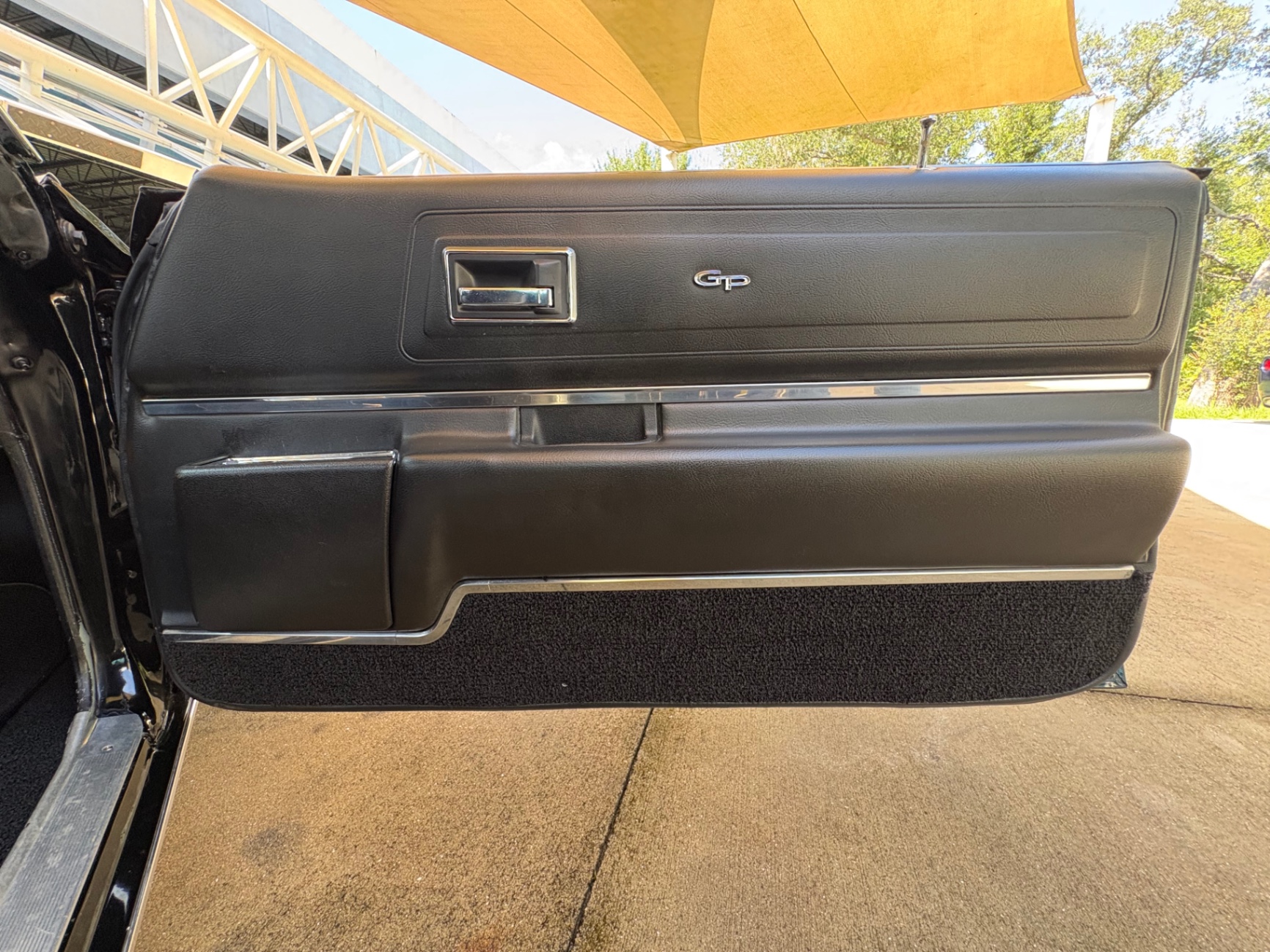
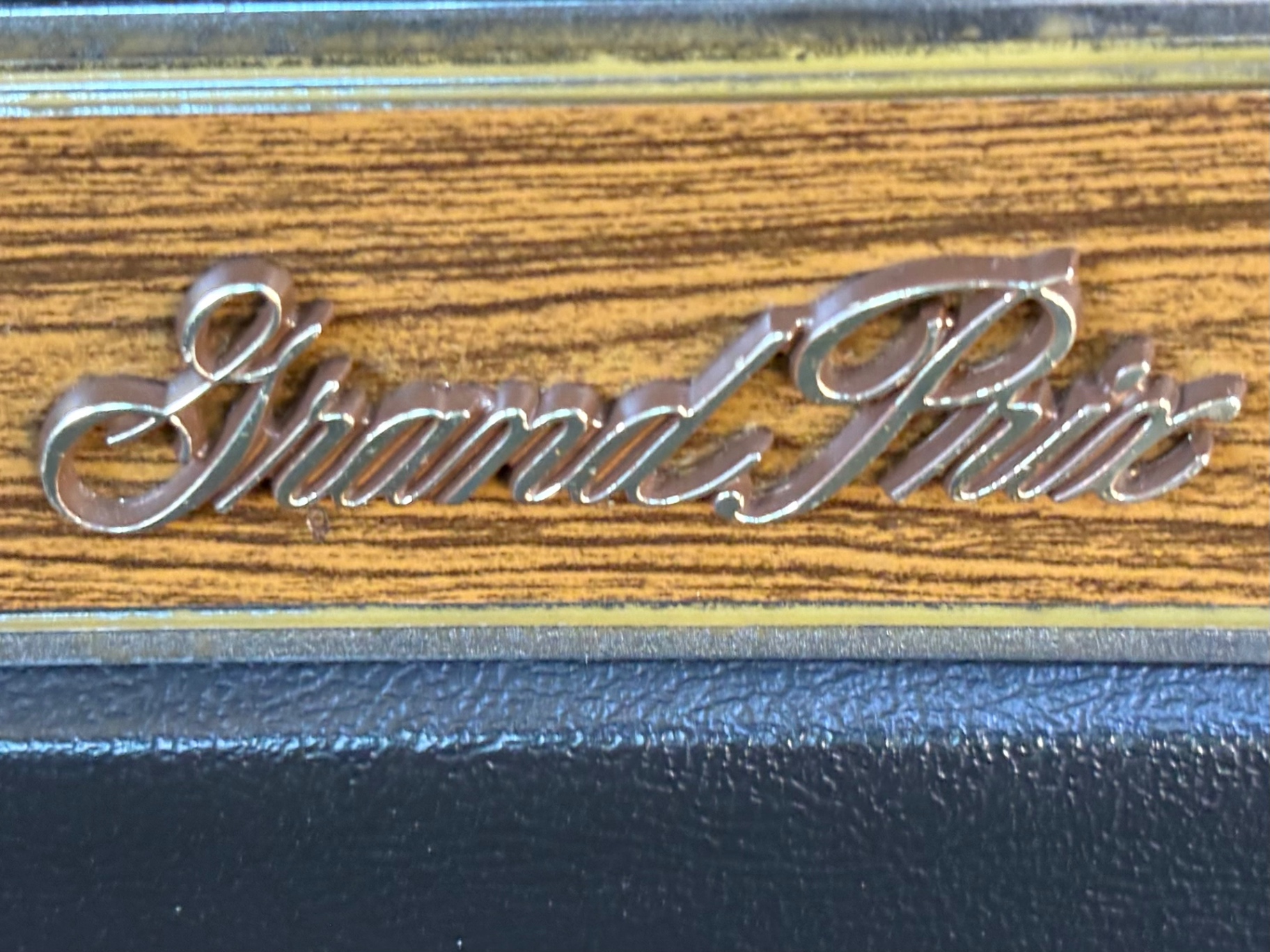
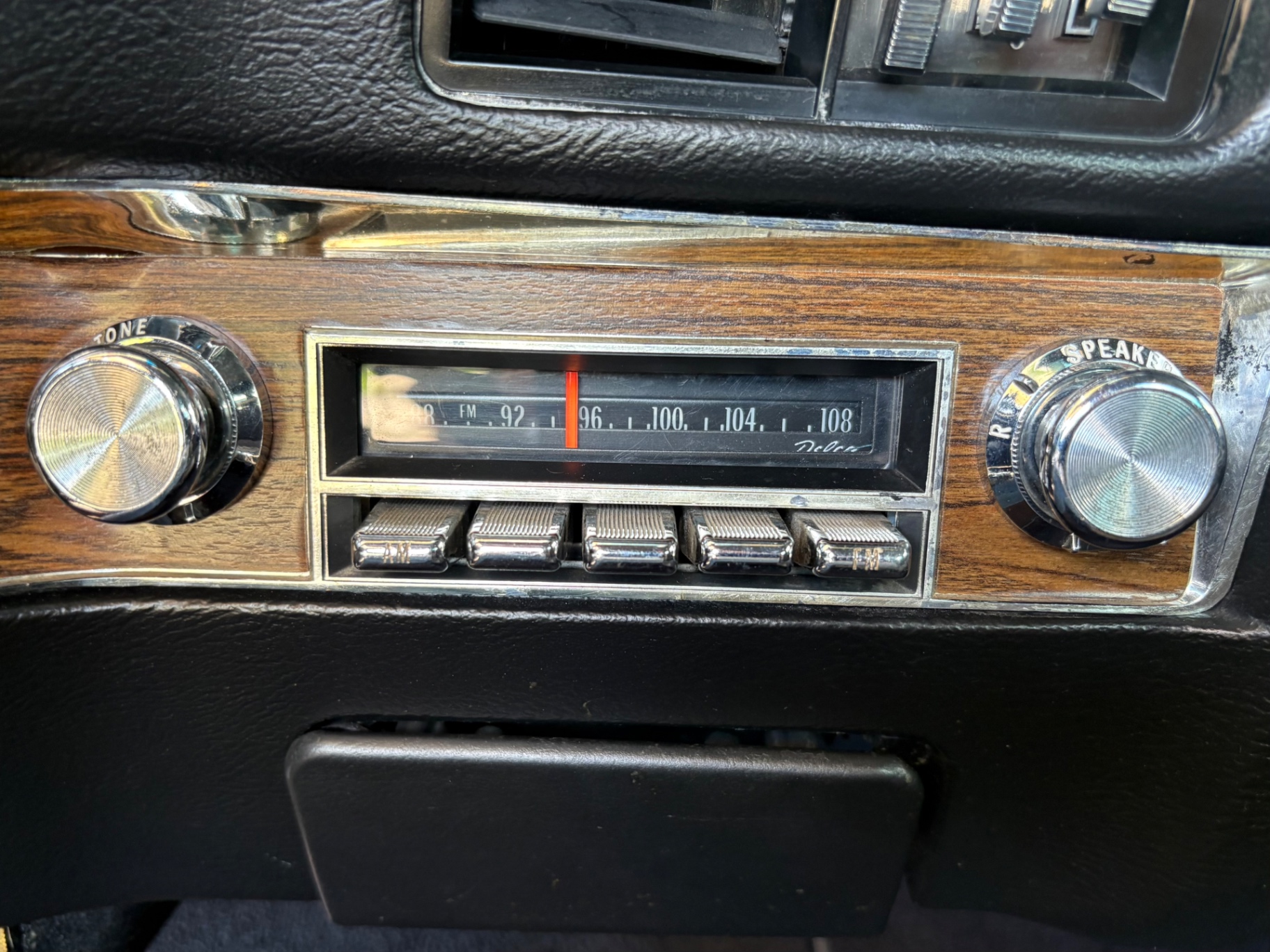
The tilt steering column adds practical usability, and the Delco AM/FM radio is mounted correctly in the dash with its original pushbutton face and separate tone and speaker controls. Air conditioning controls are integrated into the dash panel. Door panels carry the GP badge and a horizontal chrome accent strip, consistent with what the factory produced for this model year. Carpet is black and complete throughout.
Exterior
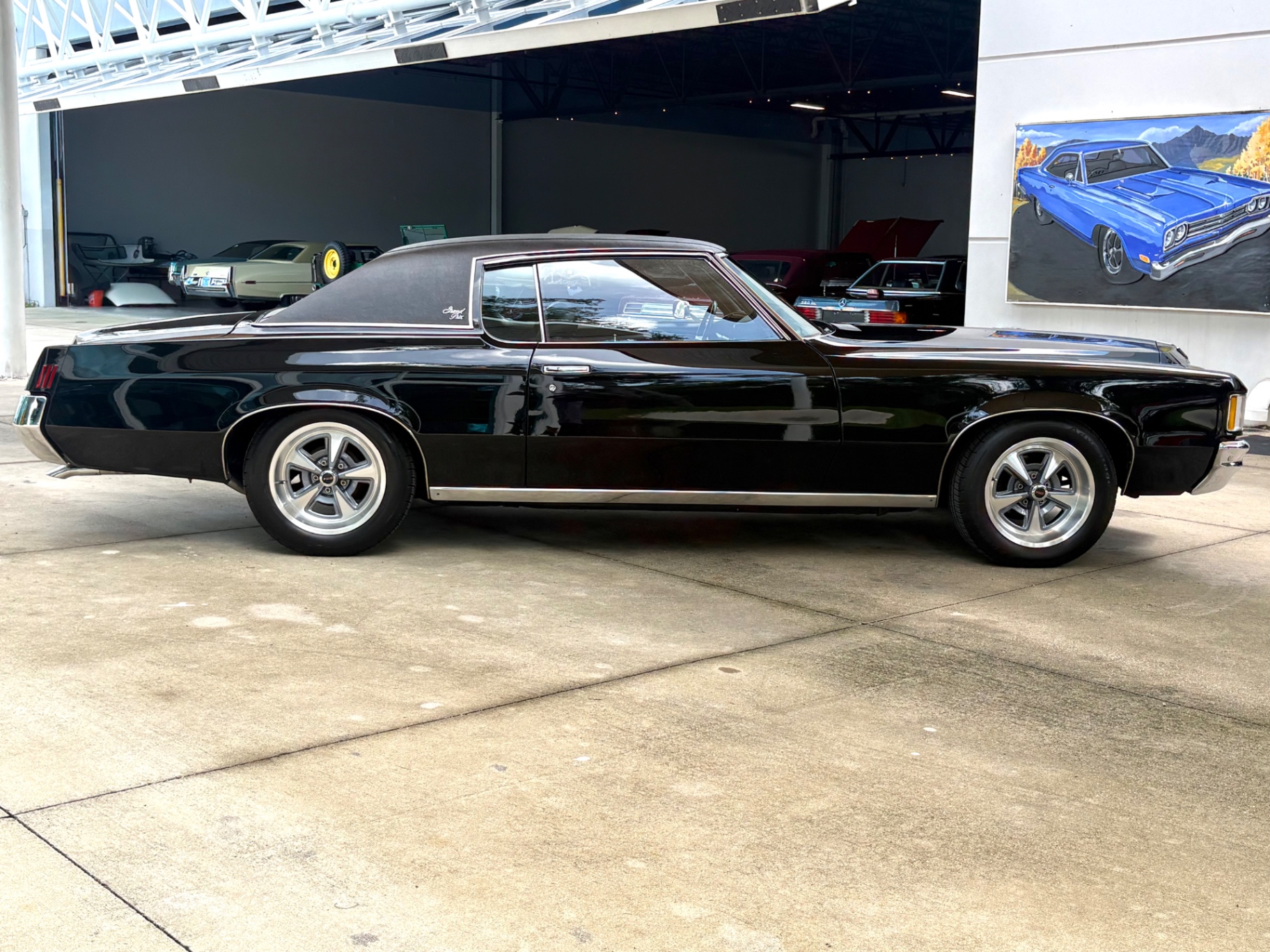
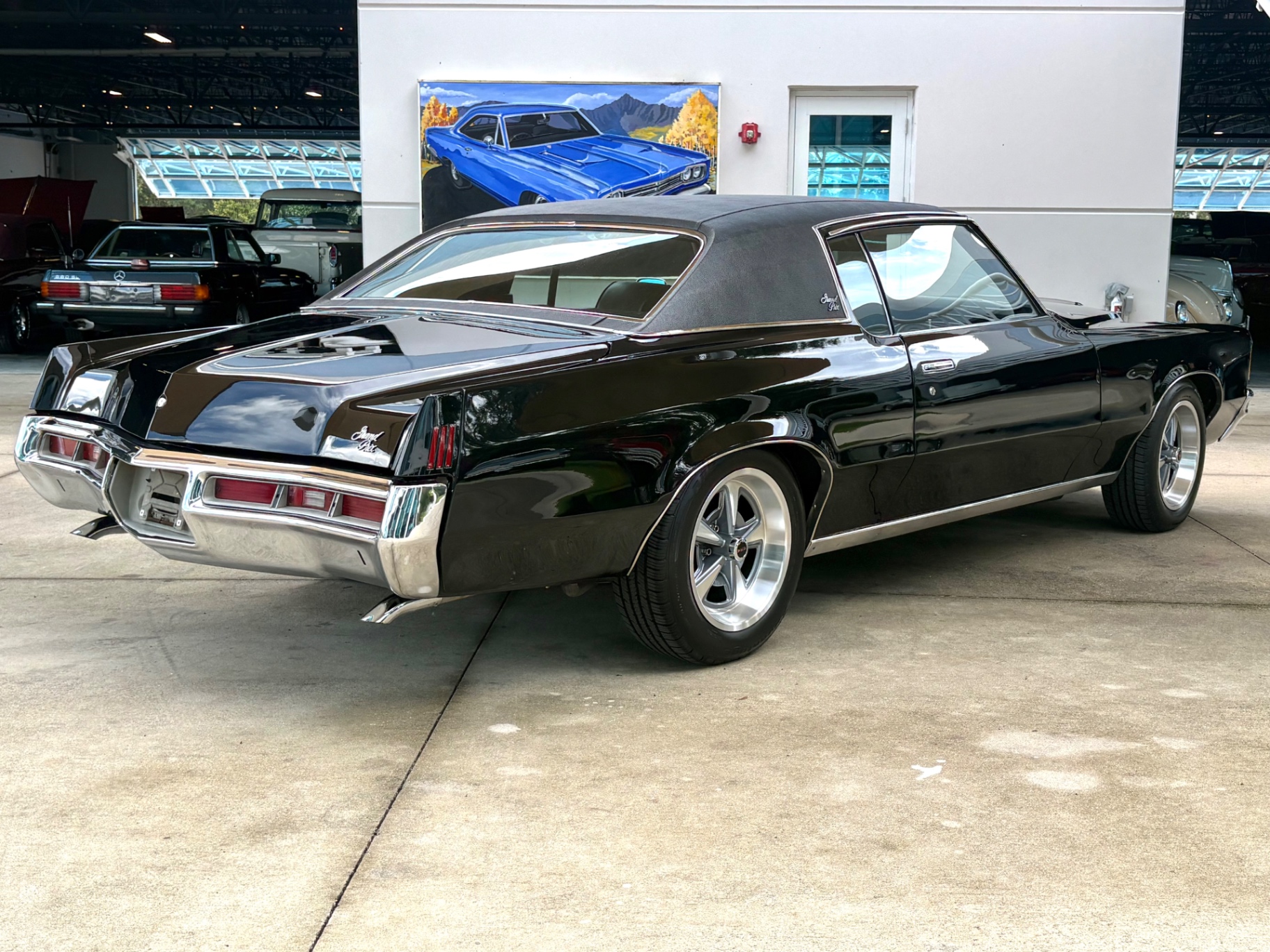
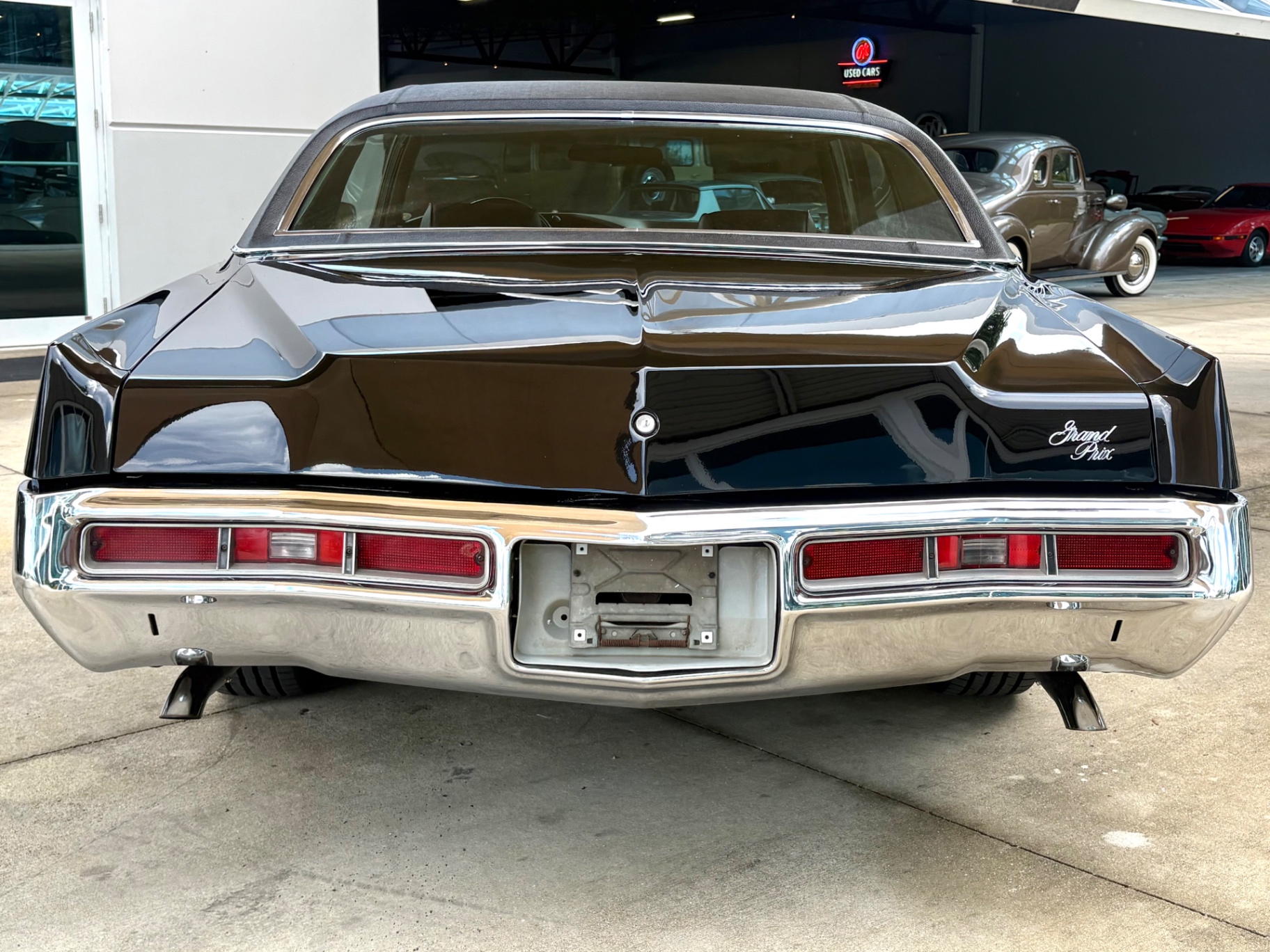
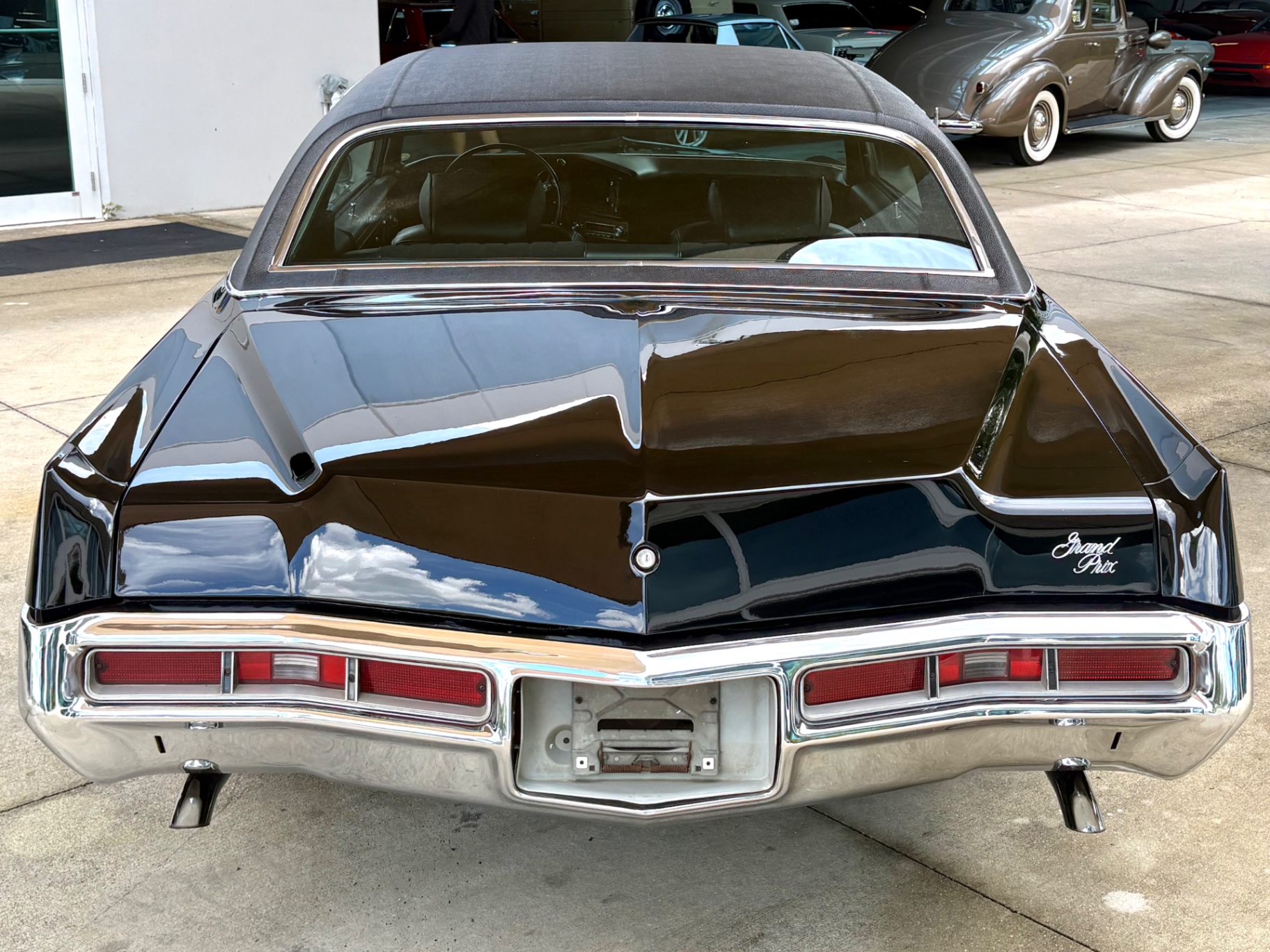
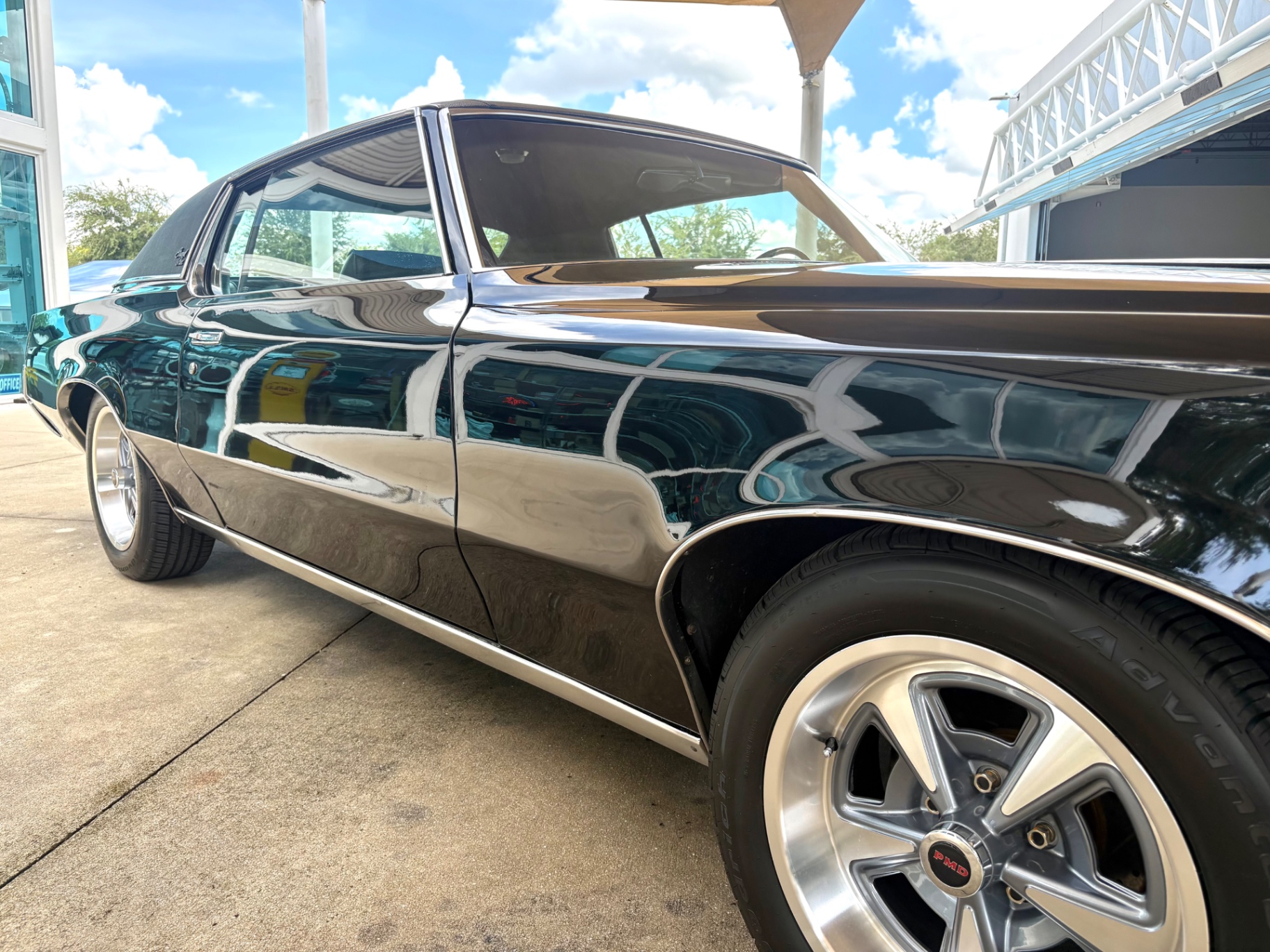
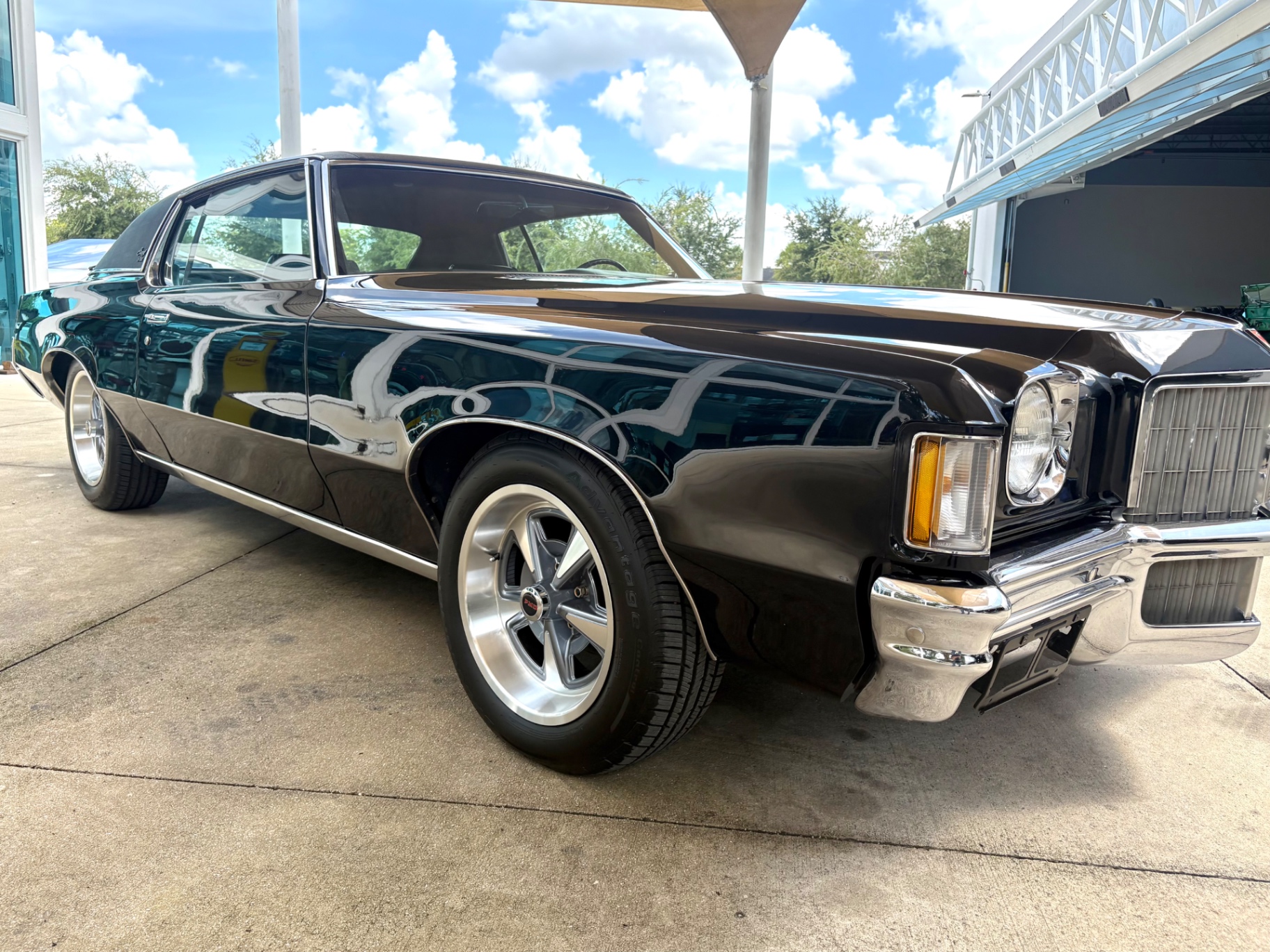
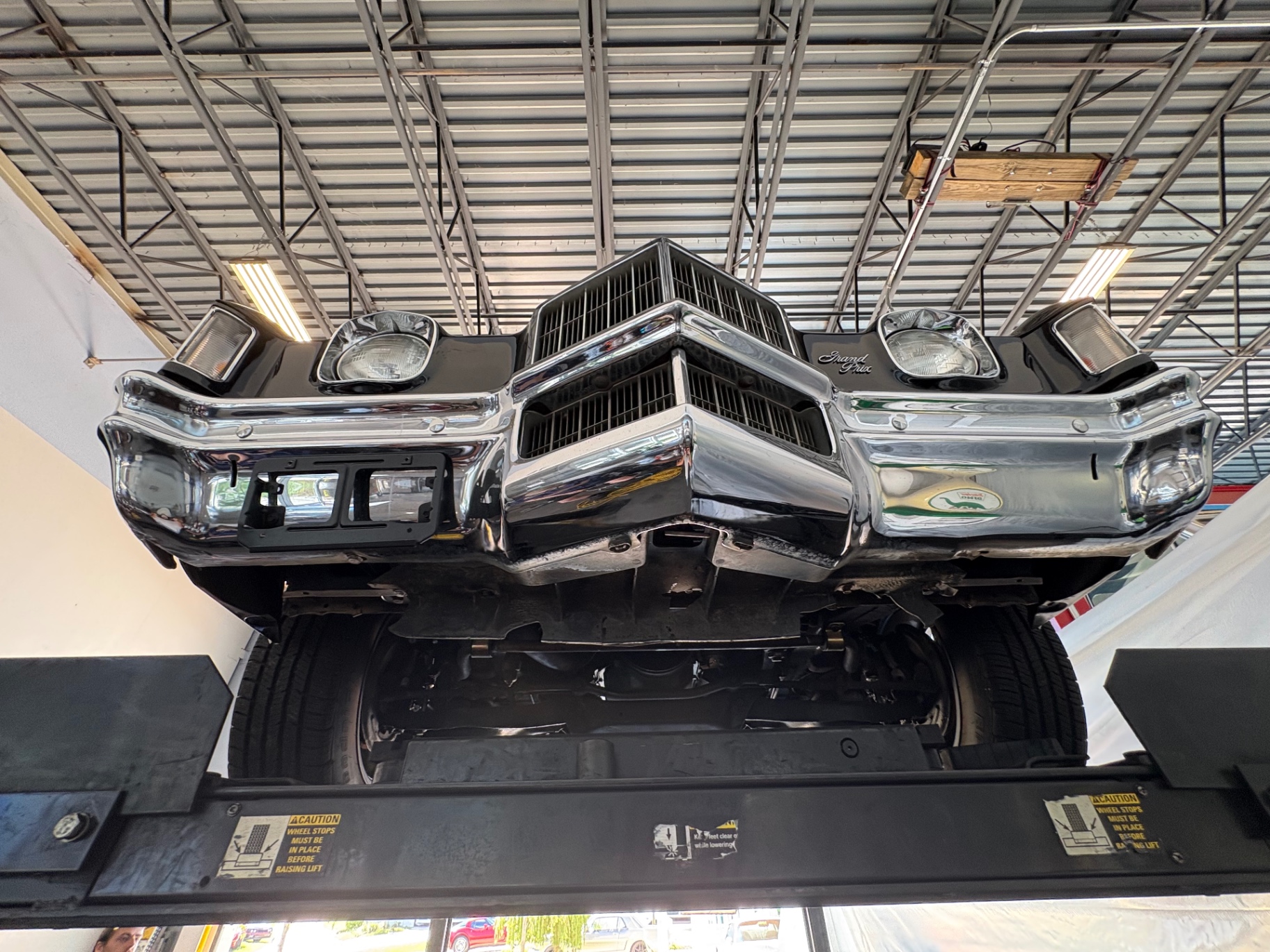
Starlight Black over a black vinyl top is a serious color combination for this body style. The 1972 Grand Prix's sheetmetal is characterized by a long, flat hood, a formal semi-fastback roofline that ends in a distinct C-pillar, and a wide, aggressive front end featuring the signature Grand Prix twin-opening grille with horizontal bars and quad headlights set wide. The chrome bumpers on both ends are present and showing the kind of reflectivity that indicates they have been properly maintained or refinished. The body panels appear straight and the gaps are consistent in the photographs.
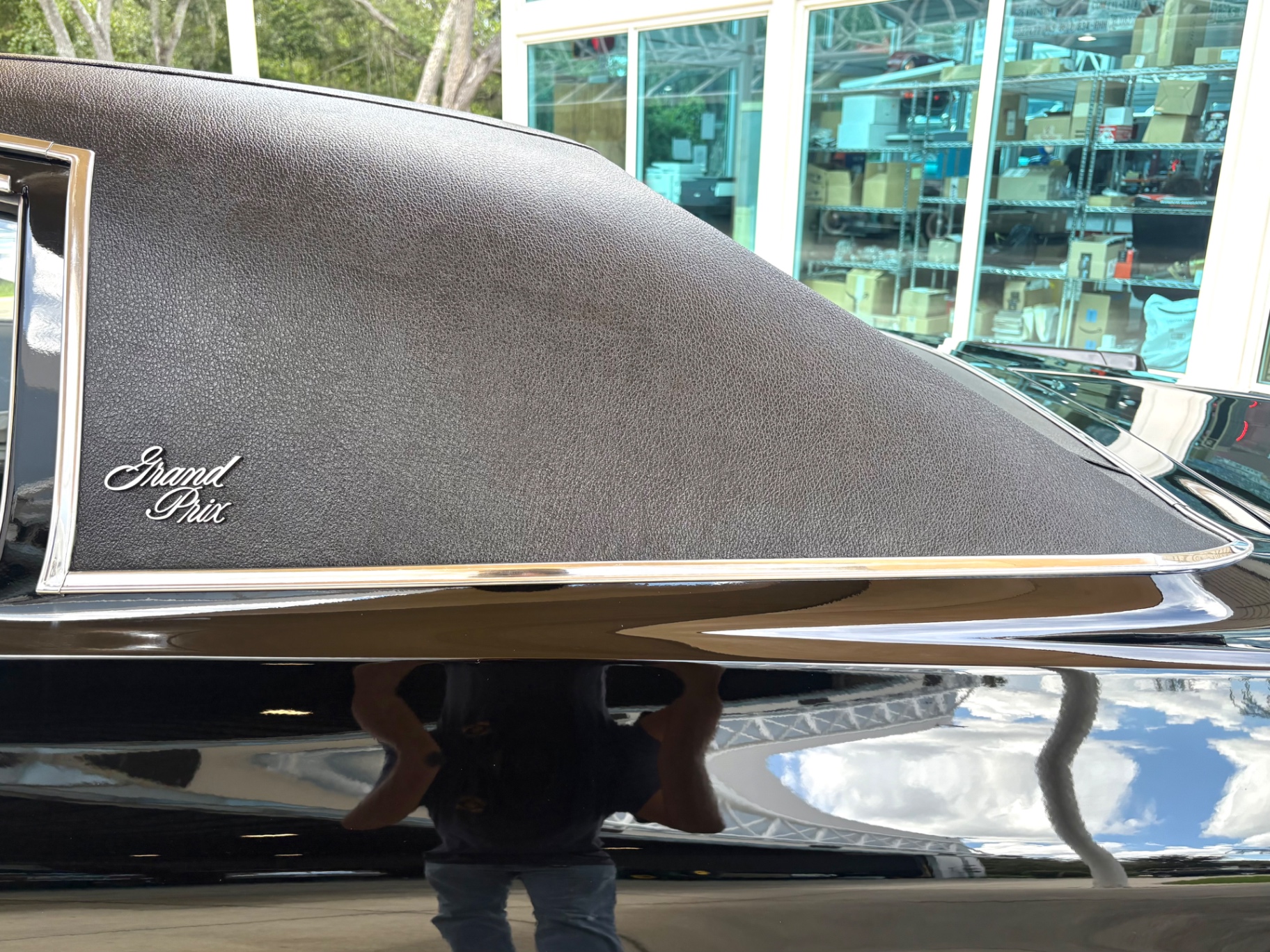
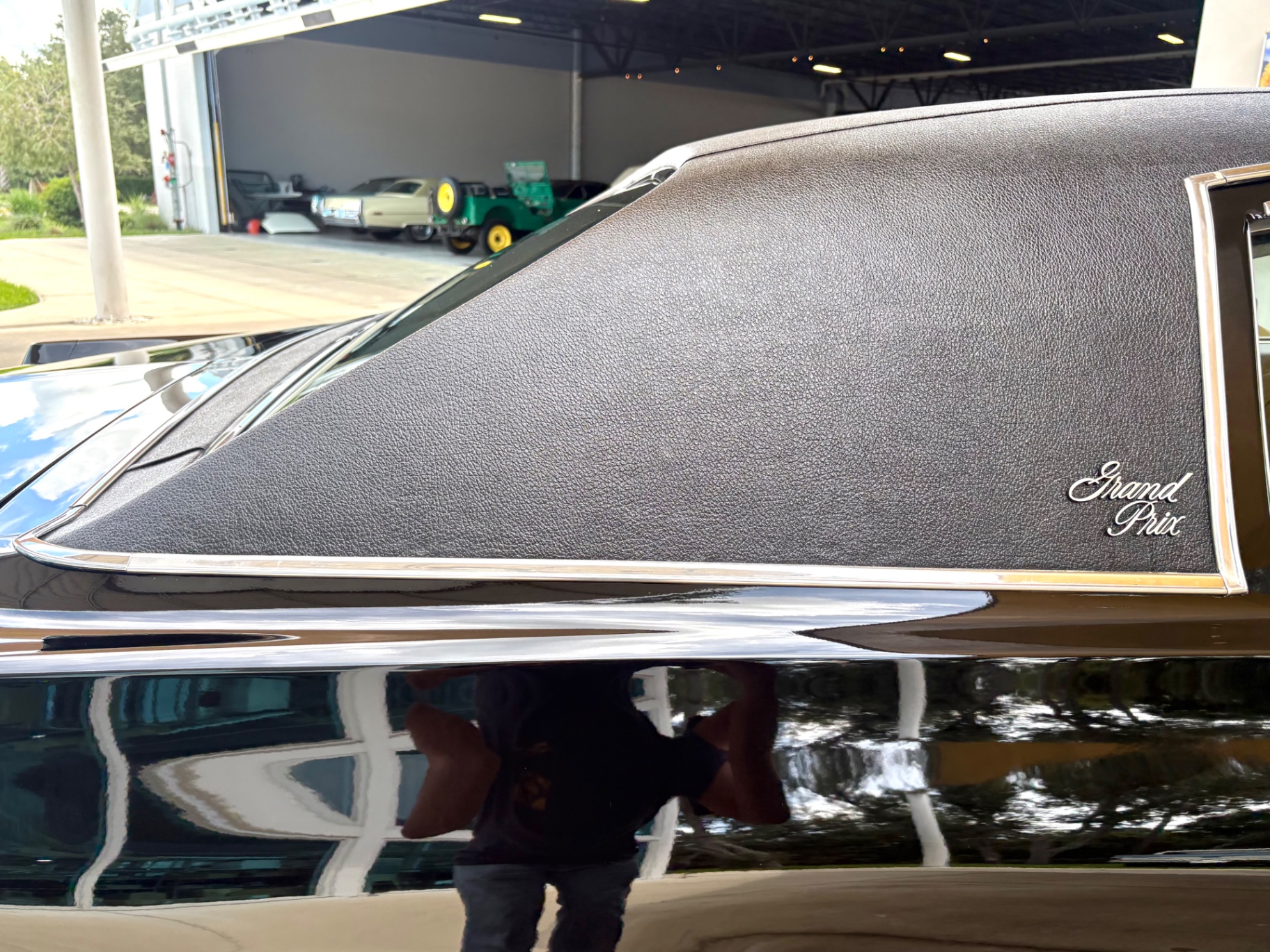
The black vinyl top is fitted correctly and sits flat against the roofline without visible bubbling or lifting at the seams — a common failure point on vinyl-topped cars of this era that went unprotected. The combination of Starlight Black paint and the matching black vinyl top creates a visually seamless roofline profile.
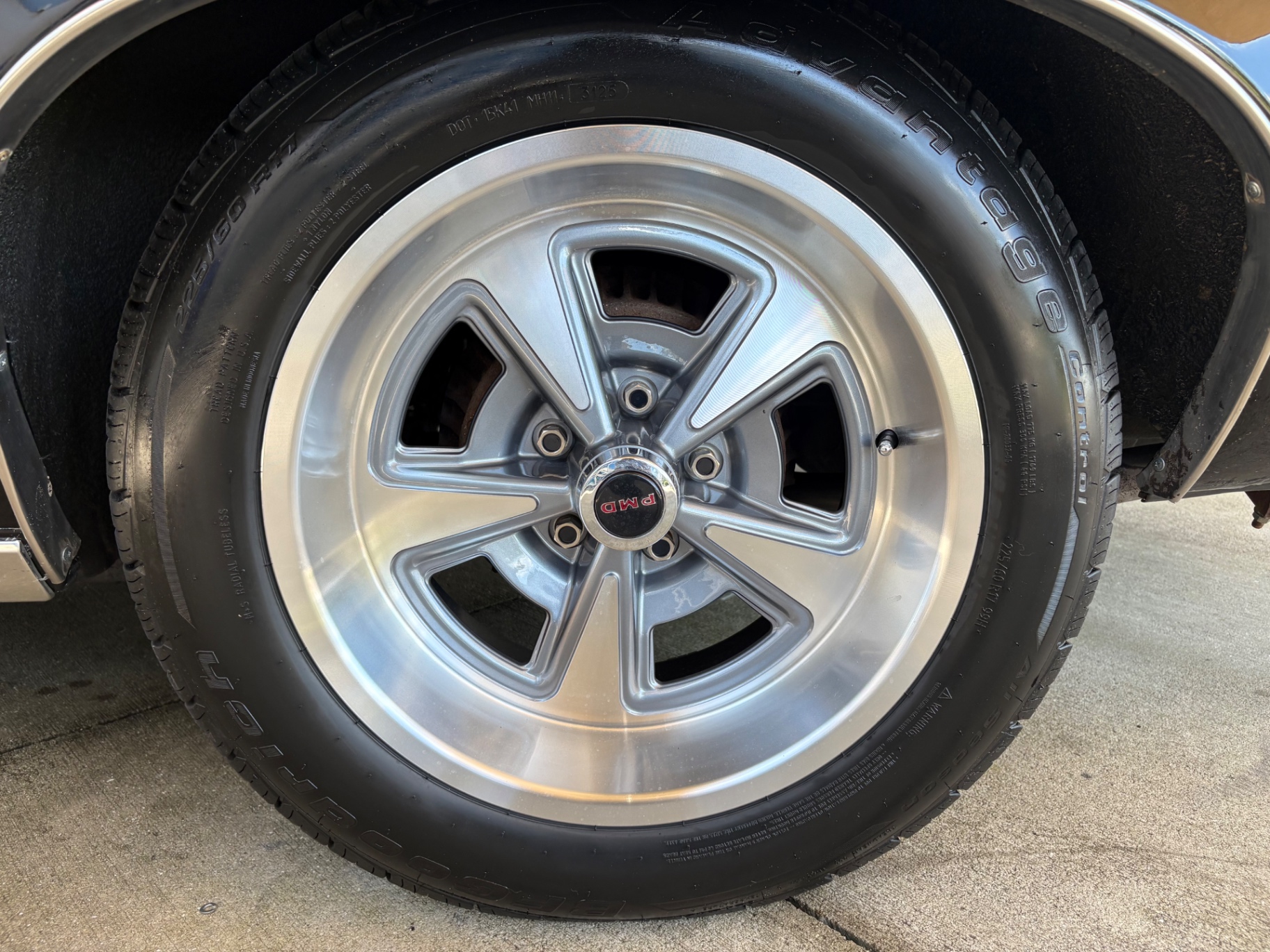
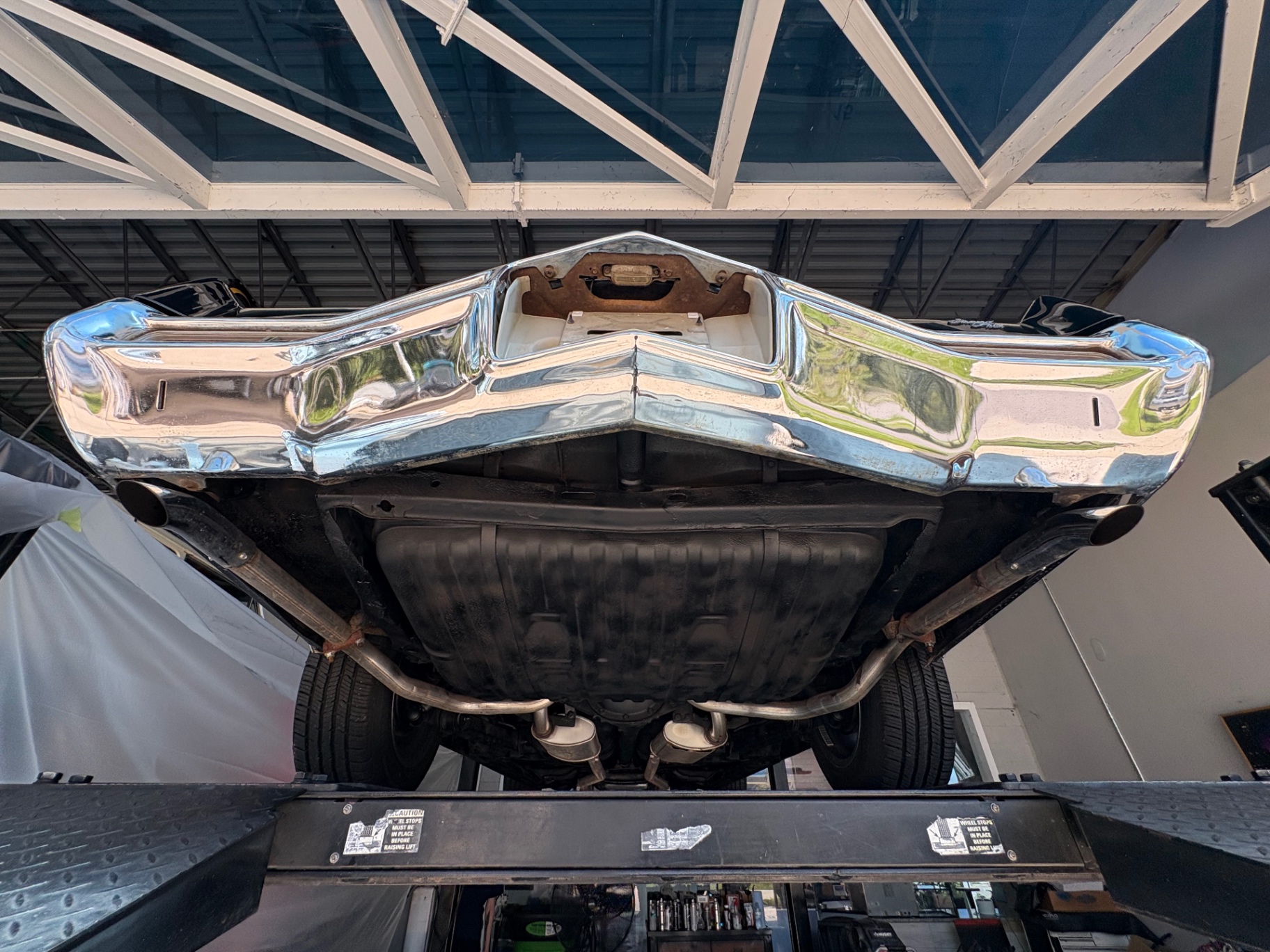
The wheels are custom PMD-style alloy wheels, a five-spoke design that works well proportionally with the Grand Prix's body dimensions and complements the black exterior without drawing attention away from the car's original lines. The tires are modern radials, which improves ride quality and handling over the original bias-ply specification and makes this car more comfortable for regular driving. The undercarriage shot from below the front end shows the chrome front bumper in strong condition, and the rear bumper photo confirms a matching level of quality at the back.
Conclusion
The 1972 Pontiac Grand Prix is not a car that gets discussed as loudly as the GTO or the Firebird, but among people who actually know the Pontiac lineup, it commands real respect. It was a purpose-built personal luxury coupe that Pontiac developed on its own terms, and the third-generation platform — this generation — is widely considered the cleanest and most focused execution of that concept. The 400 cubic inch V8 makes this particular car the correct-engine example in what would be the last year Pontiac offered that displacement in the Grand Prix. The Starlight Black color combination, solid undercarriage, correct factory options including air conditioning, power windows, tilt column, and Rally clock, along with a presentable and honest interior, make this a strong driver-quality example that does not need work before it goes on the road.
If you have questions about this 1972 Pontiac Grand Prix or would like to arrange an inspection, call Skyway Classics in Sarasota, Florida at 941-254-6608. We are happy to walk you through the car in detail.
Disclaimer
Information found on the website is presented as given to us by the owner of the car, whether on consignment or from the owner we bought it from. Some Photos, materials for videos, descriptions and other information are provided by the consignor/seller and is deemed reliable, but Skyway Classics does not warranty or guarantee this information. Skyway Classics is not responsible for information that may incorrect or a publishing error. The decision to purchase should be based solely on the buyers personal inspection of the vehicle or by a professional inspection service prior to offer or purchase being made.
1972 Pontiac Grand Prix — Starlight Black, 400ci V8, Solid Florida Car
Why This Car Is Special
The 1972 Pontiac Grand Prix occupies a specific and interesting place in GM history. It was the second model year of the third-generation Grand Prix, a platform that Pontiac had completely redesigned for 1969 on a shorter, more personal-luxury-oriented wheelbase of 118 inches — down from the full-size 121-inch platform it previously shared with the Bonneville and Catalina. That redesign was a direct response to the Ford Thunderbird and the emerging personal luxury segment, and it worked. The Grand Prix became one of Pontiac's strongest sellers almost immediately.
By 1972, the muscle car era was winding down hard. New emissions regulations and insurance pressure had compressed compression ratios across the board, and Pontiac switched from gross horsepower ratings to the more honest SAE net figures that year — a change that made many engines look weaker on paper than they actually were in practice. The 400 cubic inch V8, however, remained the standard engine in the Grand Prix for 1972 and continued to deliver genuine torque and a character that smaller-displacement alternatives simply could not match. This was also the final year Pontiac would offer the 400 in the Grand Prix before displacement choices shifted in subsequent model years, giving the 1972 Grand Prix with its 400 a quiet historical significance among Pontiac enthusiasts.
The VIN on this car decodes to confirm it was built at the Pontiac, Michigan assembly plant, with a body style of hardtop coupe and the 400ci V8 as the factory engine. The "T" in the VIN's engine position confirms the 400. This is a correctly documented, correctly powered example.
What makes this specific car compelling beyond the history is the combination of the Starlight Black exterior, black vinyl top, and a fully black interior — a color combination that gives the Grand Prix's long hood and formal roofline a clean, intentional look that holds up well five decades later. Add a solid undercarriage, a full complement of correct factory comfort options, and custom PMD alloy wheels that keep the period aesthetic while modernizing the stance, and you have a Grand Prix that is ready to use, not just display.
Features List
- 400ci Pontiac V8 engine with 4-barrel carburetor
- Hydra-Matic 3-speed automatic transmission
- Dual exhaust
- Front disc brakes with power assist
- Power steering
- Air conditioning
- Power windows
- Tilt steering column
- AM/FM radio (Delco)
- Rally clock
- Wood grain dash trim
- Black vinyl bench seats with cloth inserts
- Black vinyl top
- Custom PMD alloy wheels
- Chrome bumpers, front and rear
- Solid undercarriage
Mechanical
The 400 cubic inch Pontiac V8 was a different engine from the Chevrolet 400 and should not be confused with it. Pontiac developed and manufactured its own V8 family, and the 400 was among the most respected displacement options in that lineup throughout the late 1960s and into the early 1970s. Fed by a 4-barrel carburetor, it produces broad, usable torque across a wide RPM range — the kind of power delivery that suits a large personal luxury coupe well. It does not need to be revved hard to move the car with authority.
The Hydra-Matic 3-speed automatic transmission is the correct and expected pairing for this application. Pontiac's Hydra-Matic was well-regarded for its durability, and undercarriage photos on this car confirm the transmission is present and the pan shows no signs of leaks or damage. The undercarriage photos also reveal a clean, solid floor pan with consistent undercoating, no visible patch welds, and a dual exhaust system that runs correctly from front to rear. The exhaust layout is symmetrical and properly supported — this is not a cobbled-together system.
Braking is handled by front disc, rear drum — the correct factory configuration for a 1972 Grand Prix equipped with power brakes. Front discs were a meaningful upgrade over four-wheel drums and give this car confident, predictable stopping power. Power steering is also fitted, which was essentially expected on a car of this size and positioning in Pontiac's lineup.
Interior
The 1972 Grand Prix interior was one of its selling points, and this car delivers a correct representation of what Pontiac intended. The bench seat is trimmed in black vinyl with a cloth insert panel — a combination that holds up better over time than all-vinyl because the cloth breathes and resists cracking in ways that solid vinyl does not. Both front and rear bench surfaces show their age honestly but remain structurally sound and presentable, with the ribbed cloth insert pattern clearly visible and intact.
The dashboard is the correct Grand Prix layout, featuring a driver-focused instrument pod that wraps toward the driver rather than spreading flat across the dash. Three round gauges sit in deep pods directly in front of the driver — speedometer in the center flanked by a combined fuel and temperature gauge on the left and the Rally clock on the right. The Rally clock is a period-correct detail that adds function and authenticity. Wood grain trim runs across the dash face and around the instrument cluster, and it is present and intact on this car. The column-mounted shifter for the Hydra-Matic sits correctly in the steering column, with the RNDSL indicator visible in the dash pod — a Grand Prix-specific detail that kept the center console area clean and open.
The tilt steering column adds practical usability, and the Delco AM/FM radio is mounted correctly in the dash with its original pushbutton face and separate tone and speaker controls. Air conditioning controls are integrated into the dash panel. Door panels carry the GP badge and a horizontal chrome accent strip, consistent with what the factory produced for this model year. Carpet is black and complete throughout.
Exterior
Starlight Black over a black vinyl top is a serious color combination for this body style. The 1972 Grand Prix's sheetmetal is characterized by a long, flat hood, a formal semi-fastback roofline that ends in a distinct C-pillar, and a wide, aggressive front end featuring the signature Grand Prix twin-opening grille with horizontal bars and quad headlights set wide. The chrome bumpers on both ends are present and showing the kind of reflectivity that indicates they have been properly maintained or refinished. The body panels appear straight and the gaps are consistent in the photographs.
The black vinyl top is fitted correctly and sits flat against the roofline without visible bubbling or lifting at the seams — a common failure point on vinyl-topped cars of this era that went unprotected. The combination of Starlight Black paint and the matching black vinyl top creates a visually seamless roofline profile.
The wheels are custom PMD-style alloy wheels, a five-spoke design that works well proportionally with the Grand Prix's body dimensions and complements the black exterior without drawing attention away from the car's original lines. The tires are modern radials, which improves ride quality and handling over the original bias-ply specification and makes this car more comfortable for regular driving. The undercarriage shot from below the front end shows the chrome front bumper in strong condition, and the rear bumper photo confirms a matching level of quality at the back.
Conclusion
The 1972 Pontiac Grand Prix is not a car that gets discussed as loudly as the GTO or the Firebird, but among people who actually know the Pontiac lineup, it commands real respect. It was a purpose-built personal luxury coupe that Pontiac developed on its own terms, and the third-generation platform — this generation — is widely considered the cleanest and most focused execution of that concept. The 400 cubic inch V8 makes this particular car the correct-engine example in what would be the last year Pontiac offered that displacement in the Grand Prix. The Starlight Black color combination, solid undercarriage, correct factory options including air conditioning, power windows, tilt column, and Rally clock, along with a presentable and honest interior, make this a strong driver-quality example that does not need work before it goes on the road.
If you have questions about this 1972 Pontiac Grand Prix or would like to arrange an inspection, call Skyway Classics in Sarasota, Florida at 941-254-6608. We are happy to walk you through the car in detail.
Disclaimer
Information found on the website is presented as given to us by the owner of the car, whether on consignment or from the owner we bought it from. Some Photos, materials for videos, descriptions and other information are provided by the consignor/seller and is deemed reliable, but Skyway Classics does not warranty or guarantee this information. Skyway Classics is not responsible for information that may incorrect or a publishing error. The decision to purchase should be based solely on the buyers personal inspection of the vehicle or by a professional inspection service prior to offer or purchase being made.
1972 Pontiac
Grand Prix Model J
Why Choose Skyway Classics?
Explore our curated inventory of classic and collector cars—thoughtfully selected, ready to drive, and supported by experts who make ownership simple.
Expert Curation
Every vehicle is hand-selected by our experts for quality, authenticity, and investment potential.
Fast Transactions
Streamlined buying and selling process with quick financing and immediate delivery options.
Only National Dealer With Classic Service & Repair
We’re the only national dealership that services and repairs the classics we sell—before and after the sale.
Nationwide Network
Access to our extensive network of collectors, restorers, and classic car enthusiasts nationwide.
Concierge Ownership Support
From financing and insurance to paperwork, shipping, and titling—we handle the details so you can enjoy the drive.
Passion-Driven Service
We're classic car enthusiasts first, providing personalized service with genuine passion for the hobby.