
1996 Chevrolet
Camaro Z28
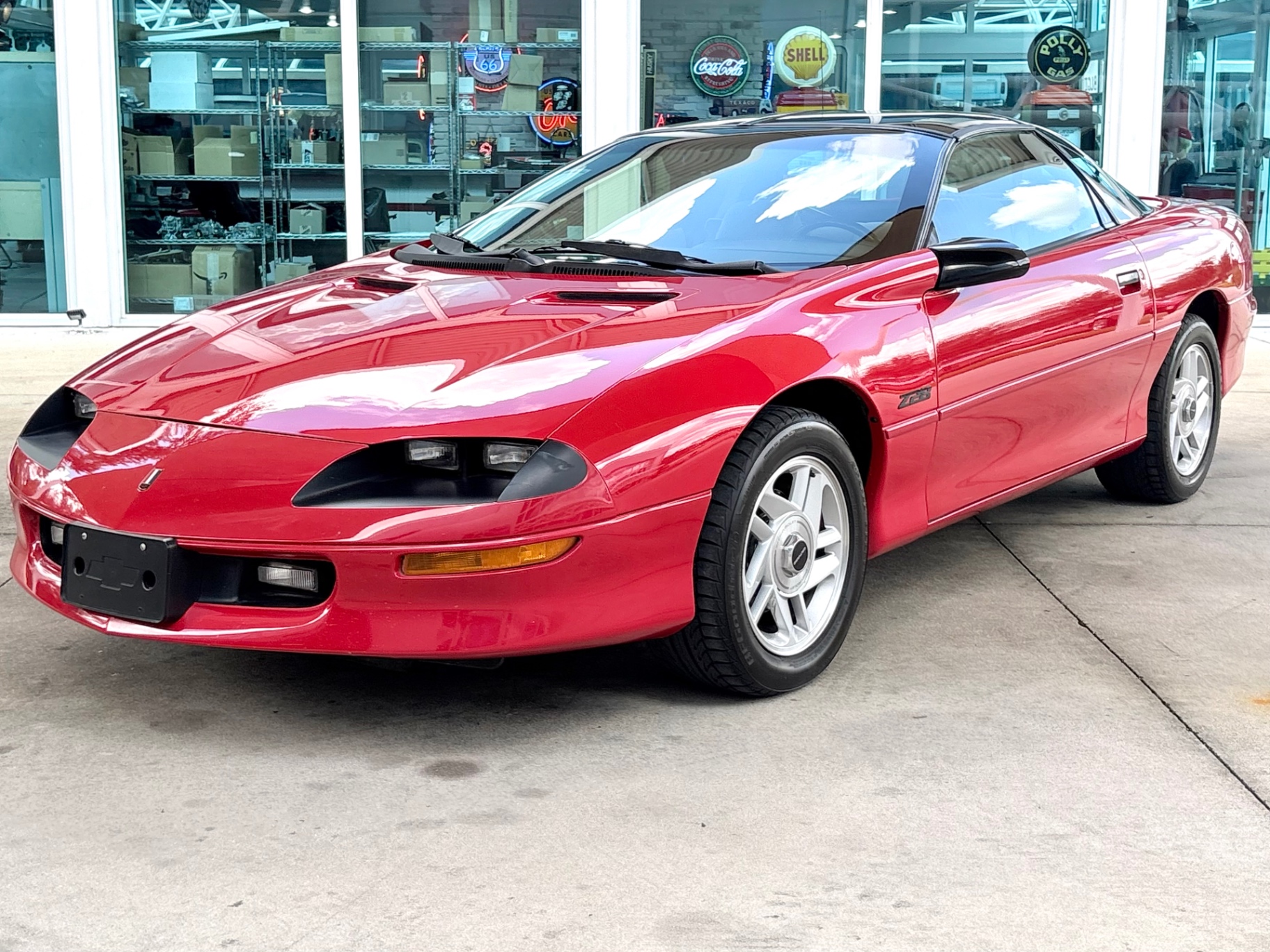
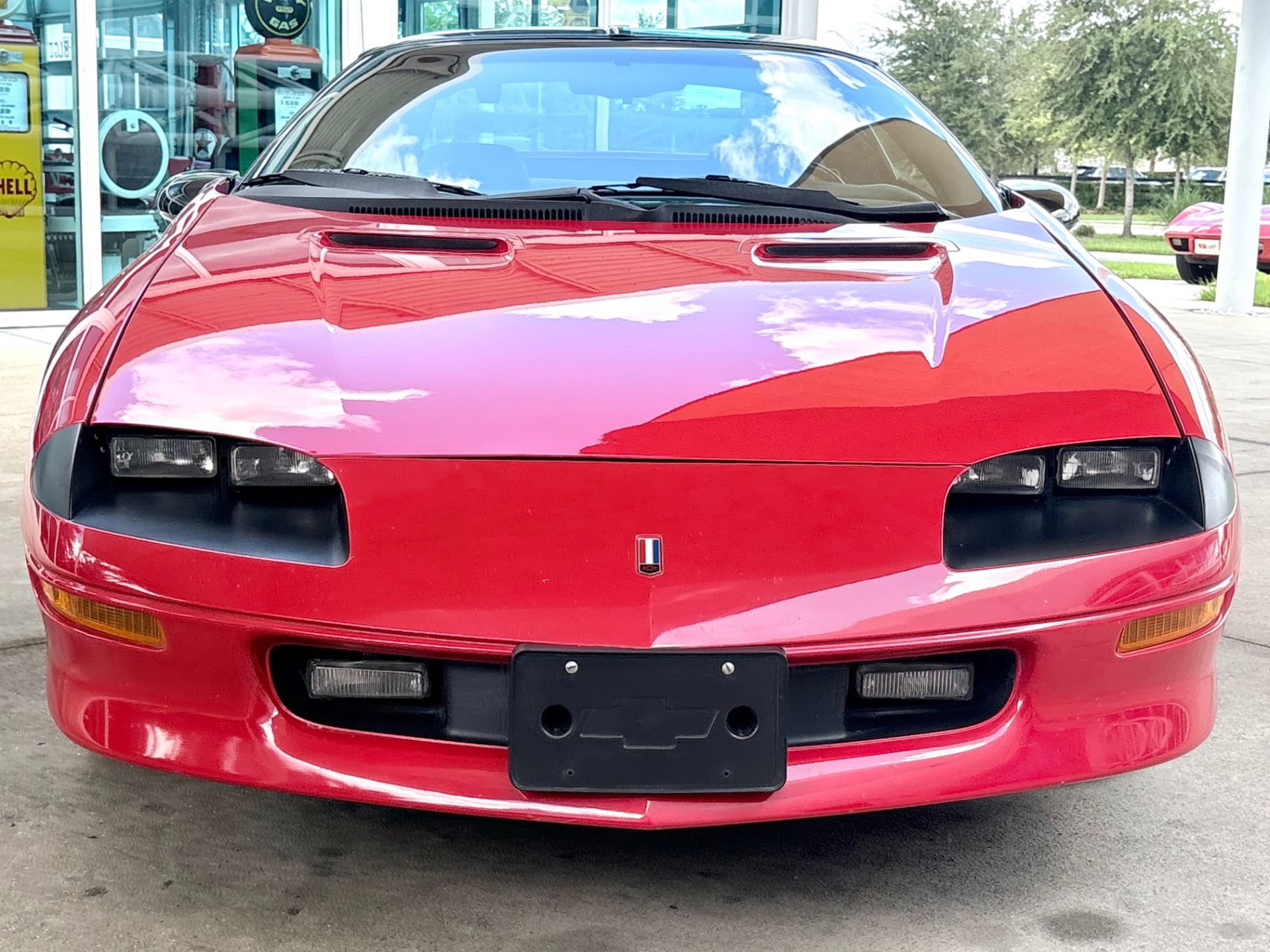
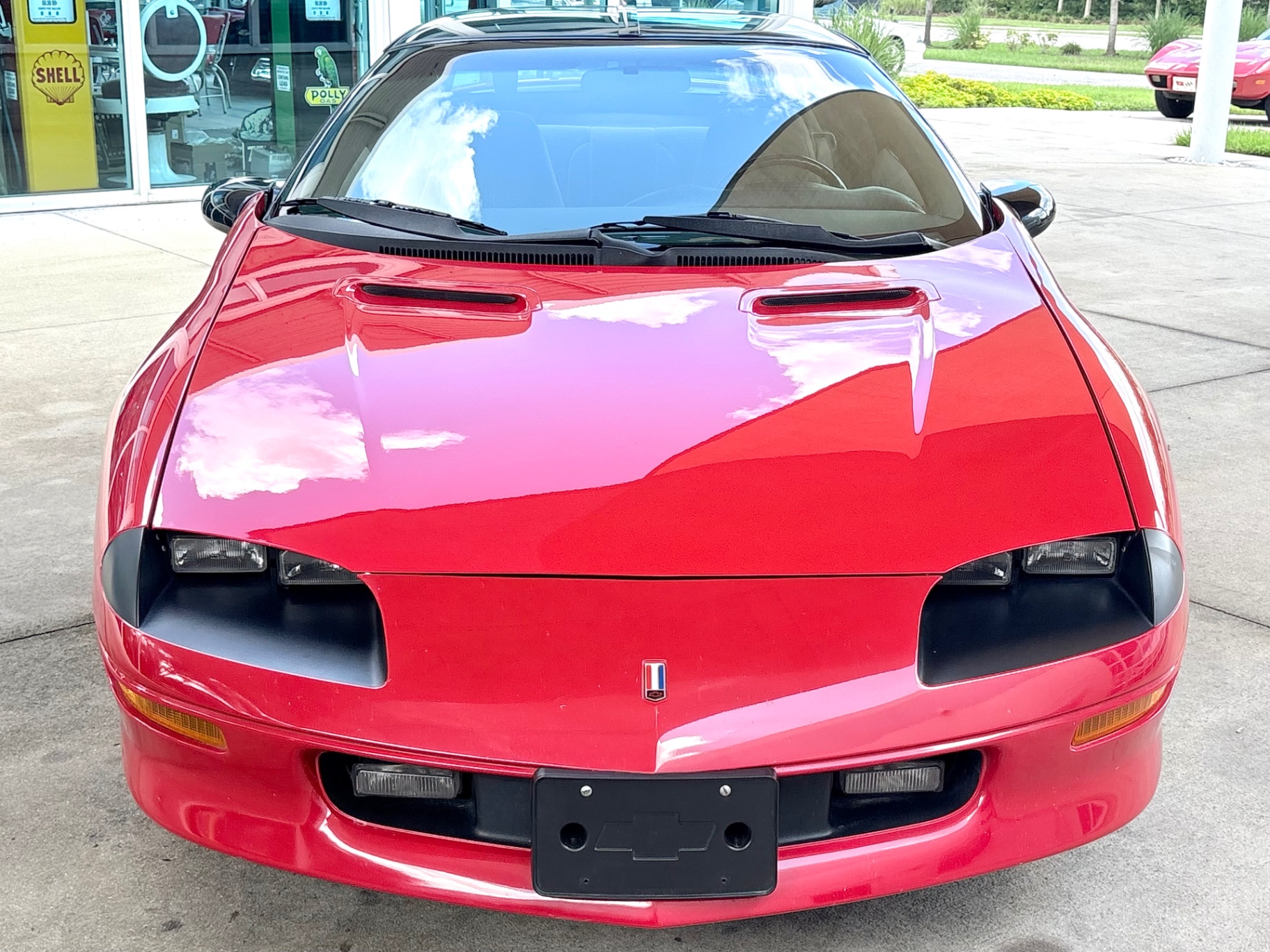
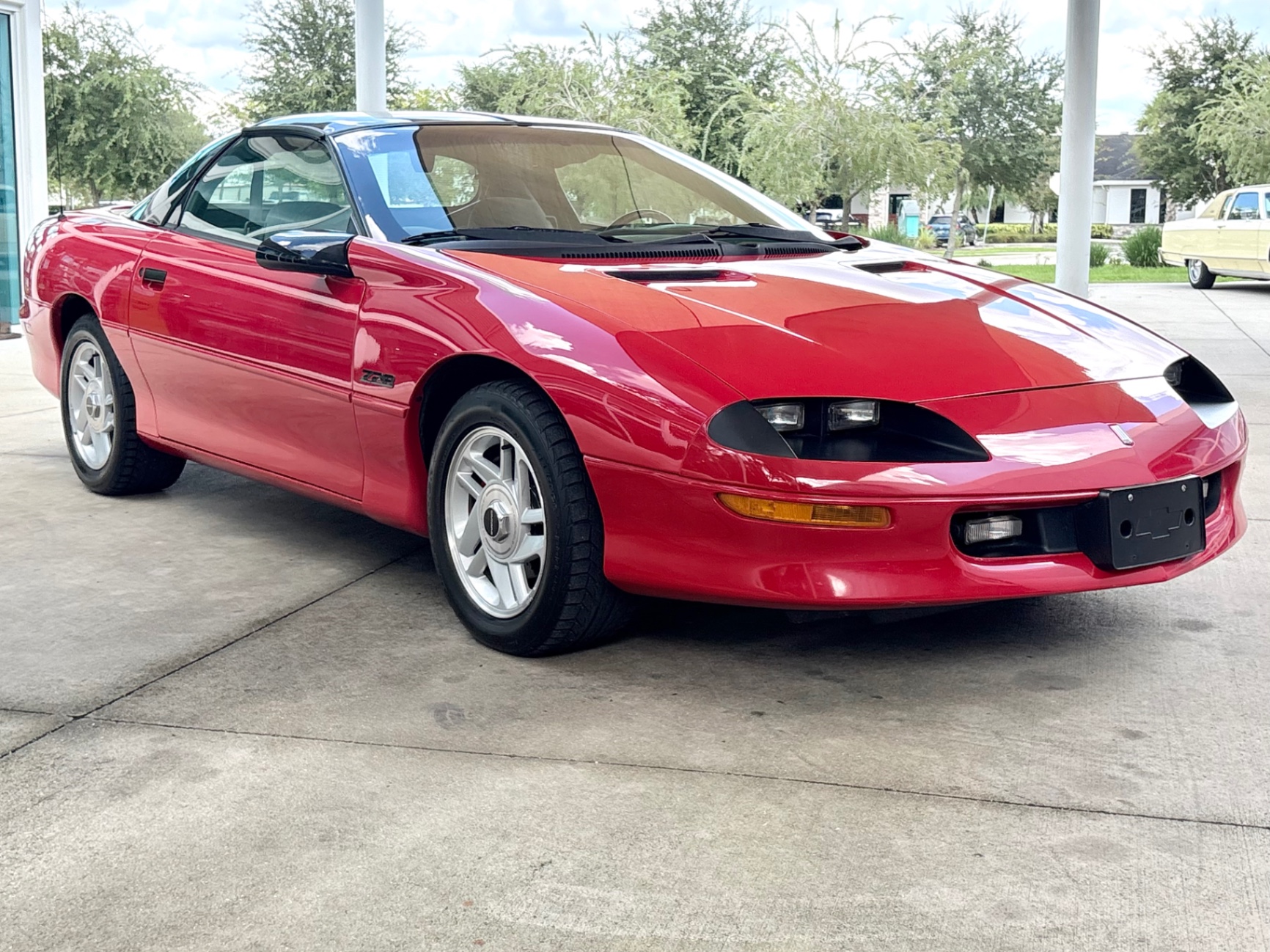
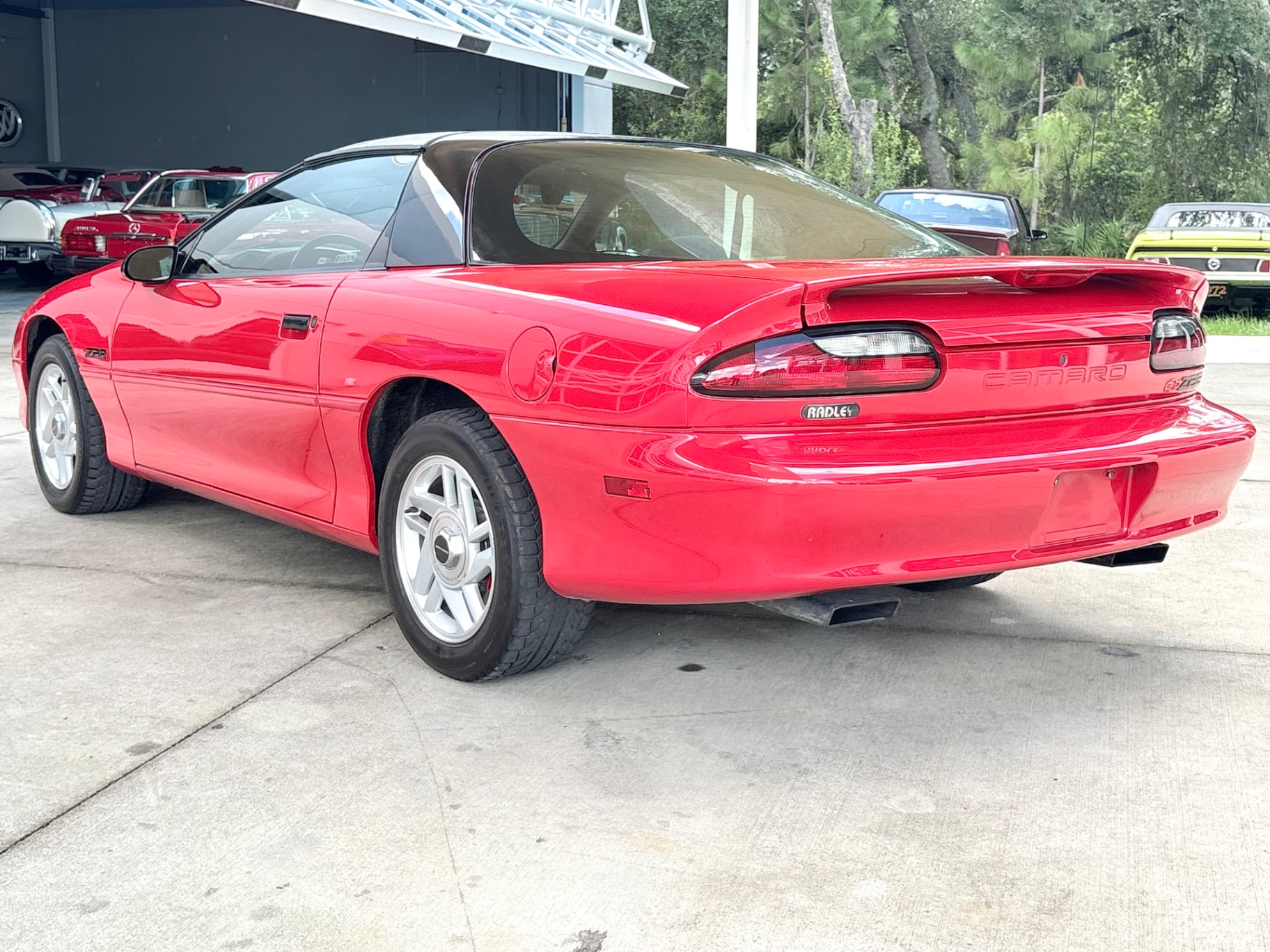
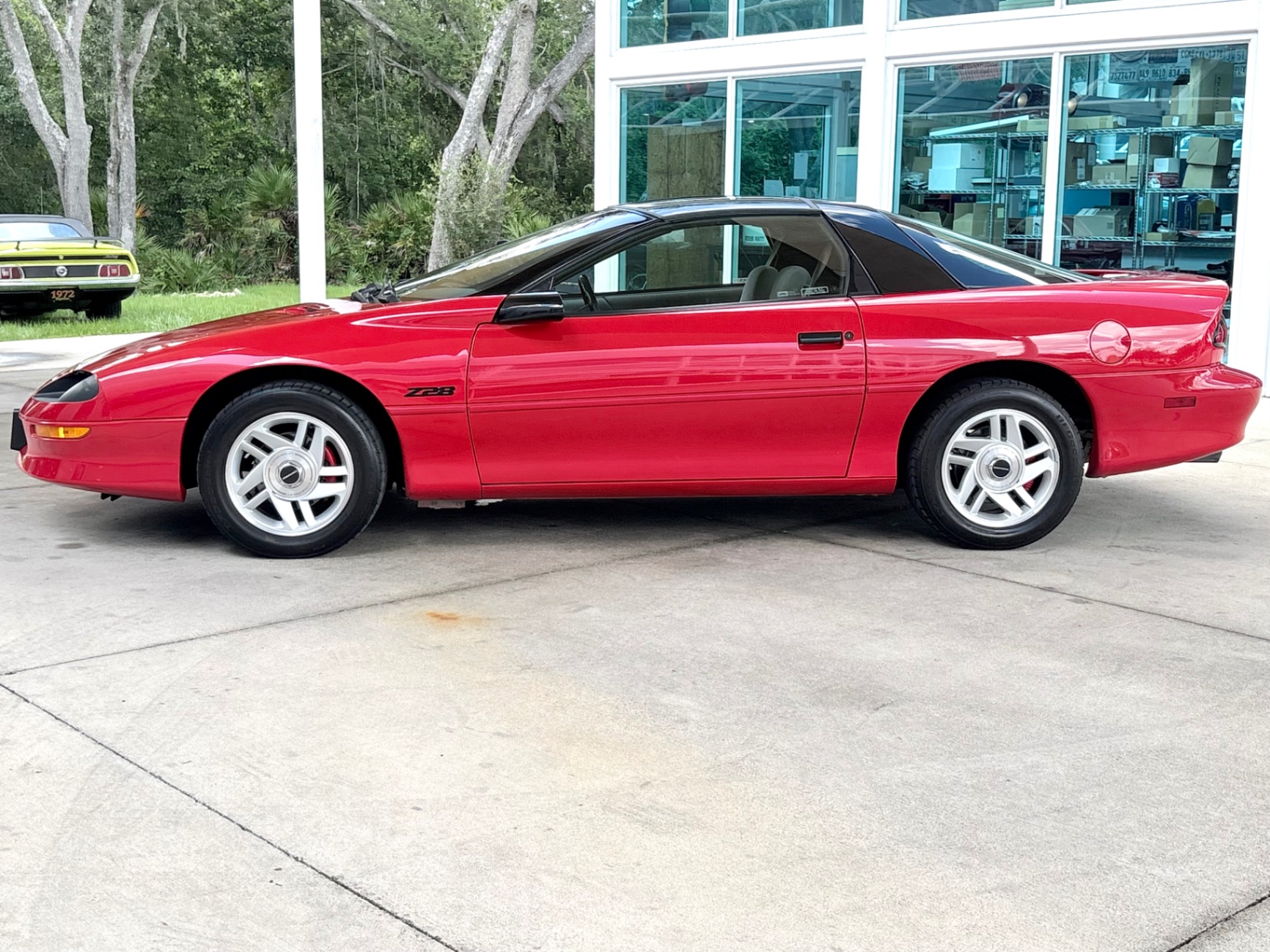
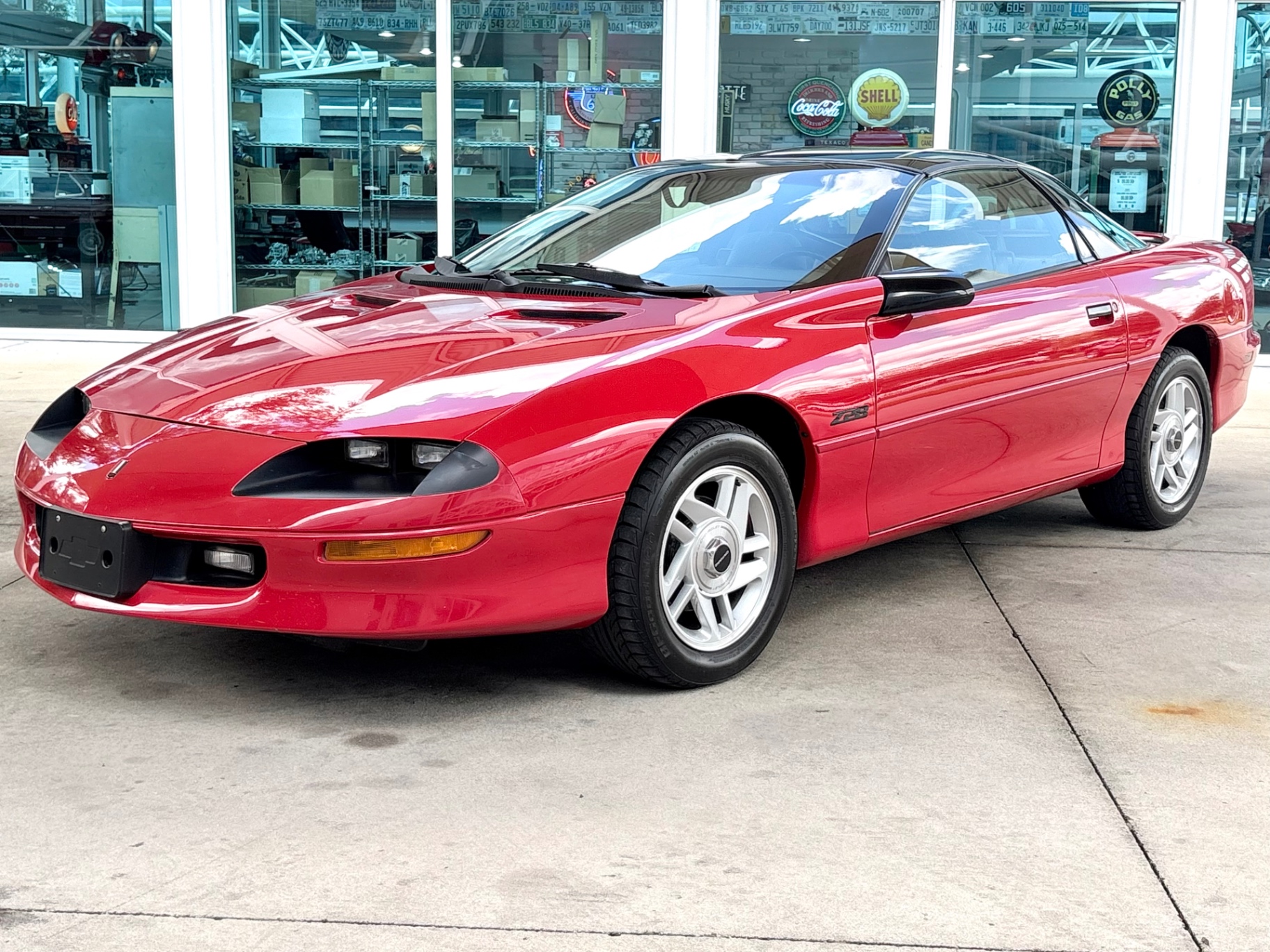
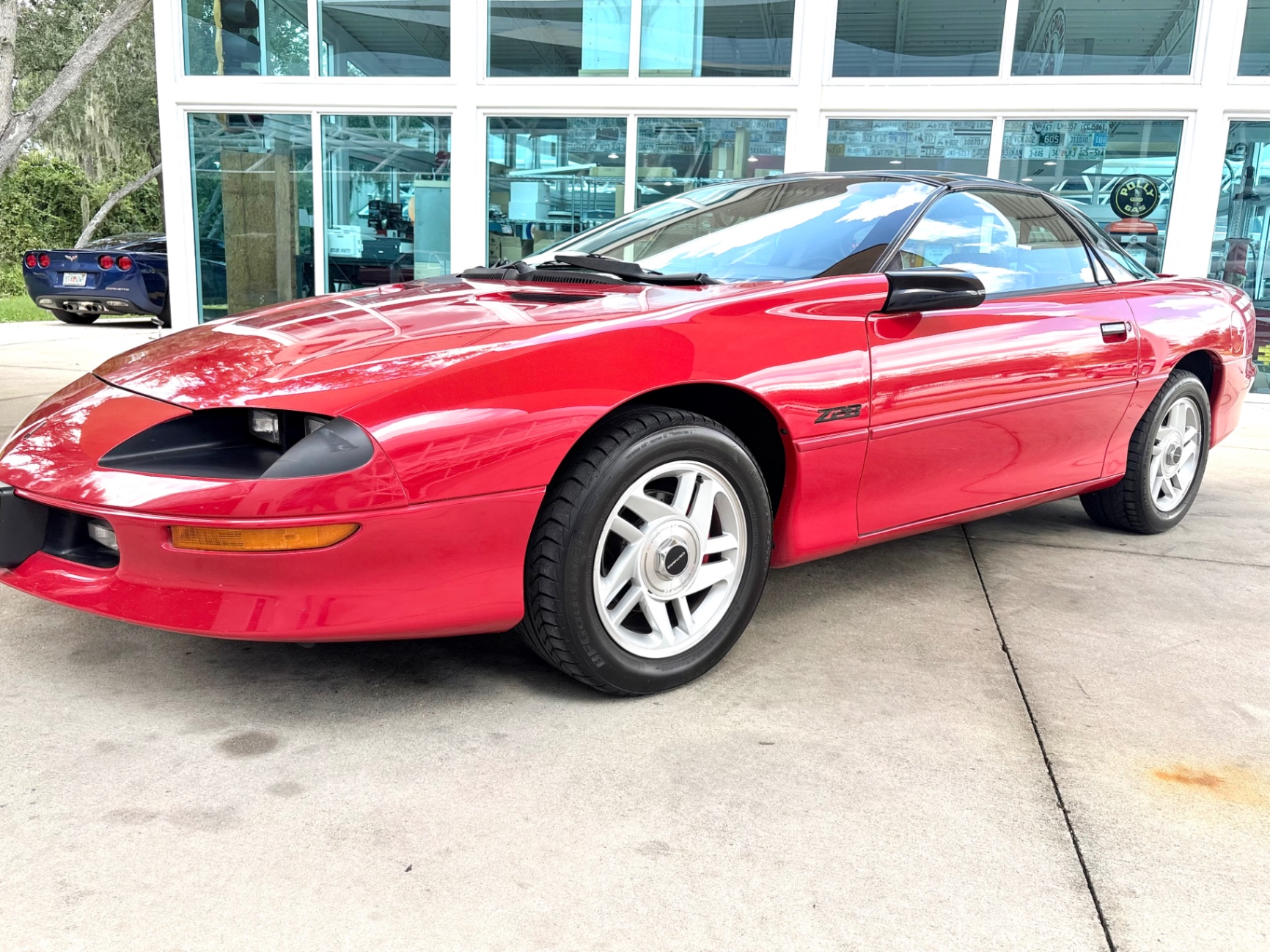
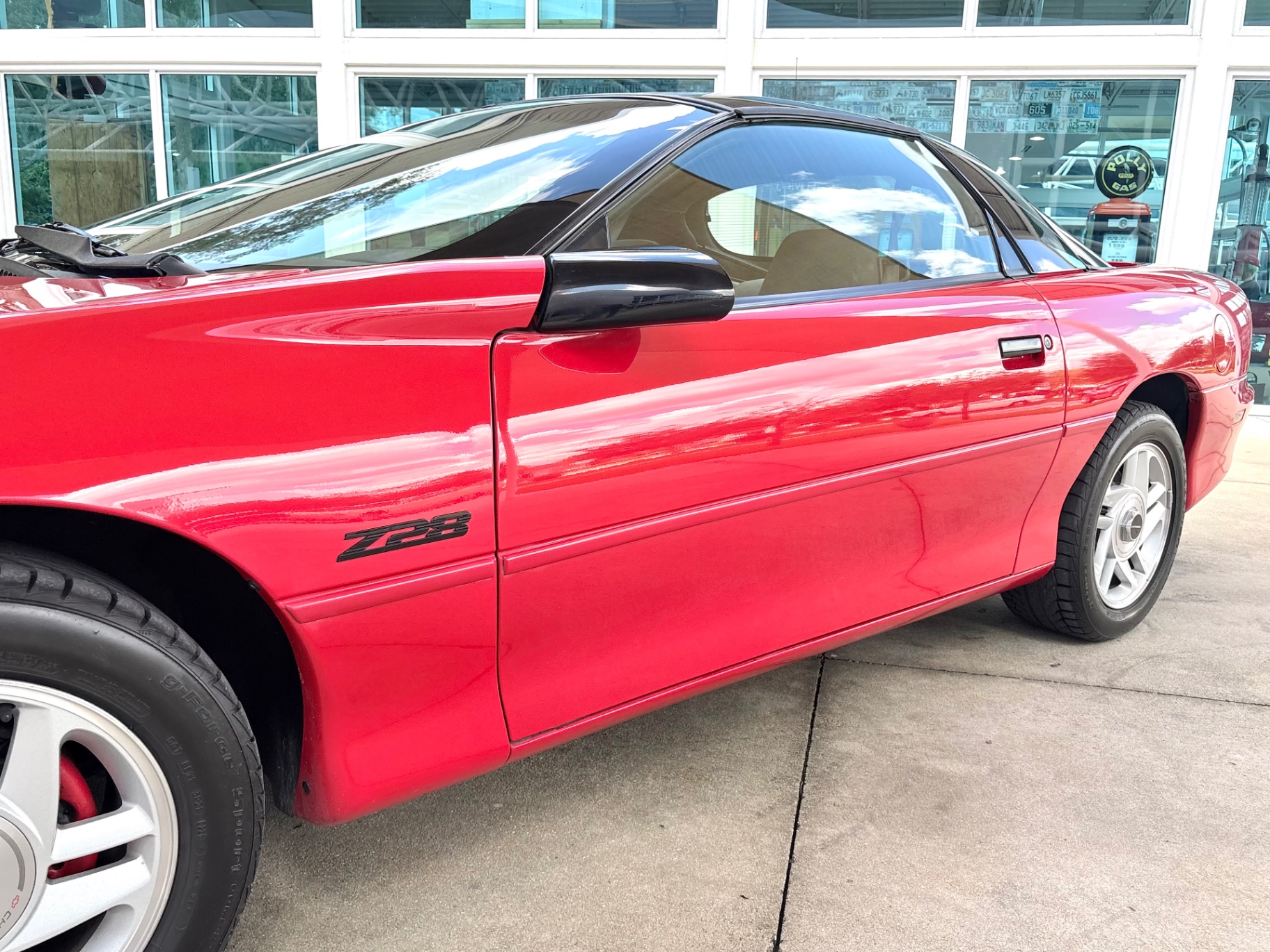
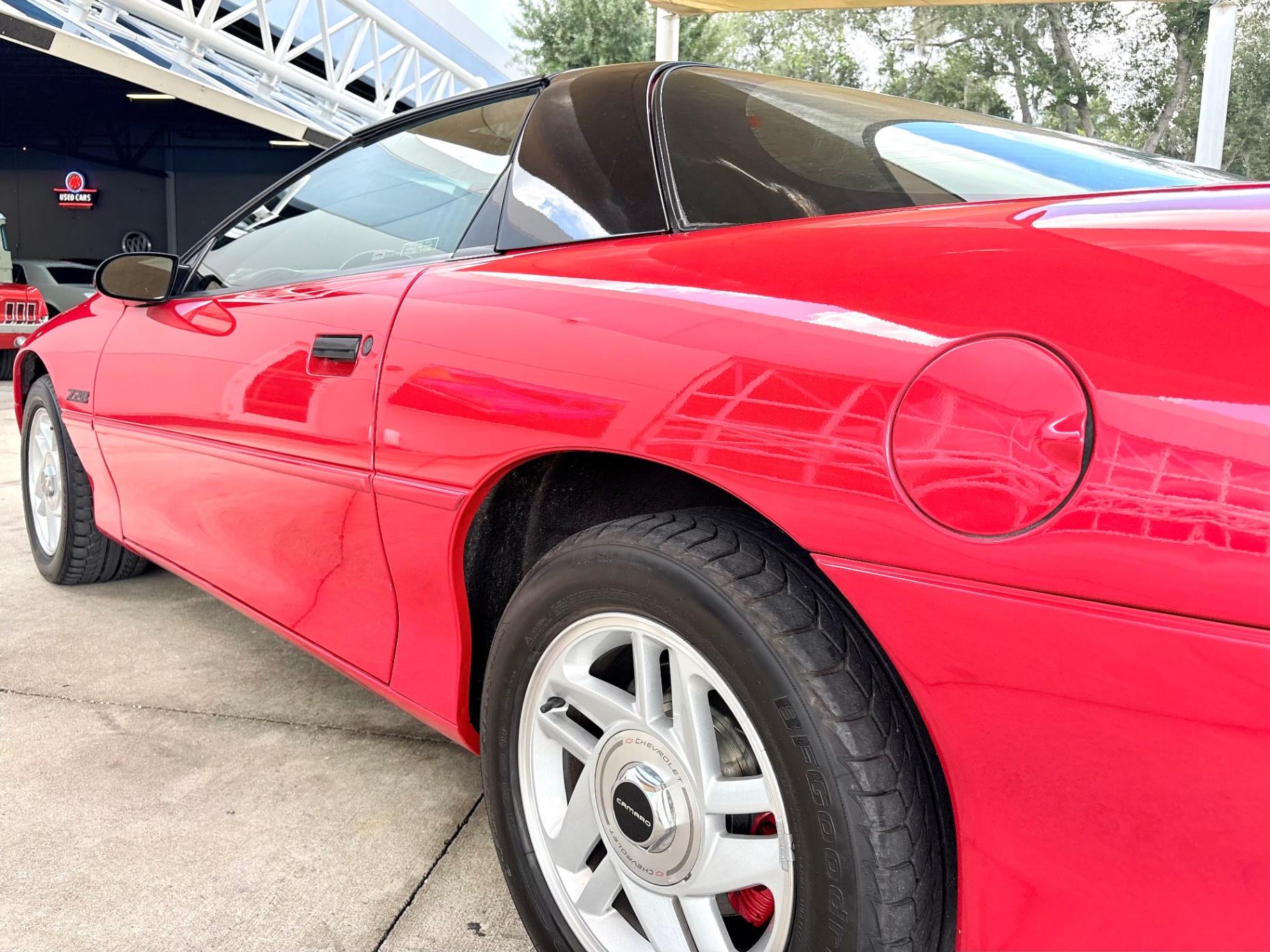
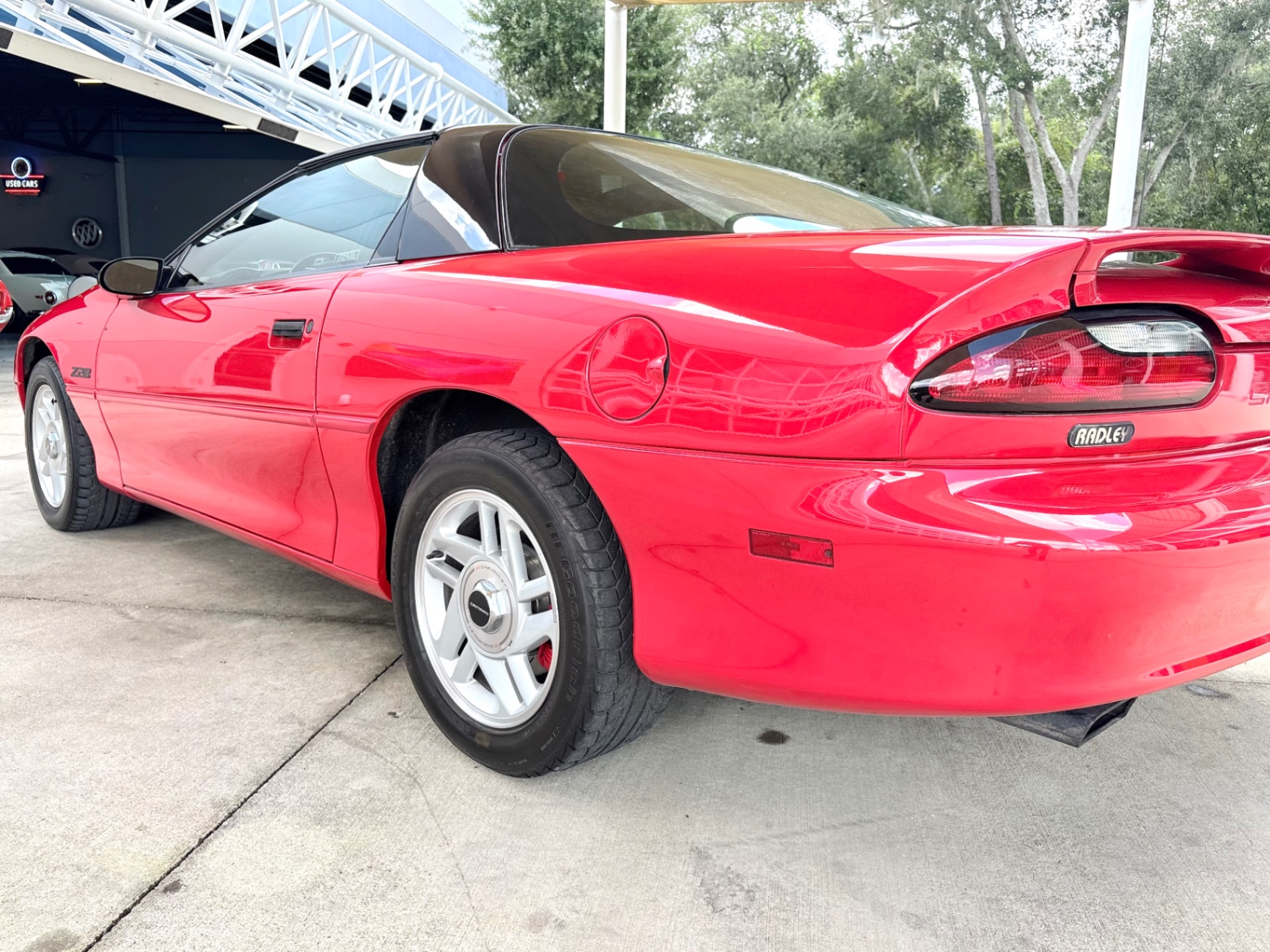
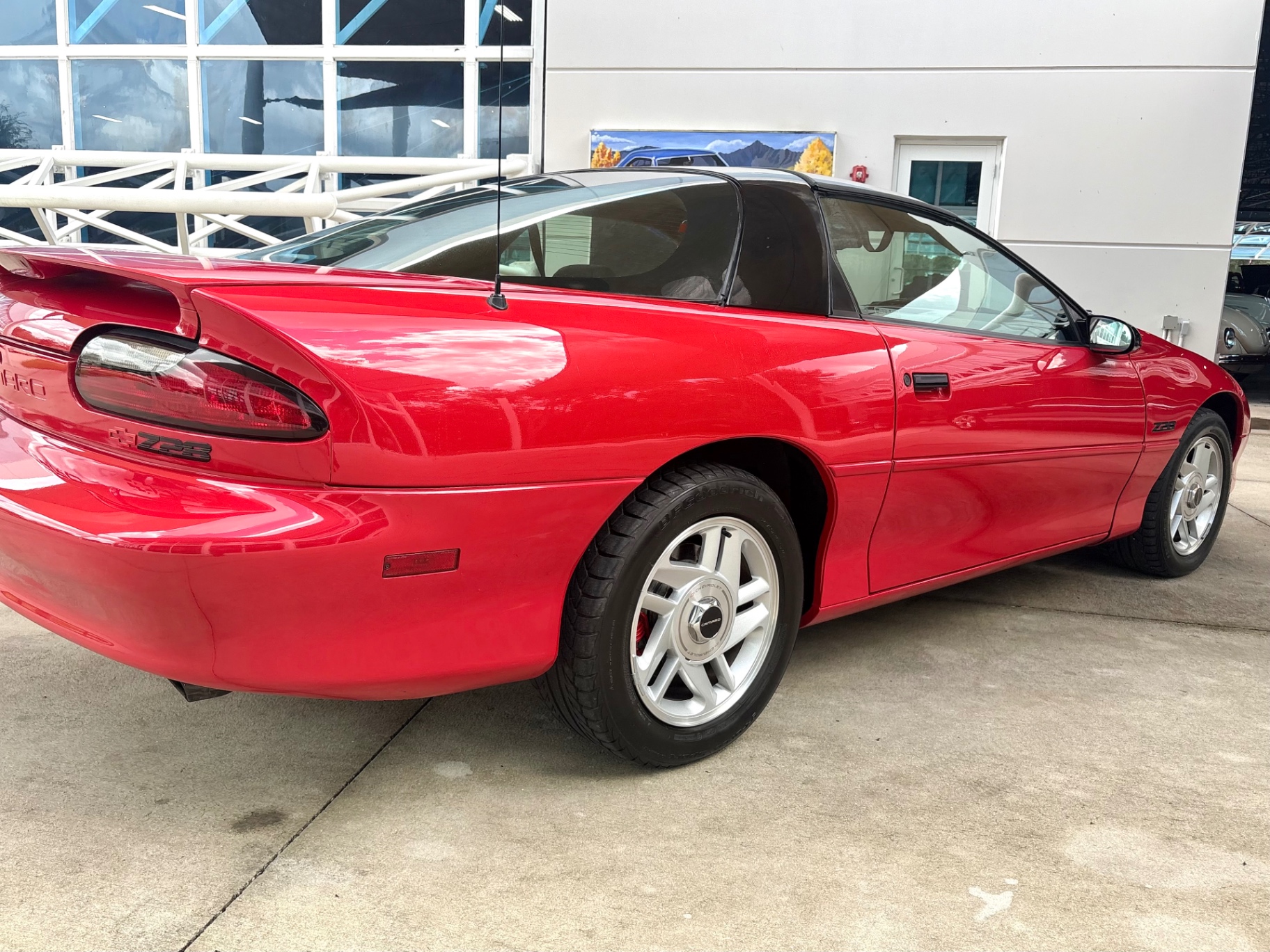
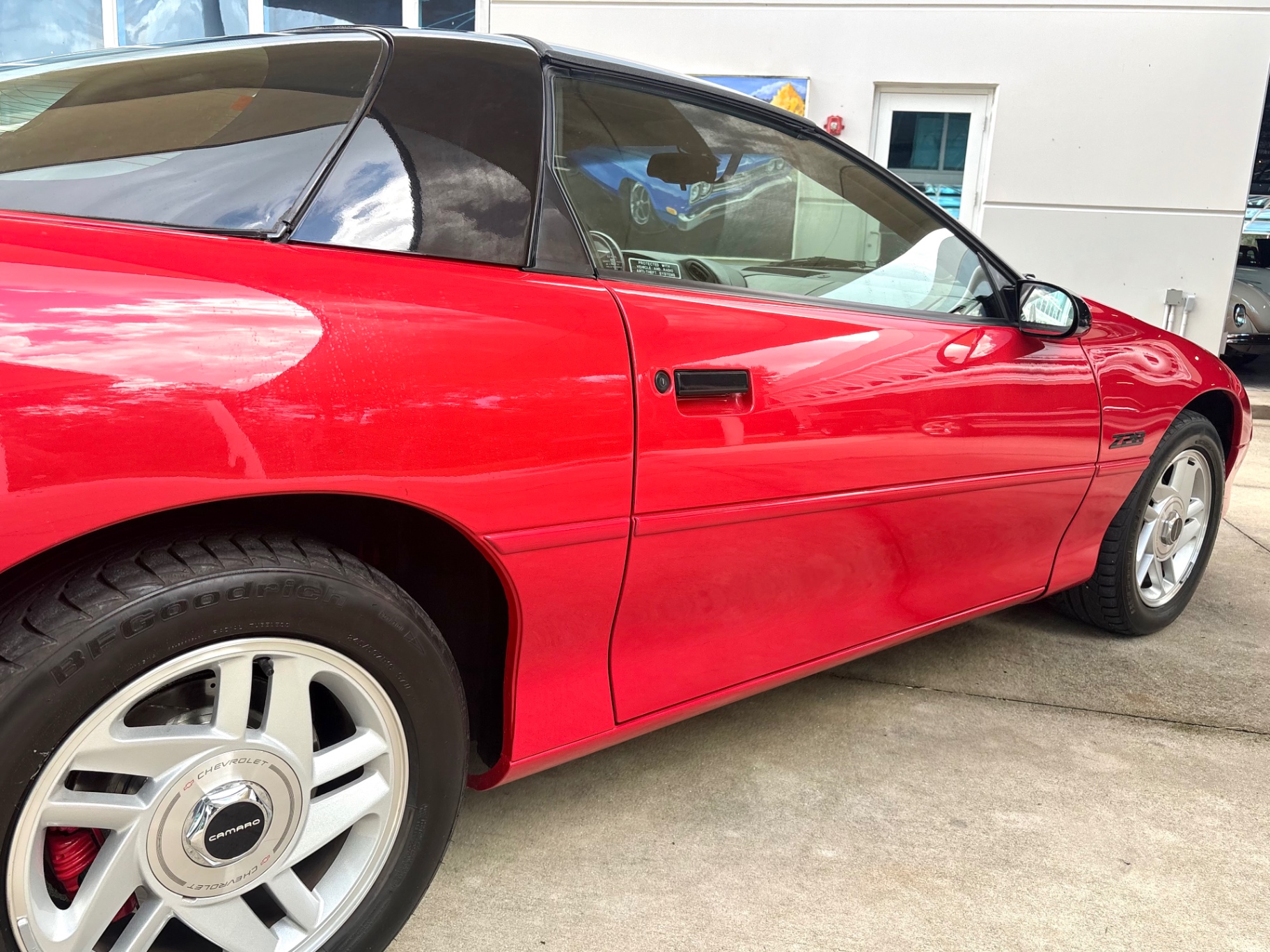
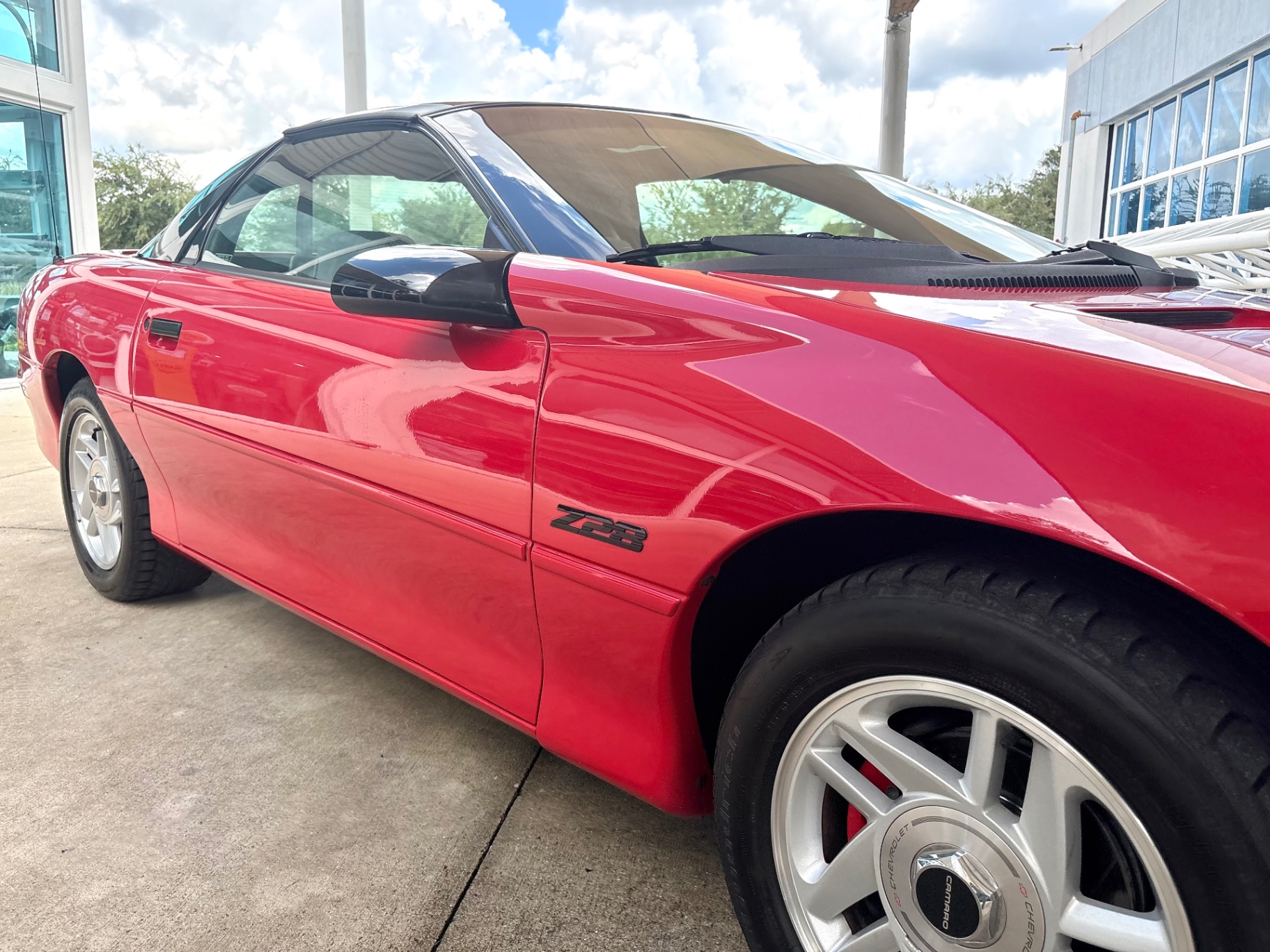
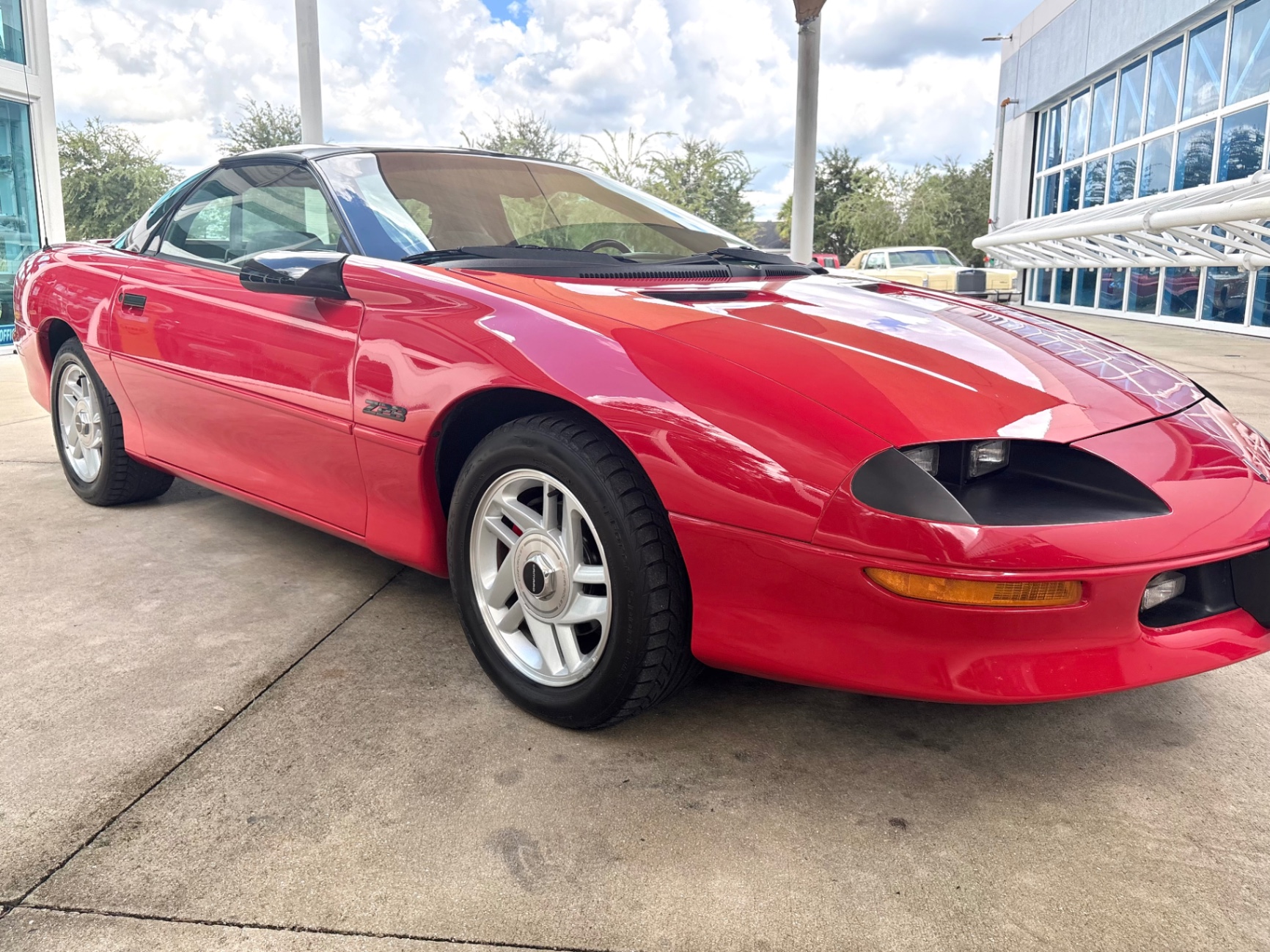
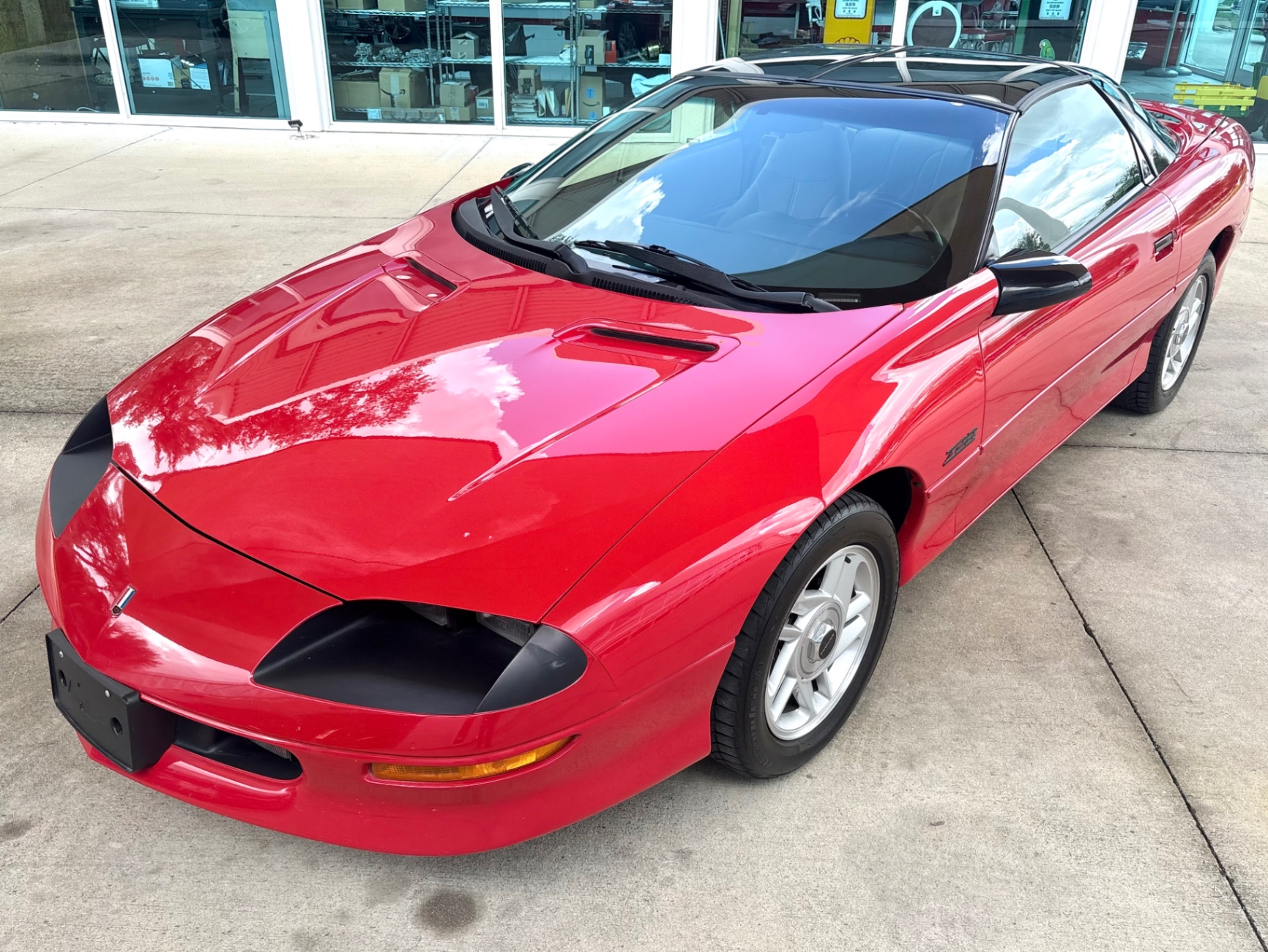
1996 Chevrolet Camaro Z28 — LT1 V8, T-Top, 54,301 Miles
Why This Car Is Special
The fourth-generation Camaro had a rough start when it launched for the 1993 model year, but by the mid-1990s Chevrolet had sorted out most of the early issues and the Z28 had become a genuine performance bargain. The 1996 model year is particularly notable for one specific reason: it was the final year of the LT1 engine in the Camaro before General Motors replaced it with the all-new LS1 for 1997. That makes 1996 the last of a specific engine lineage — a small-block derived from Corvette development, with reverse-flow cooling and an opti-spark distributor, that powered everything from the Caprice police cruiser to the C4 Corvette. For Camaro collectors, a clean, low-mileage 1996 Chevrolet Camaro Z28 occupies a specific spot in that history.
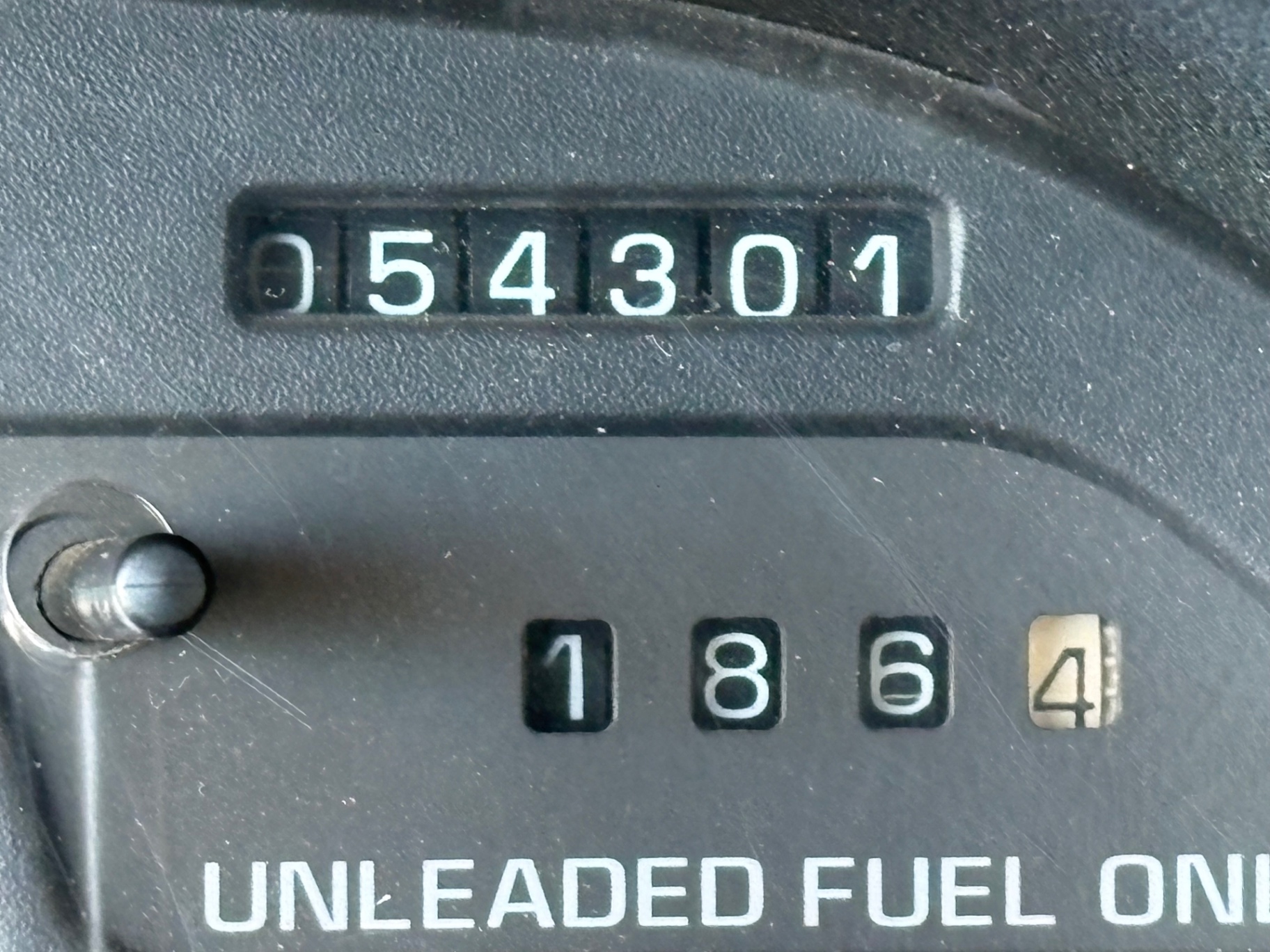
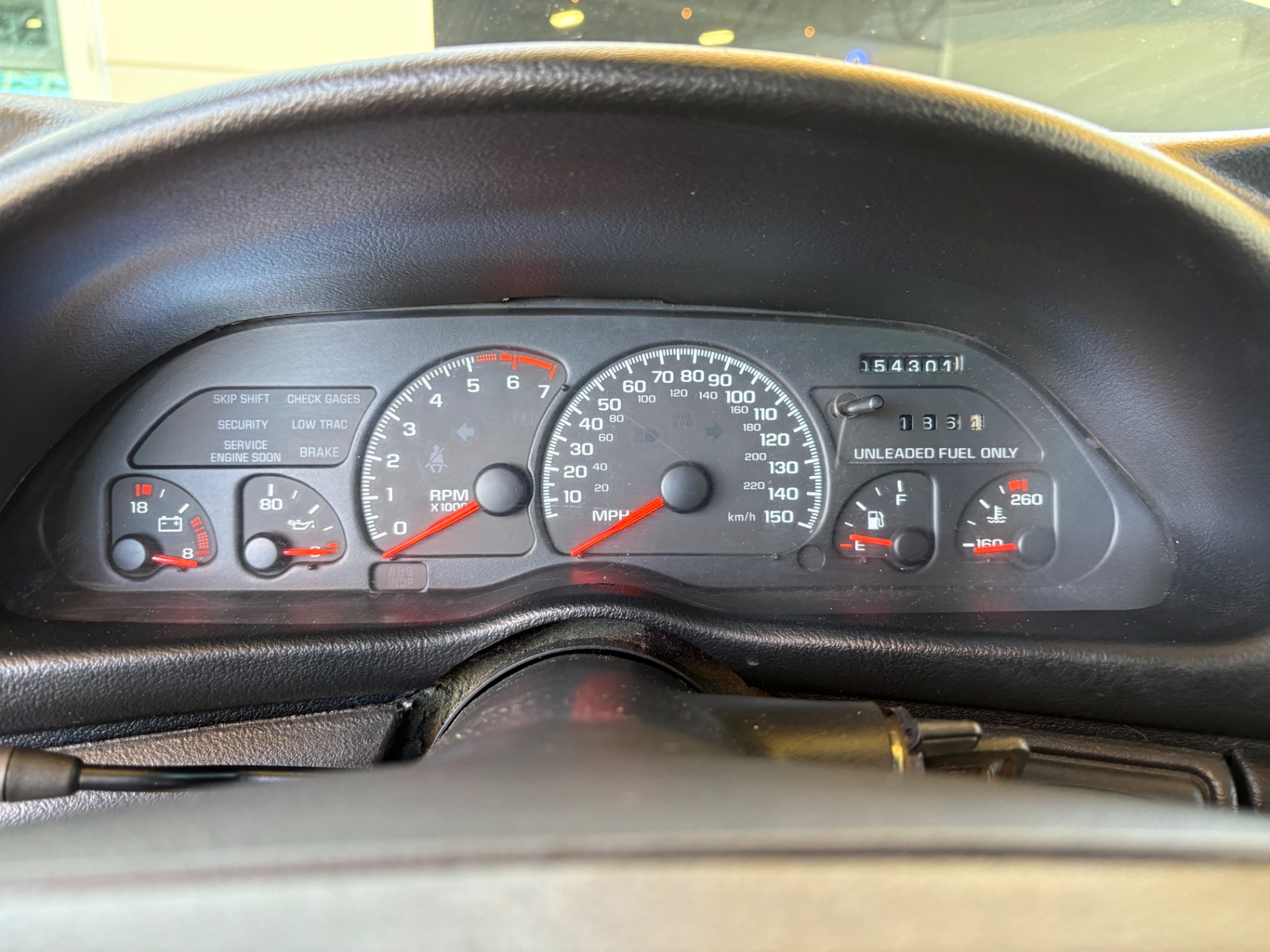
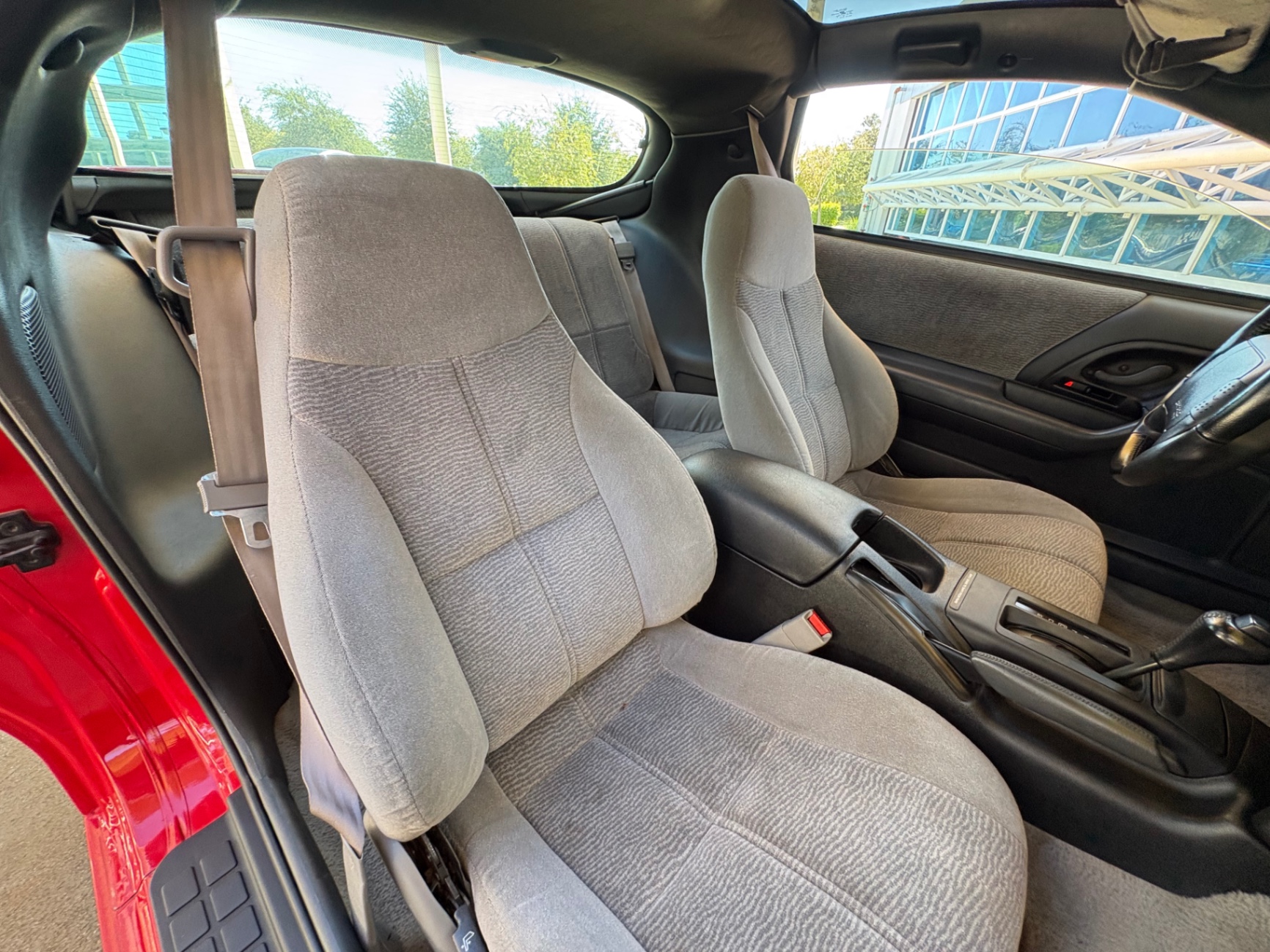
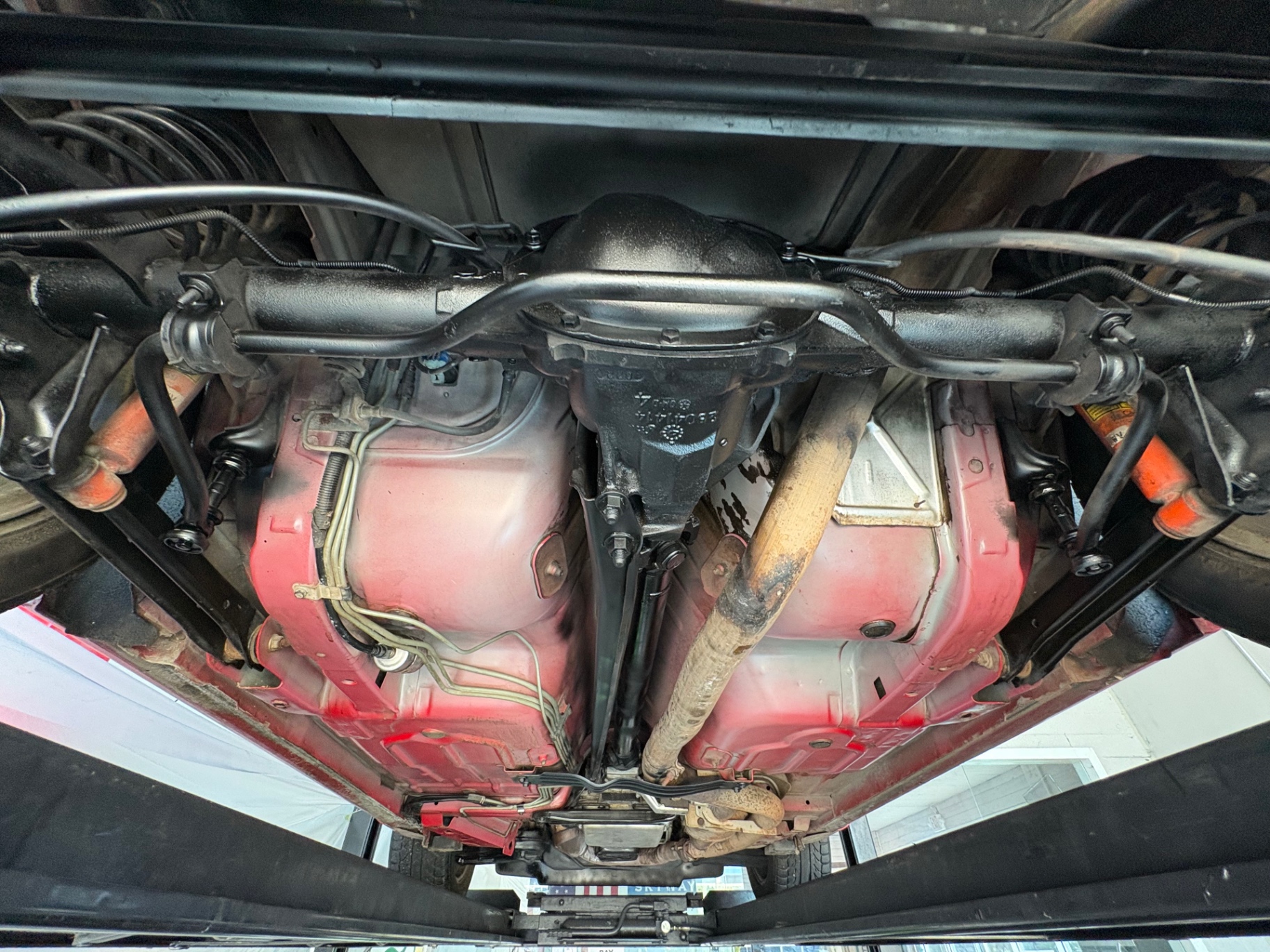
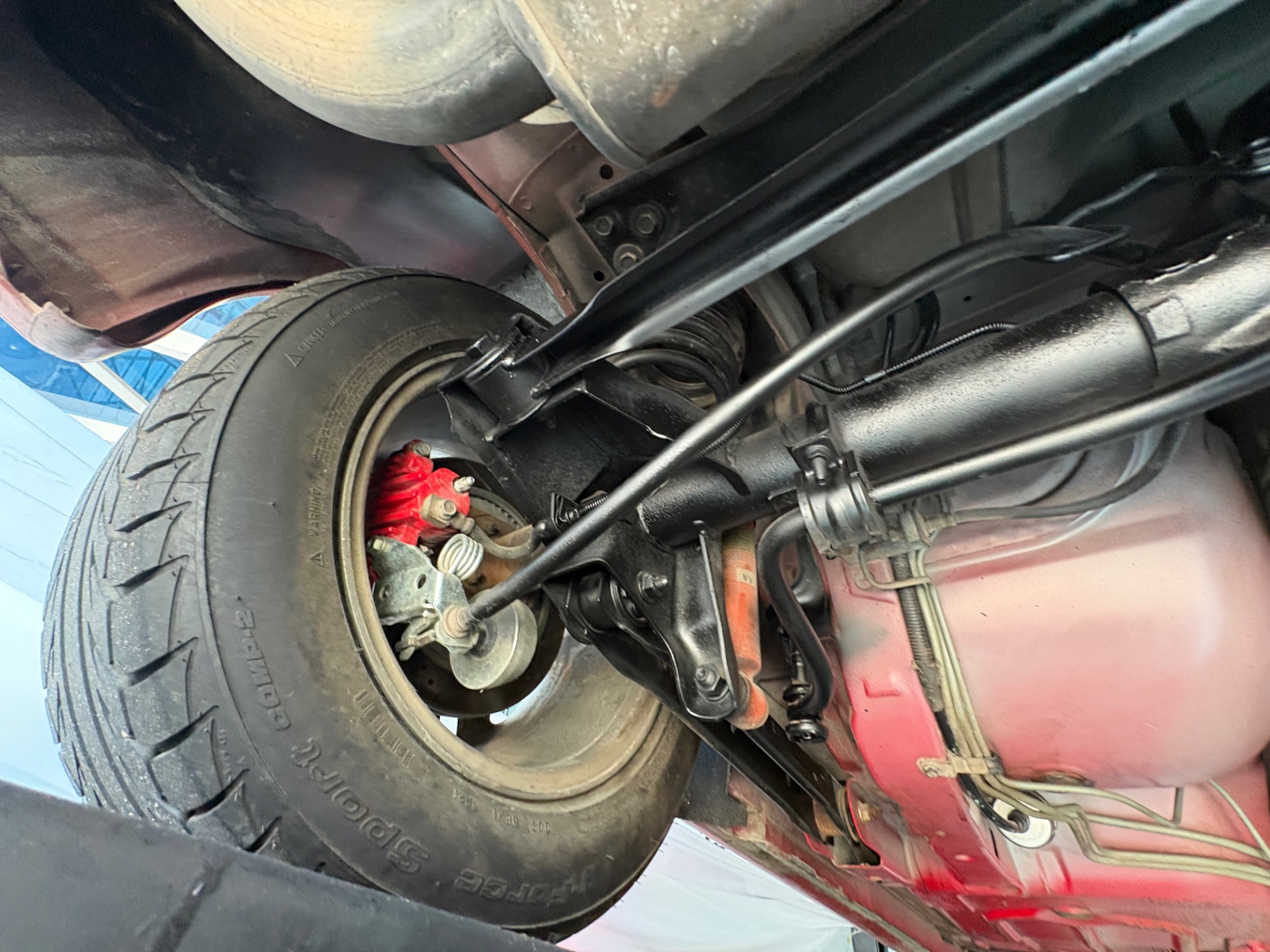
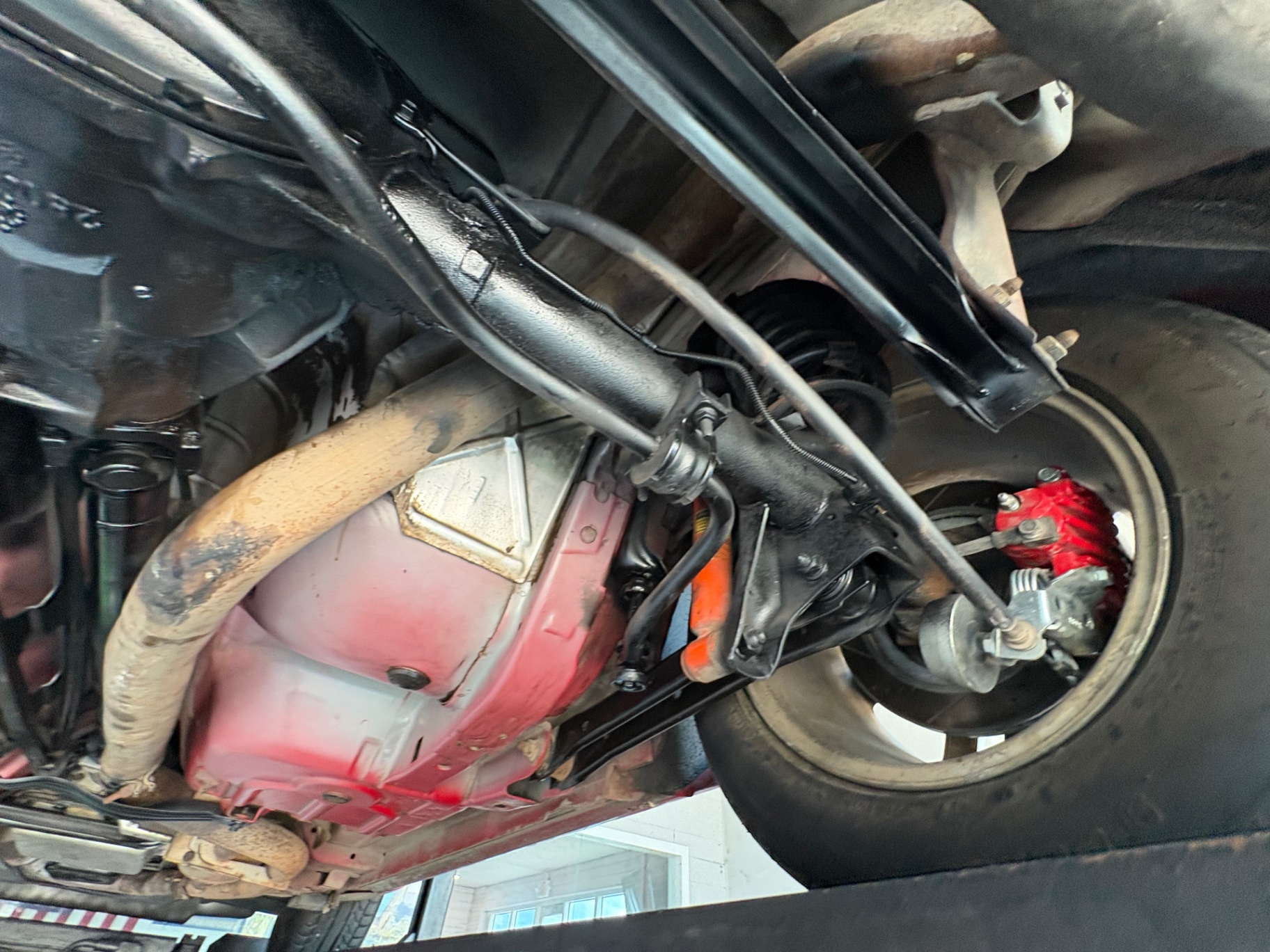
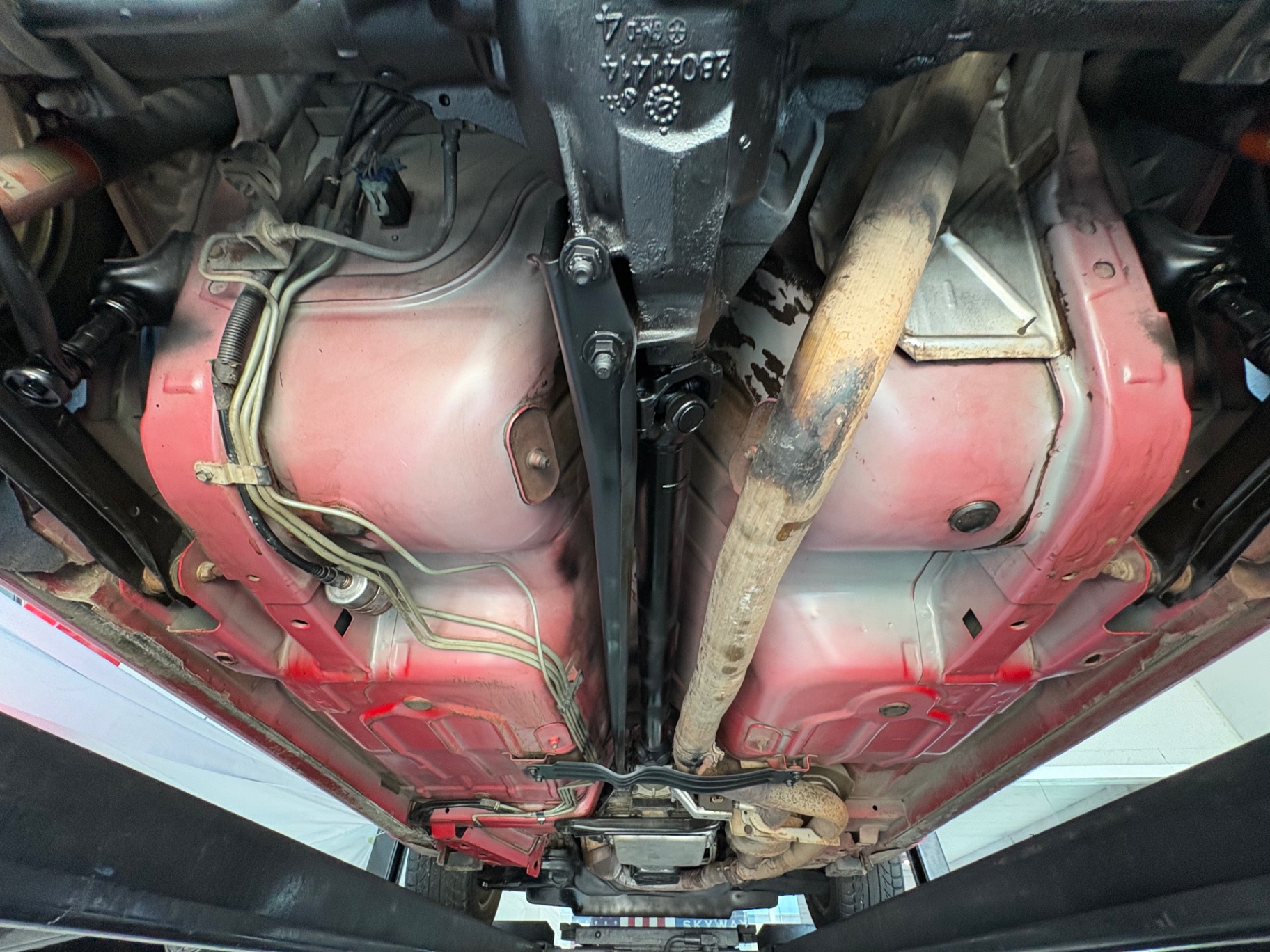
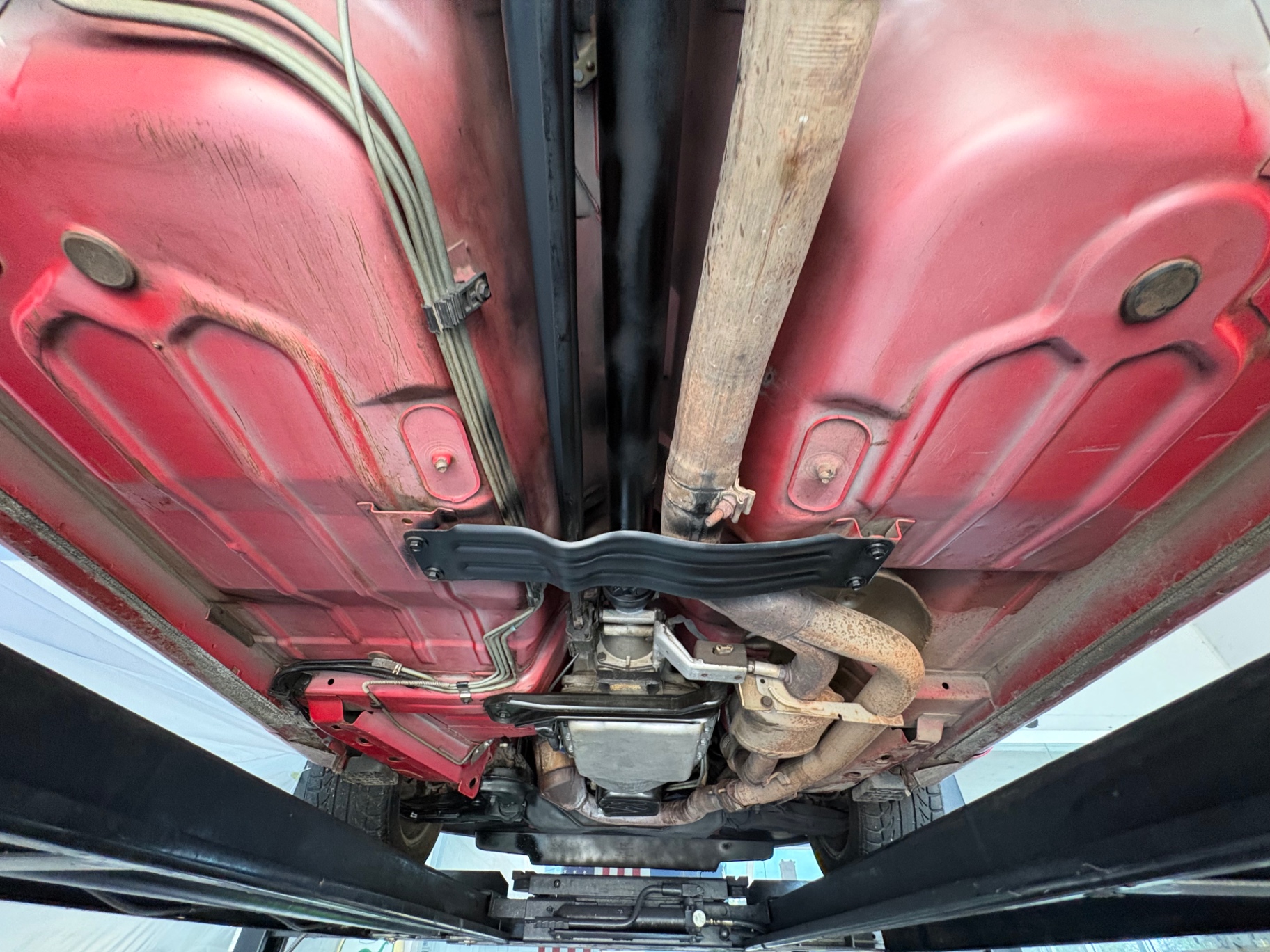
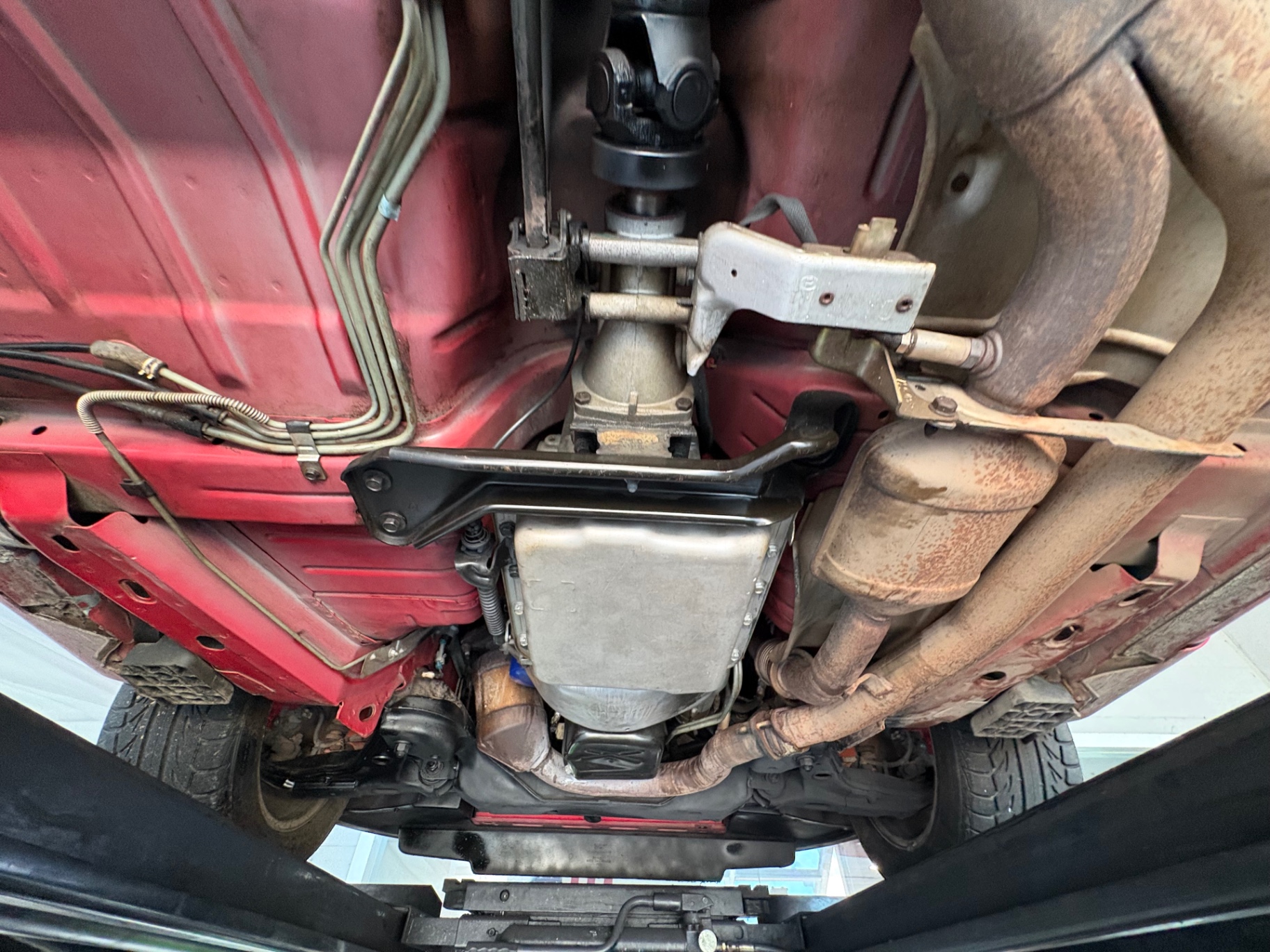
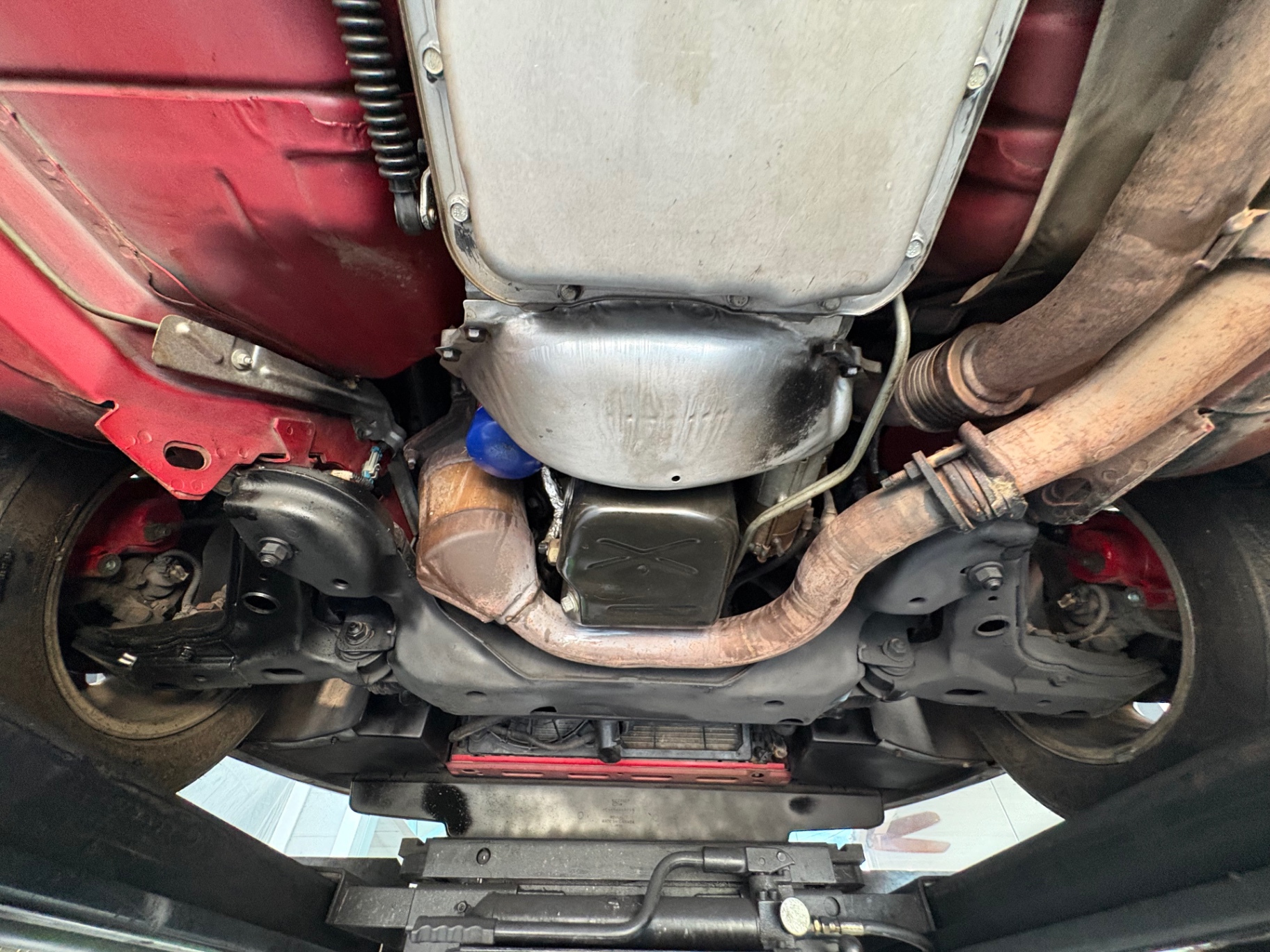
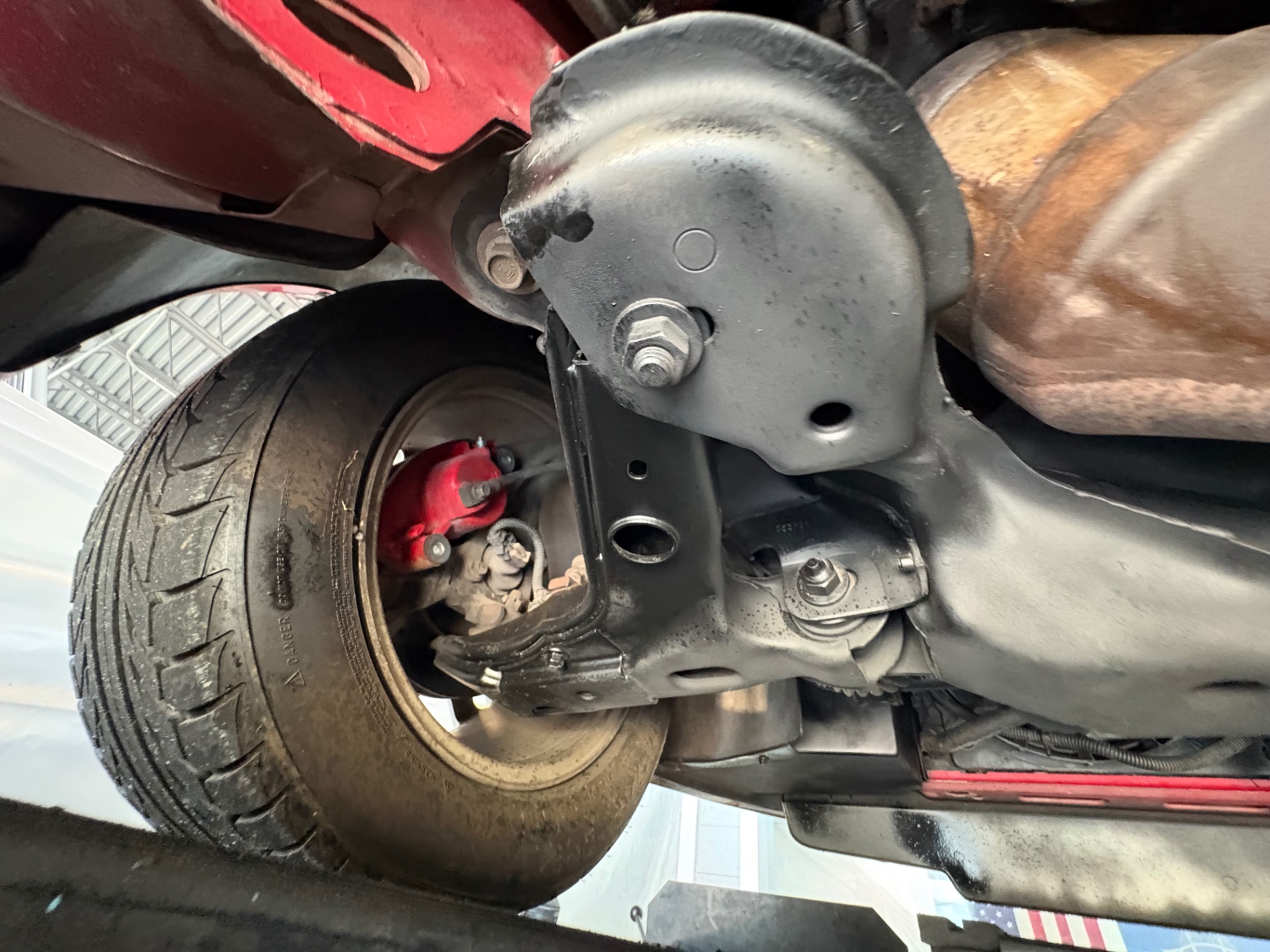
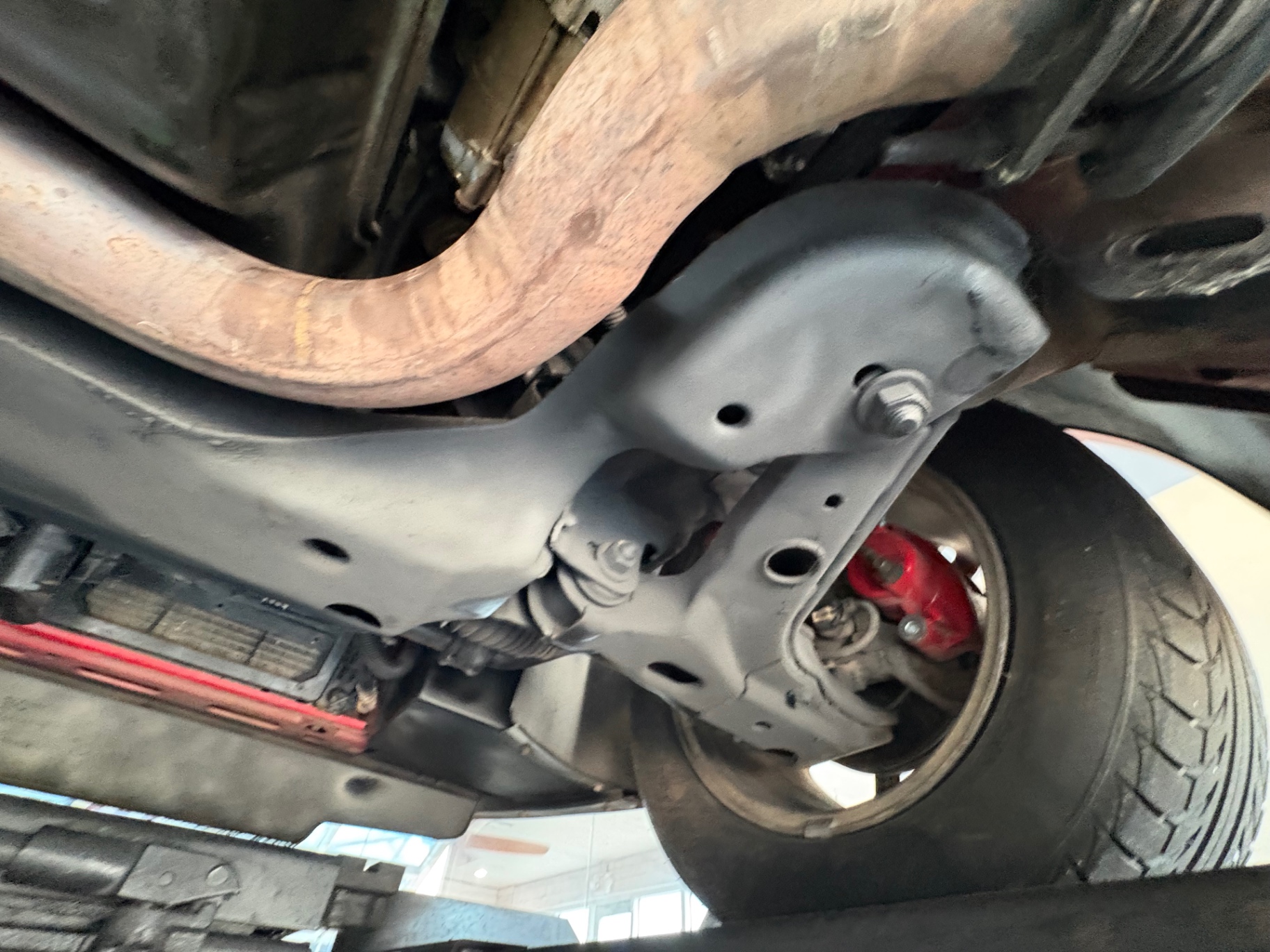
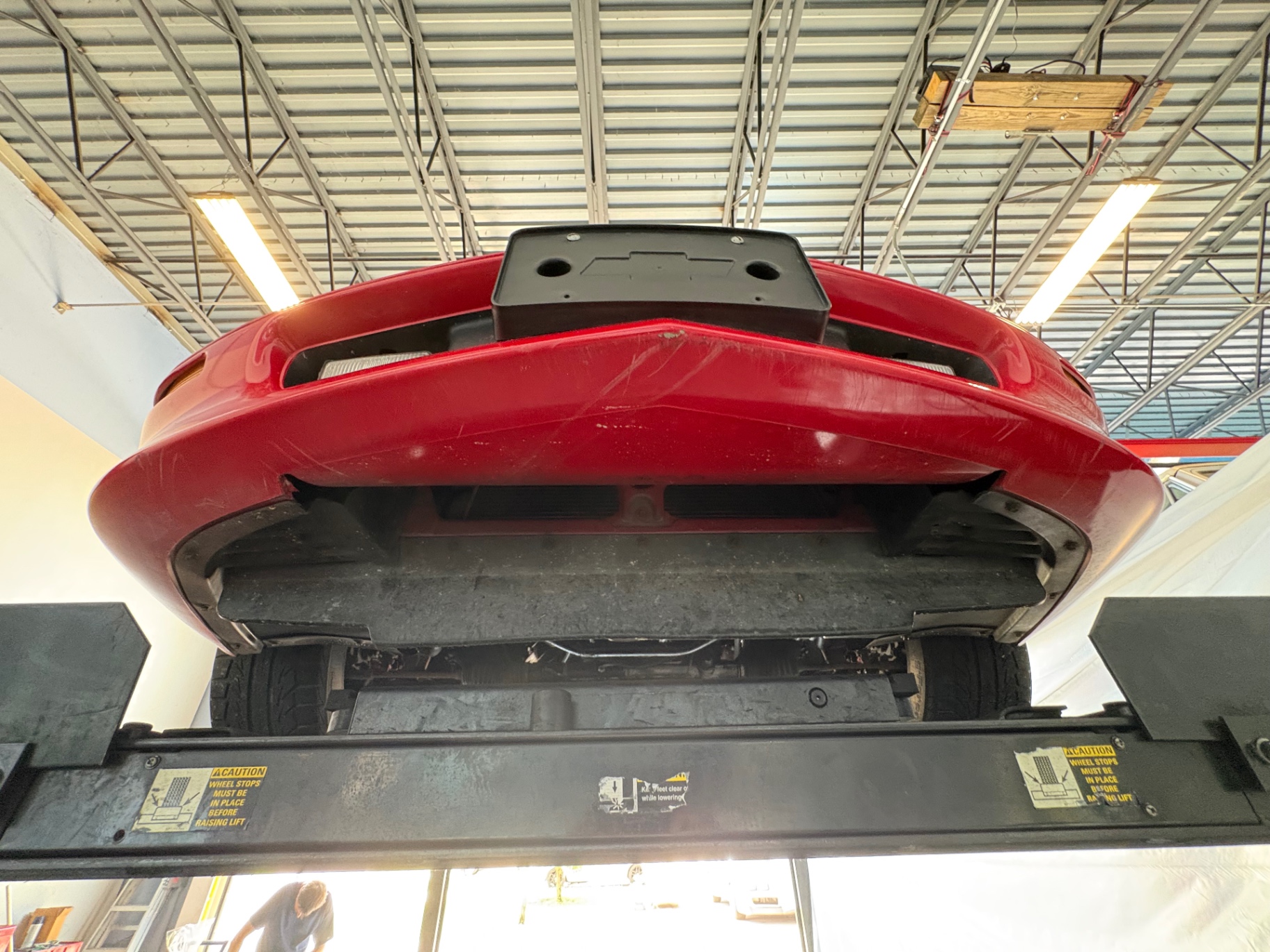
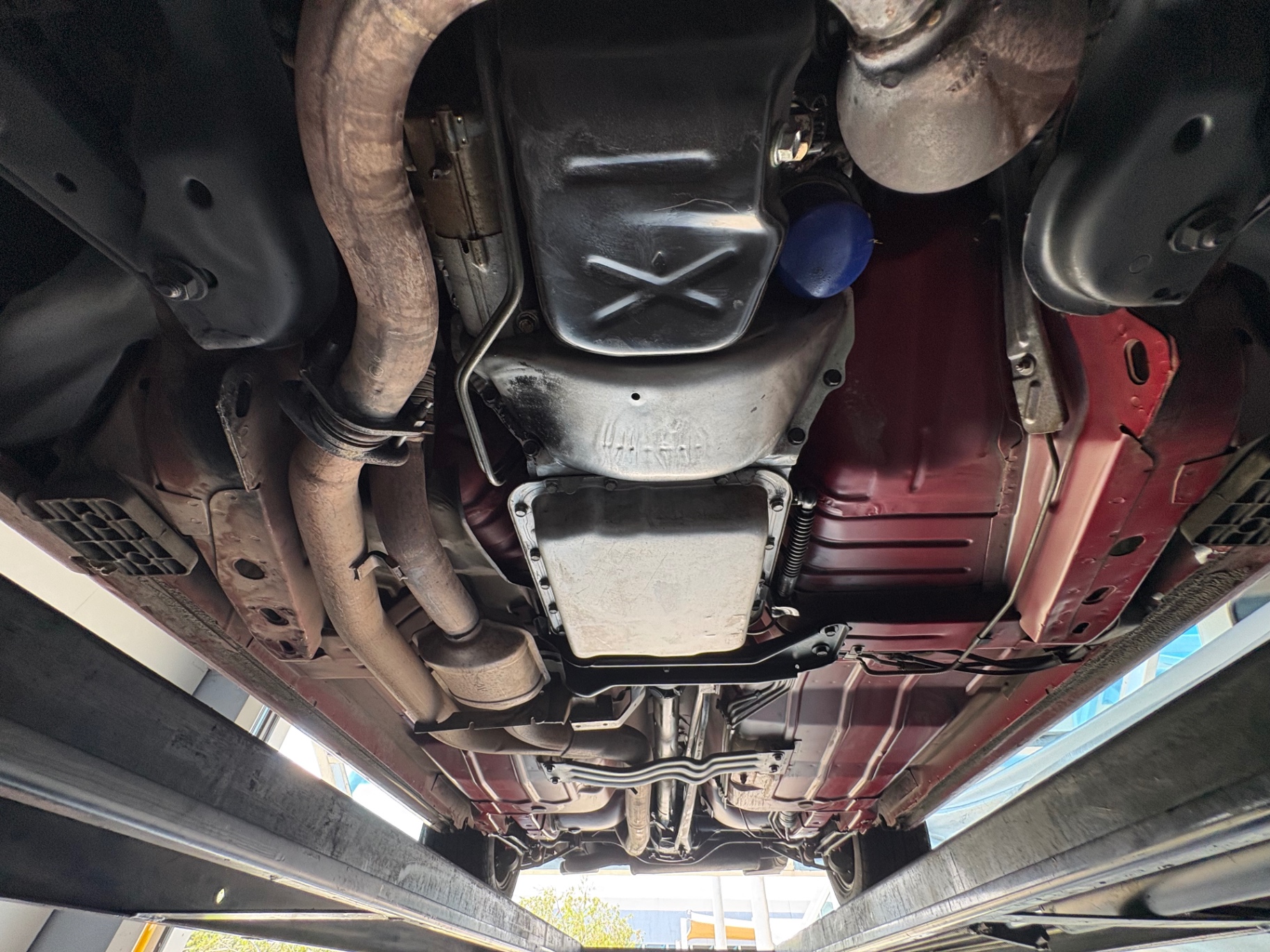
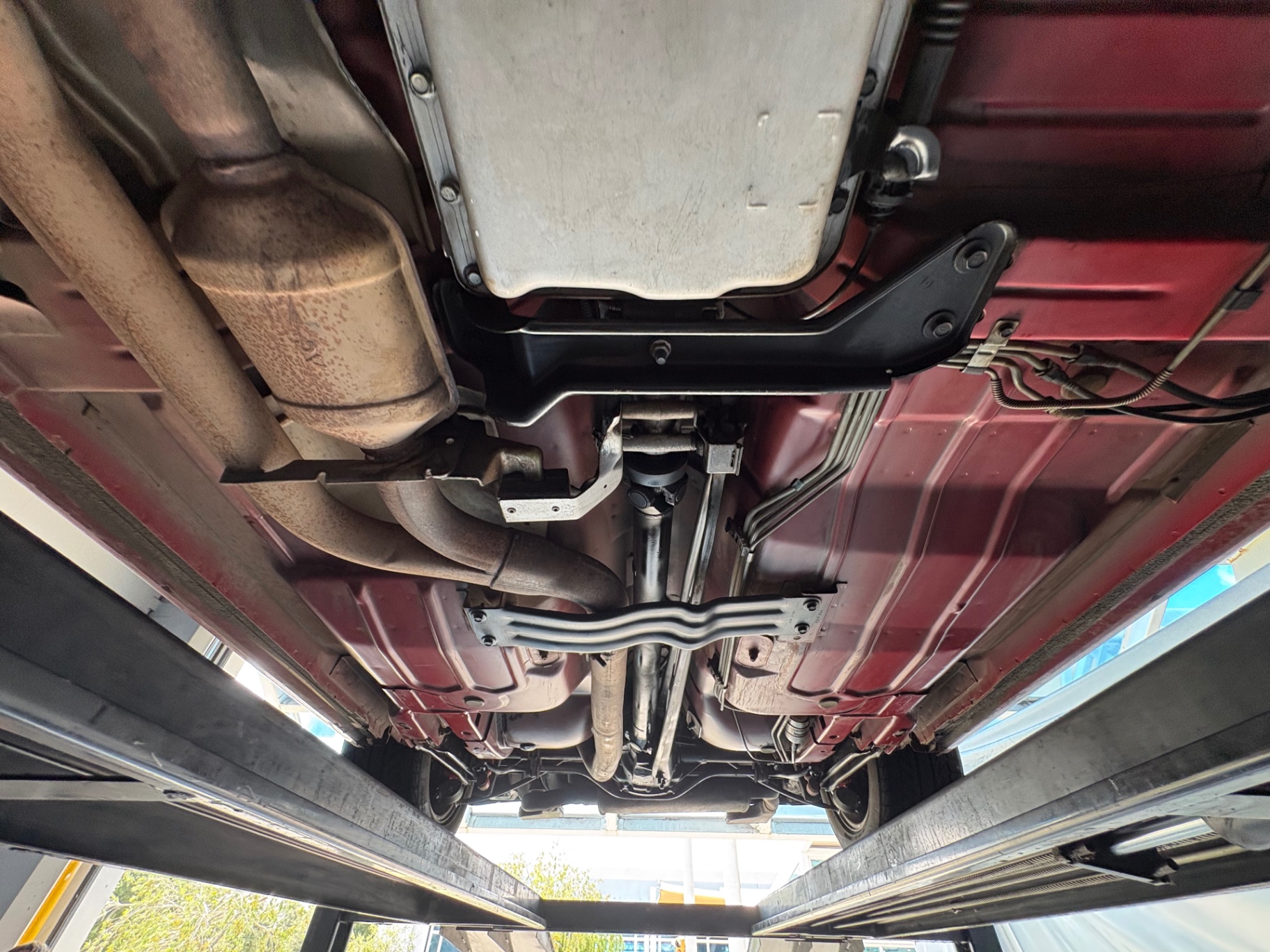
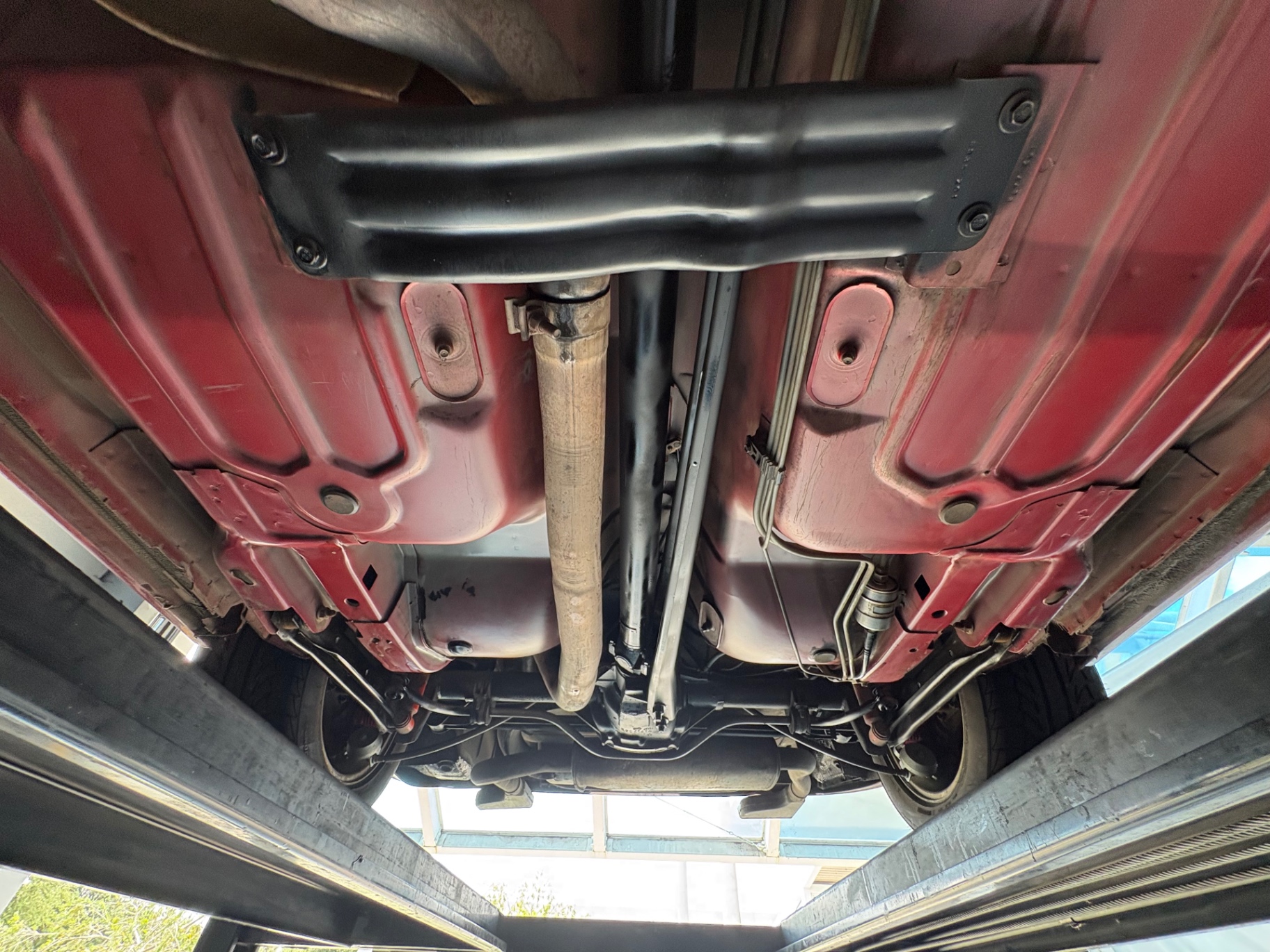
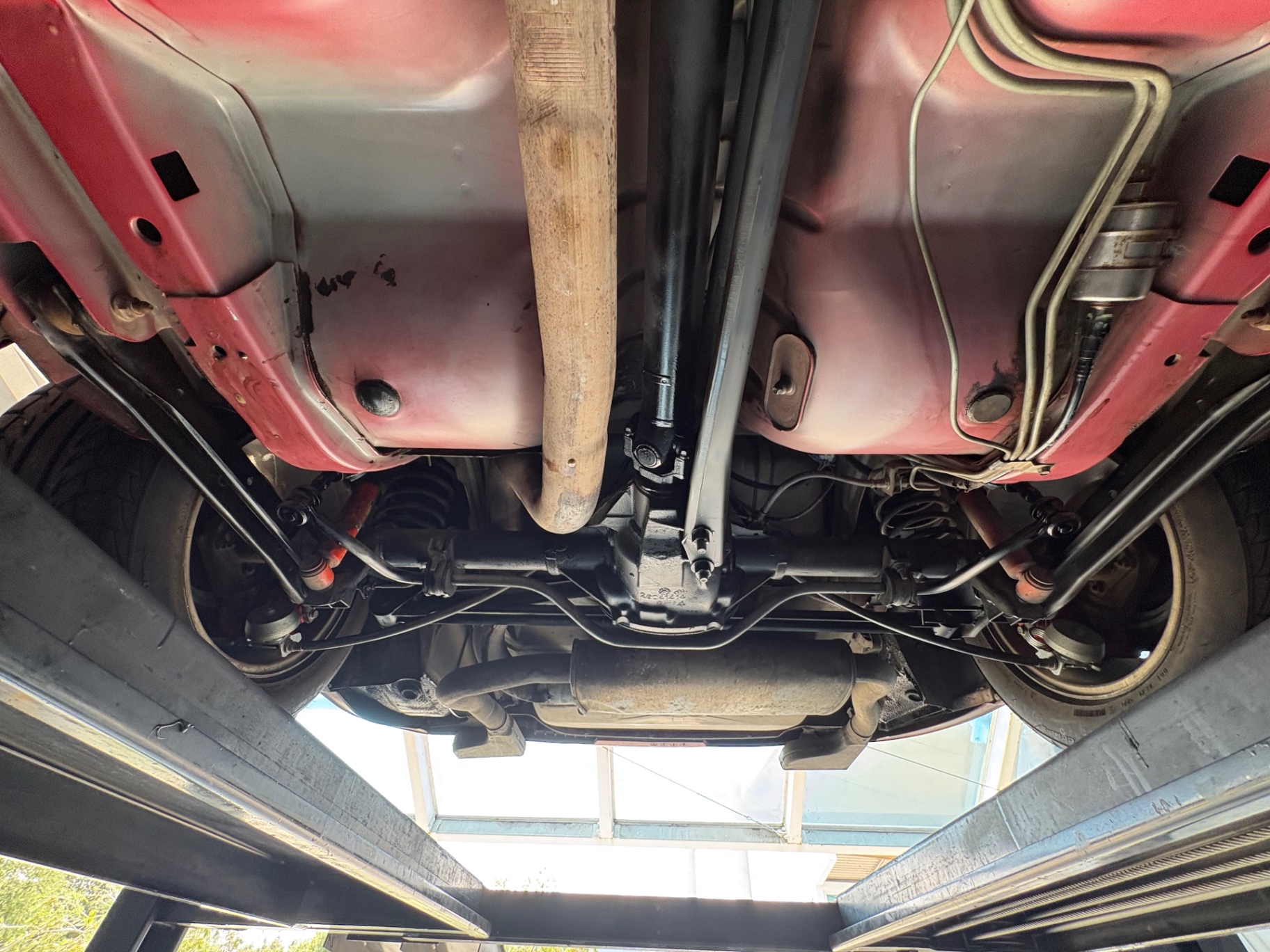
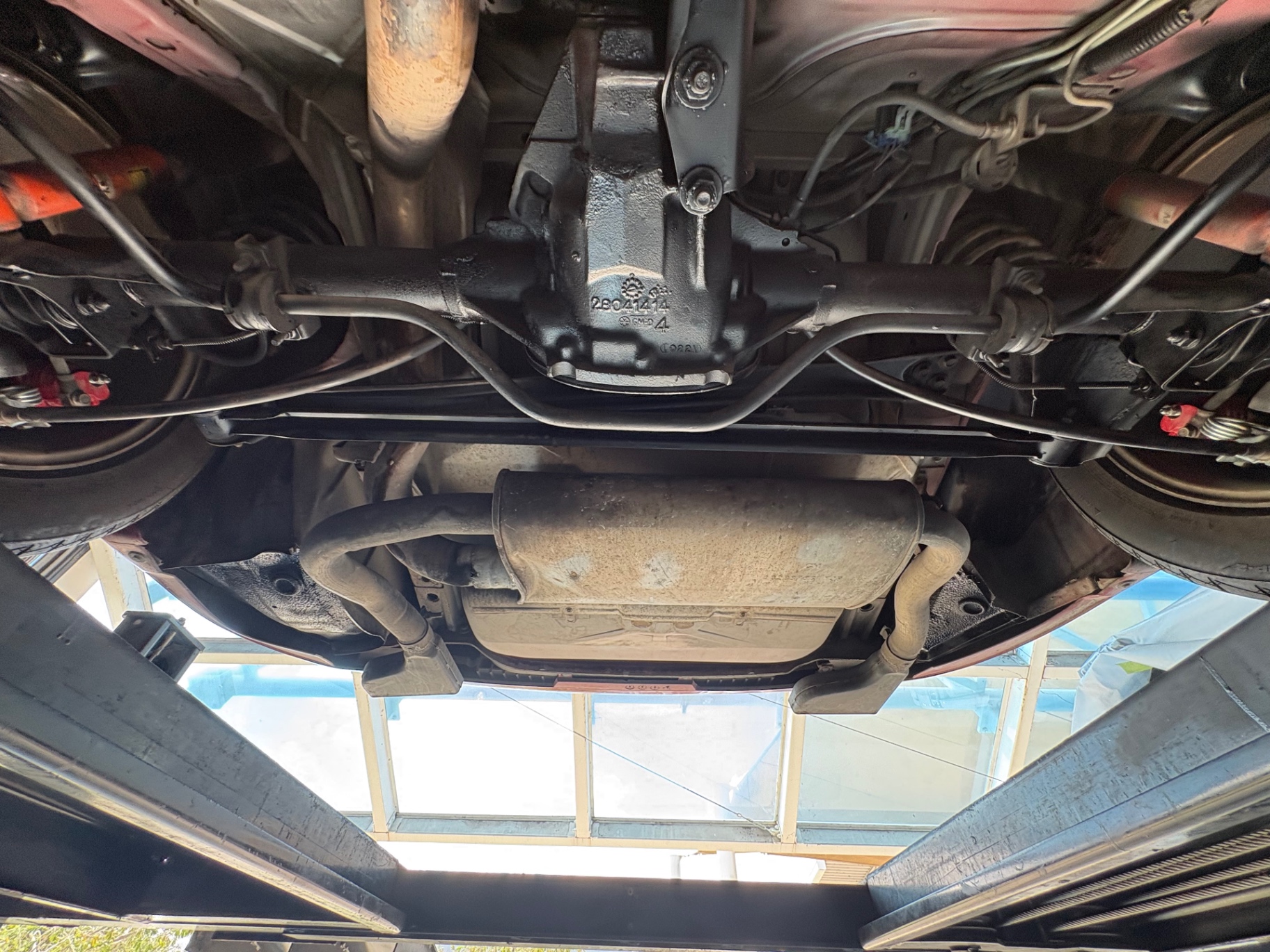
This particular car shows 54,301 miles on the odometer, which is a realistic lifetime total for a car that was bought, enjoyed occasionally, and preserved rather than driven as a daily driver. It is finished in red over a gray cloth interior, a combination that reads clearly in the photos and shows no obvious signs of heavy use. The undercarriage photos are especially telling — the floor pans, frame rails, and rear suspension components are free of rust and structural damage, which is exactly what you want to see on a 30-year-old car before committing to a purchase.
Features List
- LT1 5.7L V8, 285 horsepower
- 4-Speed Automatic Transmission (4L60-E)
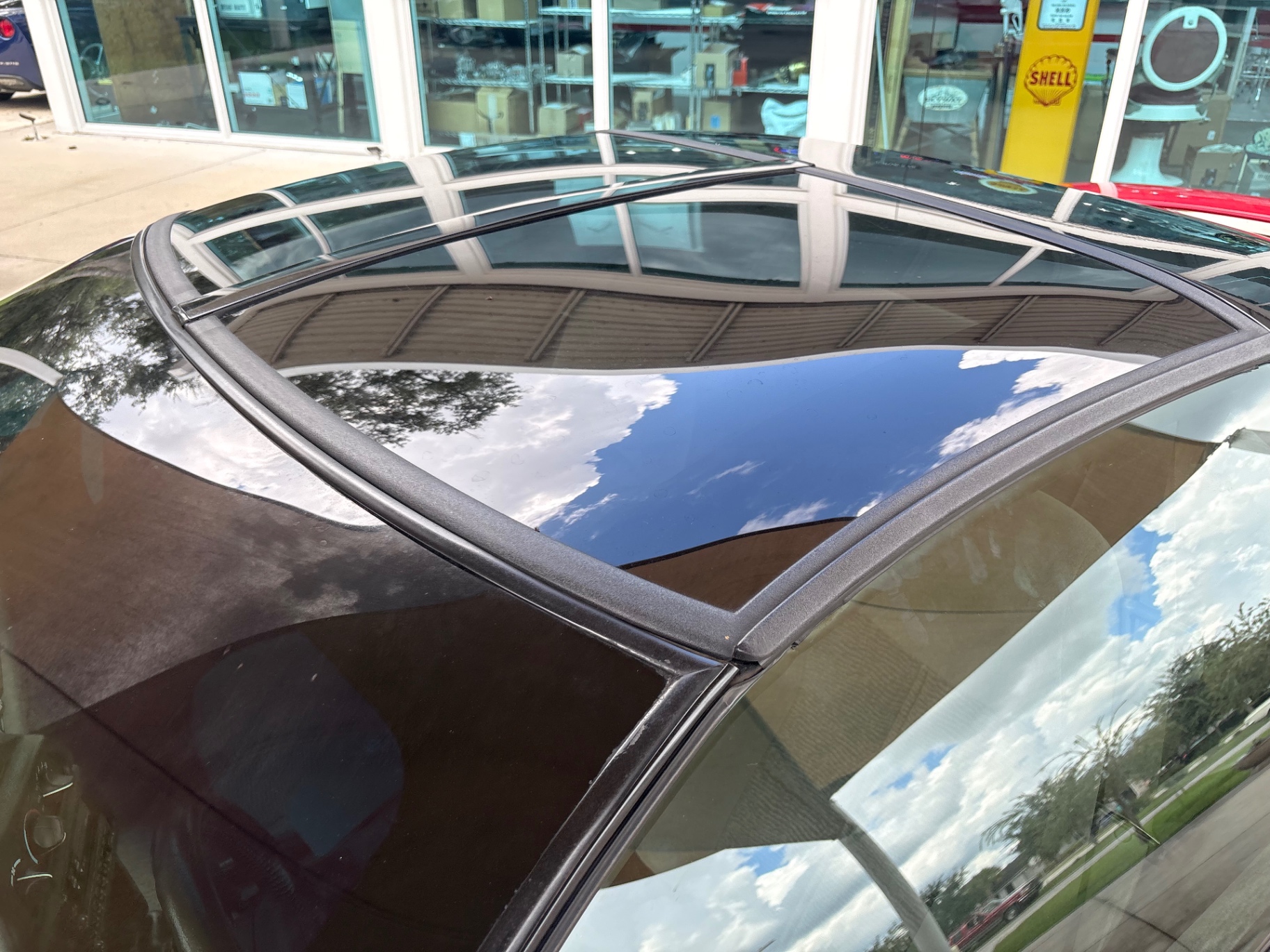
- T-Top Roof
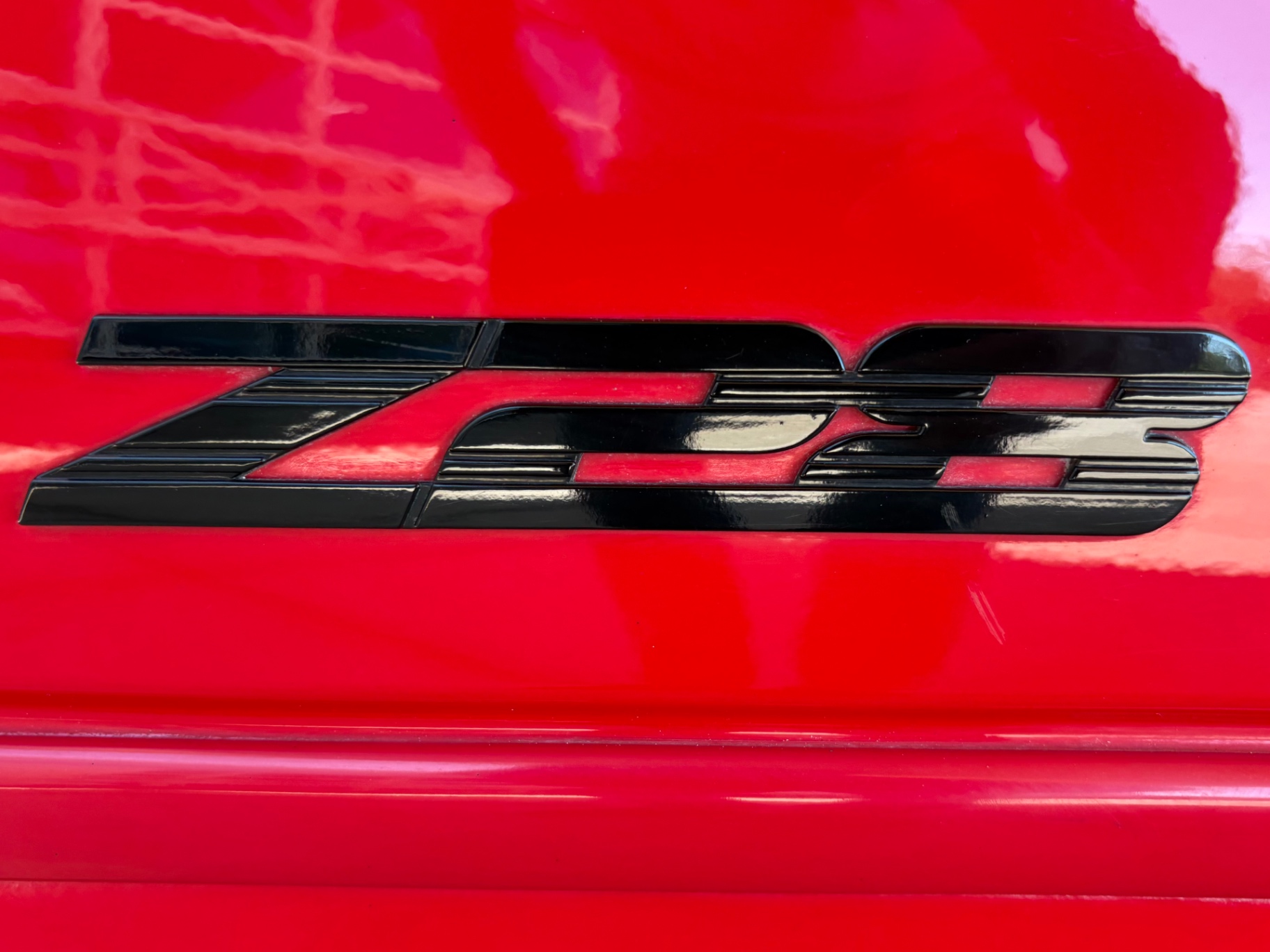
- Z28 Badge
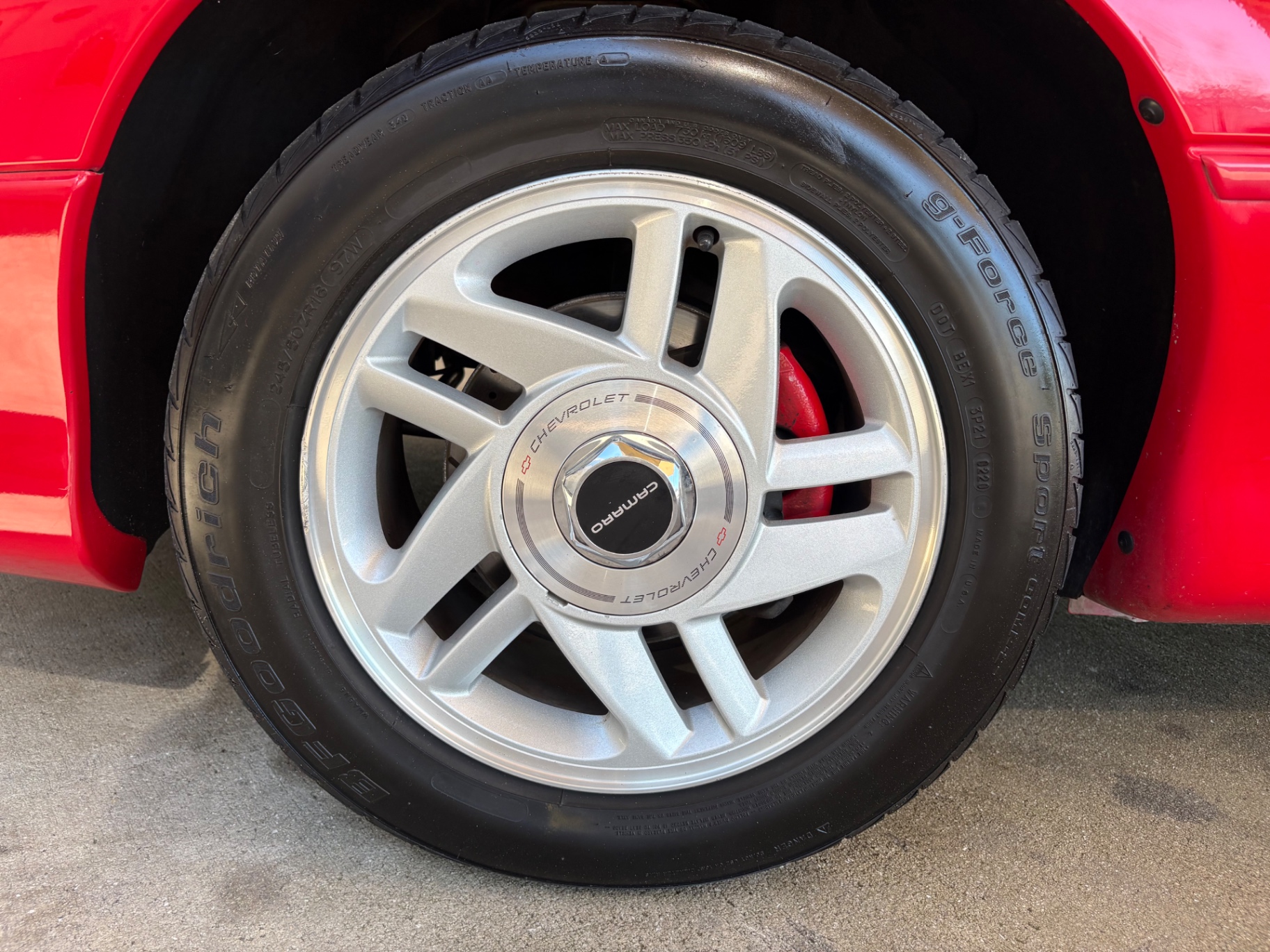
- Factory 16-Inch Alloy Wheels
- 4-Wheel Disc Brakes with Red Brake Calipers
- ABS Brakes
- Dual Exhaust
- Fog Lights
- Rear Spoiler
- Power Steering
- Power Windows
- Power Door Locks
- Cruise Control
- Tilt Steering Column
- Bucket Seats with Rear Seat
- Center Console
- Tachometer
- Air Conditioning
- Rear Window Defogger
- AM/FM Cassette Stereo with Door Speakers
- Dual Airbags (Driver and Passenger)
- Clean Undercarriage
Mechanical
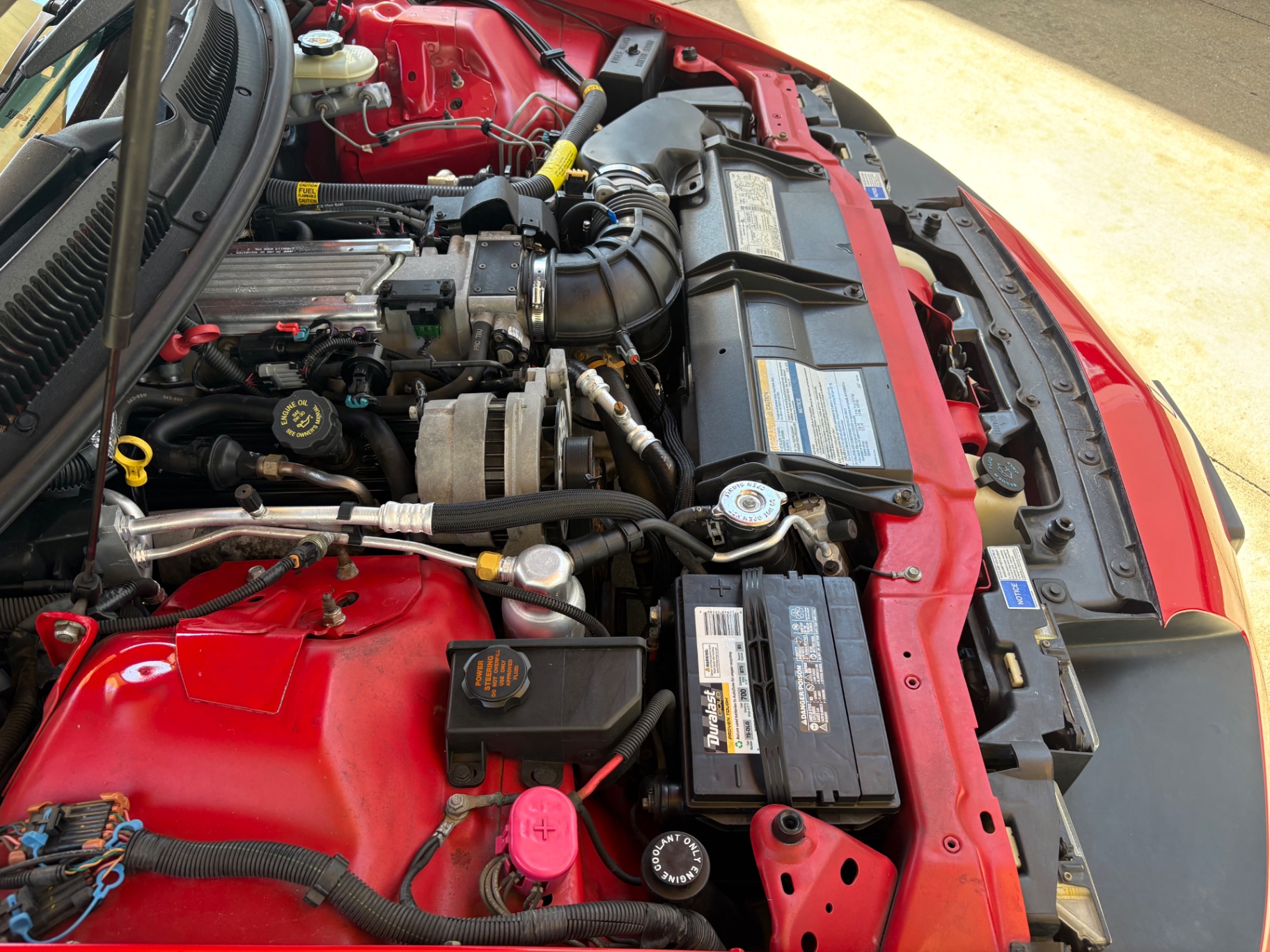
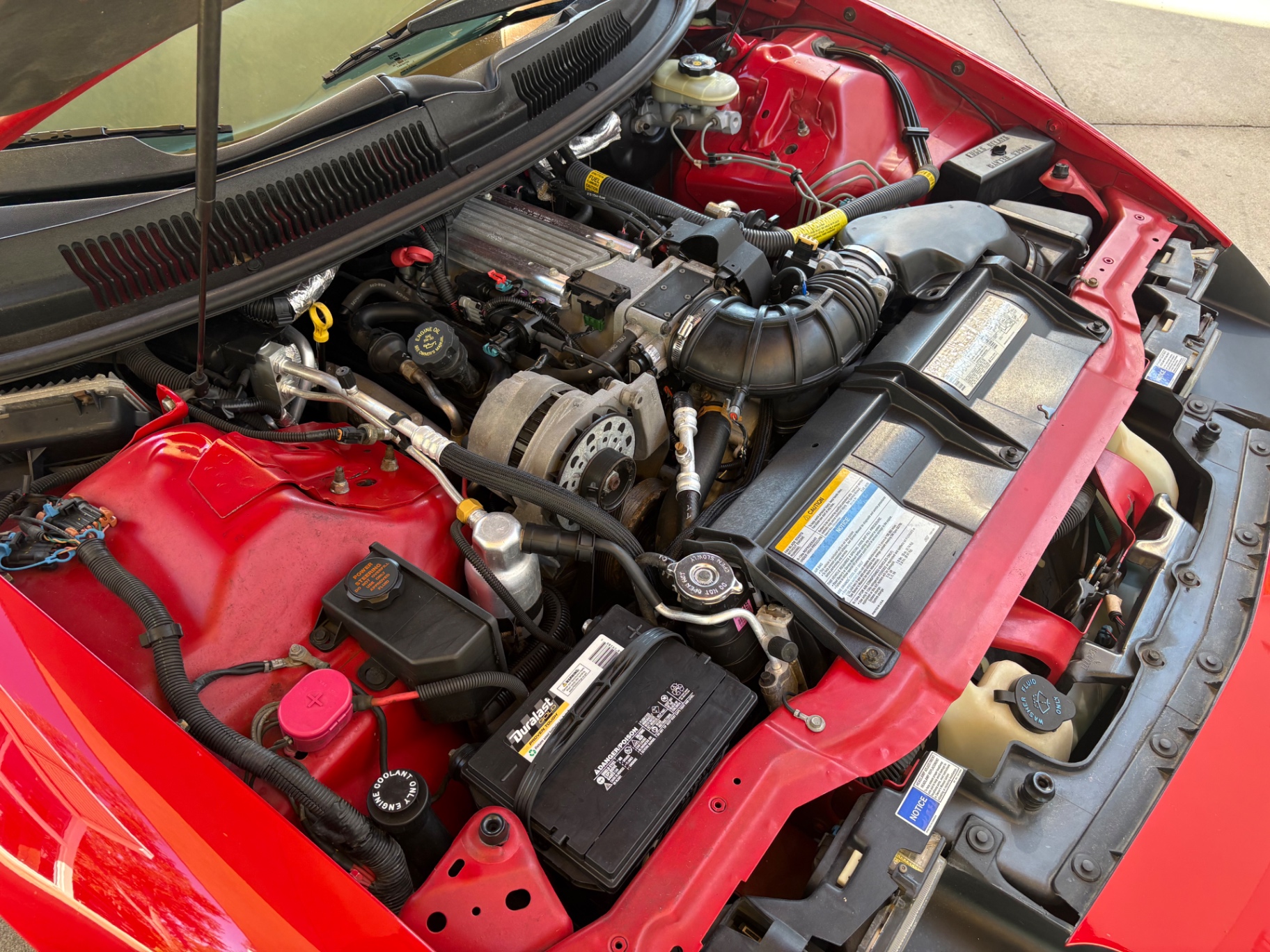
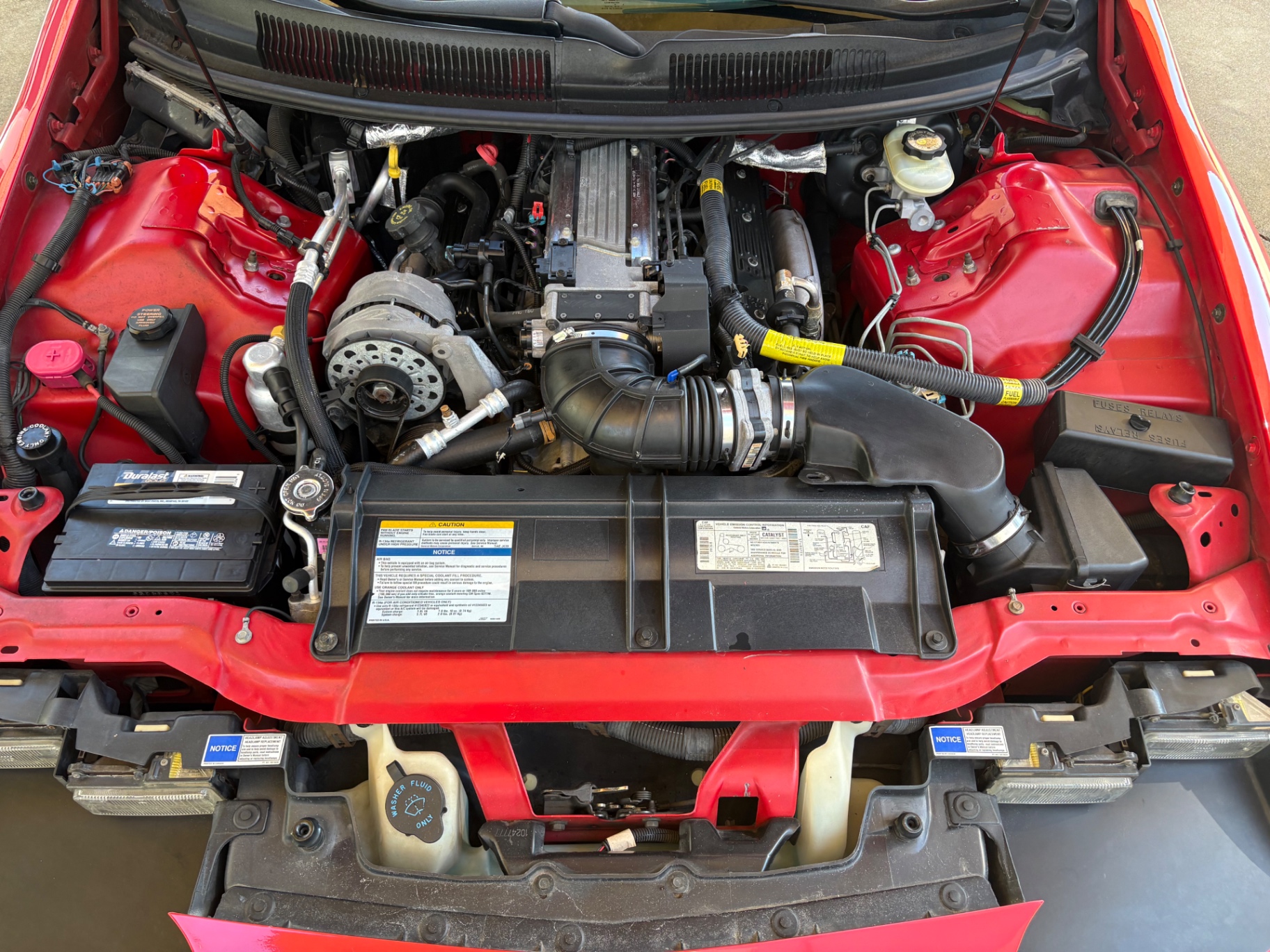
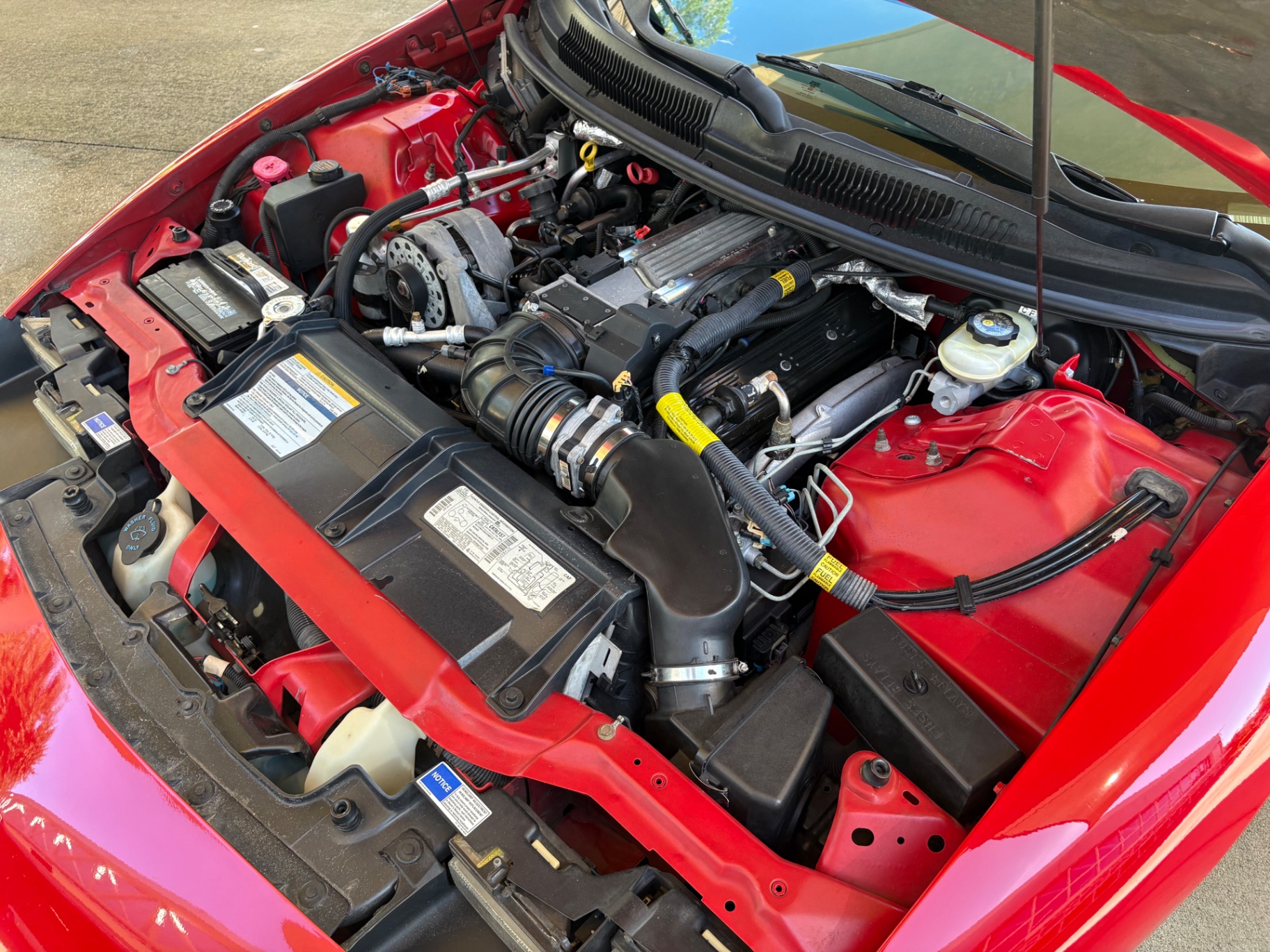
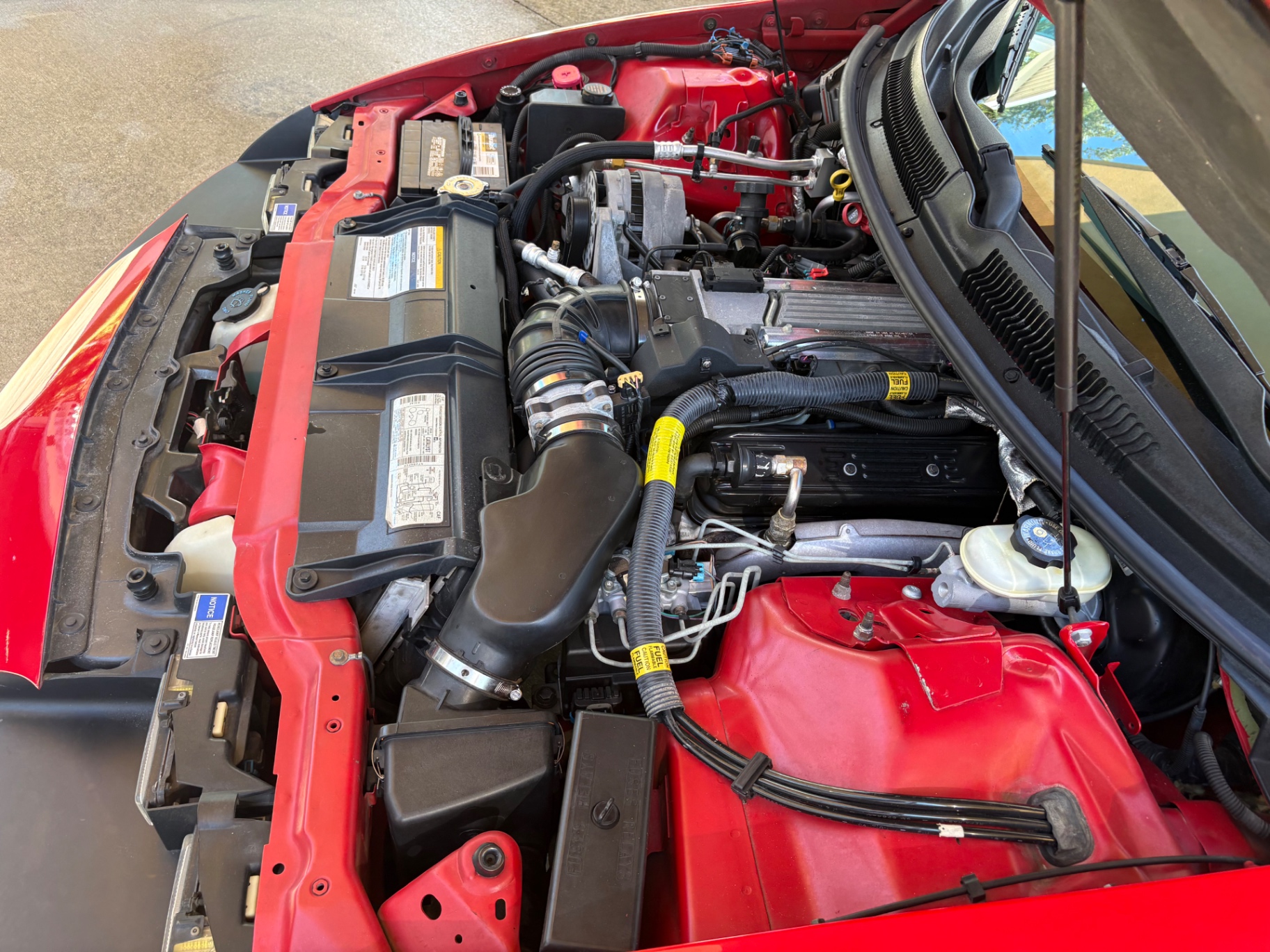
The LT1 5.7-liter V8 under the hood of this 1996 Chevrolet Camaro Z28 produces 285 horsepower and 325 lb-ft of torque in factory configuration. Those numbers were substantial for a production pony car in 1996 — enough to run the quarter mile in the mid-13-second range in stock form. The LT1 used reverse-flow cooling, which directed coolant to the cylinder heads first before the block, allowing for tighter combustion chamber tolerances and higher compression without knock. It was a design philosophy borrowed from the contemporary Corvette program and represented a meaningful engineering step forward from the earlier L98 it replaced.
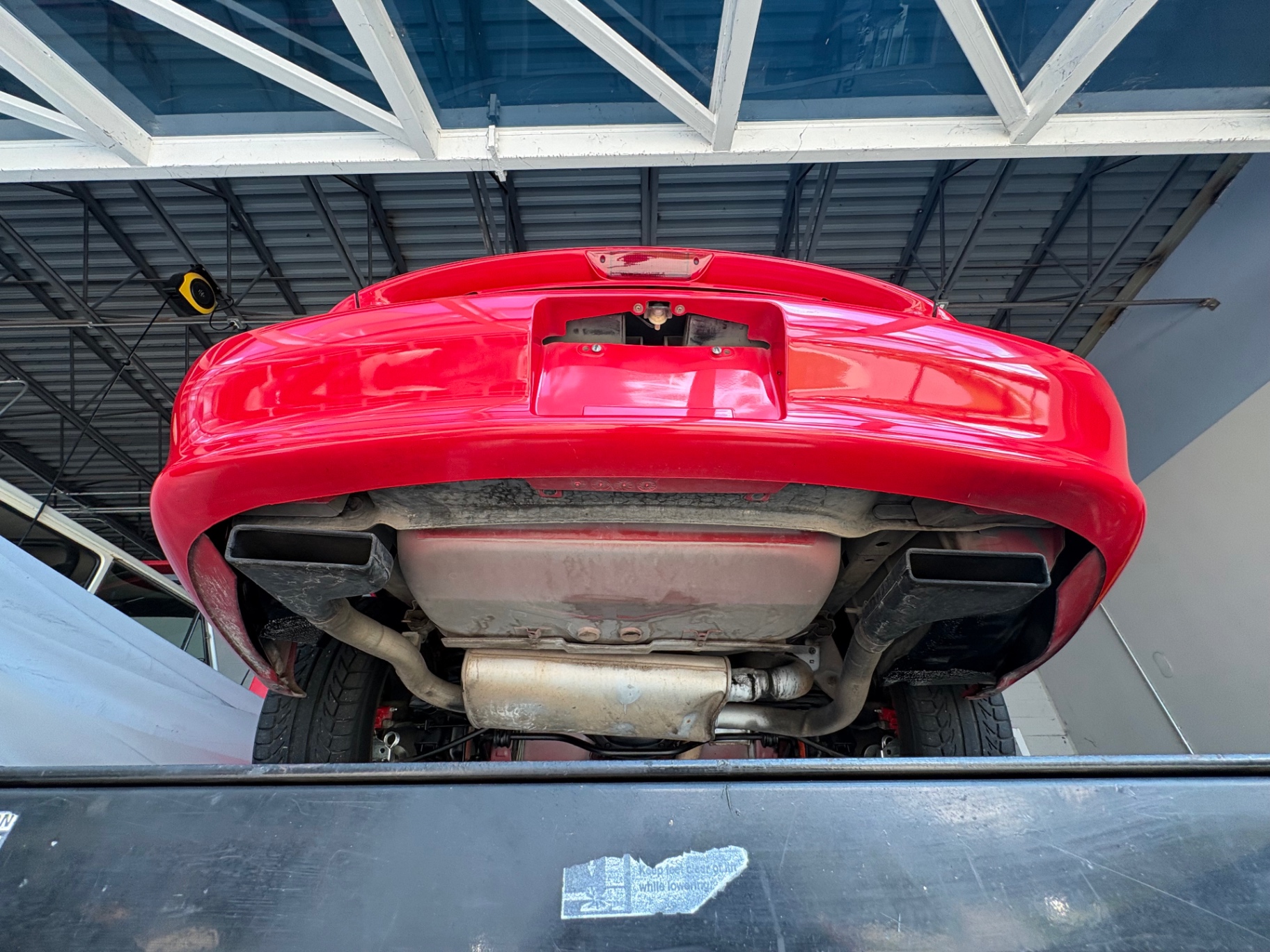
Behind the LT1 sits the 4L60-E four-speed automatic transmission, GM's electronically controlled overdrive unit that was well-suited to the LT1's torque curve. The 4L60-E in Z28 applications was calibrated for performance duty and includes a skip-shift inhibit function — the dash indicator visible in the cluster photo confirms this car has that feature active. Braking is handled by four-wheel disc brakes with ABS, and the red calipers visible in the undercarriage and wheel-well photos indicate the brake system is intact and visually correct. The undercarriage photographs show solid floor pans painted in the factory body color, clean frame rails, and suspension components that are free of significant corrosion. The rear axle housing and torque arm are well-preserved. Dual exhaust exits through the rear bumper cutouts in the factory configuration.
Interior
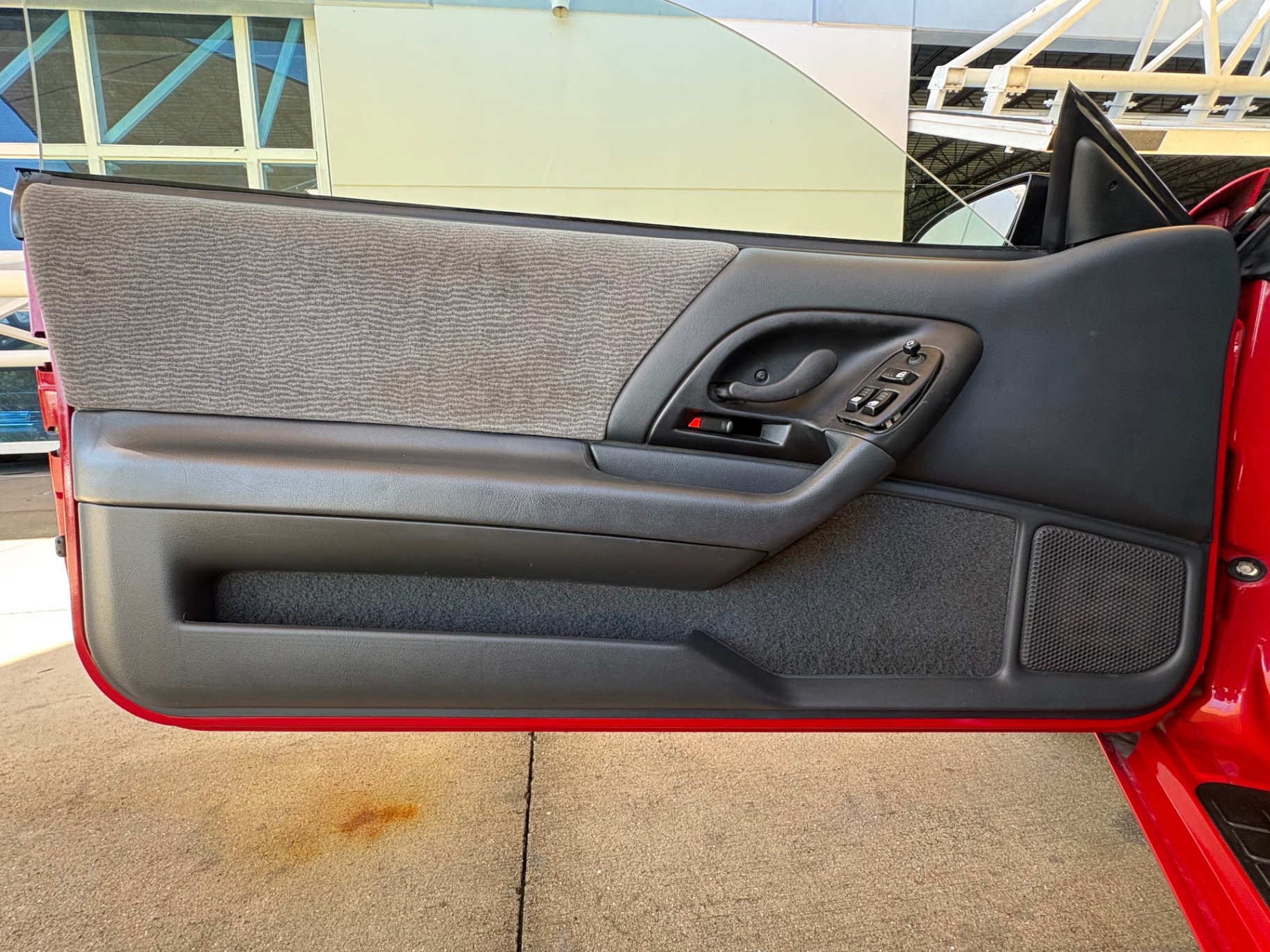
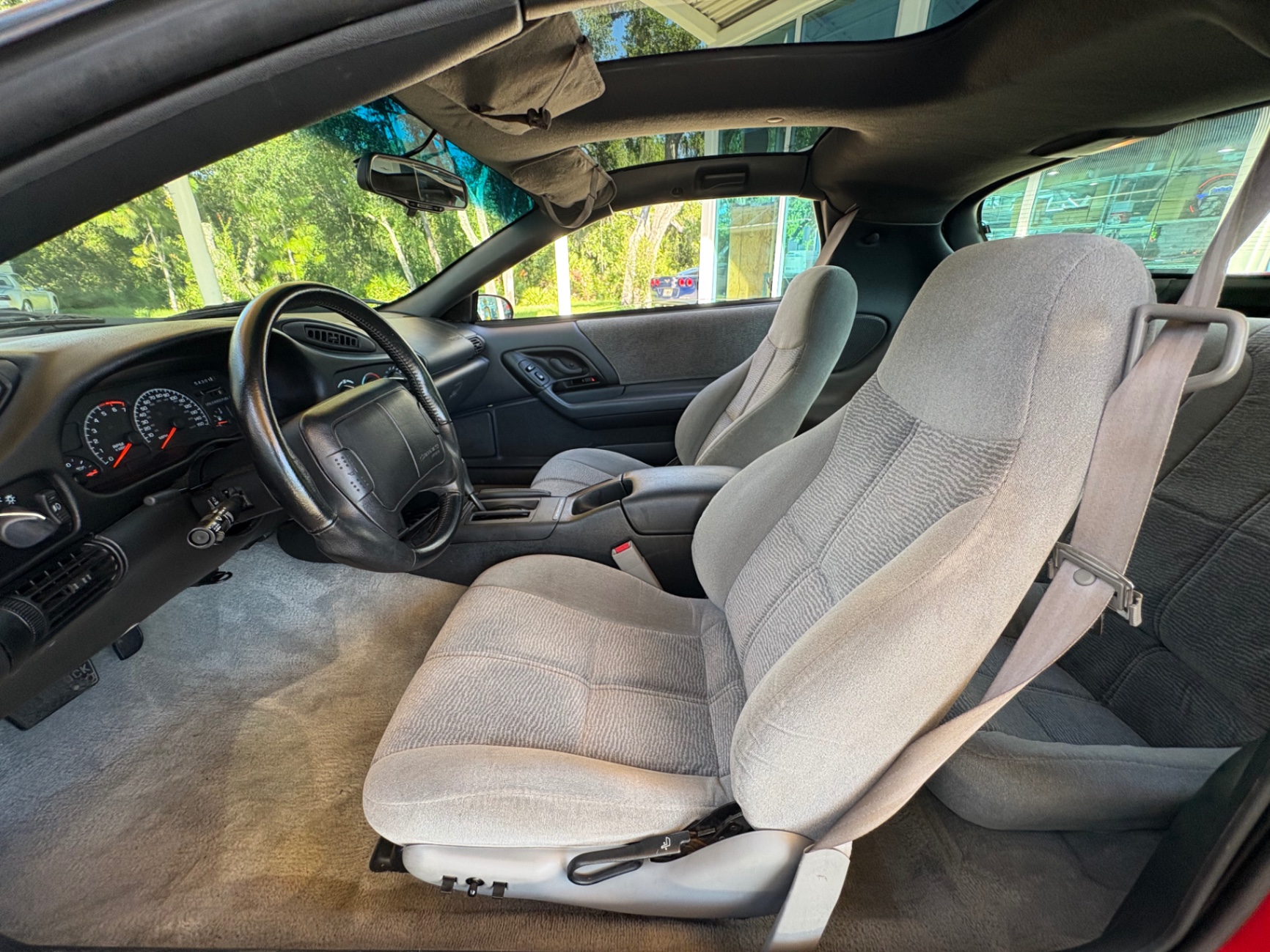
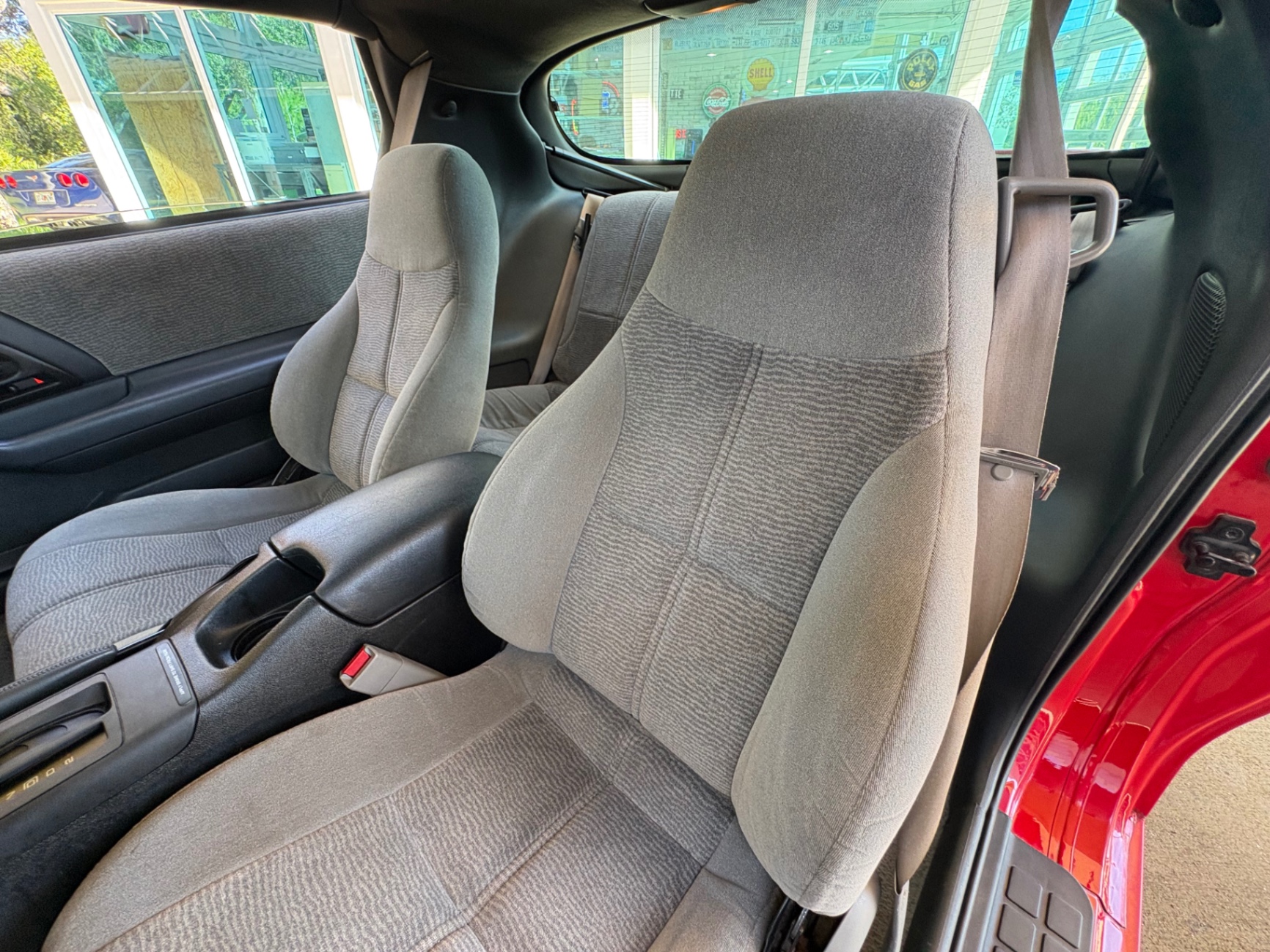
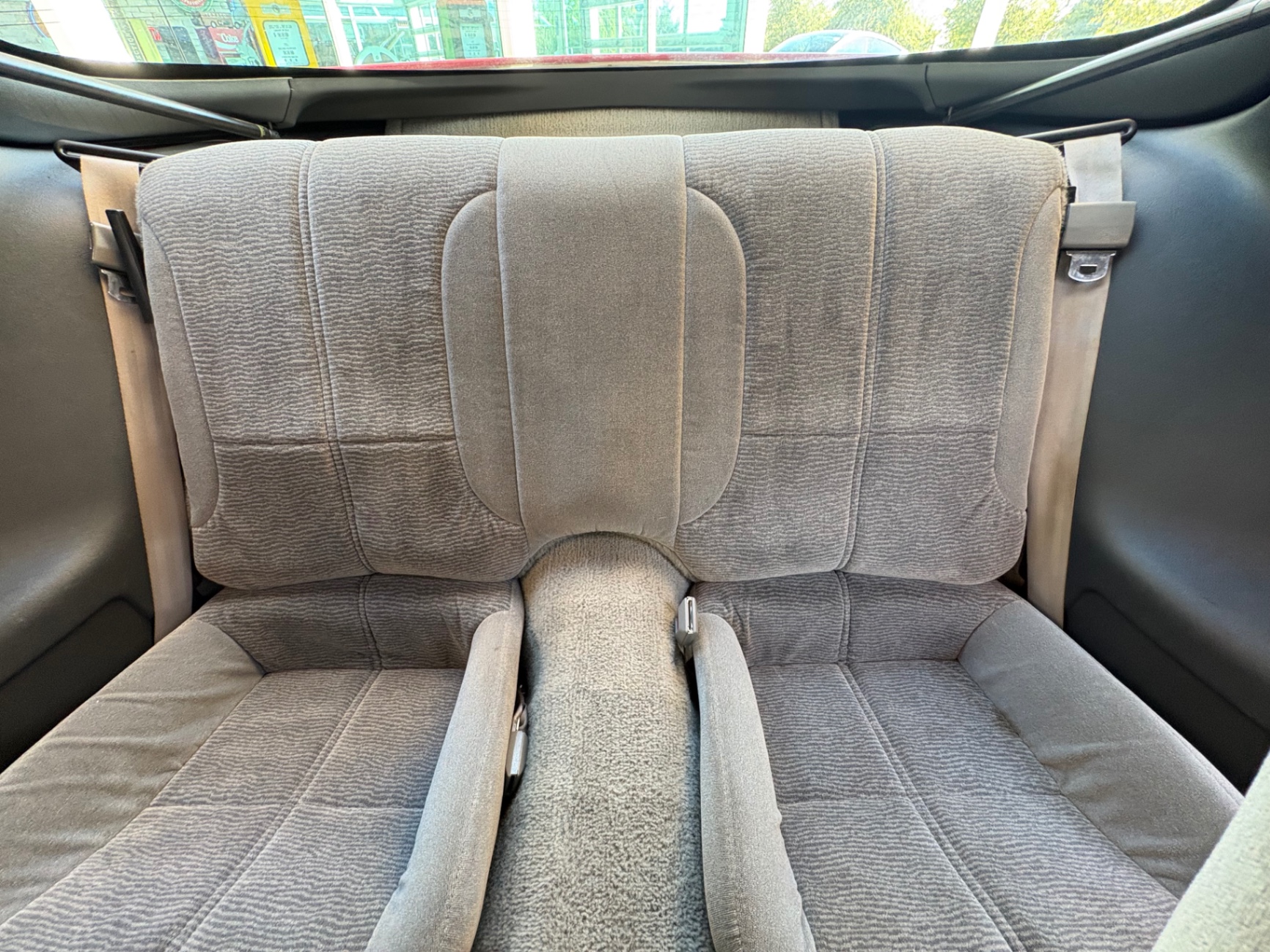
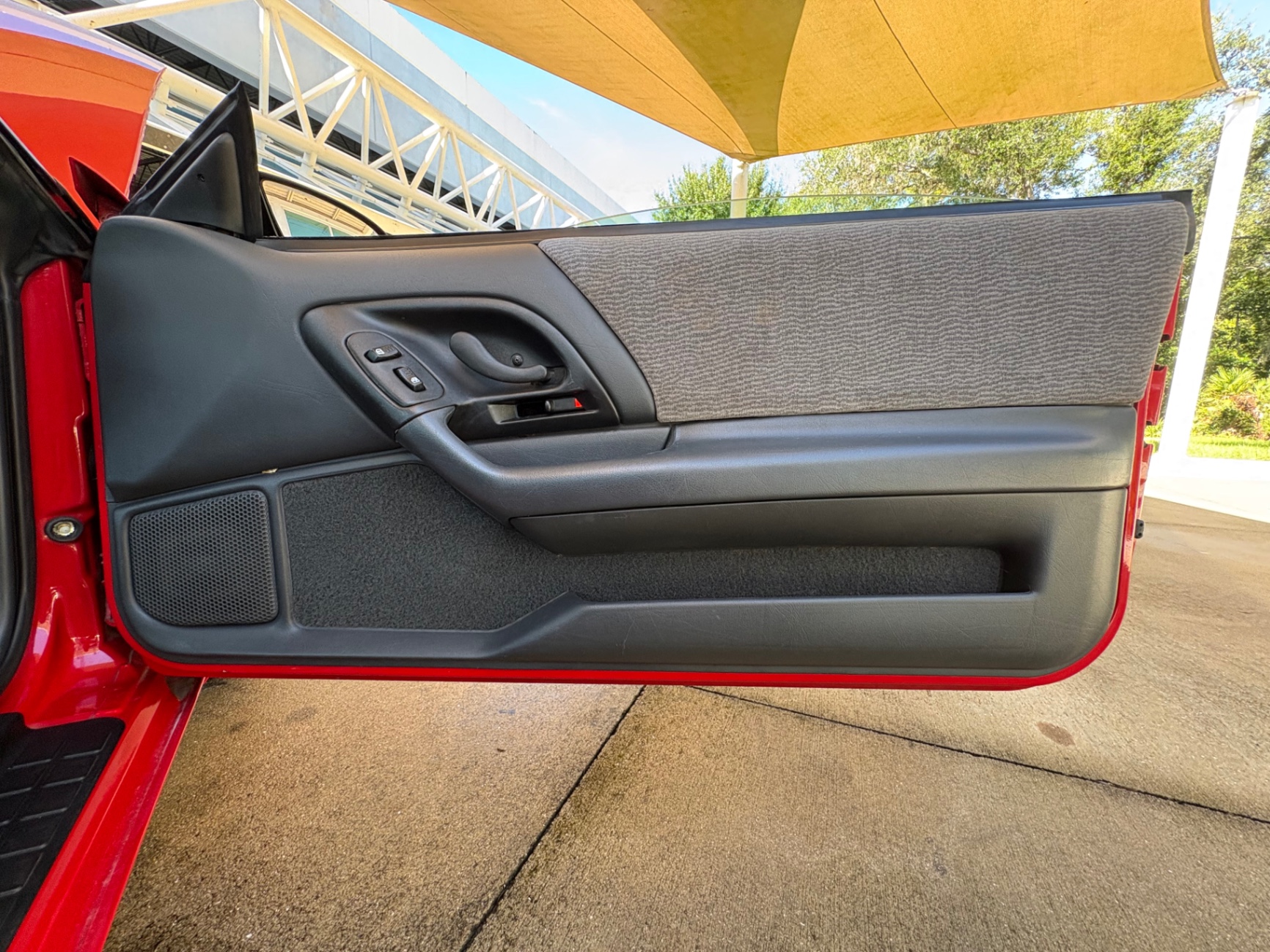
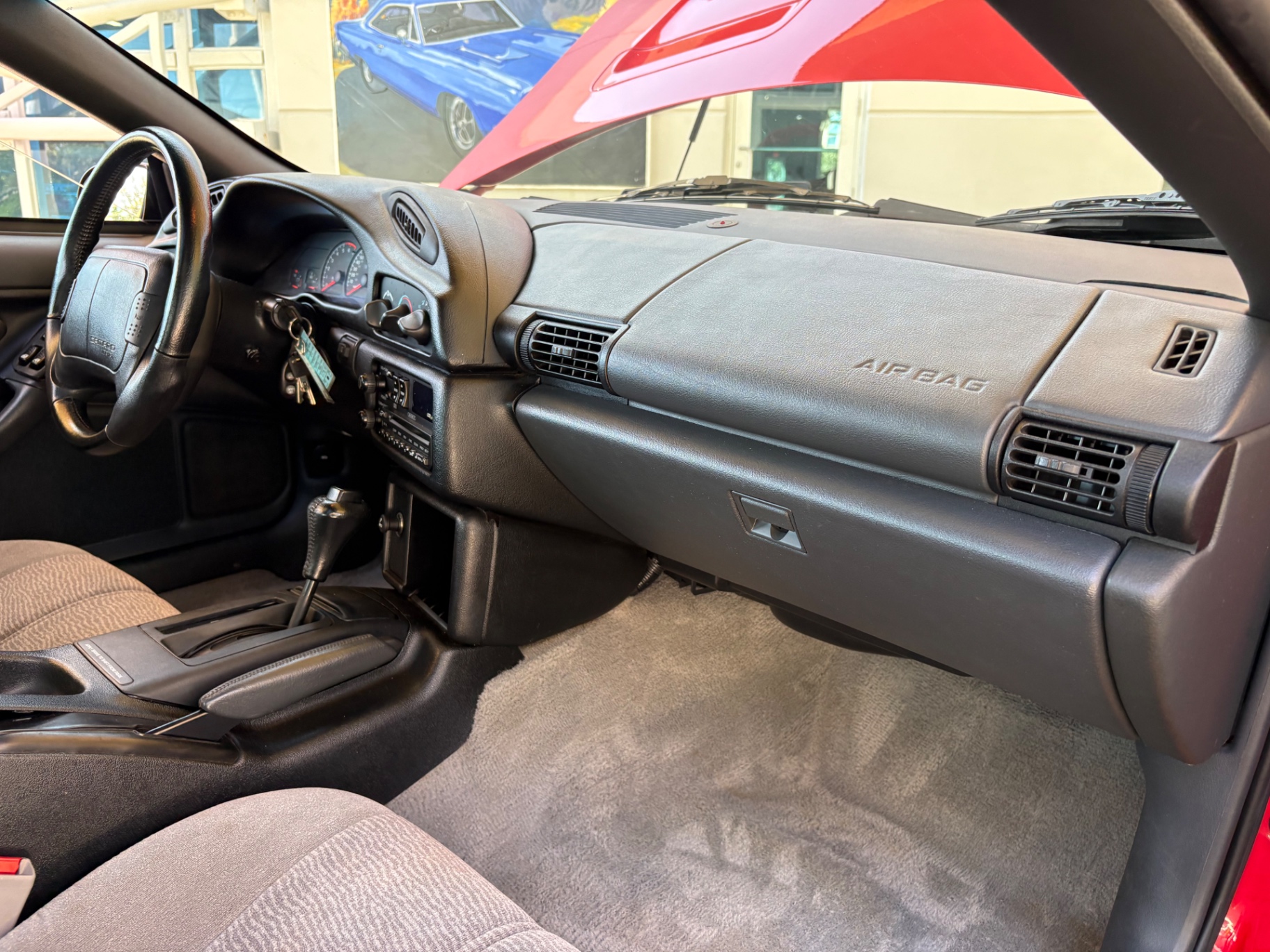
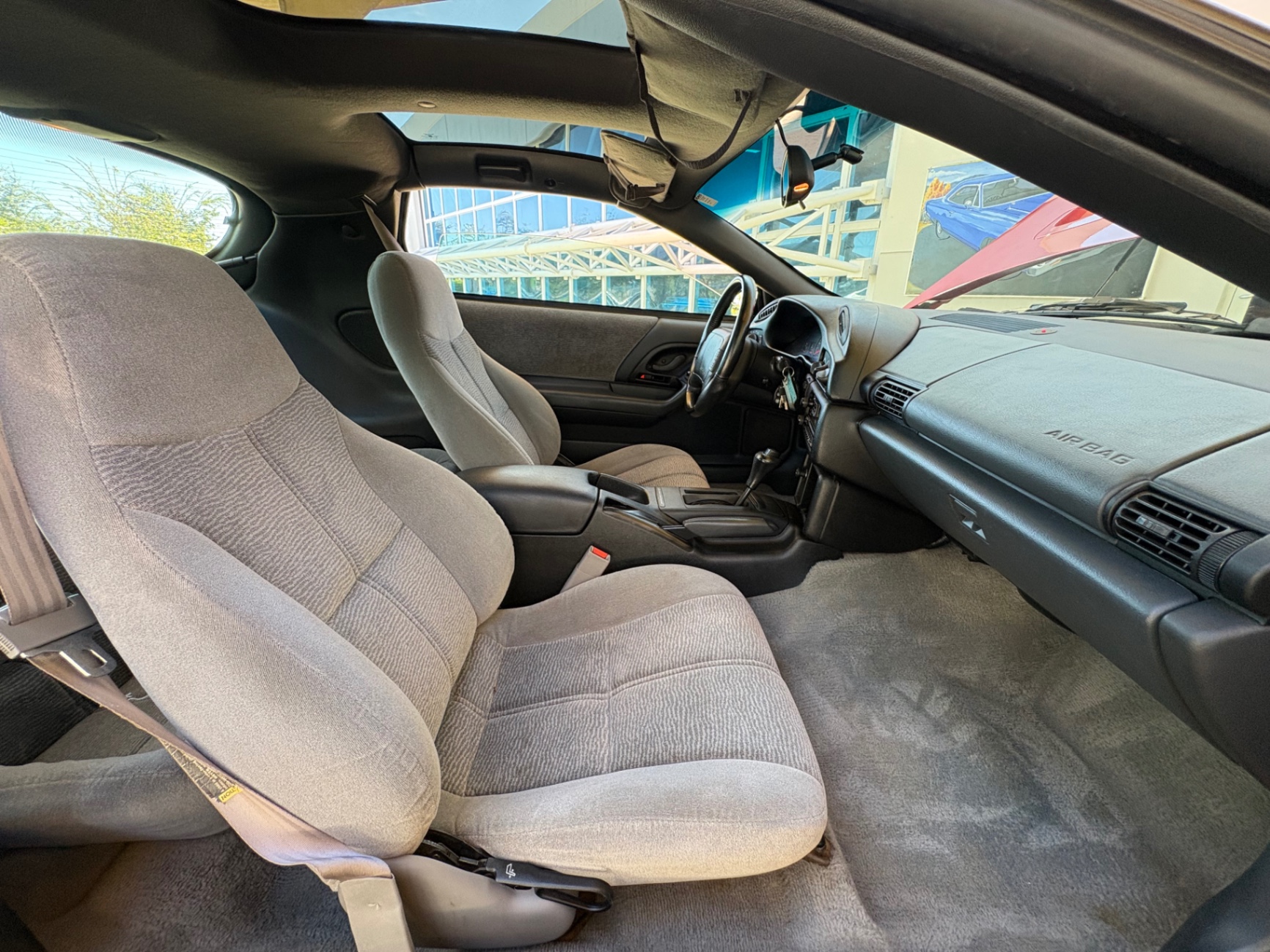
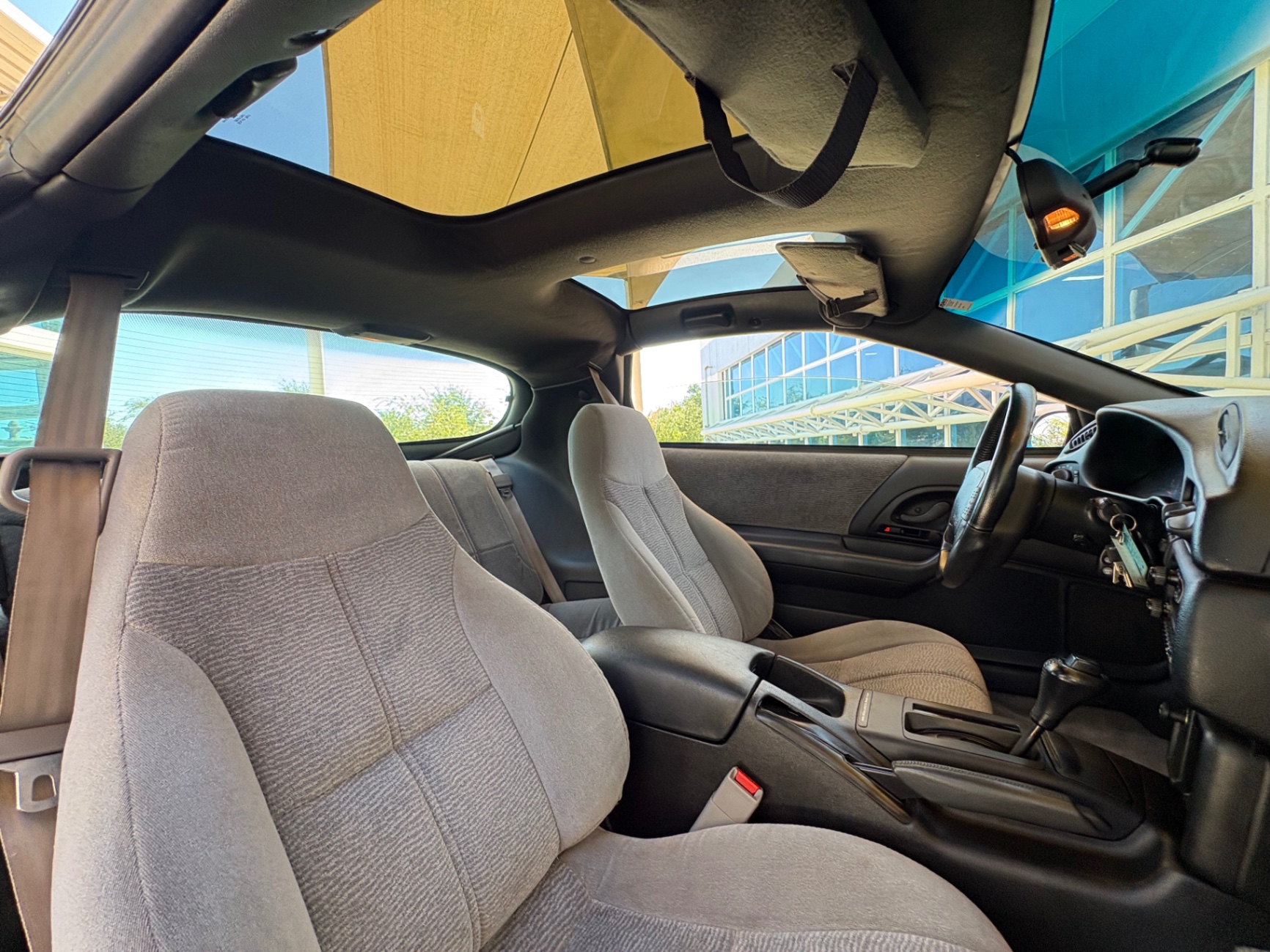
Inside the 1996 Chevrolet Camaro Z28, the gray cloth interior is in presentable condition throughout. The bucket seats show normal fabric texture without obvious tears or heavy wear. The rear seat — a standard inclusion on the coupe body style — appears equally clean and has clearly seen very little use, which is typical for a rear seat in this body style. The center console is intact, and the shifter, armrest, and storage bin all appear undamaged.
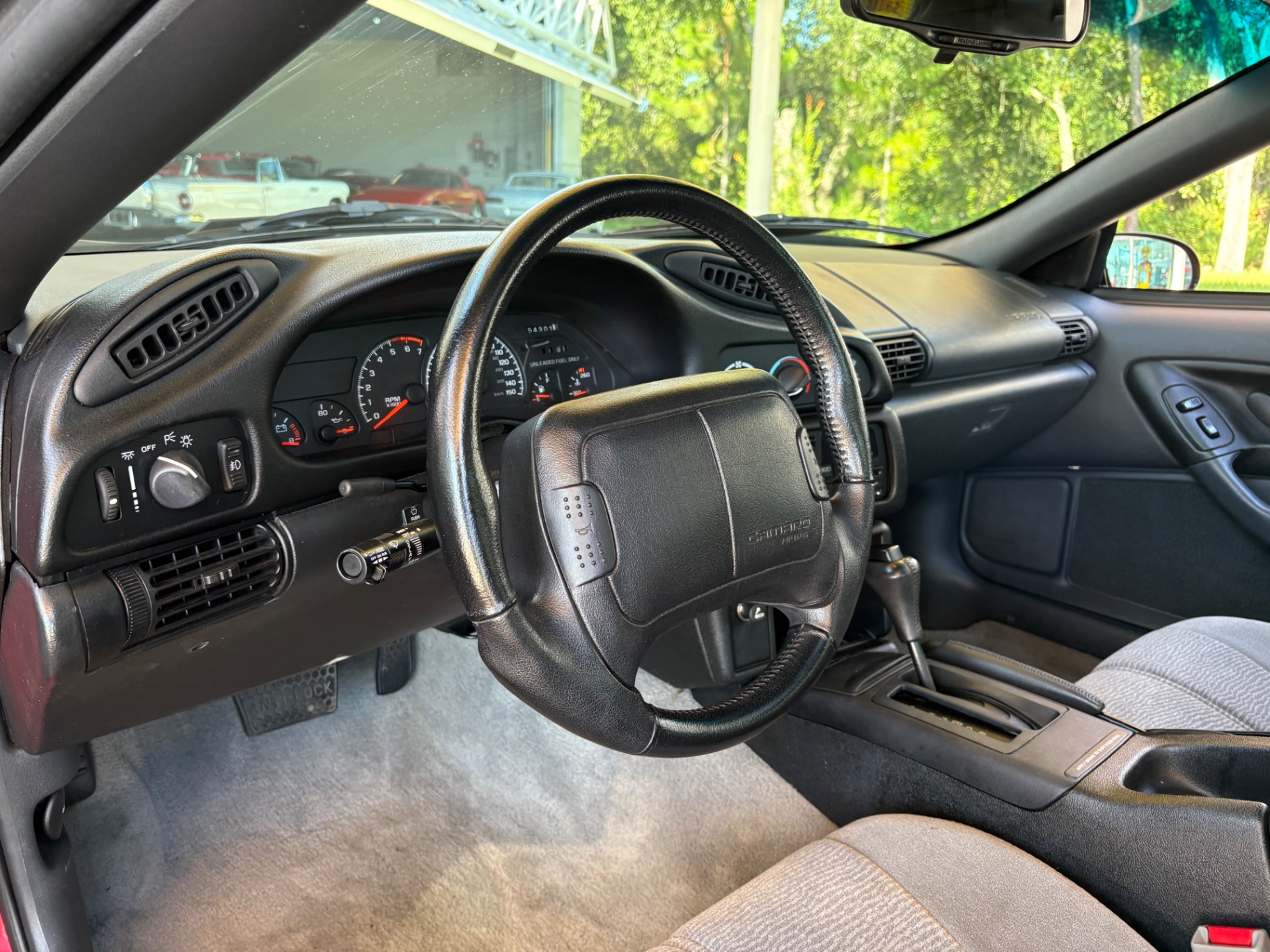
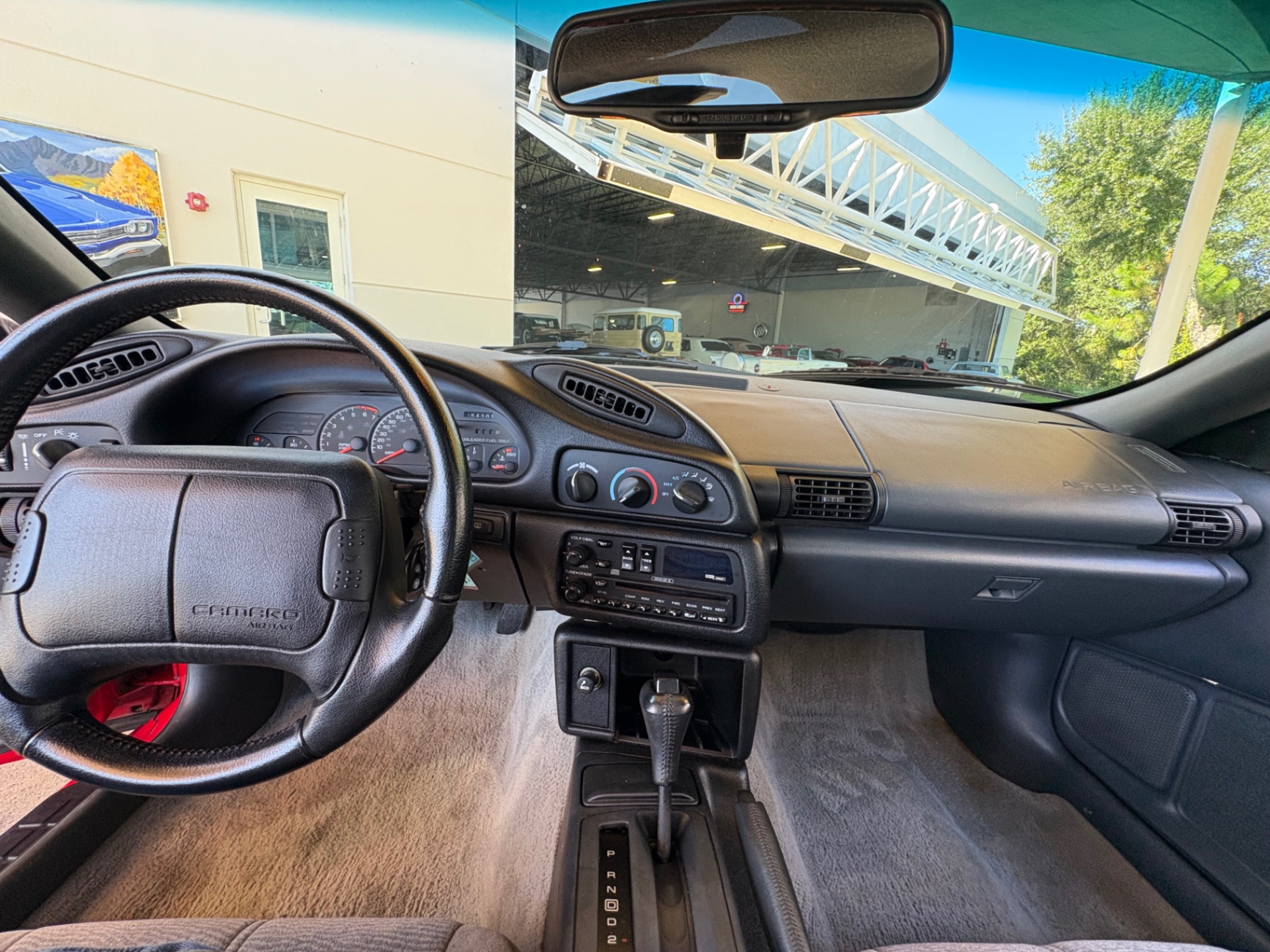
The dashboard layout is the standard fourth-generation Camaro configuration, with the instrument cluster positioned in a hooded binnacle ahead of the driver. The cluster includes a tachometer redlined at 6,000 rpm and a 150-mph speedometer, along with auxiliary gauges for oil pressure and coolant temperature — useful data points for a high-output V8. The odometer reads 54,301 miles, visible clearly in the gauge photo. The factory AM/FM cassette stereo sits in the center stack with door-mounted speakers on both sides. Climate controls and the rear window defogger switch are straightforward and appear functional. The tilt steering column and cruise control stalk are present, and the airbag-equipped steering wheel carries the Camaro script logo in the center pad. Both driver and passenger airbag modules are in place, with the passenger-side airbag labeled clearly on the dash top.
The T-top panels, when removed, open the cabin considerably. The structural halo remaining after removal is visible in several interior shots, and the headliner and surrounding trim appear intact without the warping or staining that often develops on T-top cars that have experienced water leaks over time.
Exterior
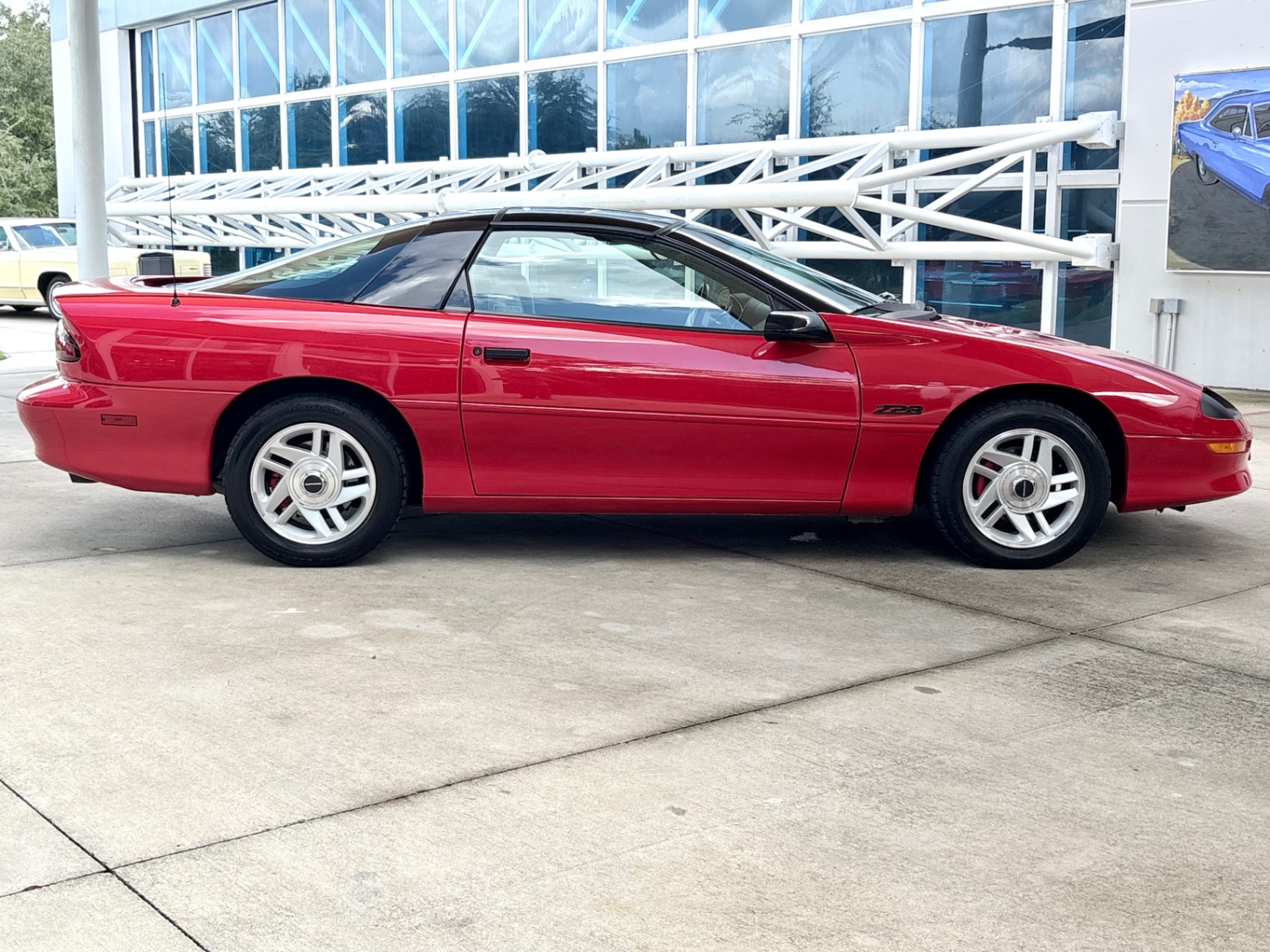
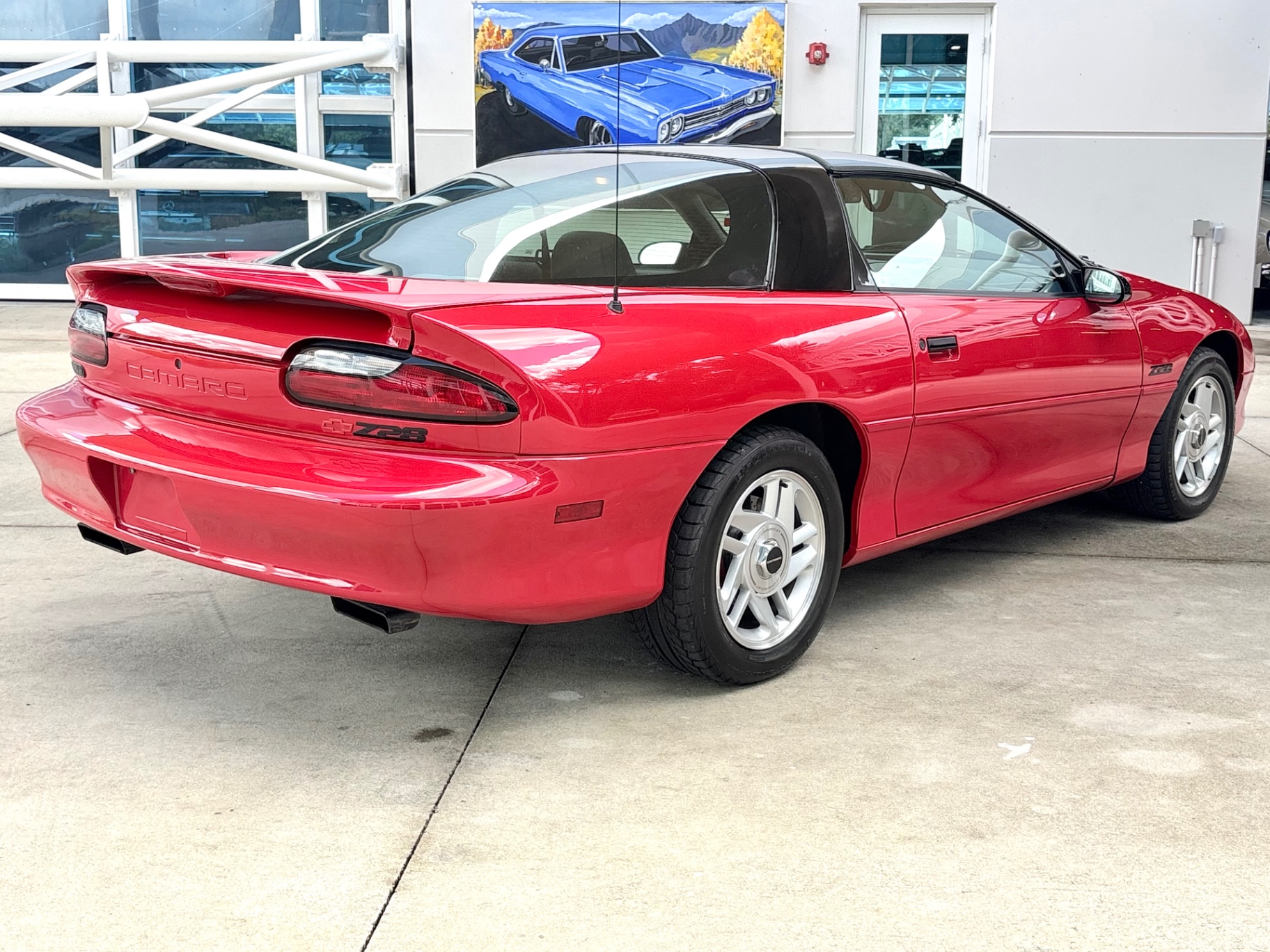
The body of this 1996 Chevrolet Camaro Z28 is finished in red, one of the more traditional color choices for the Z28 and one that photographs well against the fourth-generation body's low, wedge-shaped profile. The fourth-gen Camaro was designed under the direction of Tom Peters and featured flush glass, a low hood line, and a drag coefficient of approximately 0.32 Cd — notably slippery for a production car of its era. The styling held up well through the generation's run from 1993 to 2002, and today the shape reads as cleanly from the front as it does from the rear three-quarter angle.
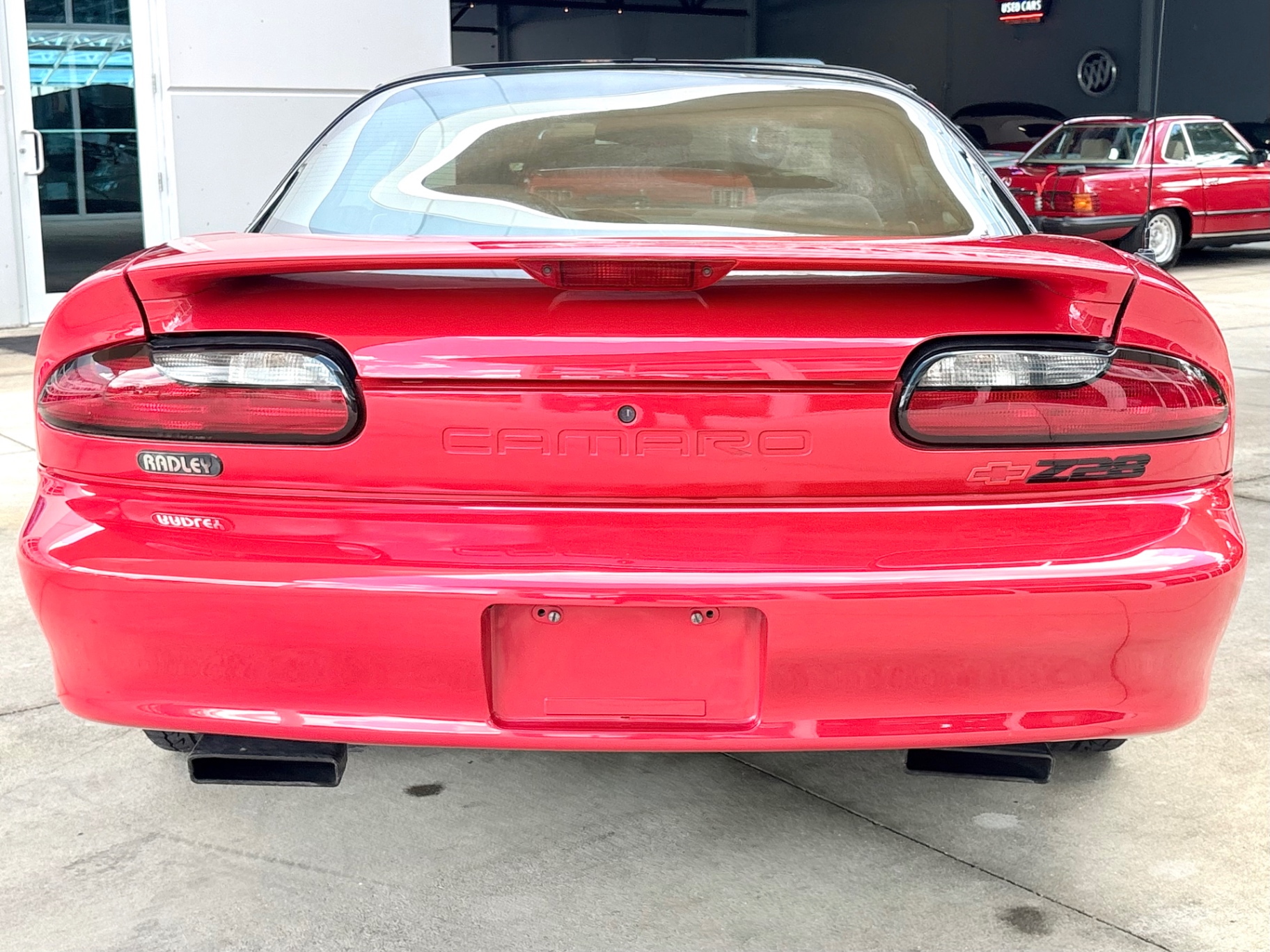
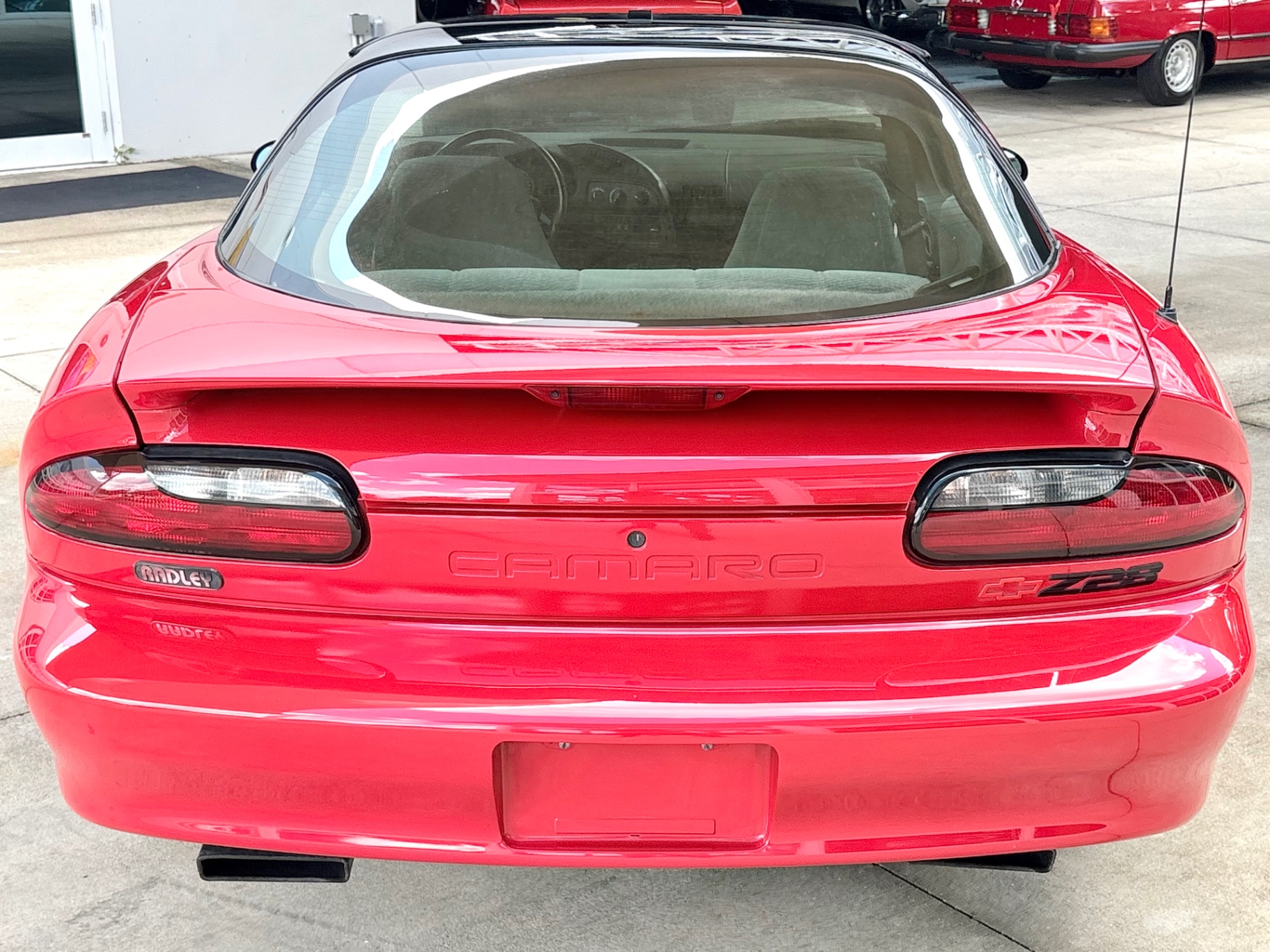
The exterior trim is correct for a Z28, including the Z28 badging on the fenders, the body-color rear spoiler, fog lights integrated into the lower front fascia, and the factory 16-inch alloy wheels. The wheels use the five-spoke design that was standard on Z28 models for this period. The dual exhaust tips exit symmetrically through the rear bumper valance, which is undamaged and retains its shape. The front fascia, hood, and door panels appear consistent in color without obvious panel mismatches, which is a basic but important indicator of an accident-free history.
Conclusion
A 1996 Chevrolet Camaro Z28 with 54,301 miles, a clean undercarriage, an intact gray cloth interior, and all the correct Z28 equipment — including the LT1 V8, T-tops, four-wheel disc brakes, and factory wheels — is a straightforward car to evaluate. The odometer reading is low enough to suggest this was not a daily driver, and the condition of the floor pans and suspension components supports that interpretation. As the final year of the LT1-powered Camaro, this car represents the end of a specific chapter before the LS1 era began in 1997. For a buyer who wants a usable, honest fourth-generation Z28 without a restoration project attached to it, this car is worth a serious look.
To schedule an inspection or ask specific questions, call Skyway Classics in Sarasota, Florida at 941-254-6608.
Disclaimer
Information found on the website is presented as given to us by the owner of the car, whether on consignment or from the owner we bought it from. Some Photos, materials for videos, descriptions and other information are provided by the consignor/seller and is deemed reliable, but Skyway Classics does not warranty or guarantee this information. Skyway Classics is not responsible for information that may incorrect or a publishing error. The decision to purchase should be based solely on the buyers personal inspection of the vehicle or by a professional inspection service prior to offer or purchase being made.
1996 Chevrolet Camaro Z28 — LT1 V8, T-Top, 54,301 Miles
Why This Car Is Special
The fourth-generation Camaro had a rough start when it launched for the 1993 model year, but by the mid-1990s Chevrolet had sorted out most of the early issues and the Z28 had become a genuine performance bargain. The 1996 model year is particularly notable for one specific reason: it was the final year of the LT1 engine in the Camaro before General Motors replaced it with the all-new LS1 for 1997. That makes 1996 the last of a specific engine lineage — a small-block derived from Corvette development, with reverse-flow cooling and an opti-spark distributor, that powered everything from the Caprice police cruiser to the C4 Corvette. For Camaro collectors, a clean, low-mileage 1996 Chevrolet Camaro Z28 occupies a specific spot in that history.
This particular car shows 54,301 miles on the odometer, which is a realistic lifetime total for a car that was bought, enjoyed occasionally, and preserved rather than driven as a daily driver. It is finished in red over a gray cloth interior, a combination that reads clearly in the photos and shows no obvious signs of heavy use. The undercarriage photos are especially telling — the floor pans, frame rails, and rear suspension components are free of rust and structural damage, which is exactly what you want to see on a 30-year-old car before committing to a purchase.
Features List
- LT1 5.7L V8, 285 horsepower
- 4-Speed Automatic Transmission (4L60-E)
- T-Top Roof
- Z28 Badge
- Factory 16-Inch Alloy Wheels
- 4-Wheel Disc Brakes with Red Brake Calipers
- ABS Brakes
- Dual Exhaust
- Fog Lights
- Rear Spoiler
- Power Steering
- Power Windows
- Power Door Locks
- Cruise Control
- Tilt Steering Column
- Bucket Seats with Rear Seat
- Center Console
- Tachometer
- Air Conditioning
- Rear Window Defogger
- AM/FM Cassette Stereo with Door Speakers
- Dual Airbags (Driver and Passenger)
- Clean Undercarriage
Mechanical
The LT1 5.7-liter V8 under the hood of this 1996 Chevrolet Camaro Z28 produces 285 horsepower and 325 lb-ft of torque in factory configuration. Those numbers were substantial for a production pony car in 1996 — enough to run the quarter mile in the mid-13-second range in stock form. The LT1 used reverse-flow cooling, which directed coolant to the cylinder heads first before the block, allowing for tighter combustion chamber tolerances and higher compression without knock. It was a design philosophy borrowed from the contemporary Corvette program and represented a meaningful engineering step forward from the earlier L98 it replaced.
Behind the LT1 sits the 4L60-E four-speed automatic transmission, GM's electronically controlled overdrive unit that was well-suited to the LT1's torque curve. The 4L60-E in Z28 applications was calibrated for performance duty and includes a skip-shift inhibit function — the dash indicator visible in the cluster photo confirms this car has that feature active. Braking is handled by four-wheel disc brakes with ABS, and the red calipers visible in the undercarriage and wheel-well photos indicate the brake system is intact and visually correct. The undercarriage photographs show solid floor pans painted in the factory body color, clean frame rails, and suspension components that are free of significant corrosion. The rear axle housing and torque arm are well-preserved. Dual exhaust exits through the rear bumper cutouts in the factory configuration.
Interior
Inside the 1996 Chevrolet Camaro Z28, the gray cloth interior is in presentable condition throughout. The bucket seats show normal fabric texture without obvious tears or heavy wear. The rear seat — a standard inclusion on the coupe body style — appears equally clean and has clearly seen very little use, which is typical for a rear seat in this body style. The center console is intact, and the shifter, armrest, and storage bin all appear undamaged.
The dashboard layout is the standard fourth-generation Camaro configuration, with the instrument cluster positioned in a hooded binnacle ahead of the driver. The cluster includes a tachometer redlined at 6,000 rpm and a 150-mph speedometer, along with auxiliary gauges for oil pressure and coolant temperature — useful data points for a high-output V8. The odometer reads 54,301 miles, visible clearly in the gauge photo. The factory AM/FM cassette stereo sits in the center stack with door-mounted speakers on both sides. Climate controls and the rear window defogger switch are straightforward and appear functional. The tilt steering column and cruise control stalk are present, and the airbag-equipped steering wheel carries the Camaro script logo in the center pad. Both driver and passenger airbag modules are in place, with the passenger-side airbag labeled clearly on the dash top.
The T-top panels, when removed, open the cabin considerably. The structural halo remaining after removal is visible in several interior shots, and the headliner and surrounding trim appear intact without the warping or staining that often develops on T-top cars that have experienced water leaks over time.
Exterior
The body of this 1996 Chevrolet Camaro Z28 is finished in red, one of the more traditional color choices for the Z28 and one that photographs well against the fourth-generation body's low, wedge-shaped profile. The fourth-gen Camaro was designed under the direction of Tom Peters and featured flush glass, a low hood line, and a drag coefficient of approximately 0.32 Cd — notably slippery for a production car of its era. The styling held up well through the generation's run from 1993 to 2002, and today the shape reads as cleanly from the front as it does from the rear three-quarter angle.
The exterior trim is correct for a Z28, including the Z28 badging on the fenders, the body-color rear spoiler, fog lights integrated into the lower front fascia, and the factory 16-inch alloy wheels. The wheels use the five-spoke design that was standard on Z28 models for this period. The dual exhaust tips exit symmetrically through the rear bumper valance, which is undamaged and retains its shape. The front fascia, hood, and door panels appear consistent in color without obvious panel mismatches, which is a basic but important indicator of an accident-free history.
Conclusion
A 1996 Chevrolet Camaro Z28 with 54,301 miles, a clean undercarriage, an intact gray cloth interior, and all the correct Z28 equipment — including the LT1 V8, T-tops, four-wheel disc brakes, and factory wheels — is a straightforward car to evaluate. The odometer reading is low enough to suggest this was not a daily driver, and the condition of the floor pans and suspension components supports that interpretation. As the final year of the LT1-powered Camaro, this car represents the end of a specific chapter before the LS1 era began in 1997. For a buyer who wants a usable, honest fourth-generation Z28 without a restoration project attached to it, this car is worth a serious look.
To schedule an inspection or ask specific questions, call Skyway Classics in Sarasota, Florida at 941-254-6608.
Disclaimer
Information found on the website is presented as given to us by the owner of the car, whether on consignment or from the owner we bought it from. Some Photos, materials for videos, descriptions and other information are provided by the consignor/seller and is deemed reliable, but Skyway Classics does not warranty or guarantee this information. Skyway Classics is not responsible for information that may incorrect or a publishing error. The decision to purchase should be based solely on the buyers personal inspection of the vehicle or by a professional inspection service prior to offer or purchase being made.
1996 Chevrolet
Camaro Z28
Why Choose Skyway Classics?
Explore our curated inventory of classic and collector cars—thoughtfully selected, ready to drive, and supported by experts who make ownership simple.
Expert Curation
Every vehicle is hand-selected by our experts for quality, authenticity, and investment potential.
Fast Transactions
Streamlined buying and selling process with quick financing and immediate delivery options.
Only National Dealer With Classic Service & Repair
We’re the only national dealership that services and repairs the classics we sell—before and after the sale.
Nationwide Network
Access to our extensive network of collectors, restorers, and classic car enthusiasts nationwide.
Concierge Ownership Support
From financing and insurance to paperwork, shipping, and titling—we handle the details so you can enjoy the drive.
Passion-Driven Service
We're classic car enthusiasts first, providing personalized service with genuine passion for the hobby.