
1972 Ford
Mustang Base
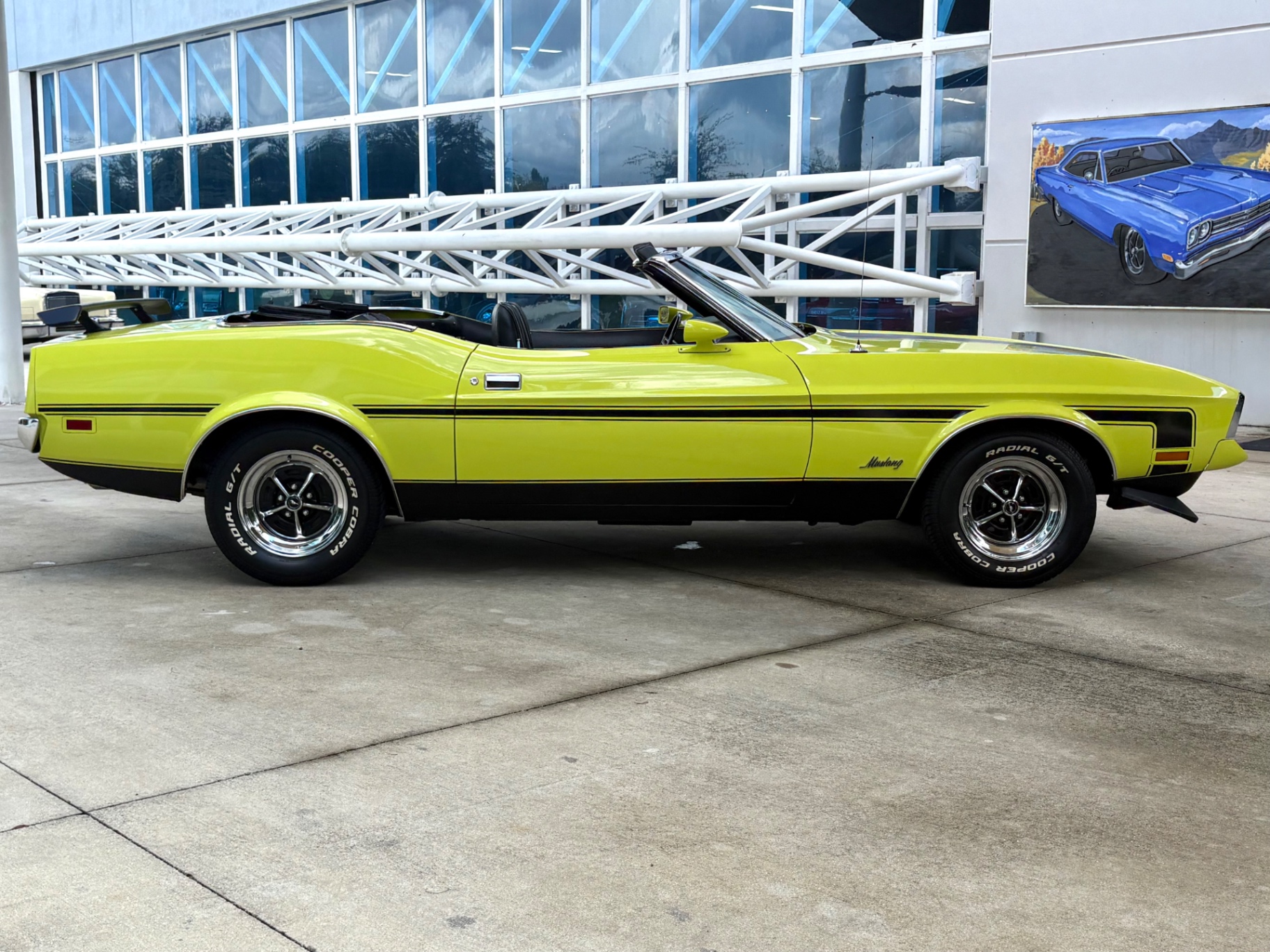
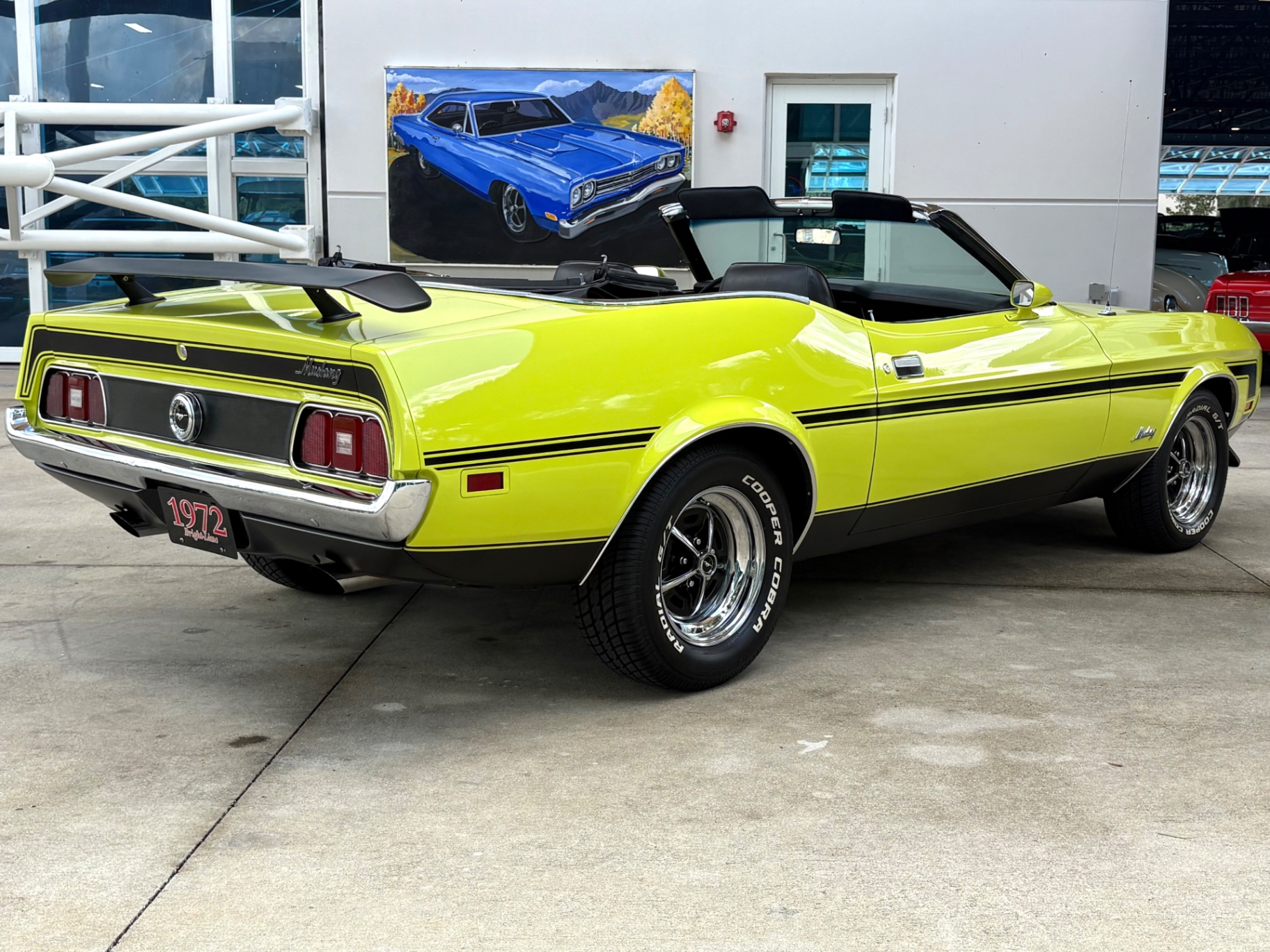
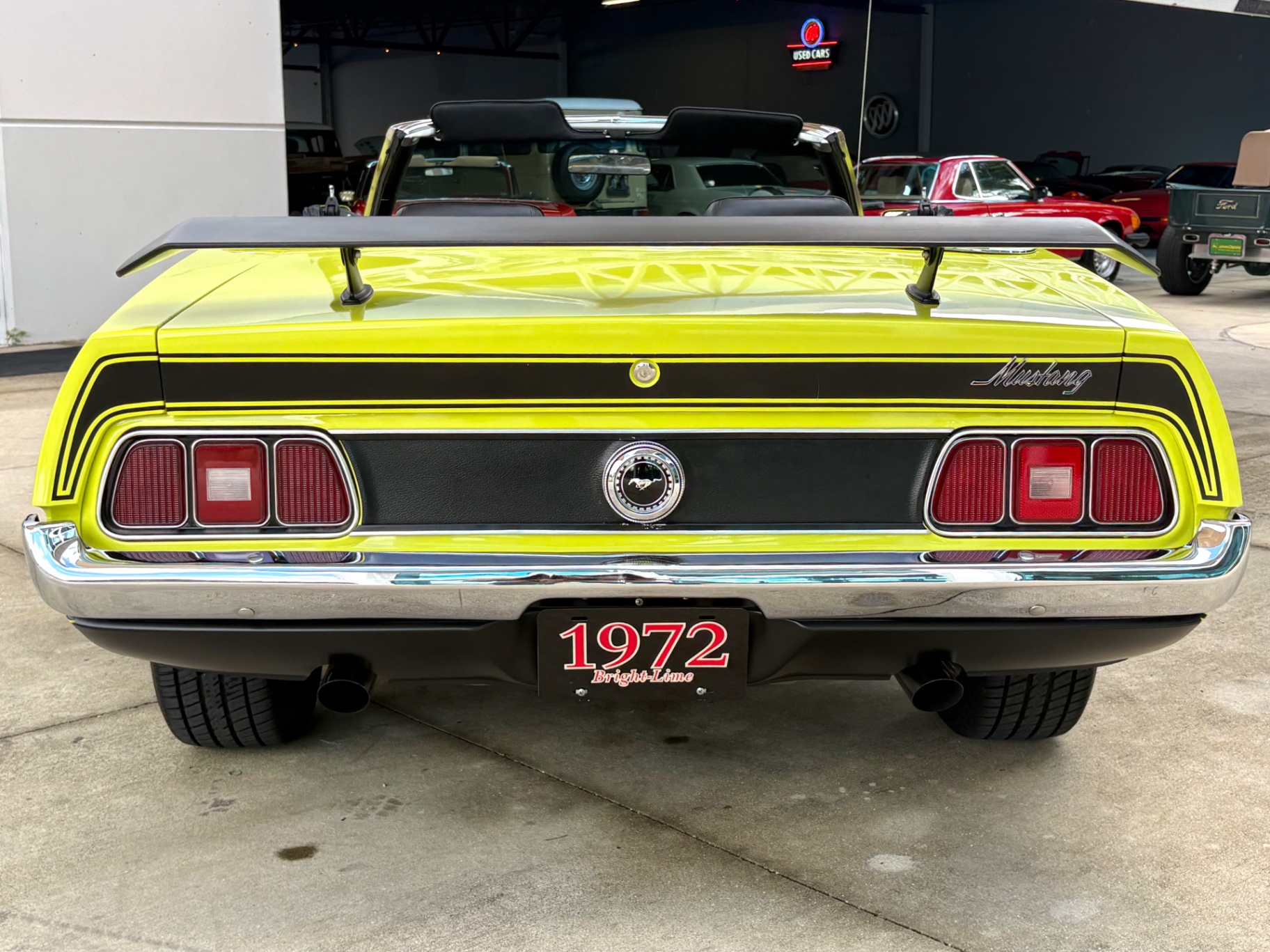
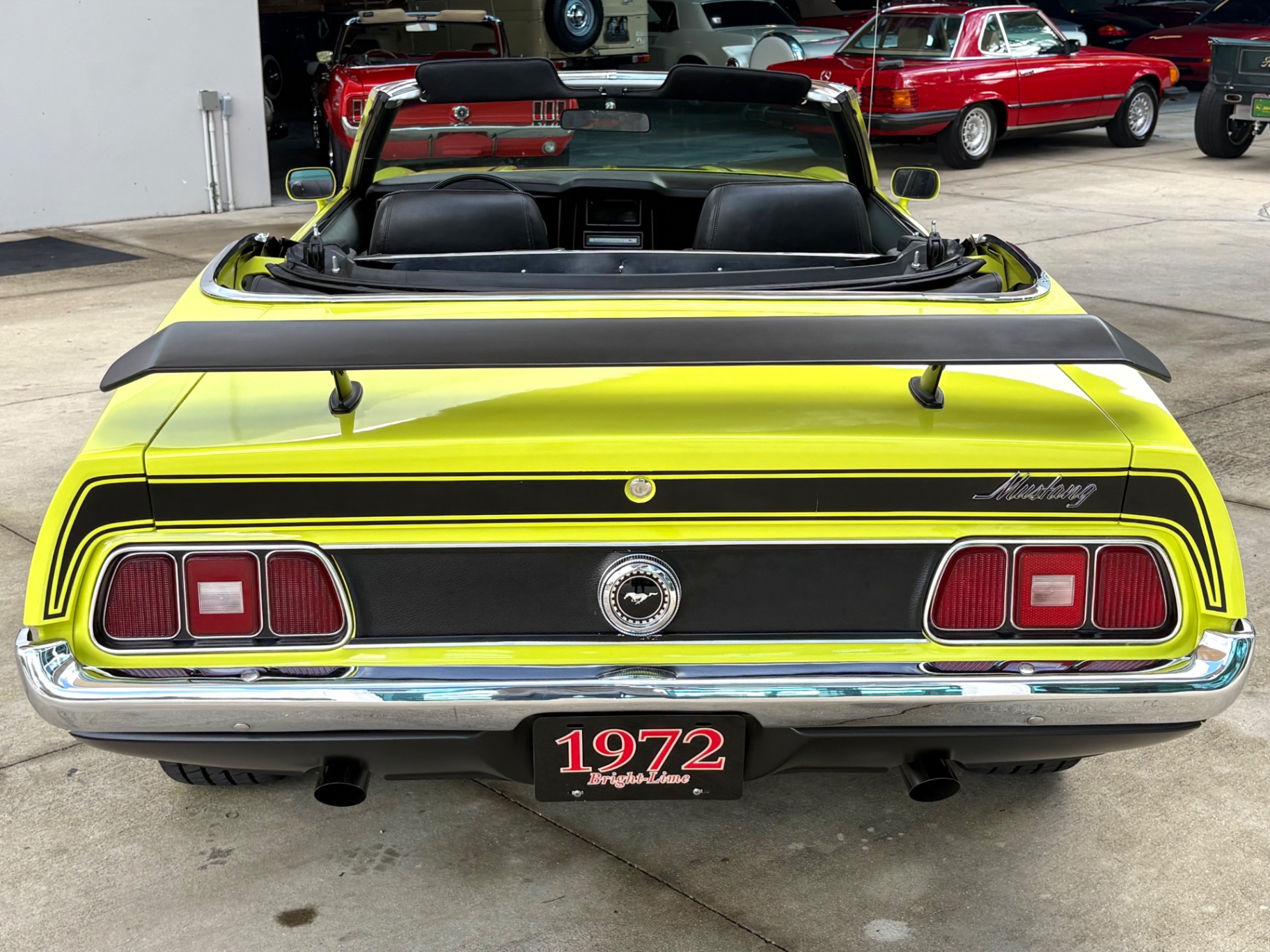
1972 Ford Mustang Convertible — Bright Lime, 302 V8, Power Top, Clean Undercarriage
Why This Car Is Special
The 1972 Ford Mustang convertible occupies a specific and increasingly recognized place in Mustang history. By 1972, Ford had been building the larger "SportsRoof" Mustang body — introduced in 1971 — for two full model years. This generation is often overshadowed by the original 1964-1970 cars in collector circles, but that perception is shifting. The 1971-1973 Mustang was the last of the true long-hood, short-deck pony car designs before the Mustang II arrived in 1974, and the convertible version is by far the rarest body style of the bunch.
Ford produced only 6,401 Mustang convertibles for the 1972 model year, making this body style significantly rarer than the hardtop or SportsRoof fastback versions built that same year. Total 1972 Mustang production across all body styles came in at just over 125,000 units — already a dramatic drop from the peak years of the mid-1960s — and the convertible represented less than 5 percent of that figure. Survivors in this color combination are rarer still.
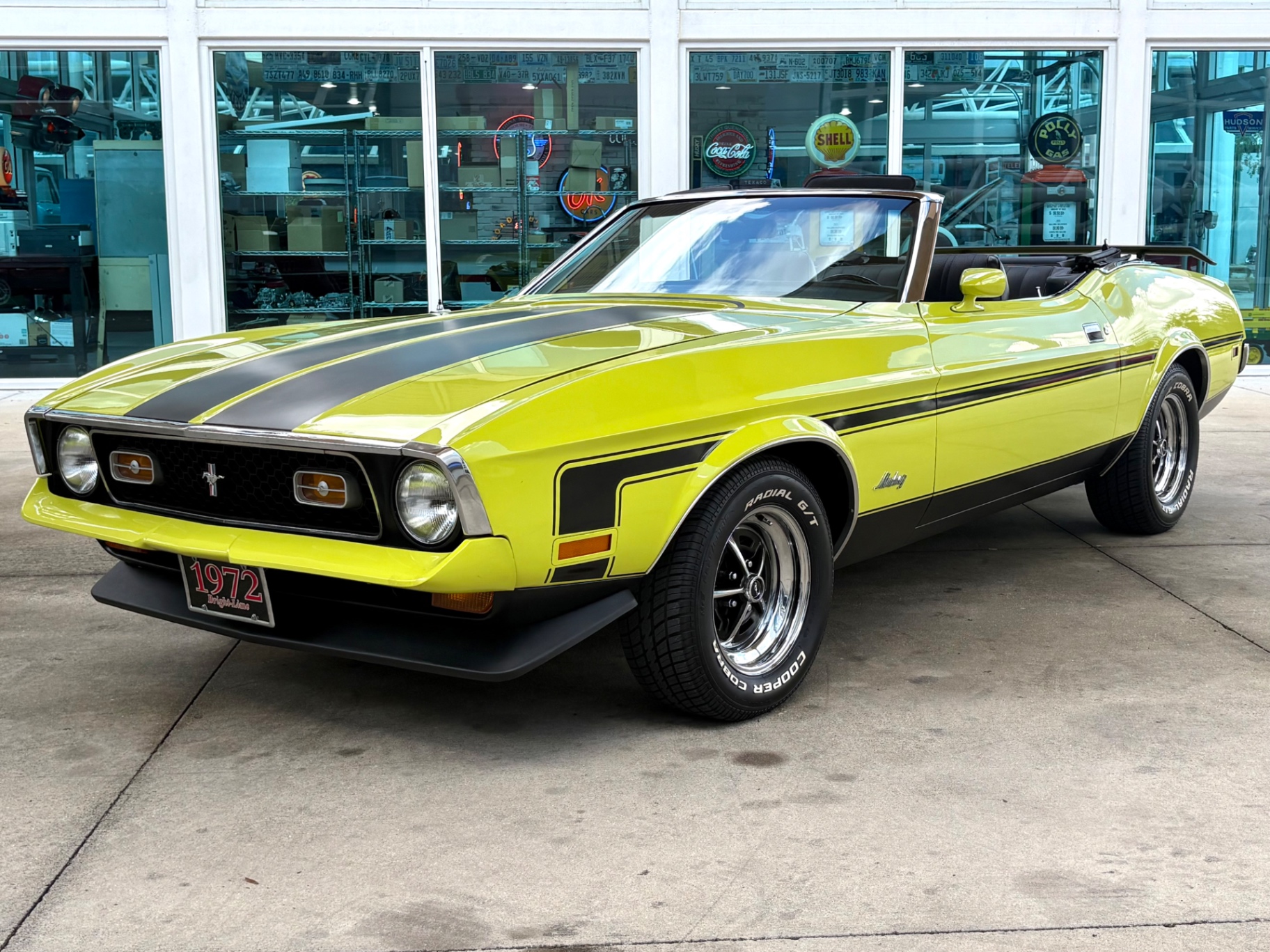
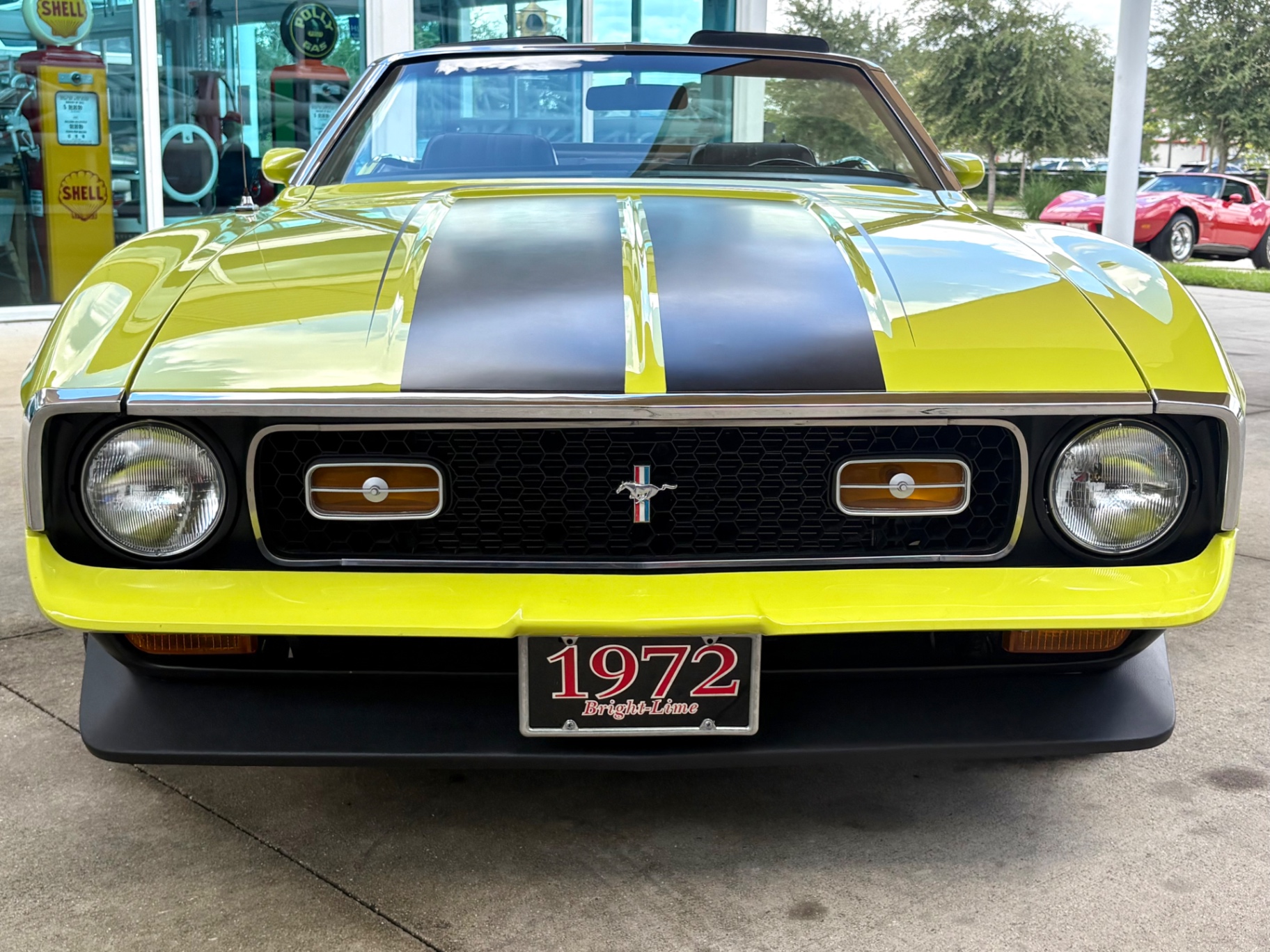
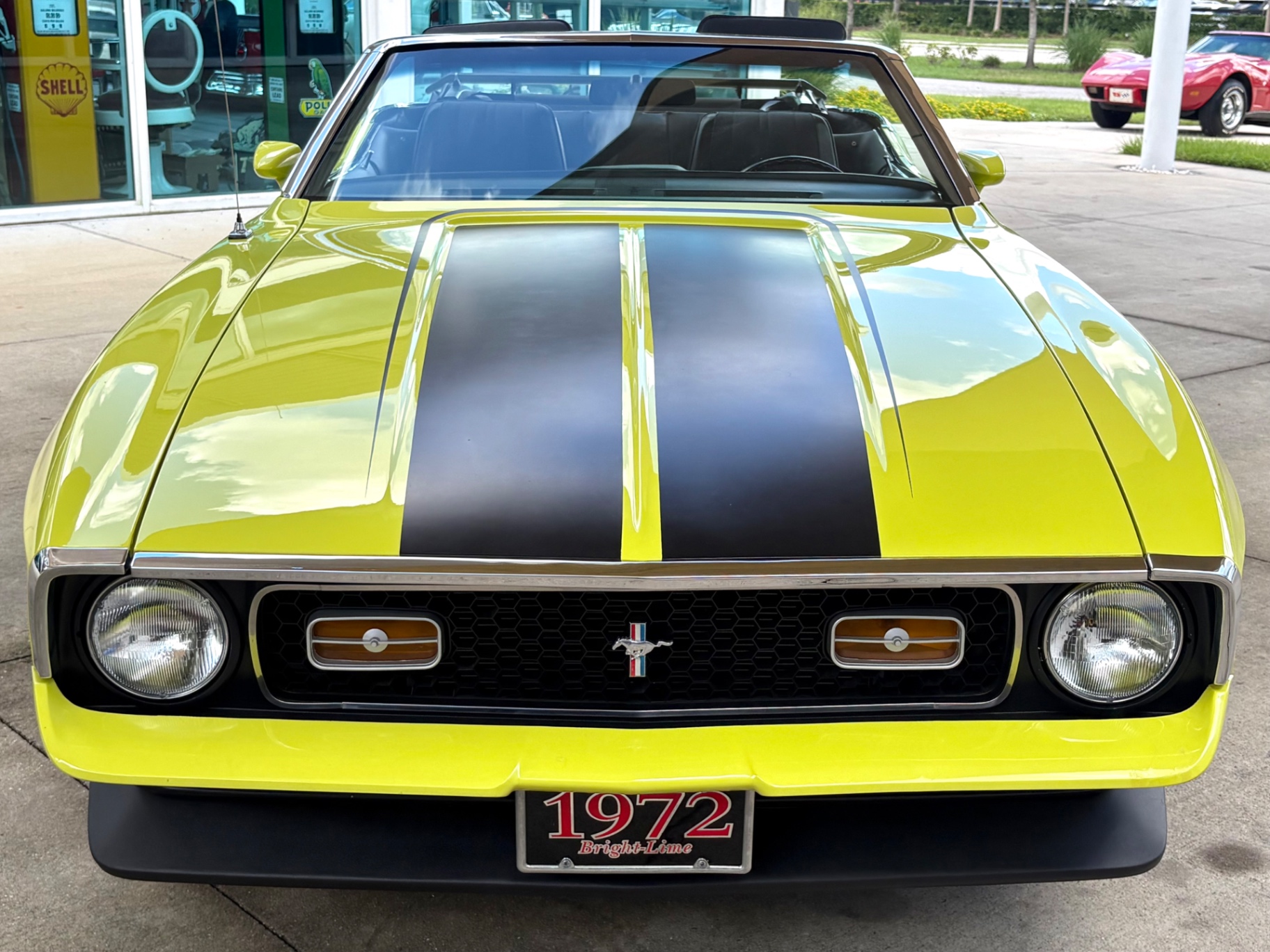
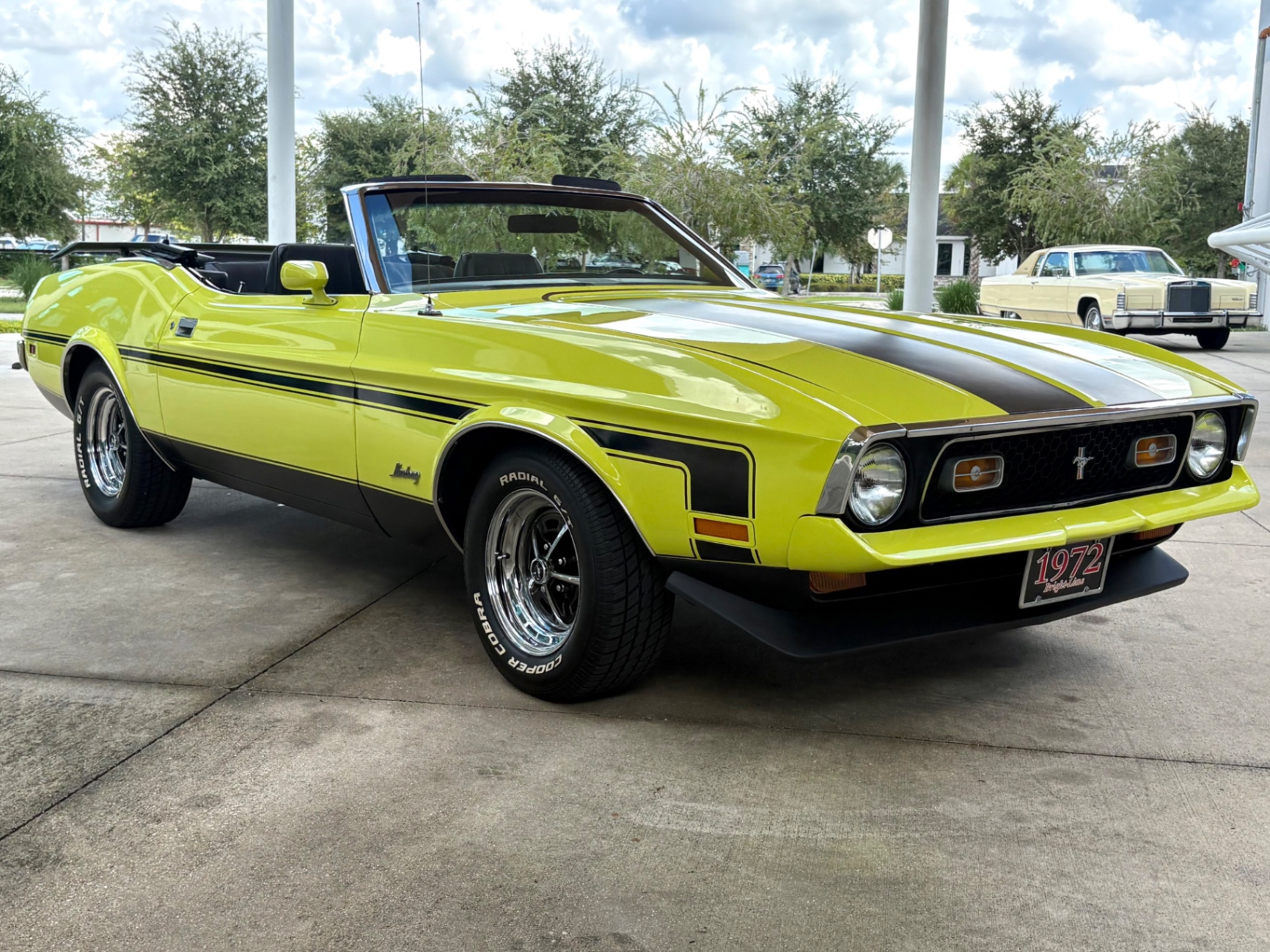
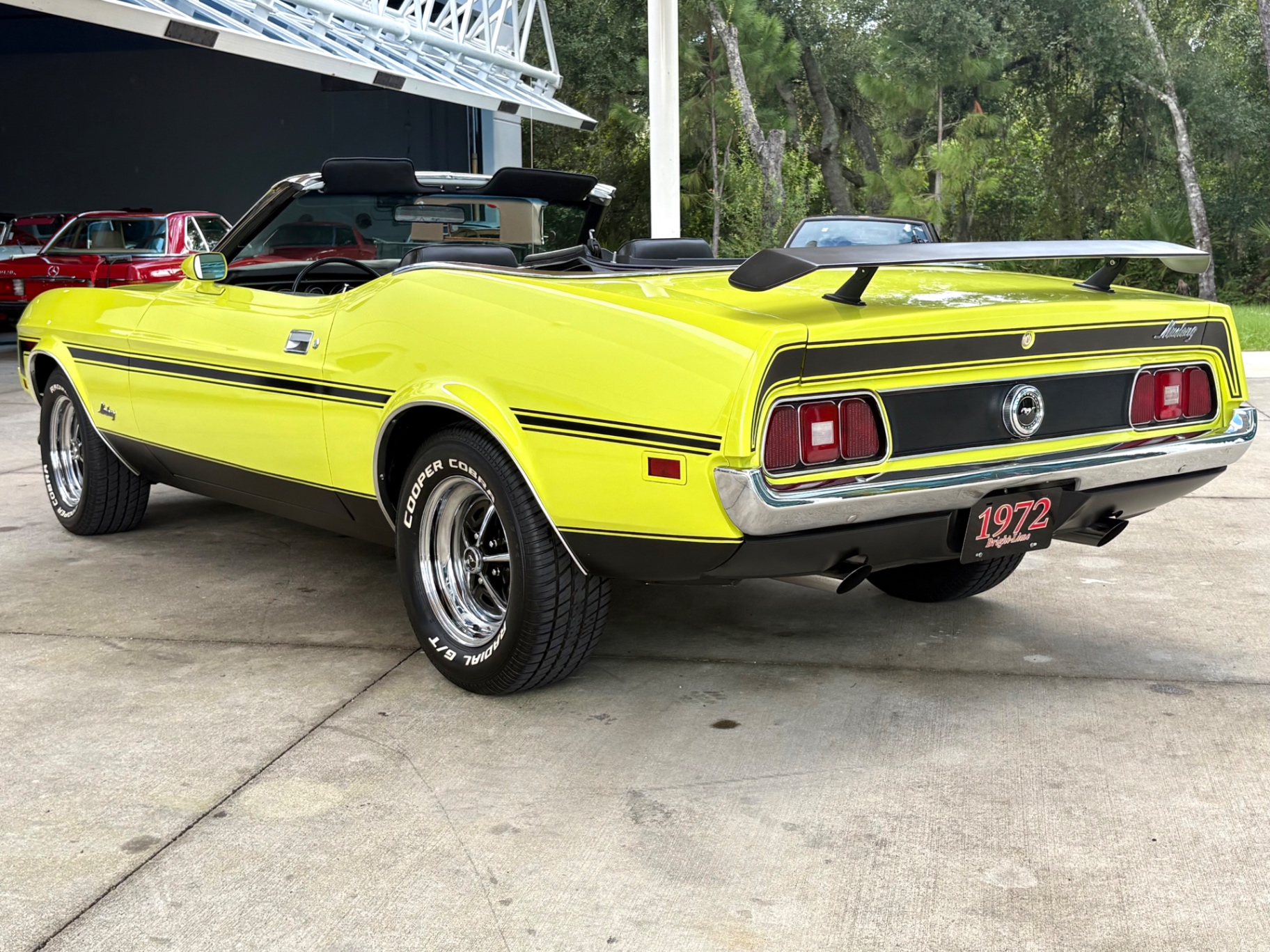
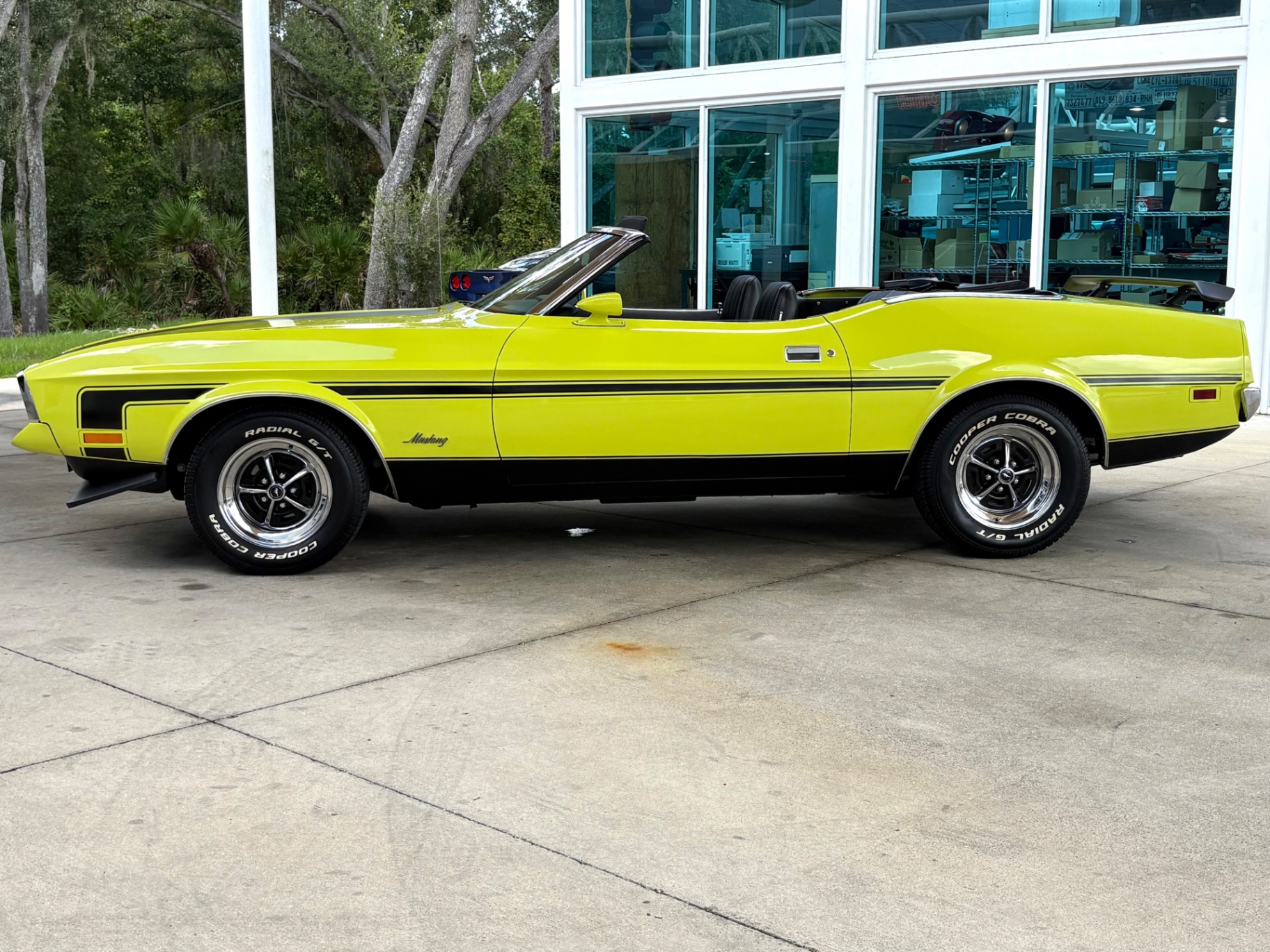
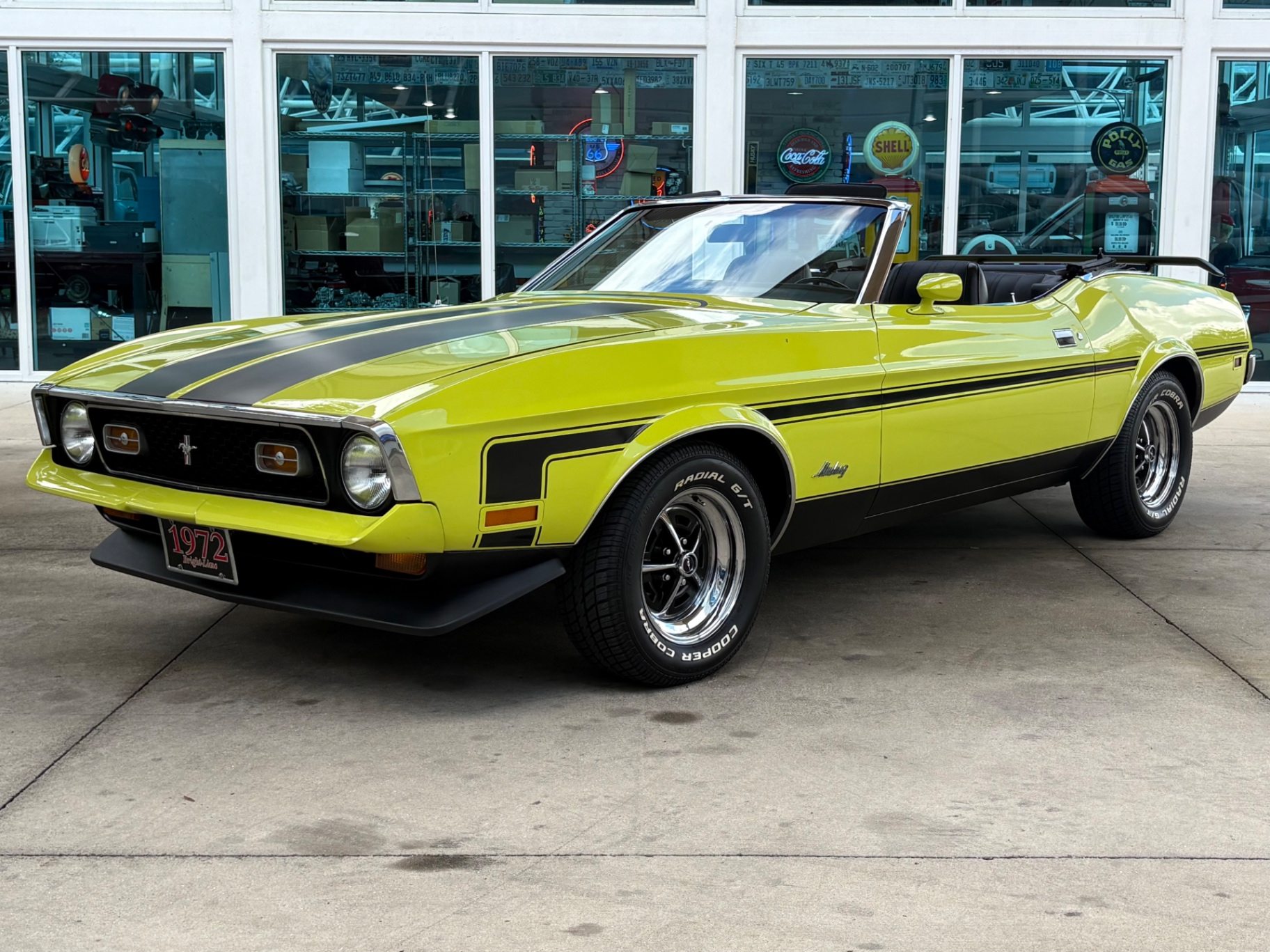
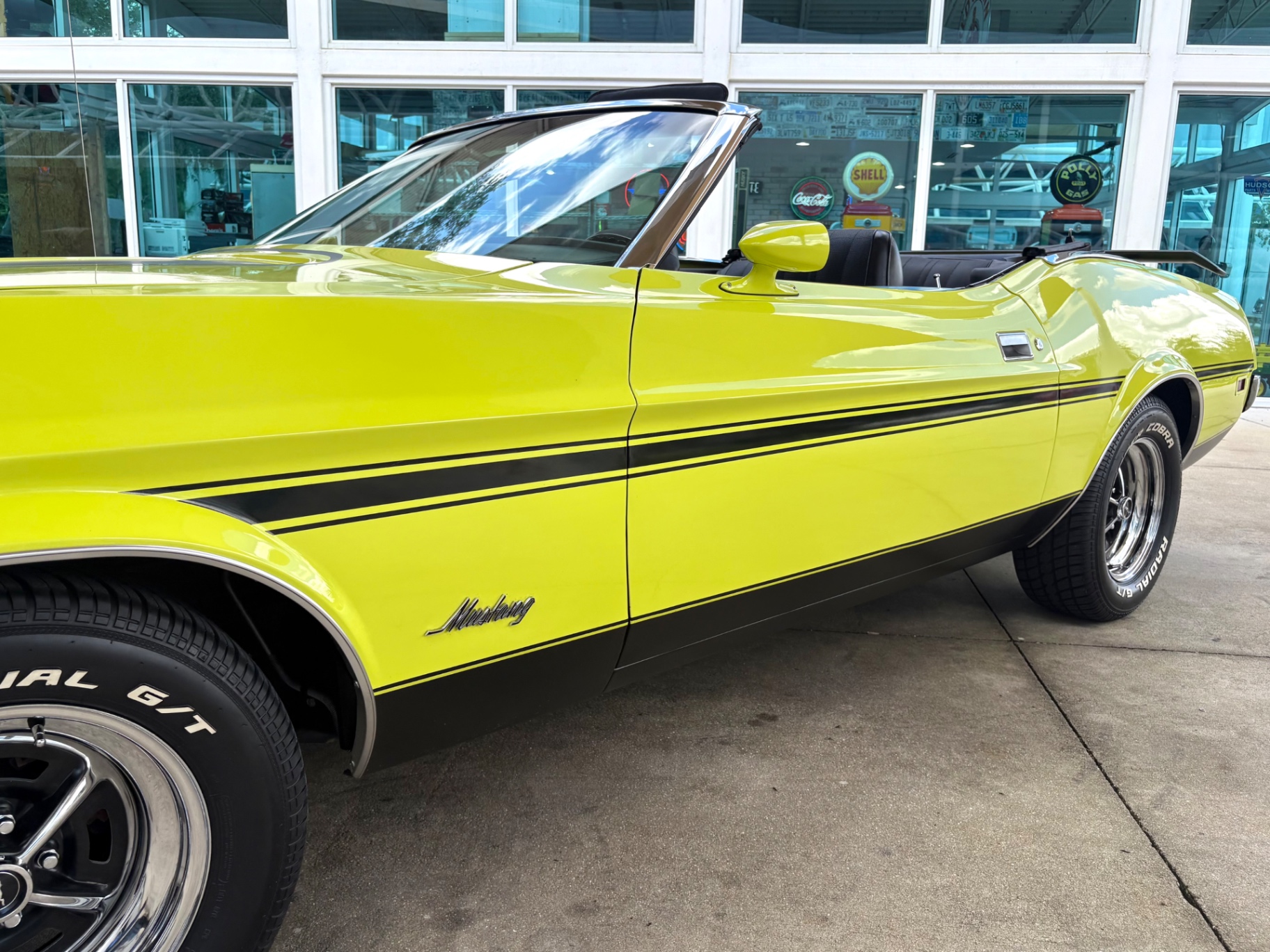
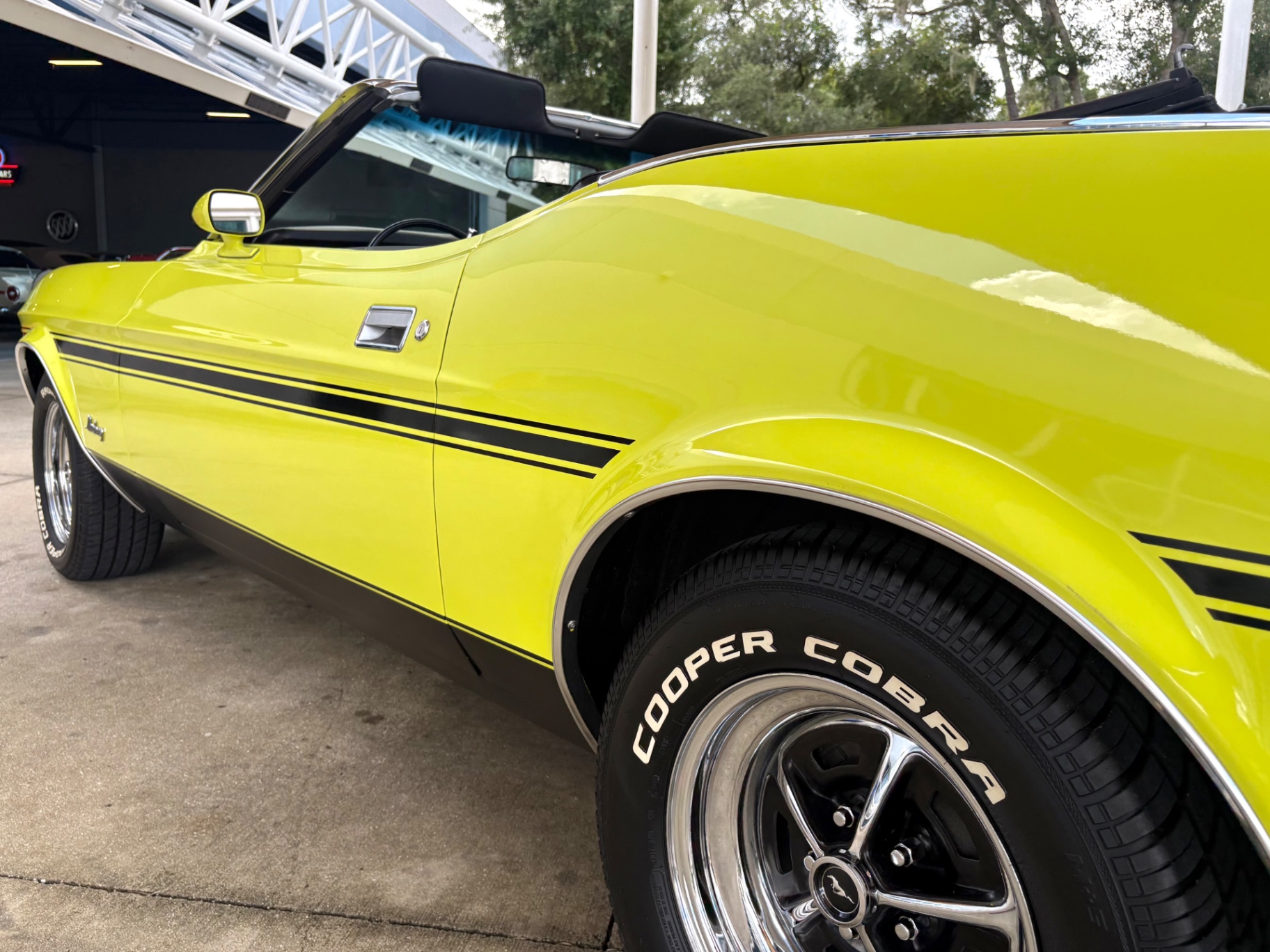
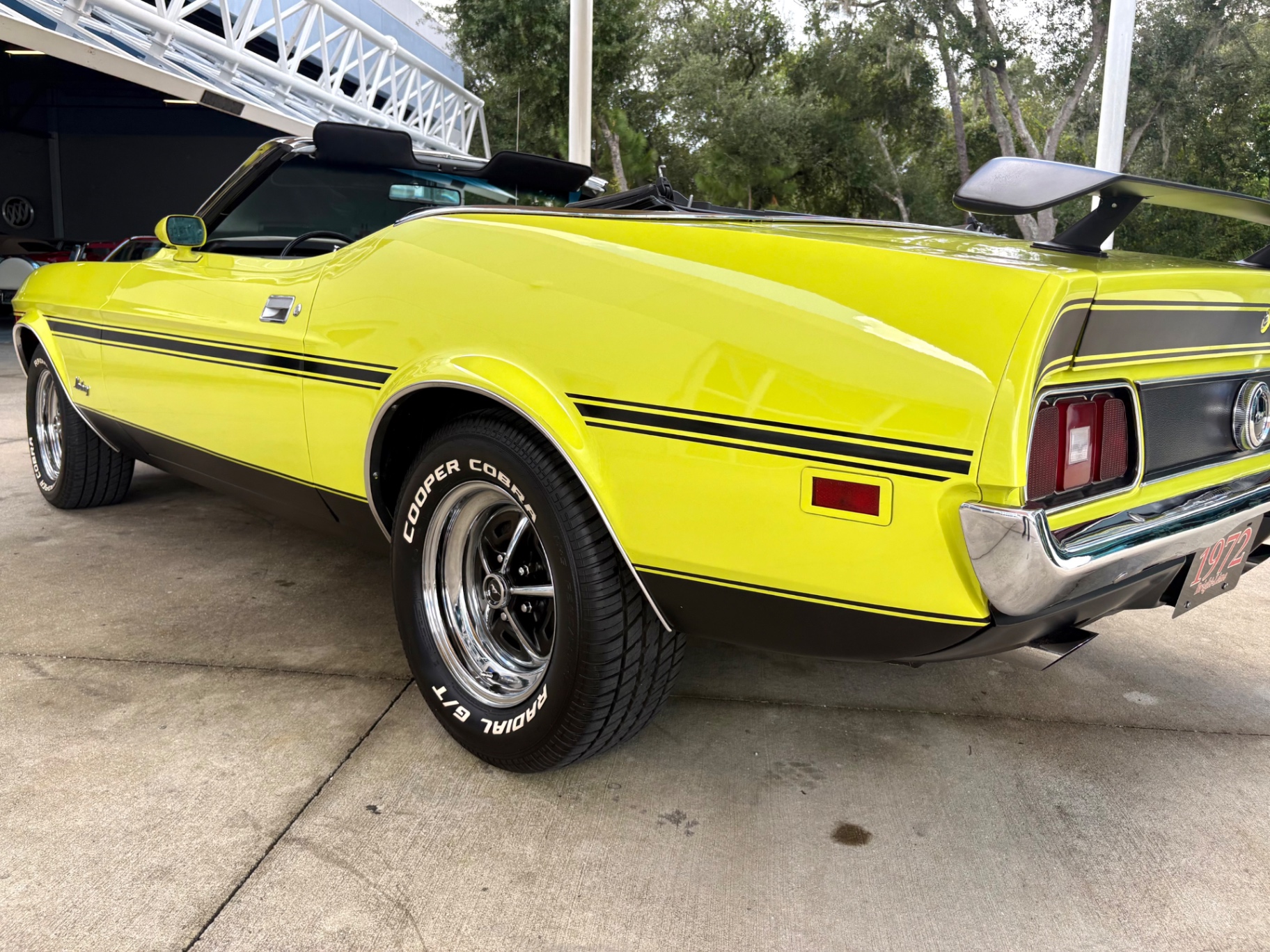
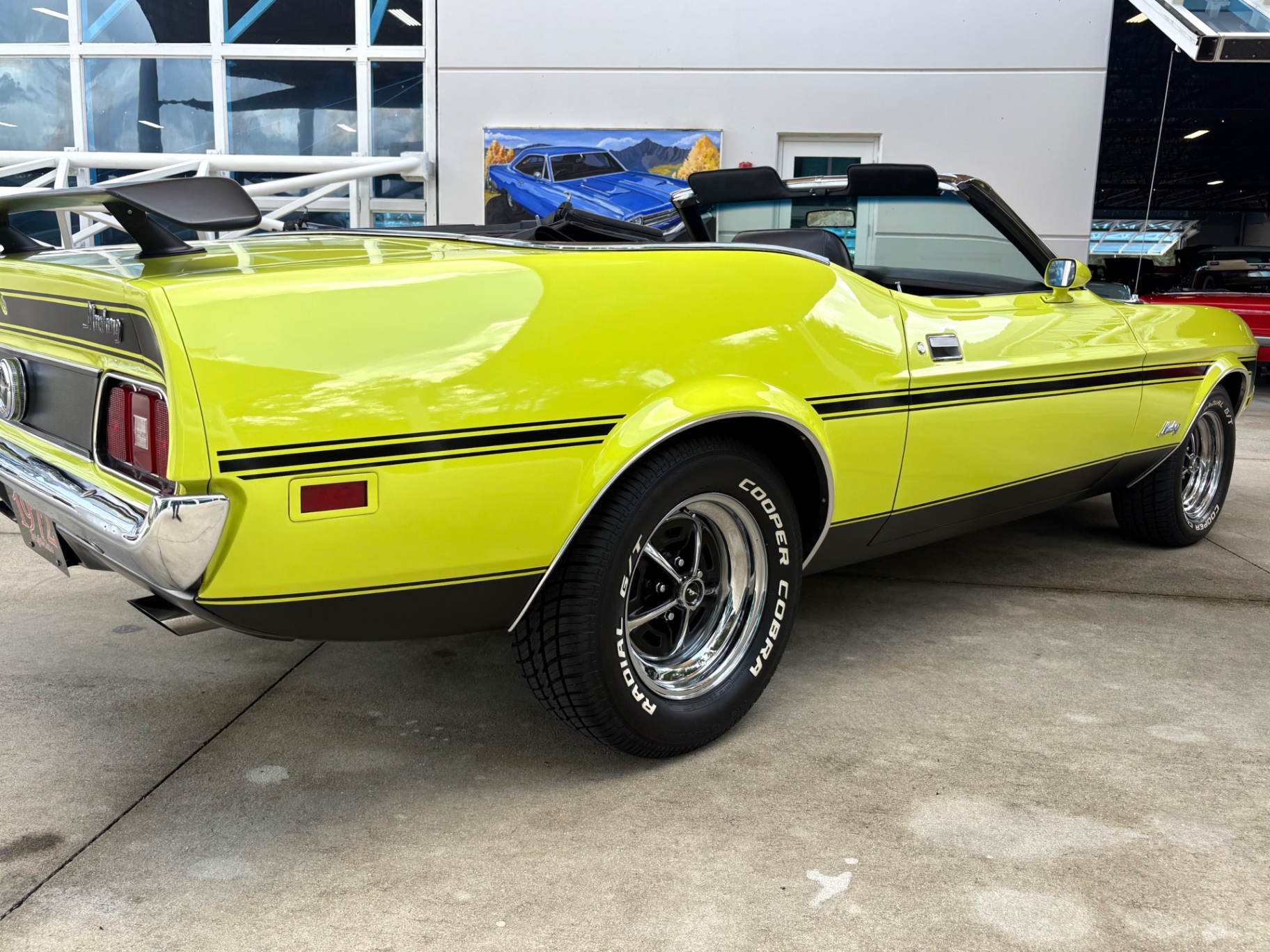
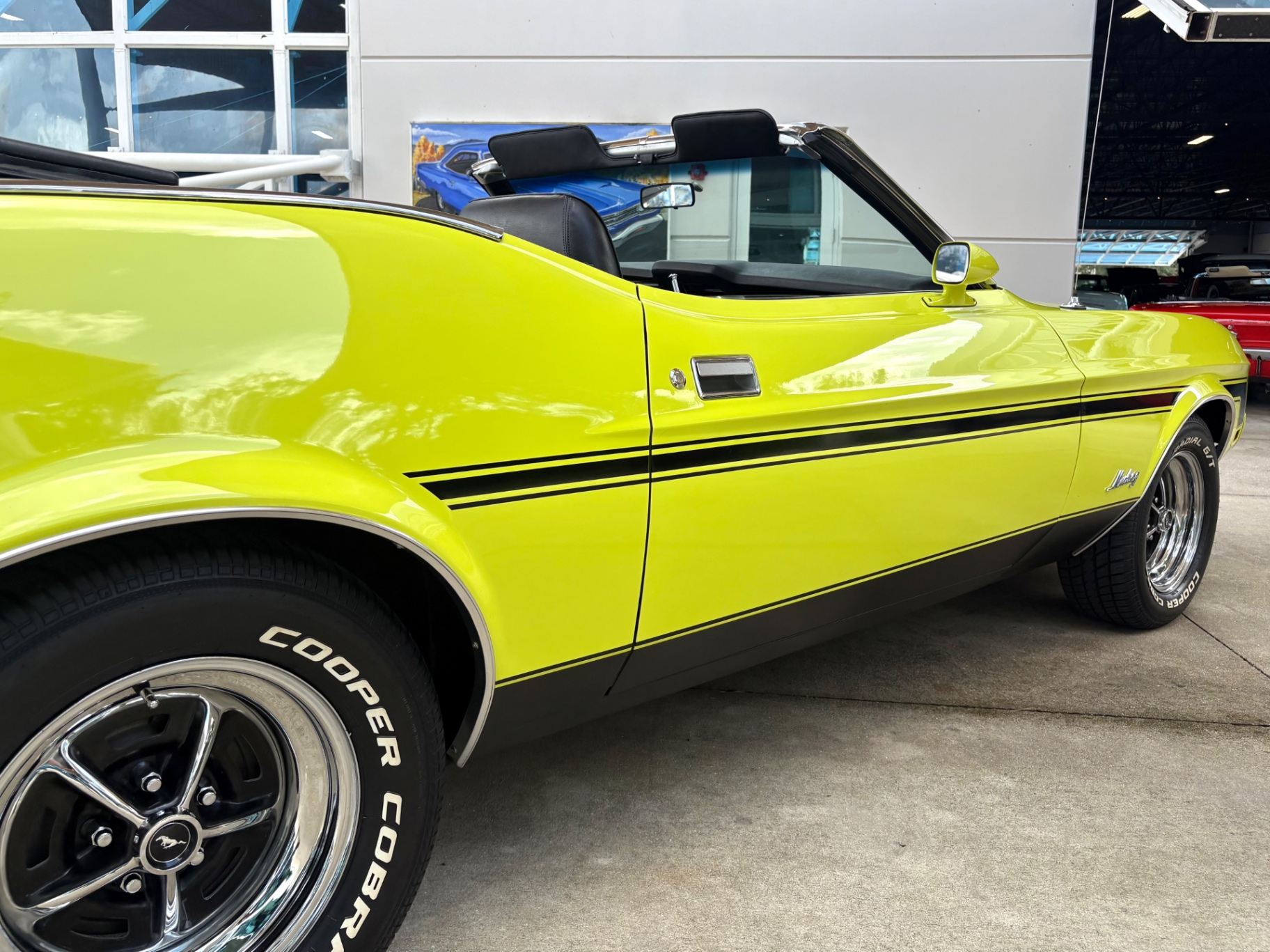
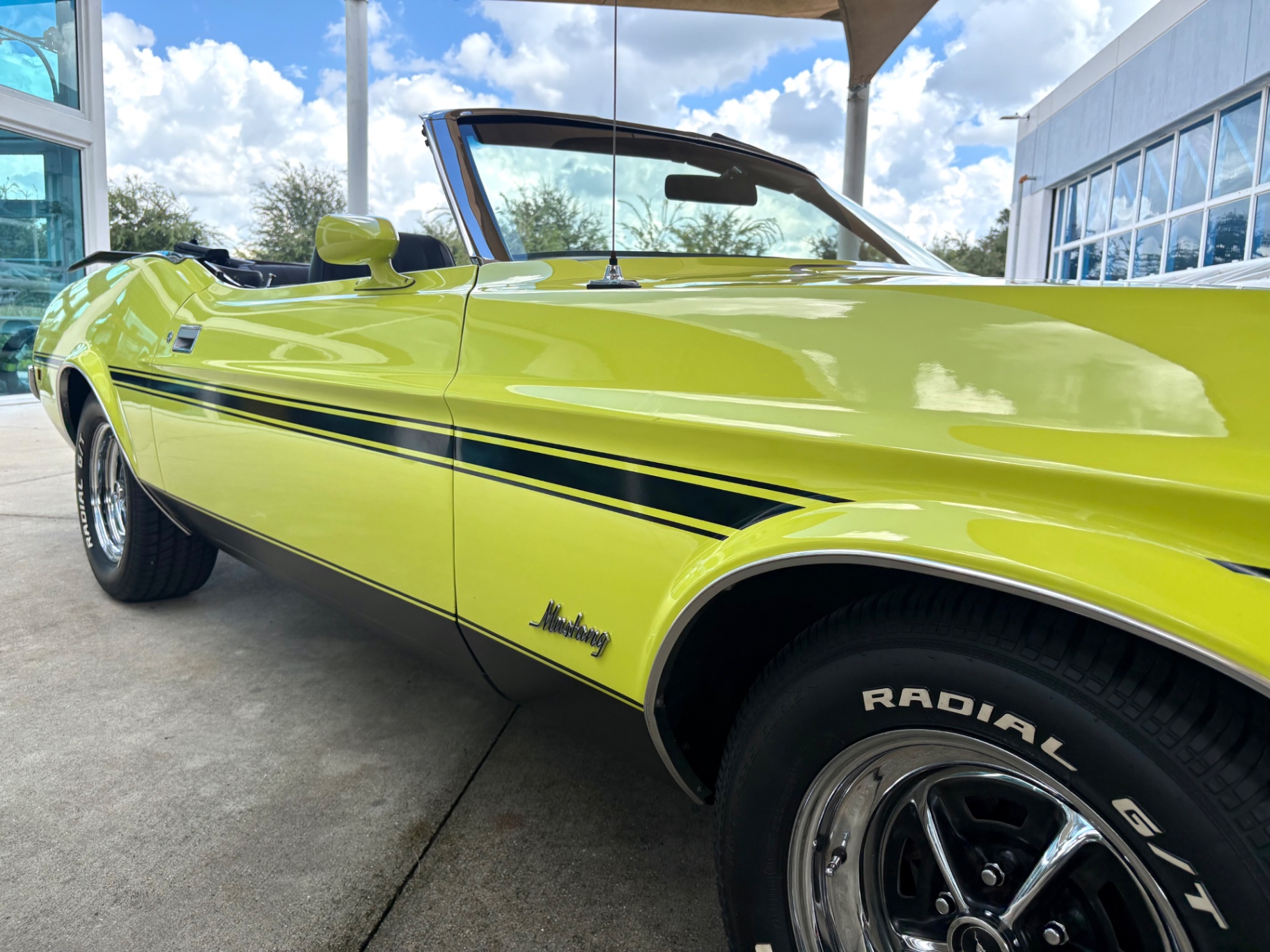
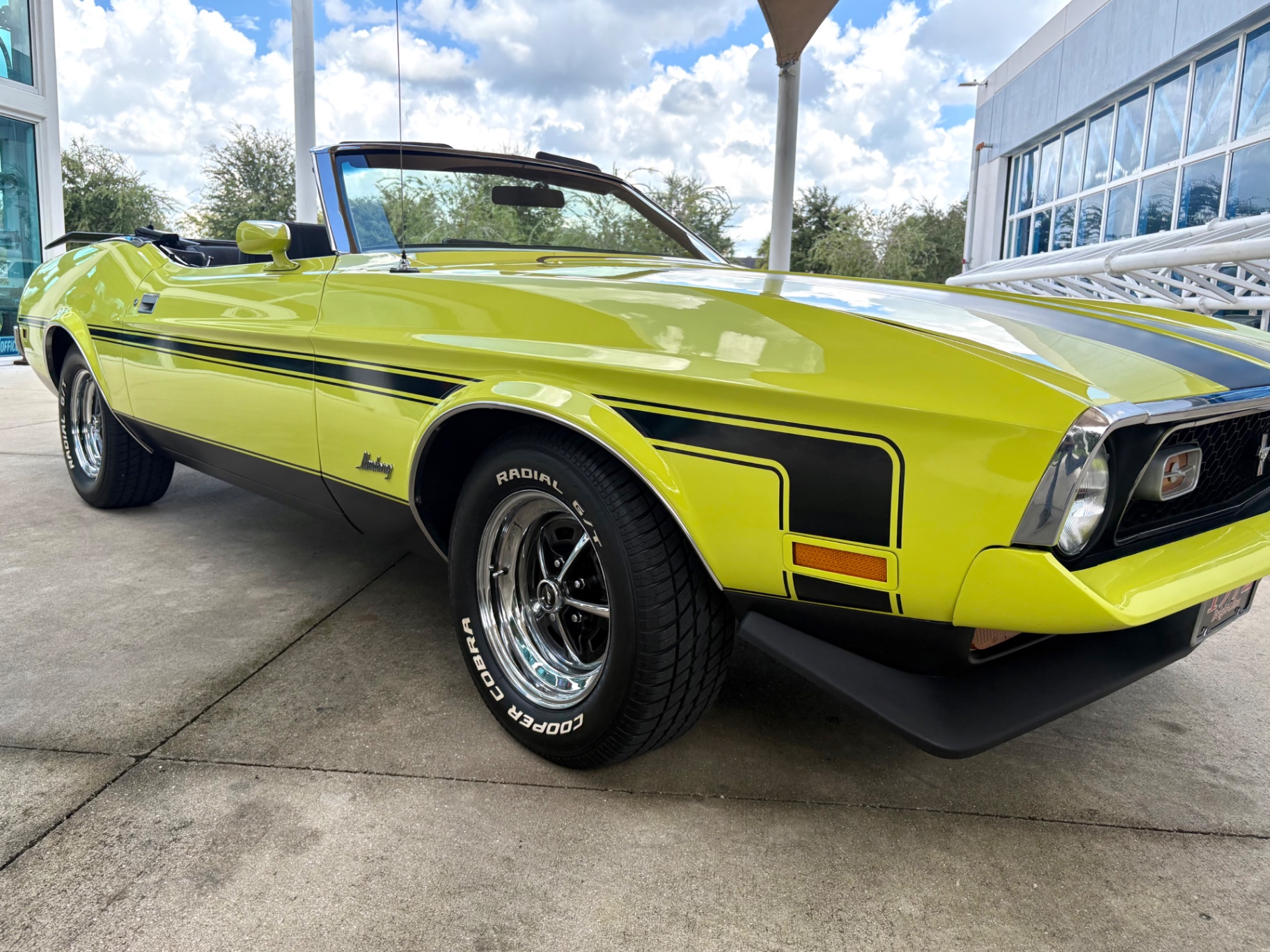
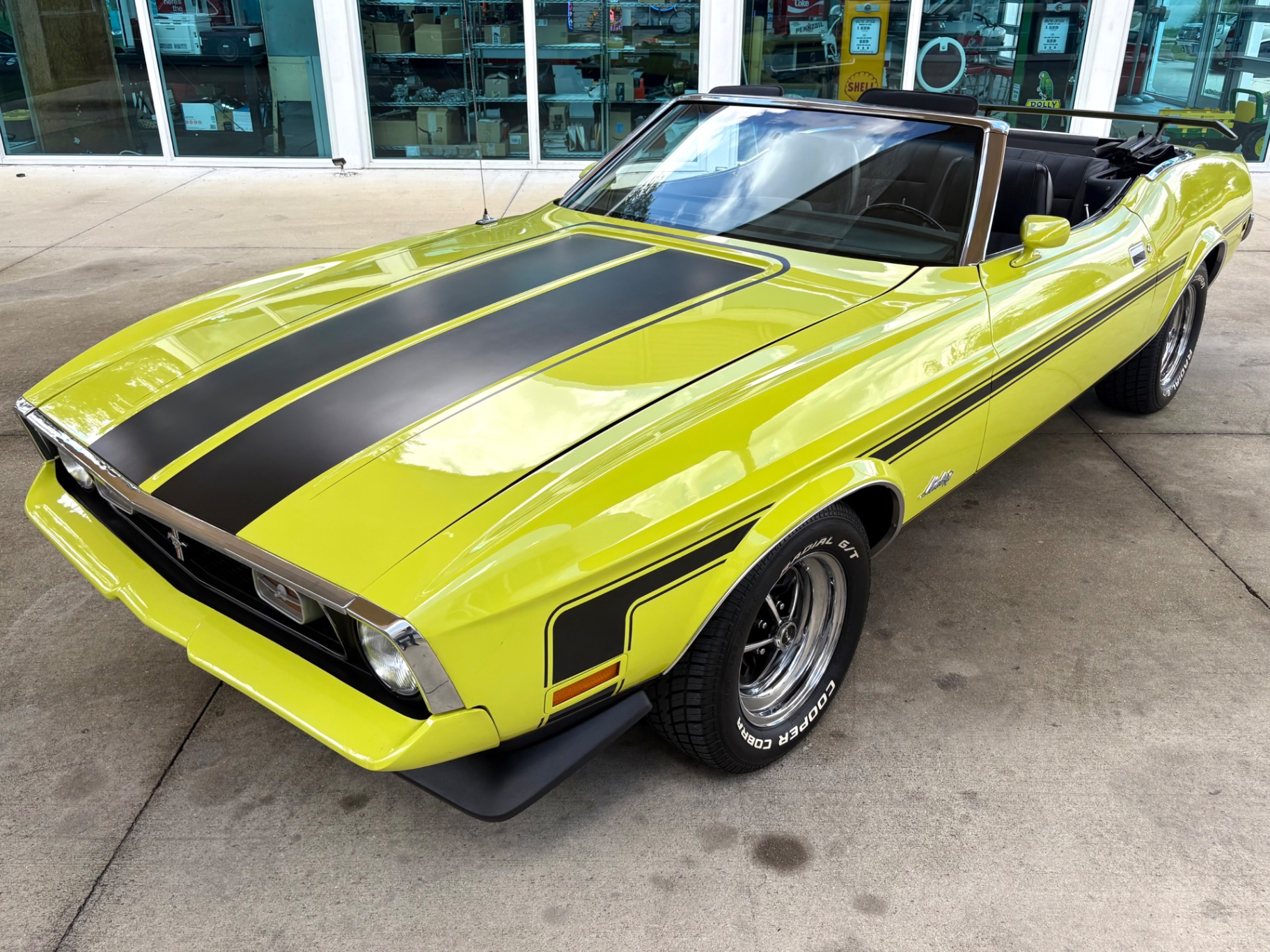
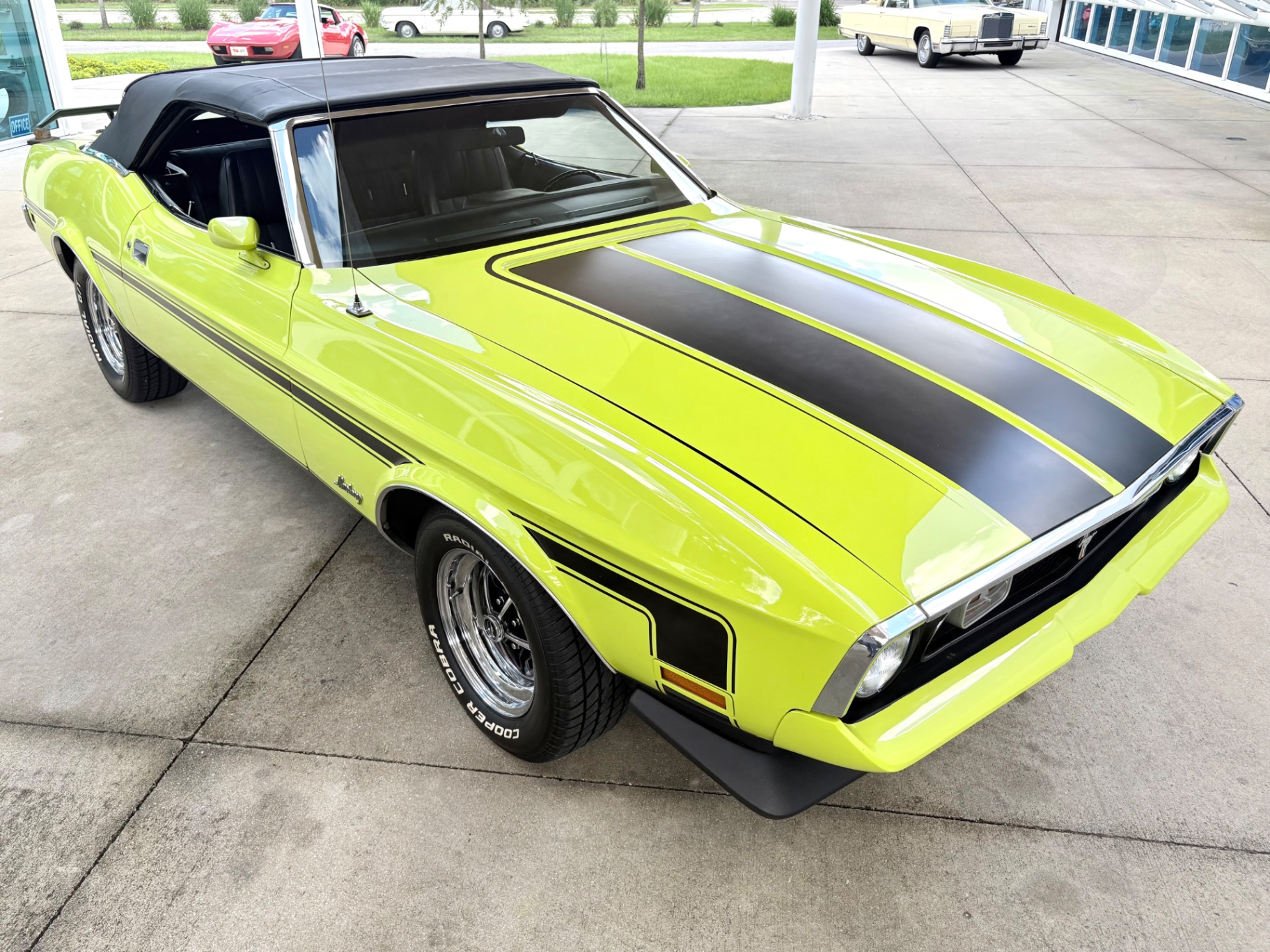
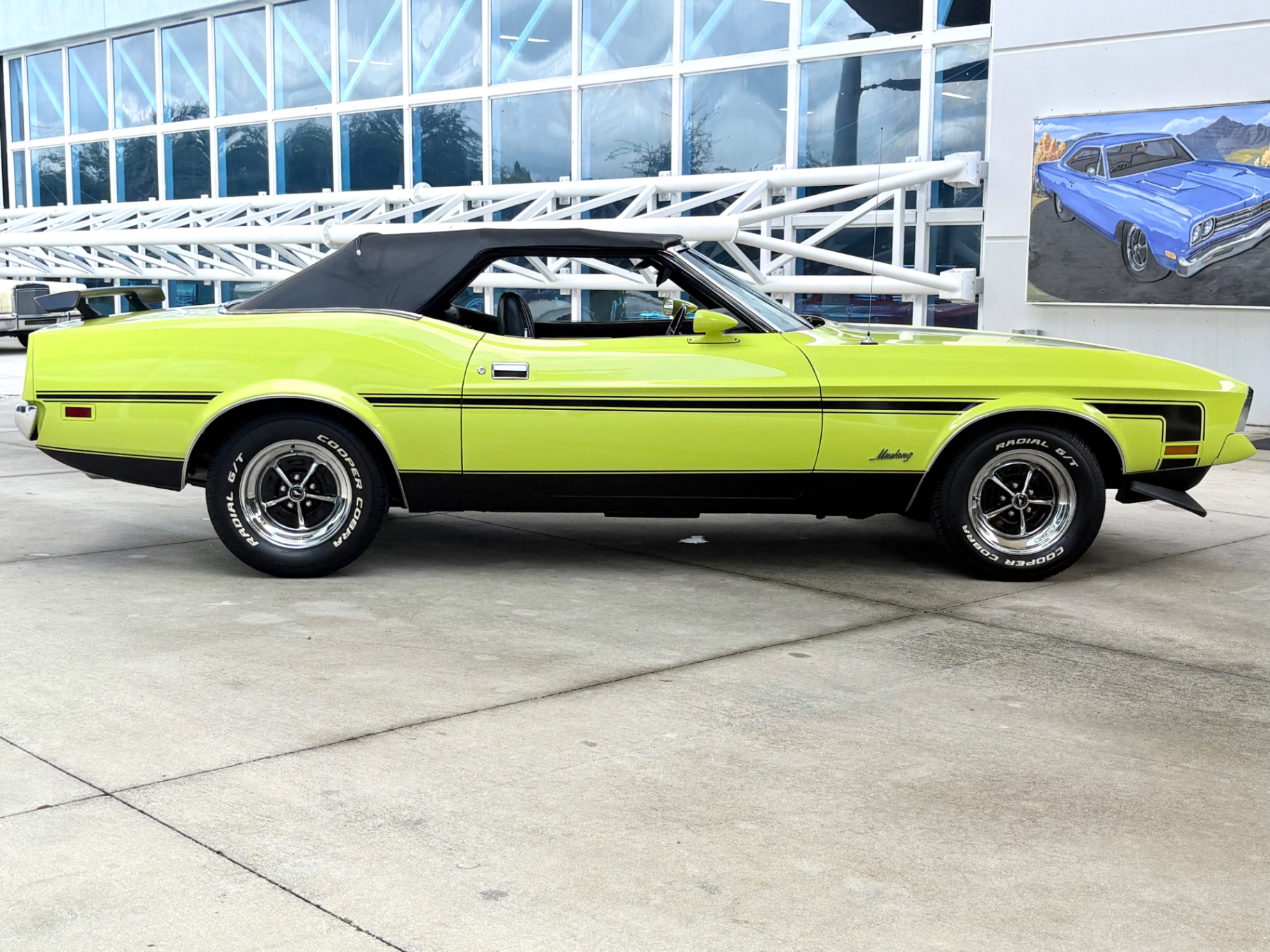
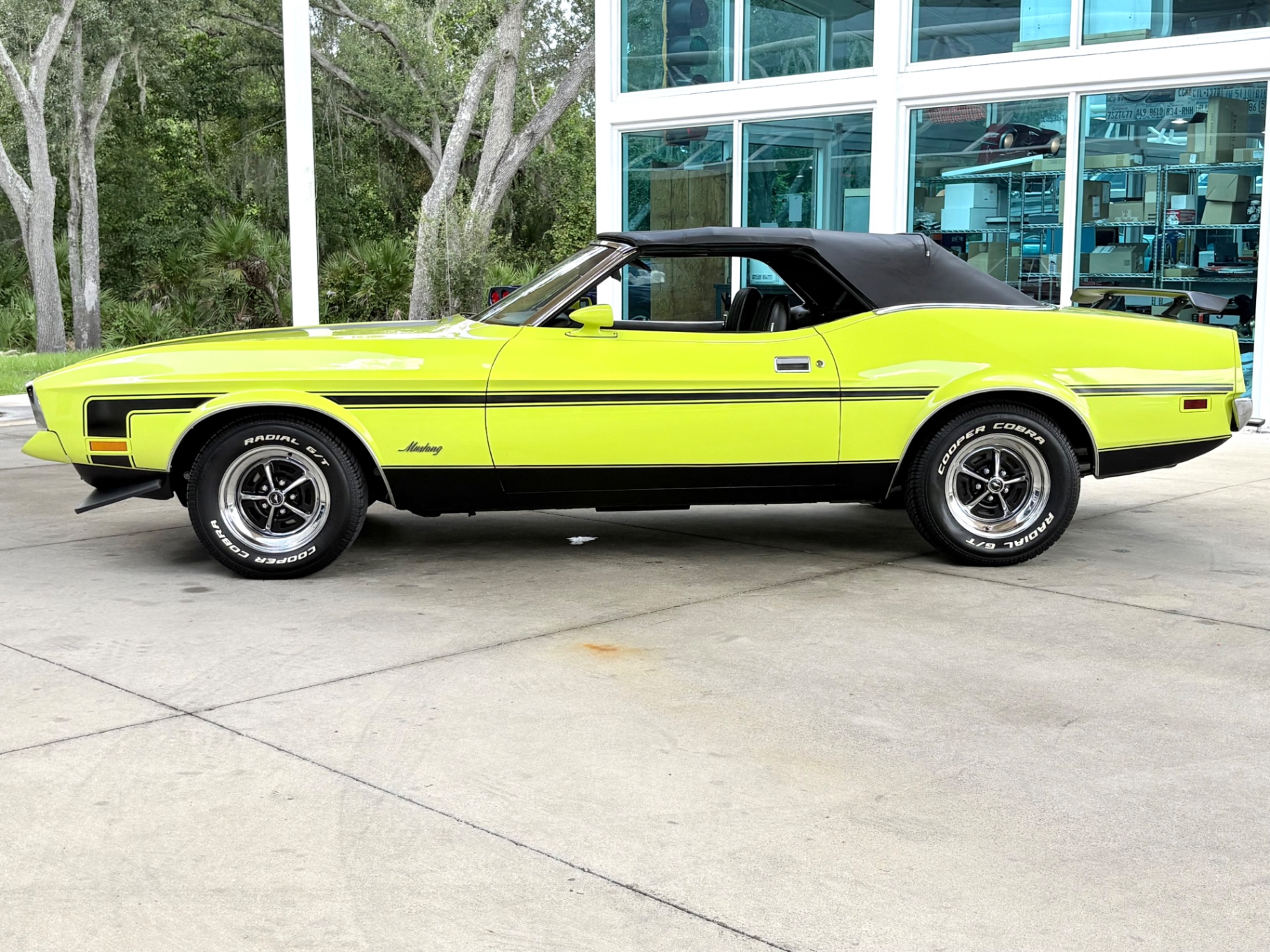
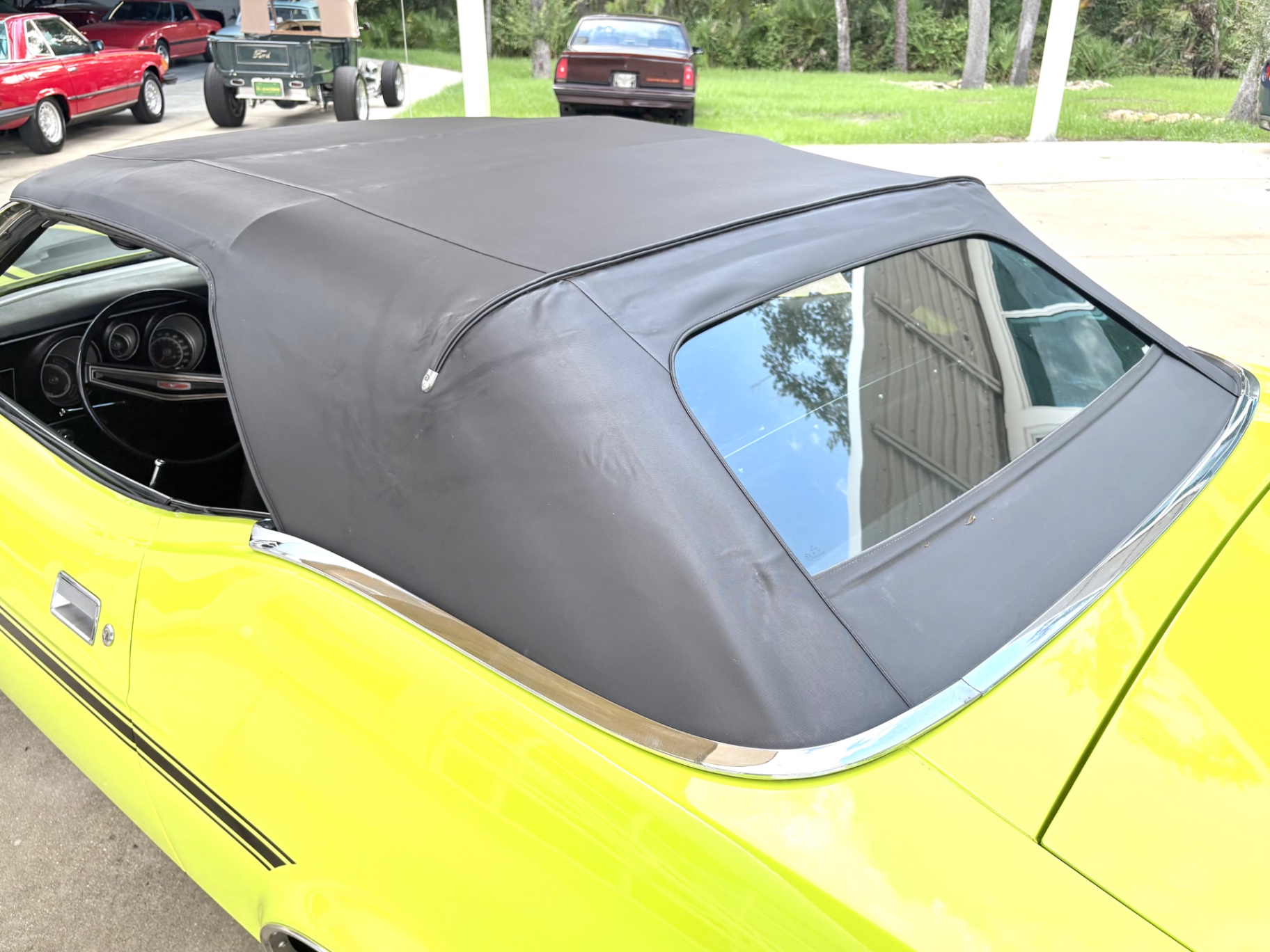
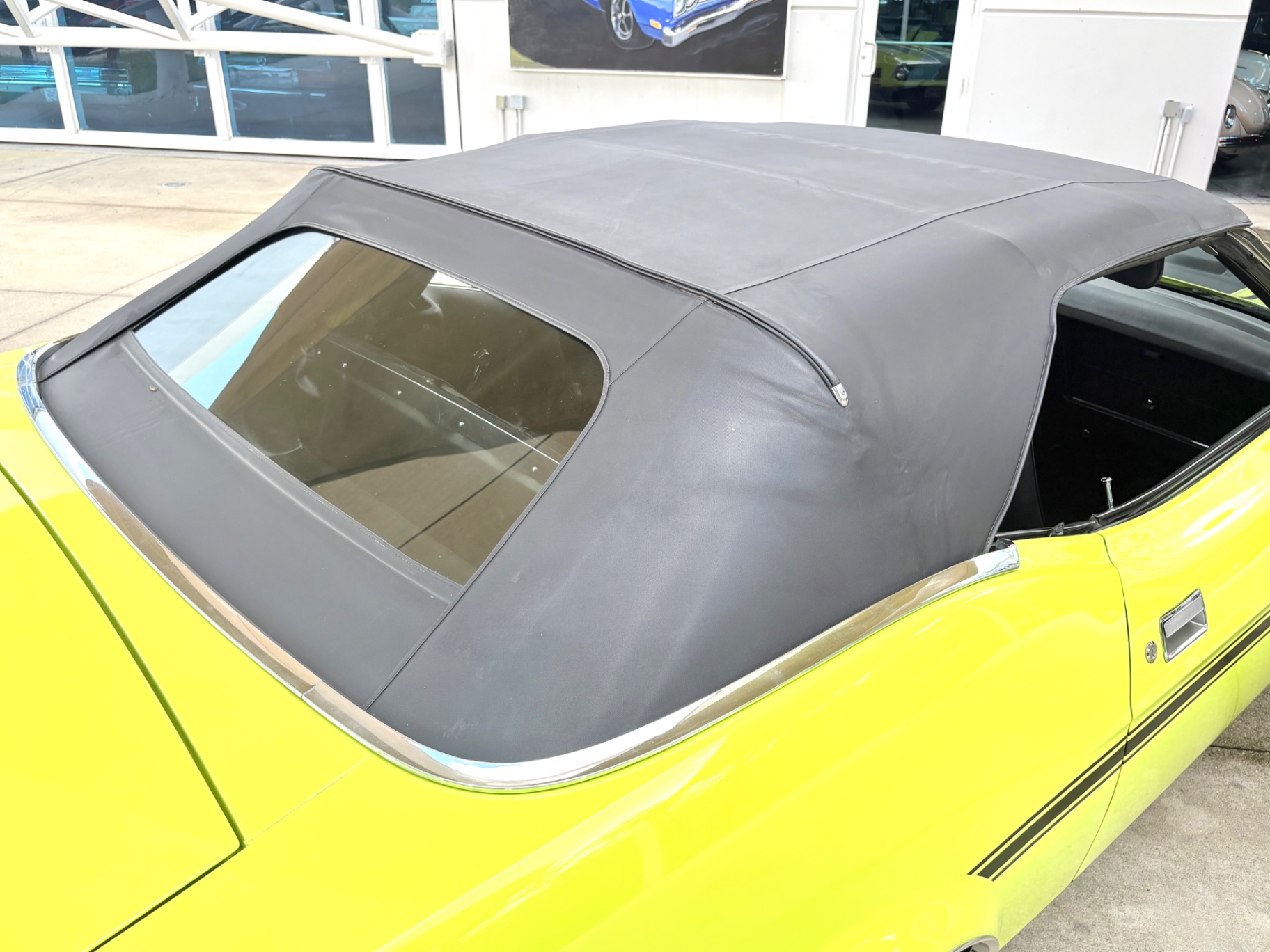
This particular car is finished in Bright Lime, a high-visibility factory color that Ford offered on the Mustang during the early 1970s. It is paired with a black convertible top and a black vinyl interior, a combination that gives the car a sharp, high-contrast look that photographs well and reads clearly in person. The car is equipped with a front air dam, a rear deck spoiler, and hood and body stripes, all of which add visual purpose without modifying the sheetmetal. These were period-correct appearance upgrades that Ford and its dealers promoted heavily during the sport compact era.
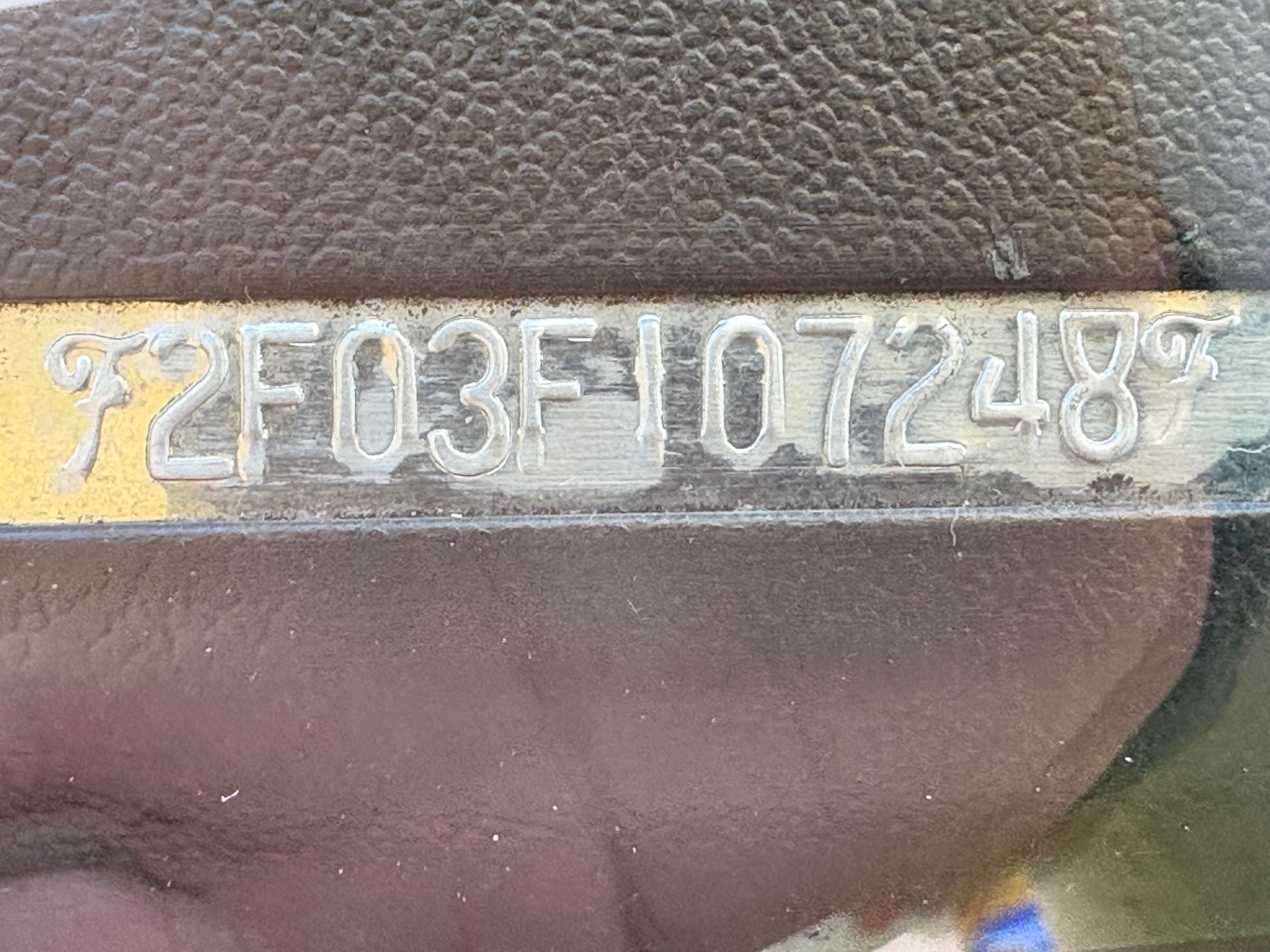
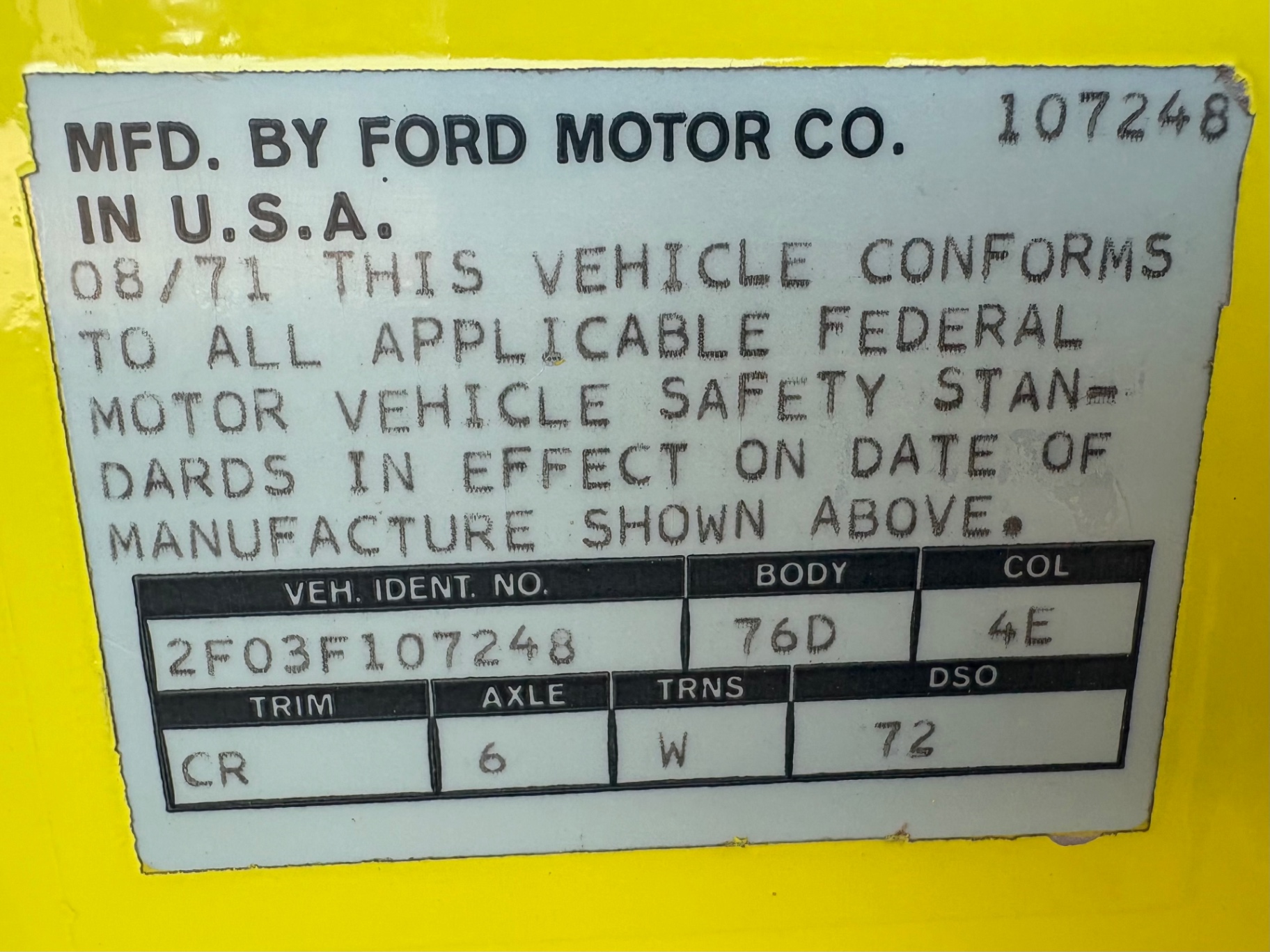
The VIN on this car confirms it is a genuine Dearborn-built 1972 convertible with the 302 cubic inch V8, consistent with all of the listed specifications. The body code indicates the open convertible body style, and the engine code confirms the 2-barrel 302 as the factory unit — not a later swap. This kind of documentation matters when you are buying a convertible, which is exactly the body style that saw the most engine substitutions and modification over the decades.
Features List
- 302ci 2-Barrel V8
- 3-Speed Automatic Transmission
- Power Steering
- Front Disc Brakes
- Power Convertible Top
- Black Convertible Top
- Bucket Seats
- Center Console
- Rear Deck Spoiler
- Front Air Dam
- Dual Exhaust
- Mustang Rally Wheels
- Cooper Cobra Radial G/T Tires
- Hood and Body Stripes
- Wood-Grain Door Panels
- AM Radio
- Clean Undercarriage
- Bright Lime Exterior
- Black Vinyl Interior
Mechanical
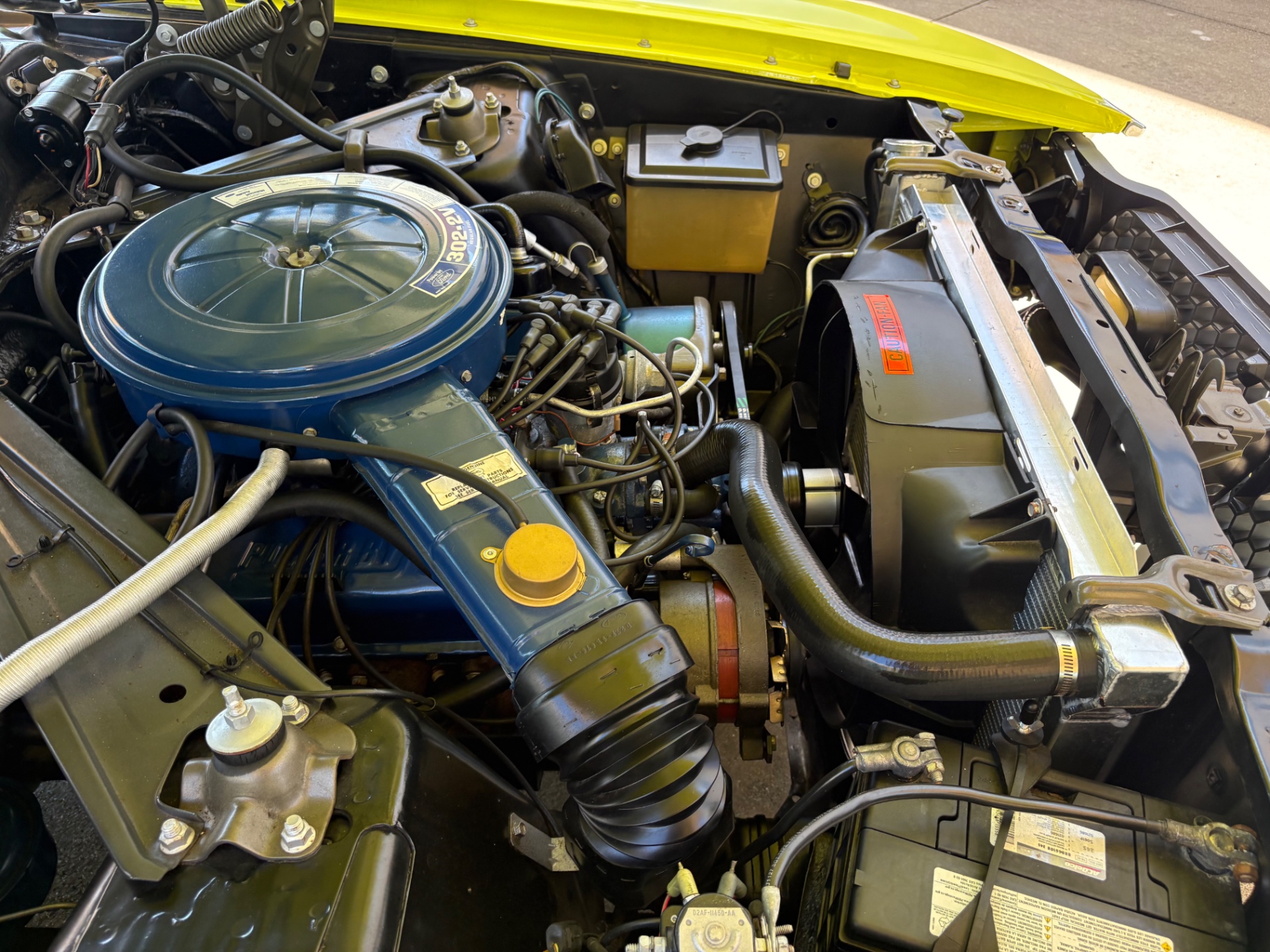
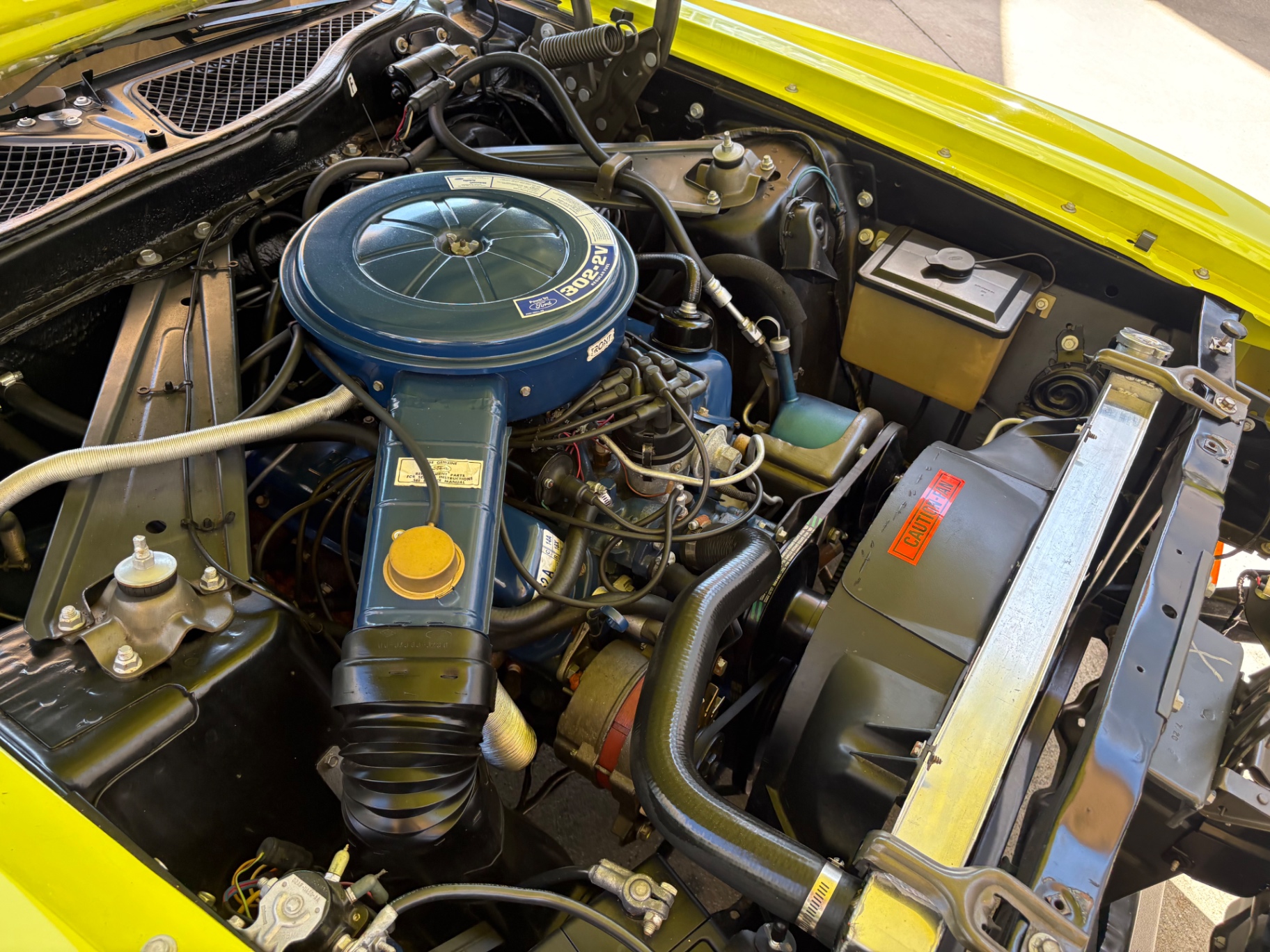
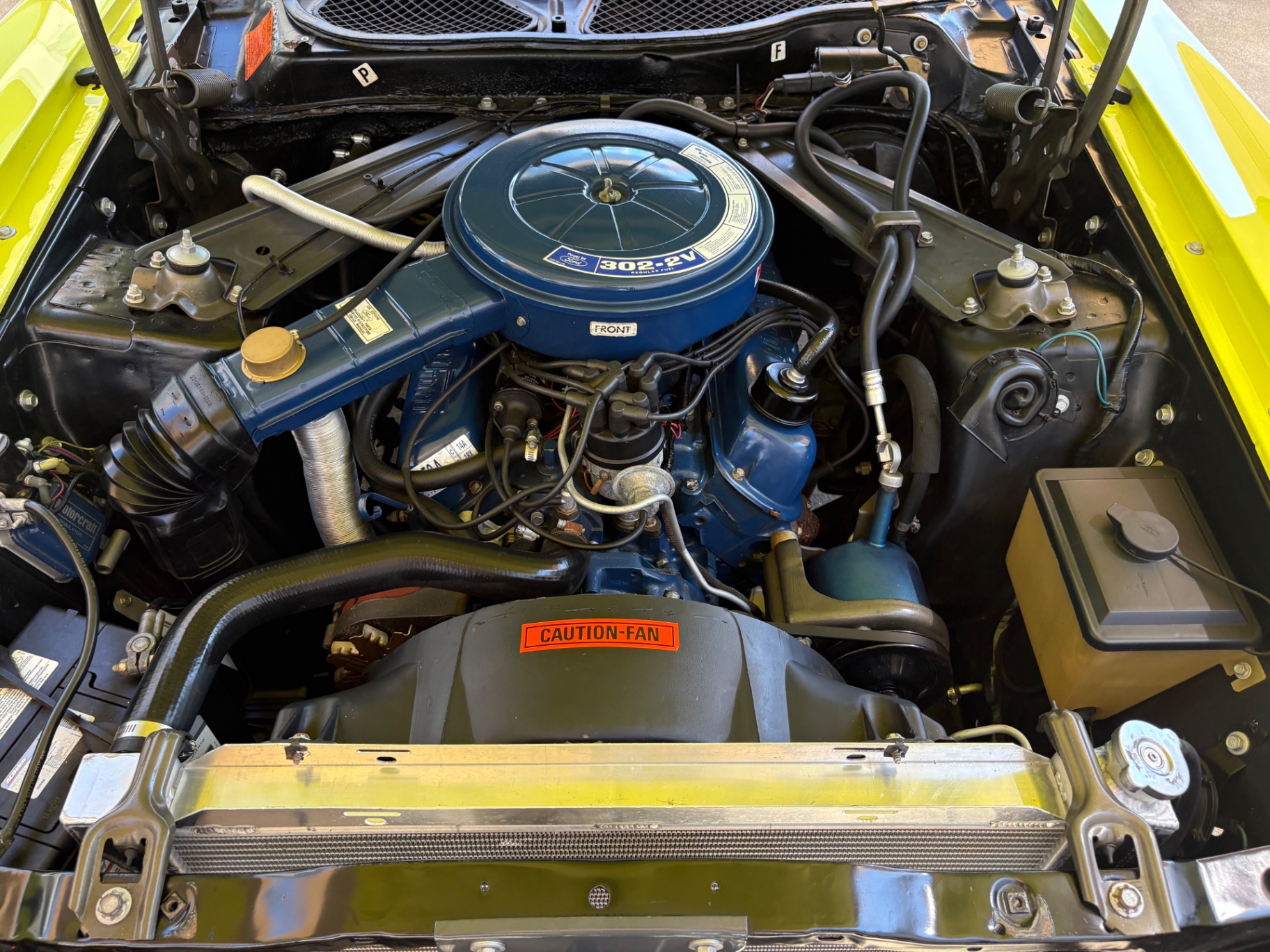
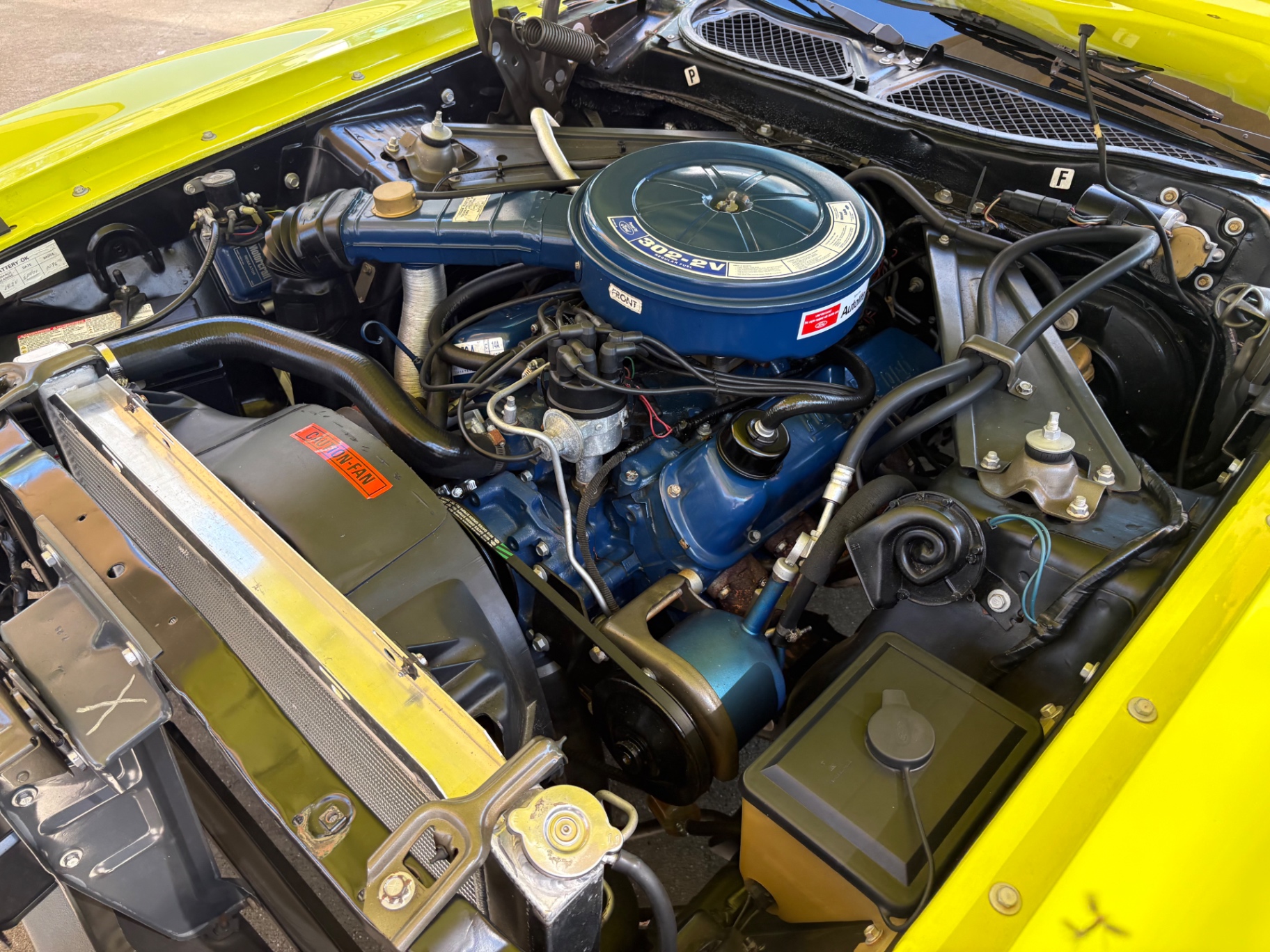
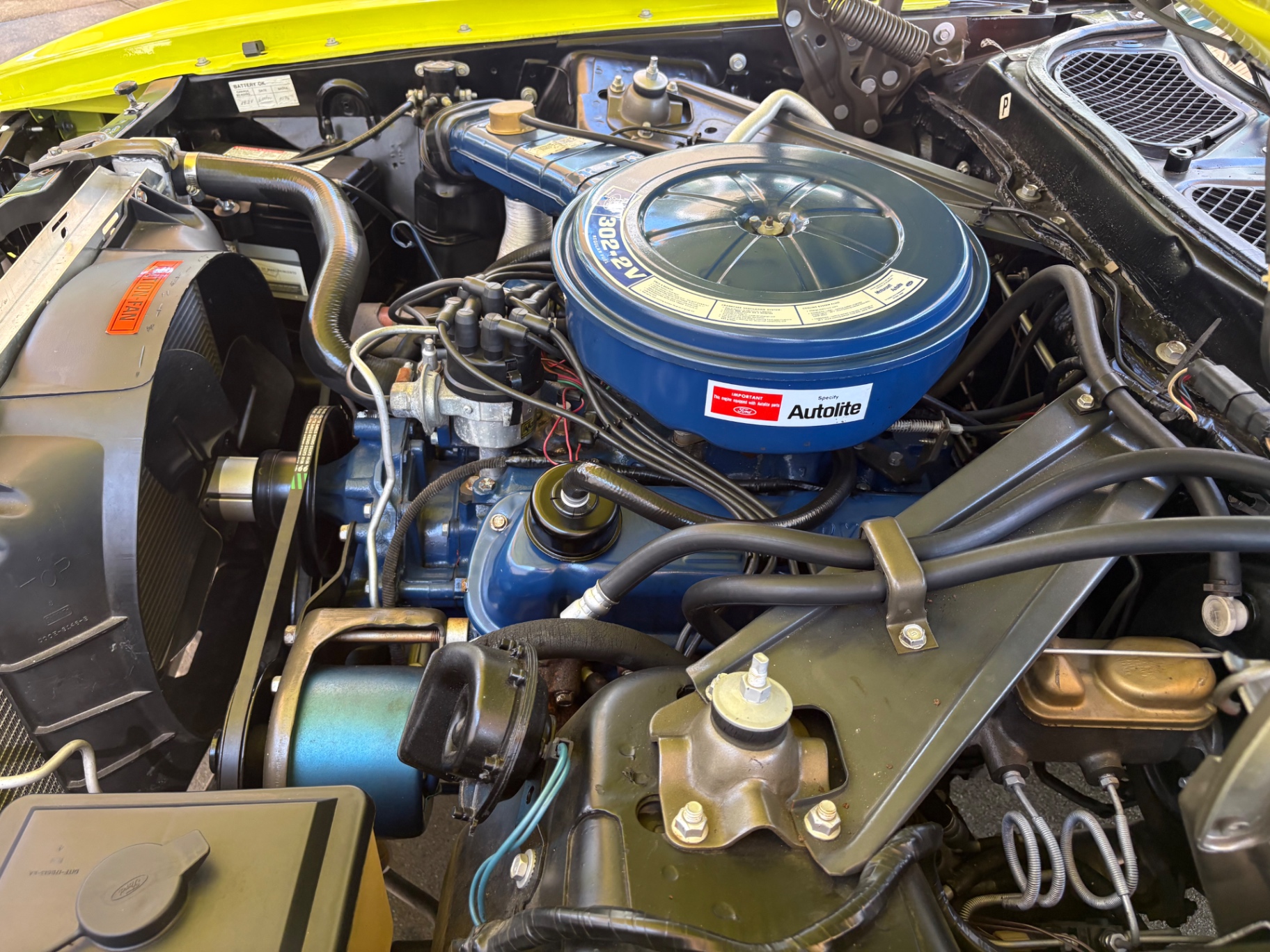
The engine under the hood is the 302 cubic inch V8 fitted with a 2-barrel carburetor, which Ford designated internally as the 302-2V. In 1972, Ford switched from gross horsepower ratings to the more conservative SAE net ratings, and the 302-2V was rated at 140 net horsepower in that configuration. The engine itself is a well-proven small-block Ford unit with a long production history and excellent parts availability today. The air cleaner lid in the photos clearly shows the "302-2V" designation, confirming the original carburetor setup is intact.
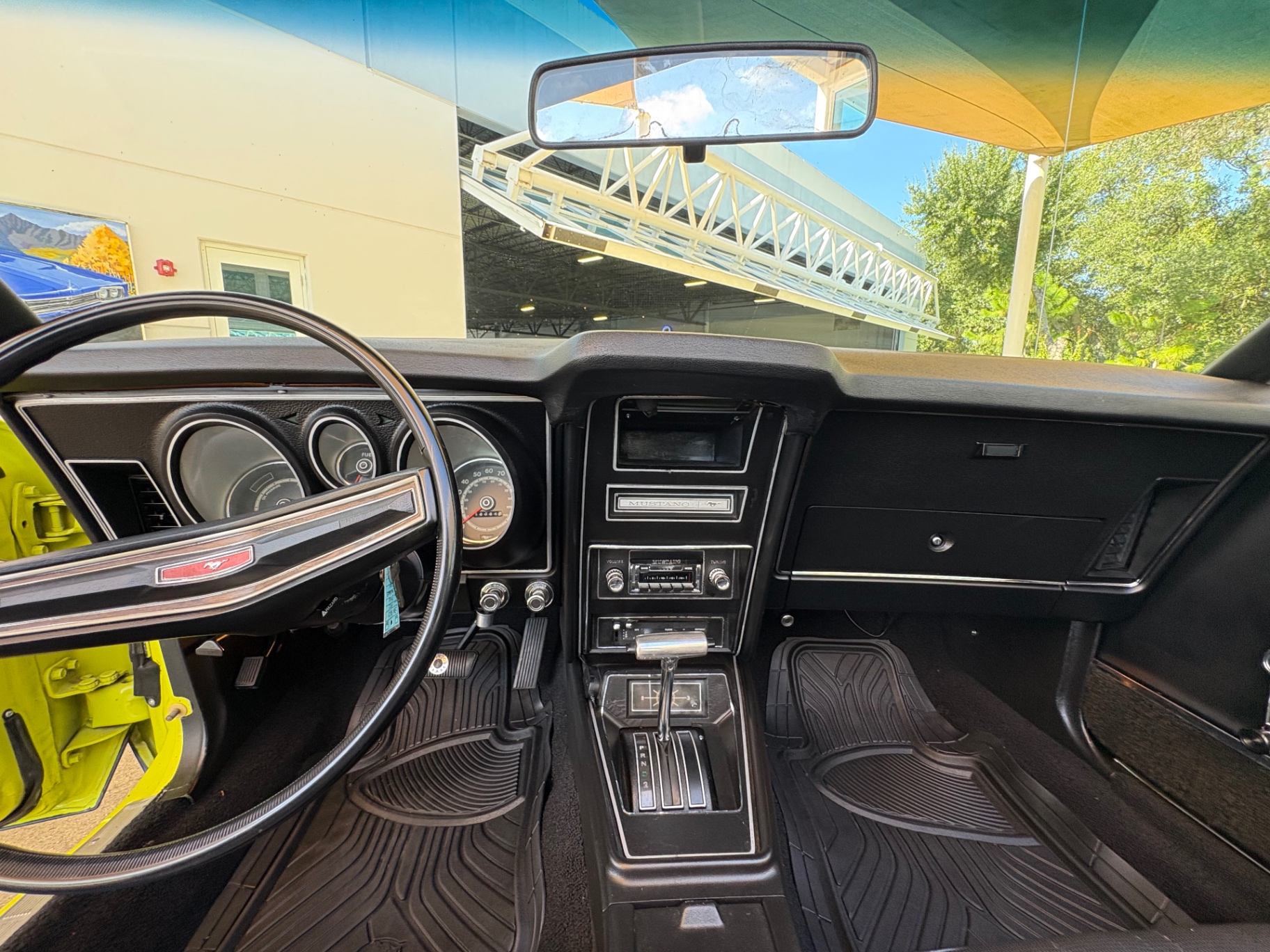
Backing the 302 is a 3-speed automatic transmission, which on 1972 Mustangs was Ford's SelectShift Cruise-O-Matic. The shifter sits in the center console, which is the correct configuration for a bucket seat car of this spec. Power steering is fitted, which makes the car considerably easier to maneuver than the manual-steering base cars, particularly given the 1971-1973 body's wider and heavier front end compared to earlier Mustangs.
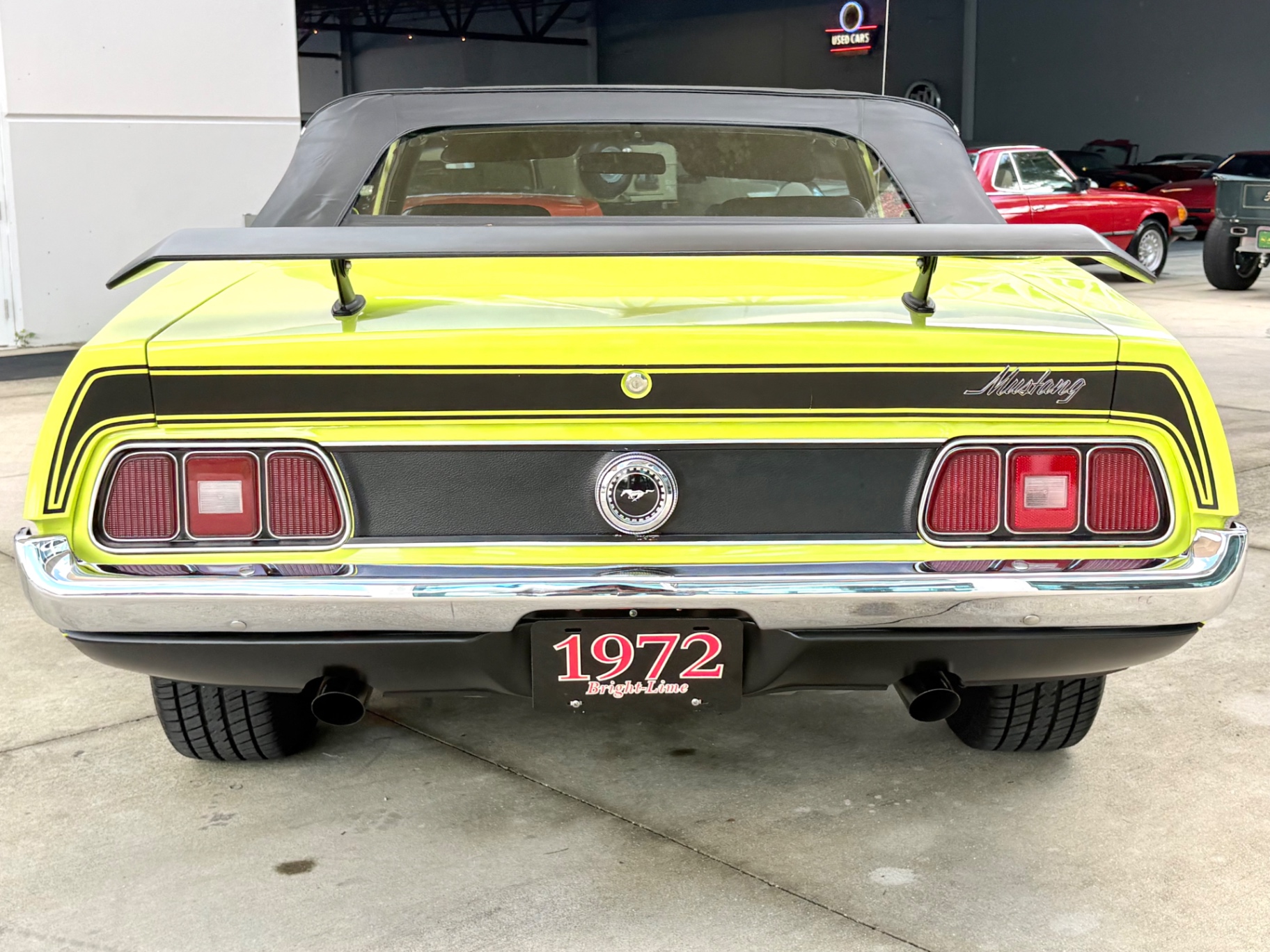
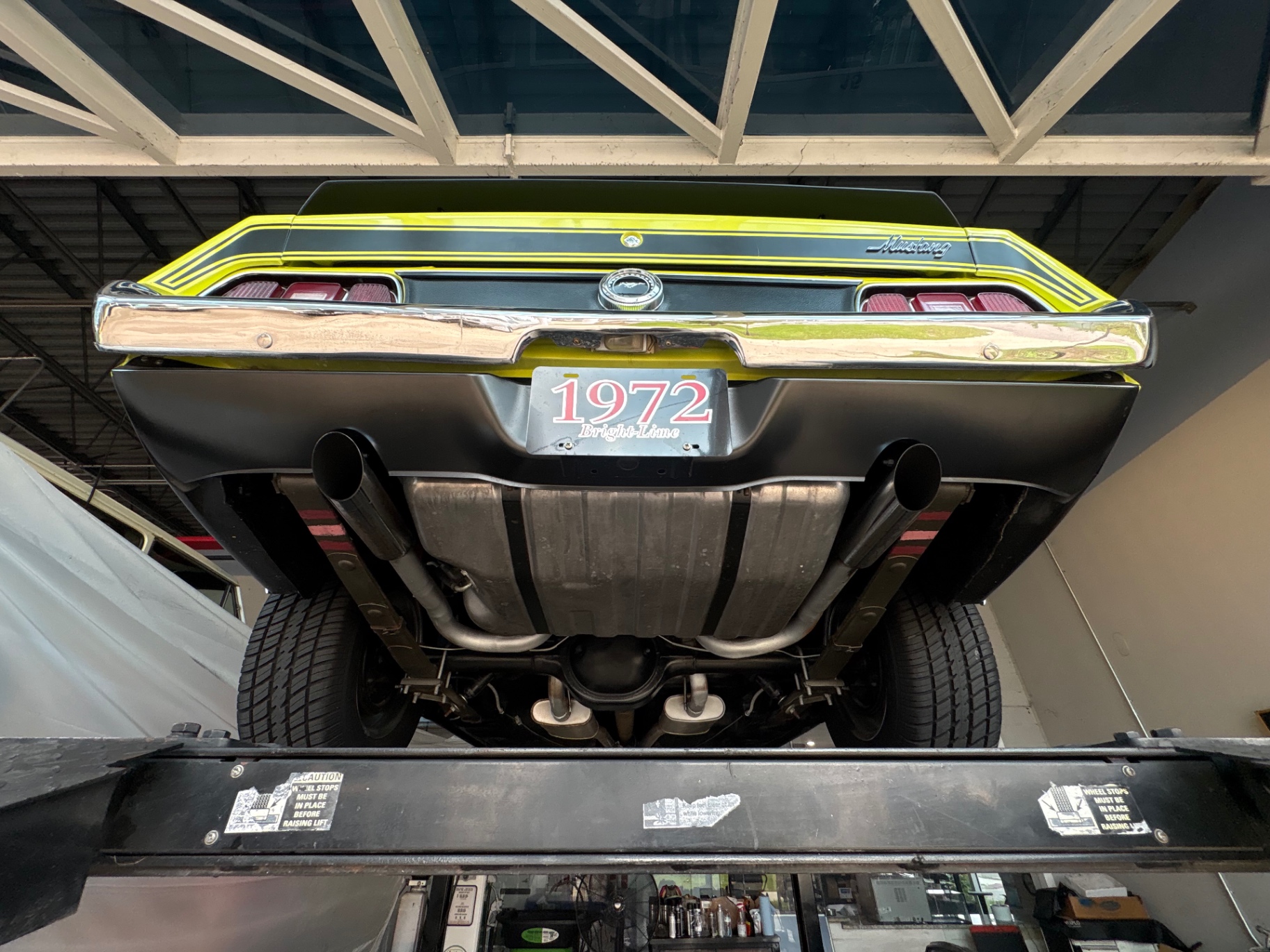
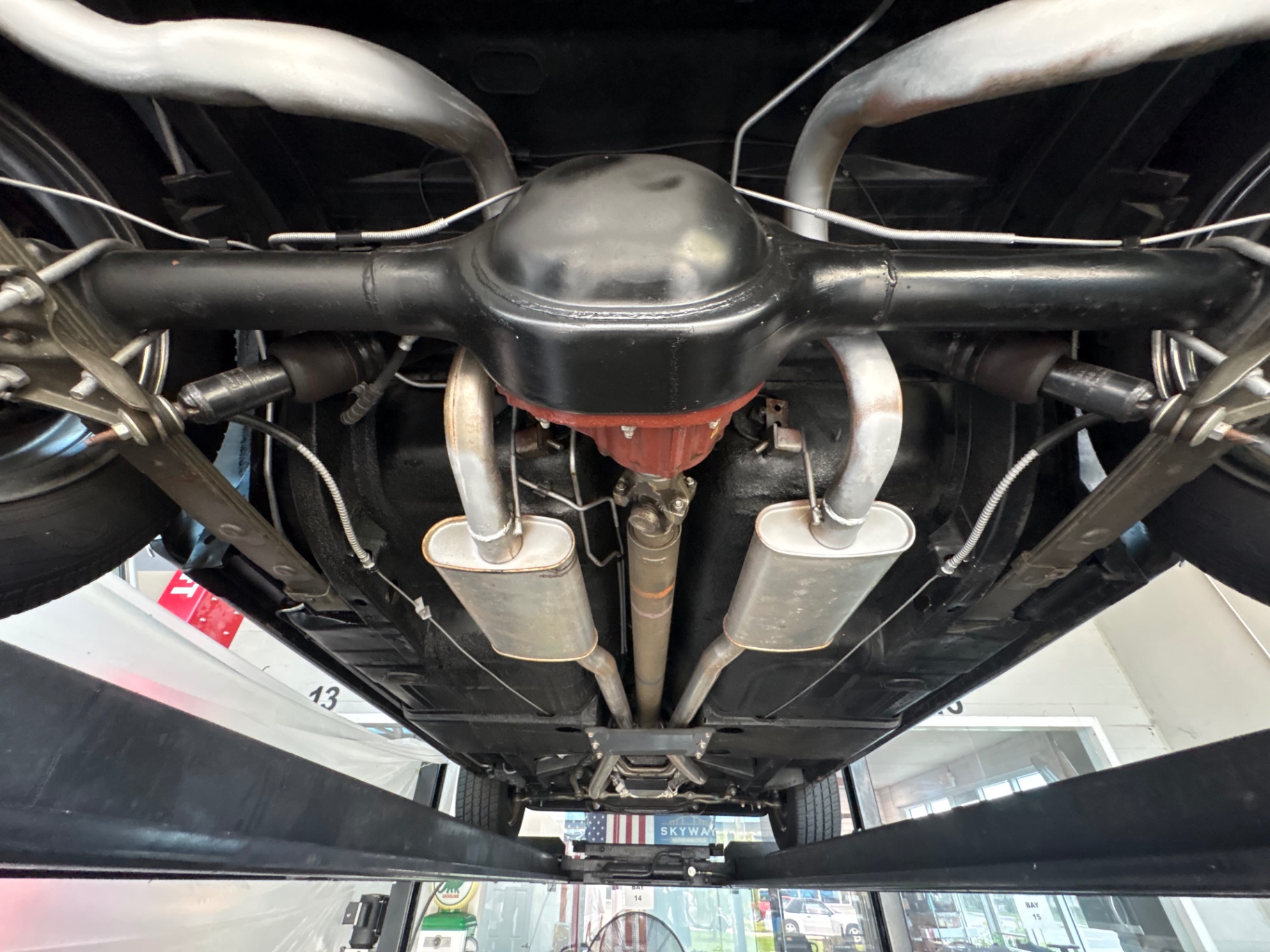
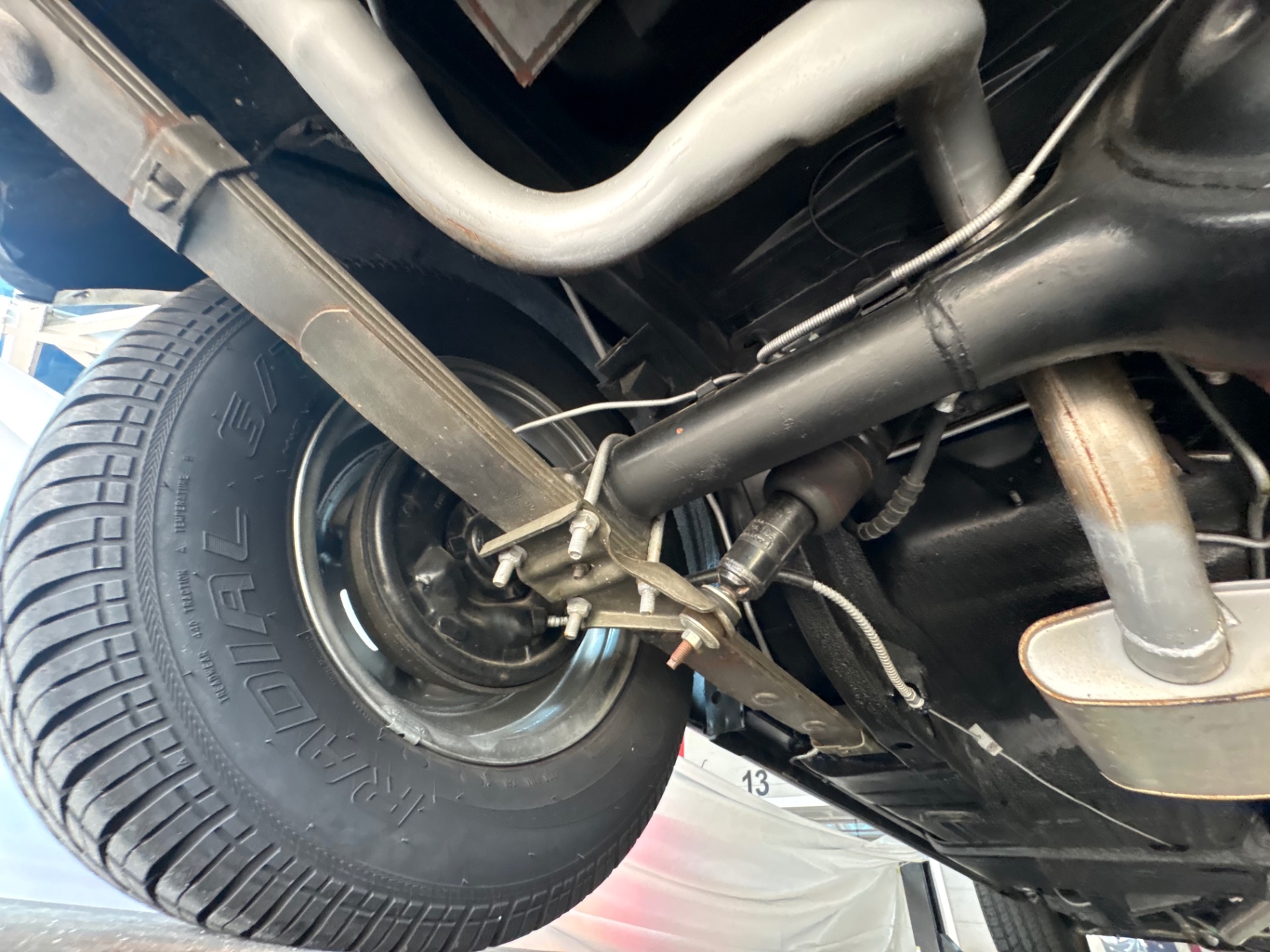
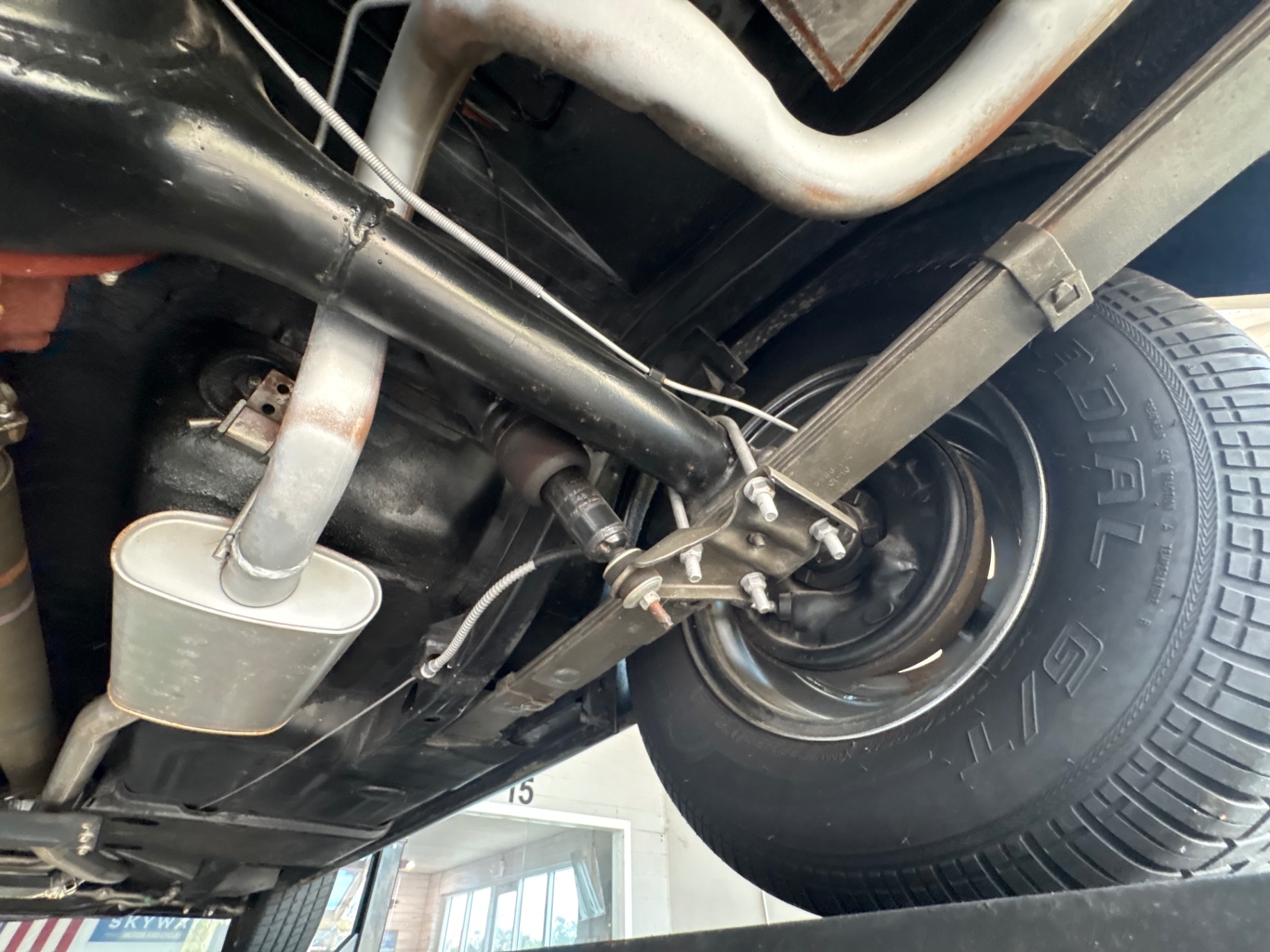
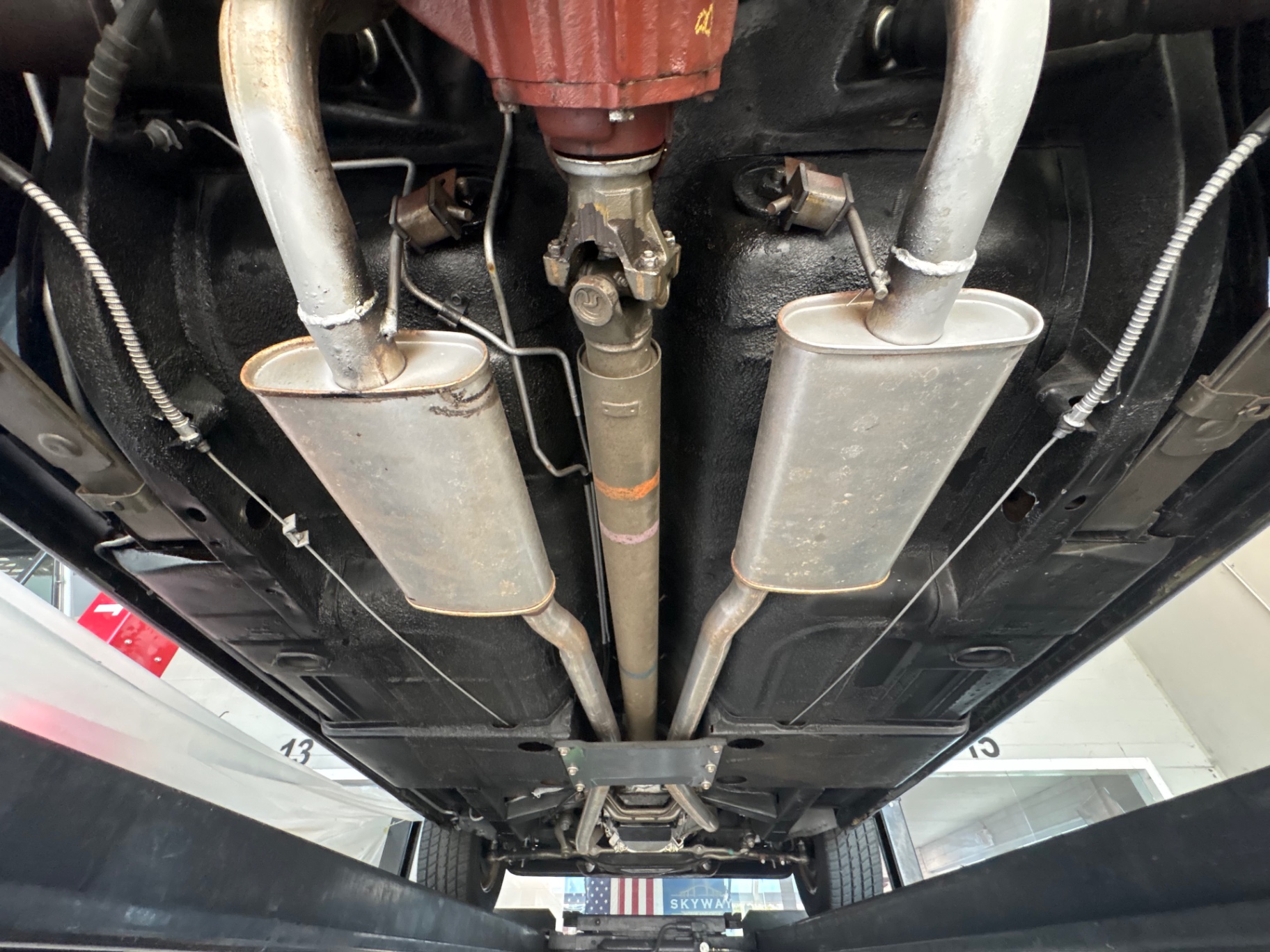
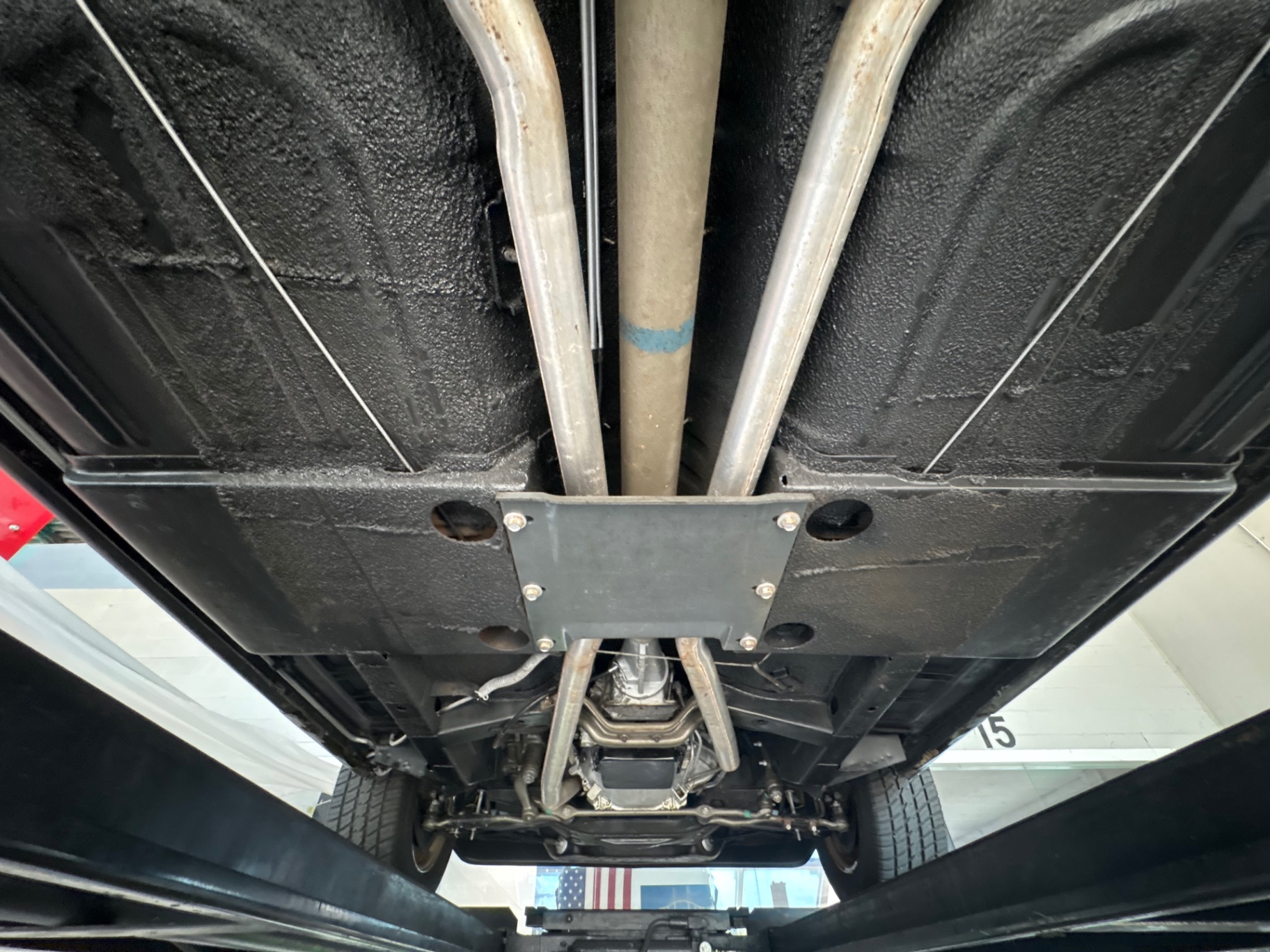
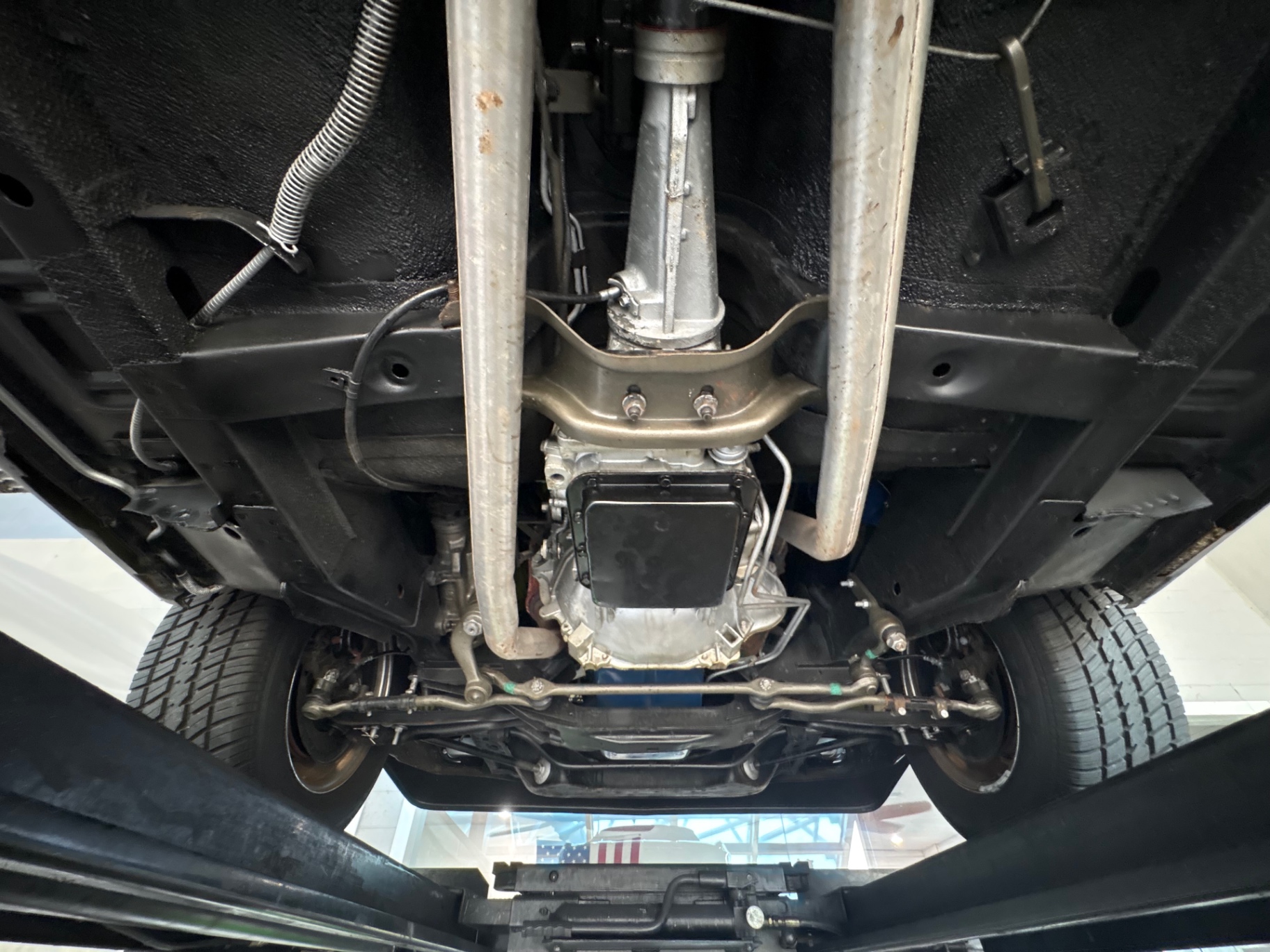
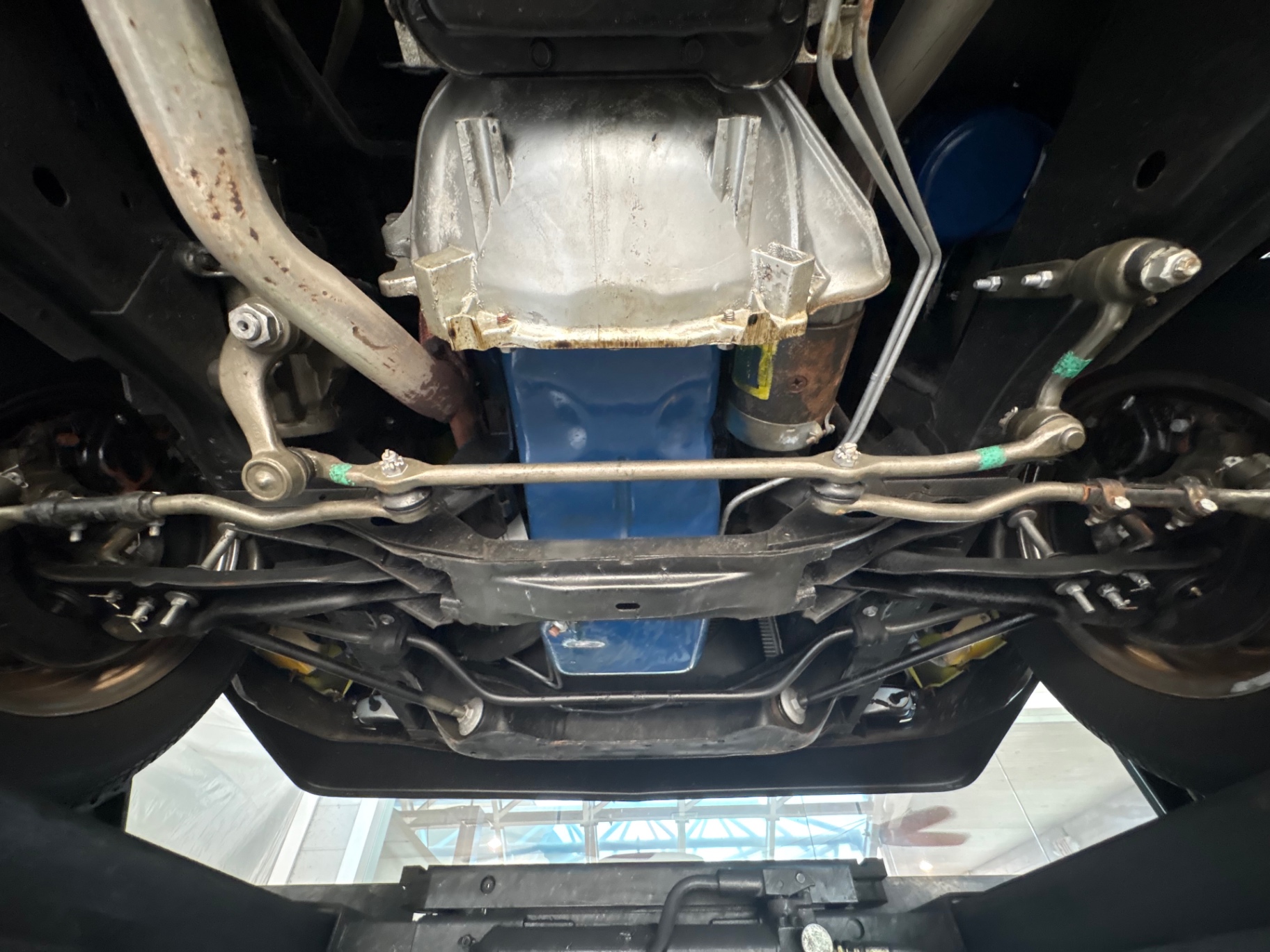
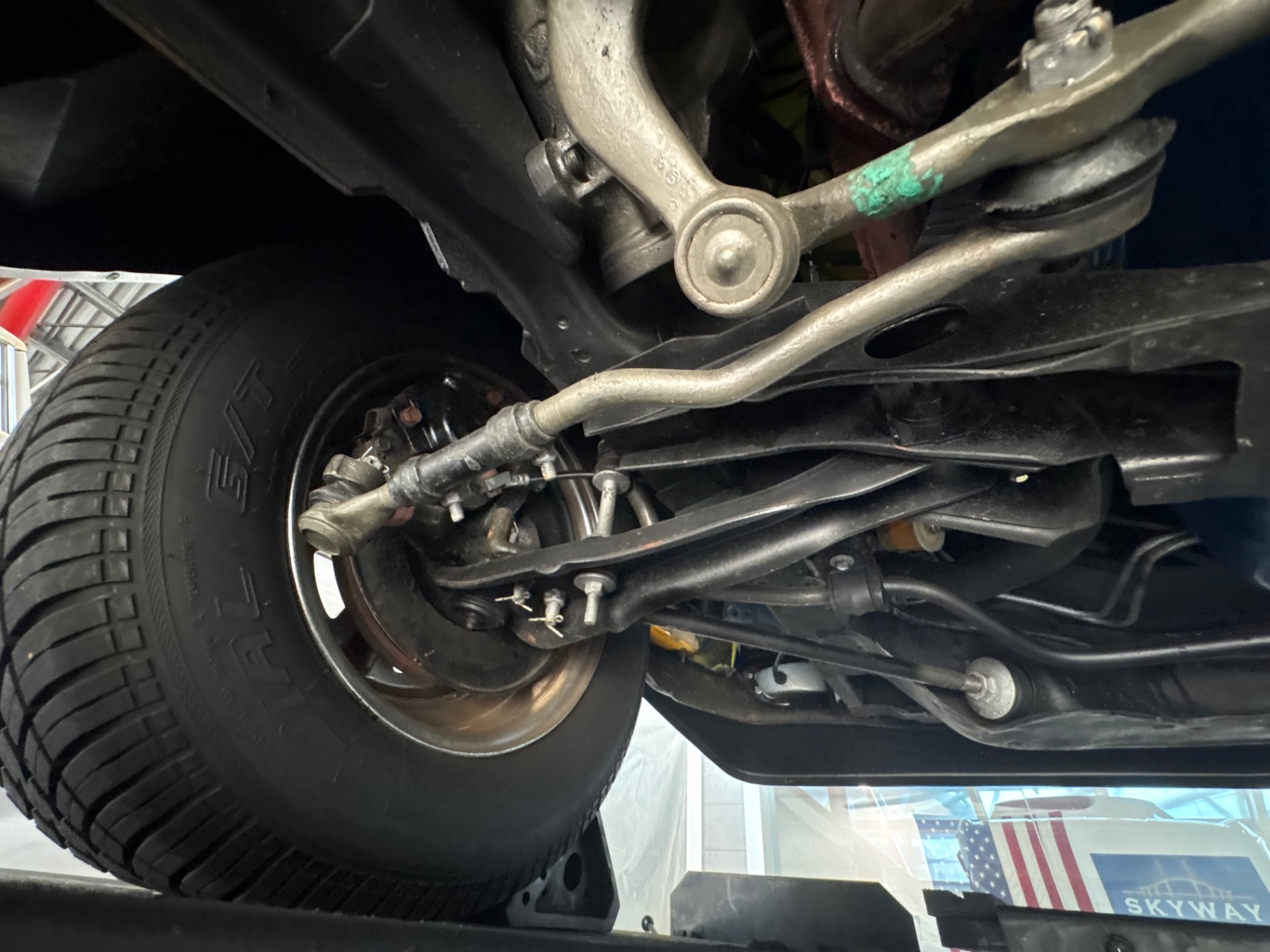
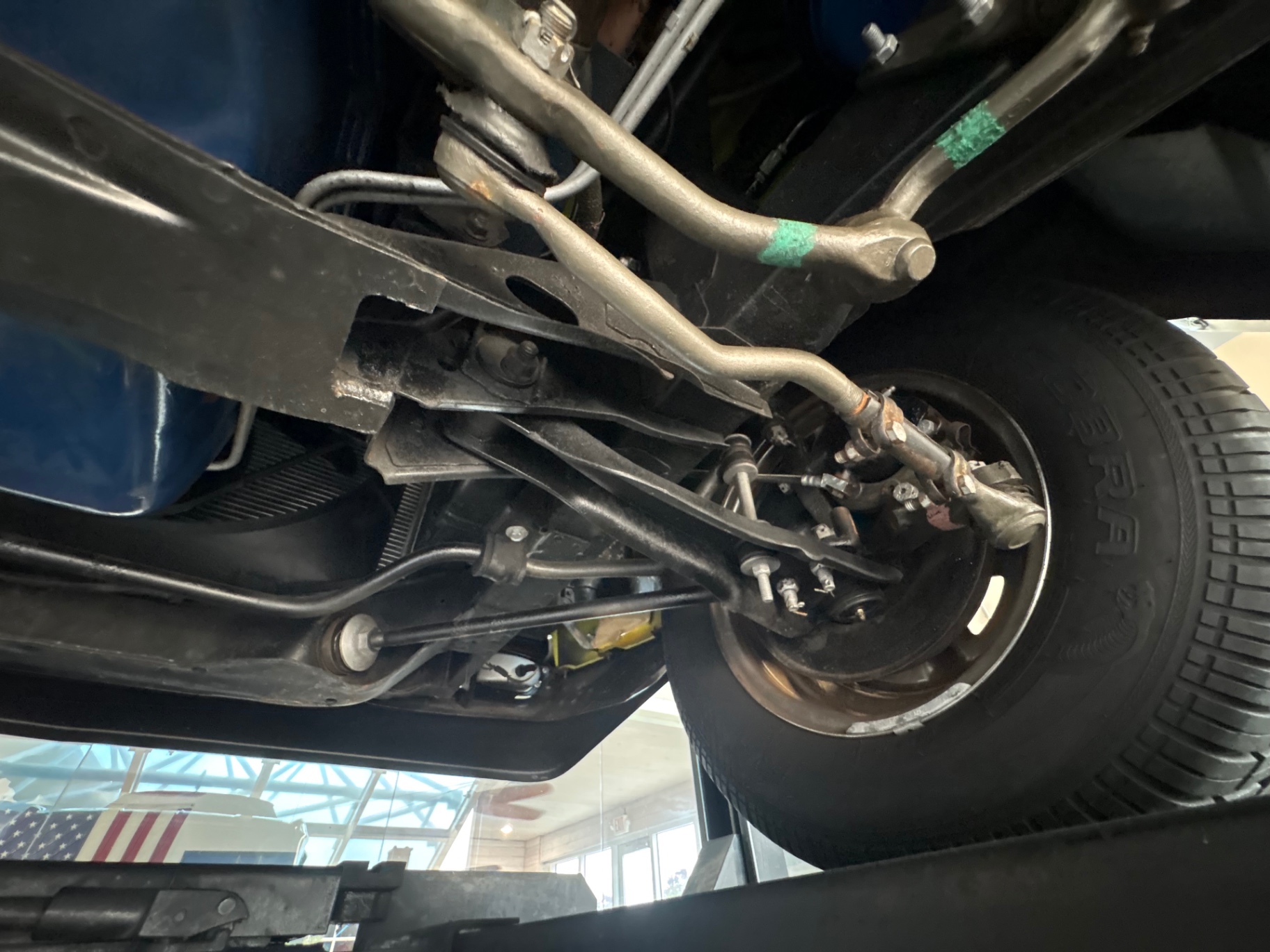
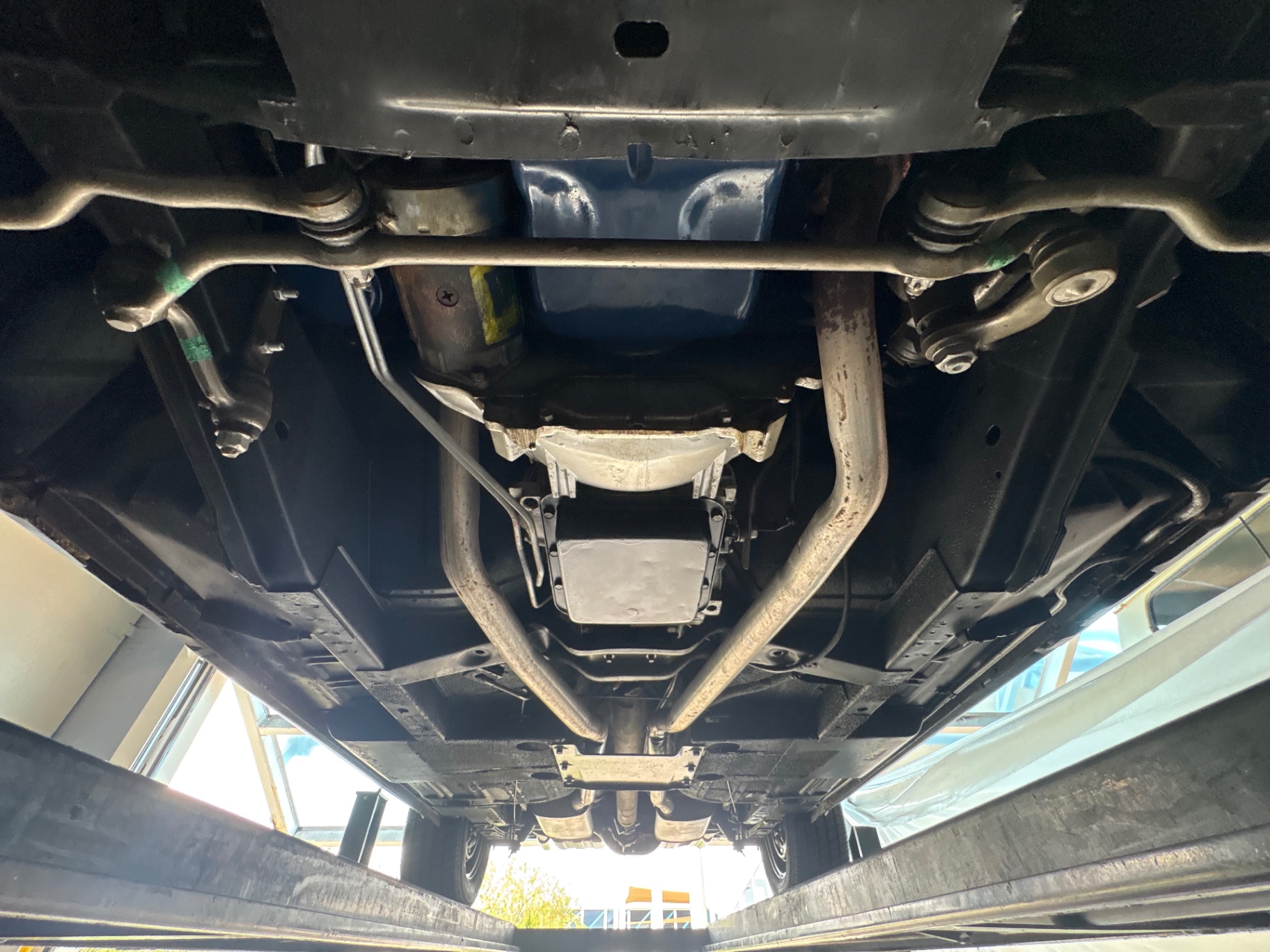
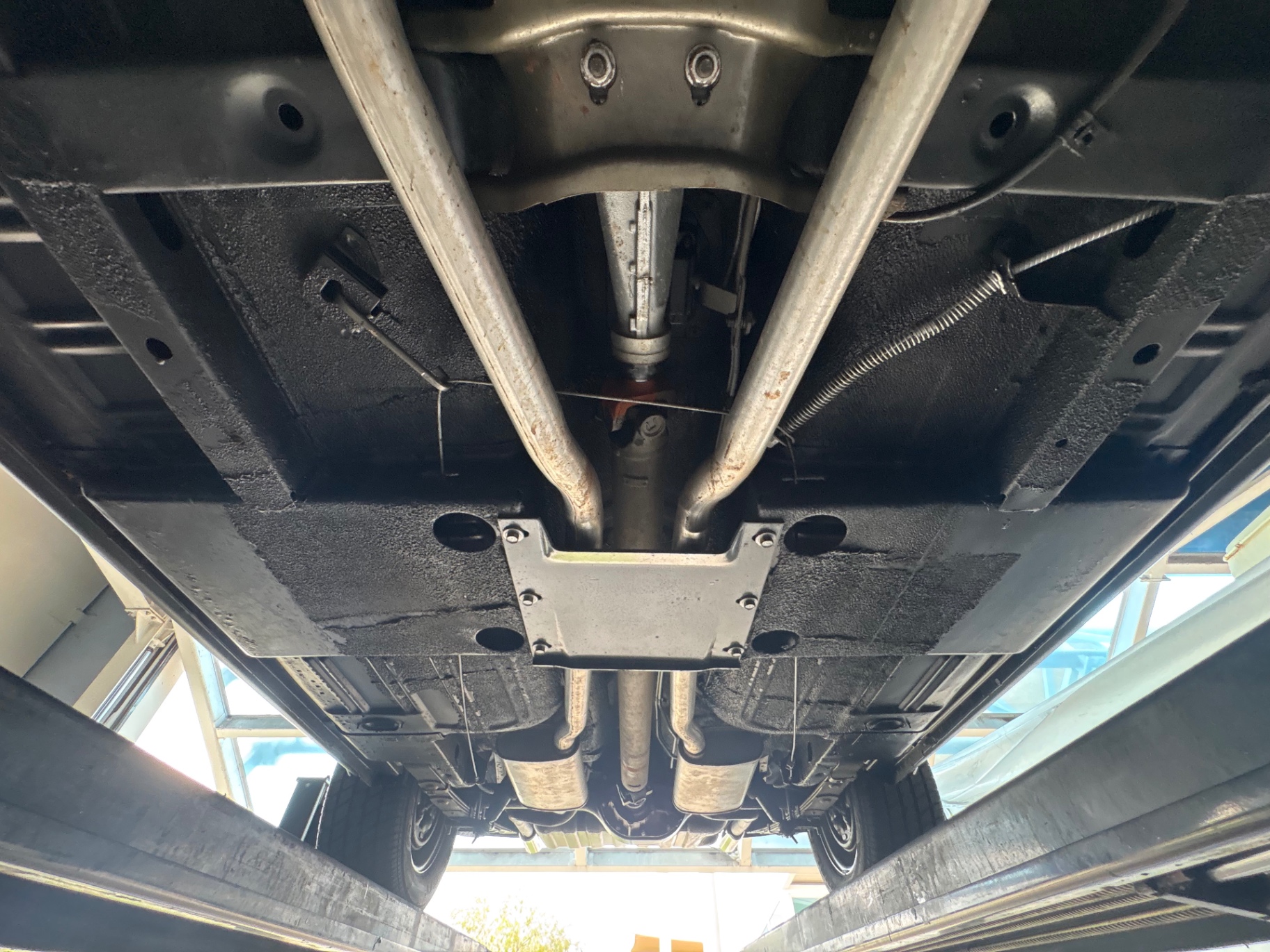
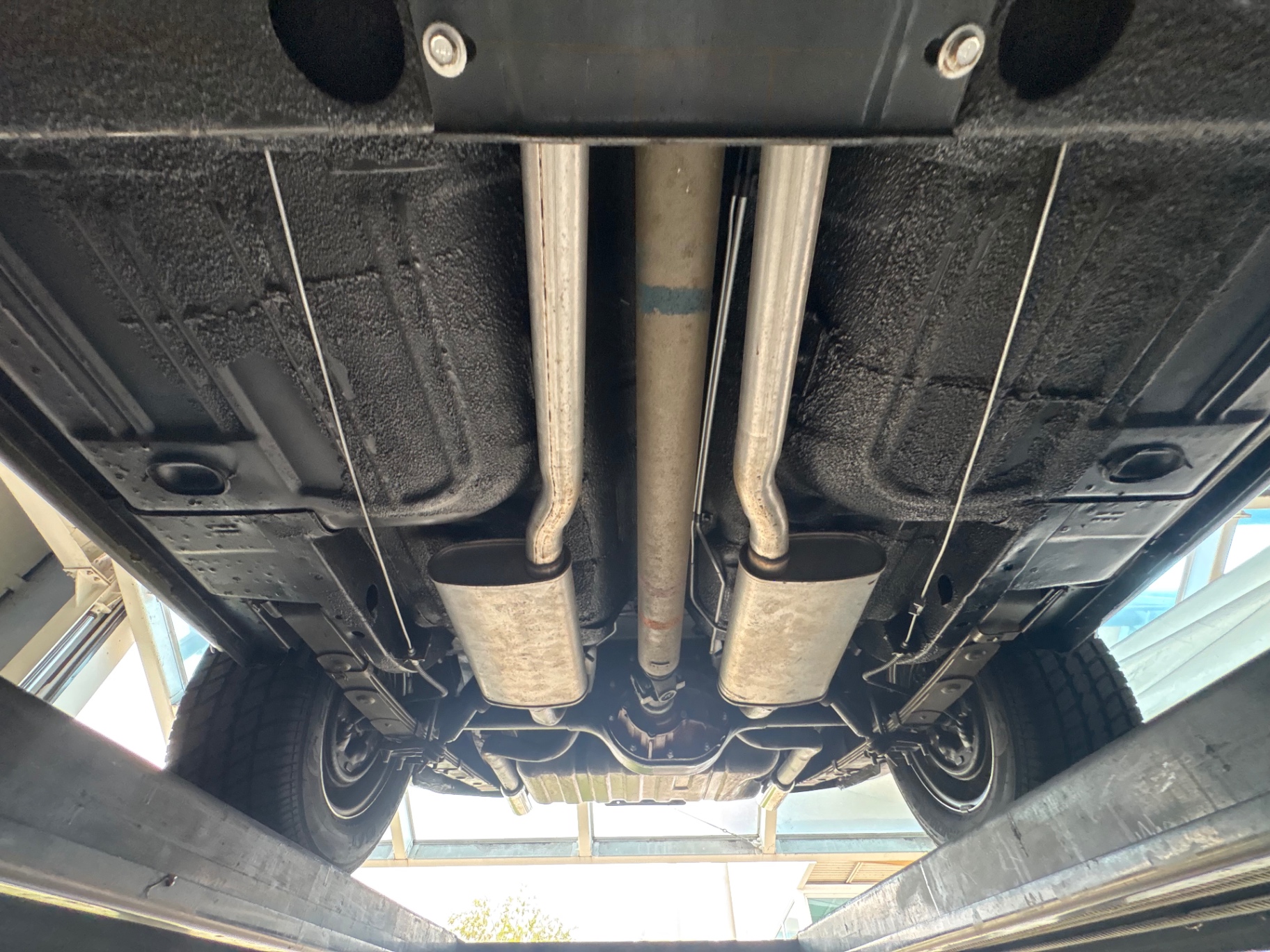
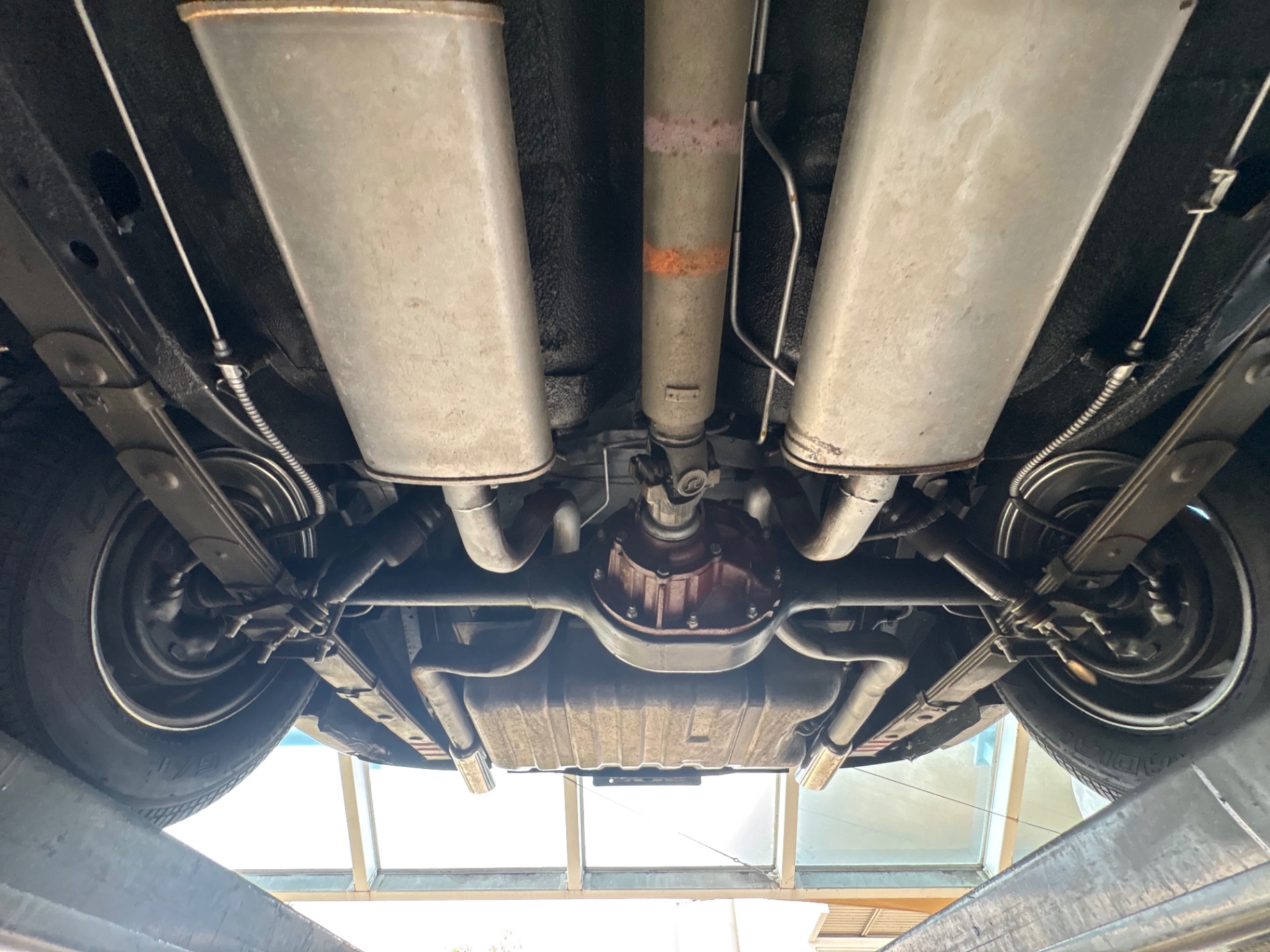
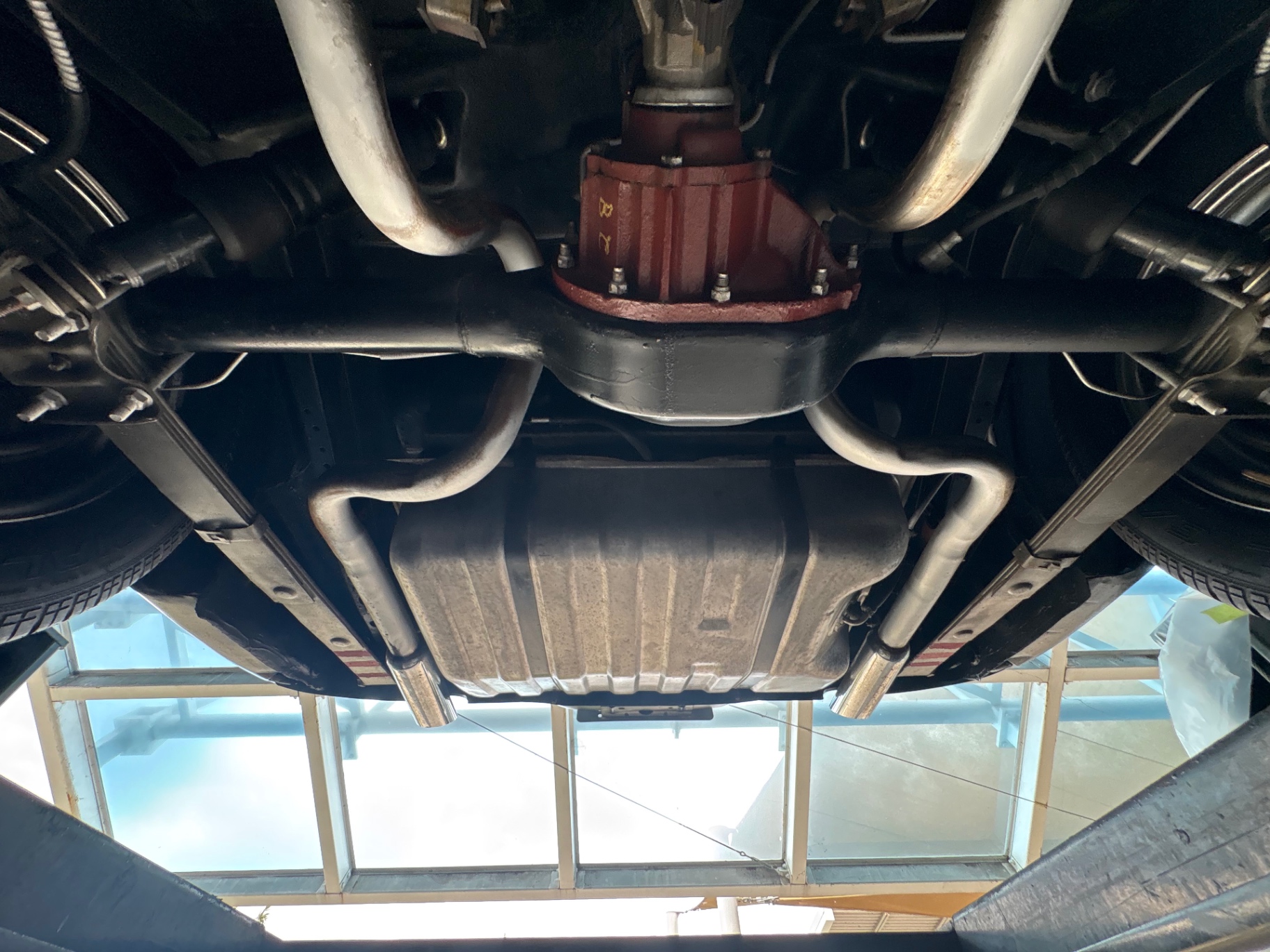
Braking is handled by front disc brakes, a meaningful upgrade over the four-wheel drum setup found on base 1972 Mustangs. Front discs improve stopping distances and are far more resistant to fade under repeated use. The undercarriage photos confirm a clean, solid bottom — no visible rust through or significant corrosion on the floor pans, frame rails, or suspension components. The exhaust runs dual from the rear axle back, exiting through two tips below the rear valance, which is the correct dual exhaust routing for a car of this configuration. The underside has been coated in black, and the suspension and rear axle components are visible and appear solid.
Interior
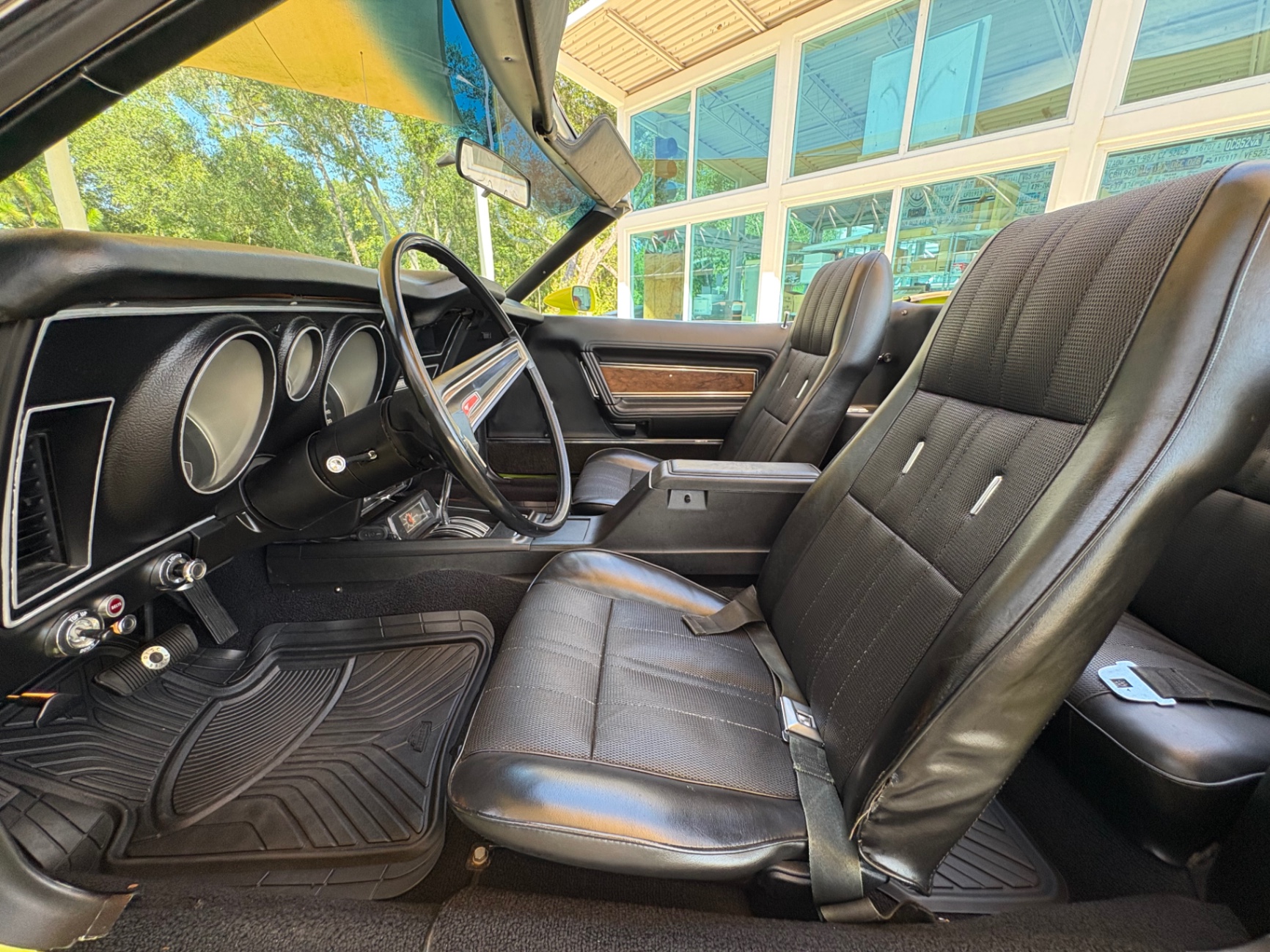
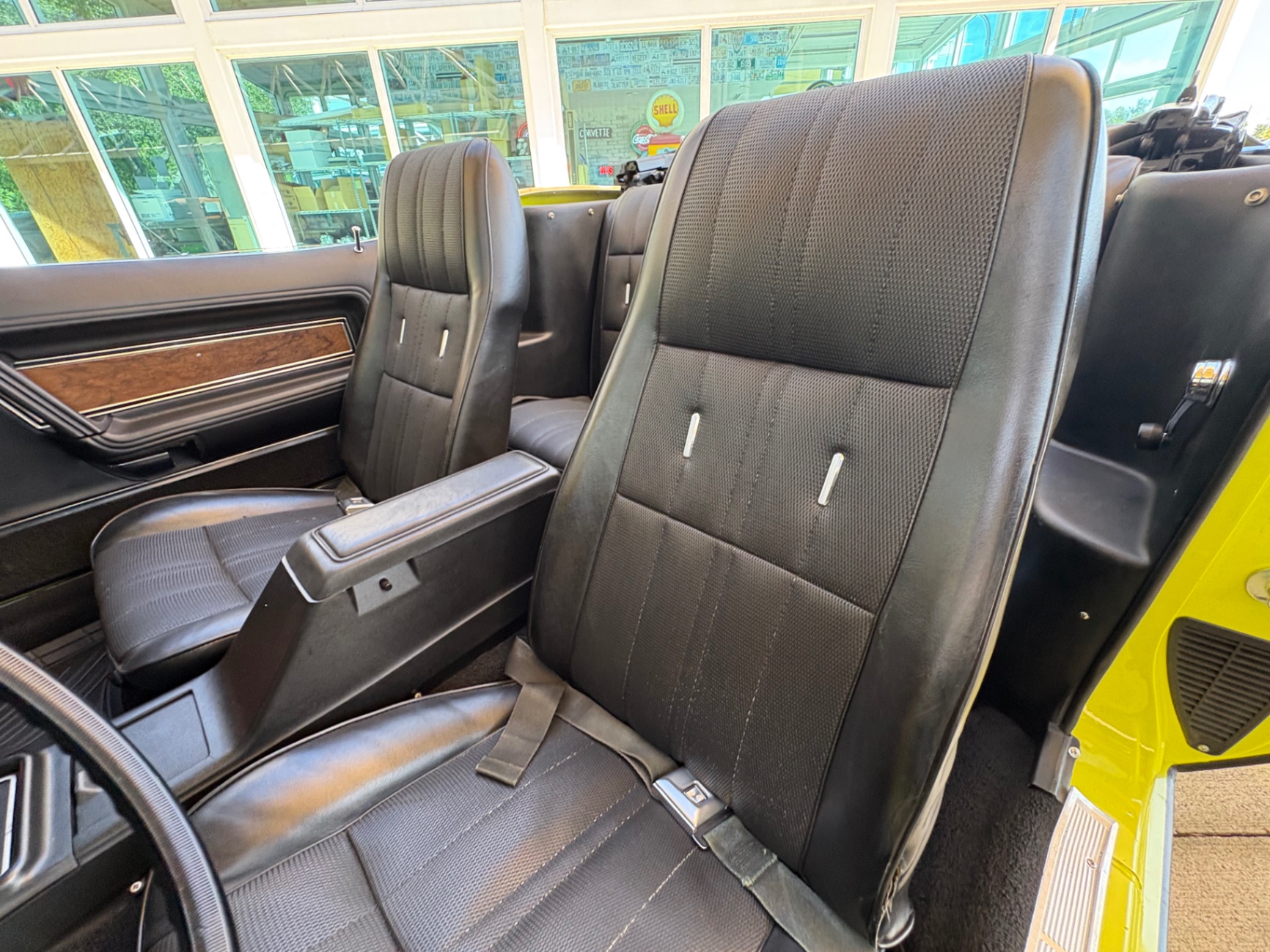
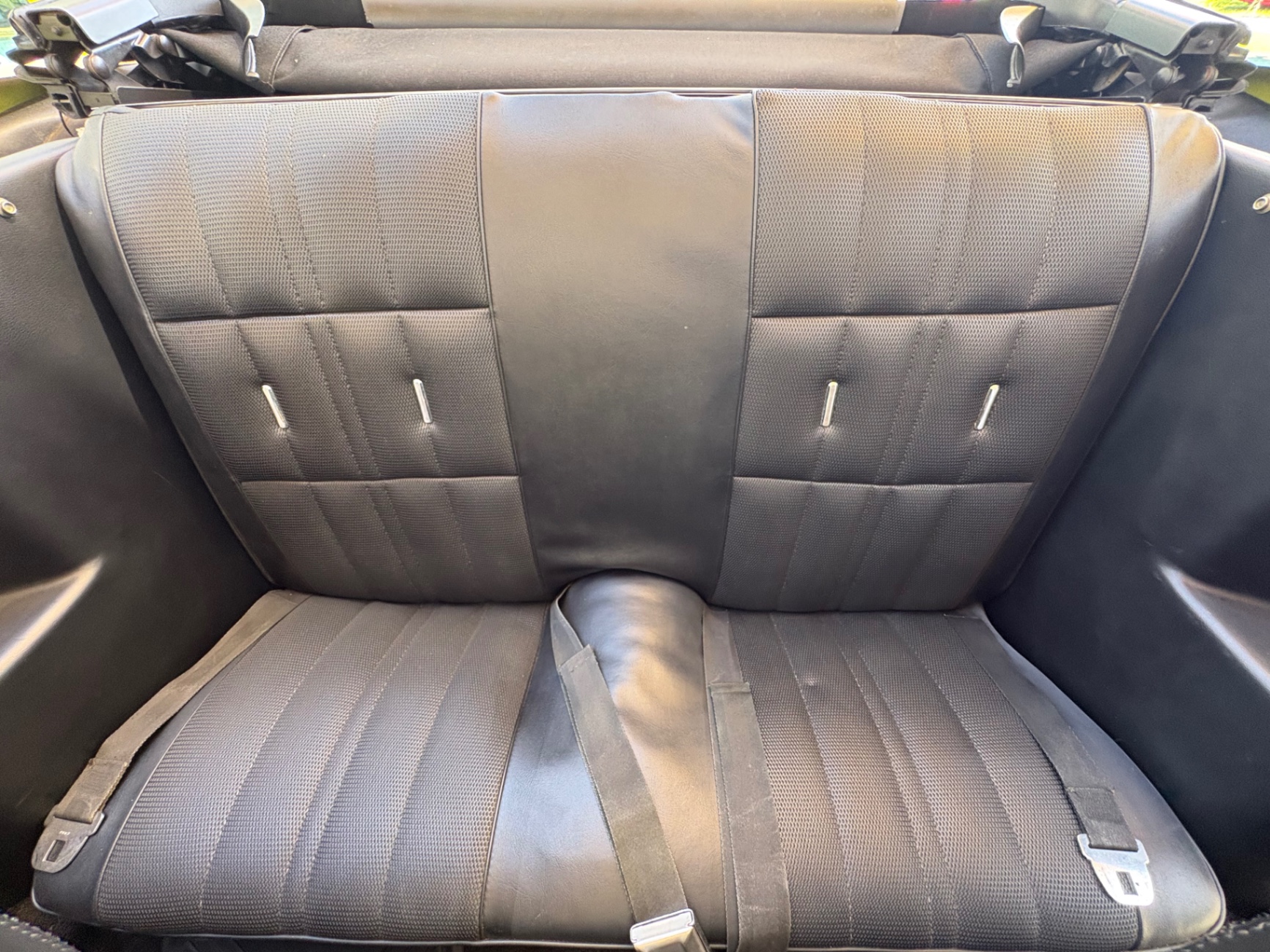
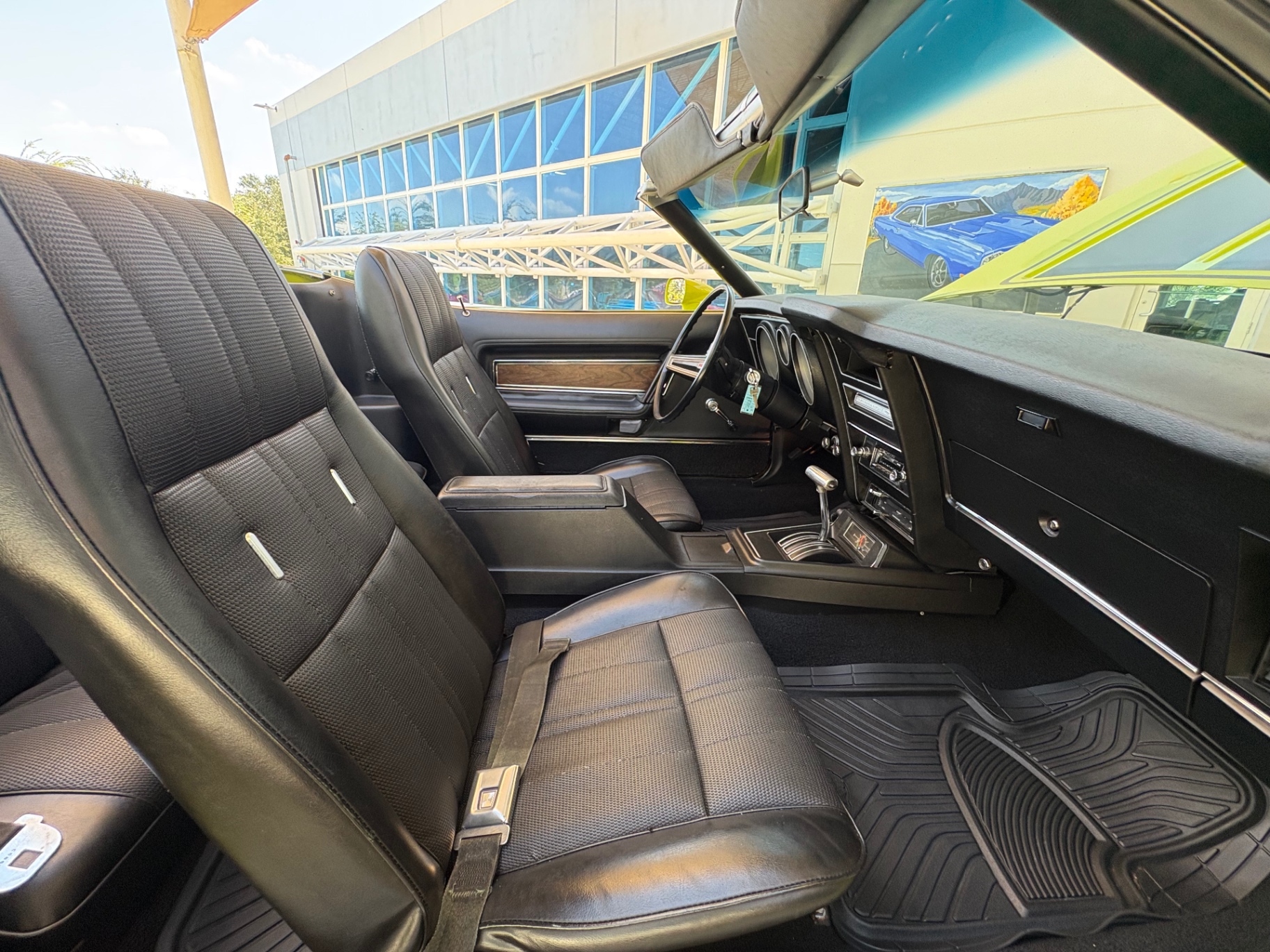
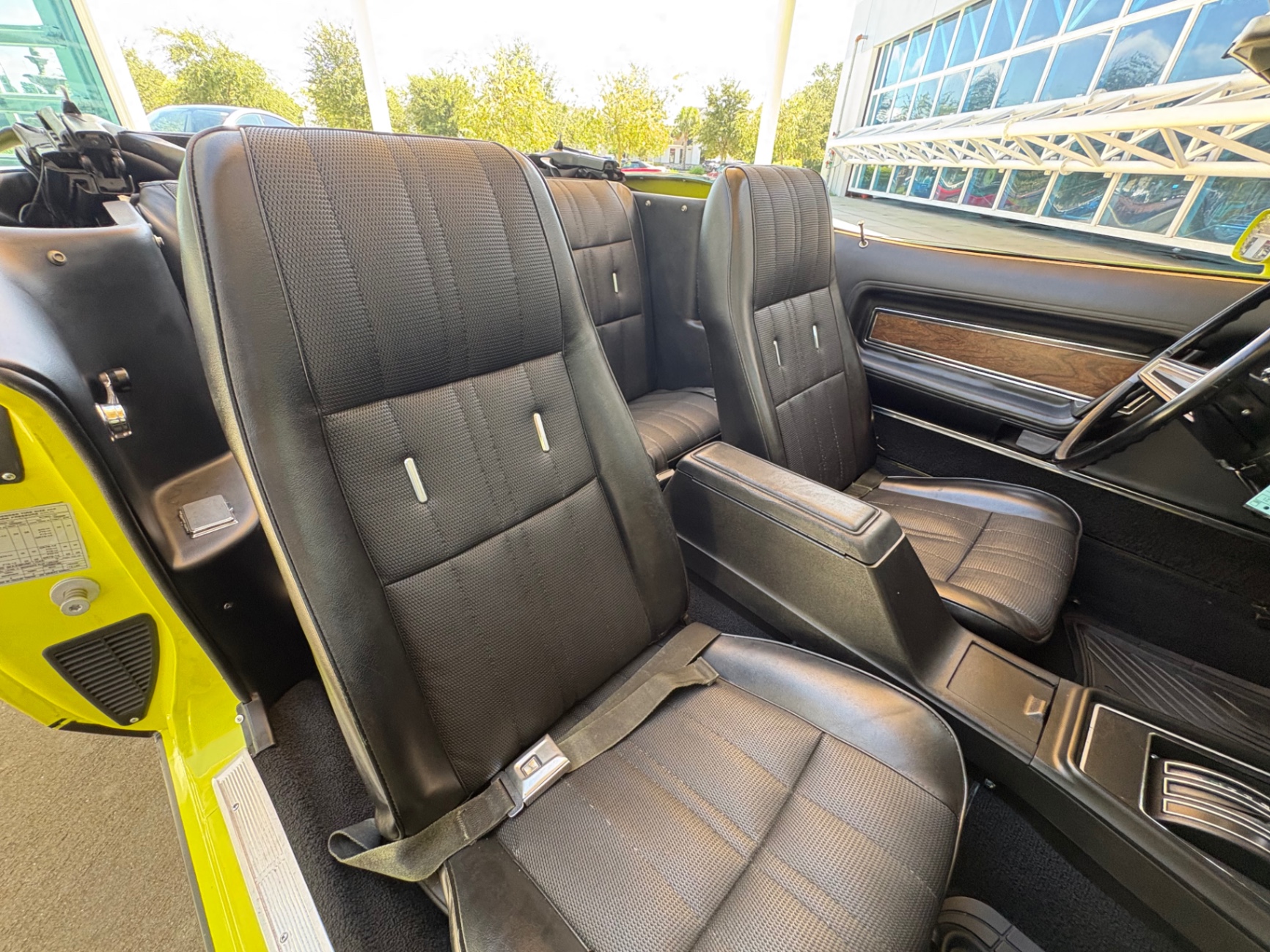
The 1972 Ford Mustang convertible interior on this car is finished entirely in black vinyl. The bucket seats are the correct configuration for a console-equipped car, and the seat upholstery shows the expected waffle-pattern vinyl insert material that Ford used on the standard Mustang interior of this period. The seats retain their shape and the chrome seat buttons are present. The rear seat is also in black vinyl with the same insert pattern.
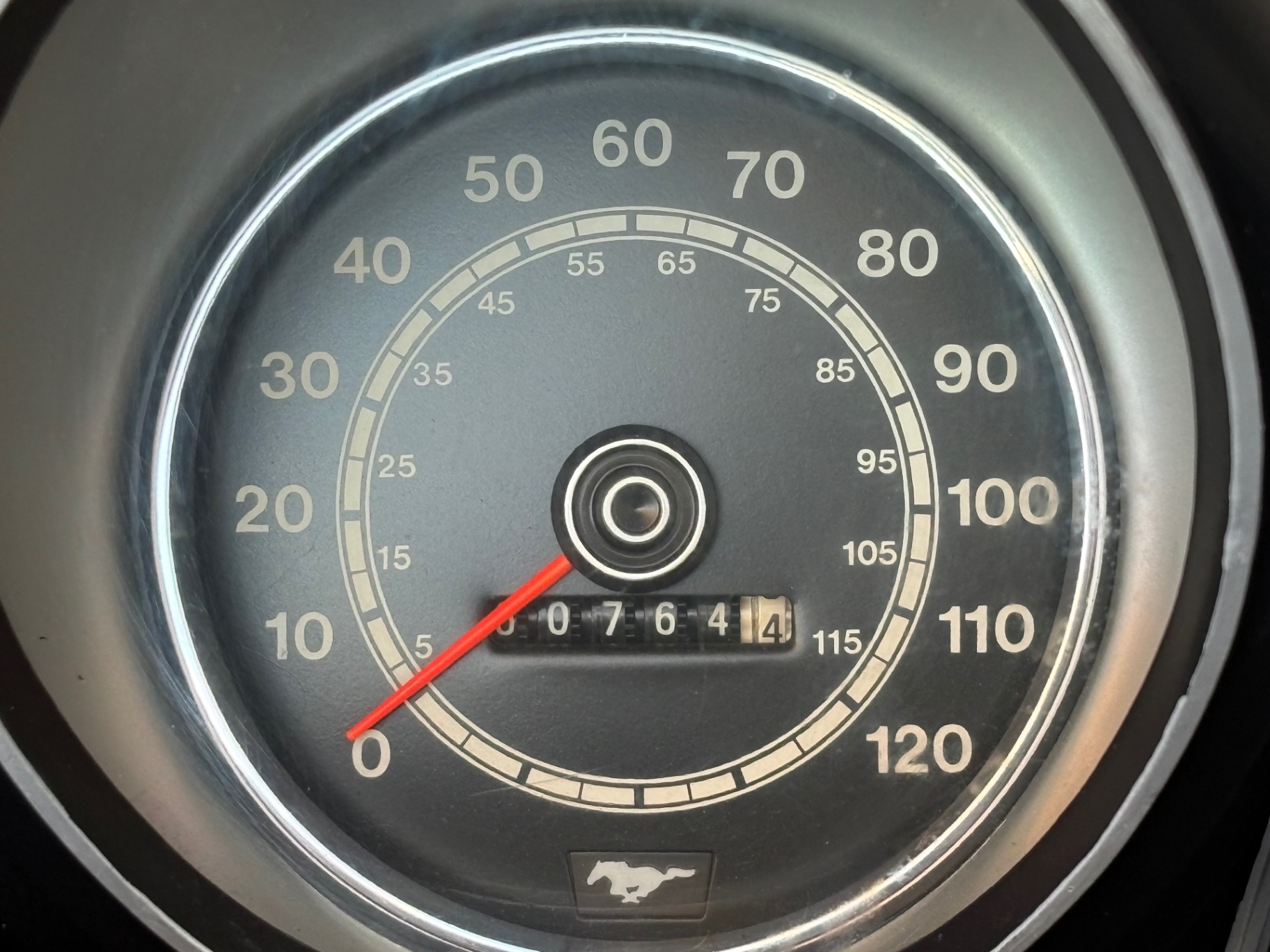
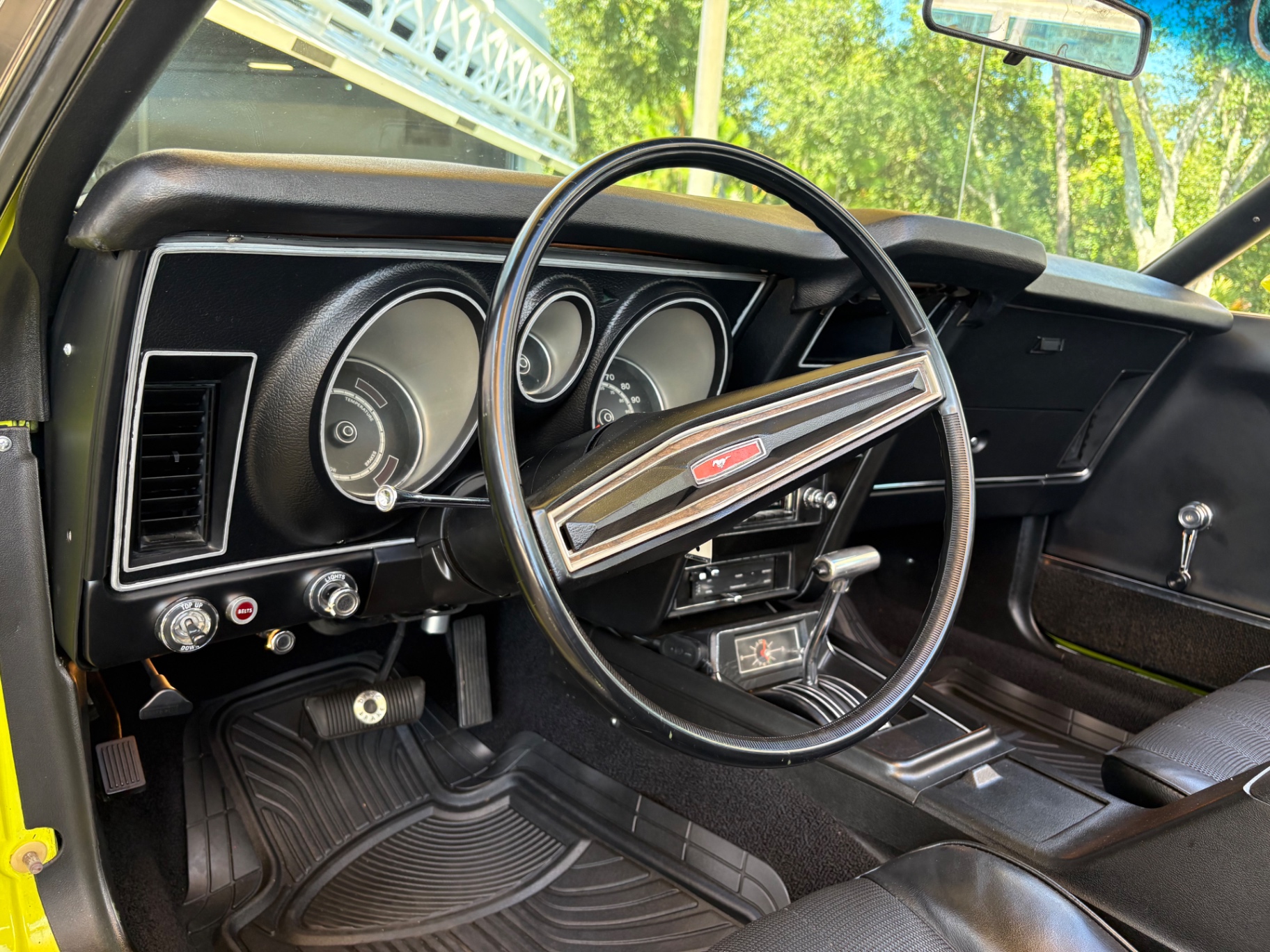
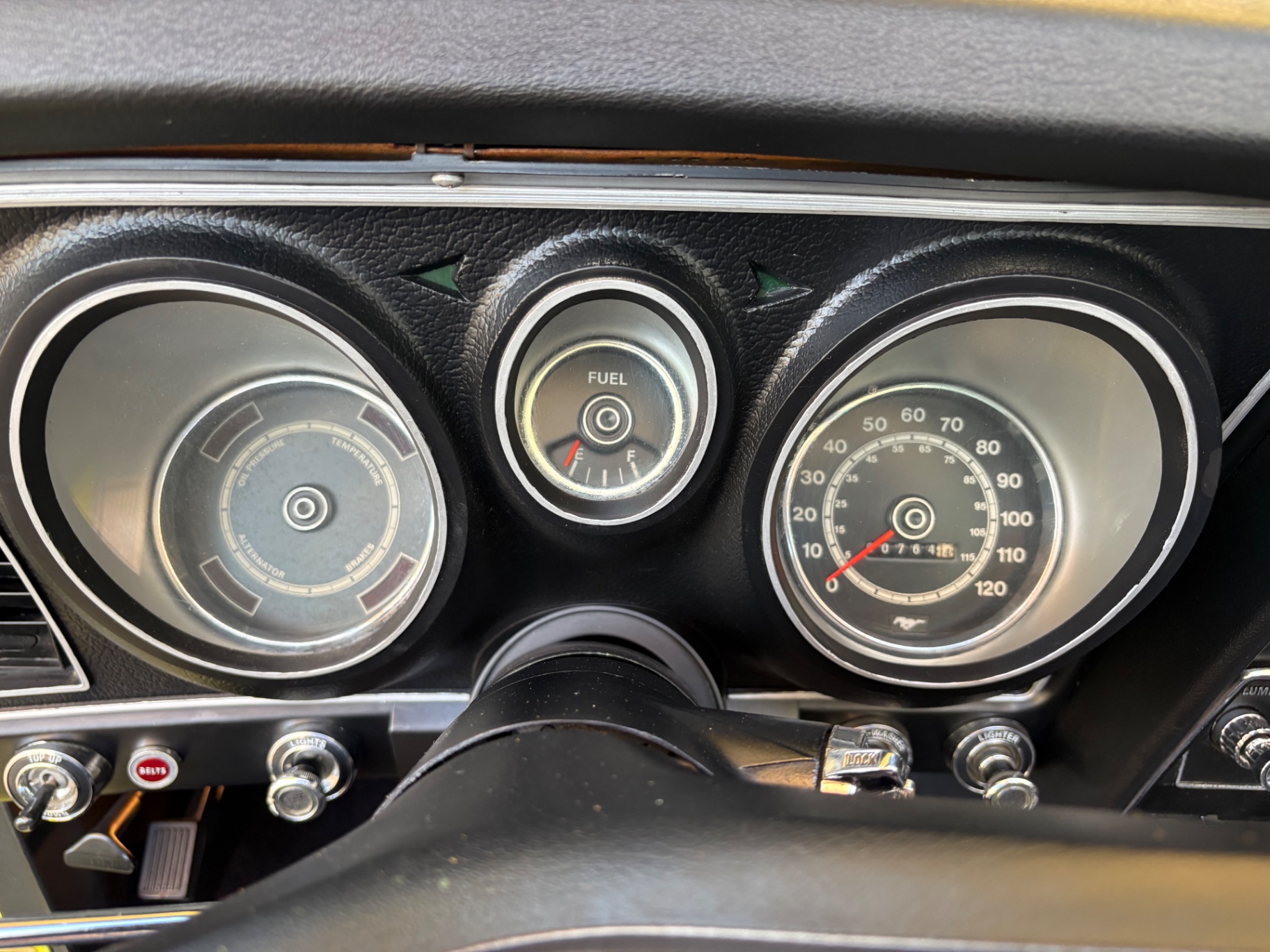
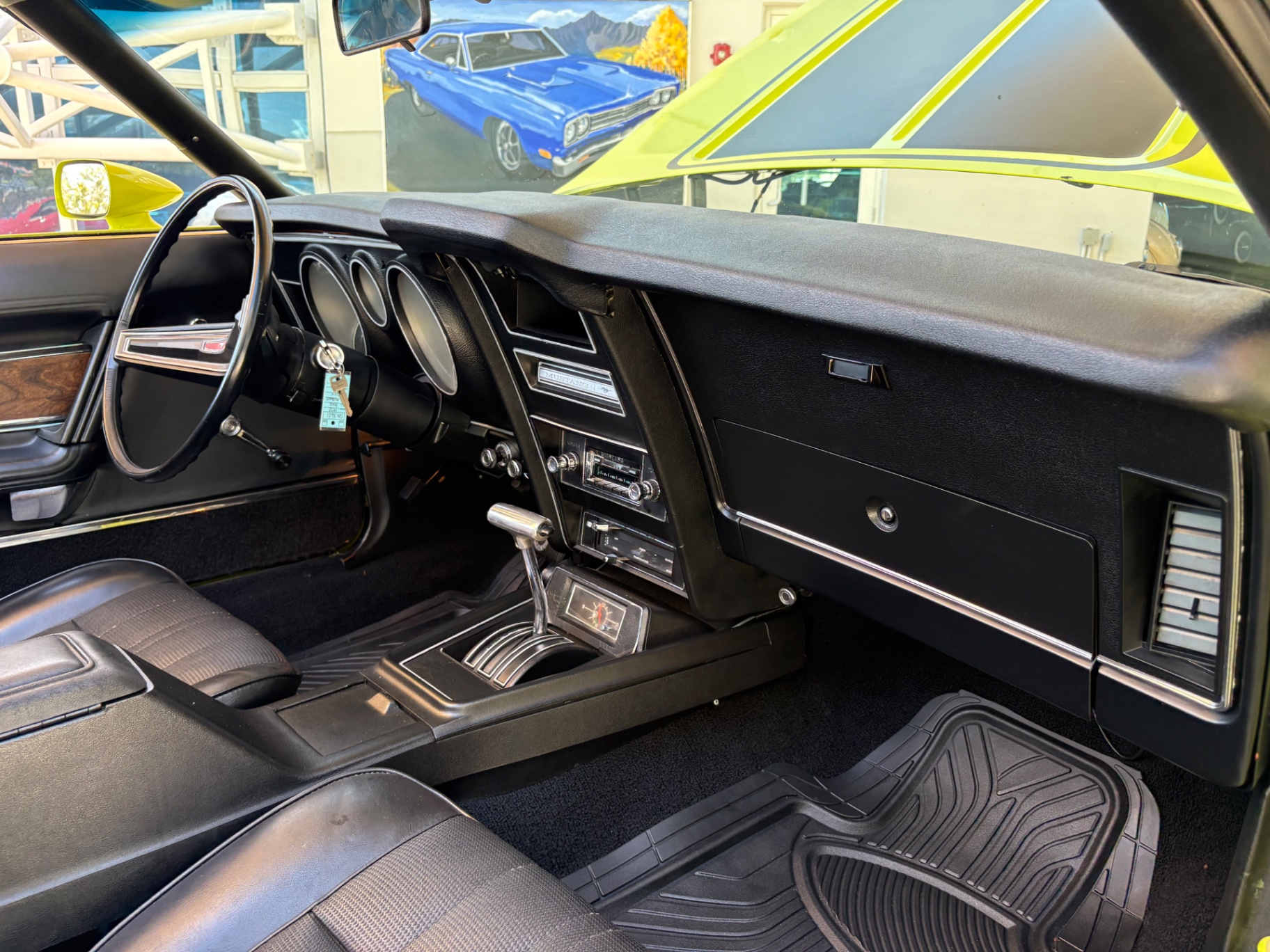
The center console houses the SelectShift automatic shifter with its chrome handle and shift position indicator. An AM radio is fitted in the center of the dash stack. The dashboard itself uses the 1971-1973 Mustang's recessed instrument cluster layout, with the gauges set deep into large round pods on the driver's side. The cluster includes a speedometer and a combination warning light and gauge pod on the left side, which was the standard setup for non-Mach 1 Mustangs of this era.
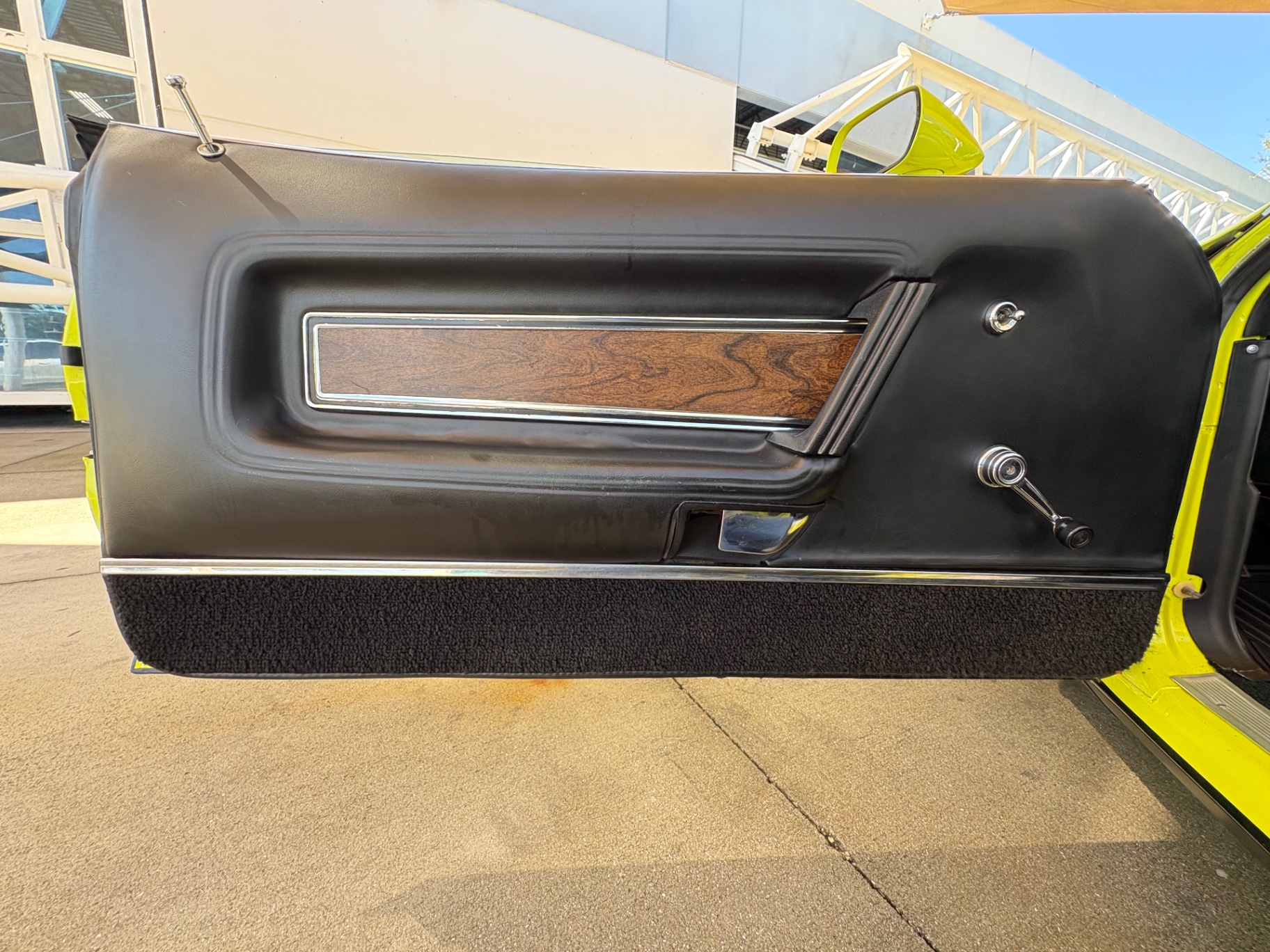
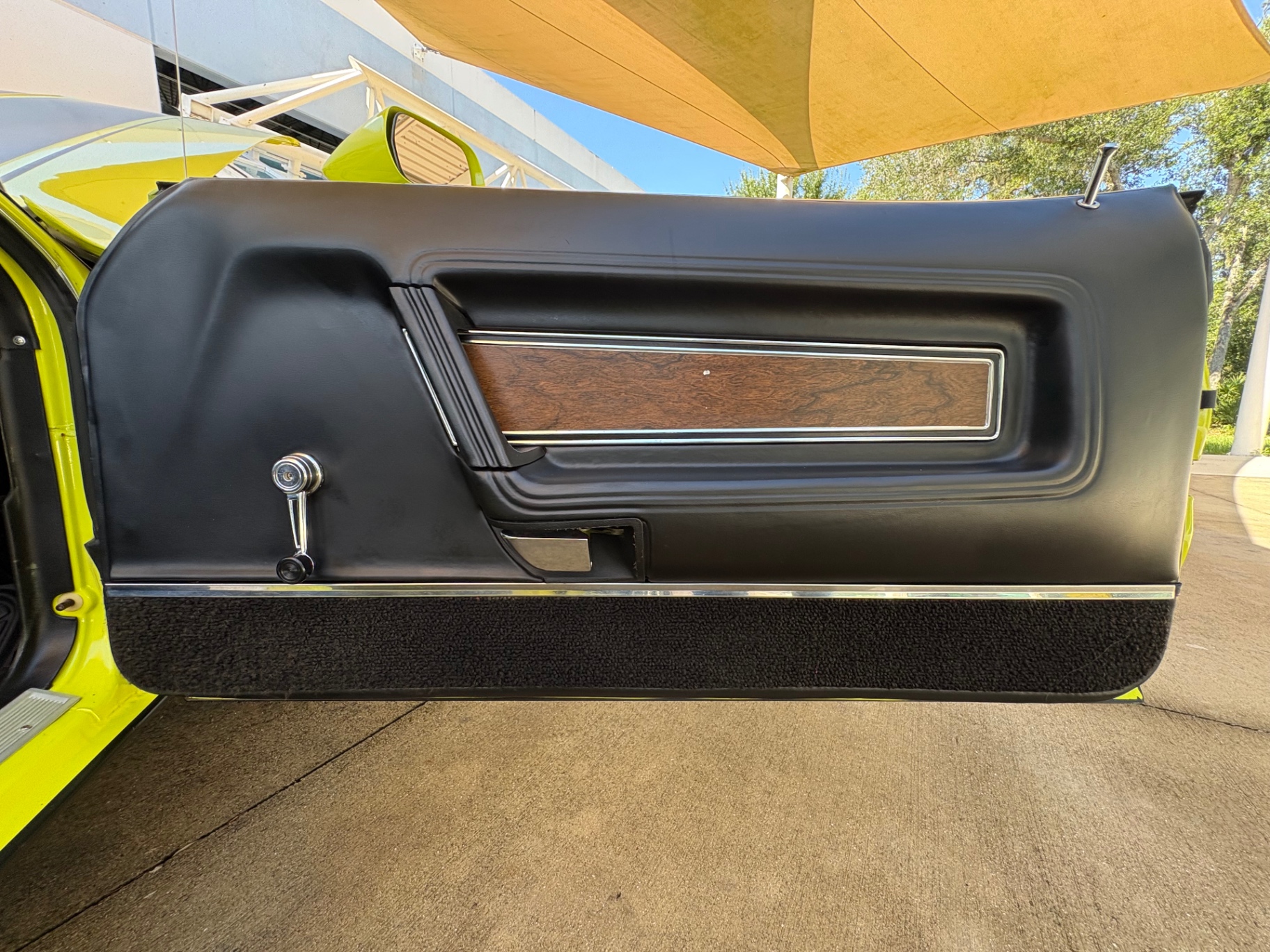
The wood-grain door panels are one of this car's interior highlights. Each door panel carries a sizable simulated woodgrain insert trimmed in chrome, which was part of the Grande trim package or available as a dealer-installed option on standard convertibles. The panels are in good shape with the chrome bead around the woodgrain applique still intact. A convertible top control switch is visible on the lower dashboard, and the power top mechanism was a factory option that raises and lowers the black cloth top at the push of a button.
Exterior
The Bright Lime paint on this 1972 Ford Mustang convertible is exactly what the name describes — a sharp, acid-toned yellow-green that Ford offered in the early 1970s as part of a broader push toward high-visibility "grabber" colors. These colors were factory options intended to appeal to younger buyers and were used across multiple Ford and Mercury performance models during this period. Bright Lime sits in that same family as Competition Orange, Grabber Blue, and Grabber Yellow — all colors that have aged well in the collector market because they are period-specific and unambiguous.
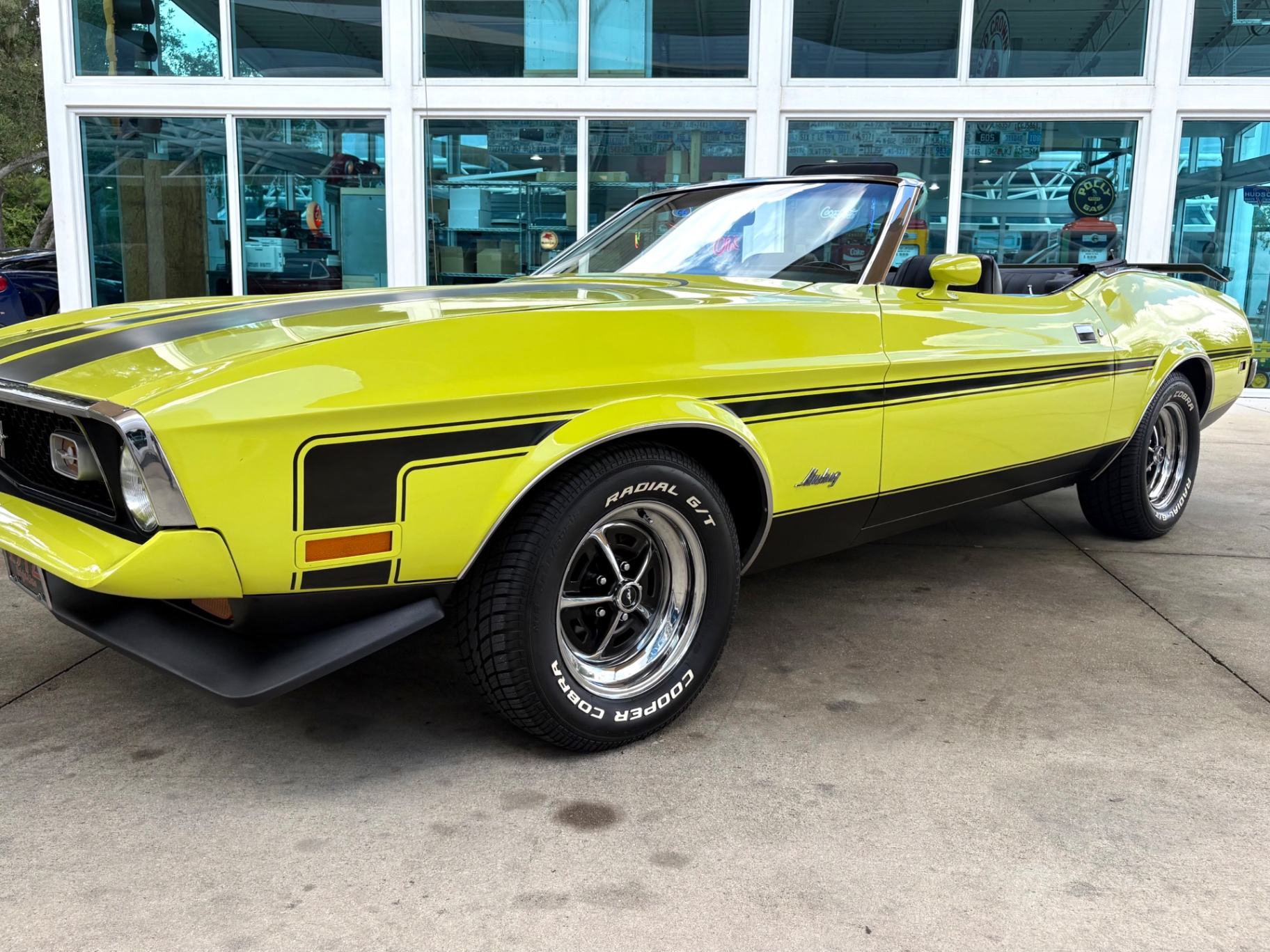
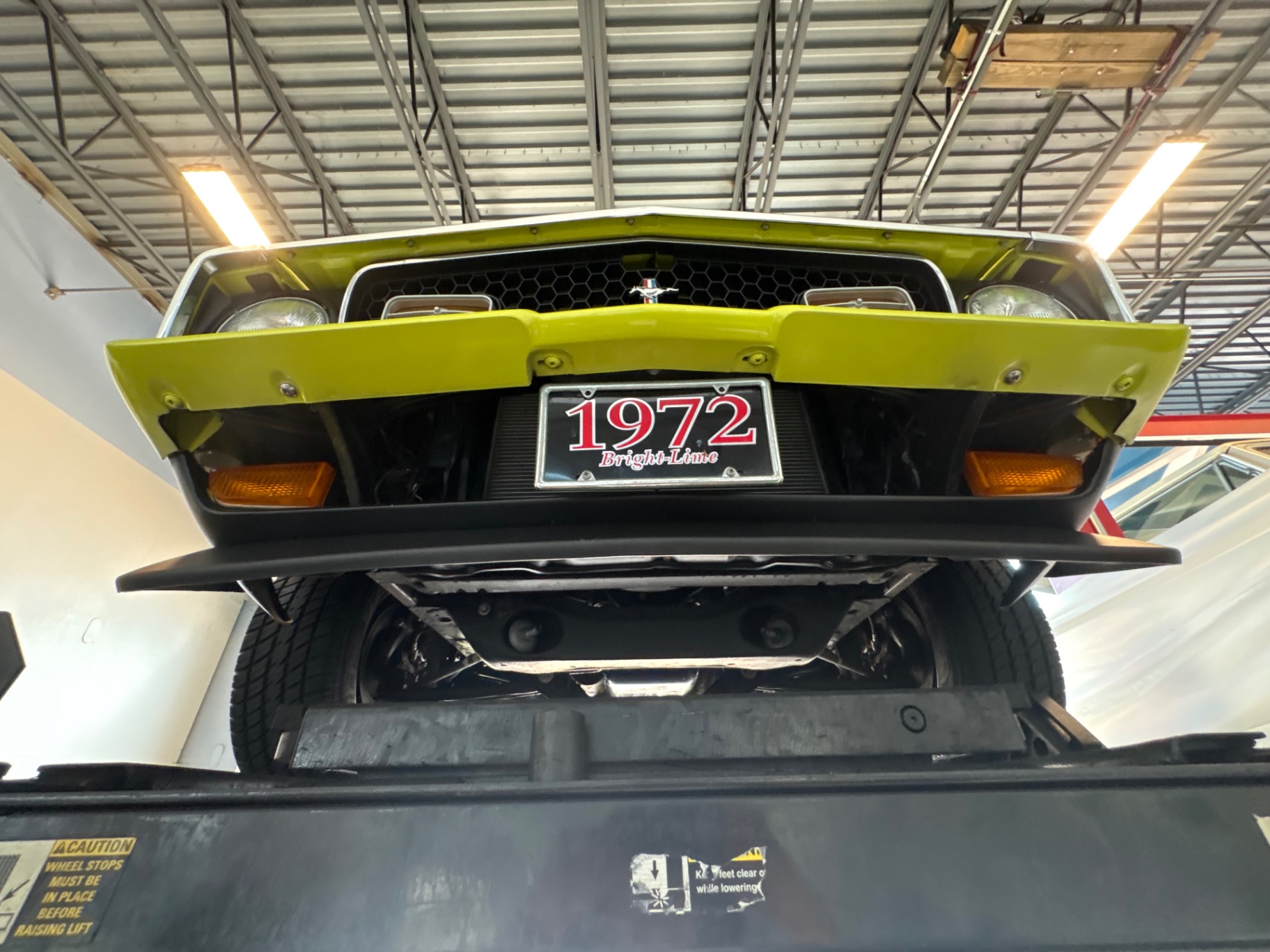
The body carries hood stripes running in contrasting black down the center of the hood and continuing as side stripes along the body. These are the type of appearance graphics that Ford sold through its dealer accessory program and were frequently ordered on sport-configured Mustangs of this generation. The front air dam is the low-profile urethane piece that sits below the bumper and gives the front end a more purposeful stance. The rear deck spoiler is the lip-style unit that mounts at the trailing edge of the trunk lid.
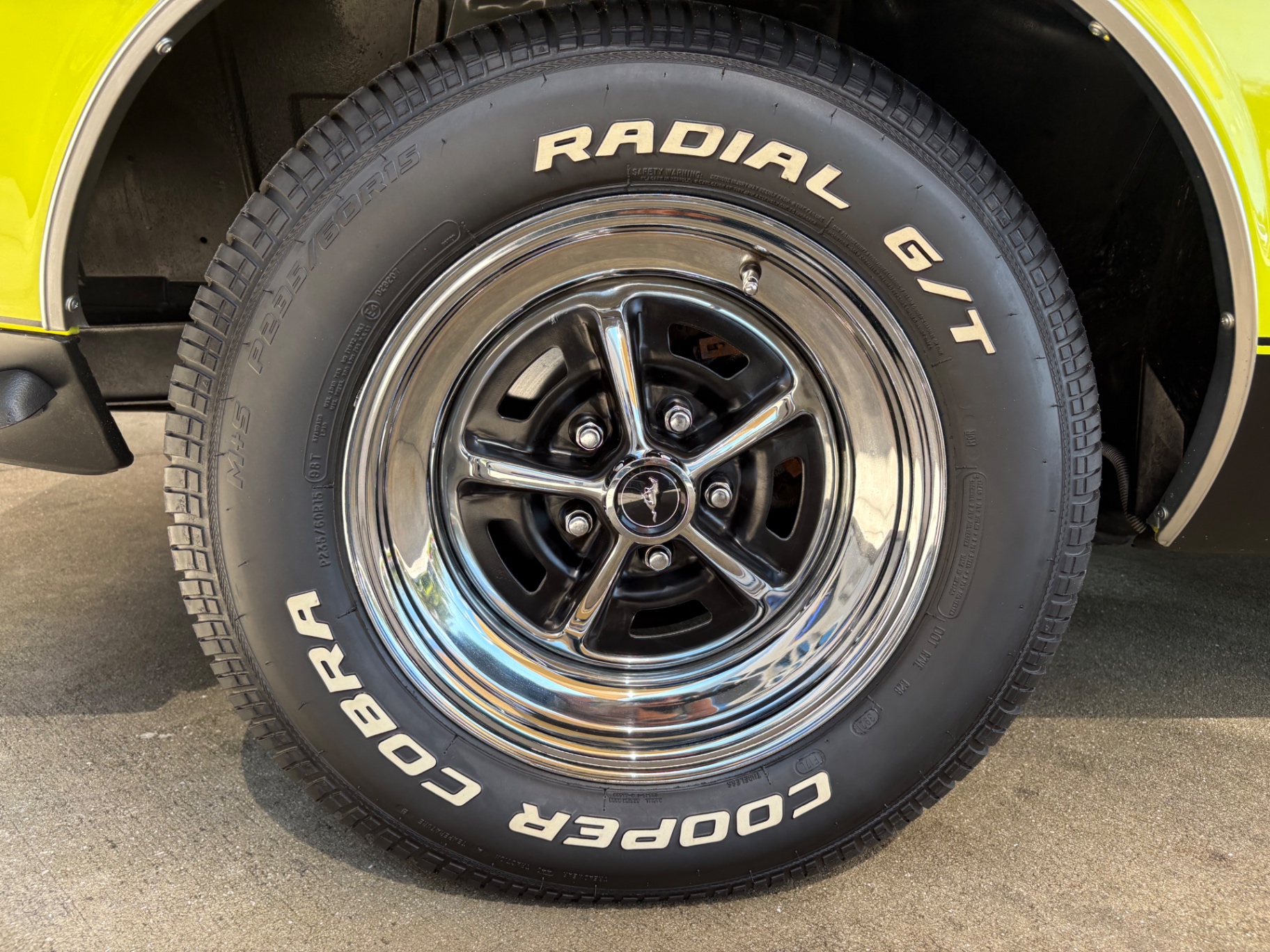
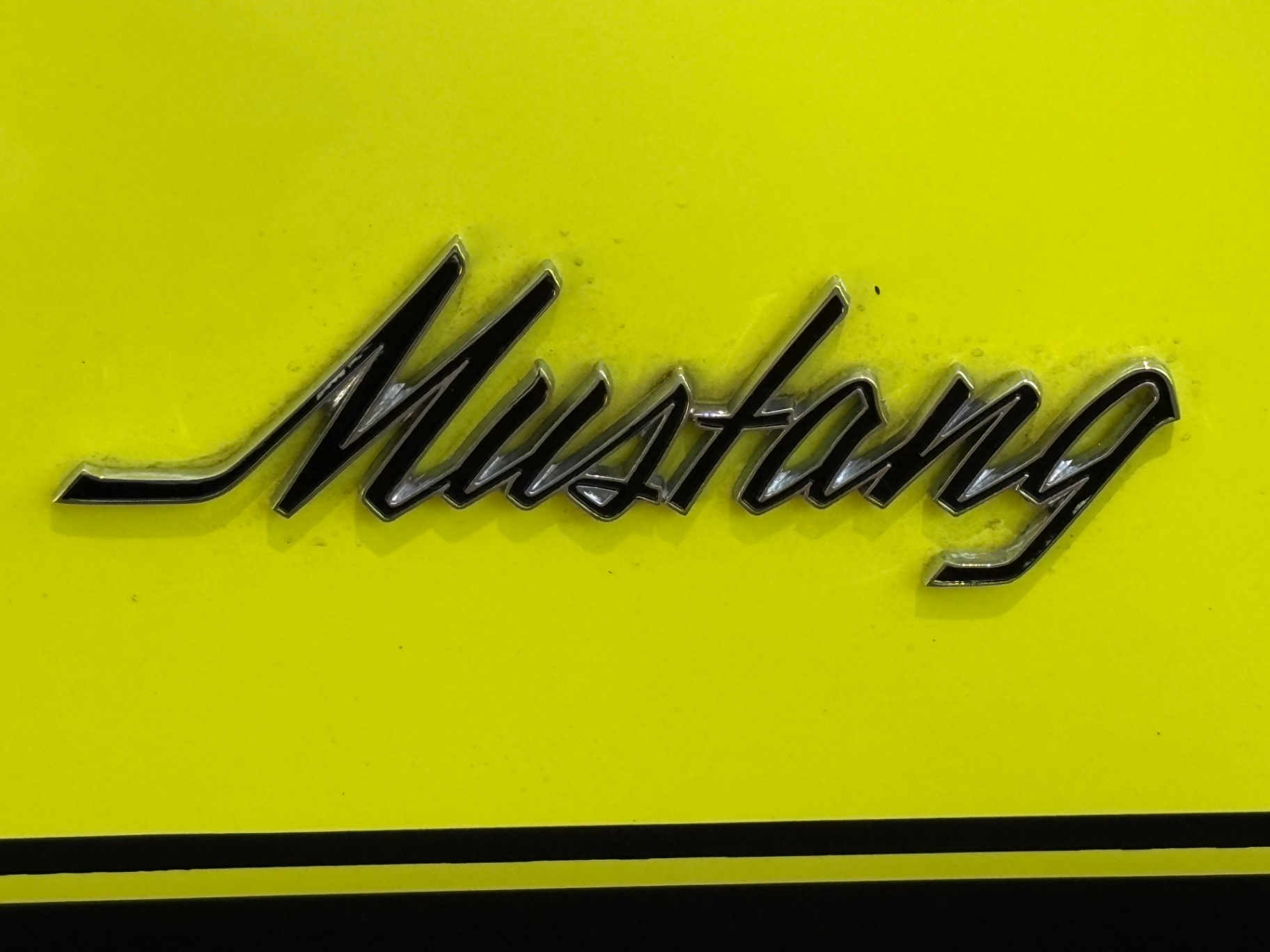
The Mustang Rally Wheels are the correct 5-spoke styled steel wheels that Ford offered as a factory or dealer option on 1971-1973 Mustangs. They are finished in the standard black with chrome trim ring and center cap and are mounted with Cooper Cobra Radial G/T tires, which carry white lettering on the outer sidewall. The black convertible top is in good condition and operates via the power mechanism. At the rear, the Mustang script badge sits on the panel between the taillights, which use the 1971-1973 three-element horizontal lens design that runs the full width of the rear fascia.
Conclusion
The 1972 Ford Mustang convertible is one of those cars that the market has not yet fully caught up with, but the numbers are straightforward: fewer than 6,500 were built, the survival rate on open cars is lower than on hardtops, and this one presents in an eye-catching factory color with a solid undercarriage and a documented original drivetrain. It is a genuine, Dearborn-built 302 convertible with power top, front discs, bucket seats, and console — the kind of feature combination that was specifically selected from the order sheet, not assembled by accident. The 1971-1973 Mustang convertible is the last of the big pony car generation and the last Mustang drop-top until 1983. That is not a footnote — it is a reason to pay attention.
If you have questions about this 1972 Ford Mustang convertible or would like to schedule a time to see it in person, call Skyway Classics at 941-254-6608. We are located in Sarasota, Florida and are glad to assist serious buyers with transportation and inspection logistics.
Disclaimer
Information found on the website is presented as given to us by the owner of the car, whether on consignment or from the owner we bought it from. Some Photos, materials for videos, descriptions and other information are provided by the consignor/seller and is deemed reliable, but Skyway Classics does not warranty or guarantee this information. Skyway Classics is not responsible for information that may incorrect or a publishing error. The decision to purchase should be based solely on the buyers personal inspection of the vehicle or by a professional inspection service prior to offer or purchase being made.
1972 Ford Mustang Convertible — Bright Lime, 302 V8, Power Top, Clean Undercarriage
Why This Car Is Special
The 1972 Ford Mustang convertible occupies a specific and increasingly recognized place in Mustang history. By 1972, Ford had been building the larger "SportsRoof" Mustang body — introduced in 1971 — for two full model years. This generation is often overshadowed by the original 1964-1970 cars in collector circles, but that perception is shifting. The 1971-1973 Mustang was the last of the true long-hood, short-deck pony car designs before the Mustang II arrived in 1974, and the convertible version is by far the rarest body style of the bunch.
Ford produced only 6,401 Mustang convertibles for the 1972 model year, making this body style significantly rarer than the hardtop or SportsRoof fastback versions built that same year. Total 1972 Mustang production across all body styles came in at just over 125,000 units — already a dramatic drop from the peak years of the mid-1960s — and the convertible represented less than 5 percent of that figure. Survivors in this color combination are rarer still.
This particular car is finished in Bright Lime, a high-visibility factory color that Ford offered on the Mustang during the early 1970s. It is paired with a black convertible top and a black vinyl interior, a combination that gives the car a sharp, high-contrast look that photographs well and reads clearly in person. The car is equipped with a front air dam, a rear deck spoiler, and hood and body stripes, all of which add visual purpose without modifying the sheetmetal. These were period-correct appearance upgrades that Ford and its dealers promoted heavily during the sport compact era.
The VIN on this car confirms it is a genuine Dearborn-built 1972 convertible with the 302 cubic inch V8, consistent with all of the listed specifications. The body code indicates the open convertible body style, and the engine code confirms the 2-barrel 302 as the factory unit — not a later swap. This kind of documentation matters when you are buying a convertible, which is exactly the body style that saw the most engine substitutions and modification over the decades.
Features List
- 302ci 2-Barrel V8
- 3-Speed Automatic Transmission
- Power Steering
- Front Disc Brakes
- Power Convertible Top
- Black Convertible Top
- Bucket Seats
- Center Console
- Rear Deck Spoiler
- Front Air Dam
- Dual Exhaust
- Mustang Rally Wheels
- Cooper Cobra Radial G/T Tires
- Hood and Body Stripes
- Wood-Grain Door Panels
- AM Radio
- Clean Undercarriage
- Bright Lime Exterior
- Black Vinyl Interior
Mechanical
The engine under the hood is the 302 cubic inch V8 fitted with a 2-barrel carburetor, which Ford designated internally as the 302-2V. In 1972, Ford switched from gross horsepower ratings to the more conservative SAE net ratings, and the 302-2V was rated at 140 net horsepower in that configuration. The engine itself is a well-proven small-block Ford unit with a long production history and excellent parts availability today. The air cleaner lid in the photos clearly shows the "302-2V" designation, confirming the original carburetor setup is intact.
Backing the 302 is a 3-speed automatic transmission, which on 1972 Mustangs was Ford's SelectShift Cruise-O-Matic. The shifter sits in the center console, which is the correct configuration for a bucket seat car of this spec. Power steering is fitted, which makes the car considerably easier to maneuver than the manual-steering base cars, particularly given the 1971-1973 body's wider and heavier front end compared to earlier Mustangs.
Braking is handled by front disc brakes, a meaningful upgrade over the four-wheel drum setup found on base 1972 Mustangs. Front discs improve stopping distances and are far more resistant to fade under repeated use. The undercarriage photos confirm a clean, solid bottom — no visible rust through or significant corrosion on the floor pans, frame rails, or suspension components. The exhaust runs dual from the rear axle back, exiting through two tips below the rear valance, which is the correct dual exhaust routing for a car of this configuration. The underside has been coated in black, and the suspension and rear axle components are visible and appear solid.
Interior
The 1972 Ford Mustang convertible interior on this car is finished entirely in black vinyl. The bucket seats are the correct configuration for a console-equipped car, and the seat upholstery shows the expected waffle-pattern vinyl insert material that Ford used on the standard Mustang interior of this period. The seats retain their shape and the chrome seat buttons are present. The rear seat is also in black vinyl with the same insert pattern.
The center console houses the SelectShift automatic shifter with its chrome handle and shift position indicator. An AM radio is fitted in the center of the dash stack. The dashboard itself uses the 1971-1973 Mustang's recessed instrument cluster layout, with the gauges set deep into large round pods on the driver's side. The cluster includes a speedometer and a combination warning light and gauge pod on the left side, which was the standard setup for non-Mach 1 Mustangs of this era.
The wood-grain door panels are one of this car's interior highlights. Each door panel carries a sizable simulated woodgrain insert trimmed in chrome, which was part of the Grande trim package or available as a dealer-installed option on standard convertibles. The panels are in good shape with the chrome bead around the woodgrain applique still intact. A convertible top control switch is visible on the lower dashboard, and the power top mechanism was a factory option that raises and lowers the black cloth top at the push of a button.
Exterior
The Bright Lime paint on this 1972 Ford Mustang convertible is exactly what the name describes — a sharp, acid-toned yellow-green that Ford offered in the early 1970s as part of a broader push toward high-visibility "grabber" colors. These colors were factory options intended to appeal to younger buyers and were used across multiple Ford and Mercury performance models during this period. Bright Lime sits in that same family as Competition Orange, Grabber Blue, and Grabber Yellow — all colors that have aged well in the collector market because they are period-specific and unambiguous.
The body carries hood stripes running in contrasting black down the center of the hood and continuing as side stripes along the body. These are the type of appearance graphics that Ford sold through its dealer accessory program and were frequently ordered on sport-configured Mustangs of this generation. The front air dam is the low-profile urethane piece that sits below the bumper and gives the front end a more purposeful stance. The rear deck spoiler is the lip-style unit that mounts at the trailing edge of the trunk lid.
The Mustang Rally Wheels are the correct 5-spoke styled steel wheels that Ford offered as a factory or dealer option on 1971-1973 Mustangs. They are finished in the standard black with chrome trim ring and center cap and are mounted with Cooper Cobra Radial G/T tires, which carry white lettering on the outer sidewall. The black convertible top is in good condition and operates via the power mechanism. At the rear, the Mustang script badge sits on the panel between the taillights, which use the 1971-1973 three-element horizontal lens design that runs the full width of the rear fascia.
Conclusion
The 1972 Ford Mustang convertible is one of those cars that the market has not yet fully caught up with, but the numbers are straightforward: fewer than 6,500 were built, the survival rate on open cars is lower than on hardtops, and this one presents in an eye-catching factory color with a solid undercarriage and a documented original drivetrain. It is a genuine, Dearborn-built 302 convertible with power top, front discs, bucket seats, and console — the kind of feature combination that was specifically selected from the order sheet, not assembled by accident. The 1971-1973 Mustang convertible is the last of the big pony car generation and the last Mustang drop-top until 1983. That is not a footnote — it is a reason to pay attention.
If you have questions about this 1972 Ford Mustang convertible or would like to schedule a time to see it in person, call Skyway Classics at 941-254-6608. We are located in Sarasota, Florida and are glad to assist serious buyers with transportation and inspection logistics.
Disclaimer
Information found on the website is presented as given to us by the owner of the car, whether on consignment or from the owner we bought it from. Some Photos, materials for videos, descriptions and other information are provided by the consignor/seller and is deemed reliable, but Skyway Classics does not warranty or guarantee this information. Skyway Classics is not responsible for information that may incorrect or a publishing error. The decision to purchase should be based solely on the buyers personal inspection of the vehicle or by a professional inspection service prior to offer or purchase being made.
1972 Ford
Mustang Base
Why Choose Skyway Classics?
Explore our curated inventory of classic and collector cars—thoughtfully selected, ready to drive, and supported by experts who make ownership simple.
Expert Curation
Every vehicle is hand-selected by our experts for quality, authenticity, and investment potential.
Fast Transactions
Streamlined buying and selling process with quick financing and immediate delivery options.
Only National Dealer With Classic Service & Repair
We’re the only national dealership that services and repairs the classics we sell—before and after the sale.
Nationwide Network
Access to our extensive network of collectors, restorers, and classic car enthusiasts nationwide.
Concierge Ownership Support
From financing and insurance to paperwork, shipping, and titling—we handle the details so you can enjoy the drive.
Passion-Driven Service
We're classic car enthusiasts first, providing personalized service with genuine passion for the hobby.