
1956 Chevrolet
Bel Air Base

1956 Chevrolet Bel Air — Low-Mileage Four-Door with 350 V8 and Honest Patina
Why This Car Is Special
The 1956 Chevrolet Bel Air occupies a specific and well-earned place in postwar American automotive history. It was the second year of the legendary Tri-Five generation — the series that ran from 1955 through 1957 — and in many ways it was the most refined of the three. Chevrolet addressed criticisms of the 1955 model by redesigning the hood, grille, and rear fender treatments, giving the 1956 a more horizontal look with a wider, more aggressive front end. The parking lights moved into the bumper, the hood was restyled with a modest forward extension, and the rear fenders gained a revised two-tone sweep. It was a more mature design, and the buying public responded — Chevrolet sold over 1.4 million cars that model year, with the Bel Air serving as the top-of-the-line trim above the Two-Ten and One-Fifty.
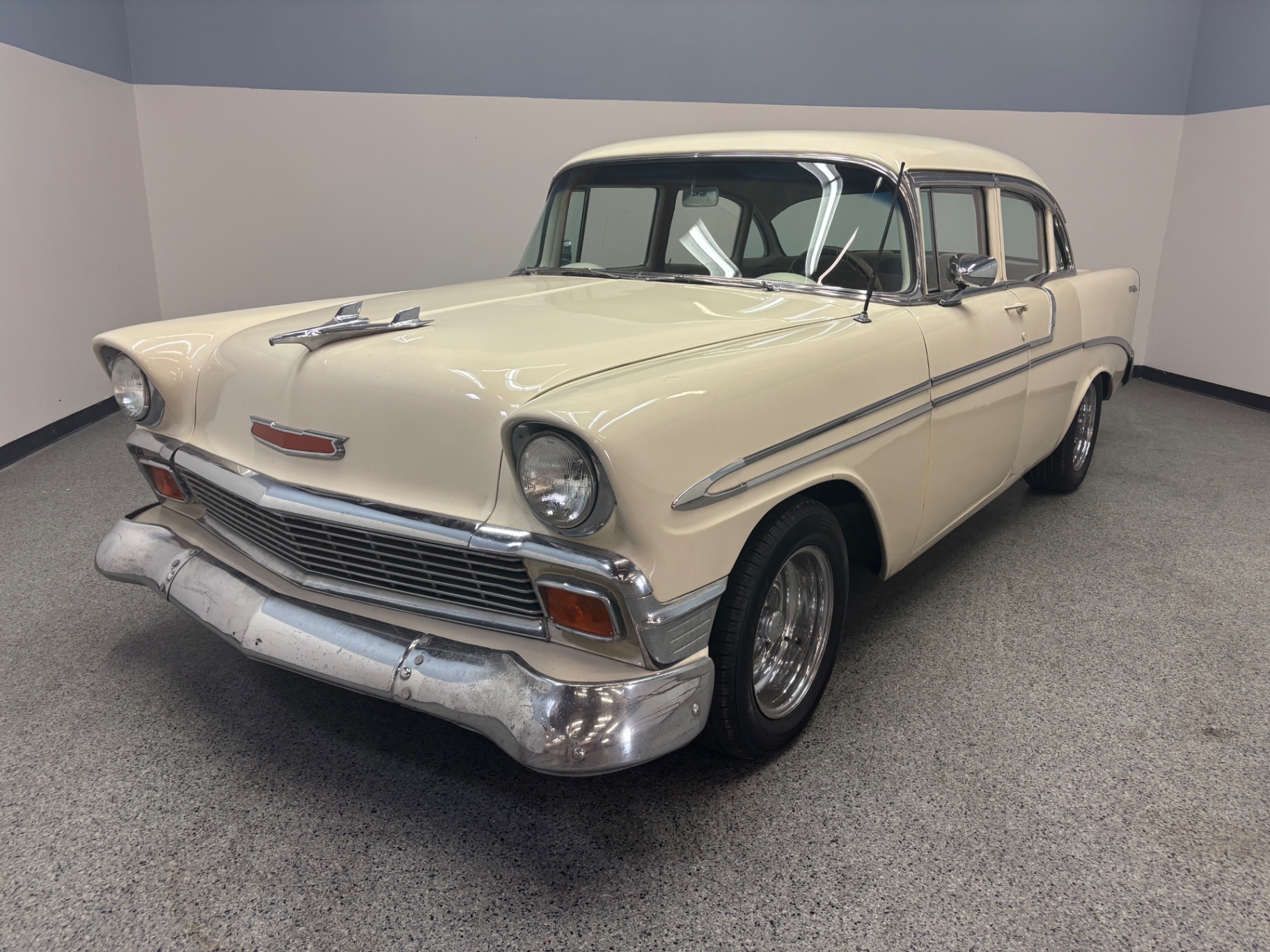
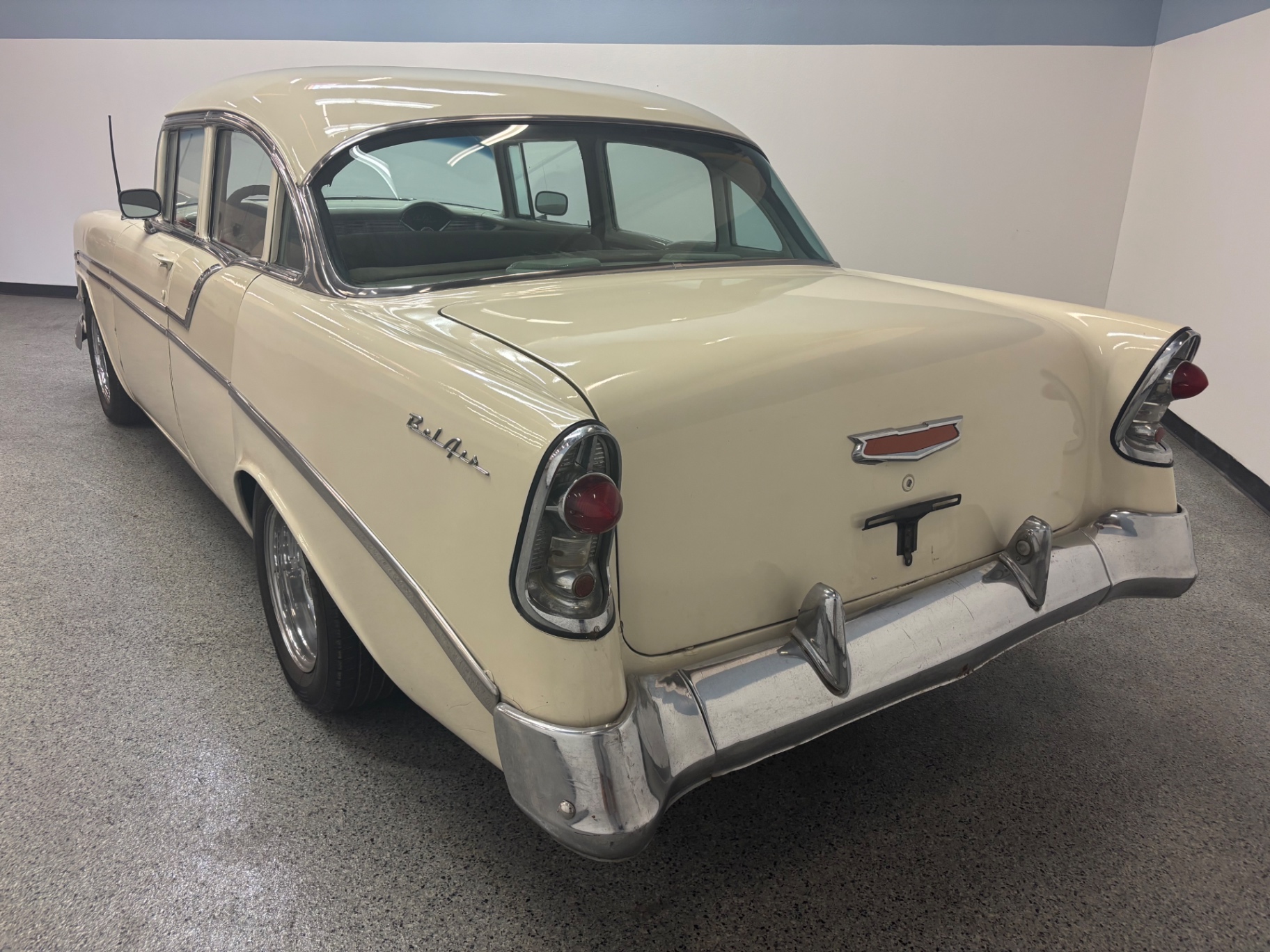
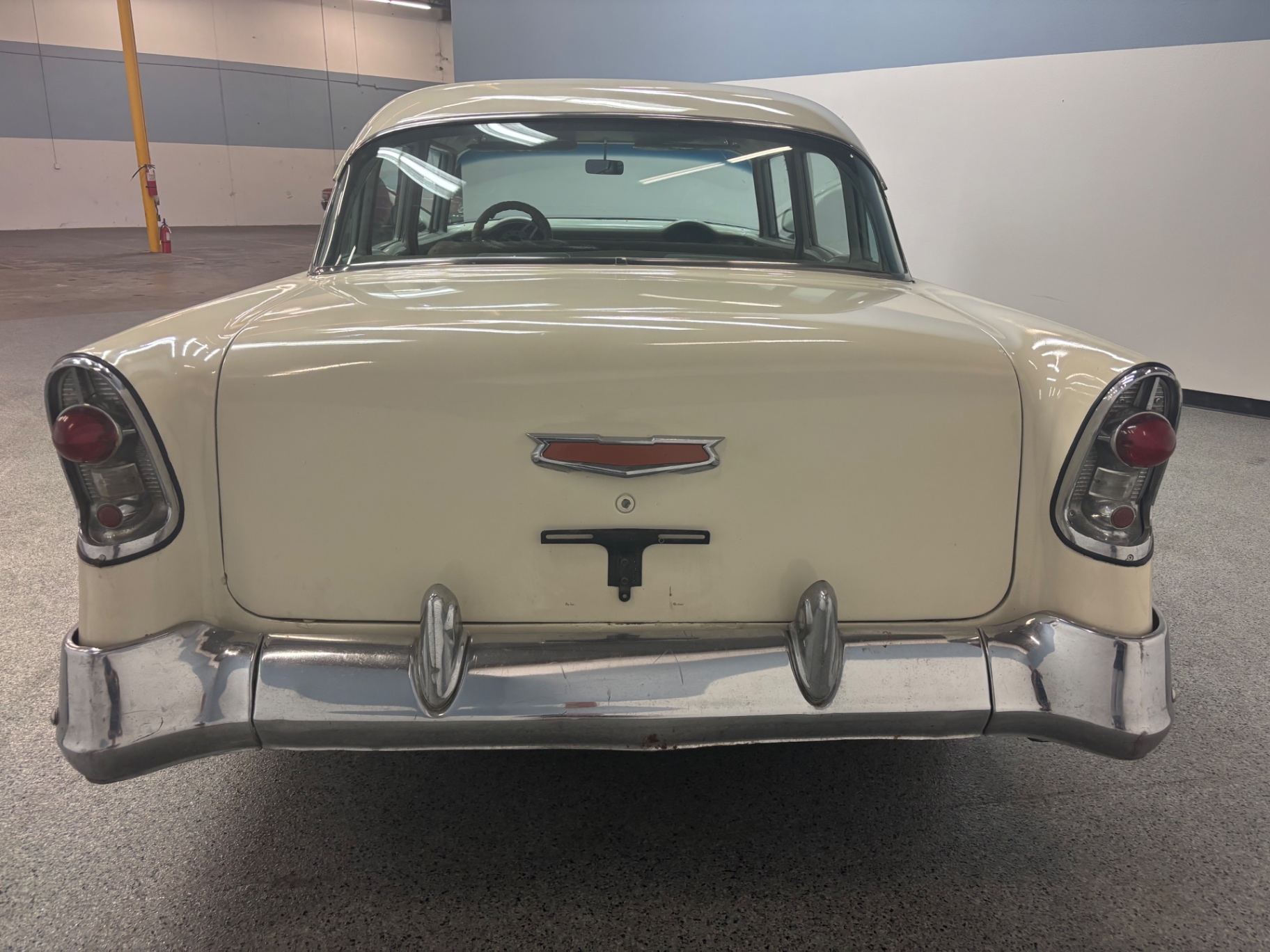
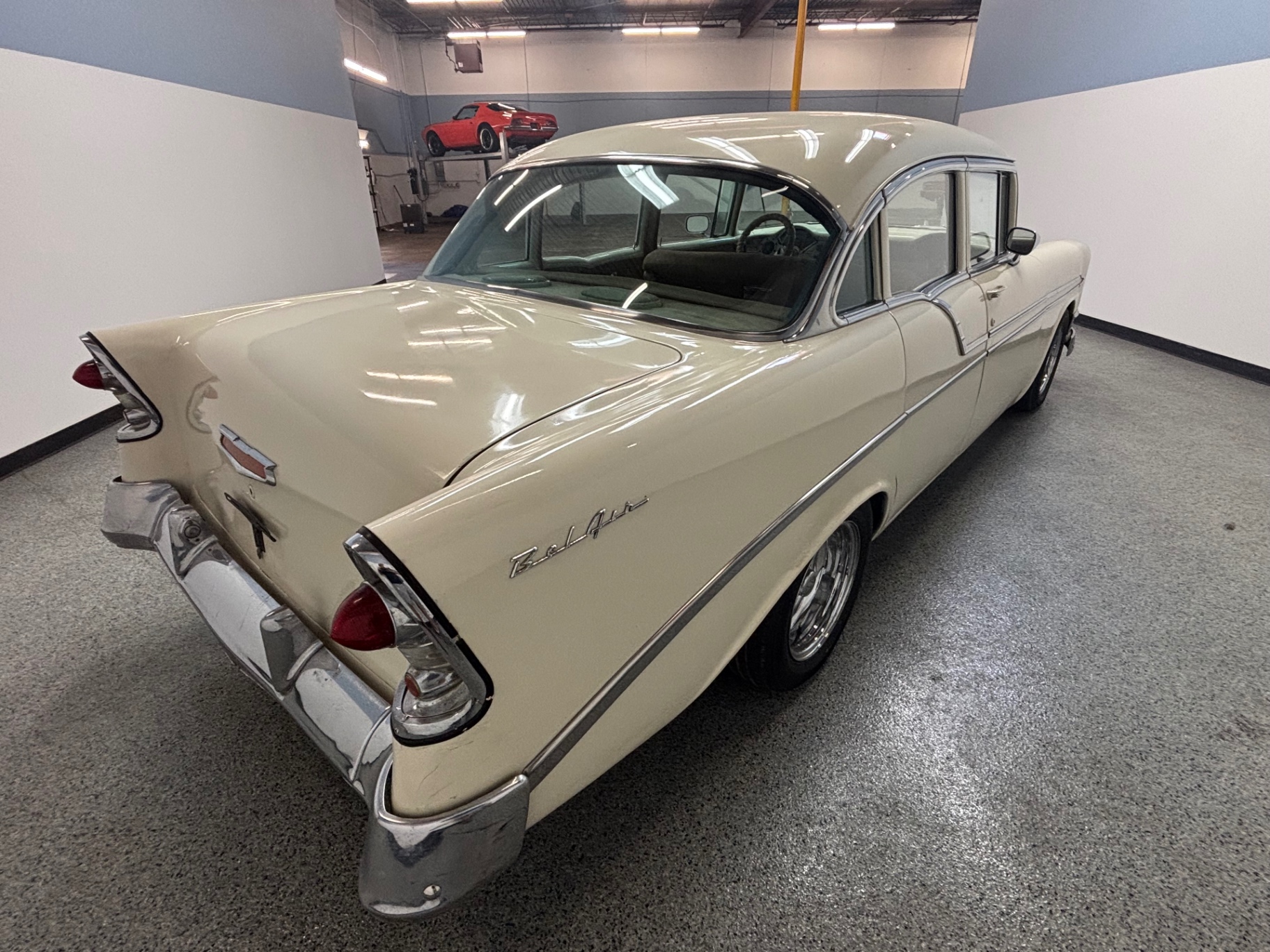
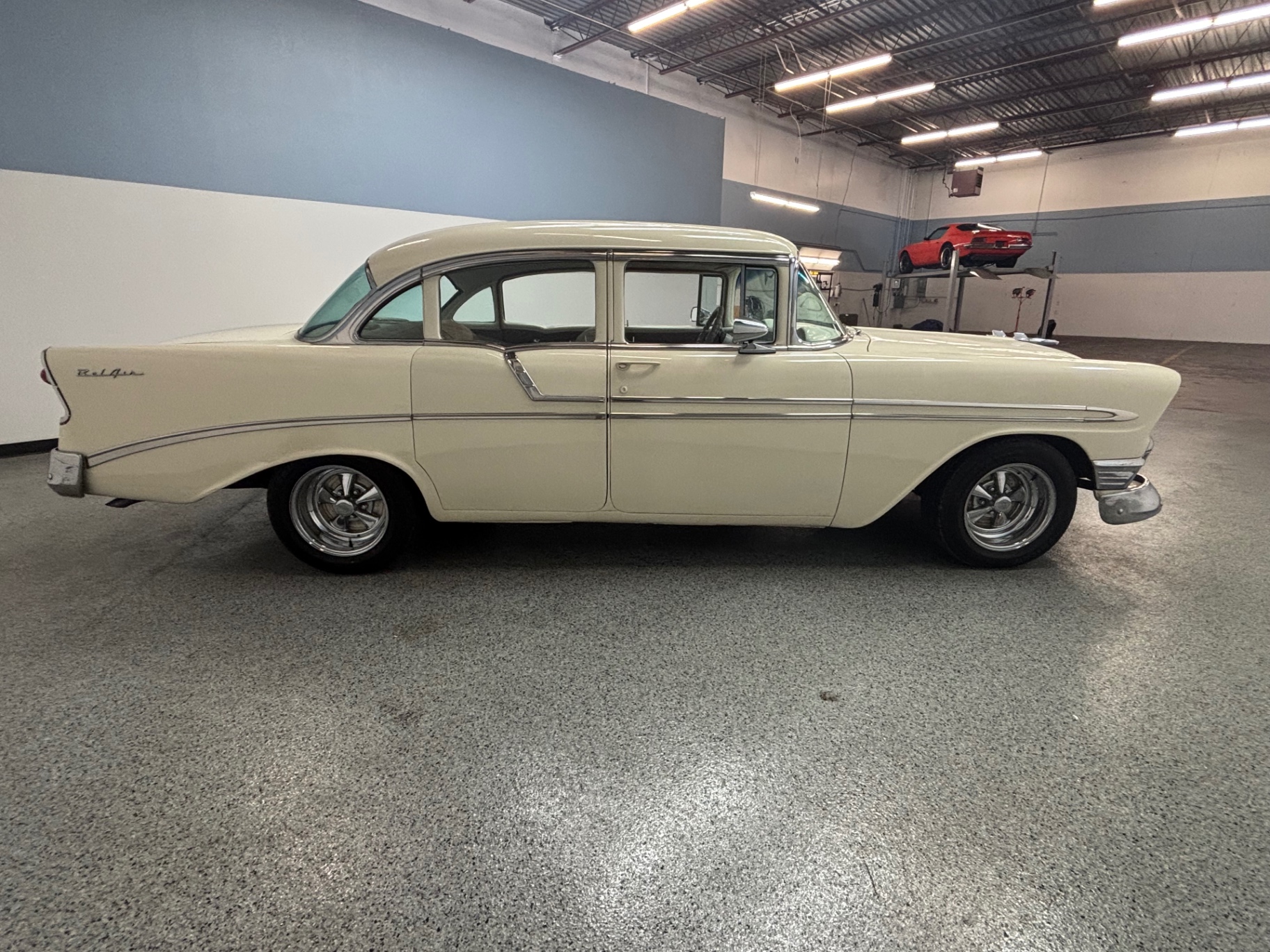
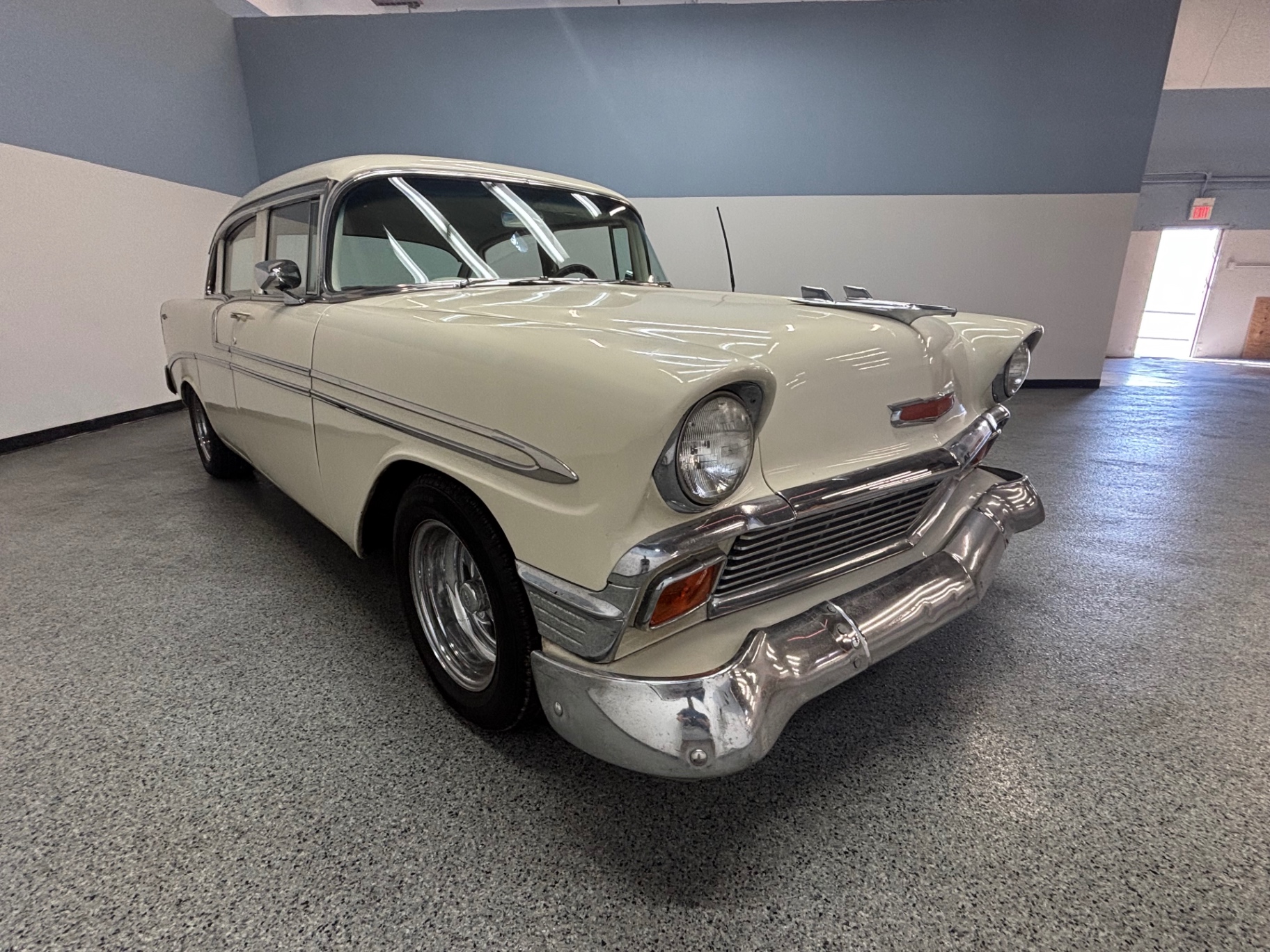
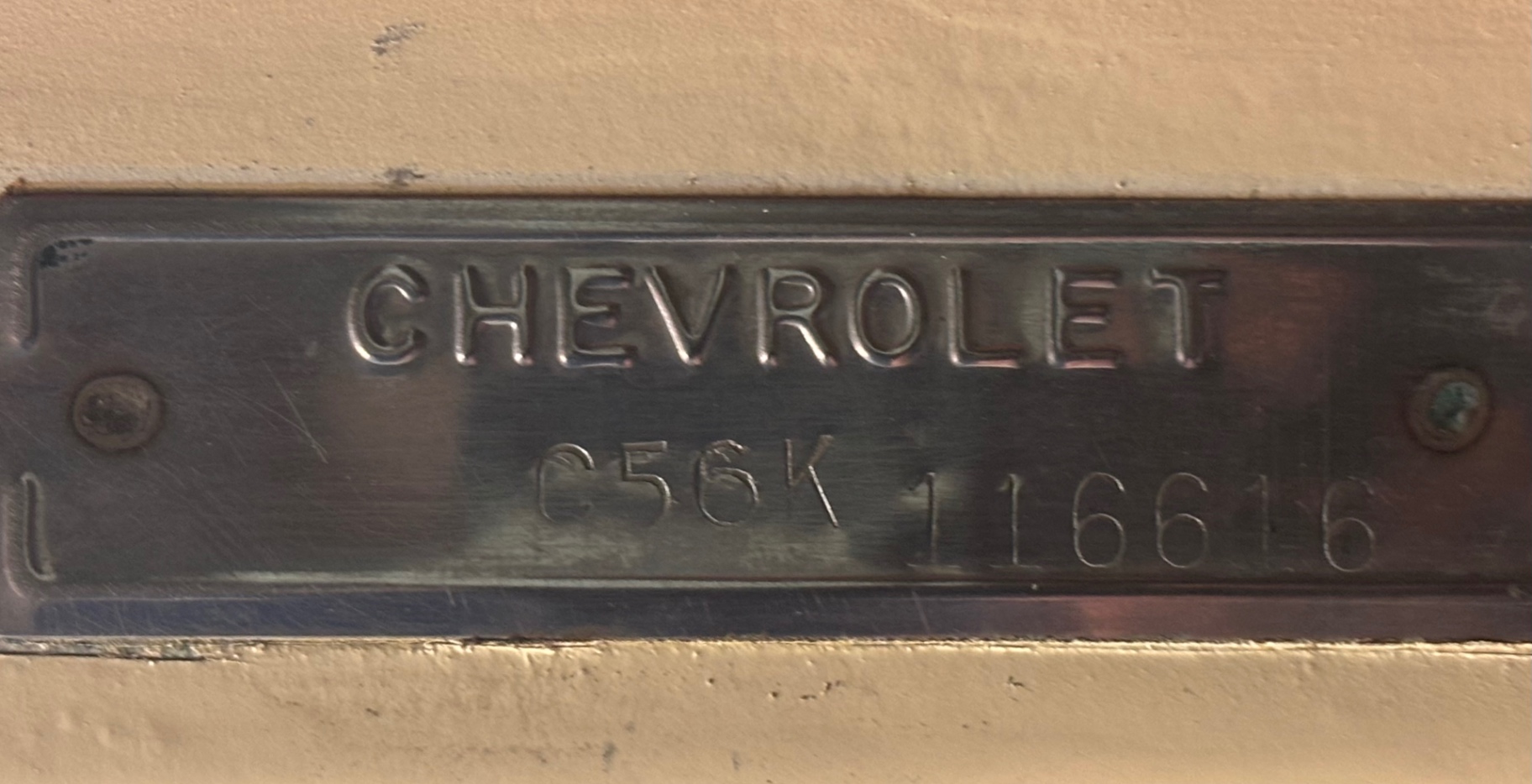
This particular 1956 Chevrolet Bel Air is a four-door sedan, which is confirmed by the VIN character indicating the Flint, Michigan assembly plant and the four-door sedan body style code. It carries just 20,000 actual miles, a figure that places it firmly in the category of a long-stored, lightly-used survivor rather than a restored show car. The body retains its original Bel Air badging and its Body by Fisher tag, both intact and in place. The exterior is Ivory, and the combination with the tan interior gives this car a warm, period-correct palette that suits it well.
What makes this Bel Air particularly interesting is how it has been developed over the years. Rather than being restored to factory spec, it has been built as a driver — fitted with a Chevrolet 350 cubic inch V8, upgraded suspension, a floor-shifted automatic transmission, and a dual exhaust system. It is not a show car. It is a well-sorted, mechanically updated classic that someone has clearly enjoyed and worked on thoughtfully. For a buyer who wants to get in and drive a Tri-Five Chevy without taking on a full restoration project, this car makes a compelling case.
Features List
- 350 cubic inch V8 engine
- Four-barrel carburetor
- Alternator conversion
- Summit Racing air cleaner
- Black valve covers with chrome Bowtie emblems
- Automatic transmission with floor shifter
- Dual exhaust system
- Upgraded blue shocks, front and rear
- Cragar S/S chrome wheels
- Custom plaid cloth bench seats, front and rear
- Tan cloth door panels with chrome trim strips
- Brown carpet flooring throughout cabin and trunk
- Aftermarket GT steering wheel
- Auxiliary gauge cluster (three-gauge panel, dash-mounted)
- Front door speakers, rear door speakers, and rear deck speakers
- Lap seat belts installed front and rear
- Chrome front and rear bumpers
- Original Bel Air badging
- Body by Fisher tag present
- Ivory exterior
- 20,000 actual miles
Mechanical
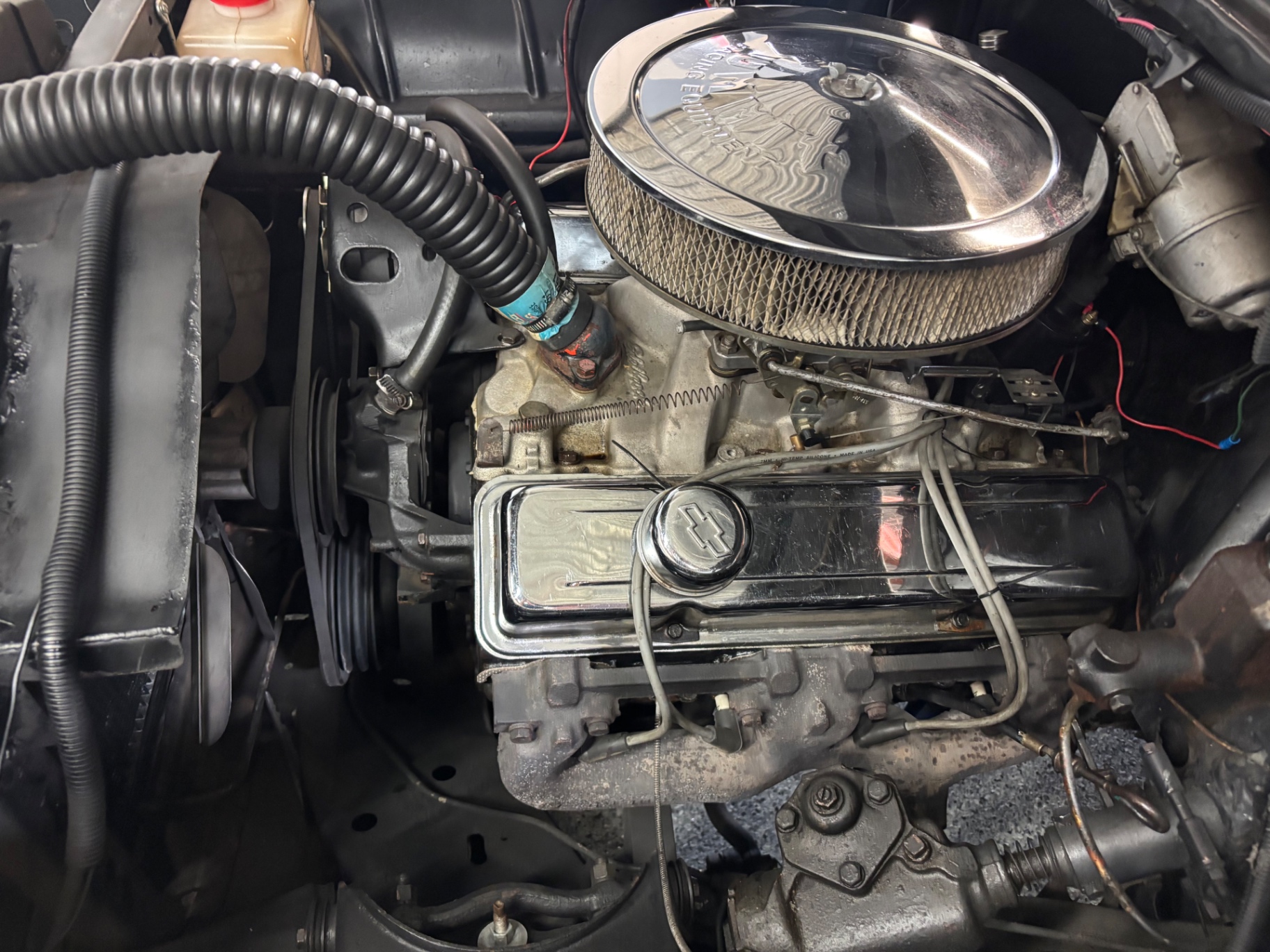
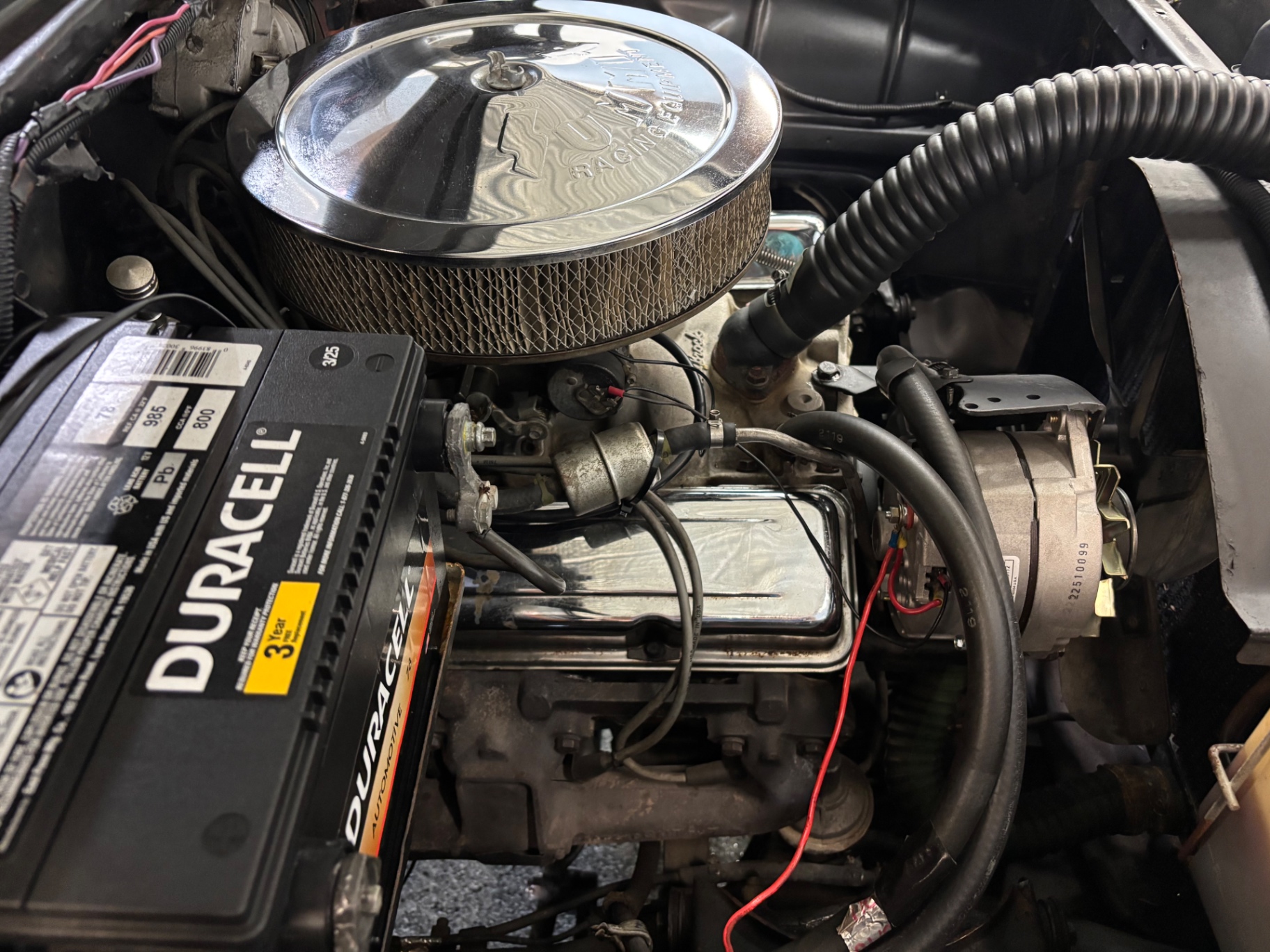
Under the hood sits a Chevrolet 350 cubic inch small-block V8, the engine that needs no introduction to anyone familiar with American performance cars. The 350 was introduced in 1967 and became the backbone of Chevrolet's engine lineup for decades. Swapping one into a Tri-Five Bel Air is one of the most common and practical engine upgrades possible — parts are everywhere, mechanics know them cold, and the power increase over the original 235 cubic inch Blue Flame six or even the original 265 V8 is substantial.
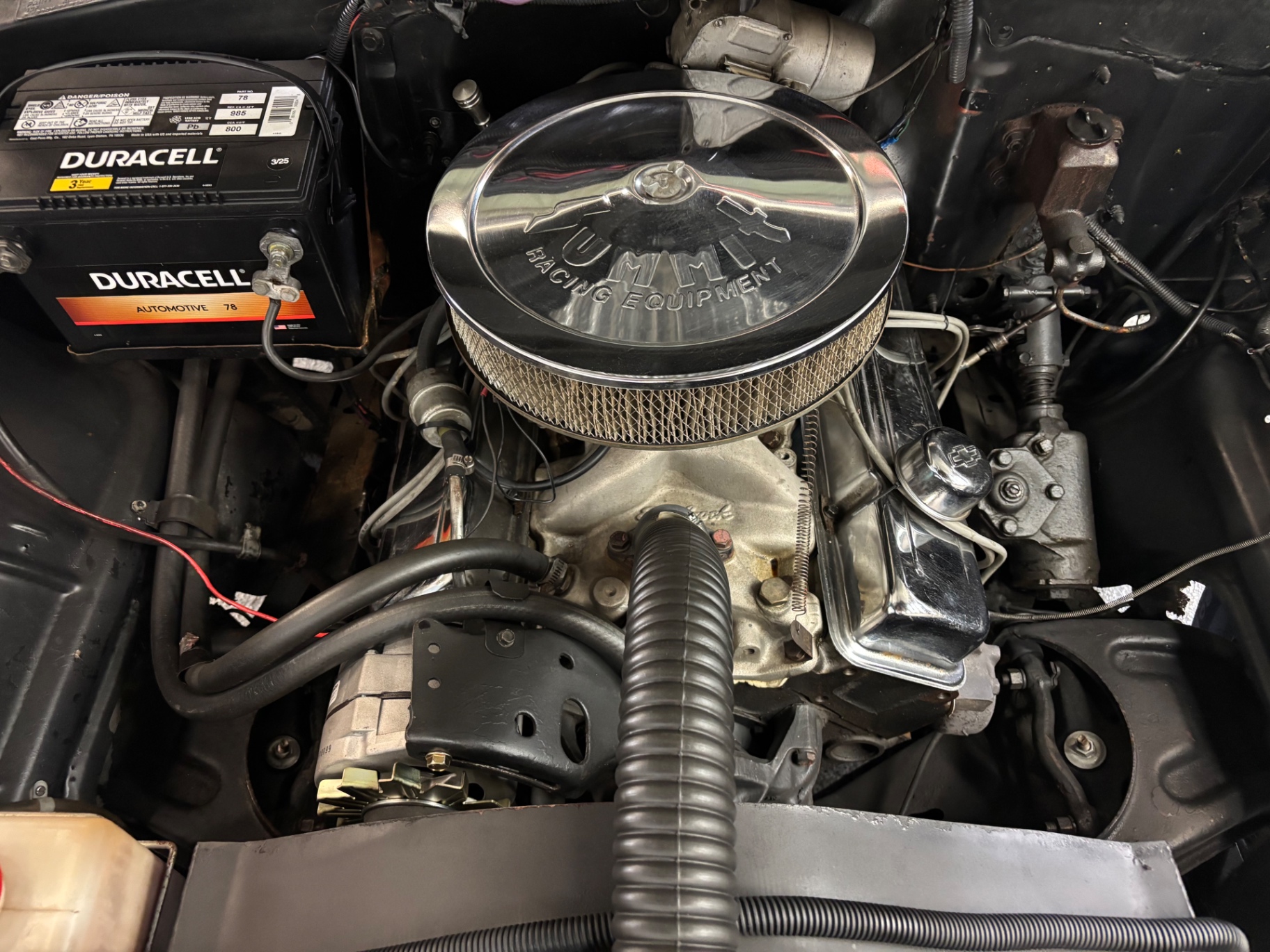
The 350 here is fed by a four-barrel carburetor topped with a Summit Racing air cleaner. The valve covers are black with chrome Bowtie logos, giving the engine bay a clean, purposeful appearance without going overboard. The original generator has been replaced with an alternator, which is a practical and widely recommended upgrade for a car that will be driven regularly — alternators charge more efficiently at idle and low RPM than the original generator setup, and they are far more reliable in day-to-day use.
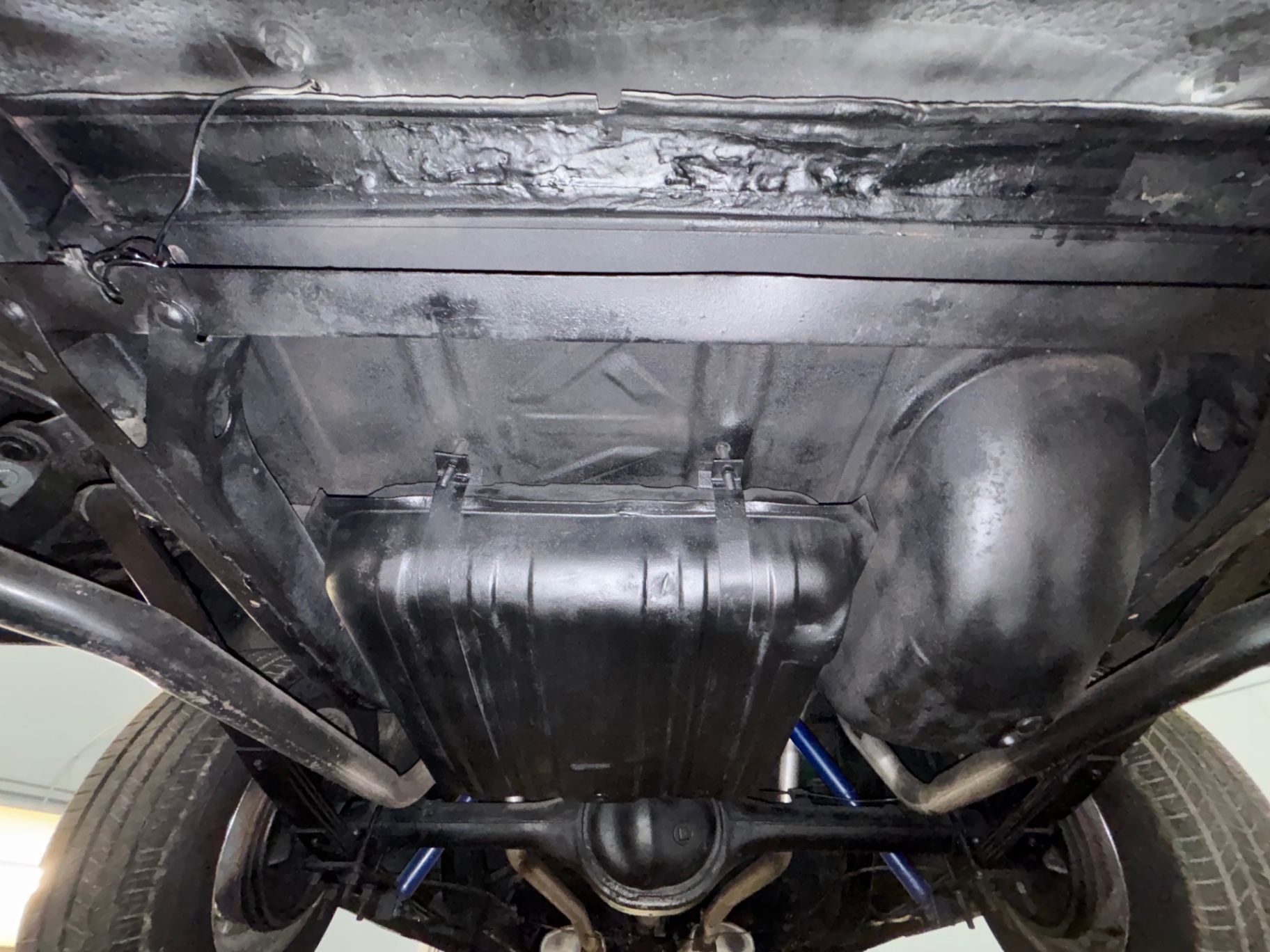
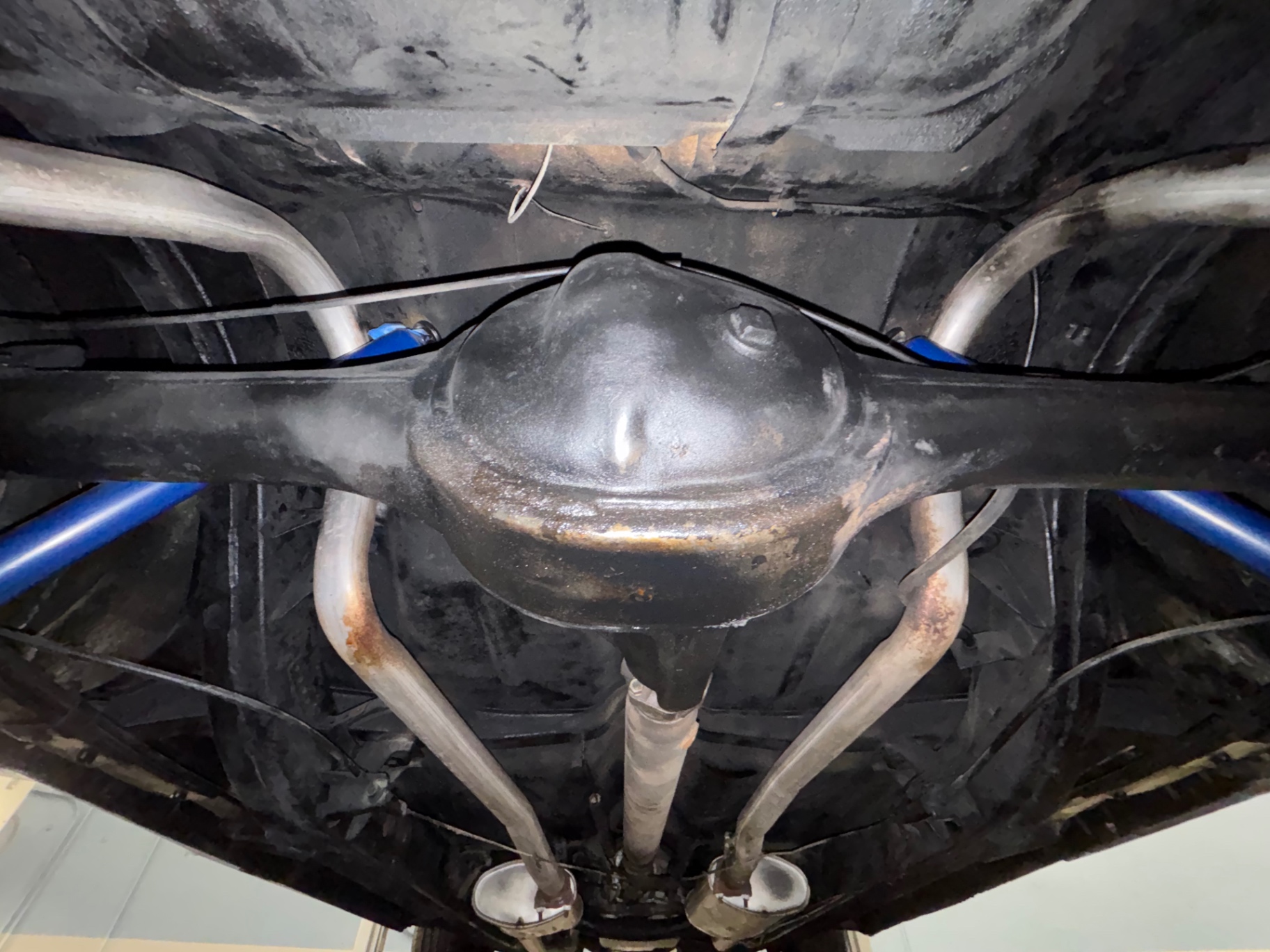
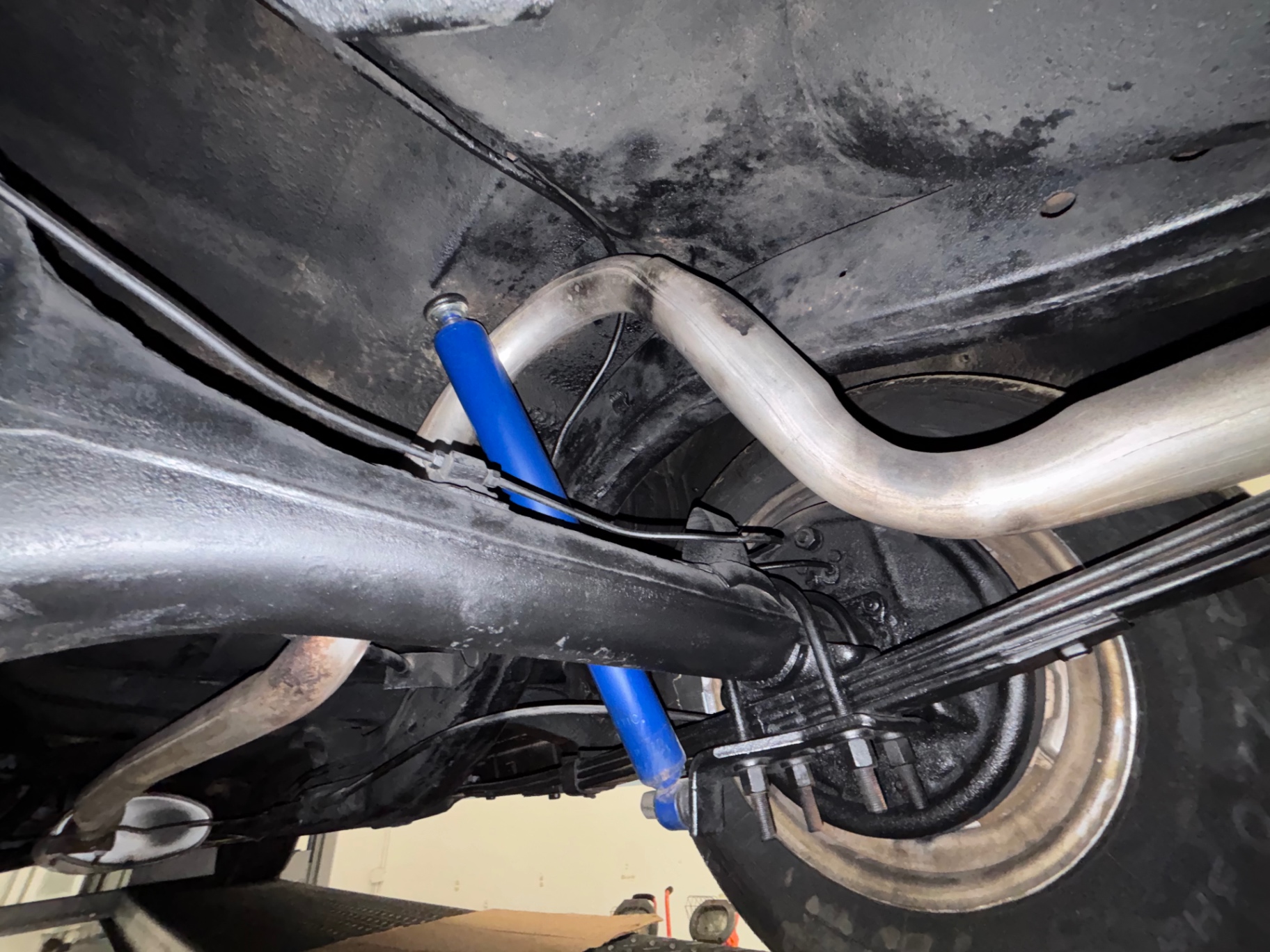
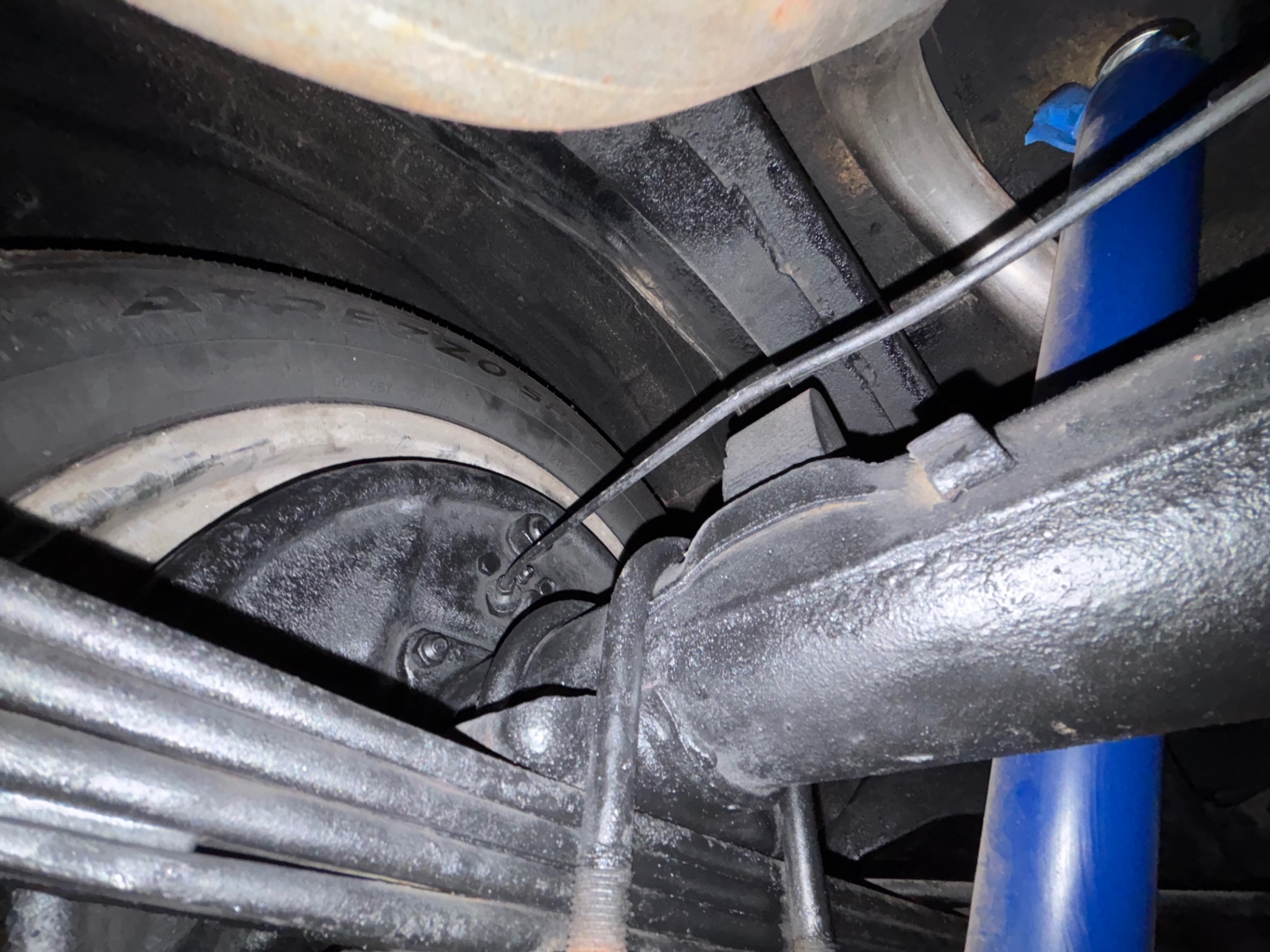
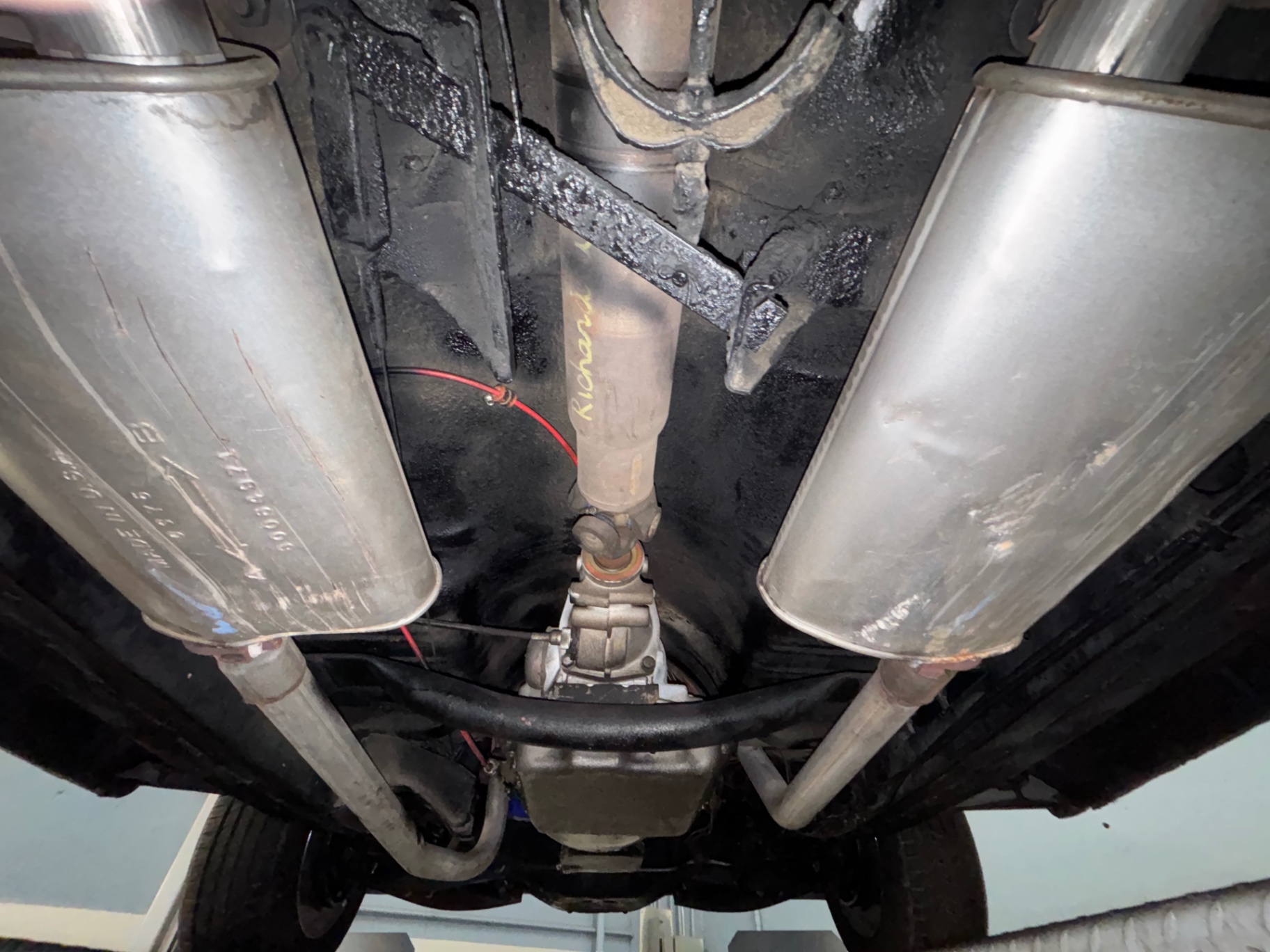
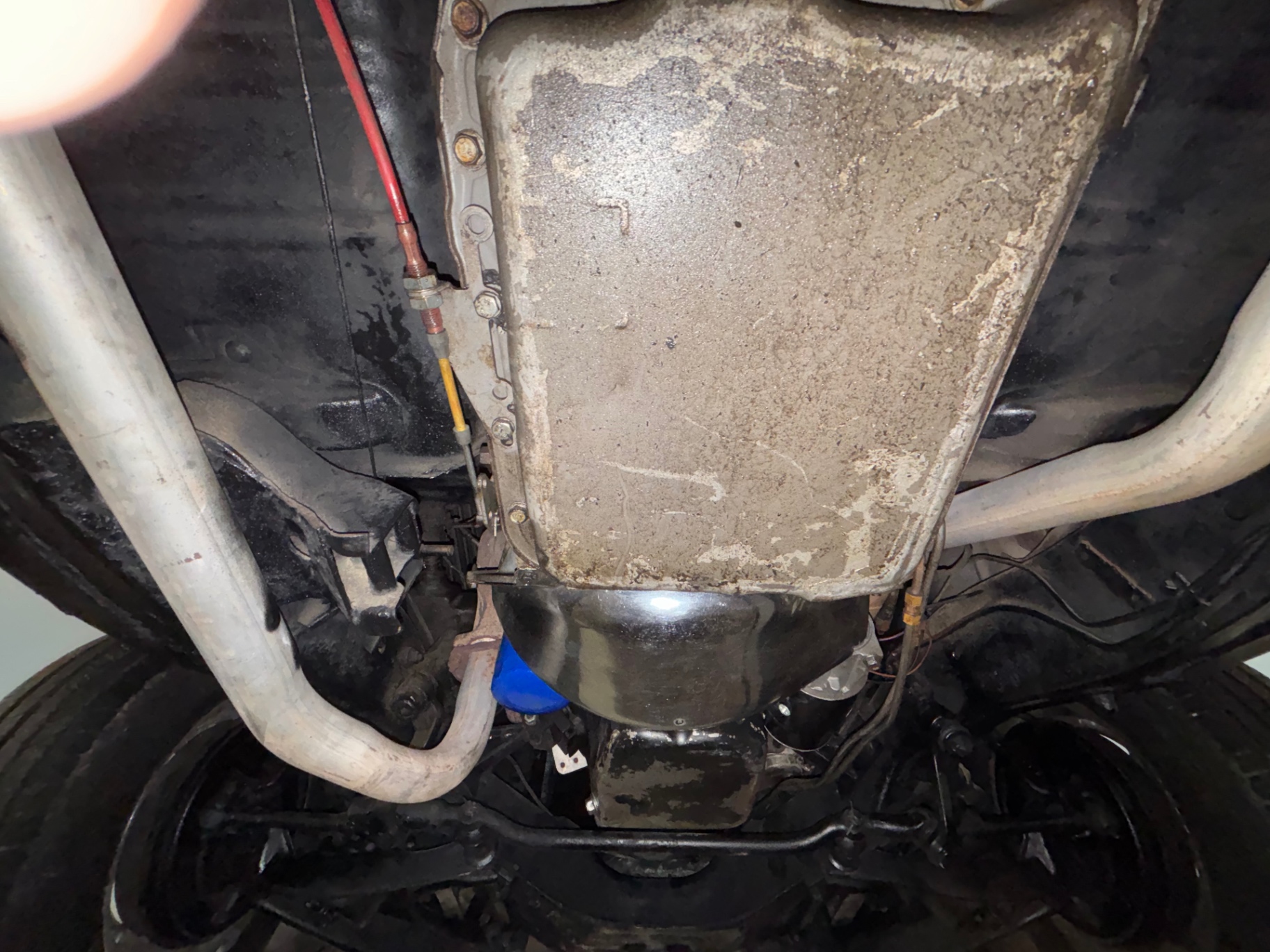
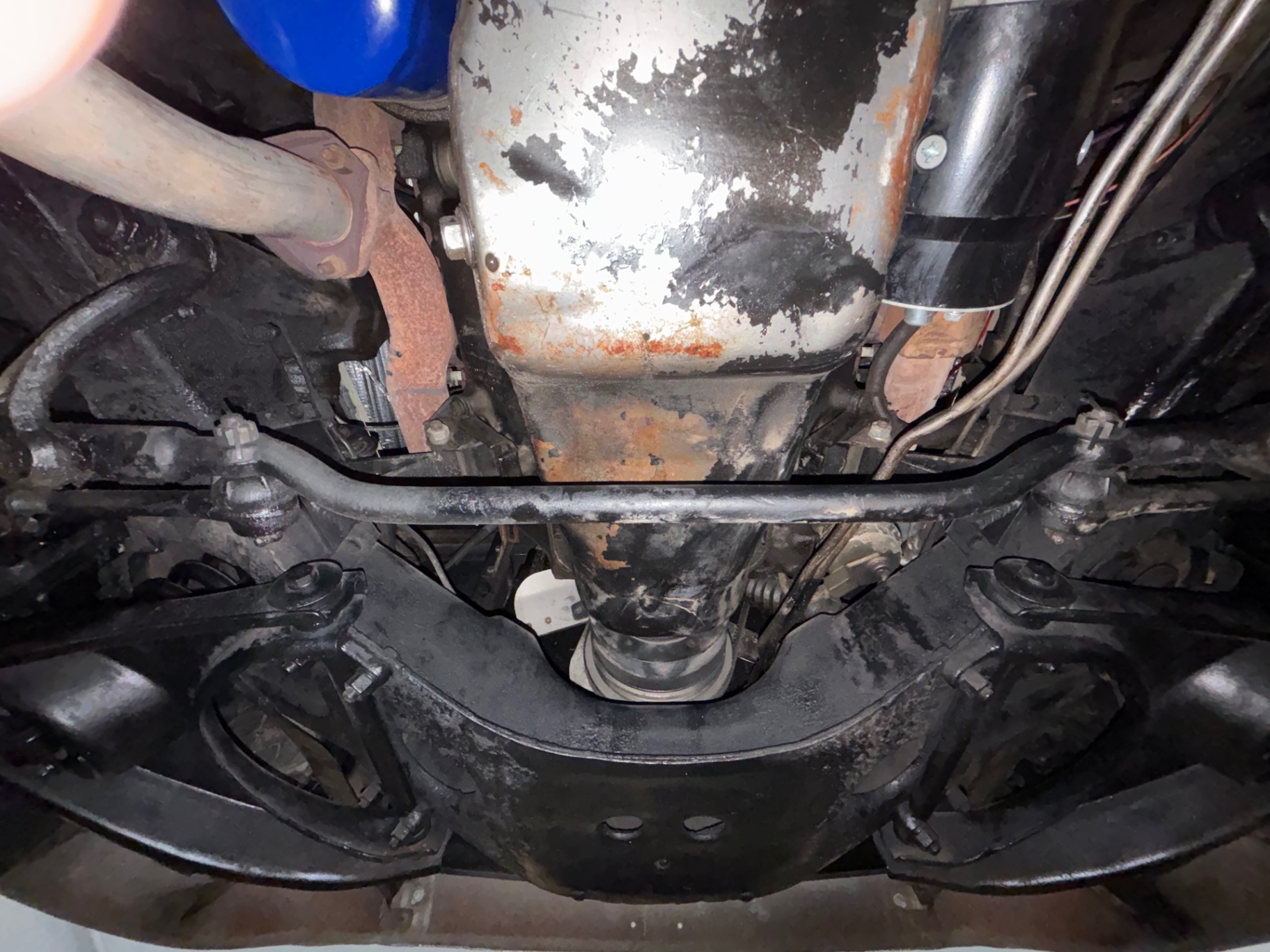
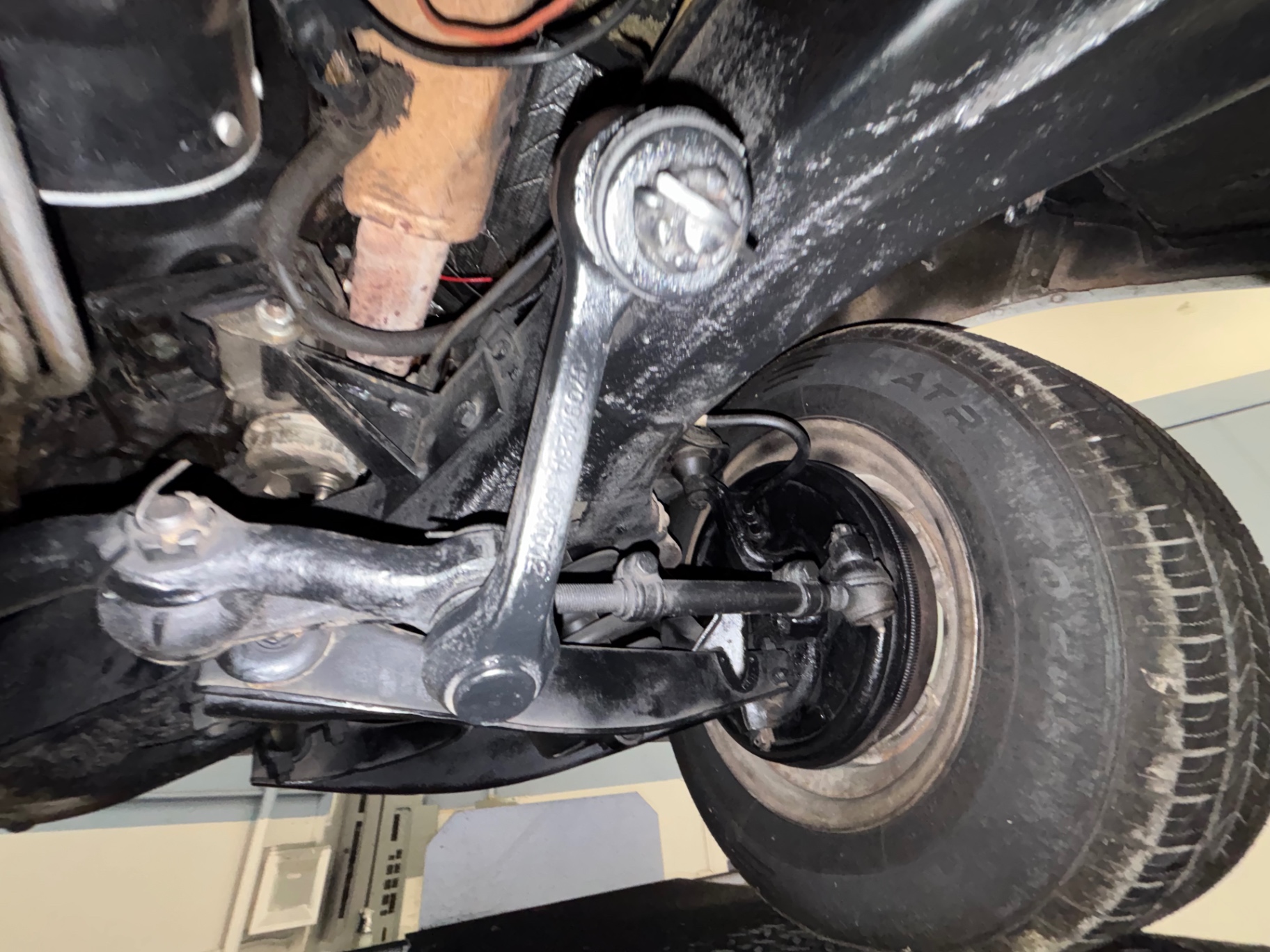
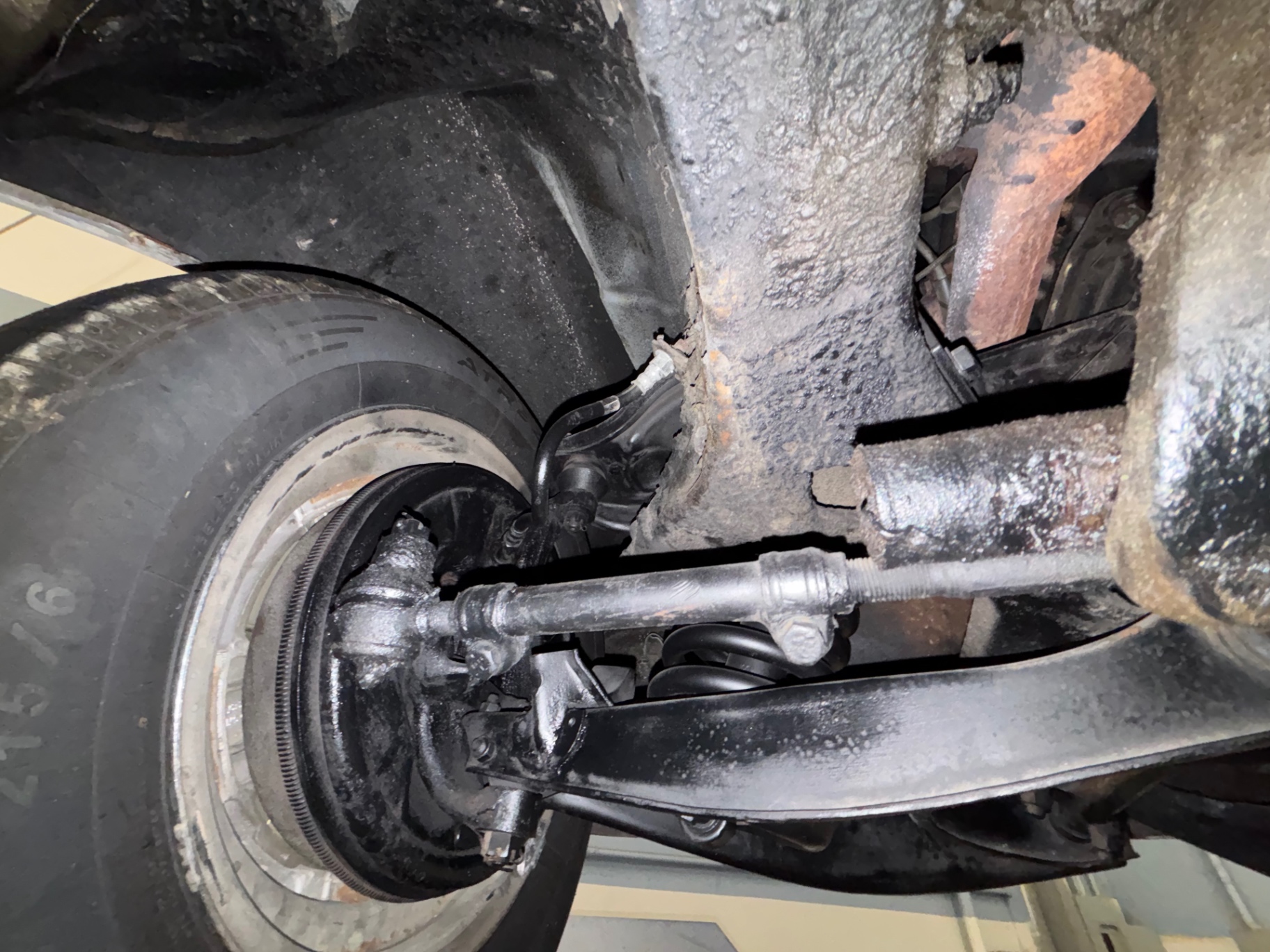
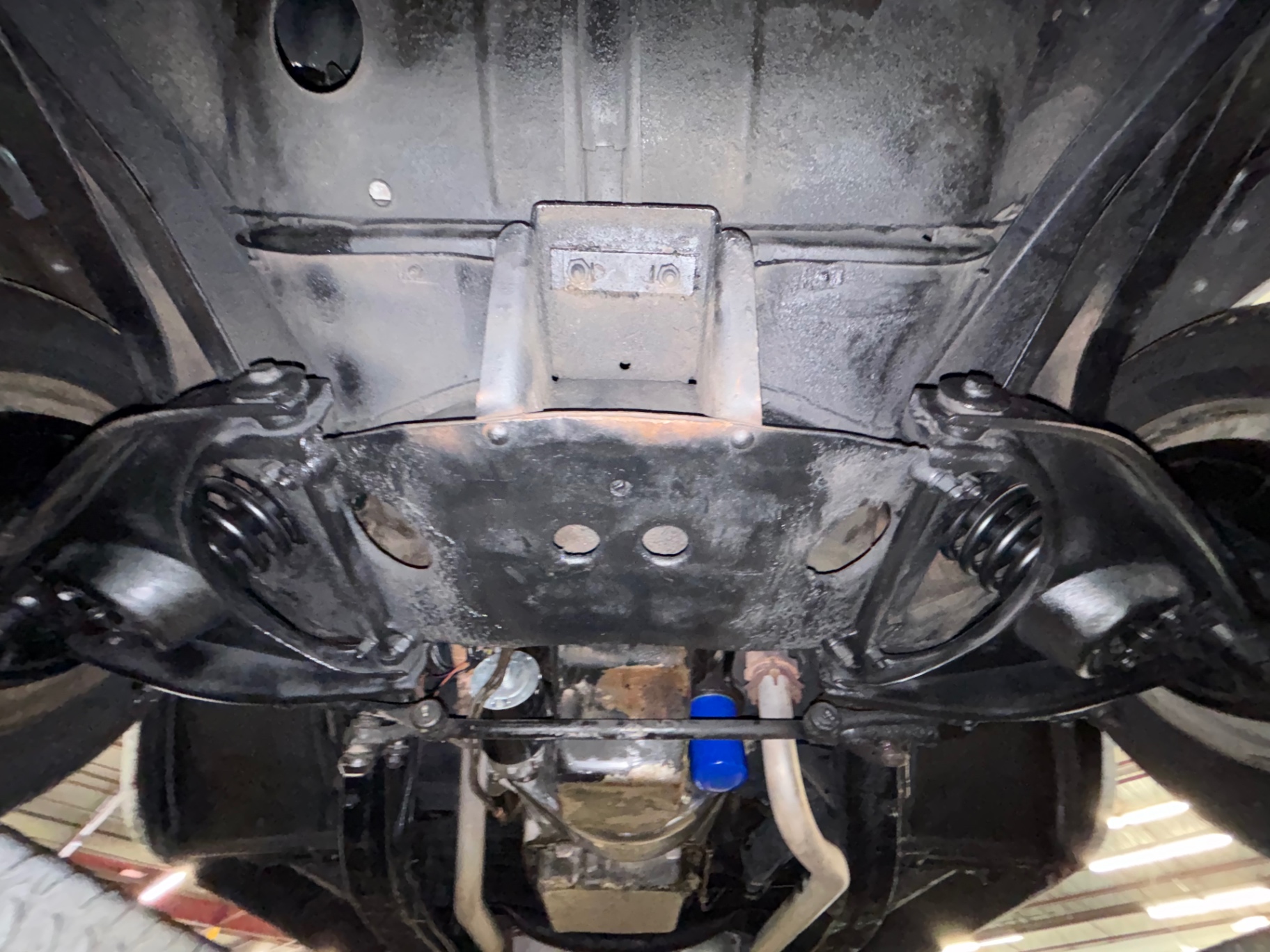
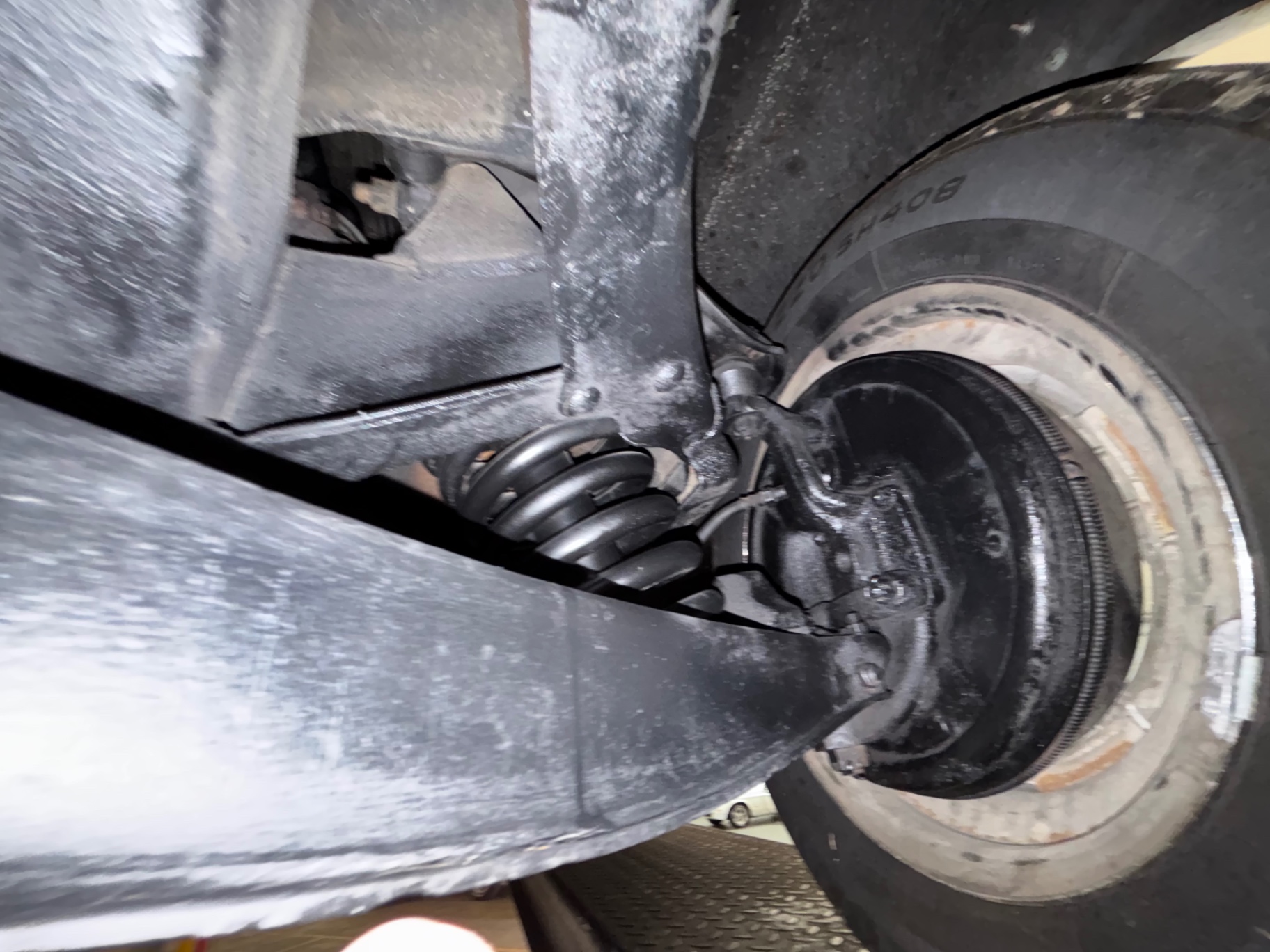
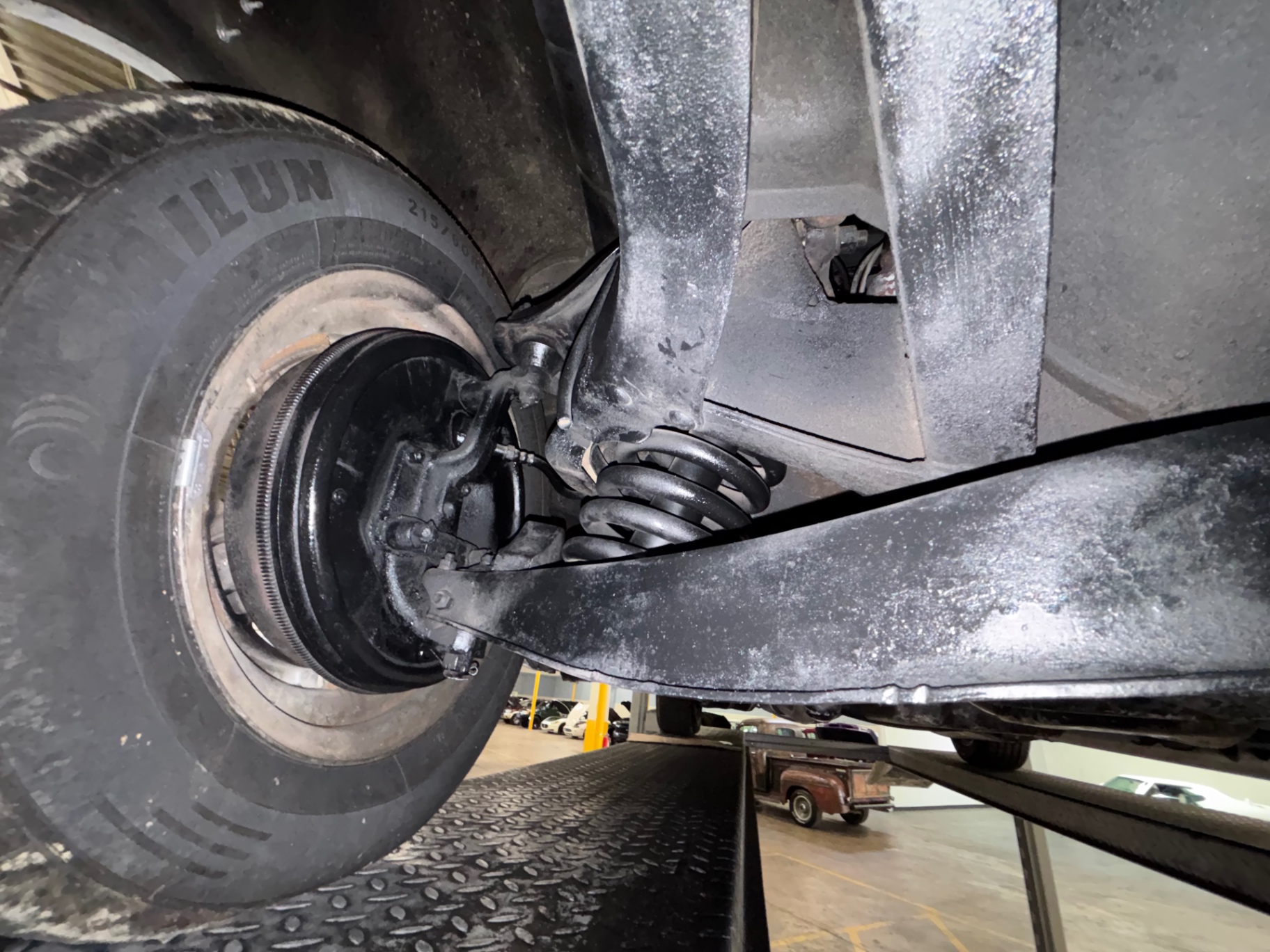
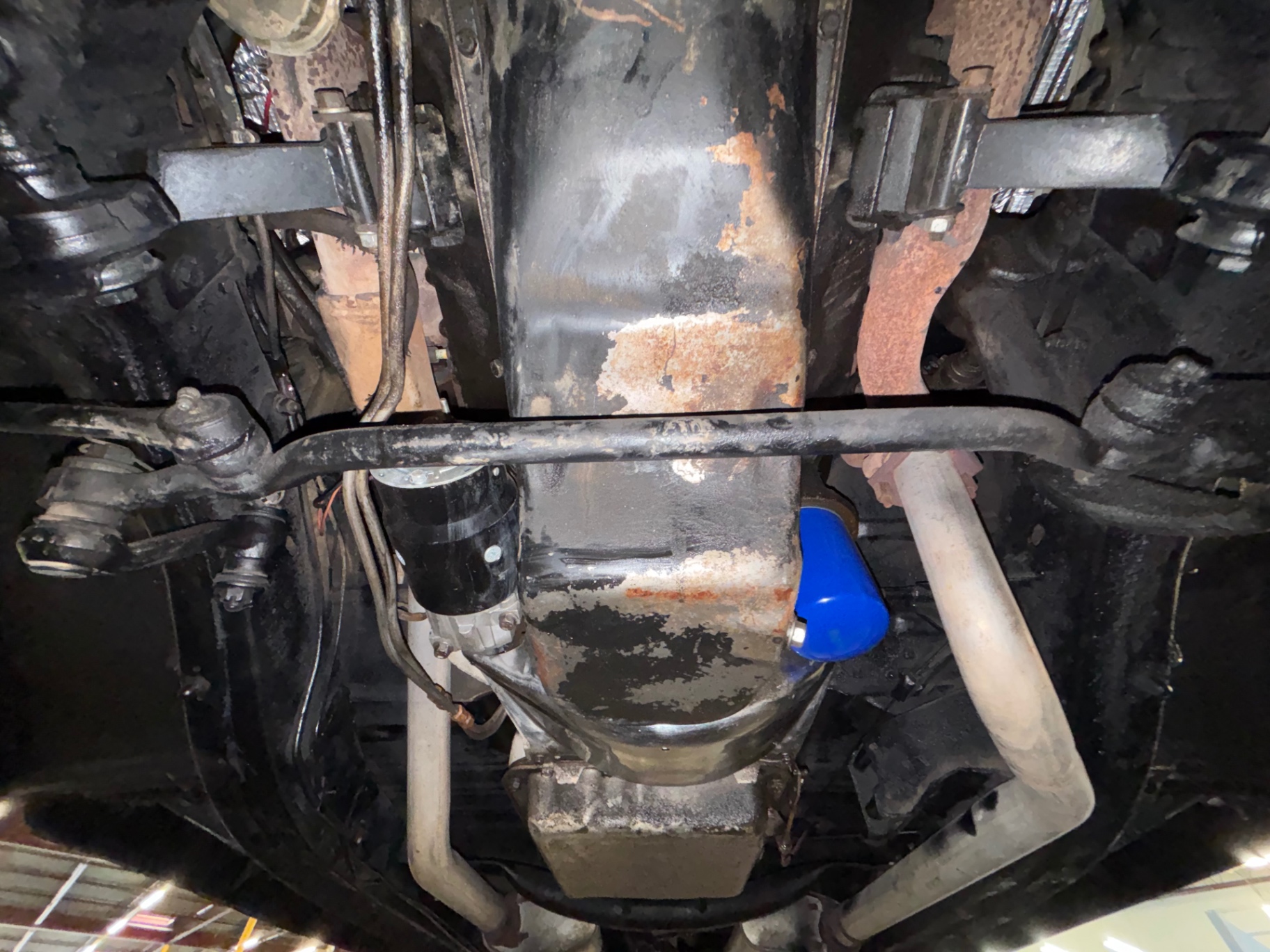
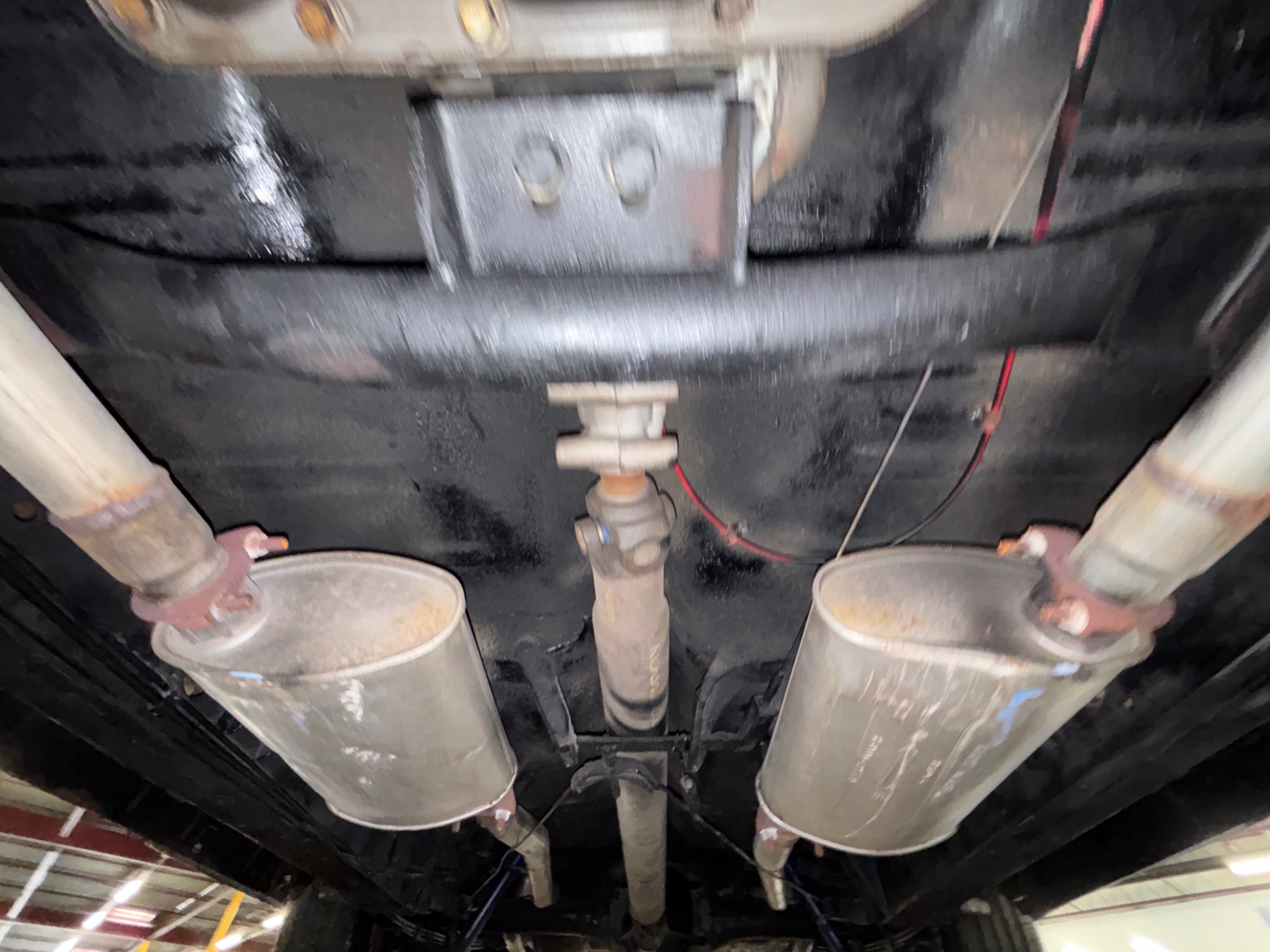
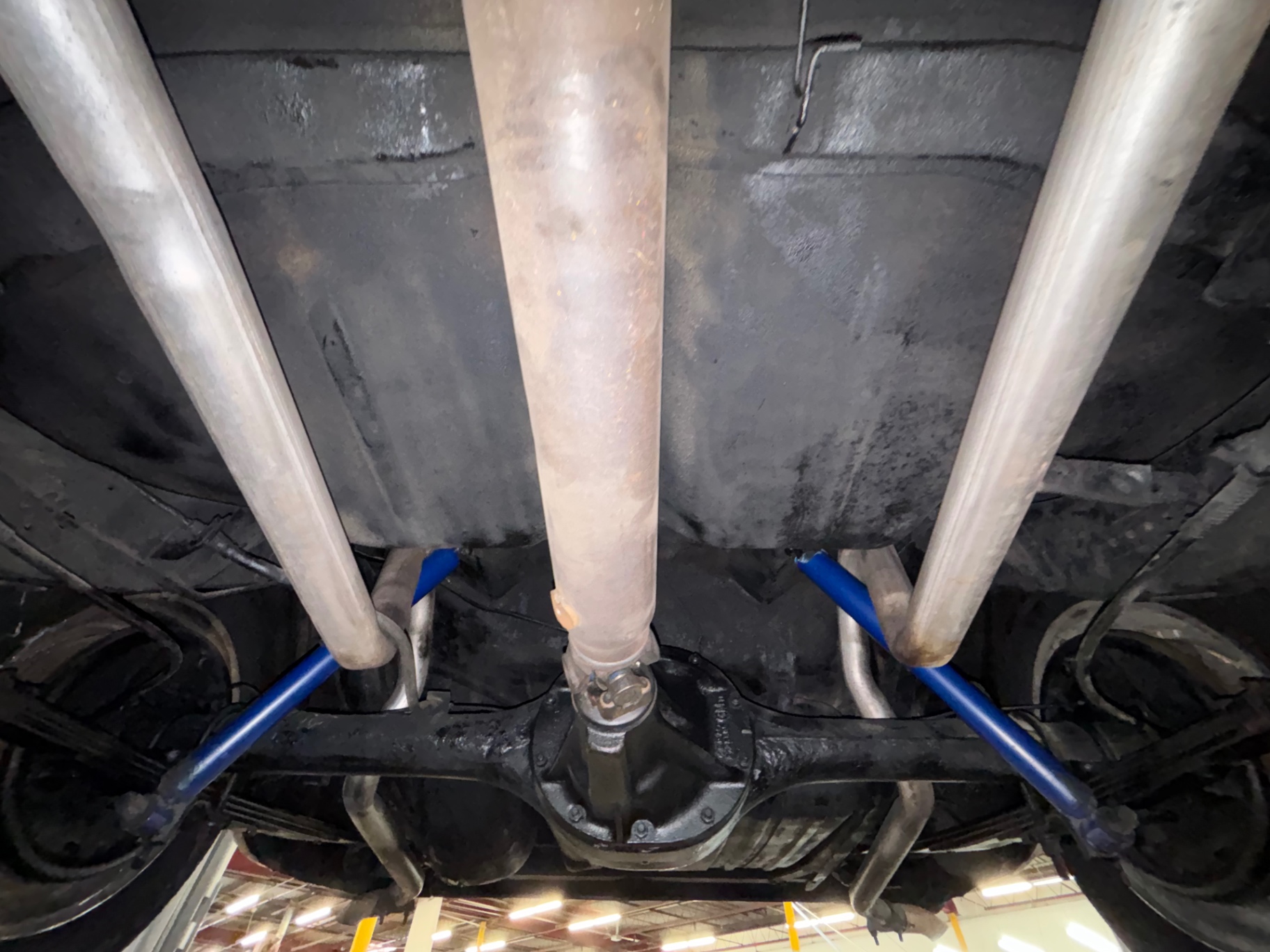
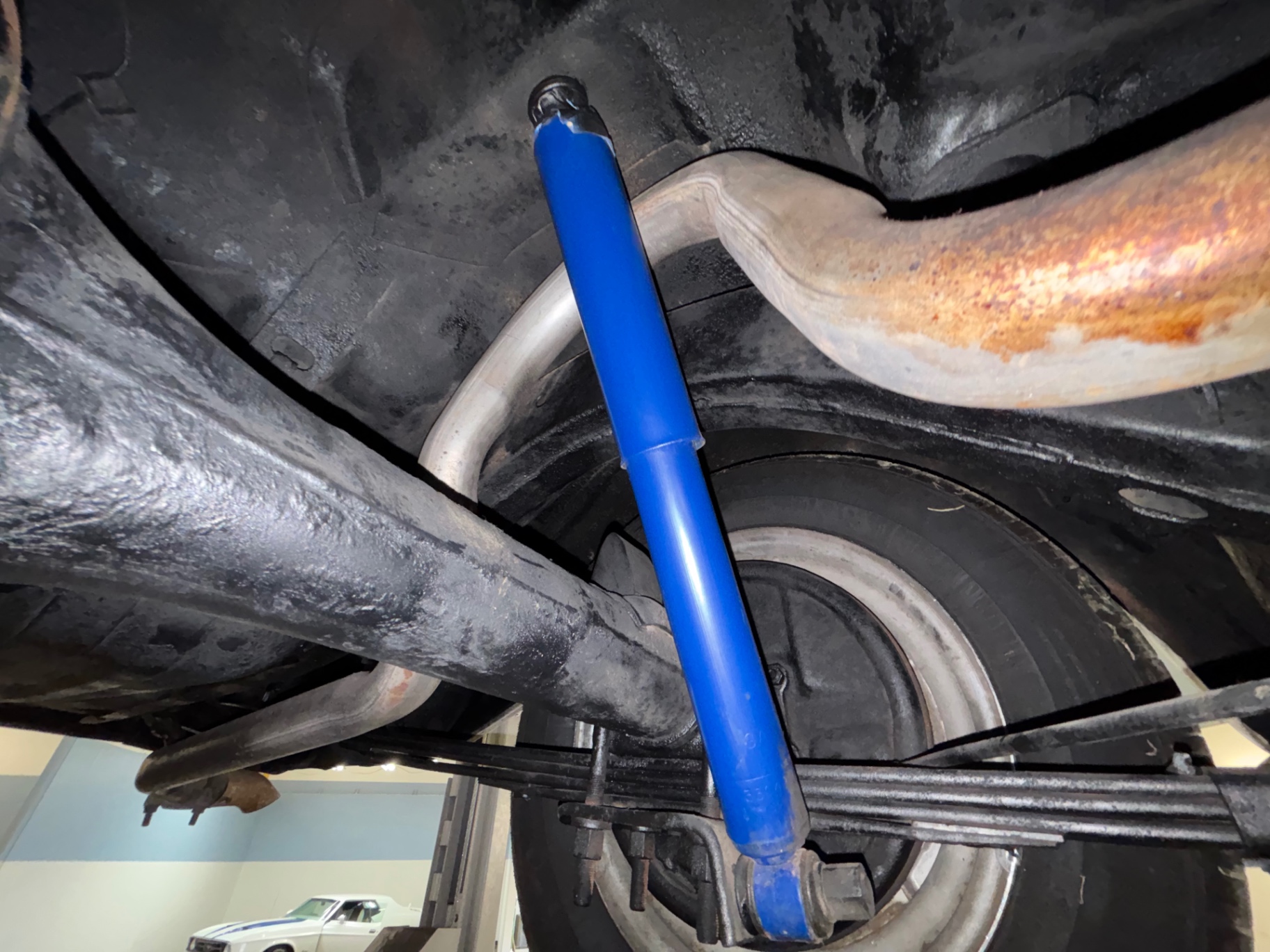
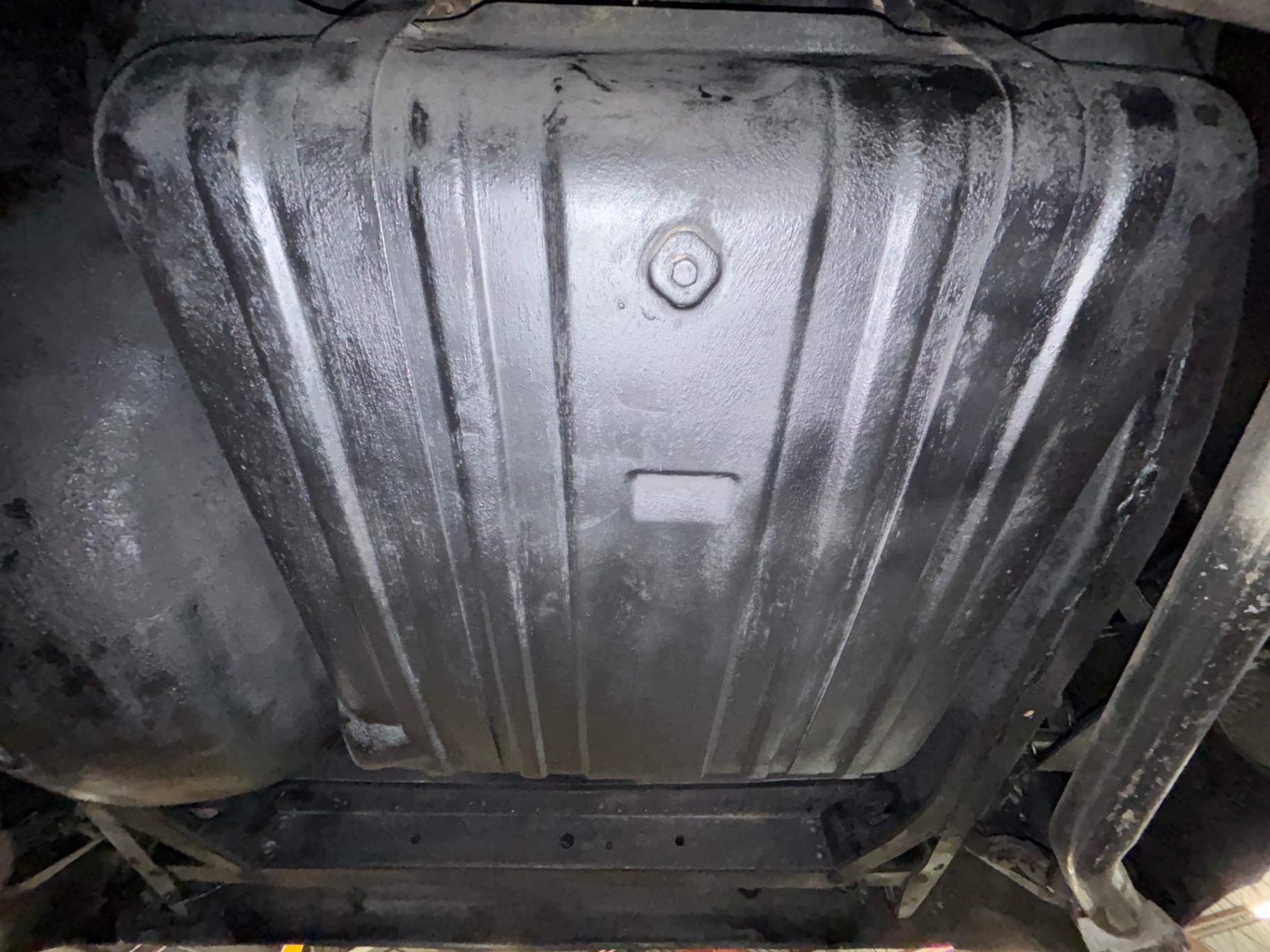
The exhaust system is a dual setup, which is both visually and audibly consistent with a built small-block. The underside photos show a clean-looking floor pan with fresh undercoating on sections of the body, along with the new blue shocks visible at all four corners. The rear axle and suspension appear to be in sound condition. The front suspension shows the expected A-arm configuration that 1956 Chevrolets used, and the steering linkage and ball joints appear to be in serviceable condition based on inspection photos. The upgraded shocks at all four corners — clearly visible in the undercarriage shots with their blue finish — would improve ride quality and handling over the original equipment considerably.
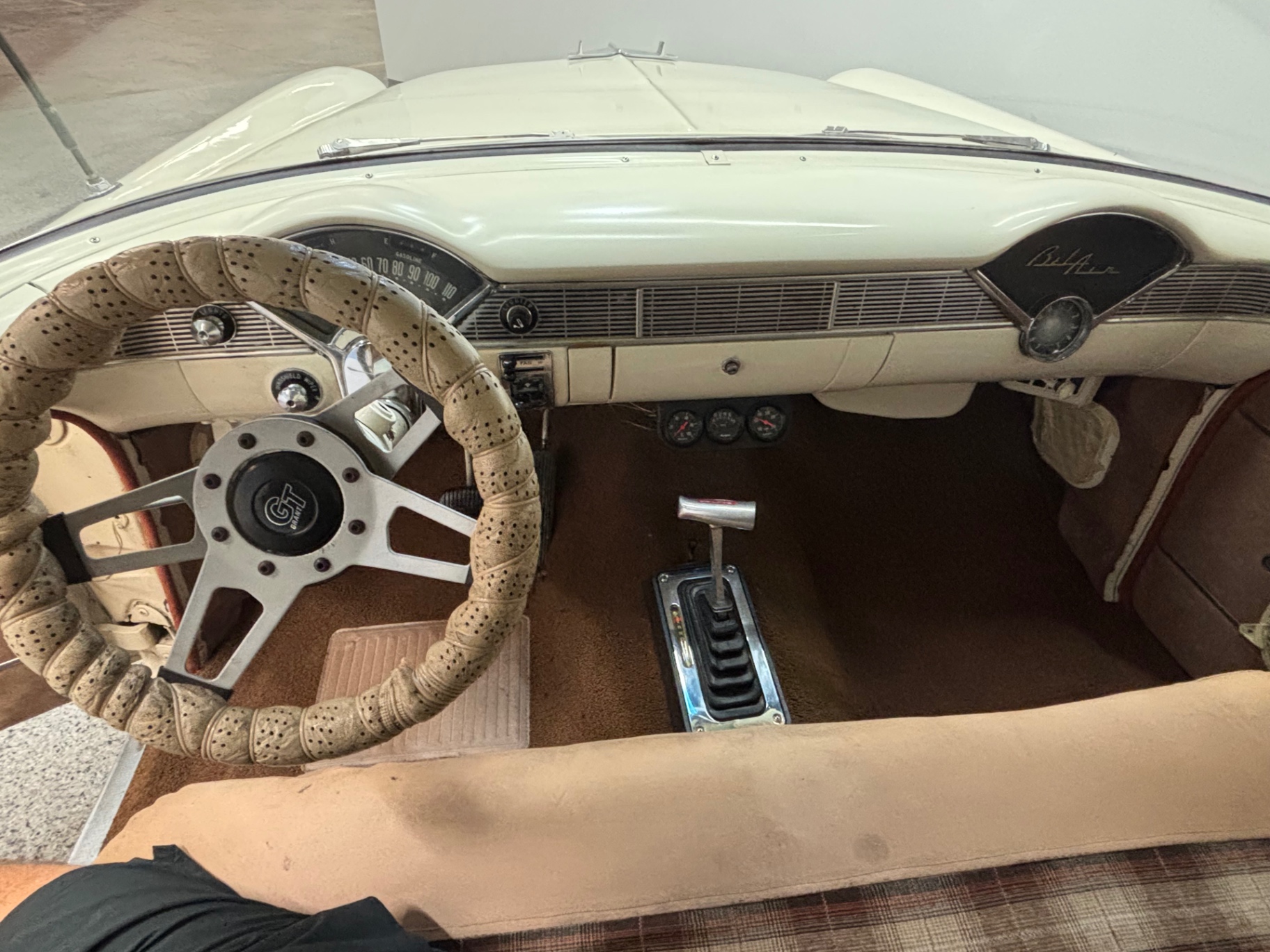
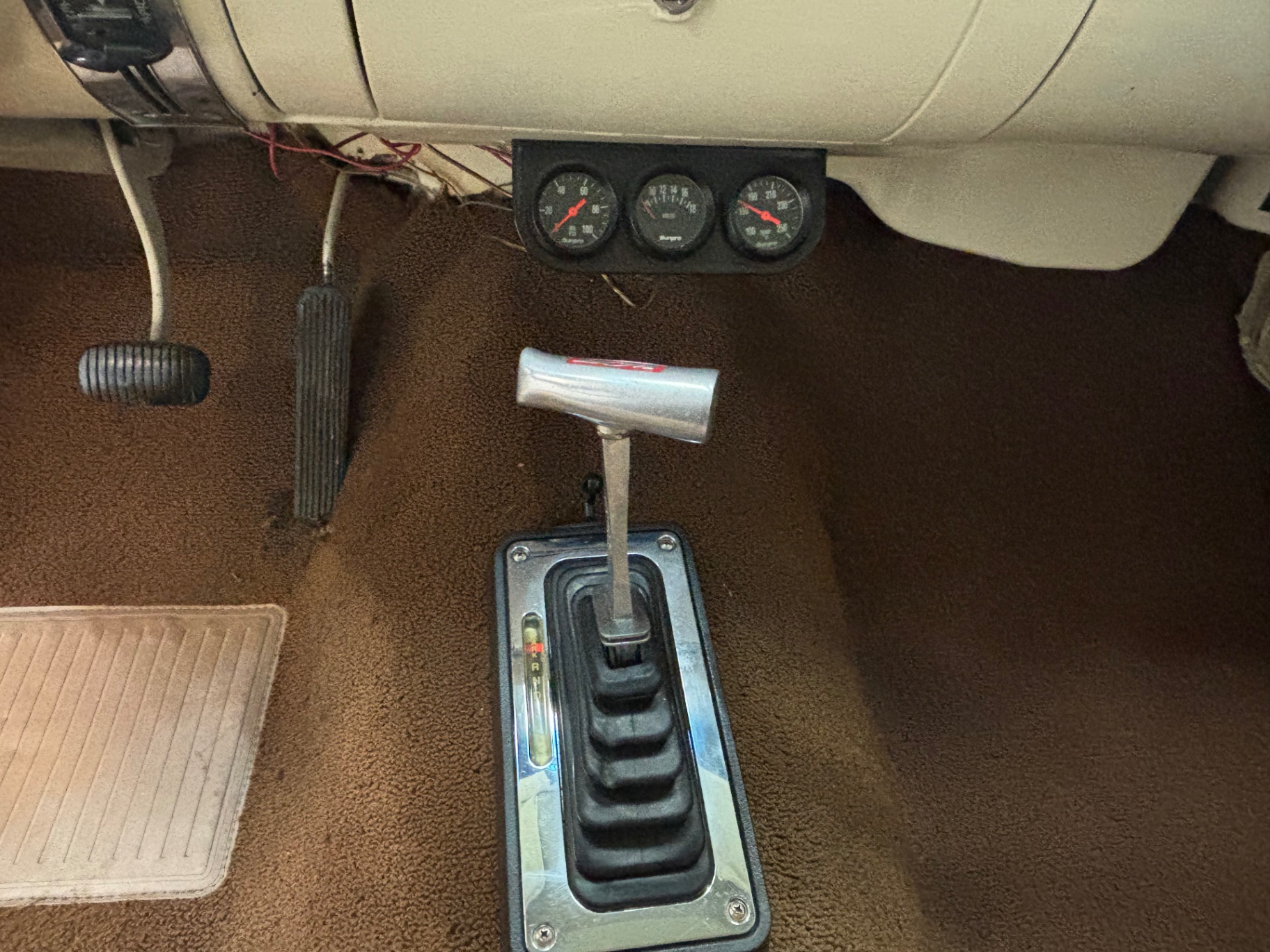
The automatic transmission shifts via a floor-mounted console shifter, a departure from the original column-shift setup. This is a common modification on driver-built classics from this era and gives the car a sportier feel behind the wheel without being disruptive to the overall aesthetic.
Interior
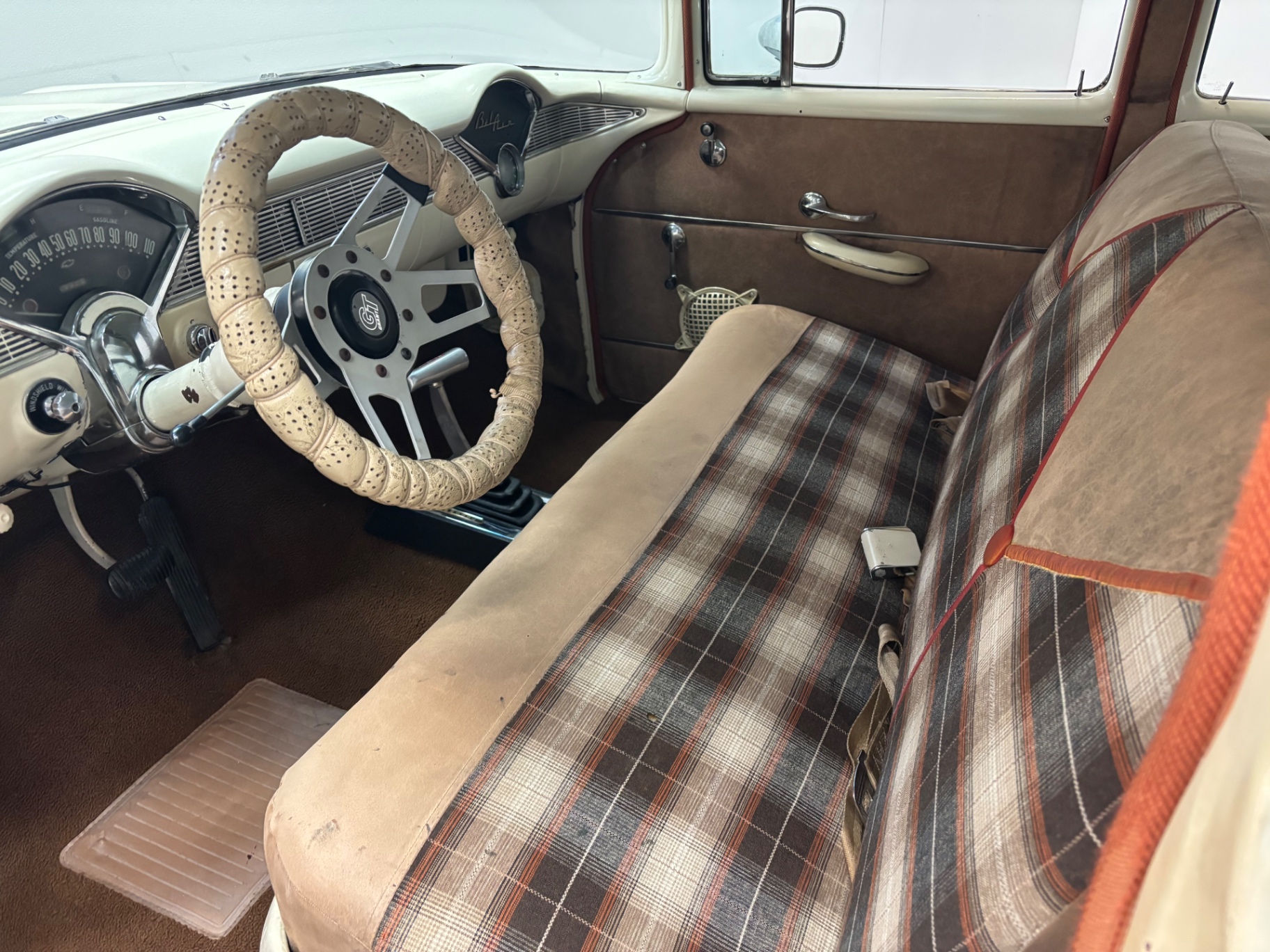
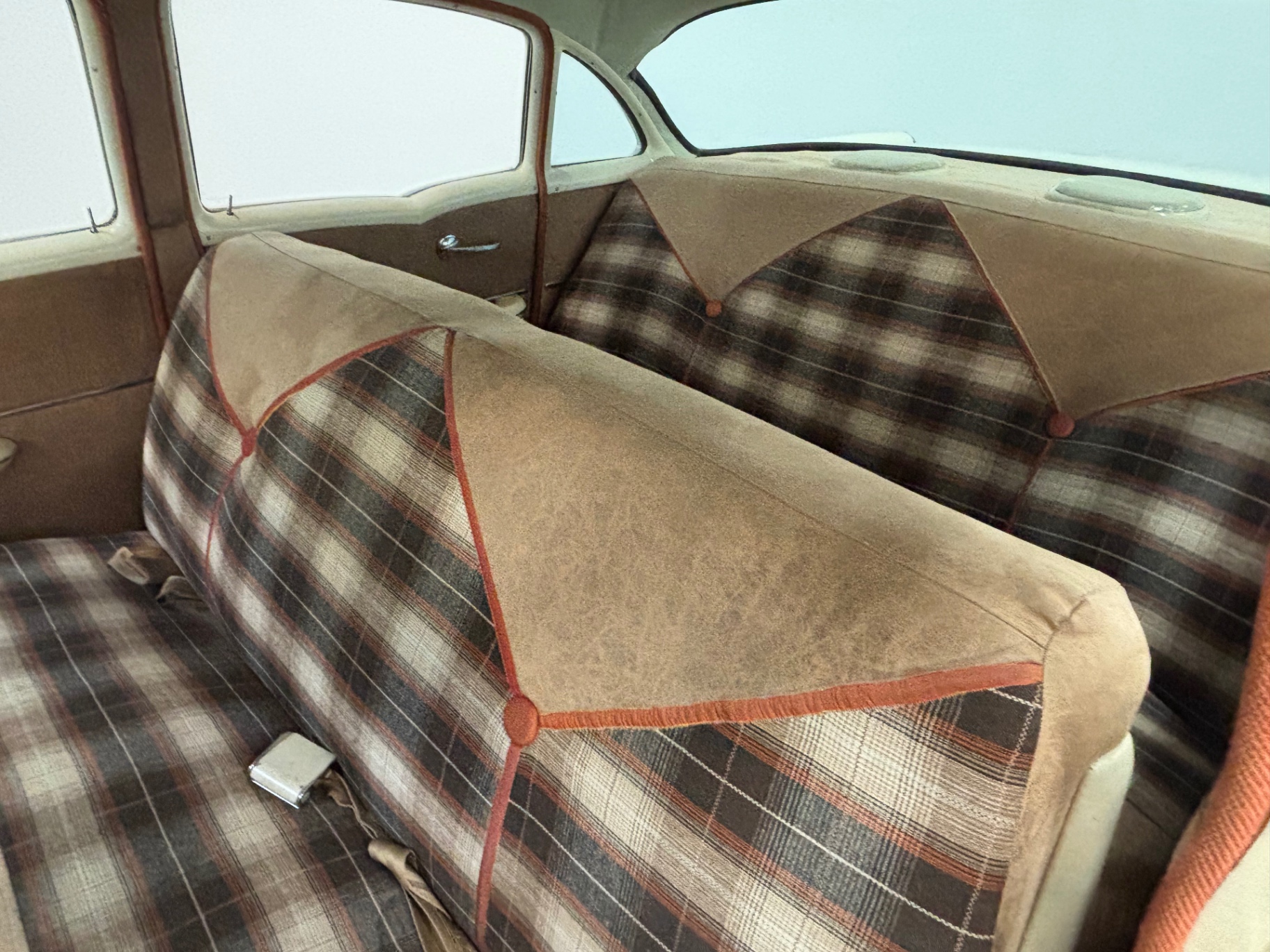
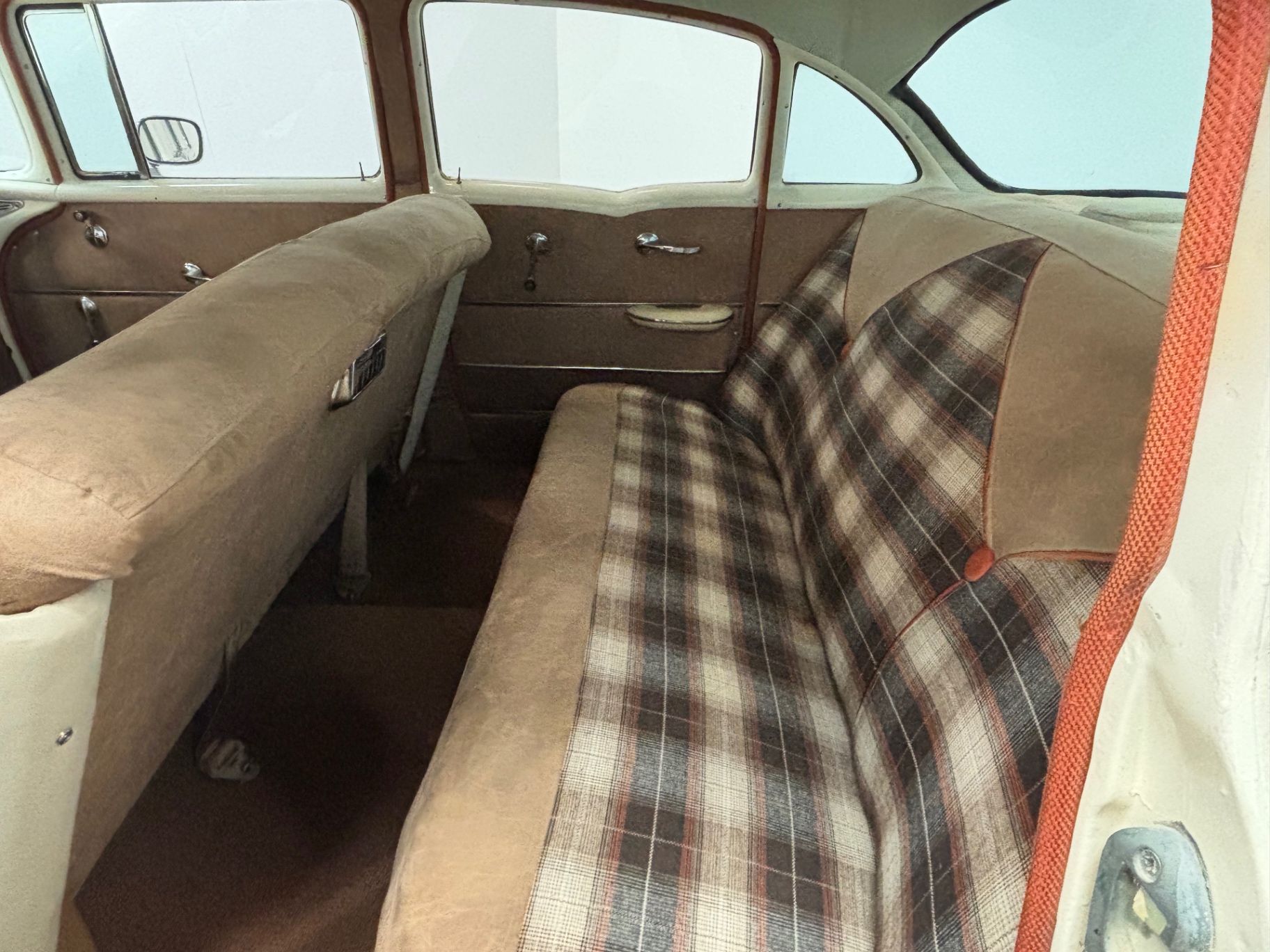
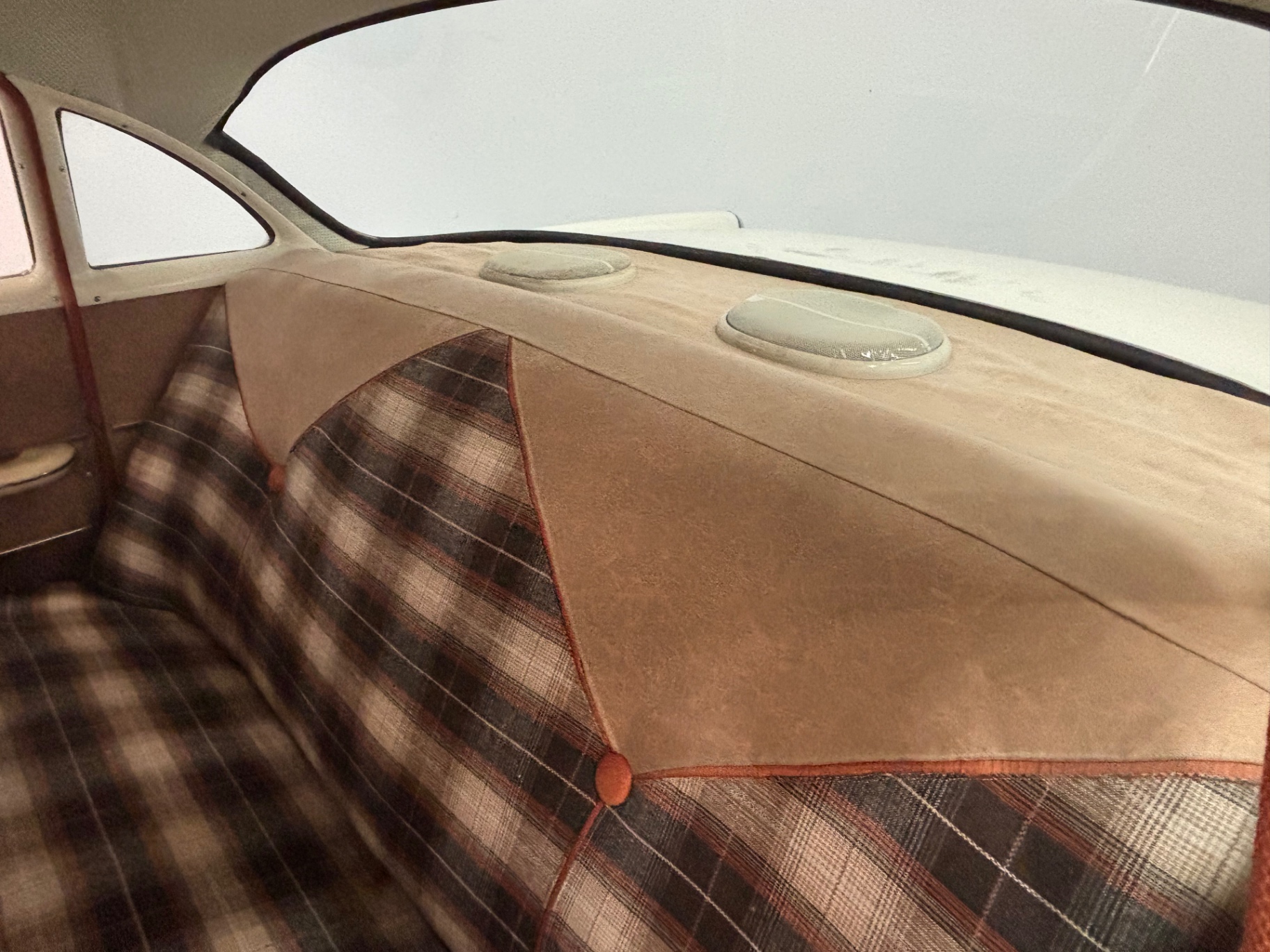
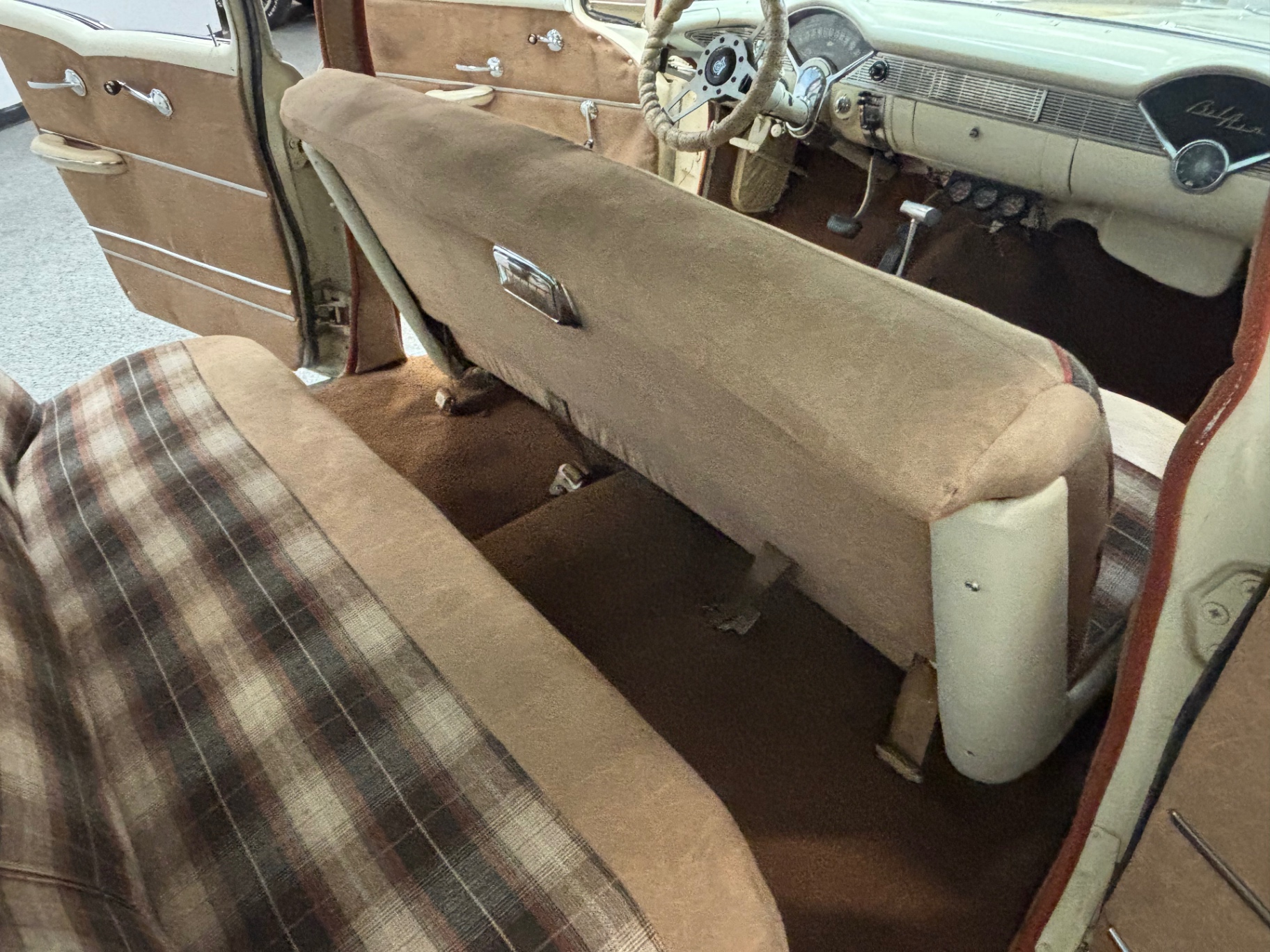
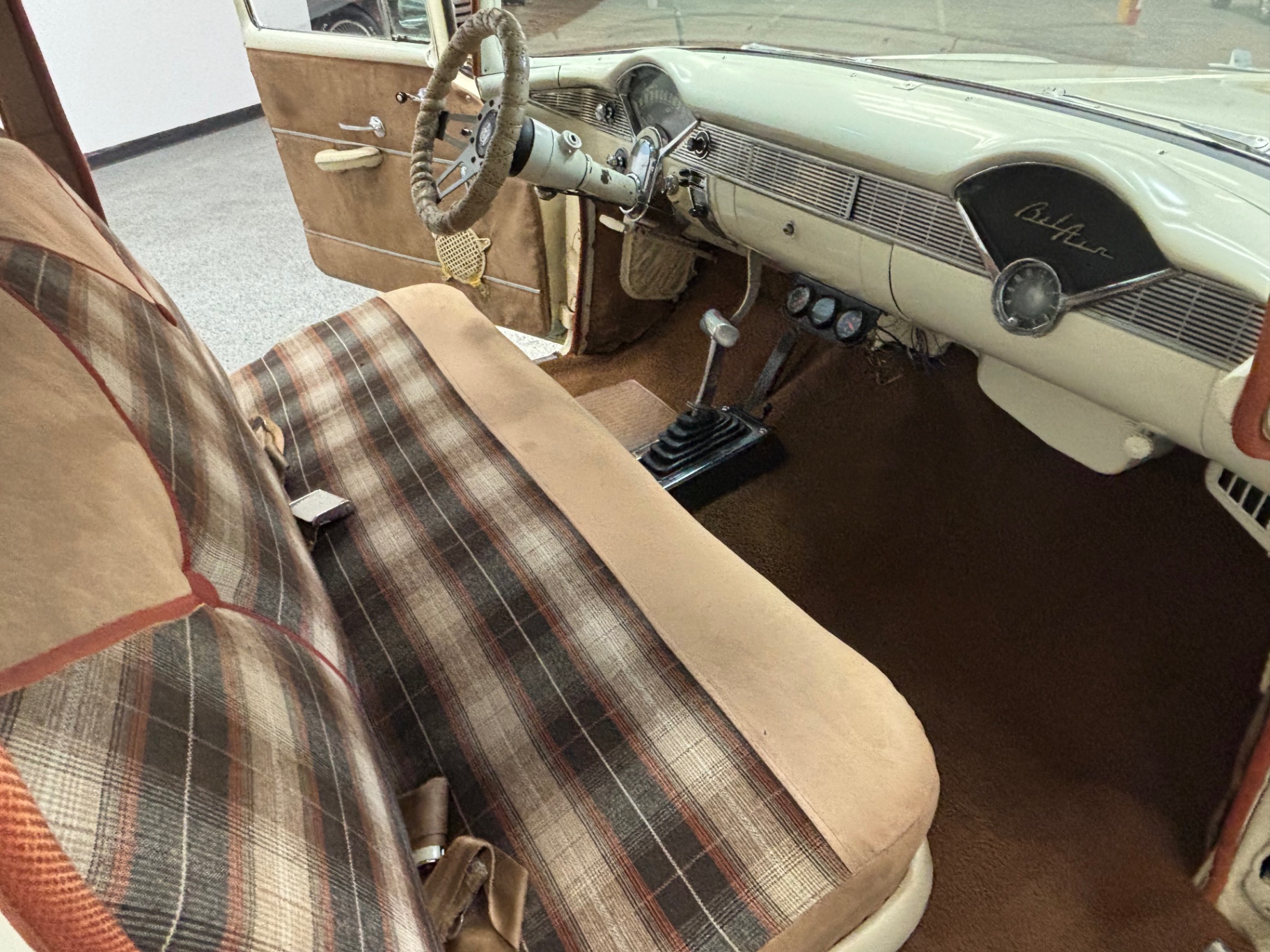
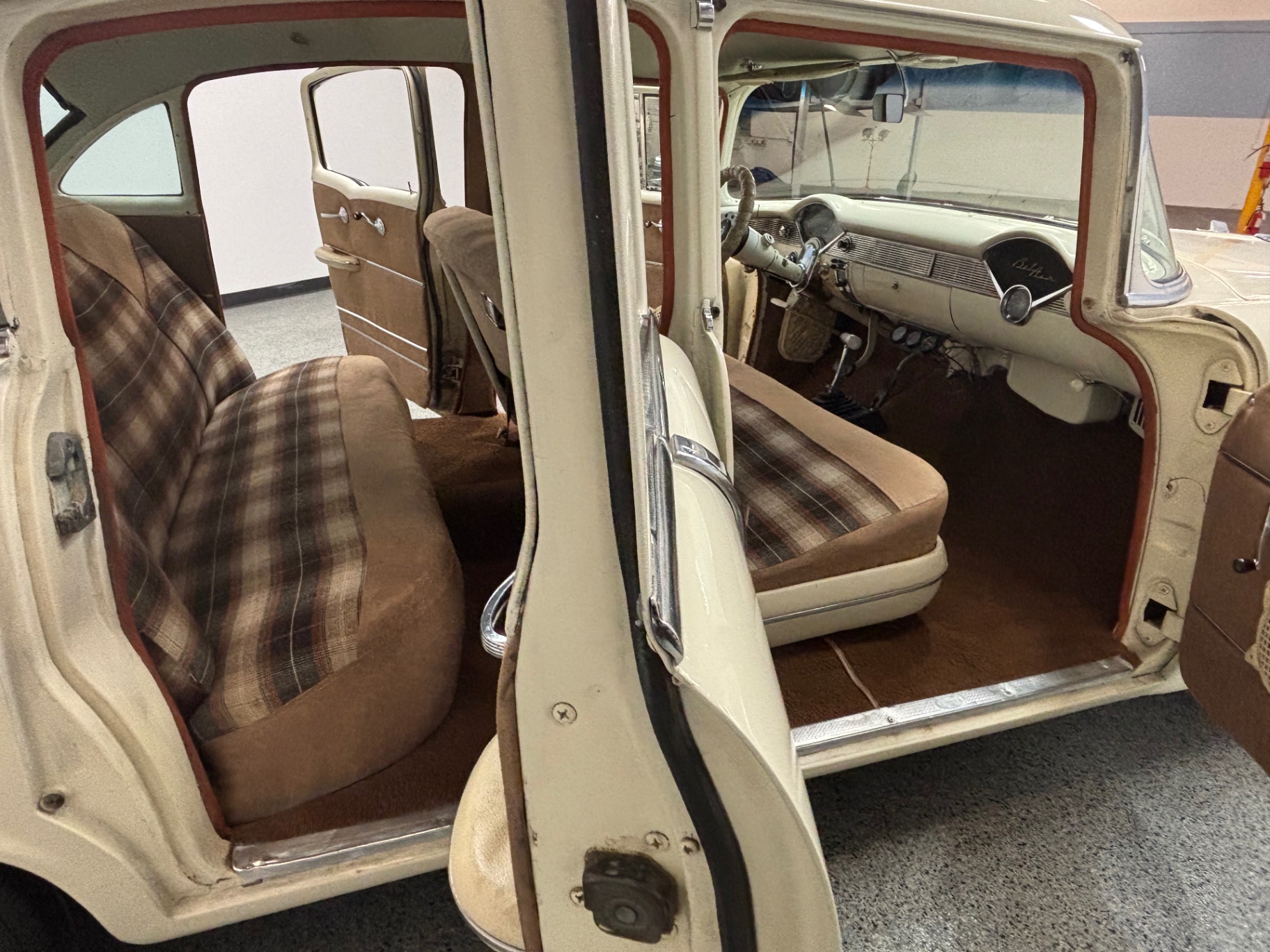
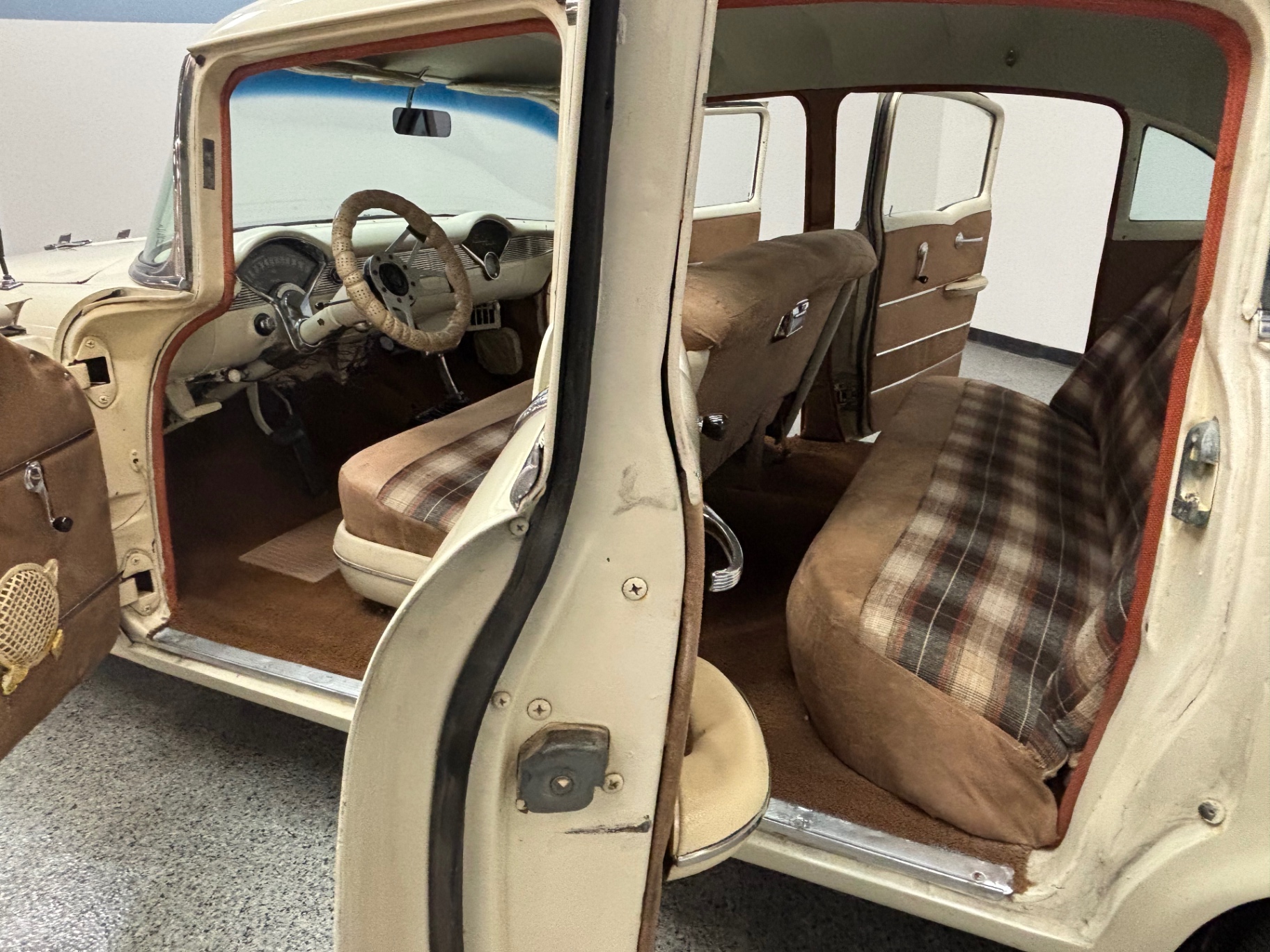
The interior of this 1956 Chevrolet Bel Air has been customized but retains the fundamental layout of the original — full-width bench seats front and rear, a broad expanse of dashboard, and a clean, open cabin with good sight lines in every direction. The seat upholstery is a custom plaid cloth in earth tones — brown, tan, and rust — with tan suede-style bolsters. It is a period-influenced look that fits the car well and shows no significant wear. Both the front and rear benches appear in usable, presentable condition.
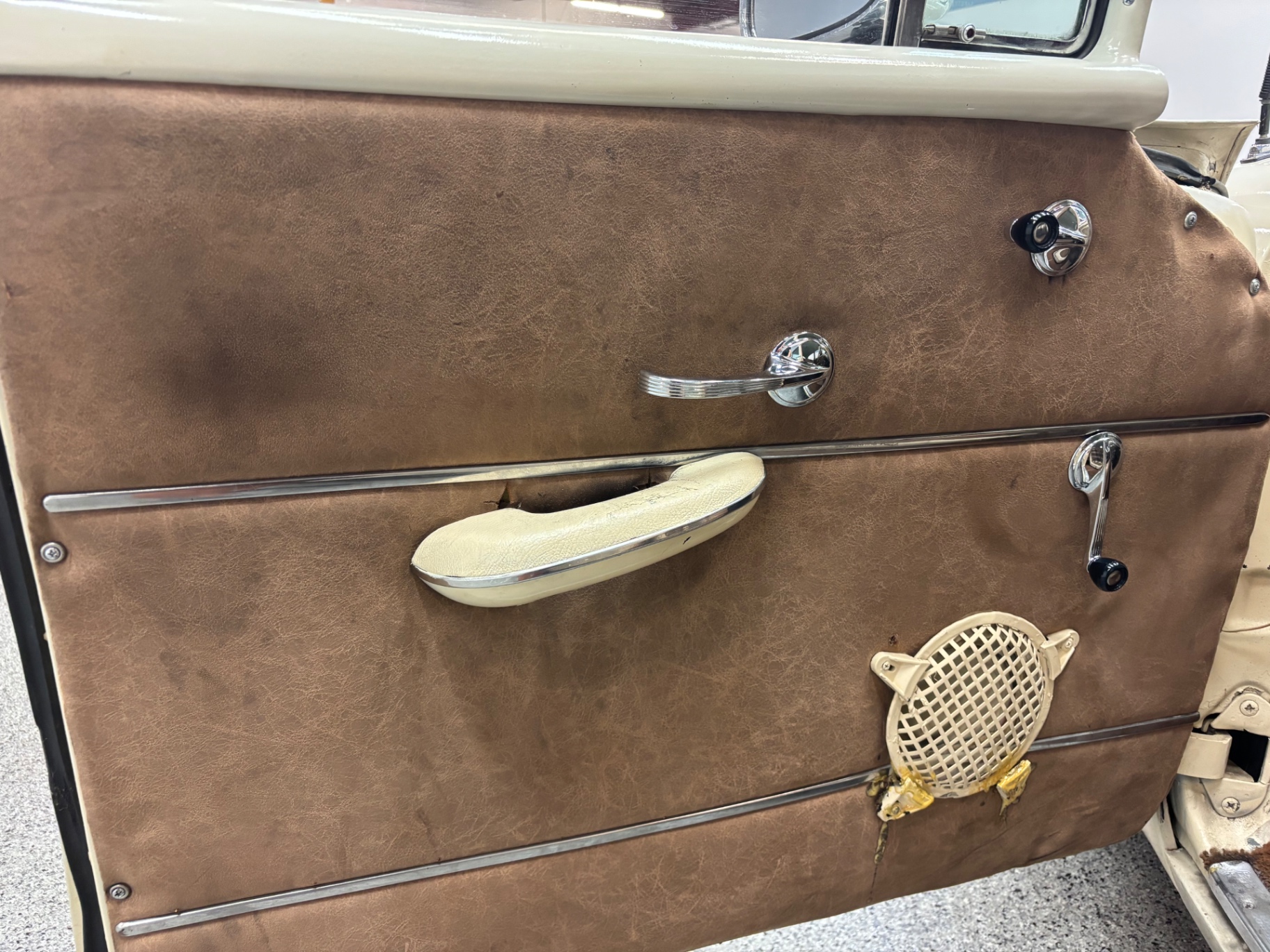
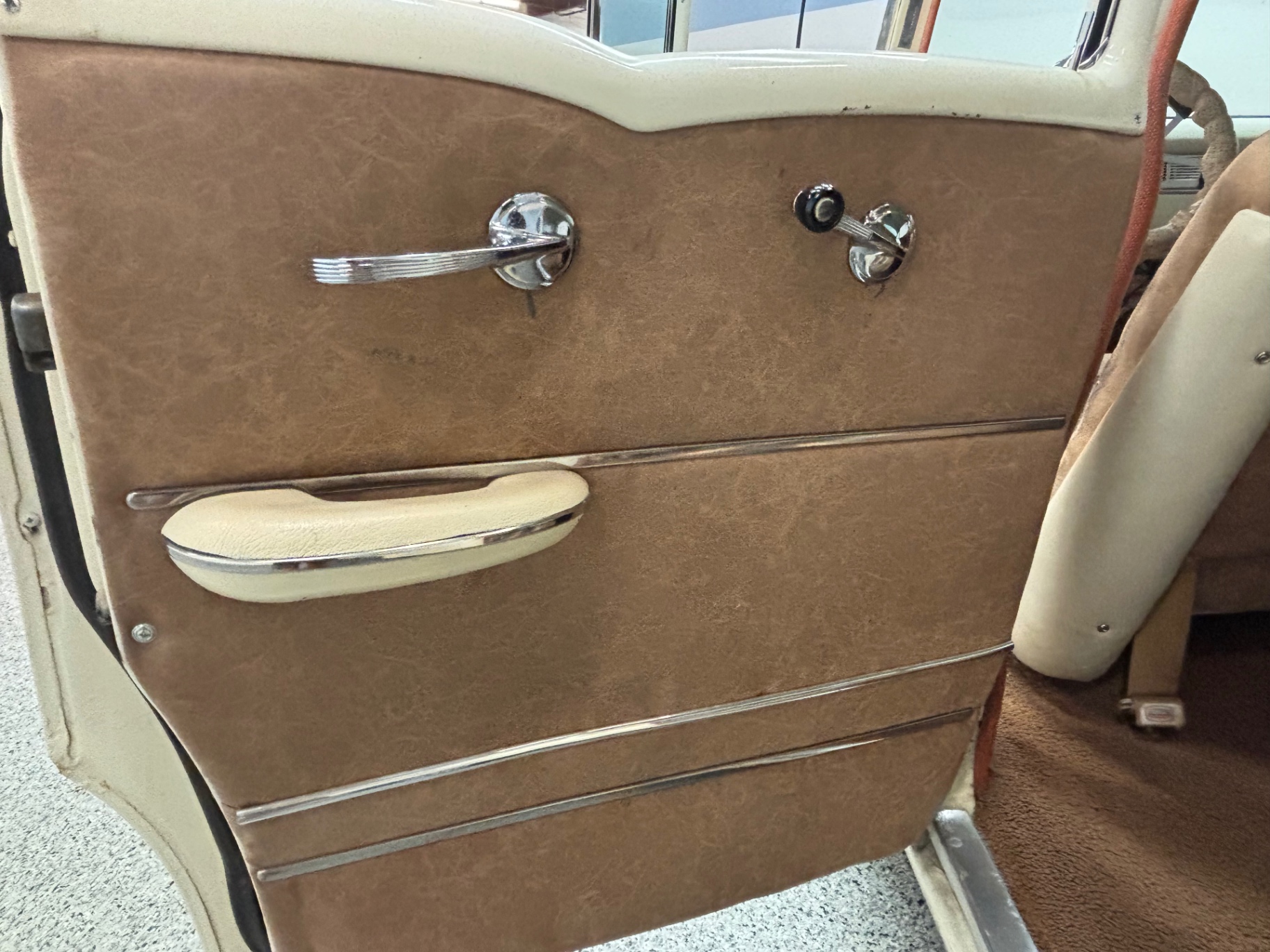
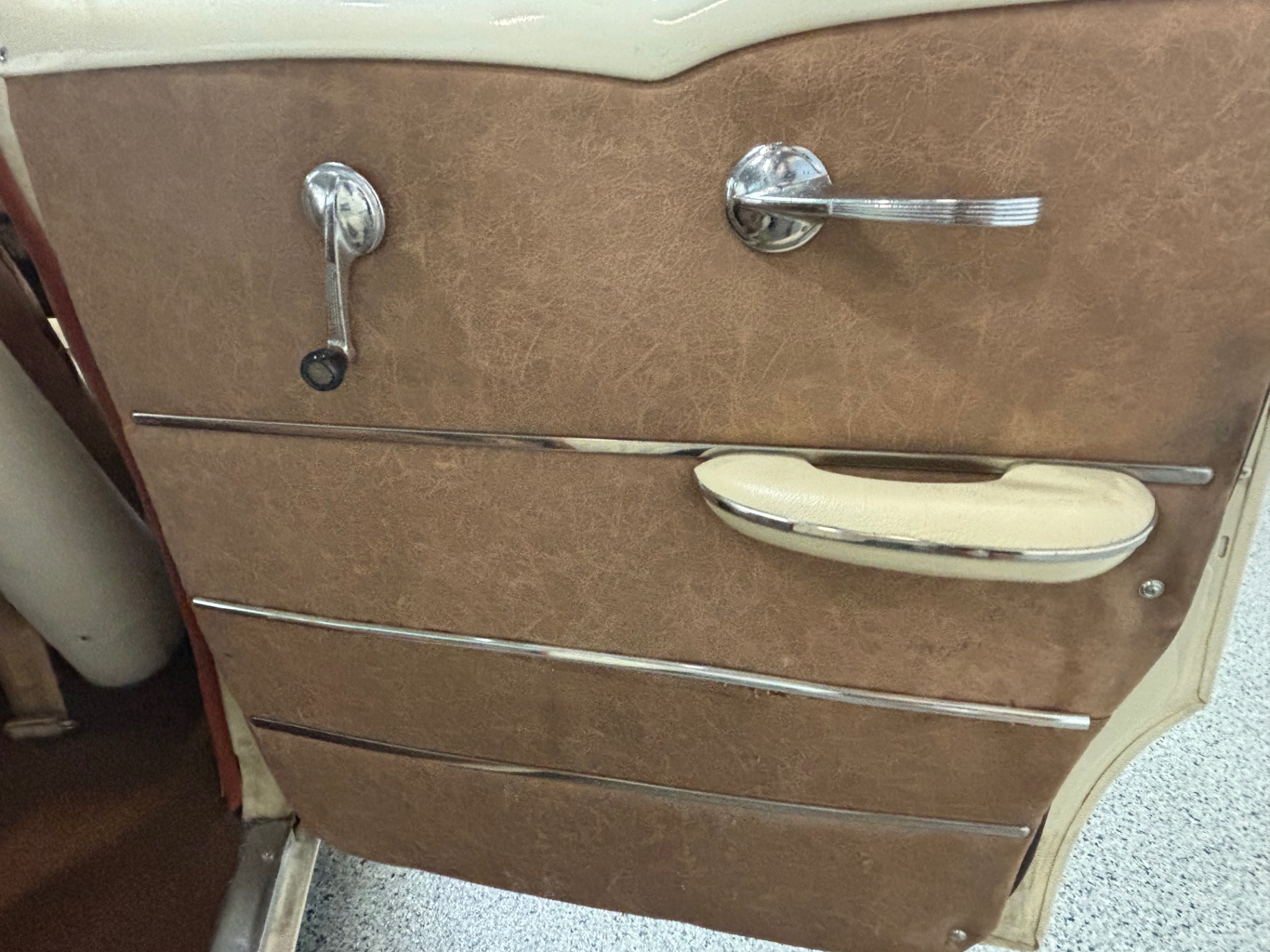
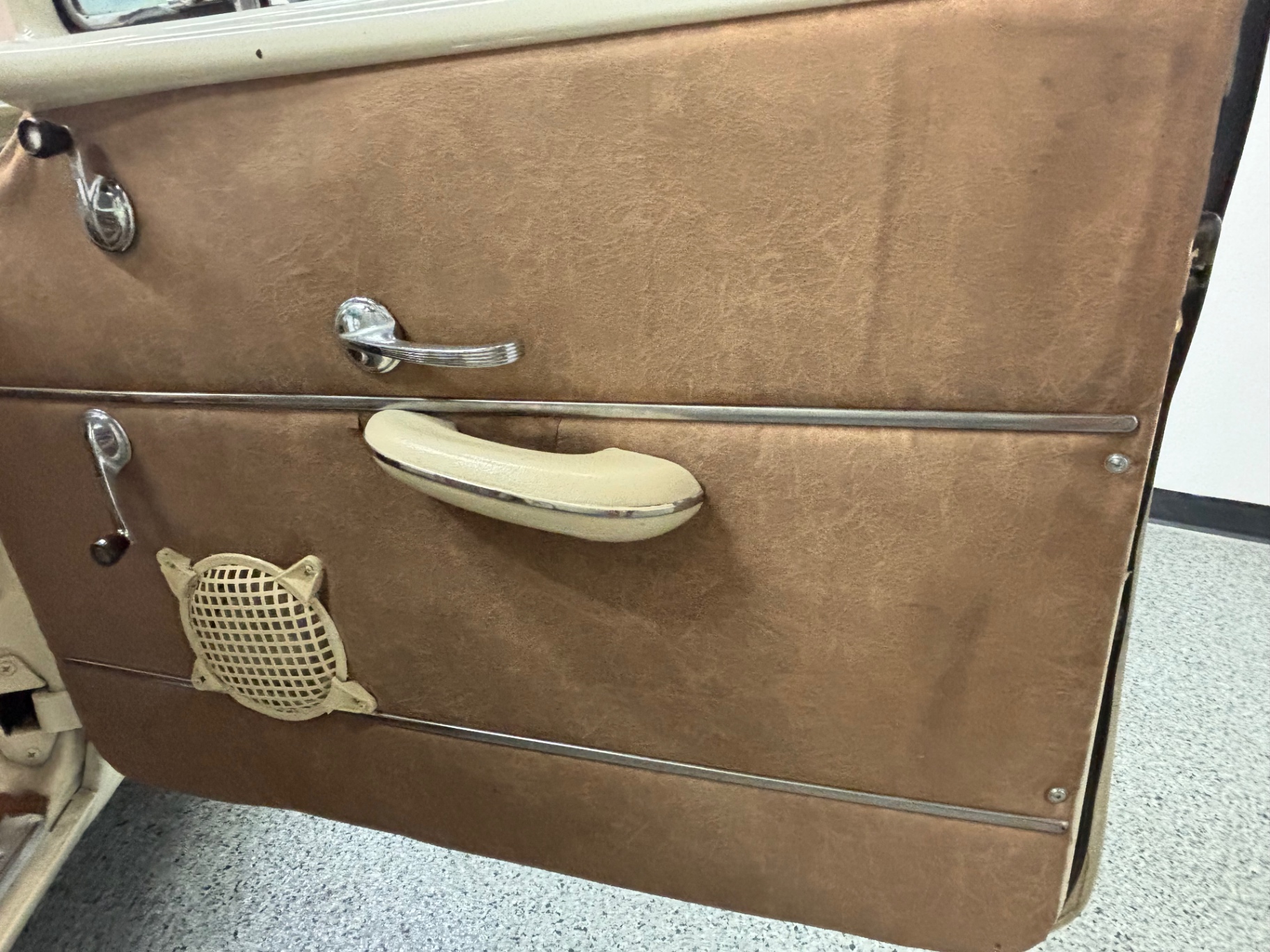
The door panels are tan with chrome trim strips running horizontally across each panel, consistent with Bel Air trim practice from the factory. The door pulls are ivory-colored with chrome surrounds. Speakers are fitted in all four door panels, with additional speakers mounted on the rear deck shelf — a practical upgrade for a car meant to be driven and enjoyed.
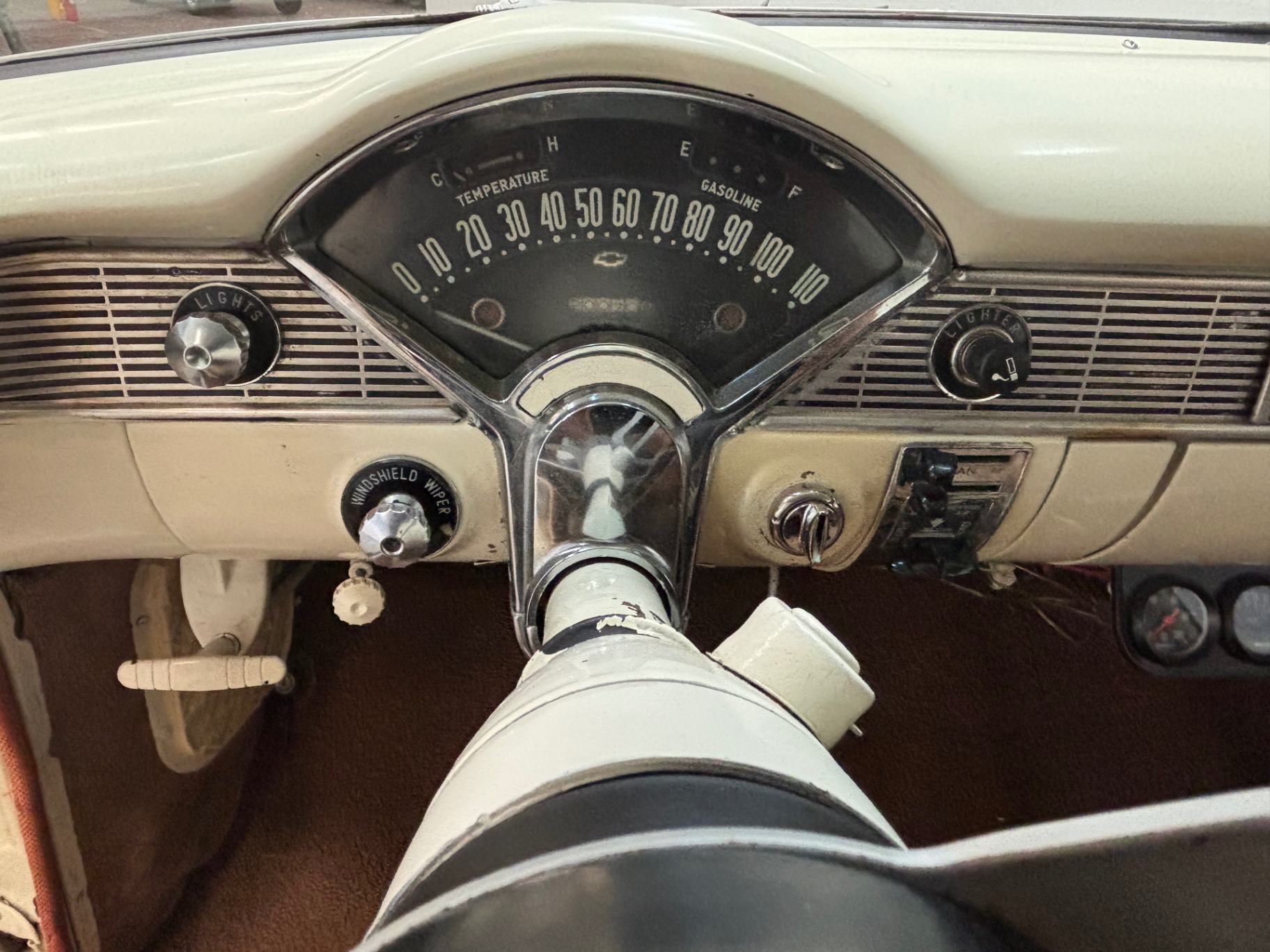
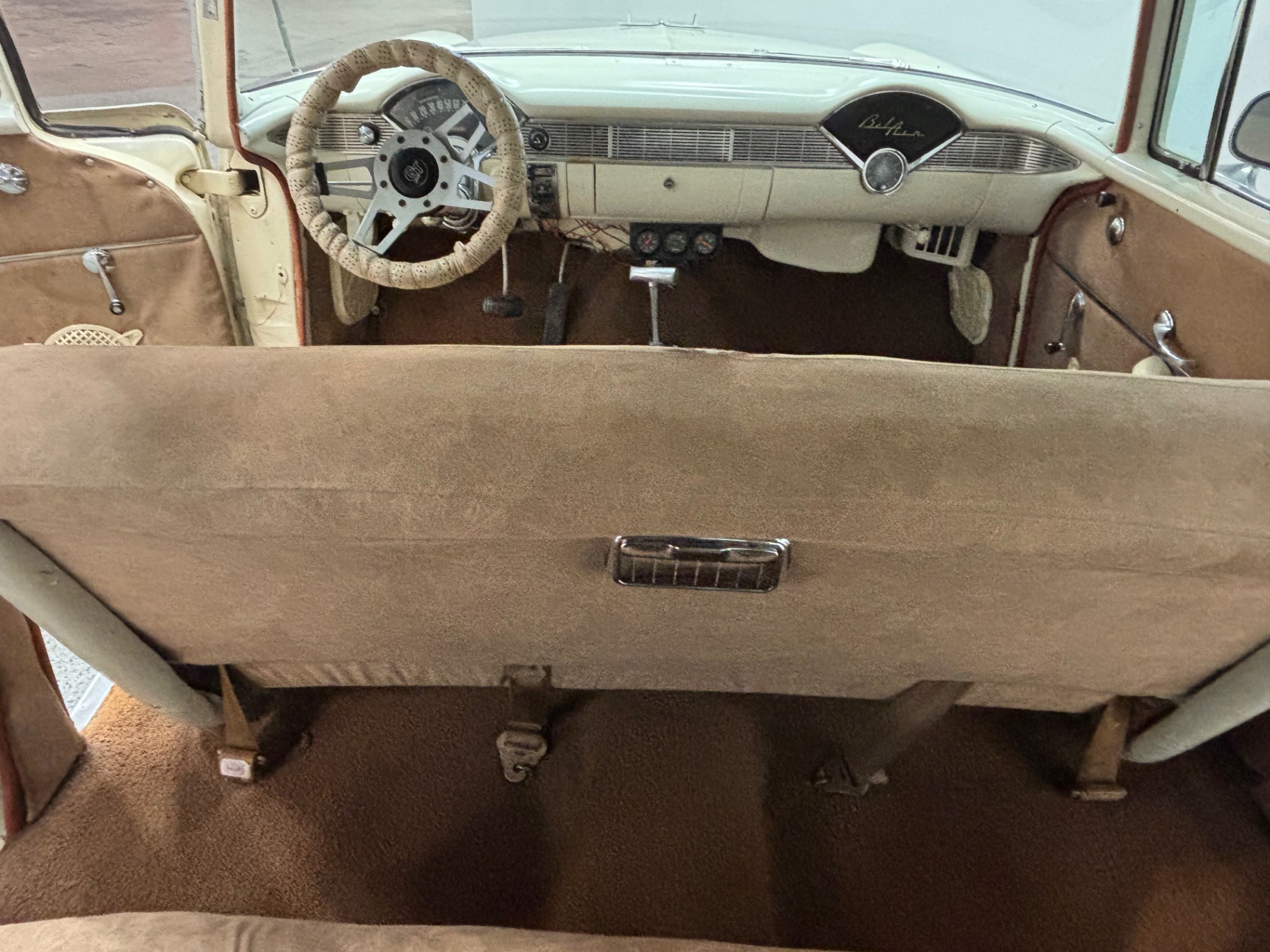
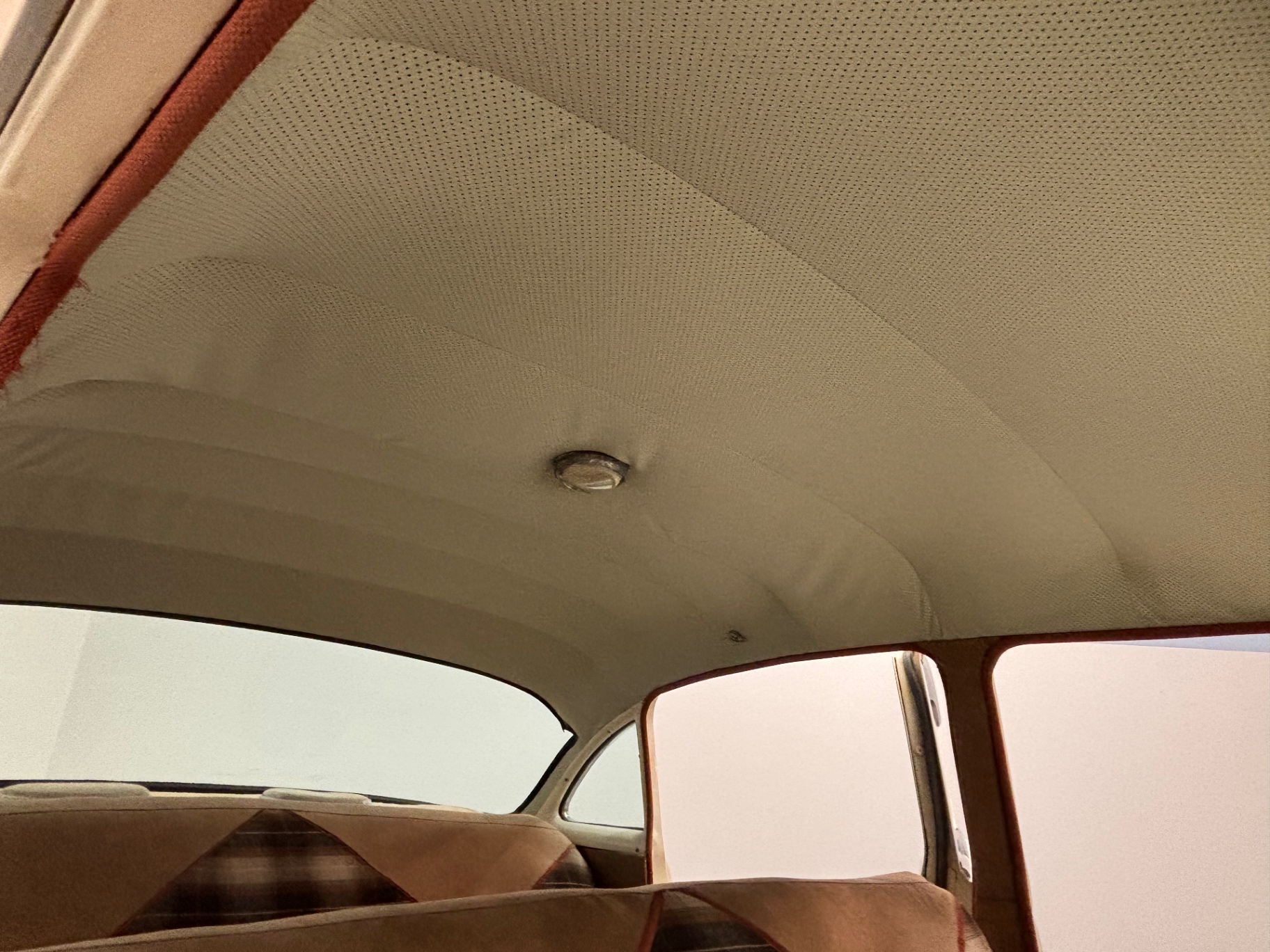
The flooring is covered in brown carpet that runs consistently from the firewall to the trunk, keeping the interior tidy and well-coordinated with the seat colors. The headliner is an ivory perforated cloth unit that appears in good condition. The dash retains its original 1956 Bel Air appearance, including the horizontal ribbed center section, the swept speedometer cluster, and the Bel Air script badge on the glove box door. The original steering column is in place, though topped with an aftermarket GT steering wheel — a three-spoke design with a perforated leather-wrapped rim that was a popular upgrade in the custom car era.
Below the dash, a three-gauge auxiliary panel has been fitted at the base of the center section, providing oil pressure, water temperature, and voltage readings — exactly the information you want when driving a modified classic on the open road. The floor shifter for the automatic transmission is positioned between the front seats on a raised chrome console base. Lap belts are installed at all seating positions.
Exterior
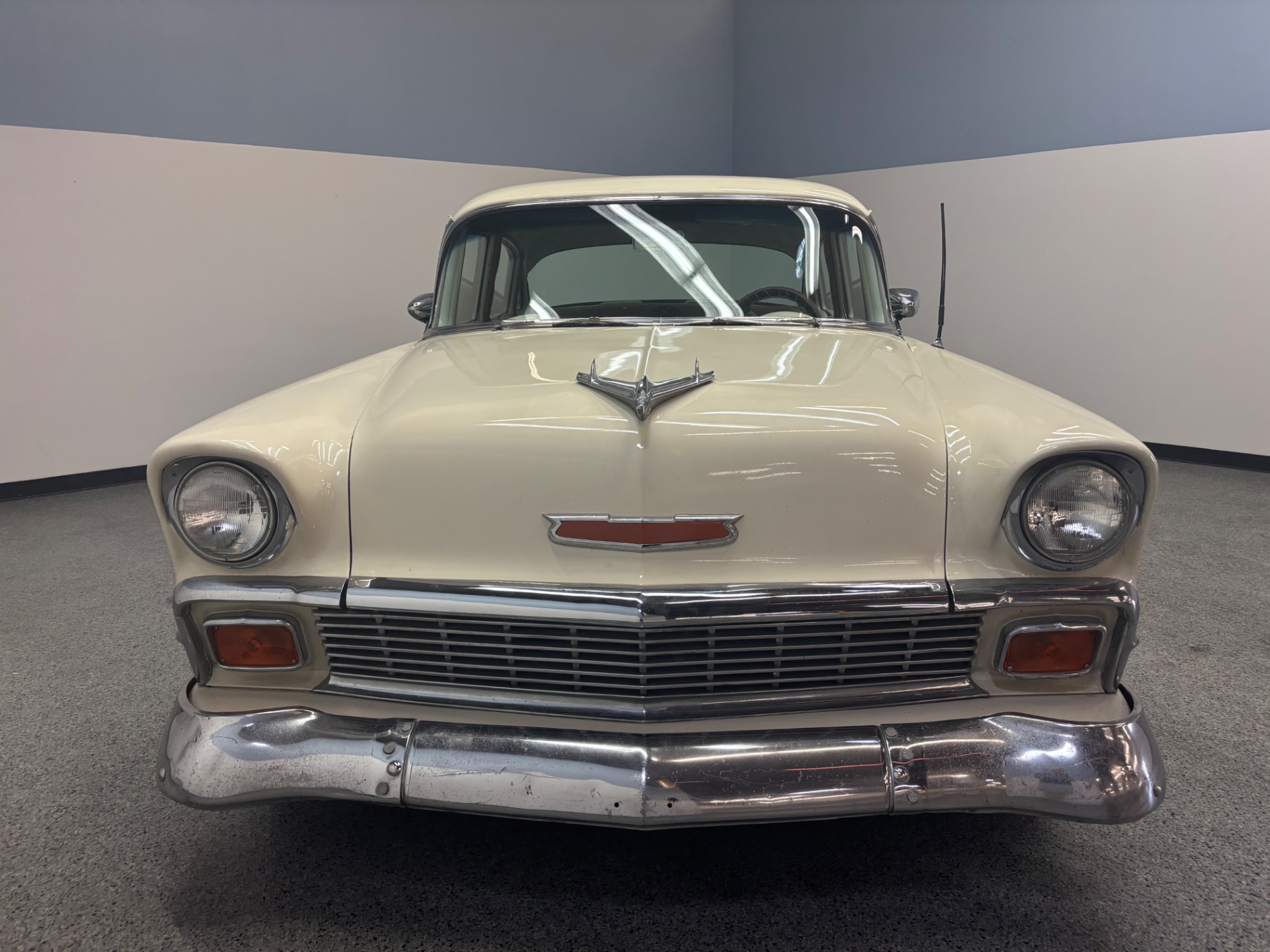
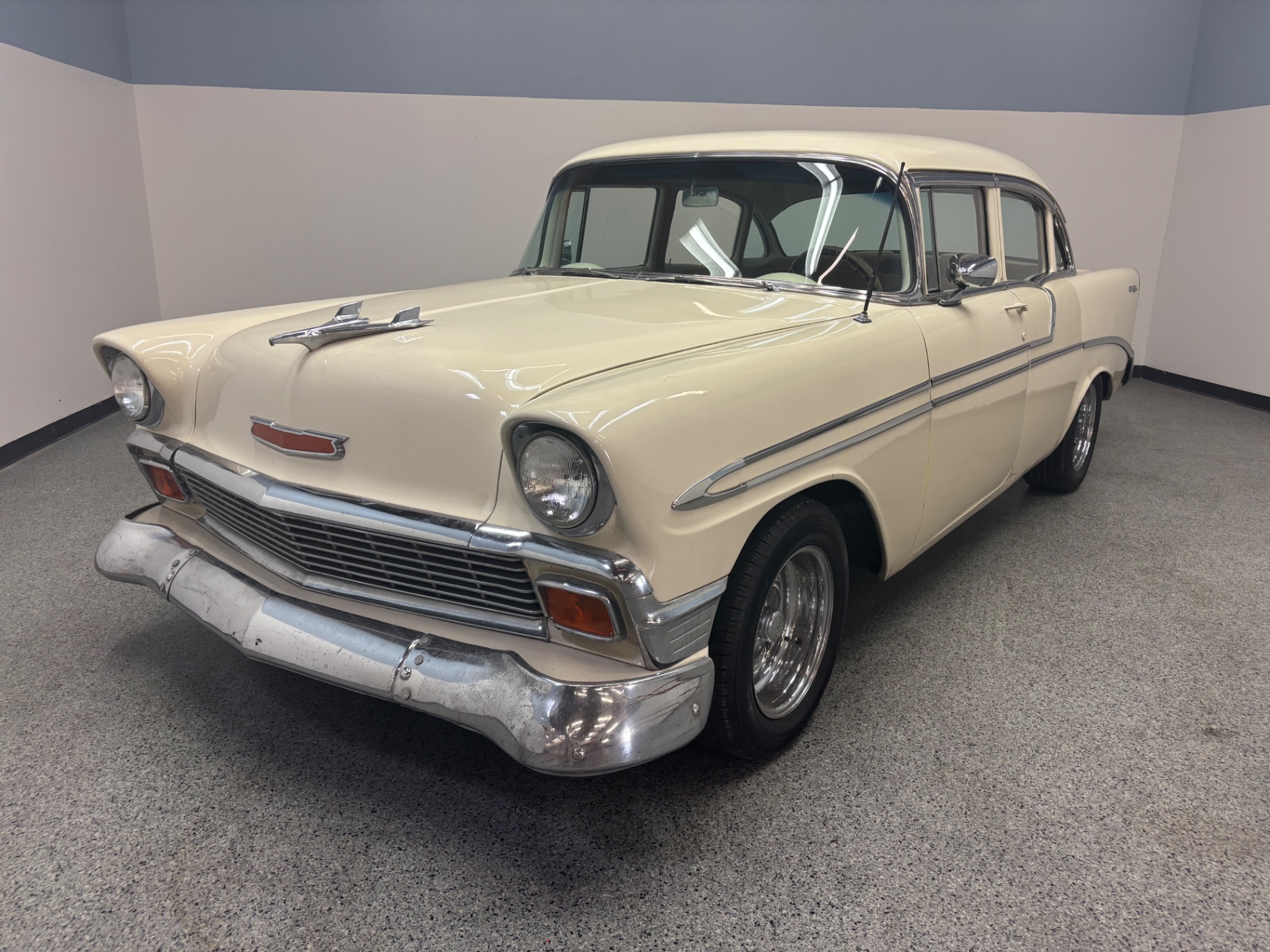
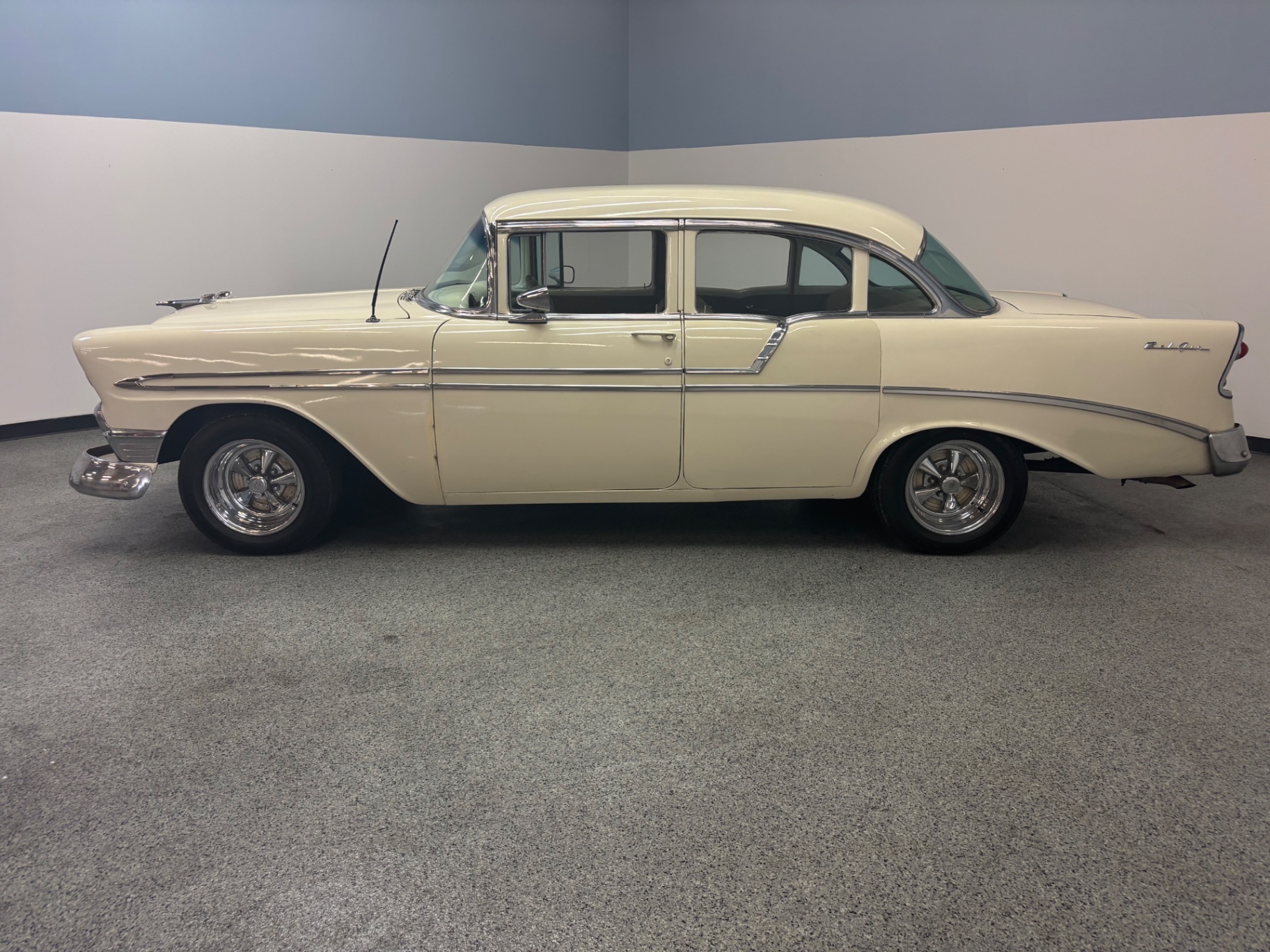
The 1956 Chevrolet Bel Air body style is defined by its bold two-piece wraparound windshield, its long hood, and the distinctive rear fender sweep that distinguished the Bel Air from lesser trim levels. This car wears a single-color Ivory finish rather than the two-tone treatments common on Bel Airs of the era. The paint shows its age in places — this is not a fresh repaint — but the body panels appear straight and the chrome work, including both bumpers, retains usable condition.
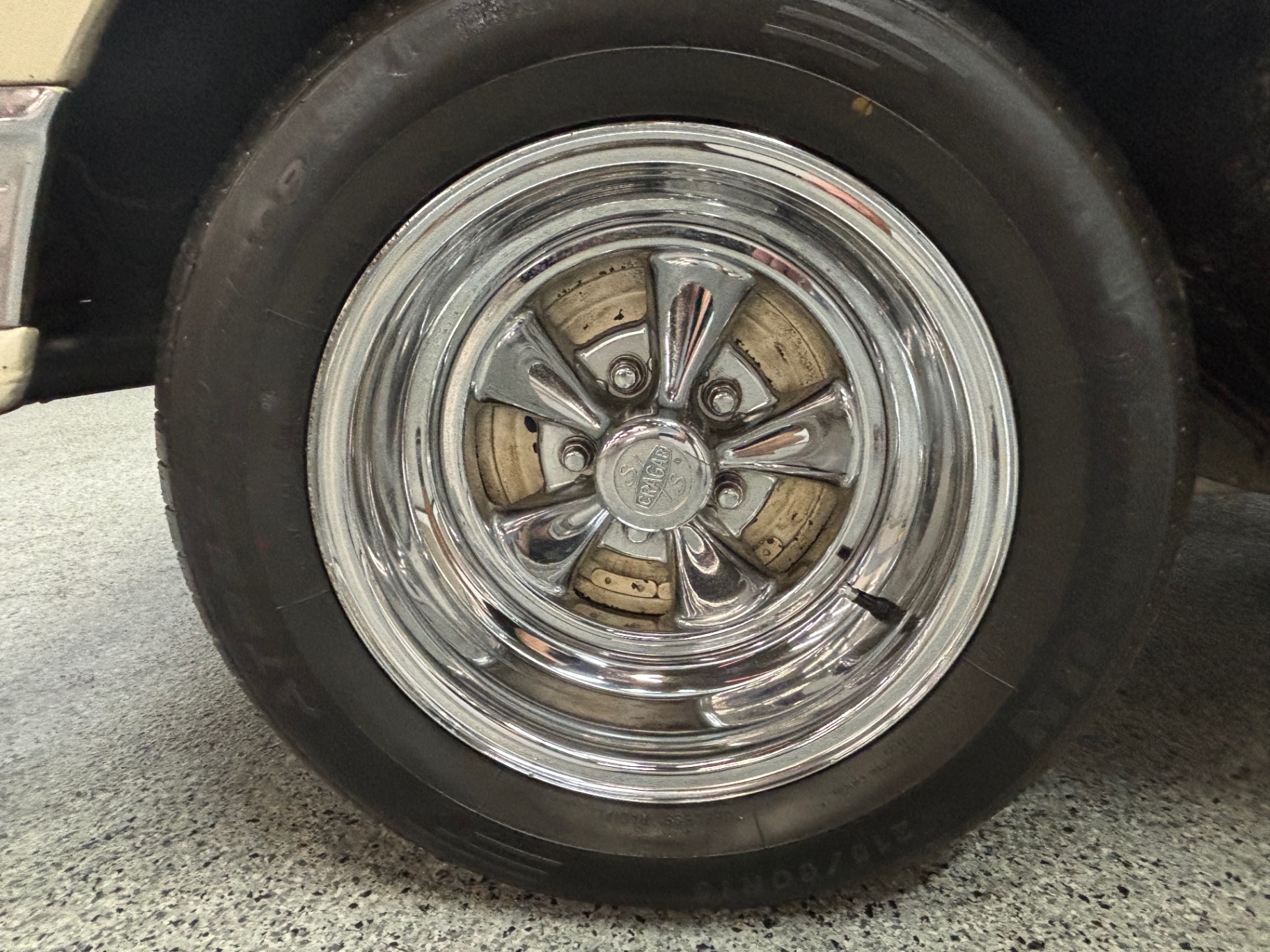
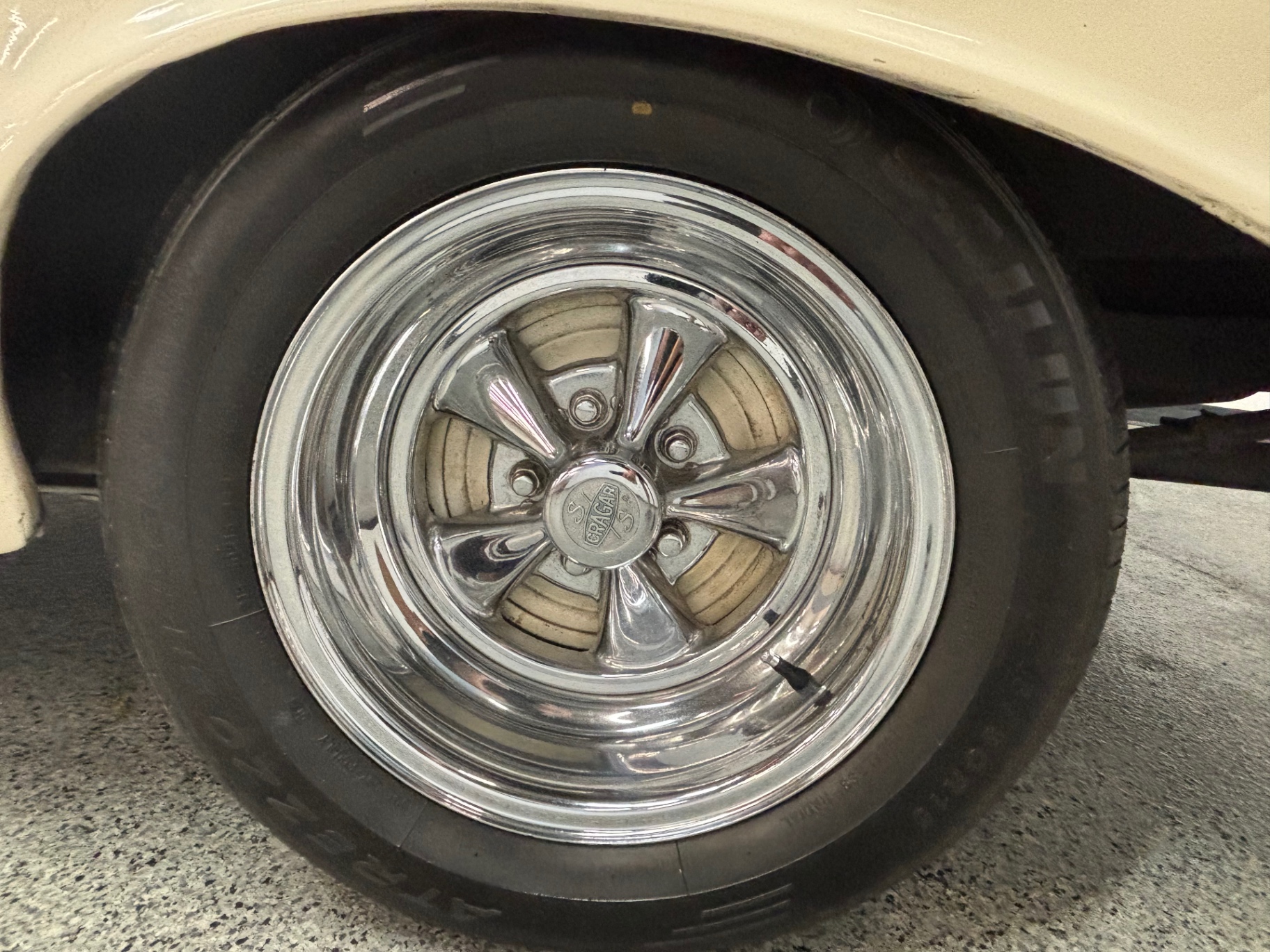
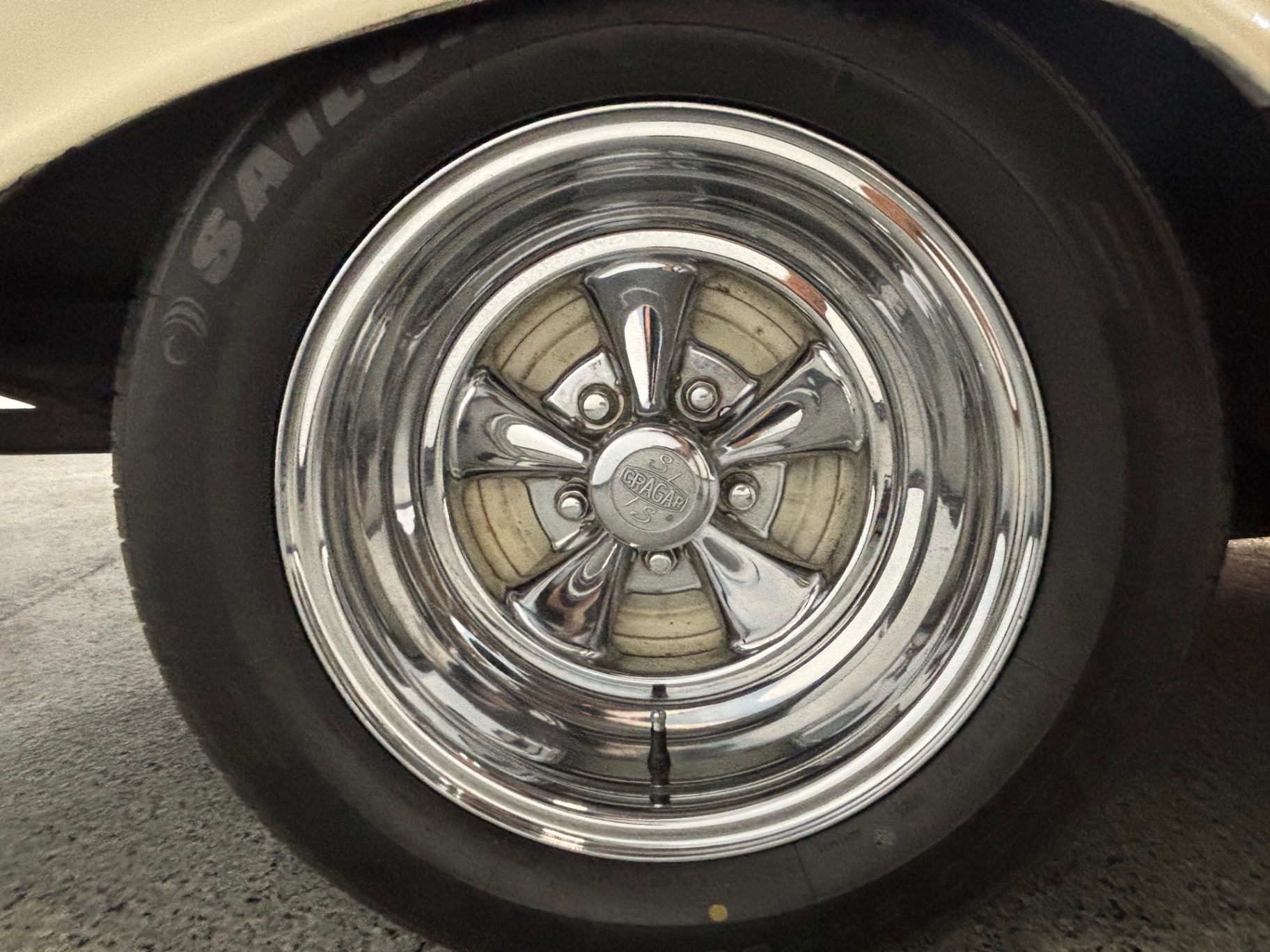
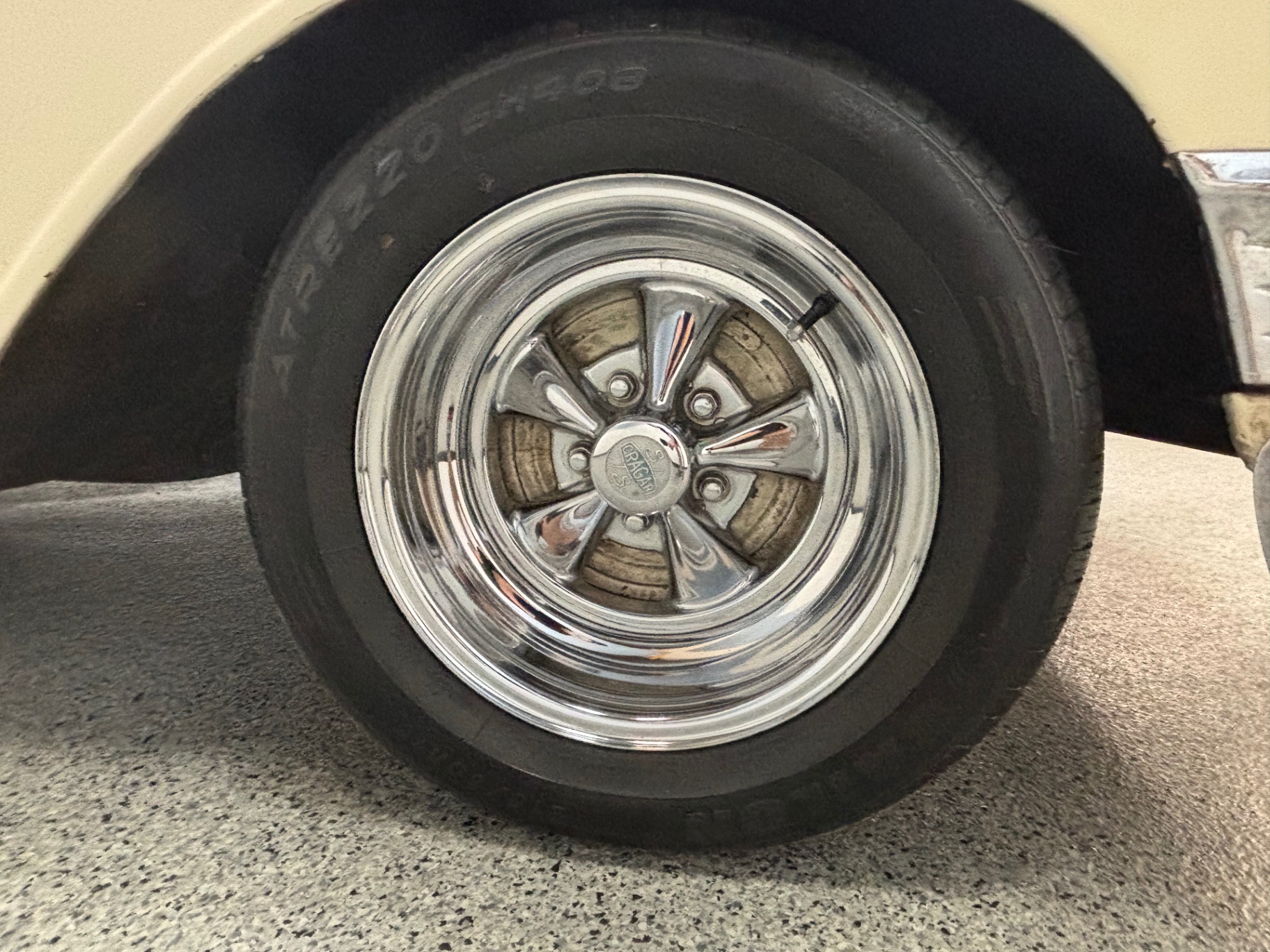
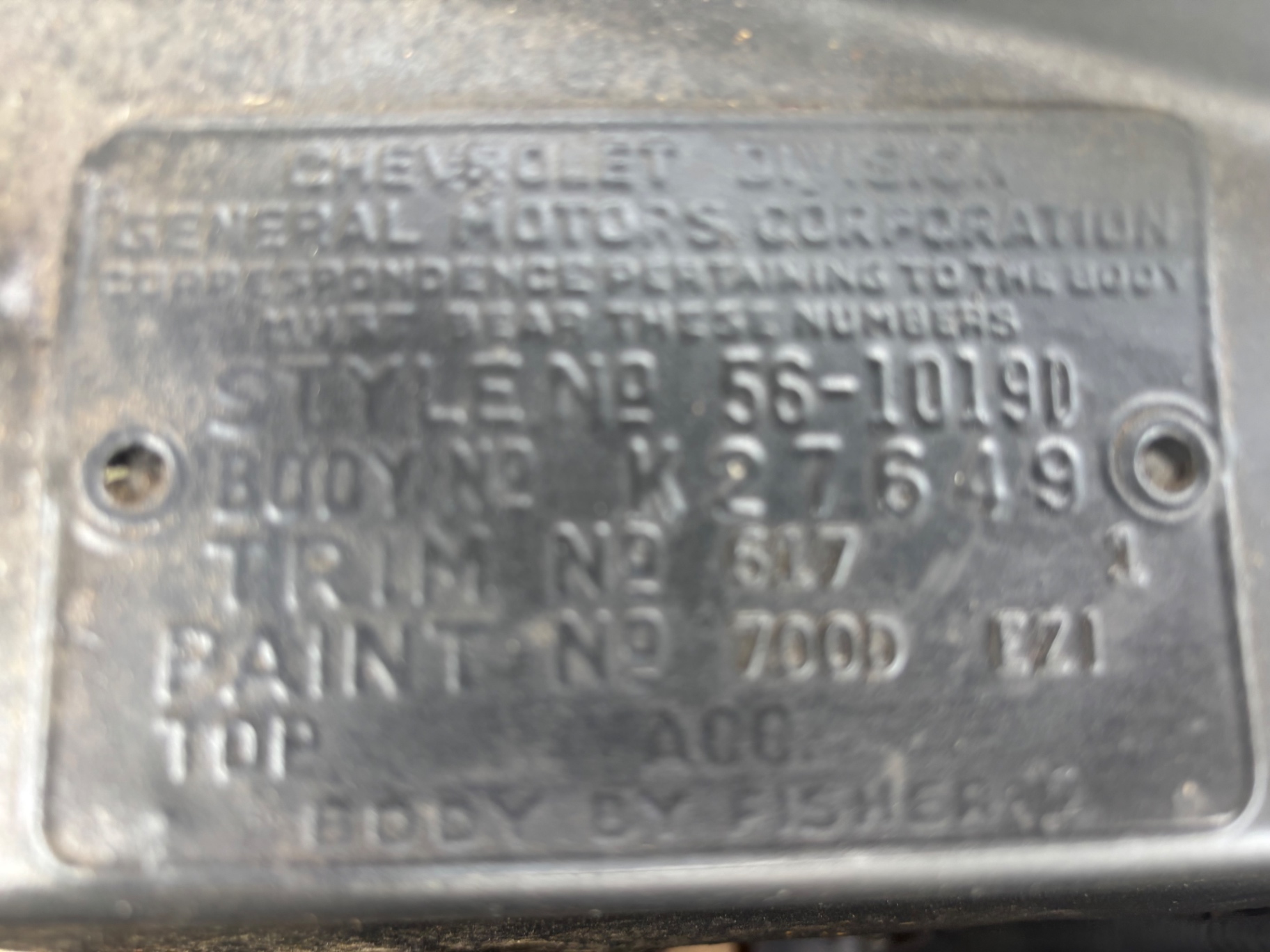
The original Bel Air badging is present on the front fenders and rear, and the Body by Fisher cowl tag remains in place. Both details matter to buyers who care about documentation and authenticity. The Cragar S/S chrome wheels are a classic American aftermarket wheel with roots going back to the 1960s, favored for decades on street machines and custom builds. They fit the character of this car without clashing with the factory body styling. The stance sits level, and the upgraded shocks visible in the undercarriage photos suggest the suspension geometry has been addressed.
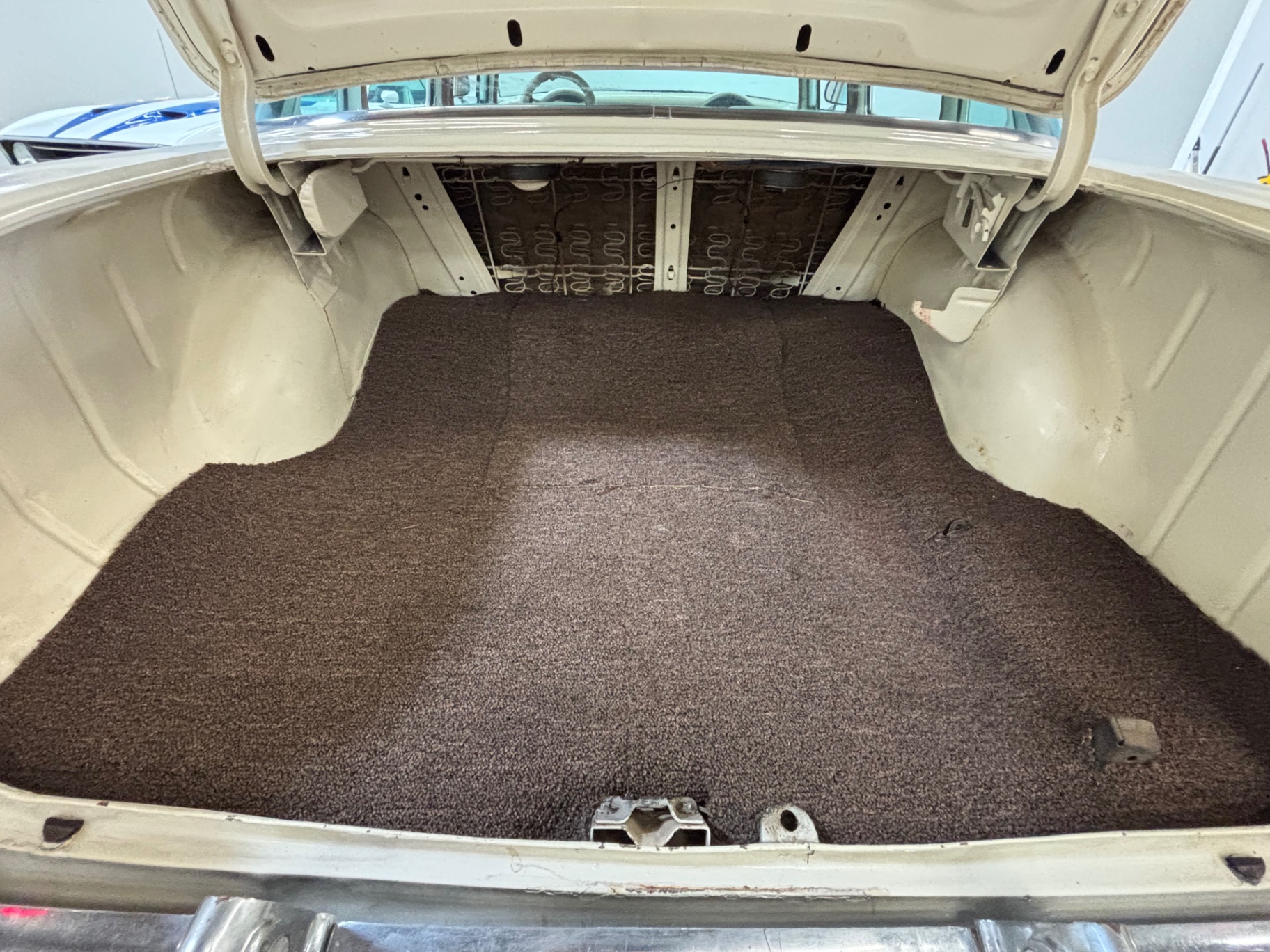
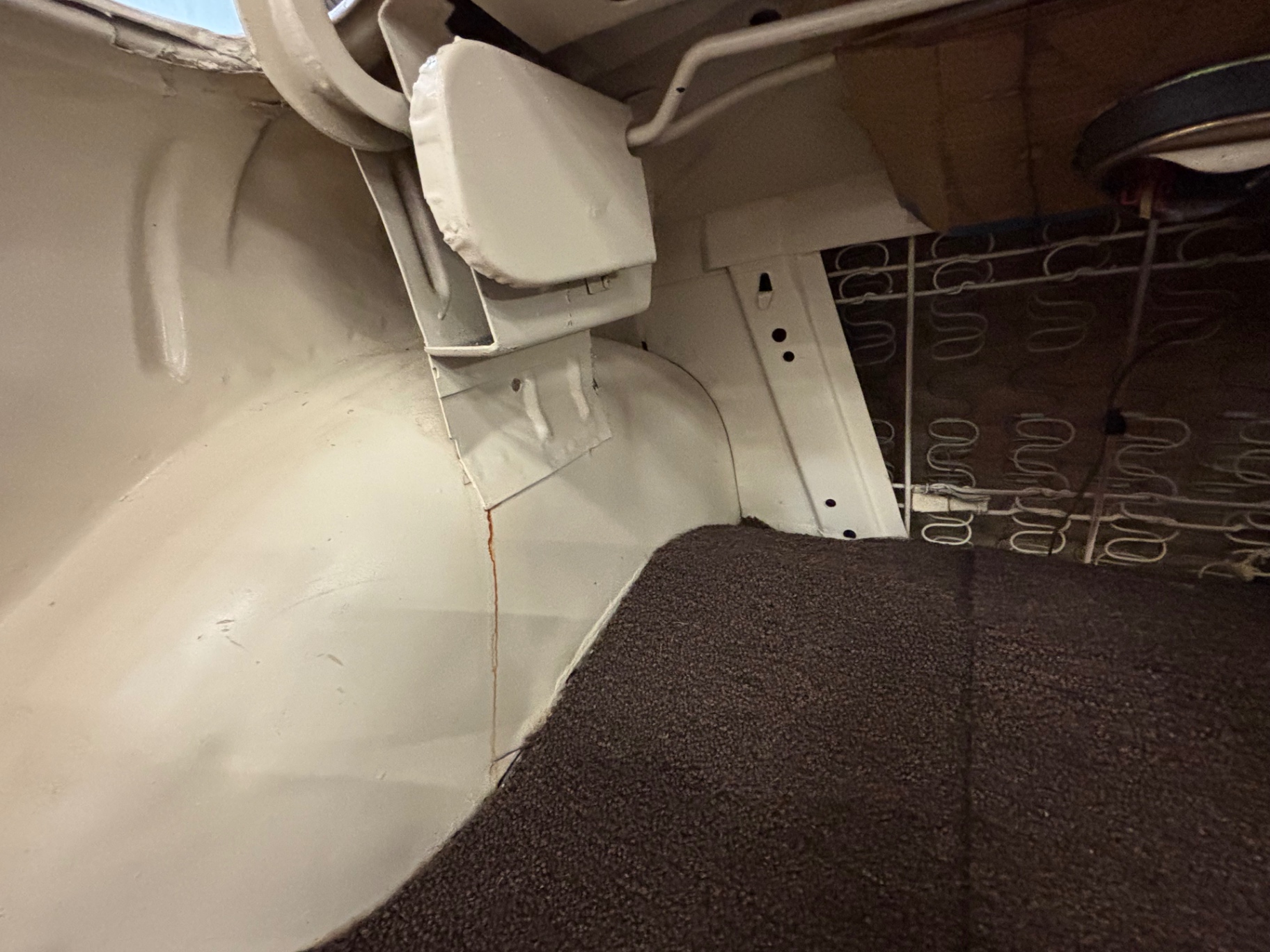
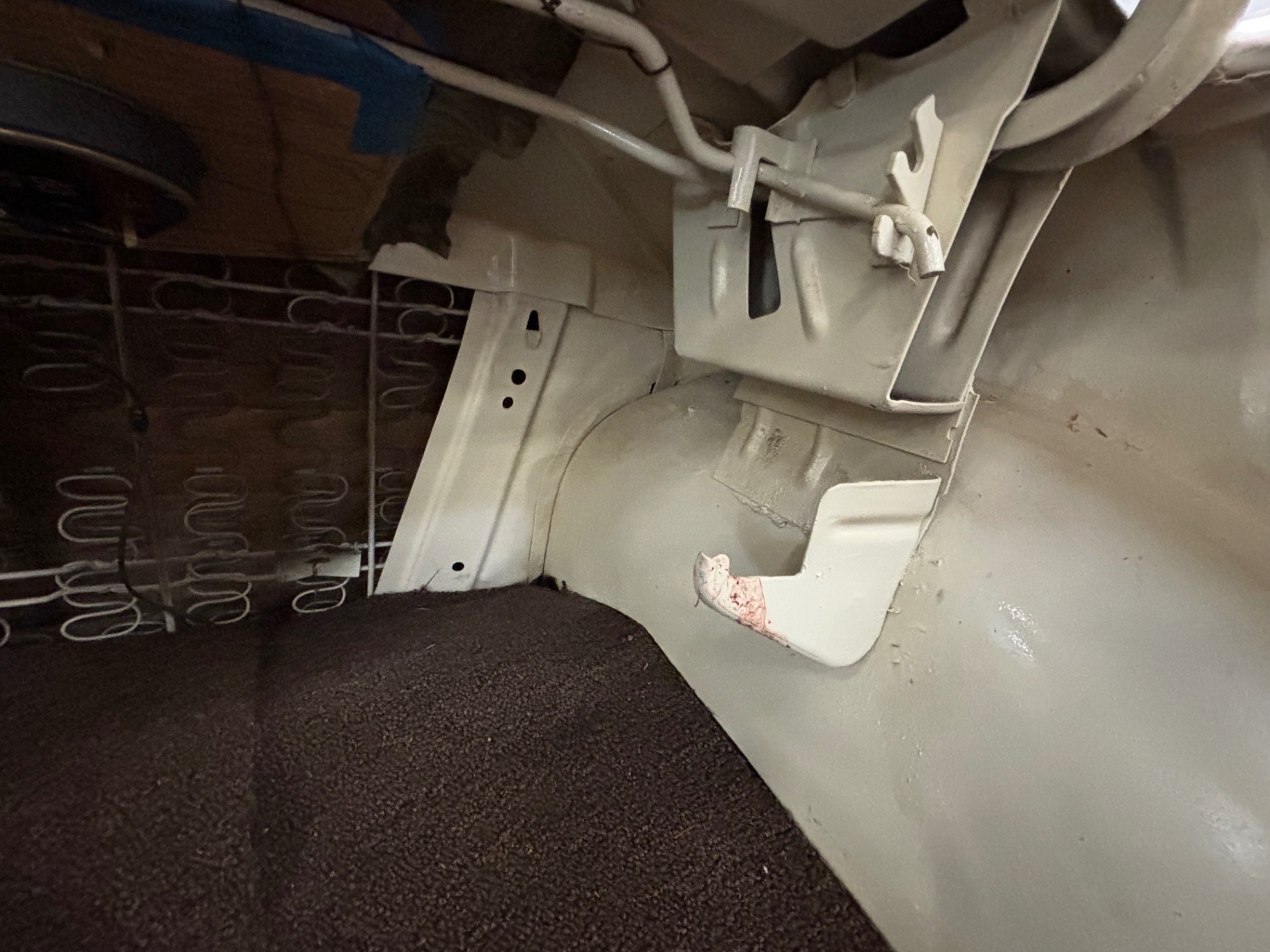
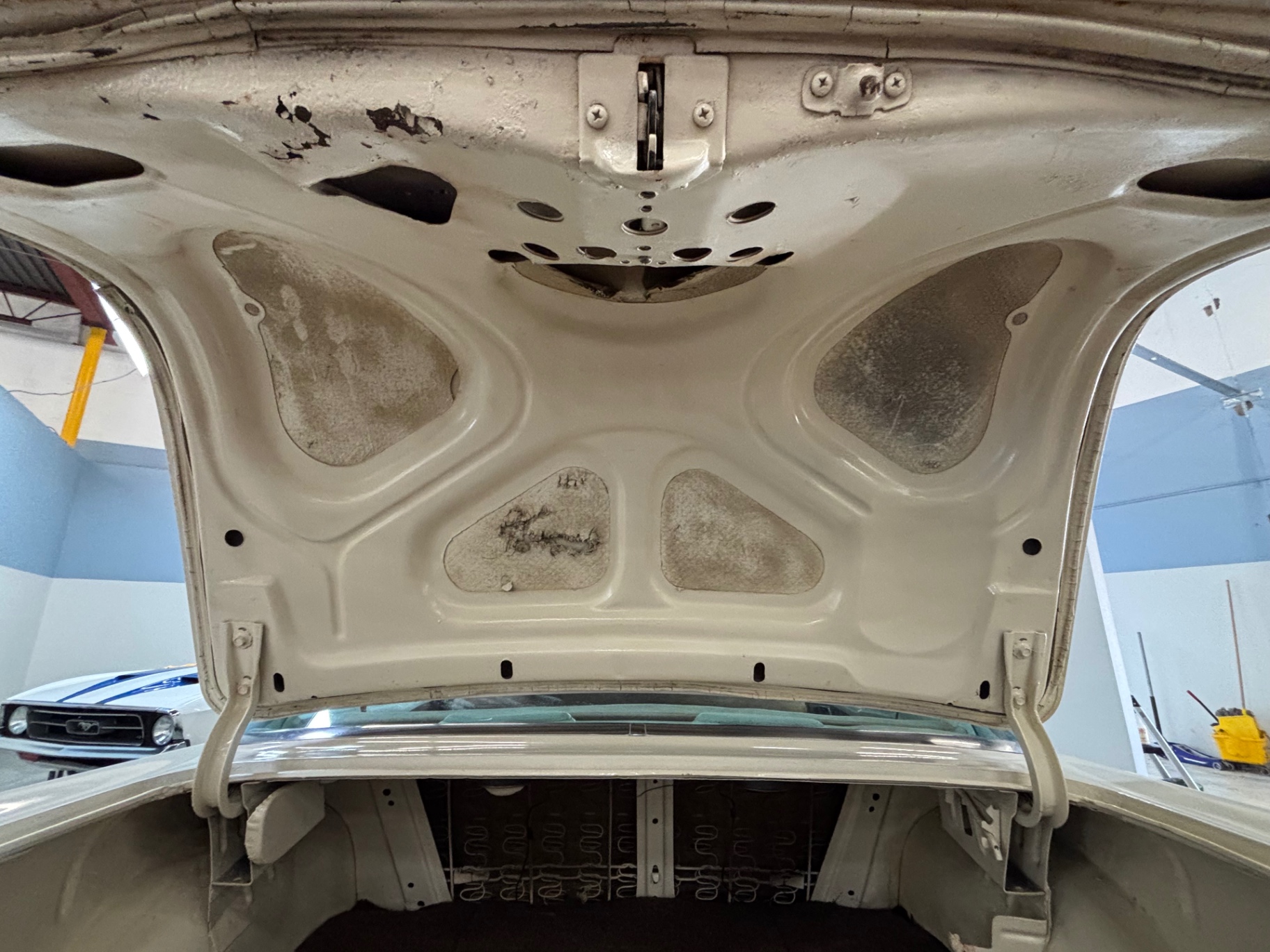
The trunk interior is carpeted in matching brown and shows clean, painted metal in the wheel wells and floor. The trunk lid underside shows surface oxidation where the factory sound deadener has deteriorated — this is typical for a car of this age and not unusual to find in an otherwise solid survivor.
Conclusion
The 1956 Chevrolet Bel Air is one of the most recognized and sought-after American classics, and this four-door example sits in an honest category that appeals to a specific kind of buyer — someone who wants a Tri-Five that runs, drives, and has personality rather than a museum piece. The 20,000 actual miles, the retained original badging and Body by Fisher tag, and the practical mechanical upgrades — 350 V8, alternator conversion, upgraded shocks, dual exhaust — add up to a car that has been improved where it matters without being stripped of its identity. The interior is custom but cohesive, the exterior is a survivor rather than a restoration, and the mechanicals are oriented toward reliability and enjoyment.
This is a car for someone who wants to drive a Tri-Five Bel Air on weekends, take it to shows without worrying about trailer queens, and enjoy the experience of owning one of the most iconic American automobiles ever built — without the price tag of a frame-off restoration.
To learn more about this 1956 Chevrolet Bel Air or to schedule a time to see it in person, call Skyway Classics in Sarasota, Florida at 941-254-6608.
Disclaimer
Information found on the website is presented as given to us by the owner of the car, whether on consignment or from the owner we bought it from. Some Photos, materials for videos, descriptions and other information are provided by the consignor/seller and is deemed reliable, but Skyway Classics does not warranty or guarantee this information. Skyway Classics is not responsible for information that may incorrect or a publishing error. The decision to purchase should be based solely on the buyers personal inspection of the vehicle or by a professional inspection service prior to offer or purchase being made.
1956 Chevrolet Bel Air — Low-Mileage Four-Door with 350 V8 and Honest Patina
Why This Car Is Special
The 1956 Chevrolet Bel Air occupies a specific and well-earned place in postwar American automotive history. It was the second year of the legendary Tri-Five generation — the series that ran from 1955 through 1957 — and in many ways it was the most refined of the three. Chevrolet addressed criticisms of the 1955 model by redesigning the hood, grille, and rear fender treatments, giving the 1956 a more horizontal look with a wider, more aggressive front end. The parking lights moved into the bumper, the hood was restyled with a modest forward extension, and the rear fenders gained a revised two-tone sweep. It was a more mature design, and the buying public responded — Chevrolet sold over 1.4 million cars that model year, with the Bel Air serving as the top-of-the-line trim above the Two-Ten and One-Fifty.
This particular 1956 Chevrolet Bel Air is a four-door sedan, which is confirmed by the VIN character indicating the Flint, Michigan assembly plant and the four-door sedan body style code. It carries just 20,000 actual miles, a figure that places it firmly in the category of a long-stored, lightly-used survivor rather than a restored show car. The body retains its original Bel Air badging and its Body by Fisher tag, both intact and in place. The exterior is Ivory, and the combination with the tan interior gives this car a warm, period-correct palette that suits it well.
What makes this Bel Air particularly interesting is how it has been developed over the years. Rather than being restored to factory spec, it has been built as a driver — fitted with a Chevrolet 350 cubic inch V8, upgraded suspension, a floor-shifted automatic transmission, and a dual exhaust system. It is not a show car. It is a well-sorted, mechanically updated classic that someone has clearly enjoyed and worked on thoughtfully. For a buyer who wants to get in and drive a Tri-Five Chevy without taking on a full restoration project, this car makes a compelling case.
Features List
- 350 cubic inch V8 engine
- Four-barrel carburetor
- Alternator conversion
- Summit Racing air cleaner
- Black valve covers with chrome Bowtie emblems
- Automatic transmission with floor shifter
- Dual exhaust system
- Upgraded blue shocks, front and rear
- Cragar S/S chrome wheels
- Custom plaid cloth bench seats, front and rear
- Tan cloth door panels with chrome trim strips
- Brown carpet flooring throughout cabin and trunk
- Aftermarket GT steering wheel
- Auxiliary gauge cluster (three-gauge panel, dash-mounted)
- Front door speakers, rear door speakers, and rear deck speakers
- Lap seat belts installed front and rear
- Chrome front and rear bumpers
- Original Bel Air badging
- Body by Fisher tag present
- Ivory exterior
- 20,000 actual miles
Mechanical
Under the hood sits a Chevrolet 350 cubic inch small-block V8, the engine that needs no introduction to anyone familiar with American performance cars. The 350 was introduced in 1967 and became the backbone of Chevrolet's engine lineup for decades. Swapping one into a Tri-Five Bel Air is one of the most common and practical engine upgrades possible — parts are everywhere, mechanics know them cold, and the power increase over the original 235 cubic inch Blue Flame six or even the original 265 V8 is substantial.
The 350 here is fed by a four-barrel carburetor topped with a Summit Racing air cleaner. The valve covers are black with chrome Bowtie logos, giving the engine bay a clean, purposeful appearance without going overboard. The original generator has been replaced with an alternator, which is a practical and widely recommended upgrade for a car that will be driven regularly — alternators charge more efficiently at idle and low RPM than the original generator setup, and they are far more reliable in day-to-day use.
The exhaust system is a dual setup, which is both visually and audibly consistent with a built small-block. The underside photos show a clean-looking floor pan with fresh undercoating on sections of the body, along with the new blue shocks visible at all four corners. The rear axle and suspension appear to be in sound condition. The front suspension shows the expected A-arm configuration that 1956 Chevrolets used, and the steering linkage and ball joints appear to be in serviceable condition based on inspection photos. The upgraded shocks at all four corners — clearly visible in the undercarriage shots with their blue finish — would improve ride quality and handling over the original equipment considerably.
The automatic transmission shifts via a floor-mounted console shifter, a departure from the original column-shift setup. This is a common modification on driver-built classics from this era and gives the car a sportier feel behind the wheel without being disruptive to the overall aesthetic.
Interior
The interior of this 1956 Chevrolet Bel Air has been customized but retains the fundamental layout of the original — full-width bench seats front and rear, a broad expanse of dashboard, and a clean, open cabin with good sight lines in every direction. The seat upholstery is a custom plaid cloth in earth tones — brown, tan, and rust — with tan suede-style bolsters. It is a period-influenced look that fits the car well and shows no significant wear. Both the front and rear benches appear in usable, presentable condition.
The door panels are tan with chrome trim strips running horizontally across each panel, consistent with Bel Air trim practice from the factory. The door pulls are ivory-colored with chrome surrounds. Speakers are fitted in all four door panels, with additional speakers mounted on the rear deck shelf — a practical upgrade for a car meant to be driven and enjoyed.
The flooring is covered in brown carpet that runs consistently from the firewall to the trunk, keeping the interior tidy and well-coordinated with the seat colors. The headliner is an ivory perforated cloth unit that appears in good condition. The dash retains its original 1956 Bel Air appearance, including the horizontal ribbed center section, the swept speedometer cluster, and the Bel Air script badge on the glove box door. The original steering column is in place, though topped with an aftermarket GT steering wheel — a three-spoke design with a perforated leather-wrapped rim that was a popular upgrade in the custom car era.
Below the dash, a three-gauge auxiliary panel has been fitted at the base of the center section, providing oil pressure, water temperature, and voltage readings — exactly the information you want when driving a modified classic on the open road. The floor shifter for the automatic transmission is positioned between the front seats on a raised chrome console base. Lap belts are installed at all seating positions.
Exterior
The 1956 Chevrolet Bel Air body style is defined by its bold two-piece wraparound windshield, its long hood, and the distinctive rear fender sweep that distinguished the Bel Air from lesser trim levels. This car wears a single-color Ivory finish rather than the two-tone treatments common on Bel Airs of the era. The paint shows its age in places — this is not a fresh repaint — but the body panels appear straight and the chrome work, including both bumpers, retains usable condition.
The original Bel Air badging is present on the front fenders and rear, and the Body by Fisher cowl tag remains in place. Both details matter to buyers who care about documentation and authenticity. The Cragar S/S chrome wheels are a classic American aftermarket wheel with roots going back to the 1960s, favored for decades on street machines and custom builds. They fit the character of this car without clashing with the factory body styling. The stance sits level, and the upgraded shocks visible in the undercarriage photos suggest the suspension geometry has been addressed.
The trunk interior is carpeted in matching brown and shows clean, painted metal in the wheel wells and floor. The trunk lid underside shows surface oxidation where the factory sound deadener has deteriorated — this is typical for a car of this age and not unusual to find in an otherwise solid survivor.
Conclusion
The 1956 Chevrolet Bel Air is one of the most recognized and sought-after American classics, and this four-door example sits in an honest category that appeals to a specific kind of buyer — someone who wants a Tri-Five that runs, drives, and has personality rather than a museum piece. The 20,000 actual miles, the retained original badging and Body by Fisher tag, and the practical mechanical upgrades — 350 V8, alternator conversion, upgraded shocks, dual exhaust — add up to a car that has been improved where it matters without being stripped of its identity. The interior is custom but cohesive, the exterior is a survivor rather than a restoration, and the mechanicals are oriented toward reliability and enjoyment.
This is a car for someone who wants to drive a Tri-Five Bel Air on weekends, take it to shows without worrying about trailer queens, and enjoy the experience of owning one of the most iconic American automobiles ever built — without the price tag of a frame-off restoration.
To learn more about this 1956 Chevrolet Bel Air or to schedule a time to see it in person, call Skyway Classics in Sarasota, Florida at 941-254-6608.
Disclaimer
Information found on the website is presented as given to us by the owner of the car, whether on consignment or from the owner we bought it from. Some Photos, materials for videos, descriptions and other information are provided by the consignor/seller and is deemed reliable, but Skyway Classics does not warranty or guarantee this information. Skyway Classics is not responsible for information that may incorrect or a publishing error. The decision to purchase should be based solely on the buyers personal inspection of the vehicle or by a professional inspection service prior to offer or purchase being made.
1956 Chevrolet
Bel Air Base
Why Choose Skyway Classics?
Explore our curated inventory of classic and collector cars—thoughtfully selected, ready to drive, and supported by experts who make ownership simple.
Expert Curation
Every vehicle is hand-selected by our experts for quality, authenticity, and investment potential.
Fast Transactions
Streamlined buying and selling process with quick financing and immediate delivery options.
Only National Dealer With Classic Service & Repair
We’re the only national dealership that services and repairs the classics we sell—before and after the sale.
Nationwide Network
Access to our extensive network of collectors, restorers, and classic car enthusiasts nationwide.
Concierge Ownership Support
From financing and insurance to paperwork, shipping, and titling—we handle the details so you can enjoy the drive.
Passion-Driven Service
We're classic car enthusiasts first, providing personalized service with genuine passion for the hobby.