
1963 Chevrolet
Corvair Monza 900
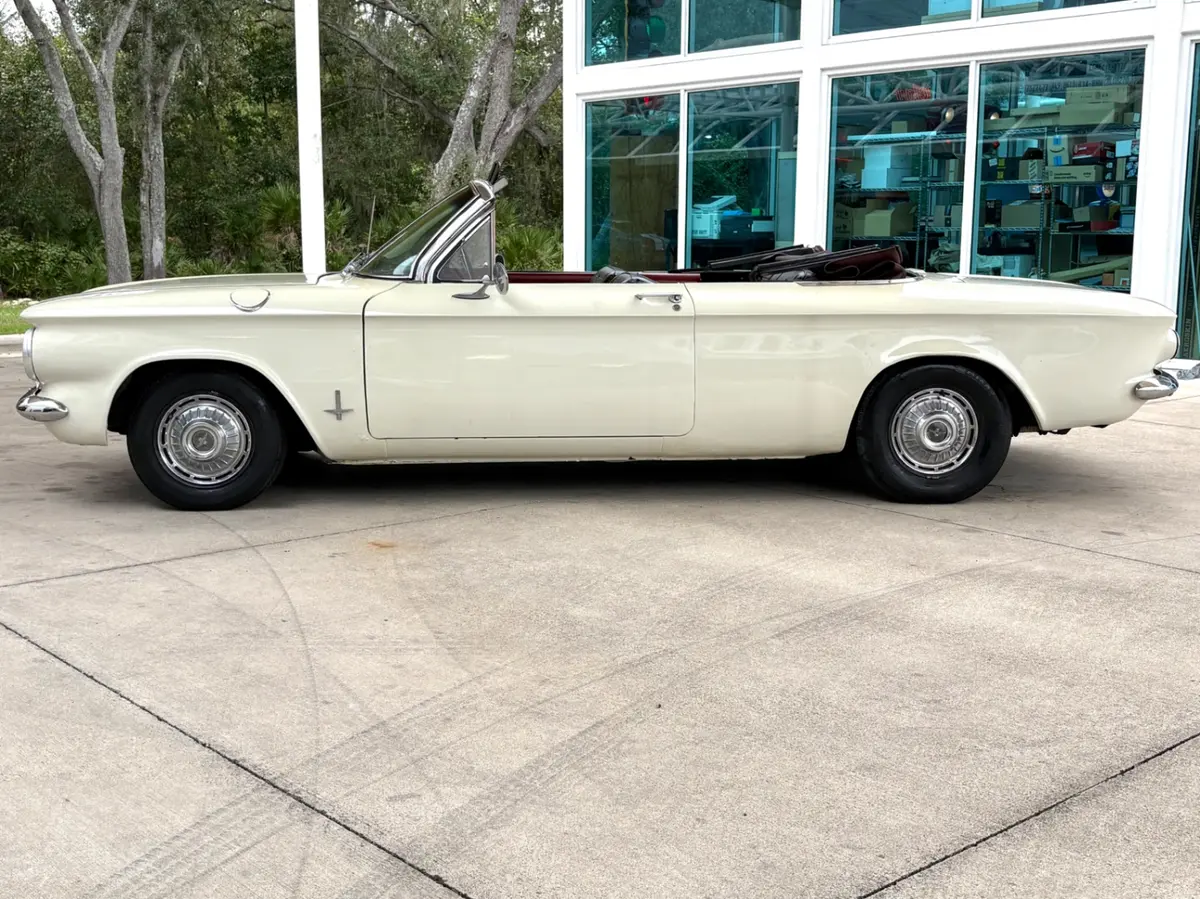
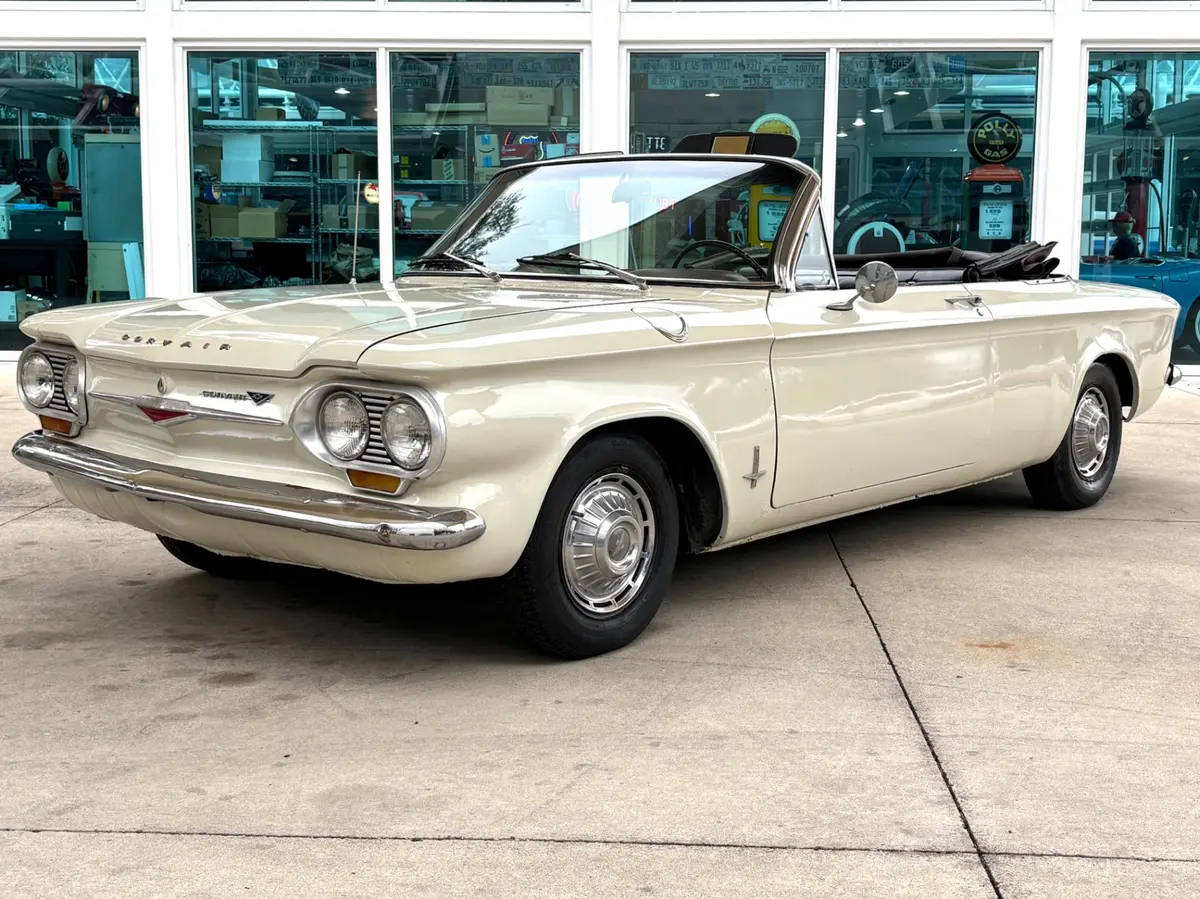
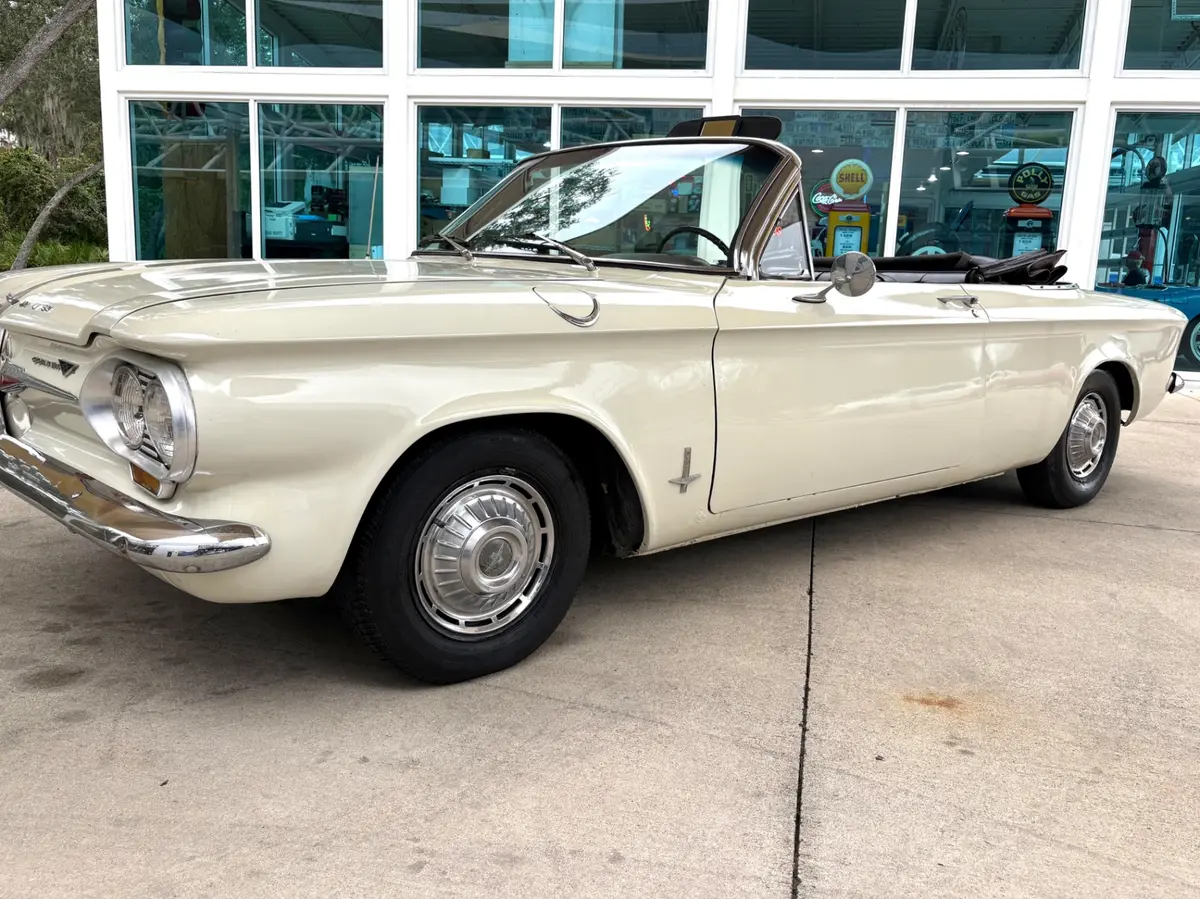
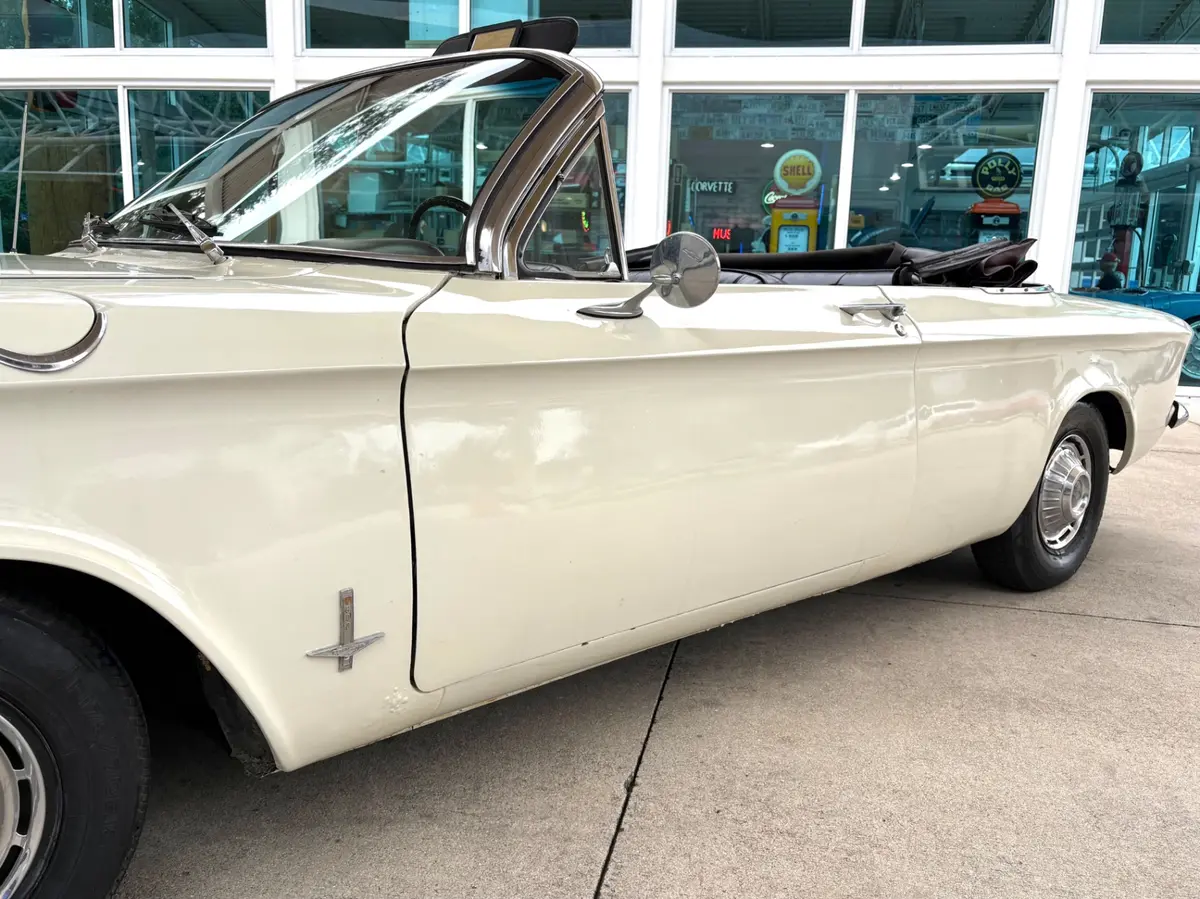
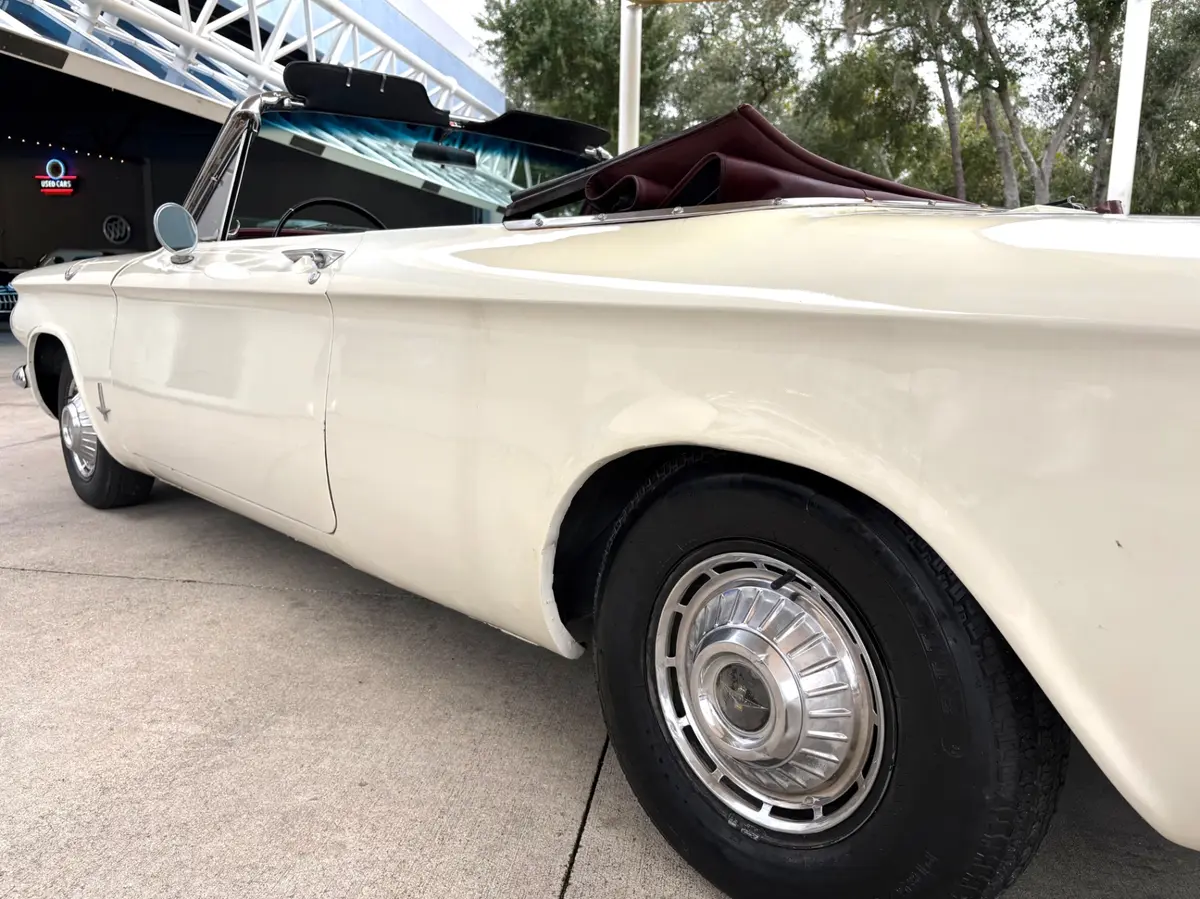
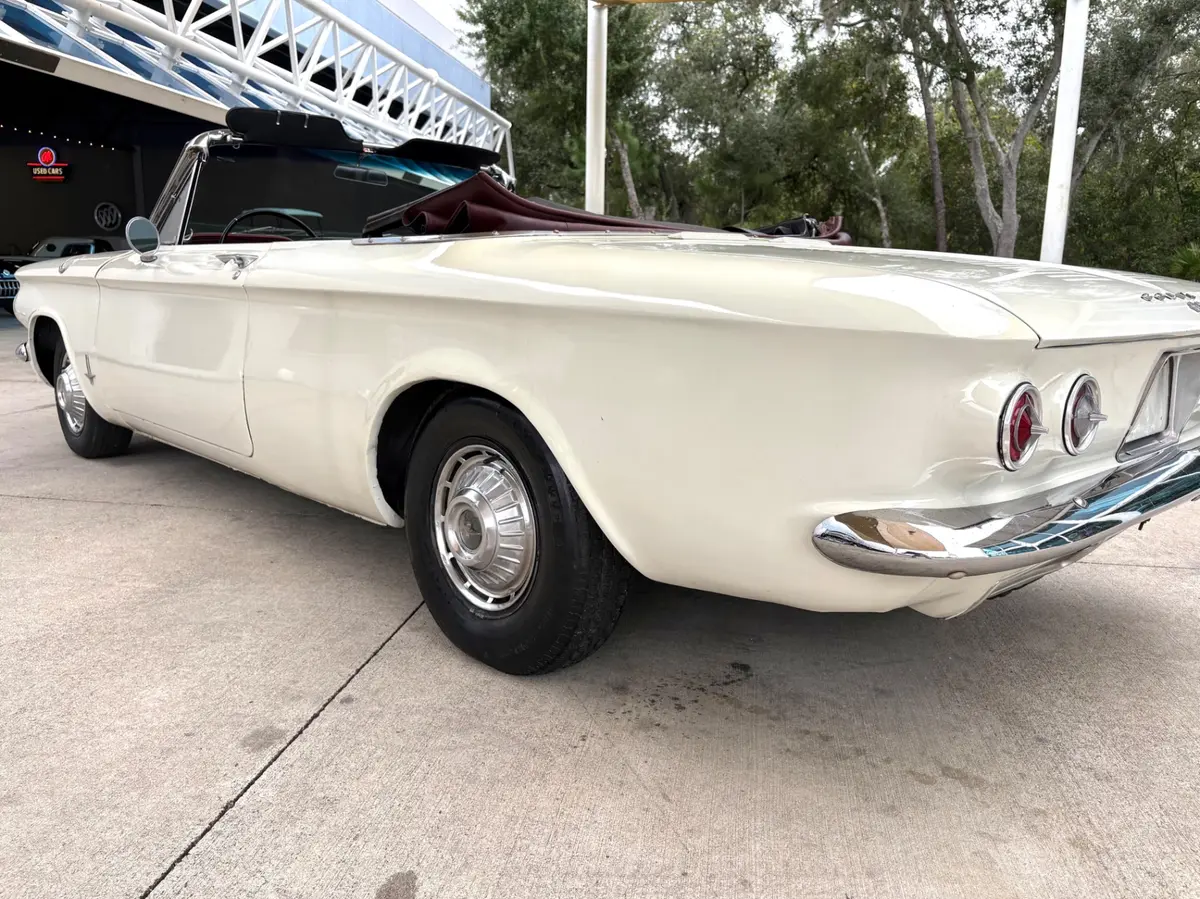
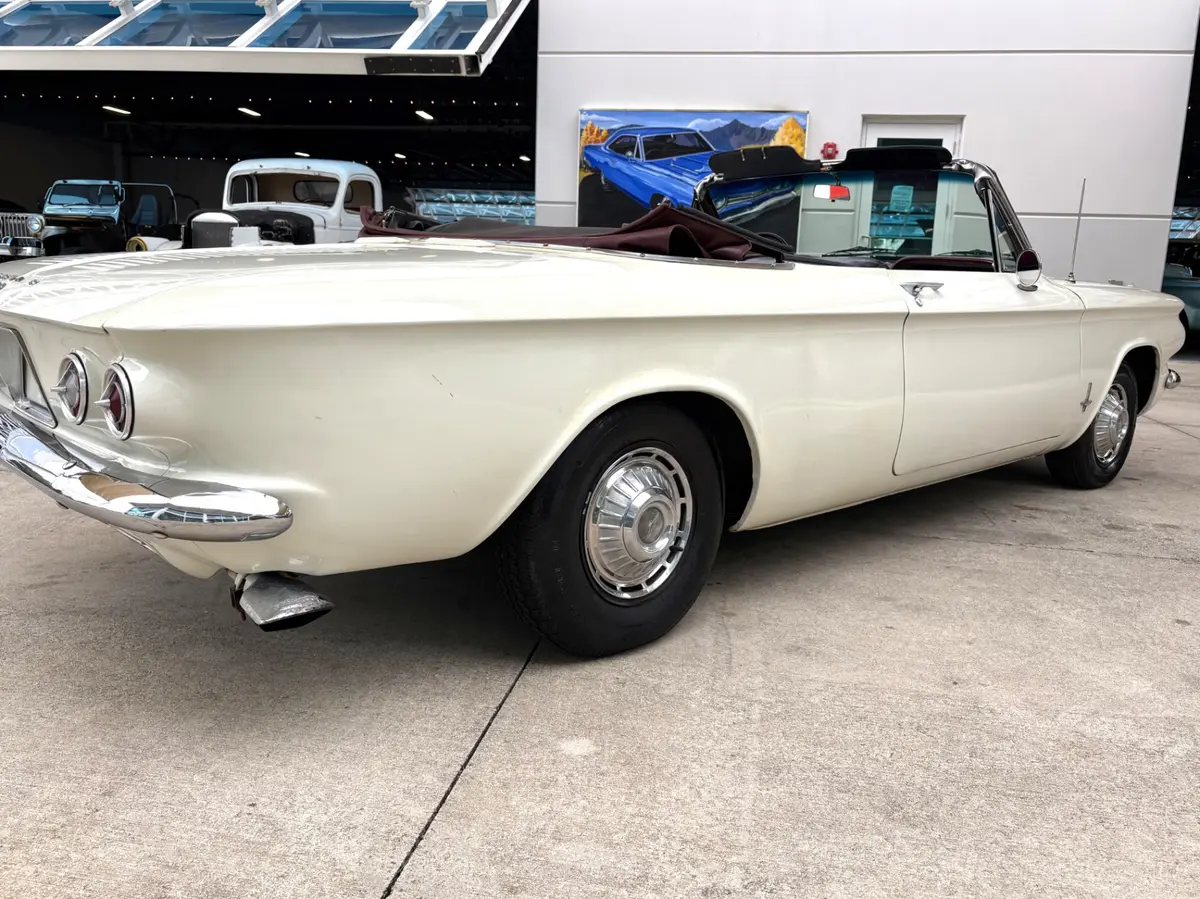
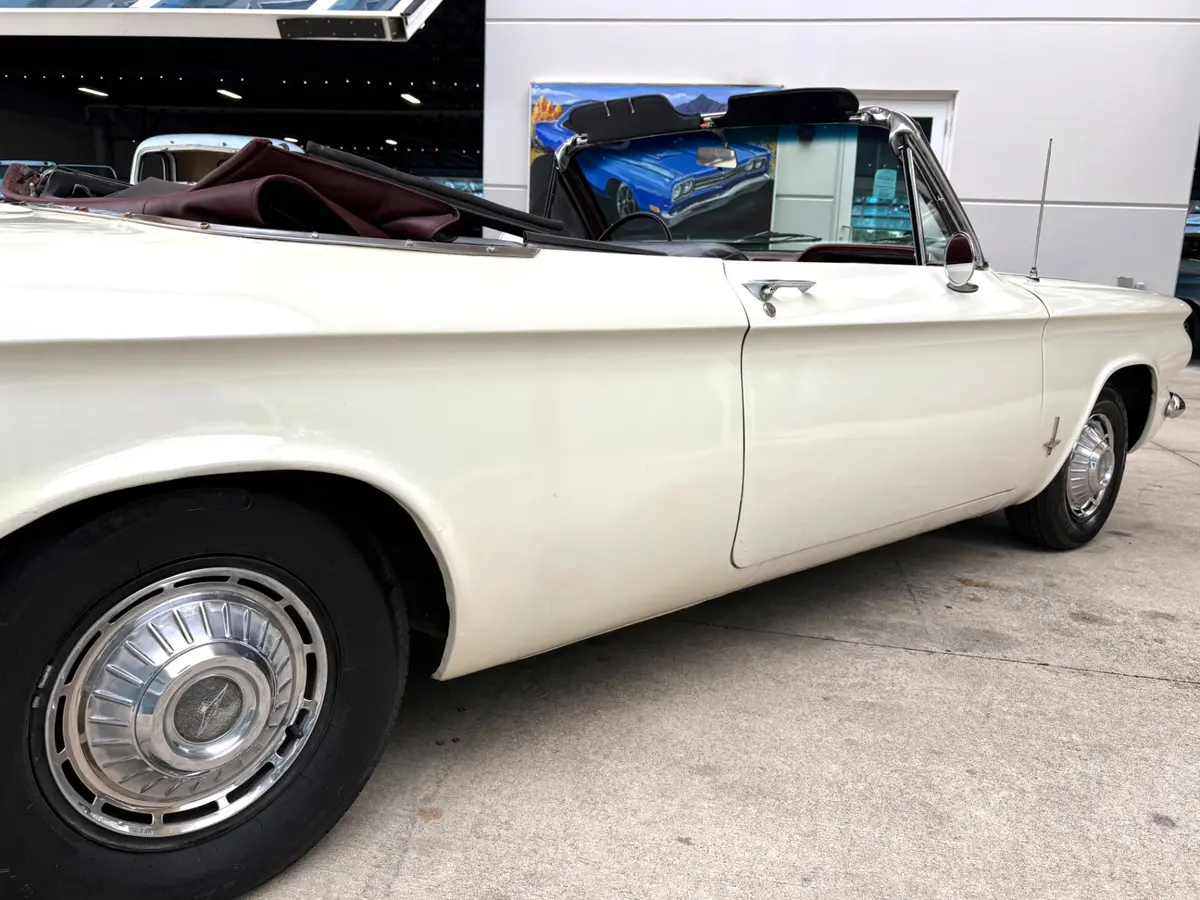
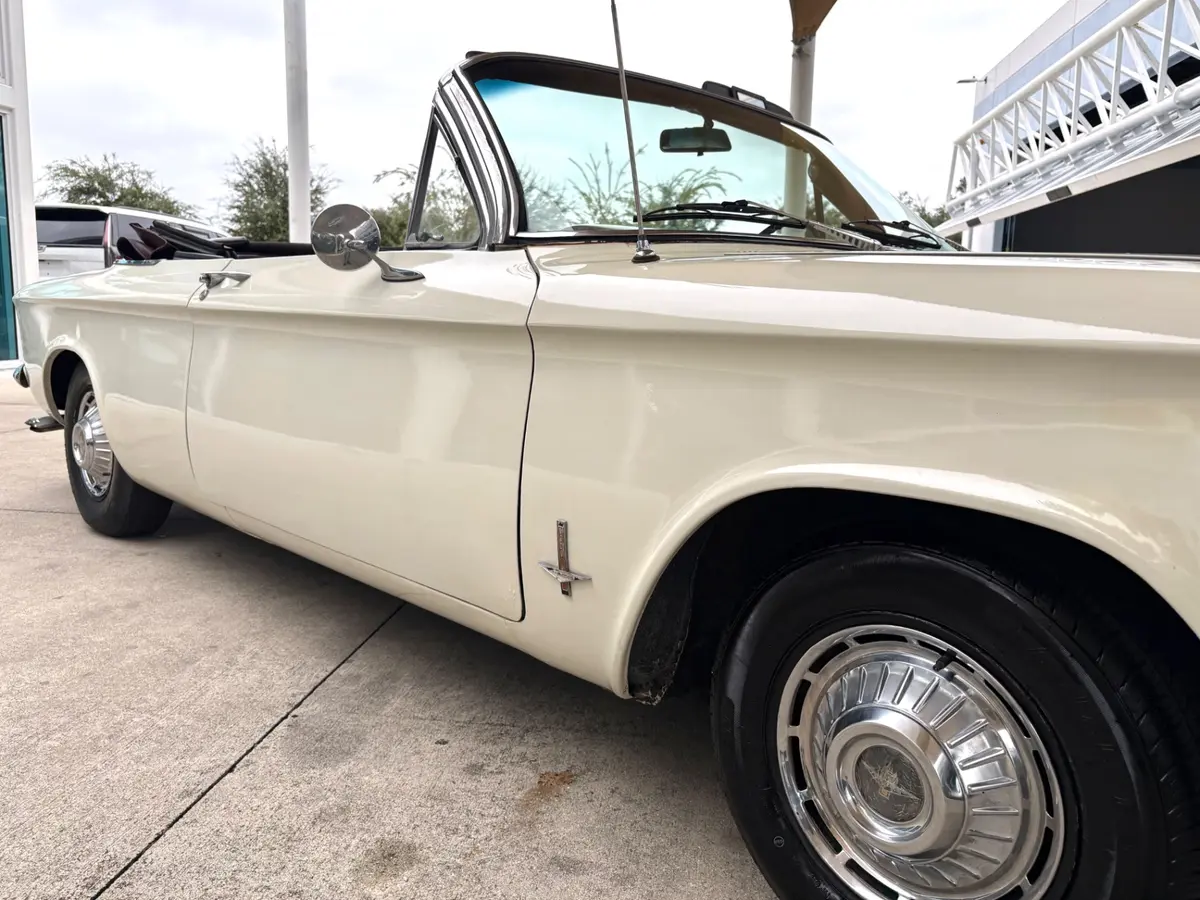
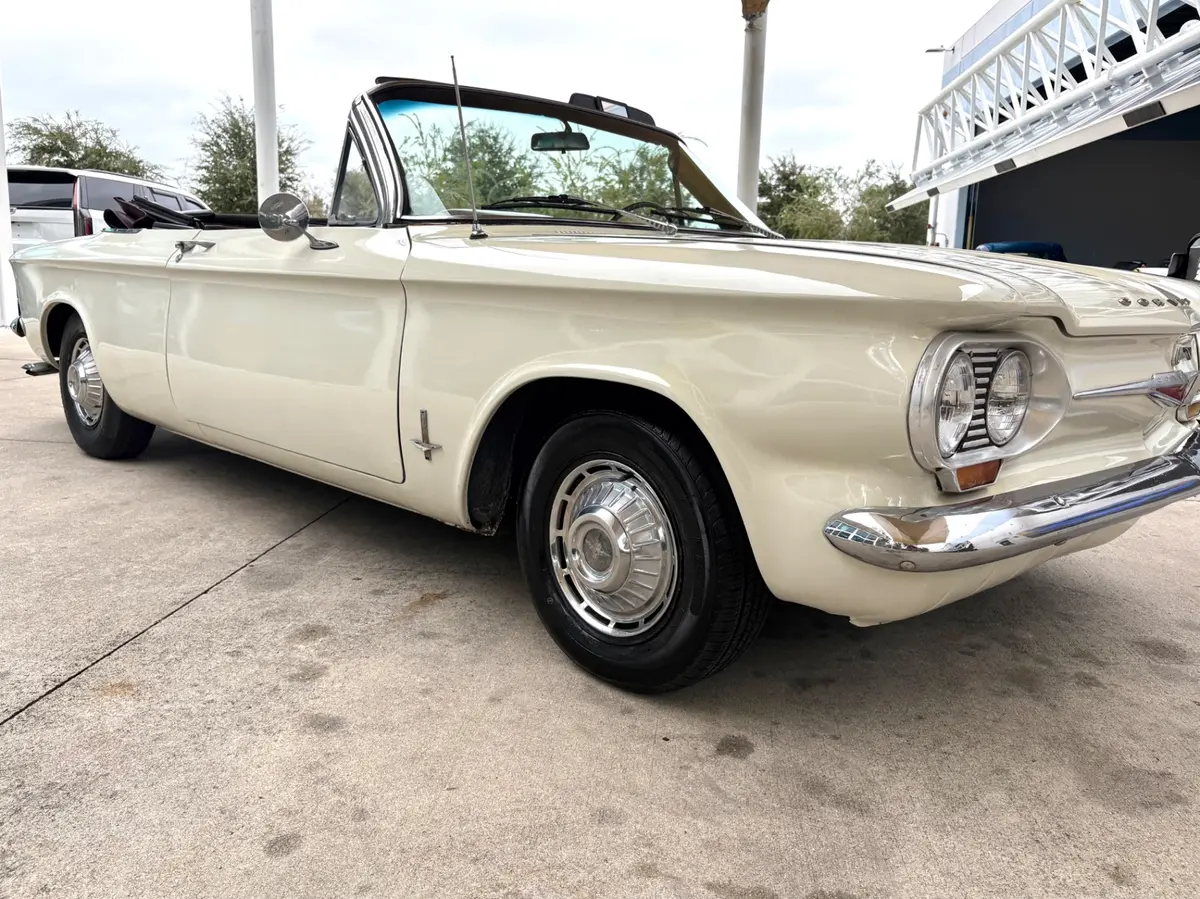
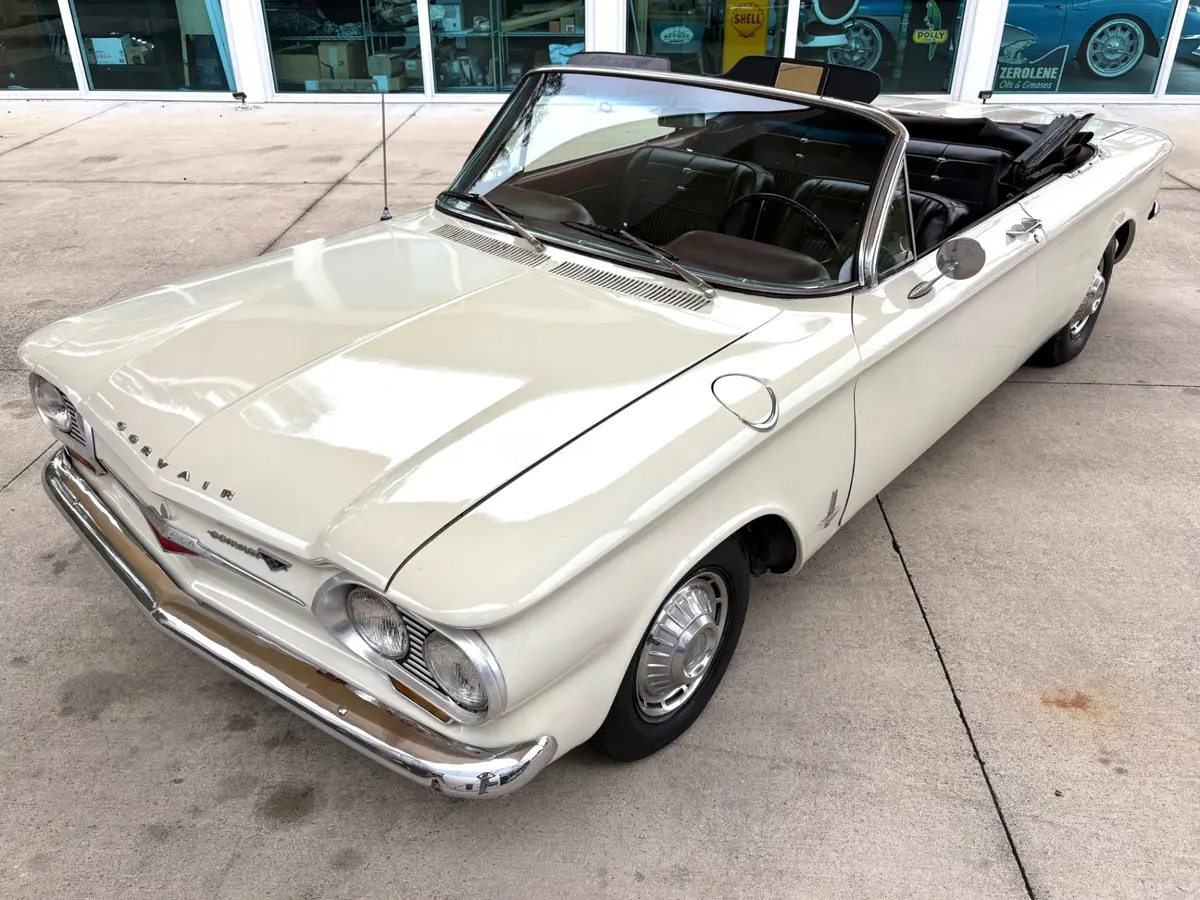
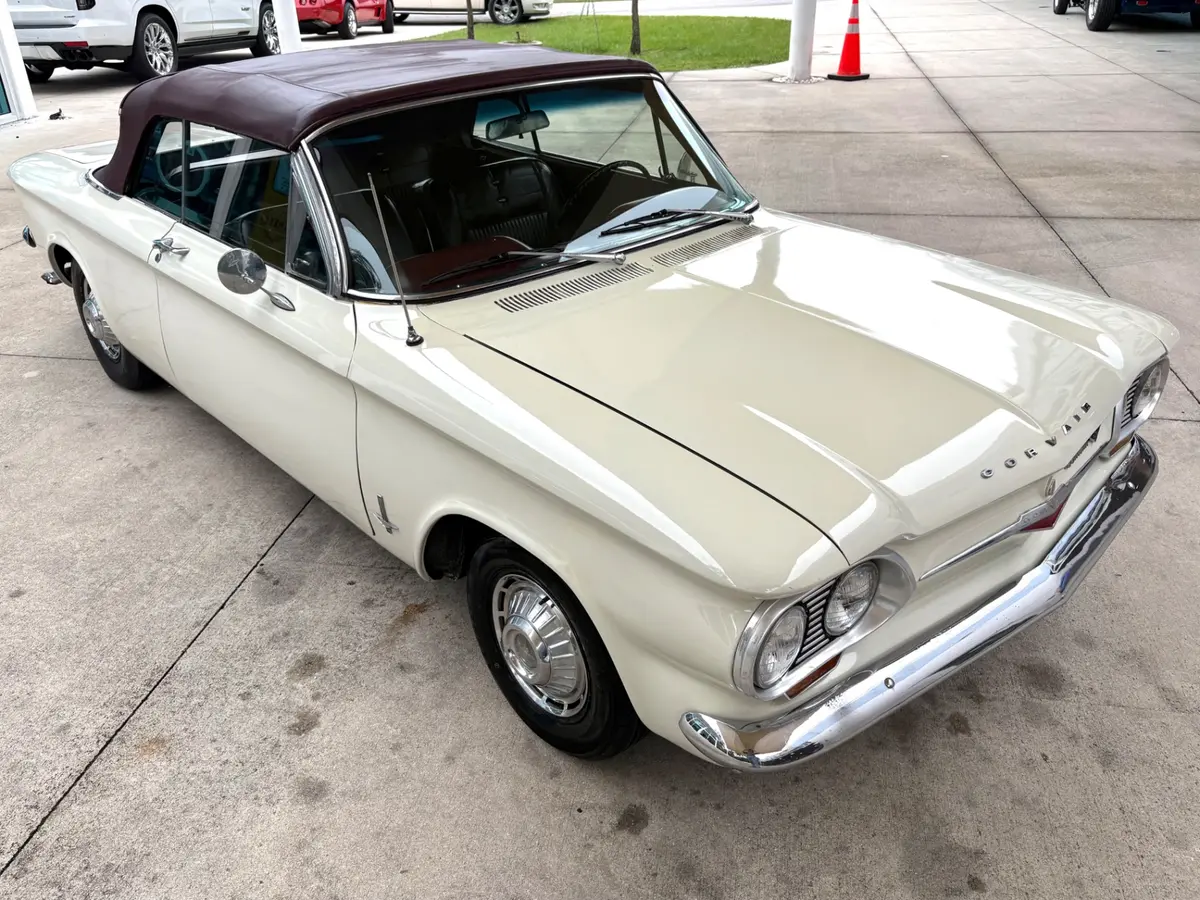
1963 Chevrolet Corvair Monza 900 Convertible — Driver-Quality Open-Air Classic with Fresh Mechanicals
Why This Car Is Special
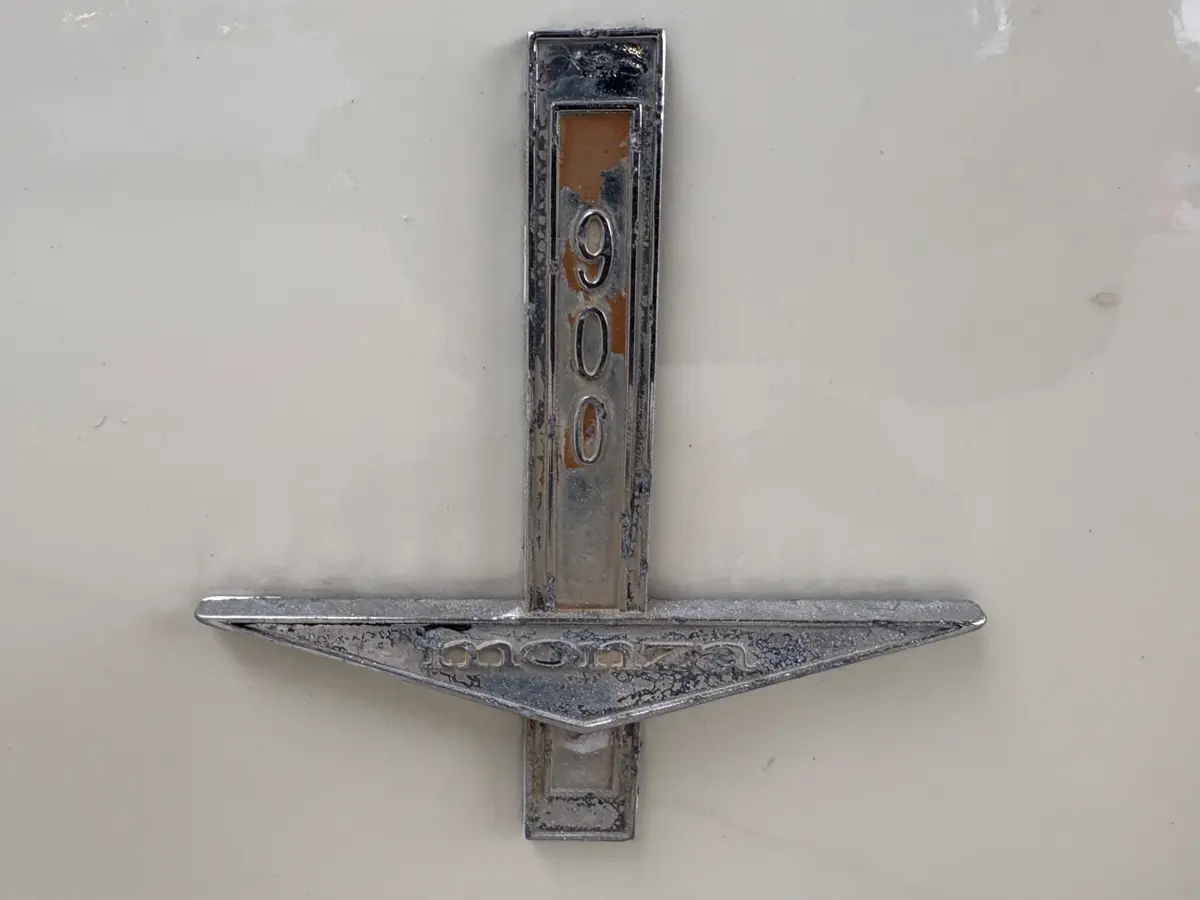
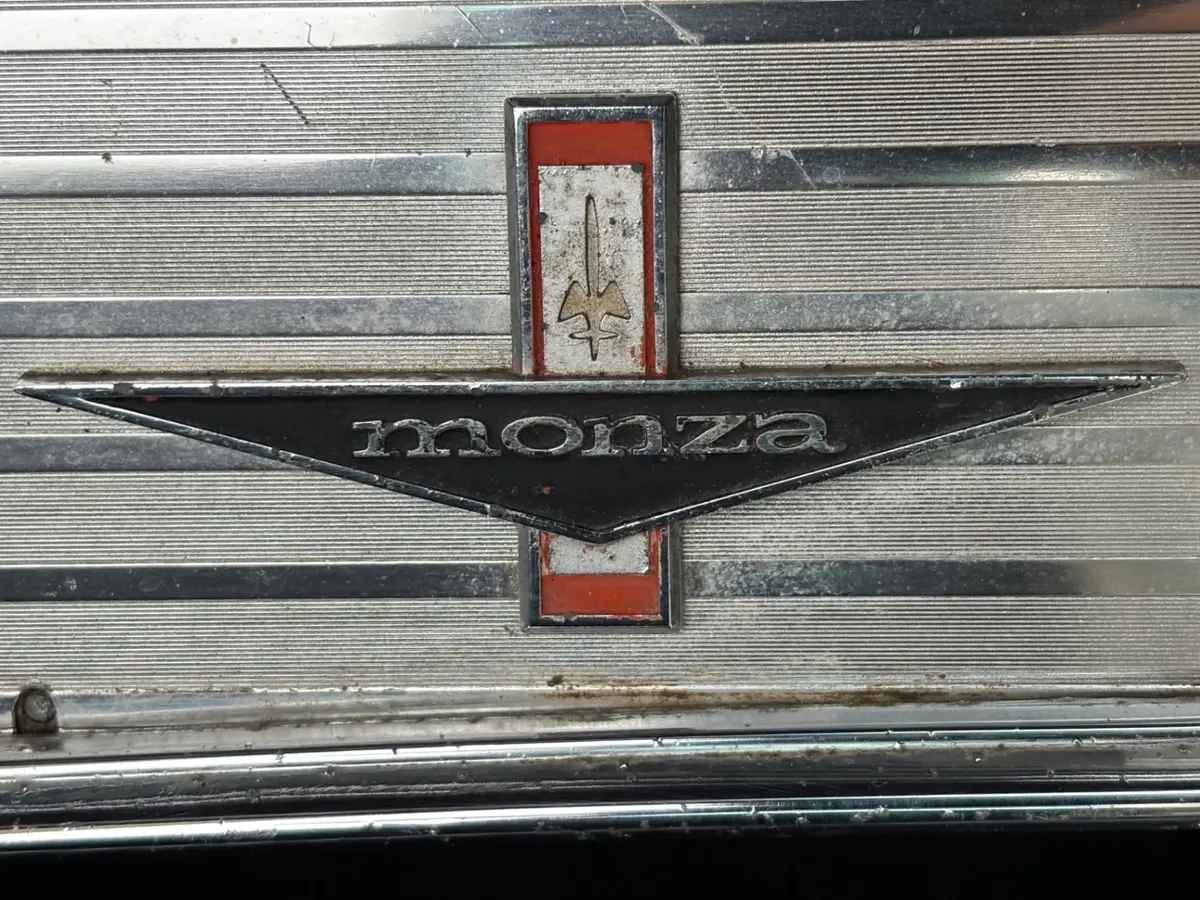
The 1963 Chevrolet Corvair Monza 900 Convertible sits at an interesting crossroads in American automotive history. It was produced during the final year of the first-generation Corvair's run before Chevrolet overhauled the platform for 1964, and it came at a time when the Monza series had already established itself as the most desirable trim in the Corvair lineup. The Monza name first appeared as a show car in 1962 and quickly became synonymous with the sportier, better-equipped version of the Corvair. By 1963, the Monza 900 convertible was the top-of-the-line open-body offering in the Corvair range, featuring bucket seats, a richer interior, and more standard equipment than the base 700 or 500 series cars.
What makes the 1963 Corvair Monza 900 convertible particularly notable is what sits behind the rear axle. While most American cars of the period carried a water-cooled engine up front, the Corvair mounted an air-cooled, horizontally opposed six-cylinder engine in the rear — a layout more commonly associated with Porsche and Volkswagen than with a Chevrolet compact. Combined with a unibody structure and four-wheel independent suspension, the 1963 Corvair Monza 900 was genuinely unlike anything else sold by a domestic automaker at the time. Ralph Nader's 1965 book brought the early Corvair enormous public attention, but engineering historians and collectors have long recognized that the first-generation cars — especially the 1963 model — represent a uniquely bold chapter in General Motors history.
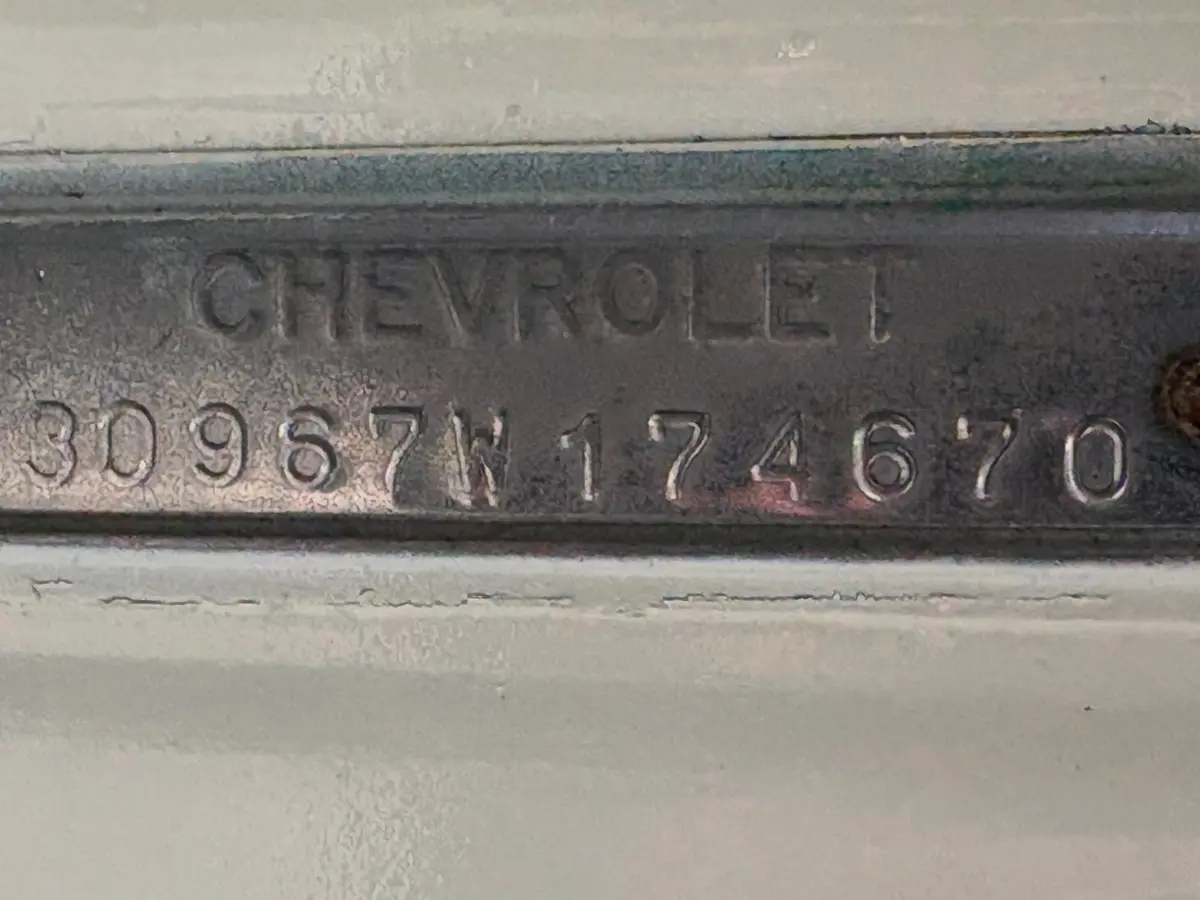
The VIN on this car decodes to confirm it is a 1963 model (the "3" in the sequence), built in the Willow Run, Michigan assembly plant (indicated by the "W" in the VIN), and identifies it as a Monza 900 convertible. The sequence number places it well within normal production for the model year.
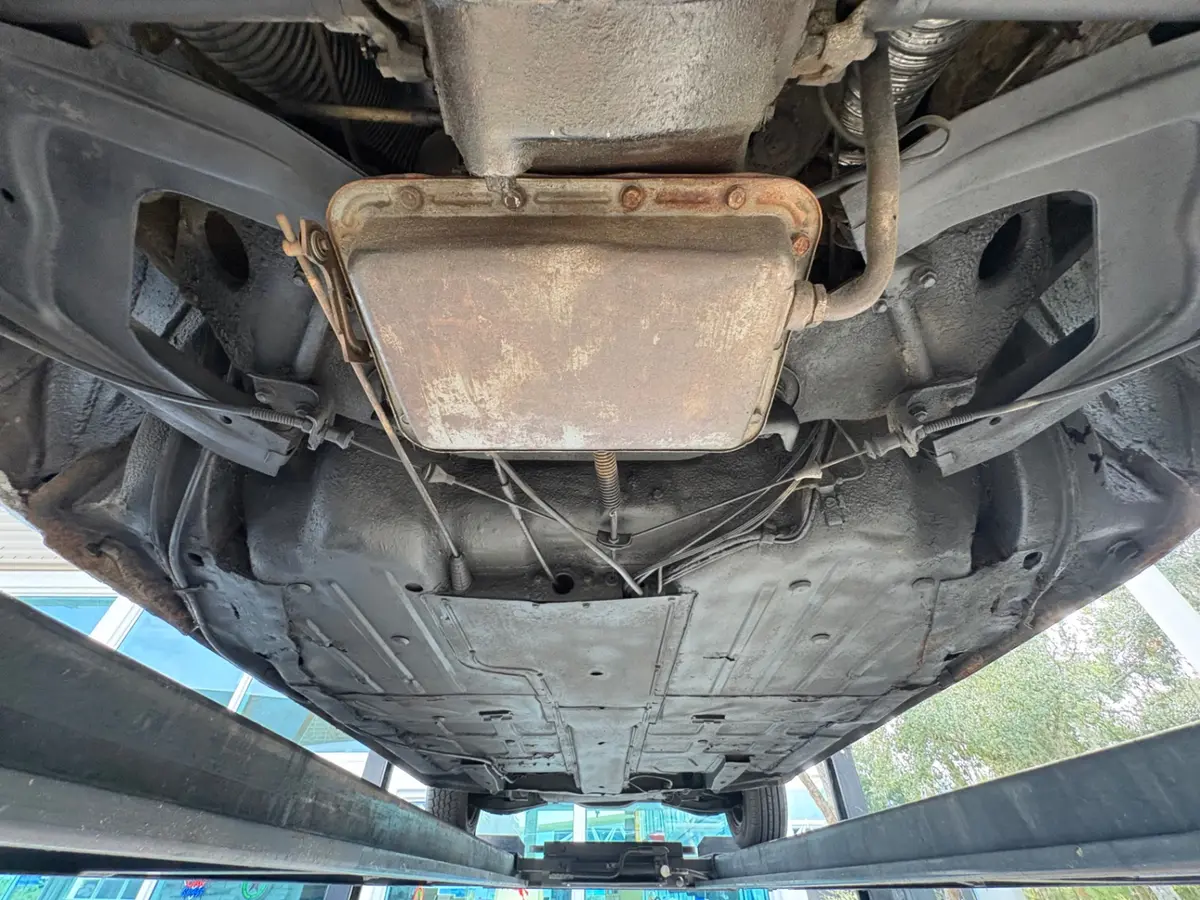
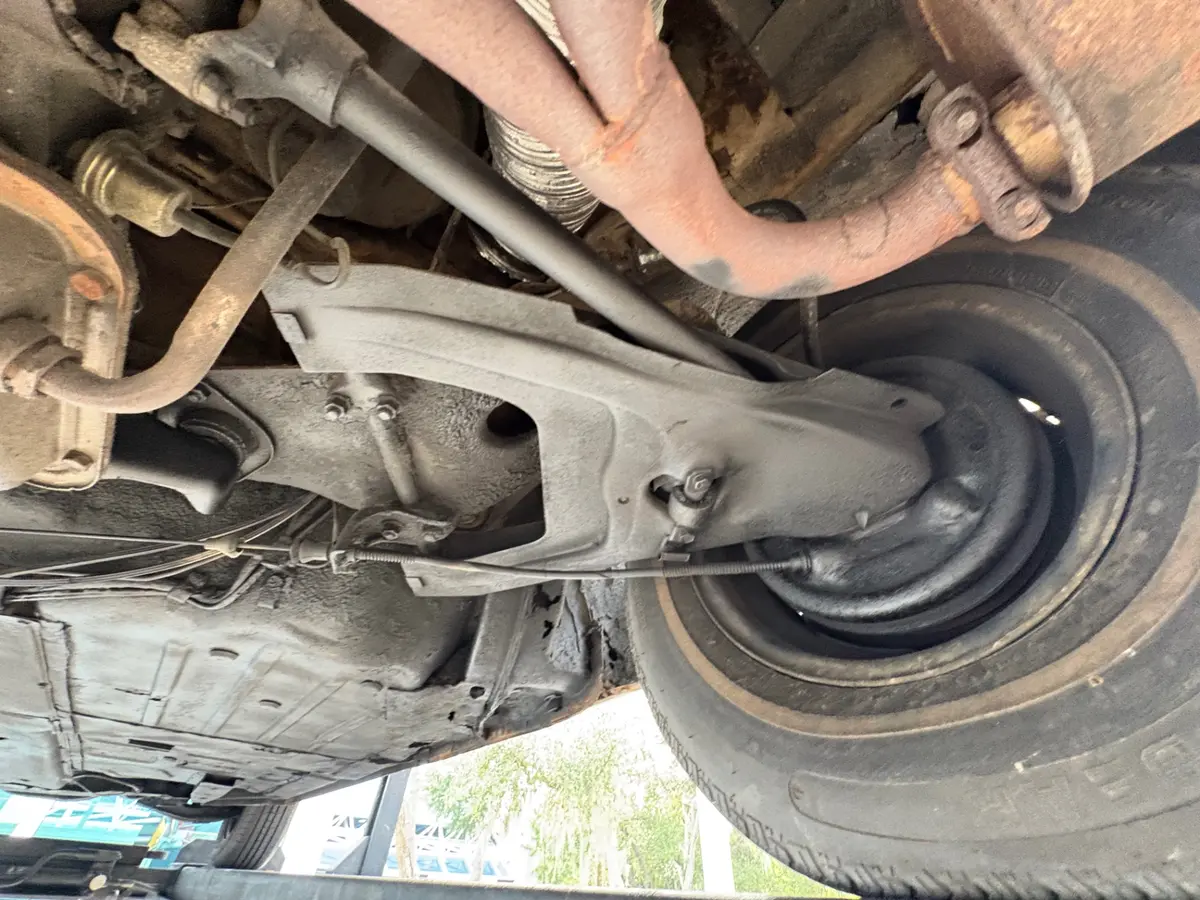
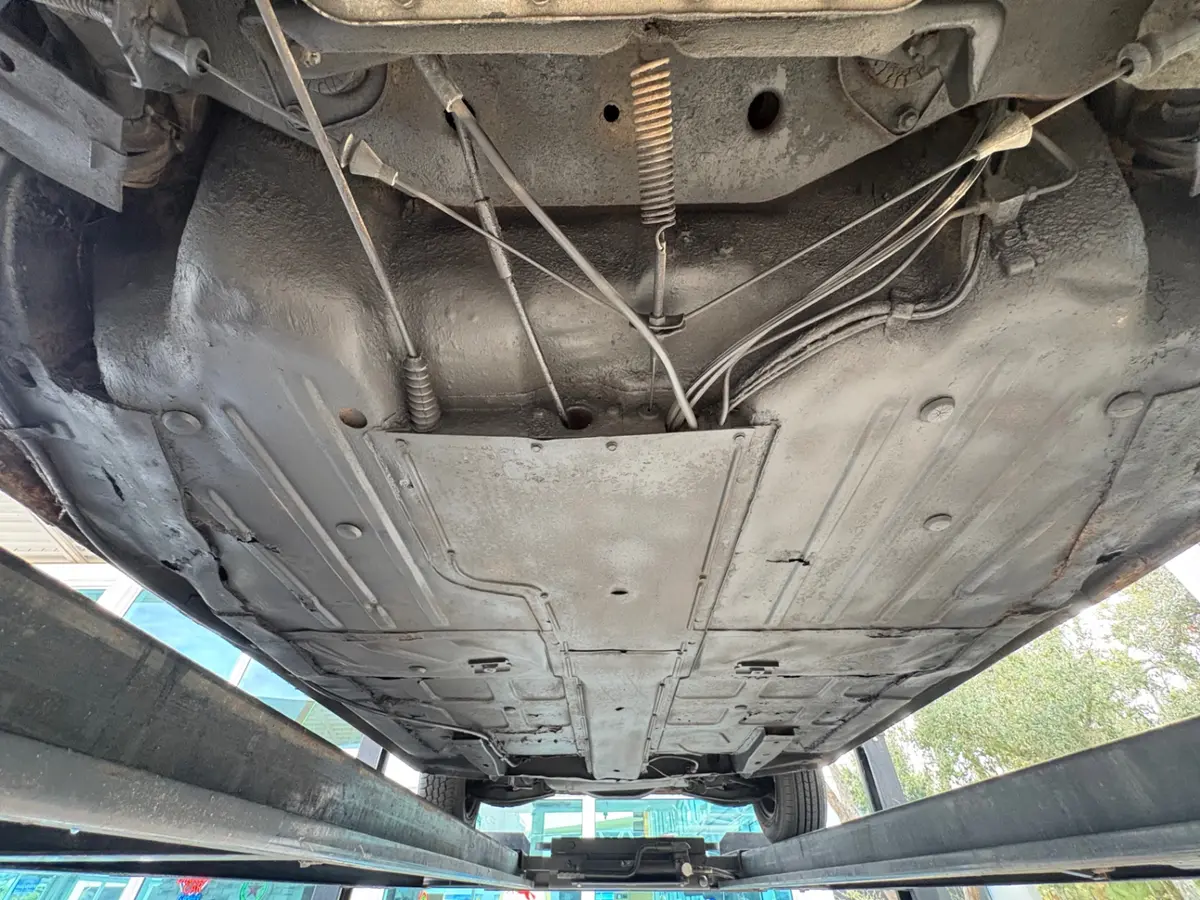
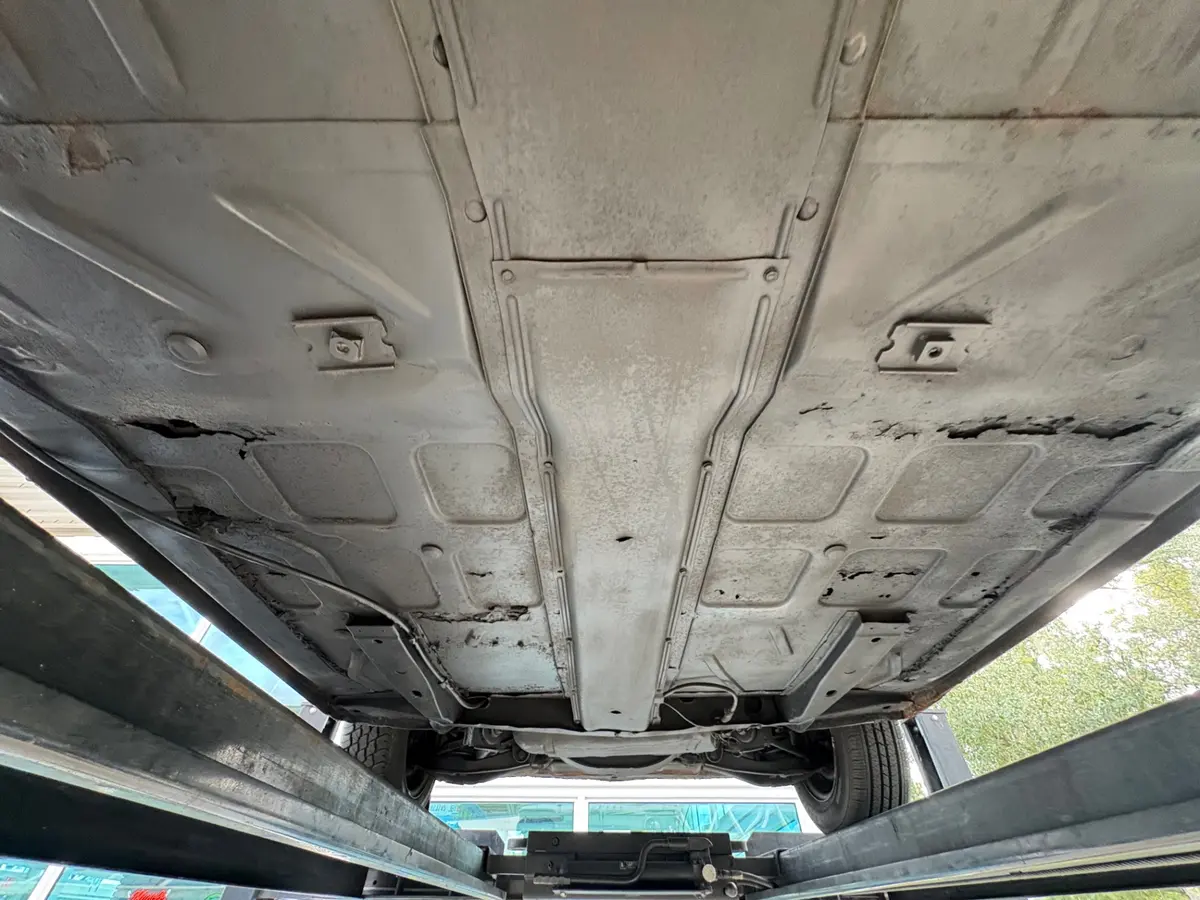
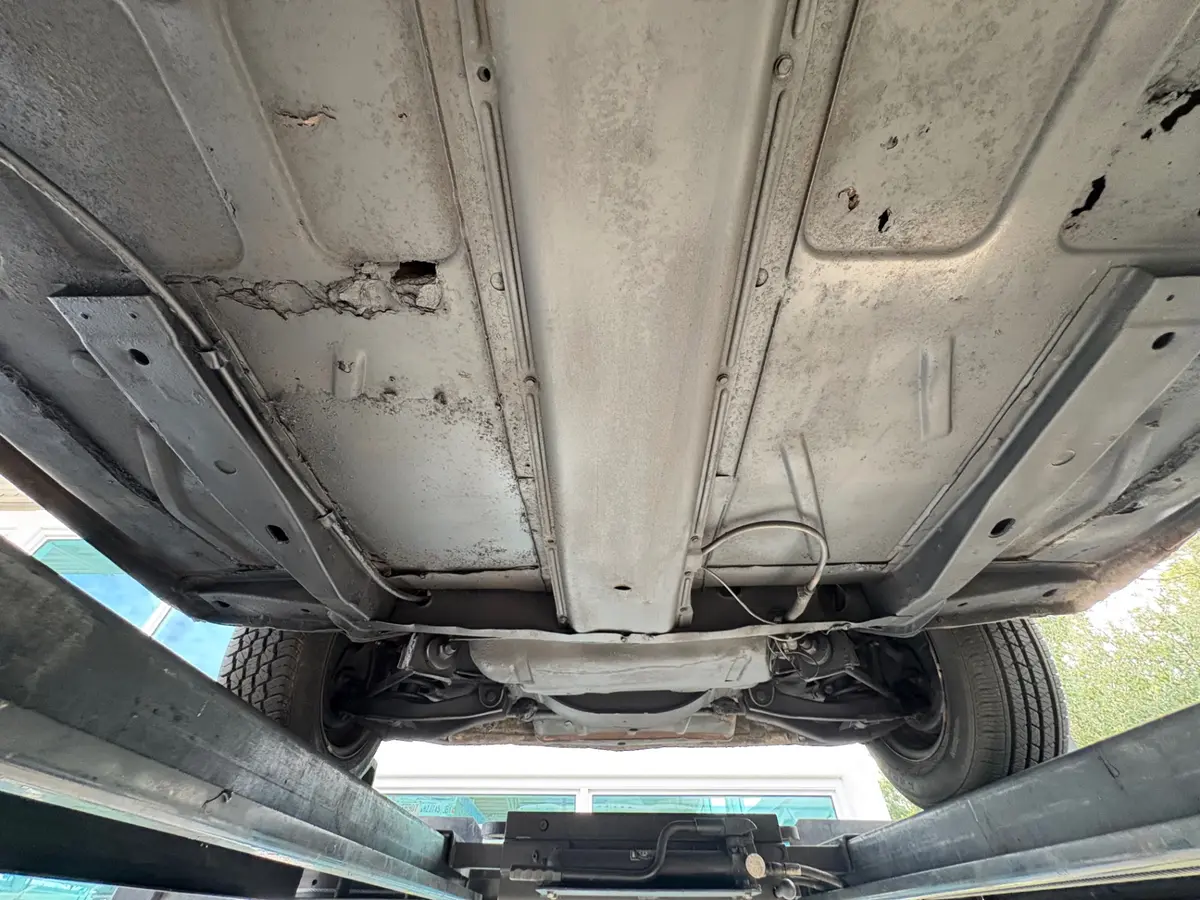
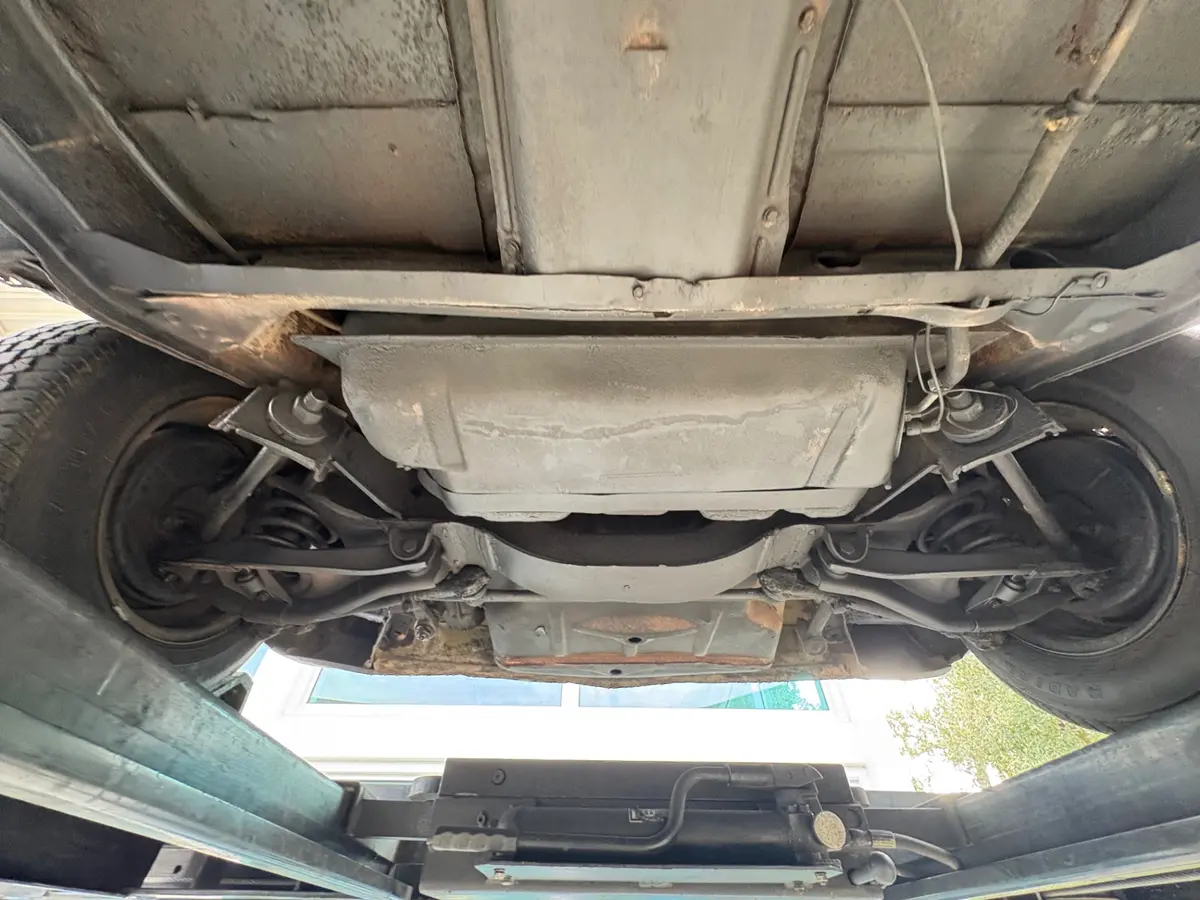
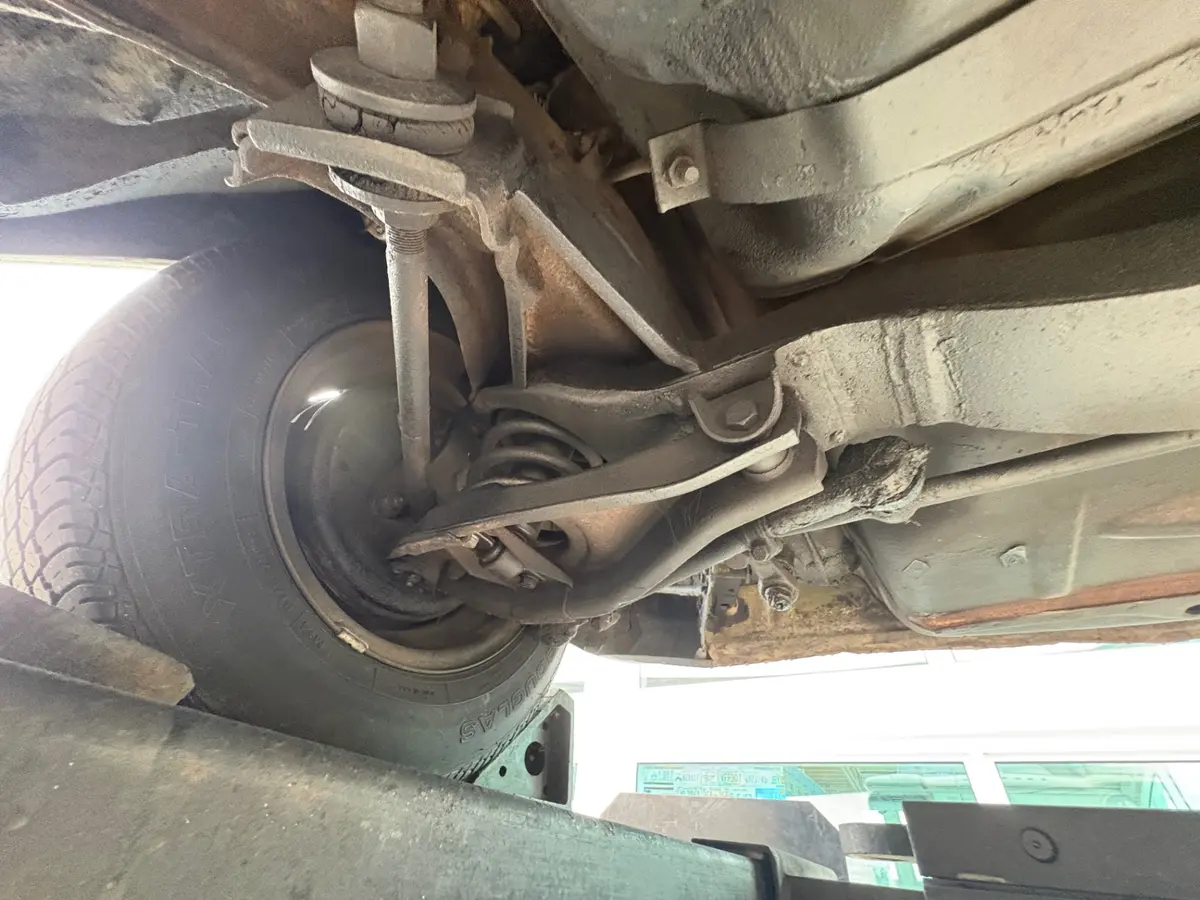
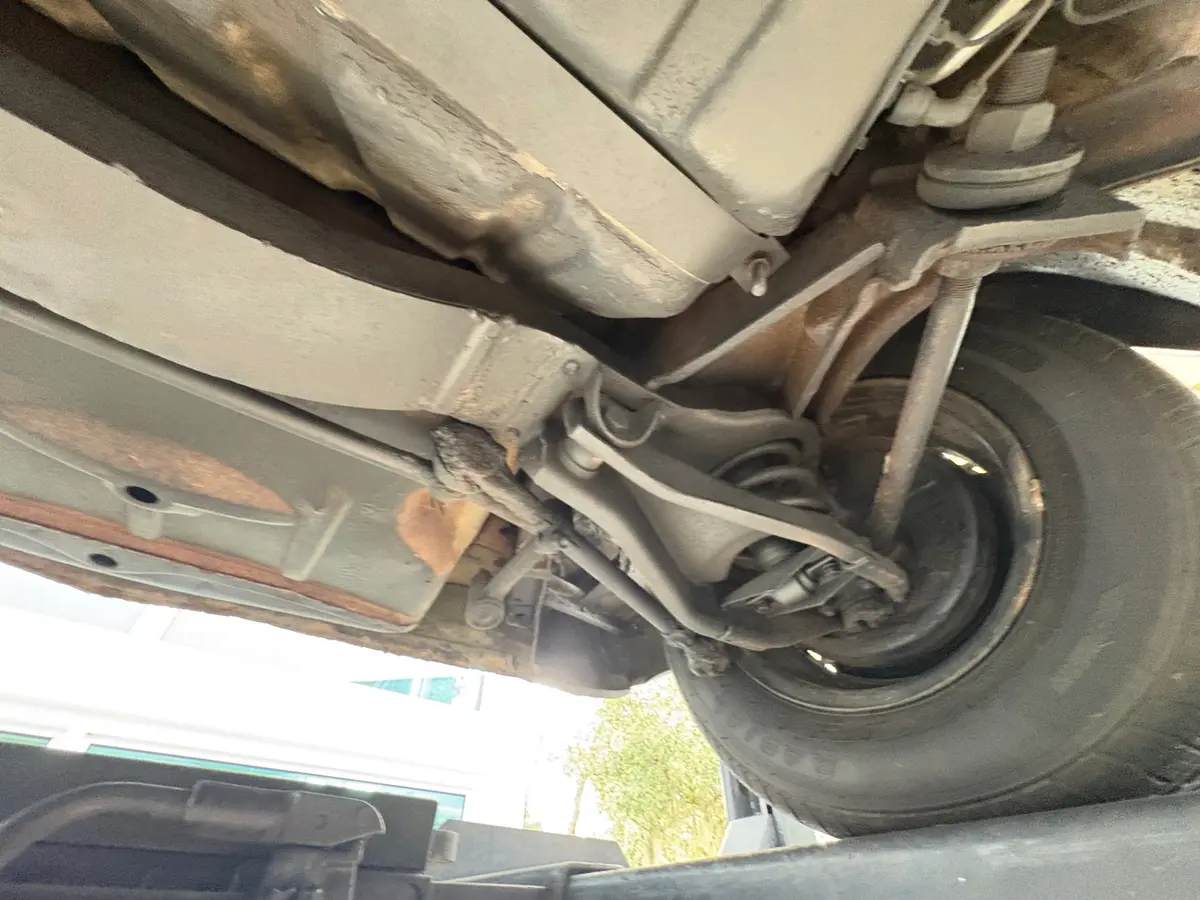
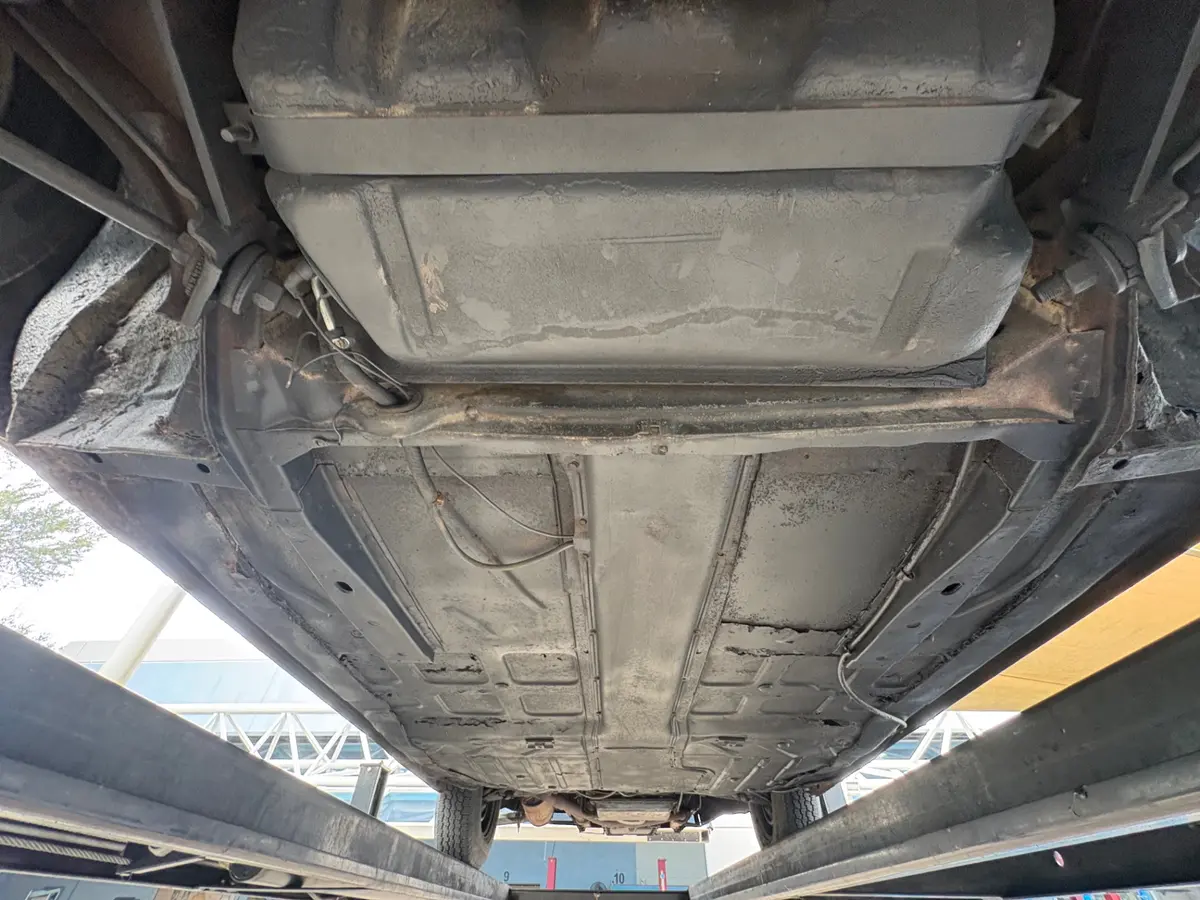
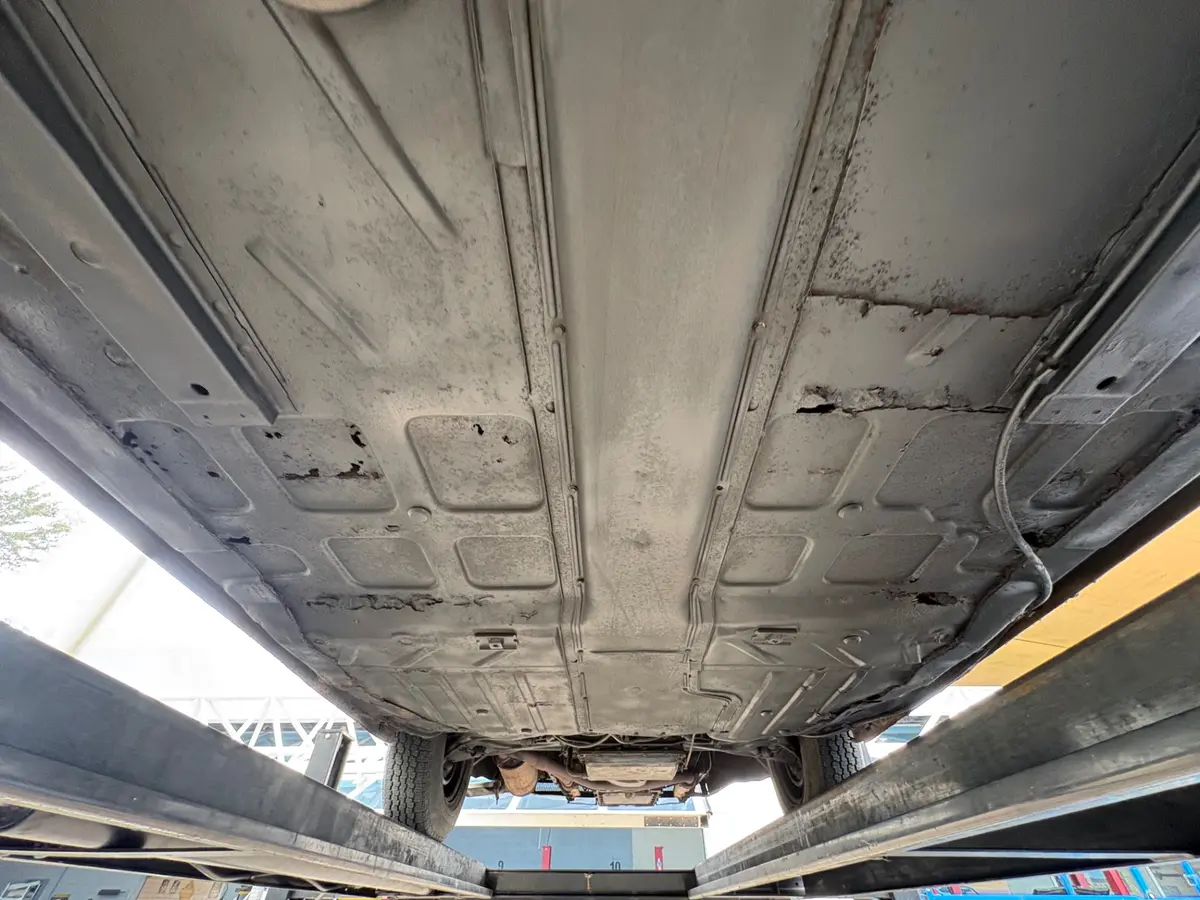
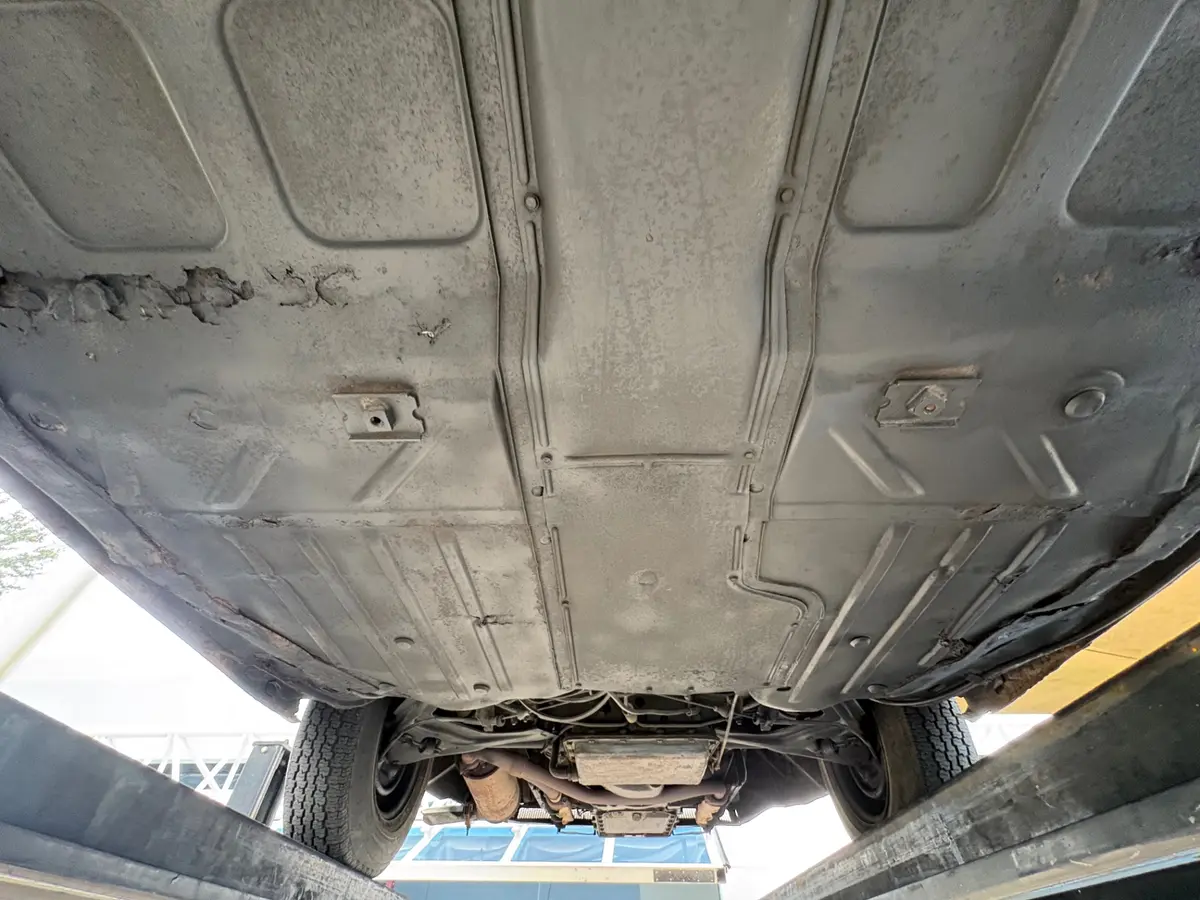
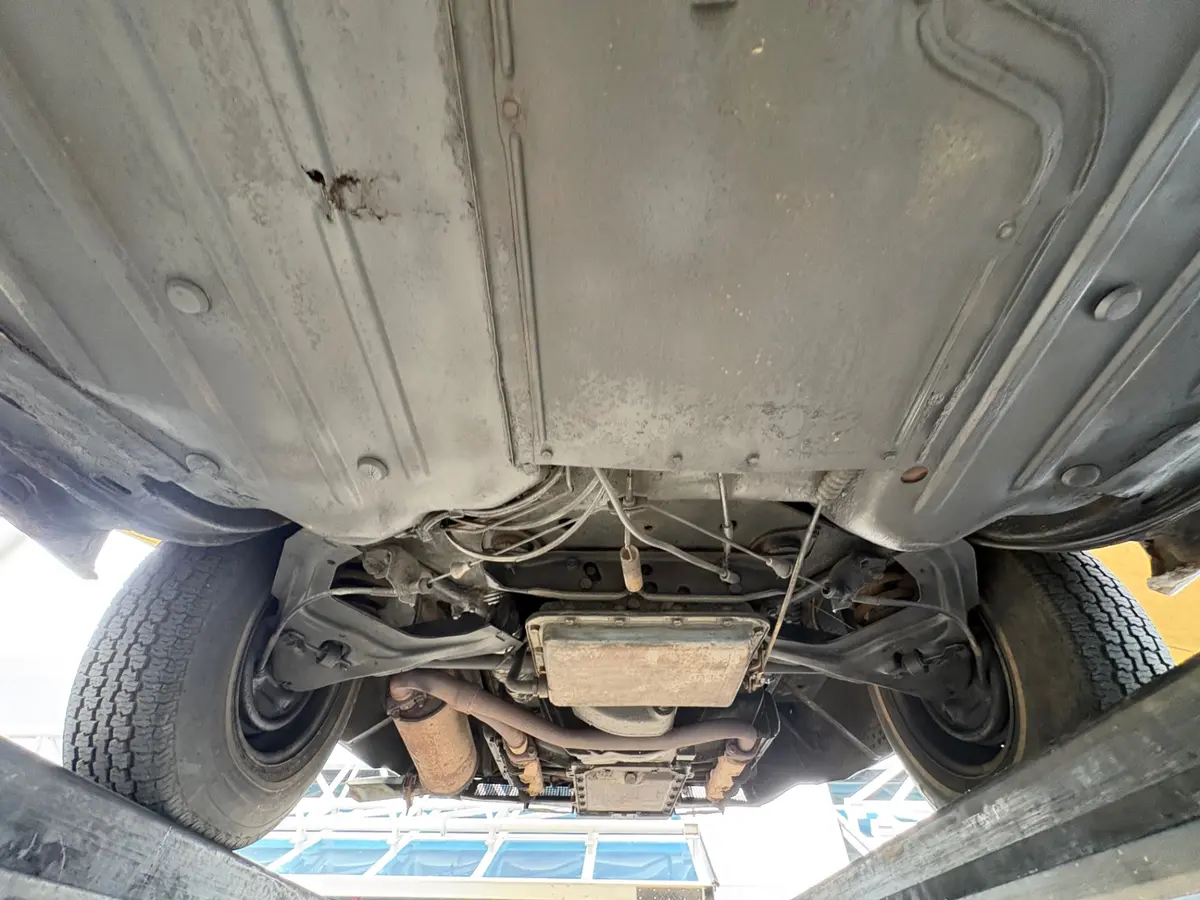
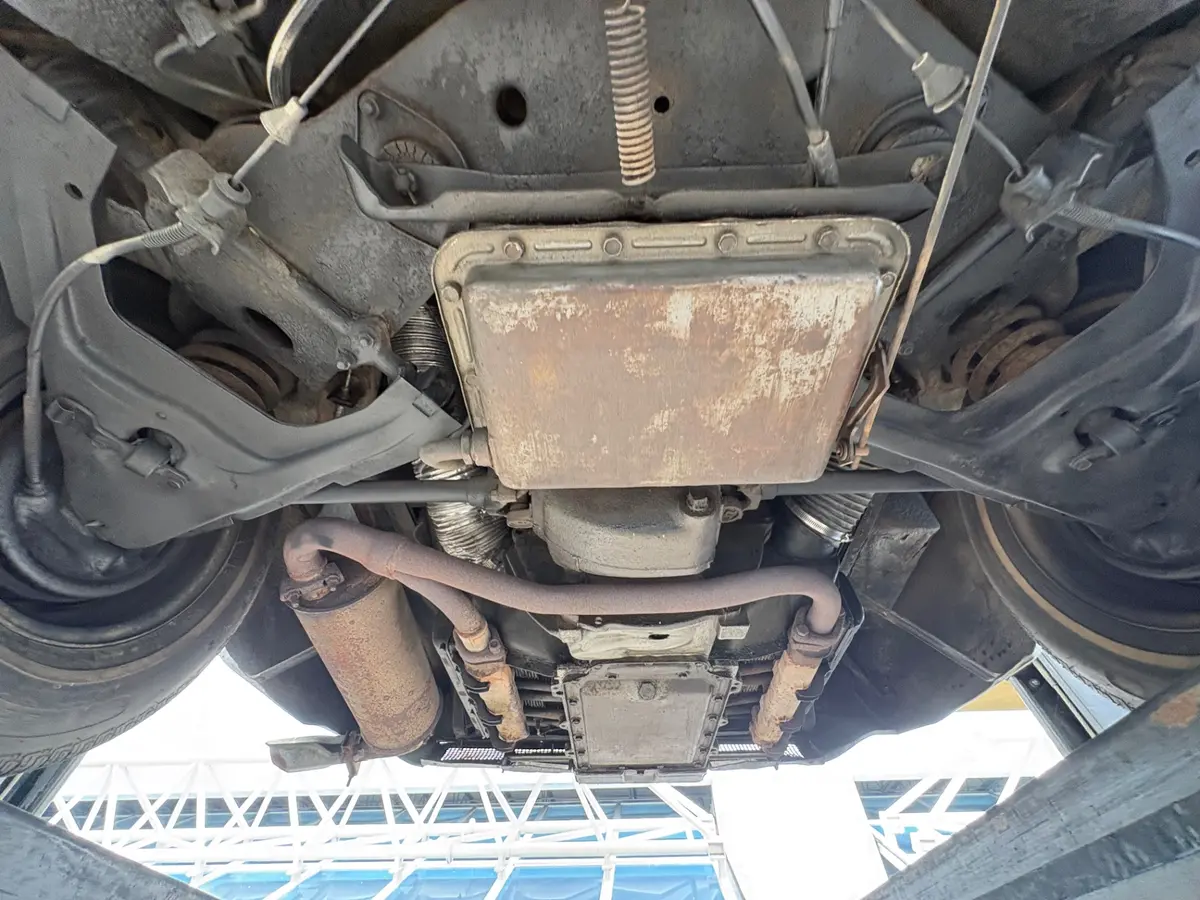
This particular example is presented as a driver-quality car that has received targeted mechanical attention. It is not a rotisserie restoration, and the underside photos show age-related surface rust and some deterioration of the undercoating consistent with a car of this era. Buyers should inspect in person, but the floor pan and structure appear intact. What you get here is an honest, drivable classic with fresh components on the systems most likely to cause trouble.
Features List
- 1963 Chevrolet Corvair Monza 900 Series
- Rear-mounted air-cooled horizontally opposed flat-six engine
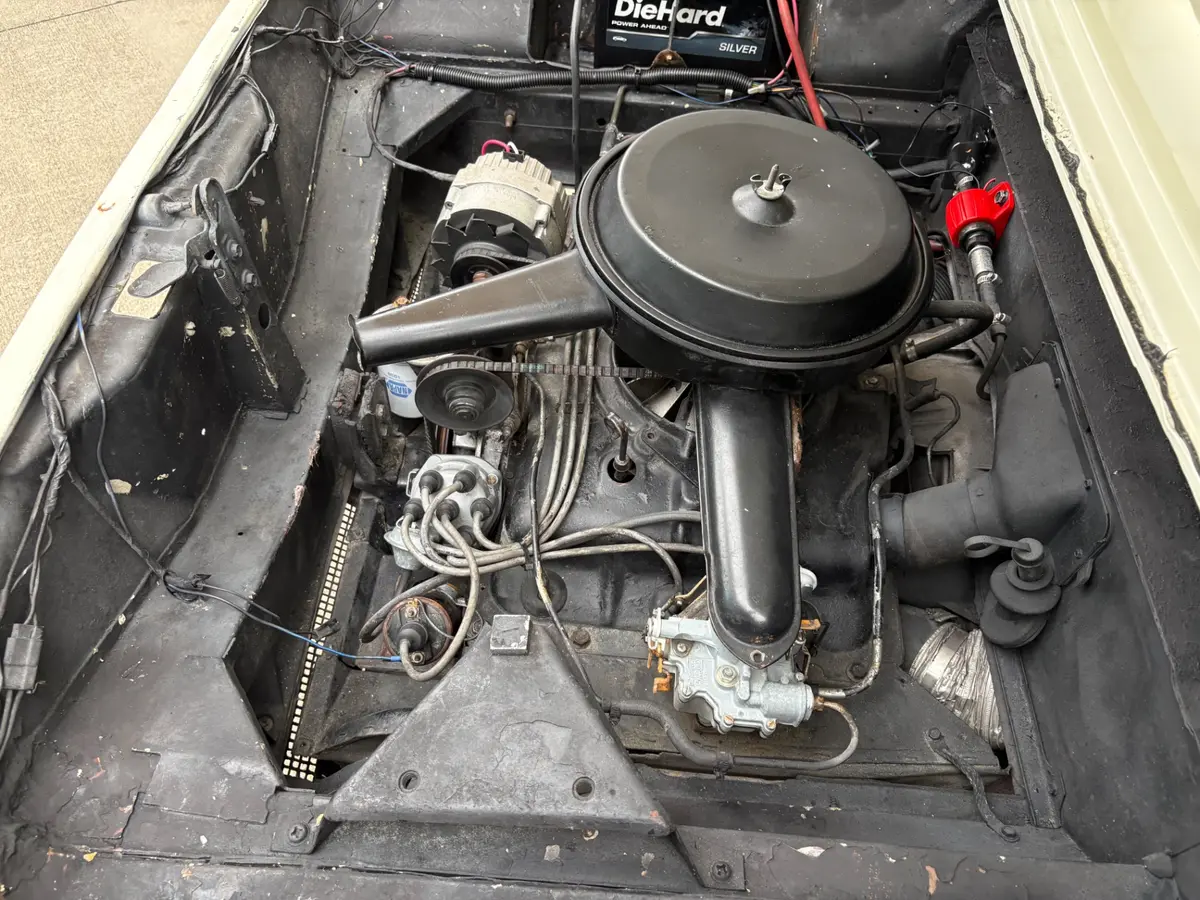
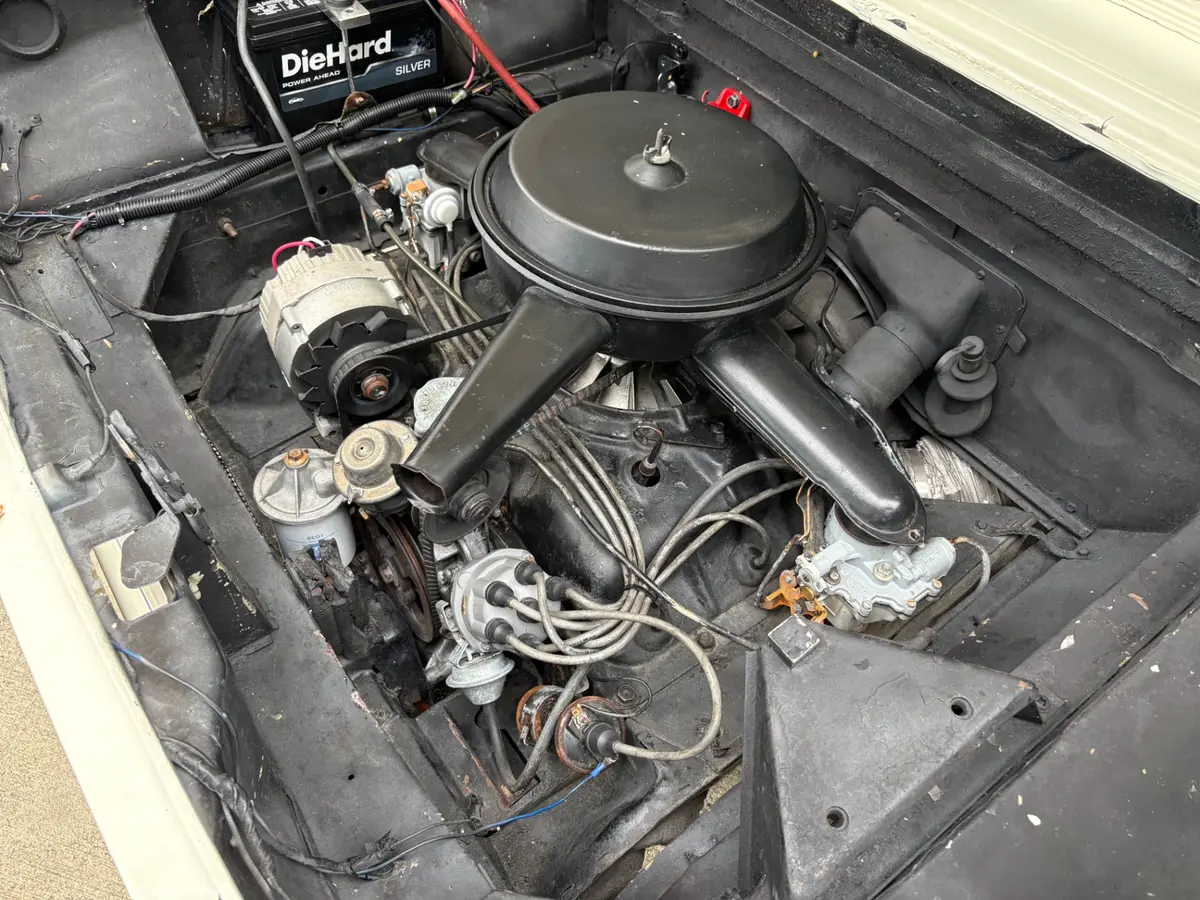
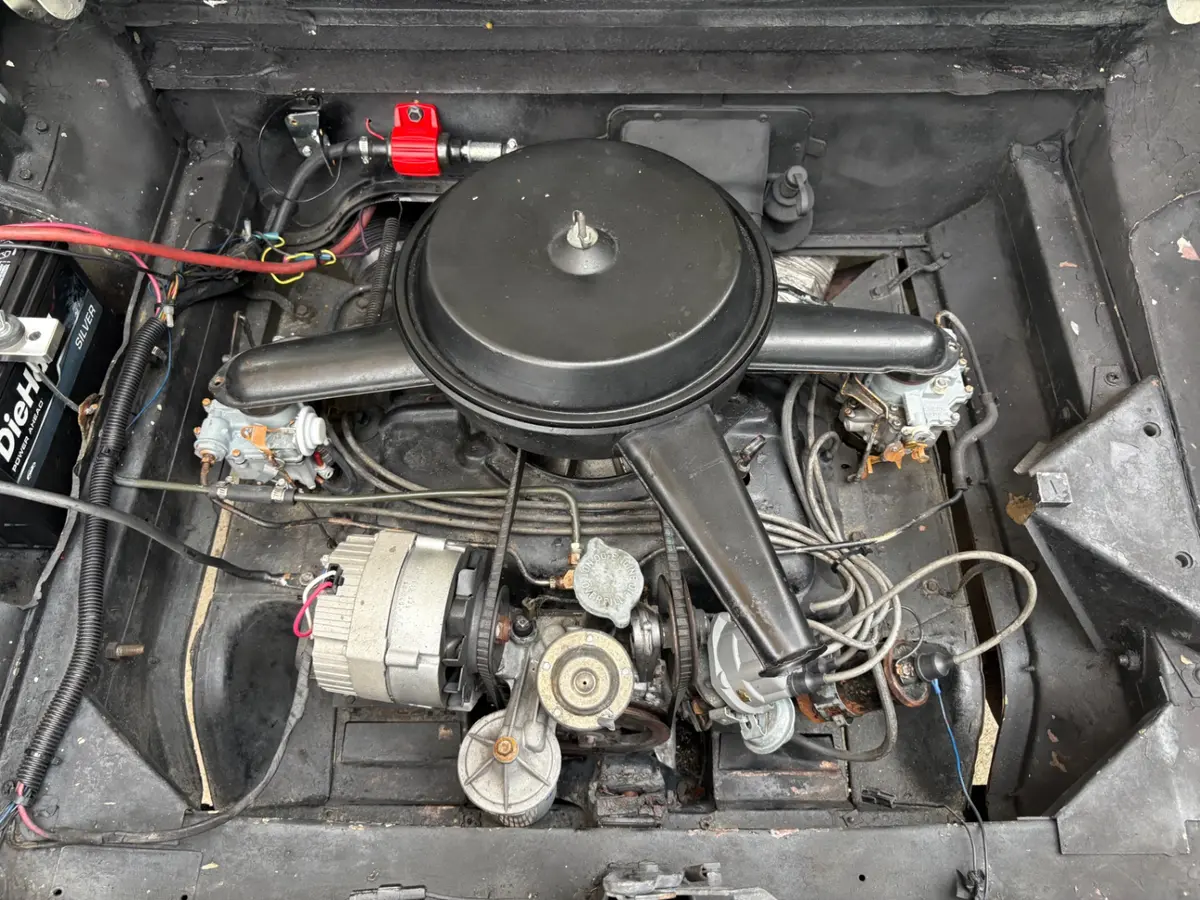
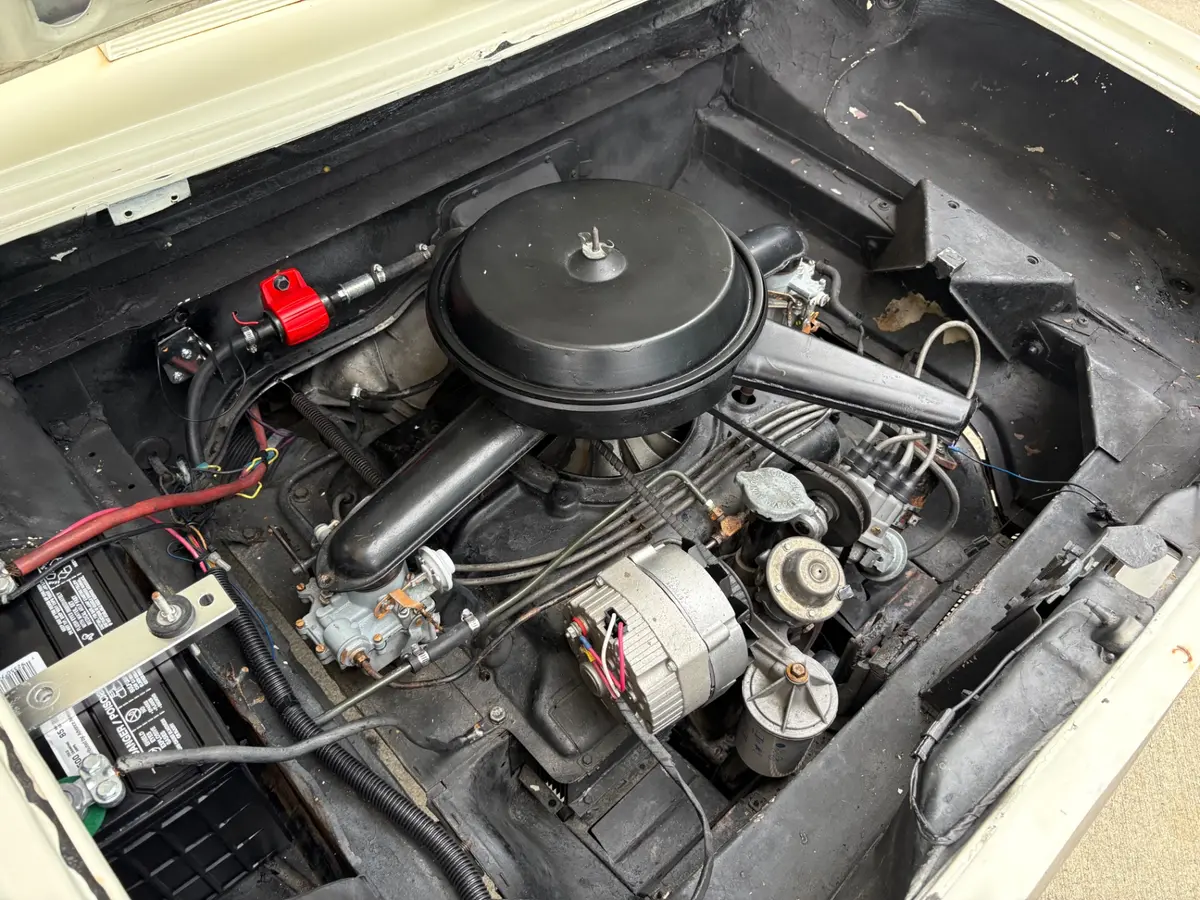
- Dual single-barrel carburetors (newly replaced)
- 2-Speed Powerglide automatic transmission
- Four-wheel independent suspension
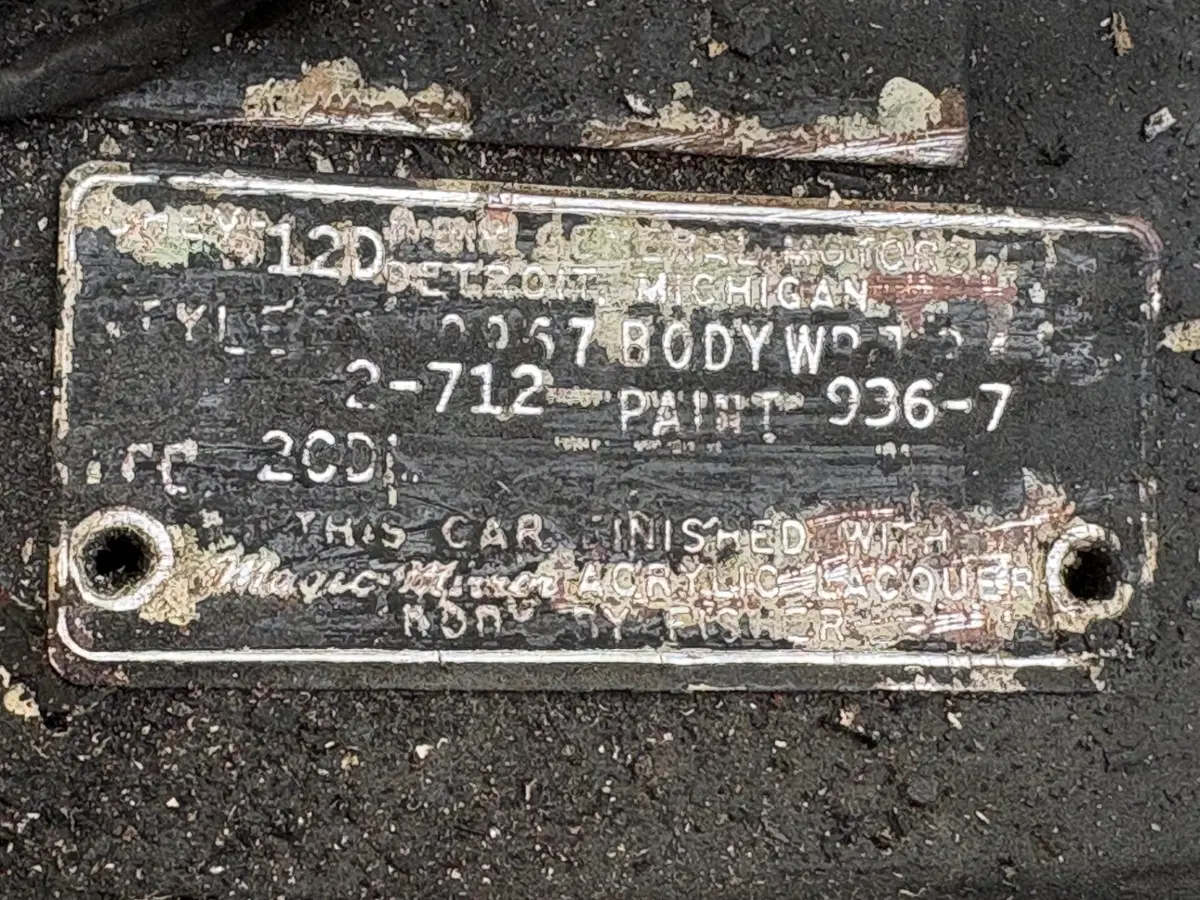
- Unibody construction, Body by Fisher
- Convertible soft top with boot cover
- Vinyl front bucket seats
- Rear bench seat
- Black floor carpets
- Deluxe steering wheel
- AM/FM radio
- Back-up lights
- Full wheel covers
- Quad headlights
- Chrome bumpers
- Driver-side exterior mirror
- Fender-mounted antenna
- Four-wheel drum brakes
- Front storage trunk (frunk)
- New electric fuel pump
- New fuel lines
- New battery
- Replacement alternator
- Fresh spark plugs
- Fresh oil change
- White exterior
- Red and black vinyl interior
Mechanical
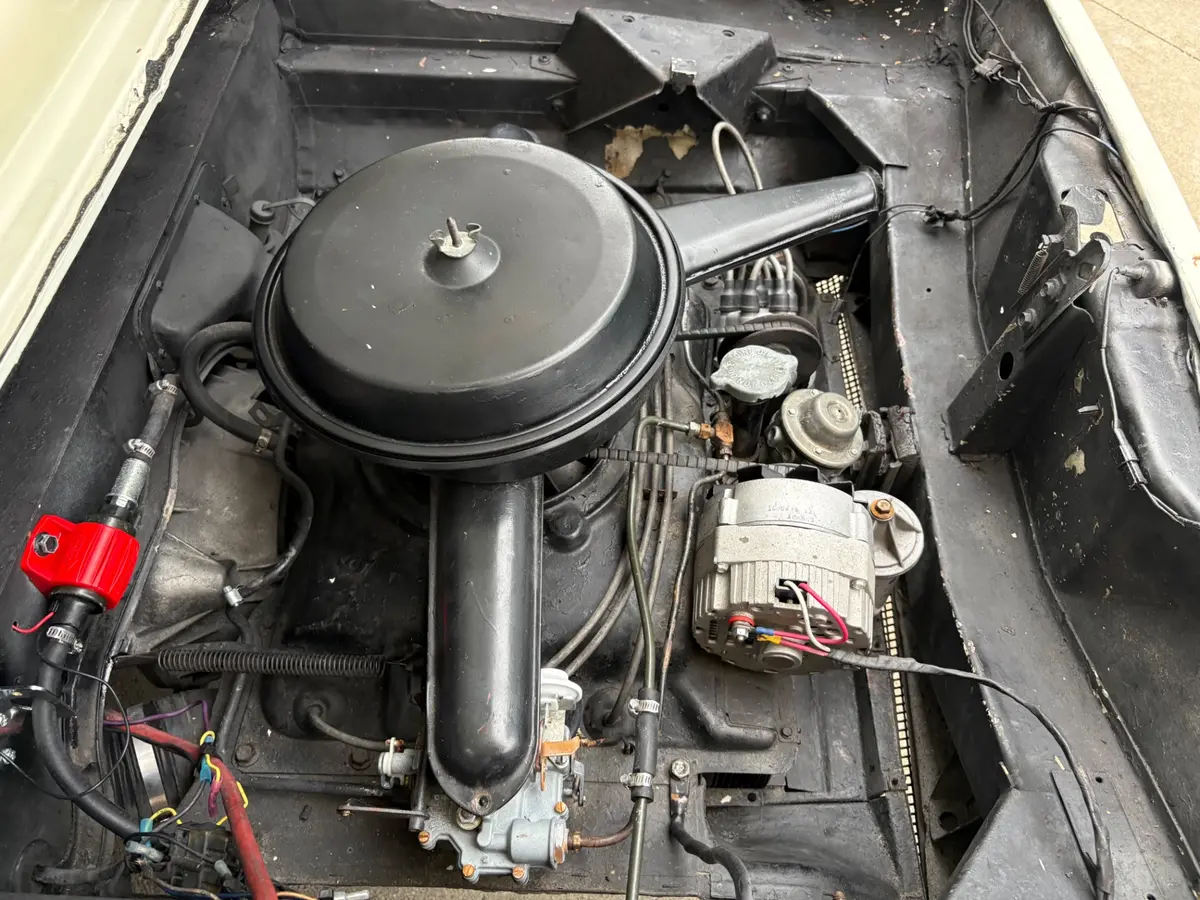
The heart of the 1963 Chevrolet Corvair Monza 900 is its 145 cubic inch (2.4-liter) air-cooled flat-six, mounted behind the rear axle. On the standard Monza with automatic transmission, this engine was rated at 80 horsepower. It breathes through dual single-barrel carburetors — both of which have been replaced with new units on this car. The cooling system is entirely air-based, meaning there is no radiator, no coolant, and no water pump to worry about. The engine is paired with a 2-speed Powerglide automatic transmission, which was a popular choice for buyers who wanted relaxed, low-maintenance driving.
The recent mechanical work covers the most common failure points on a car that has sat or seen deferred maintenance. New fuel lines eliminate the risk of cracked or deteriorated rubber causing fuel delivery problems or leaks. A new electric fuel pump replaces the mechanical unit and is a common and practical upgrade on these cars. Fresh spark plugs and an oil change are basic but important, confirming the engine has been serviced for current use. The alternator has been replaced as well, addressing the charging system. A new battery rounds out the electrical refresh.
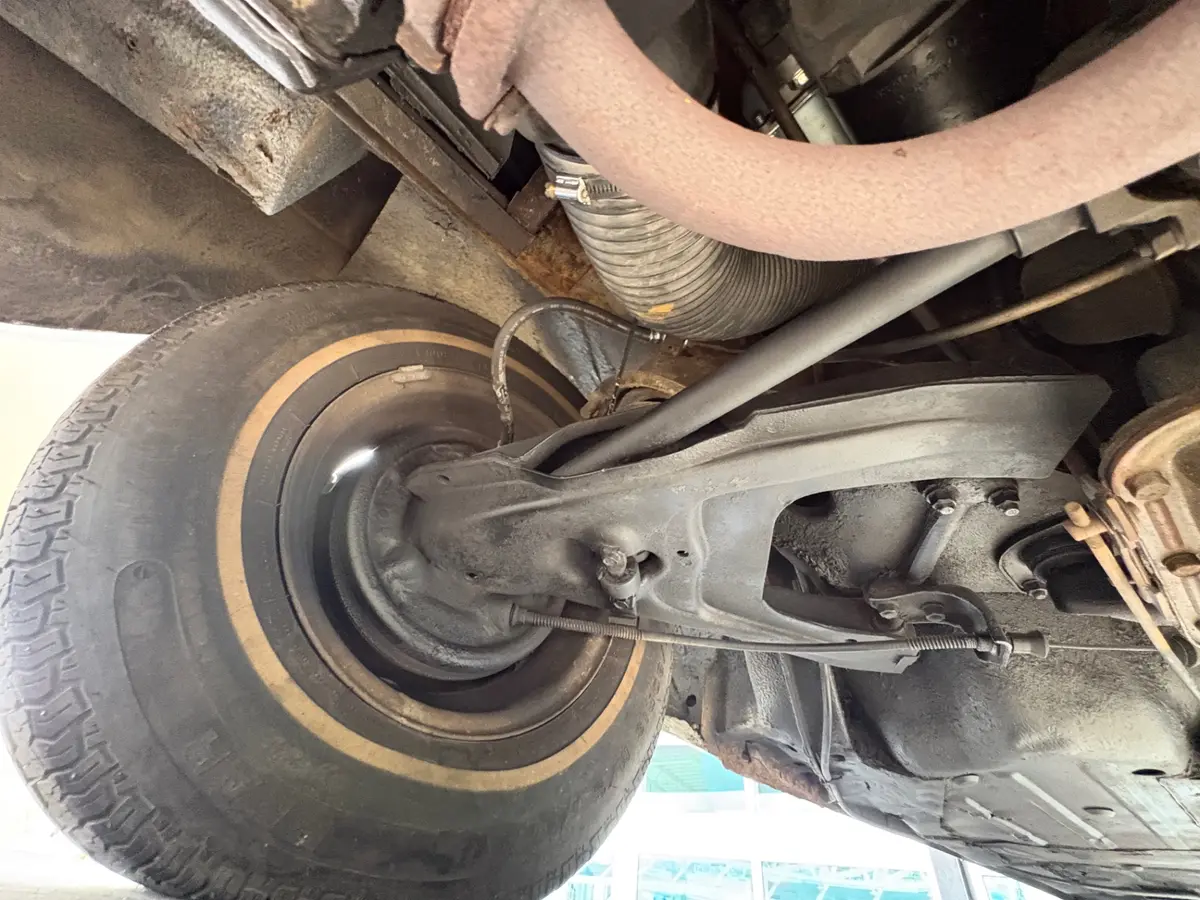
The four-wheel independent suspension — a genuine point of distinction for this car — remains in place. The front uses a short-long arm (SLA) setup, and the rear uses a swing-axle arrangement, which was the subject of much debate during the Corvair's production life. What is not debatable is that for a compact car of 1963, full independent suspension at all four corners was uncommon and contributed to handling characteristics that European car enthusiasts of the era found genuinely impressive. The underside photos show the suspension components clearly; the structure is present and intact.
Braking is handled by four-wheel drums, which was standard equipment for the period and entirely appropriate for the power output and weight of the car.
Interior
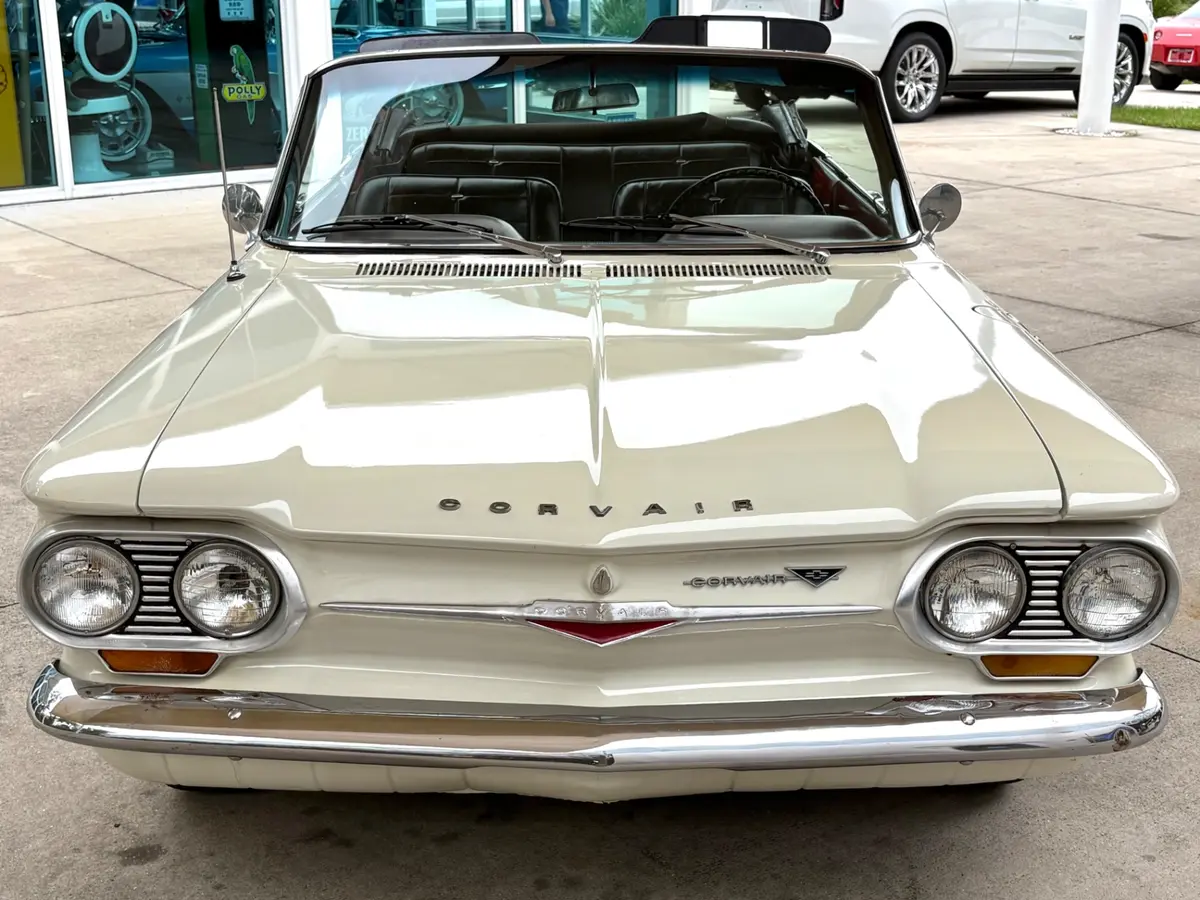
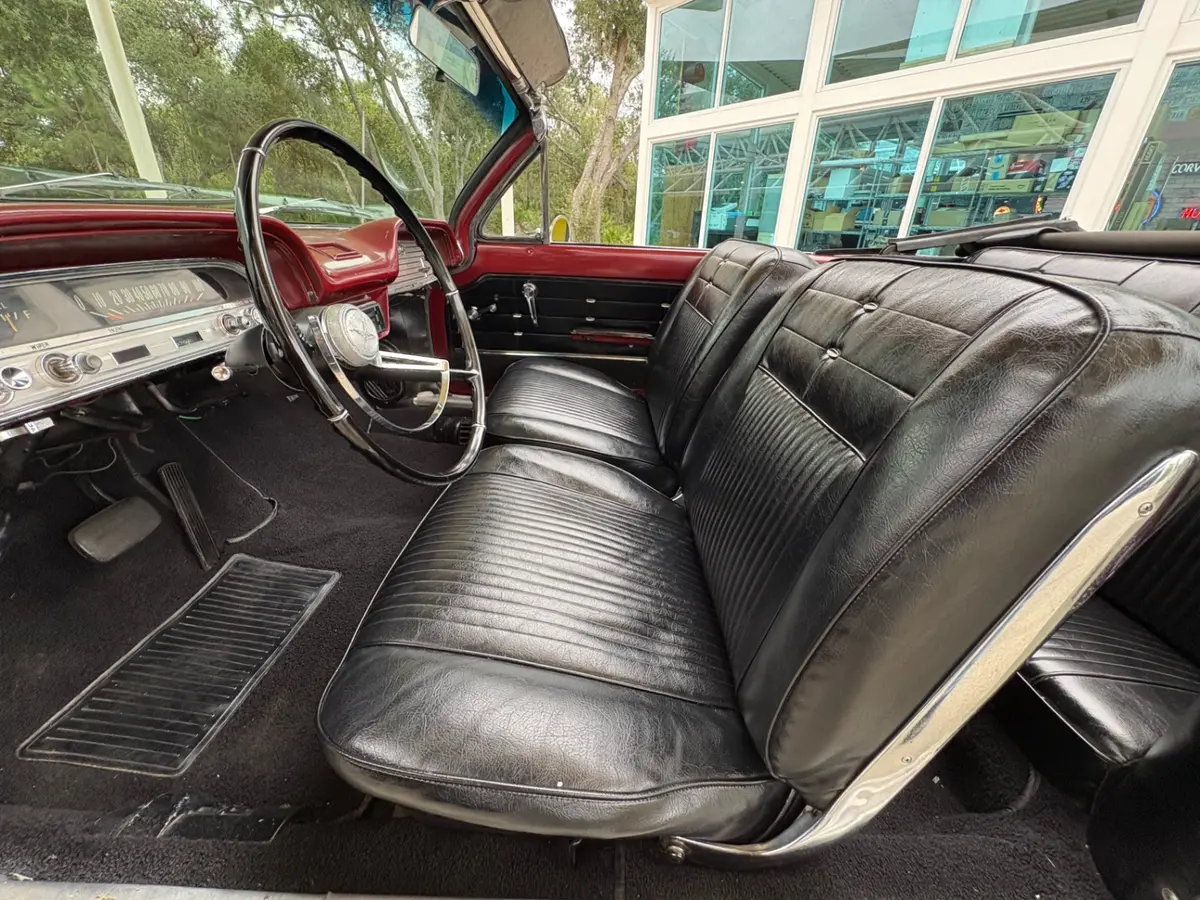
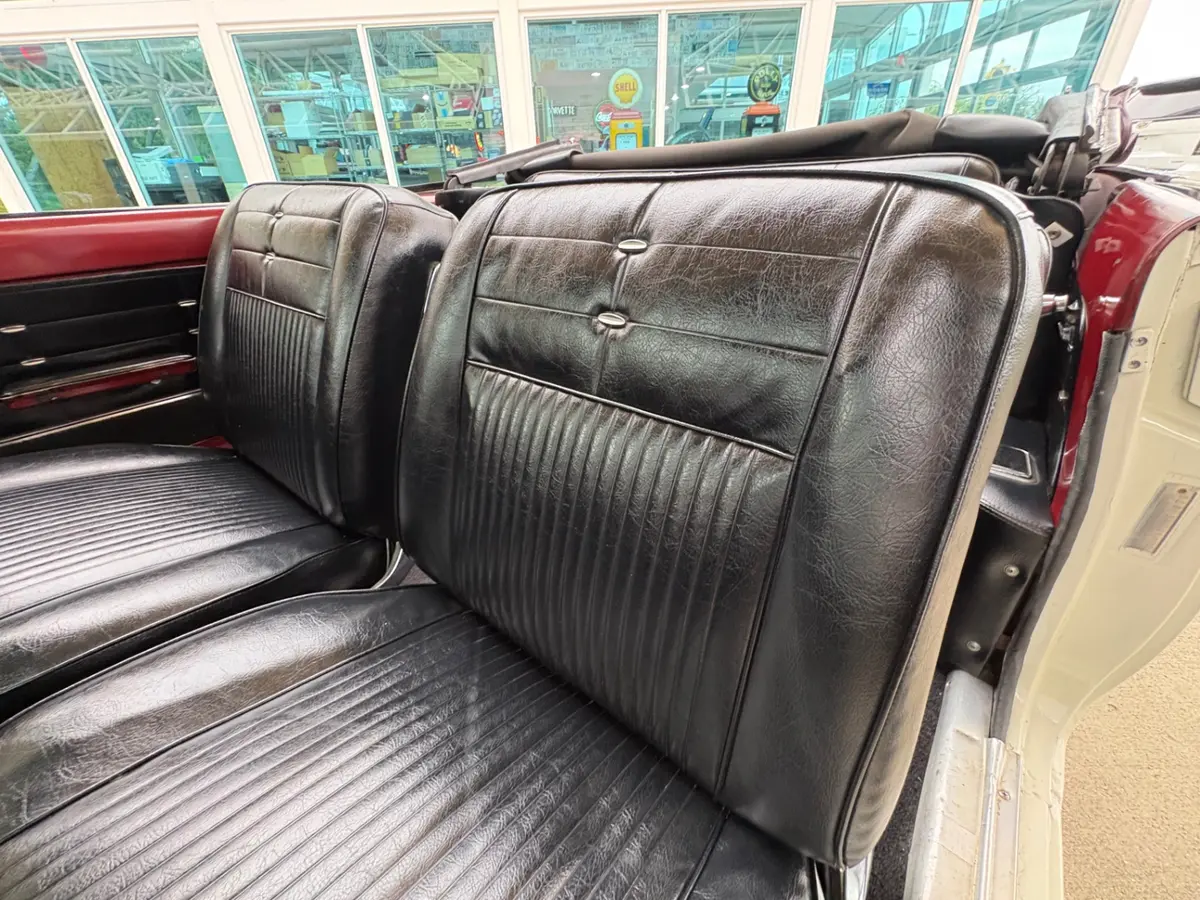
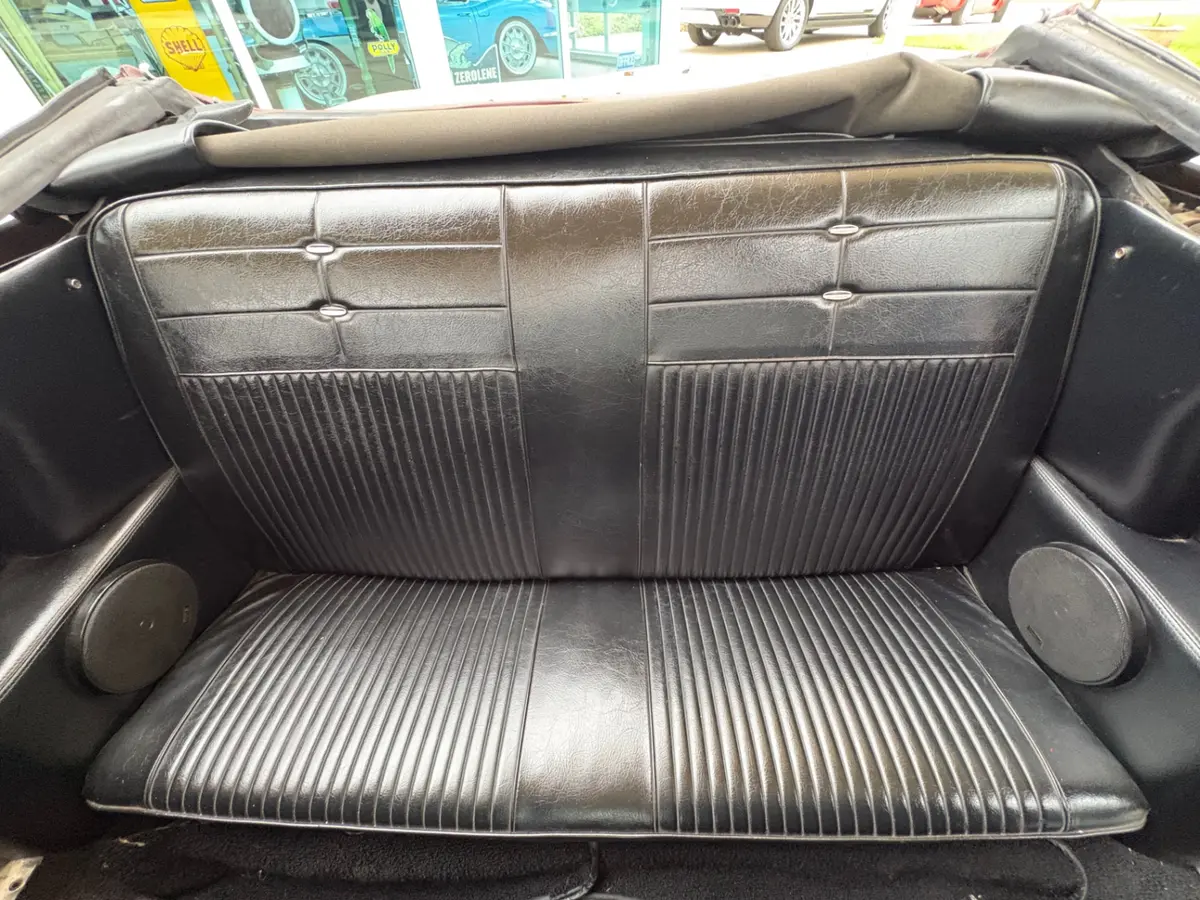
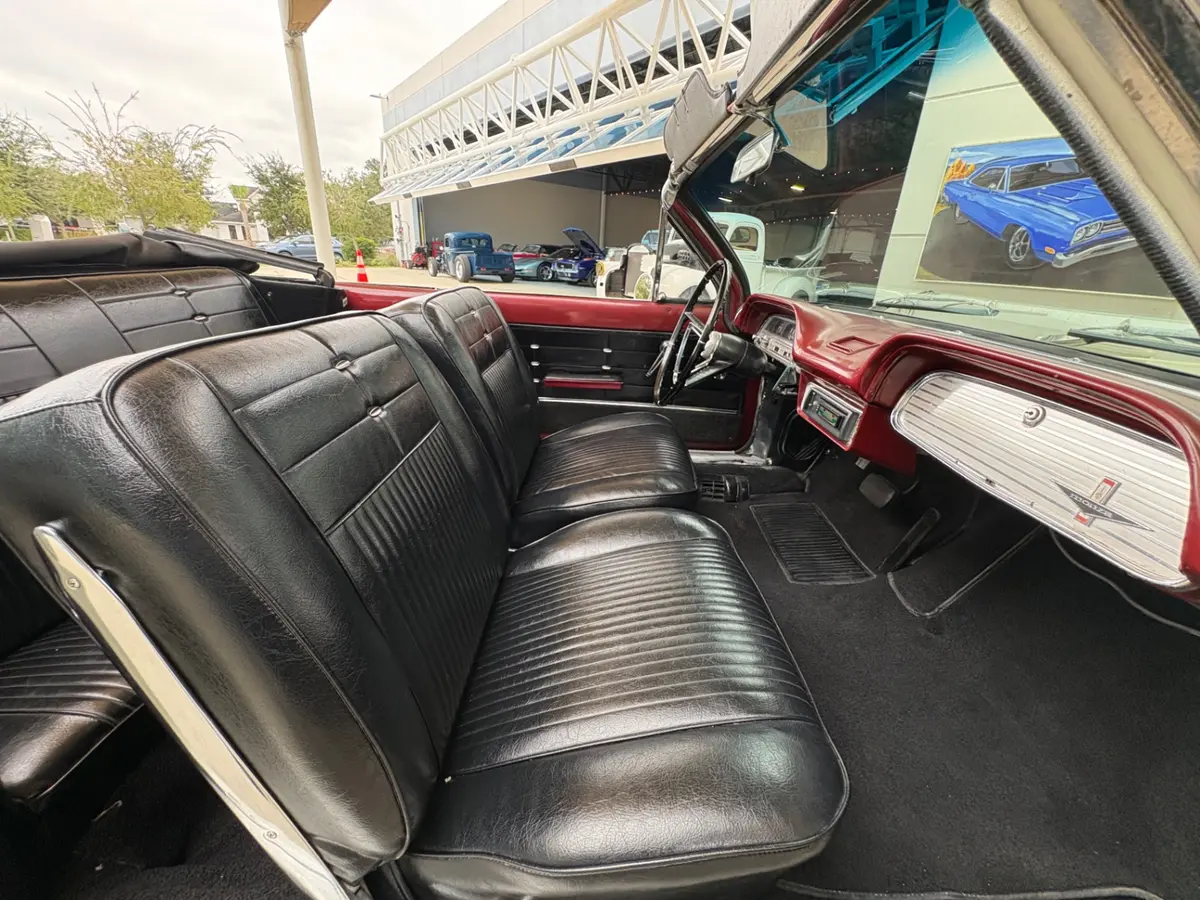
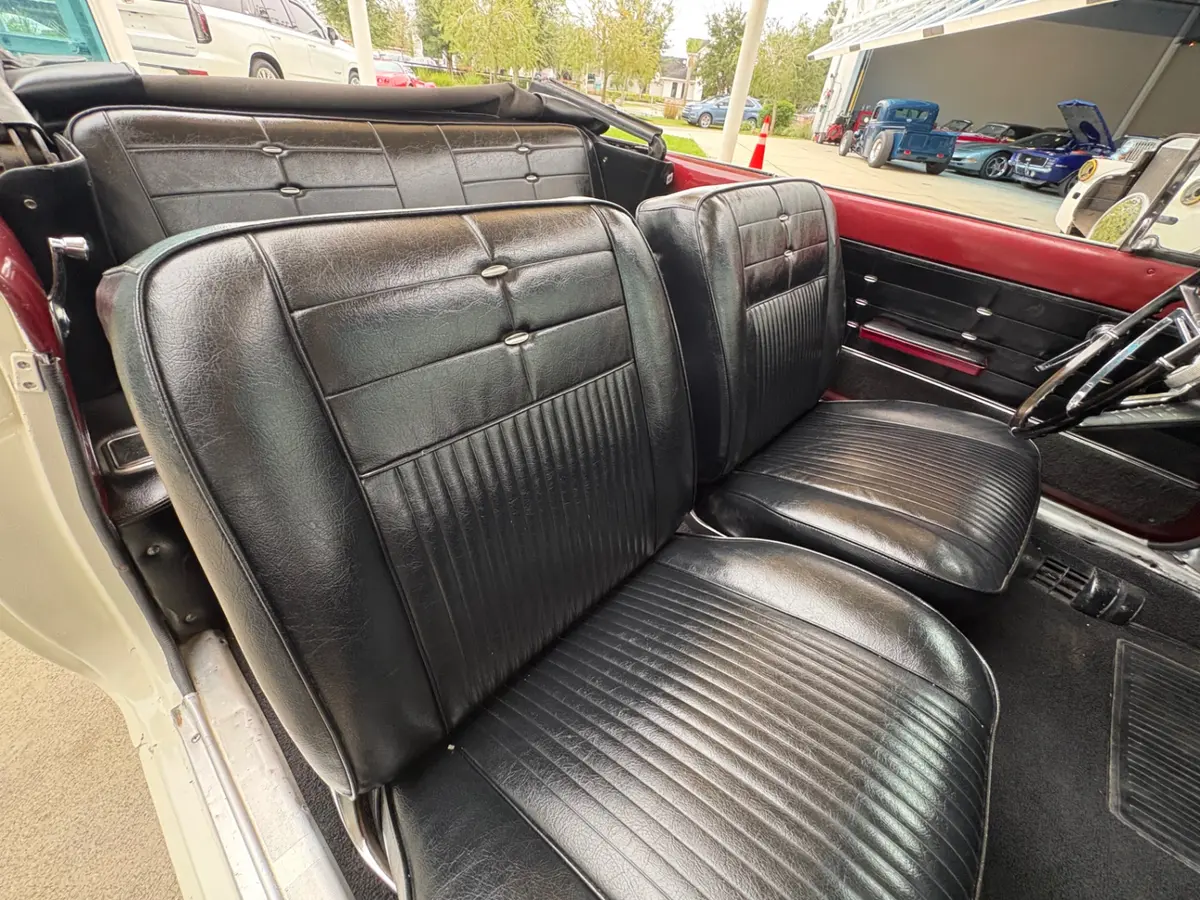
Step inside the 1963 Chevrolet Corvair Monza 900 and the two-tone red and black vinyl interior greets you with a period-correct palette that suits the white convertible body well. The Monza 900 trim level brought with it front bucket seats as standard equipment — an unusual feature for an American compact in 1963, and one that helped position the Corvair Monza as a sportier alternative to the bench-seat economy cars of the day. The rear bench seat is finished in matching black vinyl and shows use consistent with its age.
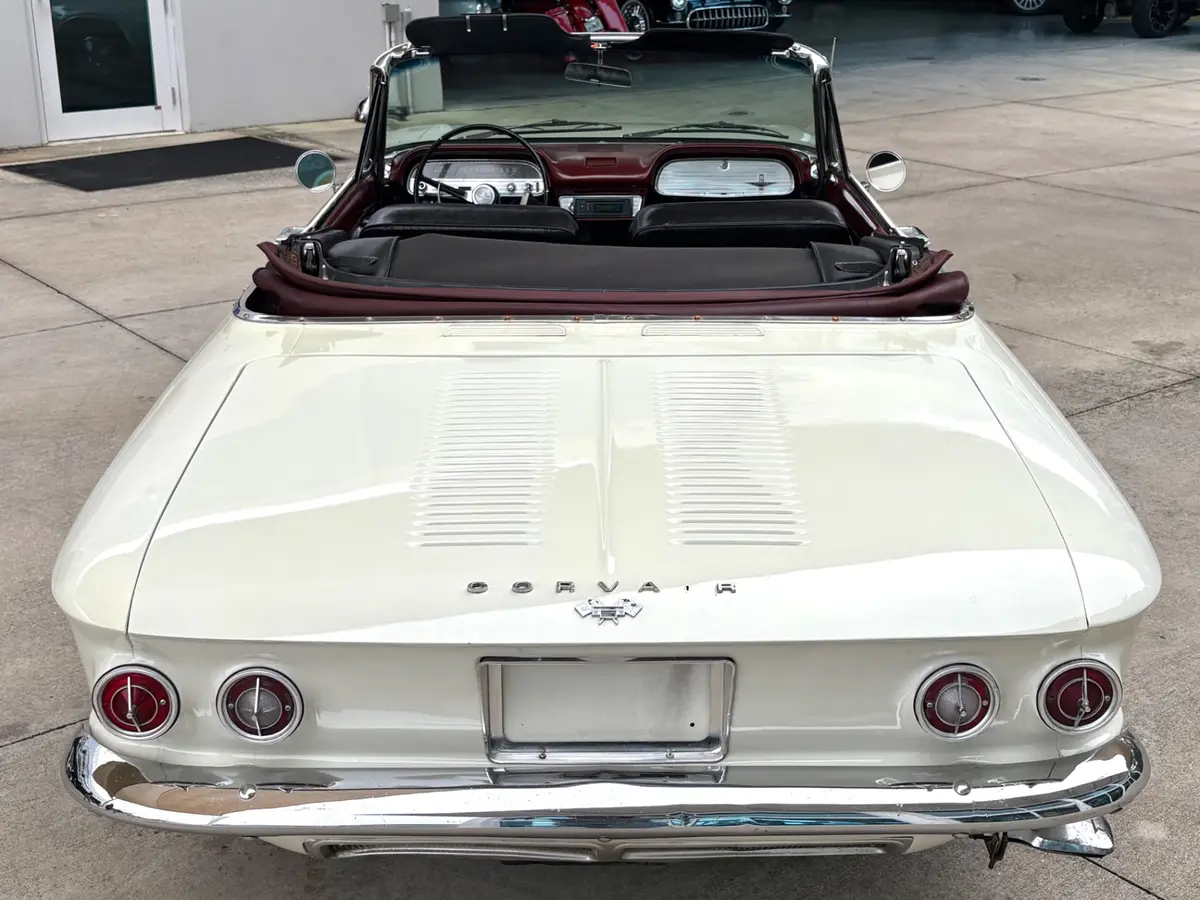
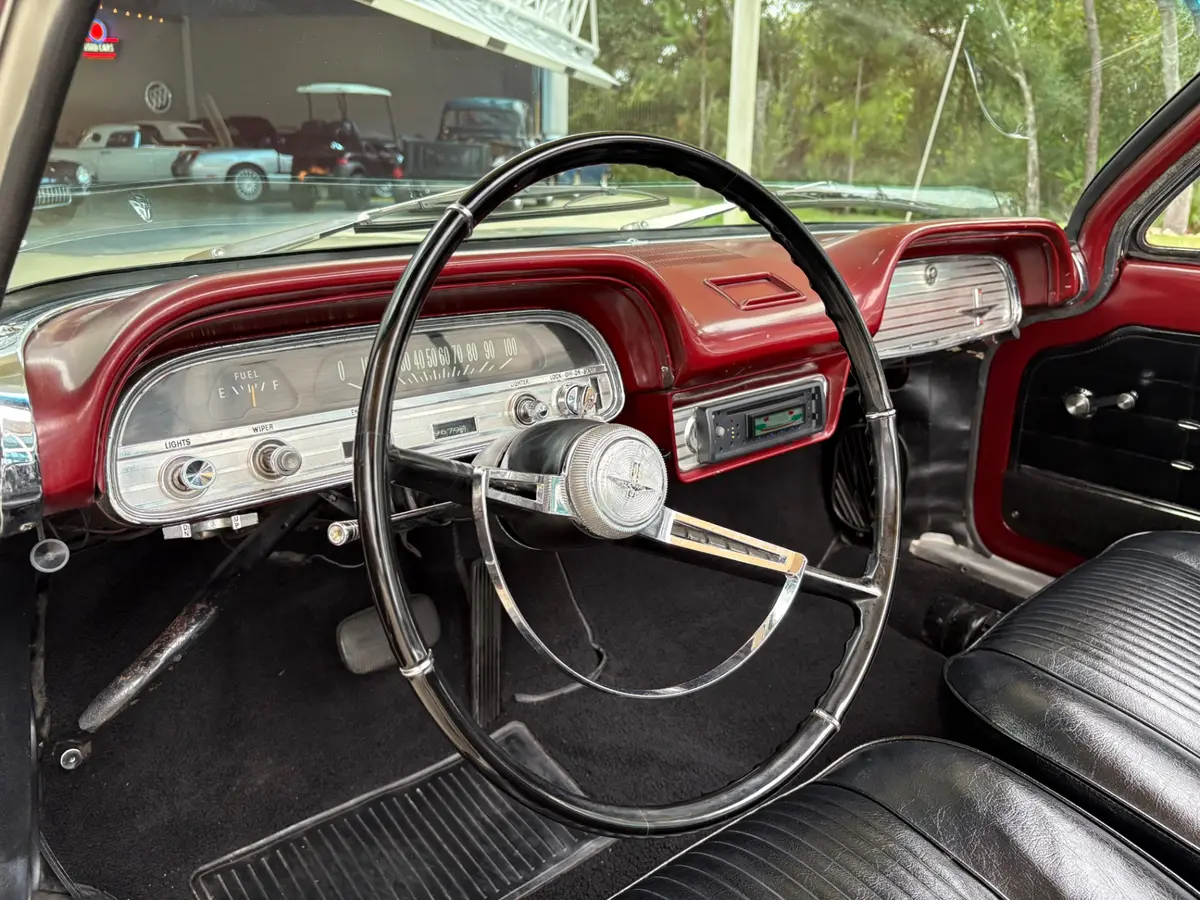
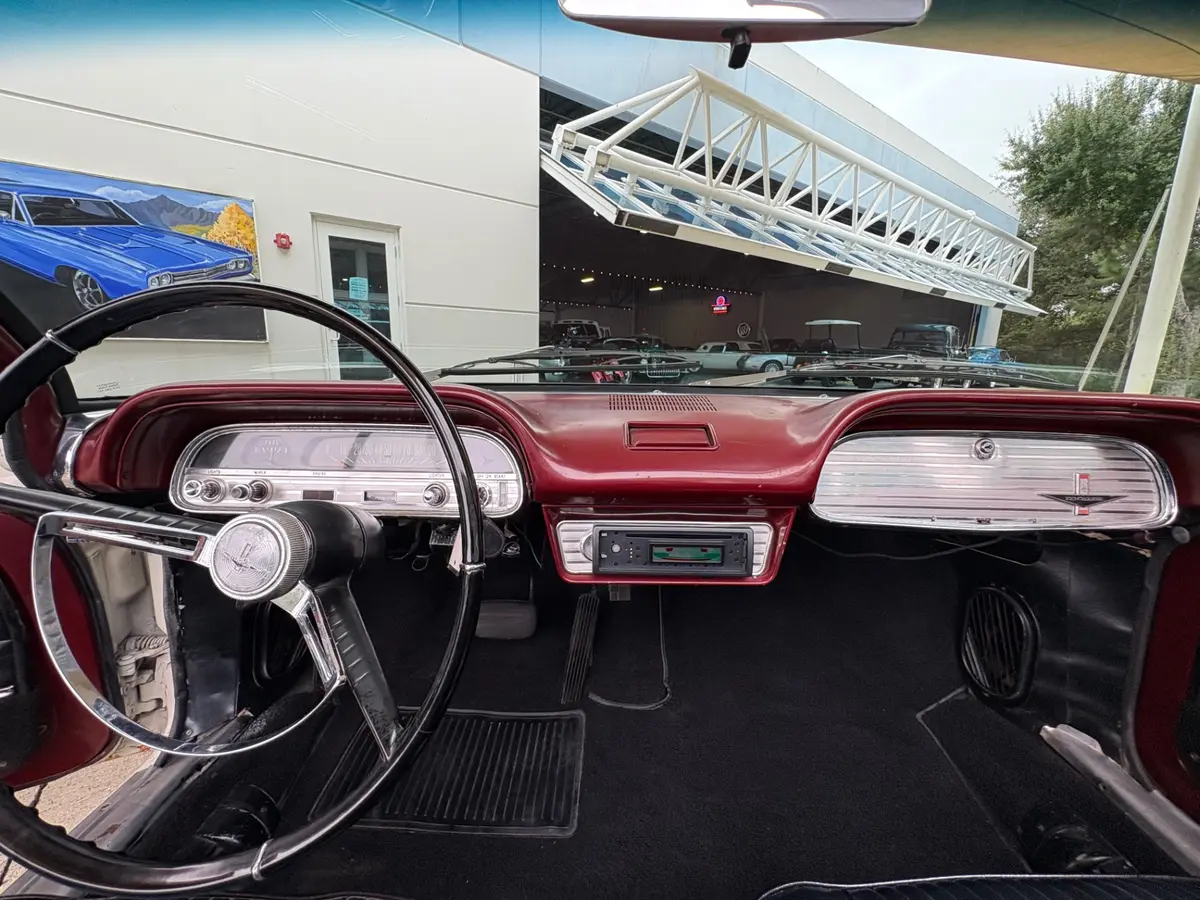
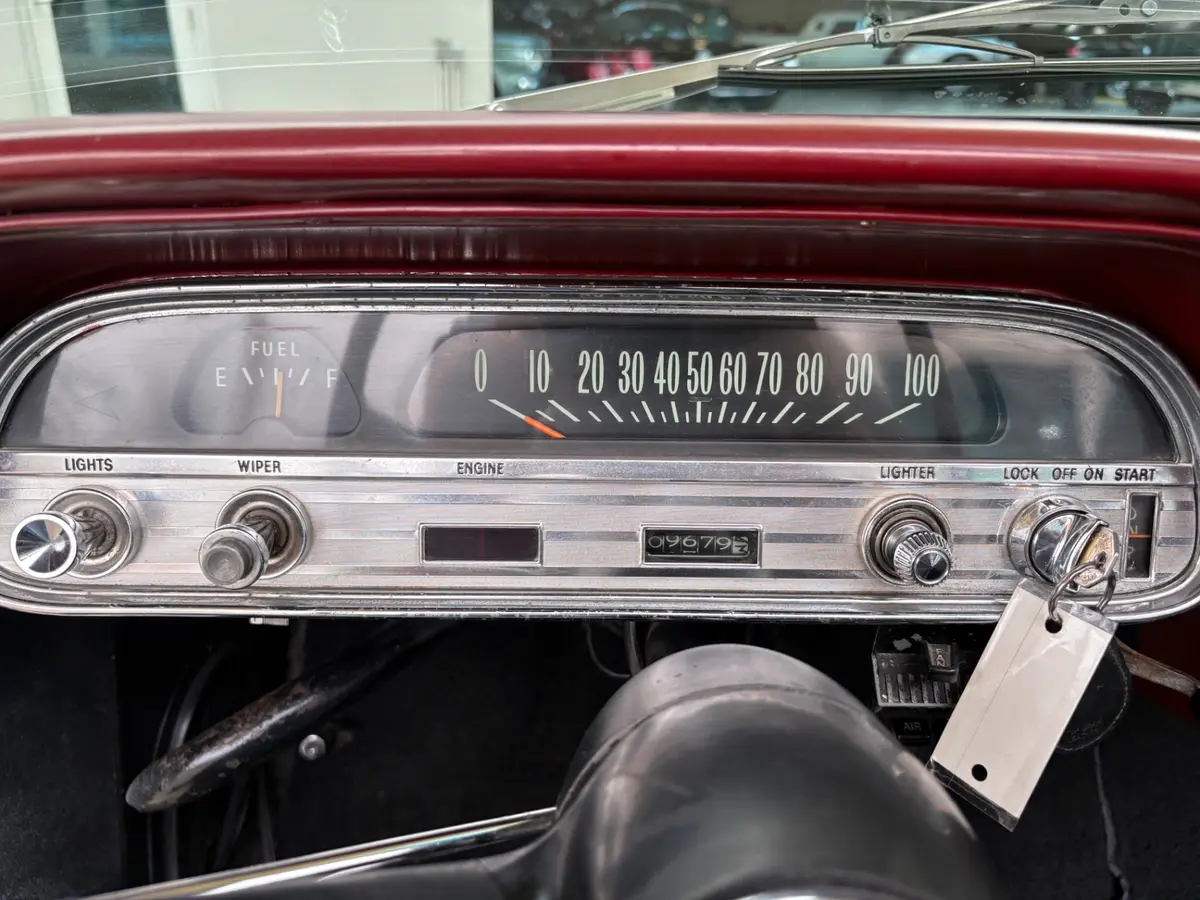
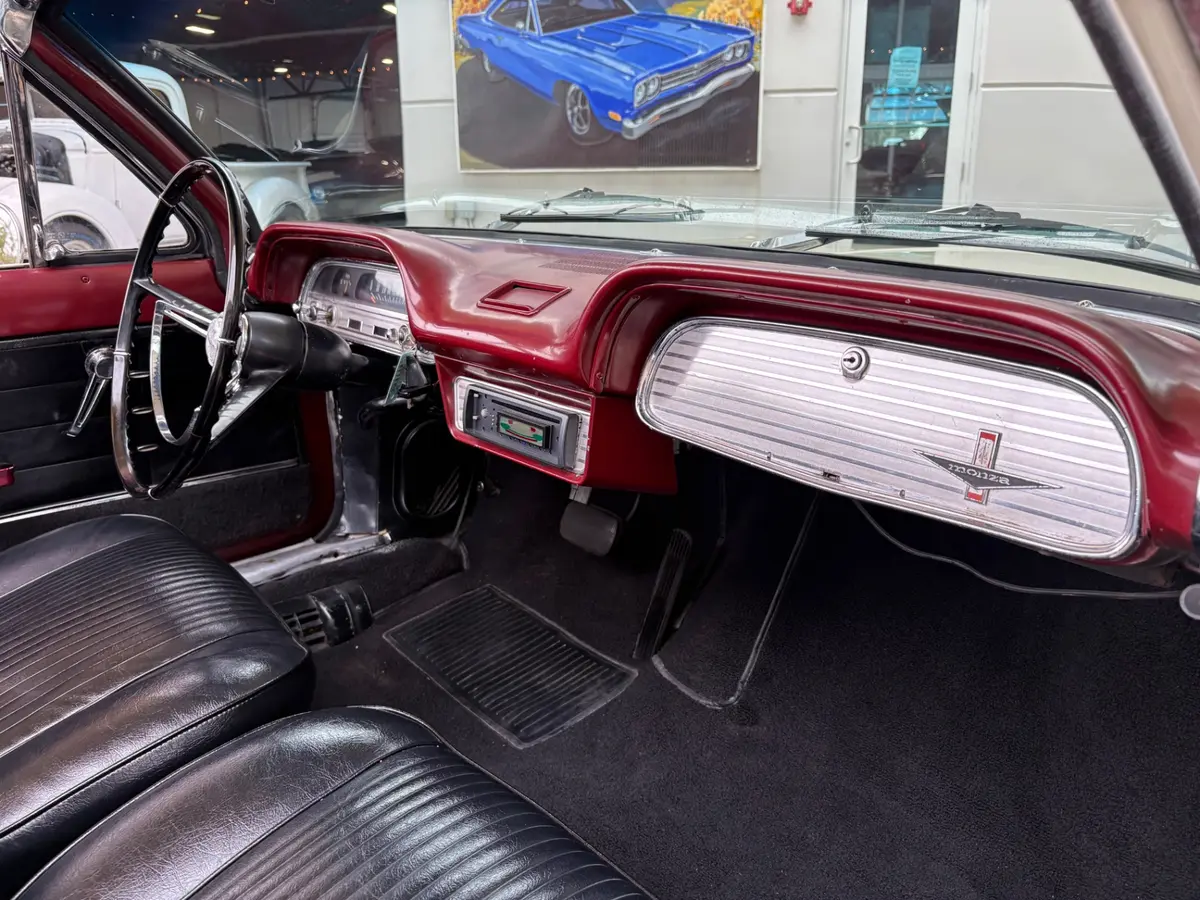
The dashboard is finished in red to match the upper door panels, with a wide, padded instrument panel housing the speedometer, fuel gauge, and warning indicators in a horizontal cluster. The Deluxe steering wheel — a two-spoke design with a chrome horn ring and a Corvair emblem at the center — is original to the Monza 900 trim. The floor is covered in black carpeting, which appears intact and serviceable.
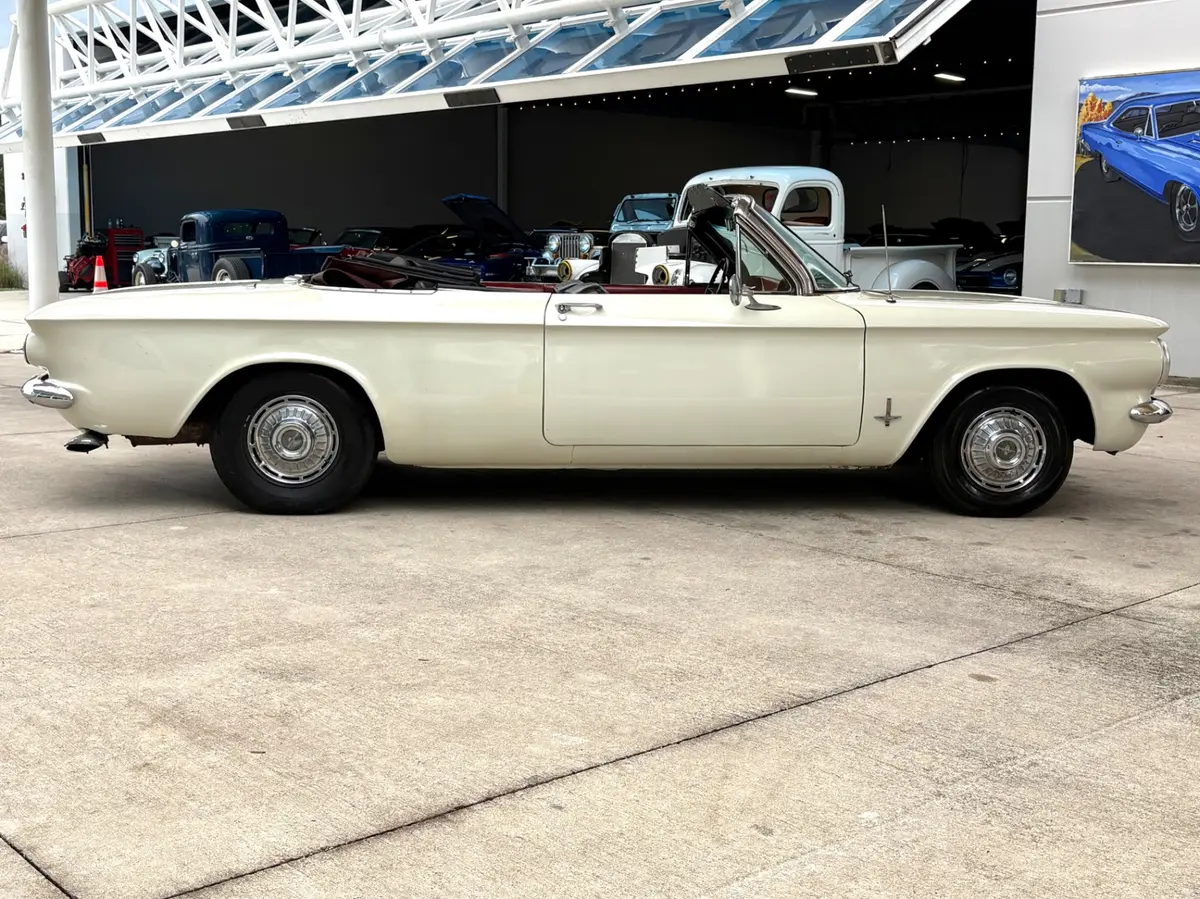
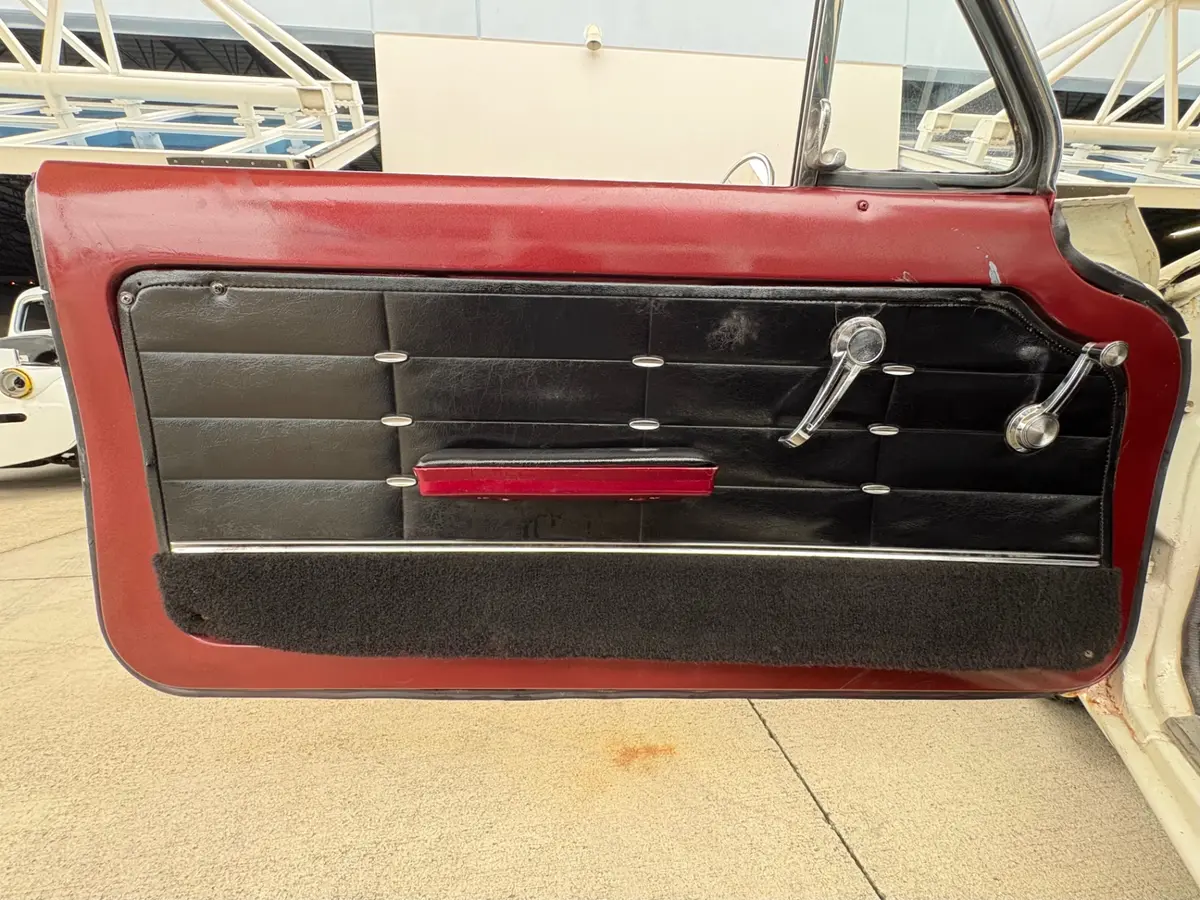
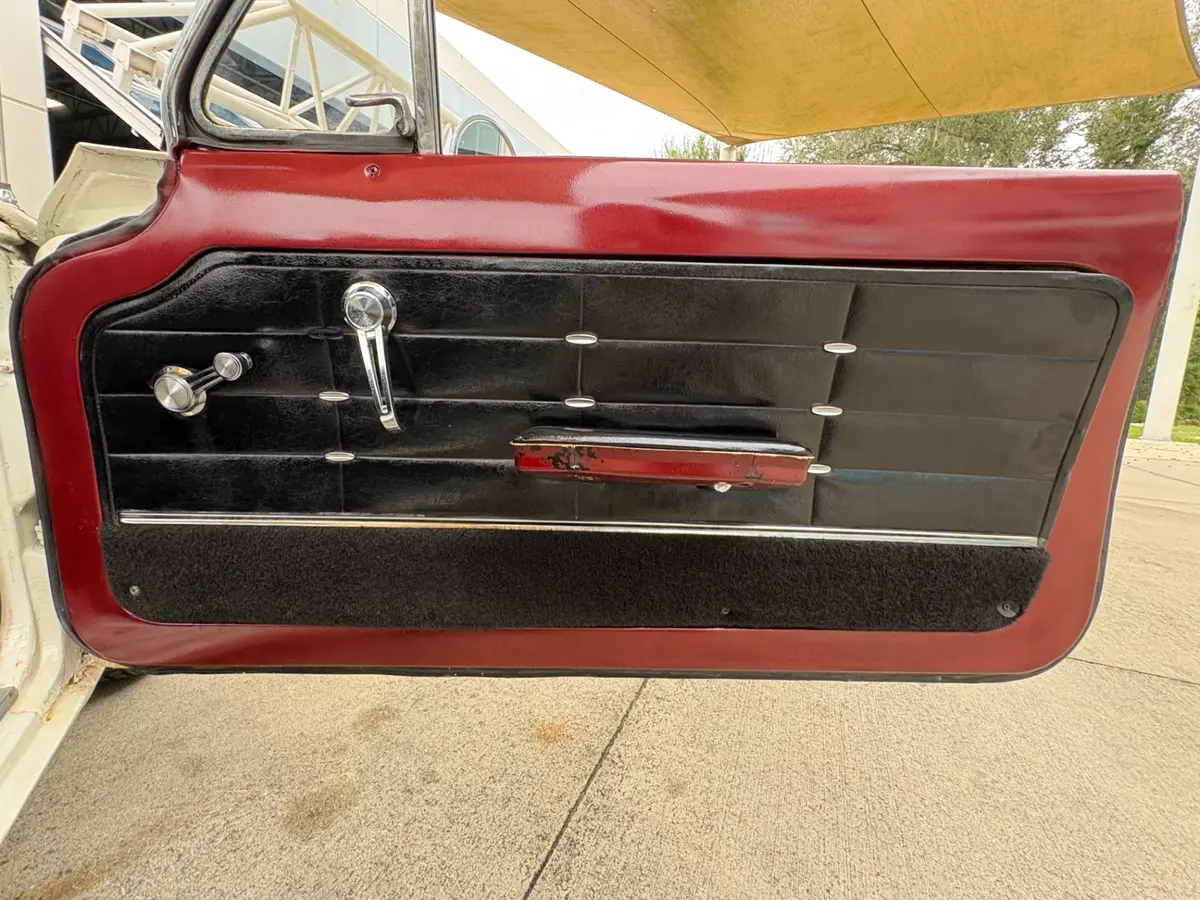
An AM/FM radio is installed in the dash, fitted into the center opening in a period-style housing that keeps the look tidy. Back-up lights are present, which were a Monza 900 feature. The door panels carry a quilted black vinyl insert with chrome accent buttons set against the red painted door shell — a combination that reads as genuinely stylish rather than over-the-top. Chrome window cranks and door handles complete the door trim on both sides. The convertible top is in place with its boot cover fitted when stowed, keeping the folded top neatly concealed behind the rear seat.
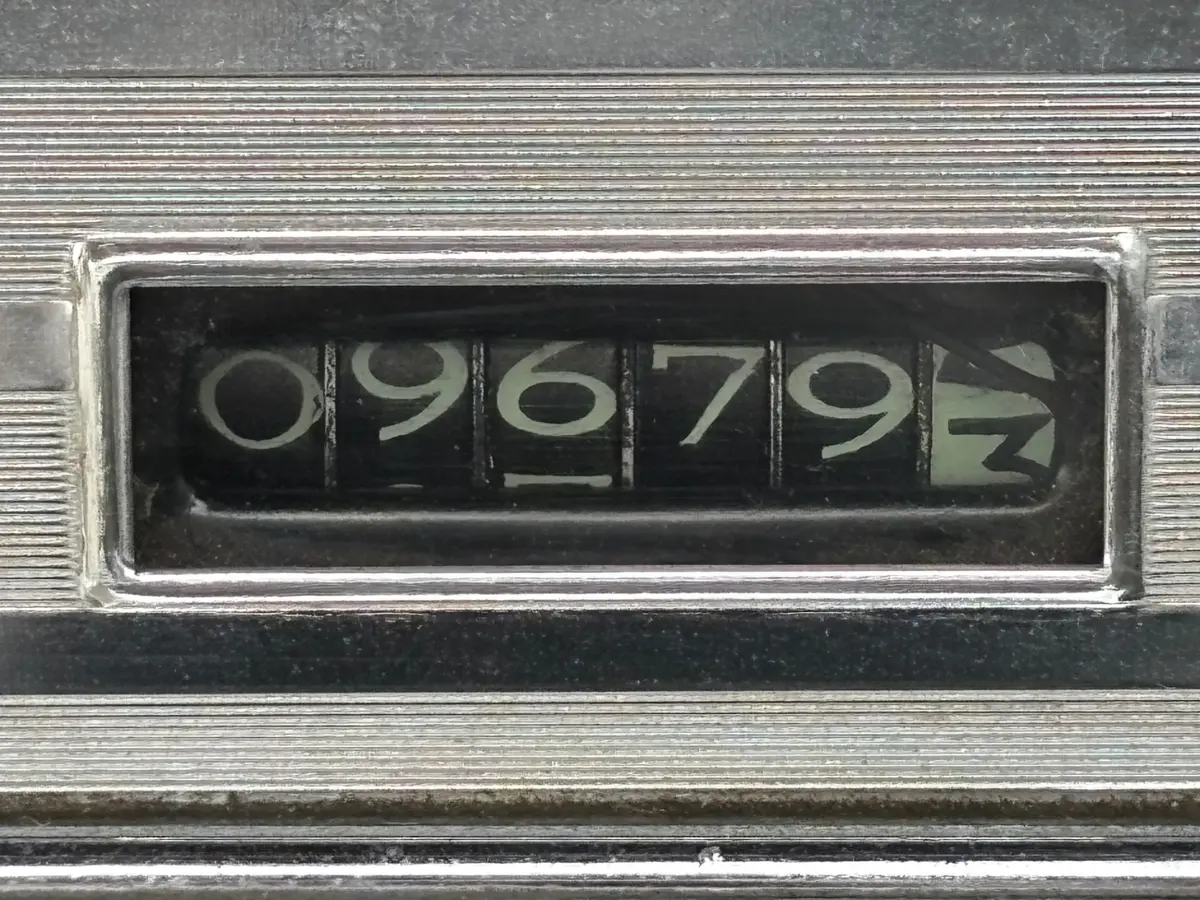
The odometer reads just under 10,000 miles. Given the age of the car, this reading almost certainly reflects a rolled-over odometer — the original five-digit units had no way to display mileage beyond 99,999. The true mileage is unknown, as is typical for cars of this era, and buyers should factor that into their evaluation.
Exterior
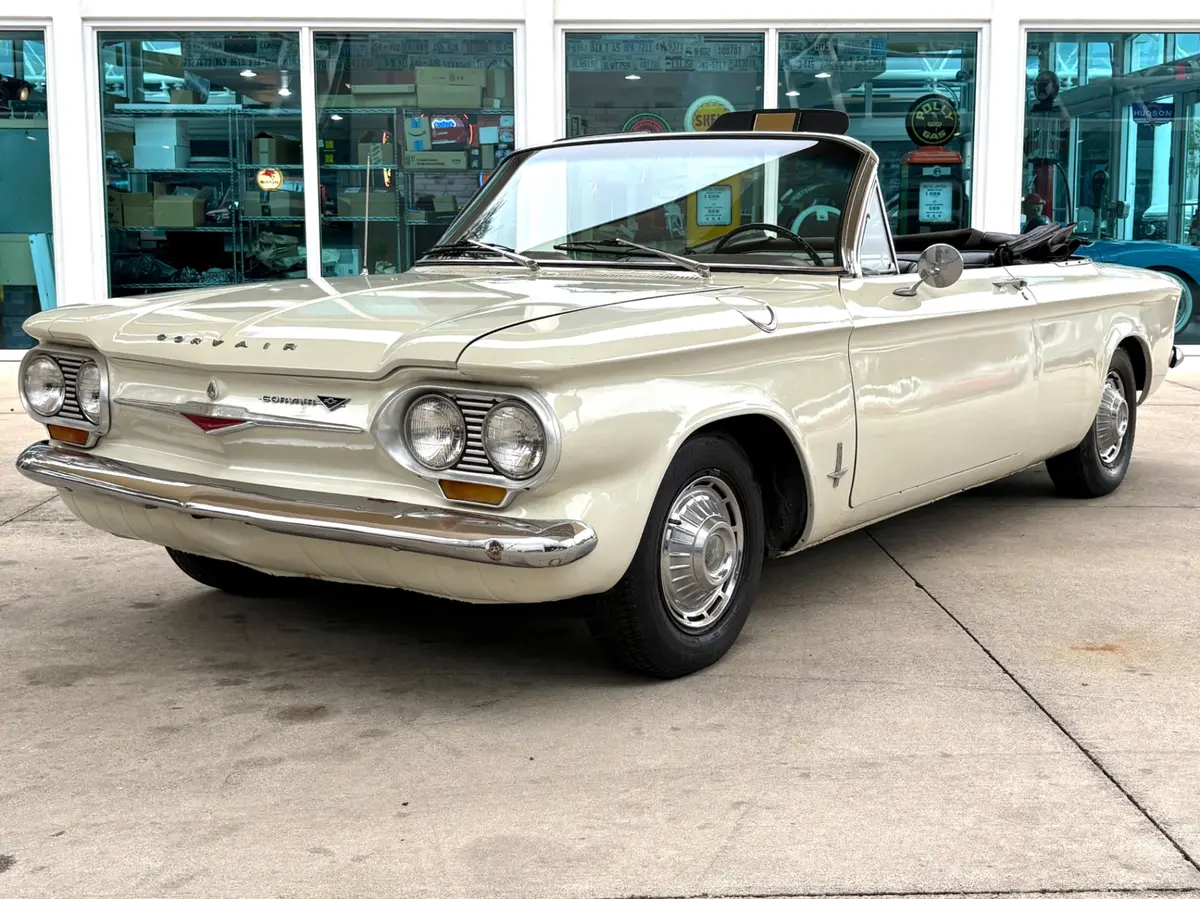
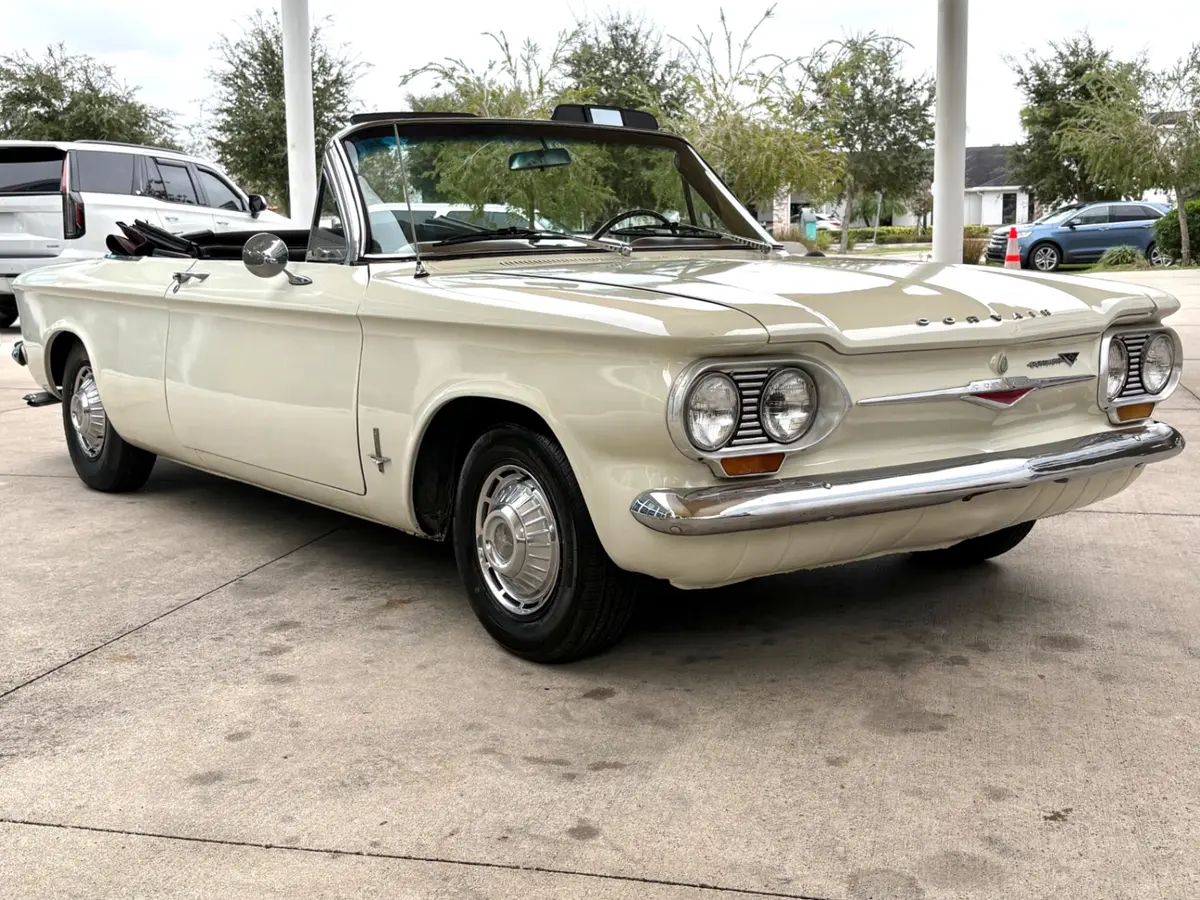
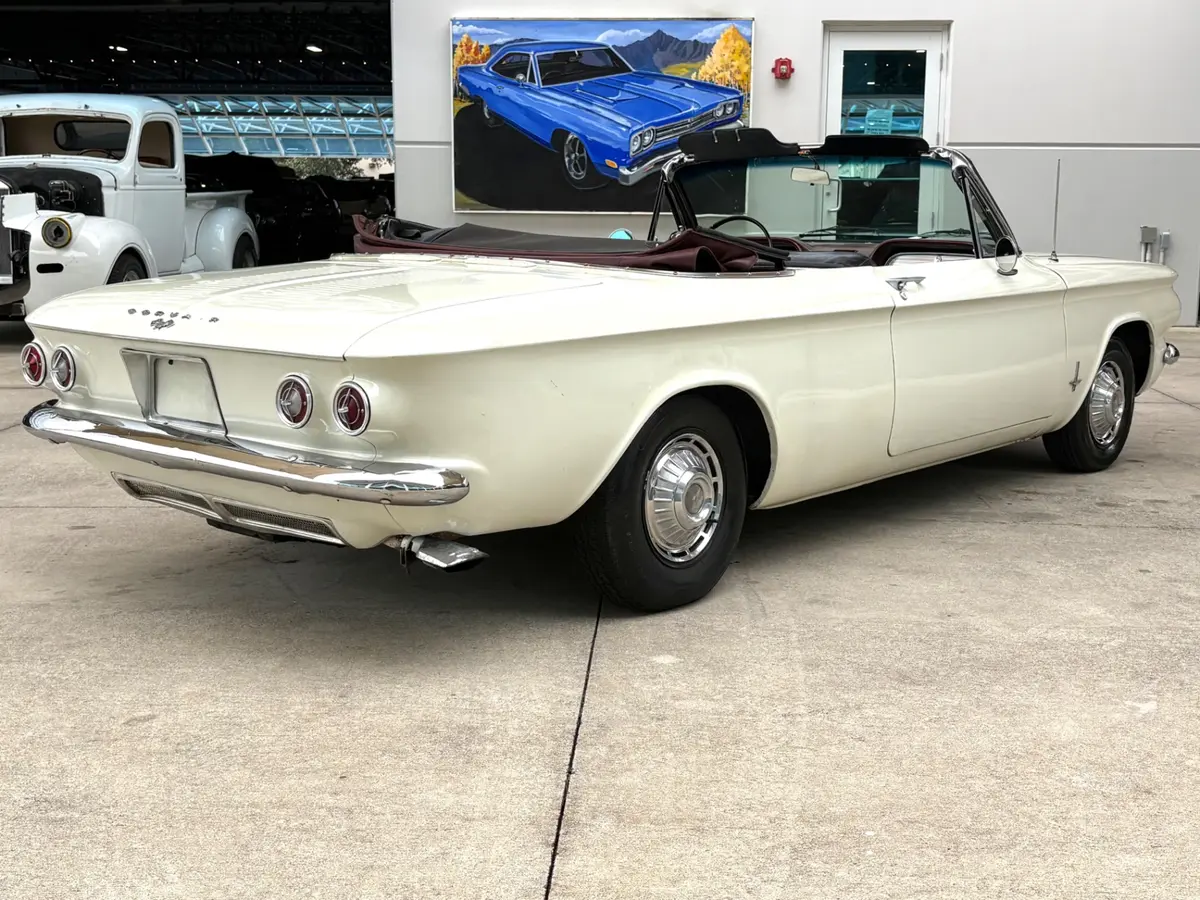
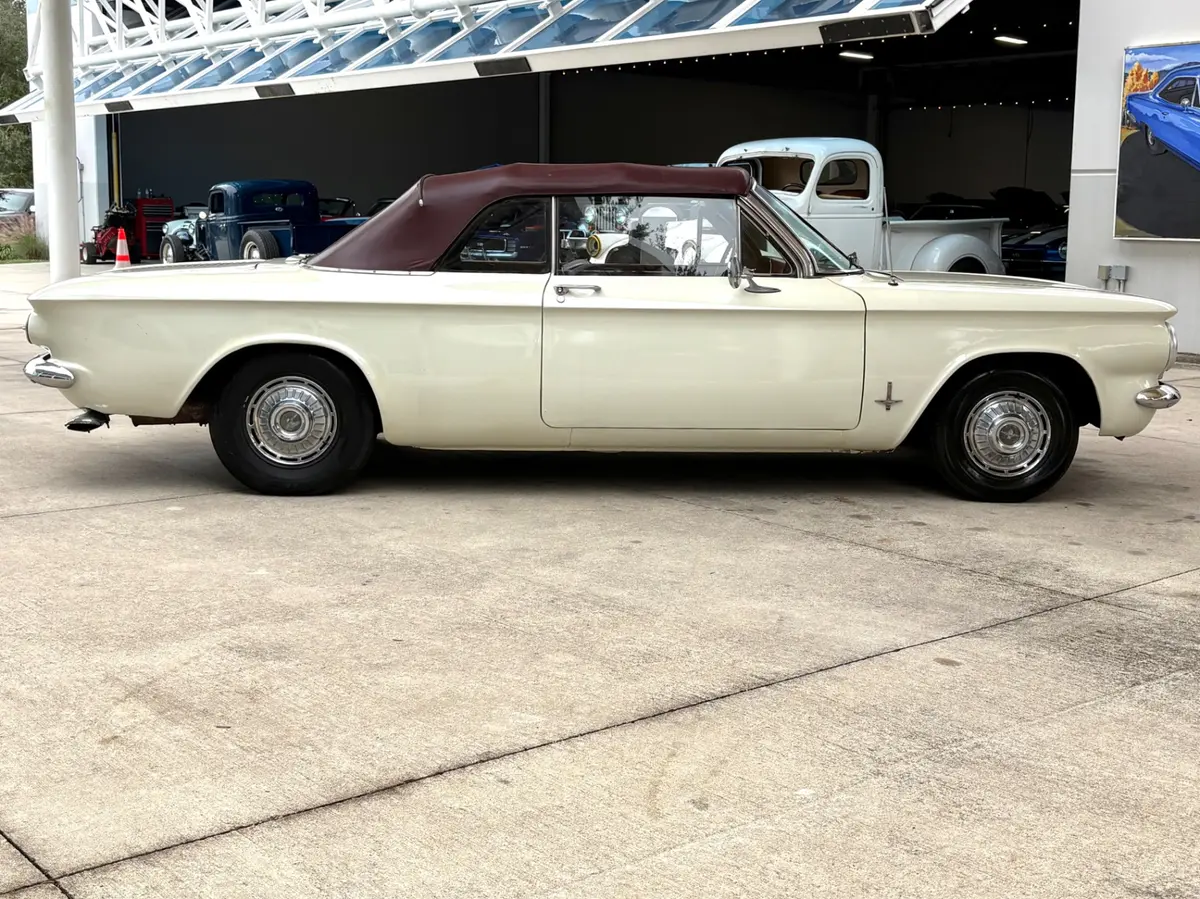
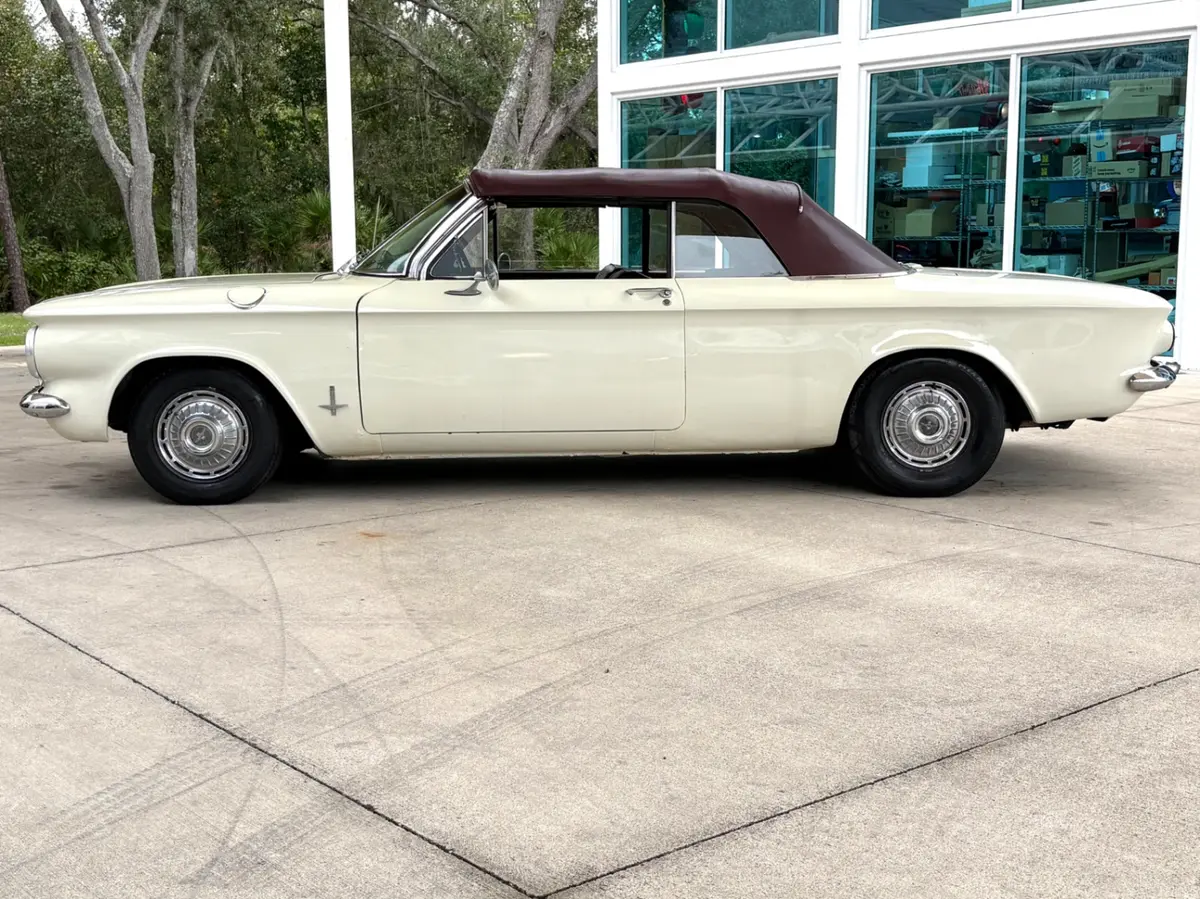
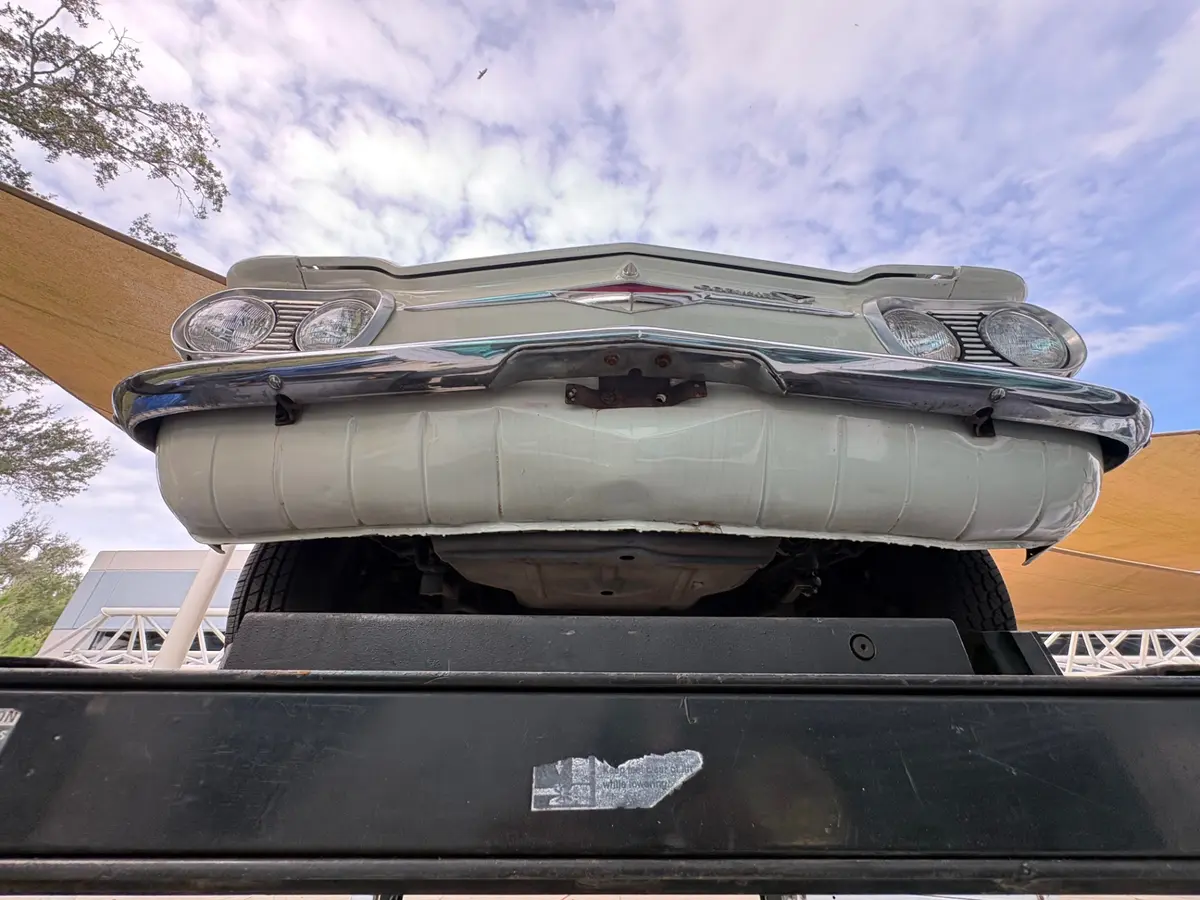
The 1963 Chevrolet Corvair Monza 900 Convertible wears white paint over its unibody shell, a color that works well with the black soft top and the chrome trim running along the body. The first-generation Corvair's body design — penned under the direction of GM's styling department — has held up well over the decades. The absence of a traditional front grille (the engine is in the rear) gives the front end a clean, almost European look, broken up by a chrome bumper and the characteristic quad headlight arrangement with four round lamps set in pairs behind a simple horizontal grille bar.
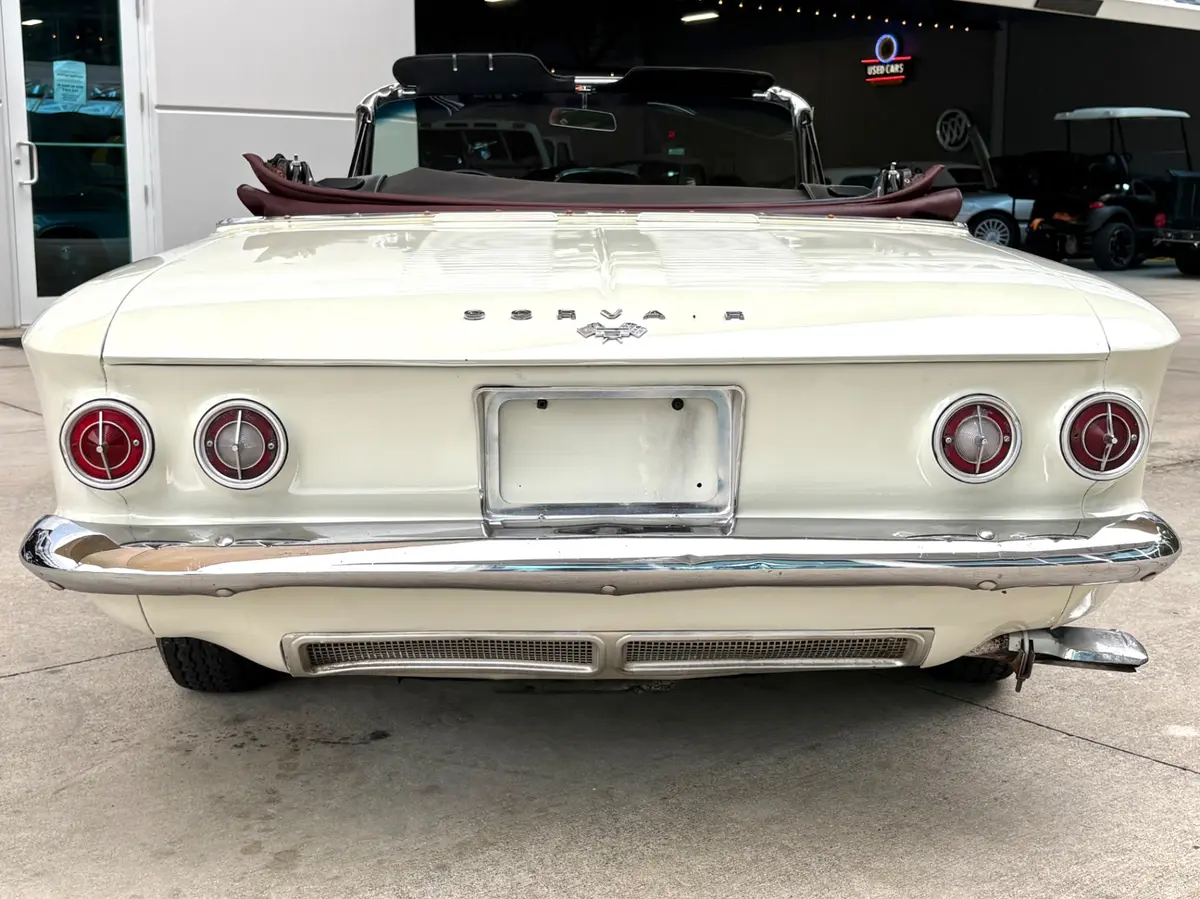
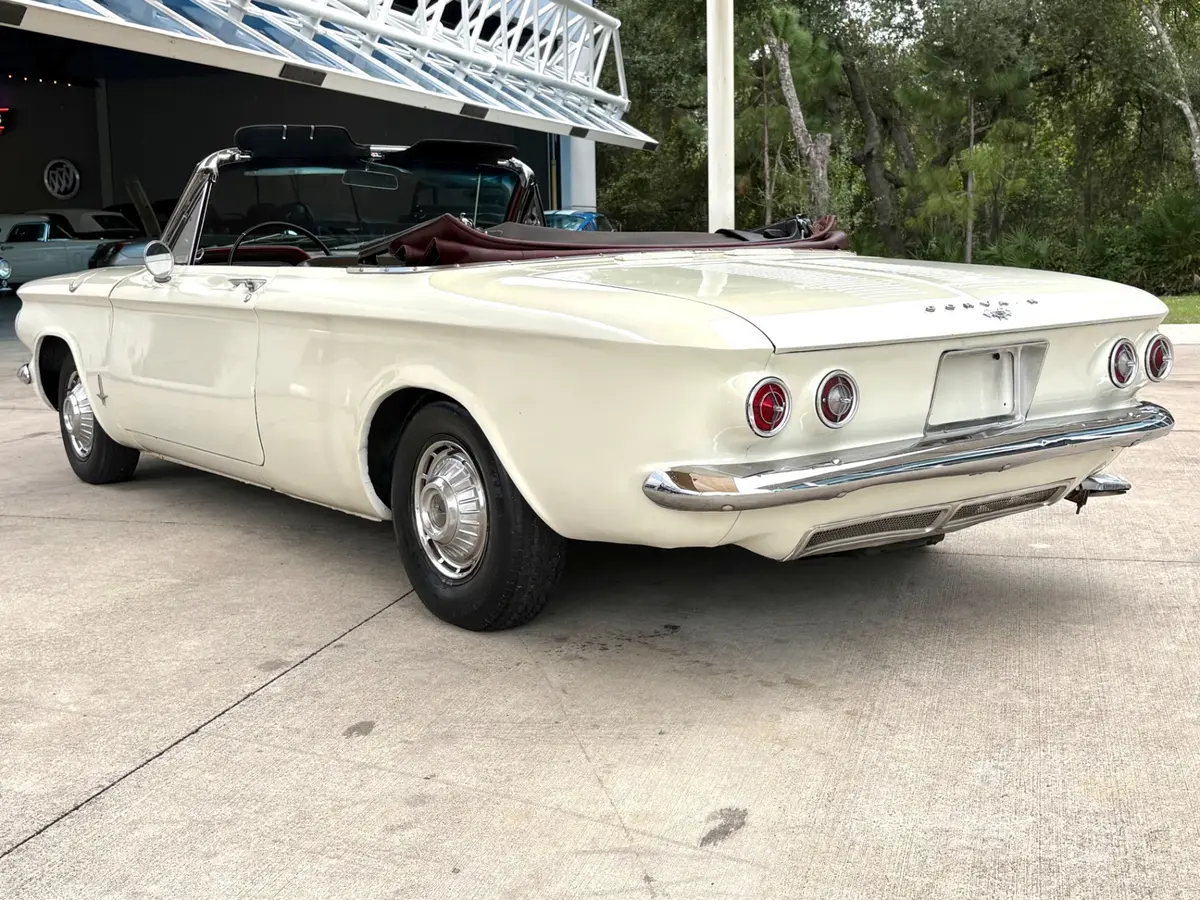
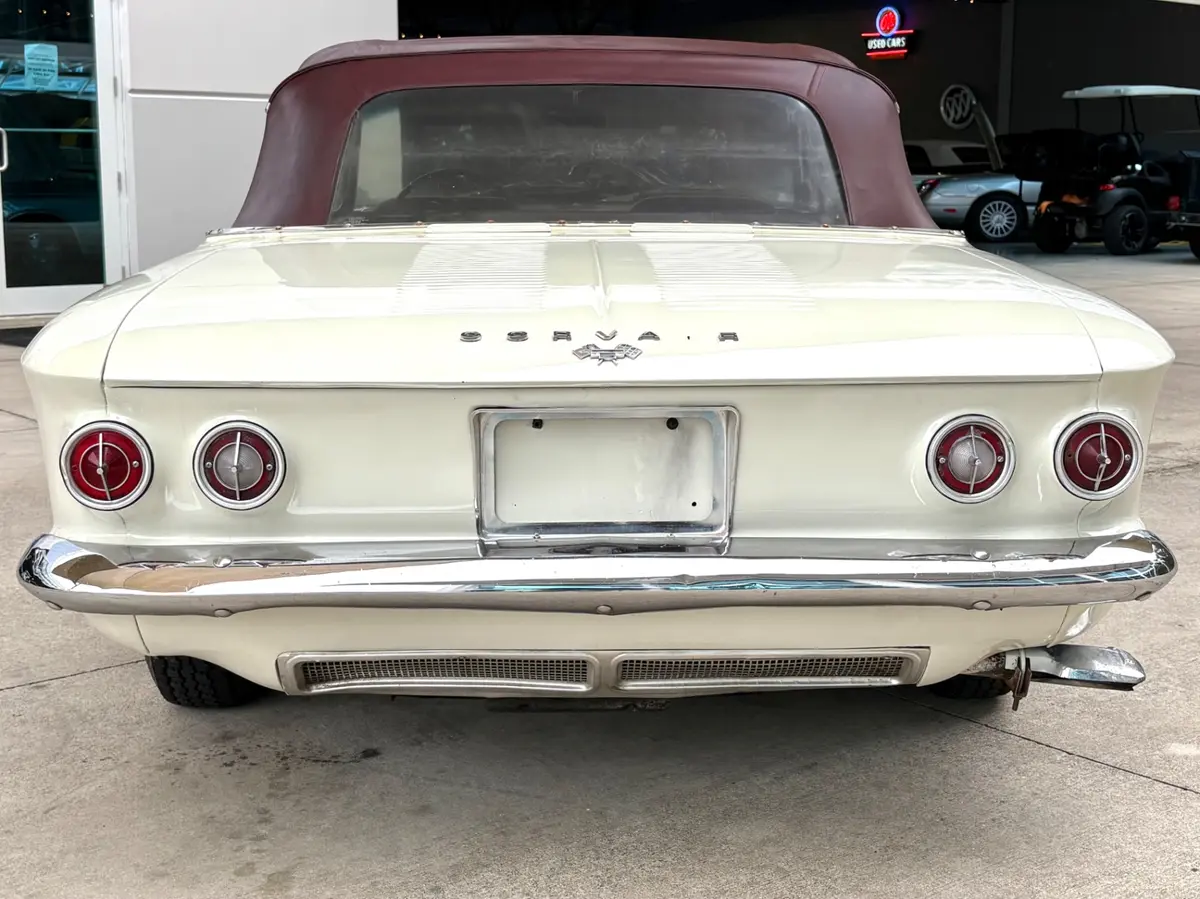
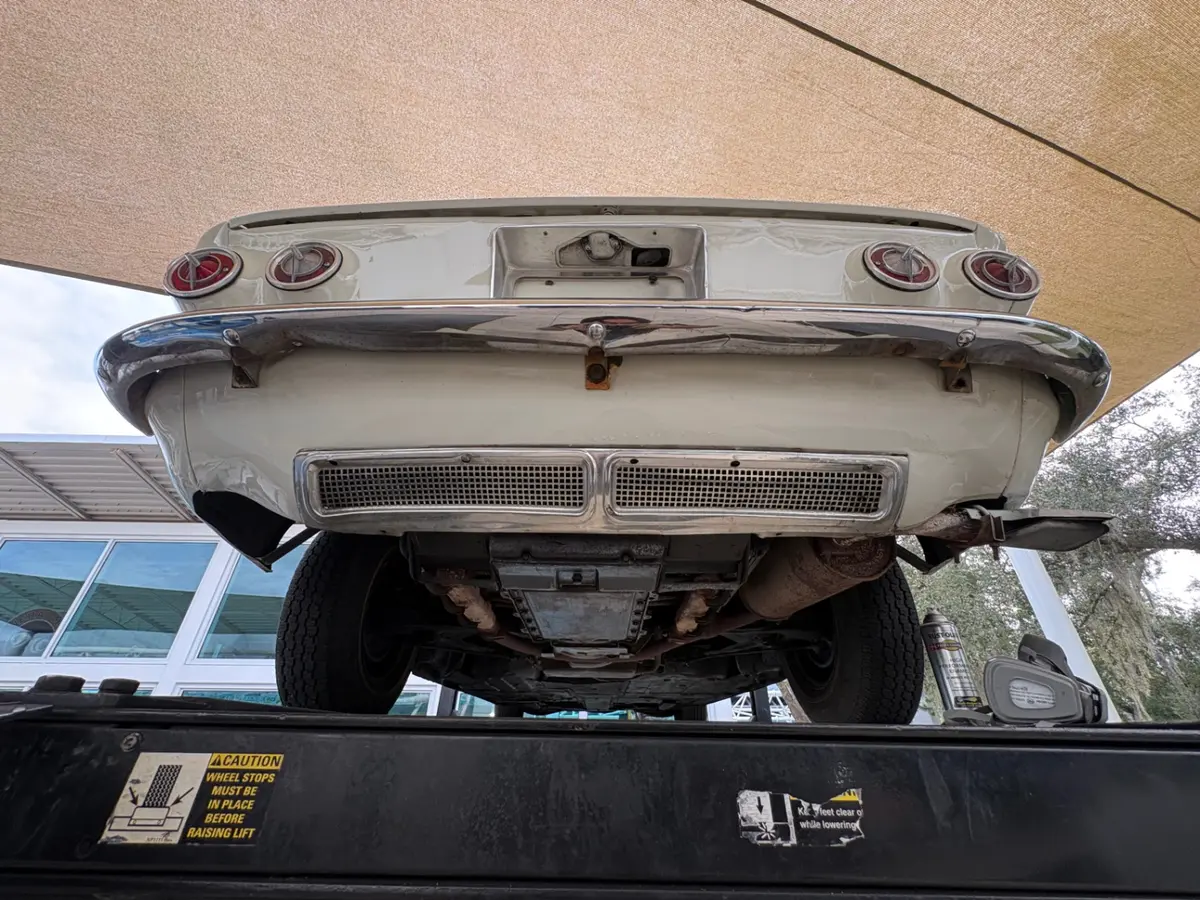
The rear of the car is where the visual interest concentrates. Because the engine exhausts heat from the rear-mounted flat-six, the lower rear valance incorporates a pair of chrome-trimmed engine cooling grilles on either side of the license plate recess — a detail that is unique to the Corvair among domestic cars of the period. The round taillights, four in total, are set into the rear panel with chrome bezels. The rear chrome bumper is present and shows its age but remains solid.
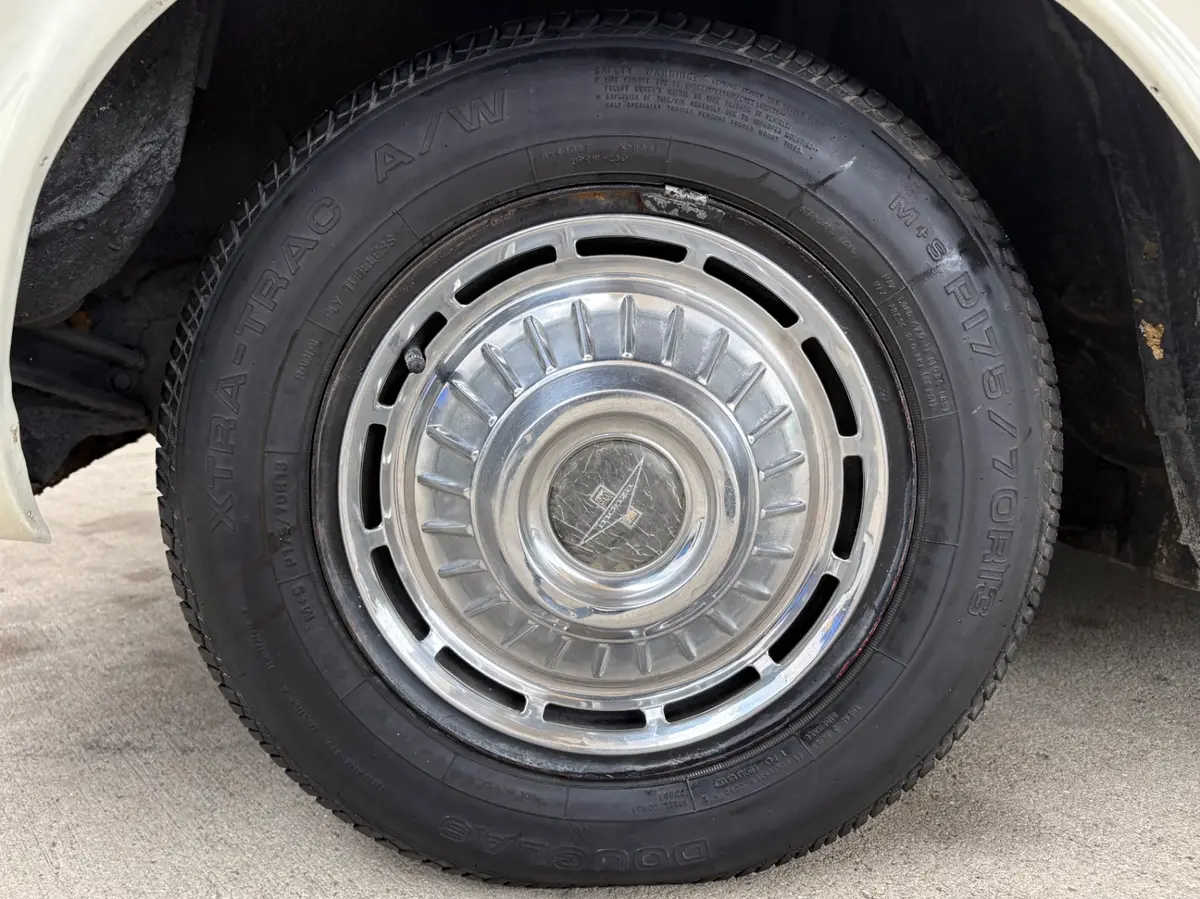
Full wheel covers dress the steel wheels at all four corners. A driver-side exterior mirror is mounted on the front fender, and a fender-mounted antenna sits on the right front fender in its factory location. The convertible top appears serviceable with the boot cover in place.
The underside of the car has been photographed on a lift and shows surface rust and deteriorating undercoating in multiple areas, which is expected on a sixty-year-old vehicle. There is evidence of some rust-through in limited areas of the floor pan visible in the photos. Buyers intending to show or fully restore this car should factor in floor pan work. Buyers looking for a driver or a project with good bones will find the structure fundamentally intact.
Conclusion
The 1963 Chevrolet Corvair Monza 900 Convertible is one of the most mechanically distinctive domestic classics available at any price point. No other American production car sold in 1963 combined a rear-mounted air-cooled engine, four-wheel independent suspension, unibody construction, and a convertible body in a single package. This example has been freshened mechanically in the areas that matter most — carburetors, fuel pump, fuel lines, battery, alternator, plugs, and oil — and presents as a car that is ready to drive. The red and black interior is correct and attractive, and the white convertible body with its chrome trim retains the character of the original car. The underside shows honest age, and buyers should inspect in person to form their own assessment of what, if any, additional work suits their intentions for the car.
Whether you are a Corvair enthusiast who already knows what this platform is about, or a collector looking for something genuinely different from the typical domestic muscle and pony car offerings of the early 1960s, this 1963 Corvair Monza 900 Convertible deserves a close look.
To schedule an appointment or ask questions about this 1963 Chevrolet Corvair Monza 900 Convertible, call Skyway Classics in Sarasota, Florida at 941-254-6608.
Disclaimer
Information found on the website is presented as given to us by the owner of the car, whether on consignment or from the owner we bought it from. Some Photos, materials for videos, descriptions and other information are provided by the consignor/seller and is deemed reliable, but Skyway Classics does not warranty or guarantee this information. Skyway Classics is not responsible for information that may incorrect or a publishing error. The decision to purchase should be based solely on the buyers personal inspection of the vehicle or by a professional inspection service prior to offer or purchase being made.
1963 Chevrolet
Corvair Monza 900
Why Choose Skyway Classics?
Explore our curated inventory of classic and collector cars—thoughtfully selected, ready to drive, and supported by experts who make ownership simple.
Expert Curation
Every vehicle is hand-selected by our experts for quality, authenticity, and investment potential.
Fast Transactions
Streamlined buying and selling process with quick financing and immediate delivery options.
Only National Dealer With Classic Service & Repair
We’re the only national dealership that services and repairs the classics we sell—before and after the sale.
Nationwide Network
Access to our extensive network of collectors, restorers, and classic car enthusiasts nationwide.
Concierge Ownership Support
From financing and insurance to paperwork, shipping, and titling—we handle the details so you can enjoy the drive.
Passion-Driven Service
We're classic car enthusiasts first, providing personalized service with genuine passion for the hobby.