
1964 Chevrolet
Corvette Sting Ray Convertible
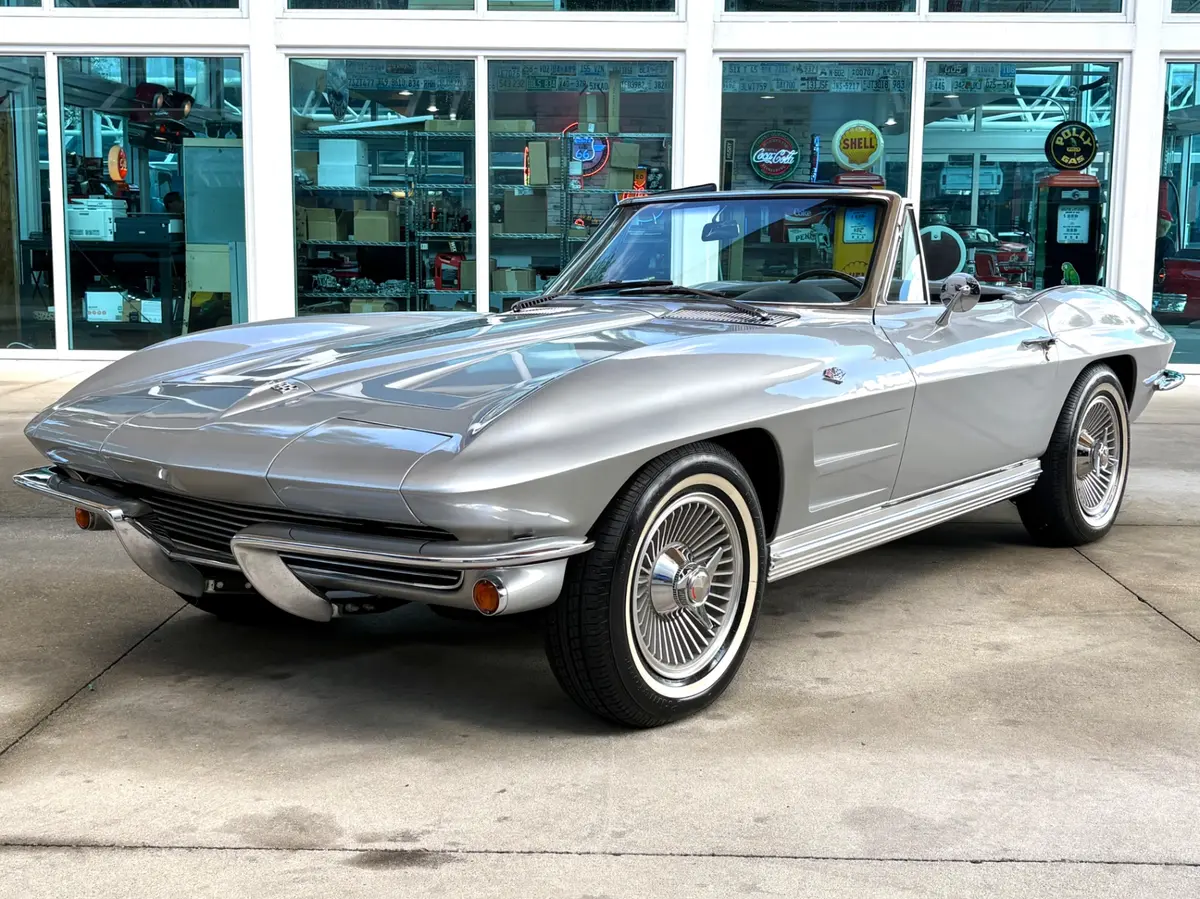
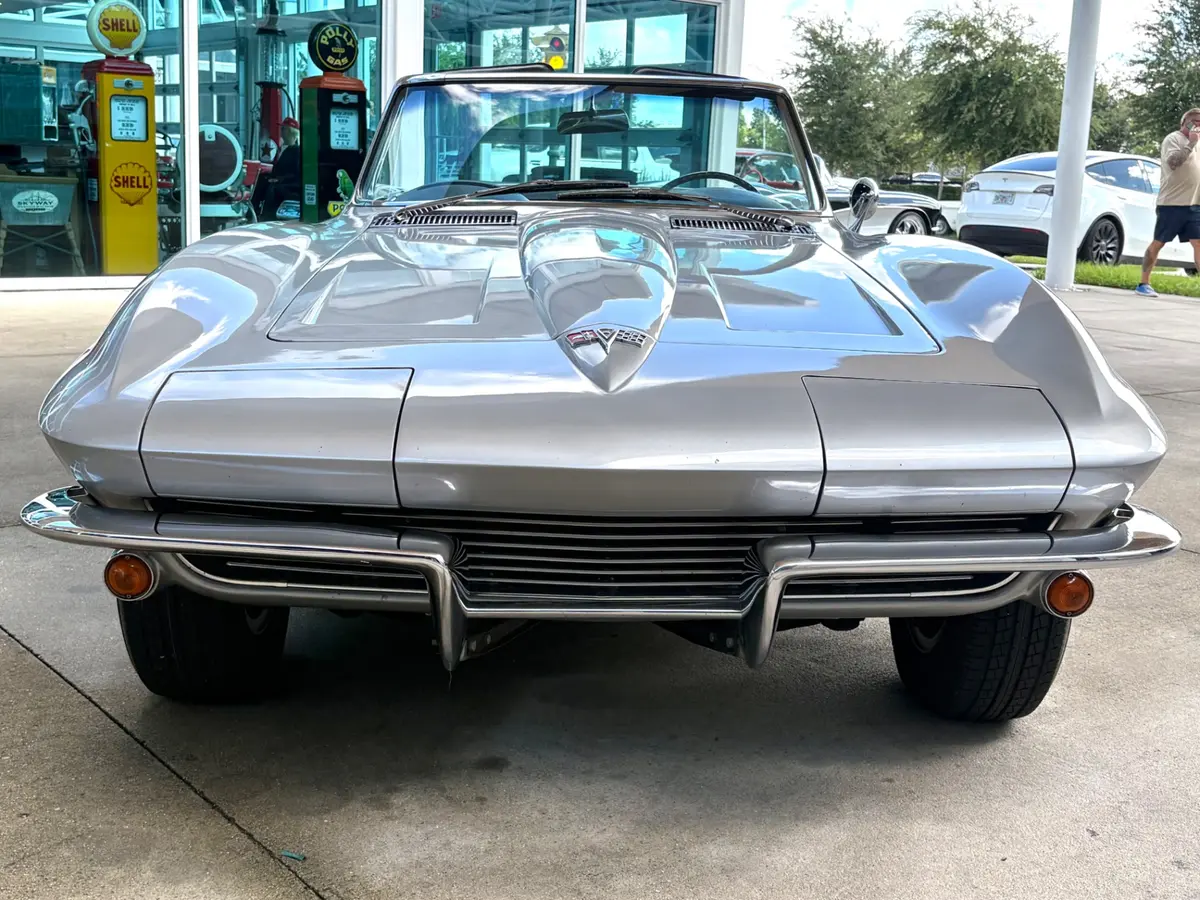
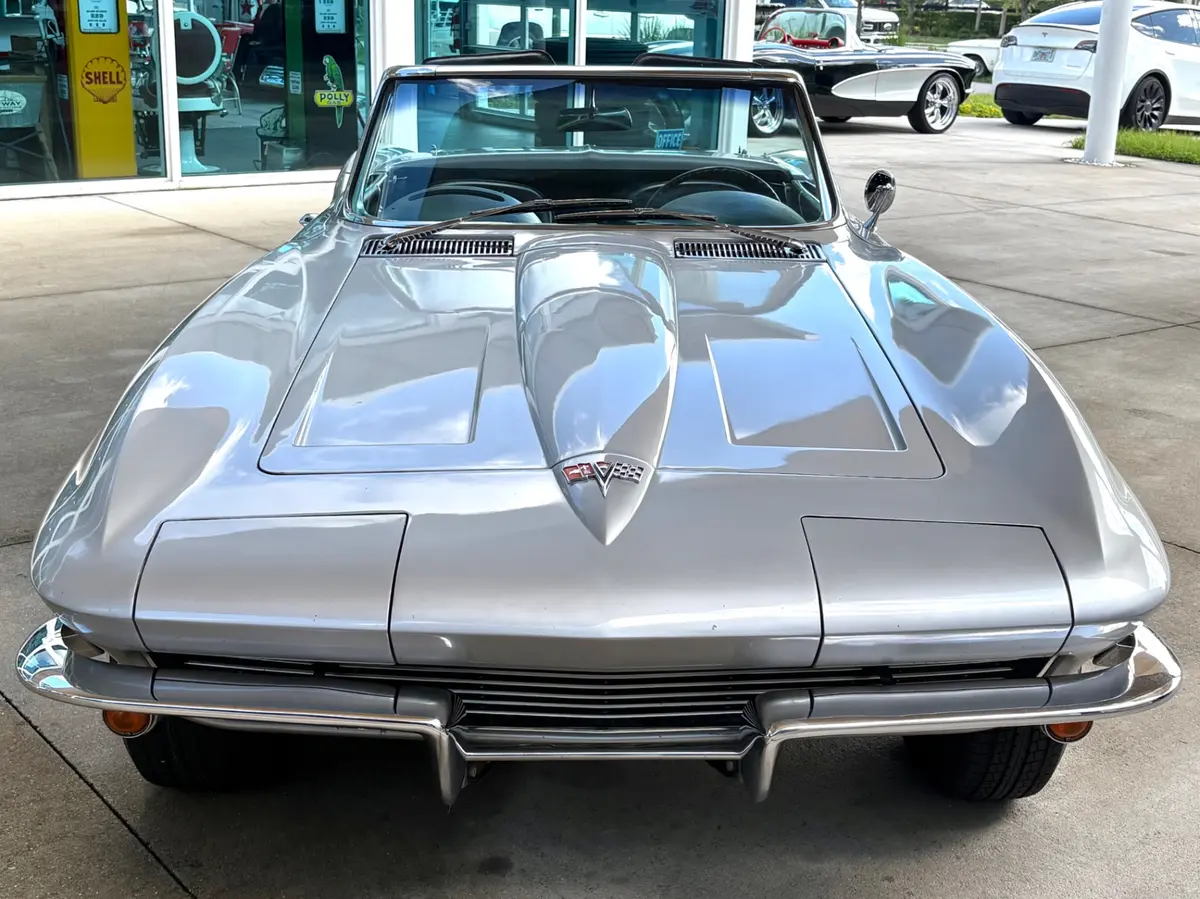
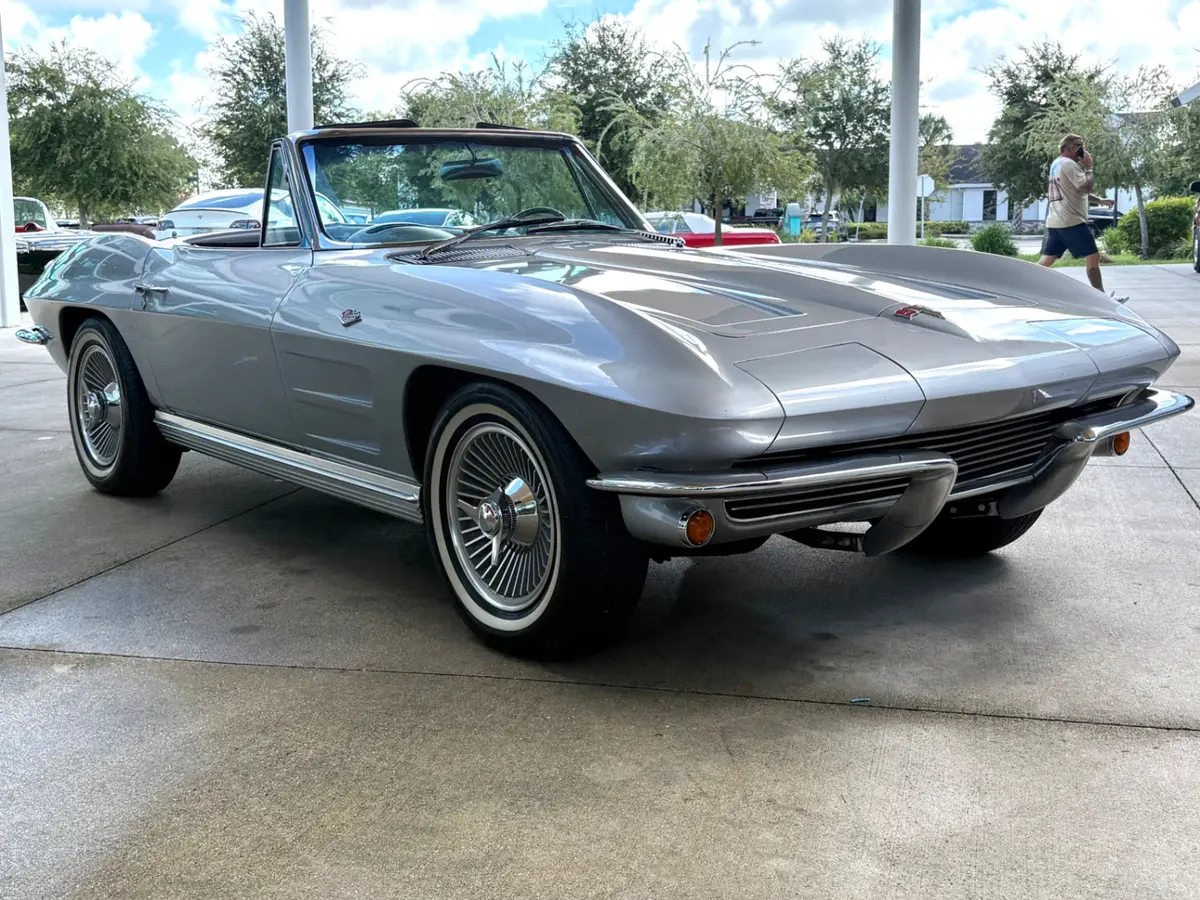
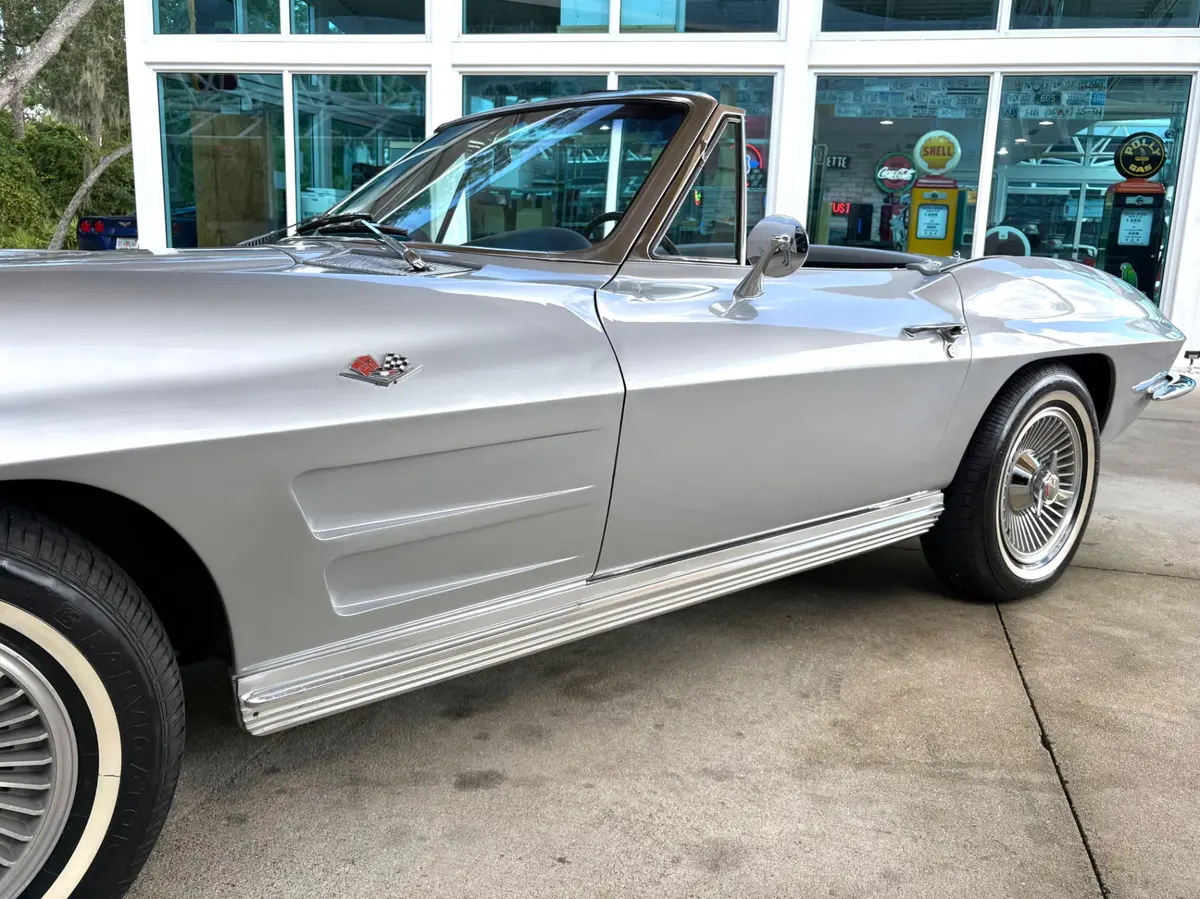
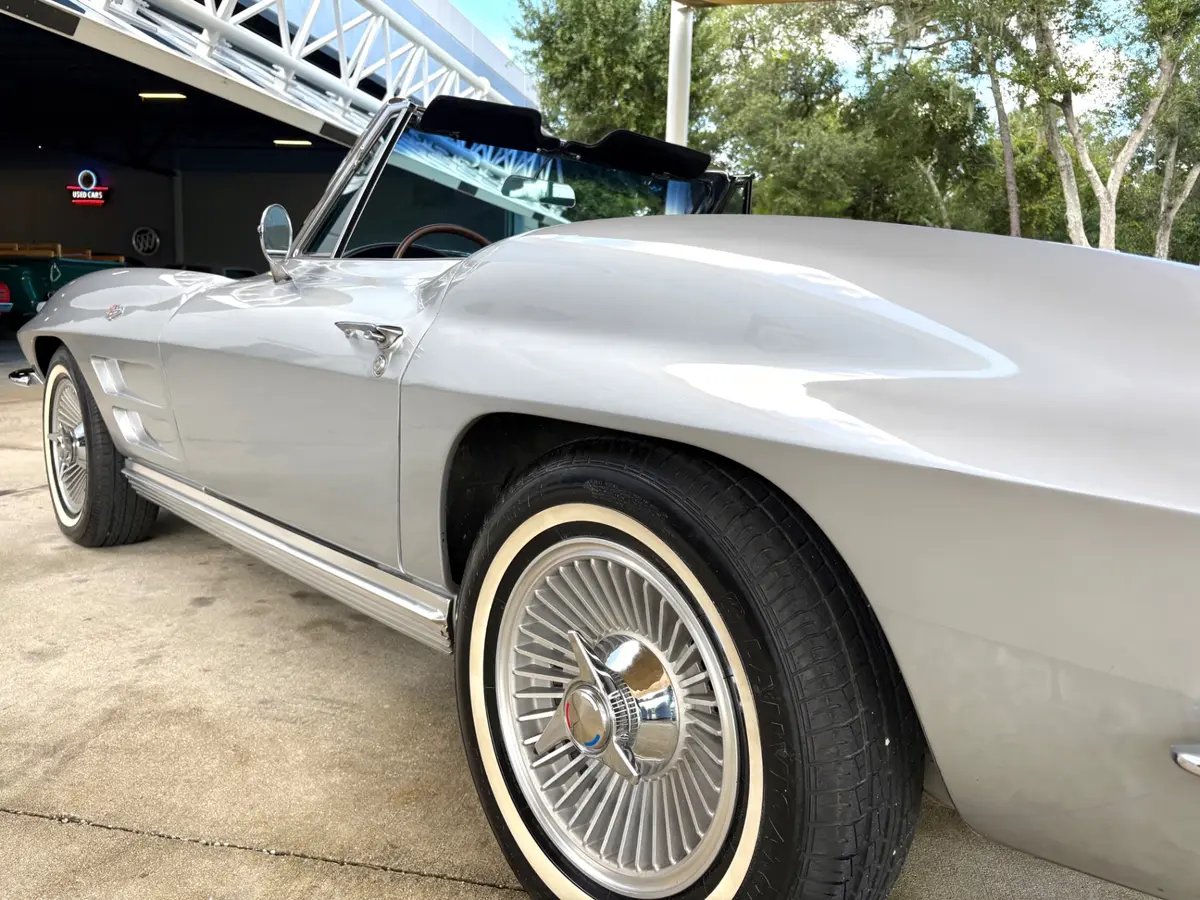
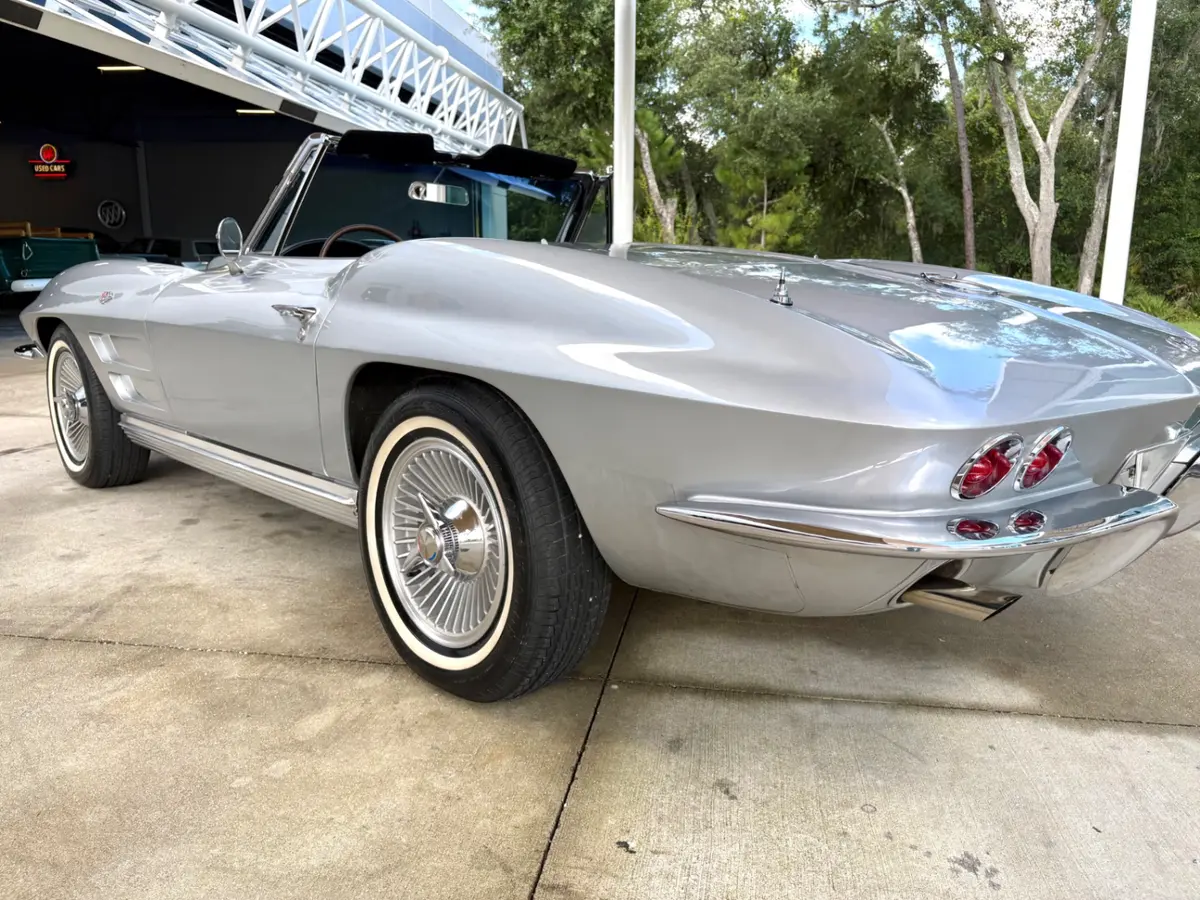
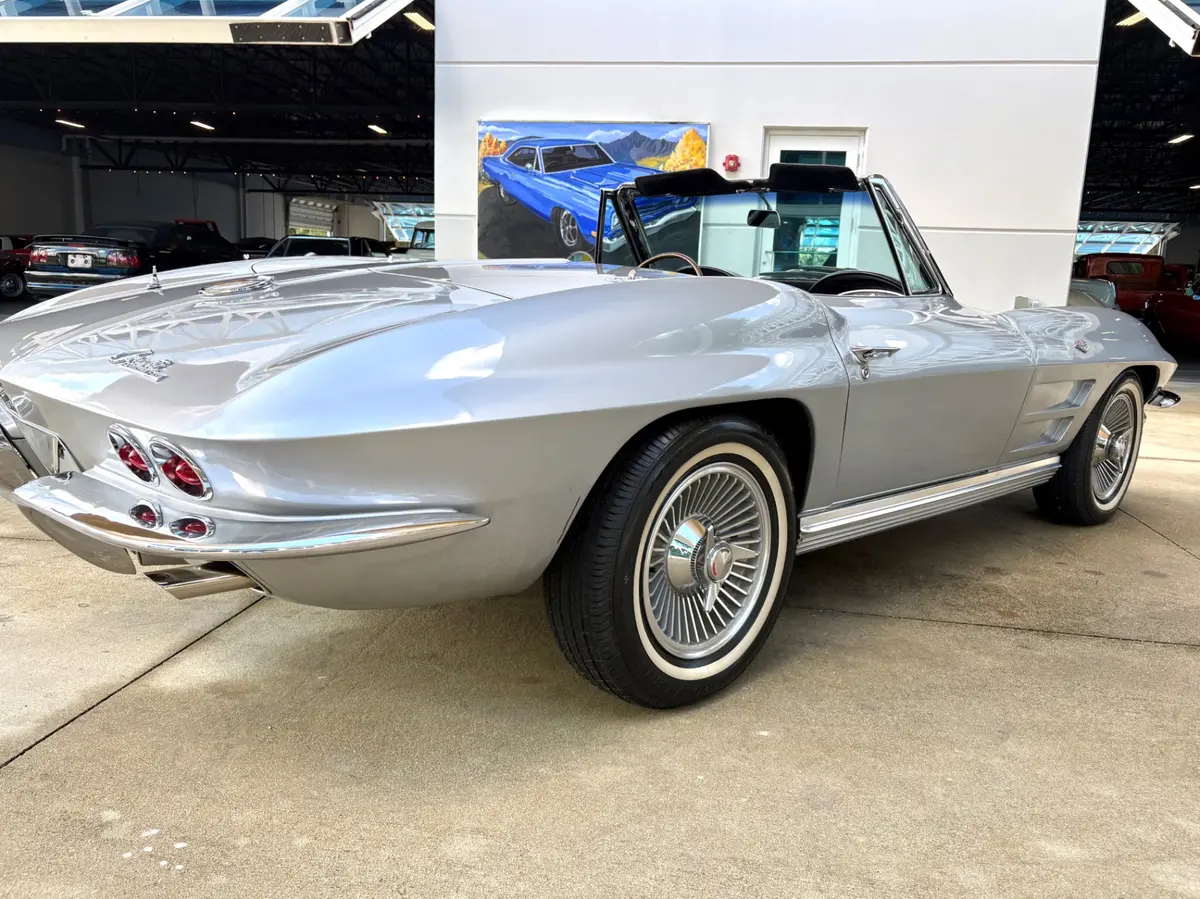
1964 Chevrolet Corvette Sting Ray Convertible — L76 327/365, Matching Numbers, Bloomington Gold Survivor
Why This Car Is Special
The second-generation Corvette, known to collectors as the C2, arrived for 1963 as a complete redesign — the first since the car's introduction a decade earlier. It brought independent rear suspension, a stiffer ladder frame, and styling by Bill Mitchell and Larry Shinoda that drew directly from Mitchell's Stingray racing car. For 1964, Chevrolet refined the formula. The controversial split rear window of the 1963 coupe was gone, the fake hood vents were opened up to actually function, and the suspension was retuned for a smoother, more controlled ride. The result was a car that drove as well as it looked.
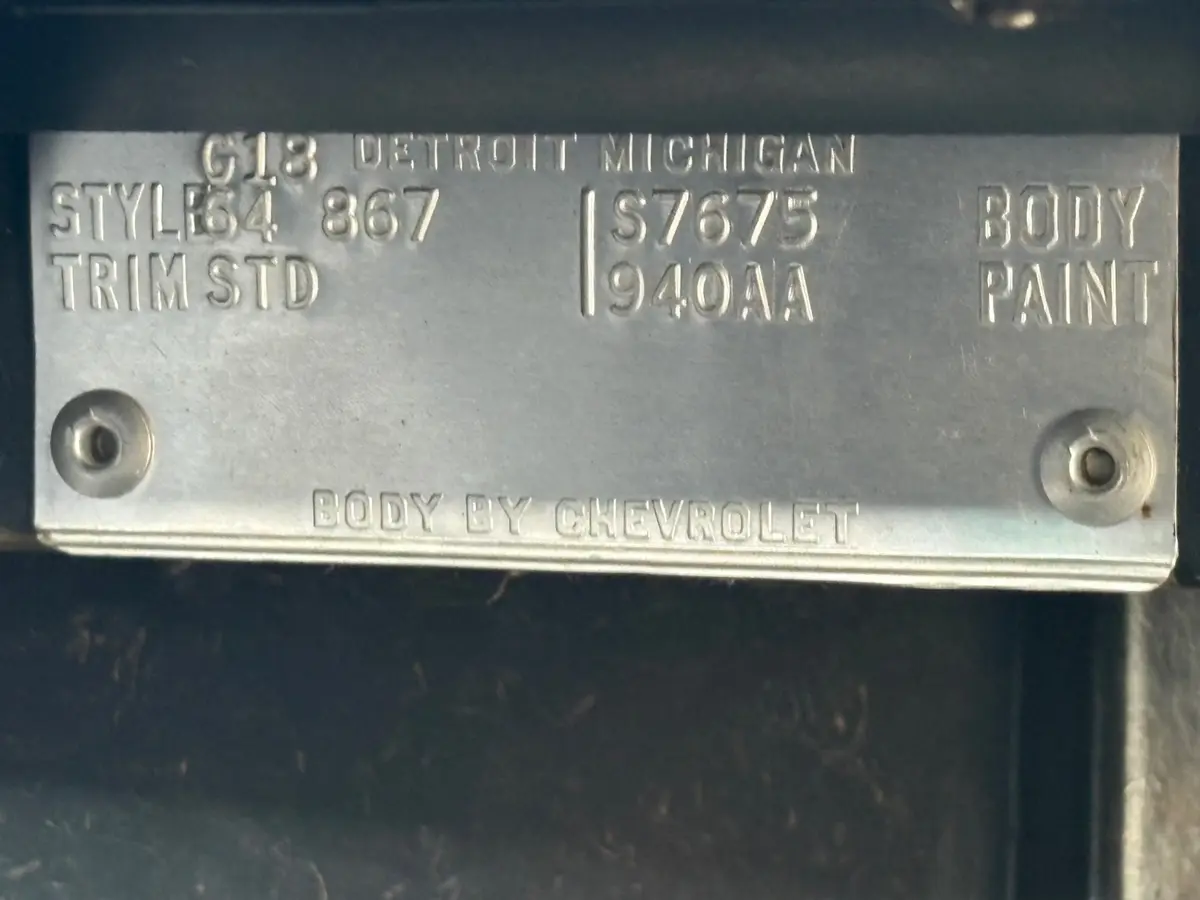
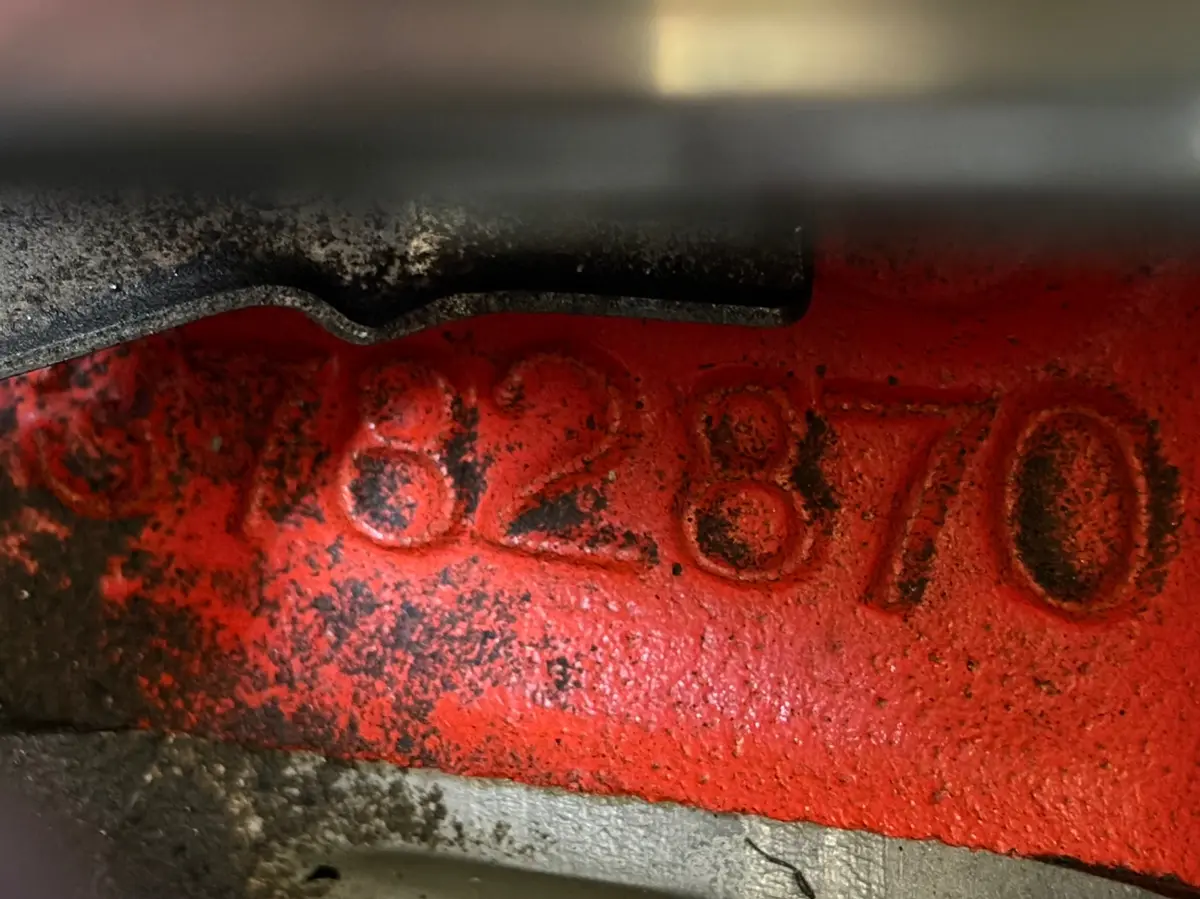
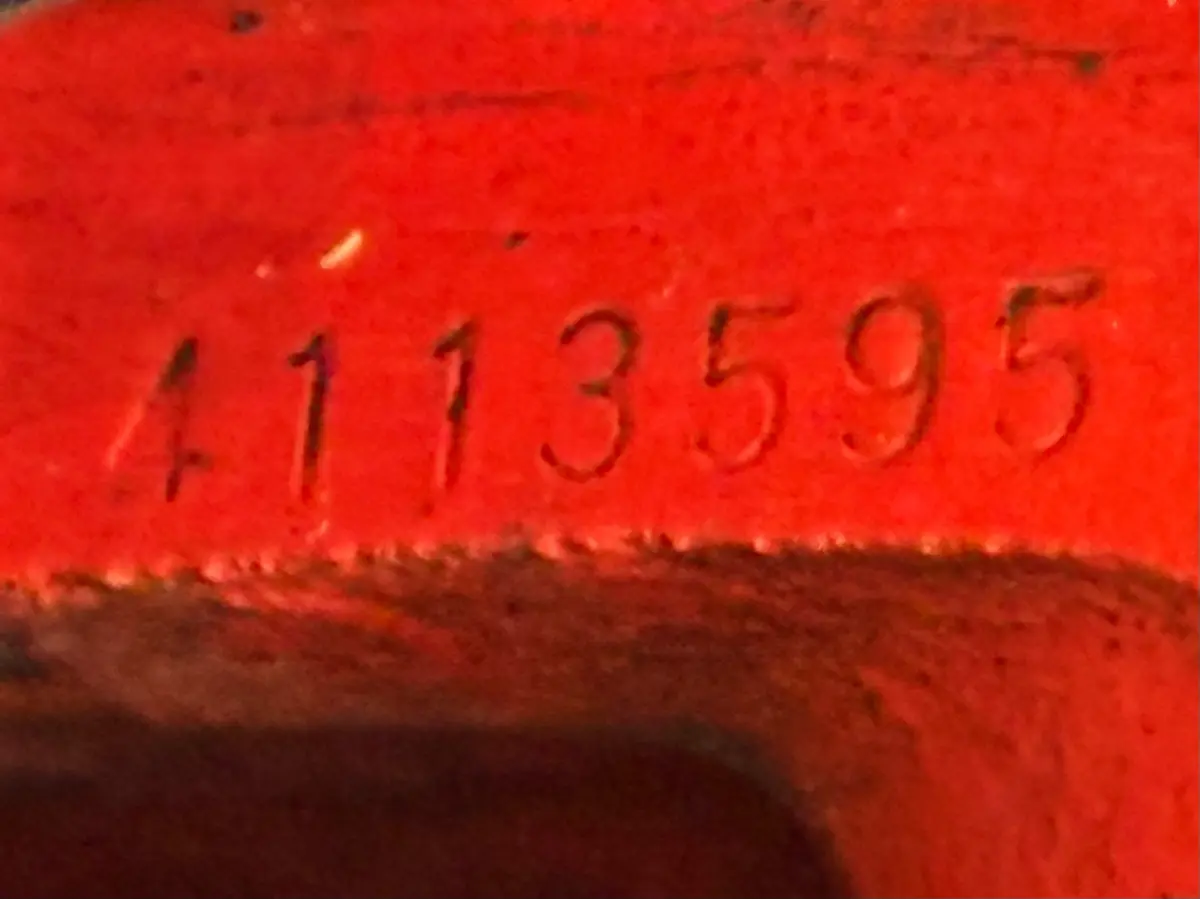
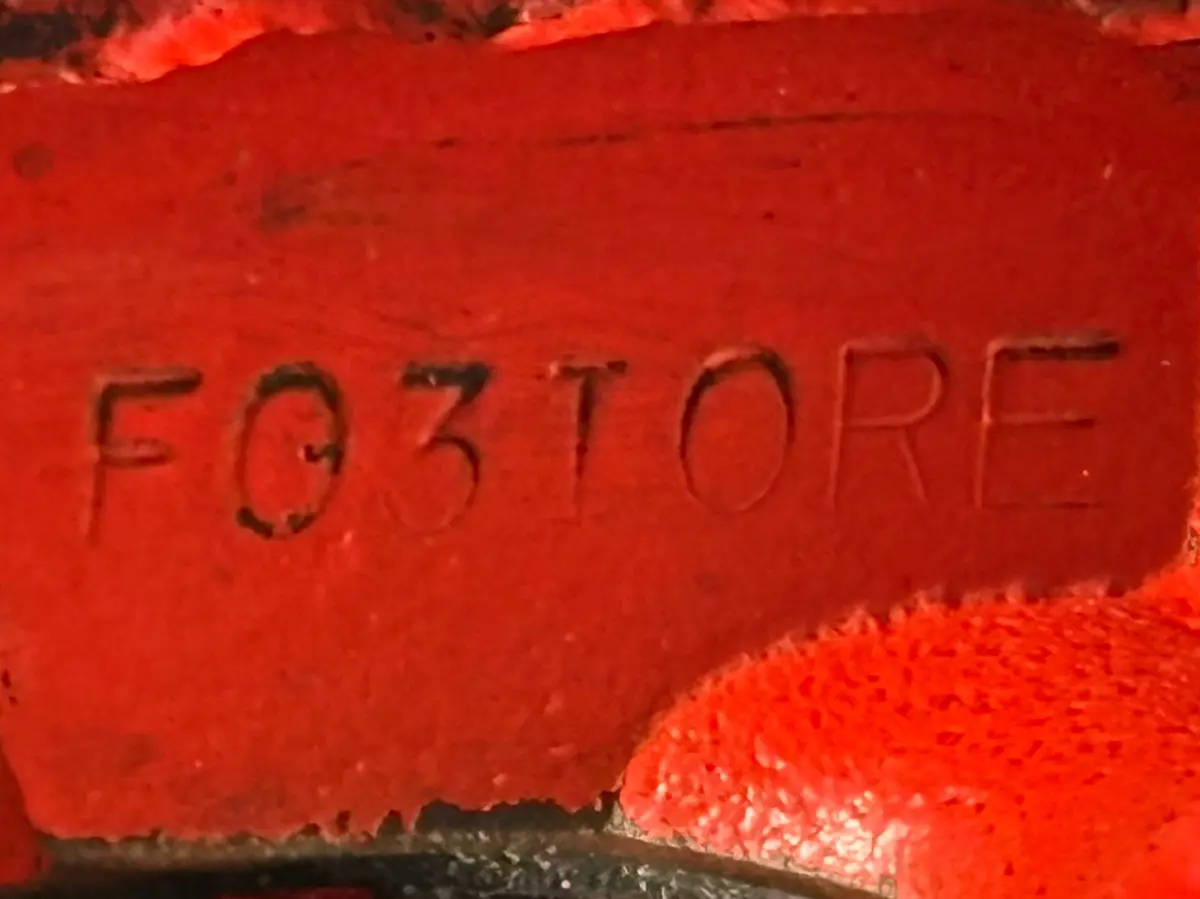
Total 1964 Corvette production came to 22,229 units. Of those, 13,925 were convertibles. This particular 1964 Chevrolet Corvette Sting Ray left the St. Louis assembly plant as a high-optioned, performance-focused convertible, and it has survived six decades in a condition that earned it Bloomington Gold recognition — one of the most respected authenticity certifications in the Corvette world. Bloomington Gold evaluators examine cars for correctness of parts, finishes, stampings, and date codes. Earning that recognition with the original drivetrain intact is a meaningful accomplishment, and it directly affects the car's long-term collectibility.
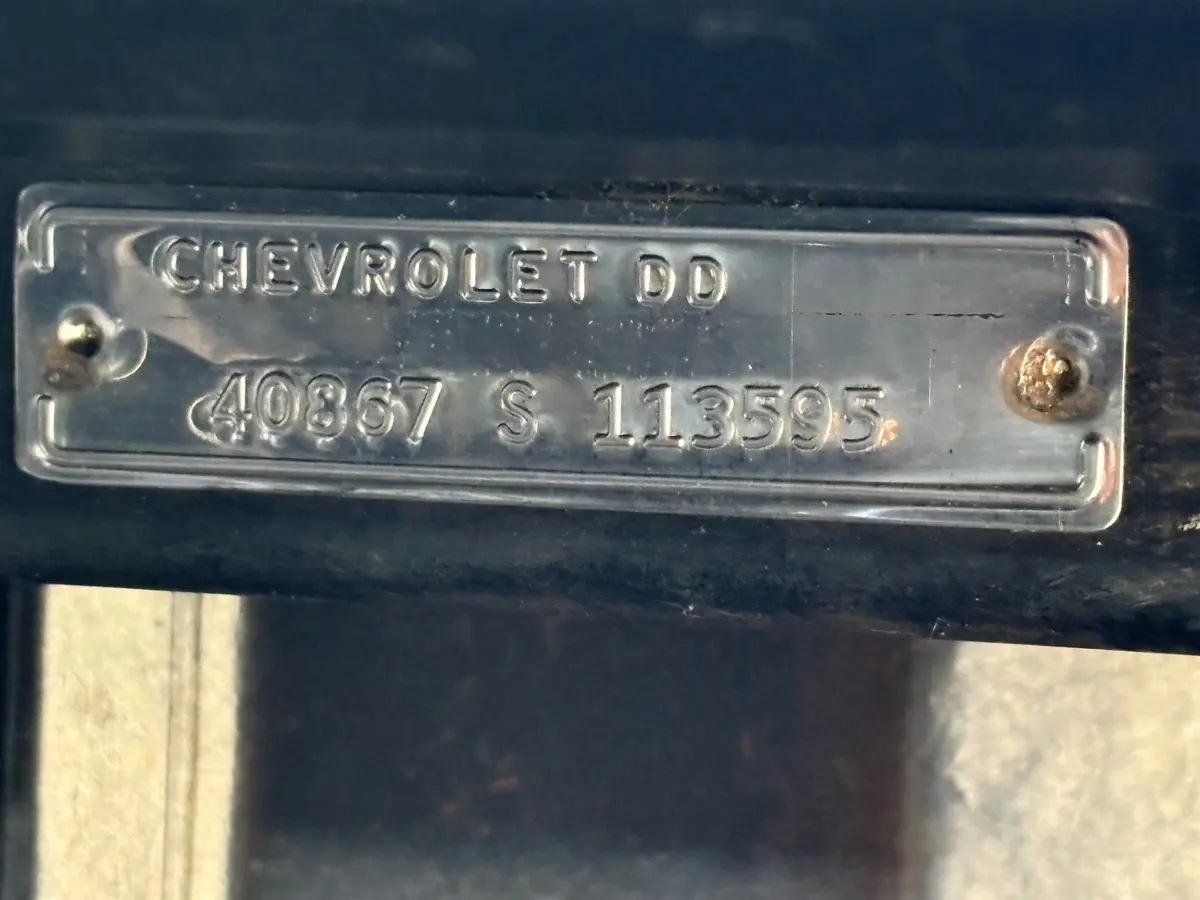
The VIN on this car decodes to confirm it is a 1964 Corvette convertible built at St. Louis, with a 327 cubic inch engine and a 4-speed manual transmission — all of which align with the documented, matching-numbers drivetrain present in the car today.
Features List
- 327ci L76 Small Block V8, 365 horsepower
- Matching numbers engine, transmission, and drivetrain
- Bloomington Gold Survivor certification
- Hurst-shifted 4-speed Muncie close-ratio manual transmission
- 4.56:1 rear axle ratio
- Off-road exhaust headers
- Dual exhaust with side exhaust outlets
- Factory knock-off wire wheels
- Whitewall tires
- Independent rear suspension
- Four-wheel drum brakes
- Black folding soft top
- Black vinyl bucket seats
- Wood-rimmed steering wheel
- Full gauge cluster with tachometer
- Dashboard clock
- AM/FM Delco radio
- Center console with Hurst shifter
- Outside driver mirror
- Seat belts
- Corvette Sting Ray badge
- Fiberglass body
Mechanical
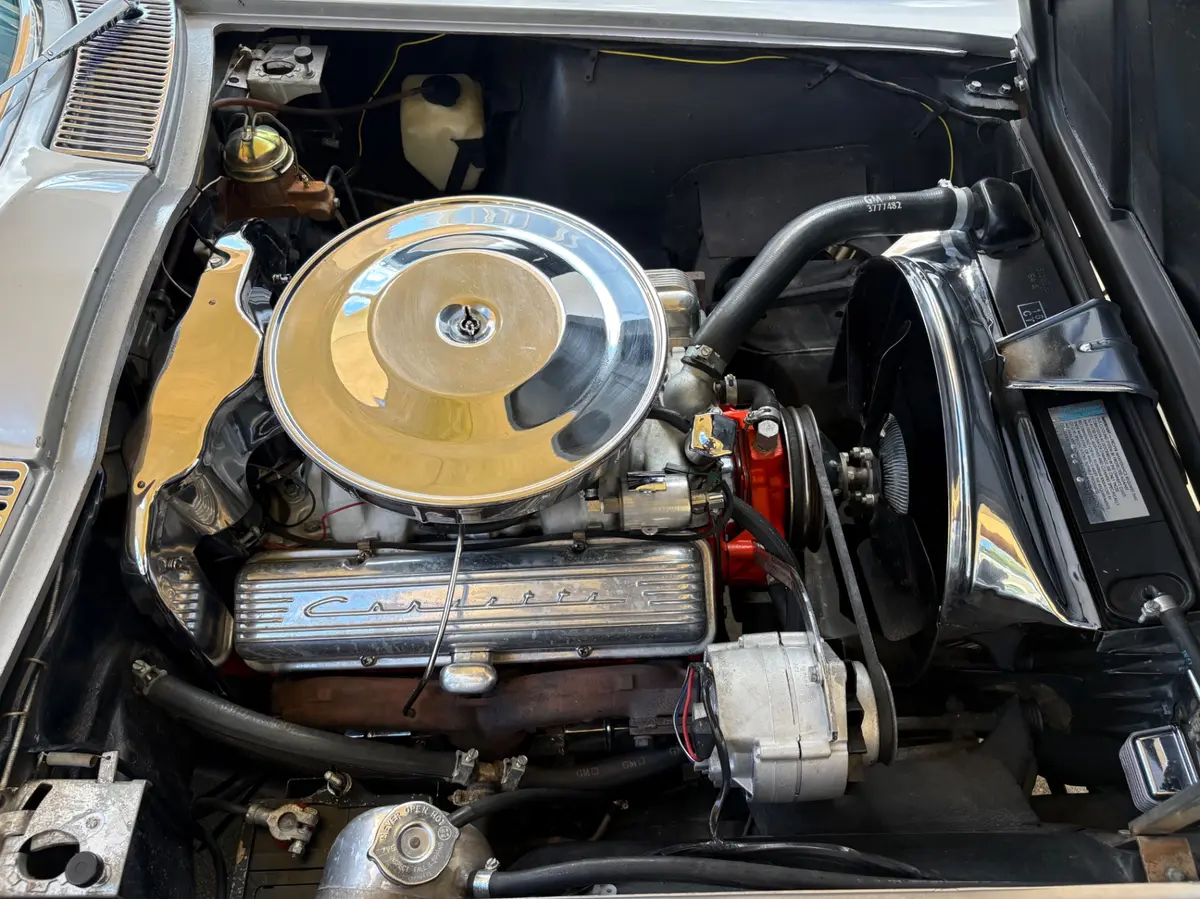
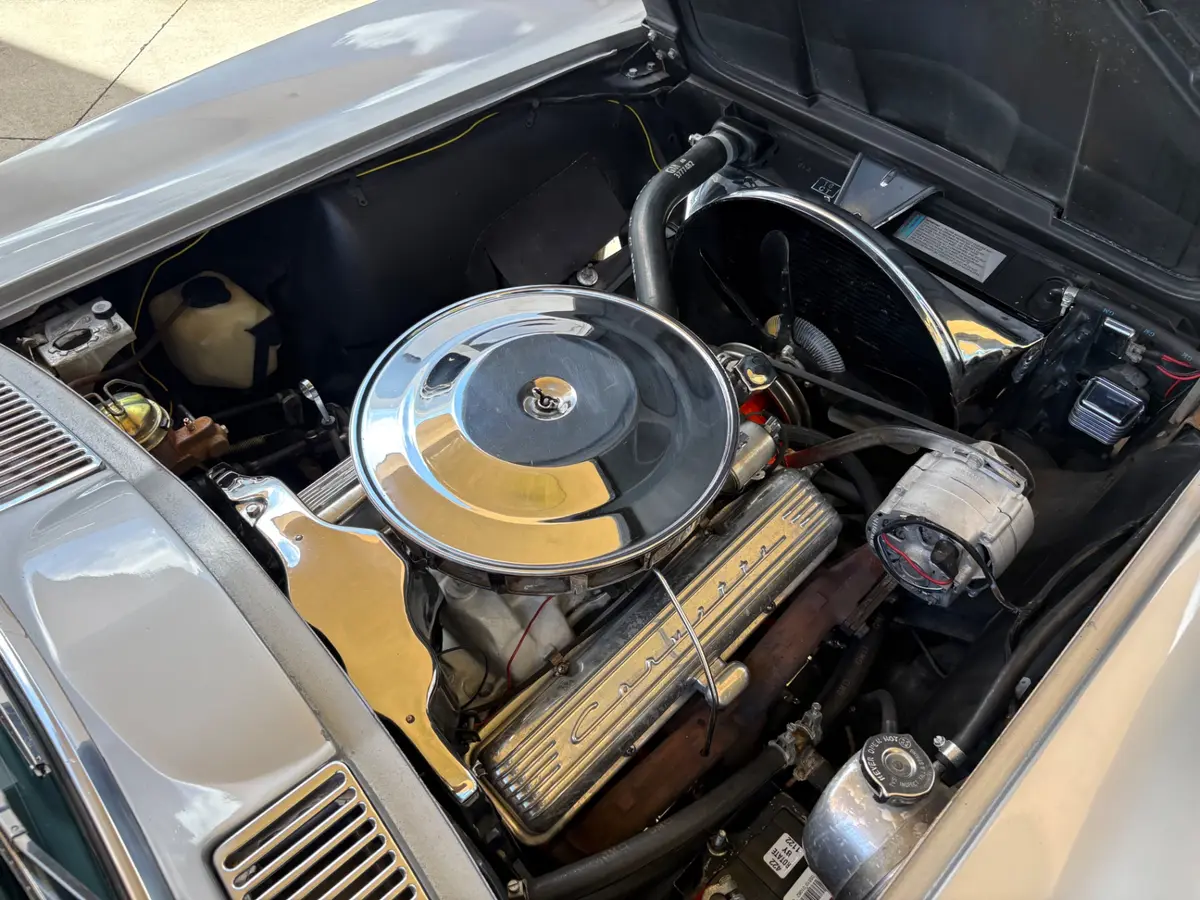
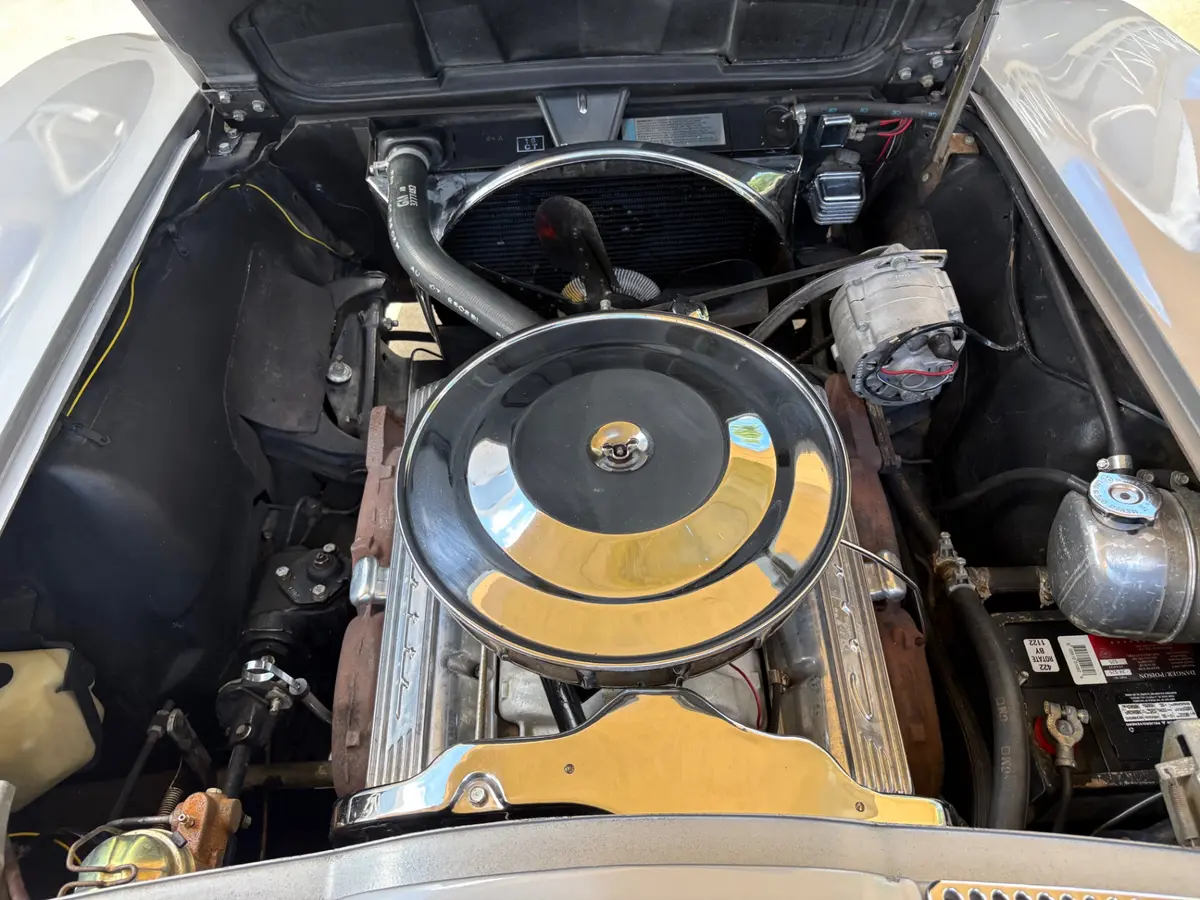
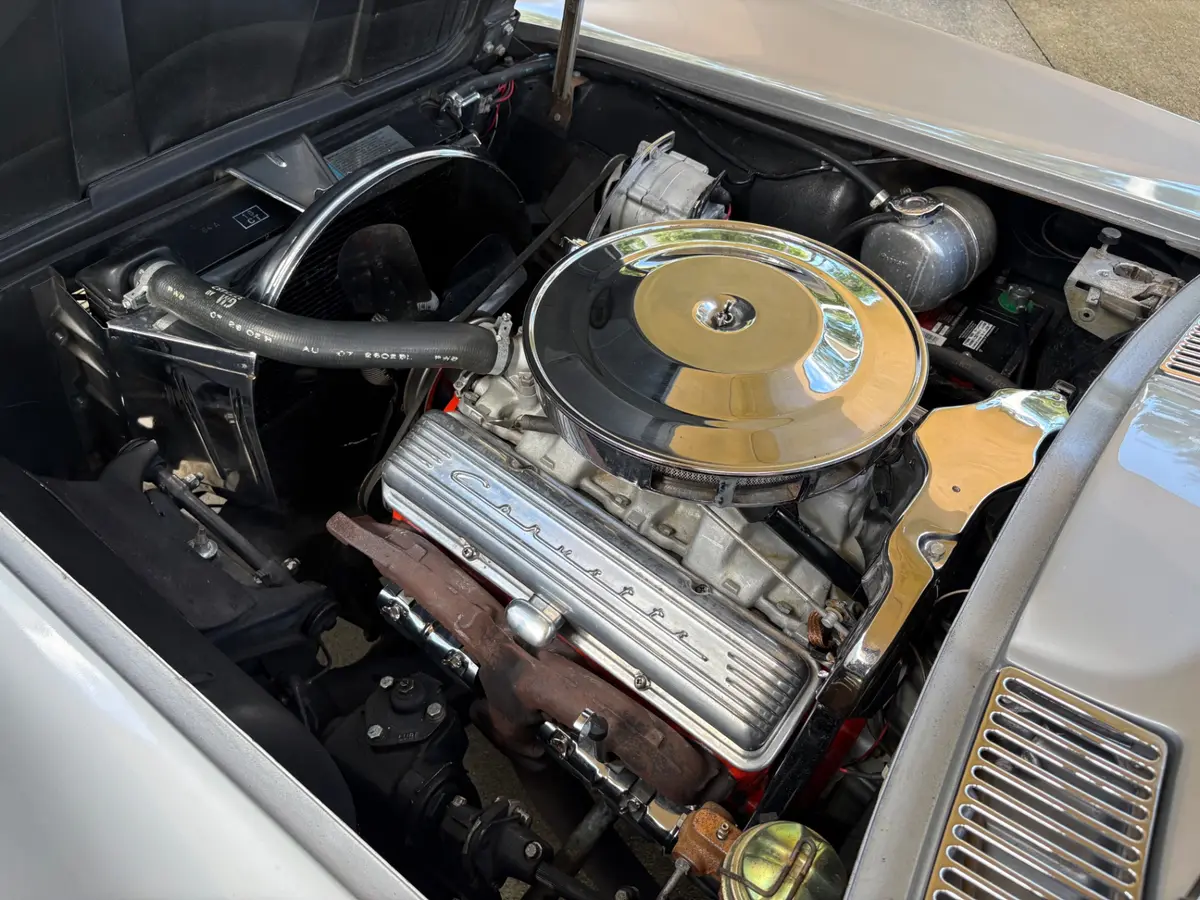
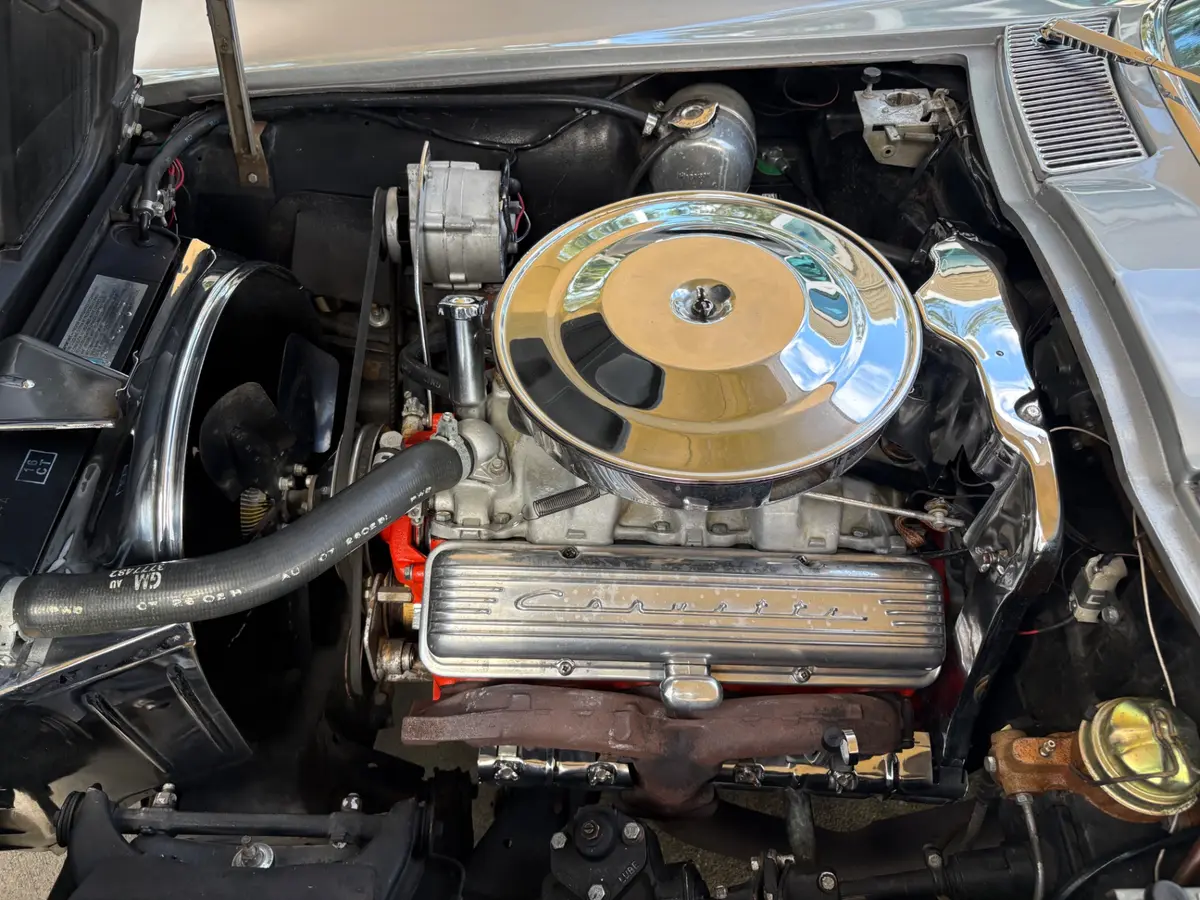
The engine in this 1964 Chevrolet Corvette Sting Ray is the L76 — the 327 cubic inch small block rated at 365 horsepower. In 1964, the 327 was available in four states of tune: 250, 300, 365, and 375 horsepower. The L76 was the second-highest output carbureted option, sitting just below the fuel-injected L84 Fuelie. It used solid lifters, a higher compression ratio of 11.25:1, a larger carburetor, and more aggressive camshaft timing than the milder 327 variants. The result is an engine that runs with authority throughout its rev range and pulls hard well past 5,000 rpm.
Backing the L76 is a Muncie 4-speed close-ratio manual transmission, shifted via a Hurst mechanism — a combination that was widely regarded as the best-feeling manual setup available in an American production car at the time. The Muncie unit, built by GM's Muncie, Indiana transmission plant, was introduced for 1963 specifically for the new Sting Ray and became the transmission of choice for performance-minded Corvette buyers throughout the C2 era.
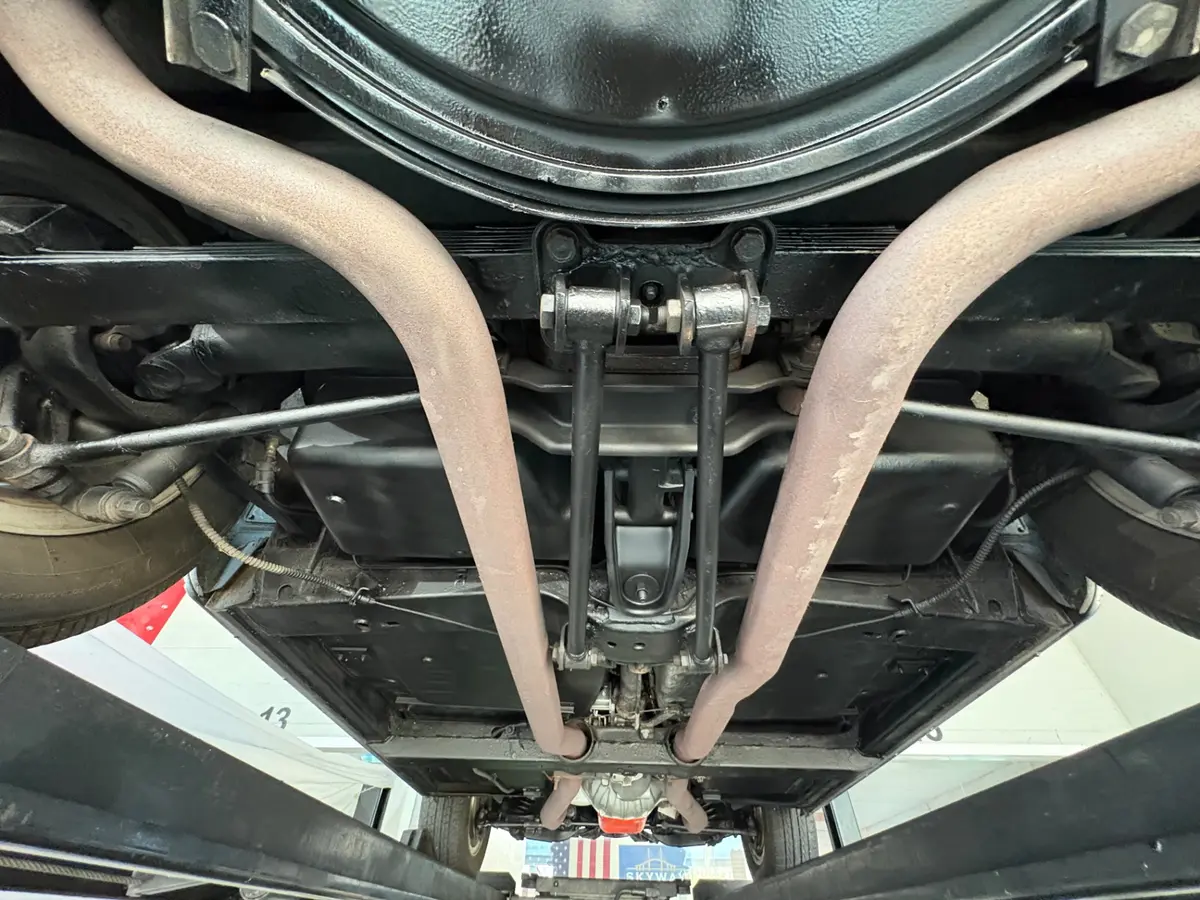
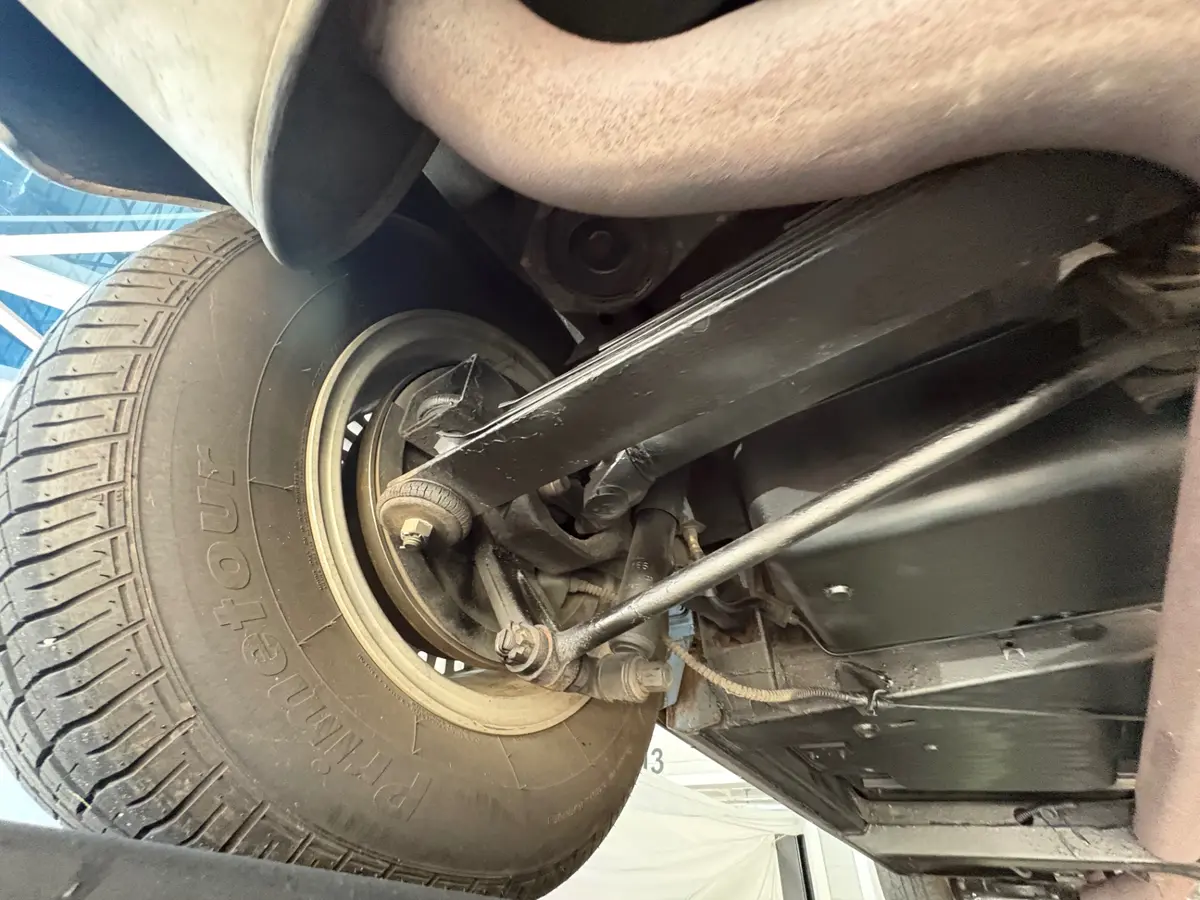
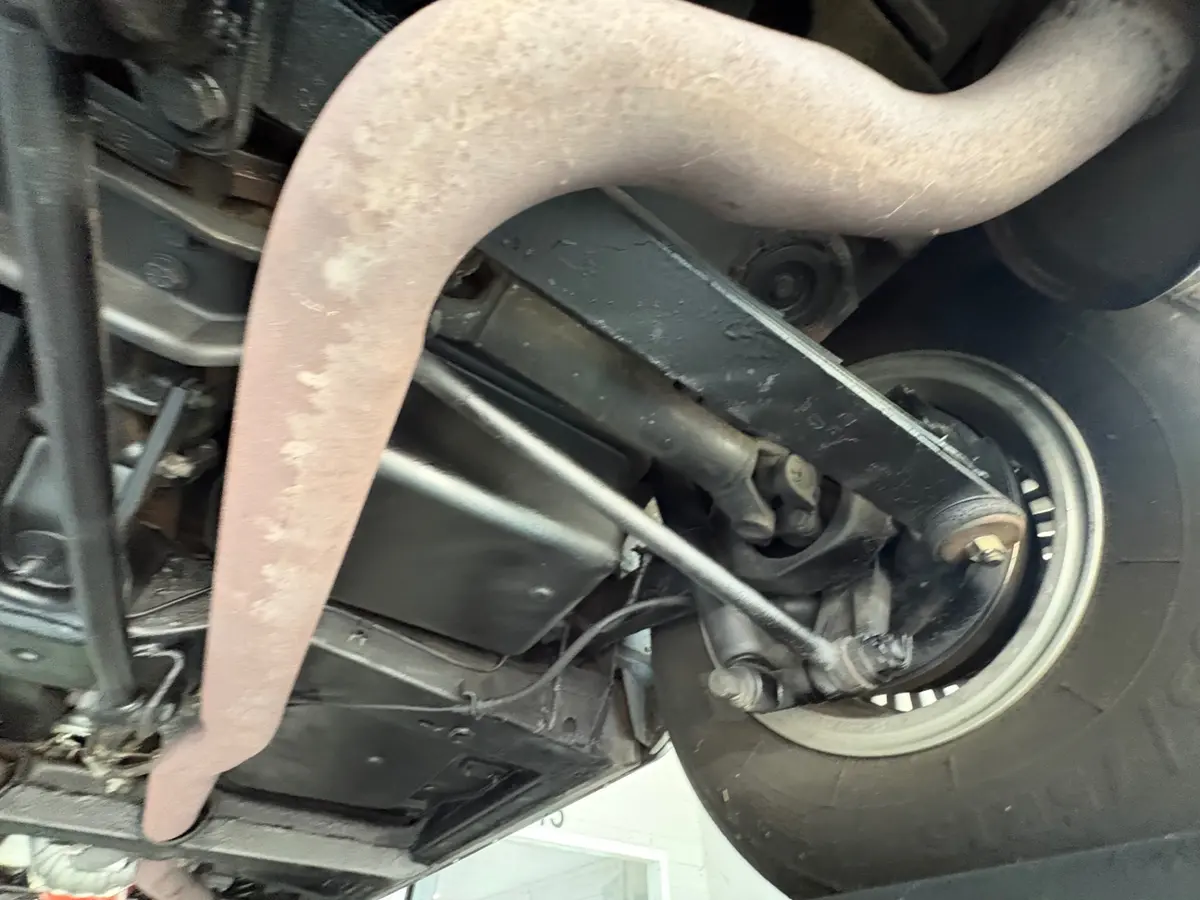
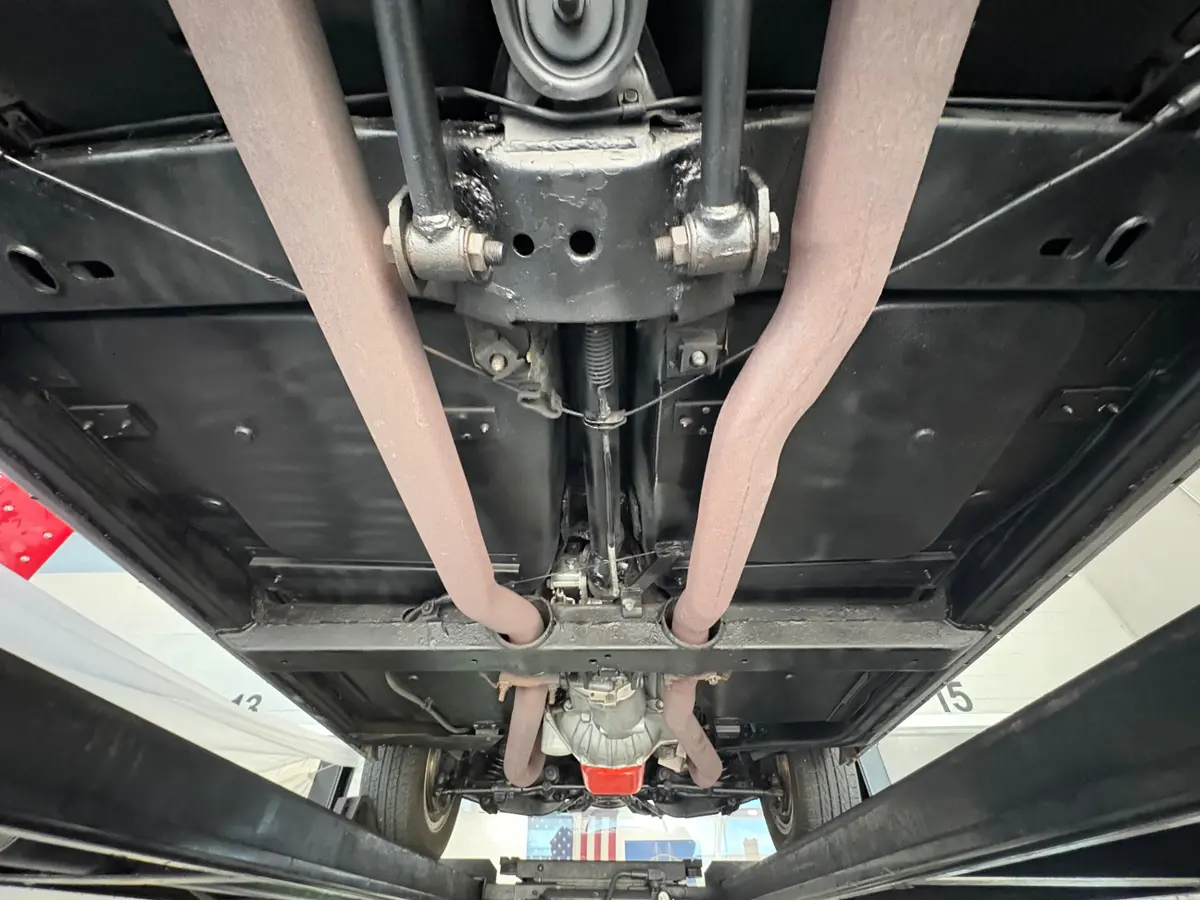
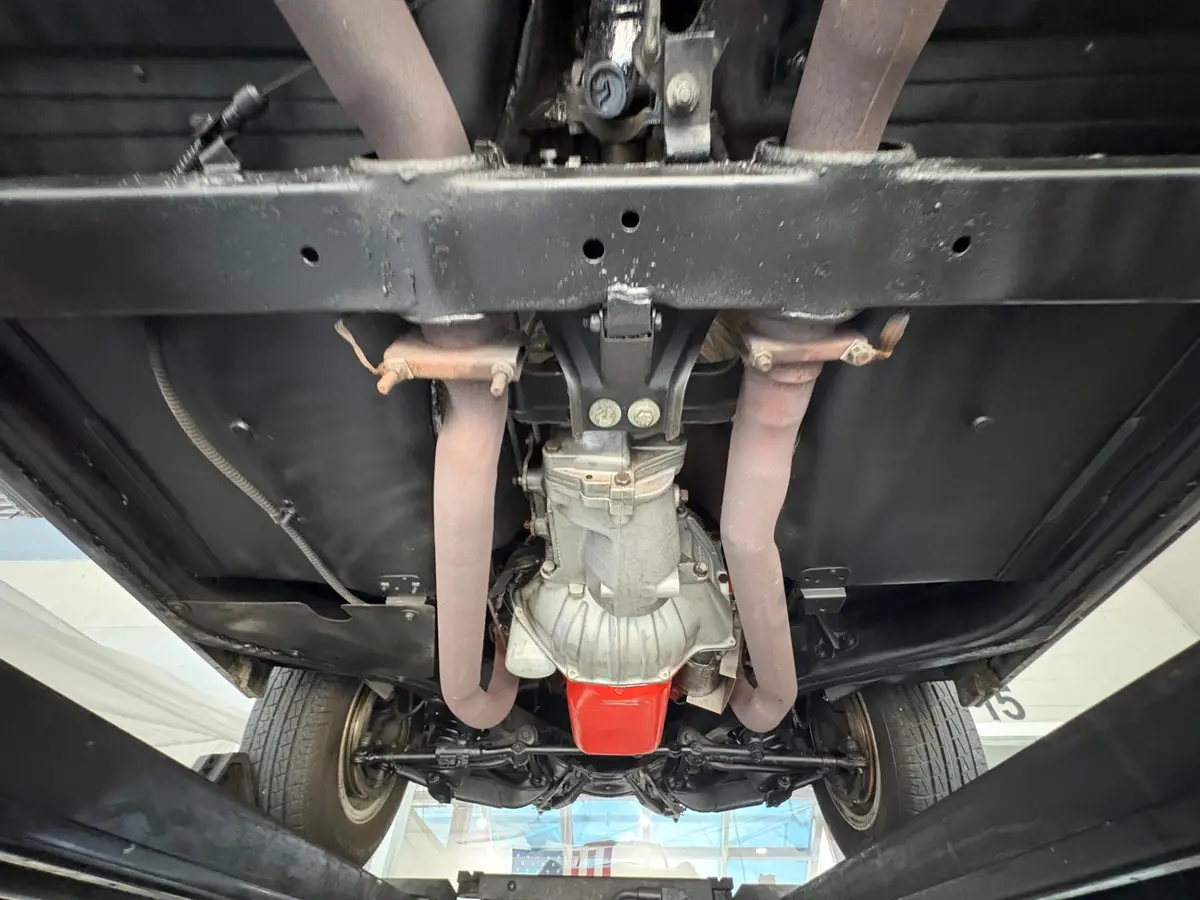
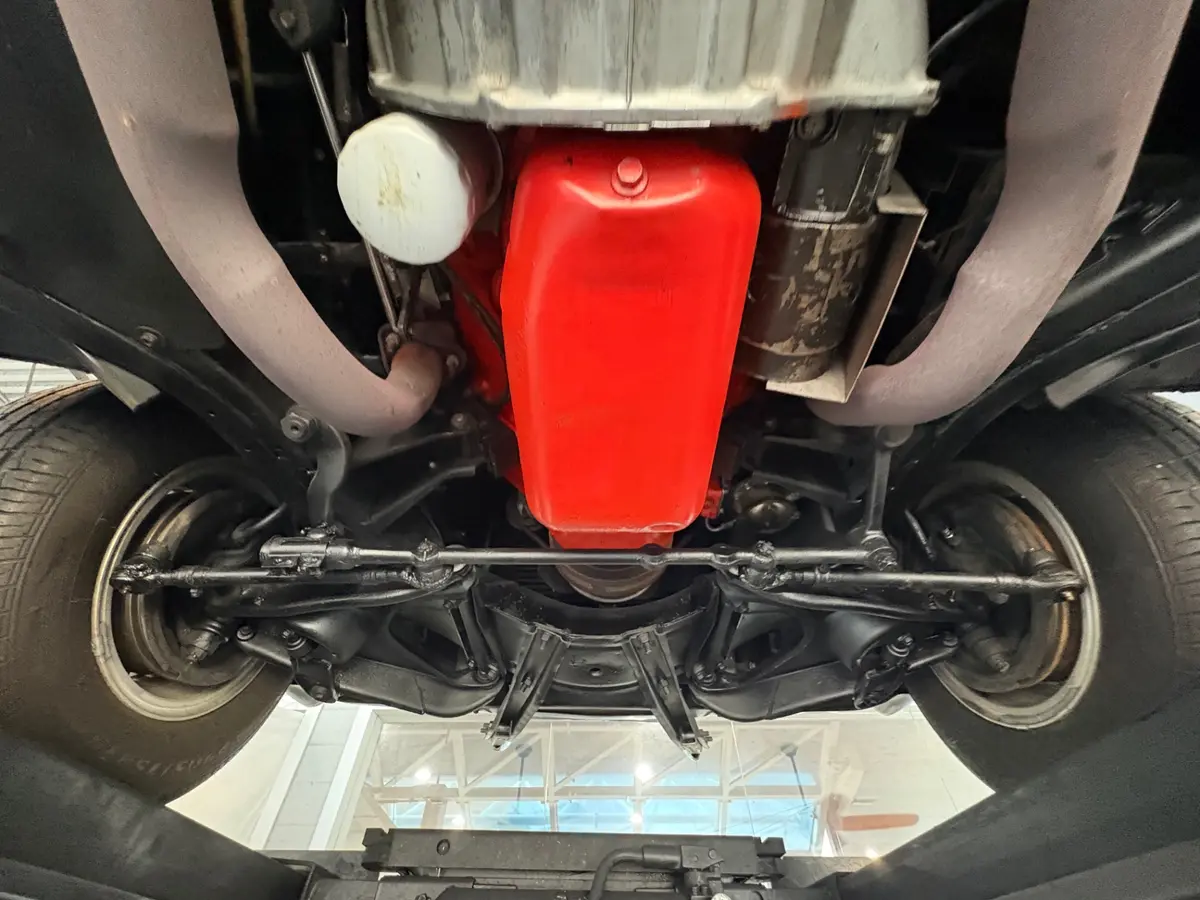
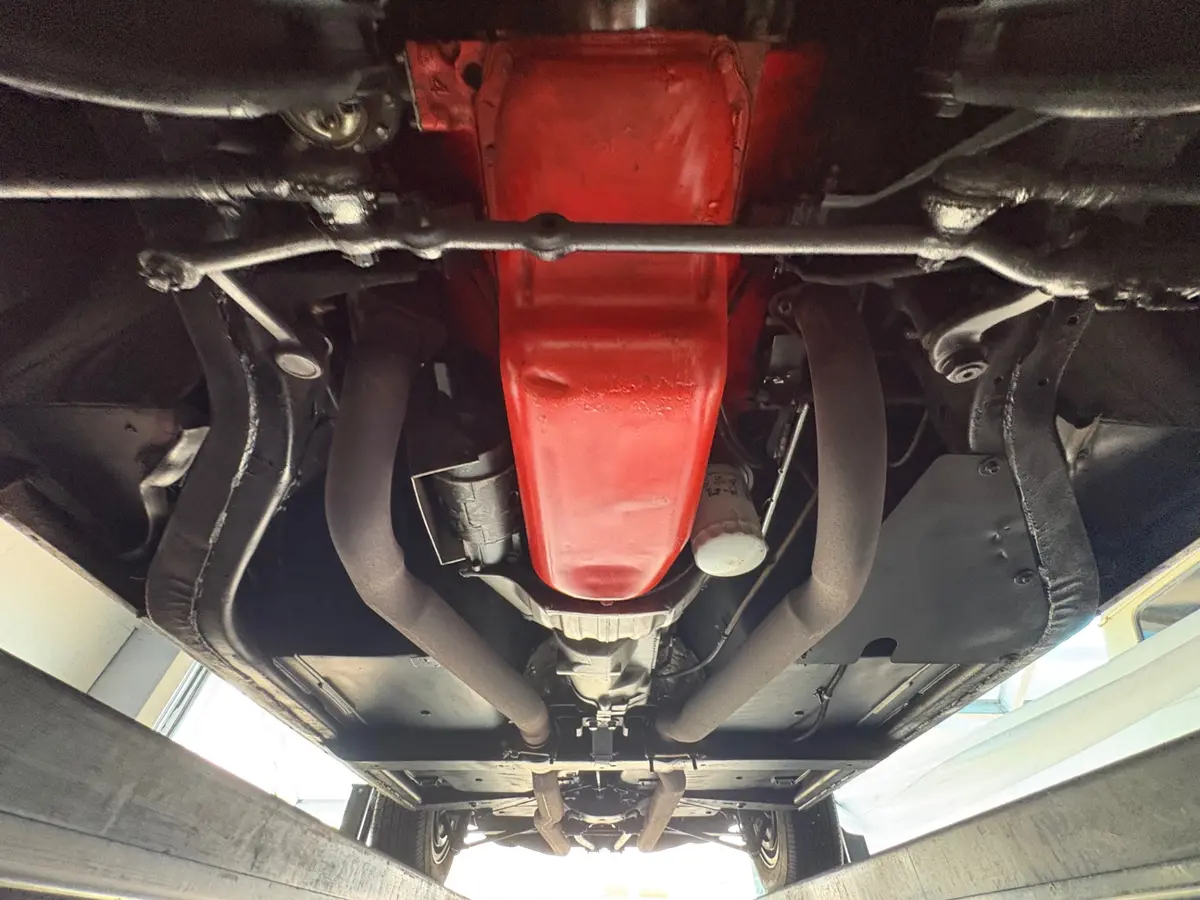
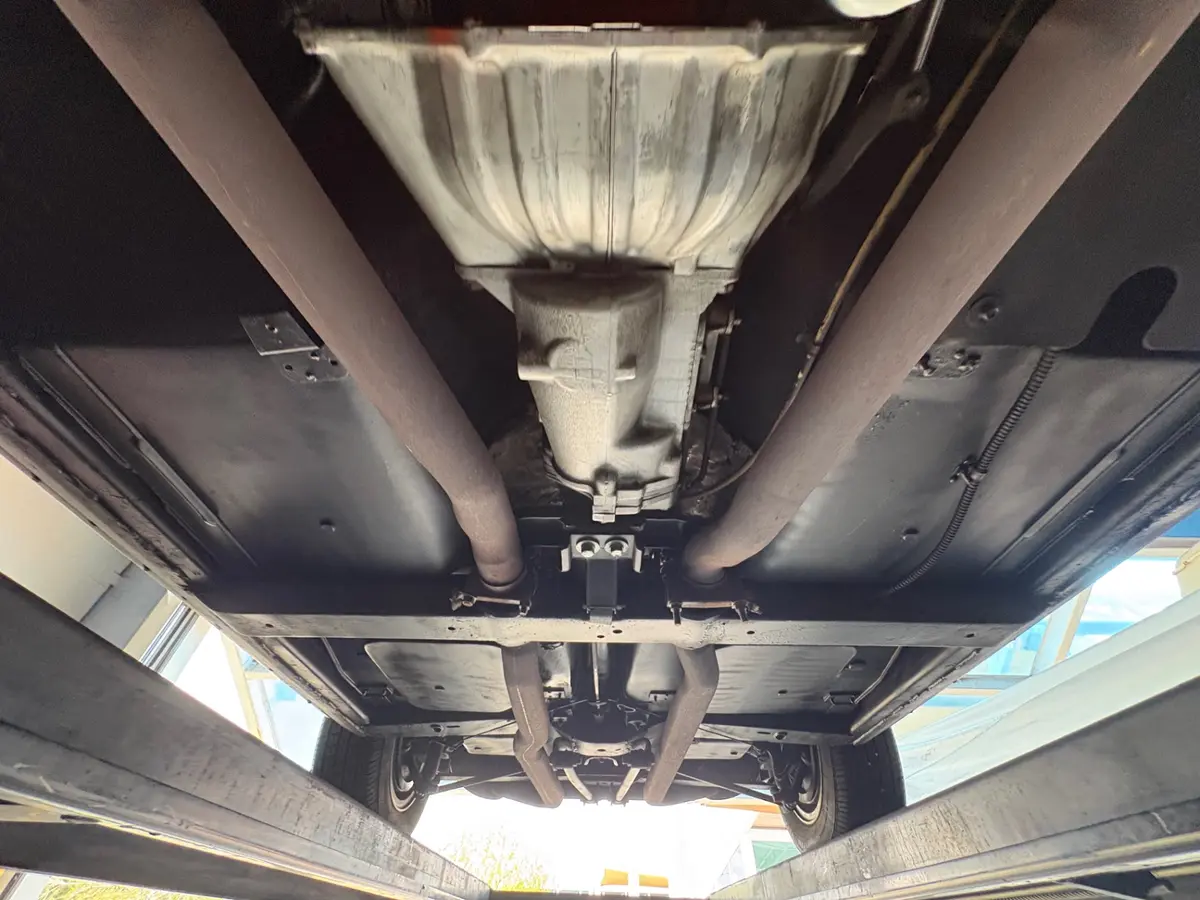
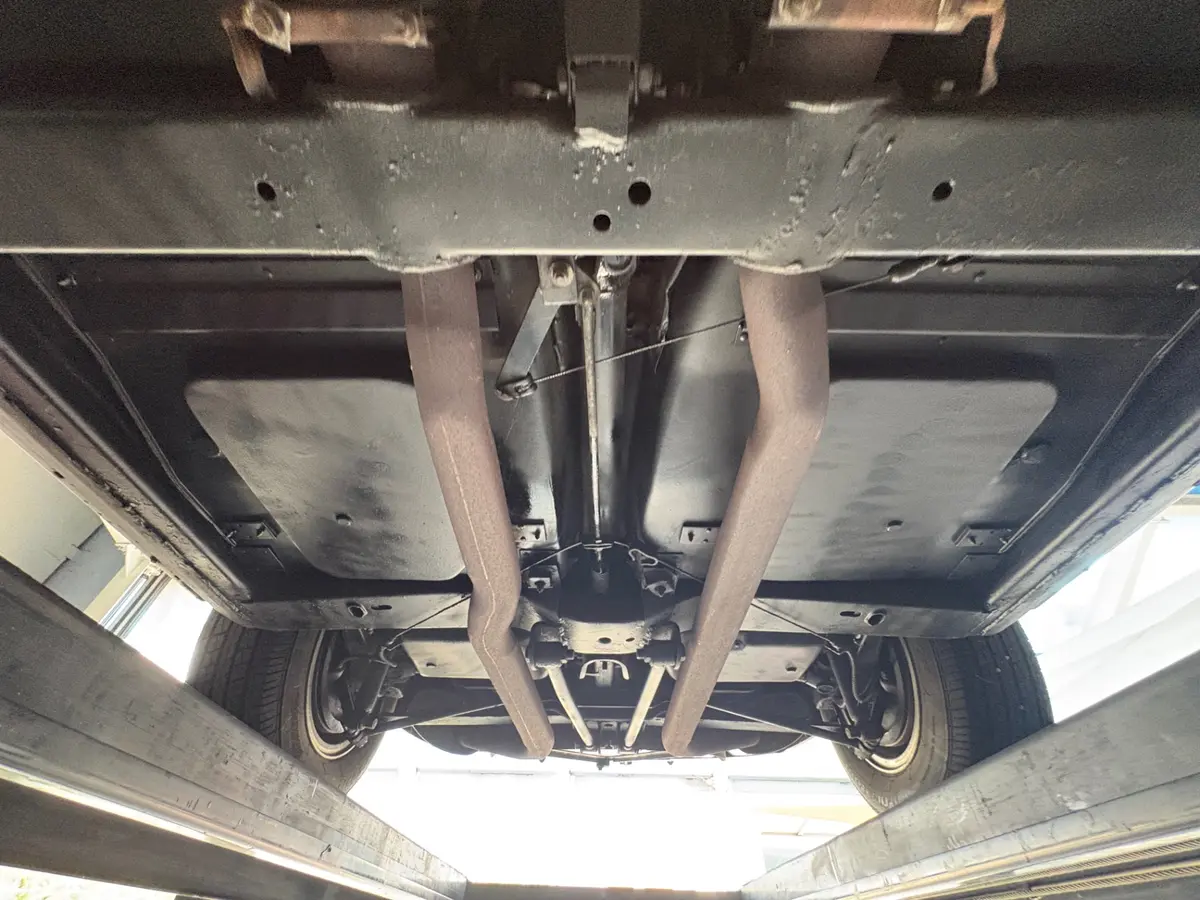
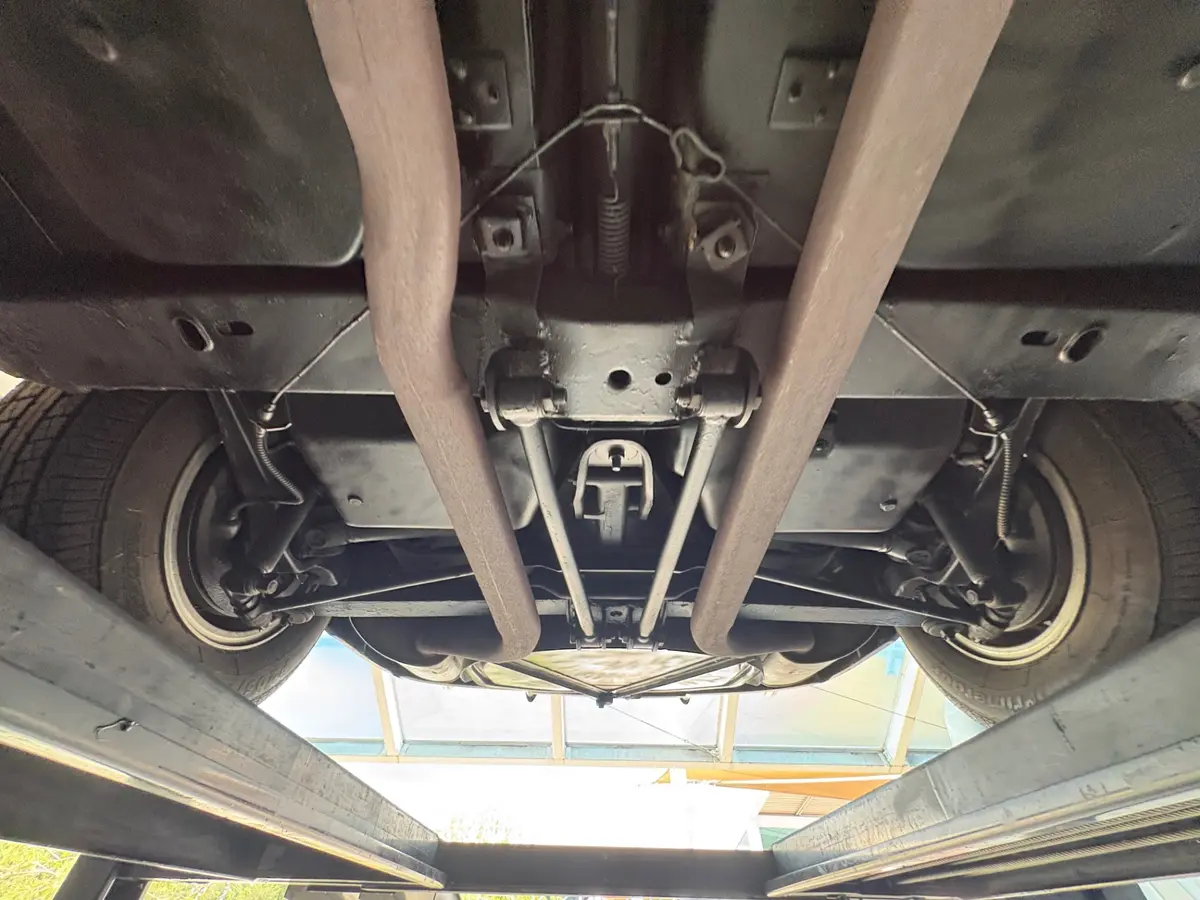
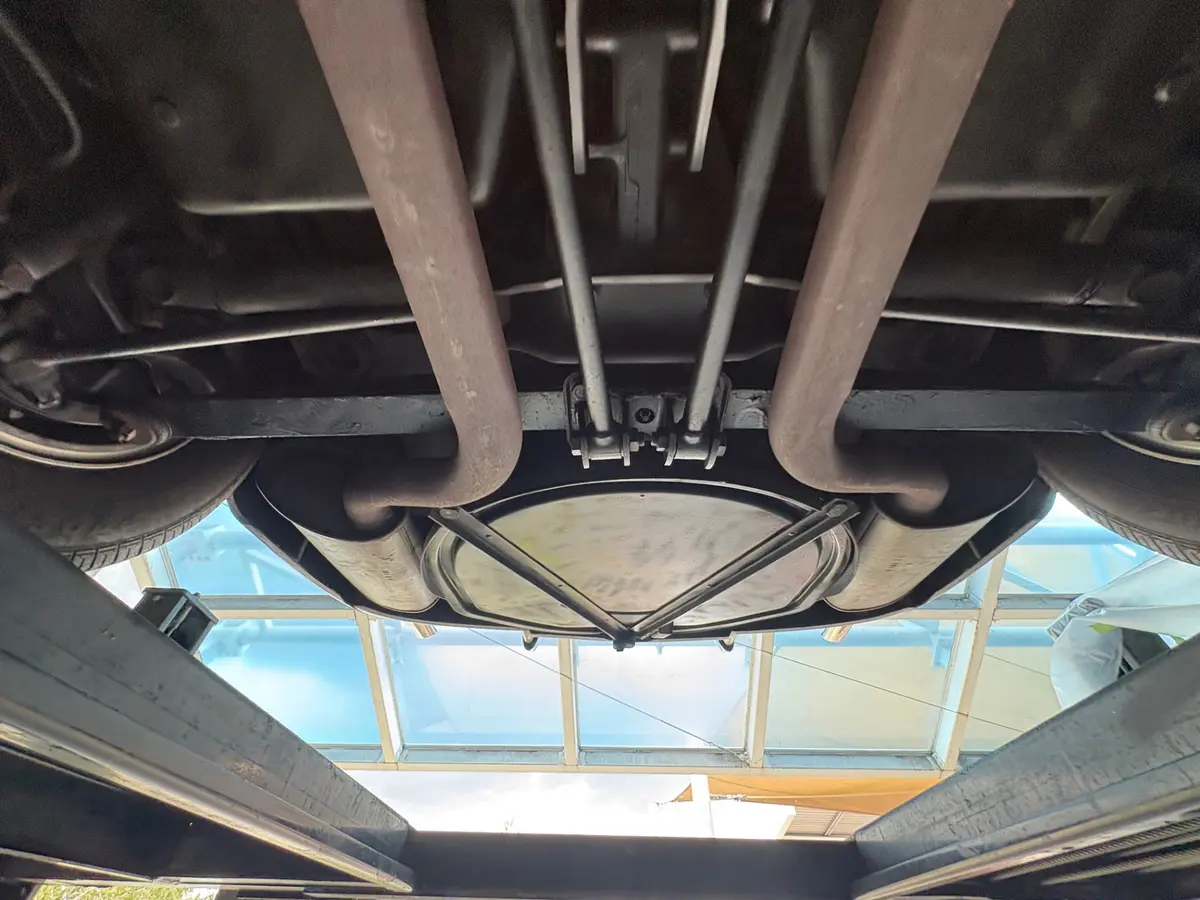
The 4.56:1 rear axle ratio is a numerically steep gear intended for hard acceleration rather than highway cruising. Combined with the off-road exhaust headers and dual exhaust, this car was clearly ordered by someone who intended to drive it seriously. Off-road exhaust headers were a factory option that bypassed the standard exhaust manifolds in favor of freer-flowing cast iron headers that exited through the side exhaust outlets in the rocker panel area — a feature that is both period-correct and sonically distinct from a standard-exhaust 1964 Corvette. The independent rear suspension, introduced with the C2 in 1963, uses a three-link setup with a transverse leaf spring and half-shafts serving as upper control arms — a significant engineering step forward from the solid rear axle that preceded it and one of the reasons the 1963-1967 Corvette handles as well as it does by any measure, period or modern.
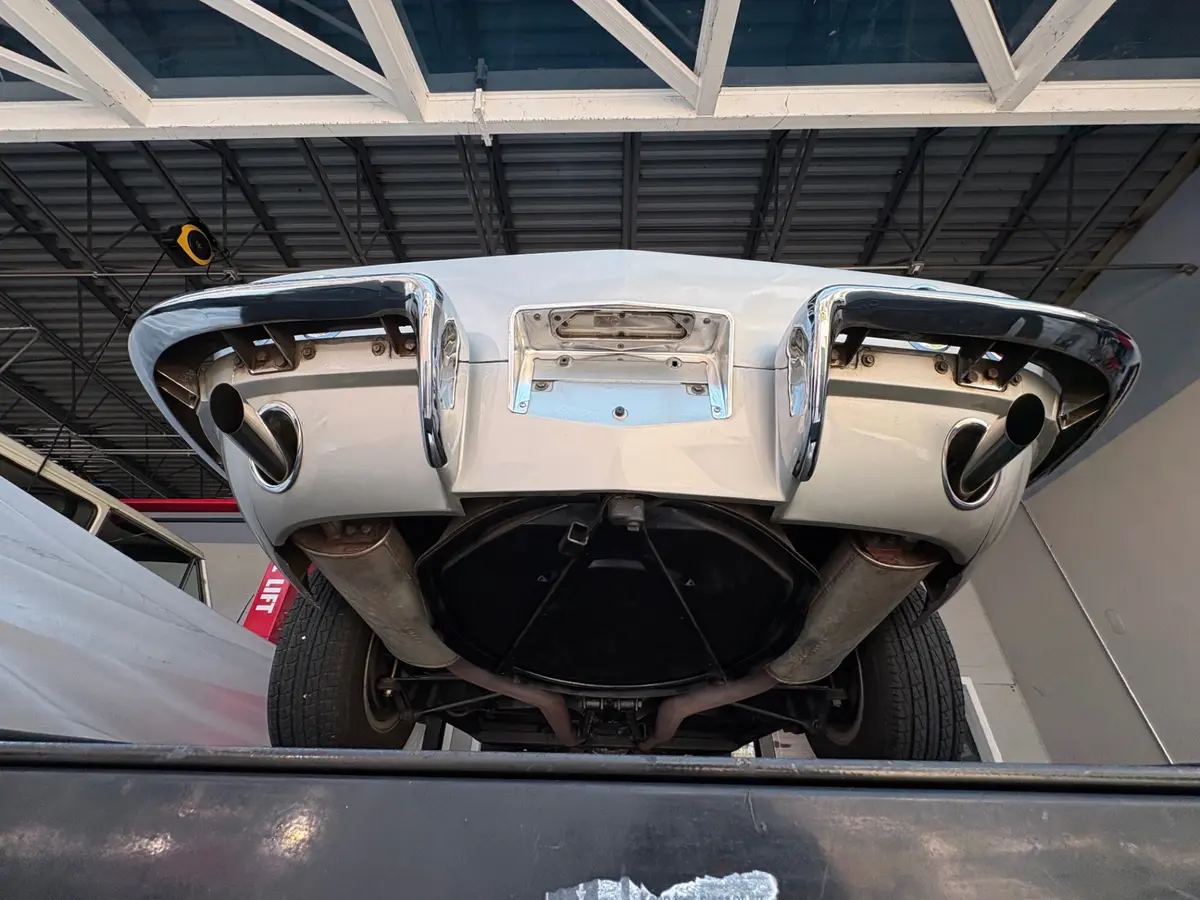
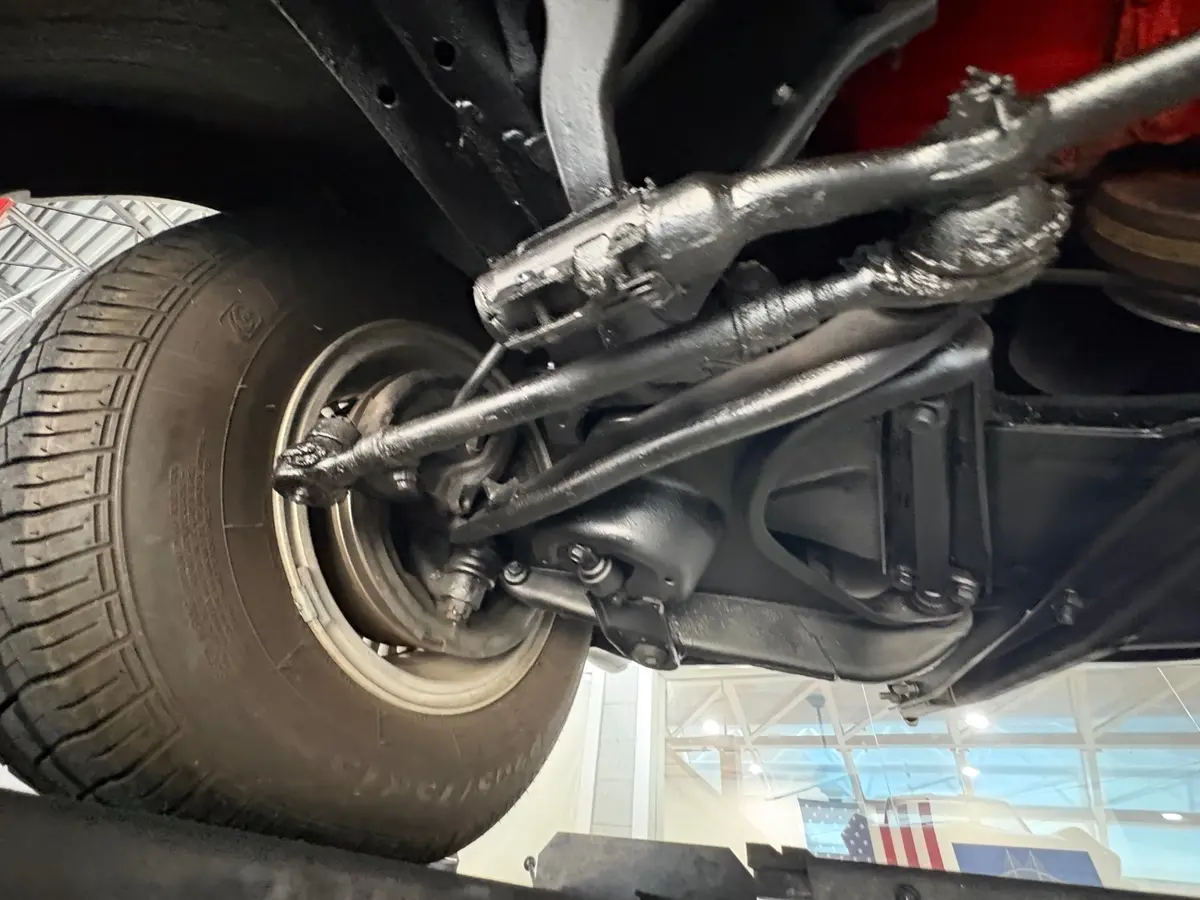
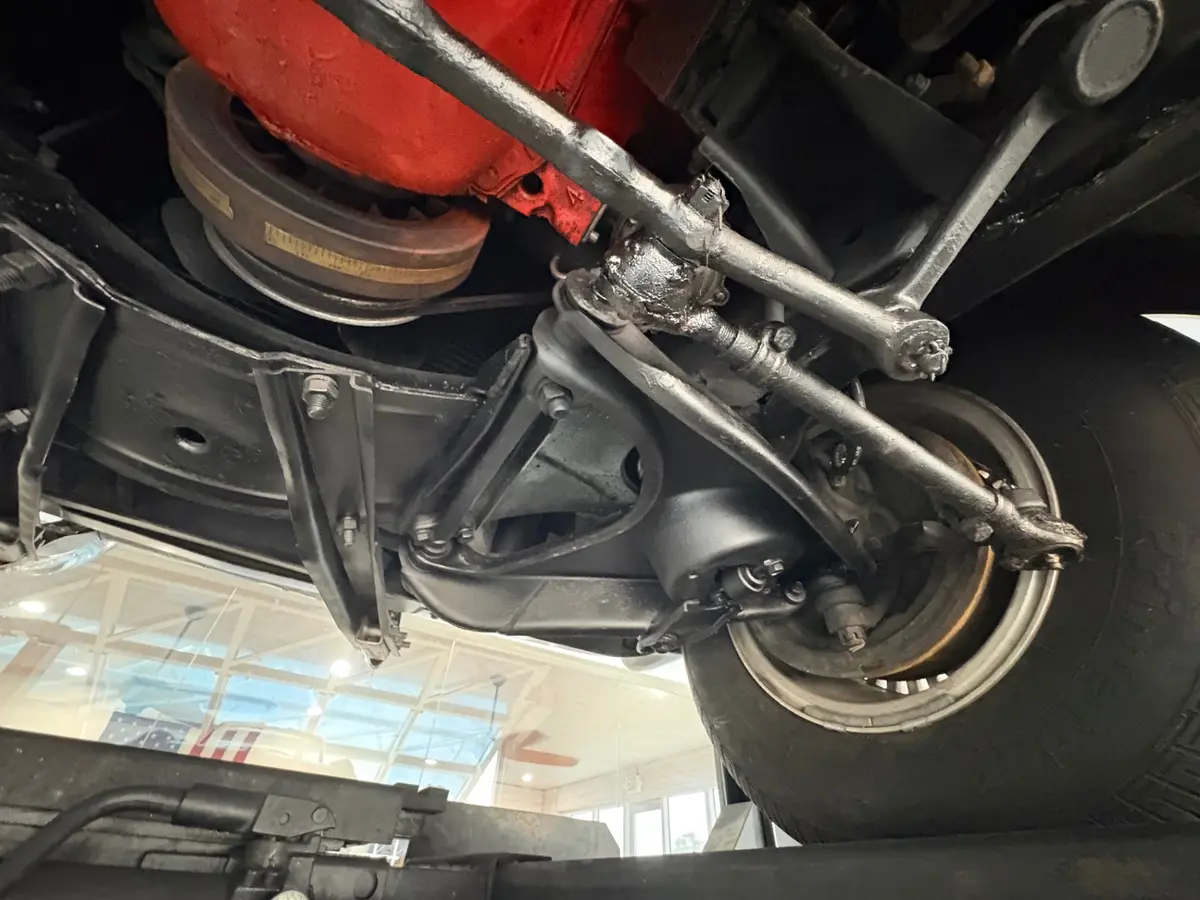
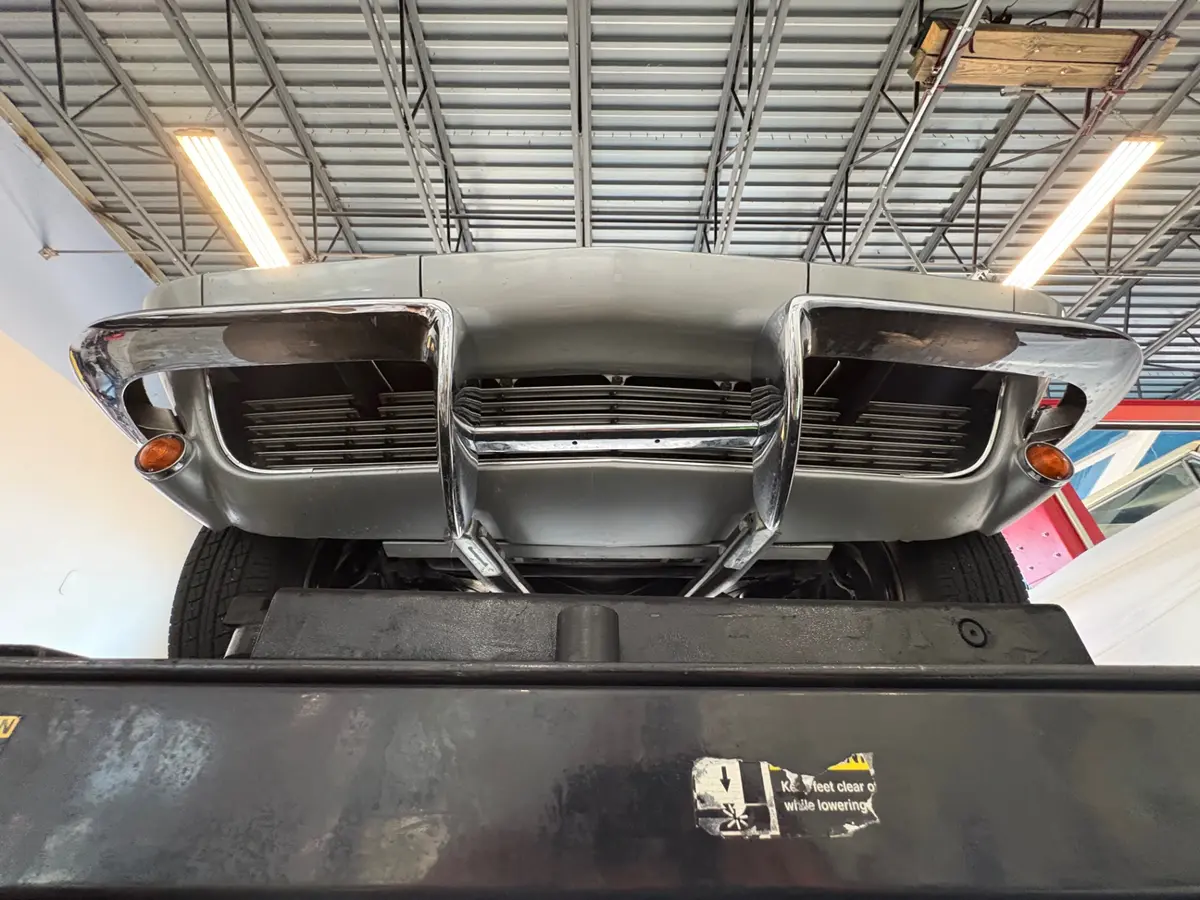
The underside photographs show a solid, well-preserved chassis with no visible evidence of corrosion repair or structural compromise — consistent with a car that has been maintained and stored properly over its life.
Interior
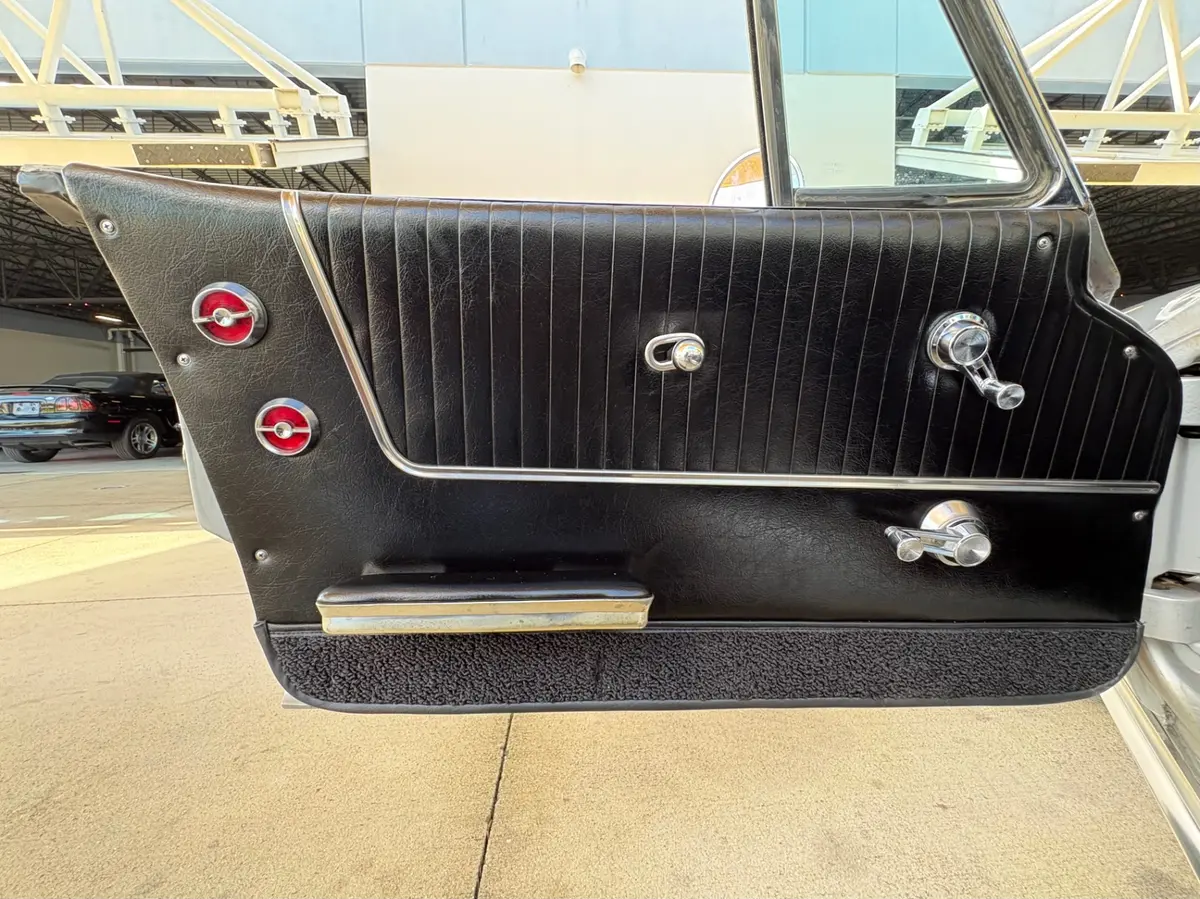
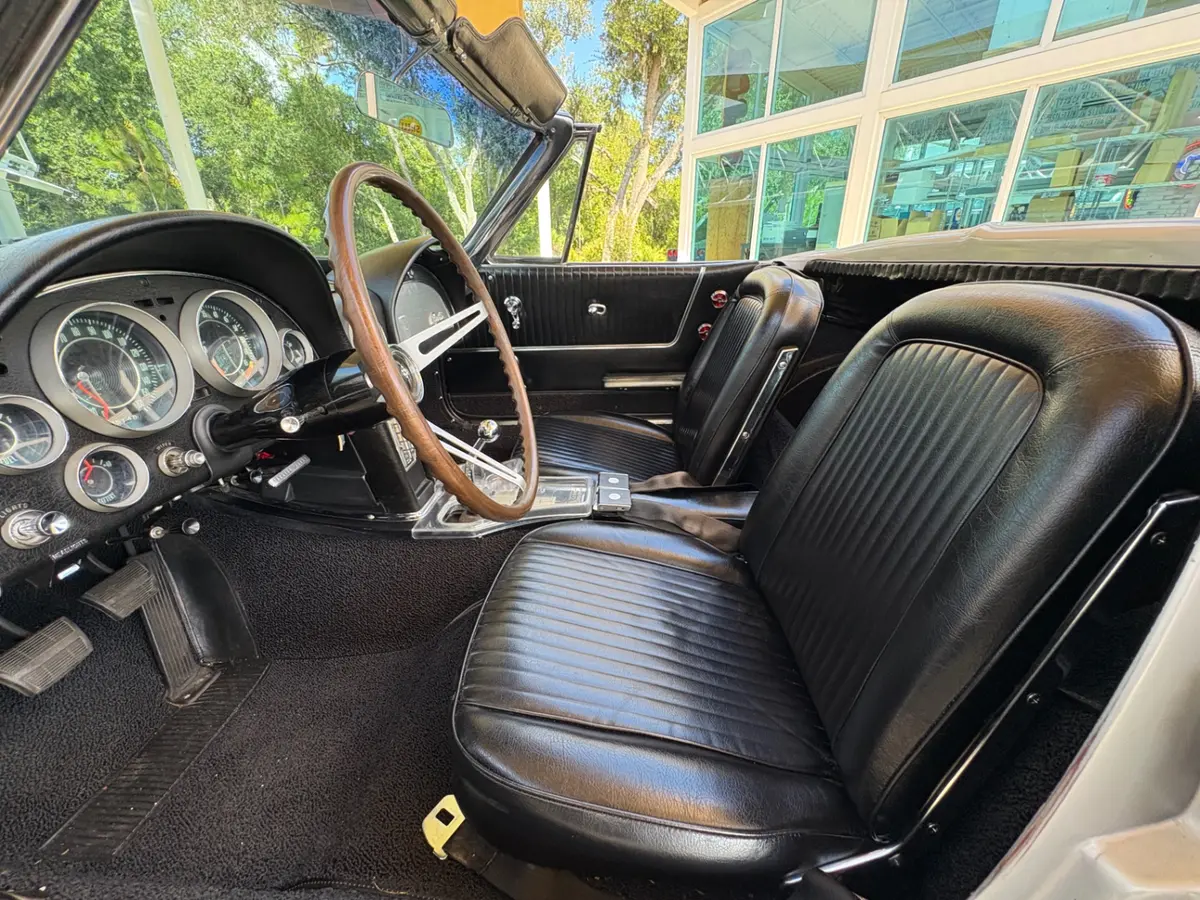
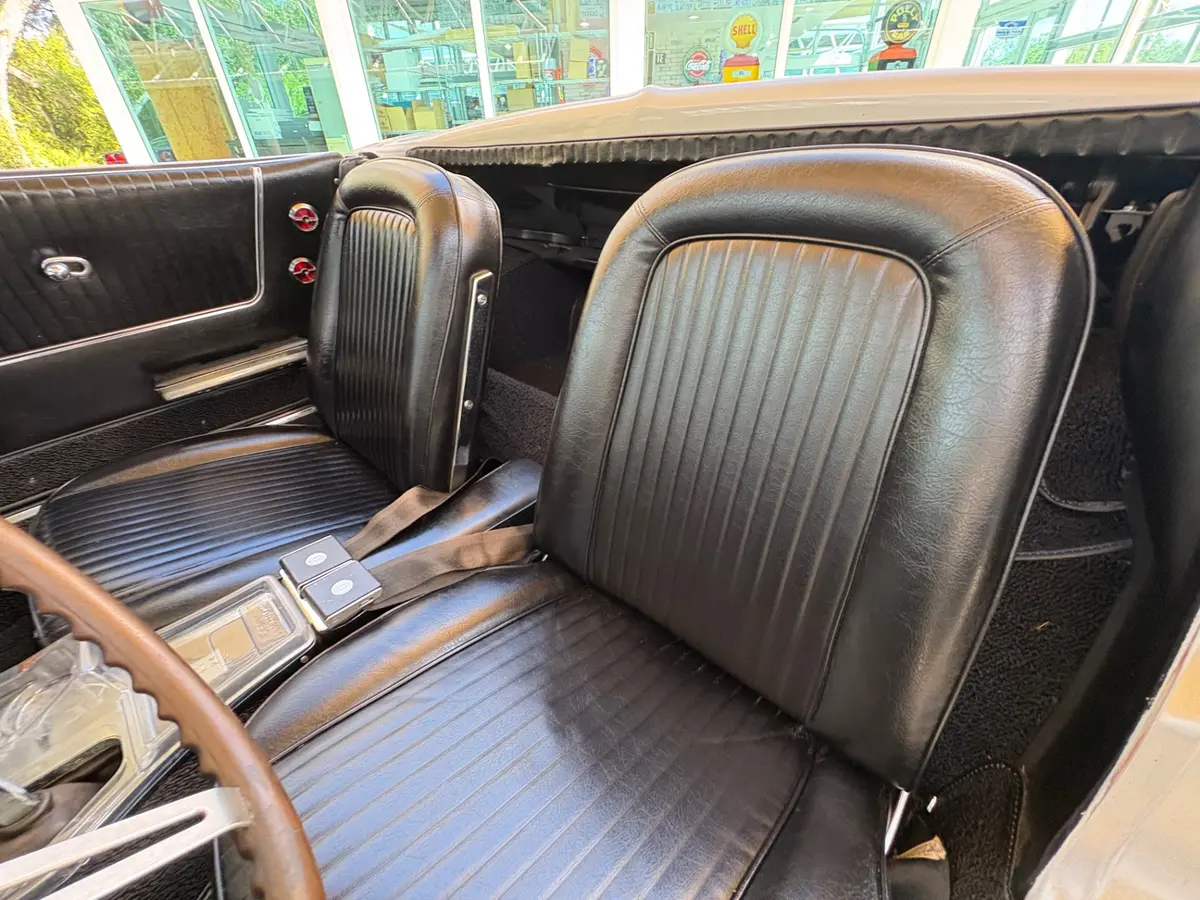
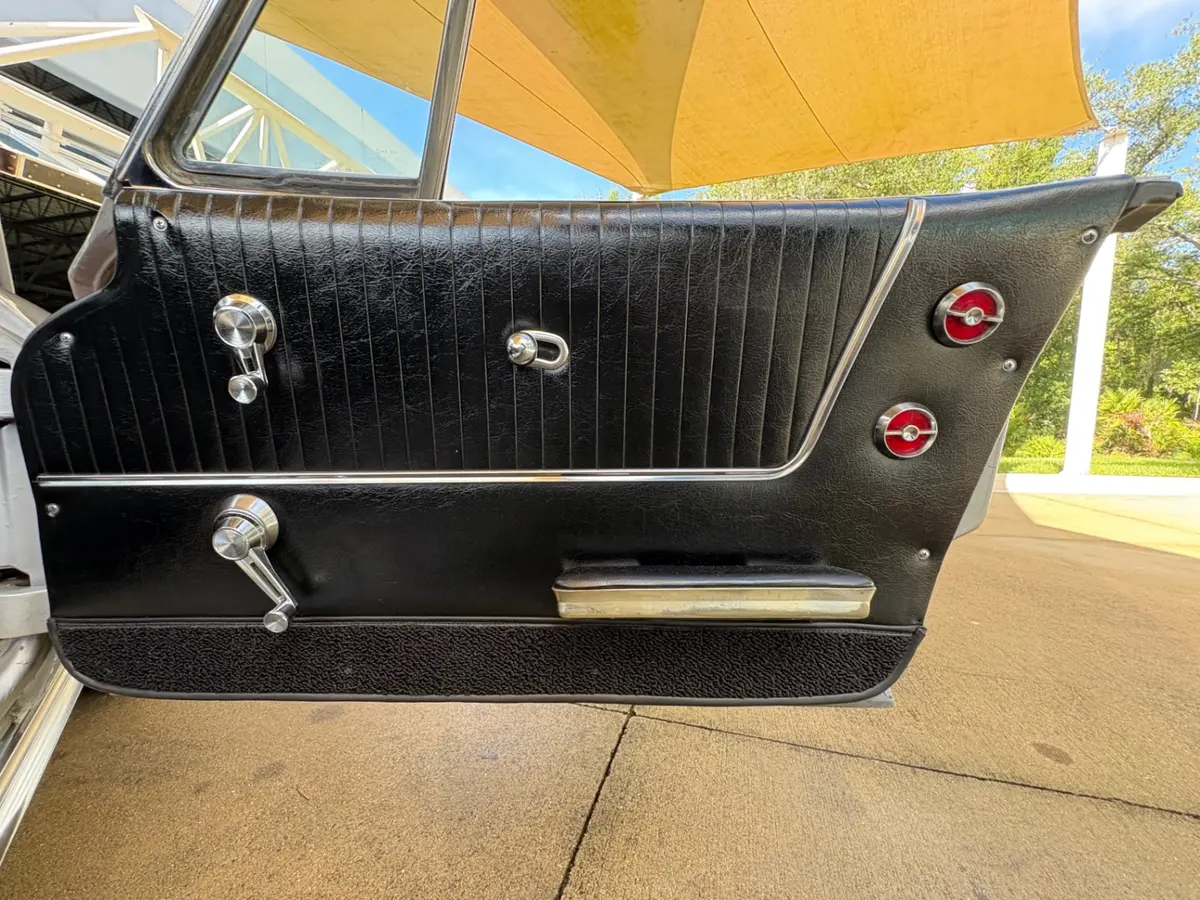
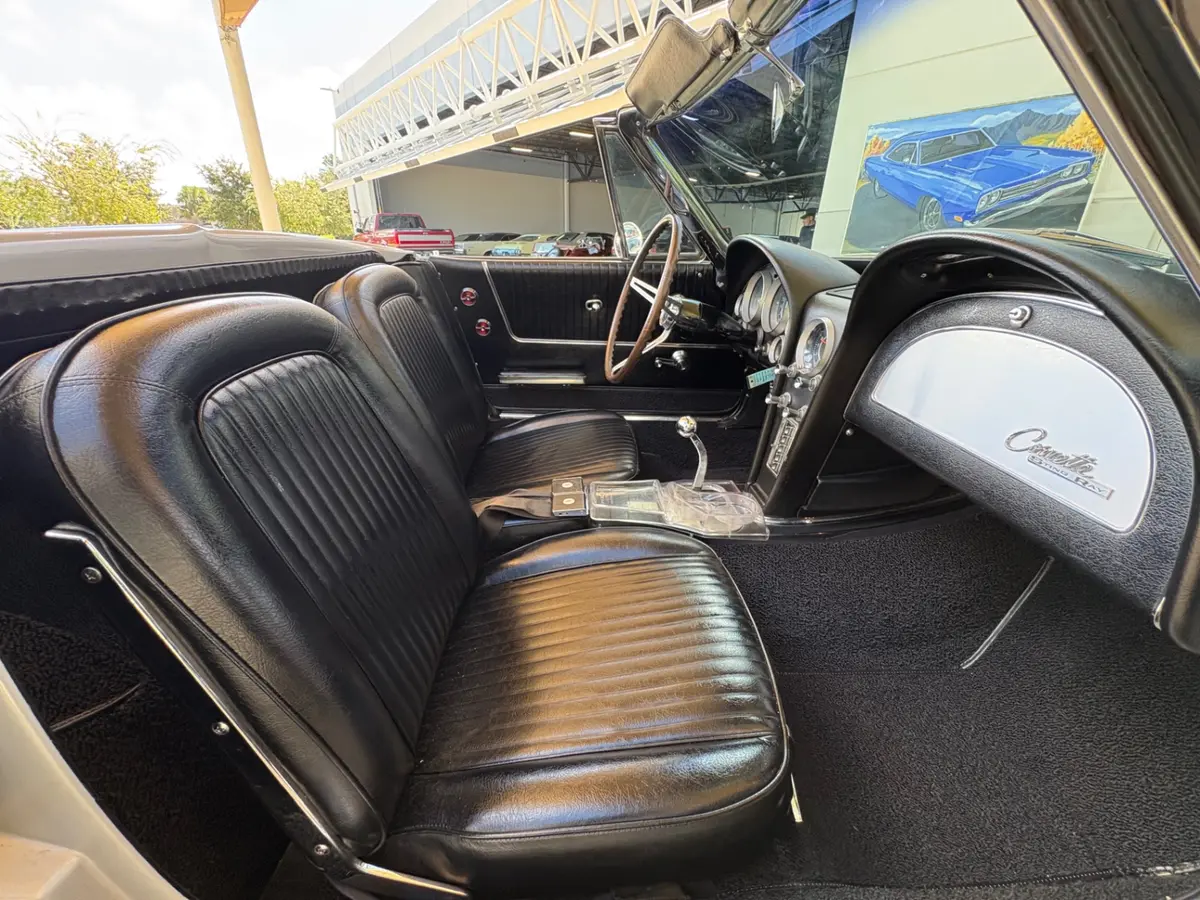
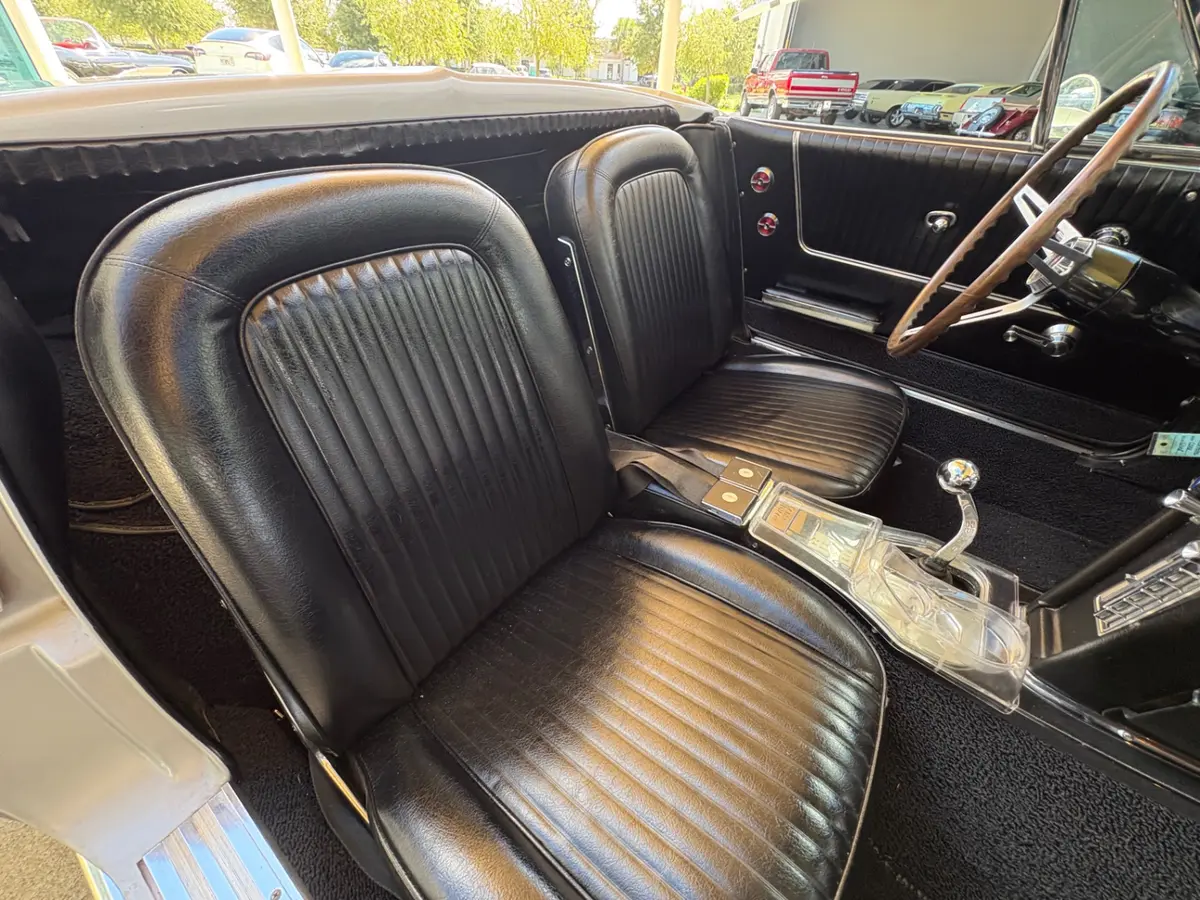
Inside, the 1964 Corvette Sting Ray presents in its original black vinyl interior, which remains in very good condition consistent with a survivor-quality car. The bucket seats retain their correct vertical pleat pattern with no tears or significant wear. Both door panels show the correct ribbed vinyl upper section, red-trimmed knobs, and aluminum scuff plates at the bottom.
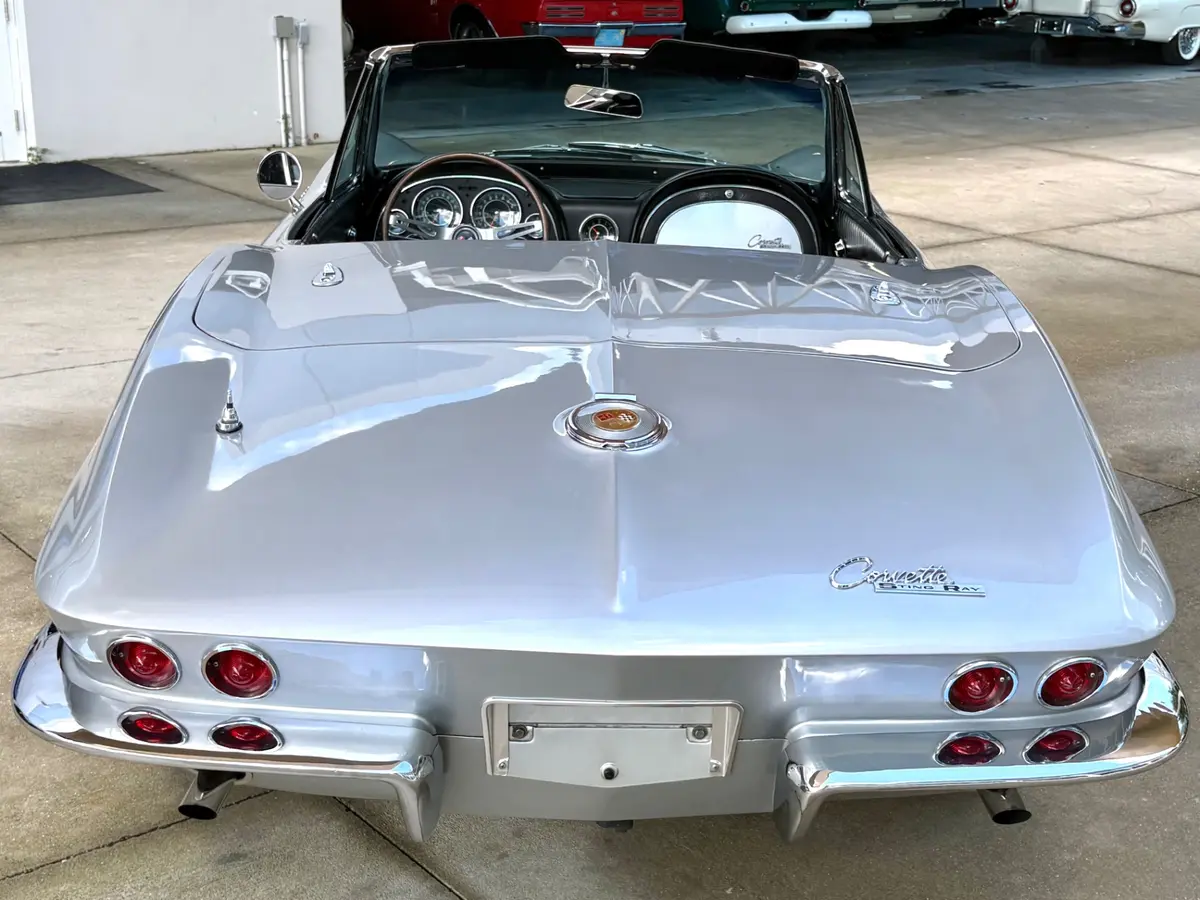
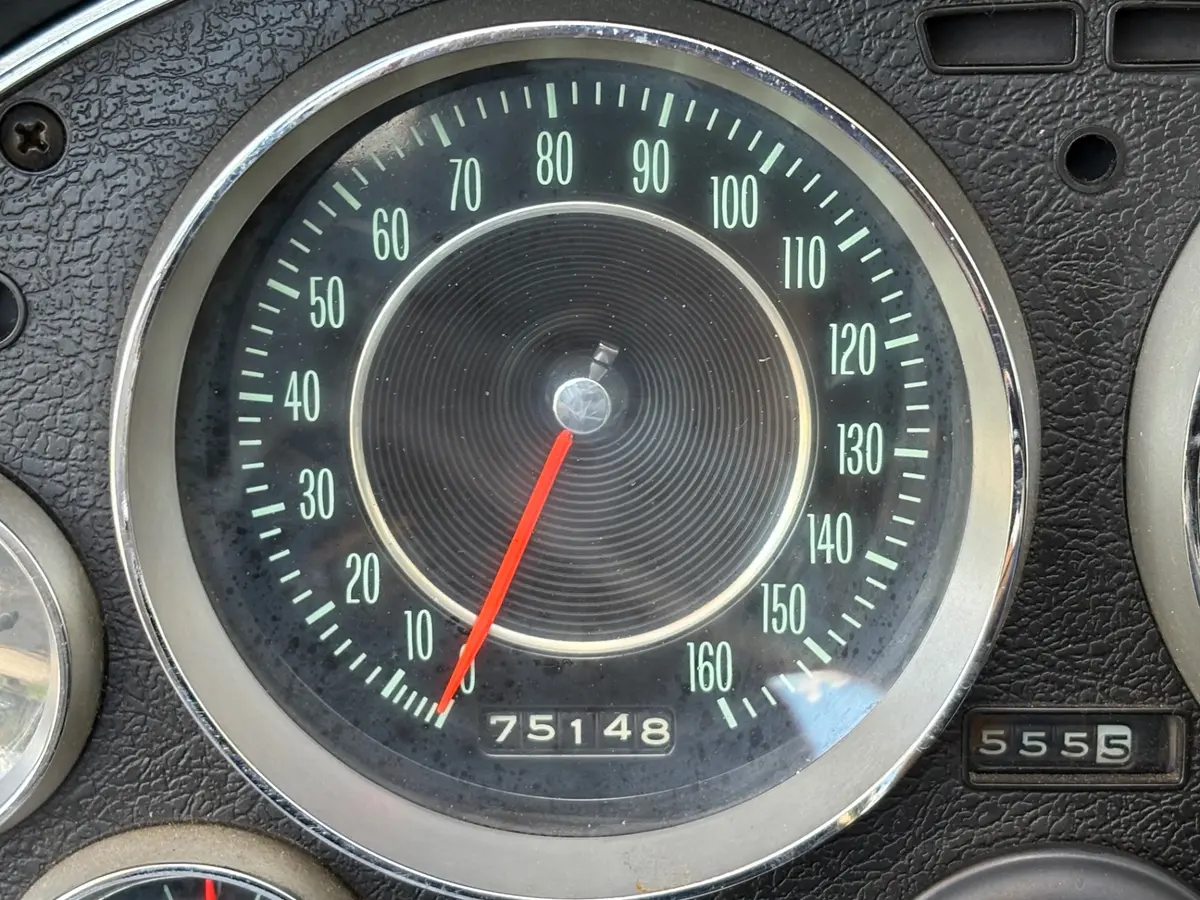
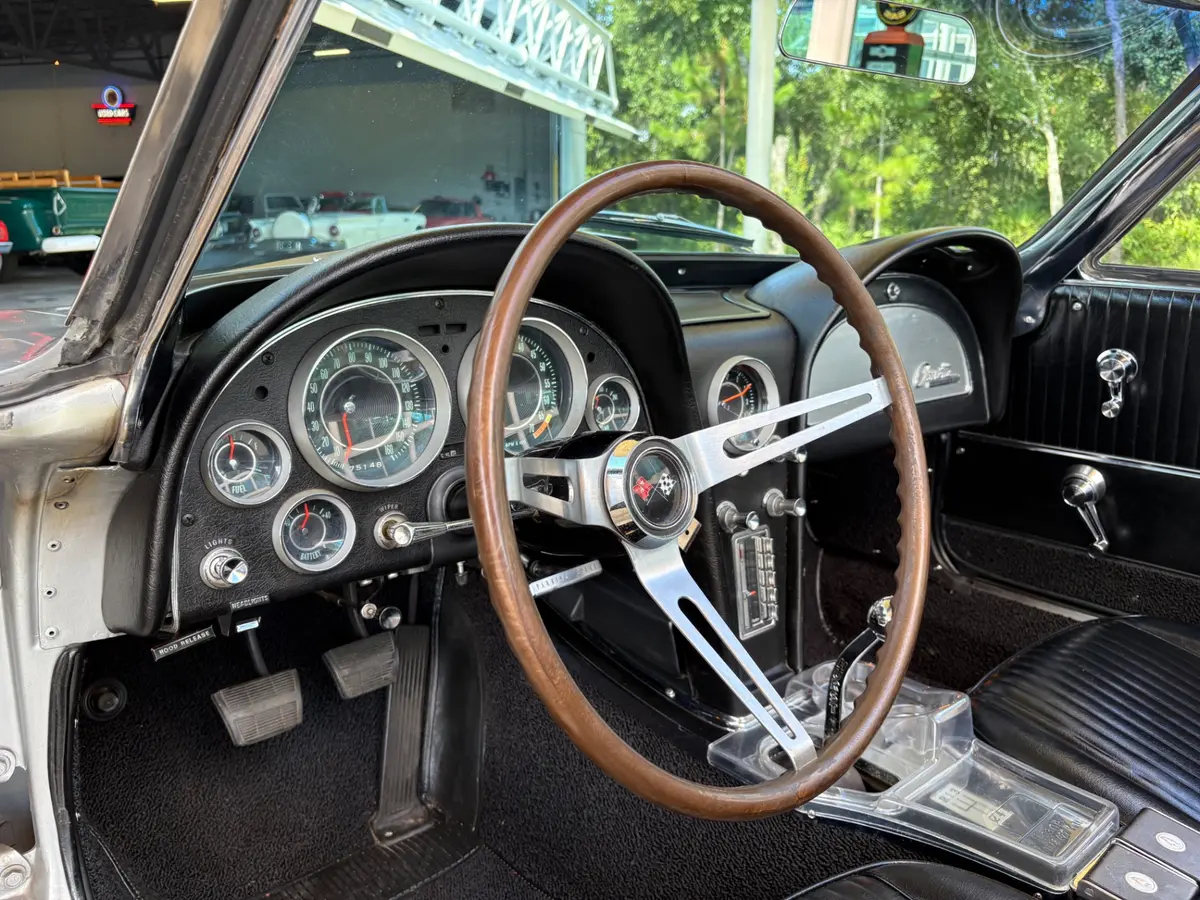
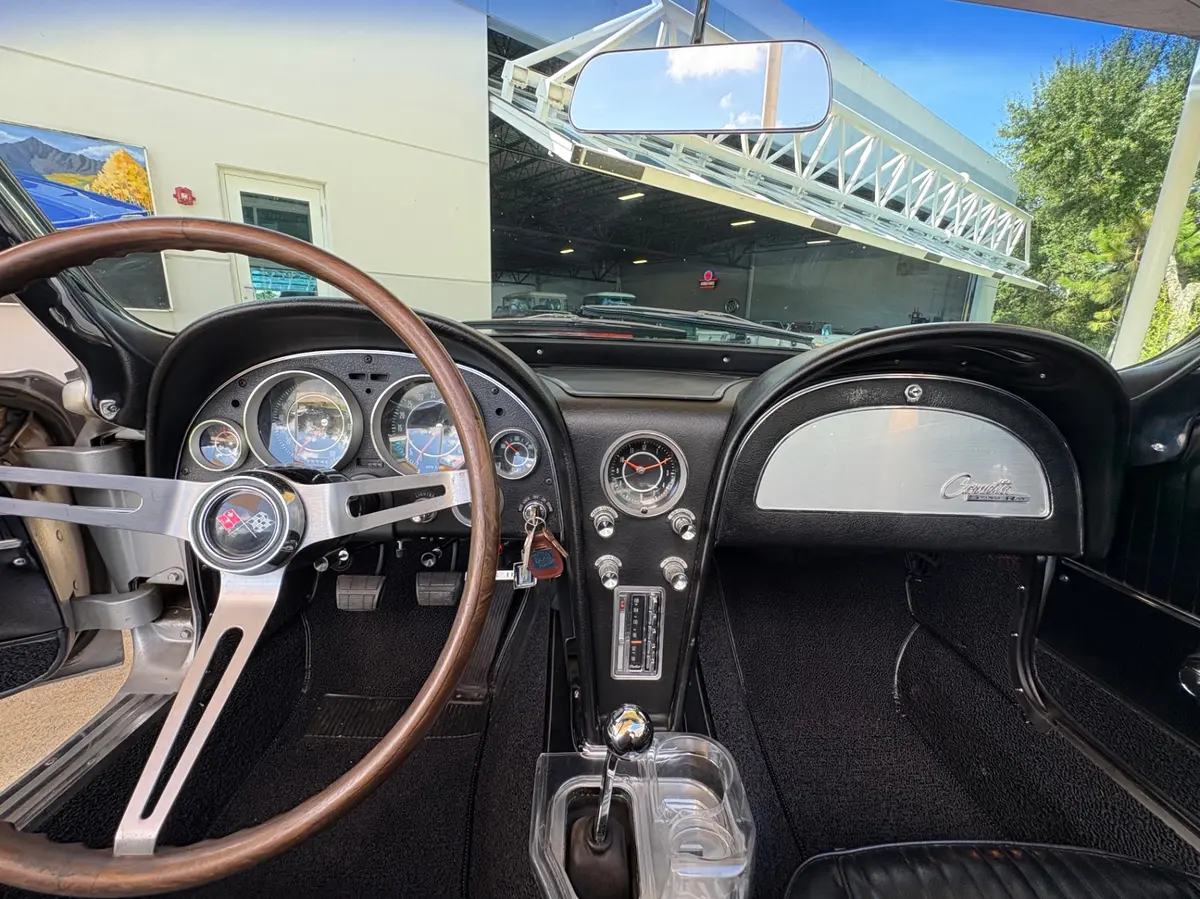
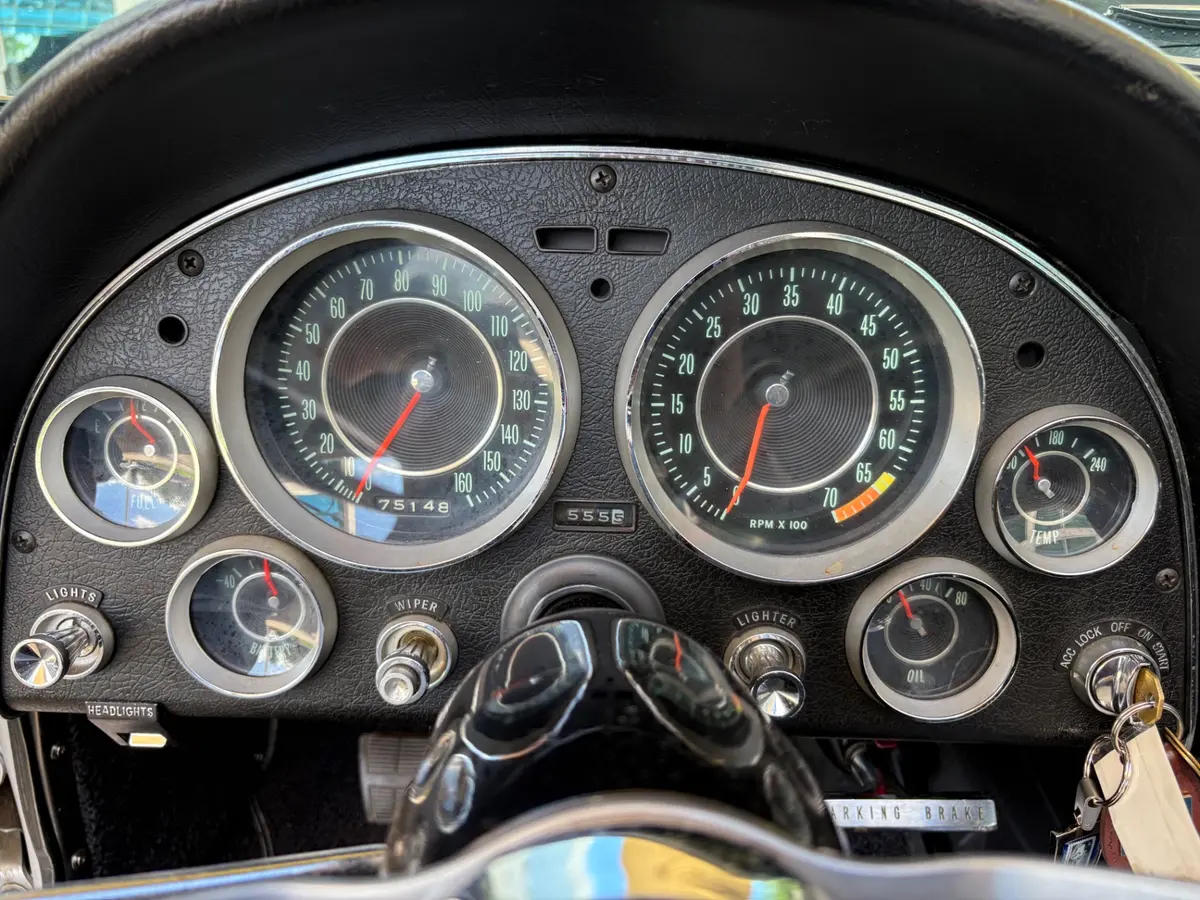
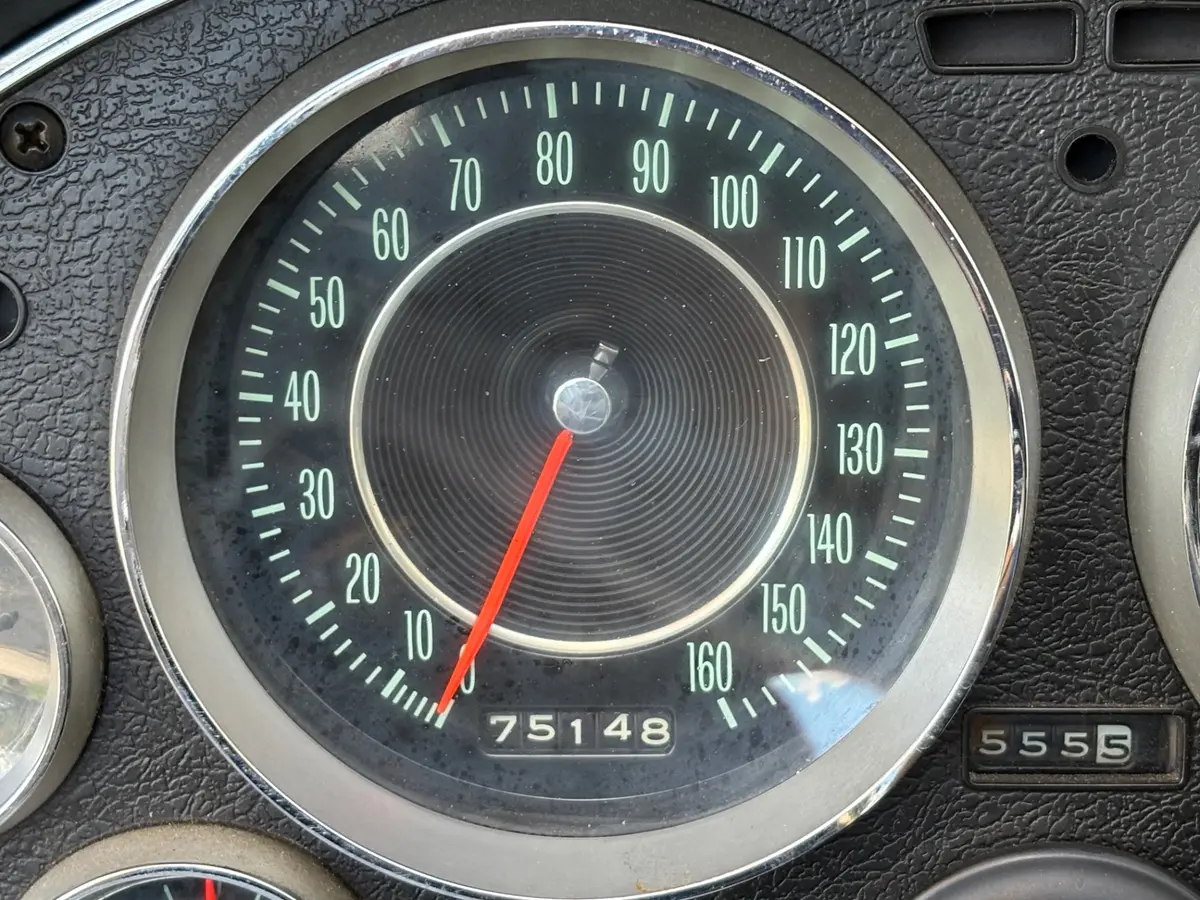
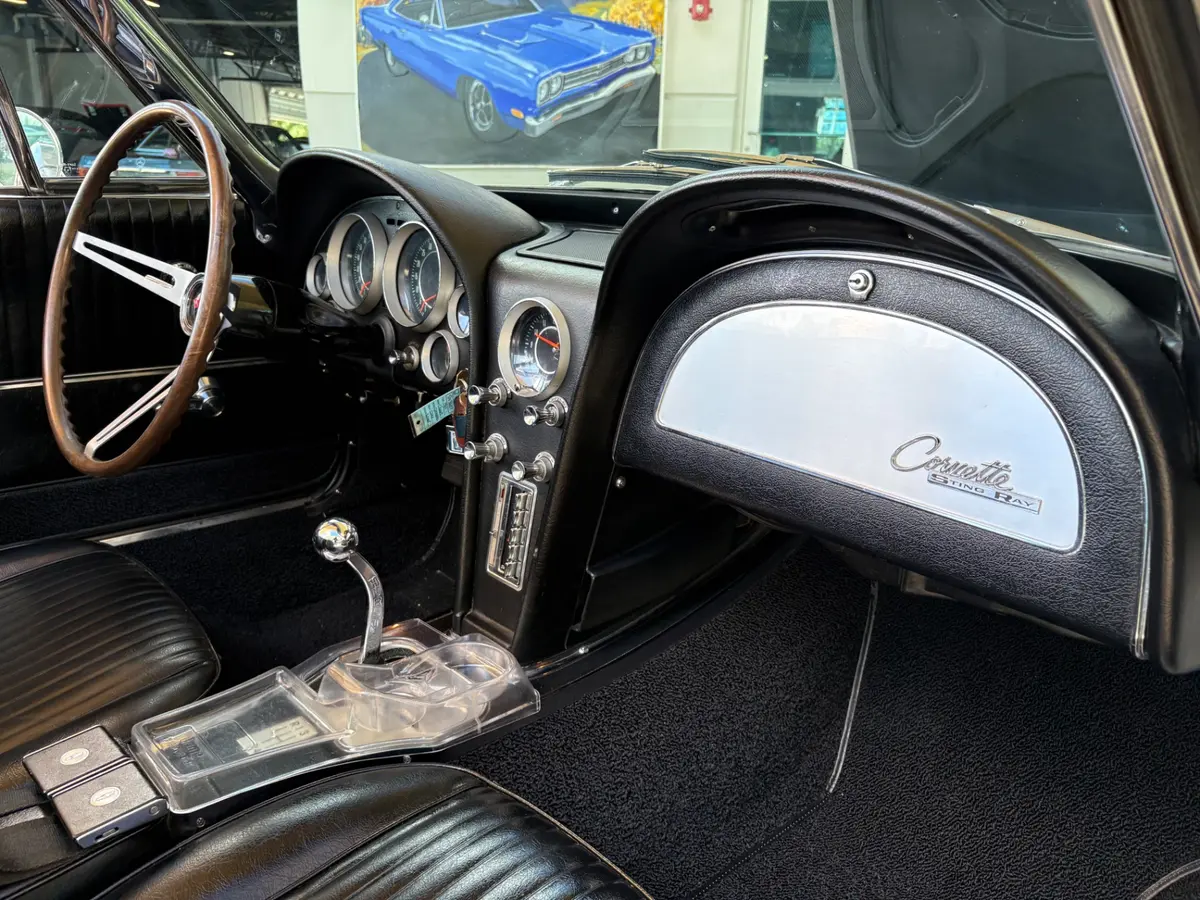
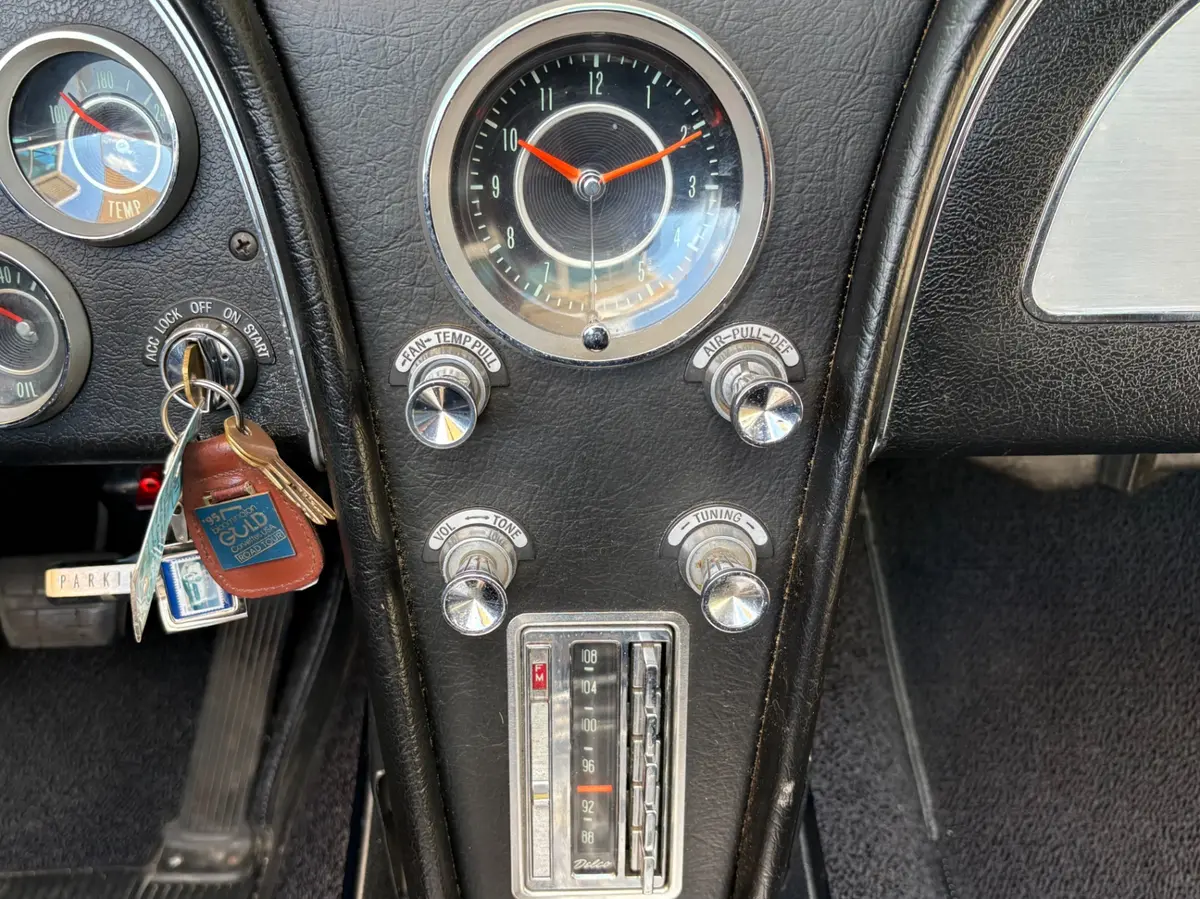
The dashboard layout in the 1964 Corvette Sting Ray is one of the more purposeful instrument configurations of the era. Directly in front of the driver sits a large 160-mph speedometer and a tachometer scaled to 7,000 rpm, flanked by smaller gauges for fuel, battery, oil pressure, water temperature, and an ammeter. Every gauge is functional and readable. The odometer reads 75,148 miles. The clock on the passenger-side center stack is present and working — a detail that Bloomington evaluators specifically check for correctness.
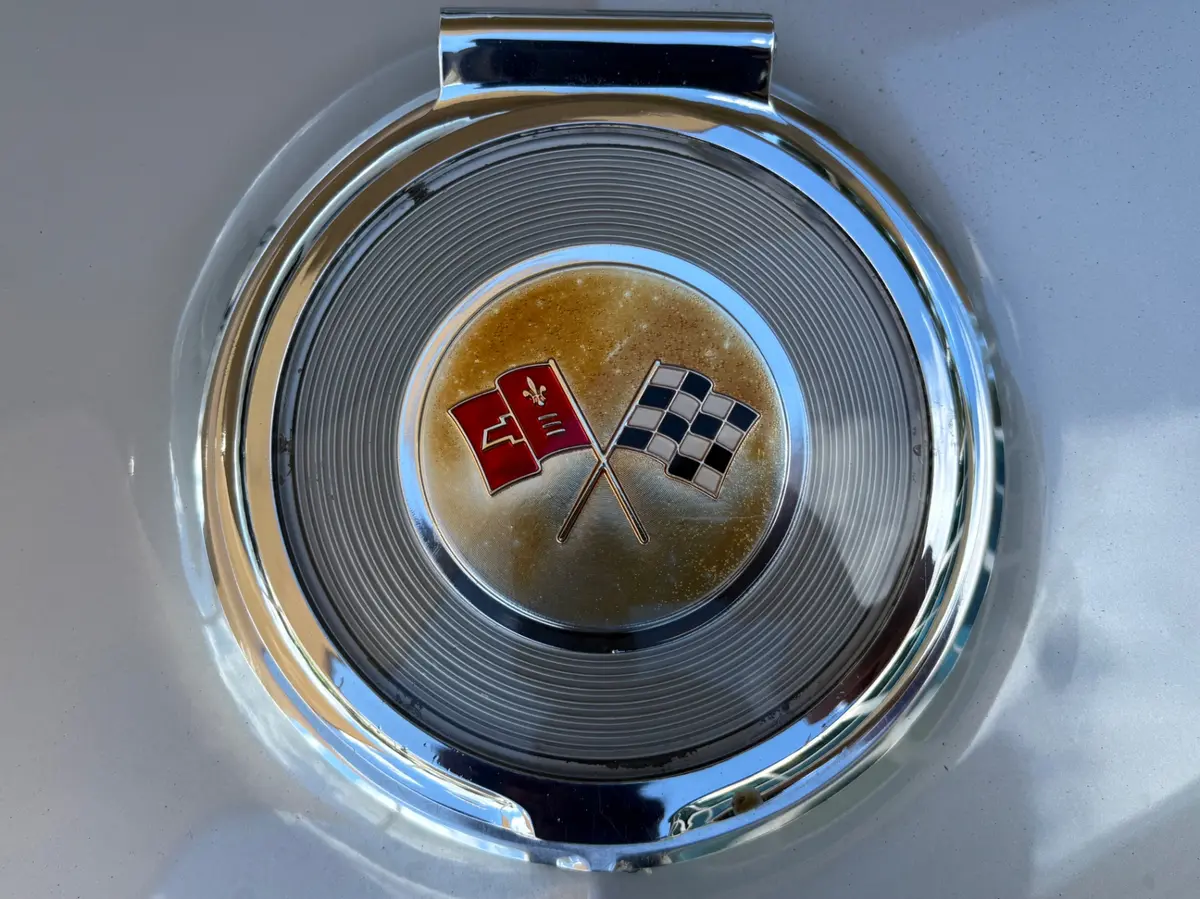
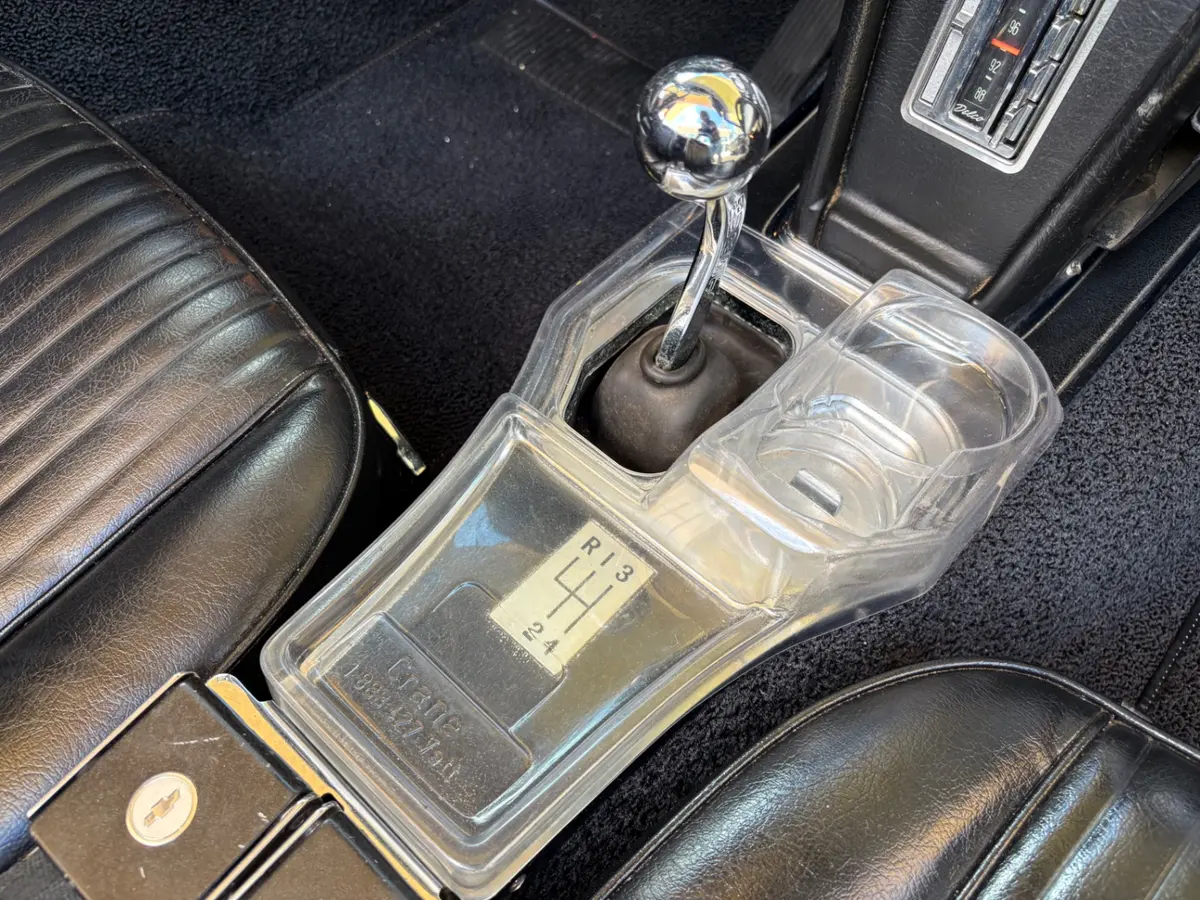
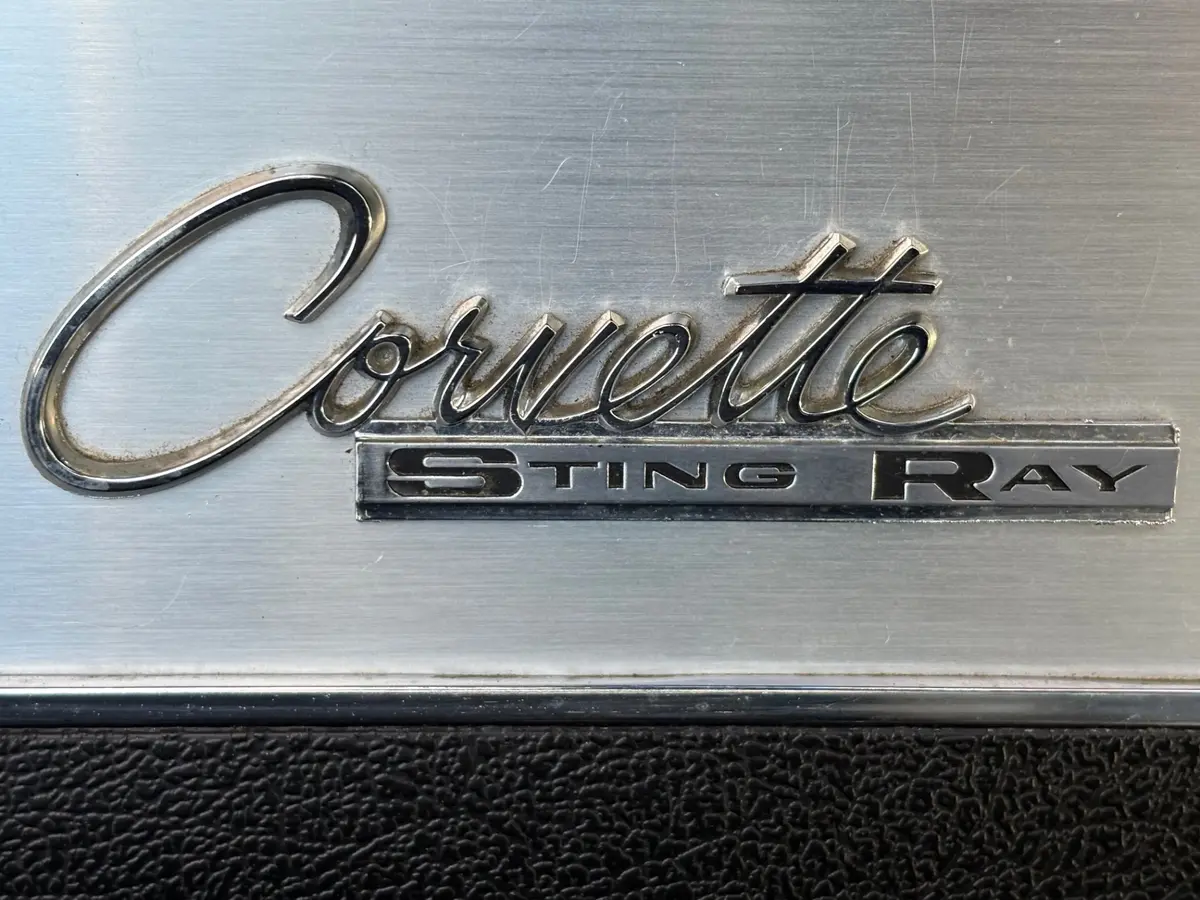
The AM/FM Delco radio is mounted in the console area below the clock, correct for the 1964 model year. The wood-rimmed steering wheel, a factory option for 1964, features a three-spoke aluminum hub with a Corvette emblem at center. The Hurst-shifted 4-speed sits in the center console with its original shift indicator plate and clear acrylic console surround — both present and correct. The Corvette Sting Ray script badge on the passenger-side dash pad is intact and properly positioned.
Exterior
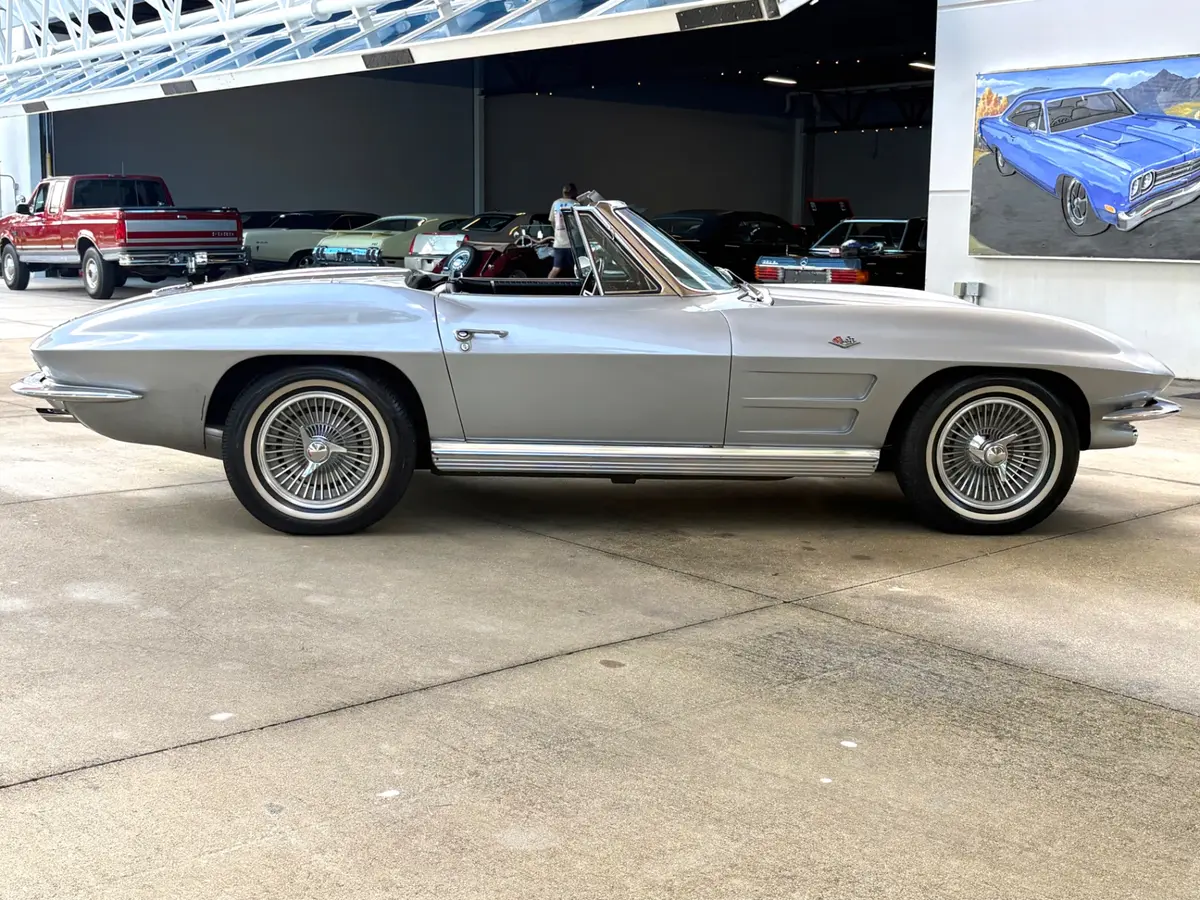
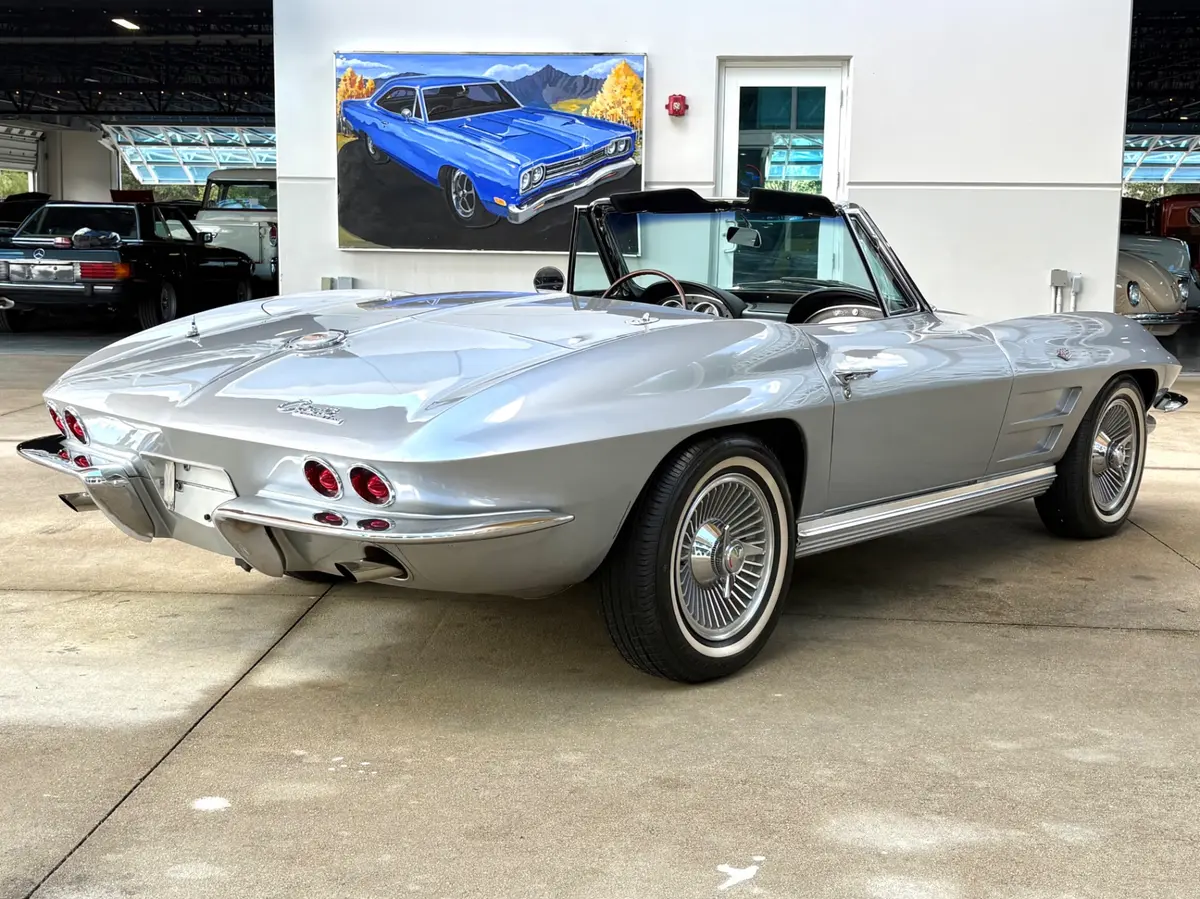
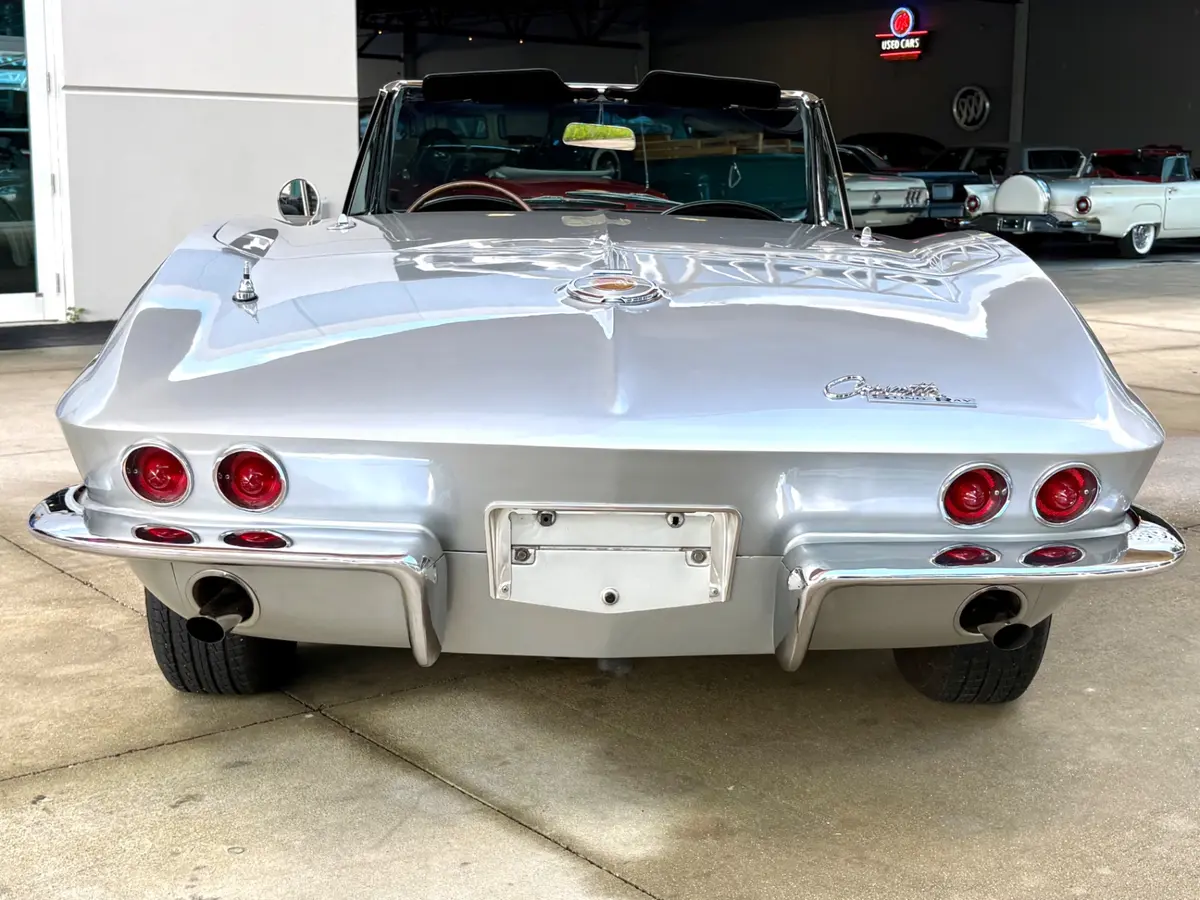
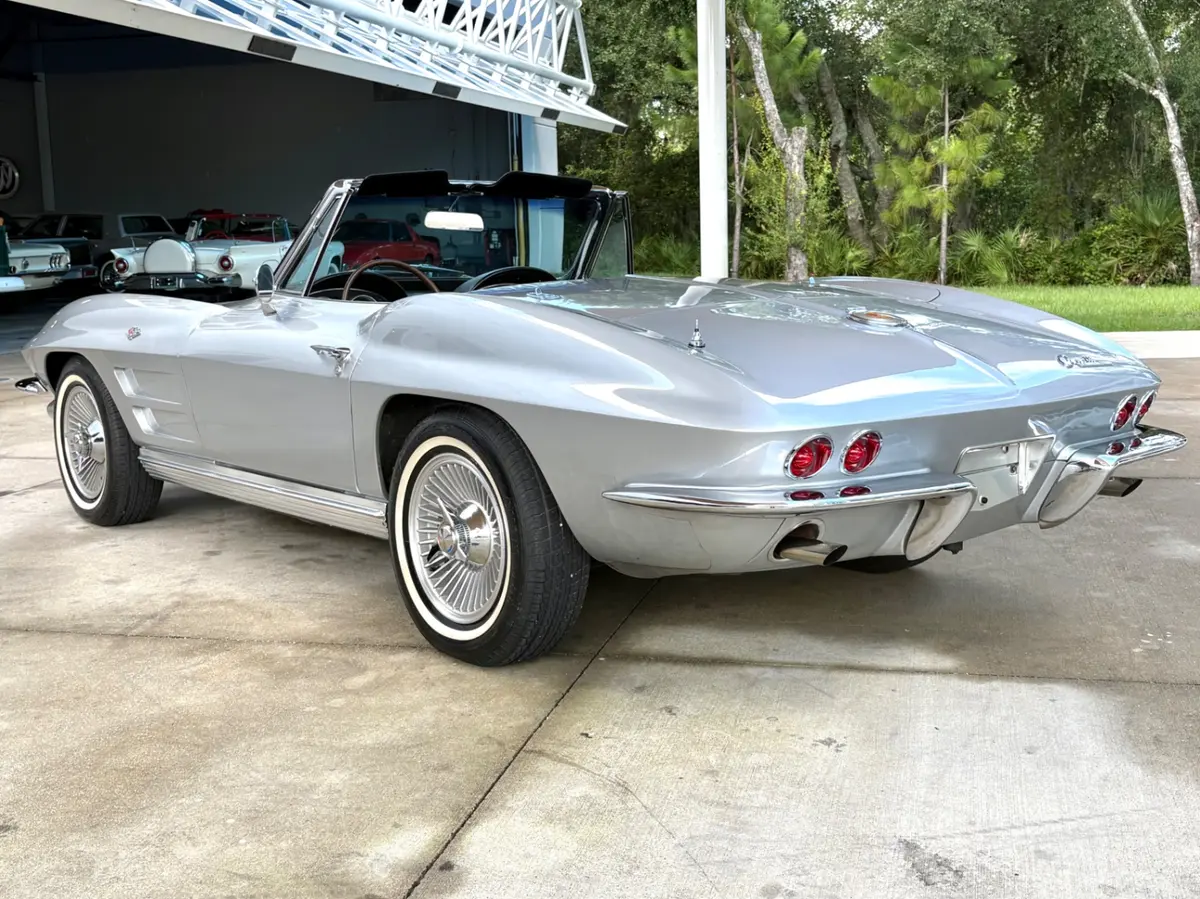
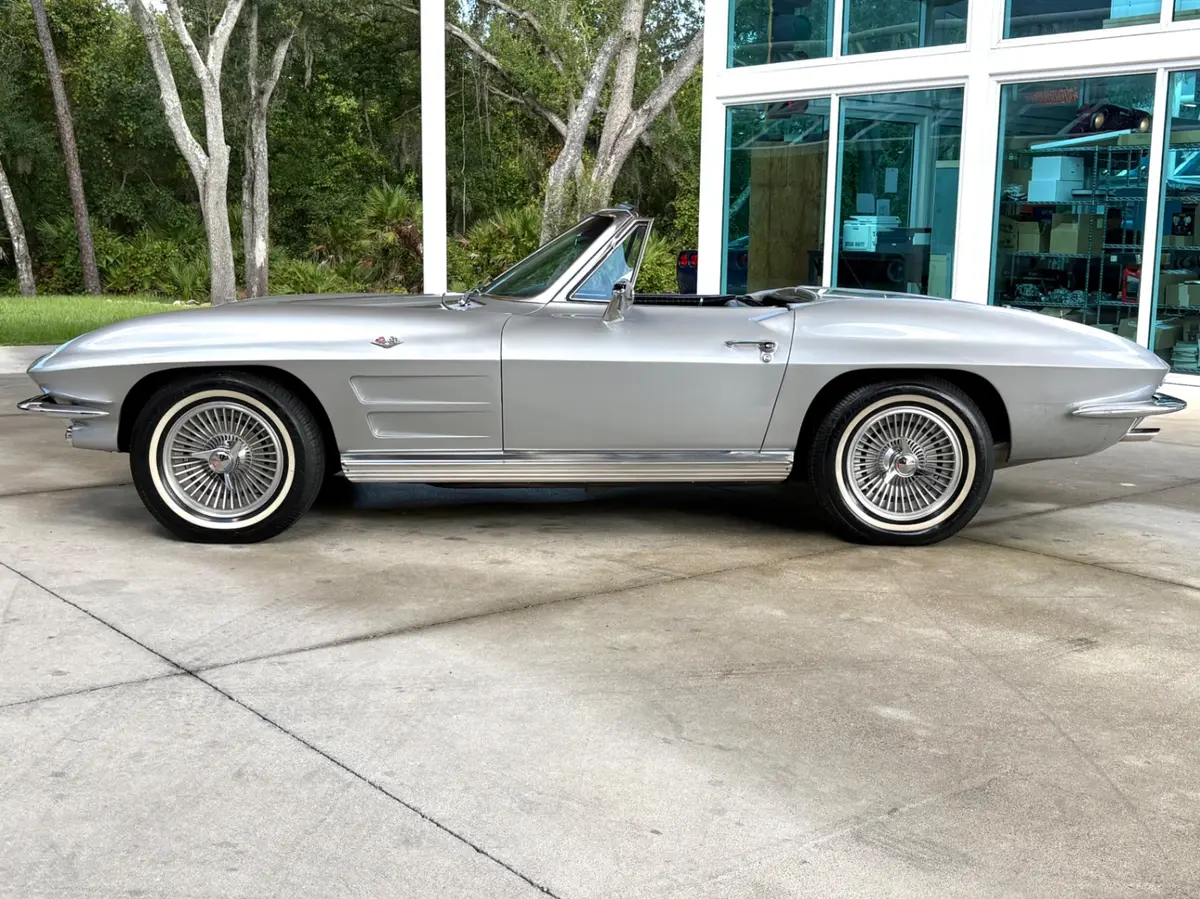
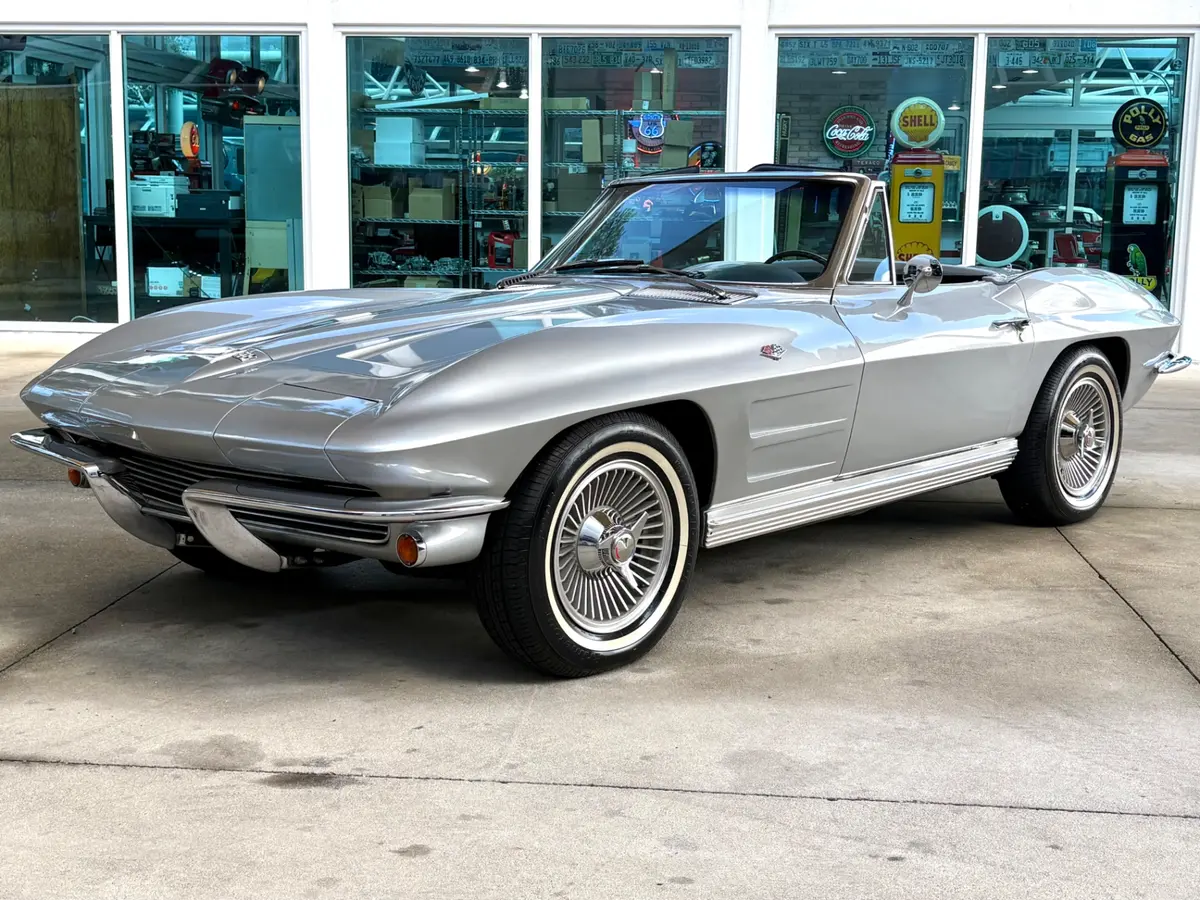
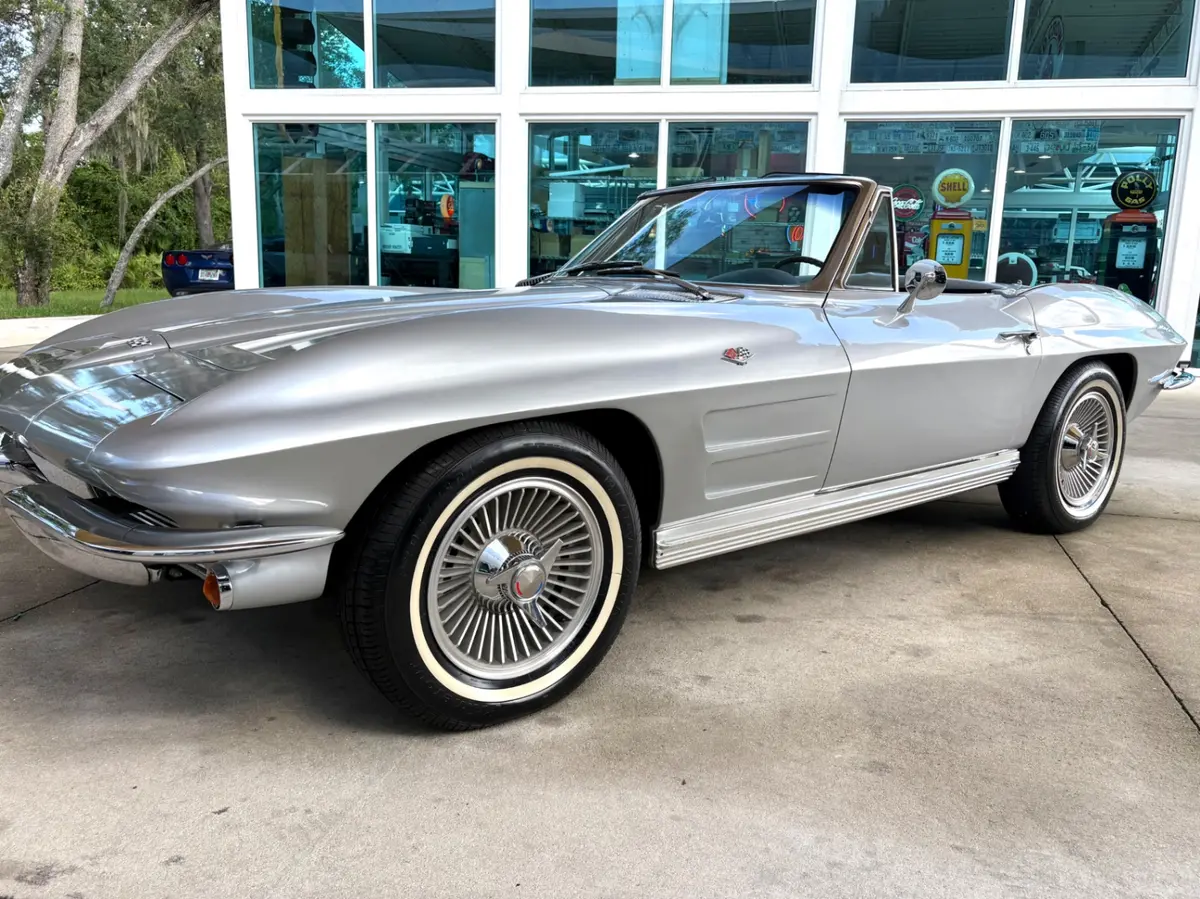
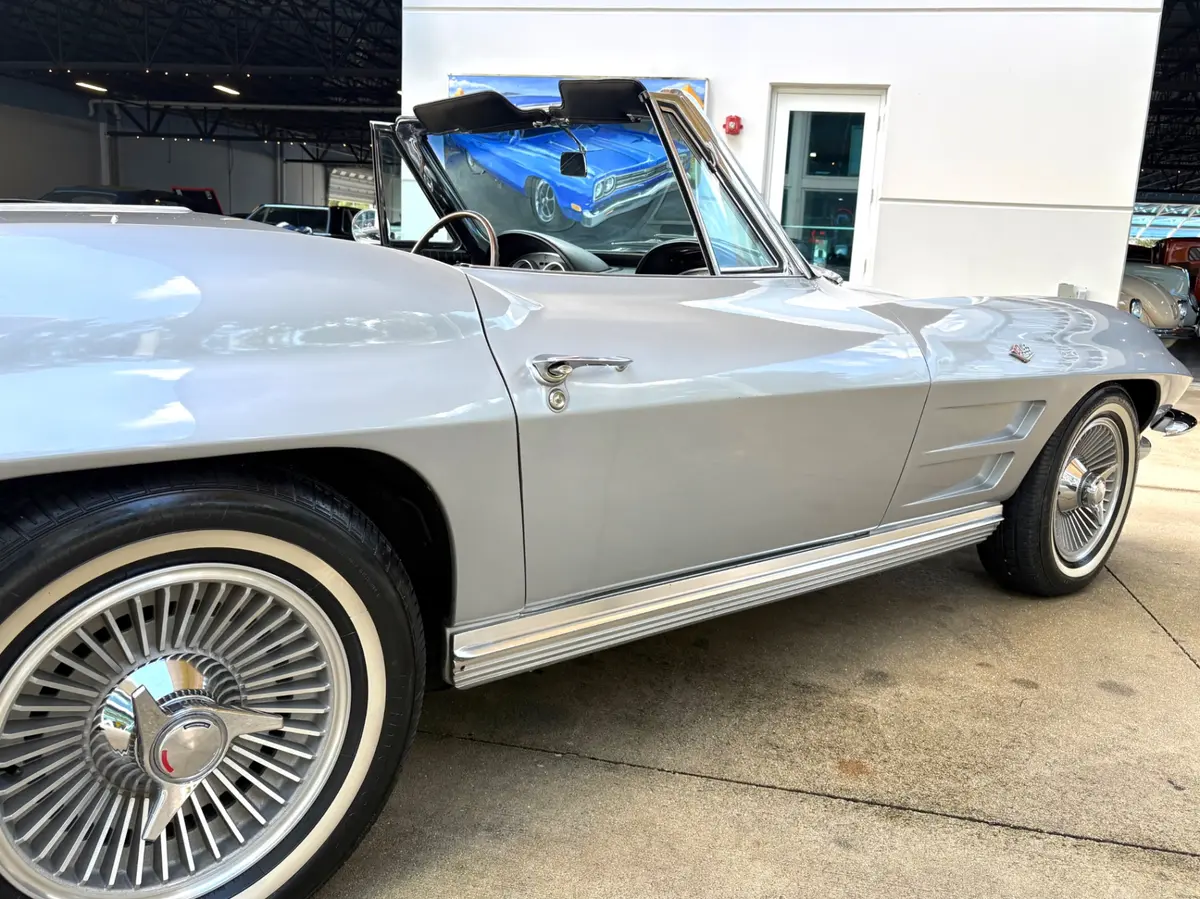
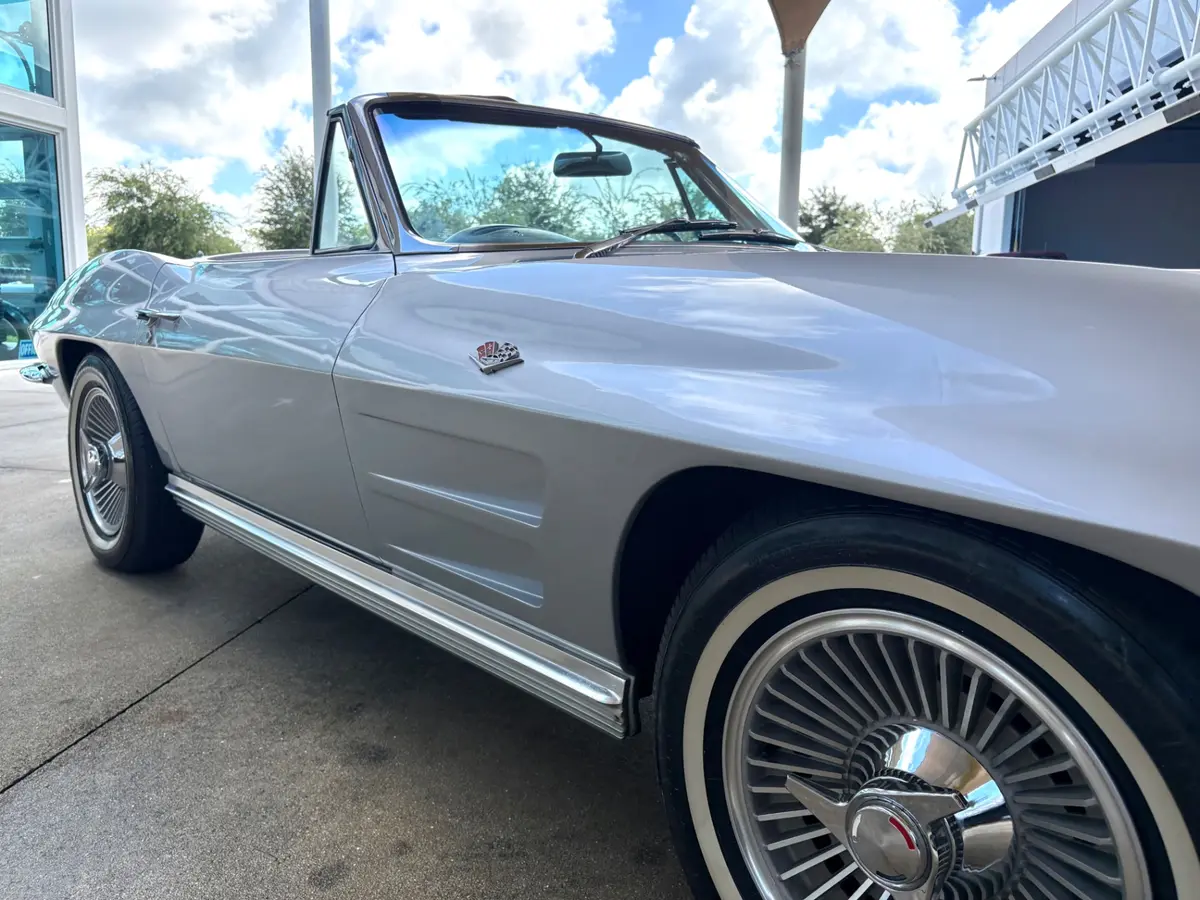
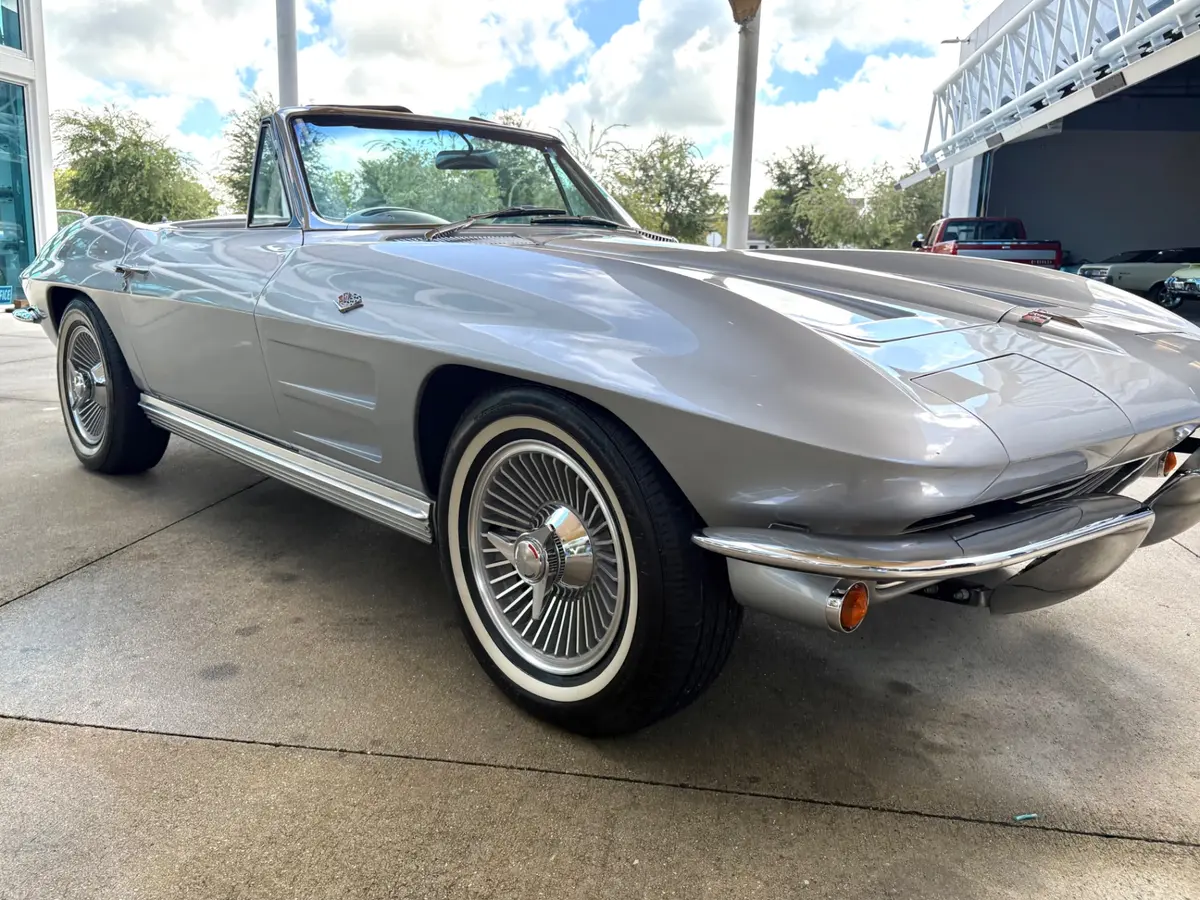
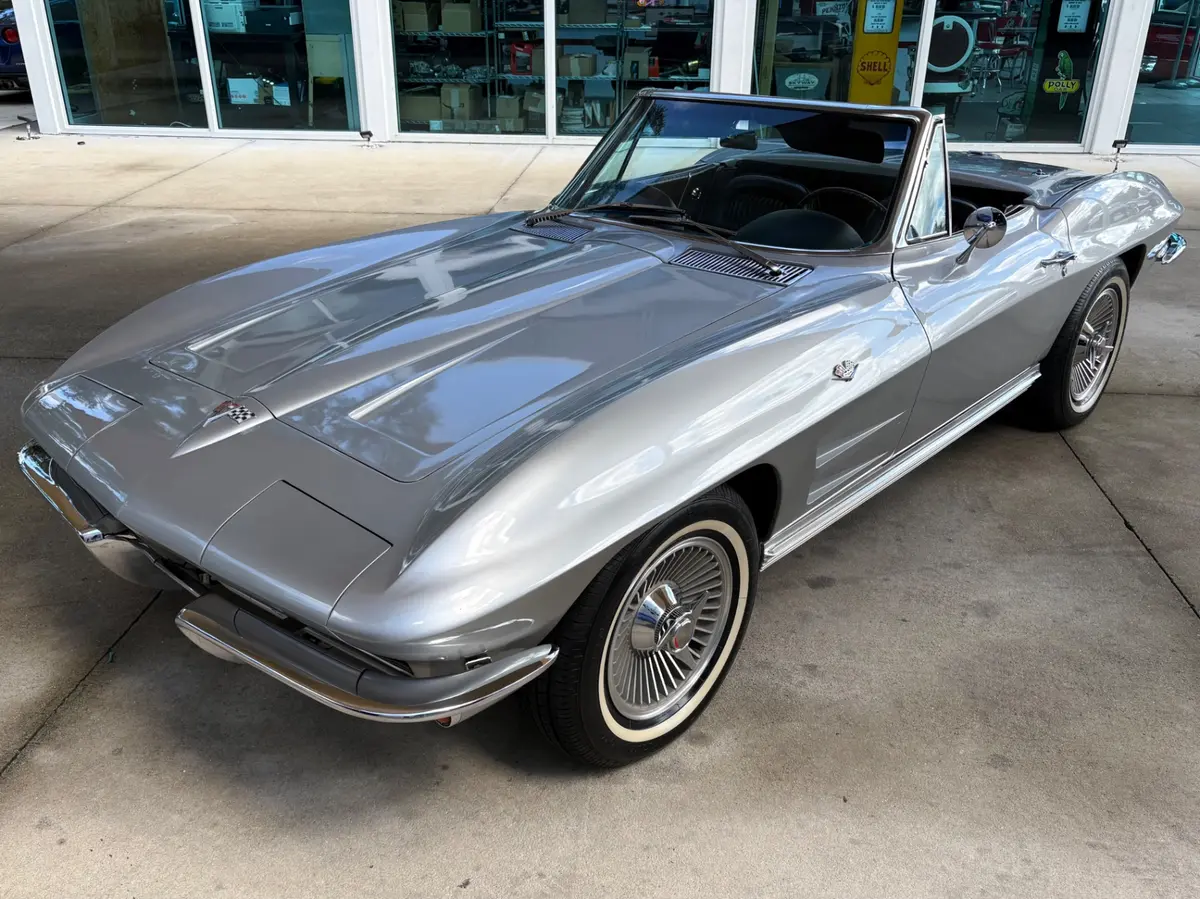
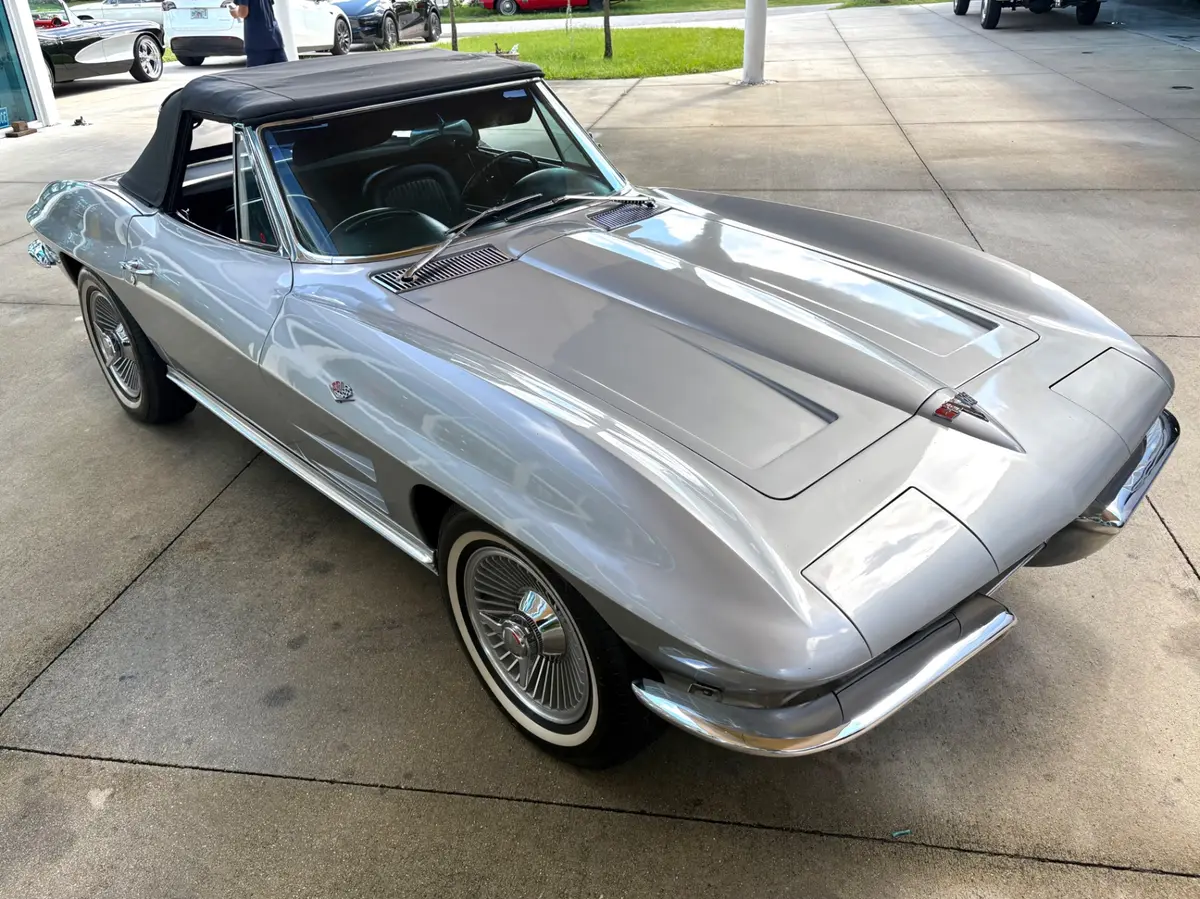
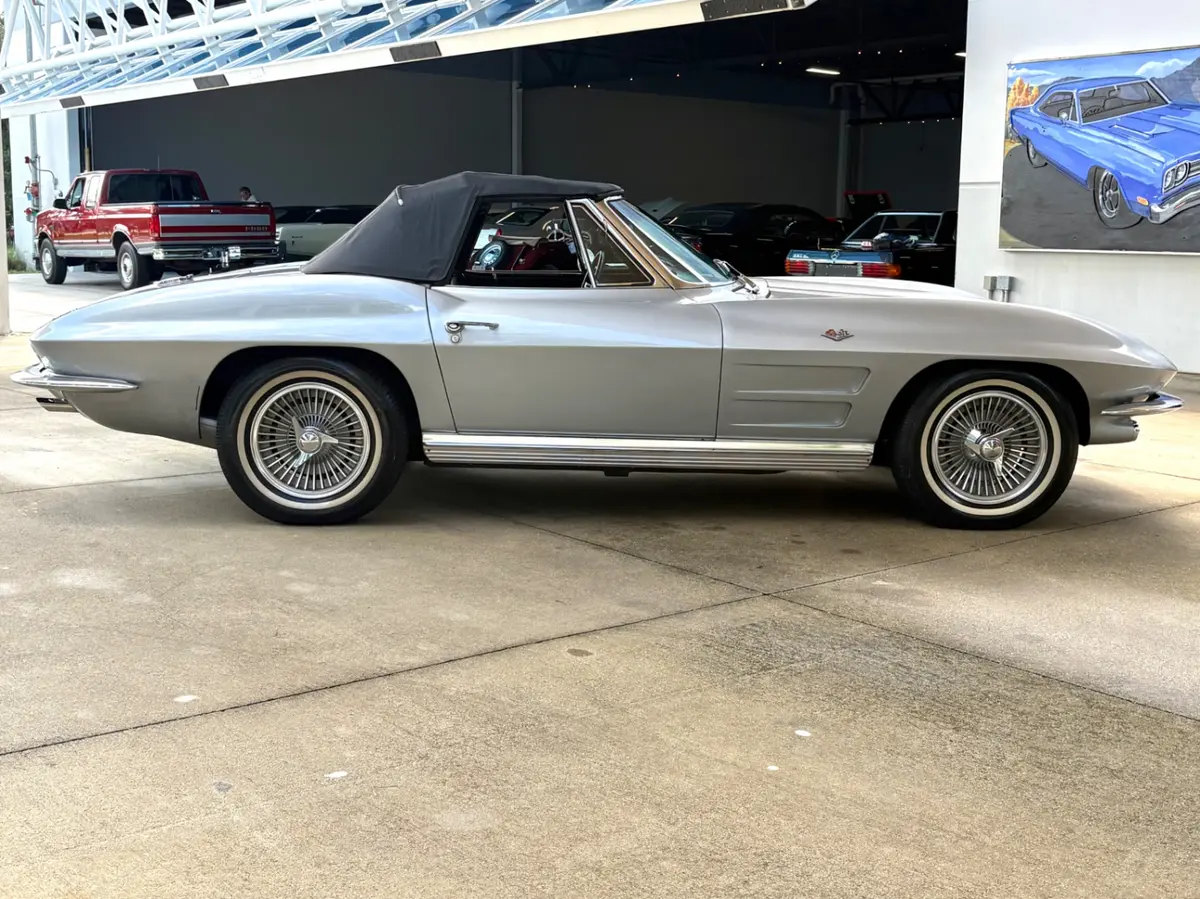
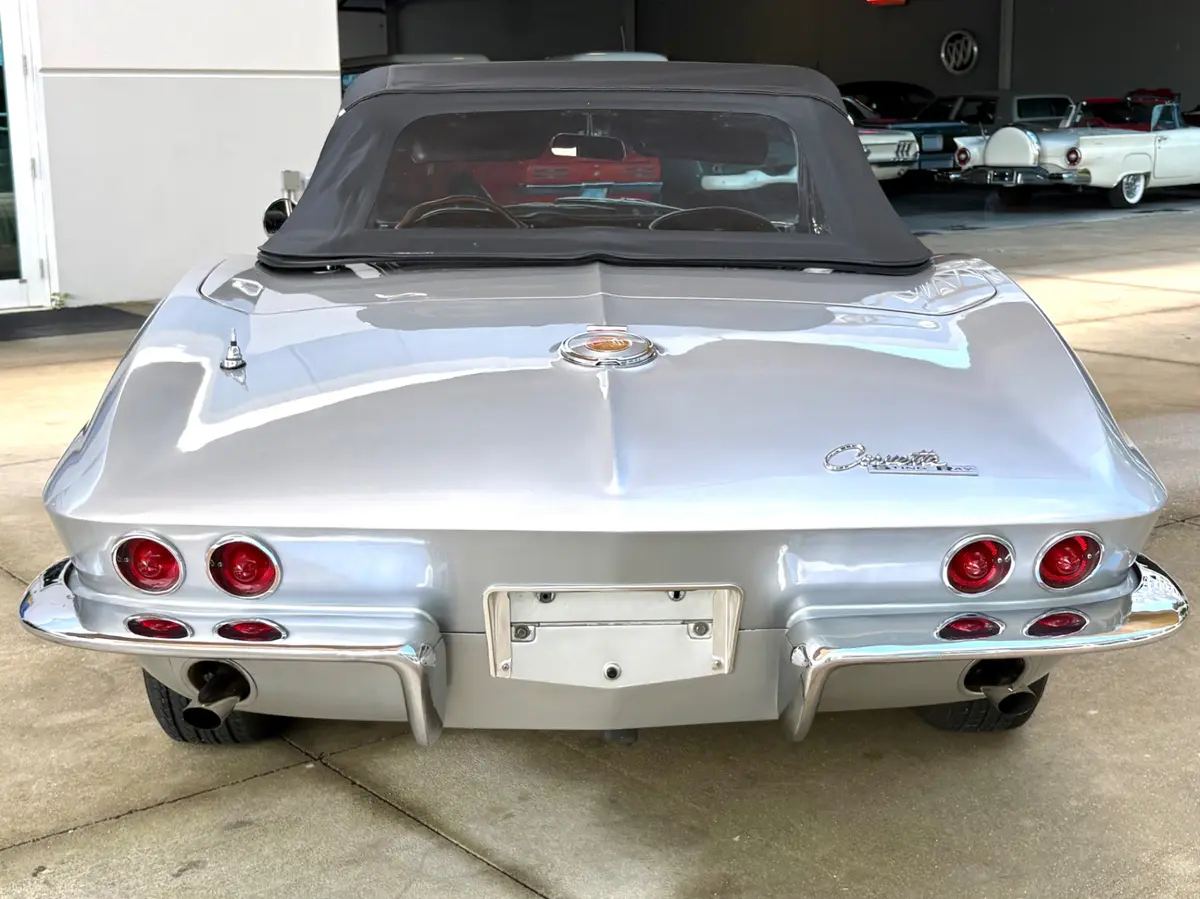
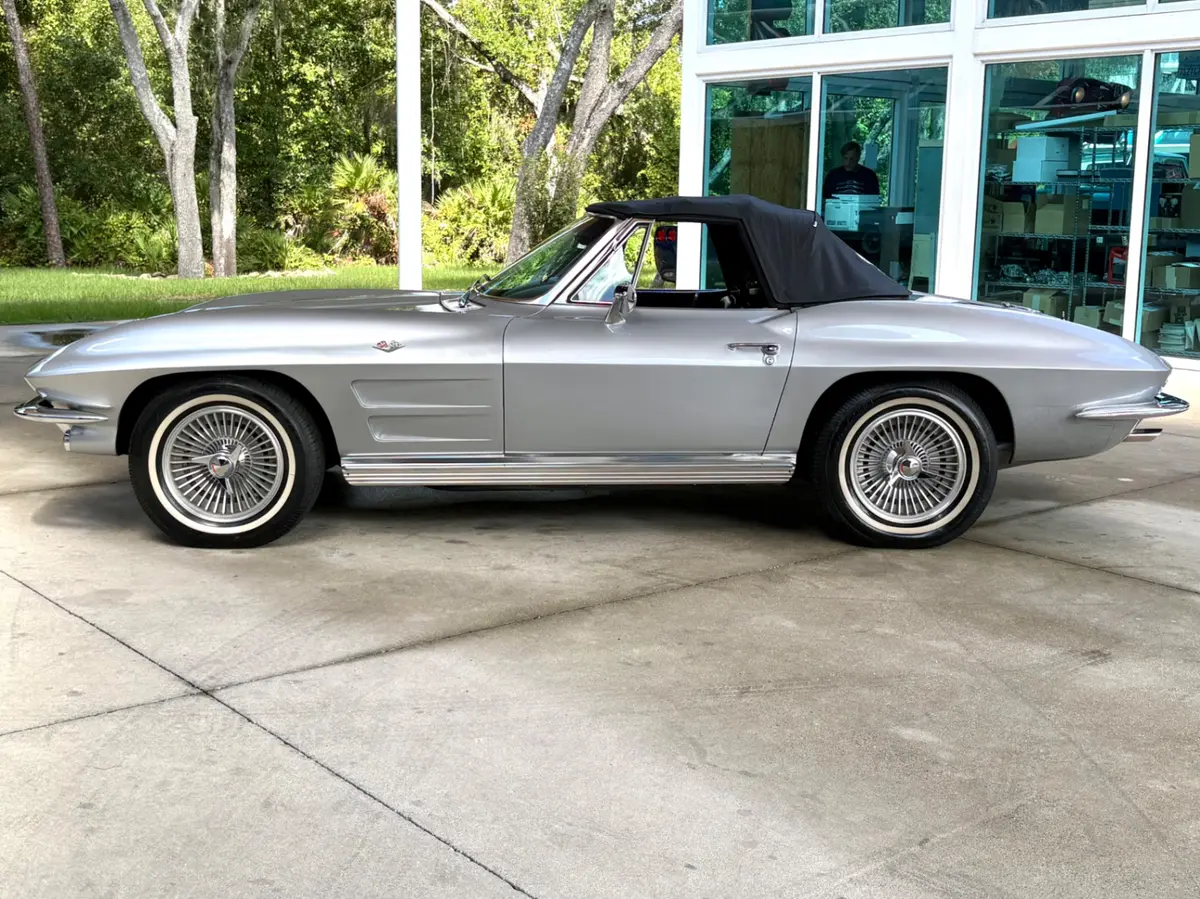
This 1964 Chevrolet Corvette Sting Ray wears Satin Silver — a color that suits the C2 body particularly well, allowing the sculptural bodywork to read clearly without the distraction of a darker or busier color. The fiberglass panels present with consistent gaps and no evidence of prior collision repair or repaint overspray in the areas visible in the photographs. The chrome bumpers front and rear are in excellent condition, as are the quad headlight bezels.
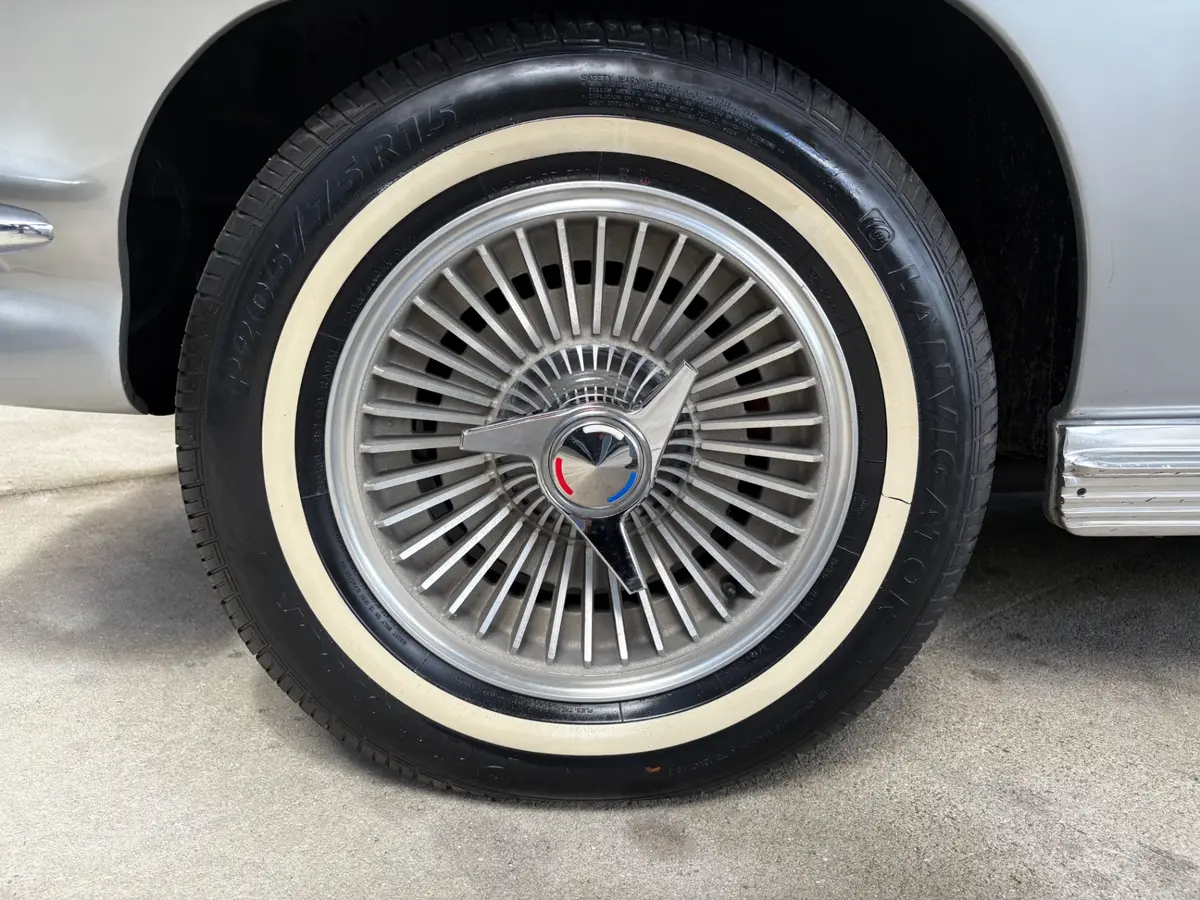
The factory knock-off wire wheels are one of the most visually distinctive options available on the 1964 Corvette. They were available through Kelsey-Hayes and required a special adapter hub. Correctly fitted with whitewall tires, they give this car an appearance that is simultaneously period-correct and visually impactful — a combination that is difficult to replicate accurately today and is specifically evaluated during Bloomington certification.
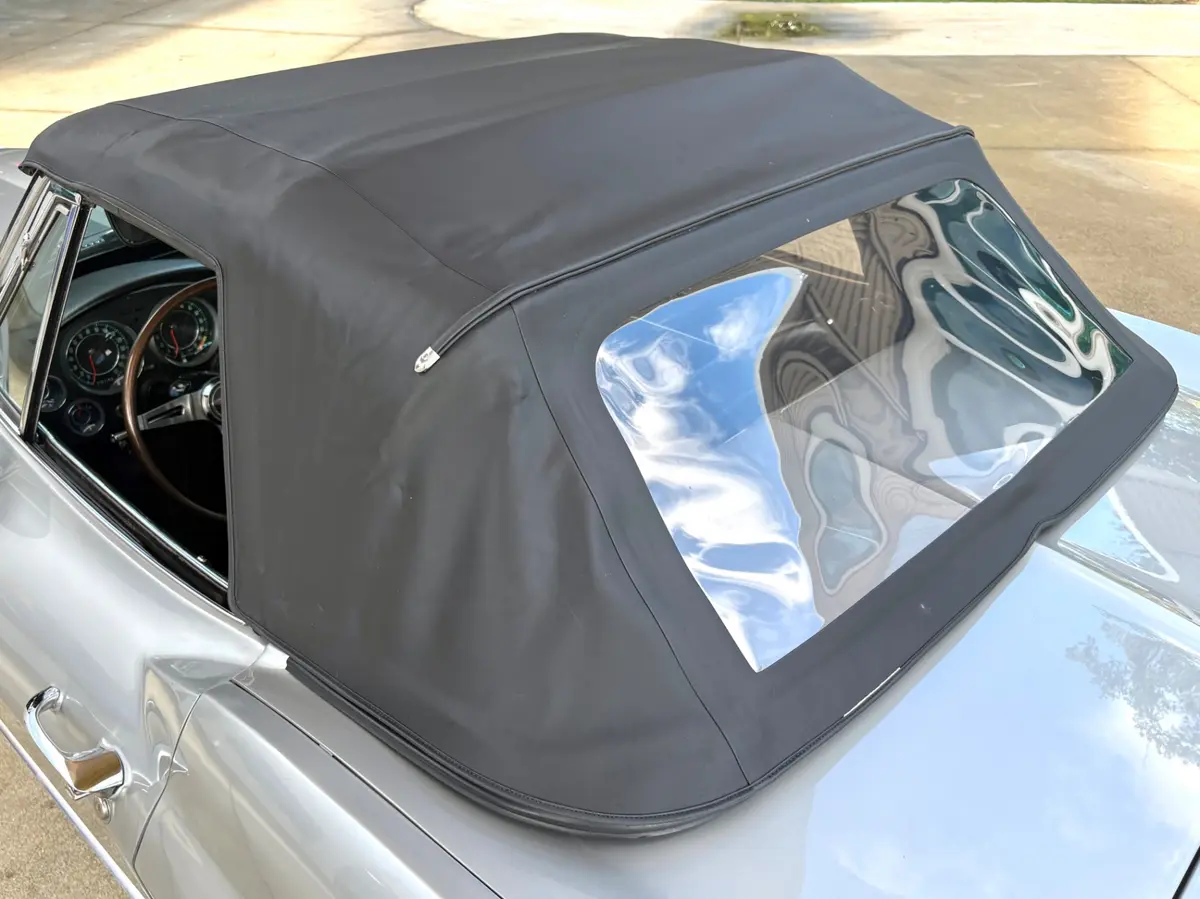
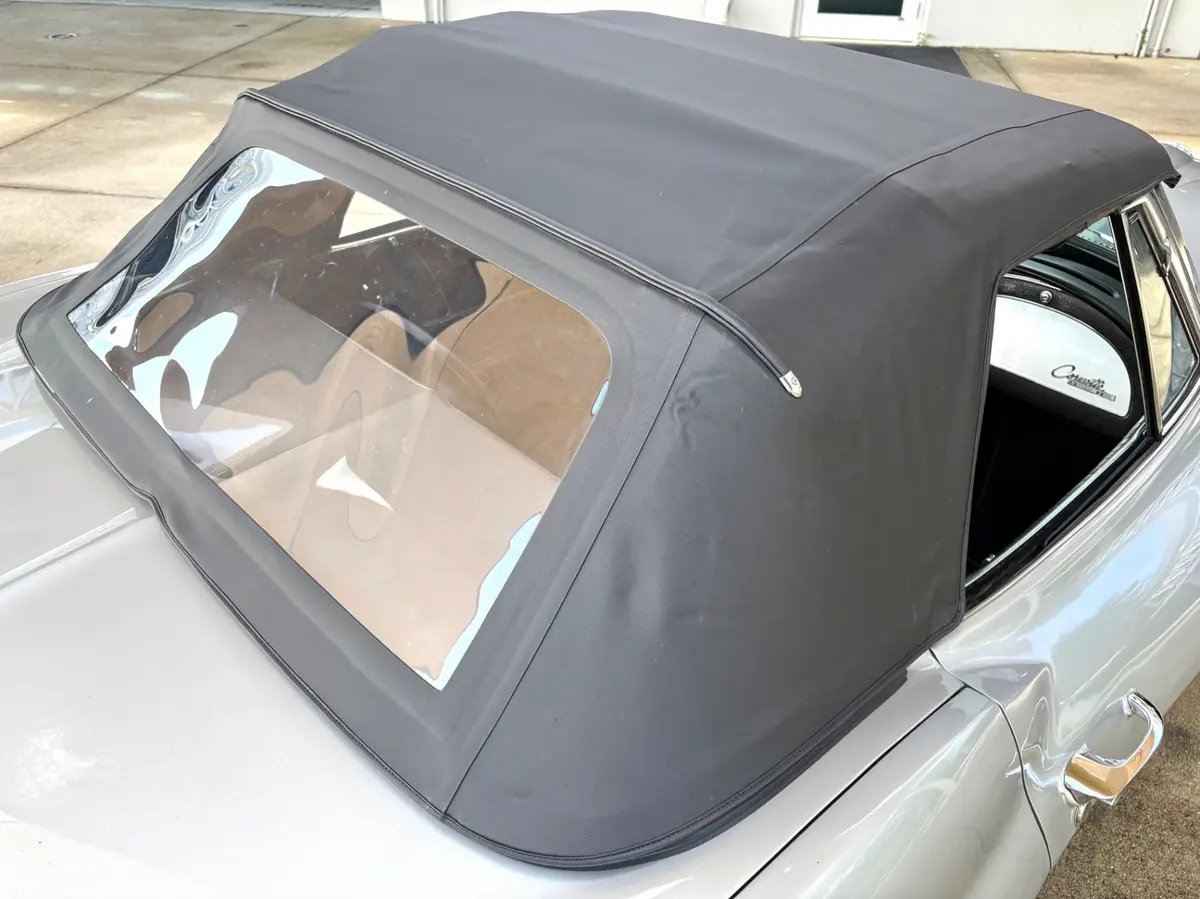
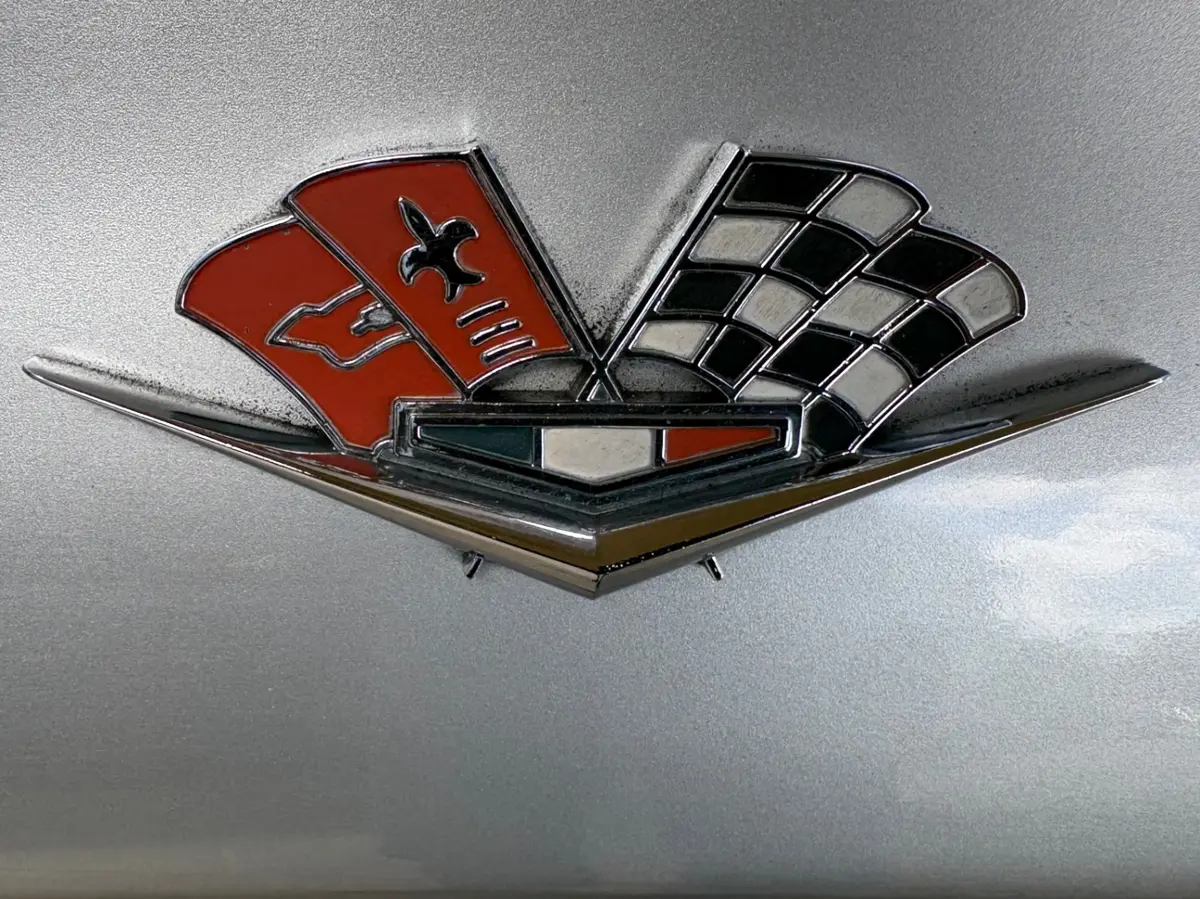
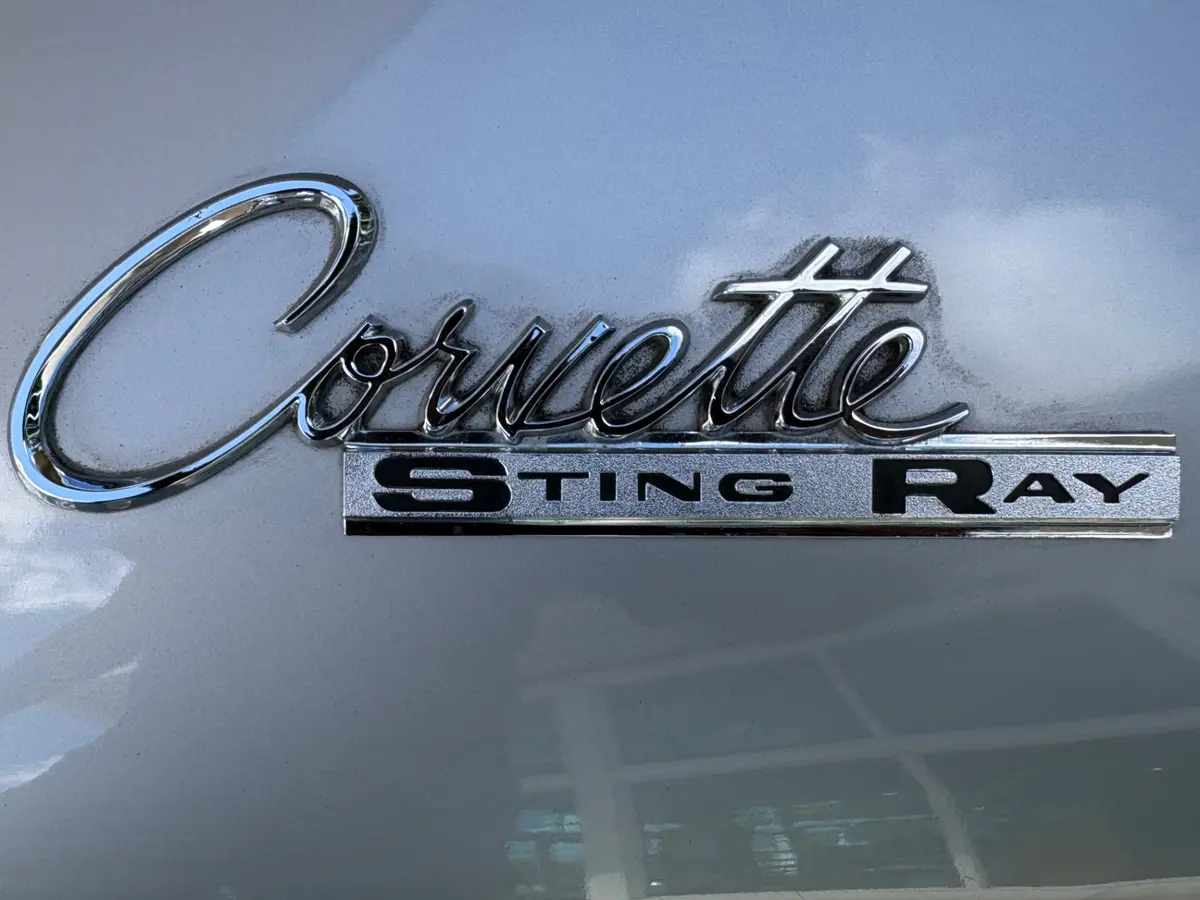
The black folding soft top is in good condition and fits correctly. The side exhaust outlets in the rocker panels are present and properly trimmed in chrome, consistent with the off-road exhaust headers optioned on this car. The outside driver mirror is mounted correctly on the left door. The Corvette Sting Ray front fender badges and rear deck script are all present and undamaged.
Conclusion
The 1964 Chevrolet Corvette Sting Ray has long occupied a specific position in the collector market: it corrected the few rough edges of the 1963 debut year while retaining everything that made the C2 generation significant. This particular example is not a restored show car — it is a documented, matching-numbers survivor with Bloomington Gold recognition, a high-output L76 drivetrain, and an extensive list of performance and comfort options that were not inexpensive in 1964 and are not easy to find correctly assembled today. The 4.56 rear axle, off-road headers, knock-off wire wheels, and close-ratio Muncie transmission represent a specific order profile — a buyer who knew what they wanted and paid for it. Sixty years later, this car still has all of it.
Serious inquiries are encouraged. Call Skyway Classics in Sarasota, Florida at 941-254-6608 to arrange an inspection or request additional documentation.
Disclaimer
Information found on the website is presented as given to us by the owner of the car, whether on consignment or from the owner we bought it from. Some Photos, materials for videos, descriptions and other information are provided by the consignor/seller and is deemed reliable, but Skyway Classics does not warranty or guarantee this information. Skyway Classics is not responsible for information that may incorrect or a publishing error. The decision to purchase should be based solely on the buyers personal inspection of the vehicle or by a professional inspection service prior to offer or purchase being made.
1964 Chevrolet Corvette Sting Ray Convertible — L76 327/365, Matching Numbers, Bloomington Gold Survivor
Why This Car Is Special
The second-generation Corvette, known to collectors as the C2, arrived for 1963 as a complete redesign — the first since the car's introduction a decade earlier. It brought independent rear suspension, a stiffer ladder frame, and styling by Bill Mitchell and Larry Shinoda that drew directly from Mitchell's Stingray racing car. For 1964, Chevrolet refined the formula. The controversial split rear window of the 1963 coupe was gone, the fake hood vents were opened up to actually function, and the suspension was retuned for a smoother, more controlled ride. The result was a car that drove as well as it looked.
Total 1964 Corvette production came to 22,229 units. Of those, 13,925 were convertibles. This particular 1964 Chevrolet Corvette Sting Ray left the St. Louis assembly plant as a high-optioned, performance-focused convertible, and it has survived six decades in a condition that earned it Bloomington Gold recognition — one of the most respected authenticity certifications in the Corvette world. Bloomington Gold evaluators examine cars for correctness of parts, finishes, stampings, and date codes. Earning that recognition with the original drivetrain intact is a meaningful accomplishment, and it directly affects the car's long-term collectibility.
The VIN on this car decodes to confirm it is a 1964 Corvette convertible built at St. Louis, with a 327 cubic inch engine and a 4-speed manual transmission — all of which align with the documented, matching-numbers drivetrain present in the car today.
Features List
- 327ci L76 Small Block V8, 365 horsepower
- Matching numbers engine, transmission, and drivetrain
- Bloomington Gold Survivor certification
- Hurst-shifted 4-speed Muncie close-ratio manual transmission
- 4.56:1 rear axle ratio
- Off-road exhaust headers
- Dual exhaust with side exhaust outlets
- Factory knock-off wire wheels
- Whitewall tires
- Independent rear suspension
- Four-wheel drum brakes
- Black folding soft top
- Black vinyl bucket seats
- Wood-rimmed steering wheel
- Full gauge cluster with tachometer
- Dashboard clock
- AM/FM Delco radio
- Center console with Hurst shifter
- Outside driver mirror
- Seat belts
- Corvette Sting Ray badge
- Fiberglass body
Mechanical
The engine in this 1964 Chevrolet Corvette Sting Ray is the L76 — the 327 cubic inch small block rated at 365 horsepower. In 1964, the 327 was available in four states of tune: 250, 300, 365, and 375 horsepower. The L76 was the second-highest output carbureted option, sitting just below the fuel-injected L84 Fuelie. It used solid lifters, a higher compression ratio of 11.25:1, a larger carburetor, and more aggressive camshaft timing than the milder 327 variants. The result is an engine that runs with authority throughout its rev range and pulls hard well past 5,000 rpm.
Backing the L76 is a Muncie 4-speed close-ratio manual transmission, shifted via a Hurst mechanism — a combination that was widely regarded as the best-feeling manual setup available in an American production car at the time. The Muncie unit, built by GM's Muncie, Indiana transmission plant, was introduced for 1963 specifically for the new Sting Ray and became the transmission of choice for performance-minded Corvette buyers throughout the C2 era.
The 4.56:1 rear axle ratio is a numerically steep gear intended for hard acceleration rather than highway cruising. Combined with the off-road exhaust headers and dual exhaust, this car was clearly ordered by someone who intended to drive it seriously. Off-road exhaust headers were a factory option that bypassed the standard exhaust manifolds in favor of freer-flowing cast iron headers that exited through the side exhaust outlets in the rocker panel area — a feature that is both period-correct and sonically distinct from a standard-exhaust 1964 Corvette. The independent rear suspension, introduced with the C2 in 1963, uses a three-link setup with a transverse leaf spring and half-shafts serving as upper control arms — a significant engineering step forward from the solid rear axle that preceded it and one of the reasons the 1963-1967 Corvette handles as well as it does by any measure, period or modern.
The underside photographs show a solid, well-preserved chassis with no visible evidence of corrosion repair or structural compromise — consistent with a car that has been maintained and stored properly over its life.
Interior
Inside, the 1964 Corvette Sting Ray presents in its original black vinyl interior, which remains in very good condition consistent with a survivor-quality car. The bucket seats retain their correct vertical pleat pattern with no tears or significant wear. Both door panels show the correct ribbed vinyl upper section, red-trimmed knobs, and aluminum scuff plates at the bottom.
The dashboard layout in the 1964 Corvette Sting Ray is one of the more purposeful instrument configurations of the era. Directly in front of the driver sits a large 160-mph speedometer and a tachometer scaled to 7,000 rpm, flanked by smaller gauges for fuel, battery, oil pressure, water temperature, and an ammeter. Every gauge is functional and readable. The odometer reads 75,148 miles. The clock on the passenger-side center stack is present and working — a detail that Bloomington evaluators specifically check for correctness.
The AM/FM Delco radio is mounted in the console area below the clock, correct for the 1964 model year. The wood-rimmed steering wheel, a factory option for 1964, features a three-spoke aluminum hub with a Corvette emblem at center. The Hurst-shifted 4-speed sits in the center console with its original shift indicator plate and clear acrylic console surround — both present and correct. The Corvette Sting Ray script badge on the passenger-side dash pad is intact and properly positioned.
Exterior
This 1964 Chevrolet Corvette Sting Ray wears Satin Silver — a color that suits the C2 body particularly well, allowing the sculptural bodywork to read clearly without the distraction of a darker or busier color. The fiberglass panels present with consistent gaps and no evidence of prior collision repair or repaint overspray in the areas visible in the photographs. The chrome bumpers front and rear are in excellent condition, as are the quad headlight bezels.
The factory knock-off wire wheels are one of the most visually distinctive options available on the 1964 Corvette. They were available through Kelsey-Hayes and required a special adapter hub. Correctly fitted with whitewall tires, they give this car an appearance that is simultaneously period-correct and visually impactful — a combination that is difficult to replicate accurately today and is specifically evaluated during Bloomington certification.
The black folding soft top is in good condition and fits correctly. The side exhaust outlets in the rocker panels are present and properly trimmed in chrome, consistent with the off-road exhaust headers optioned on this car. The outside driver mirror is mounted correctly on the left door. The Corvette Sting Ray front fender badges and rear deck script are all present and undamaged.
Conclusion
The 1964 Chevrolet Corvette Sting Ray has long occupied a specific position in the collector market: it corrected the few rough edges of the 1963 debut year while retaining everything that made the C2 generation significant. This particular example is not a restored show car — it is a documented, matching-numbers survivor with Bloomington Gold recognition, a high-output L76 drivetrain, and an extensive list of performance and comfort options that were not inexpensive in 1964 and are not easy to find correctly assembled today. The 4.56 rear axle, off-road headers, knock-off wire wheels, and close-ratio Muncie transmission represent a specific order profile — a buyer who knew what they wanted and paid for it. Sixty years later, this car still has all of it.
Serious inquiries are encouraged. Call Skyway Classics in Sarasota, Florida at 941-254-6608 to arrange an inspection or request additional documentation.
Disclaimer
Information found on the website is presented as given to us by the owner of the car, whether on consignment or from the owner we bought it from. Some Photos, materials for videos, descriptions and other information are provided by the consignor/seller and is deemed reliable, but Skyway Classics does not warranty or guarantee this information. Skyway Classics is not responsible for information that may incorrect or a publishing error. The decision to purchase should be based solely on the buyers personal inspection of the vehicle or by a professional inspection service prior to offer or purchase being made.
1964 Chevrolet
Corvette Sting Ray Convertible
Why Choose Skyway Classics?
Explore our curated inventory of classic and collector cars—thoughtfully selected, ready to drive, and supported by experts who make ownership simple.
Expert Curation
Every vehicle is hand-selected by our experts for quality, authenticity, and investment potential.
Fast Transactions
Streamlined buying and selling process with quick financing and immediate delivery options.
Only National Dealer With Classic Service & Repair
We’re the only national dealership that services and repairs the classics we sell—before and after the sale.
Nationwide Network
Access to our extensive network of collectors, restorers, and classic car enthusiasts nationwide.
Concierge Ownership Support
From financing and insurance to paperwork, shipping, and titling—we handle the details so you can enjoy the drive.
Passion-Driven Service
We're classic car enthusiasts first, providing personalized service with genuine passion for the hobby.