
1964 Chevrolet
C10 Custom Restomod
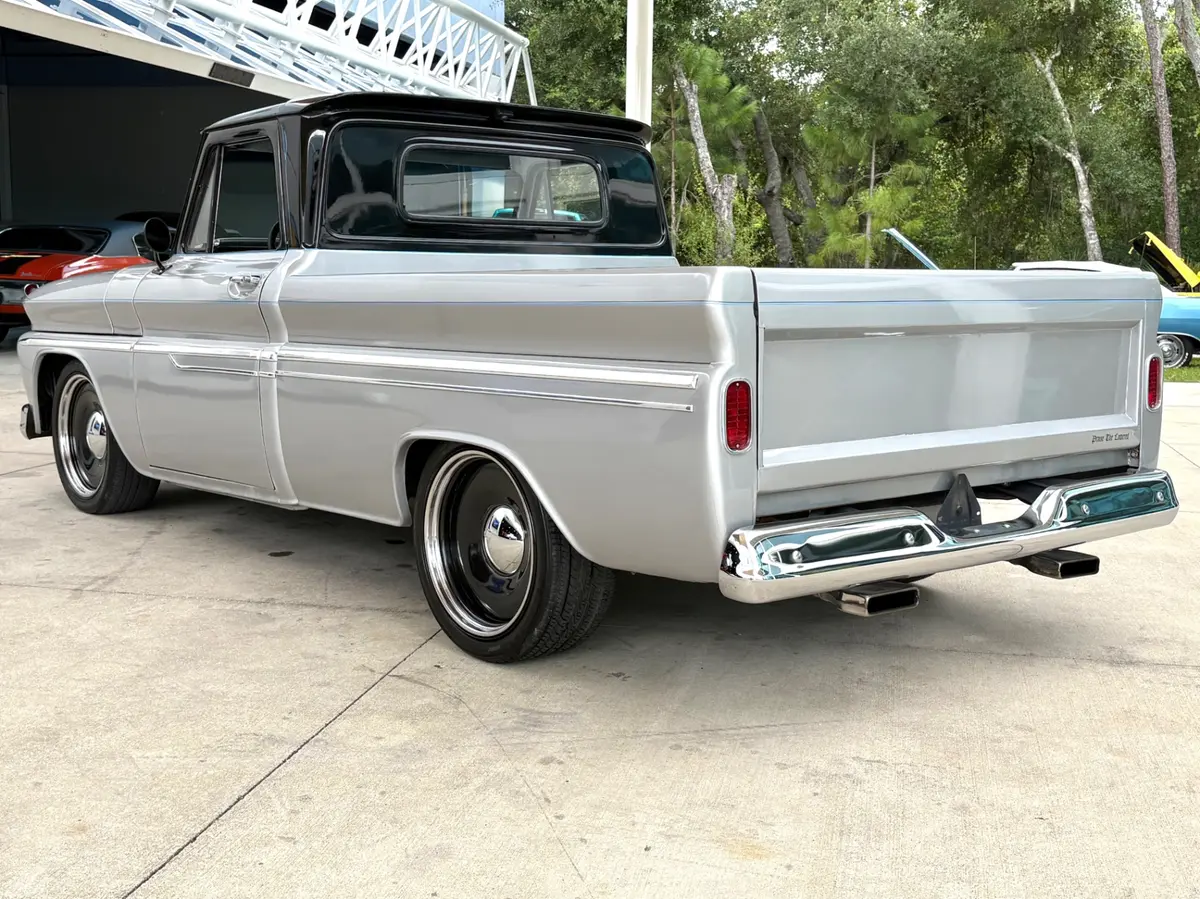
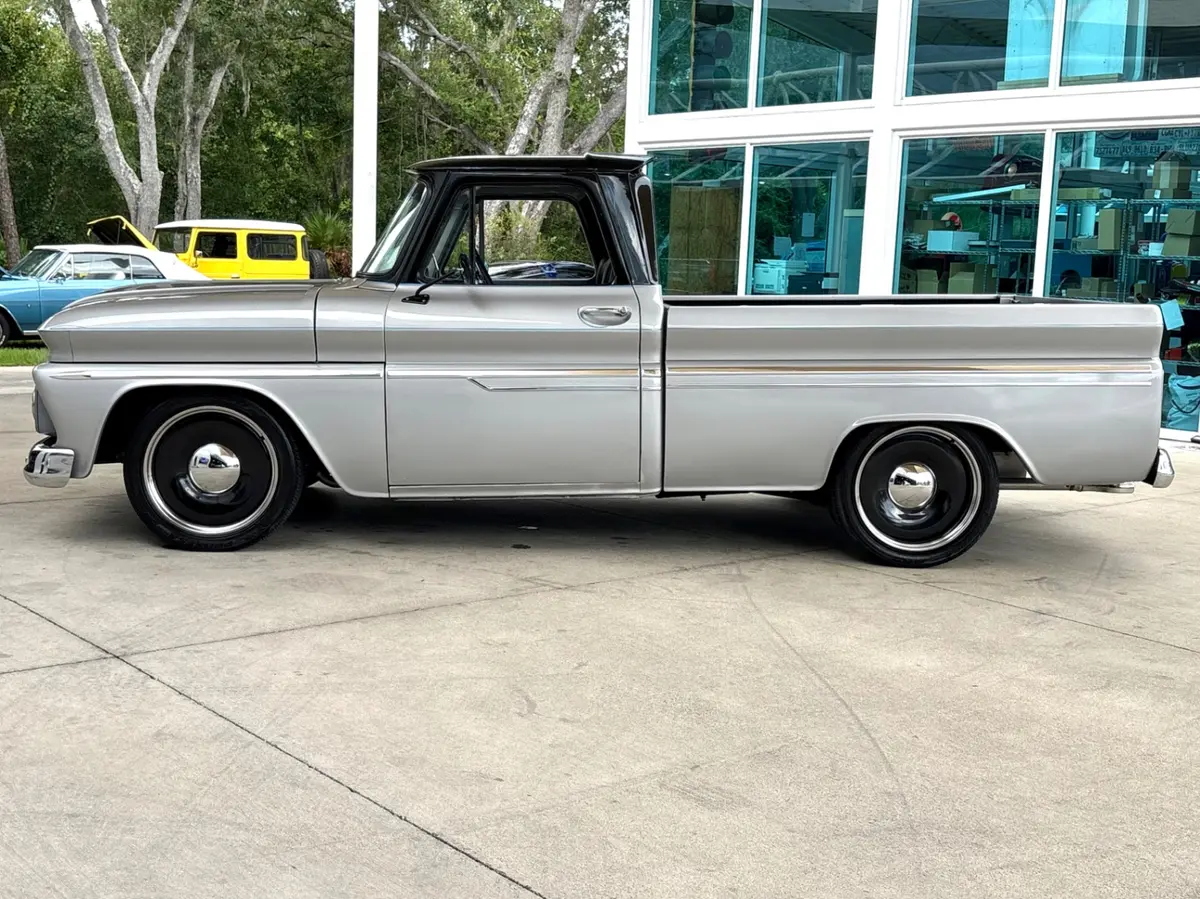
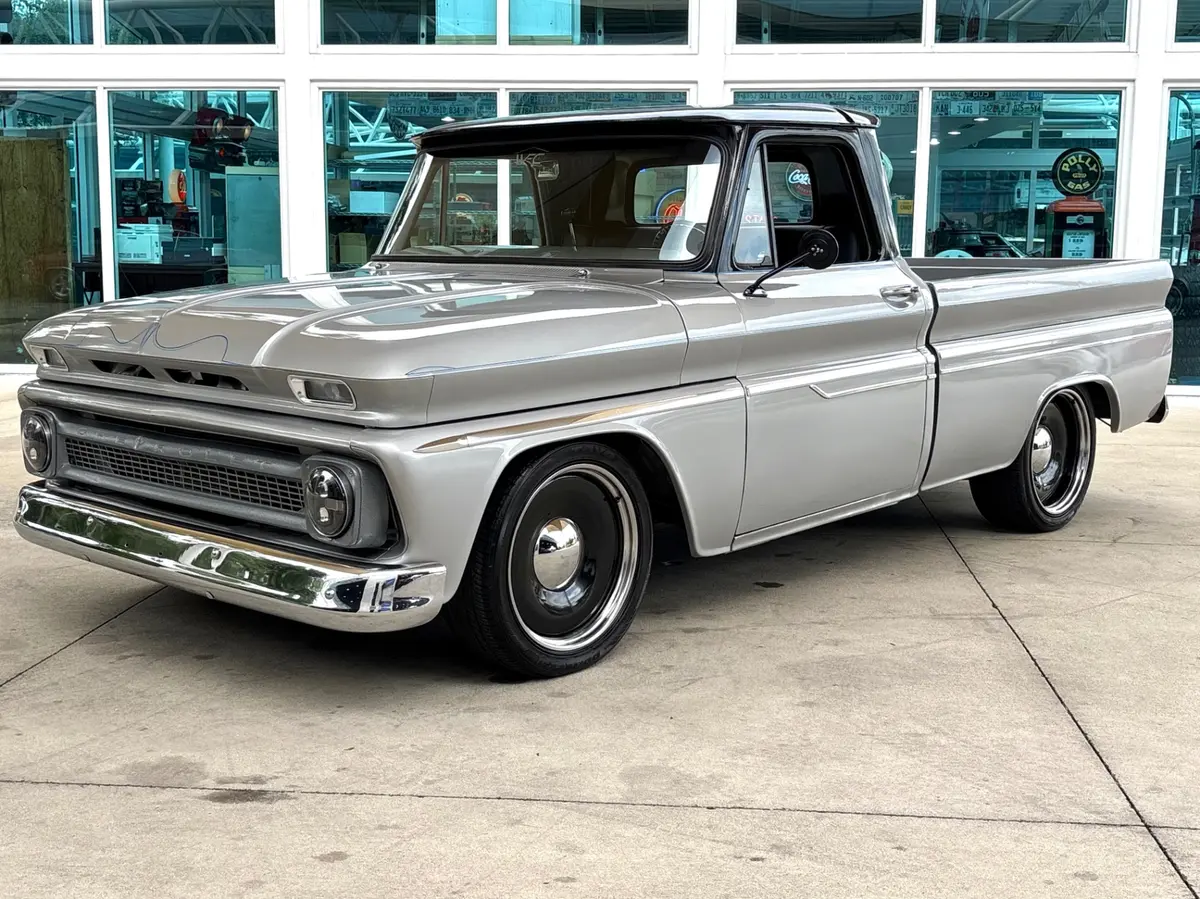
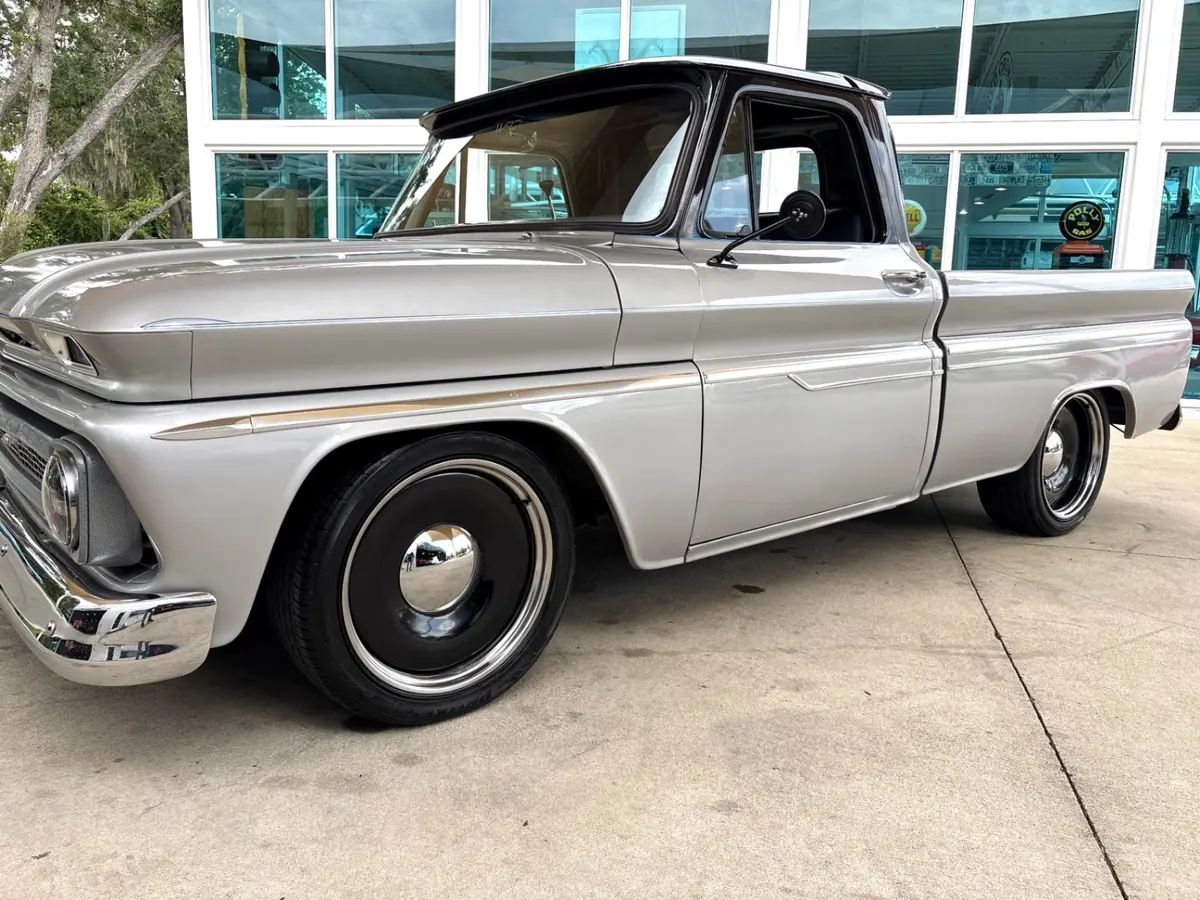
1964 Chevrolet C10 Custom Build — 454 Big Block, Triple Carb, Air Ride, Four-Link Rear
Why This Car Is Special
The 1960 to 1966 Chevrolet C10 is widely regarded as the most desirable generation of the C/K pickup line. Collectors and custom truck builders call this body style the "Action Line" generation, and for good reason — the cab-forward design, wraparound windshield, and deeply sculpted sheetmetal gave Chevrolet's half-ton pickup a look that felt more car than truck. The 1964 model year specifically sits in a sweet spot within this generation. It was the second year of the redesigned C/K platform, which had debuted in 1960, and by 1964 Chevrolet had refined the body and trim details into one of the most proportionally balanced truck designs of the era. Fleetside models like this one carried a smooth, flush bed that replaced the old stepside look and gave the truck a longer, lower stance.
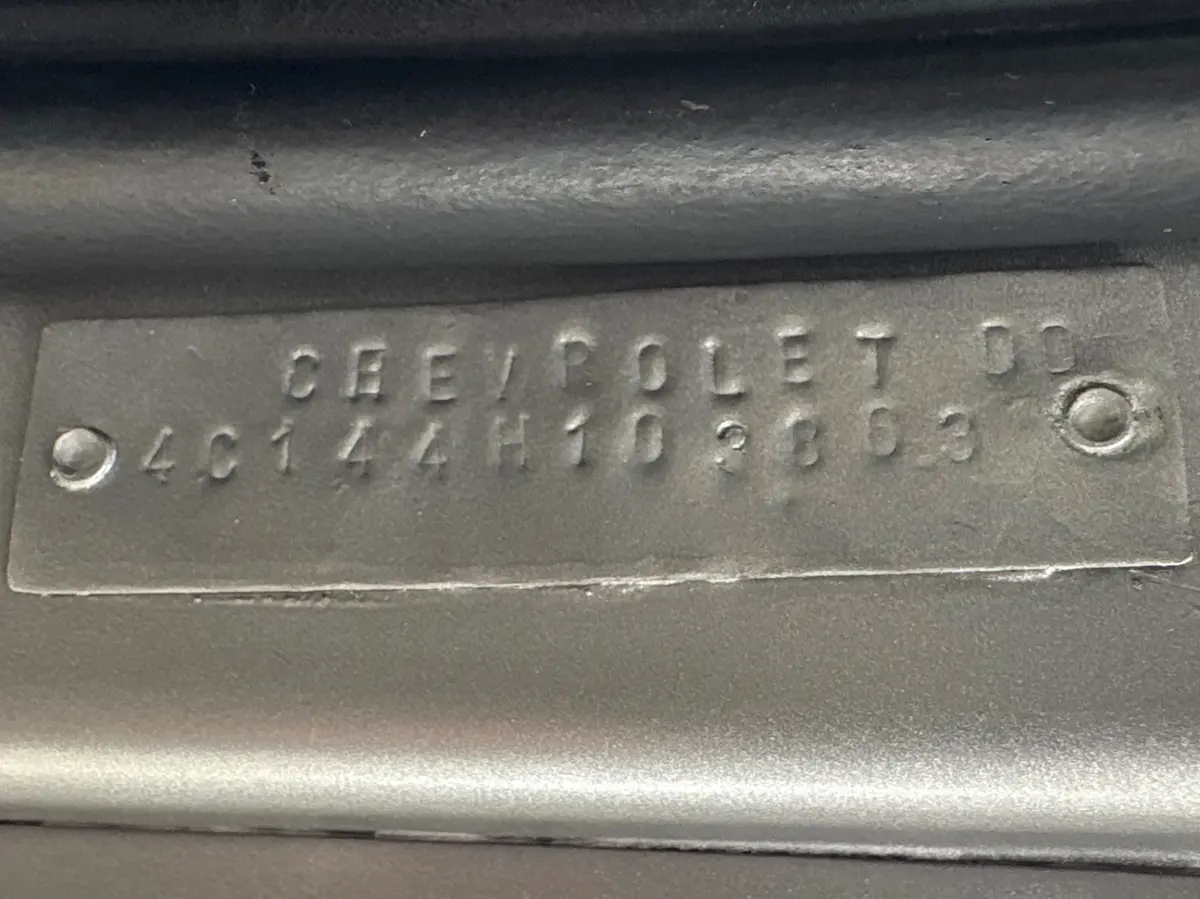
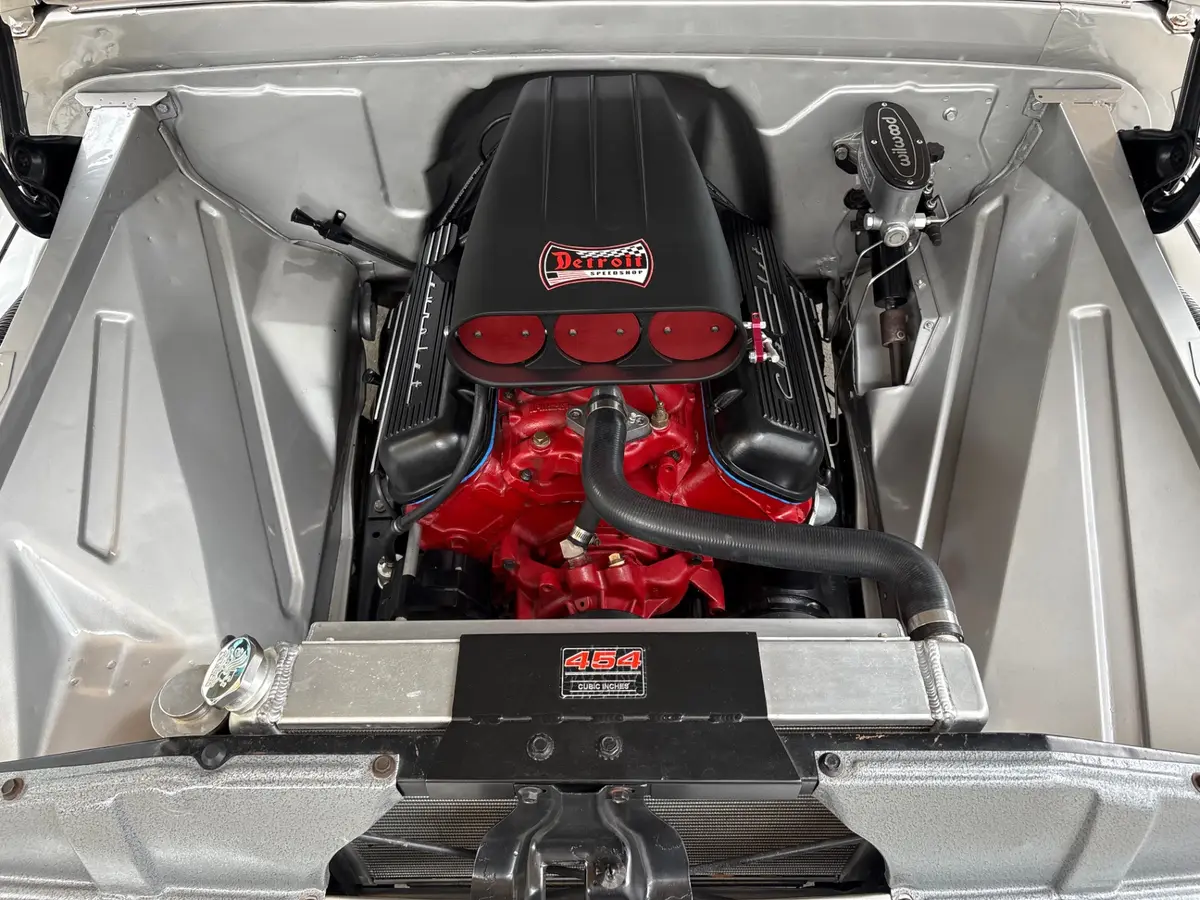
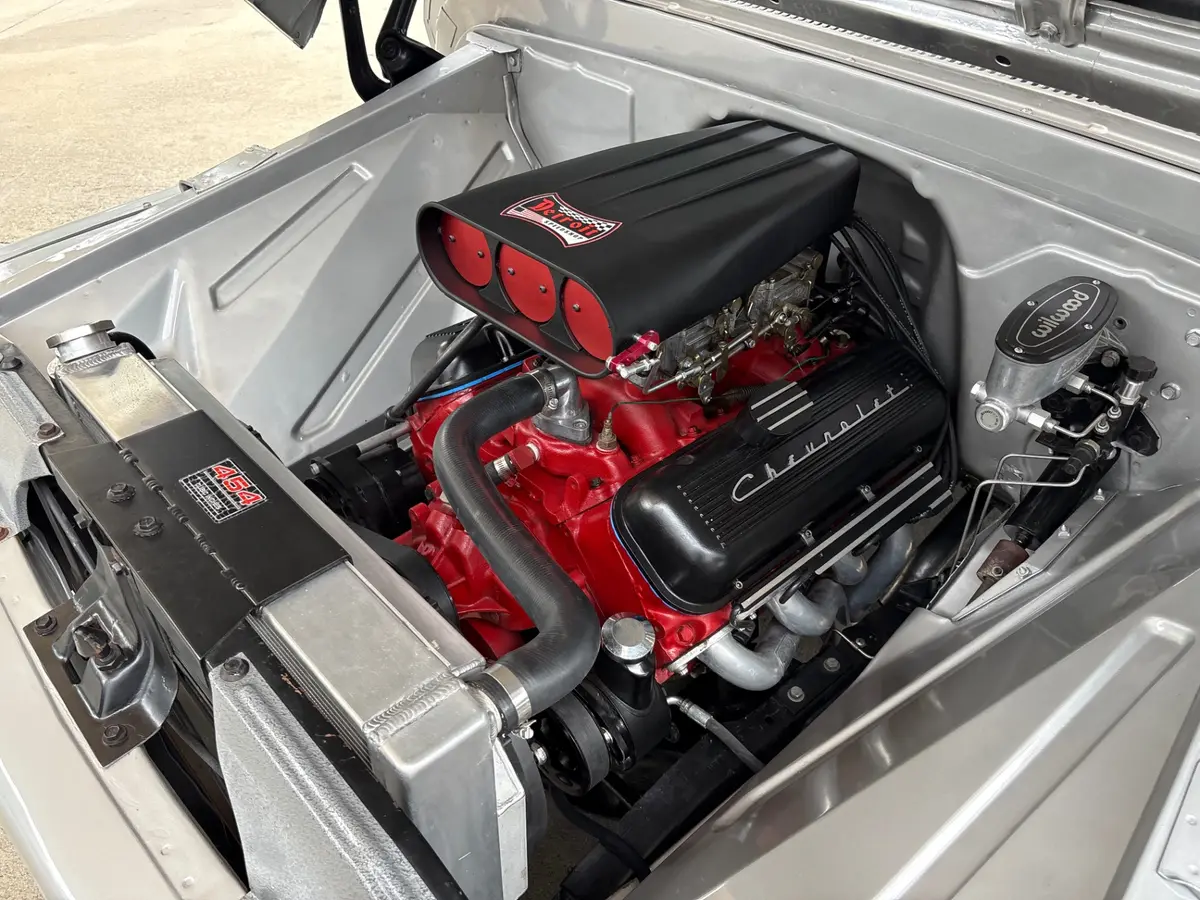
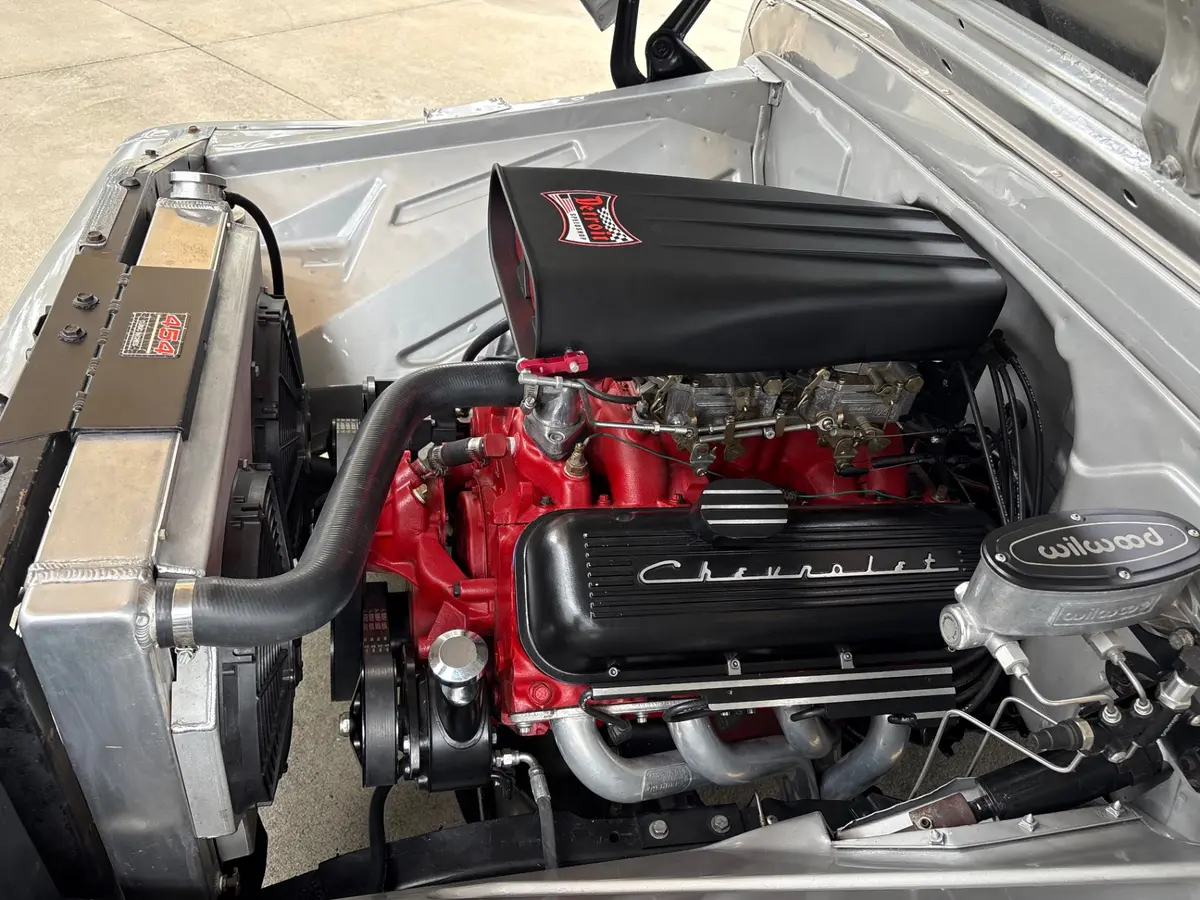
This particular 1964 Chevrolet C10 has been built as a full custom — not a trailer queen, not a light refresh. Someone spent serious money engineering this truck from the ground up with a focus on real-world performance: a 454 cubic inch big block under a triple-carburetor induction setup, air ride suspension with a four-link rear, four-wheel Wilwood disc brakes, and a chassis that can actually use the power being made. The VIN decodes this truck as a 1964 model year, C-series (conventional two-wheel drive), half-ton (10) capacity, built at the Flint, Michigan assembly plant — a factory that produced the majority of Chevrolet truck output during this period. The result is a truck that carries the proportions and character of the original 1964 Chevrolet C10 while being built with the mechanical hardware of a purpose-driven custom.
Features List
- 454ci Big Block V8
- Triple Carburetor Induction with Detroit Speed Shop Intake
- Chevrolet Script Valve Covers
- Electric Cooling Fan
- Aluminum Radiator
- 3-Speed Automatic Transmission
- Floor Shifter
- Dual Exhaust with Square Exhaust Tips
- 4-Wheel Disc Brakes
- Wilwood Brake Master Cylinder
- Wilwood Red Calipers (front and rear)
- Air Ride Suspension
- Four-Link Rear Suspension
- Tubular Control Arms
- Two-Tone Silver and Black Paint
- Custom Black Roof
- Chrome Side Body Trim
- Blue Pinstripe Graphics
- Custom Pinstripe Hood
- LED Headlights
- Chrome Bumpers (front and rear)
- Black Steel Wheels with Chrome Dog Dish Hubcaps
- Performance Tires
- Auto Meter Gauge Cluster
- Tachometer, Speedometer, Oil Pressure, Water Temp, Fuel Level, and Volt Gauges
- Custom Chrome 3-Spoke Steering Wheel
- Black Vinyl Bench Seat
- Custom Black Door Panels
- Custom Black Carpet
- C10 Embroidered Floor Mat
- Seat Belts
Mechanical
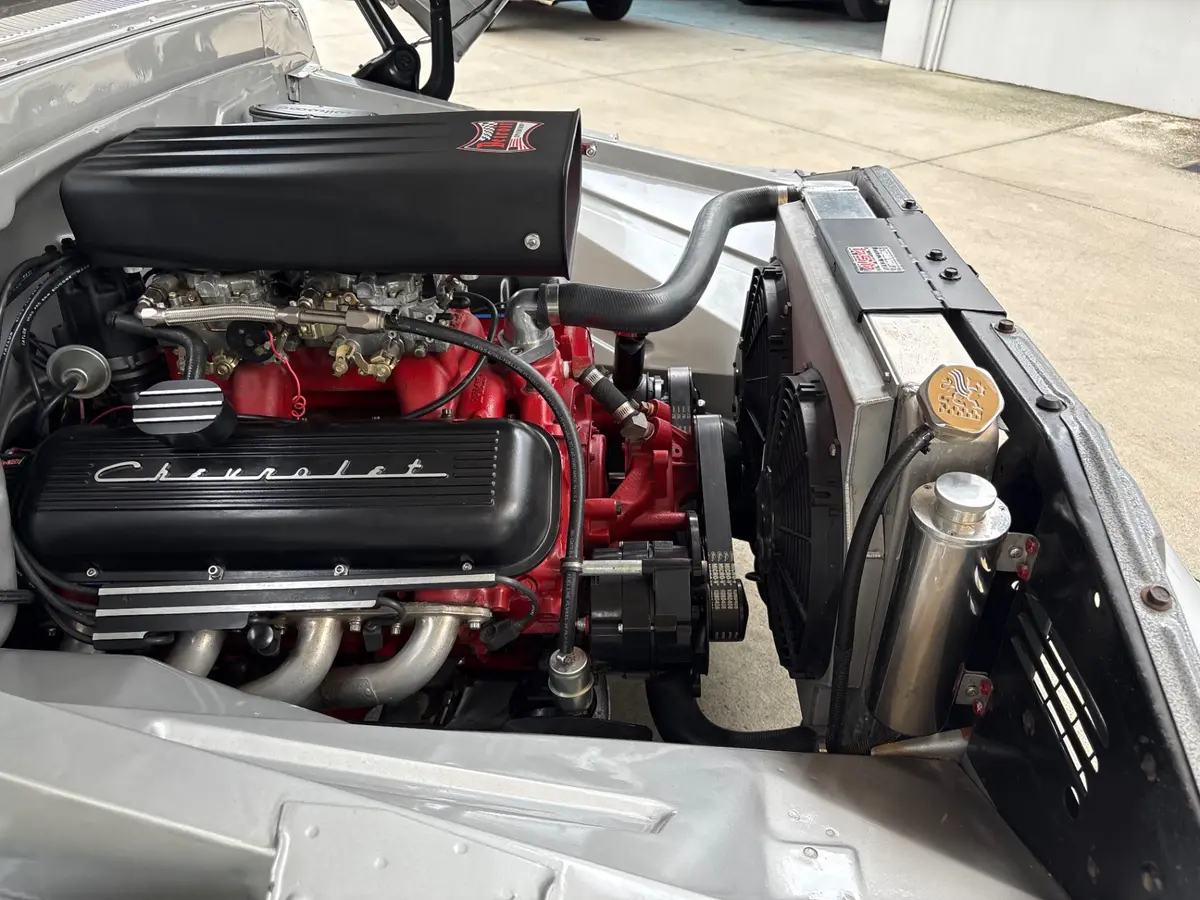
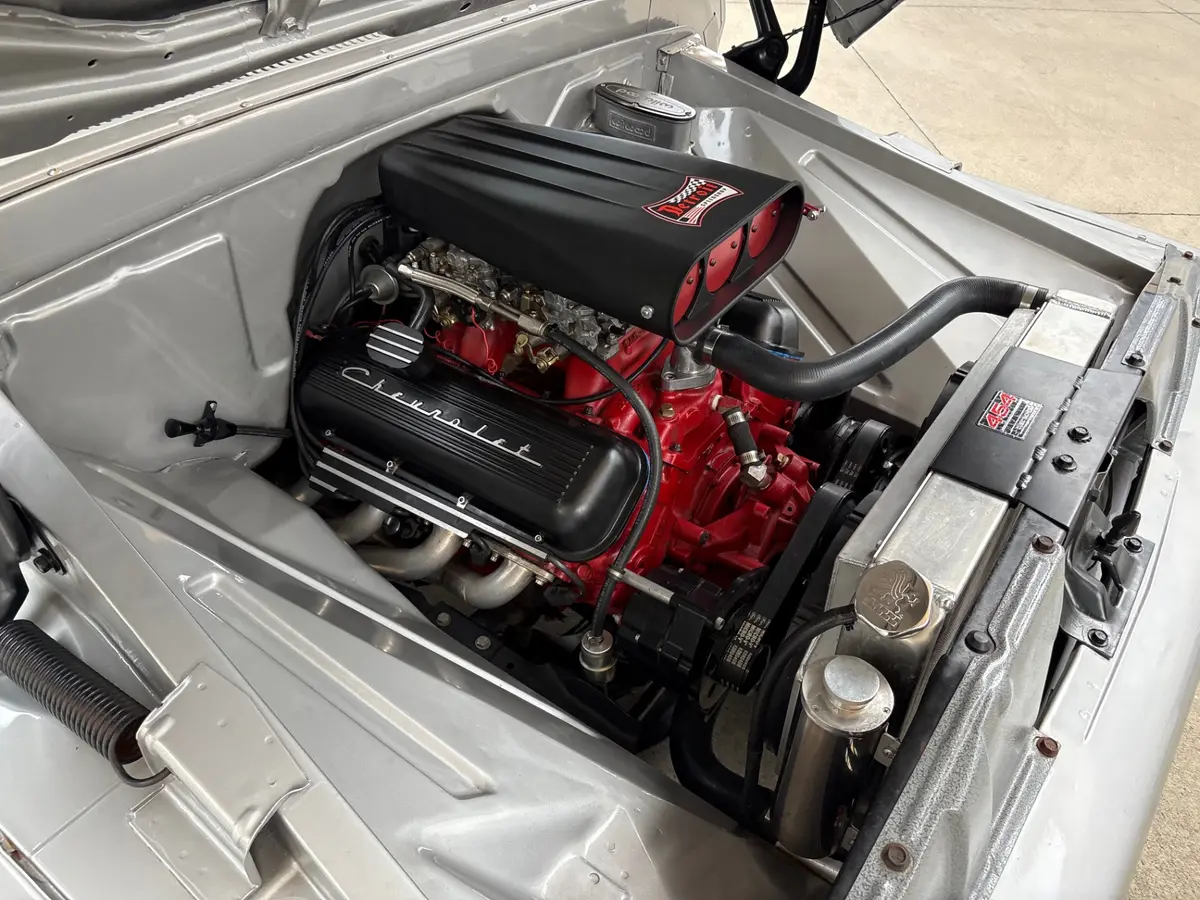
The engine in this 1964 Chevrolet C10 is a 454 cubic inch big block V8, which is the largest displacement engine in the traditional Chevrolet Mark IV big block family. The 454 was introduced by Chevrolet in 1970 and became one of the most recognizable American V8s ever produced, appearing in everything from Corvettes to heavy-duty trucks. Dropping a 454 into a 1964 C10 chassis is a well-established and respected approach in the custom truck world — the big block fits the engine bay without excessive modification, and the torque output of the 454 suits the cab-forward proportions of the truck in a way that smaller displacement engines simply do not.
What makes this particular installation notable is the induction system. A Detroit Speed Shop intake manifold supports a triple-carburetor setup — three two-barrel carburetors arranged in a progressive or simultaneous configuration across the intake. This type of induction has deep roots in American performance history, used famously on the Chevrolet Corvette's fuel-injected competitors in the late 1950s and early 1960s, and later embraced by the custom truck community for both its visual impact and its ability to feed a large displacement engine across a broad RPM range. The Chevrolet script valve covers are a period-correct styling touch that complement the red-painted block and keep the engine bay visually cohesive. Cooling is handled by an aluminum radiator paired with an electric fan, a practical upgrade that frees up horsepower previously used to drive a mechanical fan and improves cooling efficiency at low speeds — relevant for a truck that will see show environments and city driving.
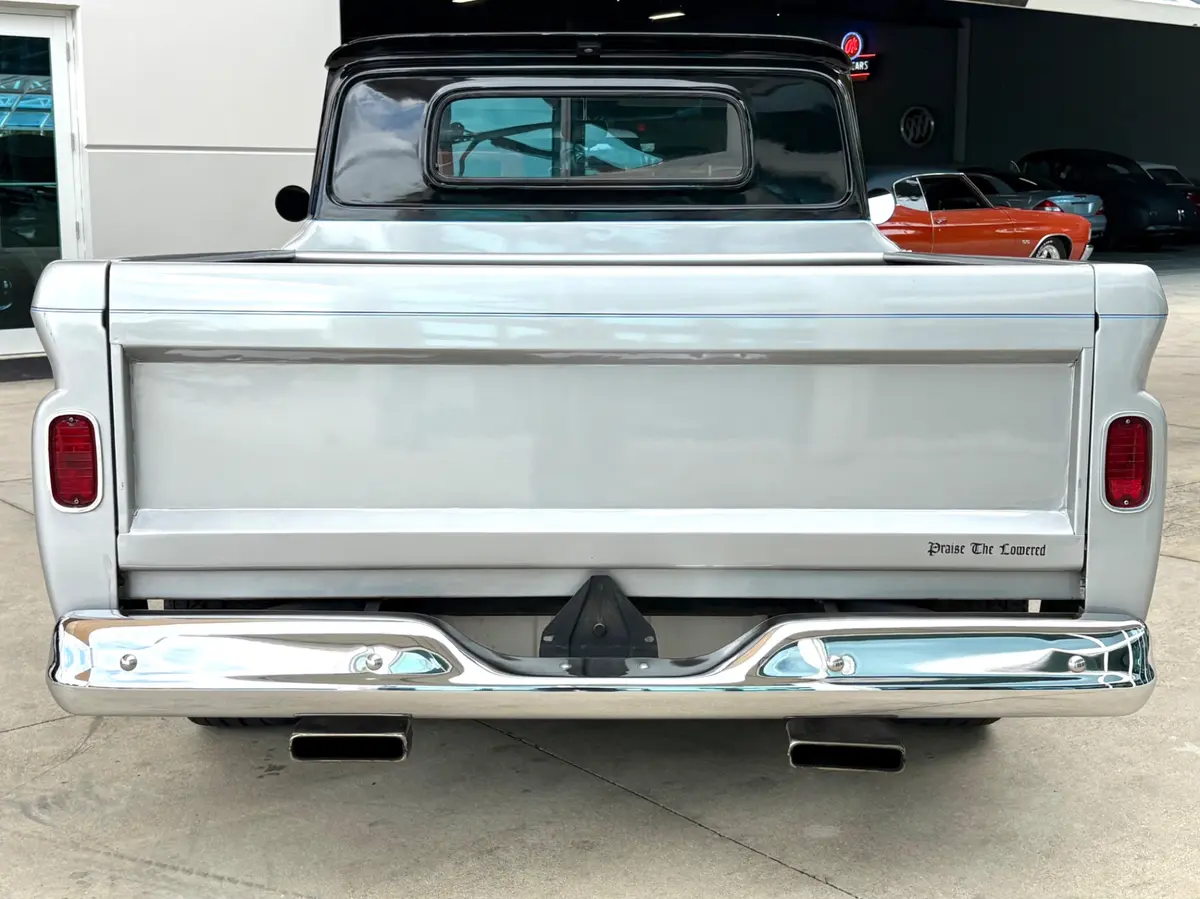
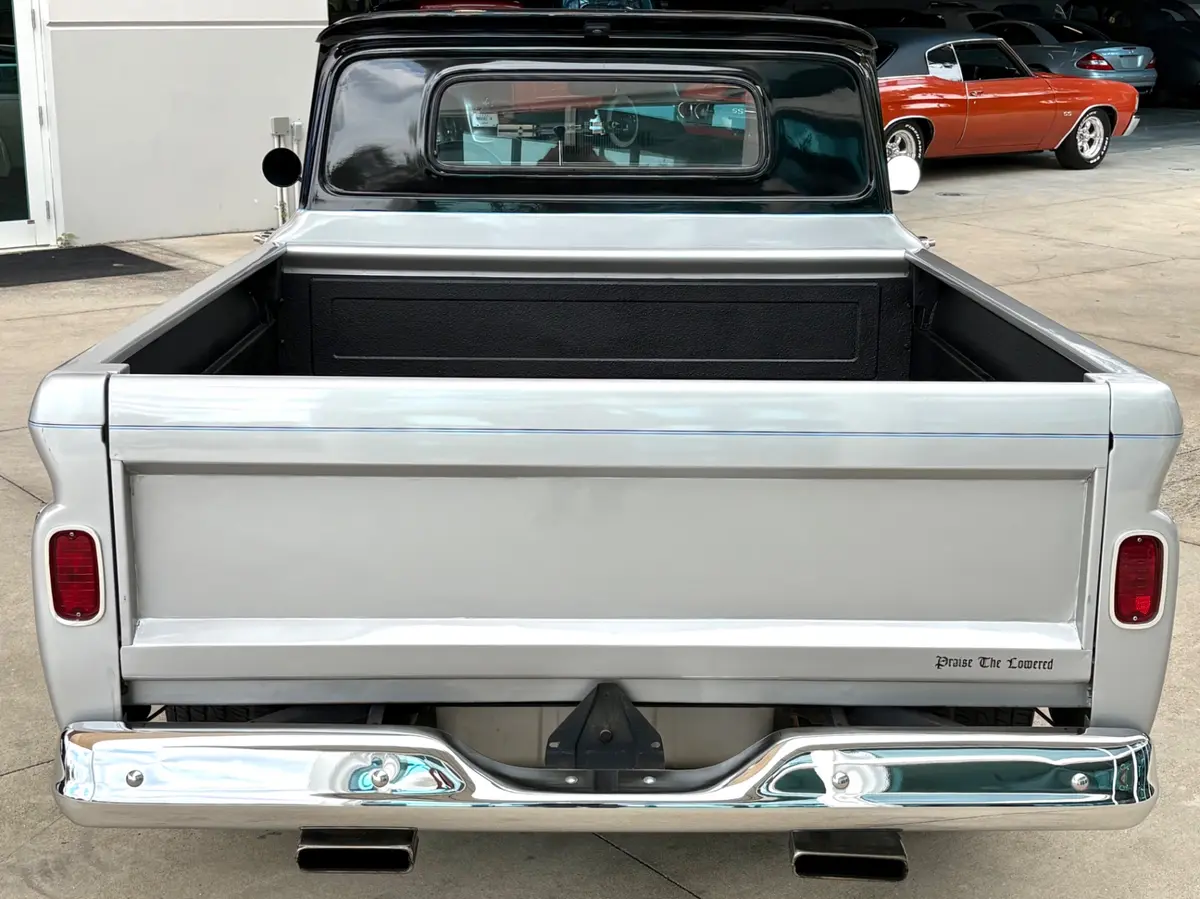
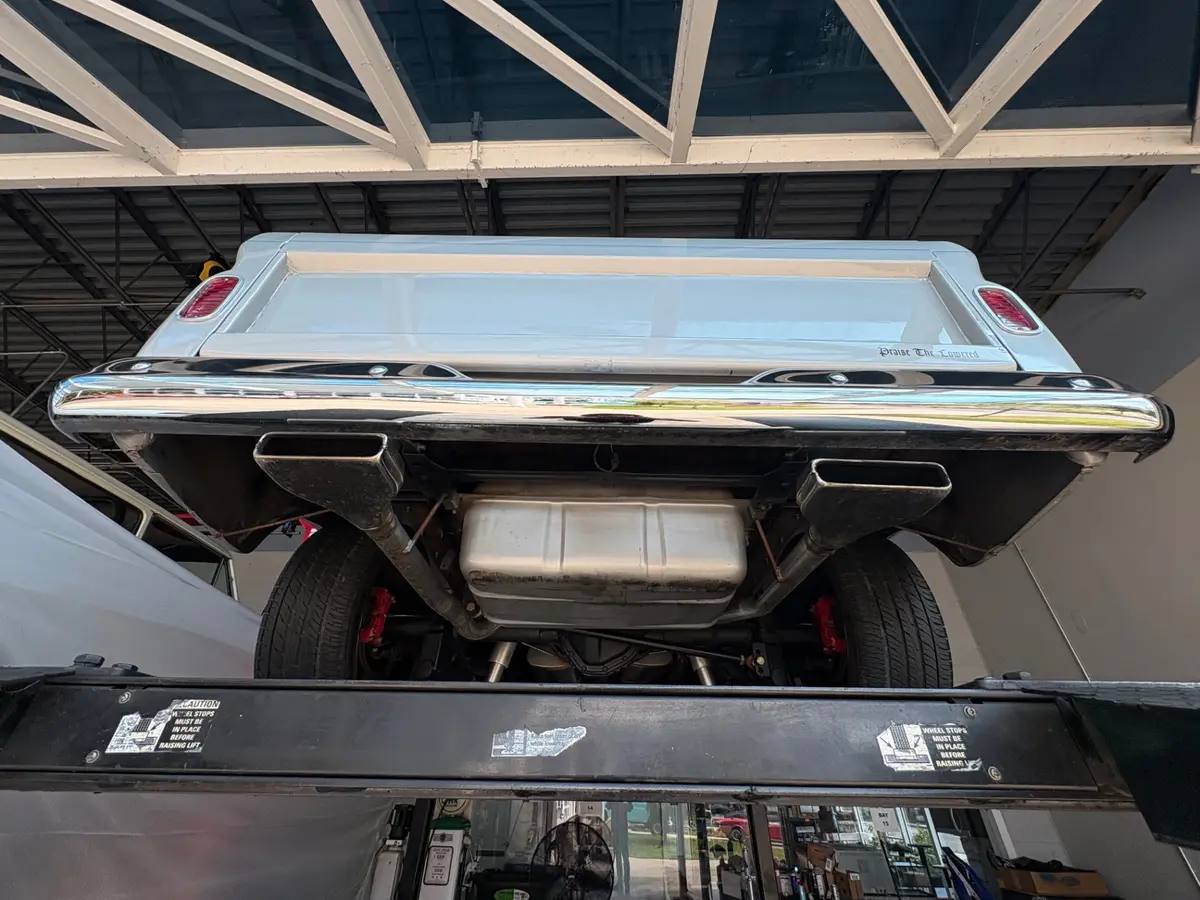
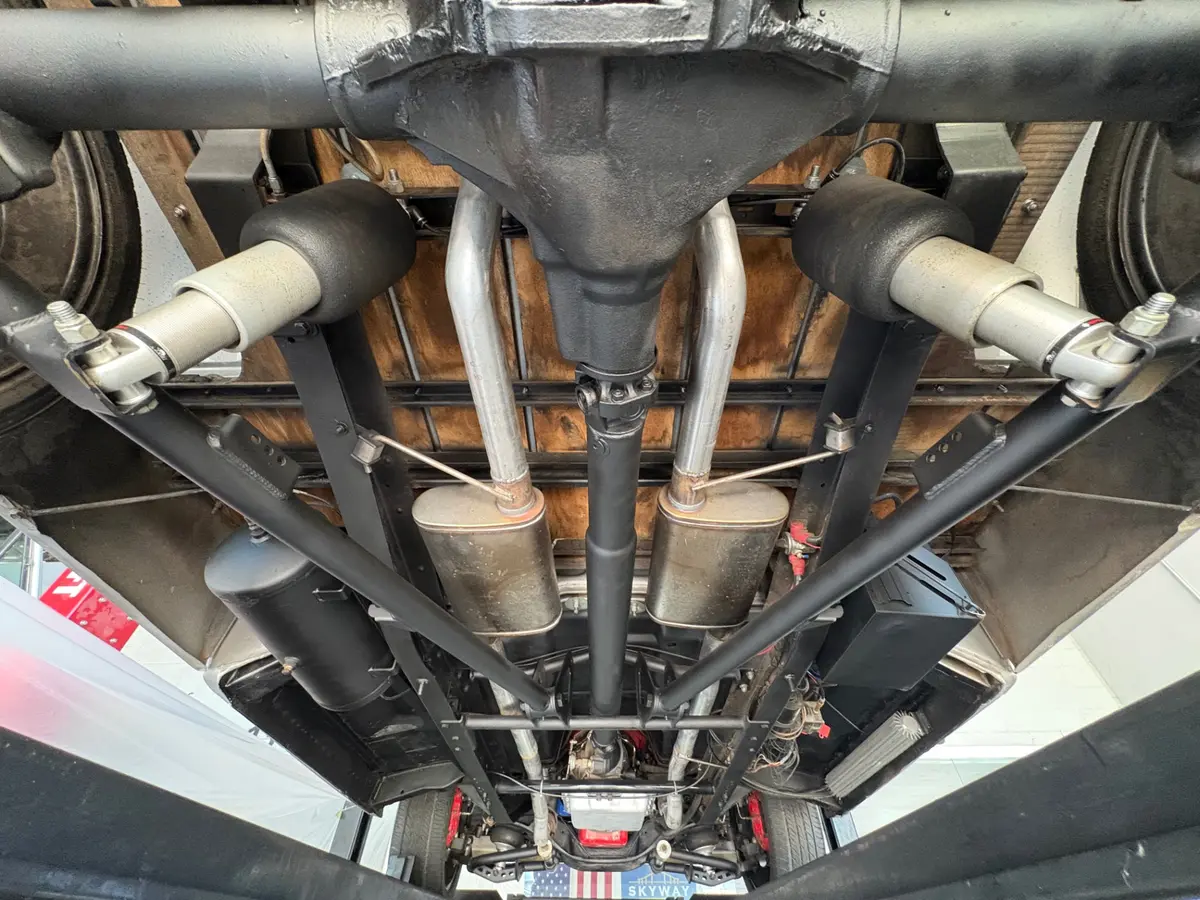
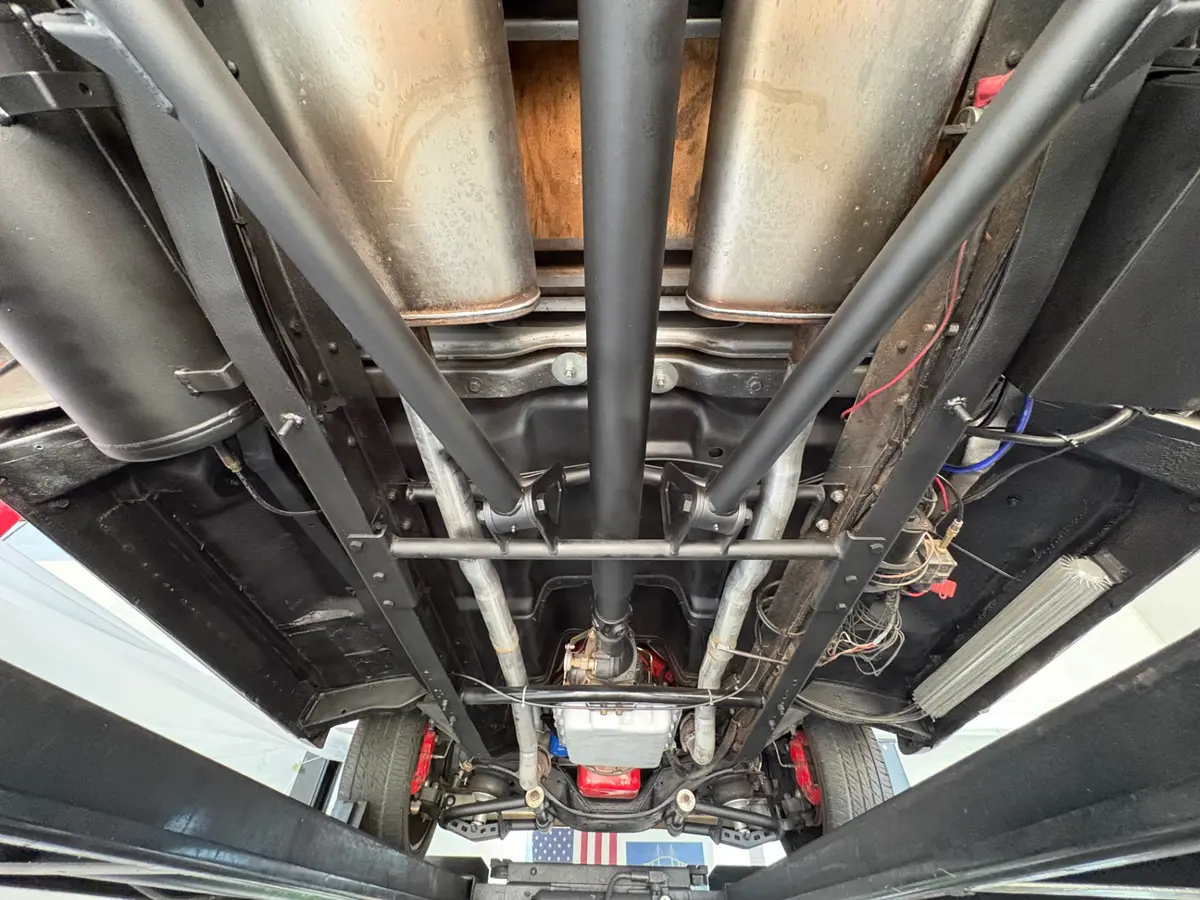
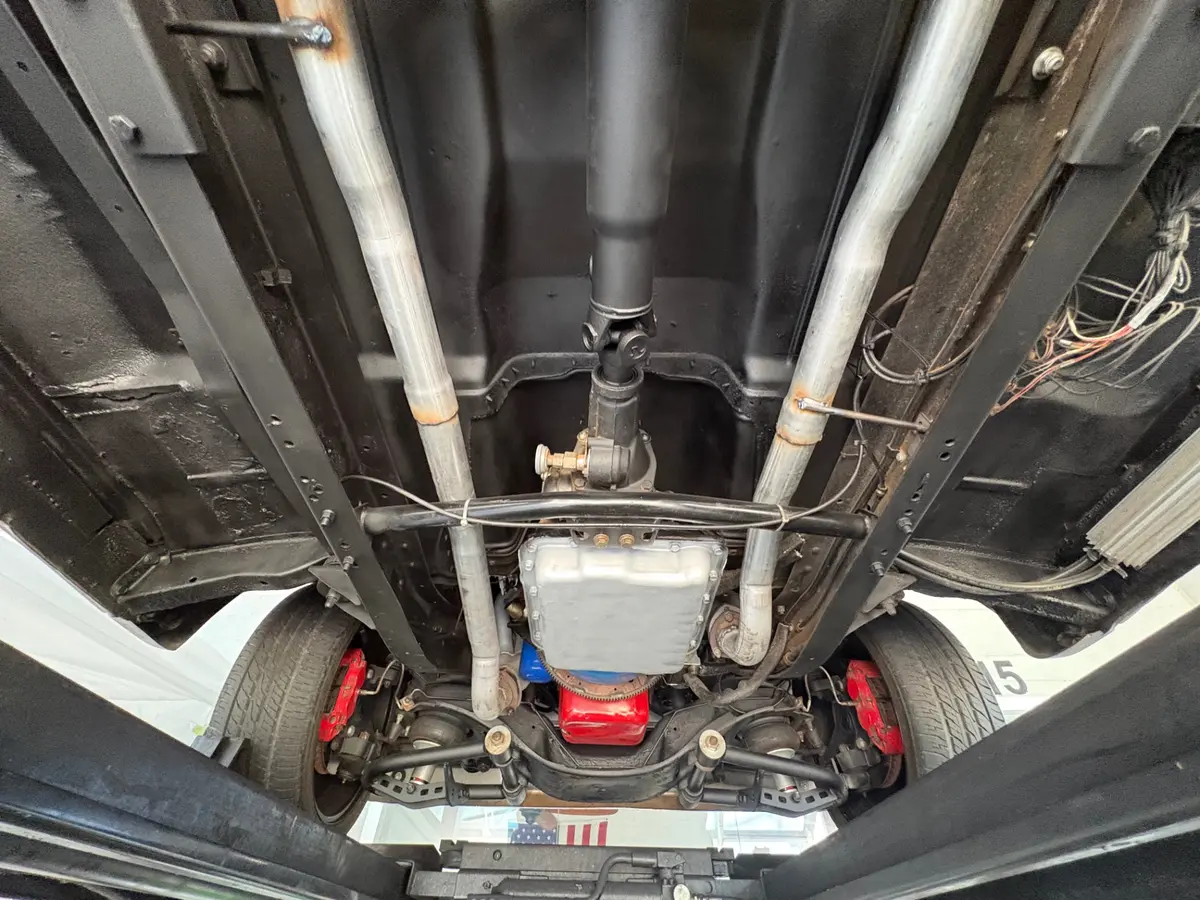
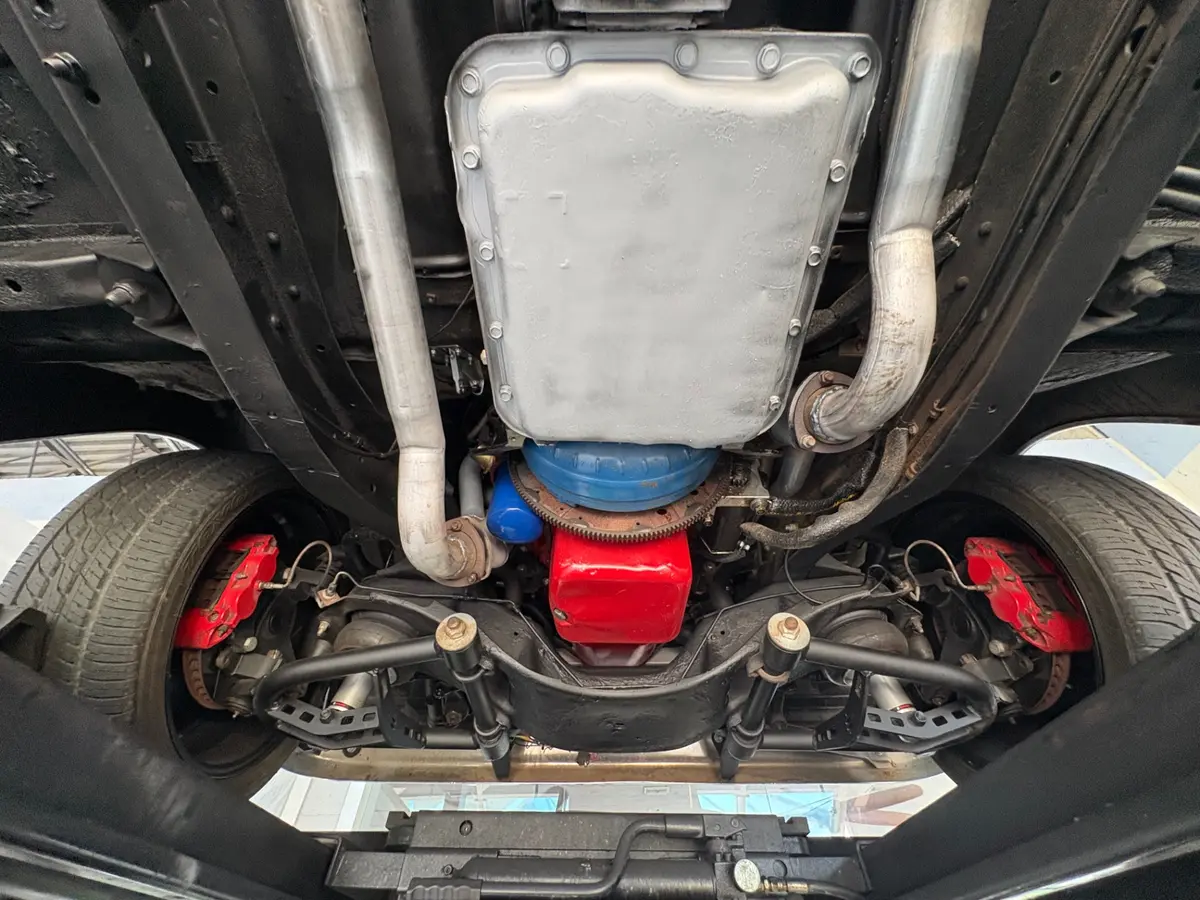
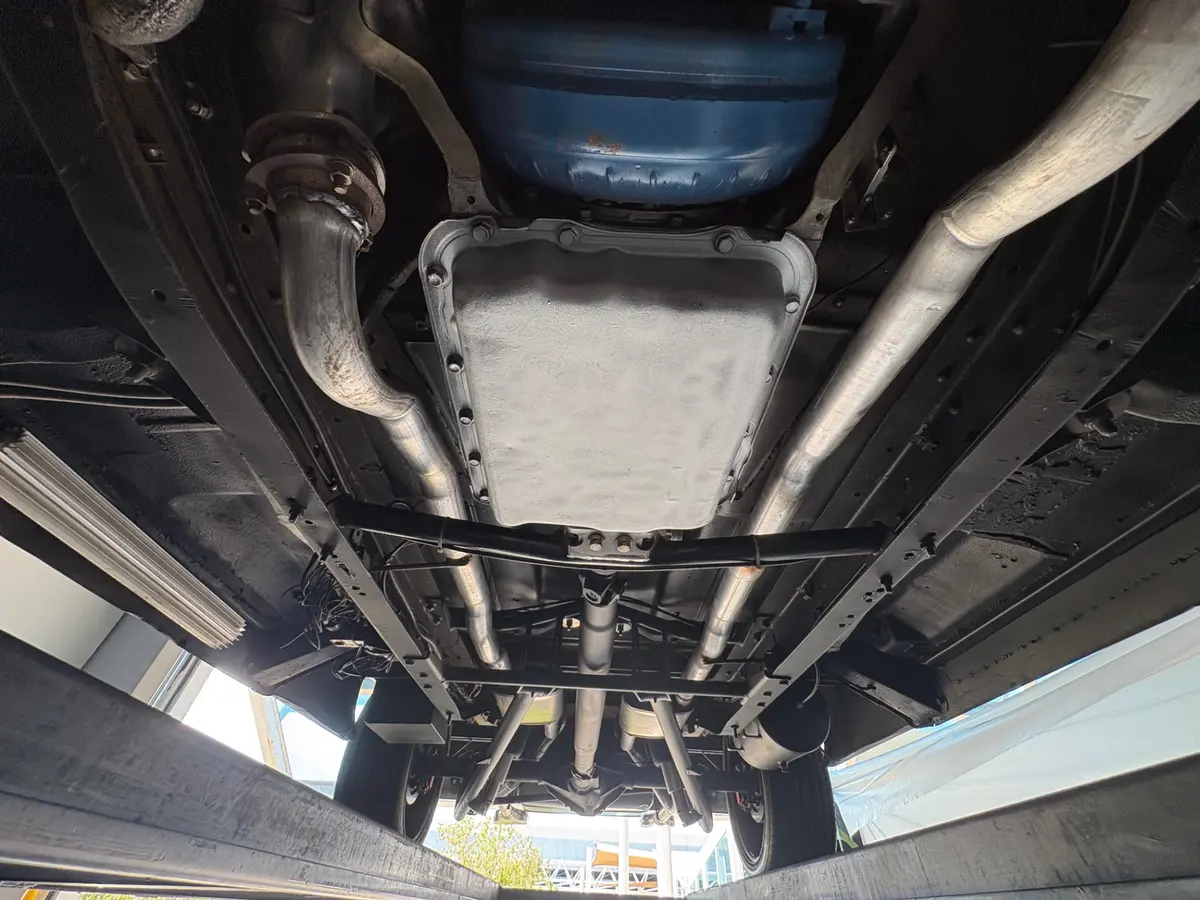
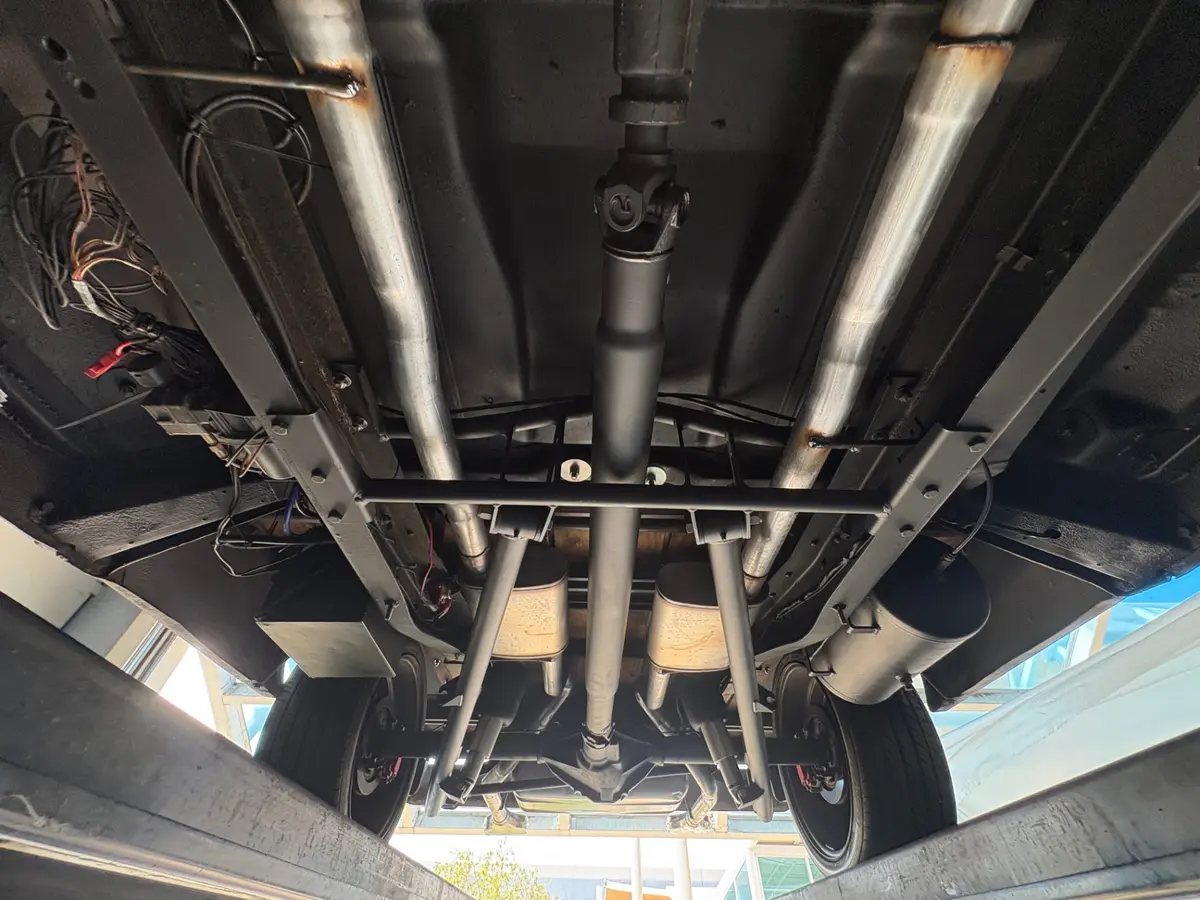
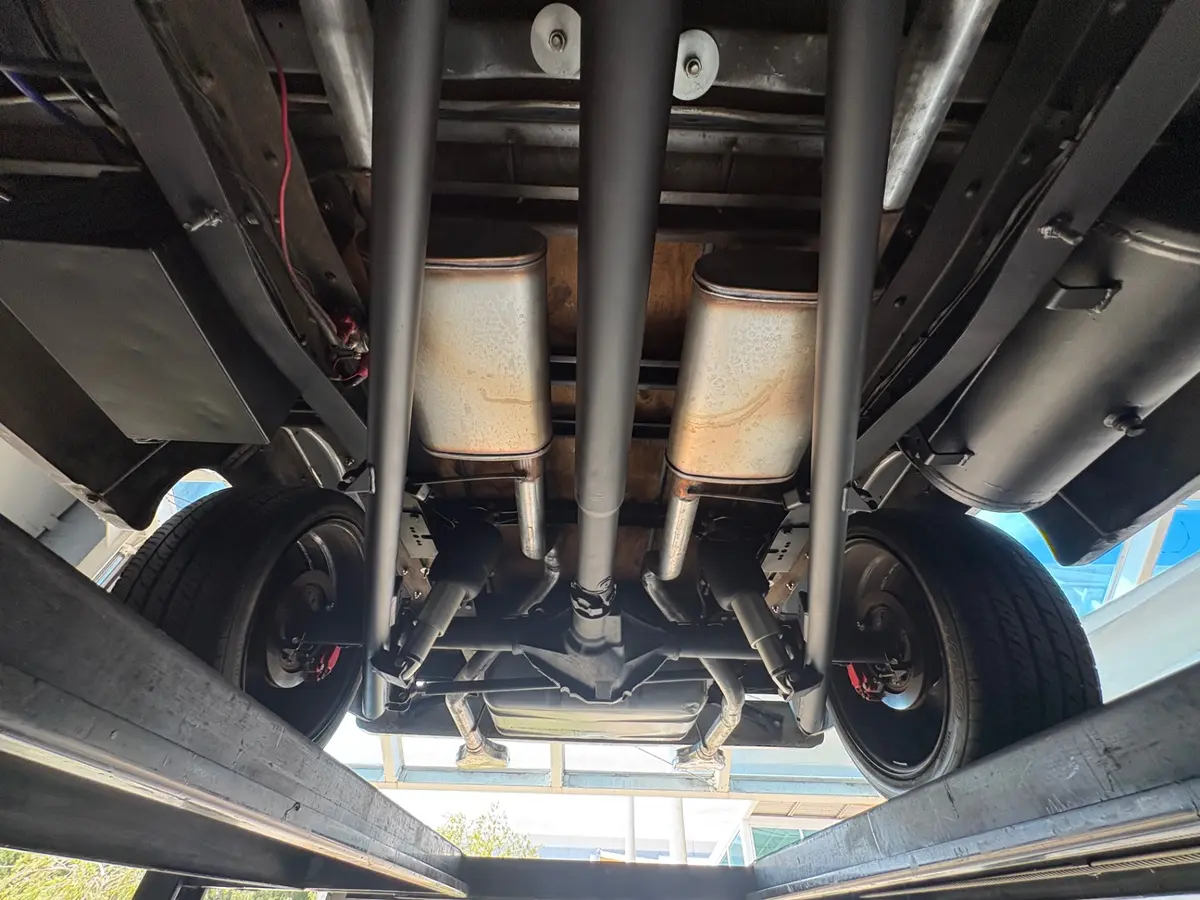
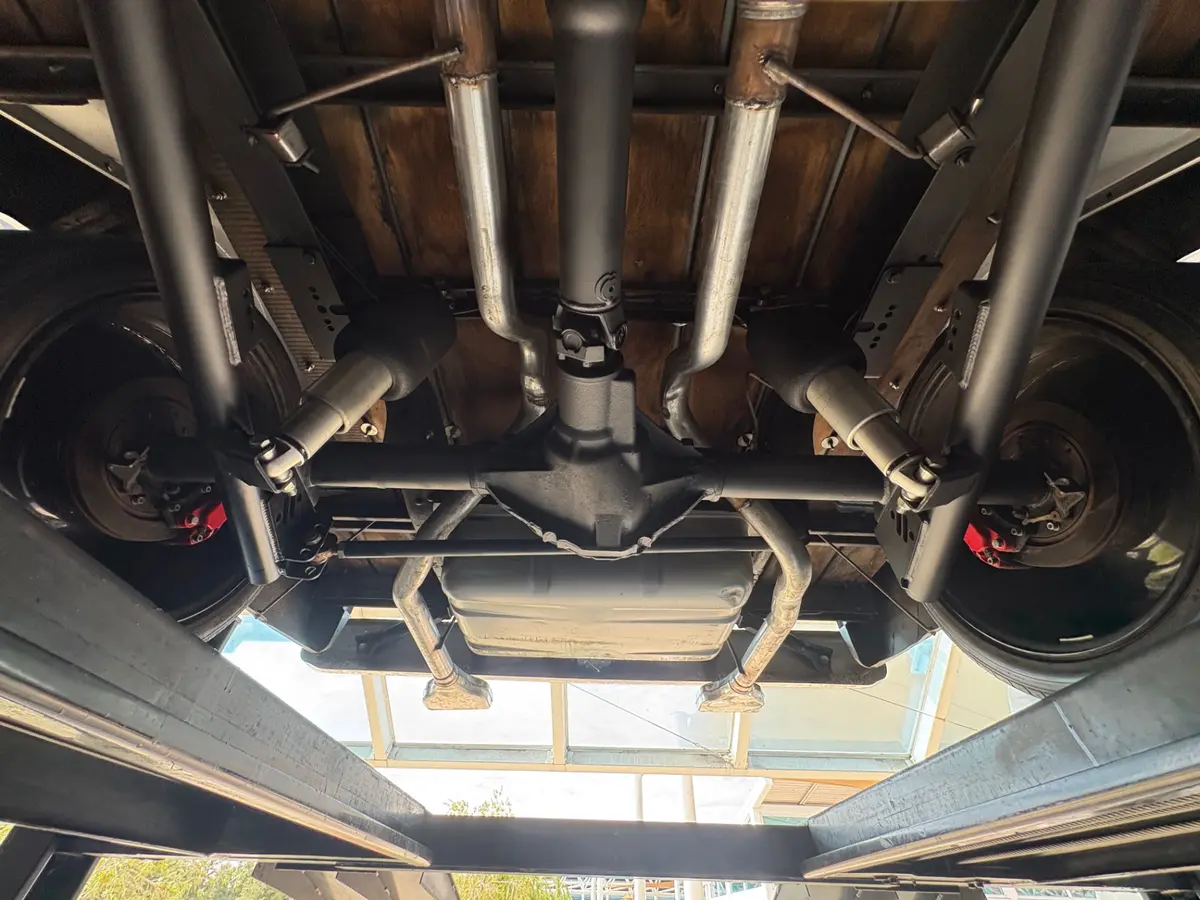
The transmission is a 3-speed automatic shifted via a floor-mounted shifter, which relocates the gear selector off the column and gives the cab a cleaner, more purposeful feel. Out back, the exhaust exits through dual pipes with square tips tucked up behind the chrome rear bumper — a functional and period-appropriate finishing detail visible in the undercarriage photos.
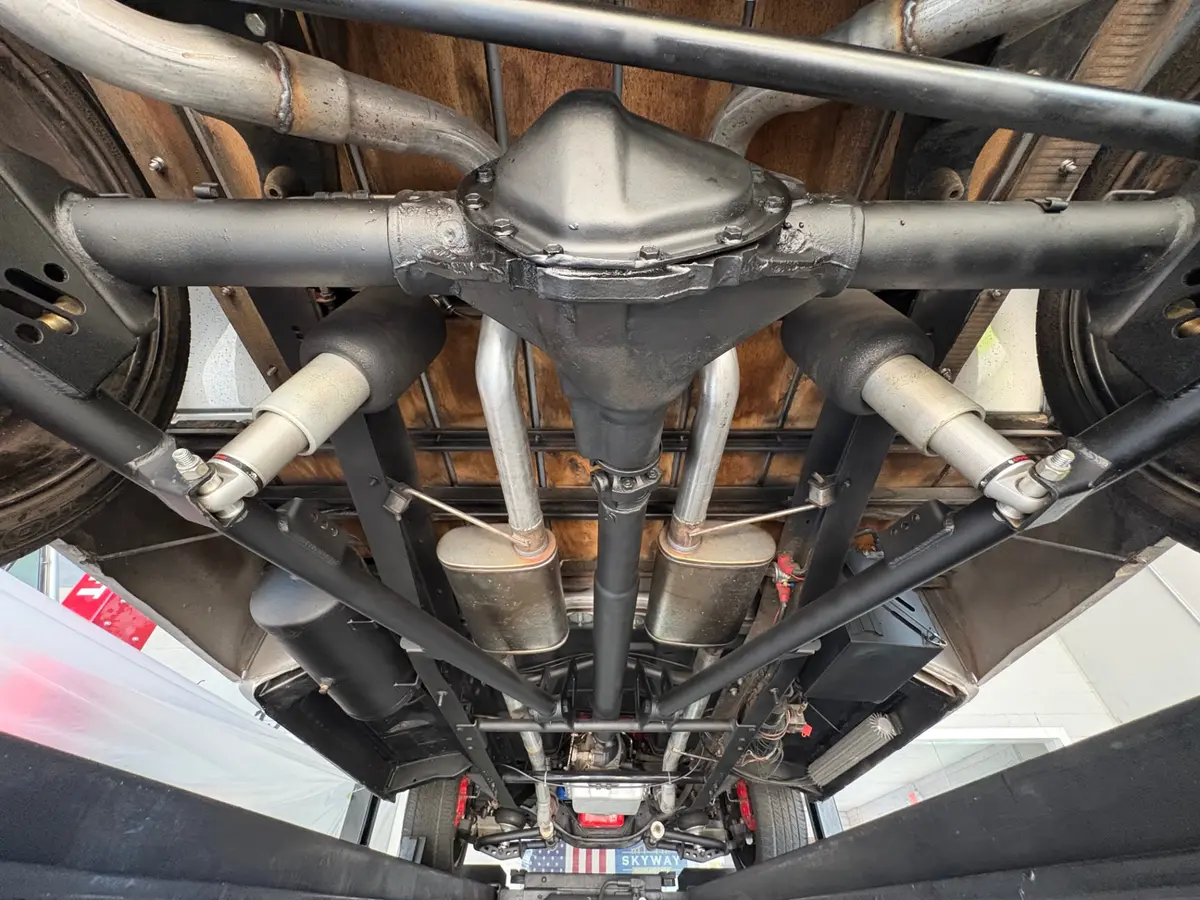
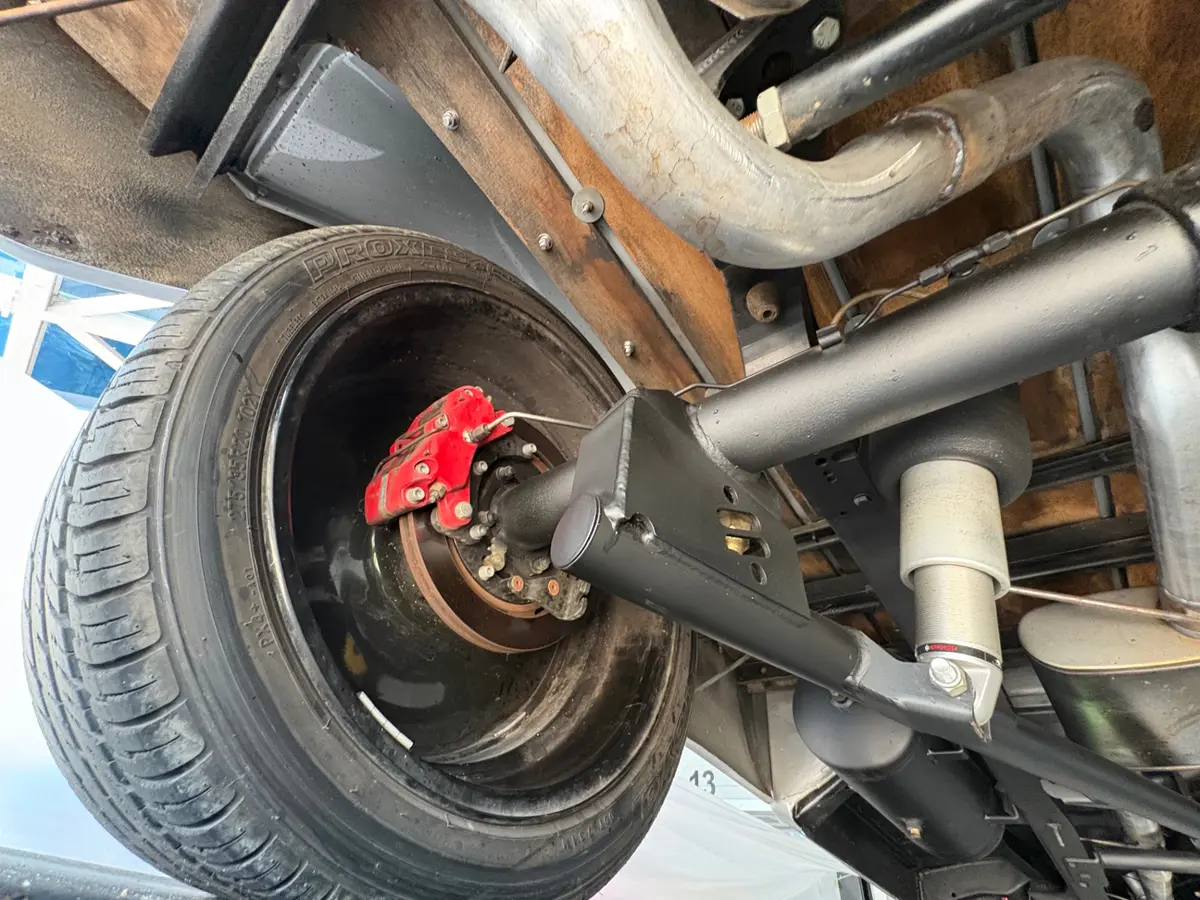
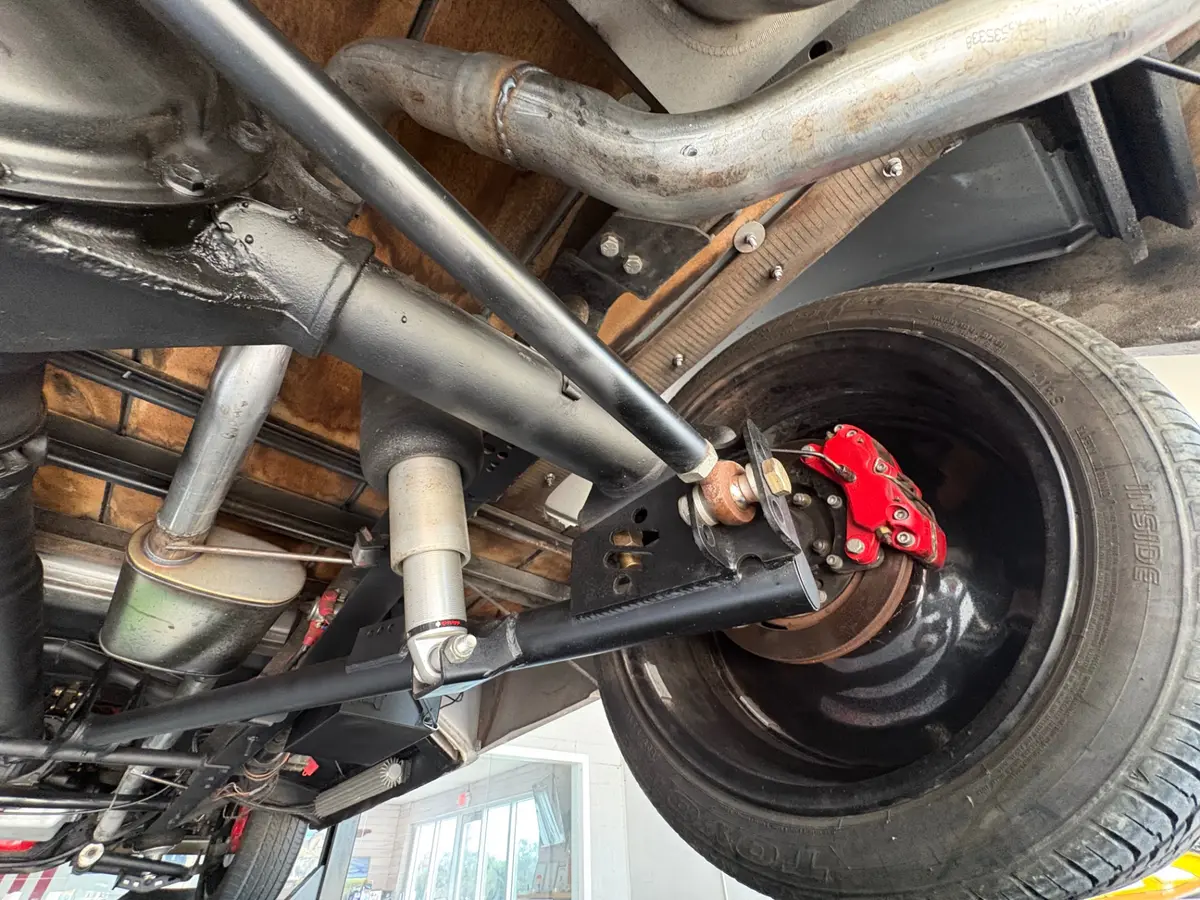
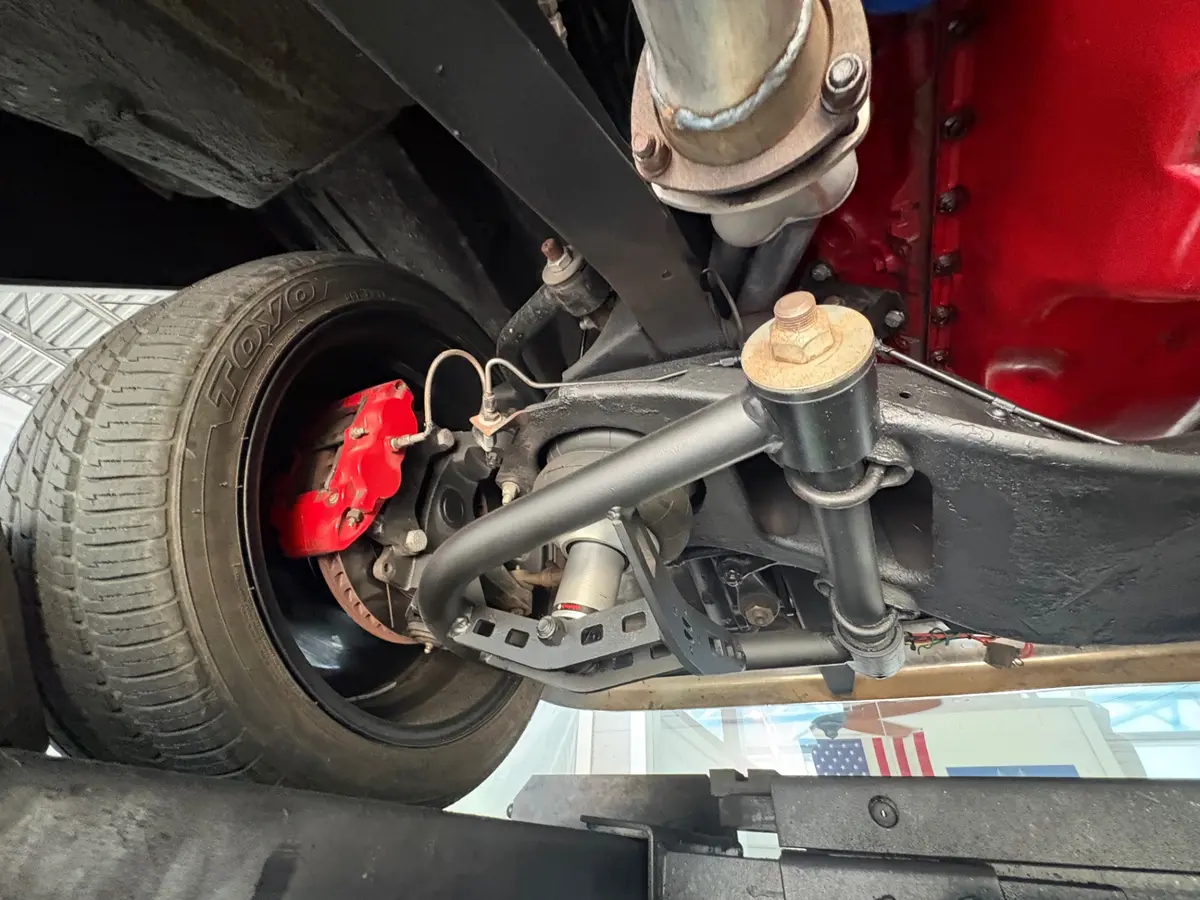
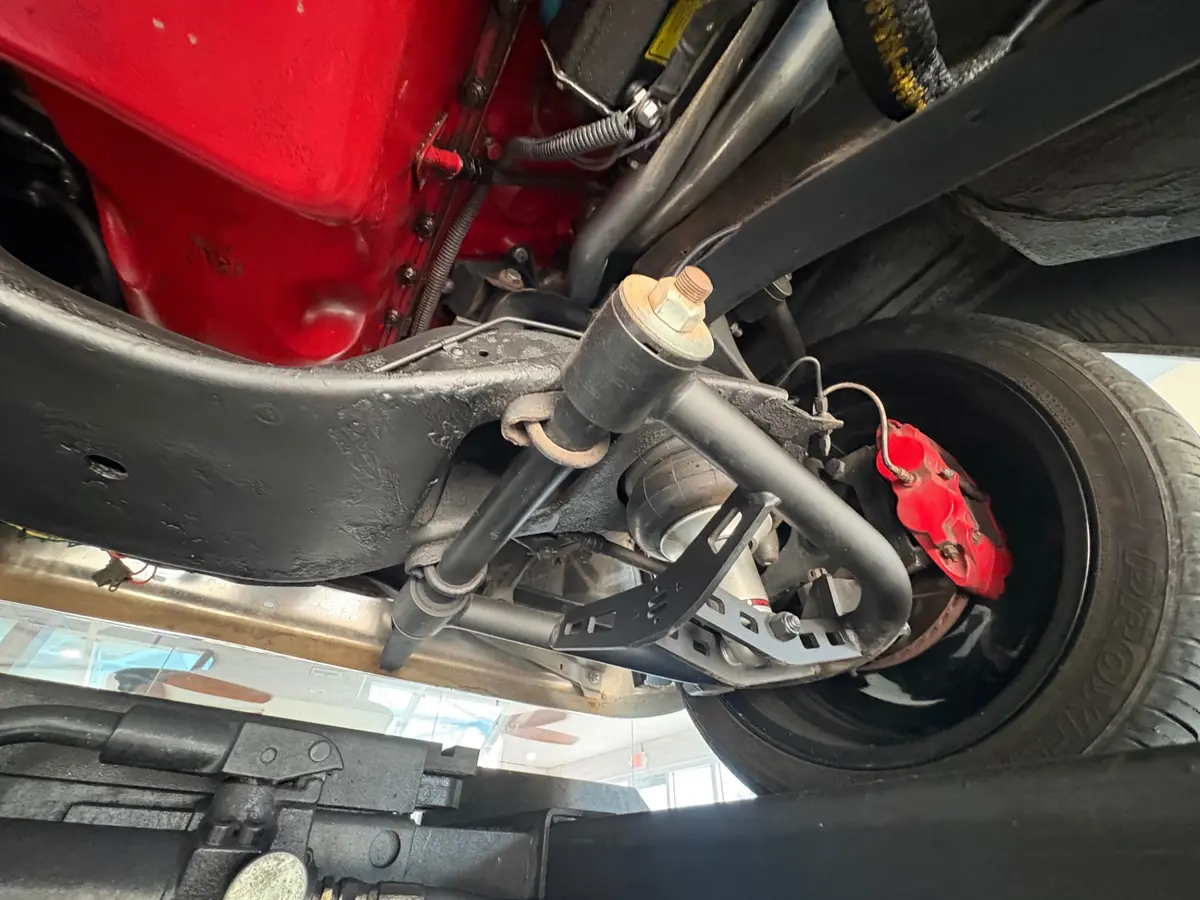
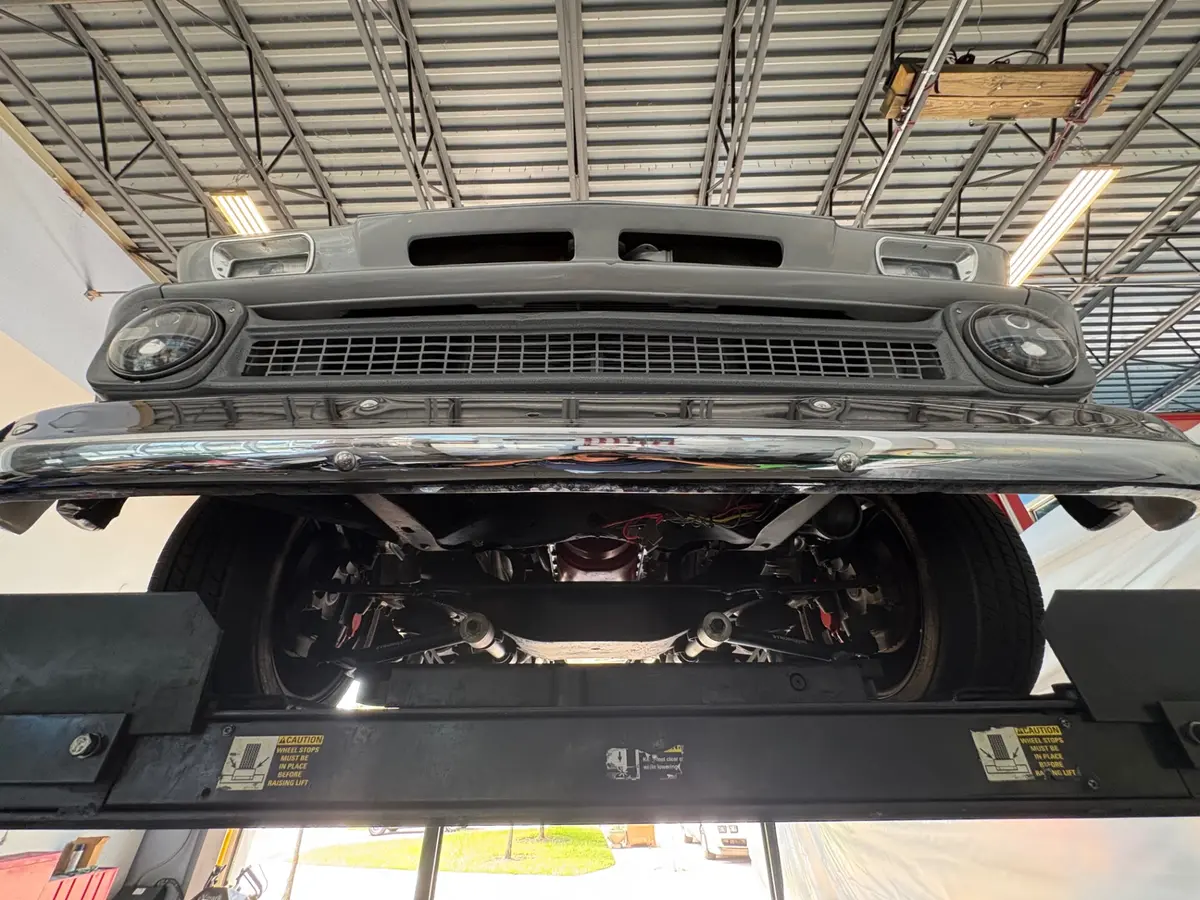
The suspension work on this 1964 Chevrolet C10 is where the builder invested significant engineering effort. The rear suspension uses a four-link configuration, which replaces the factory leaf springs with two upper and two lower control arms that locate the axle while allowing separate control over ride height and movement. Combined with air ride, this setup gives the truck the ability to sit low at rest and raise for driving, while also providing dramatically improved rear axle control compared to the stock leaf spring arrangement. Tubular control arms replace cast or stamped factory pieces both front and rear, reducing unsprung weight and providing more precise geometry. The four-wheel disc brake system uses Wilwood calipers at all four corners — red-finished calipers that are visible through the wheel openings — and a Wilwood master cylinder mounted in the engine bay. Wilwood is a California-based brake manufacturer with a long history in motorsports, and their components are built to handle the thermal demands that come from stopping a heavy, powerful vehicle repeatedly. Looking at the undercarriage photographs, the chassis work is clean and well-executed, with the frame, suspension components, and exhaust all presented in a finished, organized manner that reflects the quality of the overall build.
Interior
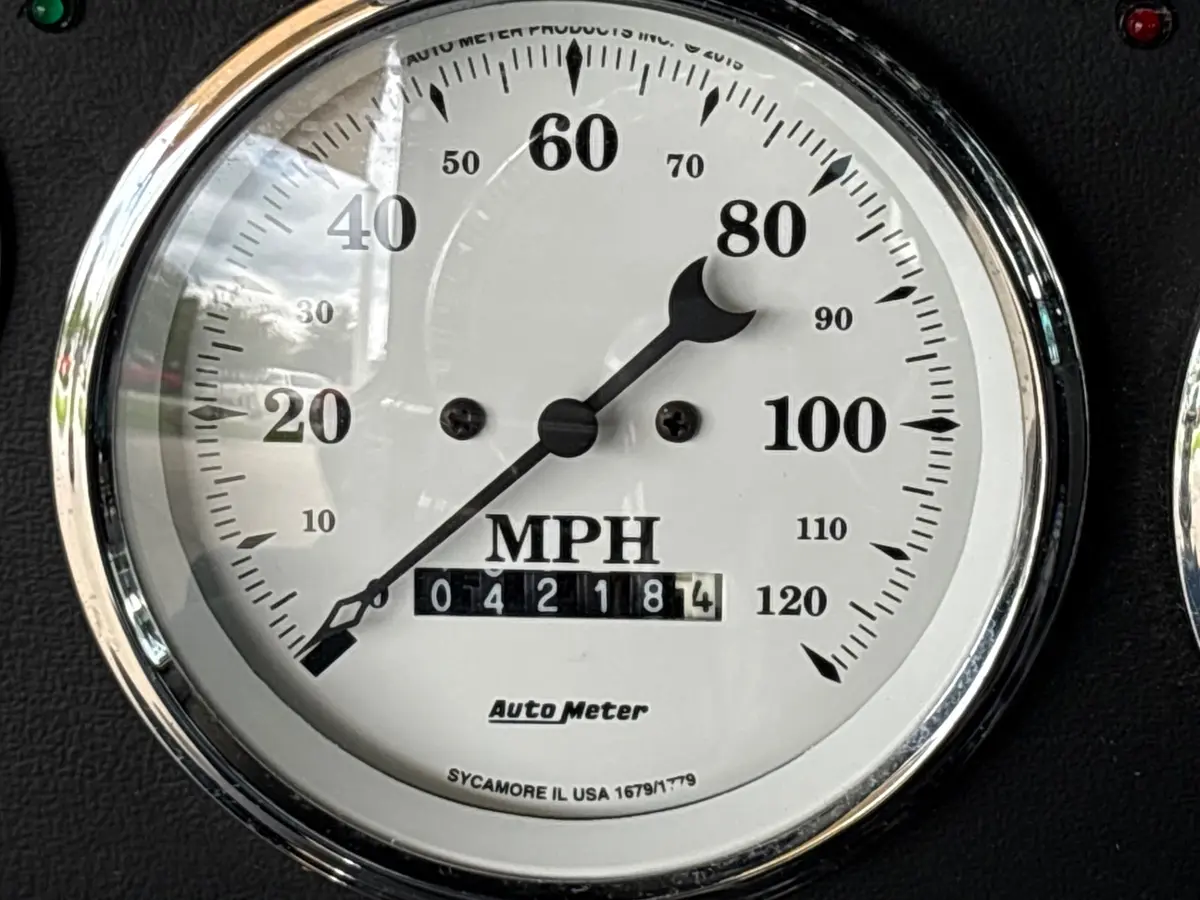
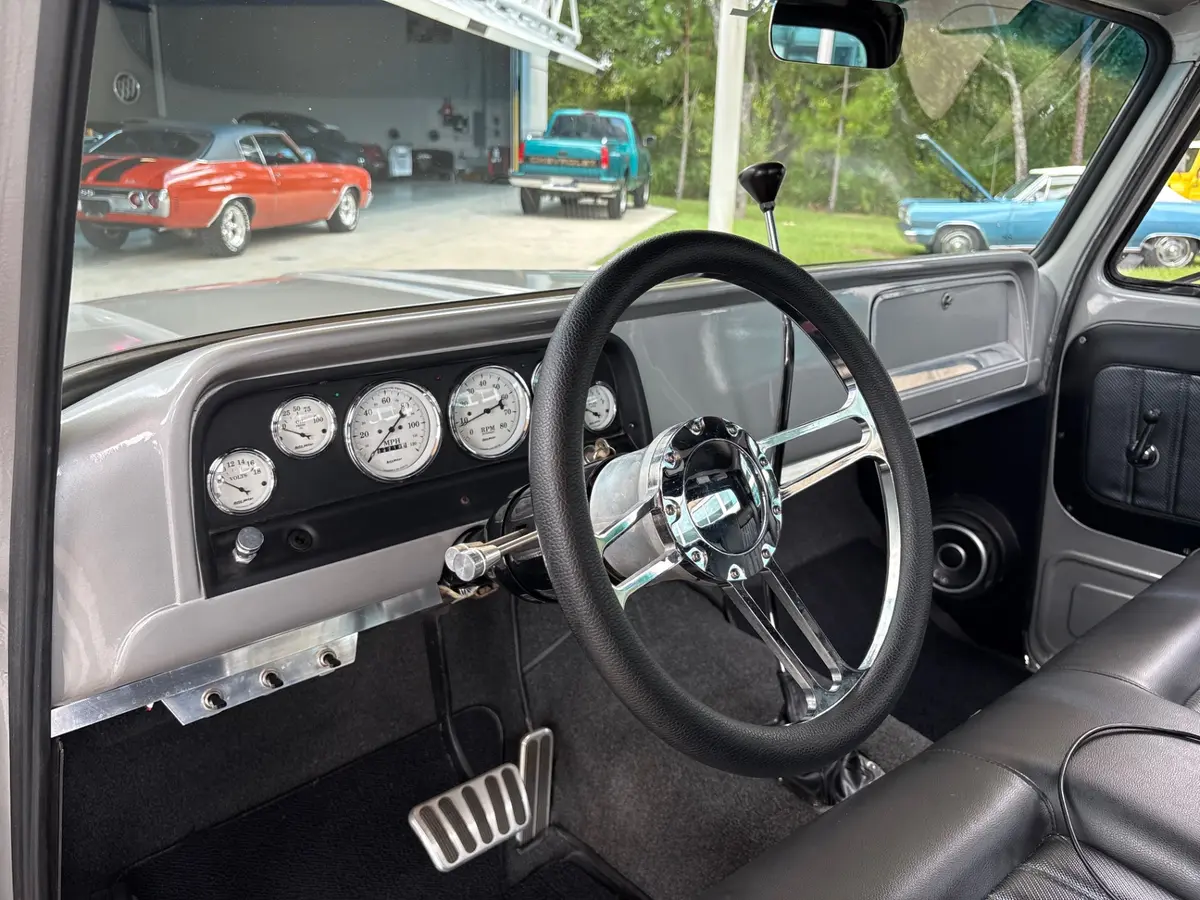
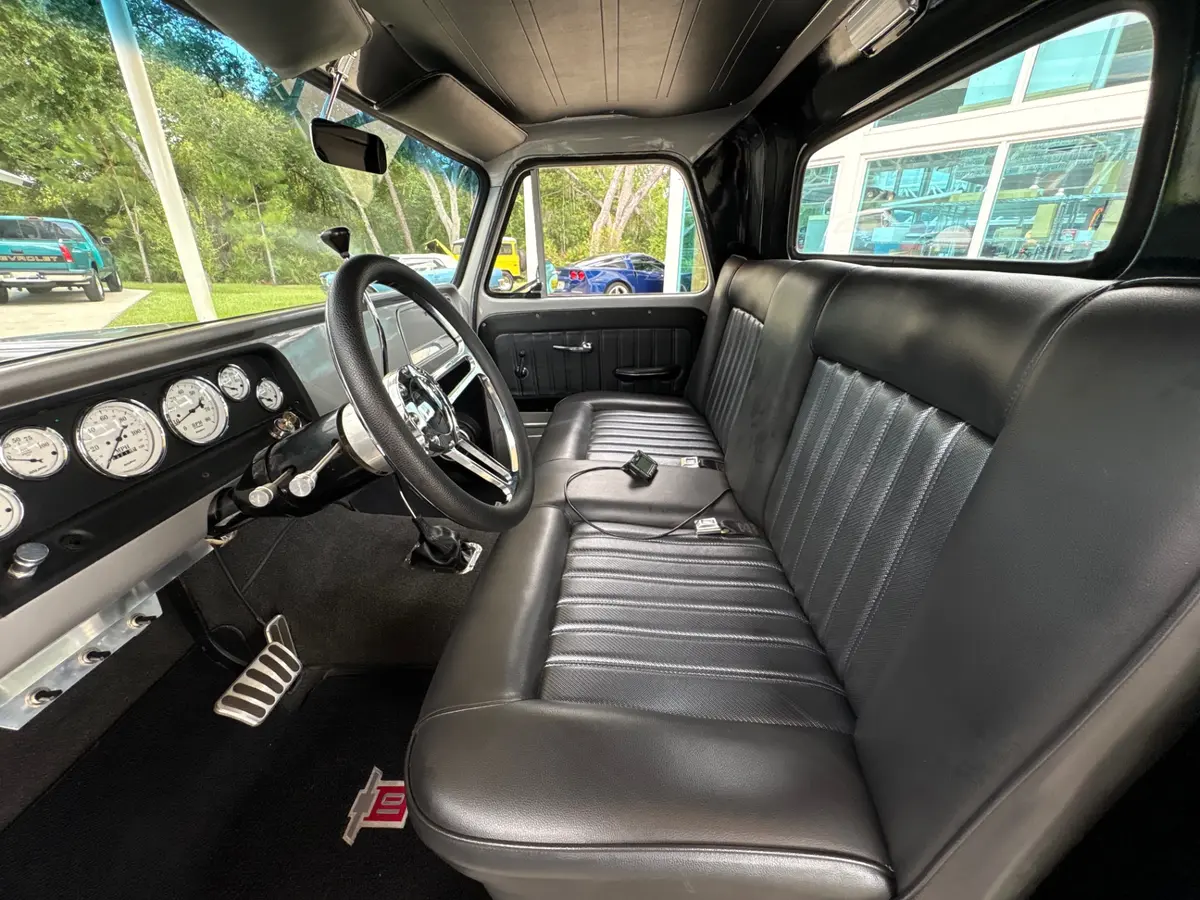
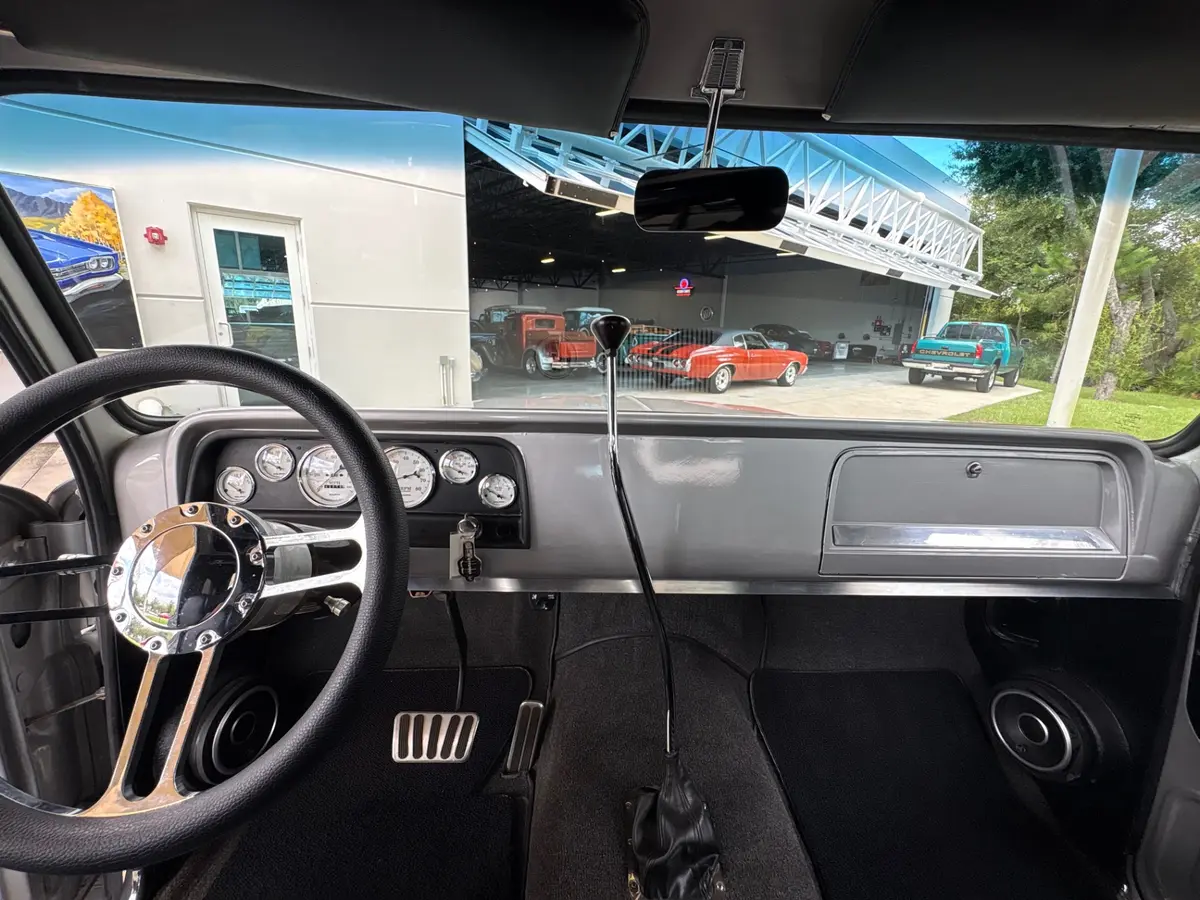
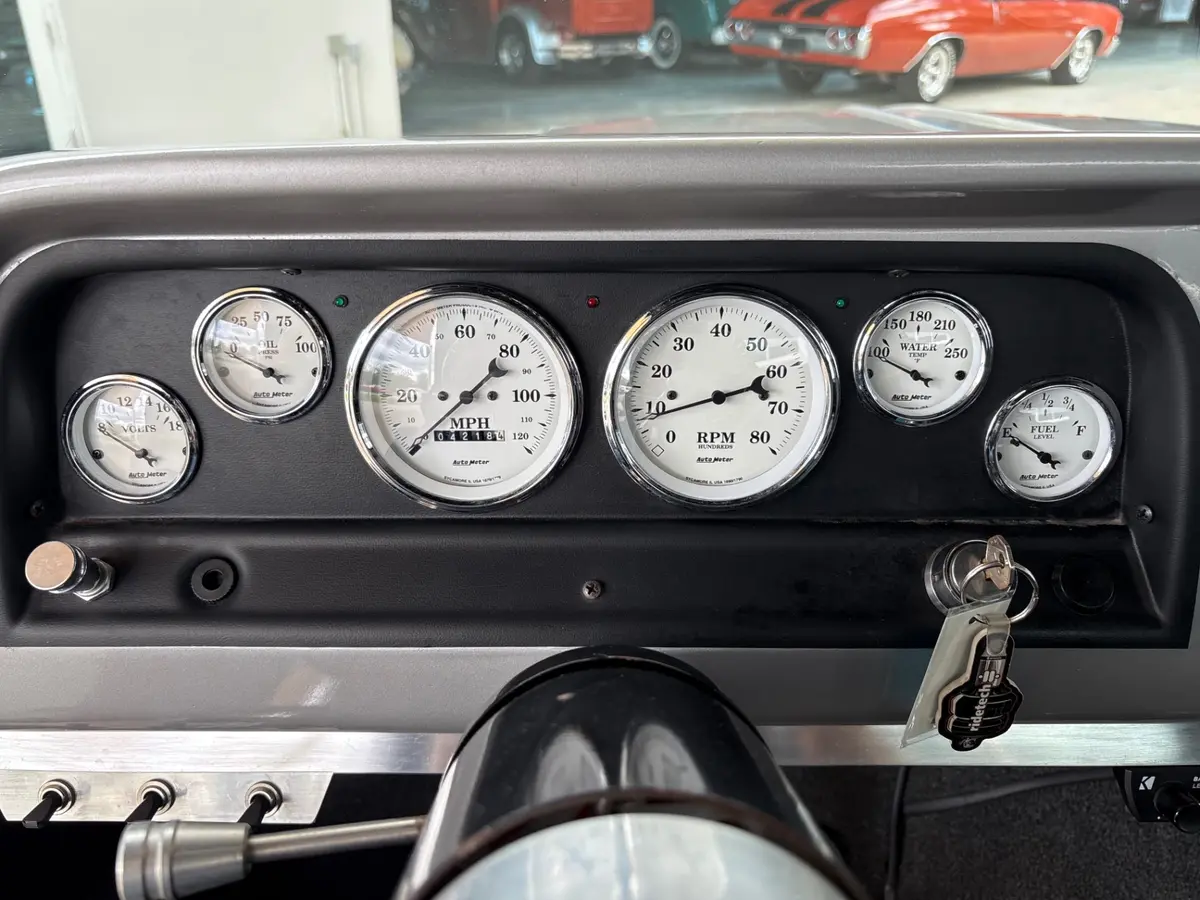
The cabin of this 1964 Chevrolet C10 follows the same philosophy as the rest of the build — functional and well-executed, without unnecessary clutter. The factory dashboard has been modified to accept an Auto Meter gauge cluster that fills the instrument panel with six round gauges: a large speedometer and tachometer flanked by smaller oil pressure, water temperature, fuel level, and volt gauges. Auto Meter is a recognized name among performance enthusiasts, and their gauge faces here use a white-dial, black-number format that is easy to read and visually appropriate for the era of the truck. The tachometer is a practical addition given the engine under the hood — monitoring RPM on a 454 with a three-carb setup is useful information.
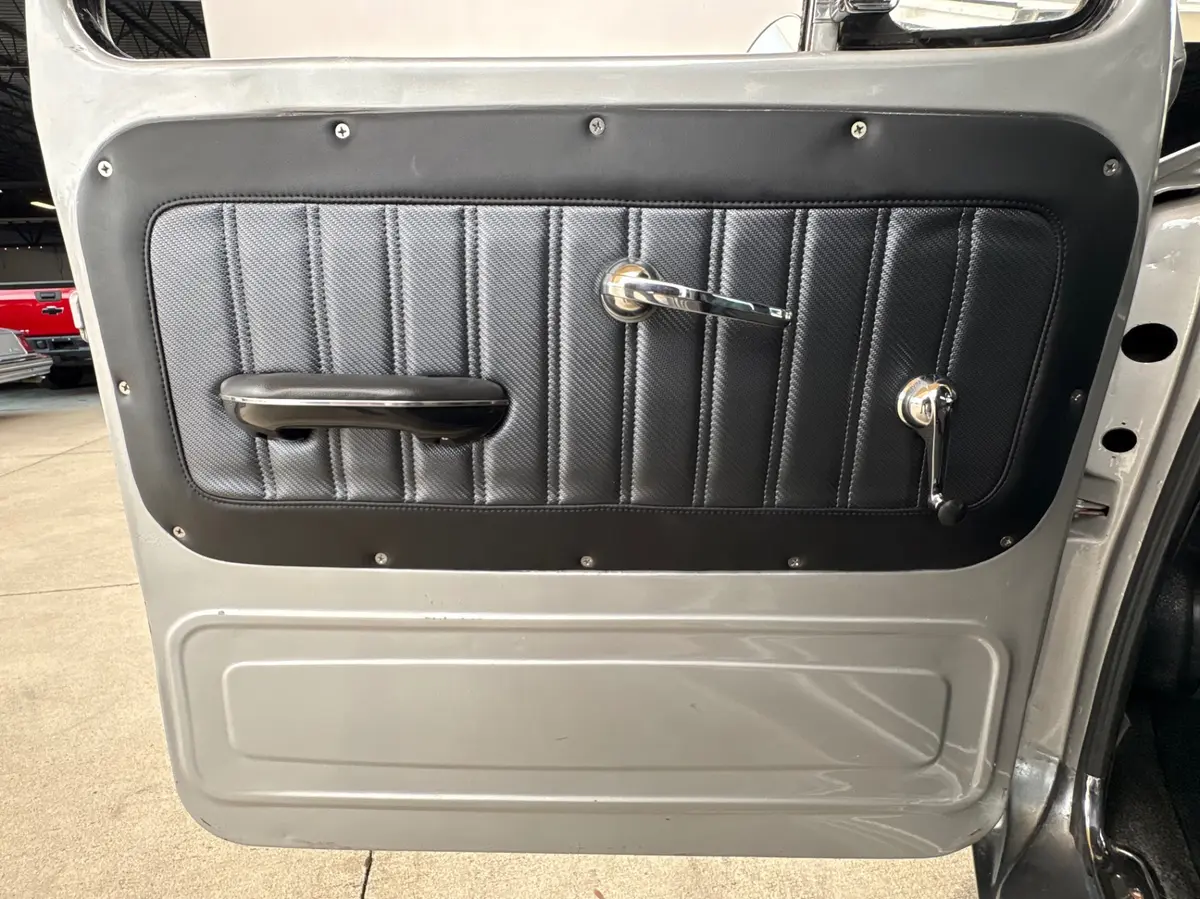
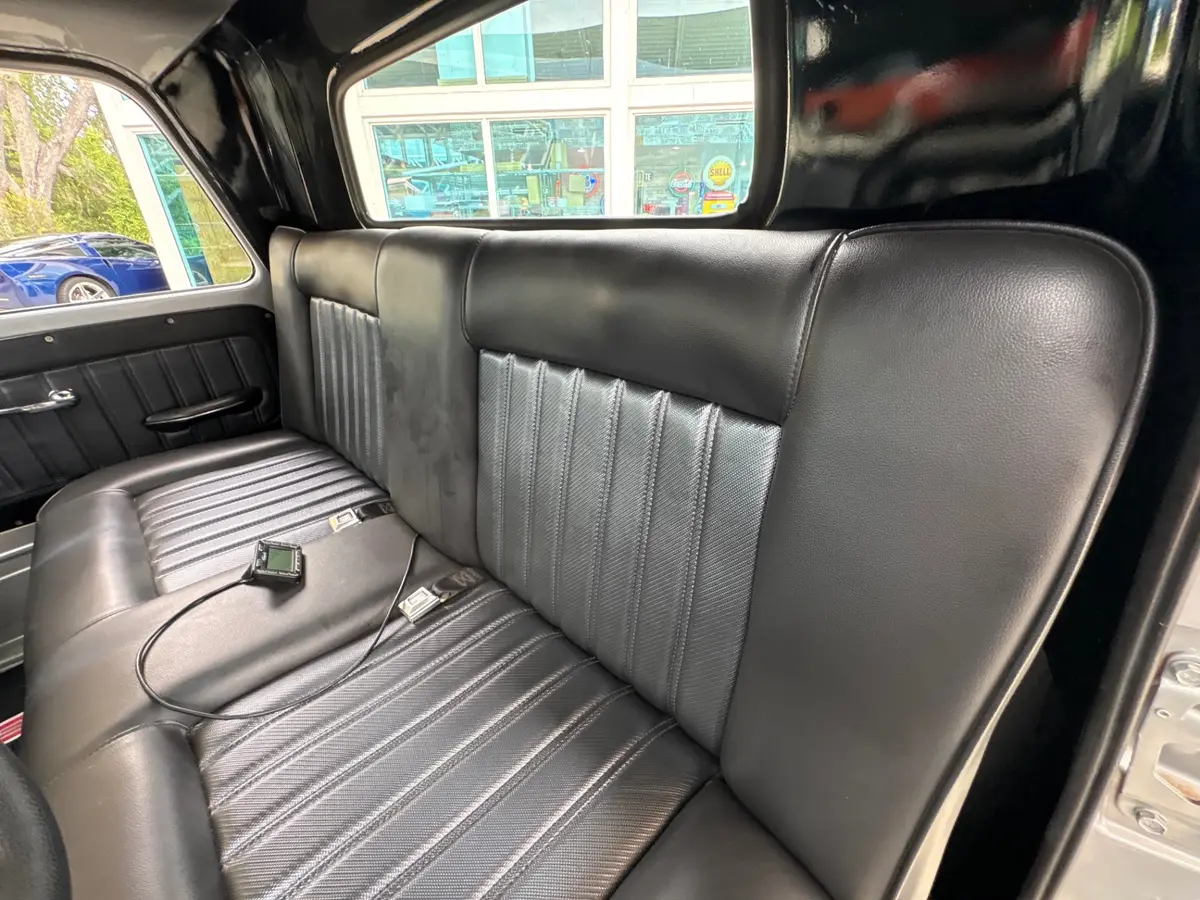
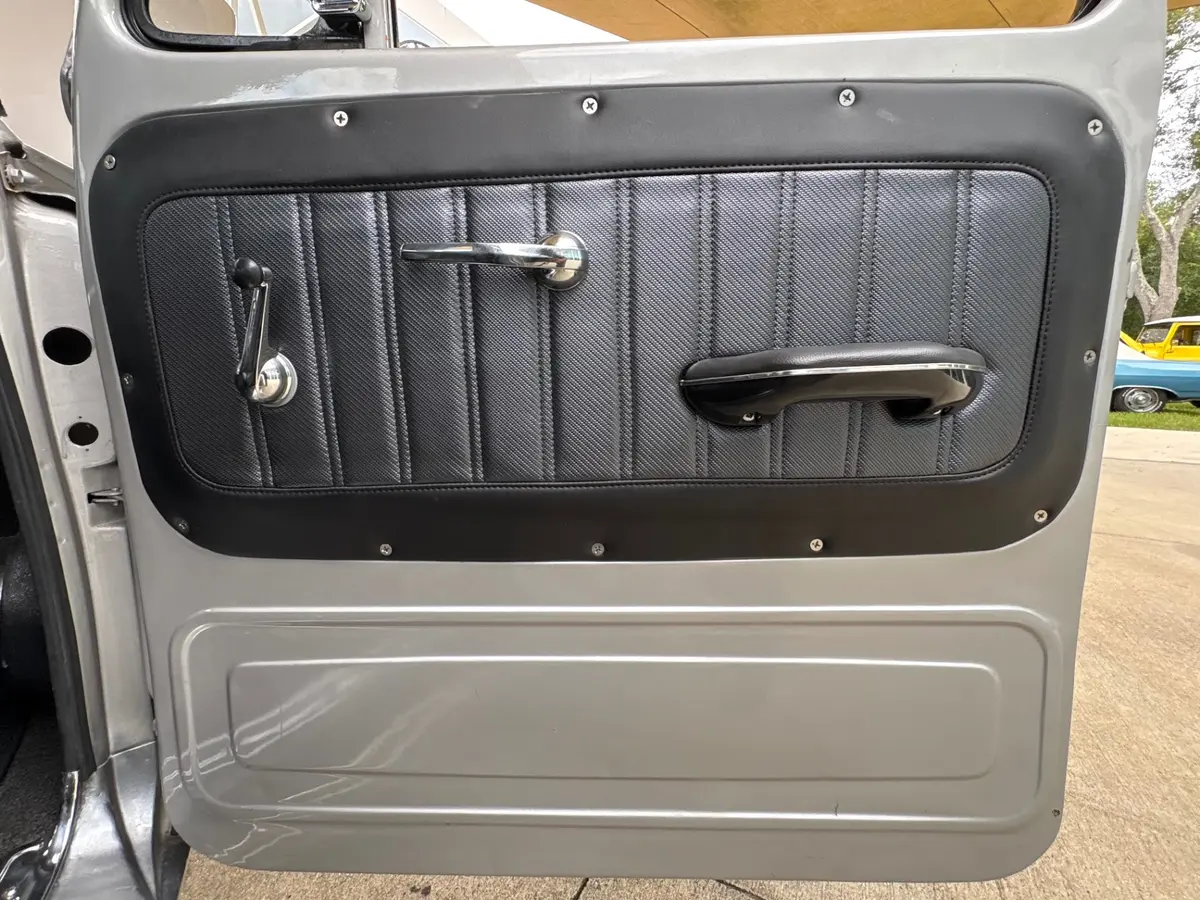
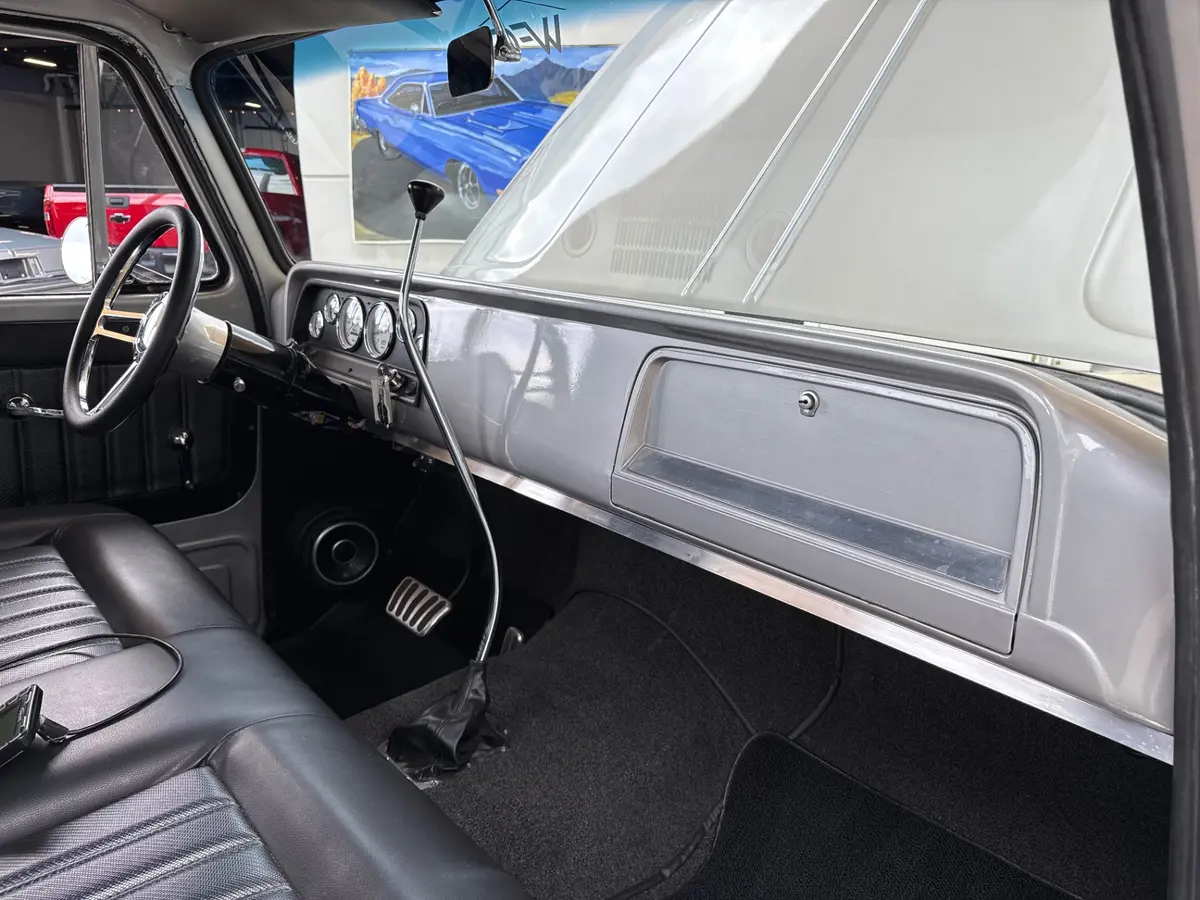
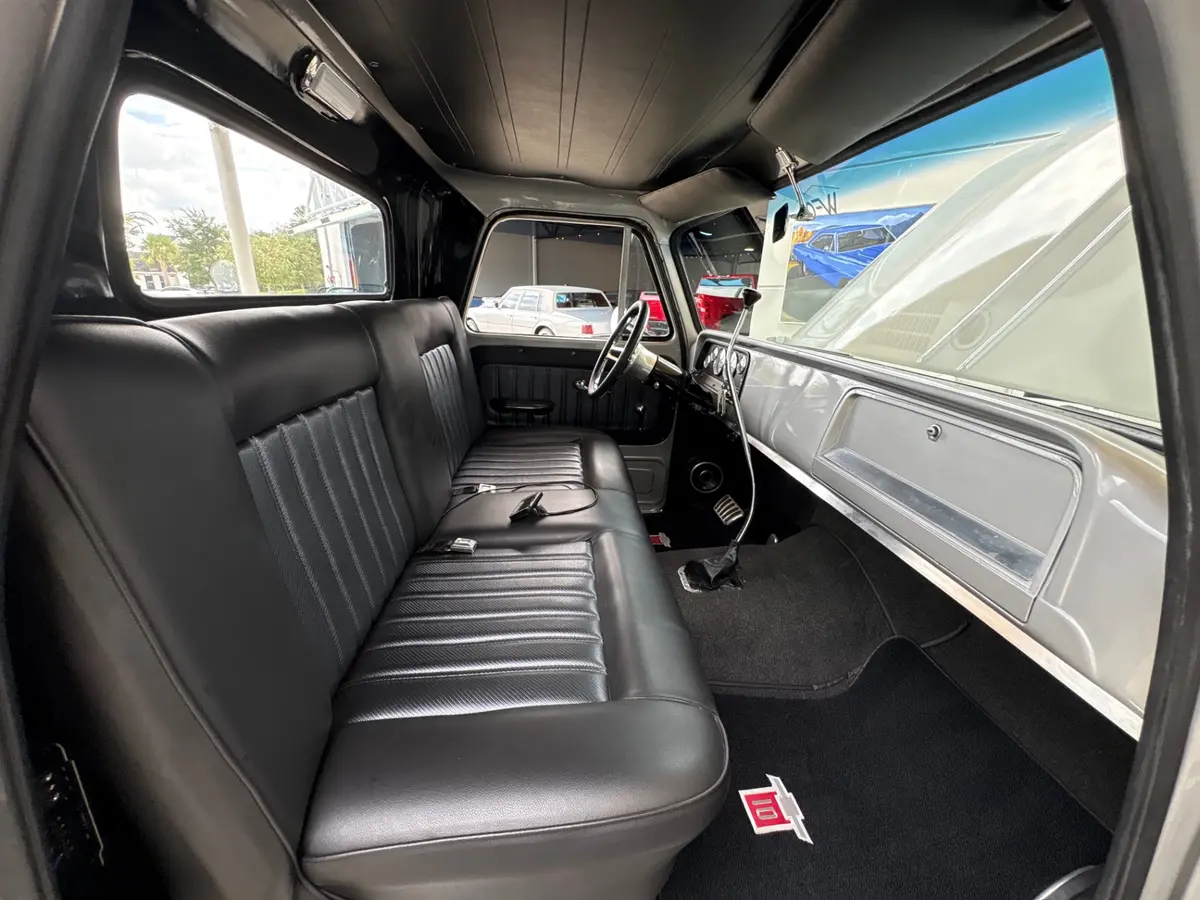
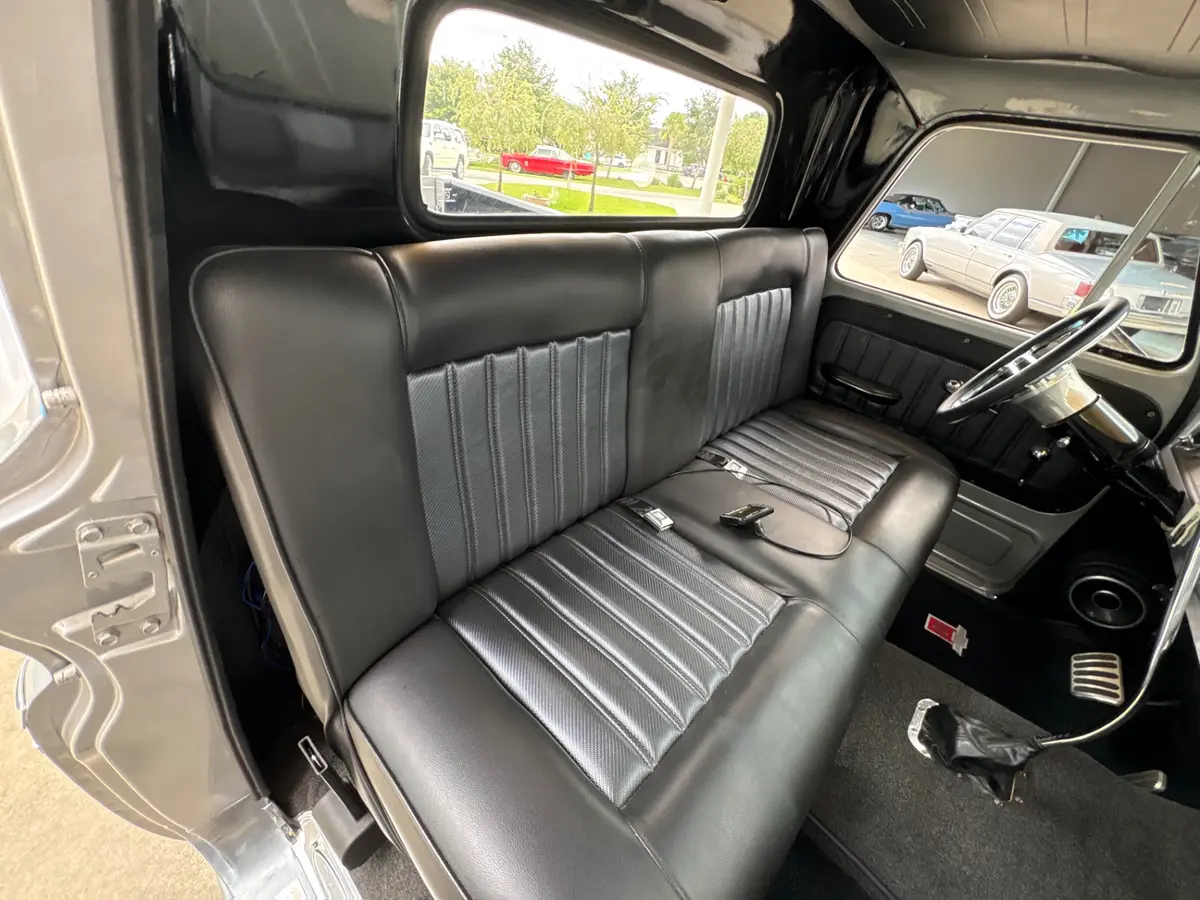
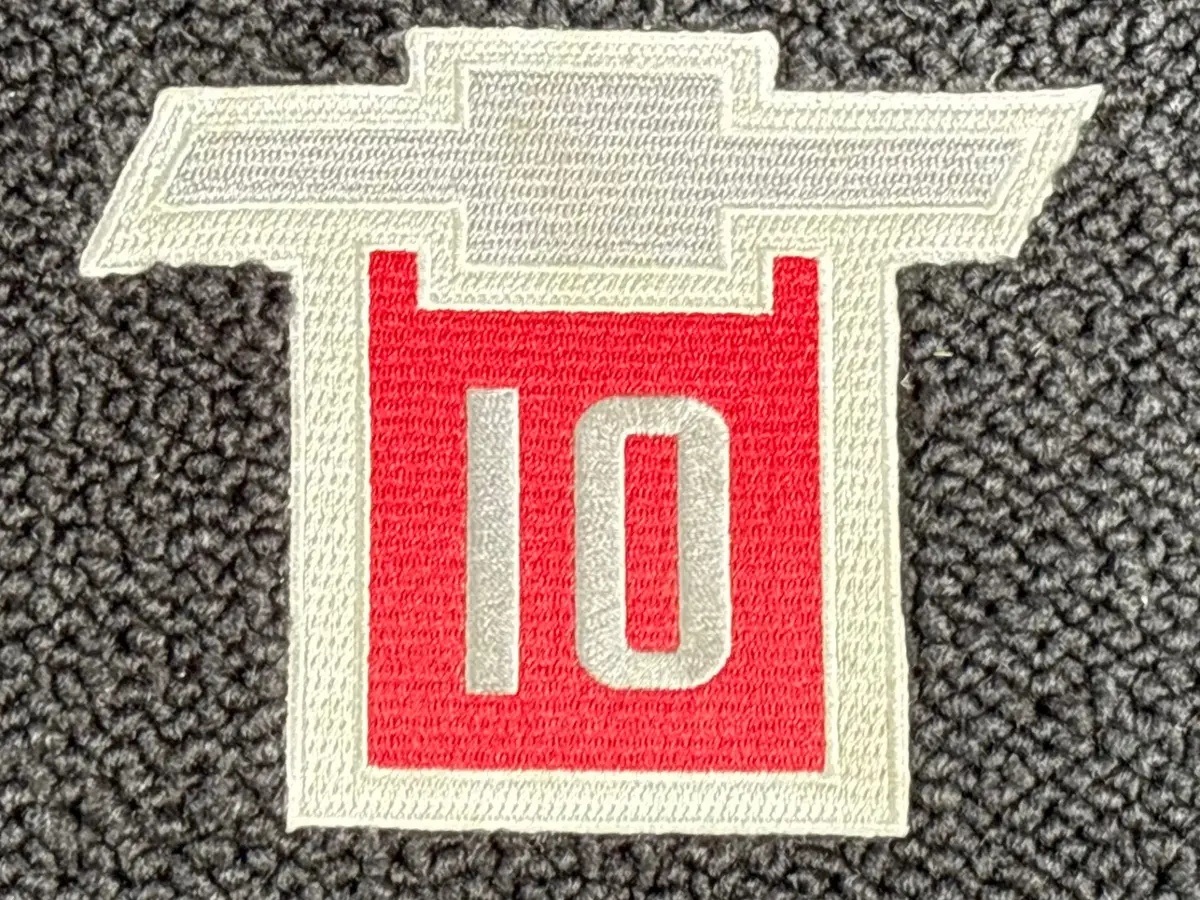
The steering wheel is a custom chrome three-spoke design with a black grip, sized and positioned to give the driver a clear sightline to the gauges. The floor shifter for the automatic transmission rises from the carpet between the driver and the seat bolster, adding a purposeful element to the cab layout. The bench seat is covered in black vinyl with vertical stitched pleating, which is period-correct in execution and in good condition based on the photographs. Door panels are custom fabricated in black with a matching pleated insert section, a consistent design that ties the seat and doors together visually. Black carpet covers the floor throughout, and a C10-embroidered floor mat on the driver's side provides a brand-specific detail that anchors the interior's identity. Seat belts are installed. The headliner is black, which along with the painted dashboard surface and dark carpet creates a uniform black interior that contrasts with the silver exterior paint on the lower door panels visible from inside.
Exterior
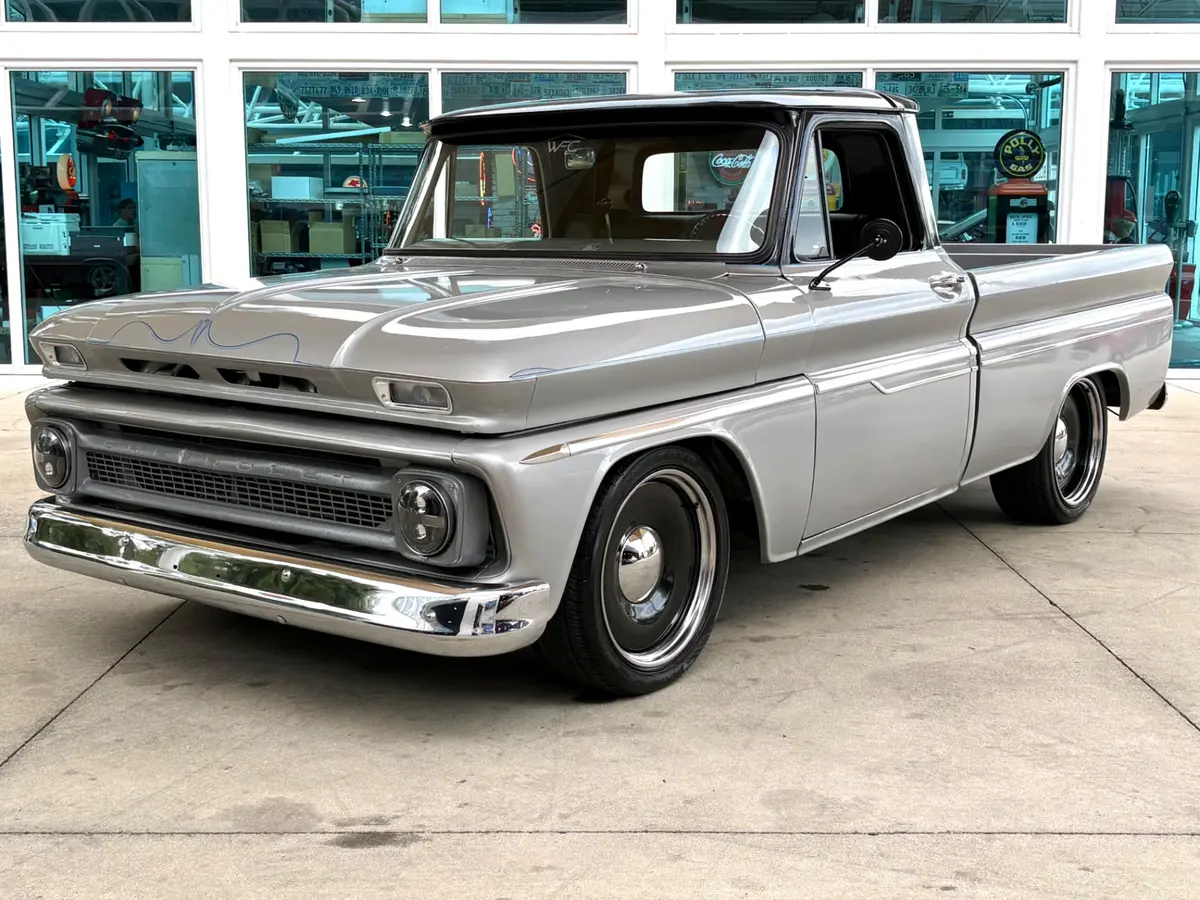
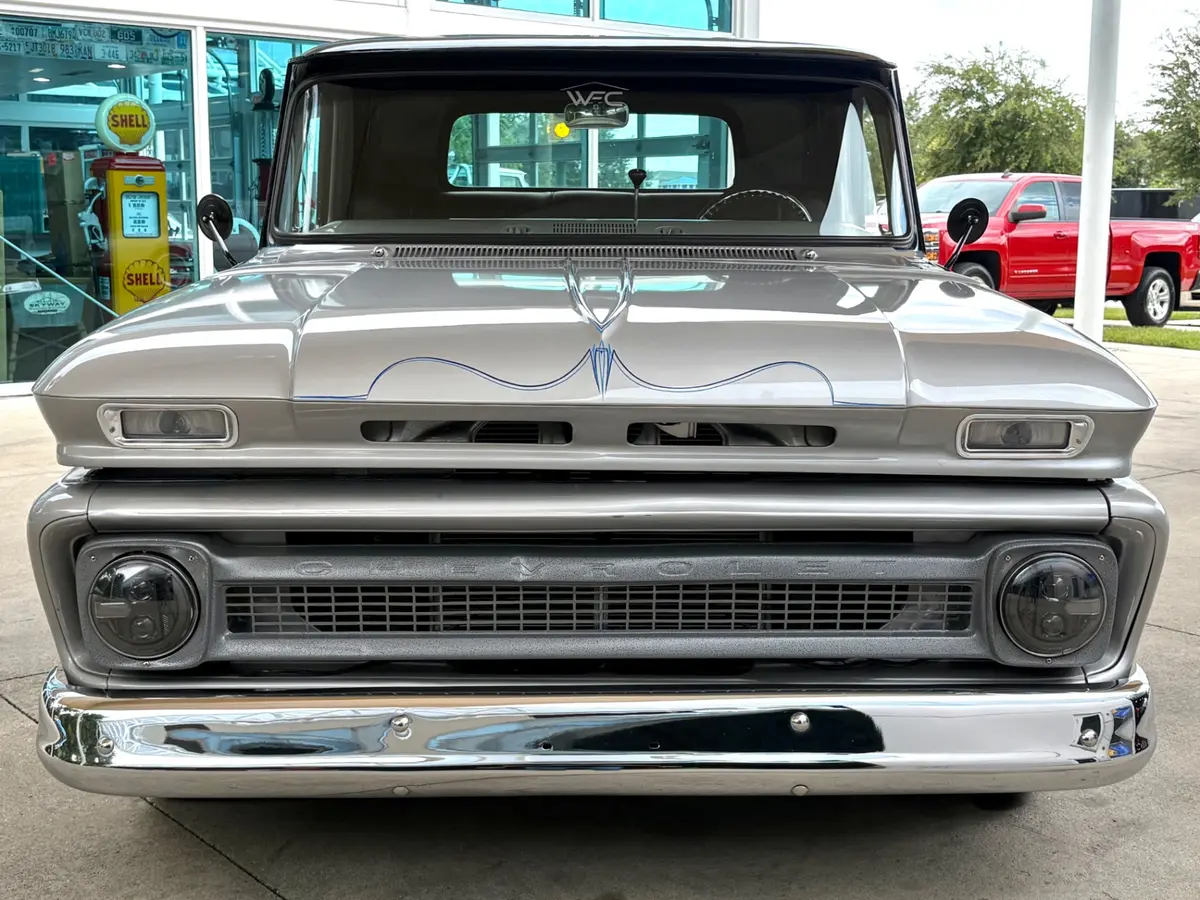
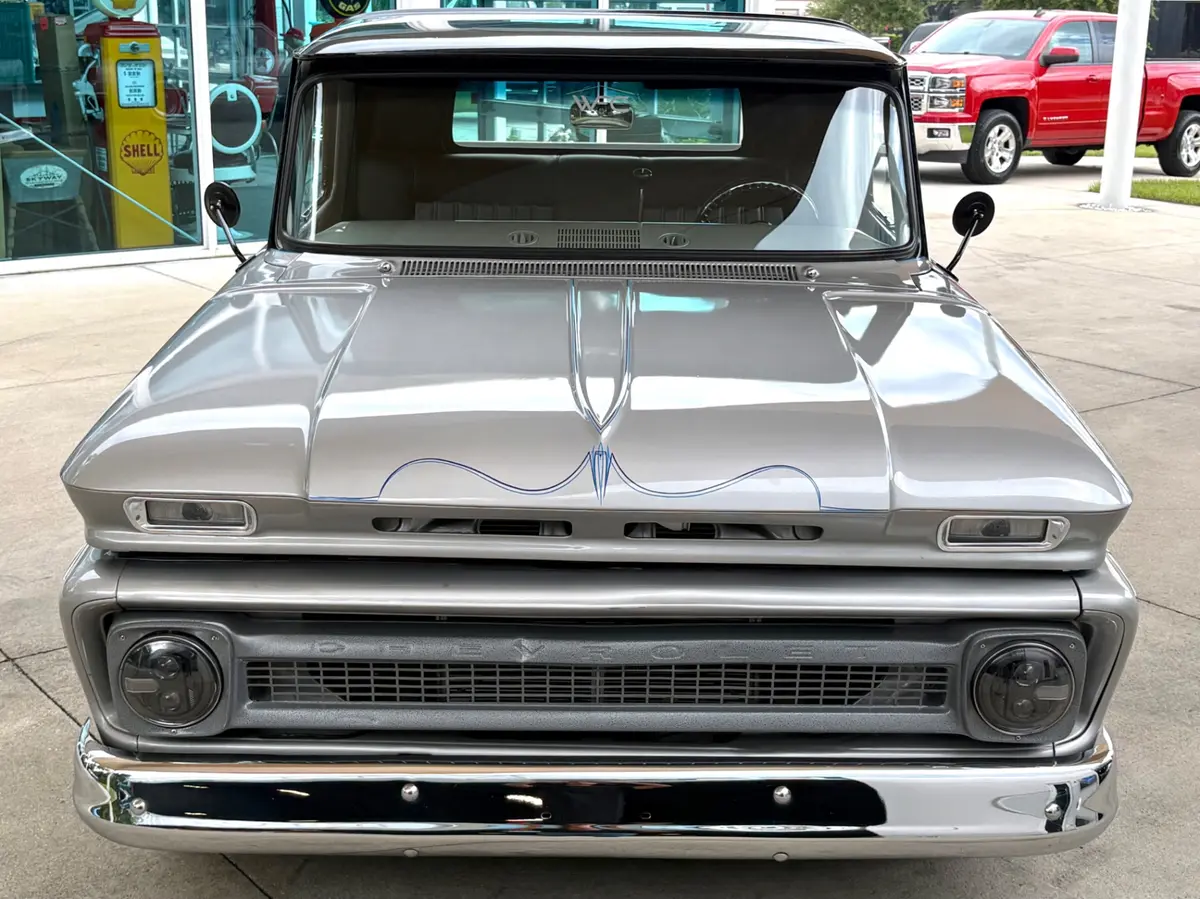
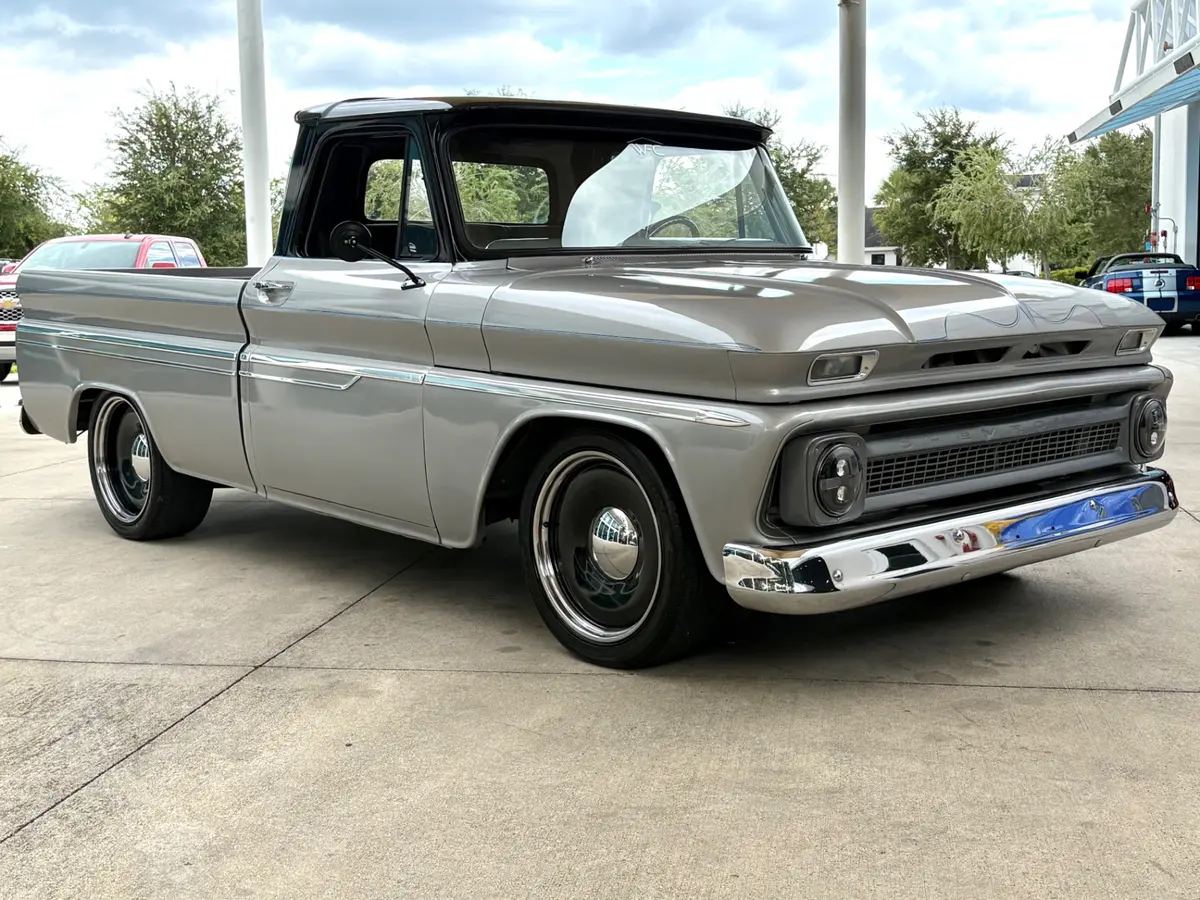
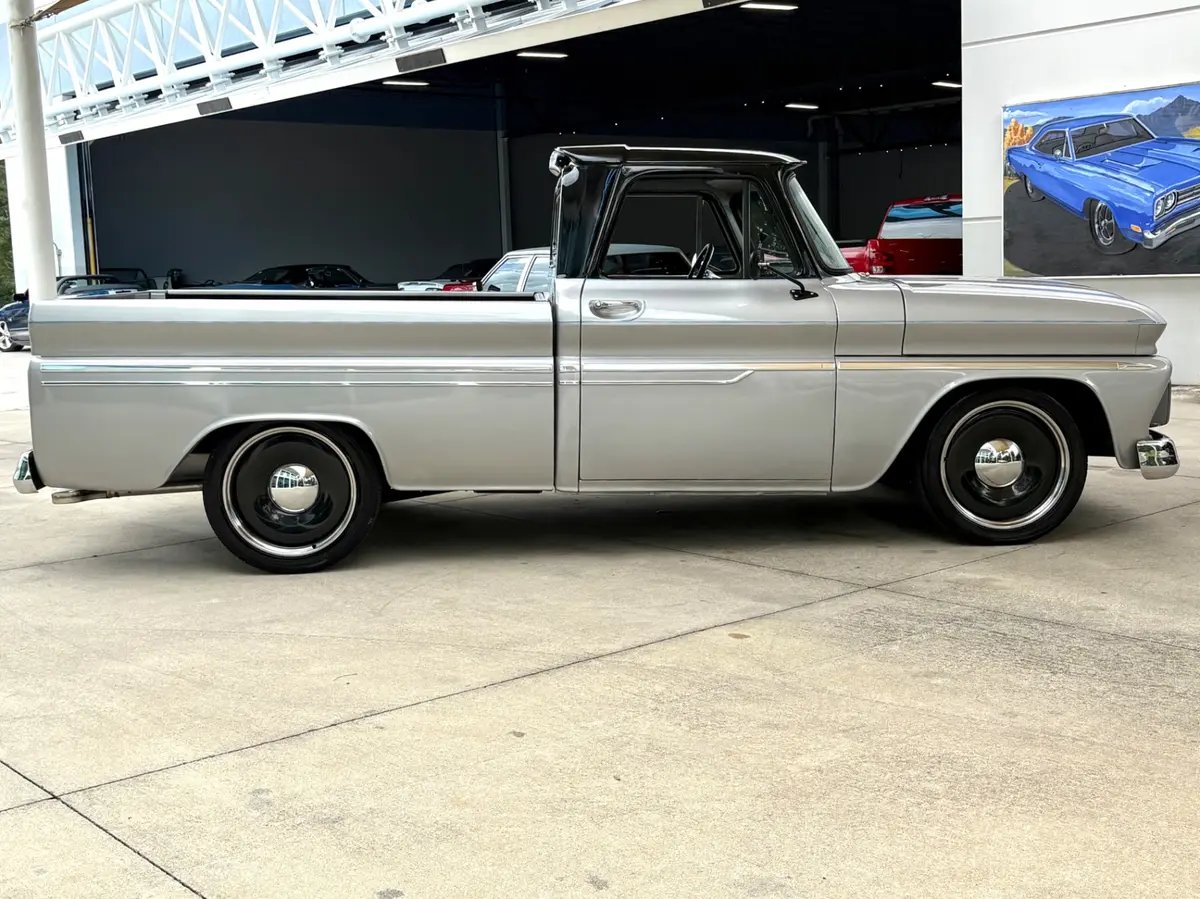
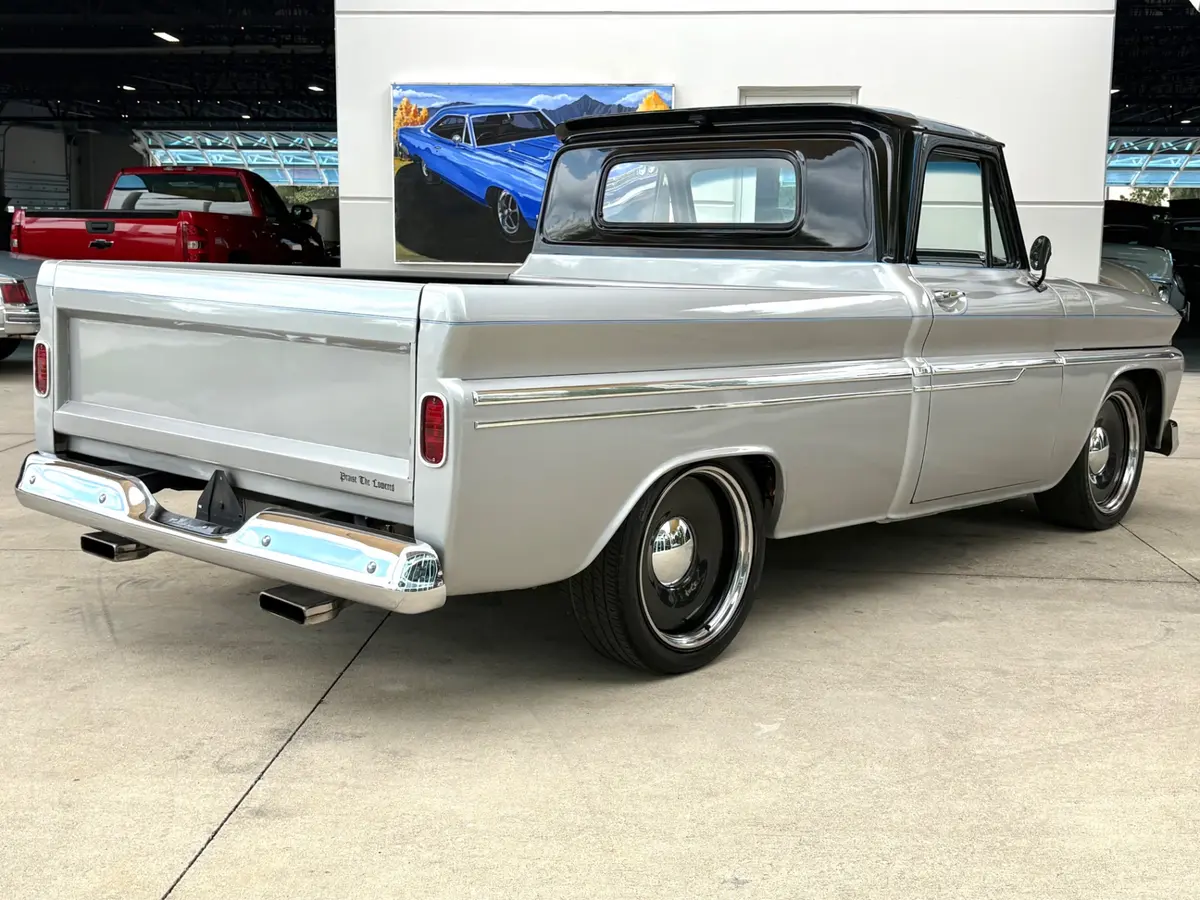
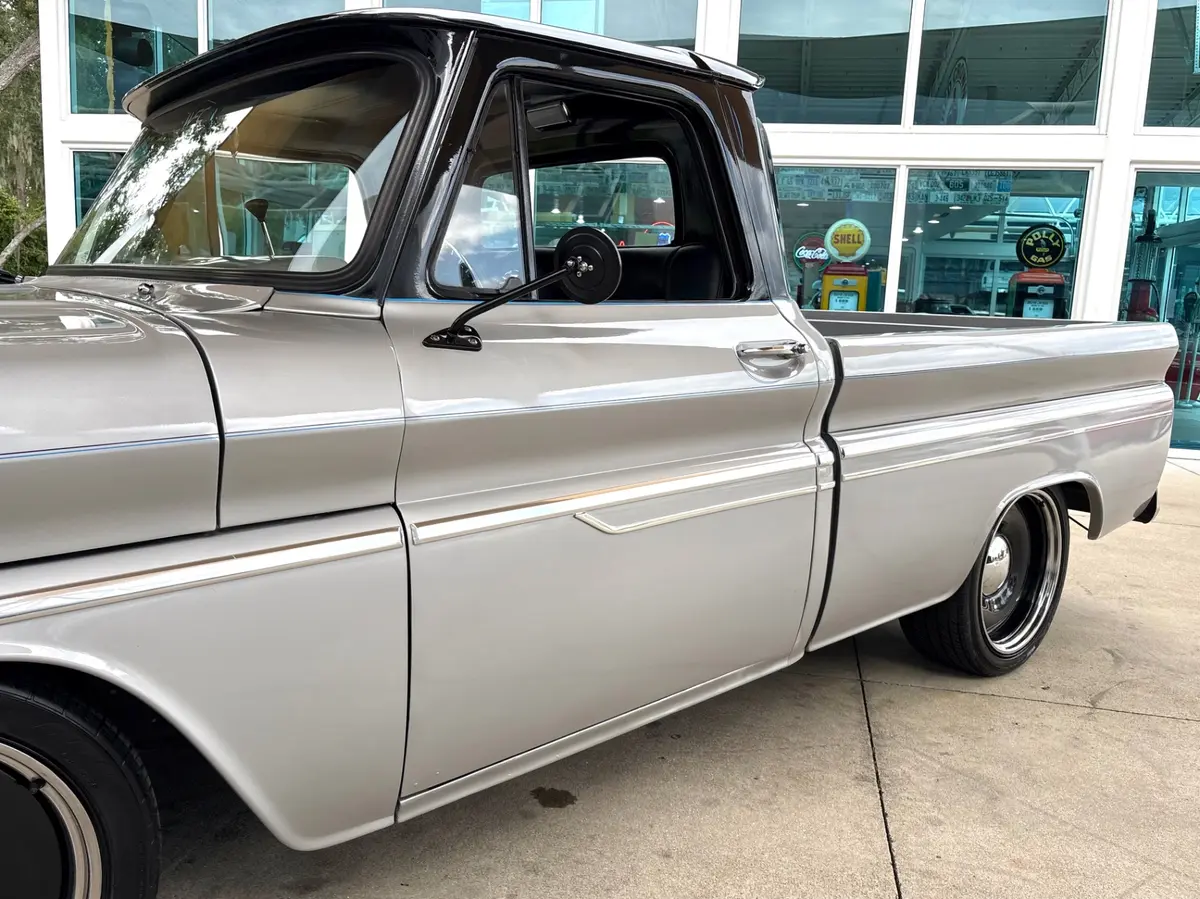
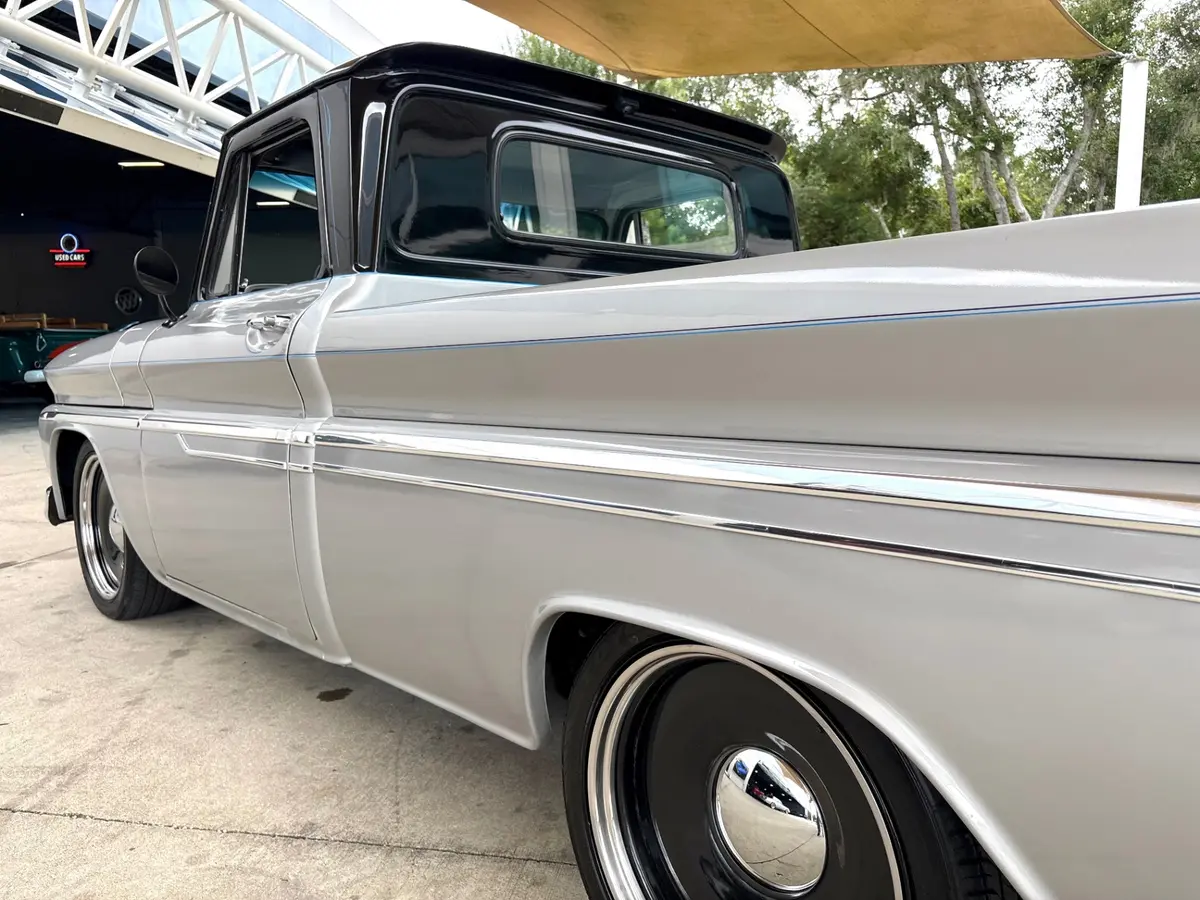
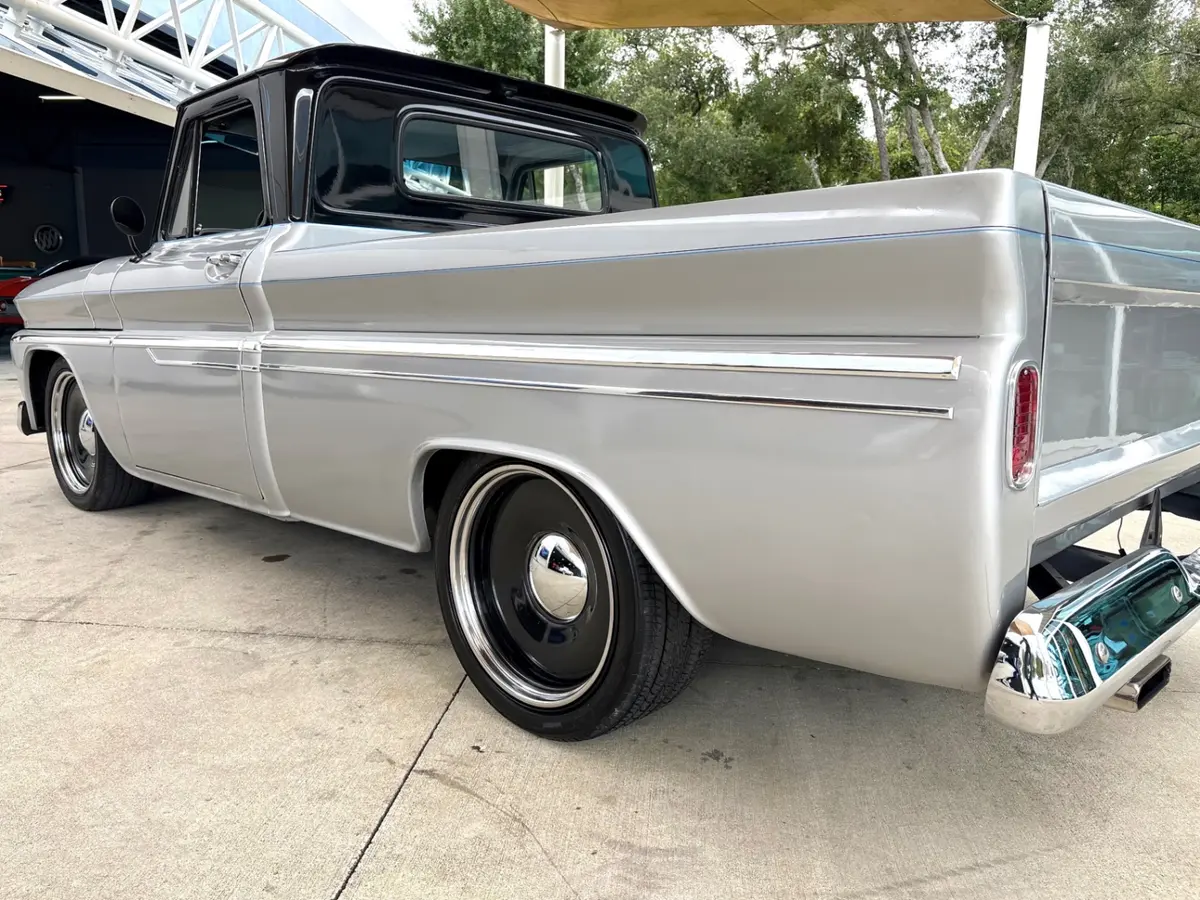
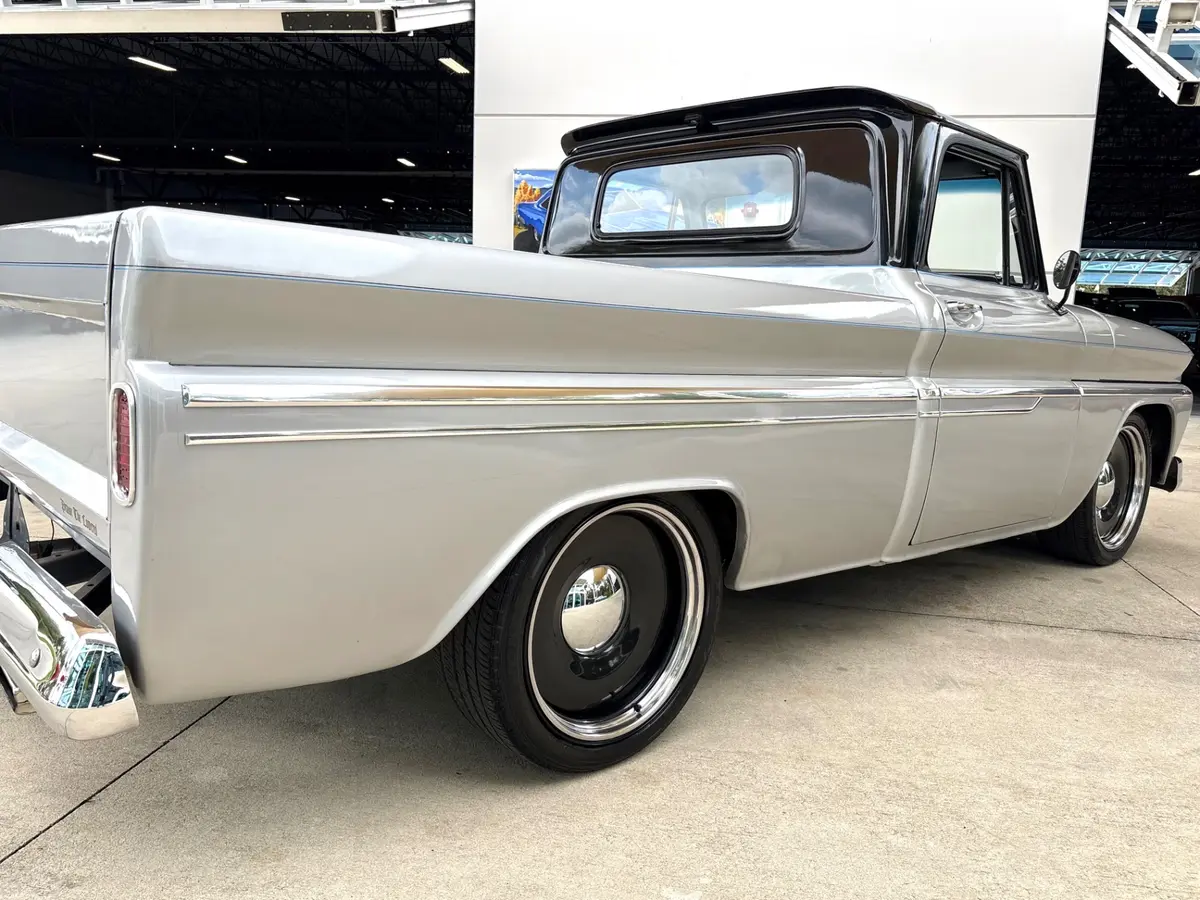
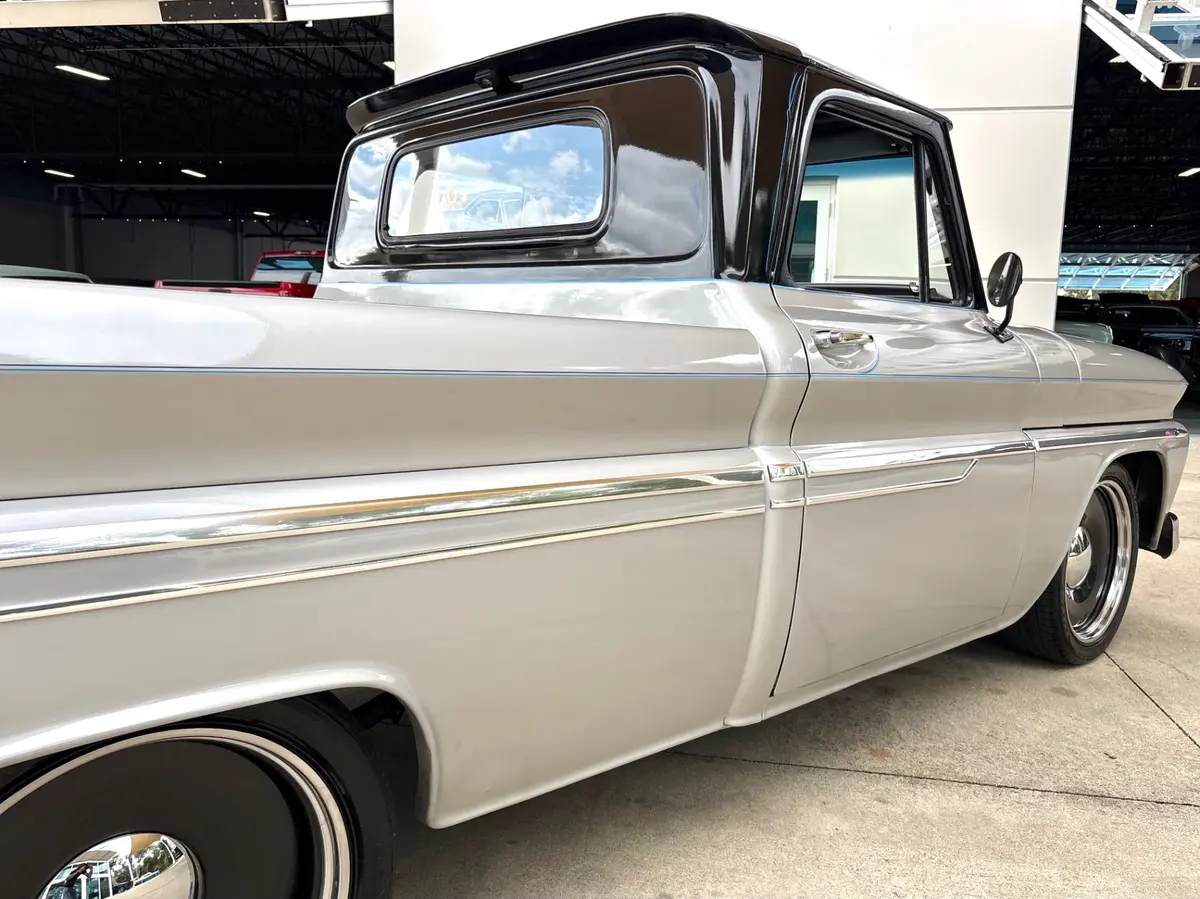
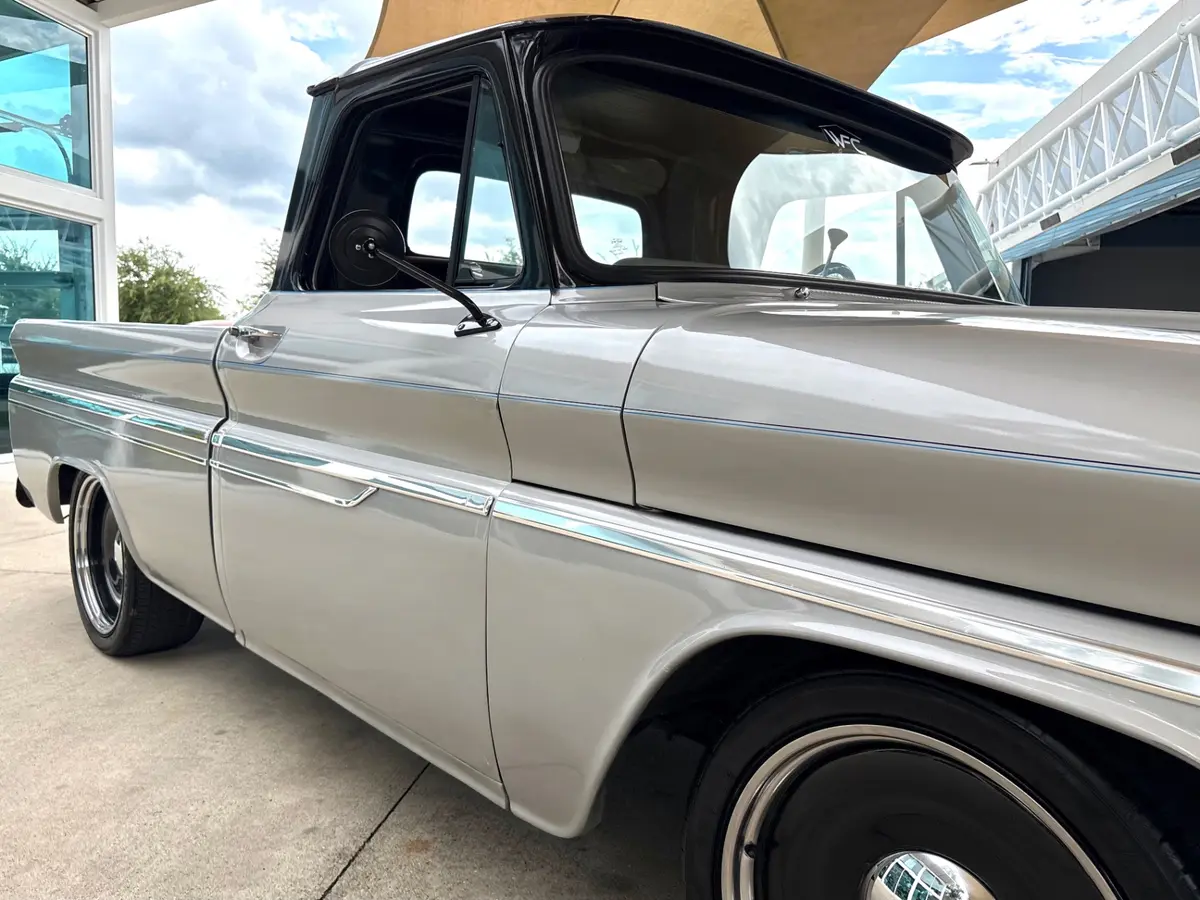
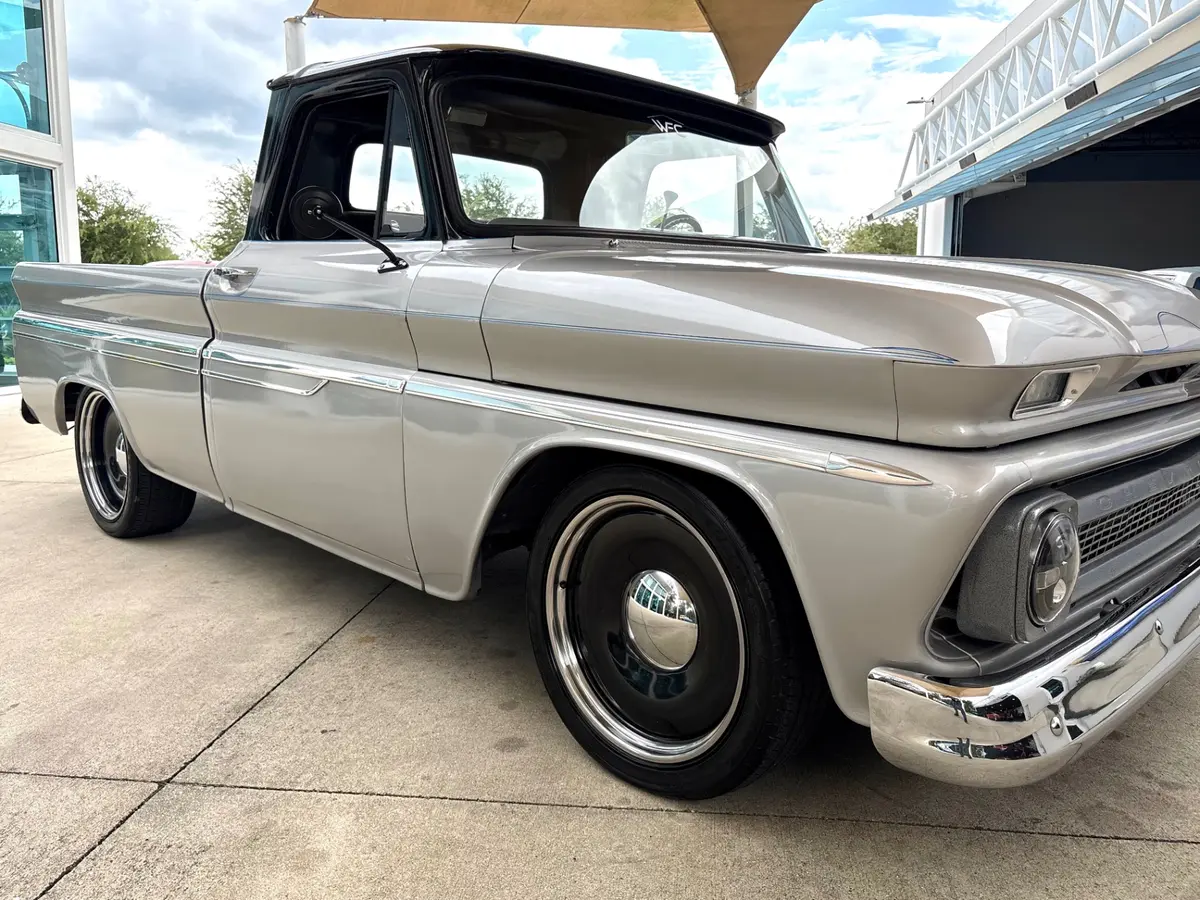
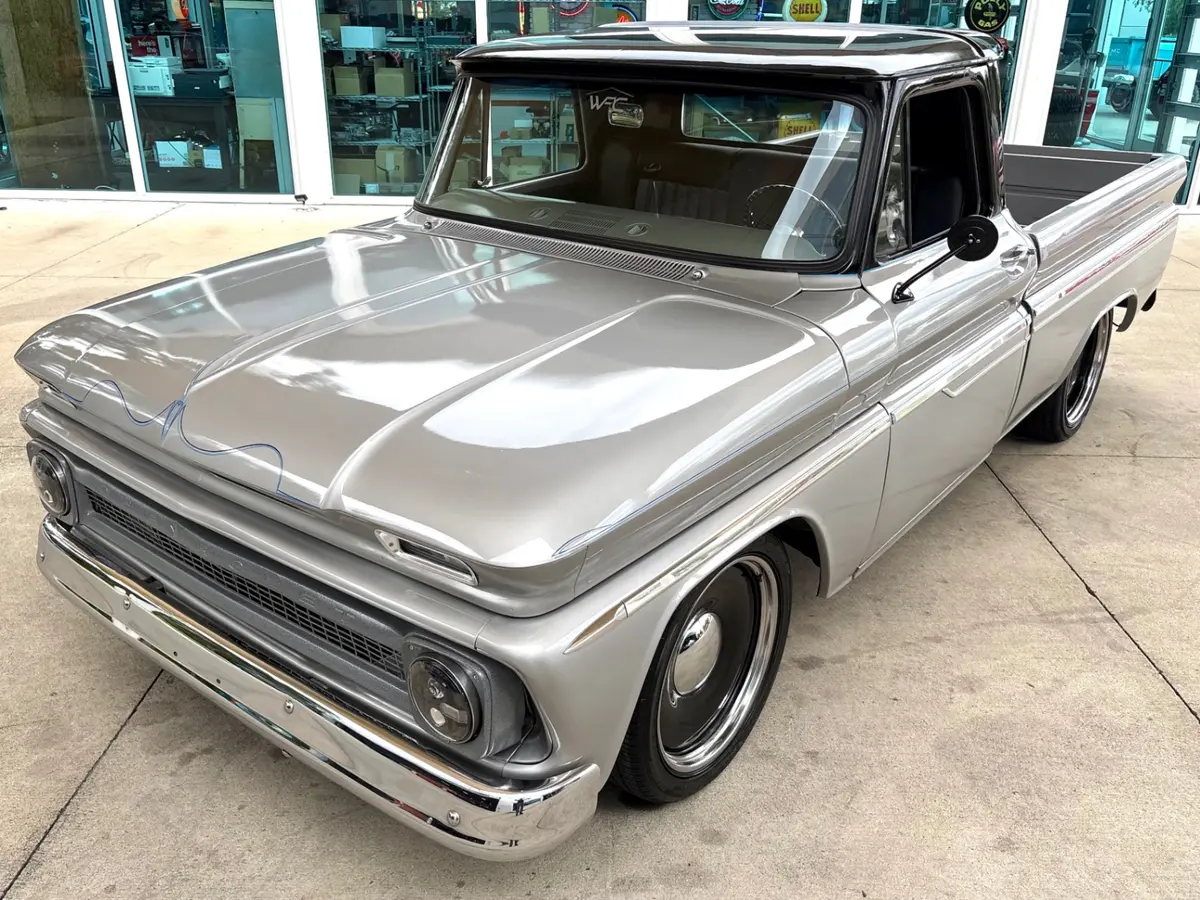
The 1964 Chevrolet C10's body is presented in a two-tone silver and black combination. The primary color is silver, covering the cab sides, hood, and bed. The roof is finished in black, which was a popular two-tone approach on trucks of this era when Chevrolet offered two-tone options at the factory by painting the roof in a contrasting color. Chrome side body trim runs along the beltline, consistent with what was available on higher-trim C10 models in the mid-1960s. A blue pinstripe graphic runs along the body, and the hood features its own custom pinstripe work — subtle enough to read as hand-applied detail rather than graphic decal.
The front end retains the correct 1964 Chevrolet C10 grille and hood structure, with the rectangular grille opening and horizontal bar design that distinguishes the 1963 to 1966 facelift from the earlier 1960 to 1962 trucks. LED headlights are fitted in place of the original sealed-beam units — a functional upgrade that improves visibility at night while preserving the round headlight appearance at the front of the truck. Chrome bumpers front and rear are in good condition. The rear bumper, visible in the undercarriage and rear-view photographs, is particularly well-polished and reflects the dual exhaust square tips tucked neatly beneath it.
The wheels are black steel units fitted with chrome dog dish hubcaps — the small center cap style associated with base-trim and fleet-spec trucks from the 1960s. On a slammed custom C10 this combination has become a widely recognized aesthetic, partly because it references the working-truck origins of the C10 while contrasting with the sophistication of the rest of the build. Performance tires are mounted on all four corners, visible in both the exterior and undercarriage photographs as low-profile radials that contribute to the truck's lowered stance.
Conclusion
This 1964 Chevrolet C10 represents a build with real substance under the sheetmetal. The 454 big block with triple-carb induction is a legitimate performance combination, the four-link rear suspension and air ride system reflect a serious approach to chassis engineering, and the Wilwood four-wheel disc brakes provide stopping power appropriate for the horsepower being made. The two-tone silver and black exterior, chrome accents, and pinstripe work give it a distinct visual identity without crossing into excess. The interior is clean, gauged properly for the engine, and finished consistently throughout. This is a truck that was built to be driven, and the mechanical investment made throughout the build supports that conclusion.
If you have questions about this 1964 Chevrolet C10 or would like to arrange an inspection, call Skyway Classics at 941-254-6608. Our team is available to walk you through the details and help you determine if this truck is the right fit.
Disclaimer
Information found on the website is presented as given to us by the owner of the car, whether on consignment or from the owner we bought it from. Some Photos, materials for videos, descriptions and other information are provided by the consignor/seller and is deemed reliable, but Skyway Classics does not warranty or guarantee this information. Skyway Classics is not responsible for information that may incorrect or a publishing error. The decision to purchase should be based solely on the buyers personal inspection of the vehicle or by a professional inspection service prior to offer or purchase being made.
1964 Chevrolet C10 Custom Build — 454 Big Block, Triple Carb, Air Ride, Four-Link Rear
Why This Car Is Special
The 1960 to 1966 Chevrolet C10 is widely regarded as the most desirable generation of the C/K pickup line. Collectors and custom truck builders call this body style the "Action Line" generation, and for good reason — the cab-forward design, wraparound windshield, and deeply sculpted sheetmetal gave Chevrolet's half-ton pickup a look that felt more car than truck. The 1964 model year specifically sits in a sweet spot within this generation. It was the second year of the redesigned C/K platform, which had debuted in 1960, and by 1964 Chevrolet had refined the body and trim details into one of the most proportionally balanced truck designs of the era. Fleetside models like this one carried a smooth, flush bed that replaced the old stepside look and gave the truck a longer, lower stance.
This particular 1964 Chevrolet C10 has been built as a full custom — not a trailer queen, not a light refresh. Someone spent serious money engineering this truck from the ground up with a focus on real-world performance: a 454 cubic inch big block under a triple-carburetor induction setup, air ride suspension with a four-link rear, four-wheel Wilwood disc brakes, and a chassis that can actually use the power being made. The VIN decodes this truck as a 1964 model year, C-series (conventional two-wheel drive), half-ton (10) capacity, built at the Flint, Michigan assembly plant — a factory that produced the majority of Chevrolet truck output during this period. The result is a truck that carries the proportions and character of the original 1964 Chevrolet C10 while being built with the mechanical hardware of a purpose-driven custom.
Features List
- 454ci Big Block V8
- Triple Carburetor Induction with Detroit Speed Shop Intake
- Chevrolet Script Valve Covers
- Electric Cooling Fan
- Aluminum Radiator
- 3-Speed Automatic Transmission
- Floor Shifter
- Dual Exhaust with Square Exhaust Tips
- 4-Wheel Disc Brakes
- Wilwood Brake Master Cylinder
- Wilwood Red Calipers (front and rear)
- Air Ride Suspension
- Four-Link Rear Suspension
- Tubular Control Arms
- Two-Tone Silver and Black Paint
- Custom Black Roof
- Chrome Side Body Trim
- Blue Pinstripe Graphics
- Custom Pinstripe Hood
- LED Headlights
- Chrome Bumpers (front and rear)
- Black Steel Wheels with Chrome Dog Dish Hubcaps
- Performance Tires
- Auto Meter Gauge Cluster
- Tachometer, Speedometer, Oil Pressure, Water Temp, Fuel Level, and Volt Gauges
- Custom Chrome 3-Spoke Steering Wheel
- Black Vinyl Bench Seat
- Custom Black Door Panels
- Custom Black Carpet
- C10 Embroidered Floor Mat
- Seat Belts
Mechanical
The engine in this 1964 Chevrolet C10 is a 454 cubic inch big block V8, which is the largest displacement engine in the traditional Chevrolet Mark IV big block family. The 454 was introduced by Chevrolet in 1970 and became one of the most recognizable American V8s ever produced, appearing in everything from Corvettes to heavy-duty trucks. Dropping a 454 into a 1964 C10 chassis is a well-established and respected approach in the custom truck world — the big block fits the engine bay without excessive modification, and the torque output of the 454 suits the cab-forward proportions of the truck in a way that smaller displacement engines simply do not.
What makes this particular installation notable is the induction system. A Detroit Speed Shop intake manifold supports a triple-carburetor setup — three two-barrel carburetors arranged in a progressive or simultaneous configuration across the intake. This type of induction has deep roots in American performance history, used famously on the Chevrolet Corvette's fuel-injected competitors in the late 1950s and early 1960s, and later embraced by the custom truck community for both its visual impact and its ability to feed a large displacement engine across a broad RPM range. The Chevrolet script valve covers are a period-correct styling touch that complement the red-painted block and keep the engine bay visually cohesive. Cooling is handled by an aluminum radiator paired with an electric fan, a practical upgrade that frees up horsepower previously used to drive a mechanical fan and improves cooling efficiency at low speeds — relevant for a truck that will see show environments and city driving.
The transmission is a 3-speed automatic shifted via a floor-mounted shifter, which relocates the gear selector off the column and gives the cab a cleaner, more purposeful feel. Out back, the exhaust exits through dual pipes with square tips tucked up behind the chrome rear bumper — a functional and period-appropriate finishing detail visible in the undercarriage photos.
The suspension work on this 1964 Chevrolet C10 is where the builder invested significant engineering effort. The rear suspension uses a four-link configuration, which replaces the factory leaf springs with two upper and two lower control arms that locate the axle while allowing separate control over ride height and movement. Combined with air ride, this setup gives the truck the ability to sit low at rest and raise for driving, while also providing dramatically improved rear axle control compared to the stock leaf spring arrangement. Tubular control arms replace cast or stamped factory pieces both front and rear, reducing unsprung weight and providing more precise geometry. The four-wheel disc brake system uses Wilwood calipers at all four corners — red-finished calipers that are visible through the wheel openings — and a Wilwood master cylinder mounted in the engine bay. Wilwood is a California-based brake manufacturer with a long history in motorsports, and their components are built to handle the thermal demands that come from stopping a heavy, powerful vehicle repeatedly. Looking at the undercarriage photographs, the chassis work is clean and well-executed, with the frame, suspension components, and exhaust all presented in a finished, organized manner that reflects the quality of the overall build.
Interior
The cabin of this 1964 Chevrolet C10 follows the same philosophy as the rest of the build — functional and well-executed, without unnecessary clutter. The factory dashboard has been modified to accept an Auto Meter gauge cluster that fills the instrument panel with six round gauges: a large speedometer and tachometer flanked by smaller oil pressure, water temperature, fuel level, and volt gauges. Auto Meter is a recognized name among performance enthusiasts, and their gauge faces here use a white-dial, black-number format that is easy to read and visually appropriate for the era of the truck. The tachometer is a practical addition given the engine under the hood — monitoring RPM on a 454 with a three-carb setup is useful information.
The steering wheel is a custom chrome three-spoke design with a black grip, sized and positioned to give the driver a clear sightline to the gauges. The floor shifter for the automatic transmission rises from the carpet between the driver and the seat bolster, adding a purposeful element to the cab layout. The bench seat is covered in black vinyl with vertical stitched pleating, which is period-correct in execution and in good condition based on the photographs. Door panels are custom fabricated in black with a matching pleated insert section, a consistent design that ties the seat and doors together visually. Black carpet covers the floor throughout, and a C10-embroidered floor mat on the driver's side provides a brand-specific detail that anchors the interior's identity. Seat belts are installed. The headliner is black, which along with the painted dashboard surface and dark carpet creates a uniform black interior that contrasts with the silver exterior paint on the lower door panels visible from inside.
Exterior
The 1964 Chevrolet C10's body is presented in a two-tone silver and black combination. The primary color is silver, covering the cab sides, hood, and bed. The roof is finished in black, which was a popular two-tone approach on trucks of this era when Chevrolet offered two-tone options at the factory by painting the roof in a contrasting color. Chrome side body trim runs along the beltline, consistent with what was available on higher-trim C10 models in the mid-1960s. A blue pinstripe graphic runs along the body, and the hood features its own custom pinstripe work — subtle enough to read as hand-applied detail rather than graphic decal.
The front end retains the correct 1964 Chevrolet C10 grille and hood structure, with the rectangular grille opening and horizontal bar design that distinguishes the 1963 to 1966 facelift from the earlier 1960 to 1962 trucks. LED headlights are fitted in place of the original sealed-beam units — a functional upgrade that improves visibility at night while preserving the round headlight appearance at the front of the truck. Chrome bumpers front and rear are in good condition. The rear bumper, visible in the undercarriage and rear-view photographs, is particularly well-polished and reflects the dual exhaust square tips tucked neatly beneath it.
The wheels are black steel units fitted with chrome dog dish hubcaps — the small center cap style associated with base-trim and fleet-spec trucks from the 1960s. On a slammed custom C10 this combination has become a widely recognized aesthetic, partly because it references the working-truck origins of the C10 while contrasting with the sophistication of the rest of the build. Performance tires are mounted on all four corners, visible in both the exterior and undercarriage photographs as low-profile radials that contribute to the truck's lowered stance.
Conclusion
This 1964 Chevrolet C10 represents a build with real substance under the sheetmetal. The 454 big block with triple-carb induction is a legitimate performance combination, the four-link rear suspension and air ride system reflect a serious approach to chassis engineering, and the Wilwood four-wheel disc brakes provide stopping power appropriate for the horsepower being made. The two-tone silver and black exterior, chrome accents, and pinstripe work give it a distinct visual identity without crossing into excess. The interior is clean, gauged properly for the engine, and finished consistently throughout. This is a truck that was built to be driven, and the mechanical investment made throughout the build supports that conclusion.
If you have questions about this 1964 Chevrolet C10 or would like to arrange an inspection, call Skyway Classics at 941-254-6608. Our team is available to walk you through the details and help you determine if this truck is the right fit.
Disclaimer
Information found on the website is presented as given to us by the owner of the car, whether on consignment or from the owner we bought it from. Some Photos, materials for videos, descriptions and other information are provided by the consignor/seller and is deemed reliable, but Skyway Classics does not warranty or guarantee this information. Skyway Classics is not responsible for information that may incorrect or a publishing error. The decision to purchase should be based solely on the buyers personal inspection of the vehicle or by a professional inspection service prior to offer or purchase being made.
1964 Chevrolet
C10 Custom Restomod
Why Choose Skyway Classics?
Explore our curated inventory of classic and collector cars—thoughtfully selected, ready to drive, and supported by experts who make ownership simple.
Expert Curation
Every vehicle is hand-selected by our experts for quality, authenticity, and investment potential.
Fast Transactions
Streamlined buying and selling process with quick financing and immediate delivery options.
Only National Dealer With Classic Service & Repair
We’re the only national dealership that services and repairs the classics we sell—before and after the sale.
Nationwide Network
Access to our extensive network of collectors, restorers, and classic car enthusiasts nationwide.
Concierge Ownership Support
From financing and insurance to paperwork, shipping, and titling—we handle the details so you can enjoy the drive.
Passion-Driven Service
We're classic car enthusiasts first, providing personalized service with genuine passion for the hobby.