
1983 Mazda
RX7 GS
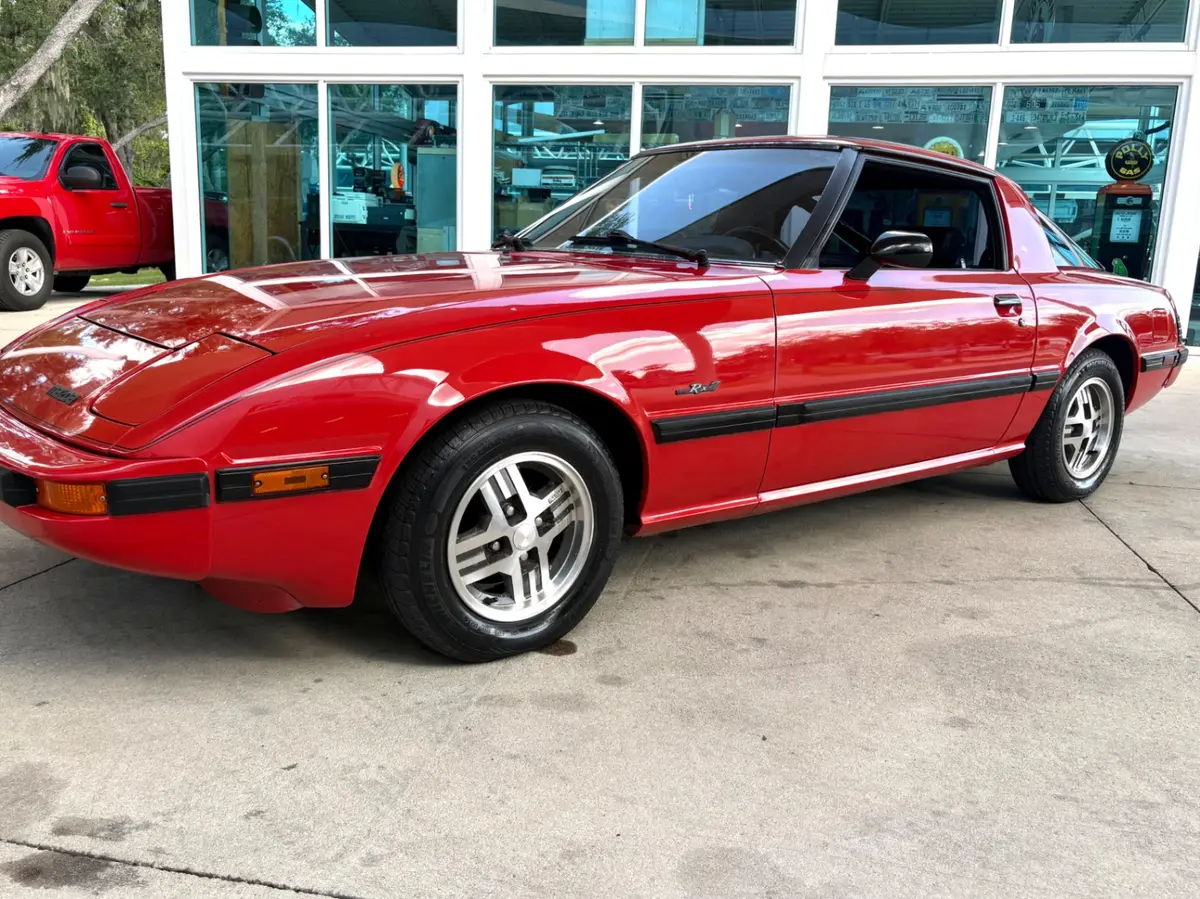
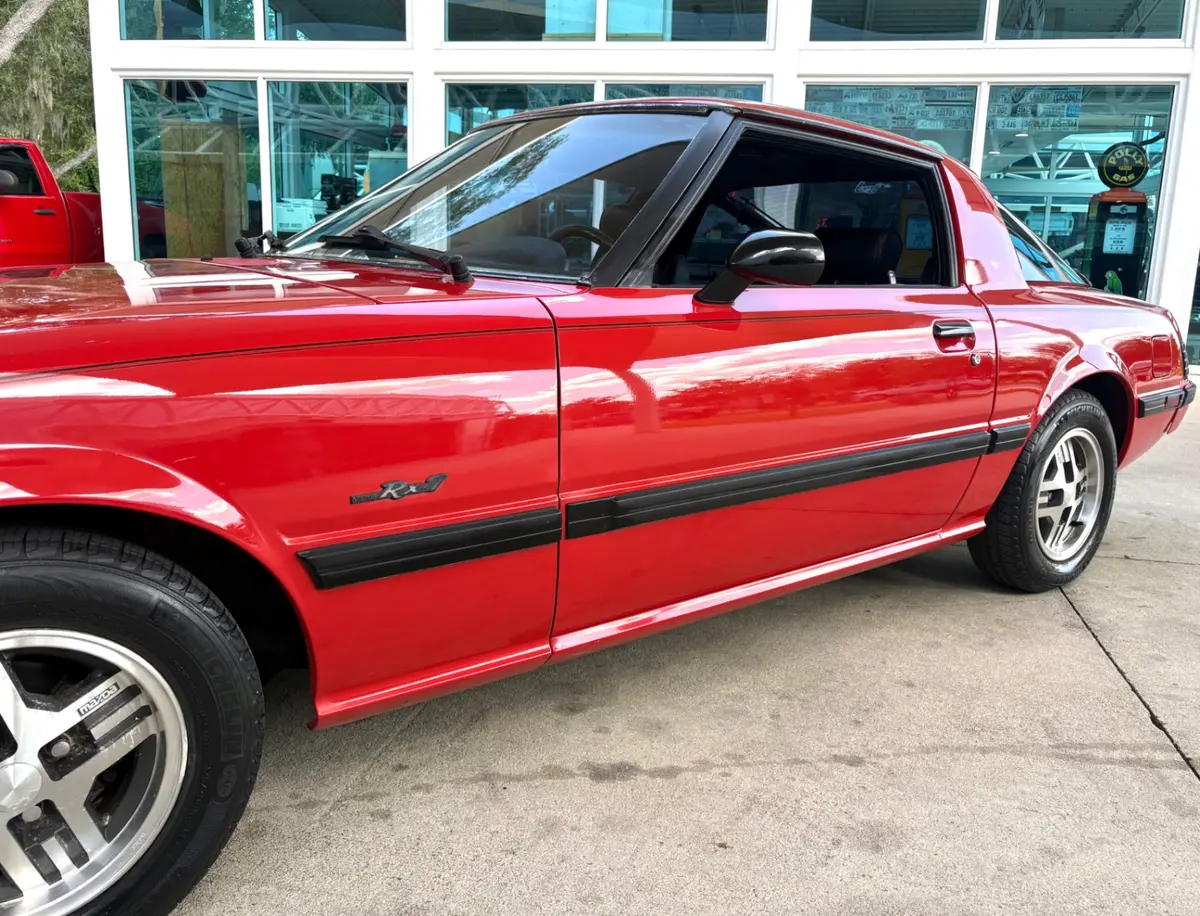
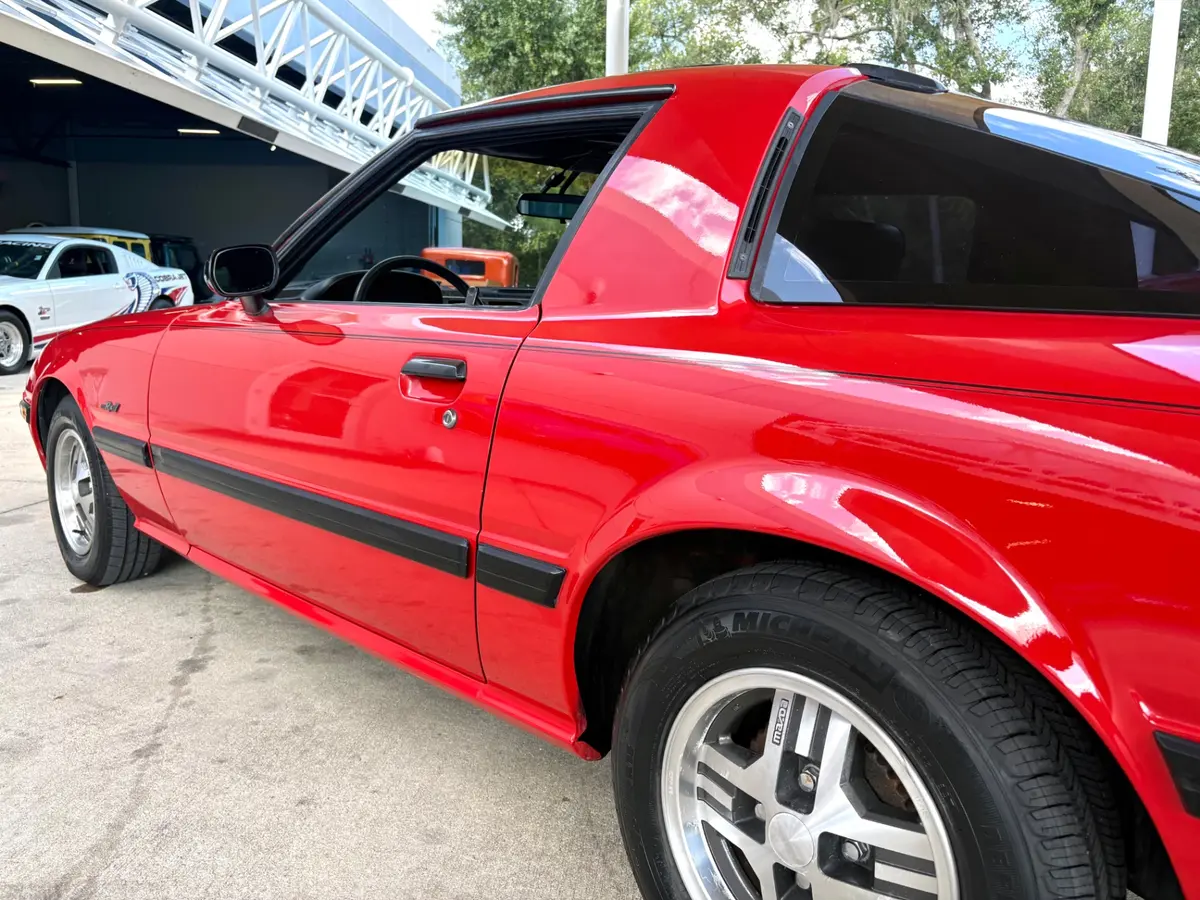
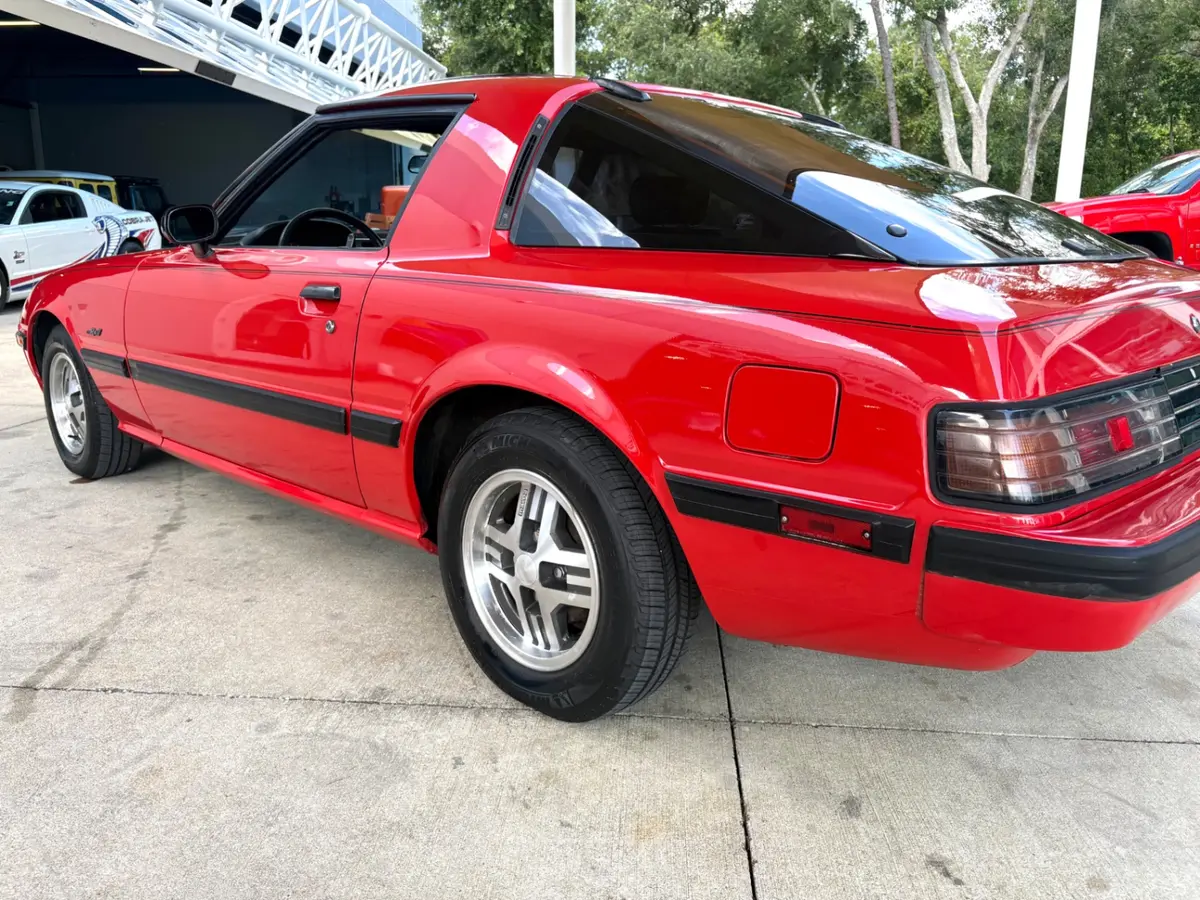
1983 Mazda RX-7 — Sunrise Red T-Top with 12A Rotary, Solid Undercarriage
Why This Car Is Special
The 1983 Mazda RX-7 occupies a specific and respected place in automotive history. It was the car that proved a rotary-powered sports coupe could be commercially viable, mechanically reliable when properly maintained, and genuinely fun to drive — all at a price point that undercut most European competition. The first-generation RX-7, known internally as the SA/FB series, ran from 1979 through 1985 in the United States. By 1983, Mazda had refined the formula considerably from the early cars, and the result was a well-sorted lightweight sports coupe with a low hood line made possible only by the compact dimensions of the Wankel rotary engine.
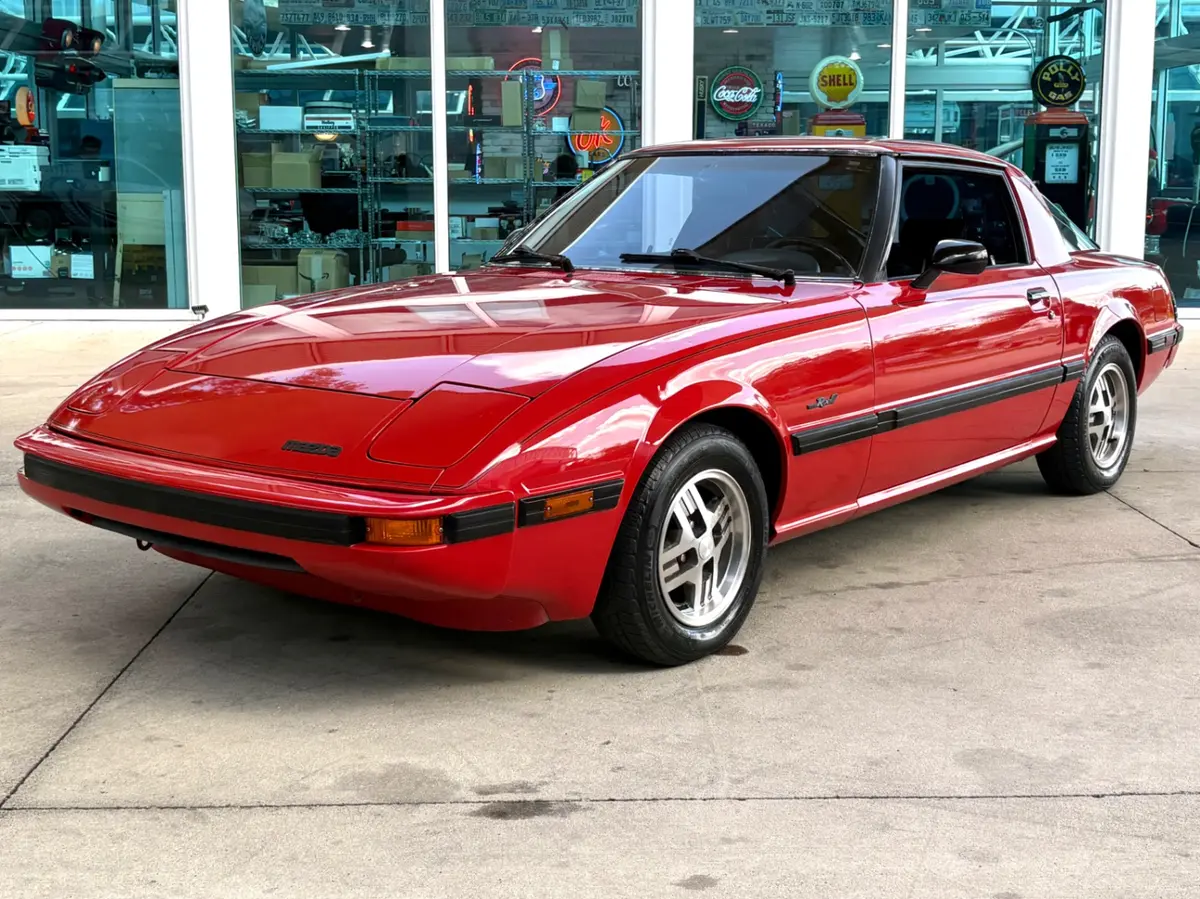
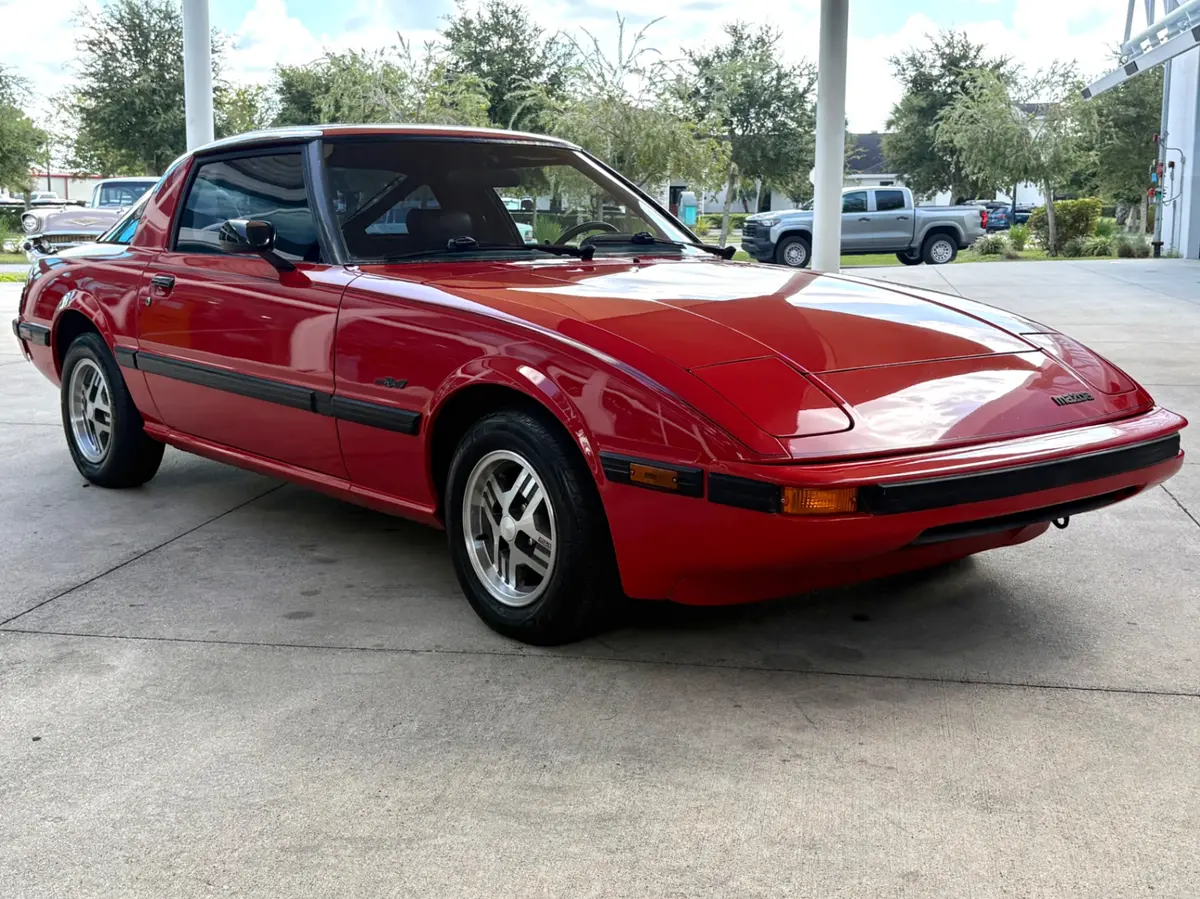
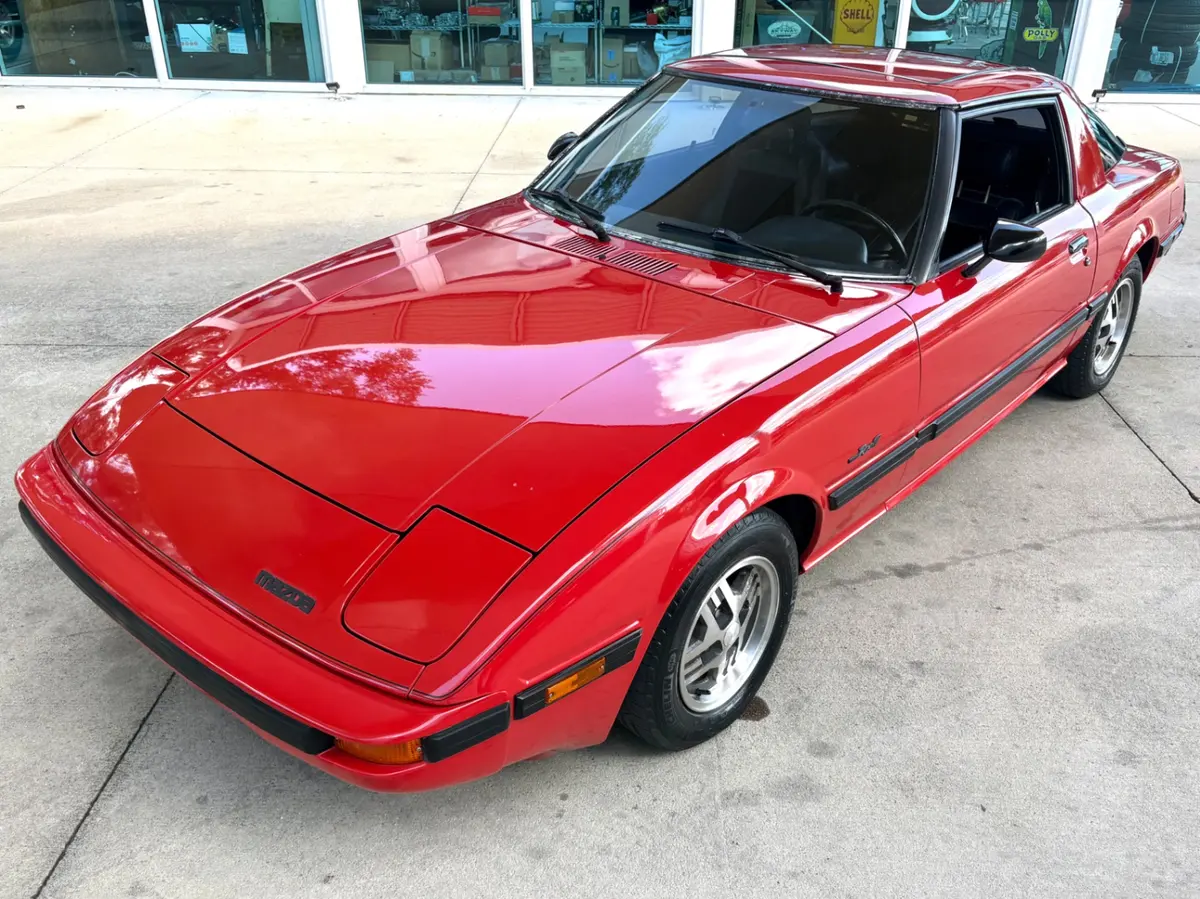
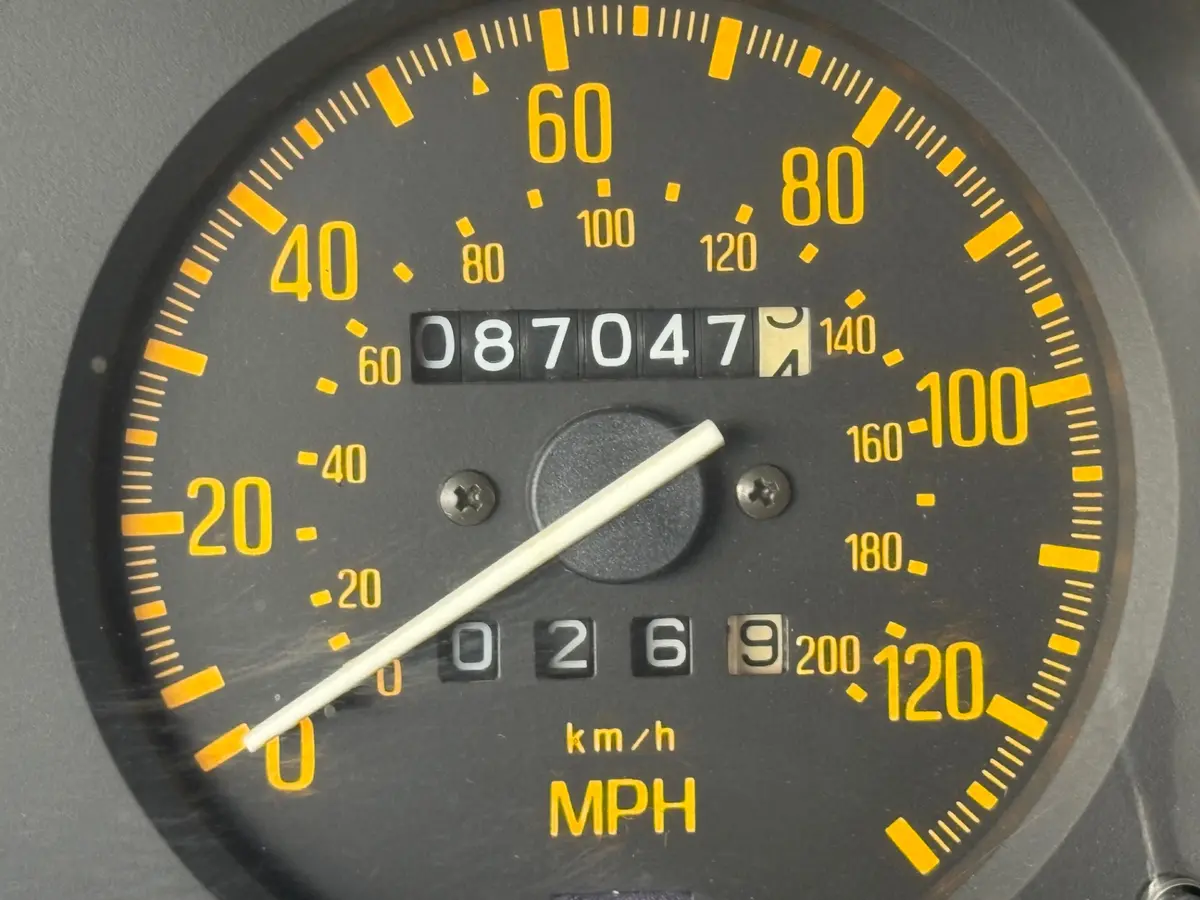
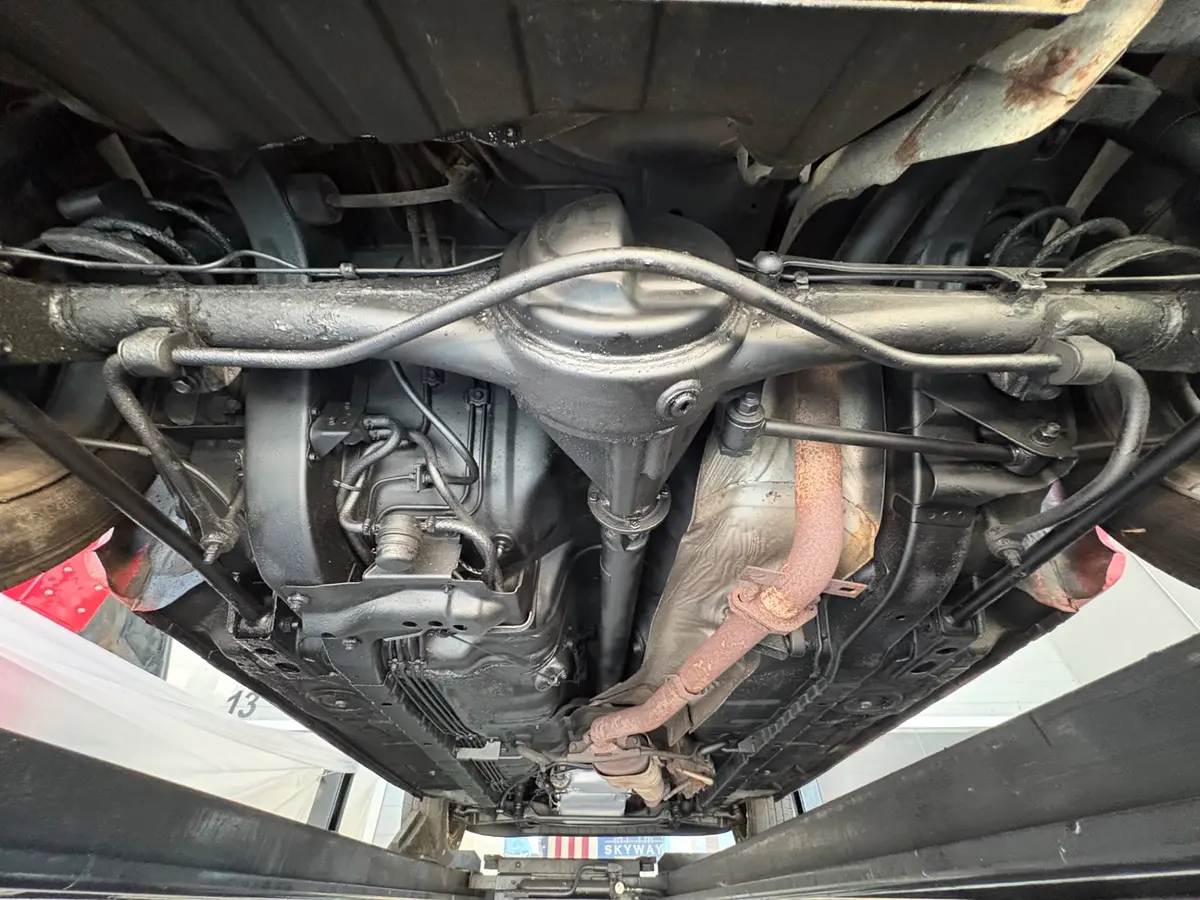
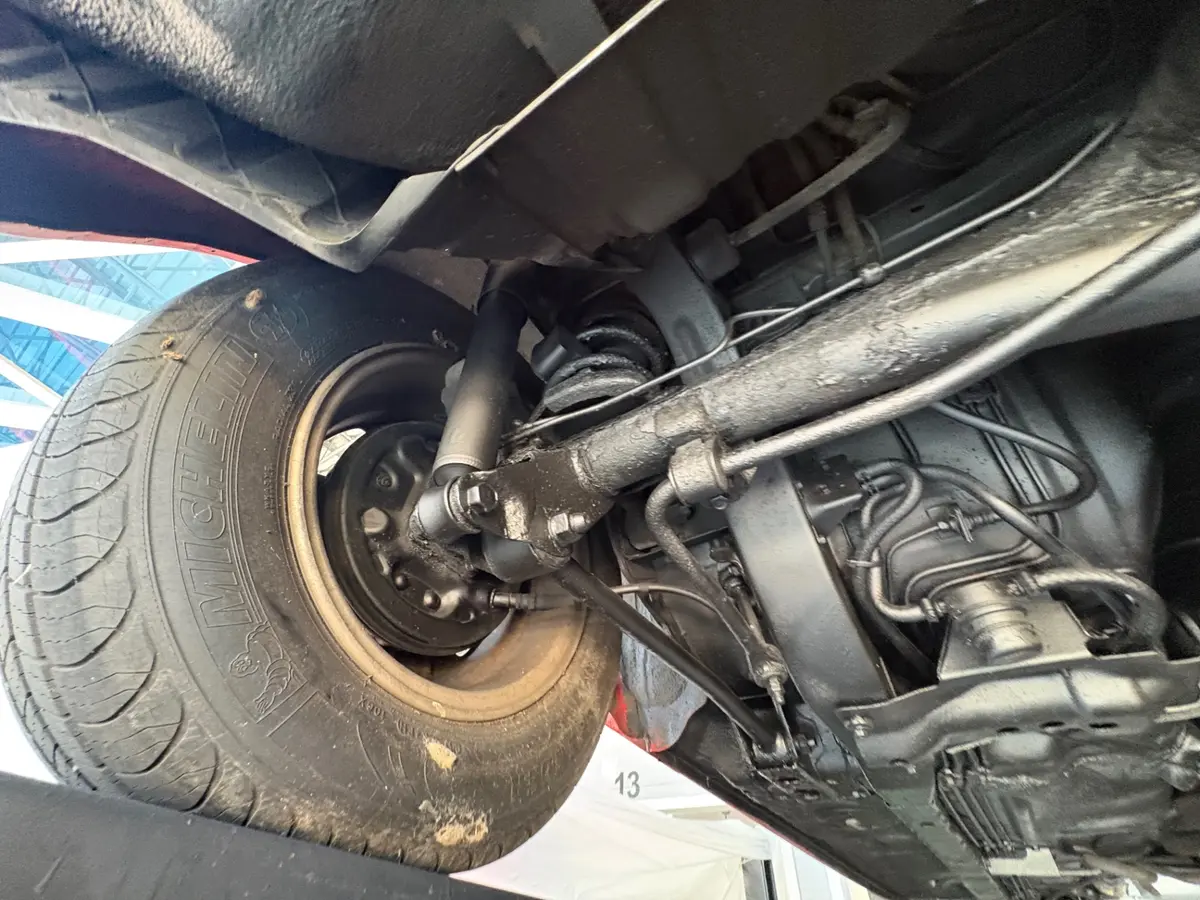
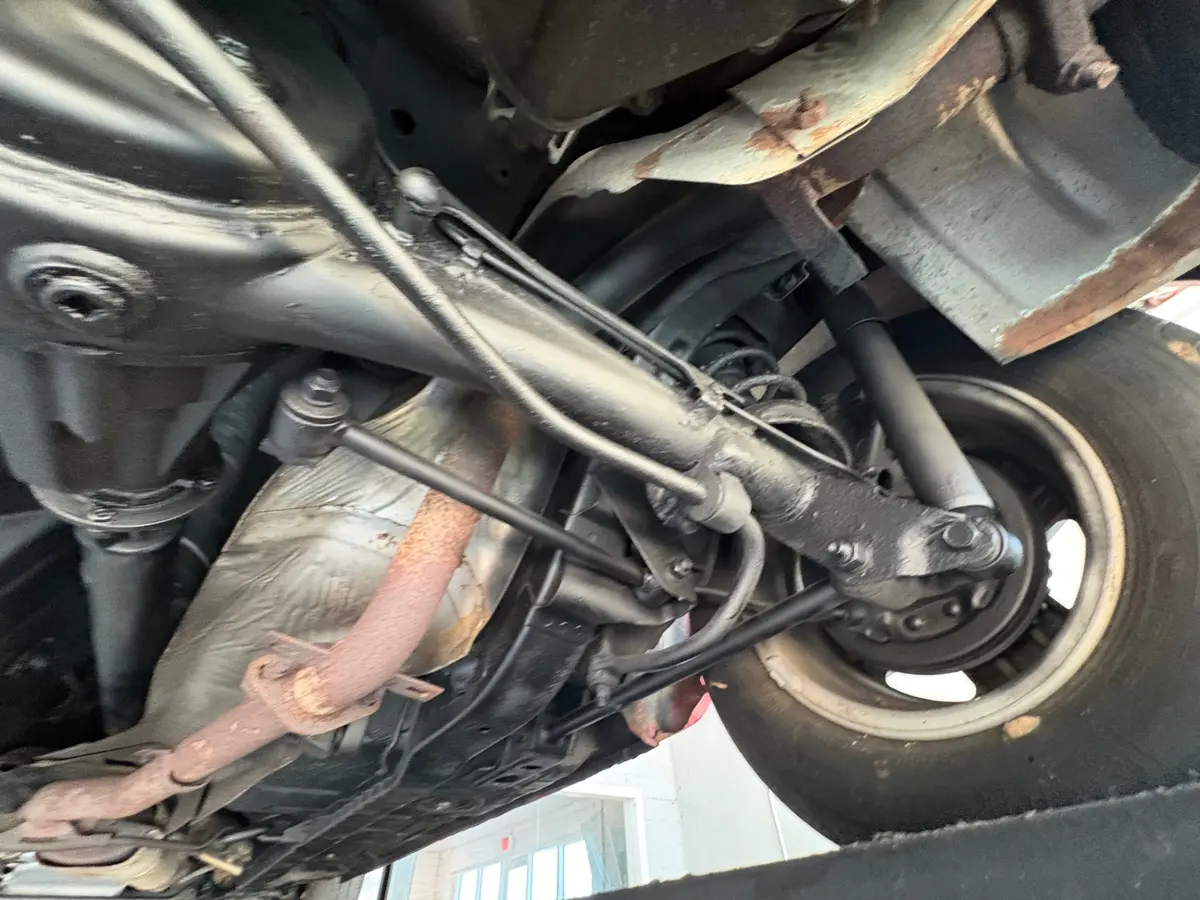
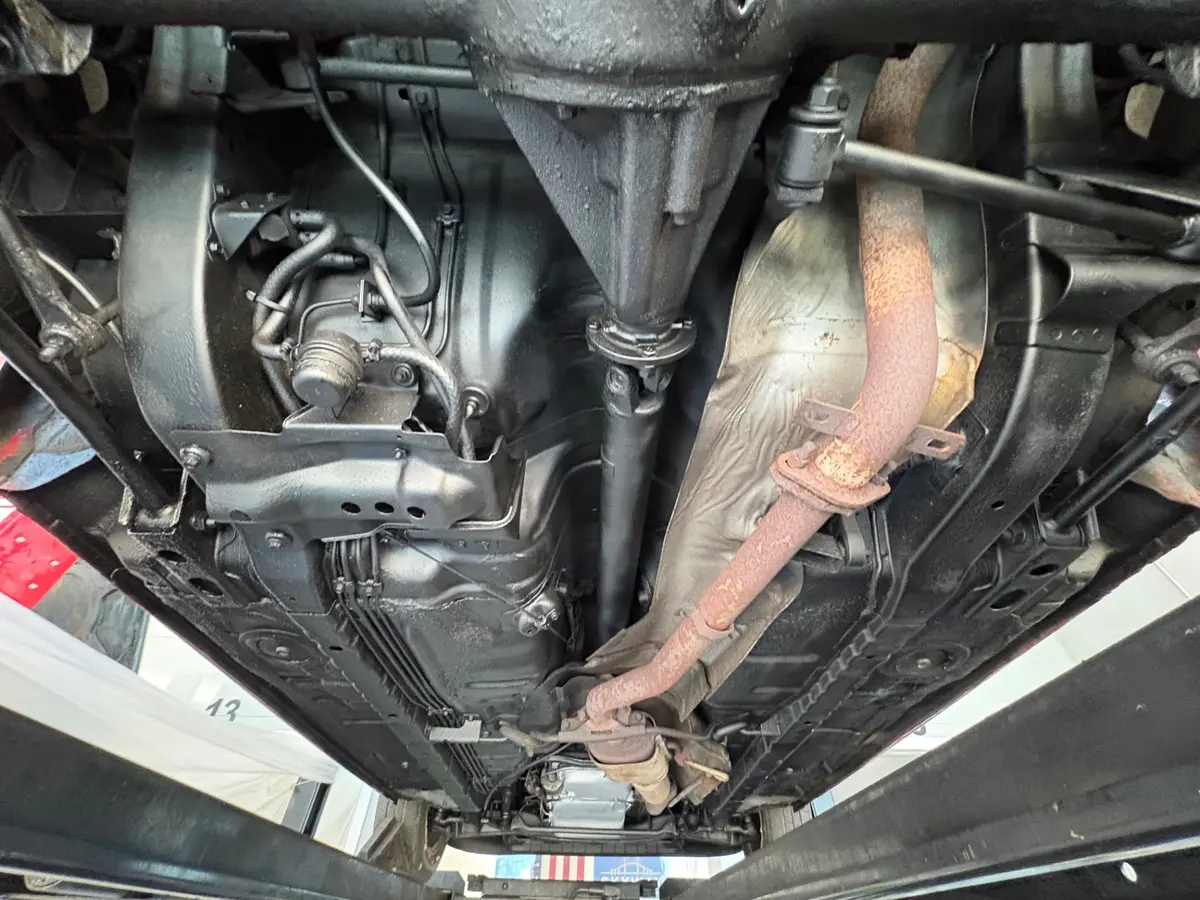
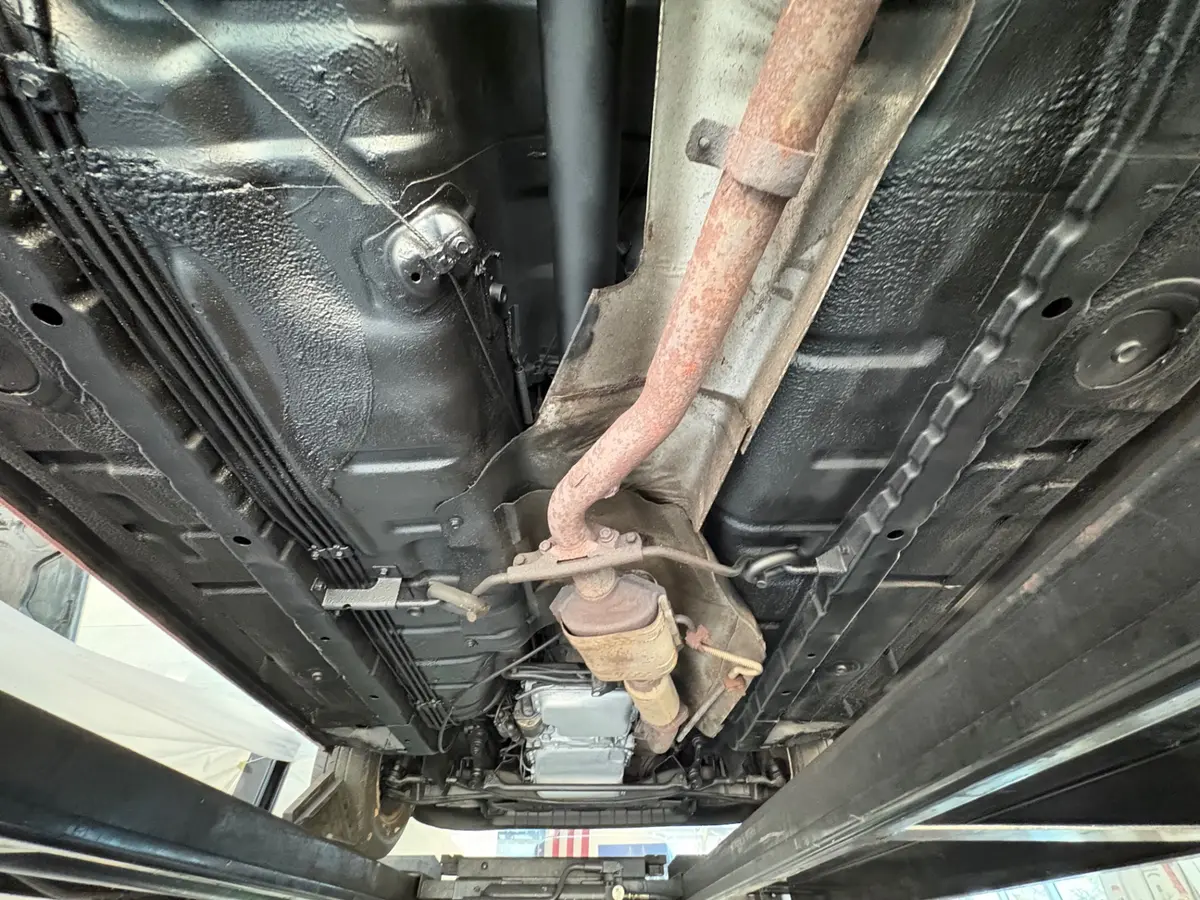
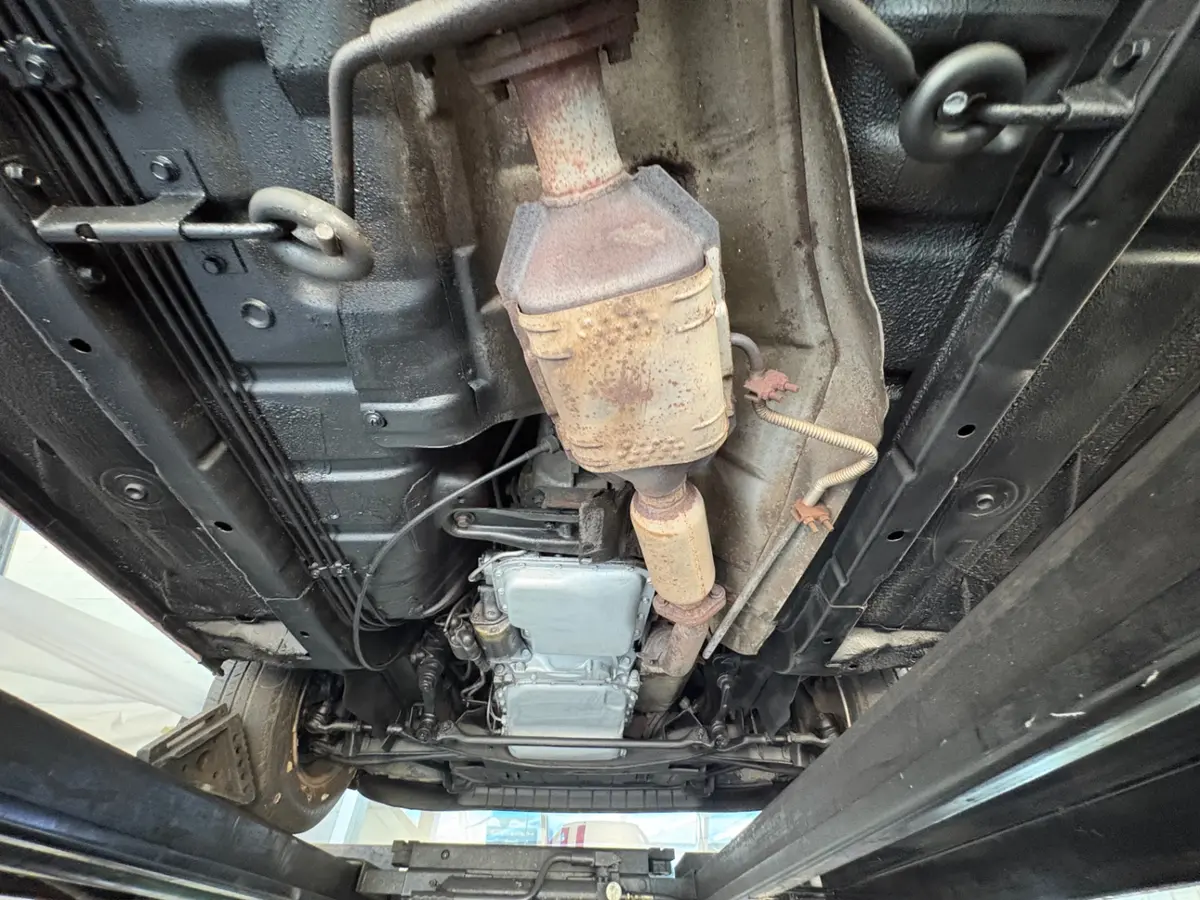
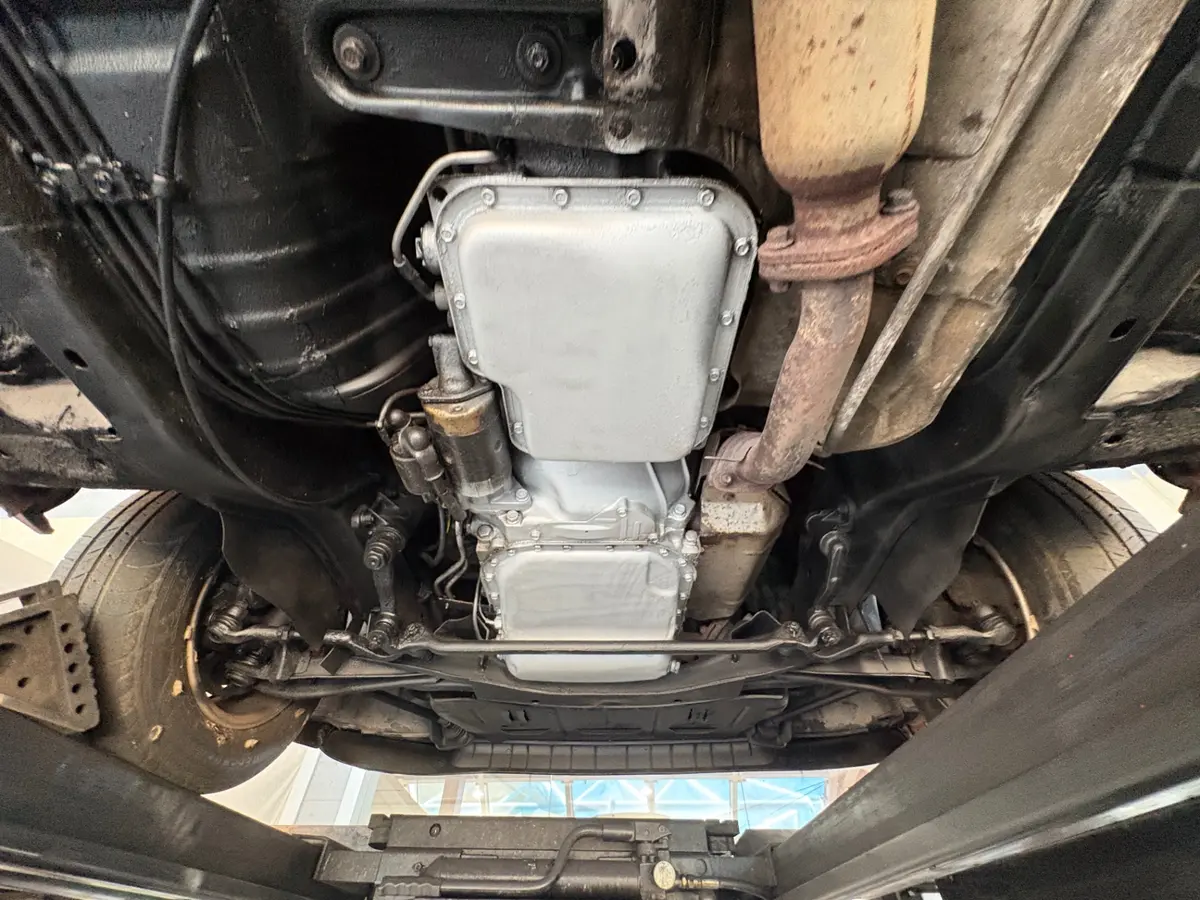
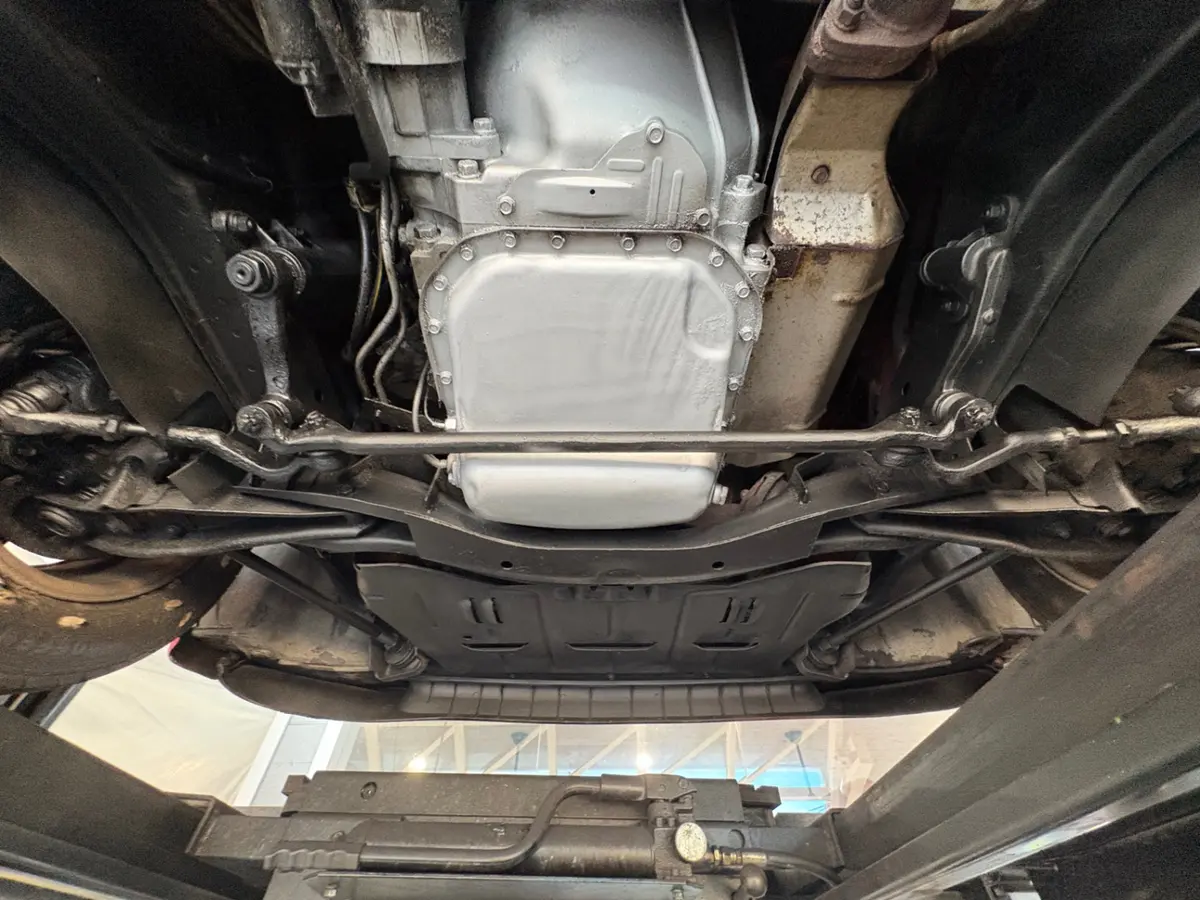
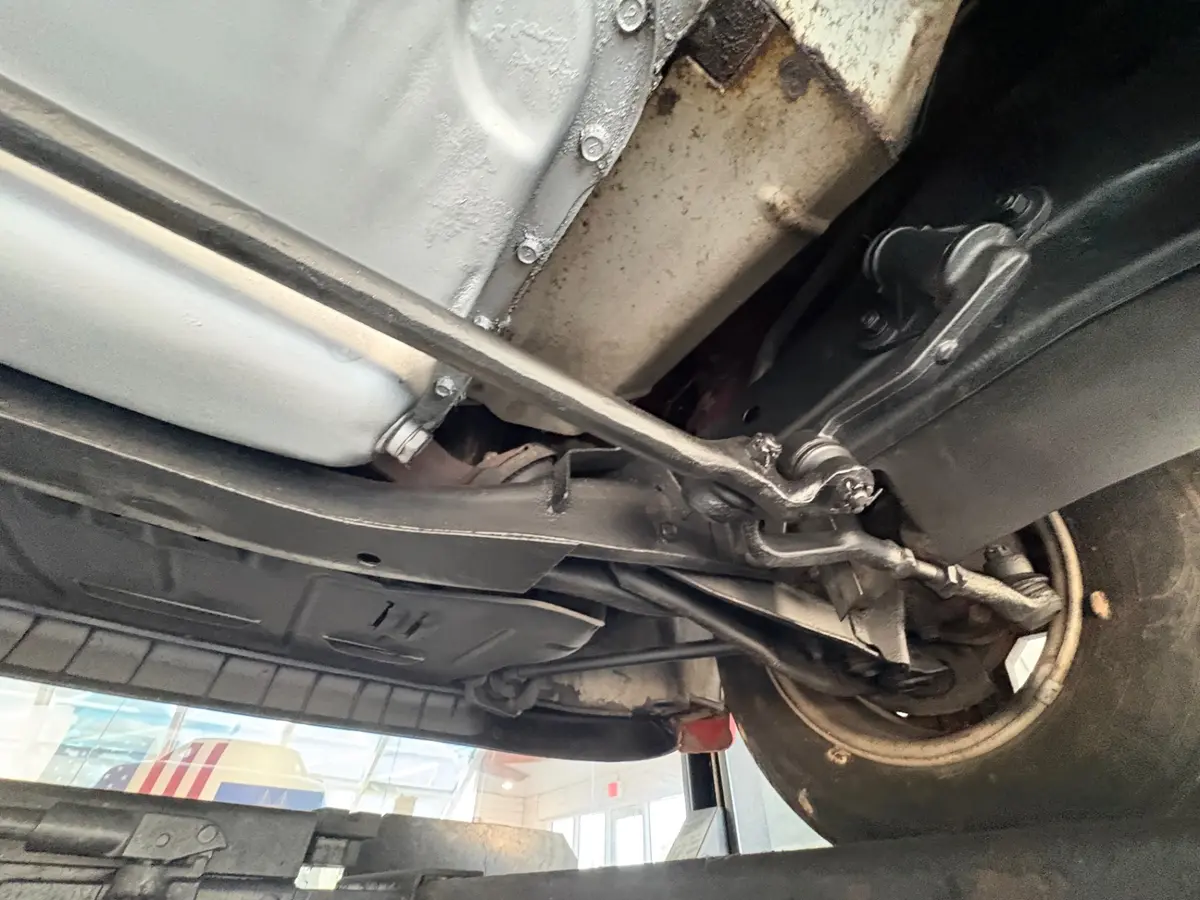
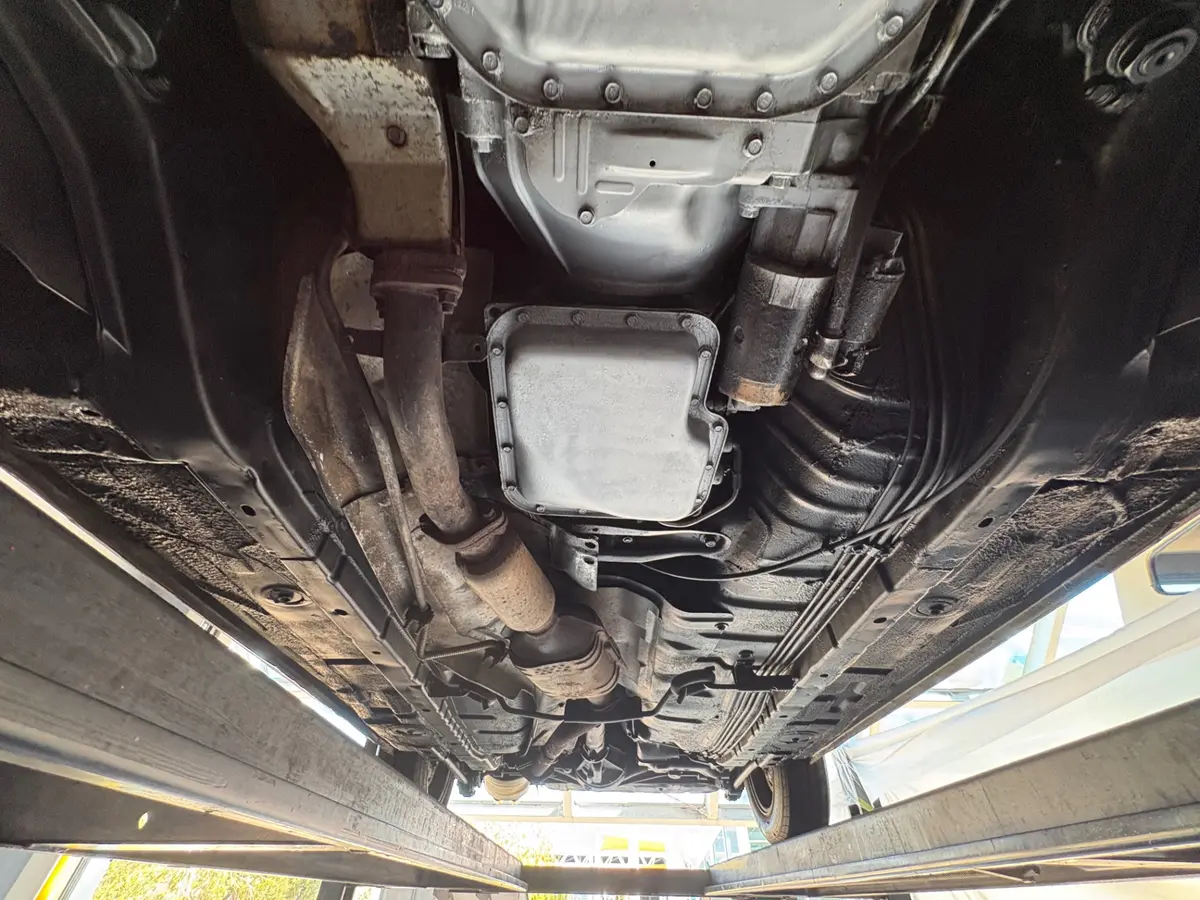
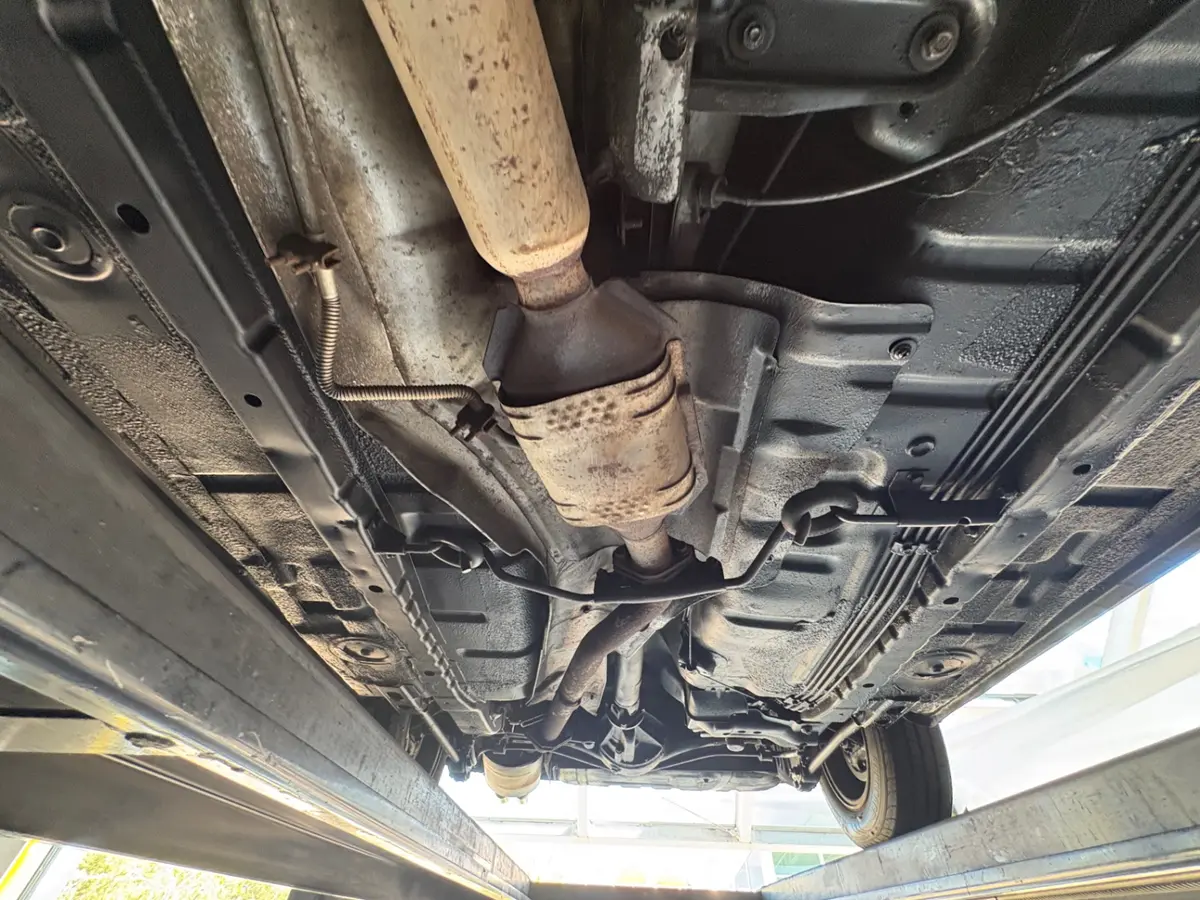
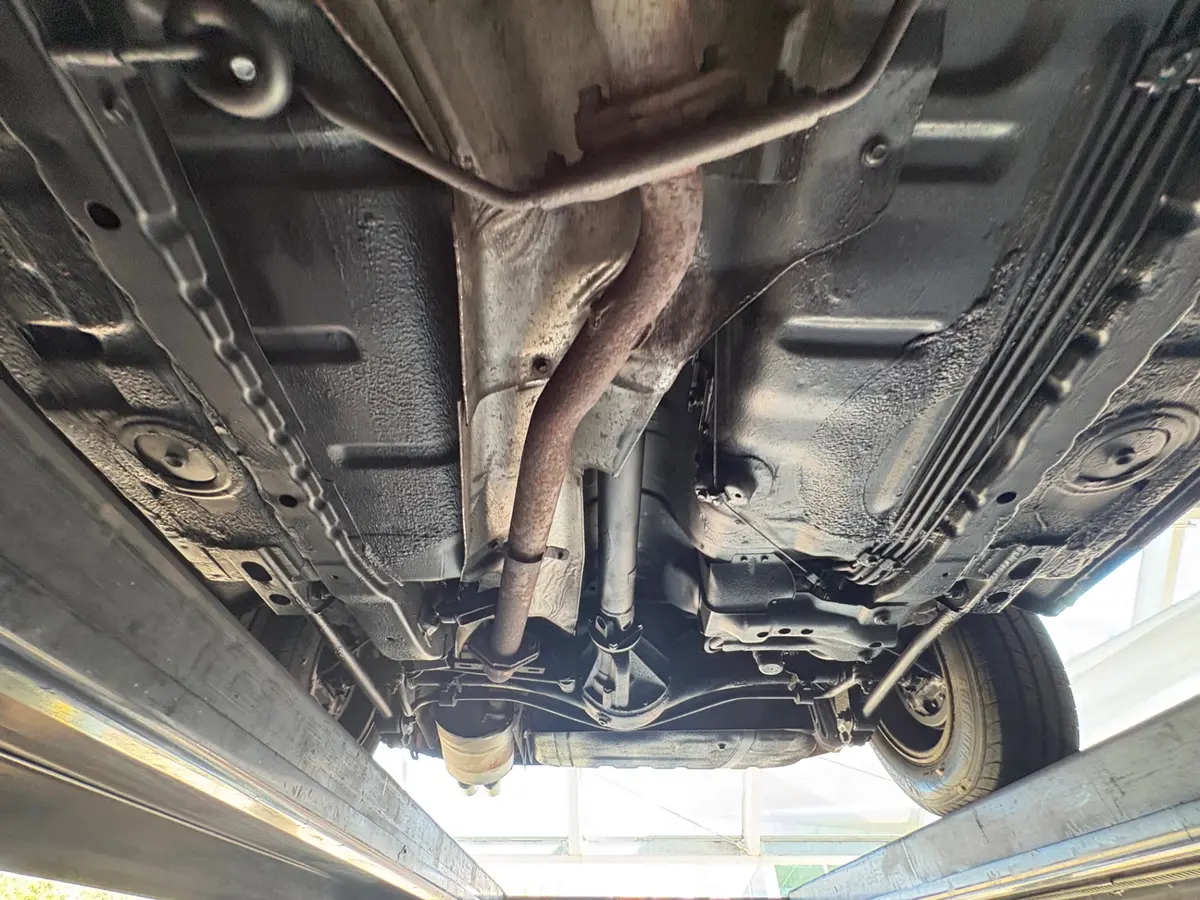
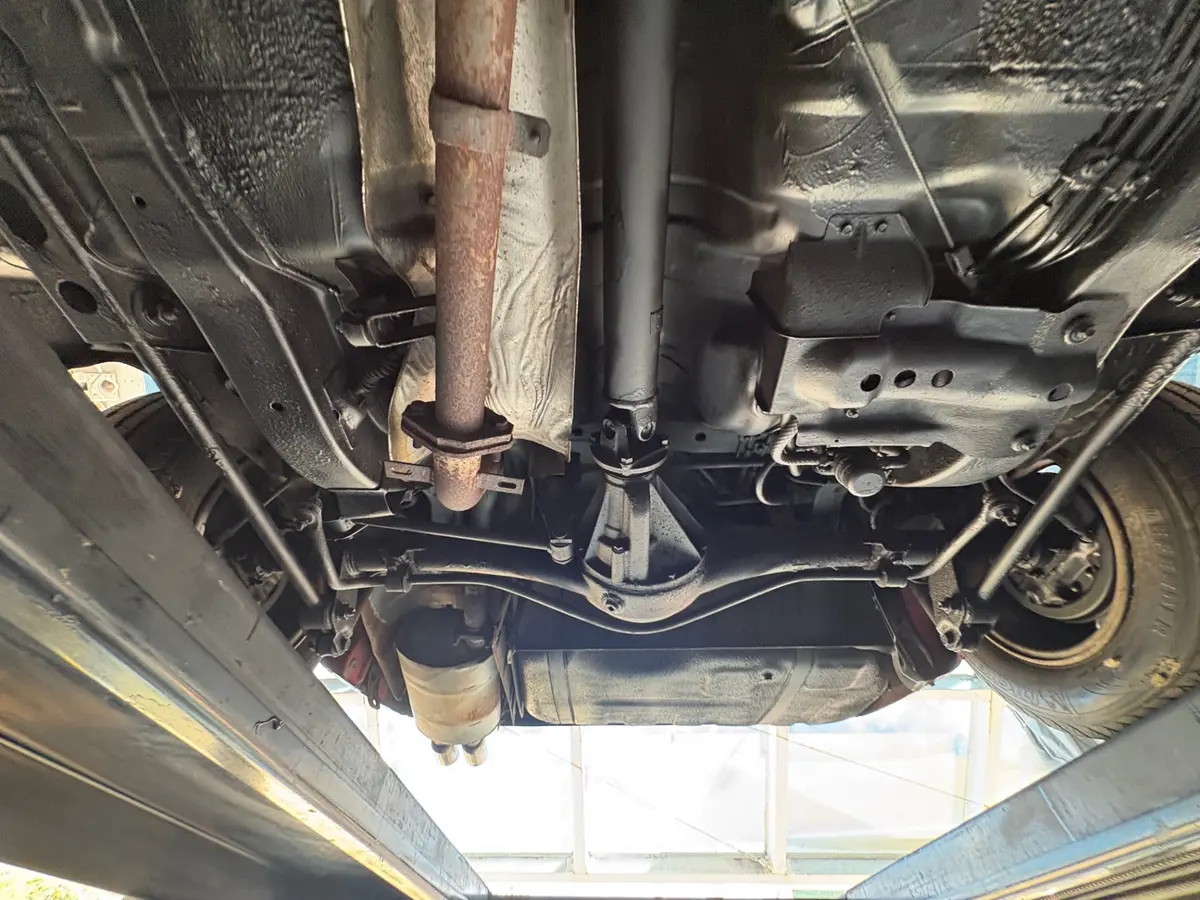
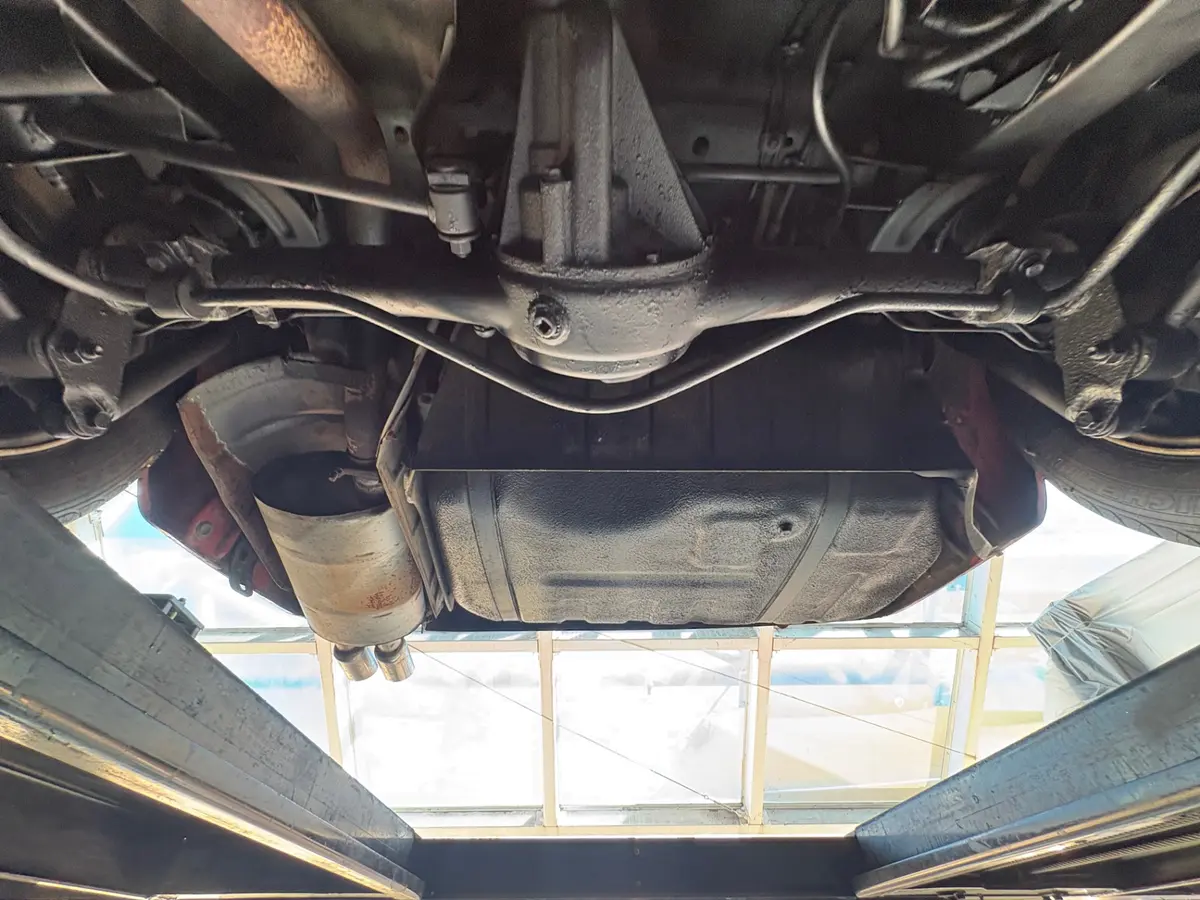
This particular 1983 Mazda RX-7 presents in Sunrise Red over a black cloth and vinyl interior. The odometer reads 87,047 miles, which on a rotary engine is a number that tells only part of the story — what matters more is how the engine has been maintained, and the undercarriage photos on this car make a strong case for careful ownership. The floors, rails, and frame sections show solid, uncompromised metal throughout, which is the foundation any serious buyer needs to see first. Florida cars earn that reputation honestly, and this one holds up under the lift.
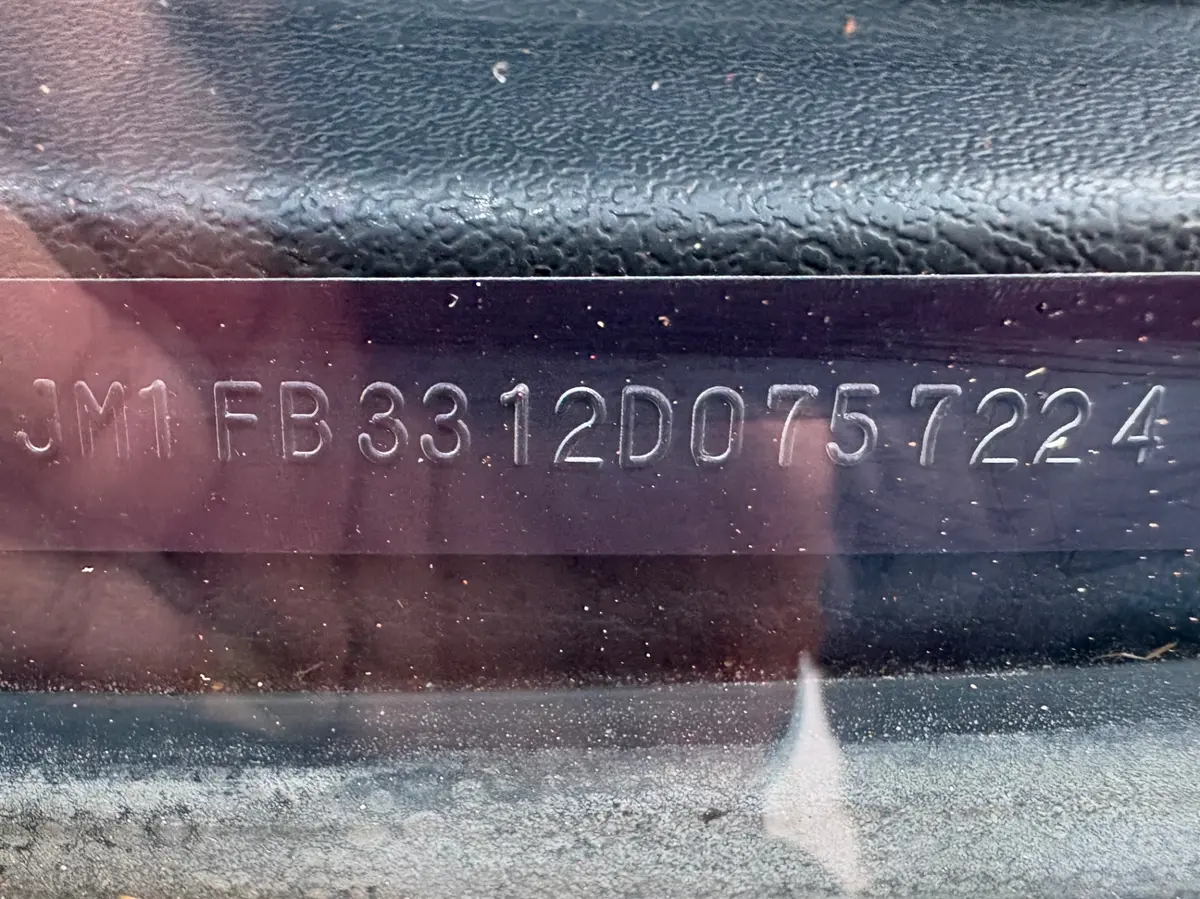
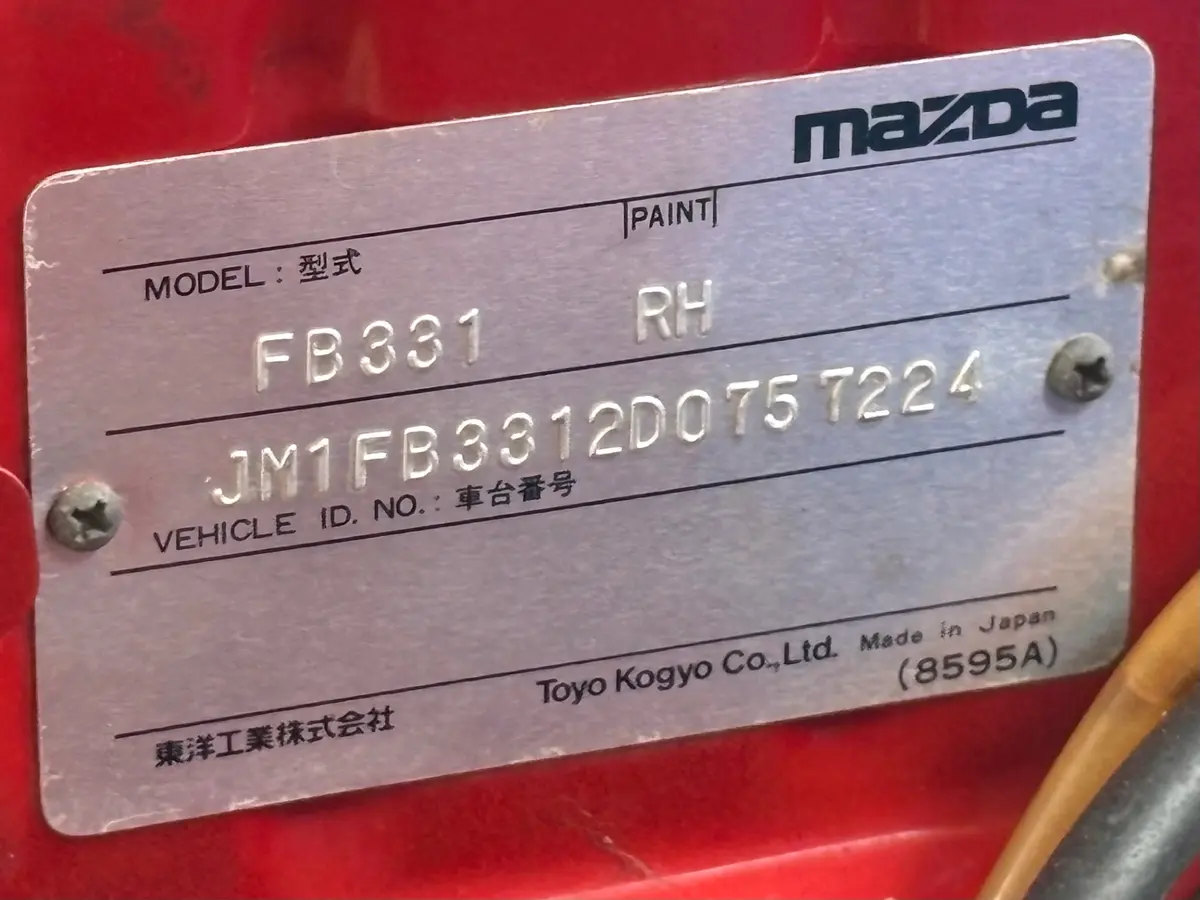
The VIN on this car decodes to confirm it is a U.S.-market vehicle assembled at Mazda's Hiroshima facility, with the "D" in the model year position confirming the 1983 build date. The "FB" platform designation tells rotary enthusiasts they are looking at the first-generation body style — the cleaner, more analog of the two pre-FD generations.
Features List
- 12A 1.1L Twin-Rotor Wankel Rotary Engine
- 3-Speed Automatic Transmission
- T-Top Roof (removable panels)
- Retractable Pop-Up Headlights
- Mazda Factory Alloy Wheels
- Michelin Tires
- Front Disc Brakes
- Tachometer with 8,000 RPM Redline
- Multi-Gauge Instrument Cluster (oil pressure, coolant temp, fuel, voltage)
- Sport 3-Spoke Mazda Steering Wheel
- Adjustable Headrests (front and rear)
- Bucket Seats with Cloth and Vinyl Upholstery
- Center Console
- Rear Cargo Area Speakers
- Aftermarket Stereo Head Unit
- Body Side Molding
- Dual Exhaust Tips
- Solid Undercarriage
Mechanical
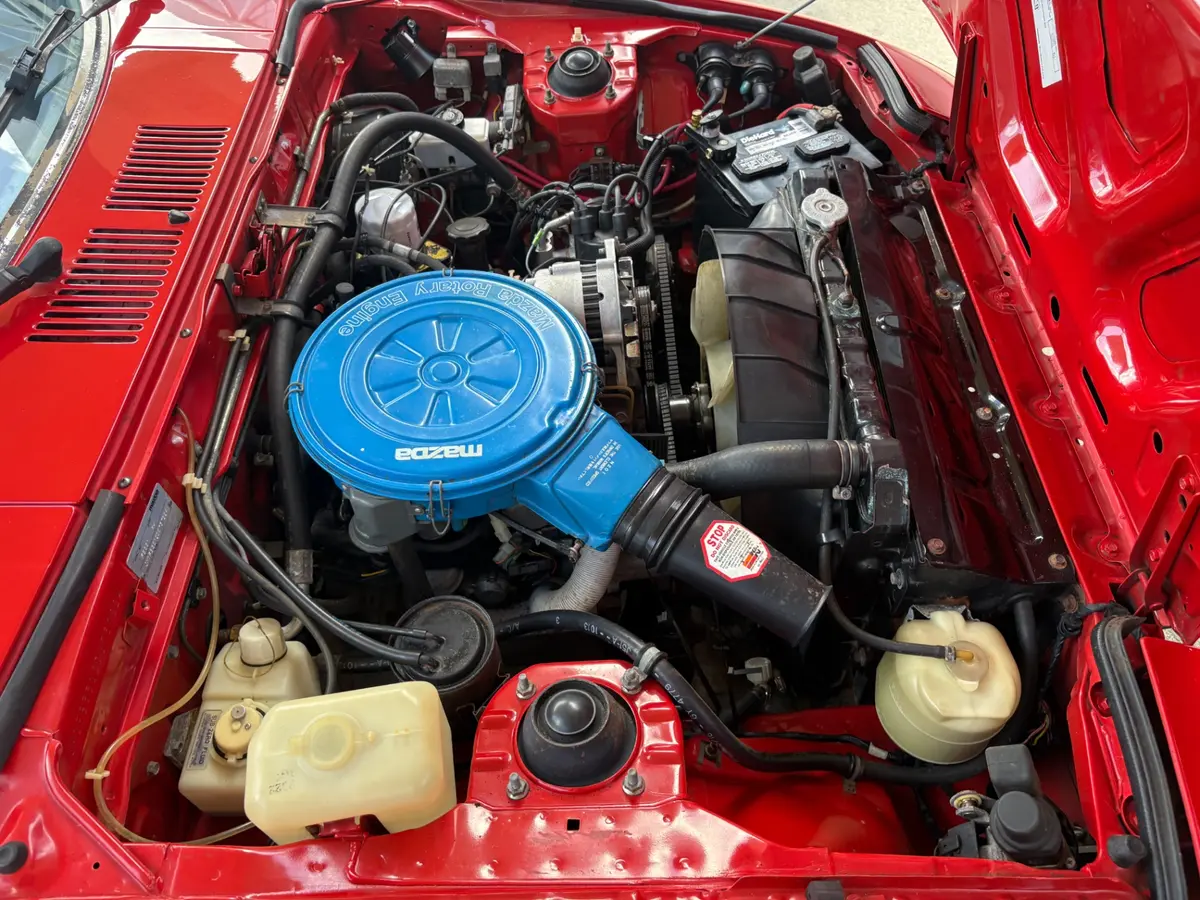
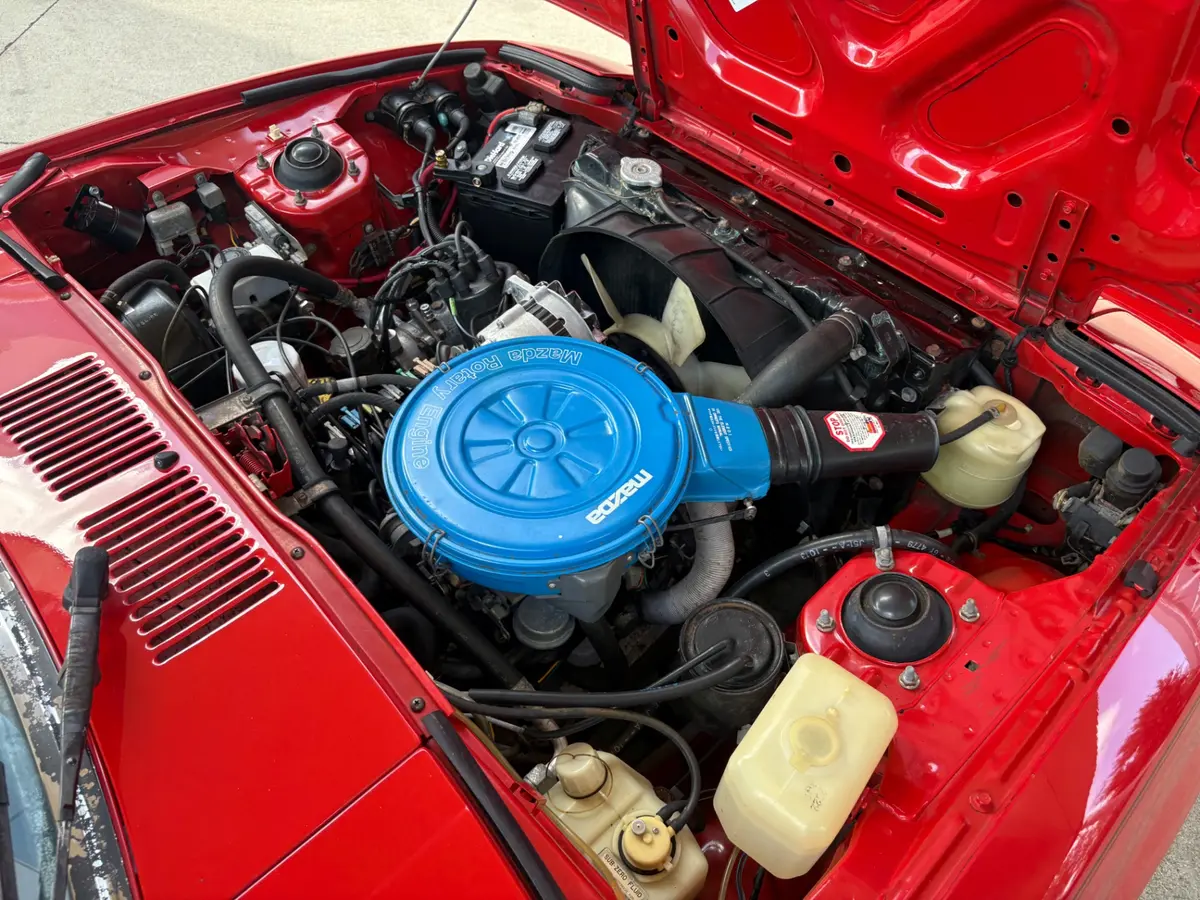
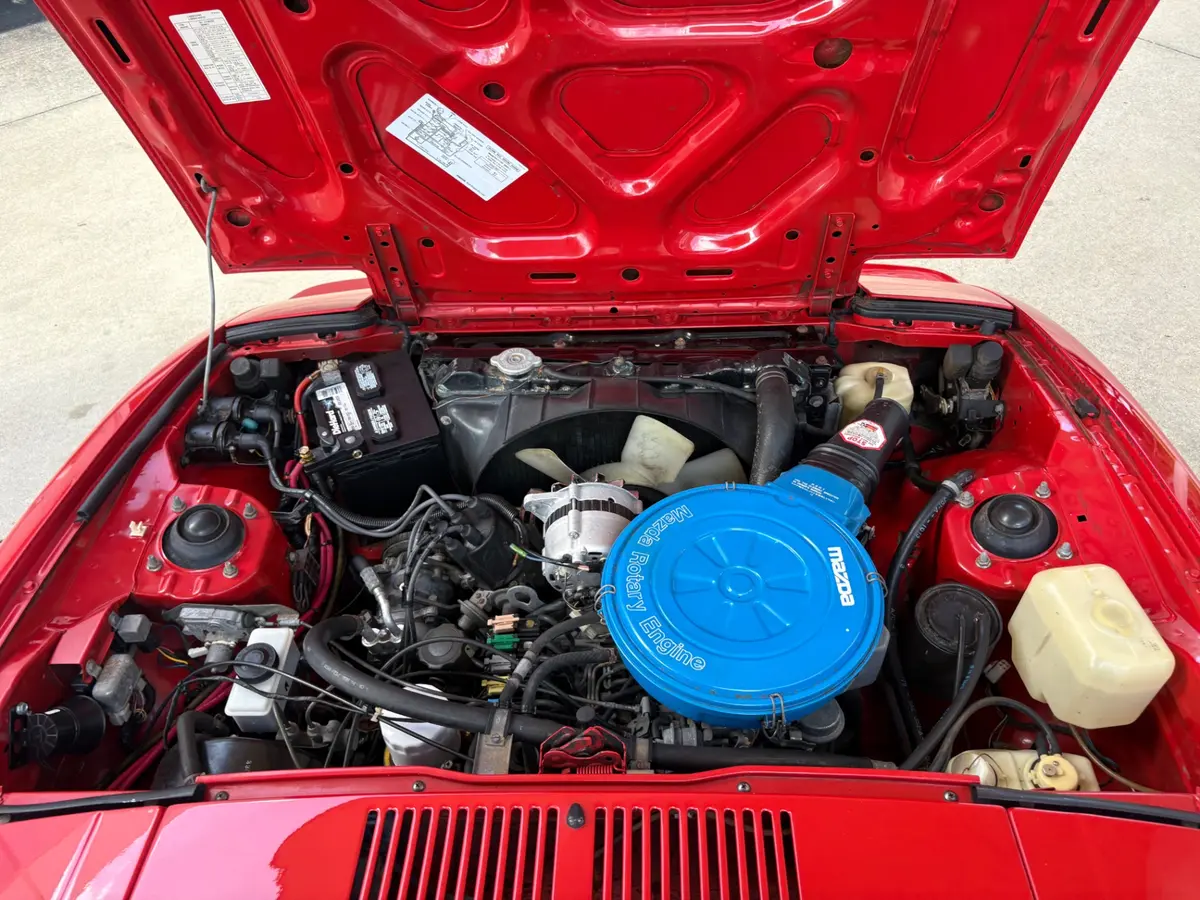
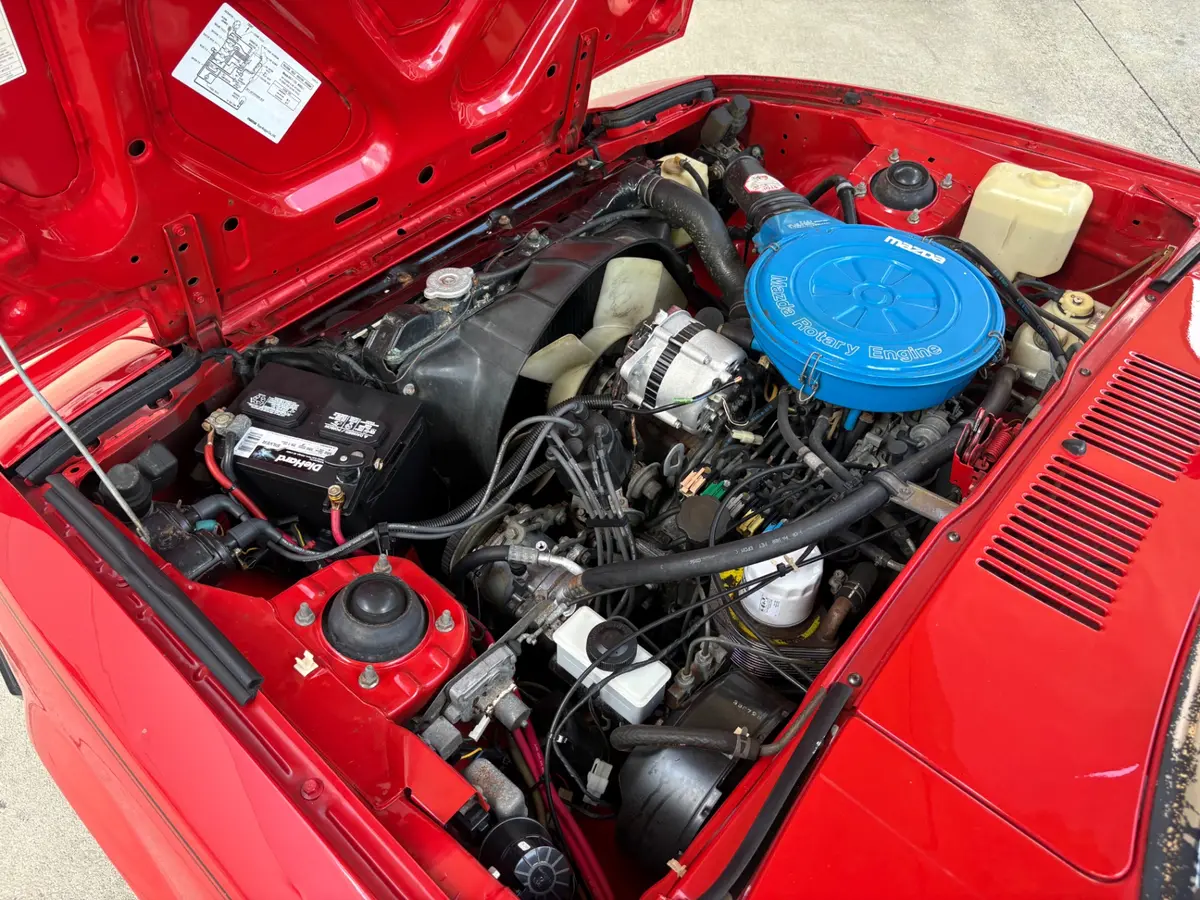
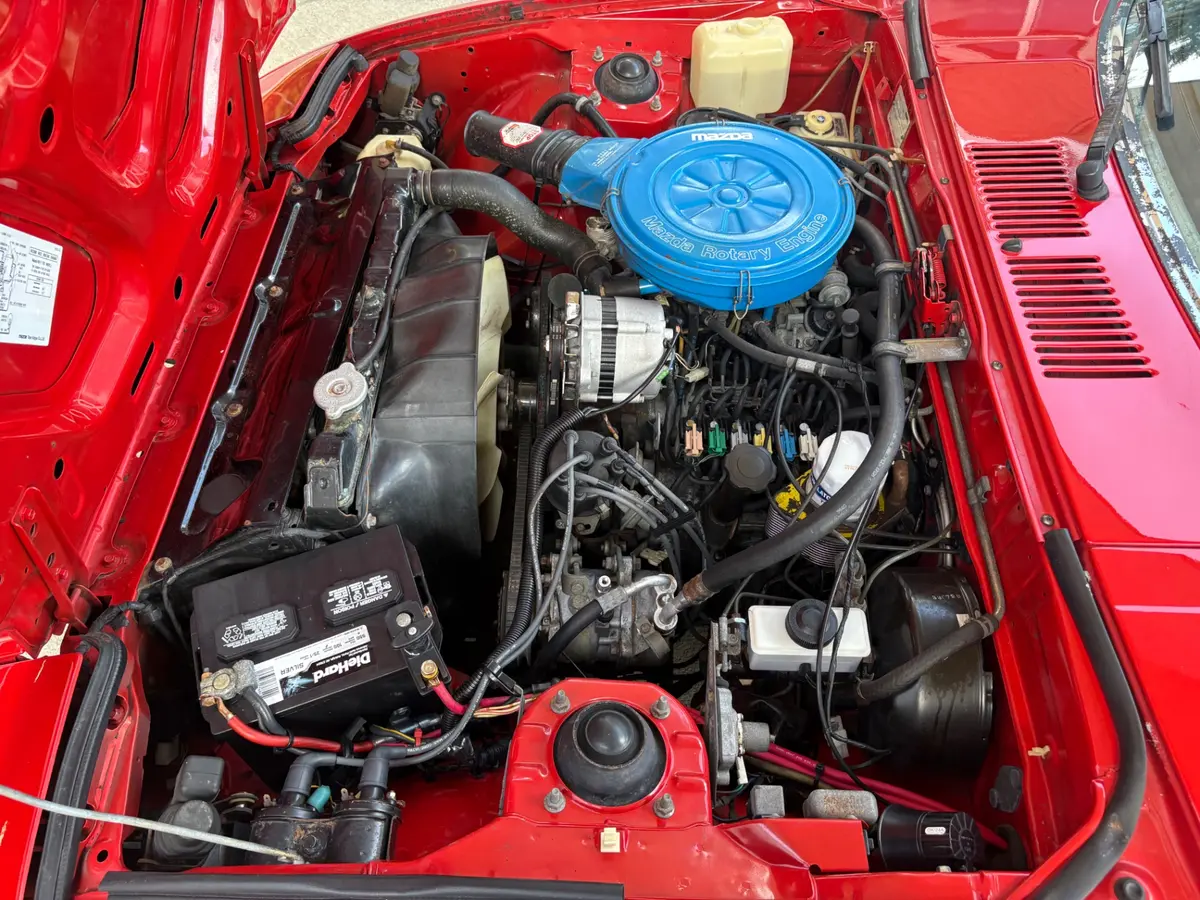
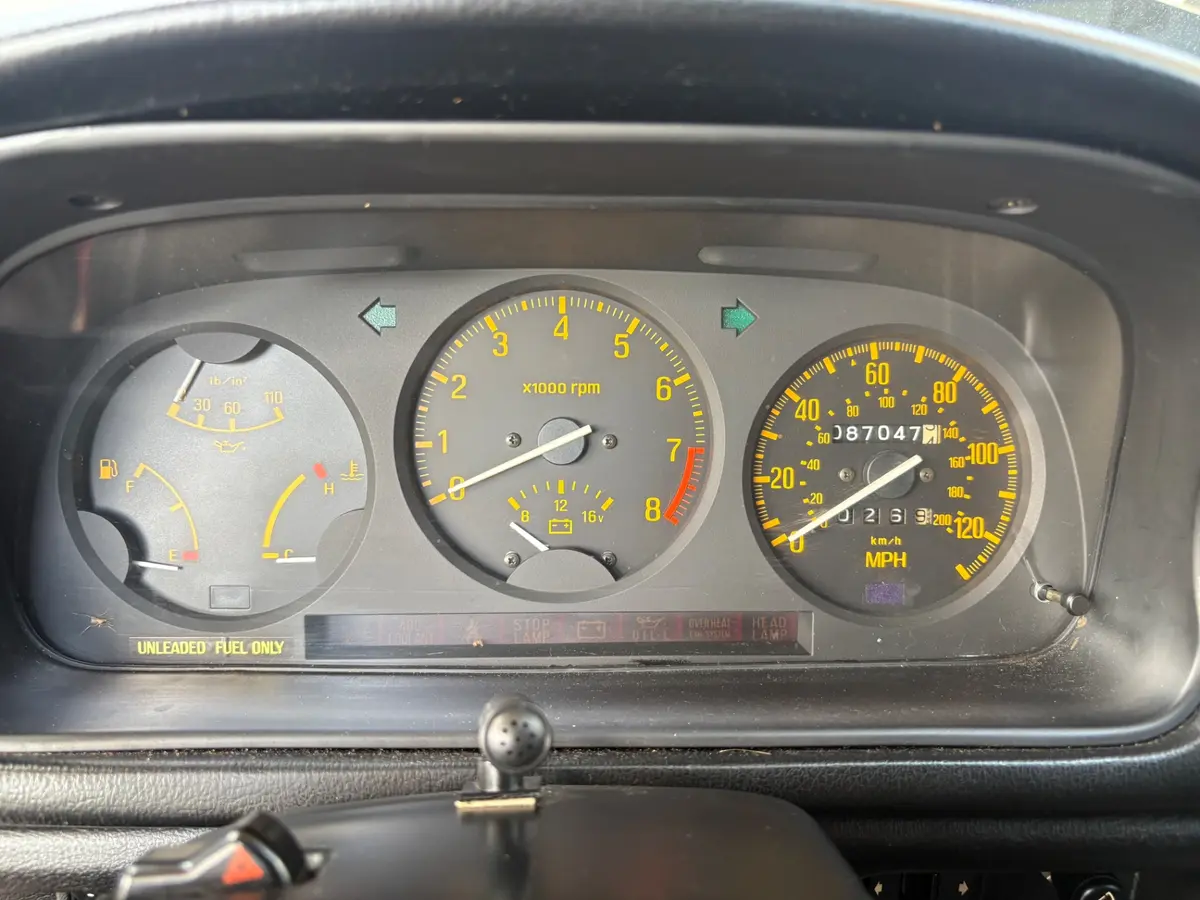
The heart of the 1983 Mazda RX-7 is the 12A twin-rotor Wankel engine, displacing 1.1 liters across two rotary chambers. Unlike a piston engine, the 12A produces power through the orbital motion of triangular rotors inside epitrochoidal housings. There are no valves, no pushrods, and no reciprocating mass. The result is an engine that revs freely to its 7,000 rpm redline — visible on the tachometer in the photos — and produces power with a smoothness that no equivalent-displacement piston engine can match. In 1983, the naturally aspirated 12A was rated at 100 horsepower for the U.S. market. That number reads modestly on paper, but the RX-7's curb weight of approximately 2,300 pounds puts it in useful perspective.
This car is equipped with the 3-speed automatic transmission, which was a factory option on the 1983 RX-7. The automatic was not the performance choice — that was the 5-speed manual — but it made the RX-7 accessible to a wider buyer pool and remains a practical configuration for a car that sees regular street use. The gearbox sits visibly in the undercarriage photos and appears in sound condition.
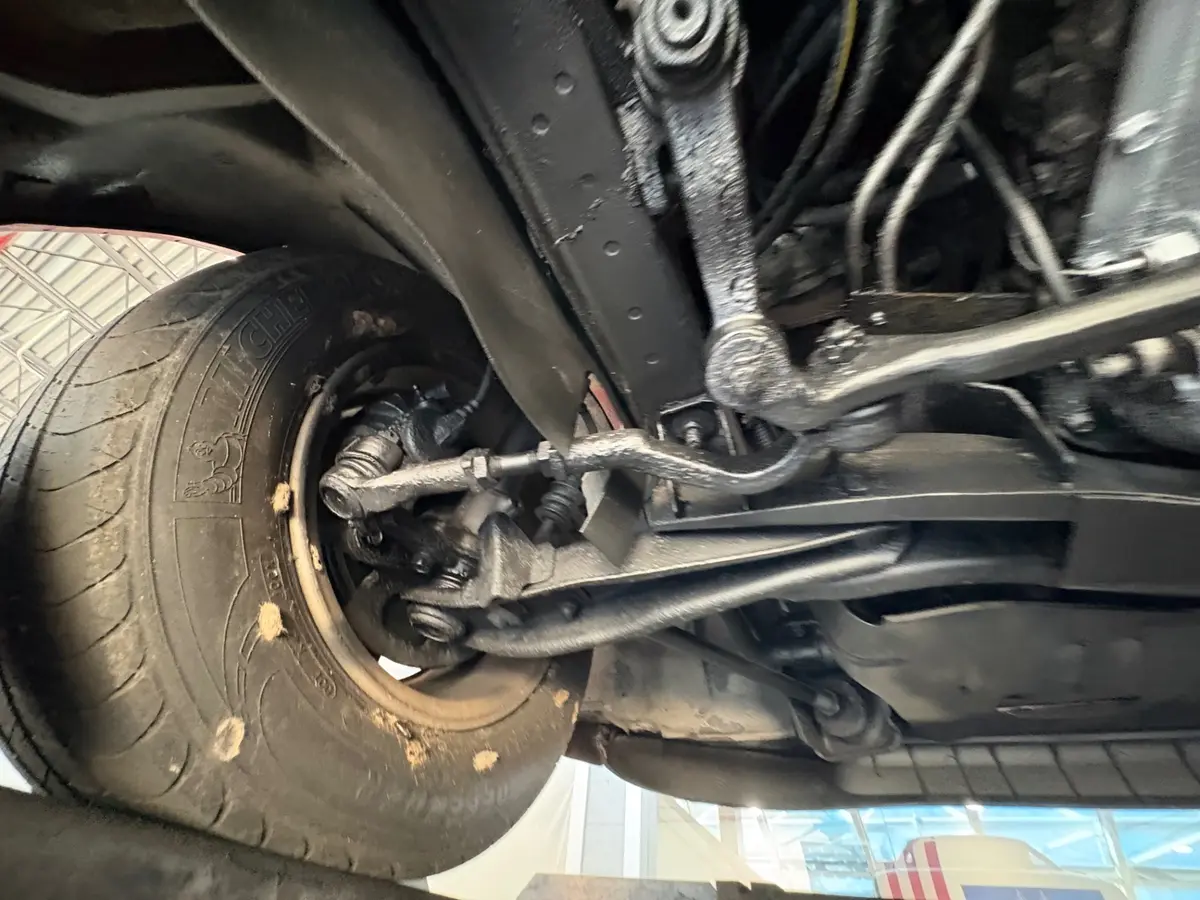
Stopping power comes from front disc brakes, which were standard on the RX-7. The suspension is an independent strut setup at all four corners, giving the car the balanced handling characteristics that made early RX-7s a reference point for front-engine, rear-drive sports car dynamics in their era. The undercarriage has been put on the lift and photographed thoroughly. The floors are solid, the frame rails are intact, and the subframe components show no evidence of rot or serious corrosion. Surface oxidation on the exhaust components is expected on any car of this age and does not affect structural integrity.
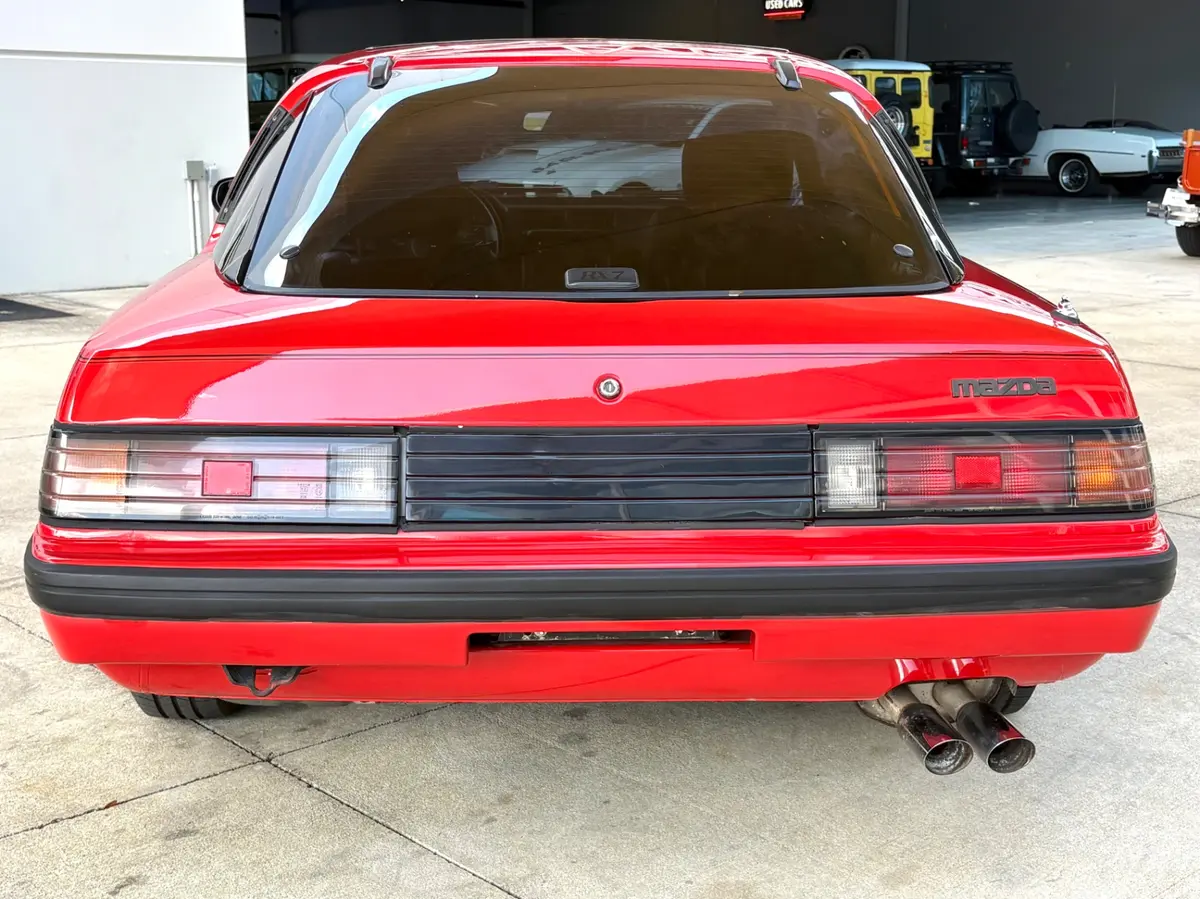
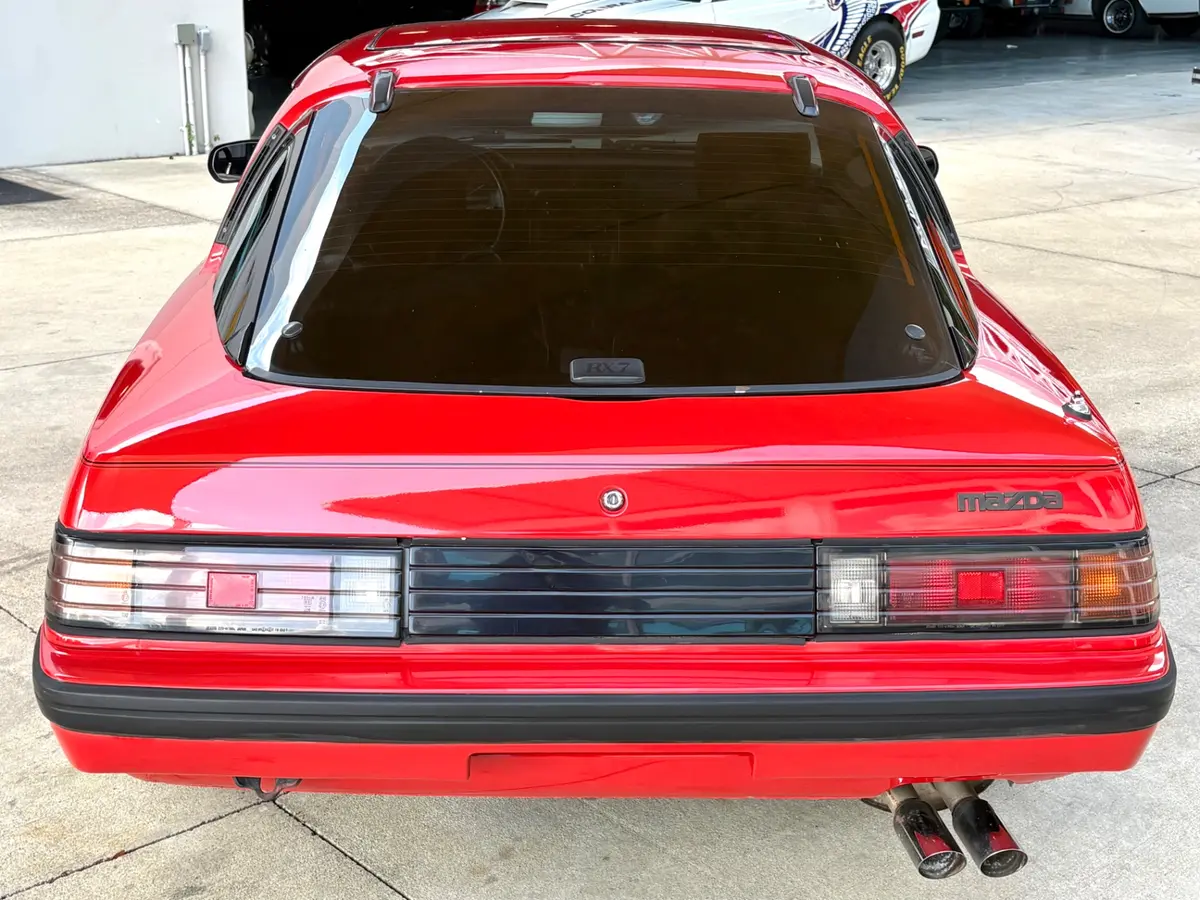
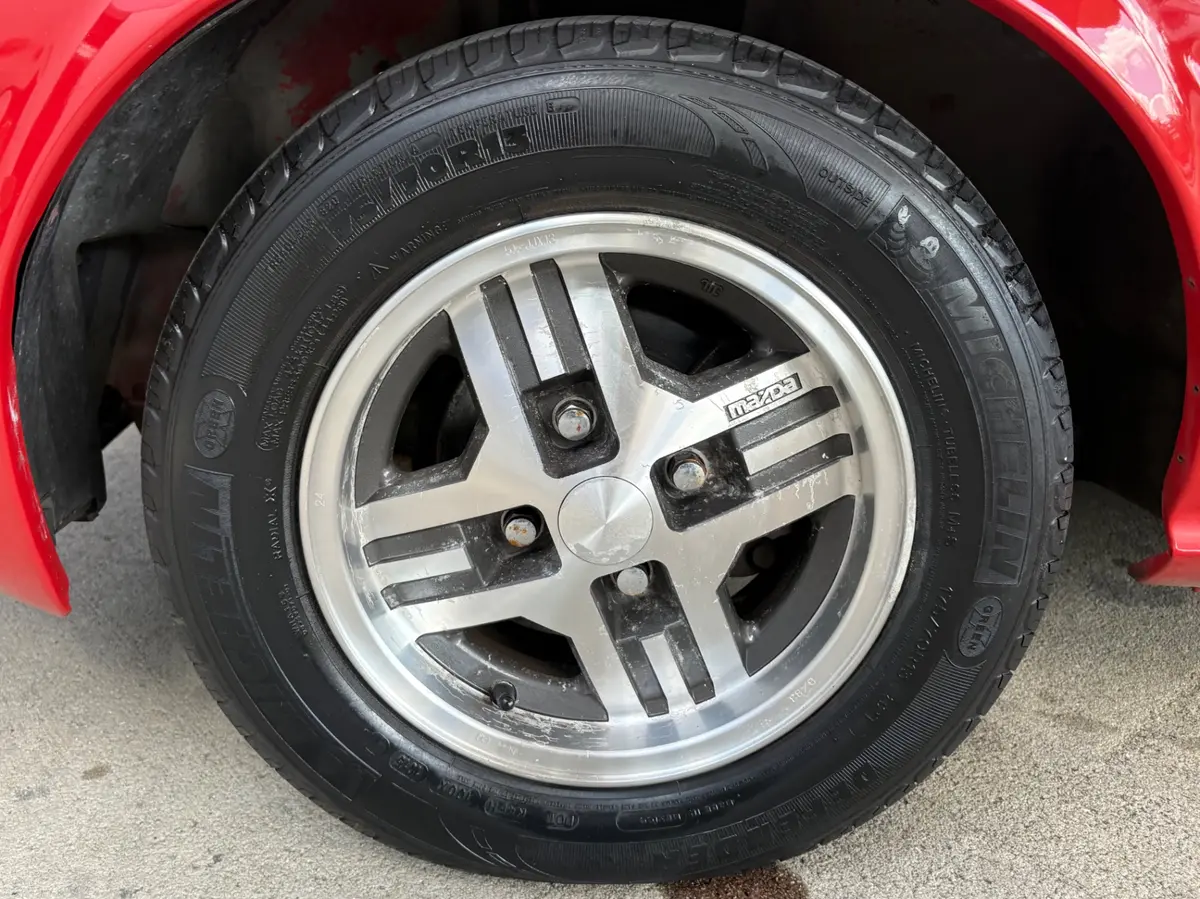
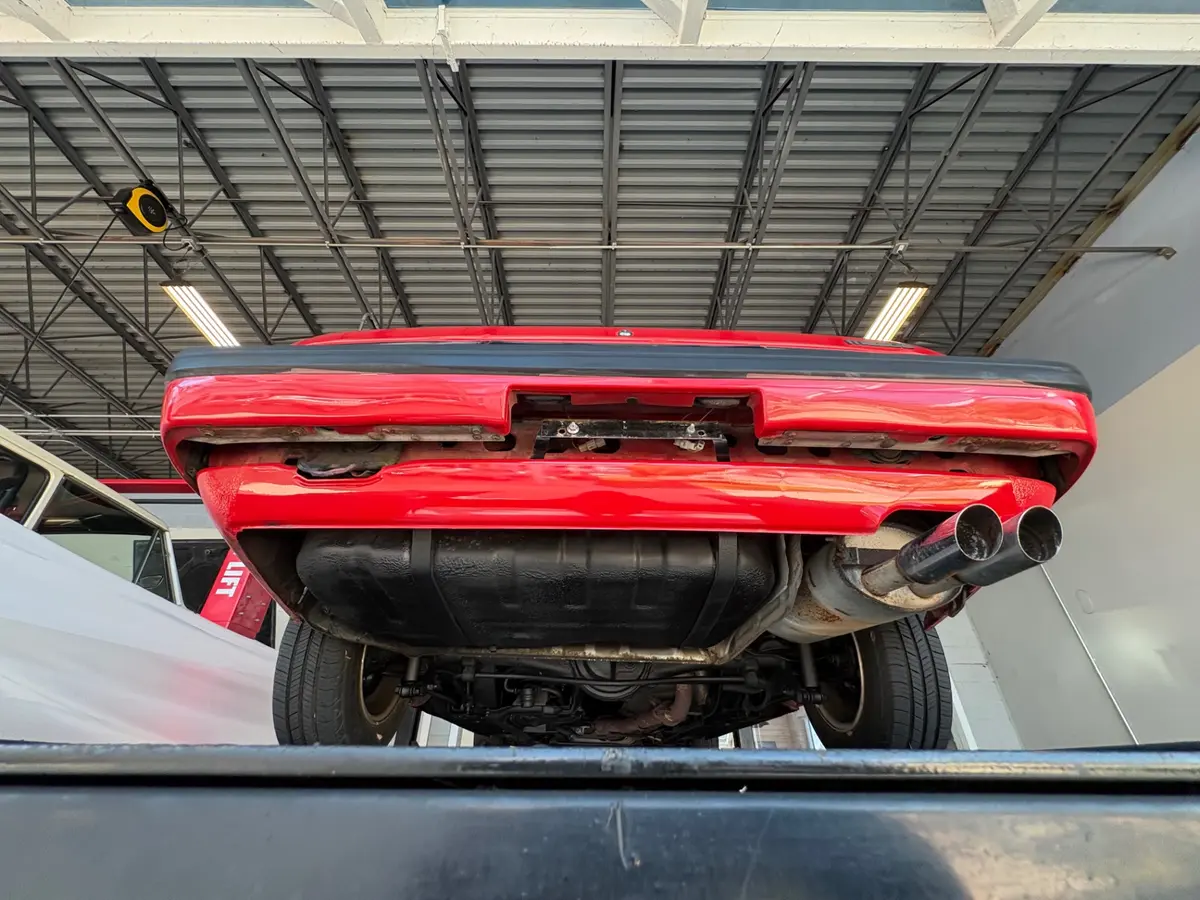
Michelin tires wrap the factory Mazda alloy wheels, which are the correct multi-spoke design for the period. The dual exhaust tips at the rear exit cleanly and are consistent with the factory configuration for this model.
Interior
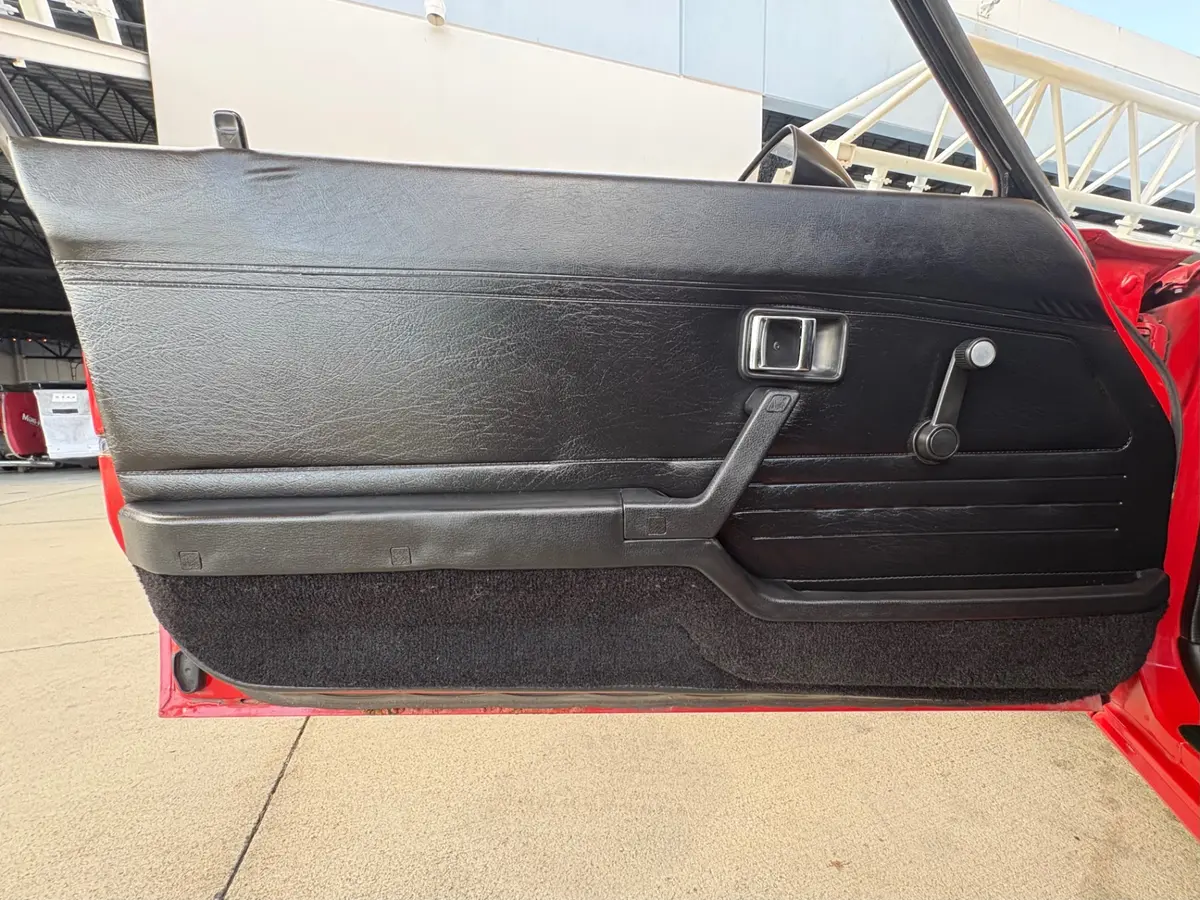
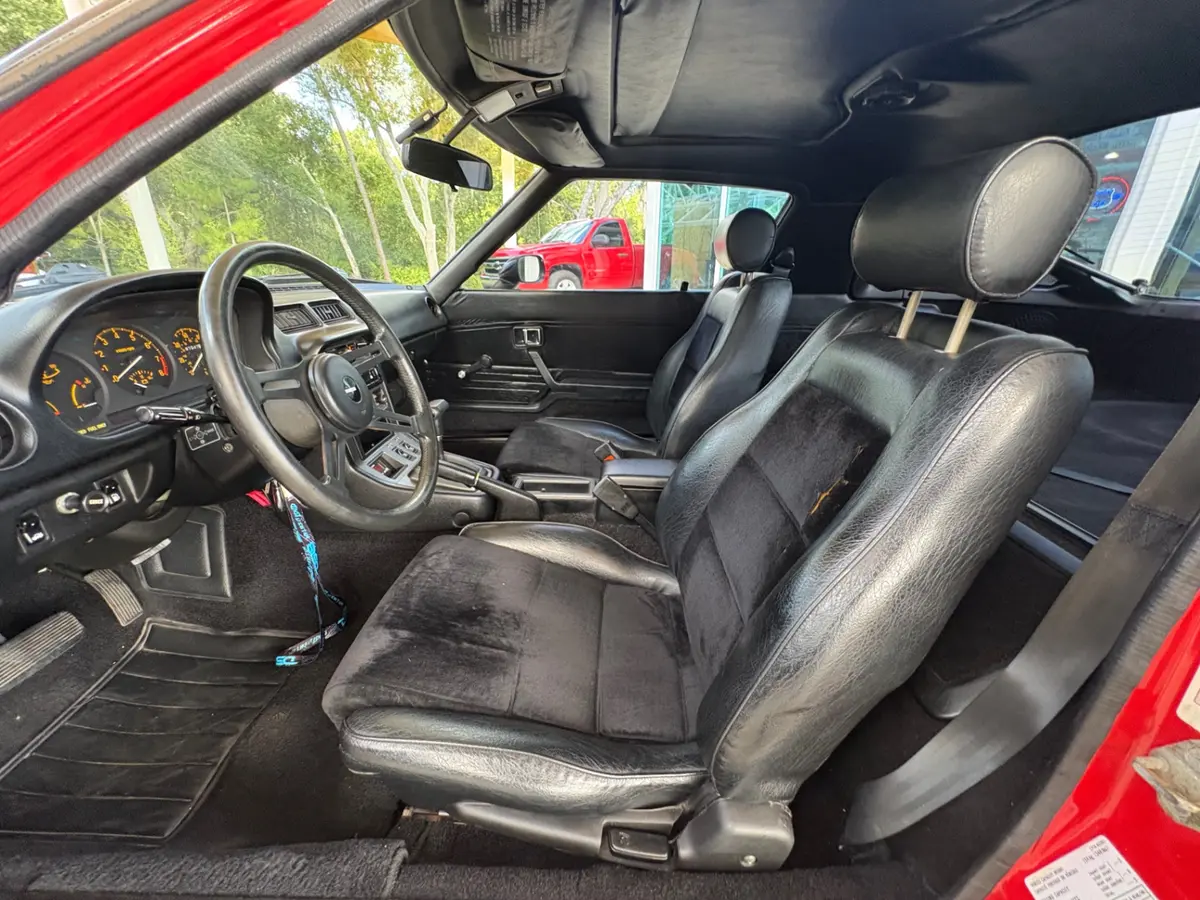
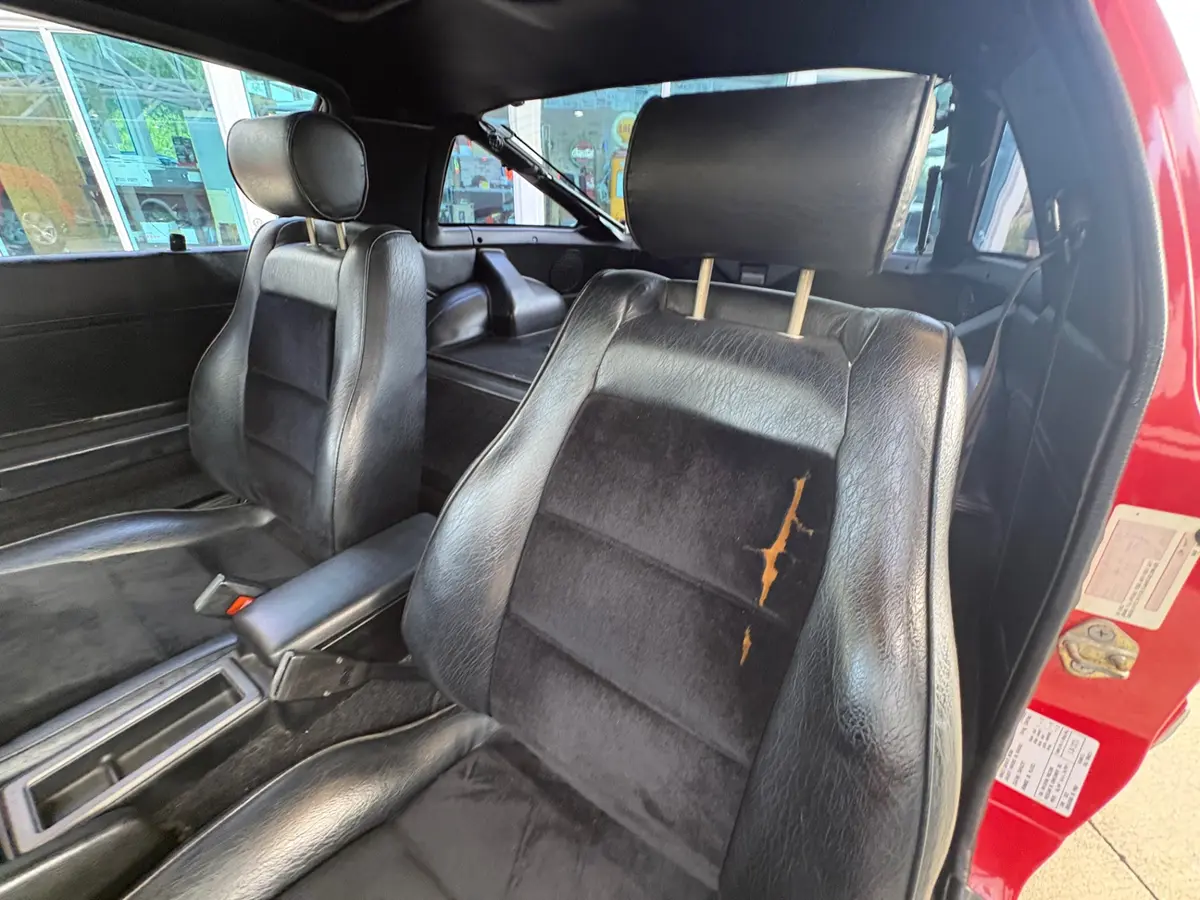
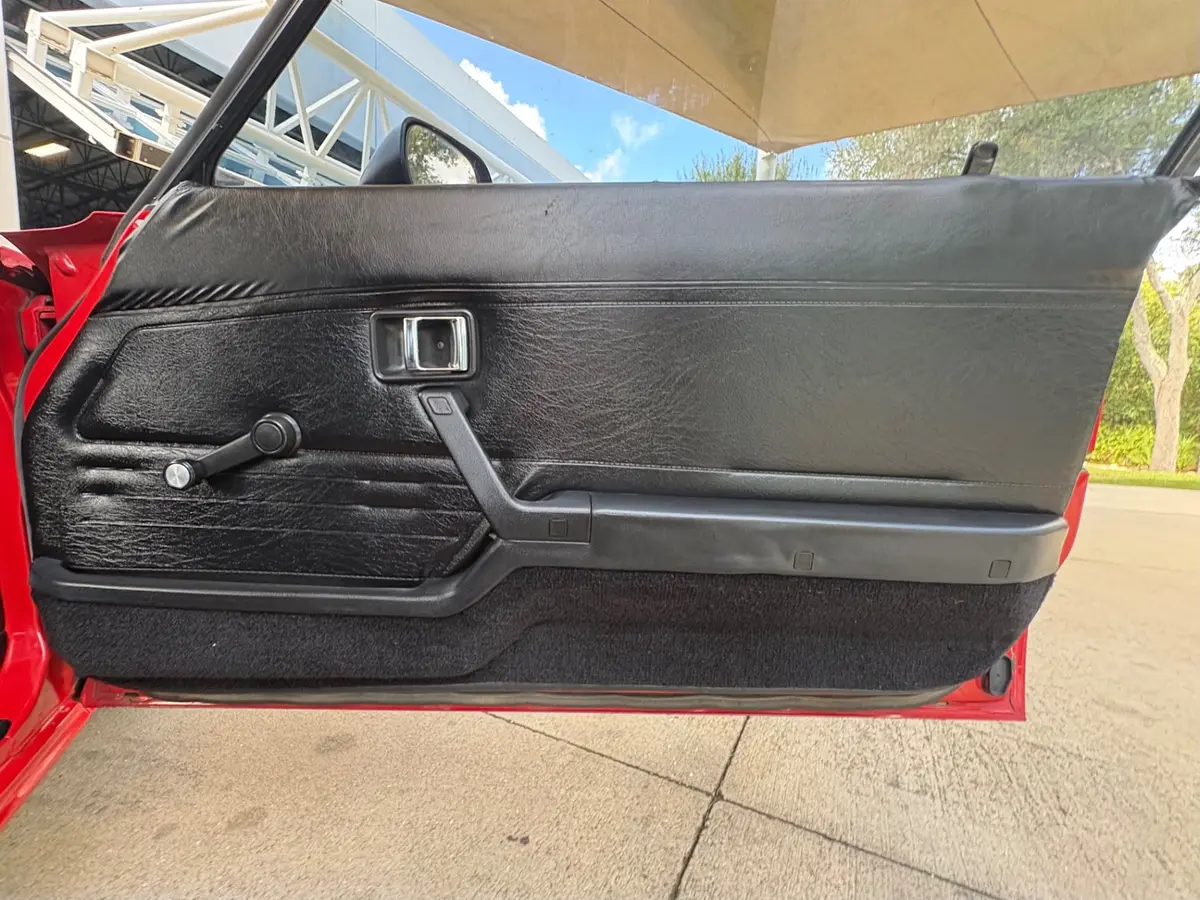
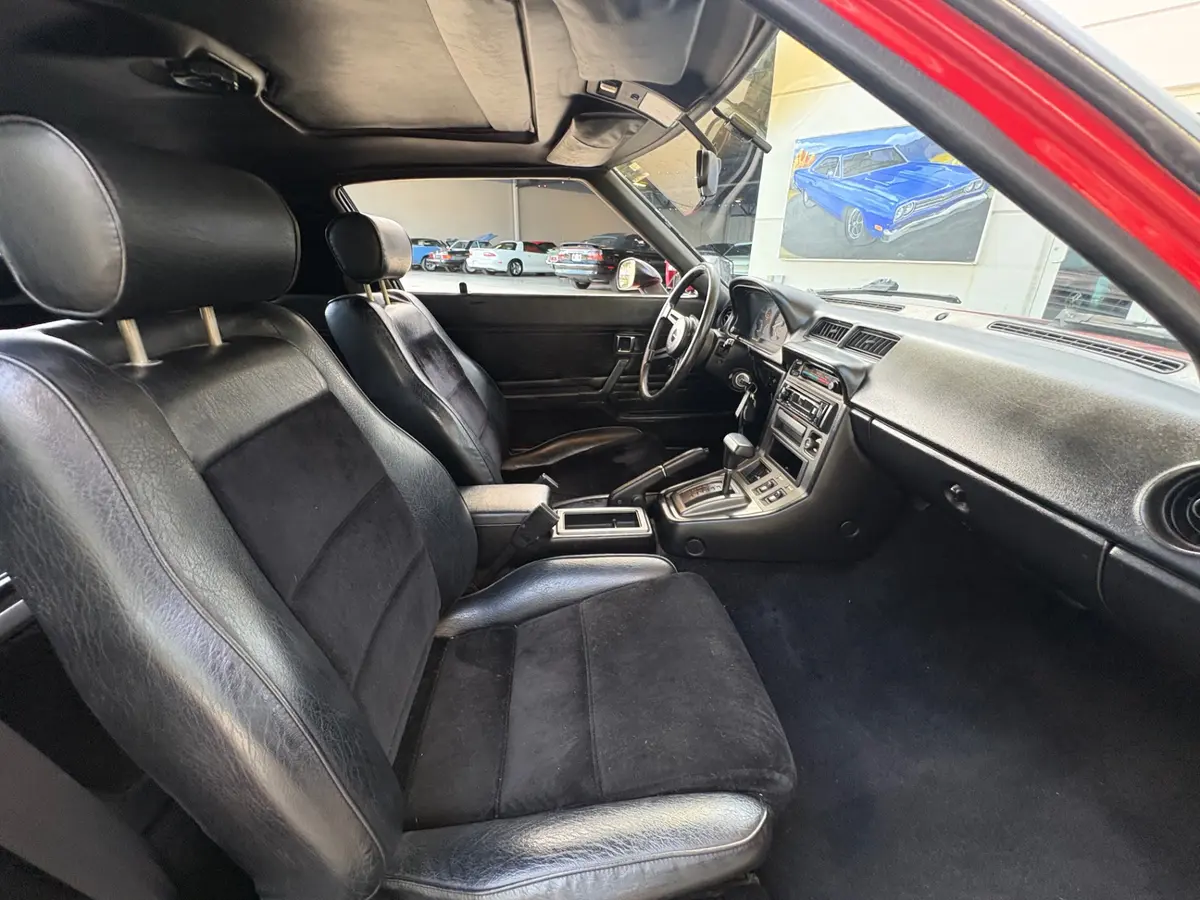
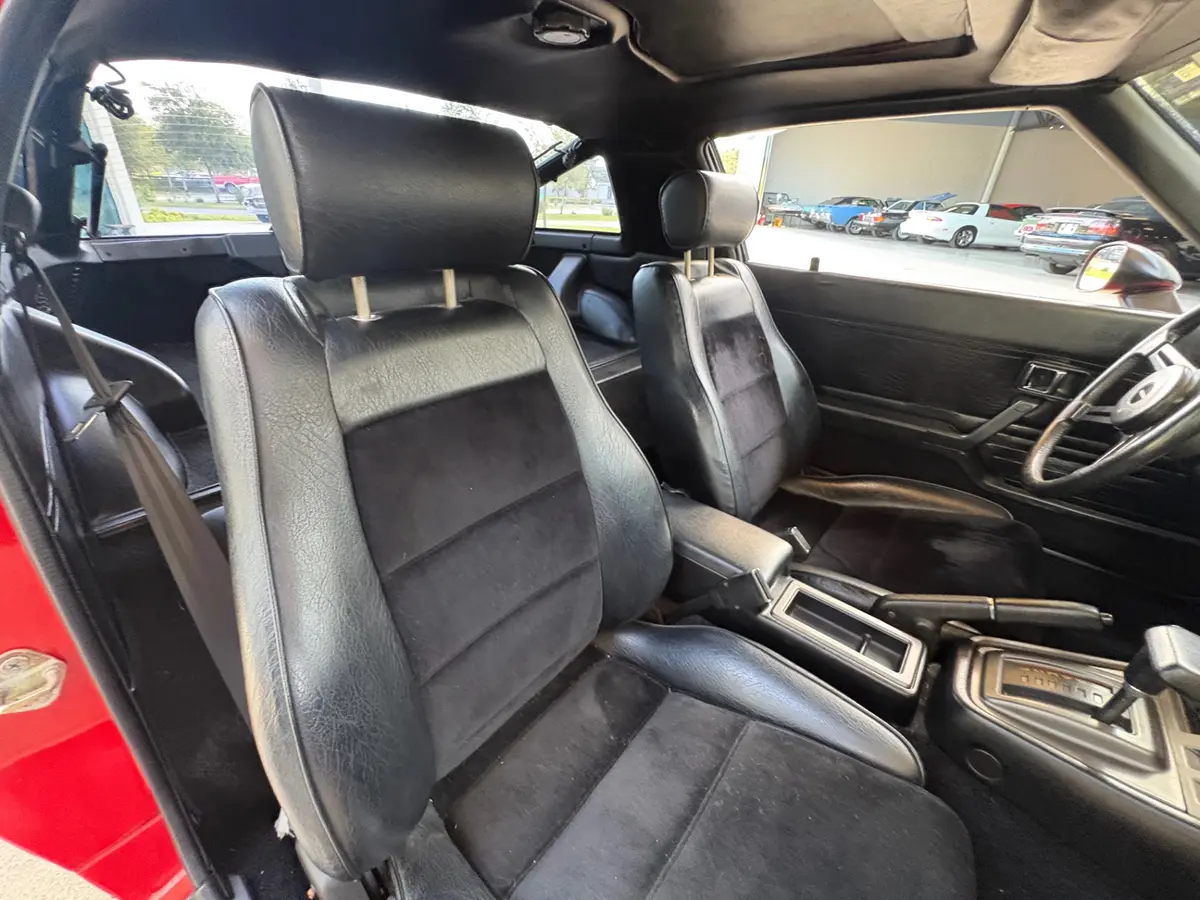
The 1983 Mazda RX-7 interior was a functional, driver-focused design that held up well against competitors in its price class. This example carries the black cloth and vinyl combination, which was the standard trim material. The front bucket seats show age-appropriate wear — the vinyl bolsters have developed the surface cracking typical of four-decade-old Japanese vinyl, and the passenger seat cushion shows a wear tear in the cloth insert that is visible in the photos and worth noting honestly. The rear seat area is clean, with intact carpet and no signs of water damage.
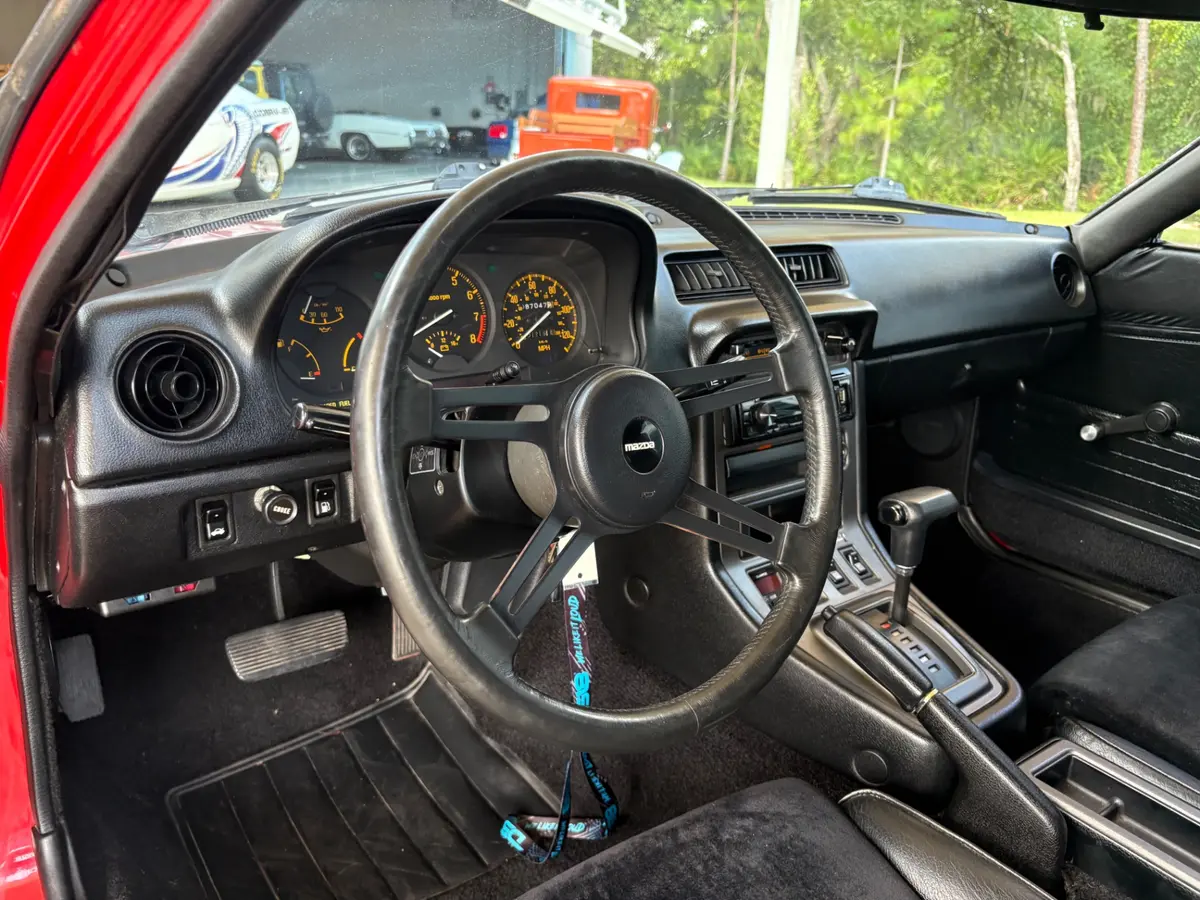
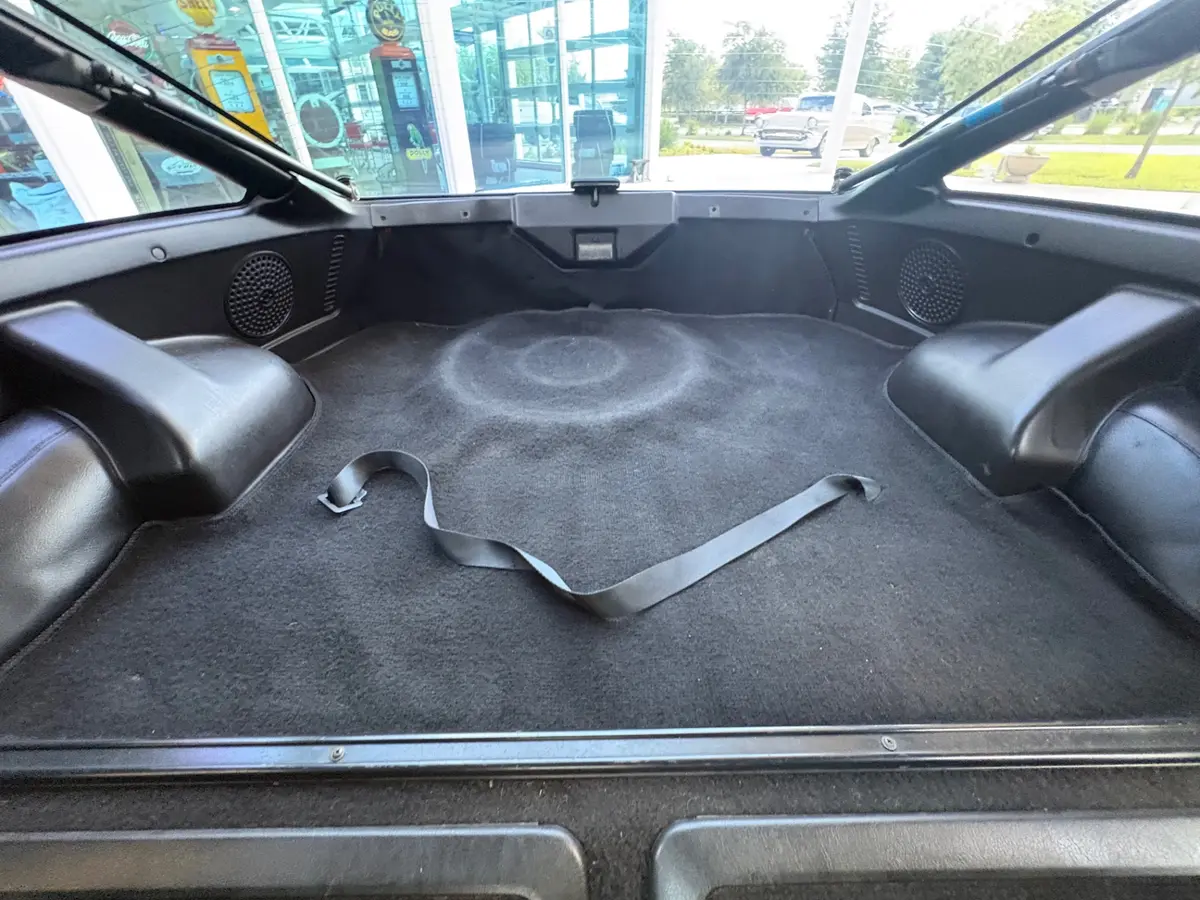
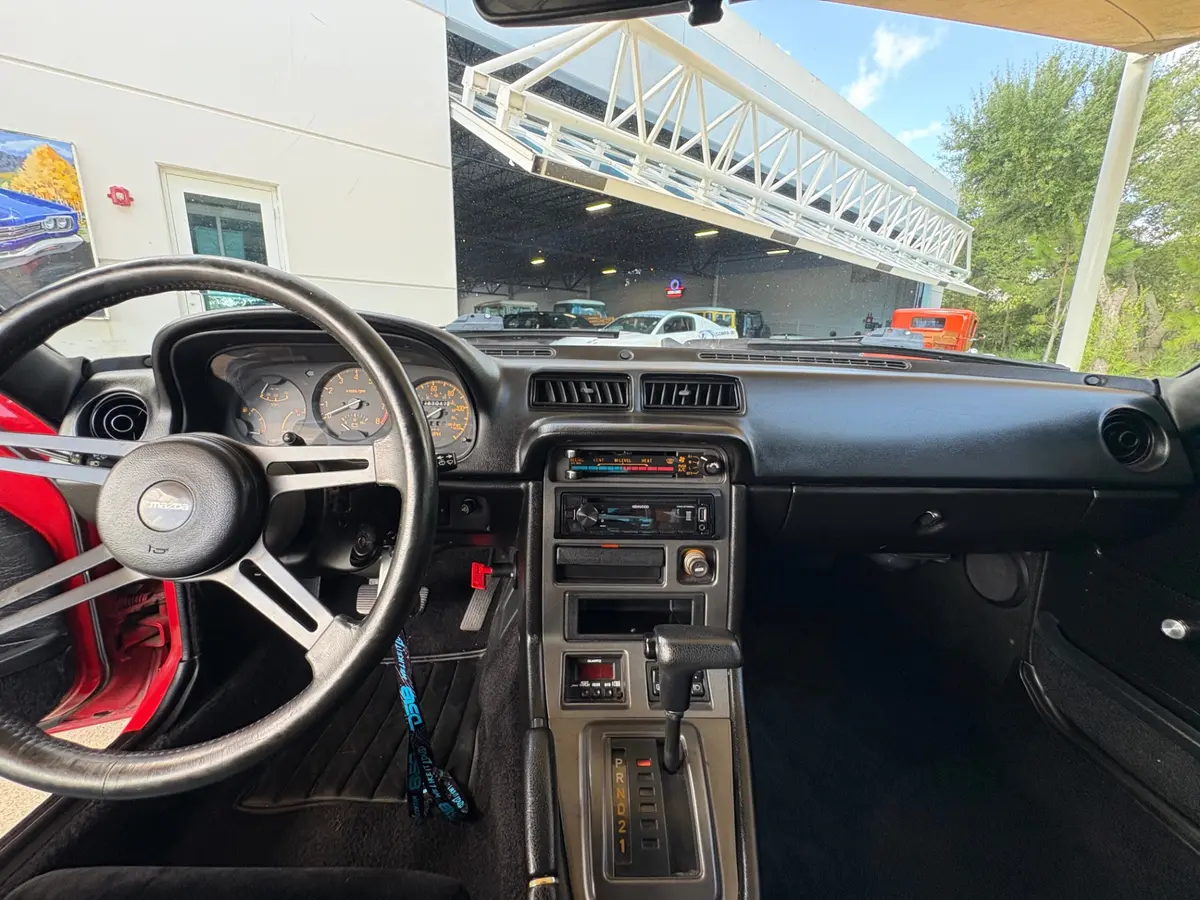
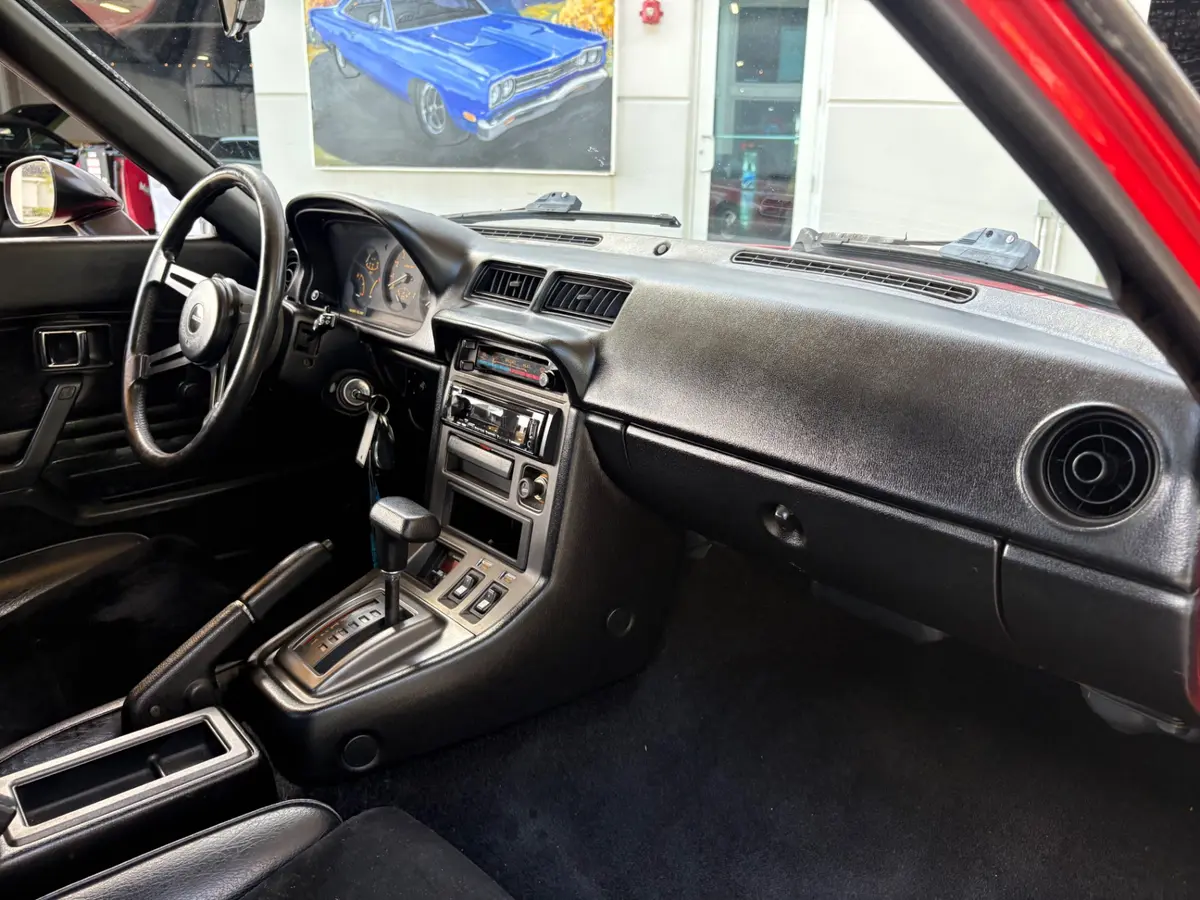
The 3-spoke sport steering wheel with the Mazda badge at the center is the correct factory wheel for this model year. It frames a well-preserved instrument cluster with amber-lit gauges — tachometer, speedometer, oil pressure, fuel level, coolant temperature, and voltmeter — all reading clearly. The 87,047-mile odometer reading is visible in the cluster photo. The center stack houses an aftermarket head unit that replaces the original radio, with the HVAC controls retained in their factory position below. The center console runs the length of the cabin and integrates the automatic shifter with its correct gate plate. Rear cargo area speakers have been mounted in the sail panel positions on each side, a common and practical addition to these cars.
Adjustable headrests are present on both front and rear positions. The T-top panels are not visible stored in the car but the roof structure itself appears intact and the sail panels show no cracking or distortion. The overall interior reads as an honest, used driver-quality example with room for detailing work, but no structural or moisture-related concerns.
Exterior
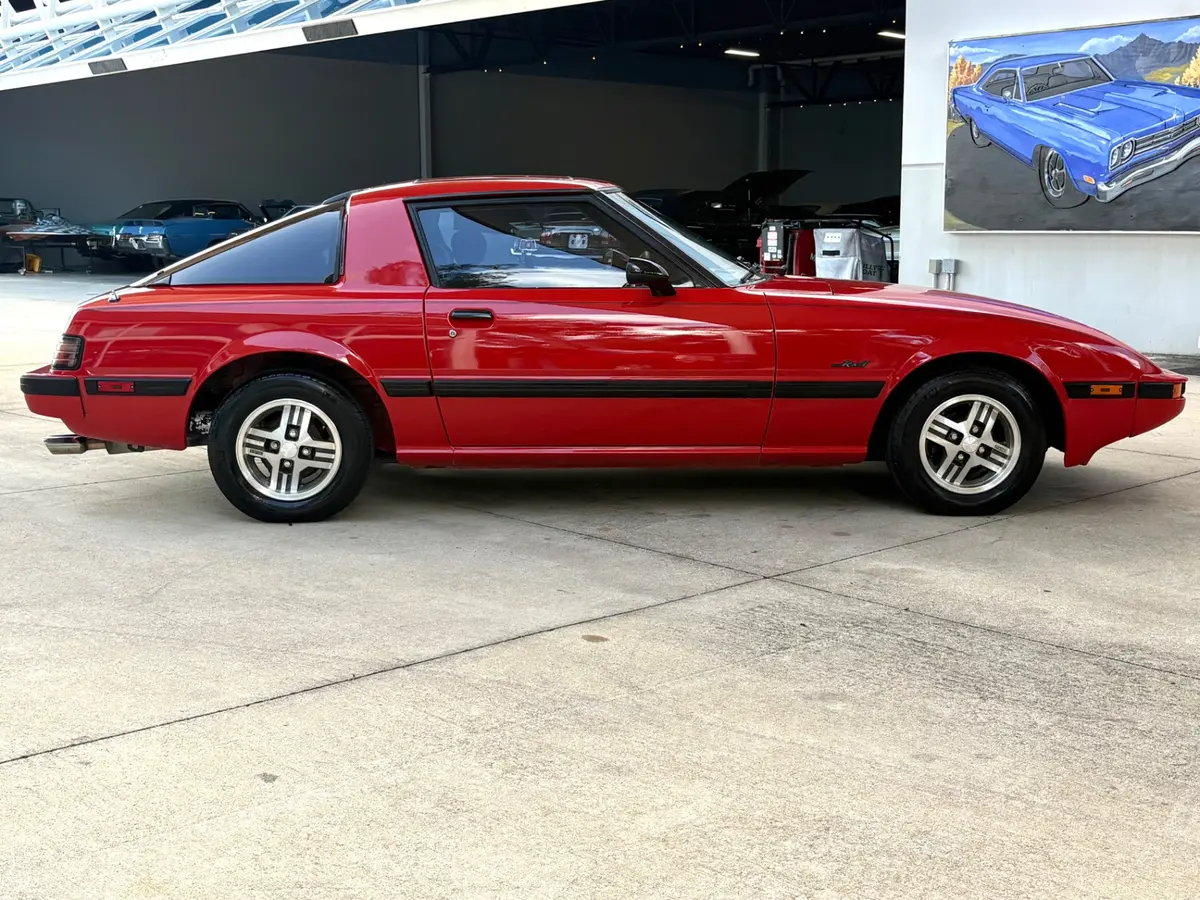
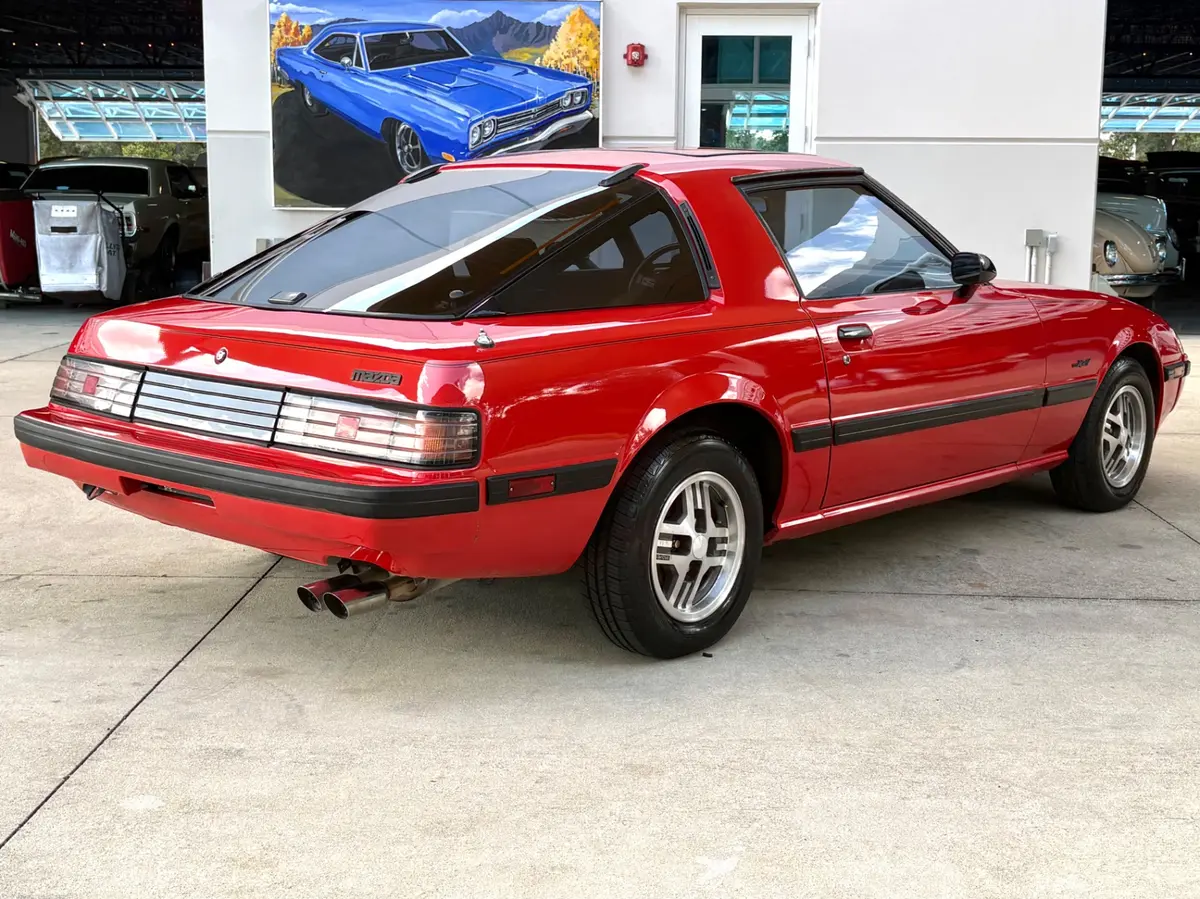
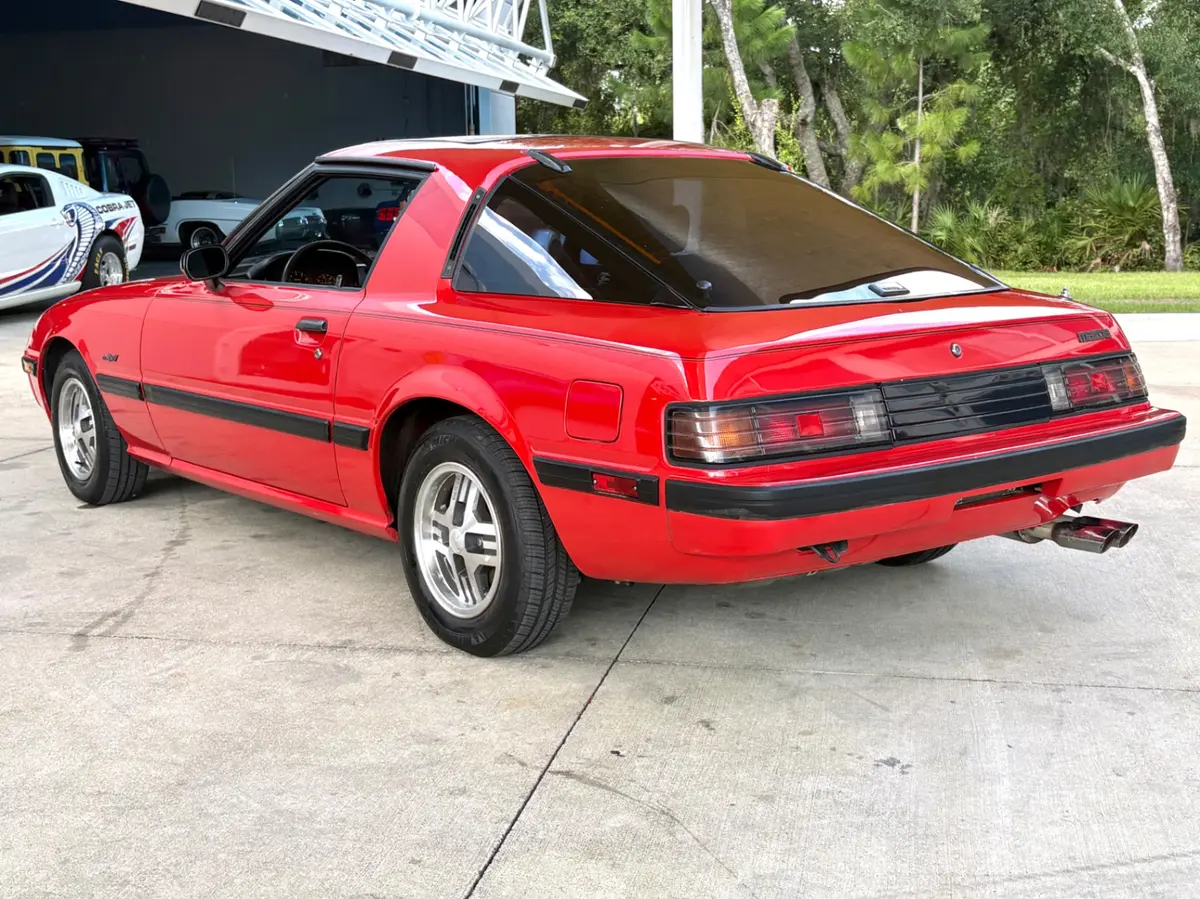
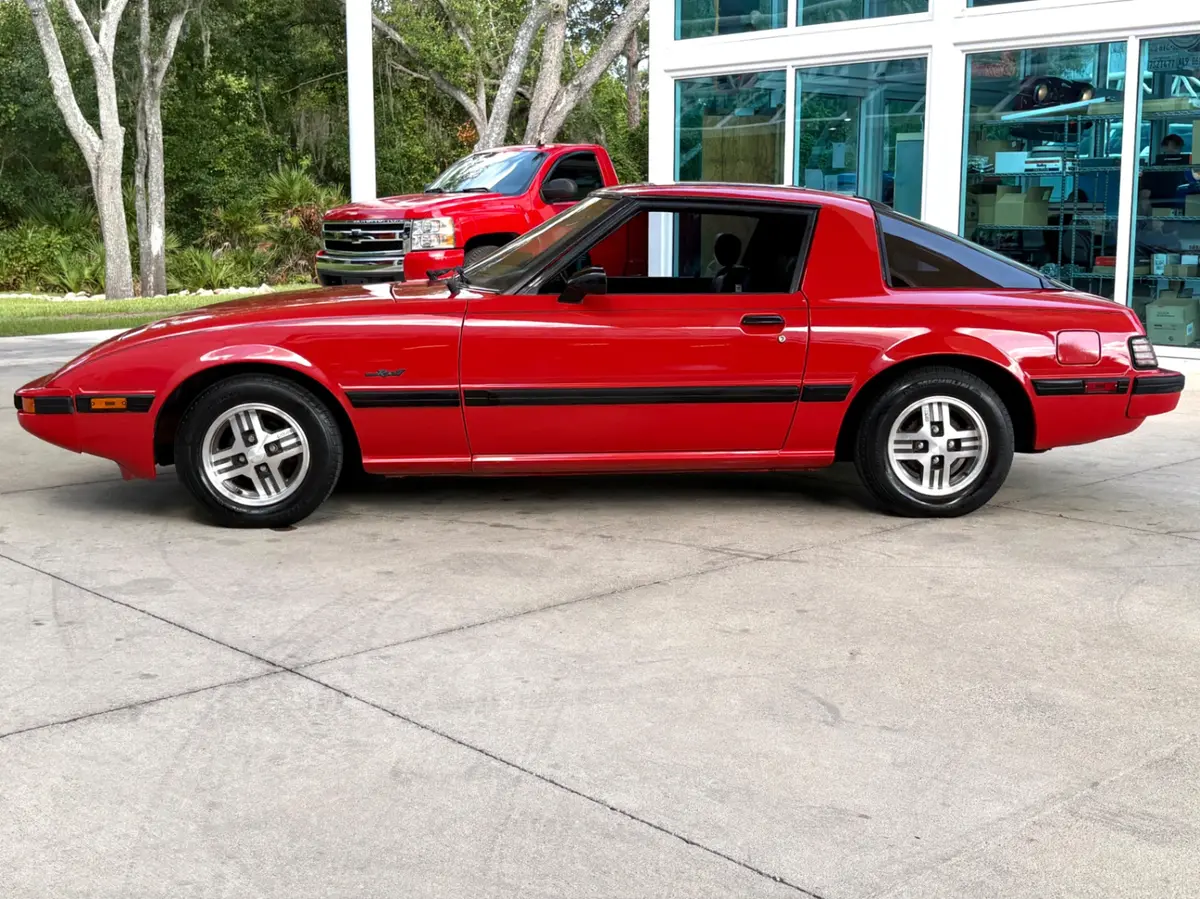
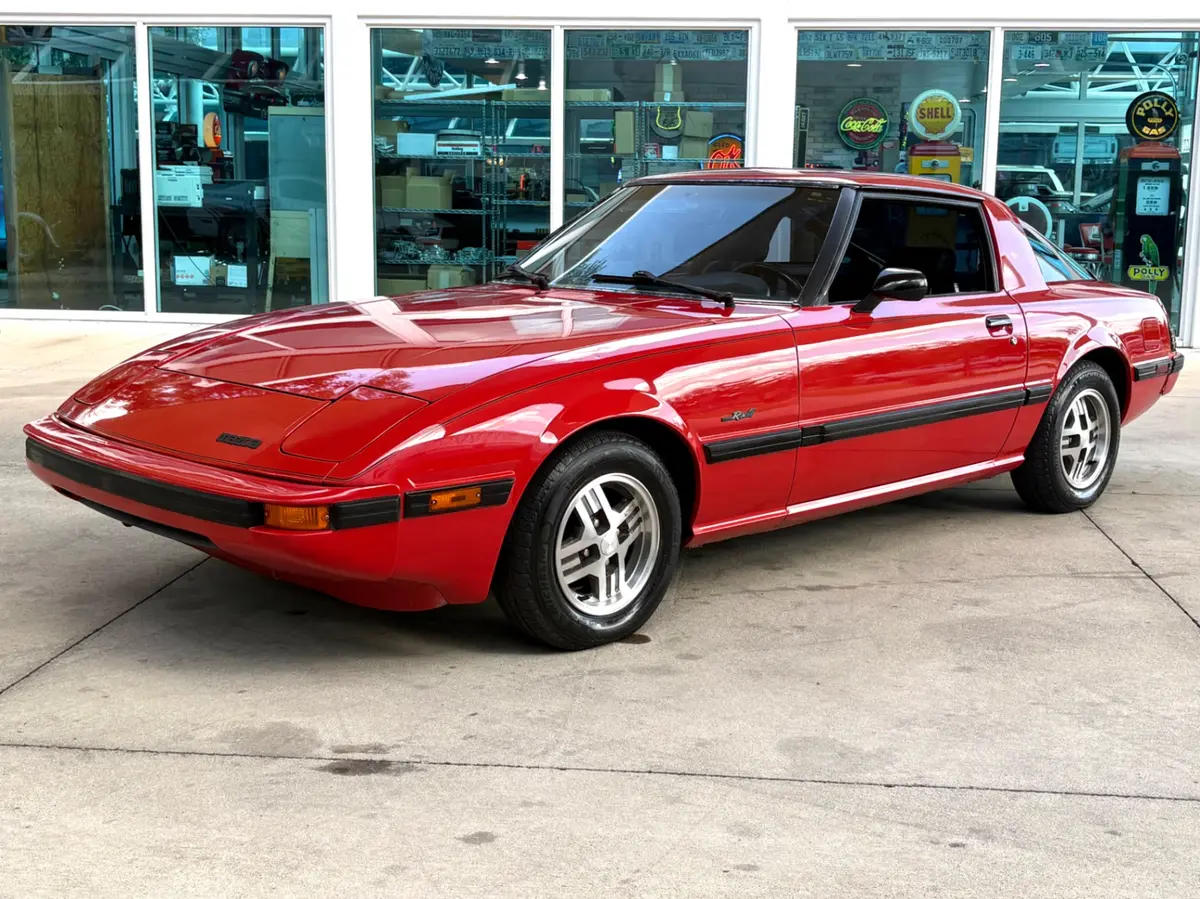
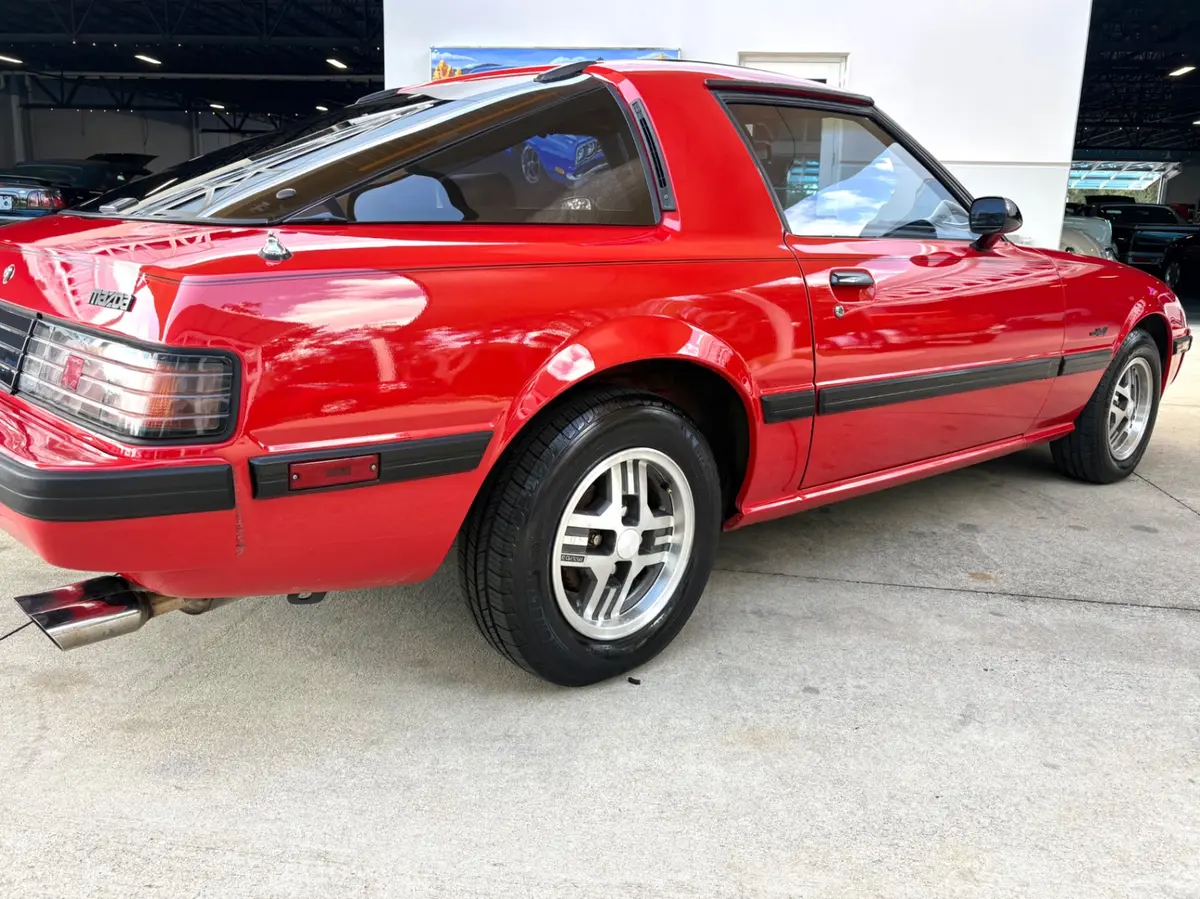
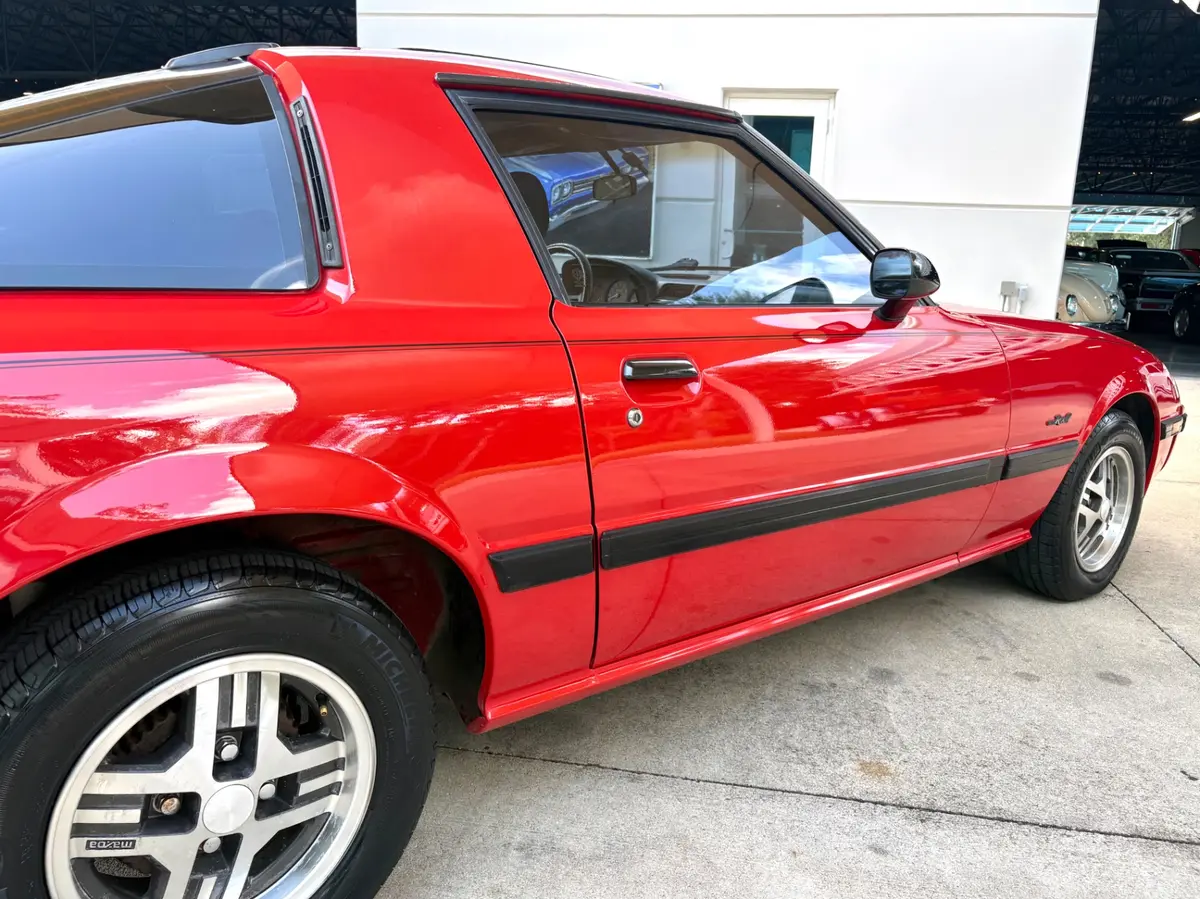
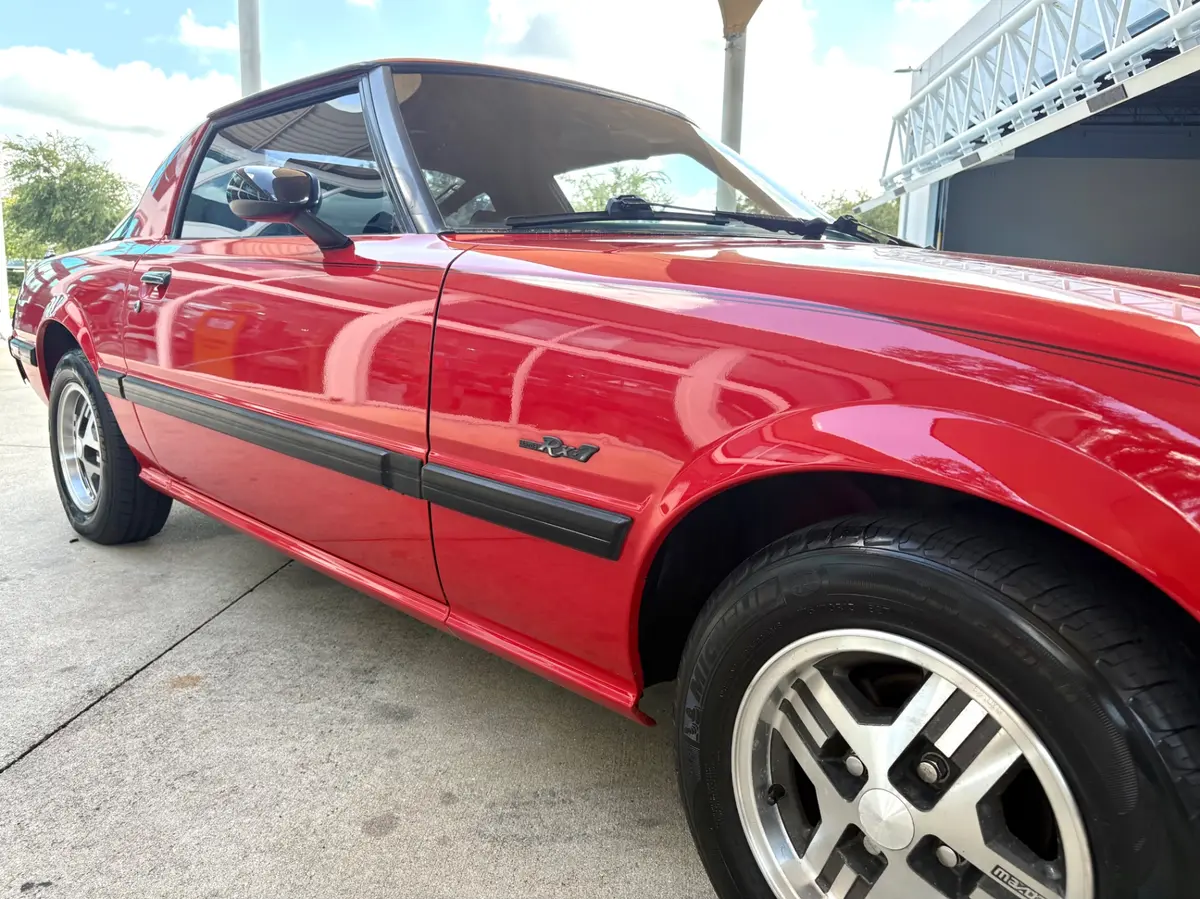
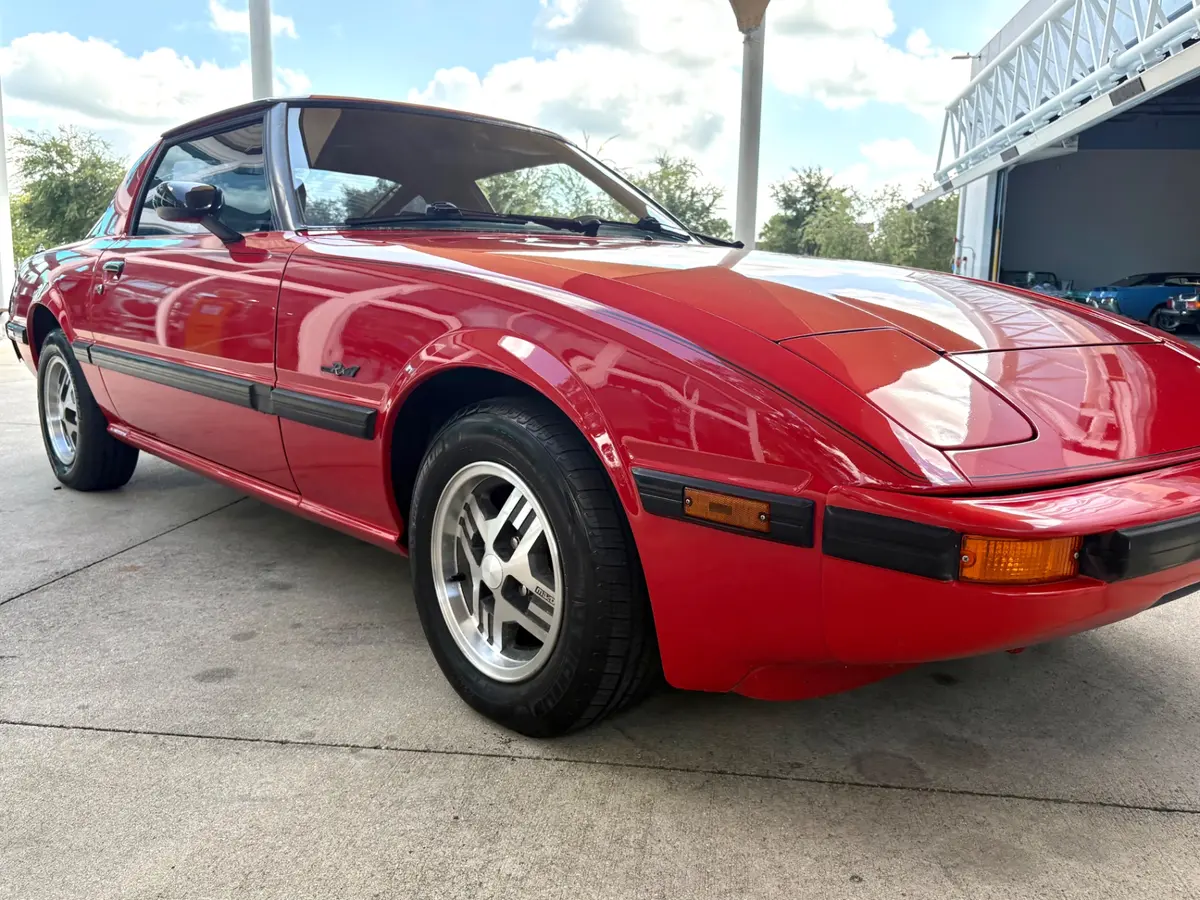
Sunrise Red is one of the more desirable color choices on the first-generation RX-7. It suits the low, wedge-shaped body well and has held up consistently on this car. The paint shows the expected patina of a 40-plus-year-old vehicle — not a fresh respray, not a car that has been sitting in a field — but a car that has been driven and kept. Panel gaps are consistent, and the body lines are straight when viewed from the photos.
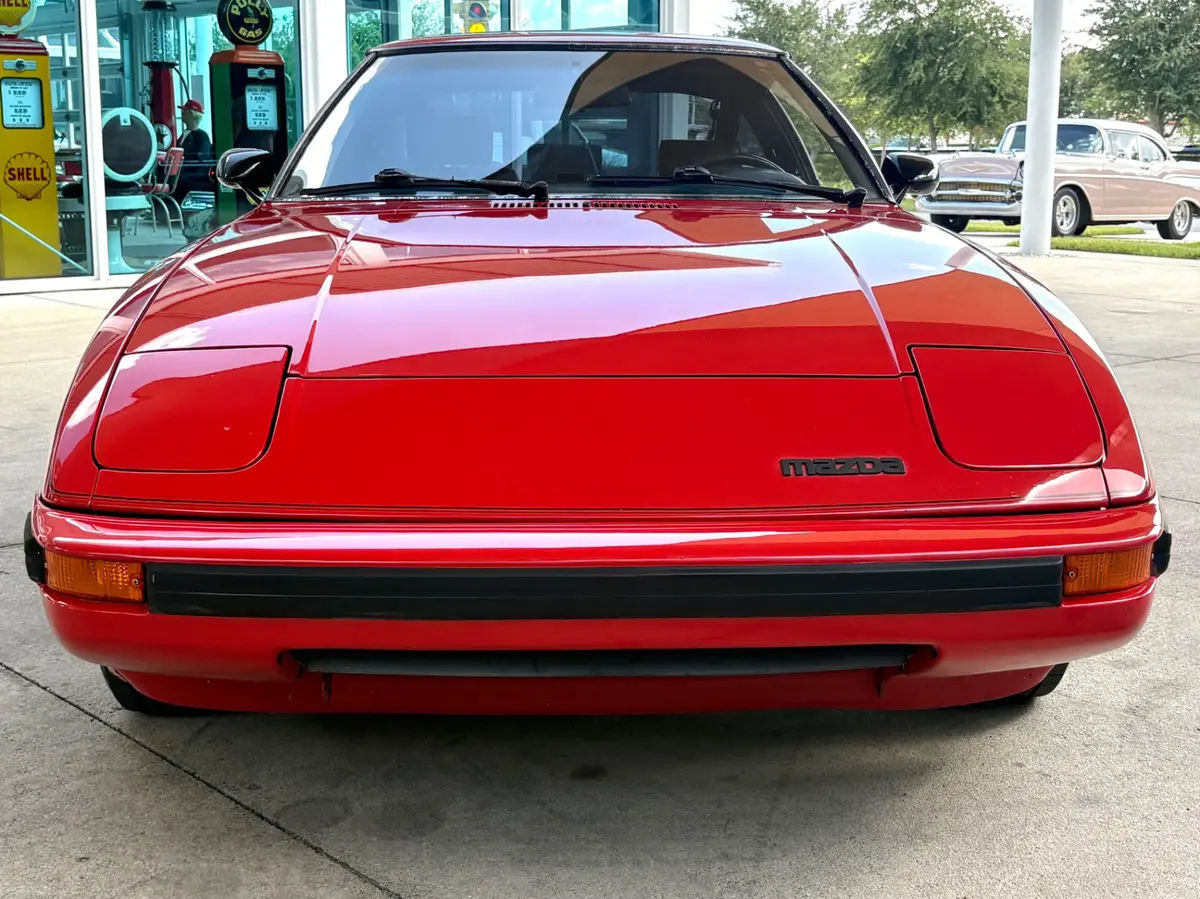
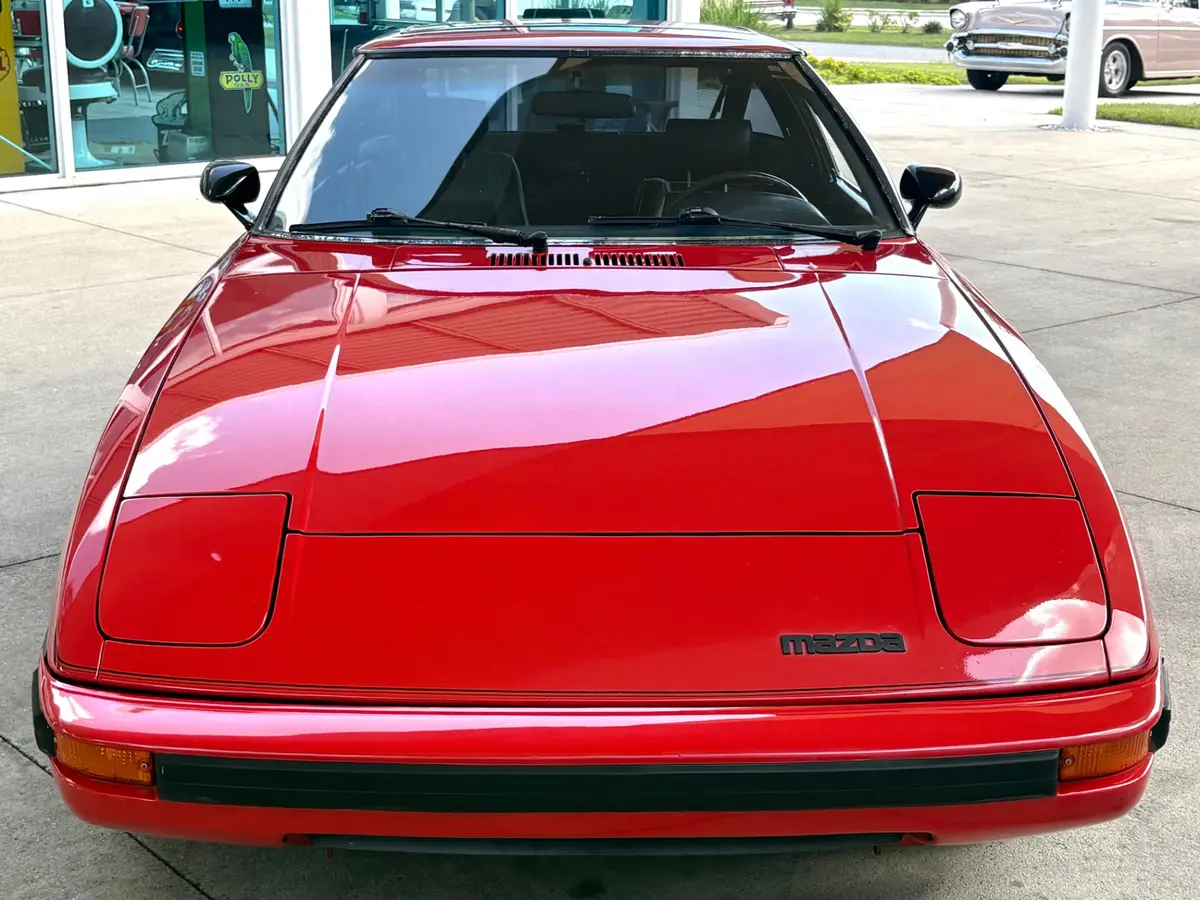
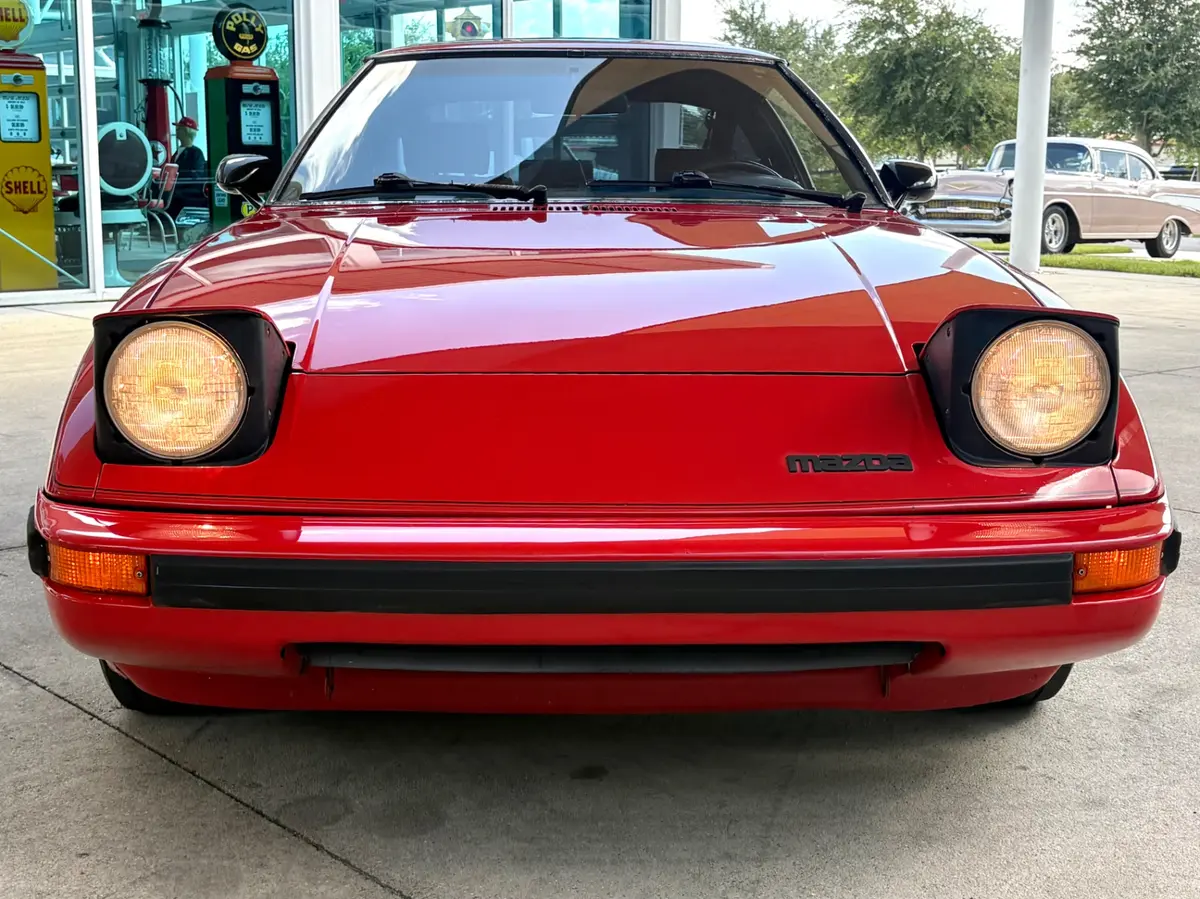
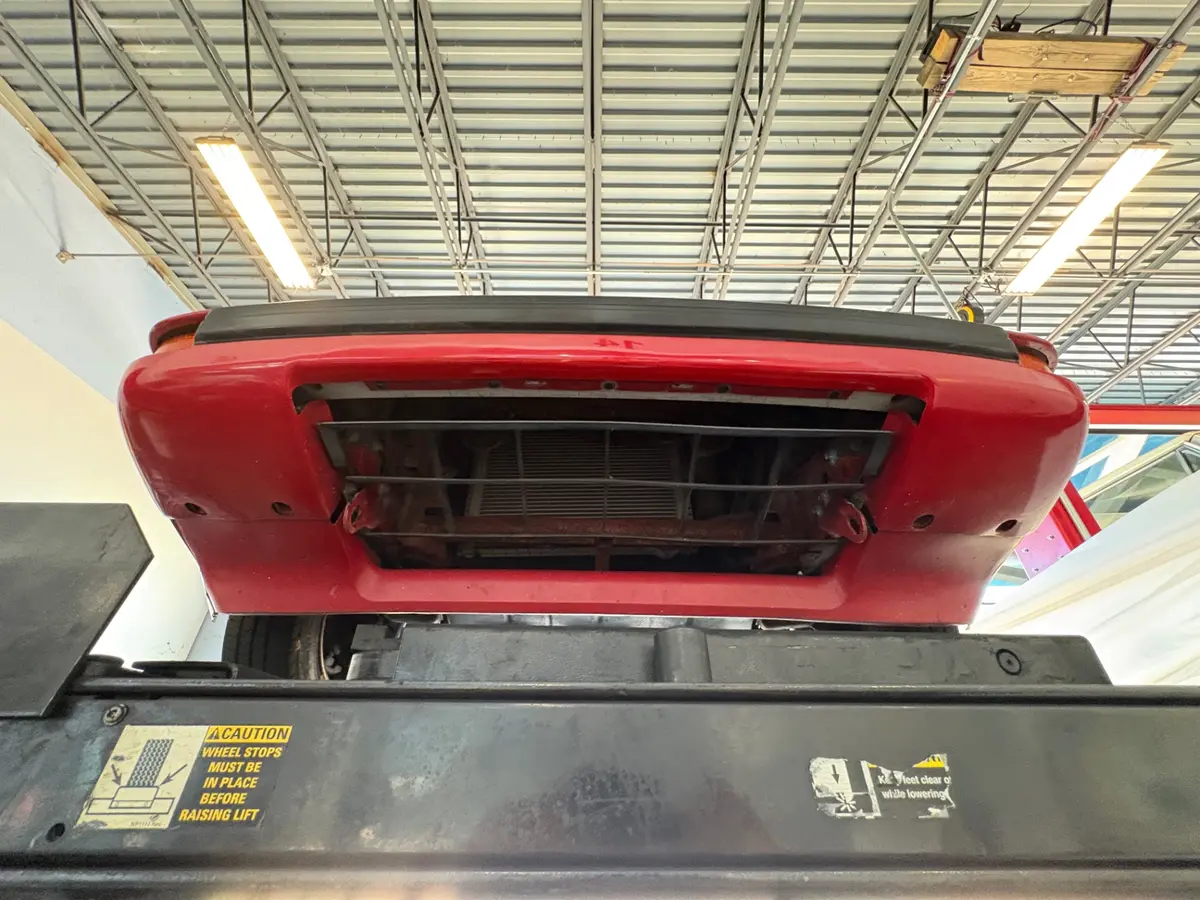
The retractable pop-up headlights are among the most recognizable design details of the first-generation RX-7. They gave the car its clean, uninterrupted hood line when running during daylight and were a feature that helped the design stand apart from the more conventional Japanese sports cars of the era. The front fascia and bumper show no significant damage. The rear bumper and lower valance are intact, with the dual exhaust tips exiting cleanly at passenger-side offset, consistent with the factory layout.
Body side molding runs along the lower door panels and is present and intact on both sides. The factory Mazda alloy wheels are mounted with Michelin tires in good condition. From the undercarriage photos, the pinch welds, floor pans, spare tire well, and rear subframe all present as solid, uncompromised metal. For a car of this age originating from the Southeast, that condition is the most important structural detail a buyer can verify.
Conclusion
The 1983 Mazda RX-7 is now well into collectible territory. First-generation cars in genuine driving condition — with solid undercarriages, matching paint, and original drivetrains — are becoming harder to find as the years pass. This example checks the foundational boxes: the 12A rotary is in place, the undercarriage is solid, the exterior is straight, and the car is a correct U.S.-spec build in one of the better color combinations for the model. The interior shows honest use and has one area of wear to address on the passenger seat cushion. The 3-speed automatic makes this an easy car to drive and enjoy without the learning curve that comes with managing a rotary and a manual in traffic.
For the buyer who knows what a first-generation RX-7 is and what it represents — Mazda's proof-of-concept that rotary power belonged in a serious sports car — this is a car worth a close look.
To schedule a viewing or ask specific questions about this 1983 Mazda RX-7, call Skyway Classics in Sarasota, Florida at 941-254-6608.
Disclaimer
Information found on the website is presented as given to us by the owner of the car, whether on consignment or from the owner we bought it from. Some Photos, materials for videos, descriptions and other information are provided by the consignor/seller and is deemed reliable, but Skyway Classics does not warranty or guarantee this information. Skyway Classics is not responsible for information that may incorrect or a publishing error. The decision to purchase should be based solely on the buyers personal inspection of the vehicle or by a professional inspection service prior to offer or purchase being made.
1983 Mazda RX-7 — Sunrise Red T-Top with 12A Rotary, Solid Undercarriage
Why This Car Is Special
The 1983 Mazda RX-7 occupies a specific and respected place in automotive history. It was the car that proved a rotary-powered sports coupe could be commercially viable, mechanically reliable when properly maintained, and genuinely fun to drive — all at a price point that undercut most European competition. The first-generation RX-7, known internally as the SA/FB series, ran from 1979 through 1985 in the United States. By 1983, Mazda had refined the formula considerably from the early cars, and the result was a well-sorted lightweight sports coupe with a low hood line made possible only by the compact dimensions of the Wankel rotary engine.
This particular 1983 Mazda RX-7 presents in Sunrise Red over a black cloth and vinyl interior. The odometer reads 87,047 miles, which on a rotary engine is a number that tells only part of the story — what matters more is how the engine has been maintained, and the undercarriage photos on this car make a strong case for careful ownership. The floors, rails, and frame sections show solid, uncompromised metal throughout, which is the foundation any serious buyer needs to see first. Florida cars earn that reputation honestly, and this one holds up under the lift.
The VIN on this car decodes to confirm it is a U.S.-market vehicle assembled at Mazda's Hiroshima facility, with the "D" in the model year position confirming the 1983 build date. The "FB" platform designation tells rotary enthusiasts they are looking at the first-generation body style — the cleaner, more analog of the two pre-FD generations.
Features List
- 12A 1.1L Twin-Rotor Wankel Rotary Engine
- 3-Speed Automatic Transmission
- T-Top Roof (removable panels)
- Retractable Pop-Up Headlights
- Mazda Factory Alloy Wheels
- Michelin Tires
- Front Disc Brakes
- Tachometer with 8,000 RPM Redline
- Multi-Gauge Instrument Cluster (oil pressure, coolant temp, fuel, voltage)
- Sport 3-Spoke Mazda Steering Wheel
- Adjustable Headrests (front and rear)
- Bucket Seats with Cloth and Vinyl Upholstery
- Center Console
- Rear Cargo Area Speakers
- Aftermarket Stereo Head Unit
- Body Side Molding
- Dual Exhaust Tips
- Solid Undercarriage
Mechanical
The heart of the 1983 Mazda RX-7 is the 12A twin-rotor Wankel engine, displacing 1.1 liters across two rotary chambers. Unlike a piston engine, the 12A produces power through the orbital motion of triangular rotors inside epitrochoidal housings. There are no valves, no pushrods, and no reciprocating mass. The result is an engine that revs freely to its 7,000 rpm redline — visible on the tachometer in the photos — and produces power with a smoothness that no equivalent-displacement piston engine can match. In 1983, the naturally aspirated 12A was rated at 100 horsepower for the U.S. market. That number reads modestly on paper, but the RX-7's curb weight of approximately 2,300 pounds puts it in useful perspective.
This car is equipped with the 3-speed automatic transmission, which was a factory option on the 1983 RX-7. The automatic was not the performance choice — that was the 5-speed manual — but it made the RX-7 accessible to a wider buyer pool and remains a practical configuration for a car that sees regular street use. The gearbox sits visibly in the undercarriage photos and appears in sound condition.
Stopping power comes from front disc brakes, which were standard on the RX-7. The suspension is an independent strut setup at all four corners, giving the car the balanced handling characteristics that made early RX-7s a reference point for front-engine, rear-drive sports car dynamics in their era. The undercarriage has been put on the lift and photographed thoroughly. The floors are solid, the frame rails are intact, and the subframe components show no evidence of rot or serious corrosion. Surface oxidation on the exhaust components is expected on any car of this age and does not affect structural integrity.
Michelin tires wrap the factory Mazda alloy wheels, which are the correct multi-spoke design for the period. The dual exhaust tips at the rear exit cleanly and are consistent with the factory configuration for this model.
Interior
The 1983 Mazda RX-7 interior was a functional, driver-focused design that held up well against competitors in its price class. This example carries the black cloth and vinyl combination, which was the standard trim material. The front bucket seats show age-appropriate wear — the vinyl bolsters have developed the surface cracking typical of four-decade-old Japanese vinyl, and the passenger seat cushion shows a wear tear in the cloth insert that is visible in the photos and worth noting honestly. The rear seat area is clean, with intact carpet and no signs of water damage.
The 3-spoke sport steering wheel with the Mazda badge at the center is the correct factory wheel for this model year. It frames a well-preserved instrument cluster with amber-lit gauges — tachometer, speedometer, oil pressure, fuel level, coolant temperature, and voltmeter — all reading clearly. The 87,047-mile odometer reading is visible in the cluster photo. The center stack houses an aftermarket head unit that replaces the original radio, with the HVAC controls retained in their factory position below. The center console runs the length of the cabin and integrates the automatic shifter with its correct gate plate. Rear cargo area speakers have been mounted in the sail panel positions on each side, a common and practical addition to these cars.
Adjustable headrests are present on both front and rear positions. The T-top panels are not visible stored in the car but the roof structure itself appears intact and the sail panels show no cracking or distortion. The overall interior reads as an honest, used driver-quality example with room for detailing work, but no structural or moisture-related concerns.
Exterior
Sunrise Red is one of the more desirable color choices on the first-generation RX-7. It suits the low, wedge-shaped body well and has held up consistently on this car. The paint shows the expected patina of a 40-plus-year-old vehicle — not a fresh respray, not a car that has been sitting in a field — but a car that has been driven and kept. Panel gaps are consistent, and the body lines are straight when viewed from the photos.
The retractable pop-up headlights are among the most recognizable design details of the first-generation RX-7. They gave the car its clean, uninterrupted hood line when running during daylight and were a feature that helped the design stand apart from the more conventional Japanese sports cars of the era. The front fascia and bumper show no significant damage. The rear bumper and lower valance are intact, with the dual exhaust tips exiting cleanly at passenger-side offset, consistent with the factory layout.
Body side molding runs along the lower door panels and is present and intact on both sides. The factory Mazda alloy wheels are mounted with Michelin tires in good condition. From the undercarriage photos, the pinch welds, floor pans, spare tire well, and rear subframe all present as solid, uncompromised metal. For a car of this age originating from the Southeast, that condition is the most important structural detail a buyer can verify.
Conclusion
The 1983 Mazda RX-7 is now well into collectible territory. First-generation cars in genuine driving condition — with solid undercarriages, matching paint, and original drivetrains — are becoming harder to find as the years pass. This example checks the foundational boxes: the 12A rotary is in place, the undercarriage is solid, the exterior is straight, and the car is a correct U.S.-spec build in one of the better color combinations for the model. The interior shows honest use and has one area of wear to address on the passenger seat cushion. The 3-speed automatic makes this an easy car to drive and enjoy without the learning curve that comes with managing a rotary and a manual in traffic.
For the buyer who knows what a first-generation RX-7 is and what it represents — Mazda's proof-of-concept that rotary power belonged in a serious sports car — this is a car worth a close look.
To schedule a viewing or ask specific questions about this 1983 Mazda RX-7, call Skyway Classics in Sarasota, Florida at 941-254-6608.
Disclaimer
Information found on the website is presented as given to us by the owner of the car, whether on consignment or from the owner we bought it from. Some Photos, materials for videos, descriptions and other information are provided by the consignor/seller and is deemed reliable, but Skyway Classics does not warranty or guarantee this information. Skyway Classics is not responsible for information that may incorrect or a publishing error. The decision to purchase should be based solely on the buyers personal inspection of the vehicle or by a professional inspection service prior to offer or purchase being made.
1983 Mazda
RX7 GS
Why Choose Skyway Classics?
Explore our curated inventory of classic and collector cars—thoughtfully selected, ready to drive, and supported by experts who make ownership simple.
Expert Curation
Every vehicle is hand-selected by our experts for quality, authenticity, and investment potential.
Fast Transactions
Streamlined buying and selling process with quick financing and immediate delivery options.
Only National Dealer With Classic Service & Repair
We’re the only national dealership that services and repairs the classics we sell—before and after the sale.
Nationwide Network
Access to our extensive network of collectors, restorers, and classic car enthusiasts nationwide.
Concierge Ownership Support
From financing and insurance to paperwork, shipping, and titling—we handle the details so you can enjoy the drive.
Passion-Driven Service
We're classic car enthusiasts first, providing personalized service with genuine passion for the hobby.