
1974 Chevrolet
Corvette Stingray
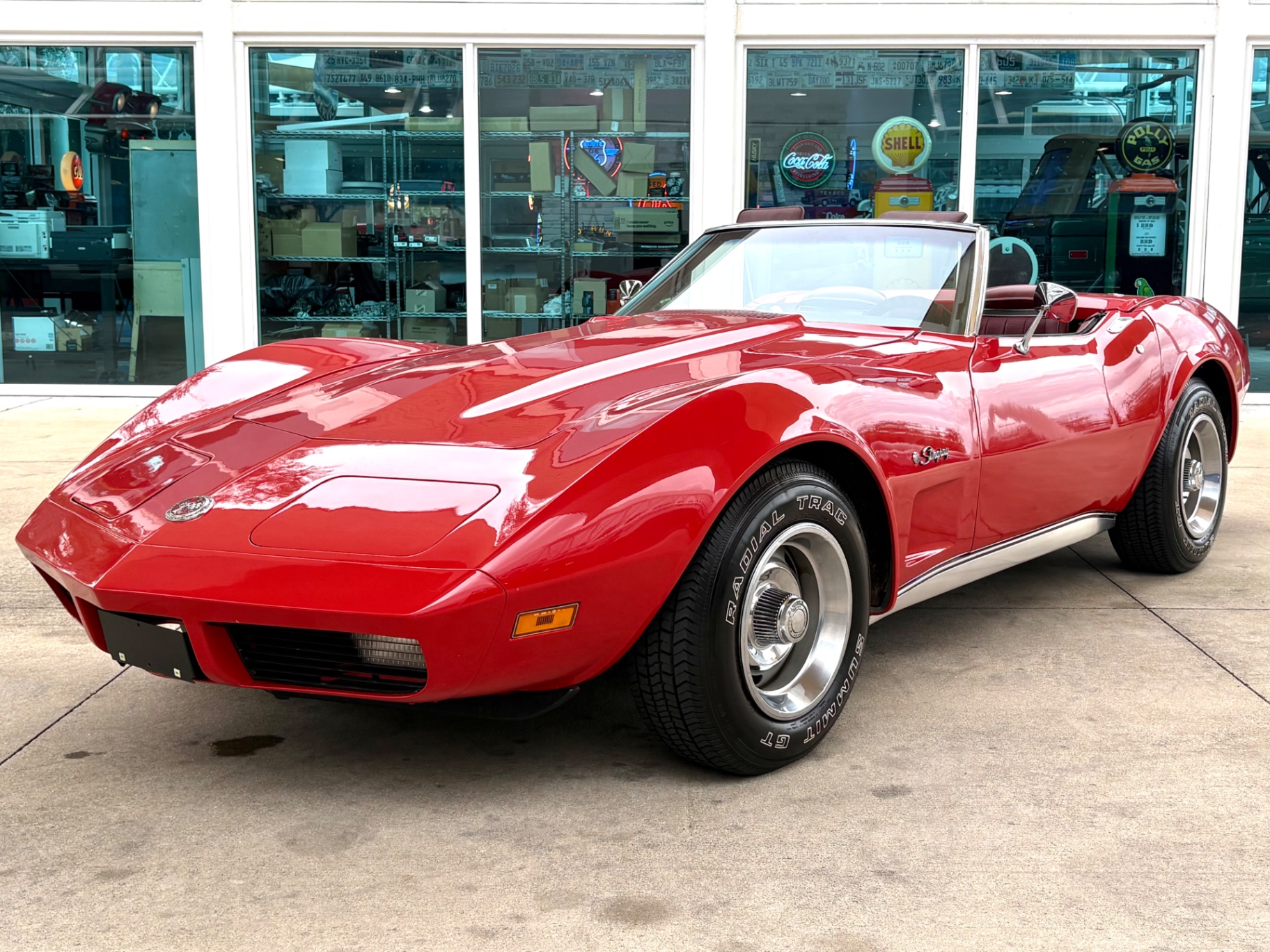
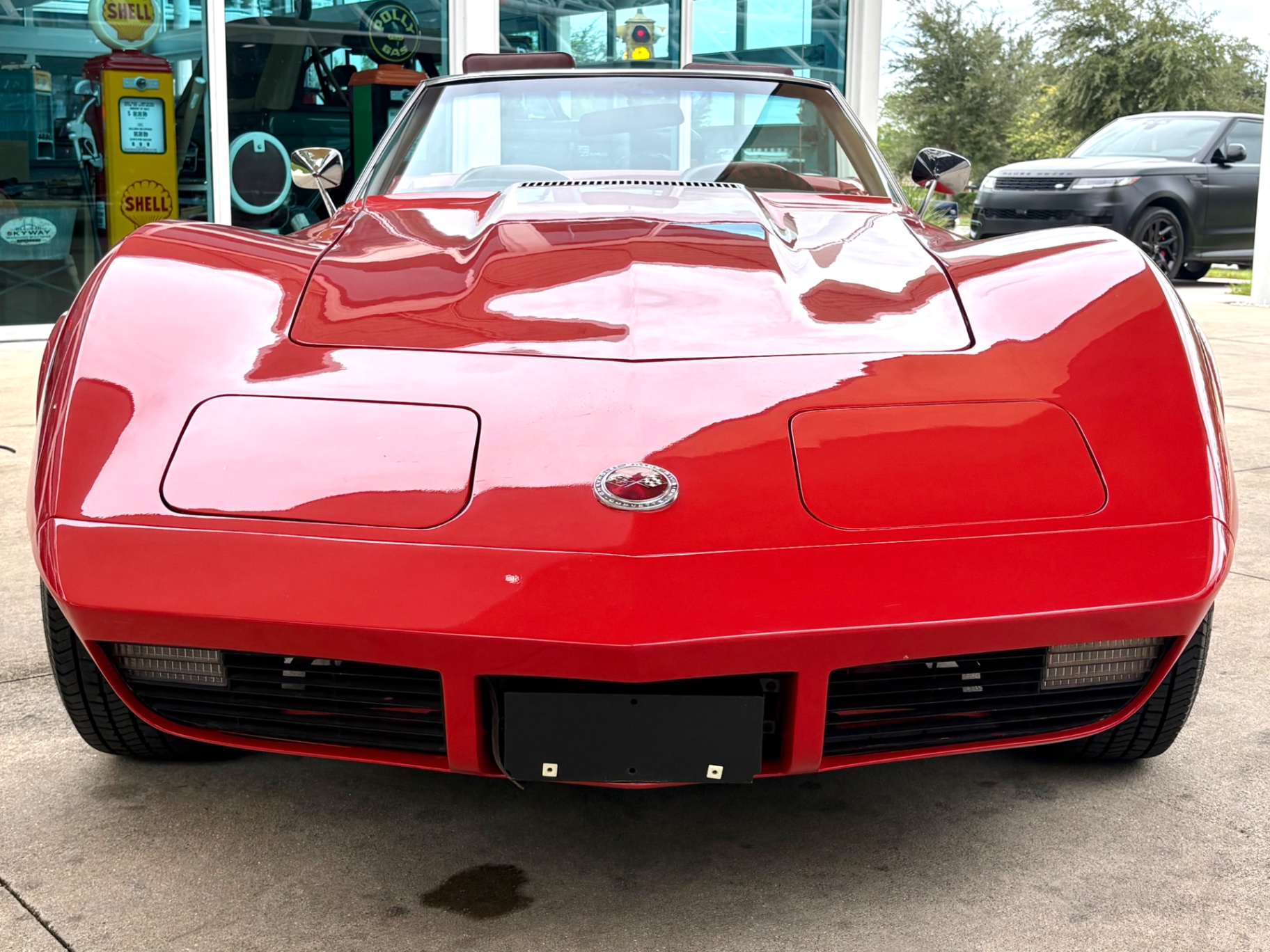
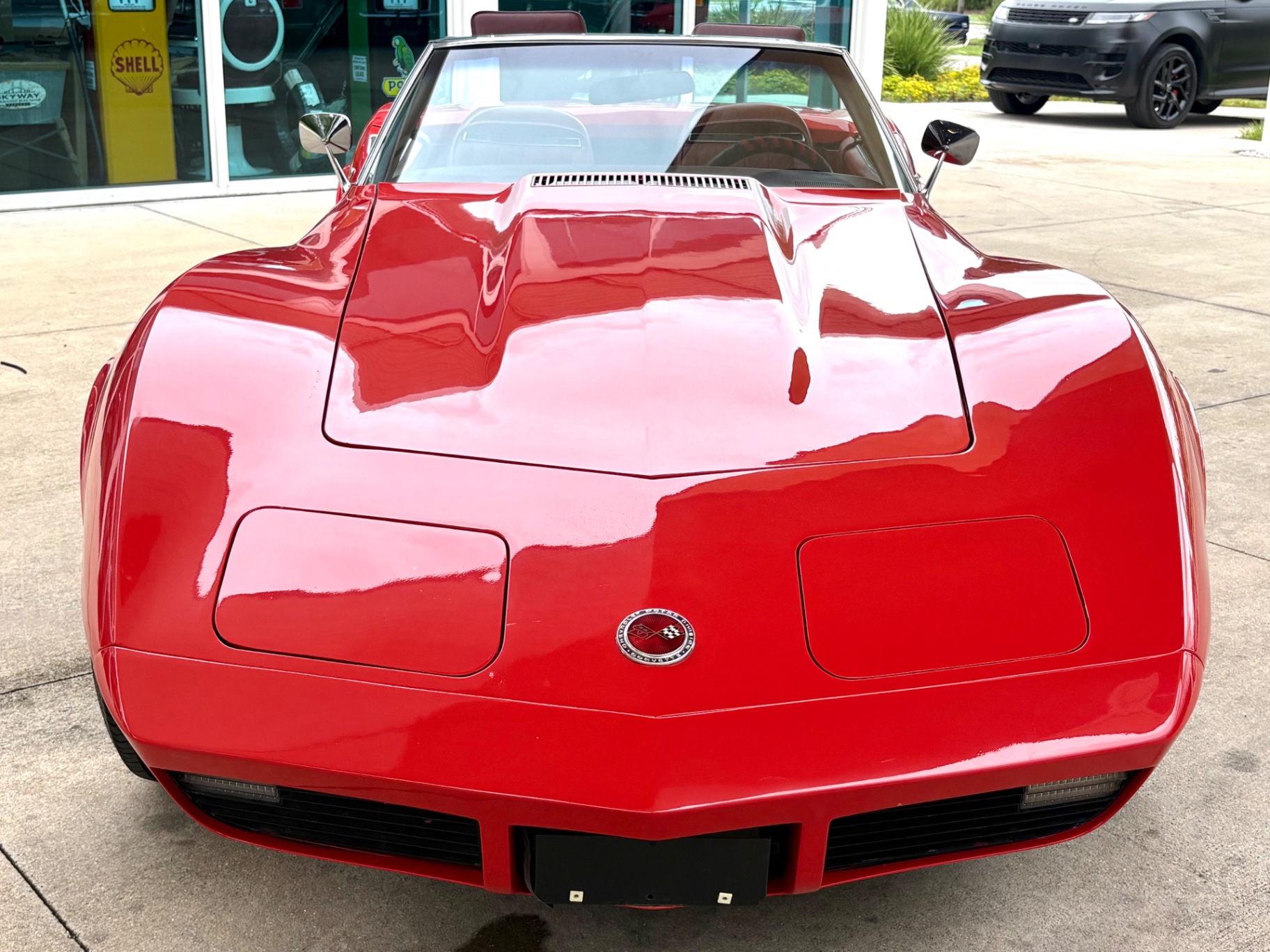
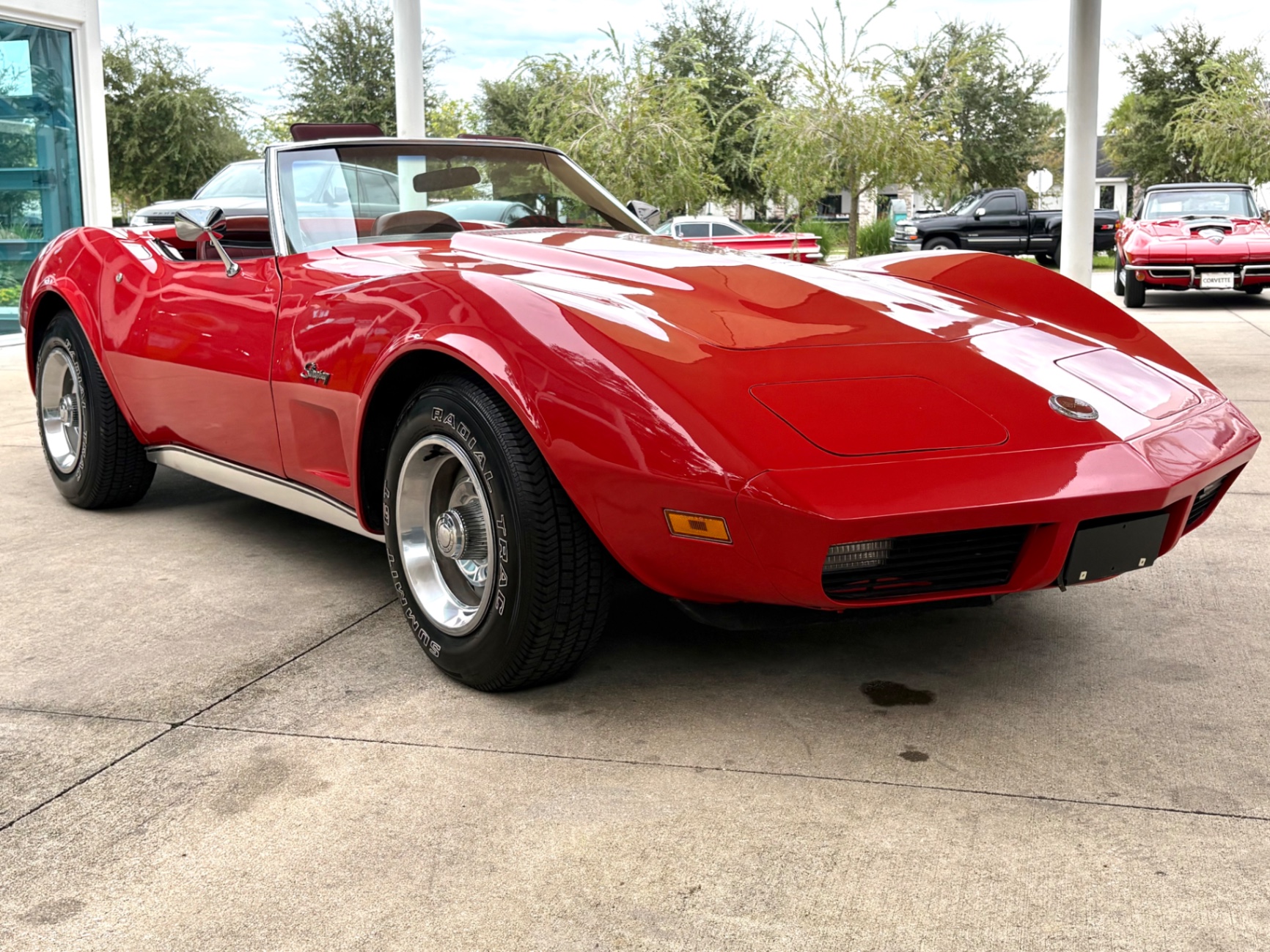
1974 Chevrolet Corvette Stingray Convertible — Red on Red, 350 V8, Numbers-Correct Survivor
Why This Car Is Special
The 1974 Chevrolet Corvette Stingray holds a unique place in C3 history. It was the last model year to wear the Stingray name on both the coupe and convertible, and it was also the final year of the classic twin-nostril chrome front bumper on the Corvette — a detail that distinguishes it immediately from the restyled 1975 models that followed. For buyers who want a true open-air, mid-1970s Corvette experience with the original long-hood, short-deck proportions that Bill Mitchell's design team created, the 1974 is the sweet spot.
Chevrolet produced 37,502 Corvettes for the 1974 model year. Of those, 5,474 were convertibles — just under 15 percent of total production. That convertible figure was already in decline; Chevrolet would drop the open-top Corvette entirely after 1975, not bringing it back until 1986. So the 1974 Corvette Stingray convertible represents one of the last chances buyers had to get a factory-built open Corvette for more than a decade.
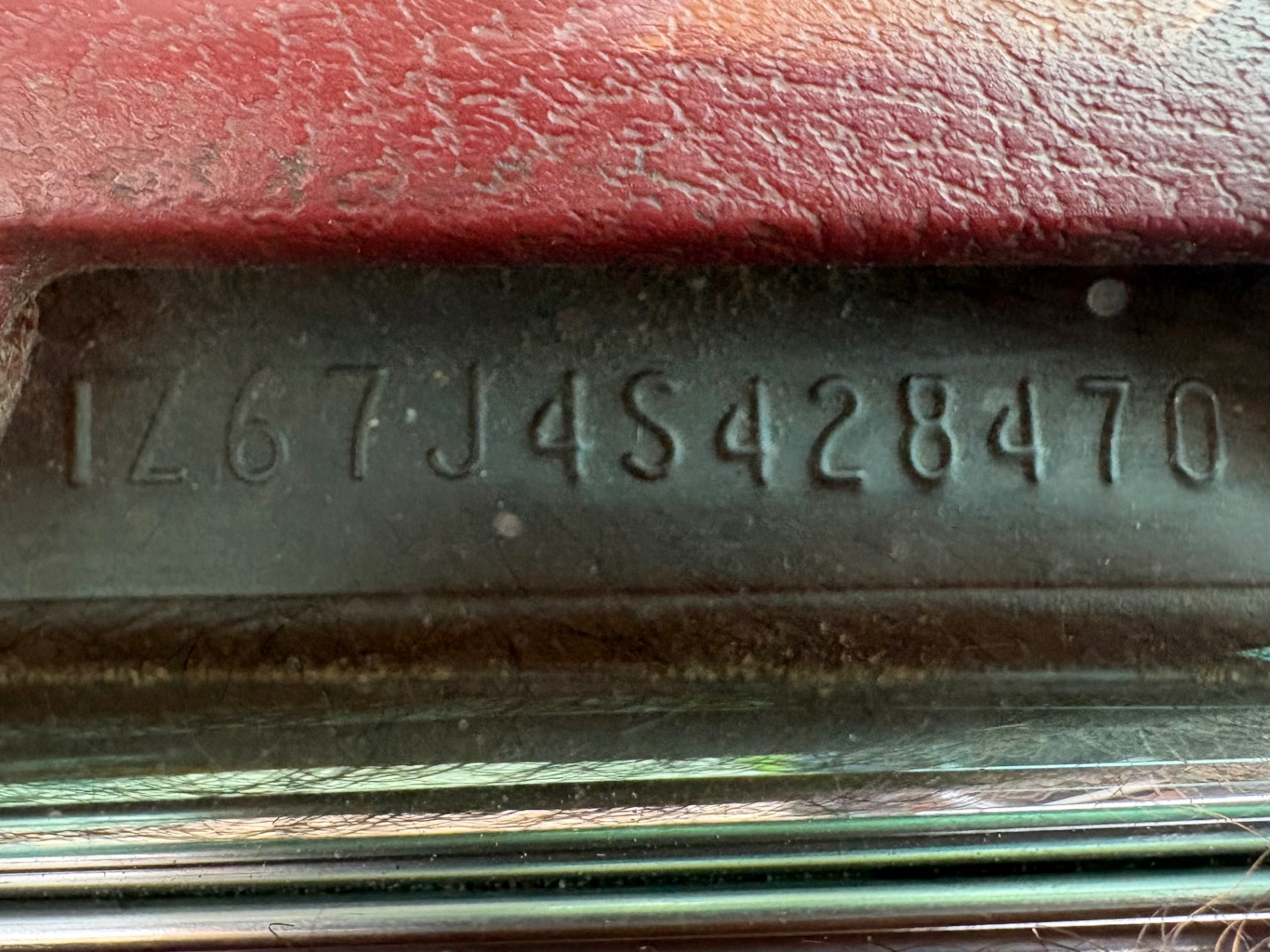
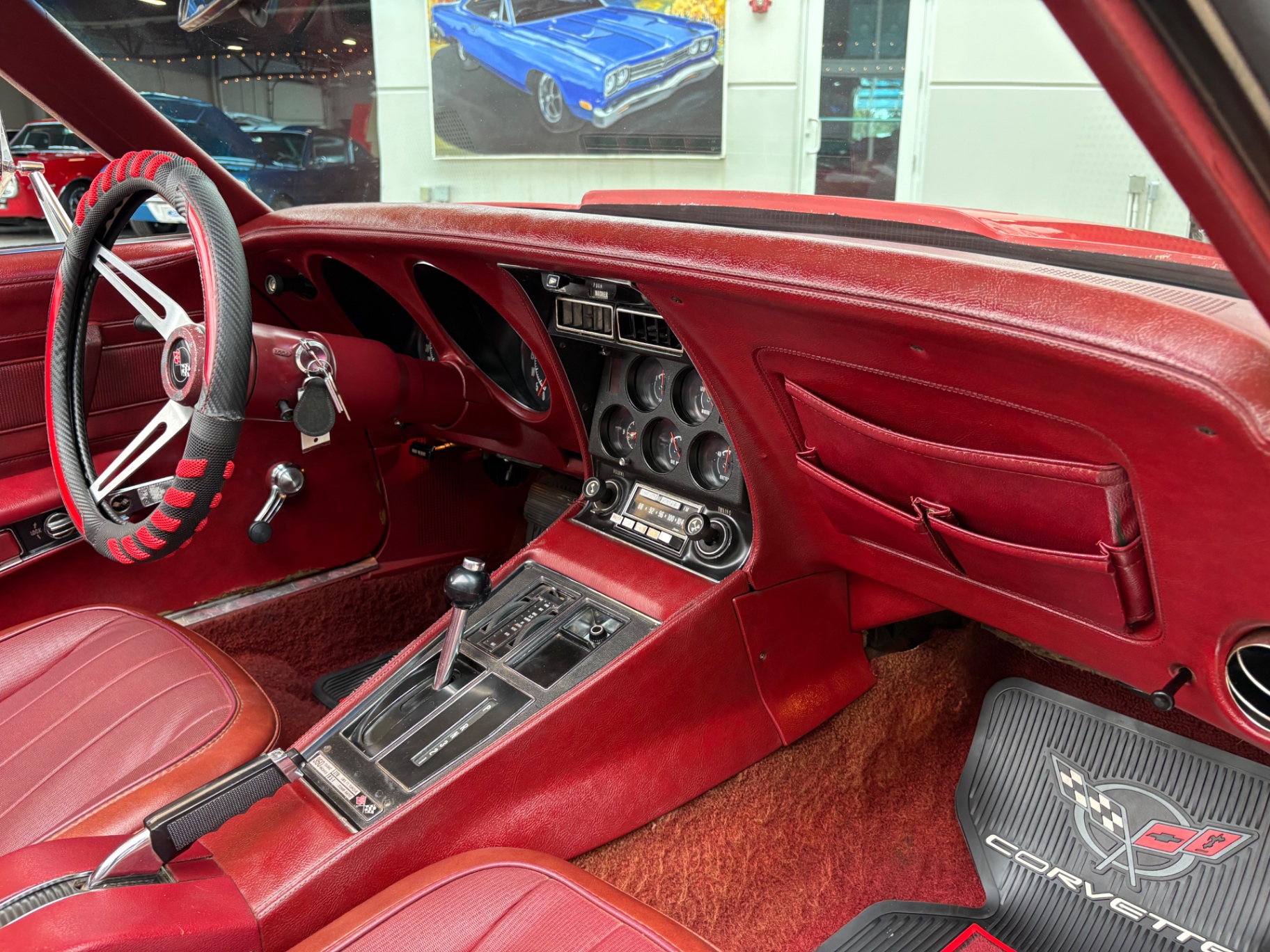
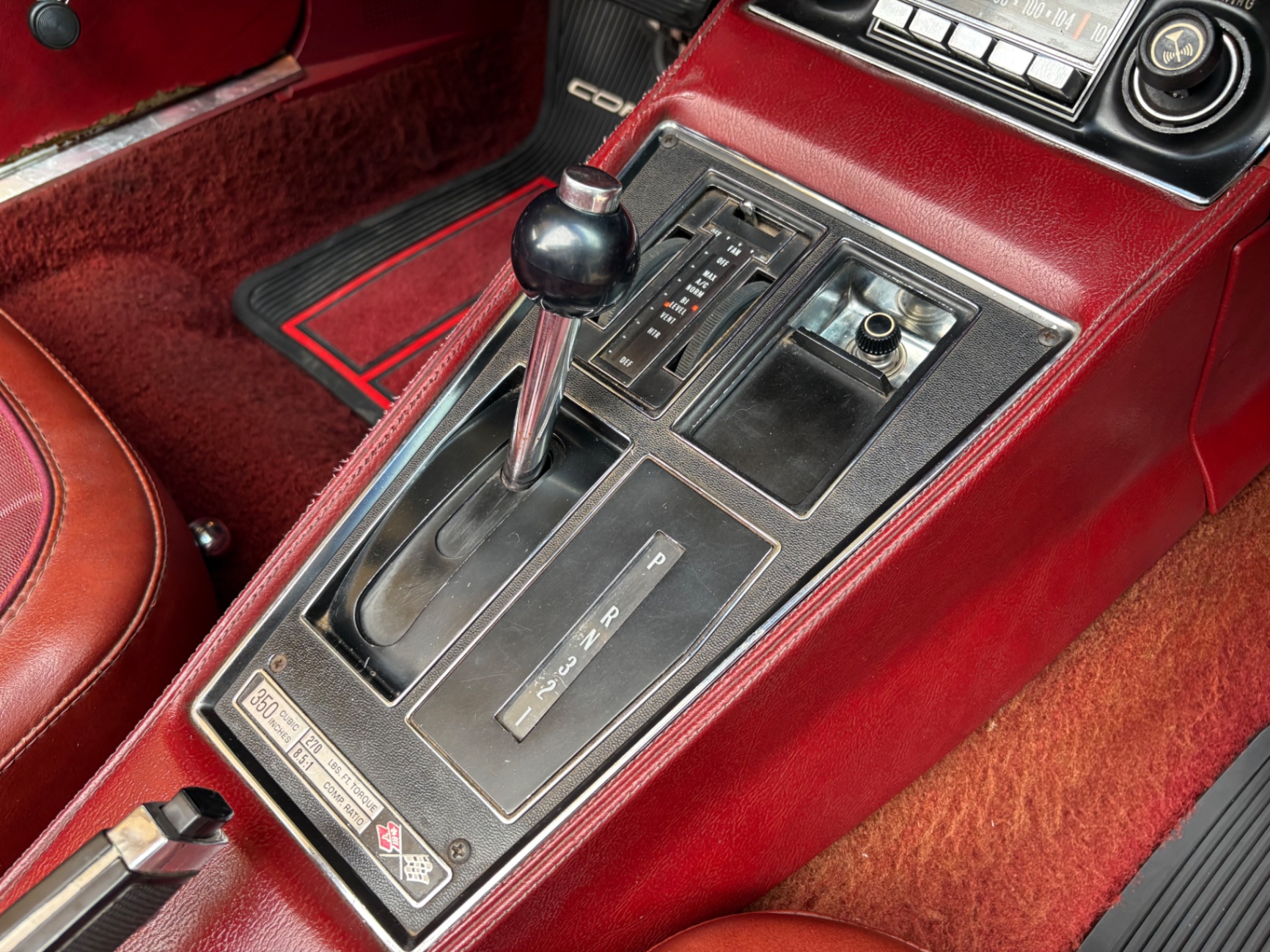
The VIN on this car decodes to confirm it is a genuine 1974 Corvette convertible (body code 67), powered by the 350 cubic inch V8 (engine code J), and paired with the Turbo-Hydramatic automatic transmission (transmission code 4). The engine code J corresponds to the base L48 350, rated at 195 horsepower under the then-new SAE net measurement standard. That rating was conservative by design — emissions equipment and a lower compression ratio of 8.5:1 kept output modest on paper, but the 270 lb-ft of torque the engine produced made it a capable and tractable street driver. You can actually see that spec plate on the center console of this car: 350 cubic inches, 270 lb-ft torque, 8.5:1 compression ratio.
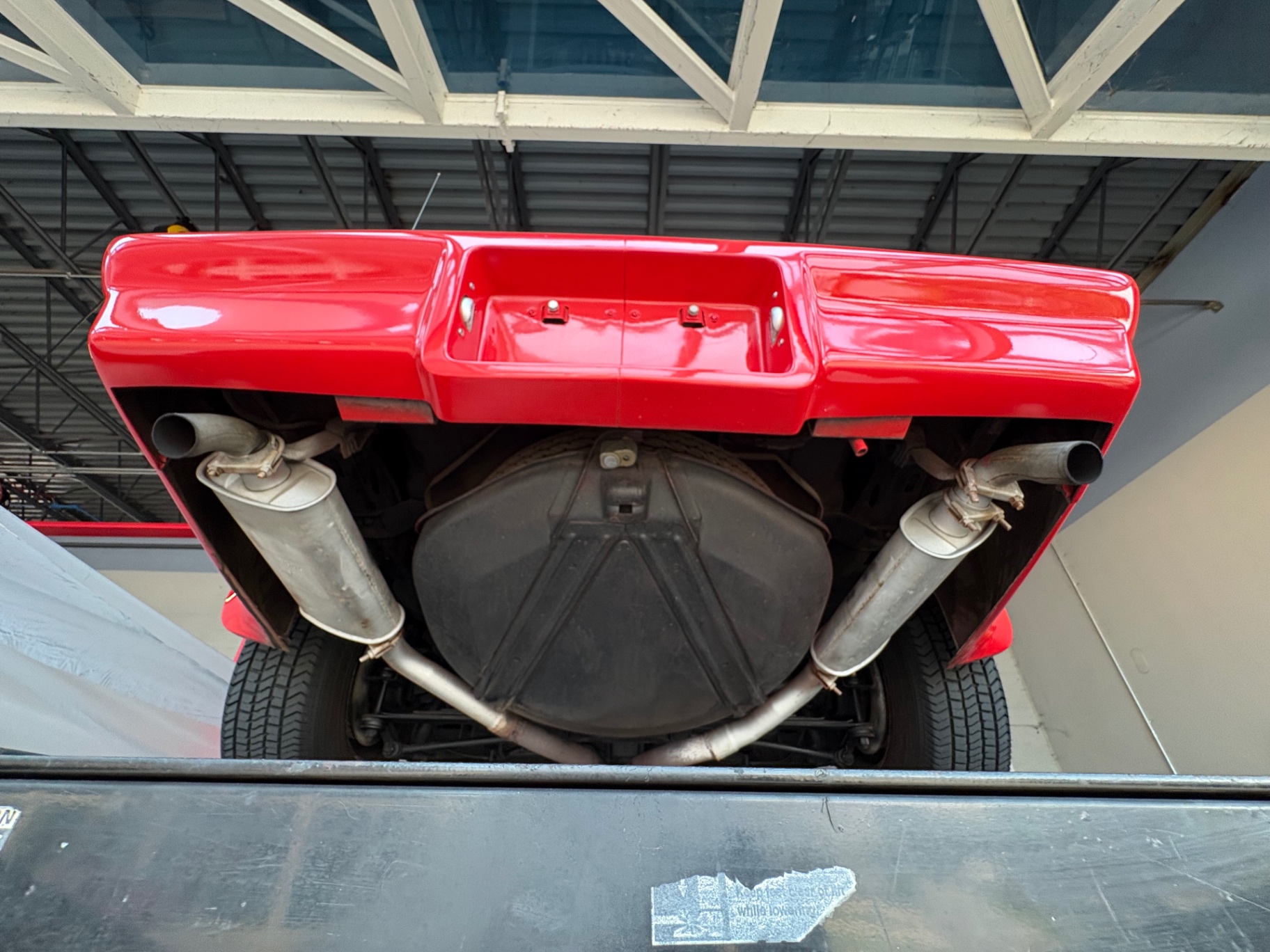
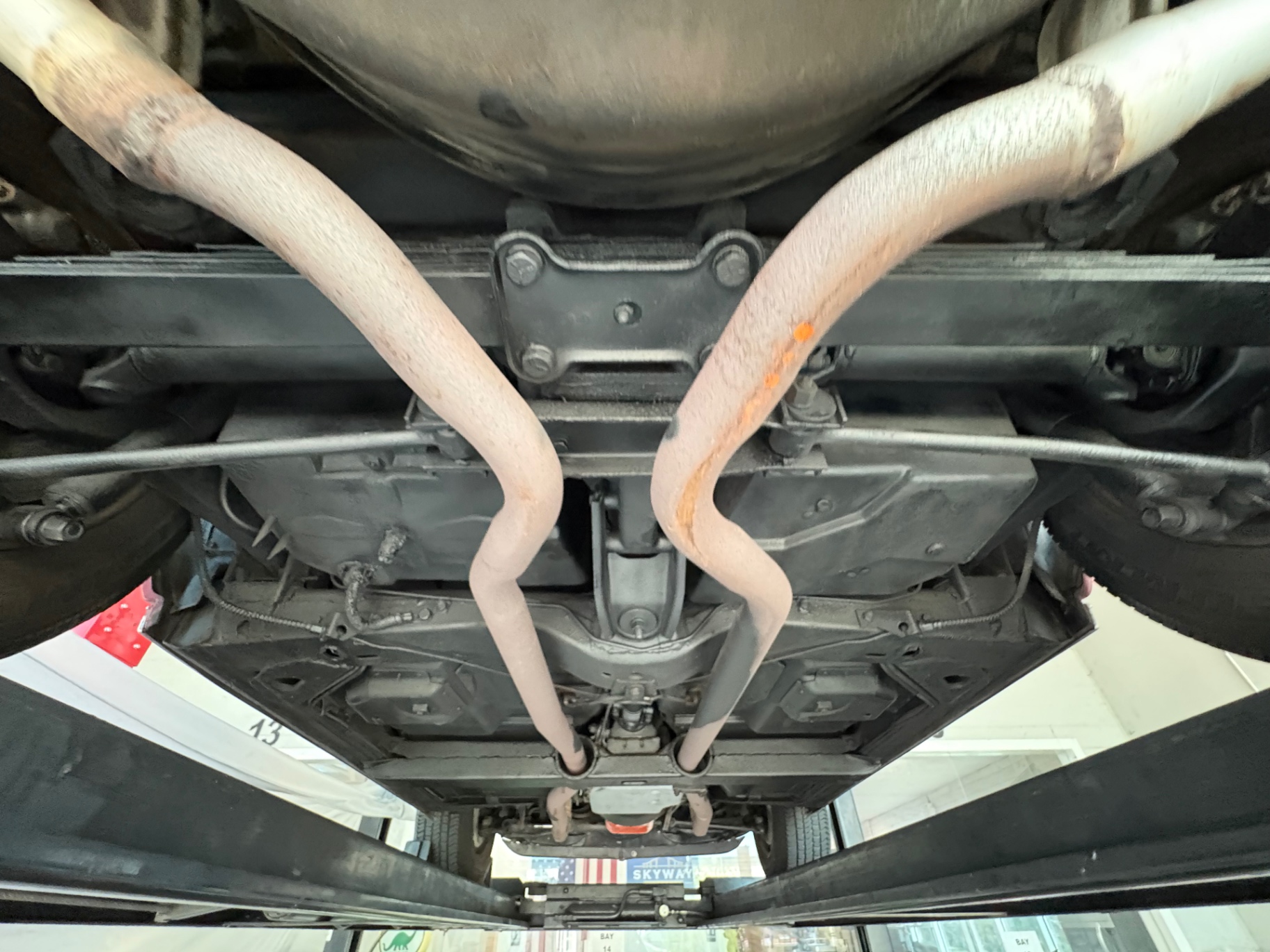
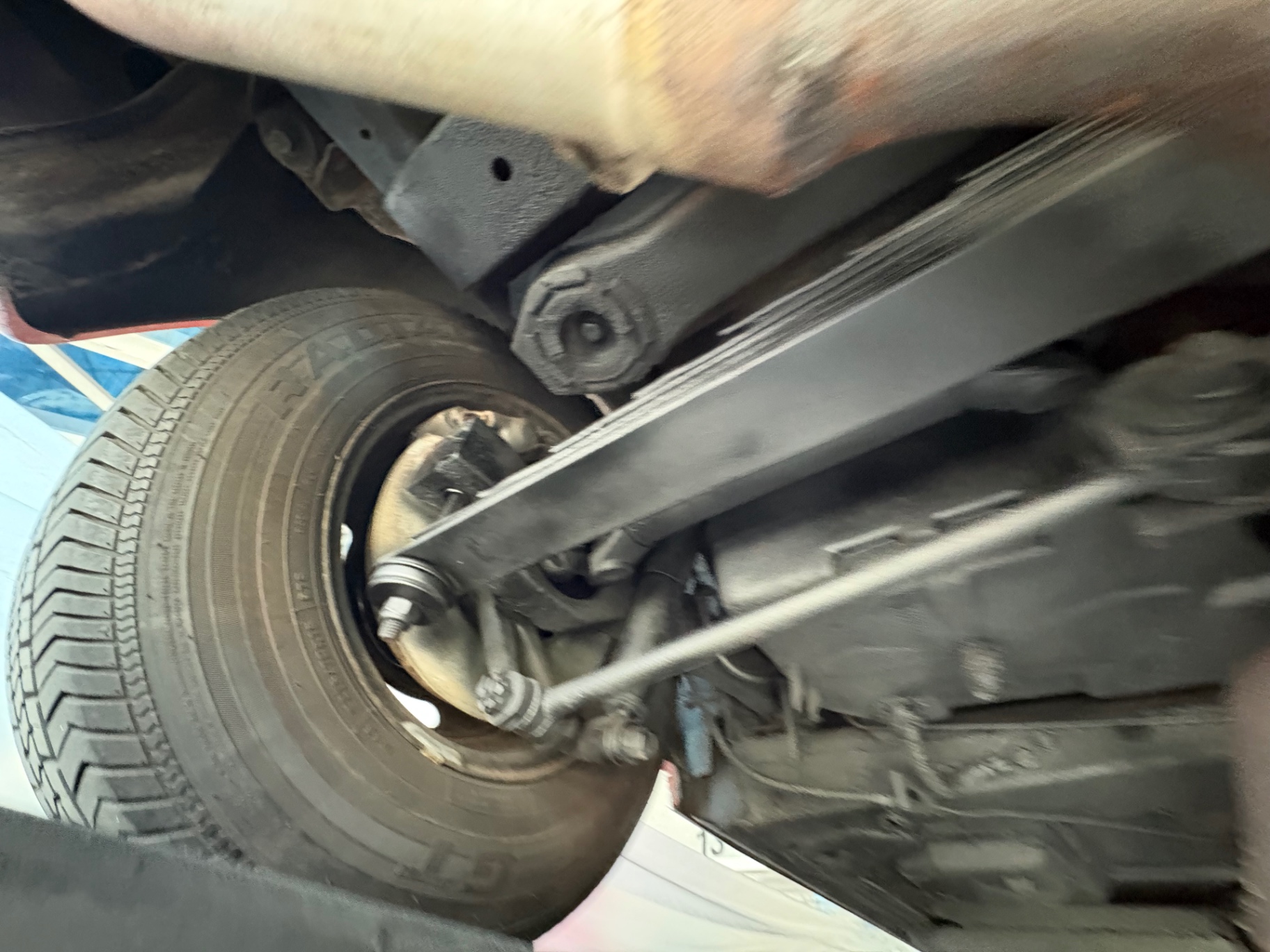
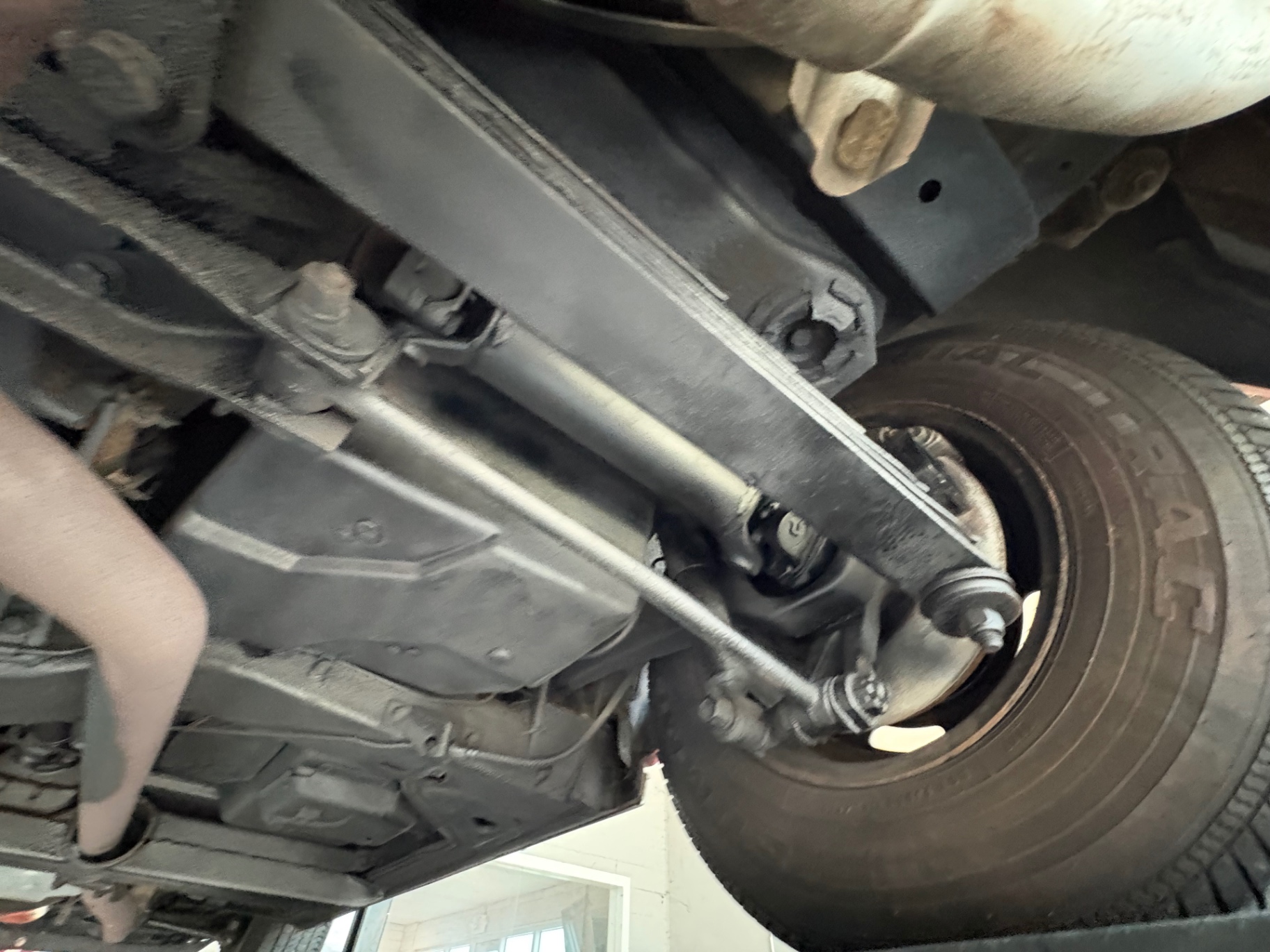
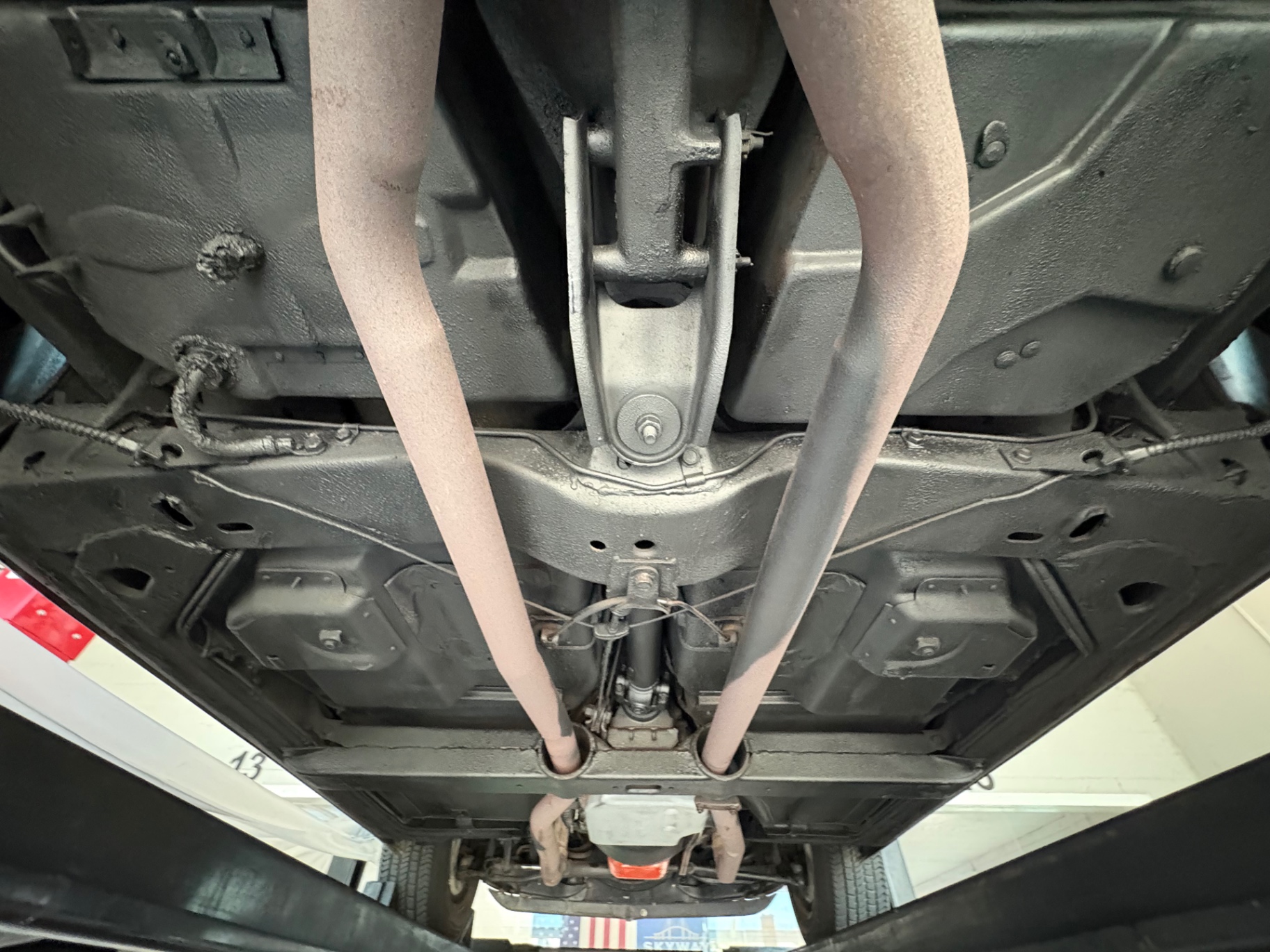
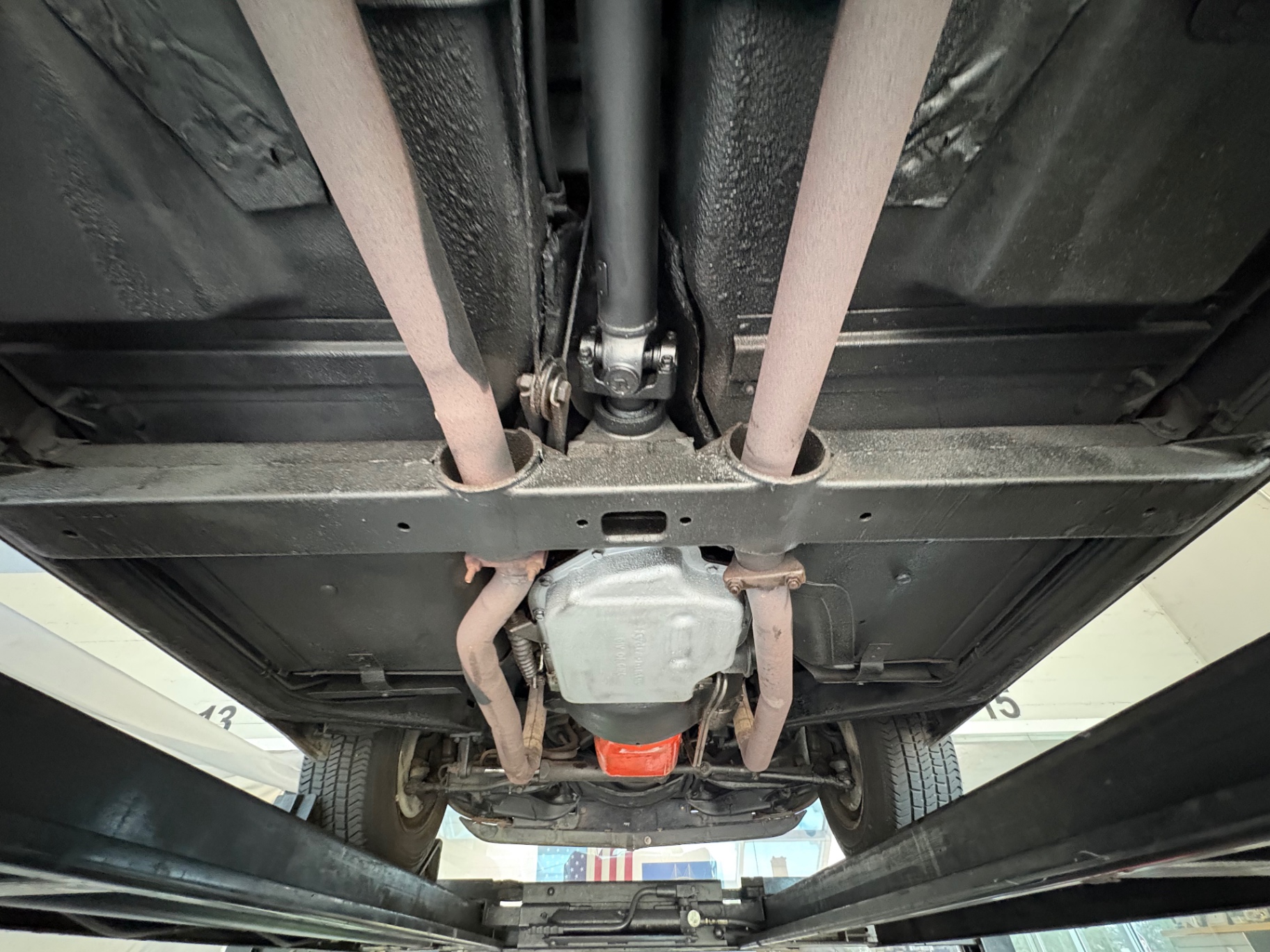
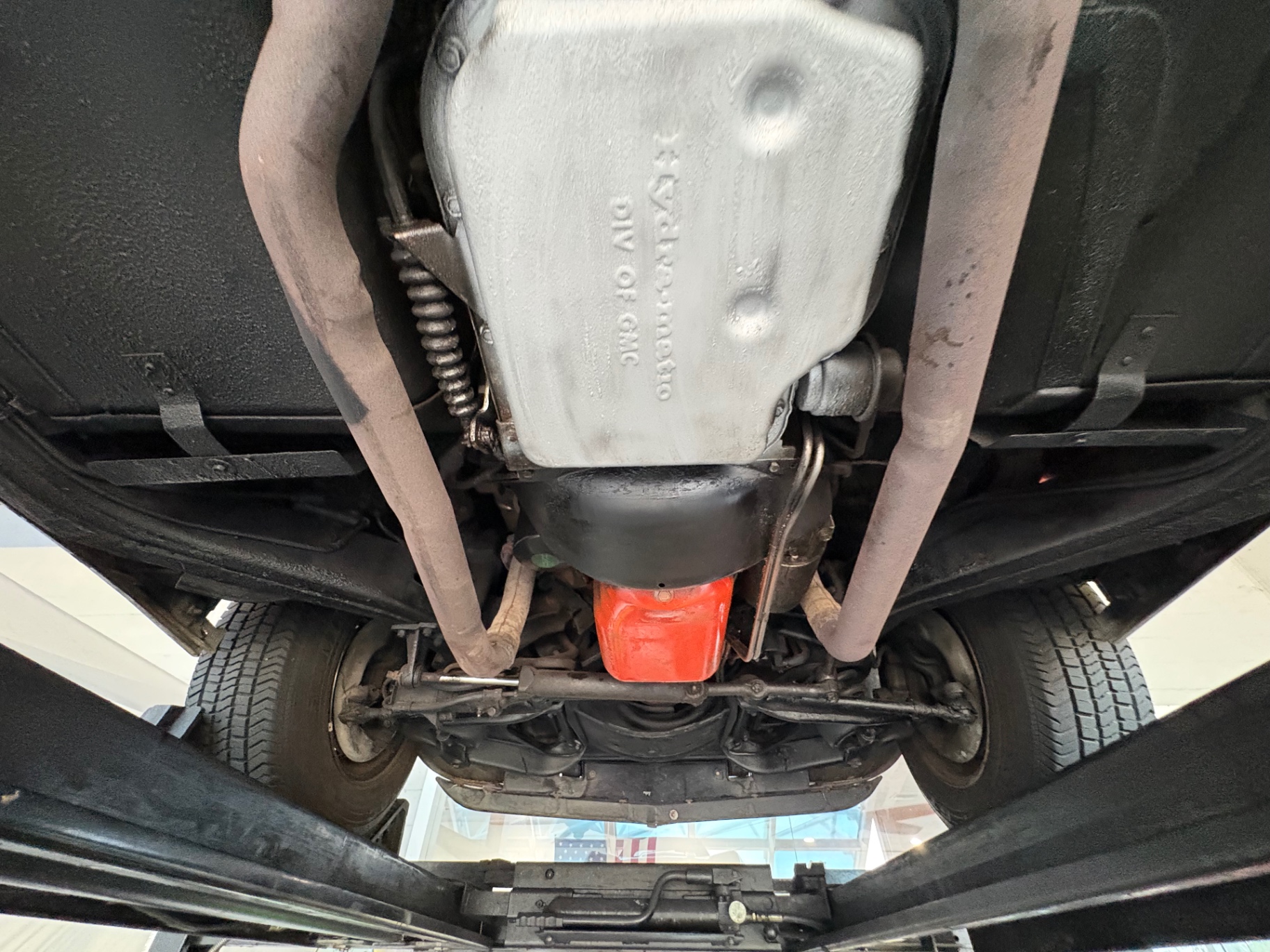
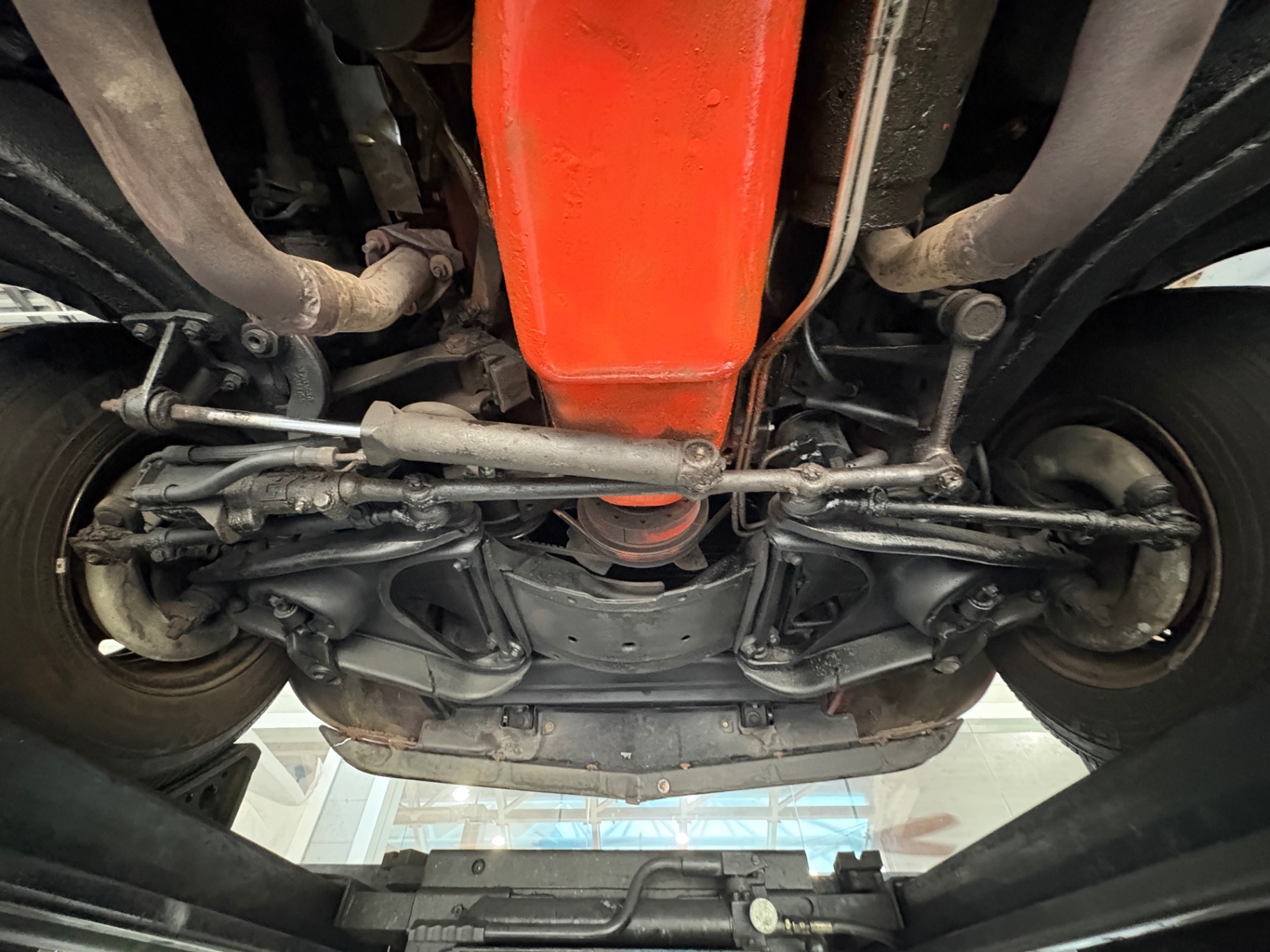
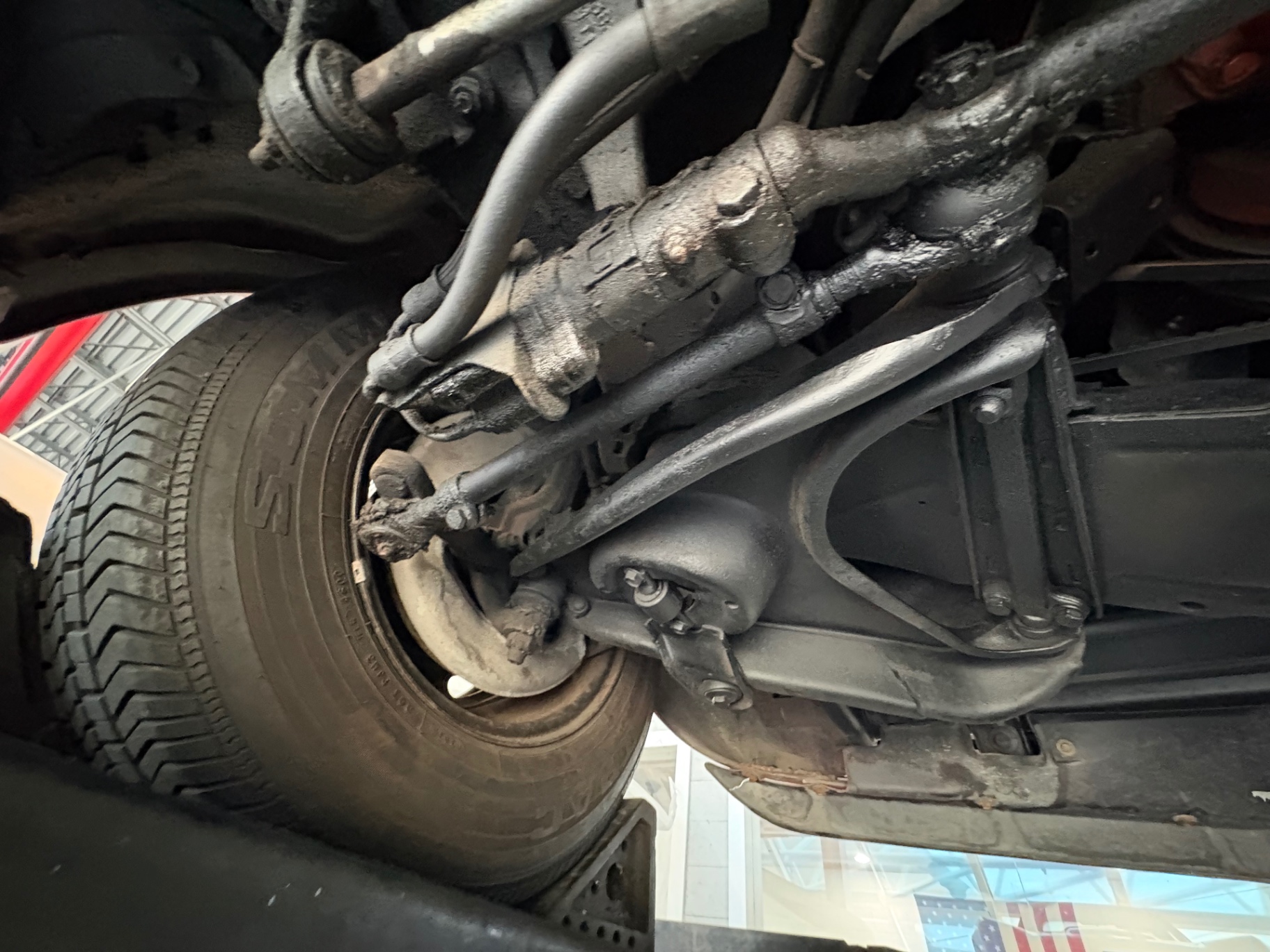
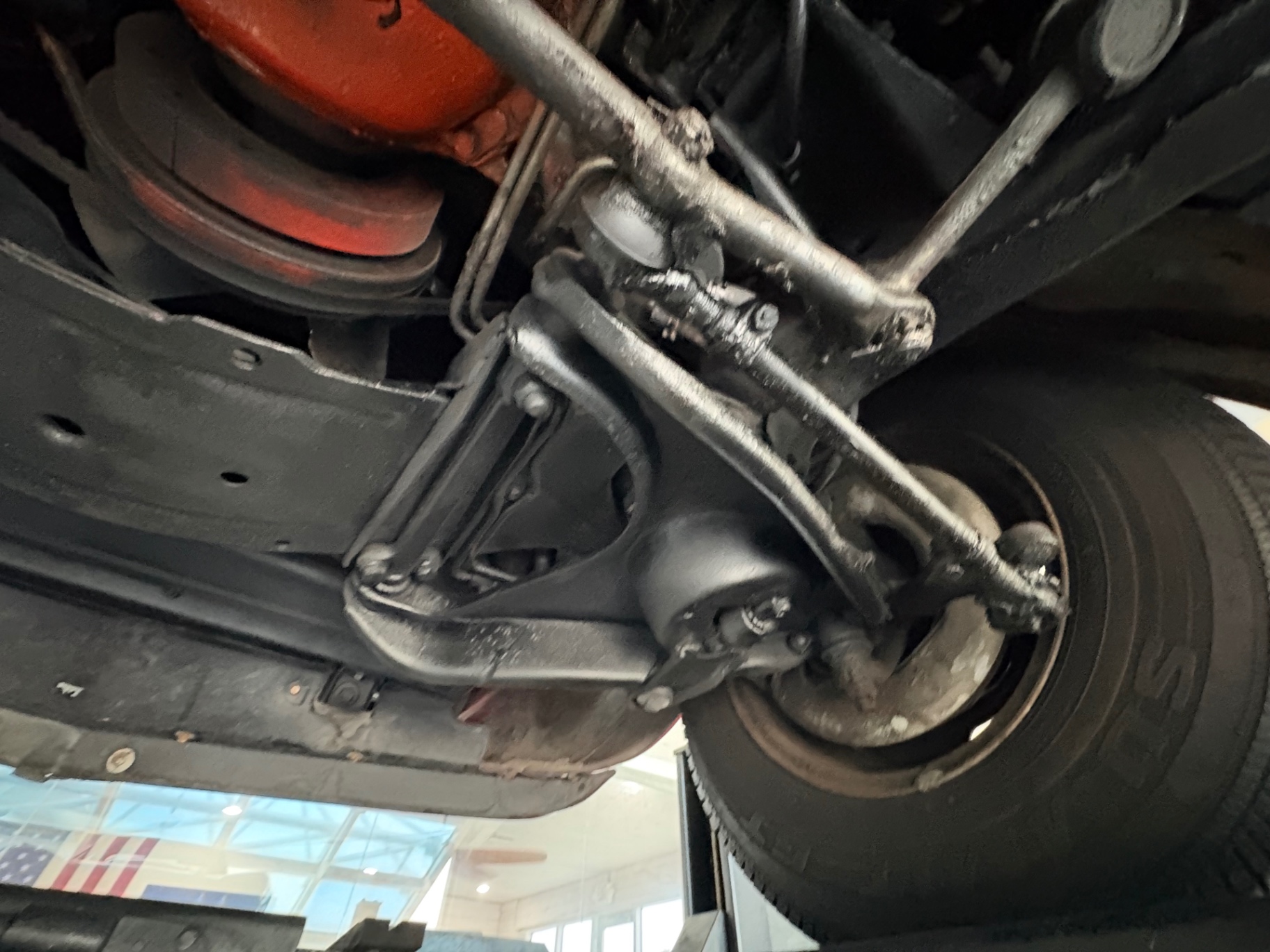
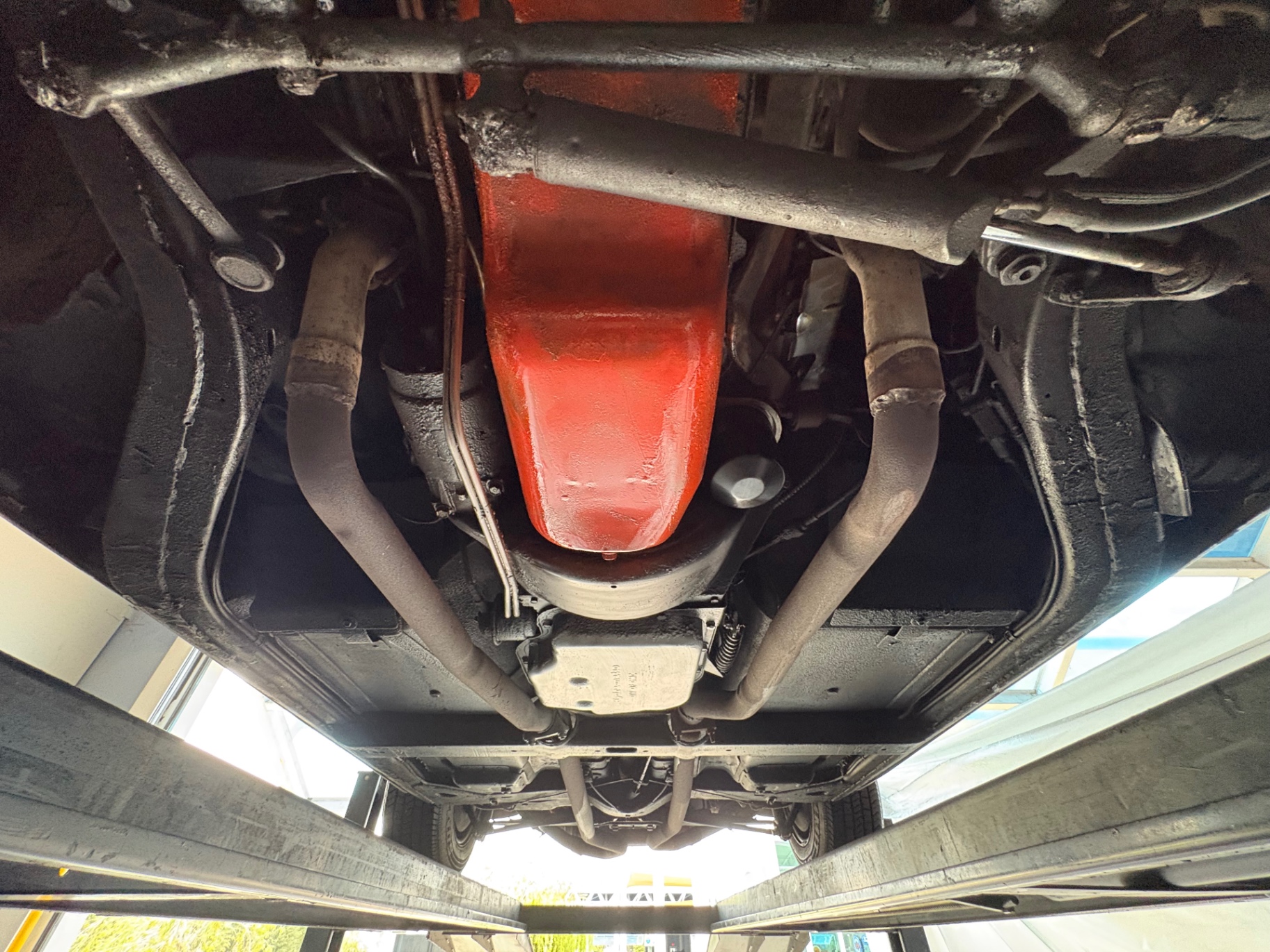
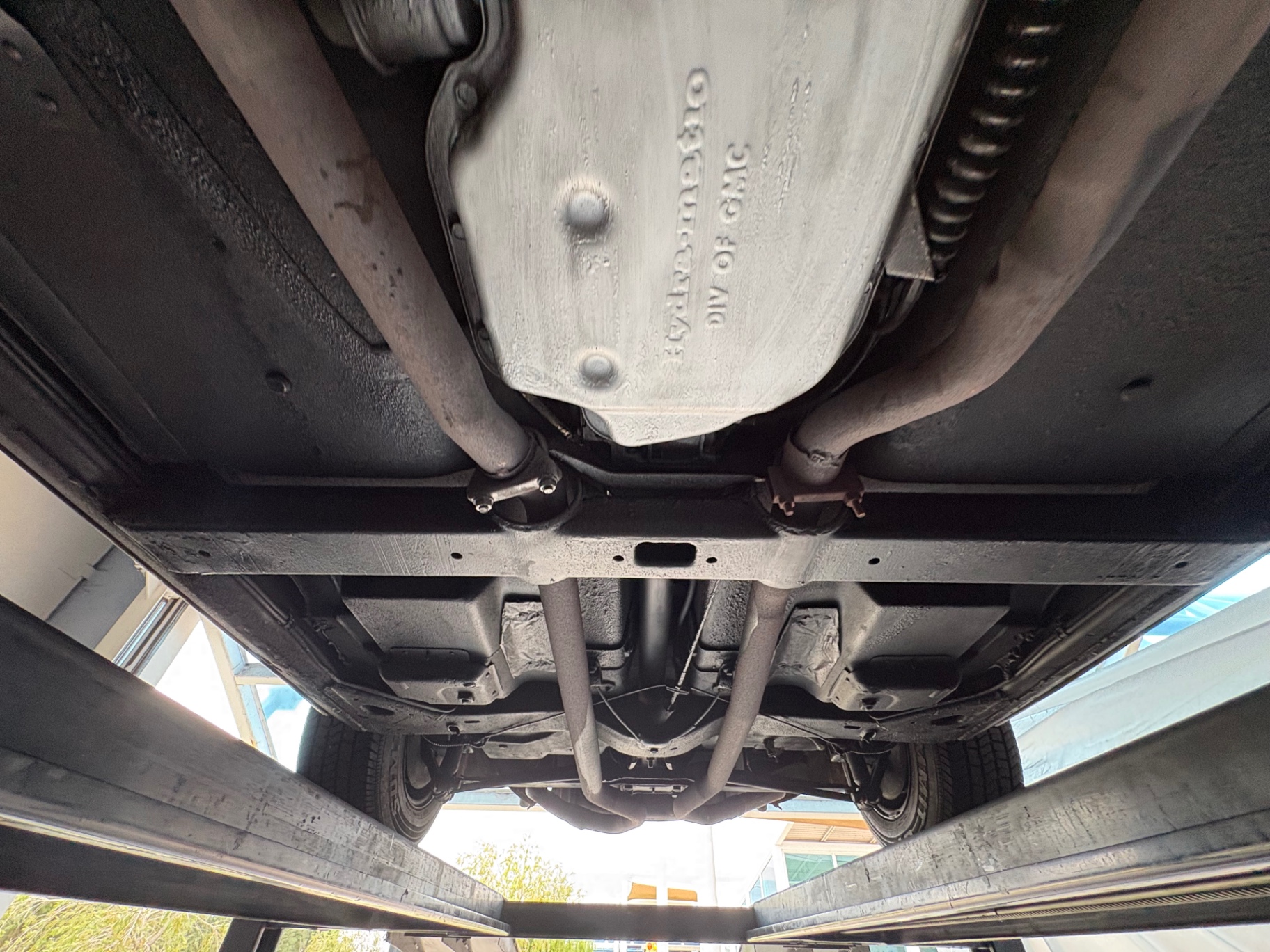
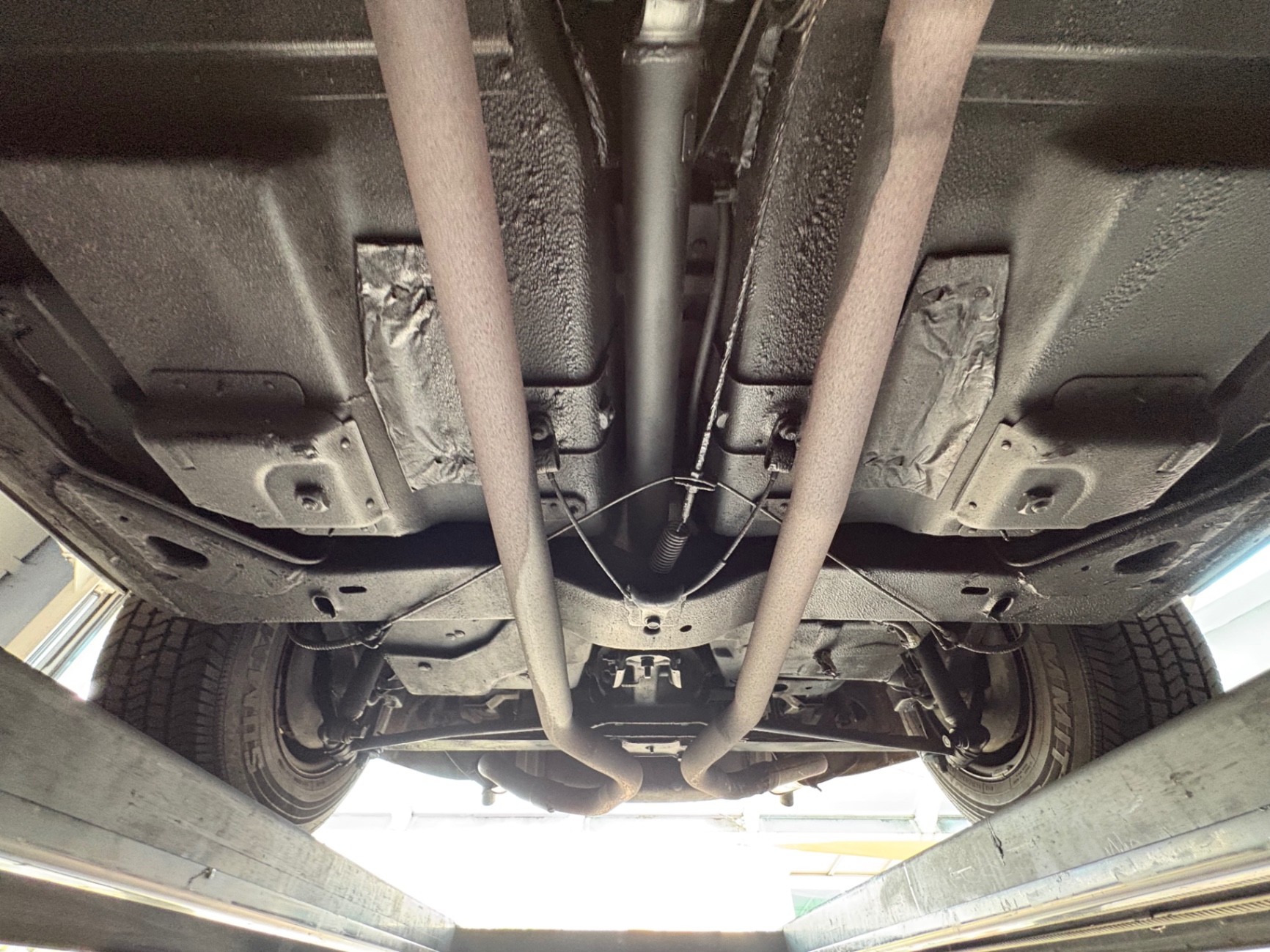
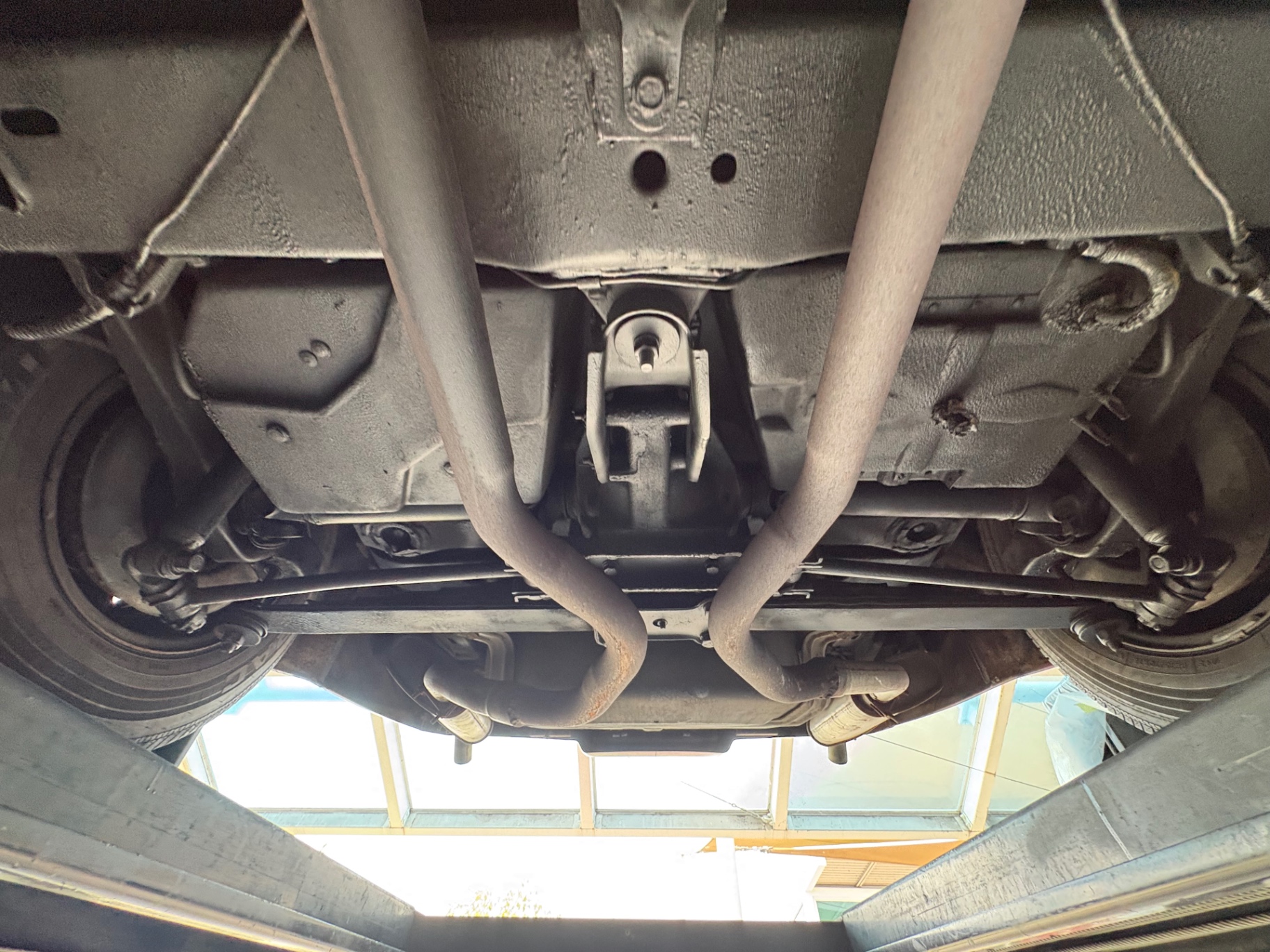
What makes this particular 1974 Corvette Stingray stand out among the field is the combination of its color, its convertible body, and the condition of the car underneath. Red exterior over a matching red vinyl interior is a classic pairing, and the undercarriage photographs tell a story that's hard to find on a 50-year-old sports car. The floorpans are solid, the frame rails are straight, and the framing is coated and intact without the patchwork or bubbling that commonly plagues C3 Corvettes that have spent time in the rust belt. This car presents as a driver-quality example that has been maintained and kept honest.
Features List
- 350ci 5.7L V8 (L48), 195 hp / 270 lb-ft torque, 8.5:1 compression ratio
- Turbo-Hydramatic 3-speed automatic transmission
- Power steering
- 4-wheel disc brakes (standard on all 1974 Corvettes)
- Factory air conditioning
- AM/FM radio
- Dual exhaust
- Tilt-telescopic steering column
- White convertible top
- Stingray badges
- Factory gauges and tachometer
- Center console with engine data plate
- Bucket seats, red vinyl
- Corvette Rally wheels
- White letter radial tires
- Body-color rear bumper
- Chrome rocker moldings
- Chrome exterior mirrors
- Independent rear suspension
- Clean undercarriage
Mechanical
The 350 cubic inch small block in this 1974 Corvette Stingray is the L48, the standard engine for the model year. It displaces 5.7 liters, runs an 8.5:1 compression ratio, and was factory-rated at 195 net horsepower with 270 lb-ft of torque. It is paired with GM's Turbo-Hydramatic 3-speed automatic, which by 1974 had become the transmission of choice for the majority of Corvette buyers. The shift toward automatics reflected both buyer preference and the realities of emissions-era tuning, which tended to favor broader torque curves over peak horsepower.
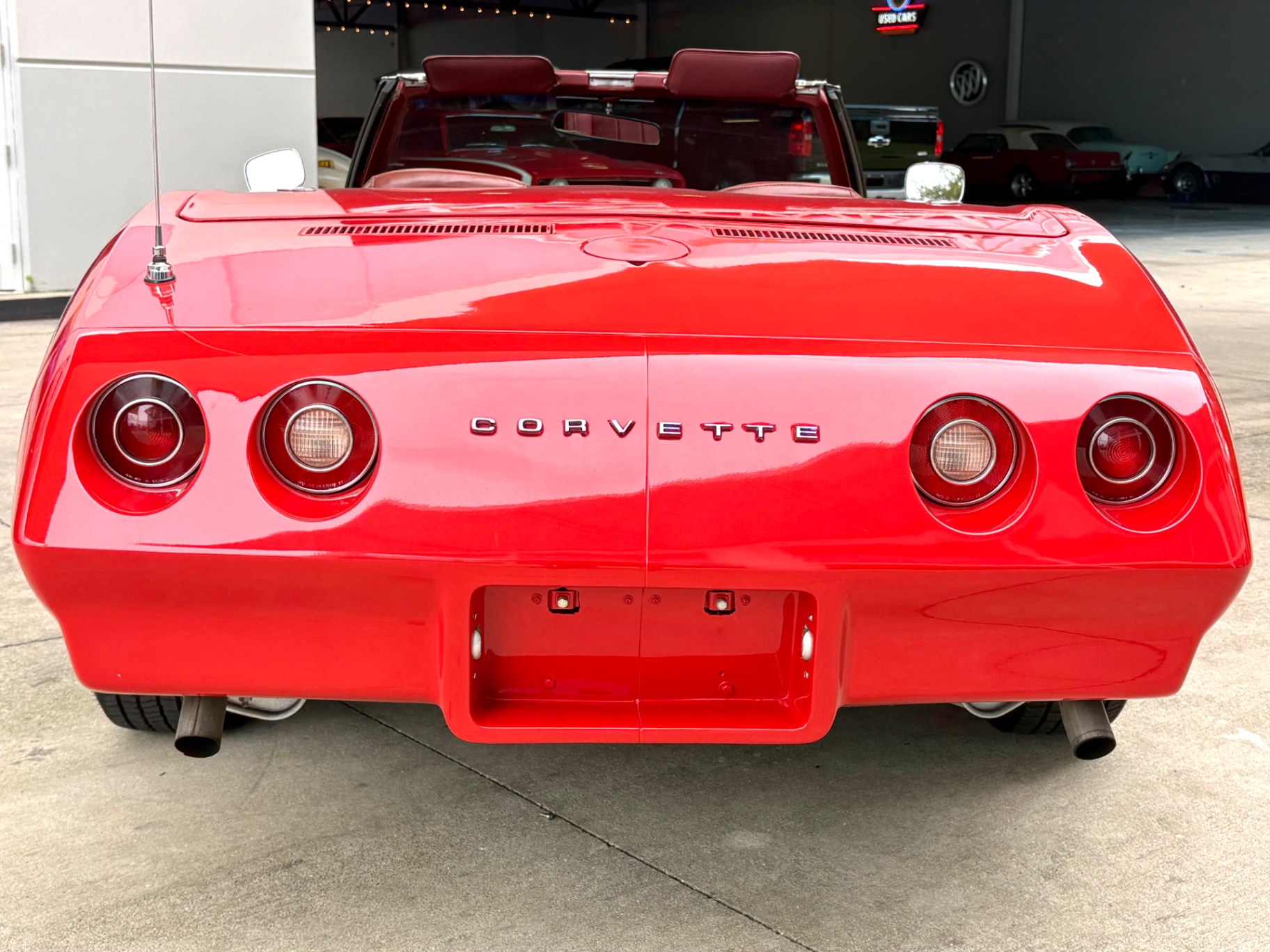
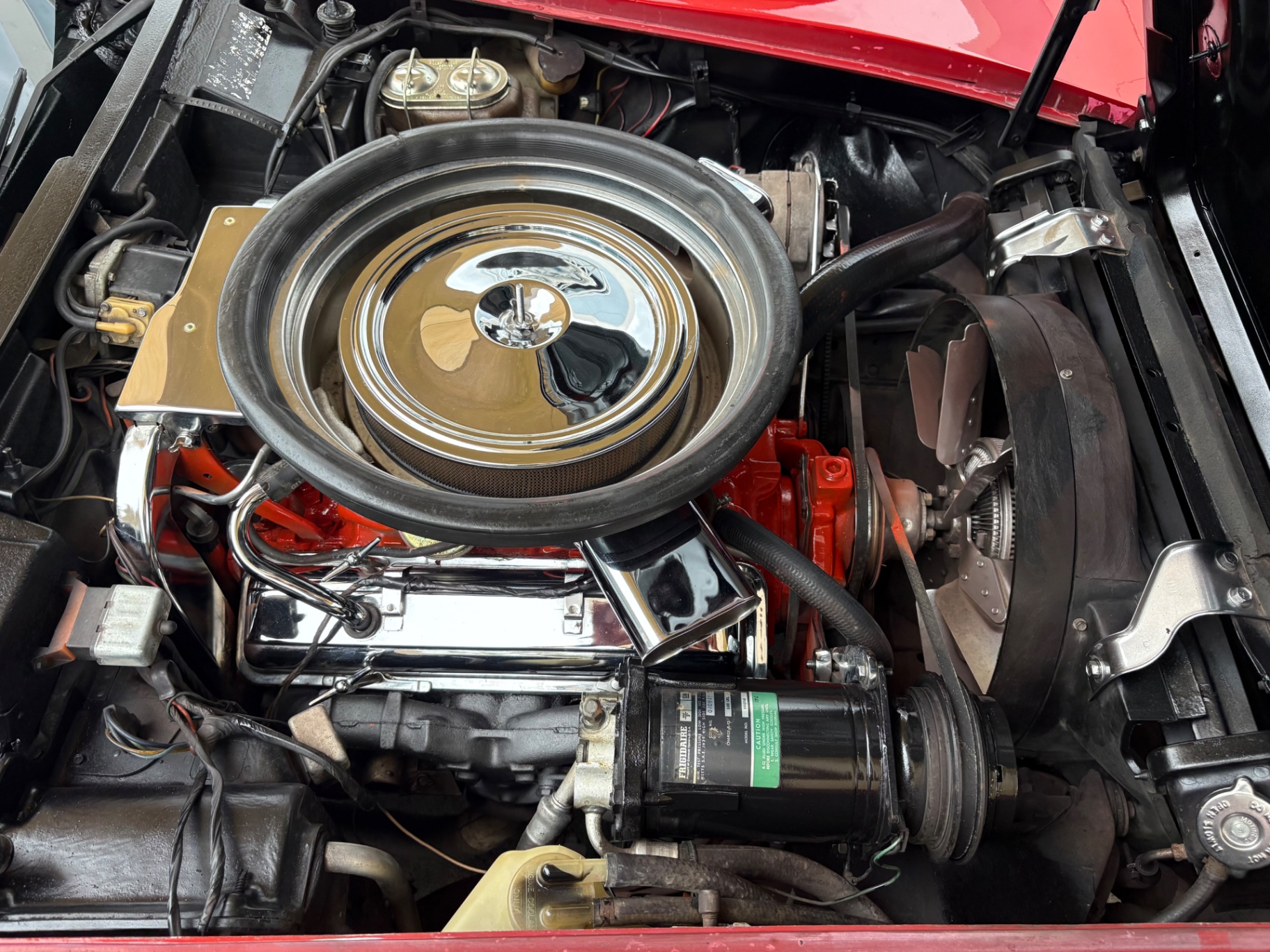
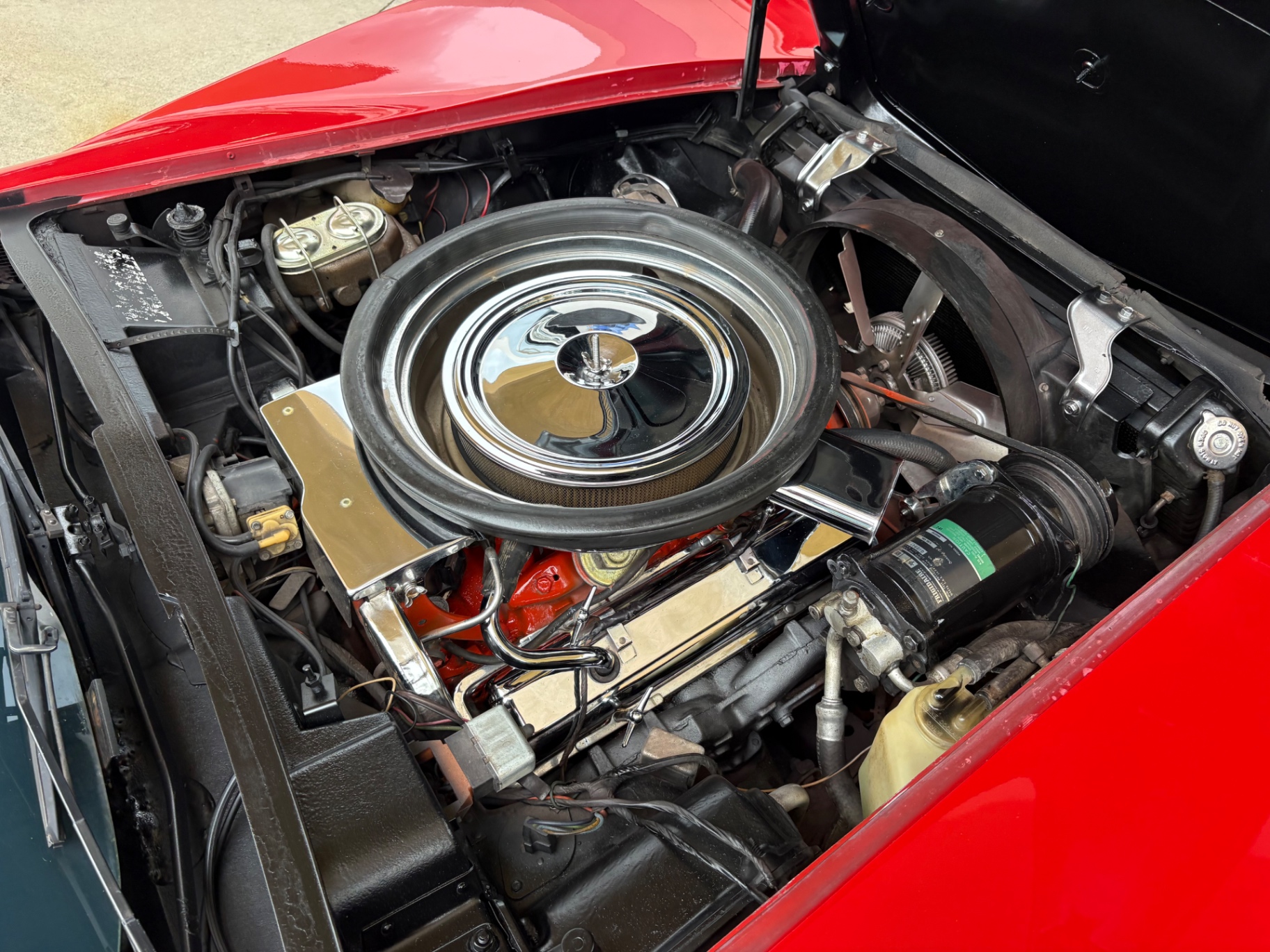
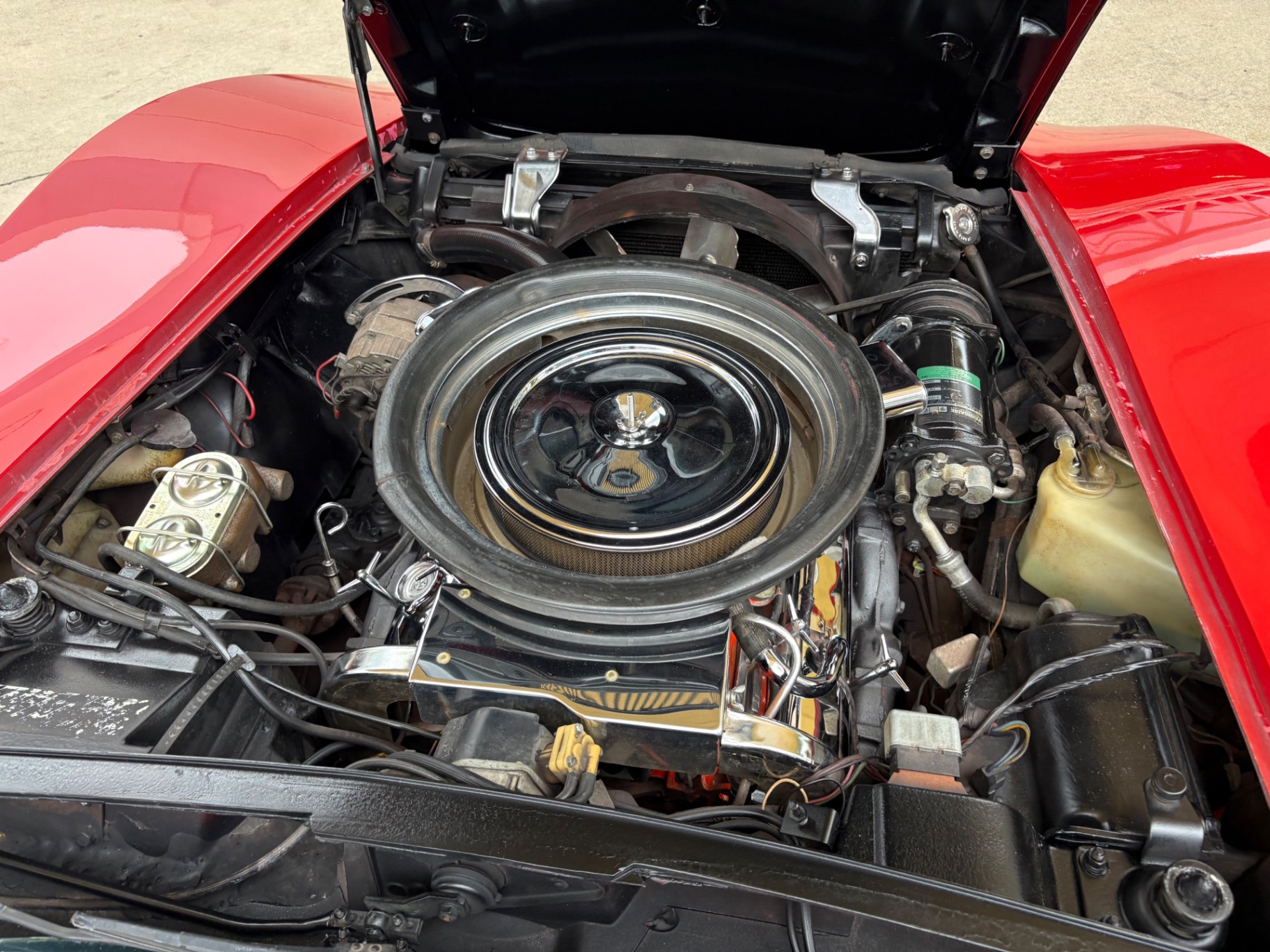
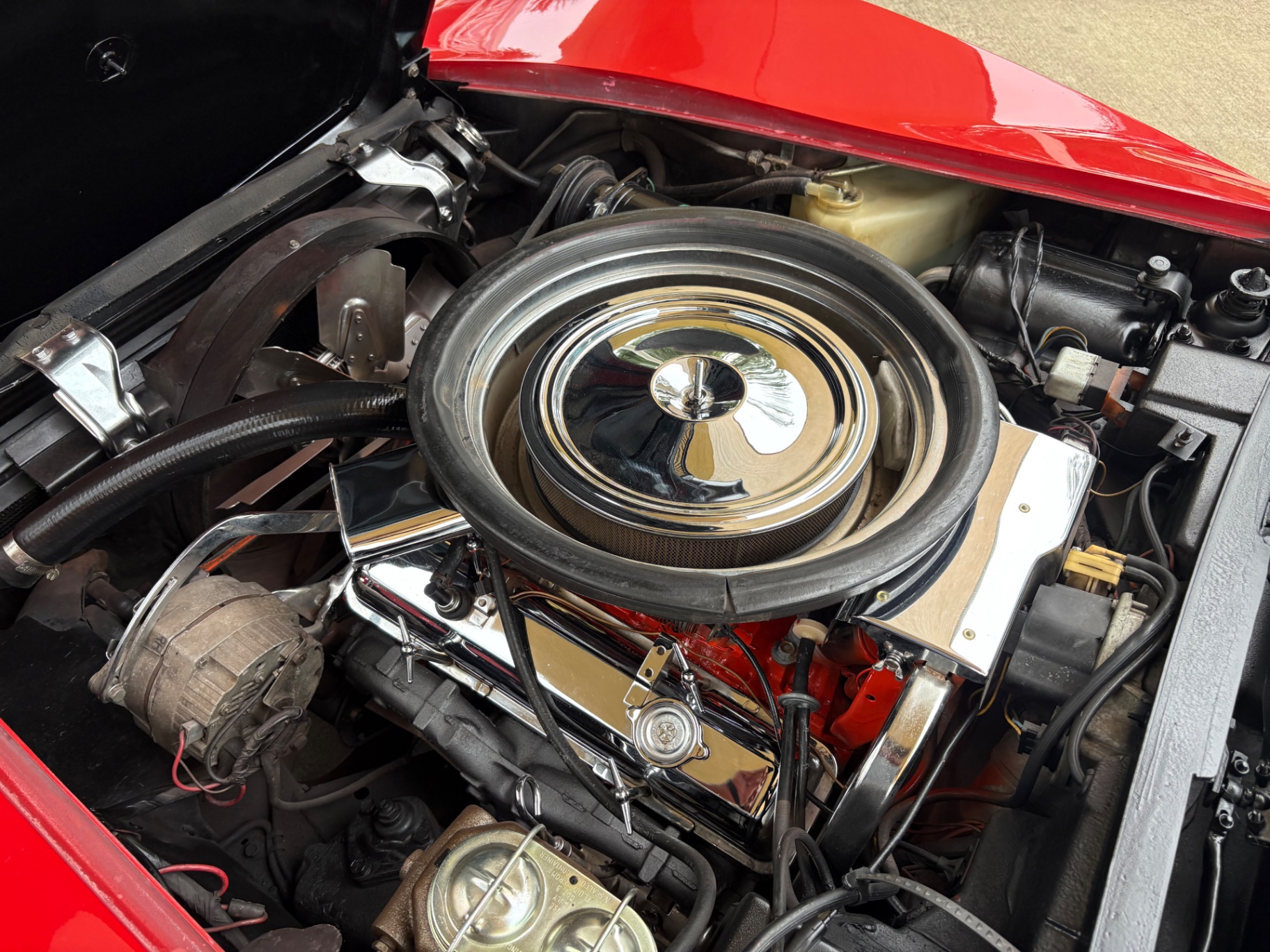
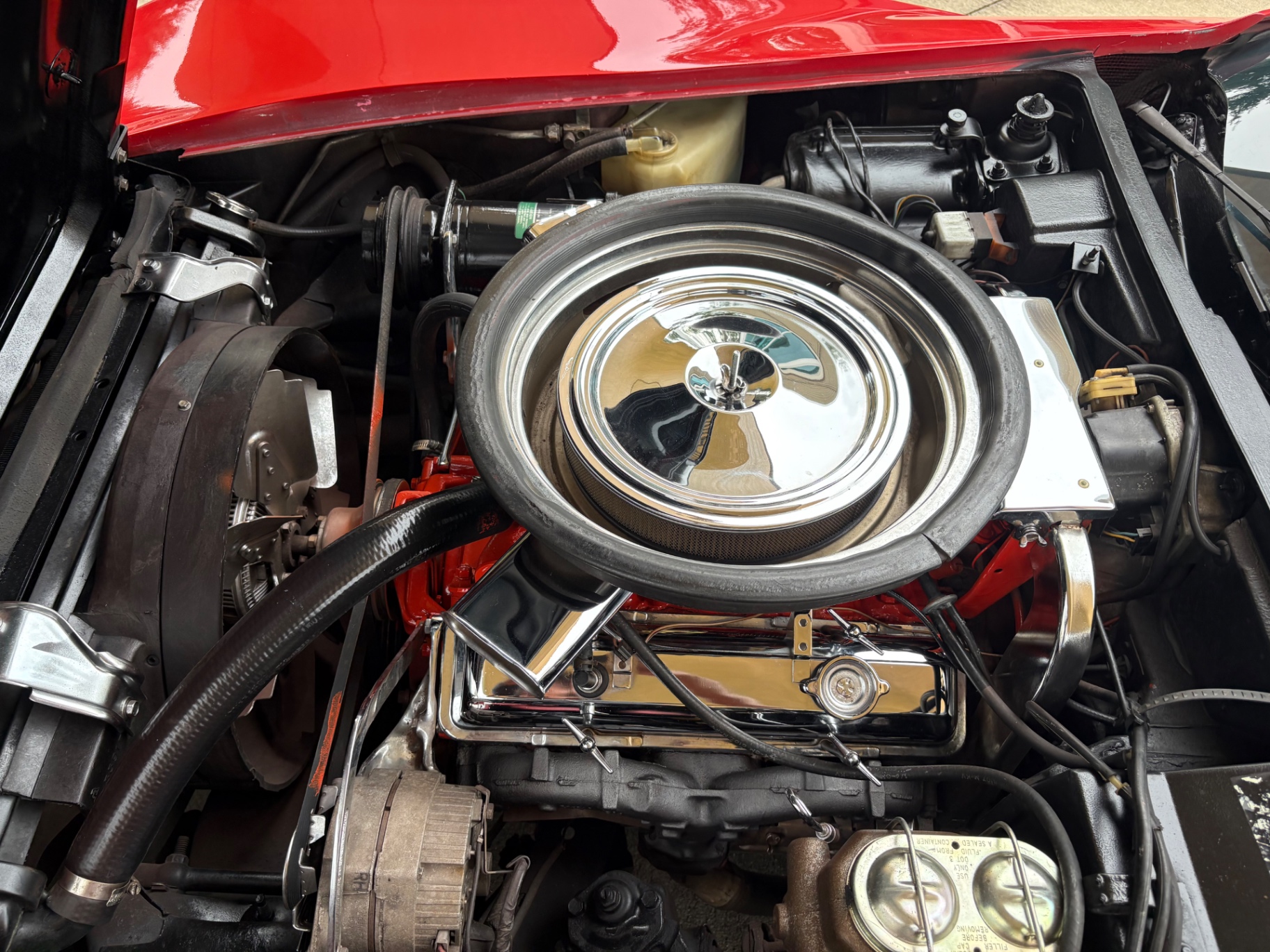
The engine bay on this car is tidy. The block is finished in the correct GM orange, the chrome valve covers and air cleaner are present and intact, and the Frigidaire air conditioning compressor — a factory option — is visible on the driver's side. The undercarriage photographs are worth studying closely. The frame rails show solid, unpatched metal with a consistent coating throughout. The independent rear suspension — a Corvette hallmark since 1963 — is intact with no visible damage or sloppy repairs to the three-link setup. Four-wheel disc brakes were standard equipment on every 1974 Corvette, and this car retains them at all four corners. The dual exhaust exits cleanly from beneath the body-color rear bumper fascia.
Interior
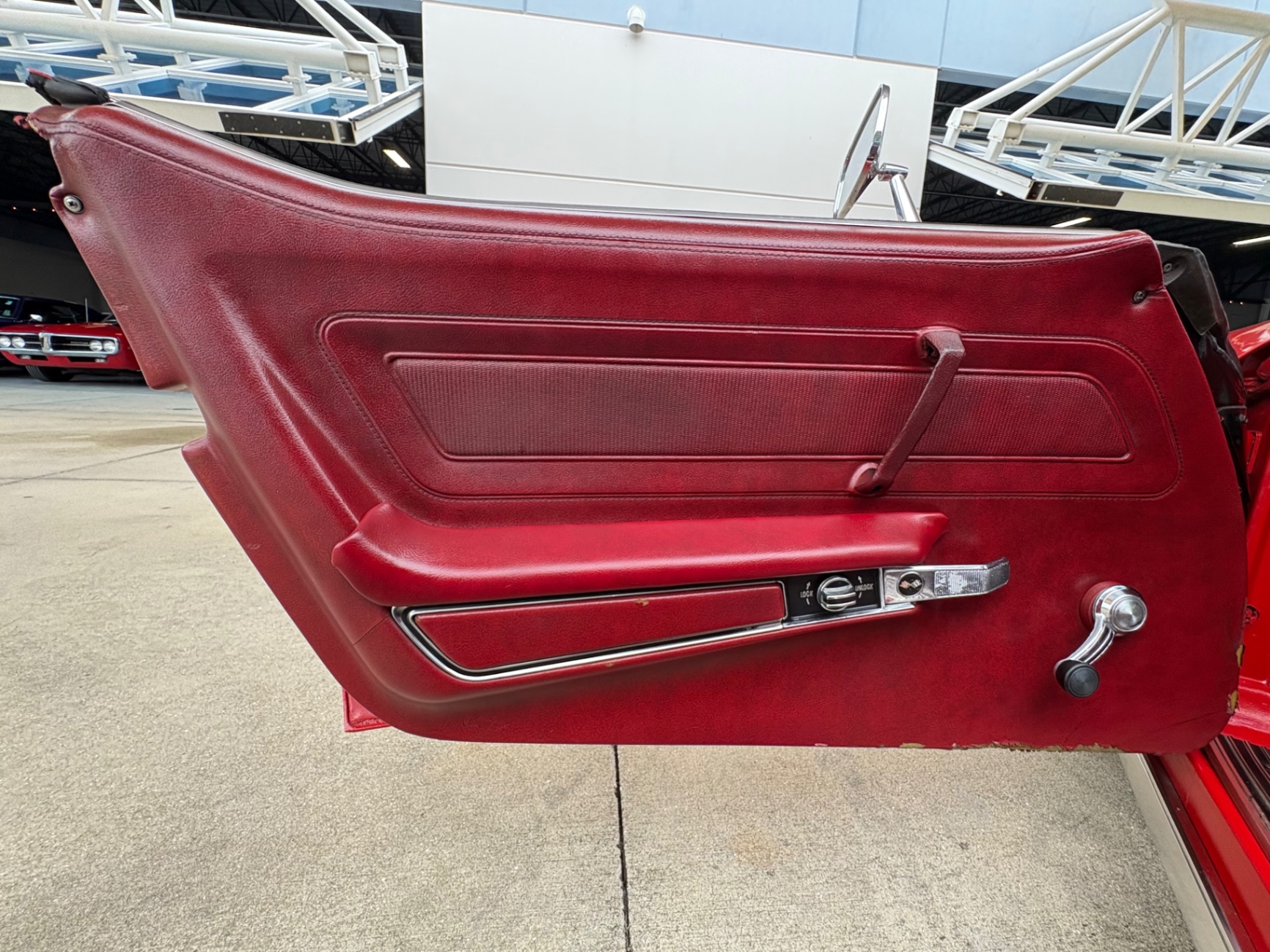
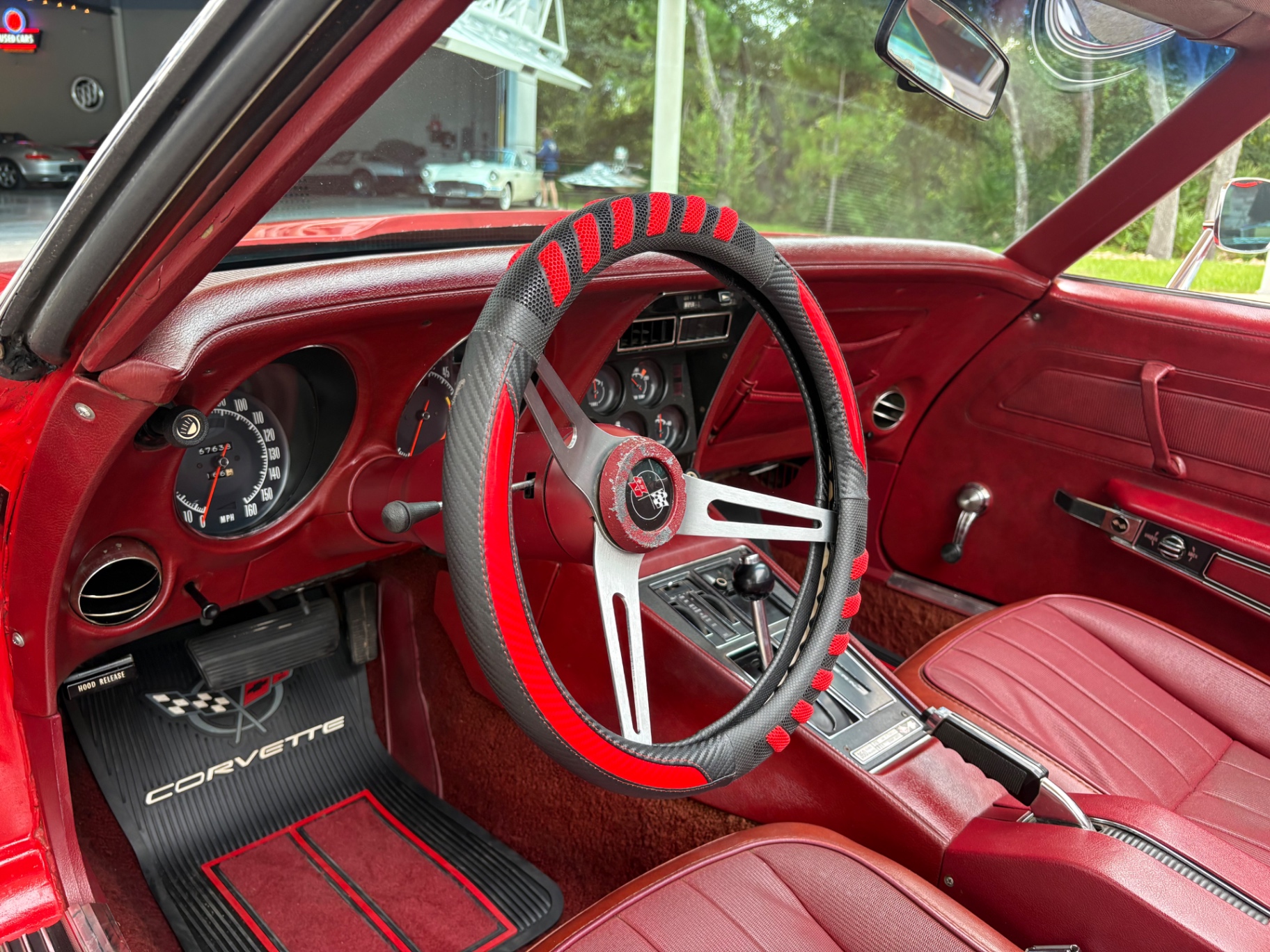
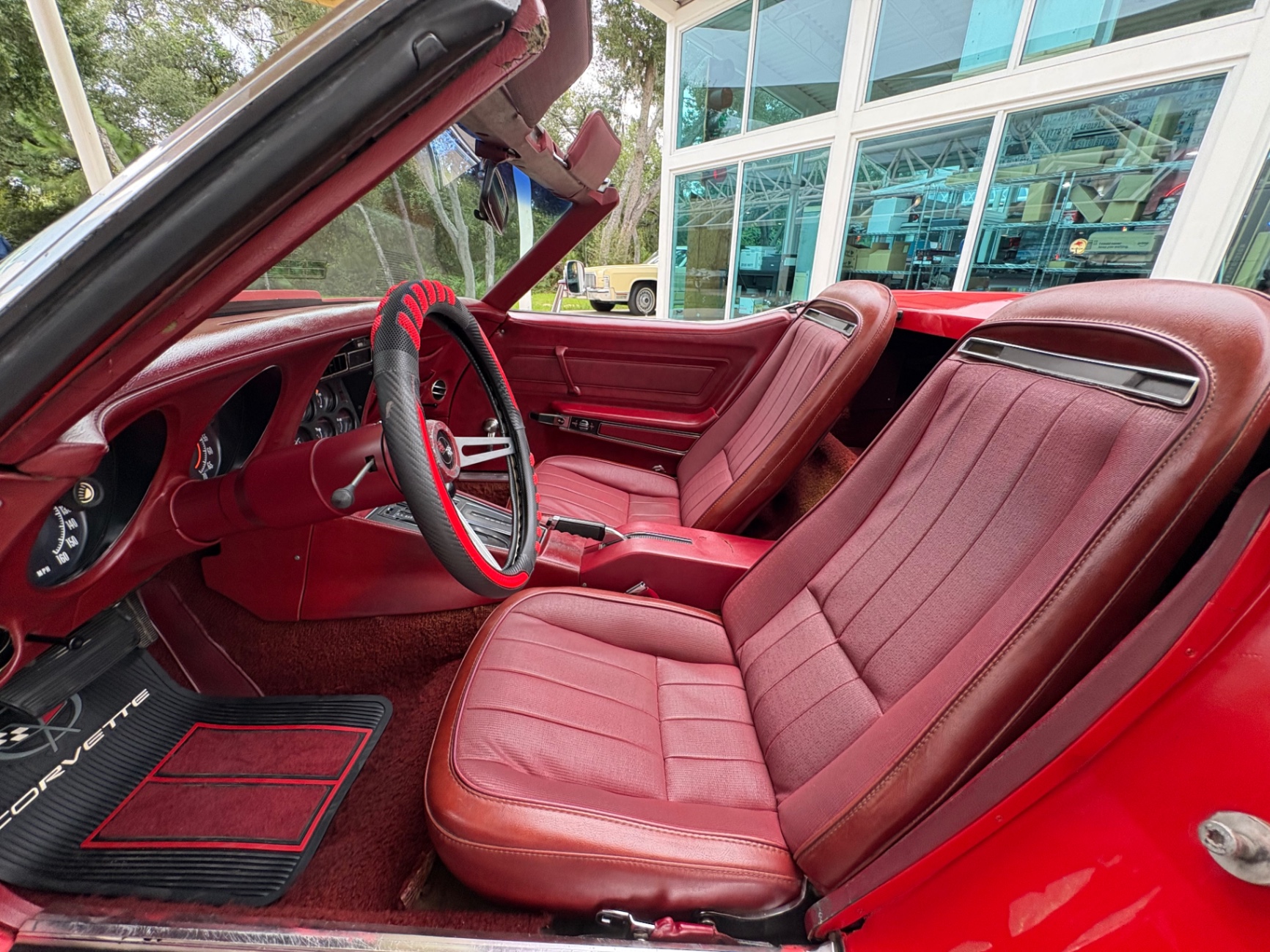
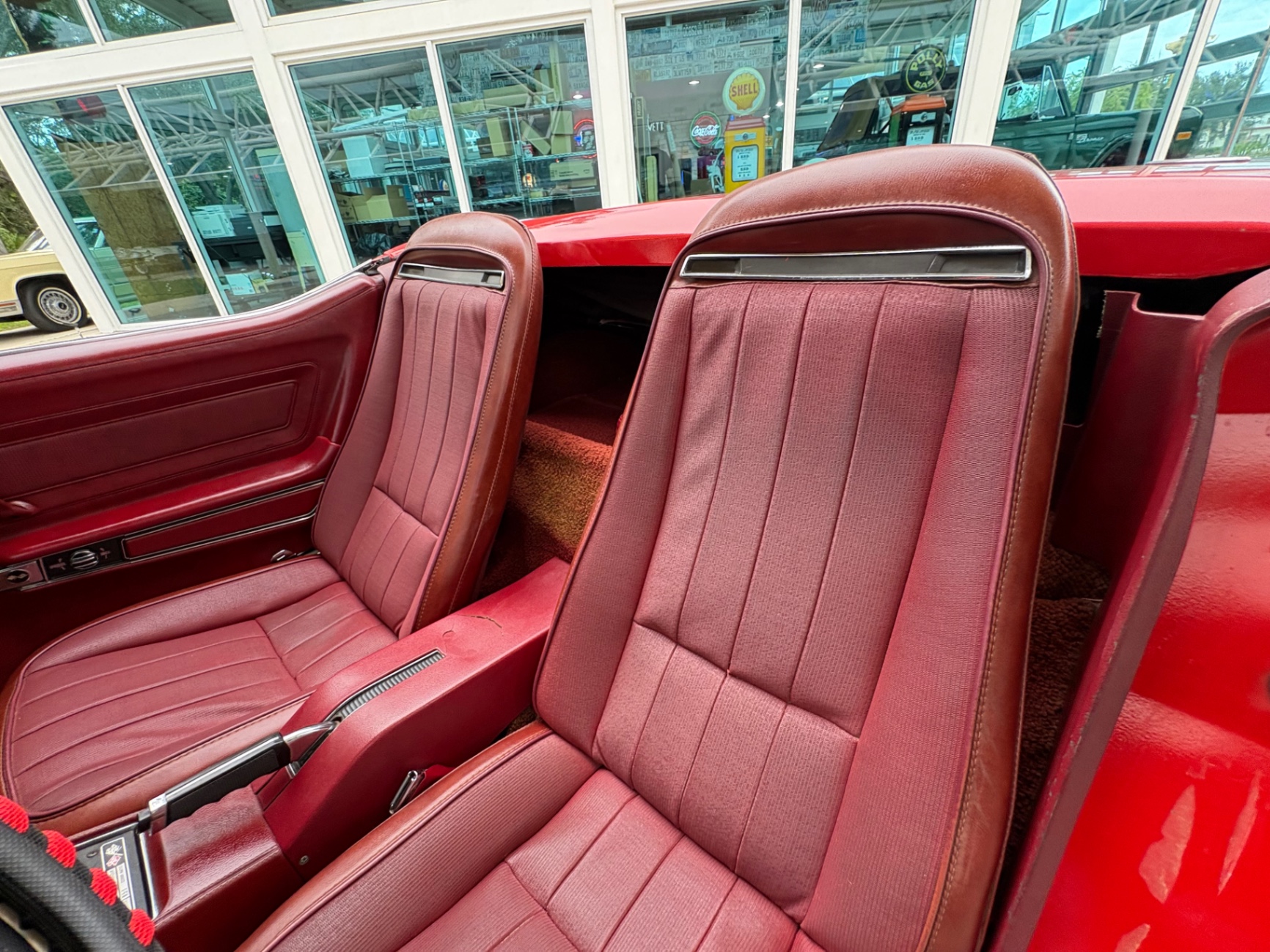
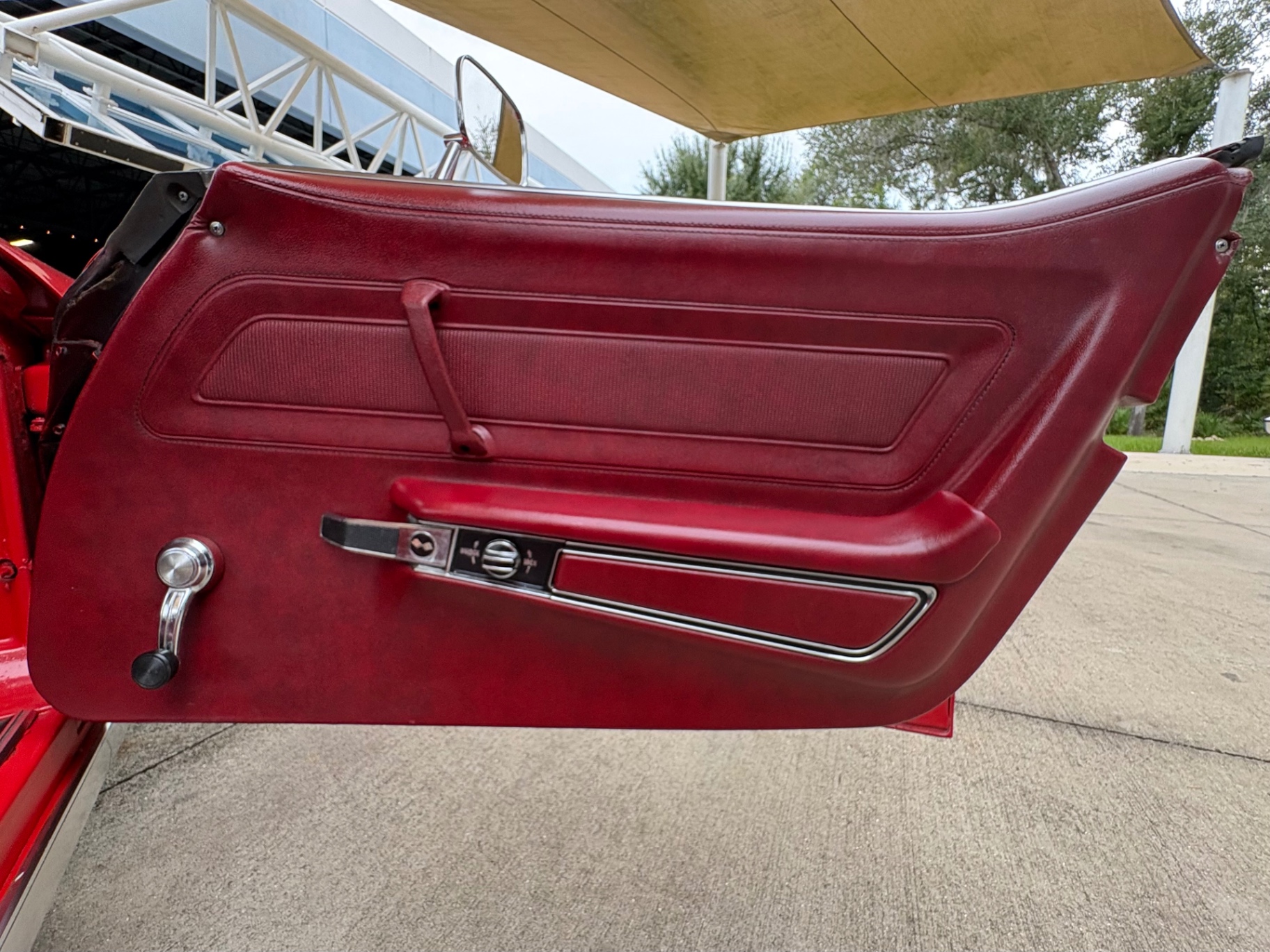
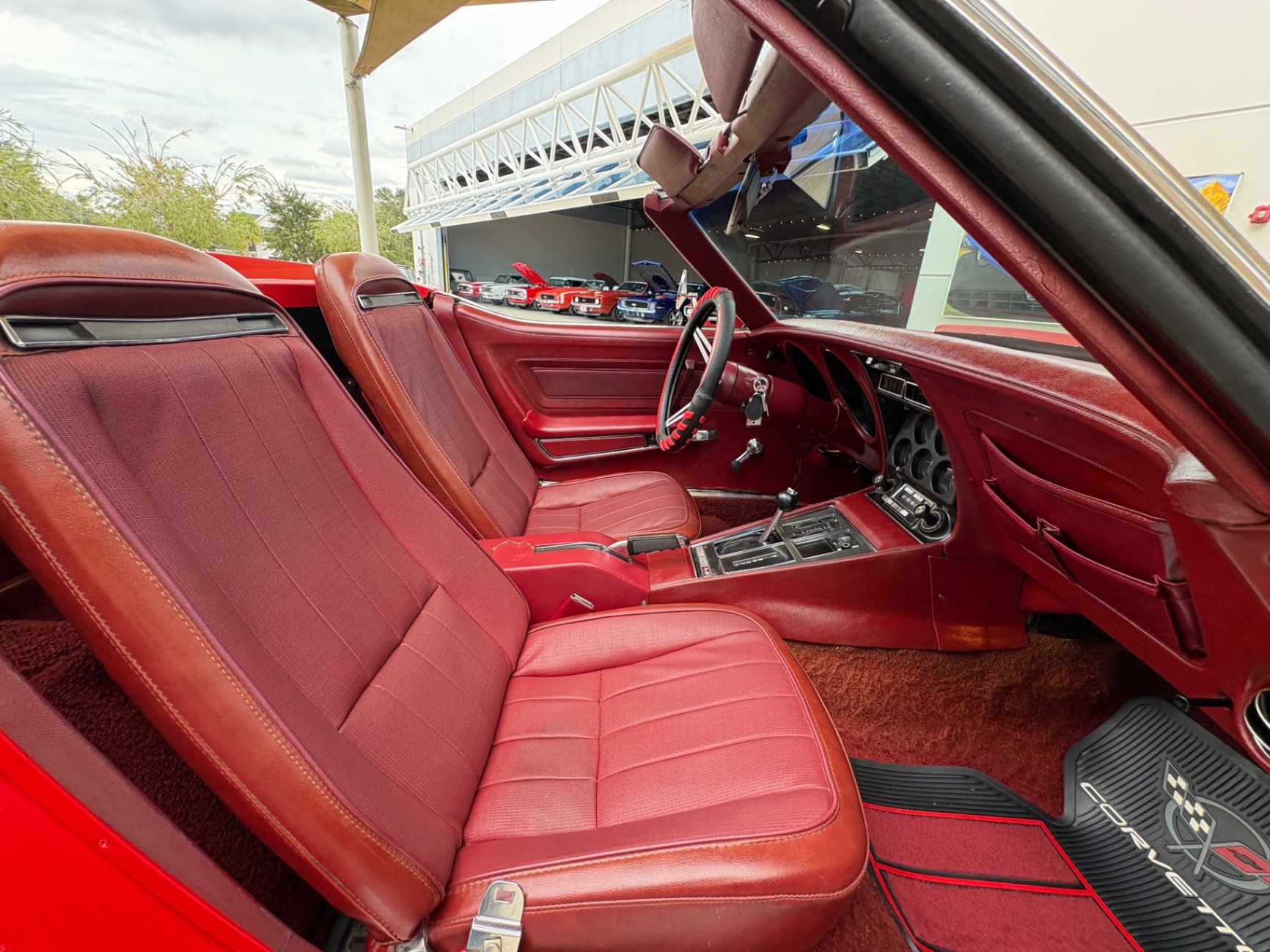
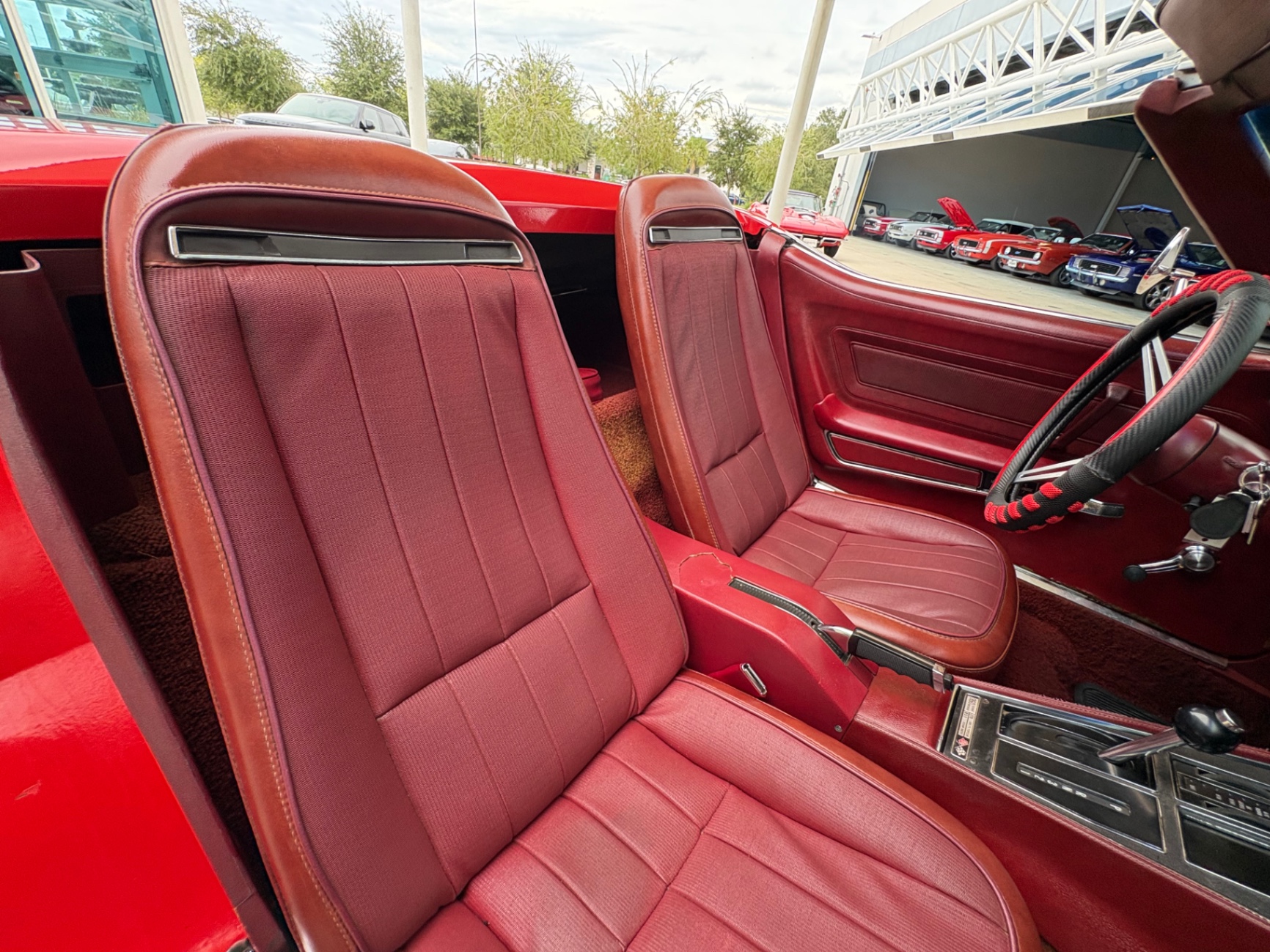
The interior of this 1974 Corvette Stingray is done in red vinyl throughout, matching the exterior color. The bucket seats retain their shape and show the typical C3 seat construction: vertical pleating on the seatback fabric inserts with smooth vinyl bolsters. The driver's seat shows some wear consistent with age and use, which is honest for a car of this vintage. The door panels are finished in the same red vinyl with chrome trim accents along the armrest.
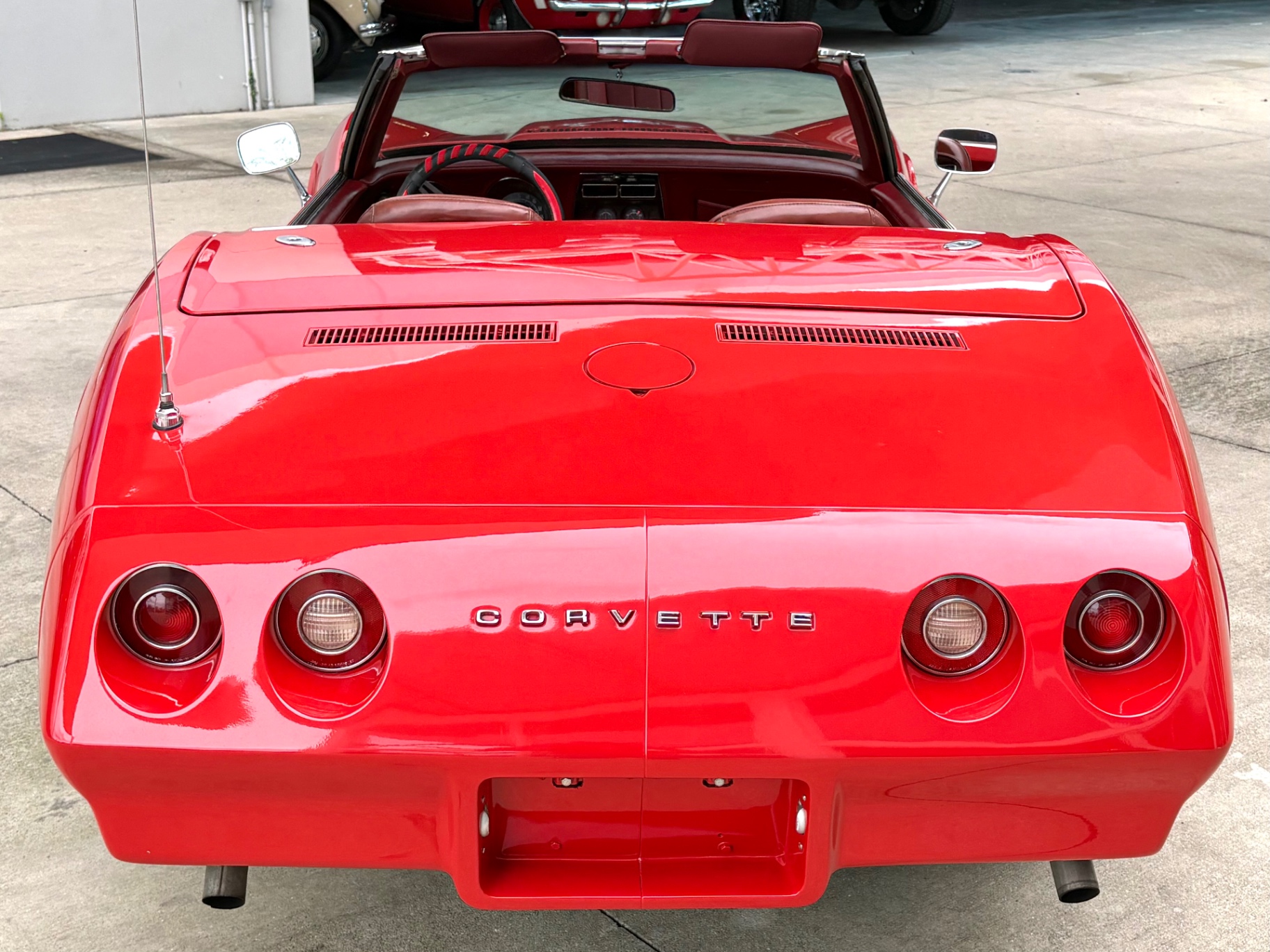
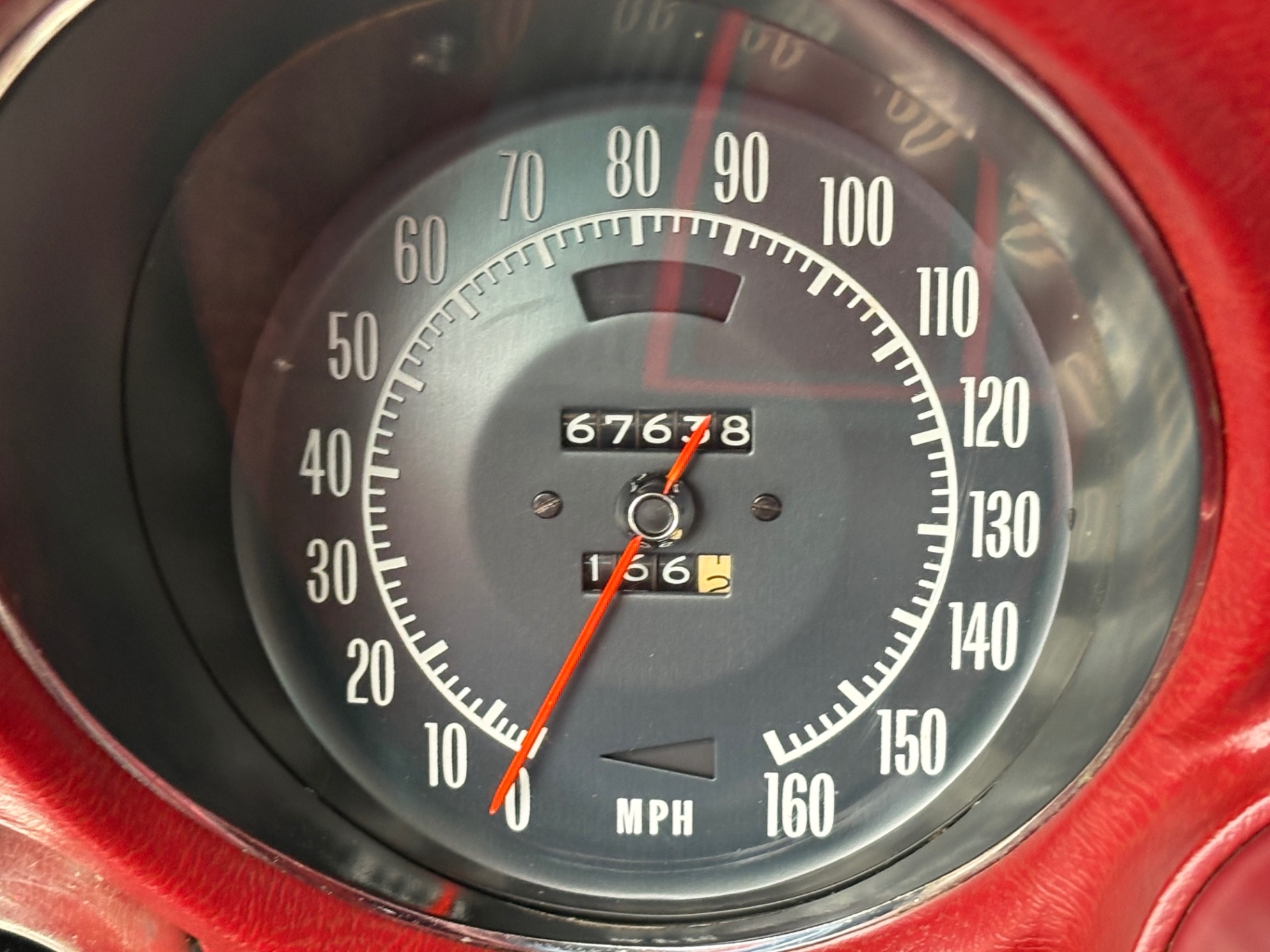
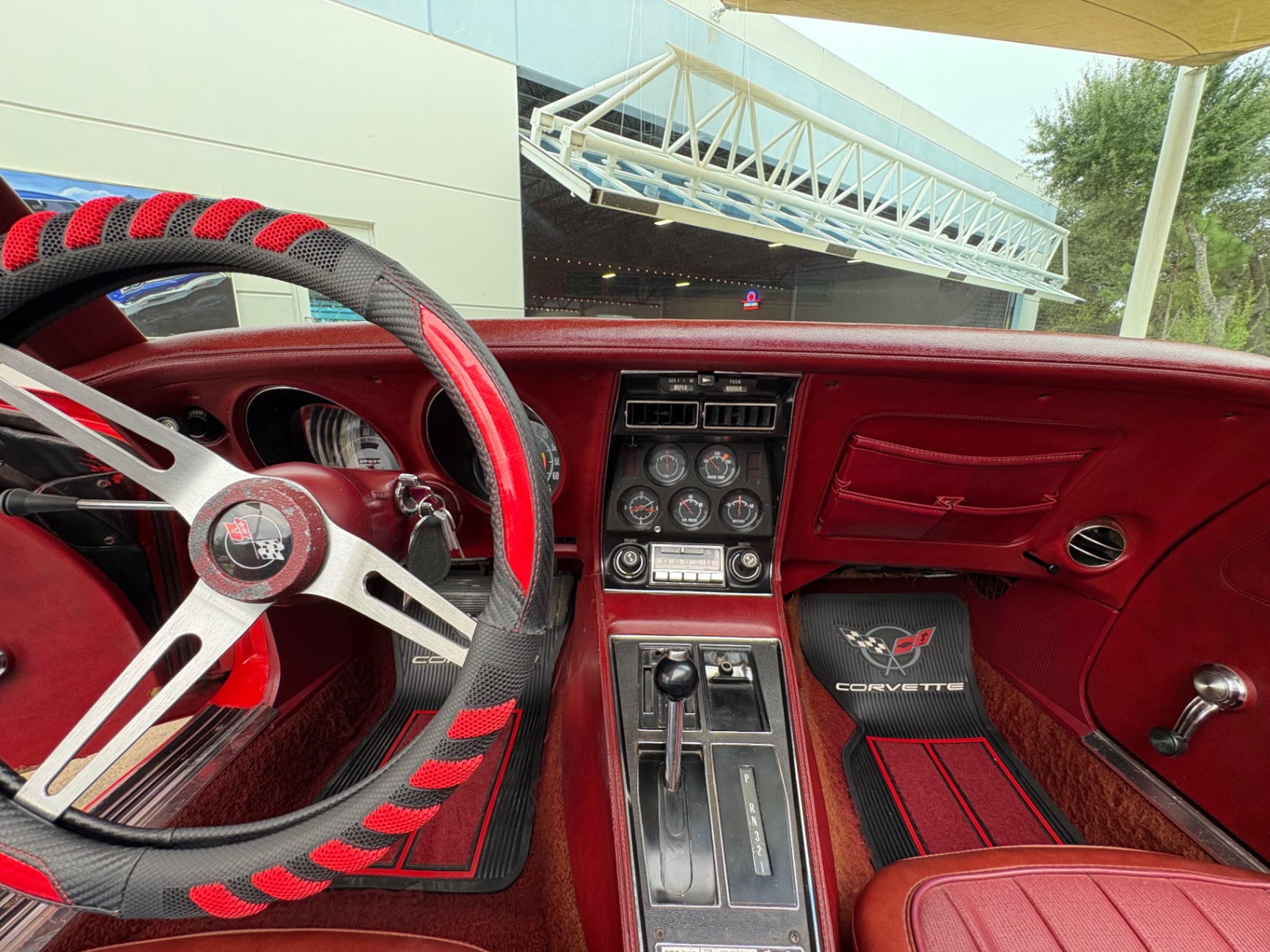
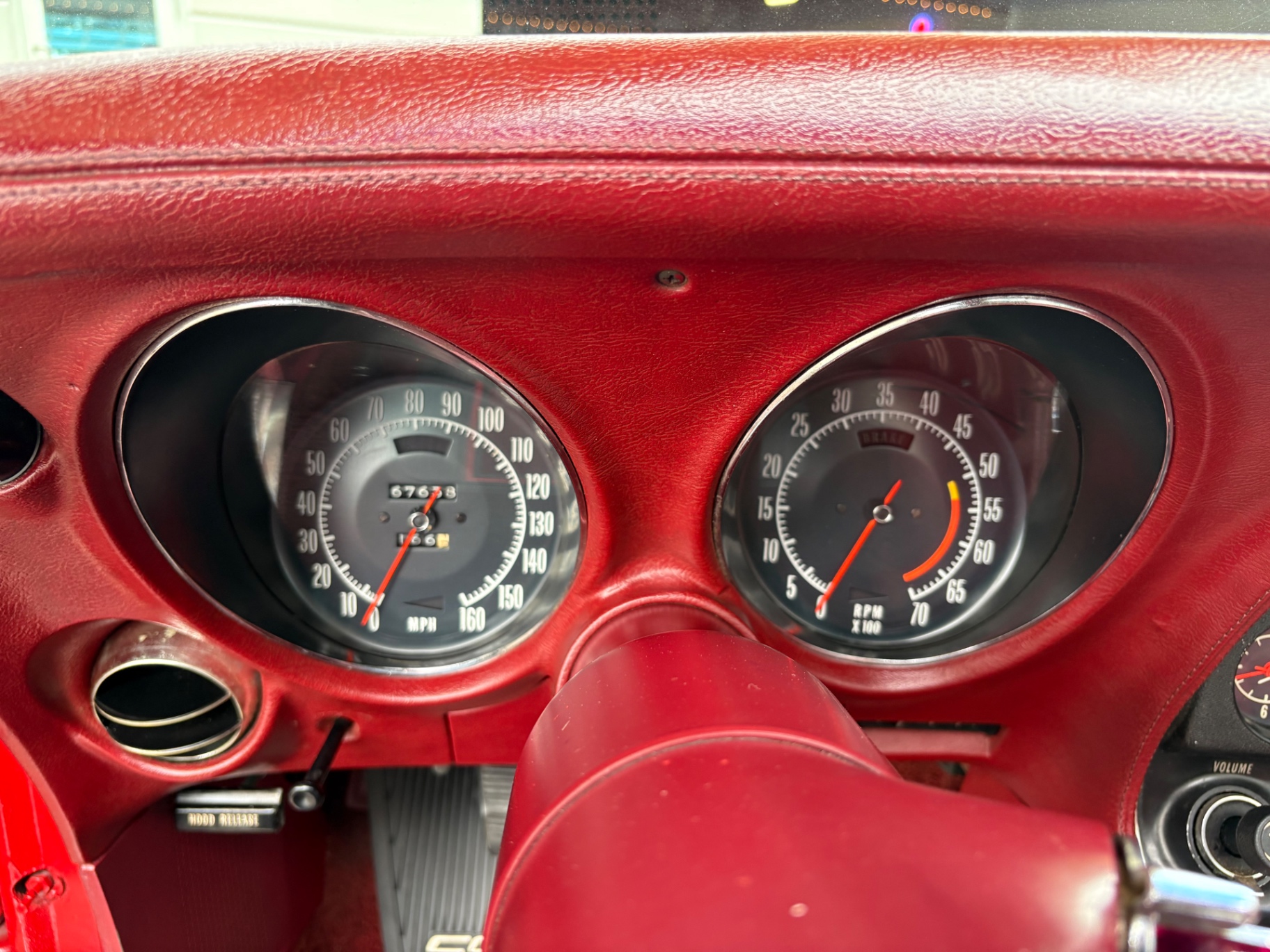
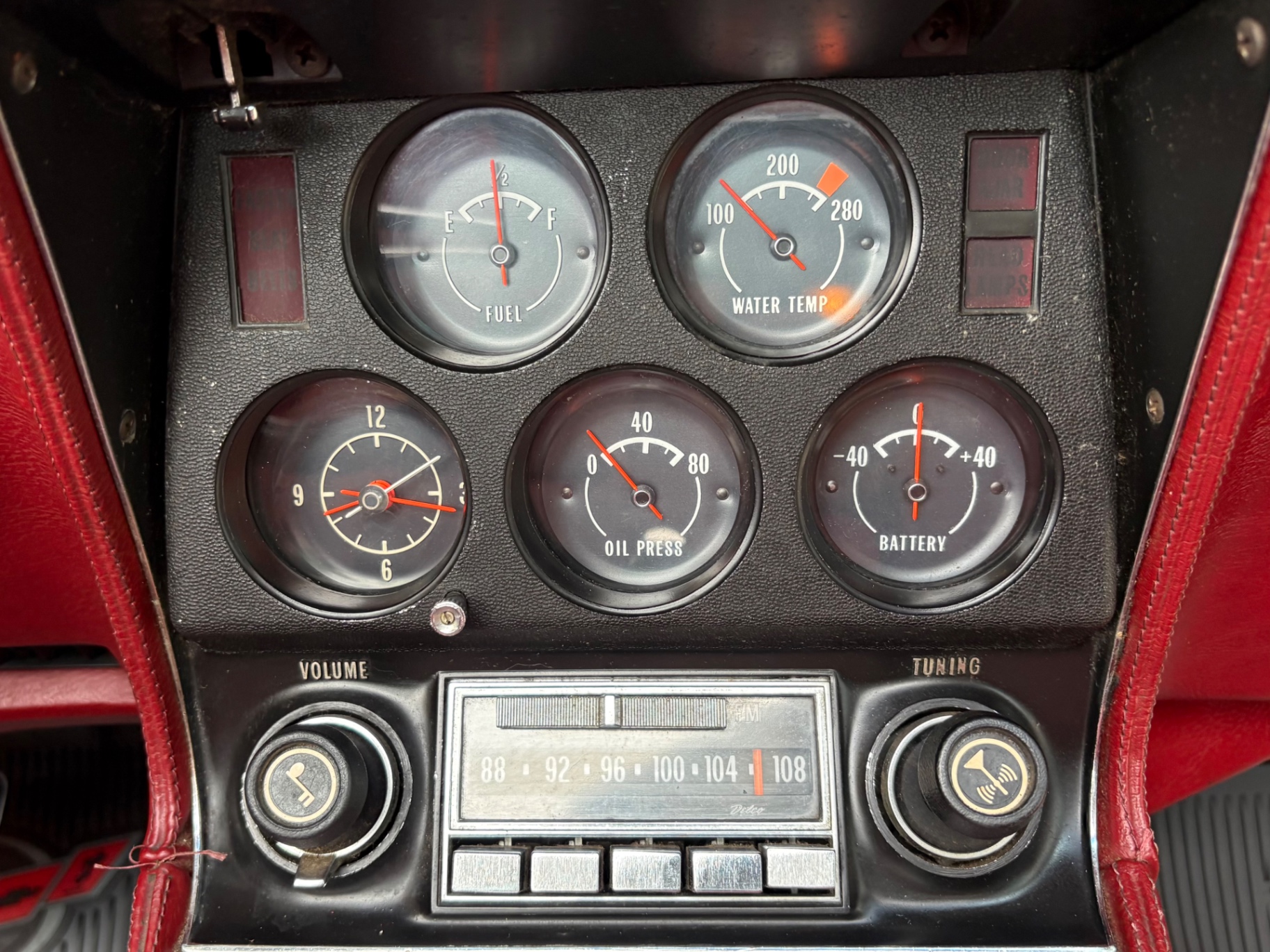
The dashboard layout is the familiar C3 instrument pod, with the large round speedometer and tachometer housed in the driver-facing binnacle. The speedometer on this car reads approximately 67,600 miles. Behind the steering column, a full complement of auxiliary gauges is mounted in the center stack: fuel, water temperature, oil pressure, battery, and clock — all factory-correct for the 1974 Corvette. The AM/FM radio sits below the gauge cluster in its original position. The center console carries the Turbo-Hydramatic shifter and the original engine data plate, which reads 350 cubic inches, 270 lb-ft torque, and 8.5:1 compression ratio. The tilt-telescopic steering column is in place, and the console-mounted parking brake lever is present. Floor mats shown are aftermarket Corvette-logoed units.
Exterior
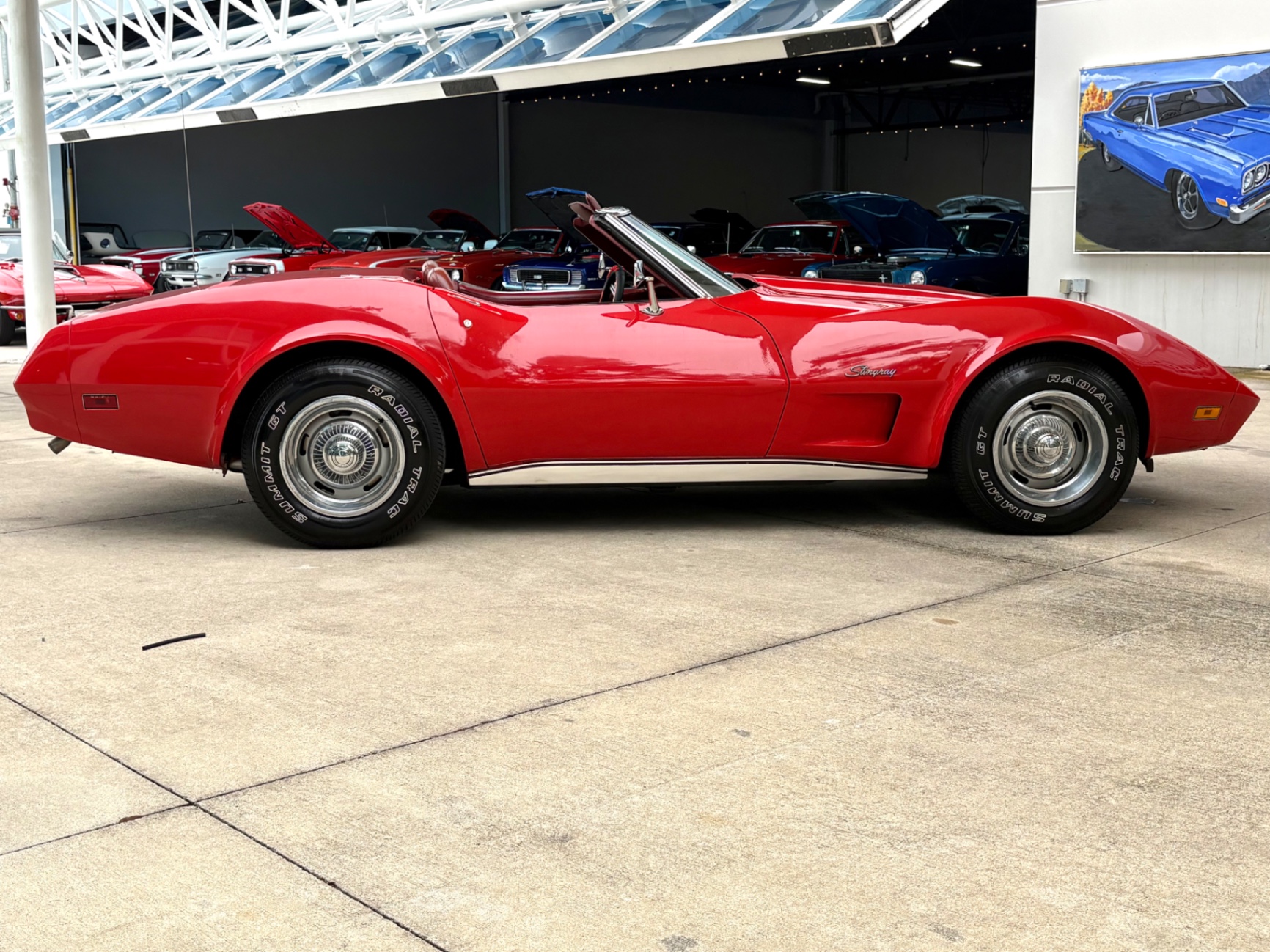
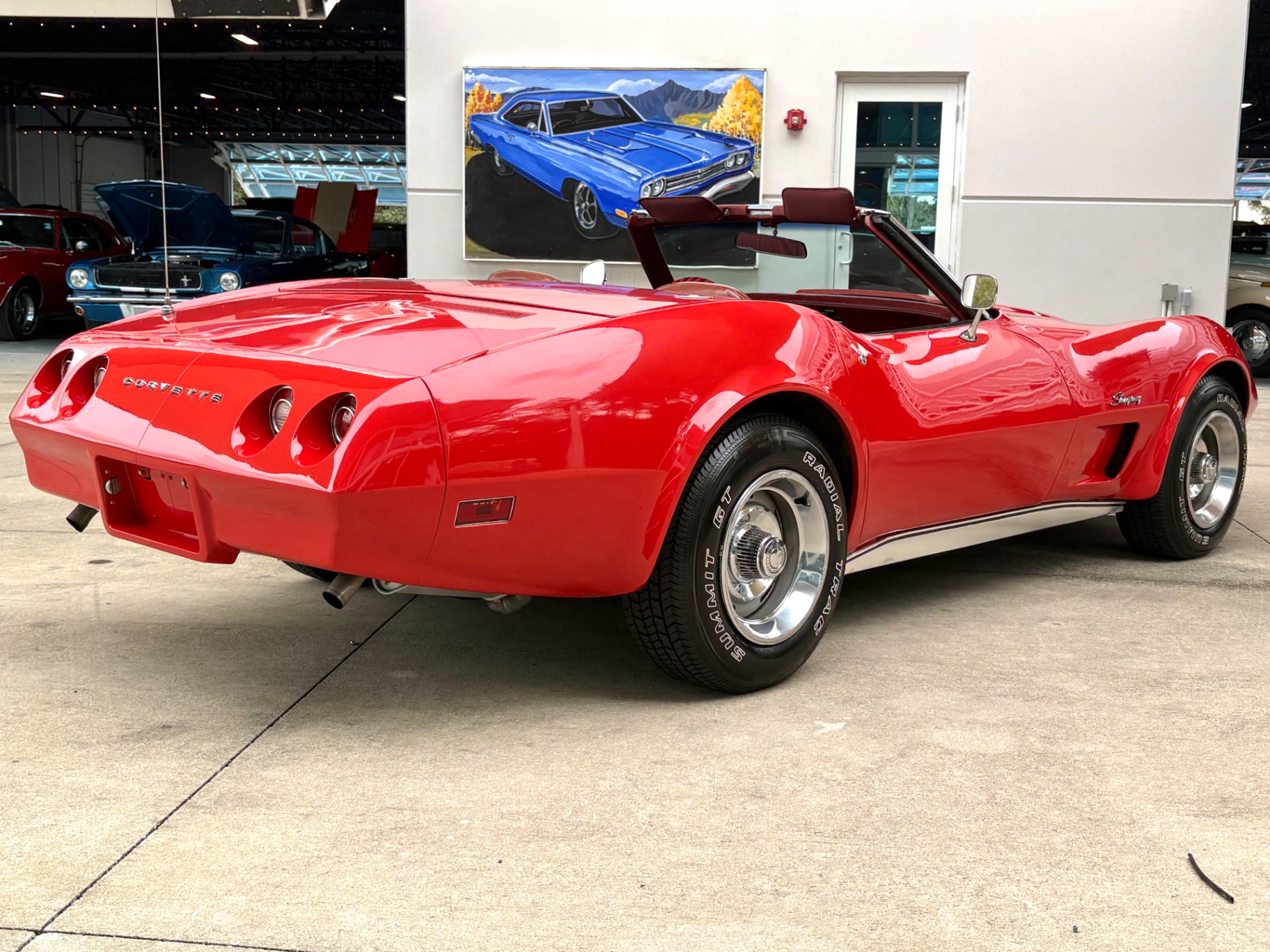
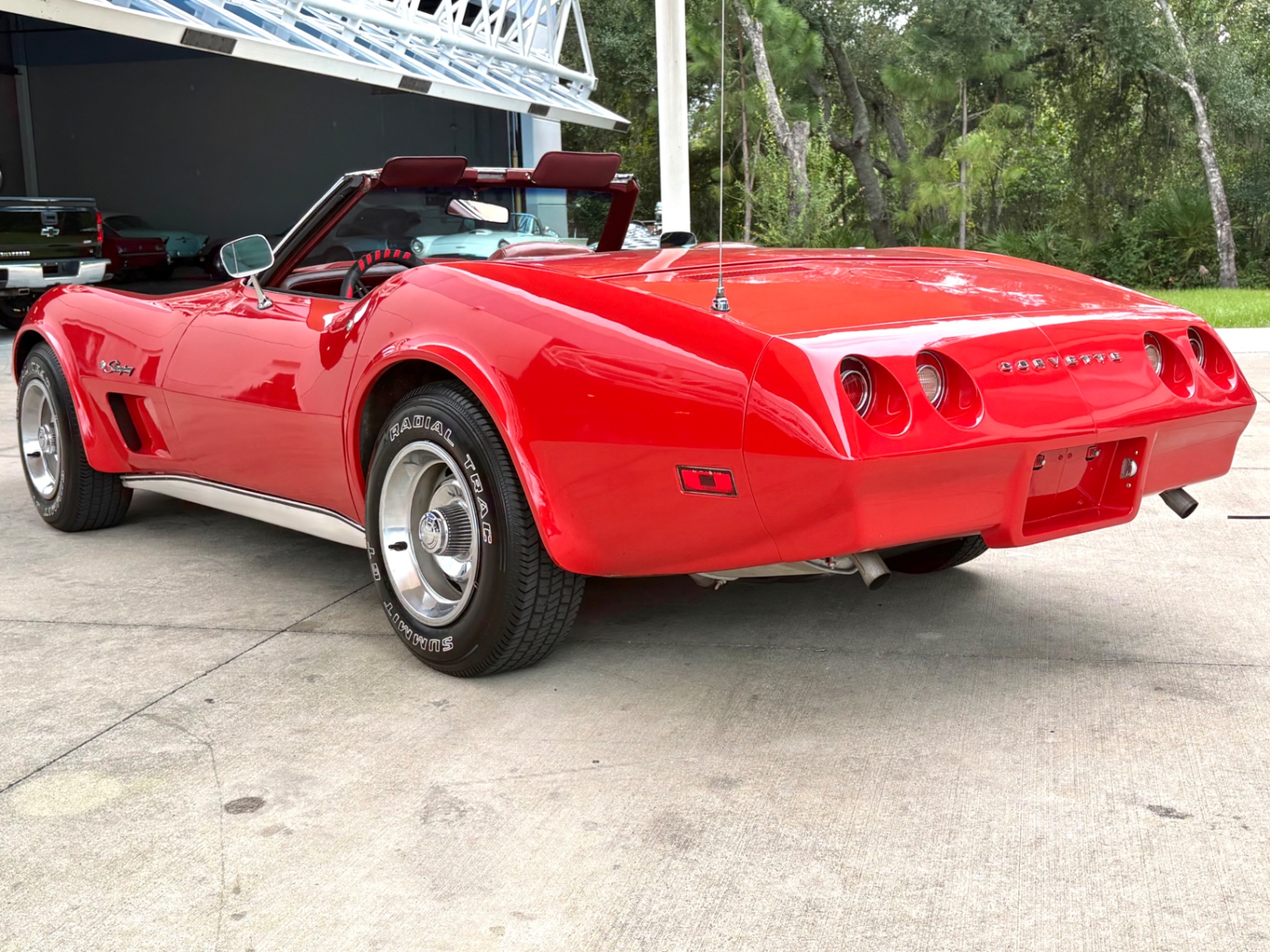
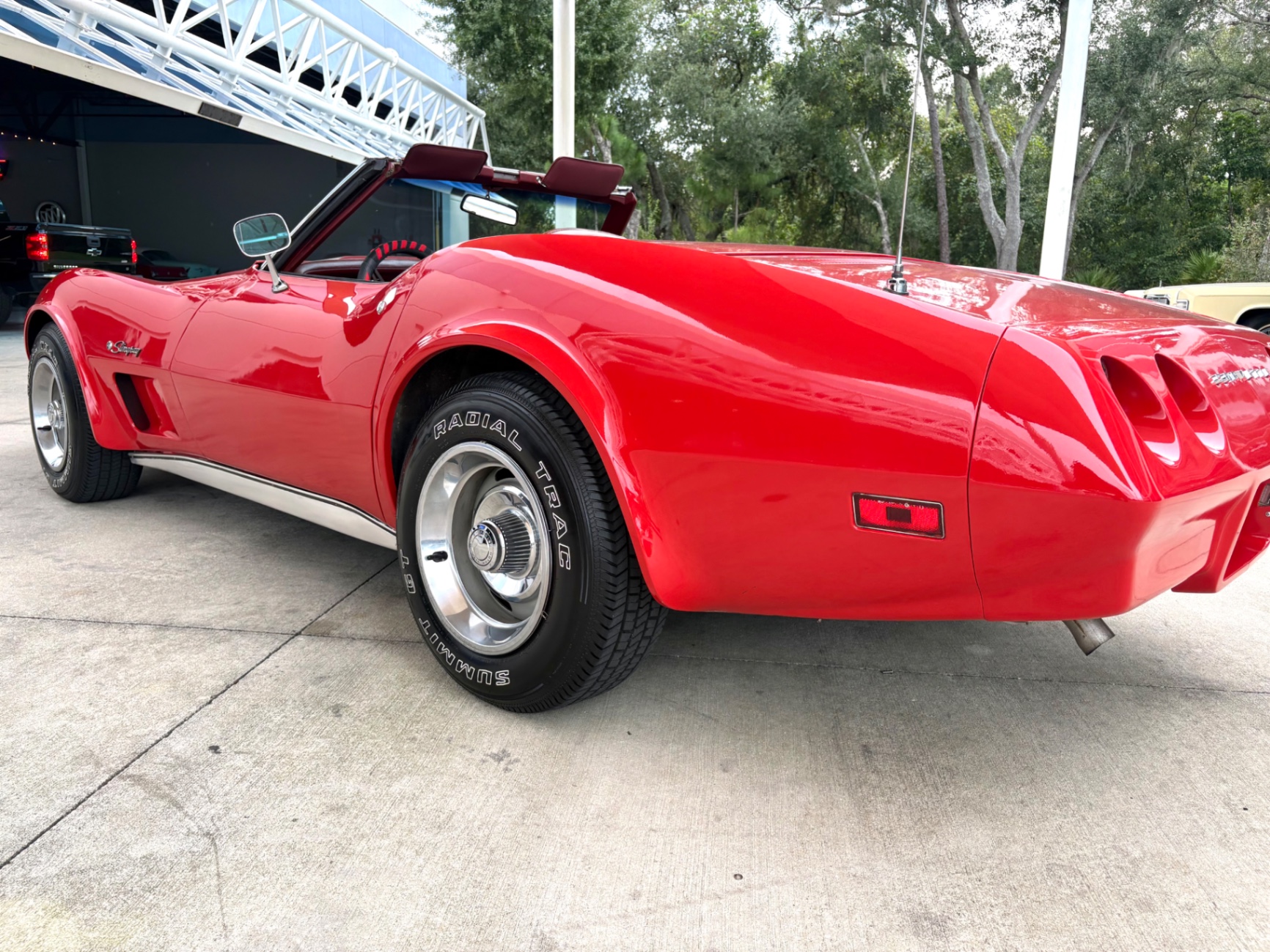
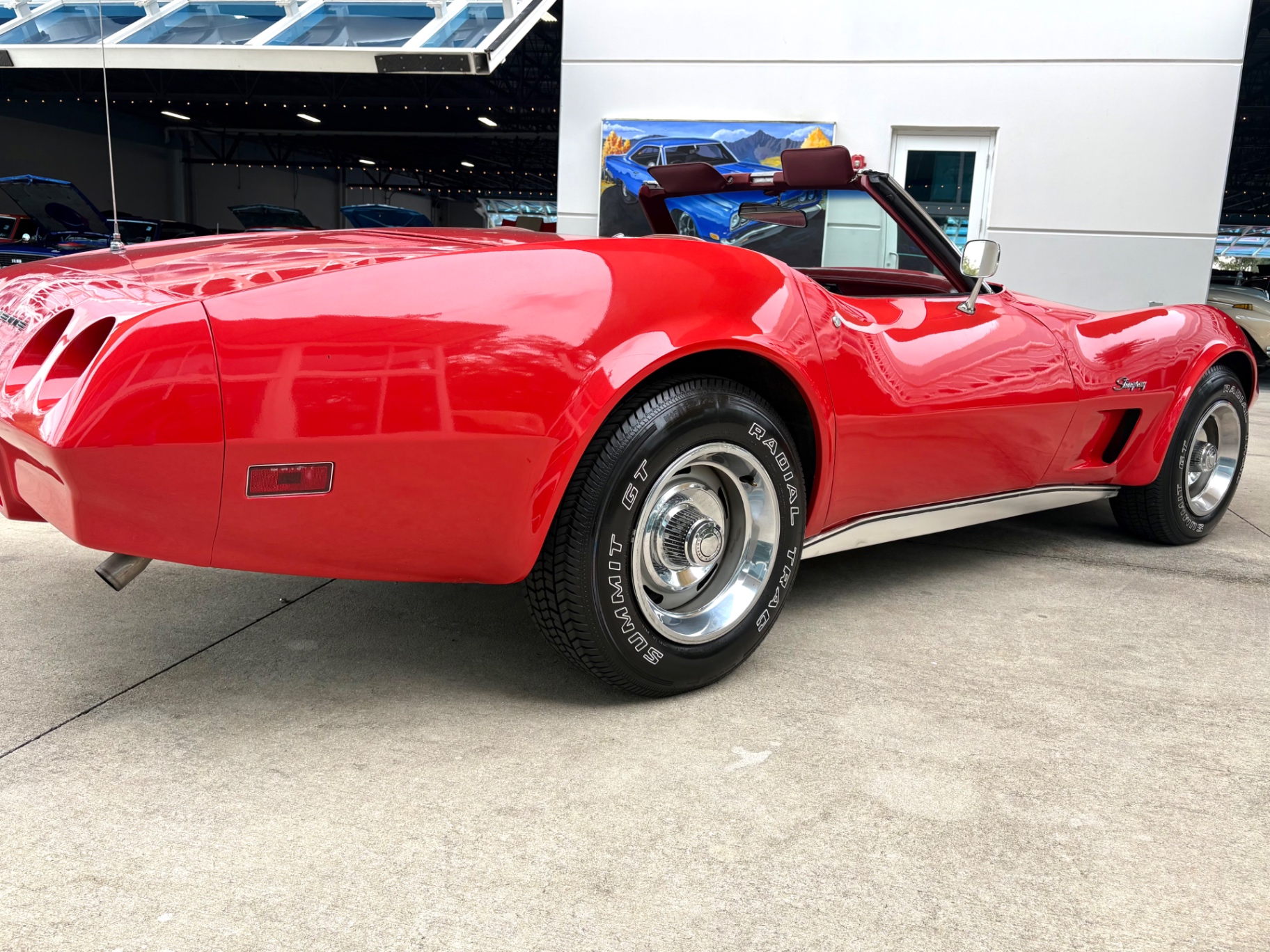
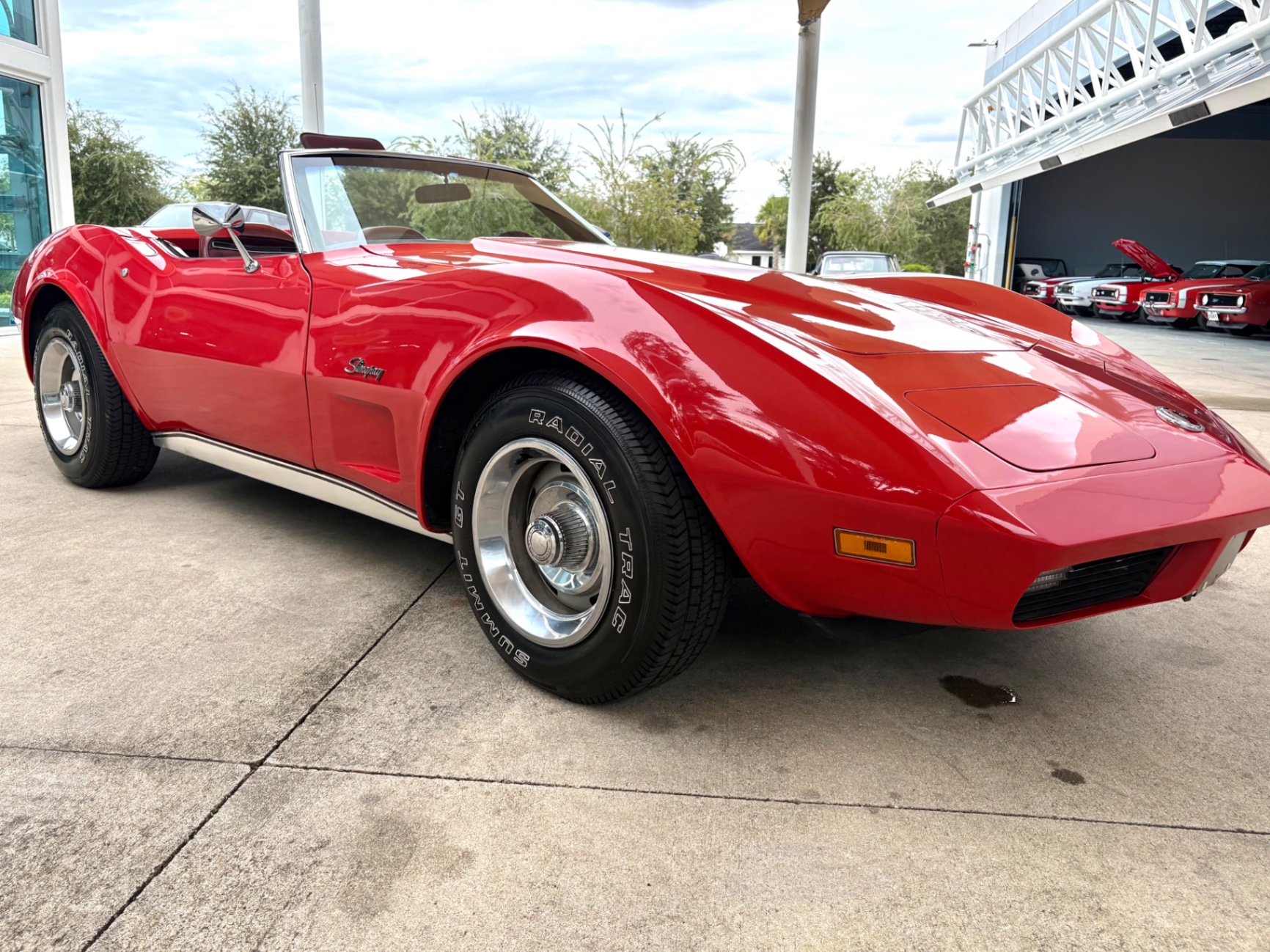
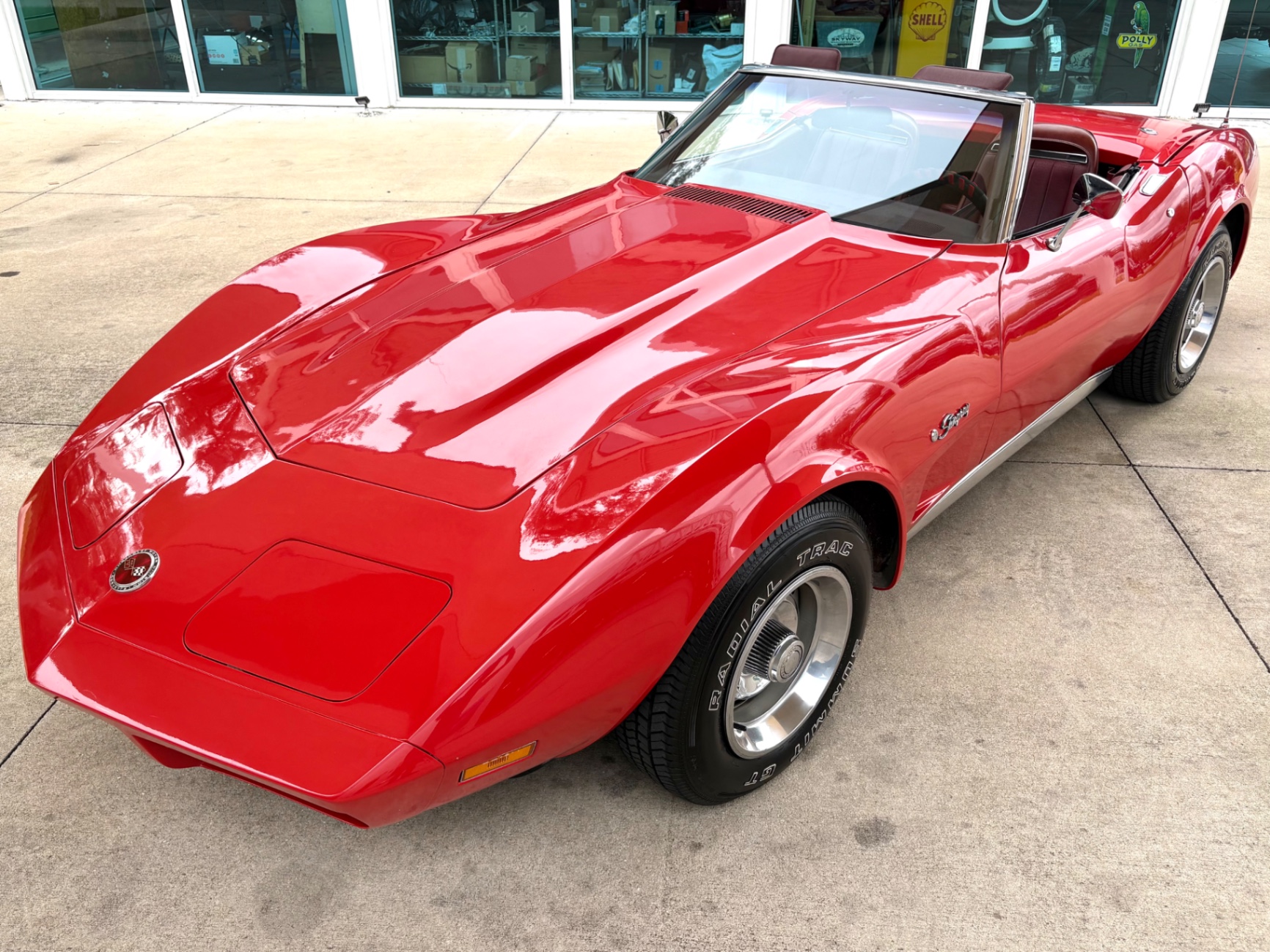
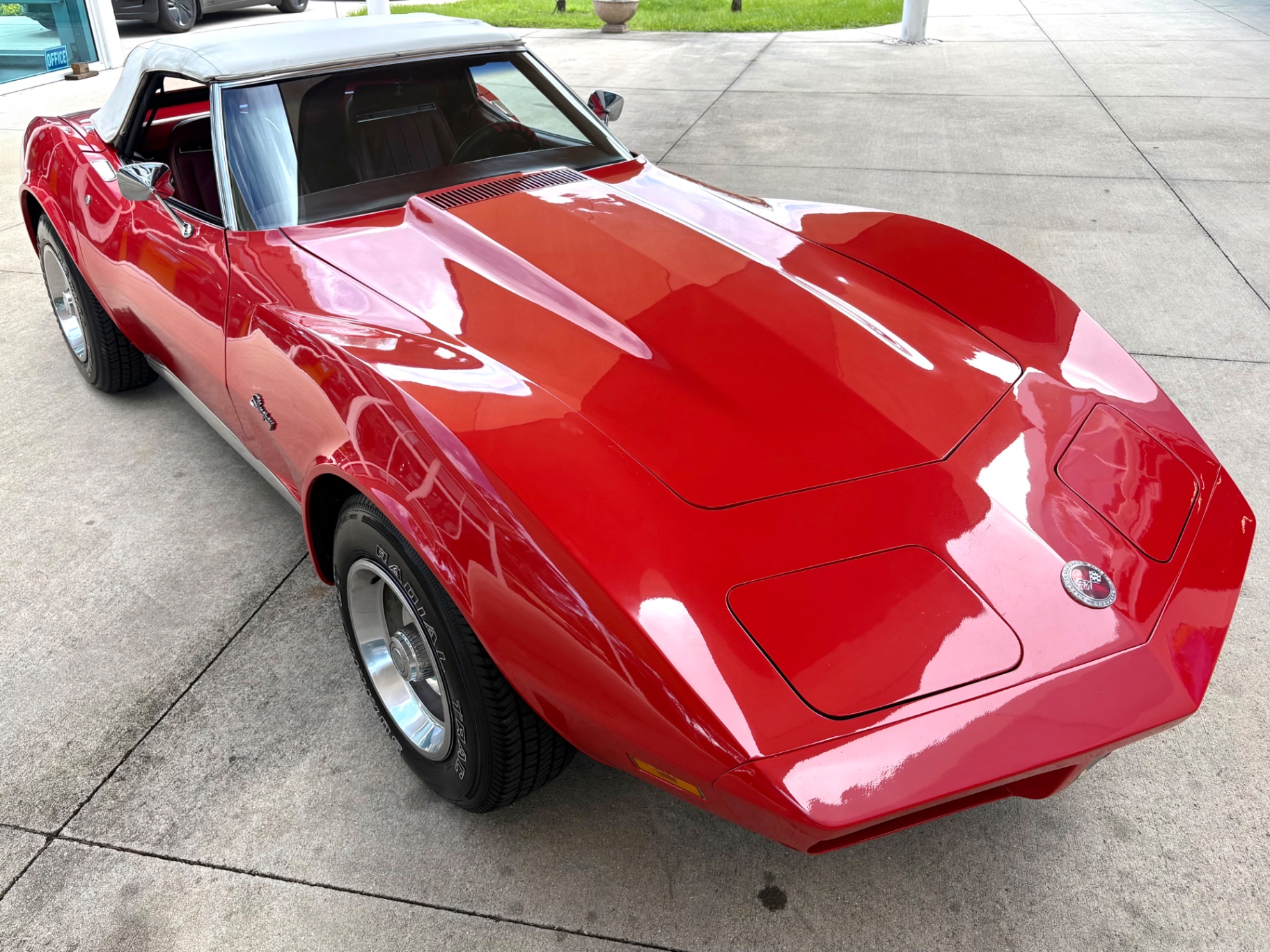
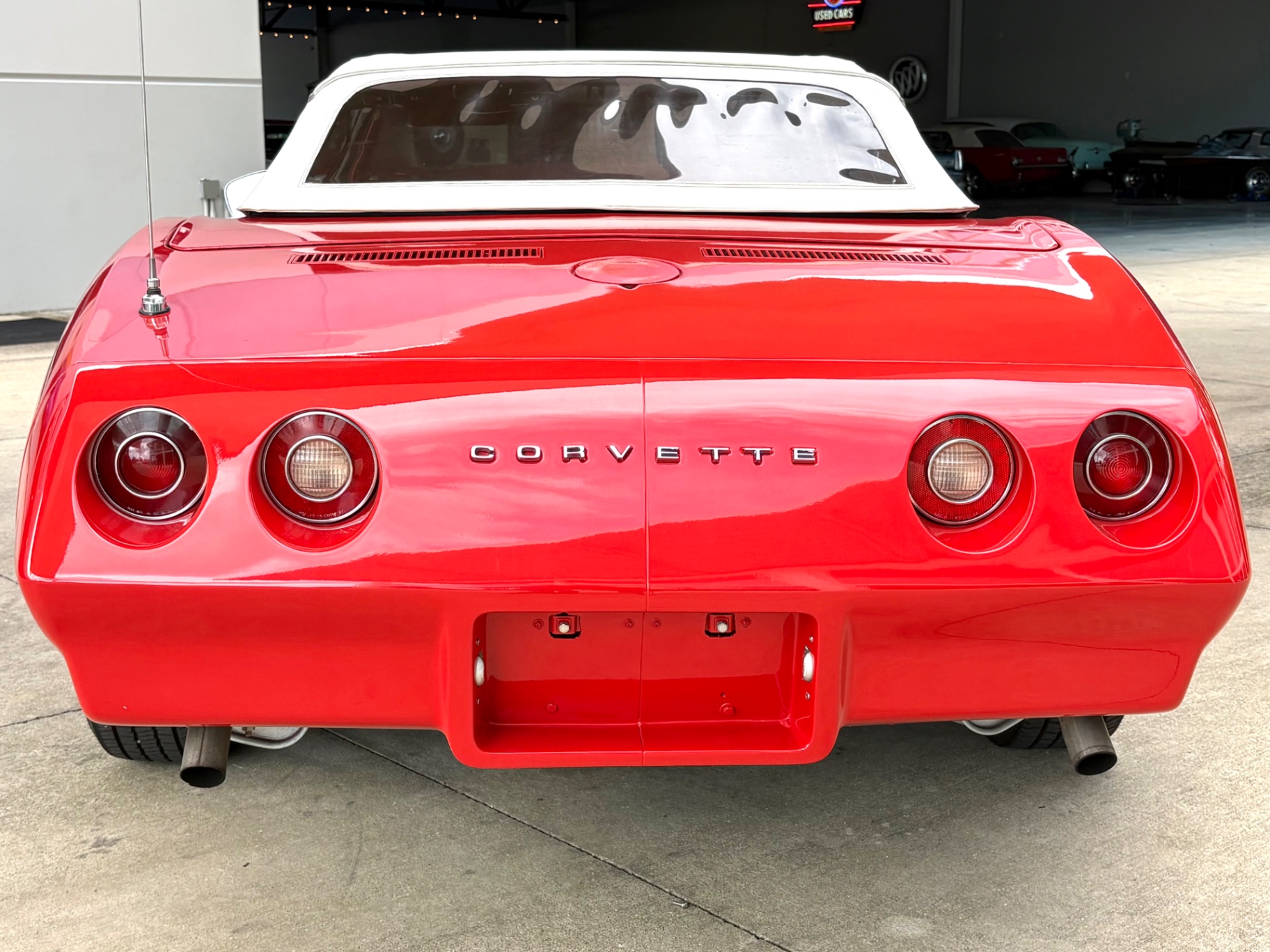
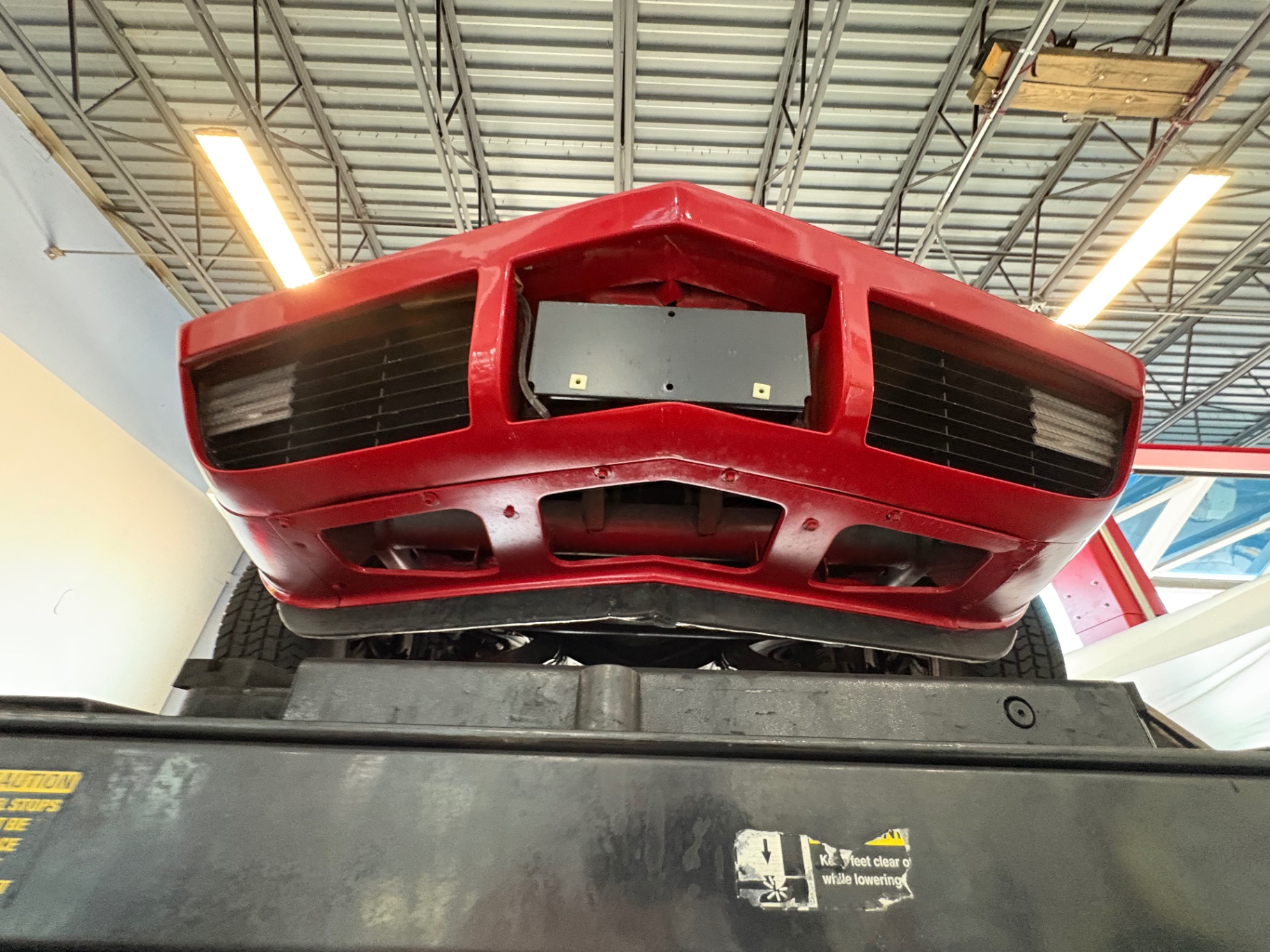
The 1974 Corvette Stingray wore a significant exterior change that year: the rear bumper transitioned from chrome to a body-color urethane unit, meeting federal 5-mph bumper impact standards while maintaining the car's lines better than a chrome bar would have. The front still carried the twin-nostril chrome bumper arrangement that had defined the C3 since 1968, making 1974 the last year for that specific front-end look. On this car, both bumper treatments are correct for the model year and finished in red.
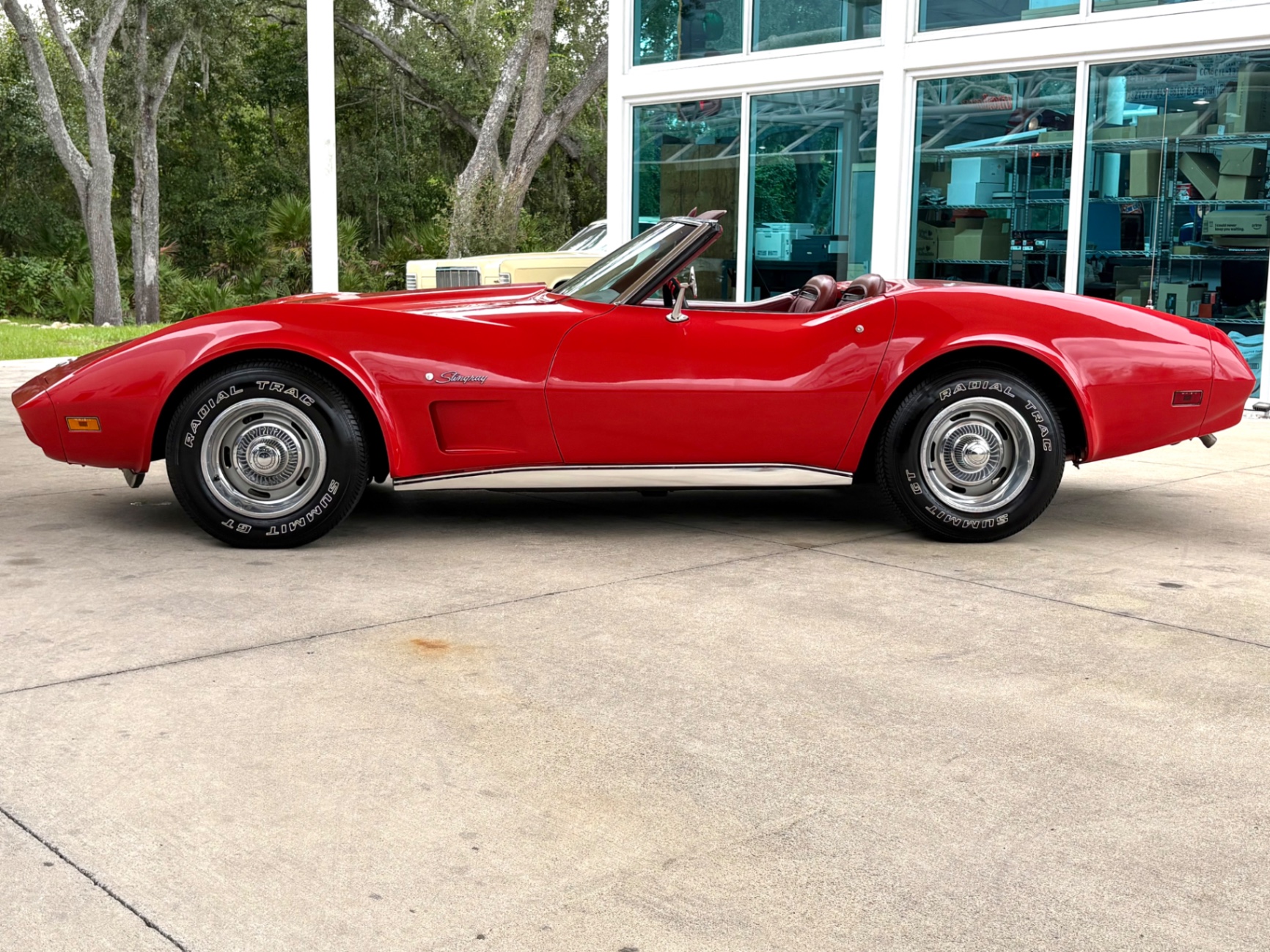
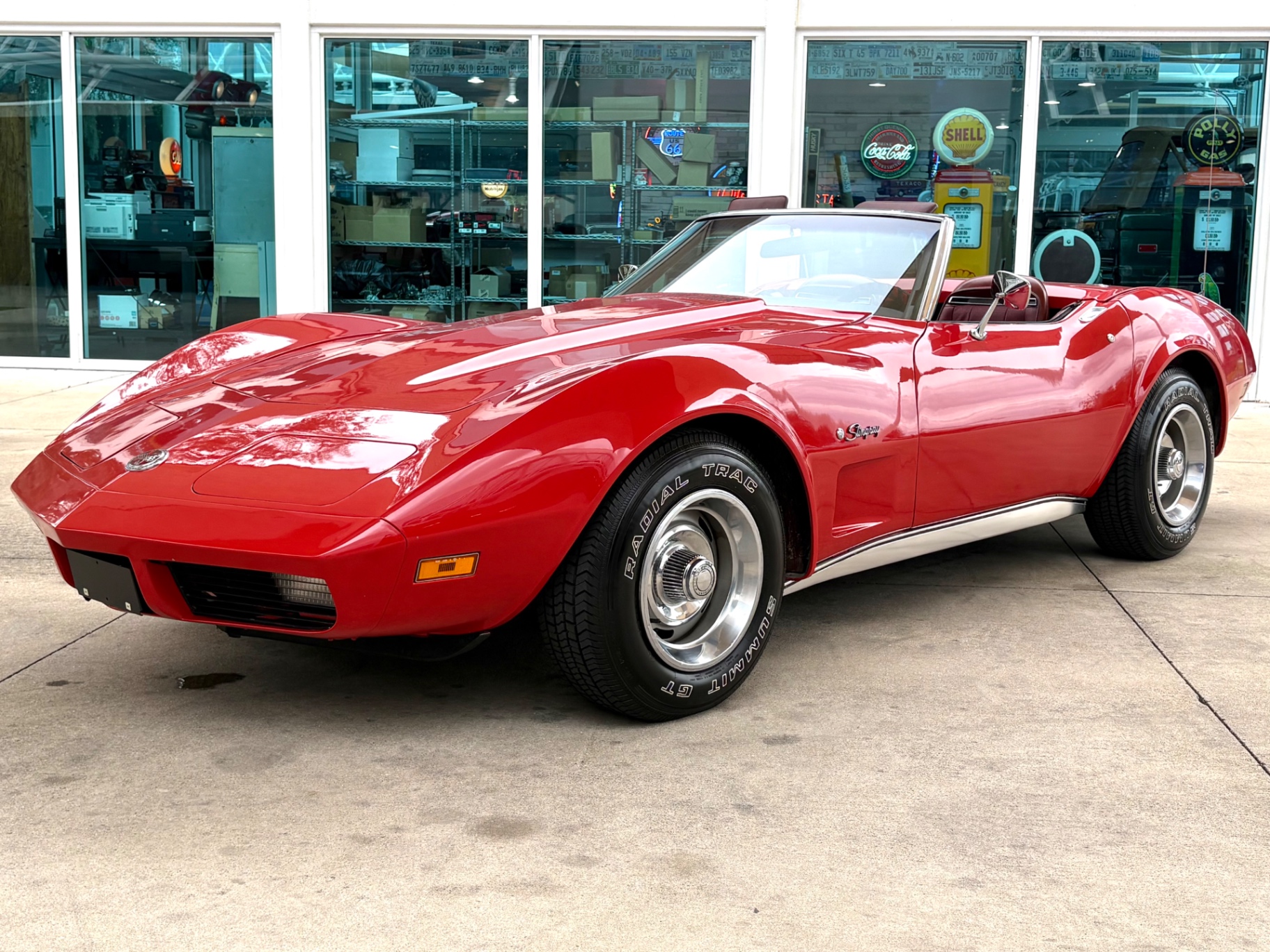
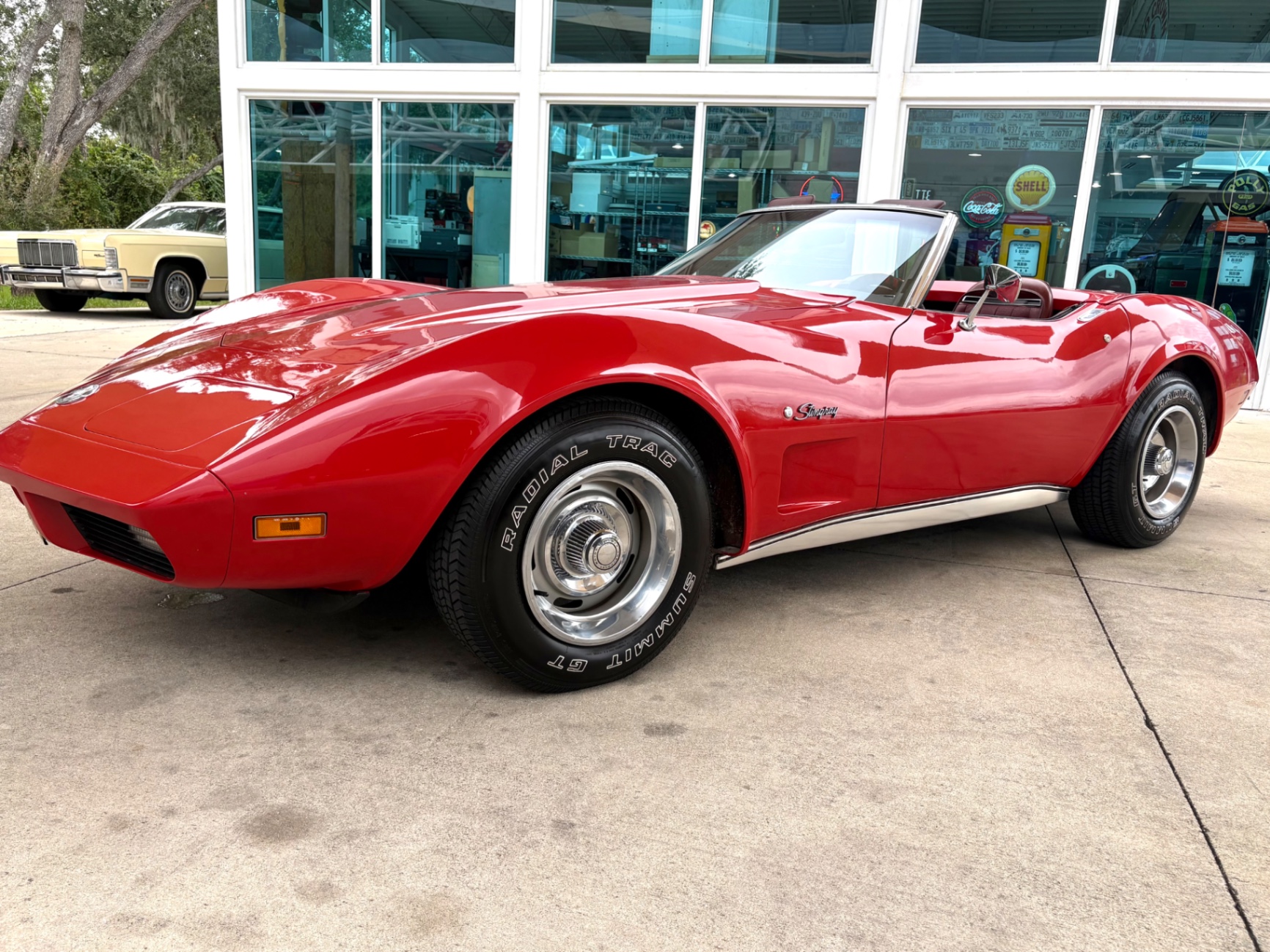
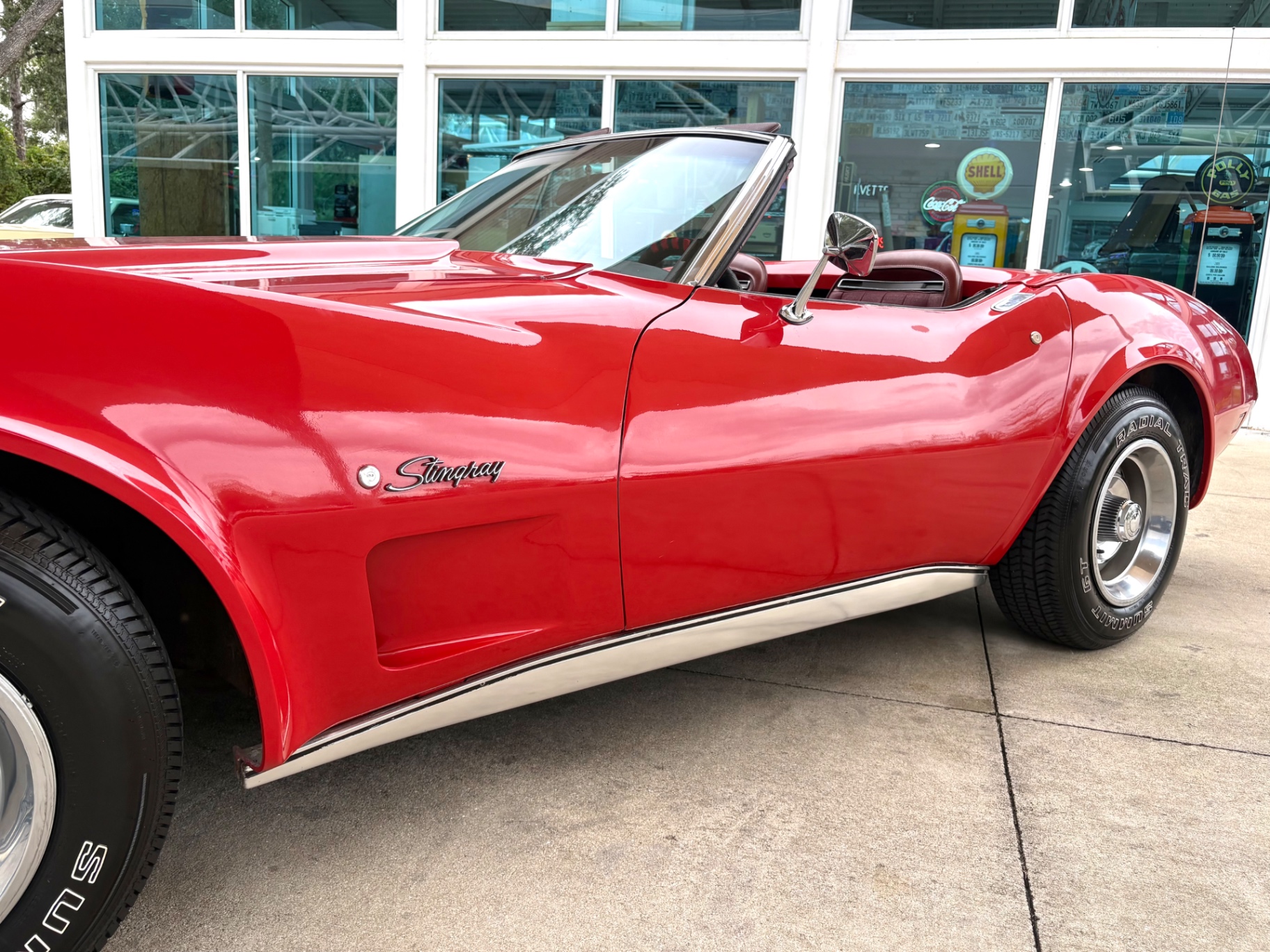
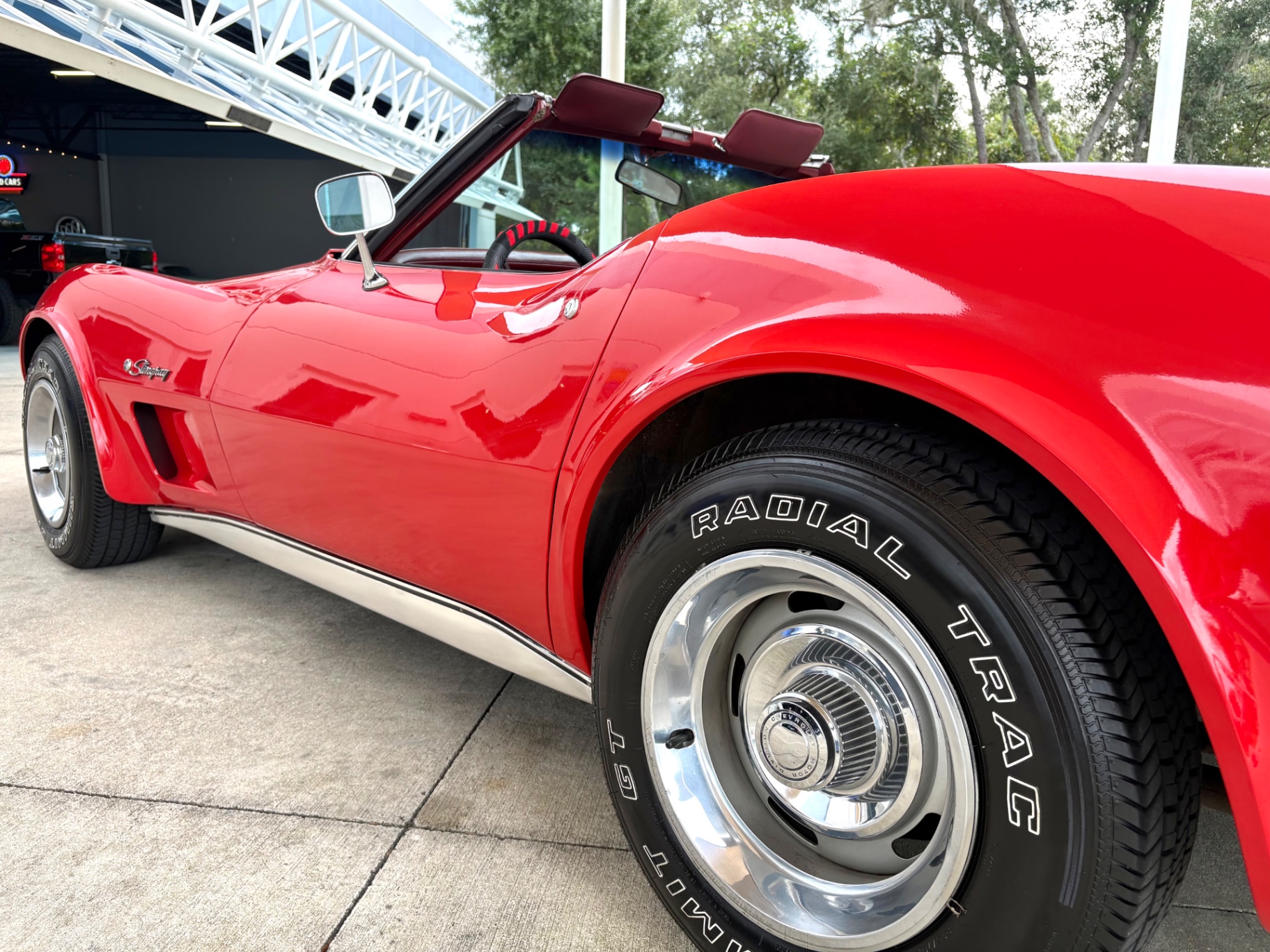
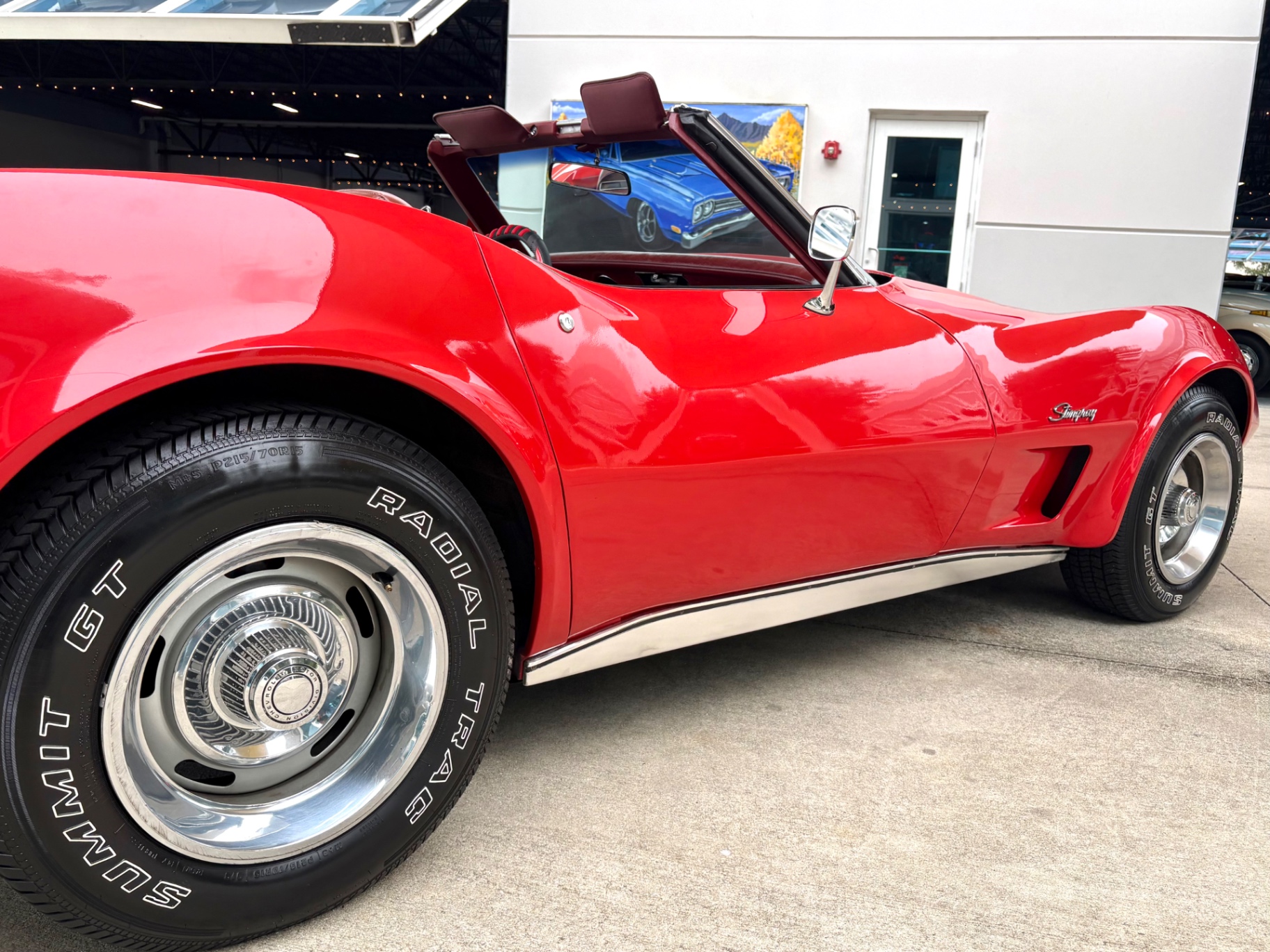
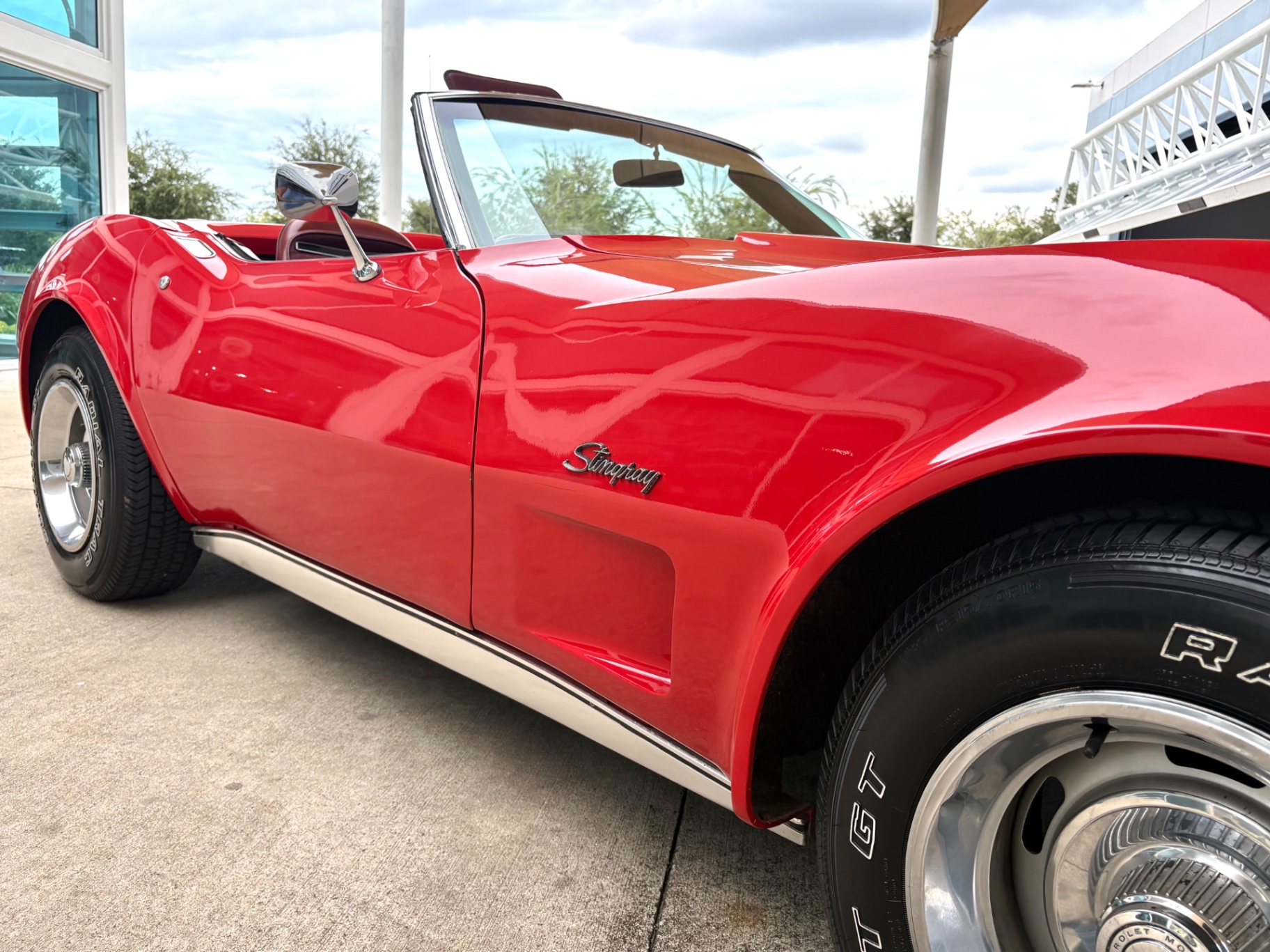
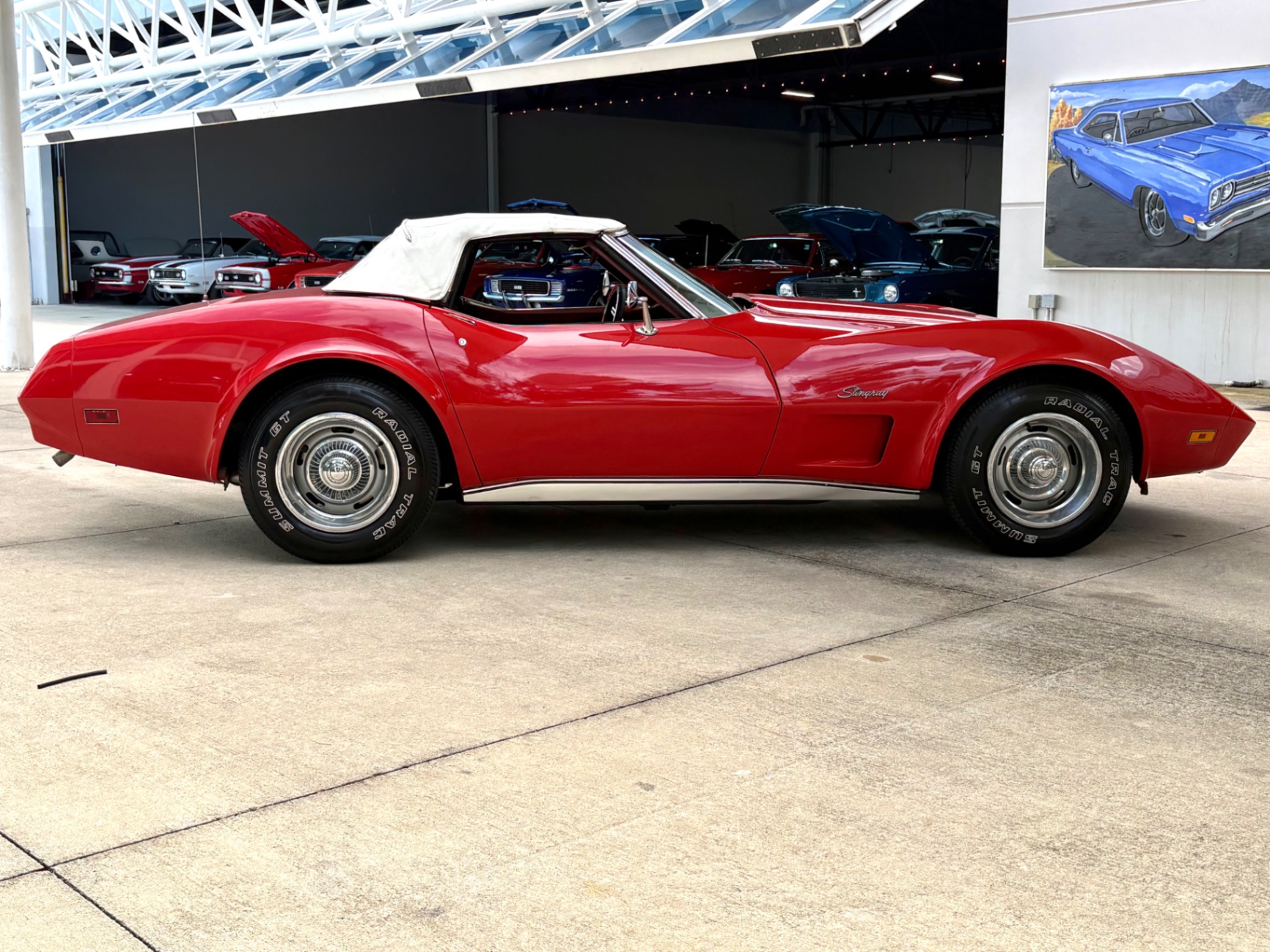
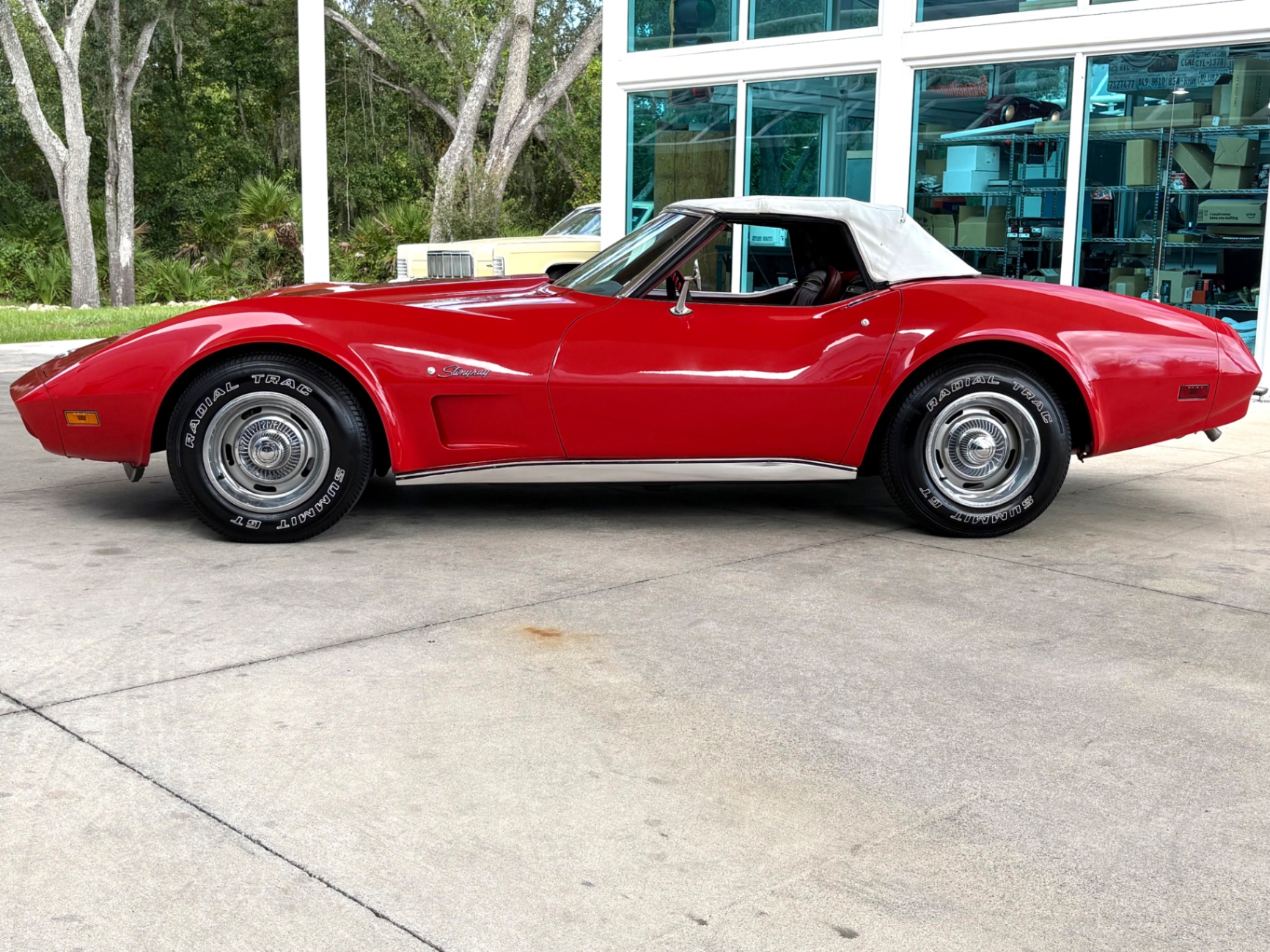
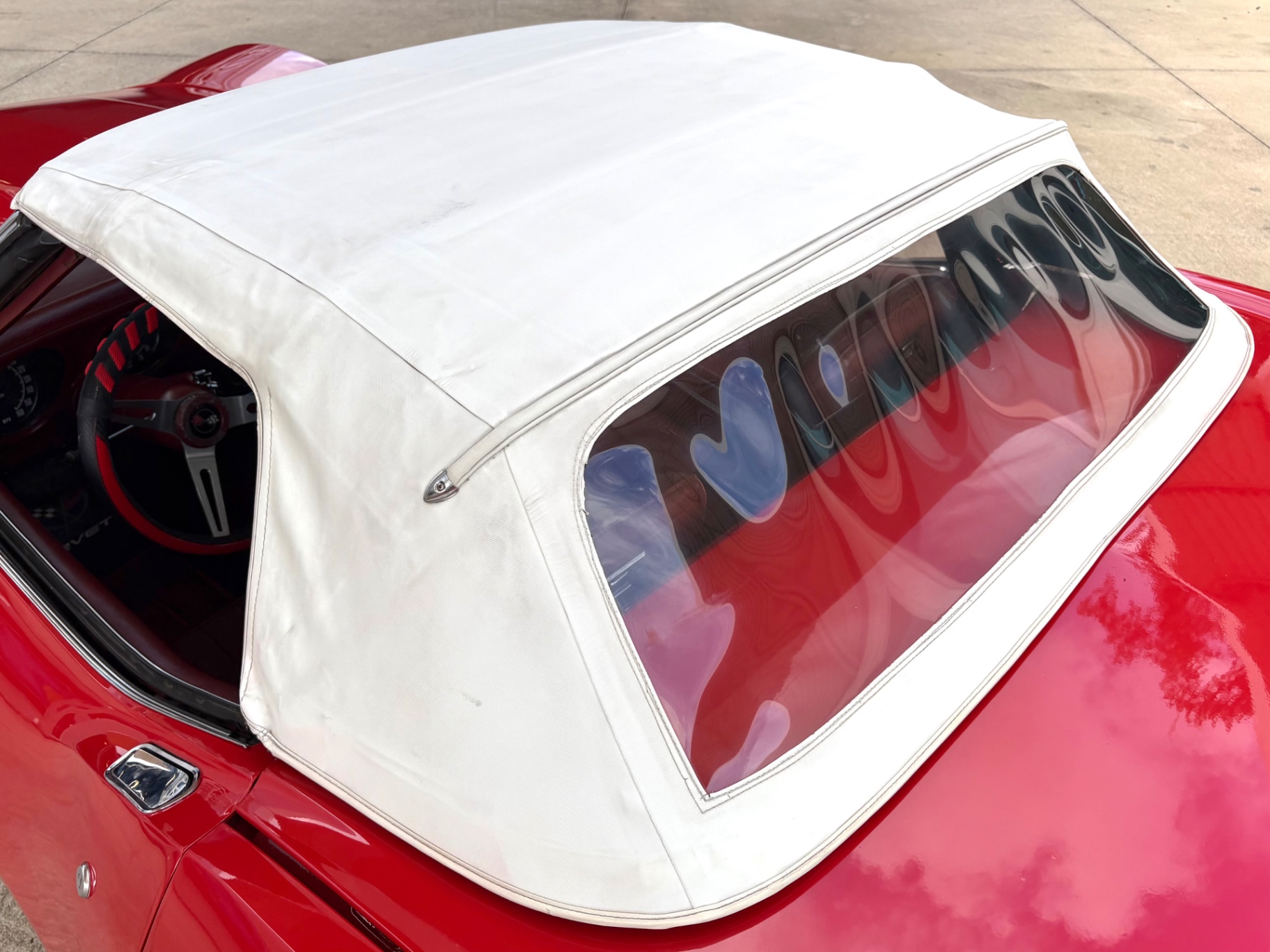
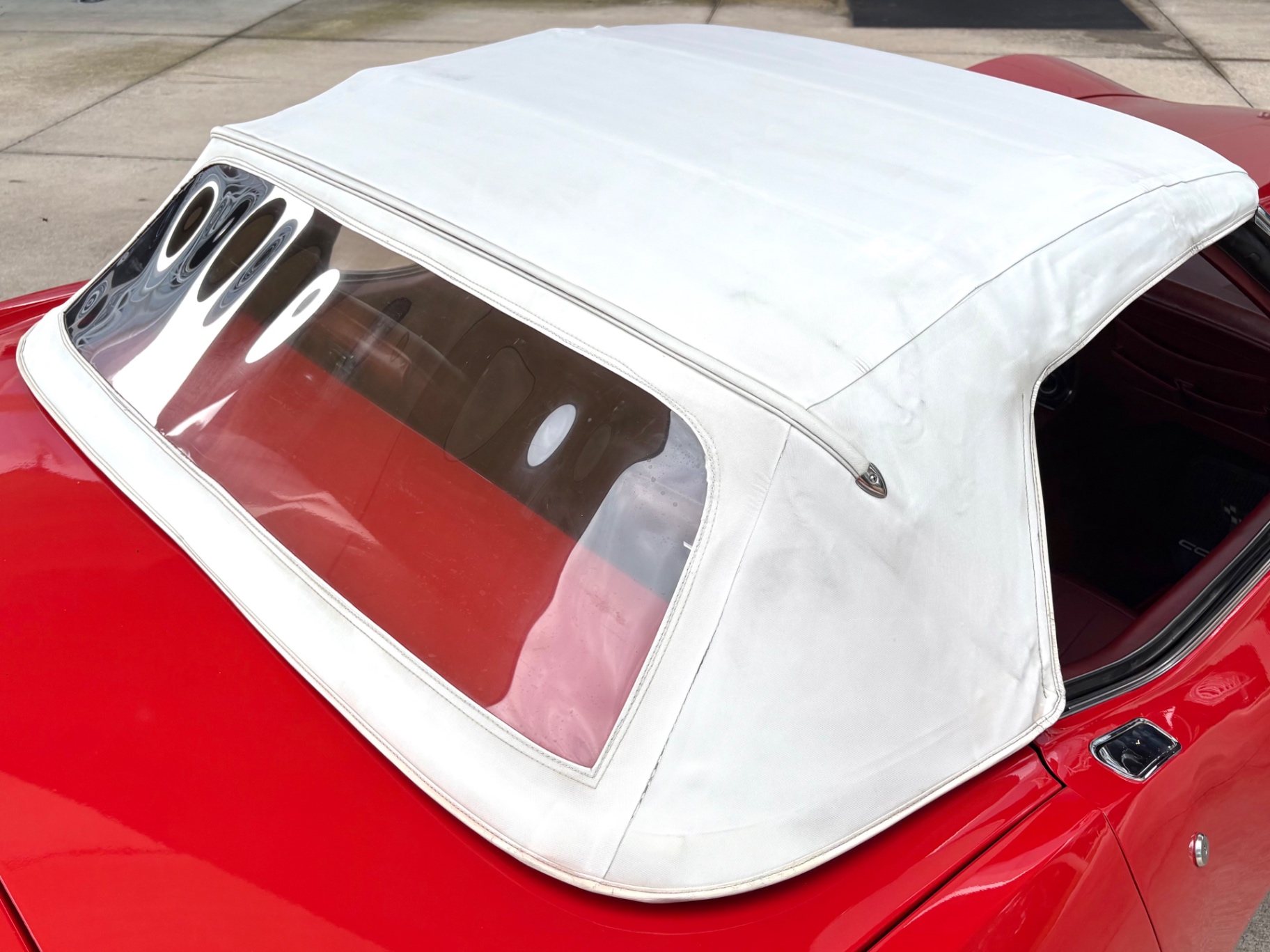
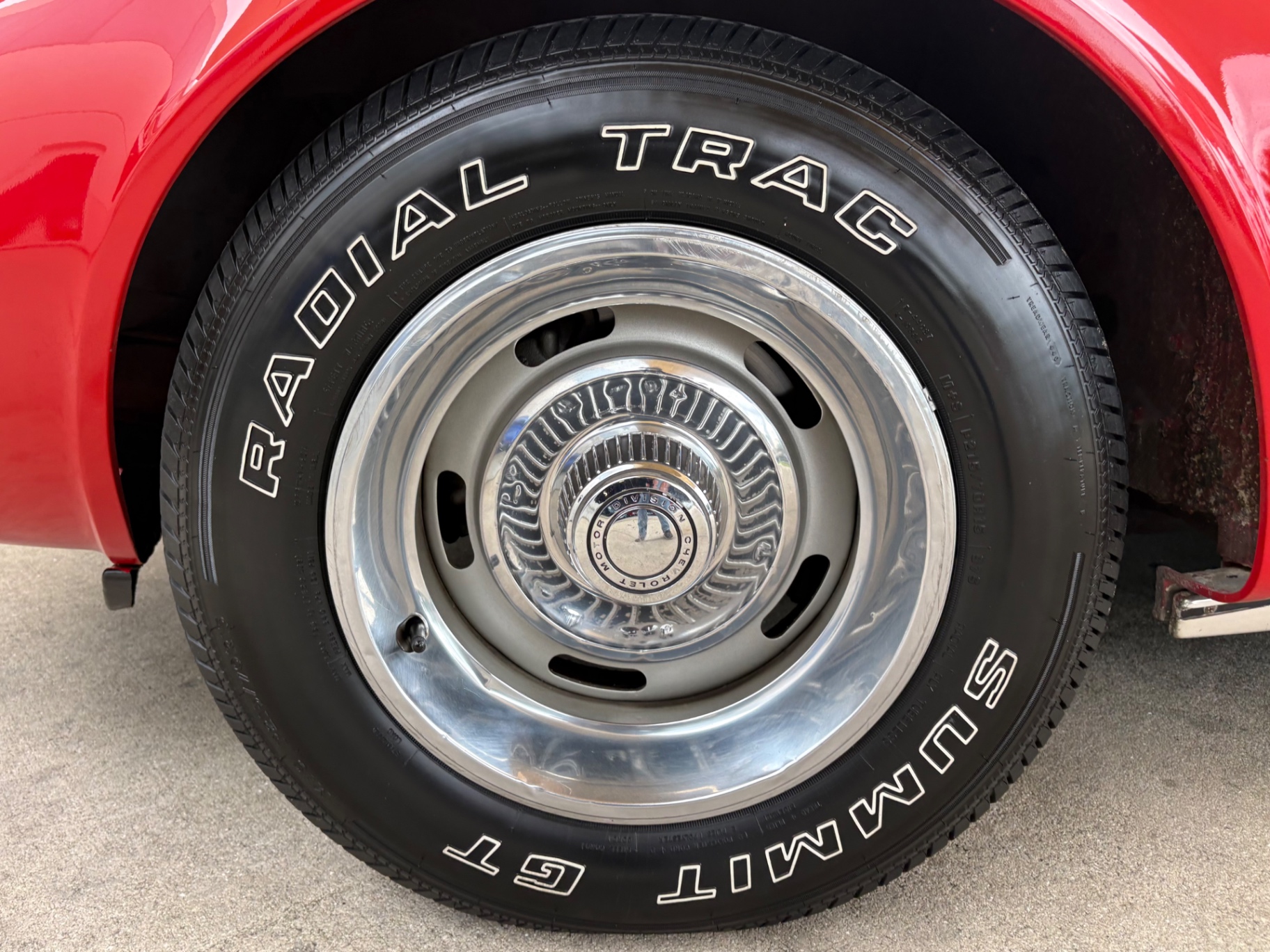
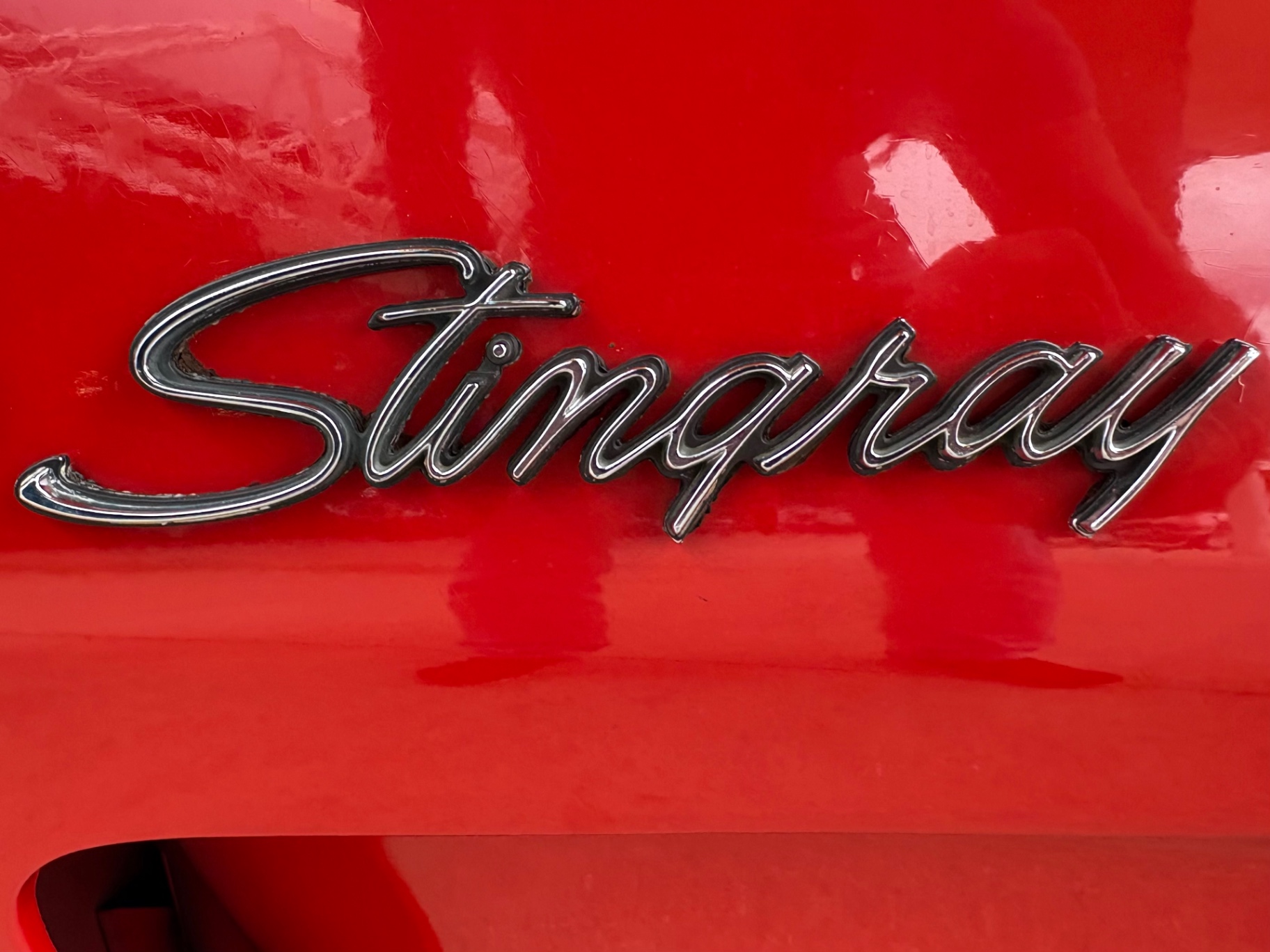
The body color on this 1974 Corvette is red, applied over the fiberglass body panels that have been standard Corvette construction since 1953. The fiberglass construction means rust is not a concern on the body itself, though the underlying steel chassis and frame are another matter — and as the undercarriage photos show, this car's frame is in notably clean condition. The Corvette Rally wheels are mounted at all four corners with white letter radial tires. The Stingray script badge appears on the front fender, as correct for 1974. Chrome rocker panel moldings and chrome exterior mirrors round out the trim. The white convertible top is installed and functional. The body panels show no obvious major collision damage, and the panel gaps are consistent throughout.
Conclusion
The 1974 Chevrolet Corvette Stingray convertible is a specific car that appeals to a specific buyer: someone who wants a genuine open-air C3 Corvette, understands the significance of the final Stingray-badged convertible year, and values a car that hasn't been cut apart or rebuilt from the frame up. This example checks those boxes. It is a red-on-red convertible with a factory 350, the correct Turbo-Hydramatic, factory air conditioning, four-wheel disc brakes, and a clean undercarriage that is rare to find on a car of this age. The convertible top is white, the Rally wheels and white letter tires suit the period look, and the interior retains its factory configuration with all gauges and the original console data plate in place.
Convertible 1974 Corvettes accounted for fewer than 5,500 units out of the model year's total production, and the open-top Corvette disappeared entirely the following year. That context matters when you're deciding where this car fits in the market and in your garage.
To get more information or to schedule a time to see this 1974 Chevrolet Corvette Stingray convertible in person, call Skyway Classics in Sarasota, Florida at 941-254-6608. We are happy to answer questions and arrange an inspection at your convenience.
Disclaimer
Information found on the website is presented as given to us by the owner of the car, whether on consignment or from the owner we bought it from. Some Photos, materials for videos, descriptions and other information are provided by the consignor/seller and is deemed reliable, but Skyway Classics does not warranty or guarantee this information. Skyway Classics is not responsible for information that may incorrect or a publishing error. The decision to purchase should be based solely on the buyers personal inspection of the vehicle or by a professional inspection service prior to offer or purchase being made.
1974 Chevrolet Corvette Stingray Convertible — Red on Red, 350 V8, Numbers-Correct Survivor
Why This Car Is Special
The 1974 Chevrolet Corvette Stingray holds a unique place in C3 history. It was the last model year to wear the Stingray name on both the coupe and convertible, and it was also the final year of the classic twin-nostril chrome front bumper on the Corvette — a detail that distinguishes it immediately from the restyled 1975 models that followed. For buyers who want a true open-air, mid-1970s Corvette experience with the original long-hood, short-deck proportions that Bill Mitchell's design team created, the 1974 is the sweet spot.
Chevrolet produced 37,502 Corvettes for the 1974 model year. Of those, 5,474 were convertibles — just under 15 percent of total production. That convertible figure was already in decline; Chevrolet would drop the open-top Corvette entirely after 1975, not bringing it back until 1986. So the 1974 Corvette Stingray convertible represents one of the last chances buyers had to get a factory-built open Corvette for more than a decade.
The VIN on this car decodes to confirm it is a genuine 1974 Corvette convertible (body code 67), powered by the 350 cubic inch V8 (engine code J), and paired with the Turbo-Hydramatic automatic transmission (transmission code 4). The engine code J corresponds to the base L48 350, rated at 195 horsepower under the then-new SAE net measurement standard. That rating was conservative by design — emissions equipment and a lower compression ratio of 8.5:1 kept output modest on paper, but the 270 lb-ft of torque the engine produced made it a capable and tractable street driver. You can actually see that spec plate on the center console of this car: 350 cubic inches, 270 lb-ft torque, 8.5:1 compression ratio.
What makes this particular 1974 Corvette Stingray stand out among the field is the combination of its color, its convertible body, and the condition of the car underneath. Red exterior over a matching red vinyl interior is a classic pairing, and the undercarriage photographs tell a story that's hard to find on a 50-year-old sports car. The floorpans are solid, the frame rails are straight, and the framing is coated and intact without the patchwork or bubbling that commonly plagues C3 Corvettes that have spent time in the rust belt. This car presents as a driver-quality example that has been maintained and kept honest.
Features List
- 350ci 5.7L V8 (L48), 195 hp / 270 lb-ft torque, 8.5:1 compression ratio
- Turbo-Hydramatic 3-speed automatic transmission
- Power steering
- 4-wheel disc brakes (standard on all 1974 Corvettes)
- Factory air conditioning
- AM/FM radio
- Dual exhaust
- Tilt-telescopic steering column
- White convertible top
- Stingray badges
- Factory gauges and tachometer
- Center console with engine data plate
- Bucket seats, red vinyl
- Corvette Rally wheels
- White letter radial tires
- Body-color rear bumper
- Chrome rocker moldings
- Chrome exterior mirrors
- Independent rear suspension
- Clean undercarriage
Mechanical
The 350 cubic inch small block in this 1974 Corvette Stingray is the L48, the standard engine for the model year. It displaces 5.7 liters, runs an 8.5:1 compression ratio, and was factory-rated at 195 net horsepower with 270 lb-ft of torque. It is paired with GM's Turbo-Hydramatic 3-speed automatic, which by 1974 had become the transmission of choice for the majority of Corvette buyers. The shift toward automatics reflected both buyer preference and the realities of emissions-era tuning, which tended to favor broader torque curves over peak horsepower.
The engine bay on this car is tidy. The block is finished in the correct GM orange, the chrome valve covers and air cleaner are present and intact, and the Frigidaire air conditioning compressor — a factory option — is visible on the driver's side. The undercarriage photographs are worth studying closely. The frame rails show solid, unpatched metal with a consistent coating throughout. The independent rear suspension — a Corvette hallmark since 1963 — is intact with no visible damage or sloppy repairs to the three-link setup. Four-wheel disc brakes were standard equipment on every 1974 Corvette, and this car retains them at all four corners. The dual exhaust exits cleanly from beneath the body-color rear bumper fascia.
Interior
The interior of this 1974 Corvette Stingray is done in red vinyl throughout, matching the exterior color. The bucket seats retain their shape and show the typical C3 seat construction: vertical pleating on the seatback fabric inserts with smooth vinyl bolsters. The driver's seat shows some wear consistent with age and use, which is honest for a car of this vintage. The door panels are finished in the same red vinyl with chrome trim accents along the armrest.
The dashboard layout is the familiar C3 instrument pod, with the large round speedometer and tachometer housed in the driver-facing binnacle. The speedometer on this car reads approximately 67,600 miles. Behind the steering column, a full complement of auxiliary gauges is mounted in the center stack: fuel, water temperature, oil pressure, battery, and clock — all factory-correct for the 1974 Corvette. The AM/FM radio sits below the gauge cluster in its original position. The center console carries the Turbo-Hydramatic shifter and the original engine data plate, which reads 350 cubic inches, 270 lb-ft torque, and 8.5:1 compression ratio. The tilt-telescopic steering column is in place, and the console-mounted parking brake lever is present. Floor mats shown are aftermarket Corvette-logoed units.
Exterior
The 1974 Corvette Stingray wore a significant exterior change that year: the rear bumper transitioned from chrome to a body-color urethane unit, meeting federal 5-mph bumper impact standards while maintaining the car's lines better than a chrome bar would have. The front still carried the twin-nostril chrome bumper arrangement that had defined the C3 since 1968, making 1974 the last year for that specific front-end look. On this car, both bumper treatments are correct for the model year and finished in red.
The body color on this 1974 Corvette is red, applied over the fiberglass body panels that have been standard Corvette construction since 1953. The fiberglass construction means rust is not a concern on the body itself, though the underlying steel chassis and frame are another matter — and as the undercarriage photos show, this car's frame is in notably clean condition. The Corvette Rally wheels are mounted at all four corners with white letter radial tires. The Stingray script badge appears on the front fender, as correct for 1974. Chrome rocker panel moldings and chrome exterior mirrors round out the trim. The white convertible top is installed and functional. The body panels show no obvious major collision damage, and the panel gaps are consistent throughout.
Conclusion
The 1974 Chevrolet Corvette Stingray convertible is a specific car that appeals to a specific buyer: someone who wants a genuine open-air C3 Corvette, understands the significance of the final Stingray-badged convertible year, and values a car that hasn't been cut apart or rebuilt from the frame up. This example checks those boxes. It is a red-on-red convertible with a factory 350, the correct Turbo-Hydramatic, factory air conditioning, four-wheel disc brakes, and a clean undercarriage that is rare to find on a car of this age. The convertible top is white, the Rally wheels and white letter tires suit the period look, and the interior retains its factory configuration with all gauges and the original console data plate in place.
Convertible 1974 Corvettes accounted for fewer than 5,500 units out of the model year's total production, and the open-top Corvette disappeared entirely the following year. That context matters when you're deciding where this car fits in the market and in your garage.
To get more information or to schedule a time to see this 1974 Chevrolet Corvette Stingray convertible in person, call Skyway Classics in Sarasota, Florida at 941-254-6608. We are happy to answer questions and arrange an inspection at your convenience.
Disclaimer
Information found on the website is presented as given to us by the owner of the car, whether on consignment or from the owner we bought it from. Some Photos, materials for videos, descriptions and other information are provided by the consignor/seller and is deemed reliable, but Skyway Classics does not warranty or guarantee this information. Skyway Classics is not responsible for information that may incorrect or a publishing error. The decision to purchase should be based solely on the buyers personal inspection of the vehicle or by a professional inspection service prior to offer or purchase being made.
1974 Chevrolet
Corvette Stingray
Why Choose Skyway Classics?
Explore our curated inventory of classic and collector cars—thoughtfully selected, ready to drive, and supported by experts who make ownership simple.
Expert Curation
Every vehicle is hand-selected by our experts for quality, authenticity, and investment potential.
Fast Transactions
Streamlined buying and selling process with quick financing and immediate delivery options.
Only National Dealer With Classic Service & Repair
We’re the only national dealership that services and repairs the classics we sell—before and after the sale.
Nationwide Network
Access to our extensive network of collectors, restorers, and classic car enthusiasts nationwide.
Concierge Ownership Support
From financing and insurance to paperwork, shipping, and titling—we handle the details so you can enjoy the drive.
Passion-Driven Service
We're classic car enthusiasts first, providing personalized service with genuine passion for the hobby.