
1972 Chevrolet
Corvette Stingray
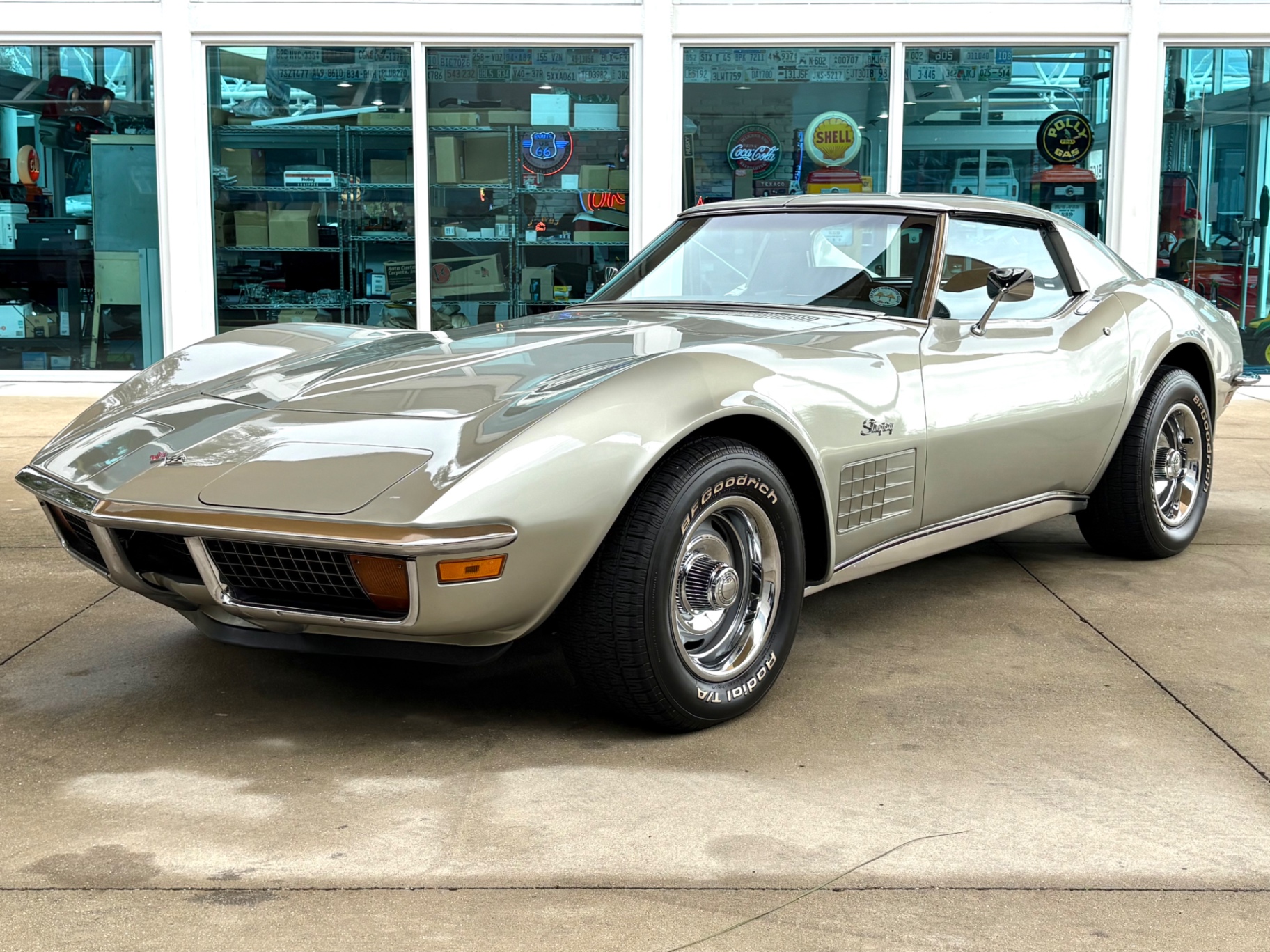
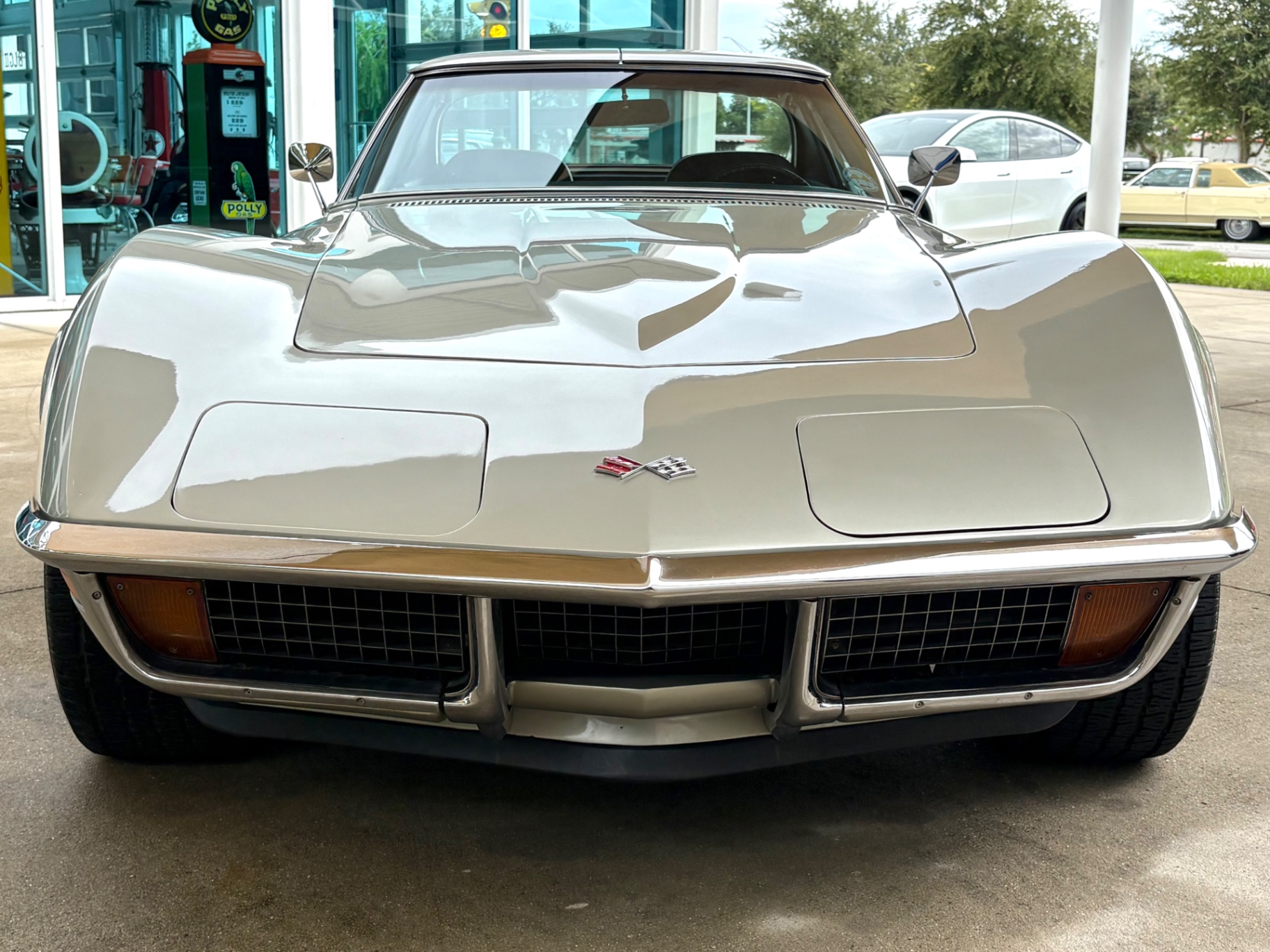
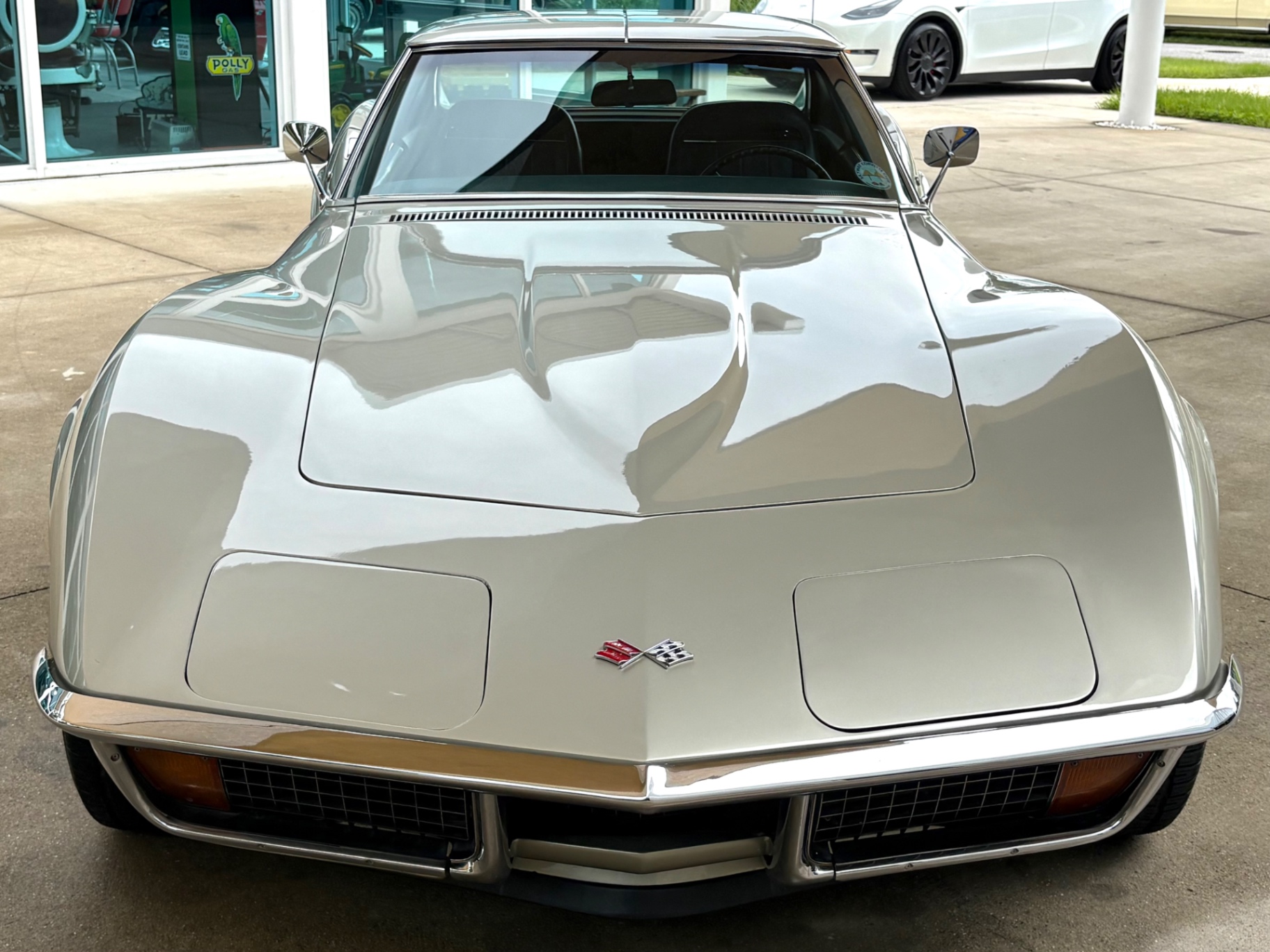
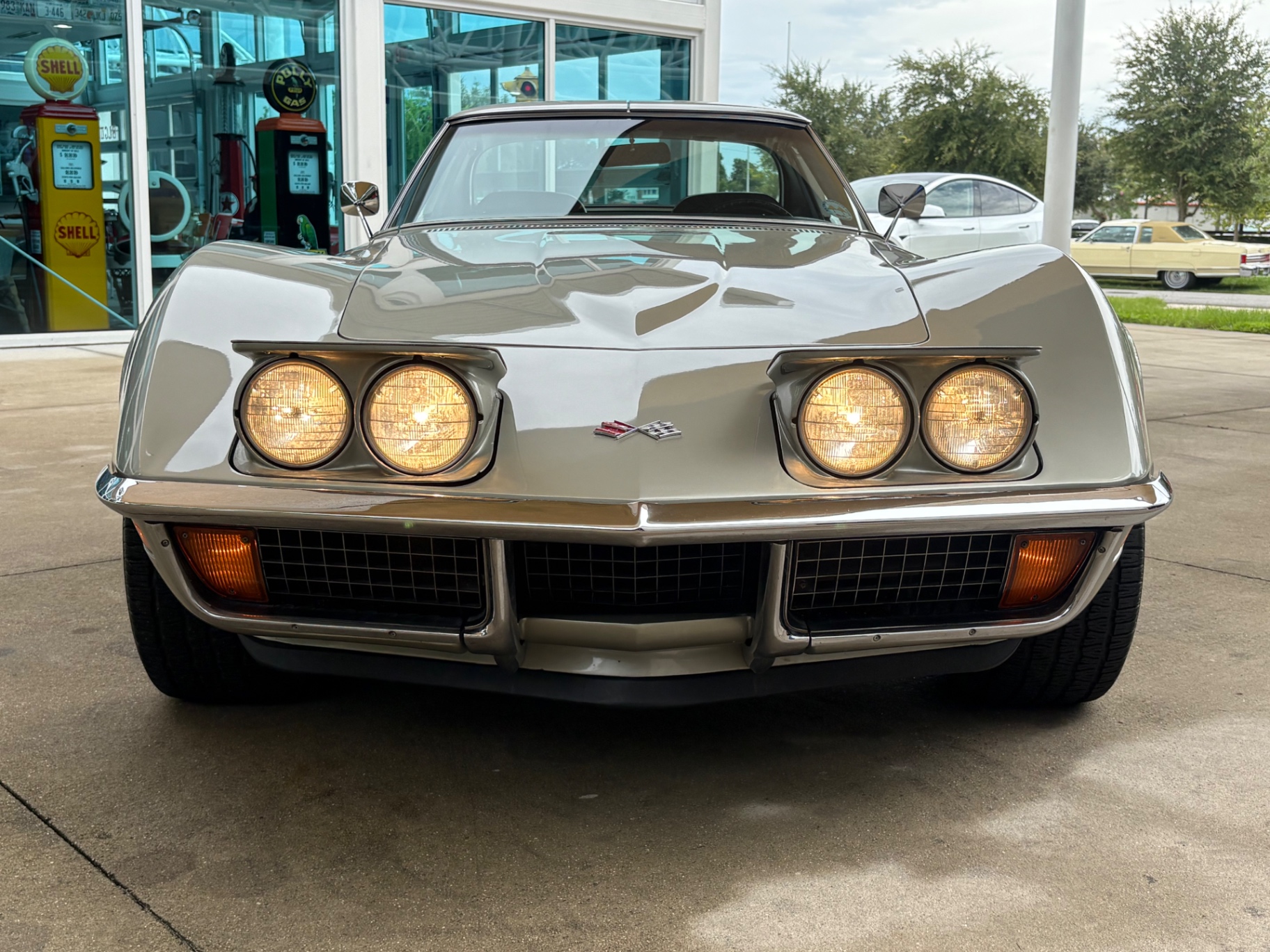
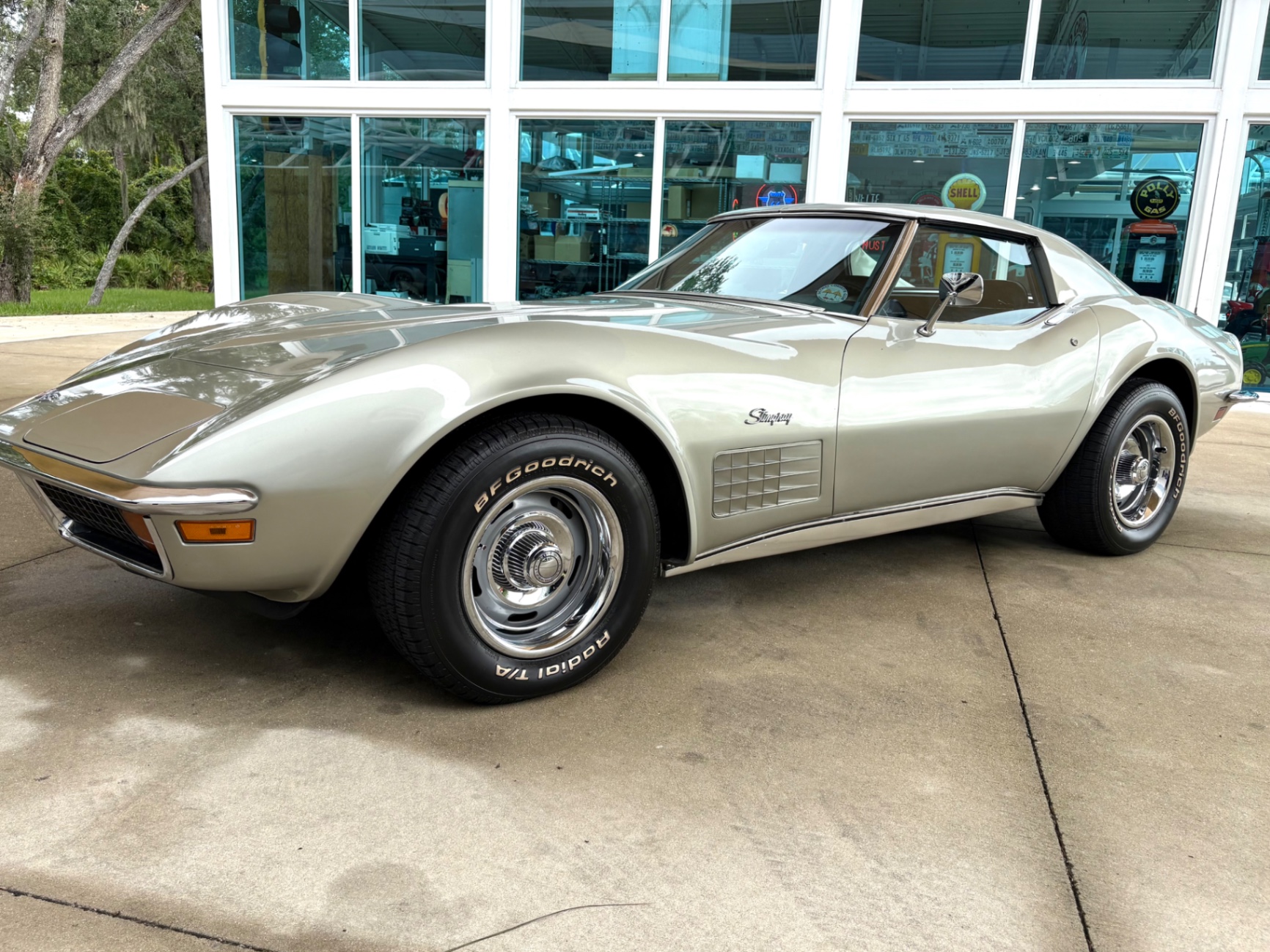
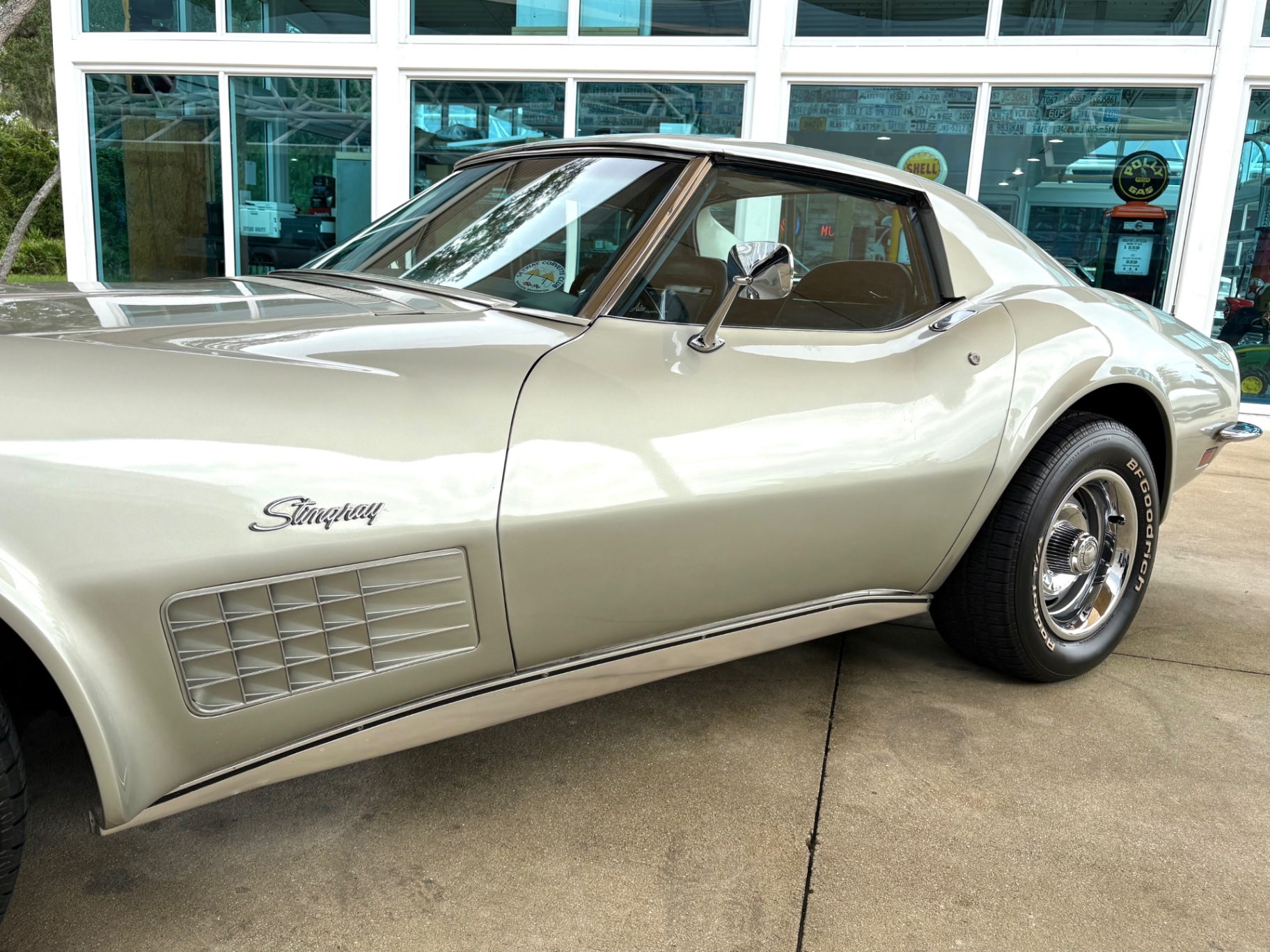
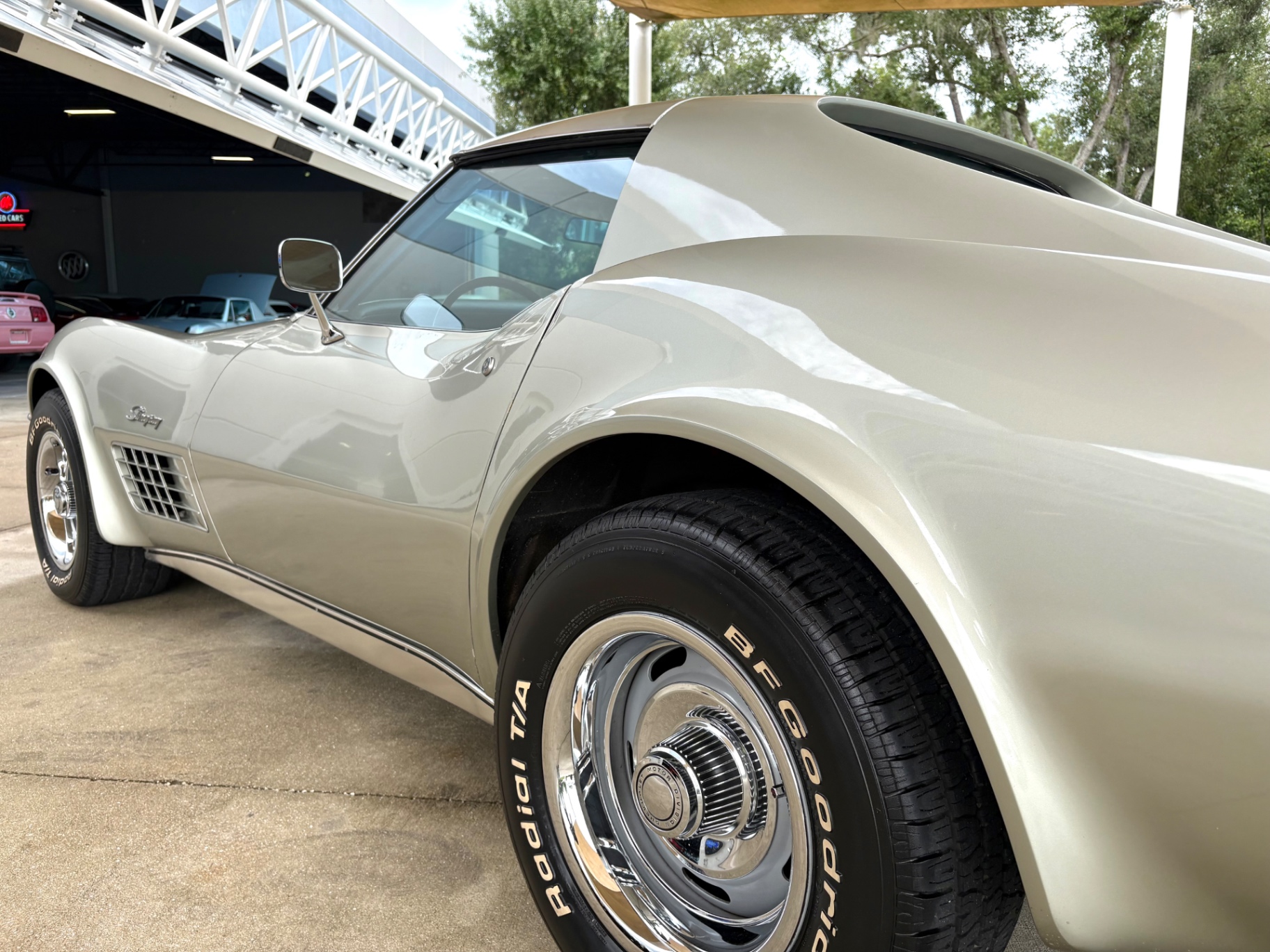
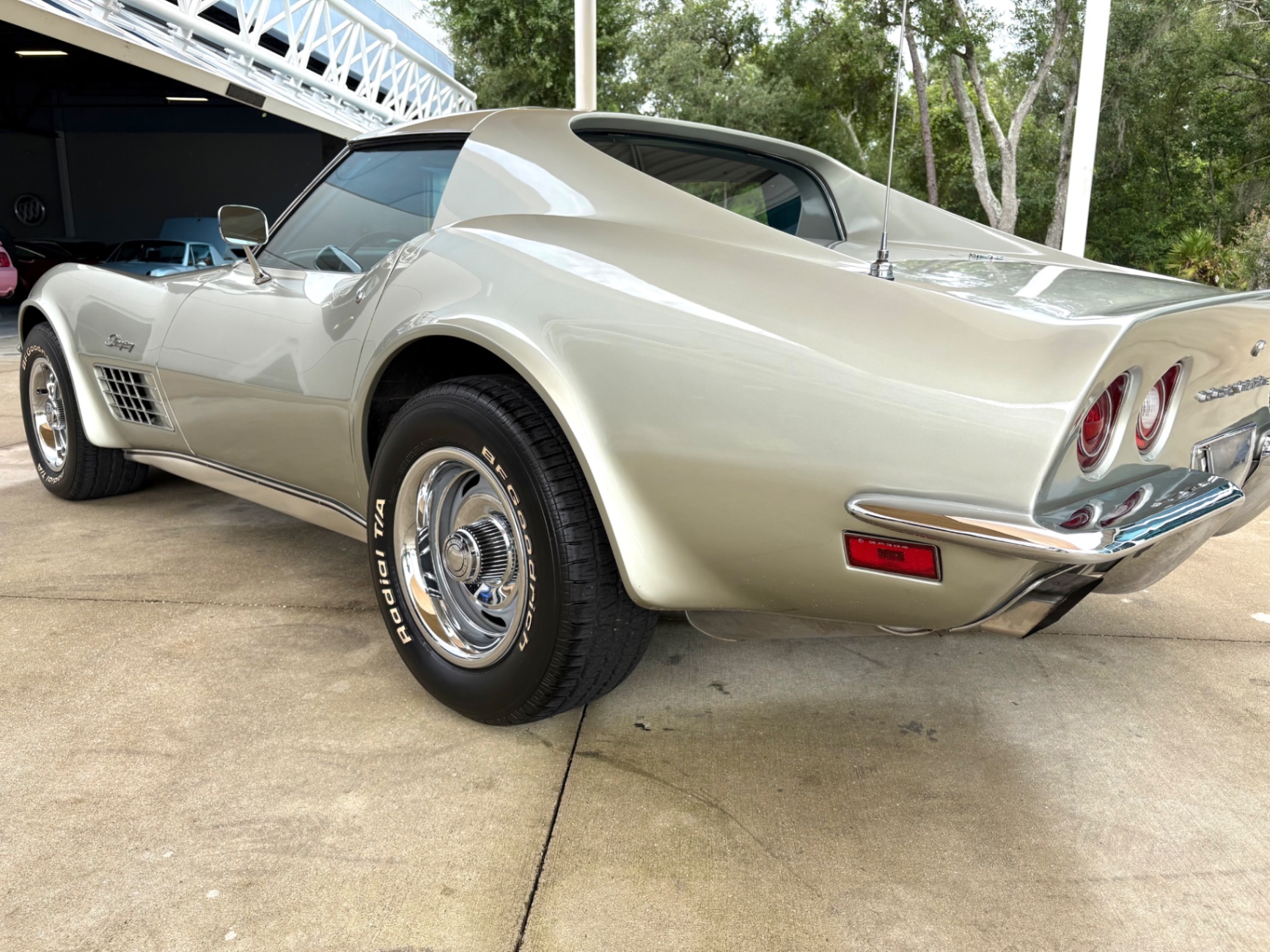
1972 Chevrolet Corvette Stingray — Matching Numbers 350 V8, Pewter Silver, T-Tops
Why This Car Is Special
The 1972 Chevrolet Corvette Stingray occupies a specific and well-understood place in C3 history. It was the last model year before federally mandated bumper standards began to reshape the car's appearance, and the last year Chevrolet used the traditional gross horsepower rating system before switching to the lower net figures in 1973. That context matters to collectors, because the 1972 Corvette is widely regarded as one of the cleaner, less-compromised examples of the C3 generation.
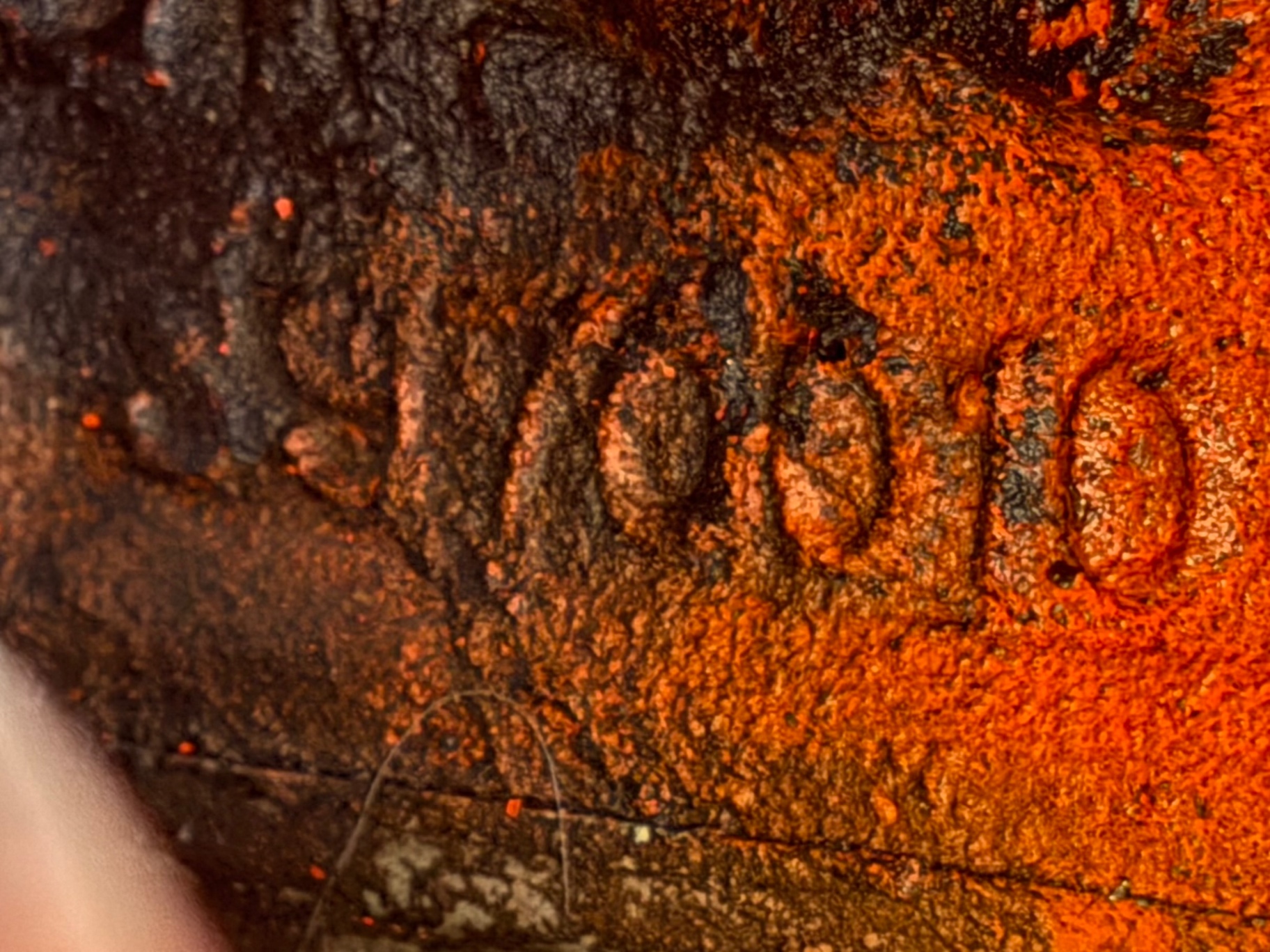
Chevrolet built 20,496 Corvettes for the 1972 model year, split between coupes and convertibles. This is a coupe, and it carries the original 350 cubic inch small block V8 rated at 200 horsepower — a number that reflects the new SAE net rating standard Chevrolet began using that year, not a reduction in actual output. The engine is numbers-matching, meaning the suffix code on the block corresponds to the correct 1972 Corvette application. For buyers who care about authenticity and long-term value, that is a significant detail.
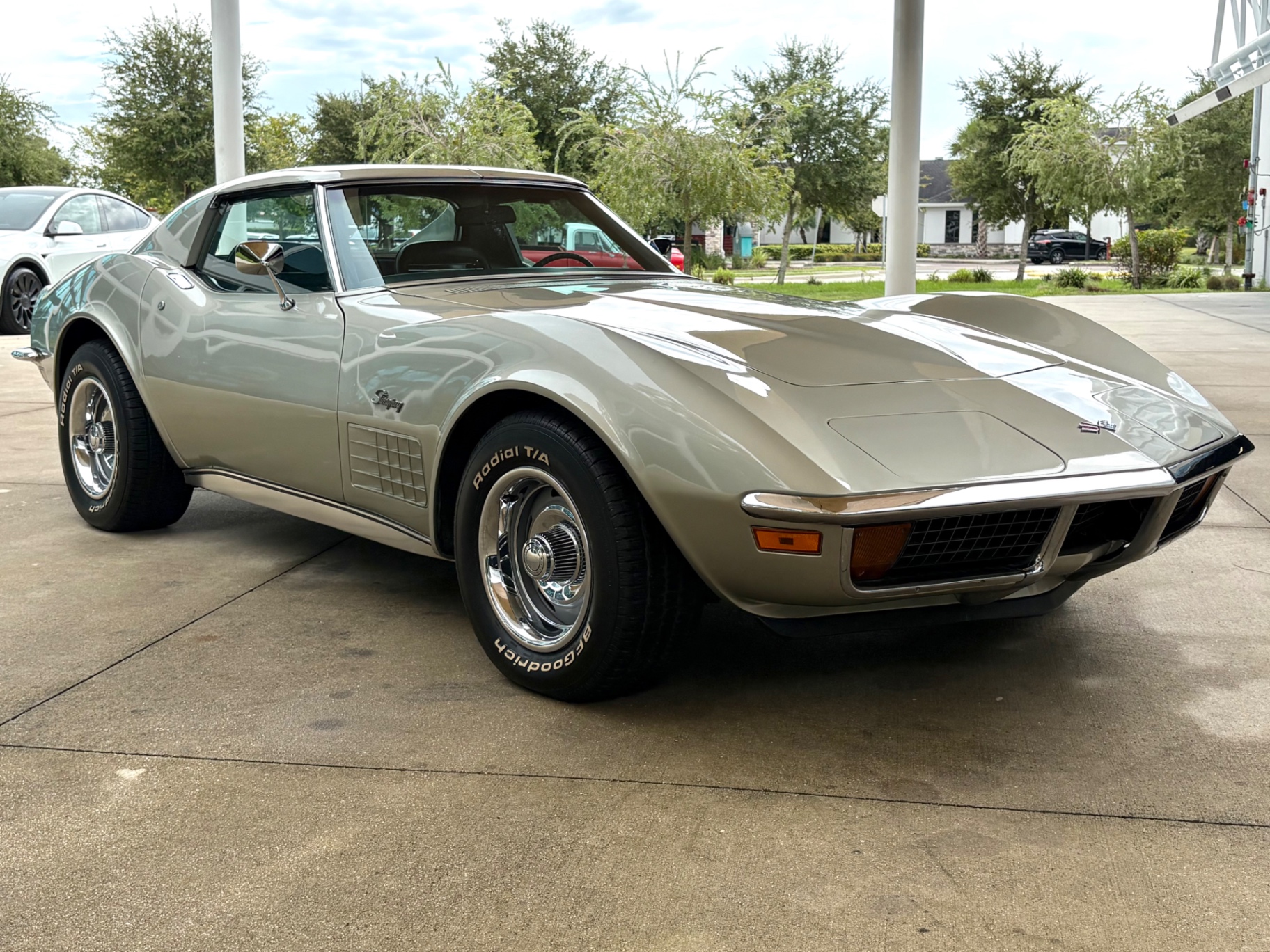
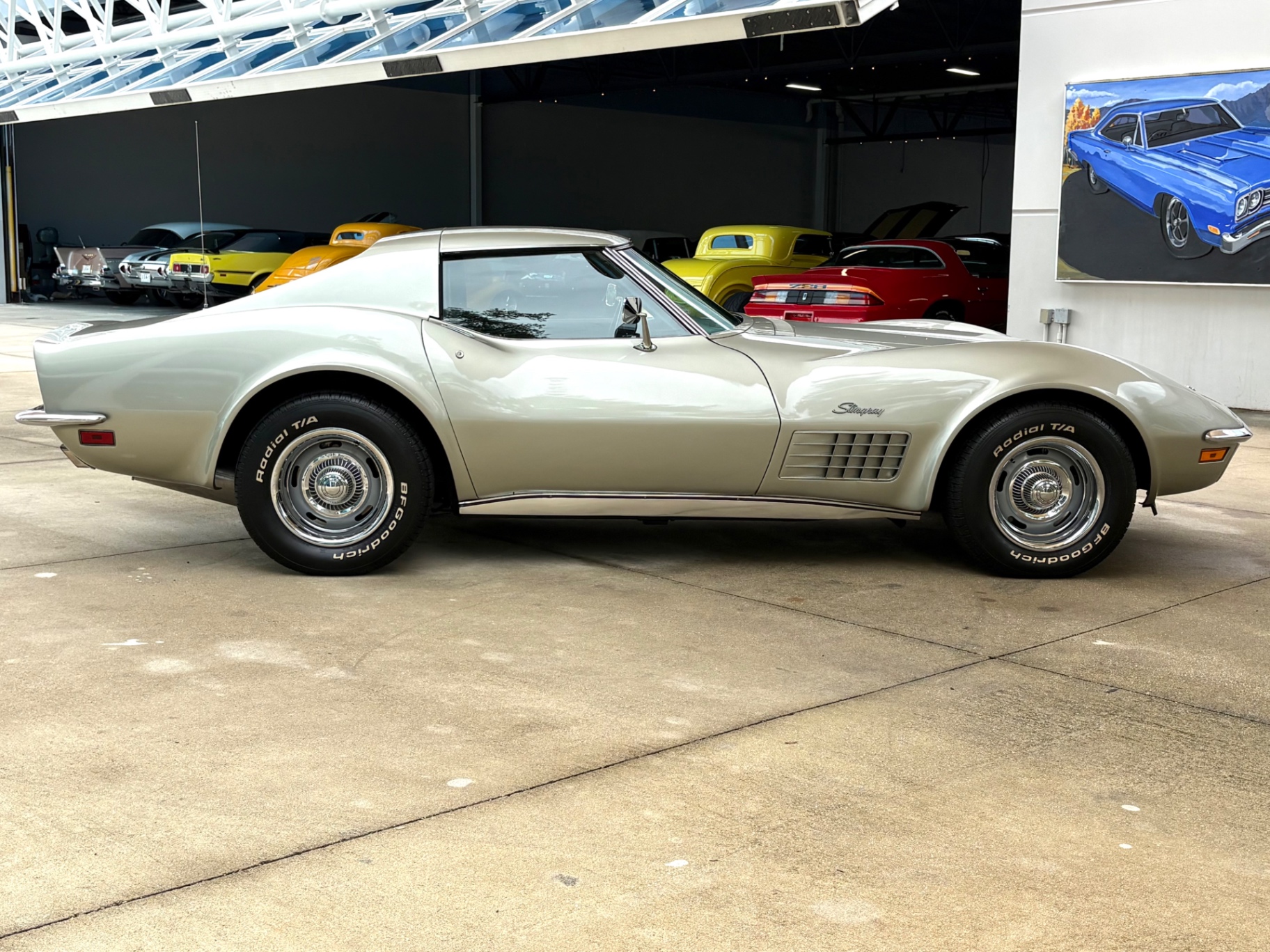
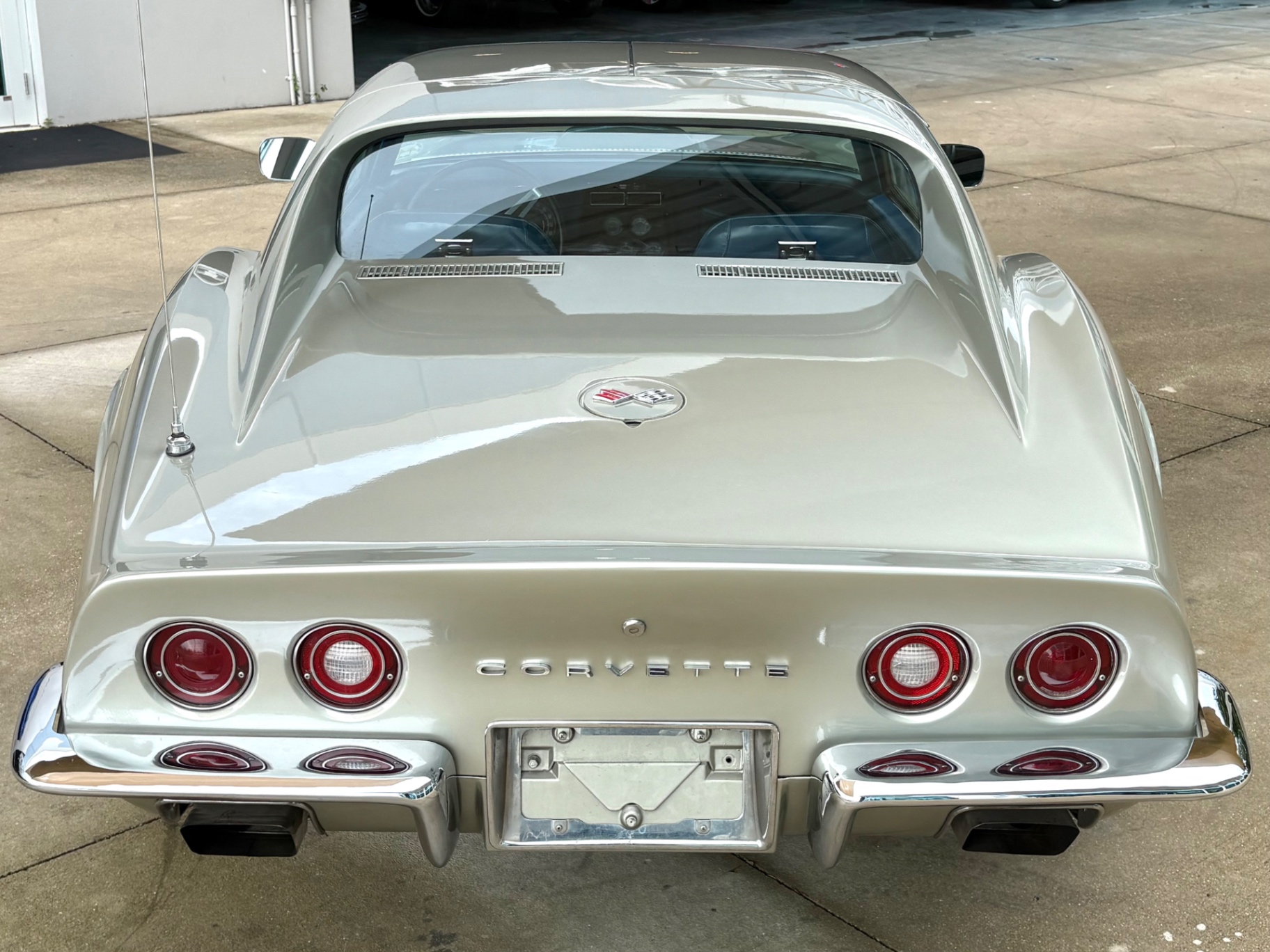
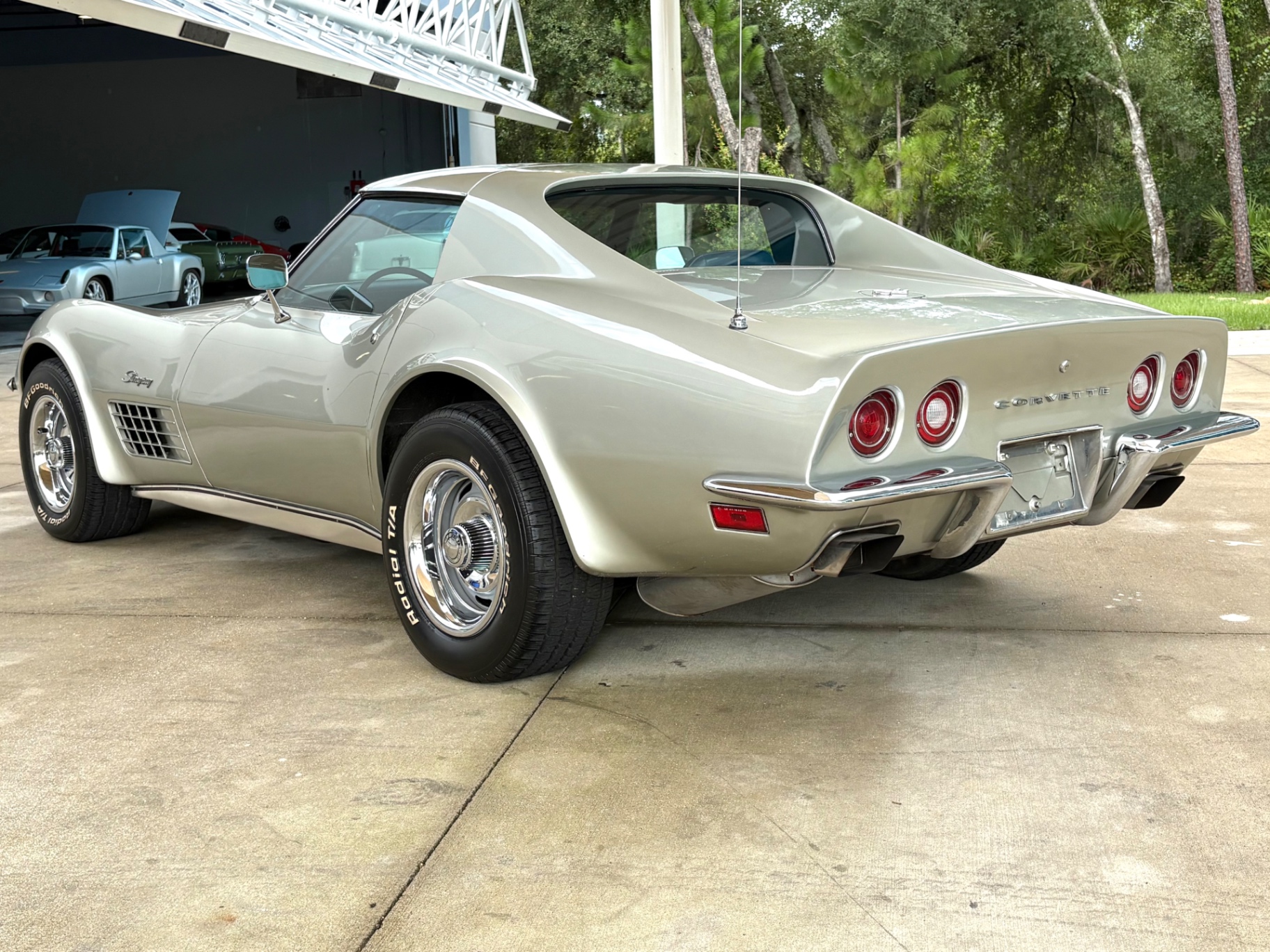
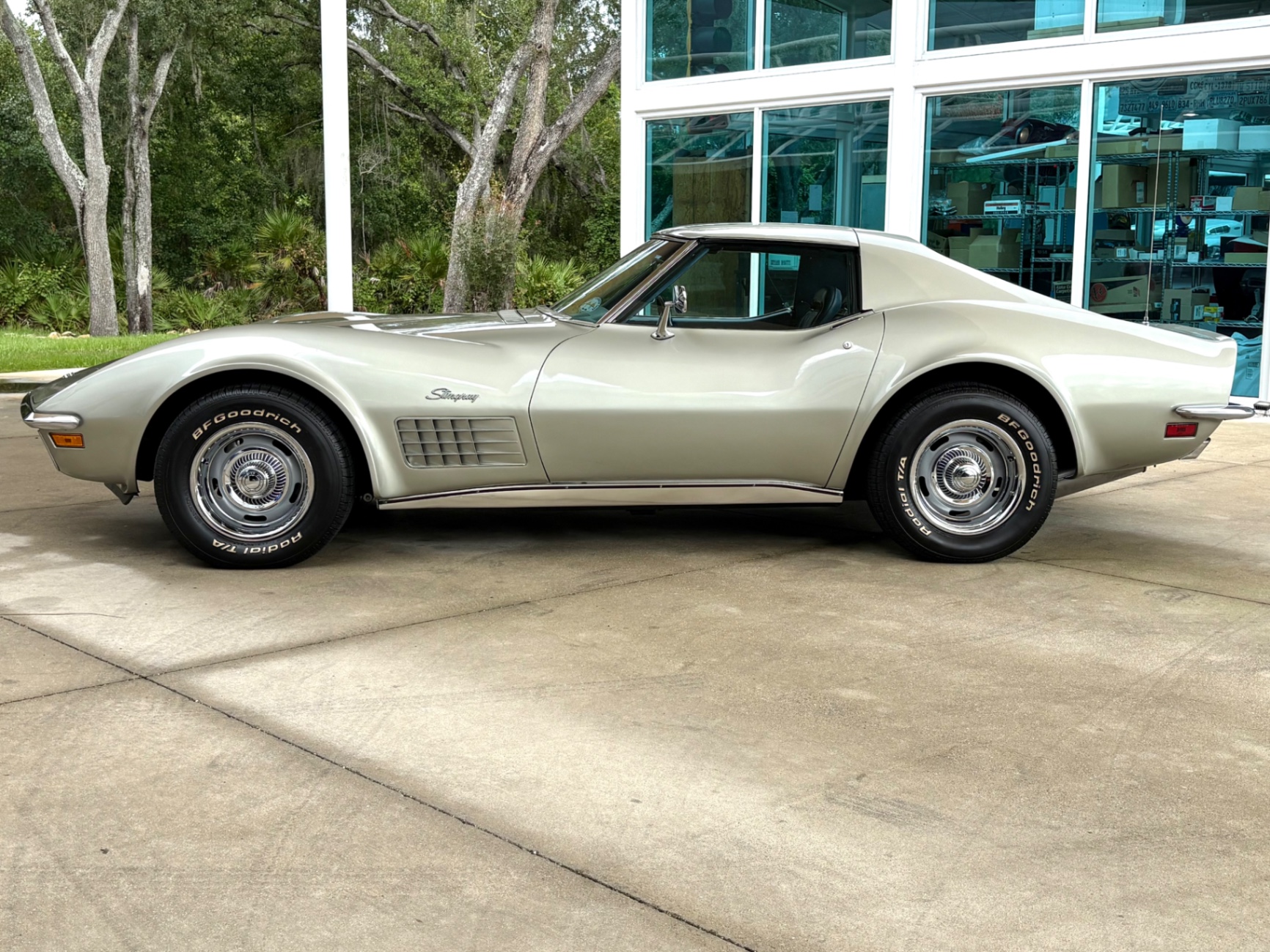
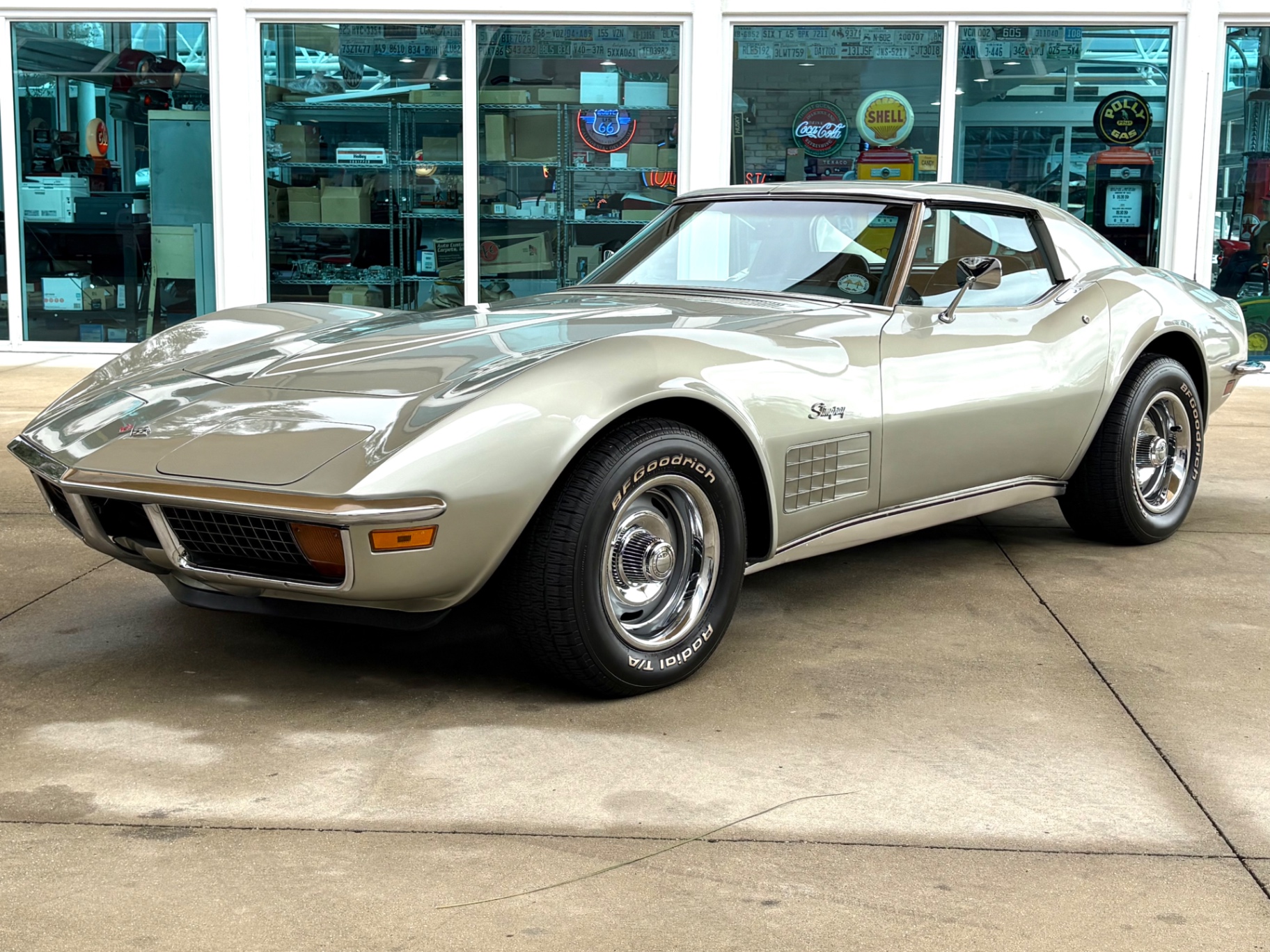
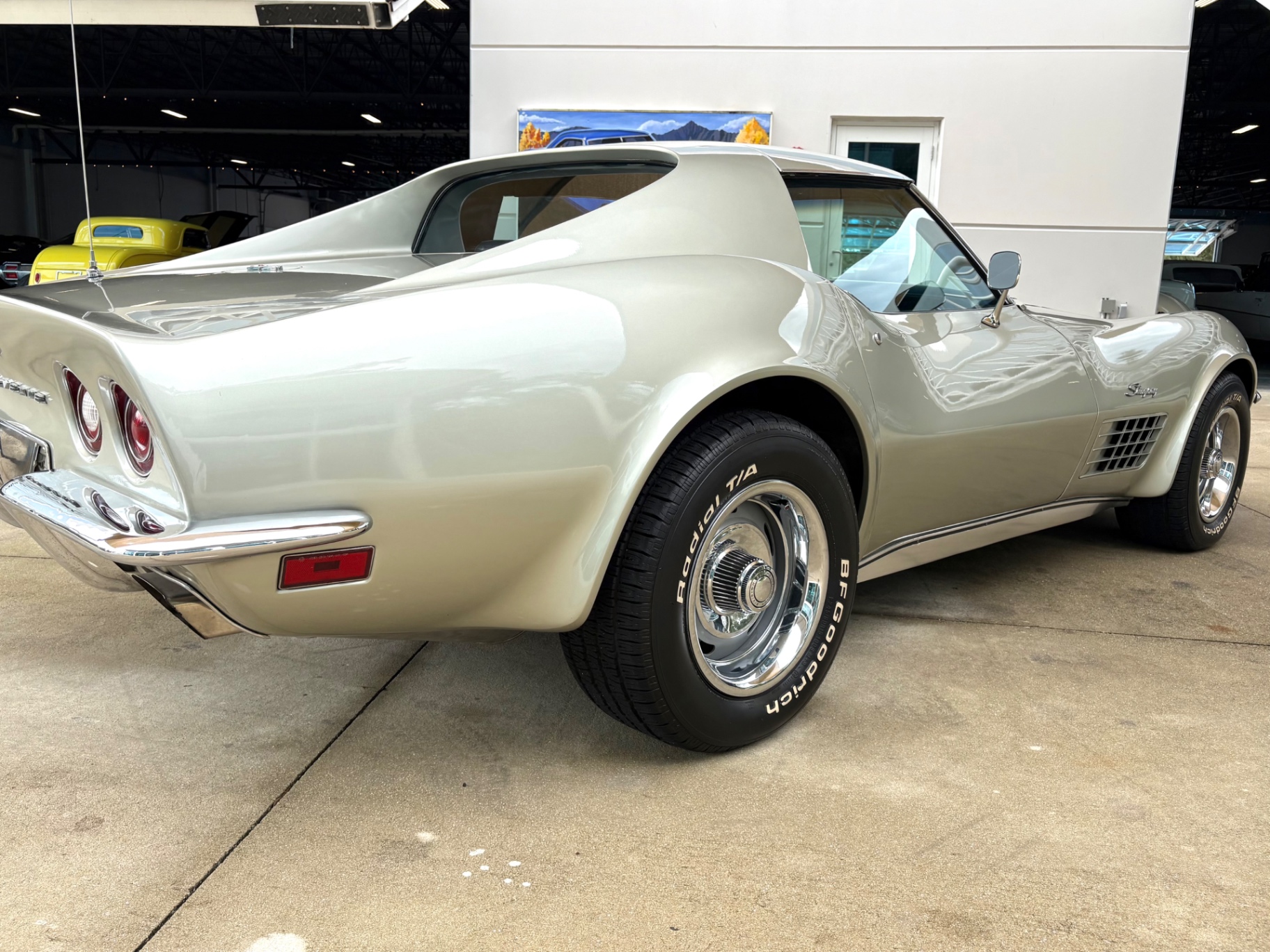
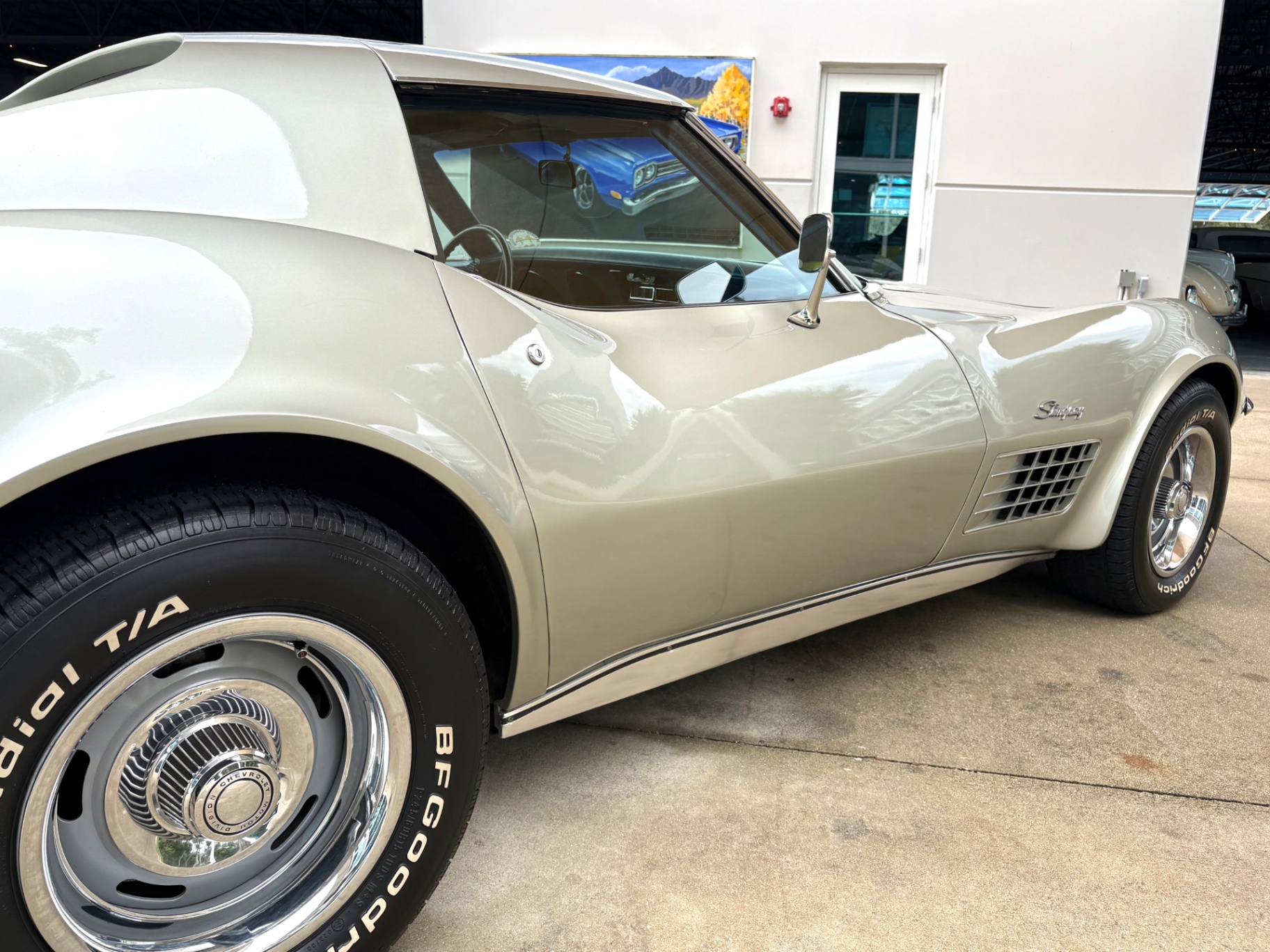
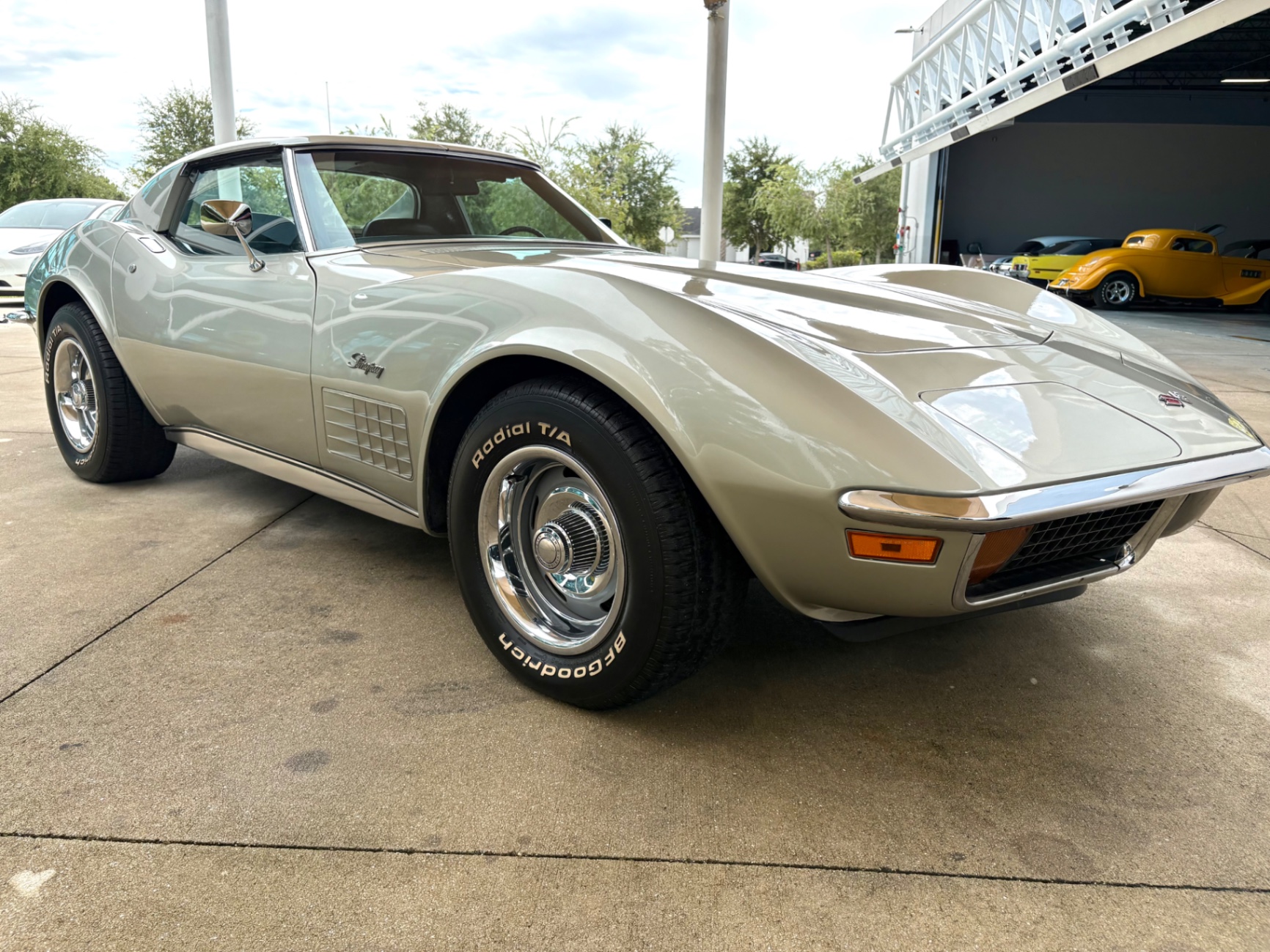
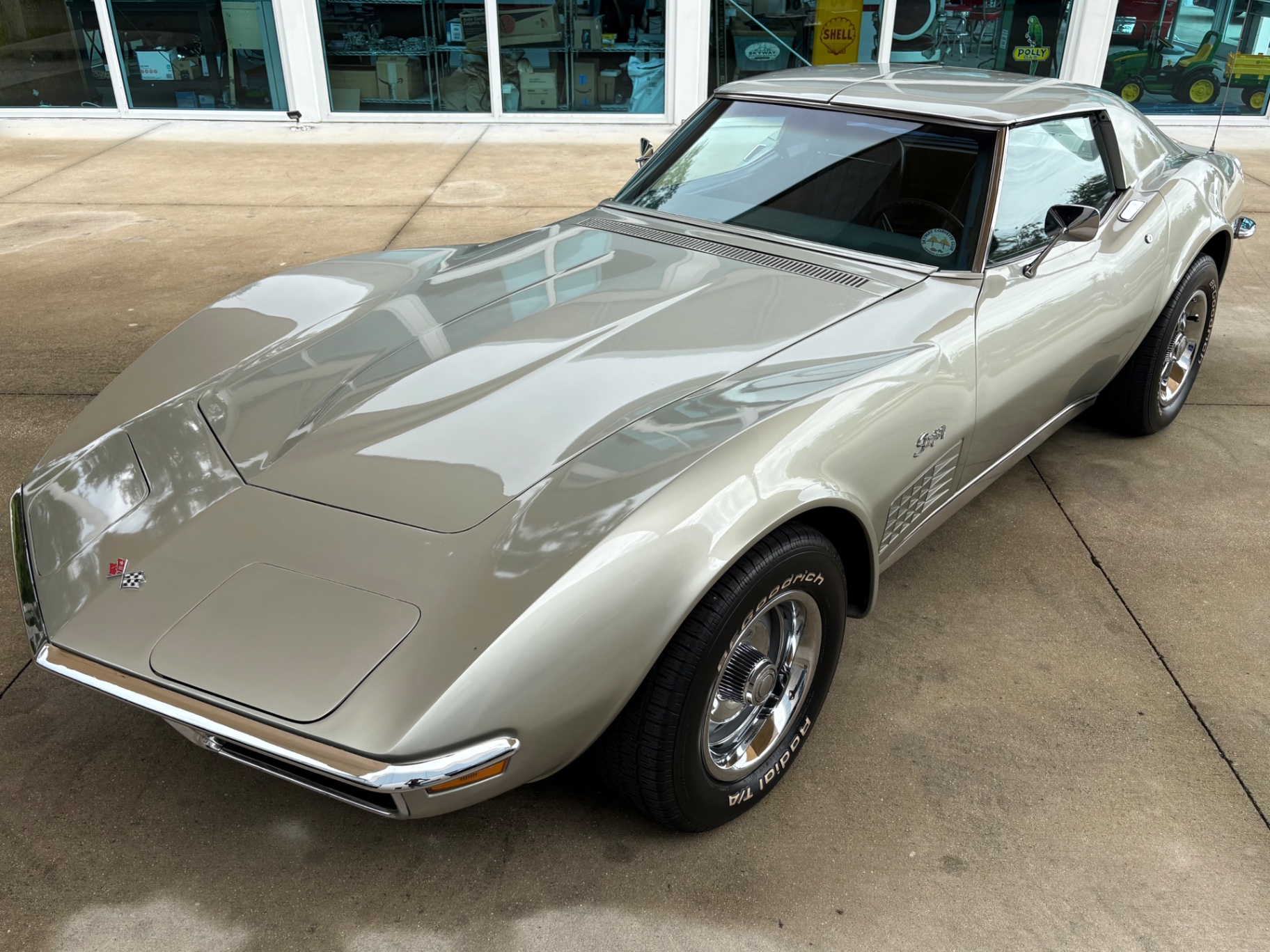
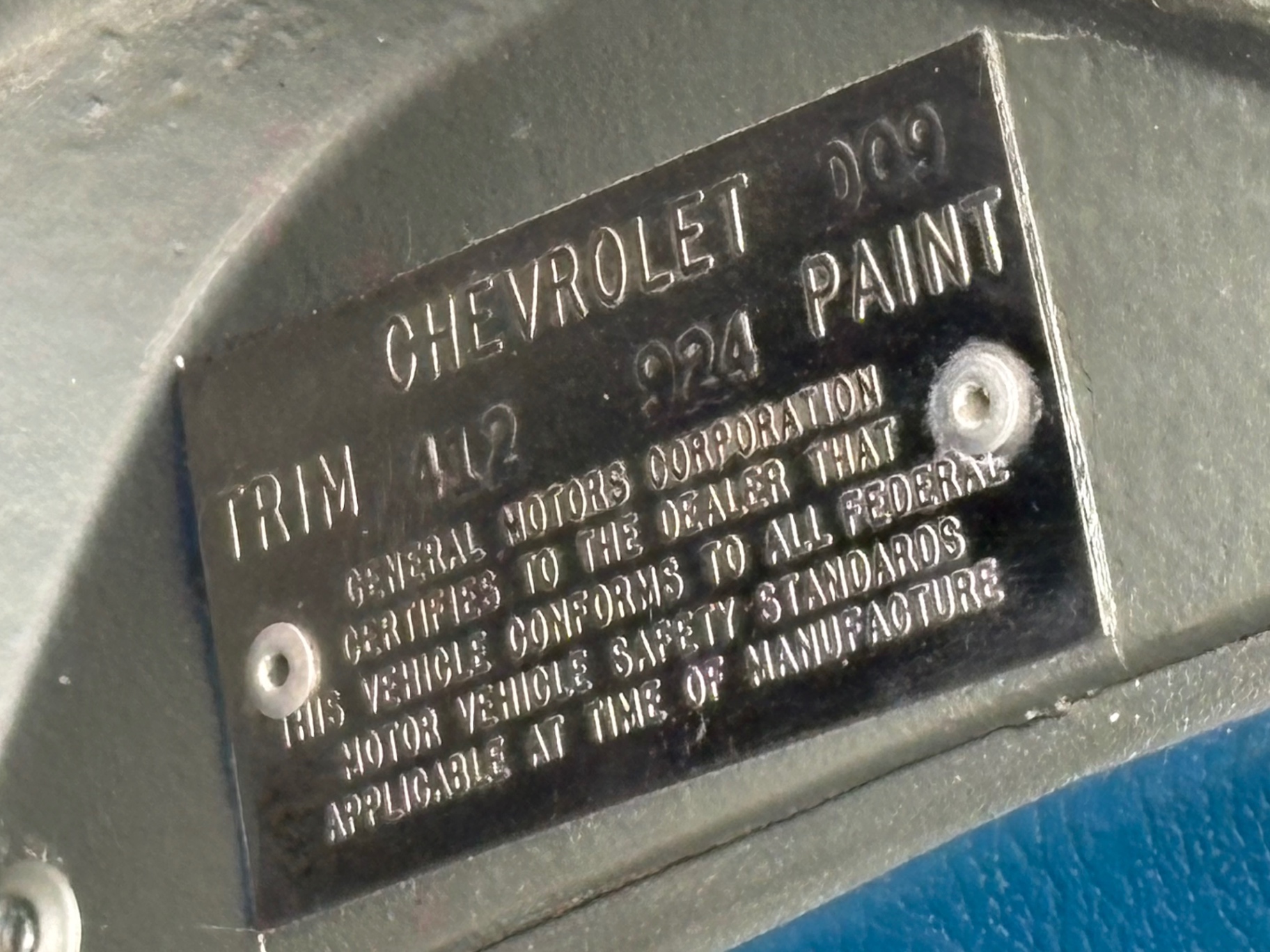
The exterior is Pewter Silver — a color that reads differently in different light, moving from a warm gray to something closer to a metallic taupe depending on the angle. It pairs well with the blue interior and gives this particular car a subtle, understated presence compared to the brighter colors the Corvette was also available in that year.
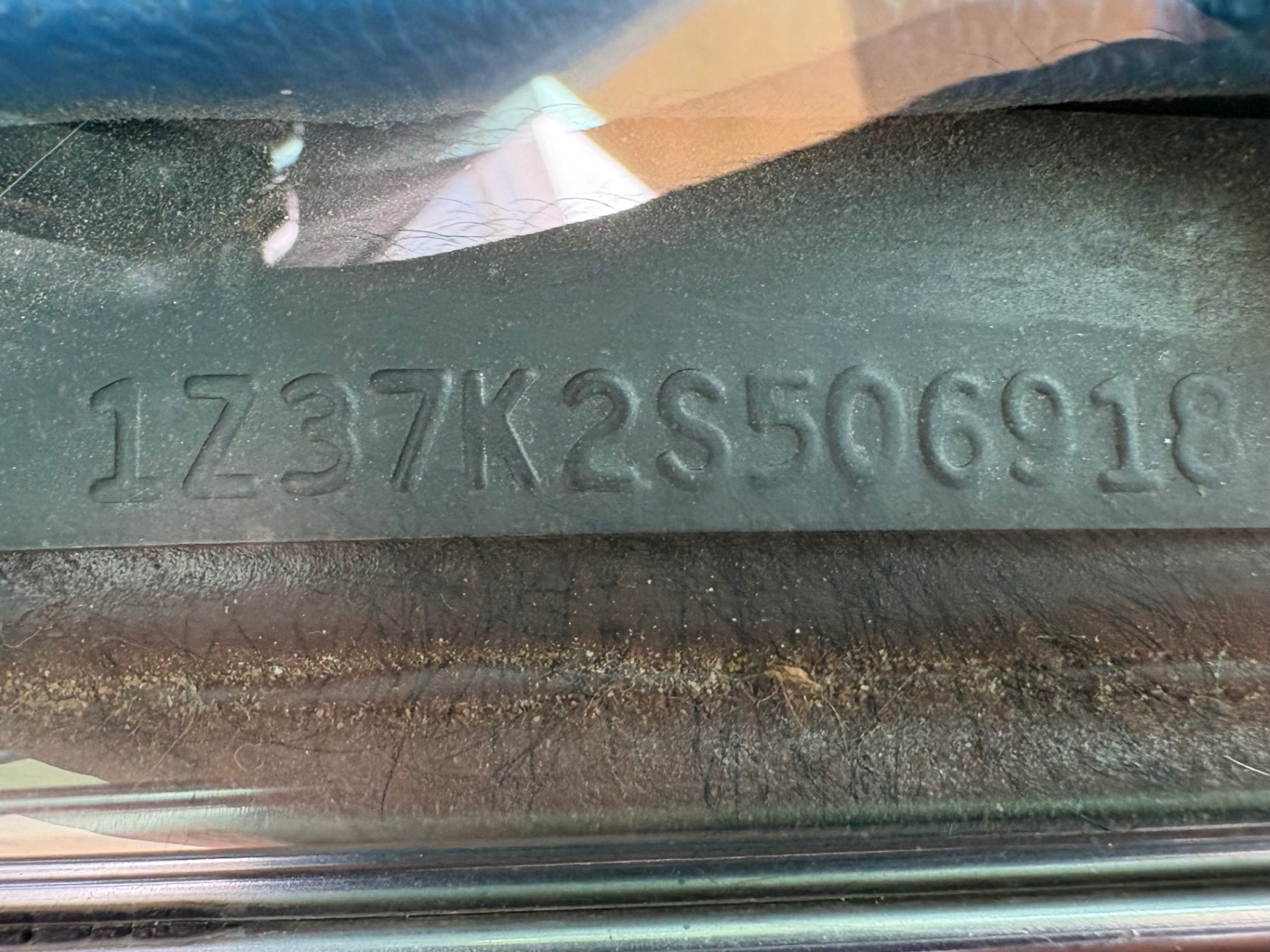
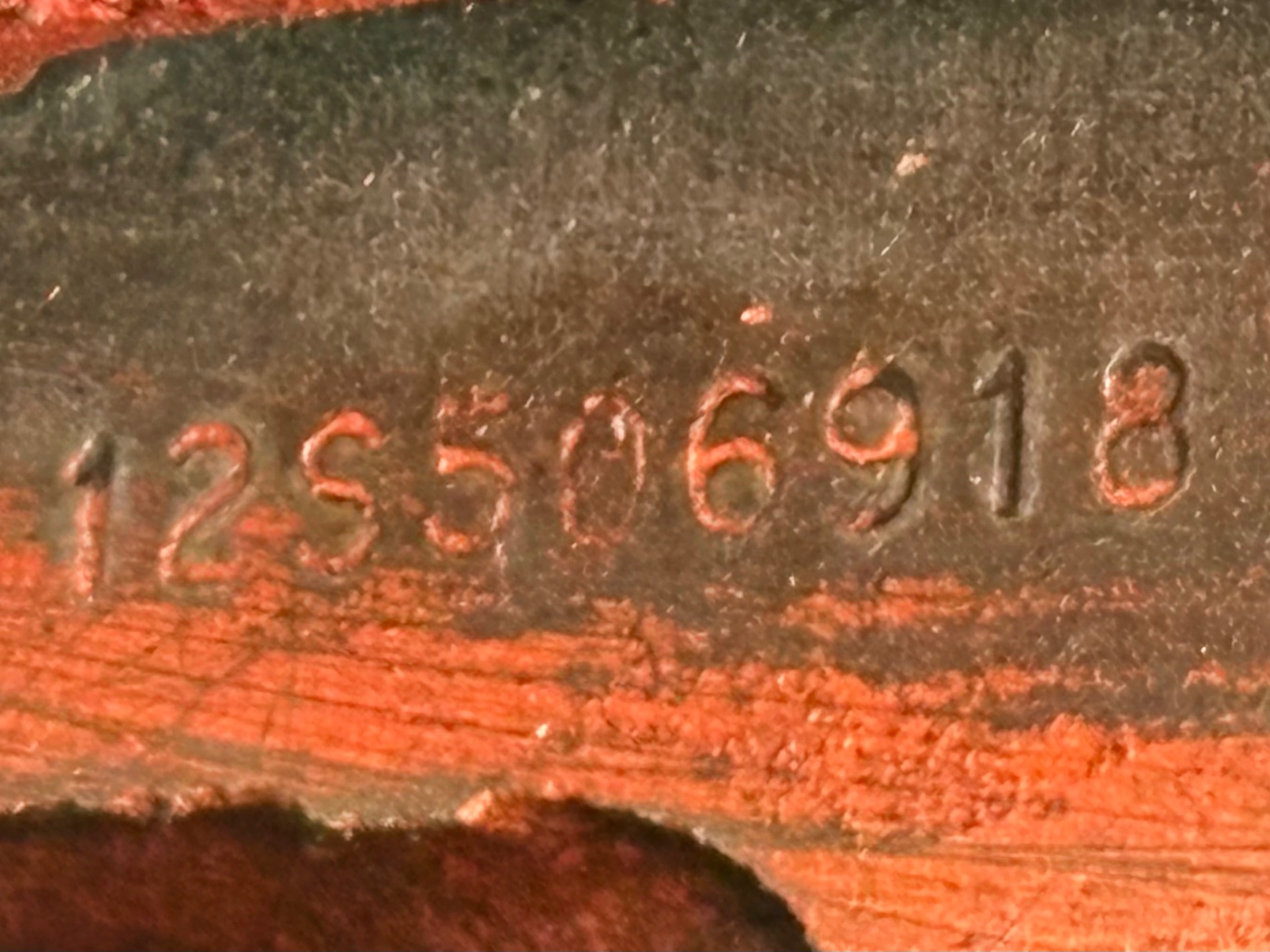
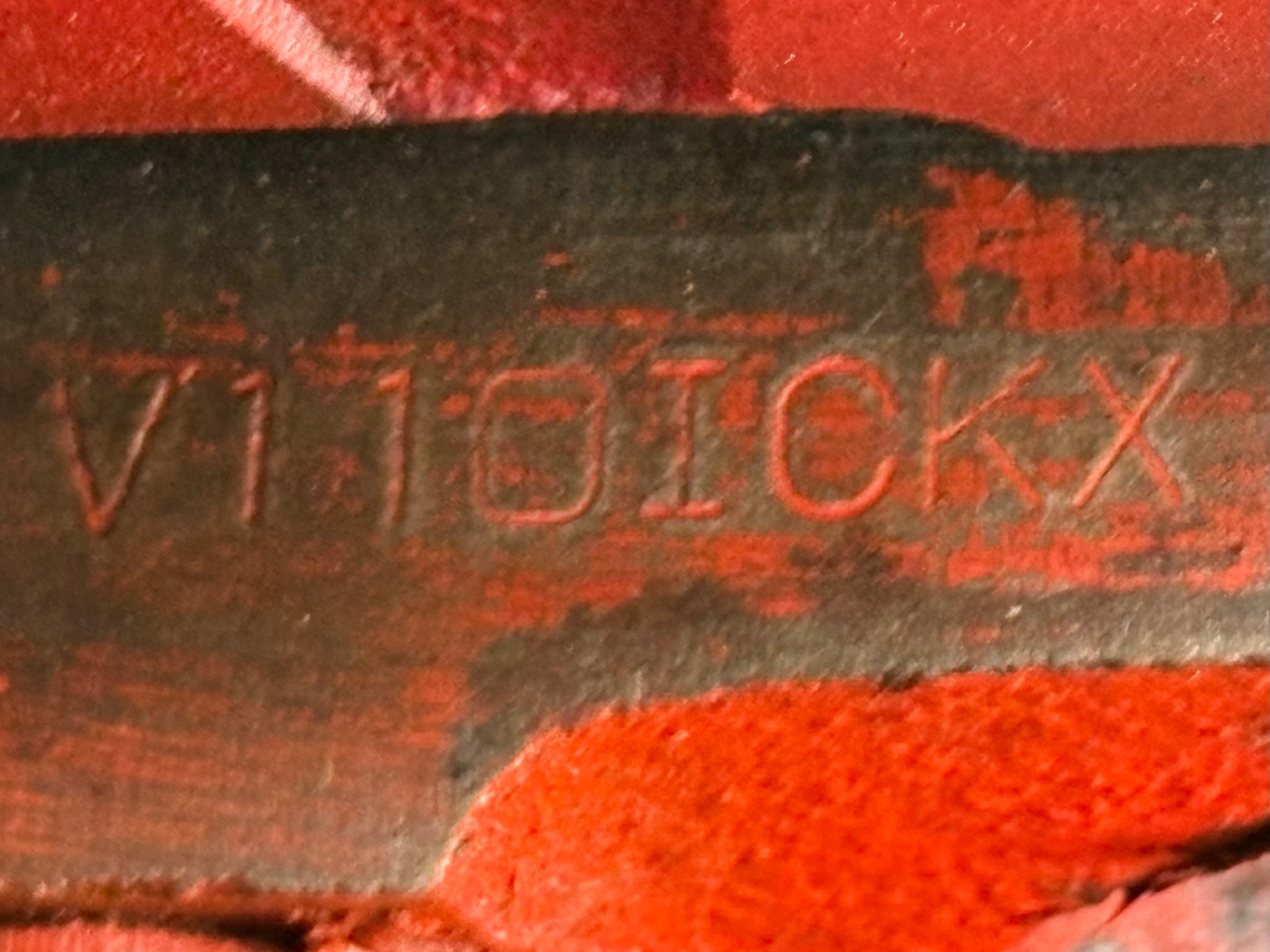
The VIN on this car decodes to confirm it was built at the St. Louis assembly plant, which was the only facility producing Corvettes at the time. The "K" in the engine position of the VIN confirms the 350/200hp LT-1-adjacent base small block application with automatic transmission, consistent with the TH400 documented on this car.
Features List
- Matching numbers 350ci 200hp V8
- Turbo-Hydramatic TH400 3-speed automatic transmission
- Removable T-tops
- Four-wheel disc brakes
- Power steering
- Power brakes
- Air conditioning
- Dual exhaust
- Factory gauges (fuel, water temp, oil pressure, battery, clock)
- 4-barrel carburetor
- AM/FM radio
- Bucket seats
- Center console
- Rally wheels
- BFGoodrich Radial T/A tires
- Clean undercarriage
Mechanical
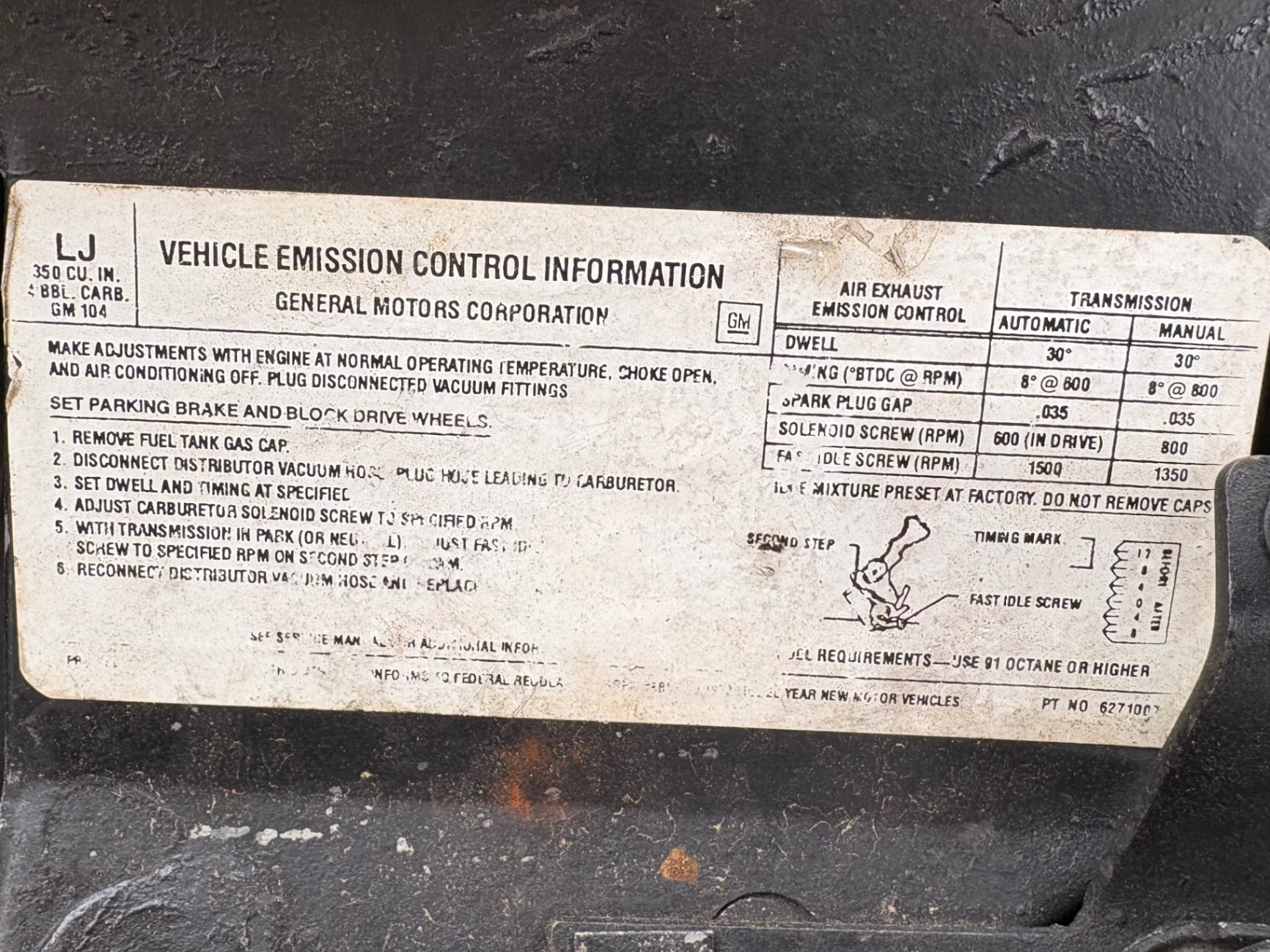
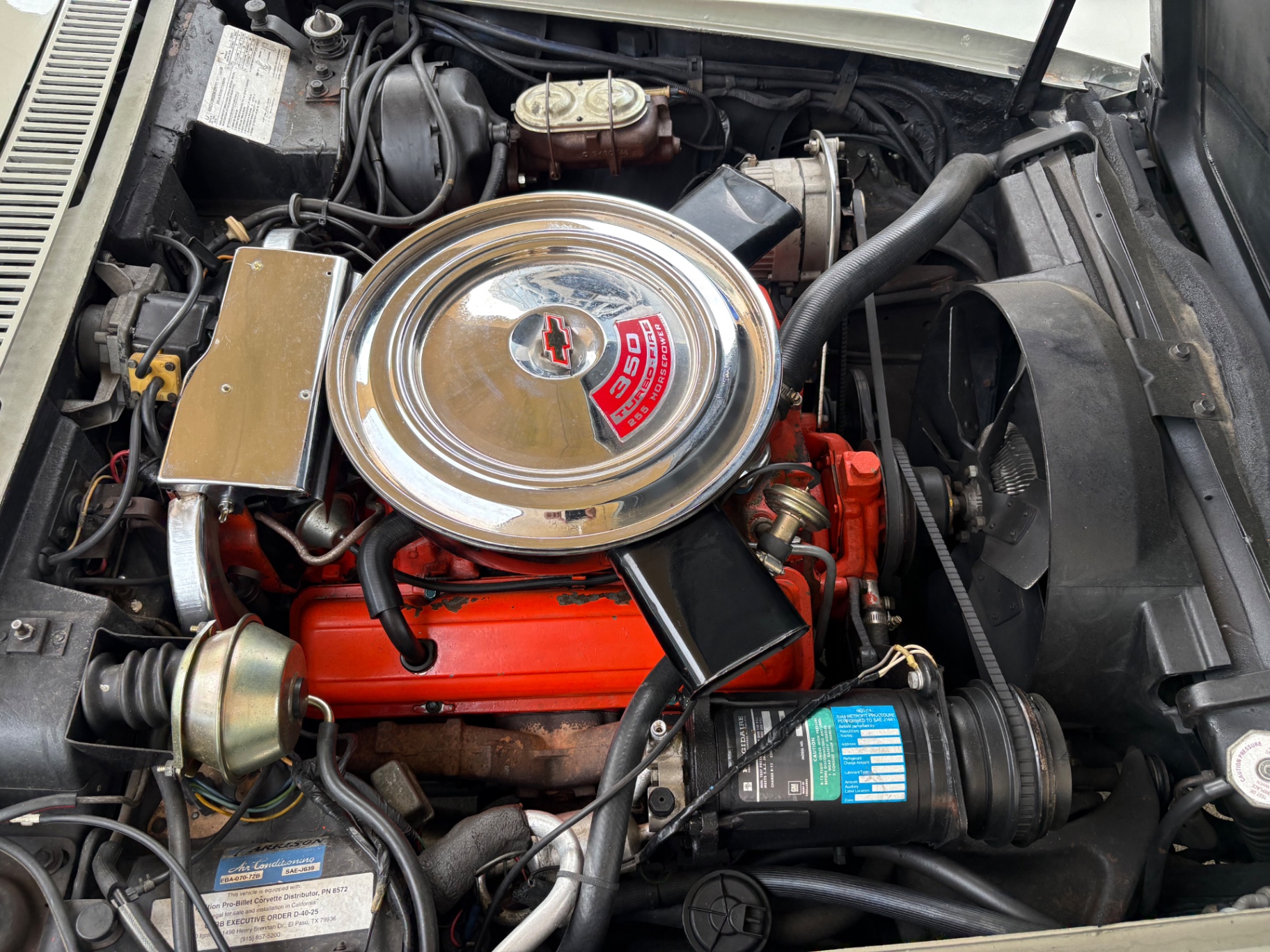
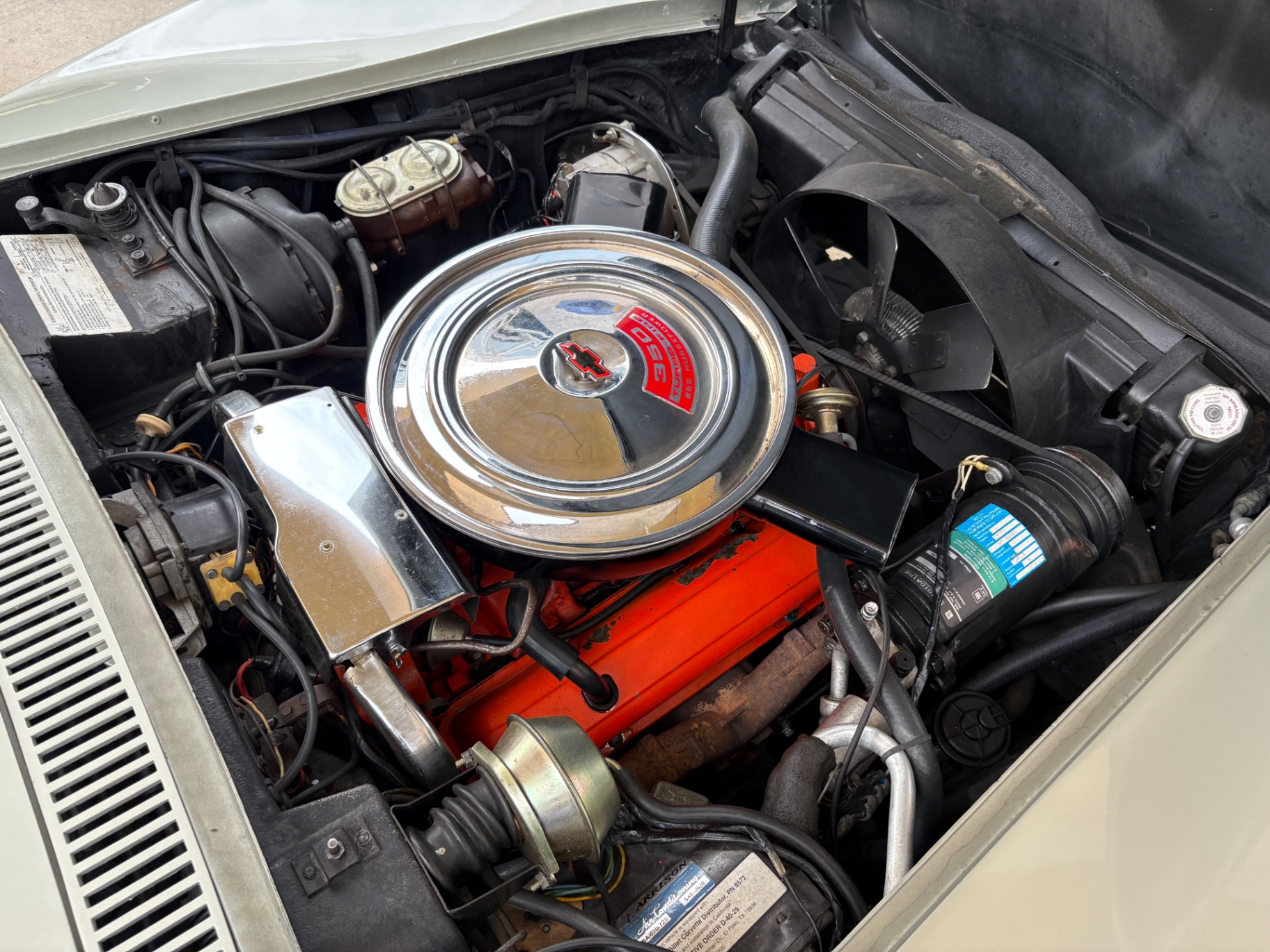
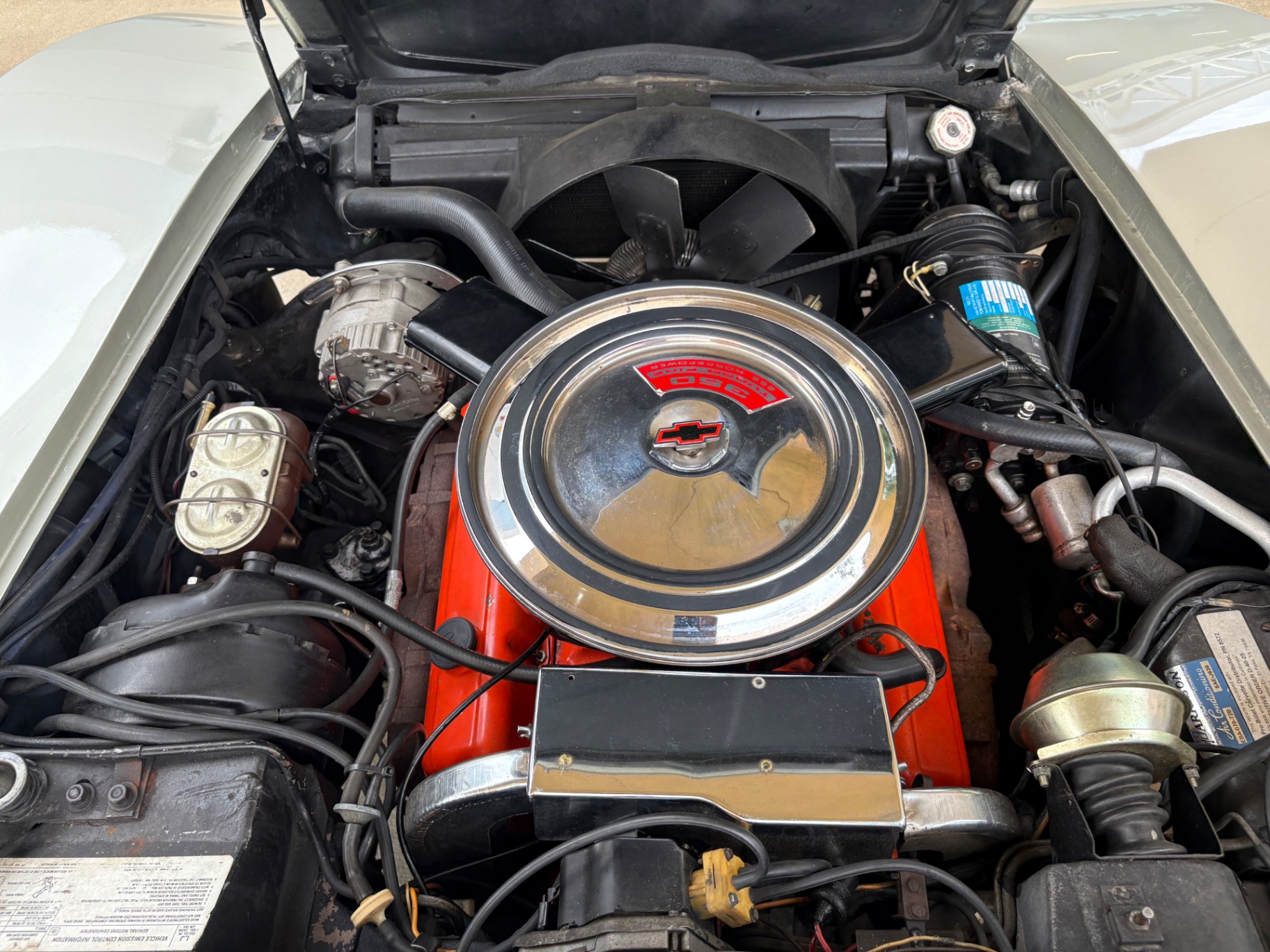
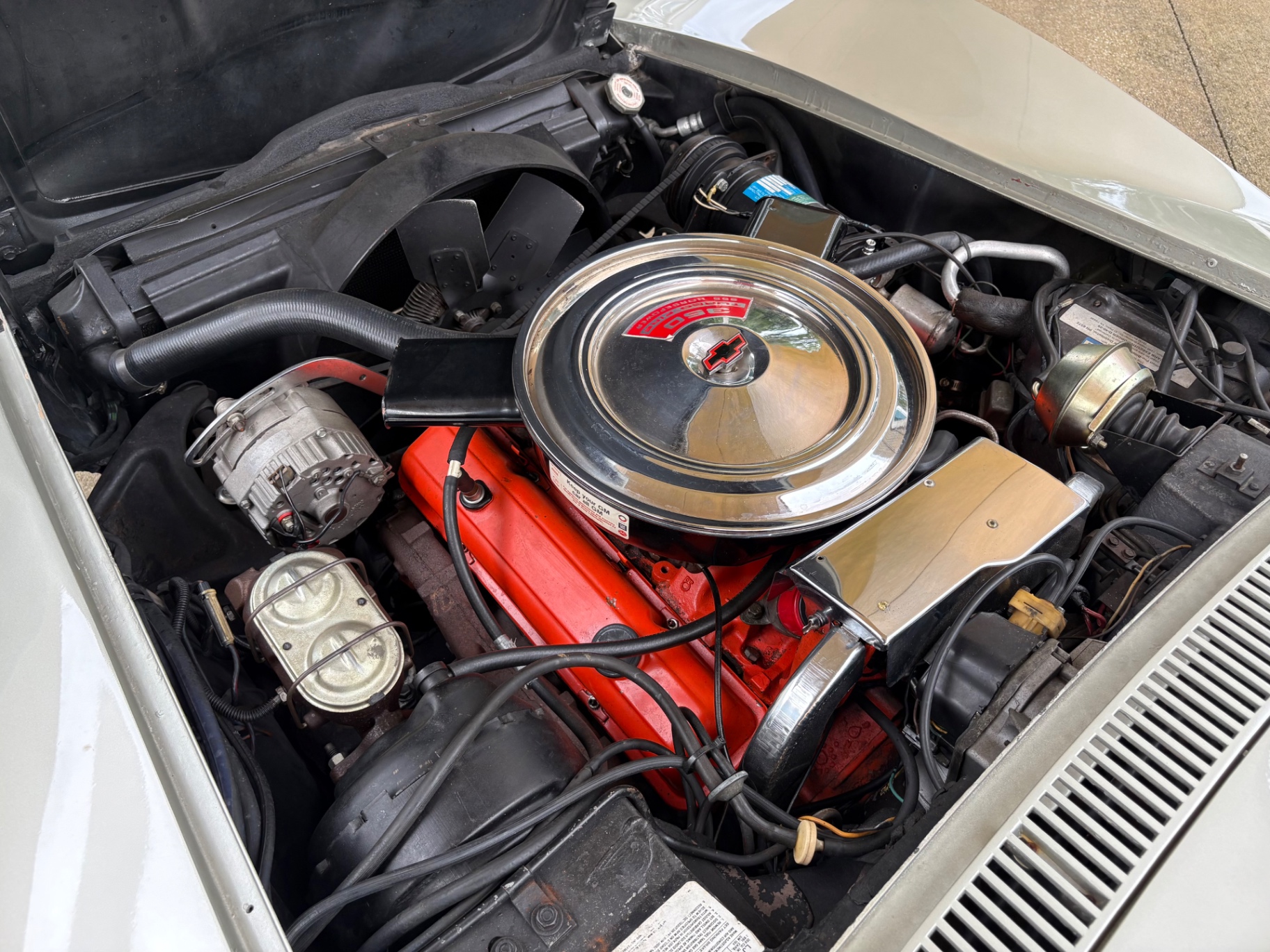
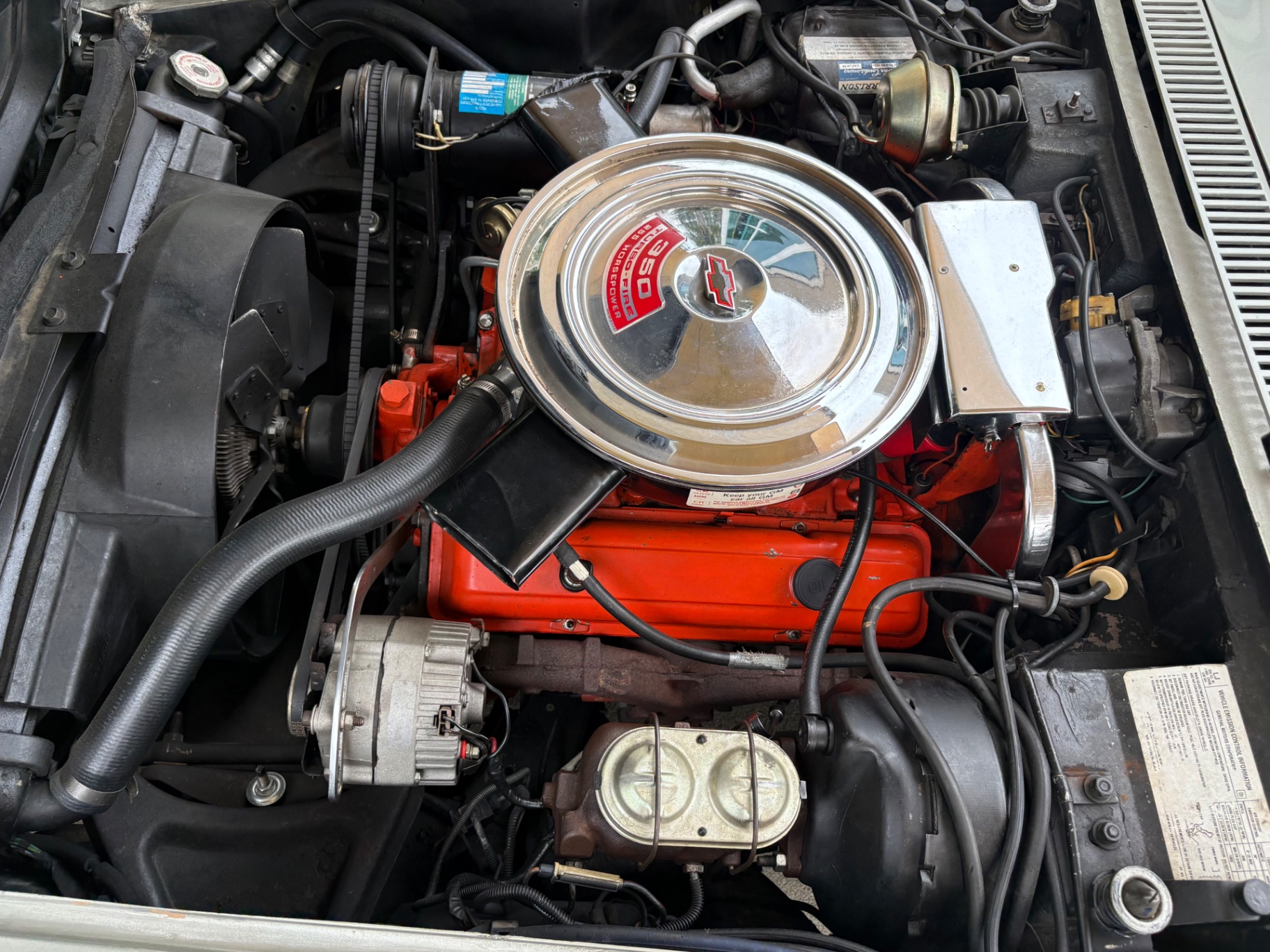
The 350 cubic inch V8 under this hood is the car's original engine, and it is wearing its correct Corvette-spec red valve covers and chrome air cleaner lid. The 4-barrel carburetor feeds through a single round chrome air cleaner — a period-correct presentation that judges and detail-oriented buyers will recognize immediately. The engine bay retains factory-correct components including the original emissions sticker and the Delcotron alternator typical of 1972 production.
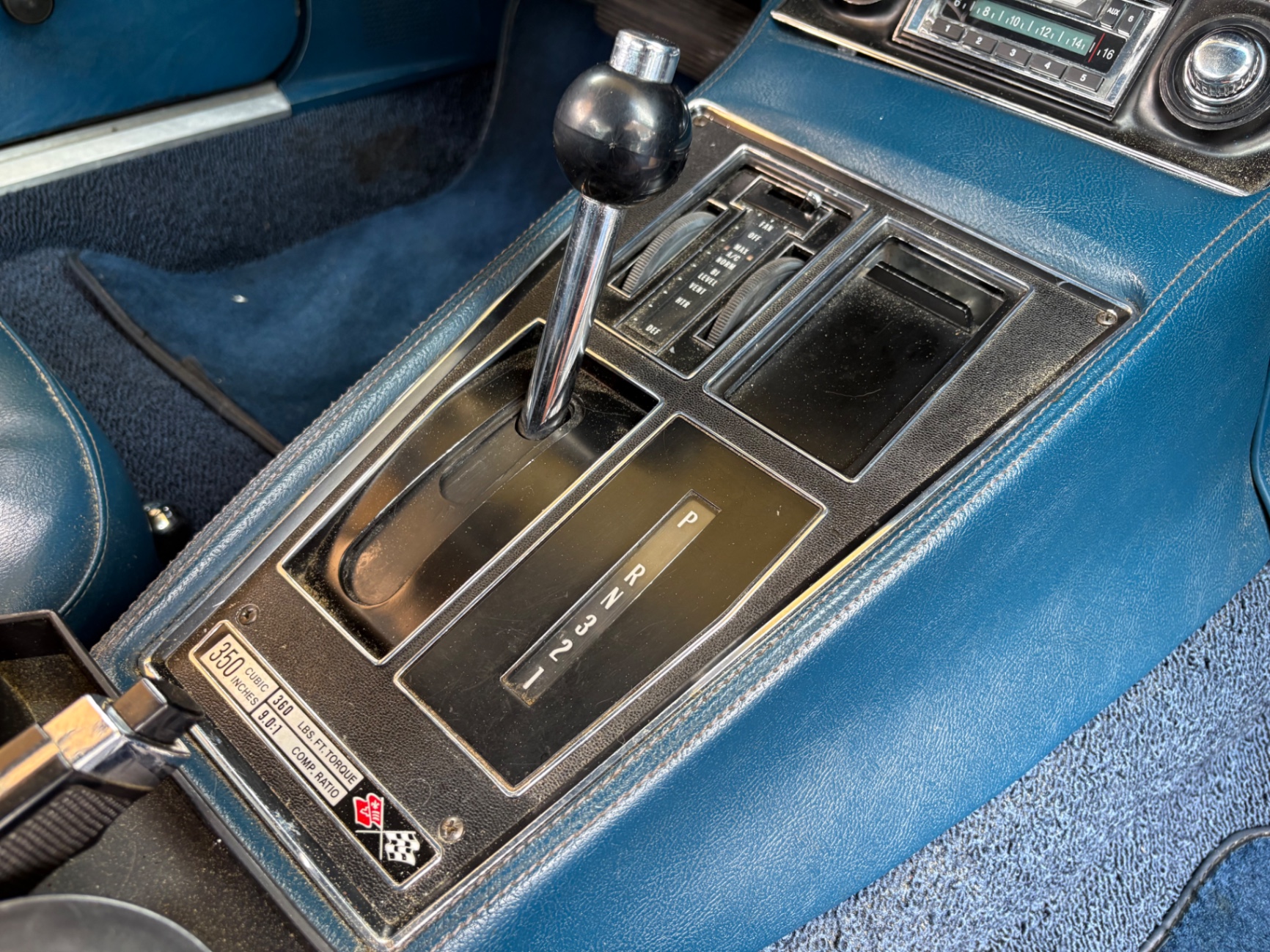
The TH400 Turbo-Hydramatic 3-speed automatic was a well-regarded transmission in its day and remains a durable, proven unit. It was a popular choice among buyers who wanted the Corvette experience without the effort of a manual — and it was not a decontented option. The TH400 was used across GM's performance lineup and is known for handling power reliably. The console shifter operates through a gate, and the indicator panel is visible and intact in the photos.
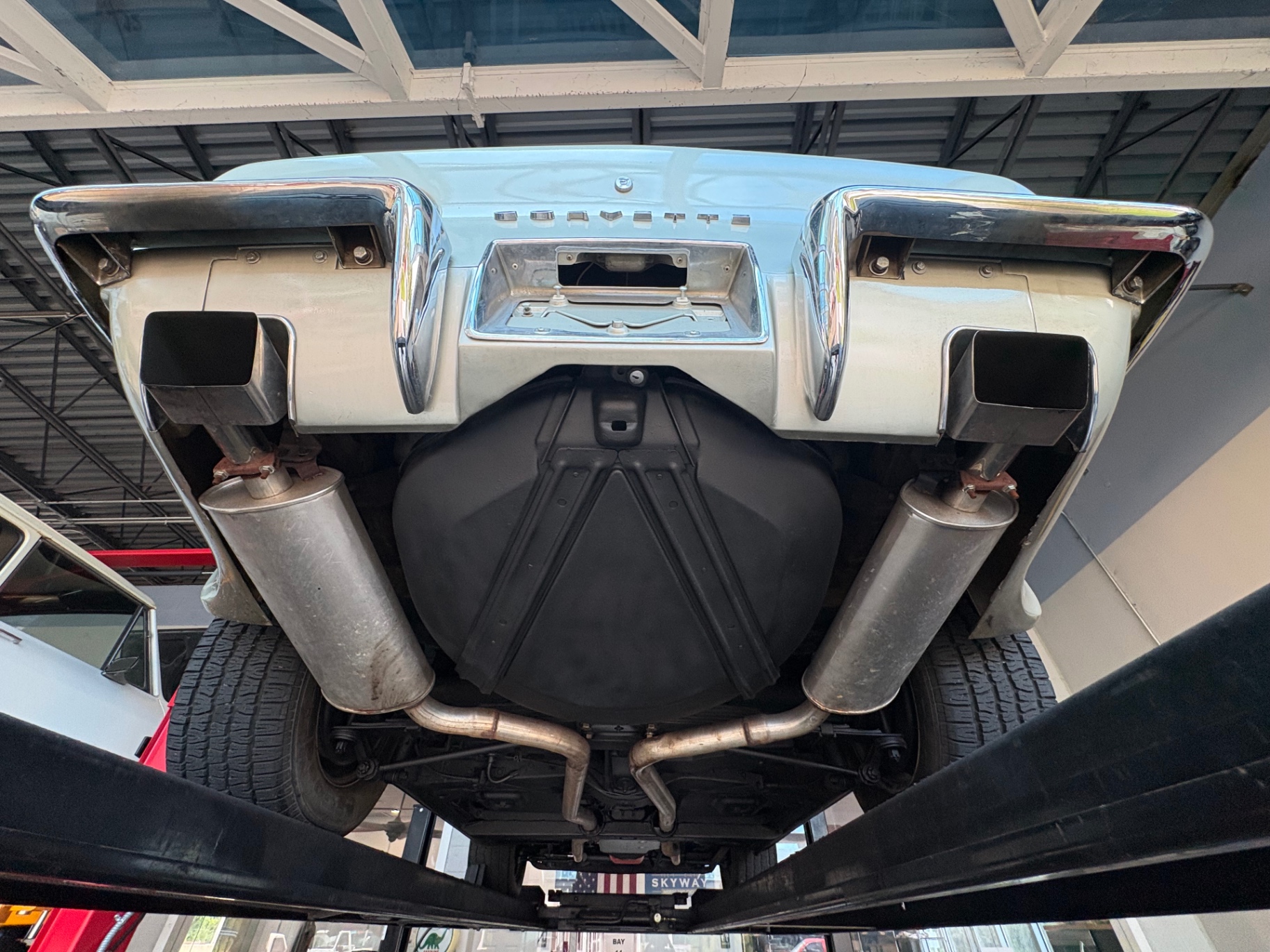
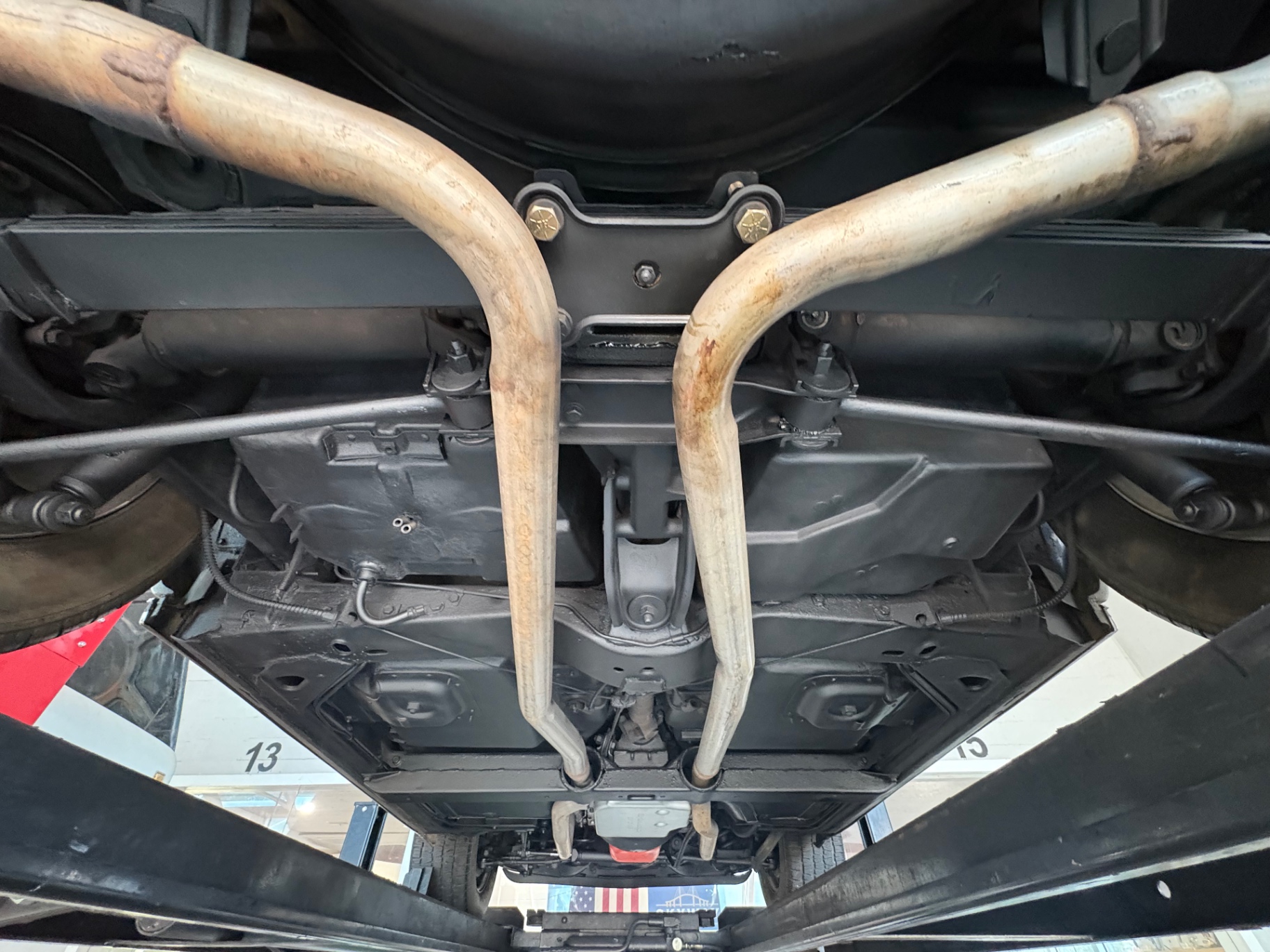
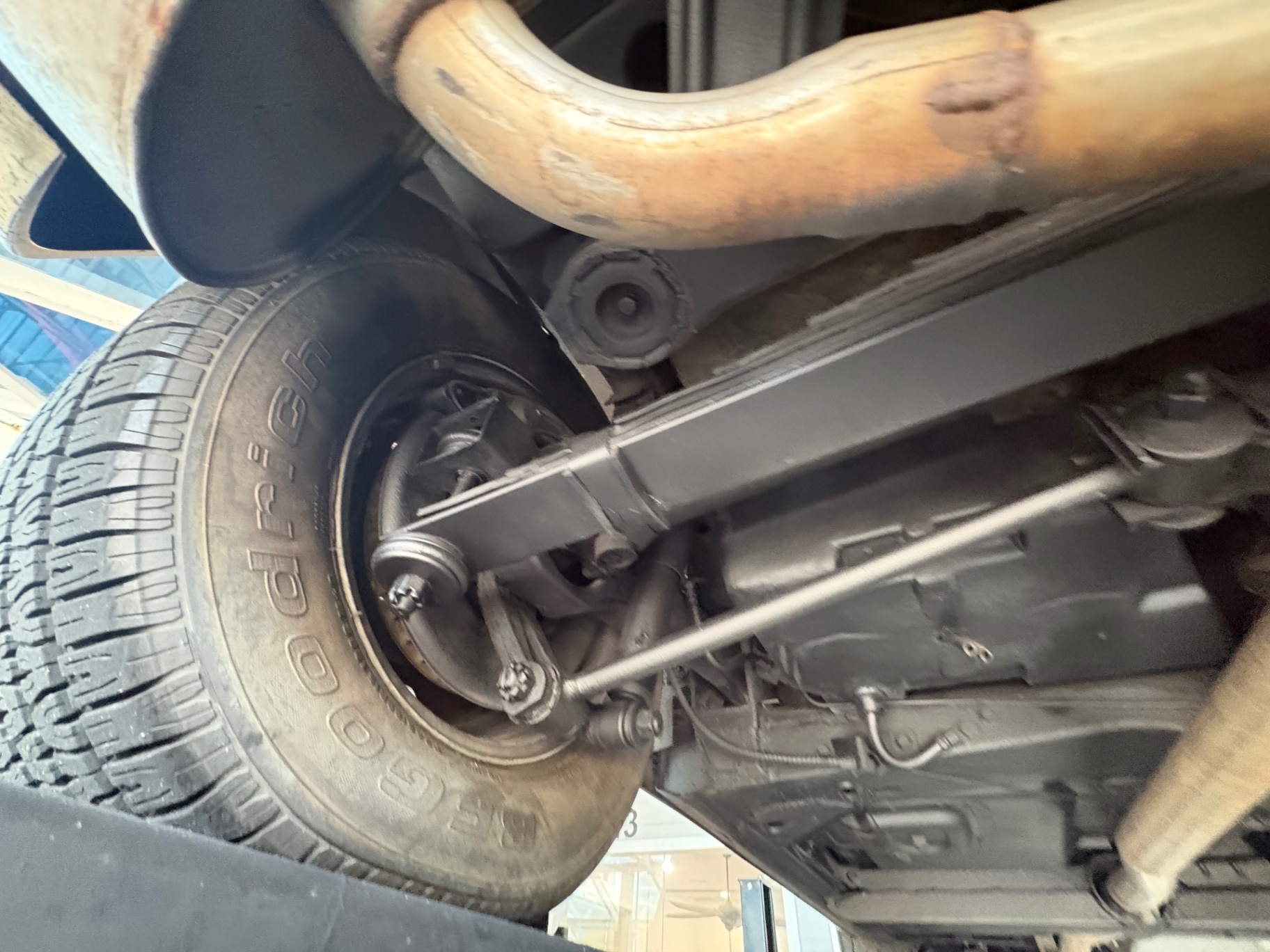
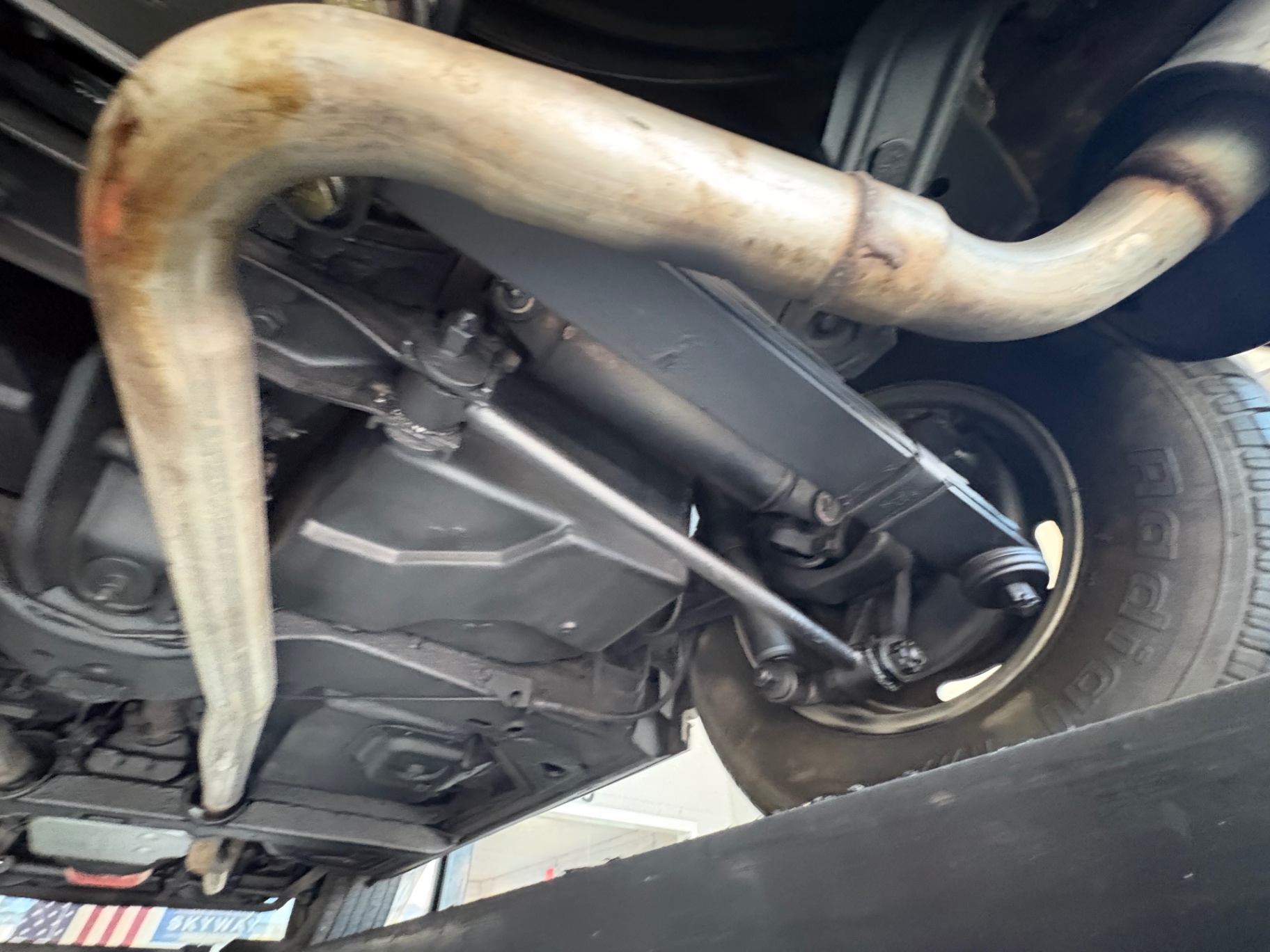
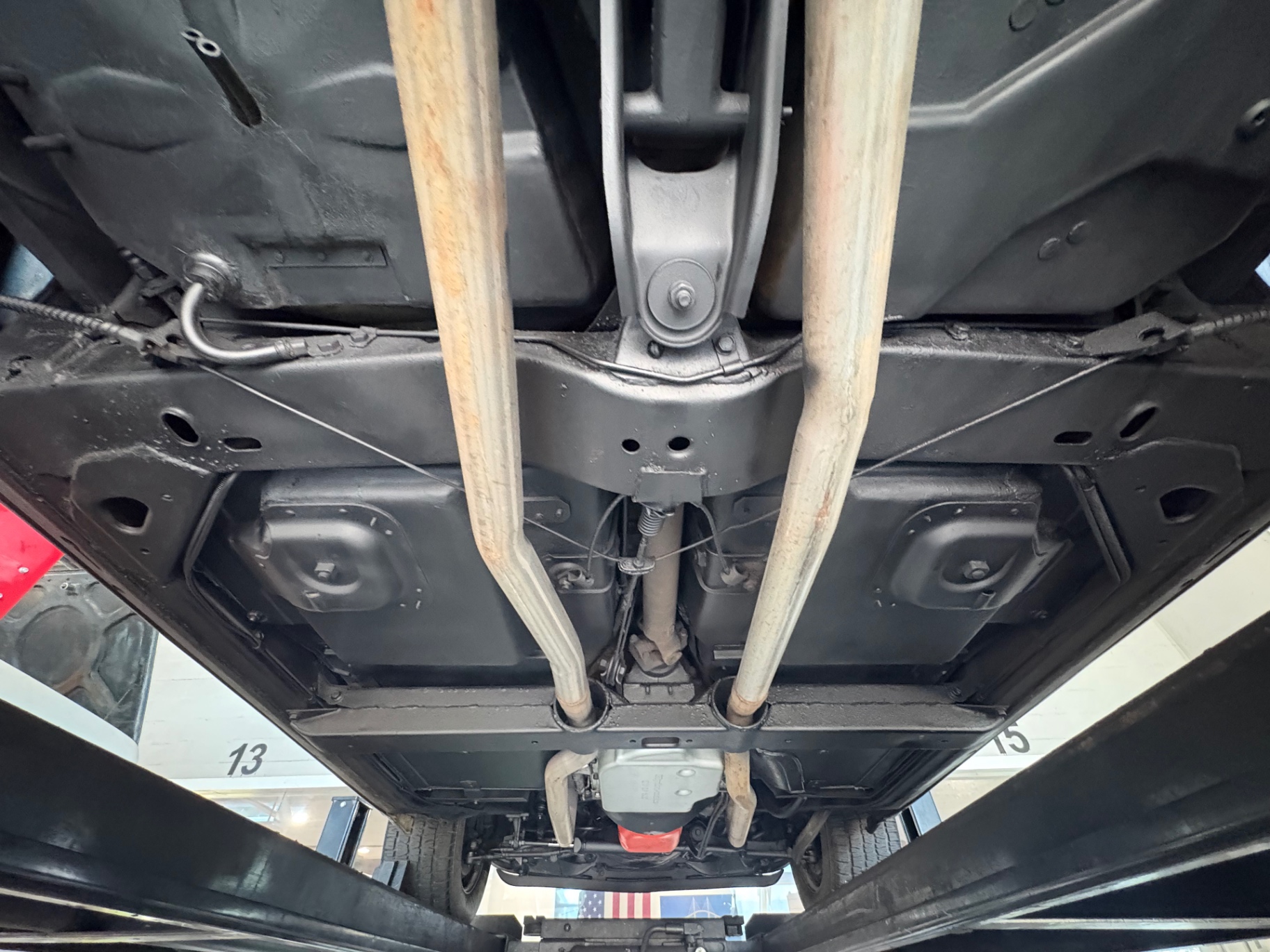
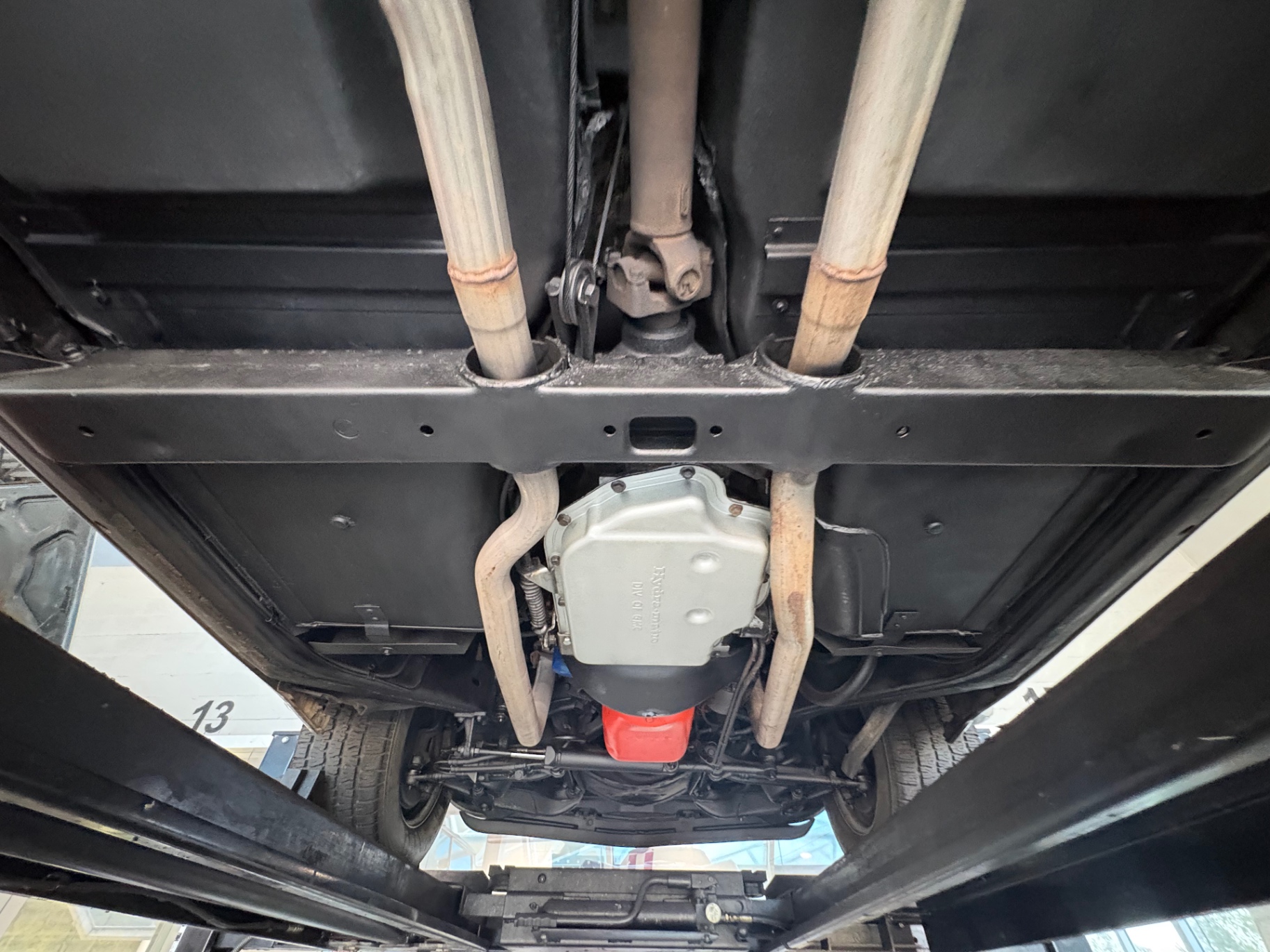
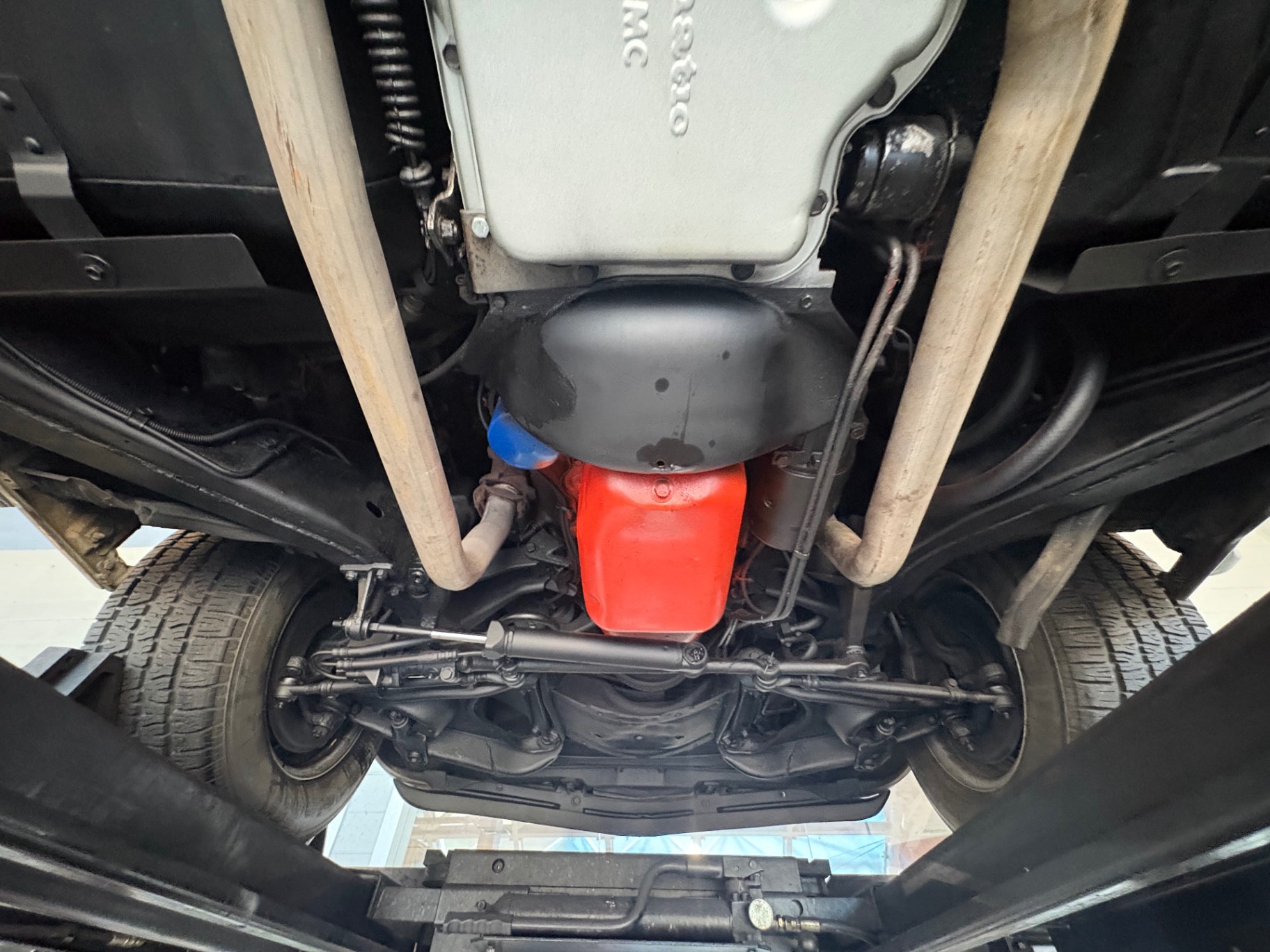
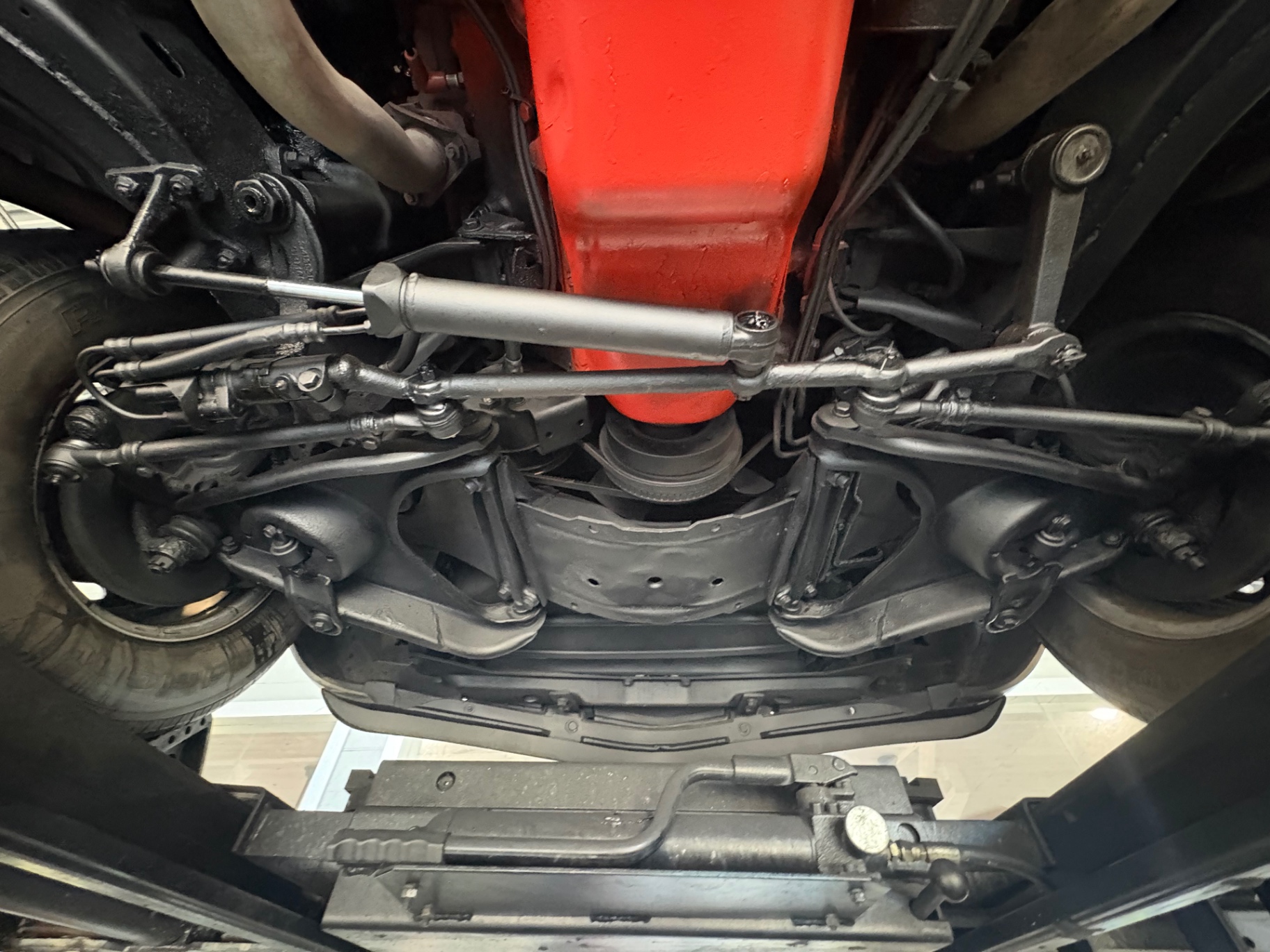
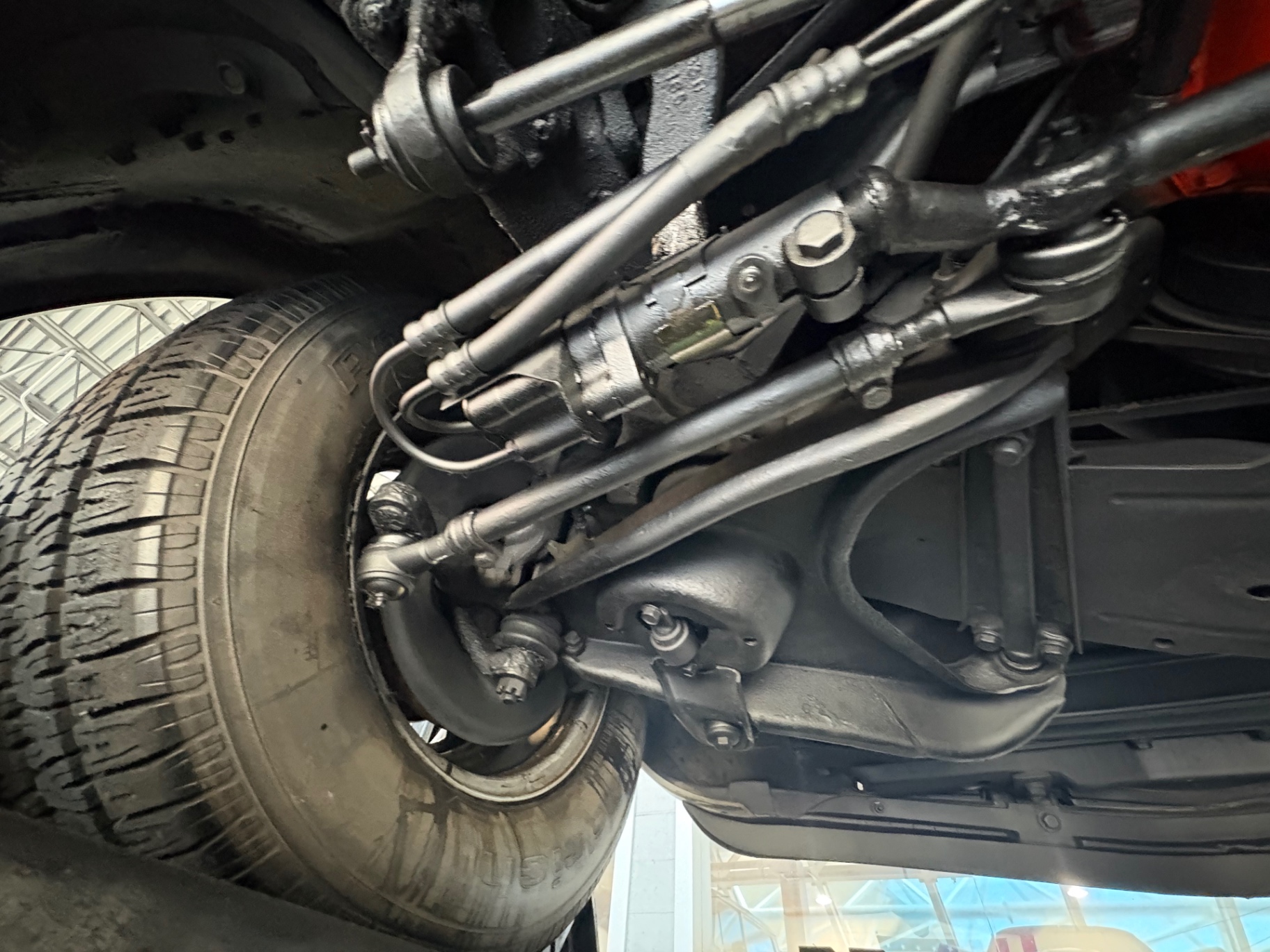
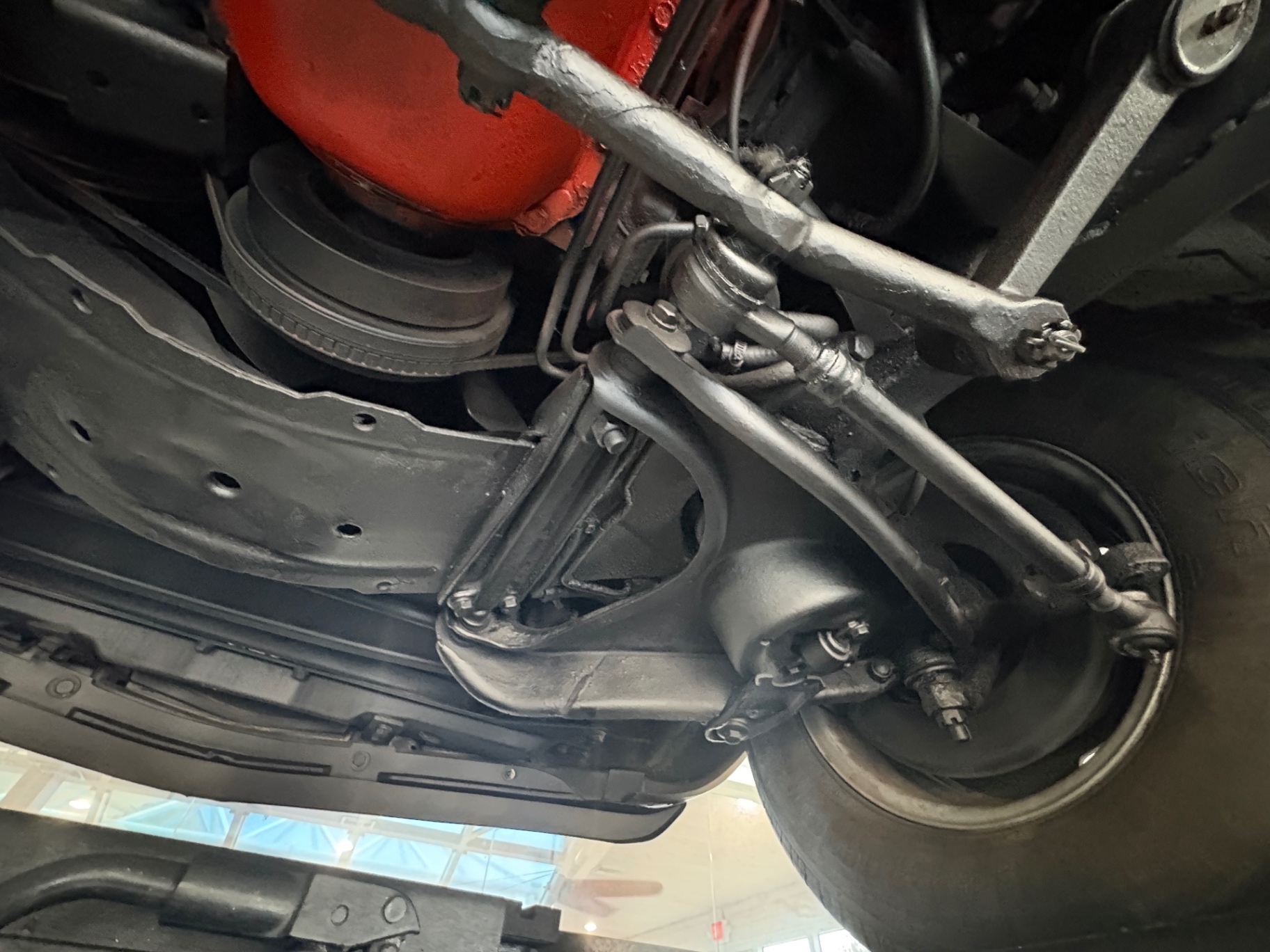
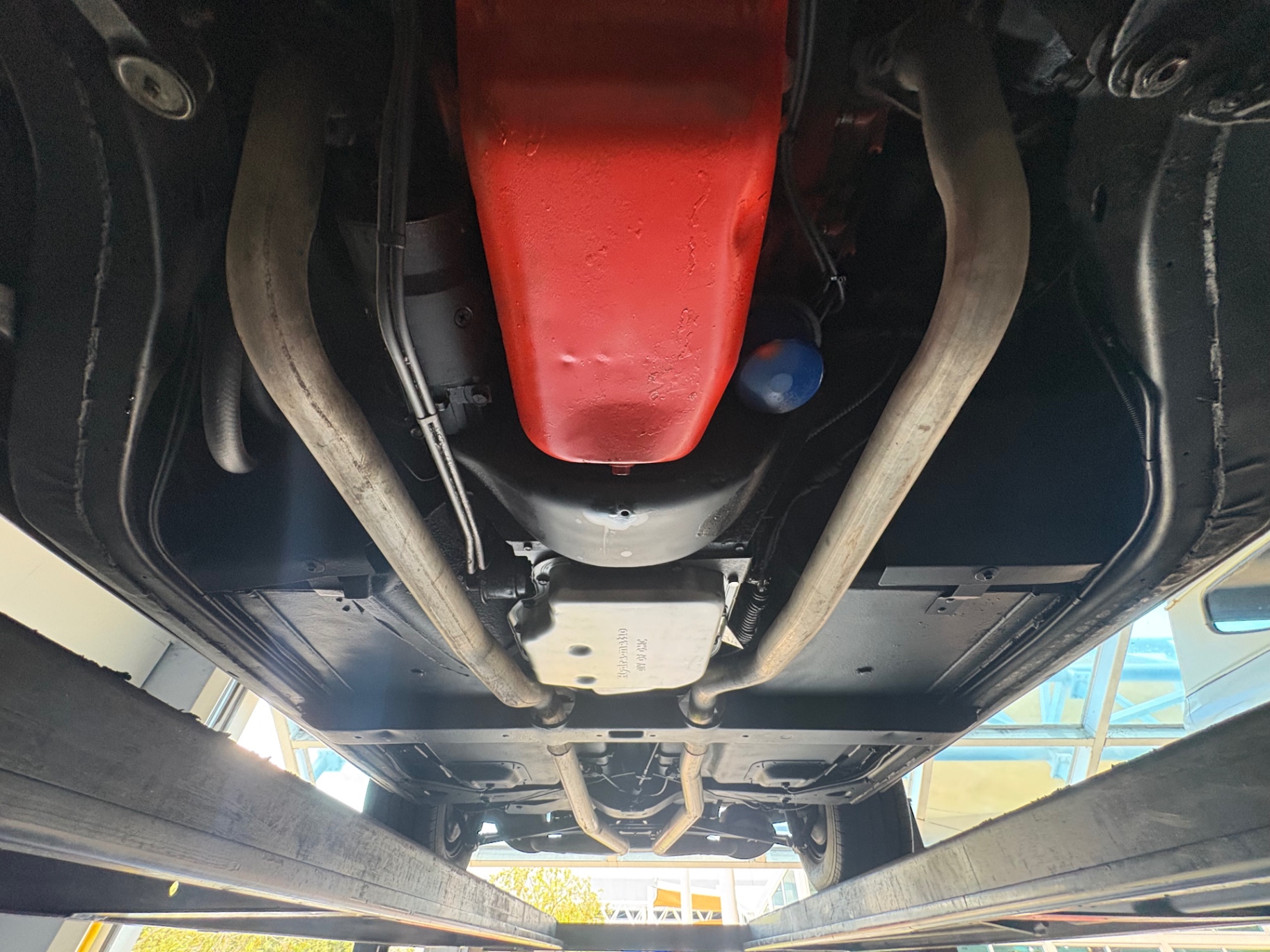
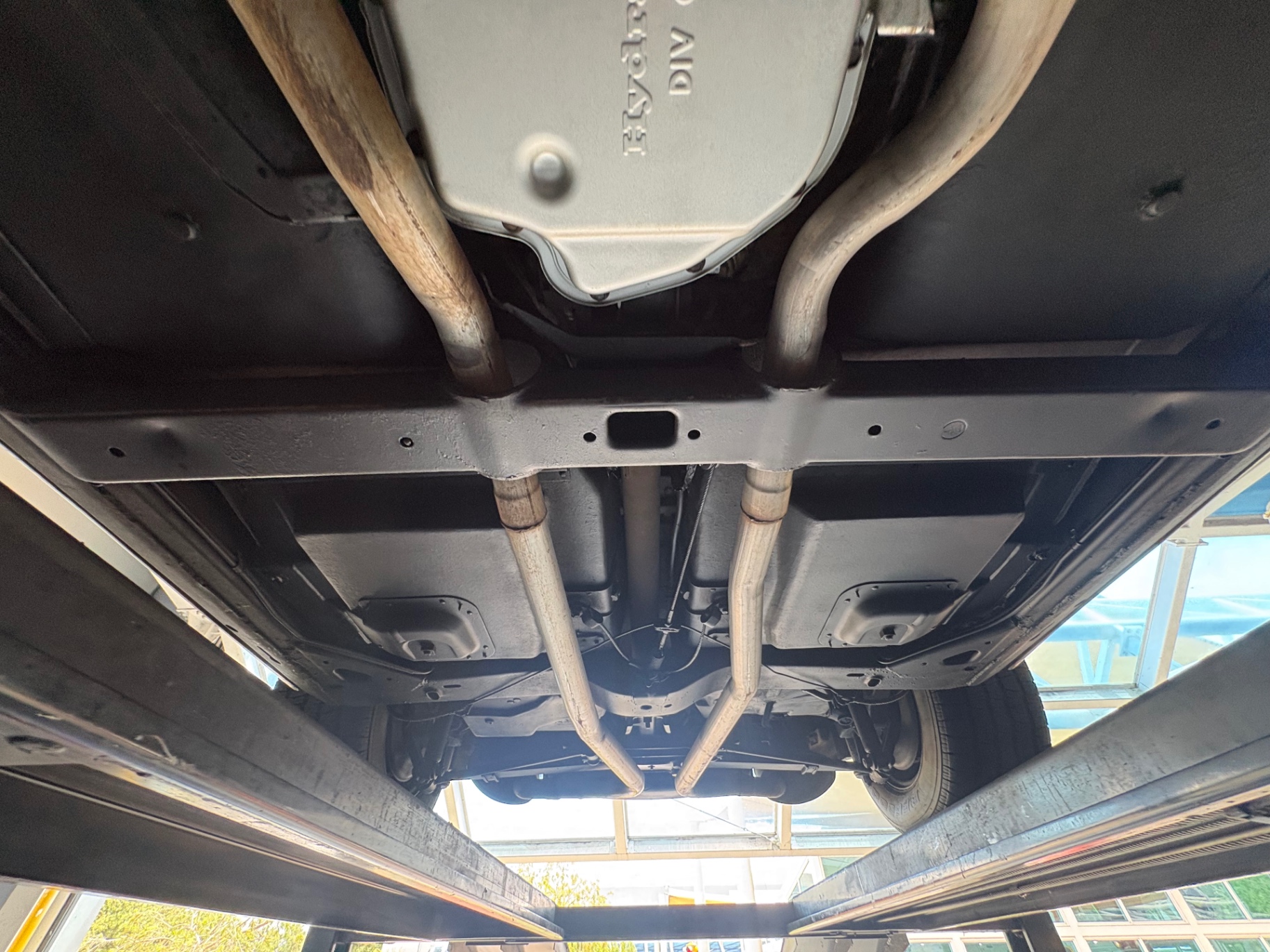
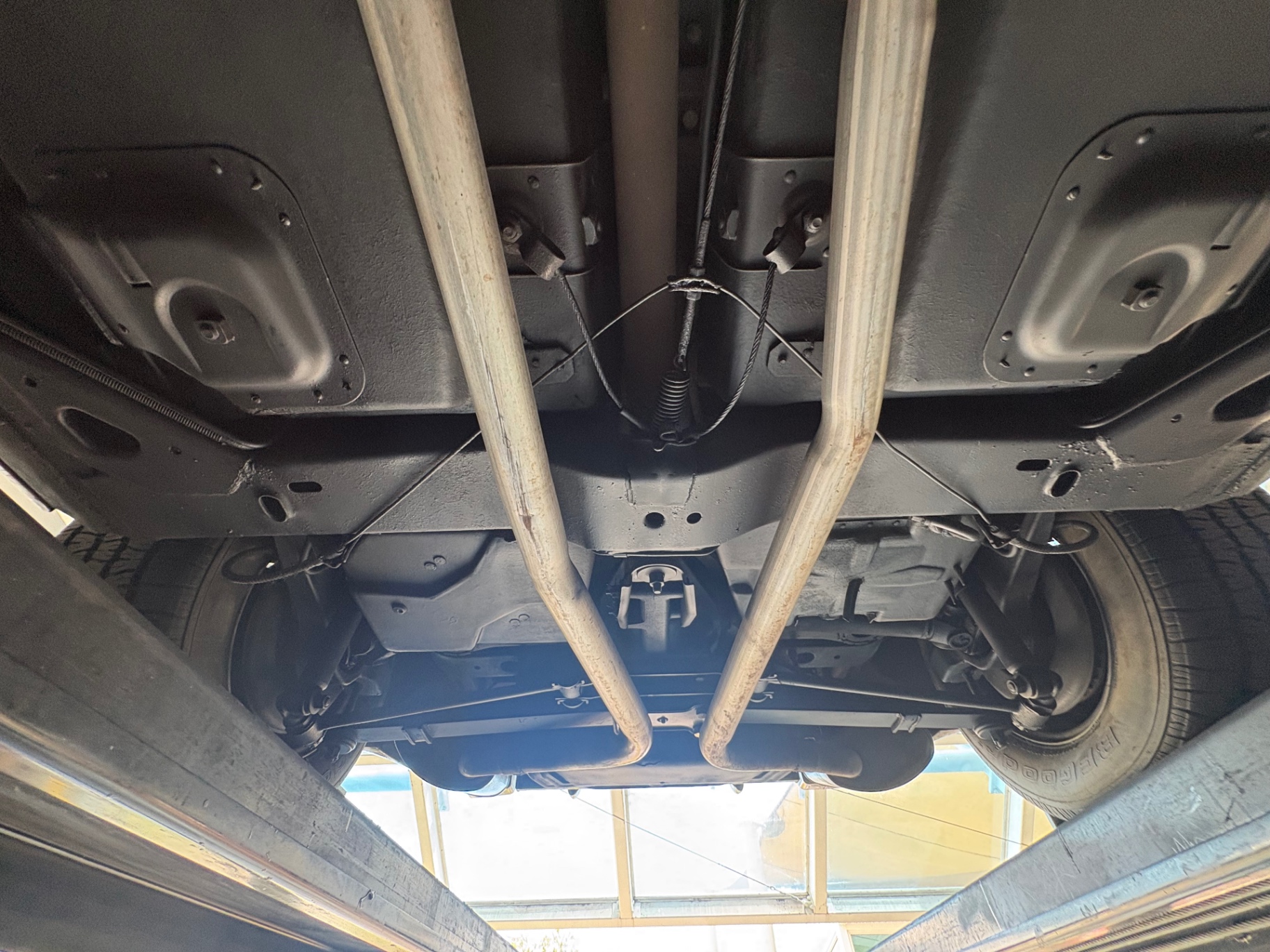
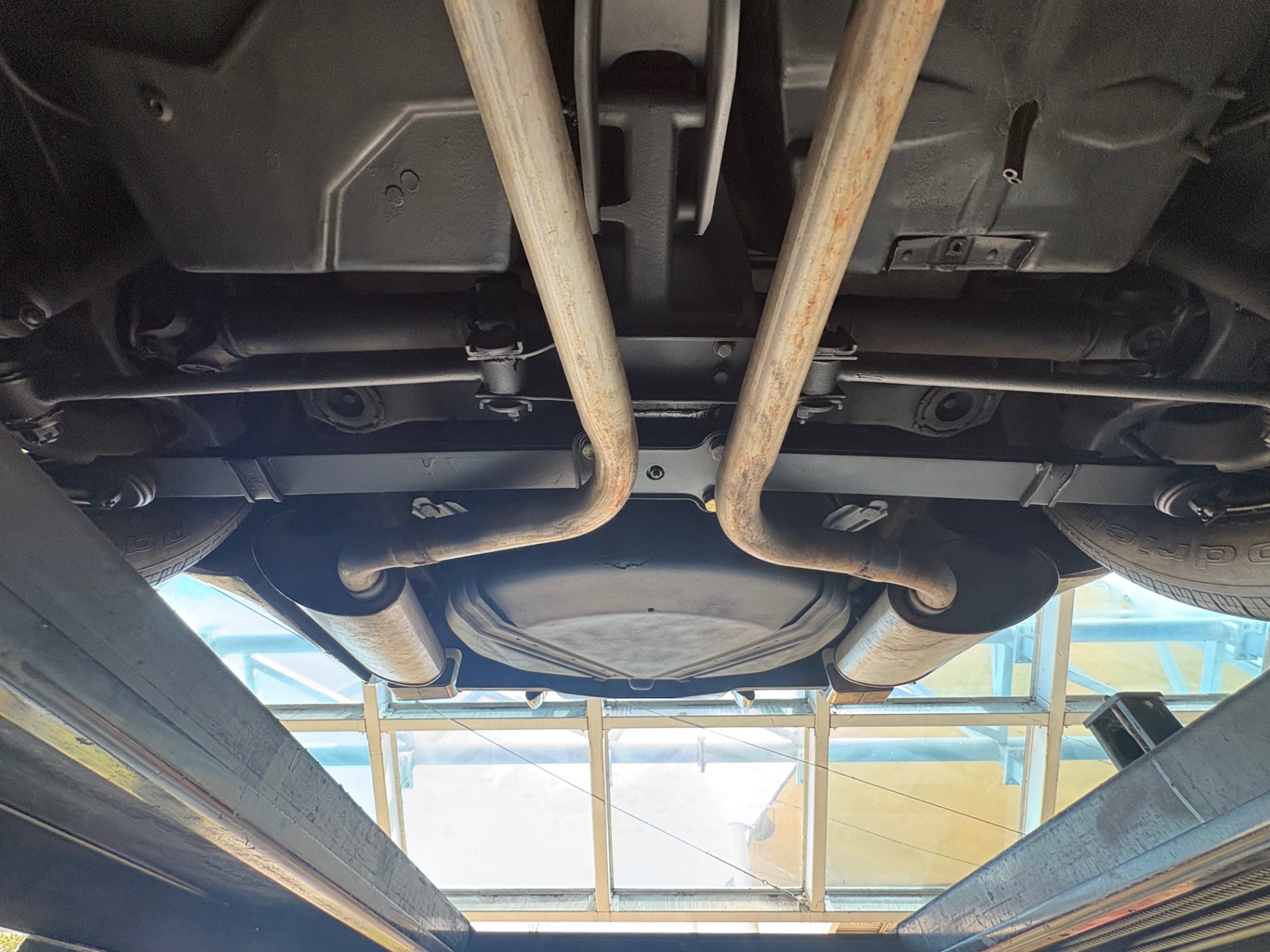
Four-wheel disc brakes were standard on every 1972 Corvette, one of the features that set the car apart from virtually every other American production vehicle of the era. Power-assisted braking and power steering were both optioned on this car, making it a comfortable driver rather than a track-day weapon. The undercarriage photographs show a clean, well-preserved floor pan with no visible rust, solid exhaust routing, and suspension components that appear unmolested. The independent rear suspension — a Corvette hallmark since 1963 — is clearly visible and shows no signs of damage or major repair. BFGoodrich Radial T/A tires, a classic and appropriate choice for a car of this vintage, are fitted at all four corners.
Interior
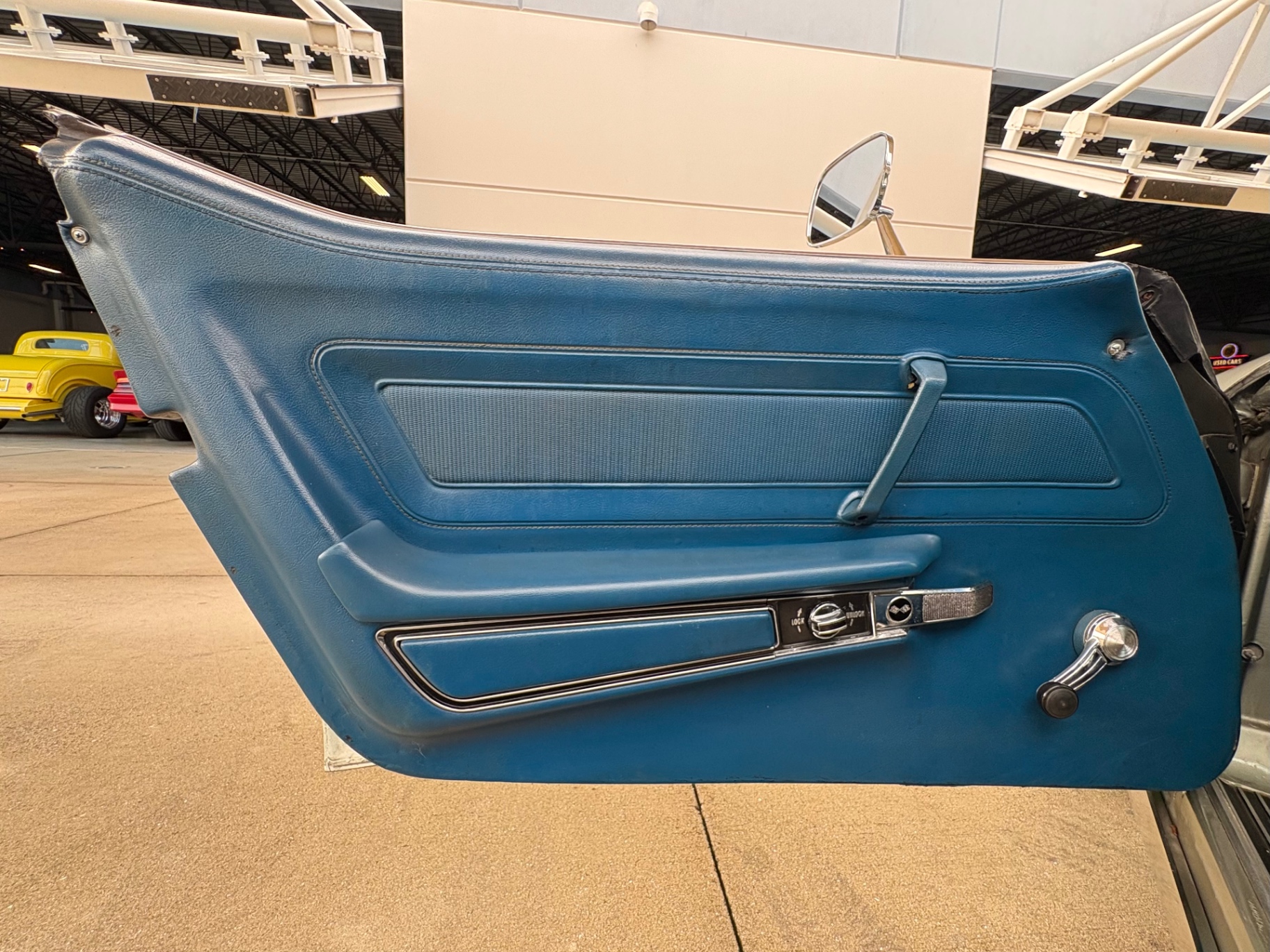
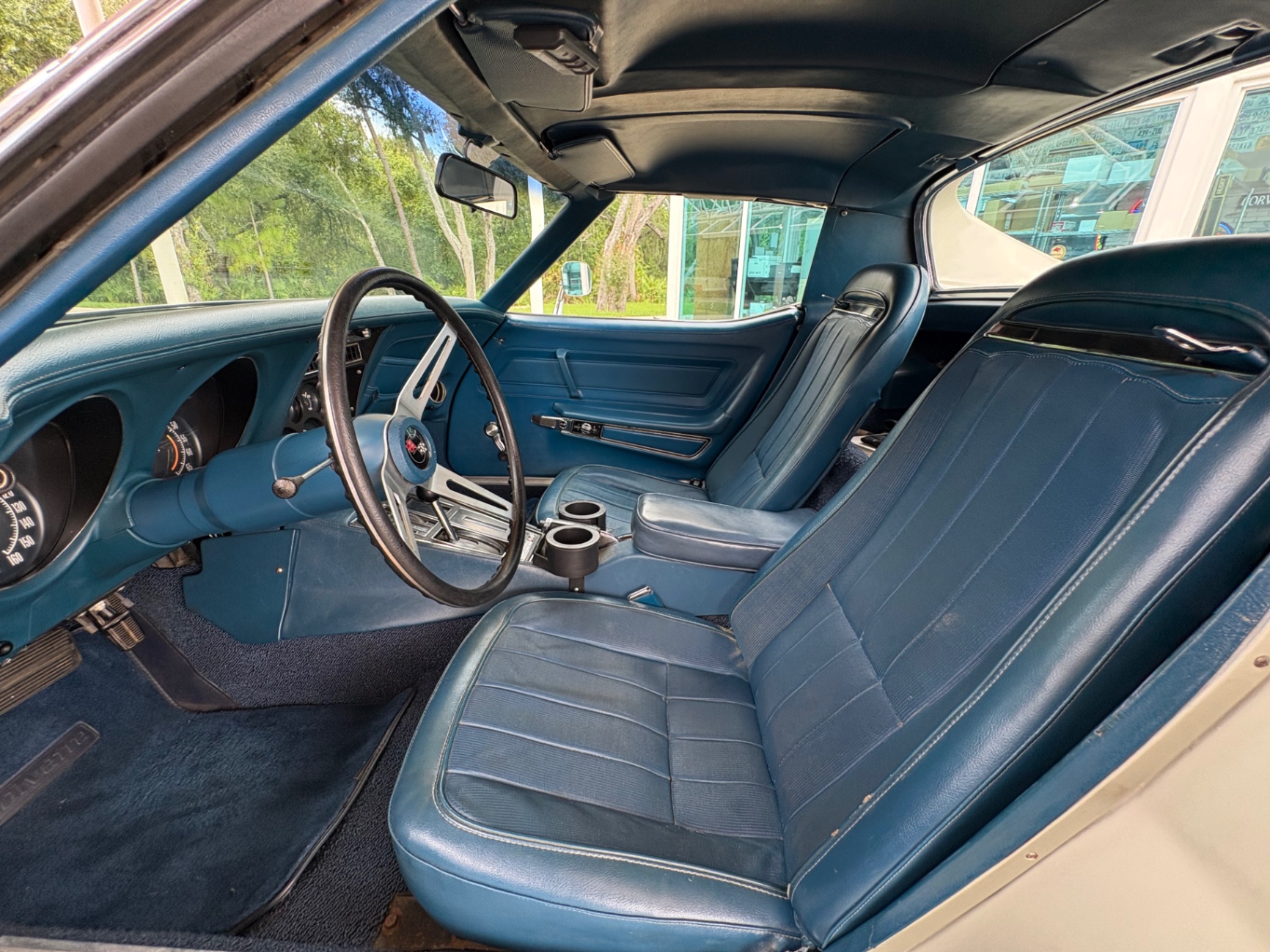
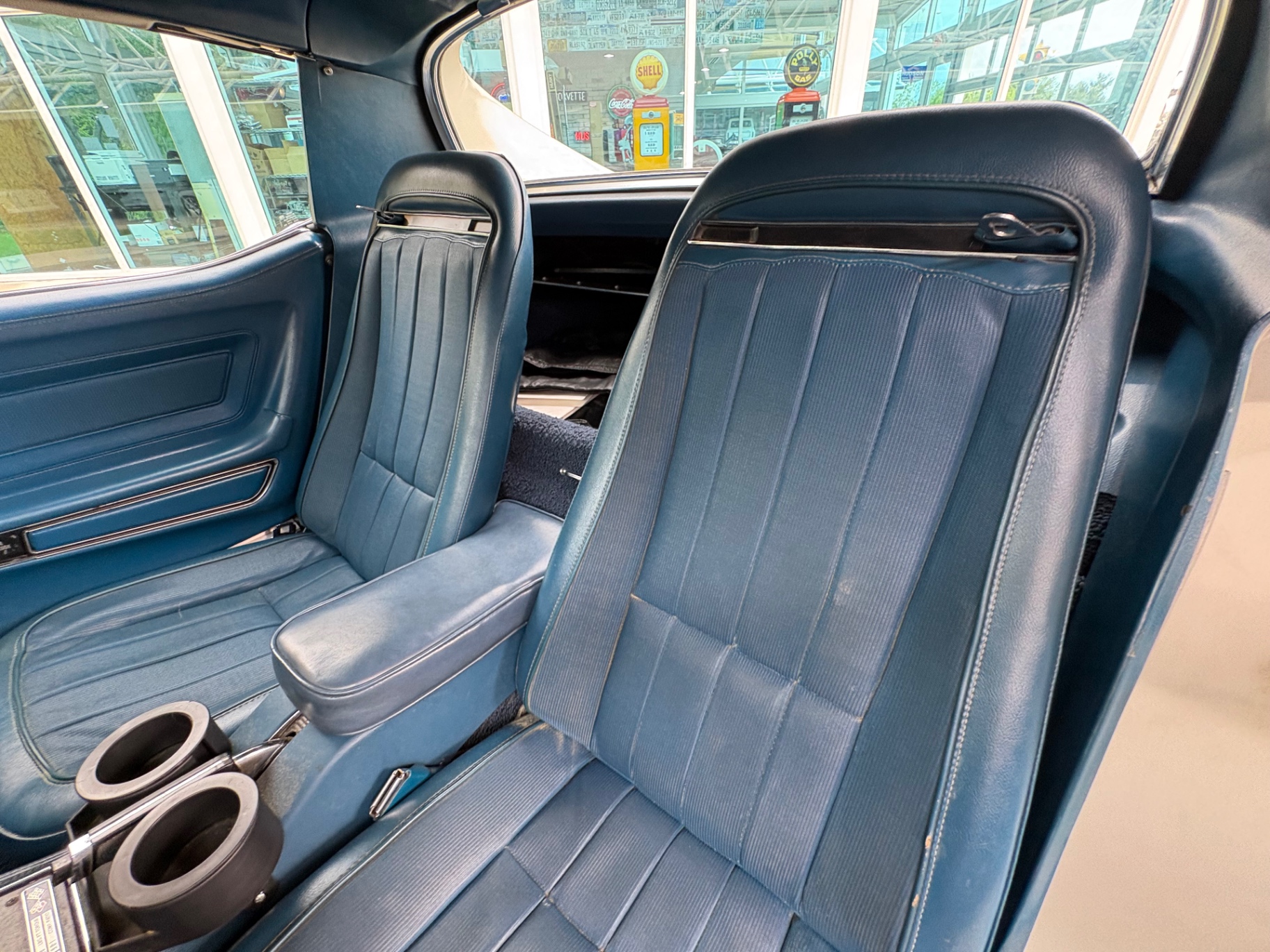
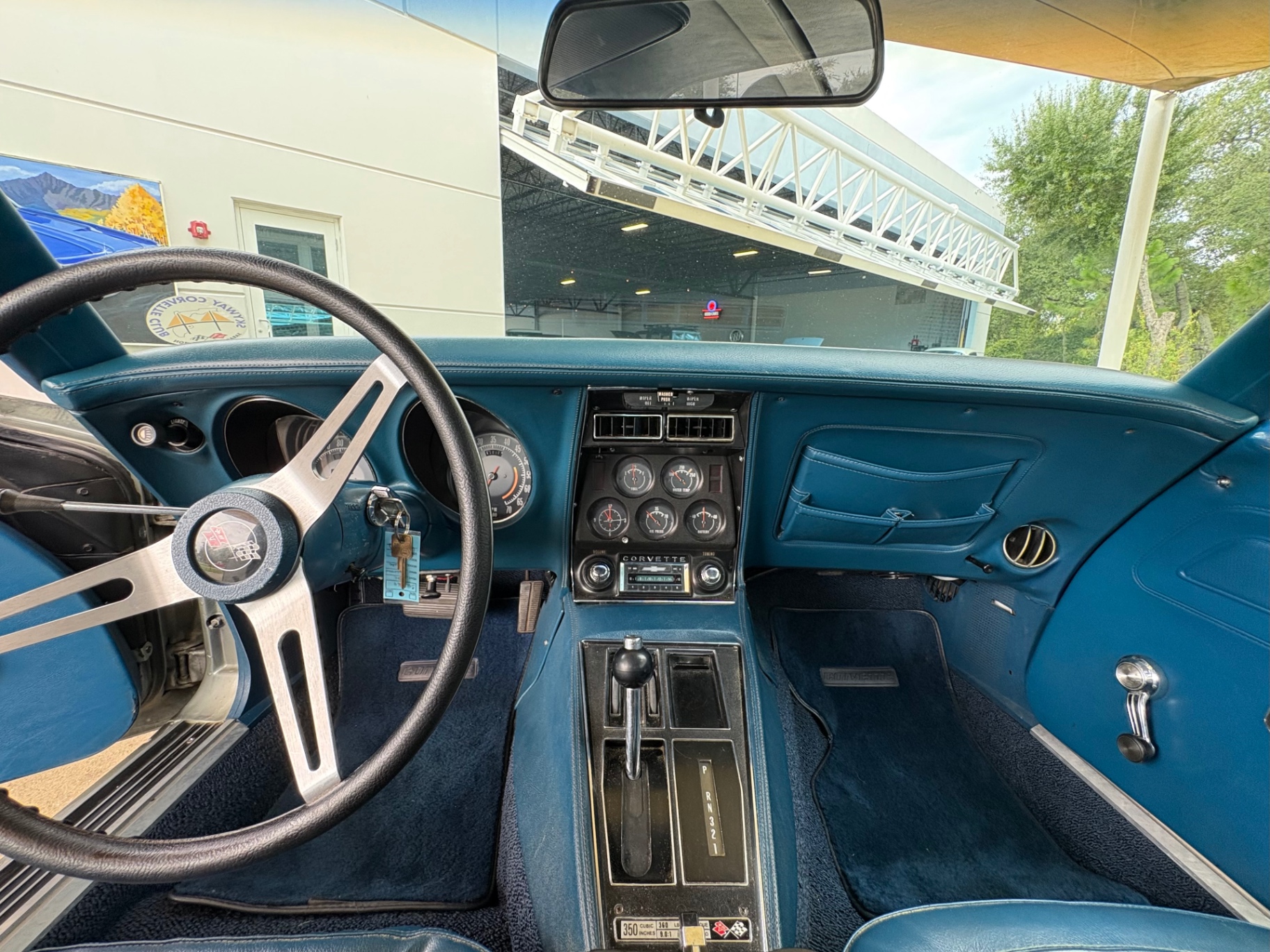
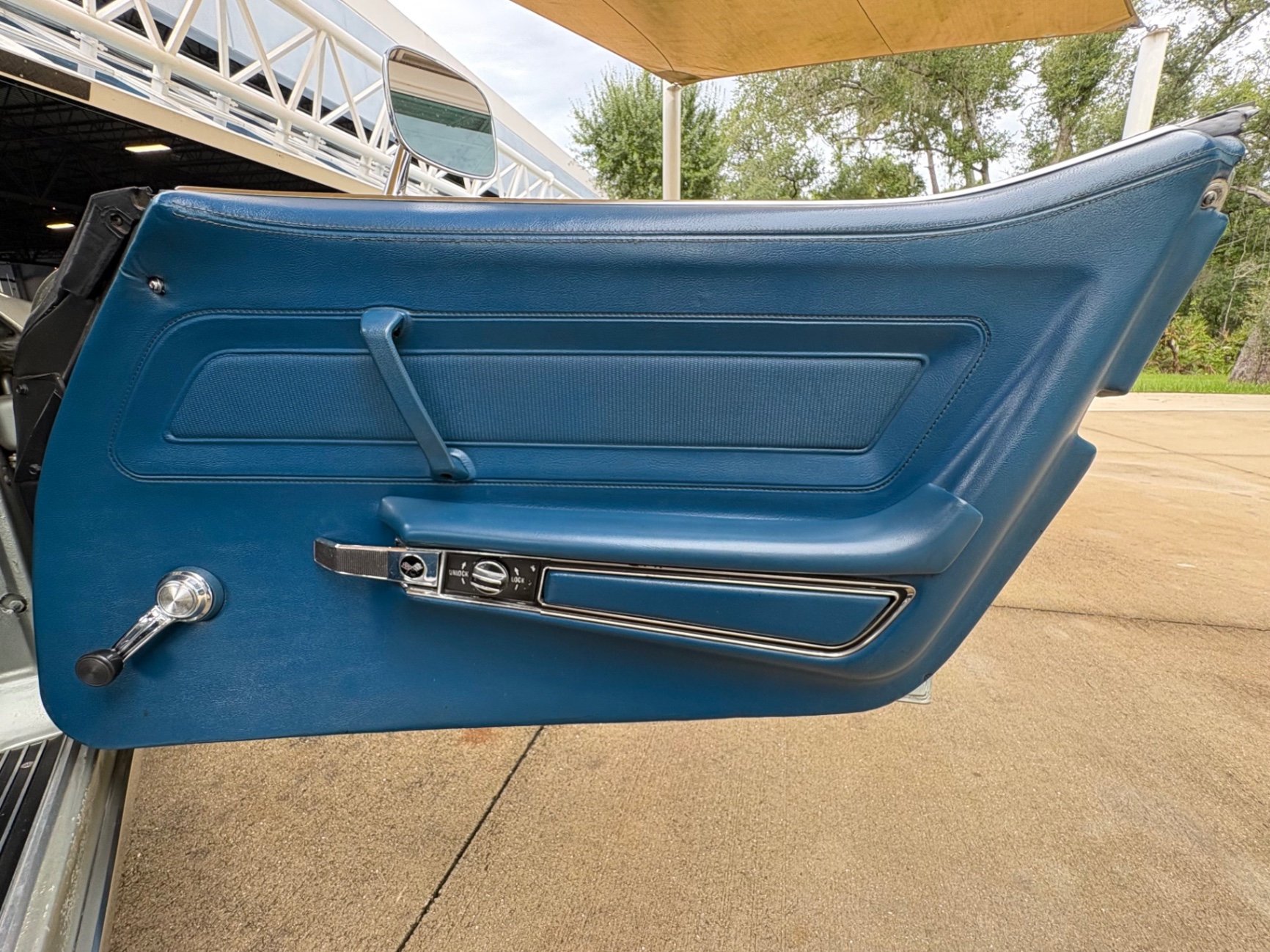
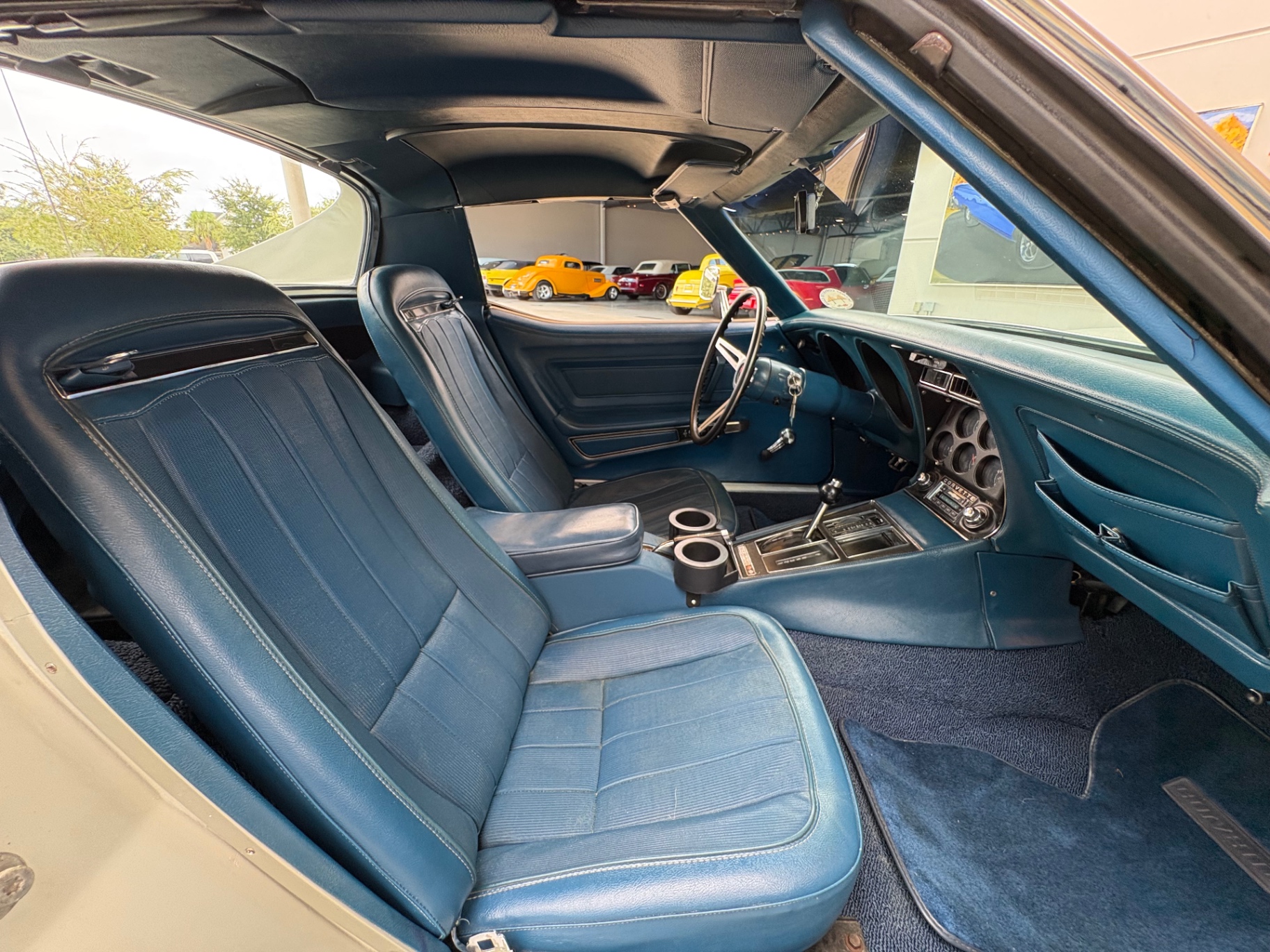
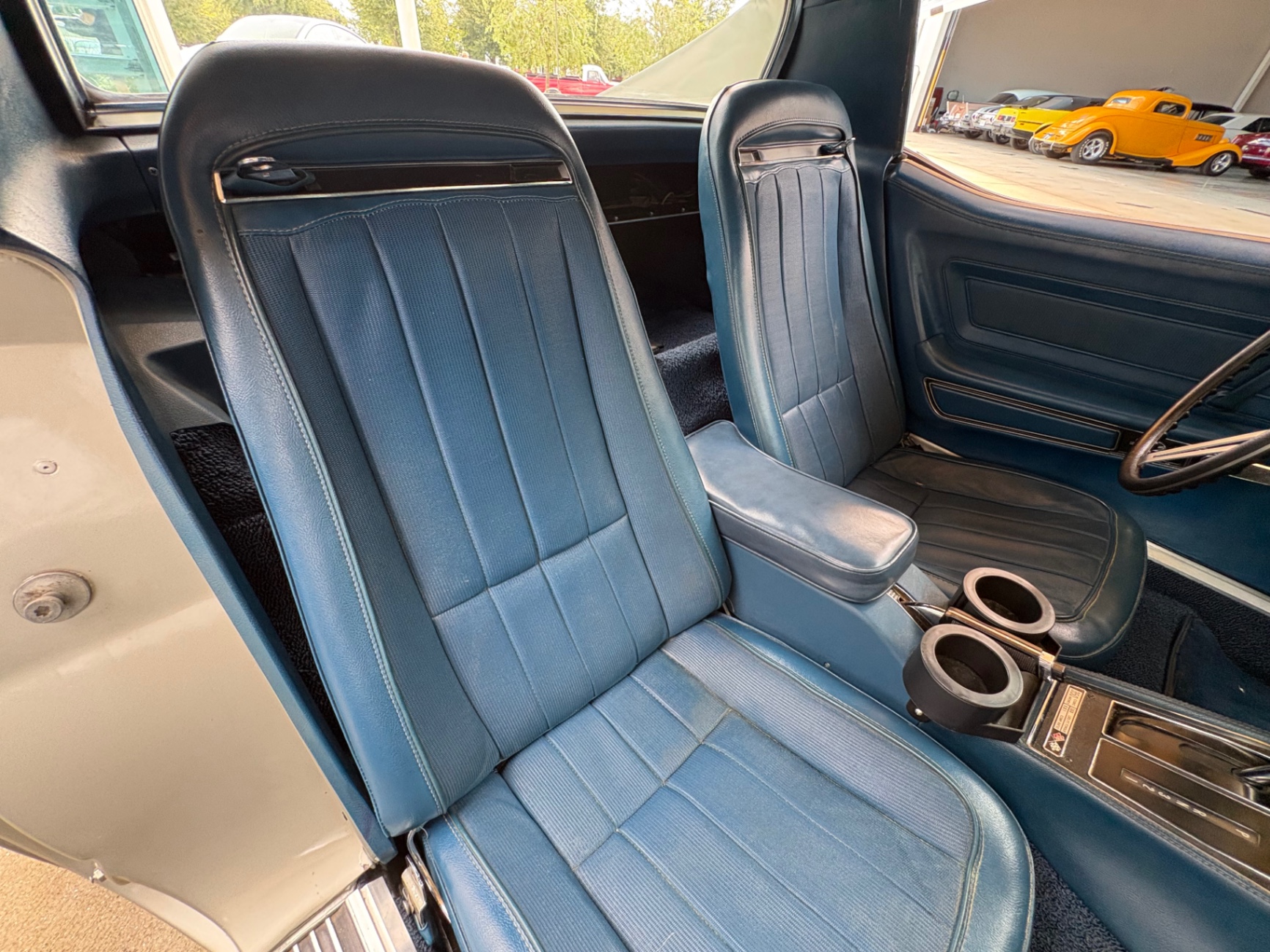
The blue vinyl interior on this 1972 Corvette Stingray is a correct color combination with the Pewter Silver exterior and presents well throughout the cabin. The bucket seats show normal wear consistent with a car of this age — the vinyl is intact without cracking or major tears, and the seat structure appears sound. The door panels show the same blue vinyl in good condition, with the factory chrome pull handle and lock hardware in place.
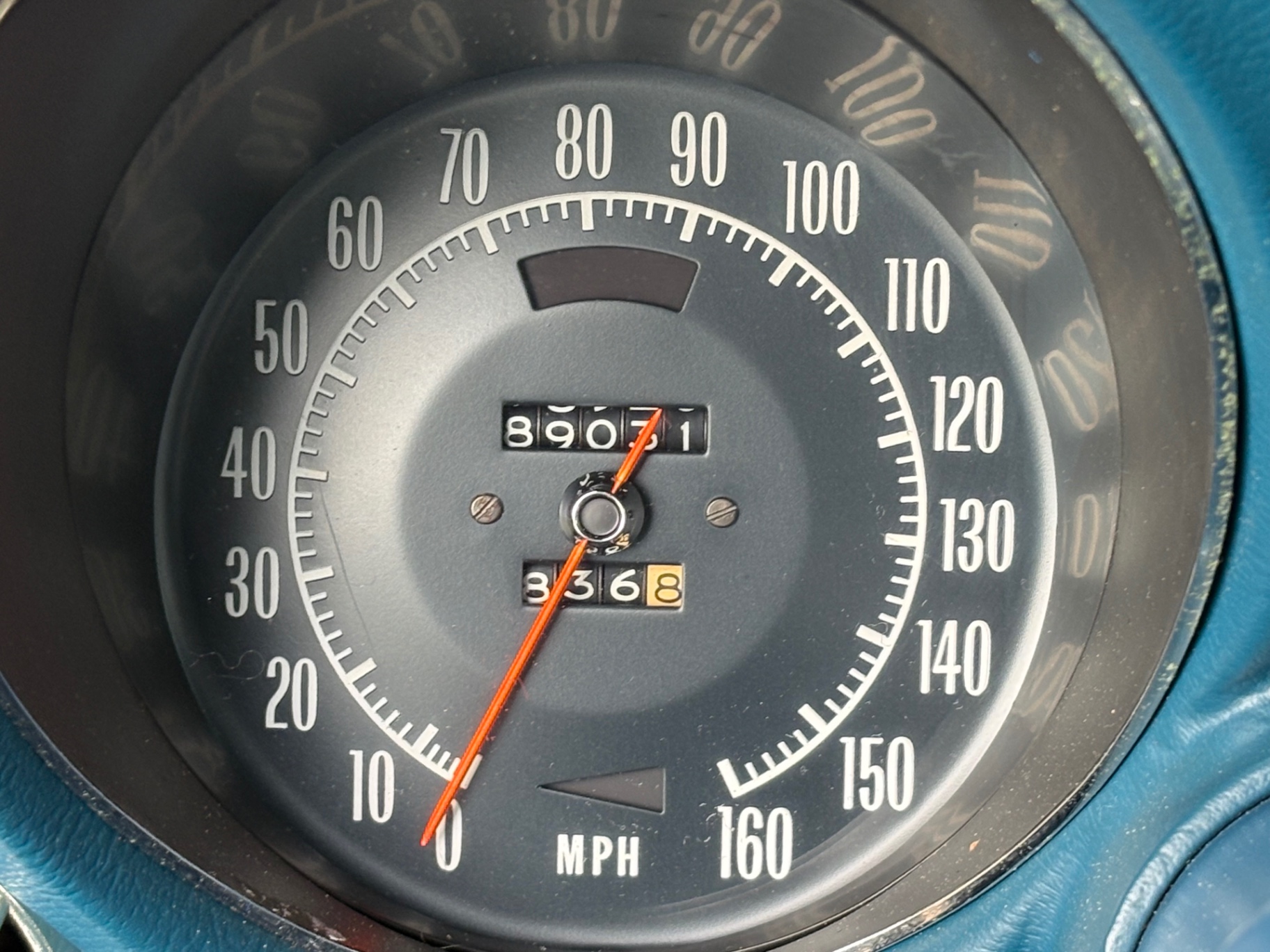
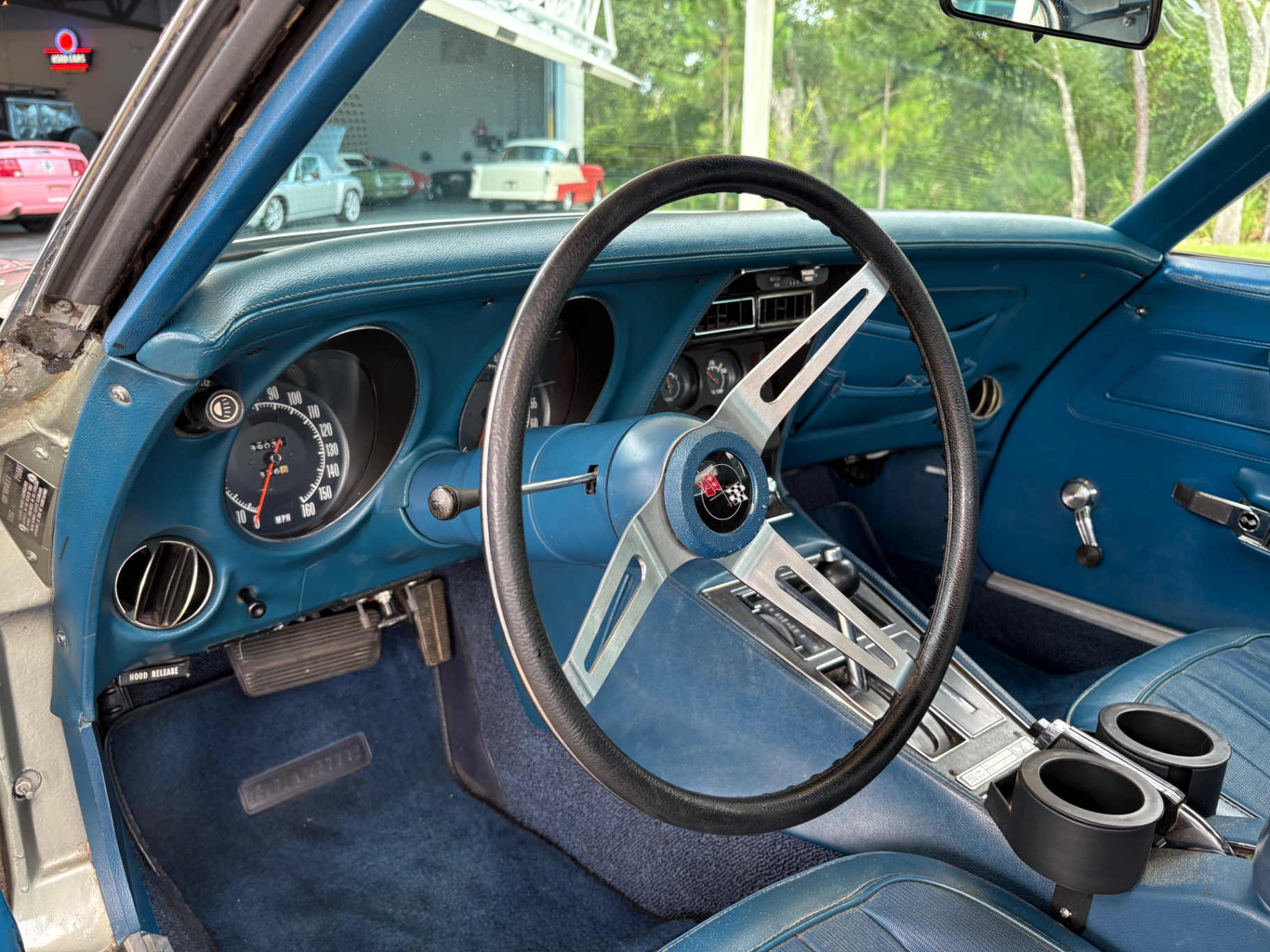
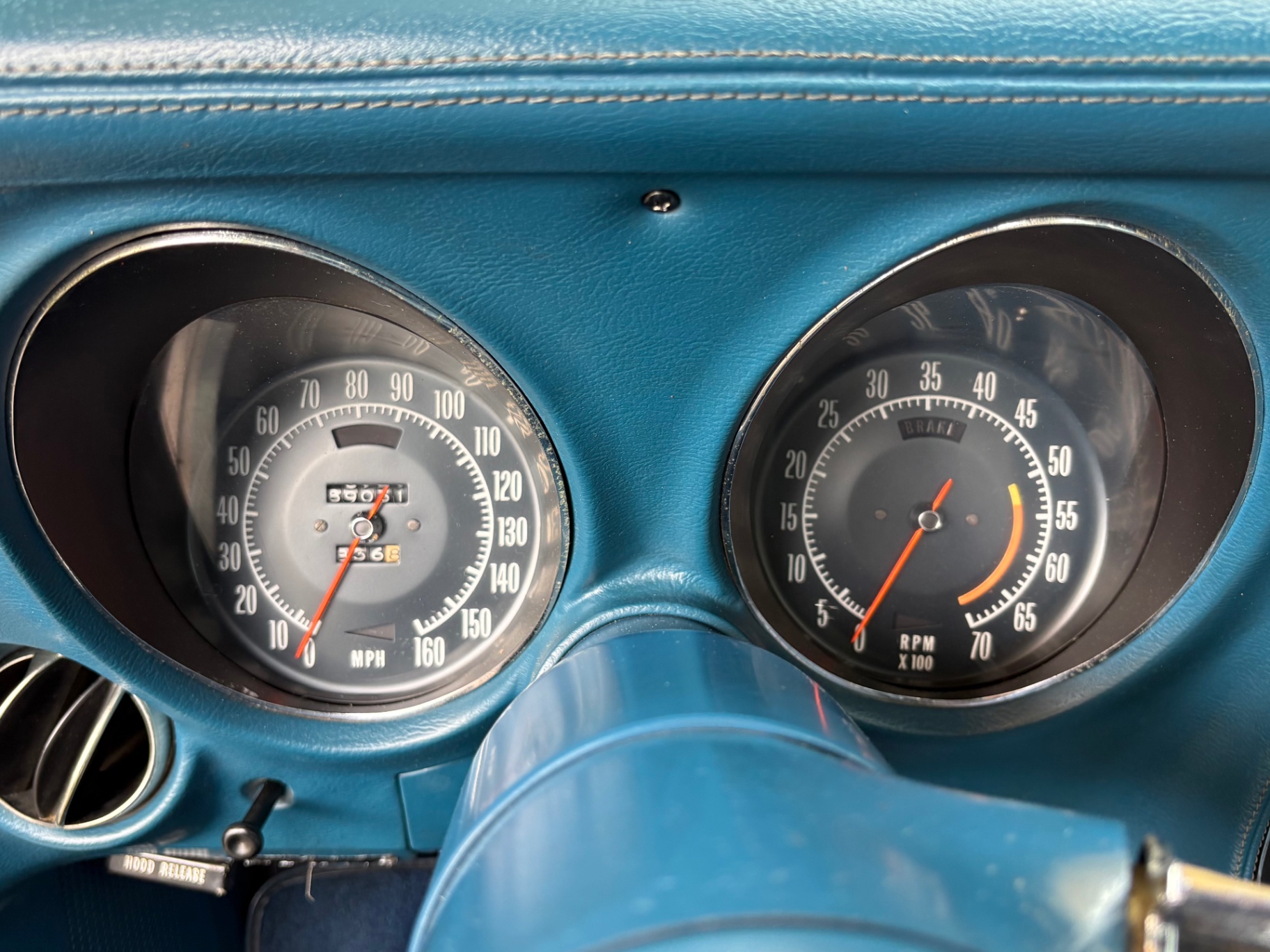
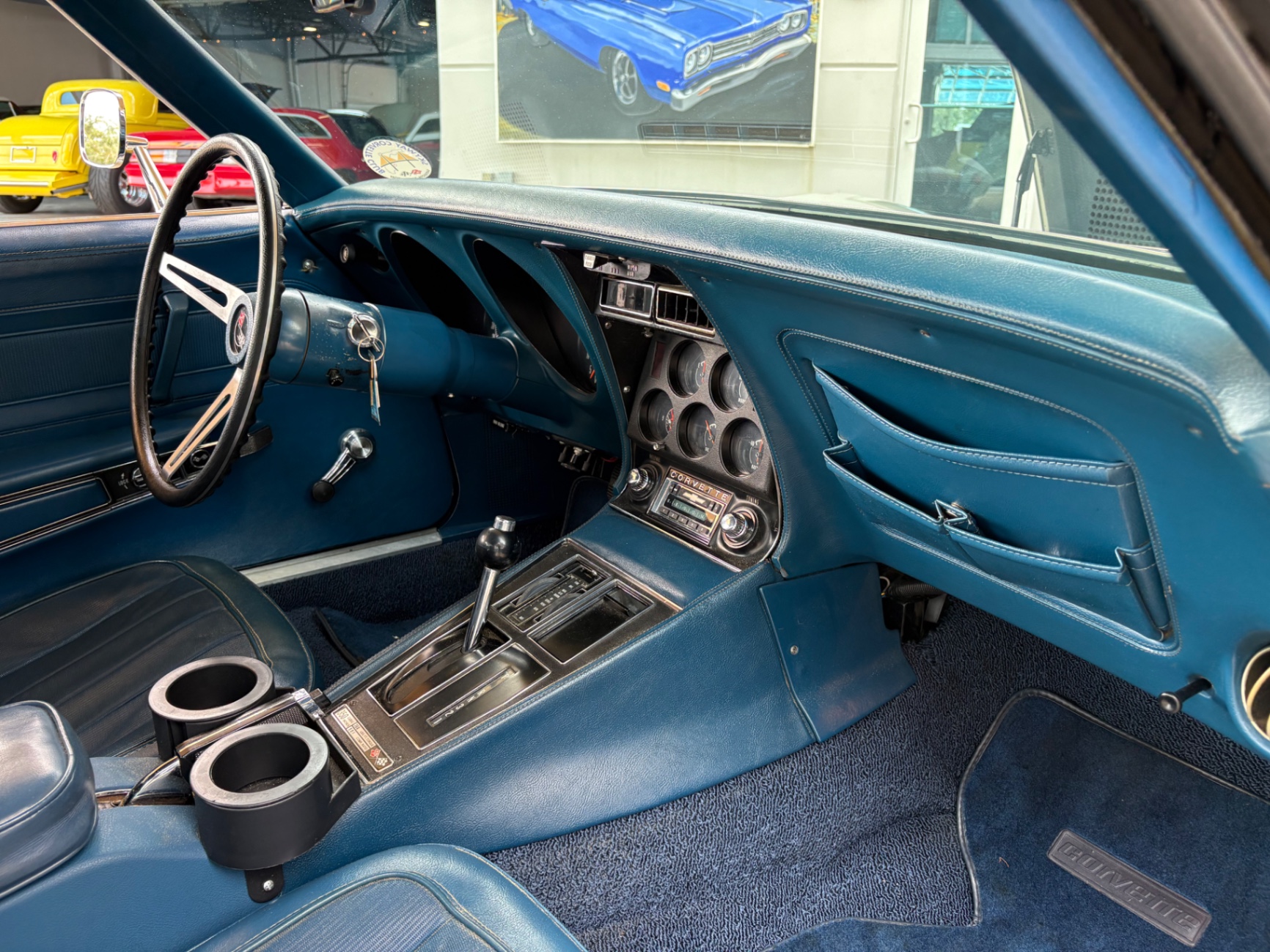
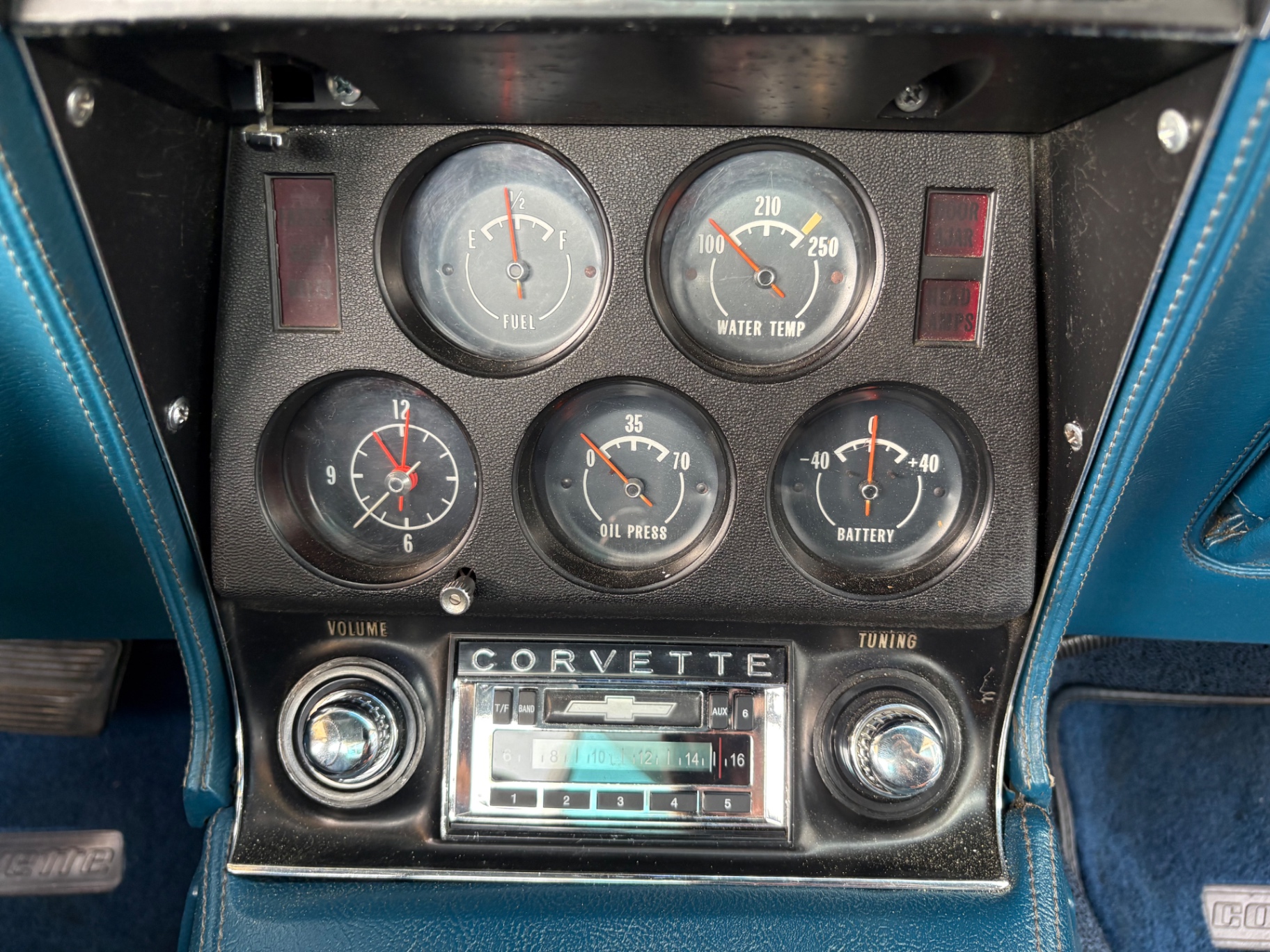
The dashboard layout is one of the more interesting design elements of the C3 generation. Chevrolet moved the secondary gauges to a center console cluster in 1969, placing fuel level, water temperature, oil pressure, battery condition, and a clock into a dedicated pod that faces the driver more directly than a traditional dashboard layout would allow. All five gauges are present and visible in the photos, set in the correct black bezel panel with the Corvette-branded AM/FM radio directly below. The speedometer and tachometer occupy the two large pods ahead of the driver, with the speedo reading to 160 mph — a visual that was very much part of the car's appeal when new.
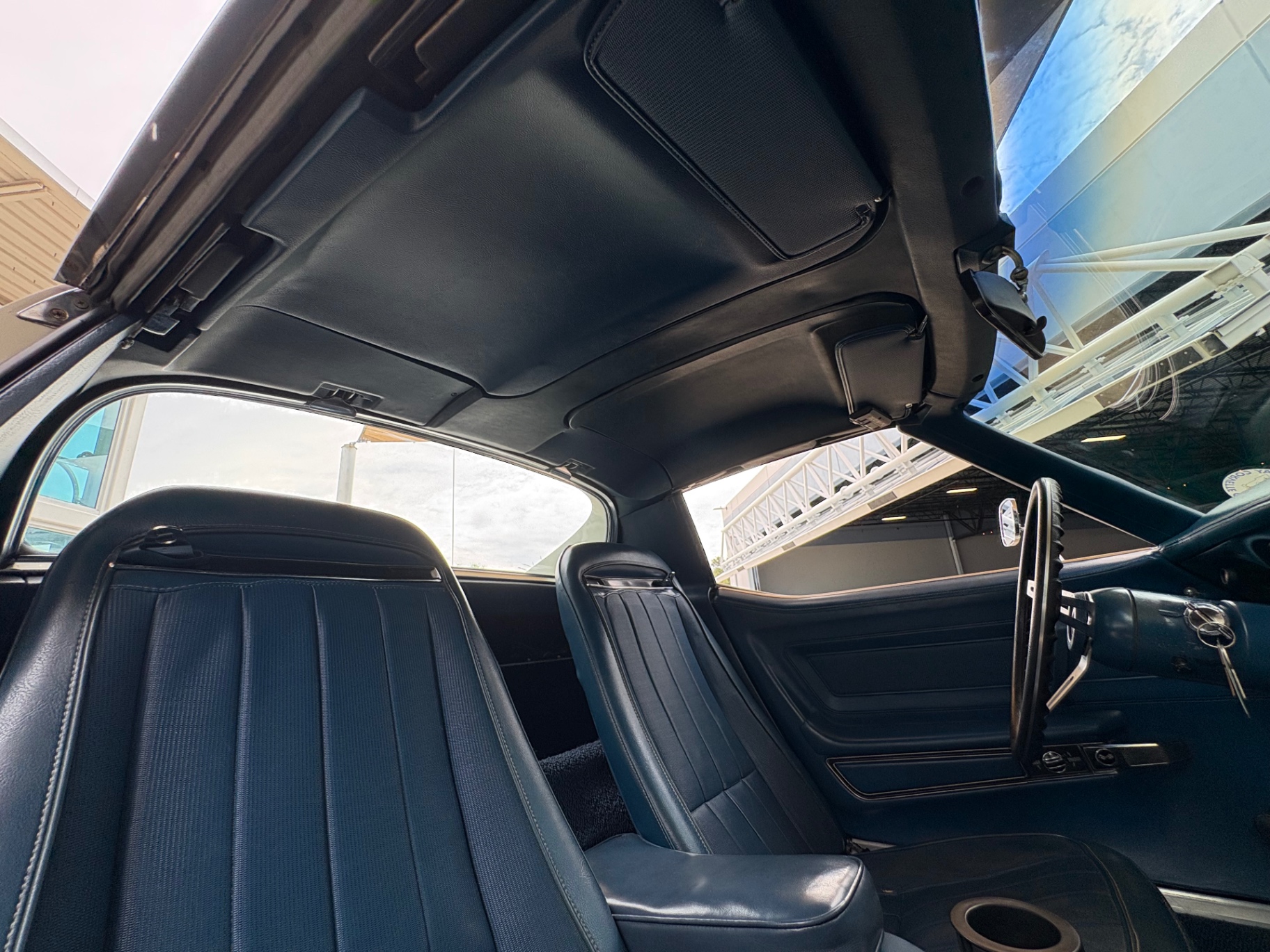
The center console houses the TH400 shifter with its correct black ball shift knob and a small storage area behind it. A cup holder insert is present in the console, which is a period-correct addition to the design. The carpet is blue and matches the rest of the interior, and the Corvette sill plates are visible at the door openings. The T-top headliner is black, as expected, and appears clean. With the tops removed, the car opens up considerably — that open-air experience combined with the full complement of gauges and a working air conditioning system makes this a genuinely usable driver on a Florida afternoon.
Exterior
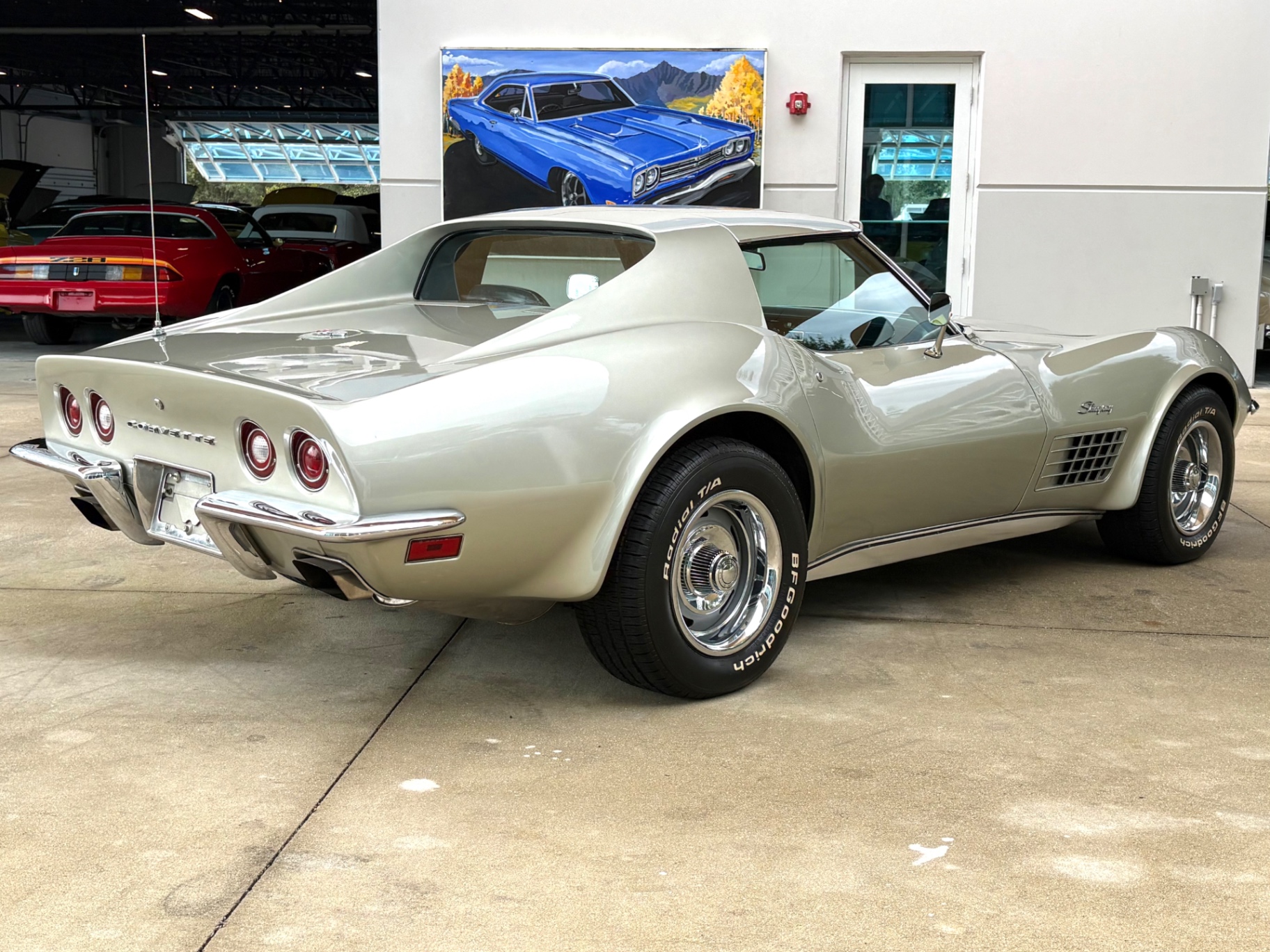
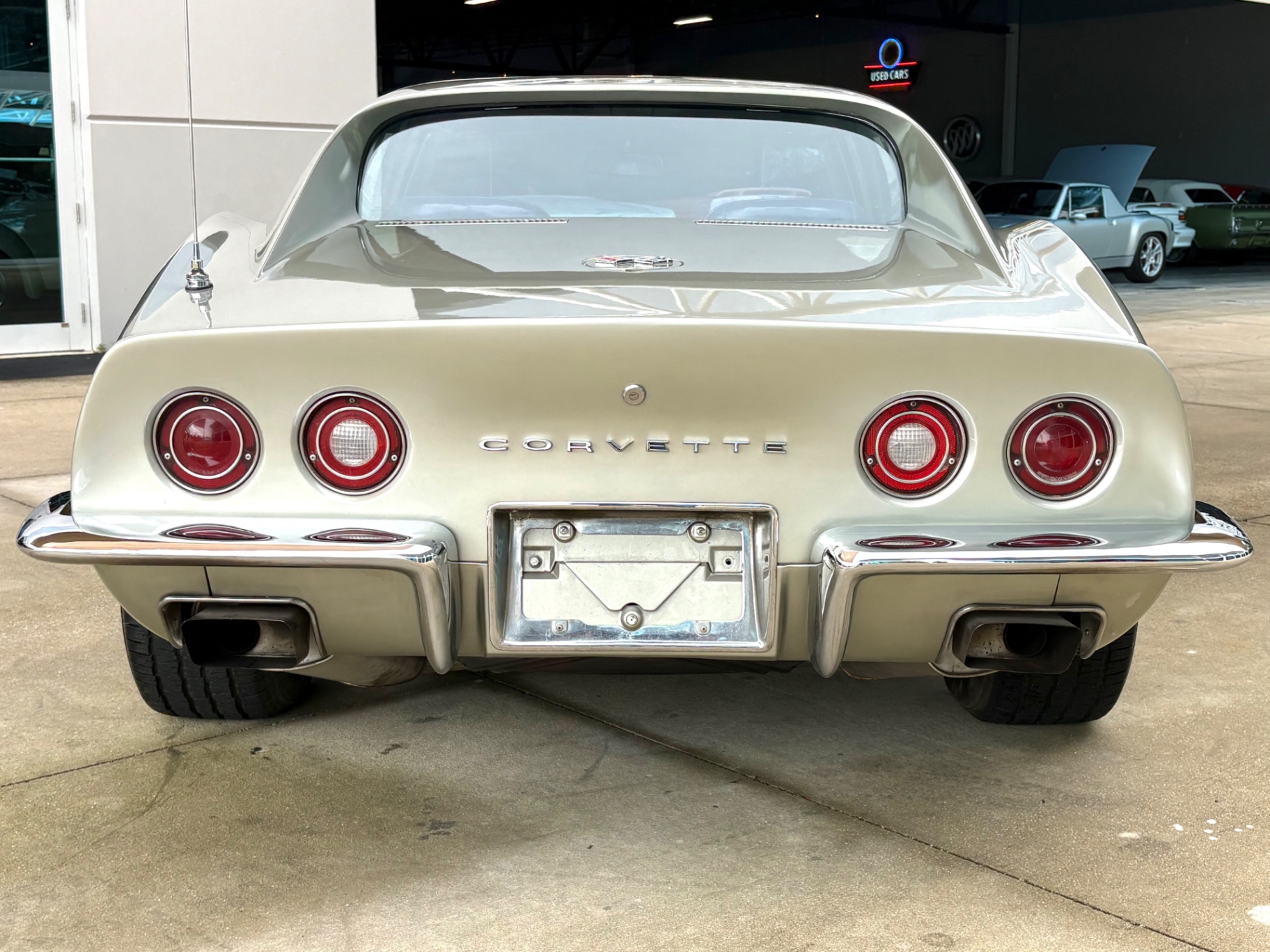
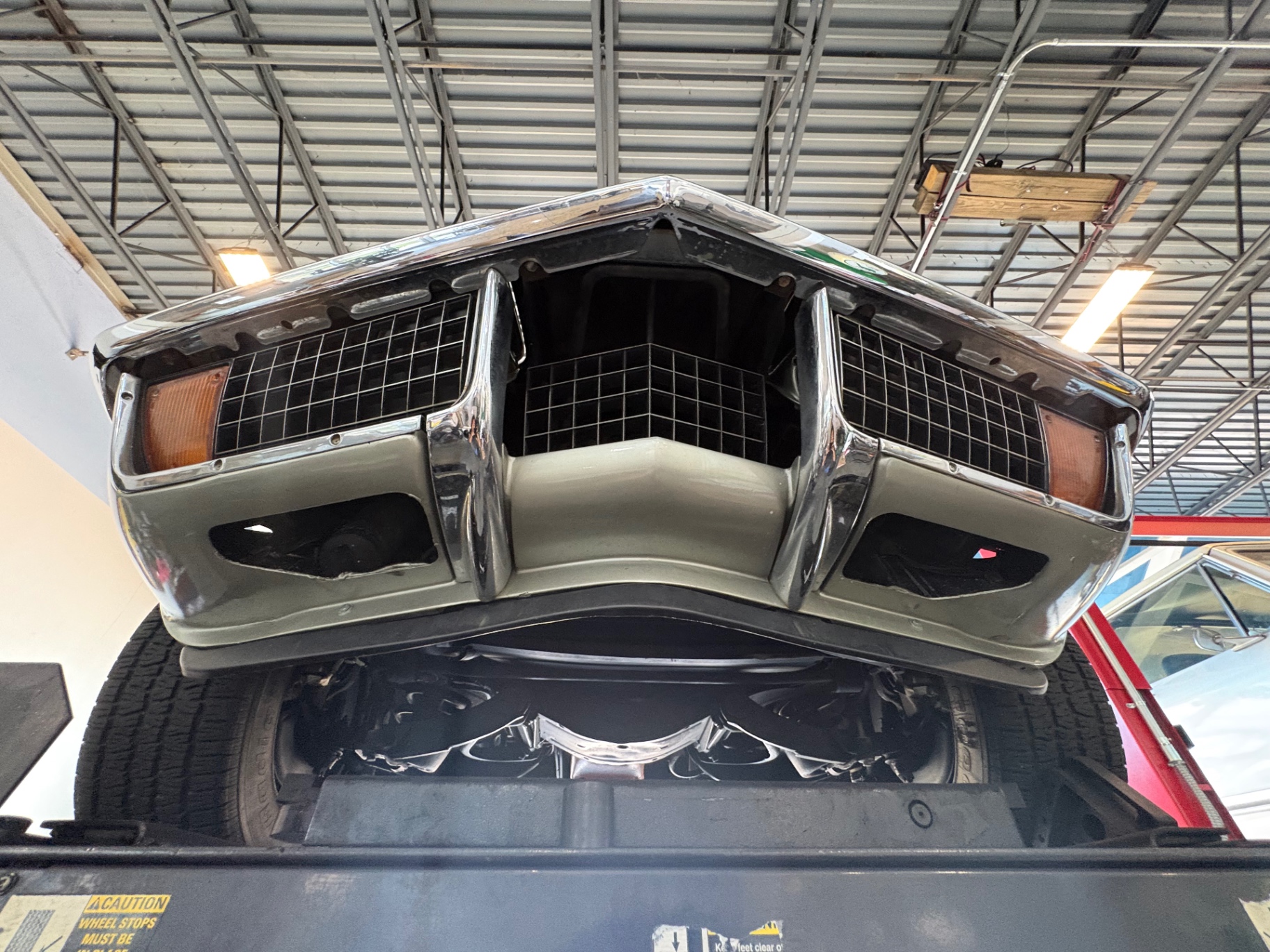
Pewter Silver was one of several new colors introduced for the 1972 Corvette model year, and it photographs well in both direct sun and overcast light. The fiberglass body panels show a consistent finish throughout, and the chrome bumpers front and rear — a feature that would be replaced with urethane-covered impact bumpers beginning in 1973 — are present and show their characteristic finish. The egg-crate grille and amber parking light lenses flanking the front bumper are intact and correct for the year. The rear of the car carries the block-letter Corvette nameplate centered above the license plate recess, framed by the twin exhaust tips exiting through the rear valance.
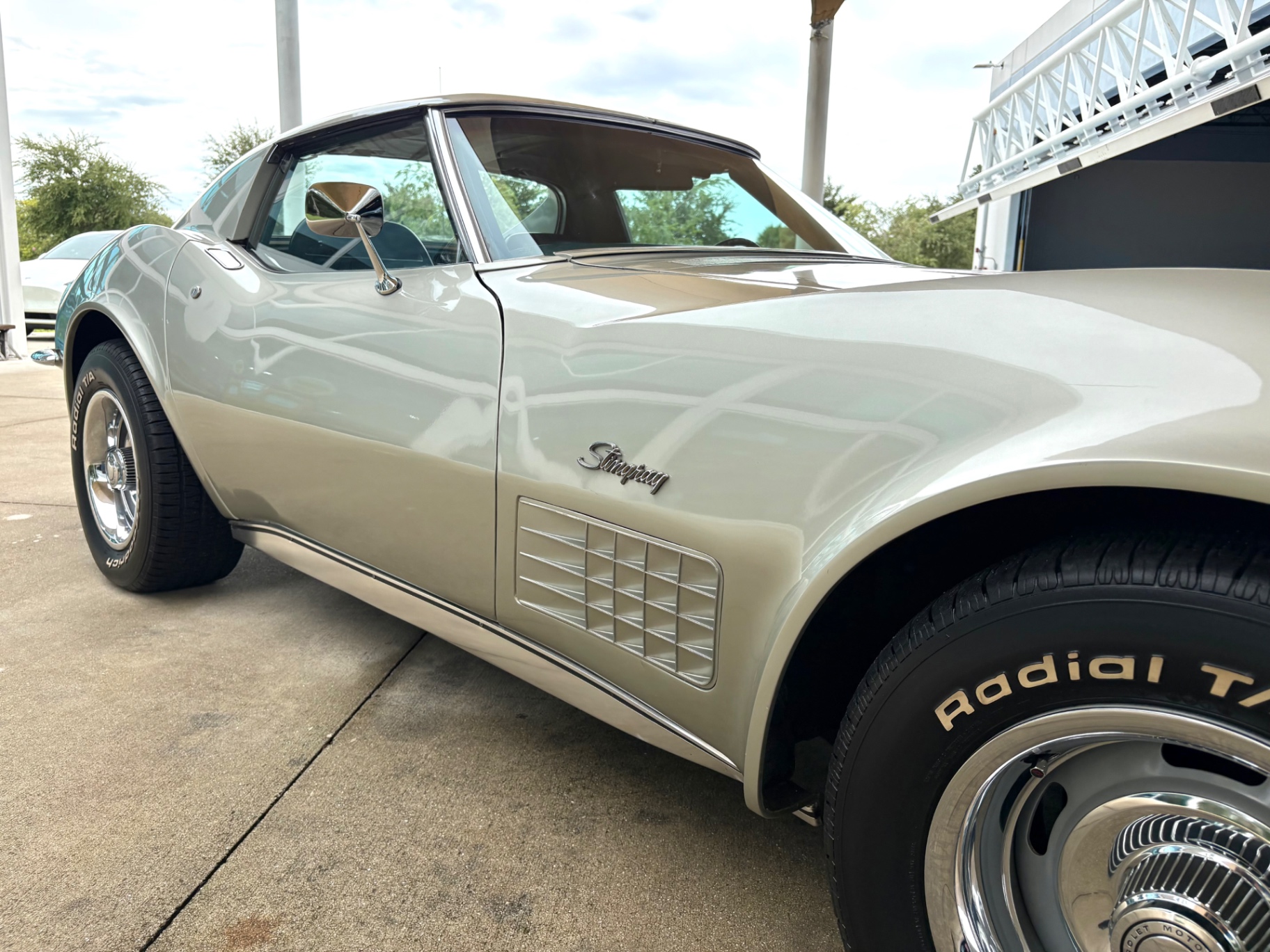
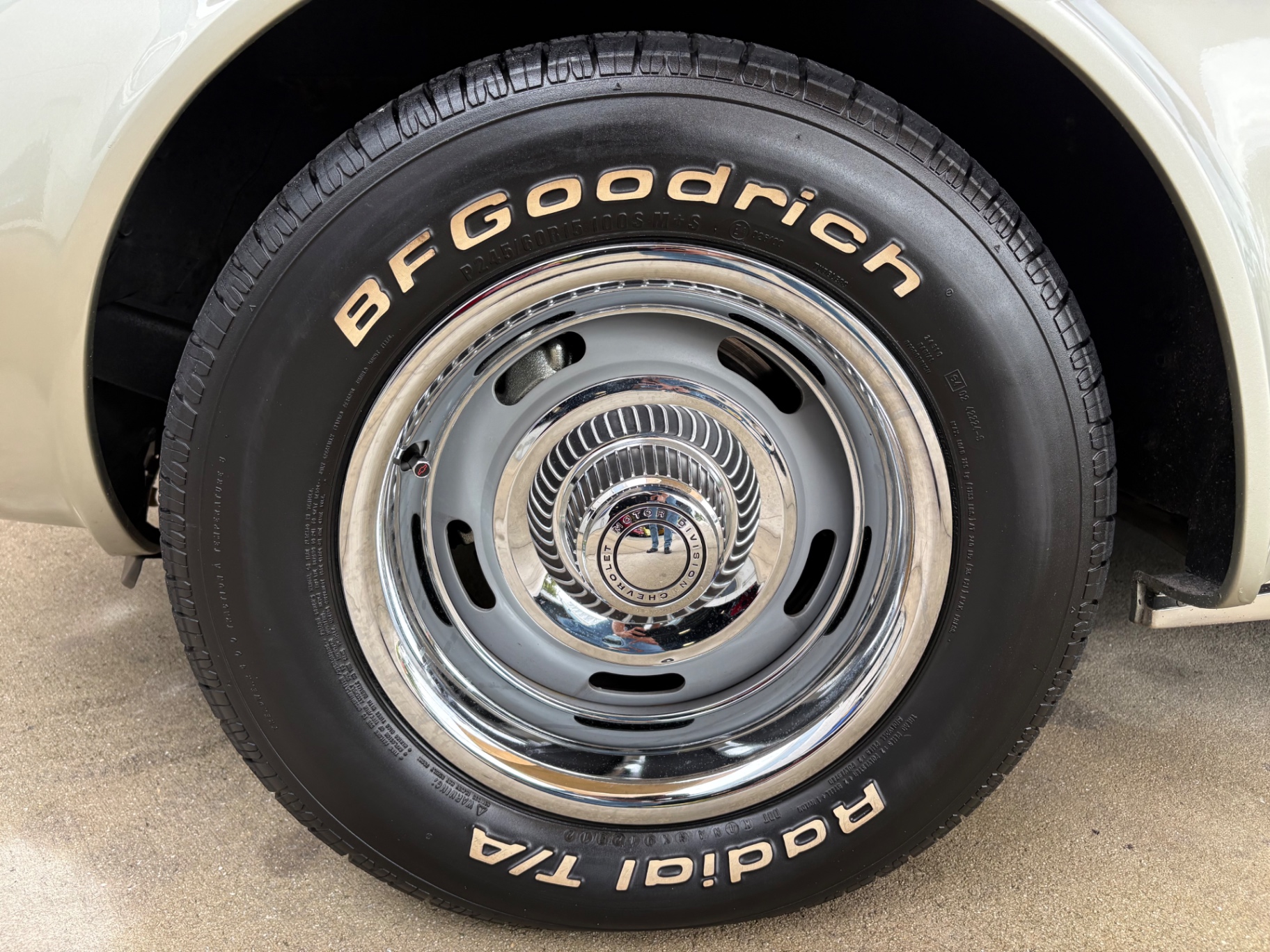
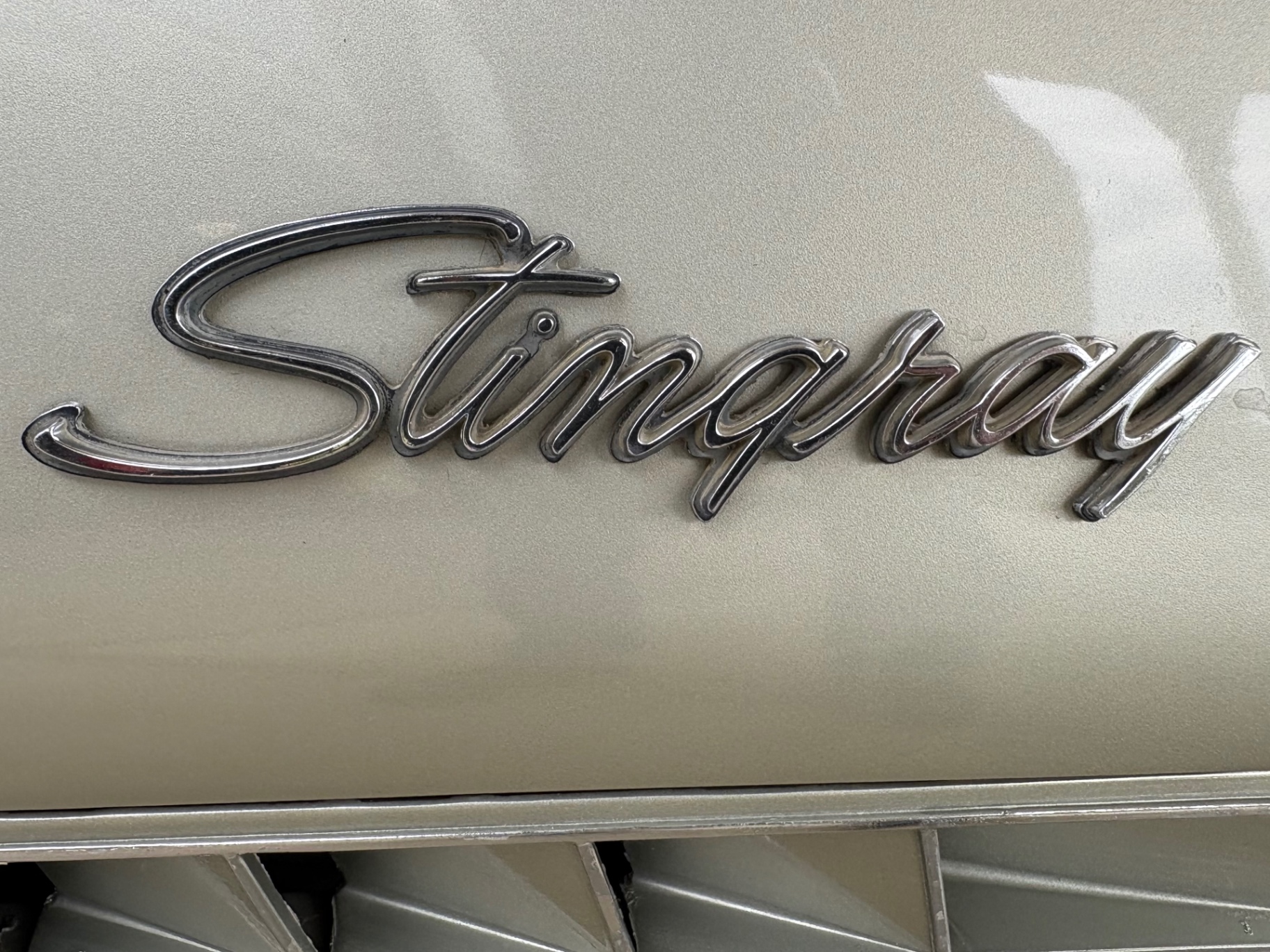
The Stingray fender badges are present on the front quarters — a detail that was returned to the car in 1969 after being absent from the earliest C3 models. The side exhaust vents behind the front wheels are non-functional on 1972 production cars, as they had been since the early years of the C3, but they remain part of the character of the body. Rally wheels with chrome trim rings and center caps are fitted at all four corners and show no visible damage. The BFGoodrich Radial T/A tires fill the wheel wells correctly and present a profile that suits the car well.
Conclusion
This 1972 Chevrolet Corvette Stingray is an honest, numbers-matching example of the last pre-bumper-law C3 coupe. It carries its original 350 V8 and TH400 automatic, wears a distinctive Pewter Silver finish over a complete blue vinyl interior, and has been put on a lift for a thorough undercarriage inspection. The floor pan and suspension are clean. The gauges work. The T-tops are present. The air conditioning is installed. This is a car that can be driven to a show, parked at a Cars and Coffee, or enjoyed on a weekend run without requiring any significant investment to get it there. For the collector who wants an original, numbers-correct 1972 Corvette without paying for a frame-off restoration, this car makes a straightforward case for itself.
To schedule a walkthrough or ask detailed questions, call Skyway Classics in Sarasota, Florida at 941-254-6608.
Disclaimer
Information found on the website is presented as given to us by the owner of the car, whether on consignment or from the owner we bought it from. Some Photos, materials for videos, descriptions and other information are provided by the consignor/seller and is deemed reliable, but Skyway Classics does not warranty or guarantee this information. Skyway Classics is not responsible for information that may incorrect or a publishing error. The decision to purchase should be based solely on the buyers personal inspection of the vehicle or by a professional inspection service prior to offer or purchase being made.
1972 Chevrolet Corvette Stingray — Matching Numbers 350 V8, Pewter Silver, T-Tops
Why This Car Is Special
The 1972 Chevrolet Corvette Stingray occupies a specific and well-understood place in C3 history. It was the last model year before federally mandated bumper standards began to reshape the car's appearance, and the last year Chevrolet used the traditional gross horsepower rating system before switching to the lower net figures in 1973. That context matters to collectors, because the 1972 Corvette is widely regarded as one of the cleaner, less-compromised examples of the C3 generation.
Chevrolet built 20,496 Corvettes for the 1972 model year, split between coupes and convertibles. This is a coupe, and it carries the original 350 cubic inch small block V8 rated at 200 horsepower — a number that reflects the new SAE net rating standard Chevrolet began using that year, not a reduction in actual output. The engine is numbers-matching, meaning the suffix code on the block corresponds to the correct 1972 Corvette application. For buyers who care about authenticity and long-term value, that is a significant detail.
The exterior is Pewter Silver — a color that reads differently in different light, moving from a warm gray to something closer to a metallic taupe depending on the angle. It pairs well with the blue interior and gives this particular car a subtle, understated presence compared to the brighter colors the Corvette was also available in that year.
The VIN on this car decodes to confirm it was built at the St. Louis assembly plant, which was the only facility producing Corvettes at the time. The "K" in the engine position of the VIN confirms the 350/200hp LT-1-adjacent base small block application with automatic transmission, consistent with the TH400 documented on this car.
Features List
- Matching numbers 350ci 200hp V8
- Turbo-Hydramatic TH400 3-speed automatic transmission
- Removable T-tops
- Four-wheel disc brakes
- Power steering
- Power brakes
- Air conditioning
- Dual exhaust
- Factory gauges (fuel, water temp, oil pressure, battery, clock)
- 4-barrel carburetor
- AM/FM radio
- Bucket seats
- Center console
- Rally wheels
- BFGoodrich Radial T/A tires
- Clean undercarriage
Mechanical
The 350 cubic inch V8 under this hood is the car's original engine, and it is wearing its correct Corvette-spec red valve covers and chrome air cleaner lid. The 4-barrel carburetor feeds through a single round chrome air cleaner — a period-correct presentation that judges and detail-oriented buyers will recognize immediately. The engine bay retains factory-correct components including the original emissions sticker and the Delcotron alternator typical of 1972 production.
The TH400 Turbo-Hydramatic 3-speed automatic was a well-regarded transmission in its day and remains a durable, proven unit. It was a popular choice among buyers who wanted the Corvette experience without the effort of a manual — and it was not a decontented option. The TH400 was used across GM's performance lineup and is known for handling power reliably. The console shifter operates through a gate, and the indicator panel is visible and intact in the photos.
Four-wheel disc brakes were standard on every 1972 Corvette, one of the features that set the car apart from virtually every other American production vehicle of the era. Power-assisted braking and power steering were both optioned on this car, making it a comfortable driver rather than a track-day weapon. The undercarriage photographs show a clean, well-preserved floor pan with no visible rust, solid exhaust routing, and suspension components that appear unmolested. The independent rear suspension — a Corvette hallmark since 1963 — is clearly visible and shows no signs of damage or major repair. BFGoodrich Radial T/A tires, a classic and appropriate choice for a car of this vintage, are fitted at all four corners.
Interior
The blue vinyl interior on this 1972 Corvette Stingray is a correct color combination with the Pewter Silver exterior and presents well throughout the cabin. The bucket seats show normal wear consistent with a car of this age — the vinyl is intact without cracking or major tears, and the seat structure appears sound. The door panels show the same blue vinyl in good condition, with the factory chrome pull handle and lock hardware in place.
The dashboard layout is one of the more interesting design elements of the C3 generation. Chevrolet moved the secondary gauges to a center console cluster in 1969, placing fuel level, water temperature, oil pressure, battery condition, and a clock into a dedicated pod that faces the driver more directly than a traditional dashboard layout would allow. All five gauges are present and visible in the photos, set in the correct black bezel panel with the Corvette-branded AM/FM radio directly below. The speedometer and tachometer occupy the two large pods ahead of the driver, with the speedo reading to 160 mph — a visual that was very much part of the car's appeal when new.
The center console houses the TH400 shifter with its correct black ball shift knob and a small storage area behind it. A cup holder insert is present in the console, which is a period-correct addition to the design. The carpet is blue and matches the rest of the interior, and the Corvette sill plates are visible at the door openings. The T-top headliner is black, as expected, and appears clean. With the tops removed, the car opens up considerably — that open-air experience combined with the full complement of gauges and a working air conditioning system makes this a genuinely usable driver on a Florida afternoon.
Exterior
Pewter Silver was one of several new colors introduced for the 1972 Corvette model year, and it photographs well in both direct sun and overcast light. The fiberglass body panels show a consistent finish throughout, and the chrome bumpers front and rear — a feature that would be replaced with urethane-covered impact bumpers beginning in 1973 — are present and show their characteristic finish. The egg-crate grille and amber parking light lenses flanking the front bumper are intact and correct for the year. The rear of the car carries the block-letter Corvette nameplate centered above the license plate recess, framed by the twin exhaust tips exiting through the rear valance.
The Stingray fender badges are present on the front quarters — a detail that was returned to the car in 1969 after being absent from the earliest C3 models. The side exhaust vents behind the front wheels are non-functional on 1972 production cars, as they had been since the early years of the C3, but they remain part of the character of the body. Rally wheels with chrome trim rings and center caps are fitted at all four corners and show no visible damage. The BFGoodrich Radial T/A tires fill the wheel wells correctly and present a profile that suits the car well.
Conclusion
This 1972 Chevrolet Corvette Stingray is an honest, numbers-matching example of the last pre-bumper-law C3 coupe. It carries its original 350 V8 and TH400 automatic, wears a distinctive Pewter Silver finish over a complete blue vinyl interior, and has been put on a lift for a thorough undercarriage inspection. The floor pan and suspension are clean. The gauges work. The T-tops are present. The air conditioning is installed. This is a car that can be driven to a show, parked at a Cars and Coffee, or enjoyed on a weekend run without requiring any significant investment to get it there. For the collector who wants an original, numbers-correct 1972 Corvette without paying for a frame-off restoration, this car makes a straightforward case for itself.
To schedule a walkthrough or ask detailed questions, call Skyway Classics in Sarasota, Florida at 941-254-6608.
Disclaimer
Information found on the website is presented as given to us by the owner of the car, whether on consignment or from the owner we bought it from. Some Photos, materials for videos, descriptions and other information are provided by the consignor/seller and is deemed reliable, but Skyway Classics does not warranty or guarantee this information. Skyway Classics is not responsible for information that may incorrect or a publishing error. The decision to purchase should be based solely on the buyers personal inspection of the vehicle or by a professional inspection service prior to offer or purchase being made.
1972 Chevrolet
Corvette Stingray
Why Choose Skyway Classics?
Explore our curated inventory of classic and collector cars—thoughtfully selected, ready to drive, and supported by experts who make ownership simple.
Expert Curation
Every vehicle is hand-selected by our experts for quality, authenticity, and investment potential.
Fast Transactions
Streamlined buying and selling process with quick financing and immediate delivery options.
Only National Dealer With Classic Service & Repair
We’re the only national dealership that services and repairs the classics we sell—before and after the sale.
Nationwide Network
Access to our extensive network of collectors, restorers, and classic car enthusiasts nationwide.
Concierge Ownership Support
From financing and insurance to paperwork, shipping, and titling—we handle the details so you can enjoy the drive.
Passion-Driven Service
We're classic car enthusiasts first, providing personalized service with genuine passion for the hobby.