
1972 Porsche
914/4 Custom
1972 Porsche 914 — 2.3L Custom Build with Karmann Coachbuilt Body
Why This Car Is Special
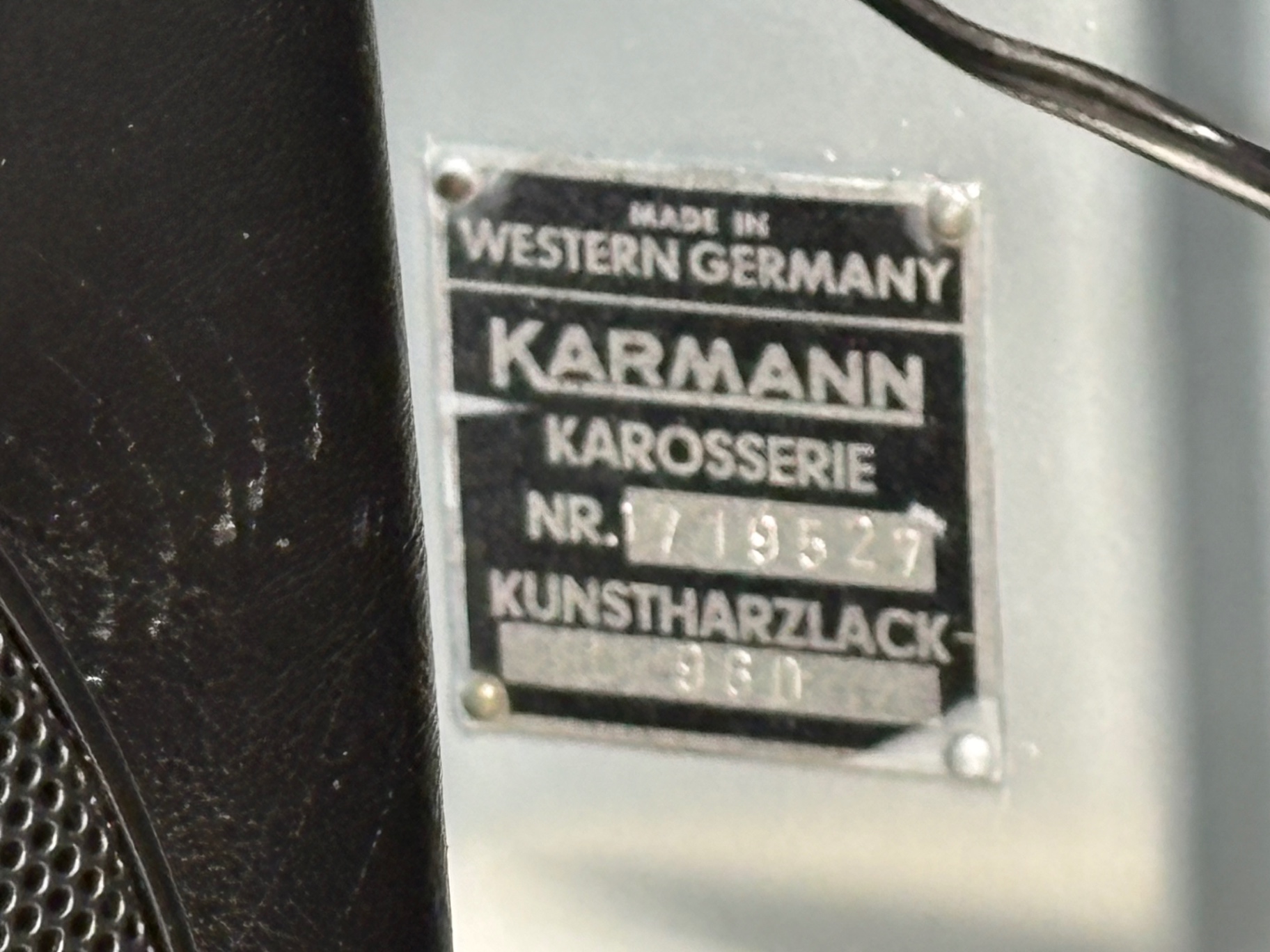
The 1972 Porsche 914 occupies a unique place in sports car history. It was designed as a genuine mid-engine sports car at an accessible price point — a concept that Ferrari and Lamborghini were charging five times as much to deliver. The 914 was the product of a joint development agreement between Porsche and Volkswagen, with Karmann of Osnabrück contracted to build the bodies. That last detail matters with this specific car: the Karmann coachbuilt designation on the body confirms it carries the authentic steel structure produced by the same coachbuilder that handled the physical assembly of all production 914s. Karmann was responsible for manufacturing the unibody shells before they were sent to Porsche for final assembly and quality checks. So when you see "Karmann Coachbuilt Body" on this car, it's not a badge of distinction tacked on for marketing — it's a factual statement about the car's construction lineage.
The 914 was sold in North America as a Porsche from 1970 through 1976. The standard four-cylinder cars used an air-cooled flat-four engine mounted amidships, directly behind the driver and in front of the rear axle. That positioning gives the 914 a near-50/50 weight distribution, which is why 914 owners and club racers have always respected its cornering behavior. The car weighs around 2,100 pounds in stock form, which means even the modestly powered four-cylinder variants feel quick and responsive in real-world driving.
This particular 1972 Porsche 914 has been built out well beyond stock specification. It runs a 2.3-liter air-cooled flat-four — a displacement step up from the 1.7 and 2.0 liter engines that were most common in four-cylinder 914 production. The 2.3L badge on the rear of the car accurately identifies what's under the engine cover. The build has been carried out with a coherent vision: the mechanical upgrades, the custom body kit, and the interior modifications all work together rather than pulling in different directions. This is not a parts-bin car. Someone made deliberate choices here and followed through on them.
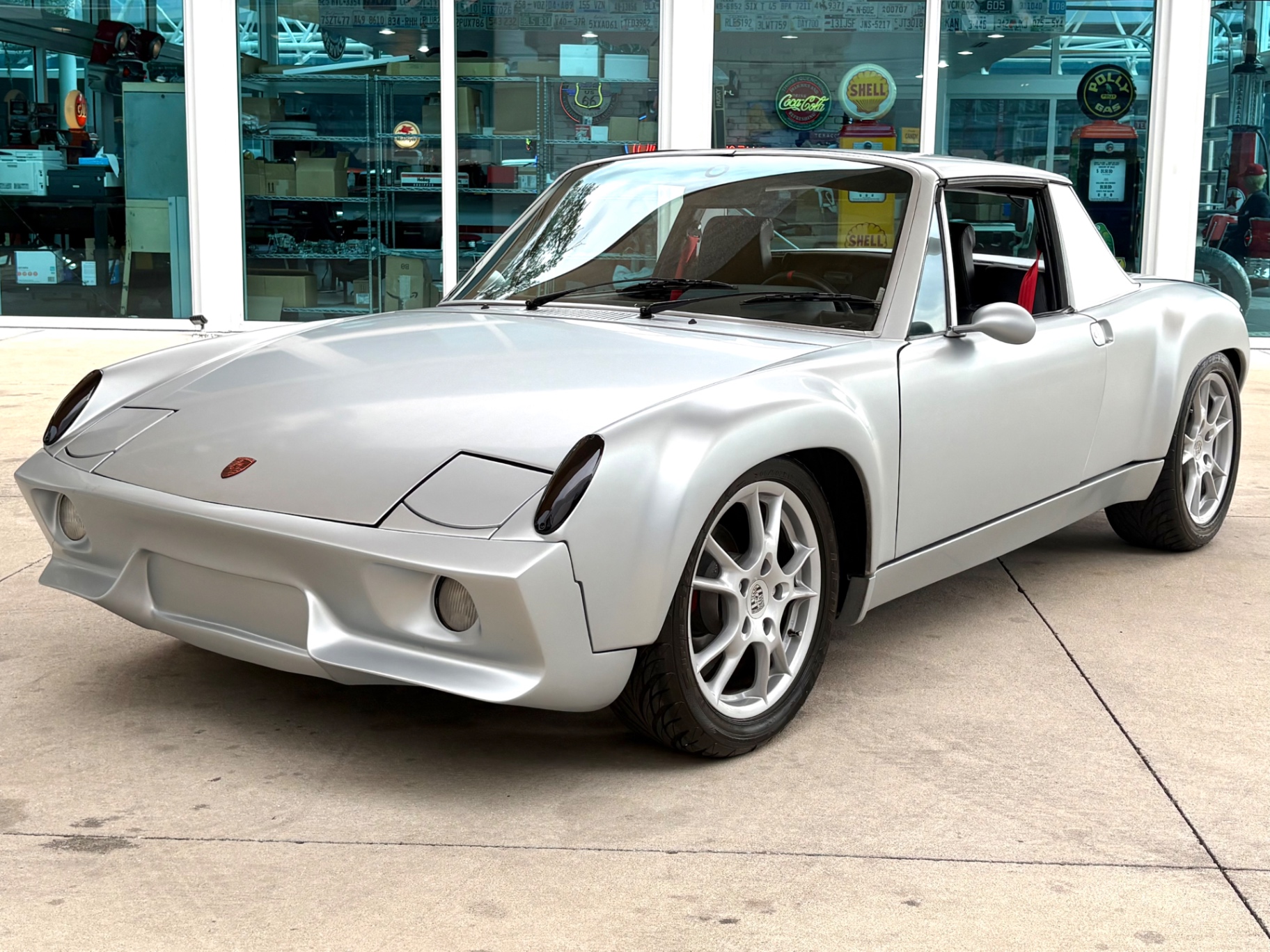
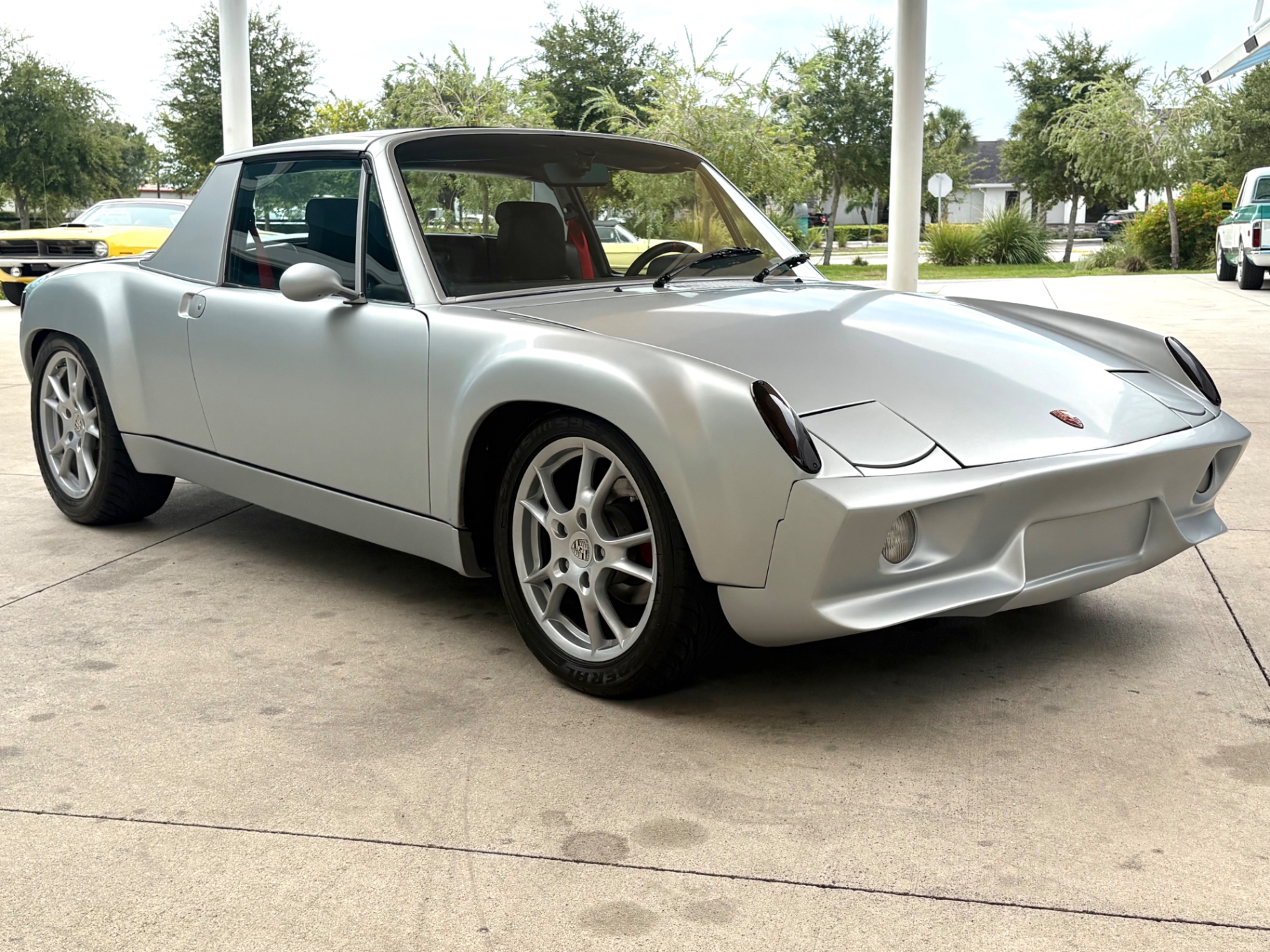
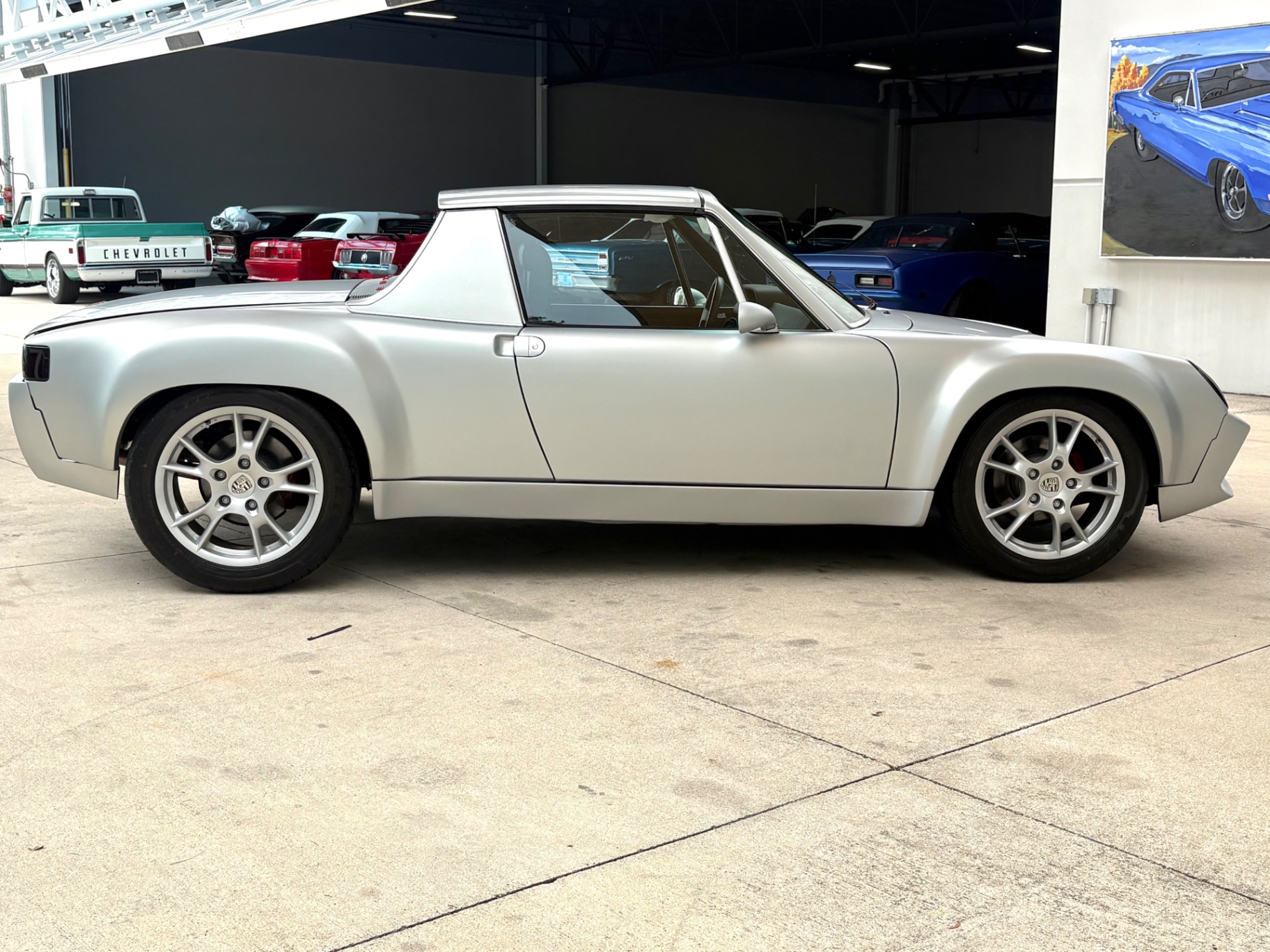
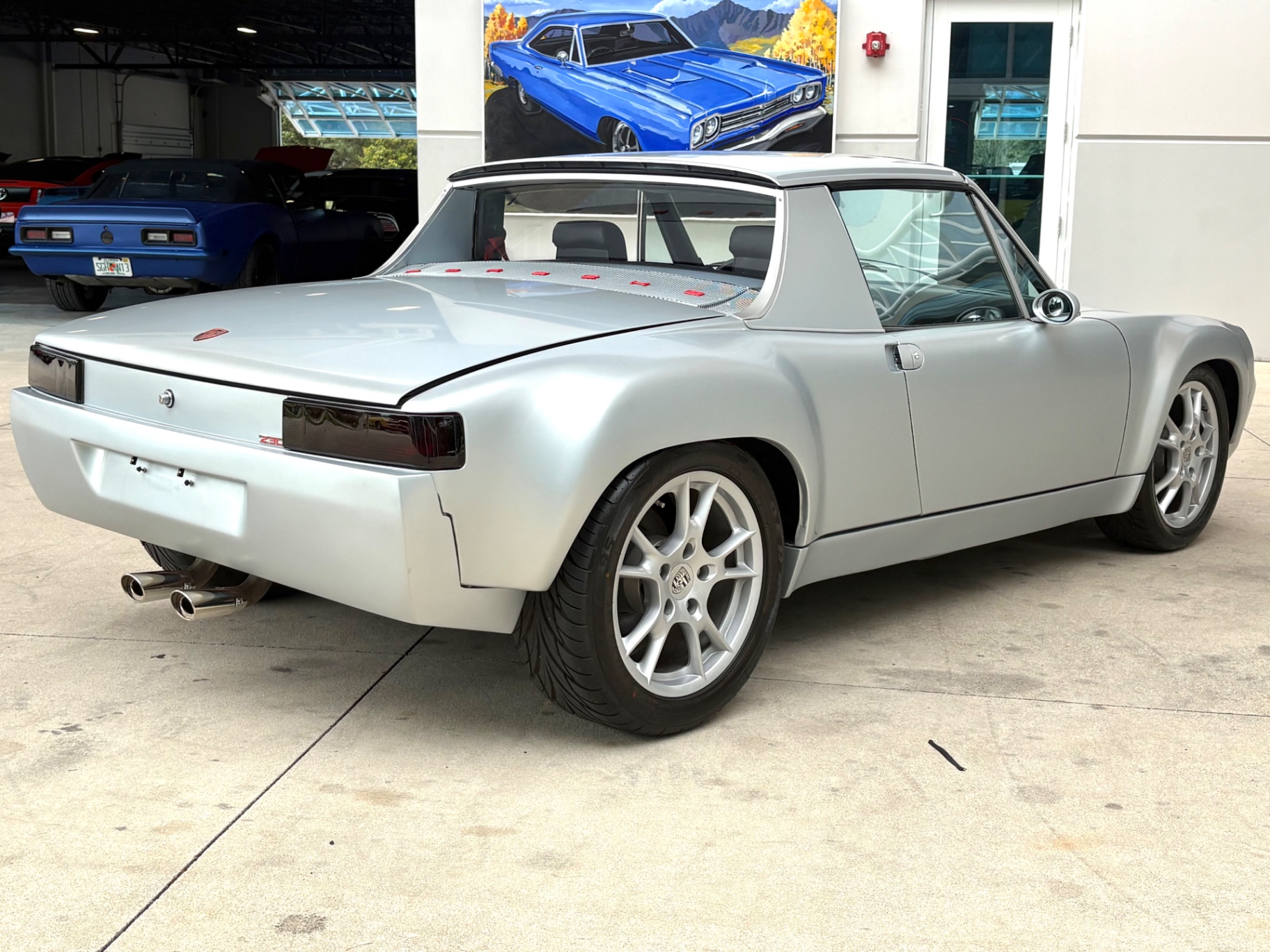
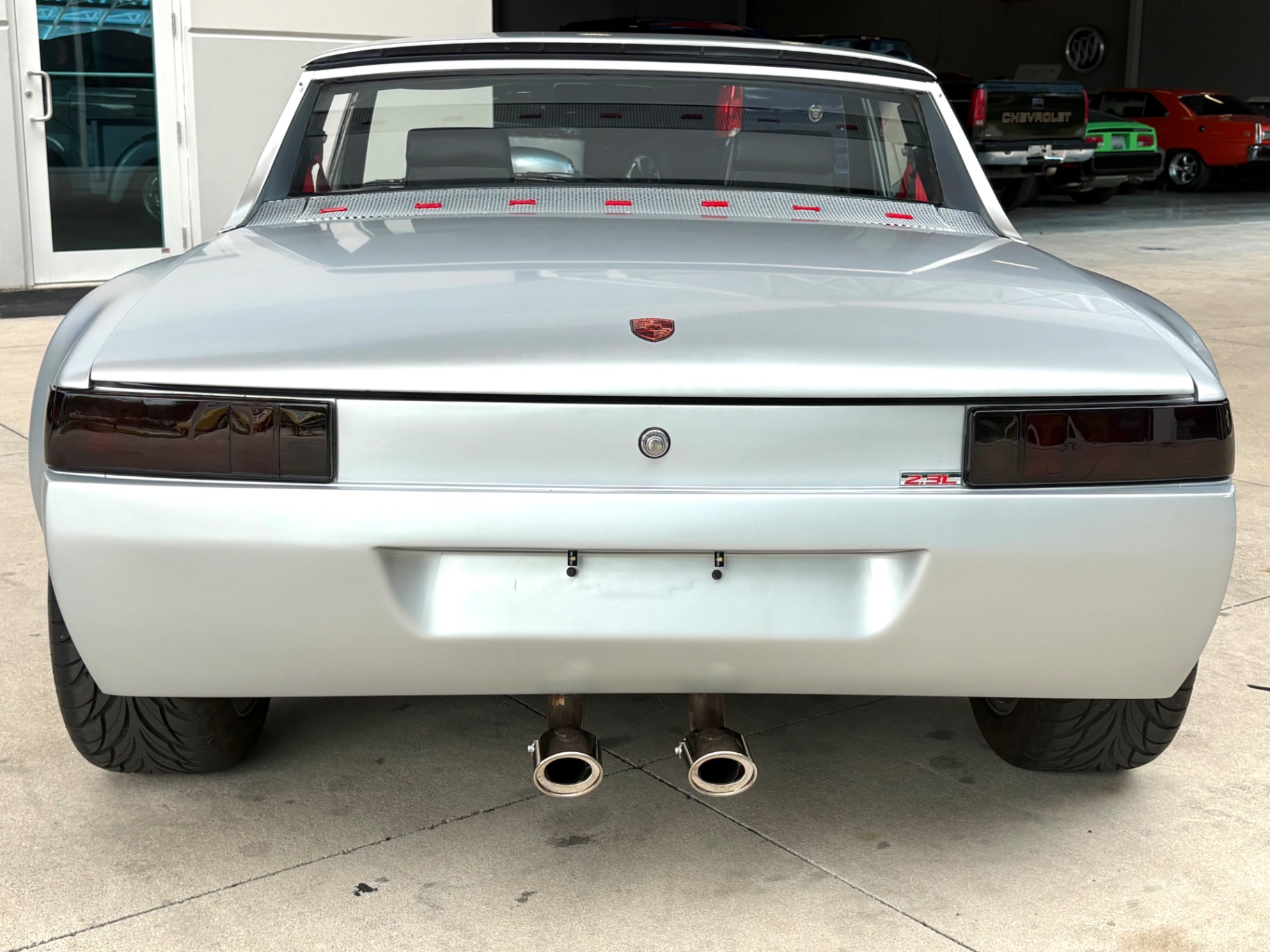
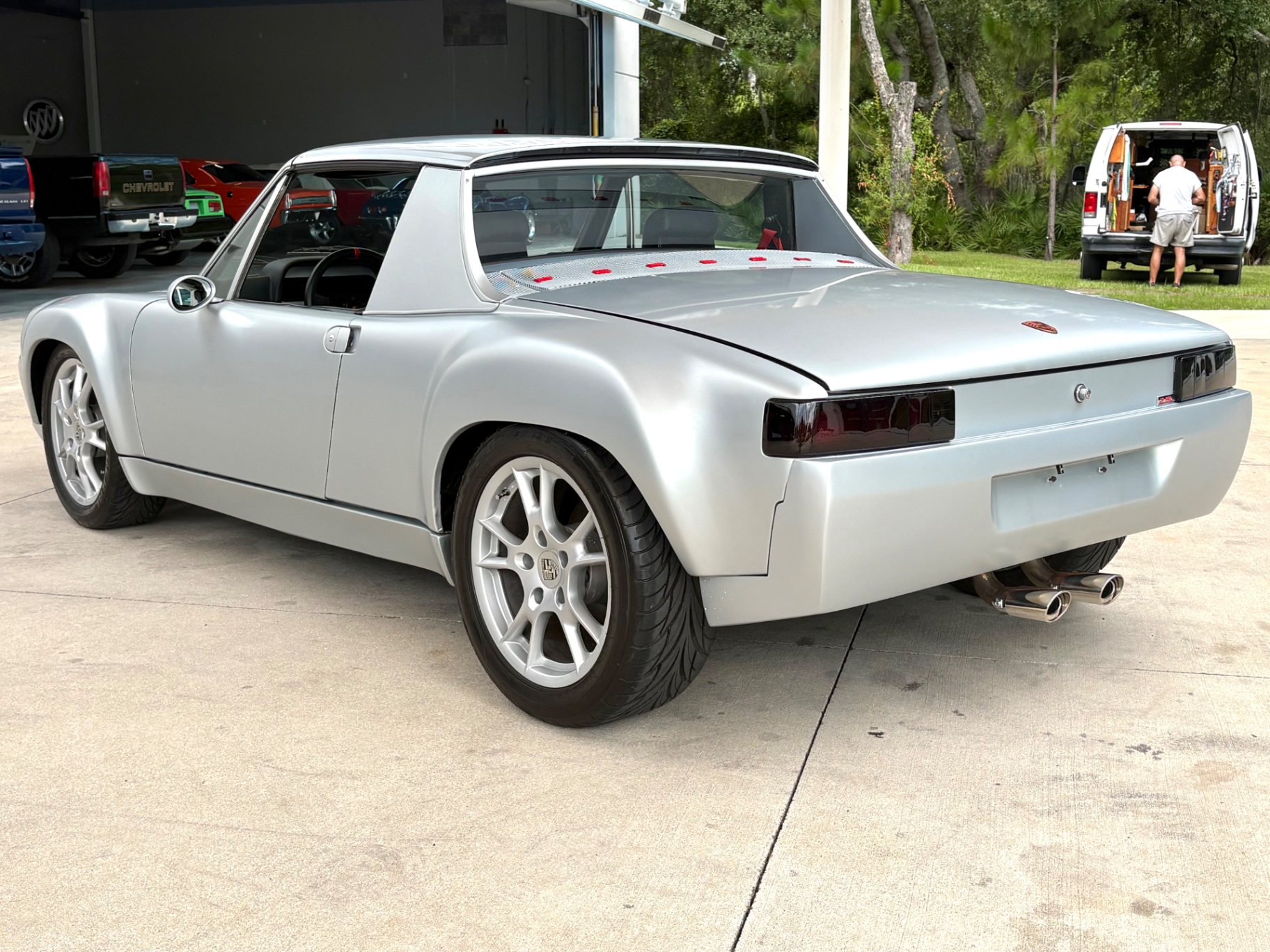
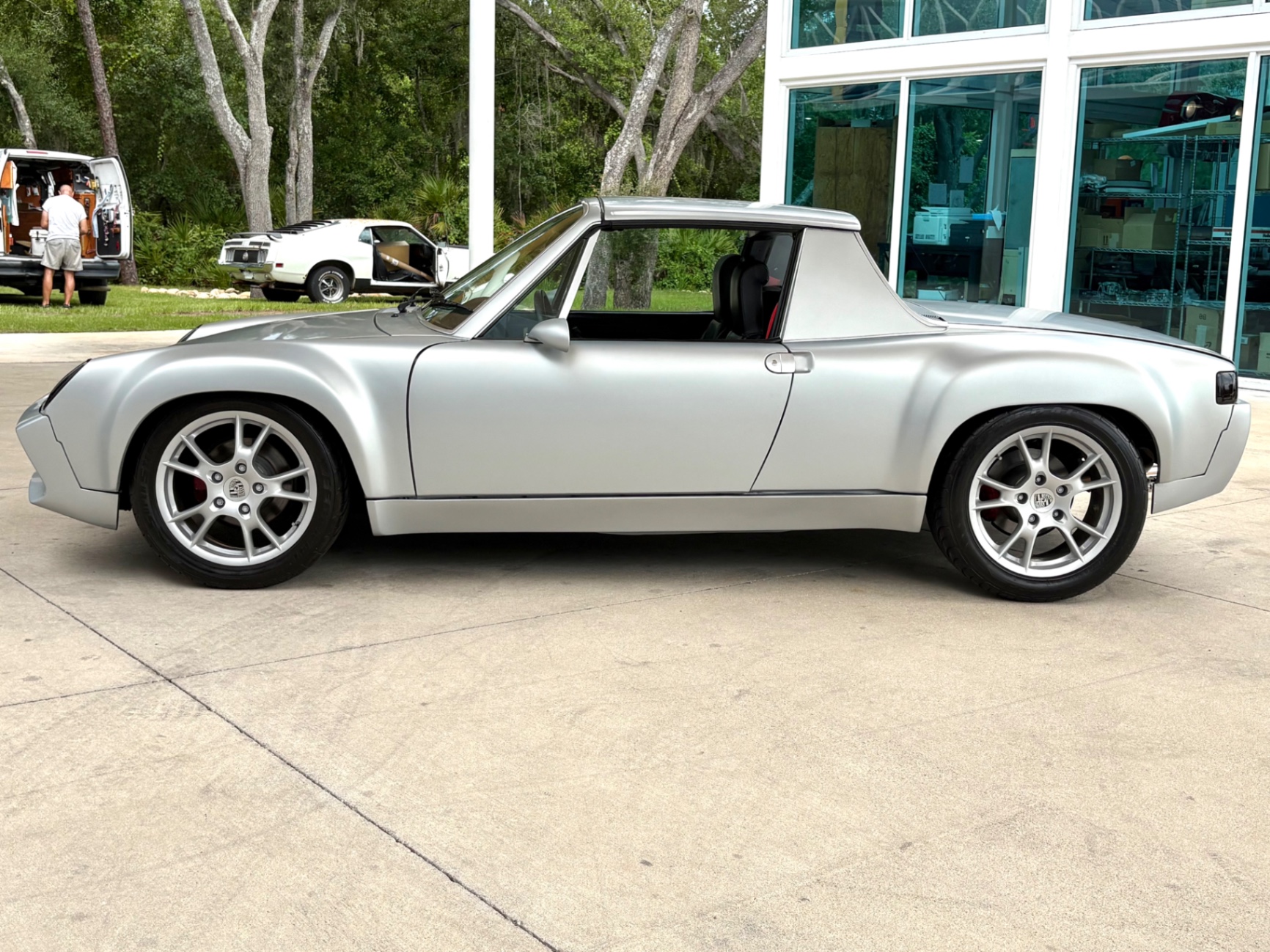
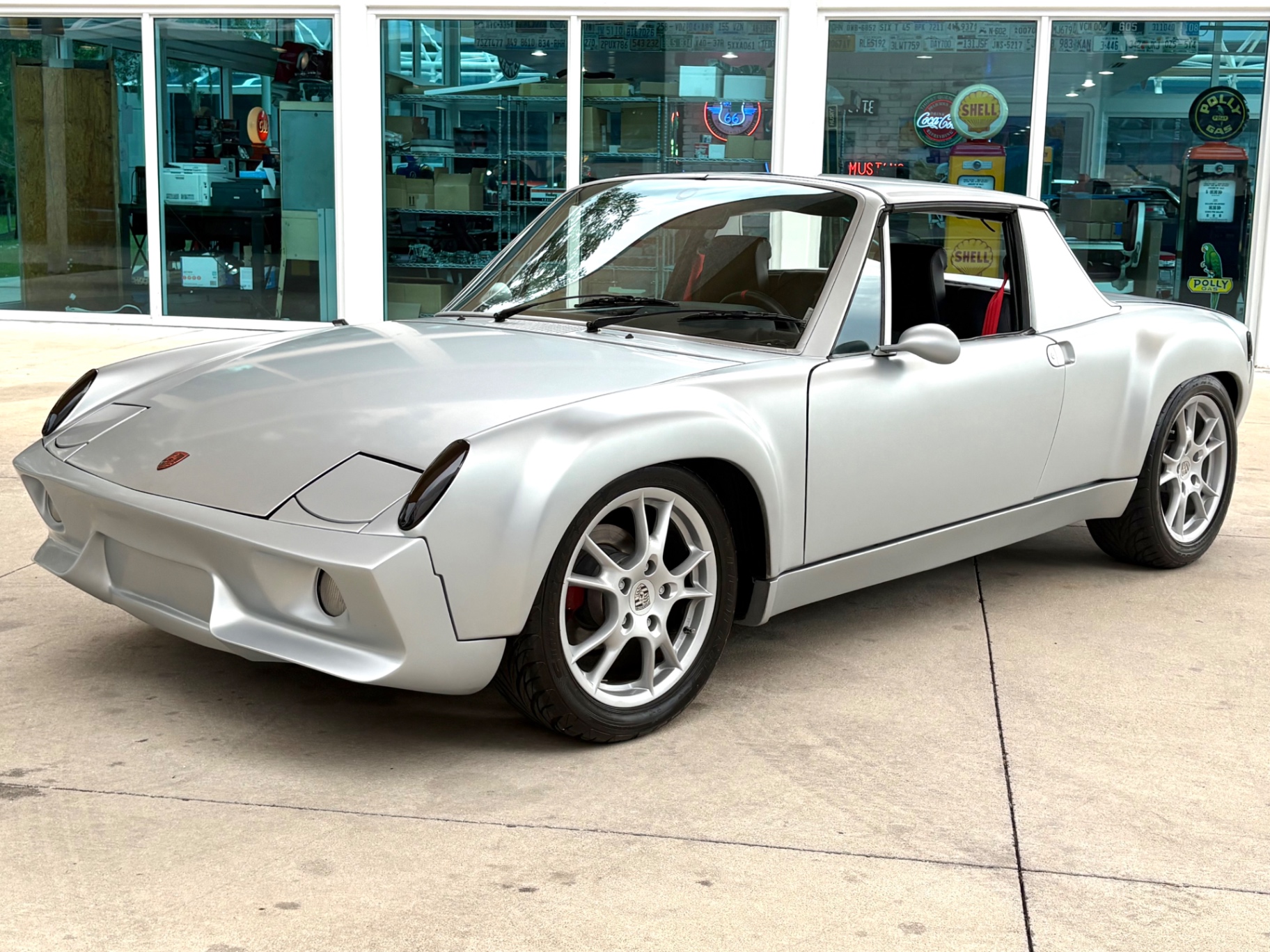
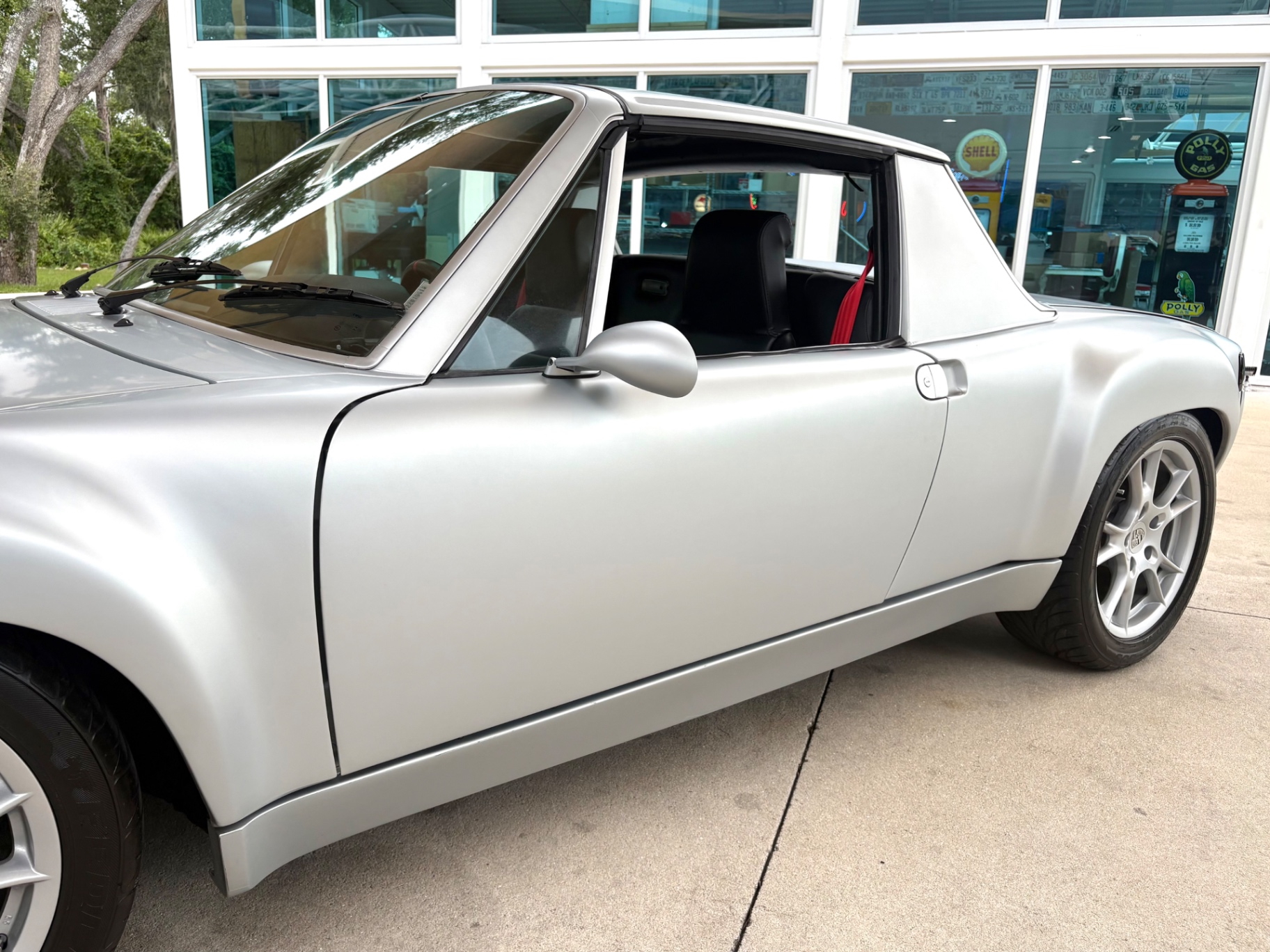
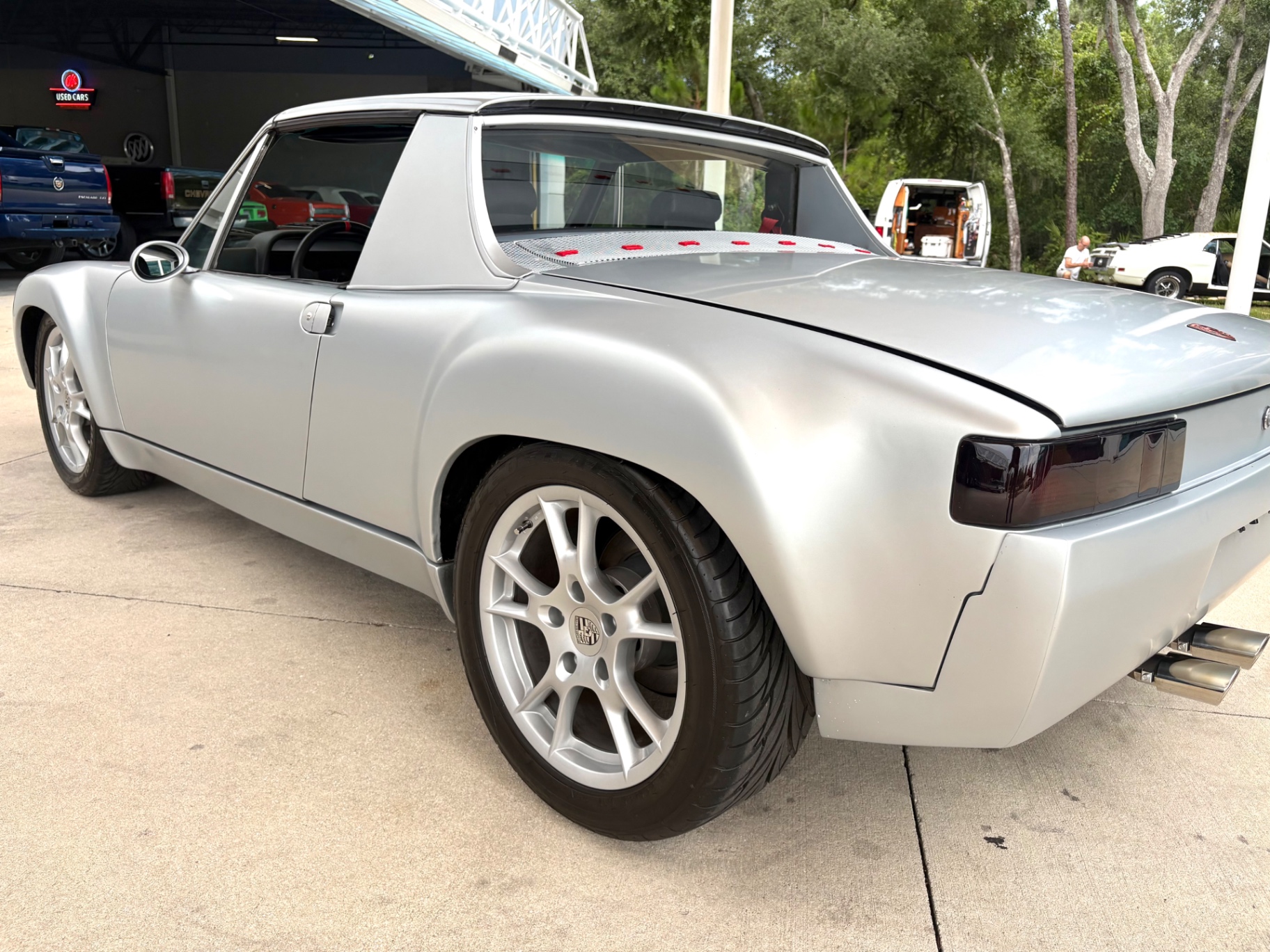
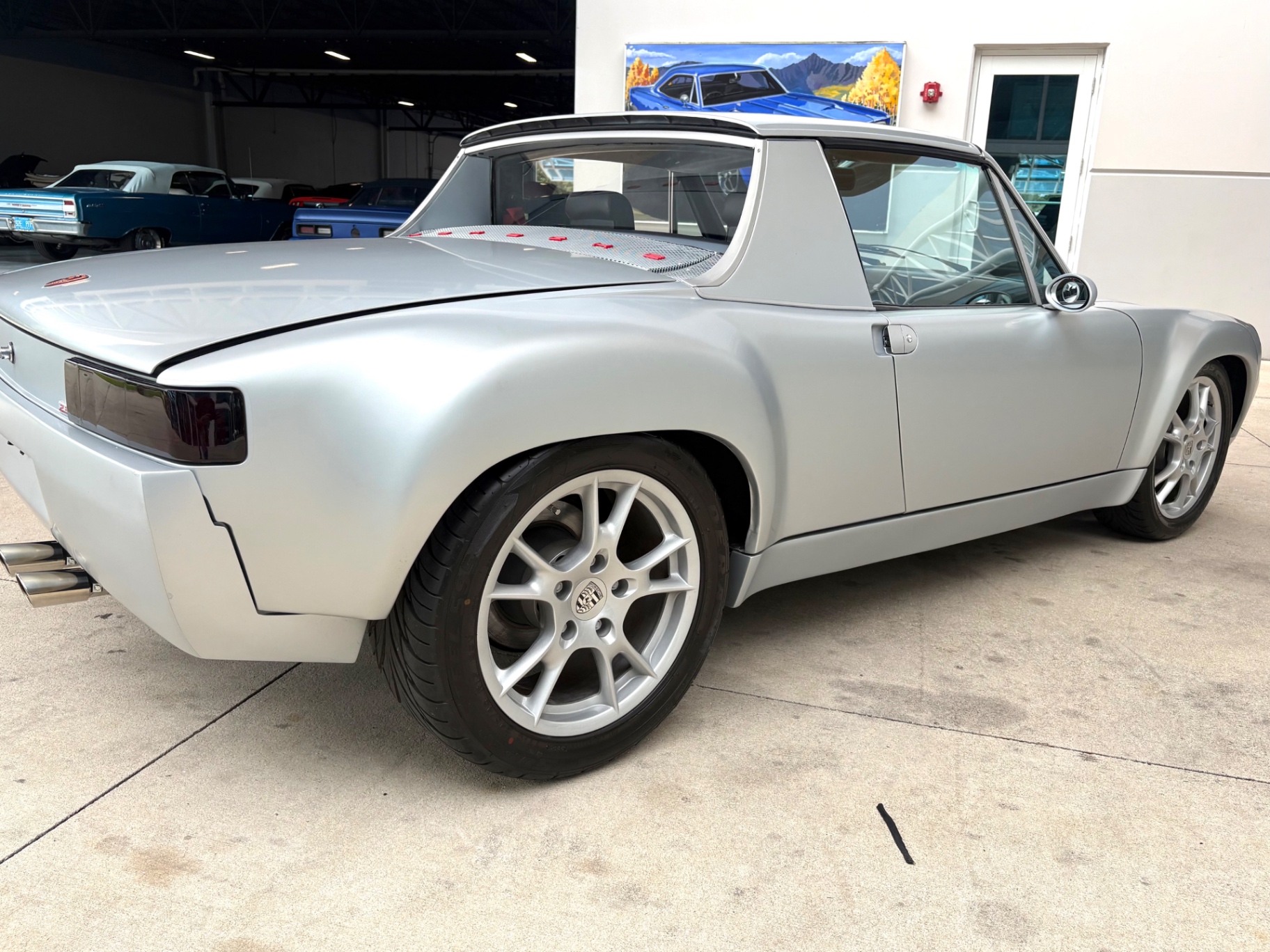
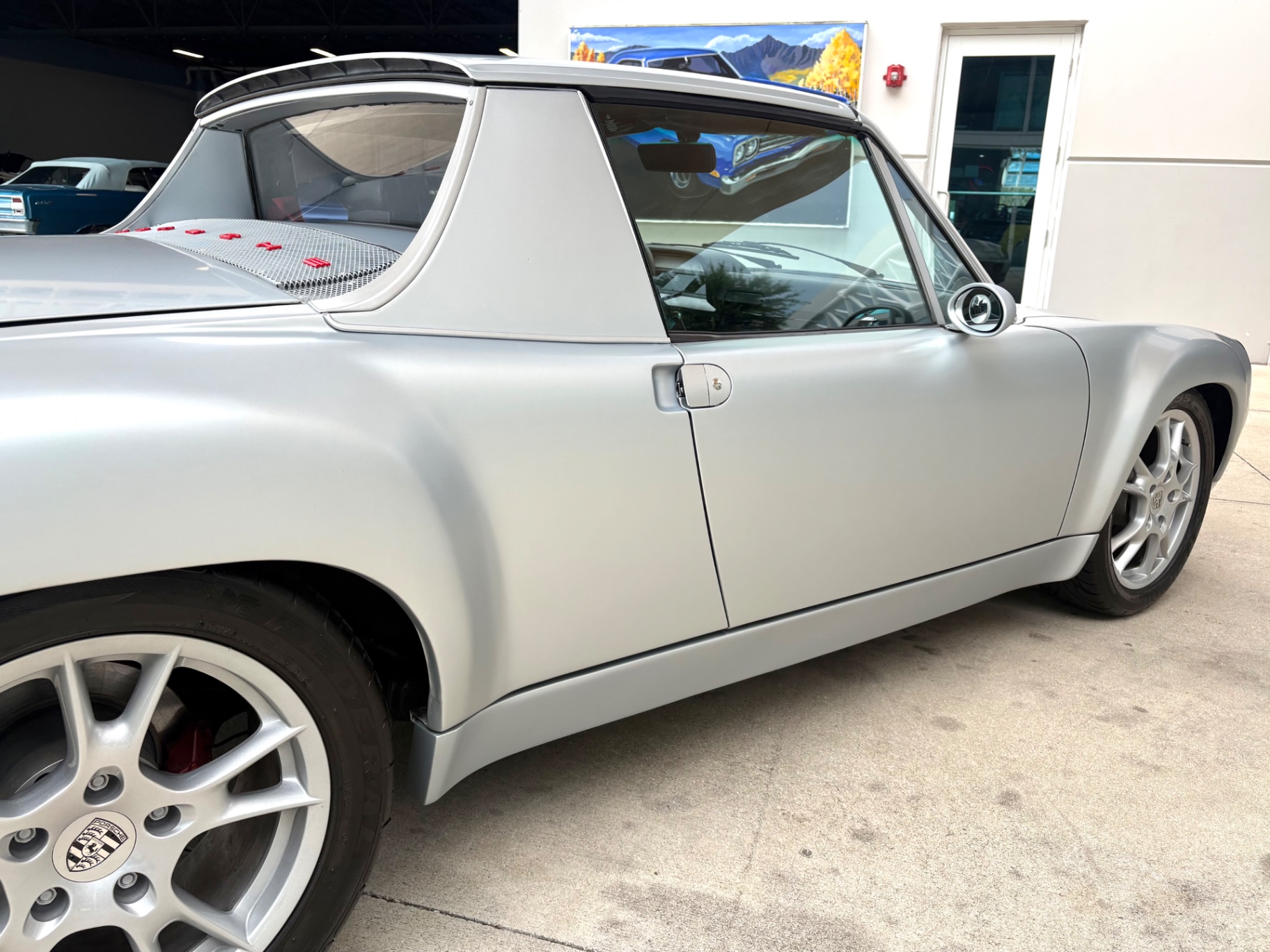
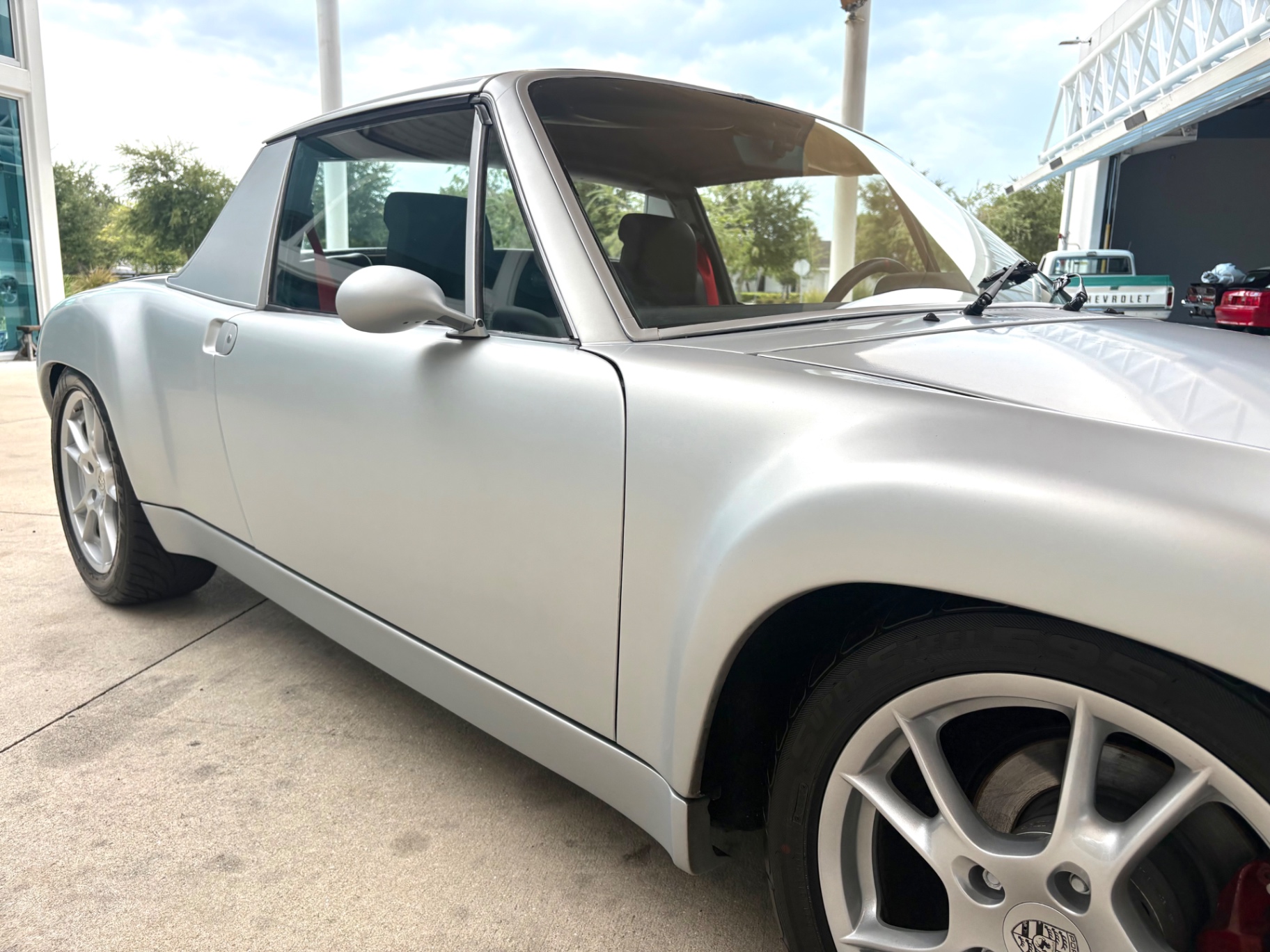
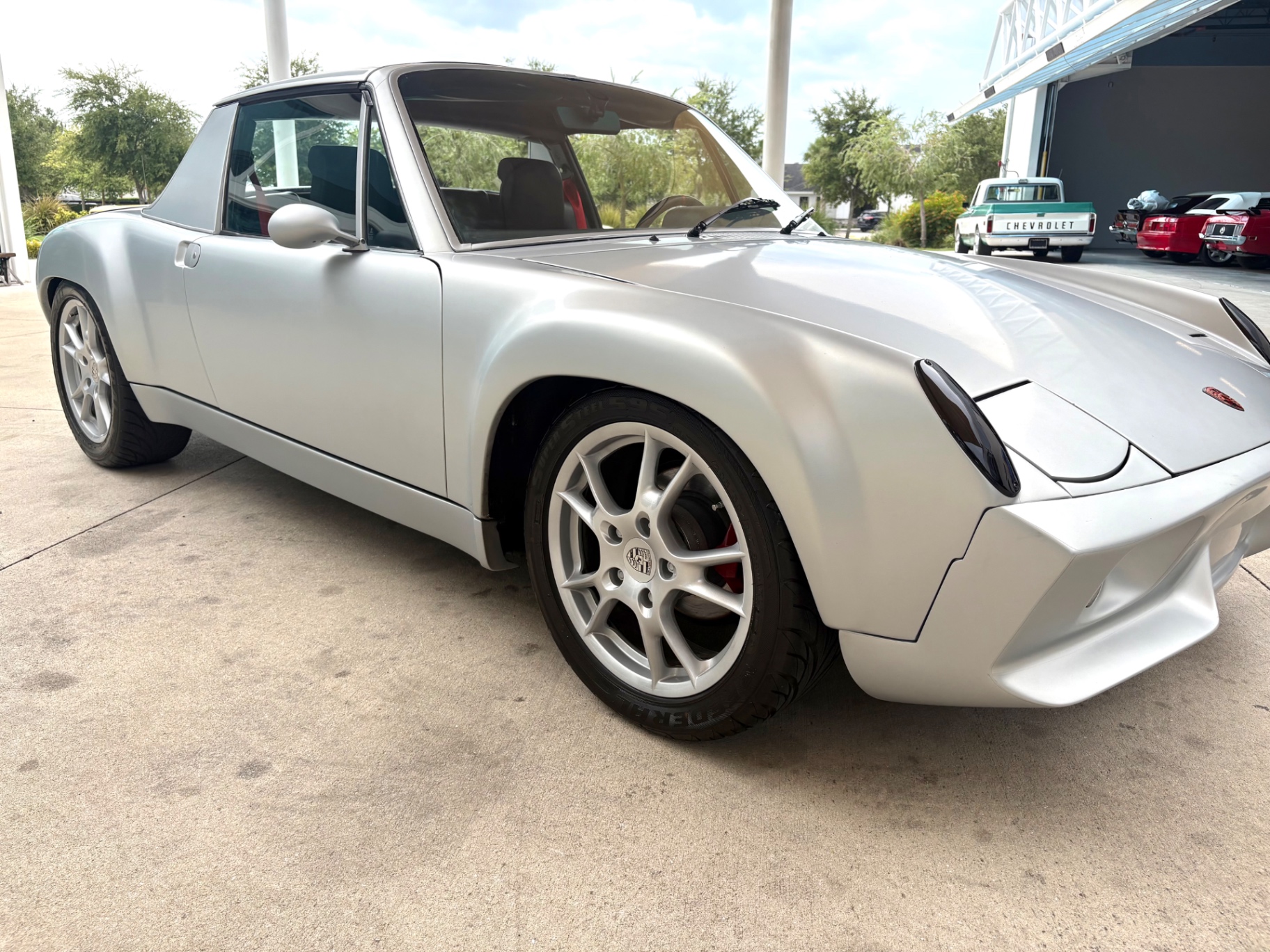
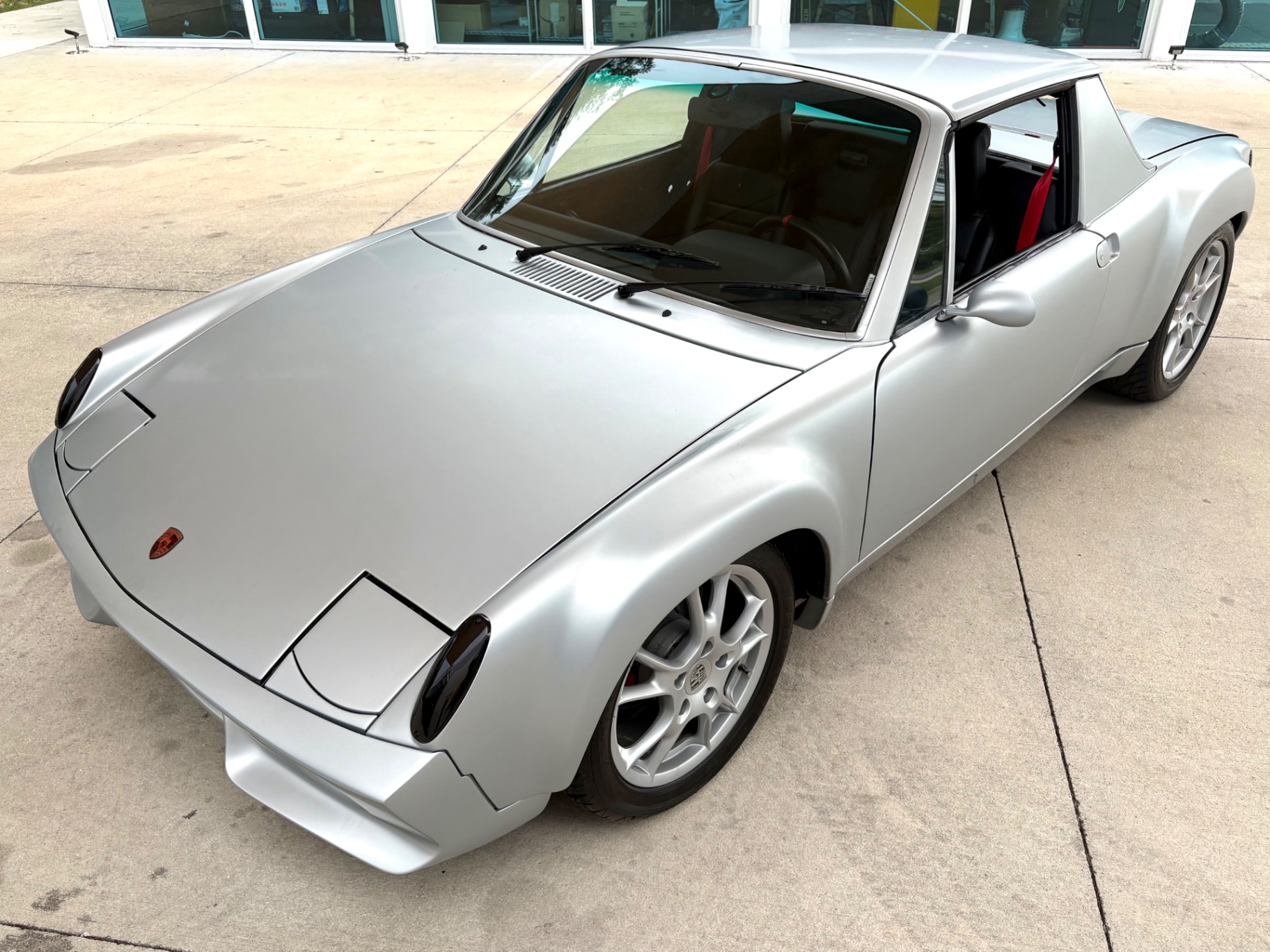
The exterior is silver over a black leather interior, a combination that photographs cleanly and wears well over time. The smoked lighting treatment, the custom body kit, and the dual exhaust tips exiting from the rear give the car an aggressive but purposeful stance that fits the 914's naturally low, wide profile.
Features List
- 2.3L Air-Cooled Flat-Four Engine, Mid-Engine Layout
- 5-Speed Manual Transmission
- Four-Wheel Disc Brakes
- Wrapped Exhaust Headers
- Dual Exhaust Tips
- Custom Body Kit
- Upgraded Porsche Alloy Wheels
- Pirelli Performance Tires
- Red Brake Calipers
- Smoked Headlight Covers
- Smoked Rear Taillights
- Perforated Rear Engine Cover
- 2.3L Badge on Rear
- Removable Targa Top
- OMP Sport Steering Wheel
- Aluminum Sport Pedals
- Black Leather Bucket Seats
- Red Seatbelts
- Center Console Cup Holders
- Kicker Upgraded Stereo System
- Sony Head Unit
- Porsche Floor Mats
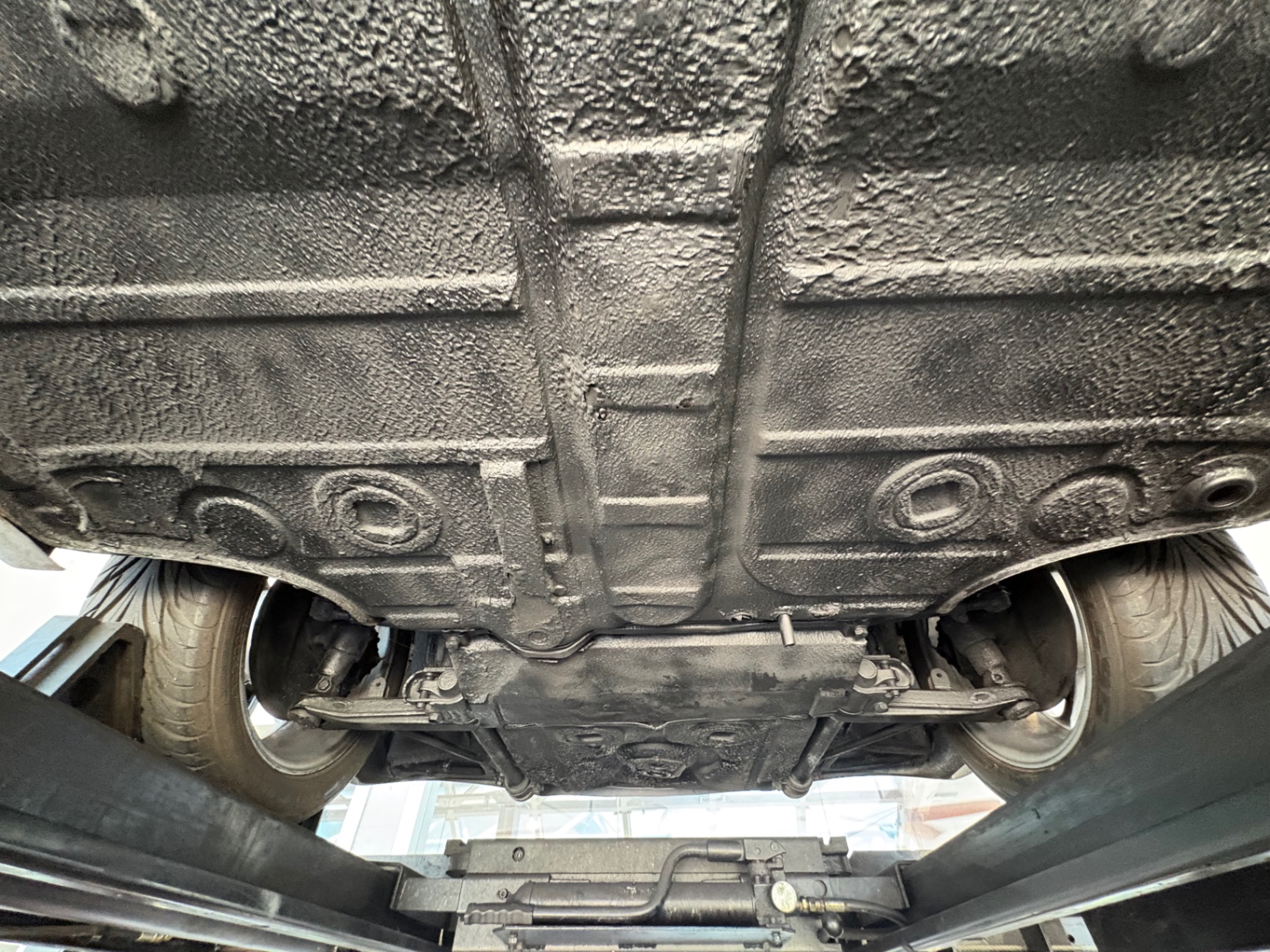
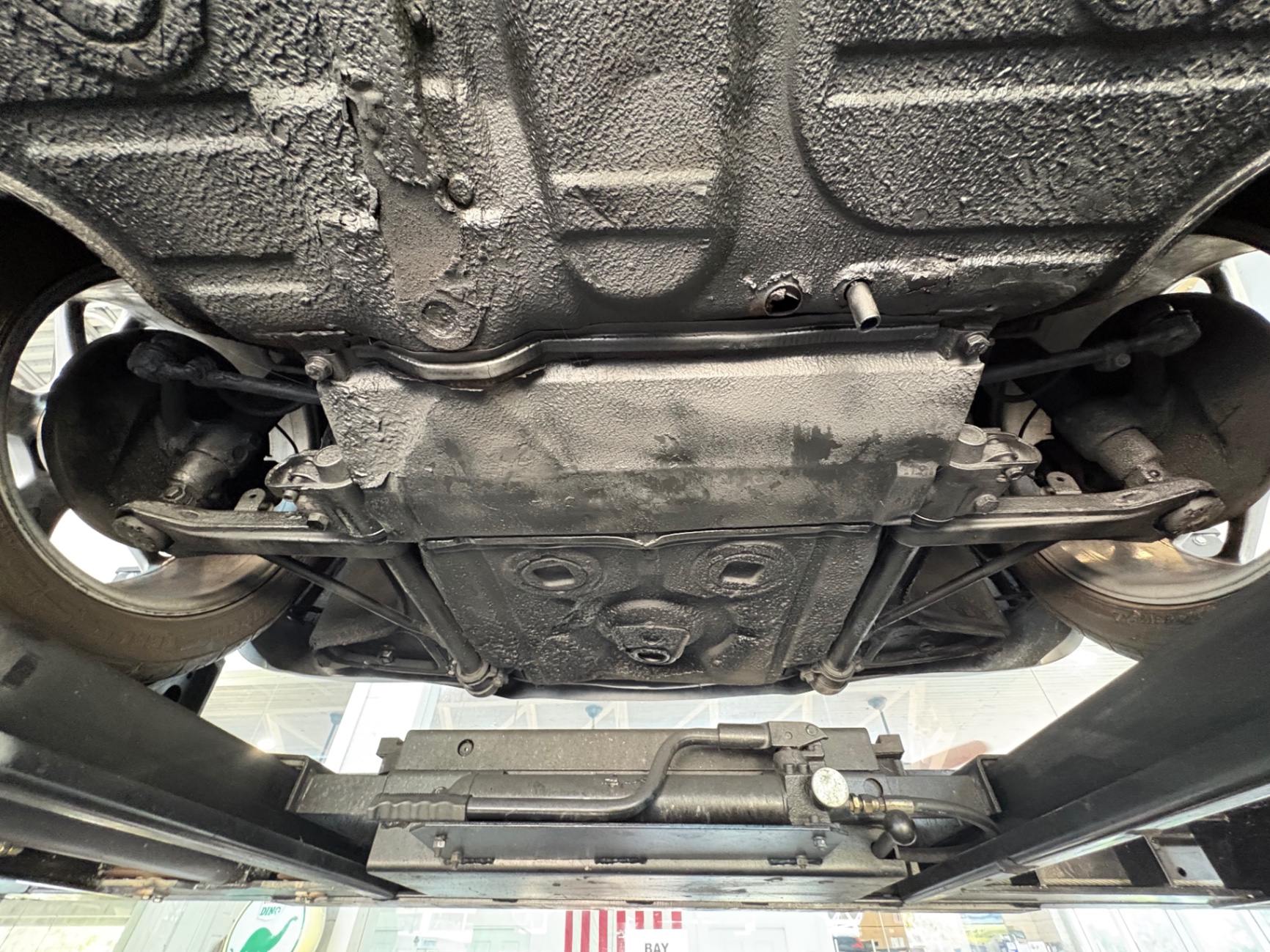
- Undercoated Floors
- Karmann Coachbuilt Body
Mechanical
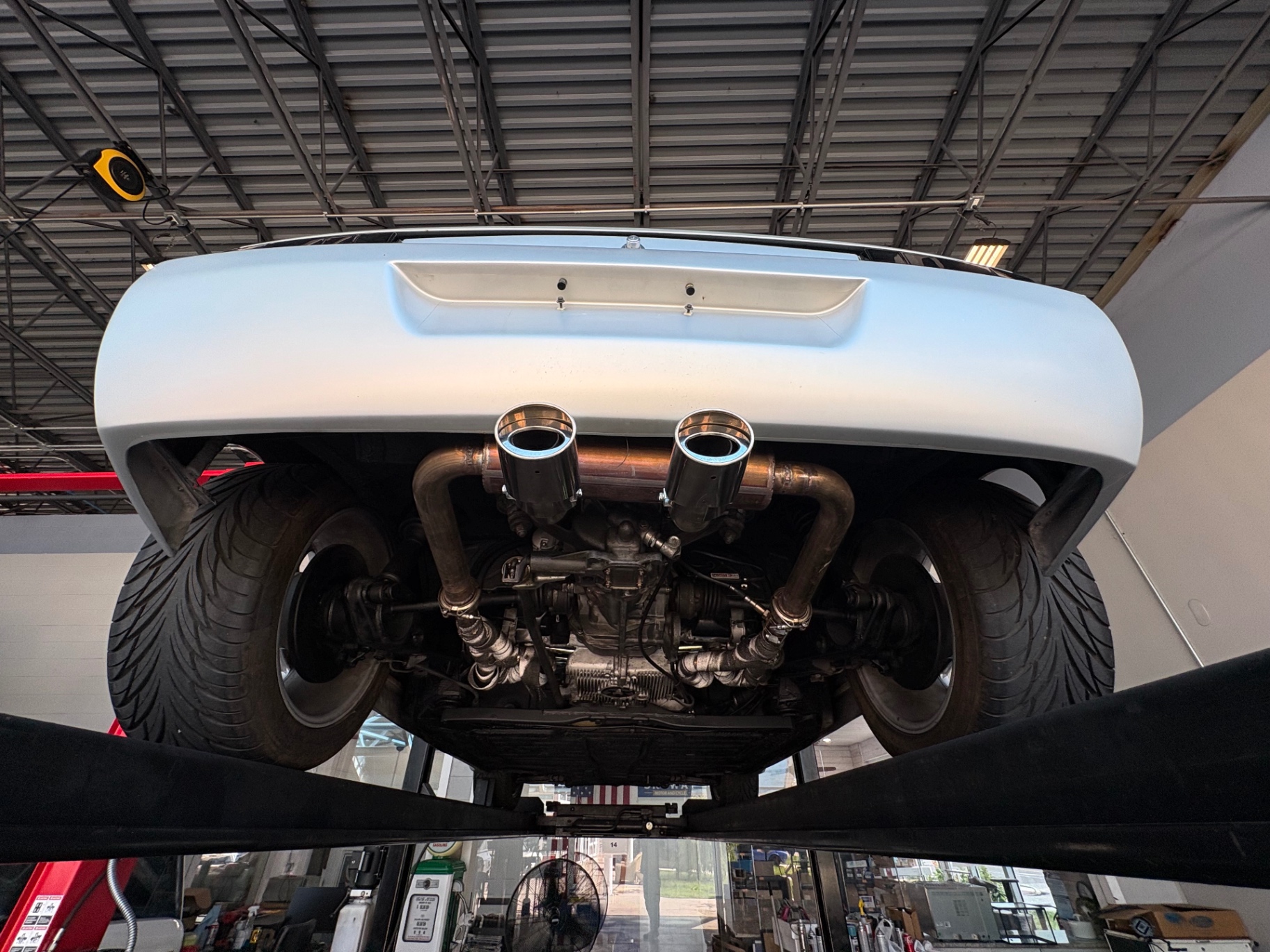
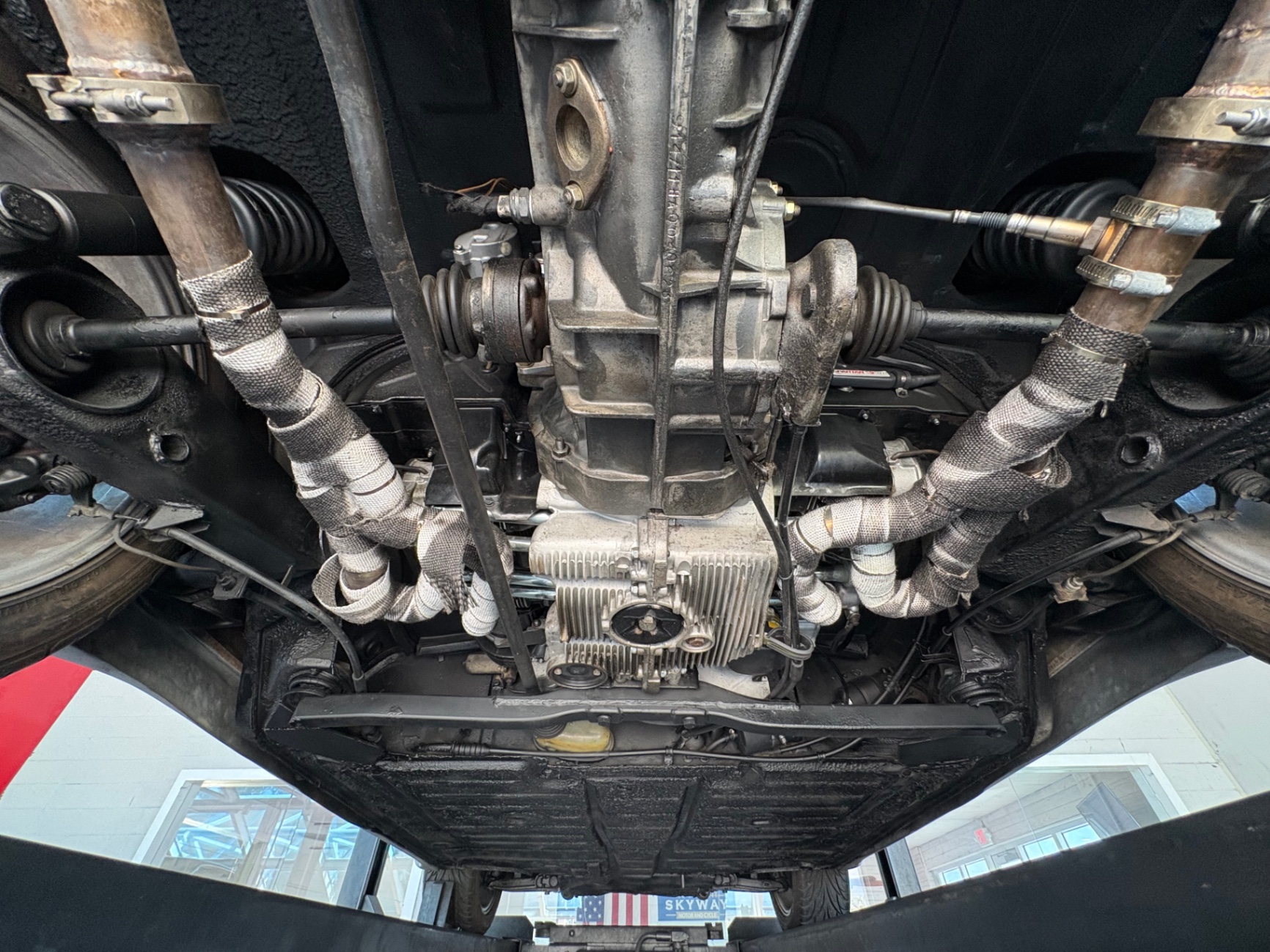
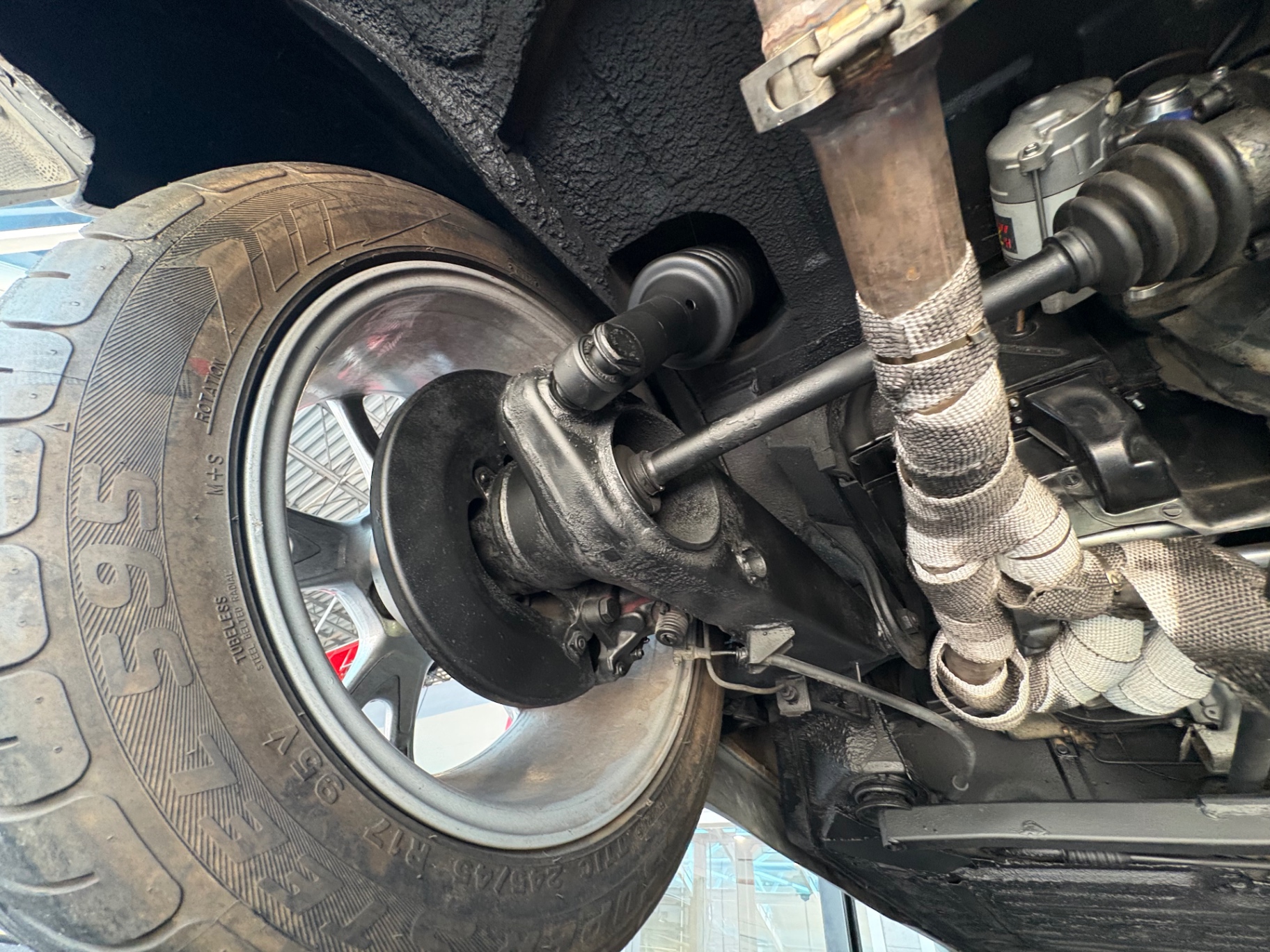
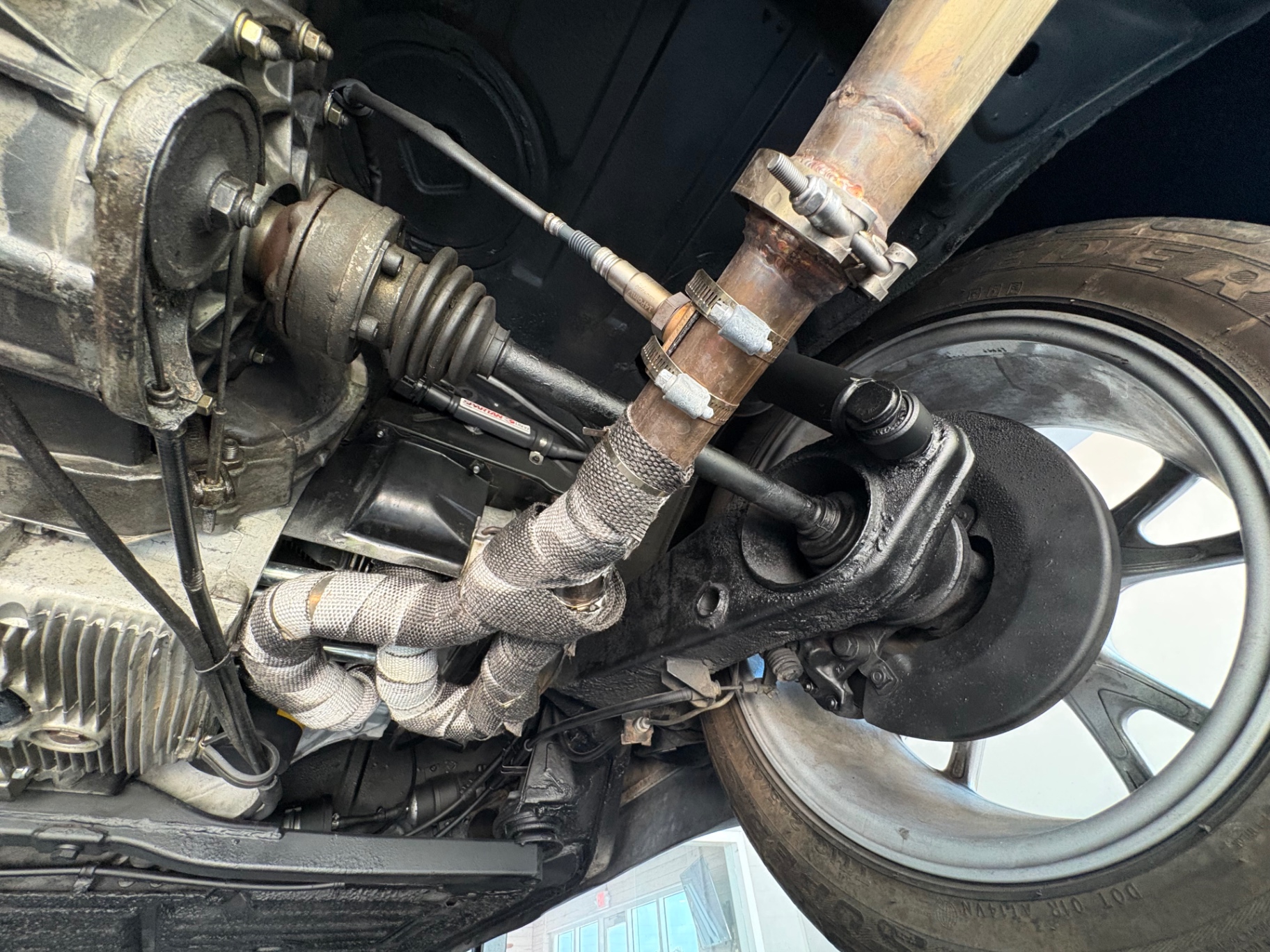
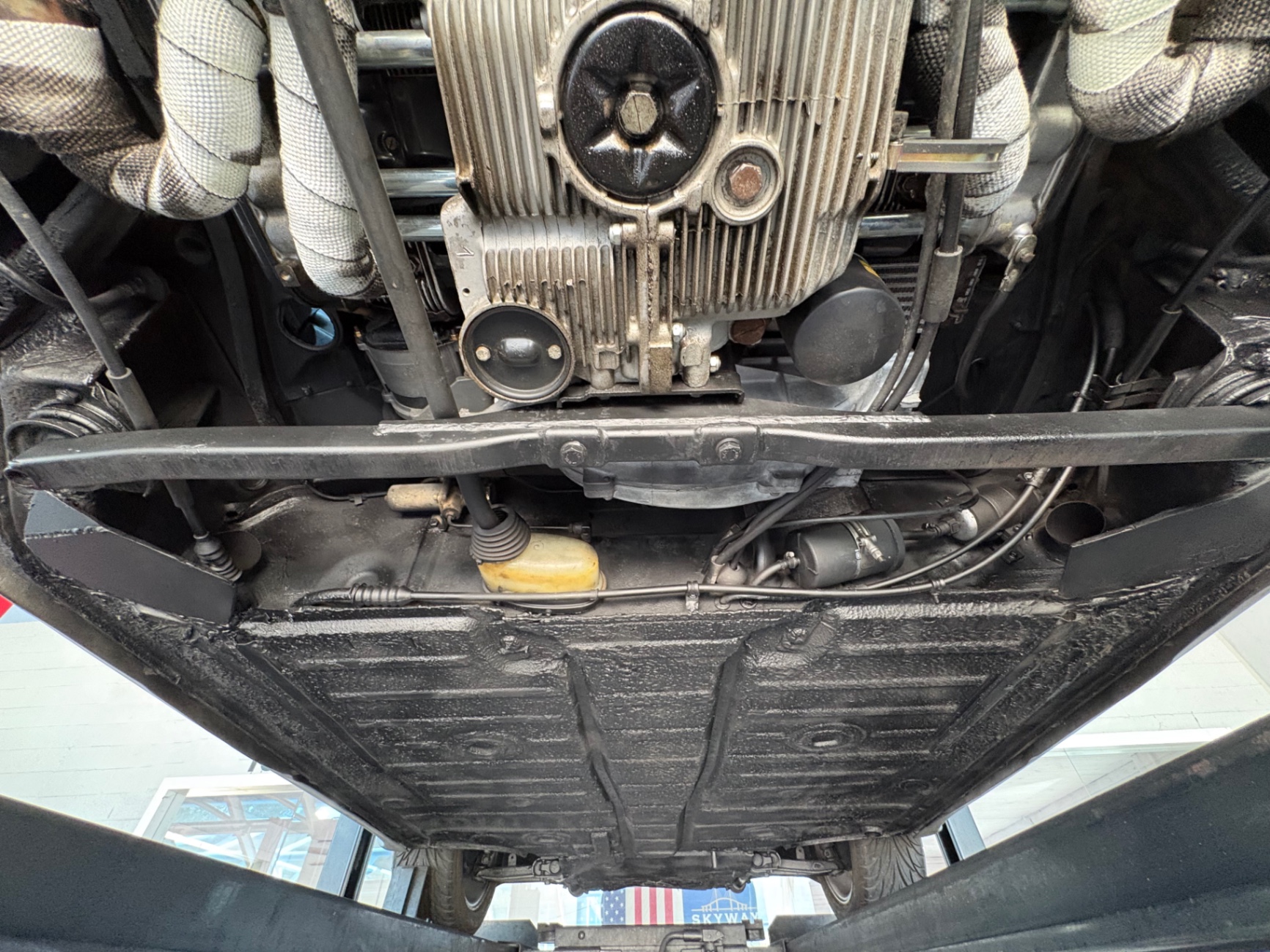
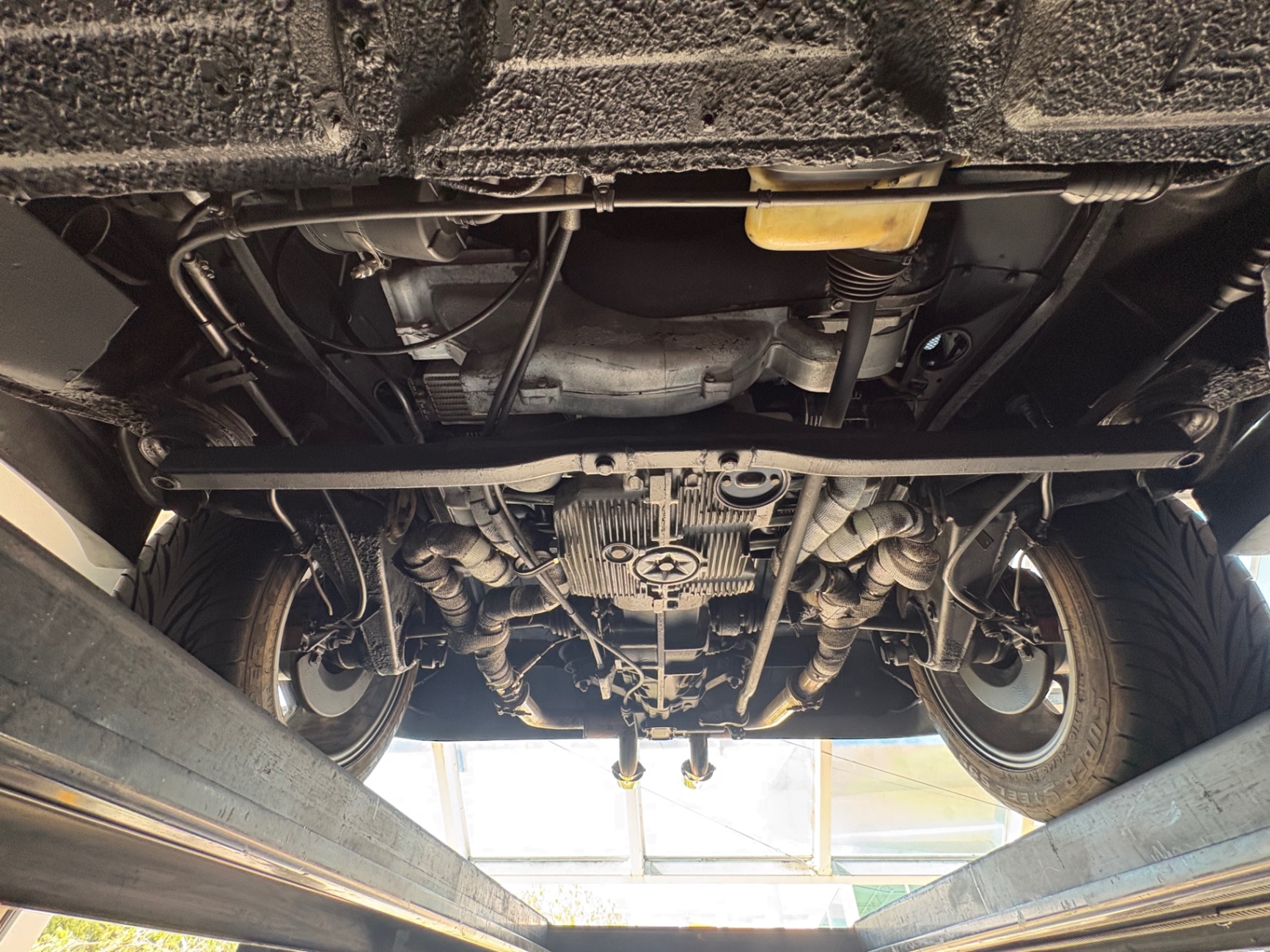
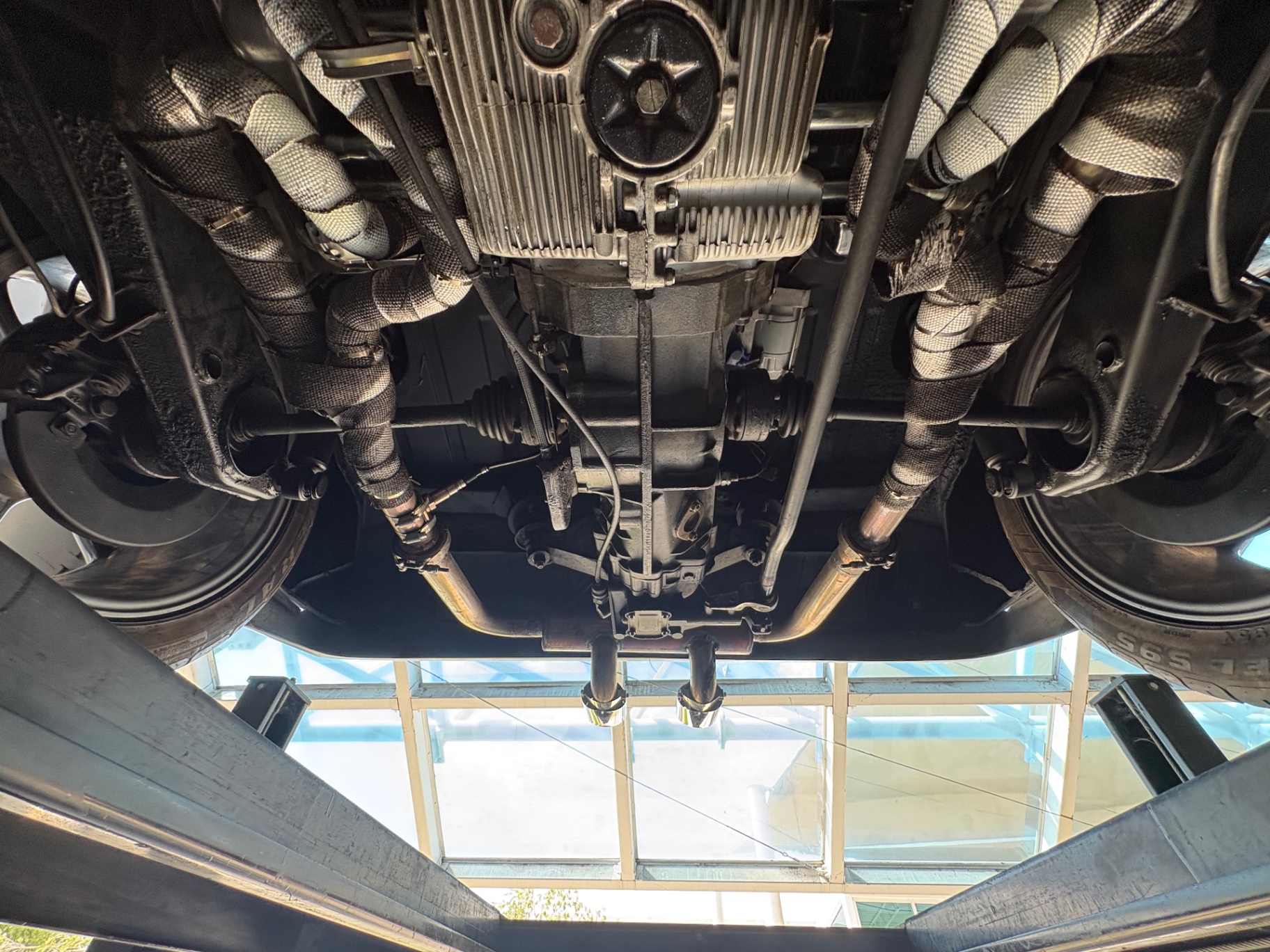
The engine in this 1972 Porsche 914 is a 2.3-liter air-cooled flat-four, which represents a displacement increase over the base 1.7L and the more common 2.0L four-cylinder that Porsche offered in higher-spec 914 production. The air-cooled flat-four sits in the mid-ship position, directly behind the cockpit, with the five-speed manual gearbox integrated into the rear of the engine assembly. From underneath the car, the engine bay presents clearly — the wrapped headers are visible running outboard from the engine, feeding into the dual exhaust system that exits at the rear with polished tips. The header wrap serves a functional purpose: it retains exhaust heat within the pipes, which helps maintain exhaust velocity and keeps underhood temperatures lower around the surrounding components.
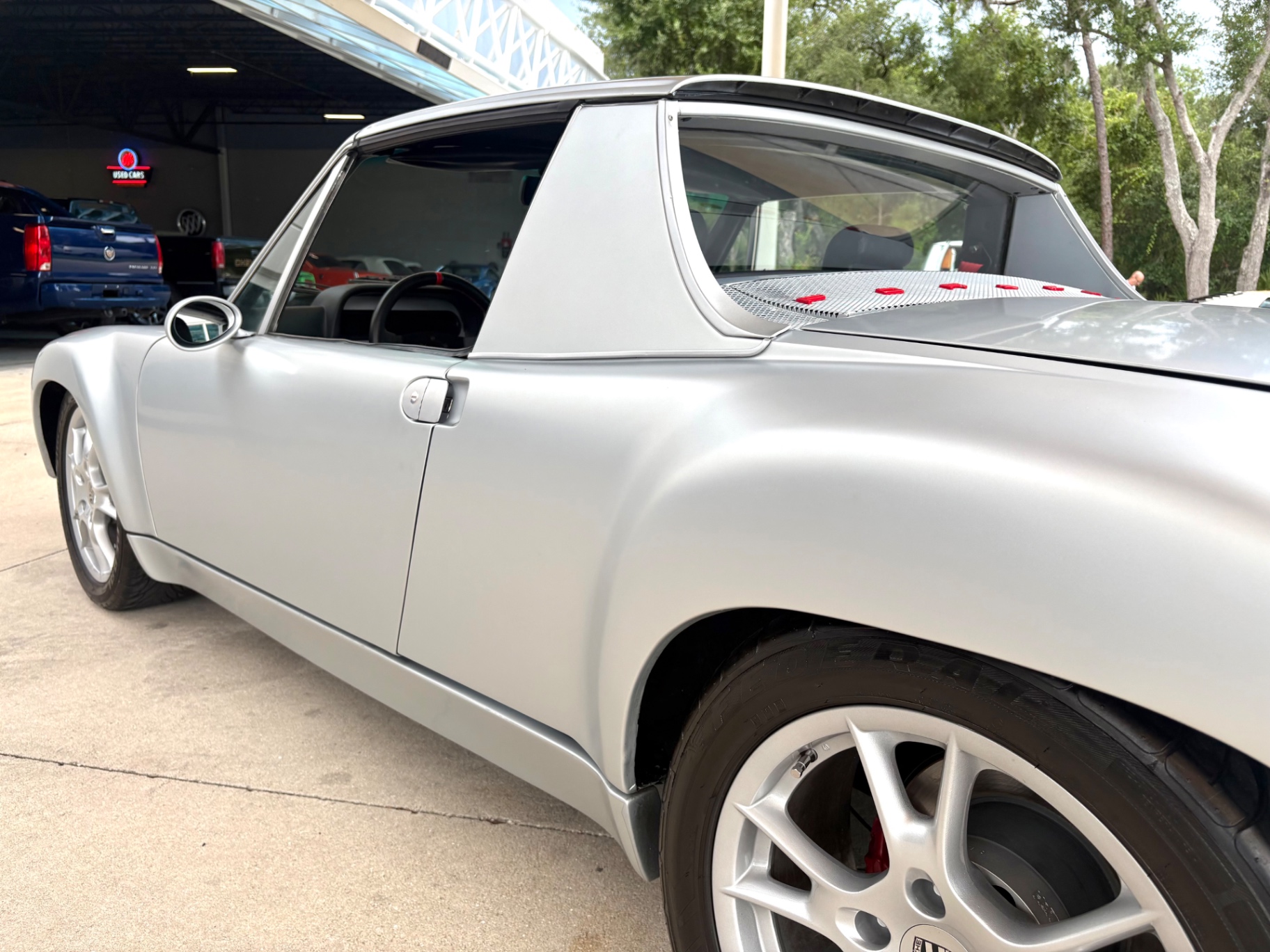
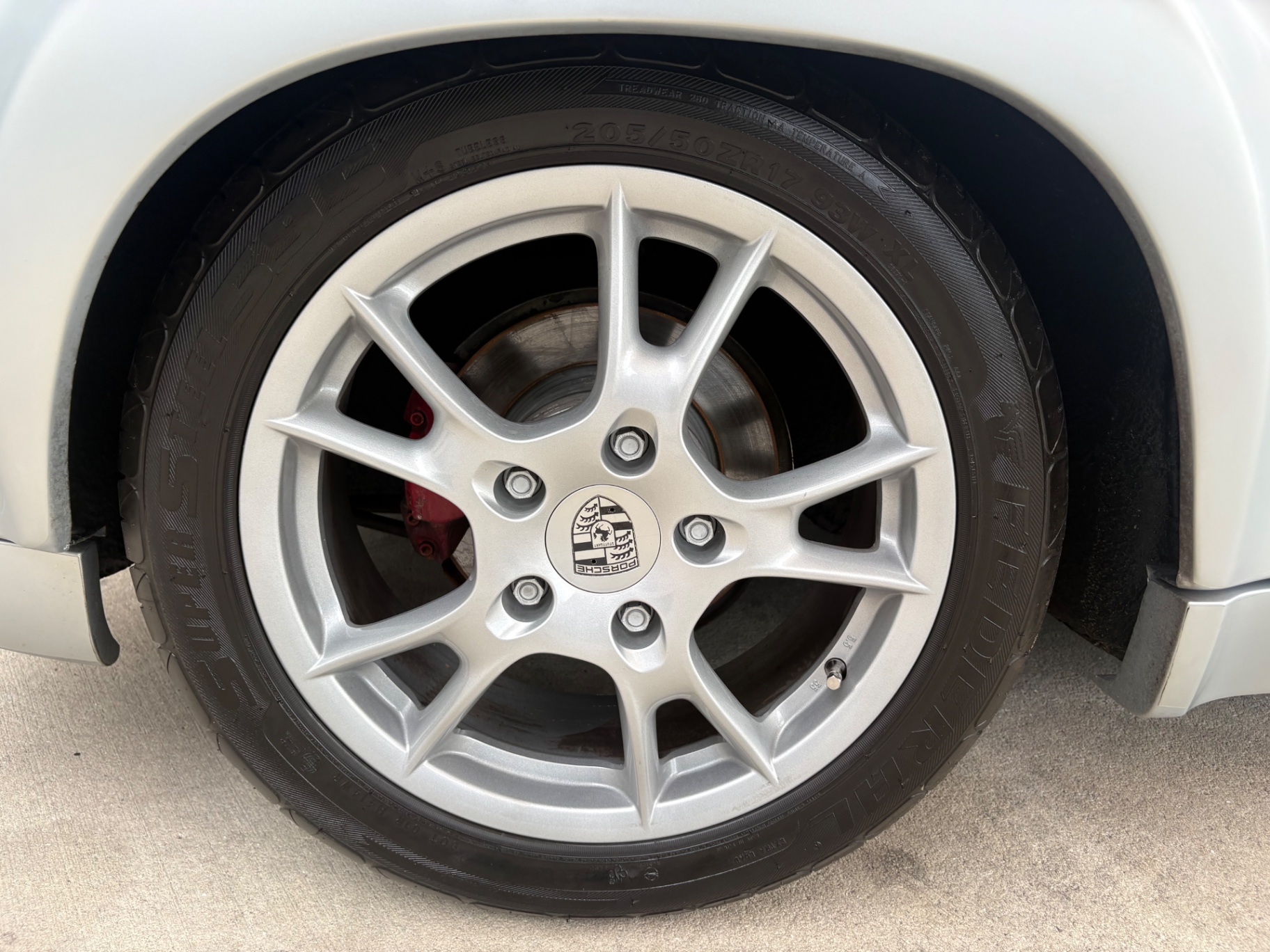
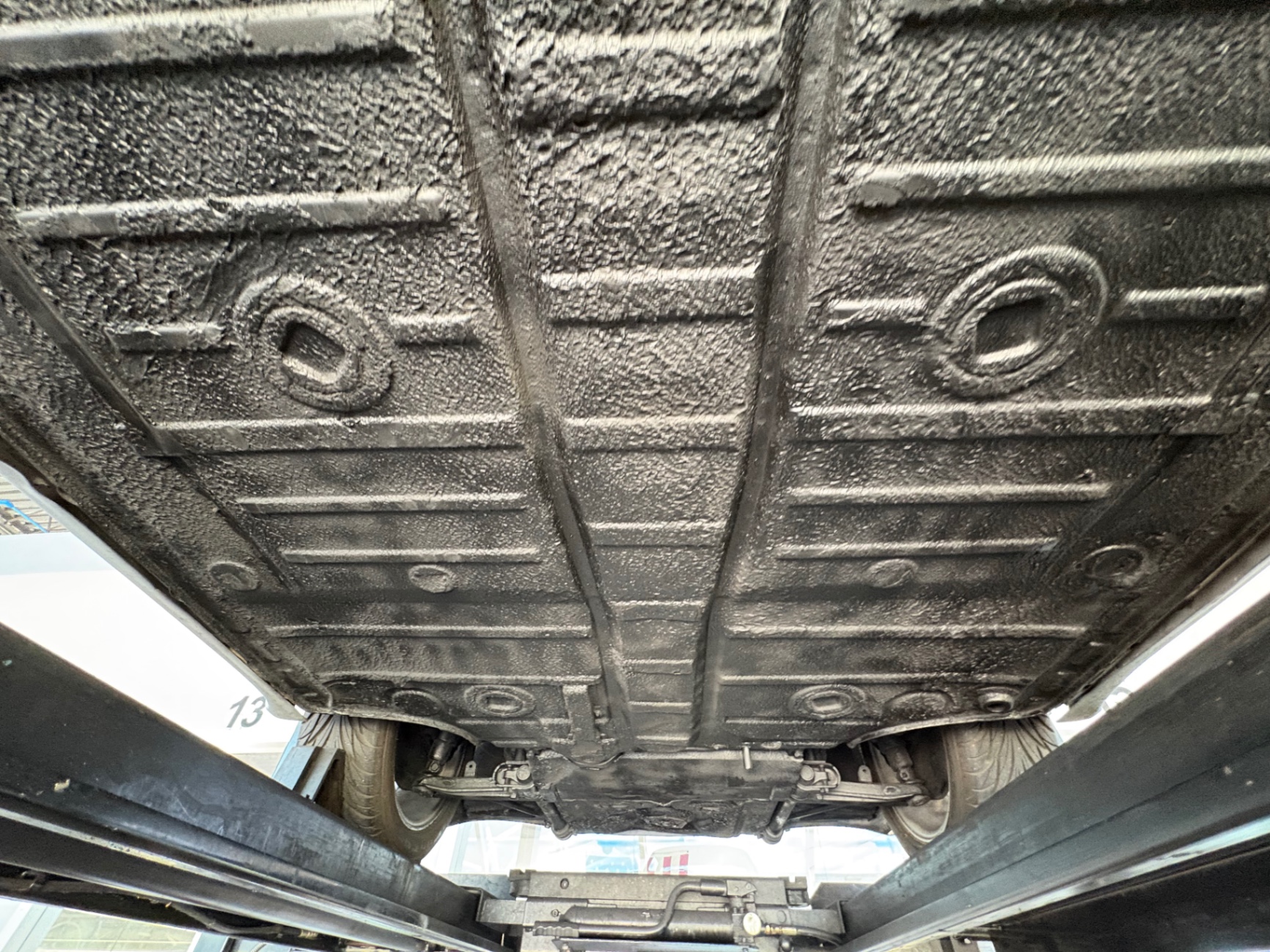
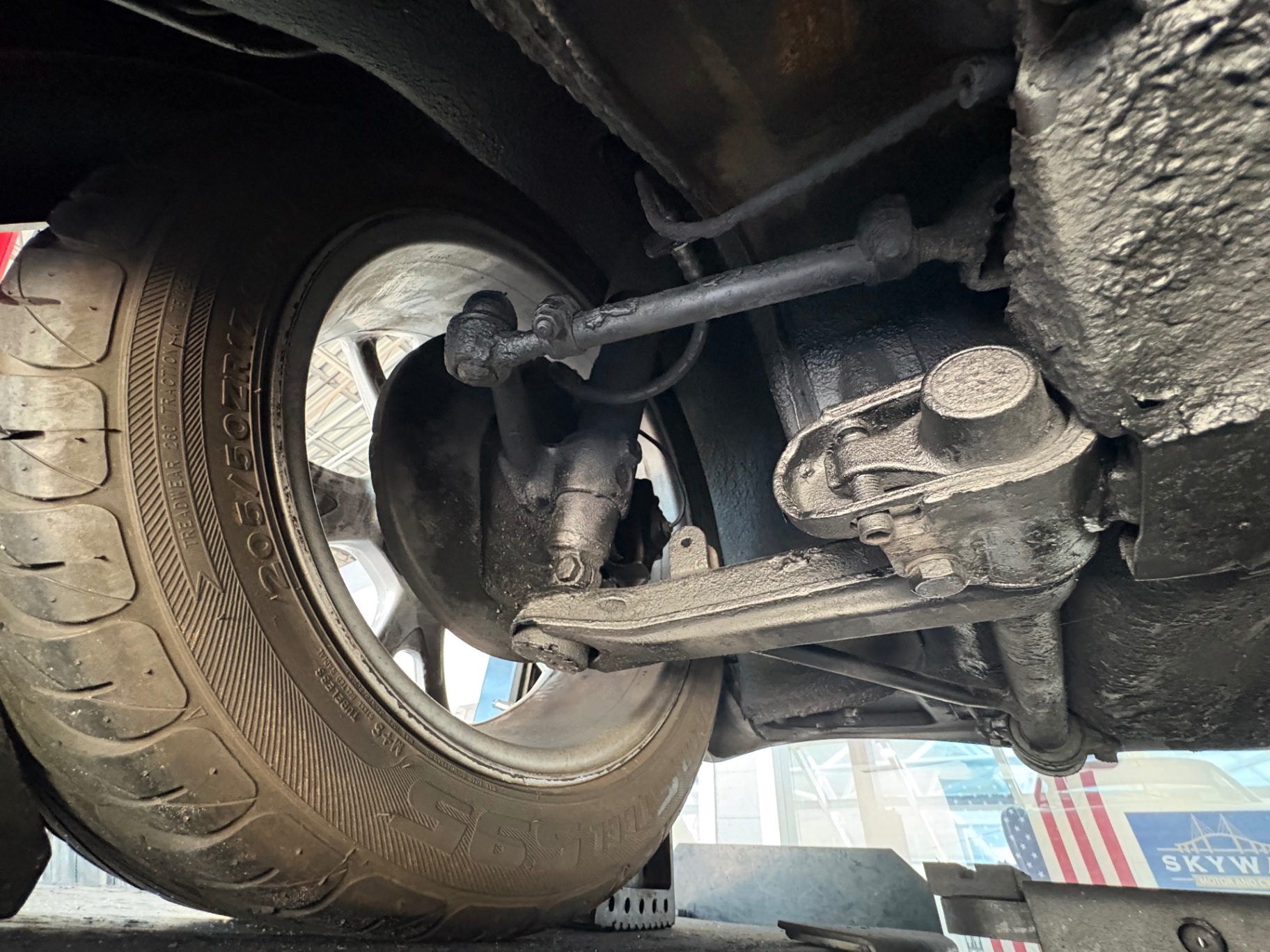
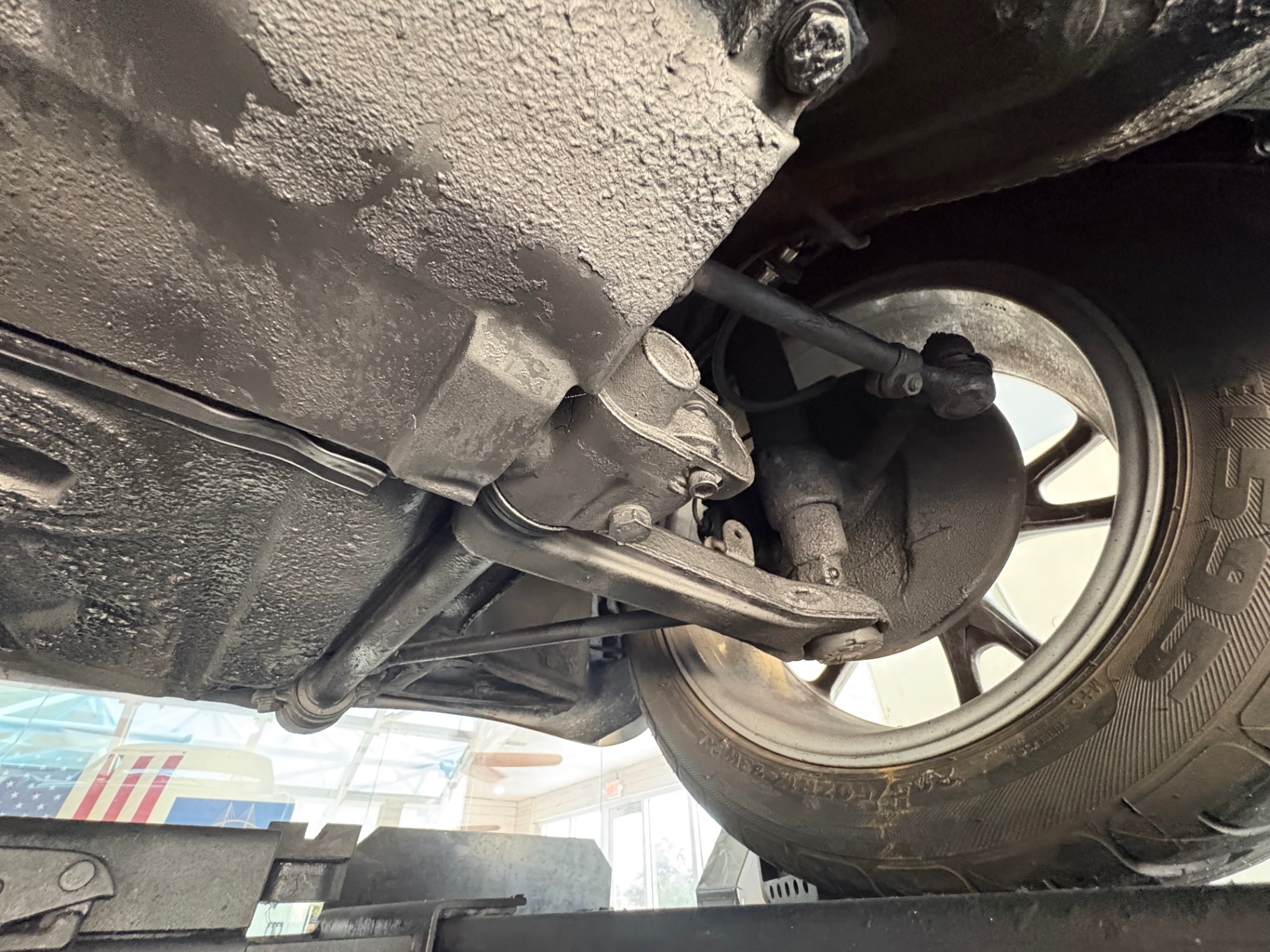
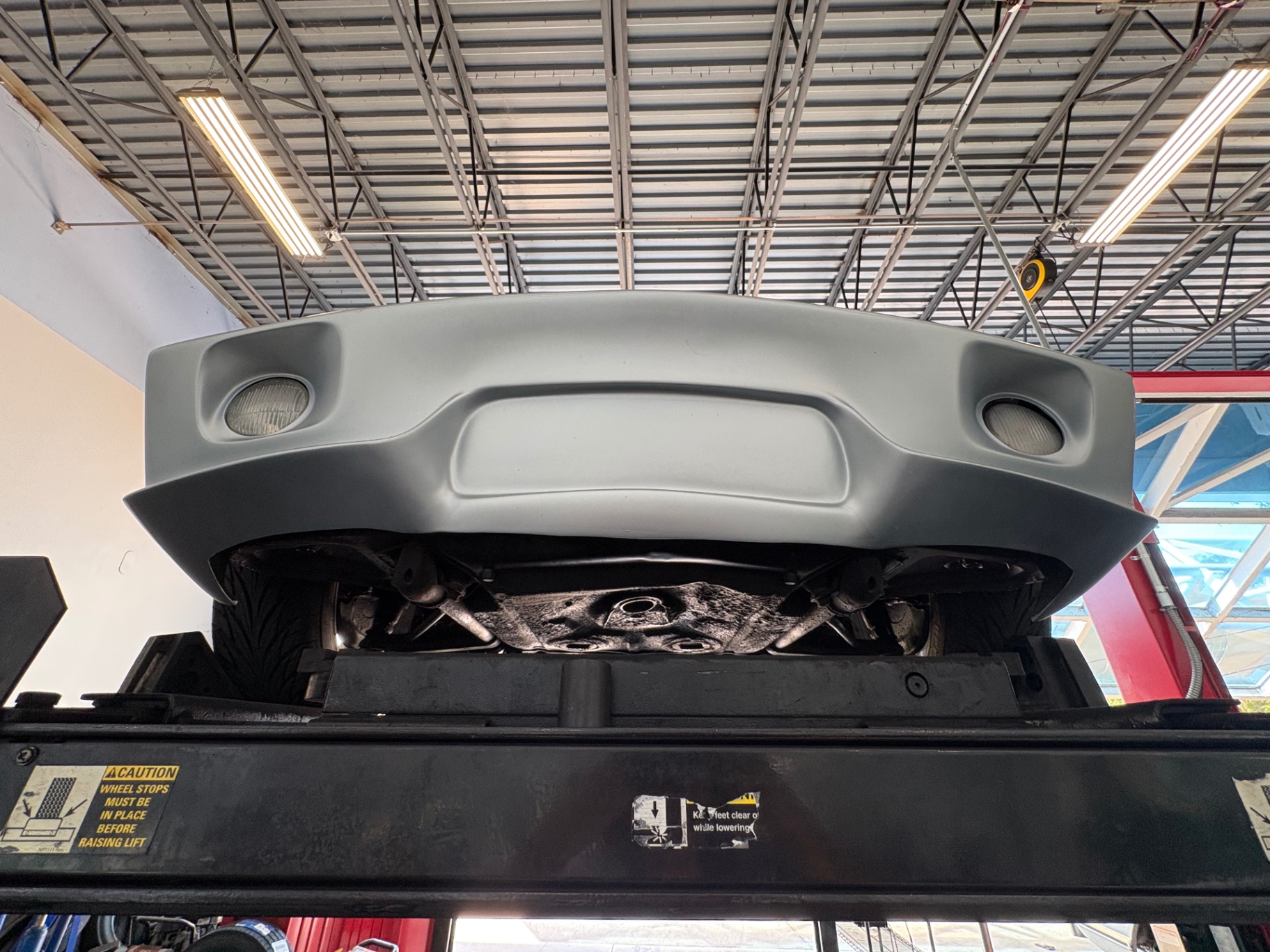
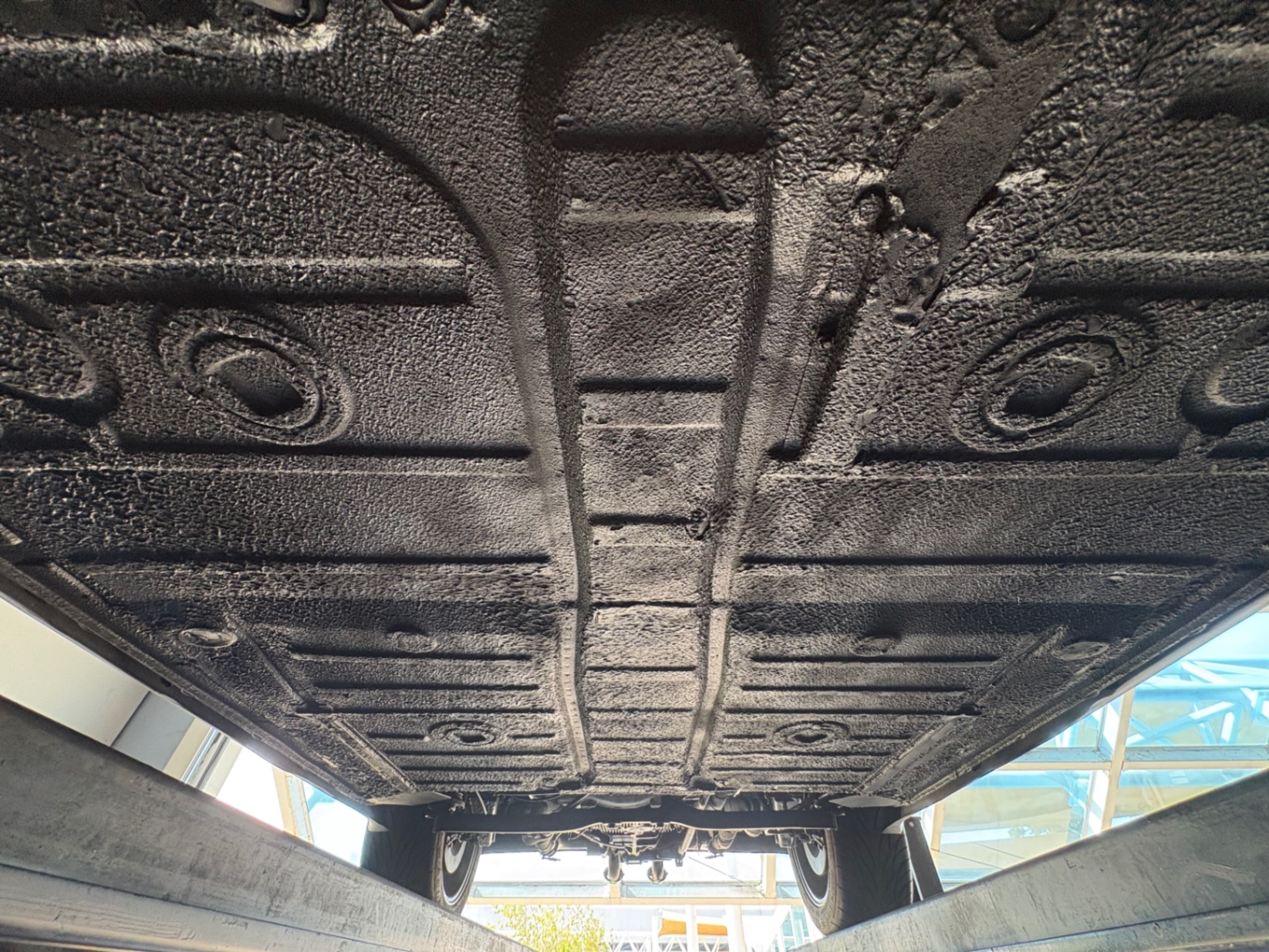
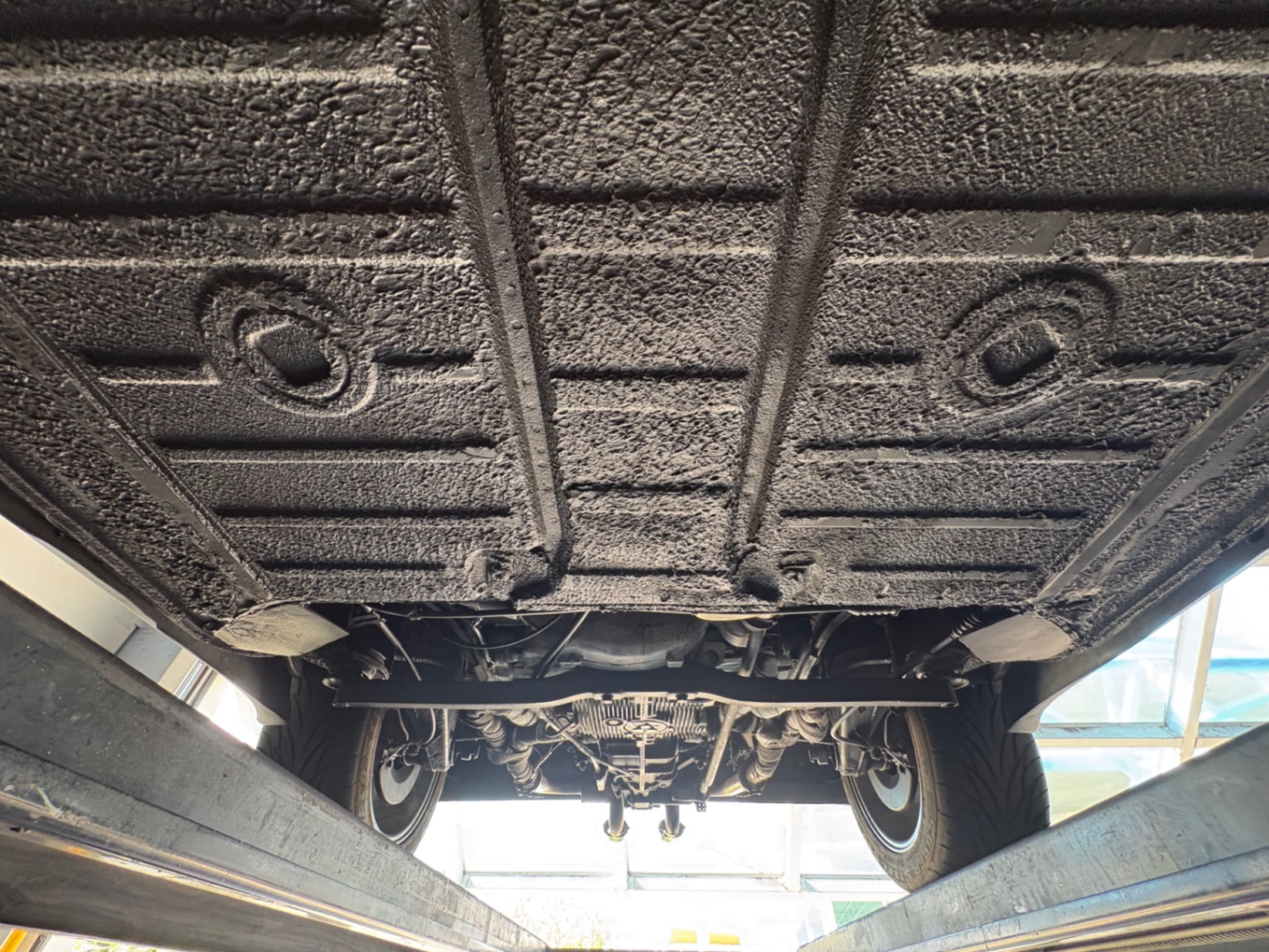
The four-wheel disc brake setup is correct for a 914 of this era and is well-suited to the car's weight. The red brake calipers are visible through the wheel spokes. Pirelli performance tires are mounted on upgraded Porsche alloy wheels. Looking at the undercarriage shots, the floors have been treated with a thick undercoating that covers the entire floorpan from front to rear. This is one of the more meaningful long-term preservation steps you can take on a 914, as these cars are known to develop rust in the lower sills and floor sections when moisture gets trapped. The undercoating here is applied heavily and evenly, which suggests this was done as part of a deliberate build process rather than as a last-minute cosmetic touch. The suspension components visible in the undercarriage photos show the 914's independent rear setup, which uses trailing arms and a torsion bar arrangement — a design that contributes directly to the car's well-documented balance and predictable handling behavior.
Interior
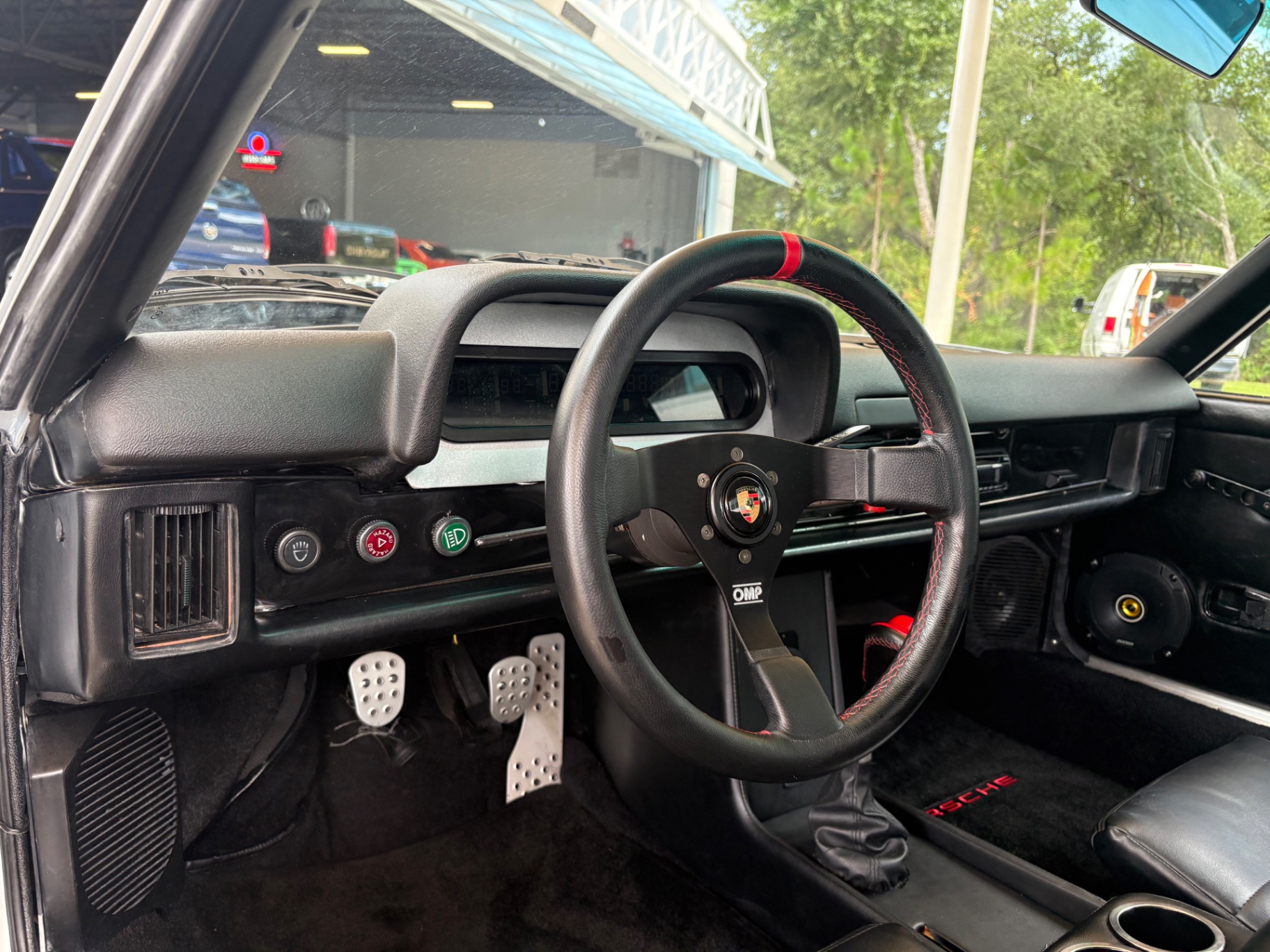
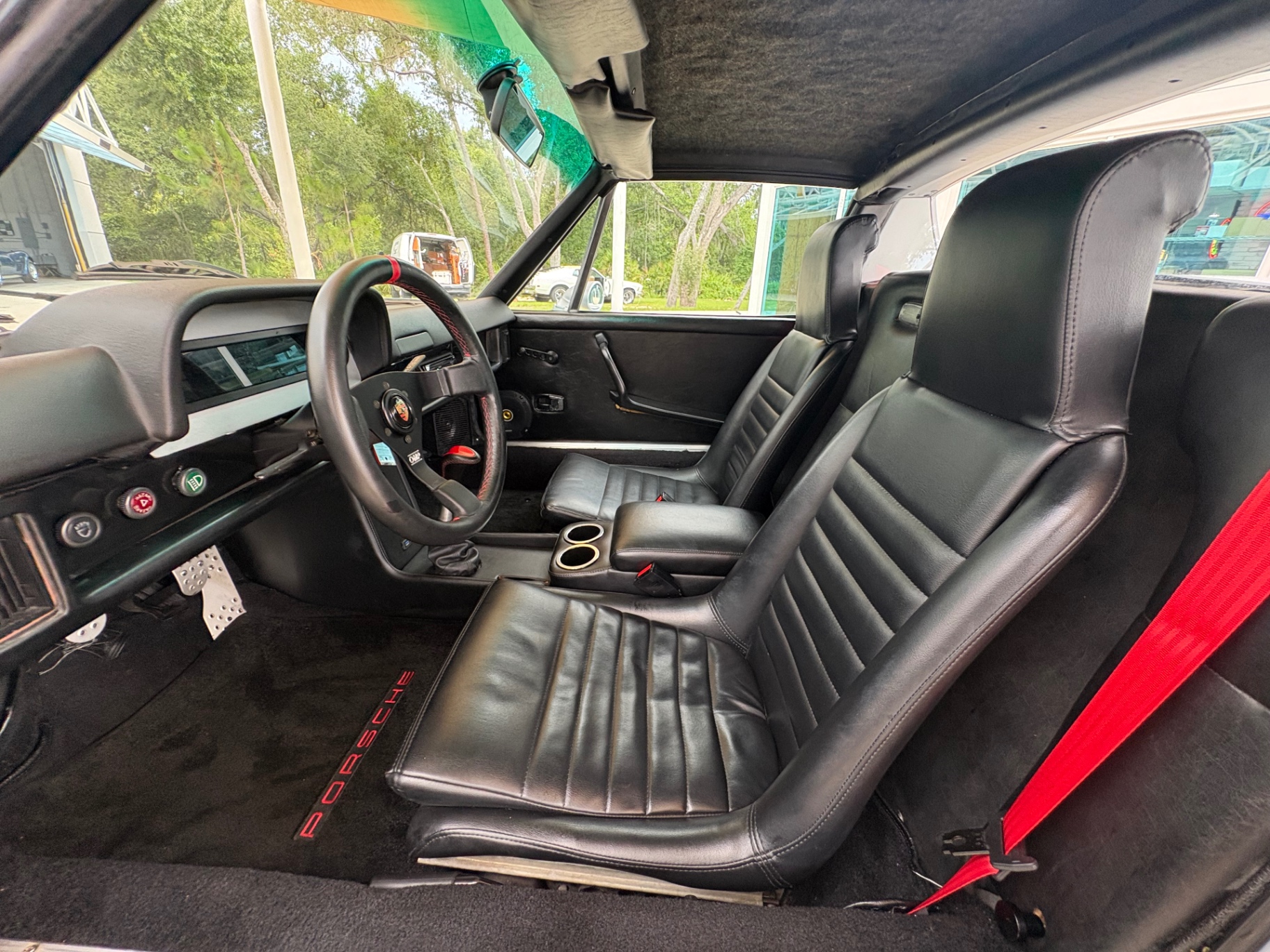
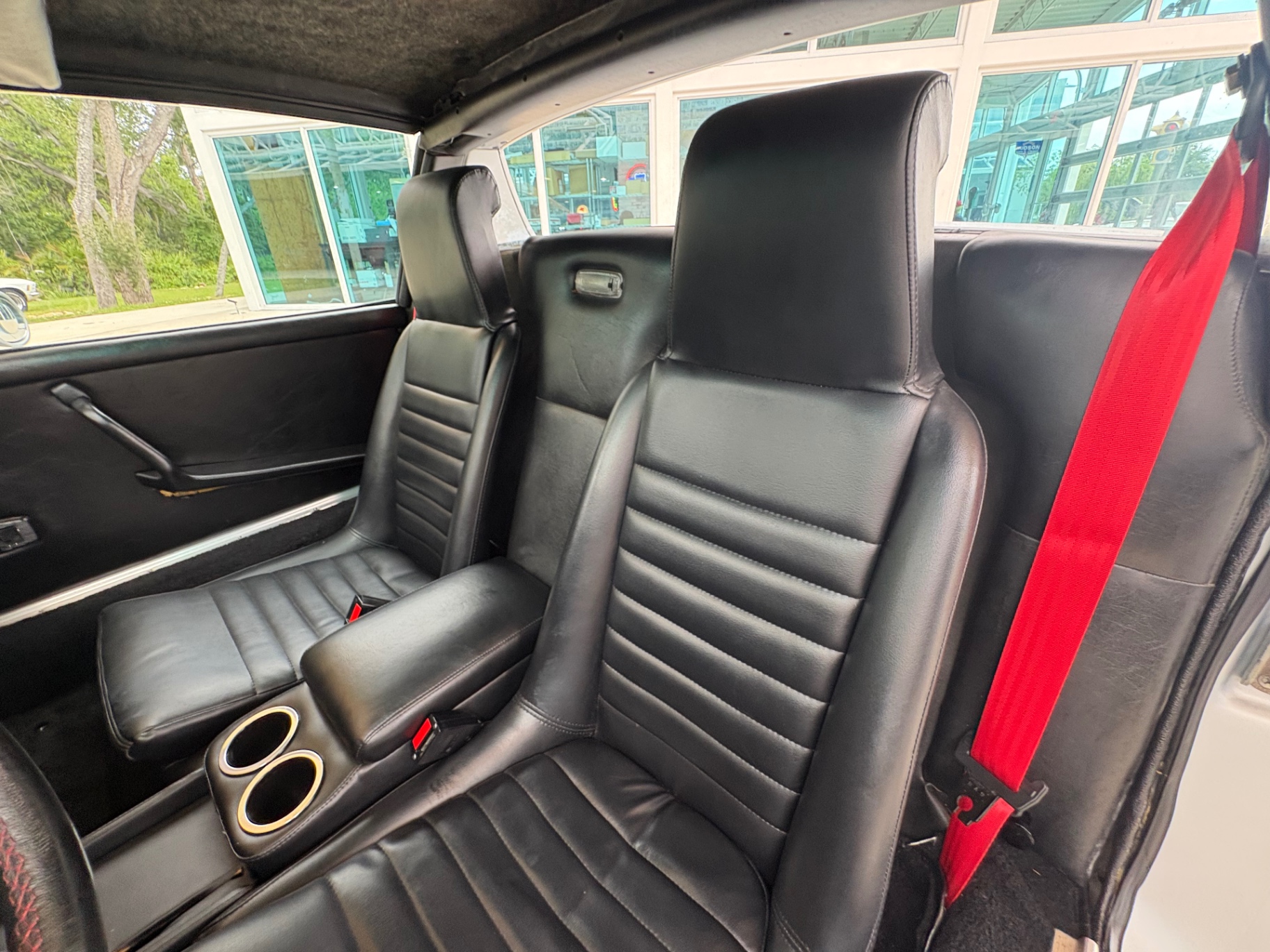
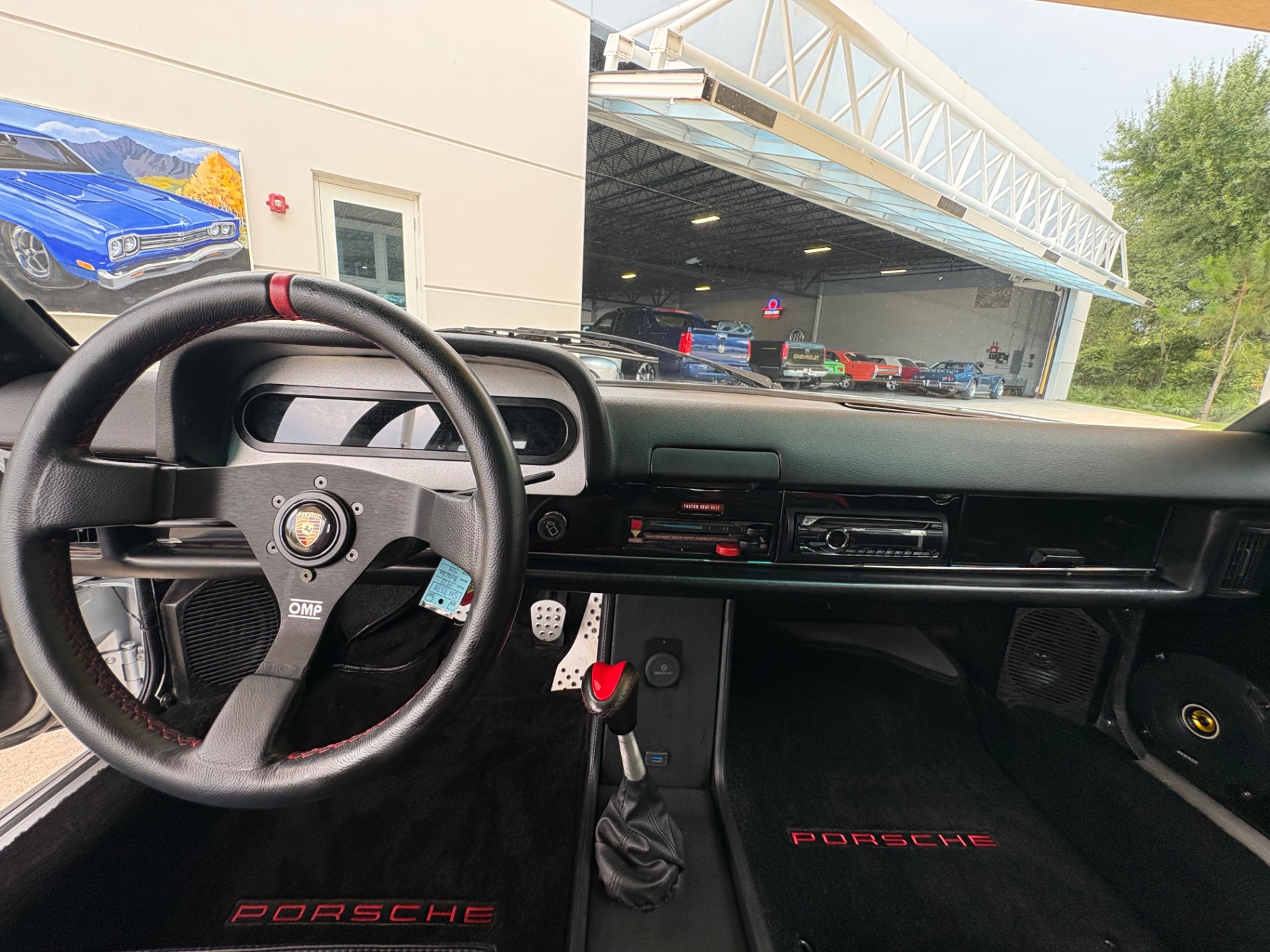
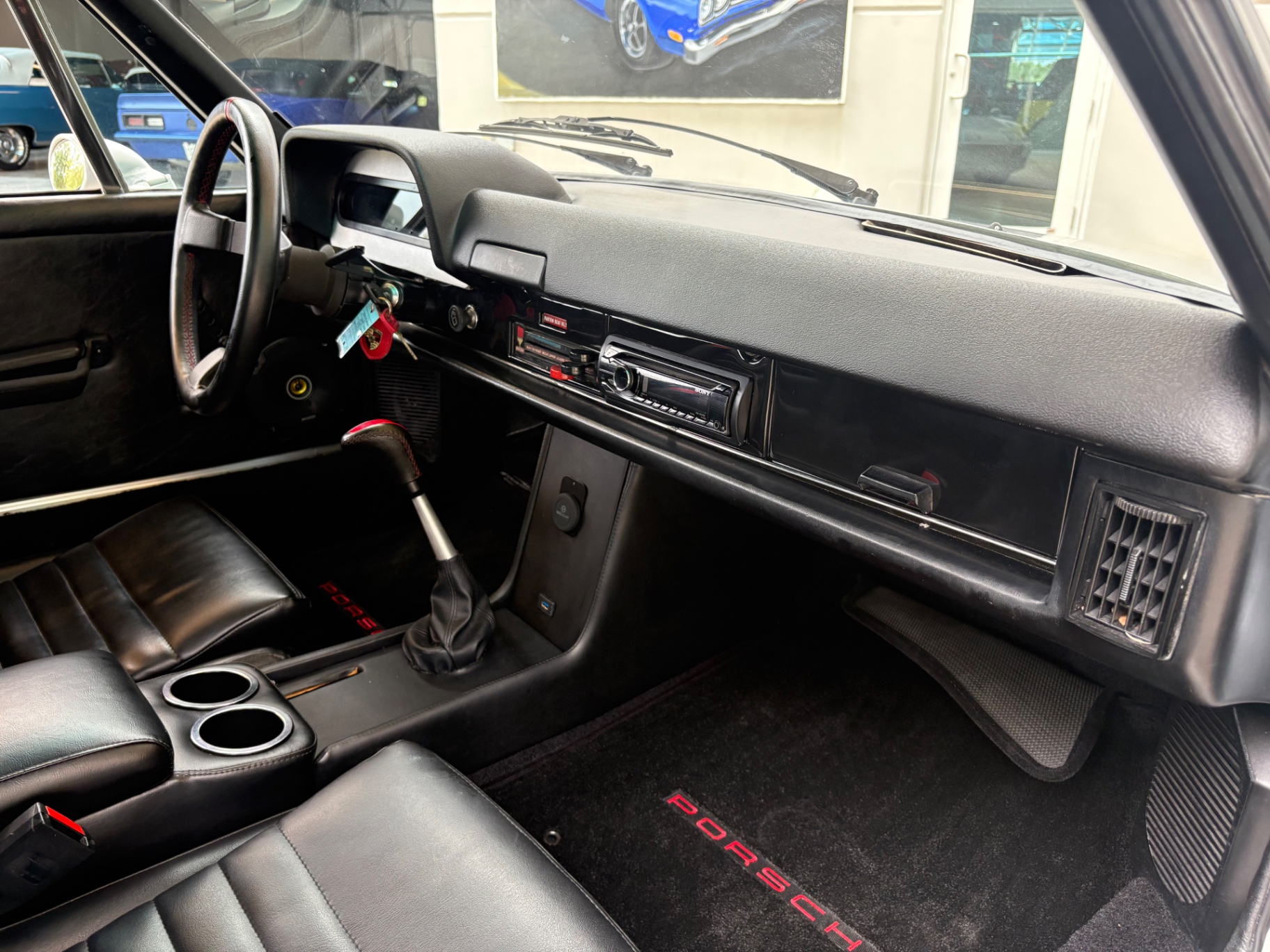
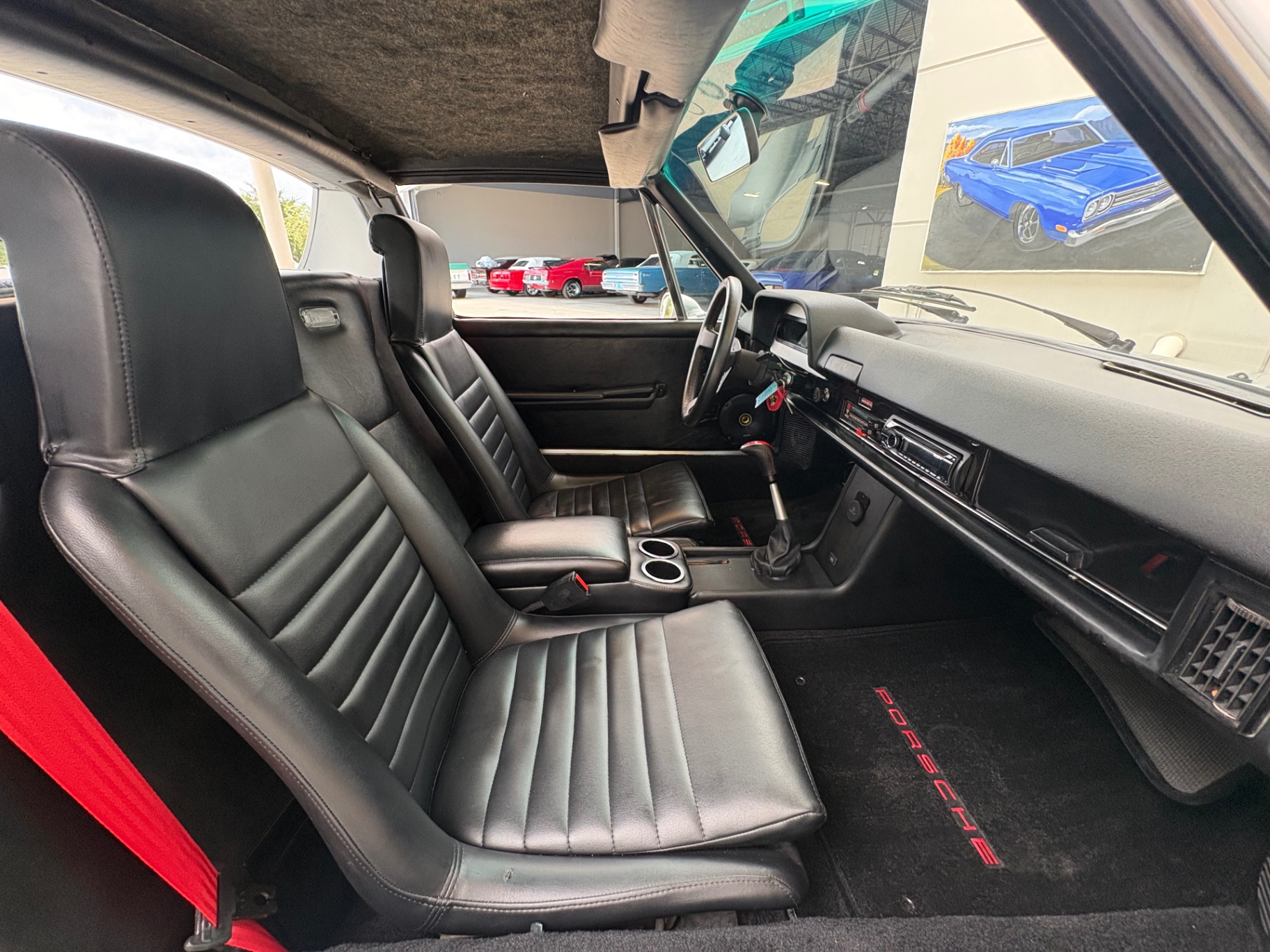
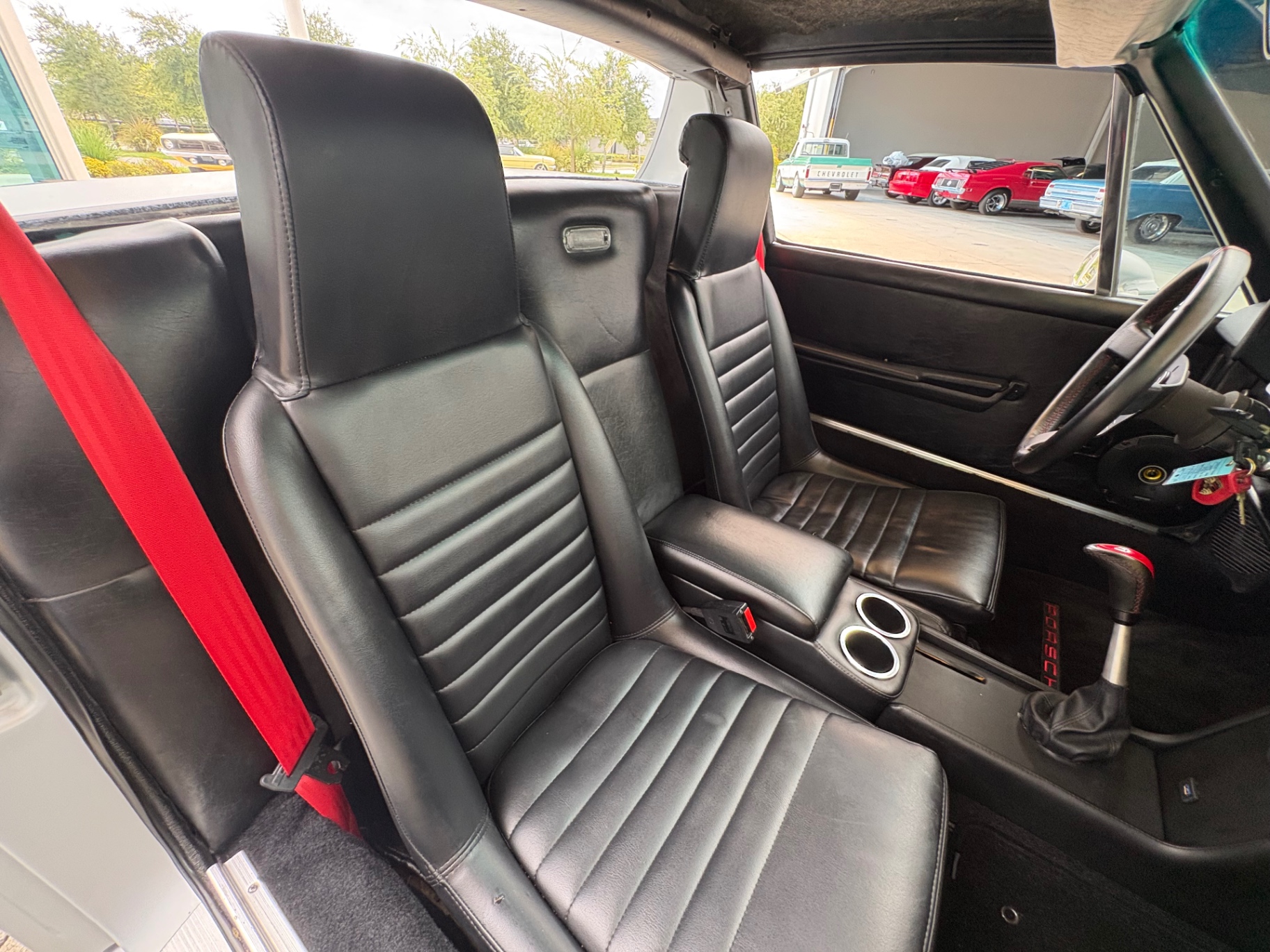
The cockpit of this 1972 Porsche 914 is black leather throughout, with a few deliberate red accents that keep the interior from feeling flat. The seatbelts are bright red, which creates a clean visual contrast against the black leather bucket seats. The OMP sport steering wheel wears a Porsche center badge and carries red stitching that ties into the belt color. The wheel itself is smaller in diameter than the original 914 unit, which tightens up the feel of the steering and opens up the sightlines to the gauge cluster.
Aluminum sport pedals replace the factory units at the driver's footwell, and they're properly sized for heel-and-toe technique. The center console has been fitted with dual cup holders — a practical addition that the original 914 did not have, given that the car was designed in an era when the idea of drinking in a sports car barely registered as a consideration.
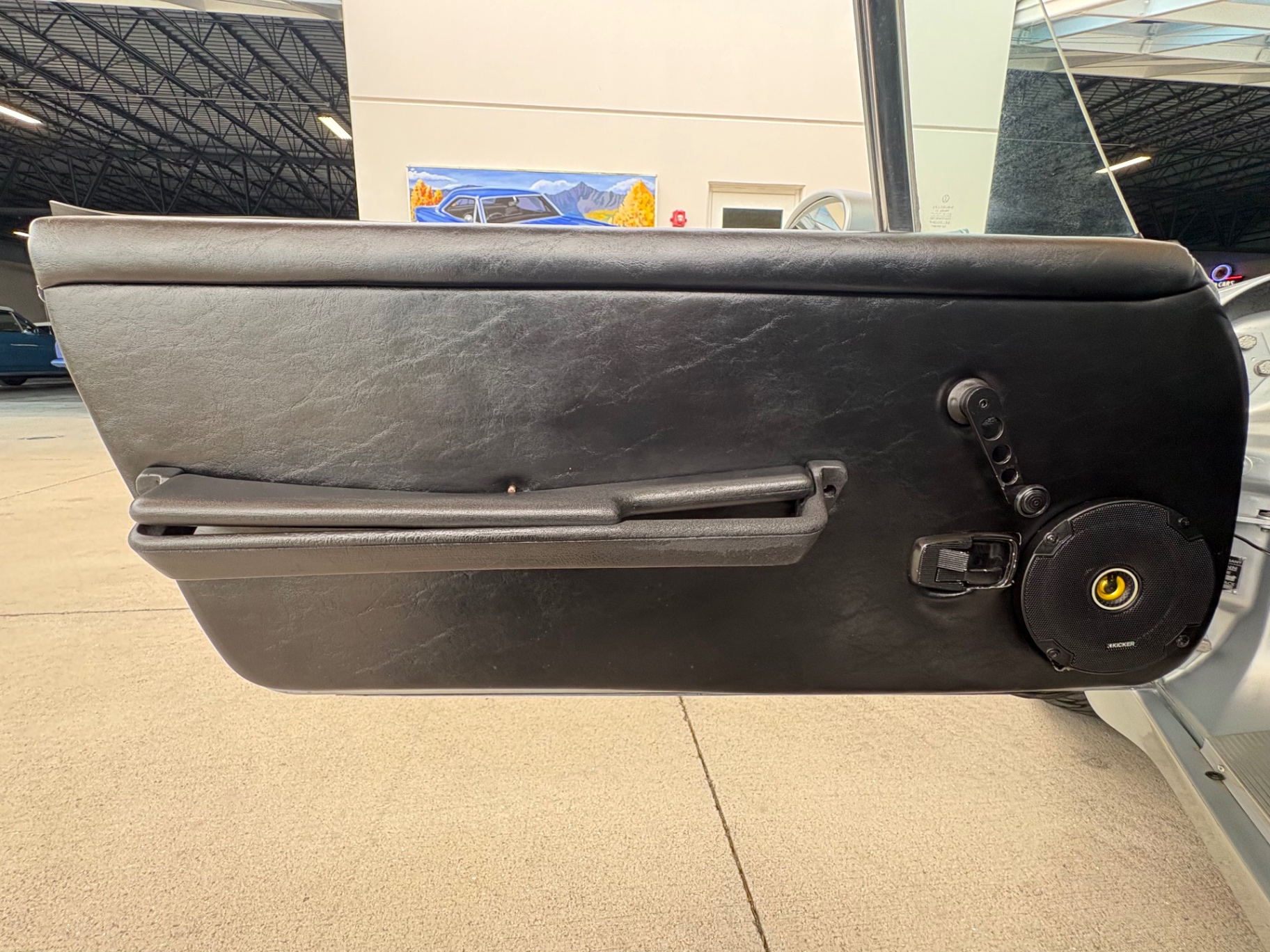
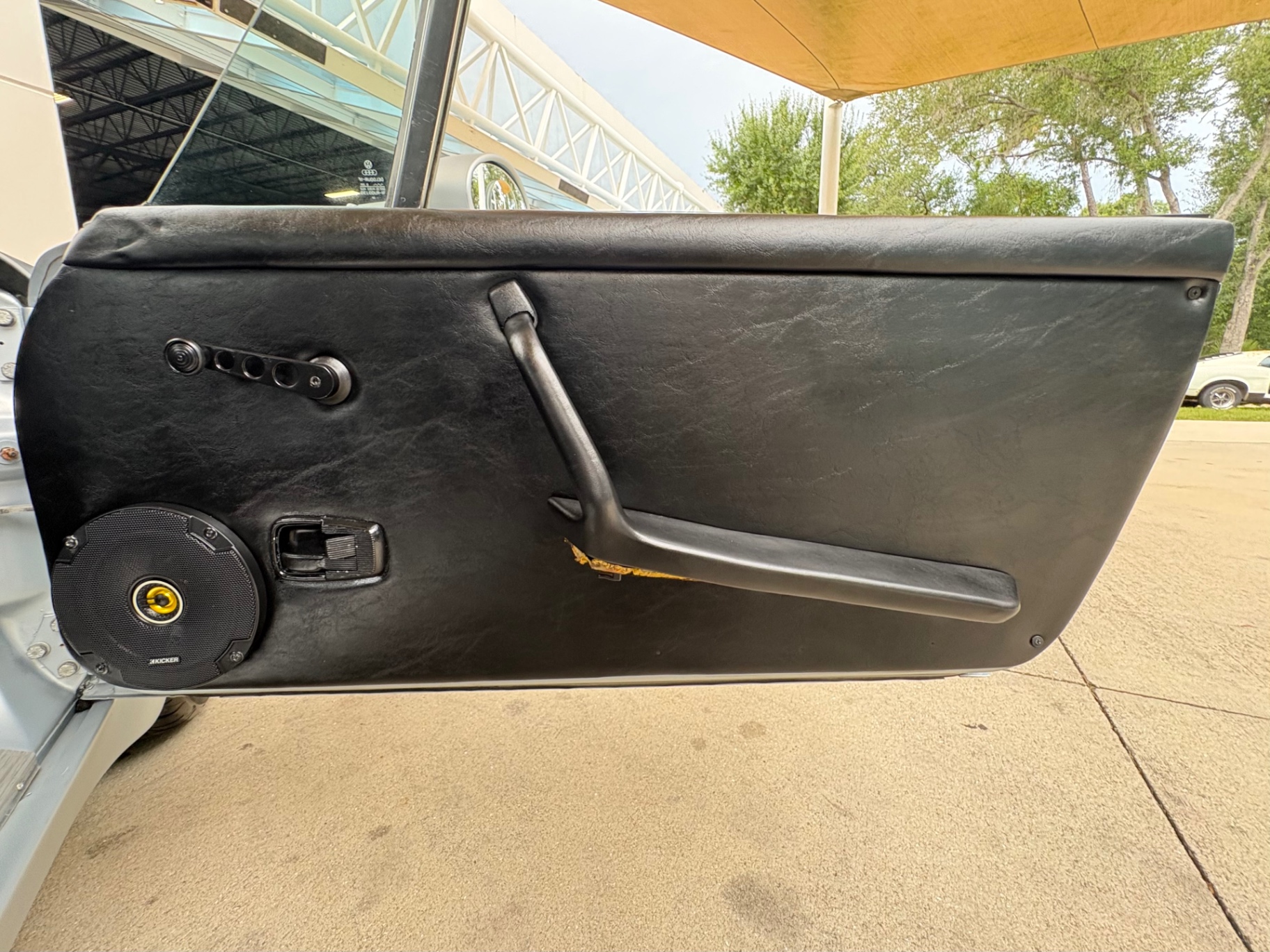
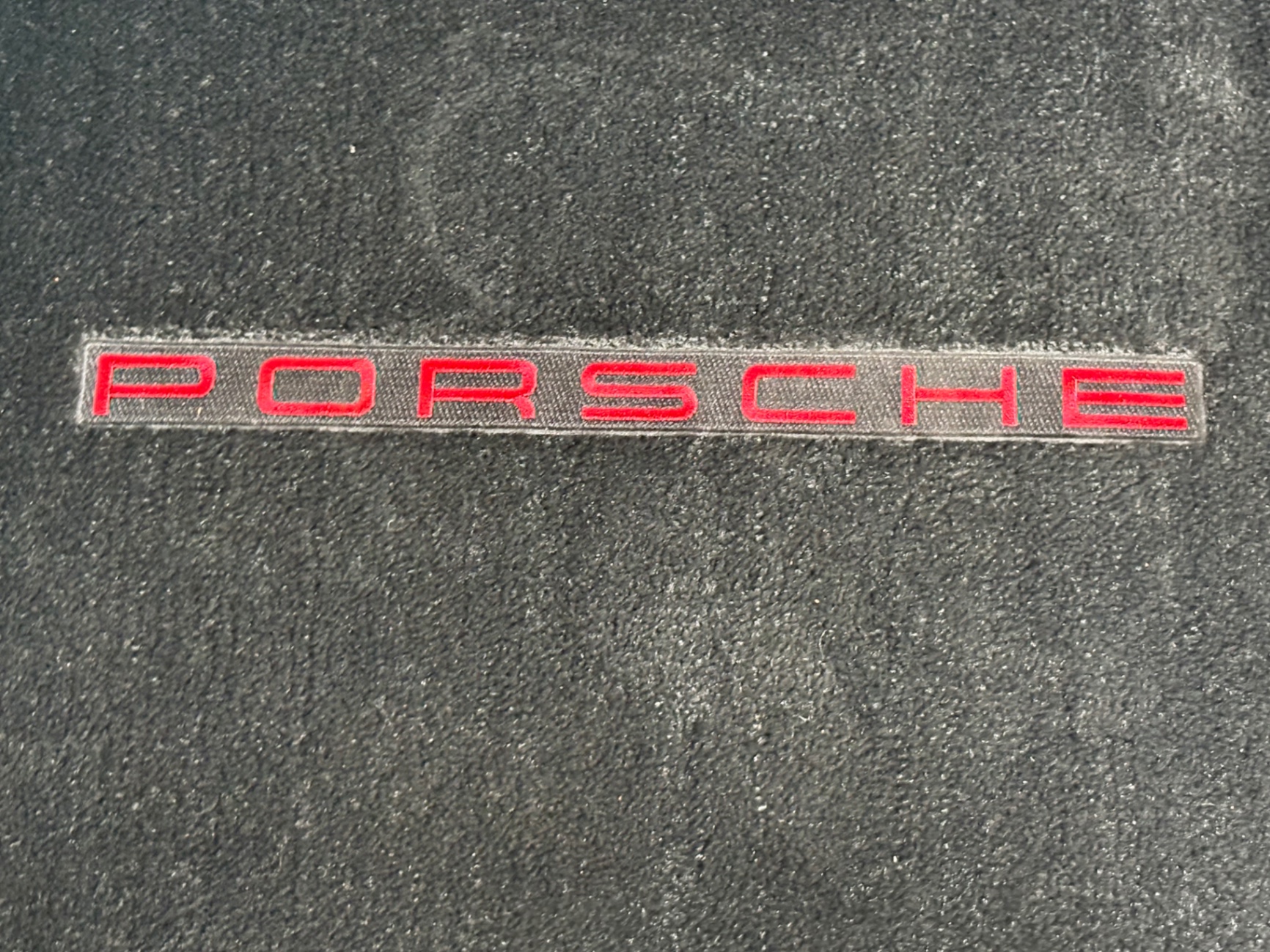
The Sony head unit fits cleanly into the dash without looking forced, and the Kicker speakers are mounted in the door panels on both sides. The door panel photos show the speaker integration is clean — the panels don't look hacked up or jury-rigged. Porsche-logoed floor mats in black with red lettering cover the carpet on both sides. The overall impression of the interior is that it has been assembled with attention to the details that matter in a car you actually drive — comfortable seats, a proper wheel, functional pedals, and a usable sound system — without overdoing it.
Exterior
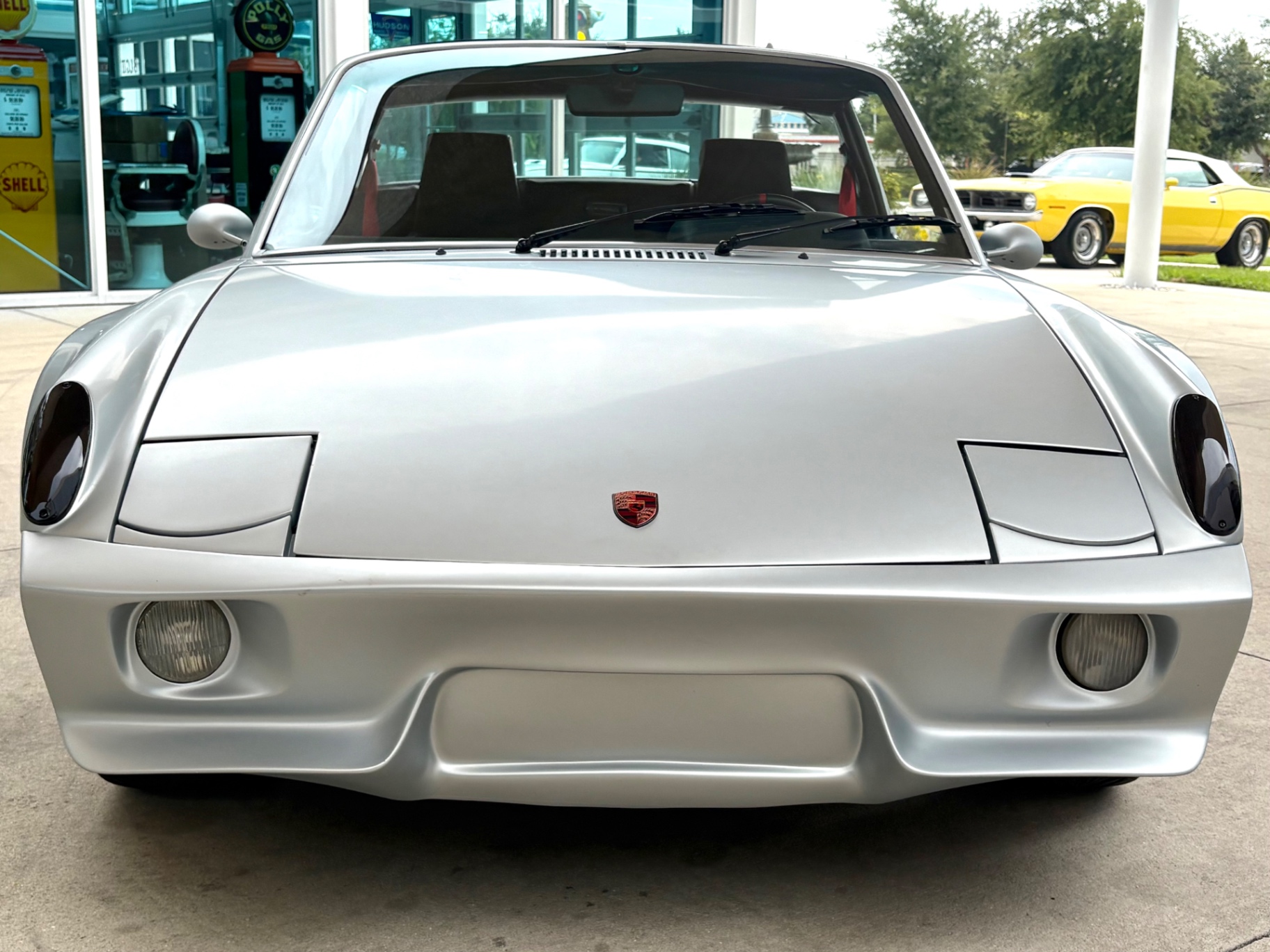
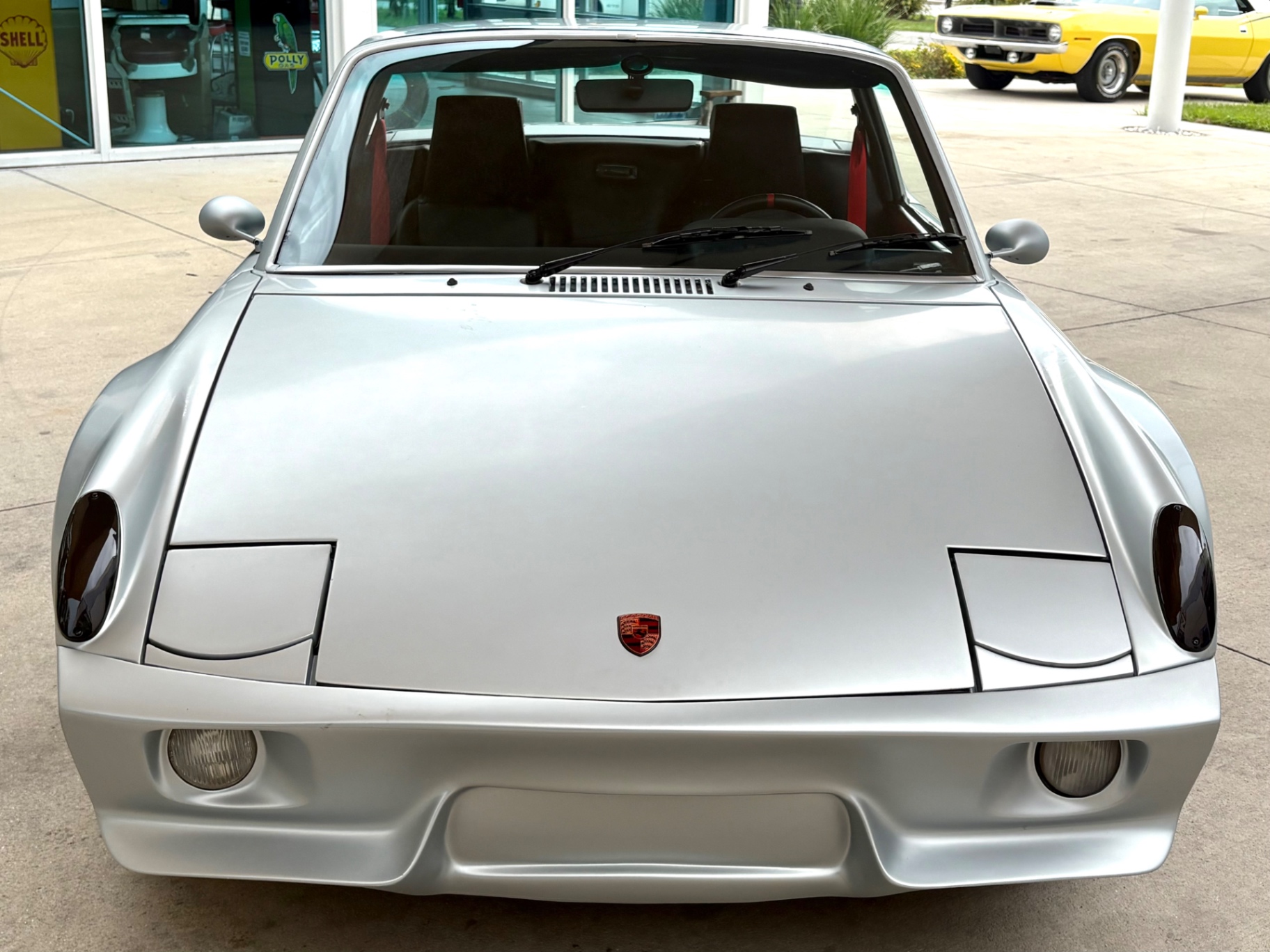
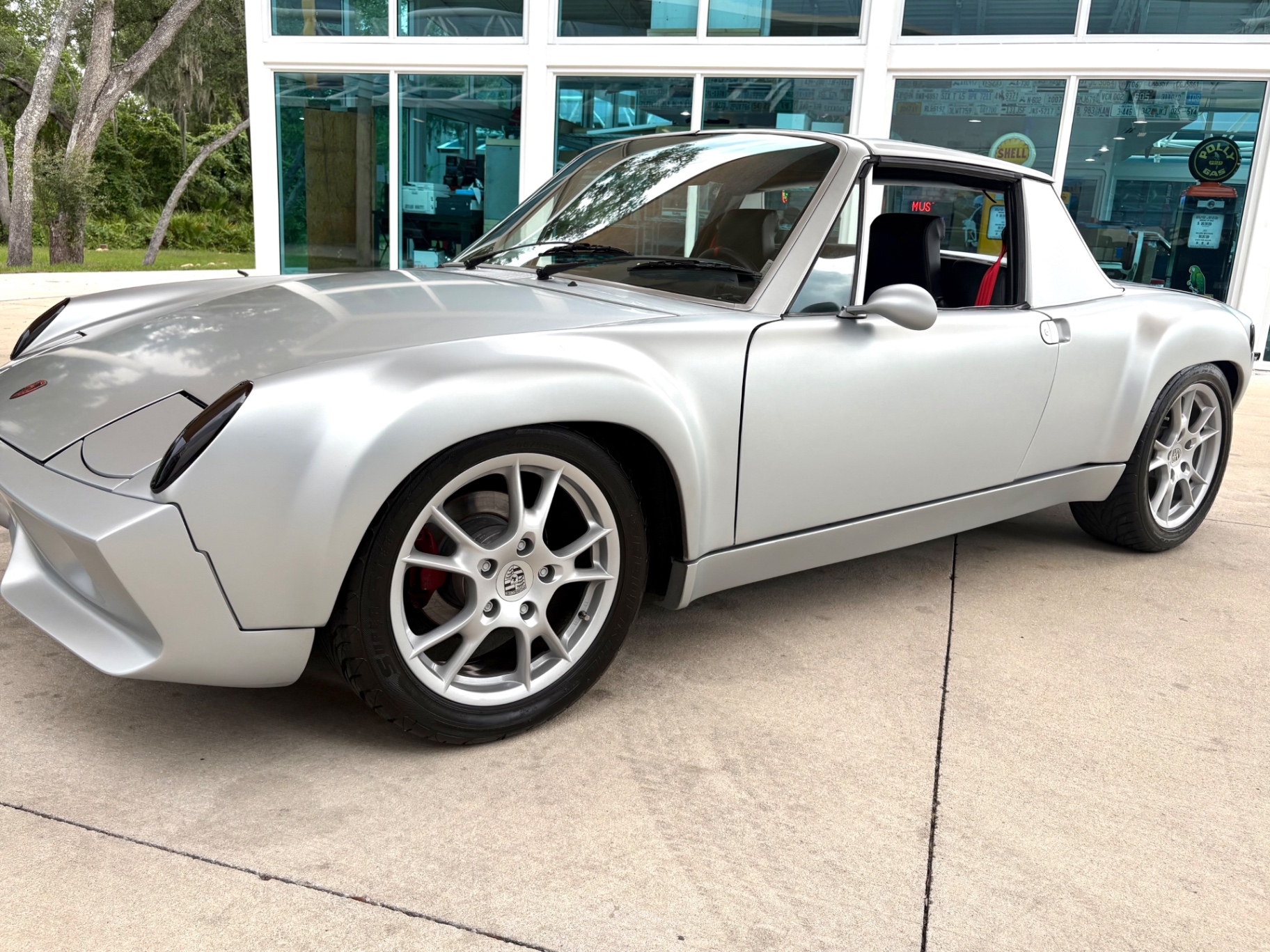
The silver paint on this 1972 Porsche 914 works well with the custom body kit, which integrates into the car's lines without looking like it was added as an afterthought. The front fascia is part of the body kit and carries the 914's characteristic pop-up headlights behind smoked covers. The smoked treatment on the headlight covers and the rear taillights gives the car a cohesive look front to back. The rear taillights carry the same smoked lens treatment, maintaining the consistency of the exterior theme.
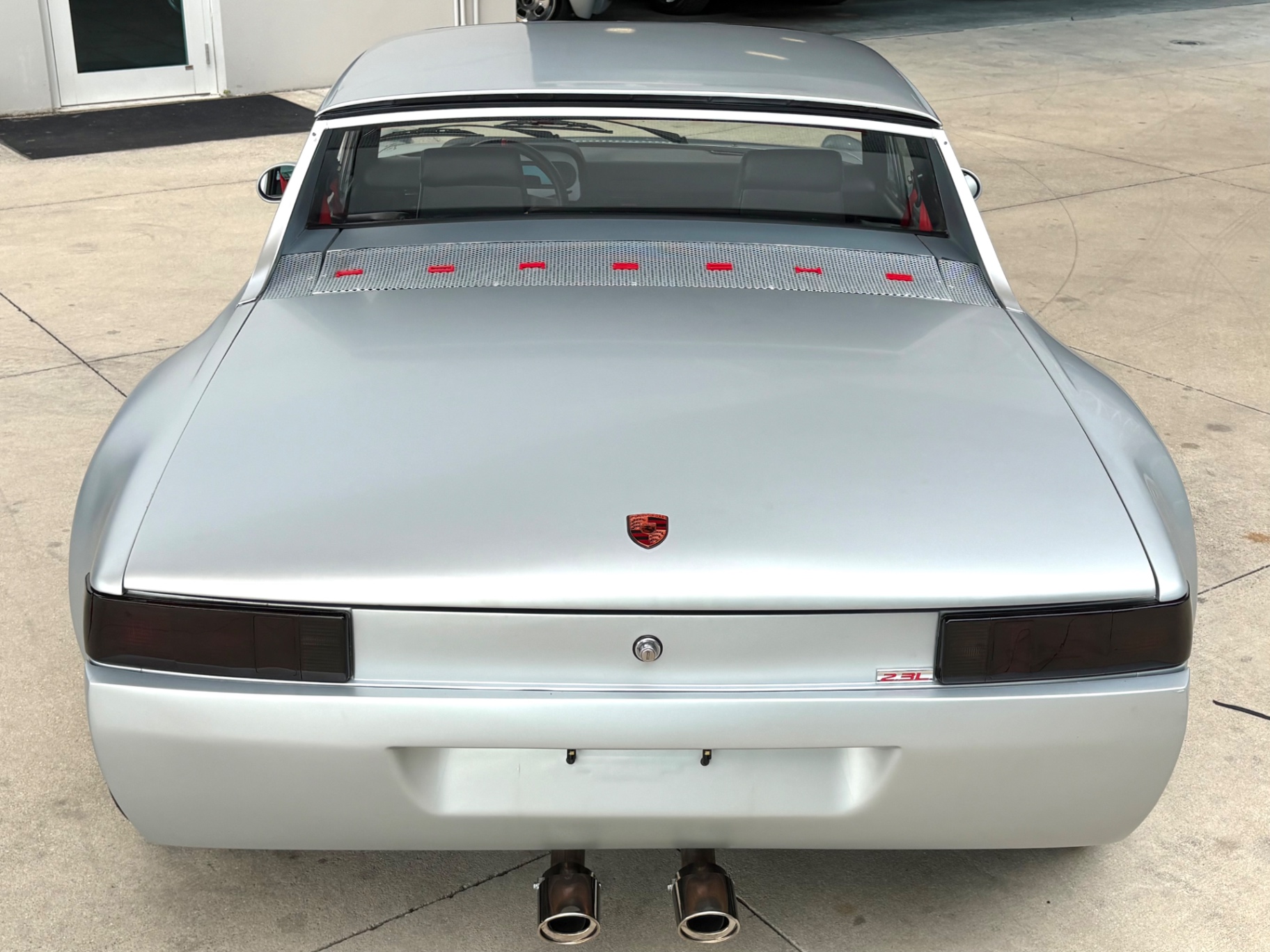
The rear of the car is where the build makes its clearest statement. The perforated engine cover replaces the solid factory unit and allows better airflow to the mid-mounted engine — a functional choice on a car where heat management around the engine lid matters. The 2.3L badge sits on the rear deck, accurately identifying the displacement of the engine beneath it. Dual exhaust tips exit cleanly from the rear bumper, and the tips themselves are polished and properly sized for the car's proportions.
The Porsche alloy wheels fill the arches well and carry a multi-spoke design that suits the 914's shape. Pirelli performance tires are mounted all around — visible in the undercarriage photos with size markings that confirm proper fitment front and rear. The removable Targa top is in place in the photos, and the Targa bar — the structural element that defines this body style — is finished in body color, maintaining the exterior's visual continuity.
Conclusion
The 1972 Porsche 914 has spent decades being underappreciated, largely because it was never properly understood. It was not a budget 911 with the flat-six pulled out. It was a purpose-designed mid-engine sports car with genuine Porsche engineering and Karmann coachwork, built to a price that made the mid-engine layout accessible for the first time at the Porsche brand level. The enthusiast community has been catching up to that reality for years, and values on clean, well-sorted 914s have been climbing as a result.
This 1972 Porsche 914 with its 2.3-liter engine, comprehensive undercarriage work, thoughtful interior upgrades, and cohesive exterior build is the kind of car that was put together by someone who understood what a 914 is supposed to be and then followed through on making it better at being exactly that. It drives from the center of the car, it's light, and it has the mechanical foundation to back up what the exterior suggests about it.
If you'd like to discuss this 1972 Porsche 914 in more detail, call Skyway Classics in Sarasota, Florida at 941-254-6608.
Disclaimer
Information found on the website is presented as given to us by the owner of the car, whether on consignment or from the owner we bought it from. Some Photos, materials for videos, descriptions and other information are provided by the consignor/seller and is deemed reliable, but Skyway Classics does not warranty or guarantee this information. Skyway Classics is not responsible for information that may incorrect or a publishing error. The decision to purchase should be based solely on the buyers personal inspection of the vehicle or by a professional inspection service prior to offer or purchase being made.
1972 Porsche 914 — 2.3L Custom Build with Karmann Coachbuilt Body
Why This Car Is Special
The 1972 Porsche 914 occupies a unique place in sports car history. It was designed as a genuine mid-engine sports car at an accessible price point — a concept that Ferrari and Lamborghini were charging five times as much to deliver. The 914 was the product of a joint development agreement between Porsche and Volkswagen, with Karmann of Osnabrück contracted to build the bodies. That last detail matters with this specific car: the Karmann coachbuilt designation on the body confirms it carries the authentic steel structure produced by the same coachbuilder that handled the physical assembly of all production 914s. Karmann was responsible for manufacturing the unibody shells before they were sent to Porsche for final assembly and quality checks. So when you see "Karmann Coachbuilt Body" on this car, it's not a badge of distinction tacked on for marketing — it's a factual statement about the car's construction lineage.
The 914 was sold in North America as a Porsche from 1970 through 1976. The standard four-cylinder cars used an air-cooled flat-four engine mounted amidships, directly behind the driver and in front of the rear axle. That positioning gives the 914 a near-50/50 weight distribution, which is why 914 owners and club racers have always respected its cornering behavior. The car weighs around 2,100 pounds in stock form, which means even the modestly powered four-cylinder variants feel quick and responsive in real-world driving.
This particular 1972 Porsche 914 has been built out well beyond stock specification. It runs a 2.3-liter air-cooled flat-four — a displacement step up from the 1.7 and 2.0 liter engines that were most common in four-cylinder 914 production. The 2.3L badge on the rear of the car accurately identifies what's under the engine cover. The build has been carried out with a coherent vision: the mechanical upgrades, the custom body kit, and the interior modifications all work together rather than pulling in different directions. This is not a parts-bin car. Someone made deliberate choices here and followed through on them.
The exterior is silver over a black leather interior, a combination that photographs cleanly and wears well over time. The smoked lighting treatment, the custom body kit, and the dual exhaust tips exiting from the rear give the car an aggressive but purposeful stance that fits the 914's naturally low, wide profile.
Features List
- 2.3L Air-Cooled Flat-Four Engine, Mid-Engine Layout
- 5-Speed Manual Transmission
- Four-Wheel Disc Brakes
- Wrapped Exhaust Headers
- Dual Exhaust Tips
- Custom Body Kit
- Upgraded Porsche Alloy Wheels
- Pirelli Performance Tires
- Red Brake Calipers
- Smoked Headlight Covers
- Smoked Rear Taillights
- Perforated Rear Engine Cover
- 2.3L Badge on Rear
- Removable Targa Top
- OMP Sport Steering Wheel
- Aluminum Sport Pedals
- Black Leather Bucket Seats
- Red Seatbelts
- Center Console Cup Holders
- Kicker Upgraded Stereo System
- Sony Head Unit
- Porsche Floor Mats
- Undercoated Floors
- Karmann Coachbuilt Body
Mechanical
The engine in this 1972 Porsche 914 is a 2.3-liter air-cooled flat-four, which represents a displacement increase over the base 1.7L and the more common 2.0L four-cylinder that Porsche offered in higher-spec 914 production. The air-cooled flat-four sits in the mid-ship position, directly behind the cockpit, with the five-speed manual gearbox integrated into the rear of the engine assembly. From underneath the car, the engine bay presents clearly — the wrapped headers are visible running outboard from the engine, feeding into the dual exhaust system that exits at the rear with polished tips. The header wrap serves a functional purpose: it retains exhaust heat within the pipes, which helps maintain exhaust velocity and keeps underhood temperatures lower around the surrounding components.
The four-wheel disc brake setup is correct for a 914 of this era and is well-suited to the car's weight. The red brake calipers are visible through the wheel spokes. Pirelli performance tires are mounted on upgraded Porsche alloy wheels. Looking at the undercarriage shots, the floors have been treated with a thick undercoating that covers the entire floorpan from front to rear. This is one of the more meaningful long-term preservation steps you can take on a 914, as these cars are known to develop rust in the lower sills and floor sections when moisture gets trapped. The undercoating here is applied heavily and evenly, which suggests this was done as part of a deliberate build process rather than as a last-minute cosmetic touch. The suspension components visible in the undercarriage photos show the 914's independent rear setup, which uses trailing arms and a torsion bar arrangement — a design that contributes directly to the car's well-documented balance and predictable handling behavior.
Interior
The cockpit of this 1972 Porsche 914 is black leather throughout, with a few deliberate red accents that keep the interior from feeling flat. The seatbelts are bright red, which creates a clean visual contrast against the black leather bucket seats. The OMP sport steering wheel wears a Porsche center badge and carries red stitching that ties into the belt color. The wheel itself is smaller in diameter than the original 914 unit, which tightens up the feel of the steering and opens up the sightlines to the gauge cluster.
Aluminum sport pedals replace the factory units at the driver's footwell, and they're properly sized for heel-and-toe technique. The center console has been fitted with dual cup holders — a practical addition that the original 914 did not have, given that the car was designed in an era when the idea of drinking in a sports car barely registered as a consideration.
The Sony head unit fits cleanly into the dash without looking forced, and the Kicker speakers are mounted in the door panels on both sides. The door panel photos show the speaker integration is clean — the panels don't look hacked up or jury-rigged. Porsche-logoed floor mats in black with red lettering cover the carpet on both sides. The overall impression of the interior is that it has been assembled with attention to the details that matter in a car you actually drive — comfortable seats, a proper wheel, functional pedals, and a usable sound system — without overdoing it.
Exterior
The silver paint on this 1972 Porsche 914 works well with the custom body kit, which integrates into the car's lines without looking like it was added as an afterthought. The front fascia is part of the body kit and carries the 914's characteristic pop-up headlights behind smoked covers. The smoked treatment on the headlight covers and the rear taillights gives the car a cohesive look front to back. The rear taillights carry the same smoked lens treatment, maintaining the consistency of the exterior theme.
The rear of the car is where the build makes its clearest statement. The perforated engine cover replaces the solid factory unit and allows better airflow to the mid-mounted engine — a functional choice on a car where heat management around the engine lid matters. The 2.3L badge sits on the rear deck, accurately identifying the displacement of the engine beneath it. Dual exhaust tips exit cleanly from the rear bumper, and the tips themselves are polished and properly sized for the car's proportions.
The Porsche alloy wheels fill the arches well and carry a multi-spoke design that suits the 914's shape. Pirelli performance tires are mounted all around — visible in the undercarriage photos with size markings that confirm proper fitment front and rear. The removable Targa top is in place in the photos, and the Targa bar — the structural element that defines this body style — is finished in body color, maintaining the exterior's visual continuity.
Conclusion
The 1972 Porsche 914 has spent decades being underappreciated, largely because it was never properly understood. It was not a budget 911 with the flat-six pulled out. It was a purpose-designed mid-engine sports car with genuine Porsche engineering and Karmann coachwork, built to a price that made the mid-engine layout accessible for the first time at the Porsche brand level. The enthusiast community has been catching up to that reality for years, and values on clean, well-sorted 914s have been climbing as a result.
This 1972 Porsche 914 with its 2.3-liter engine, comprehensive undercarriage work, thoughtful interior upgrades, and cohesive exterior build is the kind of car that was put together by someone who understood what a 914 is supposed to be and then followed through on making it better at being exactly that. It drives from the center of the car, it's light, and it has the mechanical foundation to back up what the exterior suggests about it.
If you'd like to discuss this 1972 Porsche 914 in more detail, call Skyway Classics in Sarasota, Florida at 941-254-6608.
Disclaimer
Information found on the website is presented as given to us by the owner of the car, whether on consignment or from the owner we bought it from. Some Photos, materials for videos, descriptions and other information are provided by the consignor/seller and is deemed reliable, but Skyway Classics does not warranty or guarantee this information. Skyway Classics is not responsible for information that may incorrect or a publishing error. The decision to purchase should be based solely on the buyers personal inspection of the vehicle or by a professional inspection service prior to offer or purchase being made.
1972 Porsche
914/4 Custom
Why Choose Skyway Classics?
Explore our curated inventory of classic and collector cars—thoughtfully selected, ready to drive, and supported by experts who make ownership simple.
Expert Curation
Every vehicle is hand-selected by our experts for quality, authenticity, and investment potential.
Fast Transactions
Streamlined buying and selling process with quick financing and immediate delivery options.
Only National Dealer With Classic Service & Repair
We’re the only national dealership that services and repairs the classics we sell—before and after the sale.
Nationwide Network
Access to our extensive network of collectors, restorers, and classic car enthusiasts nationwide.
Concierge Ownership Support
From financing and insurance to paperwork, shipping, and titling—we handle the details so you can enjoy the drive.
Passion-Driven Service
We're classic car enthusiasts first, providing personalized service with genuine passion for the hobby.