
1973 Ford
Mustang Fastback
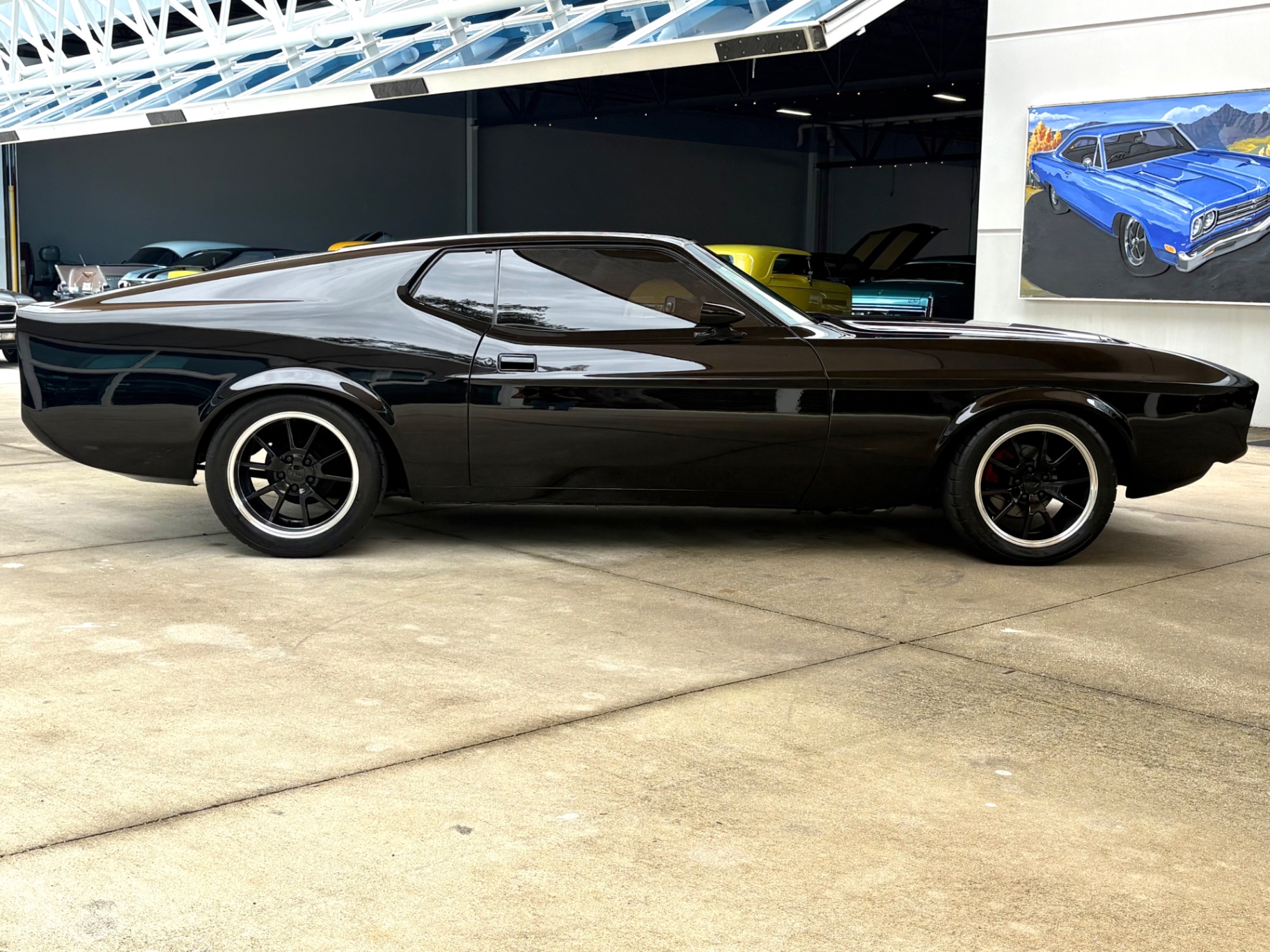
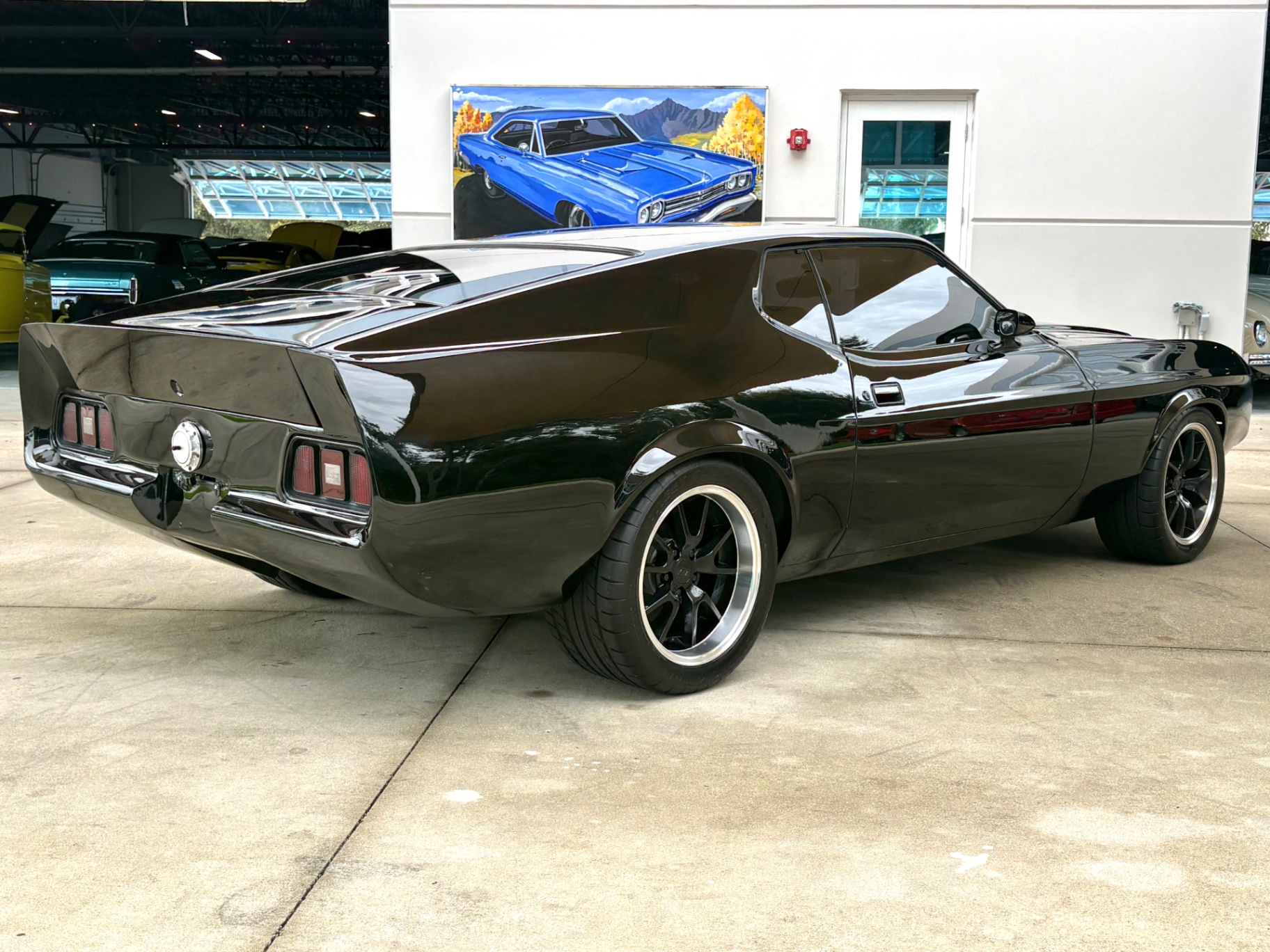
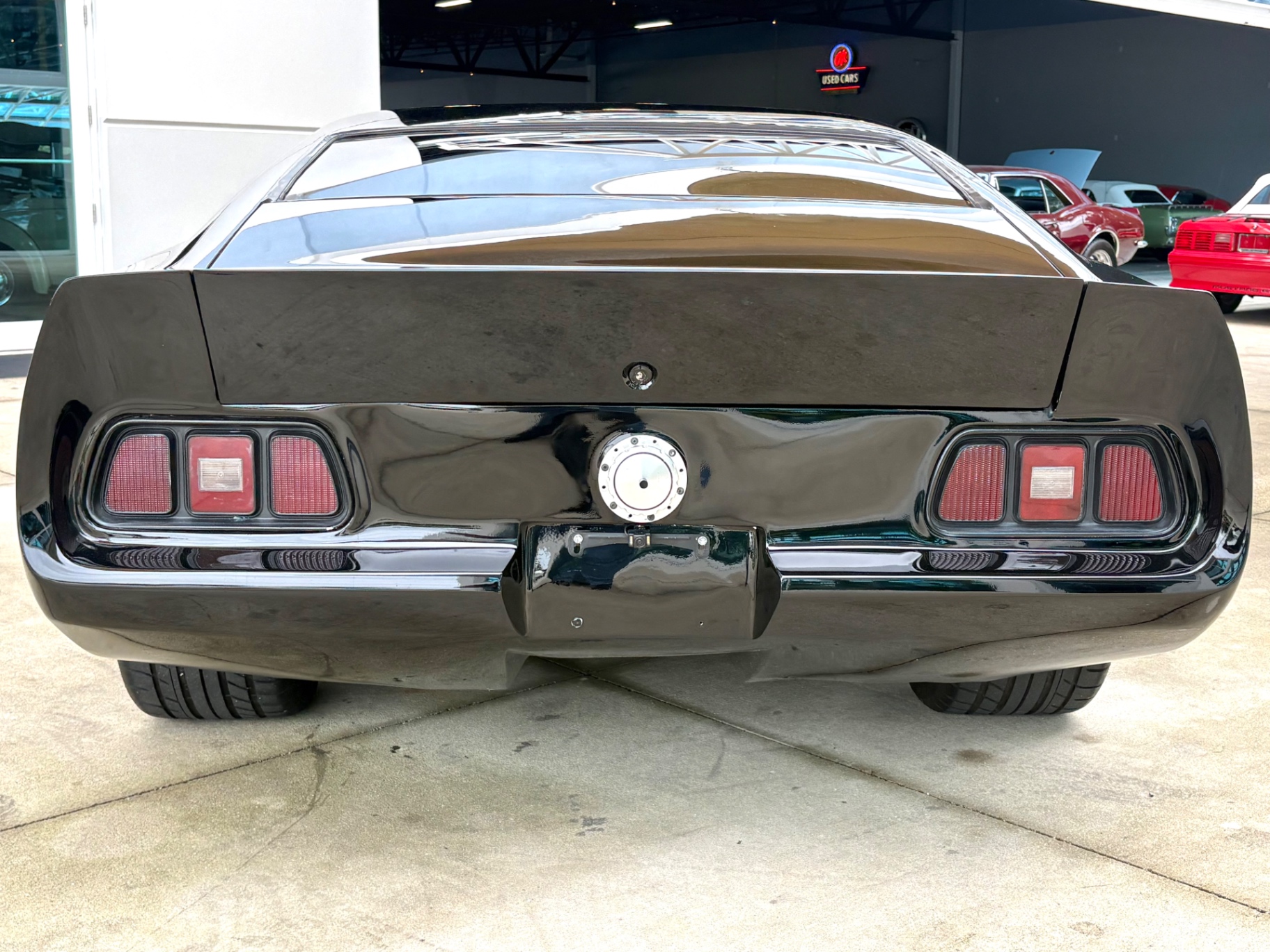
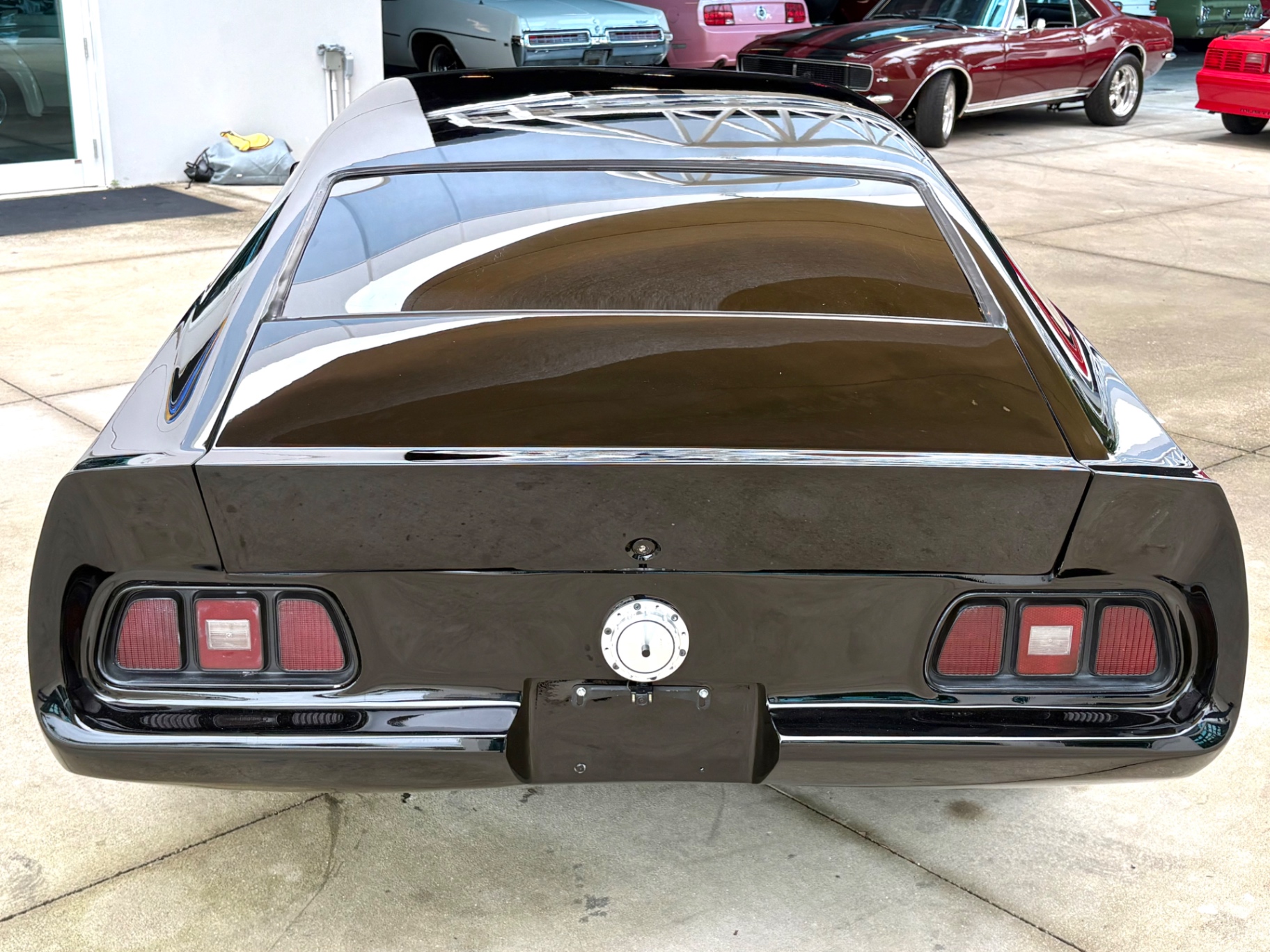
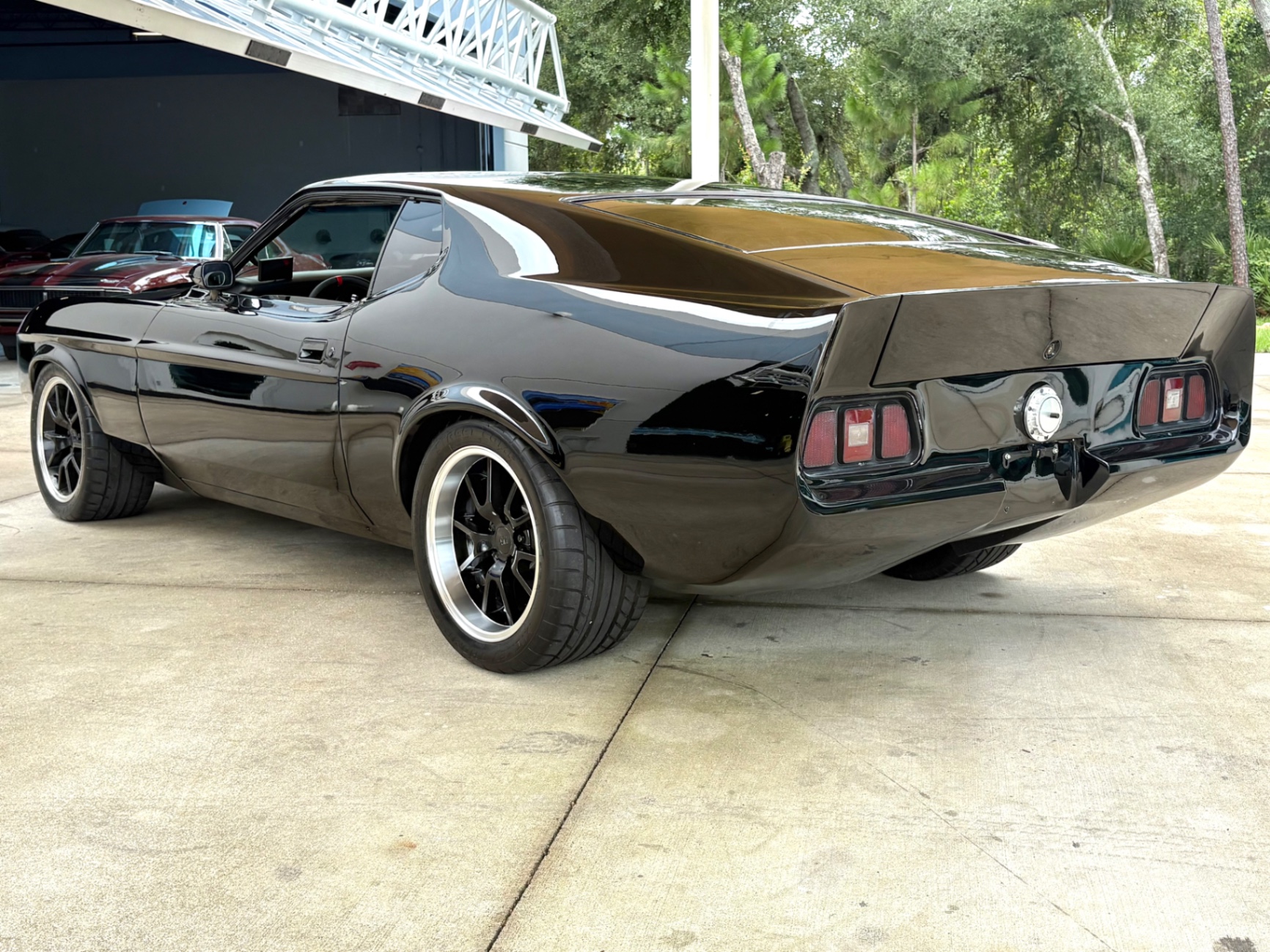
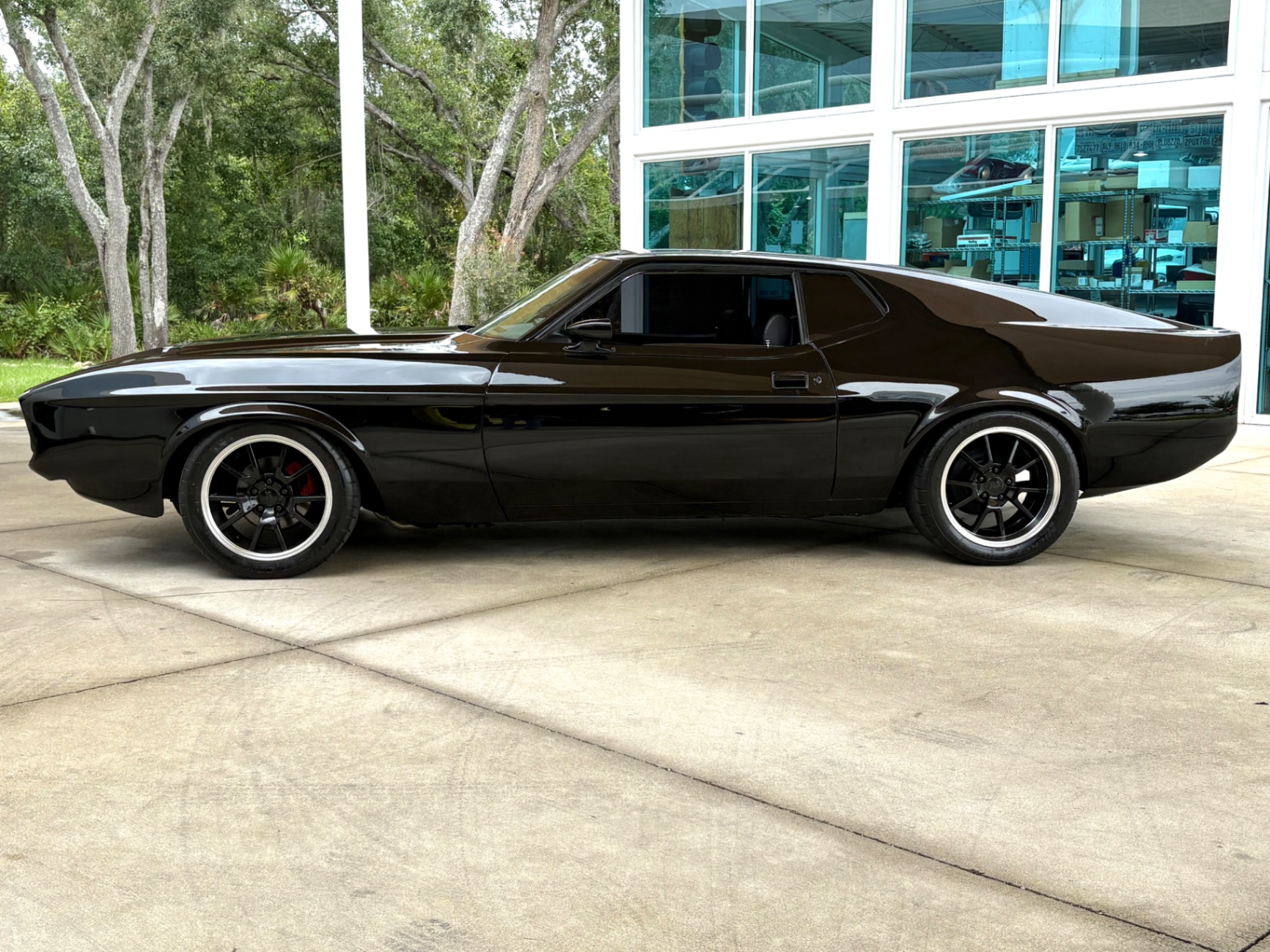
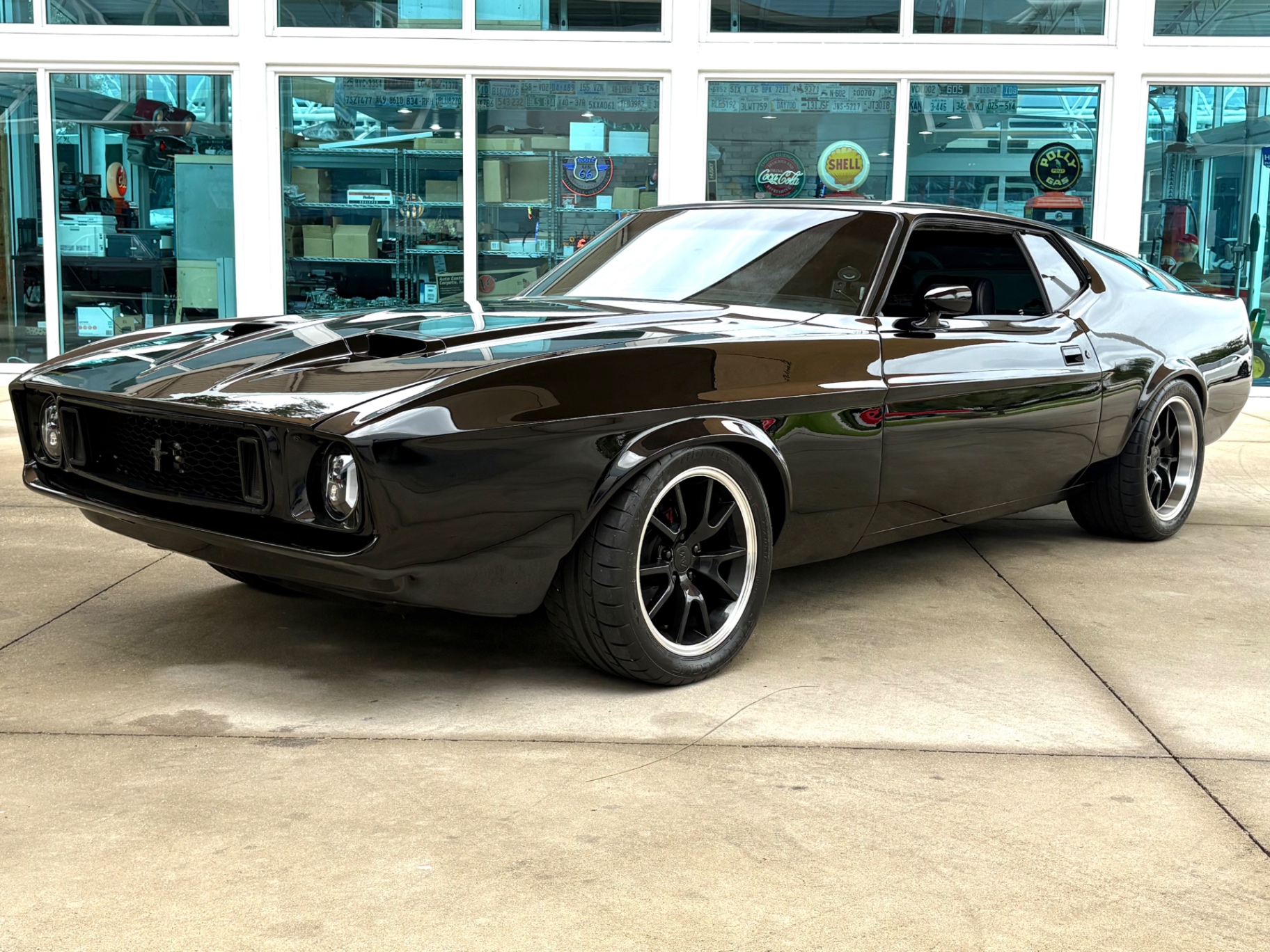
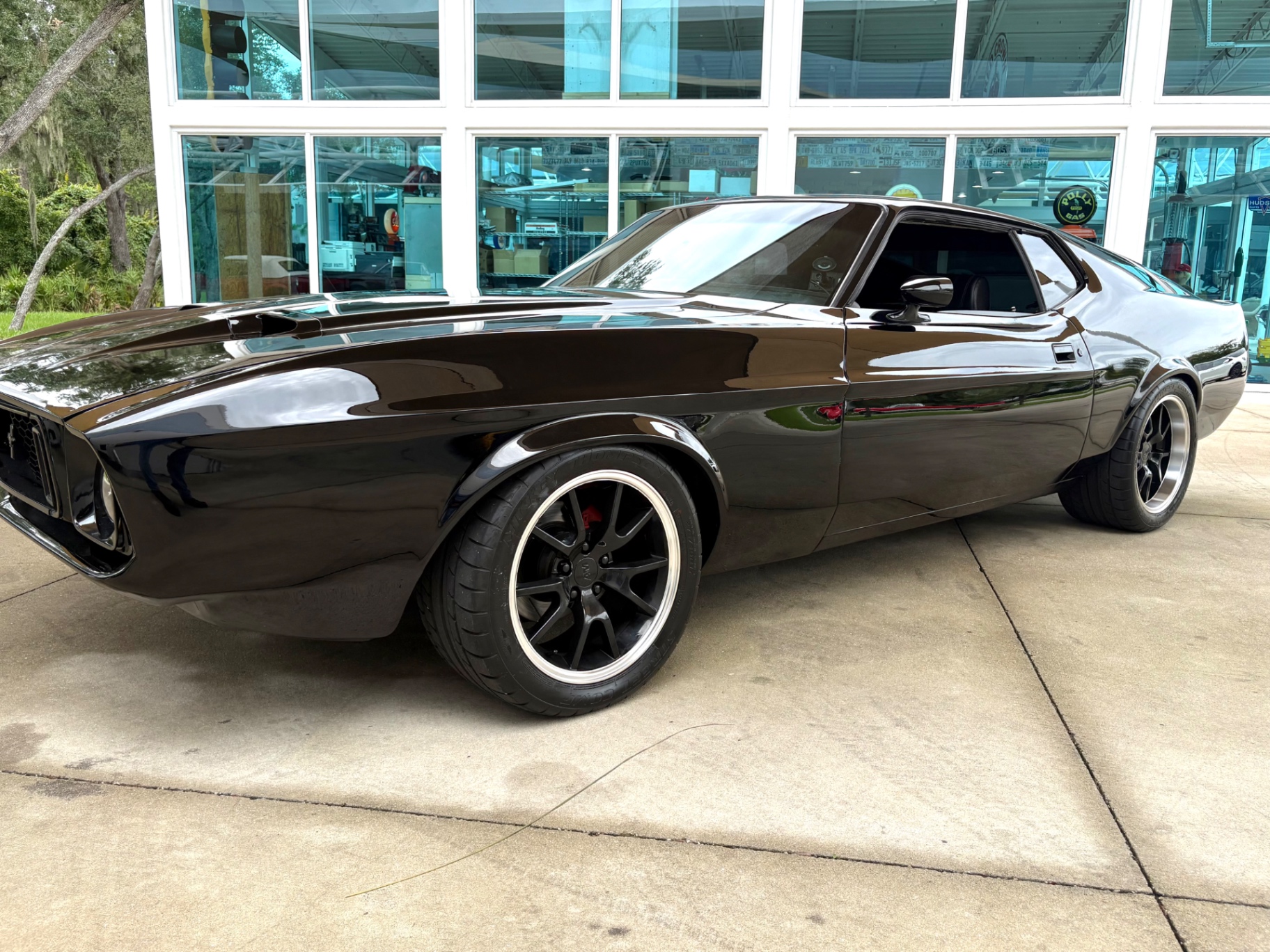
1973 Ford Mustang Fastback — 351 V8 Custom Build, 4-Speed Manual, Ford 9-Inch Rear
Why This Car Is Special
The 1973 Ford Mustang holds a specific place in the pony car timeline that most people get wrong. Conventional wisdom says the Mustang hit its peak in 1969 or 1970, then slid into irrelevance before the Mustang II arrived in 1974. That narrative misses something important. The 1973 Ford Mustang was actually the last year of the original first-generation body style — a body that Ford had been refining since 1971 with a wider, more muscular stance and a longer hood. After 1973, everything changed. The Mustang II that replaced it was smaller, lighter, and built on a Pinto platform. For collectors who want the last expression of the original Mustang shape, the 1973 model is the one to have.
Ford produced just over 134,000 Mustangs for the 1973 model year, a significant drop from the highs of the late 1960s but still a respectable number for a car navigating the early emissions era. The fastback body — officially called the SportsRoof — is the most sought-after configuration of the 1973 model, combining the long roofline and near-flat rear glass that gave the car its aggressive silhouette. That roofline is part of why these cars photograph so well from nearly every angle.
This particular 1973 Ford Mustang has been taken well beyond its factory specification. Rather than a numbers-matching preservation, what you have here is a purpose-built custom machine built around a 351 cubic inch V8 and a 4-speed manual transmission. The builder committed to a consistent black and red theme from the undercarriage all the way to the headliner — nothing was overlooked. The result is a car that drives as deliberately as it looks.
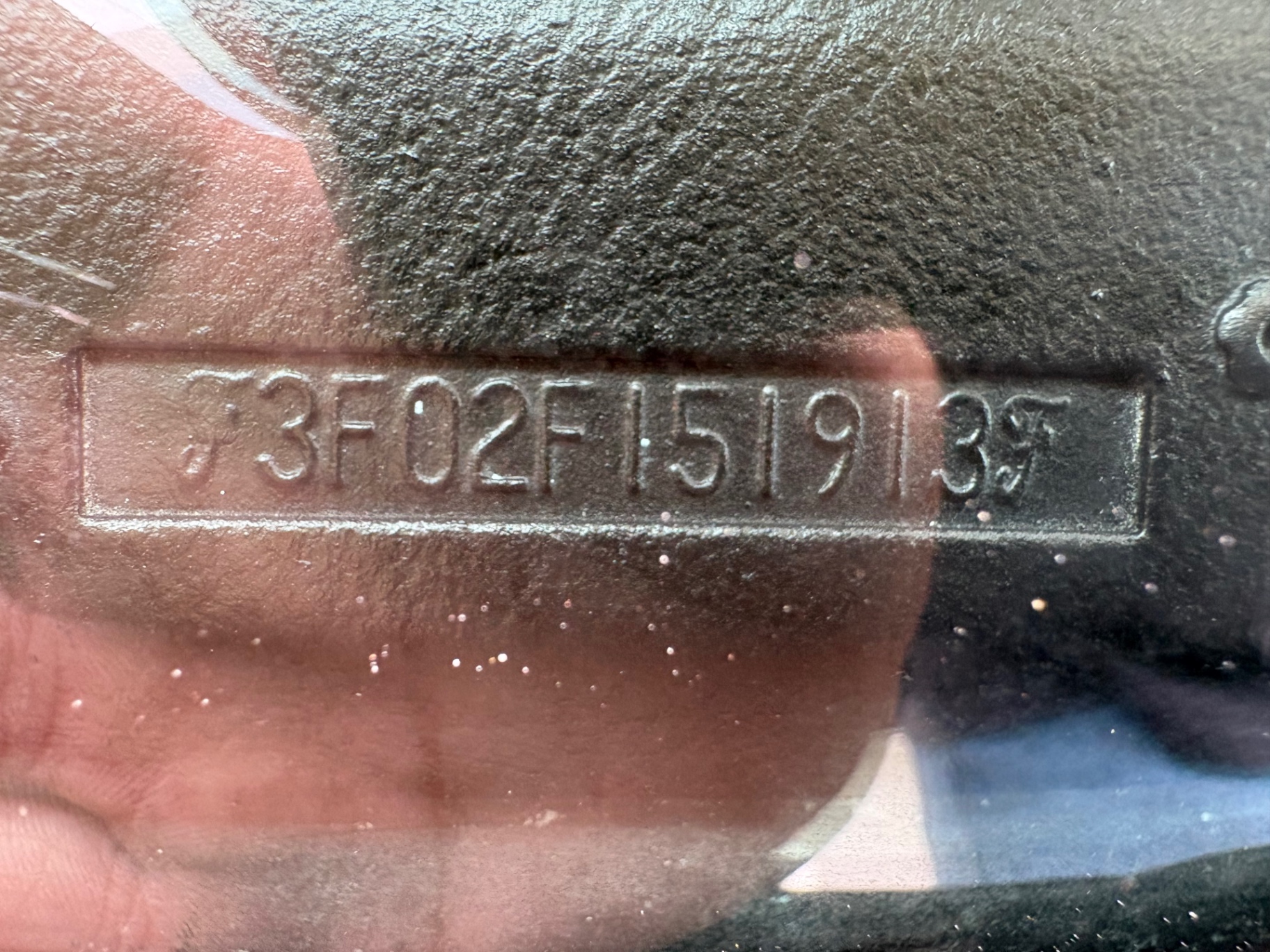
The VIN on this car decodes to confirm it is a 1973 model year Ford, assembled as a 2-door hardtop body style with a V8 engine designation. That foundation matches everything you see in the build.
Features List
- 351 V8 custom-built engine
- 4-speed manual transmission
- Serpentine belt drive conversion
- Performance carburetor
- MSD ignition system
- Performance air filter
- Long-tube headers
- Dual exhaust system with red powder-coated mufflers
- Electric cooling fan
- Optima Red Top battery
- Ford 9-inch rear axle
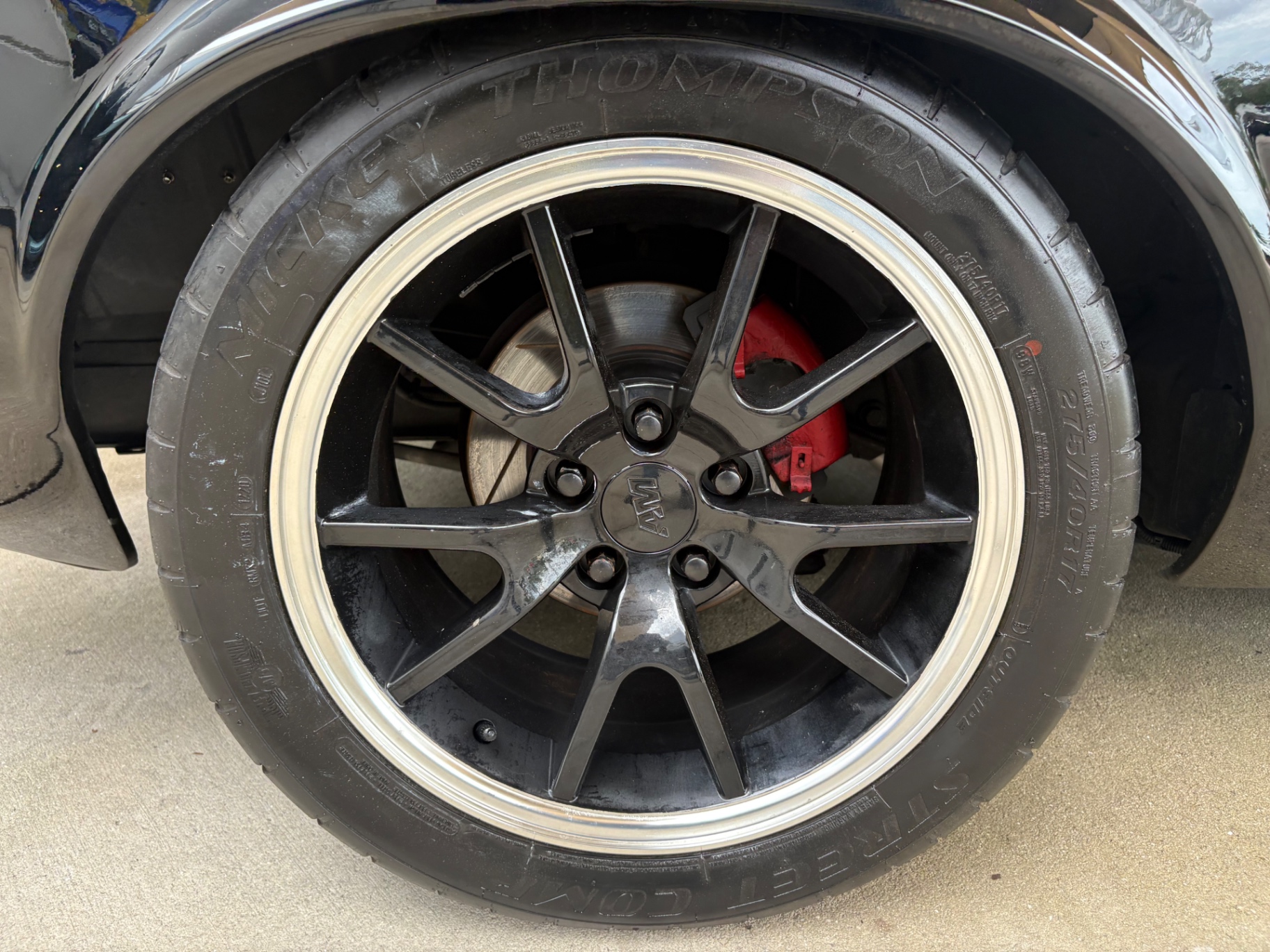
- AM wheels with Mickey Thompson tires
- Red caliper disc brakes
- Lowered suspension
- Adjustable rear shocks
- Twin-scoop performance hood
- LED headlights
- Smoked front bezels
- Custom billet side mirrors
- Tinted windows
- Custom flush billet fuel cap
- Smoothed color-matched bumpers
- Coated undercarriage
- Custom black leather interior
- Custom black and red door panels
- Red quilted floor mats
- High-back bucket seats
- Red safety harnesses
- Center console with shifter
- Fast charge console port
- Aftermarket steering wheel
- Custom black headliner
- Digital speedometer and odometer
- Dash-mounted display screen
- Upgraded stereo head unit
- Rear deck speakers
Mechanical
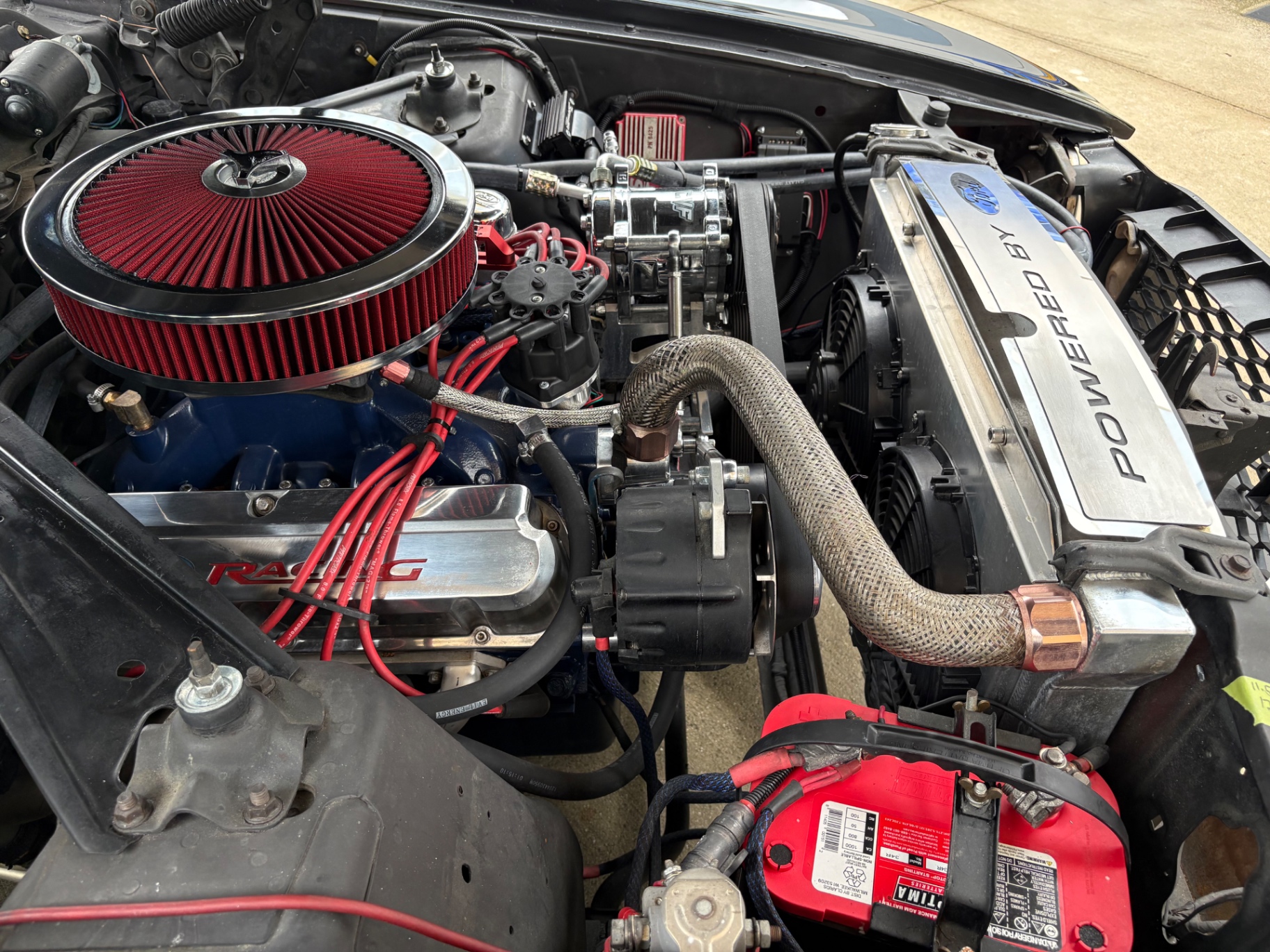
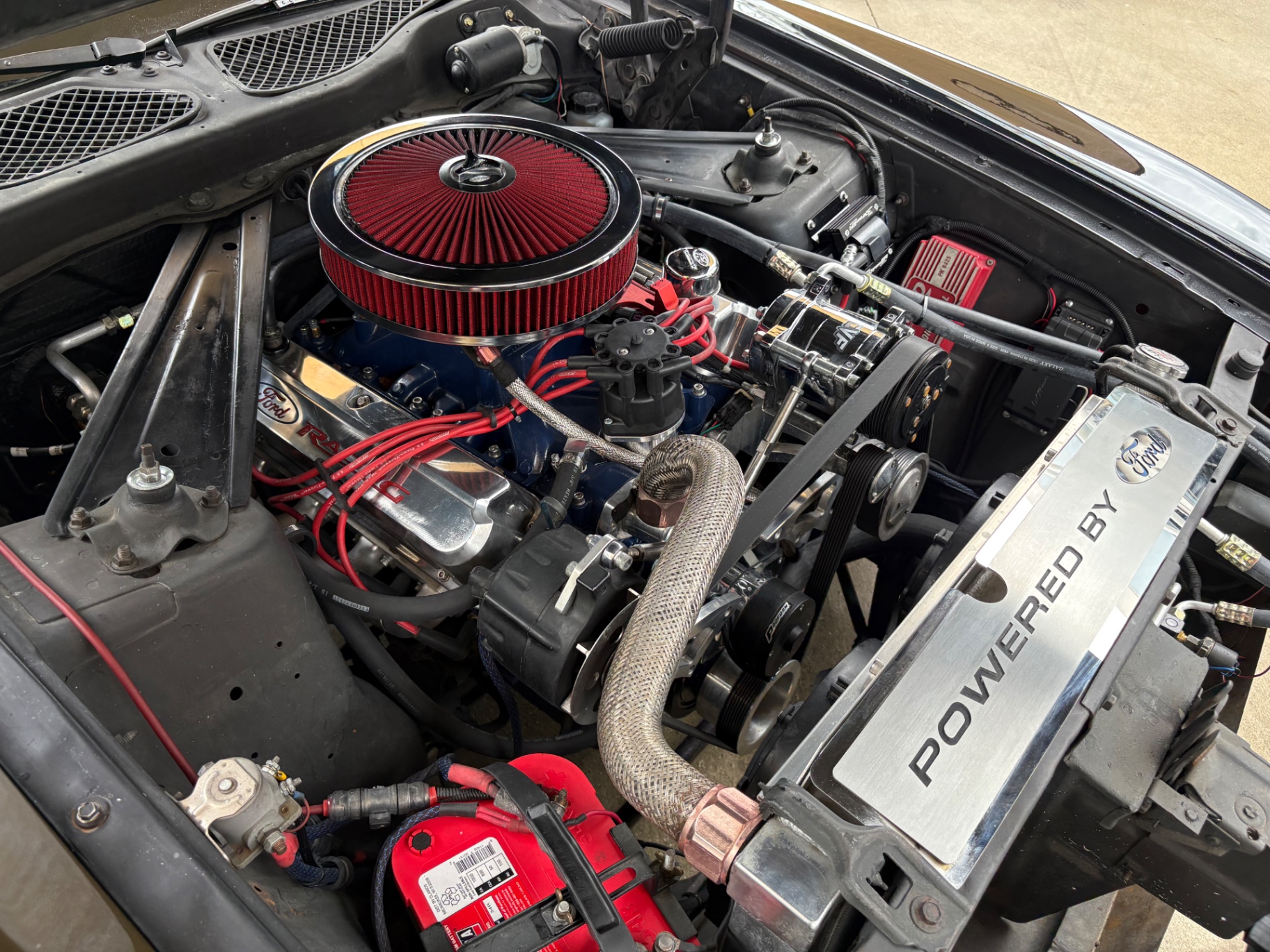
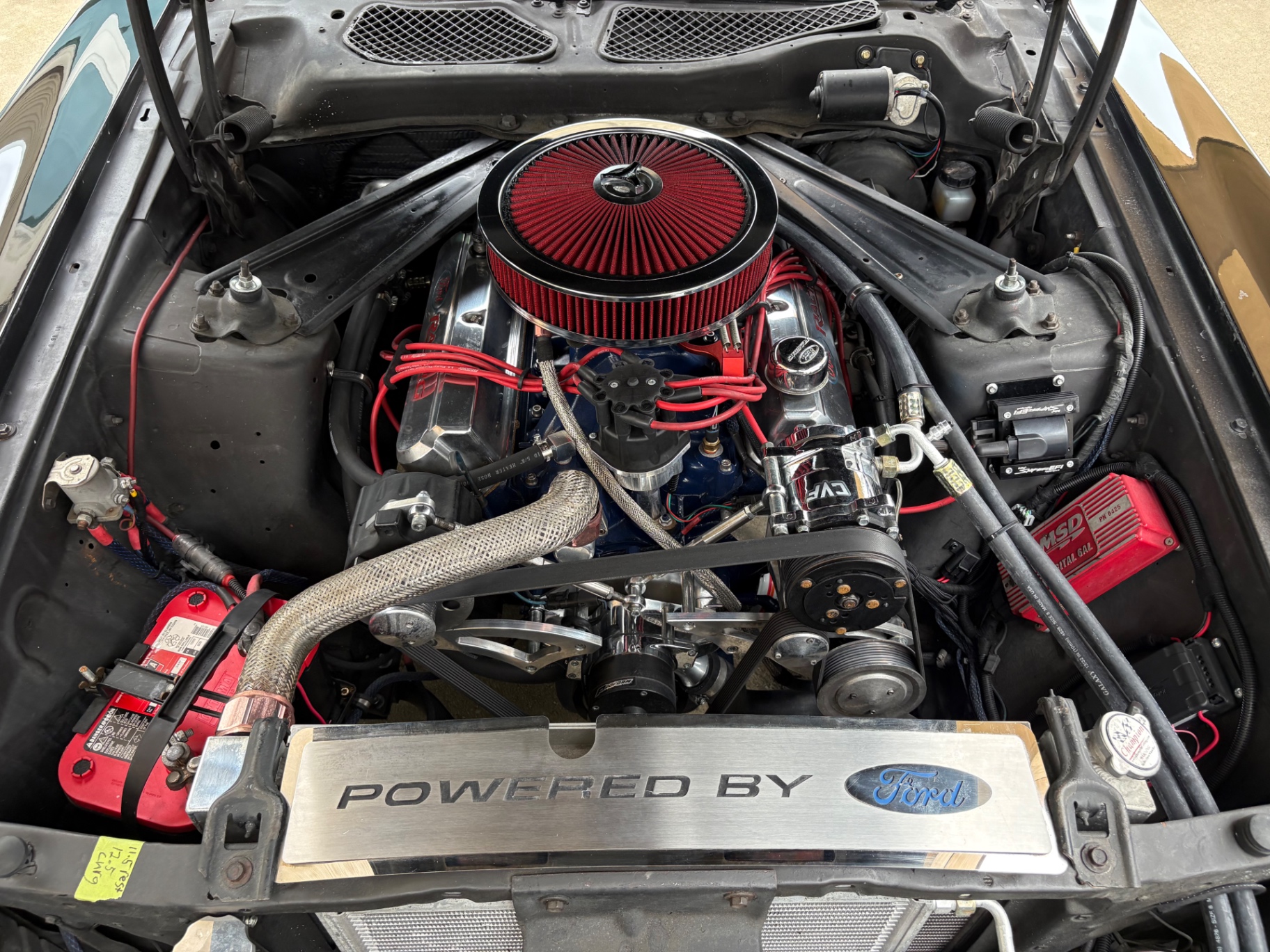
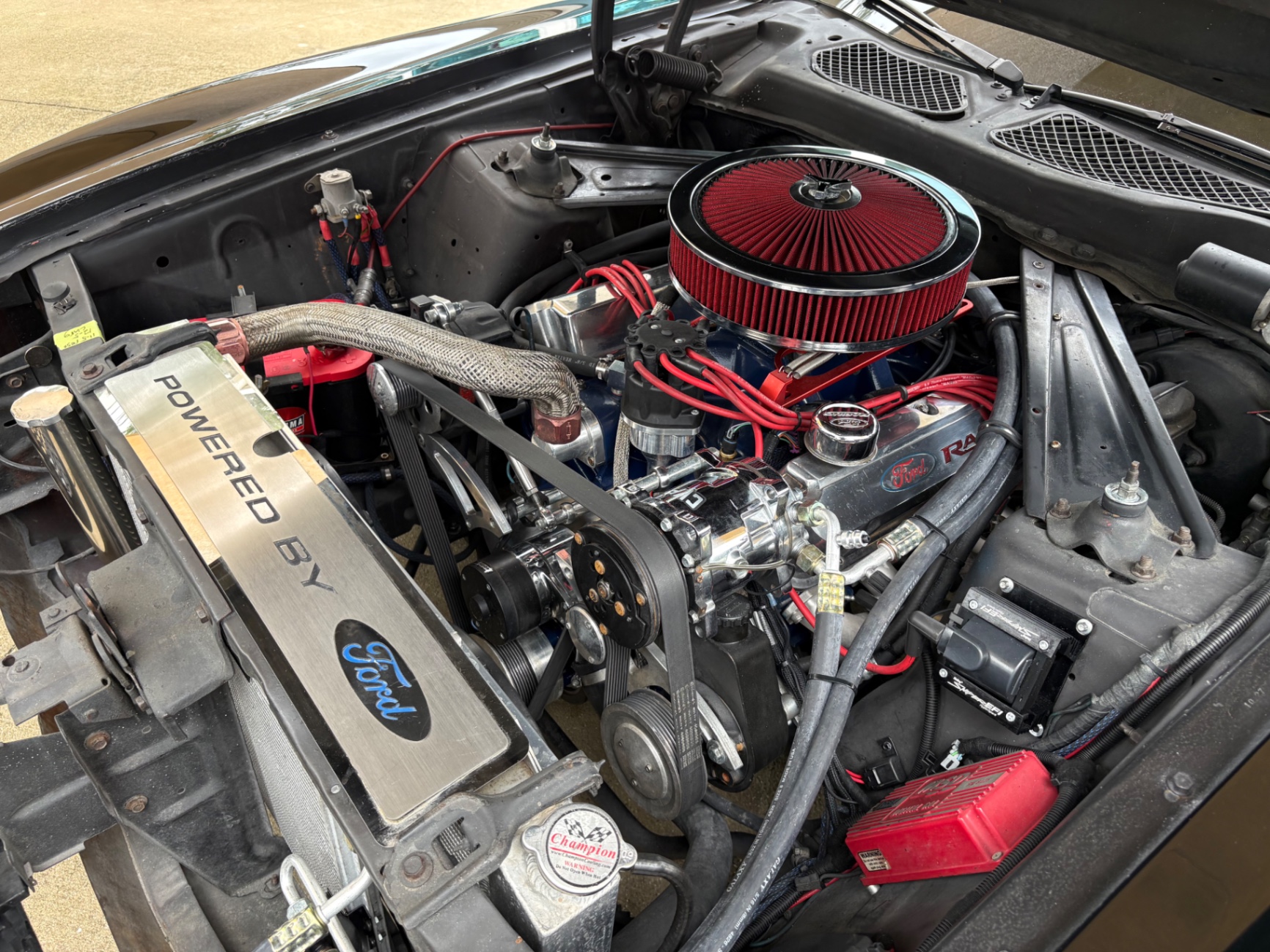
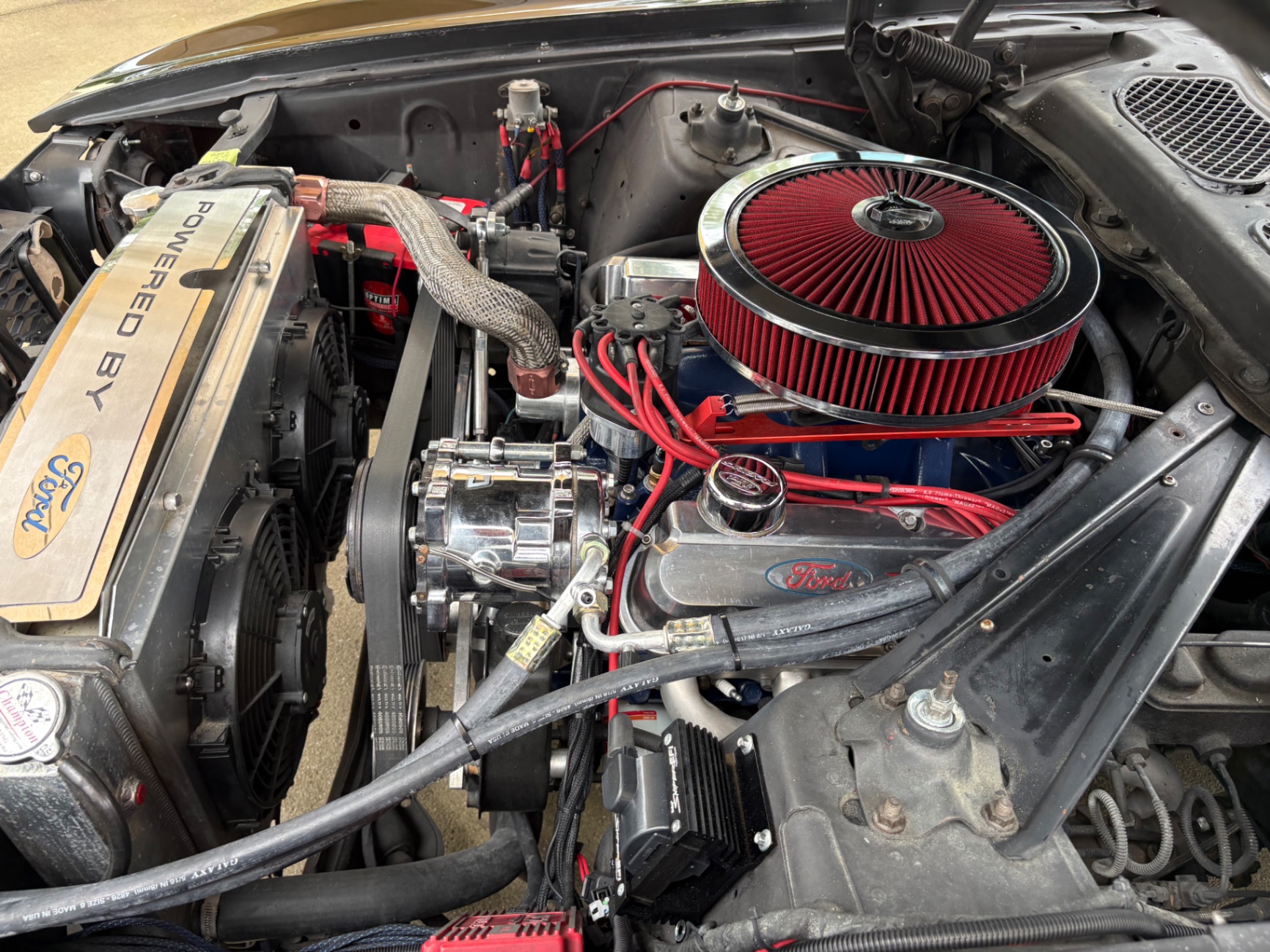
The engine in this 1973 Ford Mustang is a 351 cubic inch V8, which is the correct family of engines for this generation. Ford offered the 351 Cleveland and 351 Windsor in various states of tune throughout the early 1970s, and both were considered the performance backbone of the Mustang lineup during this period. The 351 Cleveland in particular had excellent cylinder head flow characteristics that made it a favorite for performance builds even by today's standards. What you are looking at under the hood of this car is a custom-built version of that engine, fitted with a performance carburetor, long-tube headers, and an MSD ignition system. MSD ignition is a well-established choice for street performance — it delivers a stronger, more consistent spark than a standard points or stock electronic ignition, which translates to better throttle response and more complete combustion across the RPM range.
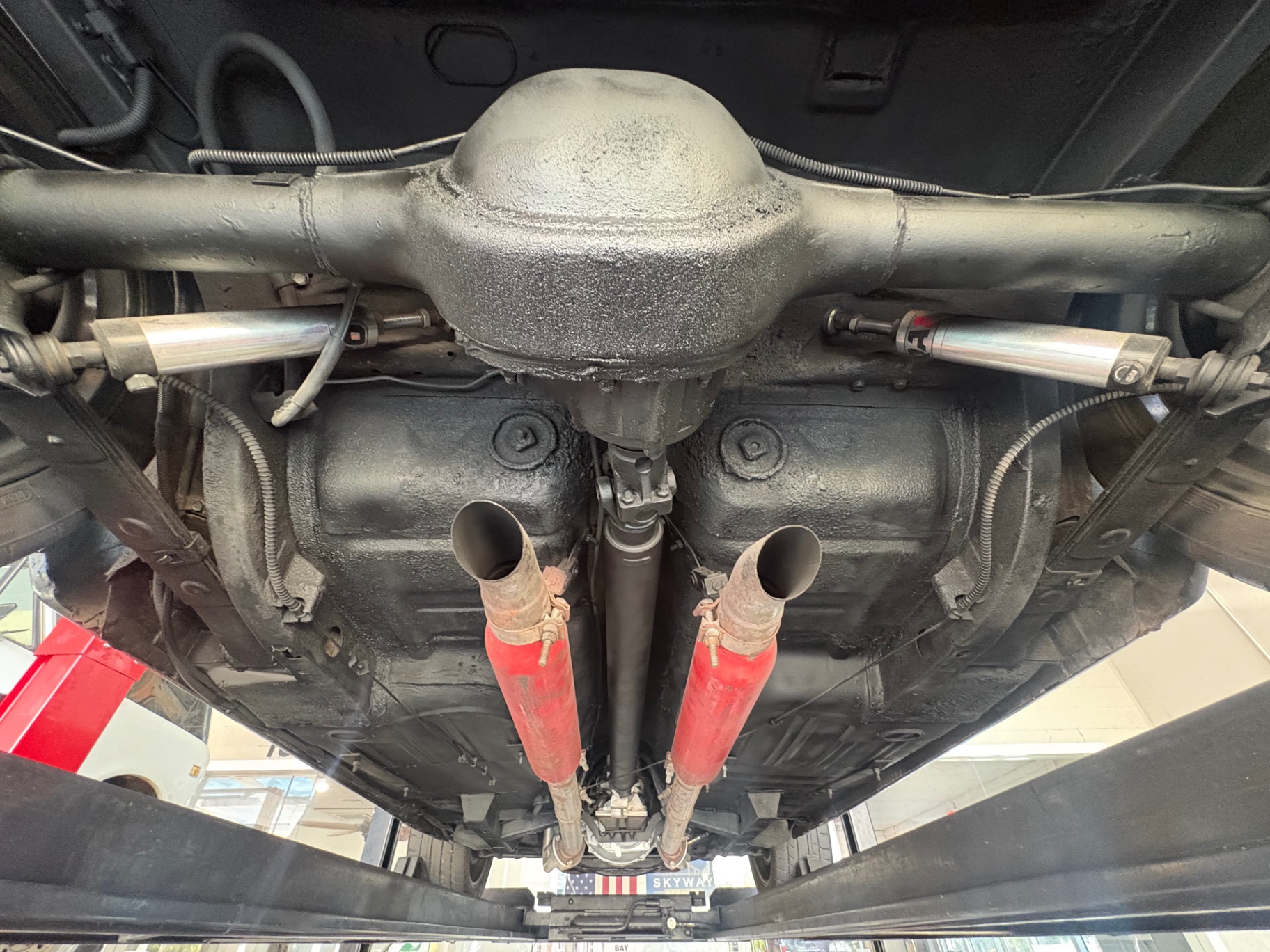
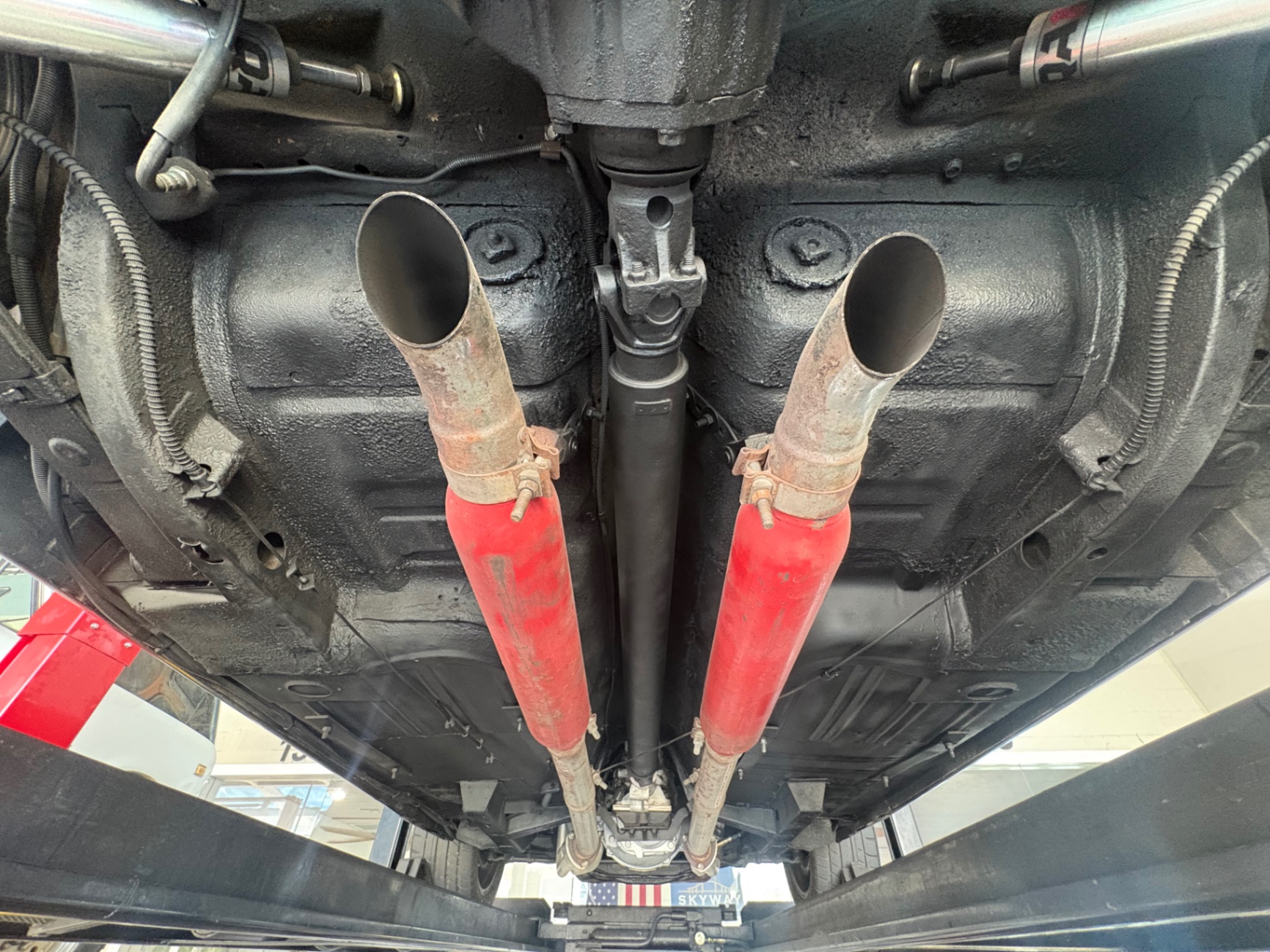
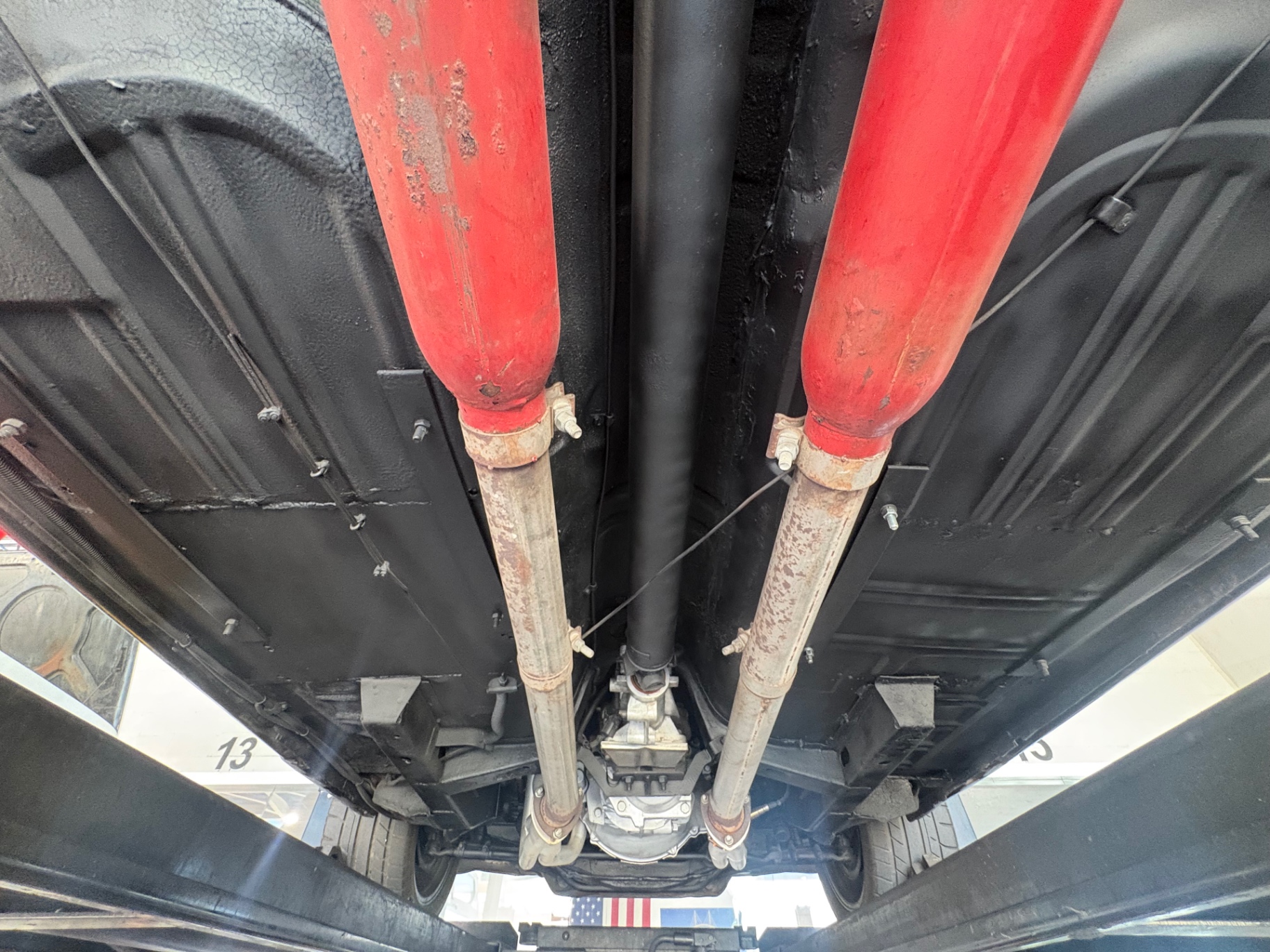
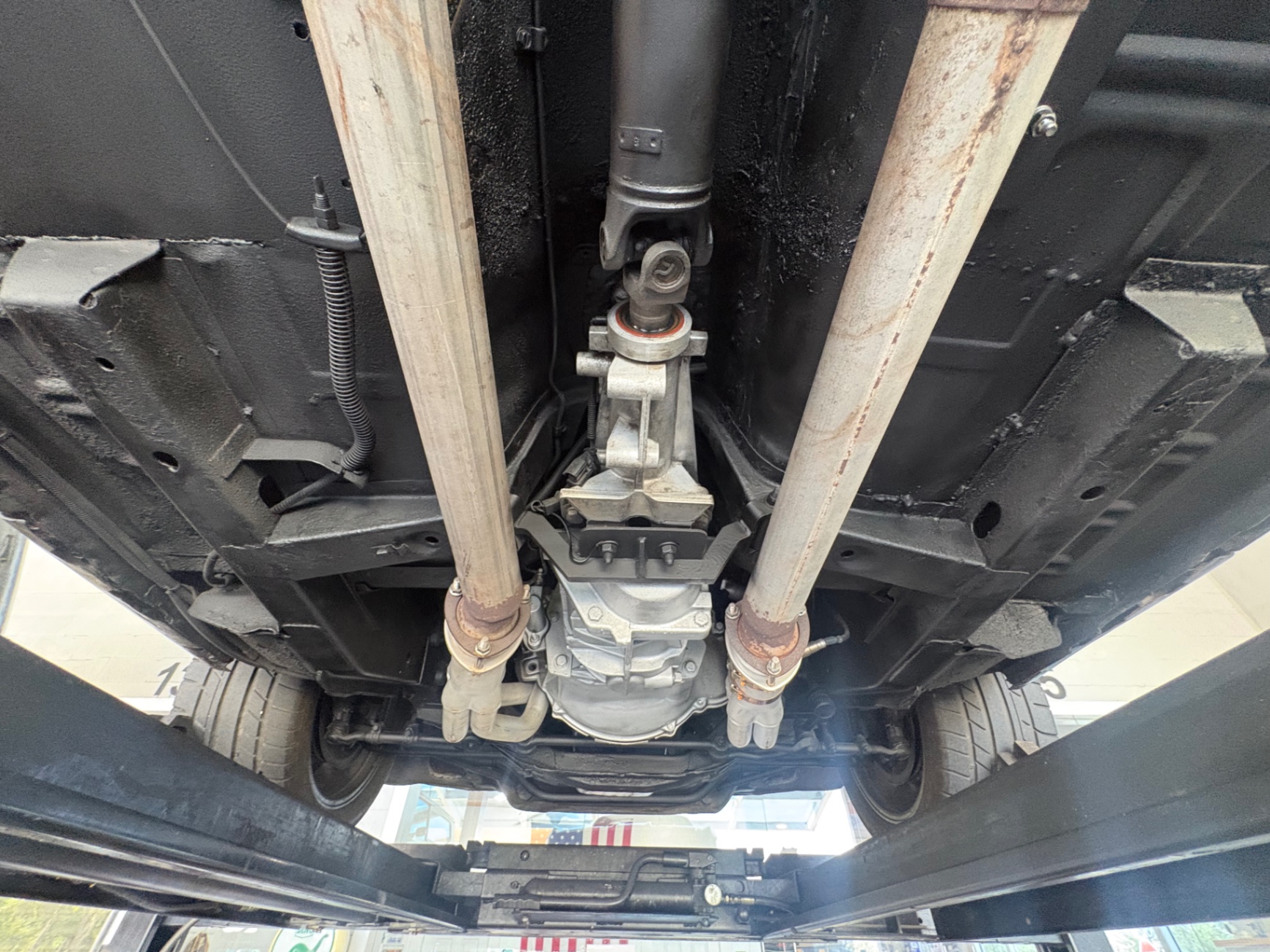
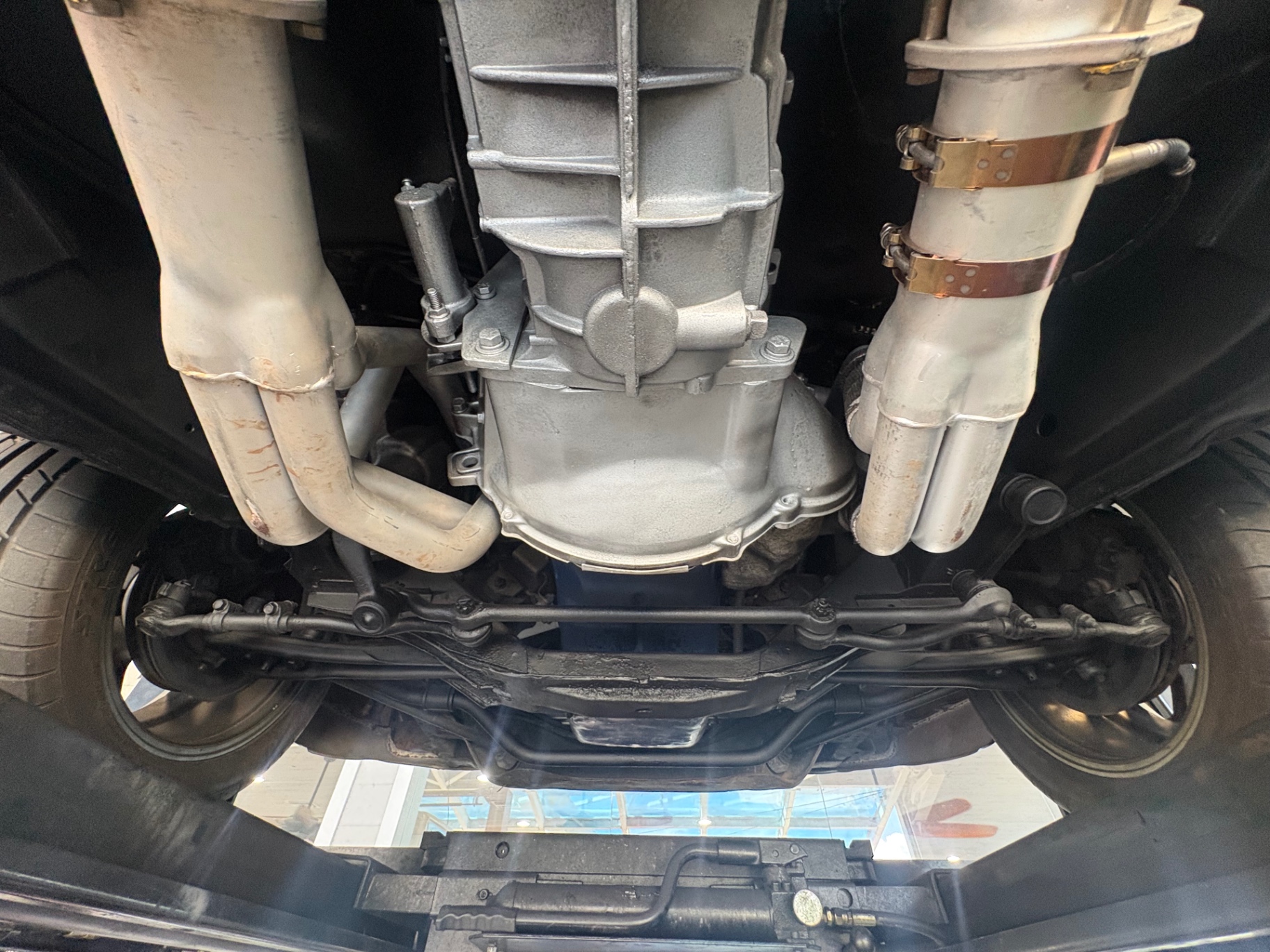
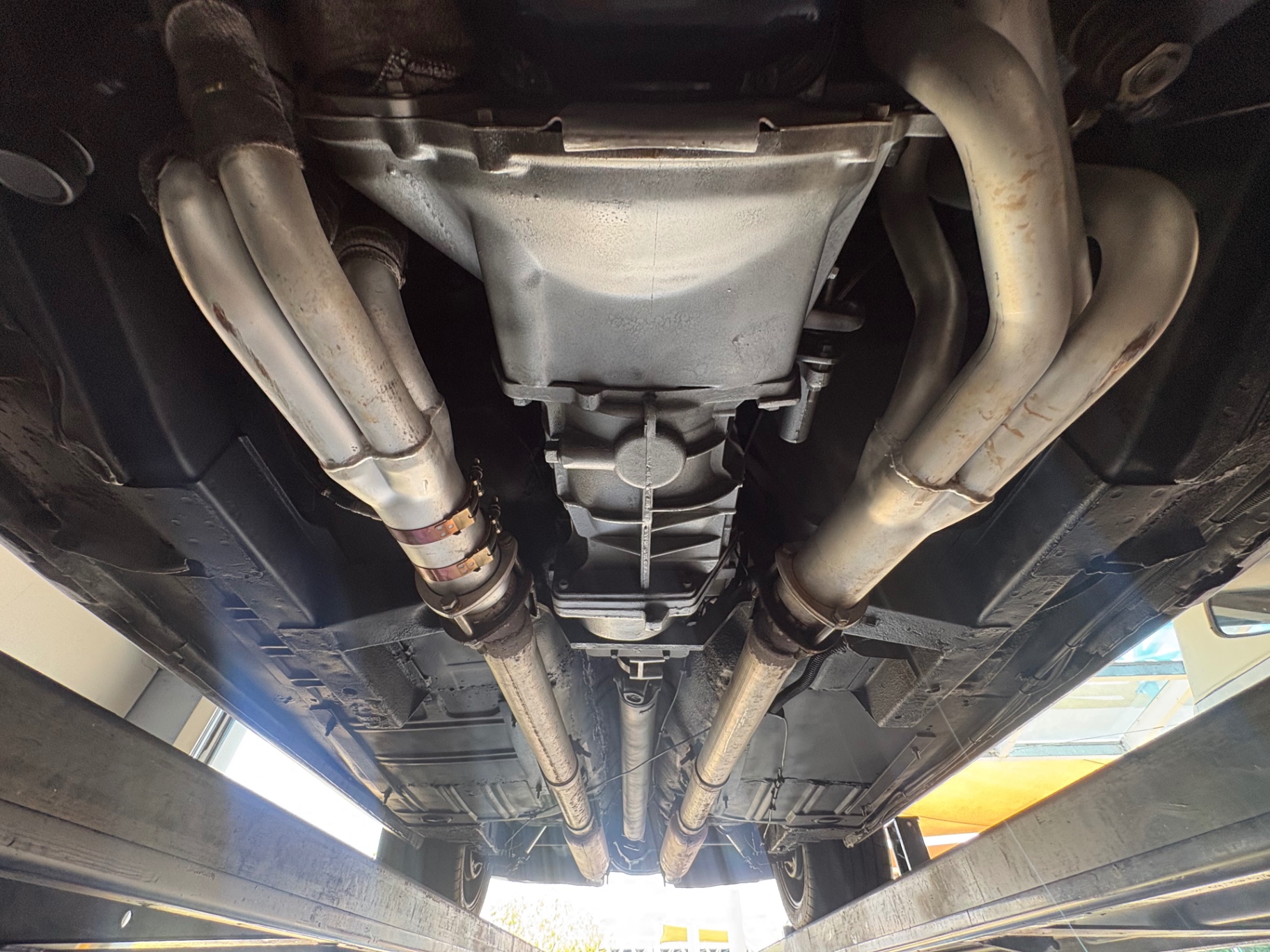
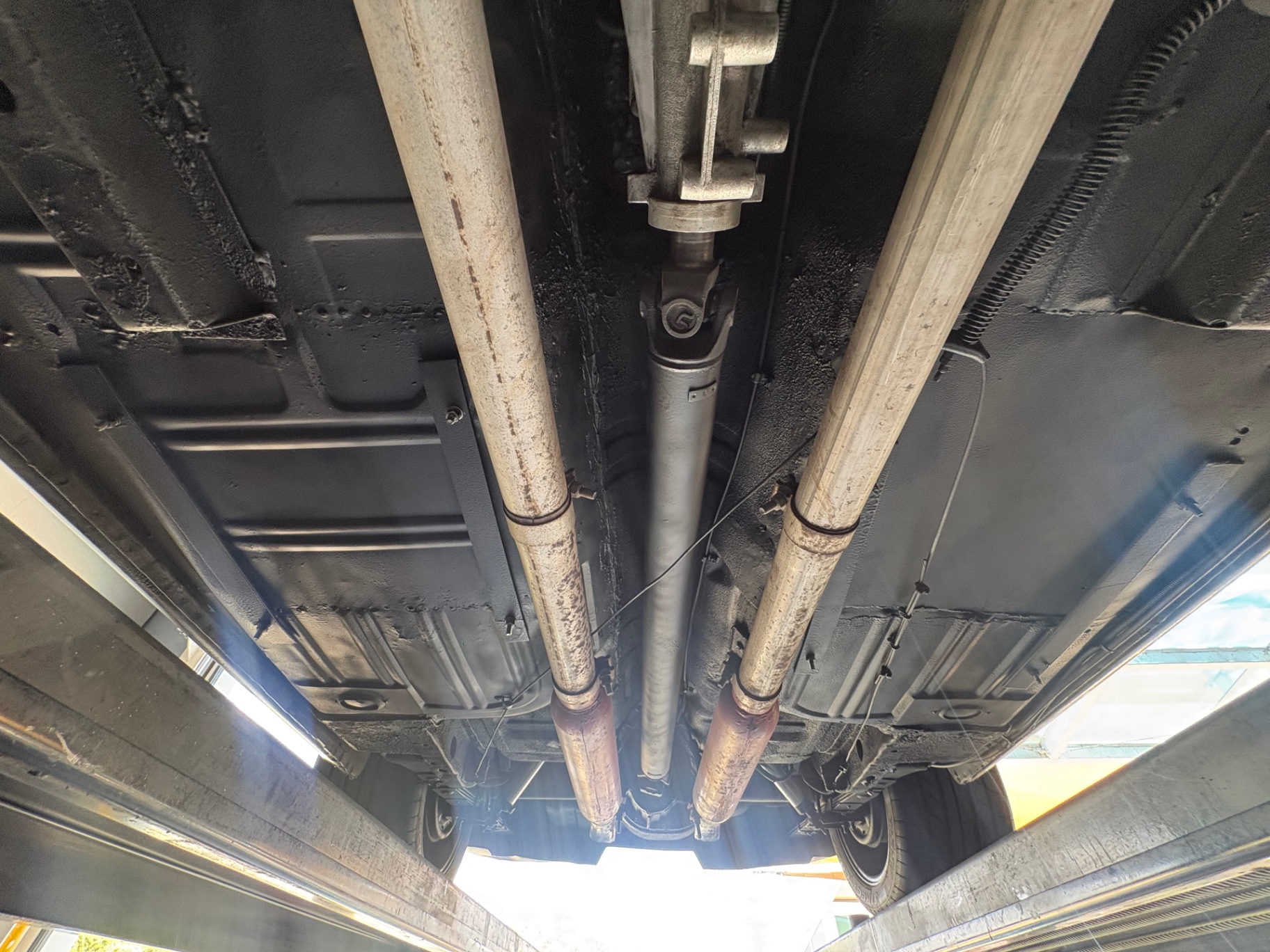
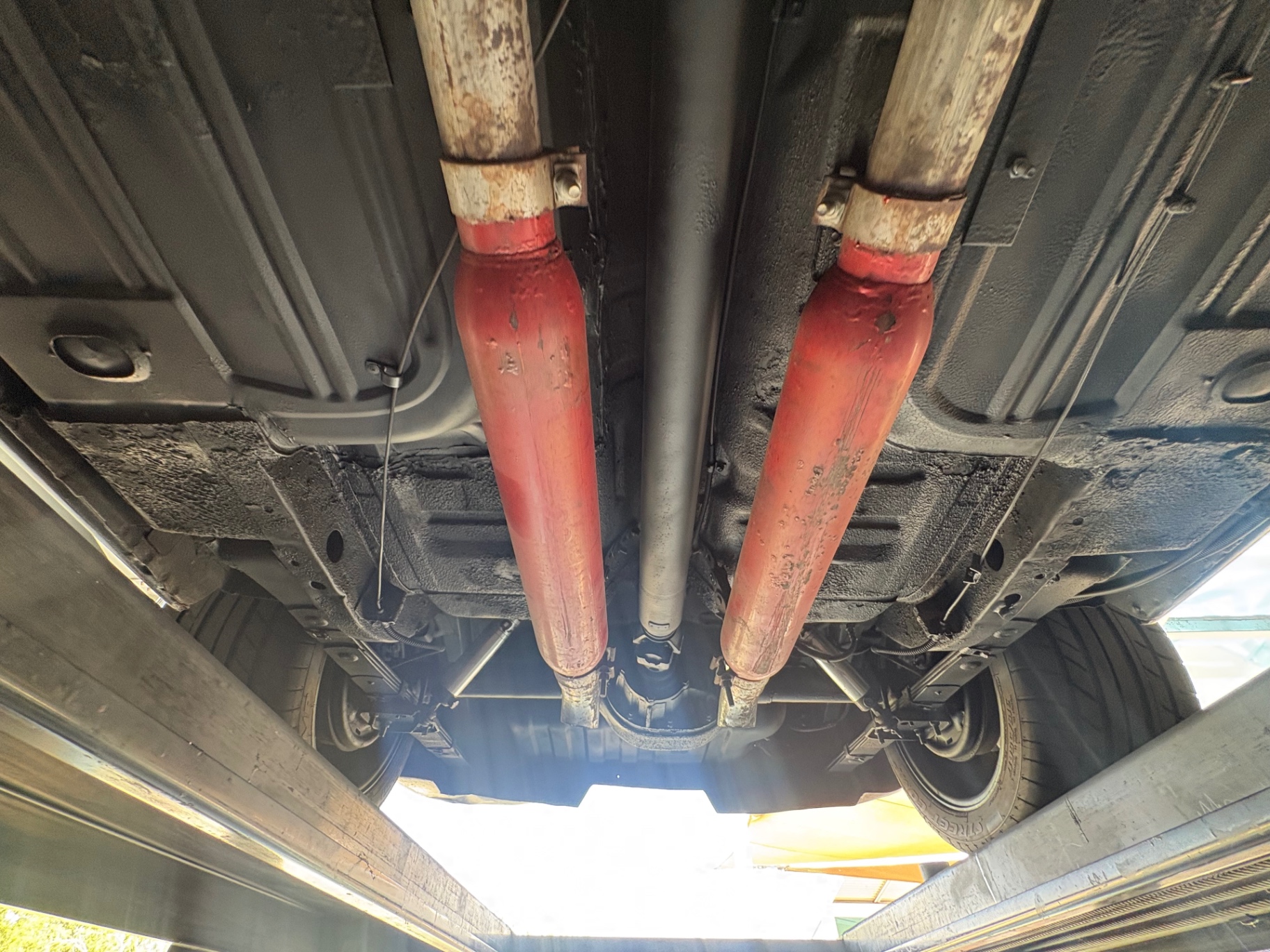
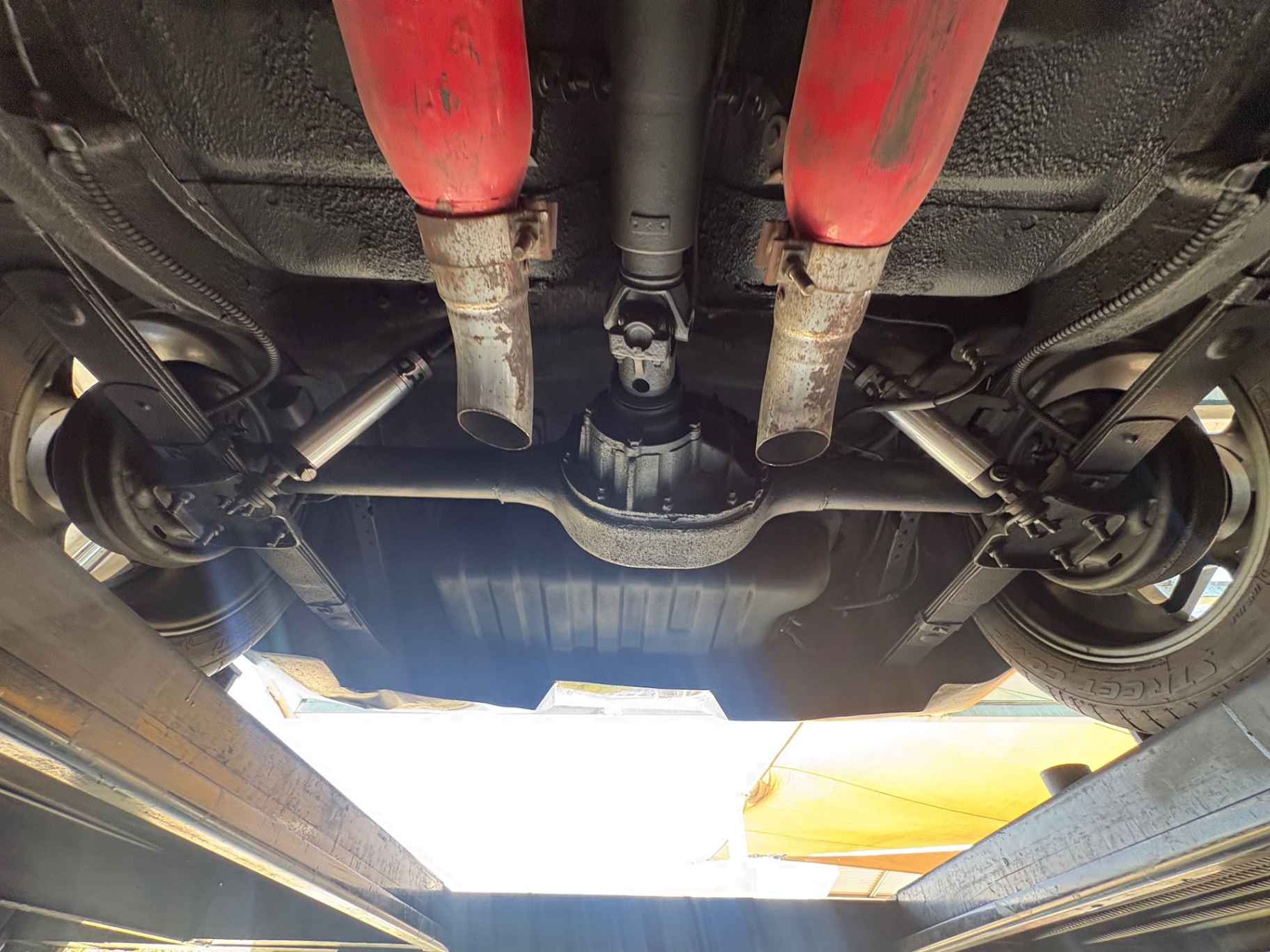
The long-tube headers replace the factory exhaust manifolds and allow exhaust gases to exit the cylinders more efficiently, reducing back pressure and improving torque output across the powerband. They feed into a full dual exhaust system with red powder-coated mufflers, which you can see clearly from underneath — the undercarriage itself has been coated in black, making the red mufflers a deliberate visual statement even from below. A high-flow performance air filter and a serpentine belt drive conversion round out the engine upgrades. The serpentine conversion replaces the old V-belt system with a single continuous belt and modern-style accessory pulleys, which improves reliability and reduces parasitic drag on the engine. An electric cooling fan replaces the engine-driven fan, reclaiming additional horsepower that would otherwise go toward spinning it.
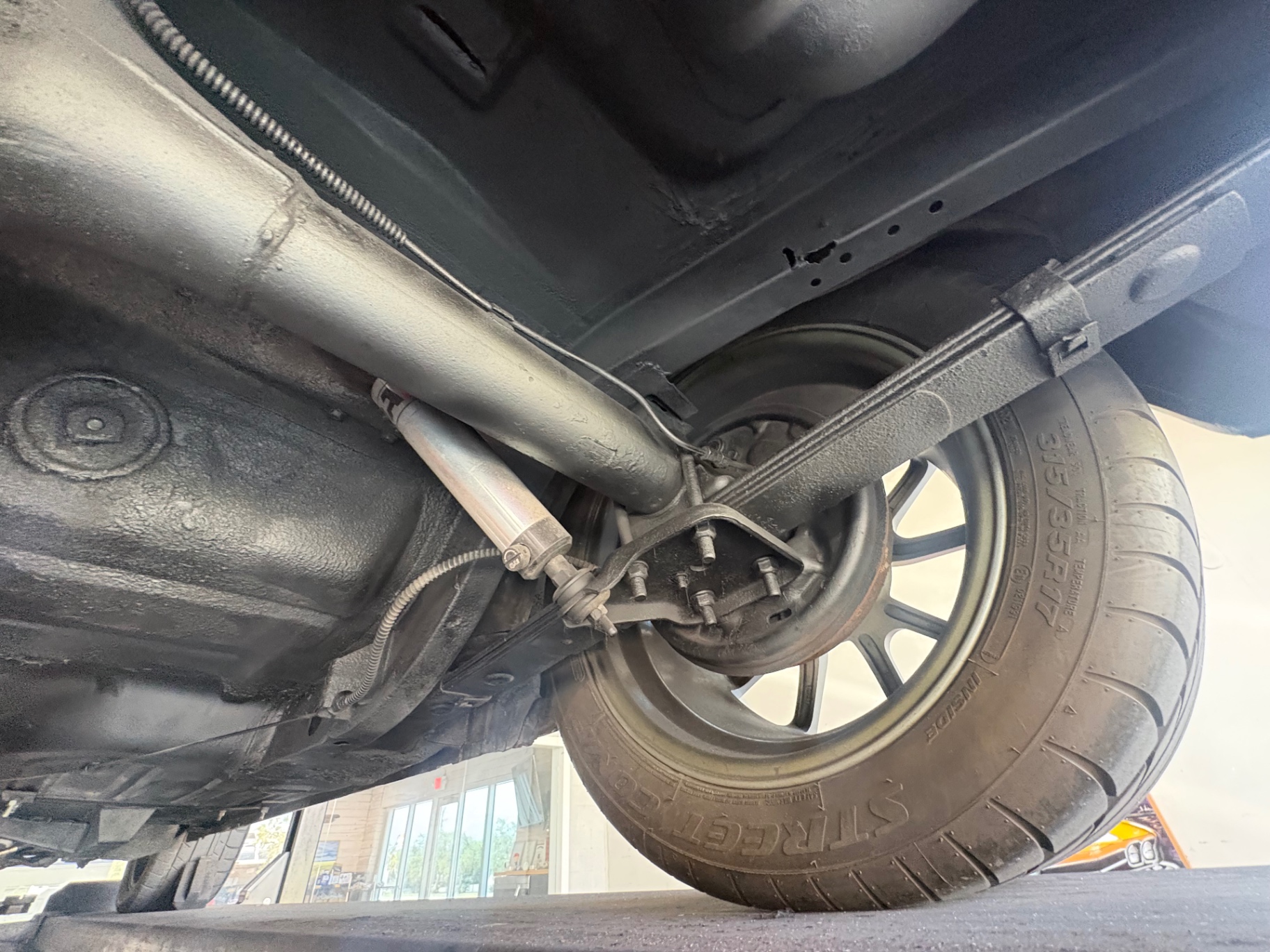
The transmission is a 4-speed manual, which is the correct choice for a build like this. Ford's top manual gearbox option in 1973 was the close-ratio or wide-ratio 4-speed, and keeping a manual in this car maintains the mechanical engagement that makes the 351 worth driving. Behind the transmission sits a Ford 9-inch rear axle — one of the strongest and most swap-friendly differentials ever produced. Ford used the 9-inch in performance applications throughout the 1960s and 1970s, and it remains a go-to choice for builders today because of its proven strength and the wide availability of gear ratios and replacement parts.
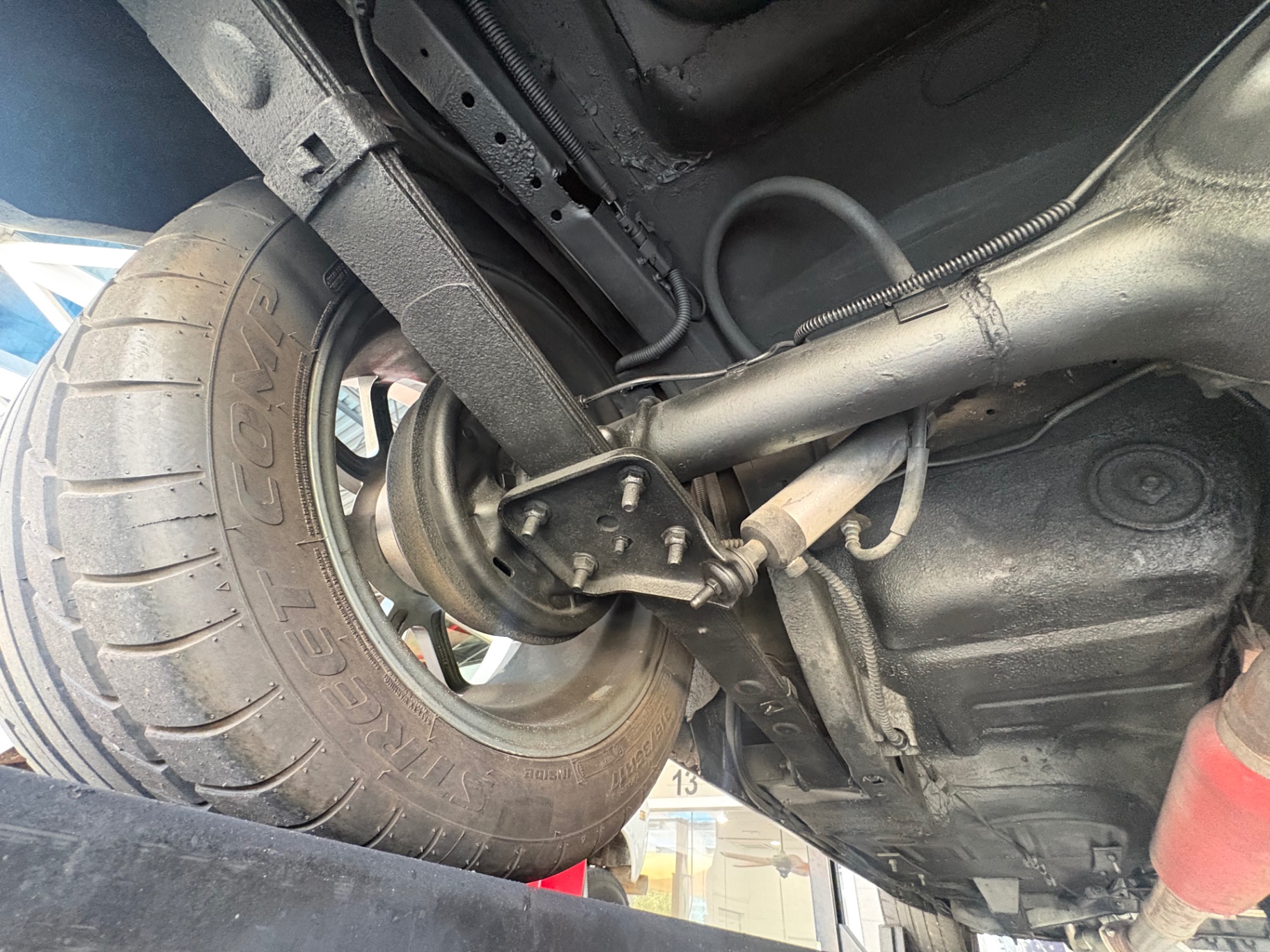
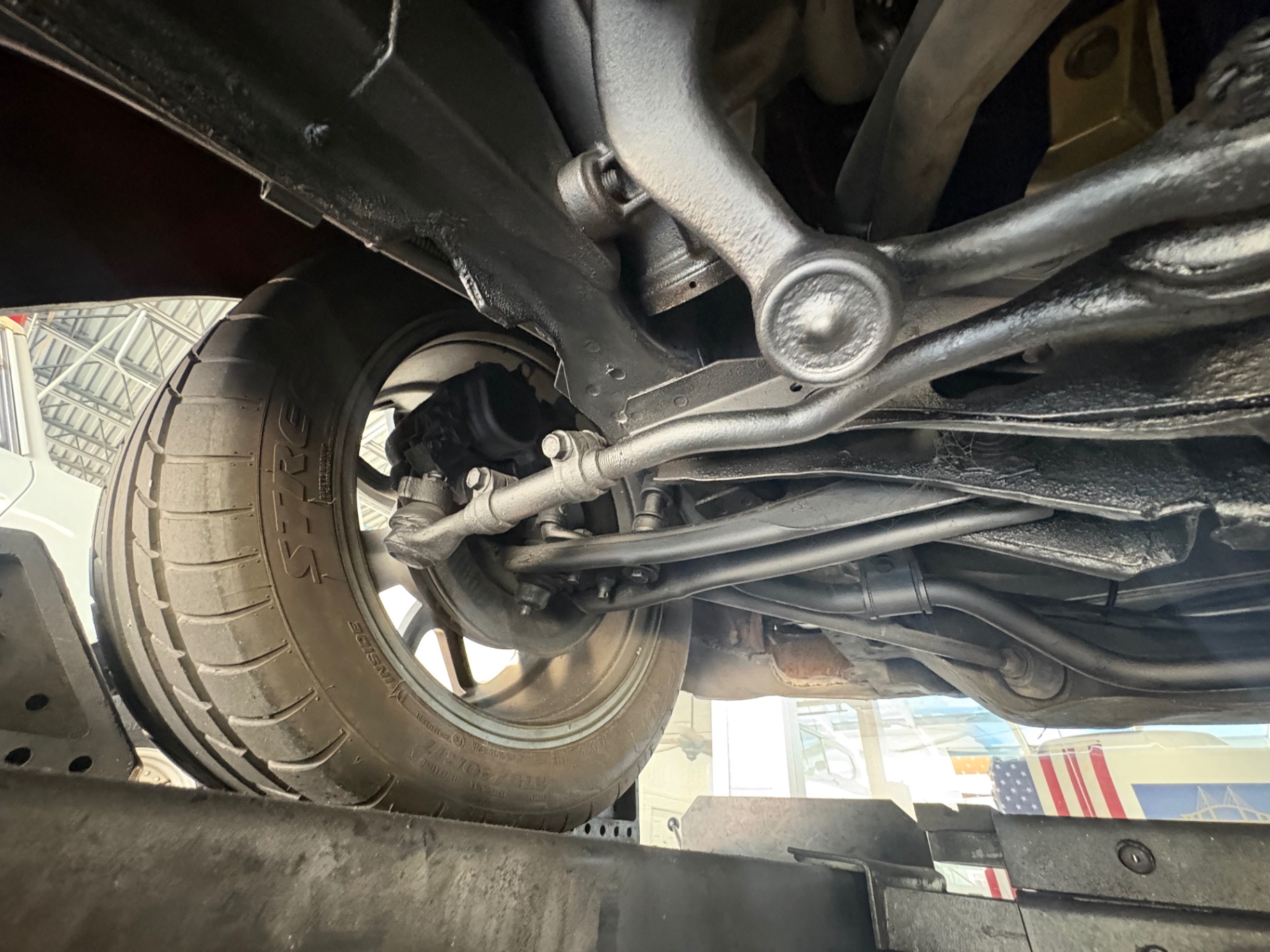
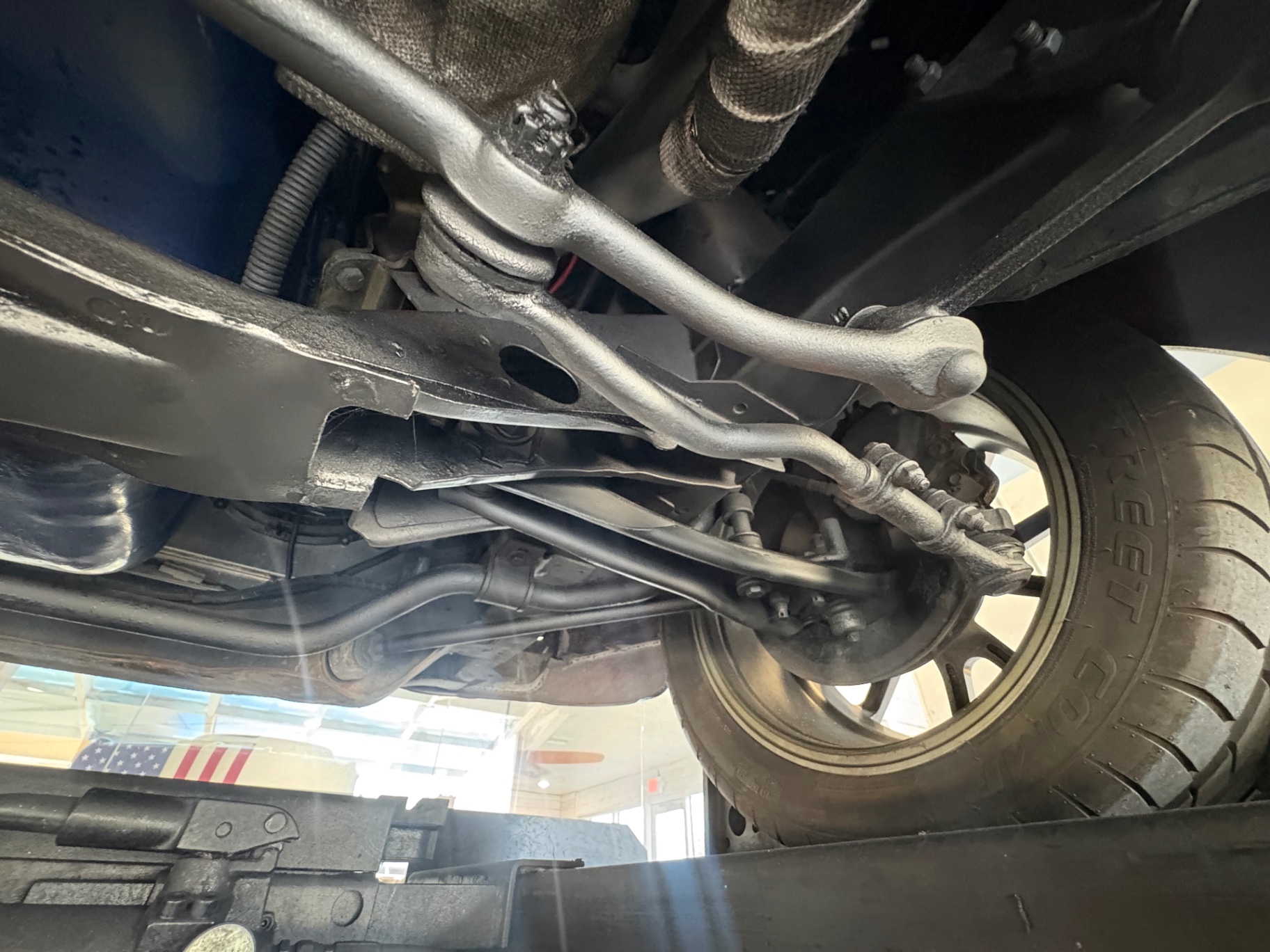
Stopping is handled by disc brakes with red calipers, a significant improvement over the drum-heavy setup found on most 1973 Mustangs. The suspension has been lowered, and adjustable rear shocks allow for tuning the ride height and damping to suit driving conditions. An Optima Red Top battery provides reliable cranking power for the built engine.
Interior
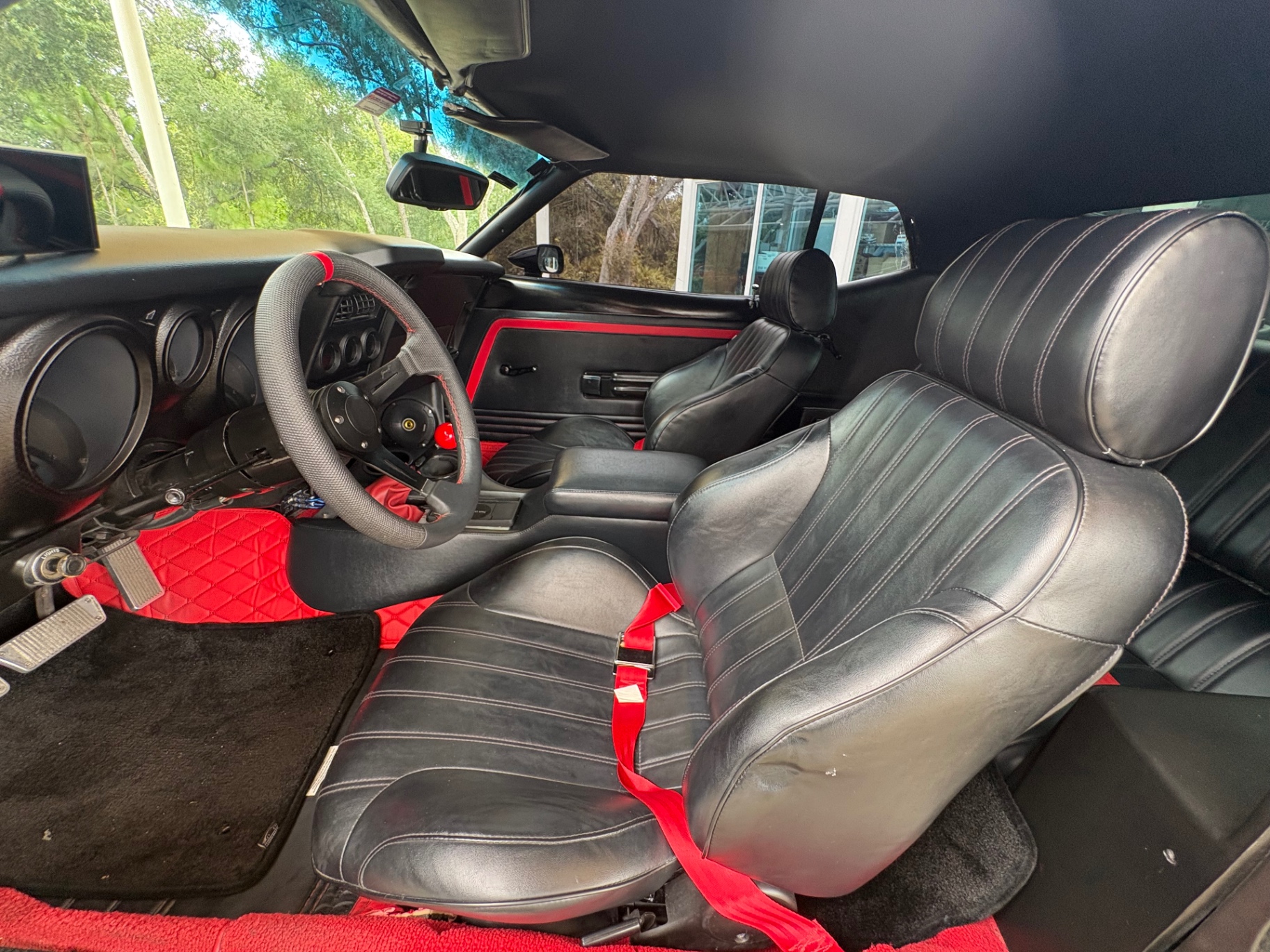
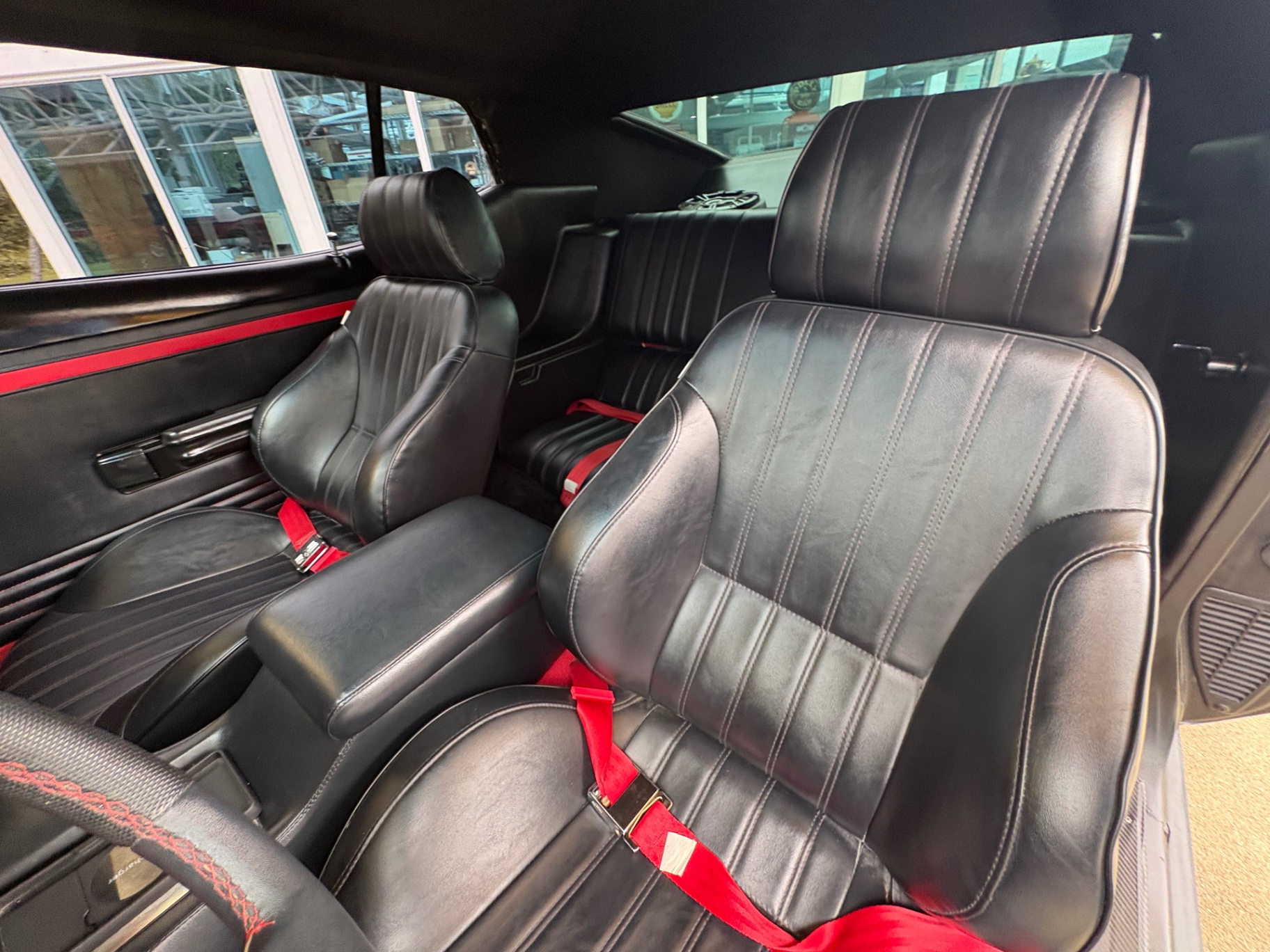
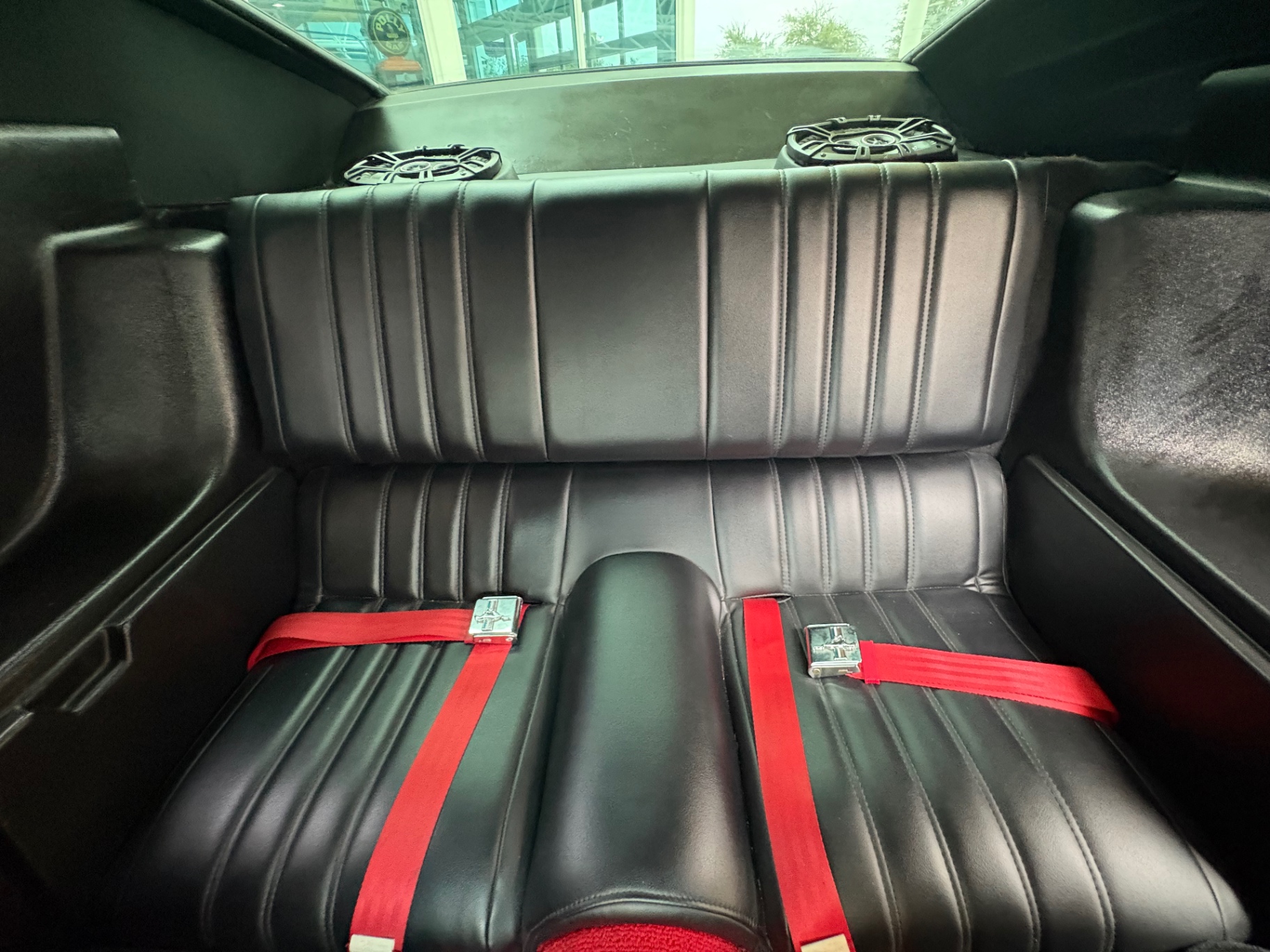
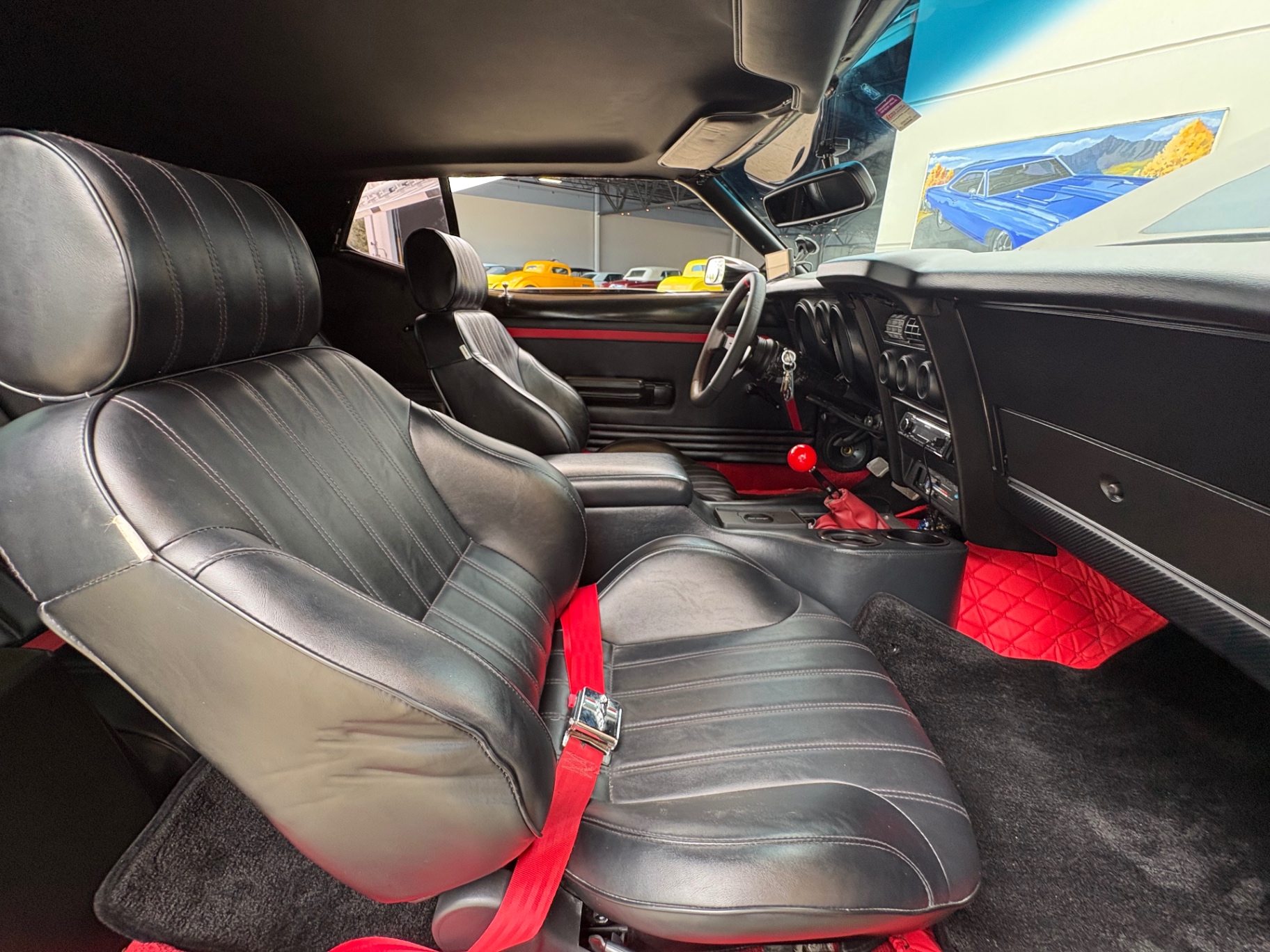
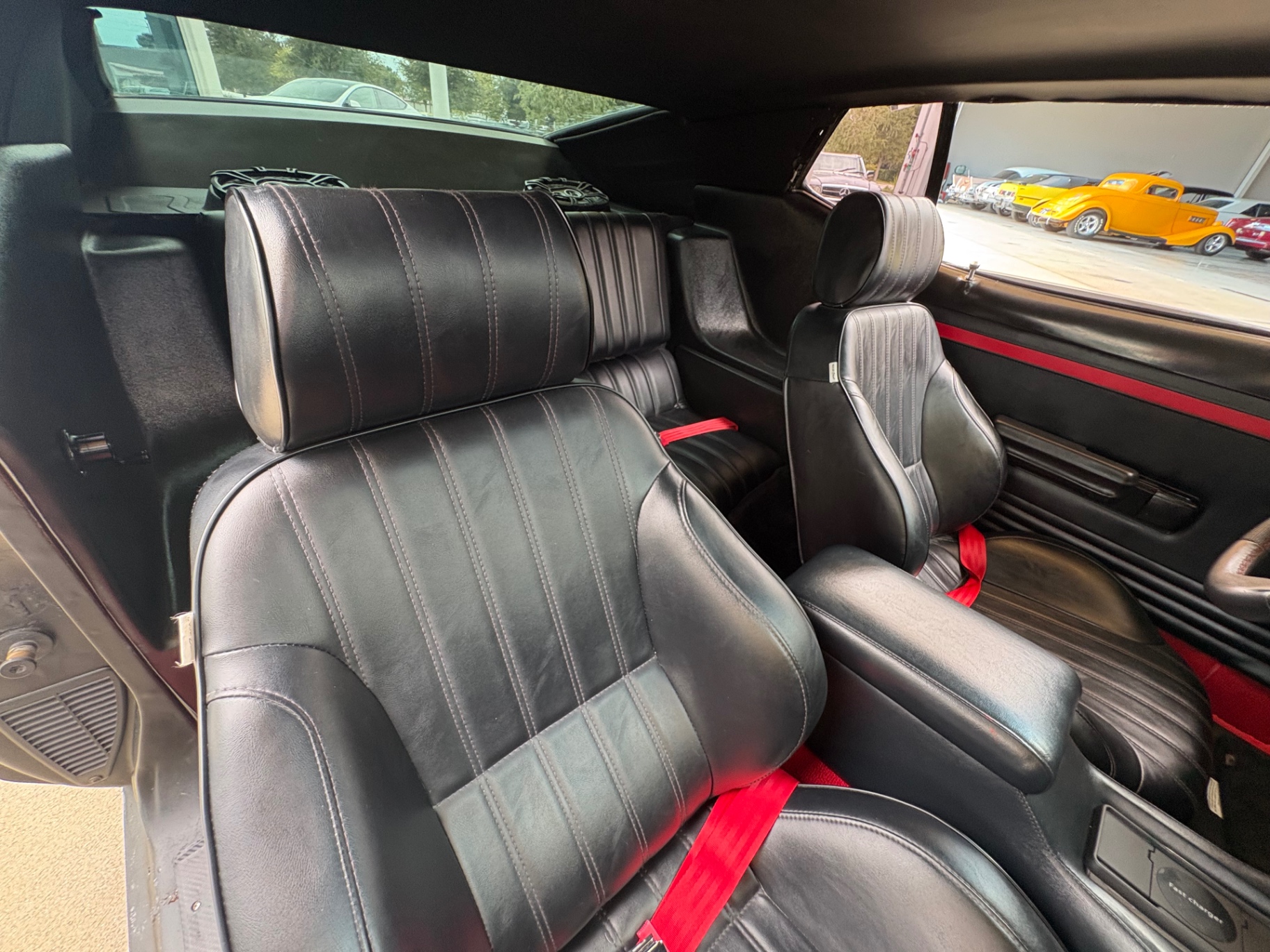
The interior of this 1973 Ford Mustang has been completely redone in a black and red color scheme that runs consistently through every surface. The seats are high-back bucket units covered in black leather, and both front and rear positions are equipped with red safety harnesses. The rear seat area, which in the original SportsRoof body was already more accommodating than most pony cars of the era, retains its usability with the leather covering carried through to the rear bench as well.
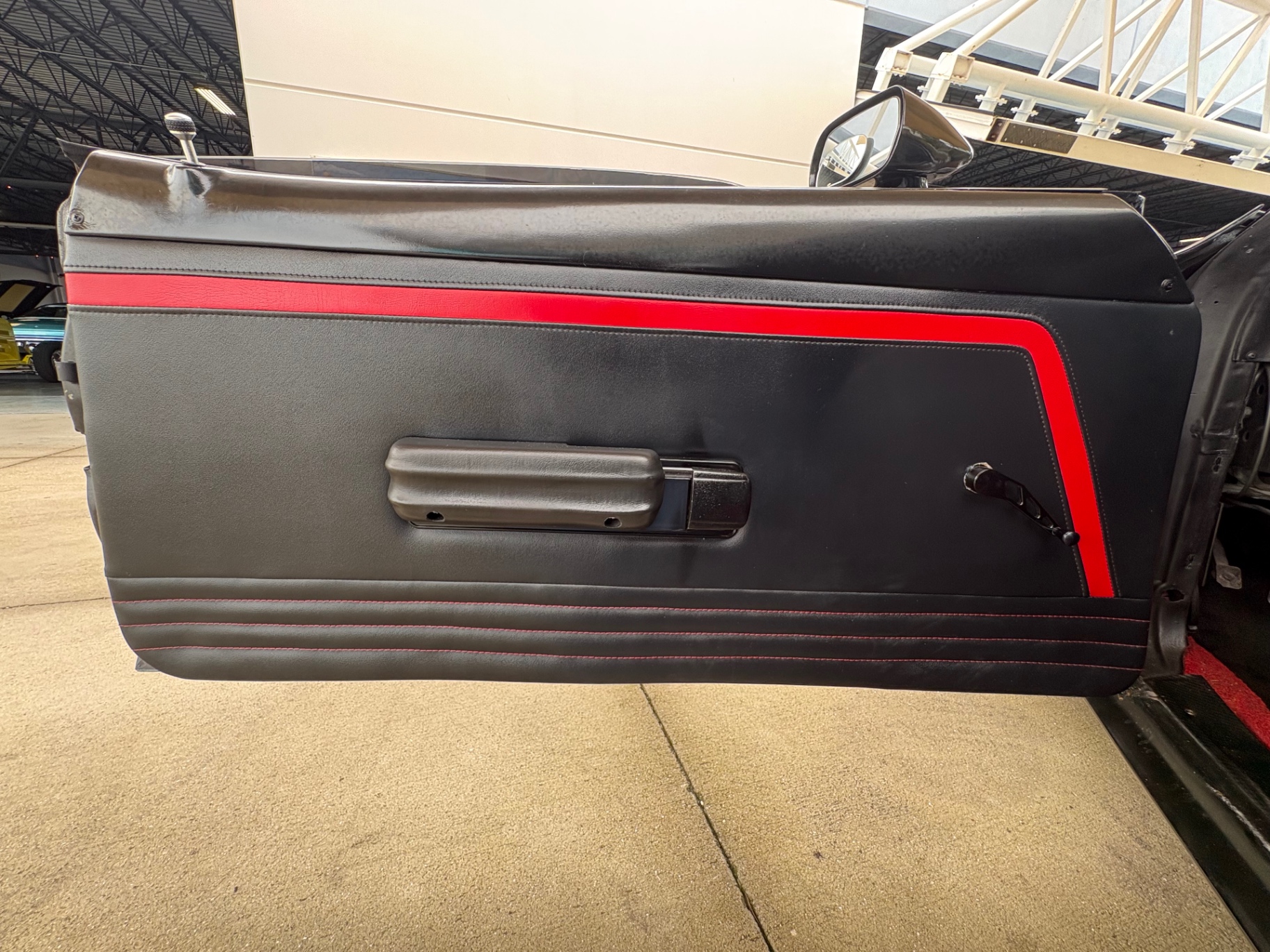
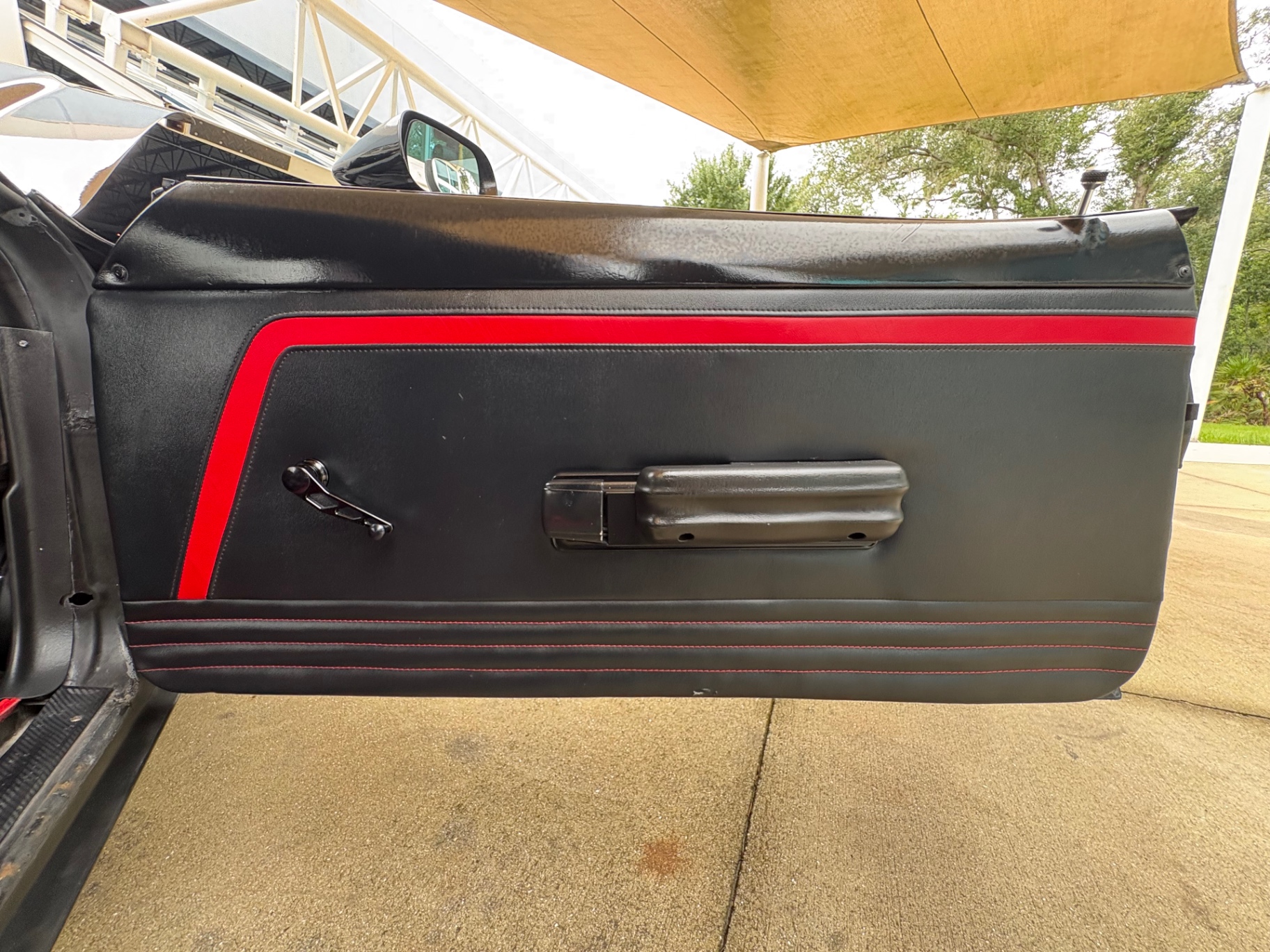
The door panels are custom units in black with red accent stripes that run horizontally across the panel face — a detail that ties the interior together without being overdone. The floor is covered in red quilted mats up front, which contrast against the black carpet elsewhere in the cabin. The headliner is black, continuing the theme without interruption.
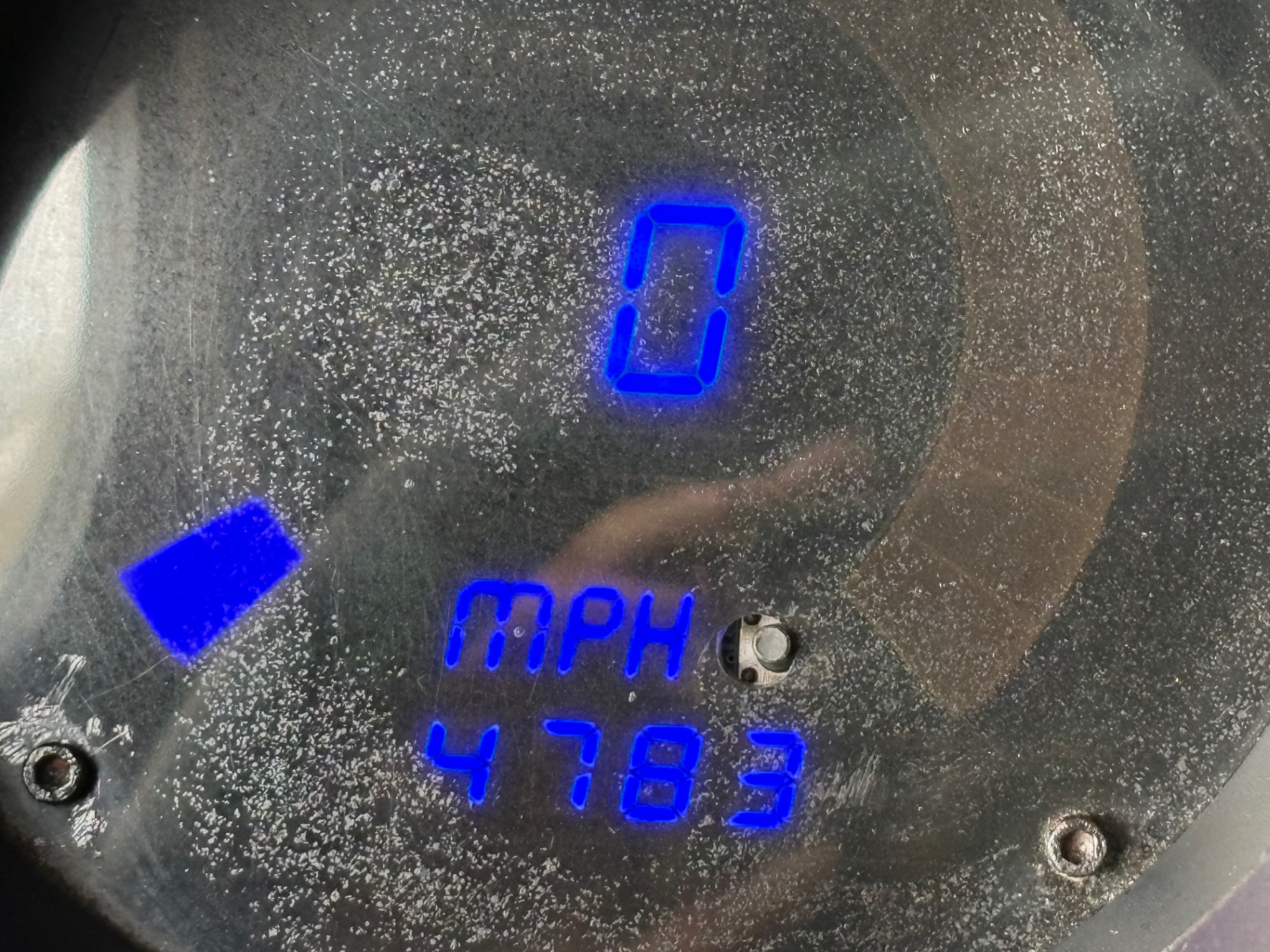
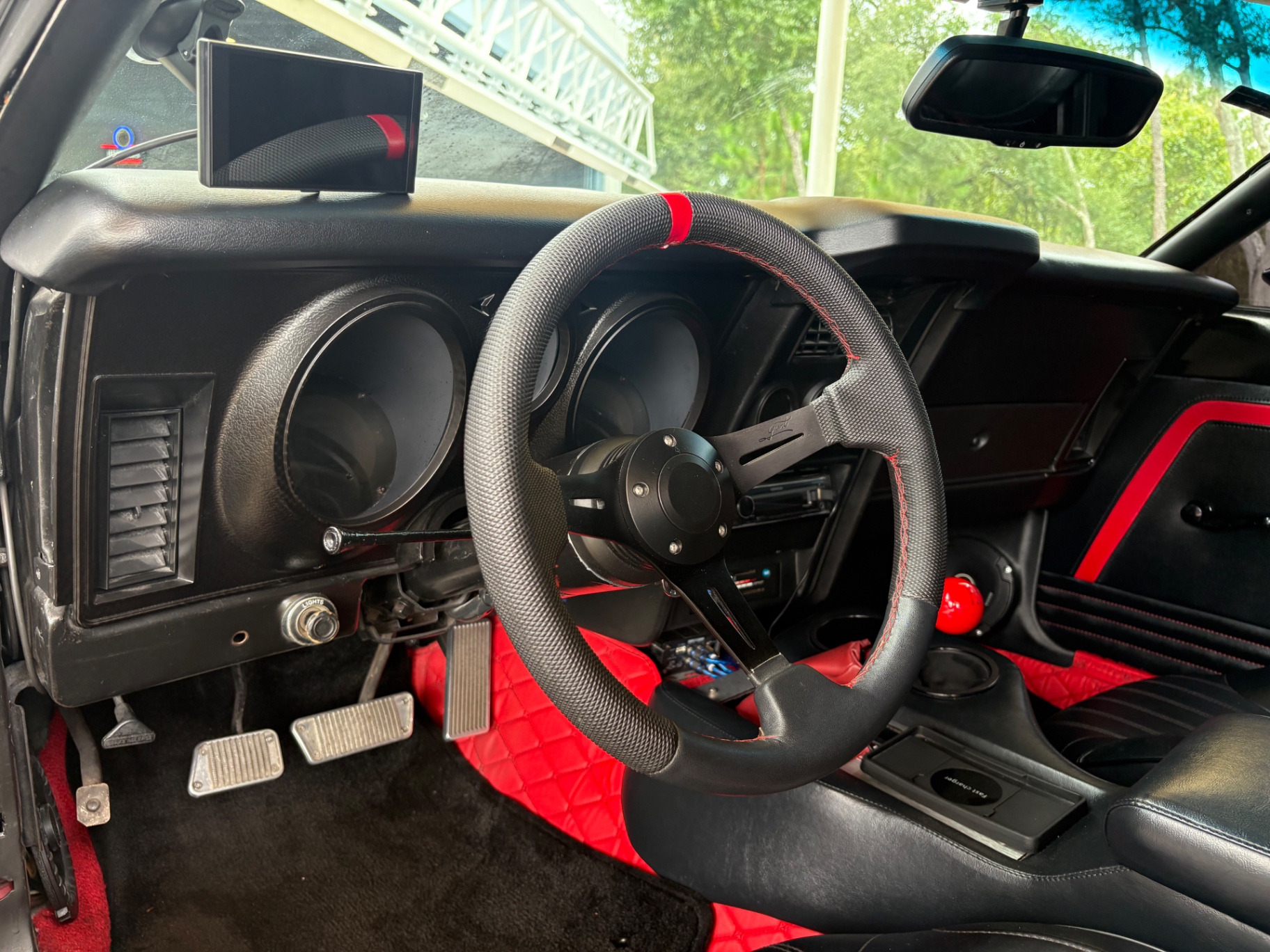
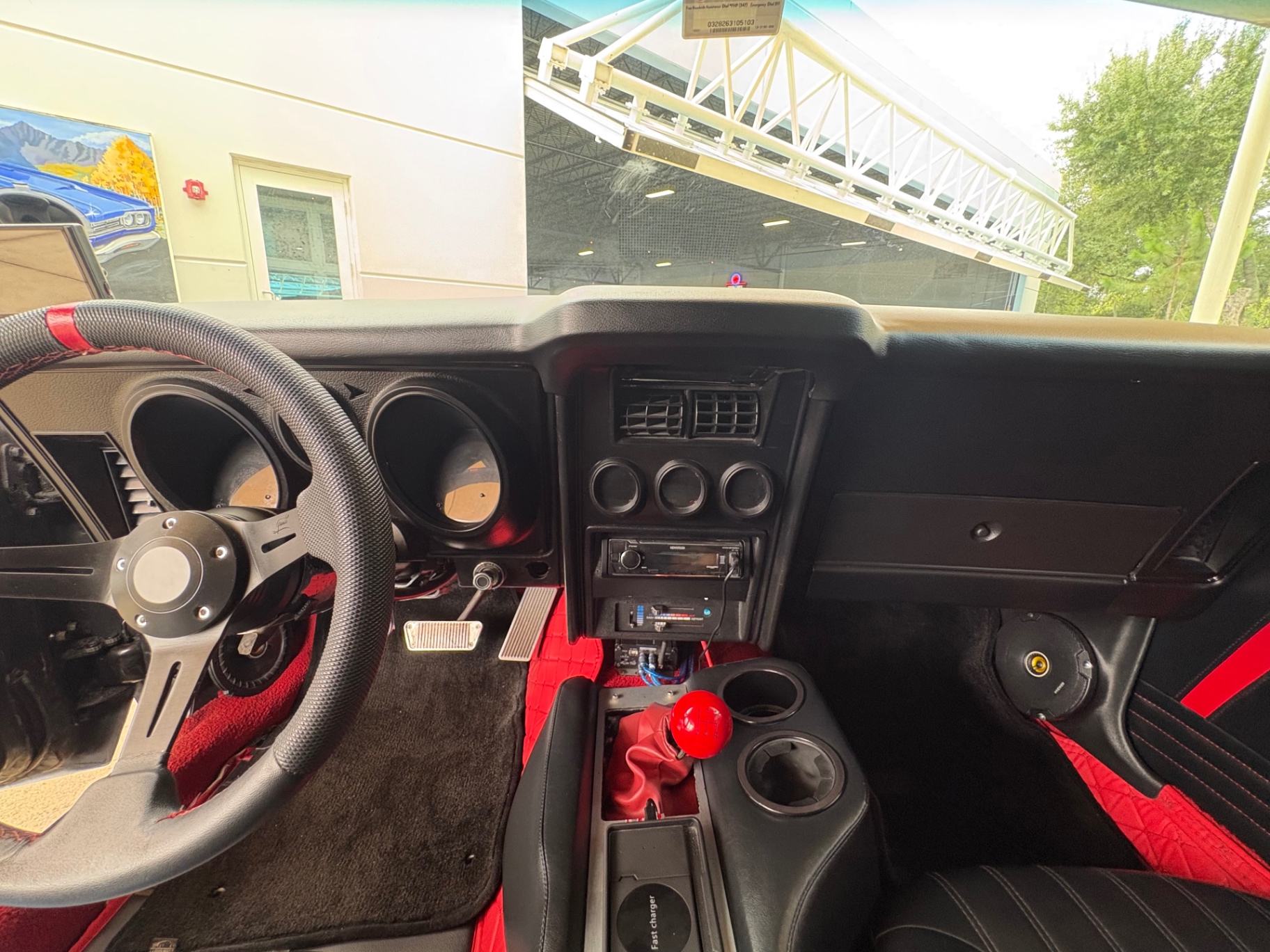
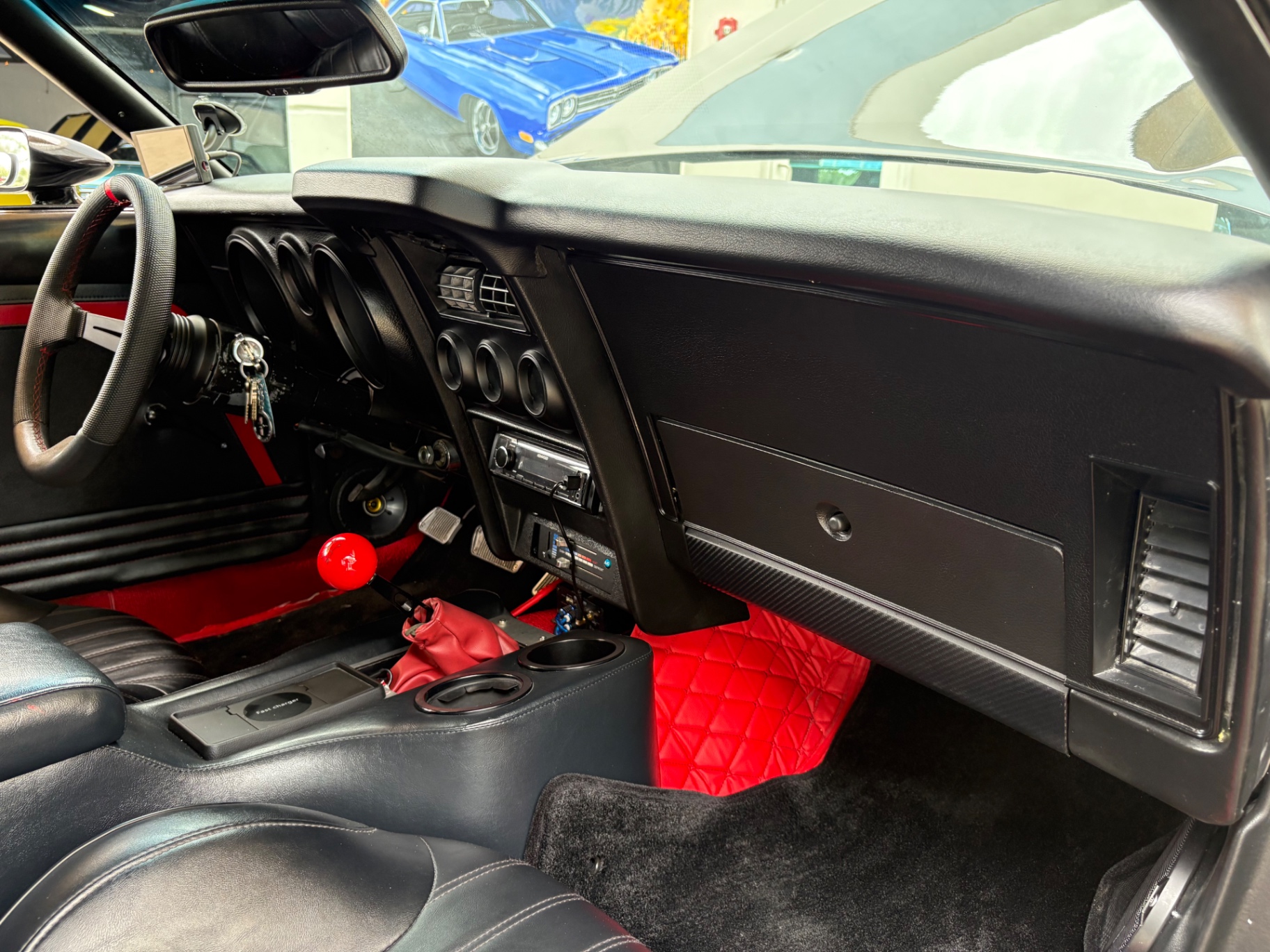
The dashboard retains the 1973 Mustang's original four-pod instrument cluster housing, but the gauges themselves have been updated with a digital speedometer and odometer. A dash-mounted display screen sits at the top of the dash for additional readouts. The steering wheel is an aftermarket unit with black and red stitching that matches the rest of the cabin. The center console runs the length of the transmission tunnel and incorporates the shifter, a cup holder, and a fast charge port — a practical addition that acknowledges how the car will actually be used in daily or weekend driving.
The audio system has been updated with an aftermarket head unit in the center stack and rear deck speakers visible through the back glass area, mounted flush into the package shelf.
Exterior
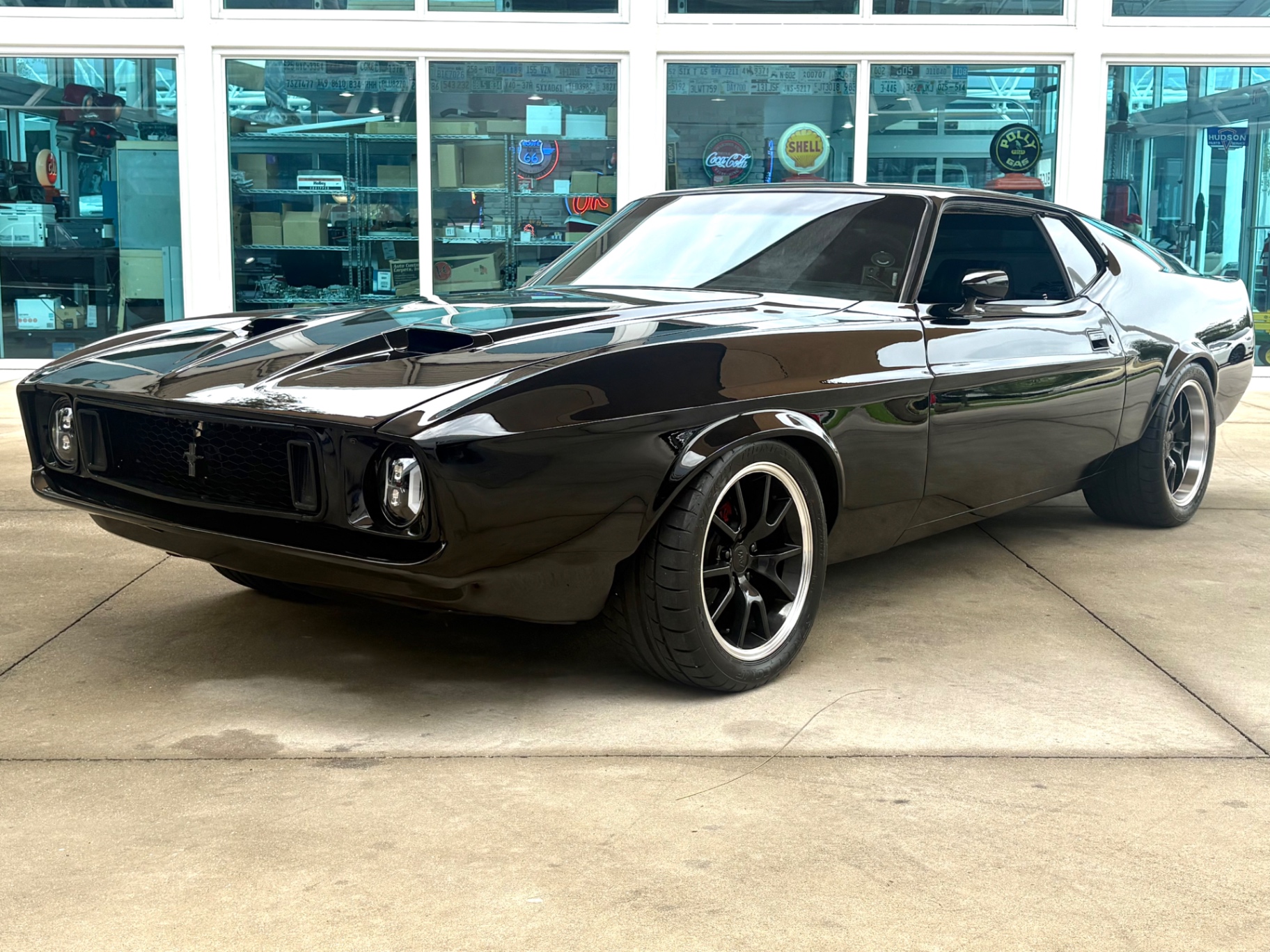
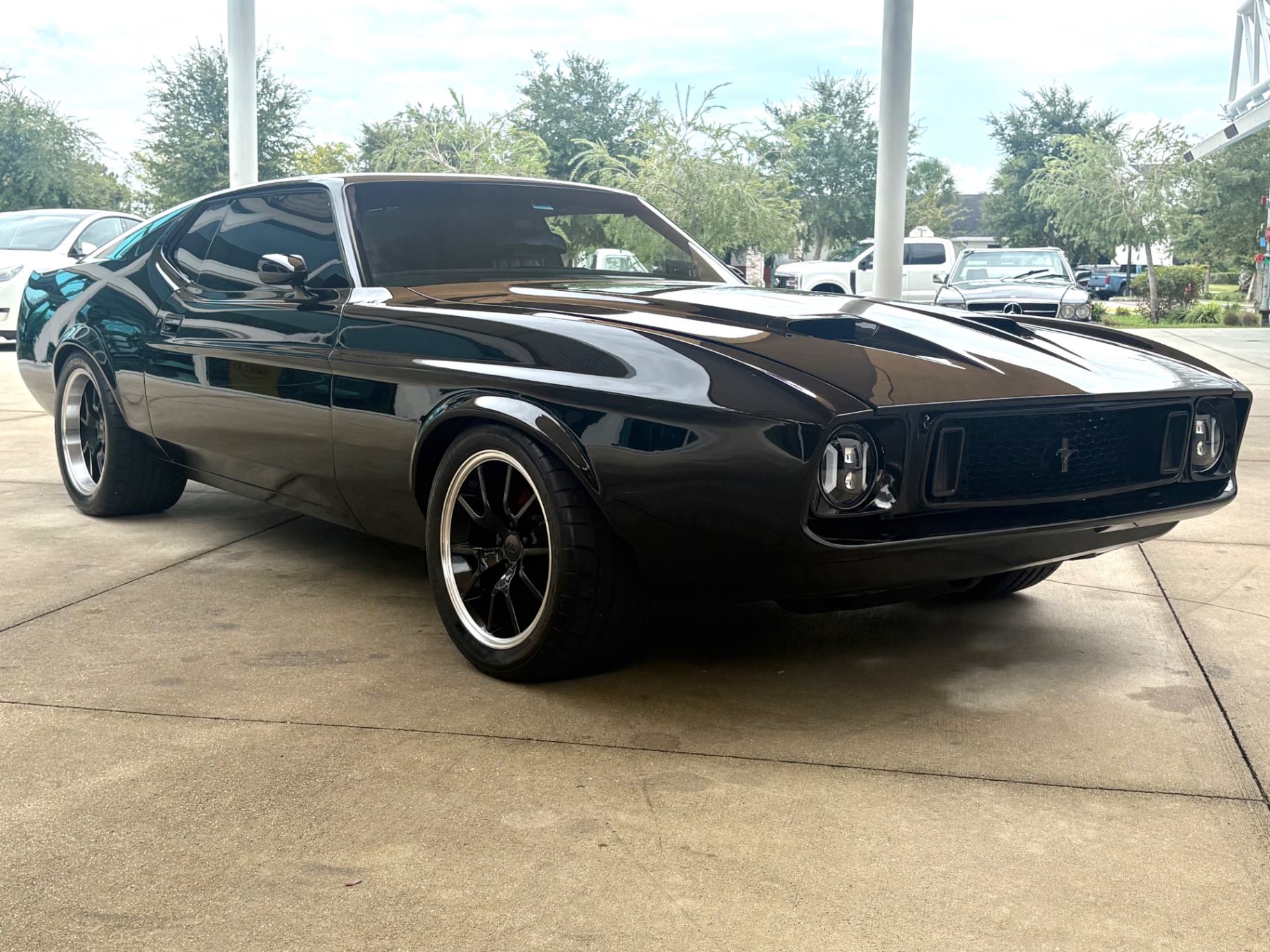
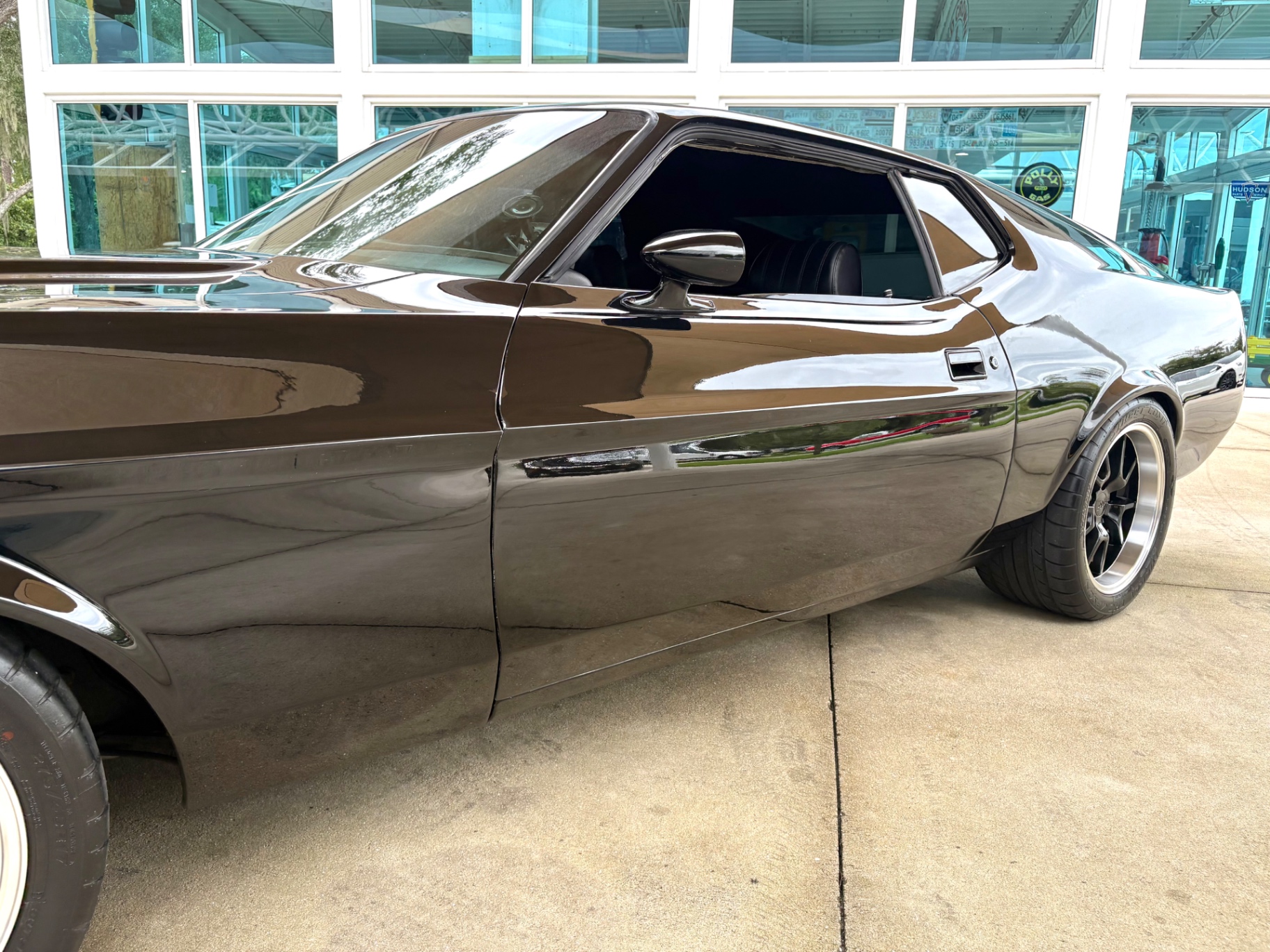
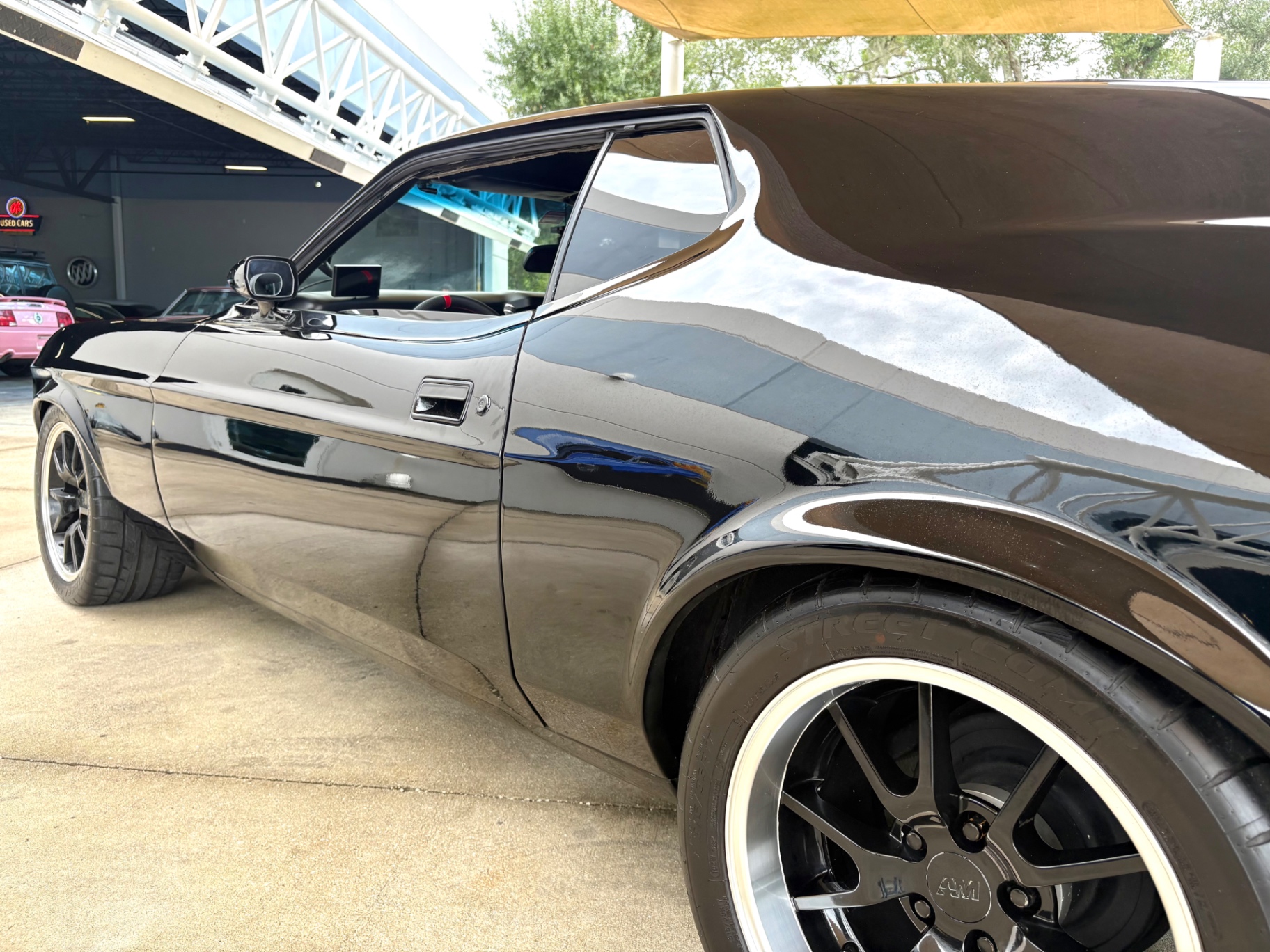
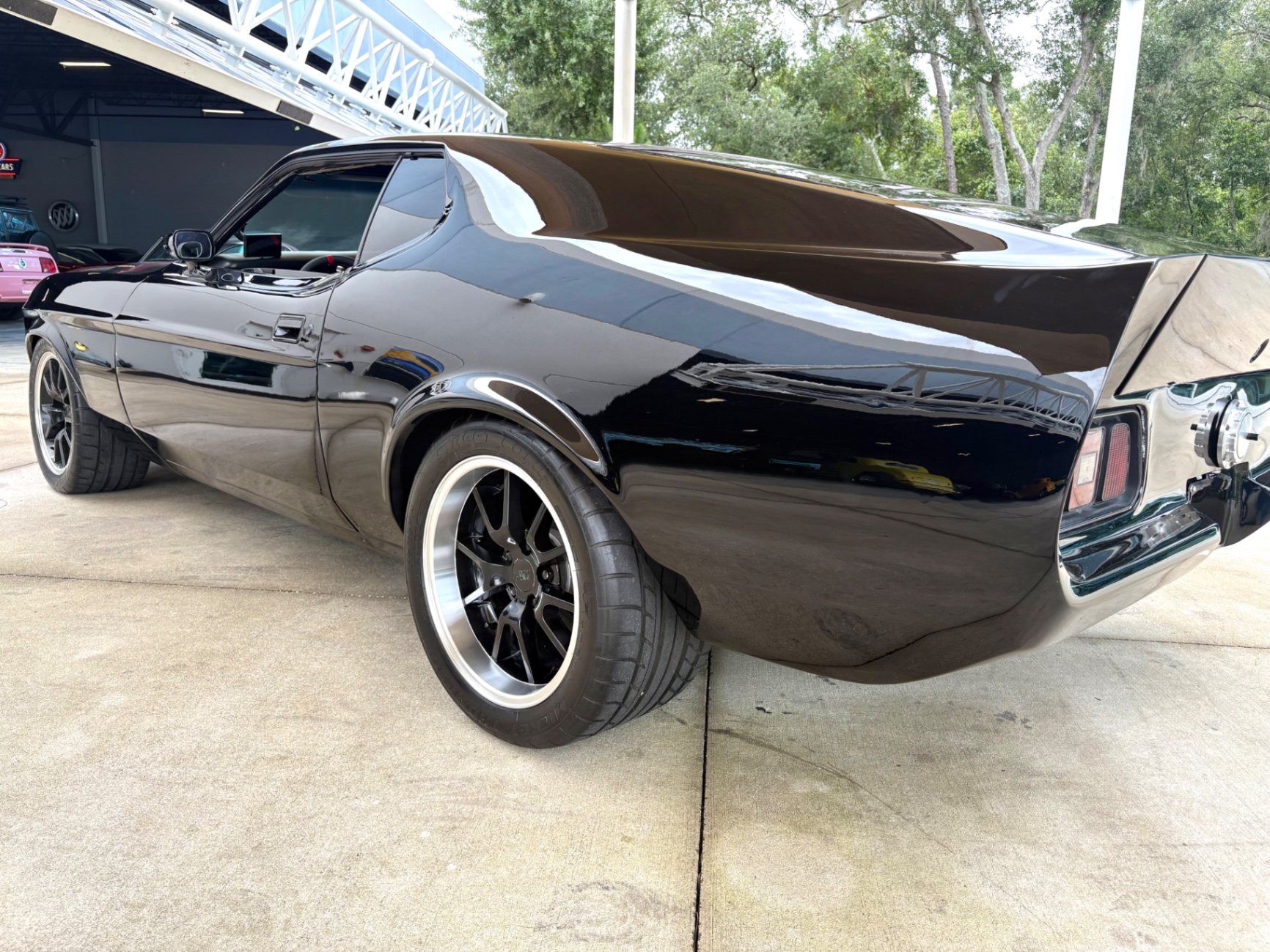
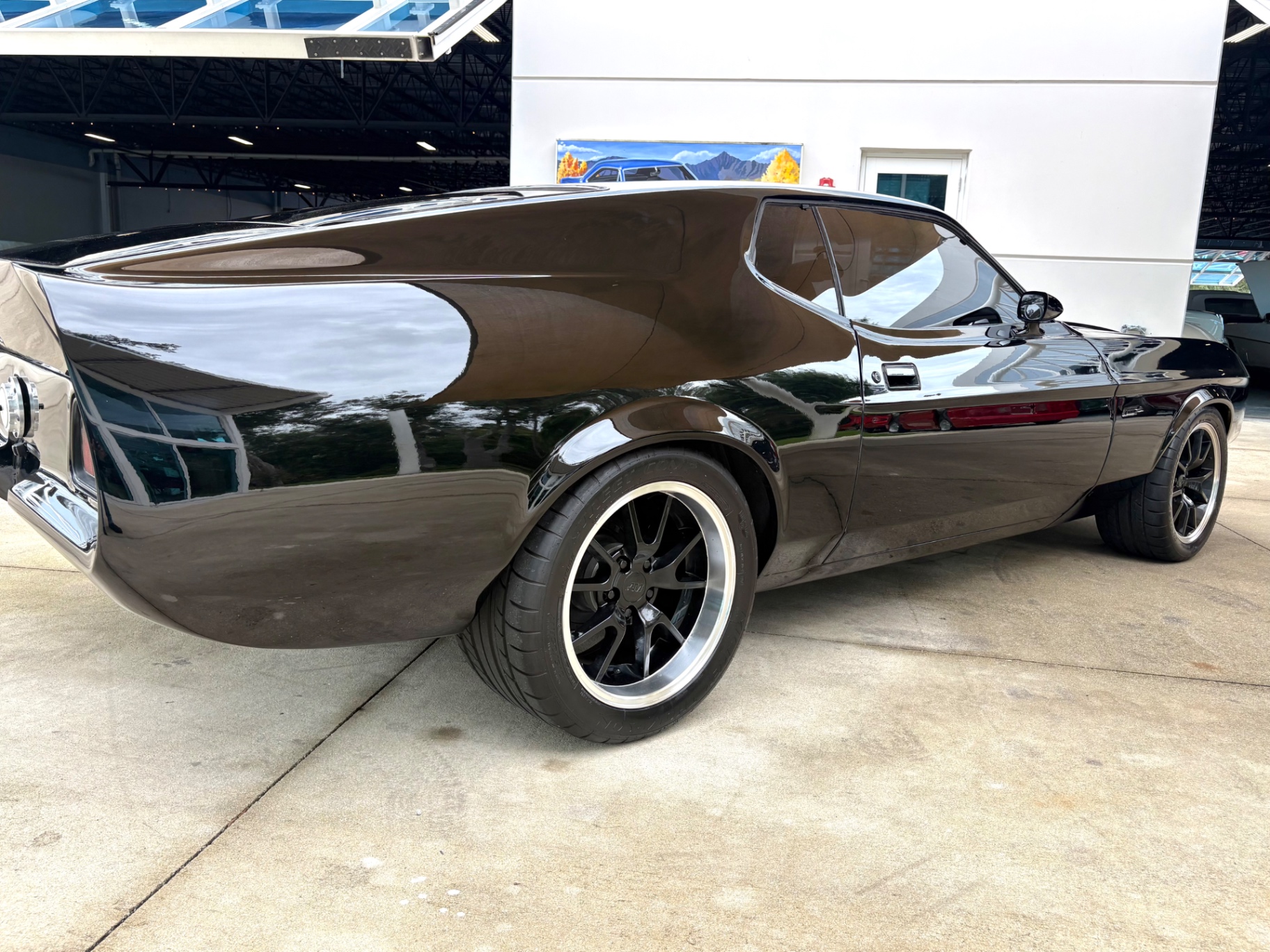
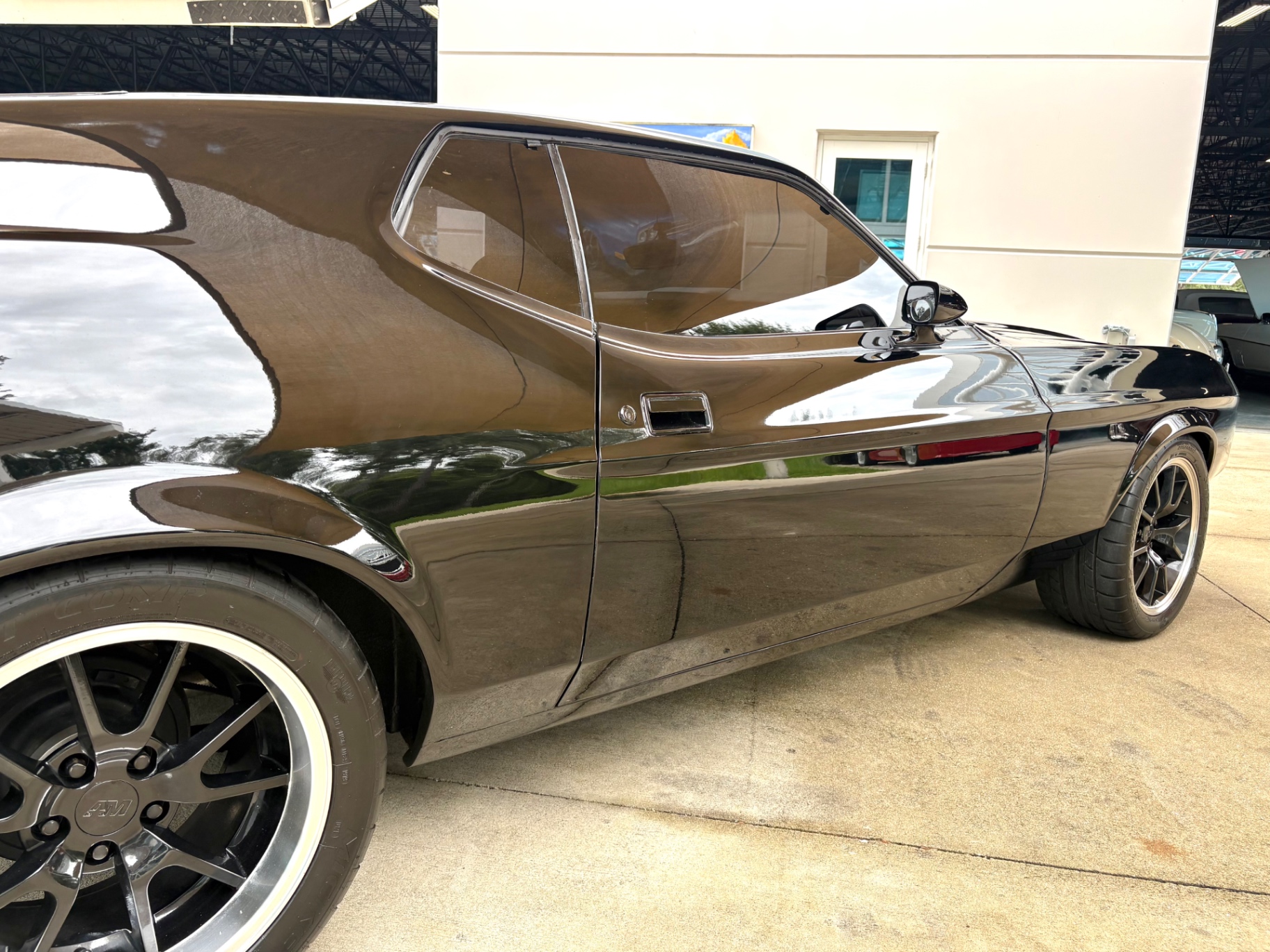
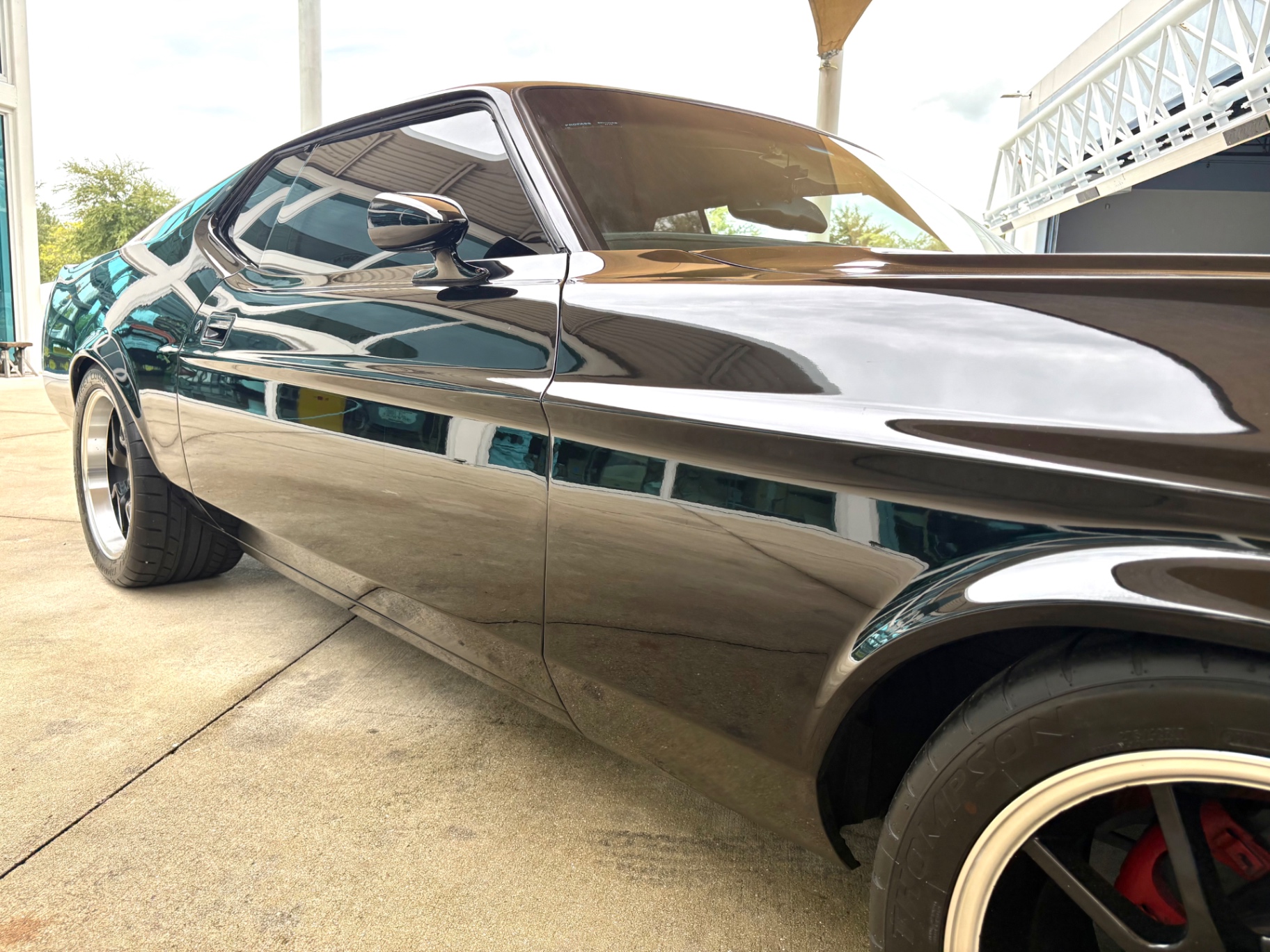
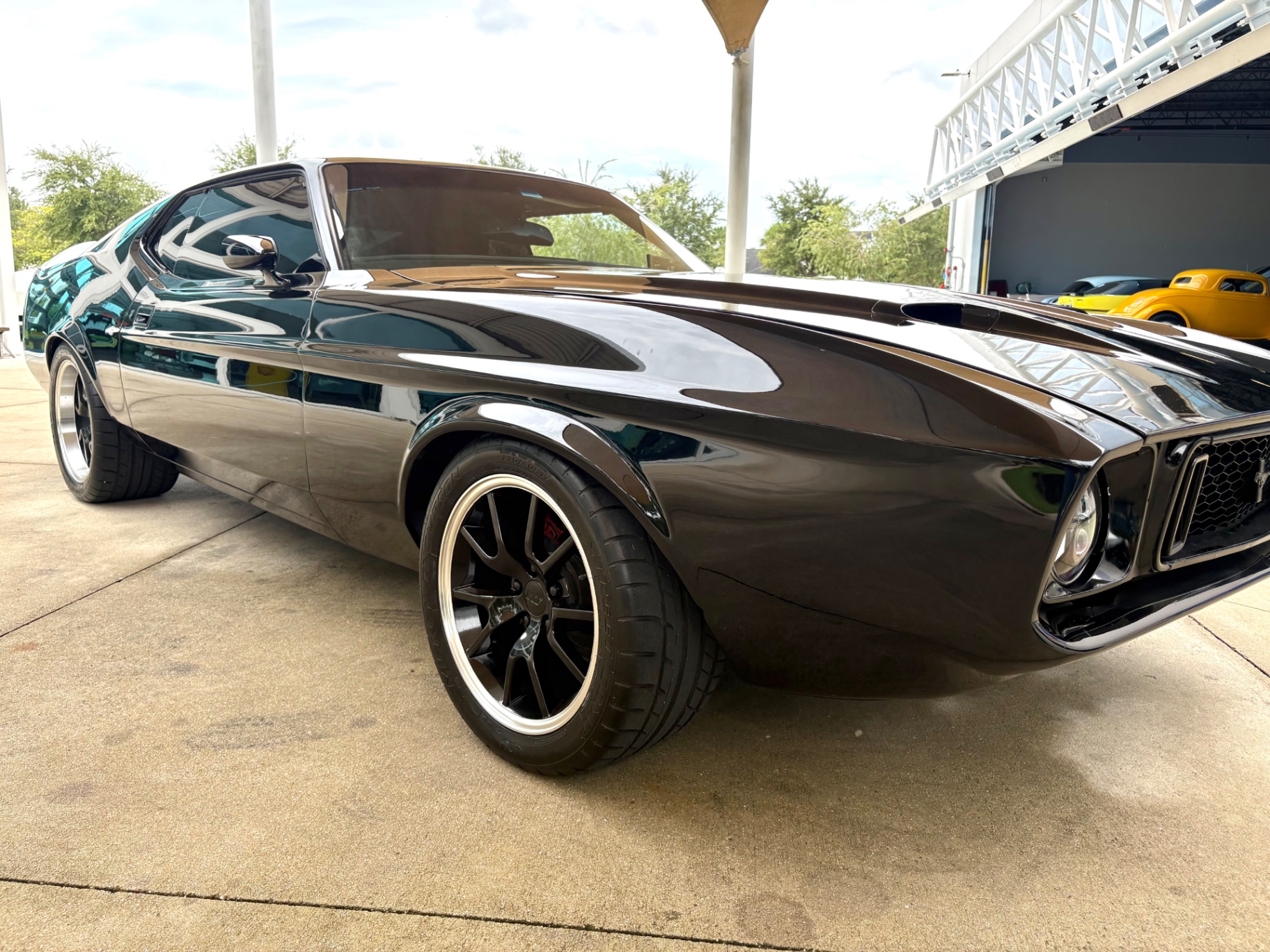
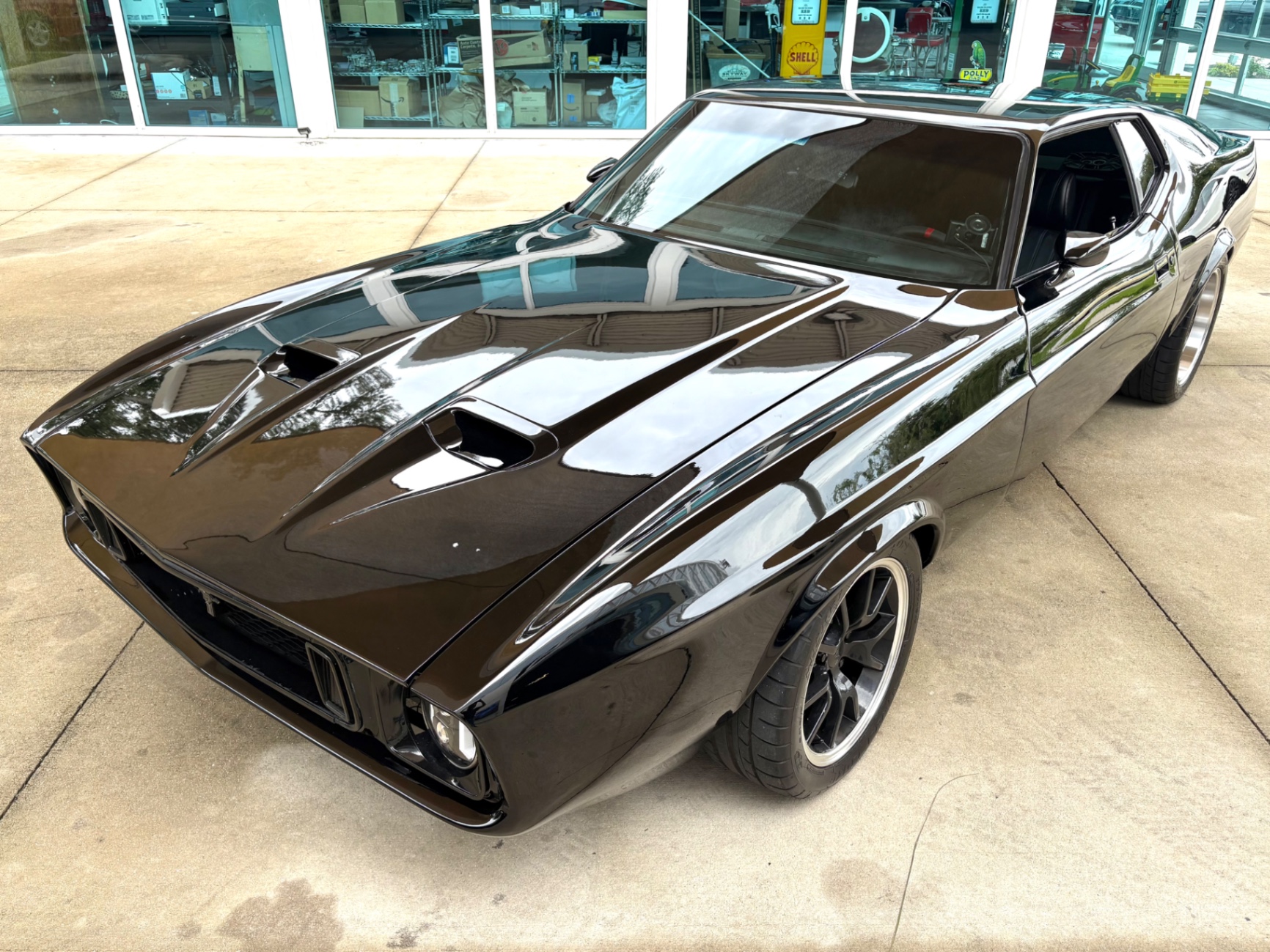
The 1973 Ford Mustang SportsRoof body is one of the more recognizable shapes in American automotive history. The 1971-to-1973 generation grew considerably over the earlier Mustangs — longer hood, wider track, and a lower, flatter roofline. Ford's designers were partly inspired by the need to accommodate larger engines and partly influenced by the long-hood, short-deck proportions that defined early 1970s American muscle. That silhouette works particularly well in black, which is how this car is finished. There are no stripes, no graphics, and no badges competing for attention. The paint is solid gloss black, and the bumpers have been smoothed and color-matched front and rear to eliminate the chrome-on-black contrast that would otherwise break up the surface.
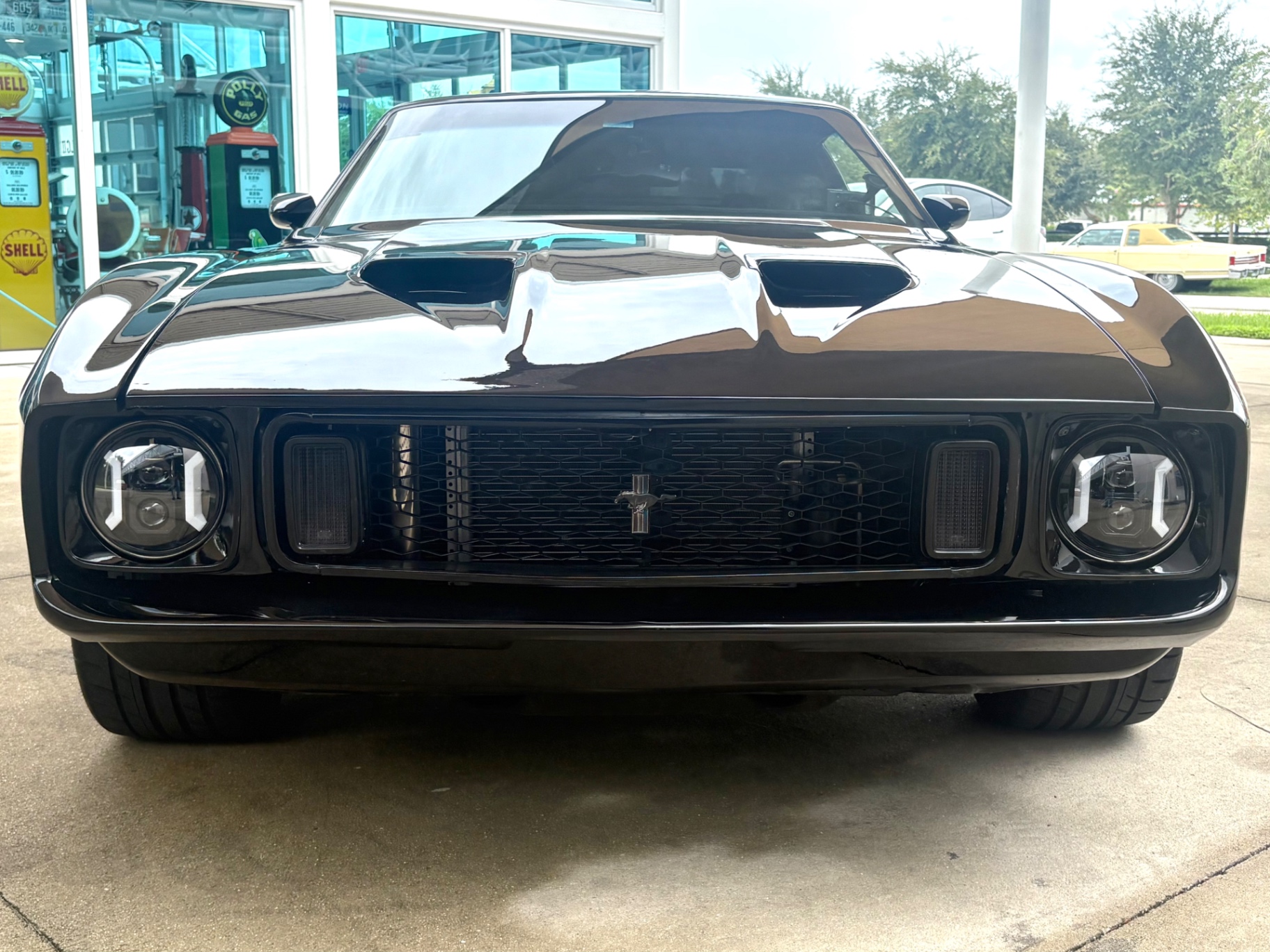
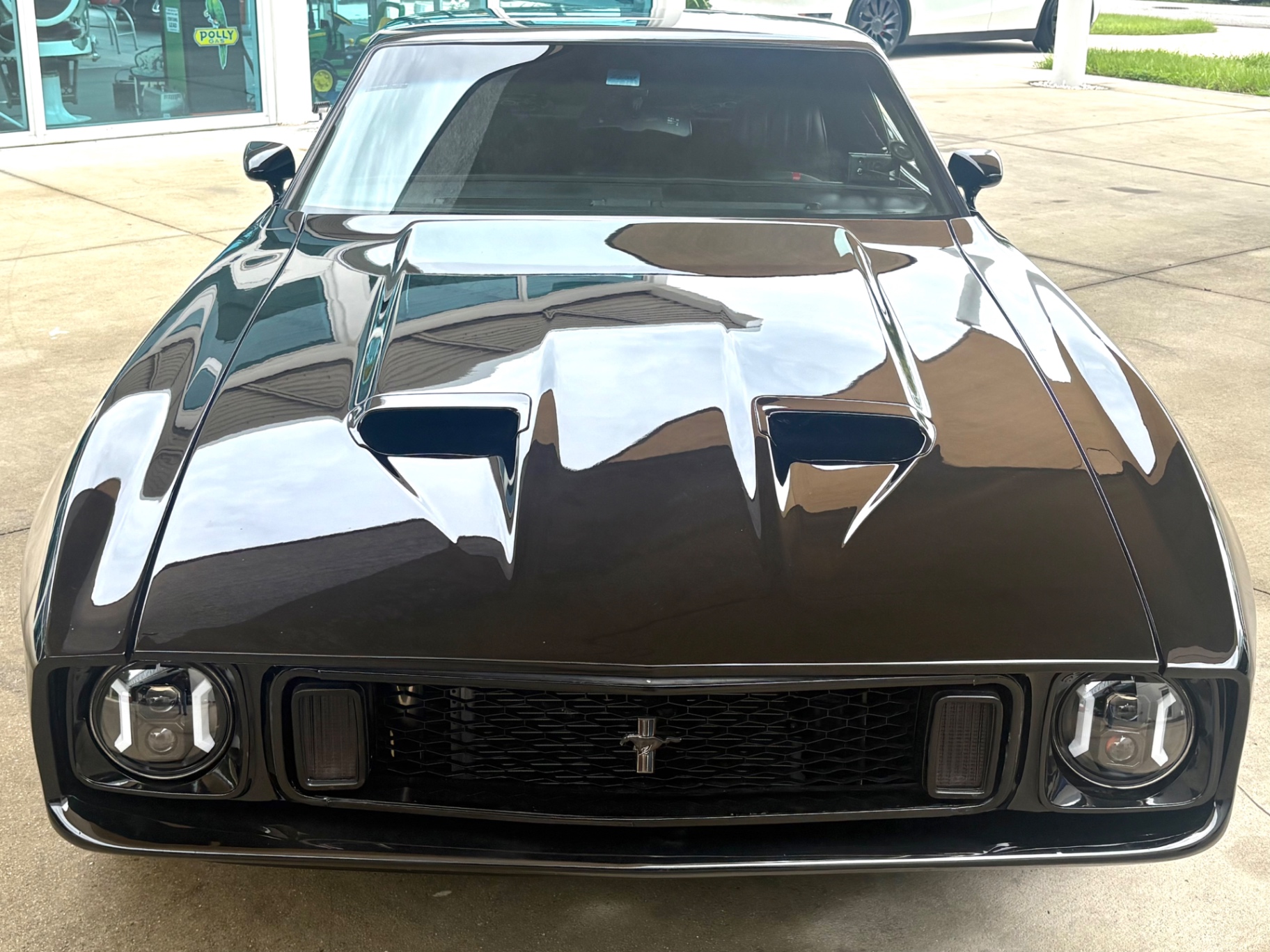
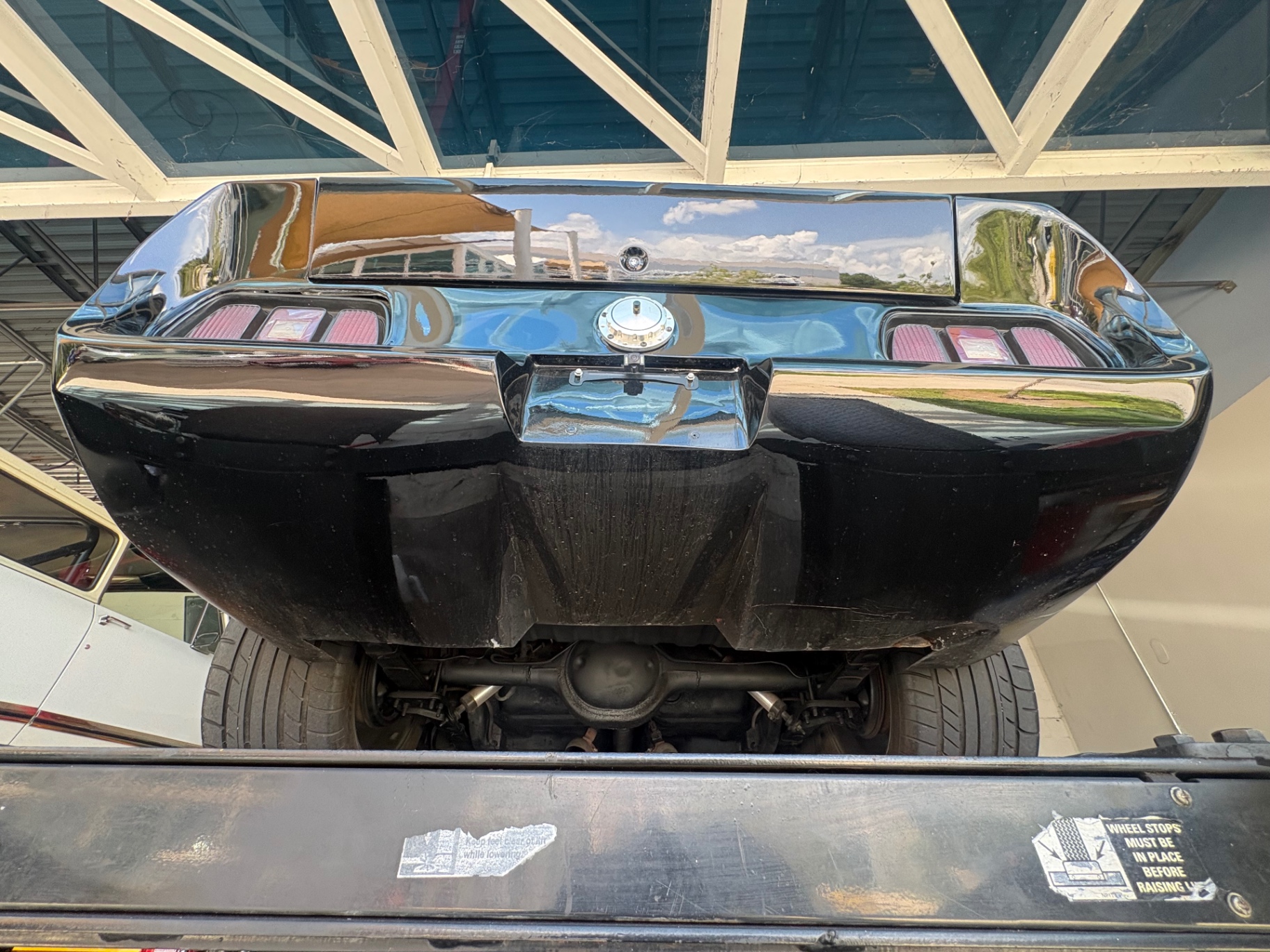
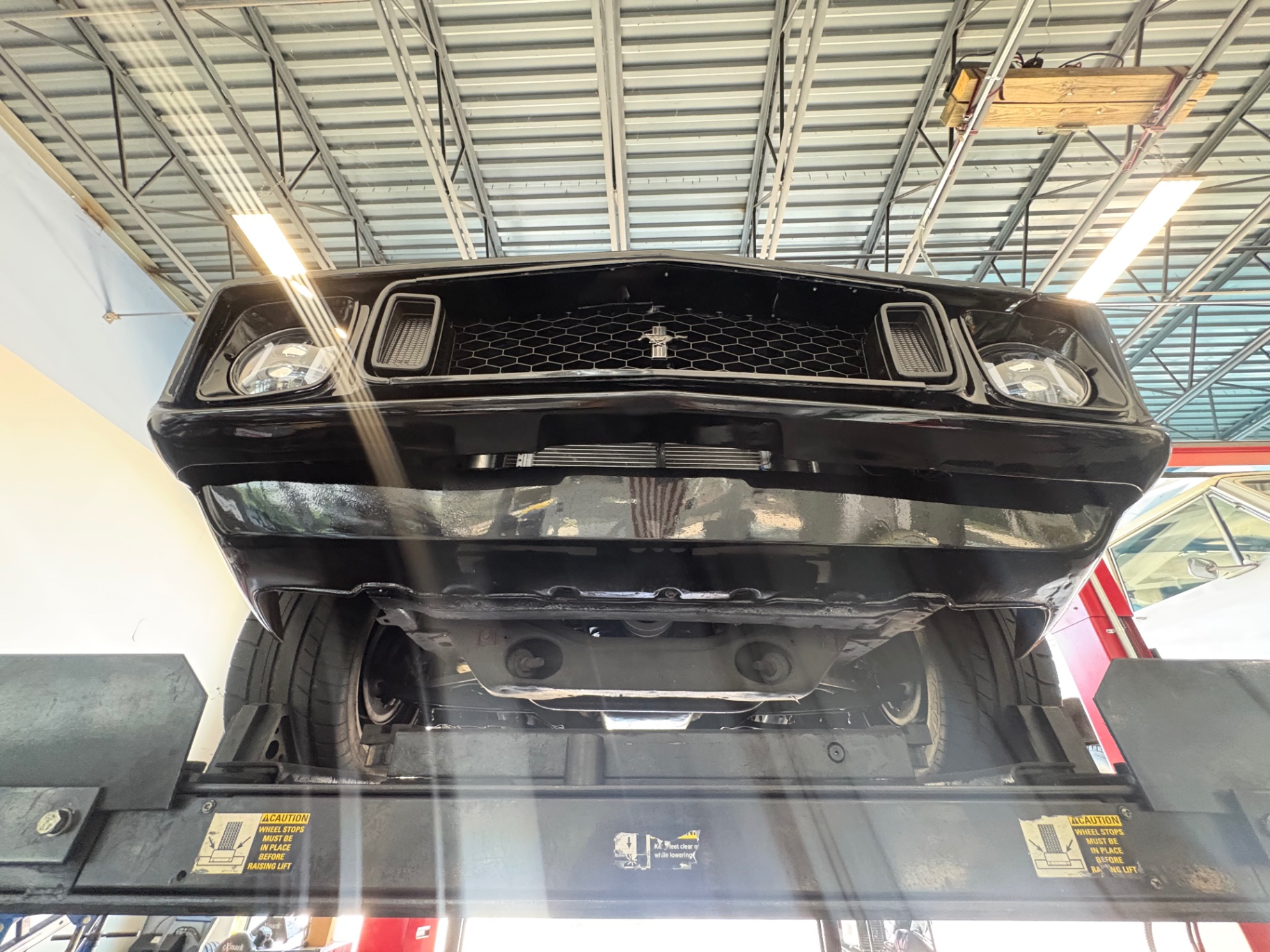
Up front, the original headlight bezels have been replaced with smoked units that darken the front fascia, and LED headlights provide modern output while maintaining the rectangular shape of the 1973 Mustang's front end. The grille retains the correct running pony emblem centered in the honeycomb mesh. Custom billet side mirrors replace the factory units, and a flush billet fuel cap on the rear deck lid is a detail that only becomes visible up close — the kind of touch that indicates attention was paid throughout this build, not just in the obvious places.
The twin-scoop performance hood is a functional styling element appropriate to the period and the engine underneath it. The car rides on AM wheels with Mickey Thompson tires, which are sized wider in the rear than the front. The lowered stance brings the car closer to the ground and tightens up the wheel-to-fender gap that can make stock-height classic cars look unfinished. Tinted windows darken the glass all around, consistent with the overall black exterior treatment.
From underneath, the coated floorpan and the red powder-coated mufflers make clear that this build was thought through from top to bottom.
Conclusion
The 1973 Ford Mustang is historically significant as the final year of the original pony car generation before Ford reset the nameplate entirely. This example takes that already notable platform and builds on it with a 351 V8, a 4-speed manual, a Ford 9-inch rear axle, and a complete custom interior and exterior treatment in black and red. The mechanical upgrades are practical and well-chosen — components like the MSD ignition, long-tube headers, serpentine belt conversion, and disc brakes are all items that improve real-world performance and reliability rather than simply adding visual complexity. The cosmetic work is thorough and consistent from the coated undercarriage to the black headliner.
If you are looking for a 1973 Ford Mustang that has been built to be driven and not just displayed, this is a serious car worth your time.
To schedule a viewing or ask questions, call Skyway Classics in Sarasota, Florida at 941-254-6608.
Disclaimer
Information found on the website is presented as given to us by the owner of the car, whether on consignment or from the owner we bought it from. Some Photos, materials for videos, descriptions and other information are provided by the consignor/seller and is deemed reliable, but Skyway Classics does not warranty or guarantee this information. Skyway Classics is not responsible for information that may incorrect or a publishing error. The decision to purchase should be based solely on the buyers personal inspection of the vehicle or by a professional inspection service prior to offer or purchase being made.
1973 Ford Mustang Fastback — 351 V8 Custom Build, 4-Speed Manual, Ford 9-Inch Rear
Why This Car Is Special
The 1973 Ford Mustang holds a specific place in the pony car timeline that most people get wrong. Conventional wisdom says the Mustang hit its peak in 1969 or 1970, then slid into irrelevance before the Mustang II arrived in 1974. That narrative misses something important. The 1973 Ford Mustang was actually the last year of the original first-generation body style — a body that Ford had been refining since 1971 with a wider, more muscular stance and a longer hood. After 1973, everything changed. The Mustang II that replaced it was smaller, lighter, and built on a Pinto platform. For collectors who want the last expression of the original Mustang shape, the 1973 model is the one to have.
Ford produced just over 134,000 Mustangs for the 1973 model year, a significant drop from the highs of the late 1960s but still a respectable number for a car navigating the early emissions era. The fastback body — officially called the SportsRoof — is the most sought-after configuration of the 1973 model, combining the long roofline and near-flat rear glass that gave the car its aggressive silhouette. That roofline is part of why these cars photograph so well from nearly every angle.
This particular 1973 Ford Mustang has been taken well beyond its factory specification. Rather than a numbers-matching preservation, what you have here is a purpose-built custom machine built around a 351 cubic inch V8 and a 4-speed manual transmission. The builder committed to a consistent black and red theme from the undercarriage all the way to the headliner — nothing was overlooked. The result is a car that drives as deliberately as it looks.
The VIN on this car decodes to confirm it is a 1973 model year Ford, assembled as a 2-door hardtop body style with a V8 engine designation. That foundation matches everything you see in the build.
Features List
- 351 V8 custom-built engine
- 4-speed manual transmission
- Serpentine belt drive conversion
- Performance carburetor
- MSD ignition system
- Performance air filter
- Long-tube headers
- Dual exhaust system with red powder-coated mufflers
- Electric cooling fan
- Optima Red Top battery
- Ford 9-inch rear axle
- AM wheels with Mickey Thompson tires
- Red caliper disc brakes
- Lowered suspension
- Adjustable rear shocks
- Twin-scoop performance hood
- LED headlights
- Smoked front bezels
- Custom billet side mirrors
- Tinted windows
- Custom flush billet fuel cap
- Smoothed color-matched bumpers
- Coated undercarriage
- Custom black leather interior
- Custom black and red door panels
- Red quilted floor mats
- High-back bucket seats
- Red safety harnesses
- Center console with shifter
- Fast charge console port
- Aftermarket steering wheel
- Custom black headliner
- Digital speedometer and odometer
- Dash-mounted display screen
- Upgraded stereo head unit
- Rear deck speakers
Mechanical
The engine in this 1973 Ford Mustang is a 351 cubic inch V8, which is the correct family of engines for this generation. Ford offered the 351 Cleveland and 351 Windsor in various states of tune throughout the early 1970s, and both were considered the performance backbone of the Mustang lineup during this period. The 351 Cleveland in particular had excellent cylinder head flow characteristics that made it a favorite for performance builds even by today's standards. What you are looking at under the hood of this car is a custom-built version of that engine, fitted with a performance carburetor, long-tube headers, and an MSD ignition system. MSD ignition is a well-established choice for street performance — it delivers a stronger, more consistent spark than a standard points or stock electronic ignition, which translates to better throttle response and more complete combustion across the RPM range.
The long-tube headers replace the factory exhaust manifolds and allow exhaust gases to exit the cylinders more efficiently, reducing back pressure and improving torque output across the powerband. They feed into a full dual exhaust system with red powder-coated mufflers, which you can see clearly from underneath — the undercarriage itself has been coated in black, making the red mufflers a deliberate visual statement even from below. A high-flow performance air filter and a serpentine belt drive conversion round out the engine upgrades. The serpentine conversion replaces the old V-belt system with a single continuous belt and modern-style accessory pulleys, which improves reliability and reduces parasitic drag on the engine. An electric cooling fan replaces the engine-driven fan, reclaiming additional horsepower that would otherwise go toward spinning it.
The transmission is a 4-speed manual, which is the correct choice for a build like this. Ford's top manual gearbox option in 1973 was the close-ratio or wide-ratio 4-speed, and keeping a manual in this car maintains the mechanical engagement that makes the 351 worth driving. Behind the transmission sits a Ford 9-inch rear axle — one of the strongest and most swap-friendly differentials ever produced. Ford used the 9-inch in performance applications throughout the 1960s and 1970s, and it remains a go-to choice for builders today because of its proven strength and the wide availability of gear ratios and replacement parts.
Stopping is handled by disc brakes with red calipers, a significant improvement over the drum-heavy setup found on most 1973 Mustangs. The suspension has been lowered, and adjustable rear shocks allow for tuning the ride height and damping to suit driving conditions. An Optima Red Top battery provides reliable cranking power for the built engine.
Interior
The interior of this 1973 Ford Mustang has been completely redone in a black and red color scheme that runs consistently through every surface. The seats are high-back bucket units covered in black leather, and both front and rear positions are equipped with red safety harnesses. The rear seat area, which in the original SportsRoof body was already more accommodating than most pony cars of the era, retains its usability with the leather covering carried through to the rear bench as well.
The door panels are custom units in black with red accent stripes that run horizontally across the panel face — a detail that ties the interior together without being overdone. The floor is covered in red quilted mats up front, which contrast against the black carpet elsewhere in the cabin. The headliner is black, continuing the theme without interruption.
The dashboard retains the 1973 Mustang's original four-pod instrument cluster housing, but the gauges themselves have been updated with a digital speedometer and odometer. A dash-mounted display screen sits at the top of the dash for additional readouts. The steering wheel is an aftermarket unit with black and red stitching that matches the rest of the cabin. The center console runs the length of the transmission tunnel and incorporates the shifter, a cup holder, and a fast charge port — a practical addition that acknowledges how the car will actually be used in daily or weekend driving.
The audio system has been updated with an aftermarket head unit in the center stack and rear deck speakers visible through the back glass area, mounted flush into the package shelf.
Exterior
The 1973 Ford Mustang SportsRoof body is one of the more recognizable shapes in American automotive history. The 1971-to-1973 generation grew considerably over the earlier Mustangs — longer hood, wider track, and a lower, flatter roofline. Ford's designers were partly inspired by the need to accommodate larger engines and partly influenced by the long-hood, short-deck proportions that defined early 1970s American muscle. That silhouette works particularly well in black, which is how this car is finished. There are no stripes, no graphics, and no badges competing for attention. The paint is solid gloss black, and the bumpers have been smoothed and color-matched front and rear to eliminate the chrome-on-black contrast that would otherwise break up the surface.
Up front, the original headlight bezels have been replaced with smoked units that darken the front fascia, and LED headlights provide modern output while maintaining the rectangular shape of the 1973 Mustang's front end. The grille retains the correct running pony emblem centered in the honeycomb mesh. Custom billet side mirrors replace the factory units, and a flush billet fuel cap on the rear deck lid is a detail that only becomes visible up close — the kind of touch that indicates attention was paid throughout this build, not just in the obvious places.
The twin-scoop performance hood is a functional styling element appropriate to the period and the engine underneath it. The car rides on AM wheels with Mickey Thompson tires, which are sized wider in the rear than the front. The lowered stance brings the car closer to the ground and tightens up the wheel-to-fender gap that can make stock-height classic cars look unfinished. Tinted windows darken the glass all around, consistent with the overall black exterior treatment.
From underneath, the coated floorpan and the red powder-coated mufflers make clear that this build was thought through from top to bottom.
Conclusion
The 1973 Ford Mustang is historically significant as the final year of the original pony car generation before Ford reset the nameplate entirely. This example takes that already notable platform and builds on it with a 351 V8, a 4-speed manual, a Ford 9-inch rear axle, and a complete custom interior and exterior treatment in black and red. The mechanical upgrades are practical and well-chosen — components like the MSD ignition, long-tube headers, serpentine belt conversion, and disc brakes are all items that improve real-world performance and reliability rather than simply adding visual complexity. The cosmetic work is thorough and consistent from the coated undercarriage to the black headliner.
If you are looking for a 1973 Ford Mustang that has been built to be driven and not just displayed, this is a serious car worth your time.
To schedule a viewing or ask questions, call Skyway Classics in Sarasota, Florida at 941-254-6608.
Disclaimer
Information found on the website is presented as given to us by the owner of the car, whether on consignment or from the owner we bought it from. Some Photos, materials for videos, descriptions and other information are provided by the consignor/seller and is deemed reliable, but Skyway Classics does not warranty or guarantee this information. Skyway Classics is not responsible for information that may incorrect or a publishing error. The decision to purchase should be based solely on the buyers personal inspection of the vehicle or by a professional inspection service prior to offer or purchase being made.
1973 Ford
Mustang Fastback
Why Choose Skyway Classics?
Explore our curated inventory of classic and collector cars—thoughtfully selected, ready to drive, and supported by experts who make ownership simple.
Expert Curation
Every vehicle is hand-selected by our experts for quality, authenticity, and investment potential.
Fast Transactions
Streamlined buying and selling process with quick financing and immediate delivery options.
Only National Dealer With Classic Service & Repair
We’re the only national dealership that services and repairs the classics we sell—before and after the sale.
Nationwide Network
Access to our extensive network of collectors, restorers, and classic car enthusiasts nationwide.
Concierge Ownership Support
From financing and insurance to paperwork, shipping, and titling—we handle the details so you can enjoy the drive.
Passion-Driven Service
We're classic car enthusiasts first, providing personalized service with genuine passion for the hobby.