
1971 Oldsmobile
Cutlass Supreme W30
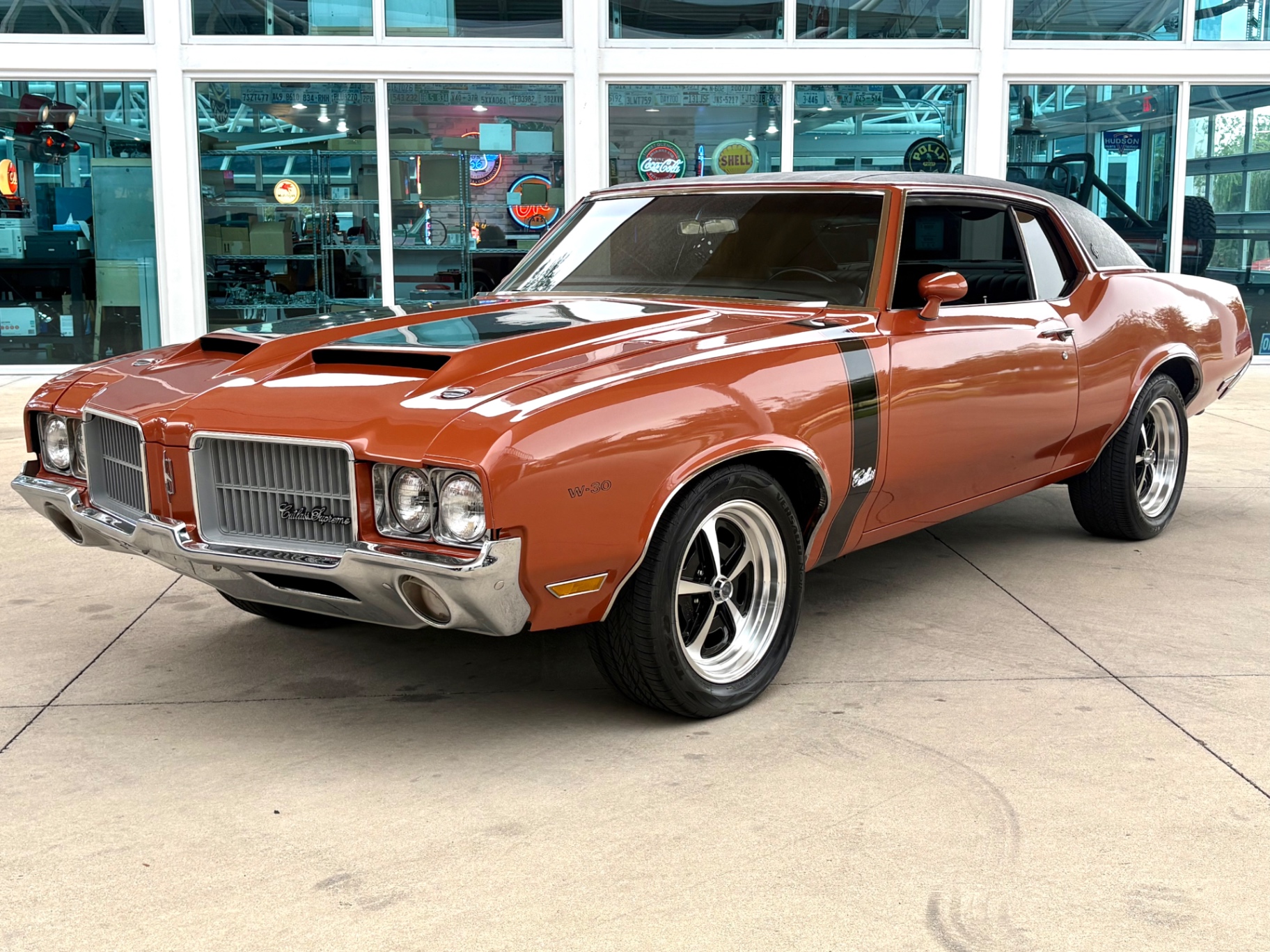
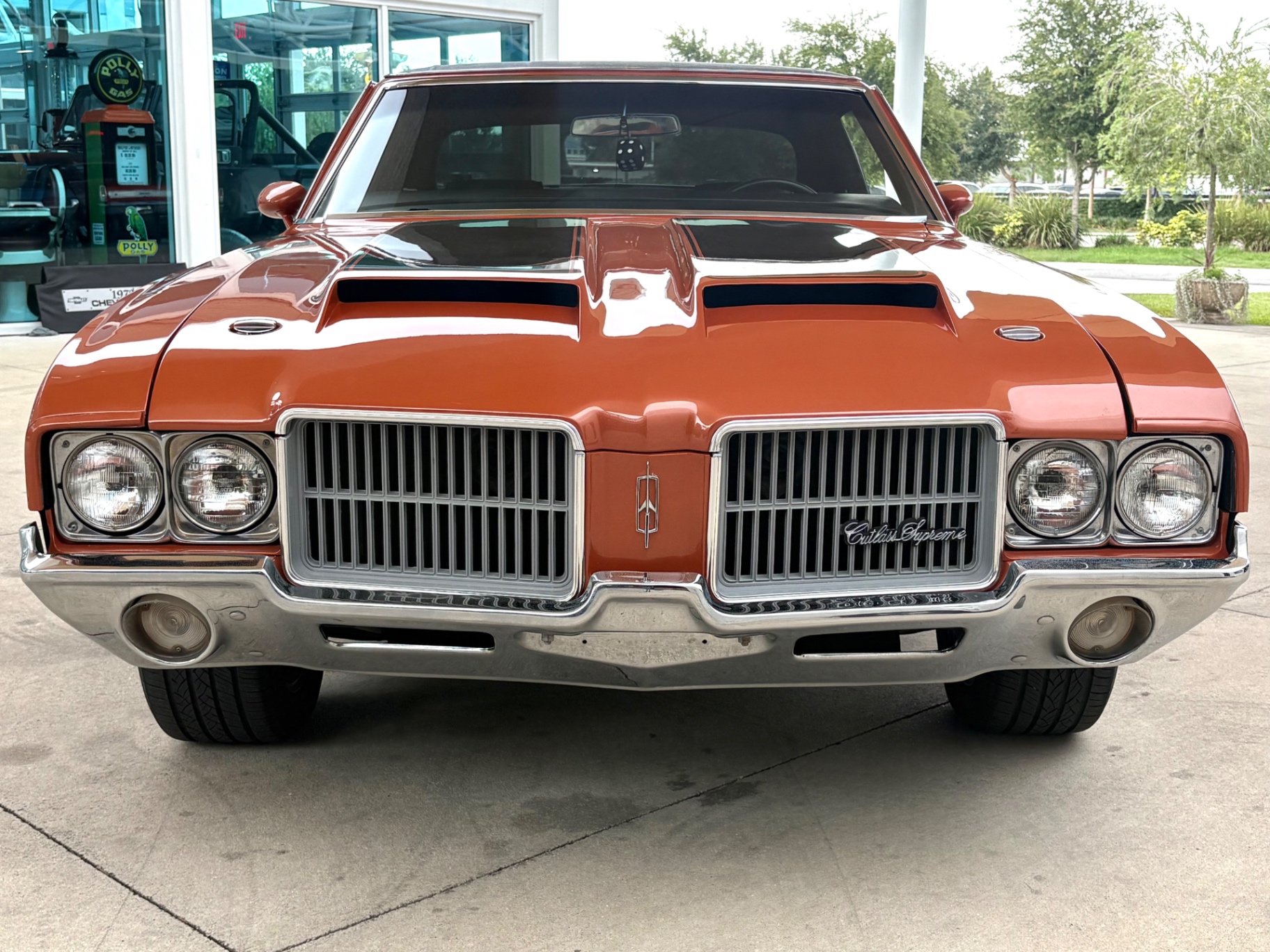
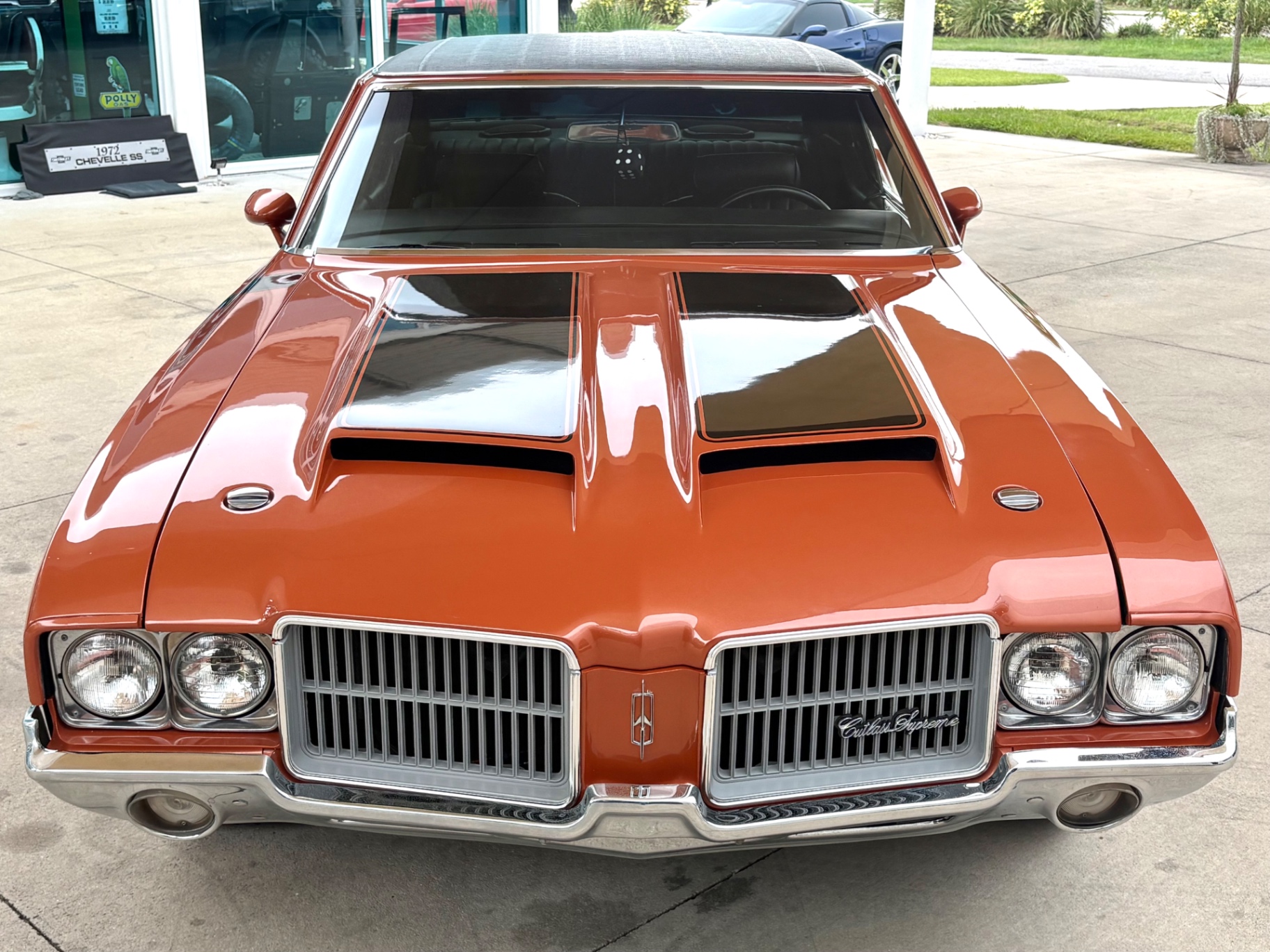
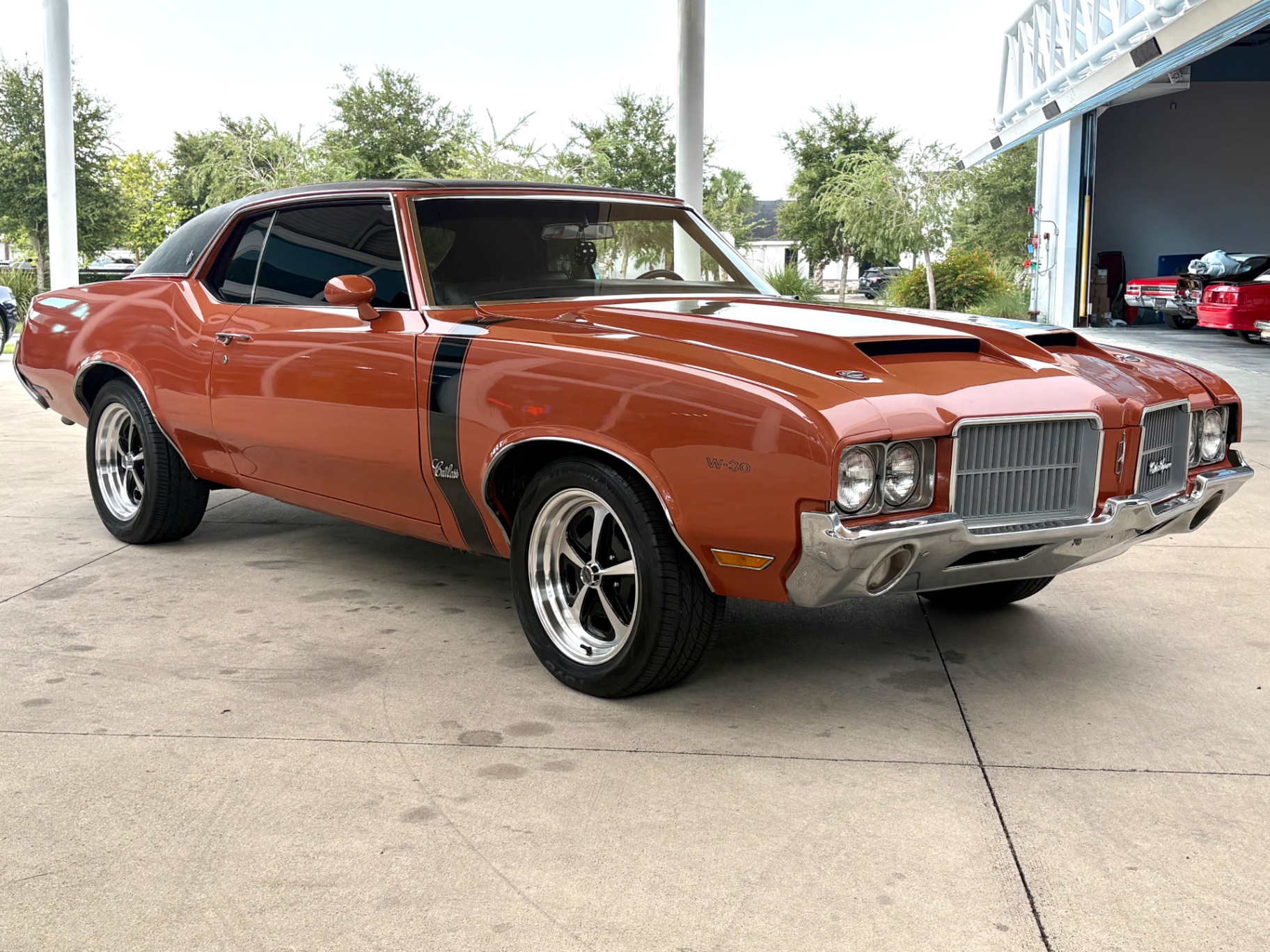
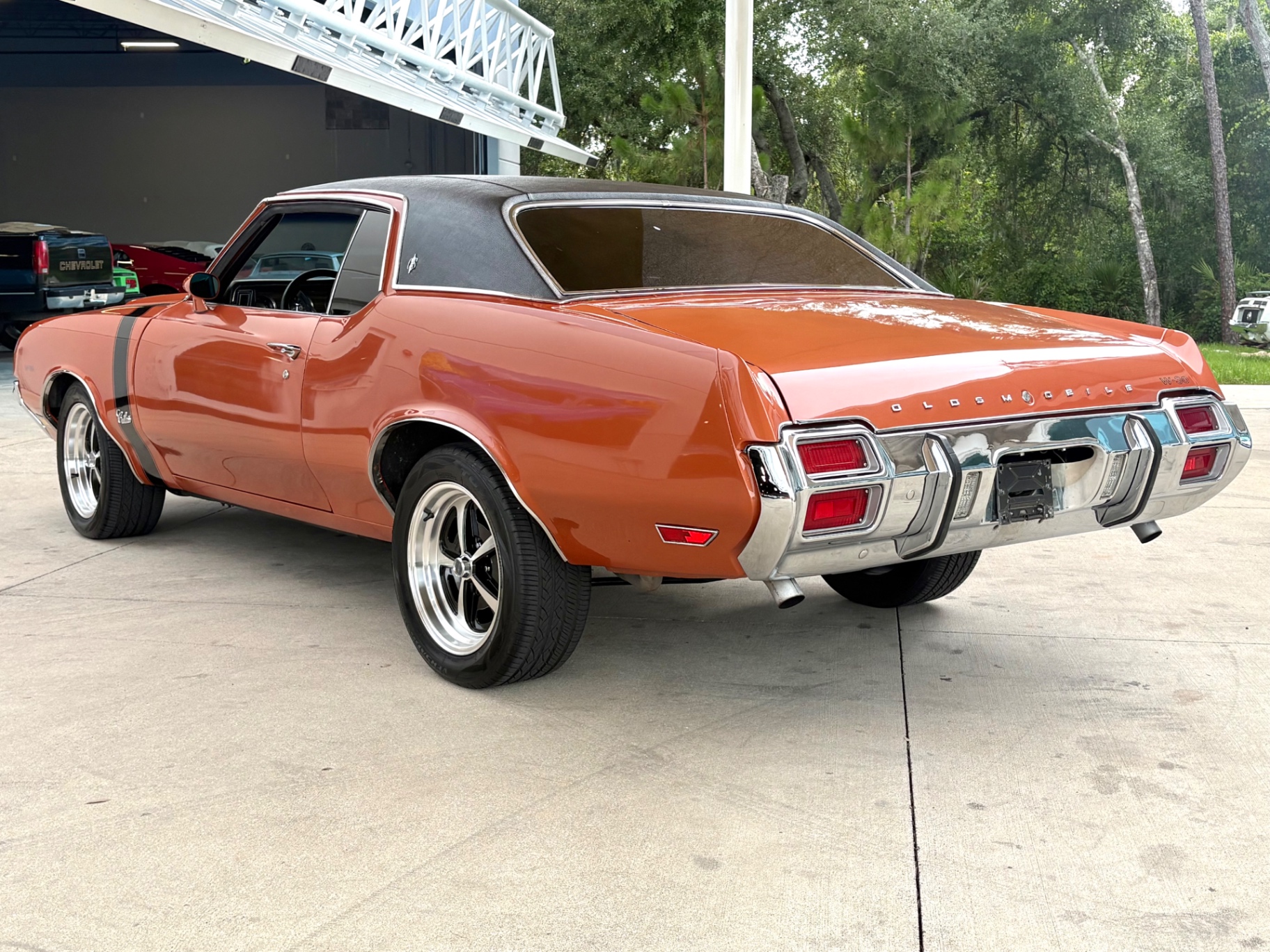
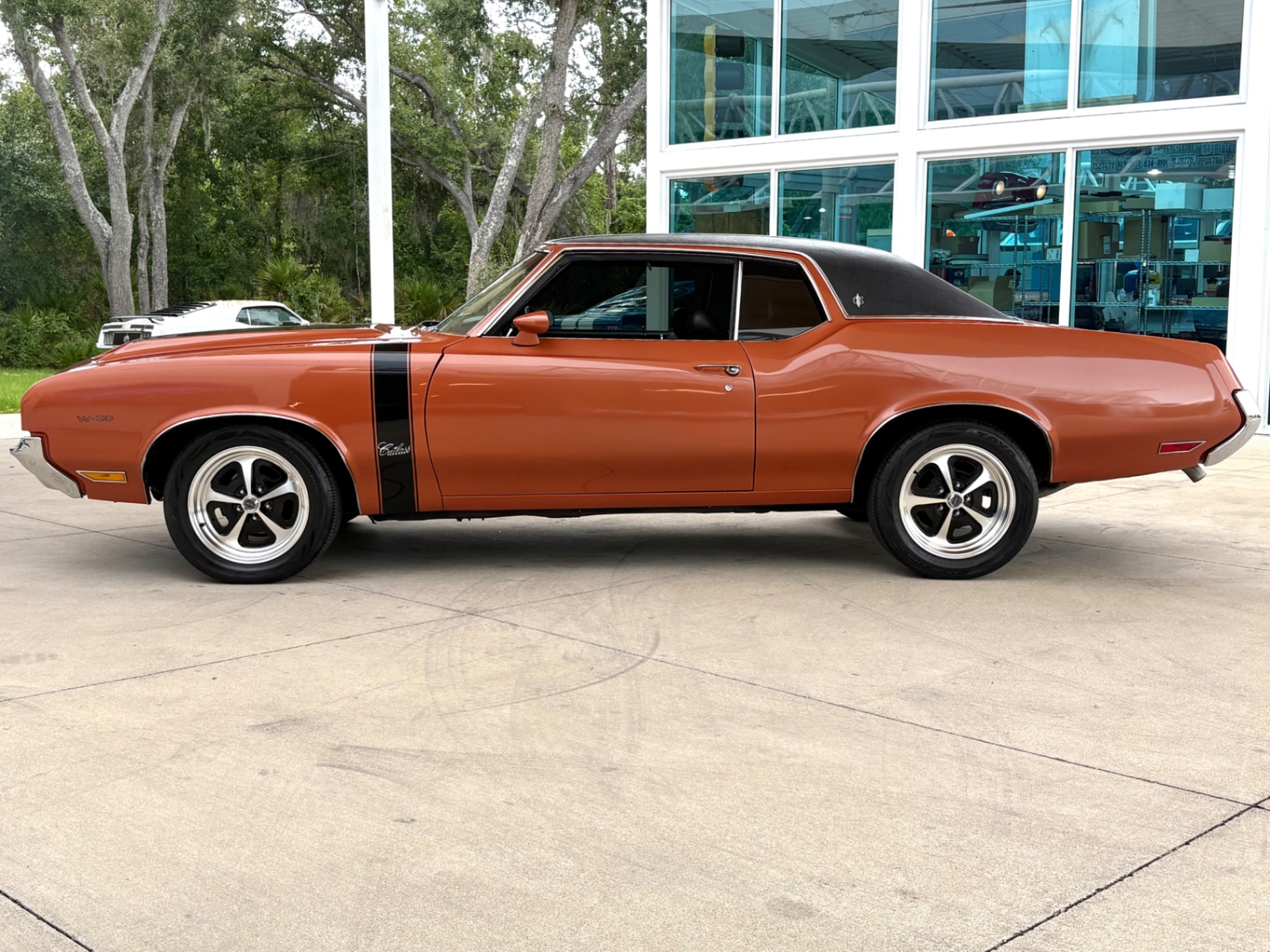
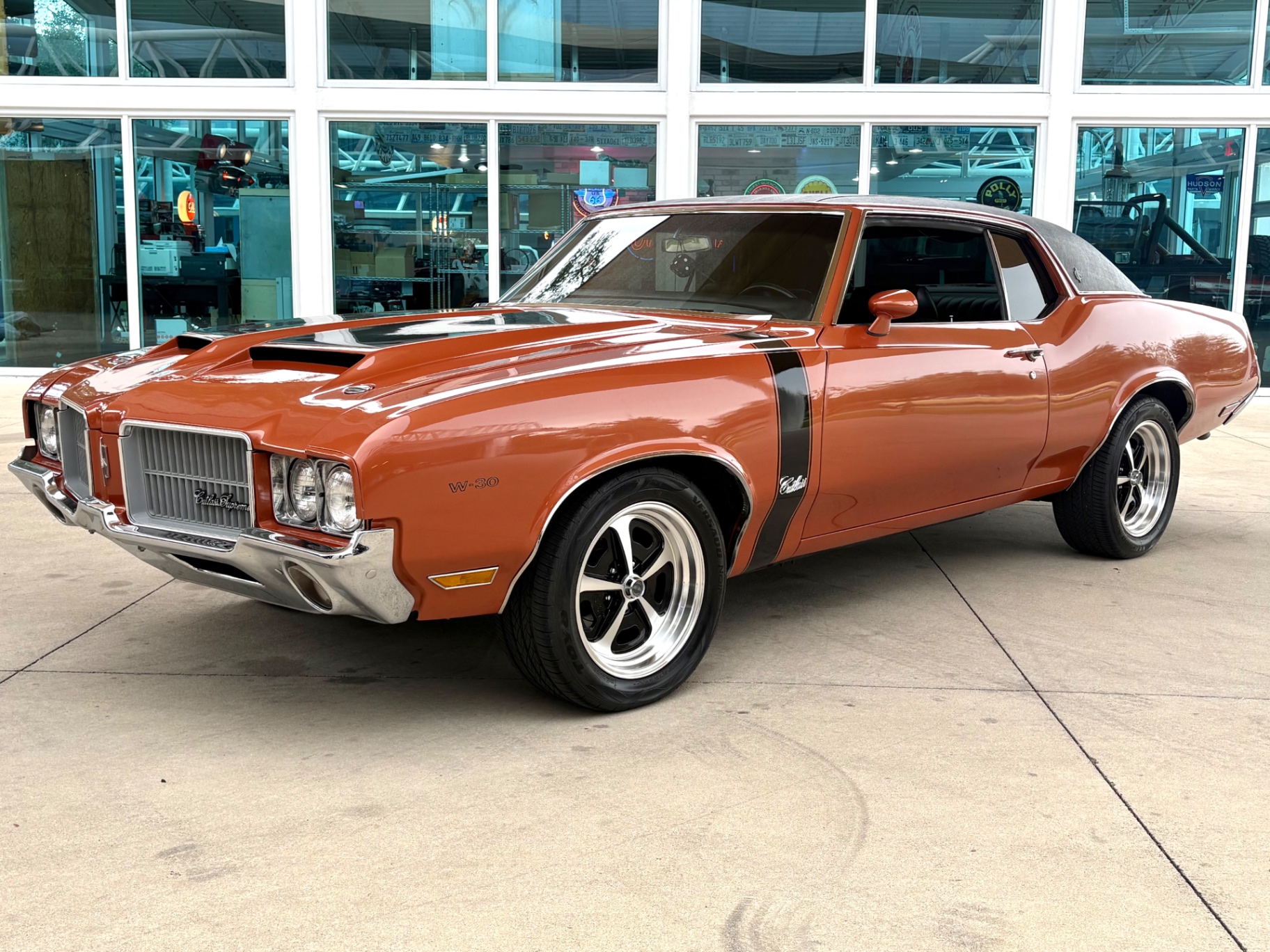
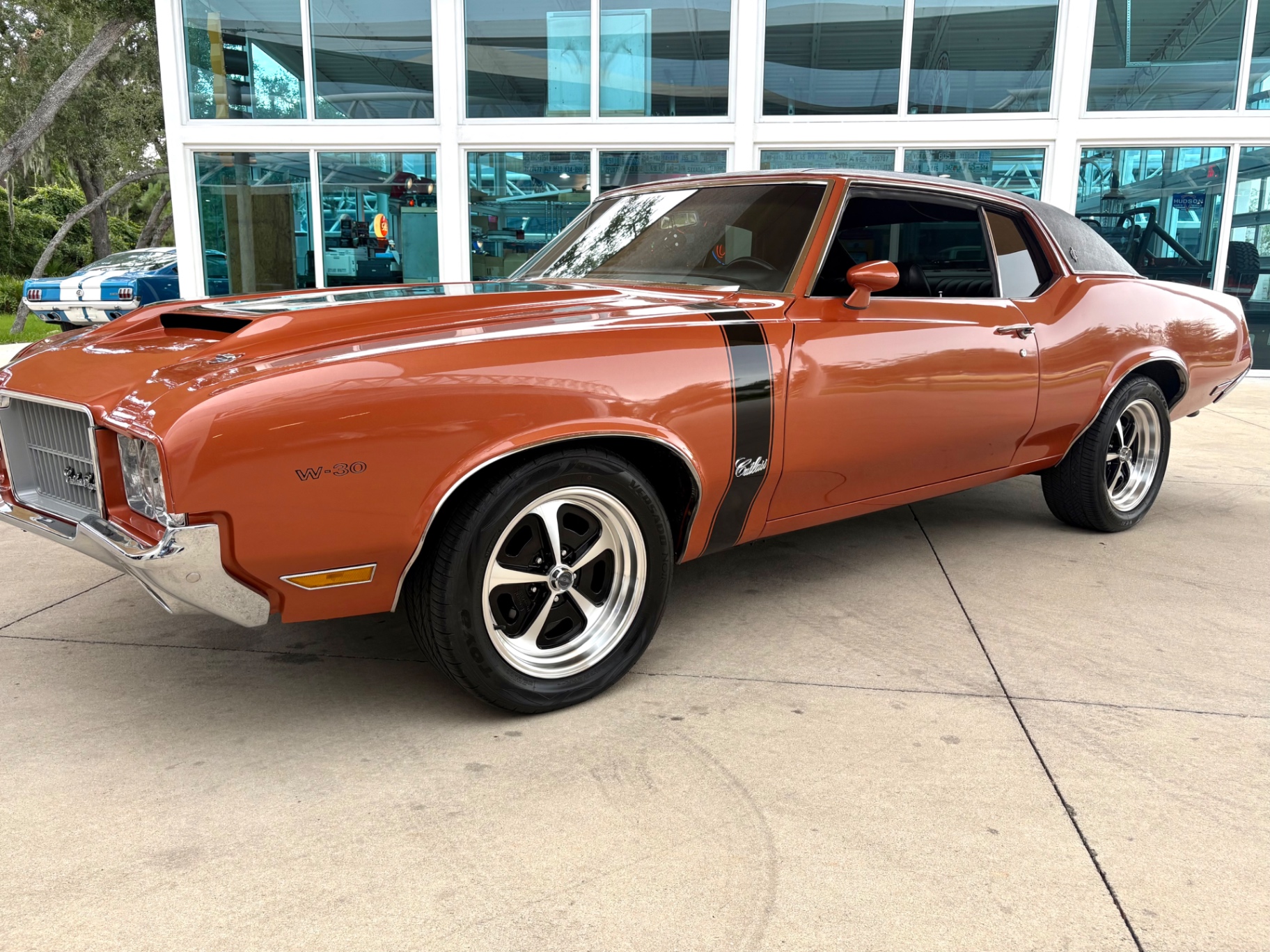
1971 Oldsmobile Cutlass Supreme — Rocket 455 V8, W-30 Tribute, Bittersweet Orange
Why This Car Is Special
The 1971 Oldsmobile Cutlass Supreme occupies a unique place in American muscle car history. It was the last model year before tightening emissions regulations and insurance surcharges began to genuinely strangle big-block performance. By 1971, Oldsmobile had already lowered compression ratios across the board to run on regular unleaded fuel, but the Rocket 455 cubic inch V8 — the largest displacement engine Oldsmobile ever put in a passenger car — still produced 340 horsepower and a massive 460 lb-ft of torque in standard tune that year. That torque figure is what made the 455 special. It was not a high-revving screamer. It was a low-rpm freight train, the kind of engine that pulls hard from idle and keeps pulling through the quarter mile without asking much of the driver.
The Cutlass Supreme was the upmarket version of the A-body Cutlass lineup, sitting above the base Cutlass but below the full performance 4-4-2. It offered a longer list of standard comfort and appearance features, including the distinctive woodgrain interior trim that became a signature of the model. The 1971 Cutlass Supreme was one of the best-selling cars in the United States that year, and the two-door hardtop coupe body style — with its wide C-pillar, flowing roofline, and long hood — has aged extremely well visually.
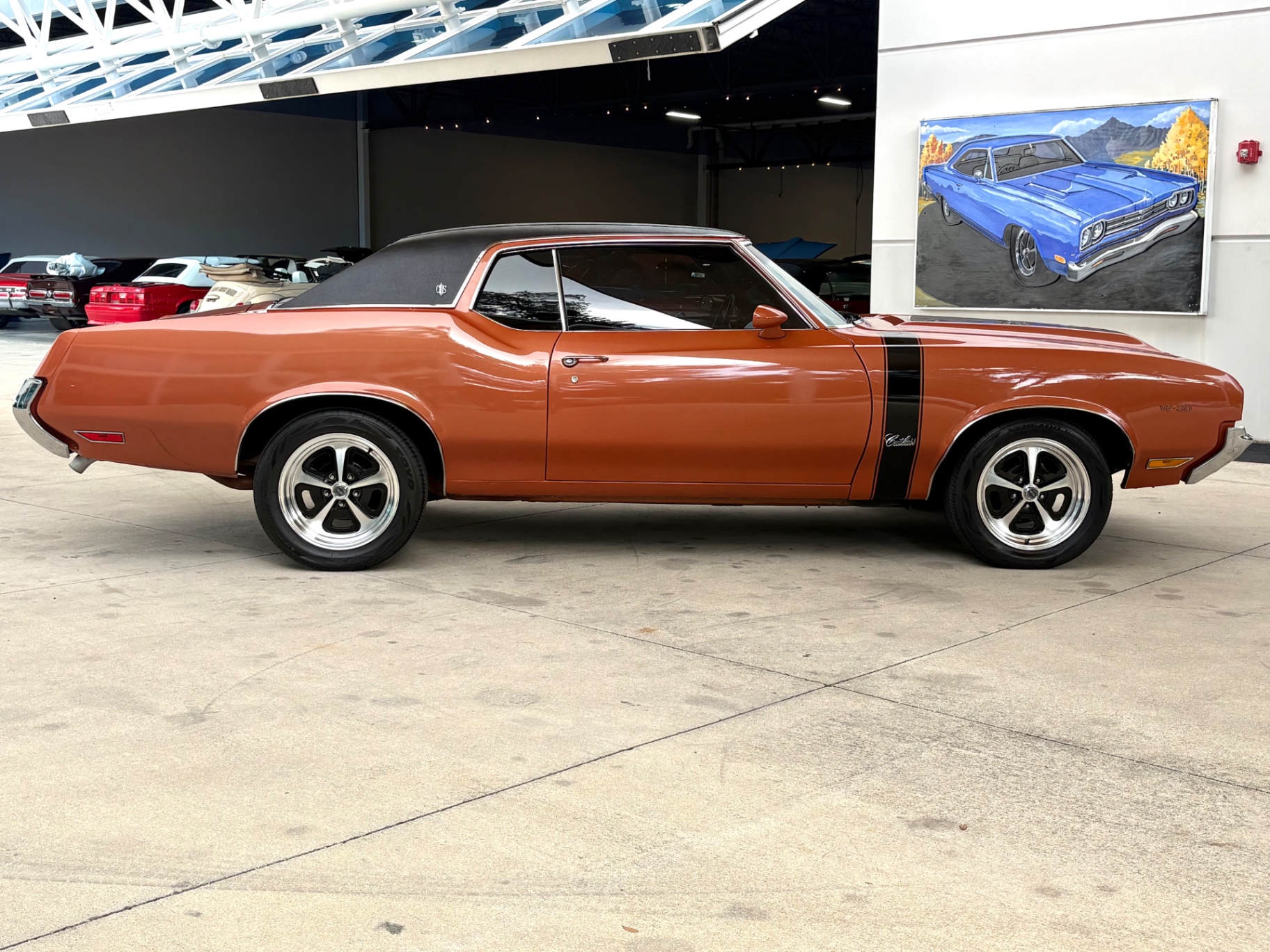
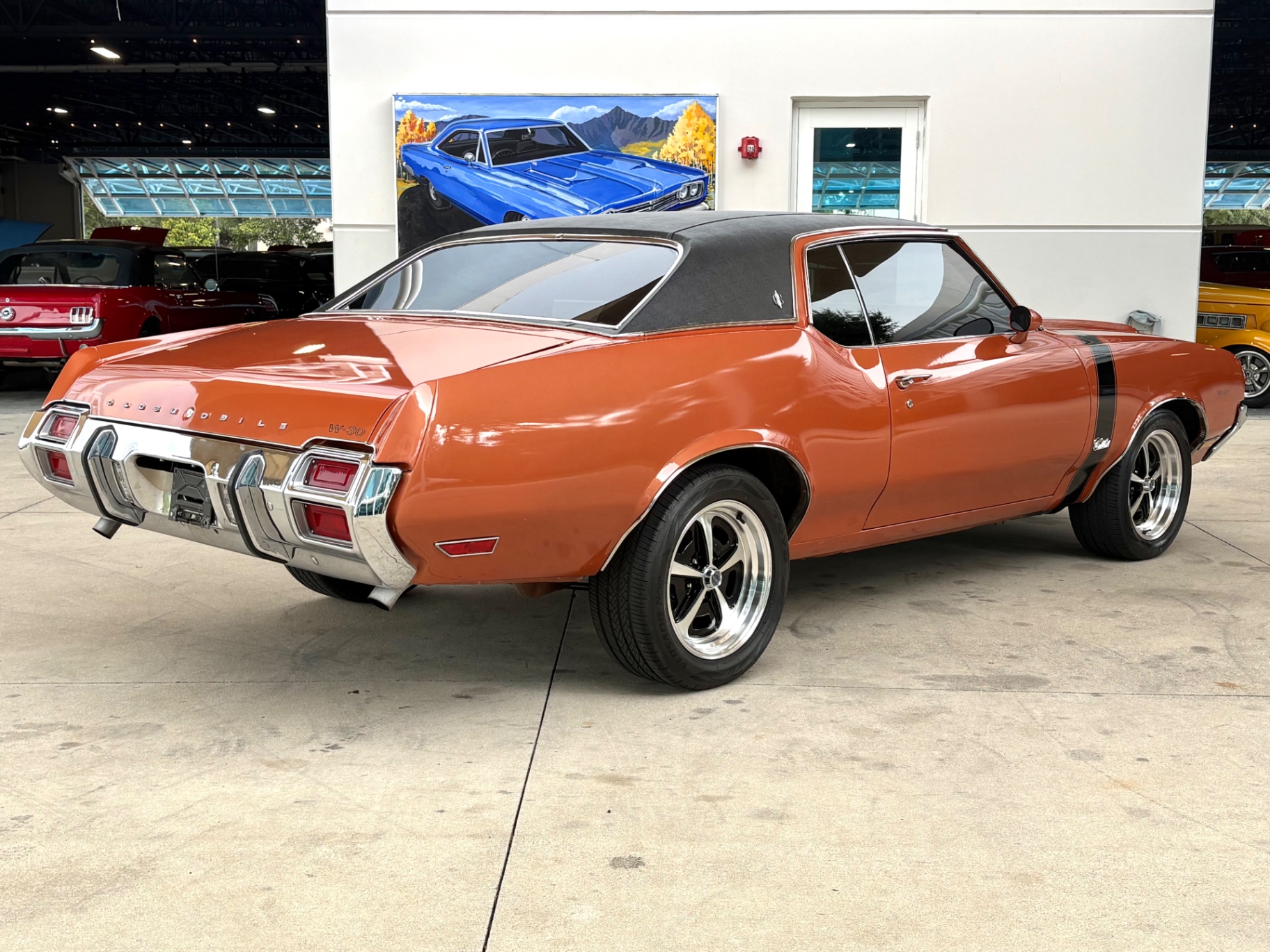
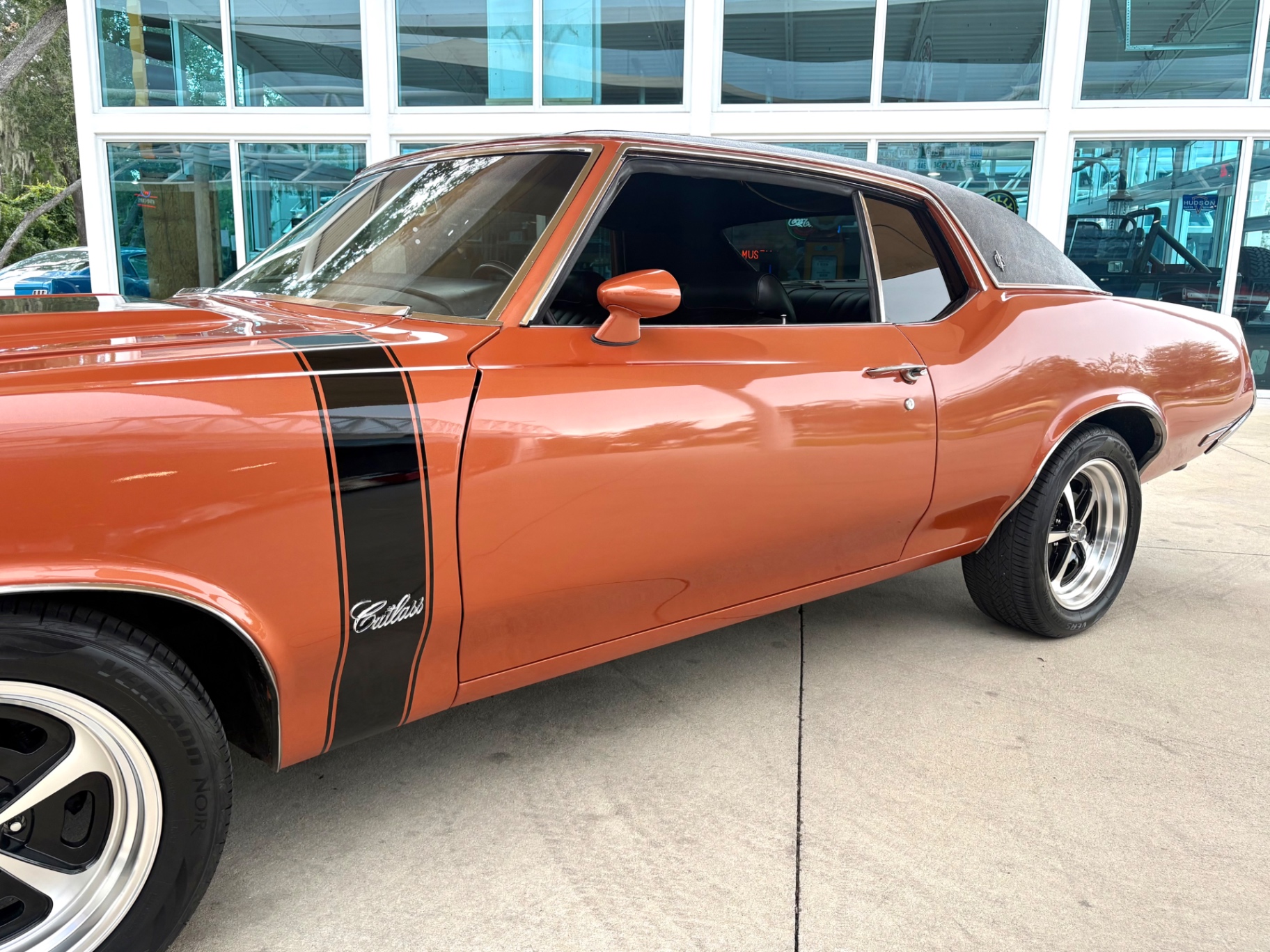
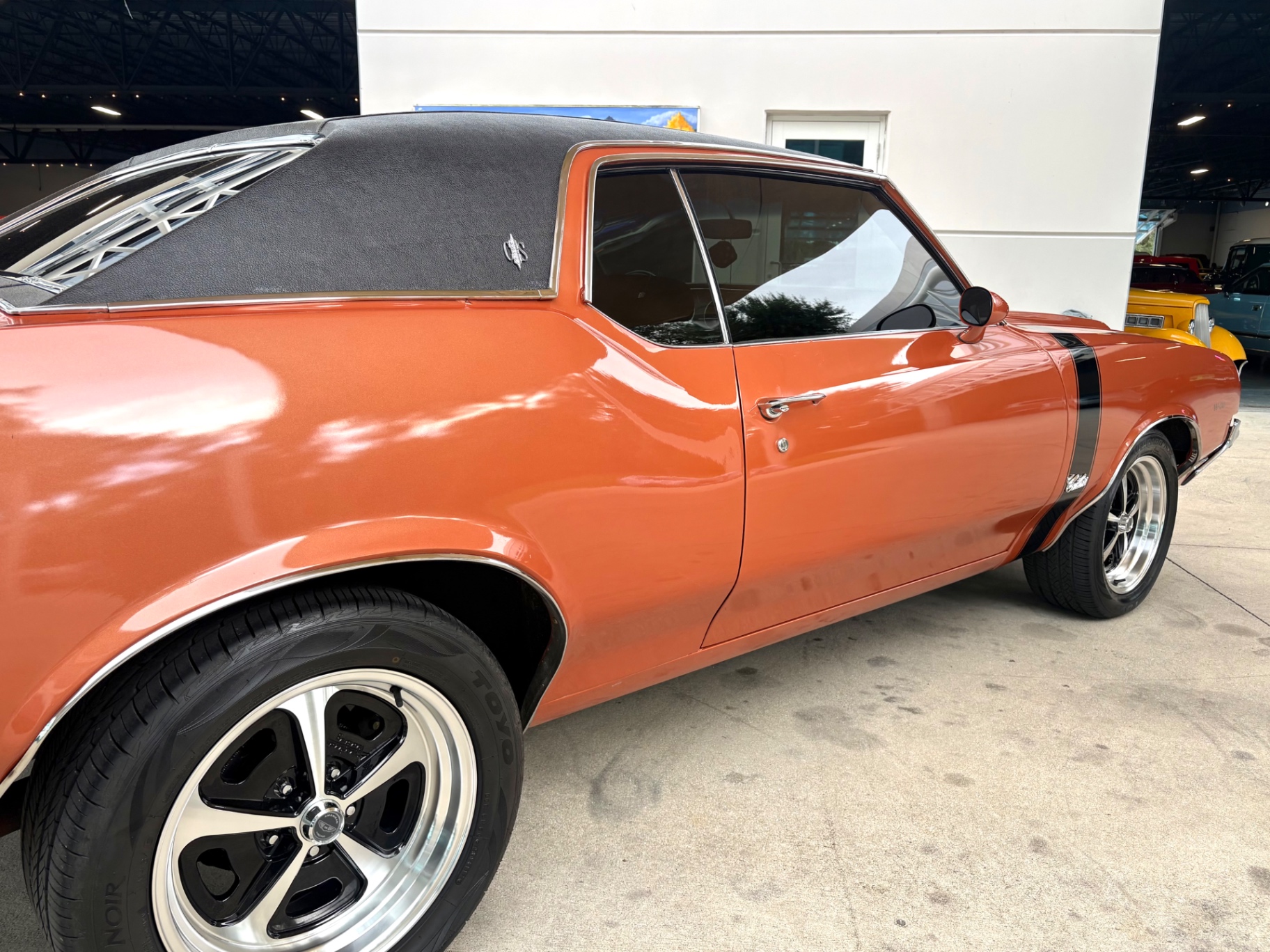
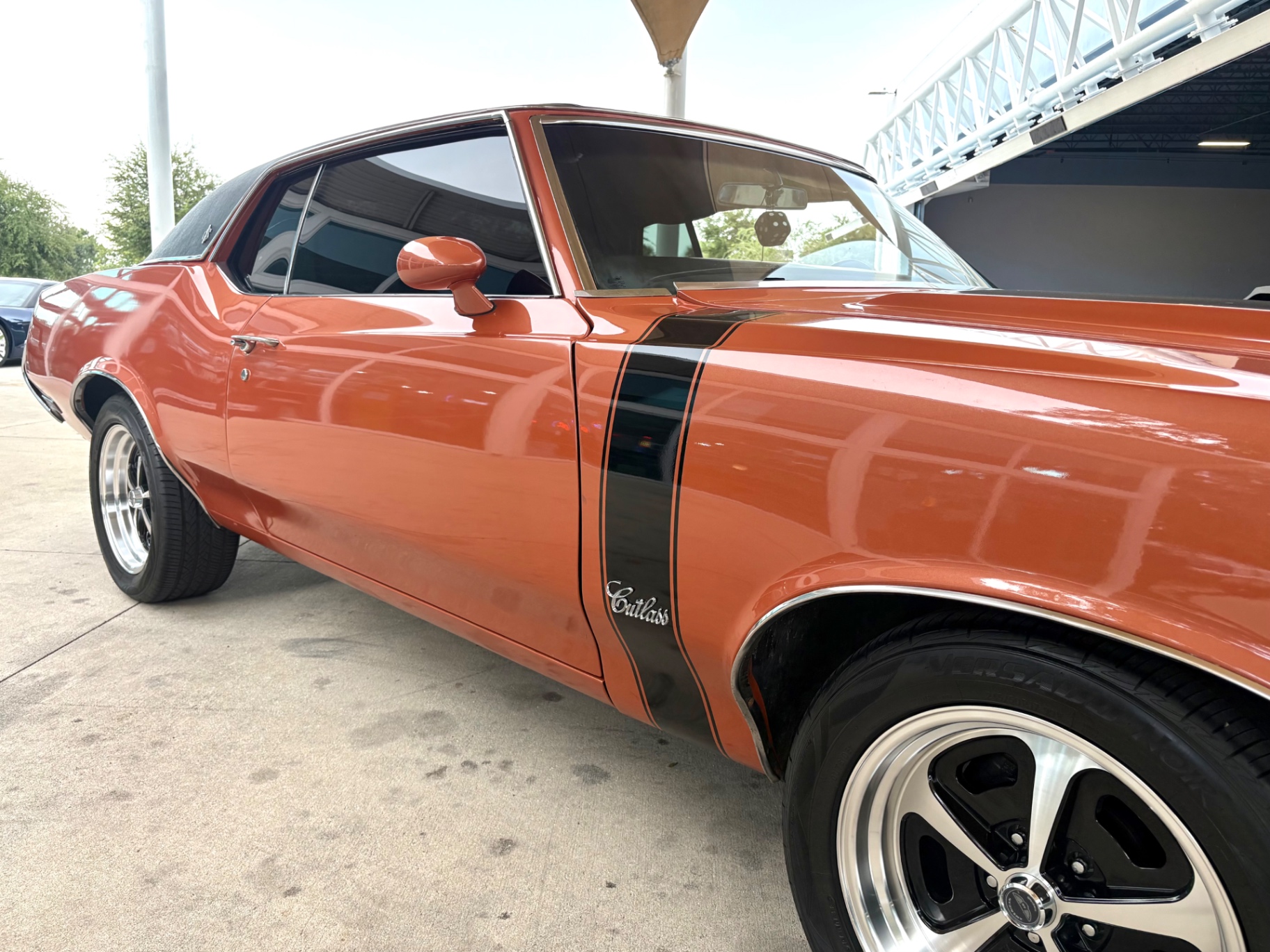
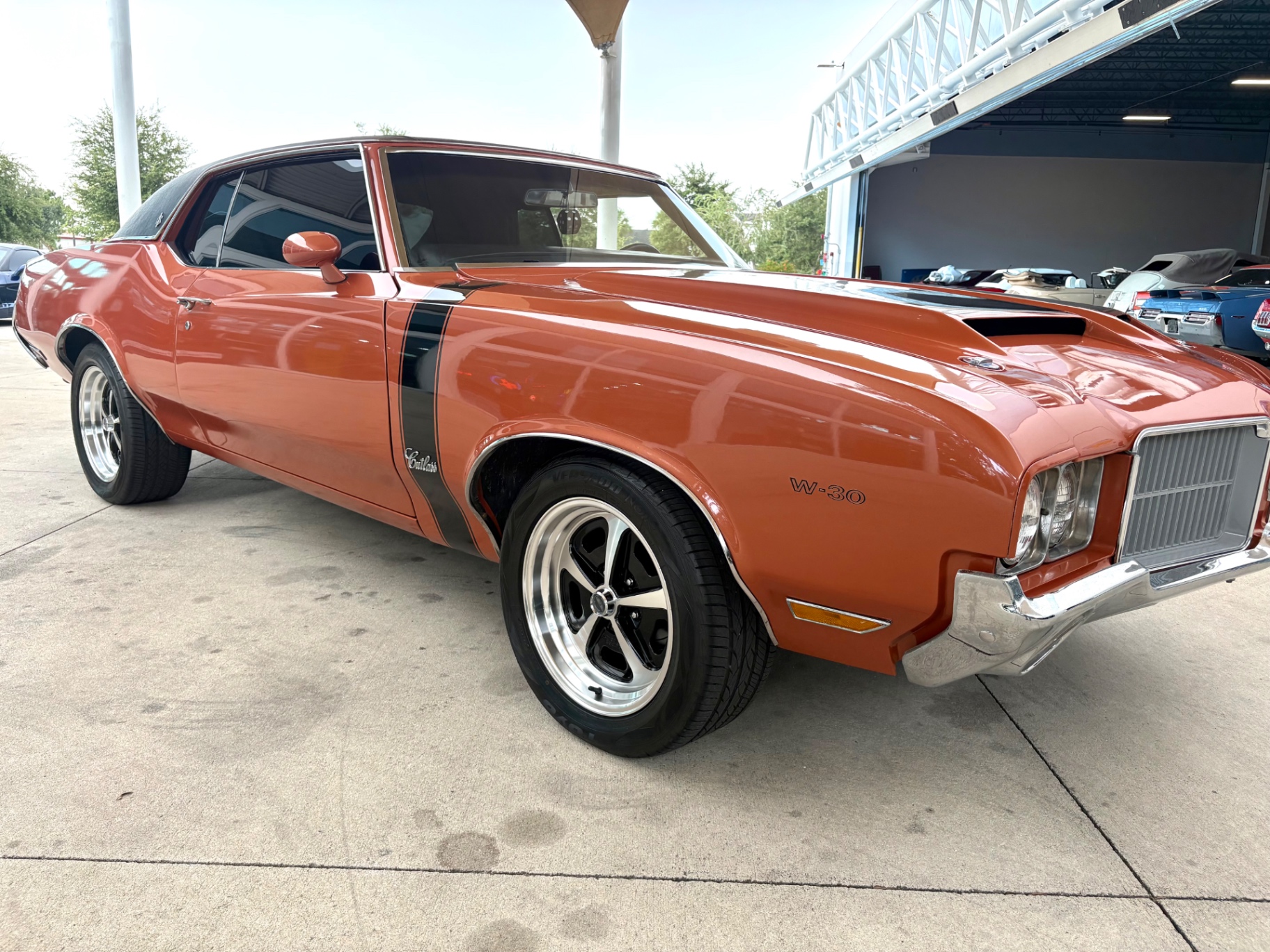
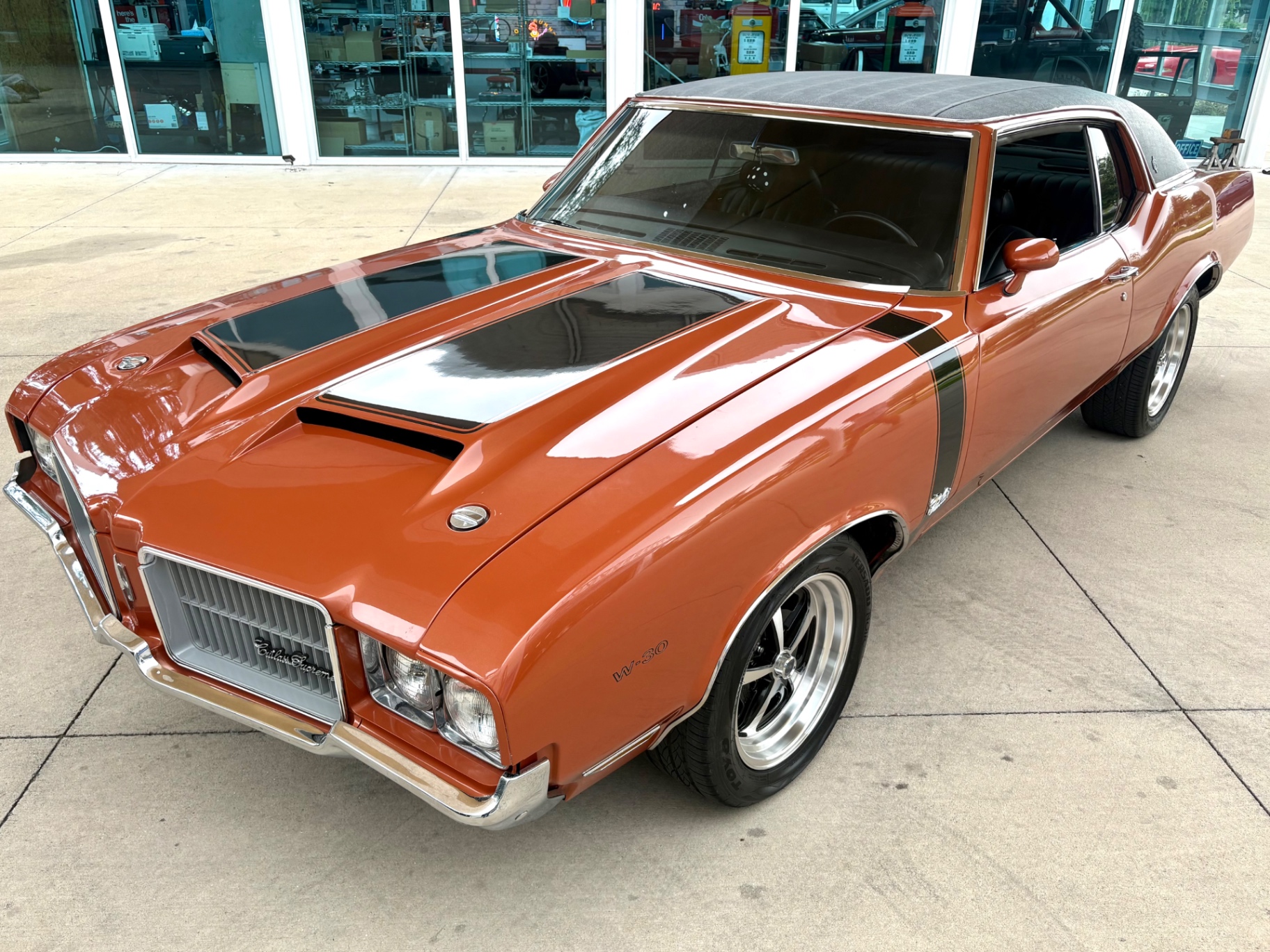
This particular 1971 Oldsmobile Cutlass Supreme is finished in Bittersweet Orange, one of the more distinctive factory color options available on the A-body platform in 1971, paired with a black vinyl top and a black interior. The car wears W-30 tribute badging and the corresponding ram-air hood scoops, graphics, and stripe package that evoke the factory W-30 performance option without claiming to be something it is not. Under the hood sits a Rocket 455 V8 backed by a Turbo Hydra-matic 400 automatic, supported by a set of performance upgrades that make this car a genuine driver rather than a show piece.
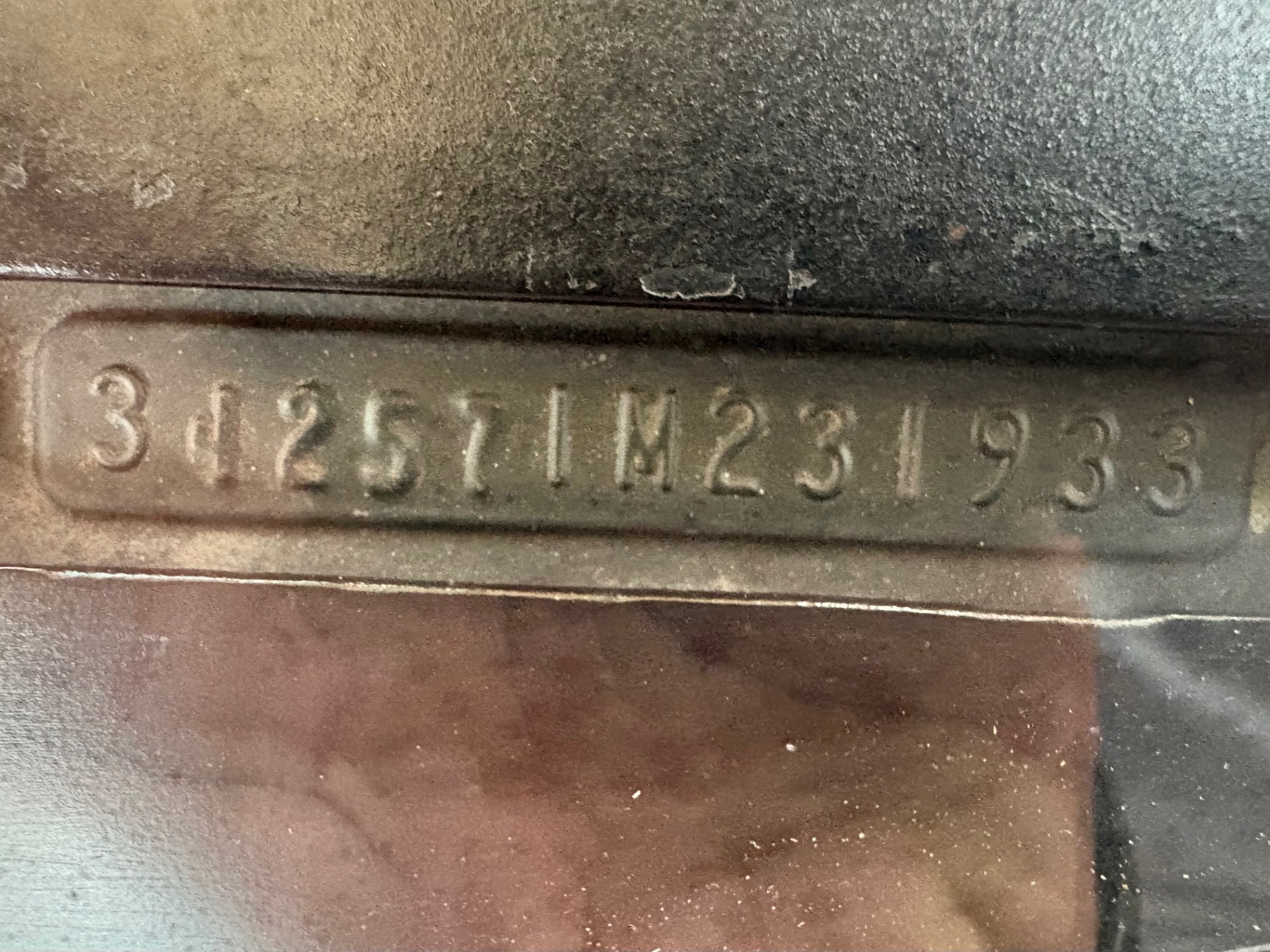
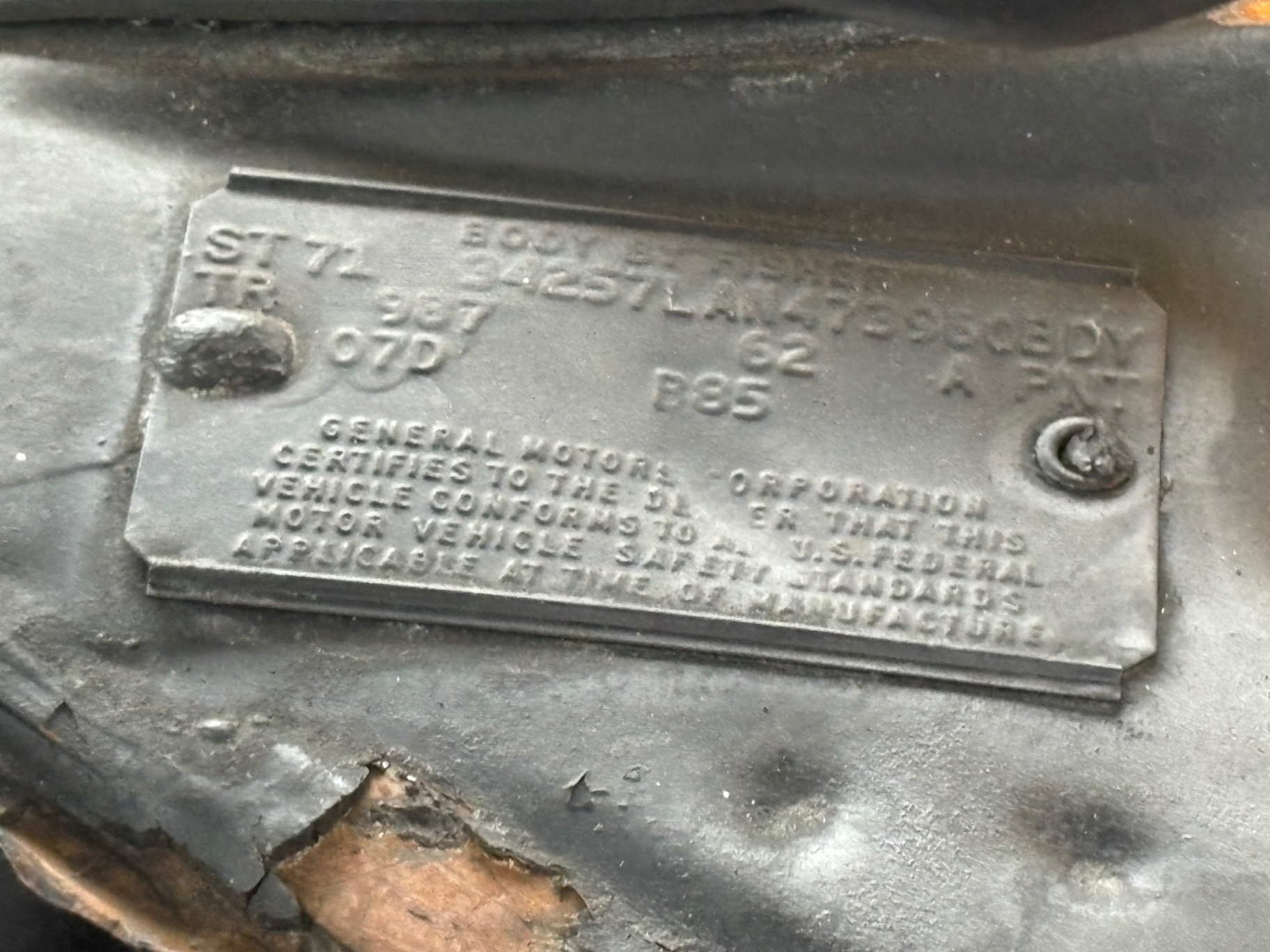
The VIN decodes to confirm this is a 1971 Oldsmobile A-body two-door hardtop built at the Lansing, Michigan assembly plant, with a 455 cubic inch engine and automatic transmission — consistent with everything presented here.
Features List
- Rocket 455 cubic inch V8 engine
- Turbo Hydra-matic 400 3-speed automatic transmission
- Edelbrock aluminum intake manifold
- 4-barrel carburetor
- MSD ignition system
- Magnaflow dual exhaust
- W-30 tribute badging and ram-air hood scoops
- Black W-30 stripe graphics
- Bittersweet Orange exterior paint
- Black vinyl top
- Chrome front and rear bumpers
- Torq-Thrust style wheels
- Air conditioning
- Woodgrain interior trim on dashboard and door panels
- Custom sport steering wheel with Oldsmobile center cap
- Dashboard-mounted tachometer
- Front and rear bench seats
- Front and rear headrests
- Black floor carpeting
- Column-shifted automatic transmission
- Rear drum brakes
Mechanical
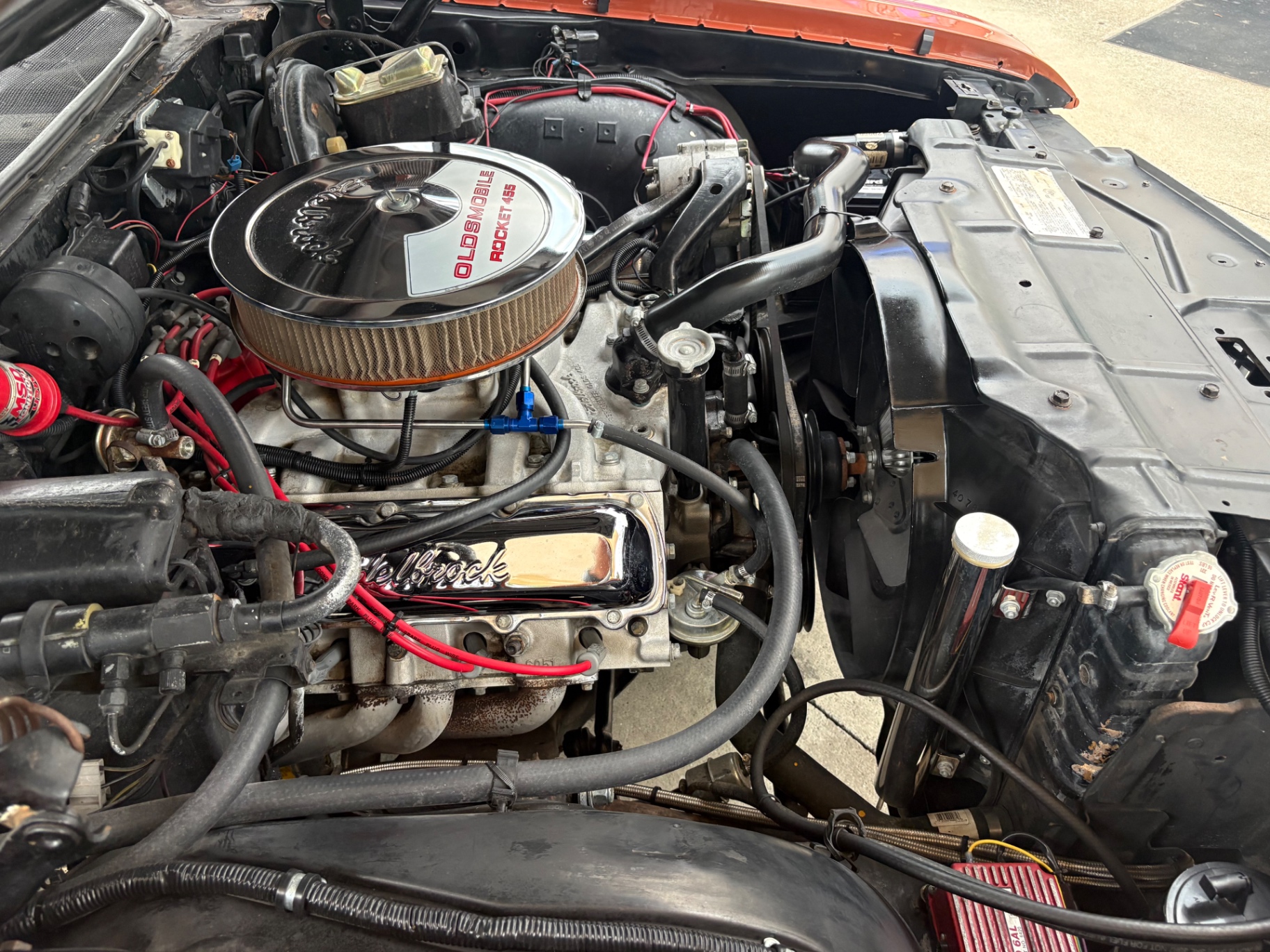
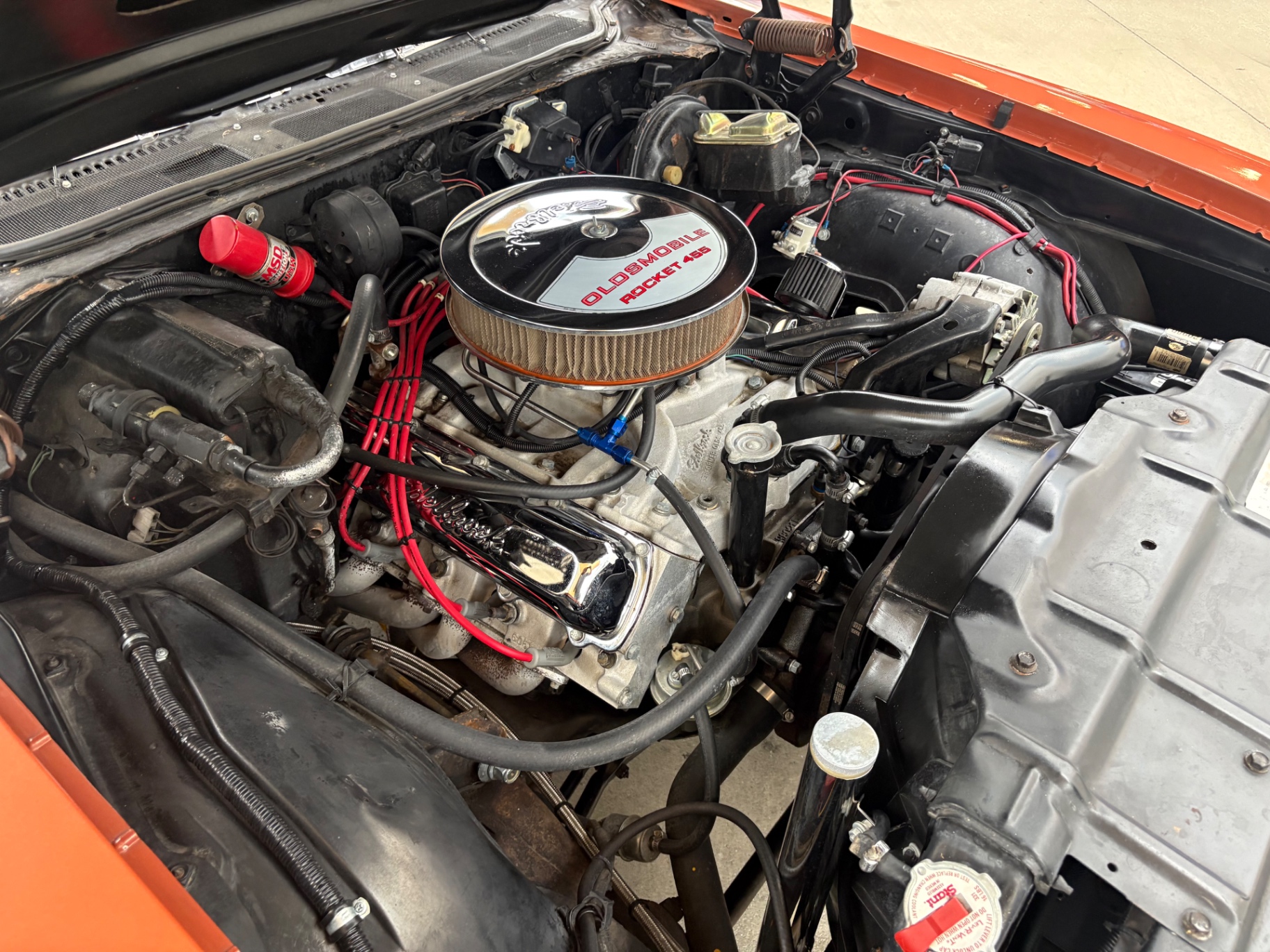
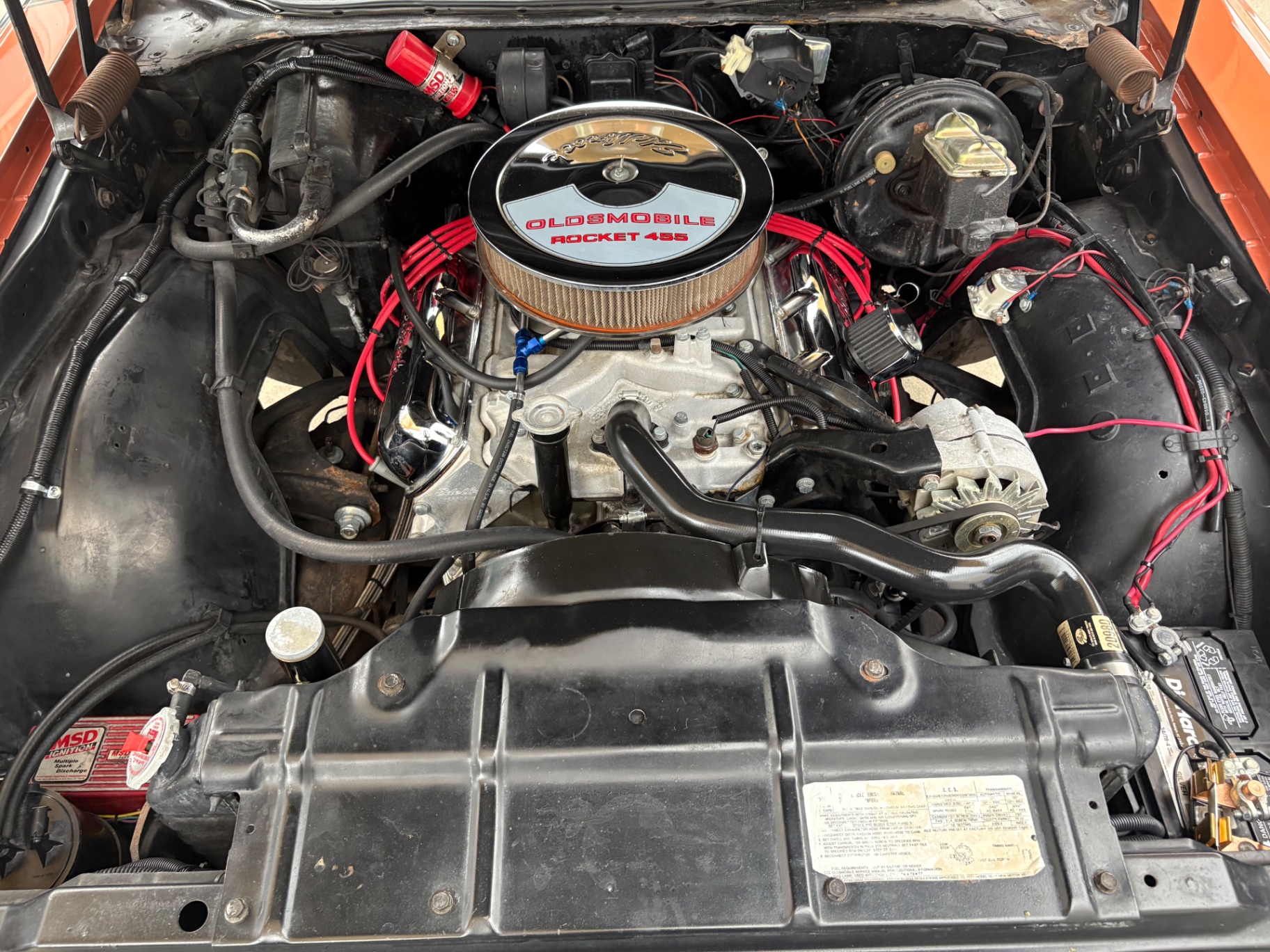
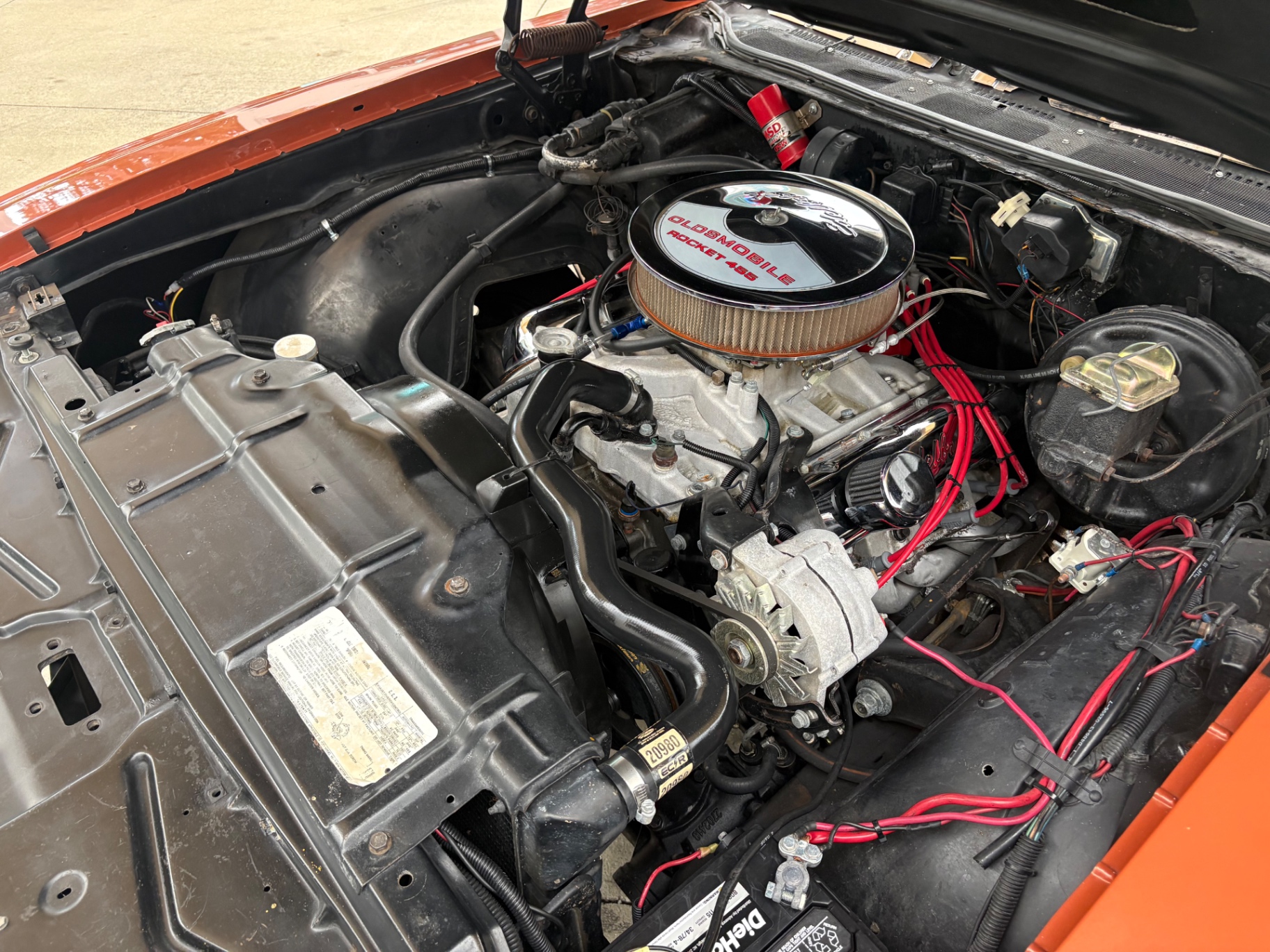
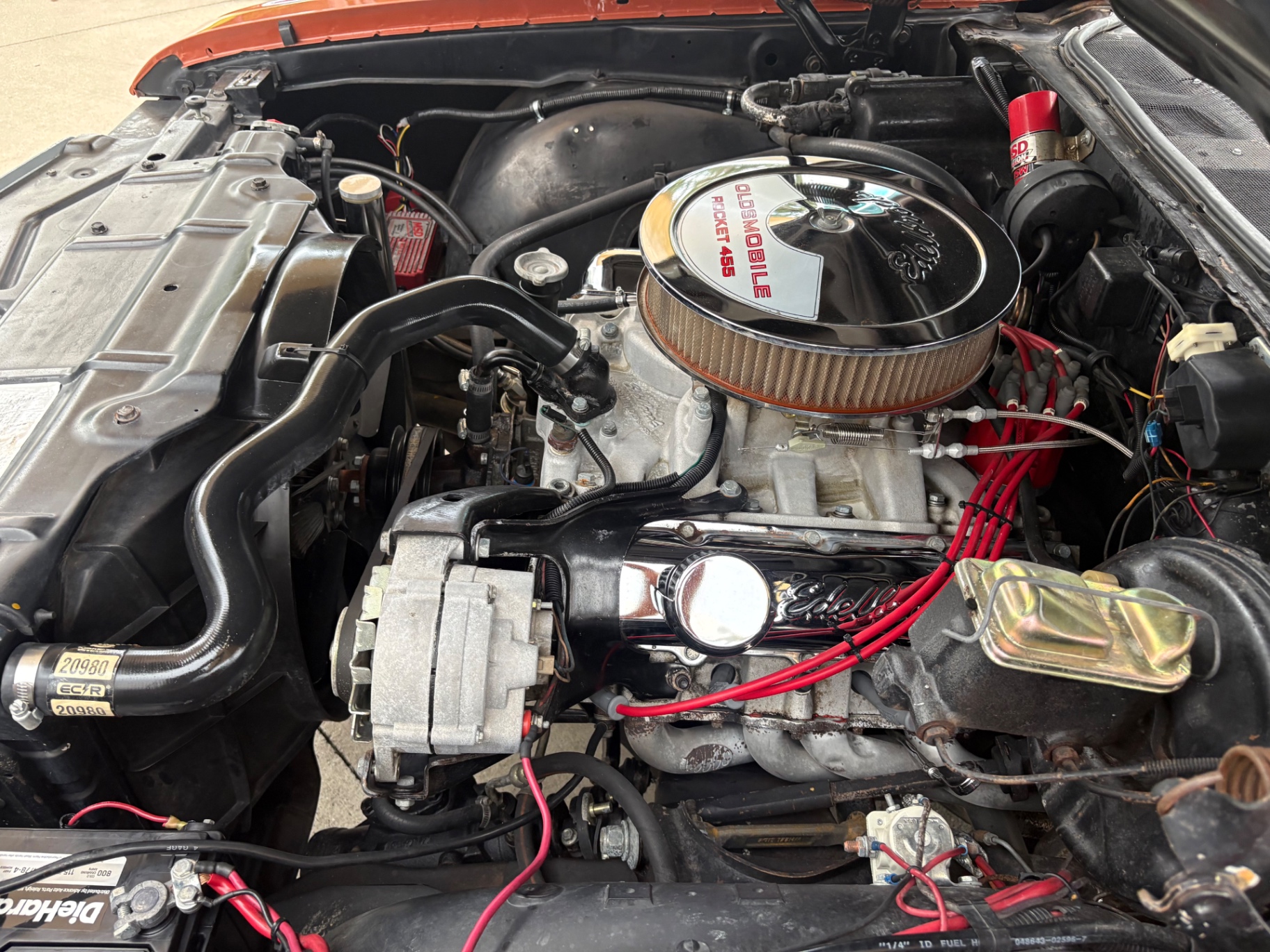
The Rocket 455 was Oldsmobile's big-bore entry in the displacement wars of the early 1970s. Introduced in 1968, the 455 used a large 4.126-inch bore with a 3.975-inch stroke, giving it a broad, undersquare design that favored torque over high-rpm horsepower — exactly the kind of engine that suits street driving. In standard 1971 tune, it was rated at 340 horsepower and 460 lb-ft of torque. The compression ratio had been dropped to 8.5:1 that year to accommodate regular unleaded fuel, which actually made these engines more durable long-term and easier to run today on pump gas.
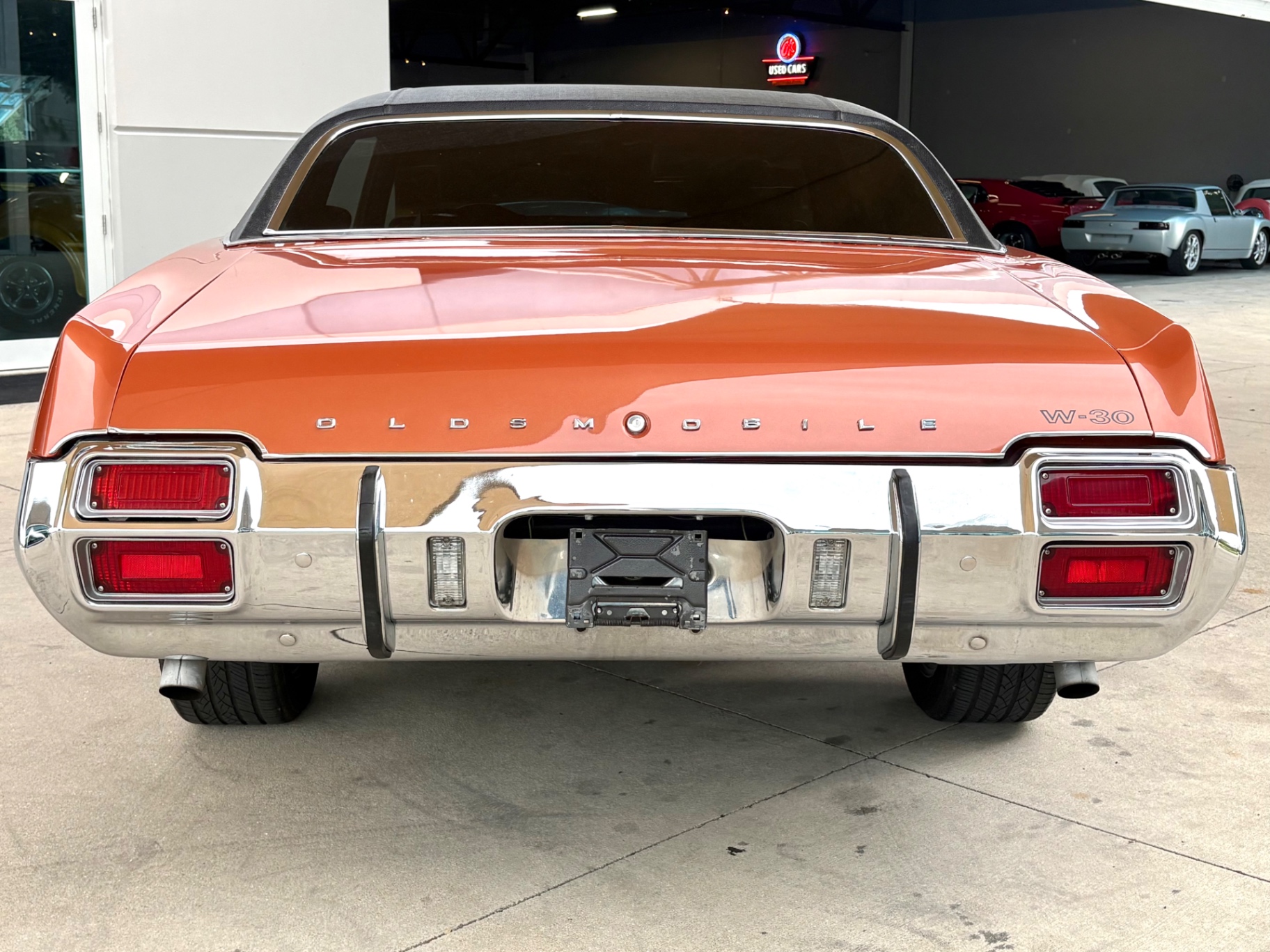
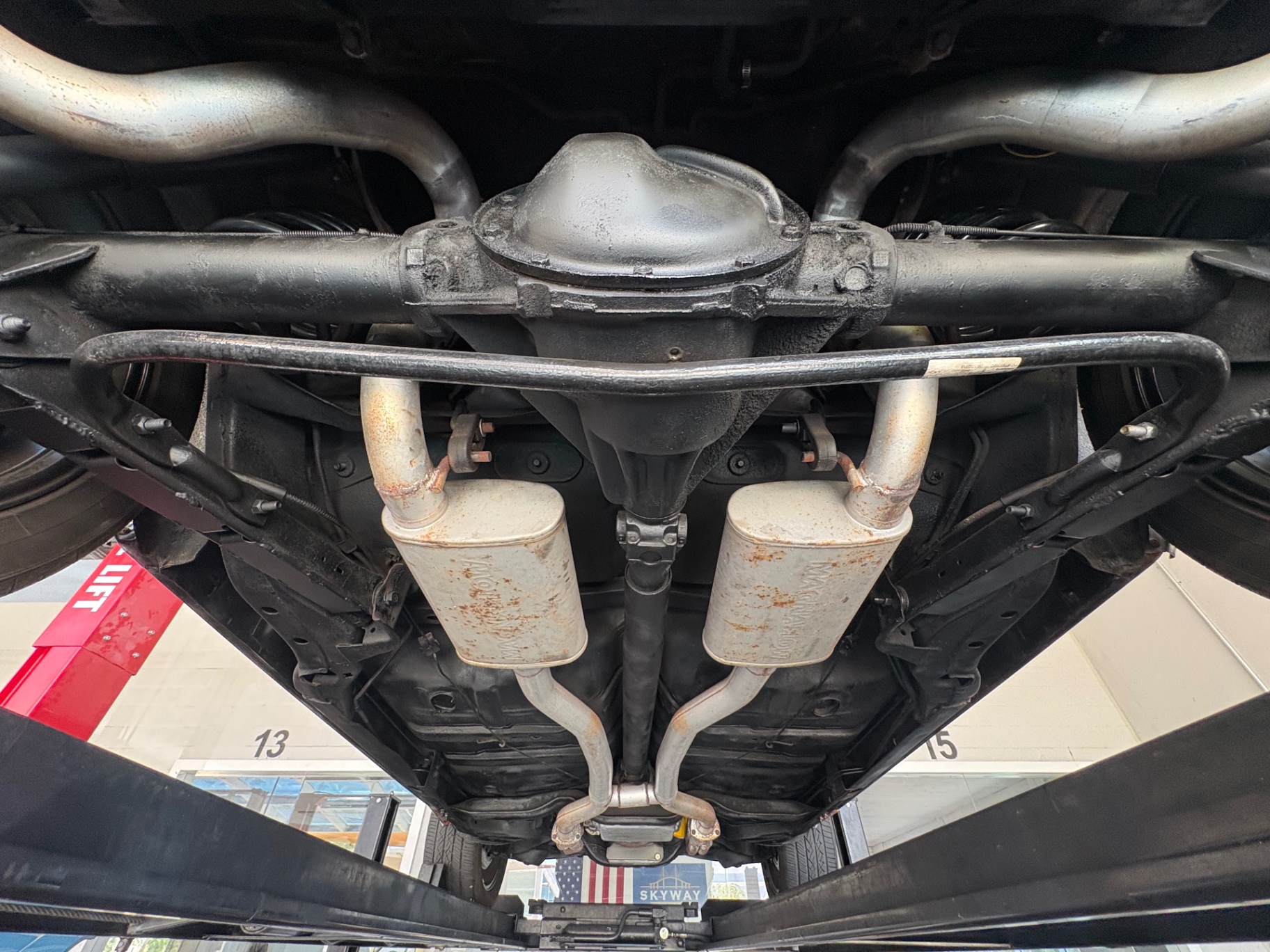
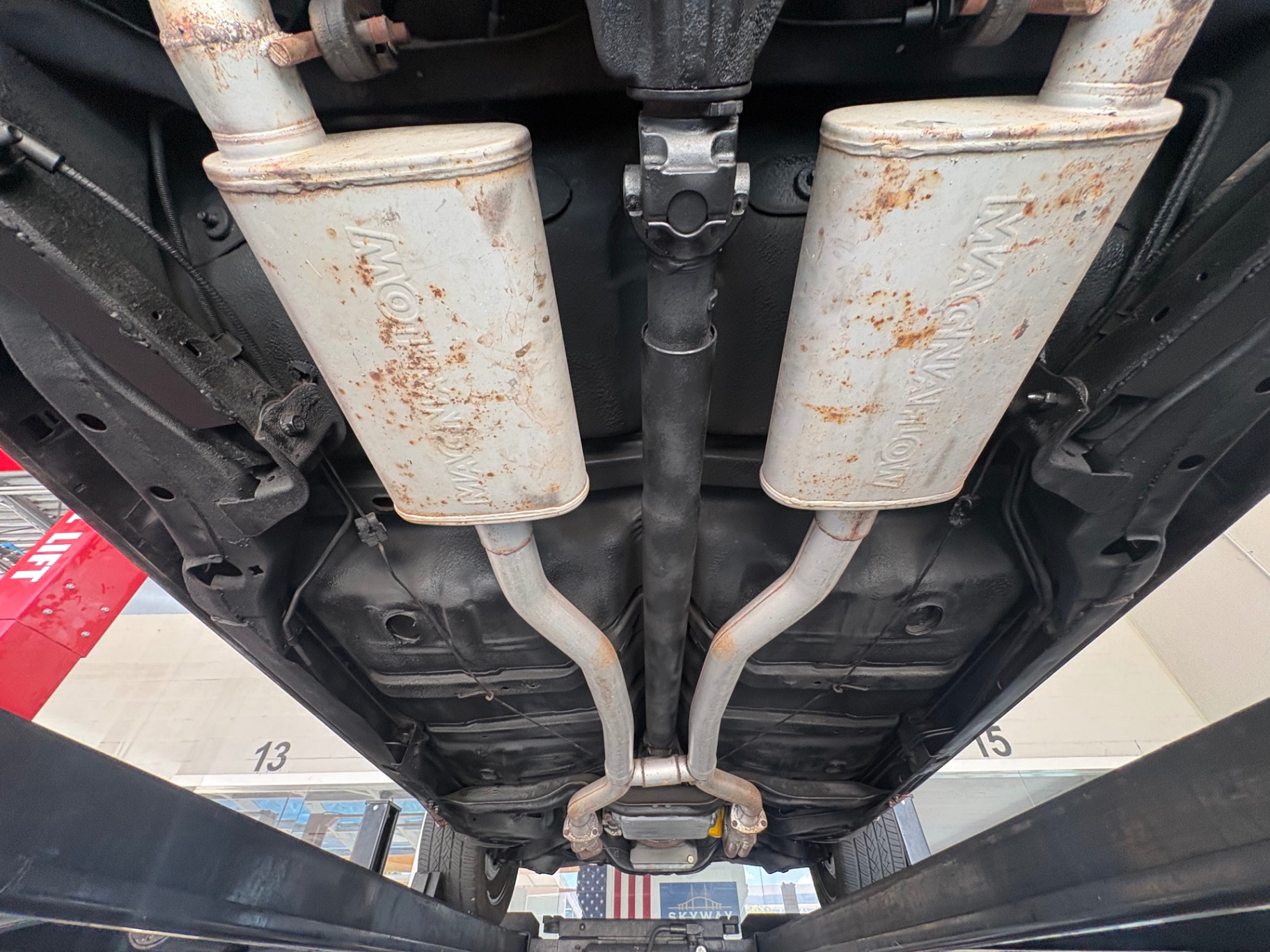
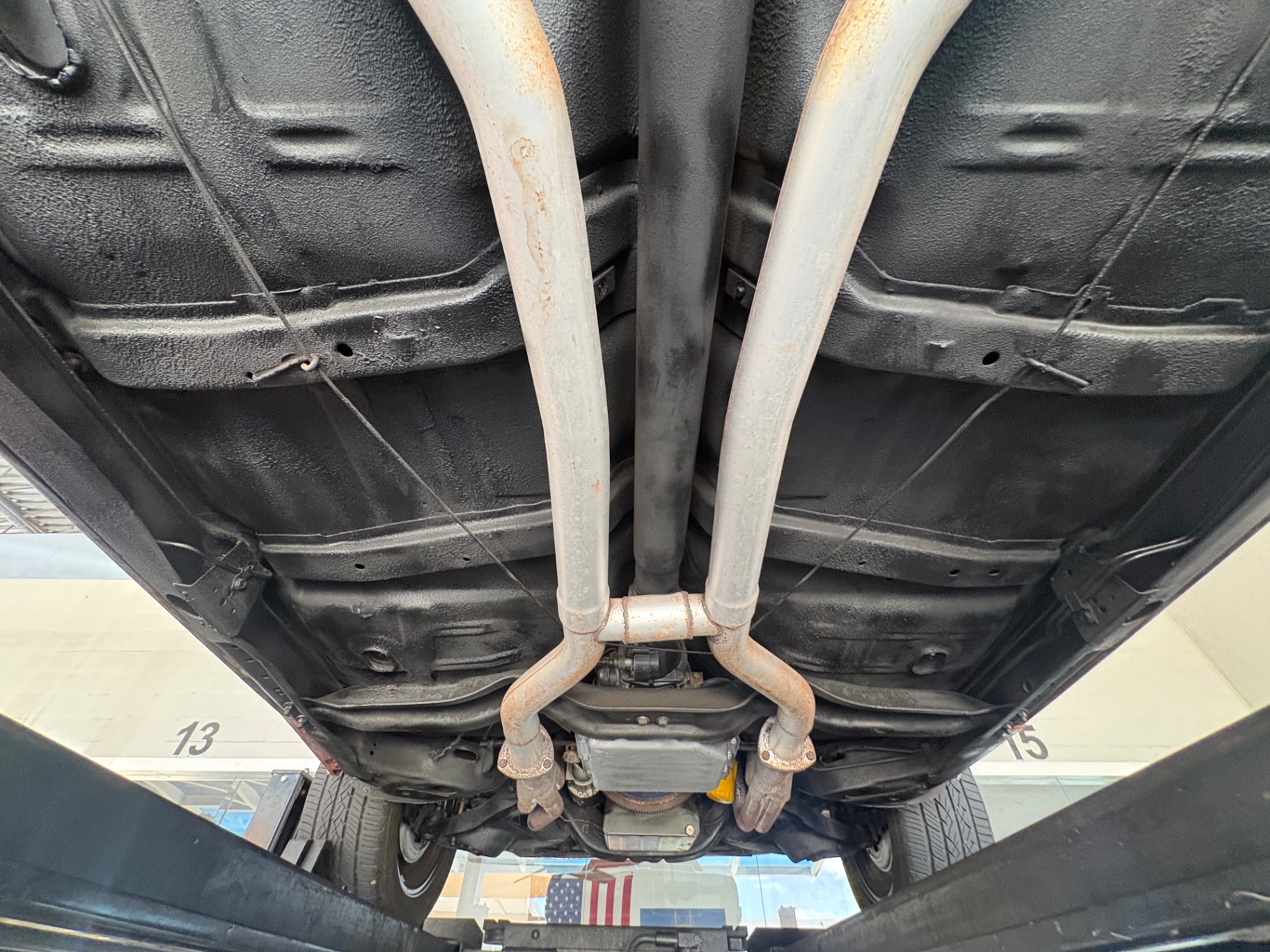
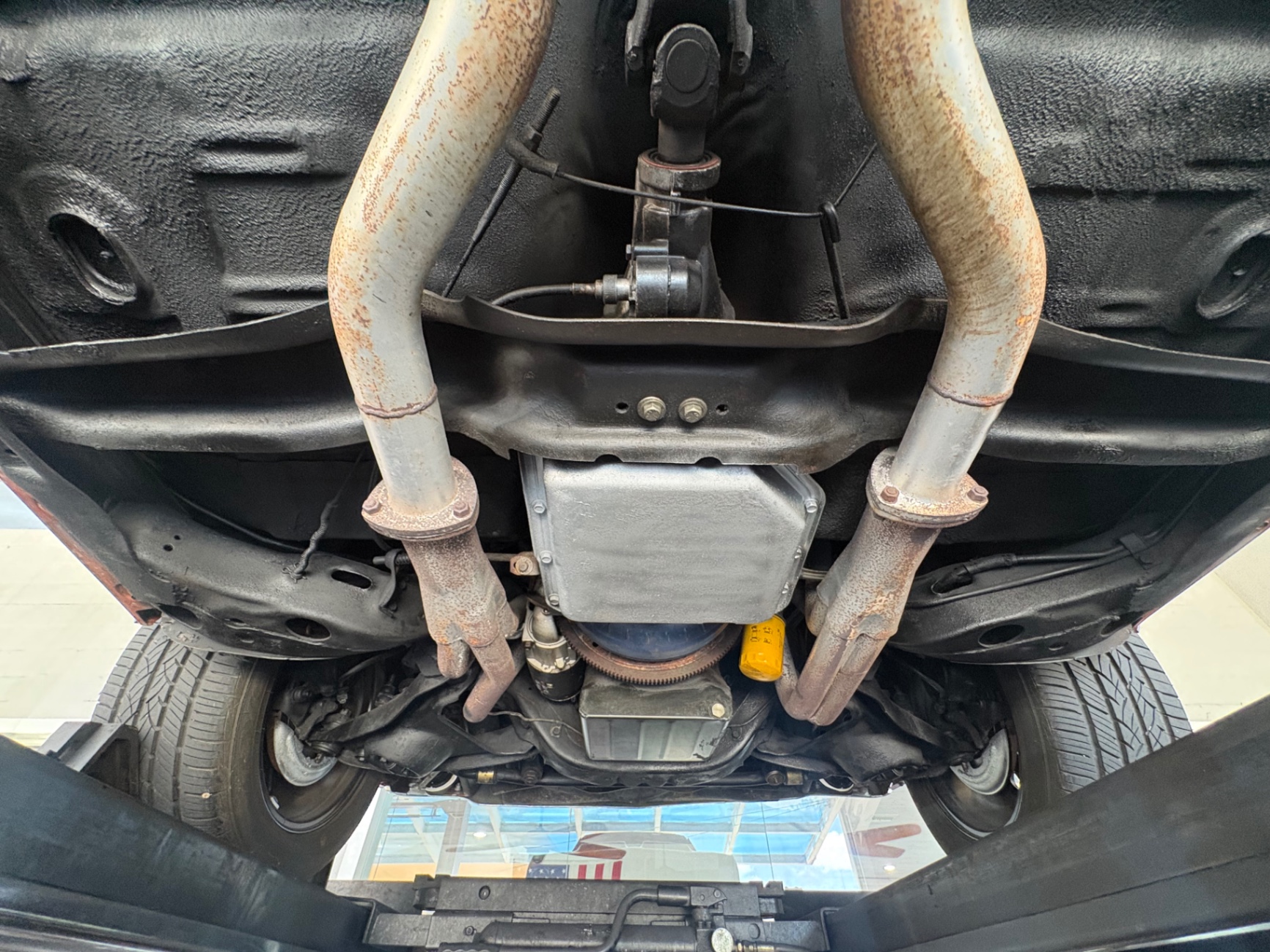
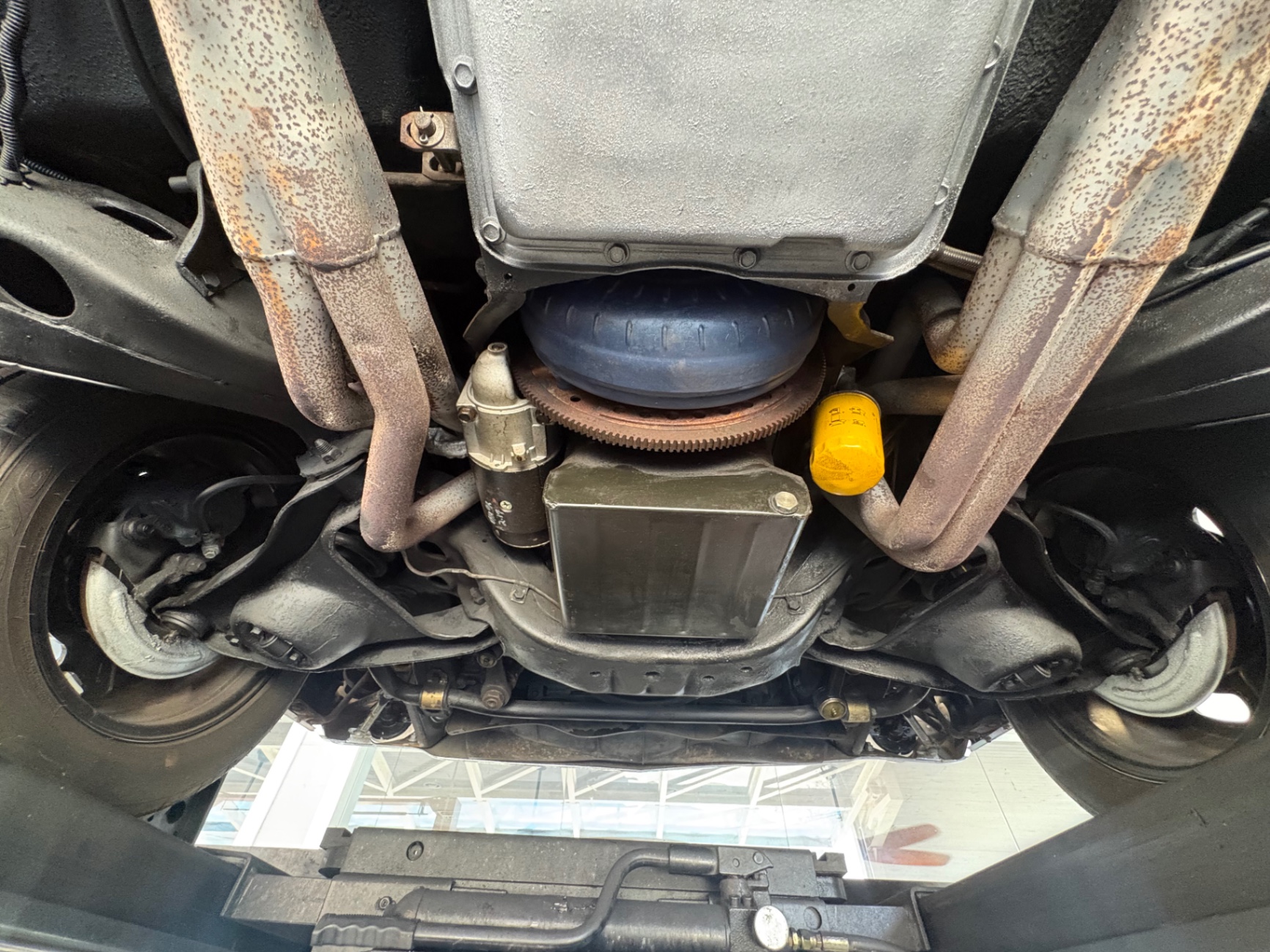
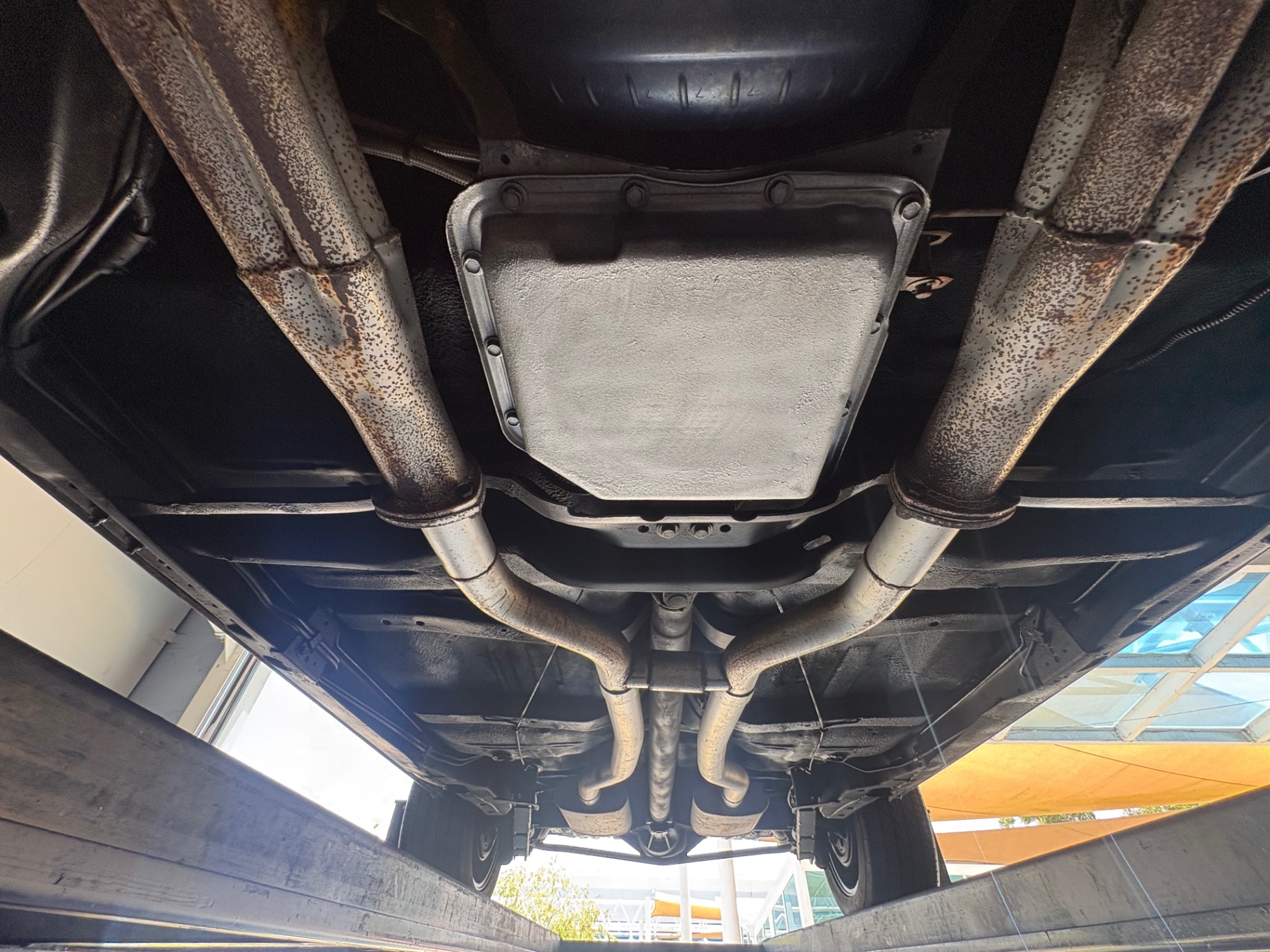
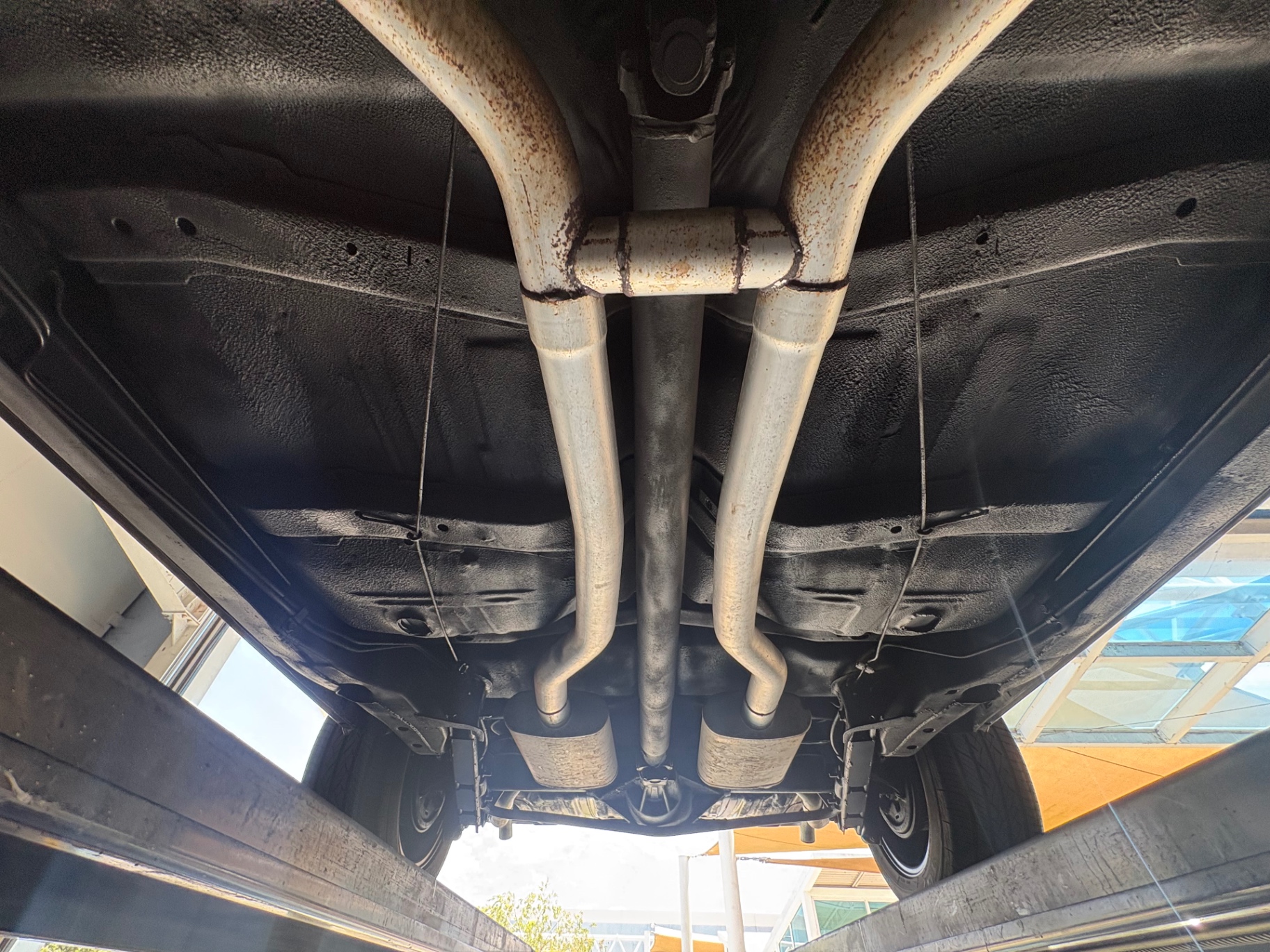
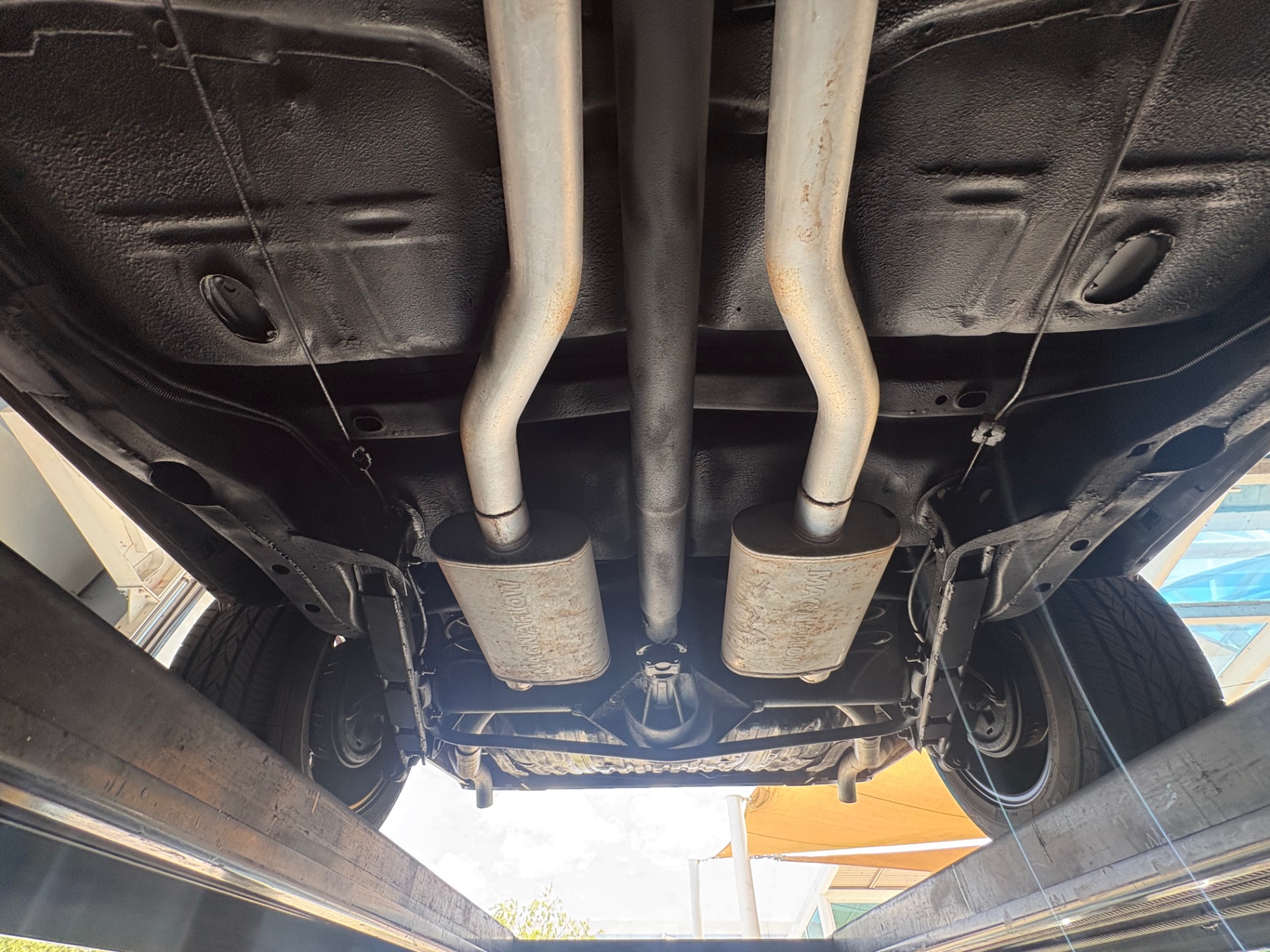
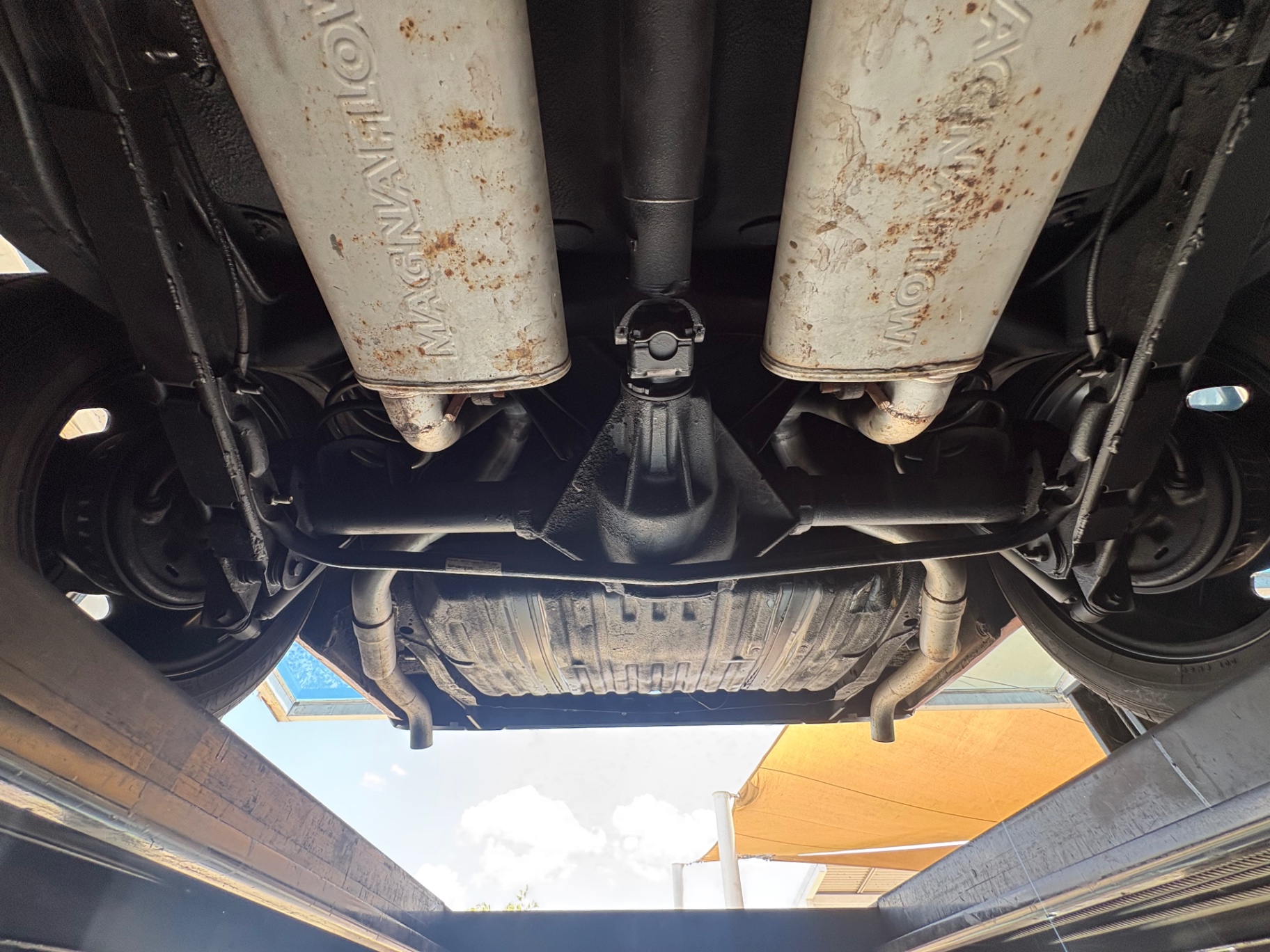
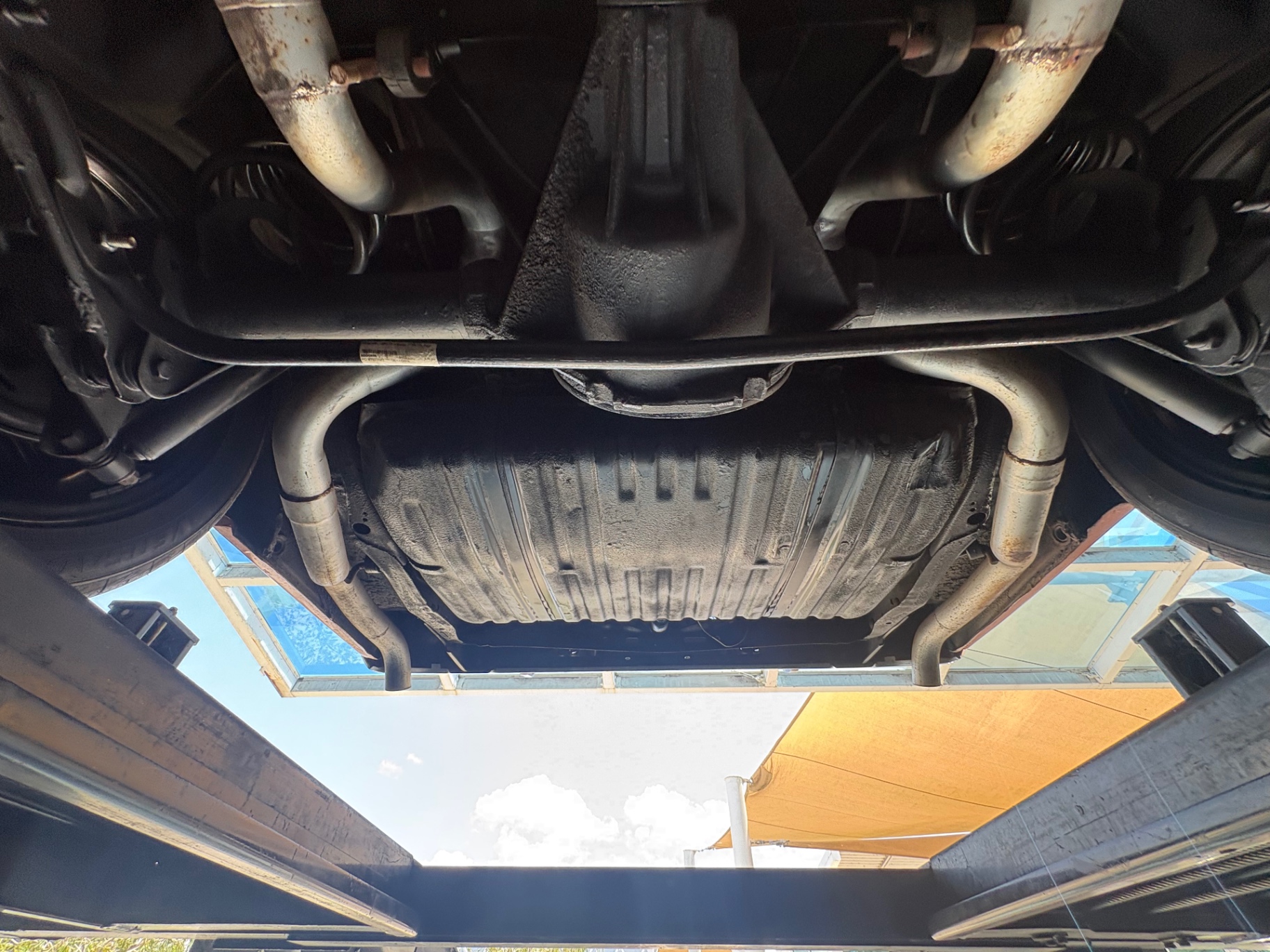
This car's 455 has been upgraded with an Edelbrock aluminum intake manifold, which reduces weight over the iron factory unit and improves airflow to the 4-barrel carburetor. The MSD ignition system replaces the factory points-type ignition with a capacitive discharge unit that delivers a stronger, more consistent spark — a practical improvement that helps the engine run cleanly and start reliably. The Magnaflow dual exhaust system routes exhaust through two stainless-steel mufflers and exits through the rear, giving the 455 the low, authoritative exhaust note that the factory single-outlet system never really delivered. The underside photos confirm the Magnaflow mufflers are clearly legible and the exhaust routing is clean and properly supported.
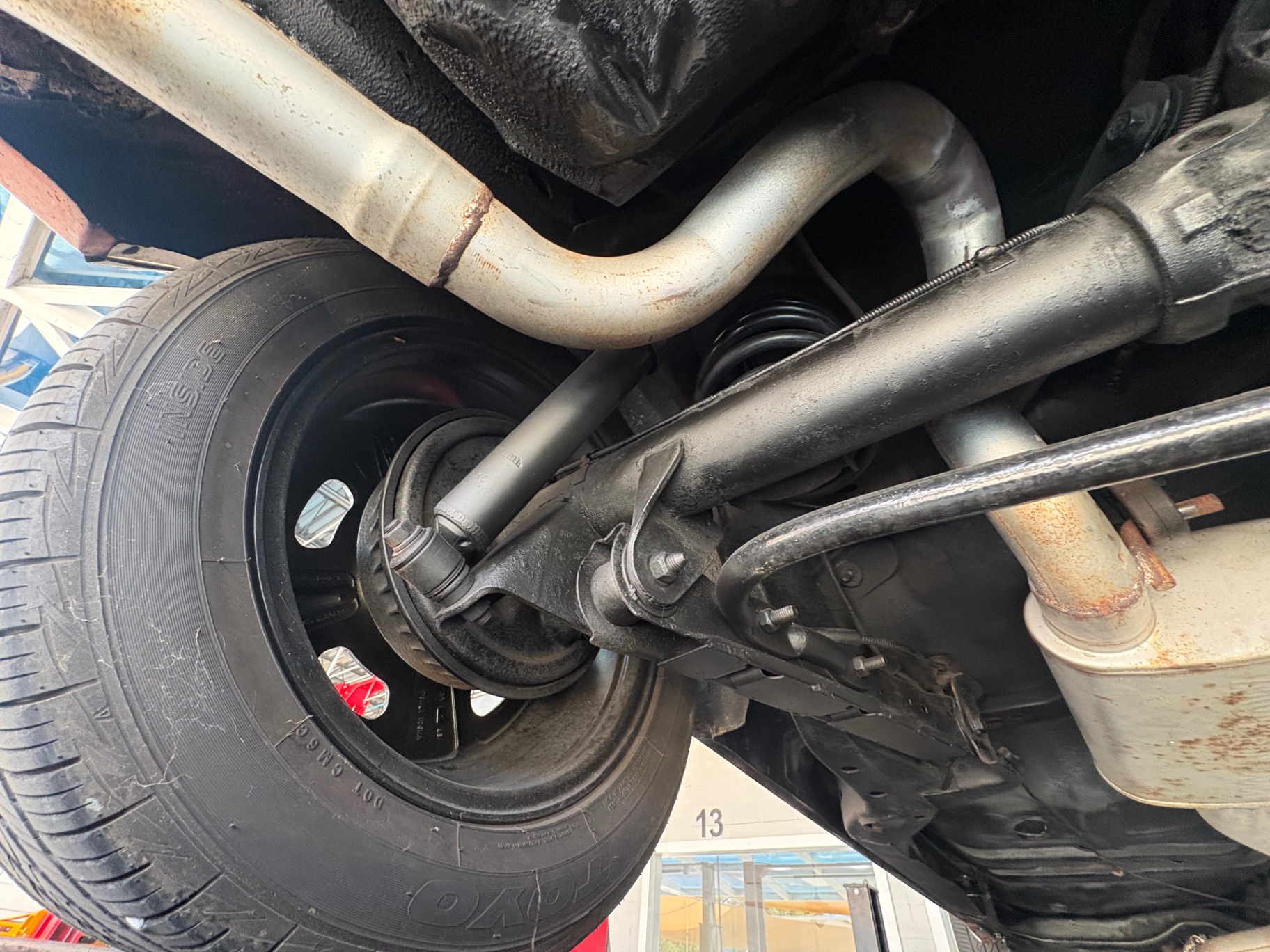
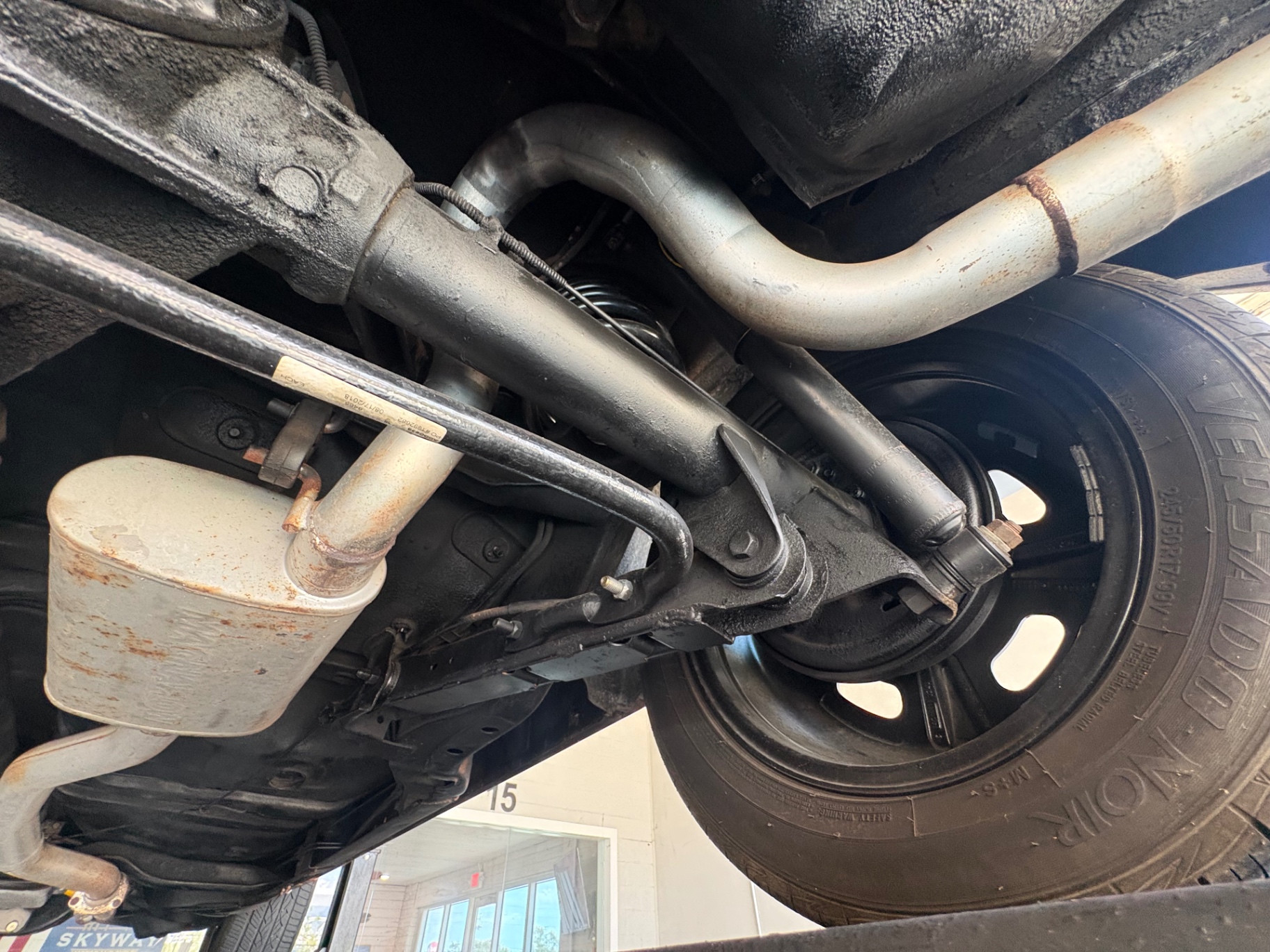
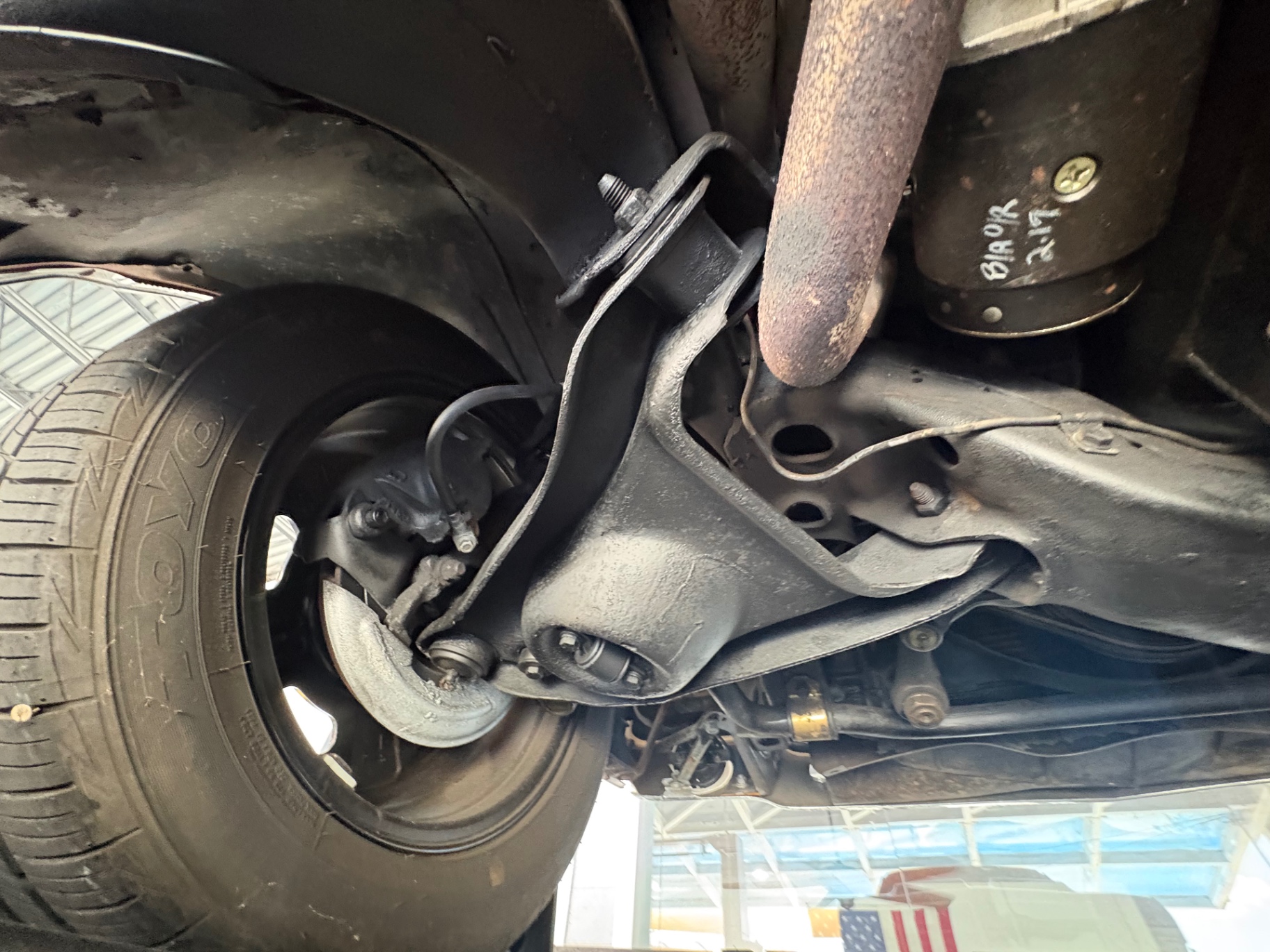
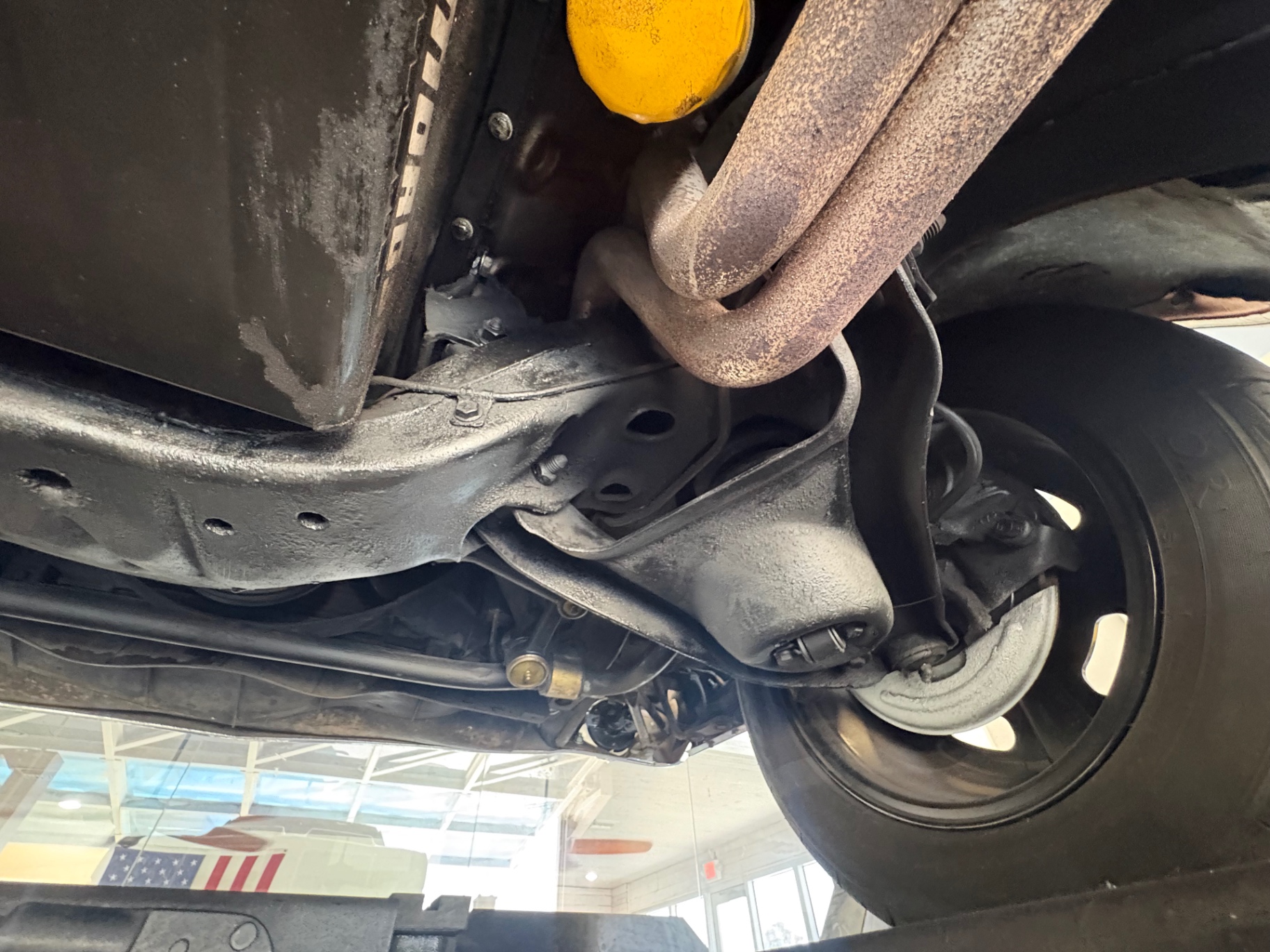
The Turbo Hydra-matic 400 is one of the most respected automatic transmissions General Motors ever built. Strong, smooth, and capable of handling the torque output of big-block engines without drama, the TH400 was used across the GM performance lineup from the late 1960s through the 1980s. This one is shifted from the column, which was a common configuration on Cutlass Supreme models equipped with bench seating. The underside of the car shows a well-coated floor pan and a solid rear axle assembly with no visible rust concerns — an important detail on any A-body from this era.
Interior
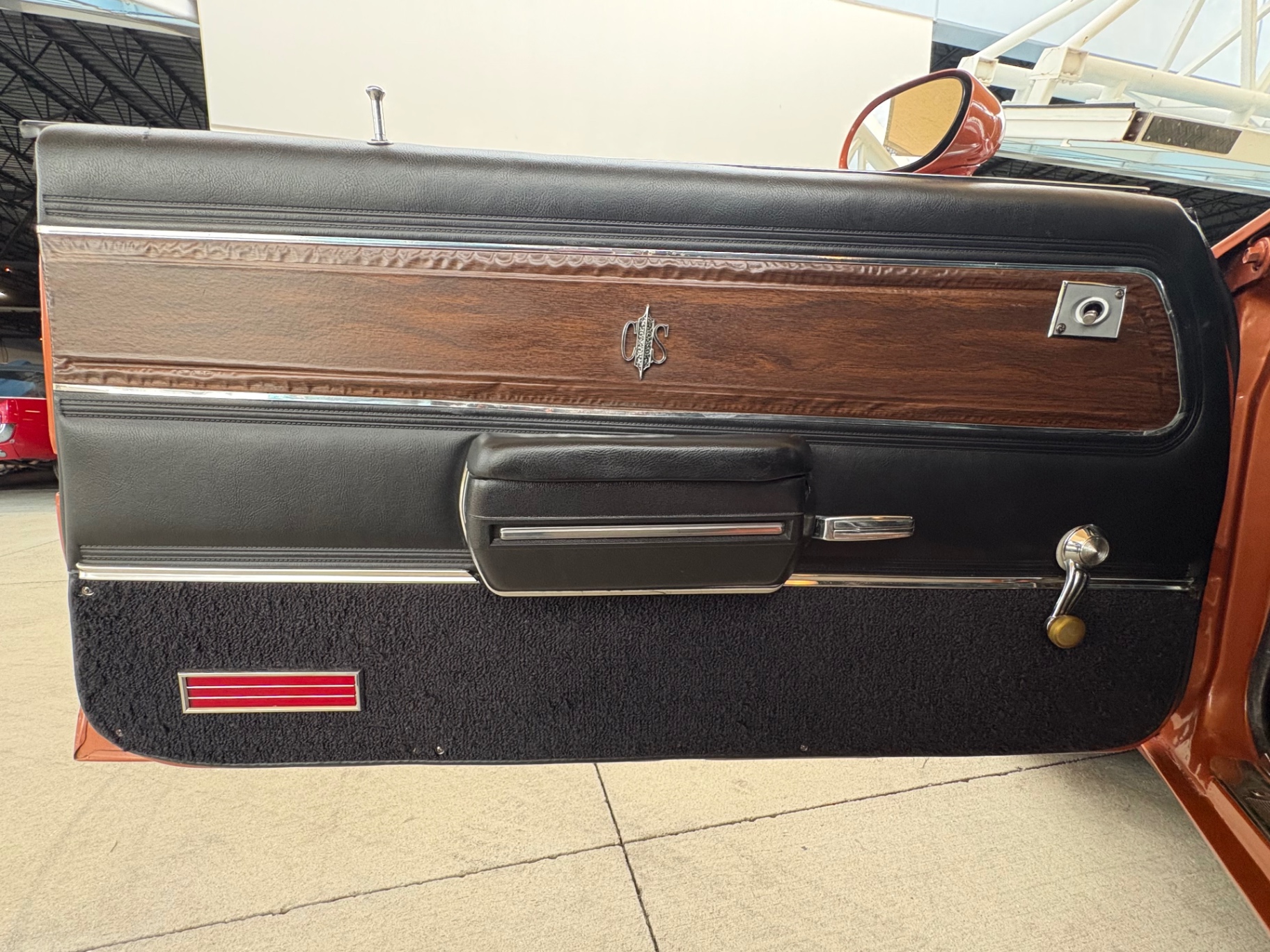
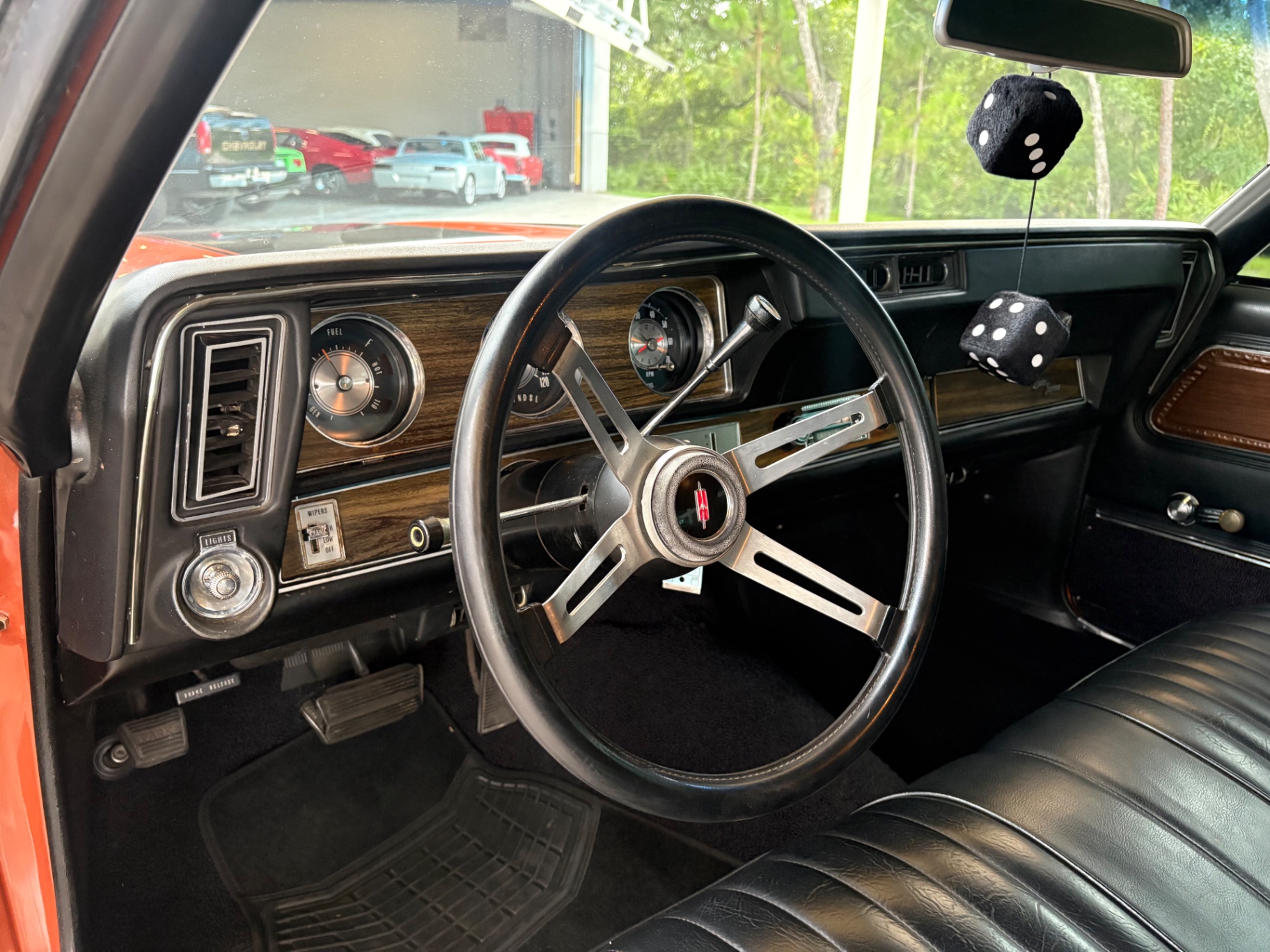
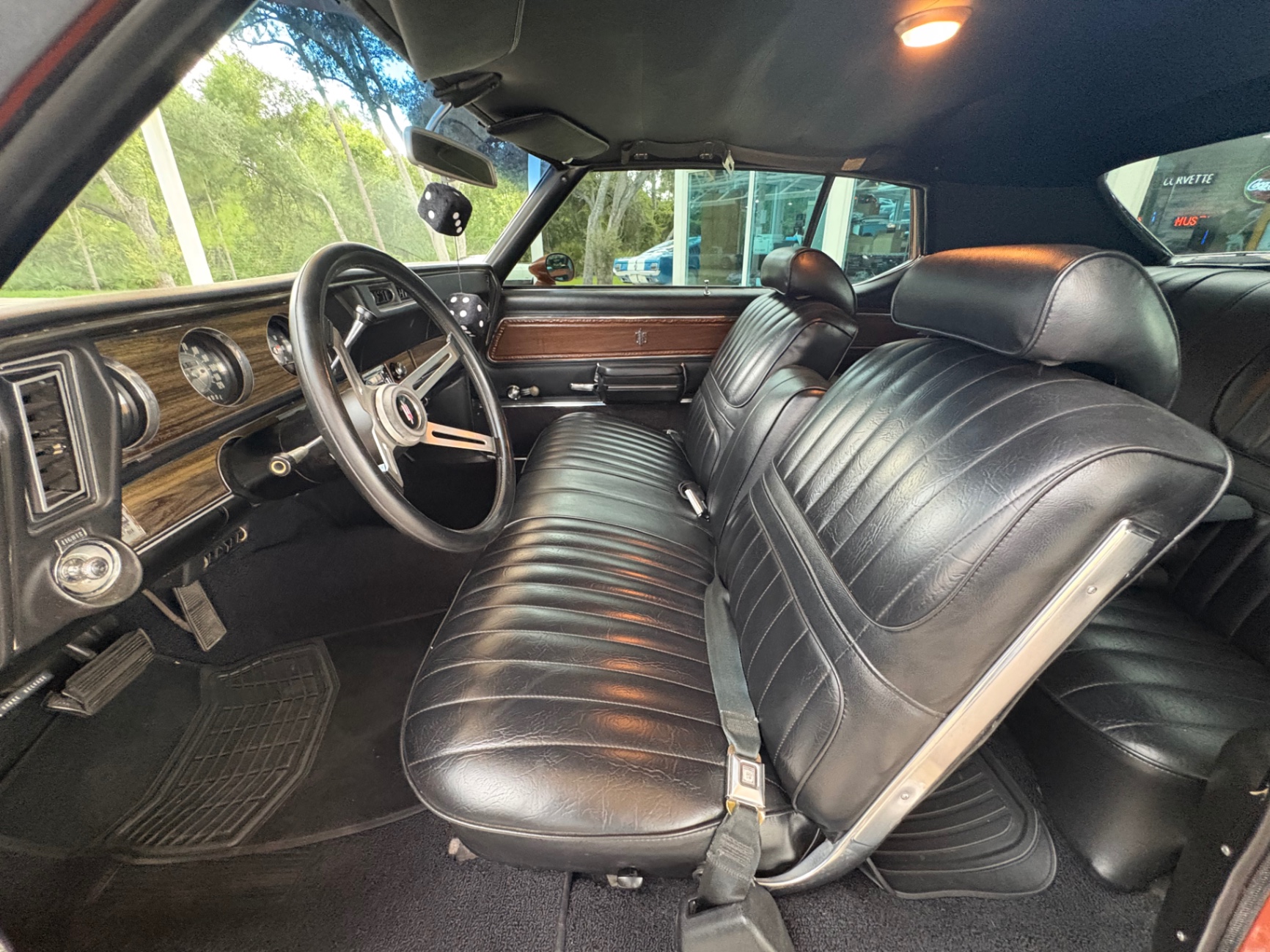
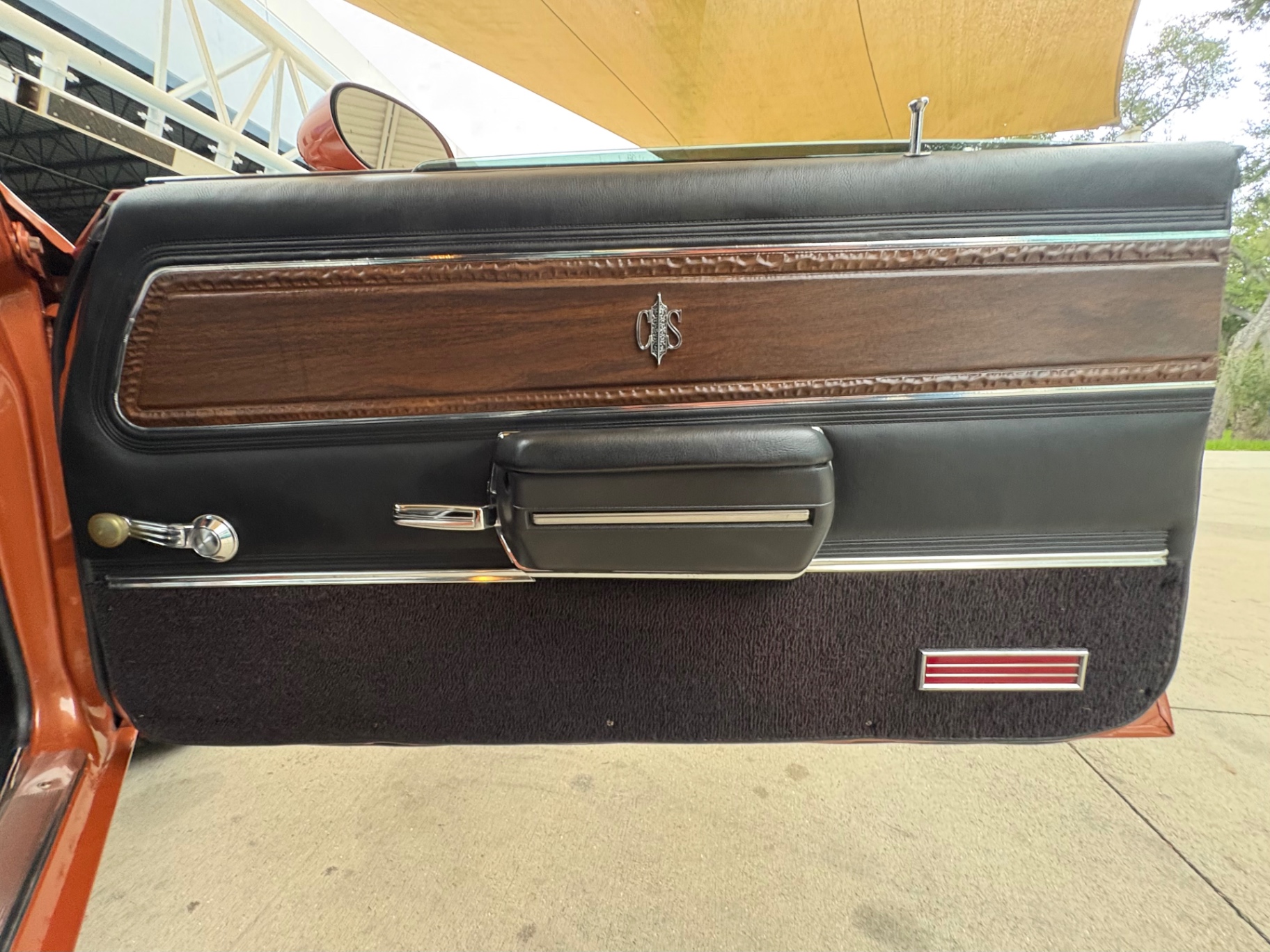
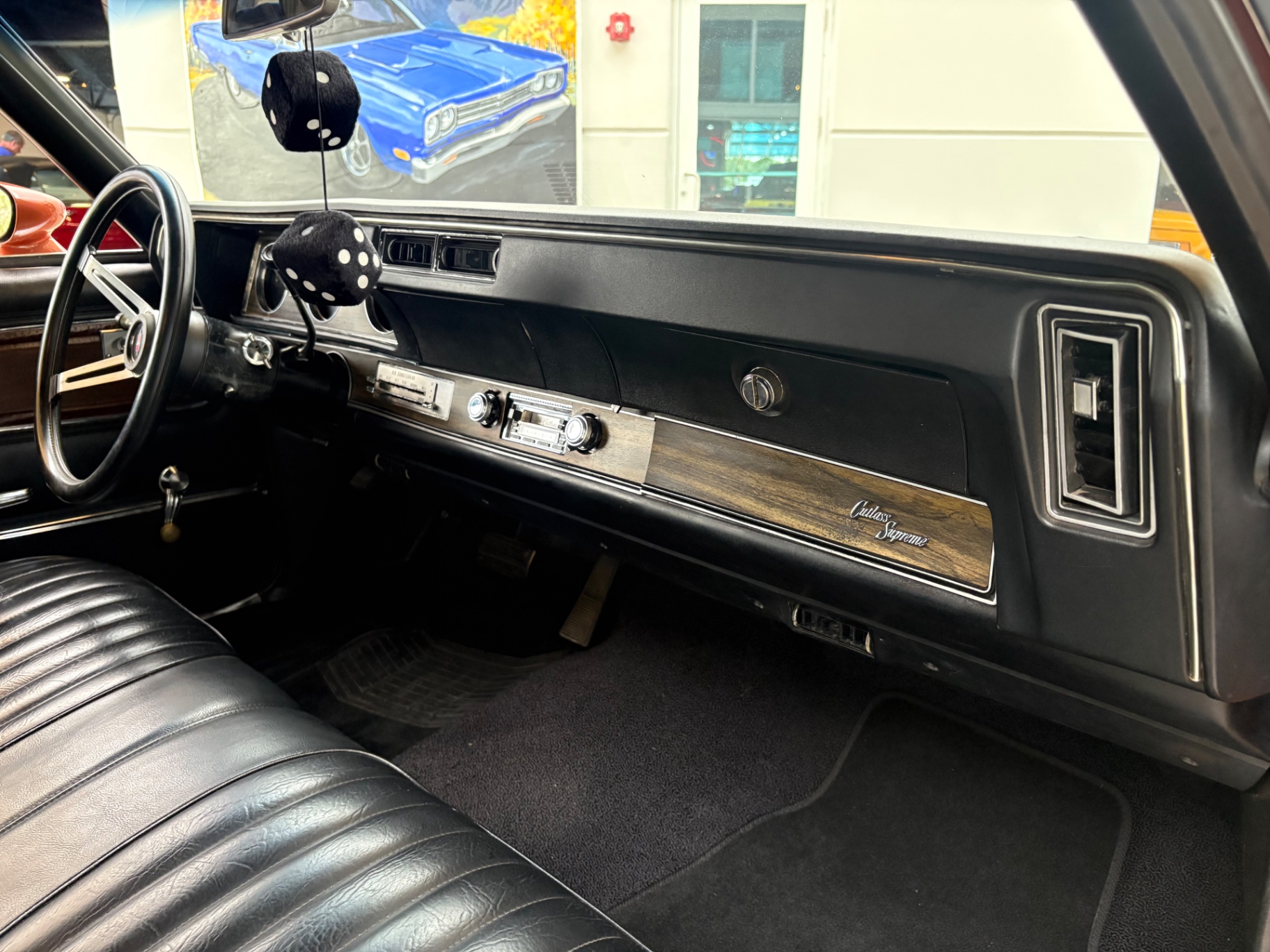
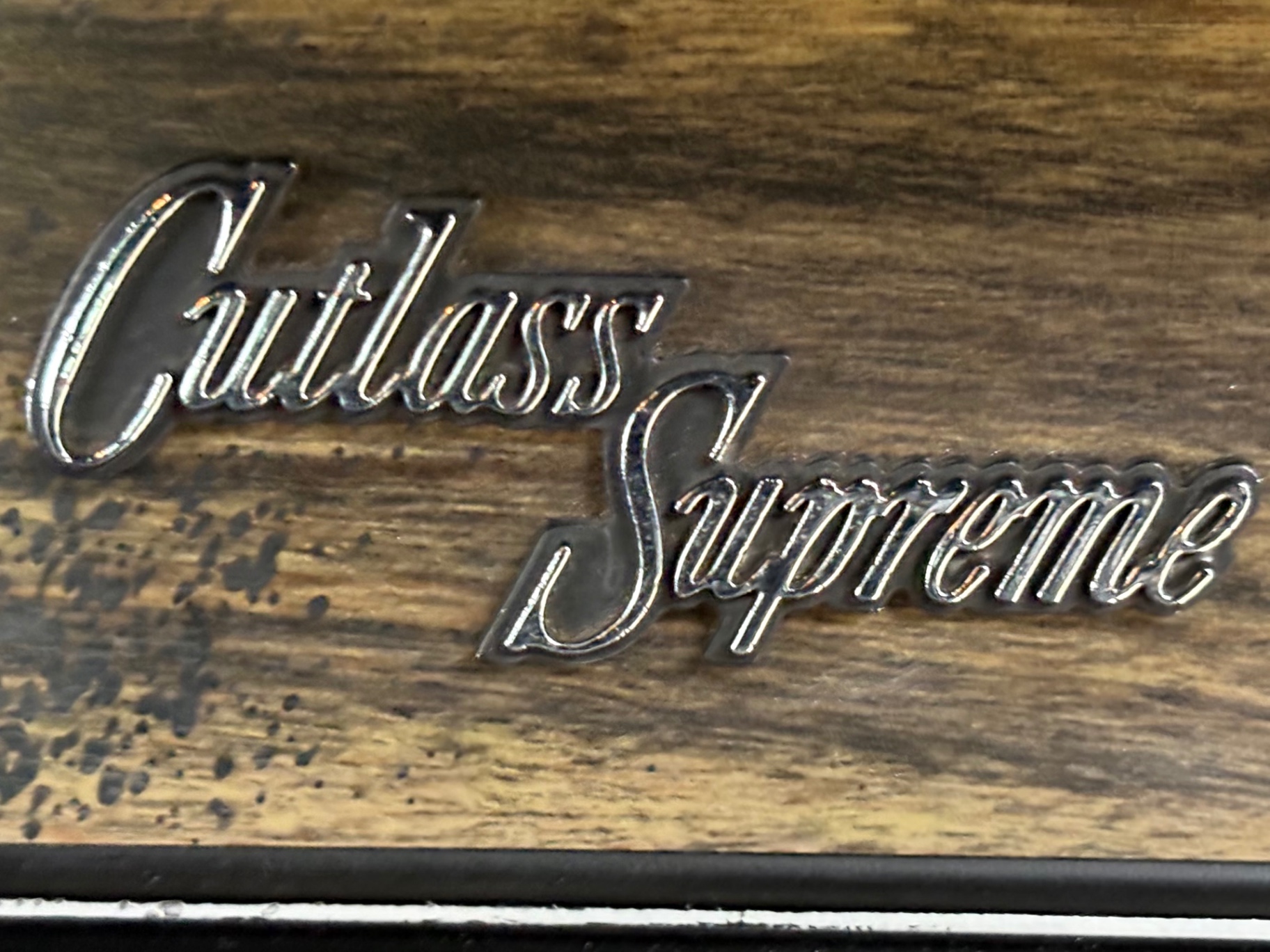
The 1971 Oldsmobile Cutlass Supreme interior was spec'd above the base Cutlass, and this car shows it. The dashboard carries the full woodgrain trim panel that wrapped across the instrument cluster and continued onto the door panels — a feature that distinguished the Supreme trim from lesser Cutlass variants. The door panels display the chrome CS badge and a lower carpet insert that mirrors the floor covering, giving the cabin a finished, deliberate look that holds up well today.
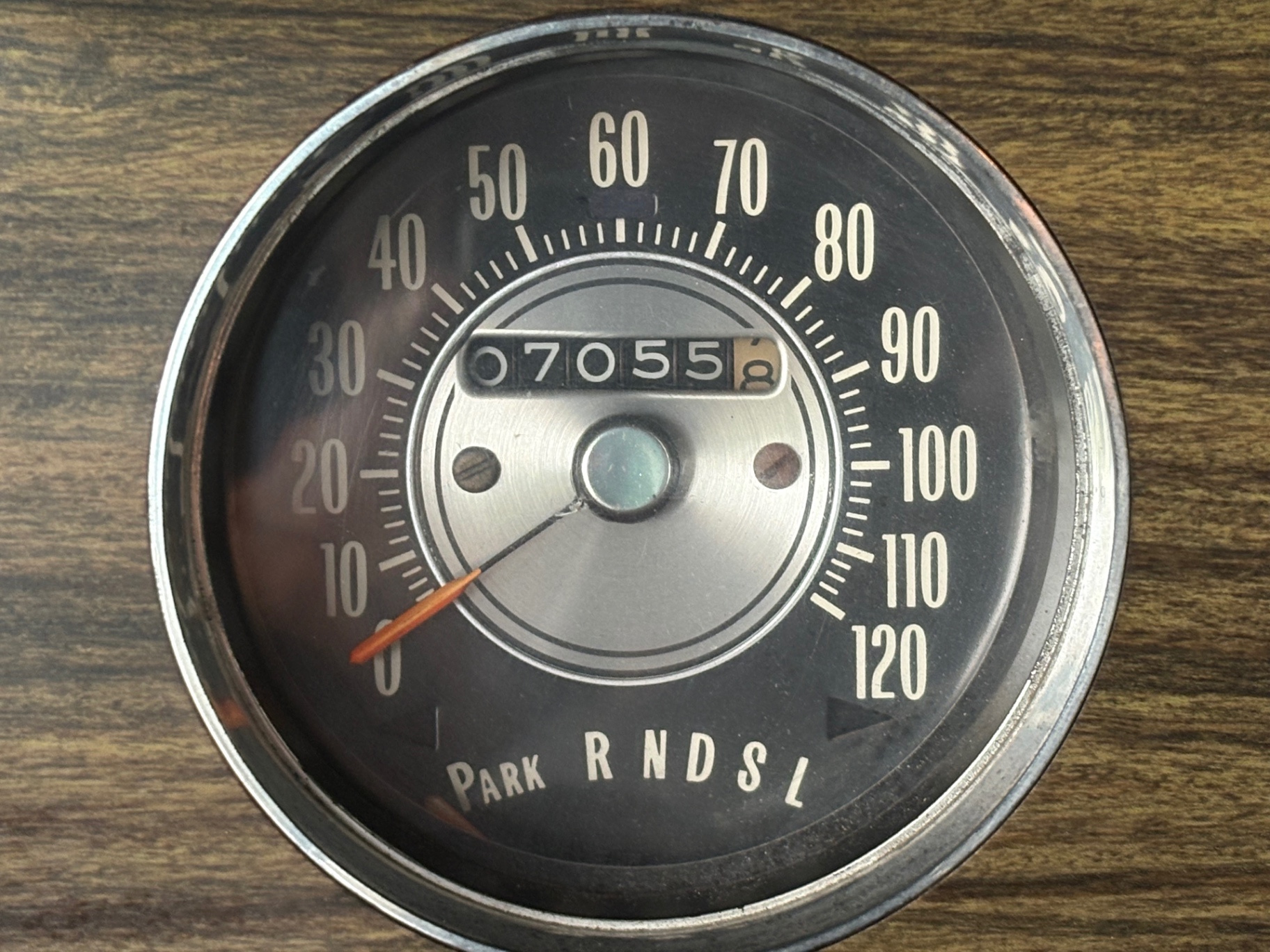
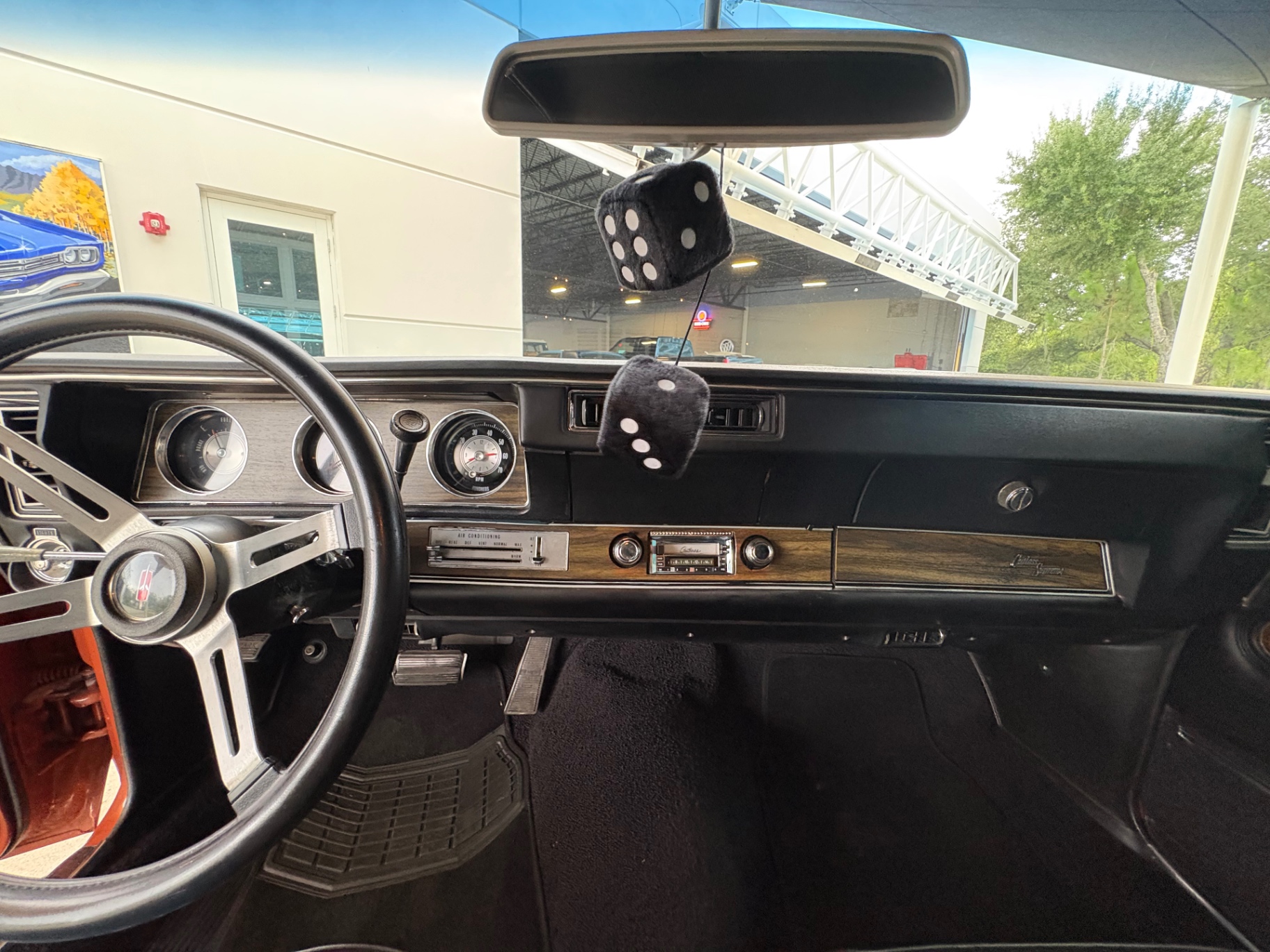
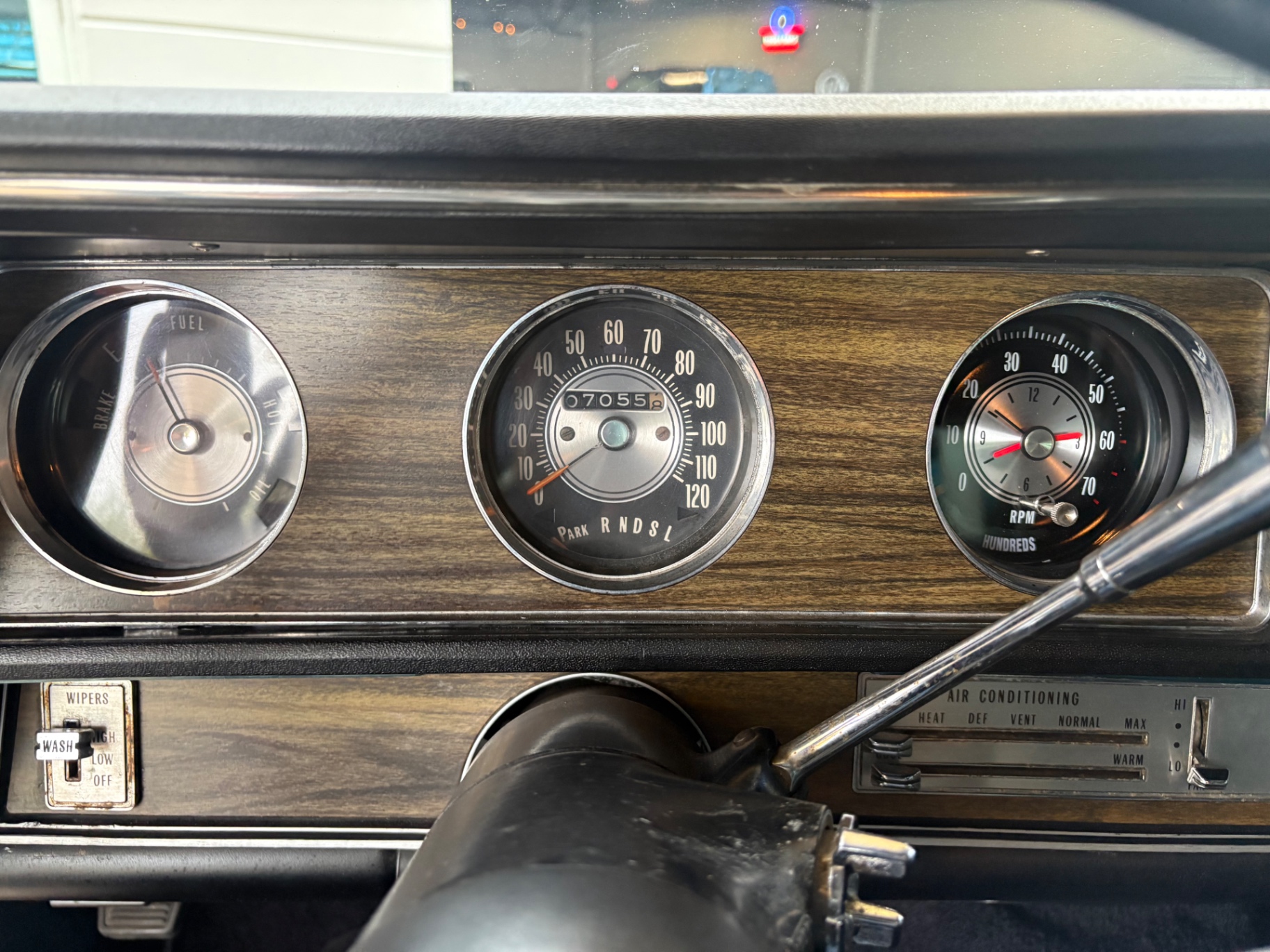
The instrument cluster is a three-gauge unit housing a fuel gauge, speedometer, and tachometer in round bezels set into the woodgrain panel. The tachometer is a period-correct addition that suits the car's performance character. The speedometer shows 07,055 miles on the odometer, though on a car of this age the actual mileage history is unknown and that reading should be understood accordingly. The air conditioning controls are visible in the center dash panel — a welcome feature in the Florida heat — with the familiar slider-style controls that were standard equipment on Oldsmobiles of this period.
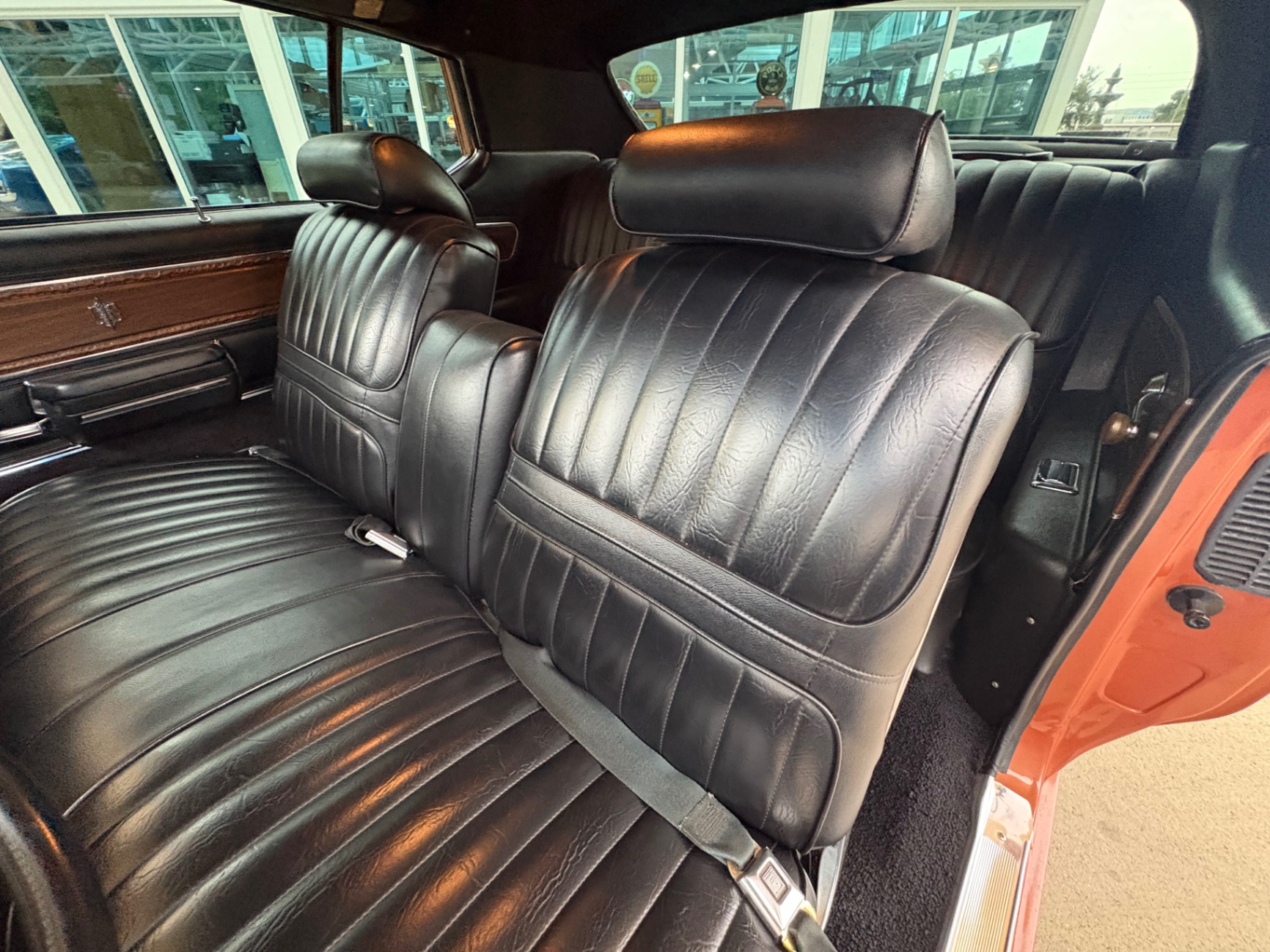
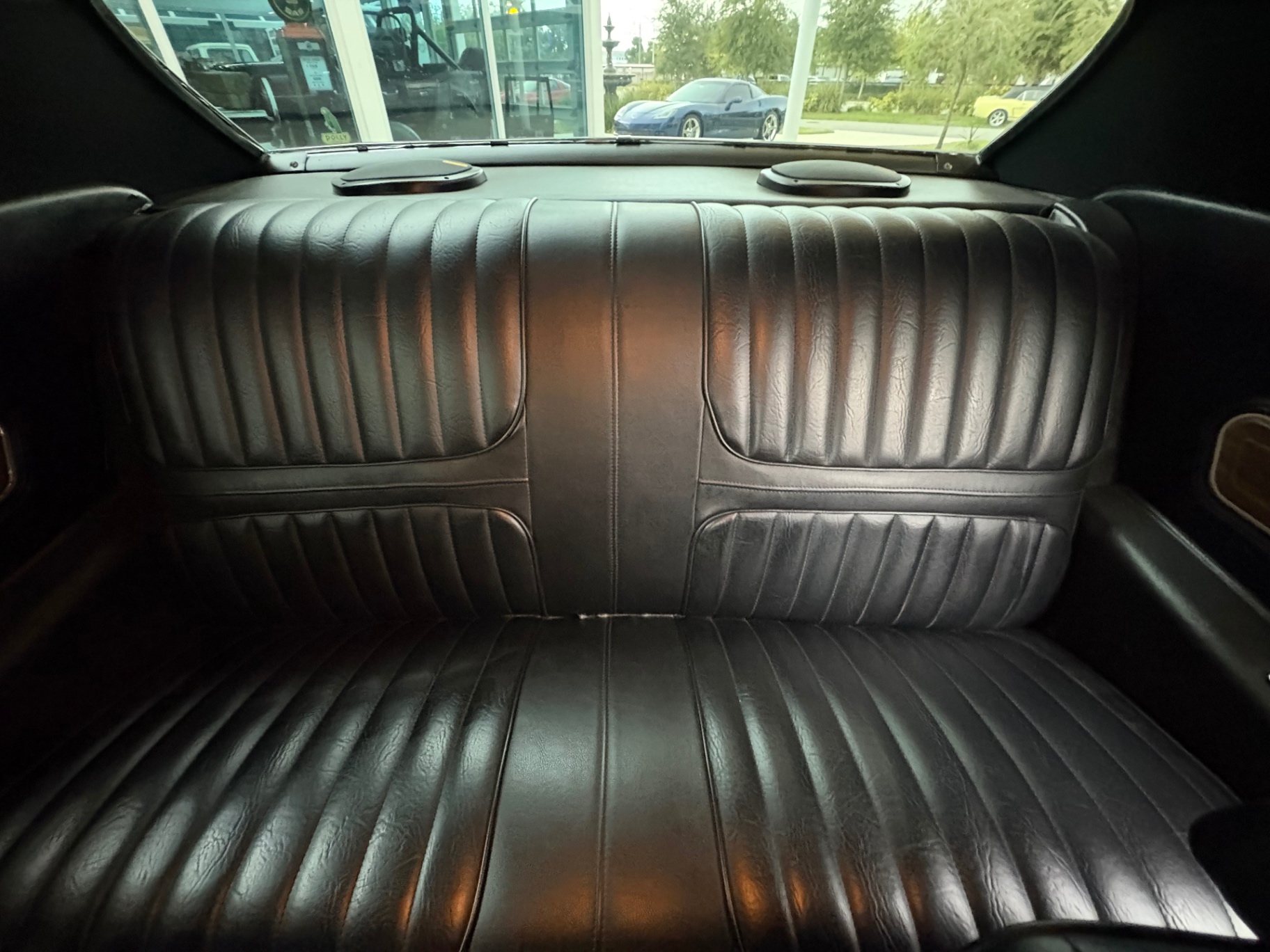
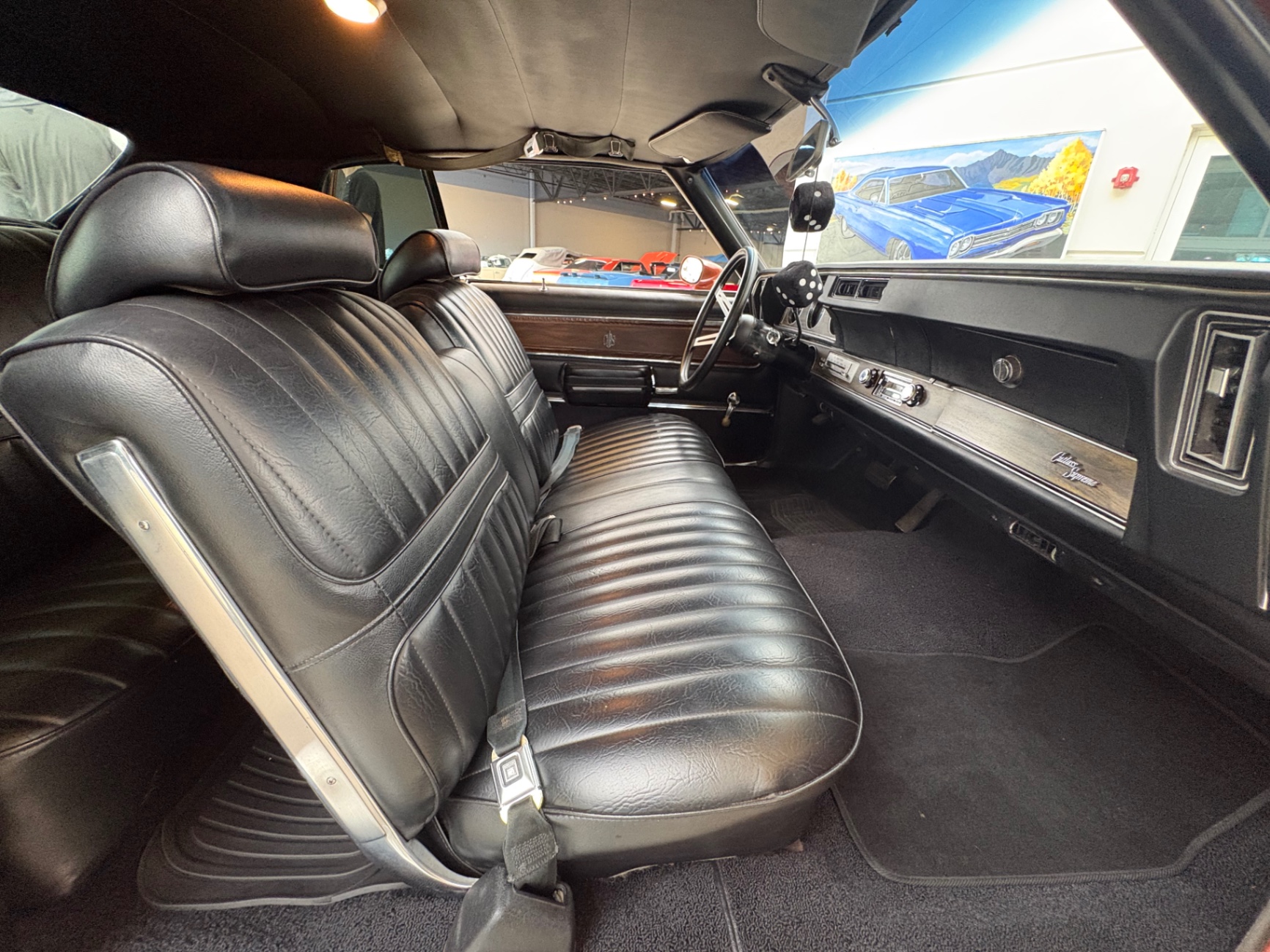
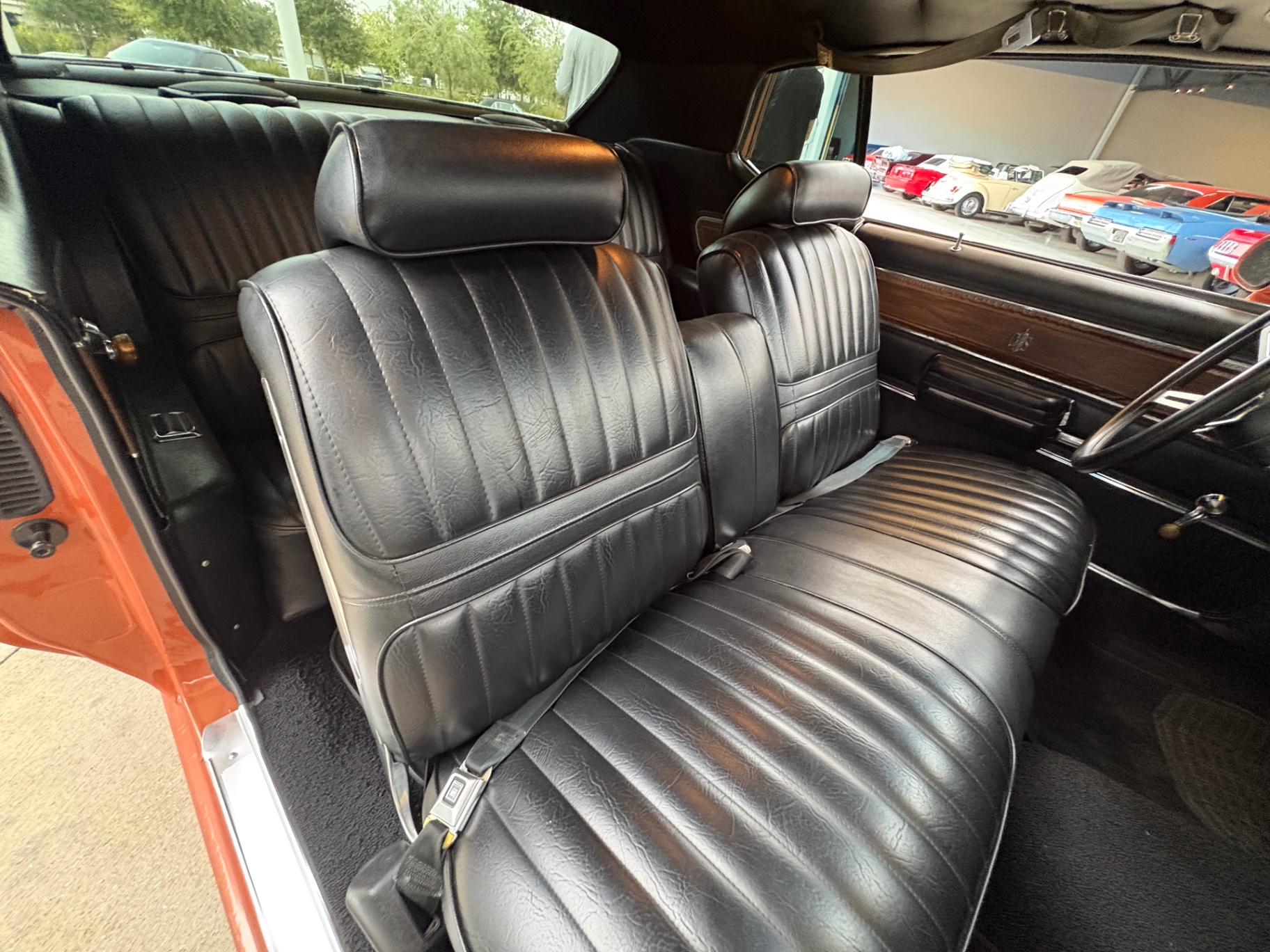
The front and rear bench seats are covered in black vinyl with vertical ribbed stitching. Both benches are equipped with headrests. The front bench shows the natural aging and slight surface texture changes you would expect from a vinyl seat of this age, with no tears or missing sections visible. The rear seat is in noticeably good condition and the black floor carpeting is clean throughout. The column shifter falls naturally to hand and keeps the full width of the front bench seat usable, consistent with the Cutlass Supreme's dual-purpose character as both a personal luxury car and a capable performer.
Exterior
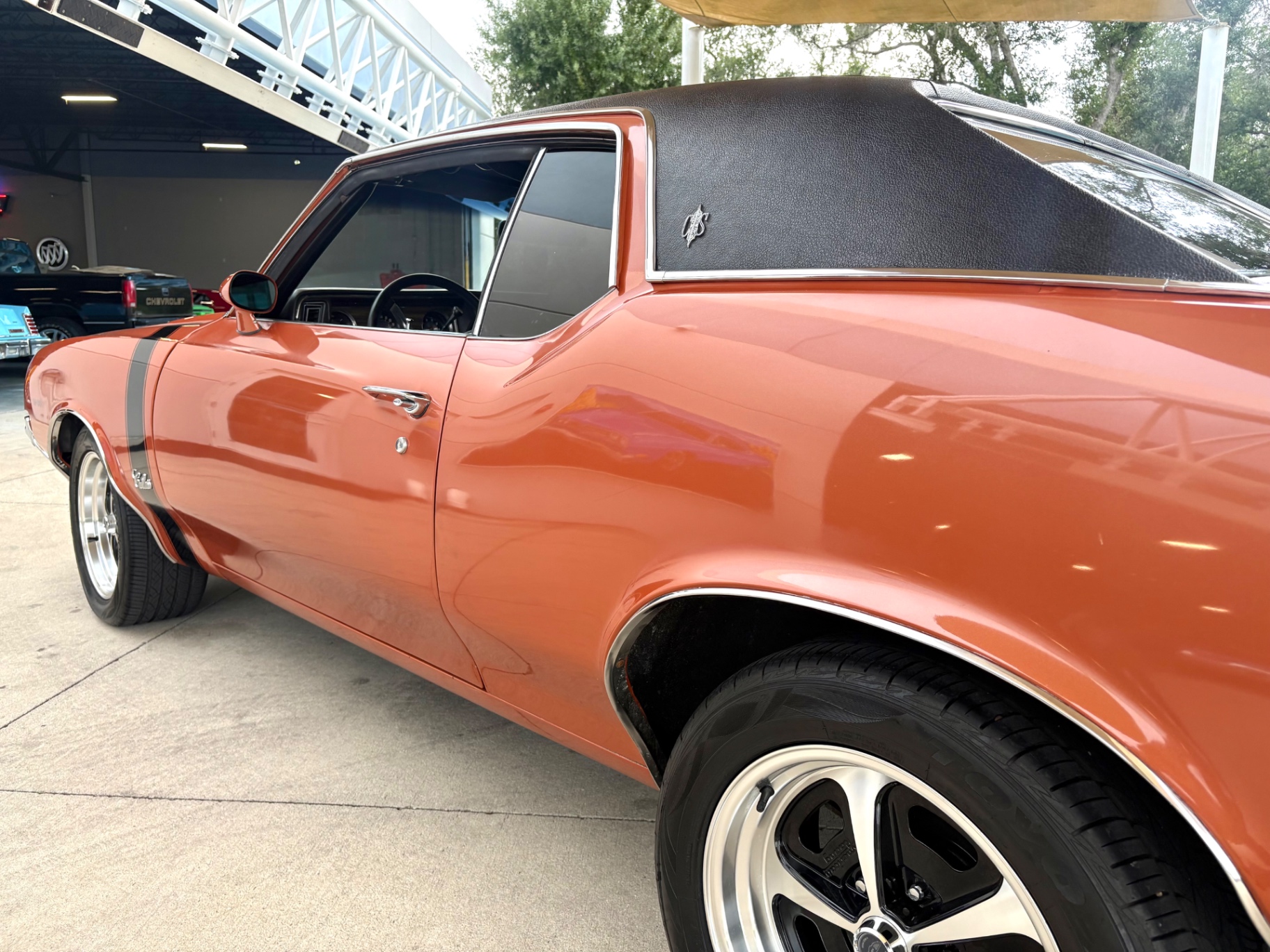
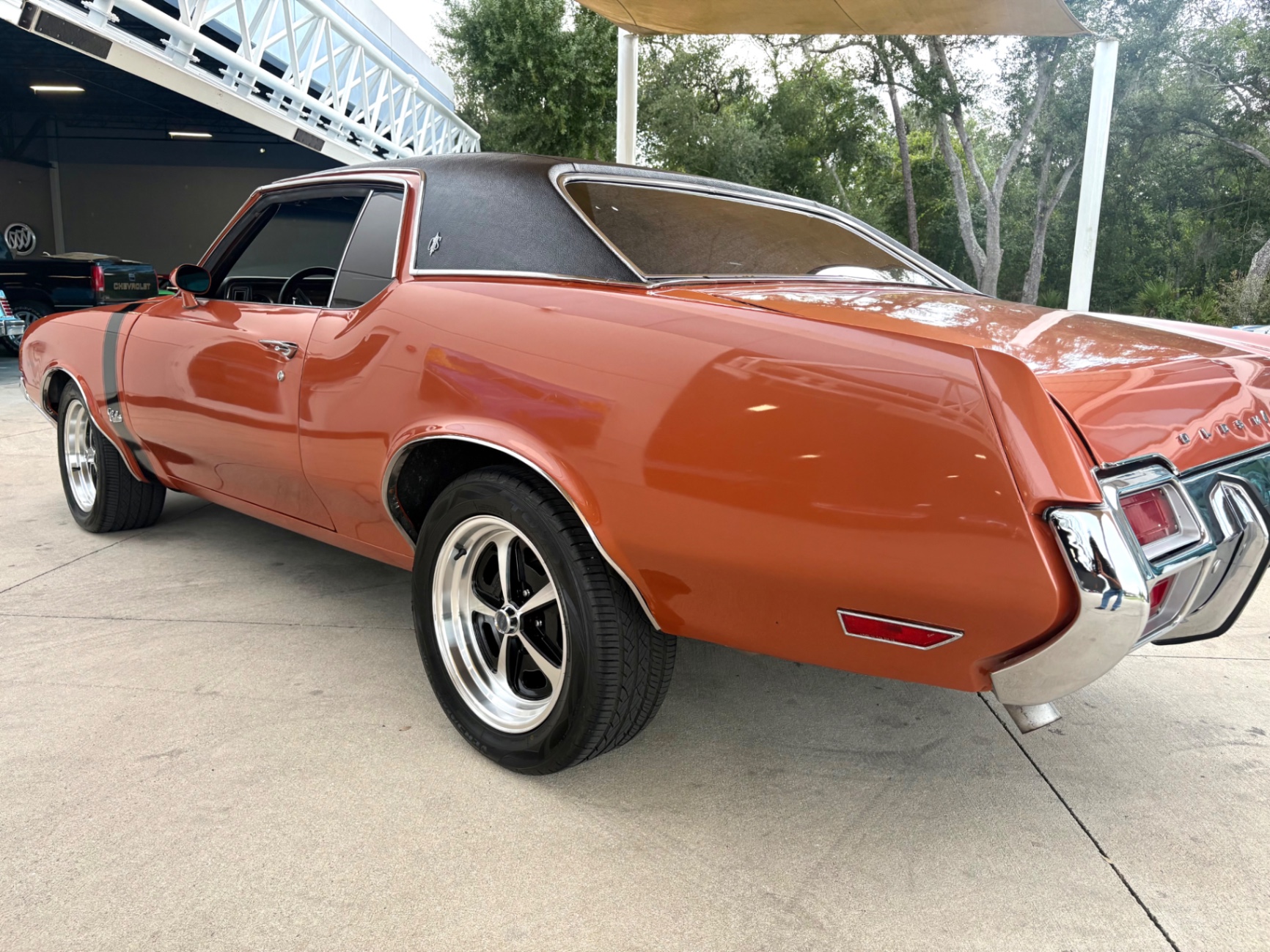
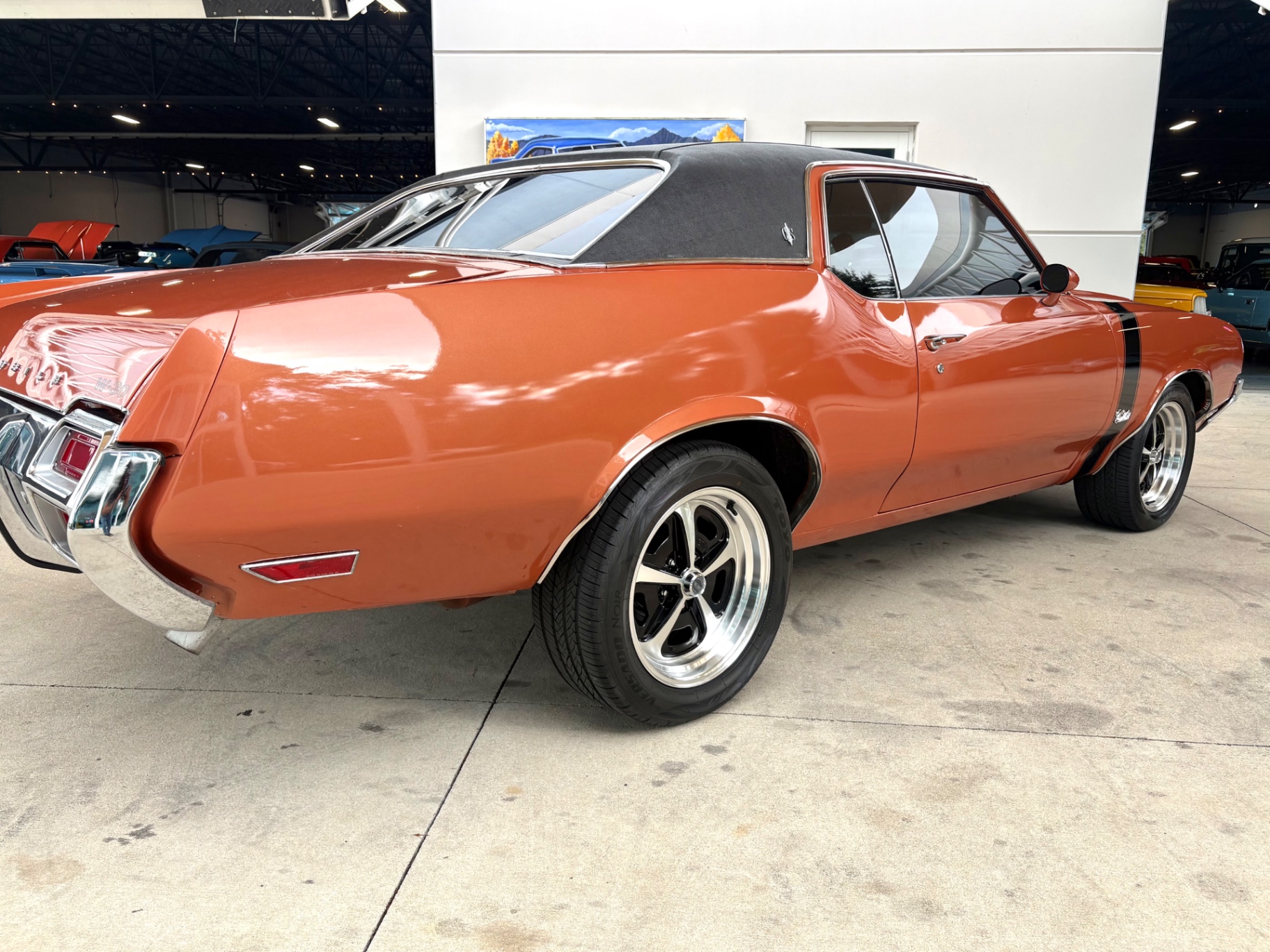
The Bittersweet Orange paint is a warm, deep copper-orange that photographs exceptionally well in daylight and reads distinctly different from the more common oranges used on Chevrolet and Pontiac A-bodies of the same era. It is a color that was available across the GM lineup in 1971 and suits the aggressive proportions of the Cutlass Supreme coupe naturally. The paint presents well in the photos, with consistent coverage and no panel color mismatches visible.
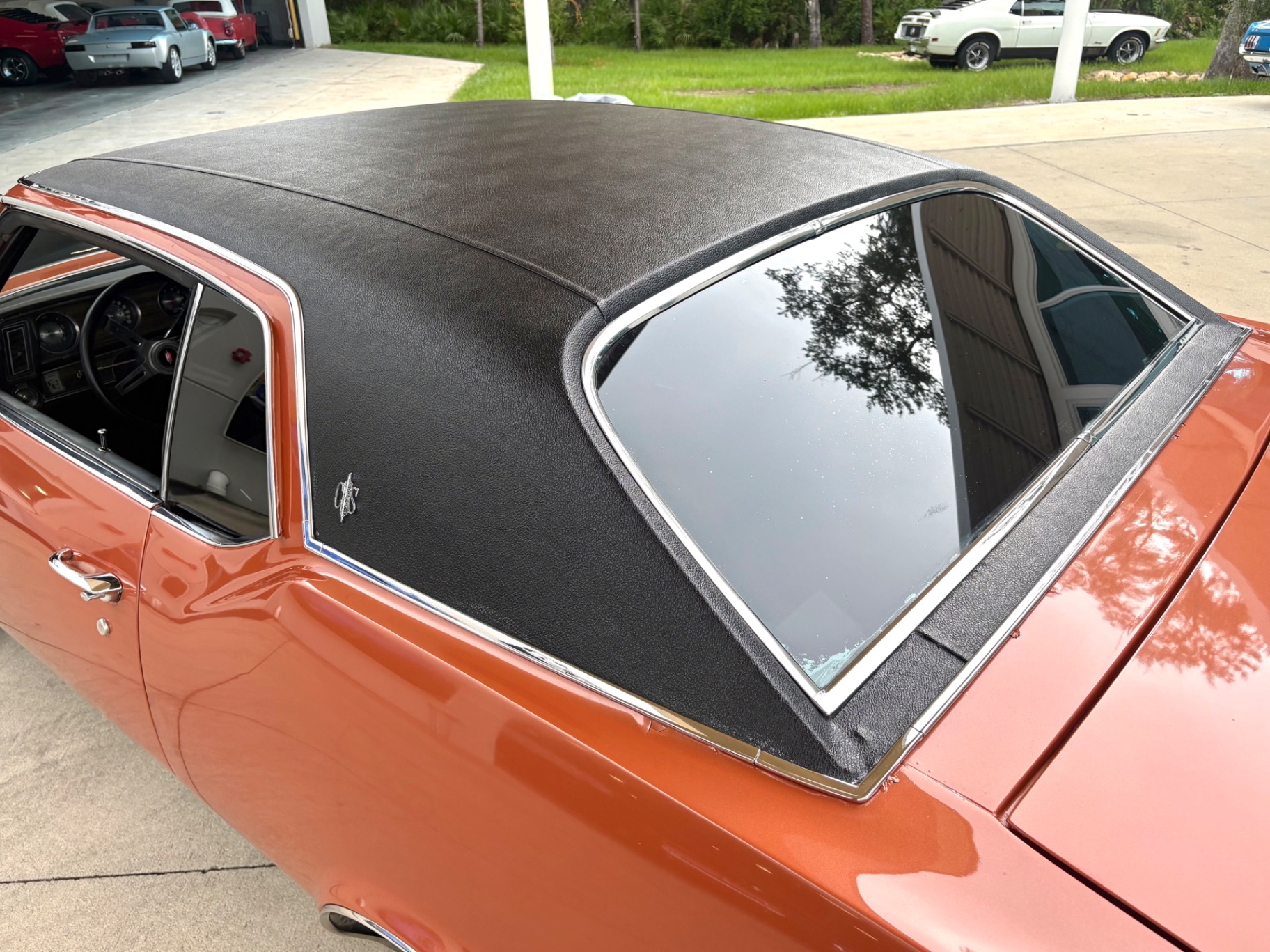
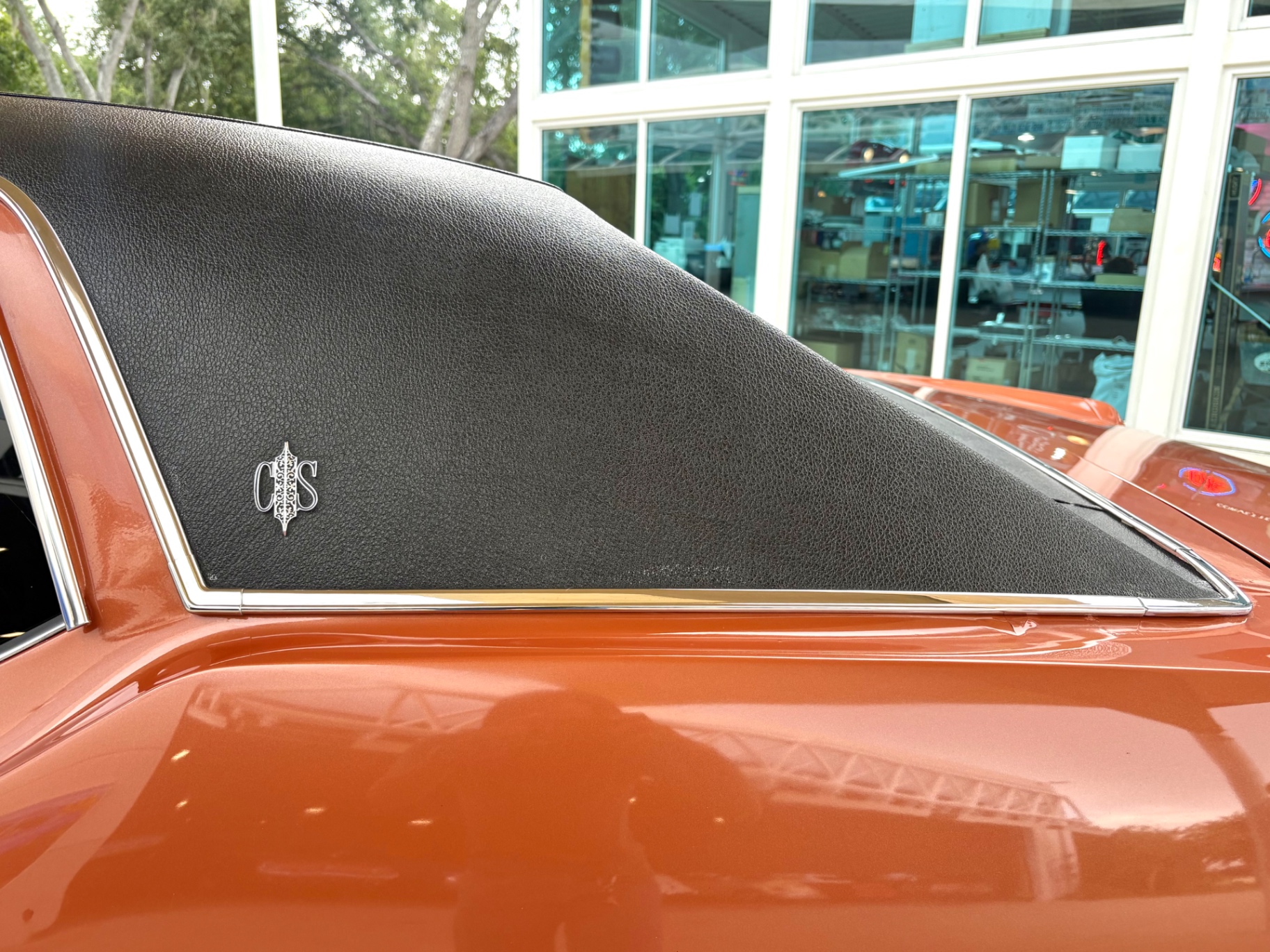
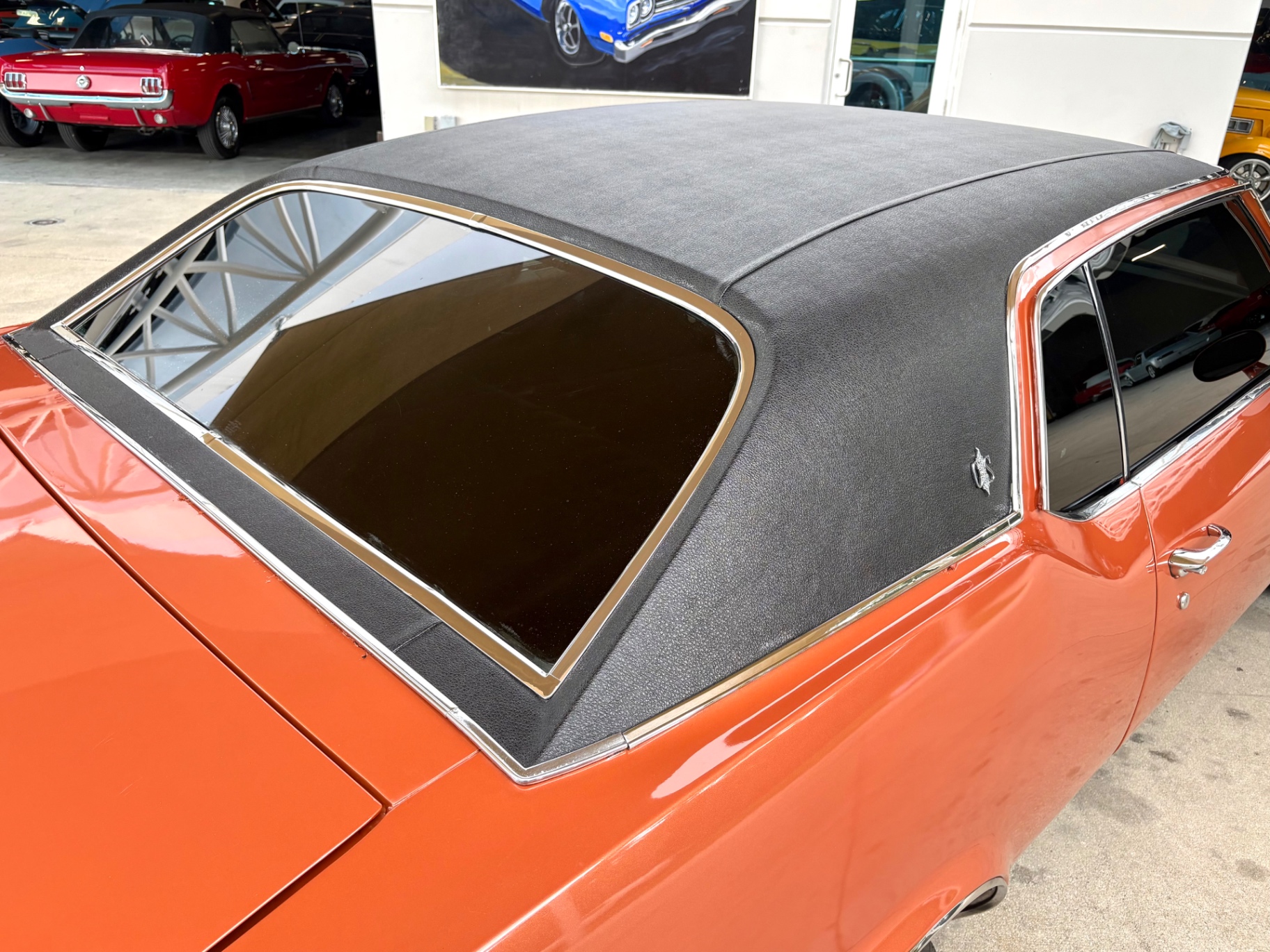
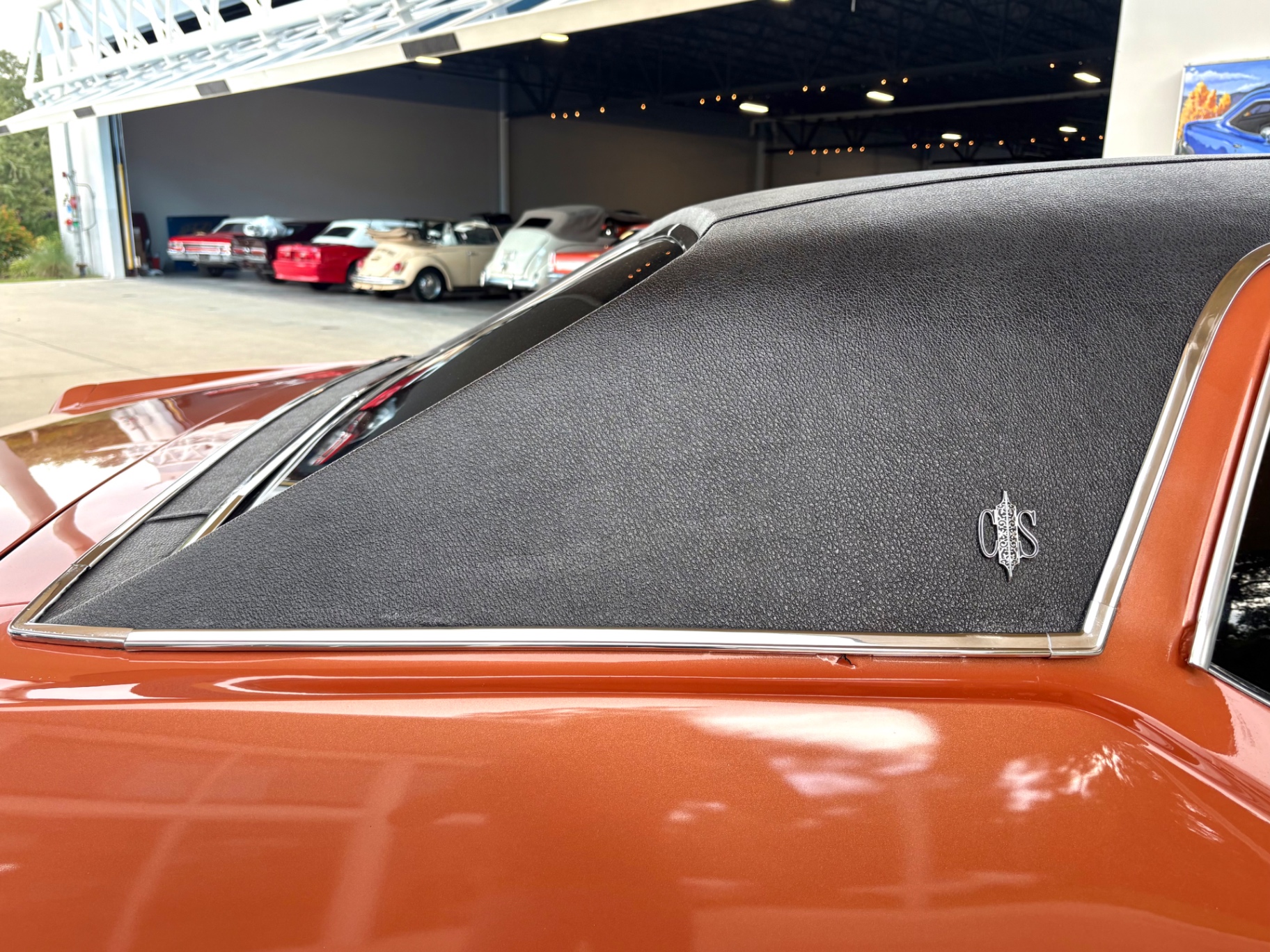
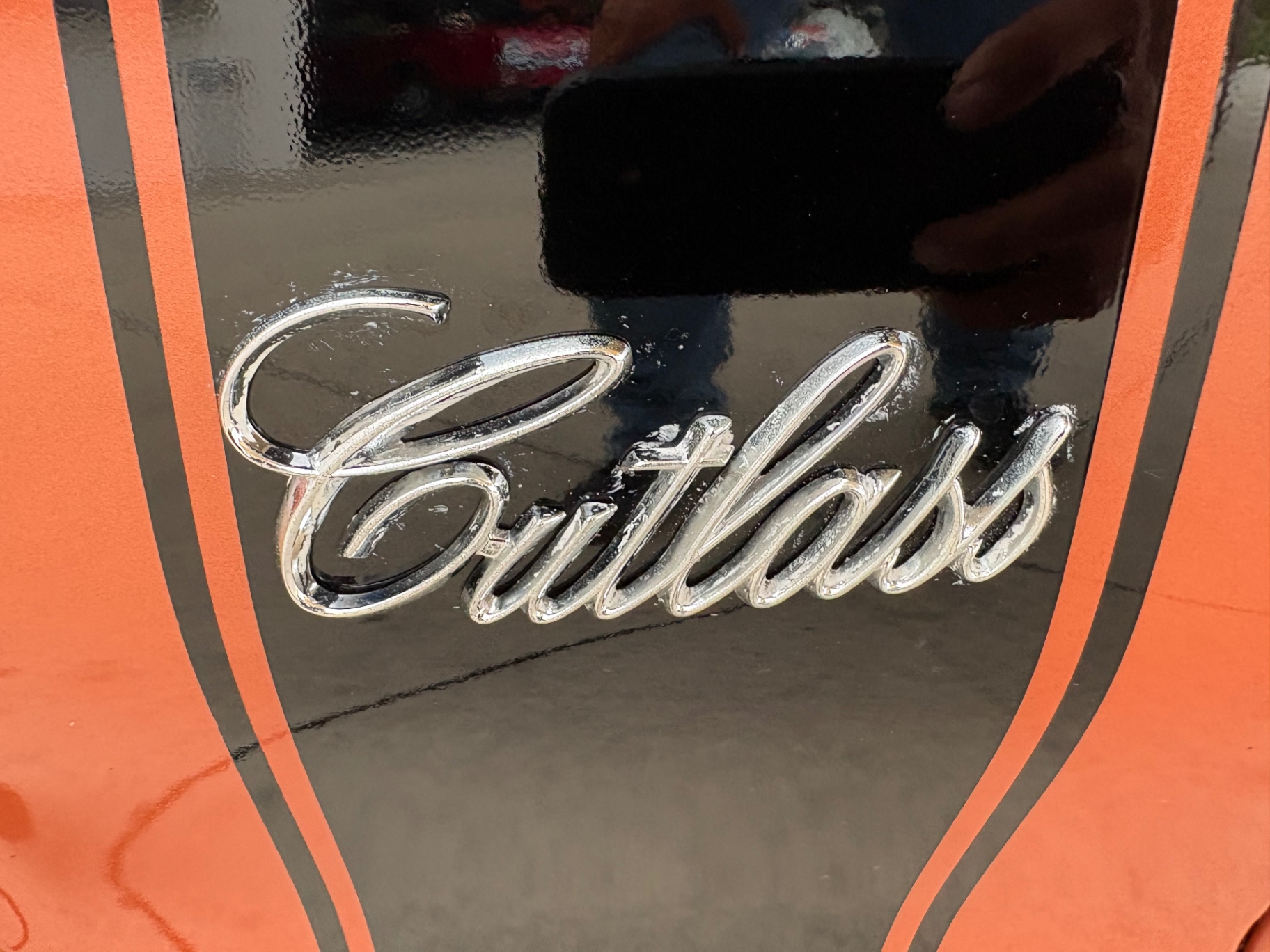
The black vinyl top adds contrast to the Bittersweet Orange body and was a very popular option on the 1971 Cutlass Supreme. Combined with the black W-30 stripe graphics — which run down the lower body sides and include the W-30 badging on the front fenders — the car presents a coherent, purposeful appearance package. These graphics are a tribute to the factory W-30 option, which was Oldsmobile's forced-induction ram-air performance package for the 4-4-2. The ram-air hood scoops on this car are functional in appearance and consistent with the W-30 visual package.
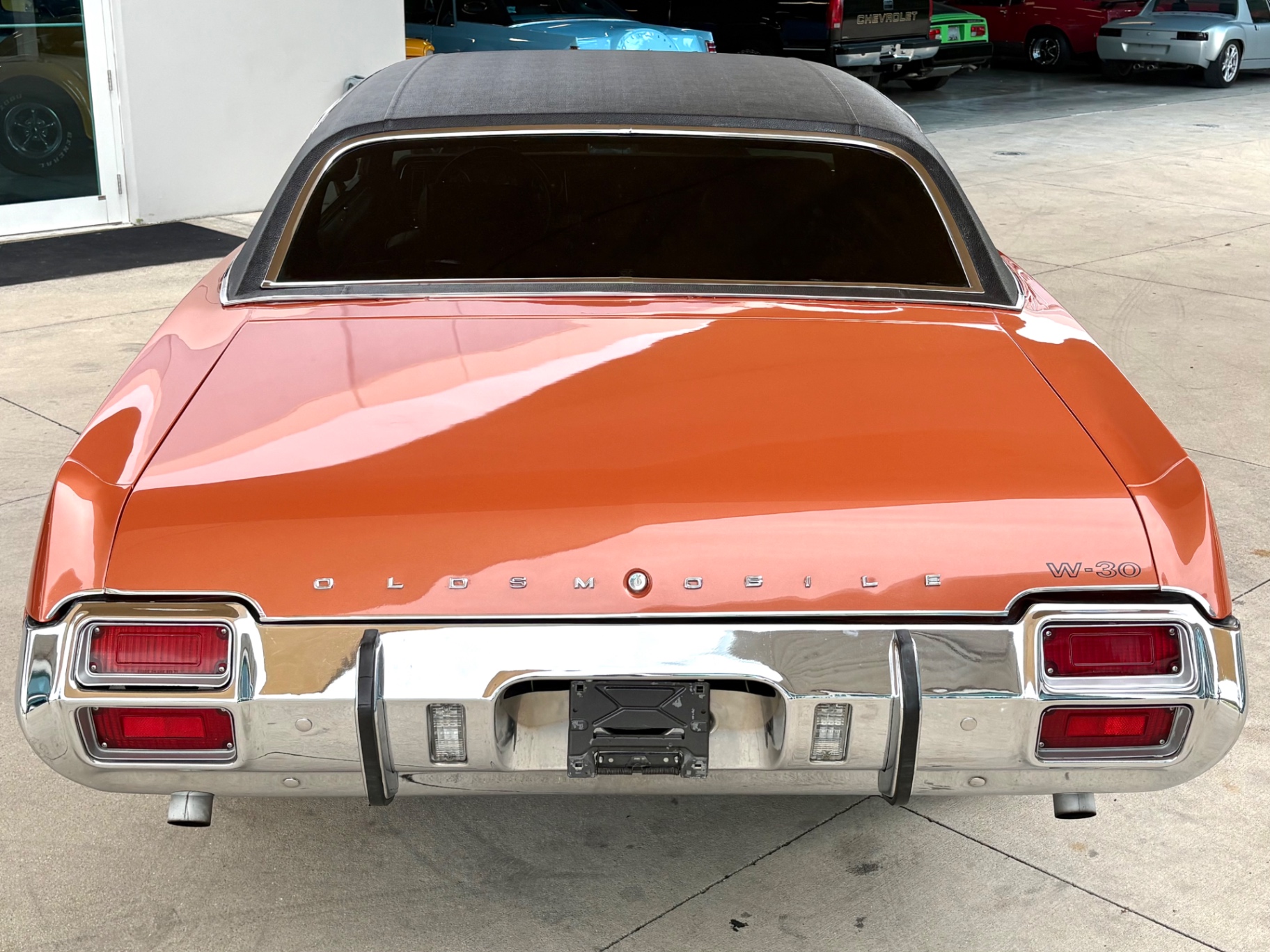
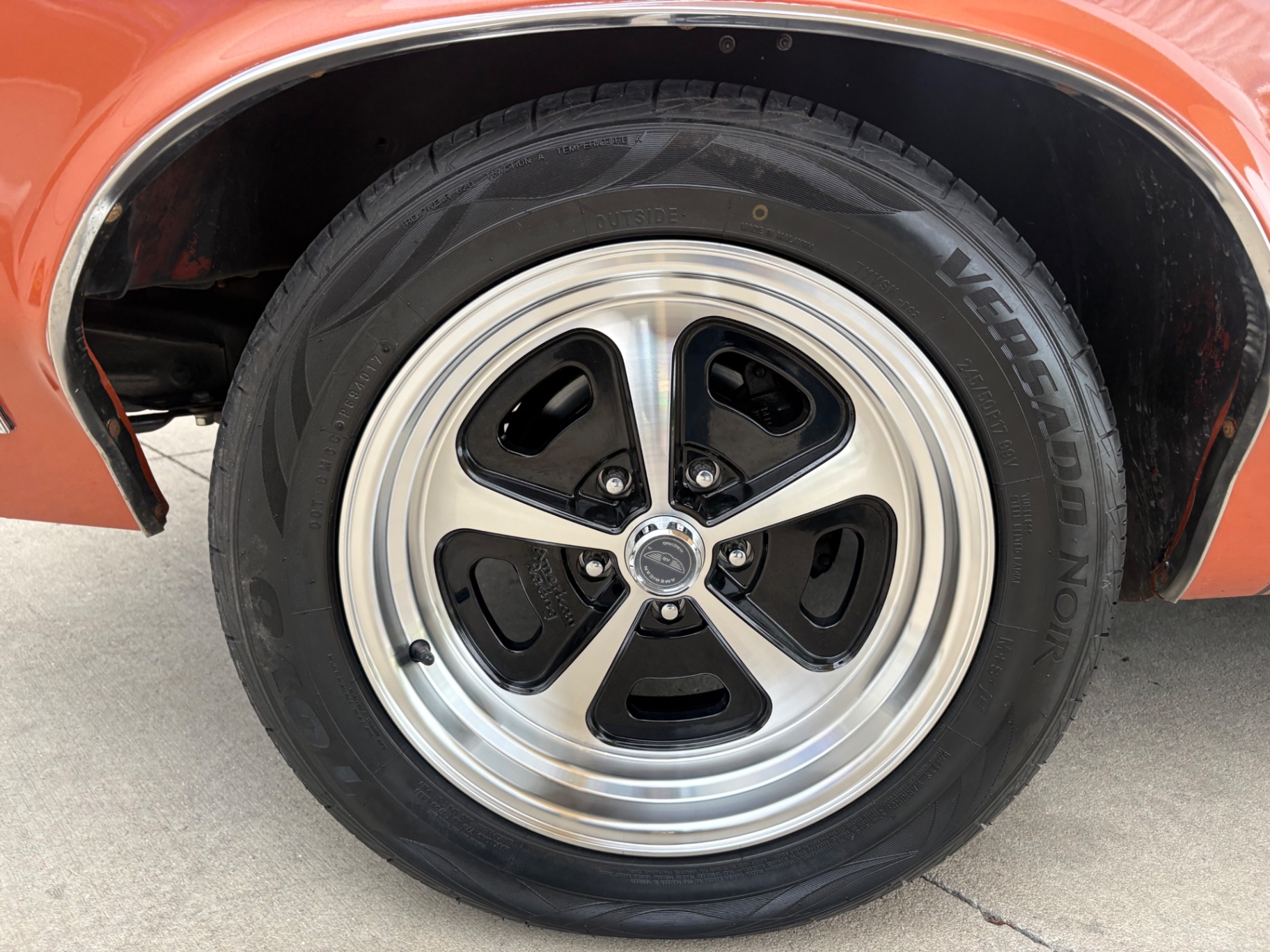
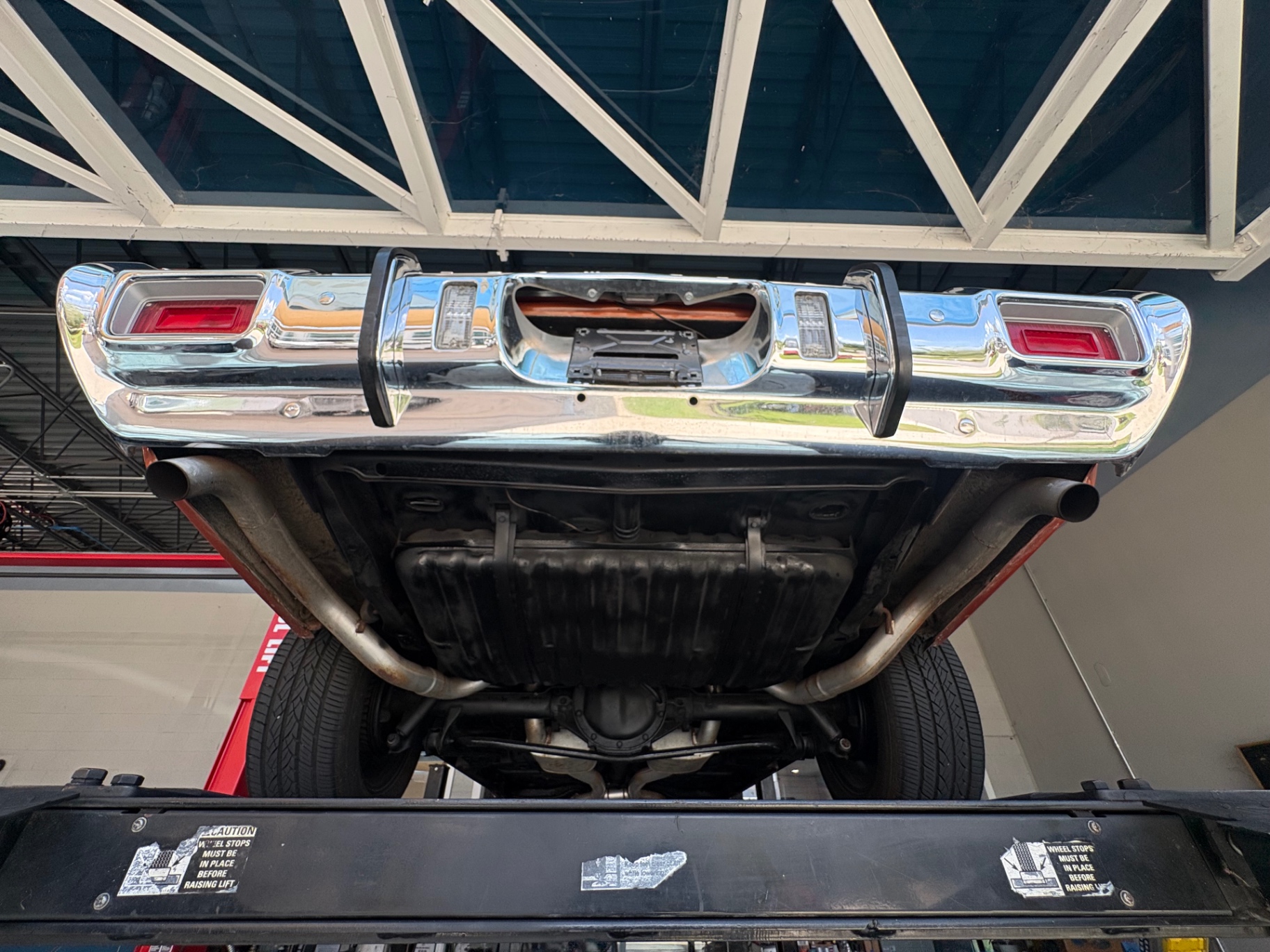
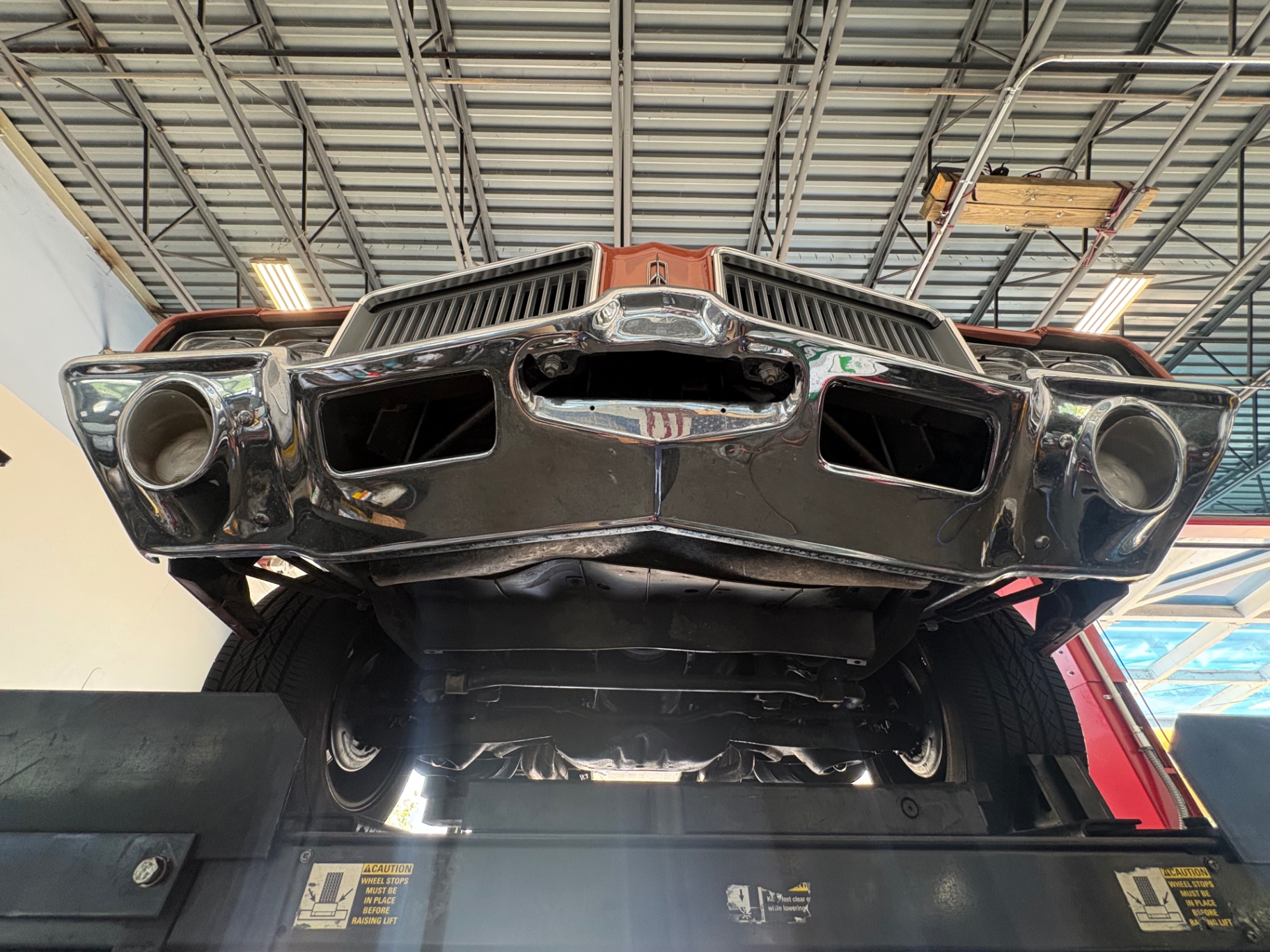
The chrome front and rear bumpers are in good condition. The 1971 Cutlass Supreme used a distinctive wraparound front bumper with the grille set inside a pronounced surround, and the rear bumper on this body style is notable for its integrated taillight treatment — clean and well-proportioned. The Torq-Thrust style five-spoke wheels fill the wheel wells correctly and are a period-appropriate choice that complements the Bittersweet Orange exterior without looking out of place on a 1971 A-body. The underside photos show a coated floor pan with no visible rust perforation — a solid foundation for a car that was clearly maintained and likely spent time in a dry climate before arriving in Florida.
Conclusion
The 1971 Oldsmobile Cutlass Supreme was the right car at the right moment — the last year the big-block A-body could genuinely deliver performance before the regulatory and insurance climate changed everything. This example combines the correct visual presence of the W-30 tribute package with a mechanically upgraded Rocket 455 that is set up to drive well and drive reliably. The Edelbrock intake, MSD ignition, and Magnaflow exhaust represent sensible, widely respected upgrades rather than radical modifications, and the Turbo Hydra-matic 400 is a proven transmission that asks very little of its owner. The Bittersweet Orange and black combination is a visually distinctive pairing that is uncommon enough to stand out in any crowd of early 1970s GM muscle cars.
For a buyer who wants a big-block A-body that drives as good as it looks — with the comfort of air conditioning, the practicality of an automatic, and the character of a genuine Rocket 455 — this 1971 Oldsmobile Cutlass Supreme is worth a serious look.
To schedule a walk-around, ask questions, or discuss transport, call Skyway Classics in Sarasota, Florida at 941-254-6608.
Disclaimer
Information found on the website is presented as given to us by the owner of the car, whether on consignment or from the owner we bought it from. Some Photos, materials for videos, descriptions and other information are provided by the consignor/seller and is deemed reliable, but Skyway Classics does not warranty or guarantee this information. Skyway Classics is not responsible for information that may incorrect or a publishing error. The decision to purchase should be based solely on the buyers personal inspection of the vehicle or by a professional inspection service prior to offer or purchase being made.
1971 Oldsmobile Cutlass Supreme — Rocket 455 V8, W-30 Tribute, Bittersweet Orange
Why This Car Is Special
The 1971 Oldsmobile Cutlass Supreme occupies a unique place in American muscle car history. It was the last model year before tightening emissions regulations and insurance surcharges began to genuinely strangle big-block performance. By 1971, Oldsmobile had already lowered compression ratios across the board to run on regular unleaded fuel, but the Rocket 455 cubic inch V8 — the largest displacement engine Oldsmobile ever put in a passenger car — still produced 340 horsepower and a massive 460 lb-ft of torque in standard tune that year. That torque figure is what made the 455 special. It was not a high-revving screamer. It was a low-rpm freight train, the kind of engine that pulls hard from idle and keeps pulling through the quarter mile without asking much of the driver.
The Cutlass Supreme was the upmarket version of the A-body Cutlass lineup, sitting above the base Cutlass but below the full performance 4-4-2. It offered a longer list of standard comfort and appearance features, including the distinctive woodgrain interior trim that became a signature of the model. The 1971 Cutlass Supreme was one of the best-selling cars in the United States that year, and the two-door hardtop coupe body style — with its wide C-pillar, flowing roofline, and long hood — has aged extremely well visually.
This particular 1971 Oldsmobile Cutlass Supreme is finished in Bittersweet Orange, one of the more distinctive factory color options available on the A-body platform in 1971, paired with a black vinyl top and a black interior. The car wears W-30 tribute badging and the corresponding ram-air hood scoops, graphics, and stripe package that evoke the factory W-30 performance option without claiming to be something it is not. Under the hood sits a Rocket 455 V8 backed by a Turbo Hydra-matic 400 automatic, supported by a set of performance upgrades that make this car a genuine driver rather than a show piece.
The VIN decodes to confirm this is a 1971 Oldsmobile A-body two-door hardtop built at the Lansing, Michigan assembly plant, with a 455 cubic inch engine and automatic transmission — consistent with everything presented here.
Features List
- Rocket 455 cubic inch V8 engine
- Turbo Hydra-matic 400 3-speed automatic transmission
- Edelbrock aluminum intake manifold
- 4-barrel carburetor
- MSD ignition system
- Magnaflow dual exhaust
- W-30 tribute badging and ram-air hood scoops
- Black W-30 stripe graphics
- Bittersweet Orange exterior paint
- Black vinyl top
- Chrome front and rear bumpers
- Torq-Thrust style wheels
- Air conditioning
- Woodgrain interior trim on dashboard and door panels
- Custom sport steering wheel with Oldsmobile center cap
- Dashboard-mounted tachometer
- Front and rear bench seats
- Front and rear headrests
- Black floor carpeting
- Column-shifted automatic transmission
- Rear drum brakes
Mechanical
The Rocket 455 was Oldsmobile's big-bore entry in the displacement wars of the early 1970s. Introduced in 1968, the 455 used a large 4.126-inch bore with a 3.975-inch stroke, giving it a broad, undersquare design that favored torque over high-rpm horsepower — exactly the kind of engine that suits street driving. In standard 1971 tune, it was rated at 340 horsepower and 460 lb-ft of torque. The compression ratio had been dropped to 8.5:1 that year to accommodate regular unleaded fuel, which actually made these engines more durable long-term and easier to run today on pump gas.
This car's 455 has been upgraded with an Edelbrock aluminum intake manifold, which reduces weight over the iron factory unit and improves airflow to the 4-barrel carburetor. The MSD ignition system replaces the factory points-type ignition with a capacitive discharge unit that delivers a stronger, more consistent spark — a practical improvement that helps the engine run cleanly and start reliably. The Magnaflow dual exhaust system routes exhaust through two stainless-steel mufflers and exits through the rear, giving the 455 the low, authoritative exhaust note that the factory single-outlet system never really delivered. The underside photos confirm the Magnaflow mufflers are clearly legible and the exhaust routing is clean and properly supported.
The Turbo Hydra-matic 400 is one of the most respected automatic transmissions General Motors ever built. Strong, smooth, and capable of handling the torque output of big-block engines without drama, the TH400 was used across the GM performance lineup from the late 1960s through the 1980s. This one is shifted from the column, which was a common configuration on Cutlass Supreme models equipped with bench seating. The underside of the car shows a well-coated floor pan and a solid rear axle assembly with no visible rust concerns — an important detail on any A-body from this era.
Interior
The 1971 Oldsmobile Cutlass Supreme interior was spec'd above the base Cutlass, and this car shows it. The dashboard carries the full woodgrain trim panel that wrapped across the instrument cluster and continued onto the door panels — a feature that distinguished the Supreme trim from lesser Cutlass variants. The door panels display the chrome CS badge and a lower carpet insert that mirrors the floor covering, giving the cabin a finished, deliberate look that holds up well today.
The instrument cluster is a three-gauge unit housing a fuel gauge, speedometer, and tachometer in round bezels set into the woodgrain panel. The tachometer is a period-correct addition that suits the car's performance character. The speedometer shows 07,055 miles on the odometer, though on a car of this age the actual mileage history is unknown and that reading should be understood accordingly. The air conditioning controls are visible in the center dash panel — a welcome feature in the Florida heat — with the familiar slider-style controls that were standard equipment on Oldsmobiles of this period.
The front and rear bench seats are covered in black vinyl with vertical ribbed stitching. Both benches are equipped with headrests. The front bench shows the natural aging and slight surface texture changes you would expect from a vinyl seat of this age, with no tears or missing sections visible. The rear seat is in noticeably good condition and the black floor carpeting is clean throughout. The column shifter falls naturally to hand and keeps the full width of the front bench seat usable, consistent with the Cutlass Supreme's dual-purpose character as both a personal luxury car and a capable performer.
Exterior
The Bittersweet Orange paint is a warm, deep copper-orange that photographs exceptionally well in daylight and reads distinctly different from the more common oranges used on Chevrolet and Pontiac A-bodies of the same era. It is a color that was available across the GM lineup in 1971 and suits the aggressive proportions of the Cutlass Supreme coupe naturally. The paint presents well in the photos, with consistent coverage and no panel color mismatches visible.
The black vinyl top adds contrast to the Bittersweet Orange body and was a very popular option on the 1971 Cutlass Supreme. Combined with the black W-30 stripe graphics — which run down the lower body sides and include the W-30 badging on the front fenders — the car presents a coherent, purposeful appearance package. These graphics are a tribute to the factory W-30 option, which was Oldsmobile's forced-induction ram-air performance package for the 4-4-2. The ram-air hood scoops on this car are functional in appearance and consistent with the W-30 visual package.
The chrome front and rear bumpers are in good condition. The 1971 Cutlass Supreme used a distinctive wraparound front bumper with the grille set inside a pronounced surround, and the rear bumper on this body style is notable for its integrated taillight treatment — clean and well-proportioned. The Torq-Thrust style five-spoke wheels fill the wheel wells correctly and are a period-appropriate choice that complements the Bittersweet Orange exterior without looking out of place on a 1971 A-body. The underside photos show a coated floor pan with no visible rust perforation — a solid foundation for a car that was clearly maintained and likely spent time in a dry climate before arriving in Florida.
Conclusion
The 1971 Oldsmobile Cutlass Supreme was the right car at the right moment — the last year the big-block A-body could genuinely deliver performance before the regulatory and insurance climate changed everything. This example combines the correct visual presence of the W-30 tribute package with a mechanically upgraded Rocket 455 that is set up to drive well and drive reliably. The Edelbrock intake, MSD ignition, and Magnaflow exhaust represent sensible, widely respected upgrades rather than radical modifications, and the Turbo Hydra-matic 400 is a proven transmission that asks very little of its owner. The Bittersweet Orange and black combination is a visually distinctive pairing that is uncommon enough to stand out in any crowd of early 1970s GM muscle cars.
For a buyer who wants a big-block A-body that drives as good as it looks — with the comfort of air conditioning, the practicality of an automatic, and the character of a genuine Rocket 455 — this 1971 Oldsmobile Cutlass Supreme is worth a serious look.
To schedule a walk-around, ask questions, or discuss transport, call Skyway Classics in Sarasota, Florida at 941-254-6608.
Disclaimer
Information found on the website is presented as given to us by the owner of the car, whether on consignment or from the owner we bought it from. Some Photos, materials for videos, descriptions and other information are provided by the consignor/seller and is deemed reliable, but Skyway Classics does not warranty or guarantee this information. Skyway Classics is not responsible for information that may incorrect or a publishing error. The decision to purchase should be based solely on the buyers personal inspection of the vehicle or by a professional inspection service prior to offer or purchase being made.
1971 Oldsmobile
Cutlass Supreme W30
Why Choose Skyway Classics?
Explore our curated inventory of classic and collector cars—thoughtfully selected, ready to drive, and supported by experts who make ownership simple.
Expert Curation
Every vehicle is hand-selected by our experts for quality, authenticity, and investment potential.
Fast Transactions
Streamlined buying and selling process with quick financing and immediate delivery options.
Only National Dealer With Classic Service & Repair
We’re the only national dealership that services and repairs the classics we sell—before and after the sale.
Nationwide Network
Access to our extensive network of collectors, restorers, and classic car enthusiasts nationwide.
Concierge Ownership Support
From financing and insurance to paperwork, shipping, and titling—we handle the details so you can enjoy the drive.
Passion-Driven Service
We're classic car enthusiasts first, providing personalized service with genuine passion for the hobby.