
1968 Chevrolet
Corvette Base
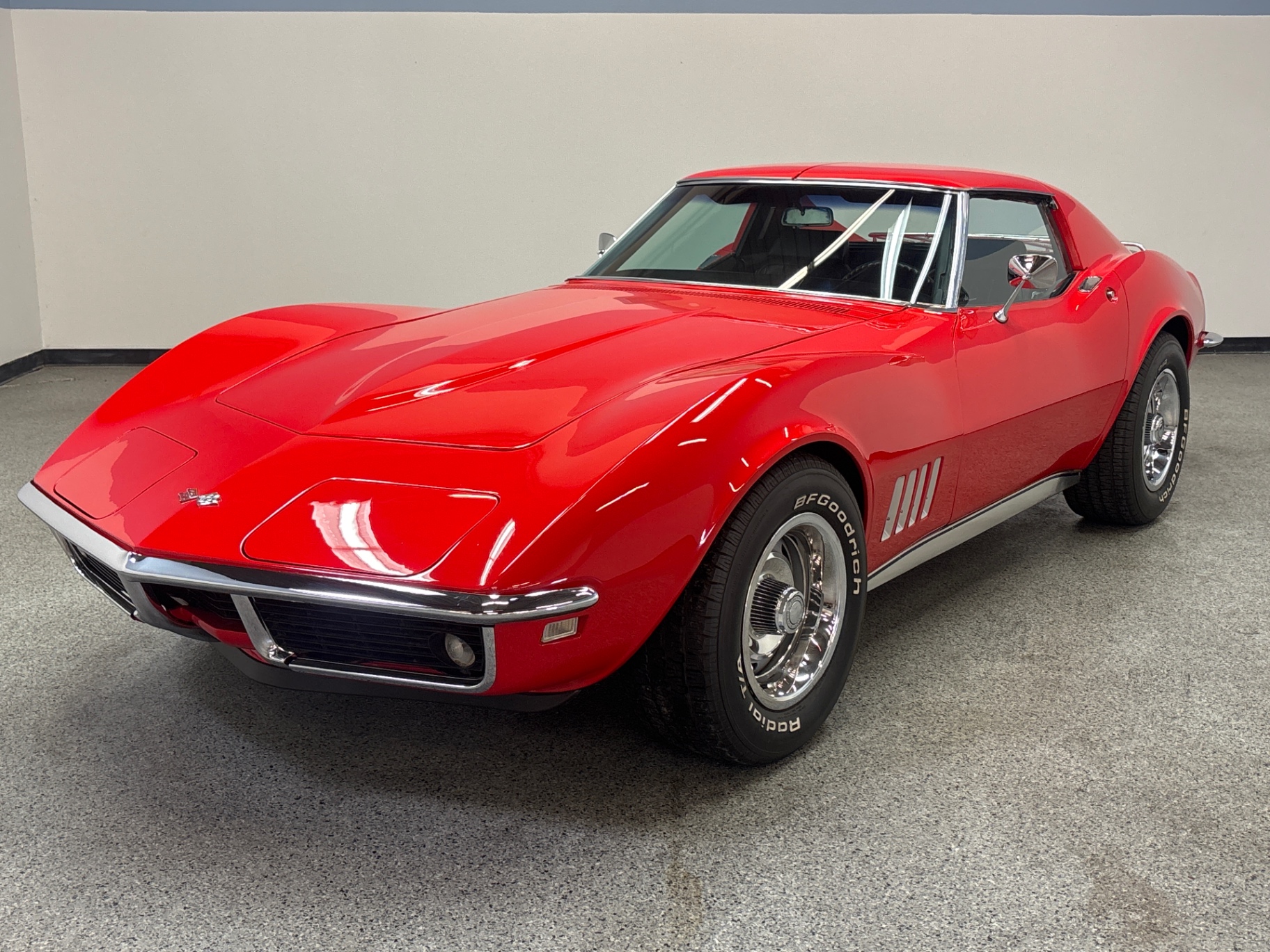
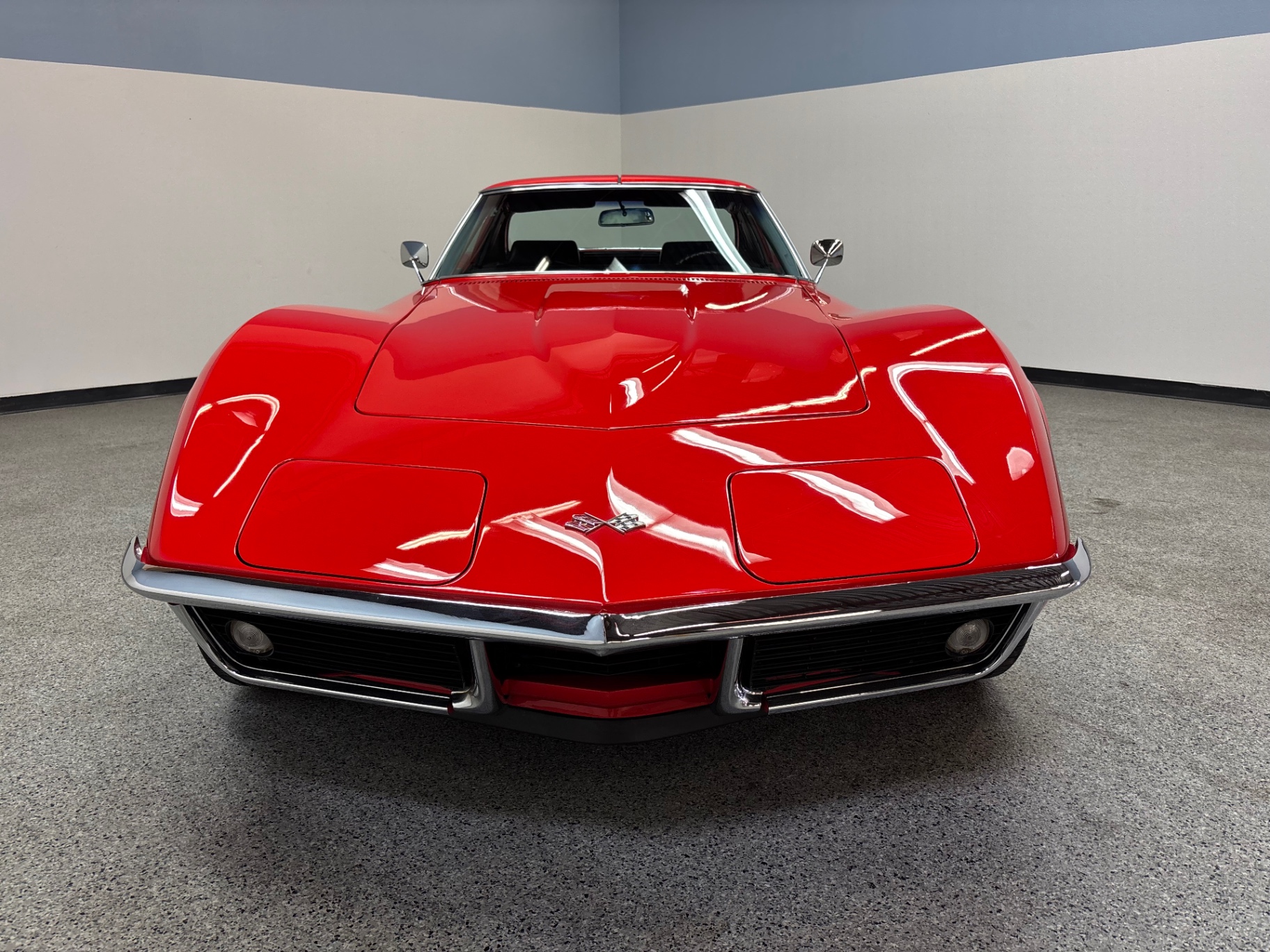
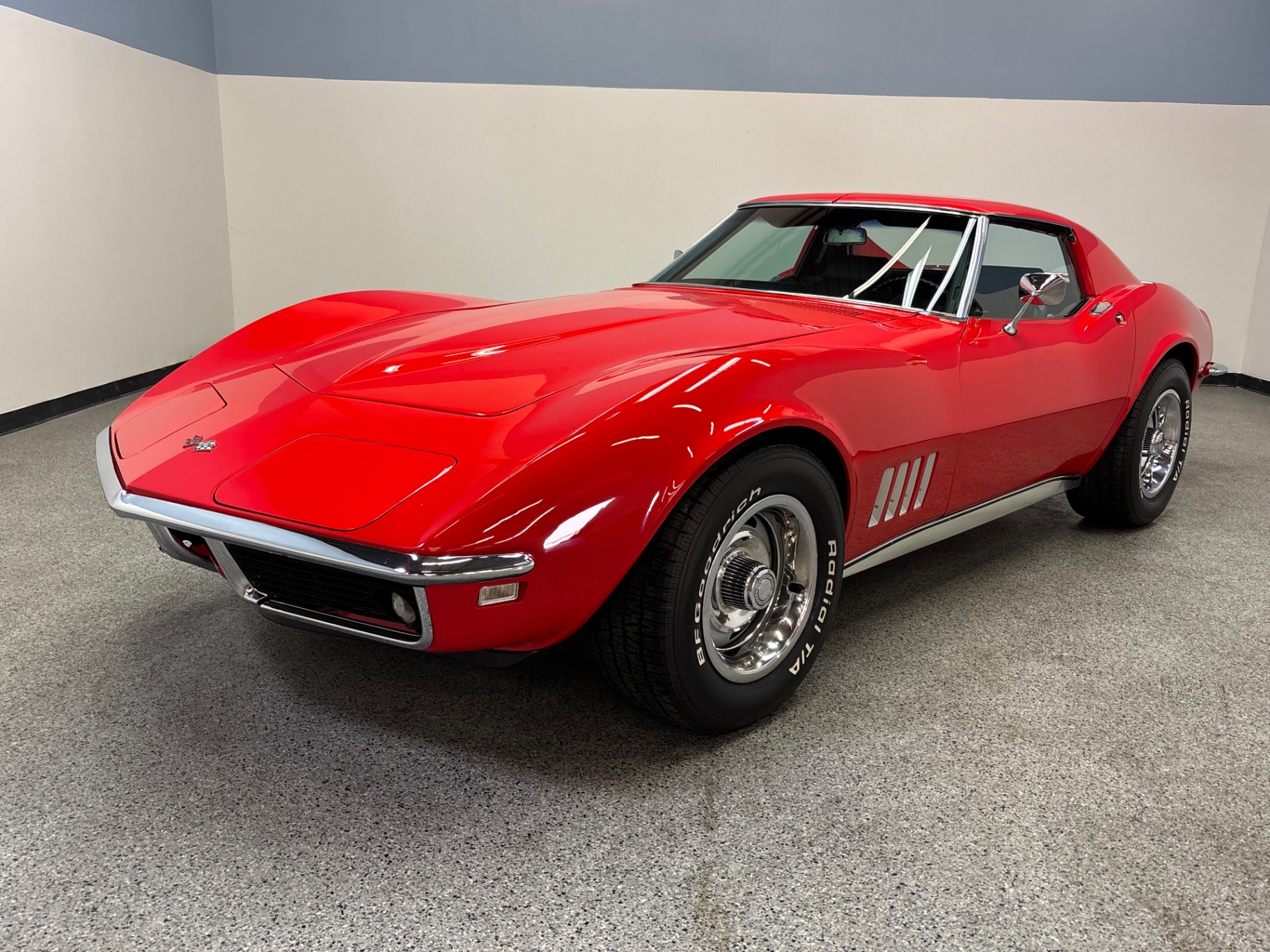
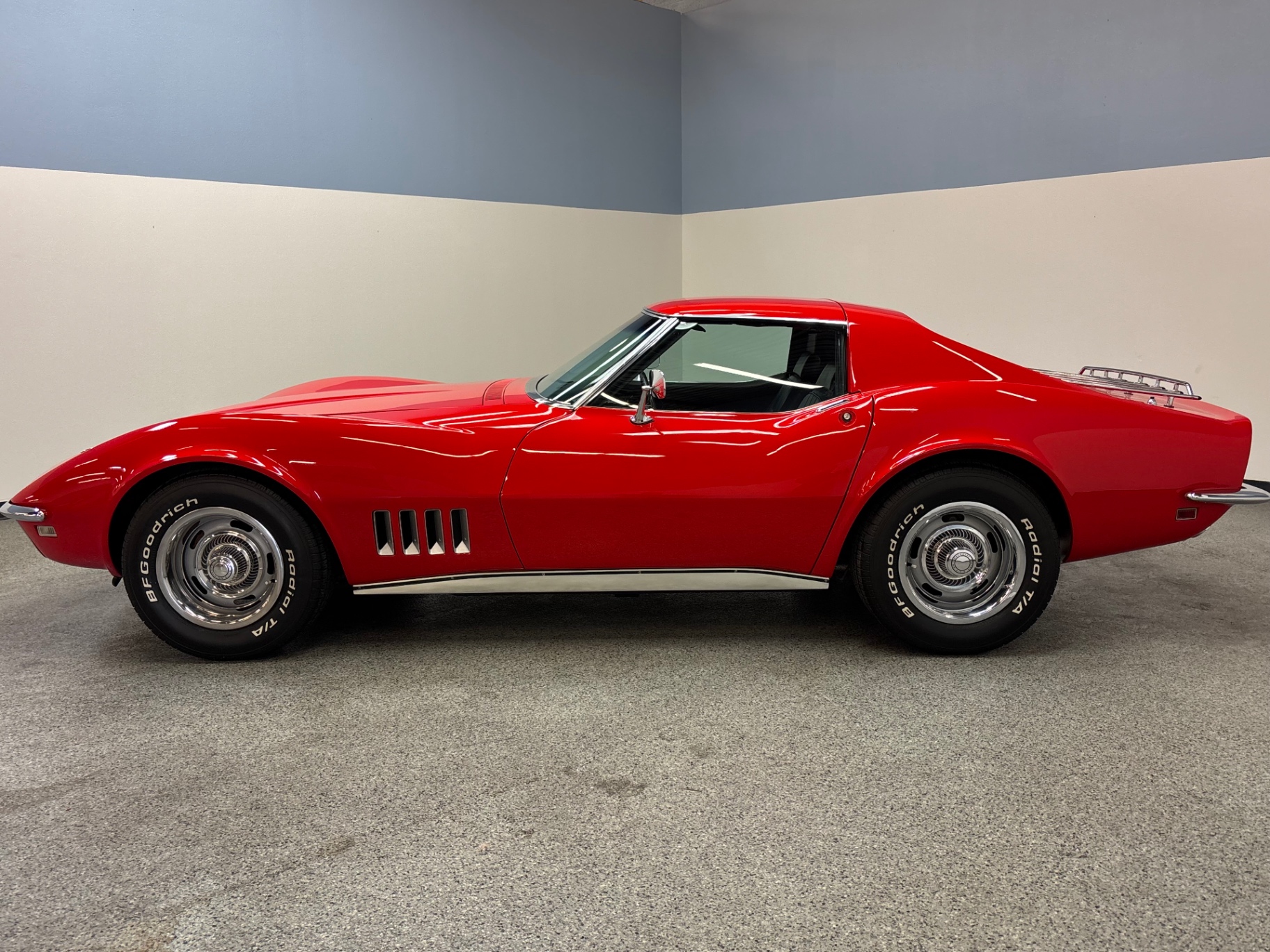
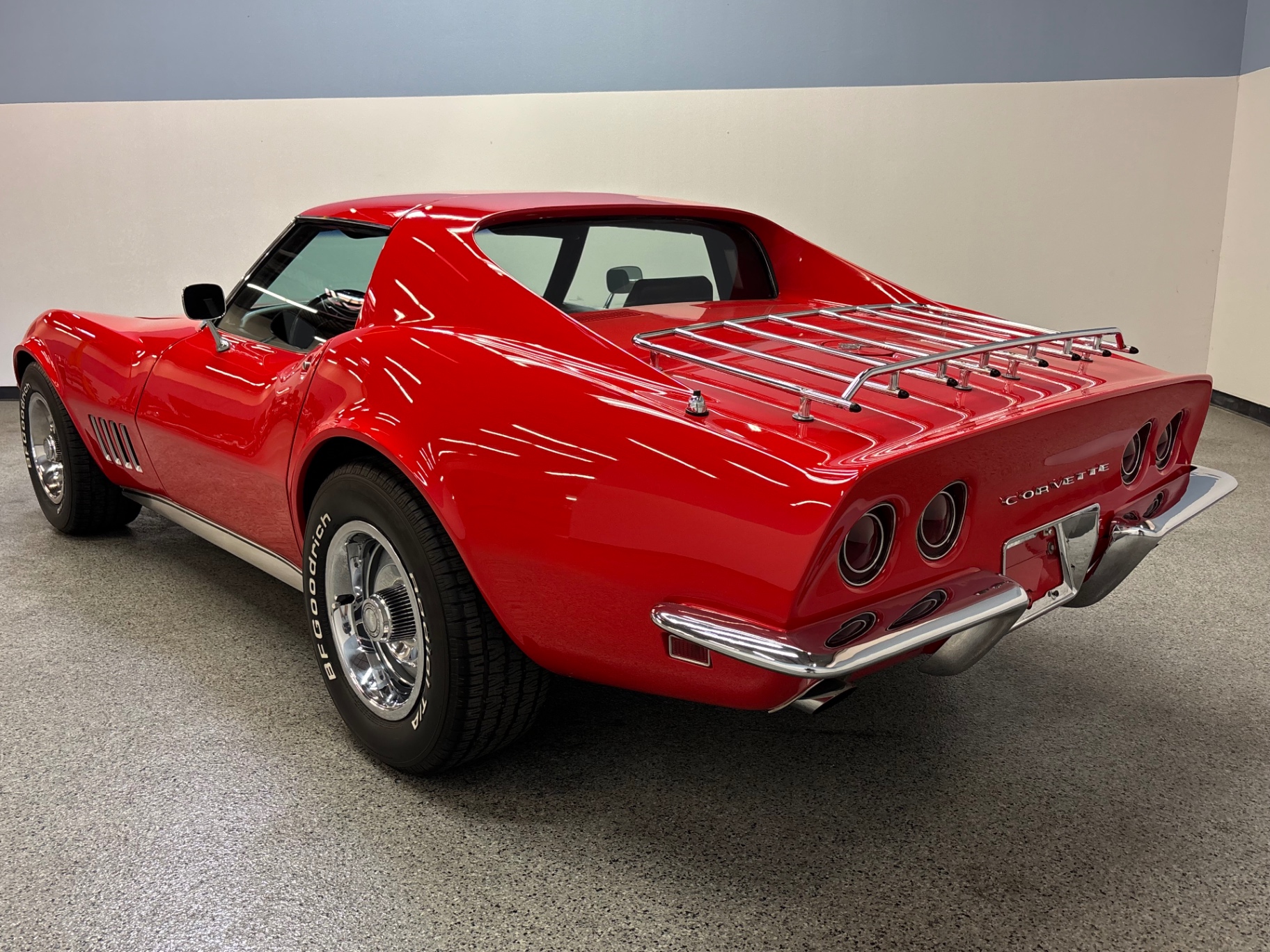
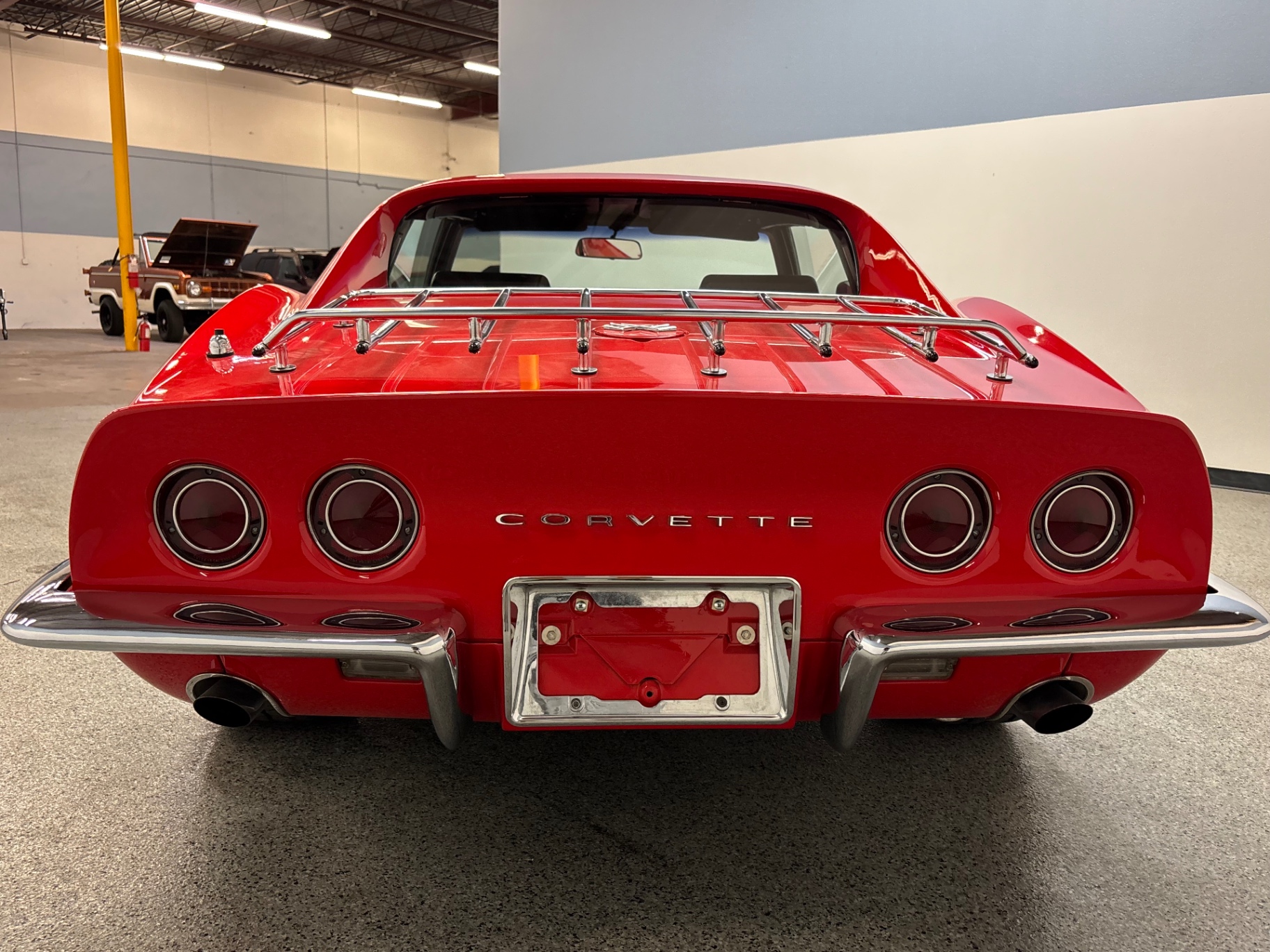
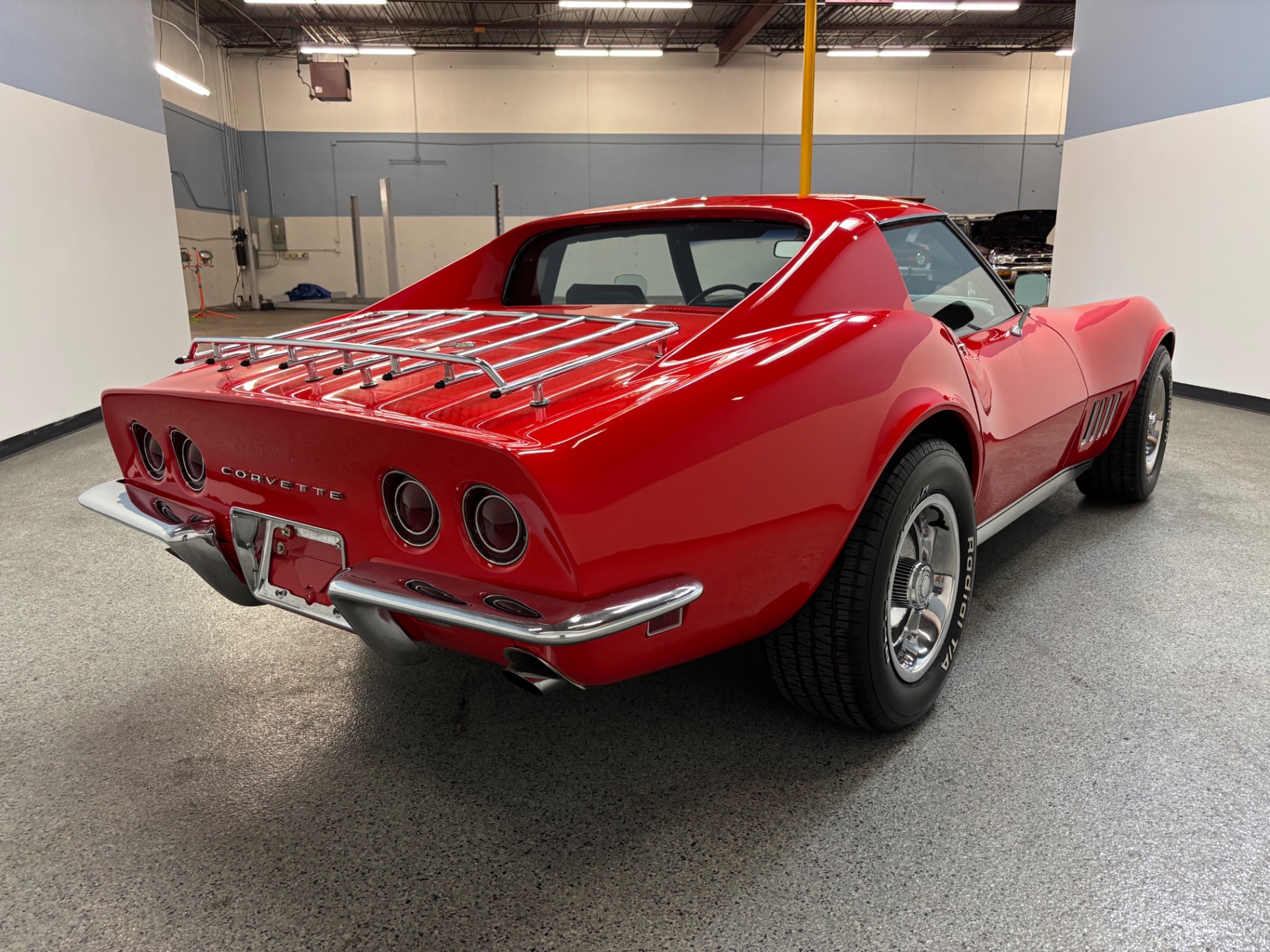
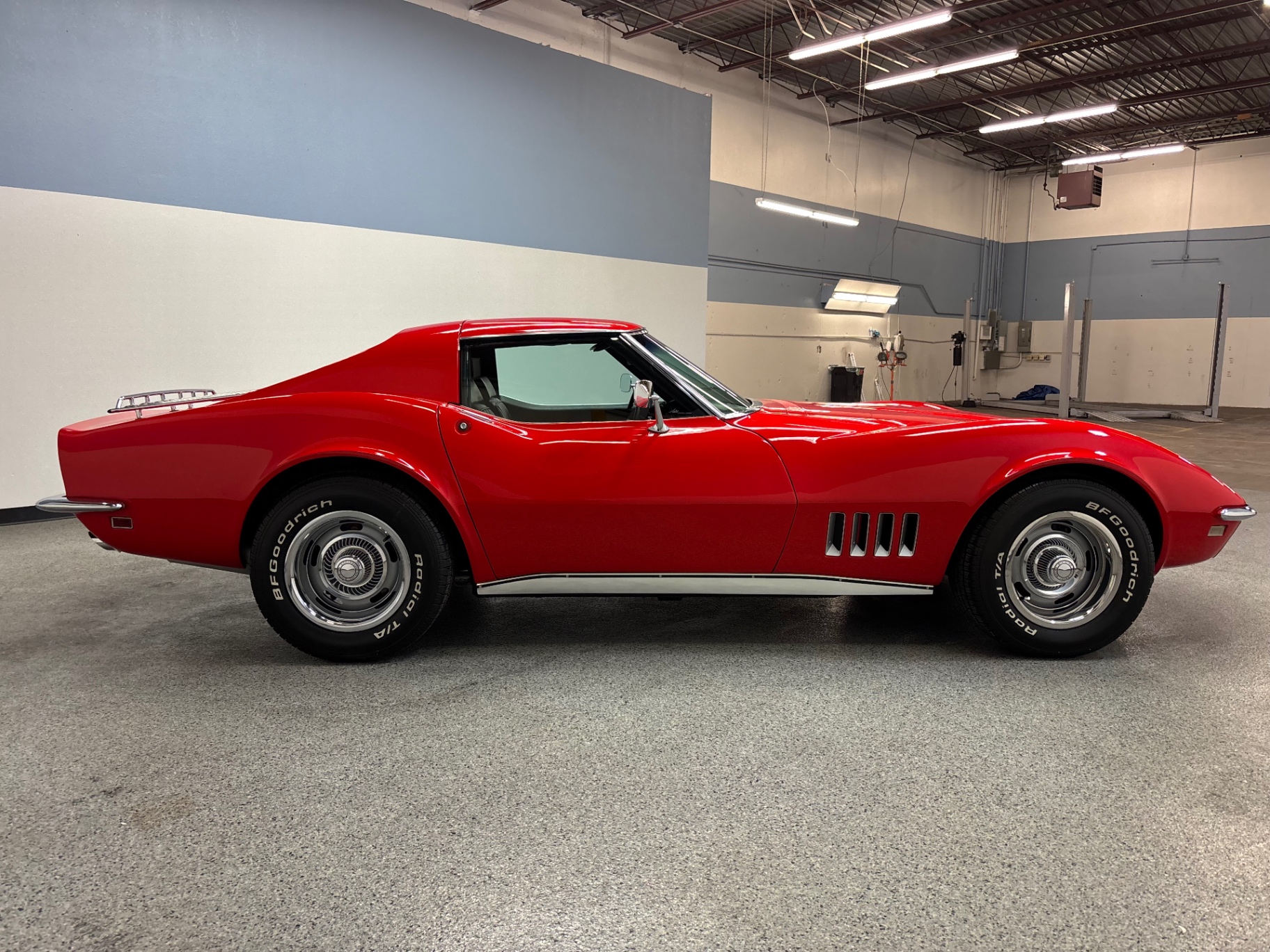
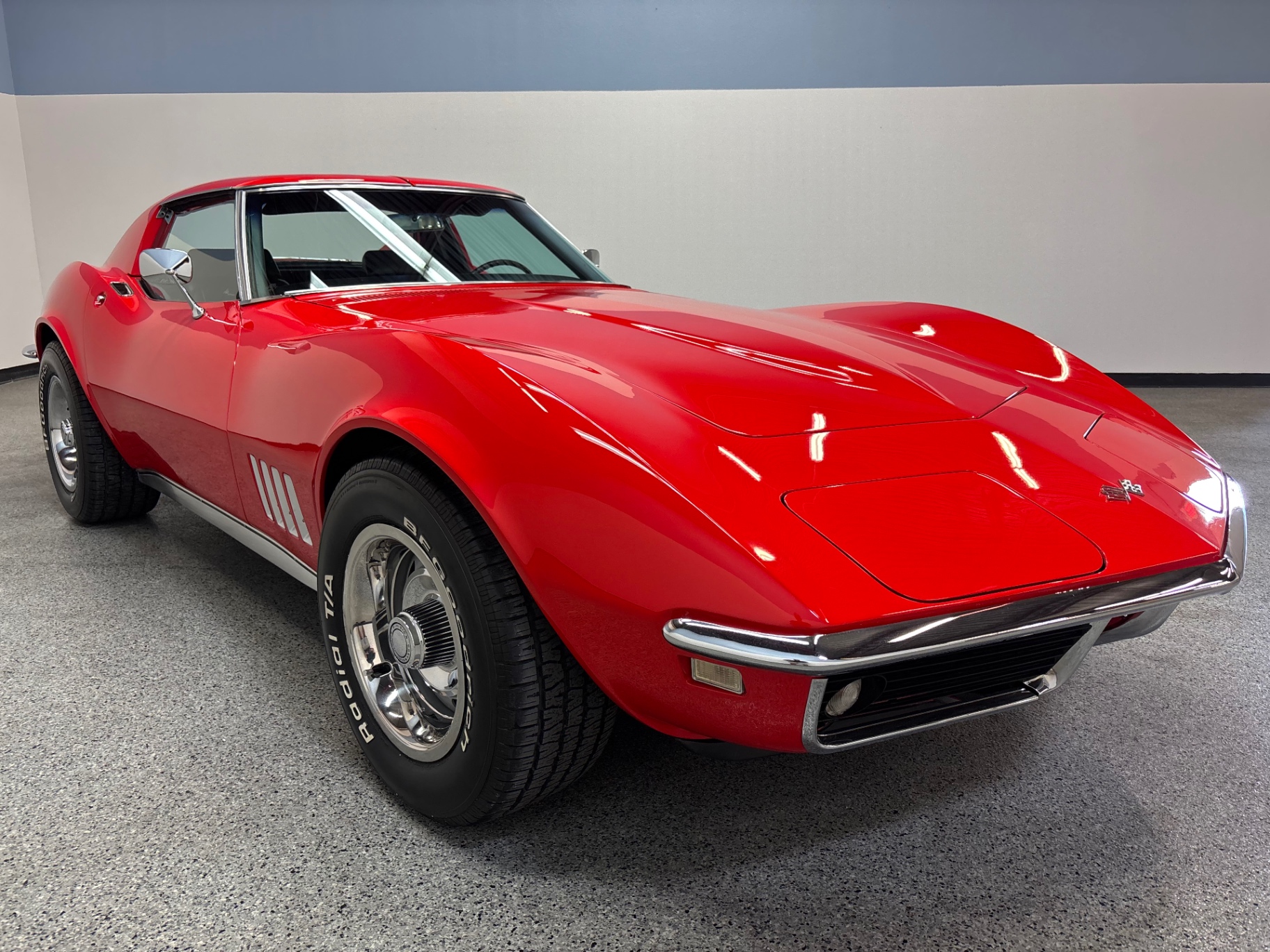
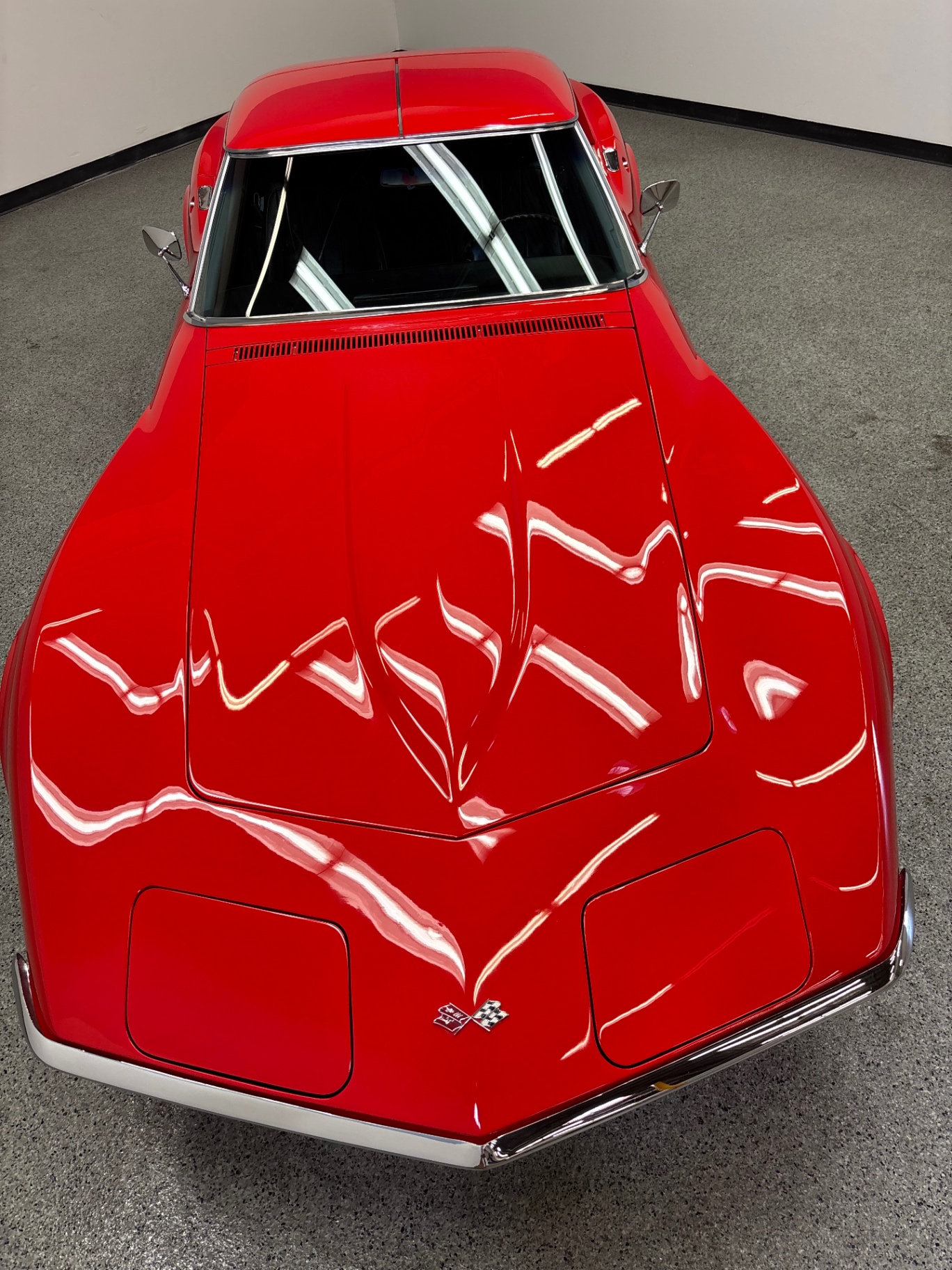
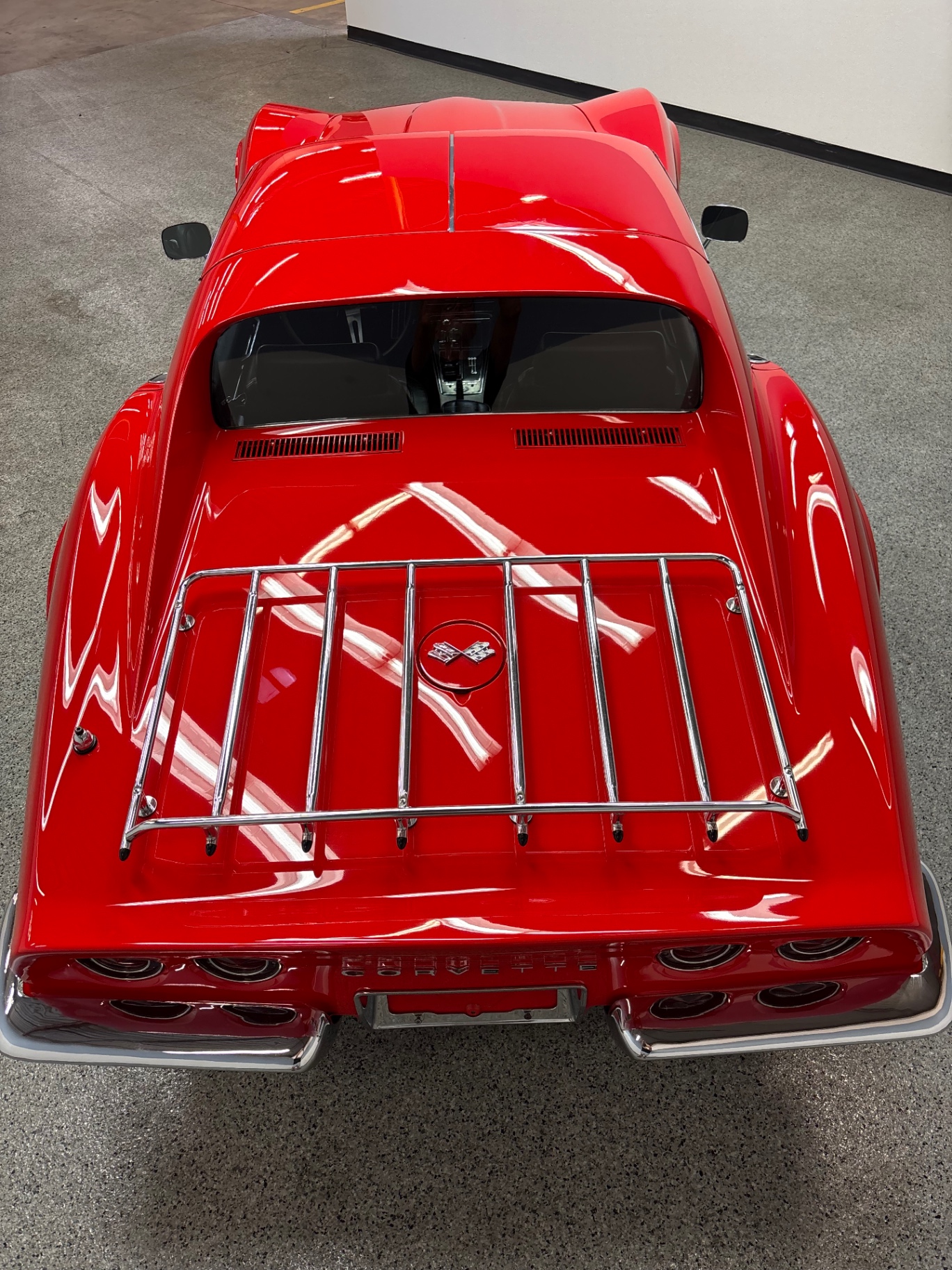
1968 Chevrolet Corvette Coupe — 327/300 V8, 4-Speed, T-Tops, Red over Black
Why This Car Is Special
The 1968 Chevrolet Corvette represents one of the most significant model-year changes in the nameplate's history. After five years of the Sting Ray coupe and convertible, Chevrolet introduced an entirely new body for 1968 — longer, lower, and wider than its predecessor, with a dramatically different silhouette that was clearly influenced by the Mako Shark II show car. The roofline was redesigned around a pair of removable T-Top panels, a feature that would define Corvette ownership for the next two decades. The hideaway windshield wipers, the vacuum-operated pop-up headlights, and the side fender vents were all new for this year. It was a car that looked nothing like what came before it.
What makes the 1968 Corvette particularly interesting from a collector's standpoint is its position at the beginning of the C3 generation. This was the first year of the body style, which means it carries details that were revised or eliminated in later years — including the fiber-optic light monitoring system routed through the instrument panel and the chrome-intensive interior trim that would be toned down as the decade turned. These early-production C3 features are part of what separates a 1968 from its successors.
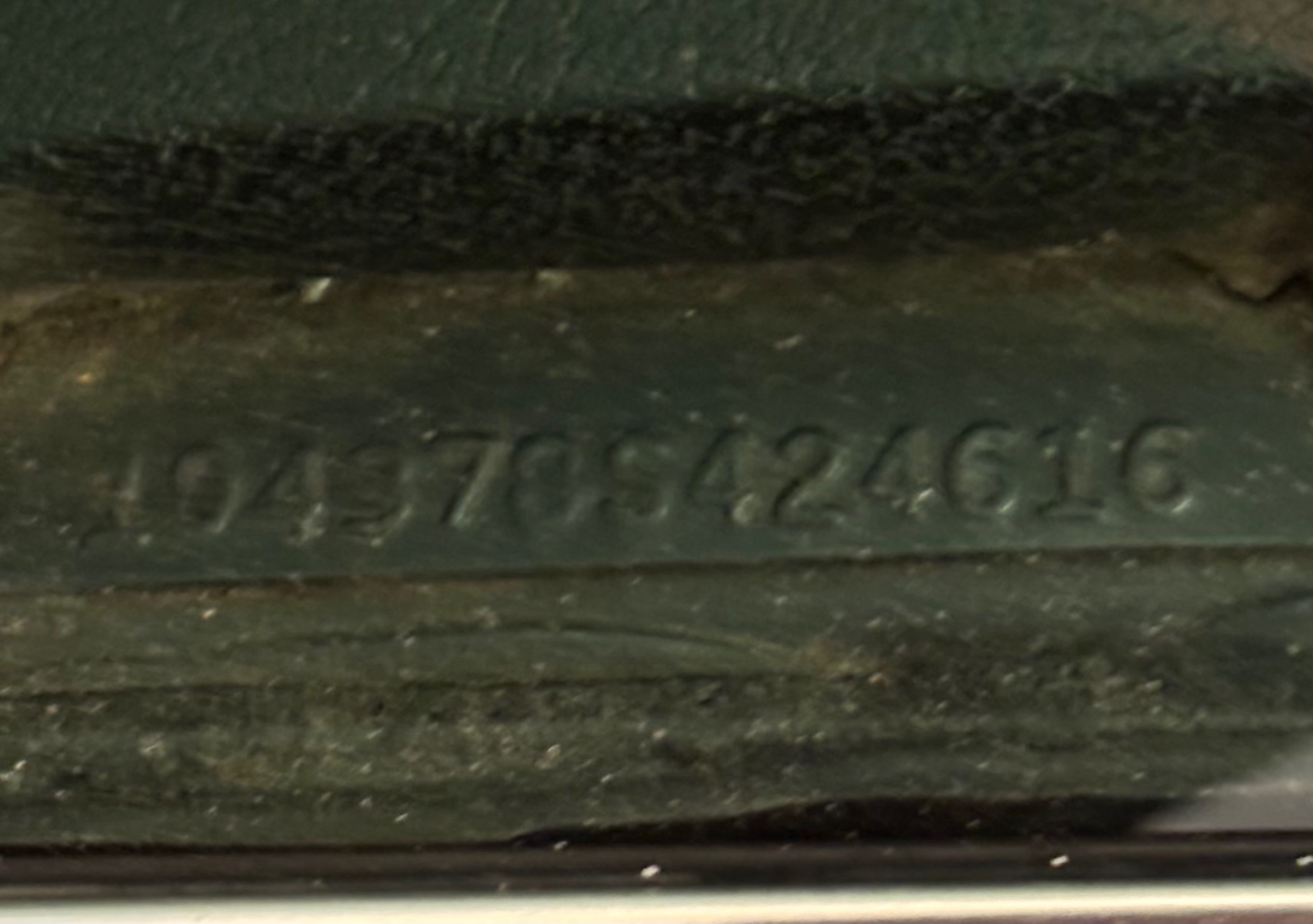
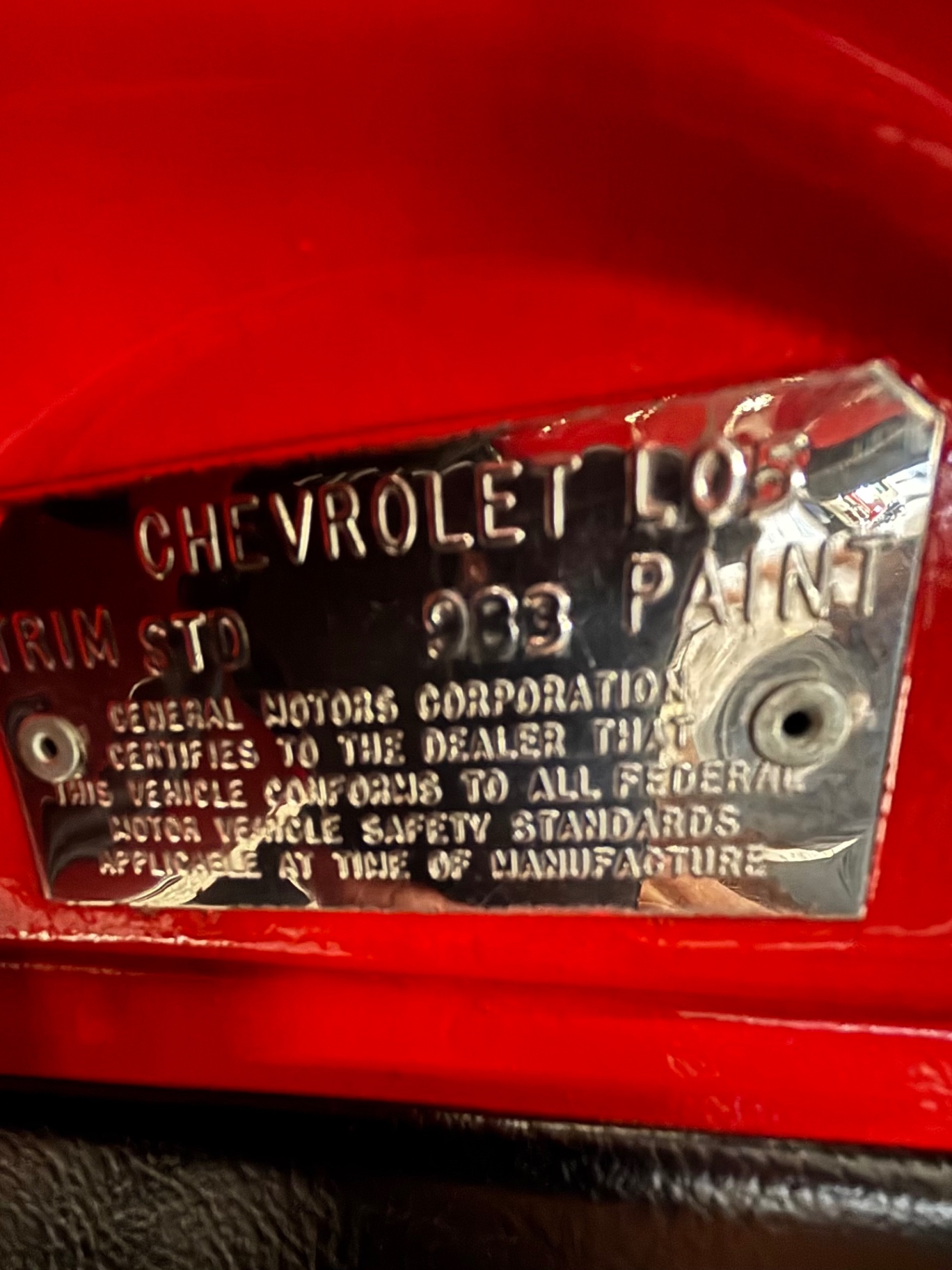
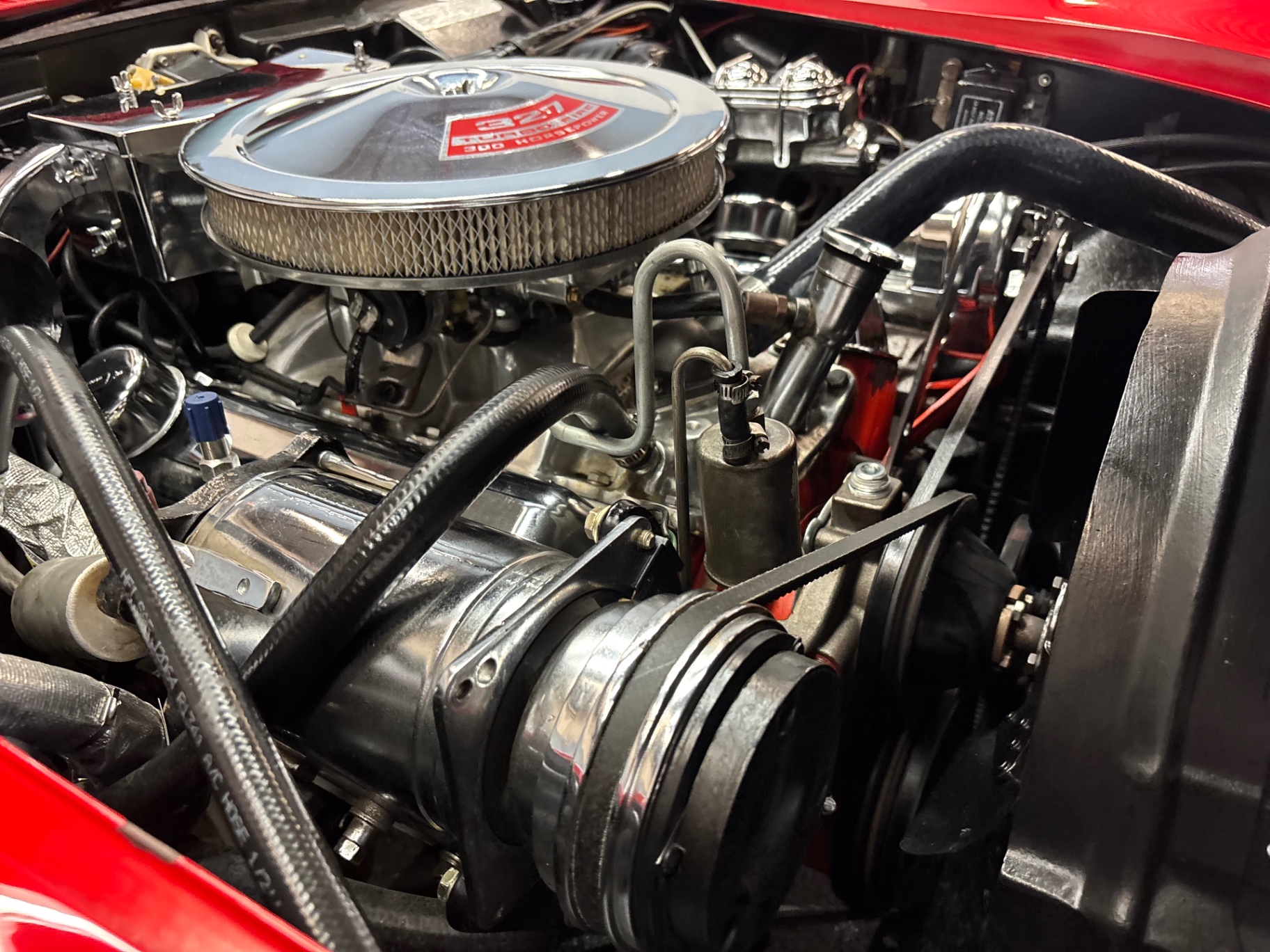
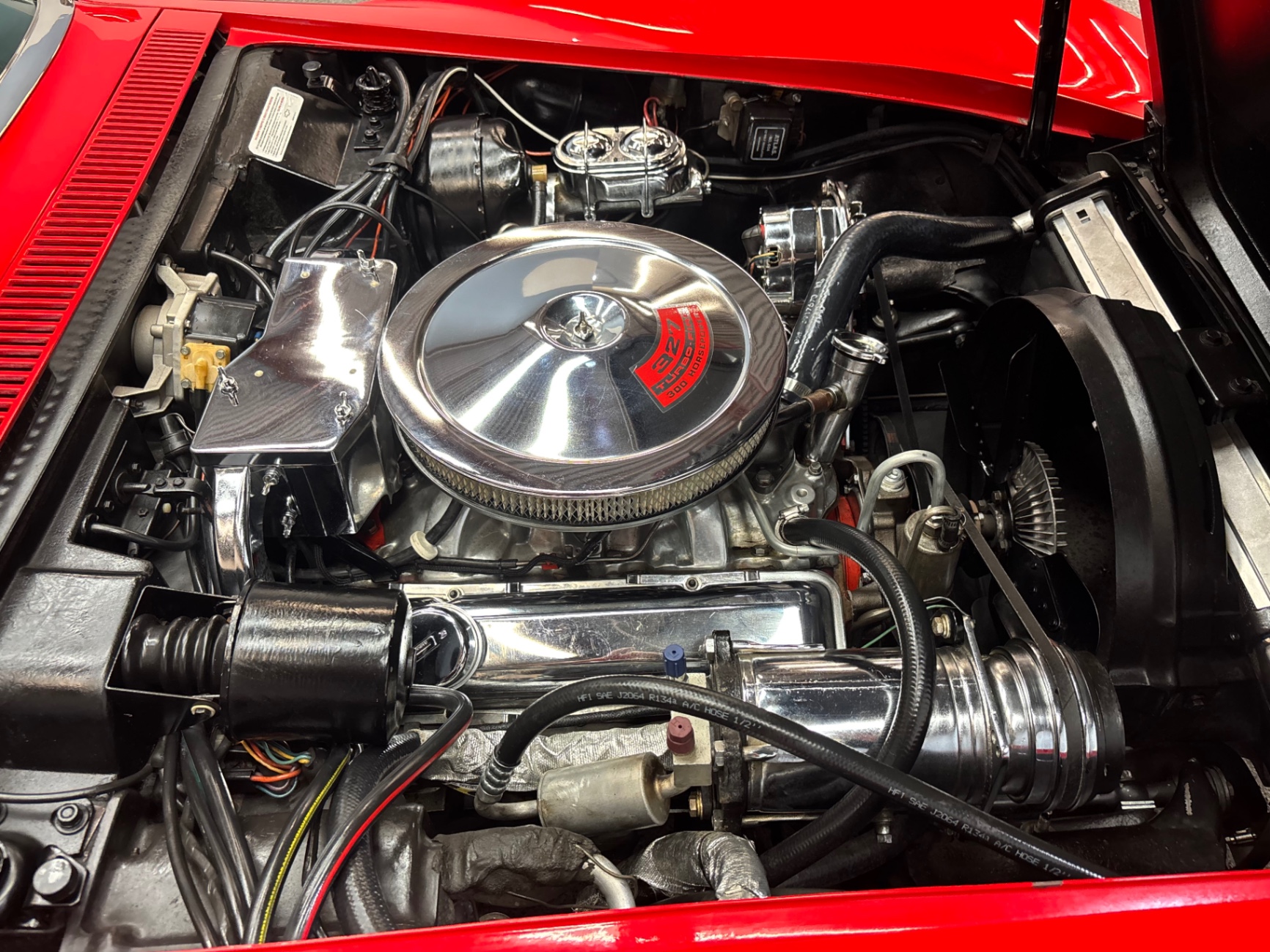
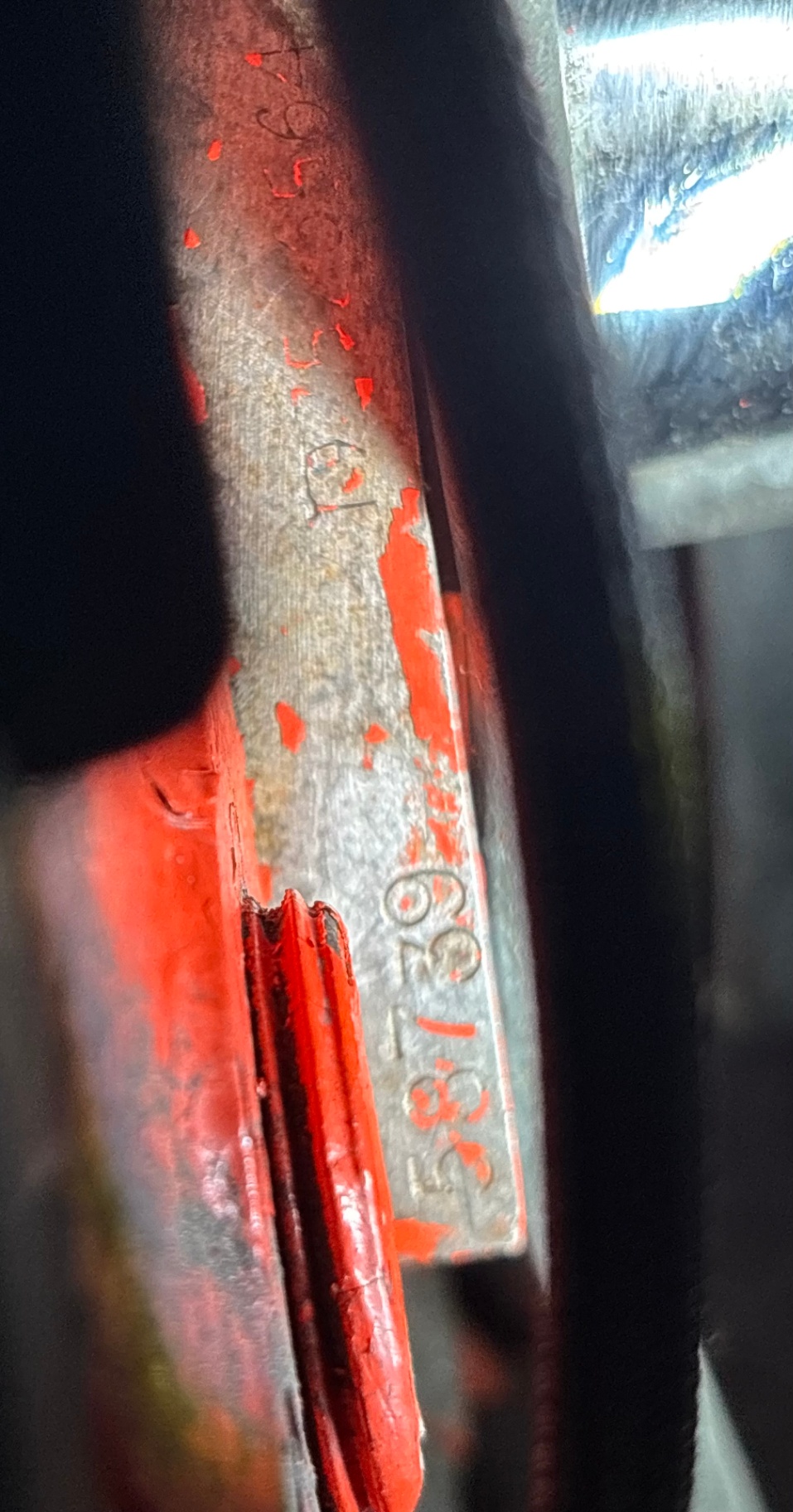
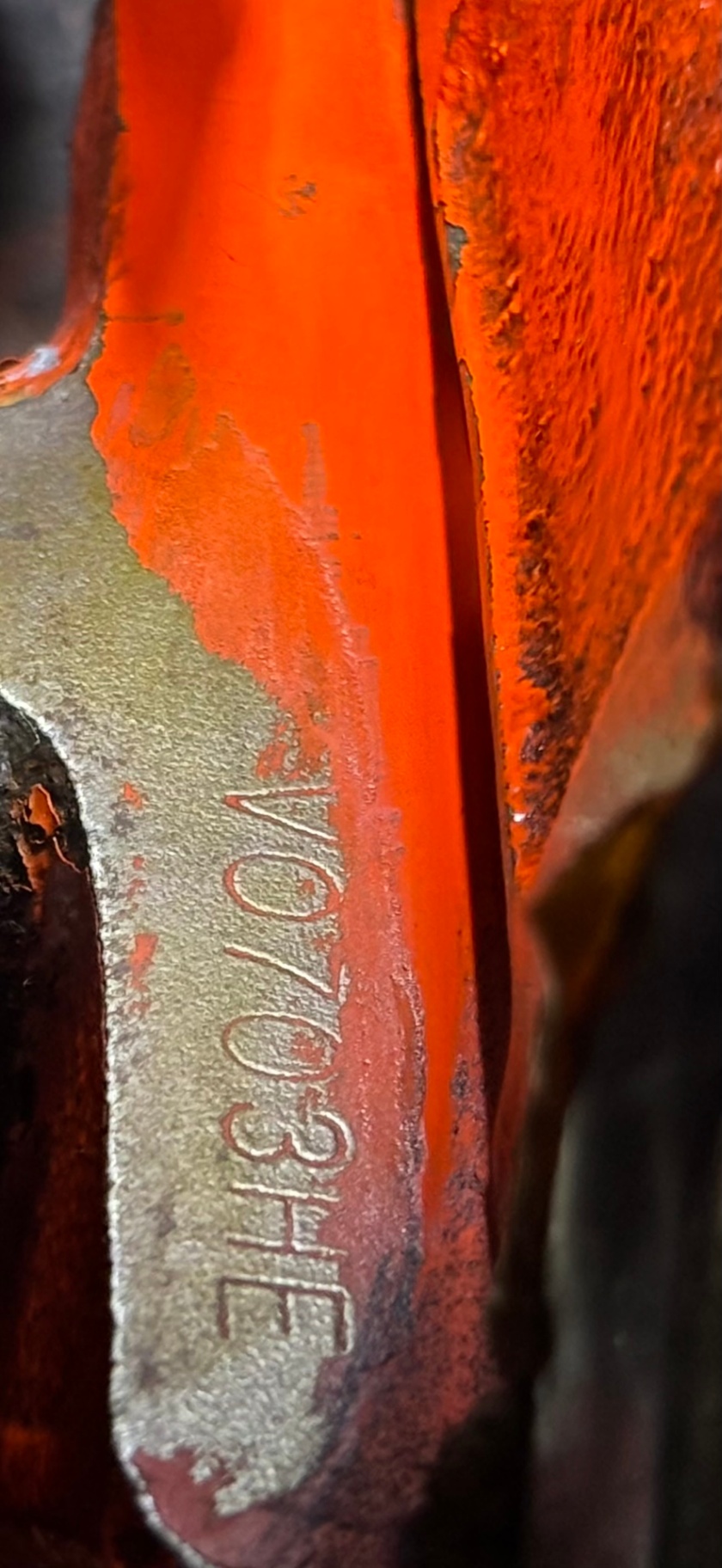
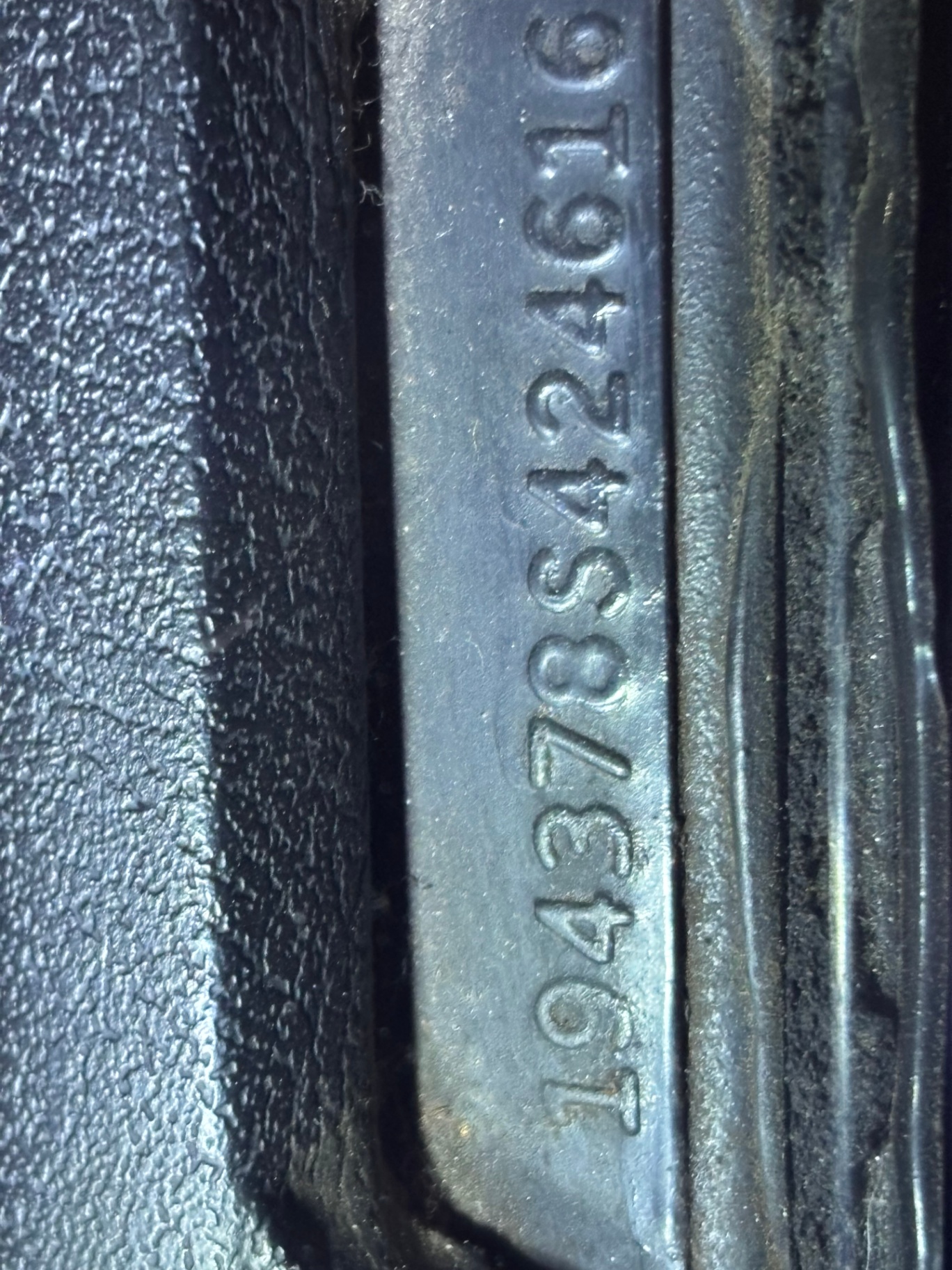
The VIN on this car tells a specific story. The body style code confirms this is the coupe — the T-Top hardtop — rather than the convertible. The engine code in the VIN identifies the 327 cubic inch, 300 horsepower small block, which was the base V8 for 1968. The transmission code confirms the 4-speed manual. Chevrolet built 28,566 Corvettes for the 1968 model year — 9,936 of them were coupes. Pairing the coupe body with the 327 small block and a 4-speed gearbox was how many buyers specified their cars in 1968, balancing usable street performance with a more manageable ownership experience than the high-compression big blocks.
This example presents in red over a black leather interior, one of the most recognizable and historically appropriate color combinations for a C3 Corvette.
Features List
- 327ci / 300hp V8 small block
- 4-speed manual transmission
- Removable T-Top roof panels
- Four-wheel disc brakes
- Independent rear suspension
- Vacuum-operated pop-up headlights
- Factory air conditioning
- AM/FM radio
- Chrome luggage rack
- Black leather bucket seats
- Center console
- Dashboard tachometer
- Wood-rim steering wheel
- Dual exhaust
- Spinner wheel covers
- BFGoodrich Radial T/A tires
- Chrome bumpers
- Fiberglass body
Mechanical
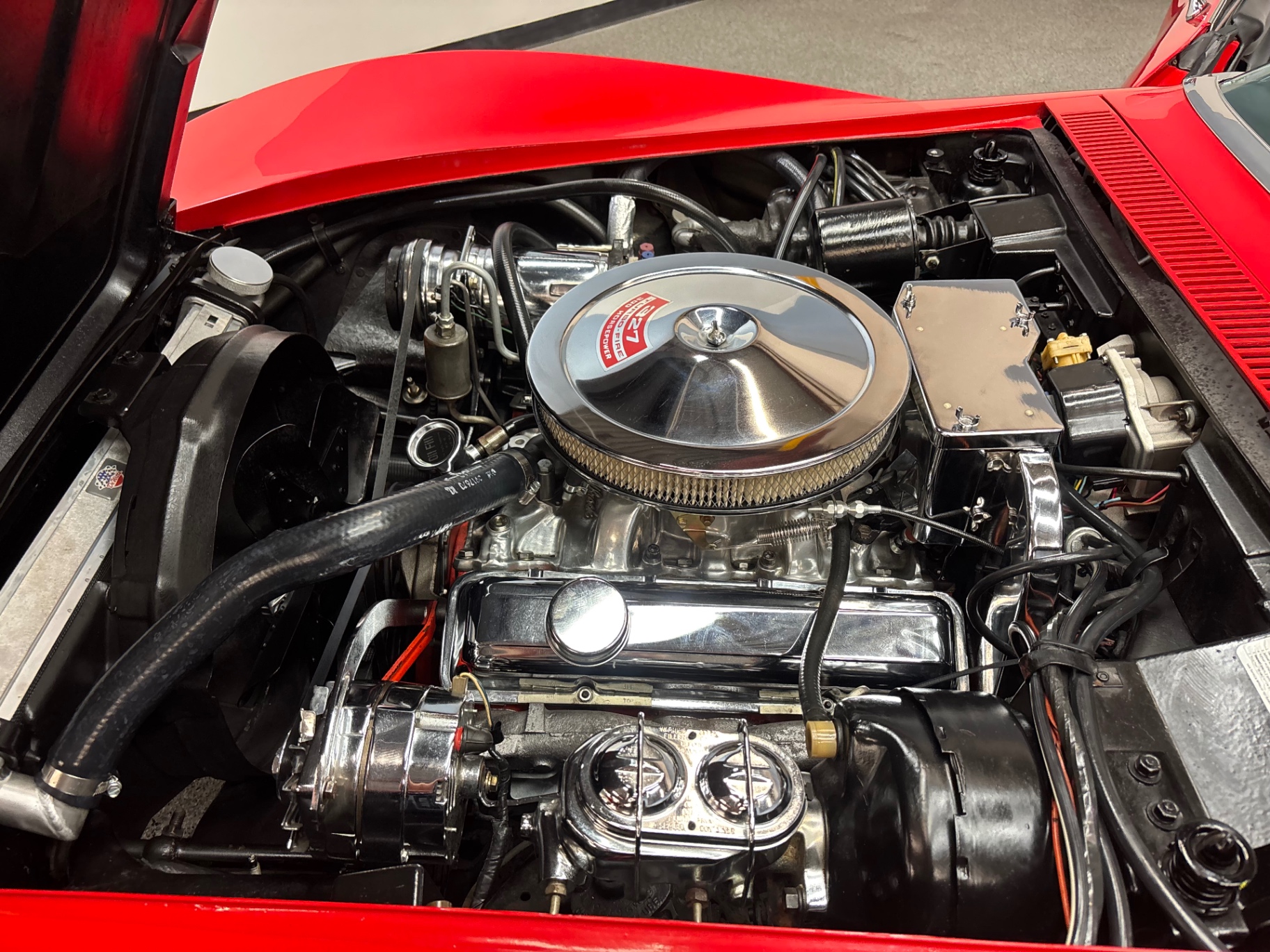
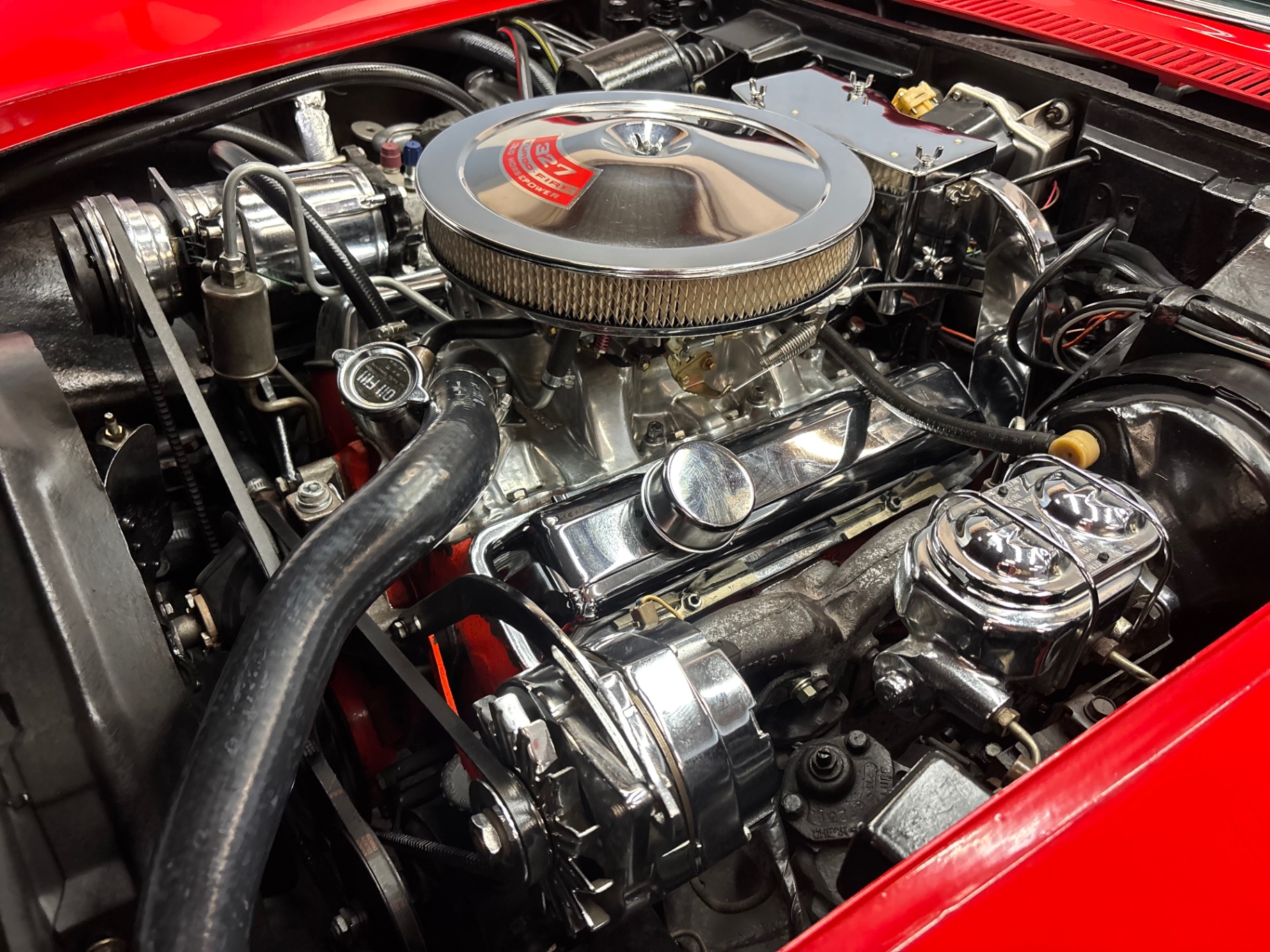
The 327 cubic inch V8 in this car is the L79-adjacent base small block, rated at 300 horsepower. The 327 had been the Corvette's signature engine since 1962, and by 1968 it was a well-sorted, refined unit with a strong reputation for reliability and linear power delivery. It is not a tire-shredding big block, and that is exactly the point — this is the version of the 1968 Corvette that you can drive regularly without managing the temperament that comes with the high-compression L71 or L88 variants. The 300hp 327 pulls cleanly through the rev range and responds well to the 4-speed manual, which gives the driver direct mechanical control over every gear change.
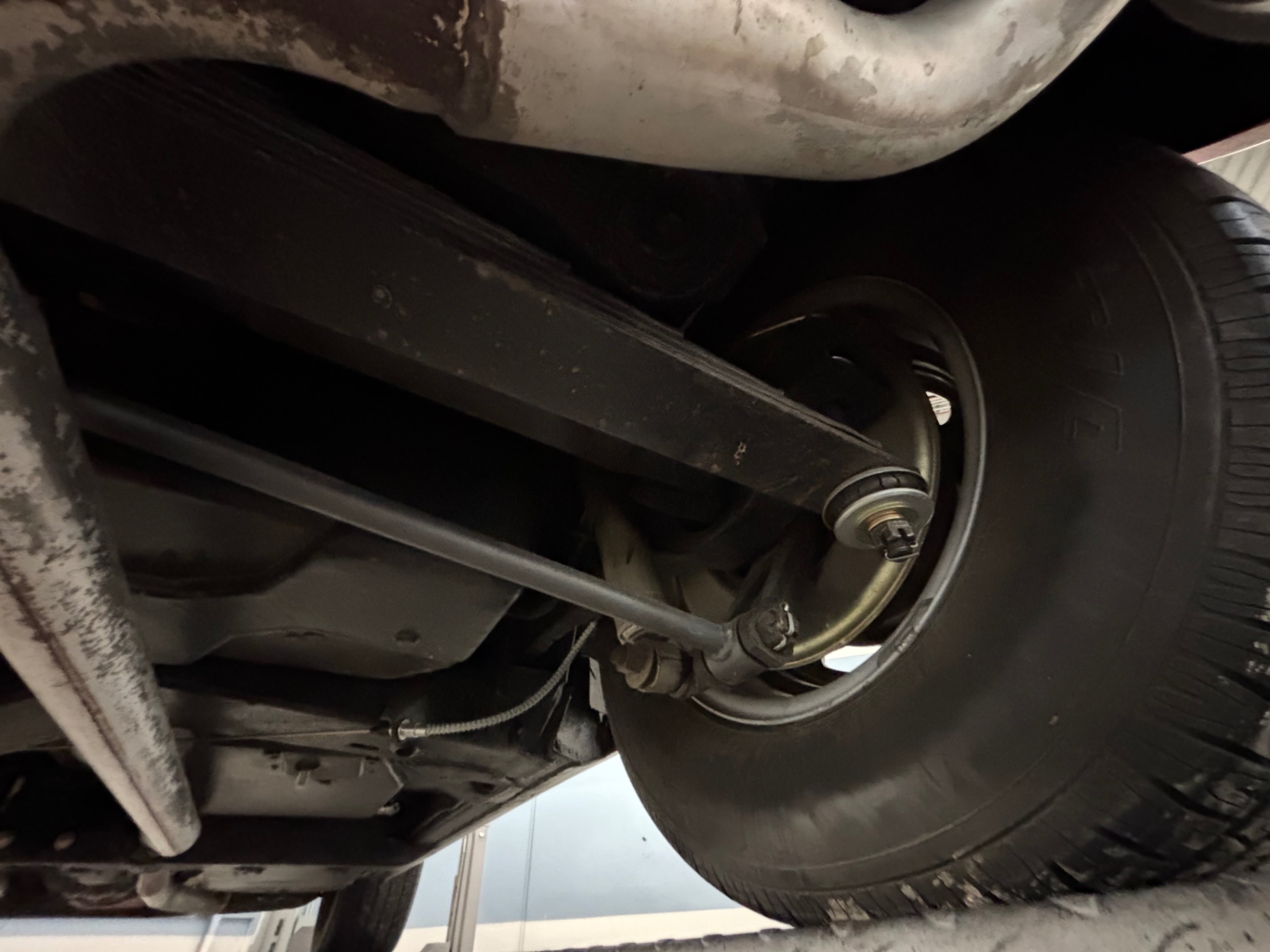
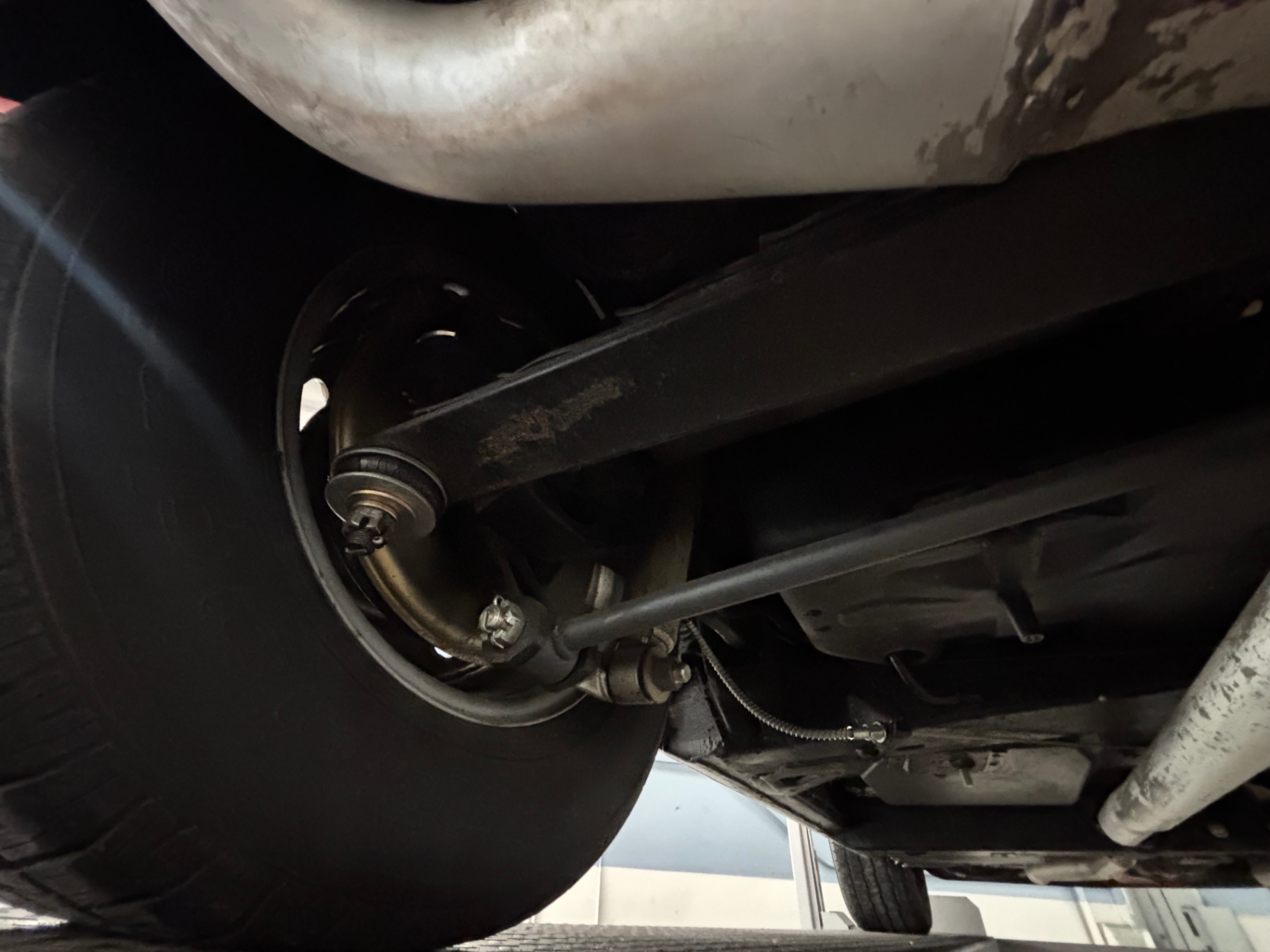
The 4-speed manual gearbox in a 1968 Corvette is a close-ratio or wide-ratio Muncie unit depending on how the car was optioned. It connects to the independent rear suspension, which was one of the Corvette's most significant engineering advantages over its era's competition. Rather than the solid rear axle found in most American performance cars of the period, the Corvette used a three-link independent setup with a U-jointed half-shaft at each rear wheel and a single transverse leaf spring. This arrangement allowed each rear wheel to move independently, which improved traction, reduced unsprung weight, and gave the car a handling character that was genuinely different from its domestic rivals.
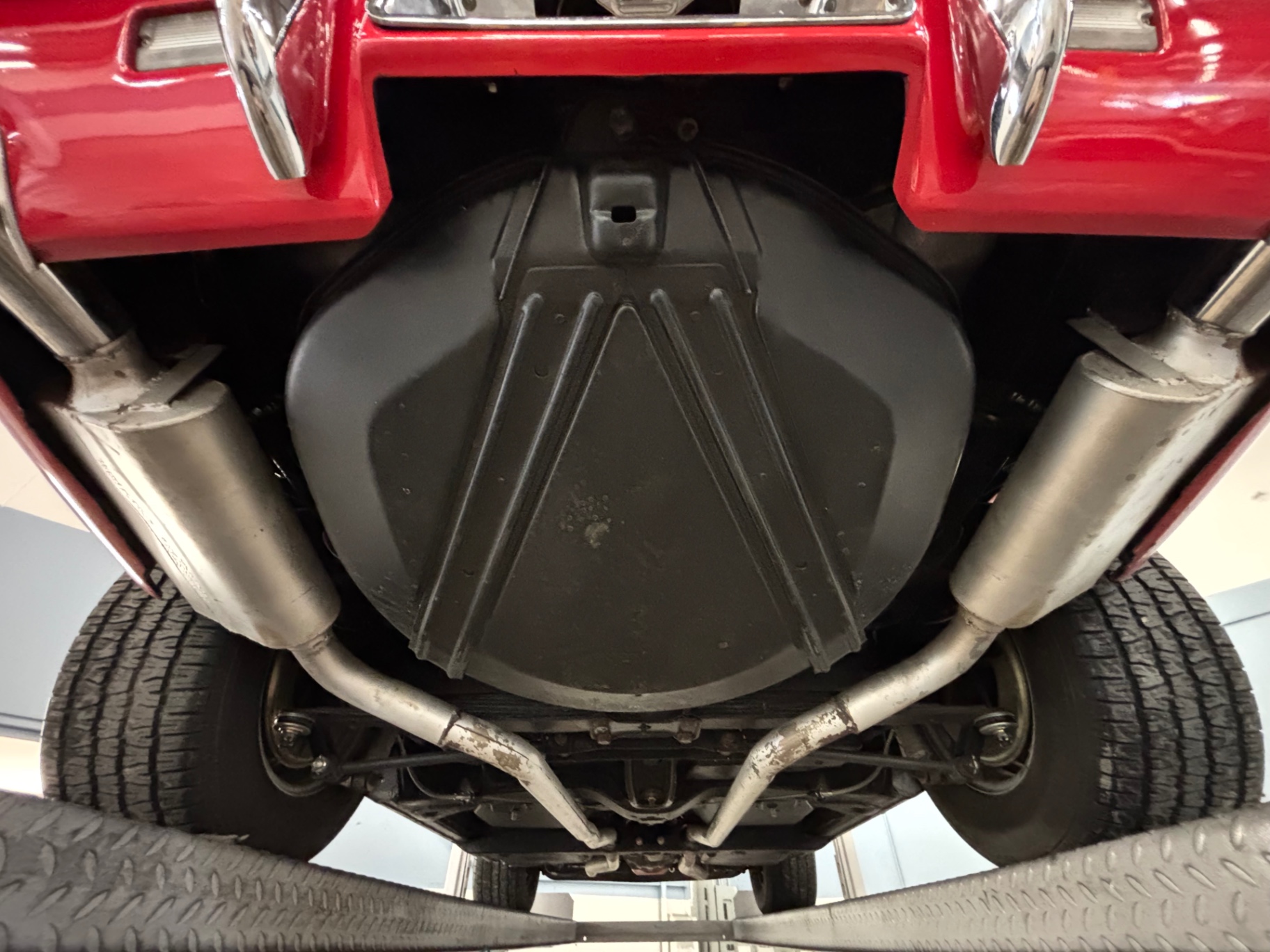
Four-wheel disc brakes were a factory option on the 1968 Corvette, and this car is equipped with them. Disc brakes were far from universal on American production cars in 1968, and their presence on the Corvette underscored the model's positioning as a performance machine rather than a dressed-up passenger car. The dual exhaust exits cleanly at the rear, framing the back end with the visual and audible confirmation that this is a V8 car.
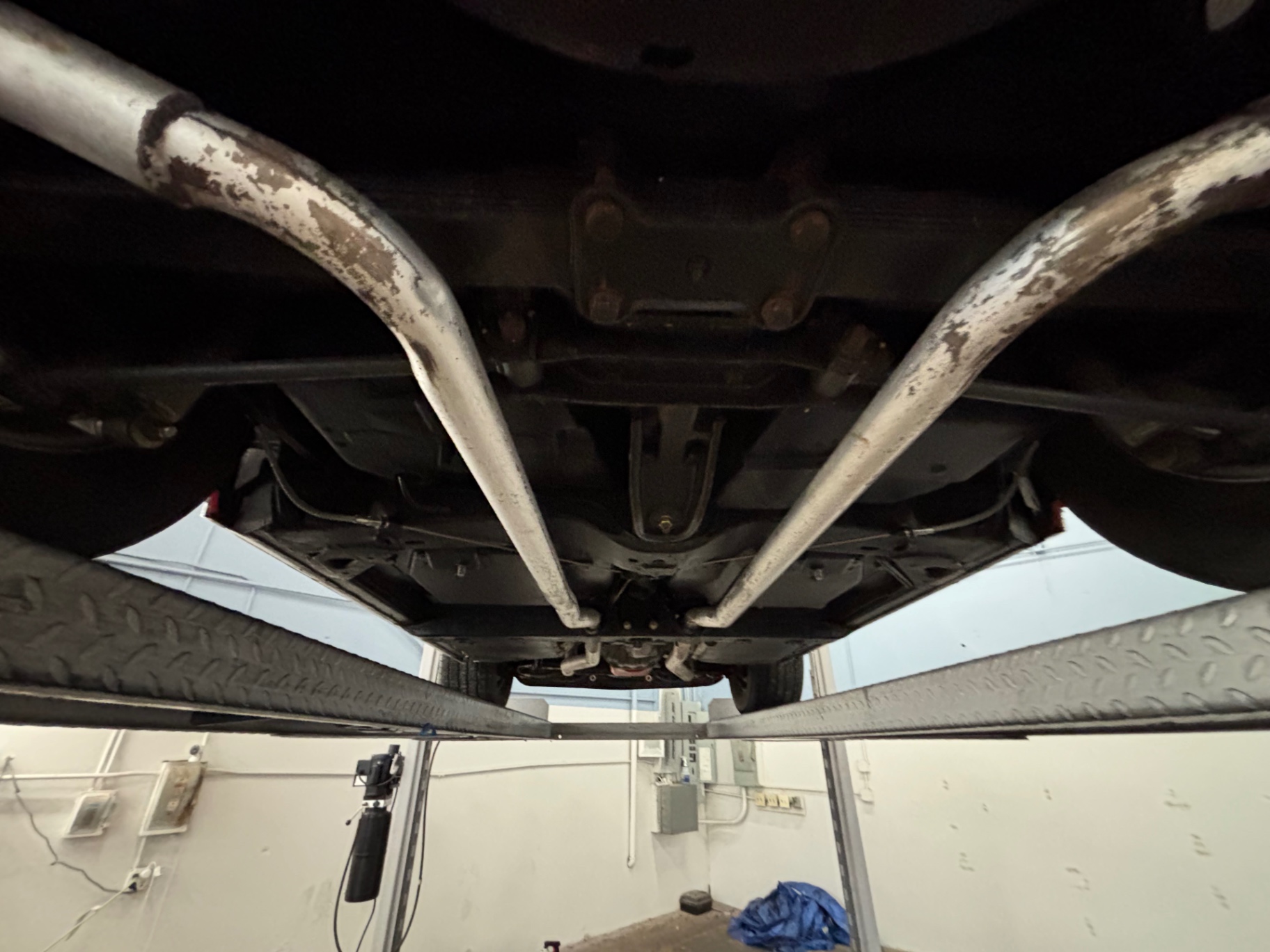
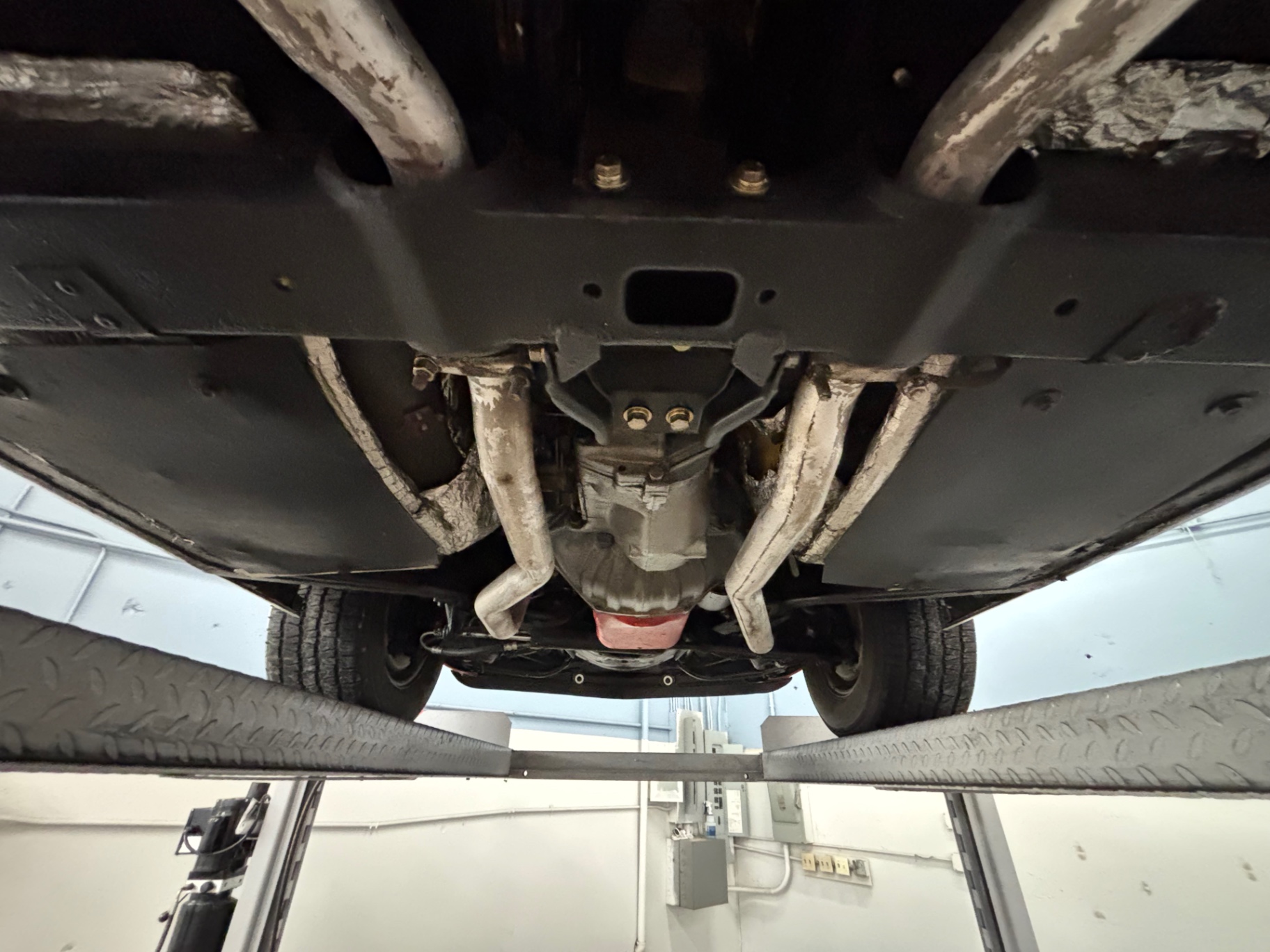
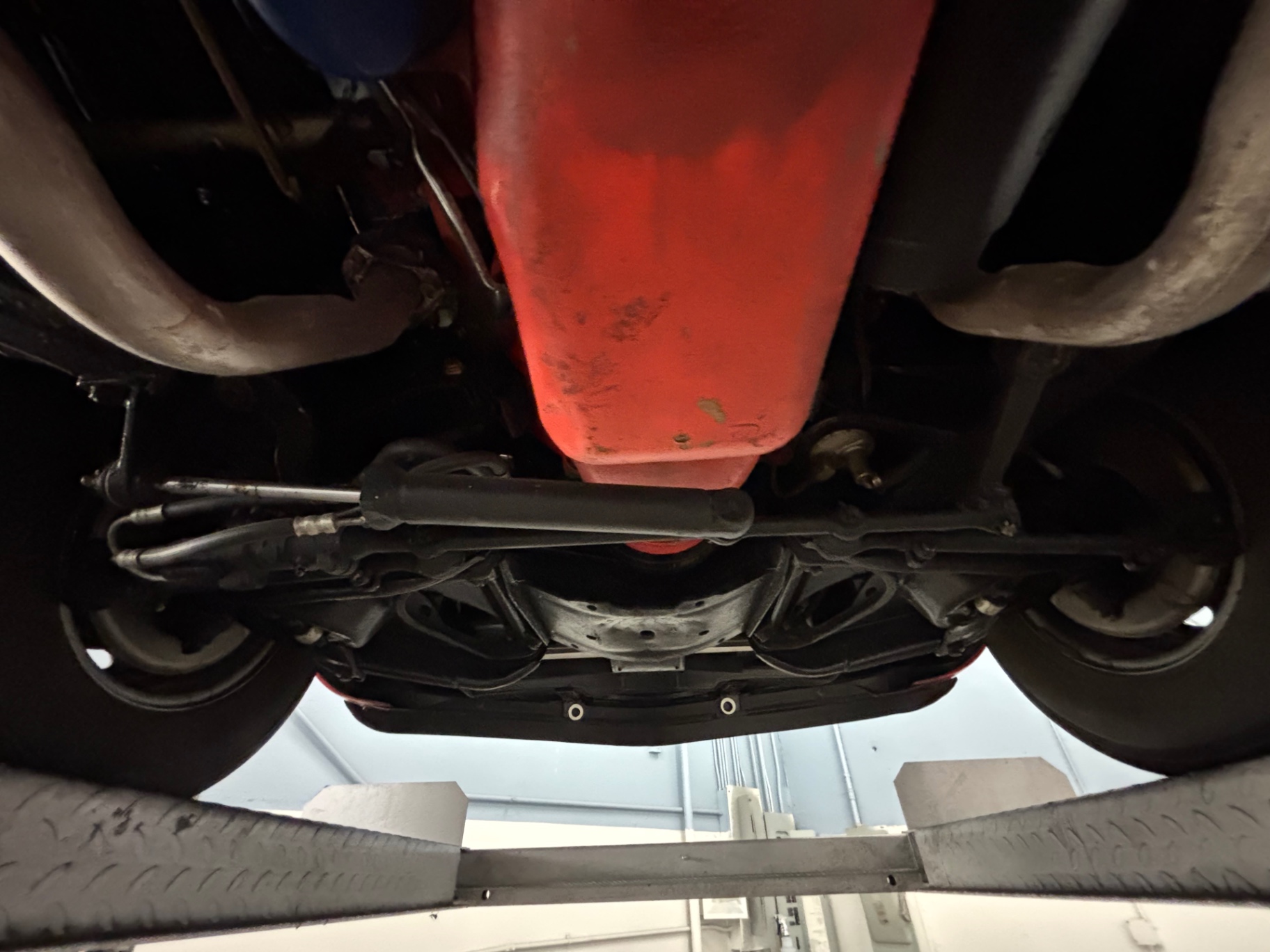
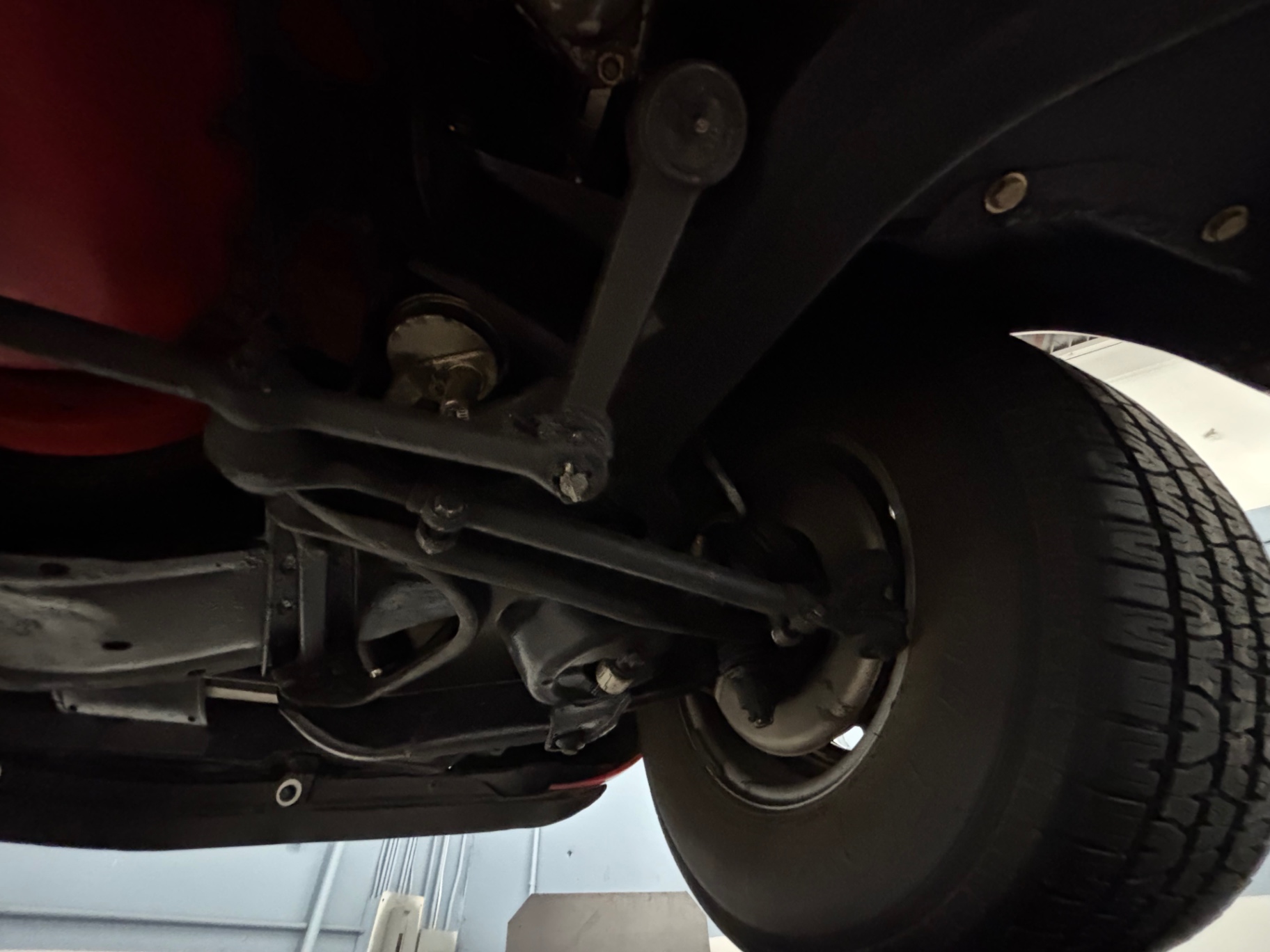
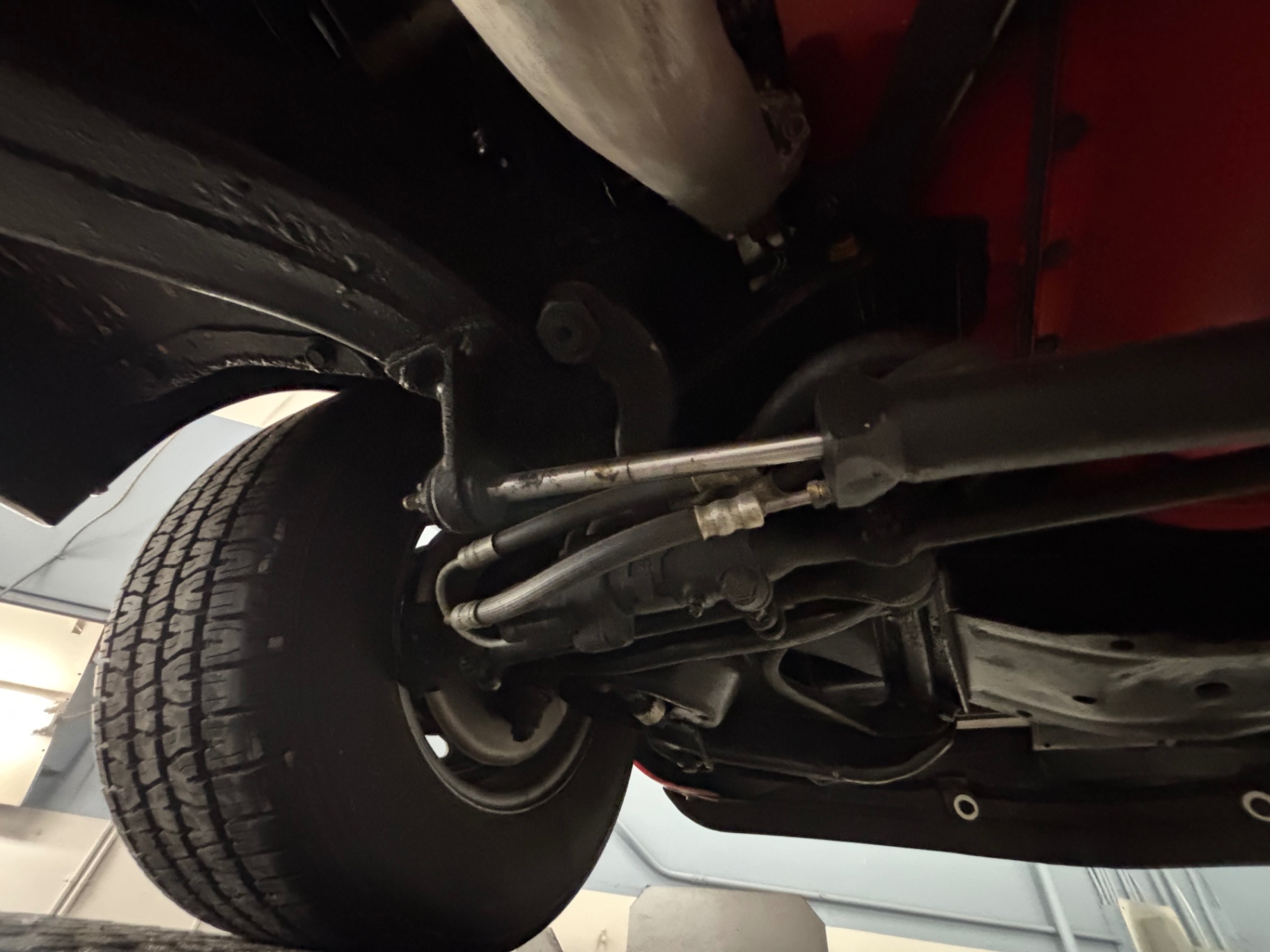
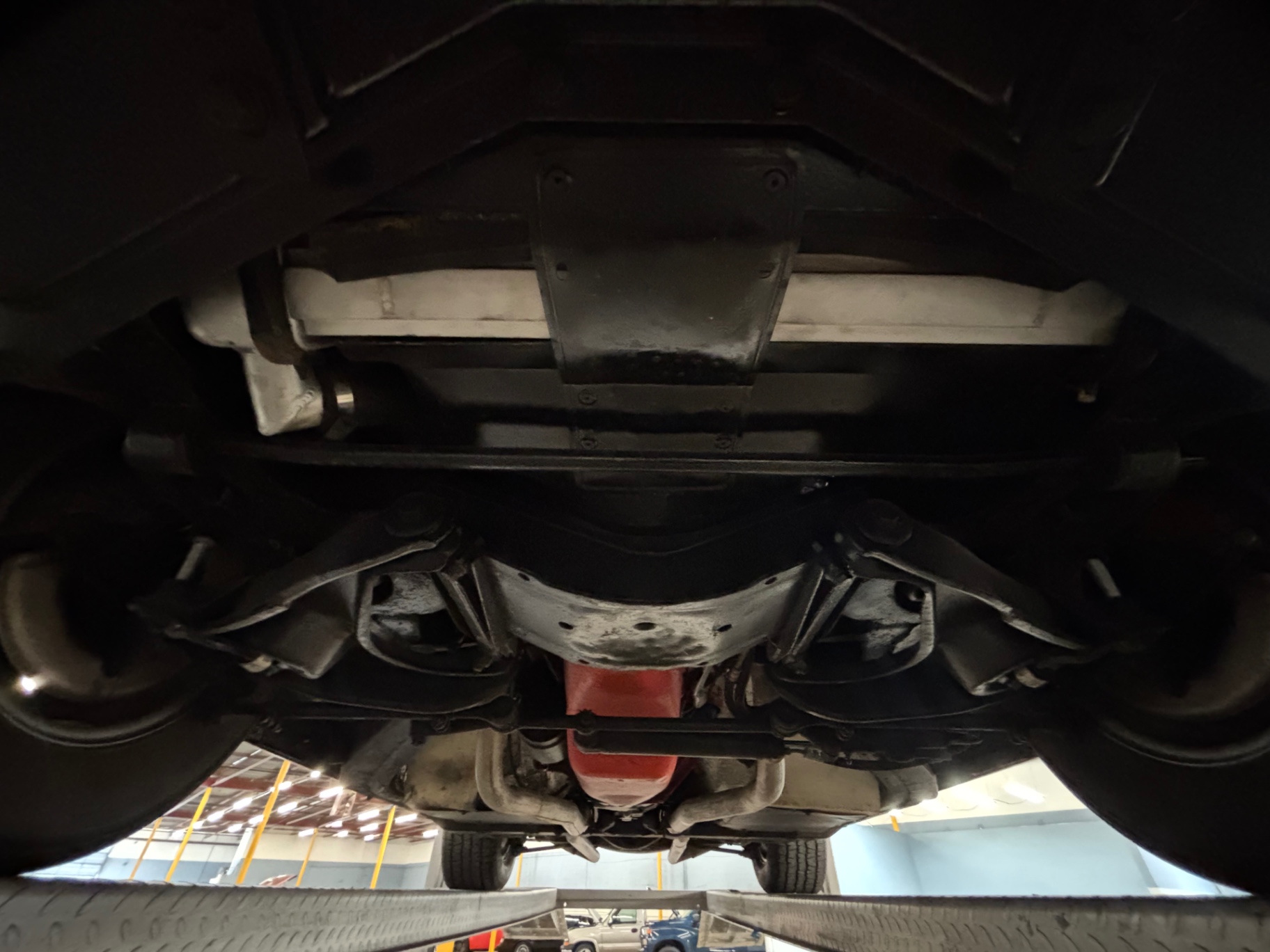
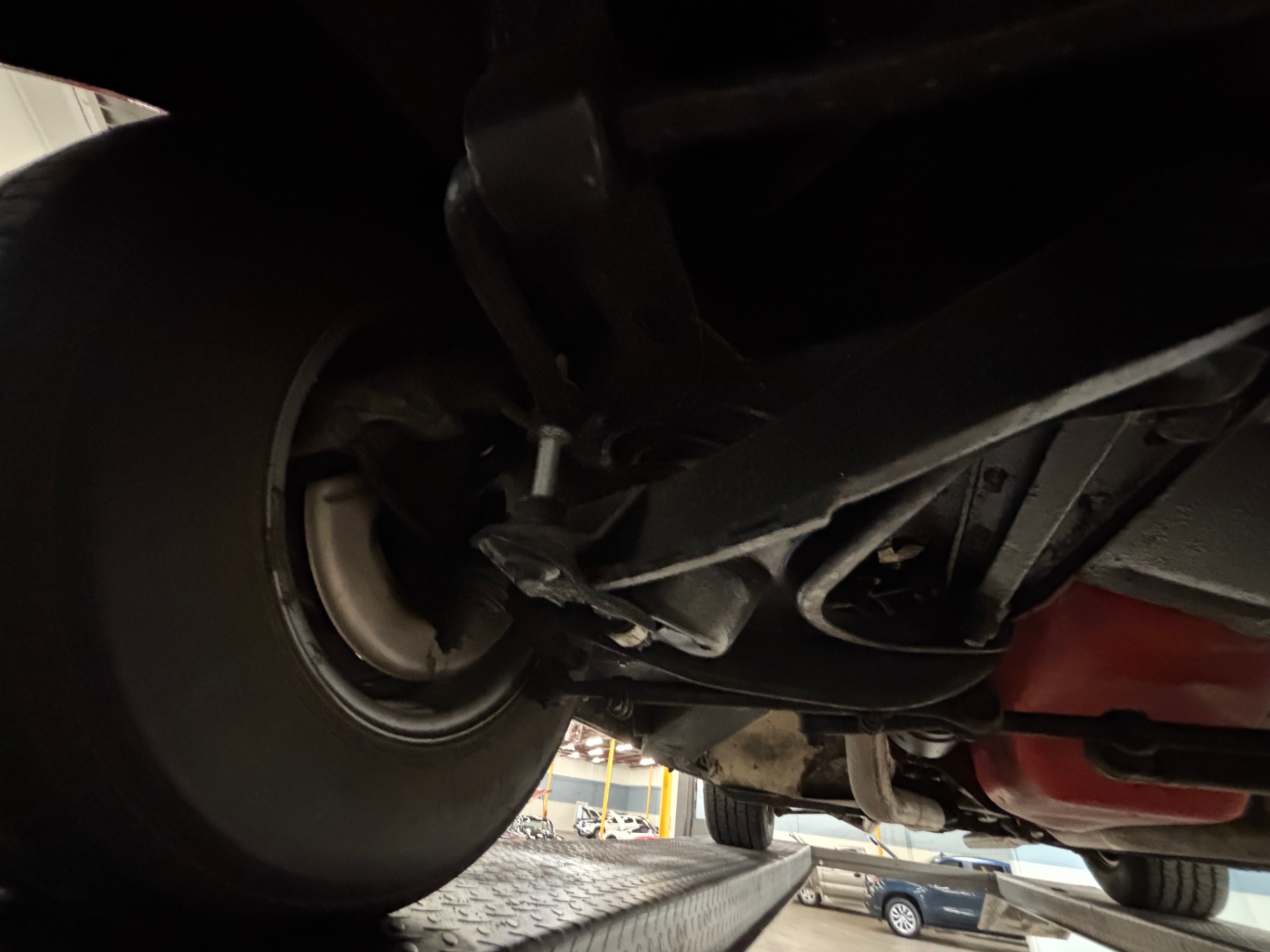
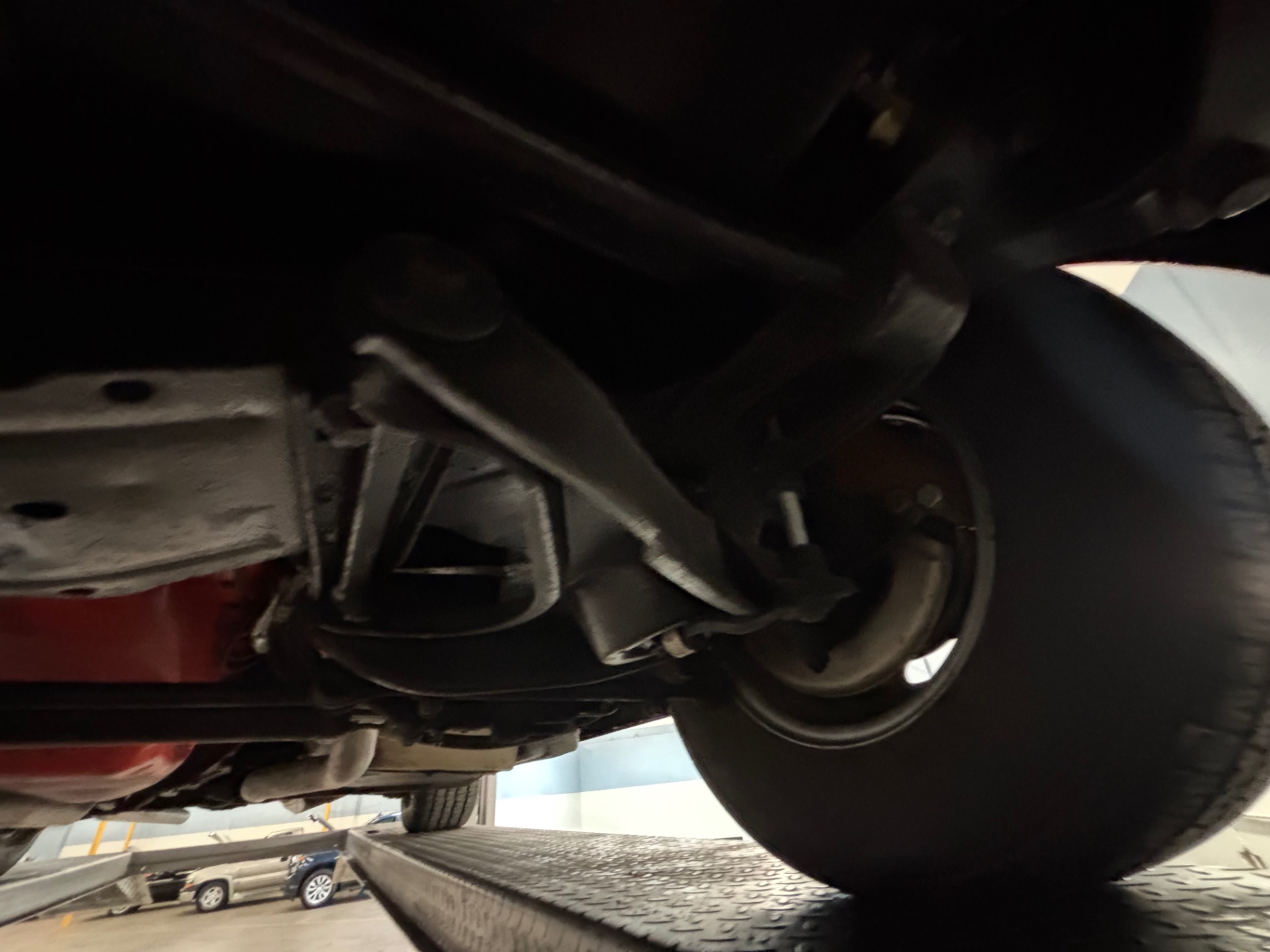
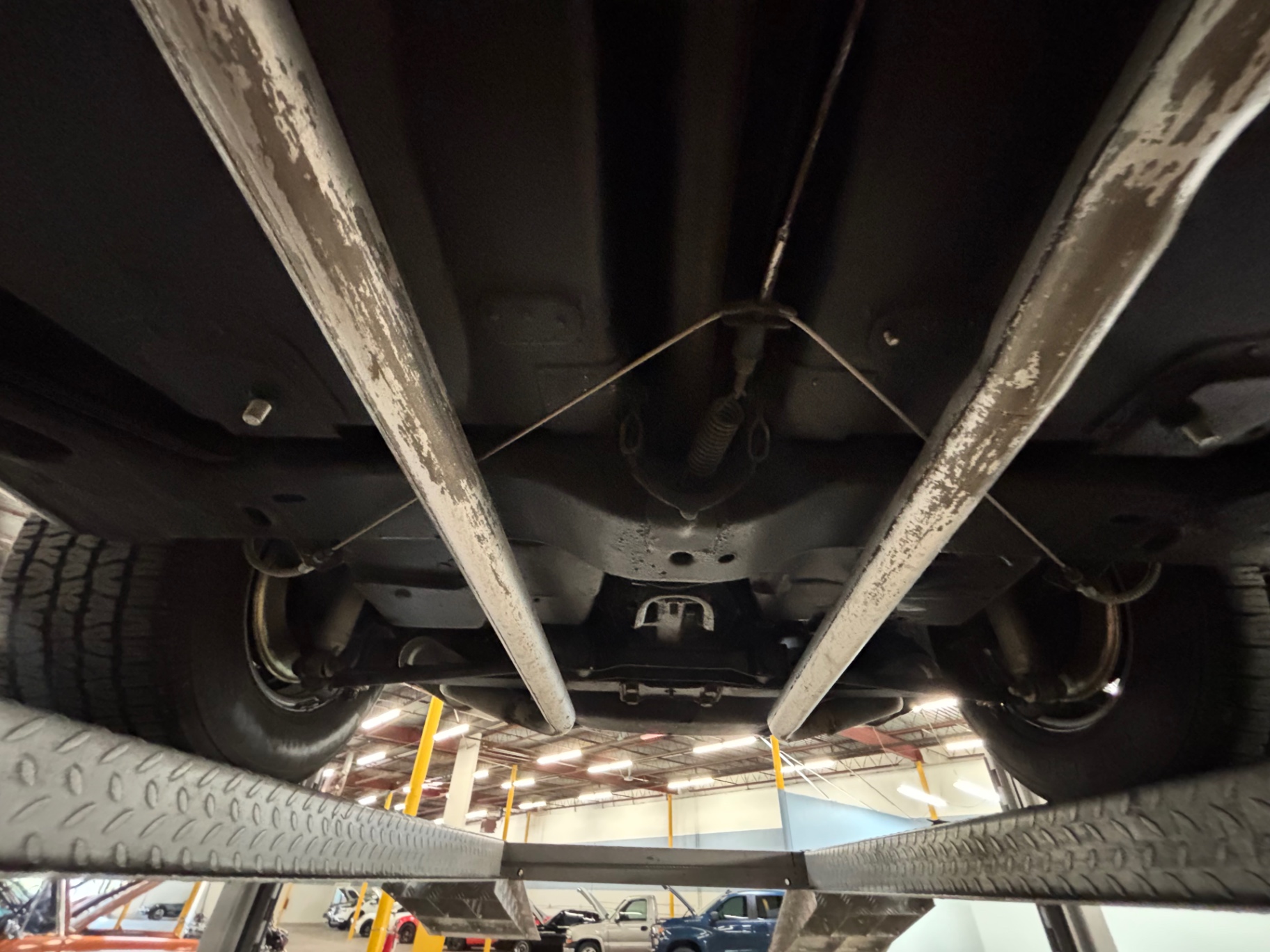
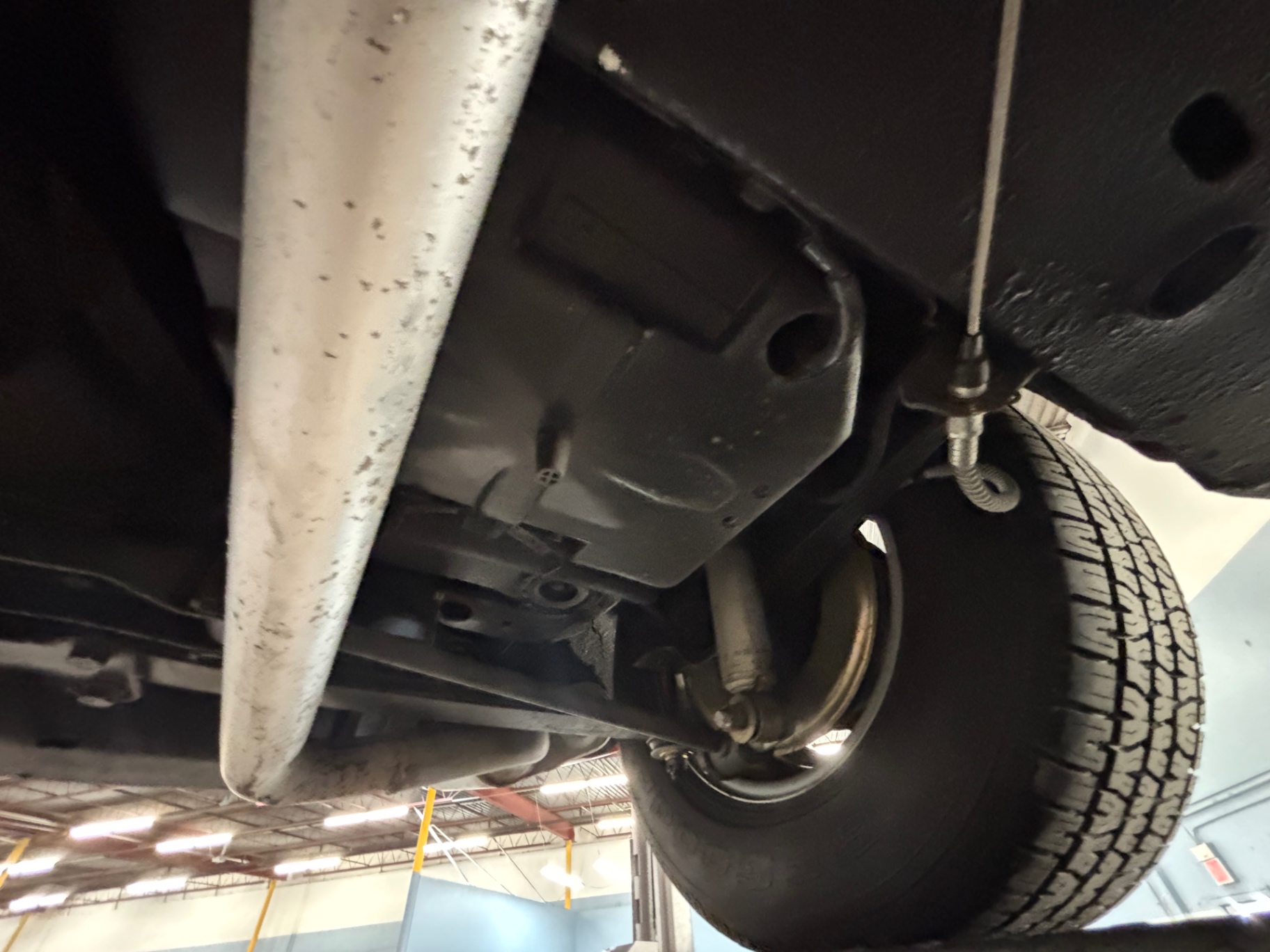
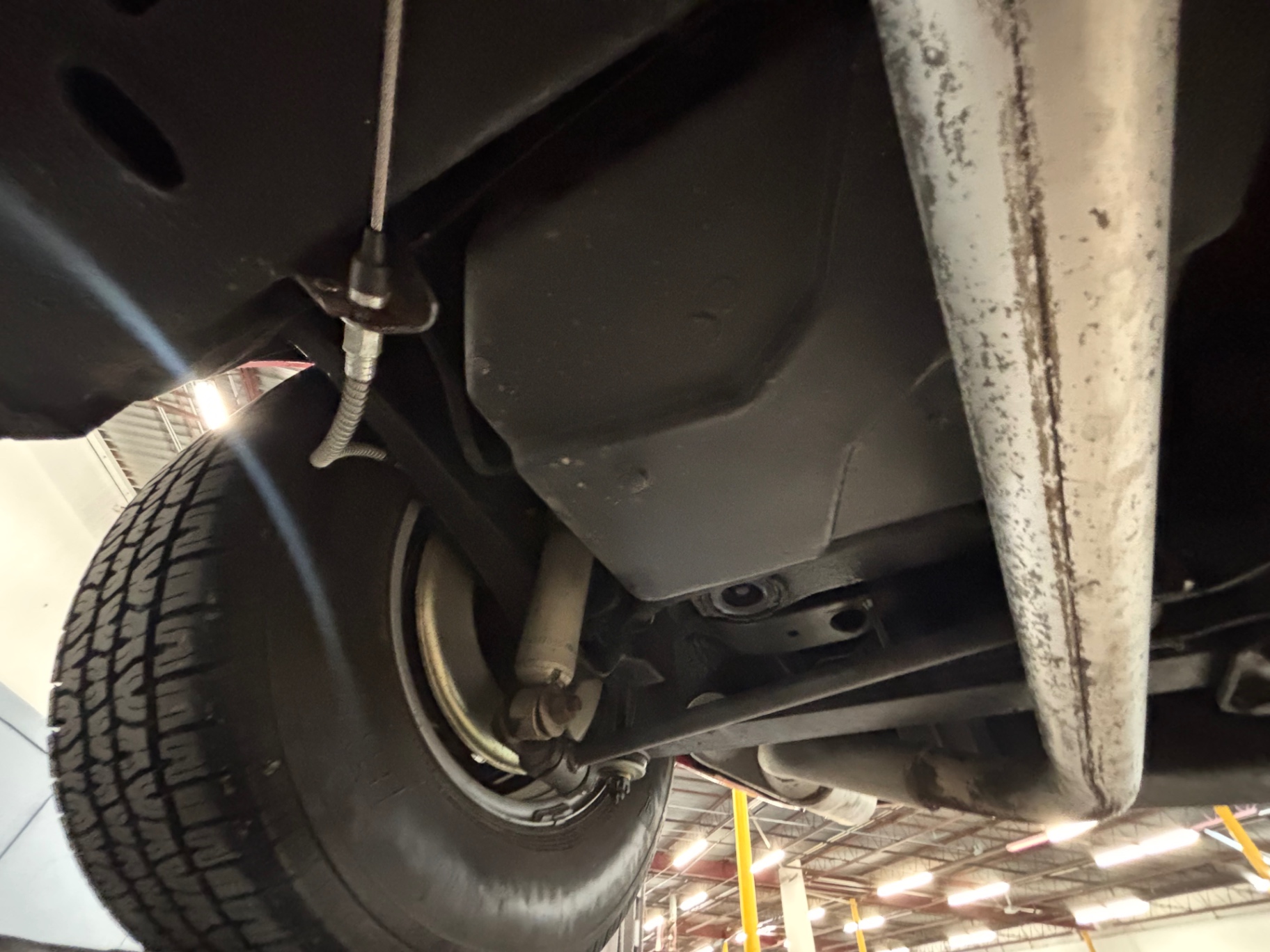
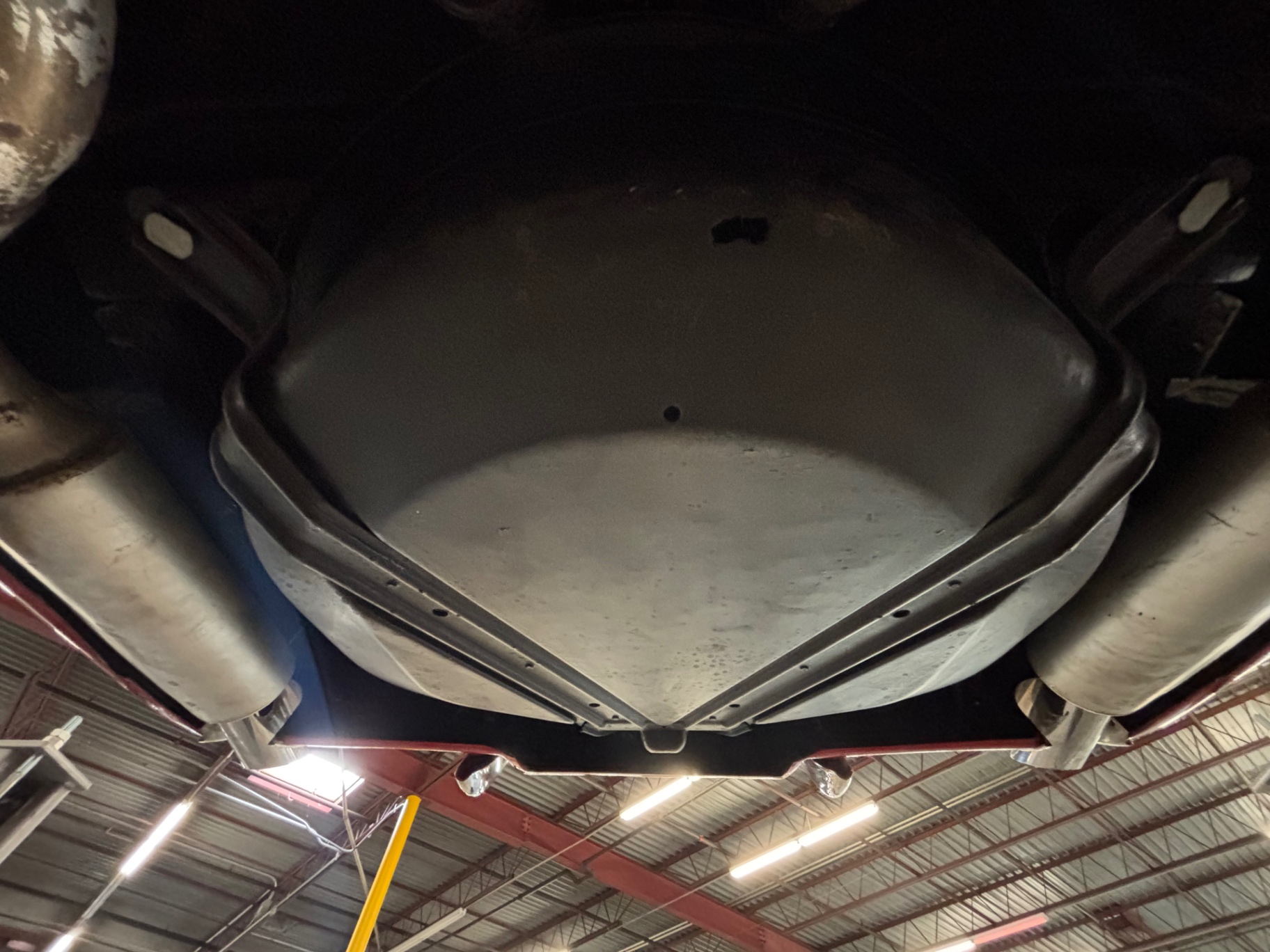
The underside photos show the framerails, suspension, and exhaust routing in presentable condition consistent with the car's overall character. The BFGoodrich Radial T/A tires are a period-correct choice frequently seen on restored and well-maintained C3 Corvettes — a tire that has been in continuous production since 1972 and remains one of the most visually appropriate options for cars of this era.
Interior
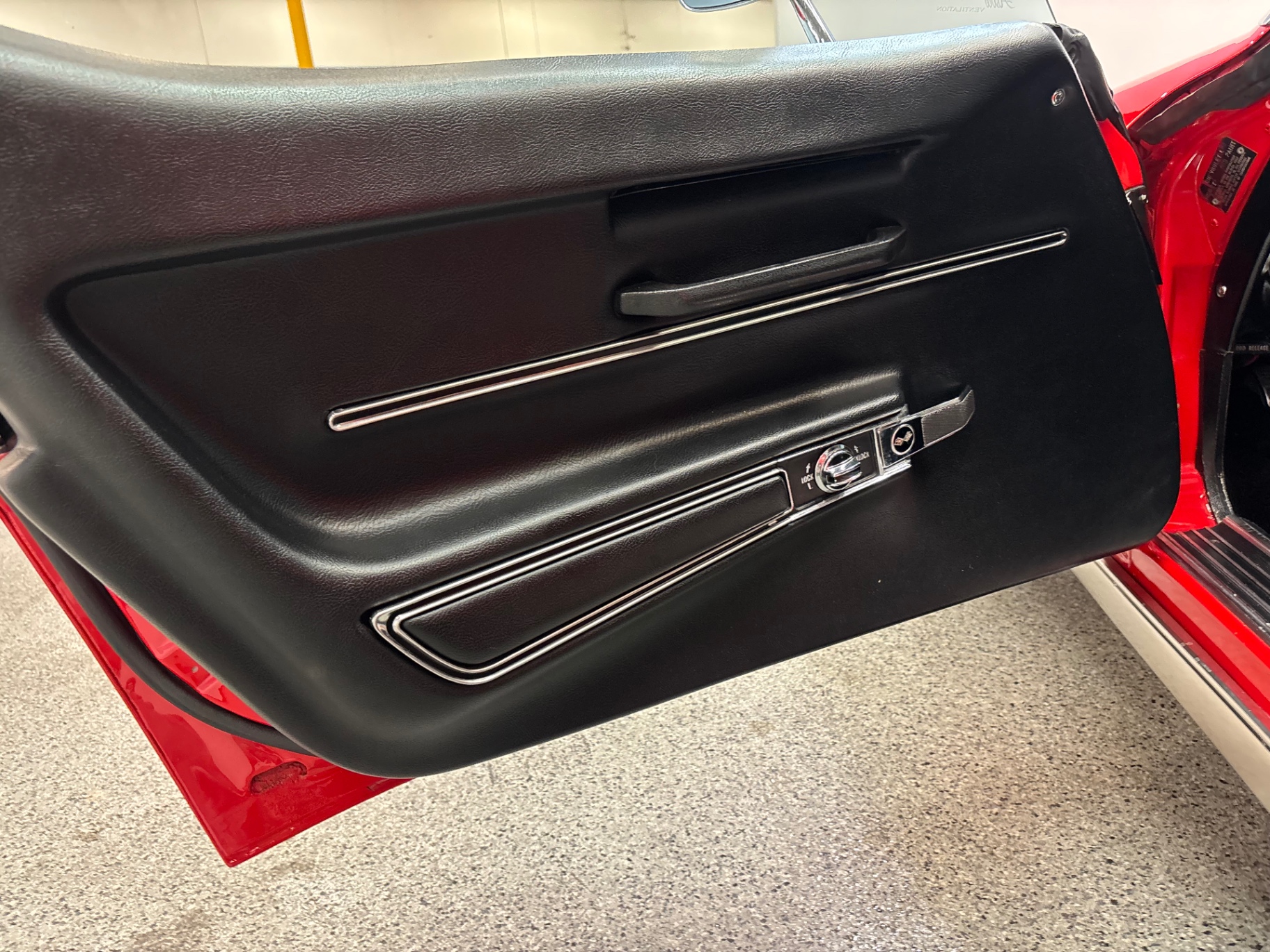
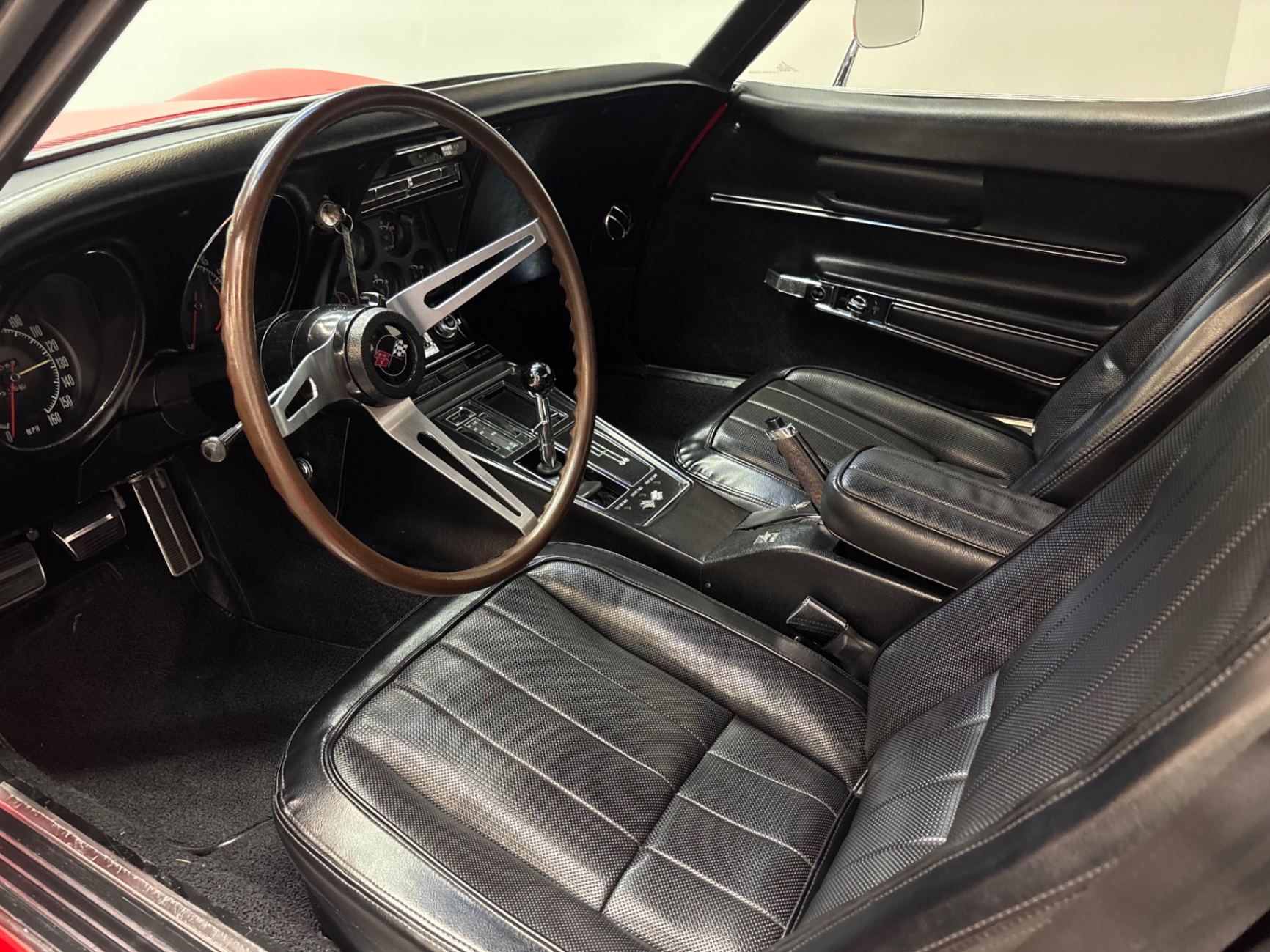
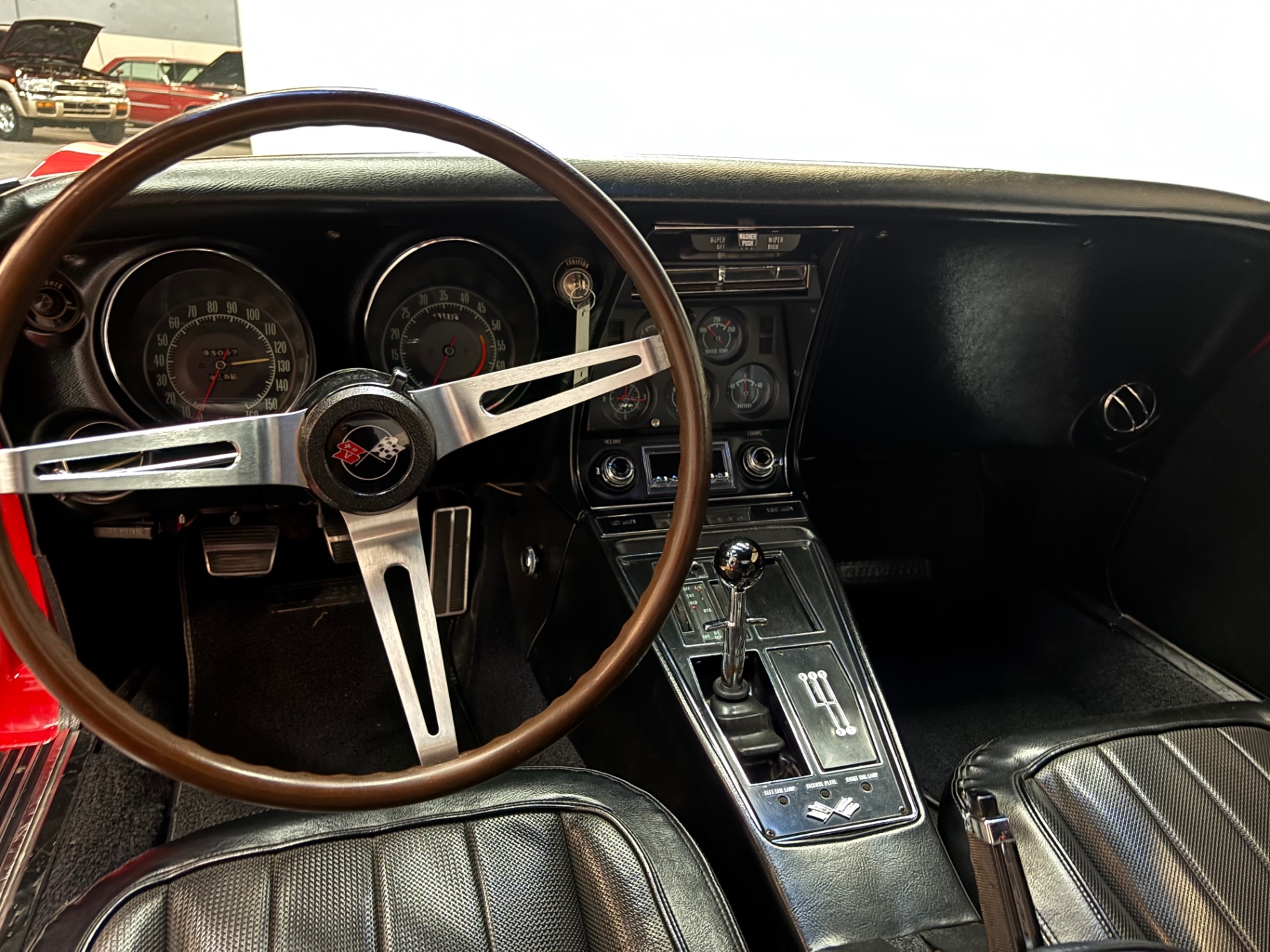
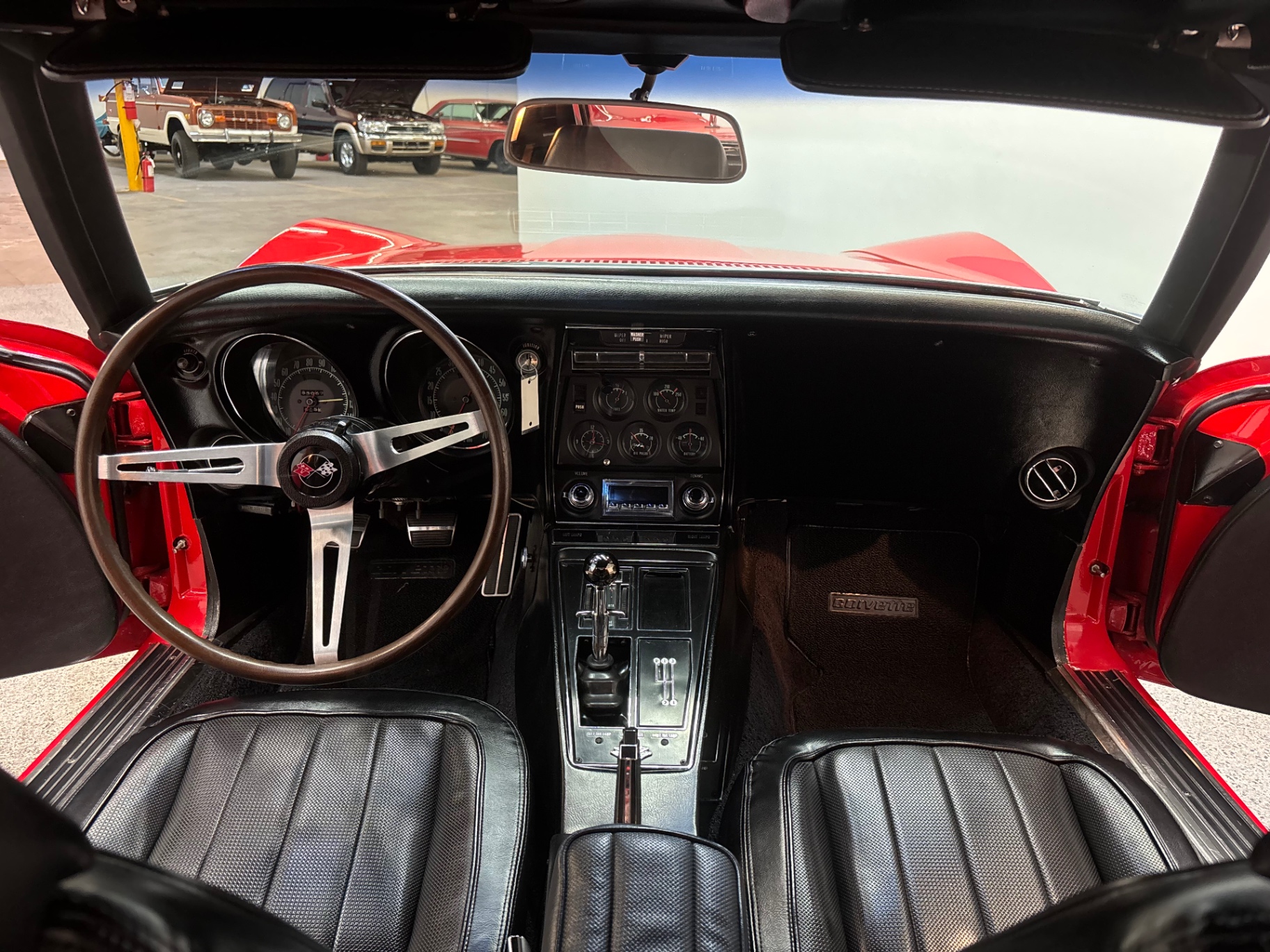
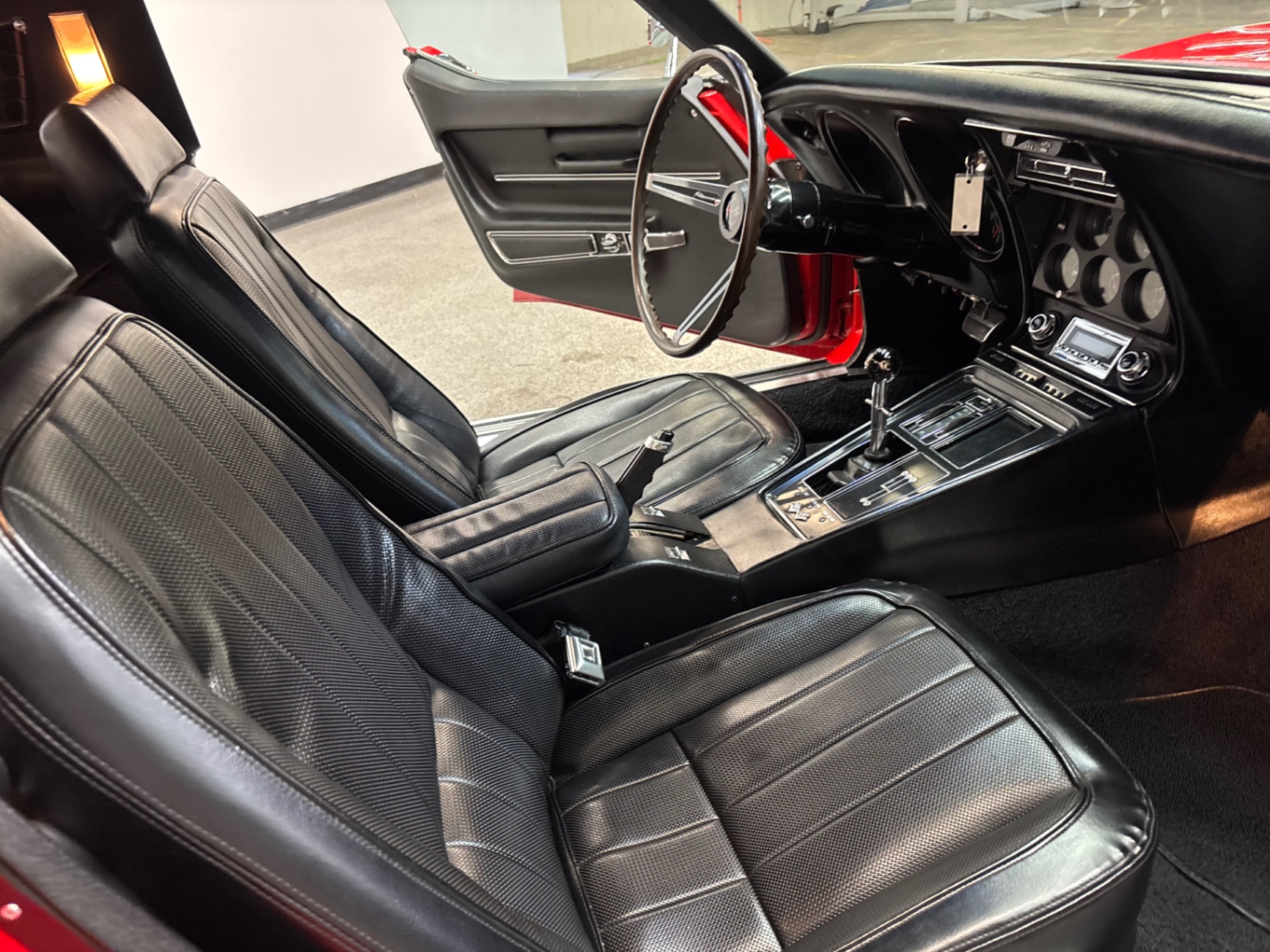
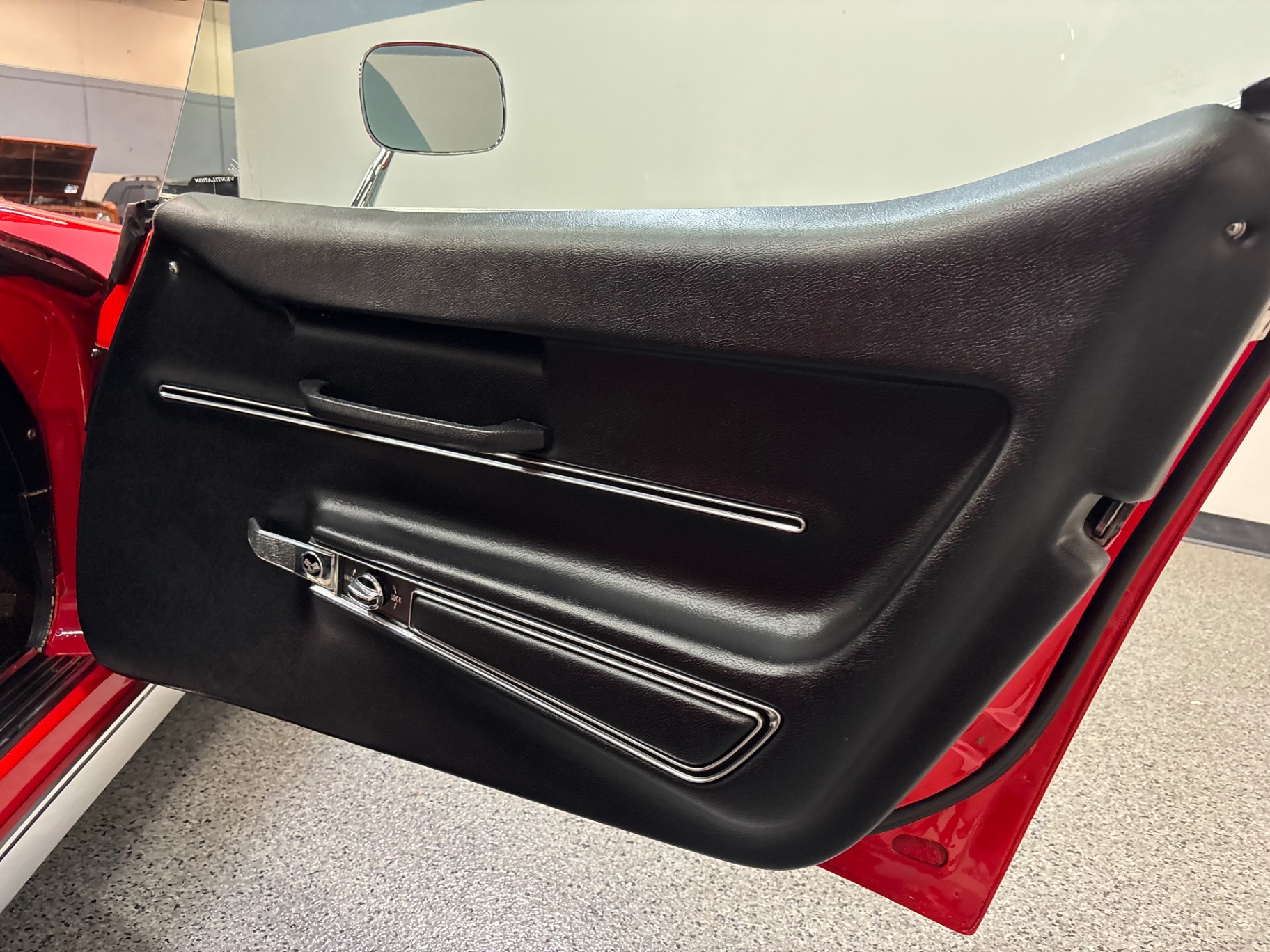
The cabin of this 1968 Chevrolet Corvette is finished in black leather throughout, which pairs directly with the red exterior and presents as a clean, cohesive combination. The bucket seats show the typical C3 stitching pattern with horizontal pleats across the seat bottom and back, and the leather is in presentable condition consistent with a car that has been maintained rather than neglected.
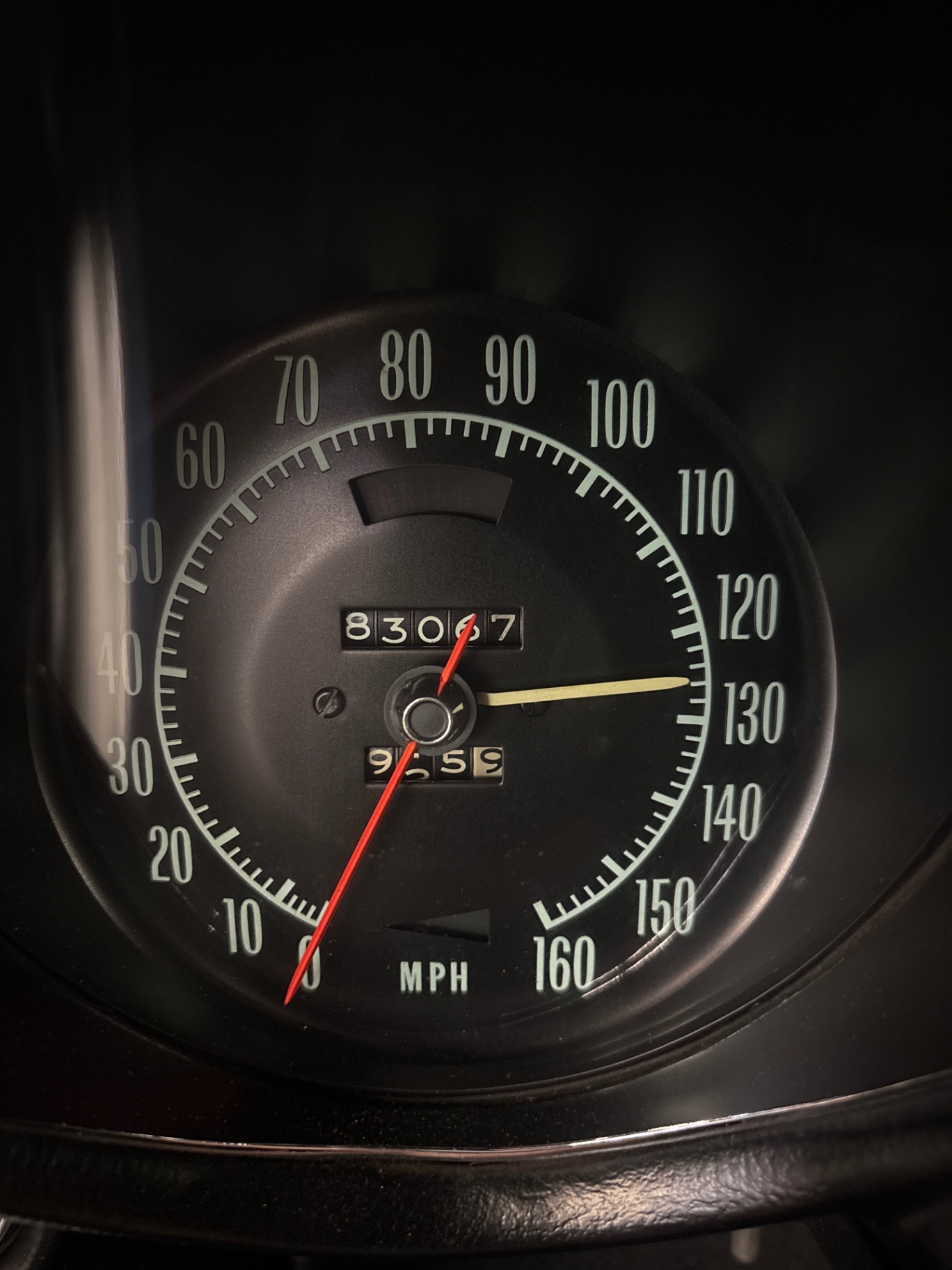
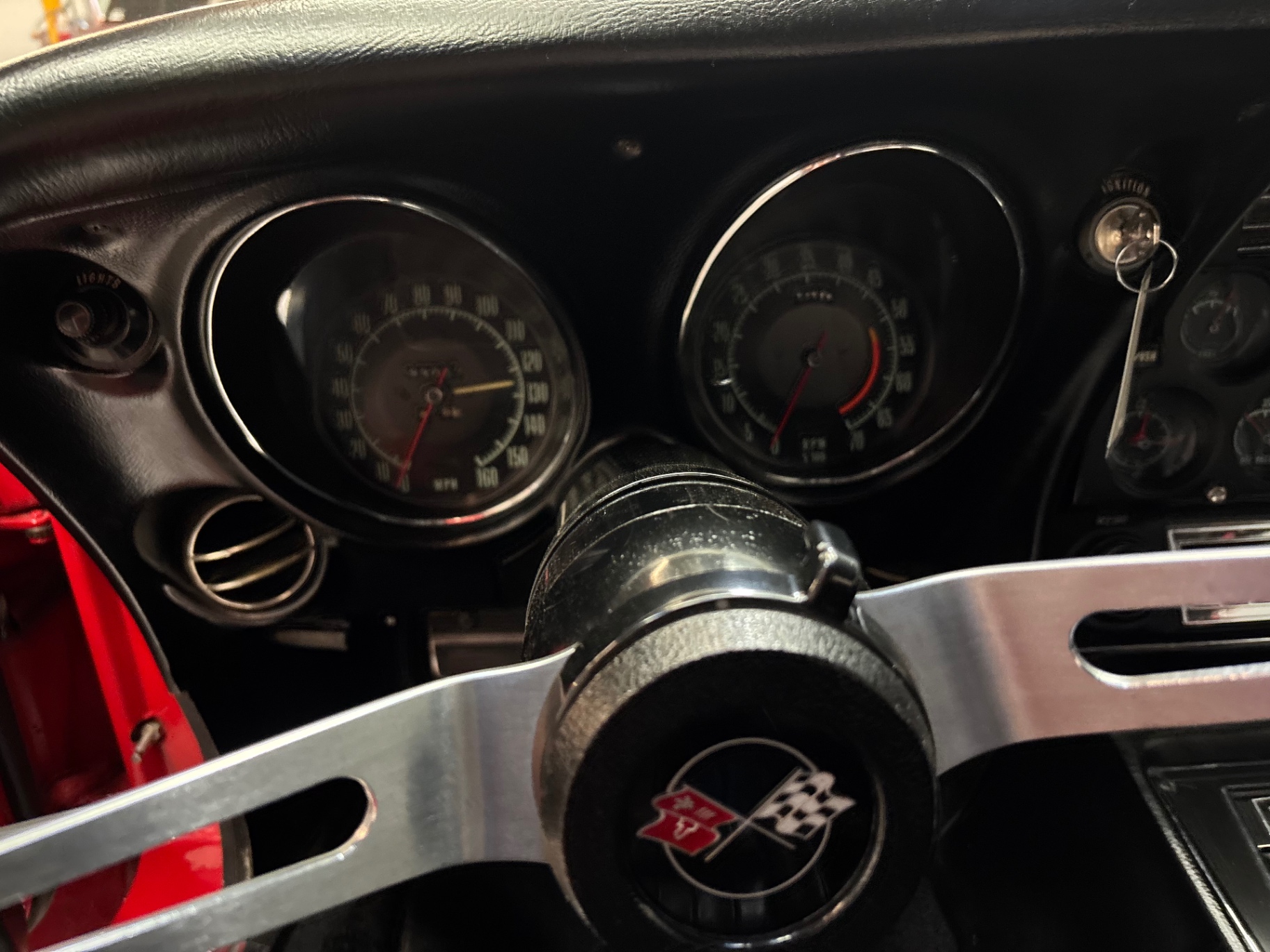
The wood-rim steering wheel is one of the more distinctive interior details on a 1968 Corvette. It uses a three-spoke aluminum armature with a walnut-stained wood rim and a center cap carrying the Corvette crossed-flags emblem. This wheel was a factory option designated RPO N36, and it gives the cockpit a sporting character that the standard wheel does not. The driver looks through it at a 160 mph speedometer and a large-faced tachometer — two gauges that dominate the instrument cluster along with a row of secondary gauges mounted in the center of the dashboard facing the driver.
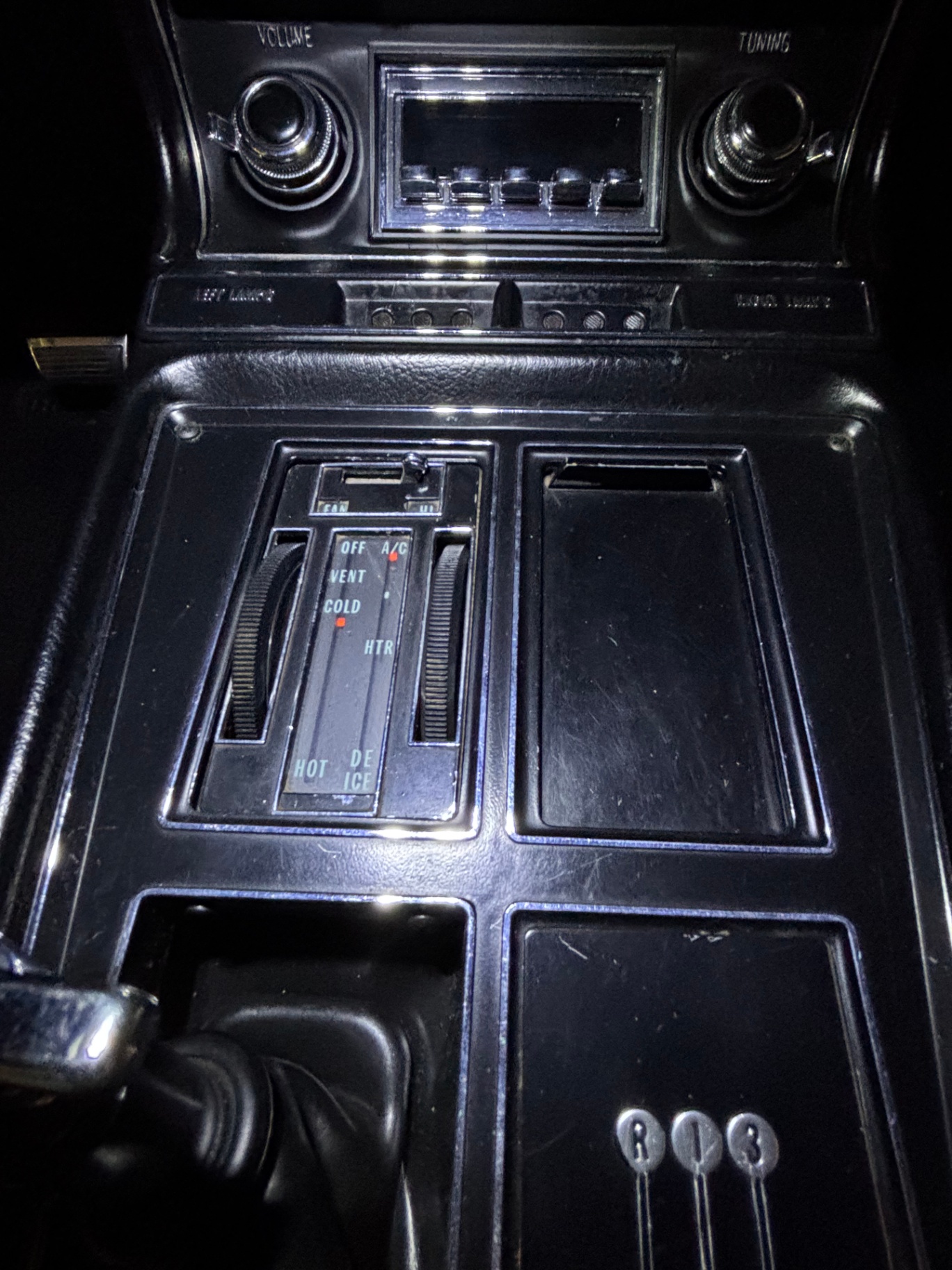
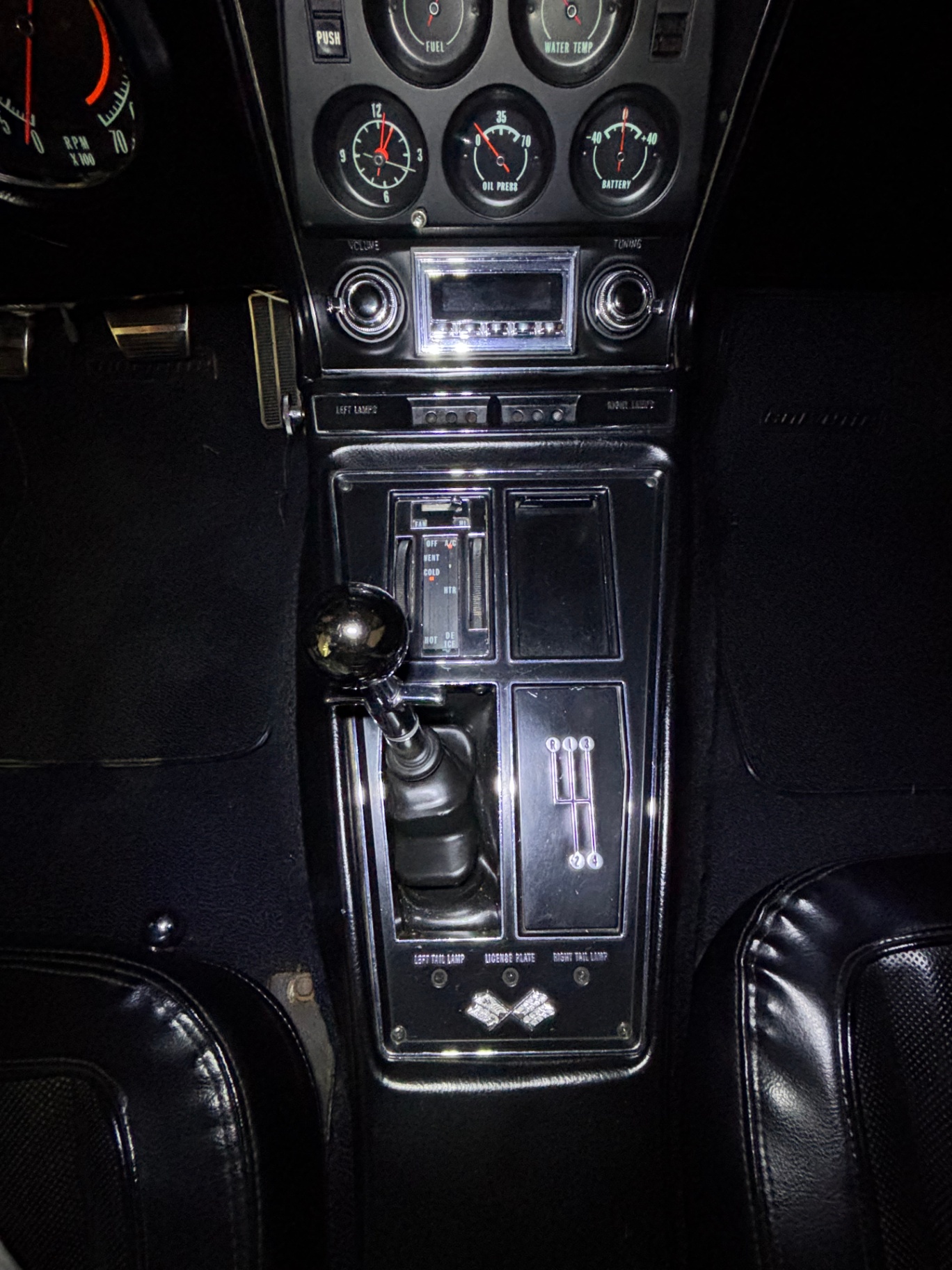
That center stack layout is one of the distinctive design elements of the 1968 interior. Chevrolet moved the secondary gauges — fuel, temperature, oil pressure, and battery — from the sides of the cockpit into a vertical column in the center, giving the driver better sight lines to all instrumentation. Below the gauges sits the radio, then the climate controls, and then the shift console with the 4-speed shifter rising from the transmission tunnel. The center console itself is a long, narrow unit running between the seats, which emphasizes the car's low, wide stance inside.
Factory air conditioning on a 1968 Corvette was a significant option. The system required a specific hood and unique ducting to route conditioned air into the cabin, which means this car was built with those modifications from the factory — it is not a component grafted onto a non-A/C car. This detail matters both for comfort in Florida's climate and for the car's configuration integrity.
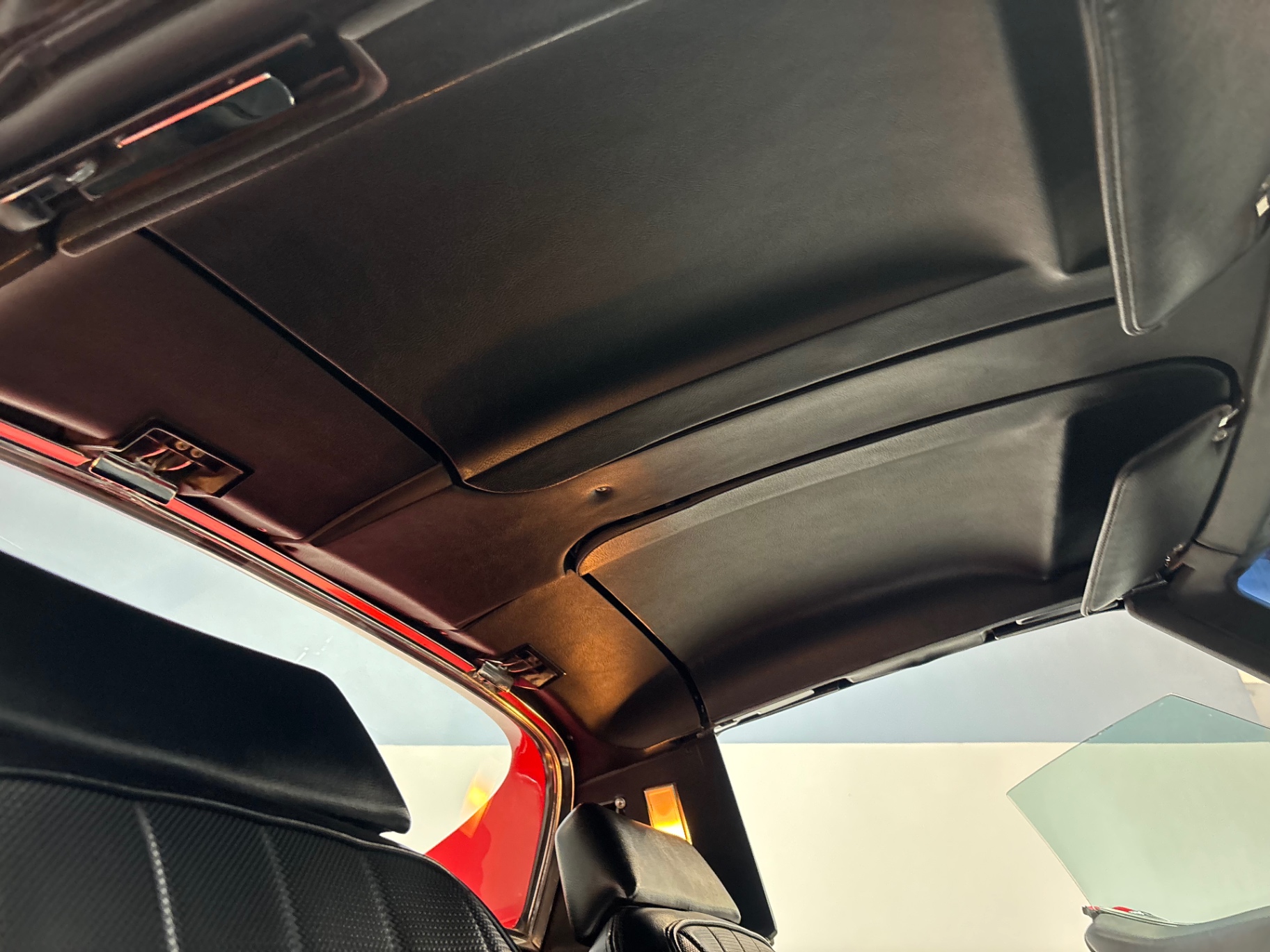
The T-Top panels are stored in the rear cargo area when removed, and the padded headliner connects the two fixed roof sections over the driver and passenger. The interior photographs show a cockpit that is recognizable and intact — the gauges, shifter, console, and seating are all present and consistent with what left the Bowling Green, Kentucky assembly plant in 1968.
Exterior
The red exterior on this 1968 Chevrolet Corvette is a factory-correct color for the model year. Chevrolet offered a range of reds across the C3 production run, and red over black was among the most ordered combinations in 1968. The fiberglass body panels show the contours that made the third-generation Corvette so visually distinct from the Sting Ray that preceded it — the front end drops sharply from the cowl to the nose, the flanks are deeply sculpted with a pronounced character line, and the rear end wraps around a hidden fuel filler door behind the license plate and a pair of round taillights that echo the Corvette's design language going back to the early 1960s.
The pop-up headlights operate via vacuum, retracting flush into the nose when not in use to preserve the smooth front clip. This system was a hallmark of the C3 and gave the car a profile that looked cleaner and more aerodynamic with the lights stowed. The chrome bumpers at both ends are period-correct — 1968 was among the final years before federal impact standards began requiring larger, more prominent bumper systems, which means this car retains the clean, relatively minimal chrome bumper arrangement that collectors prefer.
The side fender vents — often called the gills — are a 1968-specific detail. Chevrolet used these functional-looking vents as part of the body sculpting on the C3 through its production run, and their execution on the 1968 is one of the details enthusiasts point to when distinguishing early C3s from later versions.
Spinner wheel covers give the car a period-appropriate look at the corners, complementing the overall presentation without the cost or complexity of full restoration wheels. The BFGoodrich Radial T/A tires fill the wells with the correct proportions, and the chrome luggage rack mounted at the tail provides the practical storage option that many original buyers specified when ordering their Corvette for touring use.
Conclusion
The 1968 Chevrolet Corvette is the founding year of a generation that ran through 1982, and early C3 examples carry interior and exterior details that were refined away in subsequent years. This specific car — a coupe with T-Tops, a 327/300 small block, a 4-speed manual, four-wheel discs, independent rear suspension, factory air conditioning, and a black leather interior in red — represents the first-year model in a highly usable specification. It is not a numbers-matching show car built for a trailer, nor is it a modified street machine. It sits in the range that most experienced collectors find most satisfying: correct enough to be genuine, driven enough to be honest, and equipped well enough to be enjoyable on the road.
For more information on this 1968 Chevrolet Corvette, contact Skyway Classics in Sarasota, Florida at 941-254-6608.
Disclaimer
Information found on the website is presented as given to us by the owner of the car, whether on consignment or from the owner we bought it from. Some Photos, materials for videos, descriptions and other information are provided by the consignor/seller and is deemed reliable, but Skyway Classics does not warranty or guarantee this information. Skyway Classics is not responsible for information that may incorrect or a publishing error. The decision to purchase should be based solely on the buyers personal inspection of the vehicle or by a professional inspection service prior to offer or purchase being made.
1968 Chevrolet Corvette Coupe — 327/300 V8, 4-Speed, T-Tops, Red over Black
Why This Car Is Special
The 1968 Chevrolet Corvette represents one of the most significant model-year changes in the nameplate's history. After five years of the Sting Ray coupe and convertible, Chevrolet introduced an entirely new body for 1968 — longer, lower, and wider than its predecessor, with a dramatically different silhouette that was clearly influenced by the Mako Shark II show car. The roofline was redesigned around a pair of removable T-Top panels, a feature that would define Corvette ownership for the next two decades. The hideaway windshield wipers, the vacuum-operated pop-up headlights, and the side fender vents were all new for this year. It was a car that looked nothing like what came before it.
What makes the 1968 Corvette particularly interesting from a collector's standpoint is its position at the beginning of the C3 generation. This was the first year of the body style, which means it carries details that were revised or eliminated in later years — including the fiber-optic light monitoring system routed through the instrument panel and the chrome-intensive interior trim that would be toned down as the decade turned. These early-production C3 features are part of what separates a 1968 from its successors.
The VIN on this car tells a specific story. The body style code confirms this is the coupe — the T-Top hardtop — rather than the convertible. The engine code in the VIN identifies the 327 cubic inch, 300 horsepower small block, which was the base V8 for 1968. The transmission code confirms the 4-speed manual. Chevrolet built 28,566 Corvettes for the 1968 model year — 9,936 of them were coupes. Pairing the coupe body with the 327 small block and a 4-speed gearbox was how many buyers specified their cars in 1968, balancing usable street performance with a more manageable ownership experience than the high-compression big blocks.
This example presents in red over a black leather interior, one of the most recognizable and historically appropriate color combinations for a C3 Corvette.
Features List
- 327ci / 300hp V8 small block
- 4-speed manual transmission
- Removable T-Top roof panels
- Four-wheel disc brakes
- Independent rear suspension
- Vacuum-operated pop-up headlights
- Factory air conditioning
- AM/FM radio
- Chrome luggage rack
- Black leather bucket seats
- Center console
- Dashboard tachometer
- Wood-rim steering wheel
- Dual exhaust
- Spinner wheel covers
- BFGoodrich Radial T/A tires
- Chrome bumpers
- Fiberglass body
Mechanical
The 327 cubic inch V8 in this car is the L79-adjacent base small block, rated at 300 horsepower. The 327 had been the Corvette's signature engine since 1962, and by 1968 it was a well-sorted, refined unit with a strong reputation for reliability and linear power delivery. It is not a tire-shredding big block, and that is exactly the point — this is the version of the 1968 Corvette that you can drive regularly without managing the temperament that comes with the high-compression L71 or L88 variants. The 300hp 327 pulls cleanly through the rev range and responds well to the 4-speed manual, which gives the driver direct mechanical control over every gear change.
The 4-speed manual gearbox in a 1968 Corvette is a close-ratio or wide-ratio Muncie unit depending on how the car was optioned. It connects to the independent rear suspension, which was one of the Corvette's most significant engineering advantages over its era's competition. Rather than the solid rear axle found in most American performance cars of the period, the Corvette used a three-link independent setup with a U-jointed half-shaft at each rear wheel and a single transverse leaf spring. This arrangement allowed each rear wheel to move independently, which improved traction, reduced unsprung weight, and gave the car a handling character that was genuinely different from its domestic rivals.
Four-wheel disc brakes were a factory option on the 1968 Corvette, and this car is equipped with them. Disc brakes were far from universal on American production cars in 1968, and their presence on the Corvette underscored the model's positioning as a performance machine rather than a dressed-up passenger car. The dual exhaust exits cleanly at the rear, framing the back end with the visual and audible confirmation that this is a V8 car.
The underside photos show the framerails, suspension, and exhaust routing in presentable condition consistent with the car's overall character. The BFGoodrich Radial T/A tires are a period-correct choice frequently seen on restored and well-maintained C3 Corvettes — a tire that has been in continuous production since 1972 and remains one of the most visually appropriate options for cars of this era.
Interior
The cabin of this 1968 Chevrolet Corvette is finished in black leather throughout, which pairs directly with the red exterior and presents as a clean, cohesive combination. The bucket seats show the typical C3 stitching pattern with horizontal pleats across the seat bottom and back, and the leather is in presentable condition consistent with a car that has been maintained rather than neglected.
The wood-rim steering wheel is one of the more distinctive interior details on a 1968 Corvette. It uses a three-spoke aluminum armature with a walnut-stained wood rim and a center cap carrying the Corvette crossed-flags emblem. This wheel was a factory option designated RPO N36, and it gives the cockpit a sporting character that the standard wheel does not. The driver looks through it at a 160 mph speedometer and a large-faced tachometer — two gauges that dominate the instrument cluster along with a row of secondary gauges mounted in the center of the dashboard facing the driver.
That center stack layout is one of the distinctive design elements of the 1968 interior. Chevrolet moved the secondary gauges — fuel, temperature, oil pressure, and battery — from the sides of the cockpit into a vertical column in the center, giving the driver better sight lines to all instrumentation. Below the gauges sits the radio, then the climate controls, and then the shift console with the 4-speed shifter rising from the transmission tunnel. The center console itself is a long, narrow unit running between the seats, which emphasizes the car's low, wide stance inside.
Factory air conditioning on a 1968 Corvette was a significant option. The system required a specific hood and unique ducting to route conditioned air into the cabin, which means this car was built with those modifications from the factory — it is not a component grafted onto a non-A/C car. This detail matters both for comfort in Florida's climate and for the car's configuration integrity.
The T-Top panels are stored in the rear cargo area when removed, and the padded headliner connects the two fixed roof sections over the driver and passenger. The interior photographs show a cockpit that is recognizable and intact — the gauges, shifter, console, and seating are all present and consistent with what left the Bowling Green, Kentucky assembly plant in 1968.
Exterior
The red exterior on this 1968 Chevrolet Corvette is a factory-correct color for the model year. Chevrolet offered a range of reds across the C3 production run, and red over black was among the most ordered combinations in 1968. The fiberglass body panels show the contours that made the third-generation Corvette so visually distinct from the Sting Ray that preceded it — the front end drops sharply from the cowl to the nose, the flanks are deeply sculpted with a pronounced character line, and the rear end wraps around a hidden fuel filler door behind the license plate and a pair of round taillights that echo the Corvette's design language going back to the early 1960s.
The pop-up headlights operate via vacuum, retracting flush into the nose when not in use to preserve the smooth front clip. This system was a hallmark of the C3 and gave the car a profile that looked cleaner and more aerodynamic with the lights stowed. The chrome bumpers at both ends are period-correct — 1968 was among the final years before federal impact standards began requiring larger, more prominent bumper systems, which means this car retains the clean, relatively minimal chrome bumper arrangement that collectors prefer.
The side fender vents — often called the gills — are a 1968-specific detail. Chevrolet used these functional-looking vents as part of the body sculpting on the C3 through its production run, and their execution on the 1968 is one of the details enthusiasts point to when distinguishing early C3s from later versions.
Spinner wheel covers give the car a period-appropriate look at the corners, complementing the overall presentation without the cost or complexity of full restoration wheels. The BFGoodrich Radial T/A tires fill the wells with the correct proportions, and the chrome luggage rack mounted at the tail provides the practical storage option that many original buyers specified when ordering their Corvette for touring use.
Conclusion
The 1968 Chevrolet Corvette is the founding year of a generation that ran through 1982, and early C3 examples carry interior and exterior details that were refined away in subsequent years. This specific car — a coupe with T-Tops, a 327/300 small block, a 4-speed manual, four-wheel discs, independent rear suspension, factory air conditioning, and a black leather interior in red — represents the first-year model in a highly usable specification. It is not a numbers-matching show car built for a trailer, nor is it a modified street machine. It sits in the range that most experienced collectors find most satisfying: correct enough to be genuine, driven enough to be honest, and equipped well enough to be enjoyable on the road.
For more information on this 1968 Chevrolet Corvette, contact Skyway Classics in Sarasota, Florida at 941-254-6608.
Disclaimer
Information found on the website is presented as given to us by the owner of the car, whether on consignment or from the owner we bought it from. Some Photos, materials for videos, descriptions and other information are provided by the consignor/seller and is deemed reliable, but Skyway Classics does not warranty or guarantee this information. Skyway Classics is not responsible for information that may incorrect or a publishing error. The decision to purchase should be based solely on the buyers personal inspection of the vehicle or by a professional inspection service prior to offer or purchase being made.
1968 Chevrolet
Corvette Base
Why Choose Skyway Classics?
Explore our curated inventory of classic and collector cars—thoughtfully selected, ready to drive, and supported by experts who make ownership simple.
Expert Curation
Every vehicle is hand-selected by our experts for quality, authenticity, and investment potential.
Fast Transactions
Streamlined buying and selling process with quick financing and immediate delivery options.
Only National Dealer With Classic Service & Repair
We’re the only national dealership that services and repairs the classics we sell—before and after the sale.
Nationwide Network
Access to our extensive network of collectors, restorers, and classic car enthusiasts nationwide.
Concierge Ownership Support
From financing and insurance to paperwork, shipping, and titling—we handle the details so you can enjoy the drive.
Passion-Driven Service
We're classic car enthusiasts first, providing personalized service with genuine passion for the hobby.