
1932 Ford
Roadster Hi-Boy
1932 Ford Roadster — 383 Stroker Street Rod with Custom Tan Leather Interior
Why This Car Is Special
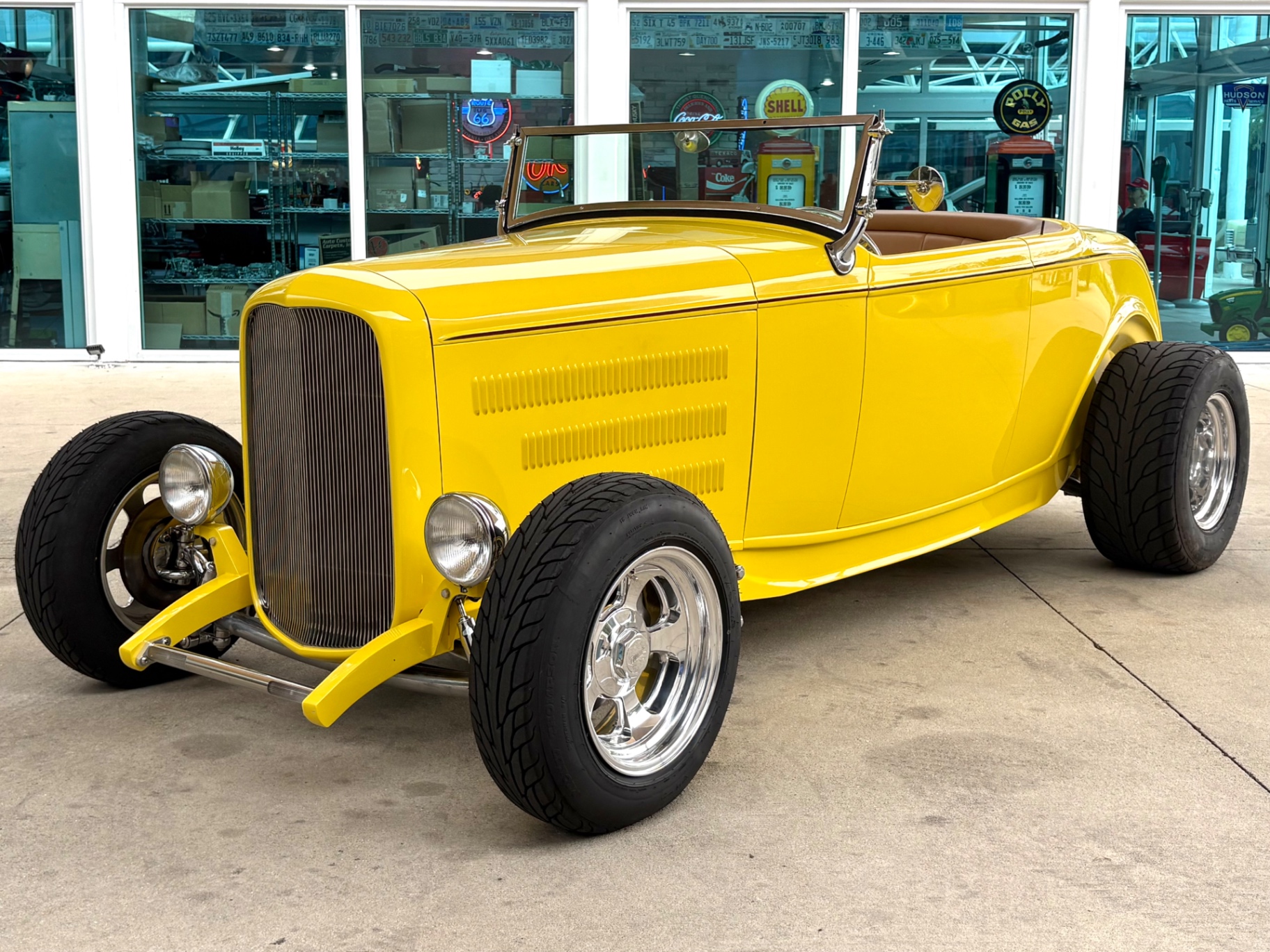
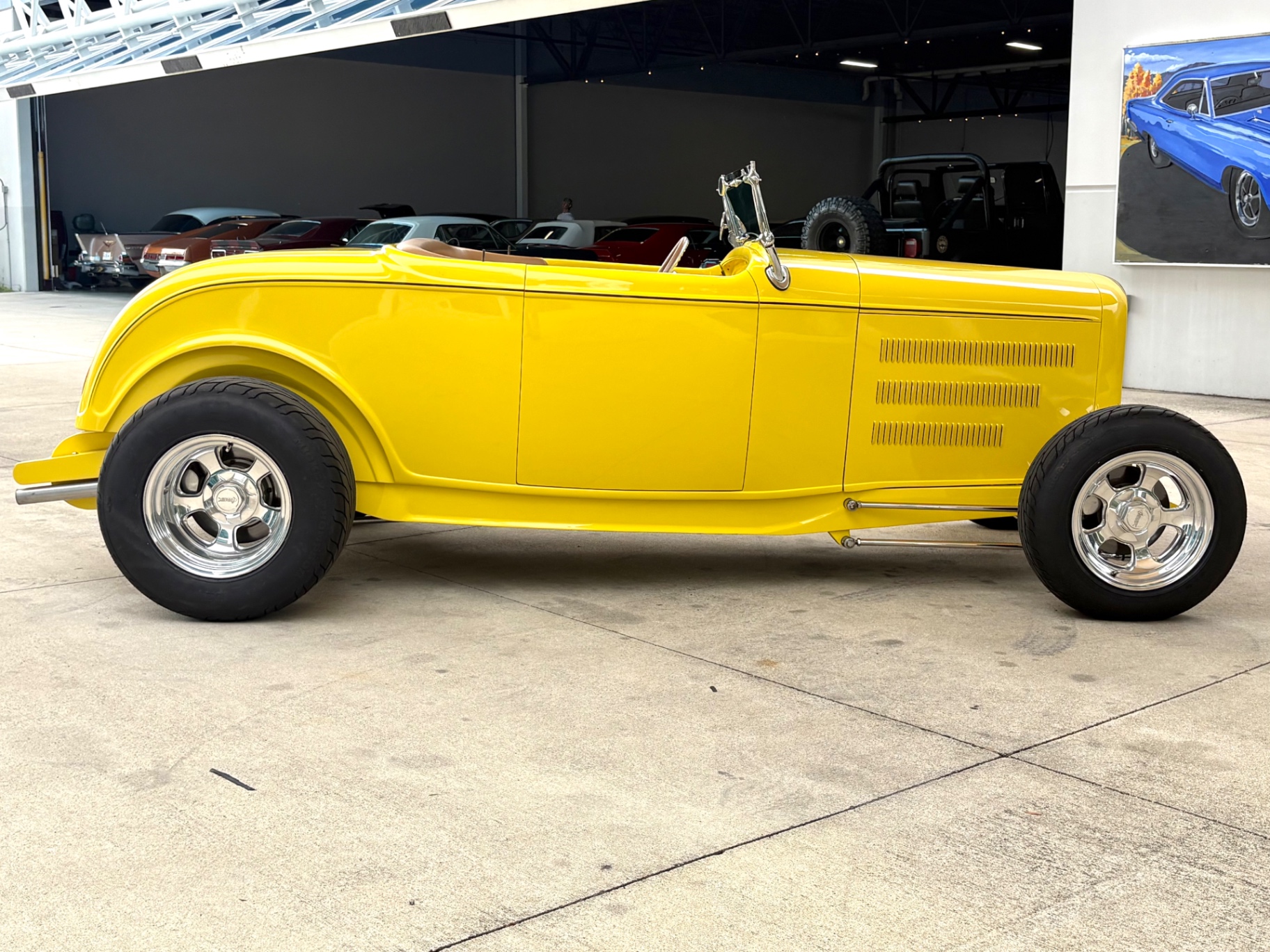
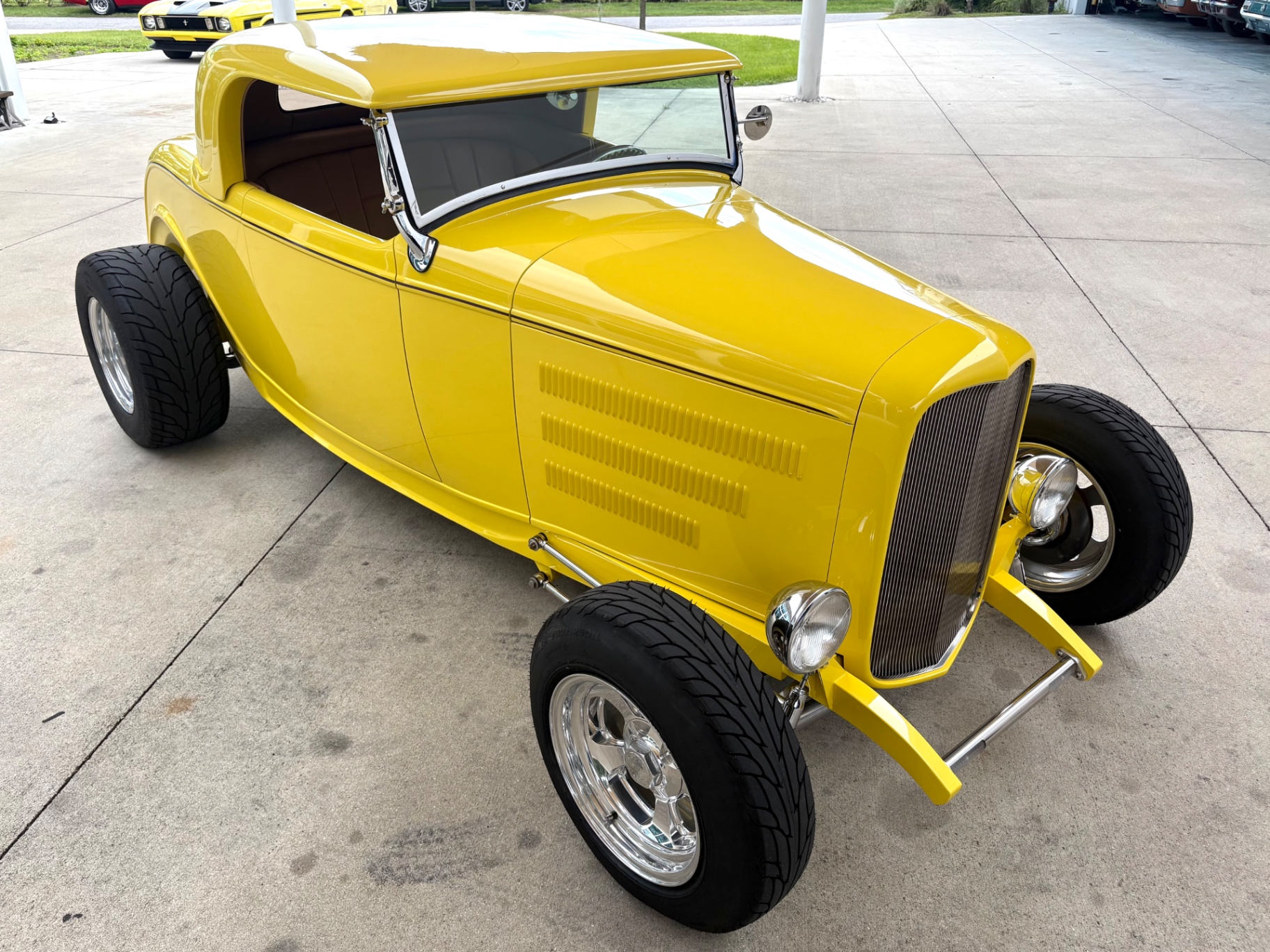
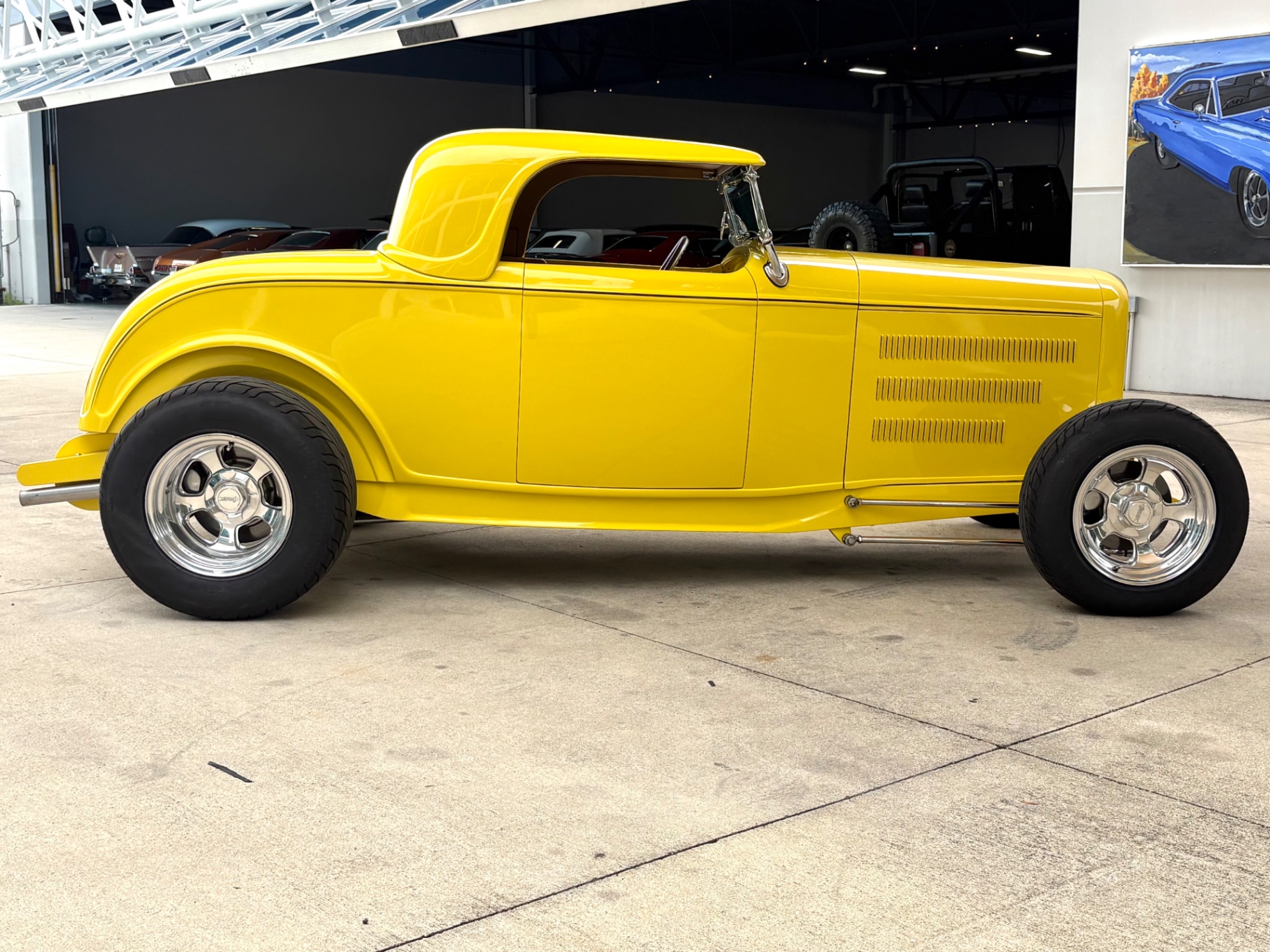
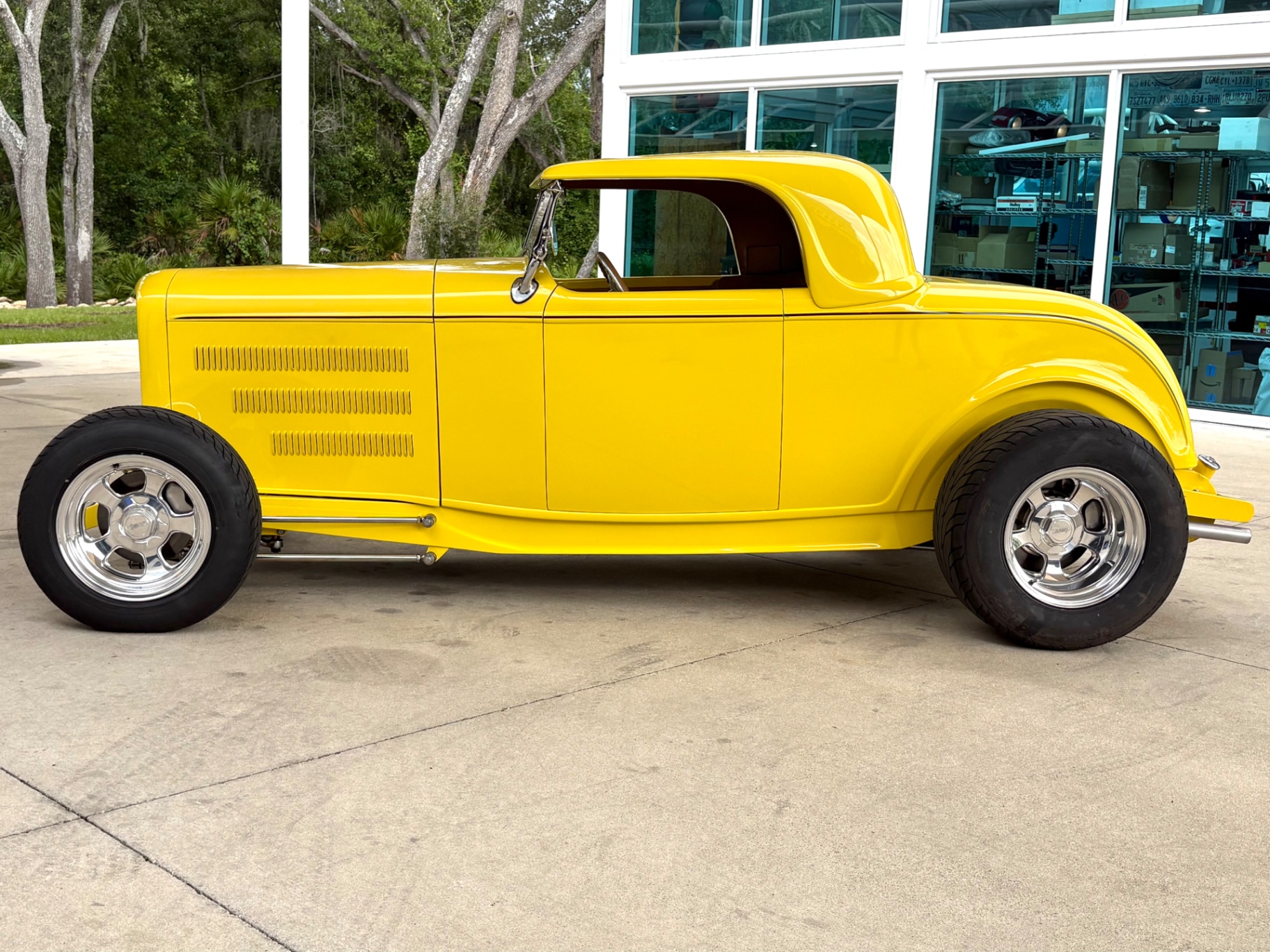
The 1932 Ford Roadster is the car that started it all. When hot rodders returning from World War II needed a cheap, lightweight body to stuff a flathead into, they reached for the '32 Ford. The body was low, the frame was strong, and the styling — penned under the direction of Edsel Ford with input from designer Joe Galamb — had a natural elegance that no amount of modification could ruin. Ninety-plus years later, the 1932 Ford Roadster remains the definitive American hot rod. Ford built just over 520,000 Model 18s in 1932, the year the company introduced its first flathead V8 to the public. Of all the body styles produced that year, the open roadster is the most coveted by builders and collectors alike. This particular 1932 Ford Roadster has been built as a proper street rod — not a trailer queen, not a show car that gets trailered to events, but a real driver with serious power, a finished undercarriage, and an interior built for long days behind the wheel. It wears Lemon Ice yellow from every angle, rides on a chrome suspension that looks as clean underneath as it does from the outside, and carries a 383 stroker under the hood rated at 530 horsepower. For the serious hot rod buyer, this one covers a lot of ground.
Features List
- 383 Stroker V8, 530 horsepower
- TH350 3-speed automatic transmission
- K&N air filter
- Dual exhaust
- Bucnik chrome wheels
- Drum brakes all around
- Chrome front suspension
- Custom tan leather interior
- Classic Instruments gauge cluster
- Floor shift console
- Louvered body panels
- Removable hard top
- Branch new Mickey Thompson Tires
Mechanical
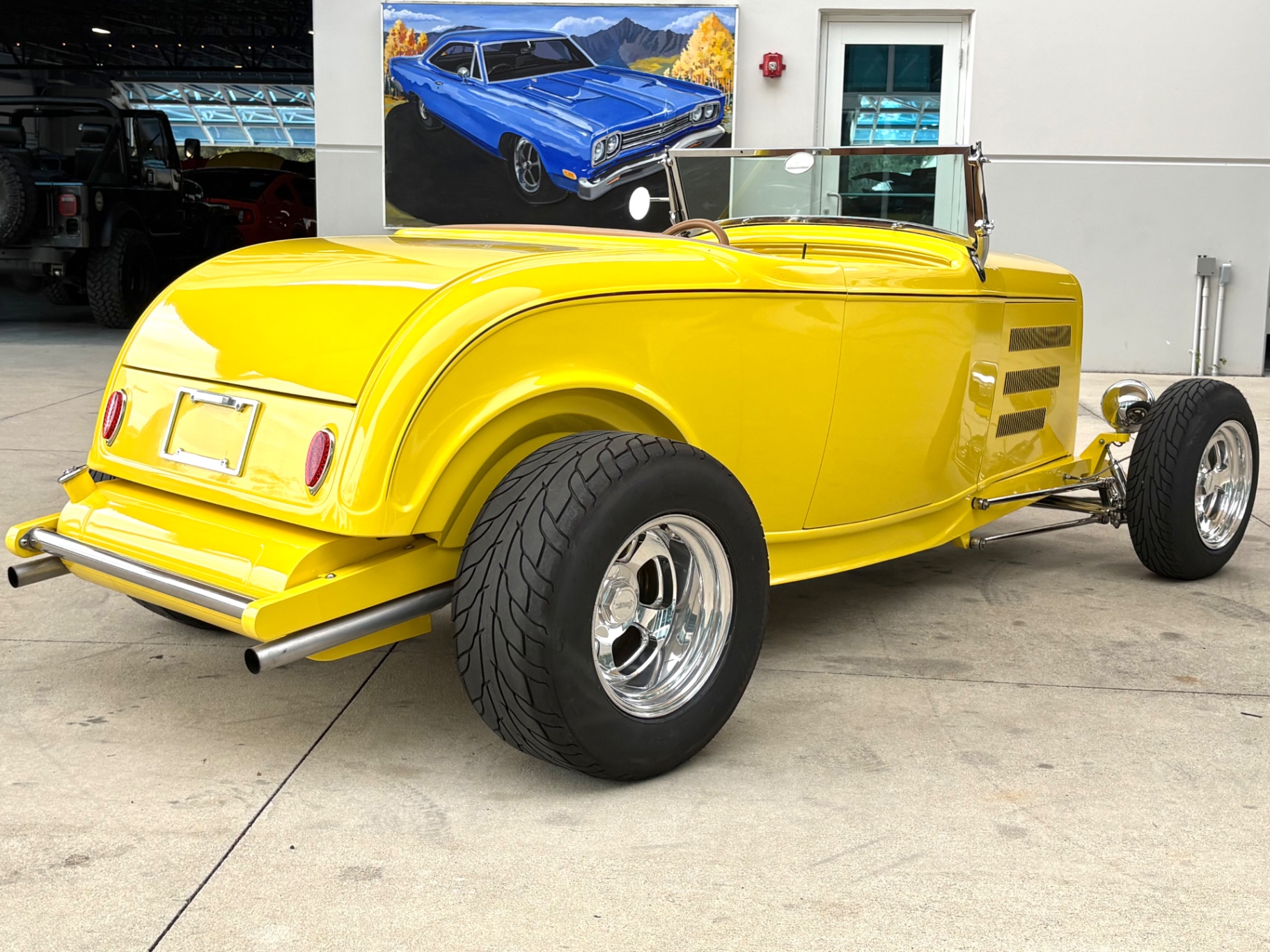
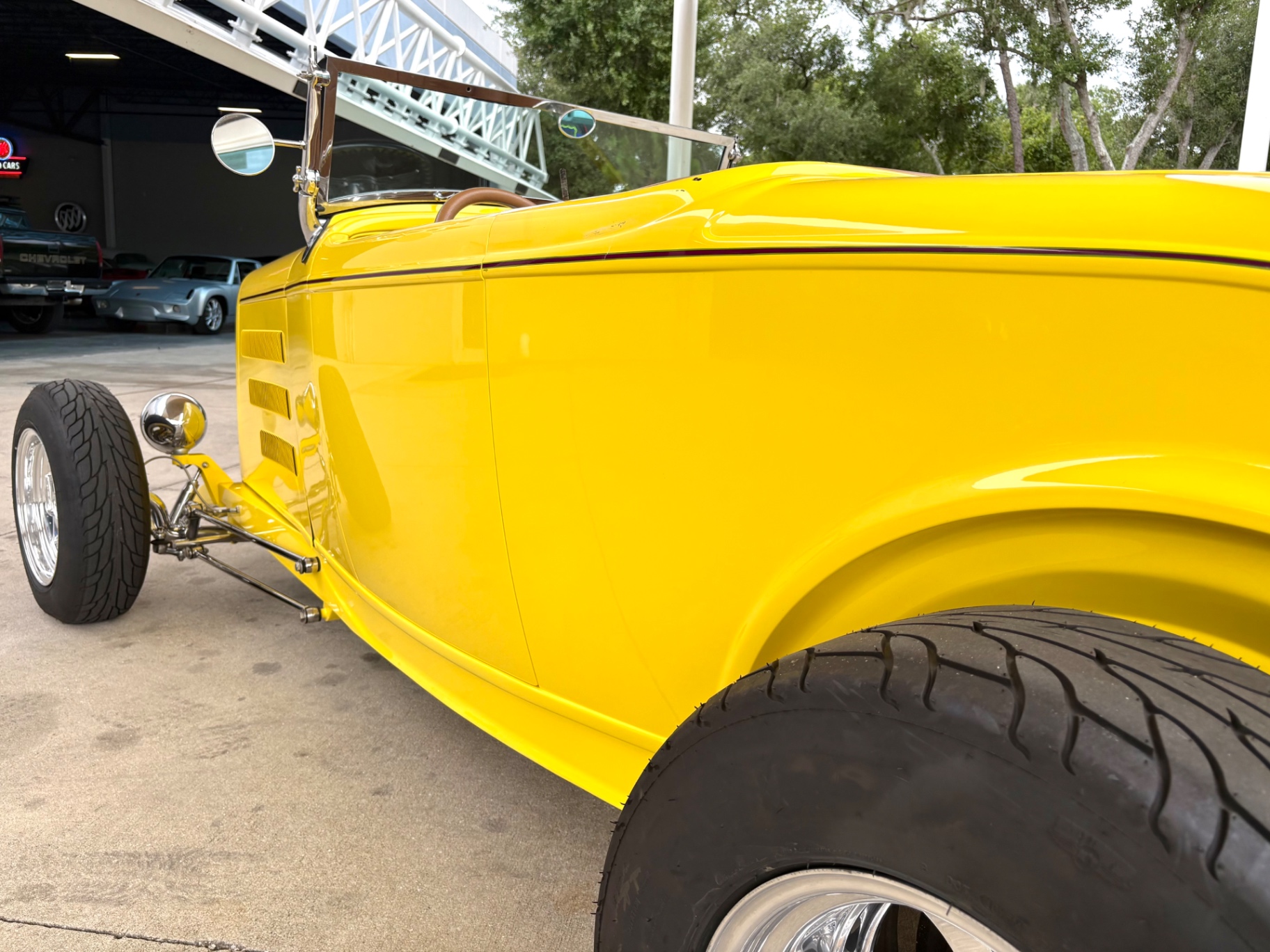
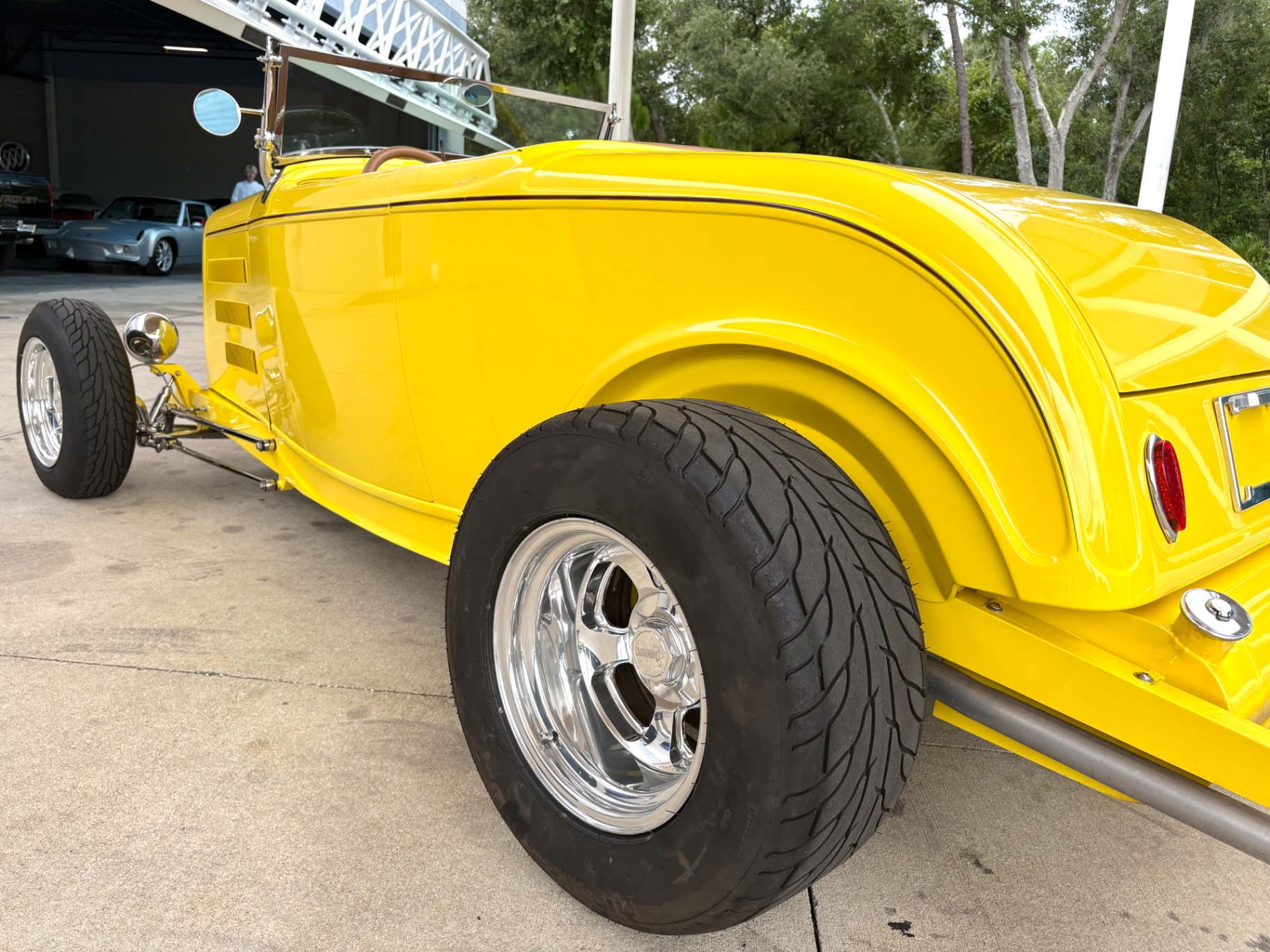
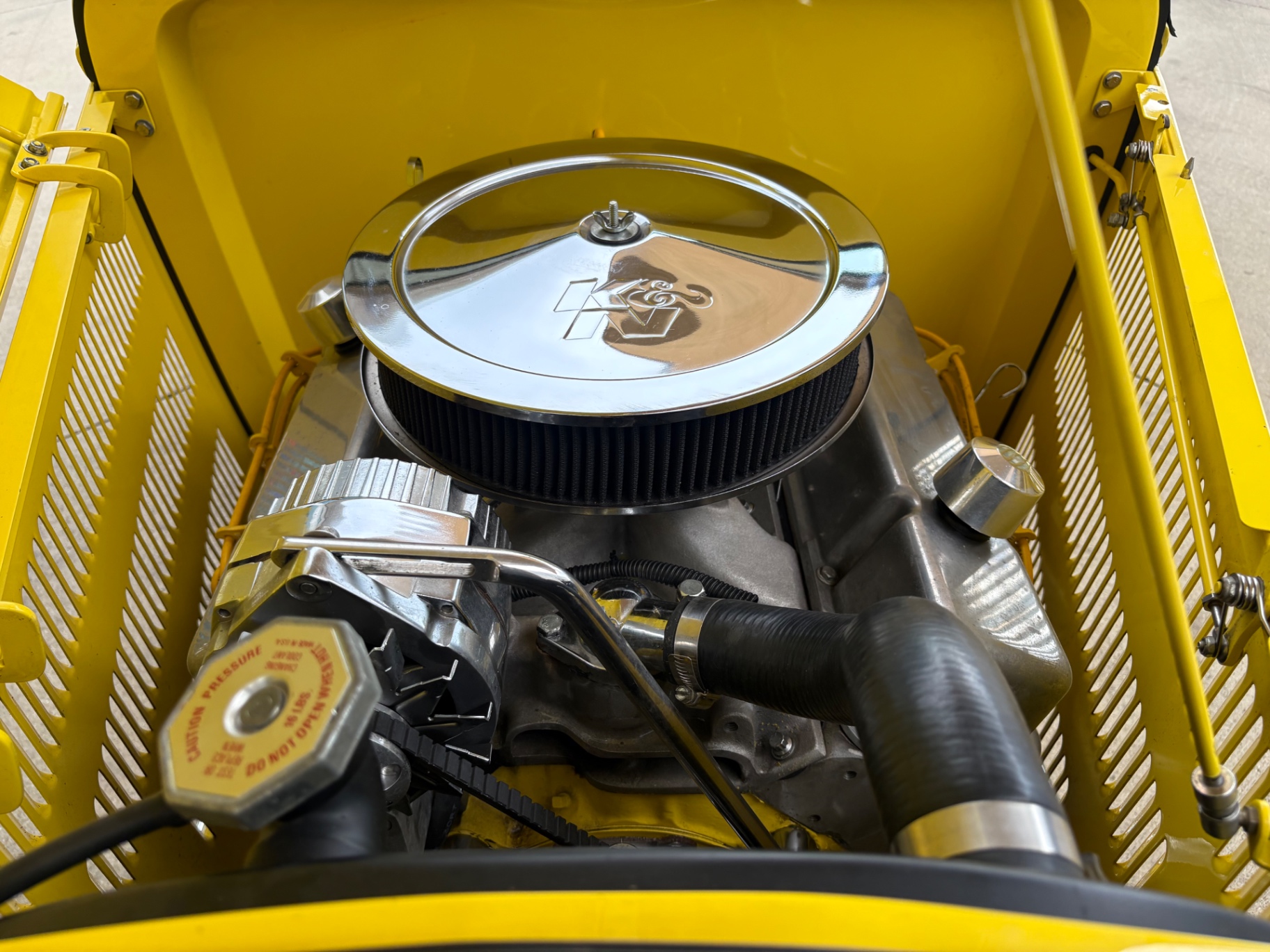
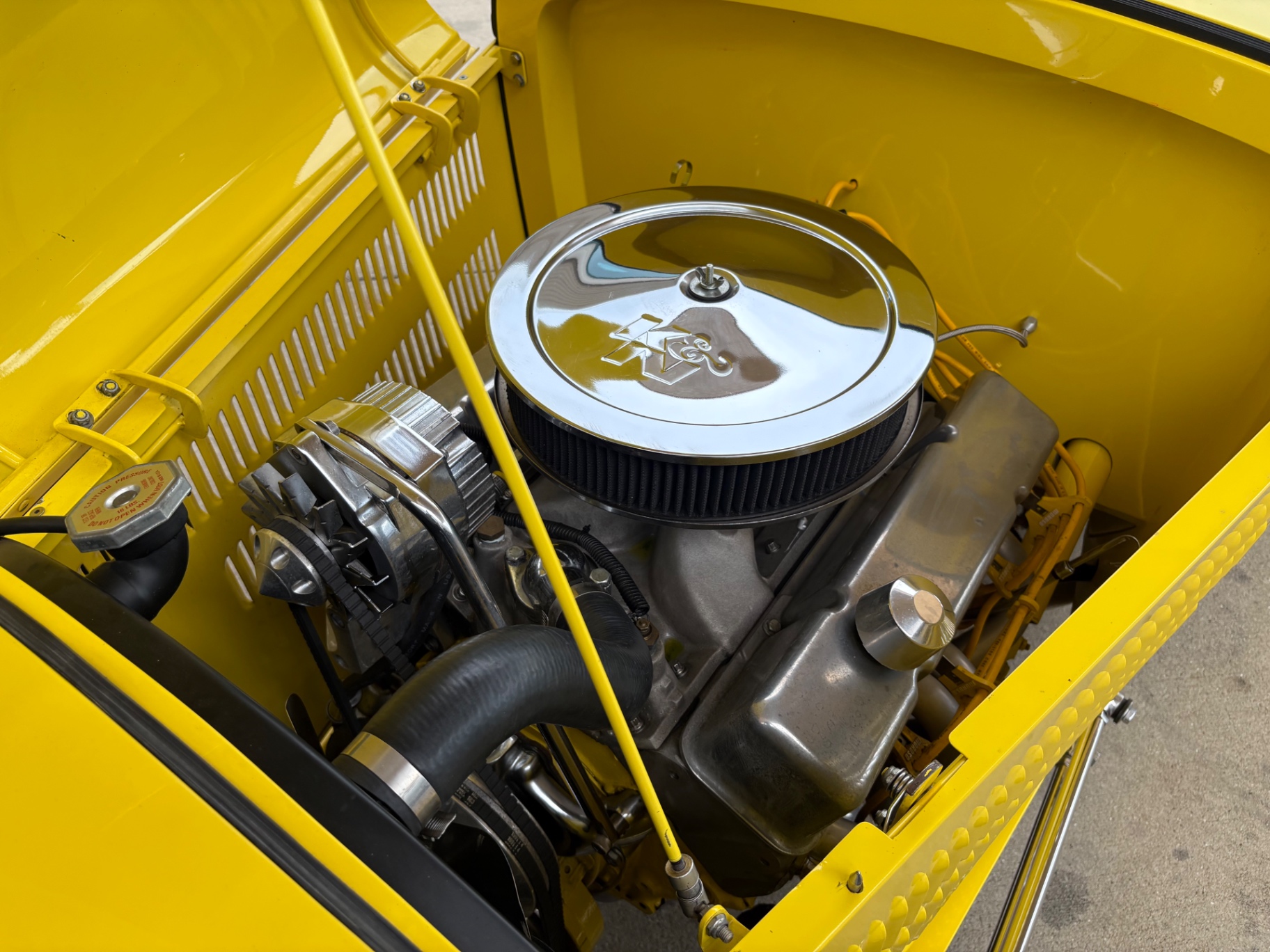
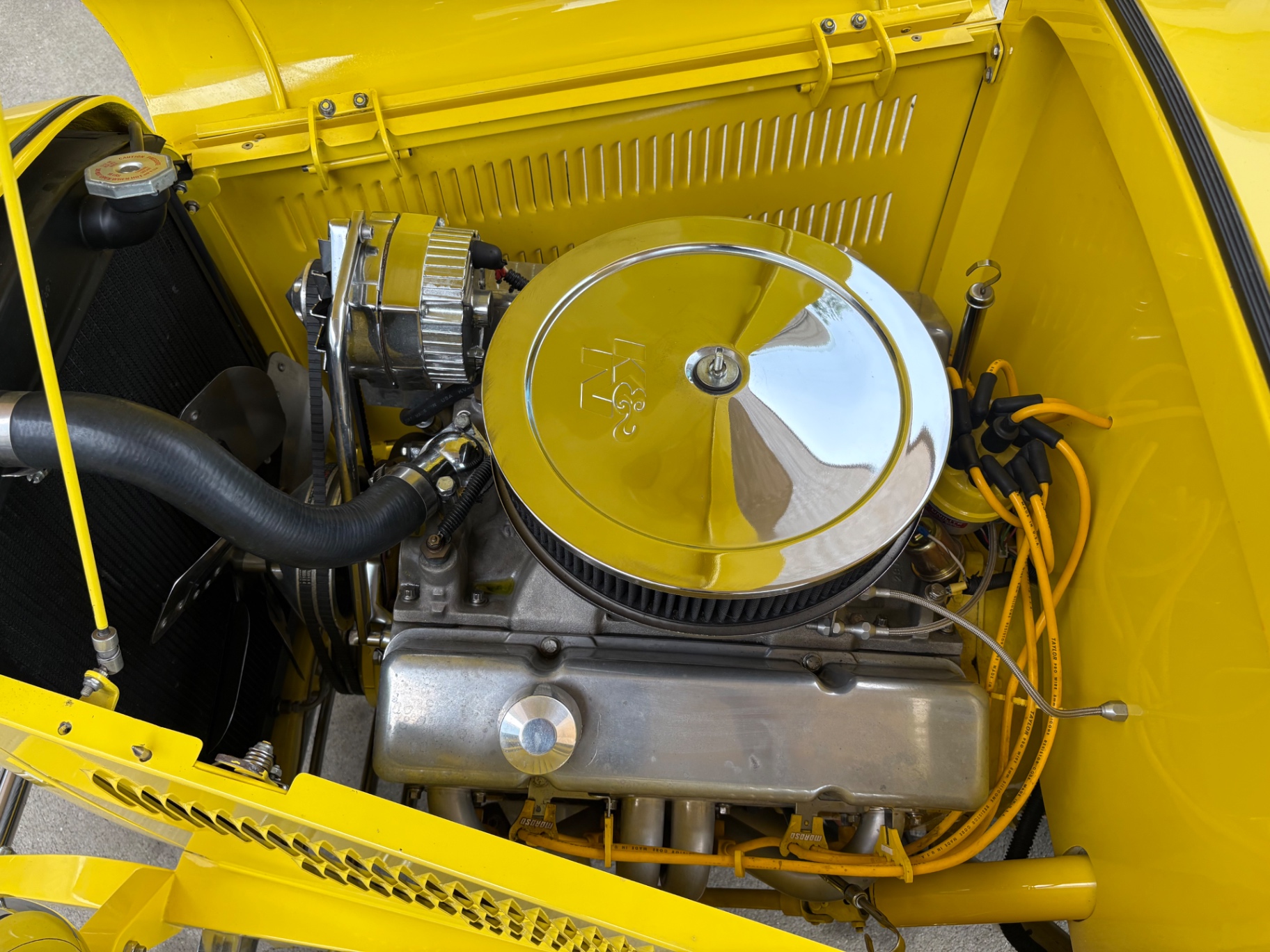
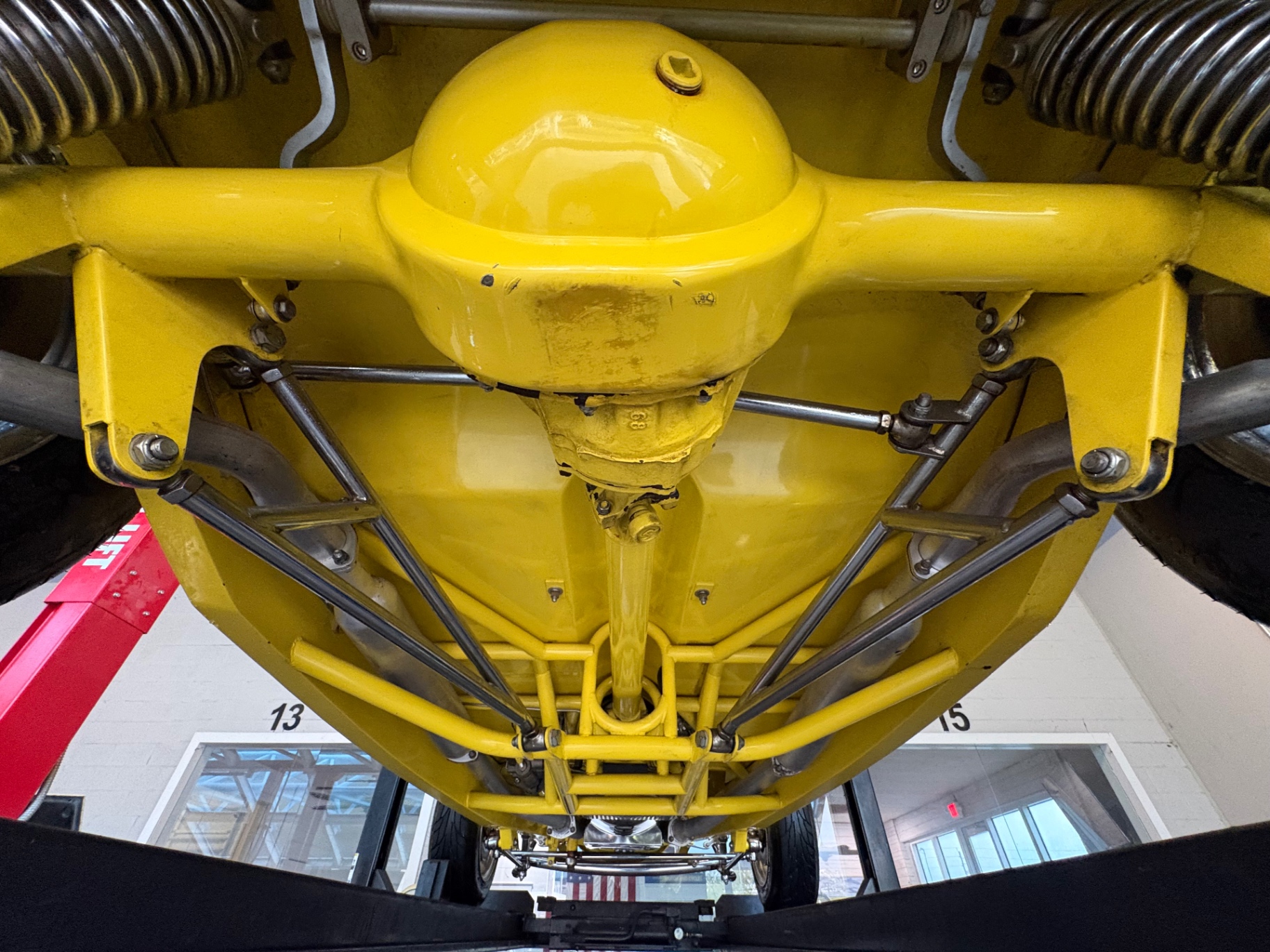
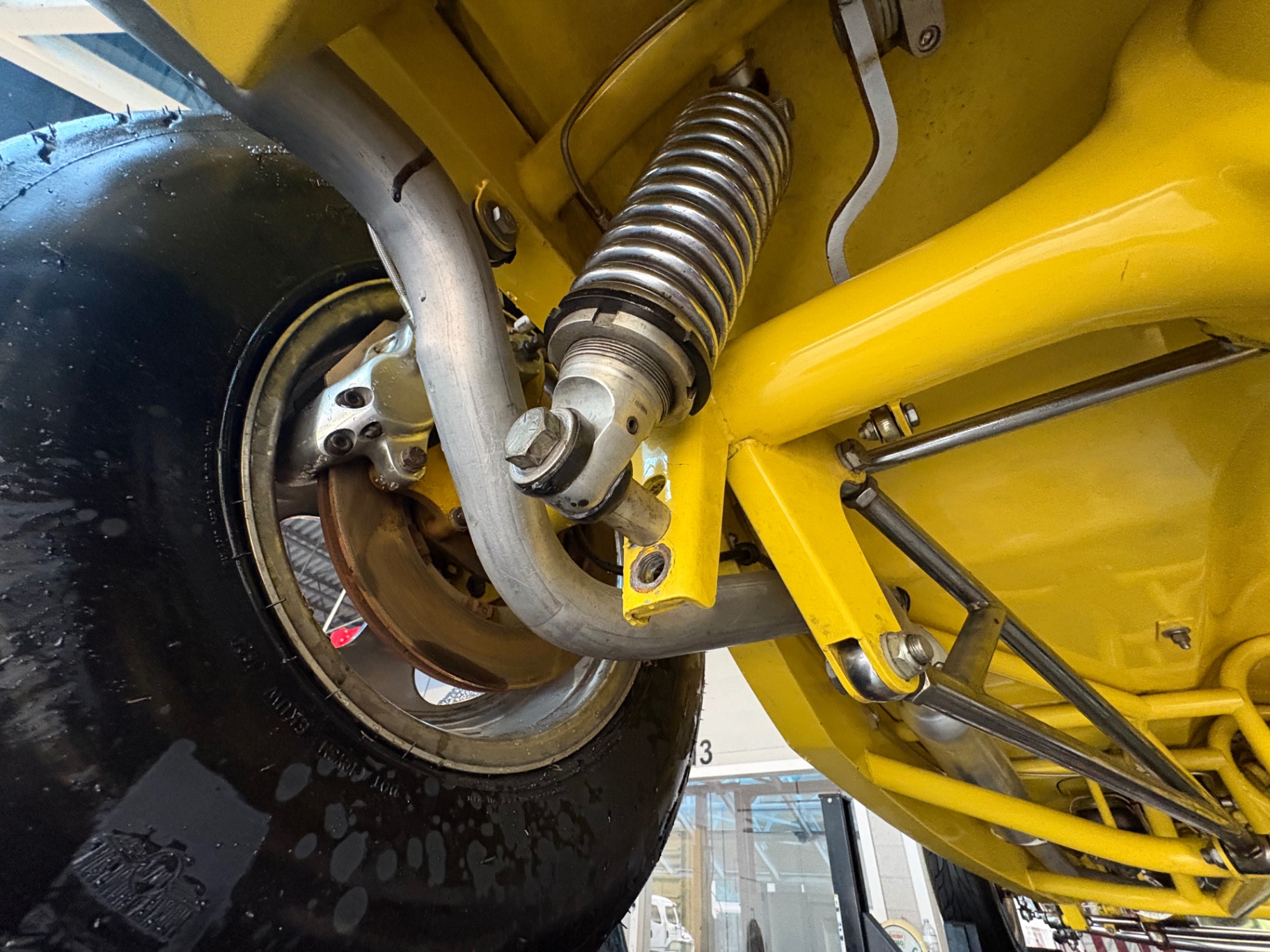
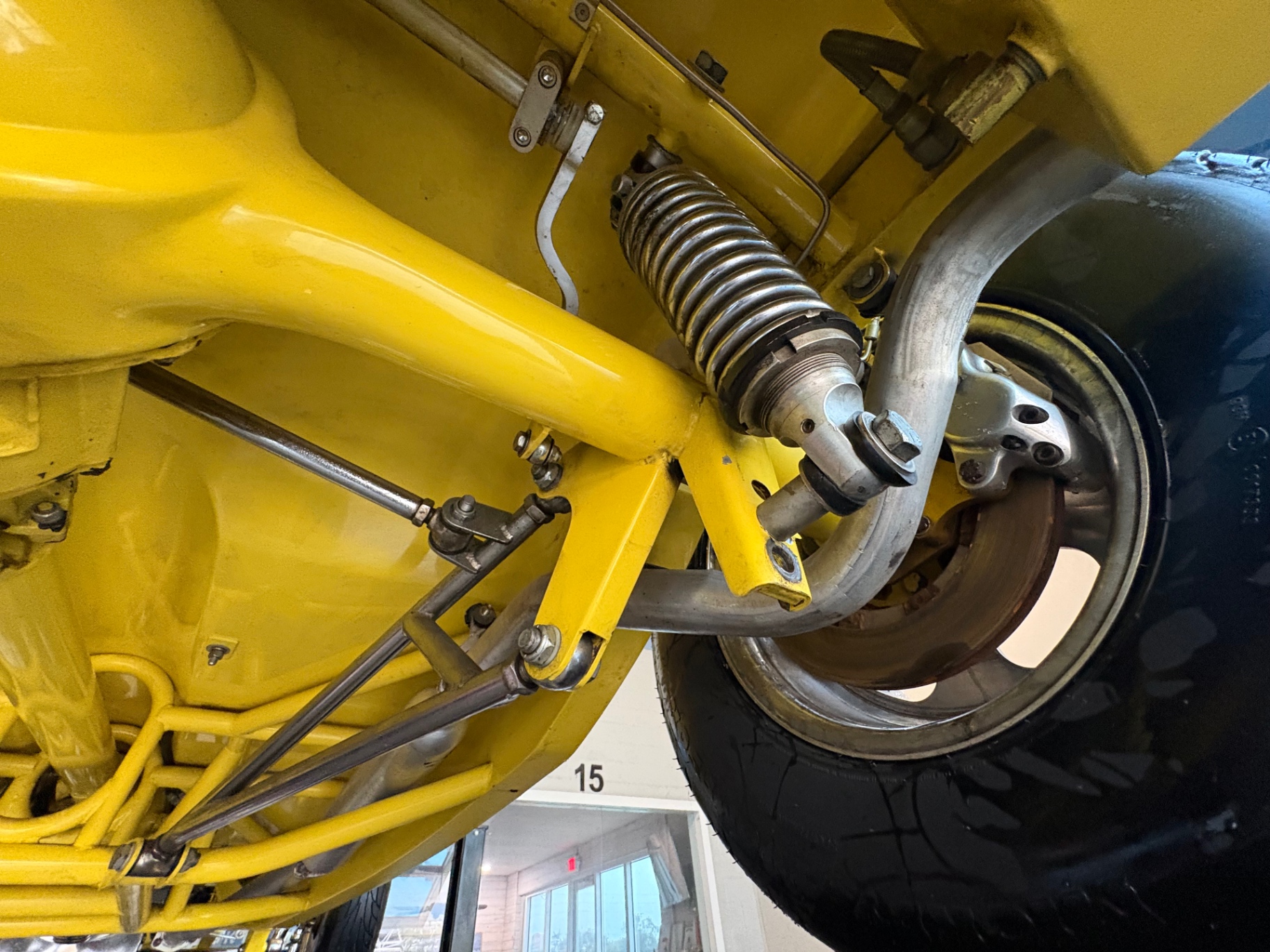
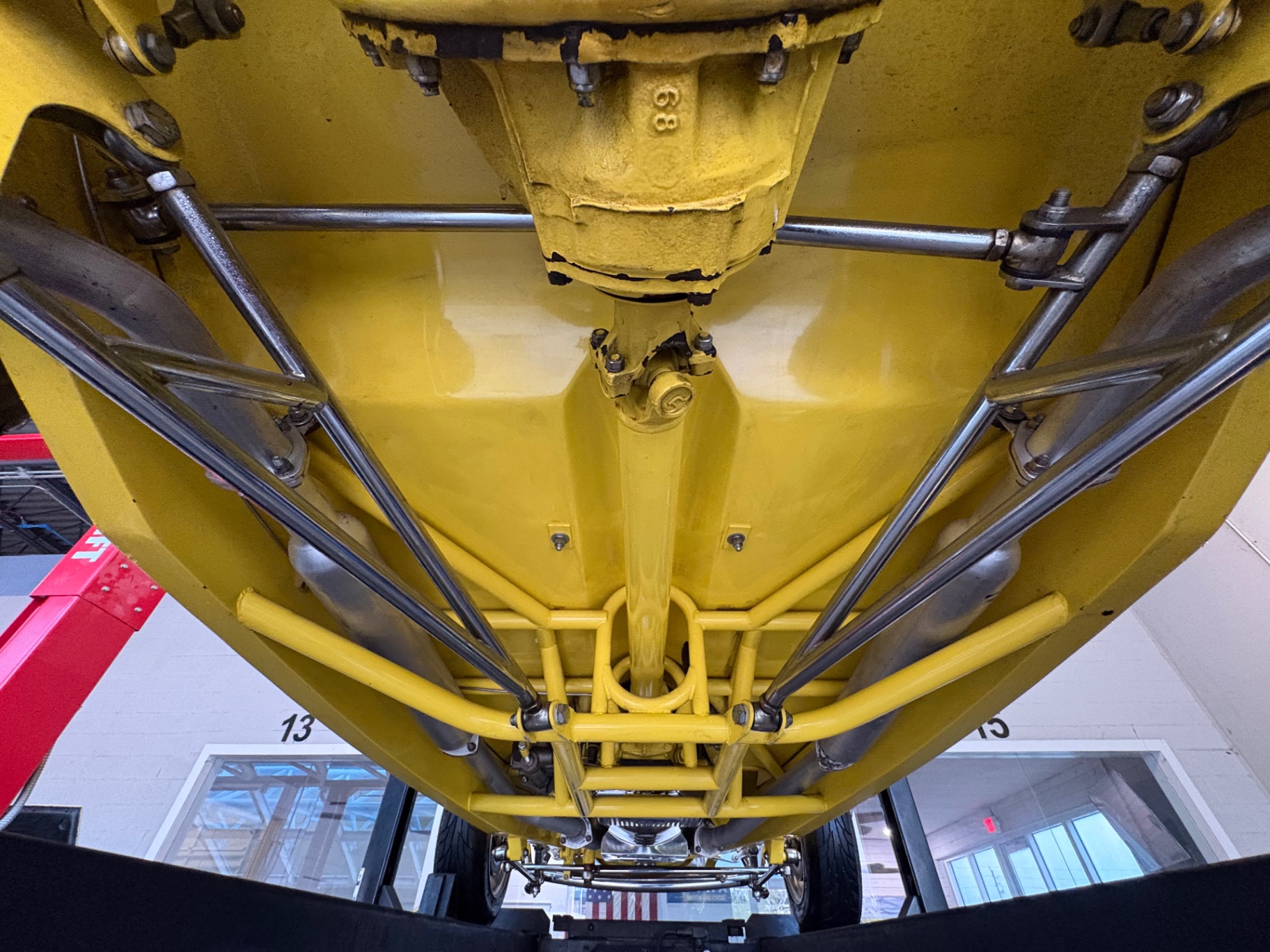
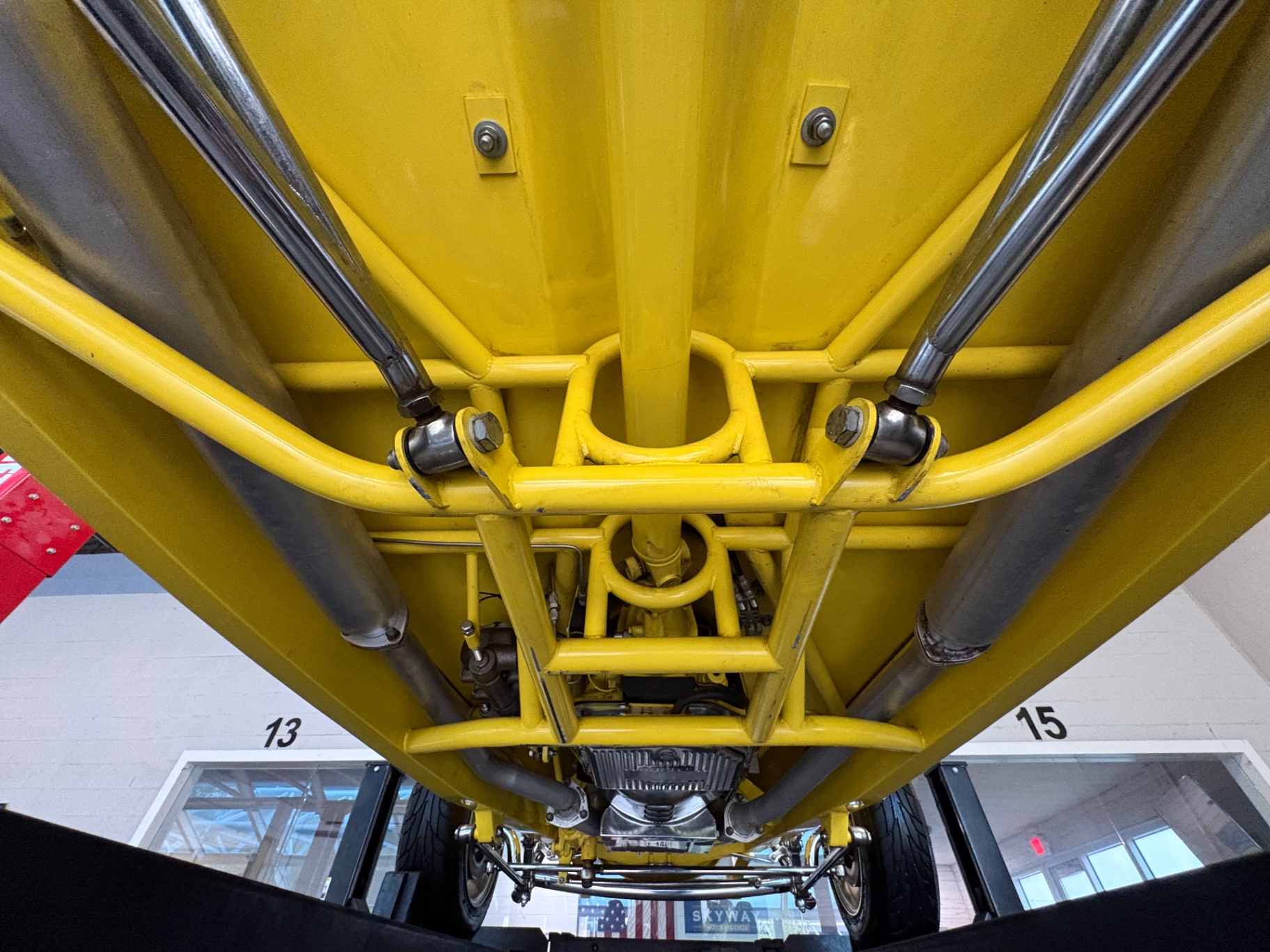
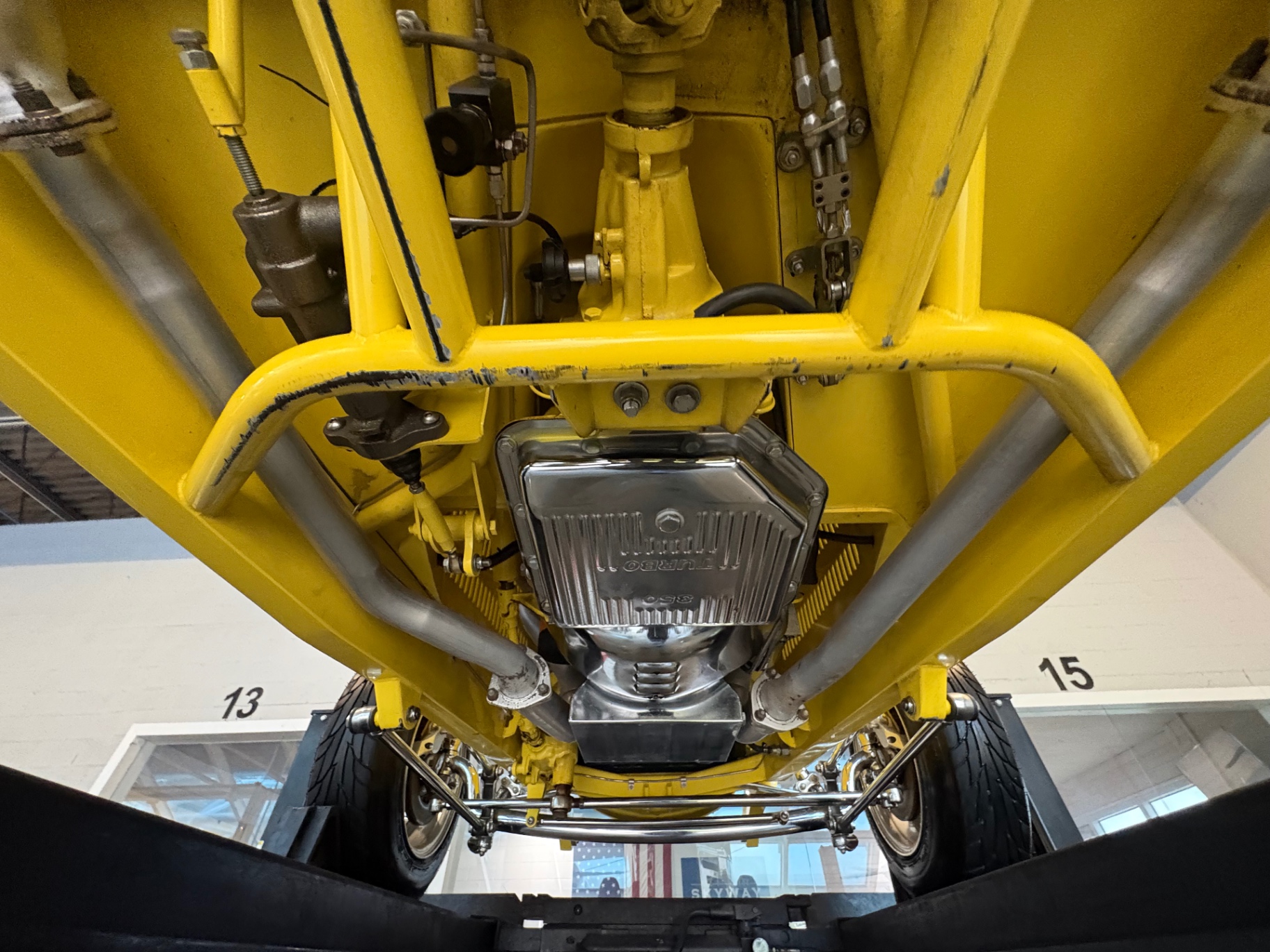
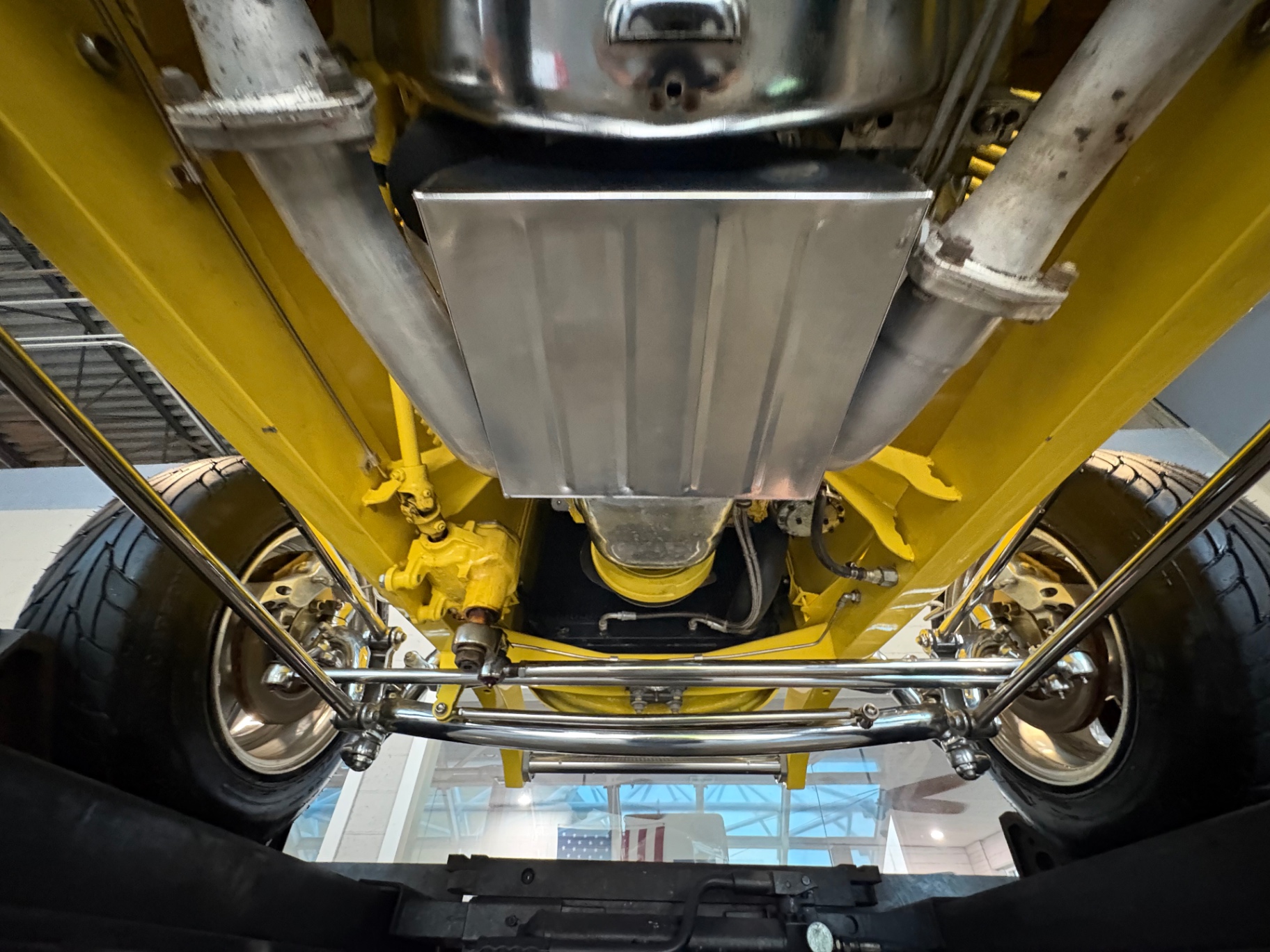
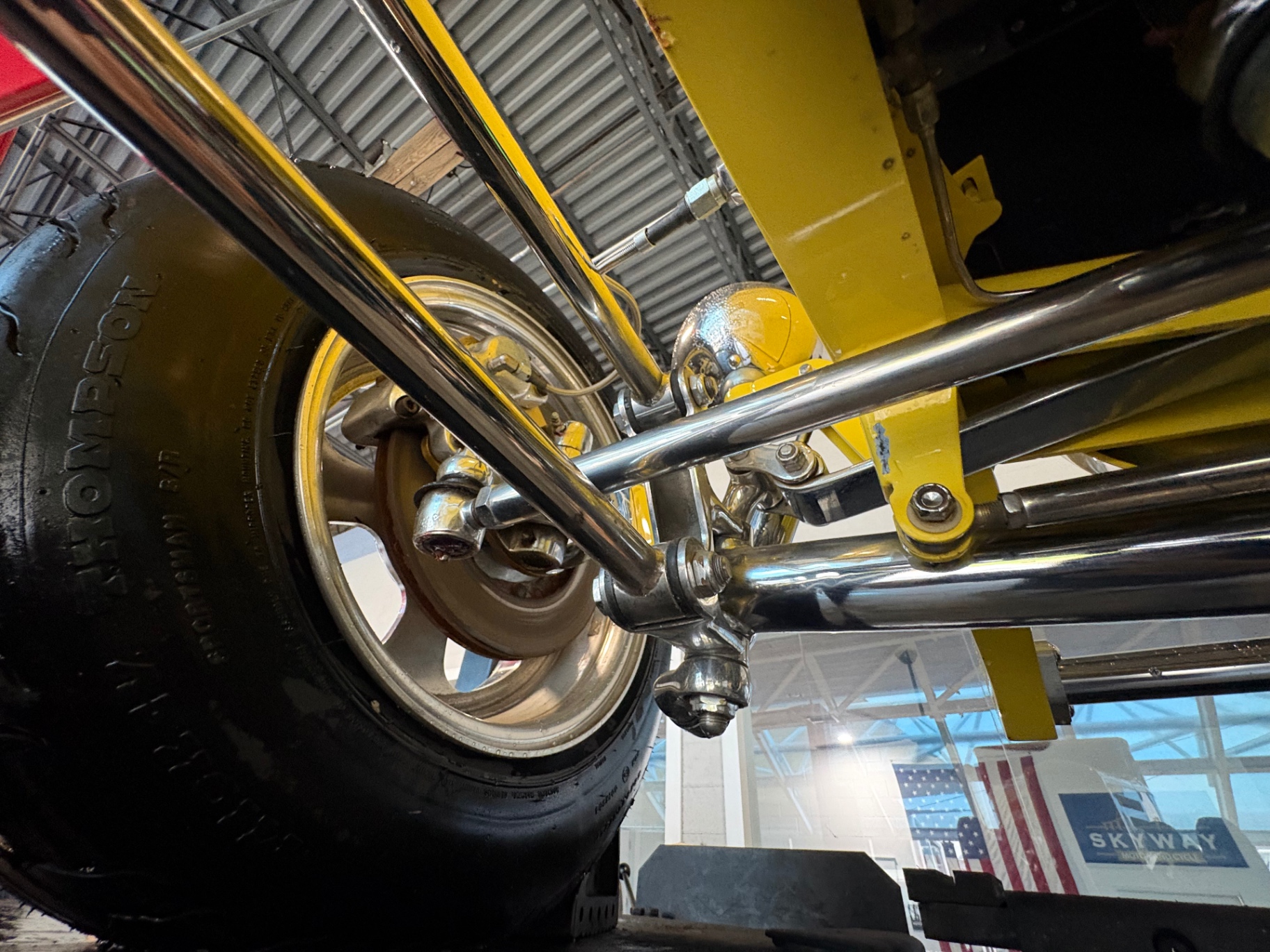
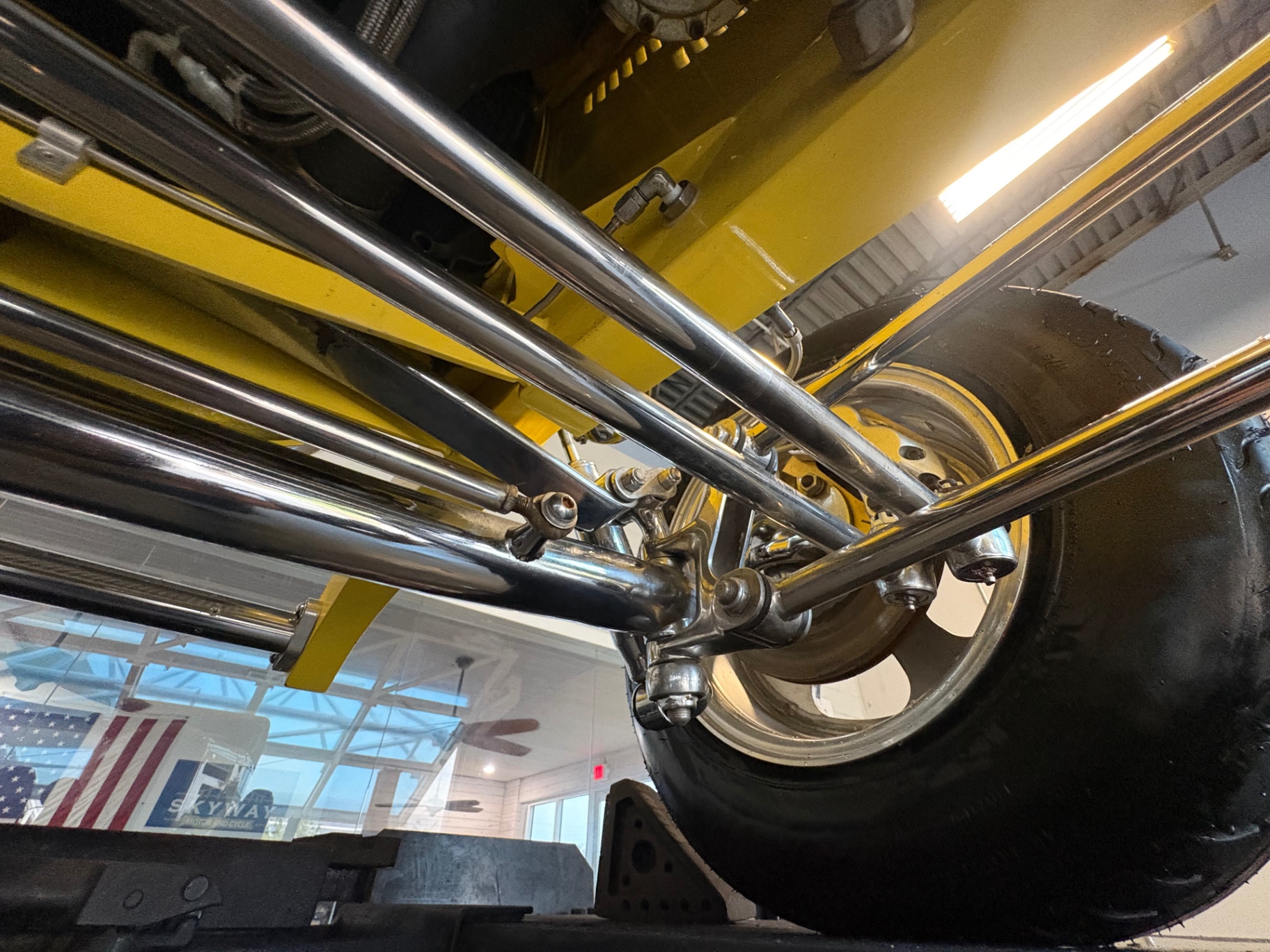
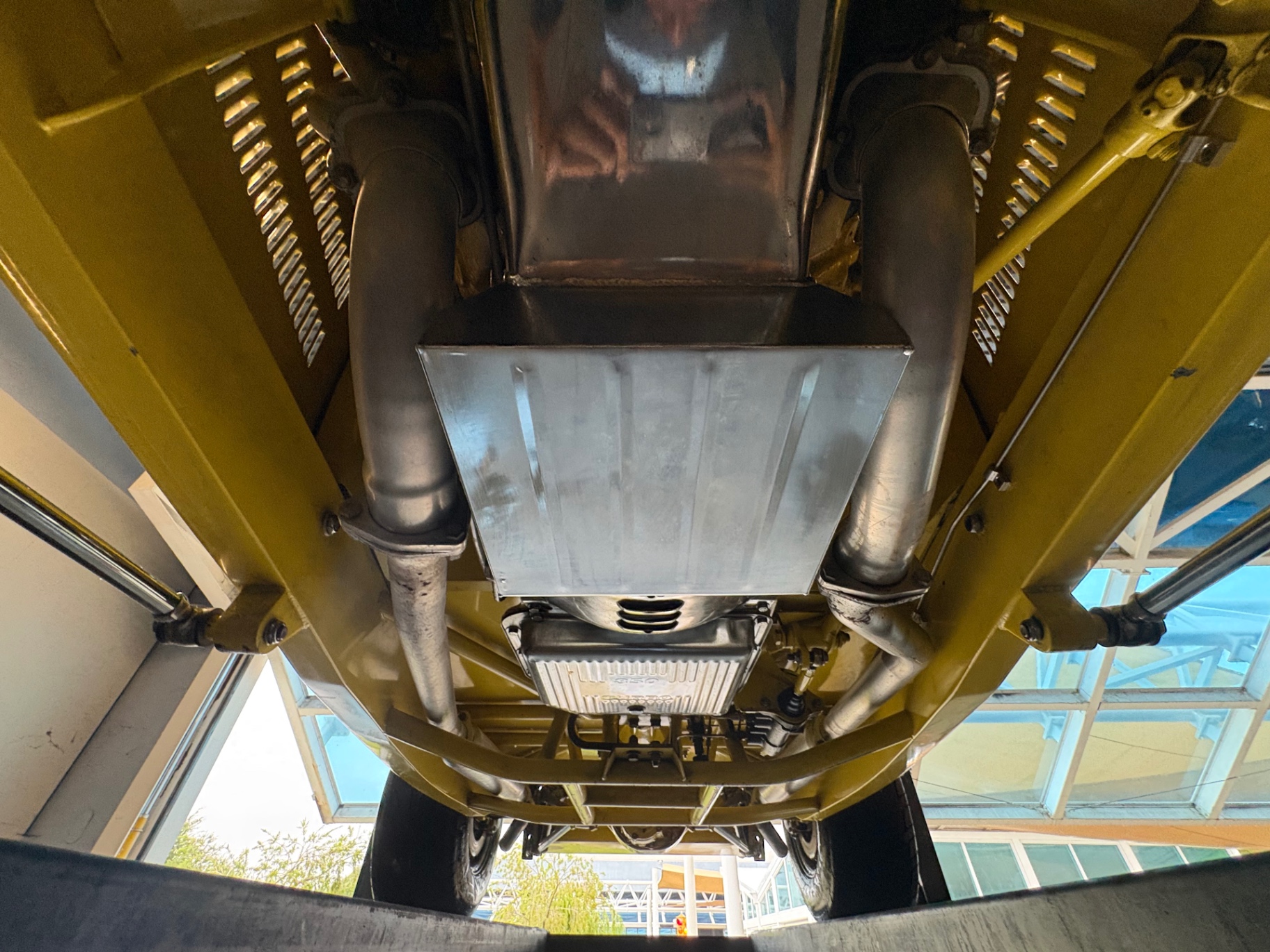
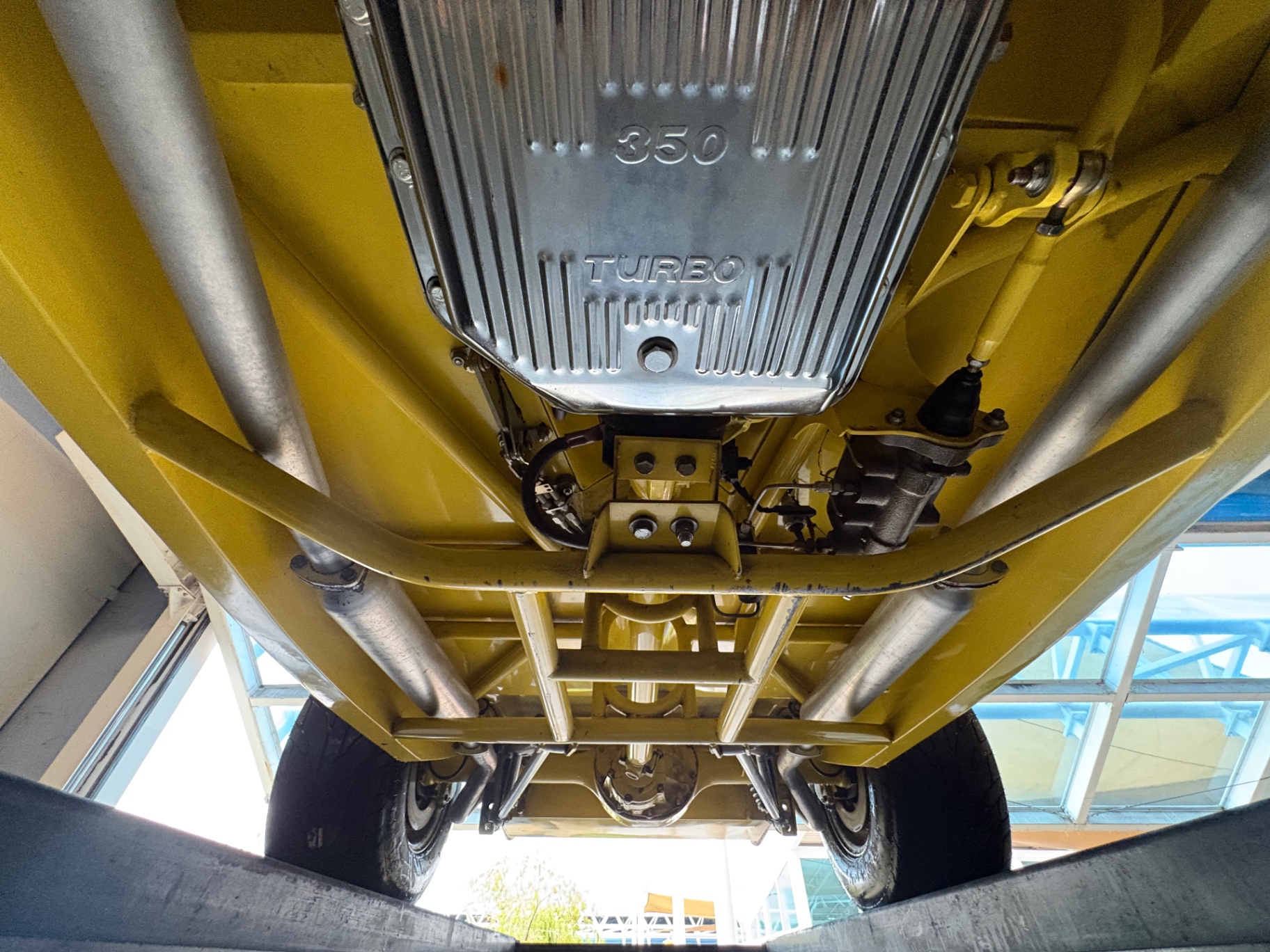
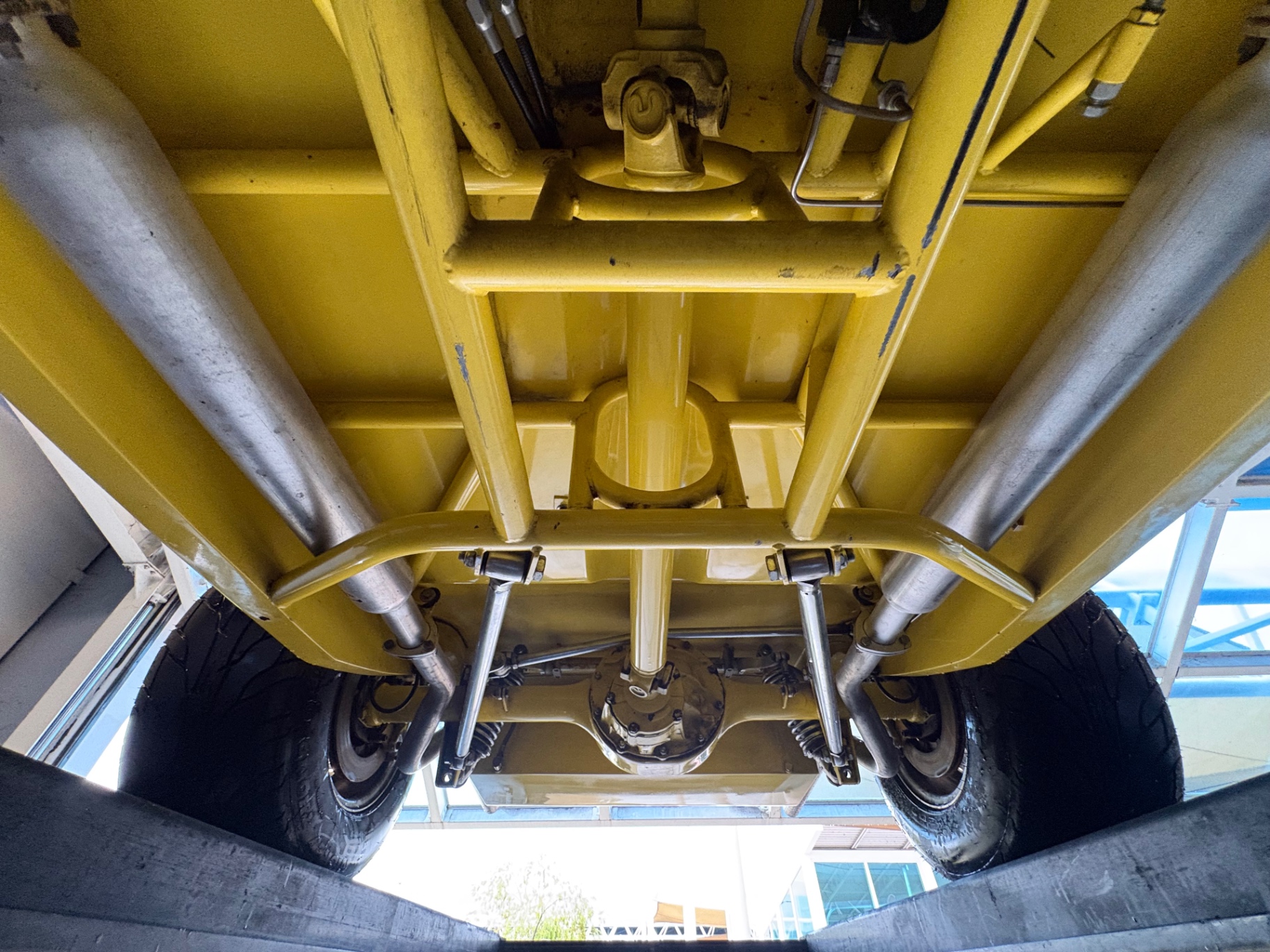
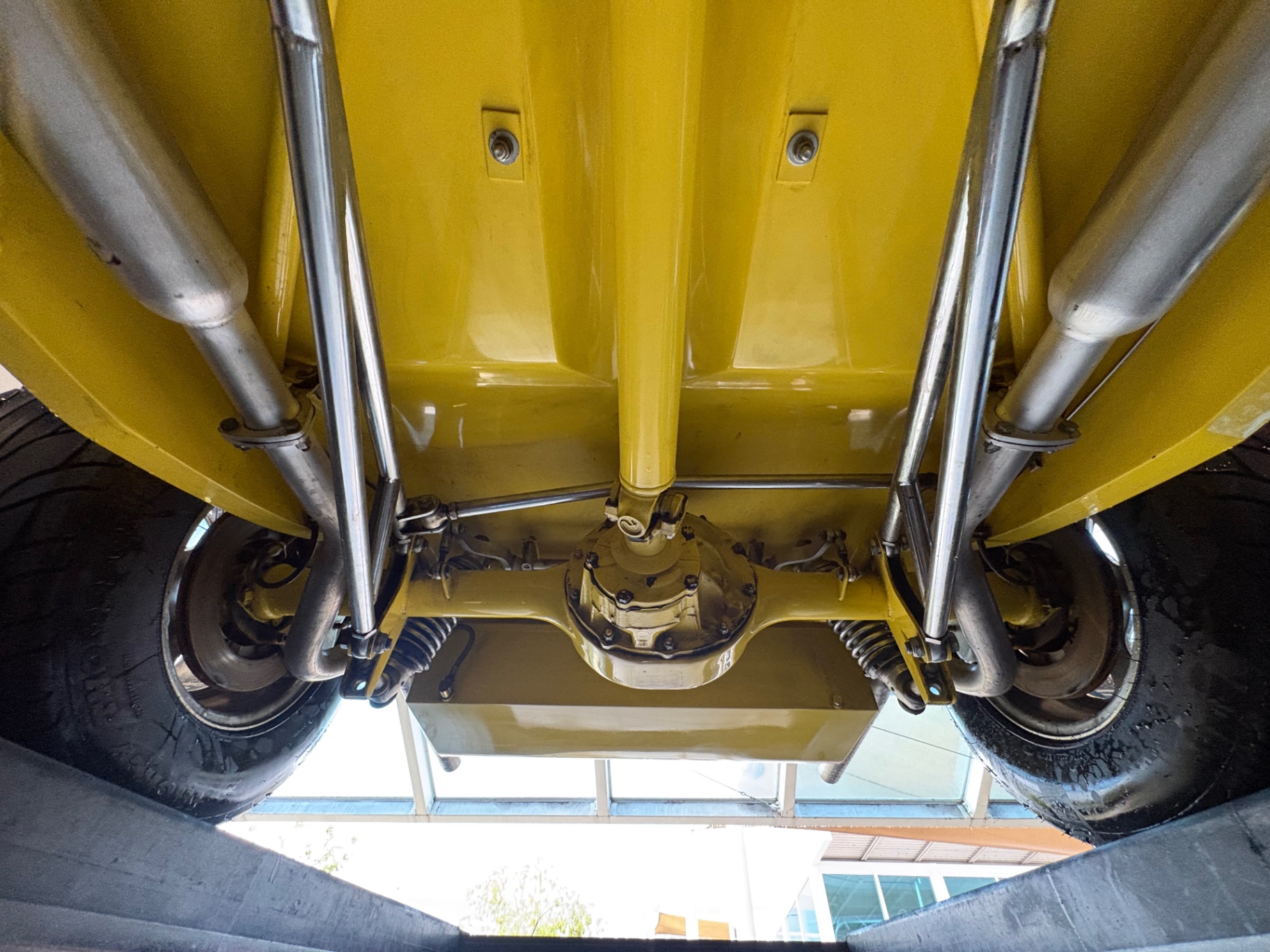
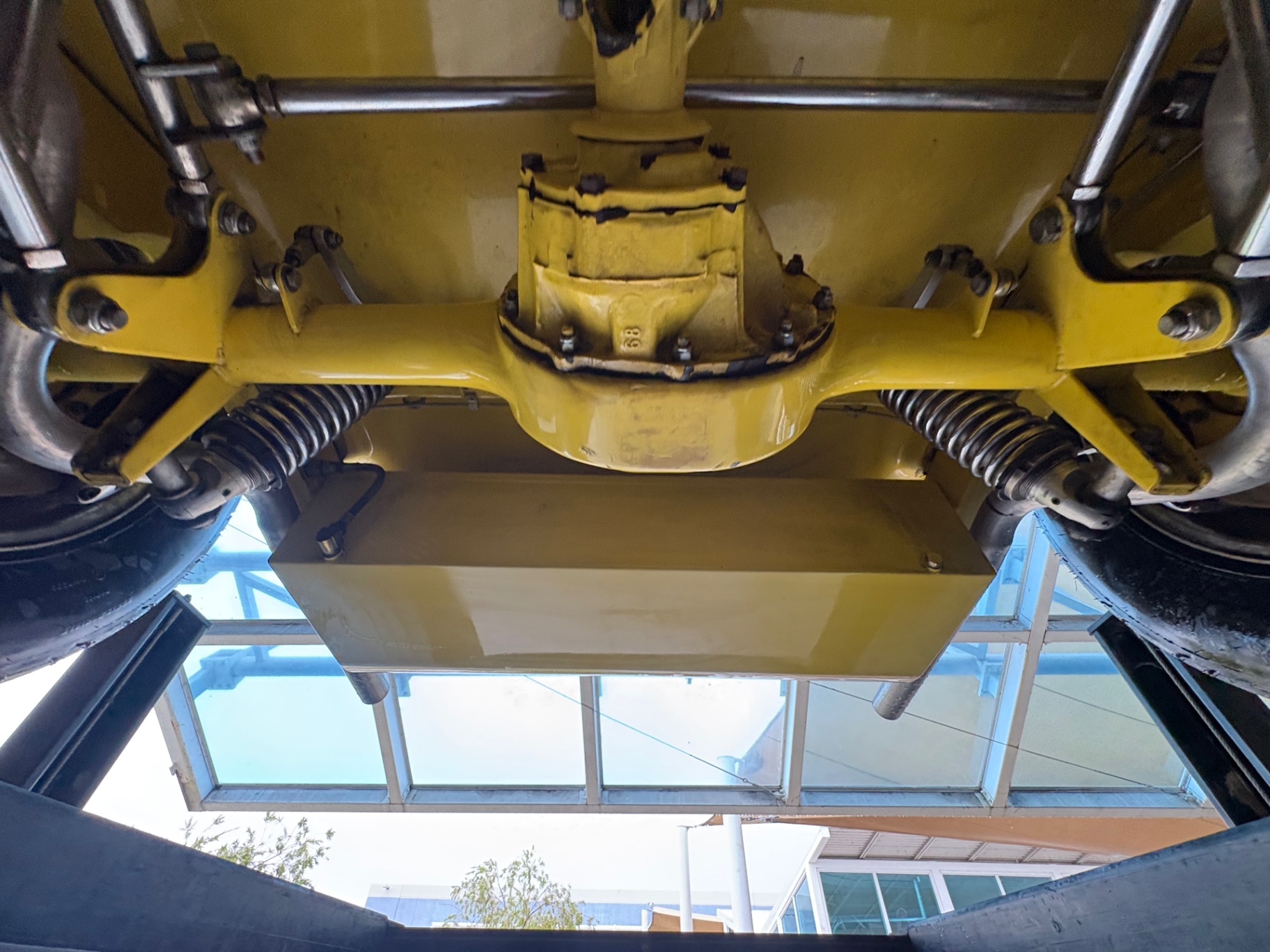
The engine in this 1932 Ford Roadster is a 383 cubic inch stroker built on the Chevrolet small block platform. A 383 stroker takes the standard 350 block and combines it with a 400 crankshaft, increasing the stroke from 3.48 inches to 3.75 inches and bringing displacement up to 383 cubic inches. The result is more torque across a wider RPM range than a stock 350 can deliver. At 530 horsepower, this engine produces more than twice what a factory small block ever offered from the assembly line, and it does so in a car that originally weighed around 2,300 pounds. The power-to-weight ratio here is not subtle. The K&N air filter sitting on top of the carburetor improves airflow compared to a standard paper element and is a common, serviceable choice in street rod builds. The transmission is a TH350 three-speed automatic, which is a sensible match for a 383 stroker in a street-driven car. The TH350 was introduced by General Motors in 1969 and became one of the most widely used automatic transmissions in hot rod and street rod applications due to its compact dimensions, proven reliability, and strong aftermarket support. Gear changes are handled via a floor-mounted shifter, keeping the cockpit clean and functional. The dual exhaust exits at the rear quarters, and the undercarriage photos confirm that this car has been finished to a show-quality standard underneath — the frame and chassis components have been painted to match the exterior Lemon Ice yellow, the chrome exhaust pipes are polished, and the suspension geometry is neat and well-organized. The front suspension is a chrome dropped axle setup, which is the traditional approach for this style of 1932 Ford build. It lowers the front of the car, improves the visual stance, and keeps the mechanical layout period-correct for a traditional hot rod. Braking is handled by four-wheel drum brakes, which is consistent with the traditional build style of this roadster.
Interior
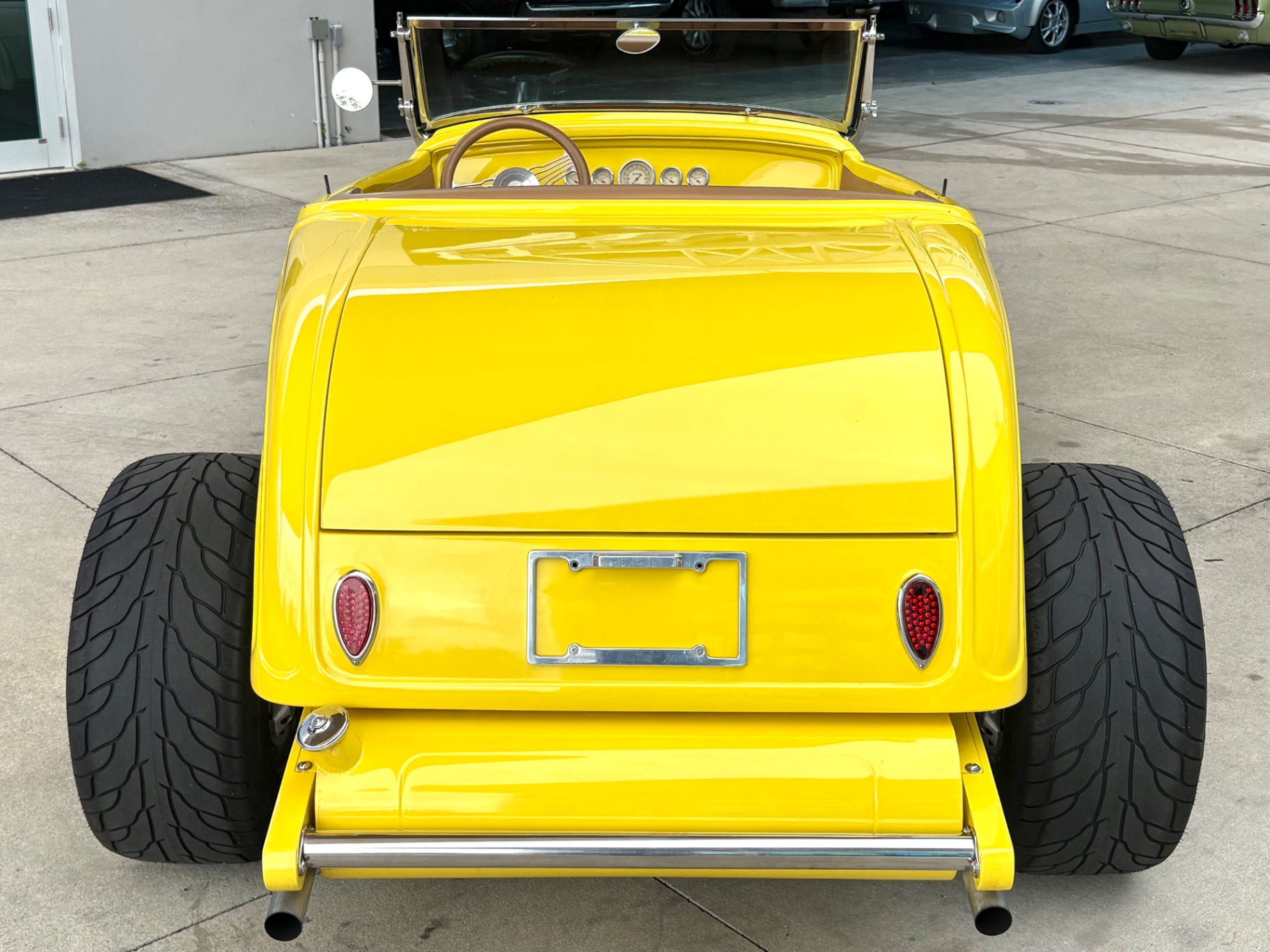
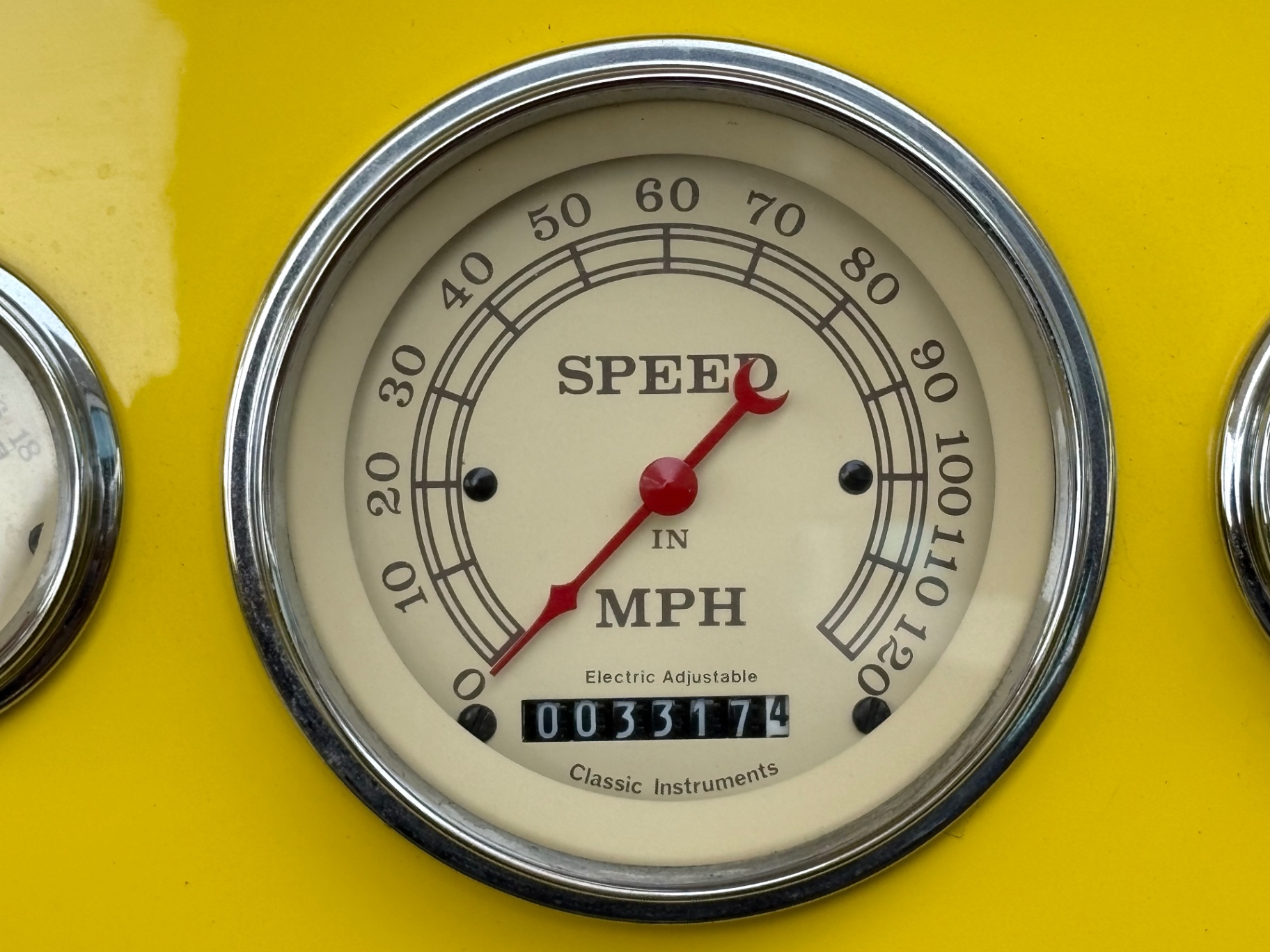
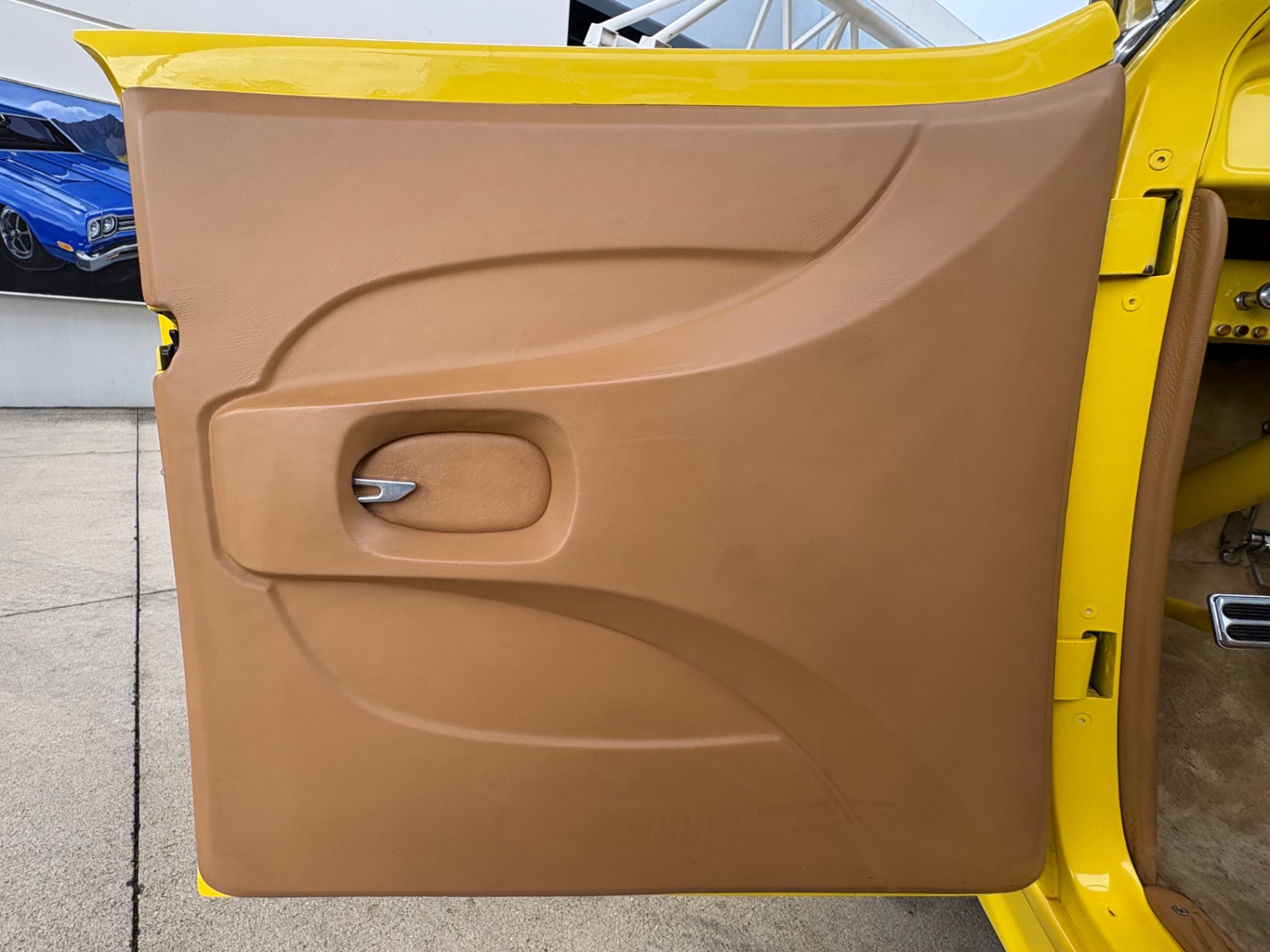
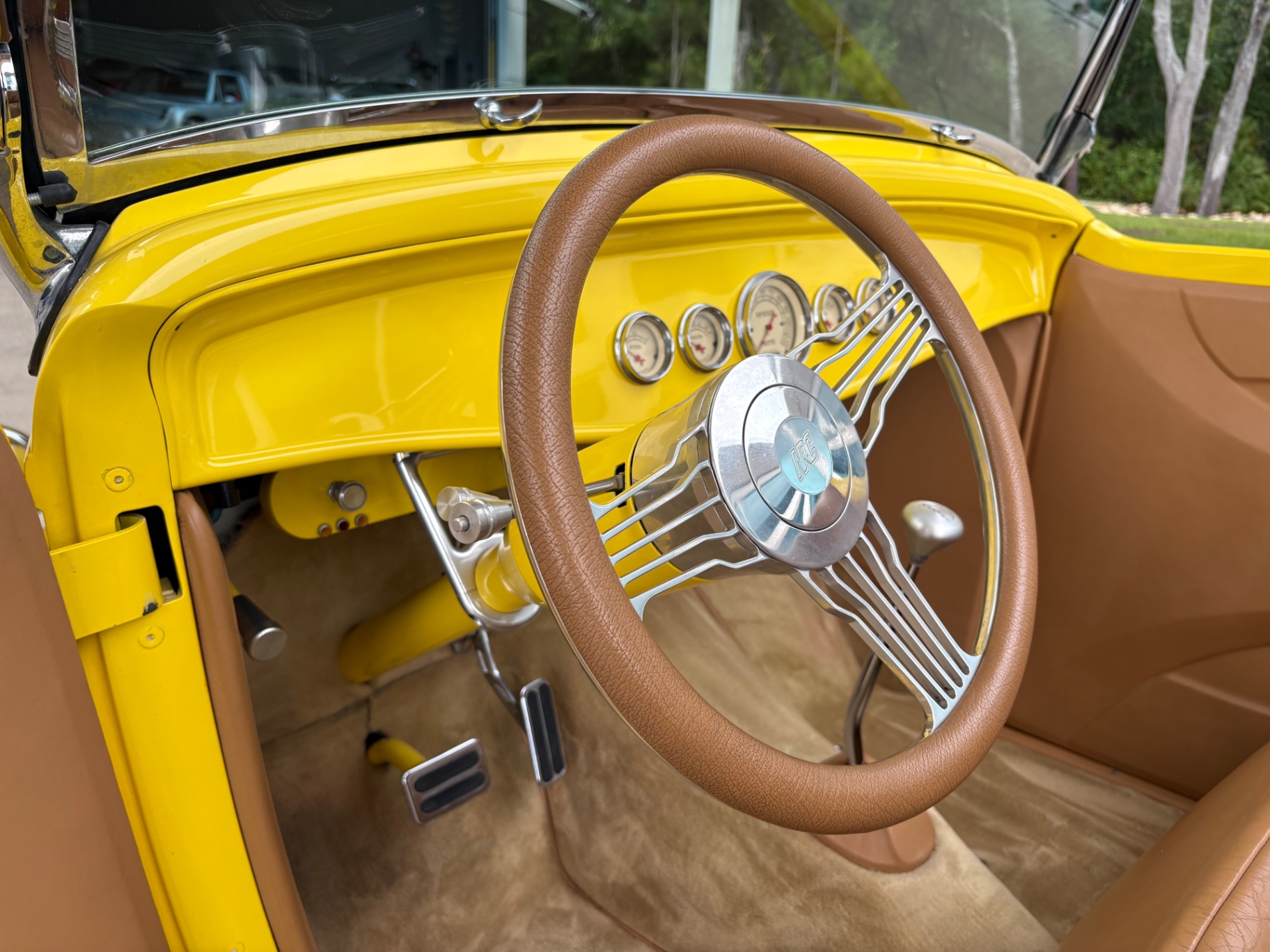
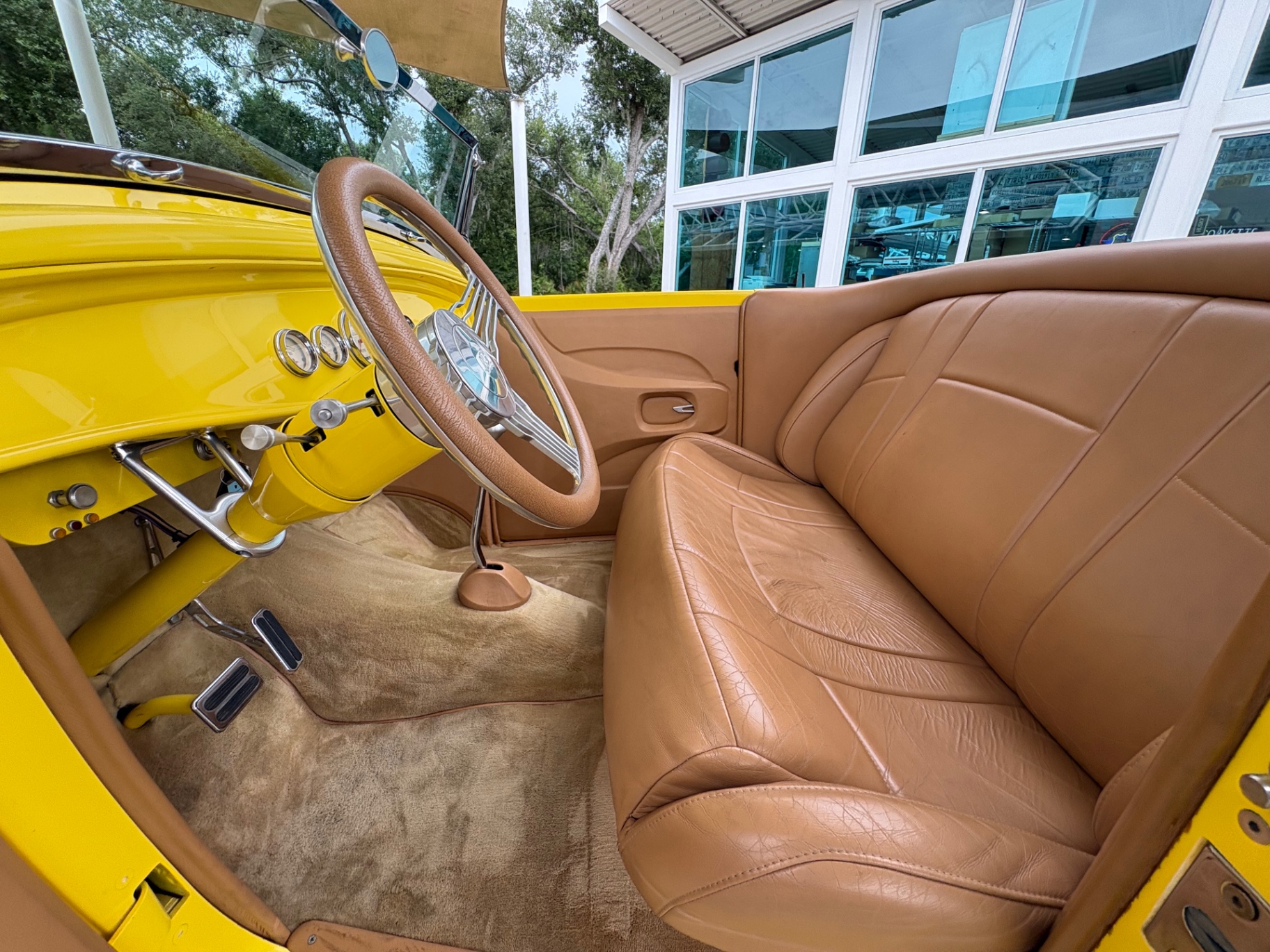
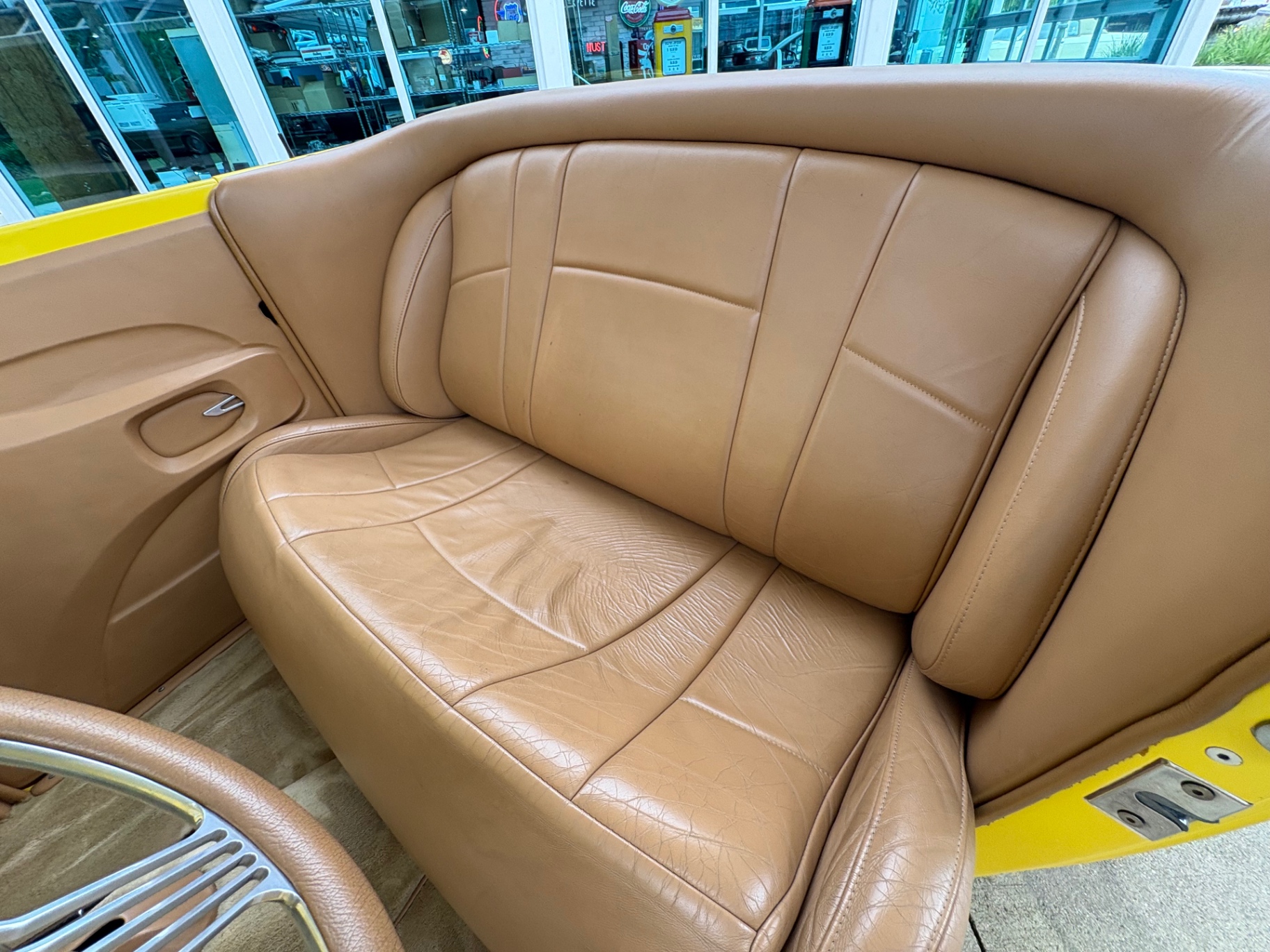
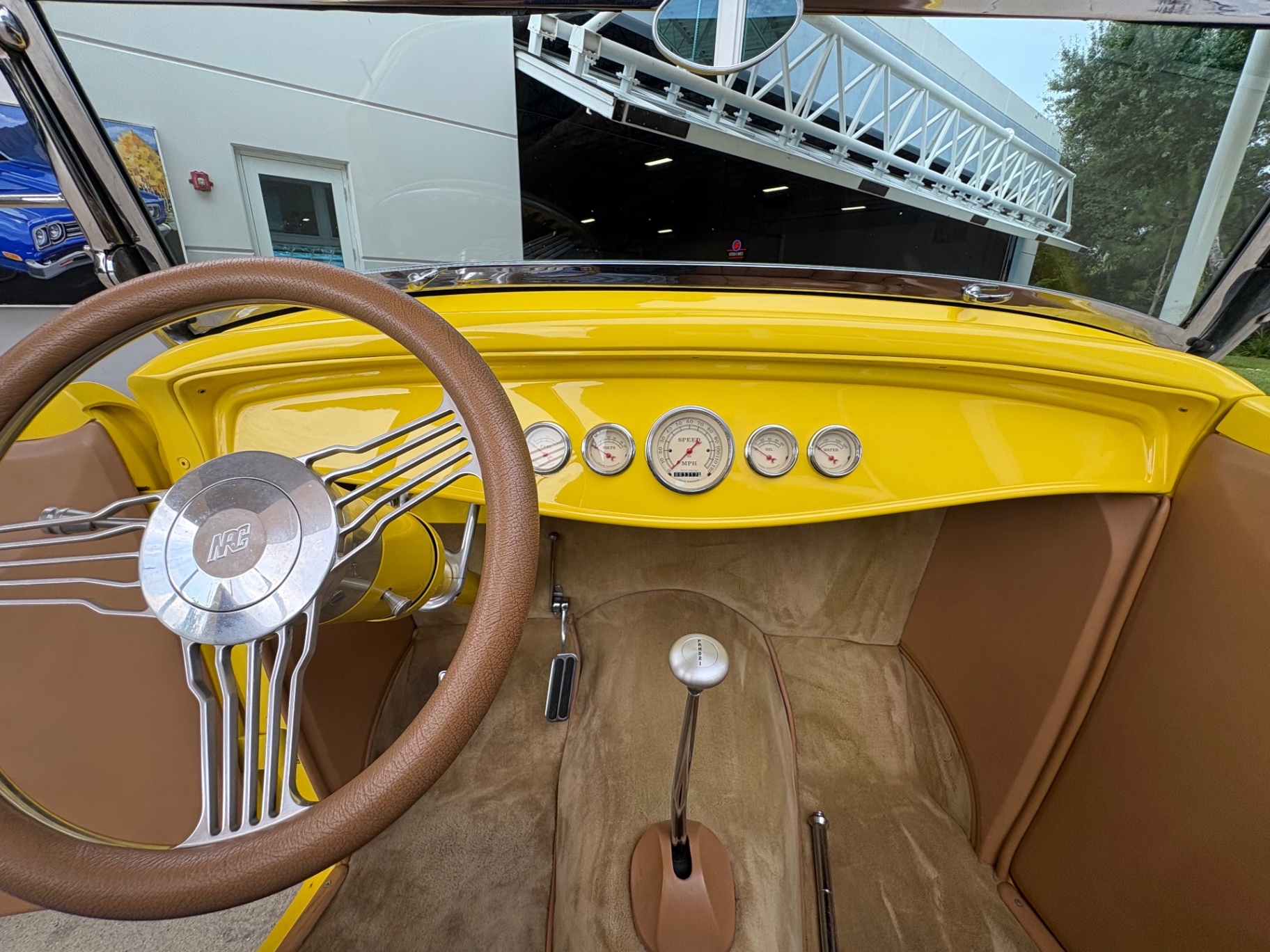
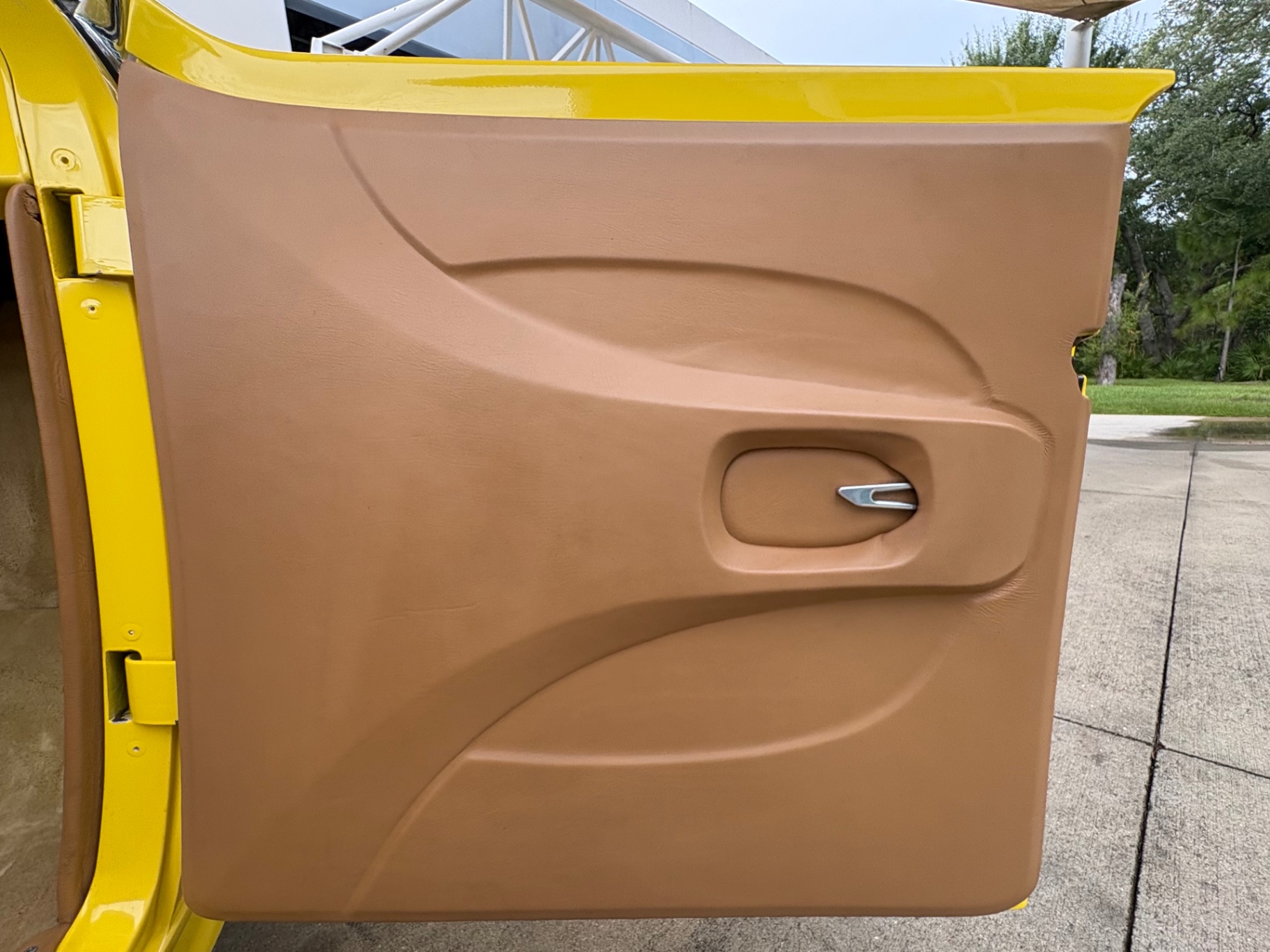
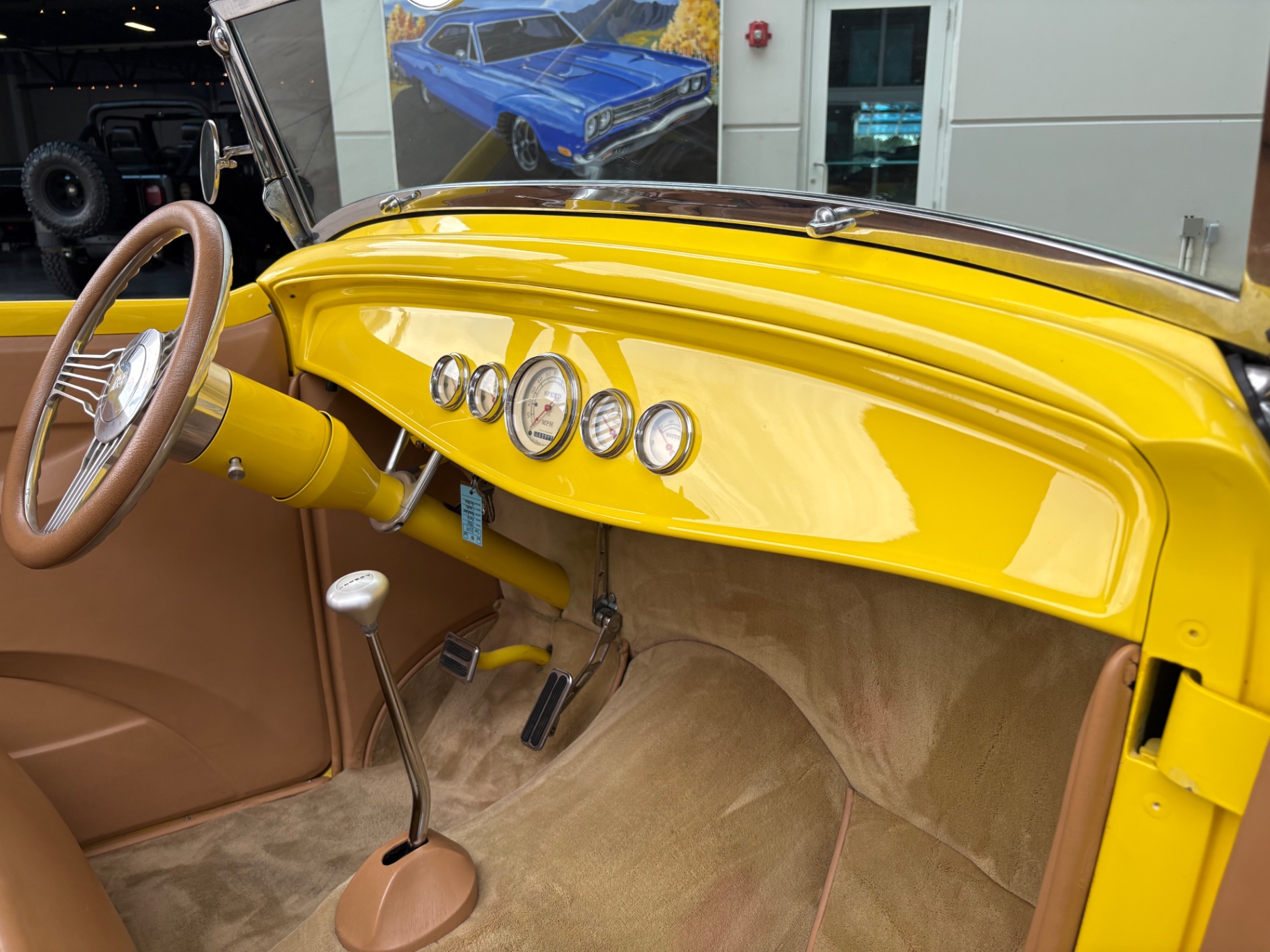
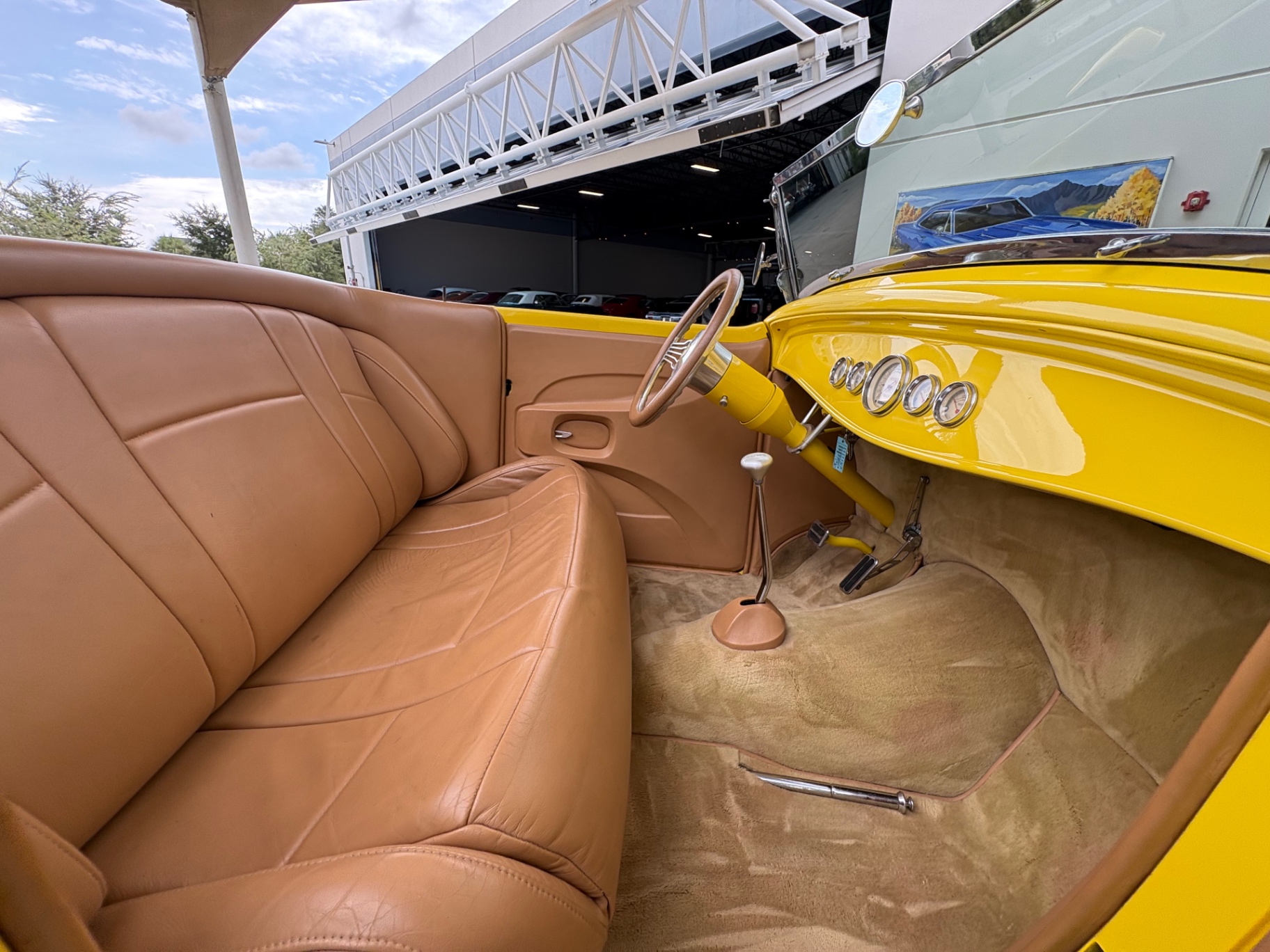
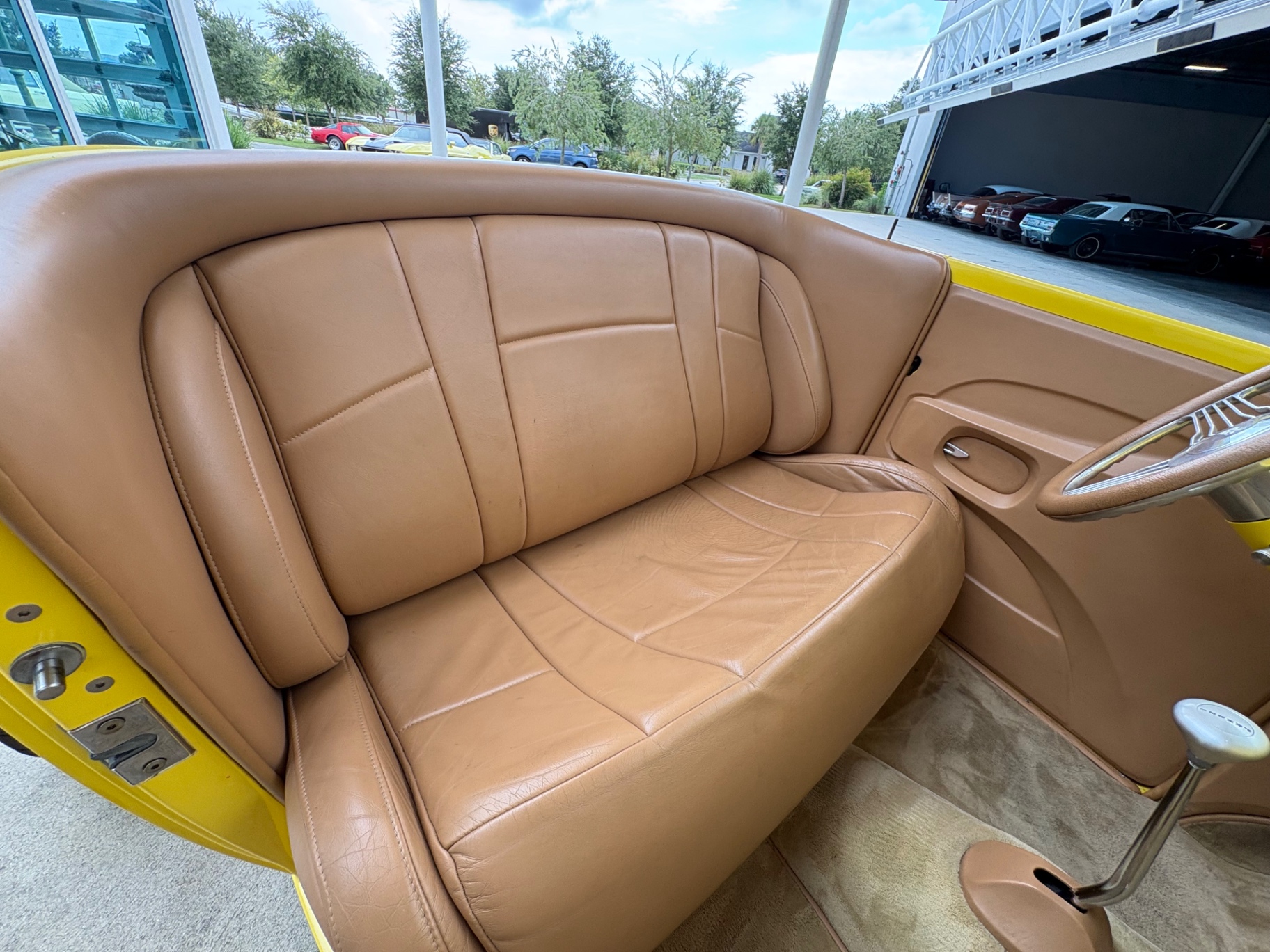
The cockpit of this 1932 Ford Roadster was built to be used. The seating surfaces are covered in a custom tan leather that works directly with the Lemon Ice yellow bodywork — warm tones throughout, nothing competing for attention. The door panels are custom molded leather pieces with integrated pull handles, shaped with flowing body lines that are clearly the work of someone who spent time getting the details right. The bench seat is generously sized for a two-seat roadster, with tall side bolsters and a quilted vertical-stitch pattern on the seatback that provides both lateral support and a finished appearance. The dashboard is body-color yellow, keeping the interior bright and cohesive. Mounted in a straight row across the dash is a Classic Instruments gauge cluster. Classic Instruments, based in Boyne City, Michigan, has been producing gauges for street rods and custom vehicles since 1980. Their gauges use a cream-colored face with red pointers — a retro aesthetic that suits a 1932 Ford perfectly and reads clearly in open-air driving conditions. The floor shift console sits centered between driver and passenger, positioned low and finished in a tan base that integrates cleanly with the carpet. The floor covering is a tan suede-style carpet that coordinates with the leather seating throughout. The steering wheel is a tan leather-wrapped unit mounted on a chrome billet spoke, which keeps the traditional feel of the interior intact while improving driver comfort on longer runs. The removable hard top gives this roadster the flexibility to run open or covered, which is a practical feature for a Florida-based car that sees real weather.
Exterior
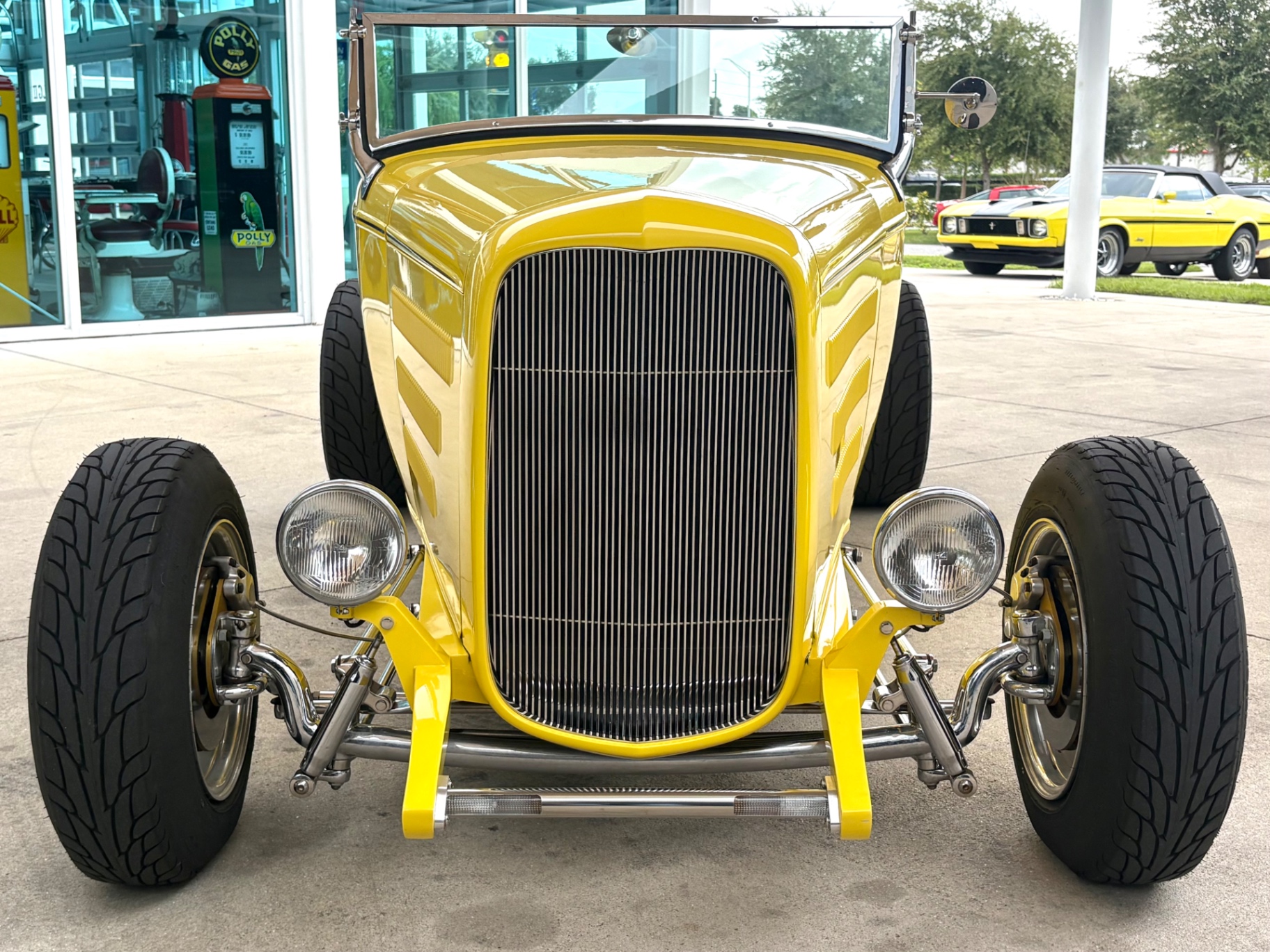
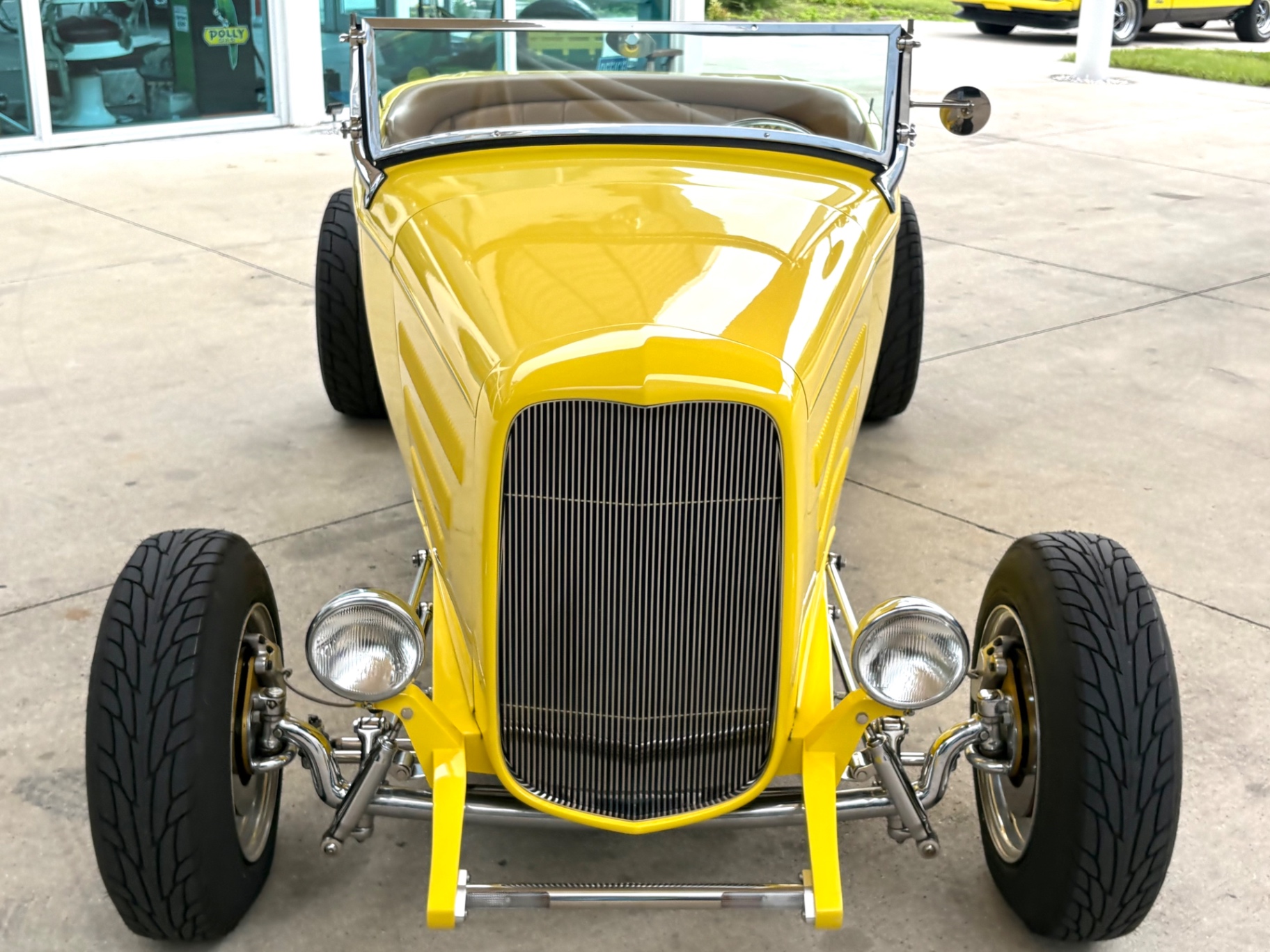
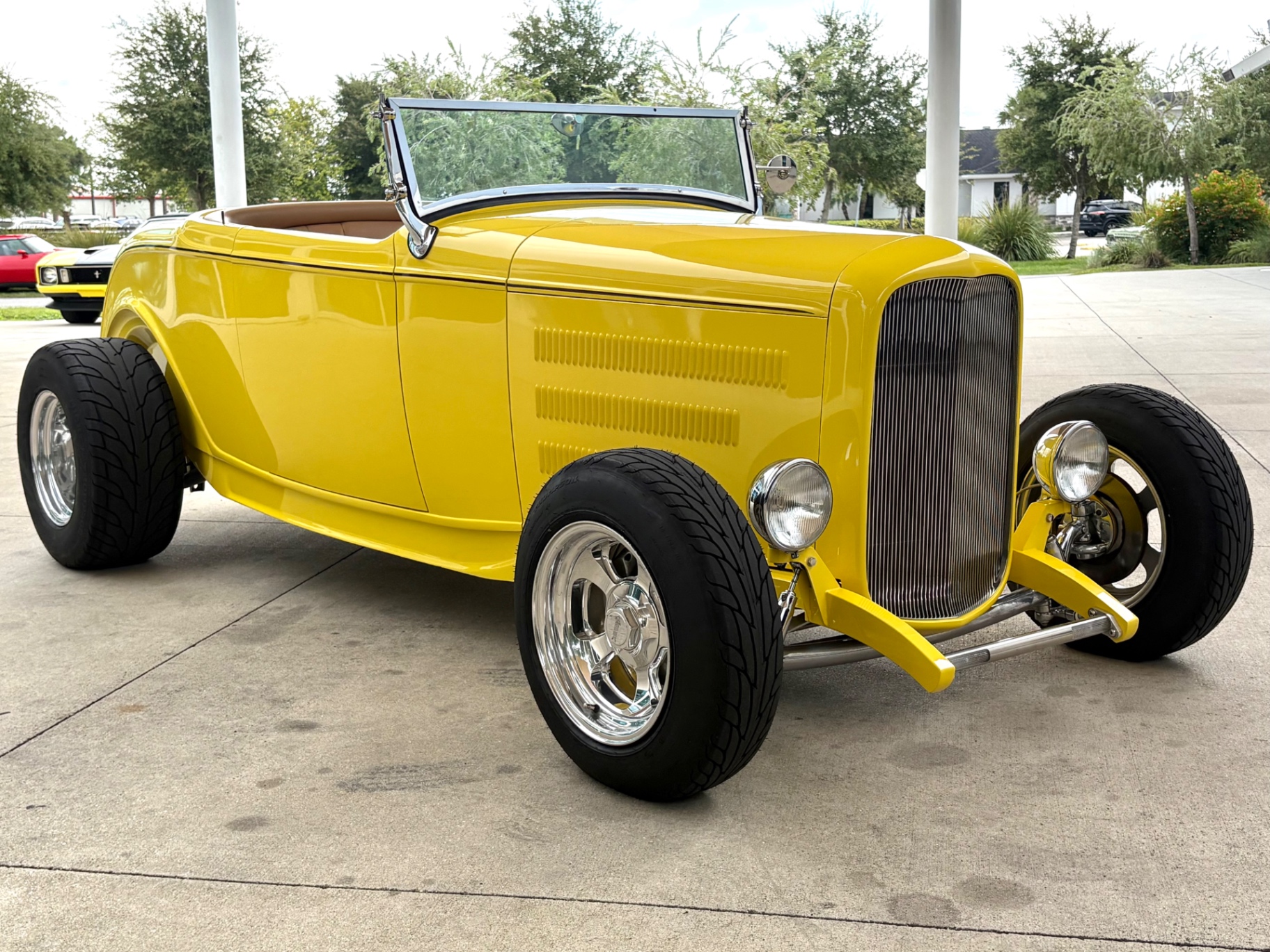
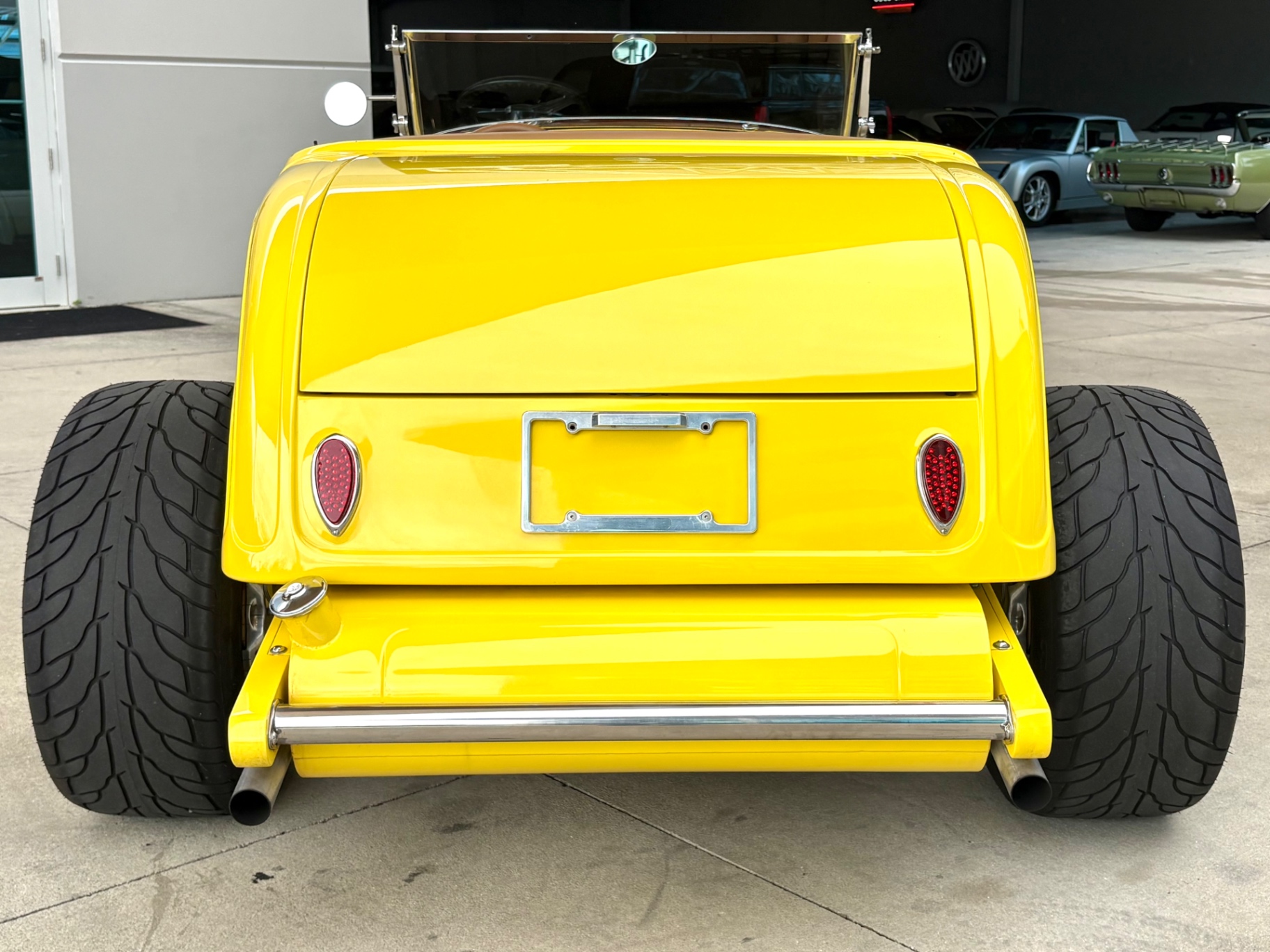
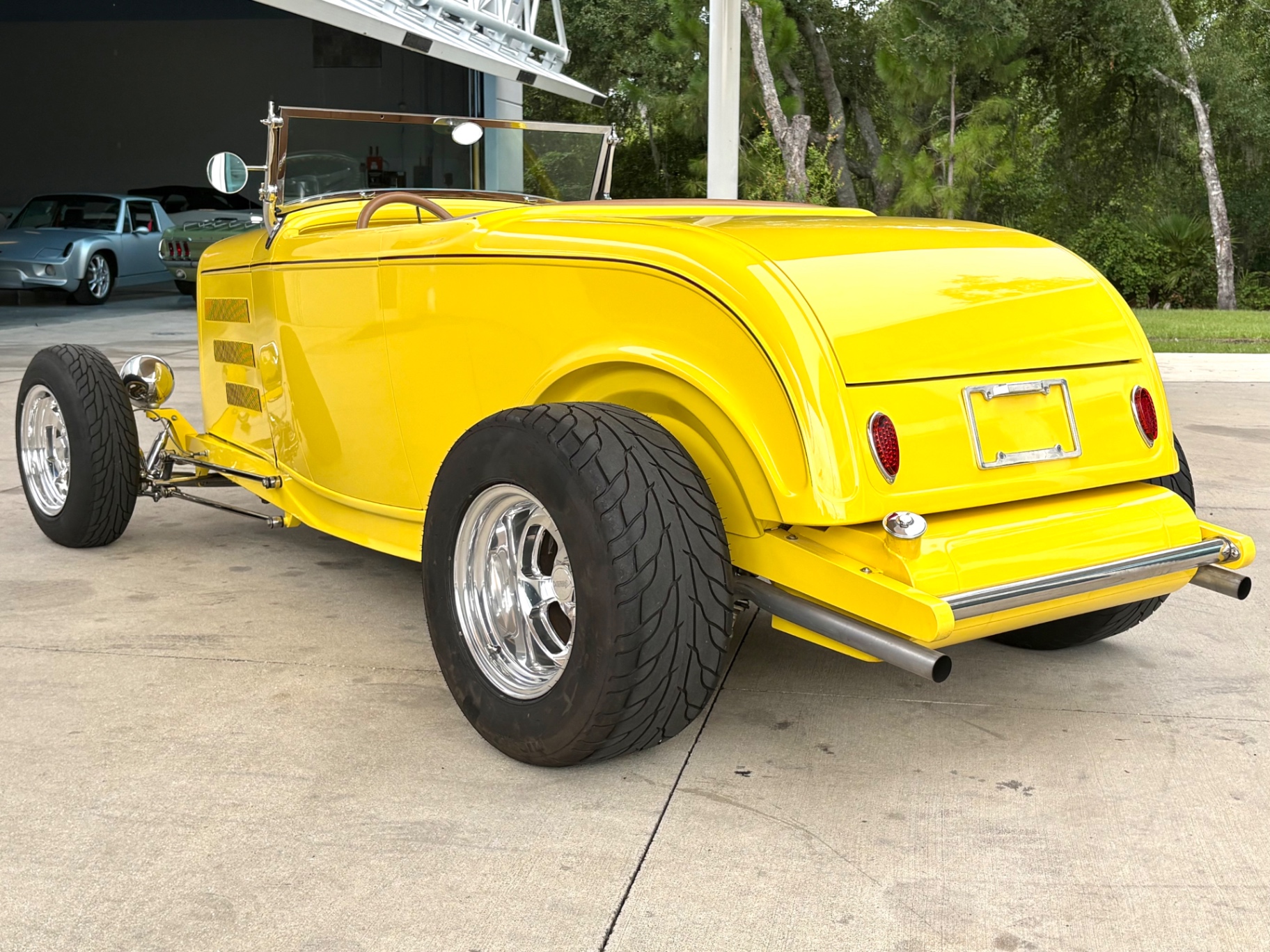
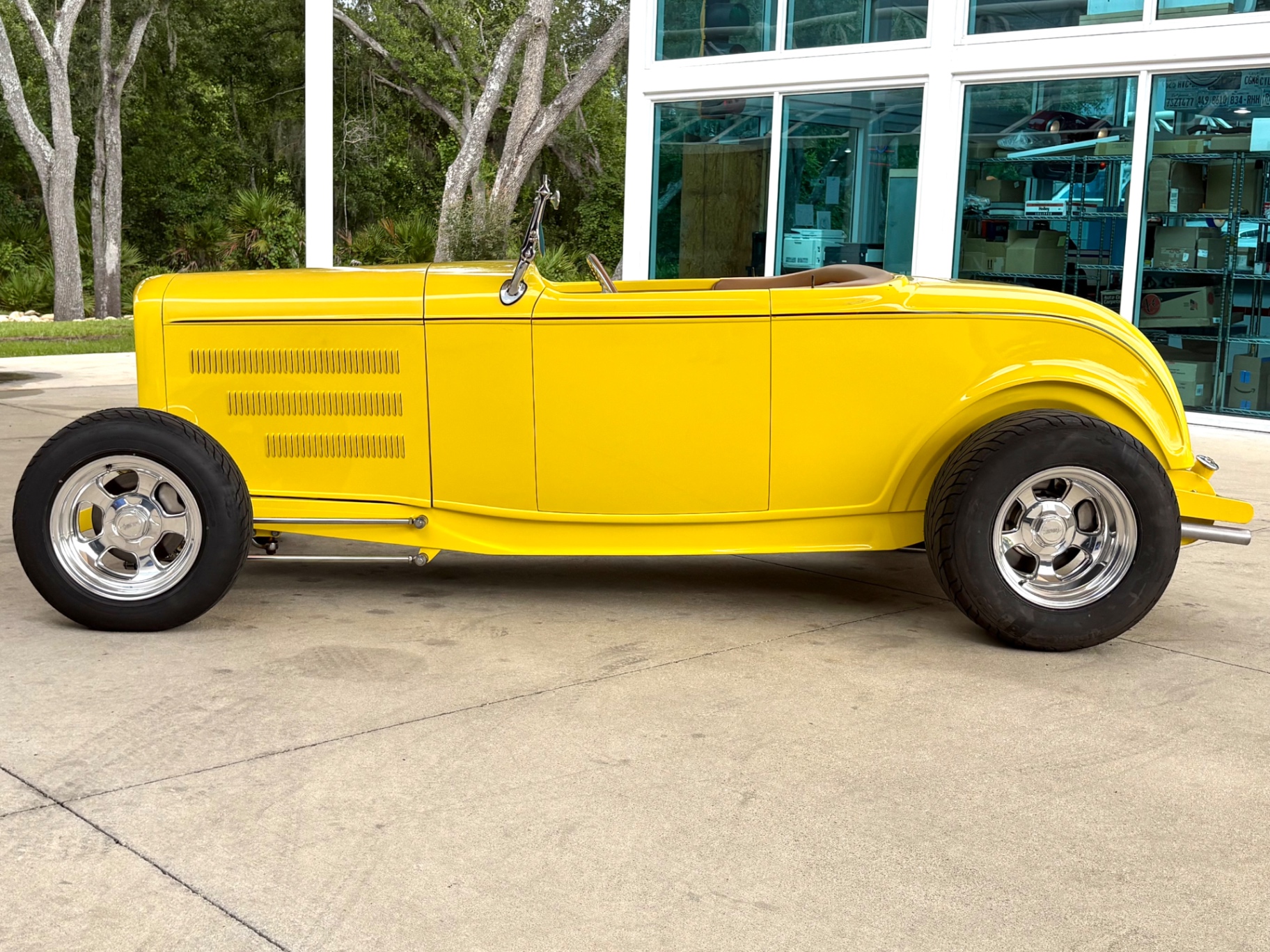
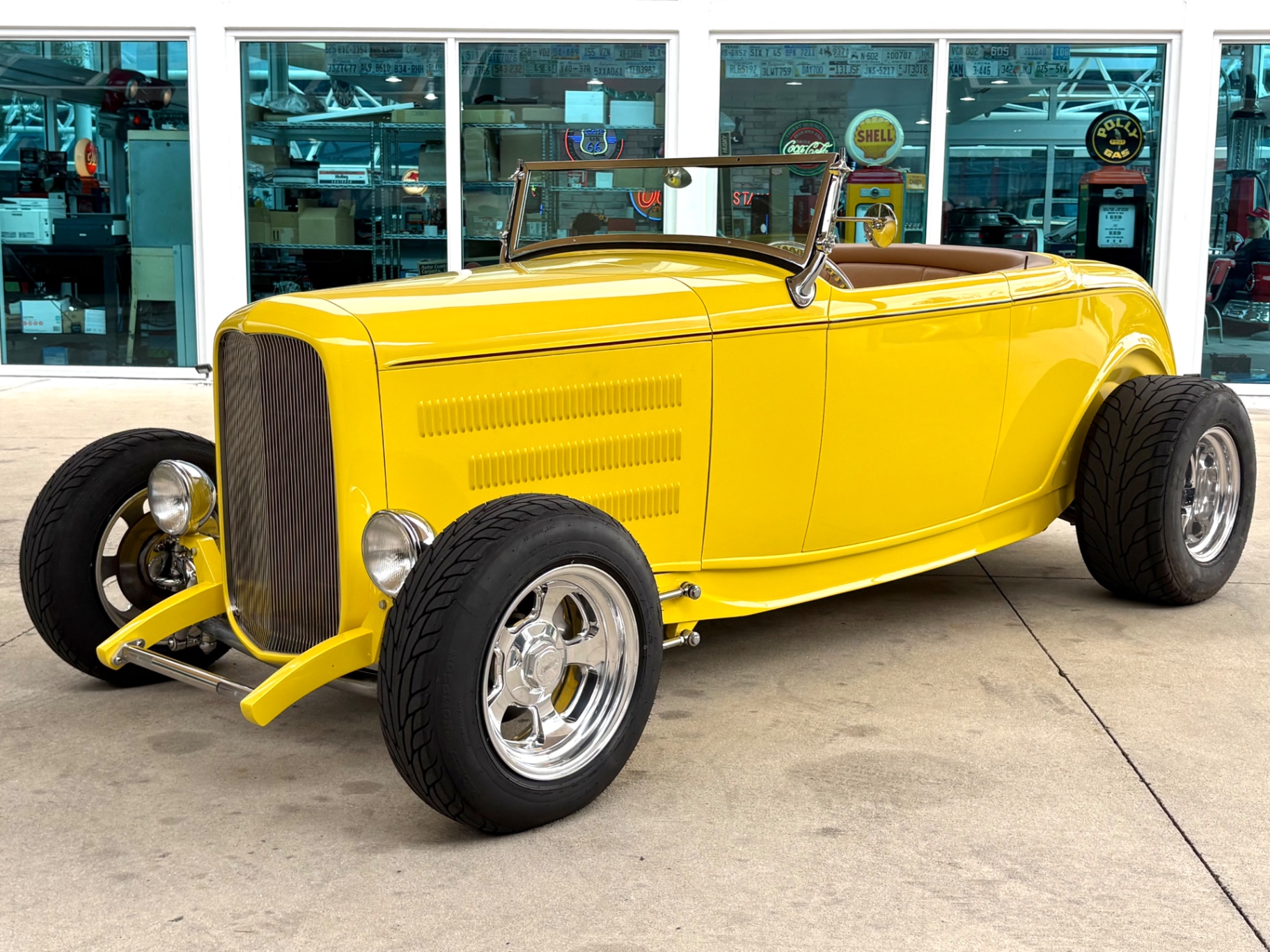
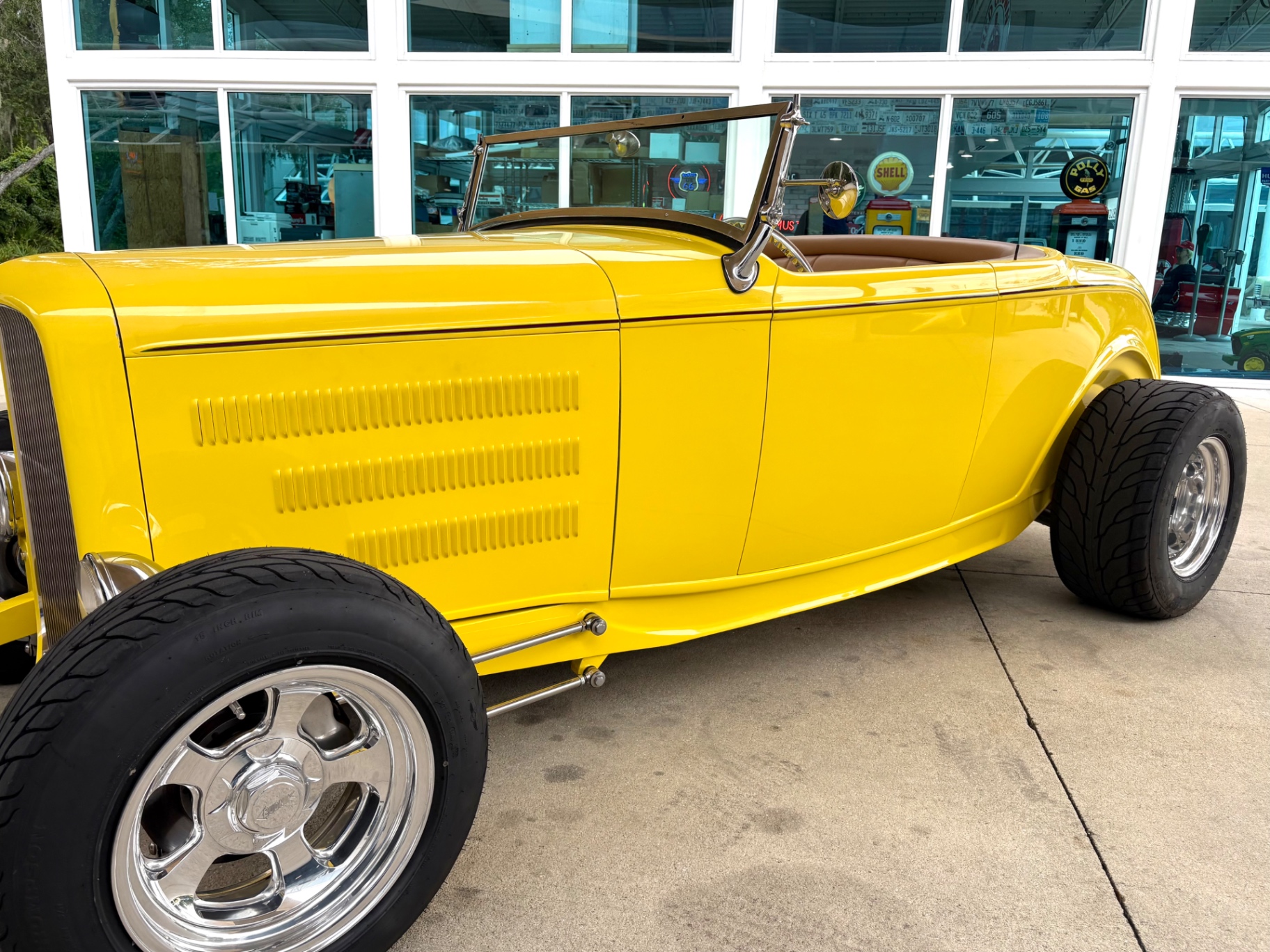
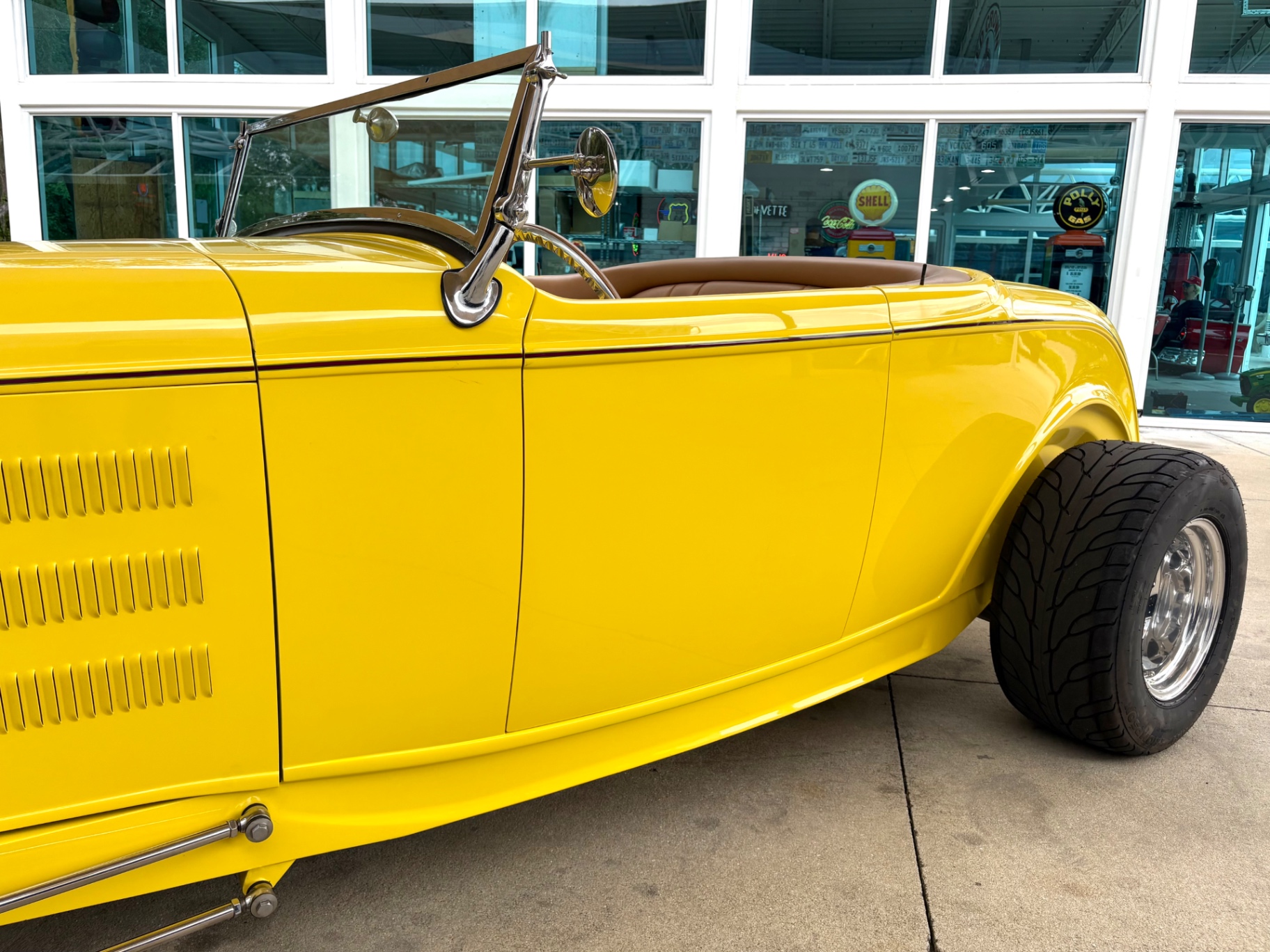
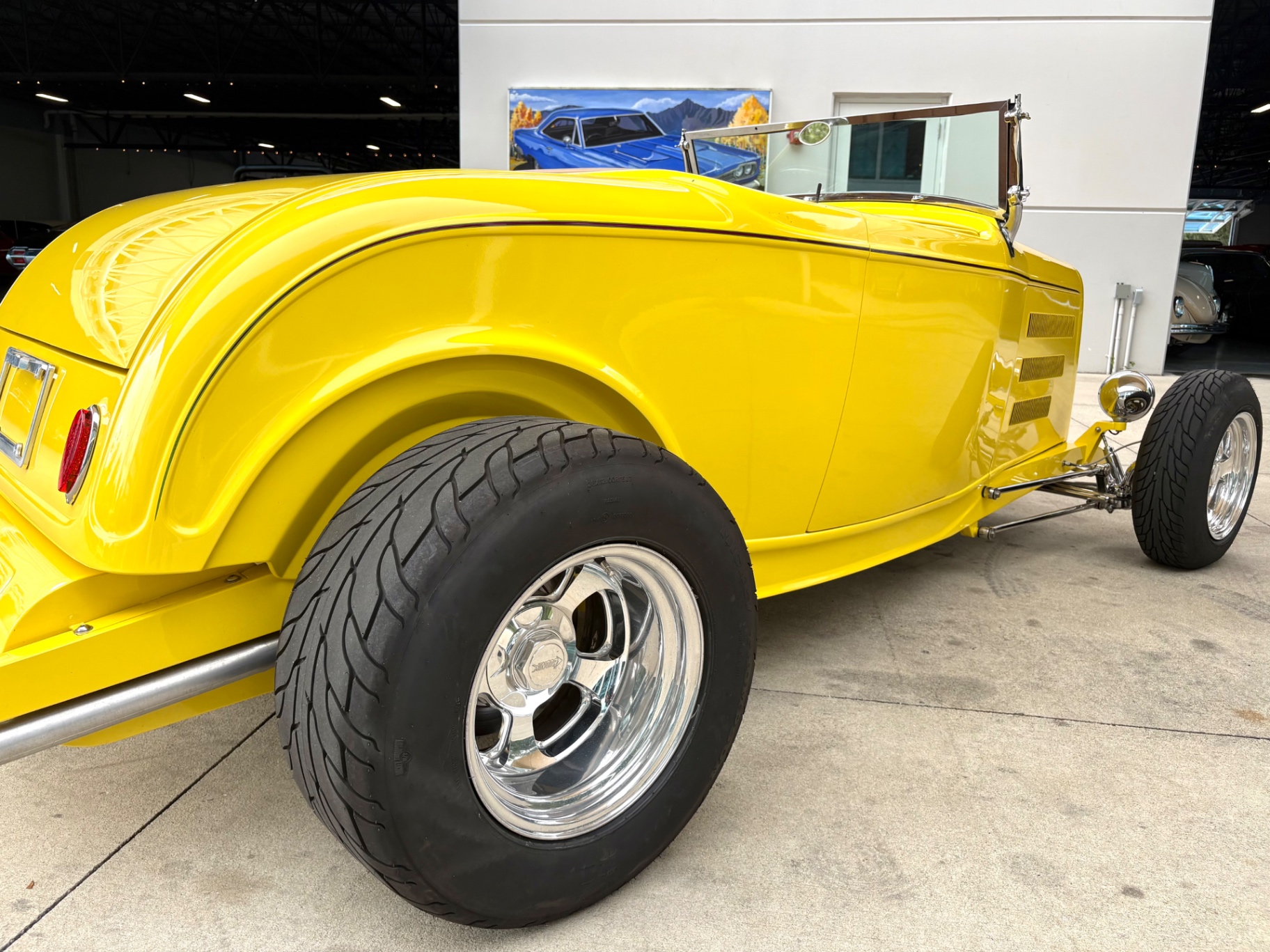
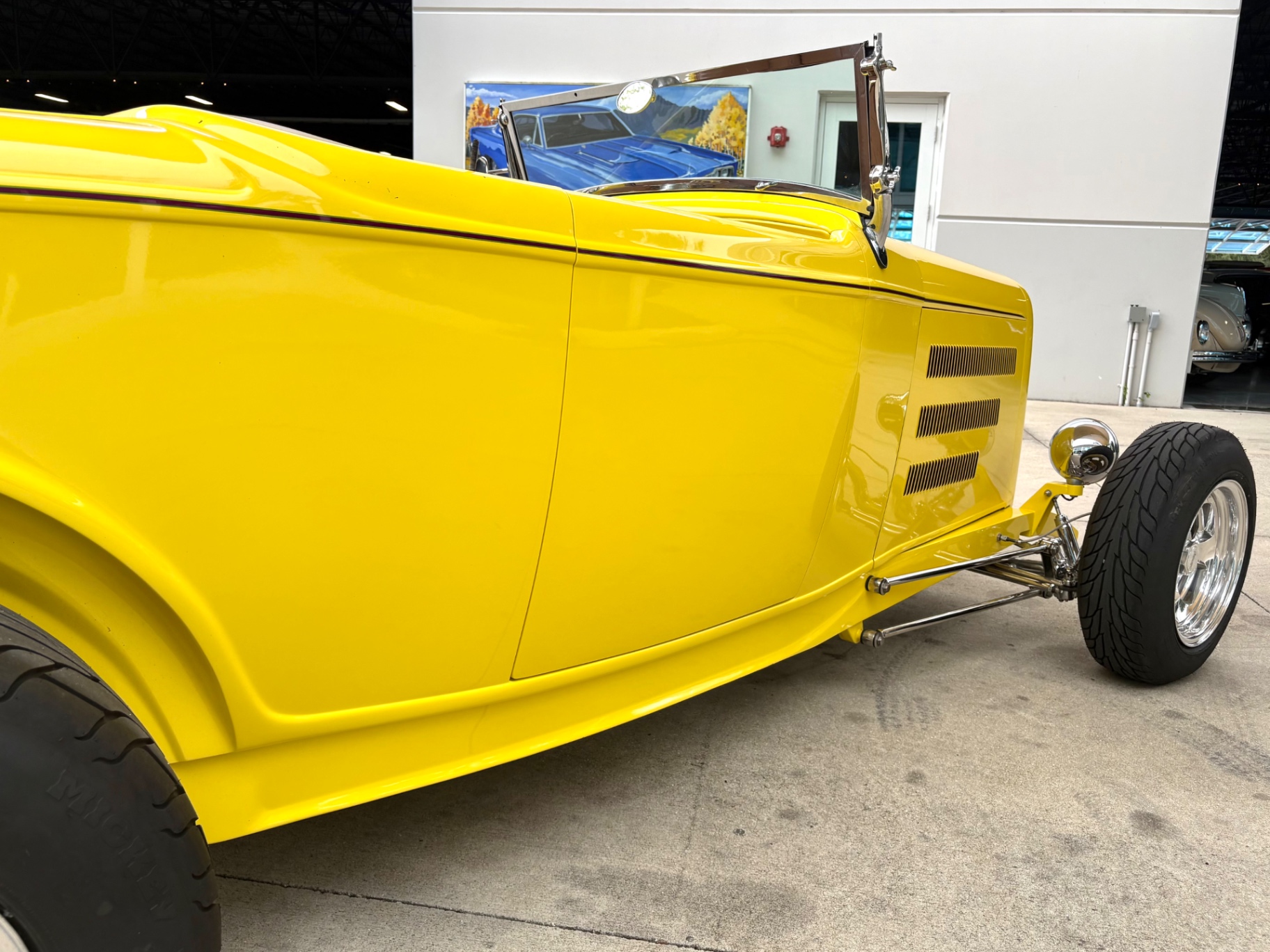
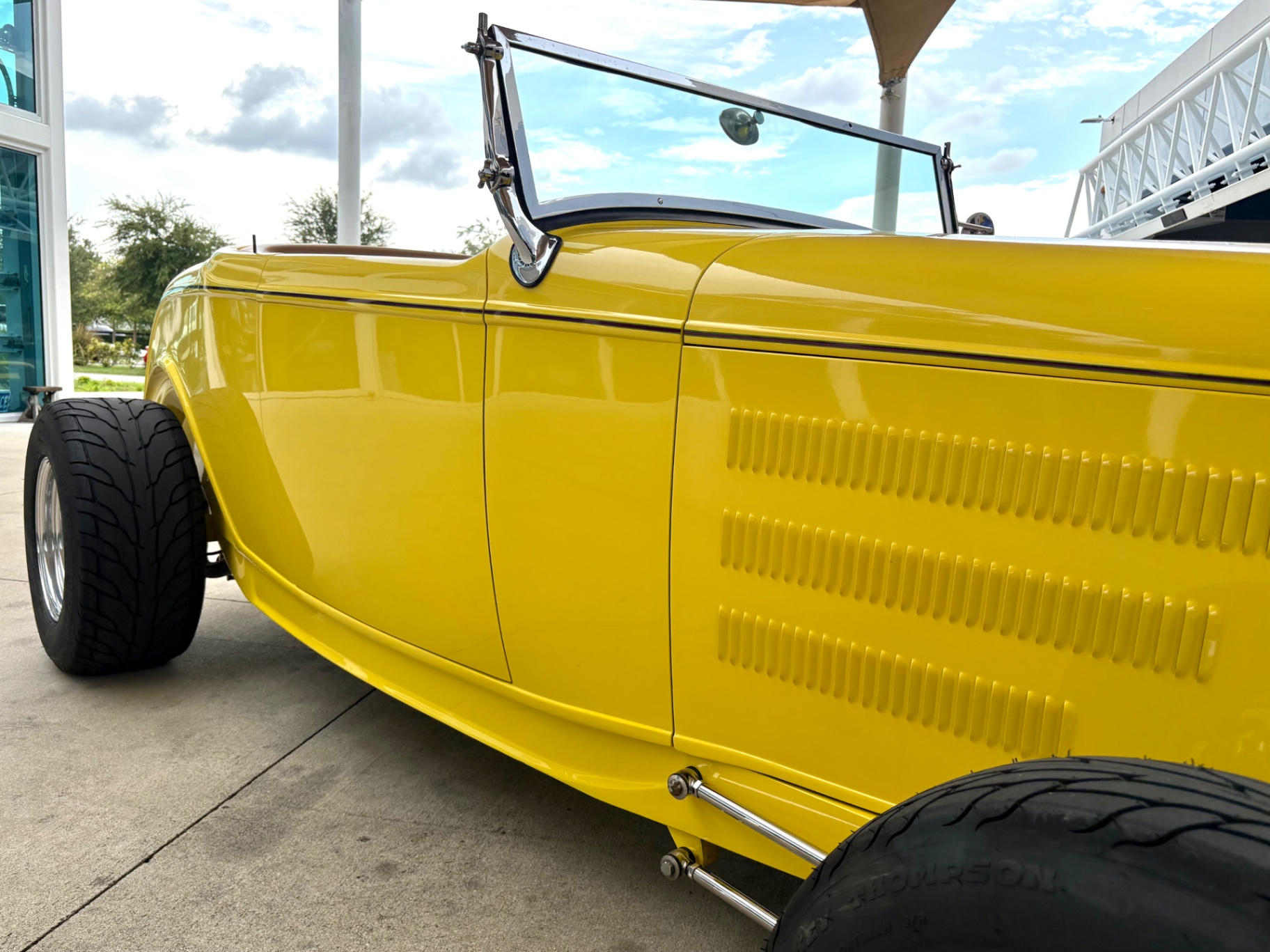
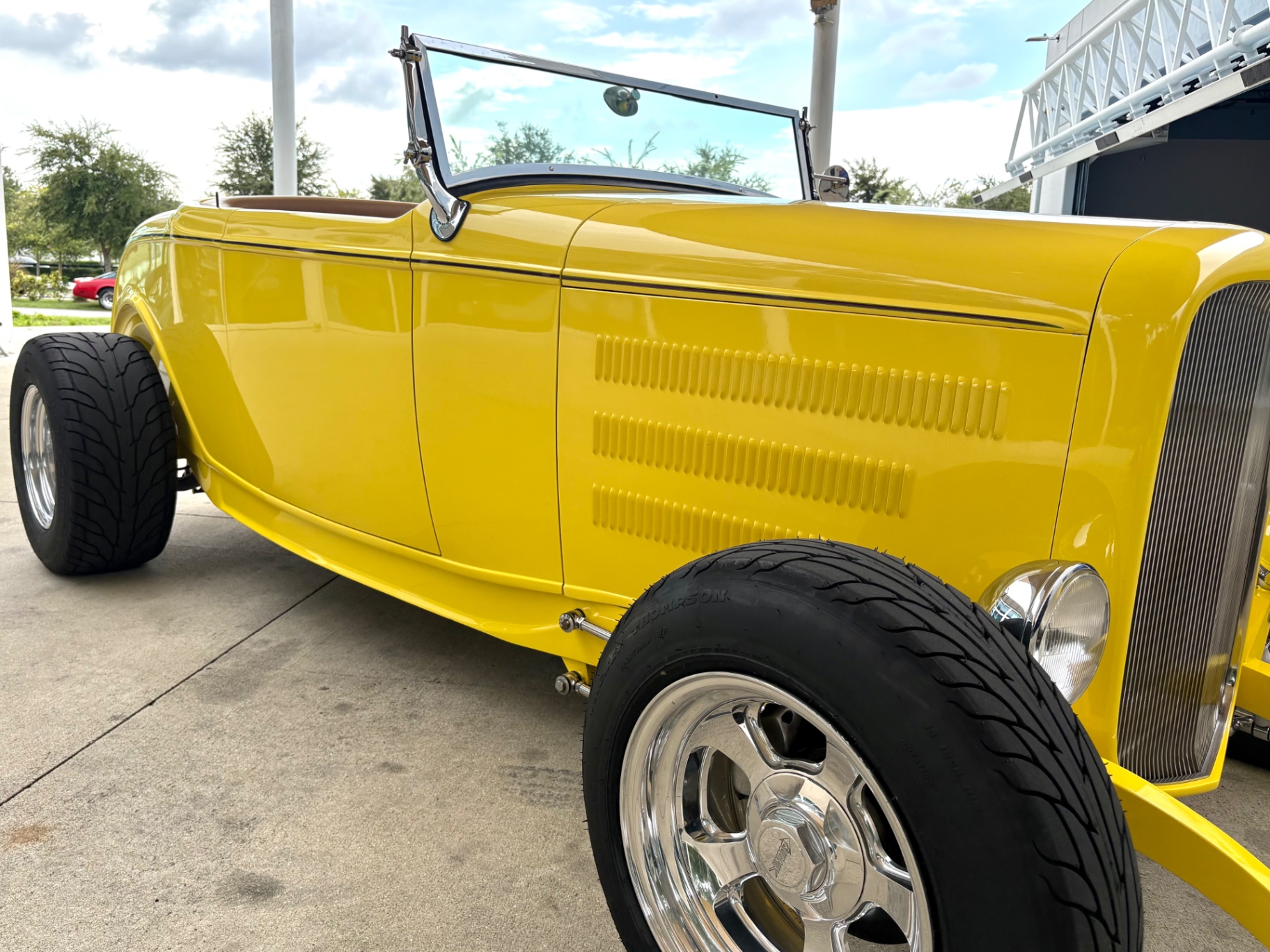
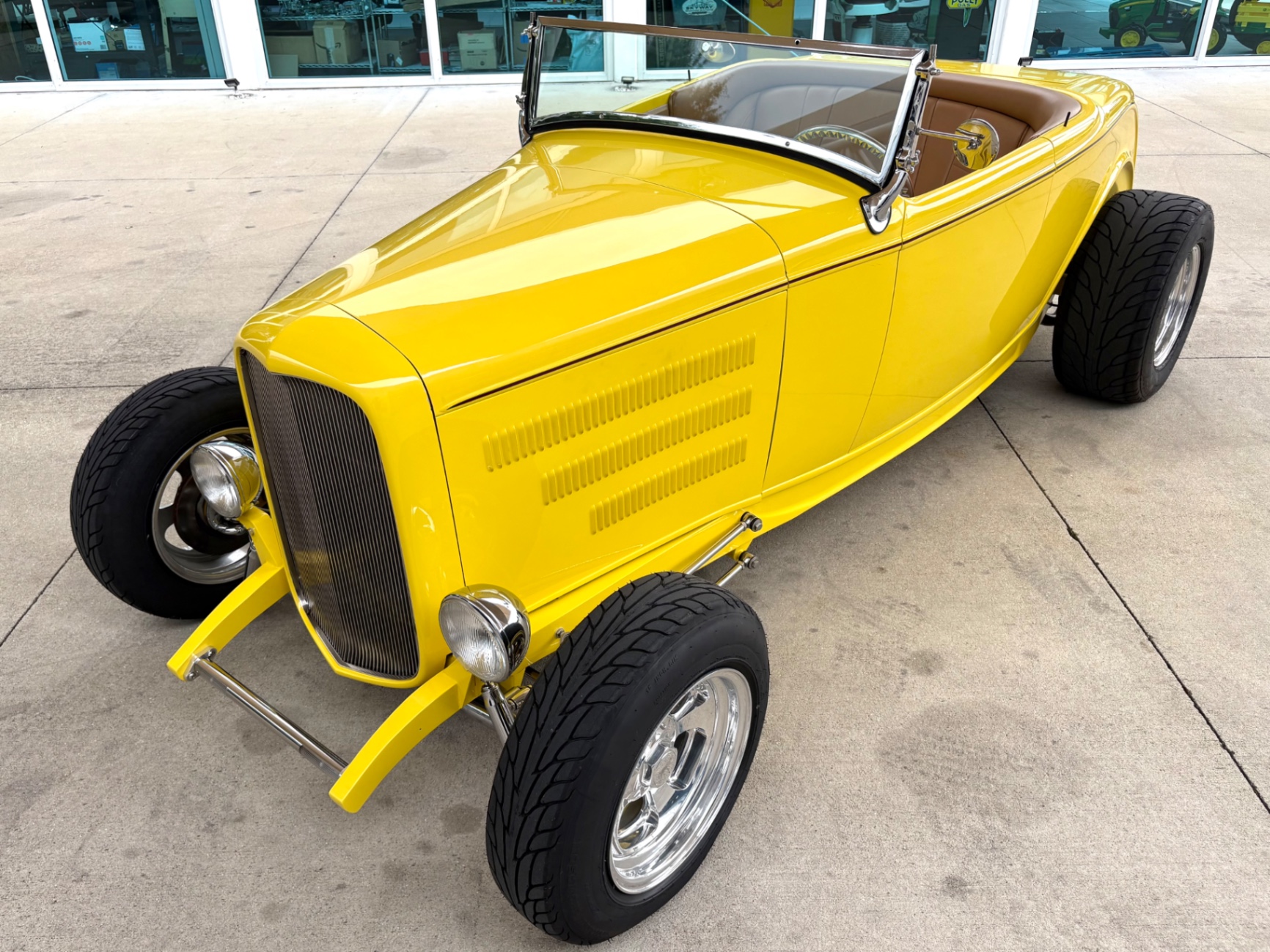
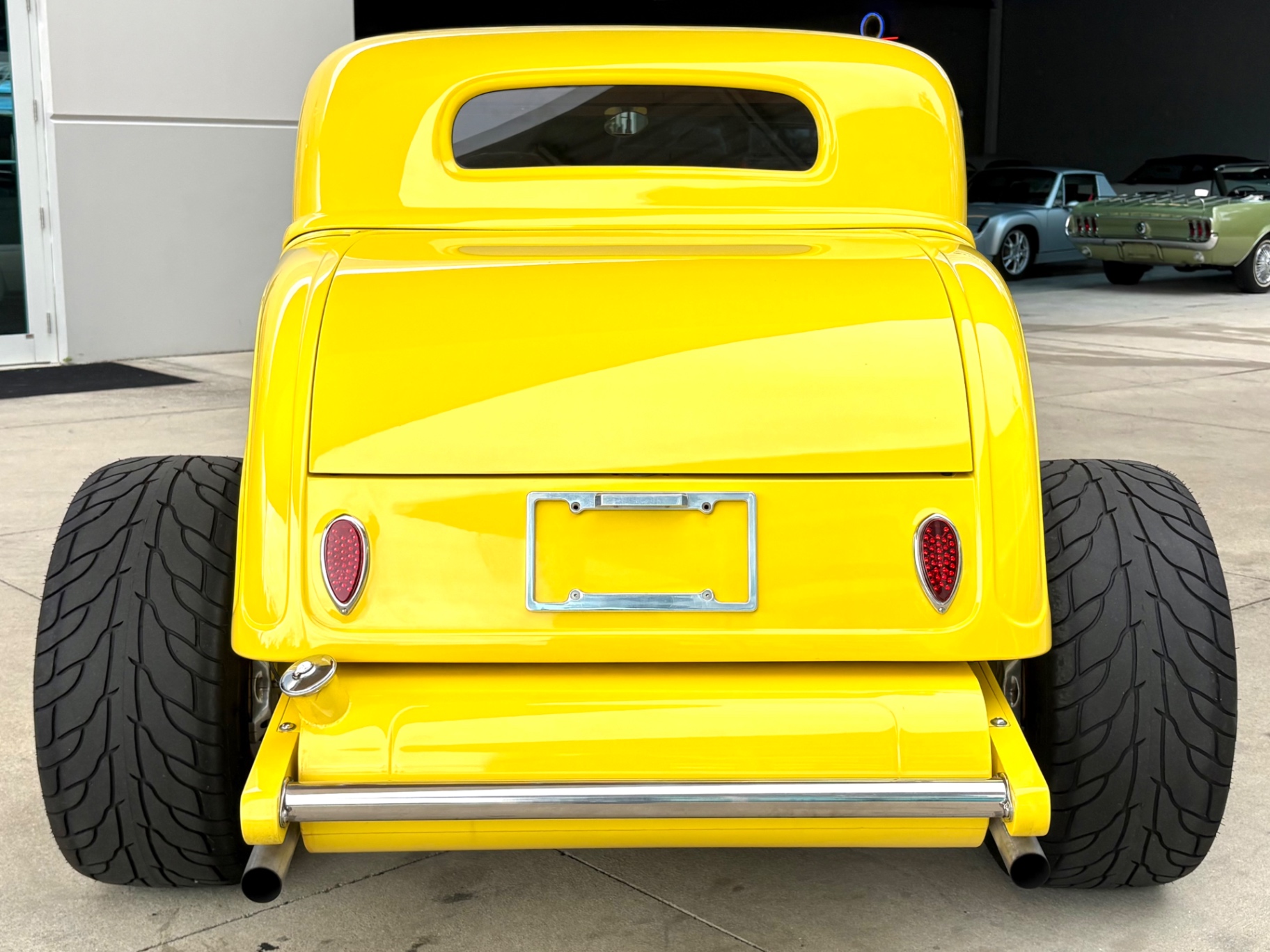
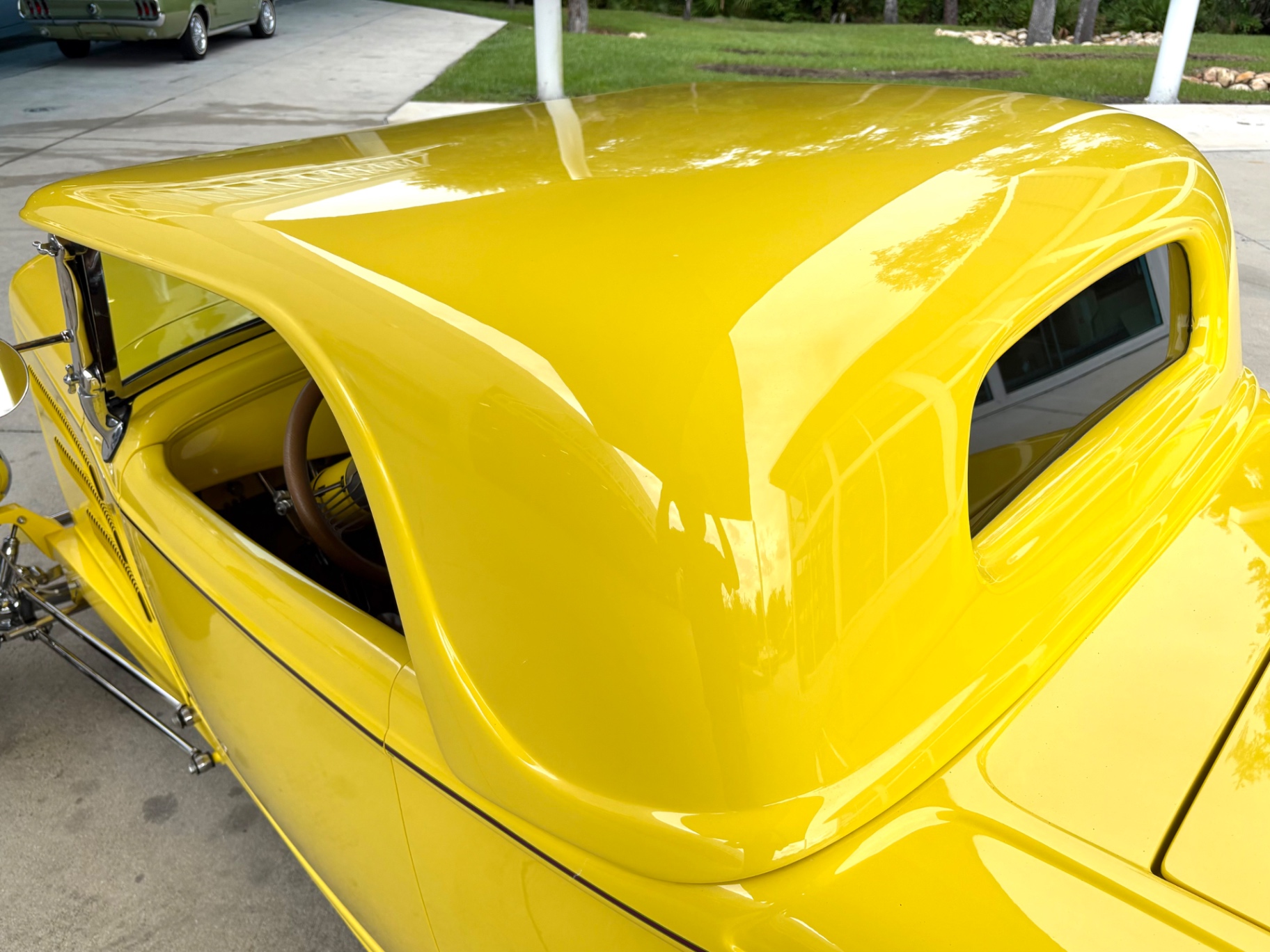
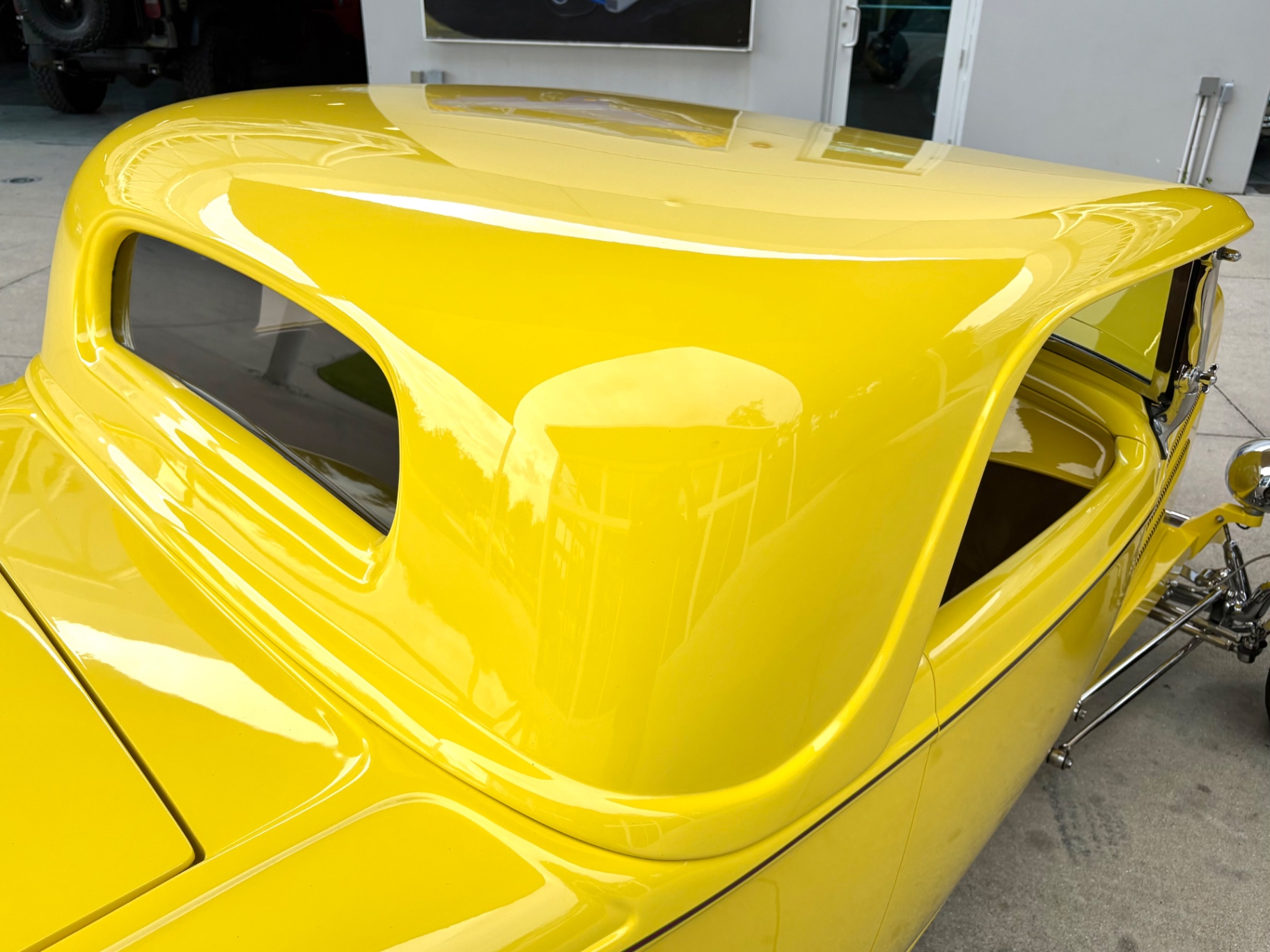
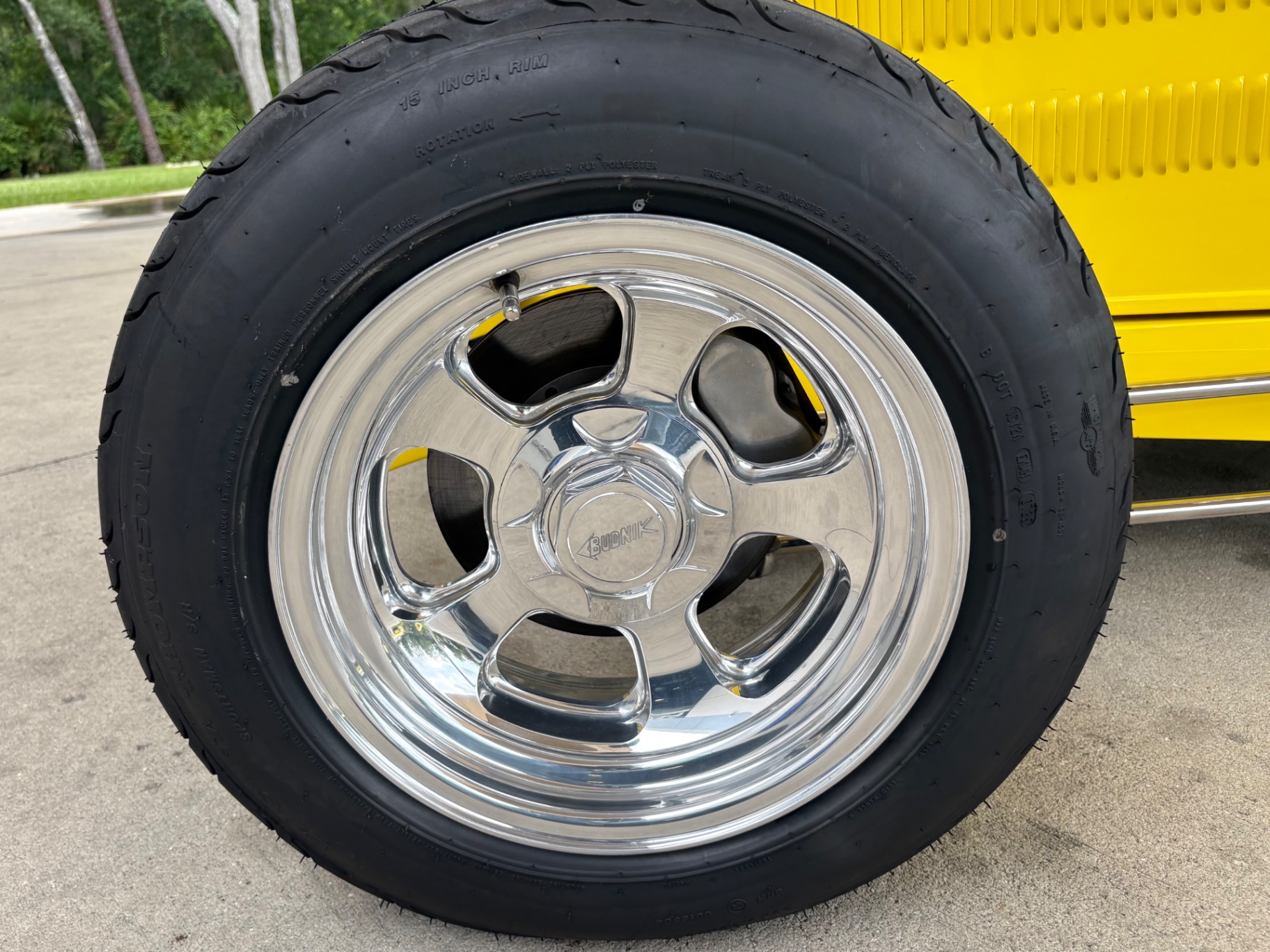
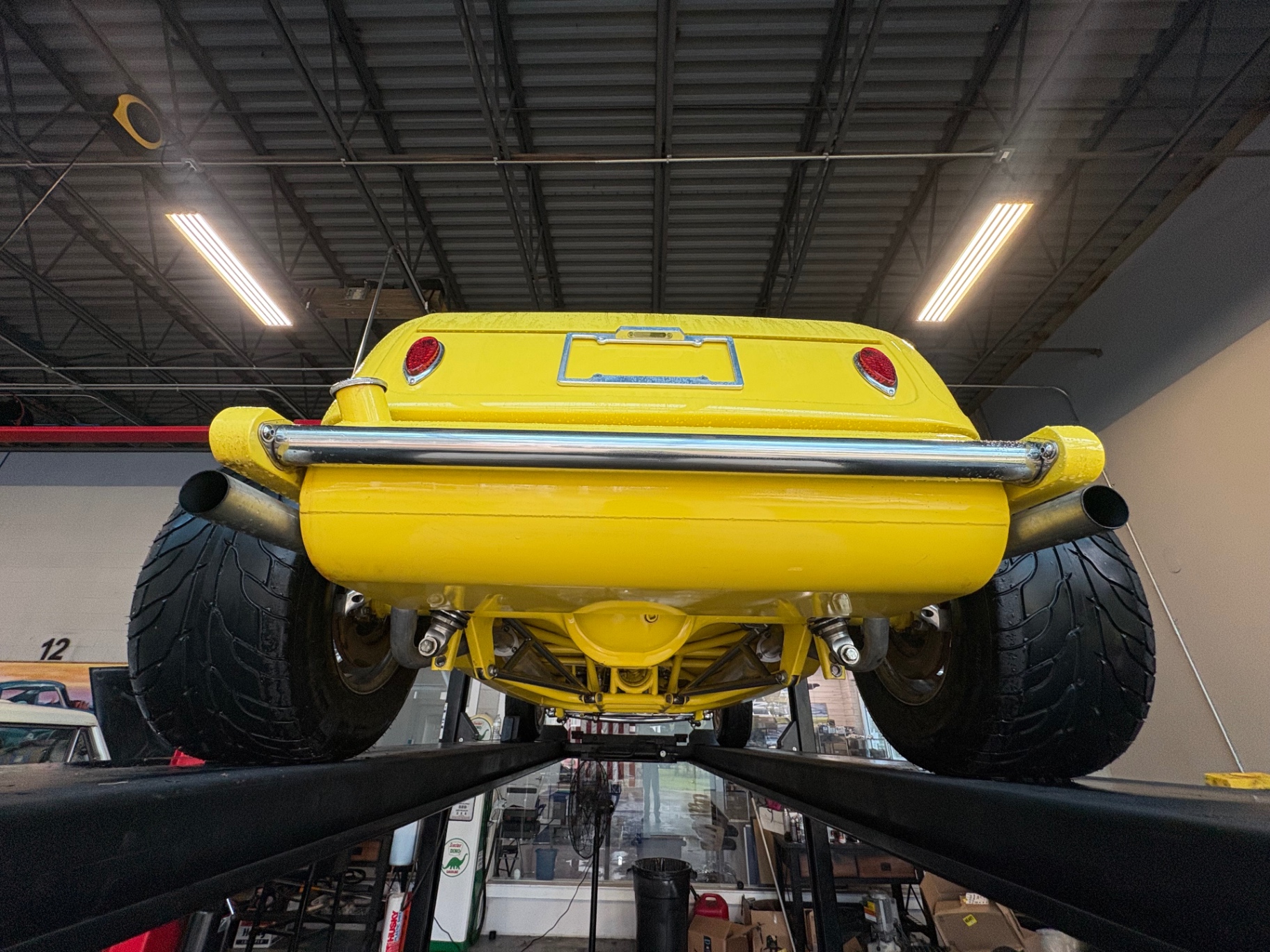
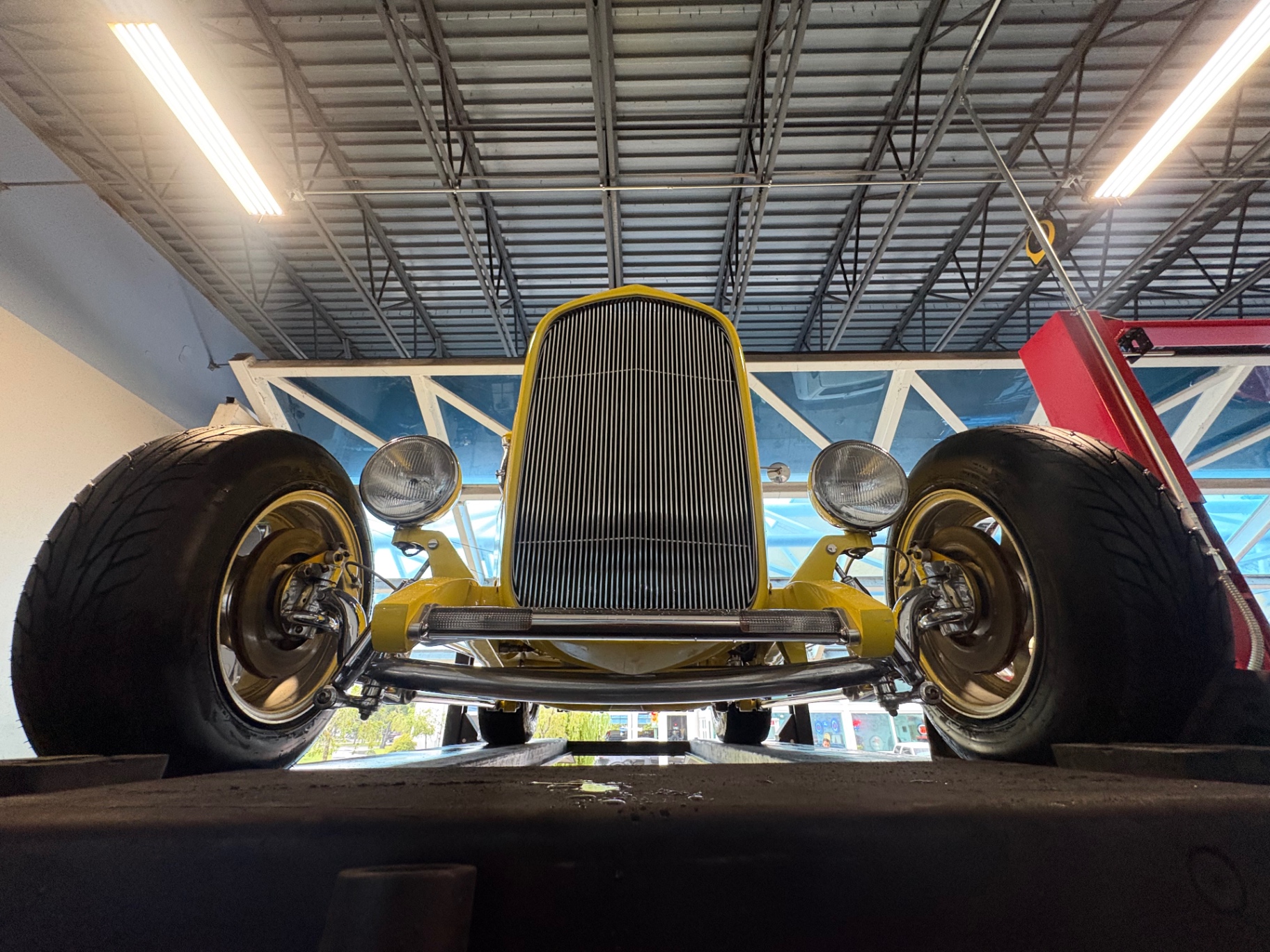
The Lemon Ice yellow on this 1932 Ford Roadster is applied evenly and carries a deep gloss across all body surfaces. The color suits the lines of the '32 Ford body particularly well — the long hood, the sweeping fenders, and the tall radiator shell all read more dramatically in a bright, high-contrast color than they would in a subdued tone. The louvered body panels are a traditional hot rod detail that traces directly back to the original California dry lakes cars of the 1940s. Louvers were punched into hoods and body panels primarily for heat extraction in the early days of hot rodding, and they became a signature aesthetic element of traditional builds. On this roadster, the louvers appear on the hood sides and are executed cleanly, with consistent spacing and sharp edges. The front end uses a chrome vertical-bar grille shell with a correct-profile radiator surround, flanked by period-style headlight buckets positioned outboard on the front crossmember — a configuration that emphasizes the car's width and presence. The Bucnik chrome wheels are fitted with wide performance tires at the rear, giving the car the aggressive rear stance that defines a well-built 1932 Ford street rod. The rear of the car is clean, with a chrome bumperette bar, round taillights set into the tail panel, and the dual exhaust tips exiting symmetrically below the bodywork. The underside has been finished in body-color yellow throughout, which is a significant additional investment and tells you something about how this build was approached from start to finish.
Conclusion
The 1932 Ford Roadster is not a car that needs much explanation to anyone who follows street rod culture. It is the benchmark. The challenge has always been finding one built to the level where you can actually drive it — one where the engine is sorted, the interior is finished properly, the chassis work is clean underneath as well as on top, and the overall package holds together as a coherent build rather than a collection of parts. This 1932 Ford Roadster checks those boxes. The 383 stroker with 530 horsepower is a serious engine in a light car. The TH350 makes it easy to drive. The tan leather interior and Classic Instruments gauges make it comfortable to spend time in. And the Lemon Ice yellow with louvered panels and chrome suspension makes it exactly what a 1932 Ford Roadster should look like when the work is done right.
To schedule a viewing or ask questions about this 1932 Ford Roadster, call Skyway Classics in Sarasota, Florida at 941-254-6608.
Disclaimer
Information found on the website is presented as given to us by the owner of the car, whether on consignment or from the owner we bought it from. Some Photos, materials for videos, descriptions and other information are provided by the consignor/seller and is deemed reliable, but Skyway Classics does not warranty or guarantee this information. Skyway Classics is not responsible for information that may incorrect or a publishing error. The decision to purchase should be based solely on the buyers personal inspection of the vehicle or by a professional inspection service prior to offer or purchase being made.
1932 Ford Roadster — 383 Stroker Street Rod with Custom Tan Leather Interior
Why This Car Is Special
The 1932 Ford Roadster is the car that started it all. When hot rodders returning from World War II needed a cheap, lightweight body to stuff a flathead into, they reached for the '32 Ford. The body was low, the frame was strong, and the styling — penned under the direction of Edsel Ford with input from designer Joe Galamb — had a natural elegance that no amount of modification could ruin. Ninety-plus years later, the 1932 Ford Roadster remains the definitive American hot rod. Ford built just over 520,000 Model 18s in 1932, the year the company introduced its first flathead V8 to the public. Of all the body styles produced that year, the open roadster is the most coveted by builders and collectors alike. This particular 1932 Ford Roadster has been built as a proper street rod — not a trailer queen, not a show car that gets trailered to events, but a real driver with serious power, a finished undercarriage, and an interior built for long days behind the wheel. It wears Lemon Ice yellow from every angle, rides on a chrome suspension that looks as clean underneath as it does from the outside, and carries a 383 stroker under the hood rated at 530 horsepower. For the serious hot rod buyer, this one covers a lot of ground.
Features List
- 383 Stroker V8, 530 horsepower
- TH350 3-speed automatic transmission
- K&N air filter
- Dual exhaust
- Bucnik chrome wheels
- Drum brakes all around
- Chrome front suspension
- Custom tan leather interior
- Classic Instruments gauge cluster
- Floor shift console
- Louvered body panels
- Removable hard top
- Branch new Mickey Thompson Tires
Mechanical
The engine in this 1932 Ford Roadster is a 383 cubic inch stroker built on the Chevrolet small block platform. A 383 stroker takes the standard 350 block and combines it with a 400 crankshaft, increasing the stroke from 3.48 inches to 3.75 inches and bringing displacement up to 383 cubic inches. The result is more torque across a wider RPM range than a stock 350 can deliver. At 530 horsepower, this engine produces more than twice what a factory small block ever offered from the assembly line, and it does so in a car that originally weighed around 2,300 pounds. The power-to-weight ratio here is not subtle. The K&N air filter sitting on top of the carburetor improves airflow compared to a standard paper element and is a common, serviceable choice in street rod builds. The transmission is a TH350 three-speed automatic, which is a sensible match for a 383 stroker in a street-driven car. The TH350 was introduced by General Motors in 1969 and became one of the most widely used automatic transmissions in hot rod and street rod applications due to its compact dimensions, proven reliability, and strong aftermarket support. Gear changes are handled via a floor-mounted shifter, keeping the cockpit clean and functional. The dual exhaust exits at the rear quarters, and the undercarriage photos confirm that this car has been finished to a show-quality standard underneath — the frame and chassis components have been painted to match the exterior Lemon Ice yellow, the chrome exhaust pipes are polished, and the suspension geometry is neat and well-organized. The front suspension is a chrome dropped axle setup, which is the traditional approach for this style of 1932 Ford build. It lowers the front of the car, improves the visual stance, and keeps the mechanical layout period-correct for a traditional hot rod. Braking is handled by four-wheel drum brakes, which is consistent with the traditional build style of this roadster.
Interior
The cockpit of this 1932 Ford Roadster was built to be used. The seating surfaces are covered in a custom tan leather that works directly with the Lemon Ice yellow bodywork — warm tones throughout, nothing competing for attention. The door panels are custom molded leather pieces with integrated pull handles, shaped with flowing body lines that are clearly the work of someone who spent time getting the details right. The bench seat is generously sized for a two-seat roadster, with tall side bolsters and a quilted vertical-stitch pattern on the seatback that provides both lateral support and a finished appearance. The dashboard is body-color yellow, keeping the interior bright and cohesive. Mounted in a straight row across the dash is a Classic Instruments gauge cluster. Classic Instruments, based in Boyne City, Michigan, has been producing gauges for street rods and custom vehicles since 1980. Their gauges use a cream-colored face with red pointers — a retro aesthetic that suits a 1932 Ford perfectly and reads clearly in open-air driving conditions. The floor shift console sits centered between driver and passenger, positioned low and finished in a tan base that integrates cleanly with the carpet. The floor covering is a tan suede-style carpet that coordinates with the leather seating throughout. The steering wheel is a tan leather-wrapped unit mounted on a chrome billet spoke, which keeps the traditional feel of the interior intact while improving driver comfort on longer runs. The removable hard top gives this roadster the flexibility to run open or covered, which is a practical feature for a Florida-based car that sees real weather.
Exterior
The Lemon Ice yellow on this 1932 Ford Roadster is applied evenly and carries a deep gloss across all body surfaces. The color suits the lines of the '32 Ford body particularly well — the long hood, the sweeping fenders, and the tall radiator shell all read more dramatically in a bright, high-contrast color than they would in a subdued tone. The louvered body panels are a traditional hot rod detail that traces directly back to the original California dry lakes cars of the 1940s. Louvers were punched into hoods and body panels primarily for heat extraction in the early days of hot rodding, and they became a signature aesthetic element of traditional builds. On this roadster, the louvers appear on the hood sides and are executed cleanly, with consistent spacing and sharp edges. The front end uses a chrome vertical-bar grille shell with a correct-profile radiator surround, flanked by period-style headlight buckets positioned outboard on the front crossmember — a configuration that emphasizes the car's width and presence. The Bucnik chrome wheels are fitted with wide performance tires at the rear, giving the car the aggressive rear stance that defines a well-built 1932 Ford street rod. The rear of the car is clean, with a chrome bumperette bar, round taillights set into the tail panel, and the dual exhaust tips exiting symmetrically below the bodywork. The underside has been finished in body-color yellow throughout, which is a significant additional investment and tells you something about how this build was approached from start to finish.
Conclusion
The 1932 Ford Roadster is not a car that needs much explanation to anyone who follows street rod culture. It is the benchmark. The challenge has always been finding one built to the level where you can actually drive it — one where the engine is sorted, the interior is finished properly, the chassis work is clean underneath as well as on top, and the overall package holds together as a coherent build rather than a collection of parts. This 1932 Ford Roadster checks those boxes. The 383 stroker with 530 horsepower is a serious engine in a light car. The TH350 makes it easy to drive. The tan leather interior and Classic Instruments gauges make it comfortable to spend time in. And the Lemon Ice yellow with louvered panels and chrome suspension makes it exactly what a 1932 Ford Roadster should look like when the work is done right.
To schedule a viewing or ask questions about this 1932 Ford Roadster, call Skyway Classics in Sarasota, Florida at 941-254-6608.
Disclaimer
Information found on the website is presented as given to us by the owner of the car, whether on consignment or from the owner we bought it from. Some Photos, materials for videos, descriptions and other information are provided by the consignor/seller and is deemed reliable, but Skyway Classics does not warranty or guarantee this information. Skyway Classics is not responsible for information that may incorrect or a publishing error. The decision to purchase should be based solely on the buyers personal inspection of the vehicle or by a professional inspection service prior to offer or purchase being made.
1932 Ford
Roadster Hi-Boy
Why Choose Skyway Classics?
Explore our curated inventory of classic and collector cars—thoughtfully selected, ready to drive, and supported by experts who make ownership simple.
Expert Curation
Every vehicle is hand-selected by our experts for quality, authenticity, and investment potential.
Fast Transactions
Streamlined buying and selling process with quick financing and immediate delivery options.
Only National Dealer With Classic Service & Repair
We’re the only national dealership that services and repairs the classics we sell—before and after the sale.
Nationwide Network
Access to our extensive network of collectors, restorers, and classic car enthusiasts nationwide.
Concierge Ownership Support
From financing and insurance to paperwork, shipping, and titling—we handle the details so you can enjoy the drive.
Passion-Driven Service
We're classic car enthusiasts first, providing personalized service with genuine passion for the hobby.