
1968 Chevrolet
Camaro SS
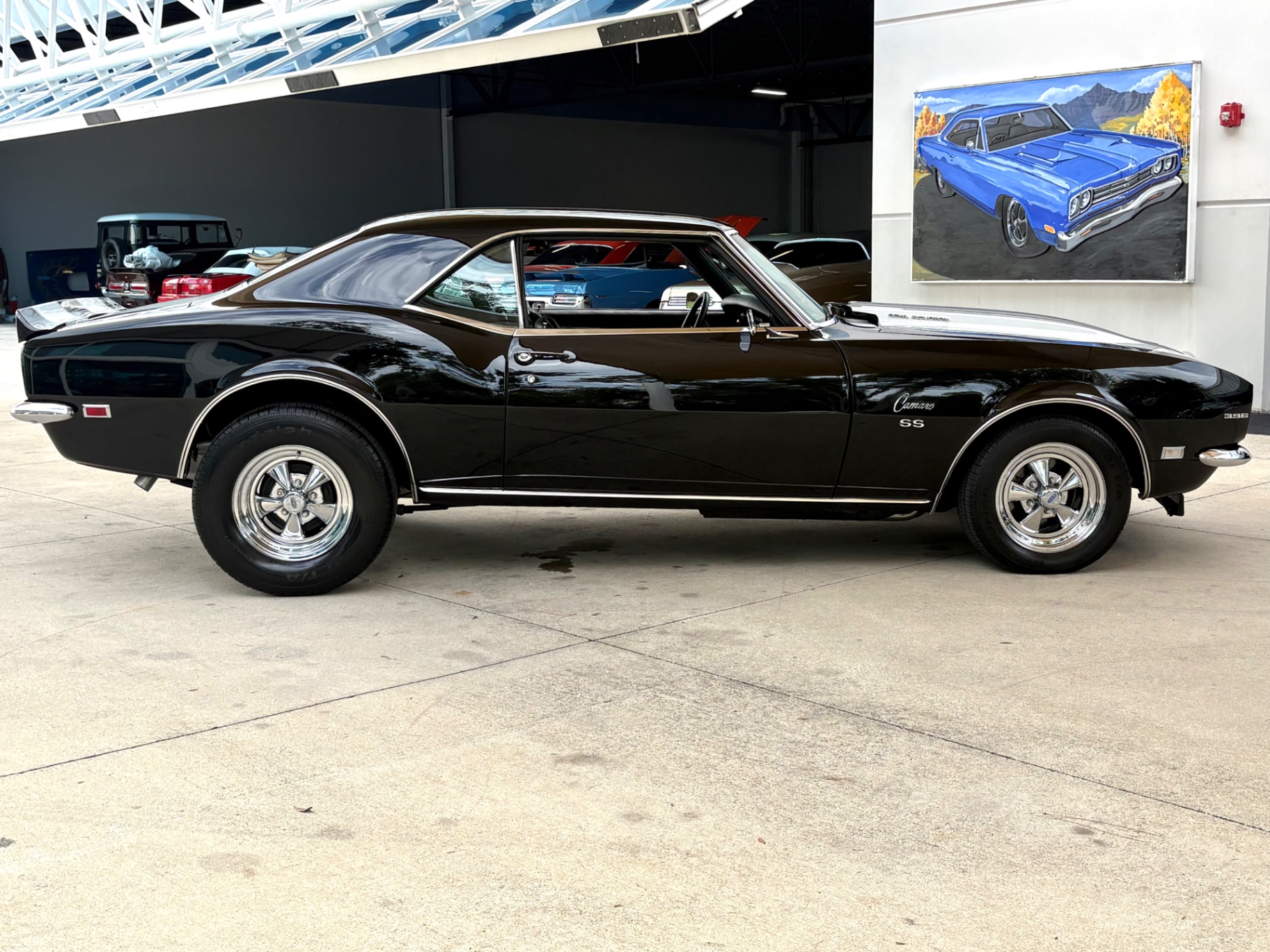
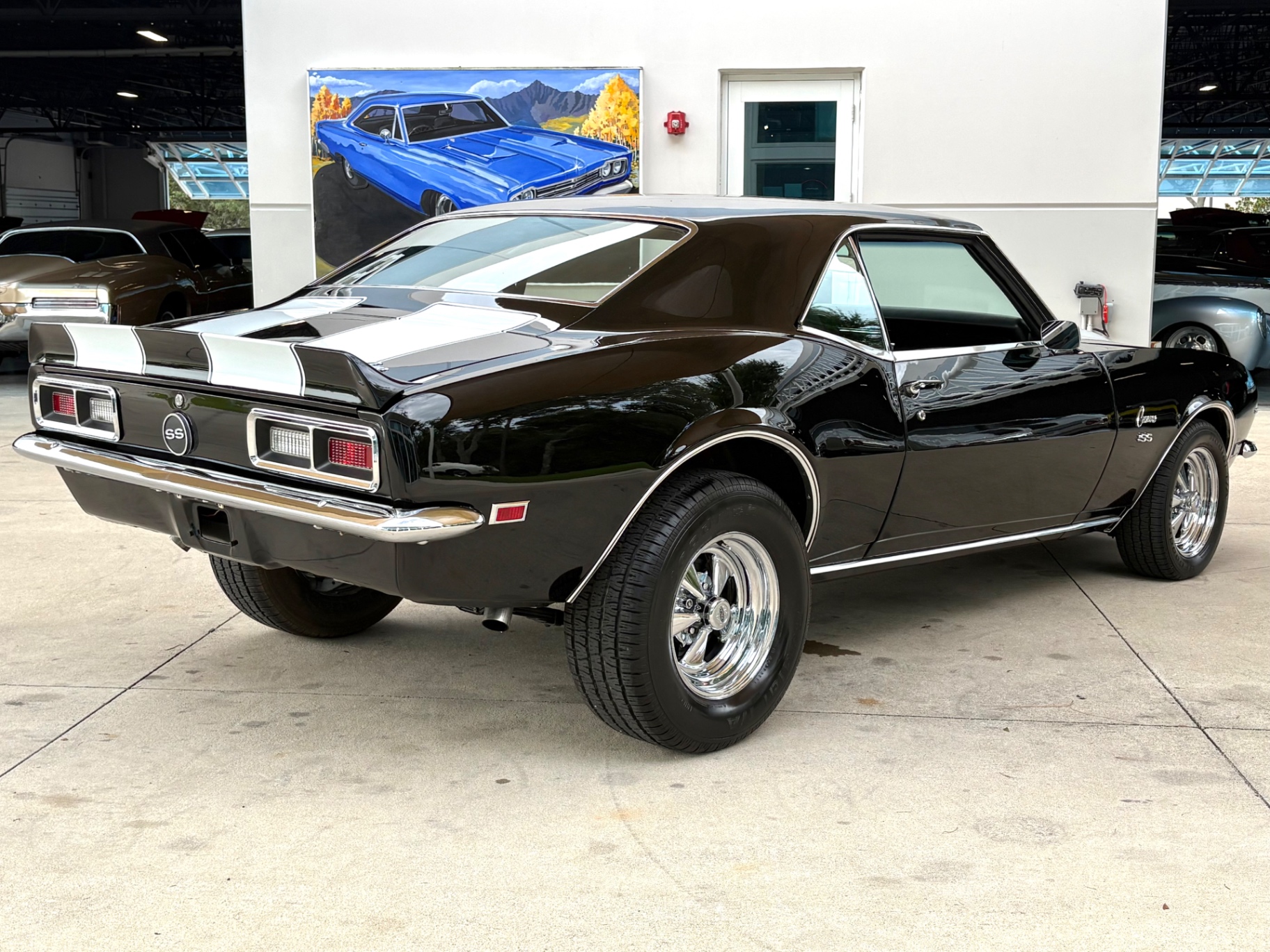
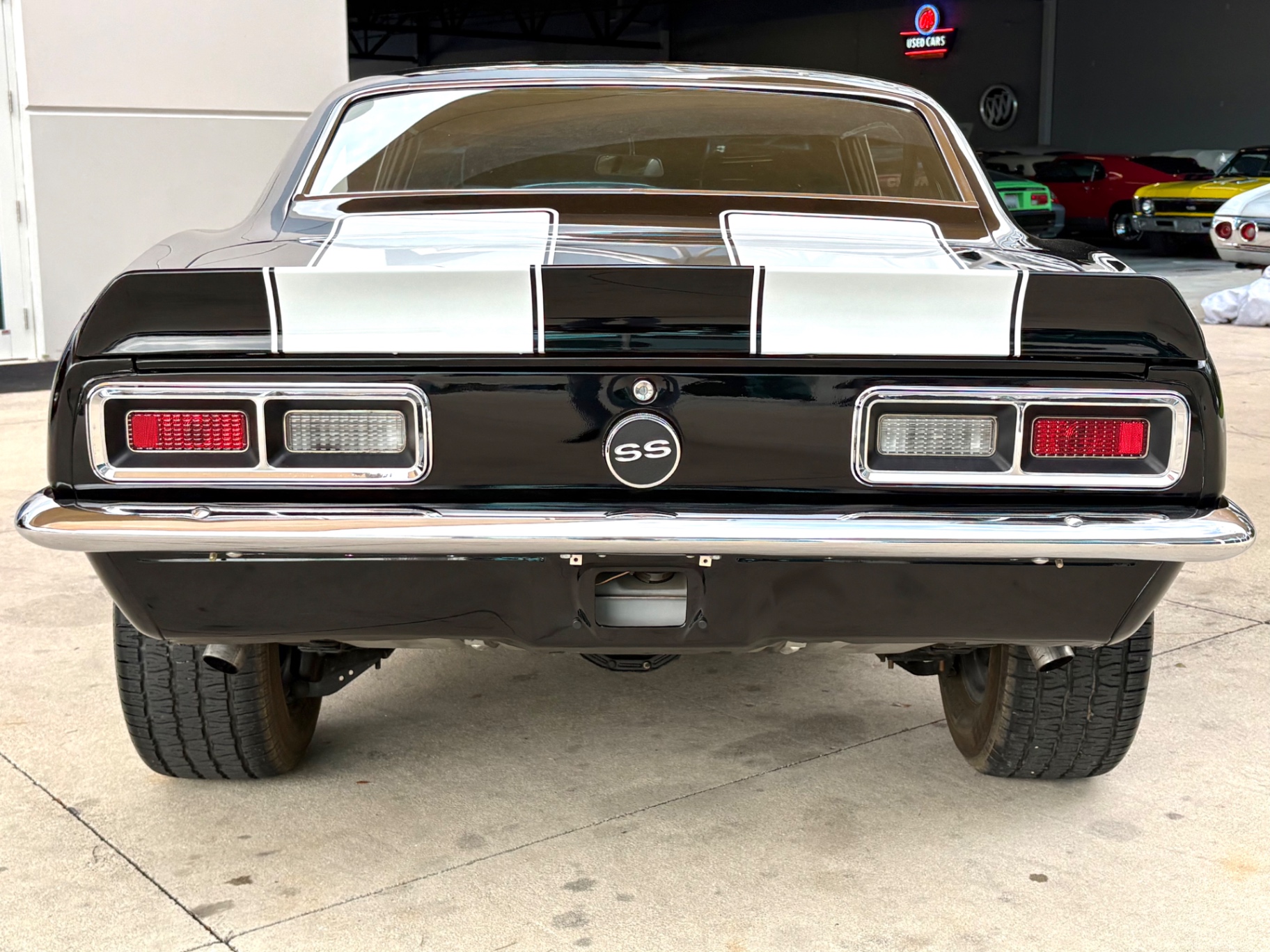
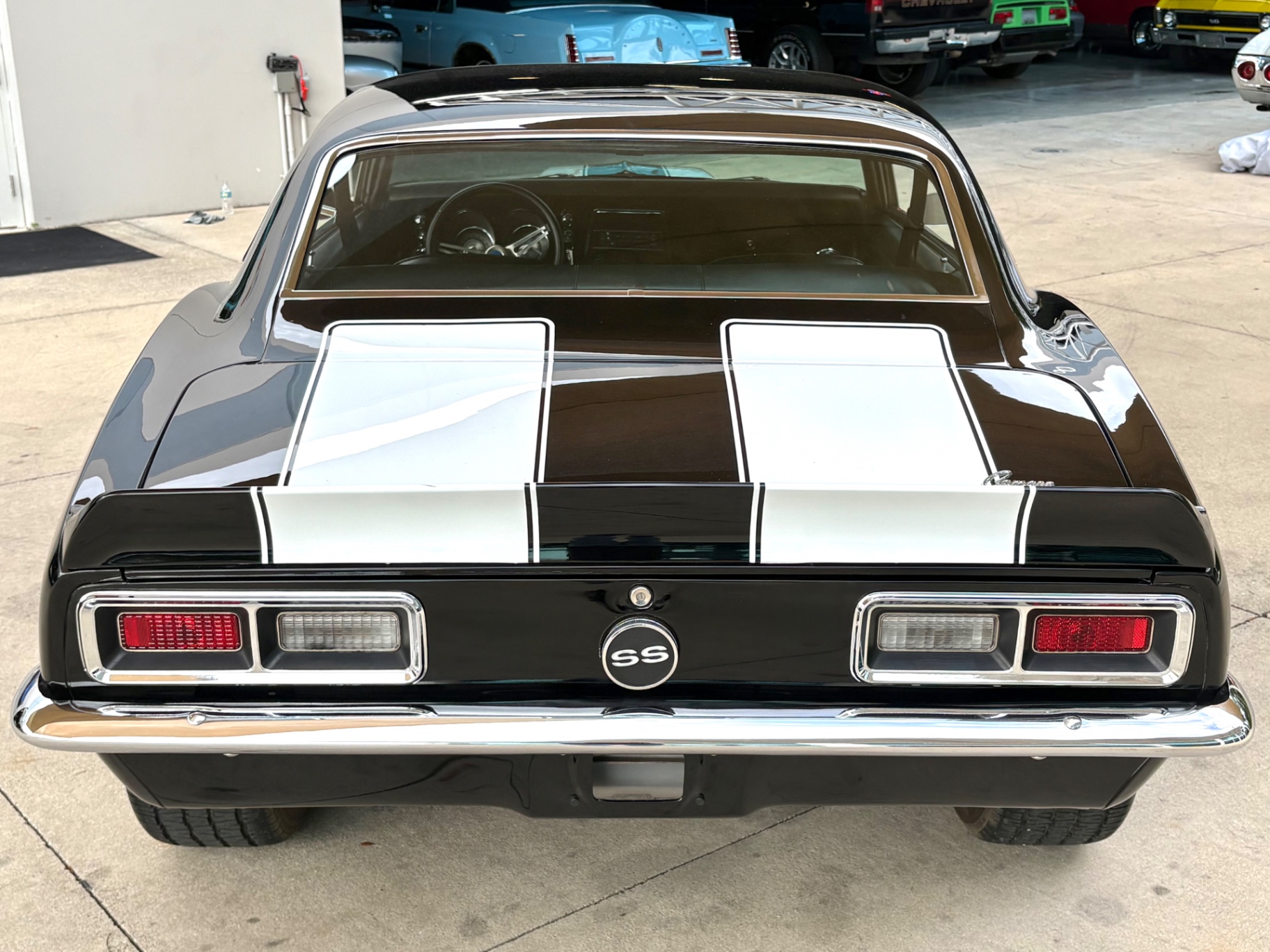
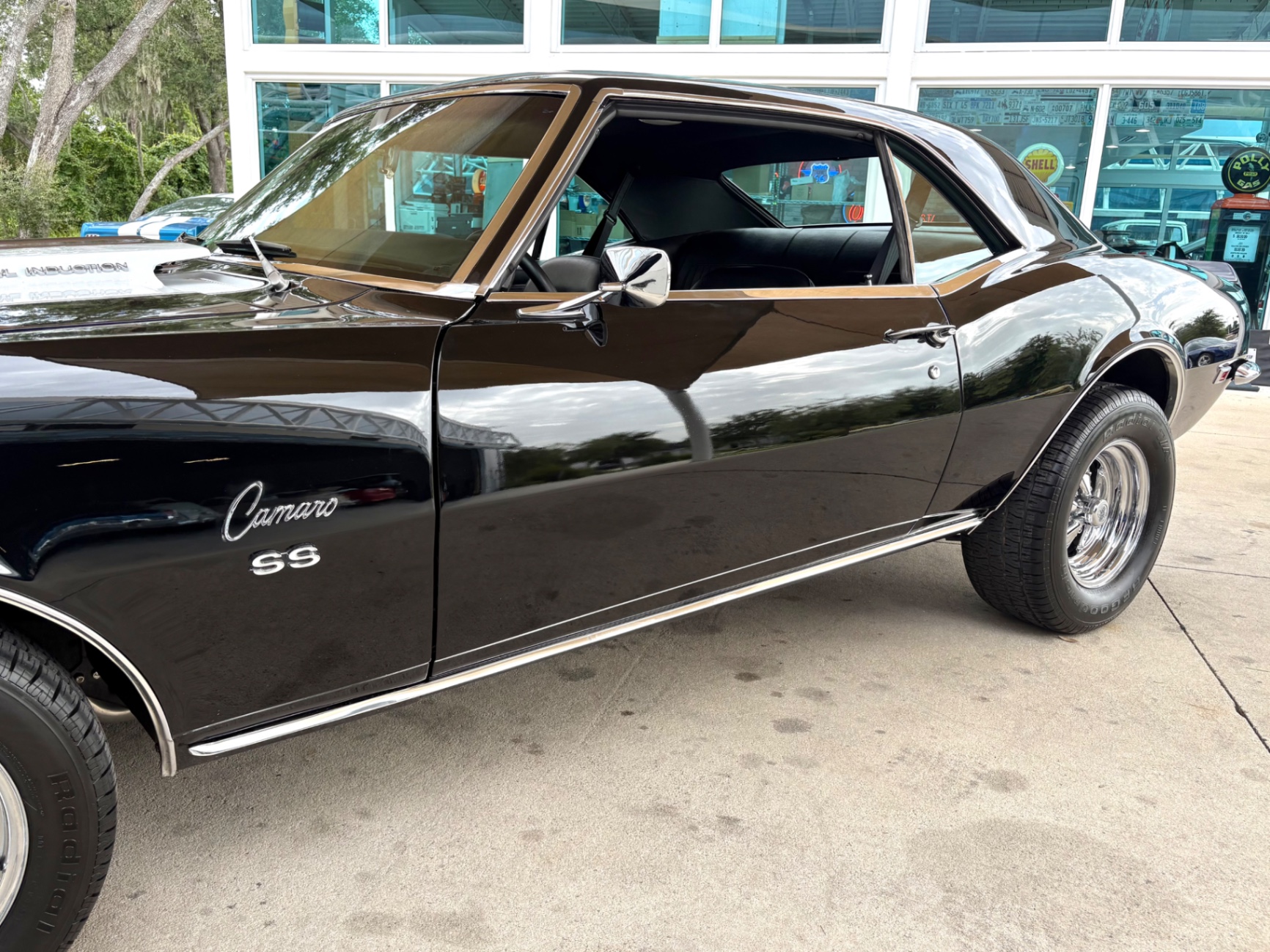
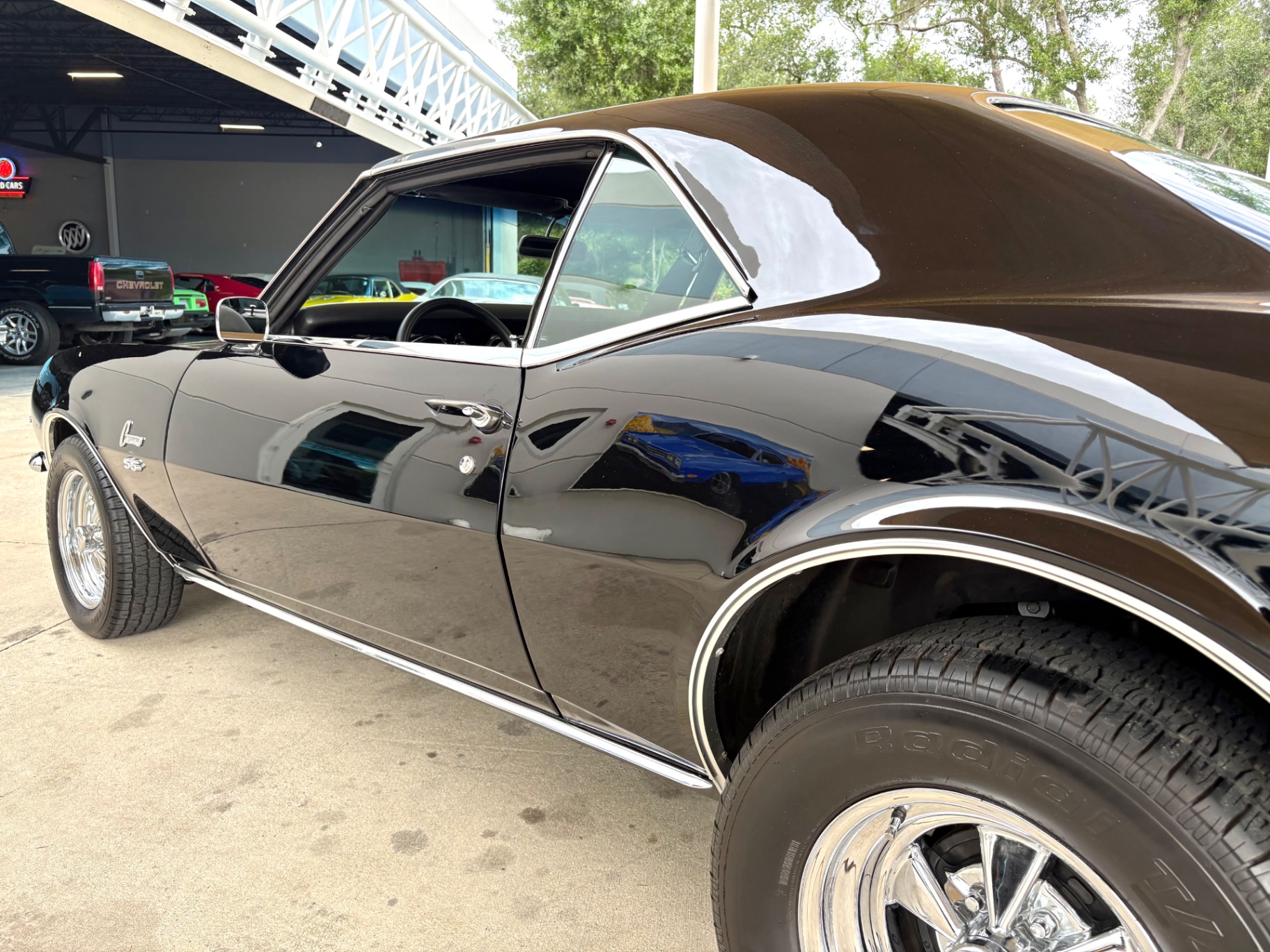
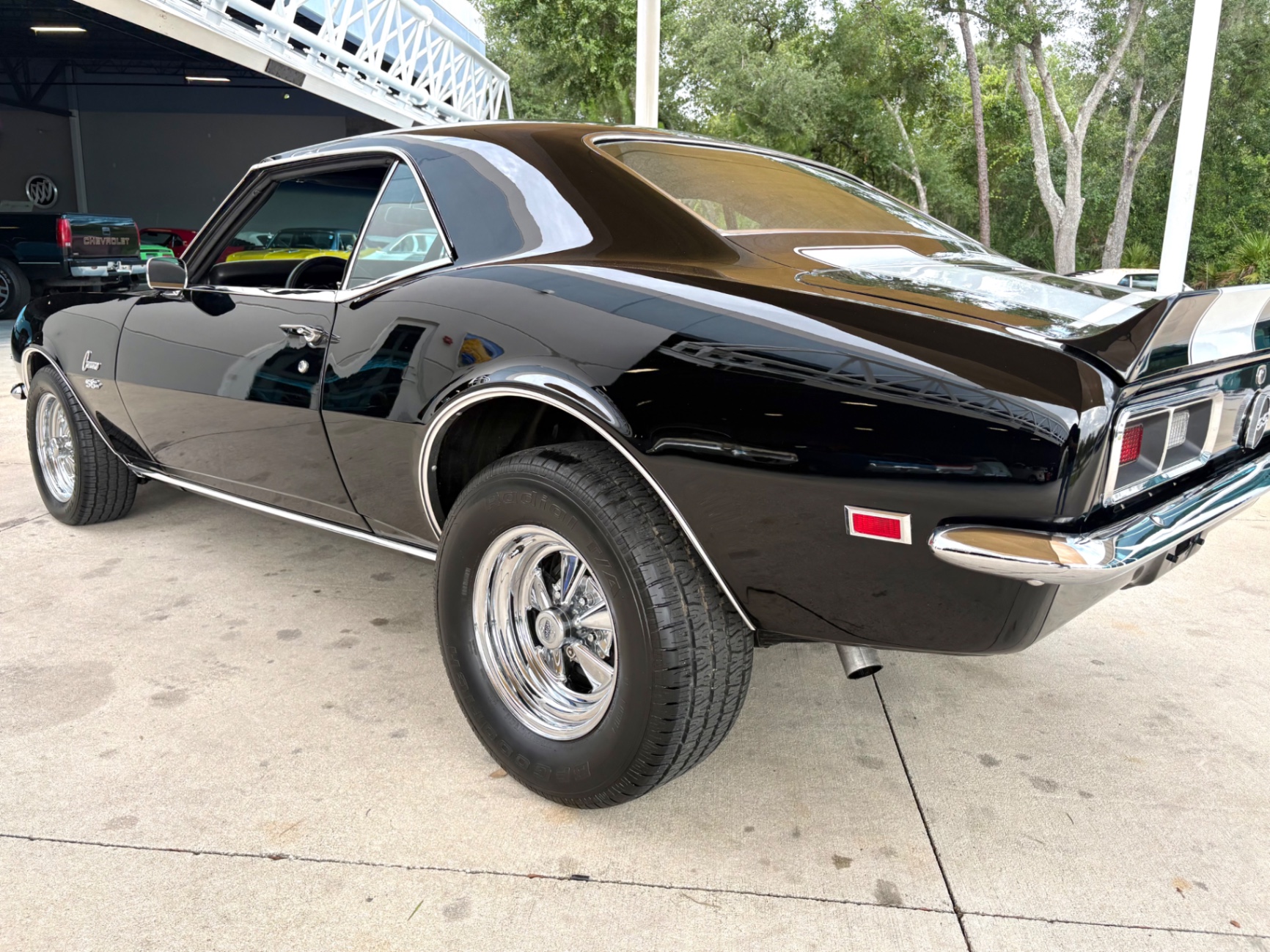
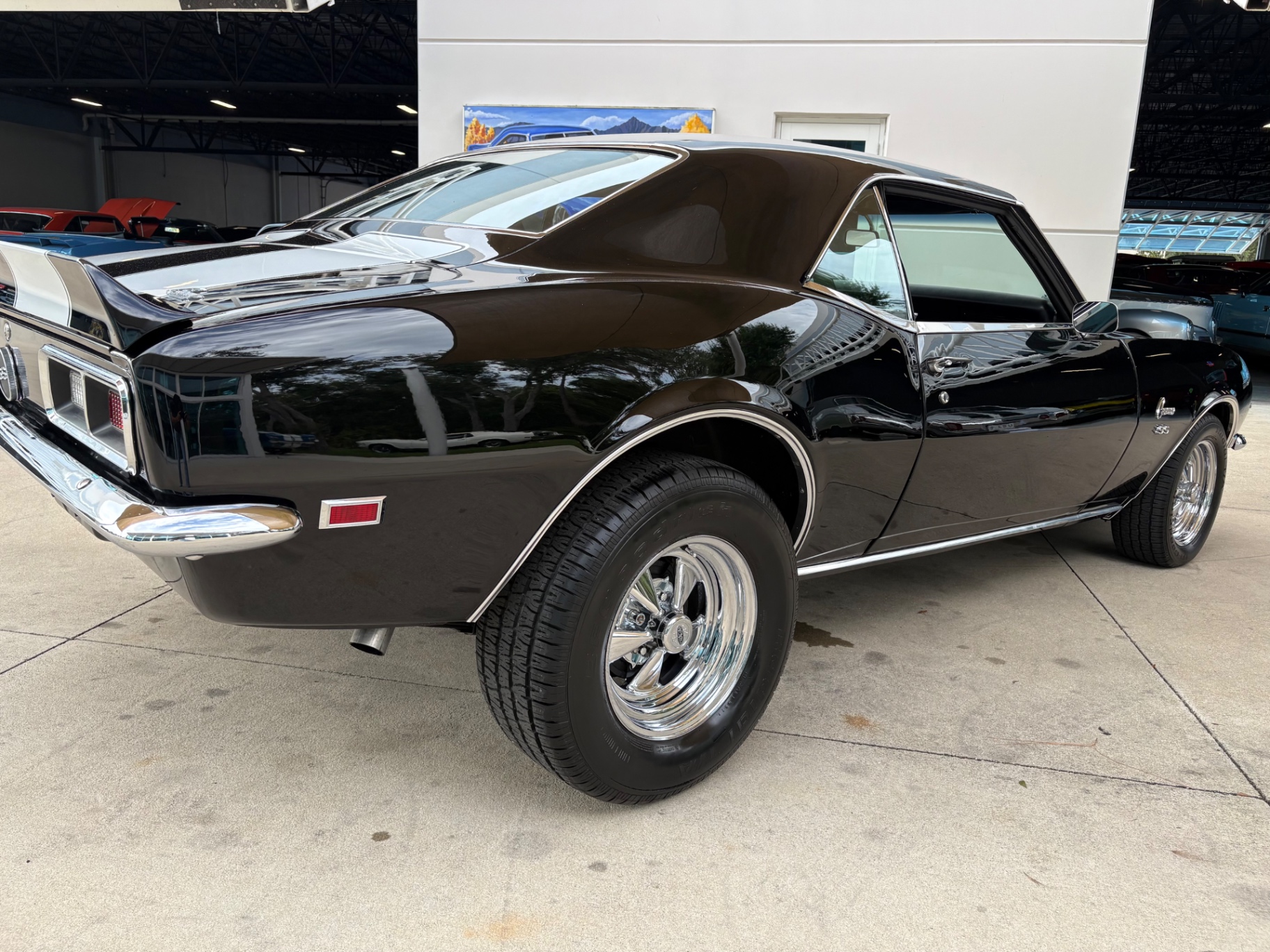
1968 Chevrolet Camaro SS — 454 Turbo-Jet V8, 4-Speed, Black on Black
Why This Car Is Special
The 1968 Chevrolet Camaro SS is widely regarded as the high point of the first-generation Camaro's design. Chevrolet refined the body for 1968 with side marker lights, revised trim, and a cleaner roofline, and the result is a profile that still stops people in their tracks more than five decades later. The first-gen Camaro ran from 1967 through 1969, with 1968 sitting squarely in the middle of what many collectors consider the golden era of American muscle. Total Camaro production for 1968 reached just over 235,000 units, but the SS package — which required the buyer to step up to a big-block or the top-shelf small-block — accounted for a much smaller fraction of that total.
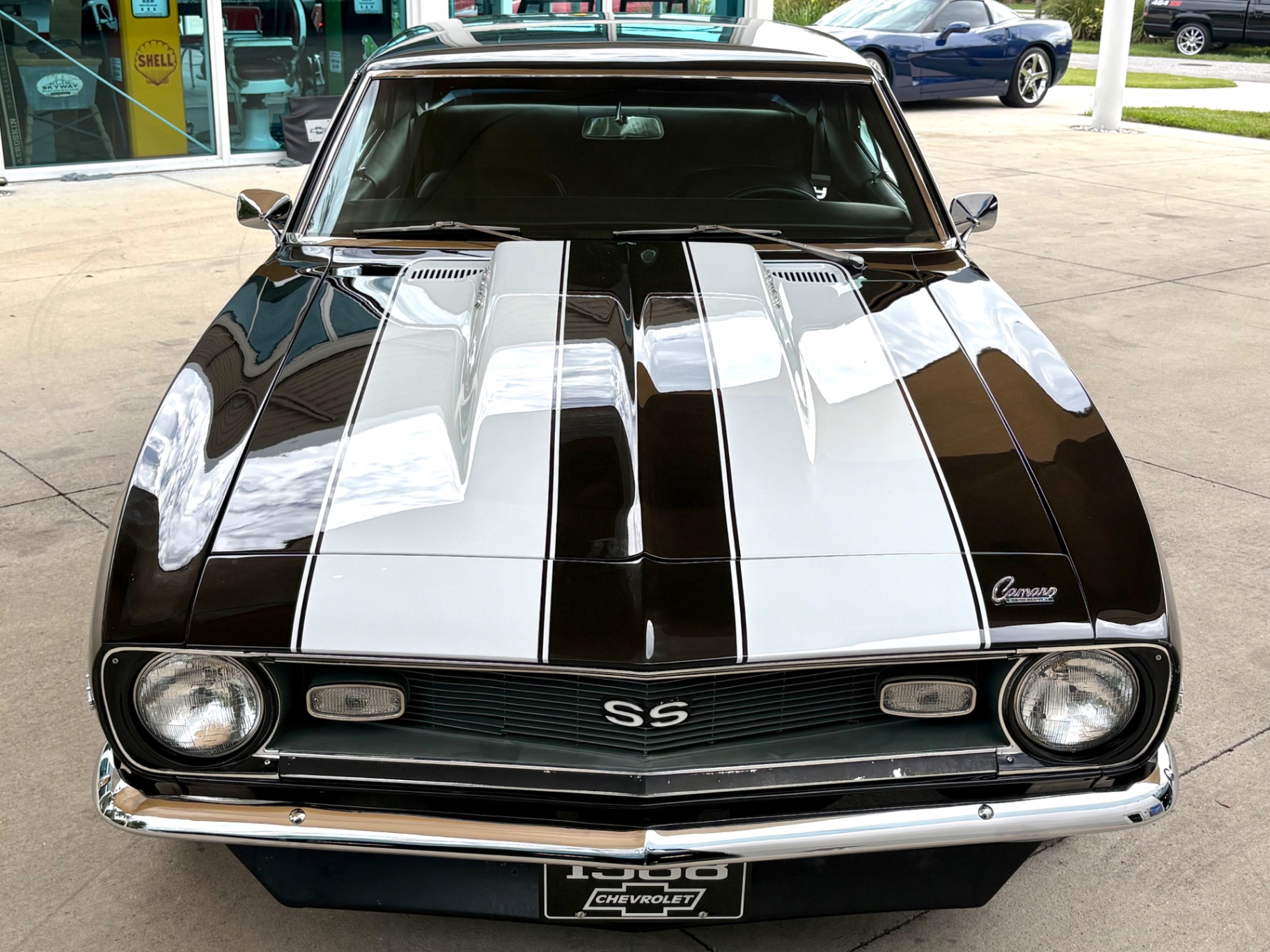
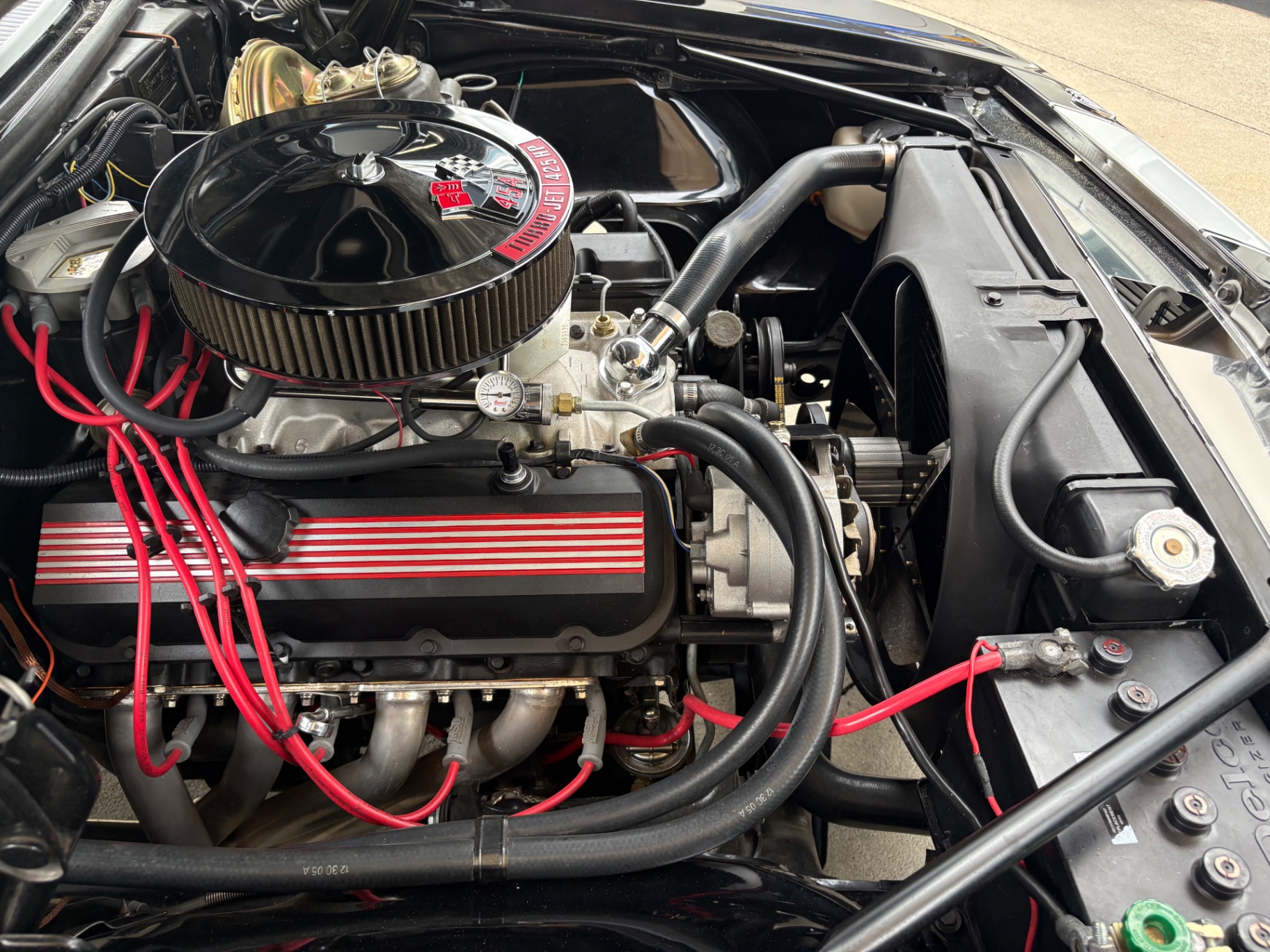
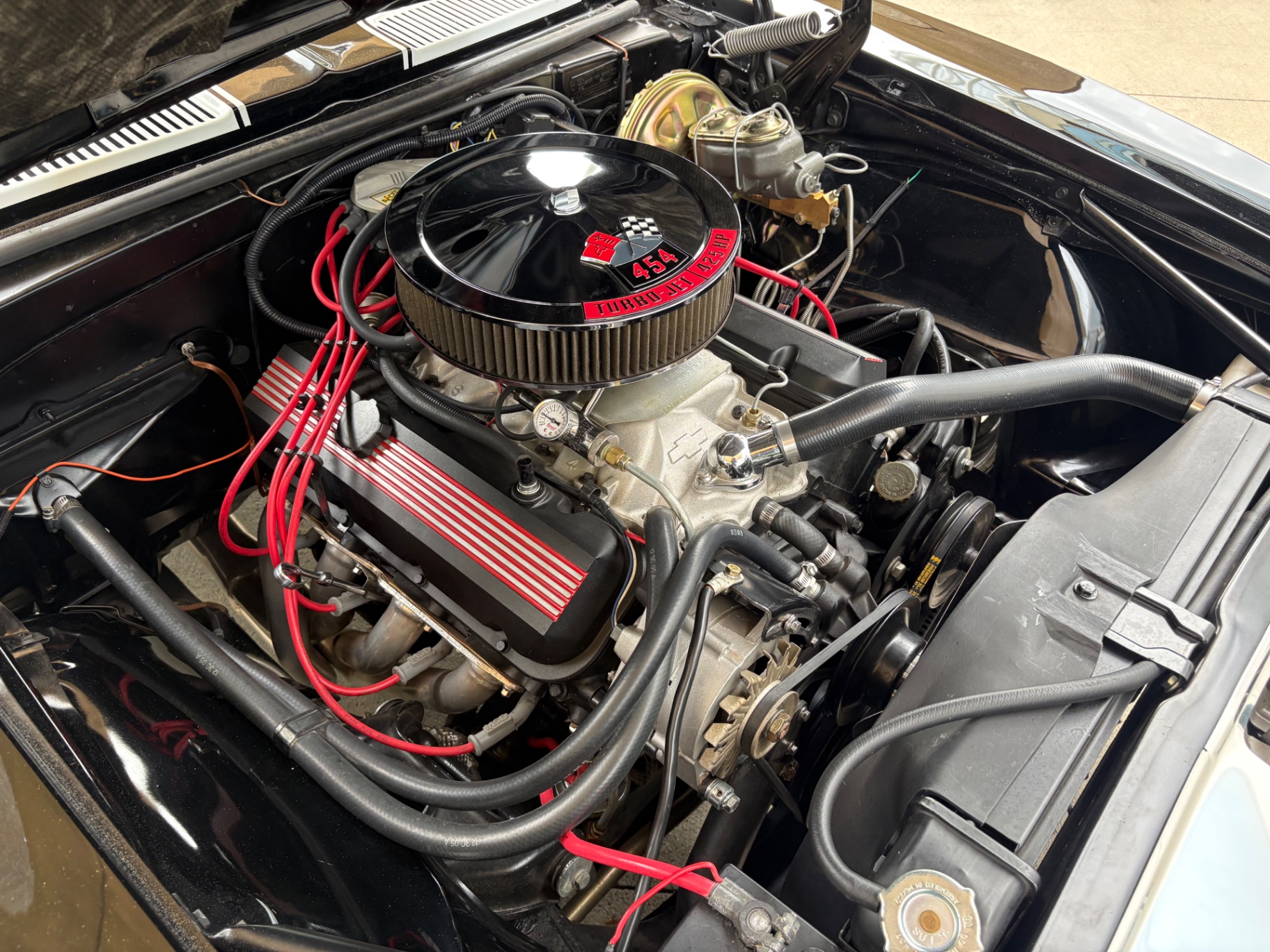
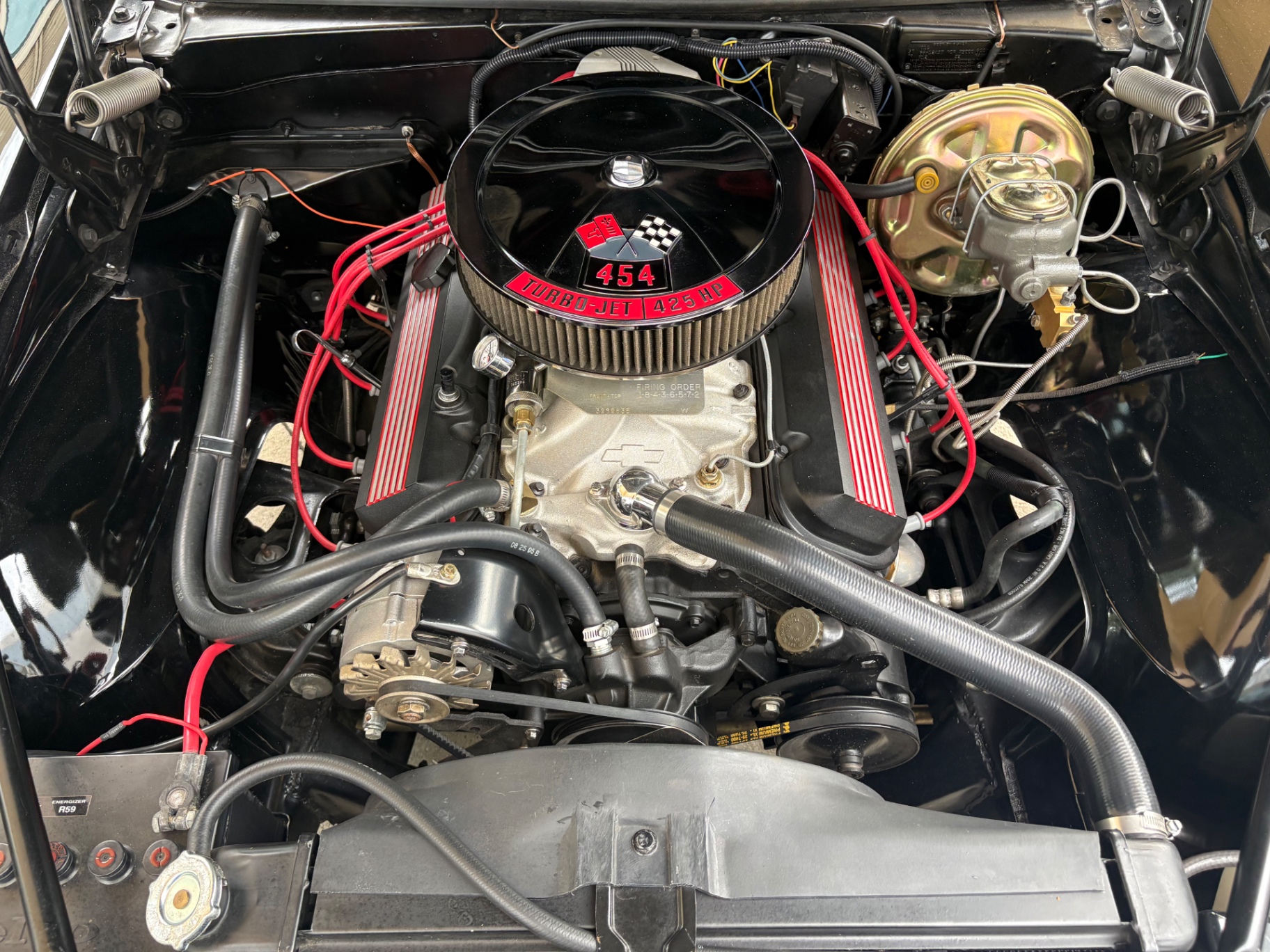
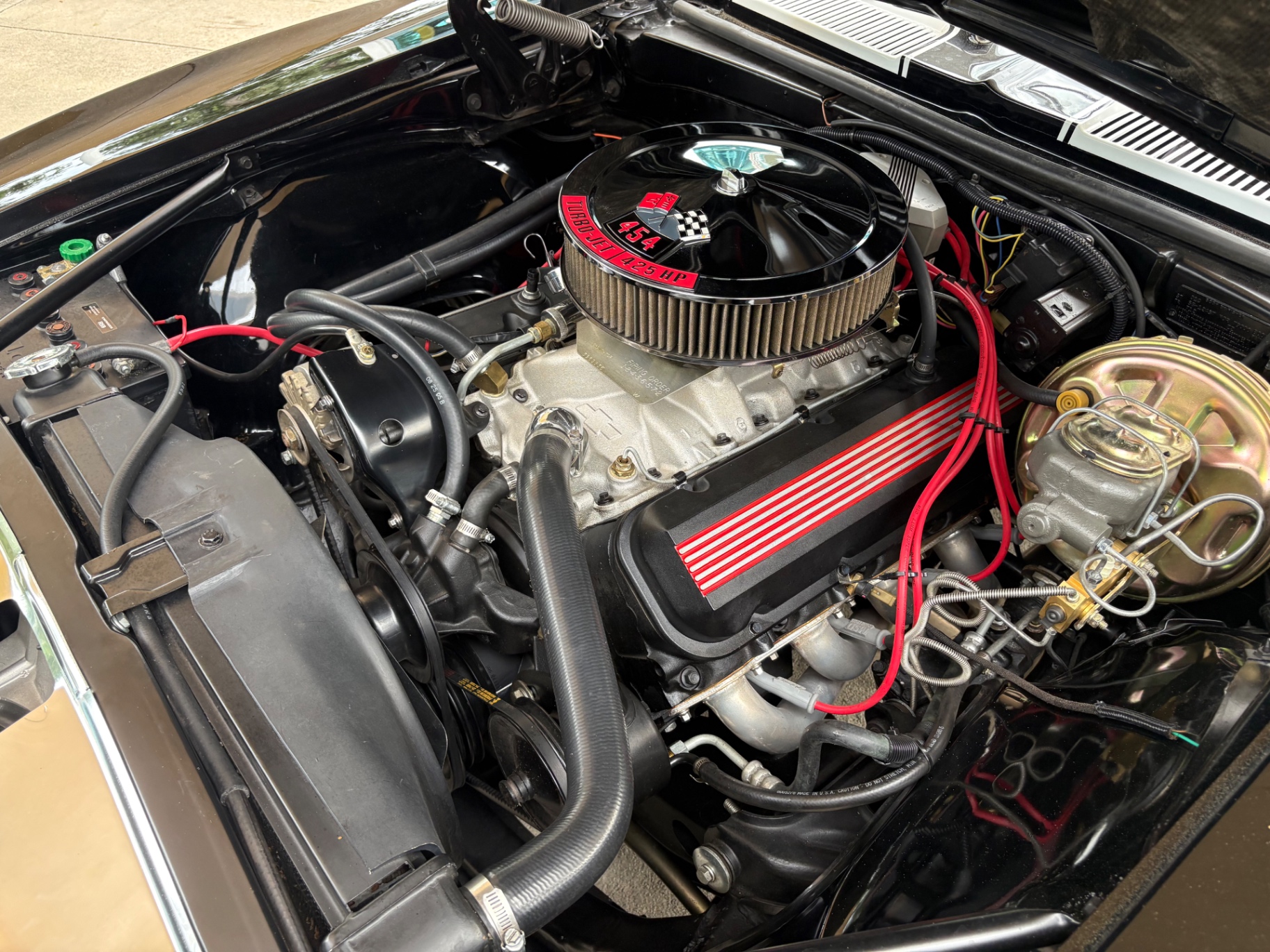
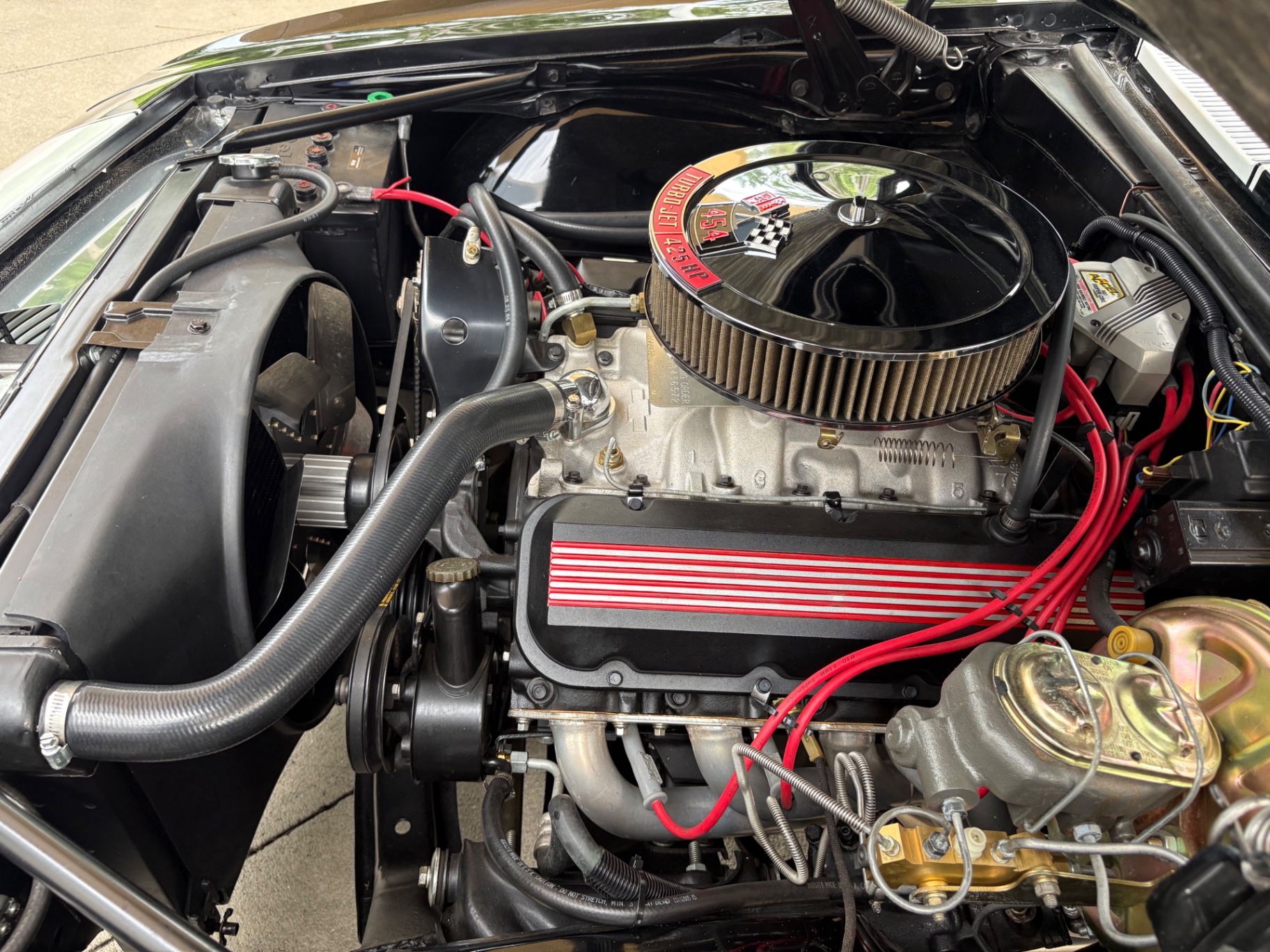
What makes this particular 1968 Chevrolet Camaro SS worth serious attention is what sits under the cowl induction hood. This car carries a 454 cubic inch Turbo-Jet V8, an engine that Chevrolet did not offer in the Camaro from the factory in 1968. The 454 big-block was introduced in 1970 across the Chevrolet lineup, which means this car has been built up with a period-correct but upgraded powerplant — a common and well-regarded approach among first-gen Camaro owners who want more cubic inches than the factory 396 could deliver. The engine wear markings, valve covers, and air cleaner lid on this car all identify it as a 454 Turbo-Jet rated at 425 horsepower, the same specification used in the LS6 Chevelle and Corvette applications of the early 1970s. It is a serious engine in a serious car, and the builder made no compromises in putting it together.
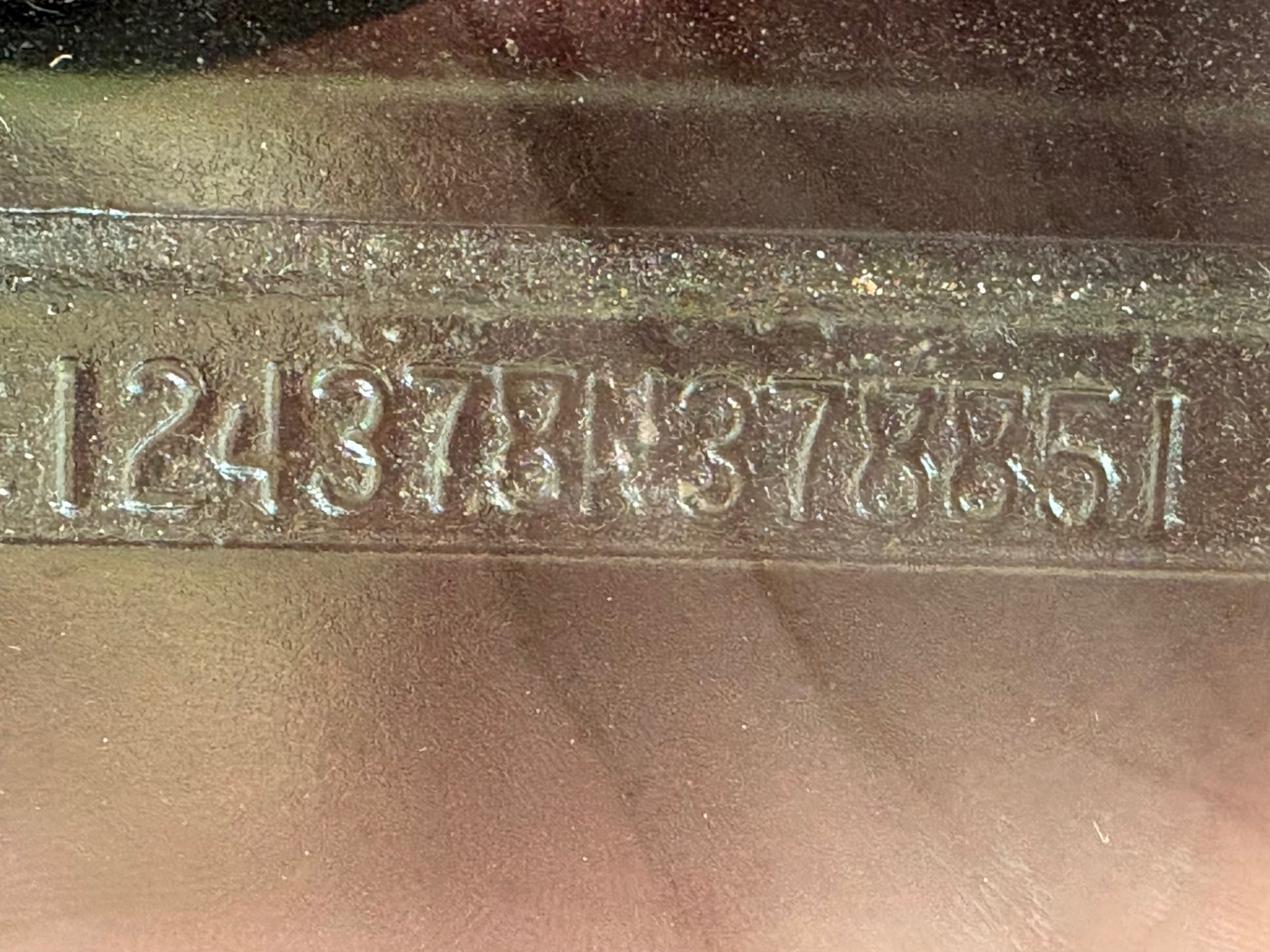
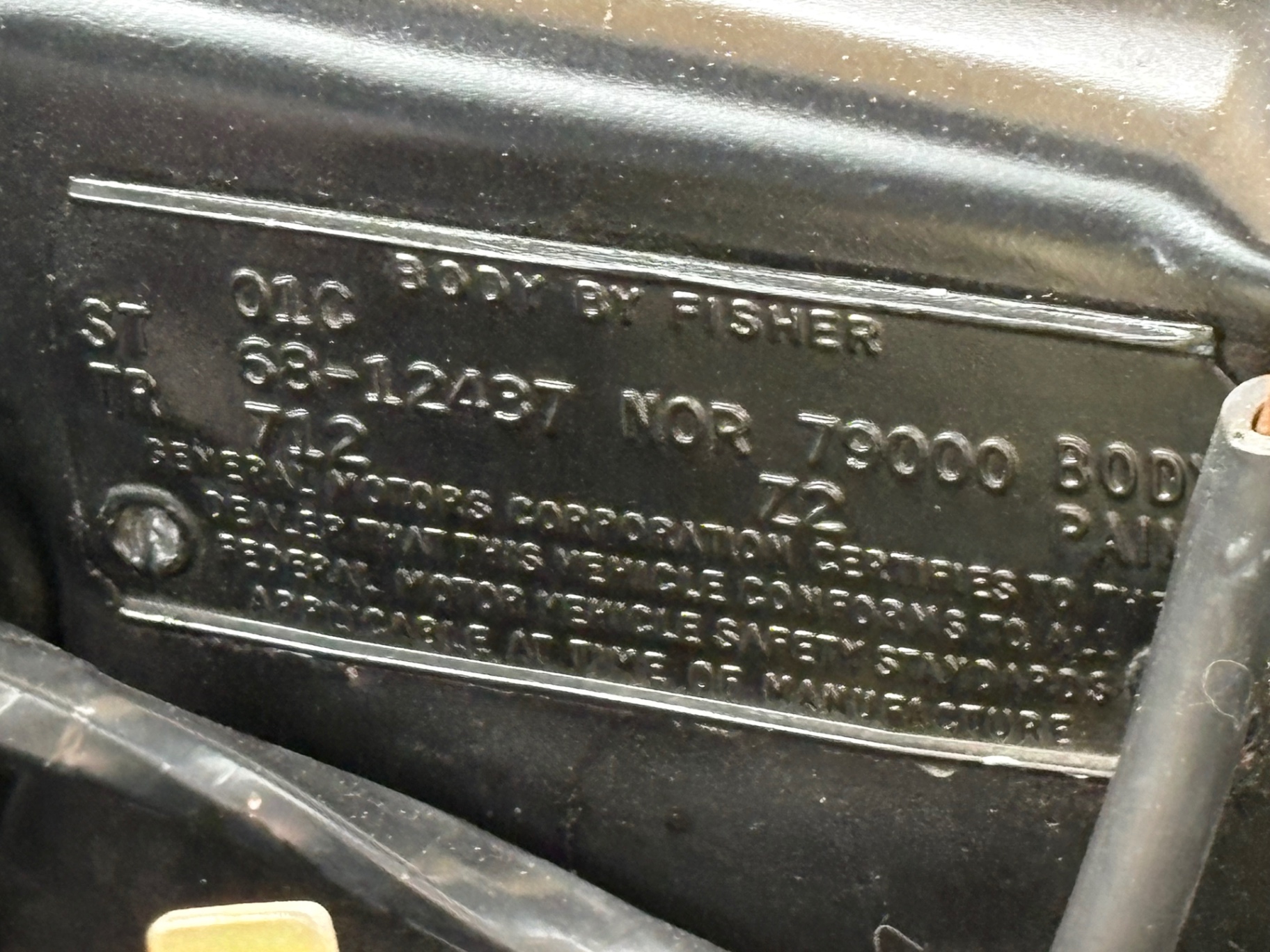
The VIN on this car decodes to a 1968 Camaro Sport Coupe built at the Norwood, Ohio assembly plant, which was one of two facilities producing Camaros during this period. The body style code confirms the hardtop coupe configuration, and the VIN structure is consistent with an SS-optioned car built with the big-block engine package. The SS option in 1968 brought with it a specific hood, SS badging front and rear, a blacked-out grille, heavy-duty suspension, and front disc brakes as standard equipment. All of those features are present on this car.
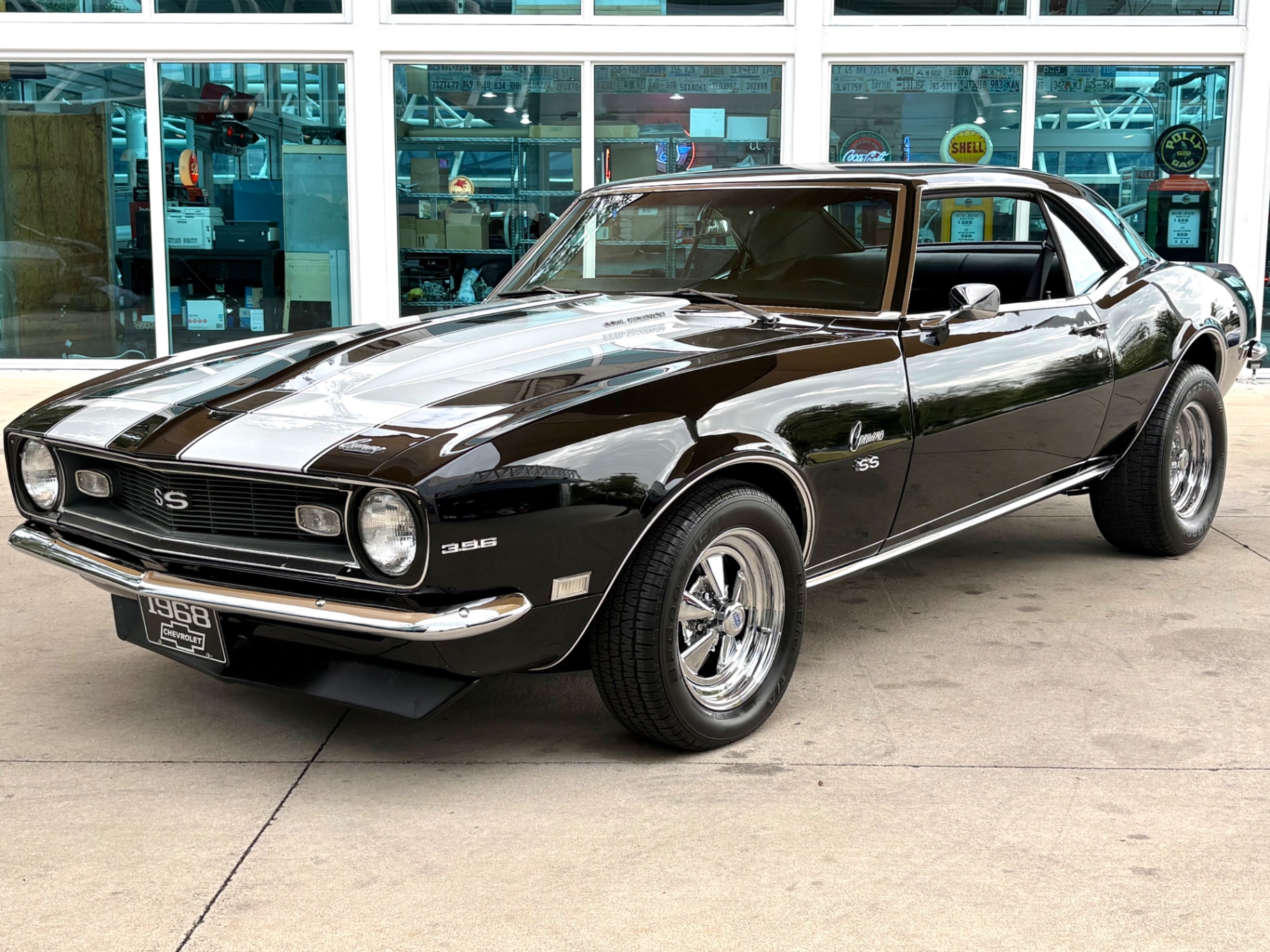
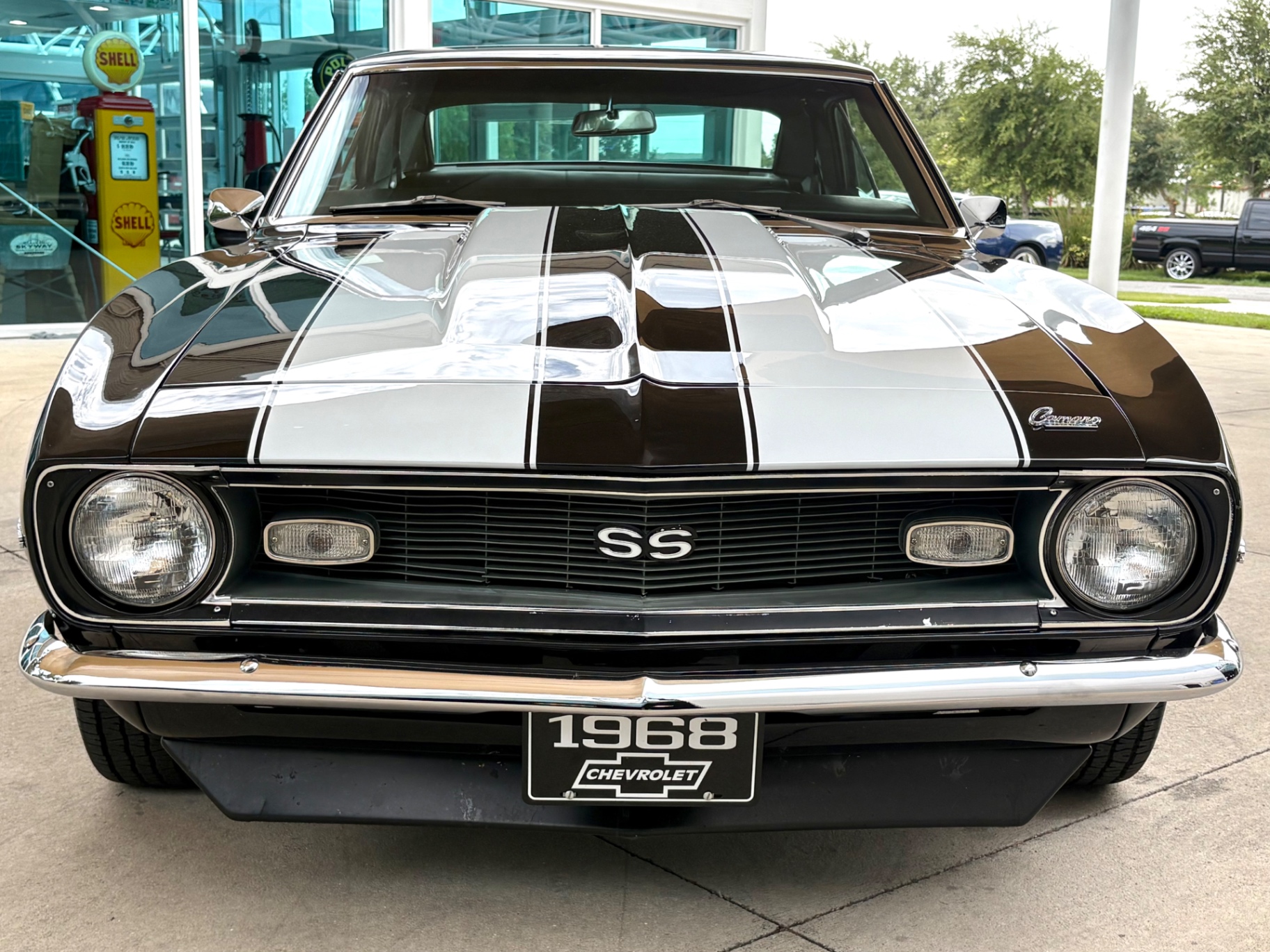
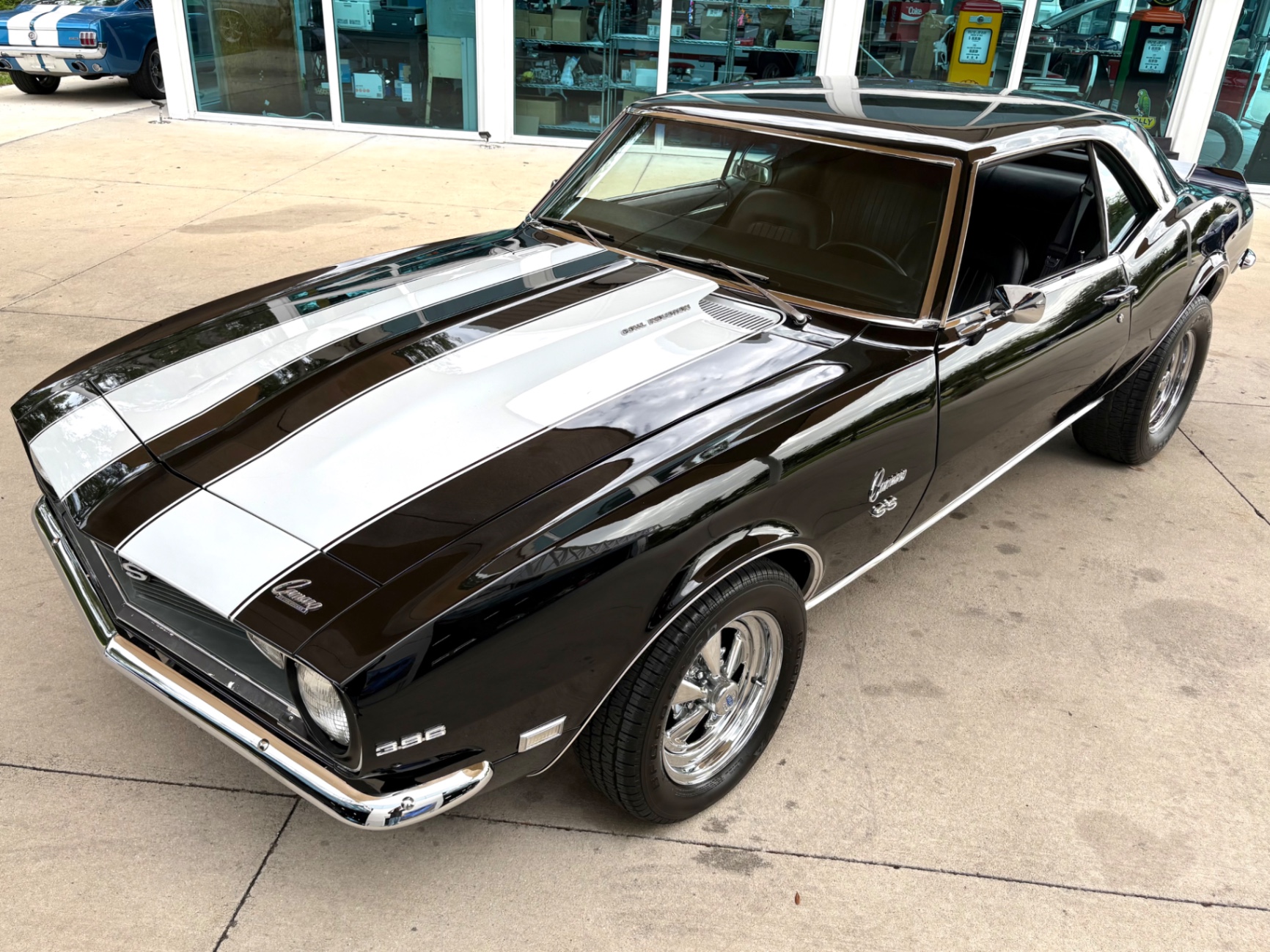
The combination of black exterior, black interior, white racing stripes, and a cowl induction hood gives this 1968 Chevrolet Camaro SS a presence that photographs well and looks even better in person. It has been built to drive, not just to show — the gauge cluster, the Hurst shifter, the front discs, and the clean undercarriage all point to an owner who put thought and money into the right places.
Features List
- 454 Turbo-Jet V8, 425 HP
- Cowl Induction Hood
- 4-Speed Manual Transmission
- Hurst Shifter
- Front Disc Brakes
- Dual Exhaust
- Cragar Chrome Wheels
- BFGoodrich Radial T/A Tires
- White Racing Stripes
- Black Vinyl Bucket Seats
- Black Carpet
- 3-Spoke Sport Steering Wheel
- AM/FM Radio
- Additional Gauges: Tachometer, Oil Pressure, Volts, Water Temp
- SS Badging Front and Rear
- 396 Fender Badges
- Brown Vinyl Top
- Clean Undercarriage
- Sport Mirror
Mechanical
The 454 Turbo-Jet is the centerpiece of this build. Displacing 454 cubic inches and wearing a Turbo-Jet 425 HP air cleaner lid, this engine was the top-of-the-line big-block in Chevrolet's inventory when it was introduced. It features the distinctive finned valve covers in black and red that were associated with high-output Chevy applications, and the engine bay has been finished to a level that reflects care and attention rather than a quick clean-up. The red plug wires, clean intake, and period-correct detailing all show that work was done with an eye toward authenticity as well as performance.
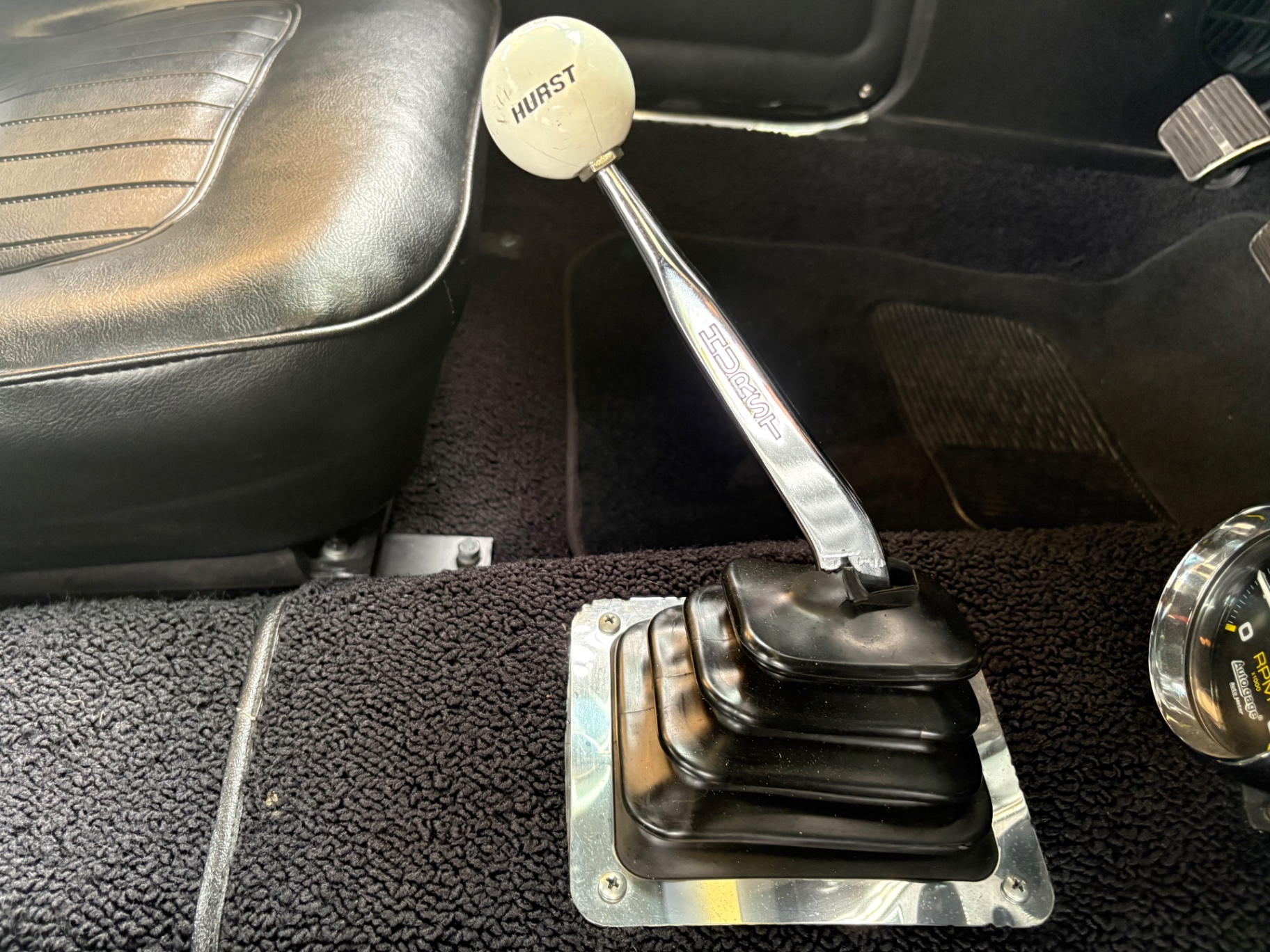
The 4-speed manual transmission is operated through a Hurst shifter, which is exactly how these cars were meant to be driven. Hurst Performance was the preferred shifter manufacturer among GM, Ford, and Chrysler during the muscle car era, and Chevrolet either factory-installed or dealer-recommended Hurst units on many of its high-performance cars. The short-throw action and solid gate of the Hurst unit make a noticeable difference over a standard shifter, particularly when paired with an engine producing this much torque.
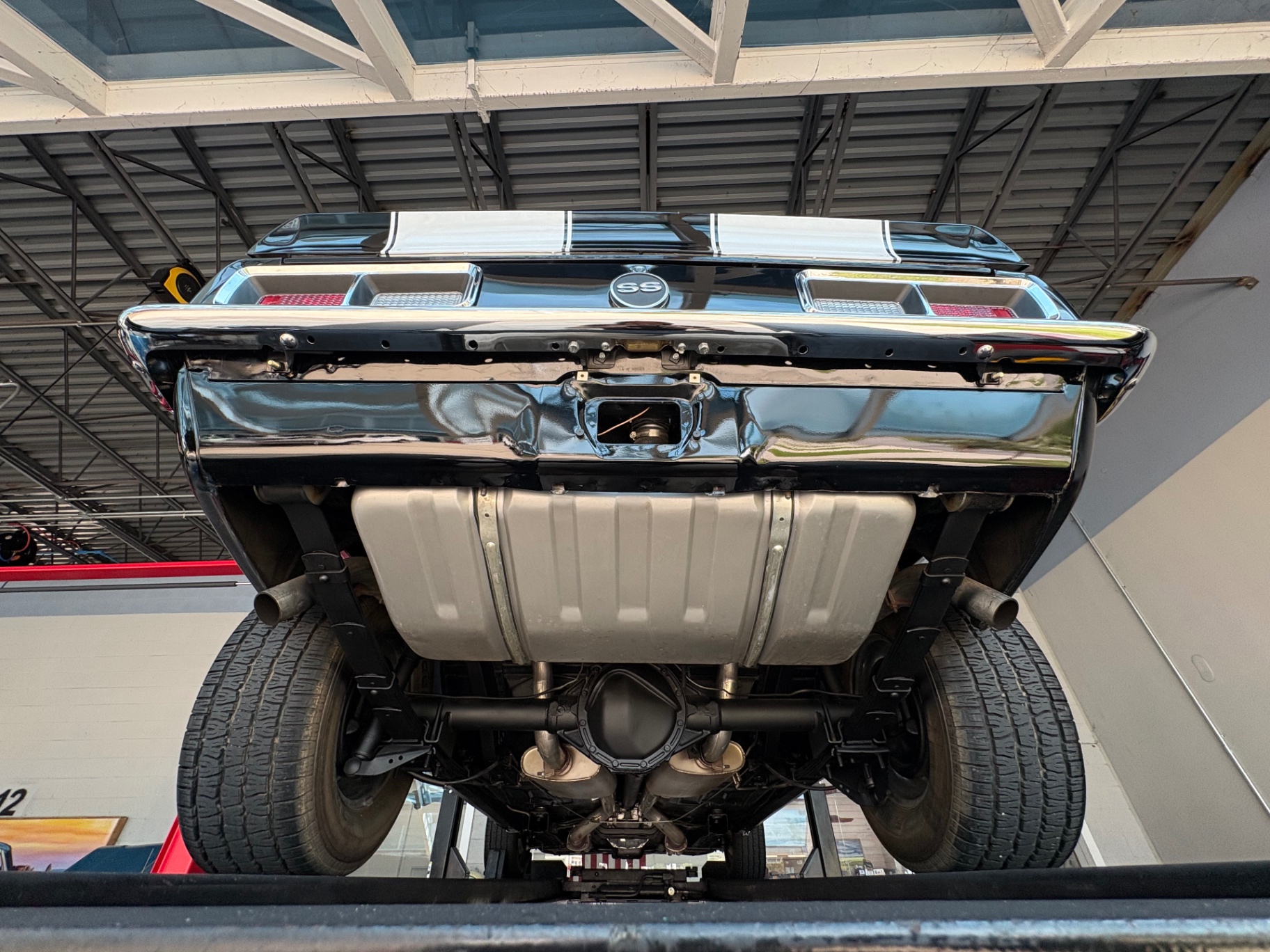
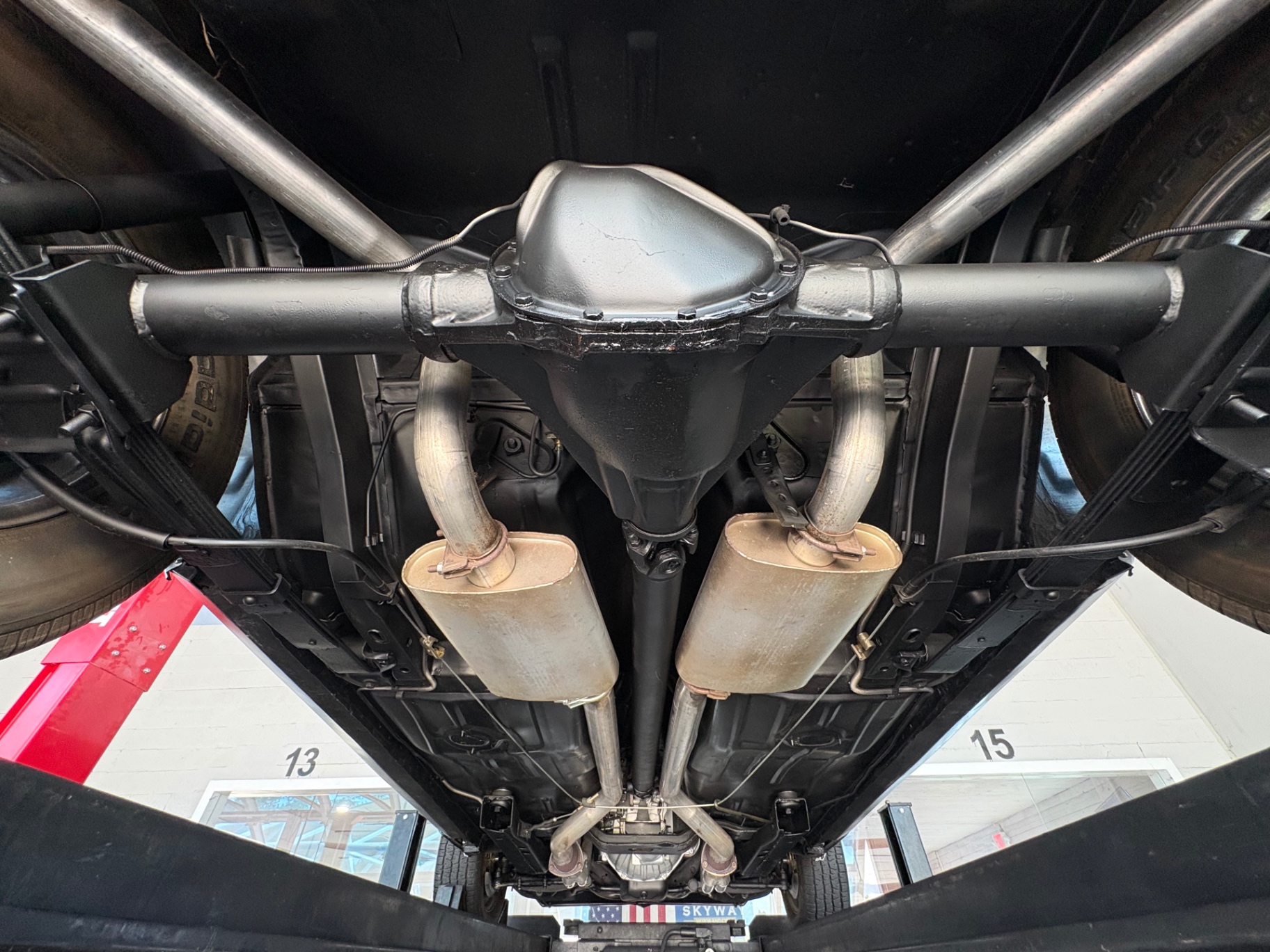
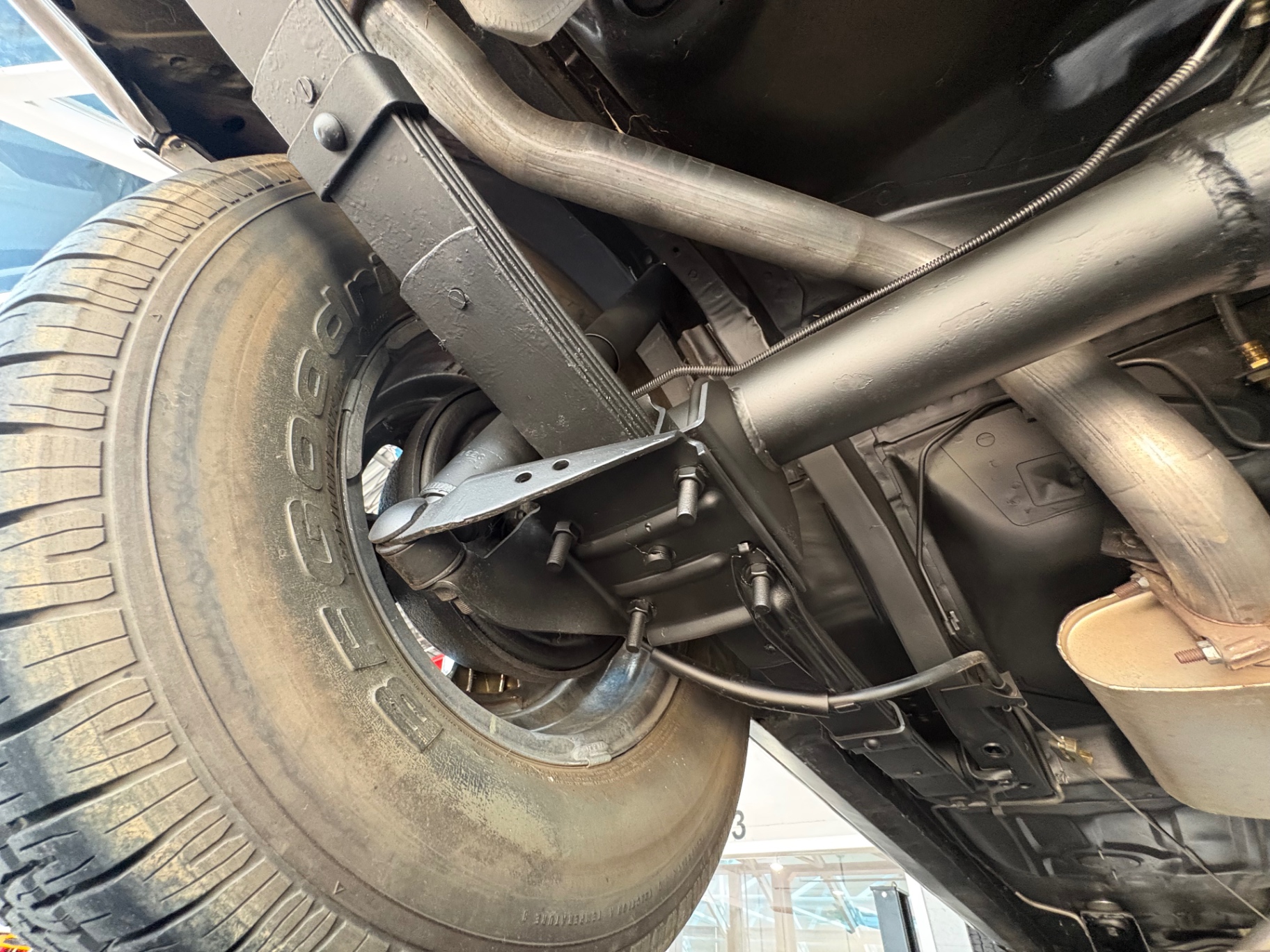
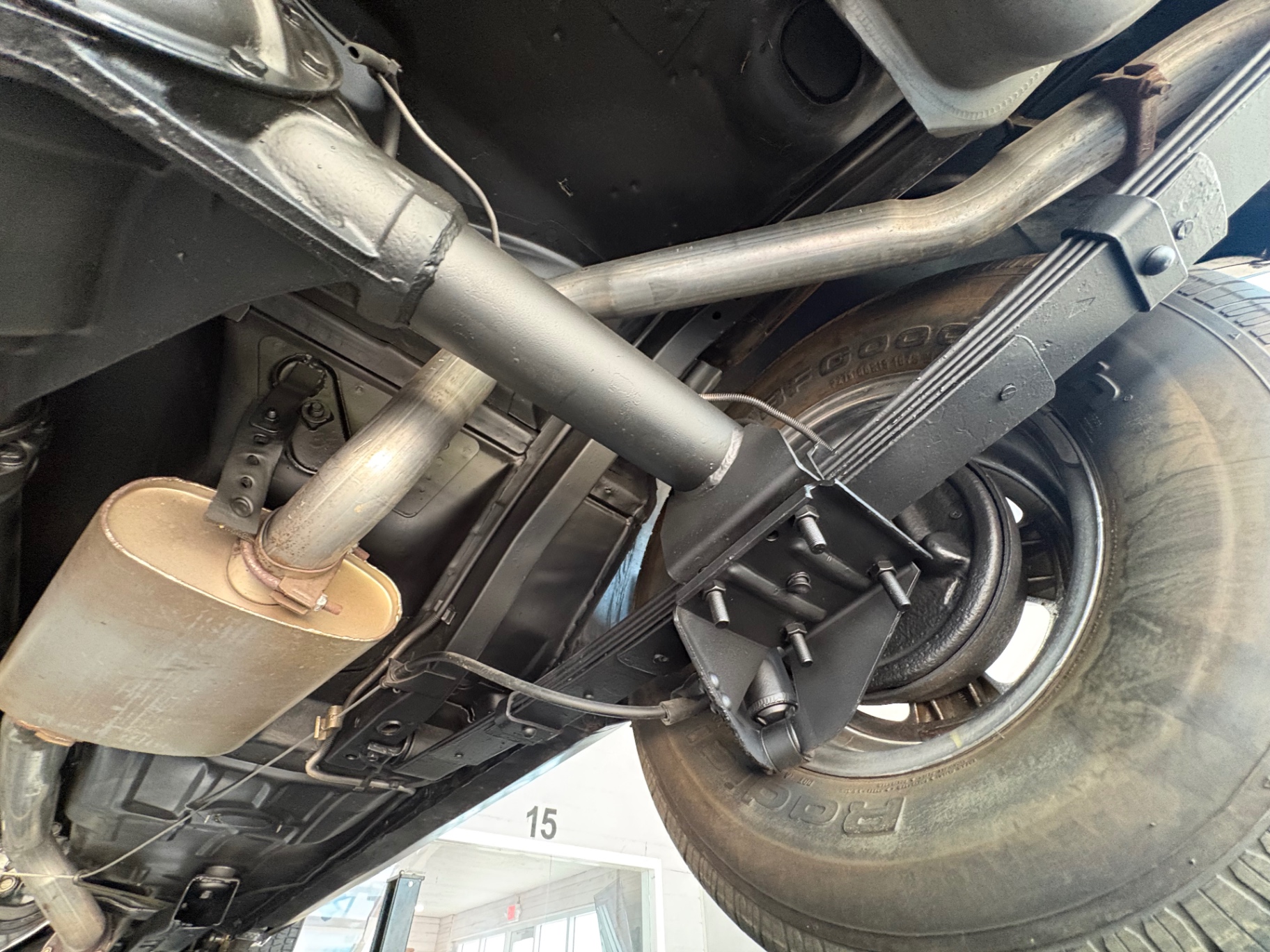
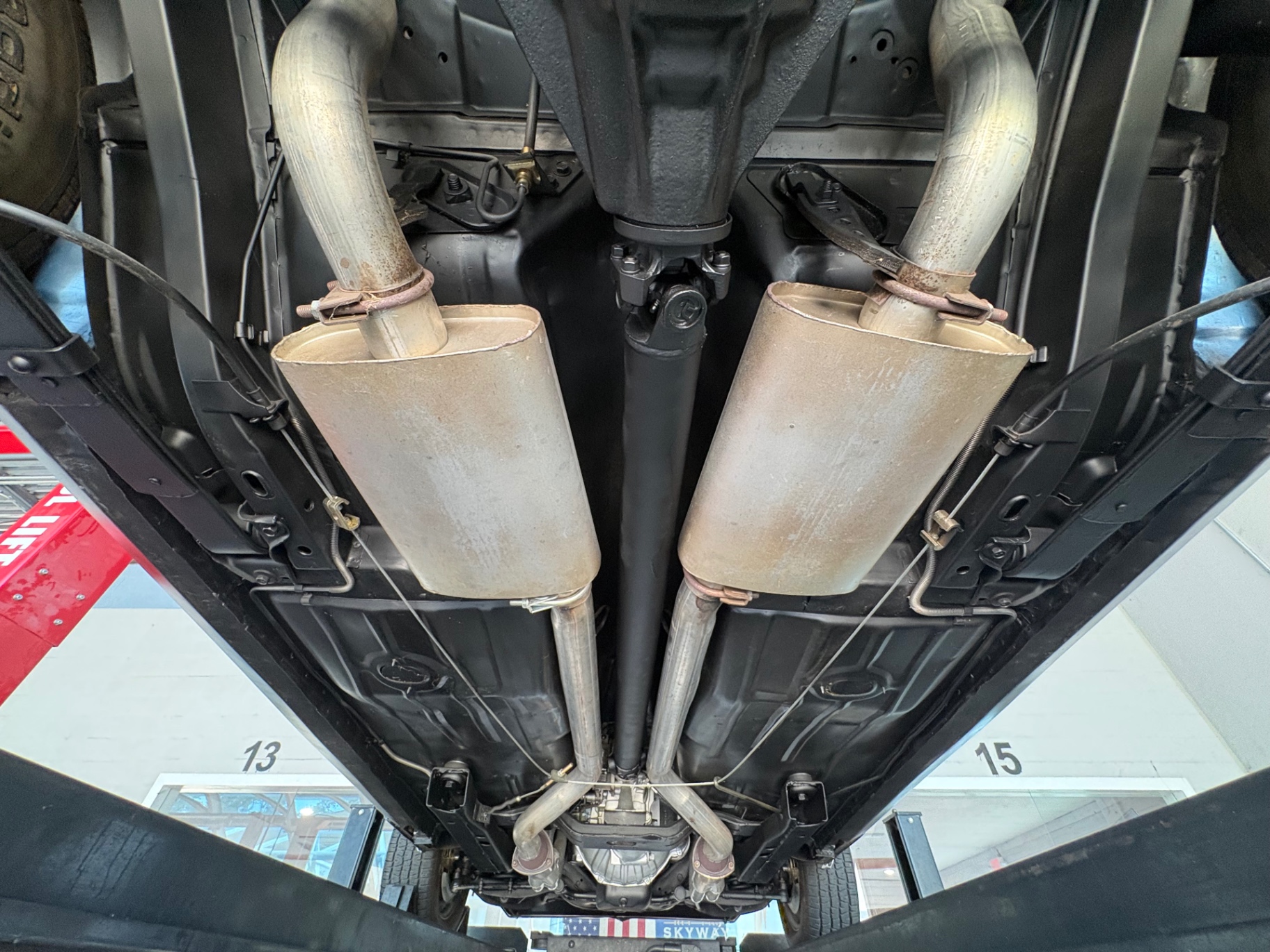
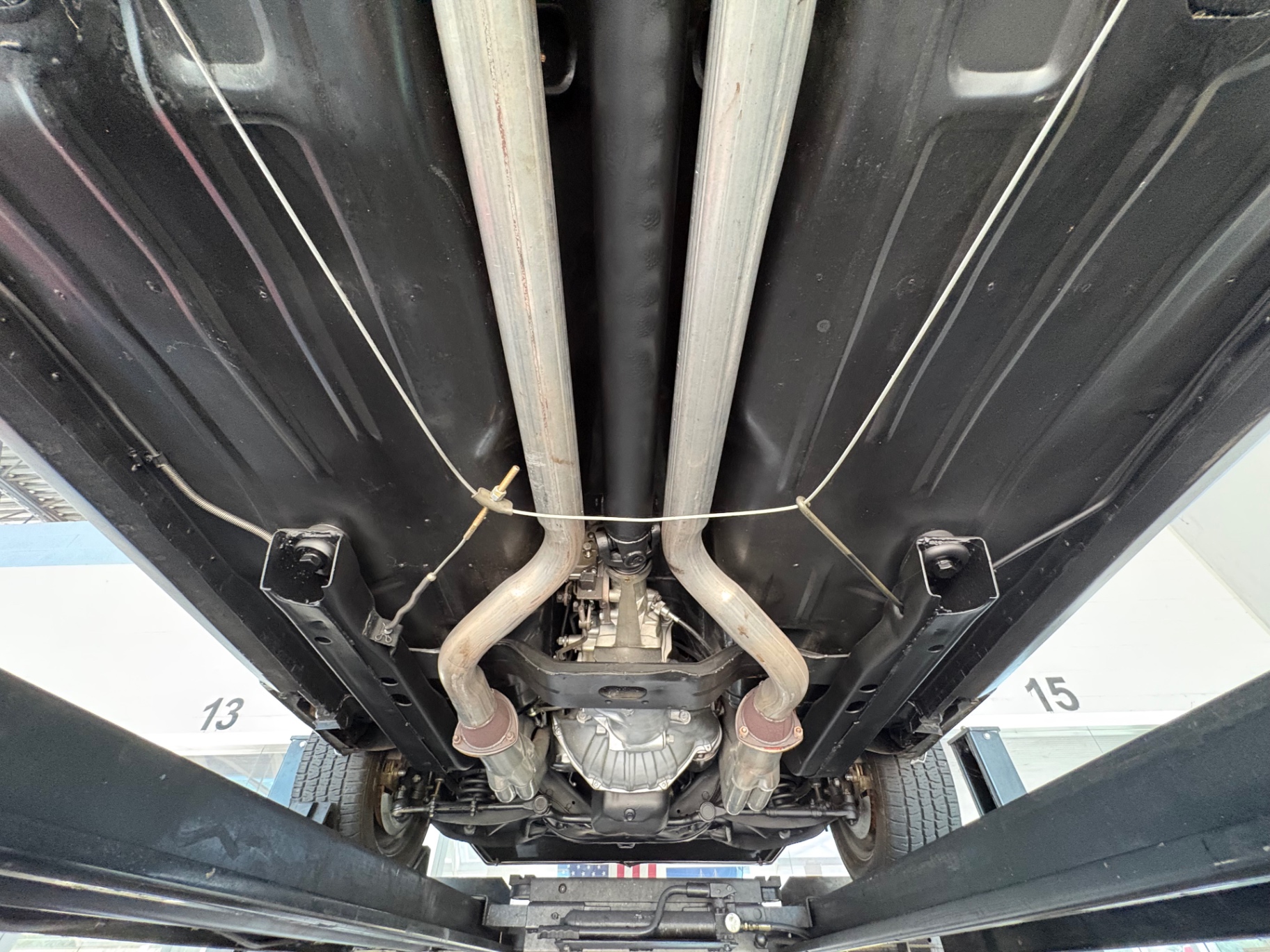
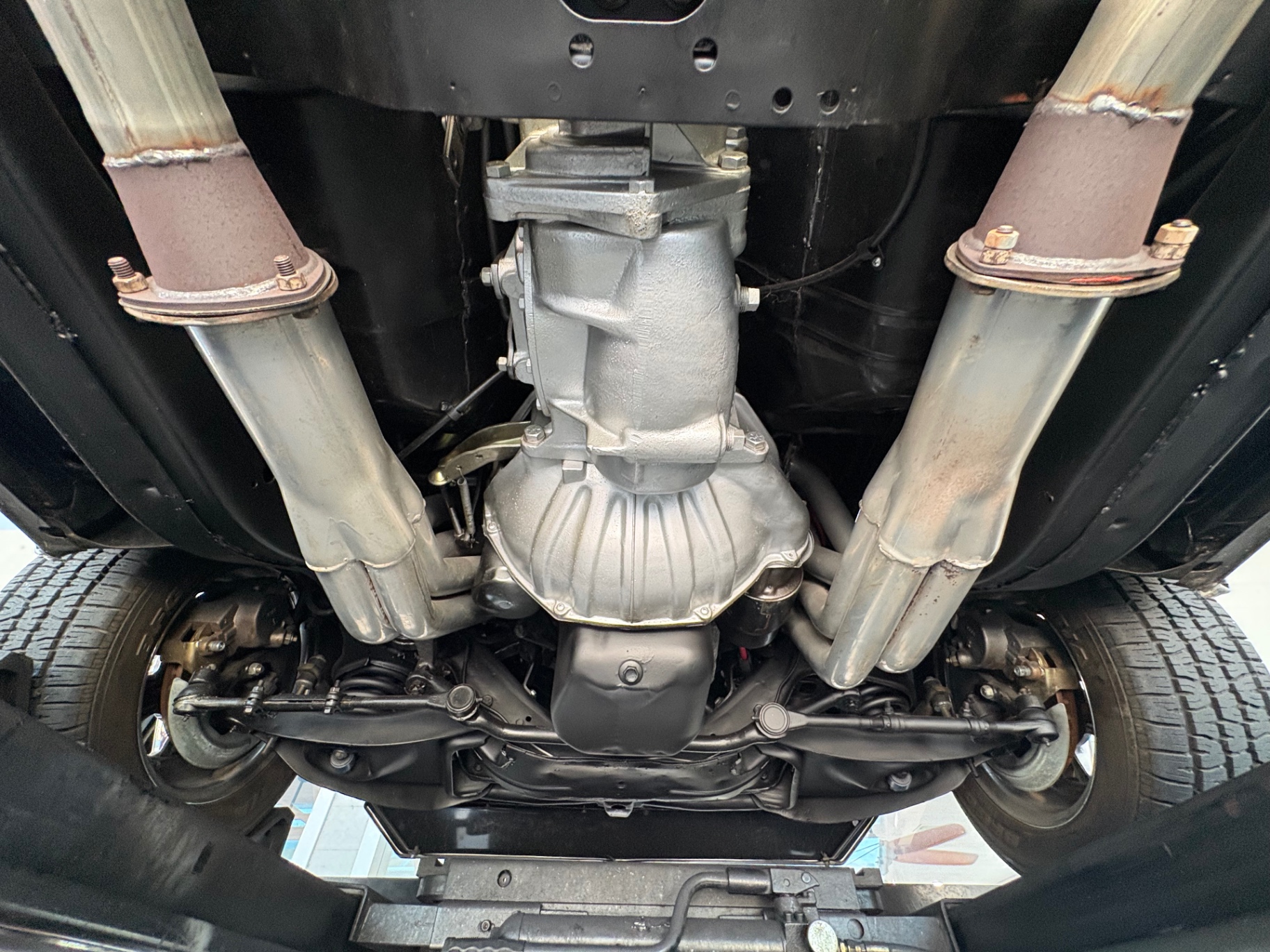
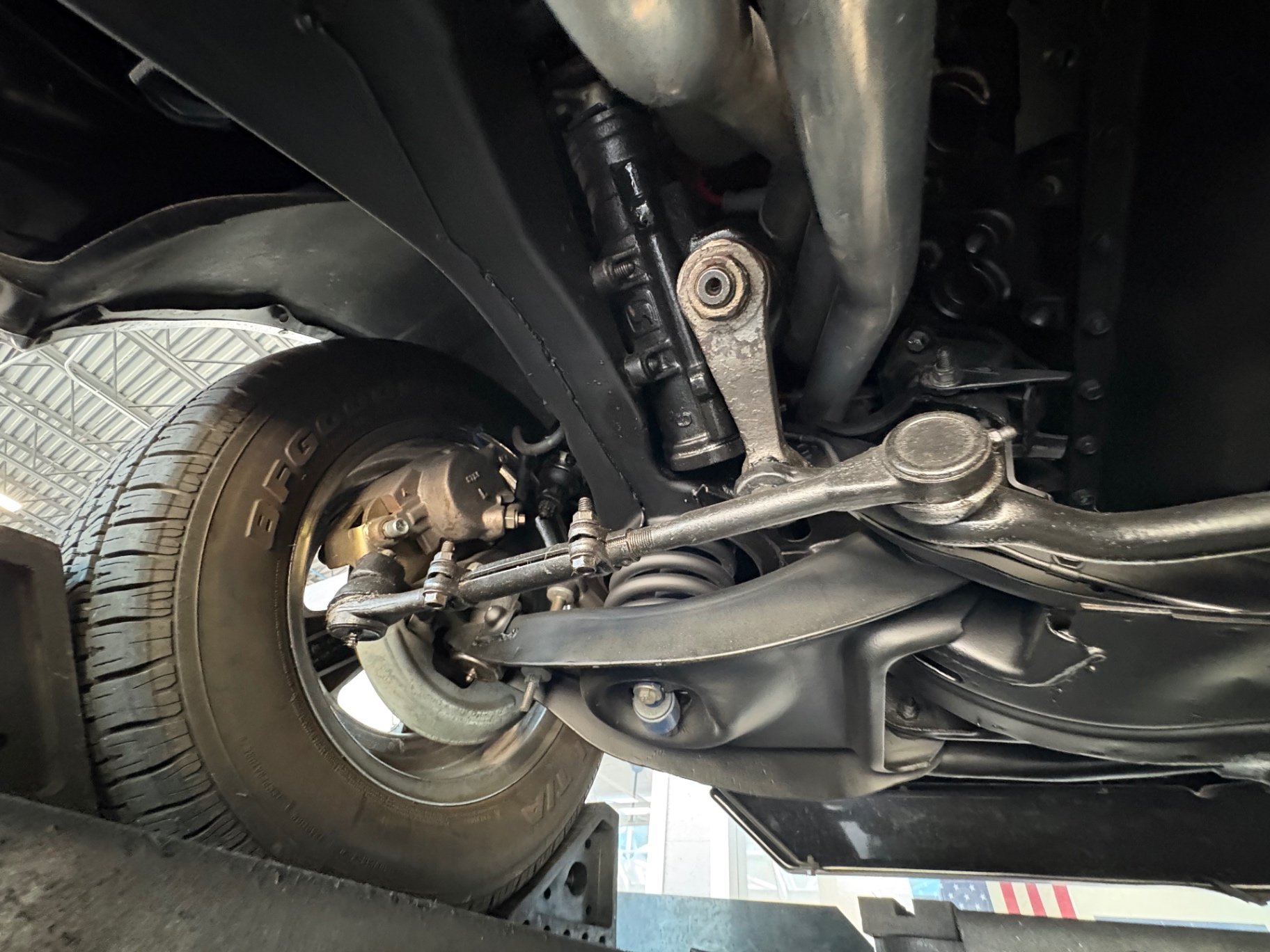
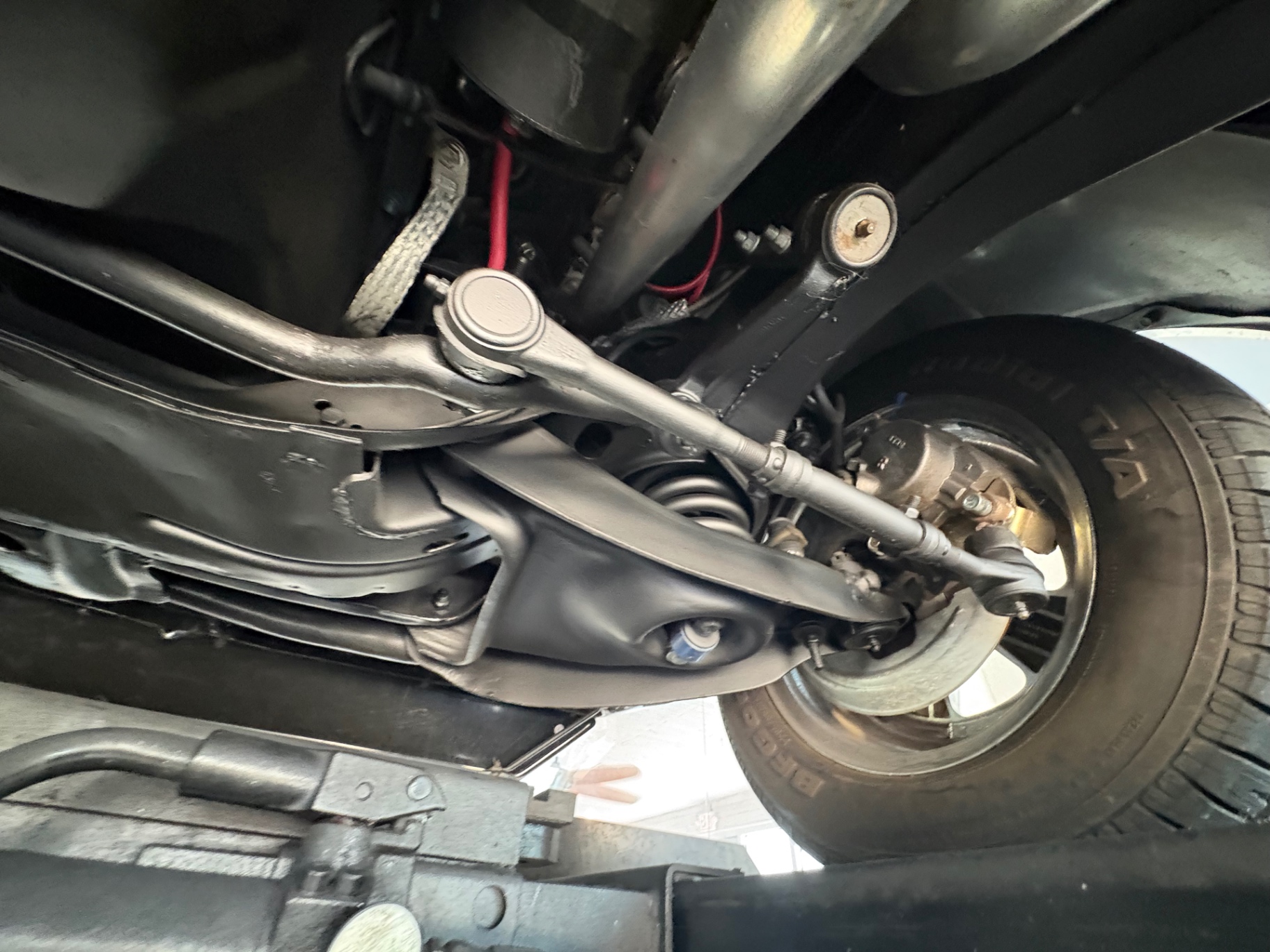
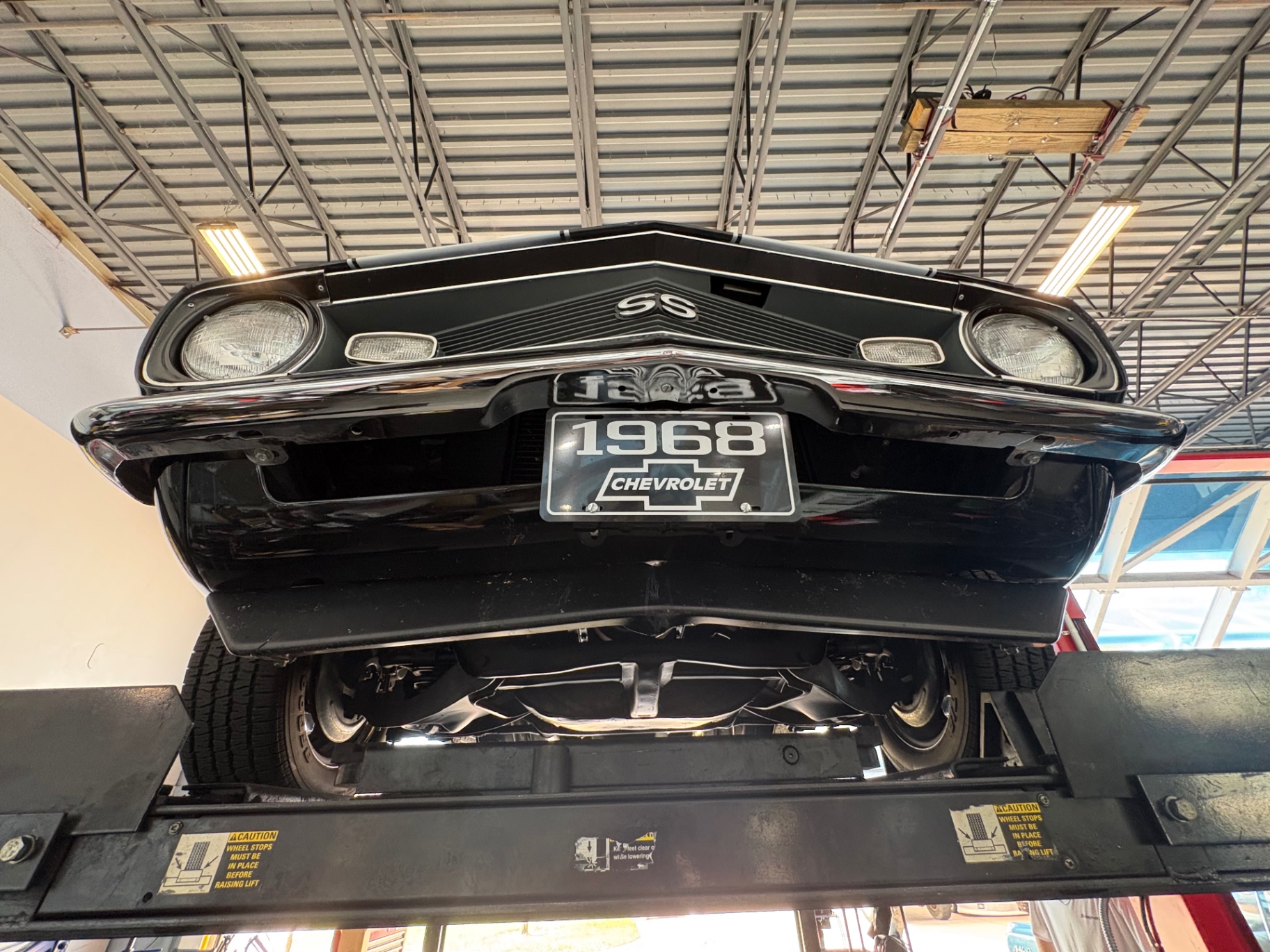
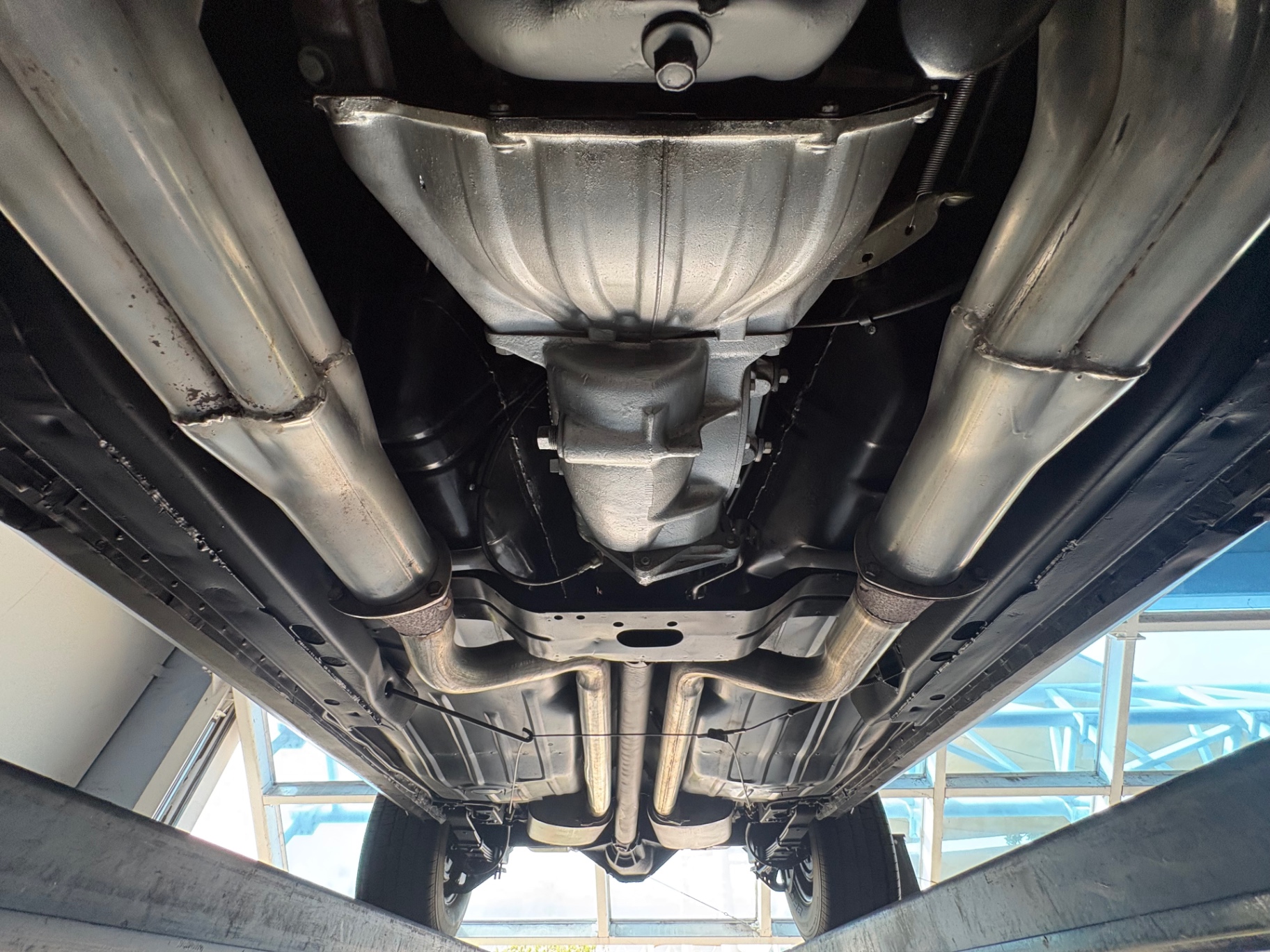
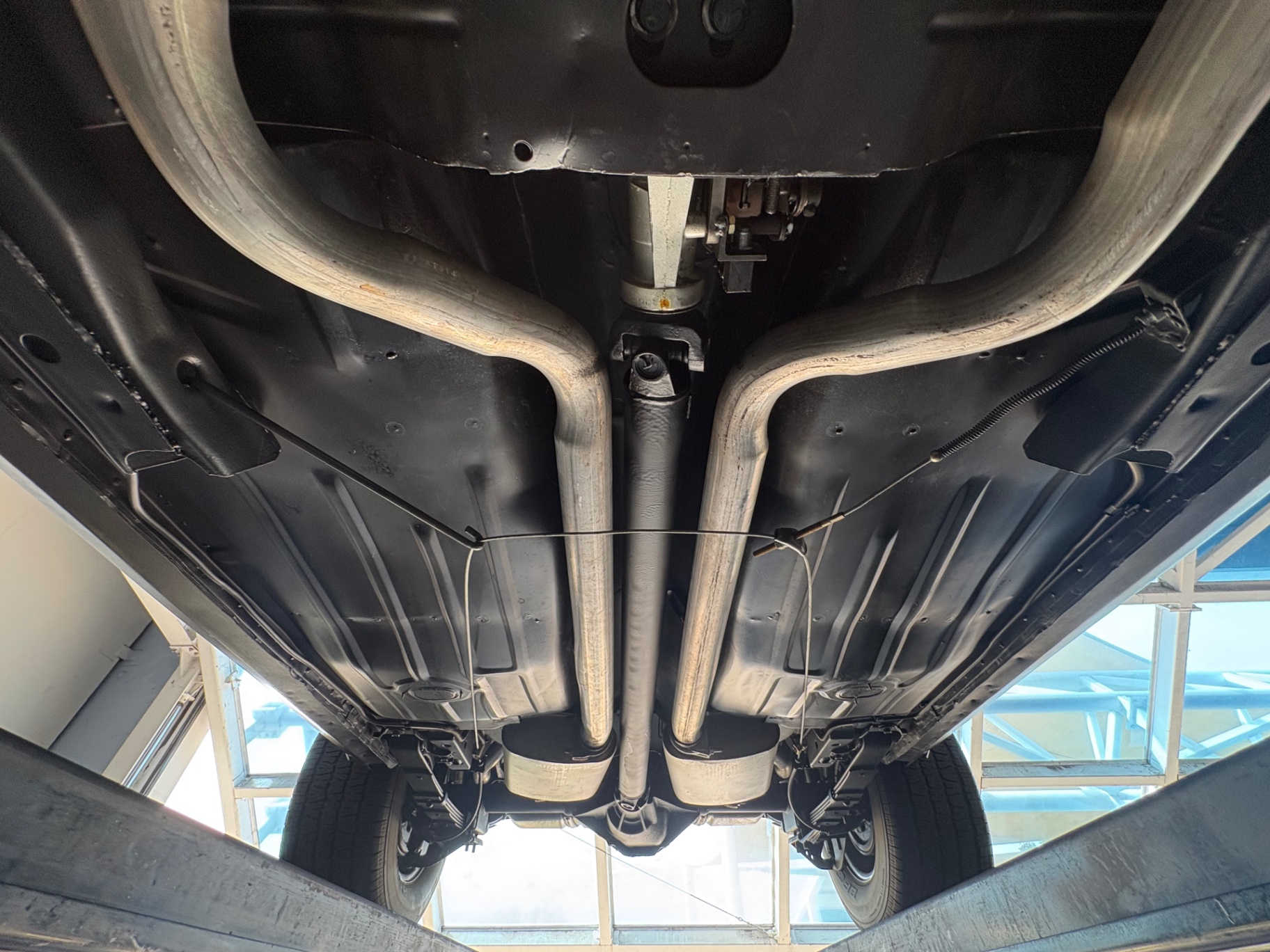
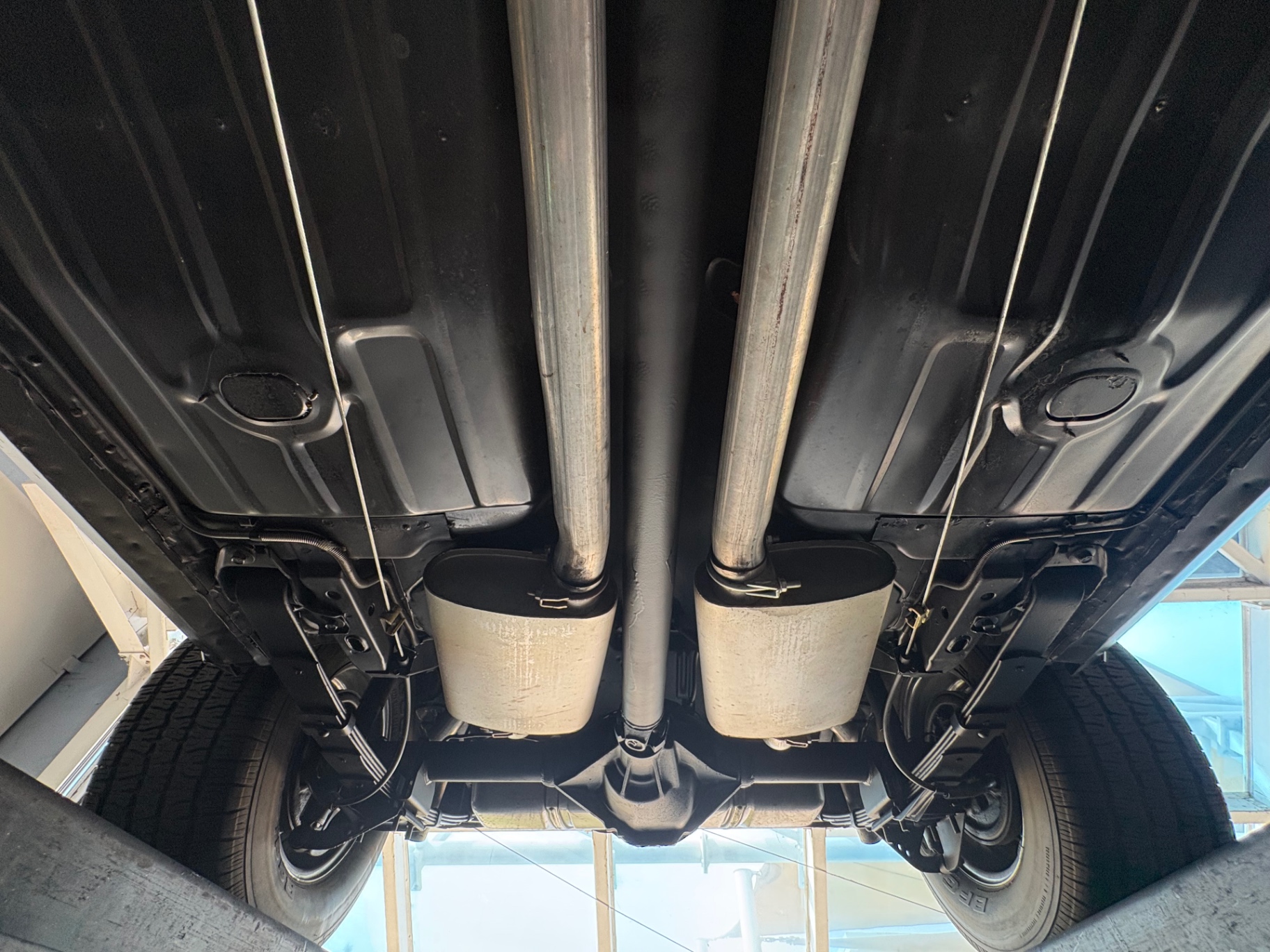
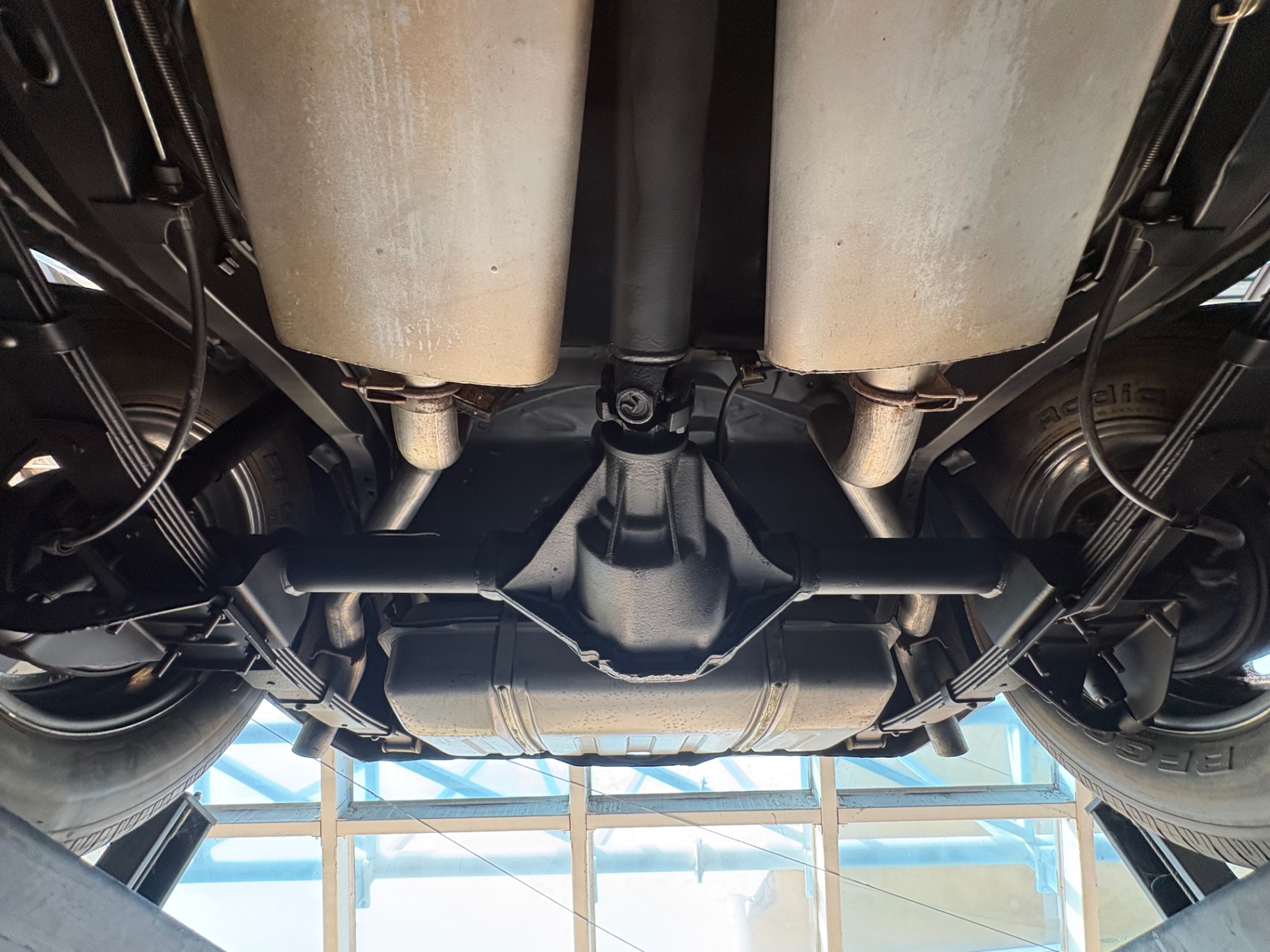
Front disc brakes were part of the SS package and represent a meaningful upgrade over the four-wheel drum setup that came on base Camaros. Given the power output of the 454, having discs up front is not just a convenience — it is a safety consideration that any knowledgeable buyer will appreciate. The dual exhaust system exits out the rear in correct fashion, and the undercarriage photos show a floor and frame that are solid and well-finished, with no evidence of rot, patch panels, or poorly executed repairs. The suspension components are properly finished and show no signs of deferred maintenance.
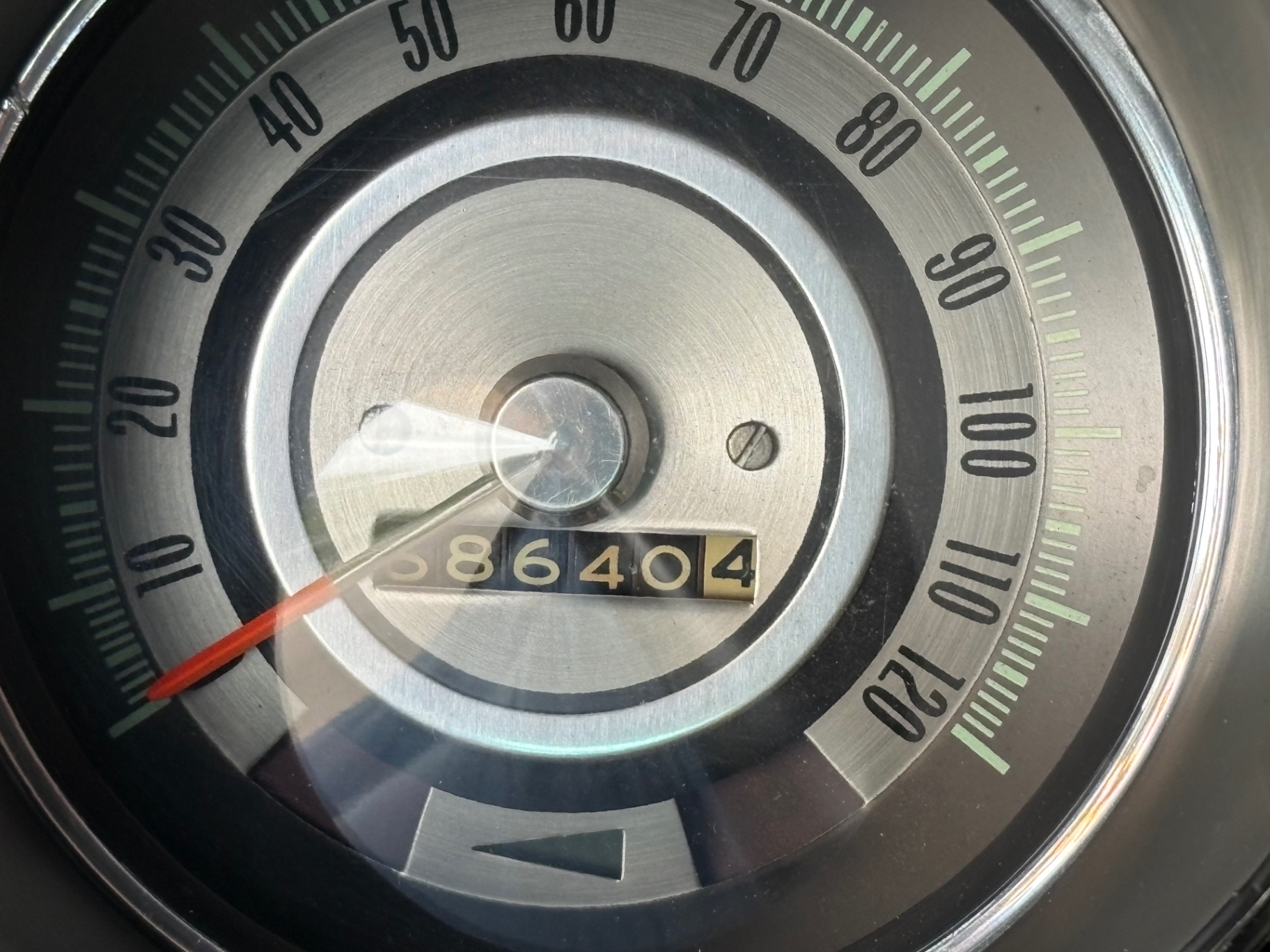
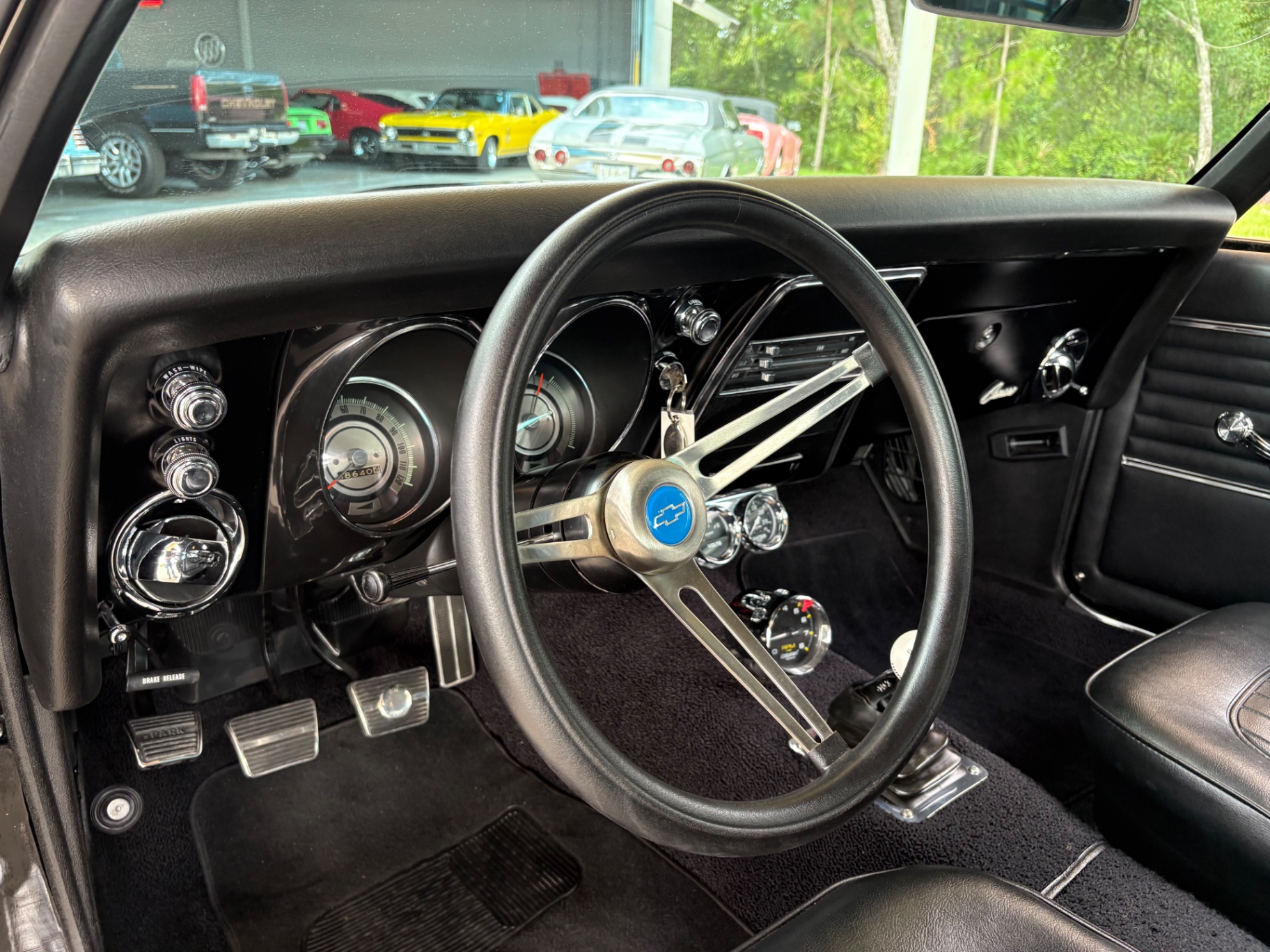
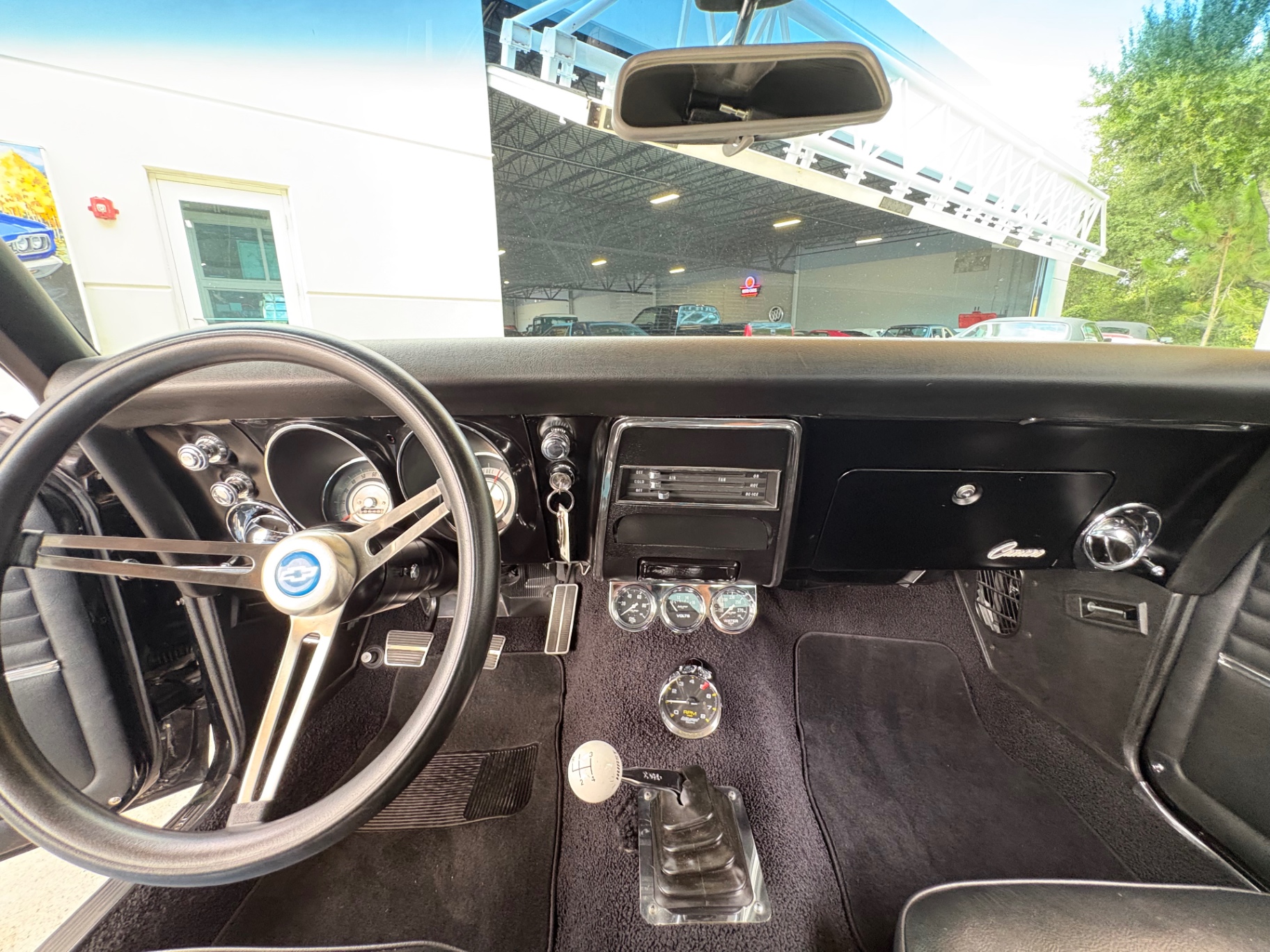
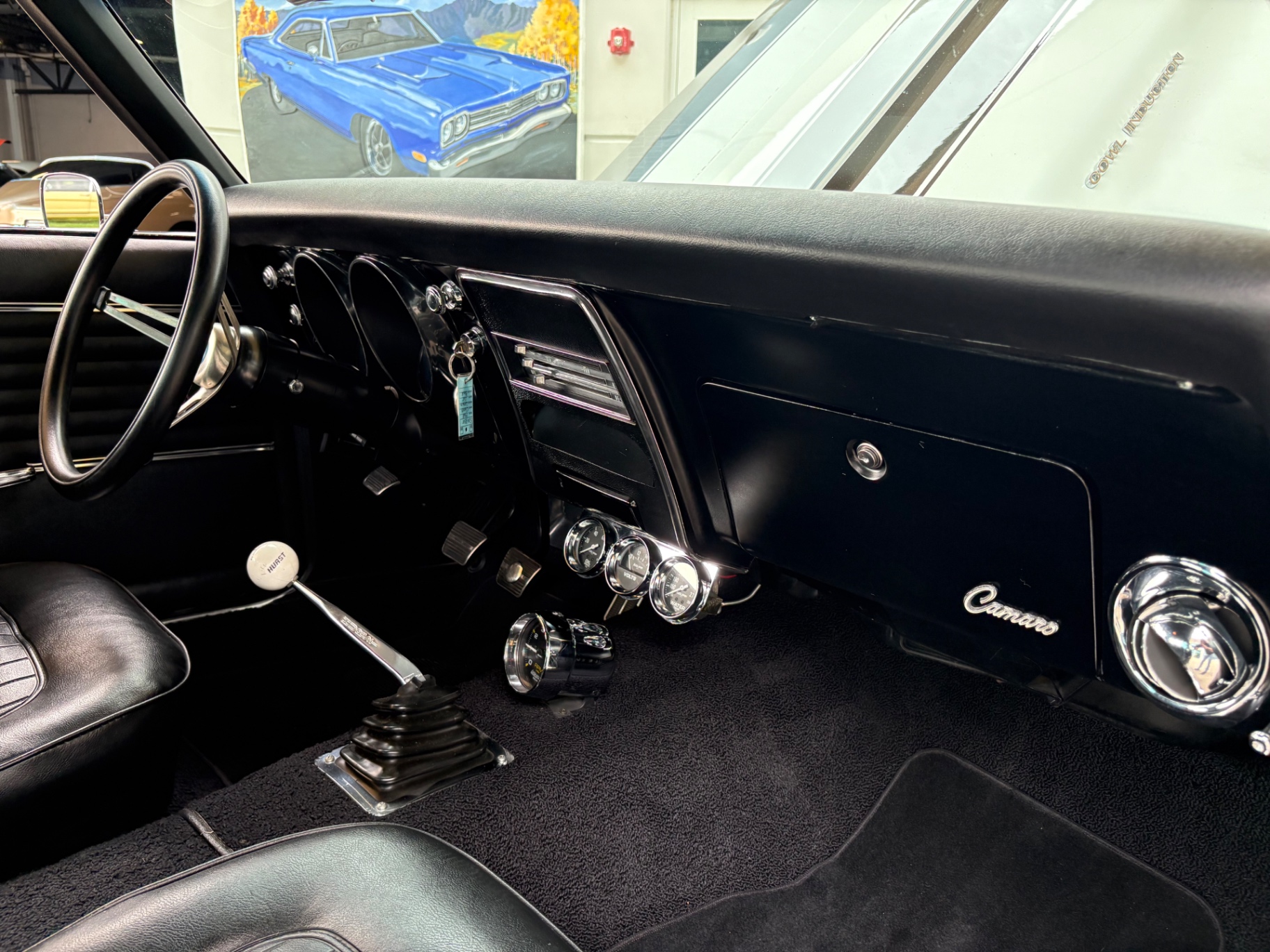
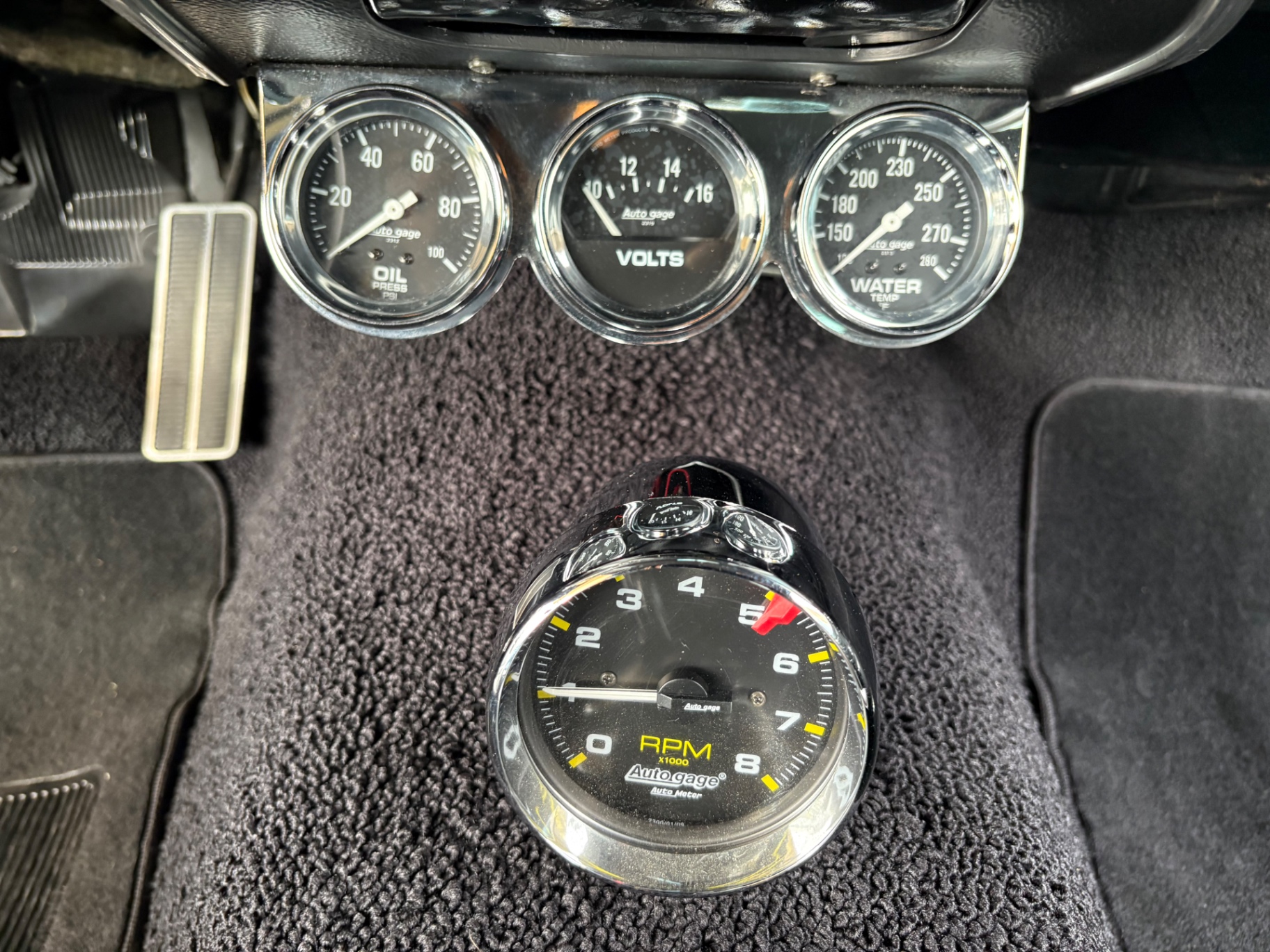
The additional gauge package — tachometer, oil pressure, volts, and water temp — is mounted on the console and dashboard in a clean, functional arrangement. For a car running a built 454, having real-time data on oil pressure and coolant temperature is not a luxury, it is a practical necessity. The tach sits at floor level in a large-face Auto Gage unit, visible at a glance and easy to read.
Interior
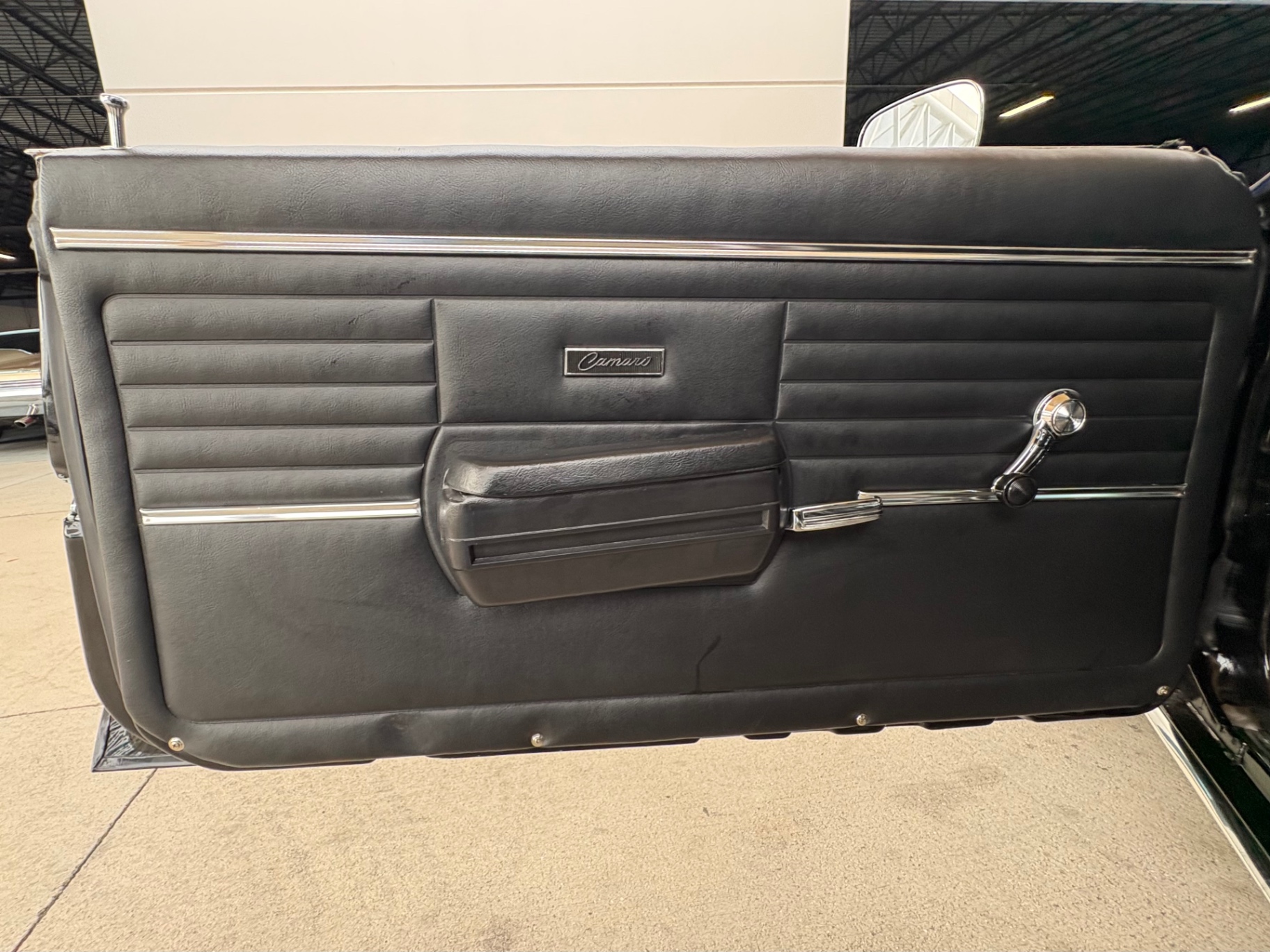
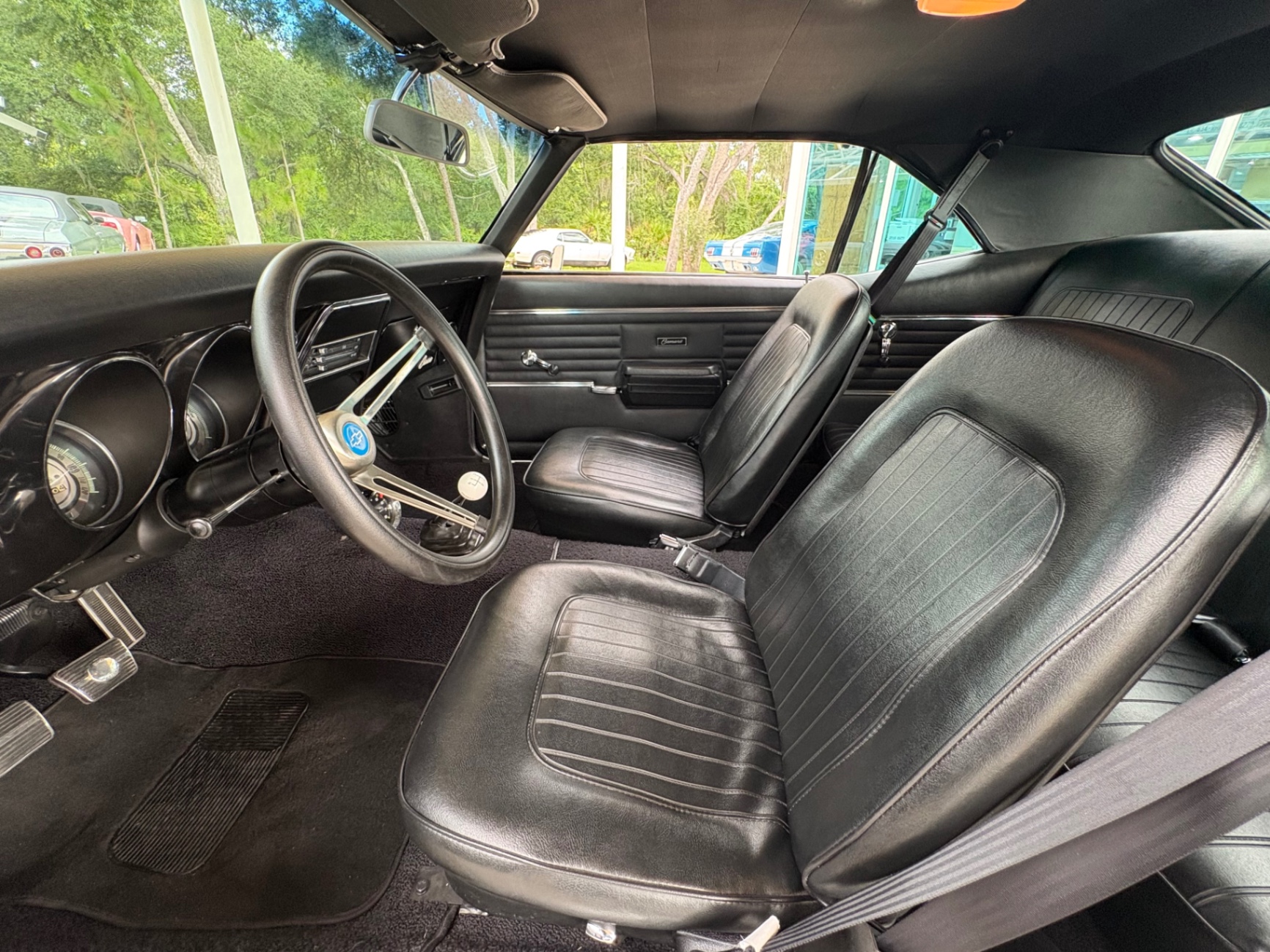
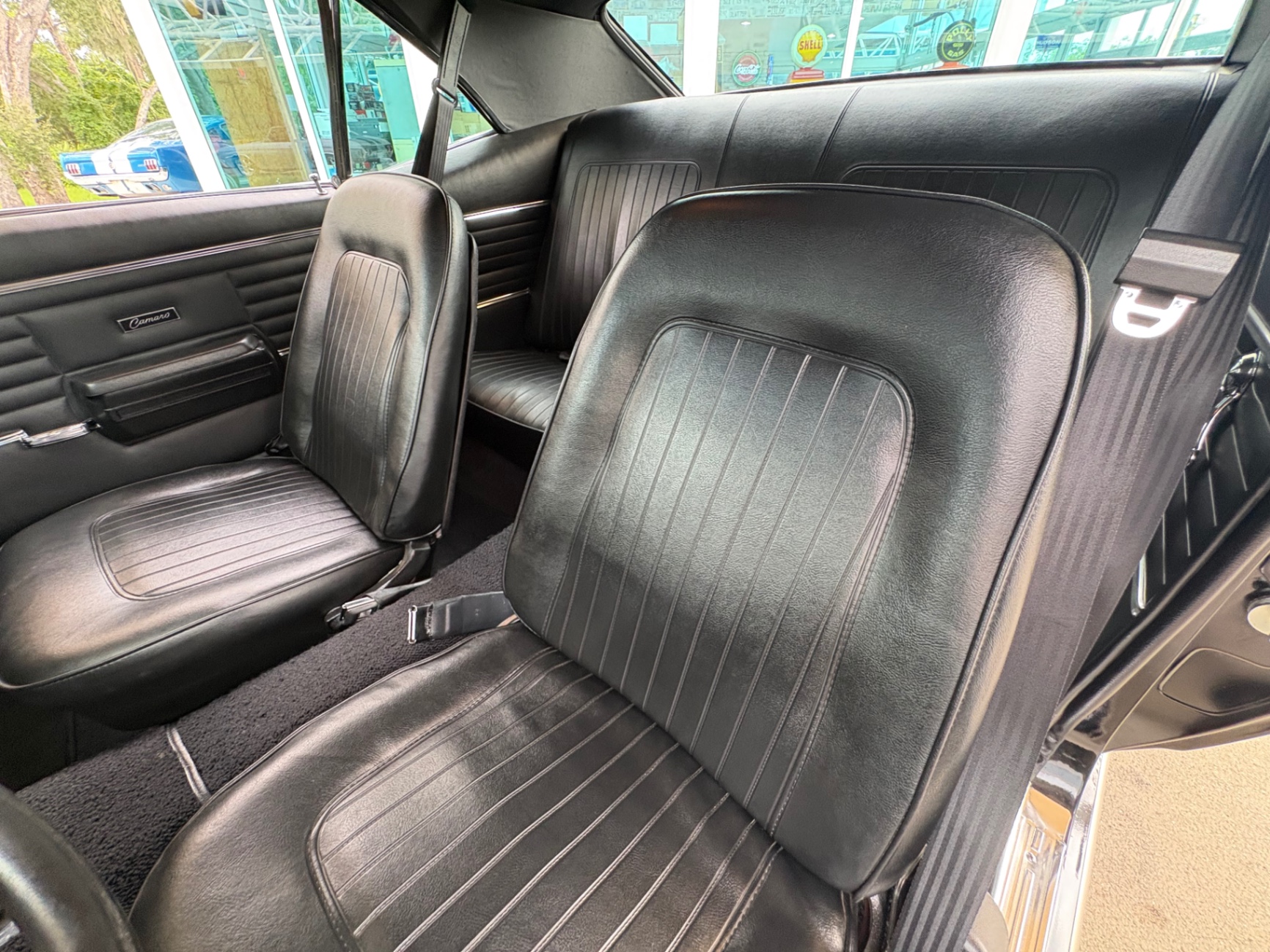
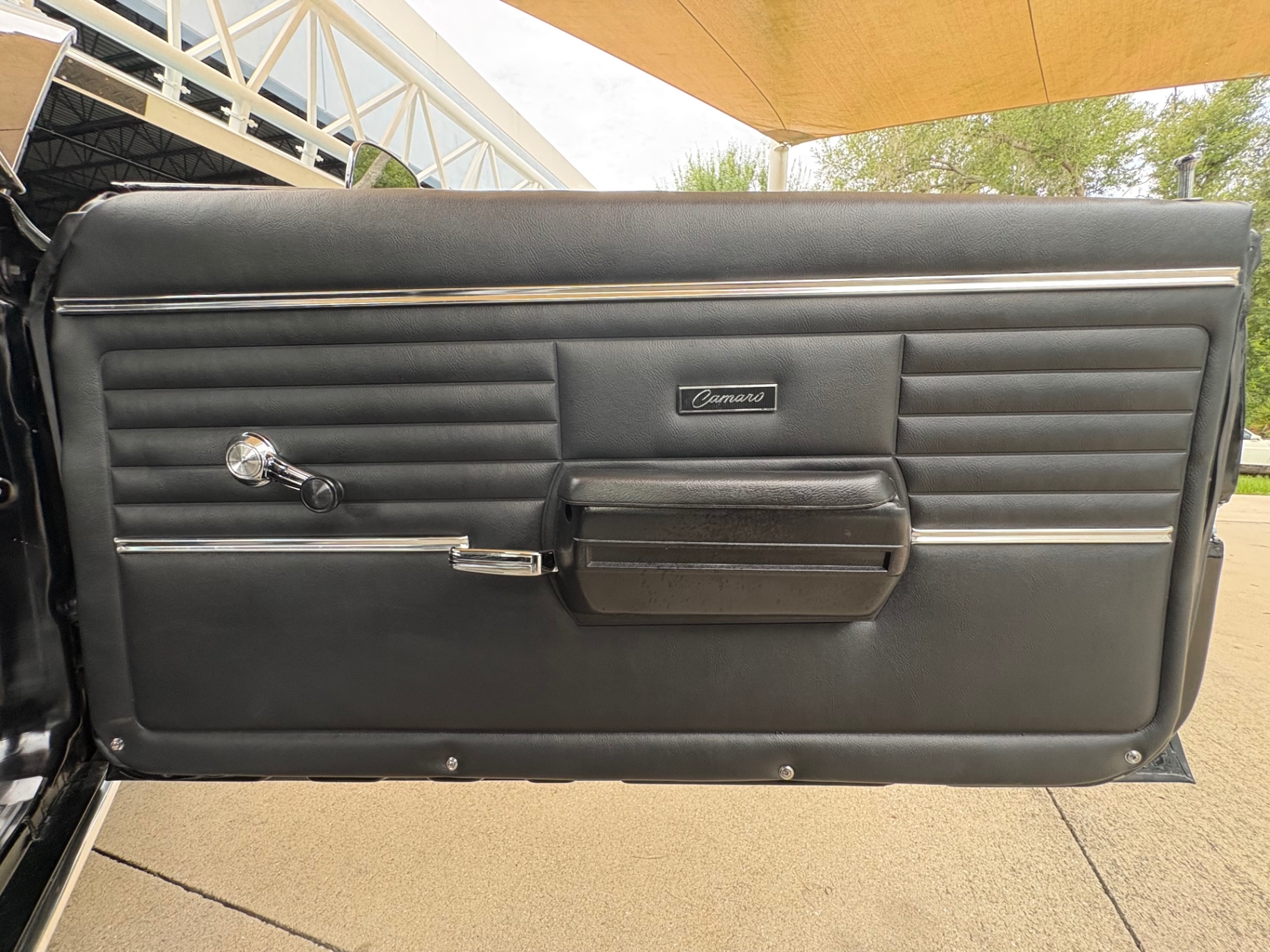
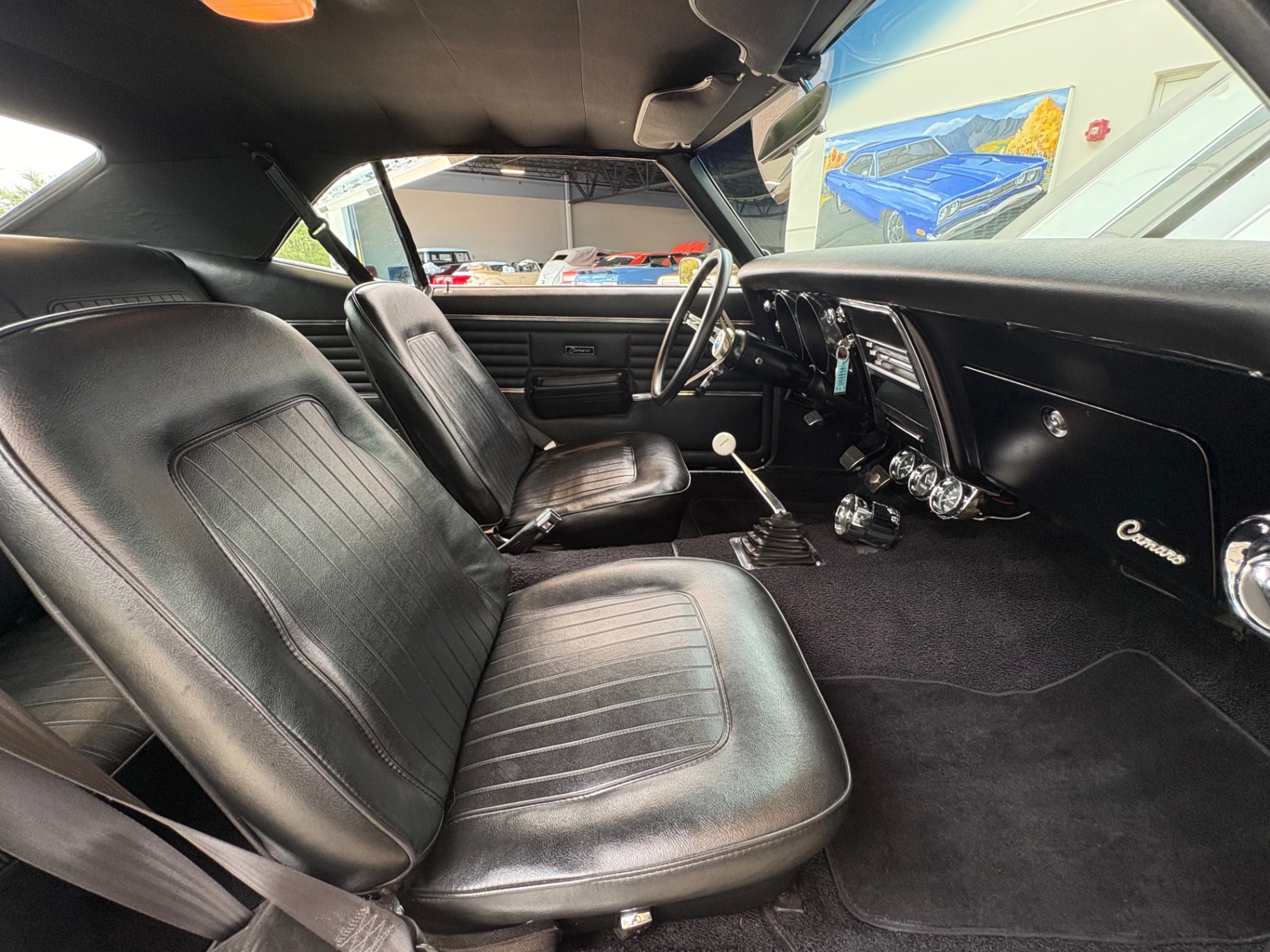
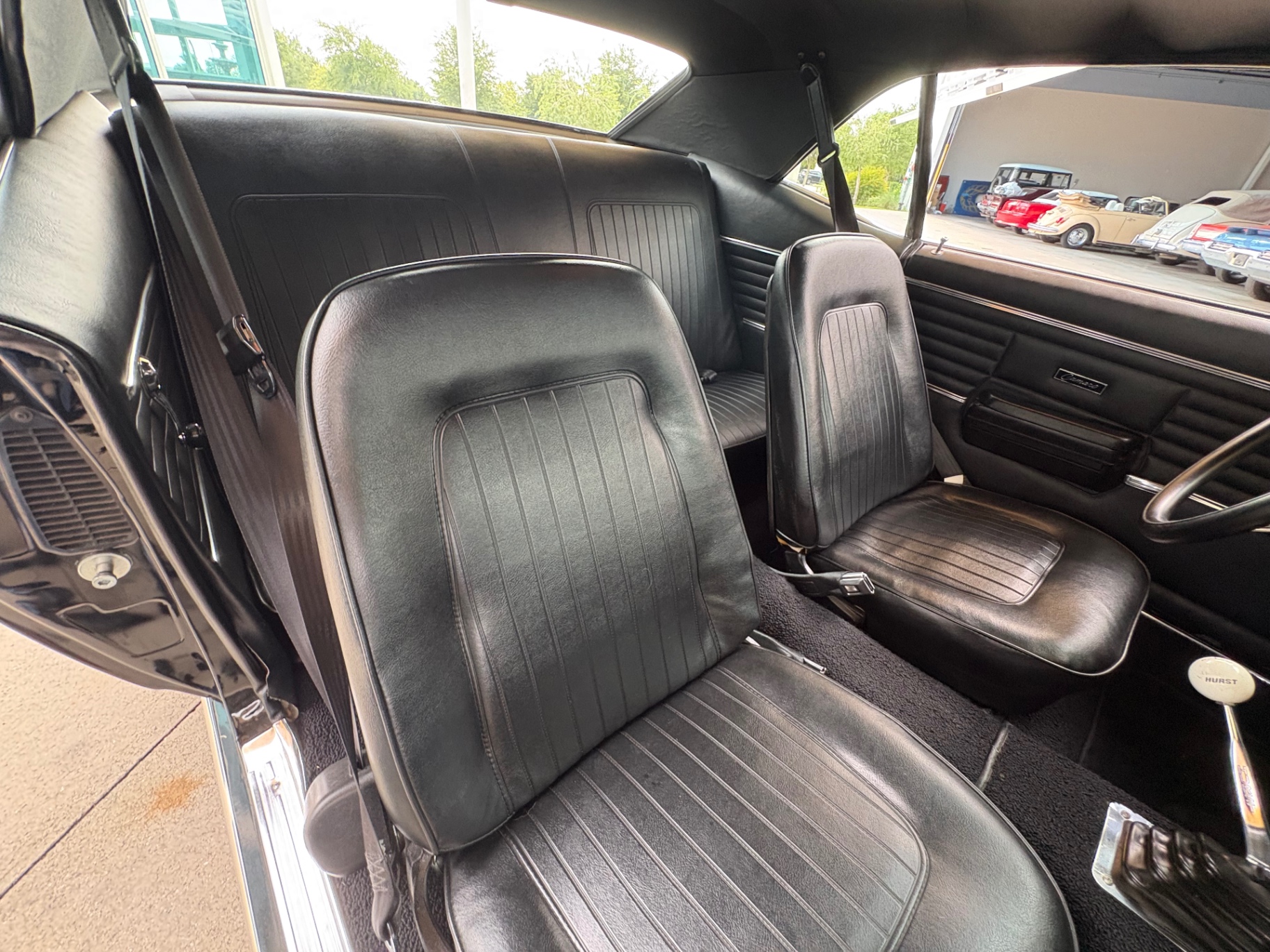
Step inside the 1968 Chevrolet Camaro SS and the first thing you notice is how well the black-on-black interior works with the overall theme of the car. The bucket seats are covered in black vinyl that presents well, with the characteristic ribbed stitching pattern used on Camaro interiors throughout the first generation. The door panels carry the correct Camaro script badge and the horizontal ribbing that was standard on SS-equipped cars, with chrome trim strips along the upper and lower sections of each panel.
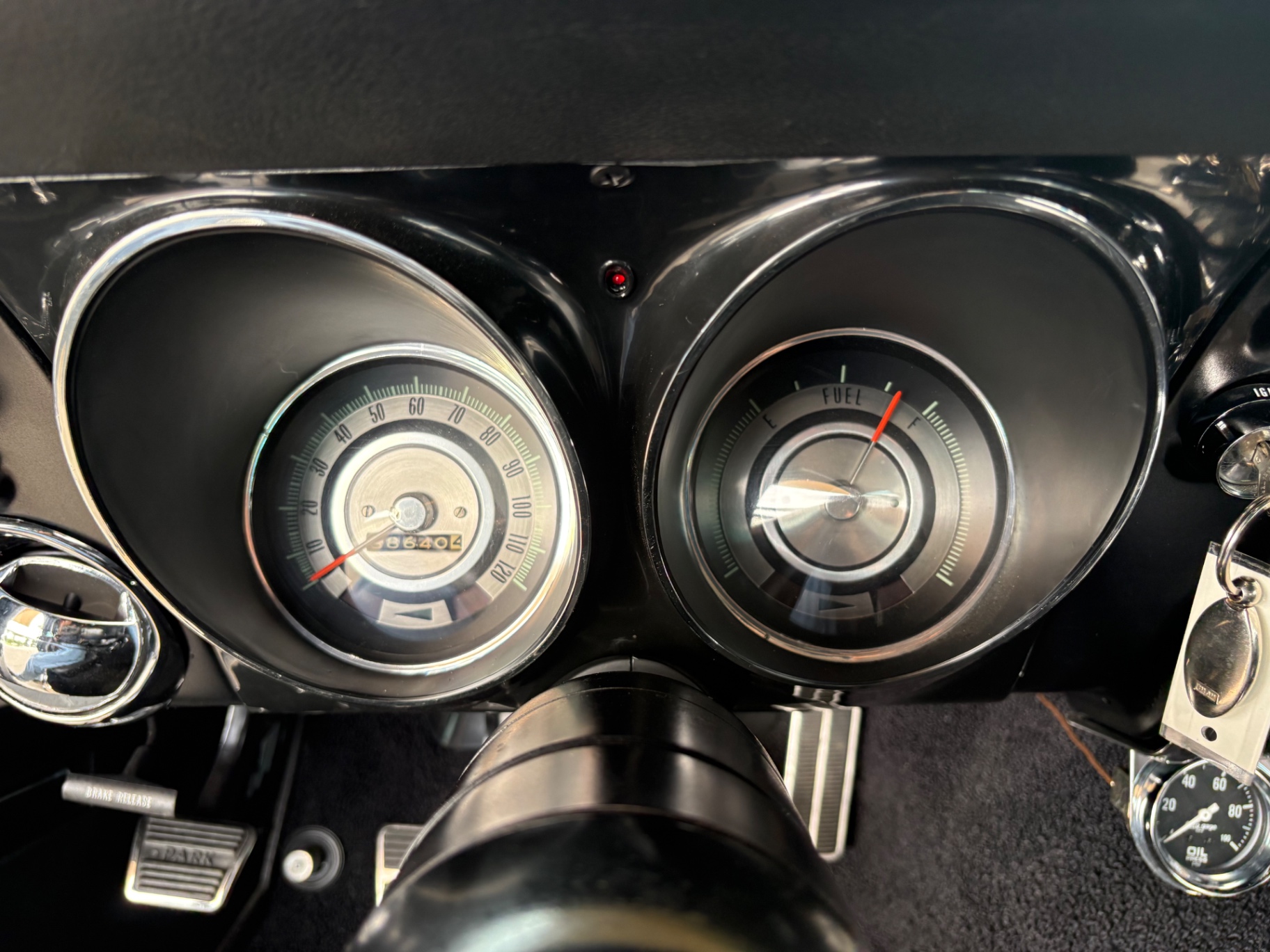
The black carpet is in good condition throughout, covering the floor from the firewall to the rear footwells without gaps, fading, or staining. The Hurst shifter rises out of a proper floor-mount boot, sitting right where it belongs in the center console area. The dashboard is finished in black with the correct two-pod cluster housing the speedometer and fuel gauge, flanked by the switches and the AM/FM radio in the center stack. The 3-spoke sport steering wheel with its Chevrolet bowtie center cap is the correct period style for an SS-equipped car and gives the cockpit a purposeful, driver-focused feel.
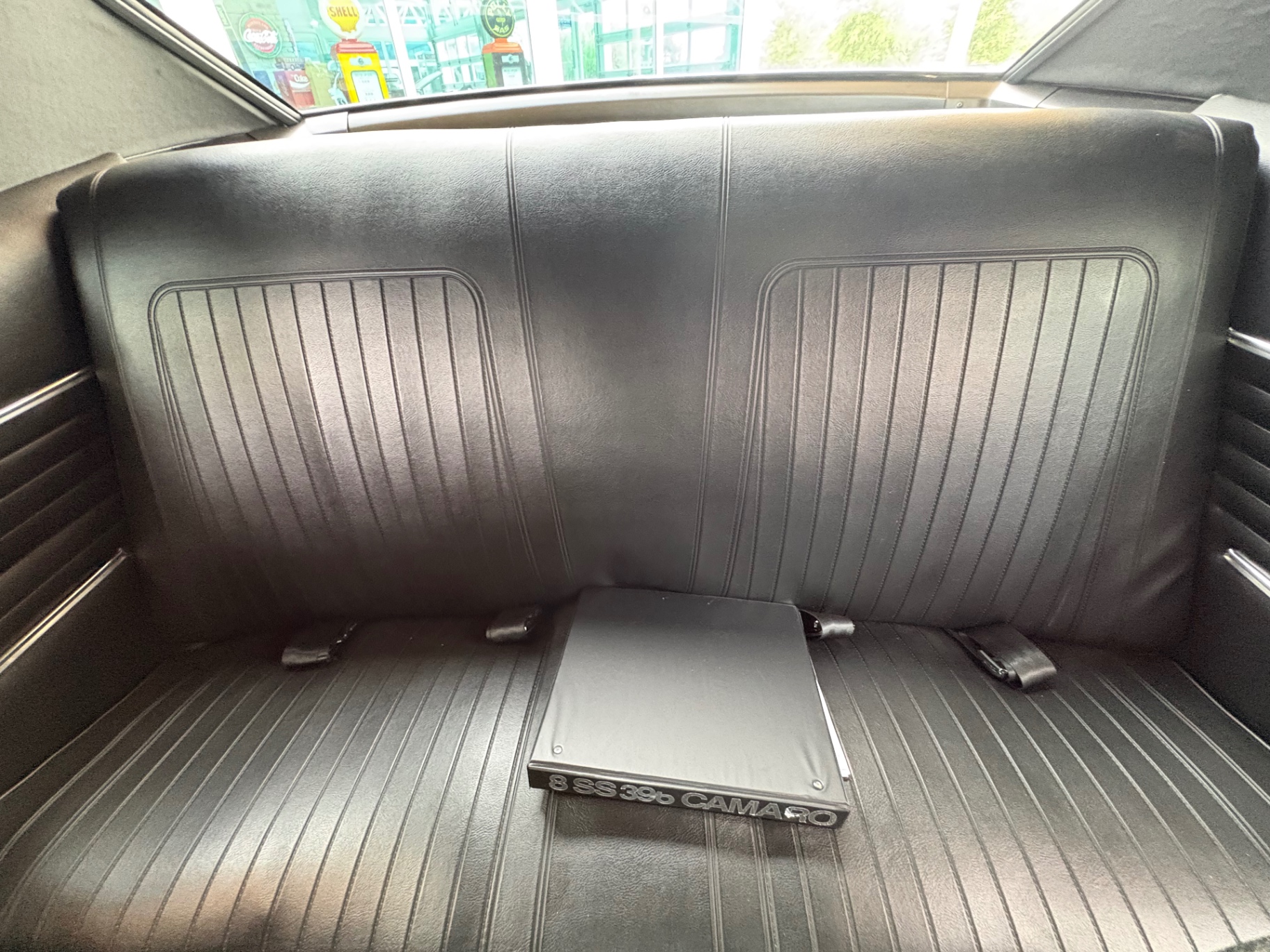
The additional gauges are installed in a cluster pod mounted in the center of the dashboard and on the console — oil pressure, volts, and water temperature sit together in a triple pod, while the large-face tachometer is floor-mounted. This is a setup that many owners chose when adding serious performance equipment, keeping the driver informed without requiring an aftermarket dashboard replacement. The rear seat is in very good condition, finished in matching black vinyl with the ribbed pattern consistent with the front seating. The brown vinyl top visible from the exterior carries into the interior headliner and complements the black cabin without overpowering it.
Exterior
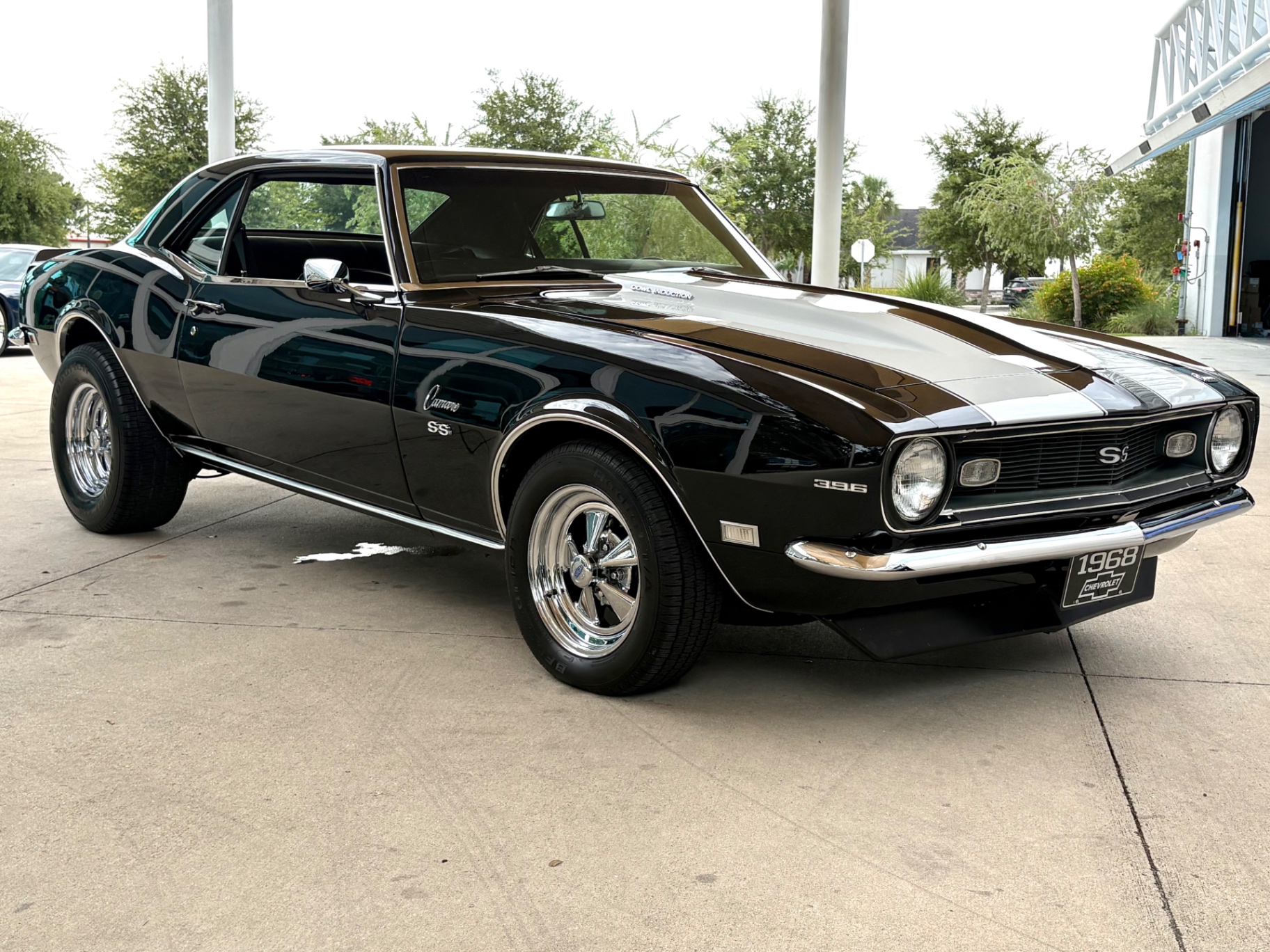
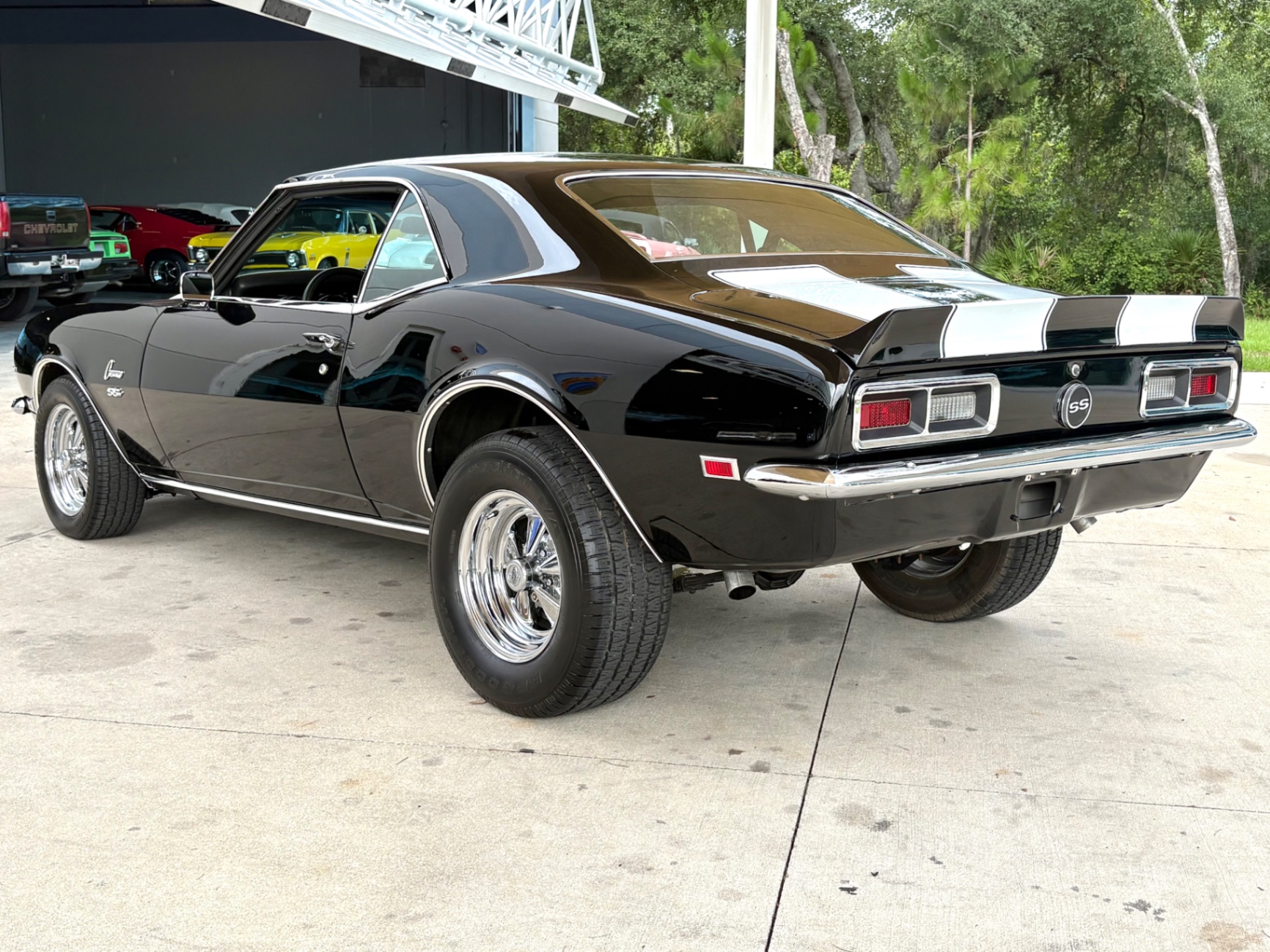
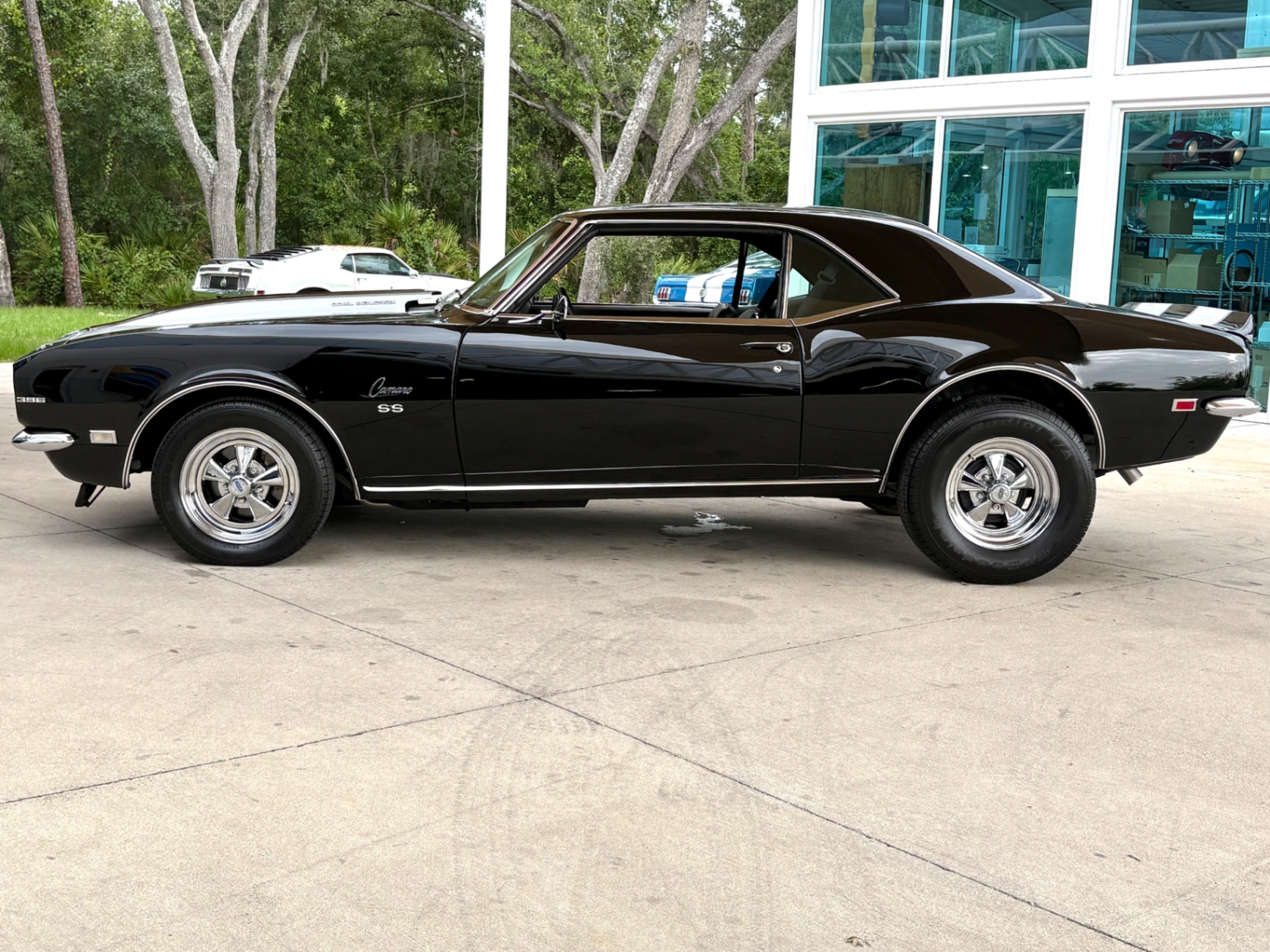
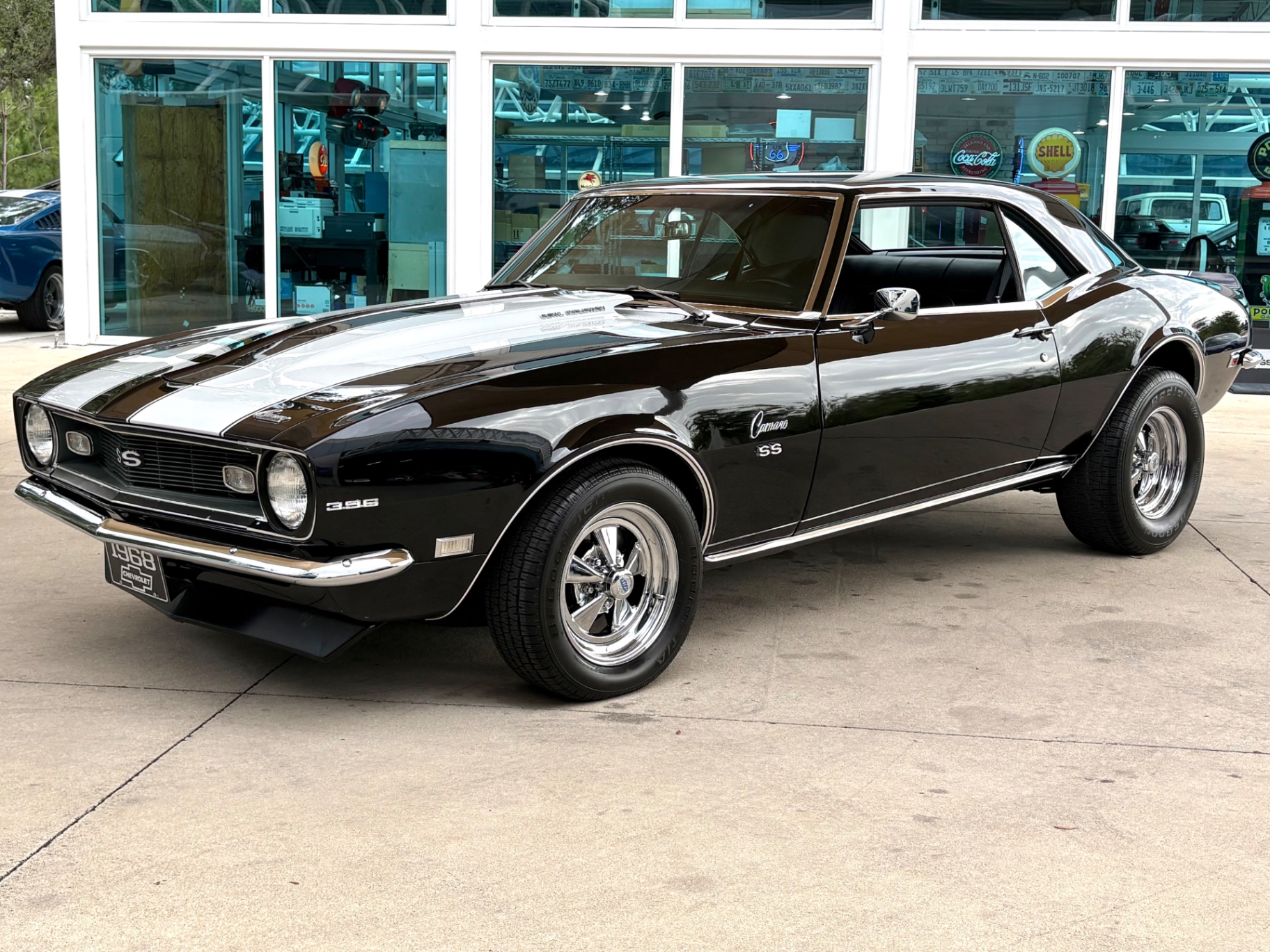
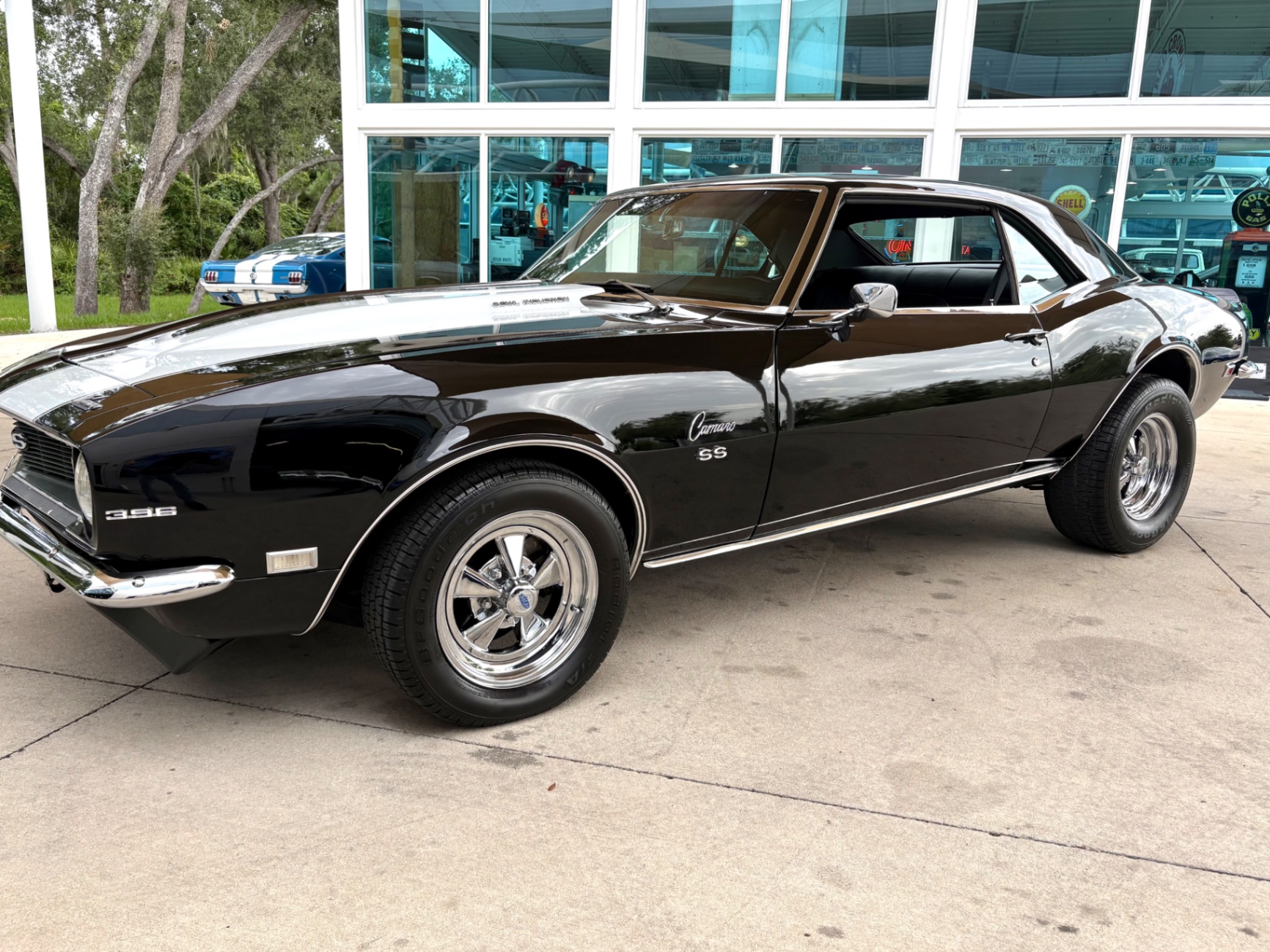
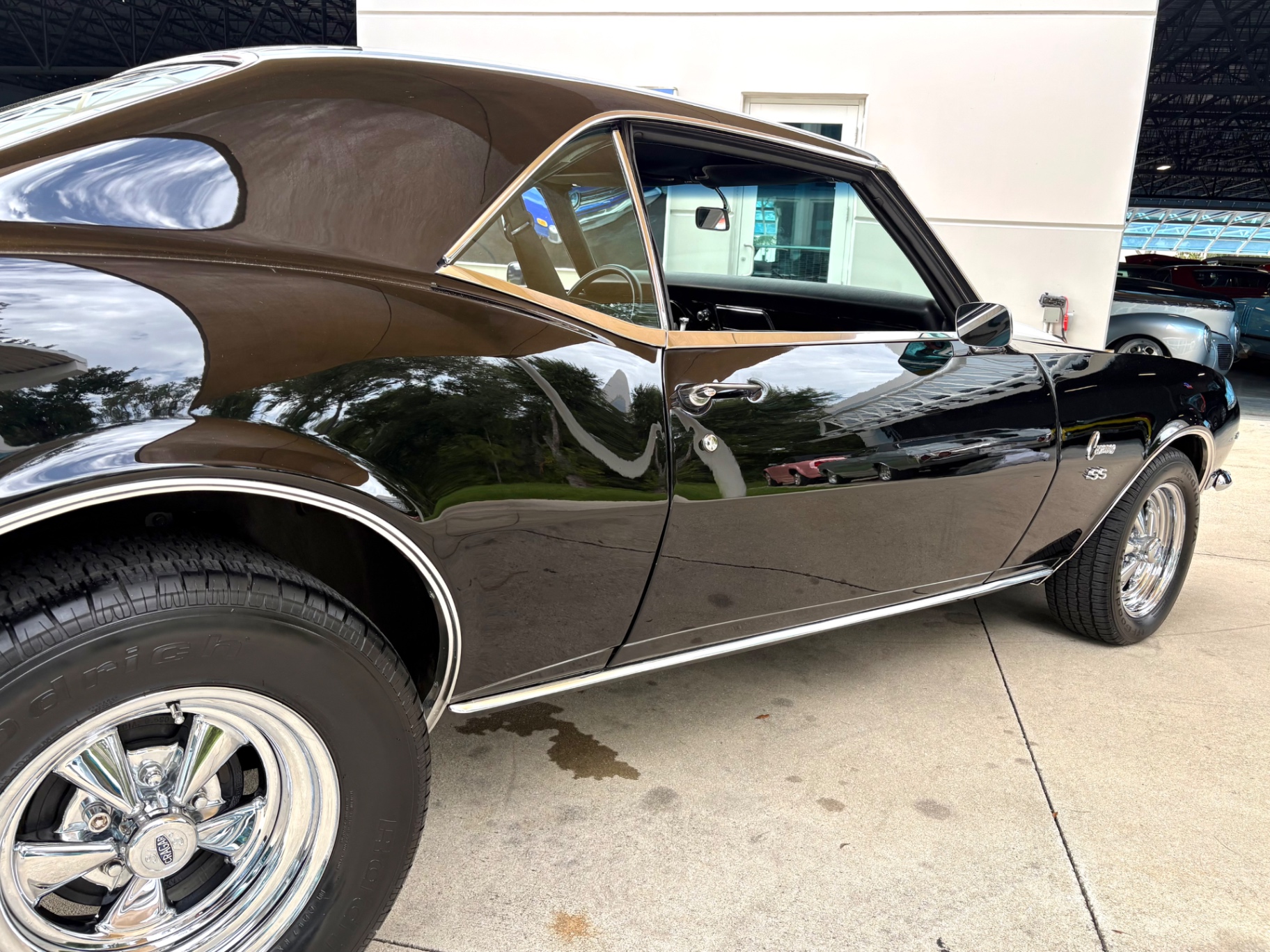
The 1968 Chevrolet Camaro SS wears its black paint with a deep, consistent finish that photographs well from every angle. The body lines on the first-generation Camaro — the long hood, the short deck, the fastback greenhouse — are among the cleanest shapes to come out of Detroit in the 1960s, and this example presents those lines without distraction. The panel gaps are consistent, the bumpers are straight and show good chrome, and the overall body condition is solid.
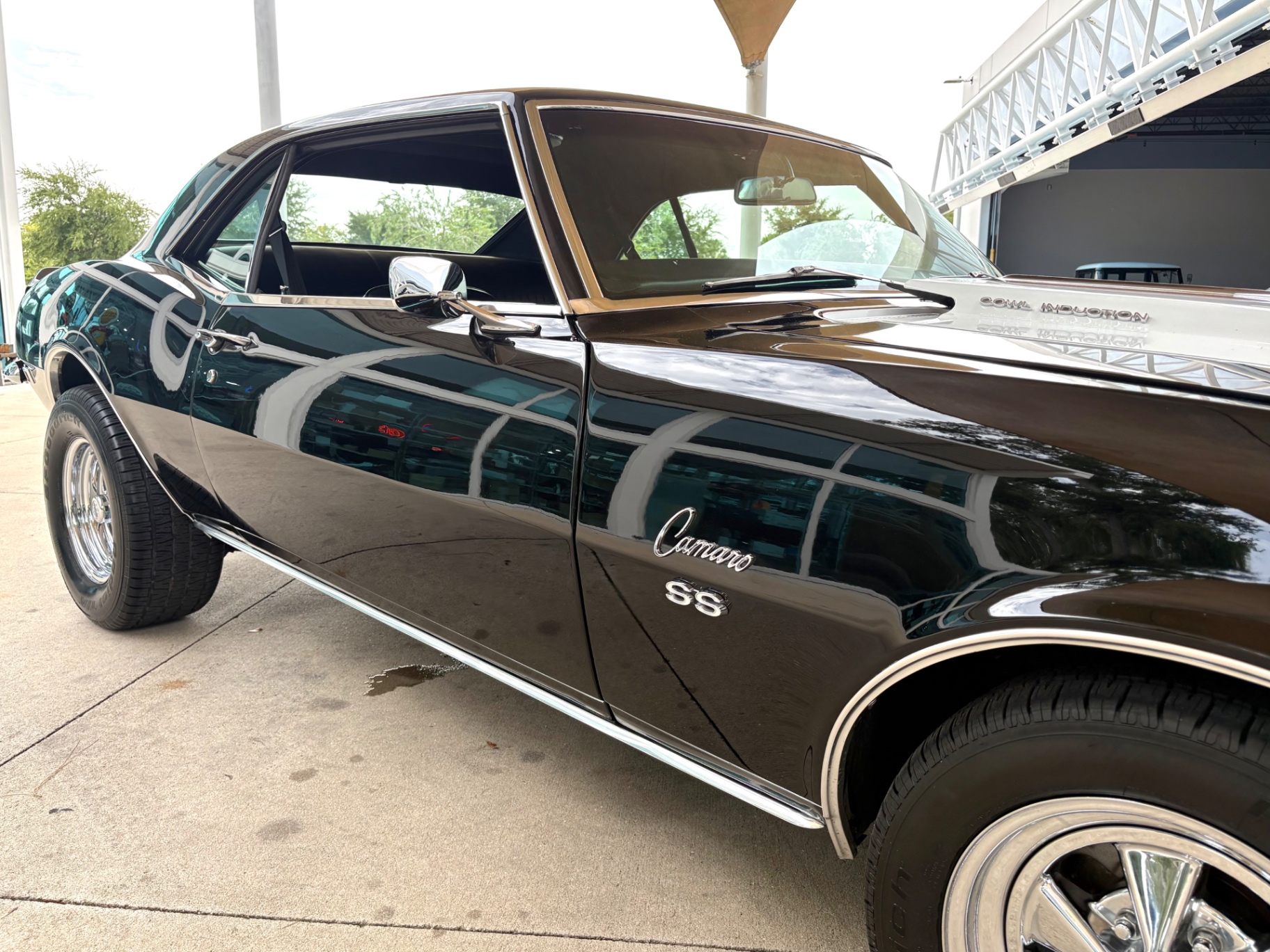
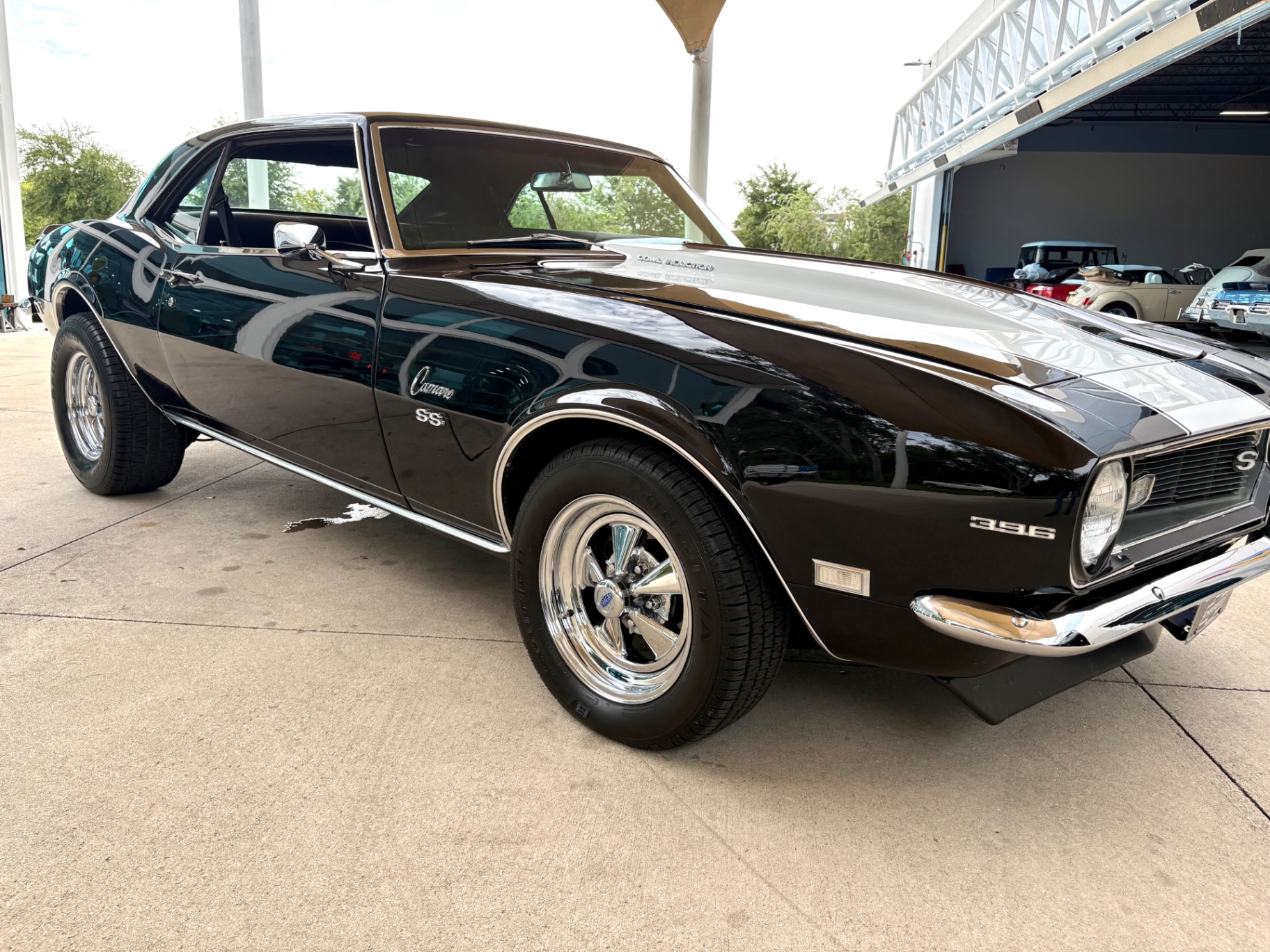
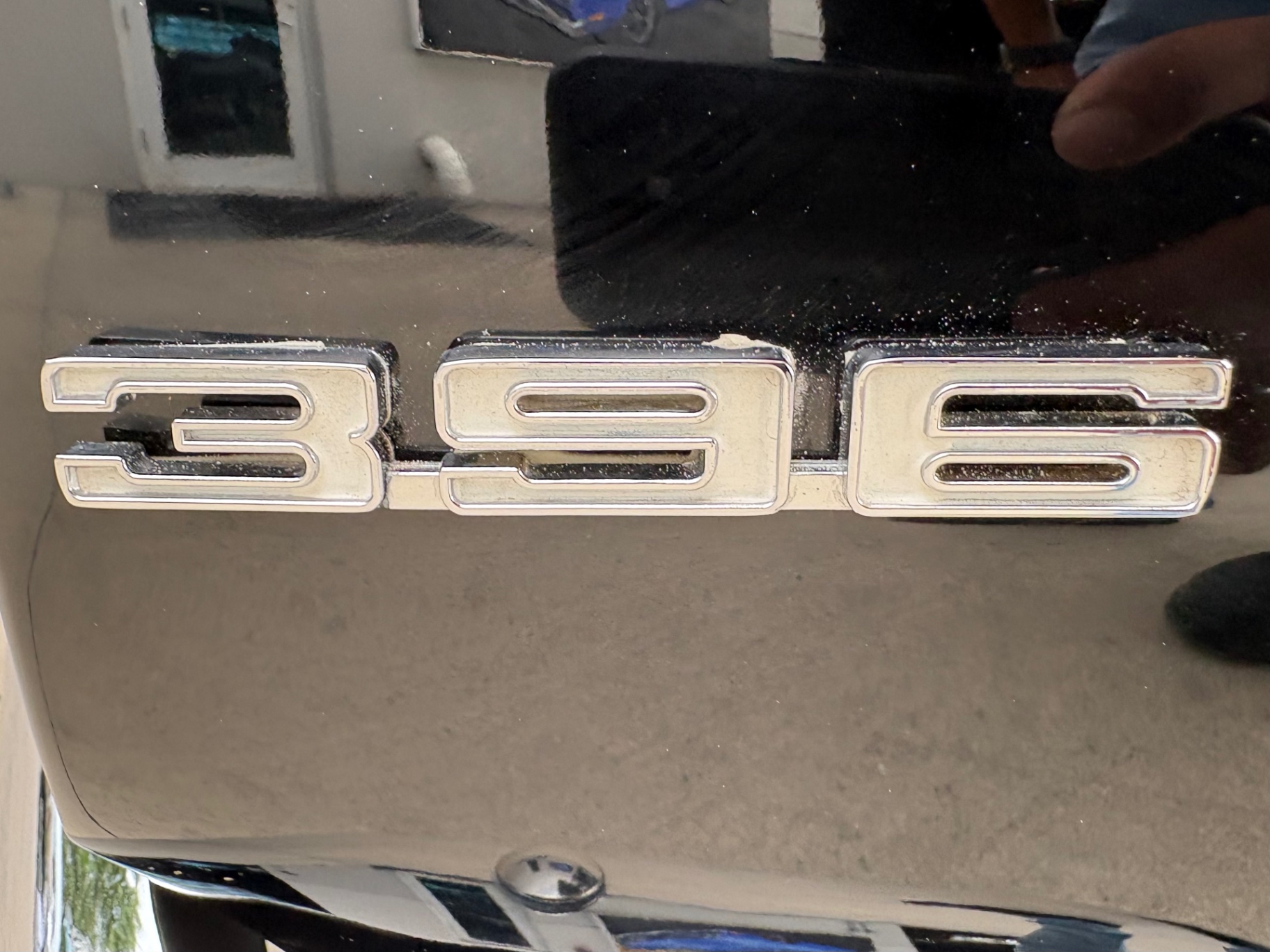
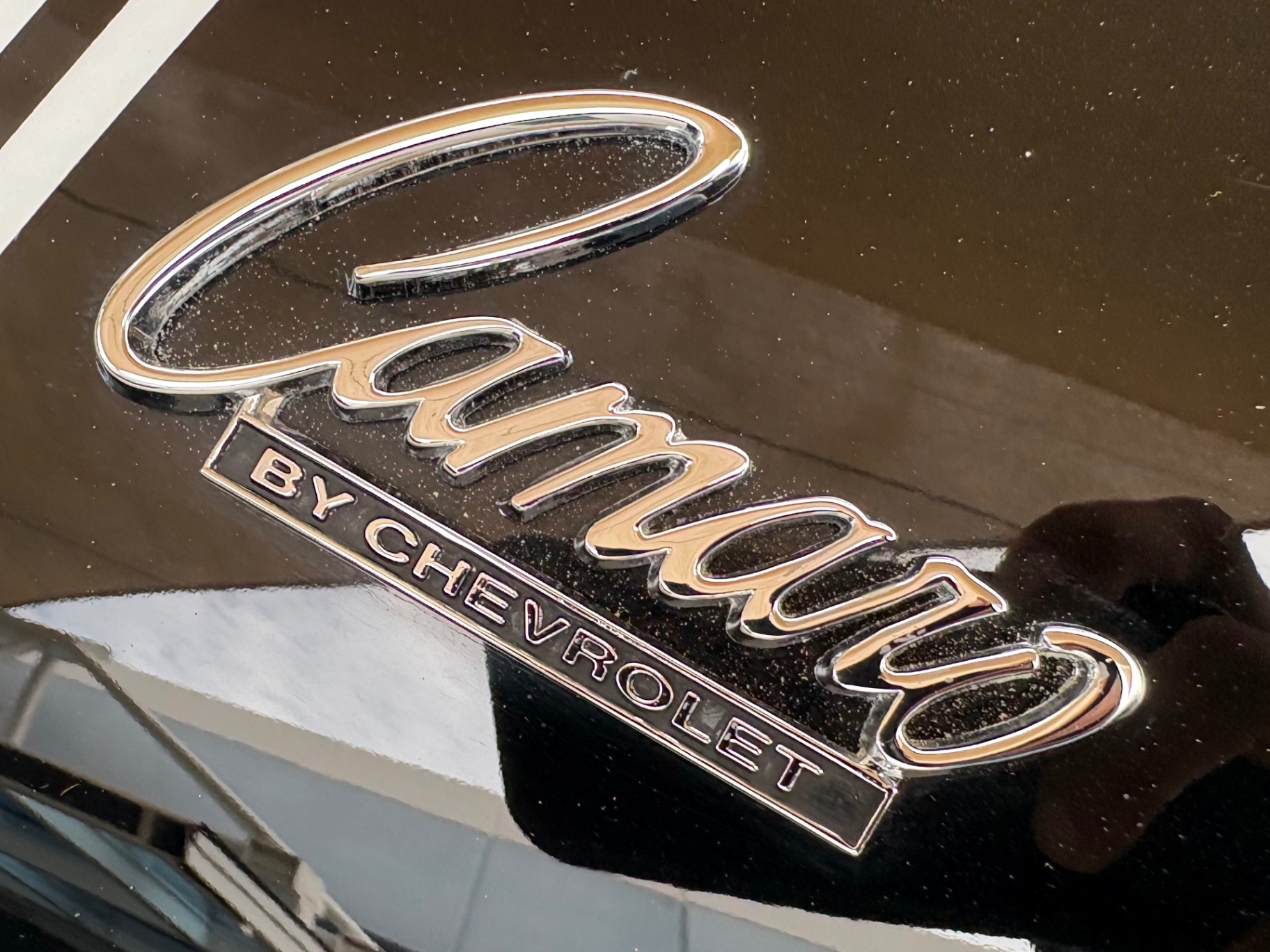
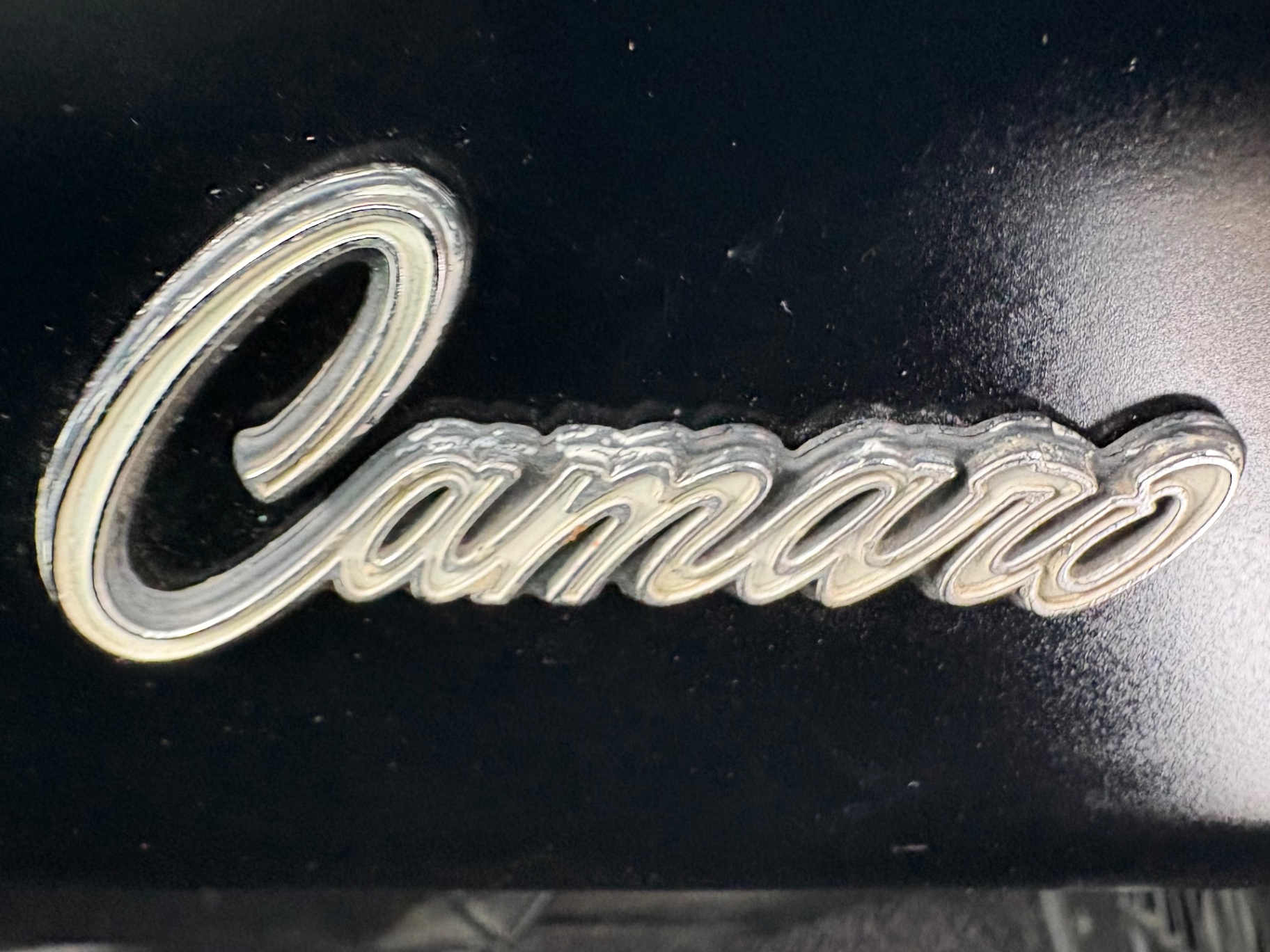
The white racing stripes run over the hood and down the decklid in the traditional SS stripe layout, providing strong visual contrast against the black bodywork. The cowl induction hood is correctly fitted and adds functional character to the nose — the cowl design on these first-gen Camaro applications drew in cooler, denser air from the base of the windshield, providing a meaningful benefit when the engine is working hard. The SS badging is present on the grille and on the rear panel, along with the 396 fender badges that were part of the original SS big-block trim package. These badges accurately represent the car's SS heritage even as the engine has been upgraded beyond the 396 displacement.
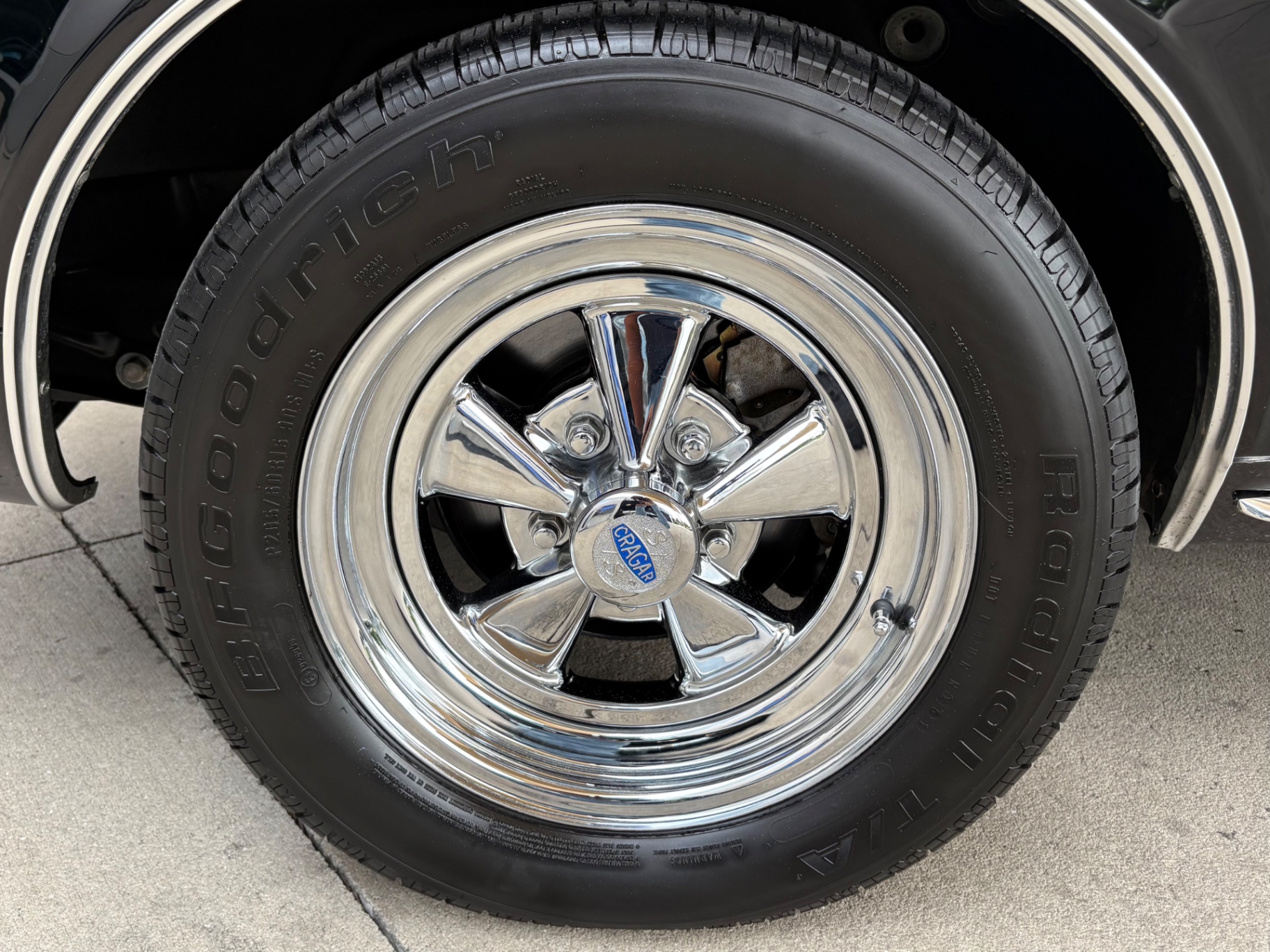
The Cragar chrome wheels are a classic choice for this era and application. Cragar S/S wheels were one of the most popular aftermarket wheel options during the muscle car years and remain visually appropriate on a car like this. They are wrapped in BFGoodrich Radial T/A tires, which have been a popular choice for first-gen Camaro owners for decades due to their period-appropriate appearance and modern radial construction. The sport mirror on the driver's side is correctly fitted and functional. The brown vinyl top adds a period-correct roof treatment that was a popular factory and dealer-installed option on 1968 Camaros, and it is in good condition with no visible lifting or cracking at the seams.
Conclusion
This 1968 Chevrolet Camaro SS represents the intersection of correct-era style and real-world performance. The first-generation Camaro body is one of the most sought-after shapes in the American collector car market, and this example checks the most important boxes: SS trim, big-block power, 4-speed manual, front disc brakes, and a clean undercarriage. The 454 Turbo-Jet is a more capable engine than the 396 the car originally called for, and it has been installed in a way that respects the character of the car. The black-on-black interior with white stripes exterior is a combination that ages well and photographs better.
Buyers looking at a 1968 Chevrolet Camaro SS in this configuration are looking at a car that is ready to drive and enjoy now, while also representing a significant piece of American automotive history. Cars like this one — well-sorted, honest, and wearing the right equipment — do not sit on the market for long.
To get more information or to schedule a time to see this 1968 Chevrolet Camaro SS in person, call Skyway Classics at 941-254-6608. We are located in Sarasota, Florida, and our team is here to answer your questions and help you get behind the wheel.
Disclaimer
Information found on the website is presented as given to us by the owner of the car, whether on consignment or from the owner we bought it from. Some Photos, materials for videos, descriptions and other information are provided by the consignor/seller and is deemed reliable, but Skyway Classics does not warranty or guarantee this information. Skyway Classics is not responsible for information that may incorrect or a publishing error. The decision to purchase should be based solely on the buyers personal inspection of the vehicle or by a professional inspection service prior to offer or purchase being made.
1968 Chevrolet Camaro SS — 454 Turbo-Jet V8, 4-Speed, Black on Black
Why This Car Is Special
The 1968 Chevrolet Camaro SS is widely regarded as the high point of the first-generation Camaro's design. Chevrolet refined the body for 1968 with side marker lights, revised trim, and a cleaner roofline, and the result is a profile that still stops people in their tracks more than five decades later. The first-gen Camaro ran from 1967 through 1969, with 1968 sitting squarely in the middle of what many collectors consider the golden era of American muscle. Total Camaro production for 1968 reached just over 235,000 units, but the SS package — which required the buyer to step up to a big-block or the top-shelf small-block — accounted for a much smaller fraction of that total.
What makes this particular 1968 Chevrolet Camaro SS worth serious attention is what sits under the cowl induction hood. This car carries a 454 cubic inch Turbo-Jet V8, an engine that Chevrolet did not offer in the Camaro from the factory in 1968. The 454 big-block was introduced in 1970 across the Chevrolet lineup, which means this car has been built up with a period-correct but upgraded powerplant — a common and well-regarded approach among first-gen Camaro owners who want more cubic inches than the factory 396 could deliver. The engine wear markings, valve covers, and air cleaner lid on this car all identify it as a 454 Turbo-Jet rated at 425 horsepower, the same specification used in the LS6 Chevelle and Corvette applications of the early 1970s. It is a serious engine in a serious car, and the builder made no compromises in putting it together.
The VIN on this car decodes to a 1968 Camaro Sport Coupe built at the Norwood, Ohio assembly plant, which was one of two facilities producing Camaros during this period. The body style code confirms the hardtop coupe configuration, and the VIN structure is consistent with an SS-optioned car built with the big-block engine package. The SS option in 1968 brought with it a specific hood, SS badging front and rear, a blacked-out grille, heavy-duty suspension, and front disc brakes as standard equipment. All of those features are present on this car.
The combination of black exterior, black interior, white racing stripes, and a cowl induction hood gives this 1968 Chevrolet Camaro SS a presence that photographs well and looks even better in person. It has been built to drive, not just to show — the gauge cluster, the Hurst shifter, the front discs, and the clean undercarriage all point to an owner who put thought and money into the right places.
Features List
- 454 Turbo-Jet V8, 425 HP
- Cowl Induction Hood
- 4-Speed Manual Transmission
- Hurst Shifter
- Front Disc Brakes
- Dual Exhaust
- Cragar Chrome Wheels
- BFGoodrich Radial T/A Tires
- White Racing Stripes
- Black Vinyl Bucket Seats
- Black Carpet
- 3-Spoke Sport Steering Wheel
- AM/FM Radio
- Additional Gauges: Tachometer, Oil Pressure, Volts, Water Temp
- SS Badging Front and Rear
- 396 Fender Badges
- Brown Vinyl Top
- Clean Undercarriage
- Sport Mirror
Mechanical
The 454 Turbo-Jet is the centerpiece of this build. Displacing 454 cubic inches and wearing a Turbo-Jet 425 HP air cleaner lid, this engine was the top-of-the-line big-block in Chevrolet's inventory when it was introduced. It features the distinctive finned valve covers in black and red that were associated with high-output Chevy applications, and the engine bay has been finished to a level that reflects care and attention rather than a quick clean-up. The red plug wires, clean intake, and period-correct detailing all show that work was done with an eye toward authenticity as well as performance.
The 4-speed manual transmission is operated through a Hurst shifter, which is exactly how these cars were meant to be driven. Hurst Performance was the preferred shifter manufacturer among GM, Ford, and Chrysler during the muscle car era, and Chevrolet either factory-installed or dealer-recommended Hurst units on many of its high-performance cars. The short-throw action and solid gate of the Hurst unit make a noticeable difference over a standard shifter, particularly when paired with an engine producing this much torque.
Front disc brakes were part of the SS package and represent a meaningful upgrade over the four-wheel drum setup that came on base Camaros. Given the power output of the 454, having discs up front is not just a convenience — it is a safety consideration that any knowledgeable buyer will appreciate. The dual exhaust system exits out the rear in correct fashion, and the undercarriage photos show a floor and frame that are solid and well-finished, with no evidence of rot, patch panels, or poorly executed repairs. The suspension components are properly finished and show no signs of deferred maintenance.
The additional gauge package — tachometer, oil pressure, volts, and water temp — is mounted on the console and dashboard in a clean, functional arrangement. For a car running a built 454, having real-time data on oil pressure and coolant temperature is not a luxury, it is a practical necessity. The tach sits at floor level in a large-face Auto Gage unit, visible at a glance and easy to read.
Interior
Step inside the 1968 Chevrolet Camaro SS and the first thing you notice is how well the black-on-black interior works with the overall theme of the car. The bucket seats are covered in black vinyl that presents well, with the characteristic ribbed stitching pattern used on Camaro interiors throughout the first generation. The door panels carry the correct Camaro script badge and the horizontal ribbing that was standard on SS-equipped cars, with chrome trim strips along the upper and lower sections of each panel.
The black carpet is in good condition throughout, covering the floor from the firewall to the rear footwells without gaps, fading, or staining. The Hurst shifter rises out of a proper floor-mount boot, sitting right where it belongs in the center console area. The dashboard is finished in black with the correct two-pod cluster housing the speedometer and fuel gauge, flanked by the switches and the AM/FM radio in the center stack. The 3-spoke sport steering wheel with its Chevrolet bowtie center cap is the correct period style for an SS-equipped car and gives the cockpit a purposeful, driver-focused feel.
The additional gauges are installed in a cluster pod mounted in the center of the dashboard and on the console — oil pressure, volts, and water temperature sit together in a triple pod, while the large-face tachometer is floor-mounted. This is a setup that many owners chose when adding serious performance equipment, keeping the driver informed without requiring an aftermarket dashboard replacement. The rear seat is in very good condition, finished in matching black vinyl with the ribbed pattern consistent with the front seating. The brown vinyl top visible from the exterior carries into the interior headliner and complements the black cabin without overpowering it.
Exterior
The 1968 Chevrolet Camaro SS wears its black paint with a deep, consistent finish that photographs well from every angle. The body lines on the first-generation Camaro — the long hood, the short deck, the fastback greenhouse — are among the cleanest shapes to come out of Detroit in the 1960s, and this example presents those lines without distraction. The panel gaps are consistent, the bumpers are straight and show good chrome, and the overall body condition is solid.
The white racing stripes run over the hood and down the decklid in the traditional SS stripe layout, providing strong visual contrast against the black bodywork. The cowl induction hood is correctly fitted and adds functional character to the nose — the cowl design on these first-gen Camaro applications drew in cooler, denser air from the base of the windshield, providing a meaningful benefit when the engine is working hard. The SS badging is present on the grille and on the rear panel, along with the 396 fender badges that were part of the original SS big-block trim package. These badges accurately represent the car's SS heritage even as the engine has been upgraded beyond the 396 displacement.
The Cragar chrome wheels are a classic choice for this era and application. Cragar S/S wheels were one of the most popular aftermarket wheel options during the muscle car years and remain visually appropriate on a car like this. They are wrapped in BFGoodrich Radial T/A tires, which have been a popular choice for first-gen Camaro owners for decades due to their period-appropriate appearance and modern radial construction. The sport mirror on the driver's side is correctly fitted and functional. The brown vinyl top adds a period-correct roof treatment that was a popular factory and dealer-installed option on 1968 Camaros, and it is in good condition with no visible lifting or cracking at the seams.
Conclusion
This 1968 Chevrolet Camaro SS represents the intersection of correct-era style and real-world performance. The first-generation Camaro body is one of the most sought-after shapes in the American collector car market, and this example checks the most important boxes: SS trim, big-block power, 4-speed manual, front disc brakes, and a clean undercarriage. The 454 Turbo-Jet is a more capable engine than the 396 the car originally called for, and it has been installed in a way that respects the character of the car. The black-on-black interior with white stripes exterior is a combination that ages well and photographs better.
Buyers looking at a 1968 Chevrolet Camaro SS in this configuration are looking at a car that is ready to drive and enjoy now, while also representing a significant piece of American automotive history. Cars like this one — well-sorted, honest, and wearing the right equipment — do not sit on the market for long.
To get more information or to schedule a time to see this 1968 Chevrolet Camaro SS in person, call Skyway Classics at 941-254-6608. We are located in Sarasota, Florida, and our team is here to answer your questions and help you get behind the wheel.
Disclaimer
Information found on the website is presented as given to us by the owner of the car, whether on consignment or from the owner we bought it from. Some Photos, materials for videos, descriptions and other information are provided by the consignor/seller and is deemed reliable, but Skyway Classics does not warranty or guarantee this information. Skyway Classics is not responsible for information that may incorrect or a publishing error. The decision to purchase should be based solely on the buyers personal inspection of the vehicle or by a professional inspection service prior to offer or purchase being made.
1968 Chevrolet
Camaro SS
Why Choose Skyway Classics?
Explore our curated inventory of classic and collector cars—thoughtfully selected, ready to drive, and supported by experts who make ownership simple.
Expert Curation
Every vehicle is hand-selected by our experts for quality, authenticity, and investment potential.
Fast Transactions
Streamlined buying and selling process with quick financing and immediate delivery options.
Only National Dealer With Classic Service & Repair
We’re the only national dealership that services and repairs the classics we sell—before and after the sale.
Nationwide Network
Access to our extensive network of collectors, restorers, and classic car enthusiasts nationwide.
Concierge Ownership Support
From financing and insurance to paperwork, shipping, and titling—we handle the details so you can enjoy the drive.
Passion-Driven Service
We're classic car enthusiasts first, providing personalized service with genuine passion for the hobby.