
1973 Dodge
Challenger Rallye
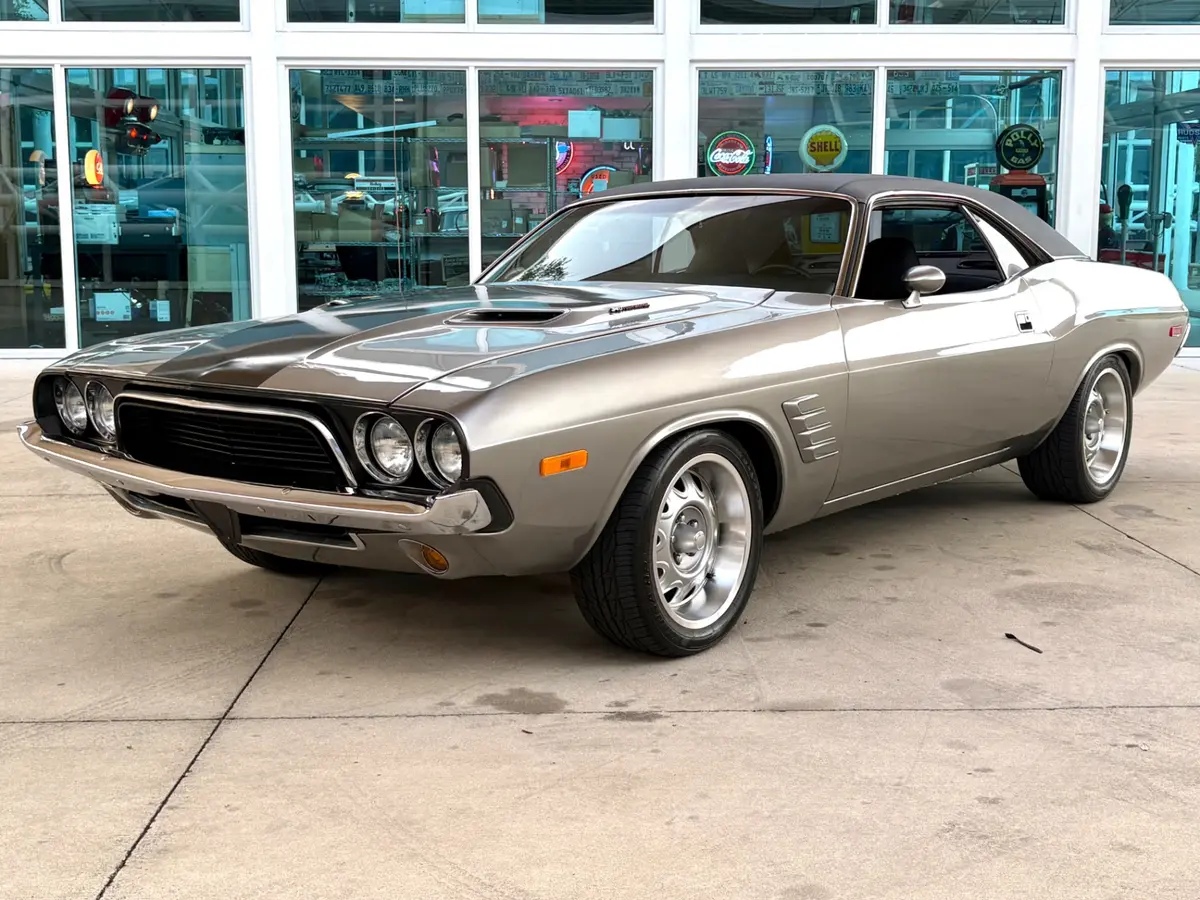
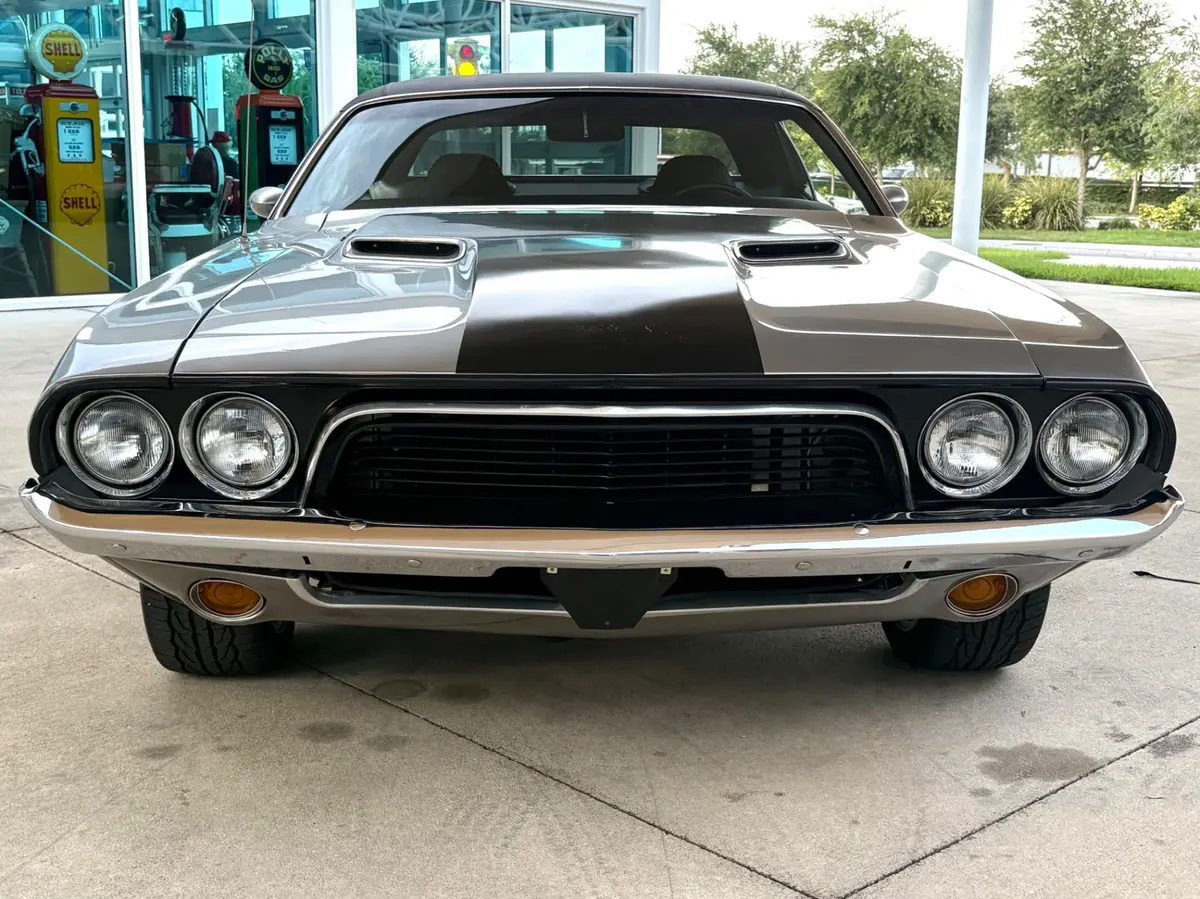
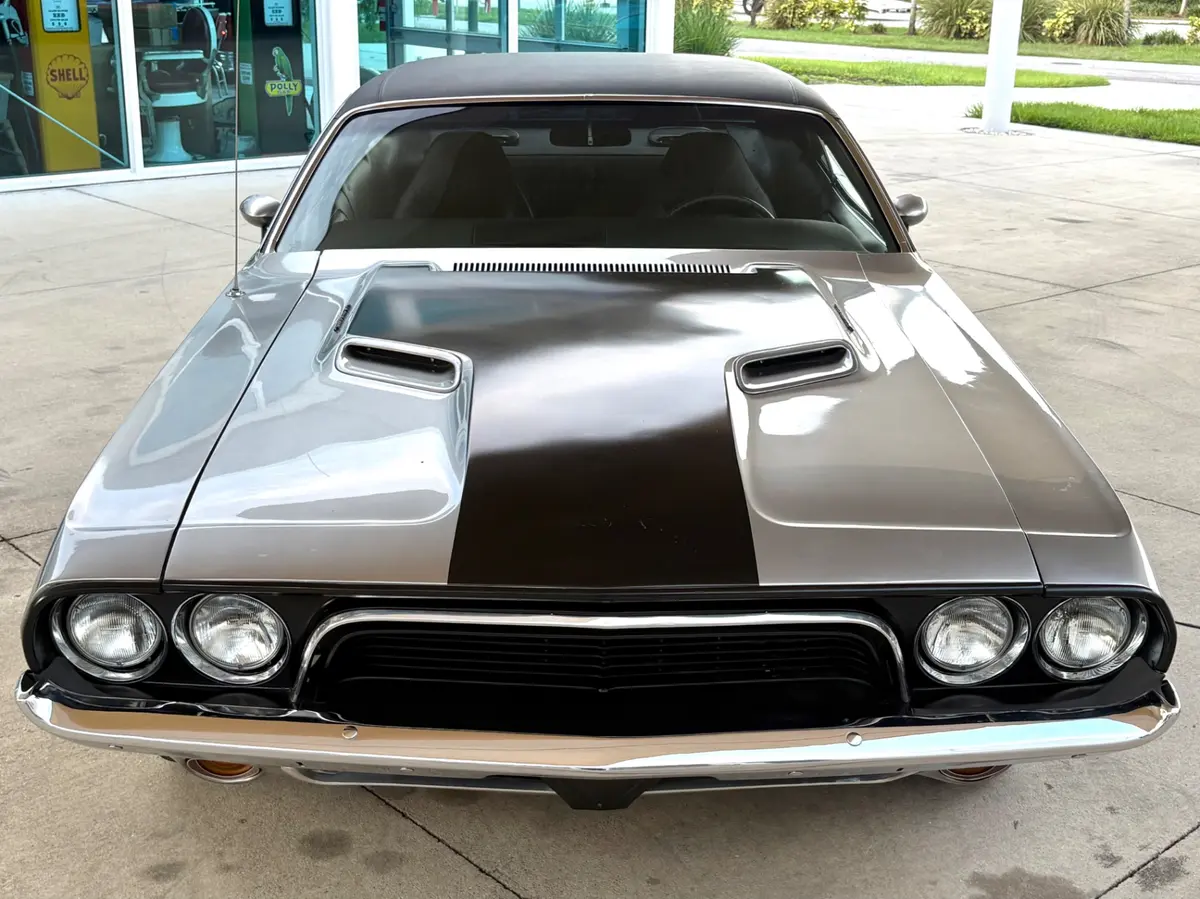
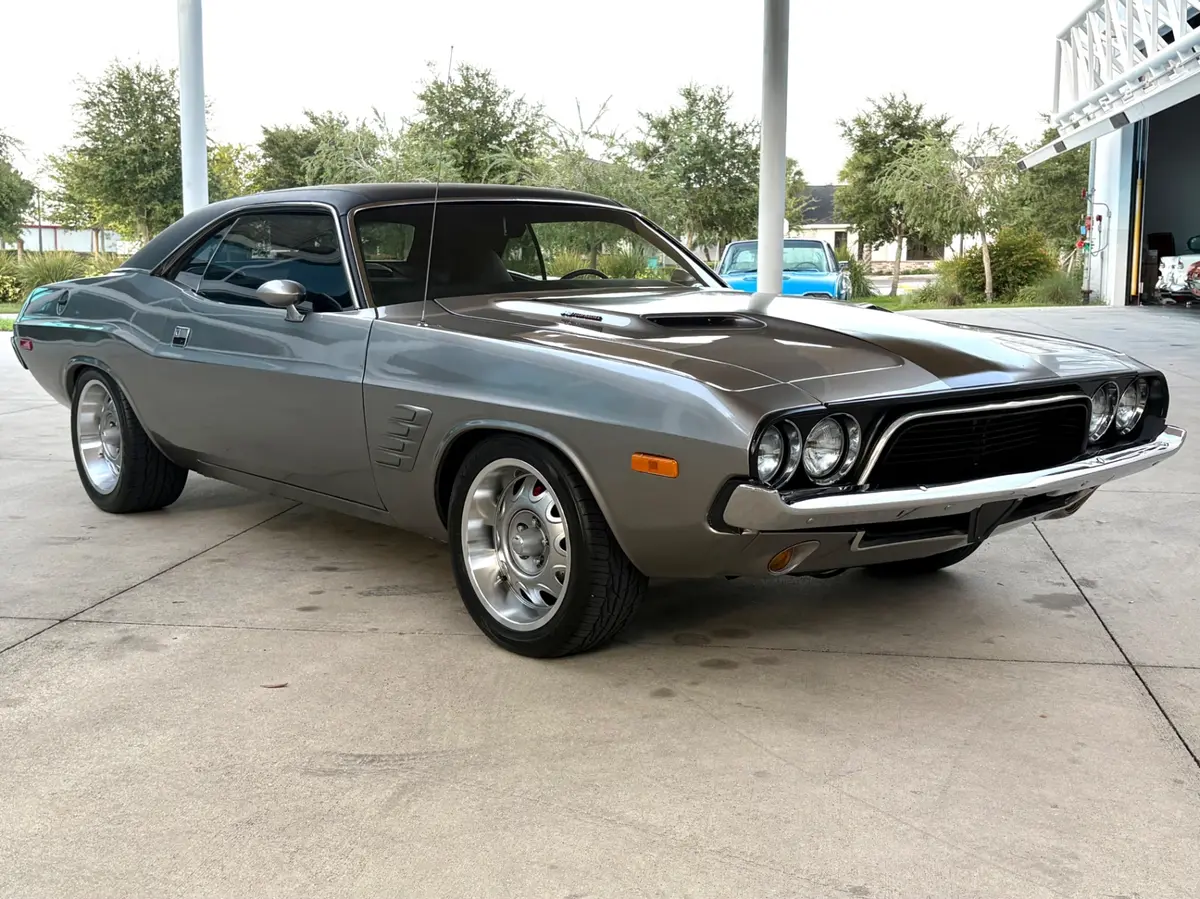
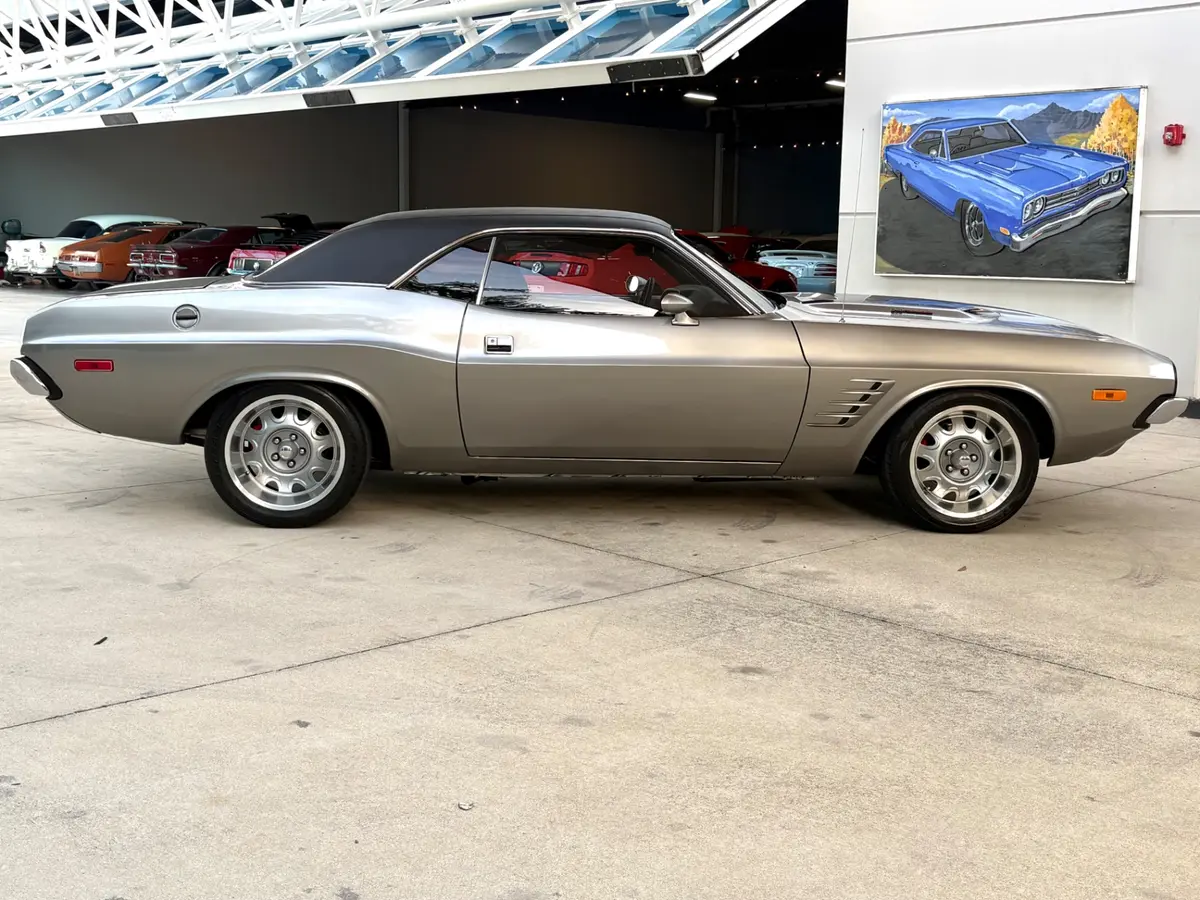
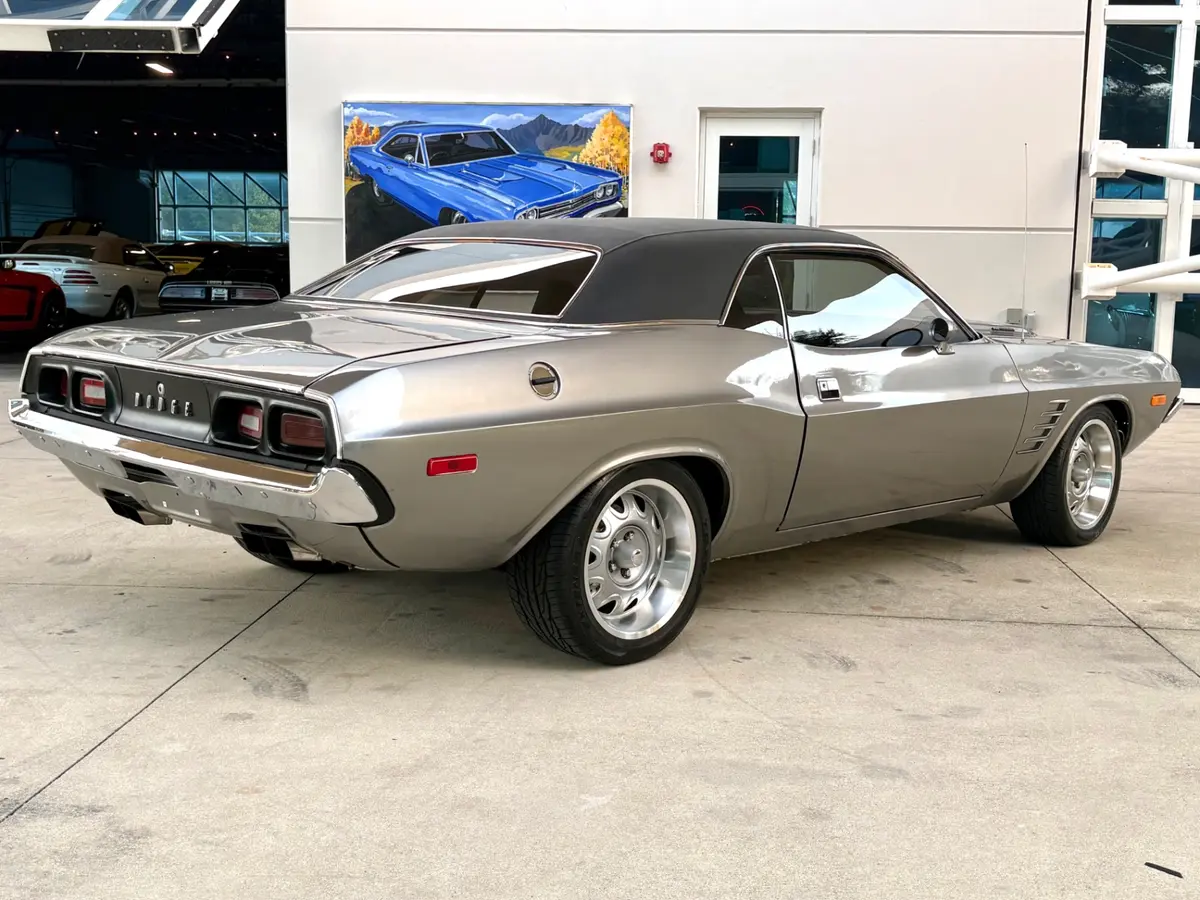
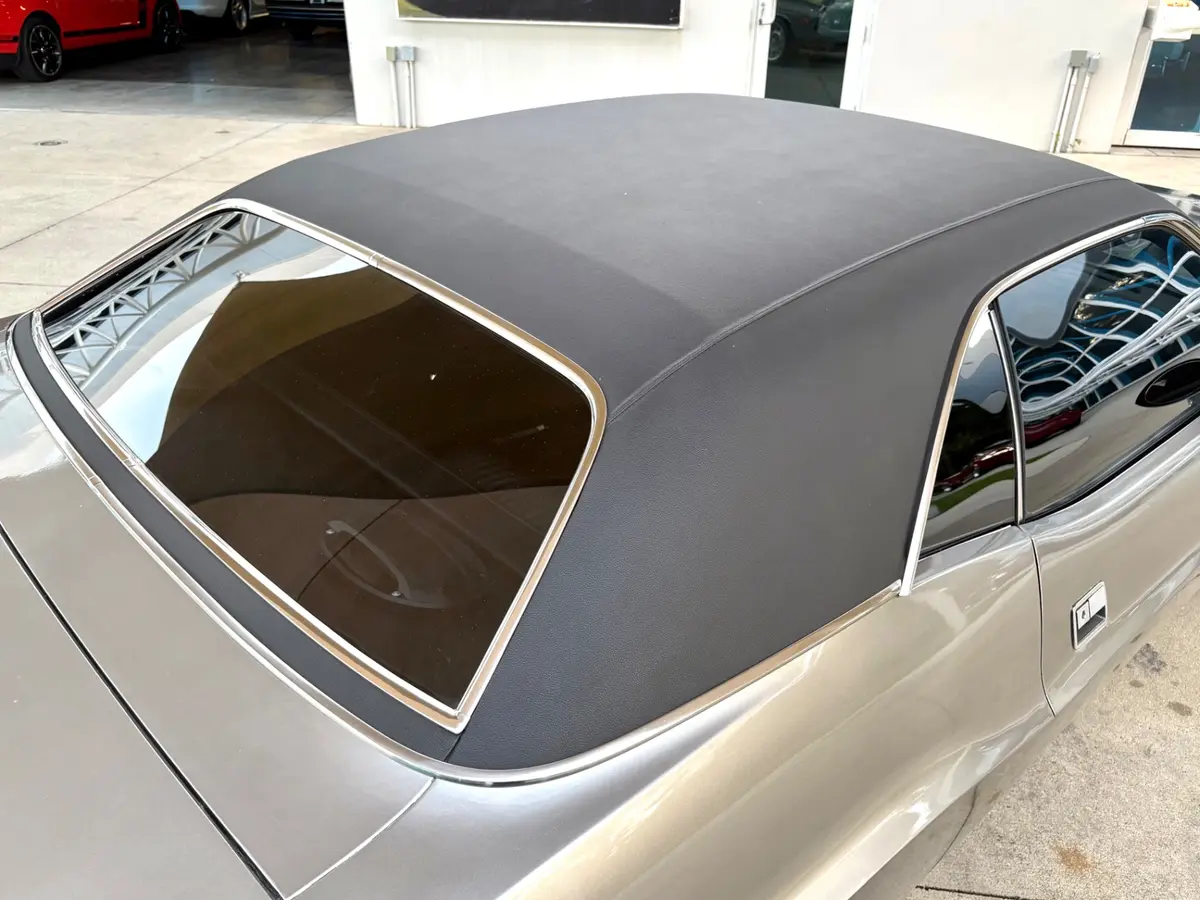
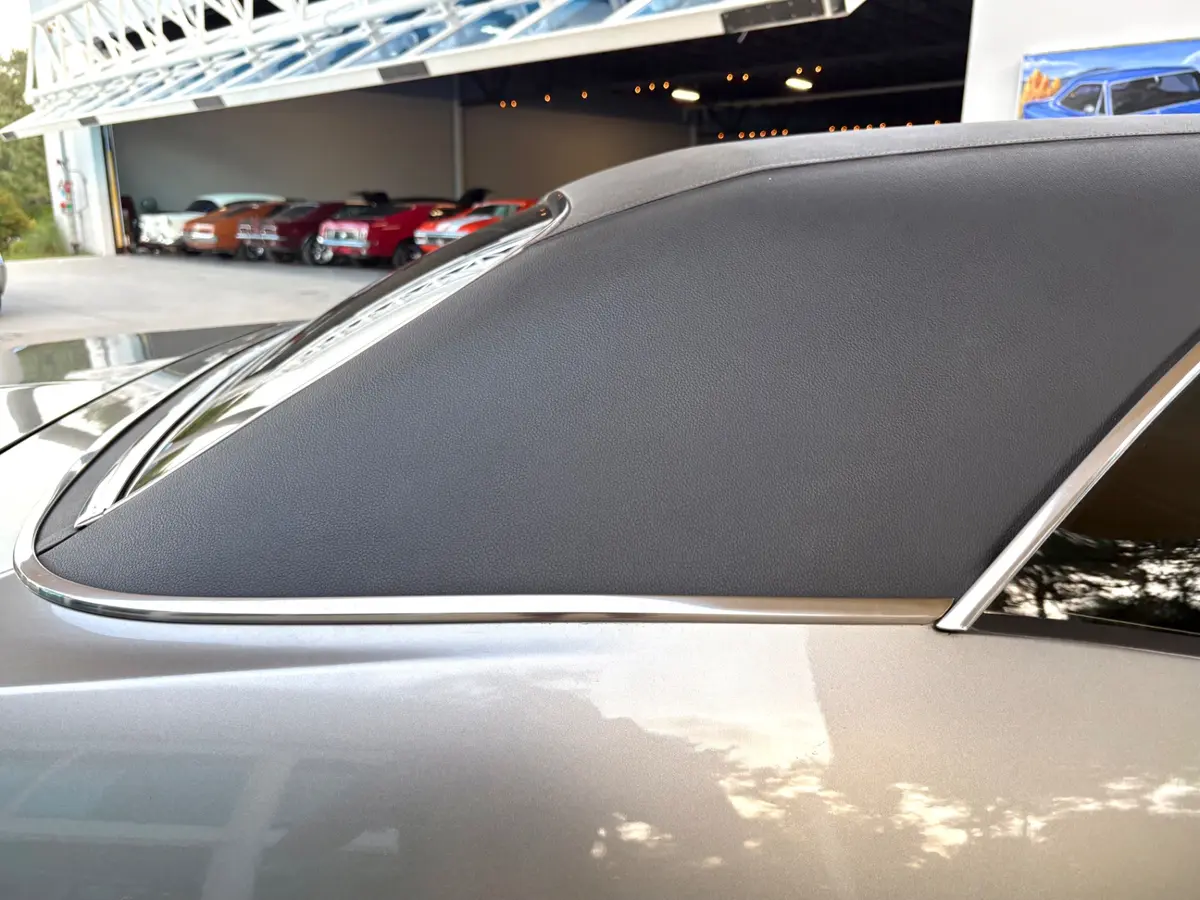
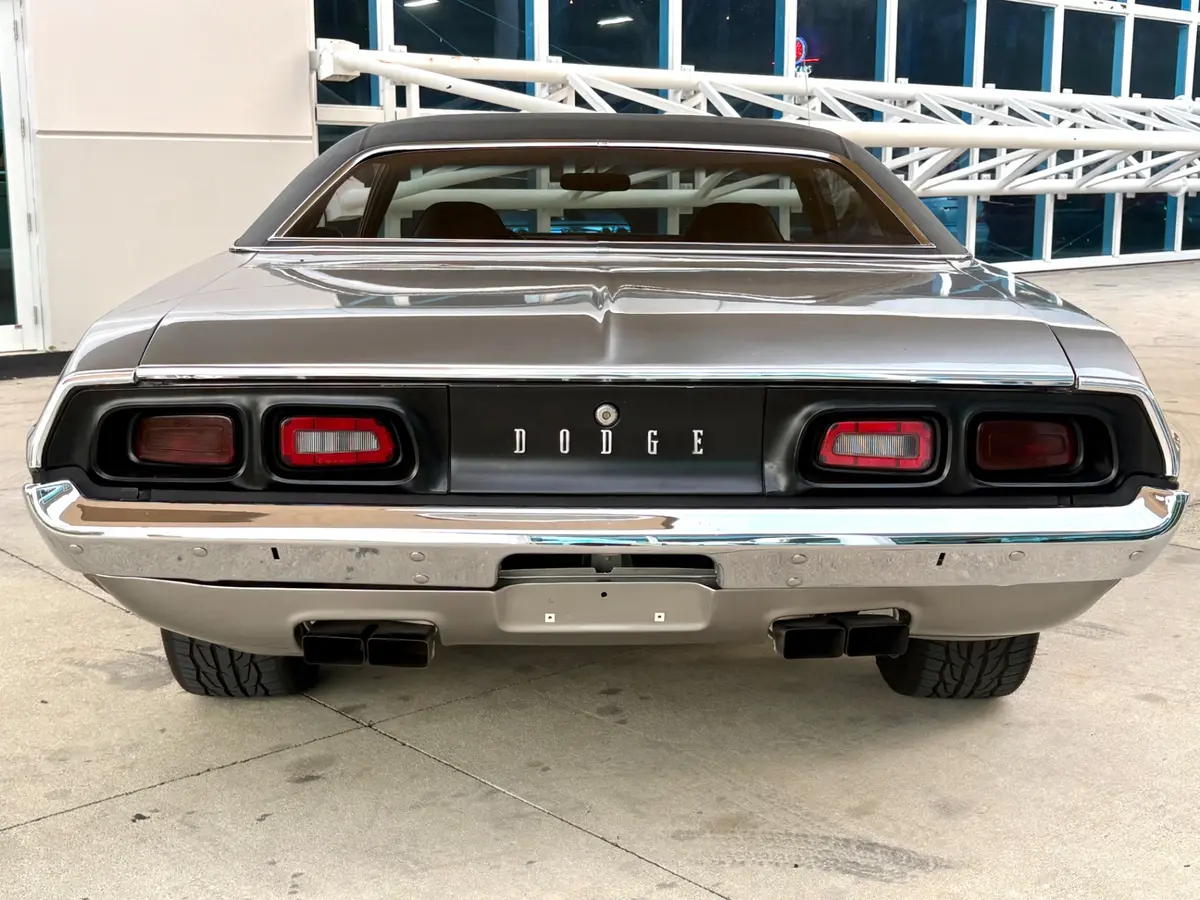
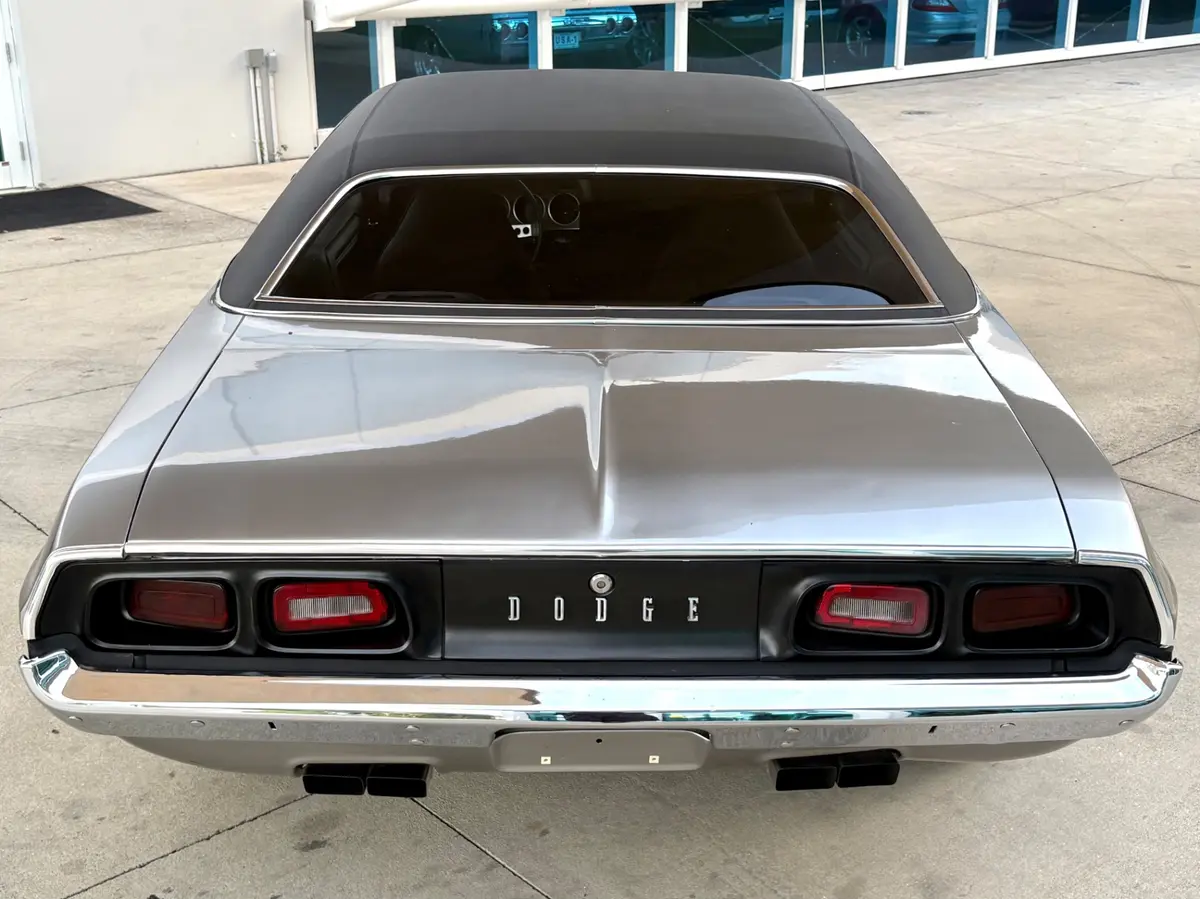
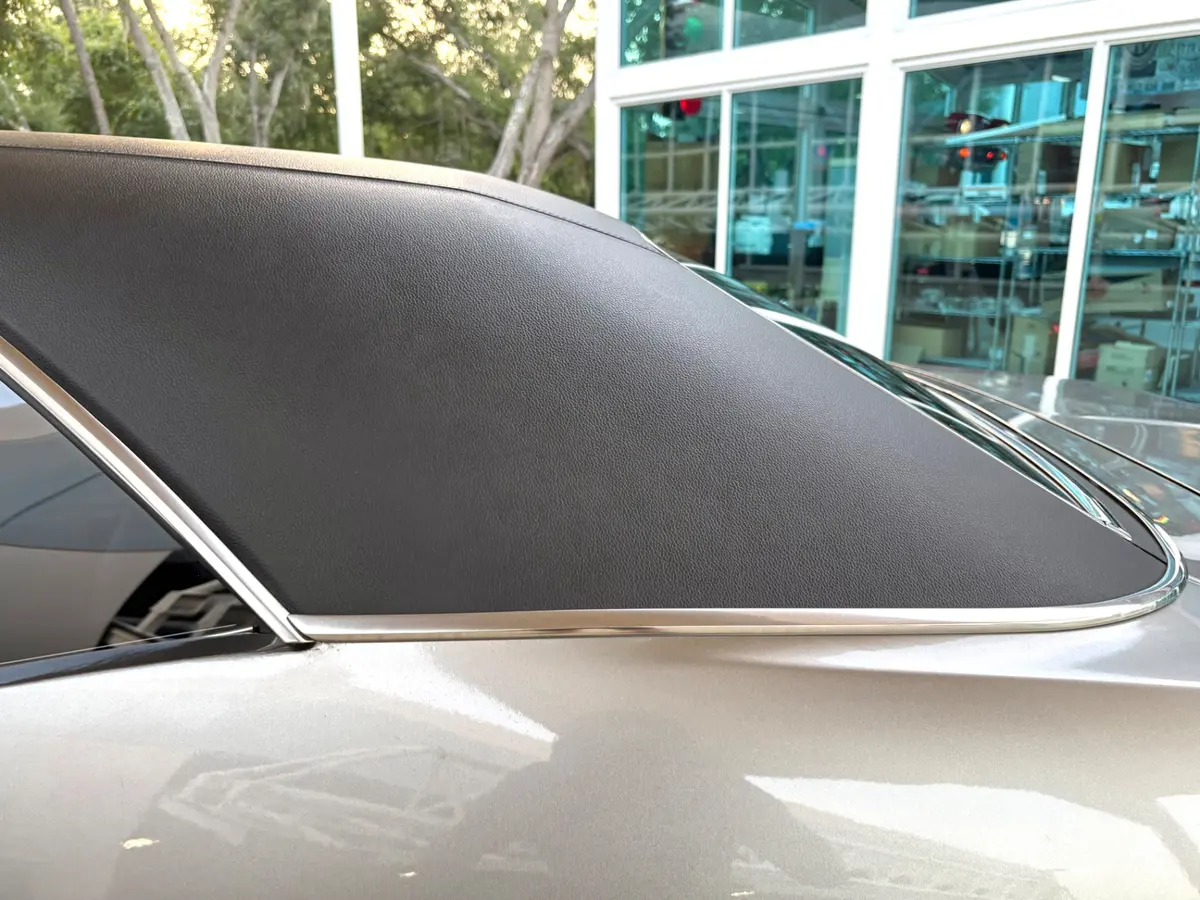
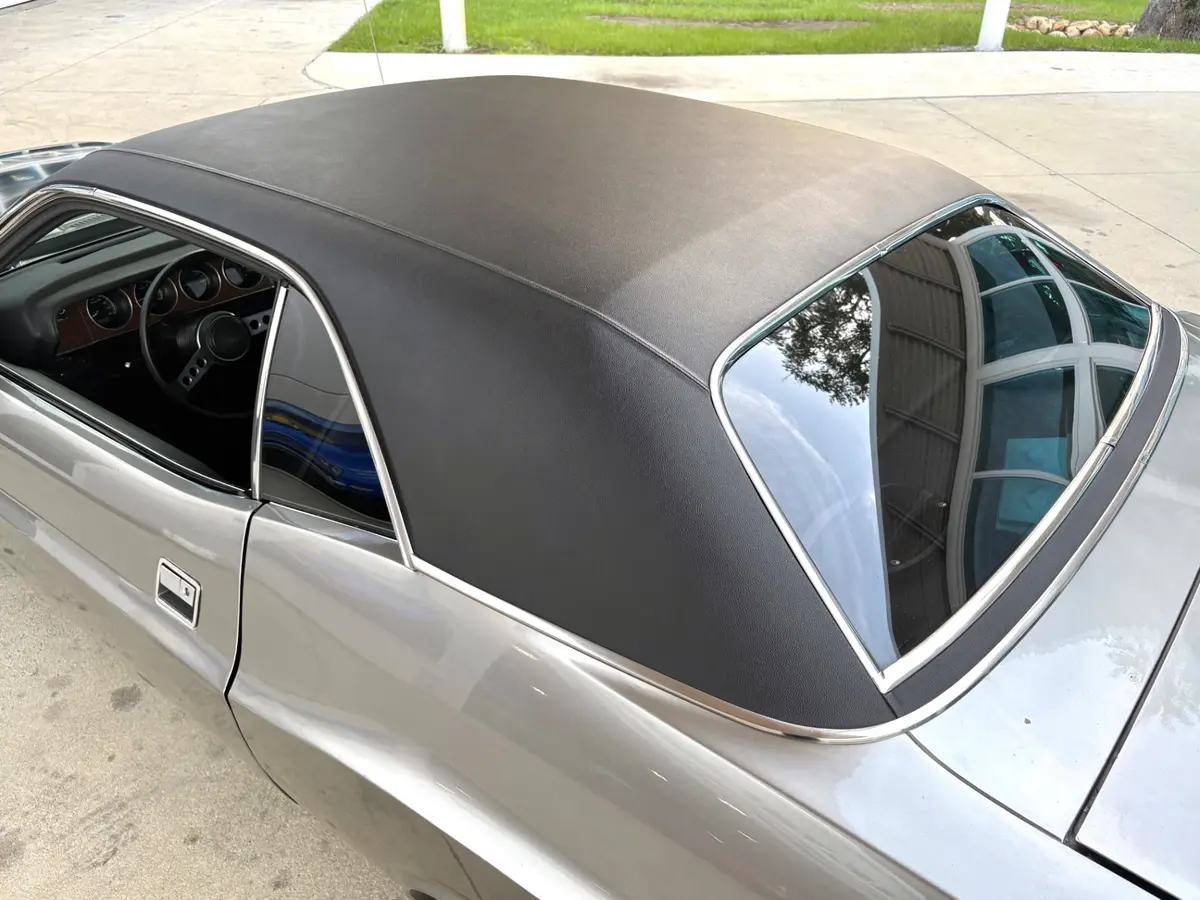
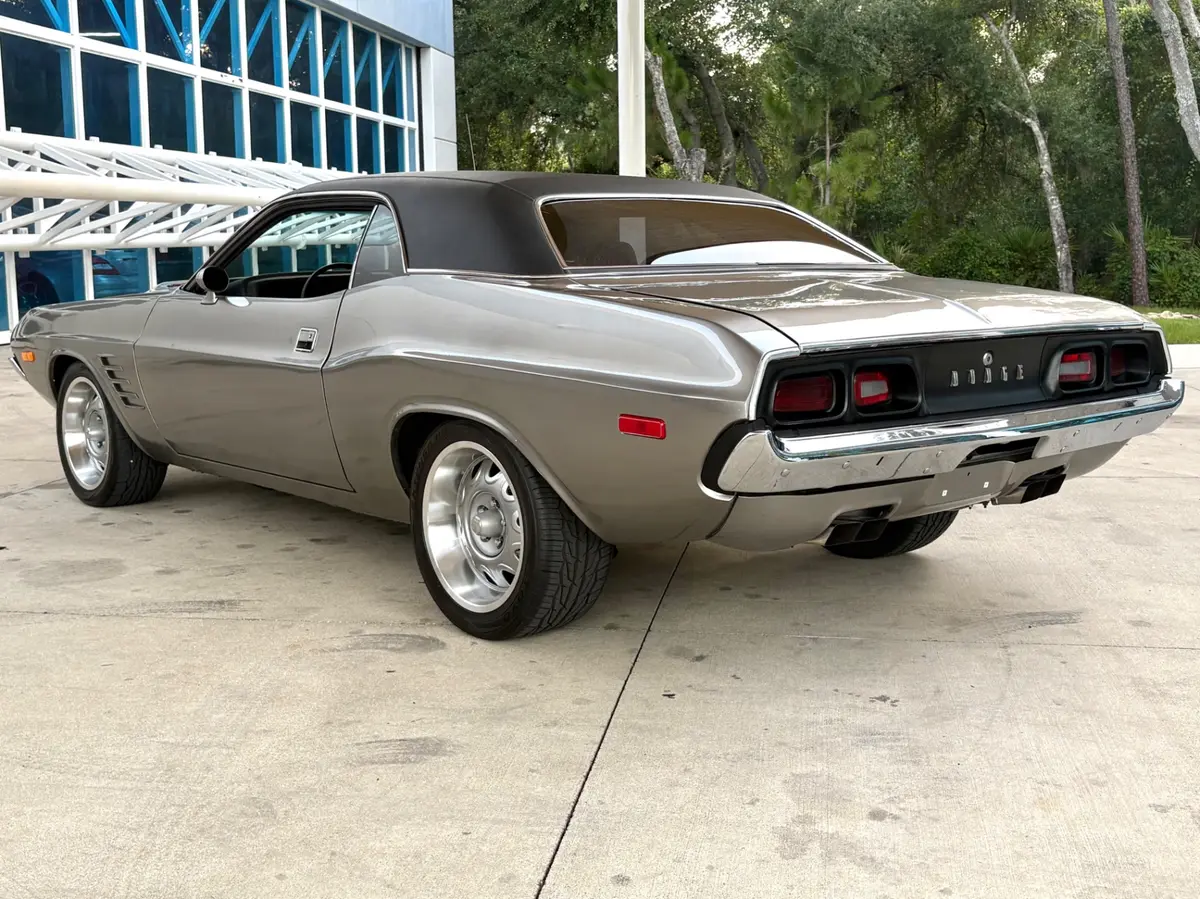
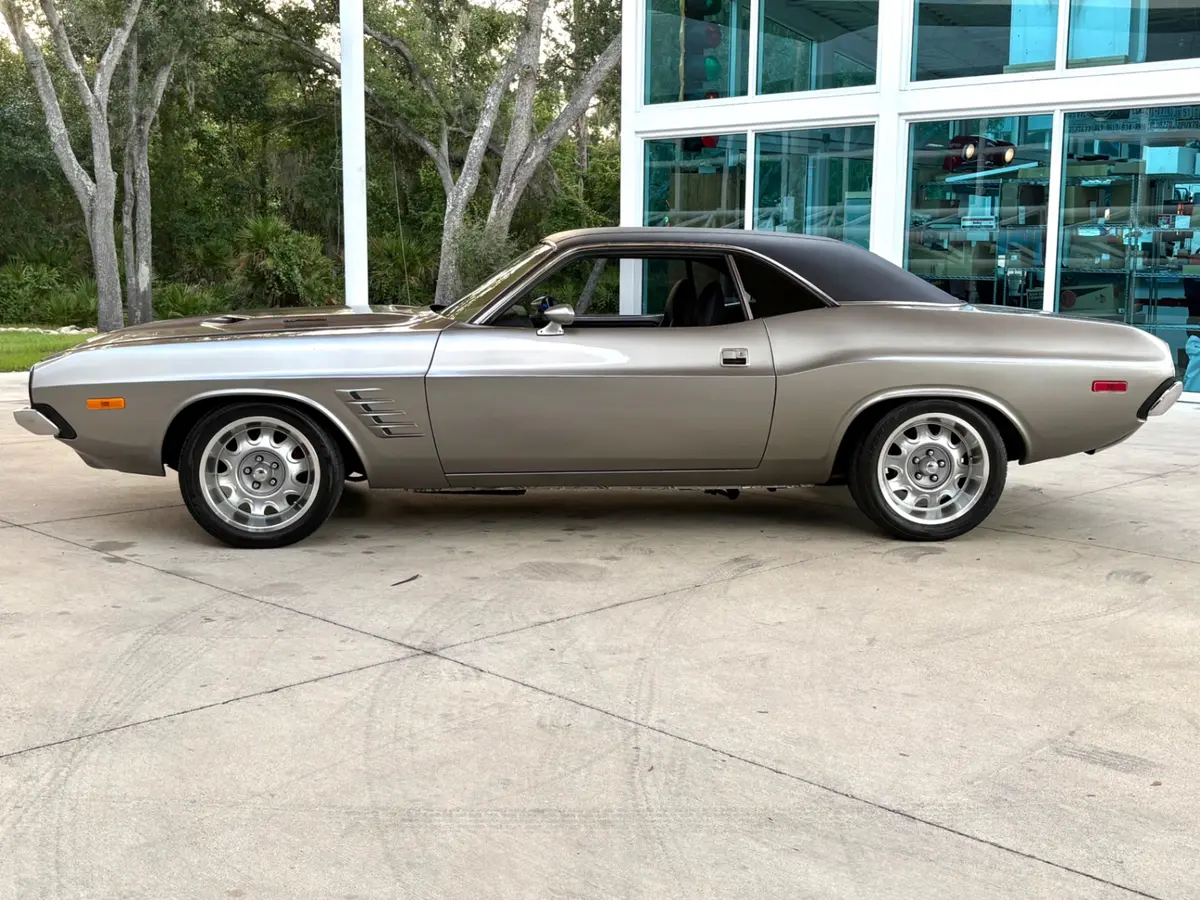
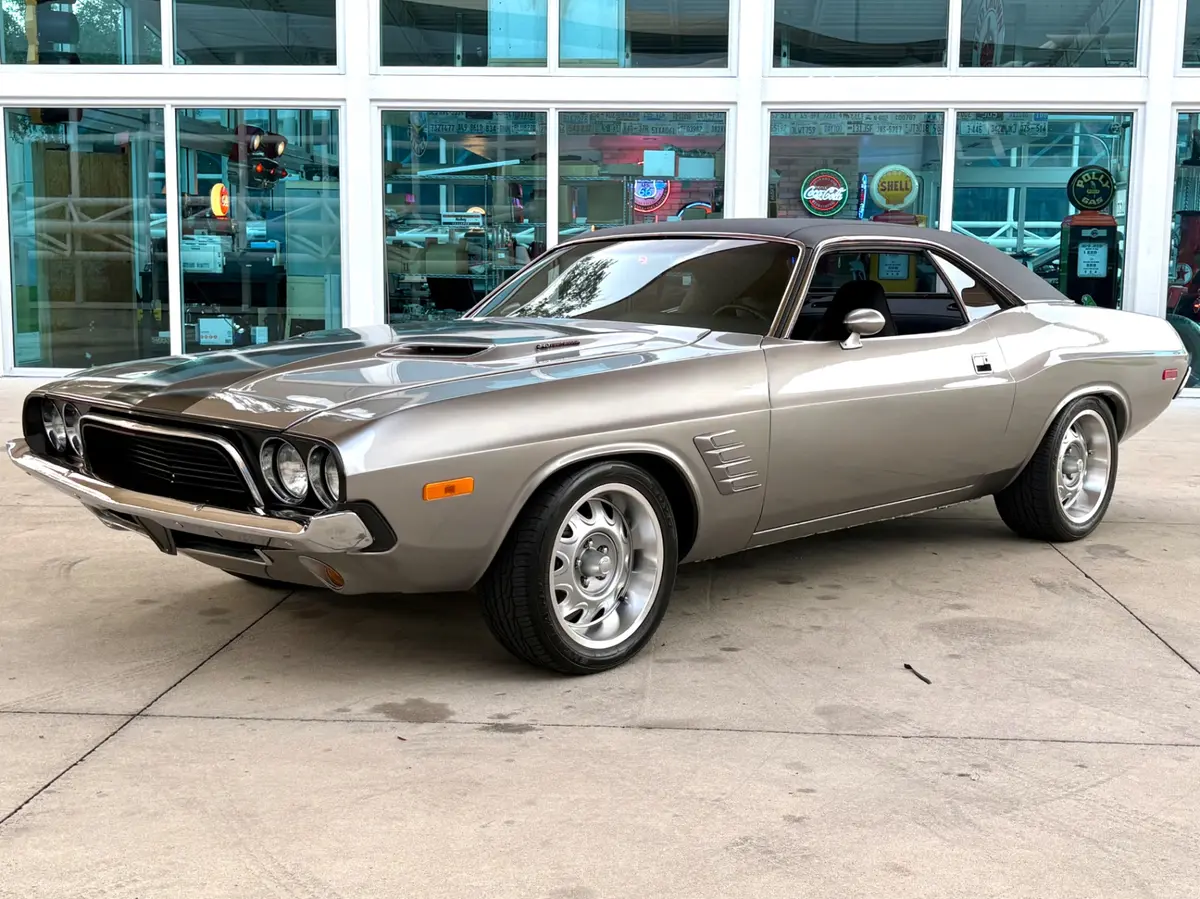
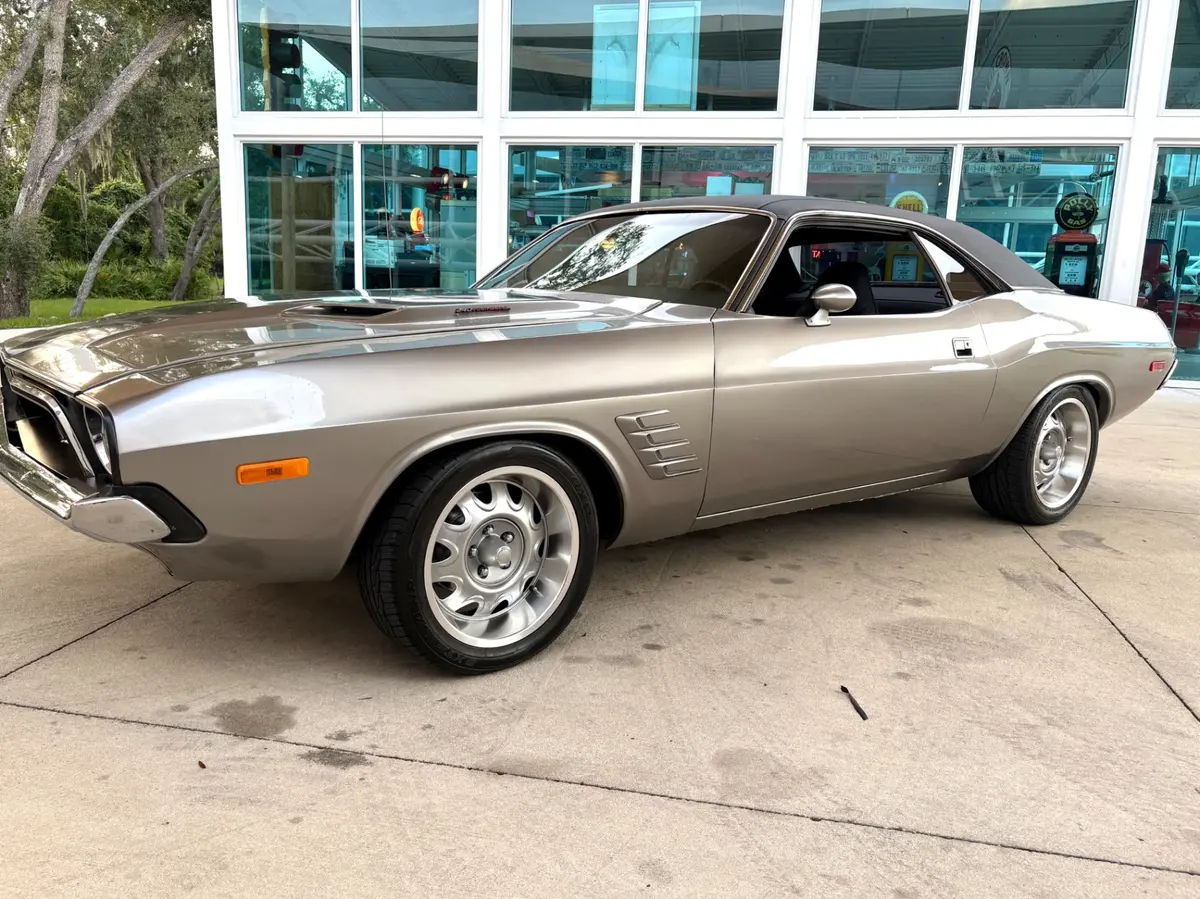
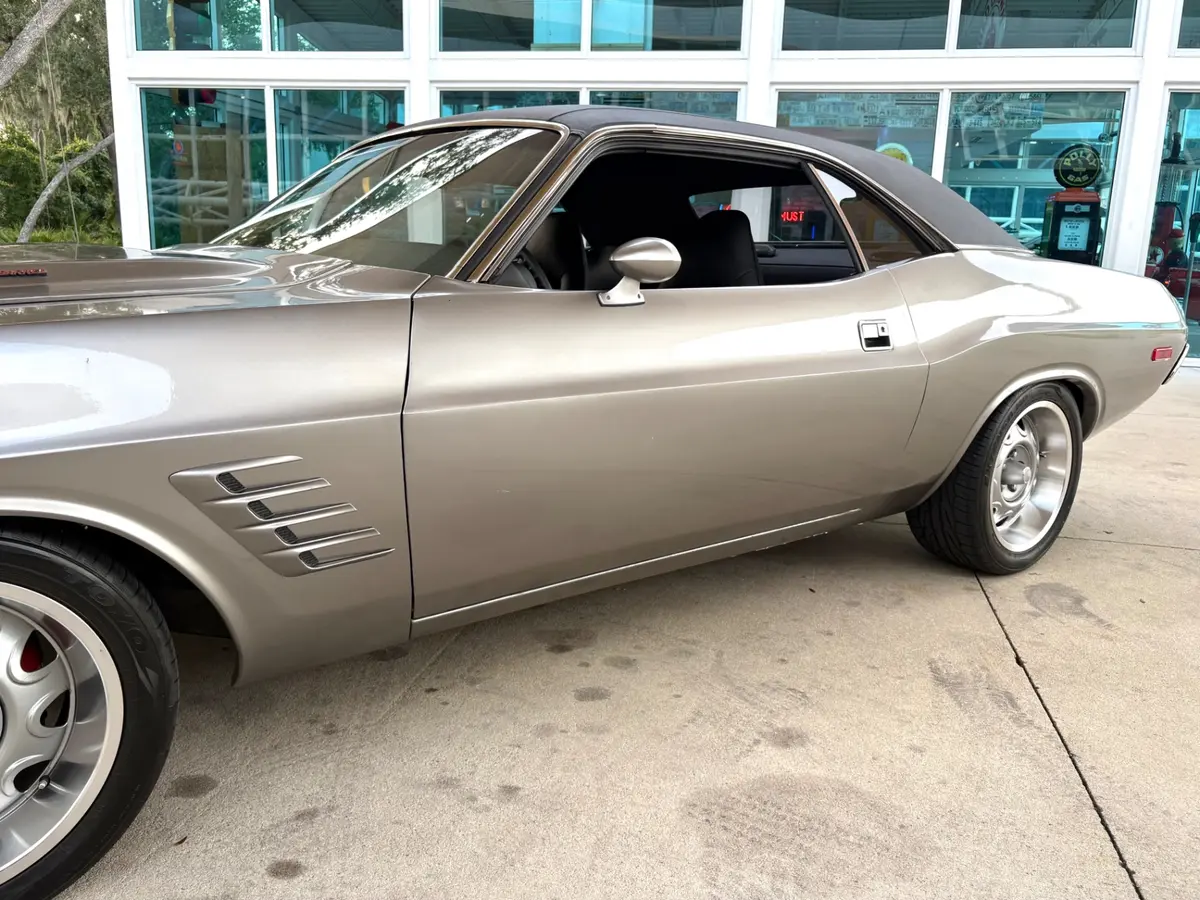
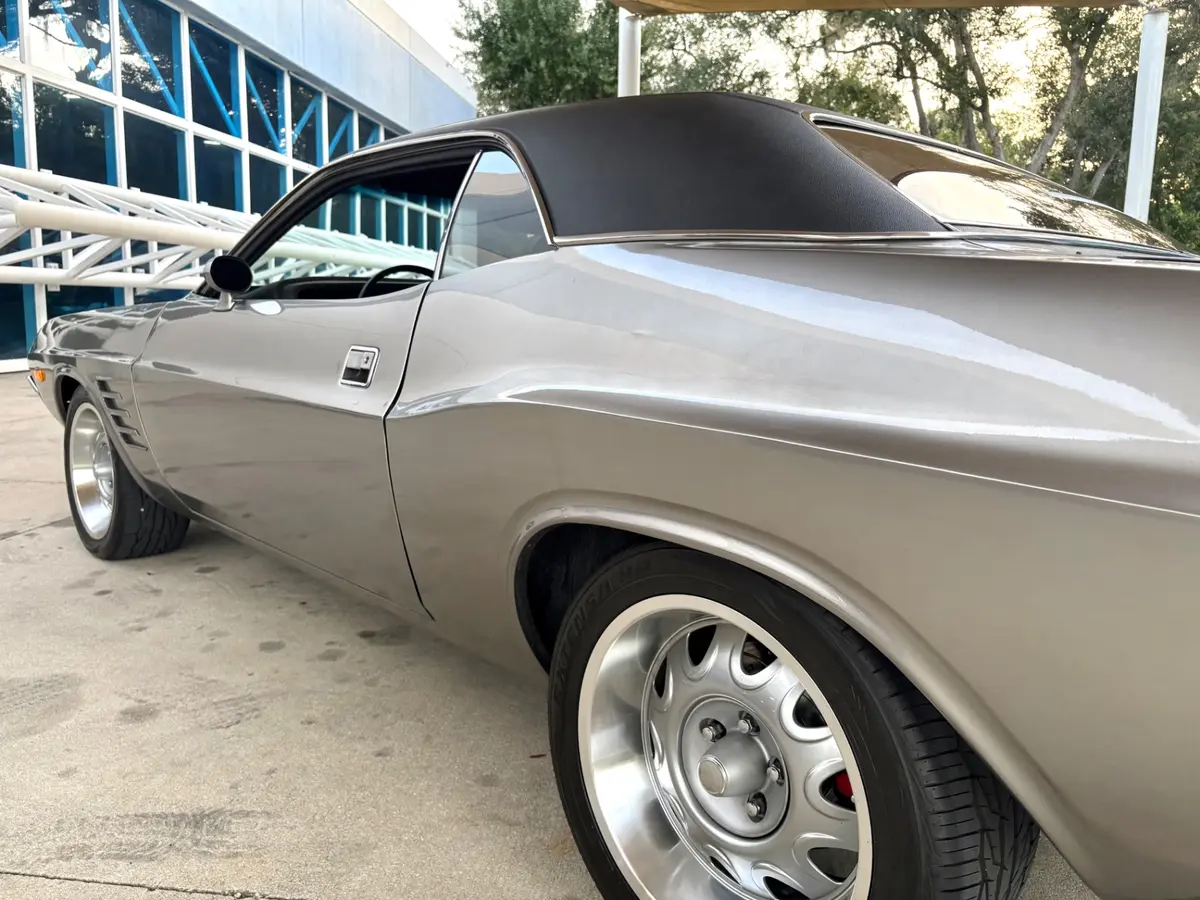
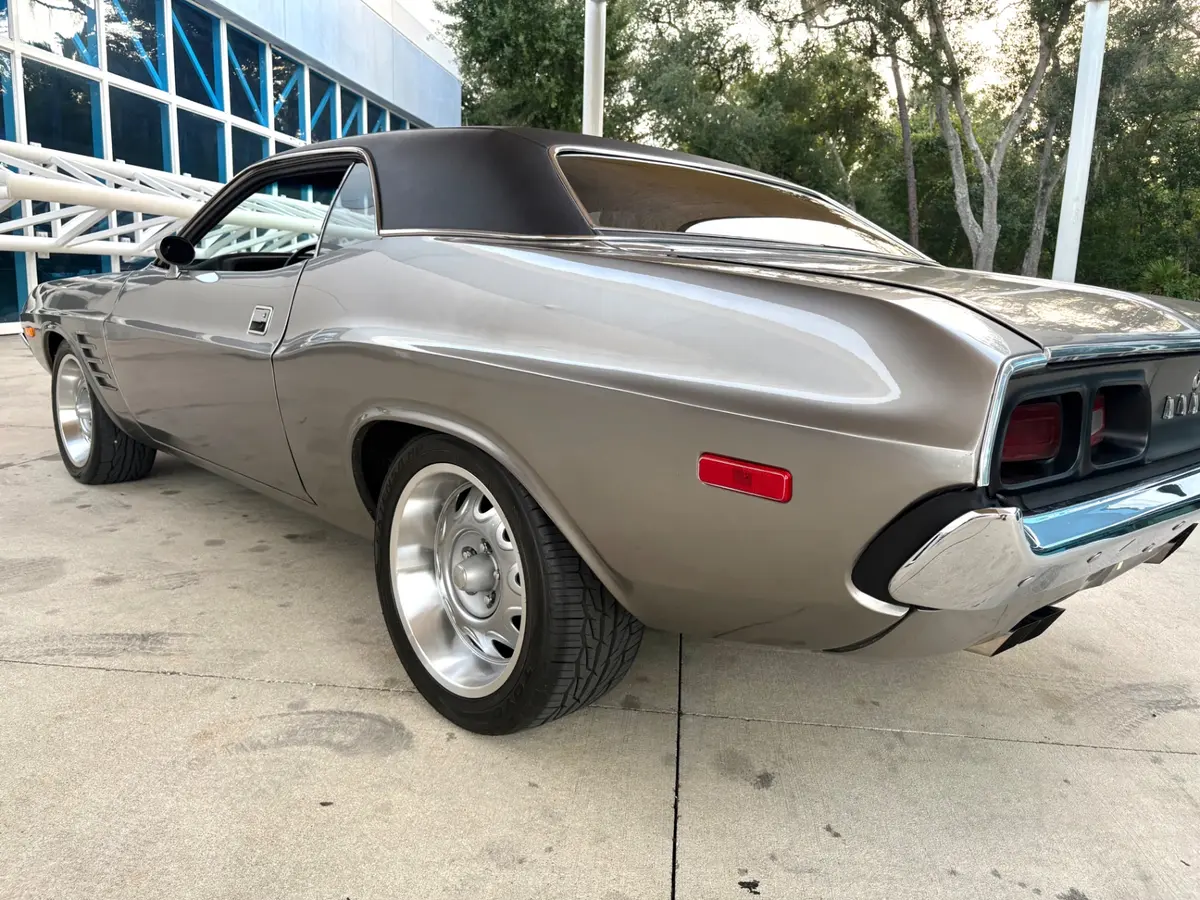
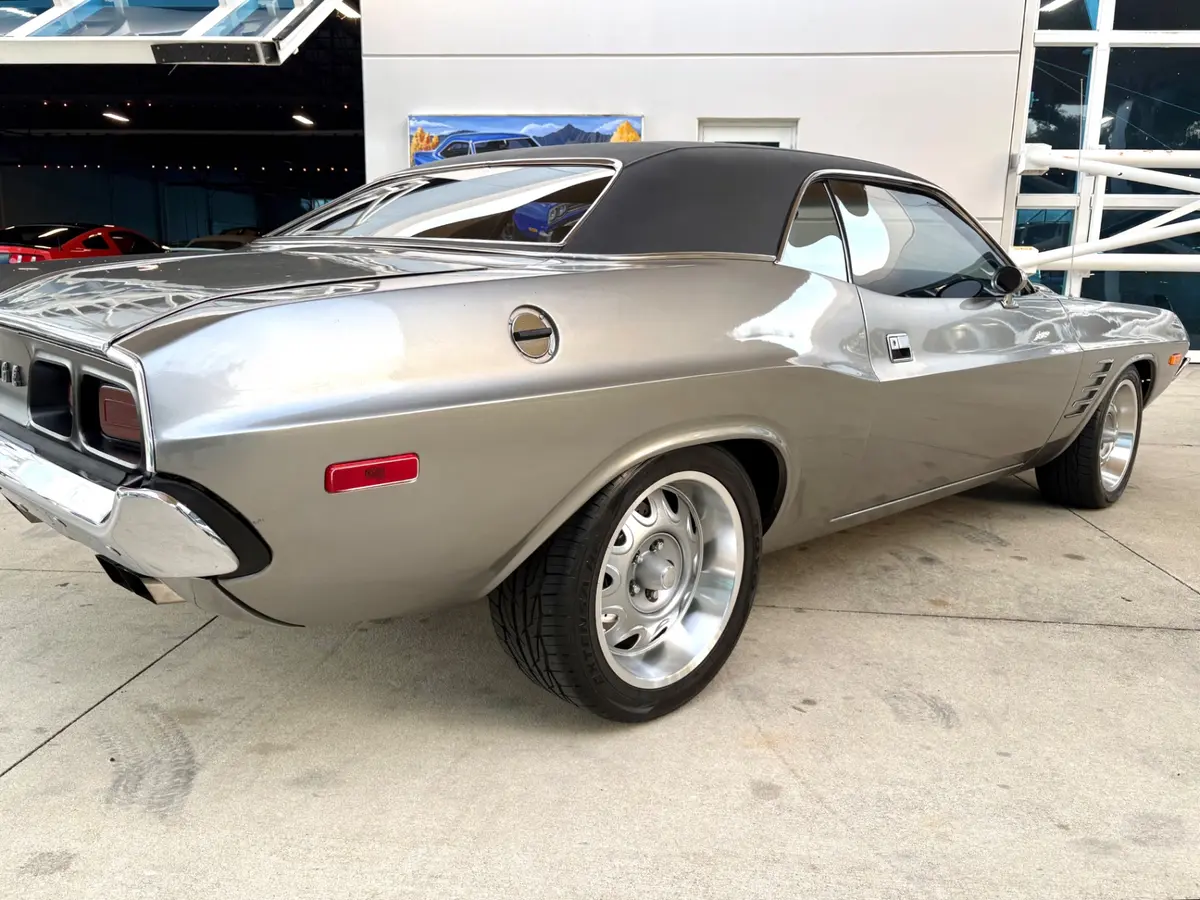
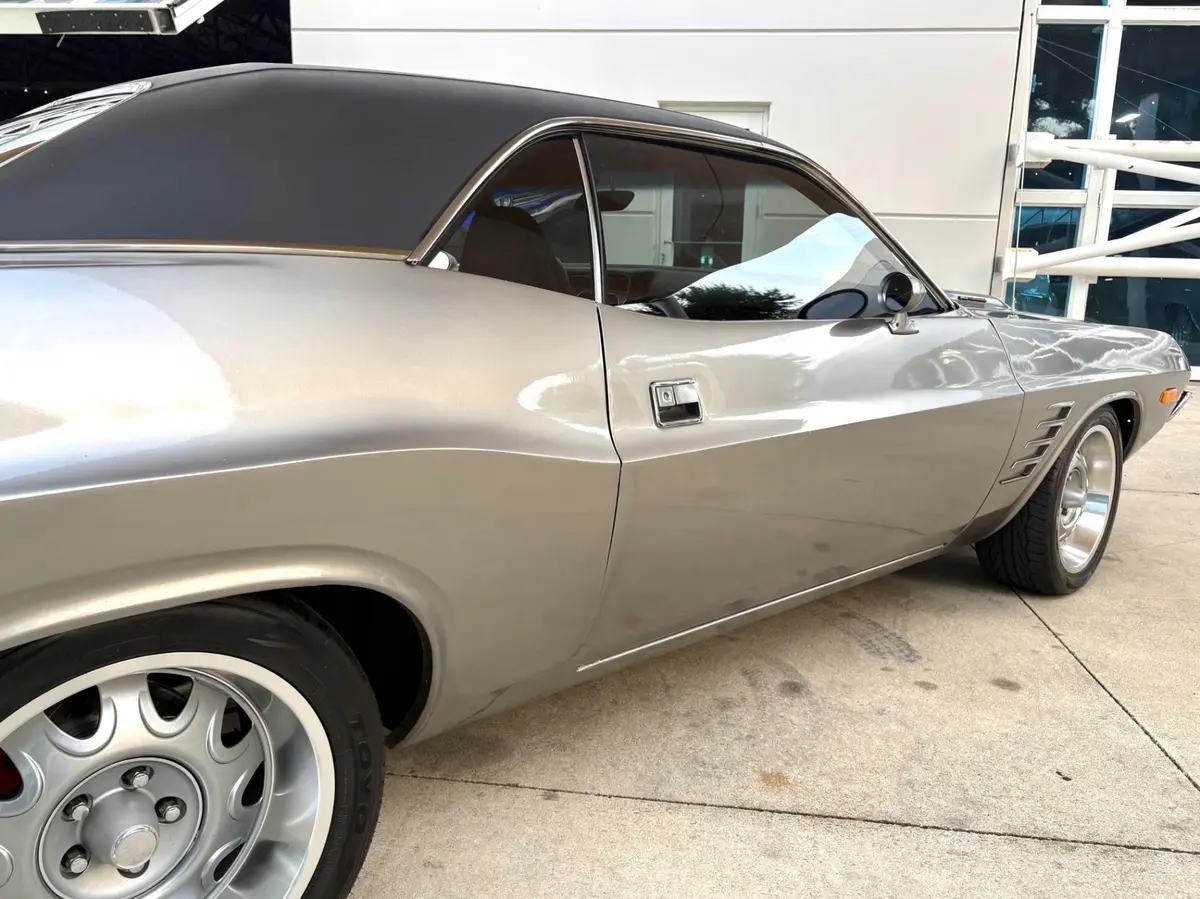
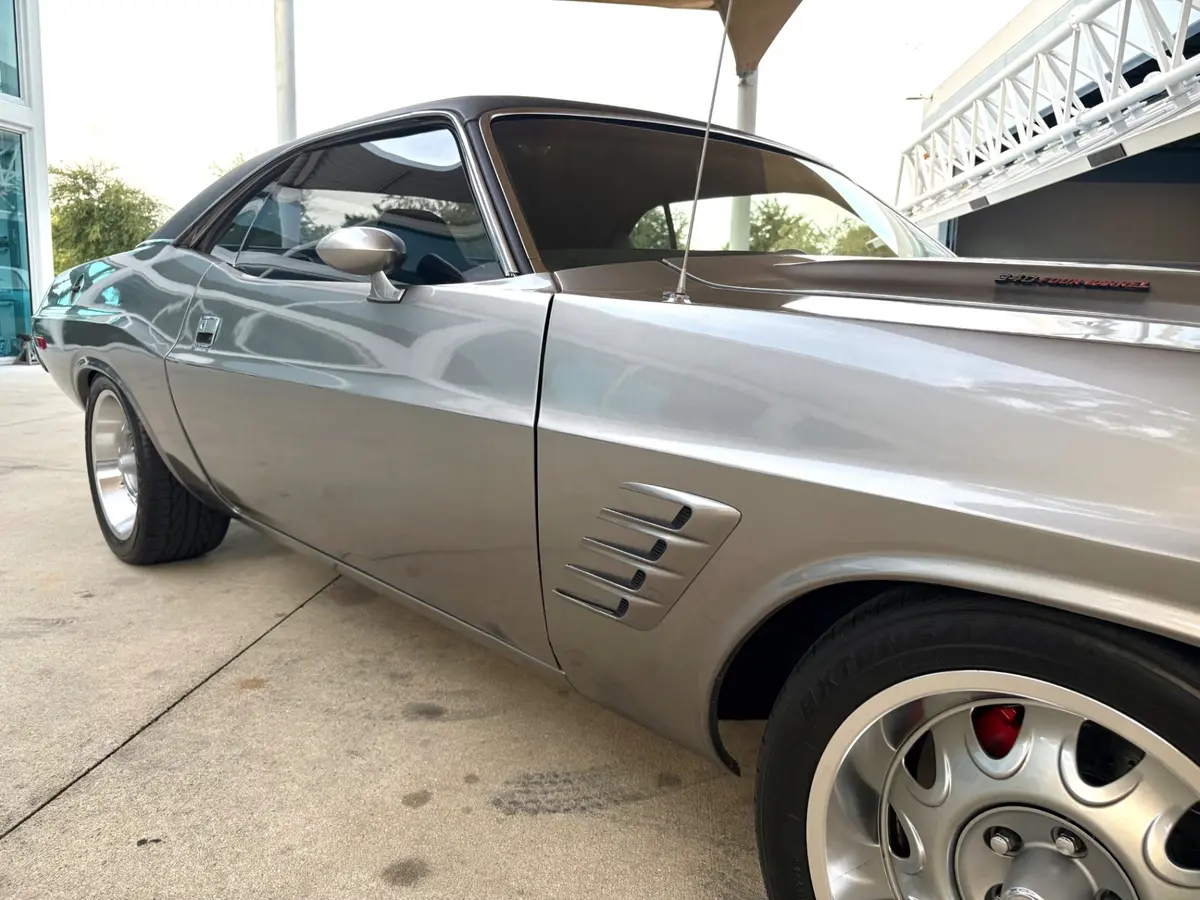
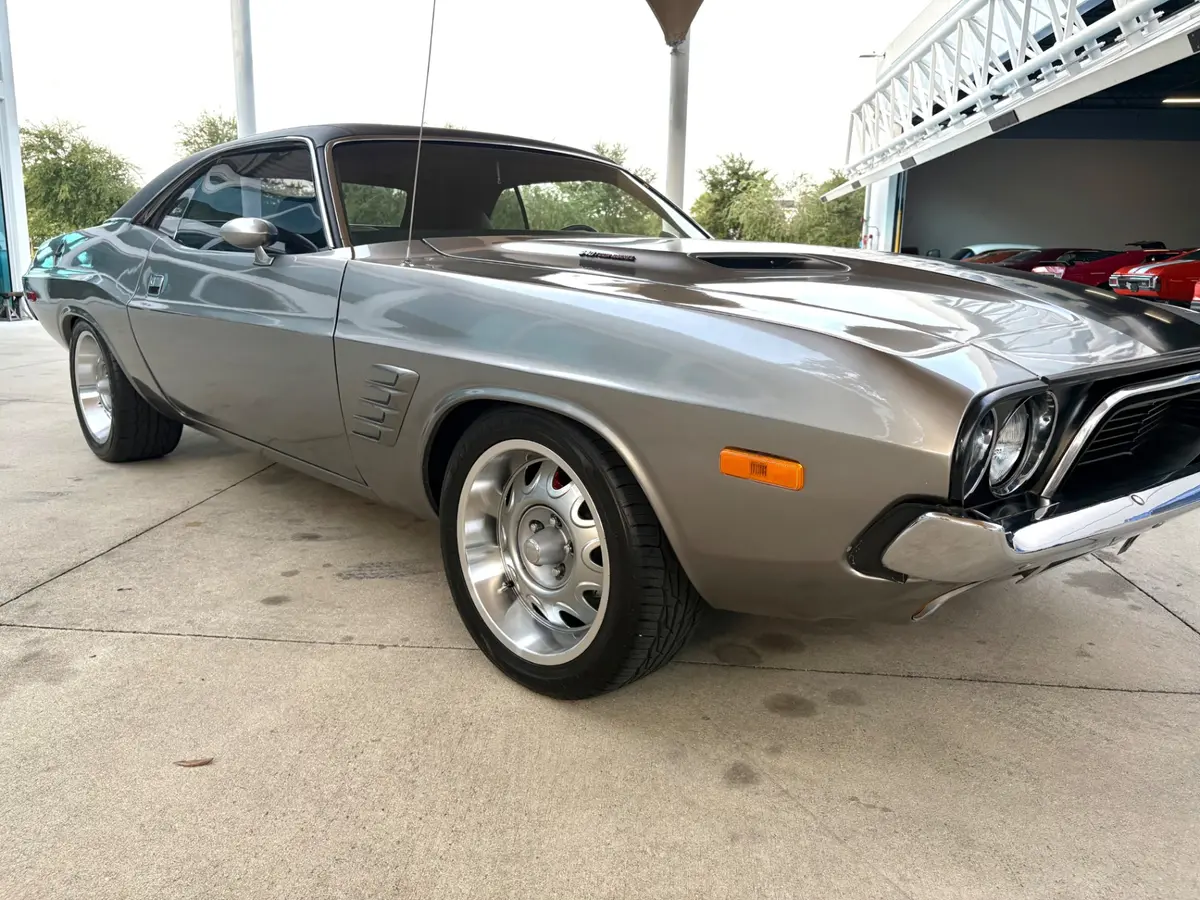
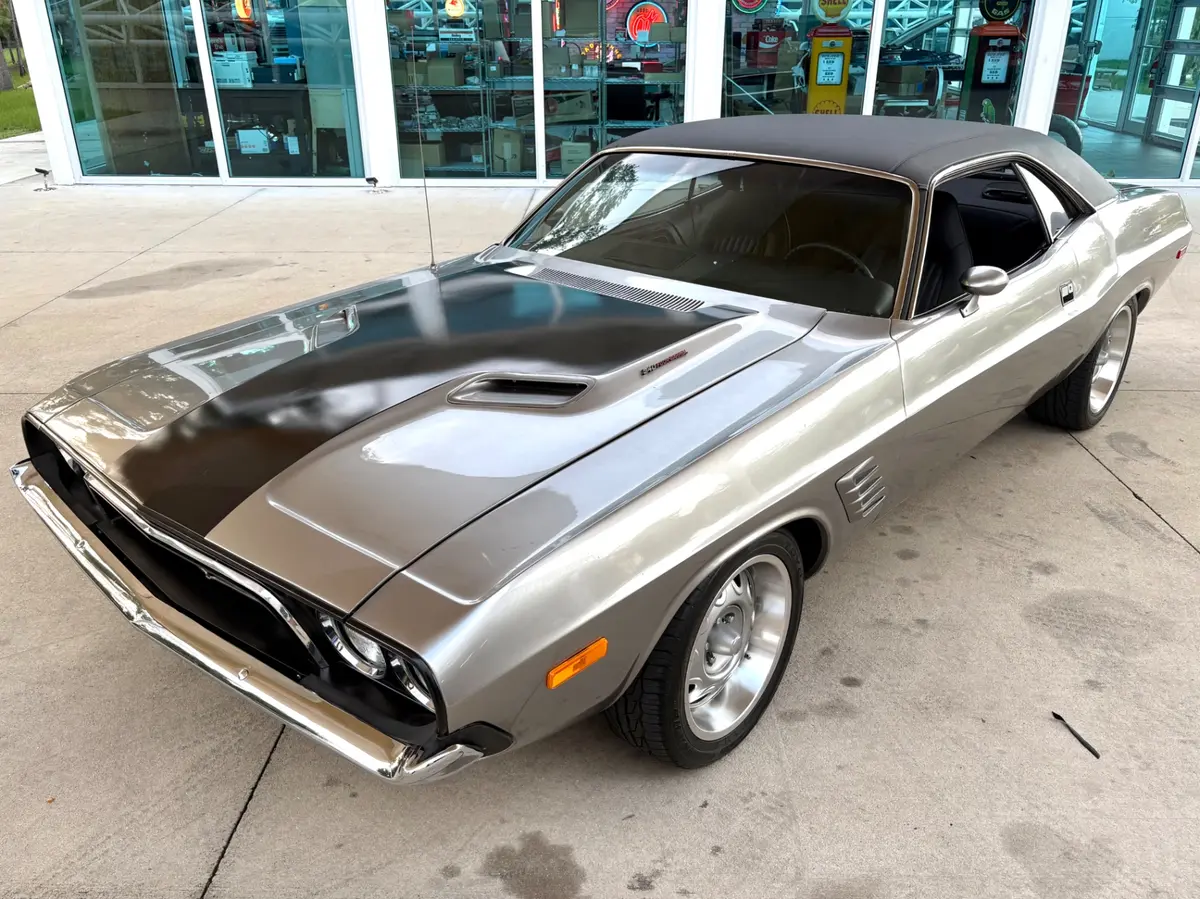
1973 Dodge Challenger 340 Rallye Package — Broadcast Sheet Documented, Dark Silver Poly with Black Vinyl Top
Why This Car Is Special
The 1973 Dodge Challenger is the end of a short, significant story. Dodge introduced the Challenger for the 1970 model year as a direct answer to the Ford Mustang and Pontiac Firebird, built on the Chrysler E-body platform. It was a wide, low pony car with one of the largest engine option lists in its class. By 1973, however, emissions regulations, rising insurance costs, and a market shift toward economy cars had drastically narrowed what Chrysler was willing to offer. The 340 small block was pulled from production after 1973, making this the absolute last year a buyer could walk into a Dodge dealership and order a Challenger with that engine from the factory. That distinction matters to collectors, and it is one of the reasons well-optioned 1973 Challengers with documented build histories are increasingly hard to find.
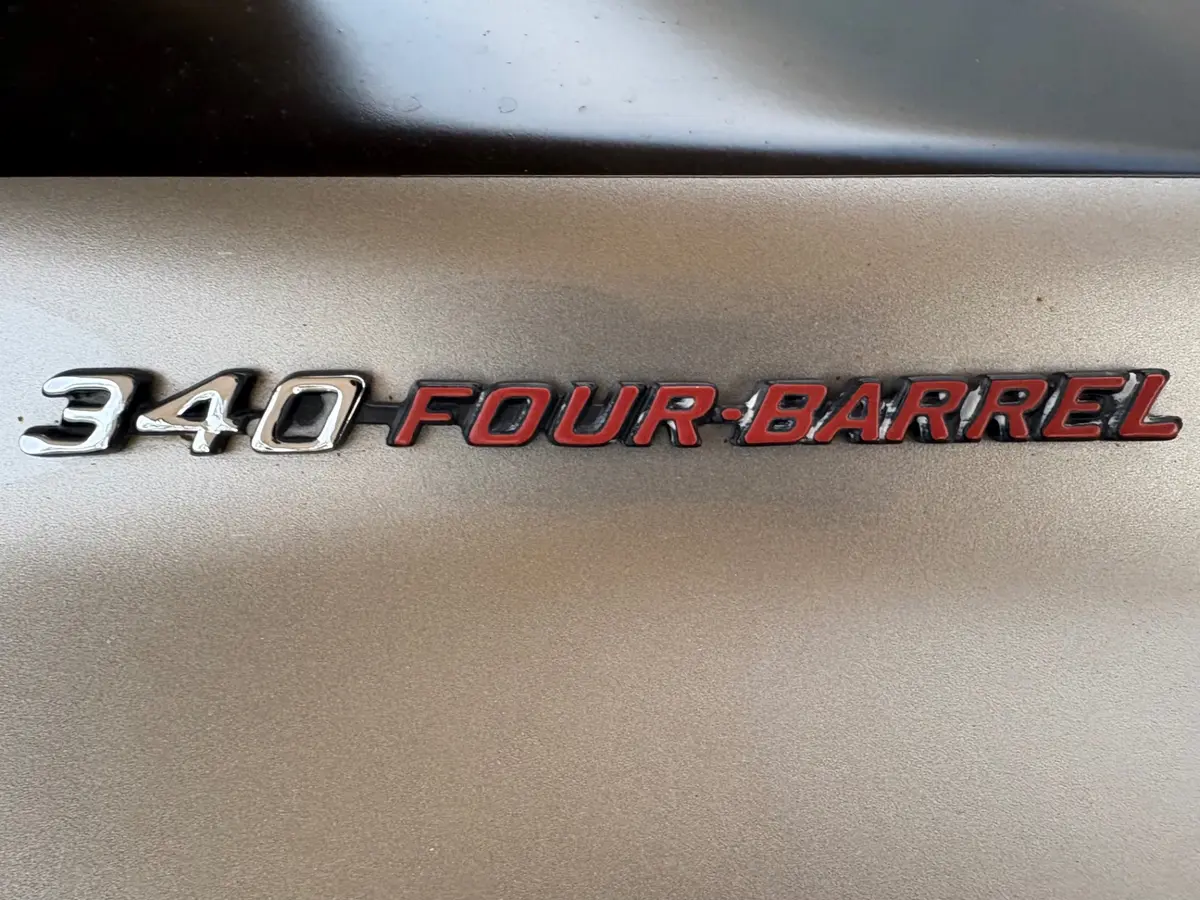
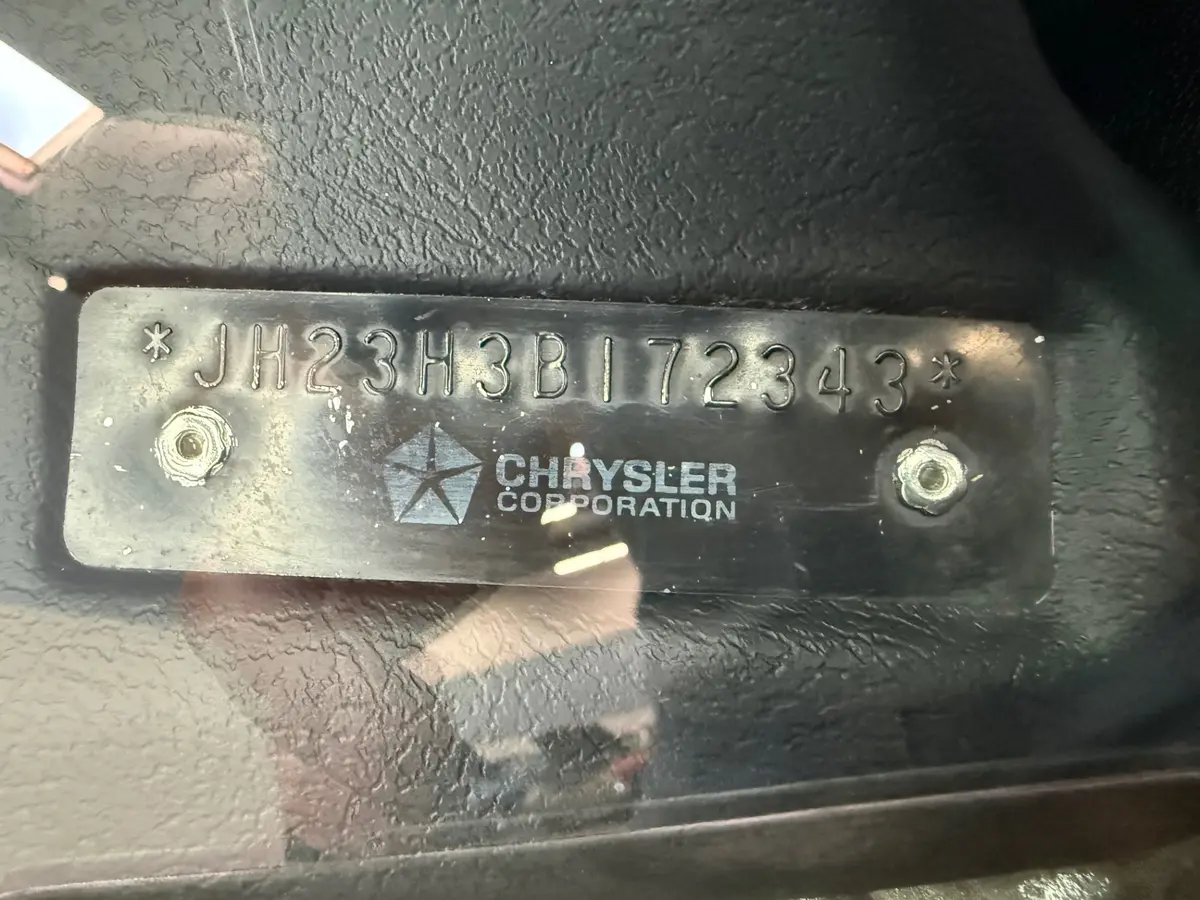
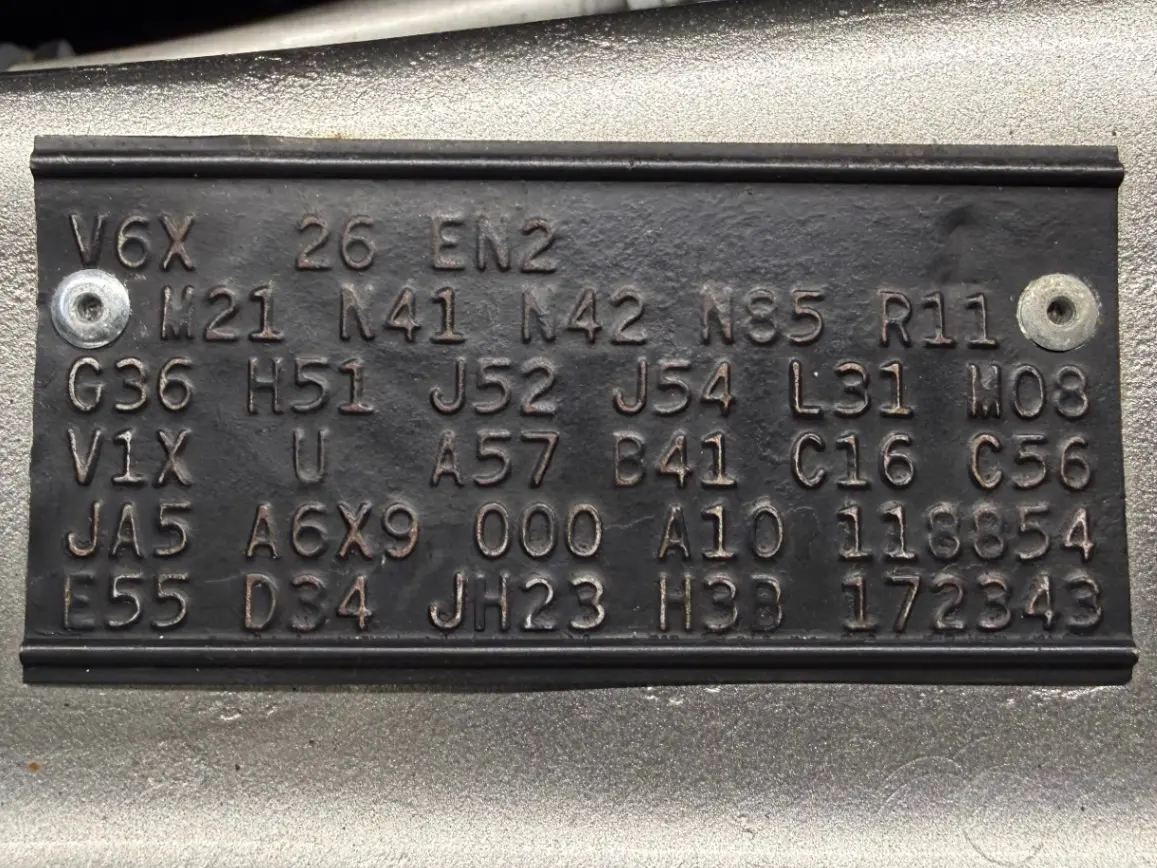
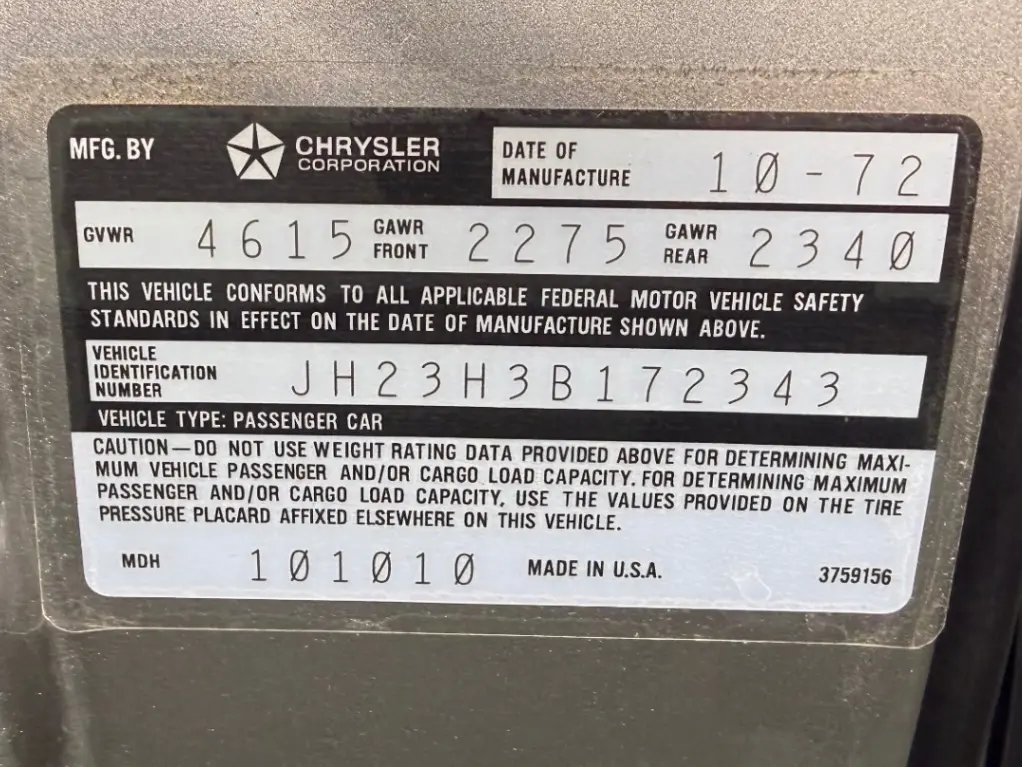
This particular 1973 Dodge Challenger carries the factory A57 Rallye Package, confirmed by the broadcast sheet RPO codes. The Rallye Package was Dodge's performance-appearance group for the Challenger in its later years, bundling together functional and visual upgrades that separated it from the base hardtop. What makes this car especially traceable is that the broadcast sheet survives, giving researchers and buyers a direct record of how this car was ordered and built at the factory. Build date encoded in the vehicle records places assembly at October 10, 1972, meaning this is an early 1973 model year car. The VIN structure confirms it was built at the Hamtramck, Michigan assembly plant and identifies the 340 four-barrel V8 as the installed engine — the "H" in the fifth position of the VIN is the Chrysler engine code for the 340 two-barrel or four-barrel small block, consistent with the RPO E55 four-barrel specification listed on the broadcast sheet.
The color combination is Dark Silver Poly (paint code JAS) over a full black vinyl top, with a black interior. Silver over black is one of the more purposeful combinations available on the 1973 Dodge Challenger — understated at a distance, precise up close. The car has been restored rather than left in raw survivor condition, which means the mechanicals, interior, and exterior all present at a level appropriate for driving and showing without the anxiety of a fragile unrestored car.
Features List
- 340 CID 4-Barrel V8, 275hp (RPO E55) — final model year this engine was offered in the Challenger
- Factory A57 Rallye Package, confirmed by broadcast sheet RPO codes
- Light Duty Automatic Transmission (RPO D34)
- Restored factory air conditioning with heater (RPO H51)
- New power disc brakes
- Sport Hood with inside hood release (RPO J54 / J52)
- Hood and fender-mounted turn signal indicators (RPO L31)
- OS Dual Racing Mirrors (RPO G36)
- Center console with woodgrain panel (RPO C16)
- Black bucket seats (RPO C56 / A6X9), restored with leather upholstery
- Full door panels
- Full black vinyl top (RPO V1X)
- Black longitudinal stripes (RPO V6X)
- Simulated louvers (RPO M08)
- Tachometer
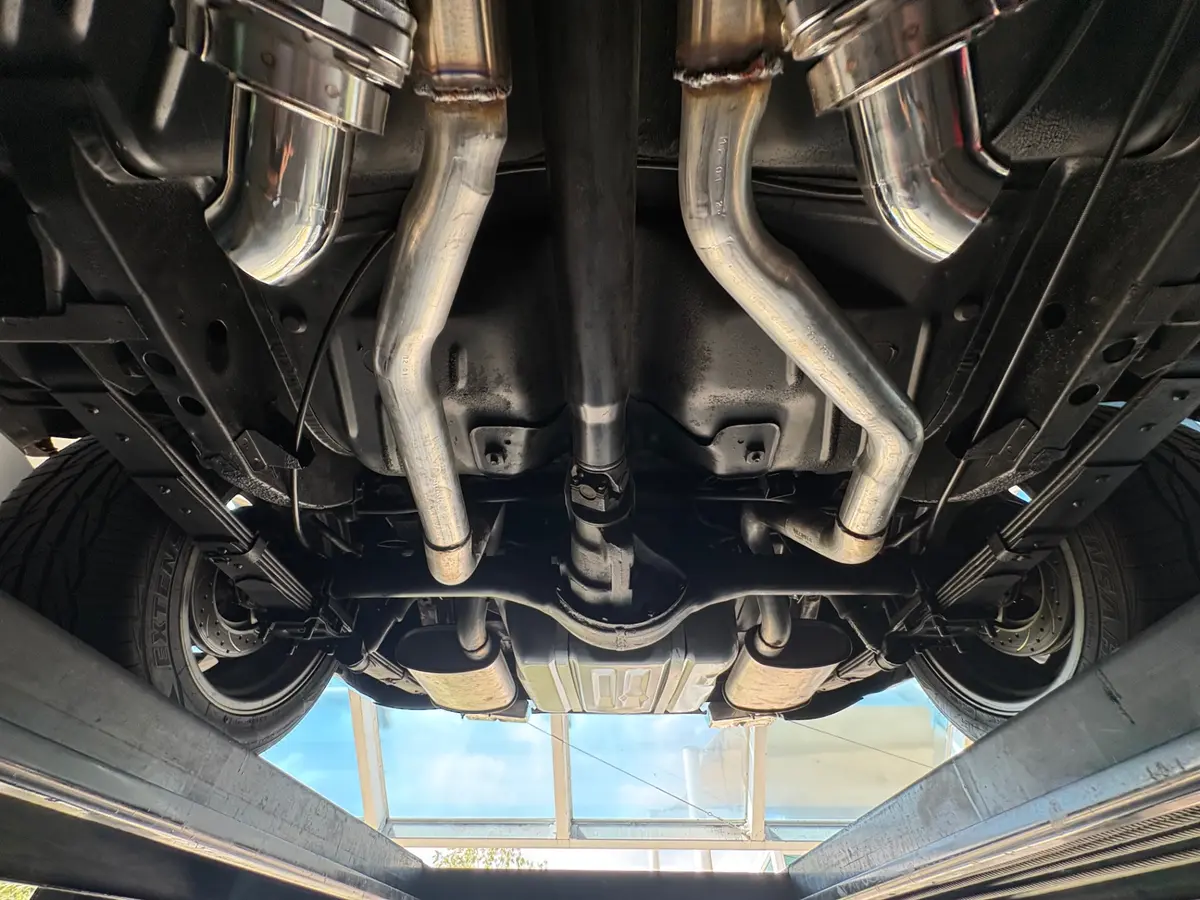
- Dual exhaust with chrome tips
- Roof drip rail moldings
- Solid state AM radio
- 26-inch radiator (RPO 26)
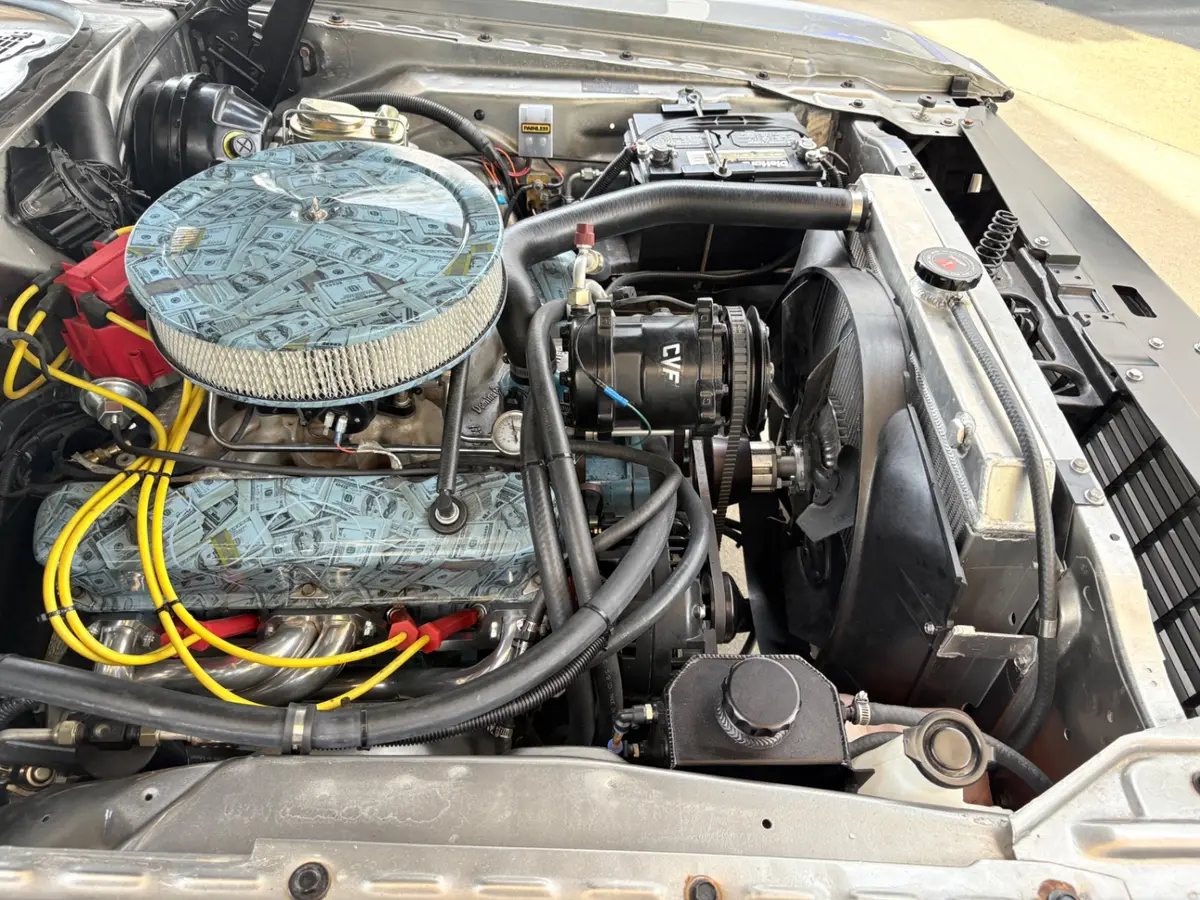
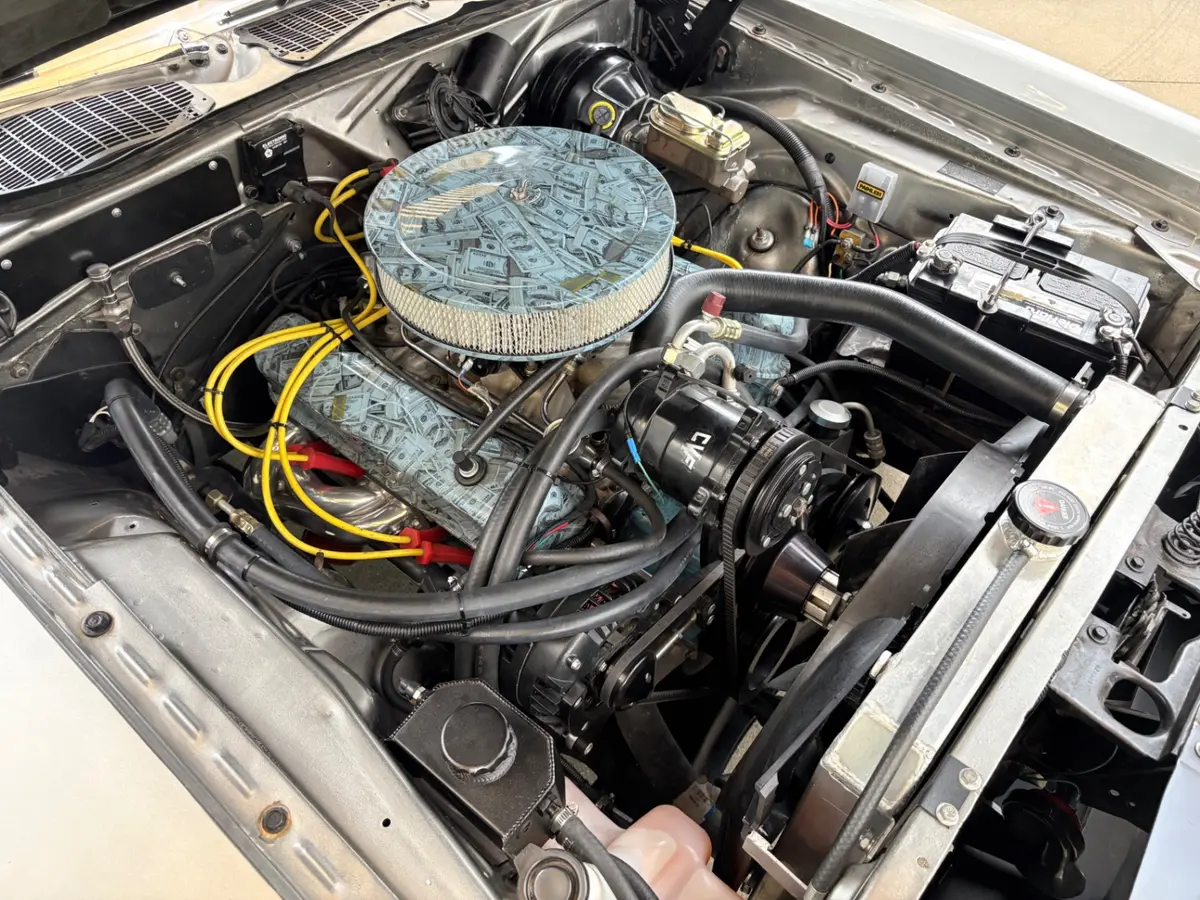
- Custom air cleaner
- Polished aluminum wheels
- Chrome bumpers, front and rear
- Factory build date: October 10, 1972
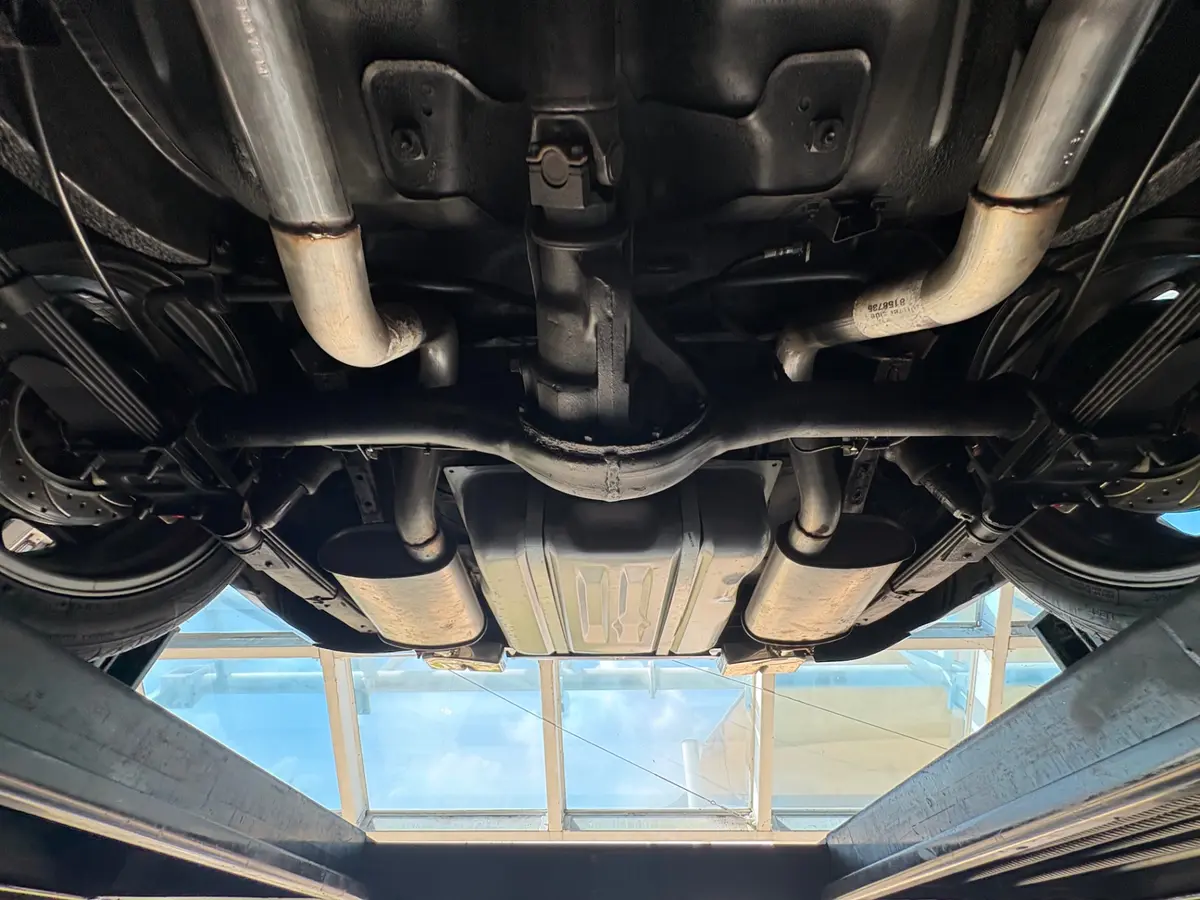
- Clean undercarriage
Mechanical
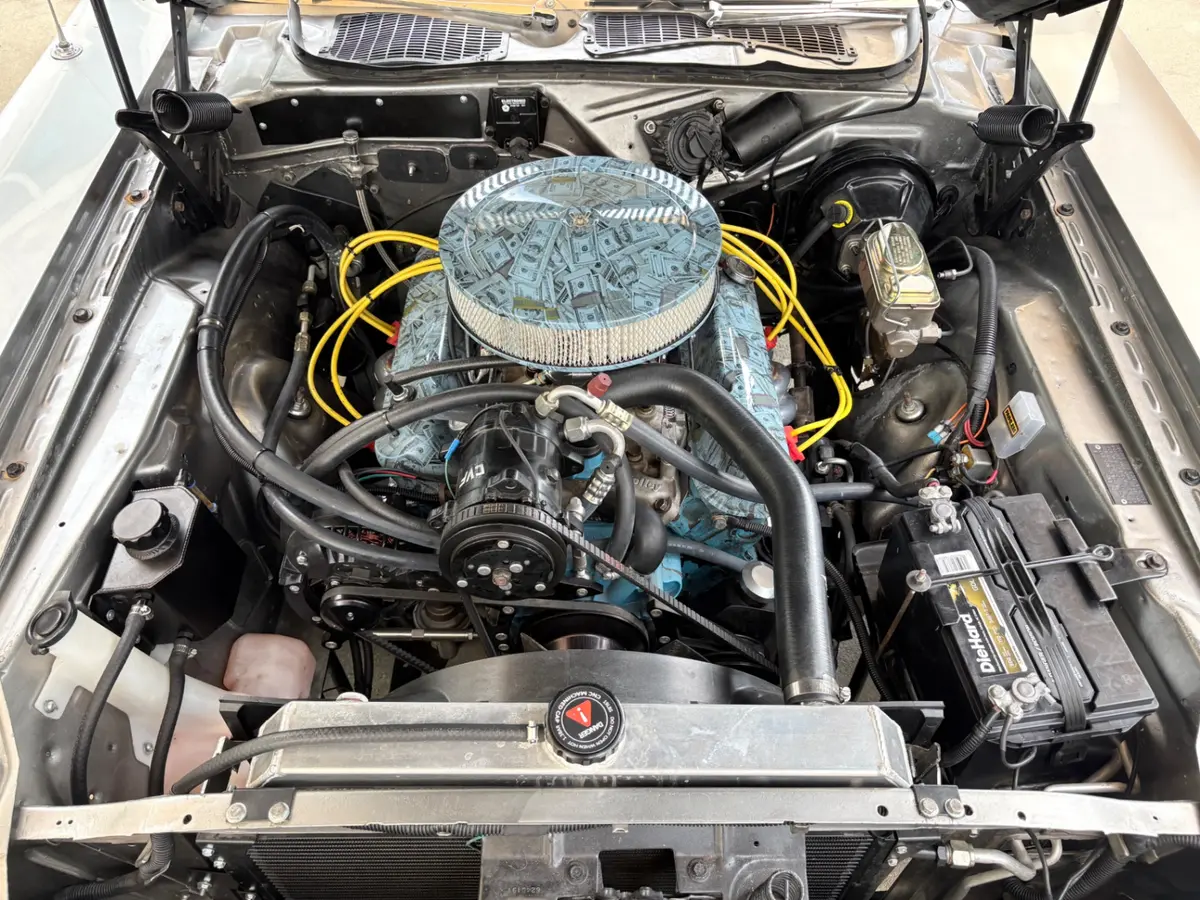
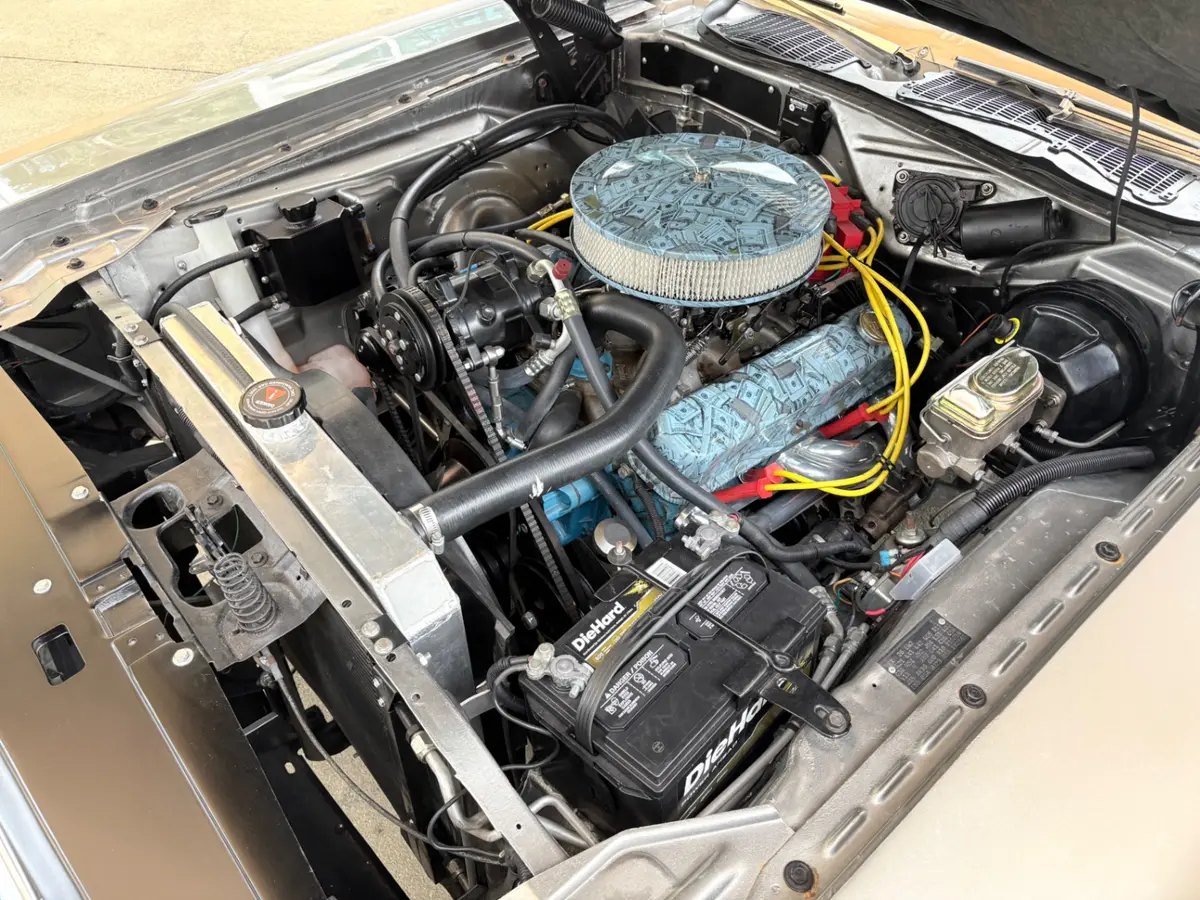
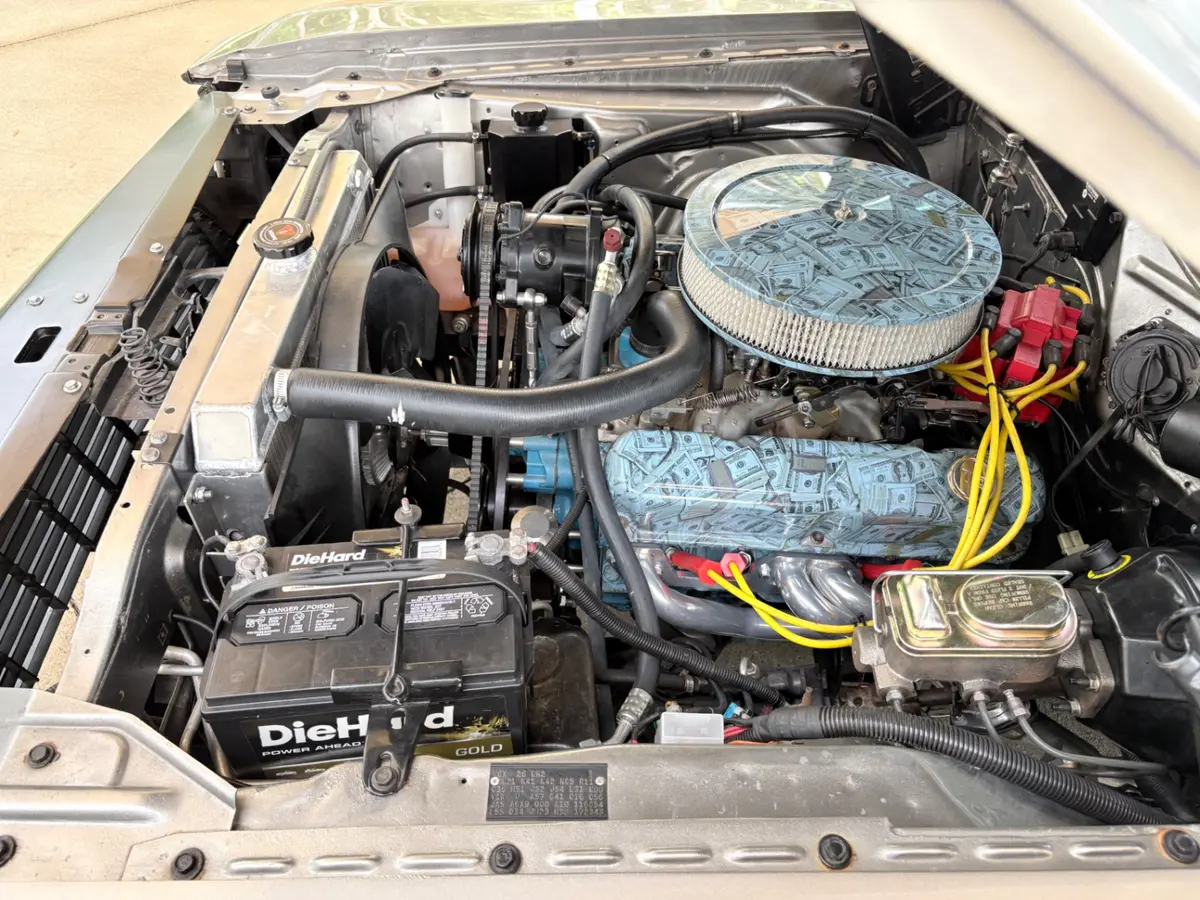
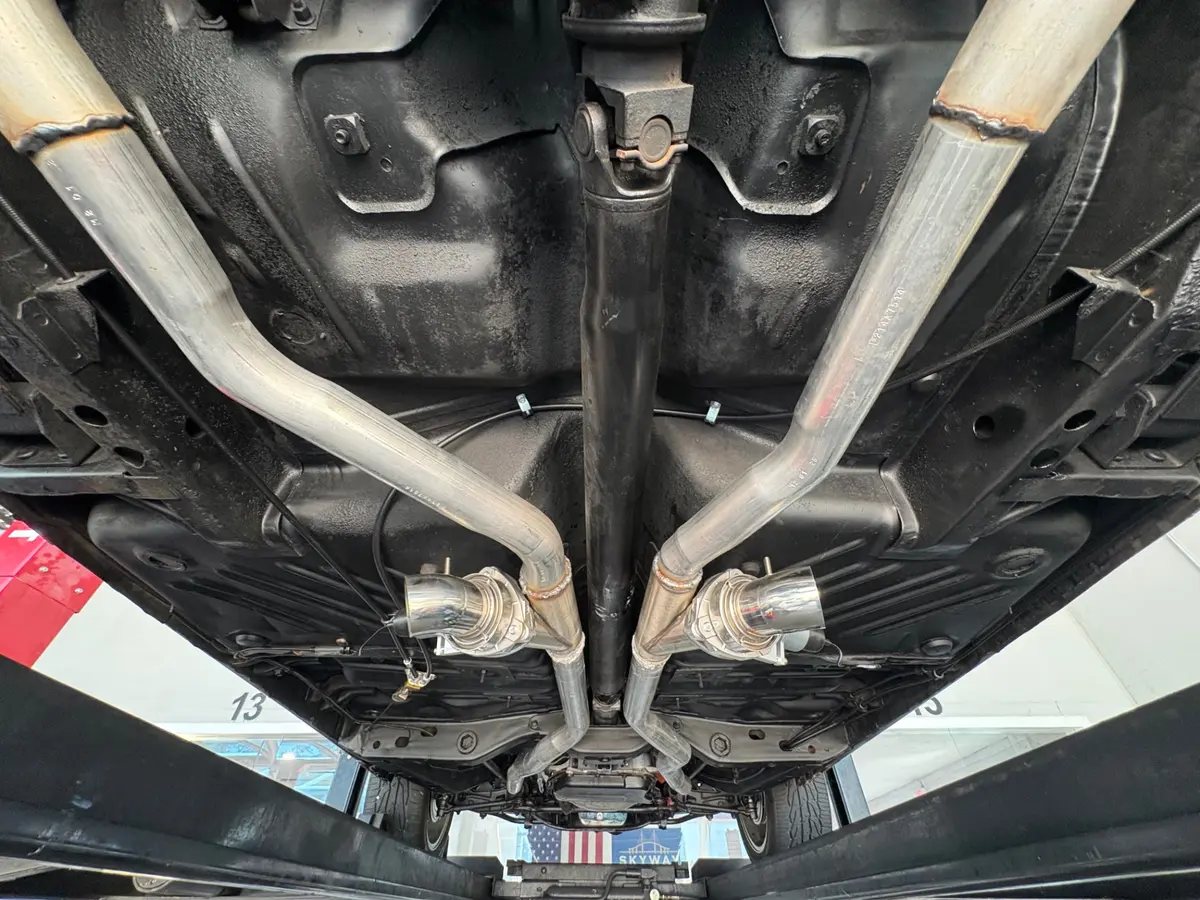
The 340 cubic inch small block is the correct engine for this car and one of the better reasons to seek out a 1973 Dodge Challenger specifically. Chrysler's 340 had a strong reputation throughout its production run from 1968 to 1973. It used a high-winding, free-breathing design with a short stroke relative to its bore, which gave it a character distinct from the longer-stroke LA engines. In RPO E55 four-barrel configuration for 1973, it was rated at 275 horsepower — a number that reflected the industry's shift to net horsepower ratings that year rather than gross, so direct comparisons to earlier years require that context. The engine breathes through a custom air cleaner and exhausts through a dual system that exits through chrome tips visible at the rear fascia. Under the hood, the engine bay has been addressed as part of the restoration, and the 26-inch radiator (RPO 26) provides appropriate cooling capacity, particularly relevant given the restored factory air conditioning system (RPO H51) that is also present.
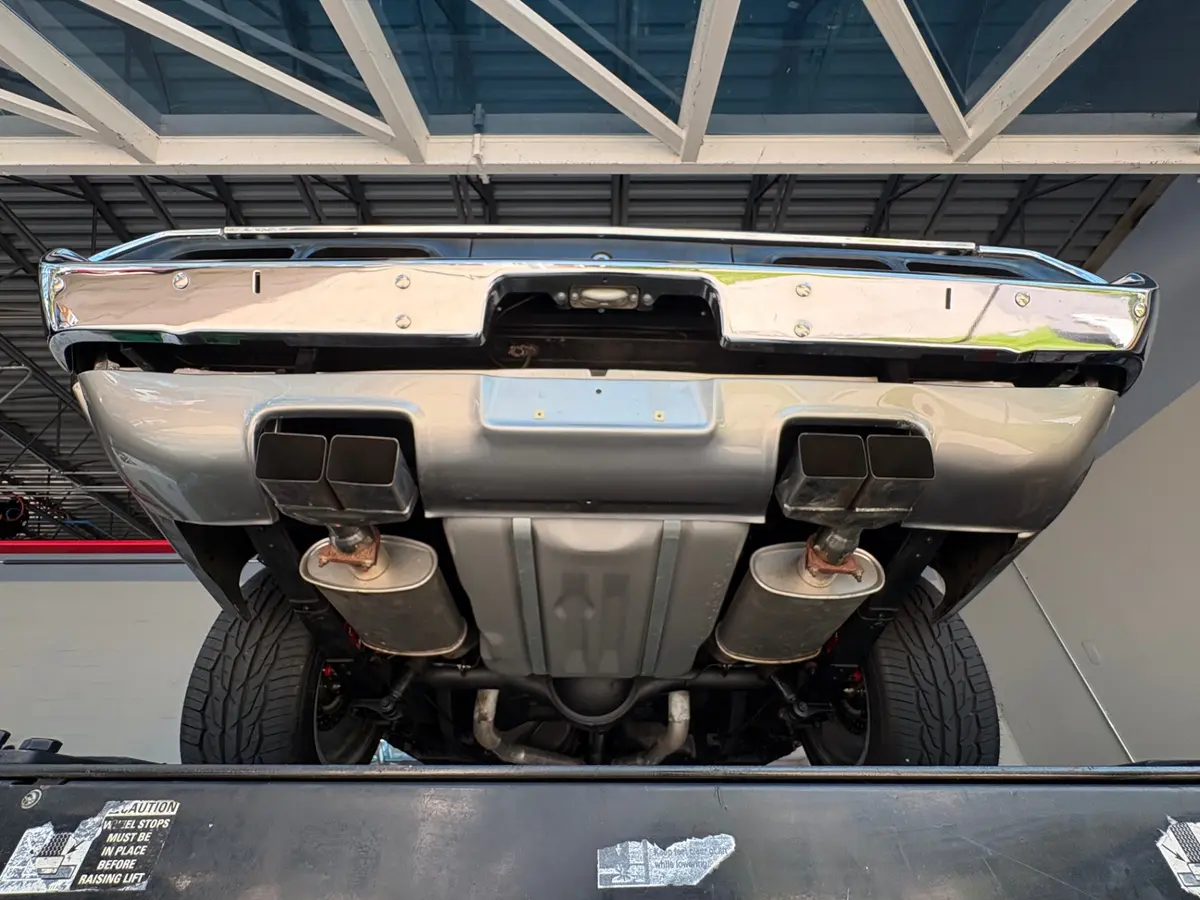
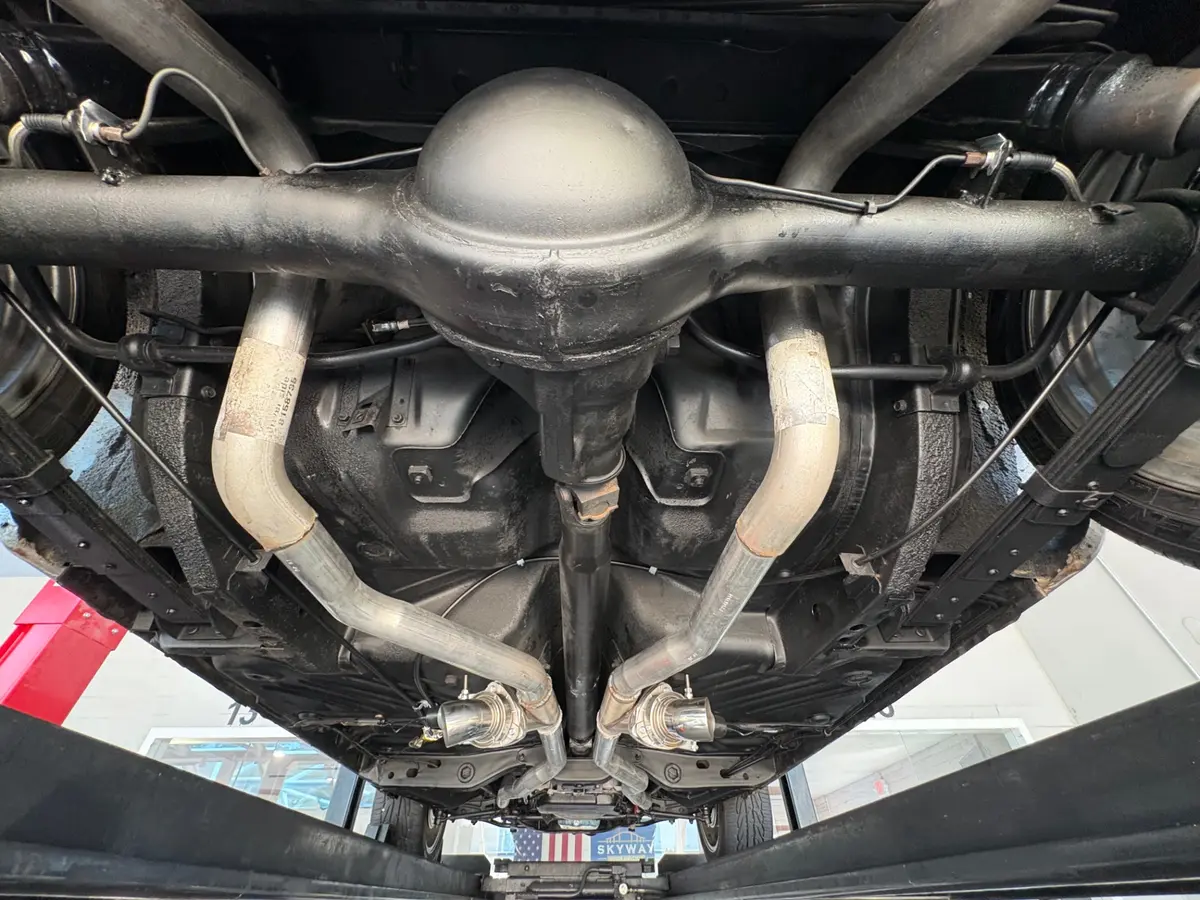
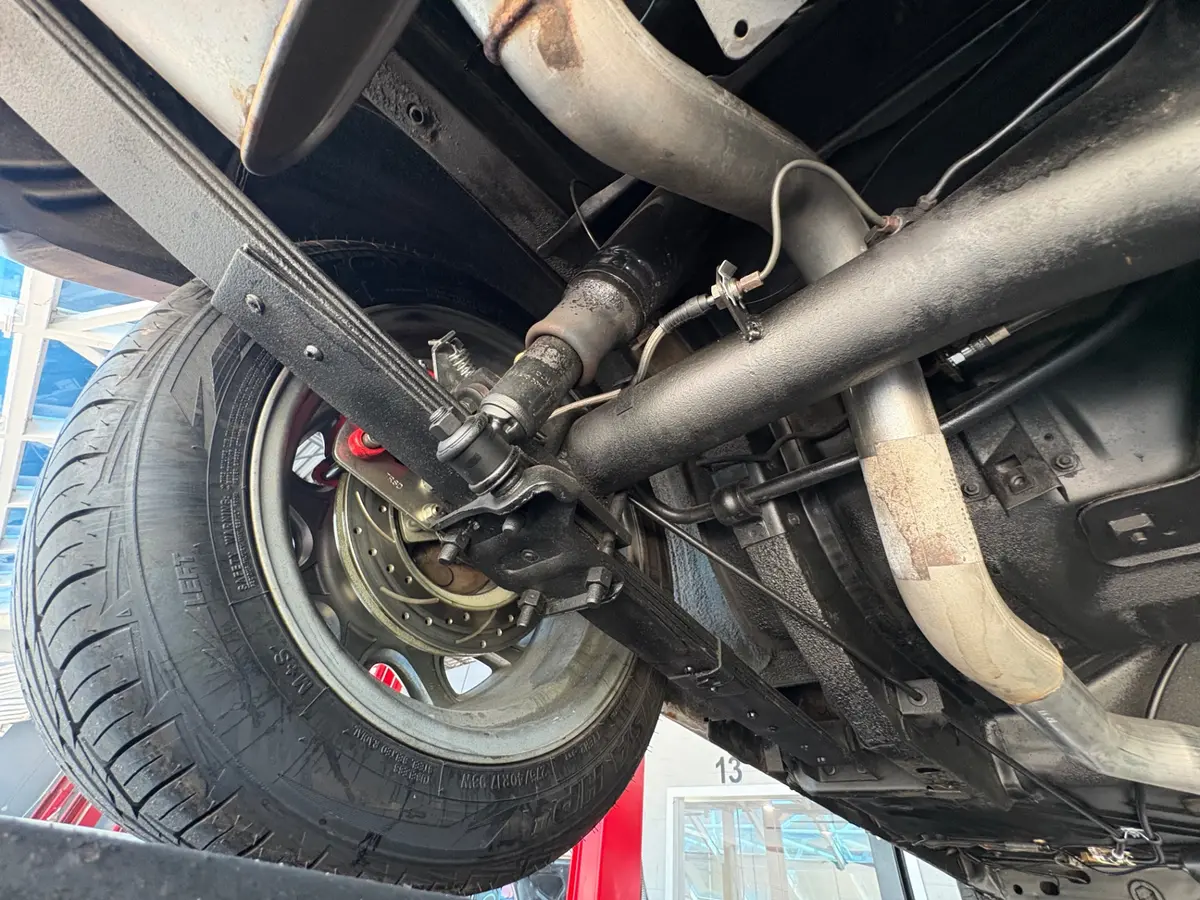
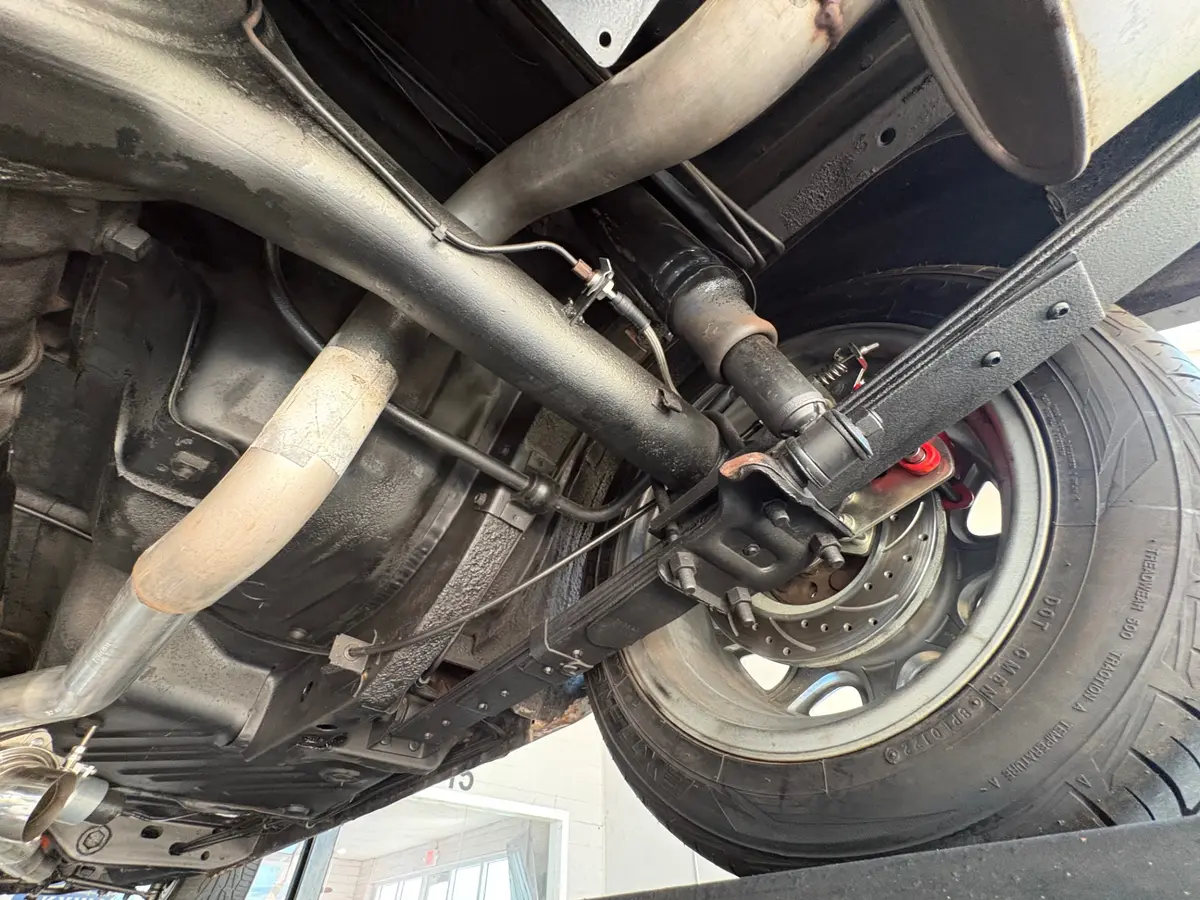
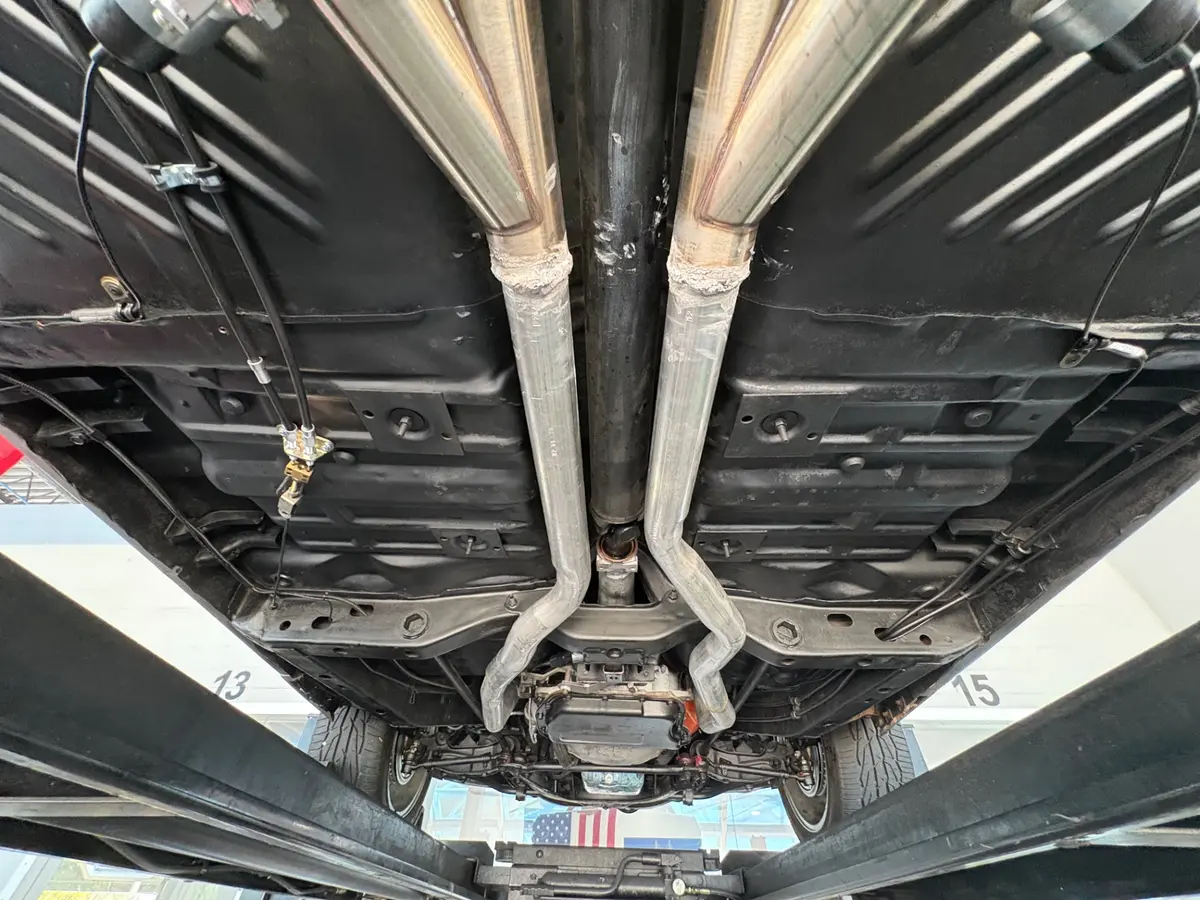
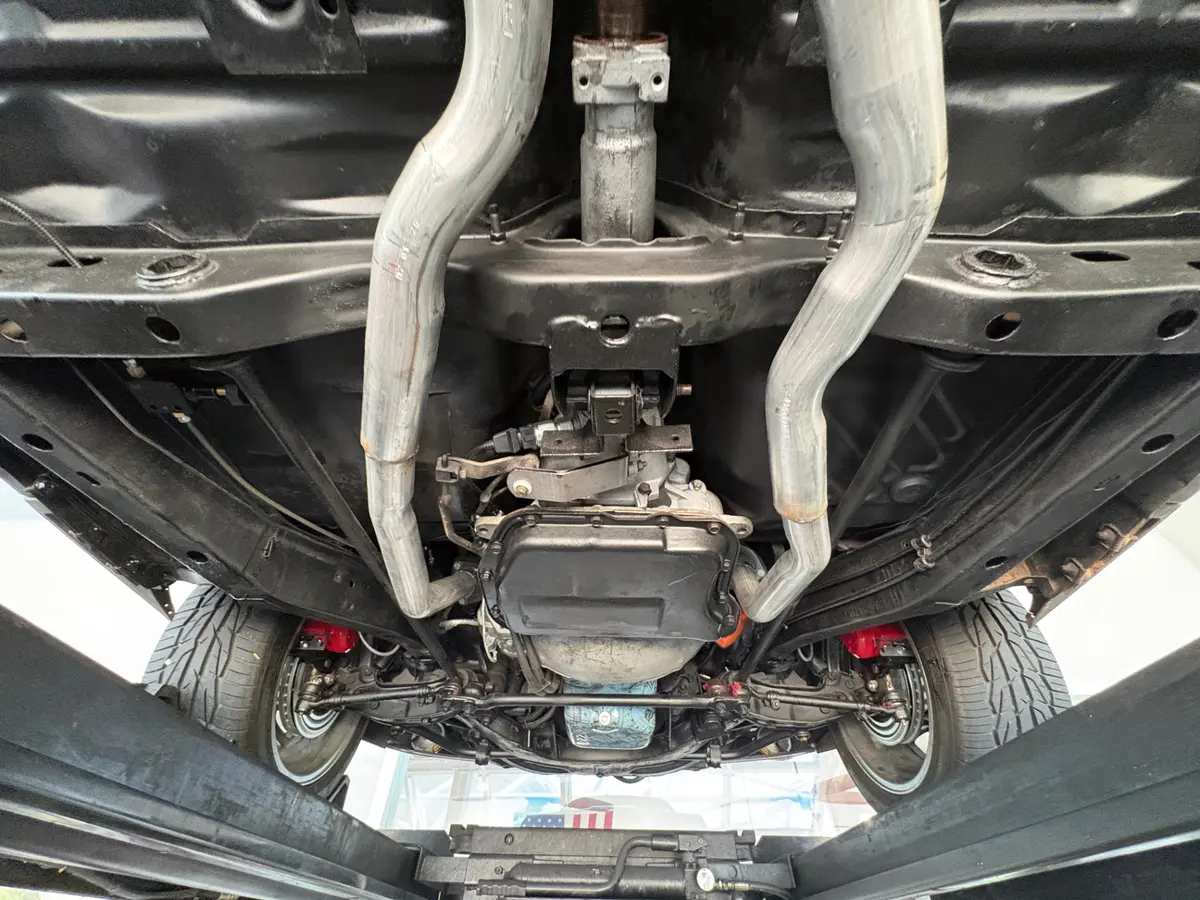
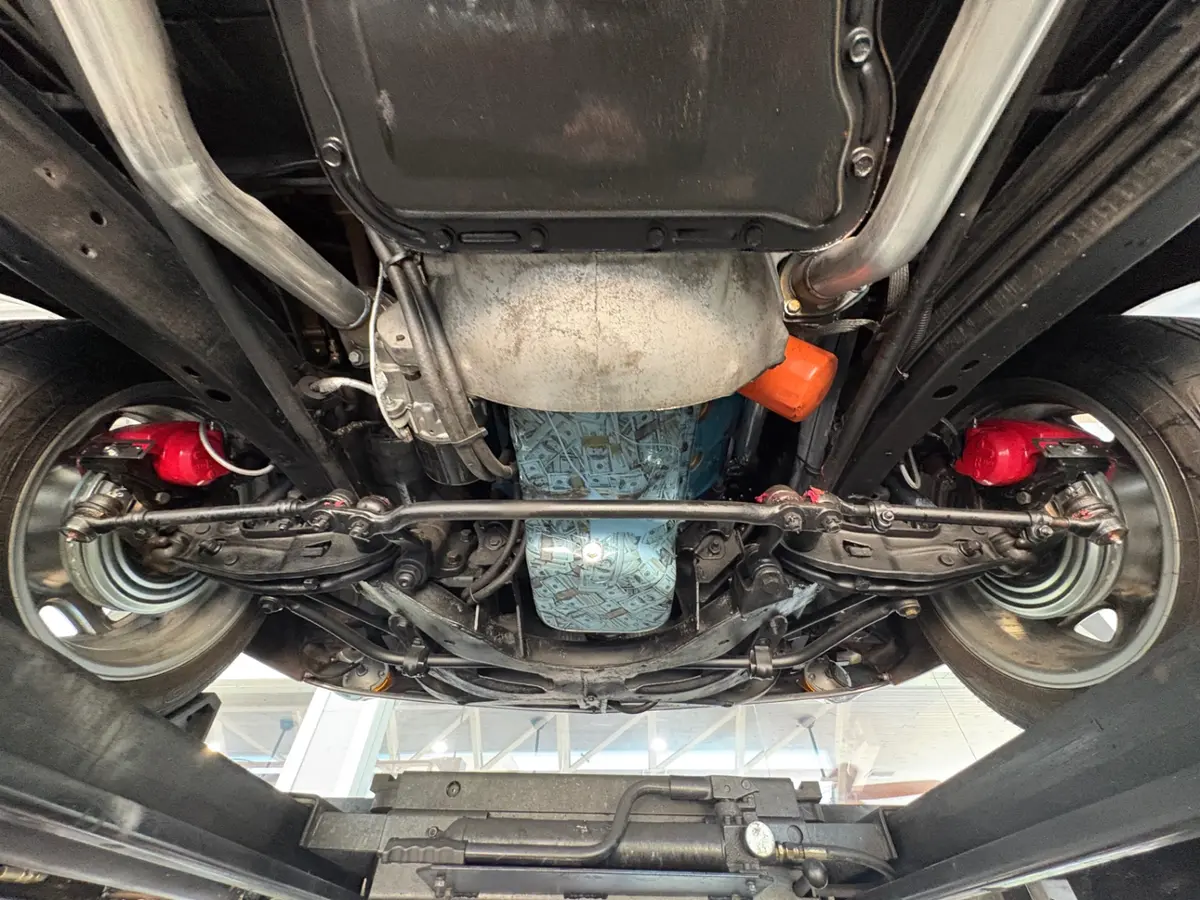
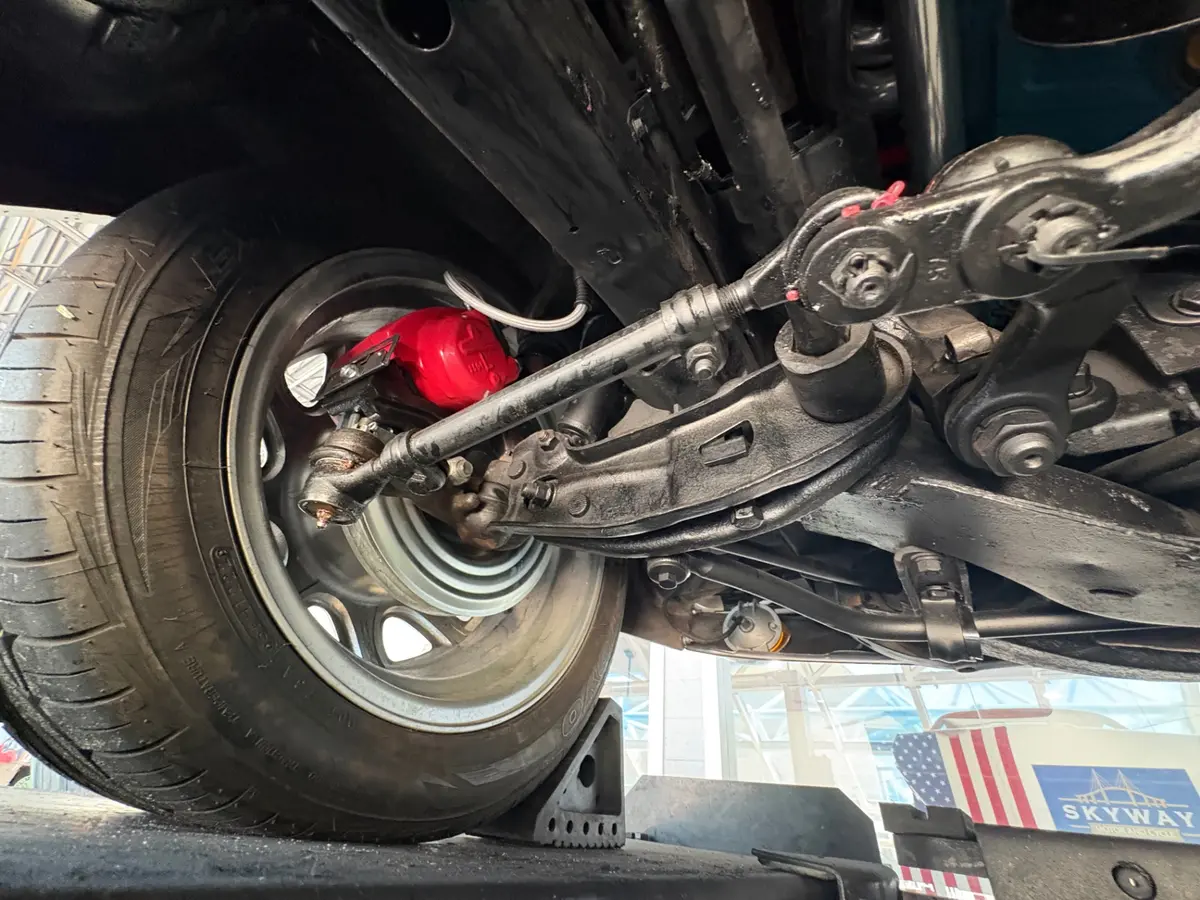
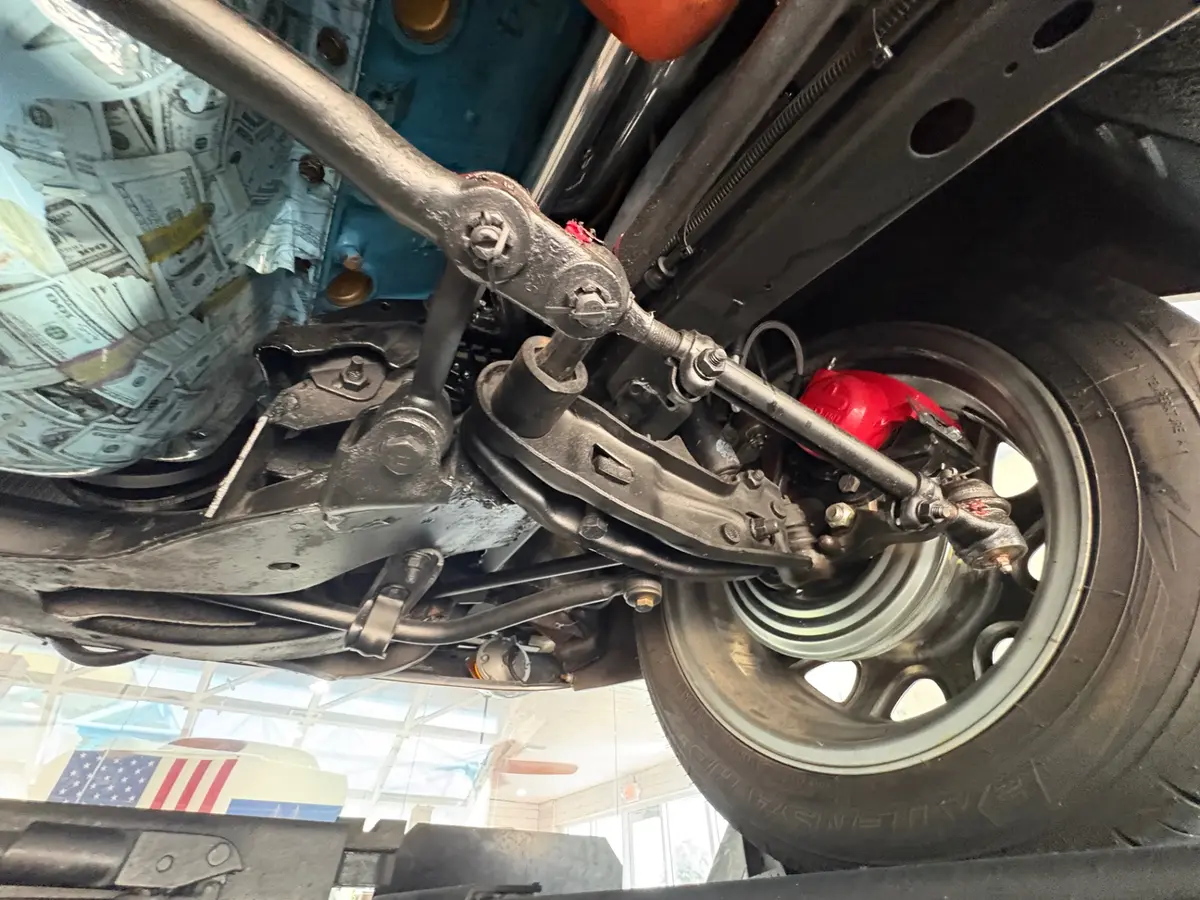
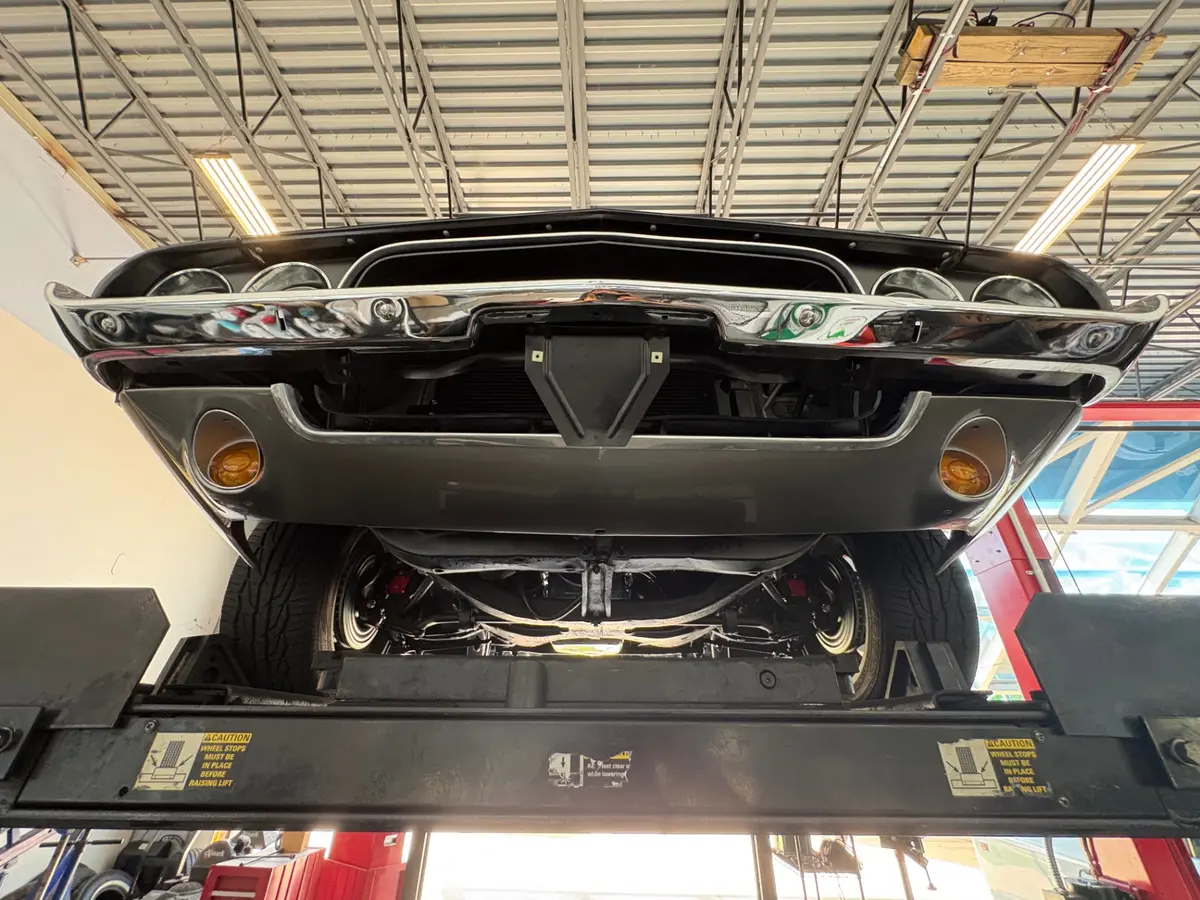
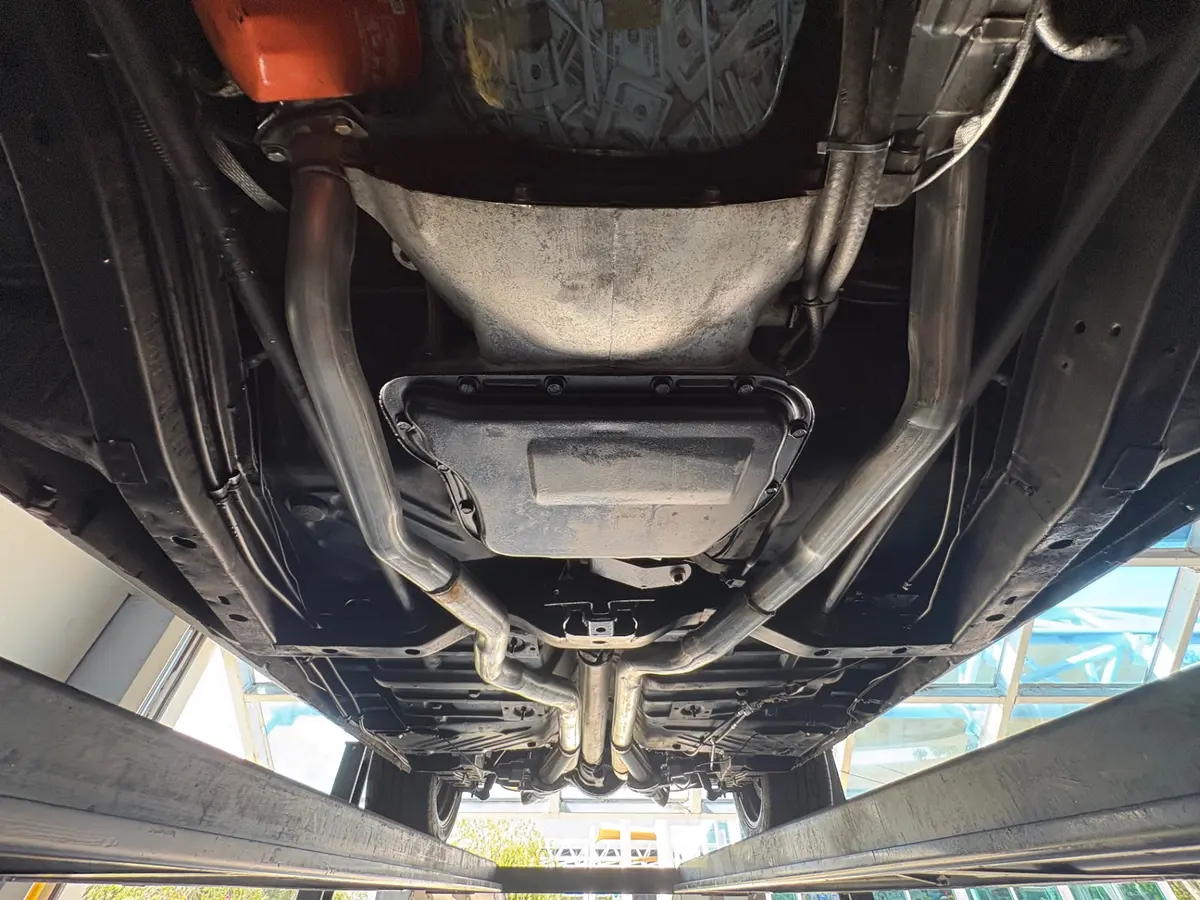
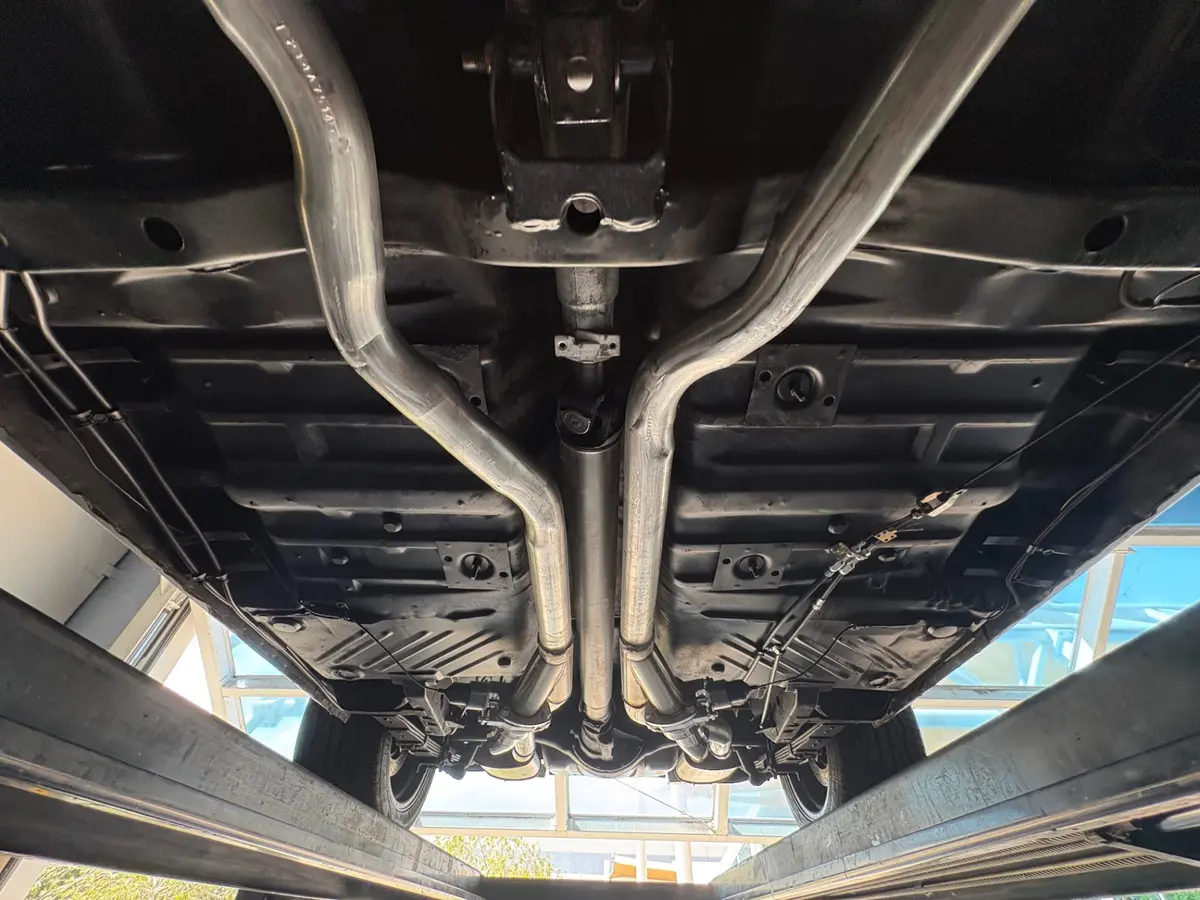
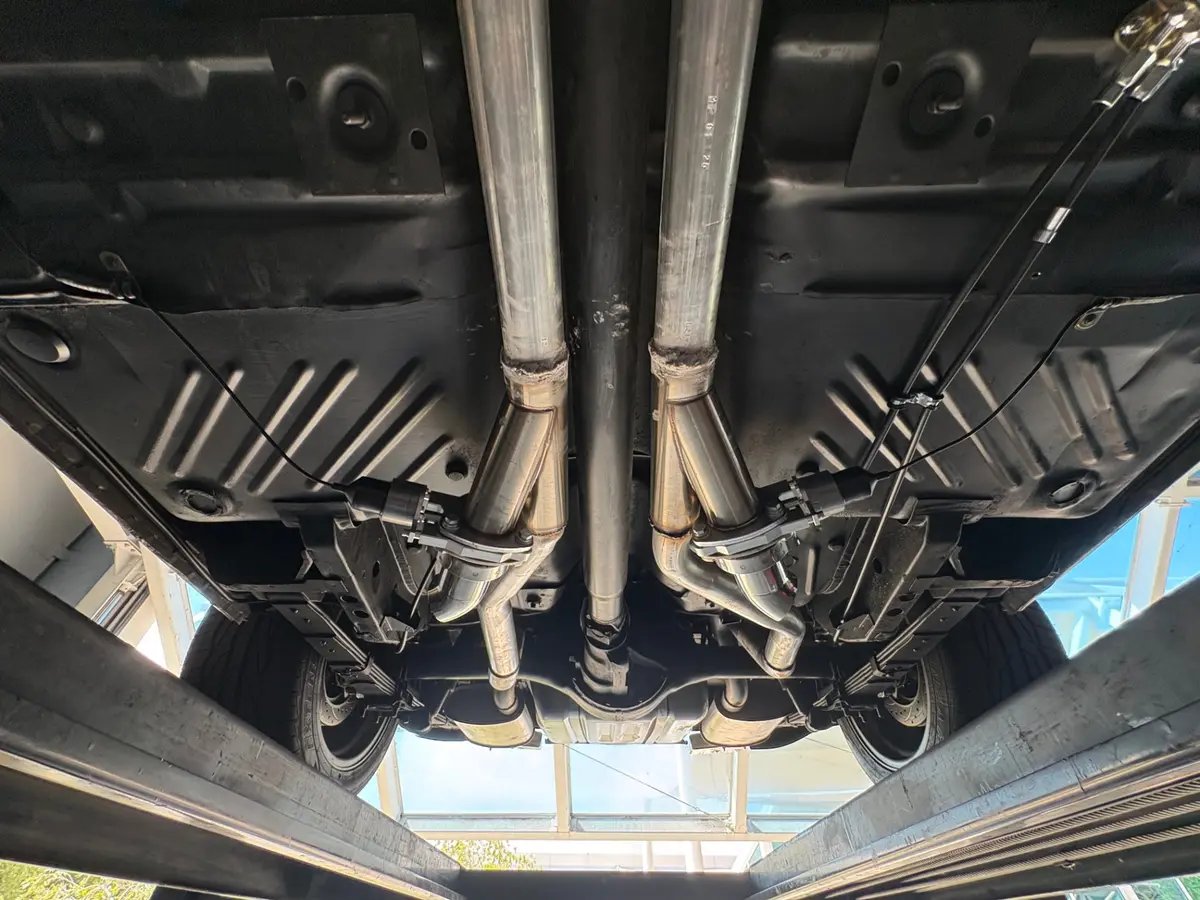
The transmission is the Light Duty Automatic (RPO D34), which is the TorqueFlite 727 in most E-body applications of this period — a unit with a well-established reputation for durability in Mopar muscle cars. Braking has been upgraded with new power disc brakes, which is a practical and meaningful improvement over the factory drum setup that many of these cars left the assembly line with. The undercarriage photographs confirm a clean structure with no visible rust or rot, with the floor pans and frame rails presenting in solid condition consistent with a properly restored example.
Interior
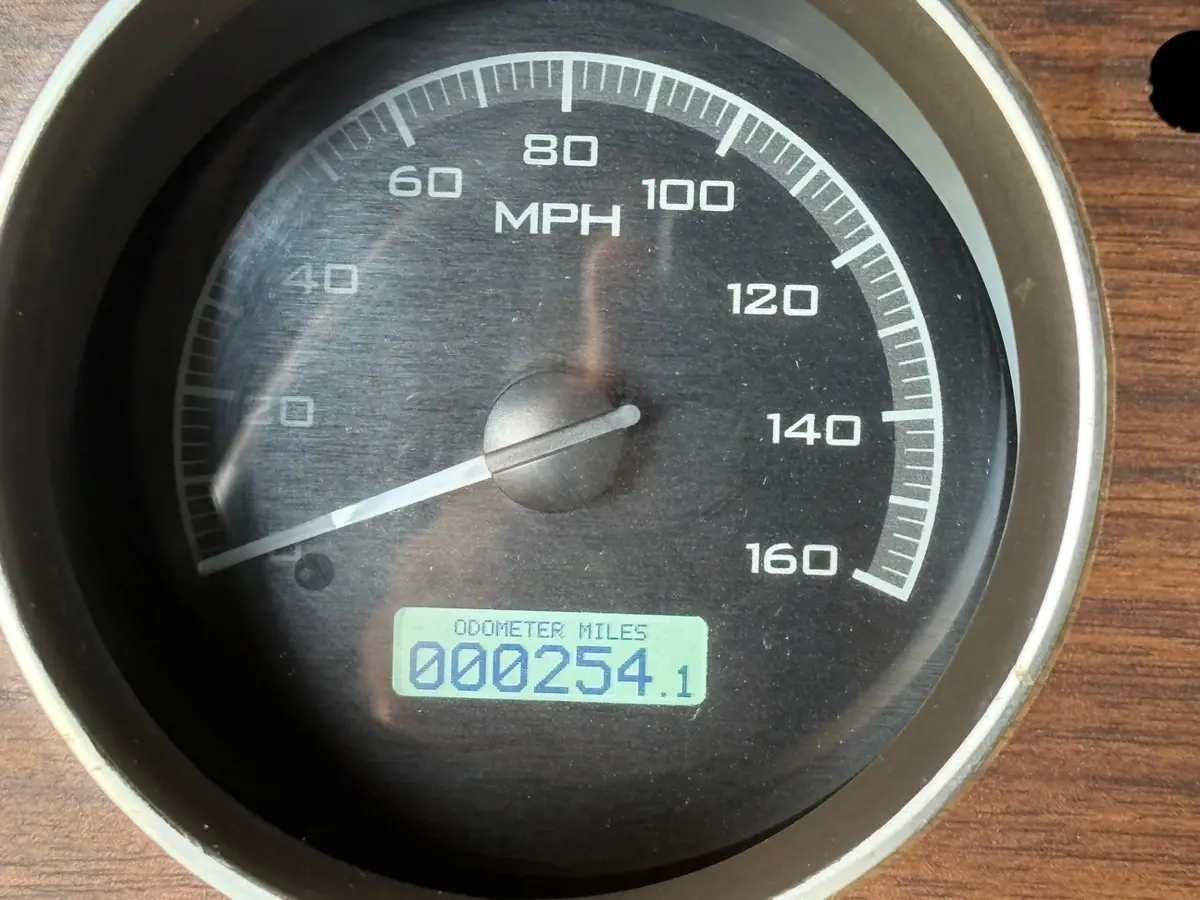
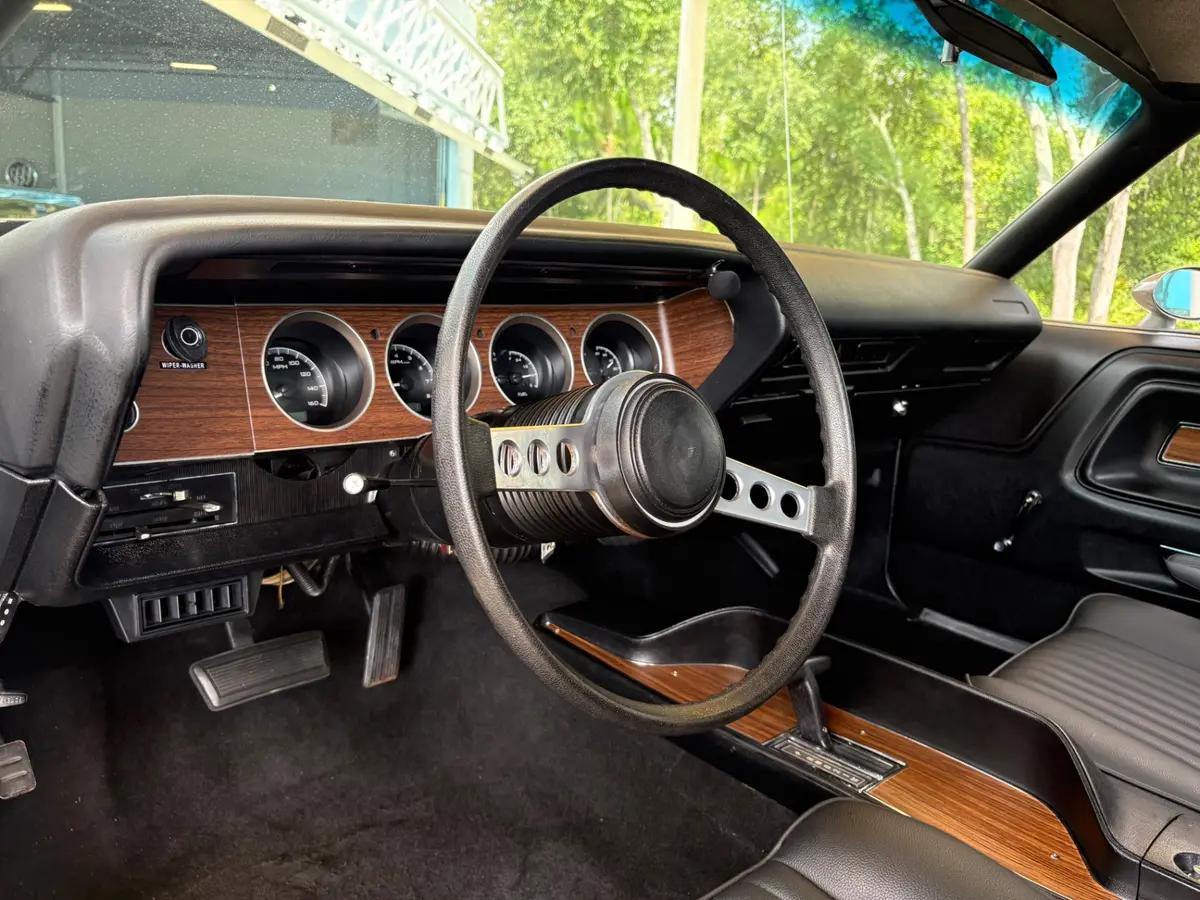
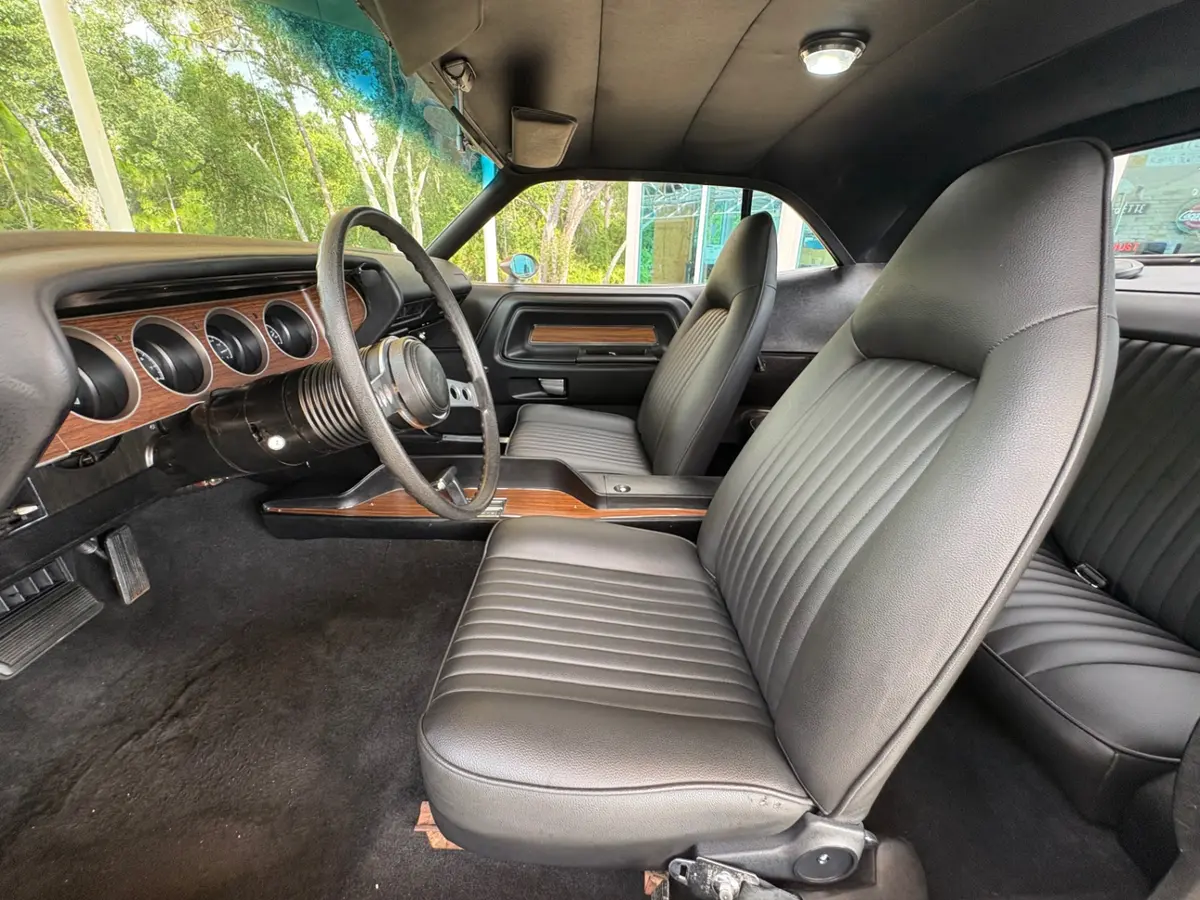
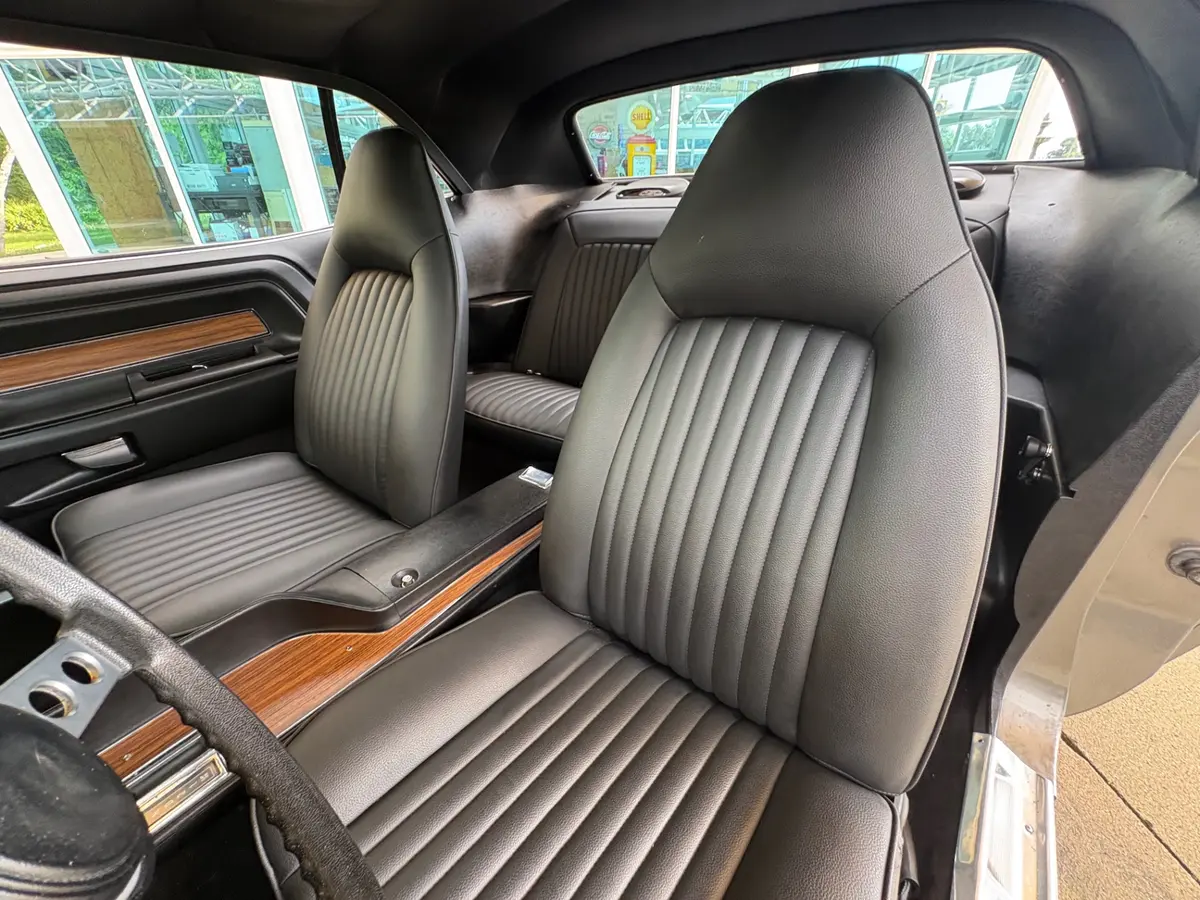
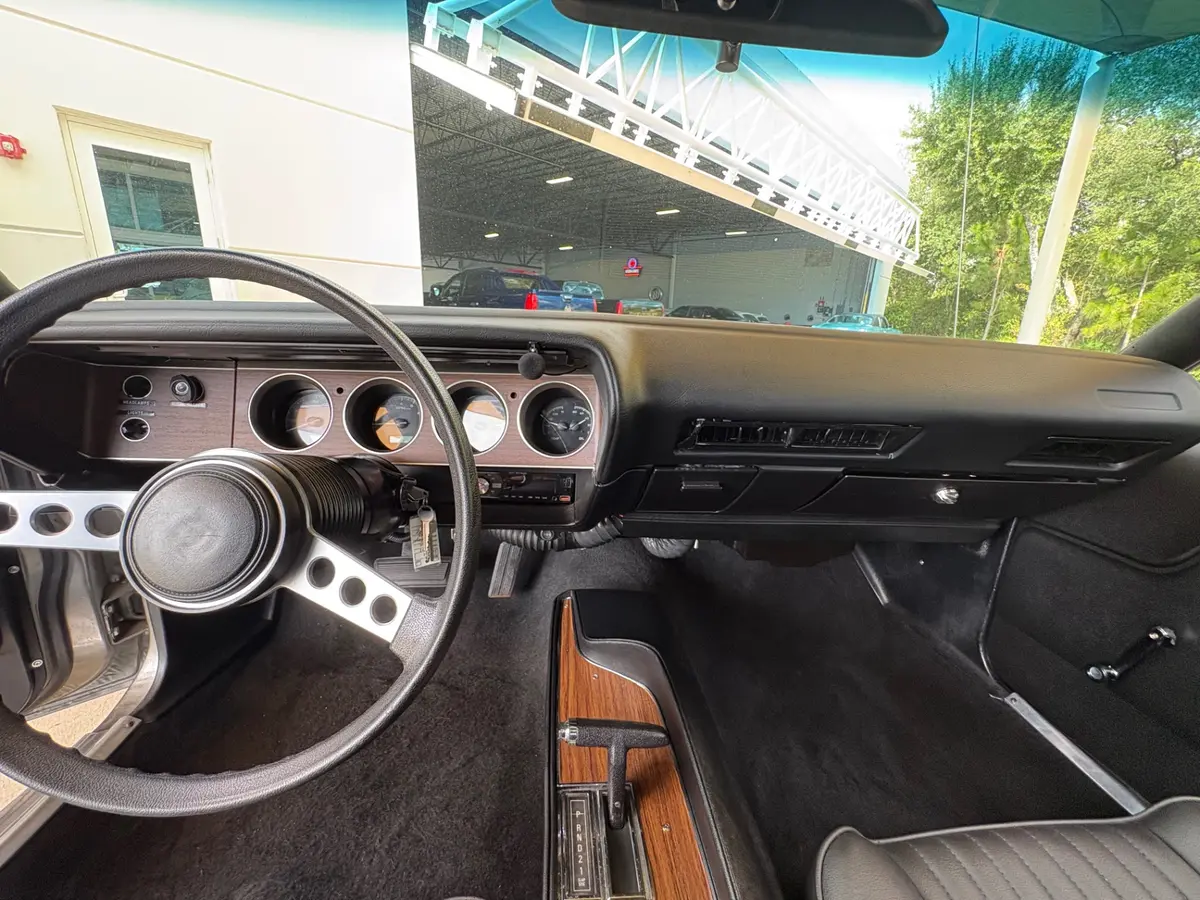
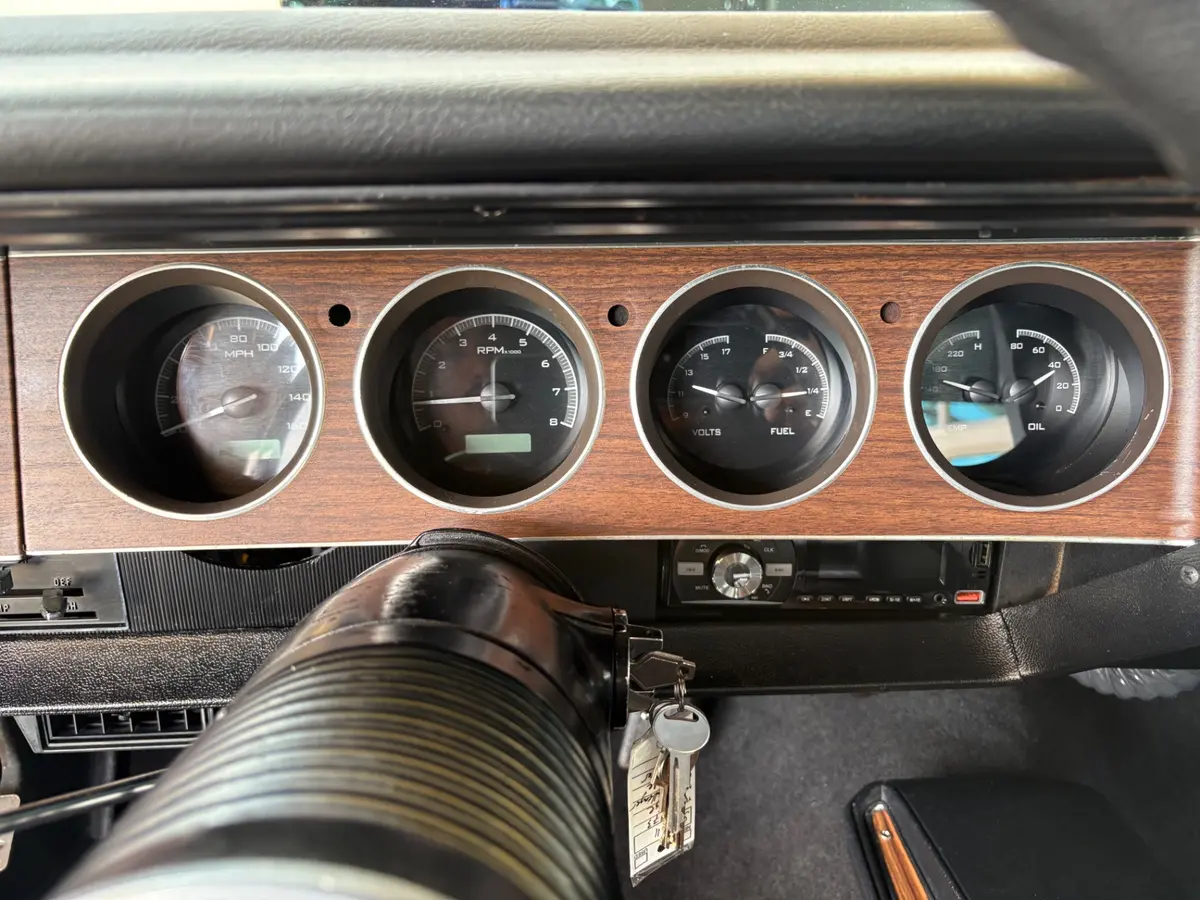
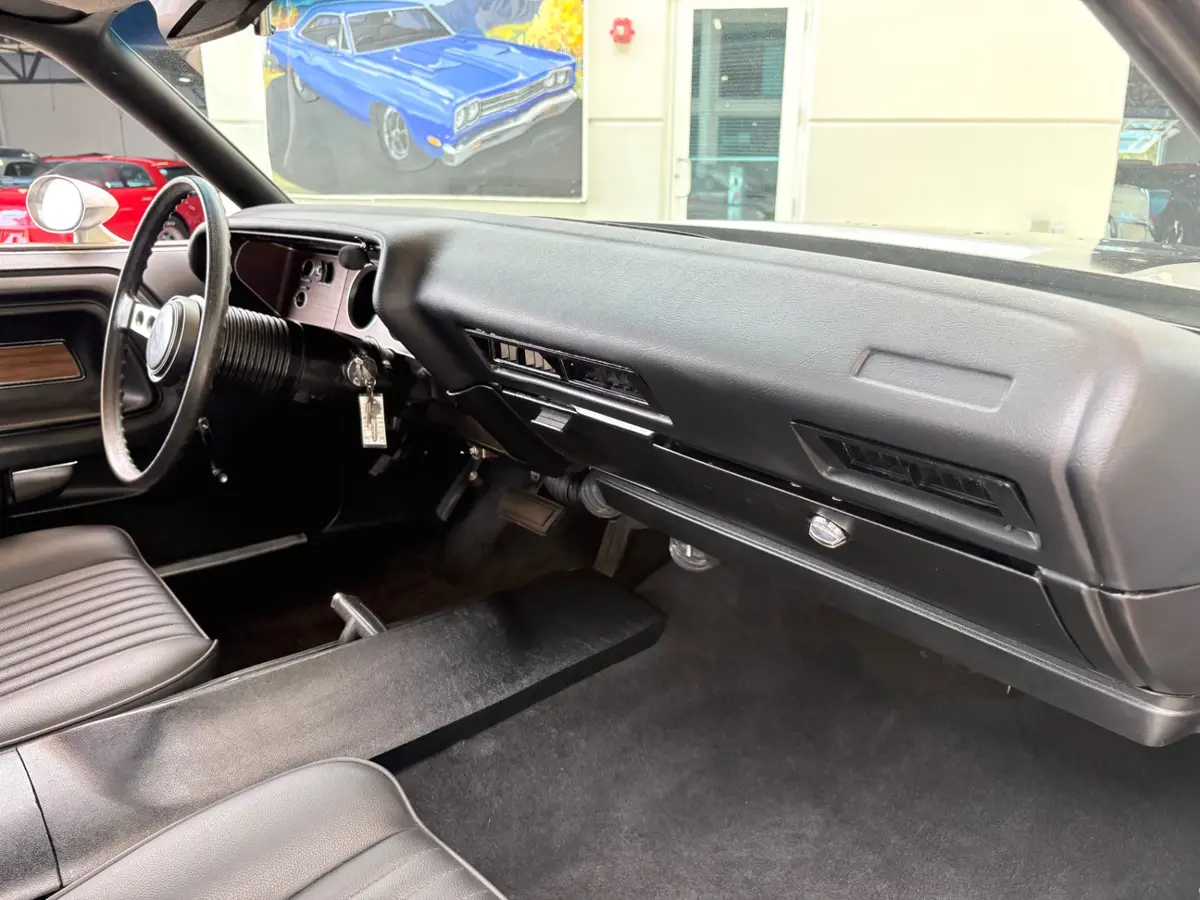
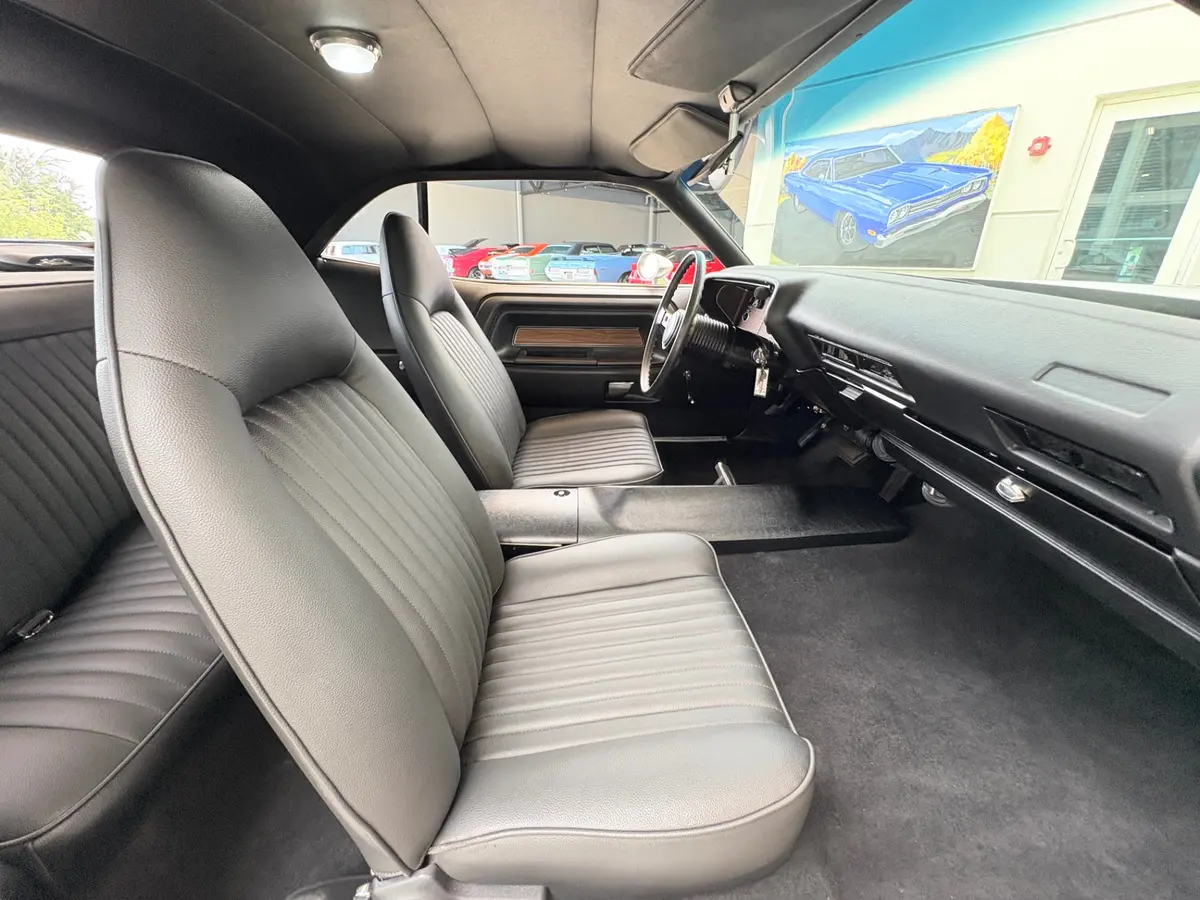
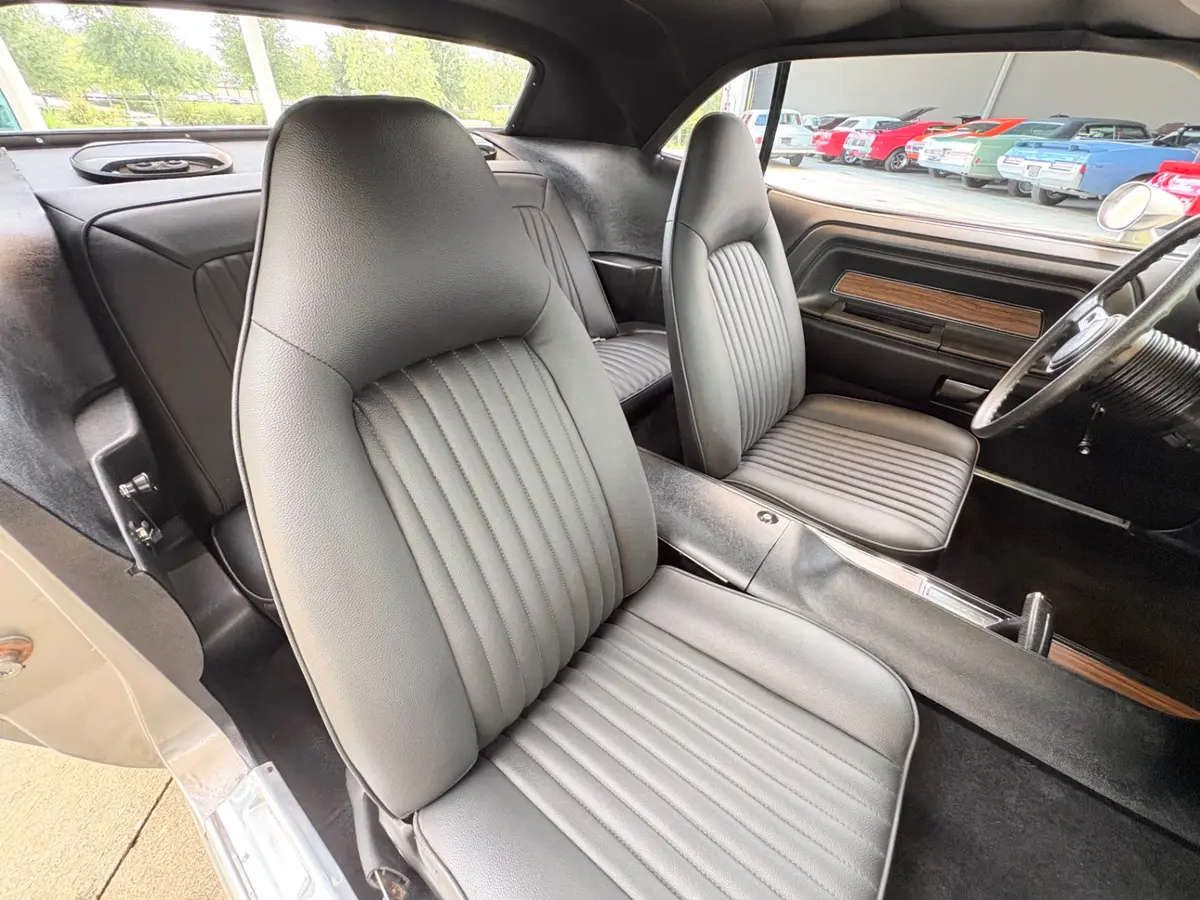
The 1973 Dodge Challenger interior on a Rallye-equipped car was more complete than what the base hardtop offered. This car carries bucket seats (RPO C56 with A6X9 designation), which have been recovered in black leather during the restoration — a step up from the original vinyl in terms of long-term durability and tactile quality. The woodgrain center console (RPO C16) runs between the seats and is a defining visual element of the cabin. The dashboard is finished with a woodgrain applique panel that carries the instrument cluster, which includes the tachometer, speedometer reading to 150 mph, and auxiliary gauges for fuel, volts, temperature, and oil pressure. The gauge layout on the 1973 Challenger is horizontal and purpose-built — everything a driver needs is directly ahead, with no hunting across the dash.
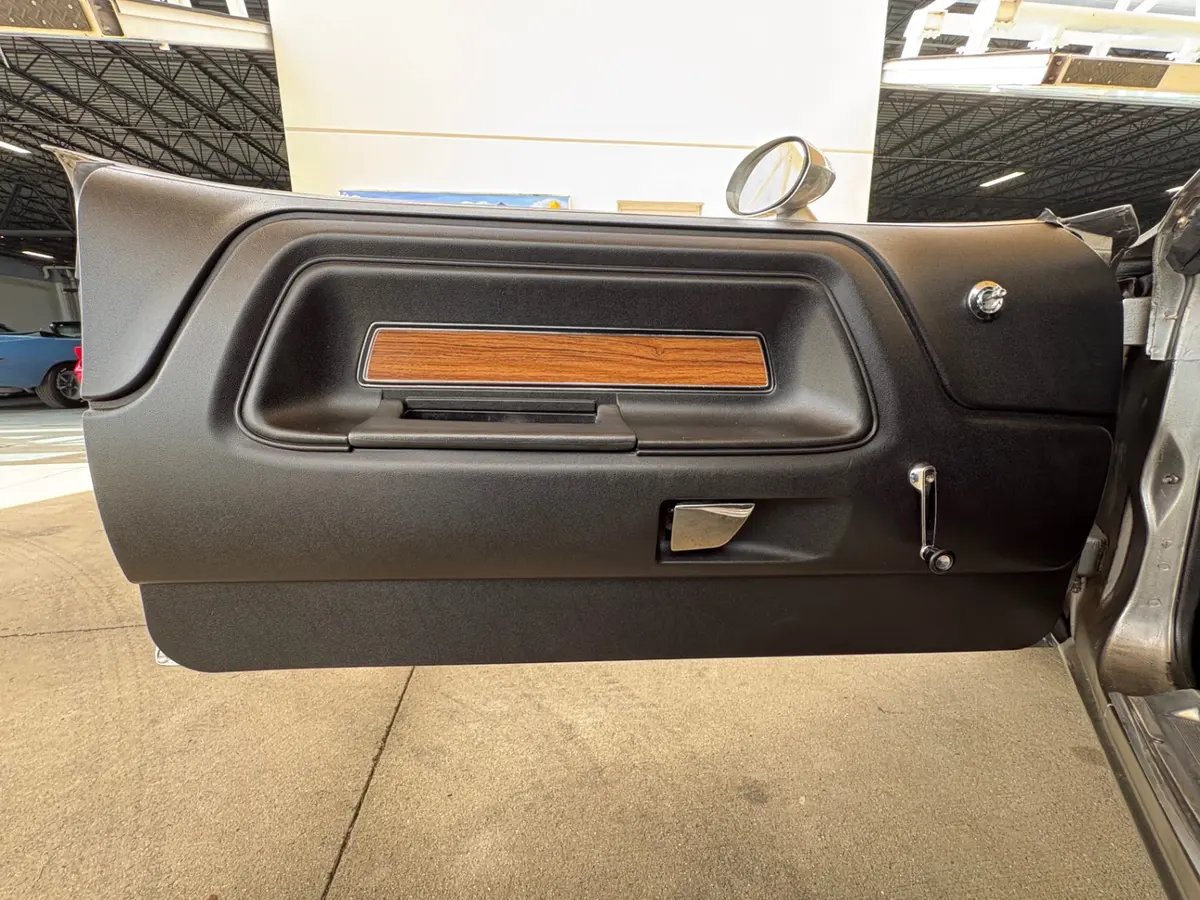
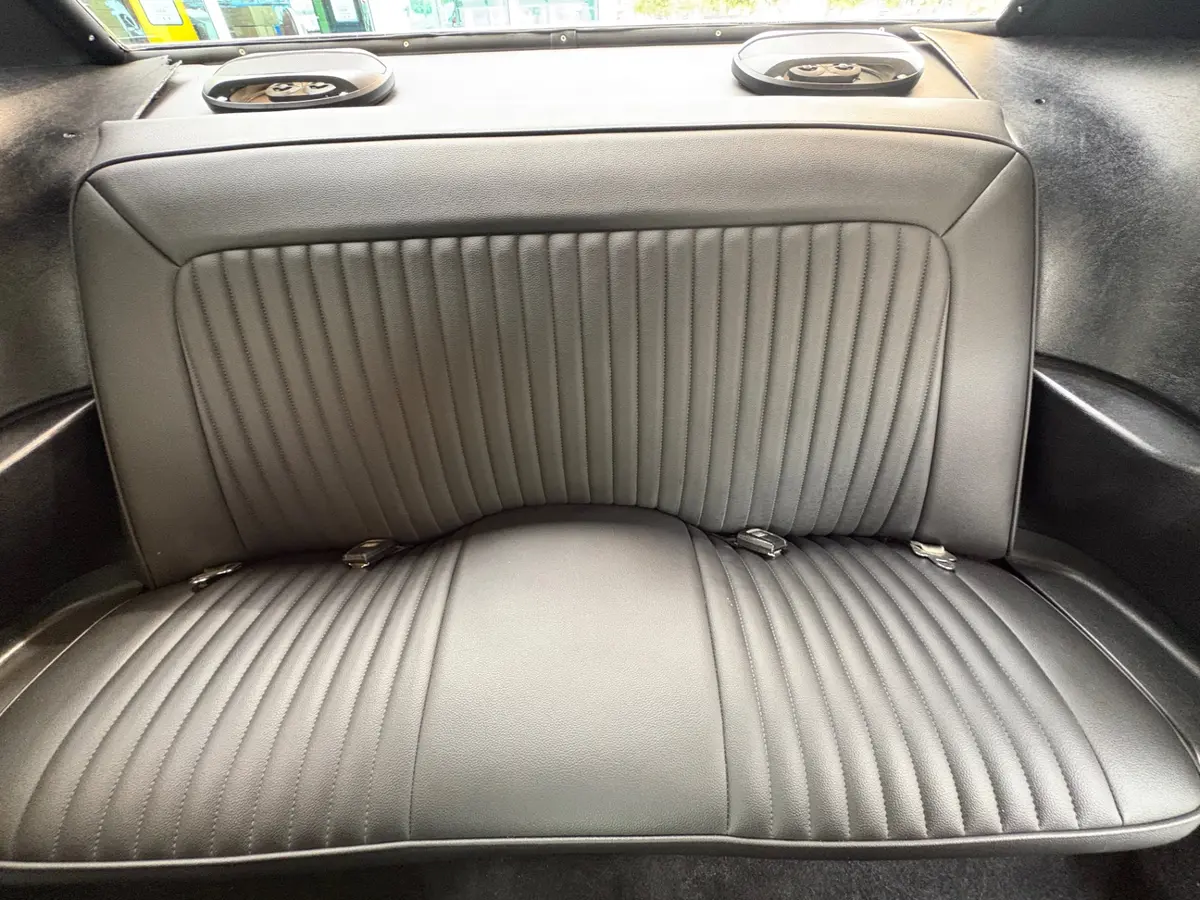
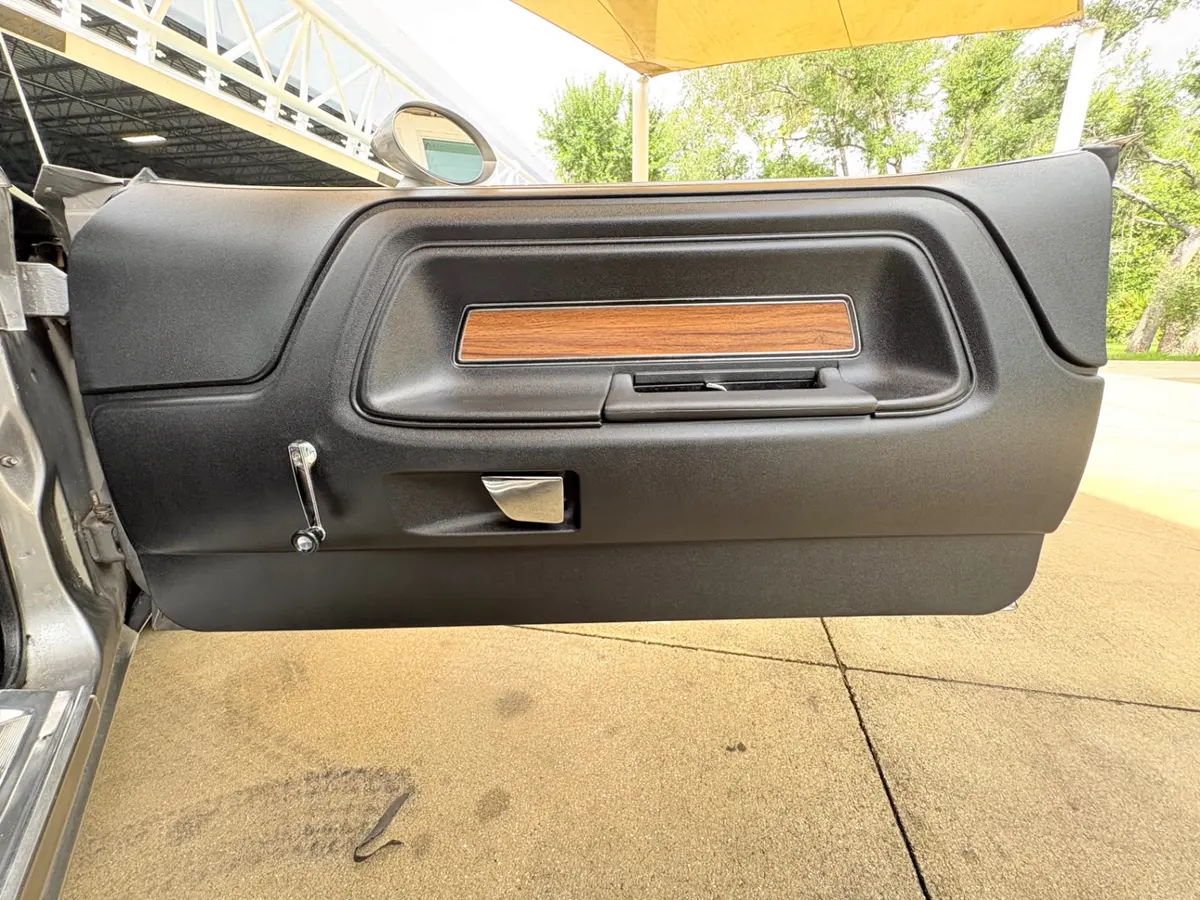
Full door panels are present on both sides, each featuring the woodgrain insert that carries through the interior theme. The headliner is black, consistent with the full black vinyl top exterior treatment. Carpet is black throughout. The solid state AM radio is in place on the dash. The restored interior is in excellent condition across all surfaces — seating, panels, carpet, and headliner all present cleanly without visible wear, cracking, or fading.
Exterior
The Dark Silver Poly paint code JAS reads as a warm, metallic silver with noticeable depth in direct light. Combined with the full black vinyl top (RPO V1X) and black longitudinal stripes (RPO V6X), the exterior color story is silver over black from every angle. The simulated louvers (RPO M08) sit on the rear quarter panels and were a period-correct styling element that Dodge carried across several of its performance models. The Sport Hood (RPO J54) is a functional visual element with its own hood release operated from inside the cabin (RPO J52), which was a feature borrowed from higher-performance configurations and gave the Rallye cars a more purposeful character.
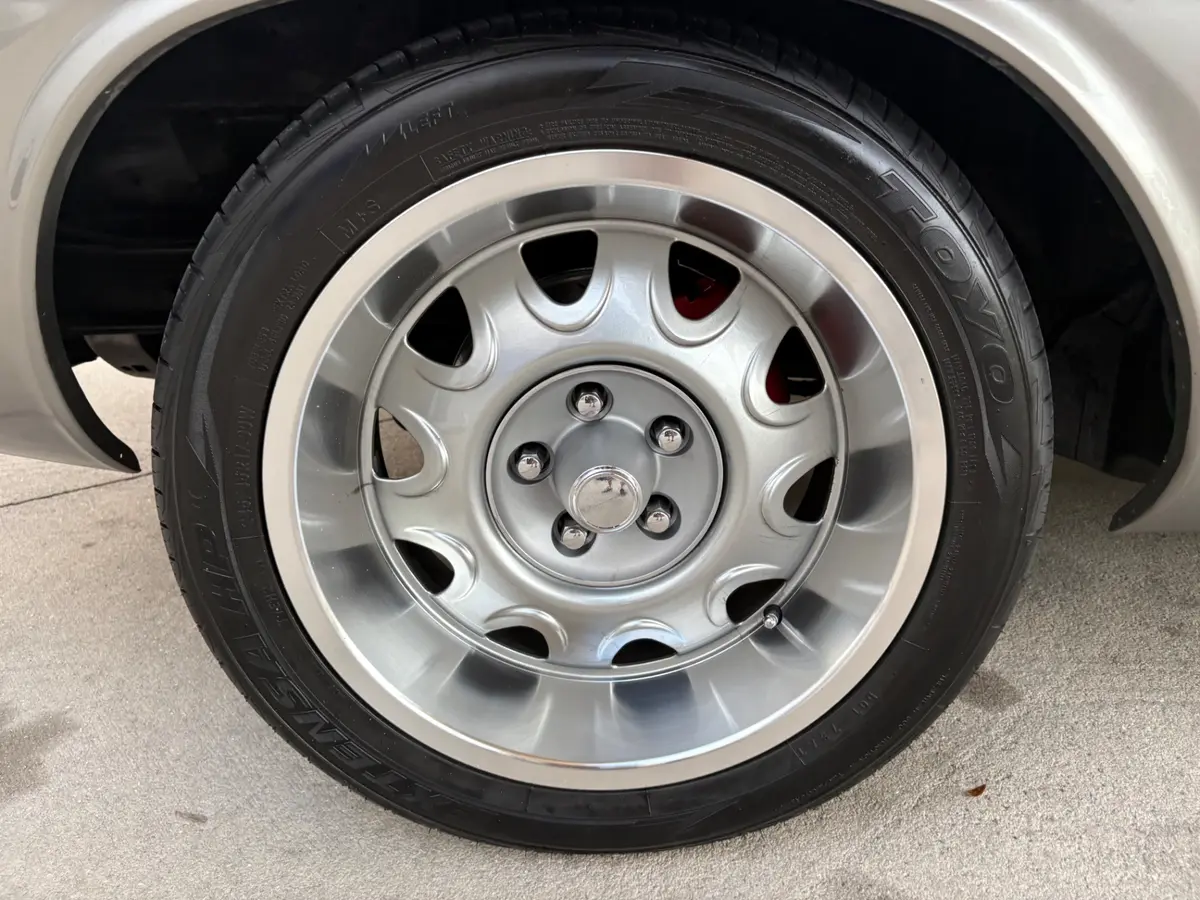
The hood and fender-mounted turn signal indicators (RPO L31) are an underappreciated feature — small amber lenses at the leading edge of each front fender that flash with the turn signals, providing visibility from the side as well as the front. The OS Dual Racing Mirrors (RPO G36) are body-color units mounted on both doors. Chrome bumpers are present front and rear, and the roof drip rail moldings provide the trim detail along the roofline that distinguishes optioned cars from stripper models. Wheels are polished aluminum, a non-factory upgrade that suits the silver and black exterior color scheme without conflicting with the car's overall character. The dual exhaust exits through square chrome tips visible beneath the rear bumper.
Conclusion
The 1973 Dodge Challenger 340 Rallye is a specific, documentable car with a clear place in Mopar history. It represents the last year Dodge offered the 340 in the Challenger, the last year before federally mandated 5-mph bumpers changed the front end profile, and the last year before the Challenger's own production run ended in 1974. This example benefits from broadcast sheet documentation, a verifiable factory build date, and a restoration that covers the engine, interior, and undercarriage without erasing the car's identity. The option list is substantial for a 1973 car — Rallye Package, factory air conditioning, power disc brakes, console, tachometer, sport hood, racing mirrors, and dual exhaust among them. That combination, in a documented survivor-based restoration with a clean undercarriage, is not common.
To schedule a walk-around, request additional photos, or ask specific questions about this 1973 Dodge Challenger, call Skyway Classics in Sarasota, Florida at 941-254-6608.
Disclaimer
Information found on the website is presented as given to us by the owner of the car, whether on consignment or from the owner we bought it from. Some Photos, materials for videos, descriptions and other information are provided by the consignor/seller and is deemed reliable, but Skyway Classics does not warranty or guarantee this information. Skyway Classics is not responsible for information that may incorrect or a publishing error. The decision to purchase should be based solely on the buyers personal inspection of the vehicle or by a professional inspection service prior to offer or purchase being made.
1973 Dodge Challenger 340 Rallye Package — Broadcast Sheet Documented, Dark Silver Poly with Black Vinyl Top
Why This Car Is Special
The 1973 Dodge Challenger is the end of a short, significant story. Dodge introduced the Challenger for the 1970 model year as a direct answer to the Ford Mustang and Pontiac Firebird, built on the Chrysler E-body platform. It was a wide, low pony car with one of the largest engine option lists in its class. By 1973, however, emissions regulations, rising insurance costs, and a market shift toward economy cars had drastically narrowed what Chrysler was willing to offer. The 340 small block was pulled from production after 1973, making this the absolute last year a buyer could walk into a Dodge dealership and order a Challenger with that engine from the factory. That distinction matters to collectors, and it is one of the reasons well-optioned 1973 Challengers with documented build histories are increasingly hard to find.
This particular 1973 Dodge Challenger carries the factory A57 Rallye Package, confirmed by the broadcast sheet RPO codes. The Rallye Package was Dodge's performance-appearance group for the Challenger in its later years, bundling together functional and visual upgrades that separated it from the base hardtop. What makes this car especially traceable is that the broadcast sheet survives, giving researchers and buyers a direct record of how this car was ordered and built at the factory. Build date encoded in the vehicle records places assembly at October 10, 1972, meaning this is an early 1973 model year car. The VIN structure confirms it was built at the Hamtramck, Michigan assembly plant and identifies the 340 four-barrel V8 as the installed engine — the "H" in the fifth position of the VIN is the Chrysler engine code for the 340 two-barrel or four-barrel small block, consistent with the RPO E55 four-barrel specification listed on the broadcast sheet.
The color combination is Dark Silver Poly (paint code JAS) over a full black vinyl top, with a black interior. Silver over black is one of the more purposeful combinations available on the 1973 Dodge Challenger — understated at a distance, precise up close. The car has been restored rather than left in raw survivor condition, which means the mechanicals, interior, and exterior all present at a level appropriate for driving and showing without the anxiety of a fragile unrestored car.
Features List
- 340 CID 4-Barrel V8, 275hp (RPO E55) — final model year this engine was offered in the Challenger
- Factory A57 Rallye Package, confirmed by broadcast sheet RPO codes
- Light Duty Automatic Transmission (RPO D34)
- Restored factory air conditioning with heater (RPO H51)
- New power disc brakes
- Sport Hood with inside hood release (RPO J54 / J52)
- Hood and fender-mounted turn signal indicators (RPO L31)
- OS Dual Racing Mirrors (RPO G36)
- Center console with woodgrain panel (RPO C16)
- Black bucket seats (RPO C56 / A6X9), restored with leather upholstery
- Full door panels
- Full black vinyl top (RPO V1X)
- Black longitudinal stripes (RPO V6X)
- Simulated louvers (RPO M08)
- Tachometer
- Dual exhaust with chrome tips
- Roof drip rail moldings
- Solid state AM radio
- 26-inch radiator (RPO 26)
- Custom air cleaner
- Polished aluminum wheels
- Chrome bumpers, front and rear
- Factory build date: October 10, 1972
- Clean undercarriage
Mechanical
The 340 cubic inch small block is the correct engine for this car and one of the better reasons to seek out a 1973 Dodge Challenger specifically. Chrysler's 340 had a strong reputation throughout its production run from 1968 to 1973. It used a high-winding, free-breathing design with a short stroke relative to its bore, which gave it a character distinct from the longer-stroke LA engines. In RPO E55 four-barrel configuration for 1973, it was rated at 275 horsepower — a number that reflected the industry's shift to net horsepower ratings that year rather than gross, so direct comparisons to earlier years require that context. The engine breathes through a custom air cleaner and exhausts through a dual system that exits through chrome tips visible at the rear fascia. Under the hood, the engine bay has been addressed as part of the restoration, and the 26-inch radiator (RPO 26) provides appropriate cooling capacity, particularly relevant given the restored factory air conditioning system (RPO H51) that is also present.
The transmission is the Light Duty Automatic (RPO D34), which is the TorqueFlite 727 in most E-body applications of this period — a unit with a well-established reputation for durability in Mopar muscle cars. Braking has been upgraded with new power disc brakes, which is a practical and meaningful improvement over the factory drum setup that many of these cars left the assembly line with. The undercarriage photographs confirm a clean structure with no visible rust or rot, with the floor pans and frame rails presenting in solid condition consistent with a properly restored example.
Interior
The 1973 Dodge Challenger interior on a Rallye-equipped car was more complete than what the base hardtop offered. This car carries bucket seats (RPO C56 with A6X9 designation), which have been recovered in black leather during the restoration — a step up from the original vinyl in terms of long-term durability and tactile quality. The woodgrain center console (RPO C16) runs between the seats and is a defining visual element of the cabin. The dashboard is finished with a woodgrain applique panel that carries the instrument cluster, which includes the tachometer, speedometer reading to 150 mph, and auxiliary gauges for fuel, volts, temperature, and oil pressure. The gauge layout on the 1973 Challenger is horizontal and purpose-built — everything a driver needs is directly ahead, with no hunting across the dash.
Full door panels are present on both sides, each featuring the woodgrain insert that carries through the interior theme. The headliner is black, consistent with the full black vinyl top exterior treatment. Carpet is black throughout. The solid state AM radio is in place on the dash. The restored interior is in excellent condition across all surfaces — seating, panels, carpet, and headliner all present cleanly without visible wear, cracking, or fading.
Exterior
The Dark Silver Poly paint code JAS reads as a warm, metallic silver with noticeable depth in direct light. Combined with the full black vinyl top (RPO V1X) and black longitudinal stripes (RPO V6X), the exterior color story is silver over black from every angle. The simulated louvers (RPO M08) sit on the rear quarter panels and were a period-correct styling element that Dodge carried across several of its performance models. The Sport Hood (RPO J54) is a functional visual element with its own hood release operated from inside the cabin (RPO J52), which was a feature borrowed from higher-performance configurations and gave the Rallye cars a more purposeful character.
The hood and fender-mounted turn signal indicators (RPO L31) are an underappreciated feature — small amber lenses at the leading edge of each front fender that flash with the turn signals, providing visibility from the side as well as the front. The OS Dual Racing Mirrors (RPO G36) are body-color units mounted on both doors. Chrome bumpers are present front and rear, and the roof drip rail moldings provide the trim detail along the roofline that distinguishes optioned cars from stripper models. Wheels are polished aluminum, a non-factory upgrade that suits the silver and black exterior color scheme without conflicting with the car's overall character. The dual exhaust exits through square chrome tips visible beneath the rear bumper.
Conclusion
The 1973 Dodge Challenger 340 Rallye is a specific, documentable car with a clear place in Mopar history. It represents the last year Dodge offered the 340 in the Challenger, the last year before federally mandated 5-mph bumpers changed the front end profile, and the last year before the Challenger's own production run ended in 1974. This example benefits from broadcast sheet documentation, a verifiable factory build date, and a restoration that covers the engine, interior, and undercarriage without erasing the car's identity. The option list is substantial for a 1973 car — Rallye Package, factory air conditioning, power disc brakes, console, tachometer, sport hood, racing mirrors, and dual exhaust among them. That combination, in a documented survivor-based restoration with a clean undercarriage, is not common.
To schedule a walk-around, request additional photos, or ask specific questions about this 1973 Dodge Challenger, call Skyway Classics in Sarasota, Florida at 941-254-6608.
Disclaimer
Information found on the website is presented as given to us by the owner of the car, whether on consignment or from the owner we bought it from. Some Photos, materials for videos, descriptions and other information are provided by the consignor/seller and is deemed reliable, but Skyway Classics does not warranty or guarantee this information. Skyway Classics is not responsible for information that may incorrect or a publishing error. The decision to purchase should be based solely on the buyers personal inspection of the vehicle or by a professional inspection service prior to offer or purchase being made.
1973 Dodge
Challenger Rallye
Why Choose Skyway Classics?
Explore our curated inventory of classic and collector cars—thoughtfully selected, ready to drive, and supported by experts who make ownership simple.
Expert Curation
Every vehicle is hand-selected by our experts for quality, authenticity, and investment potential.
Fast Transactions
Streamlined buying and selling process with quick financing and immediate delivery options.
Only National Dealer With Classic Service & Repair
We’re the only national dealership that services and repairs the classics we sell—before and after the sale.
Nationwide Network
Access to our extensive network of collectors, restorers, and classic car enthusiasts nationwide.
Concierge Ownership Support
From financing and insurance to paperwork, shipping, and titling—we handle the details so you can enjoy the drive.
Passion-Driven Service
We're classic car enthusiasts first, providing personalized service with genuine passion for the hobby.