
2003 Porsche
Boxster Base
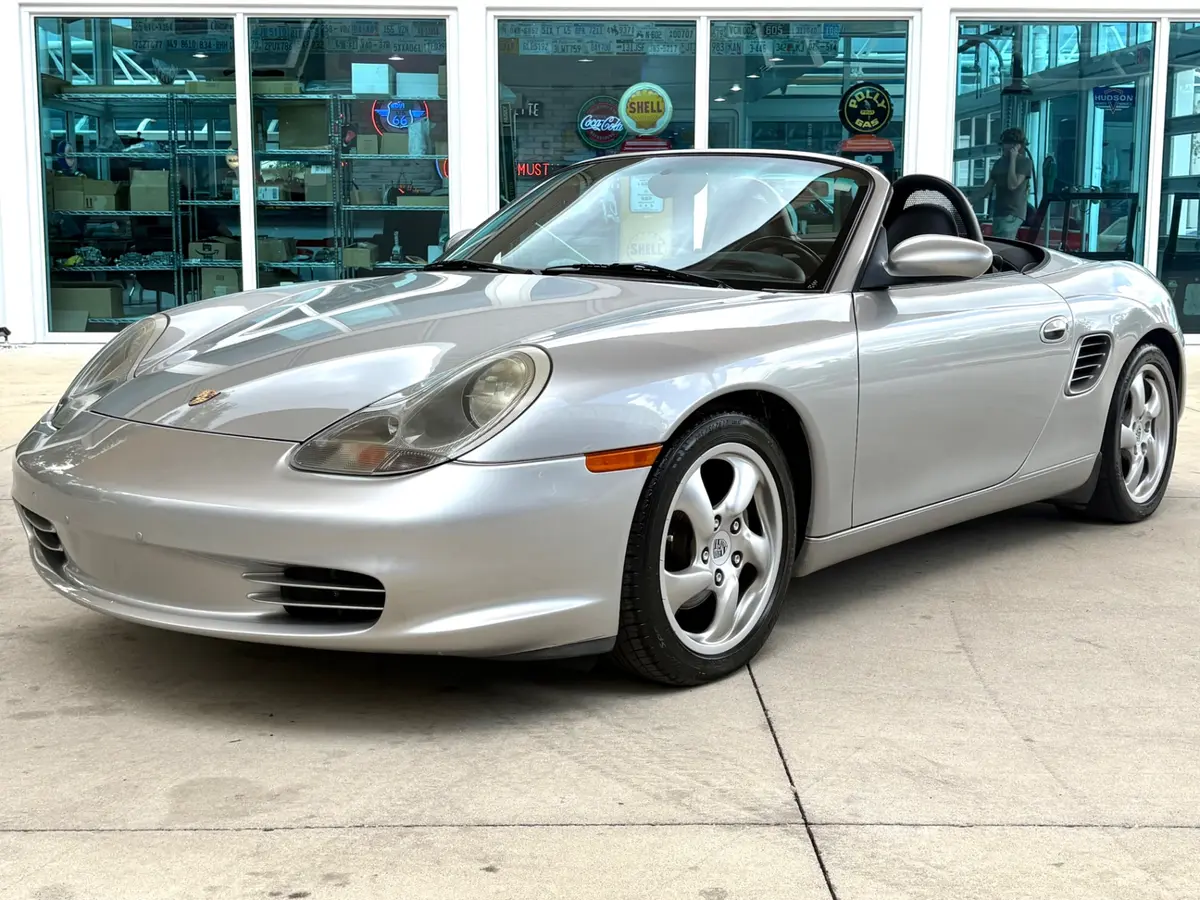
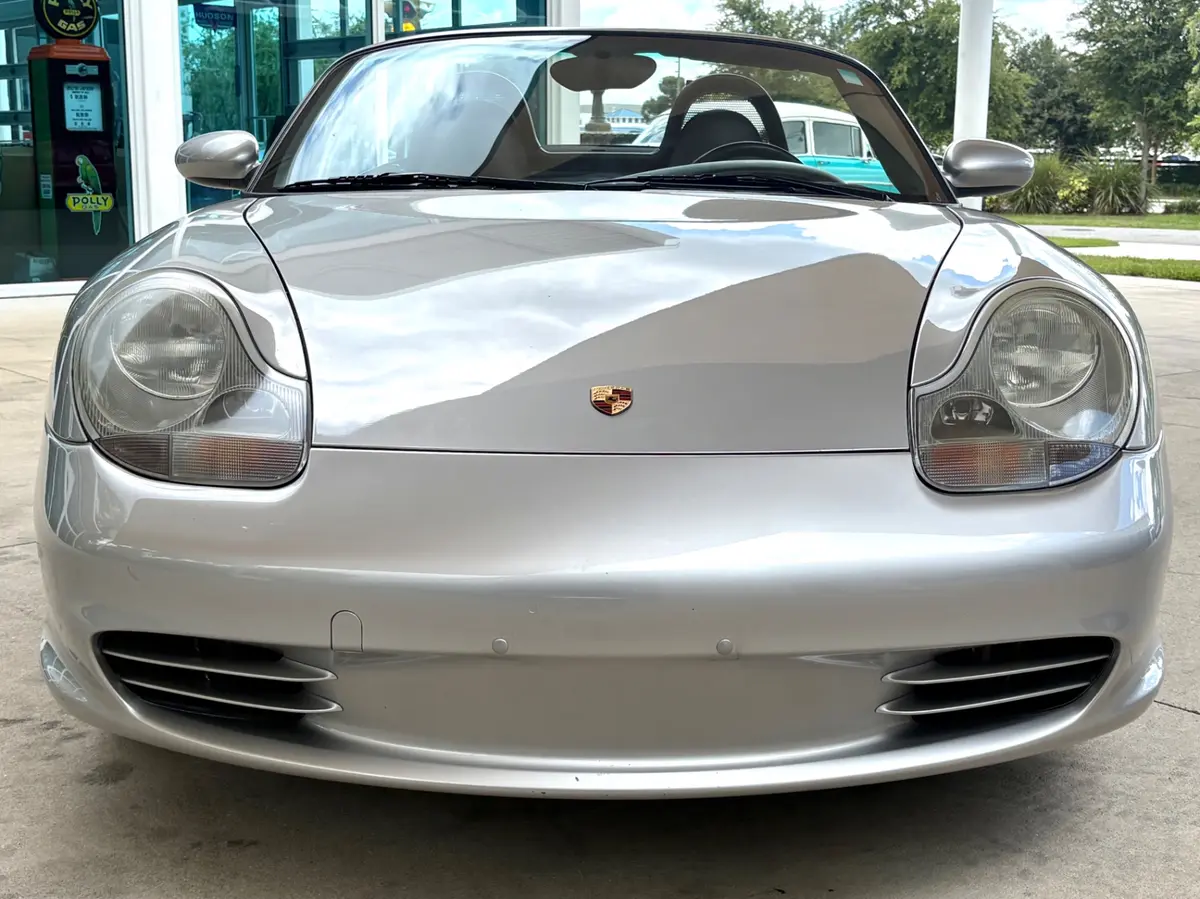
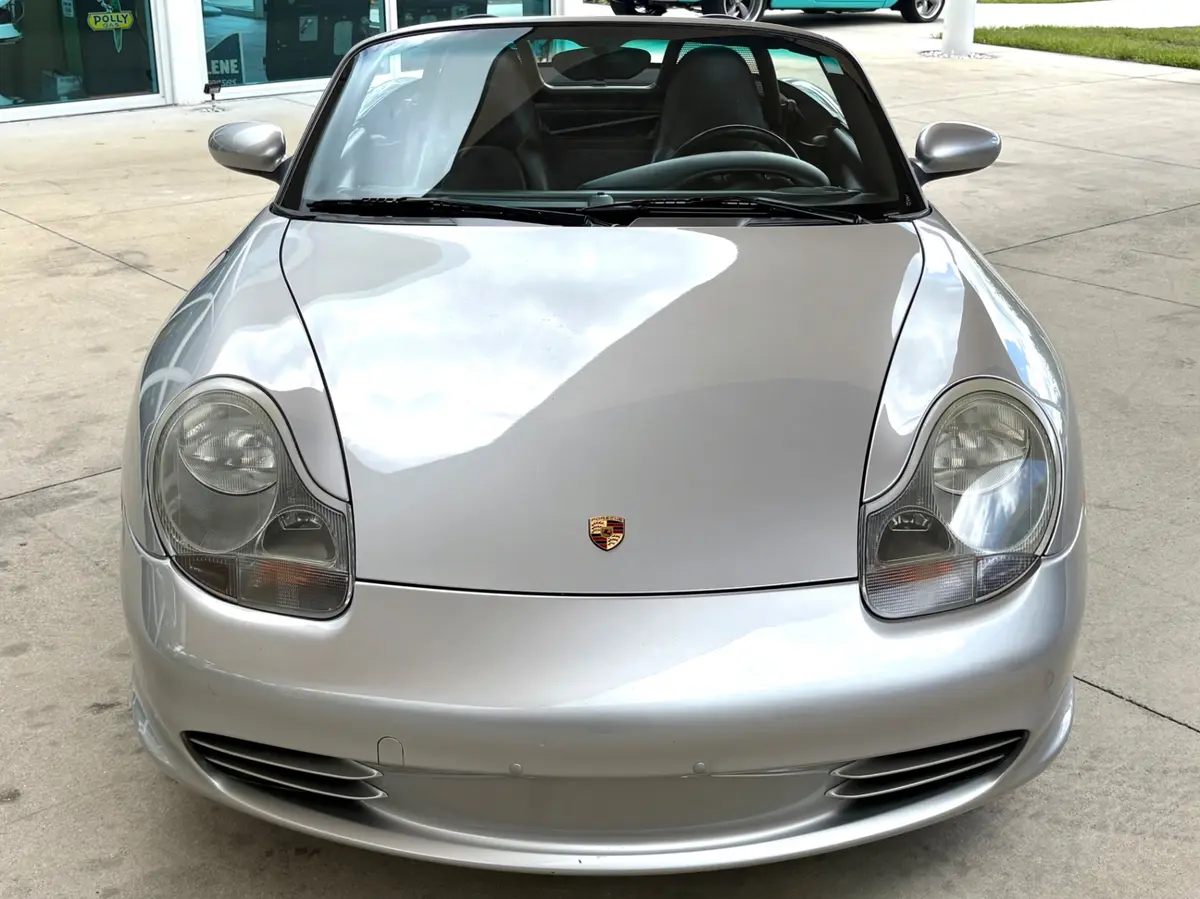
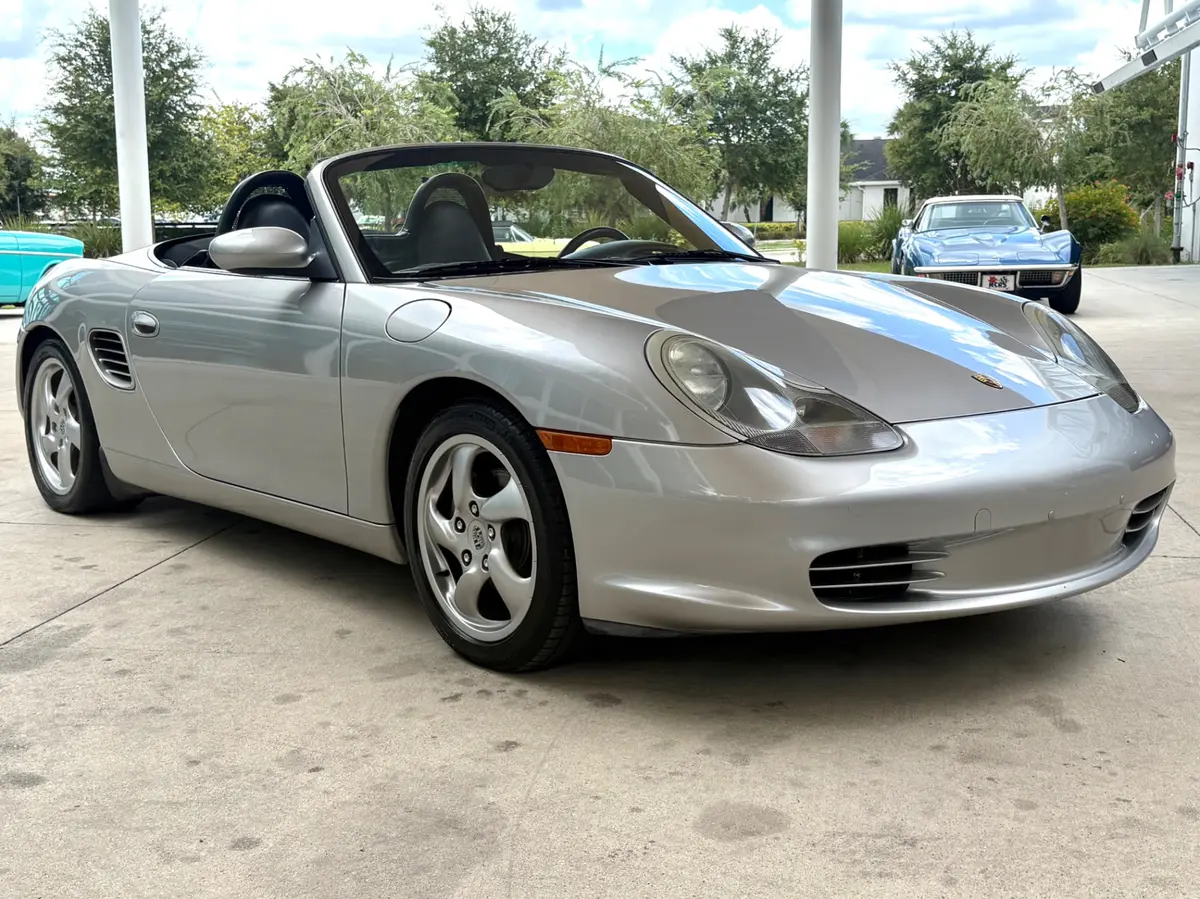
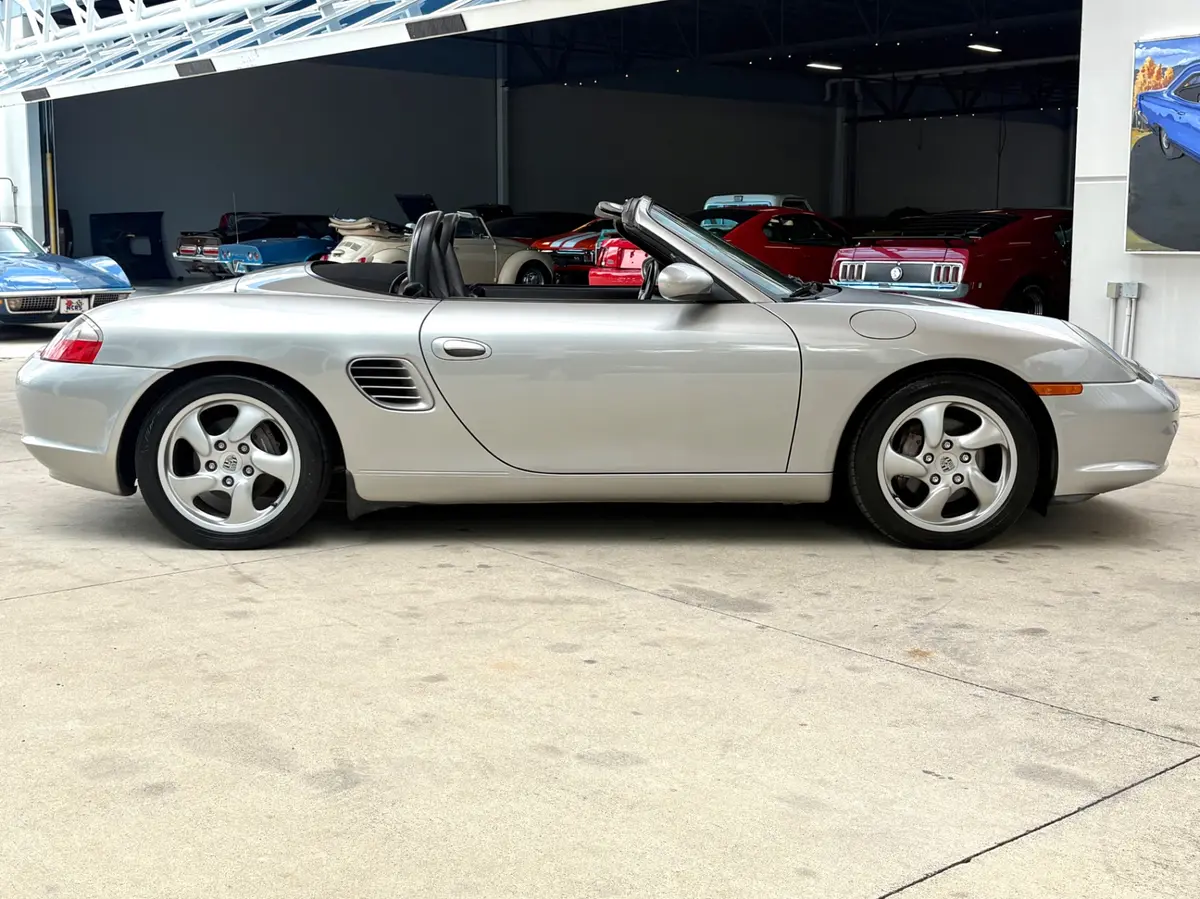
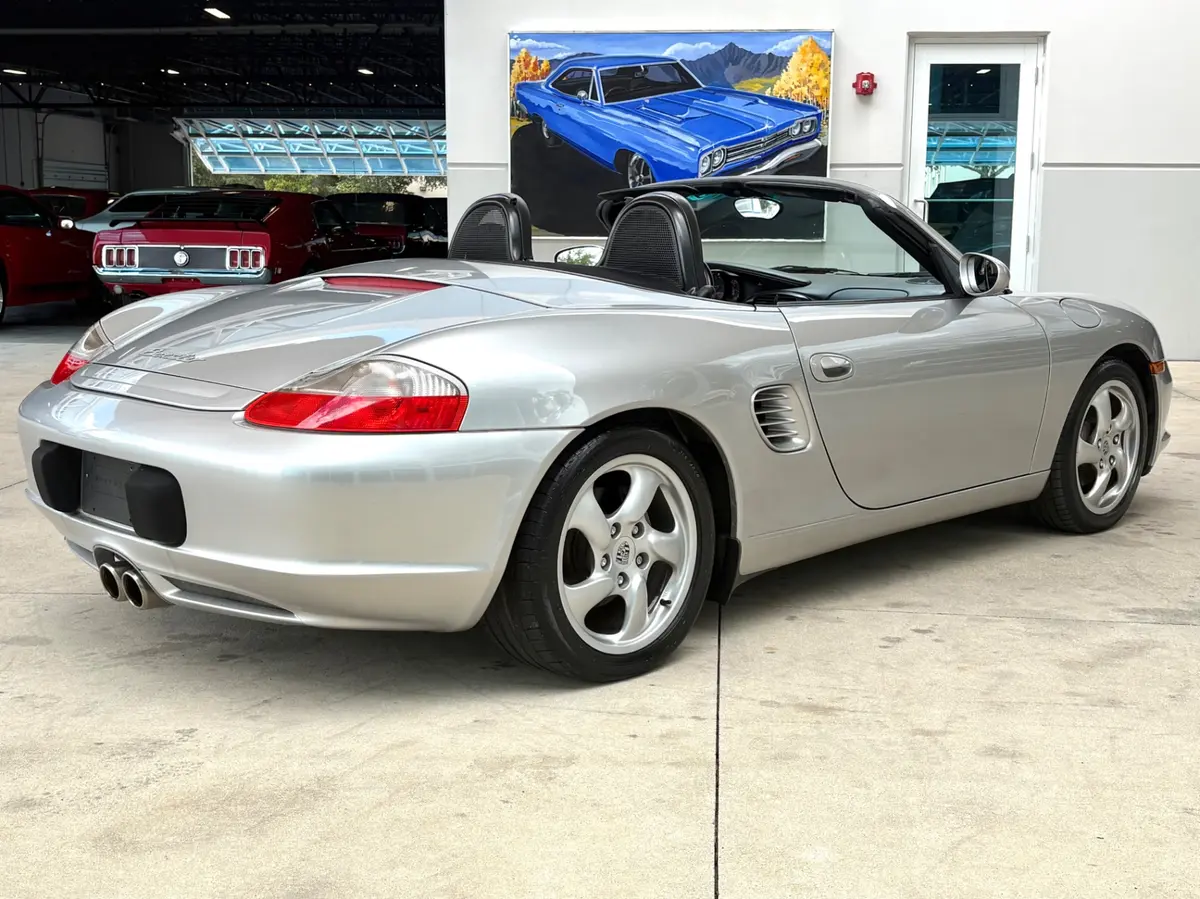
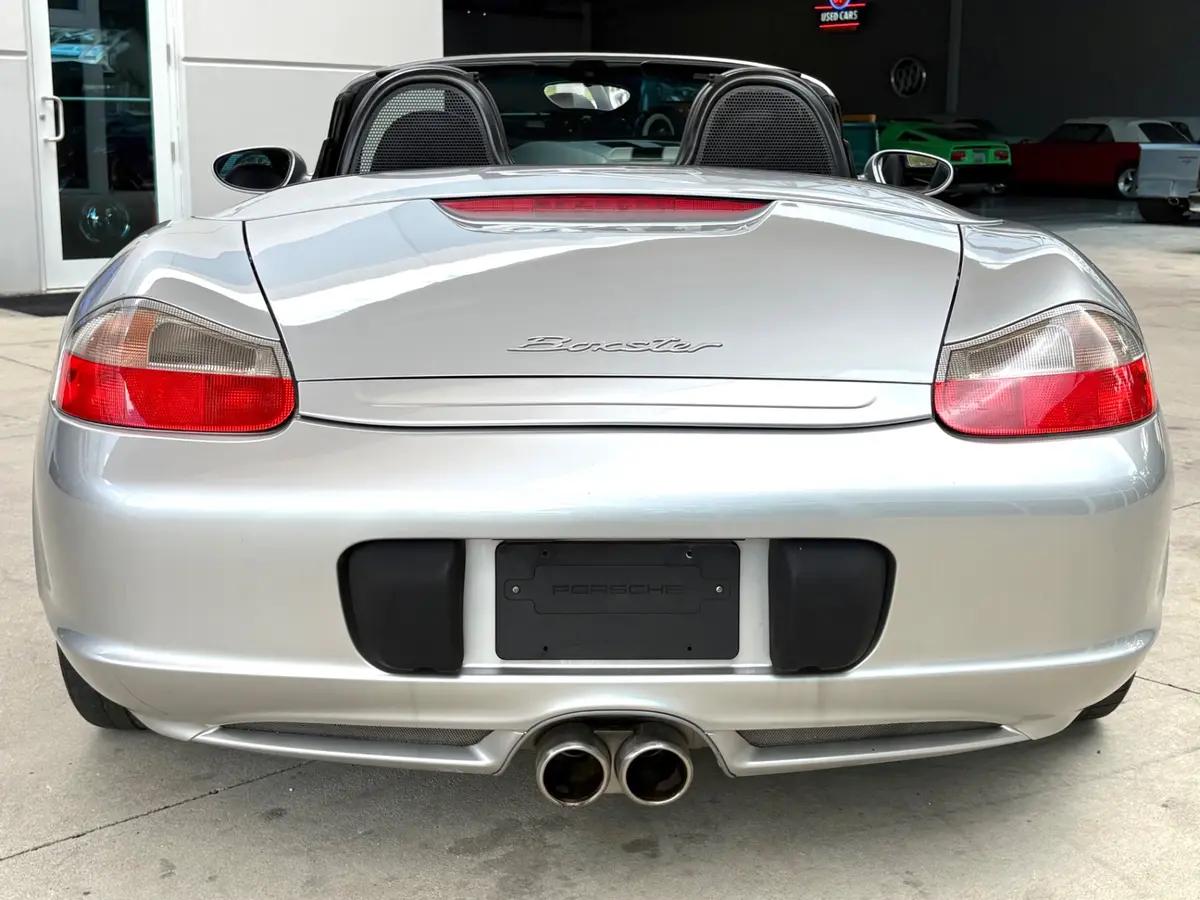
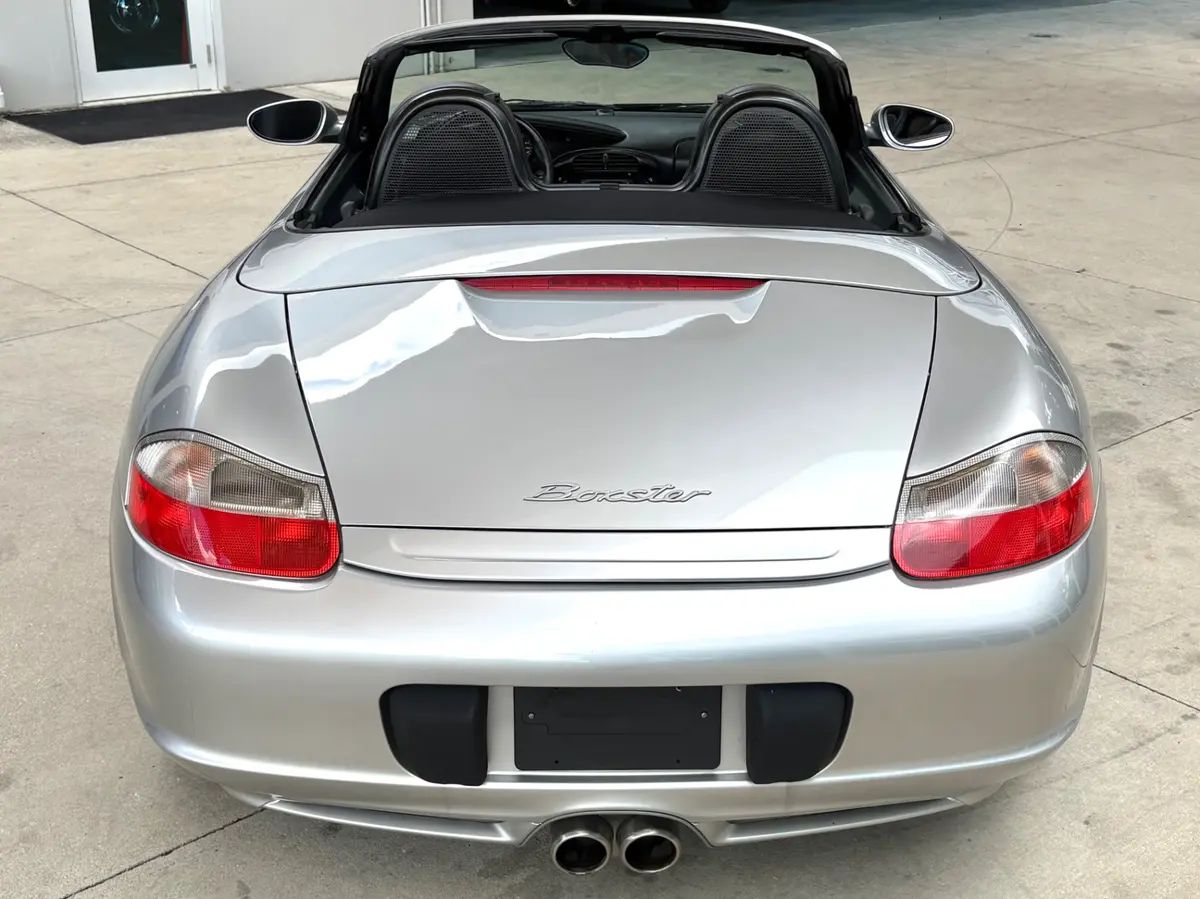
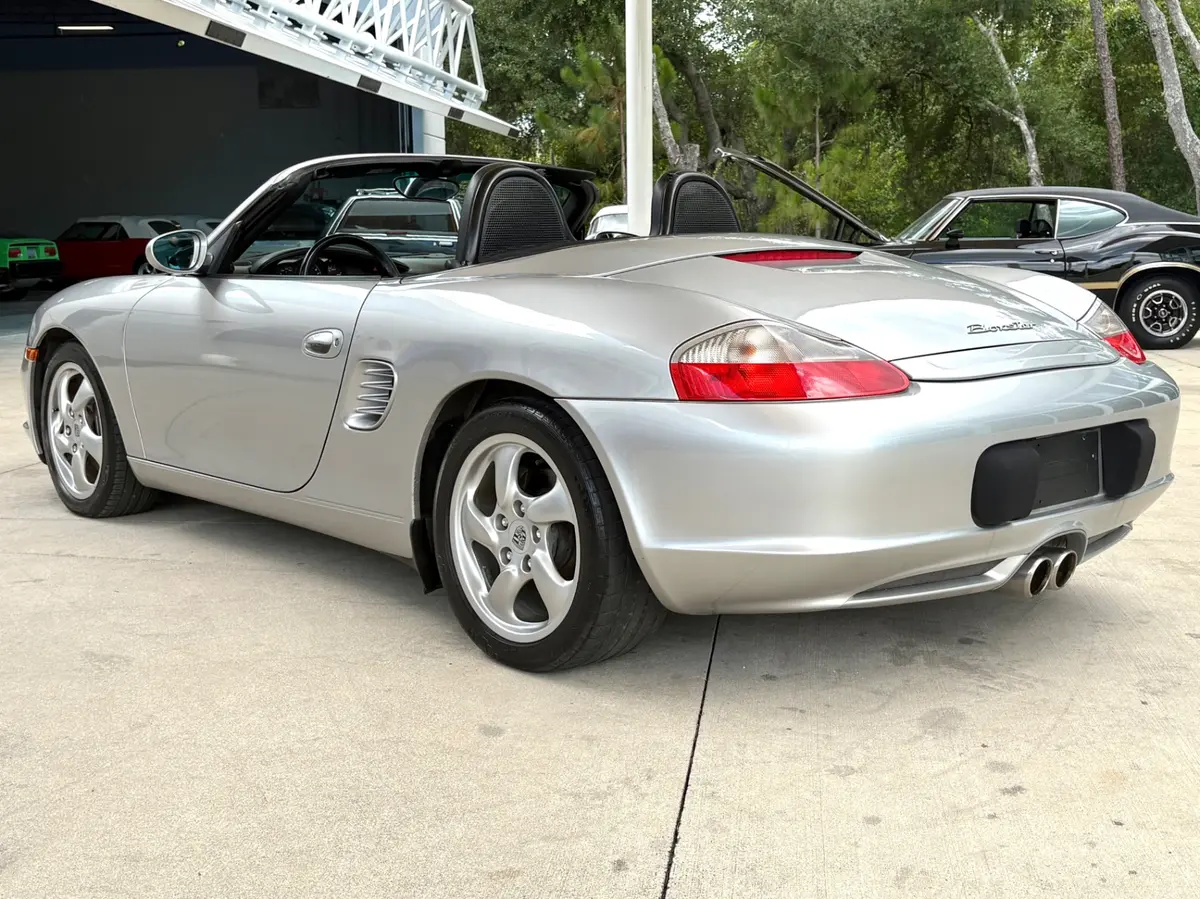
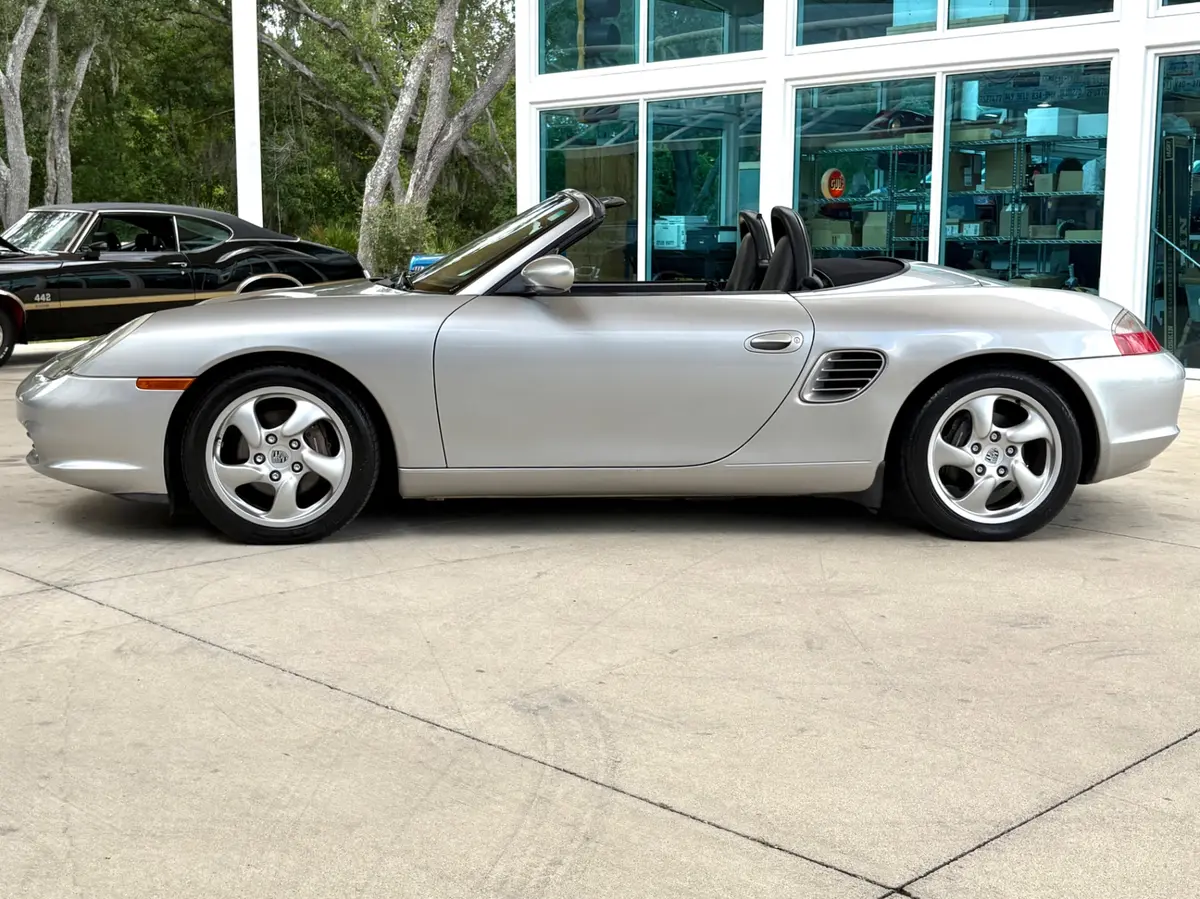
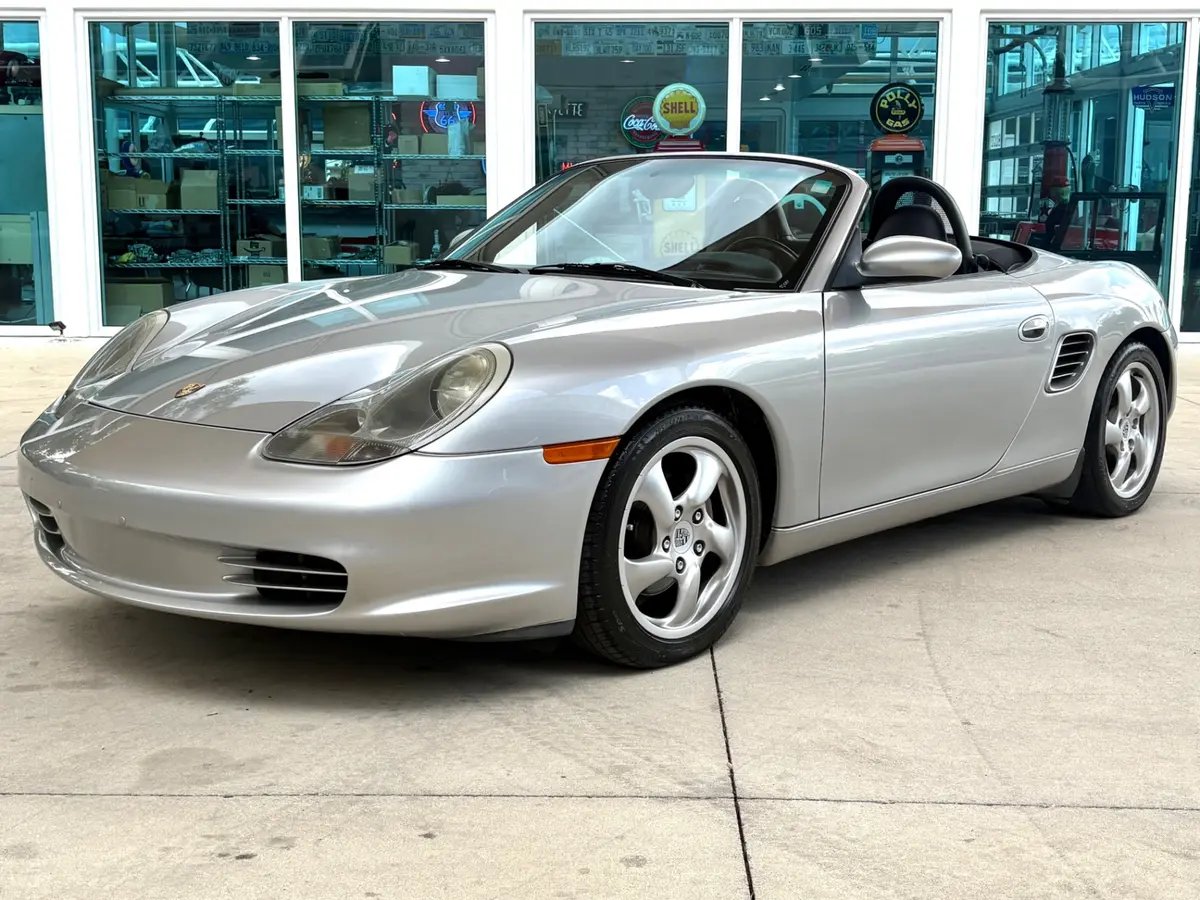
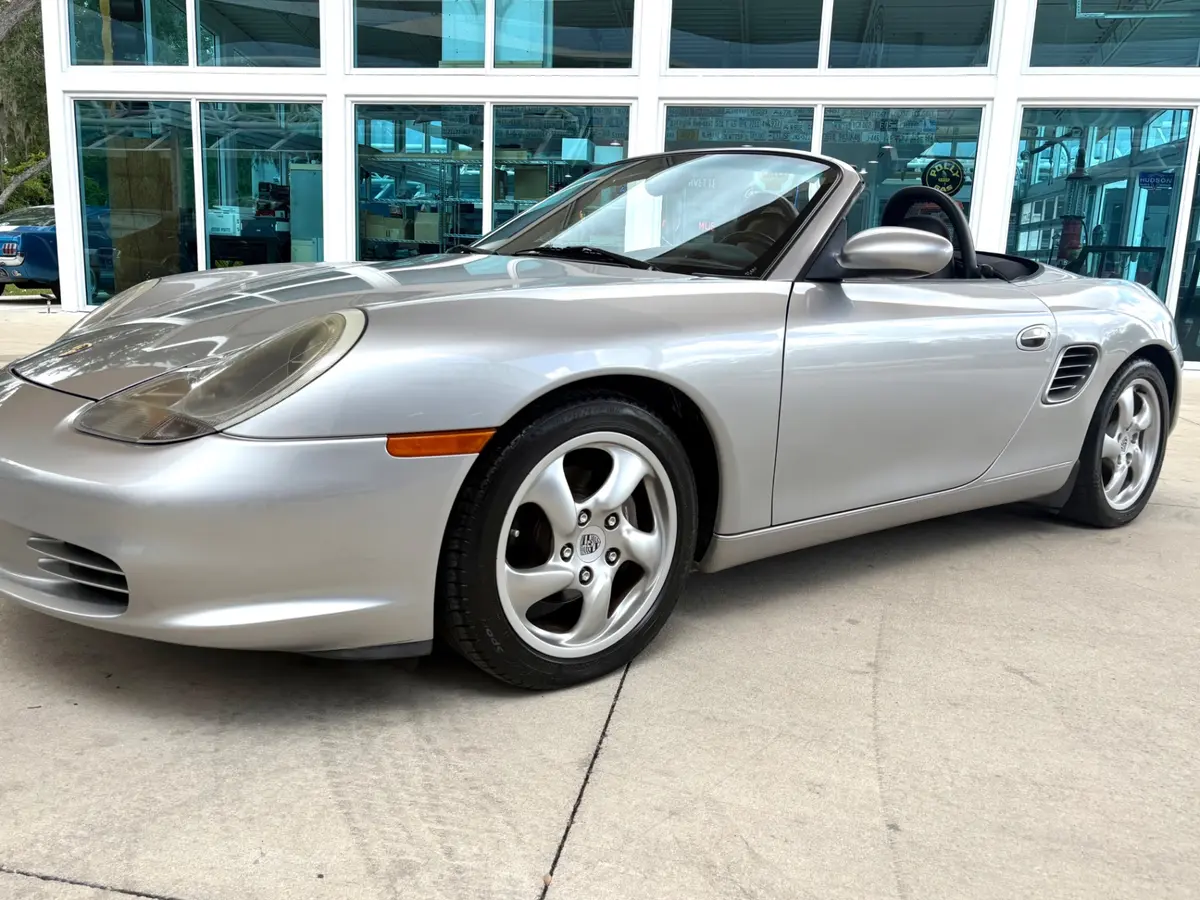
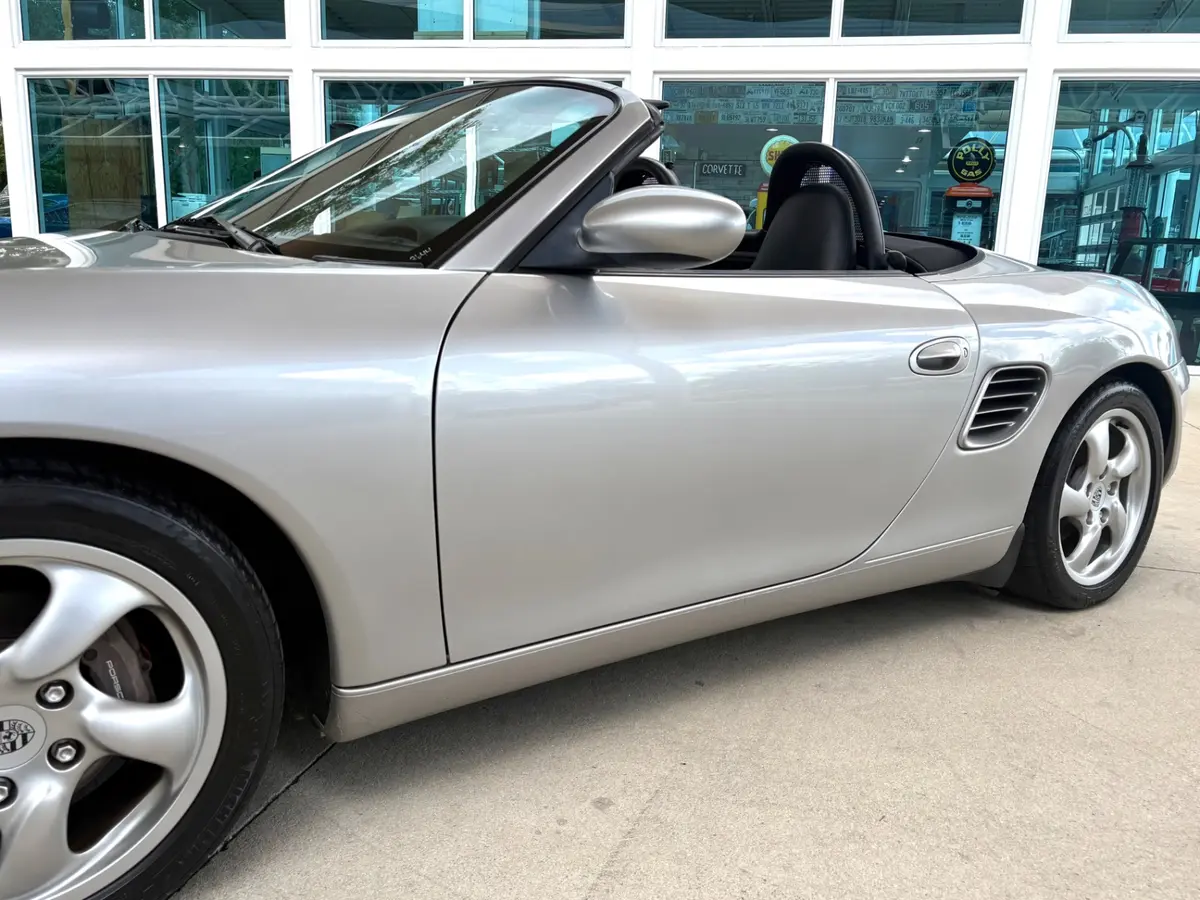
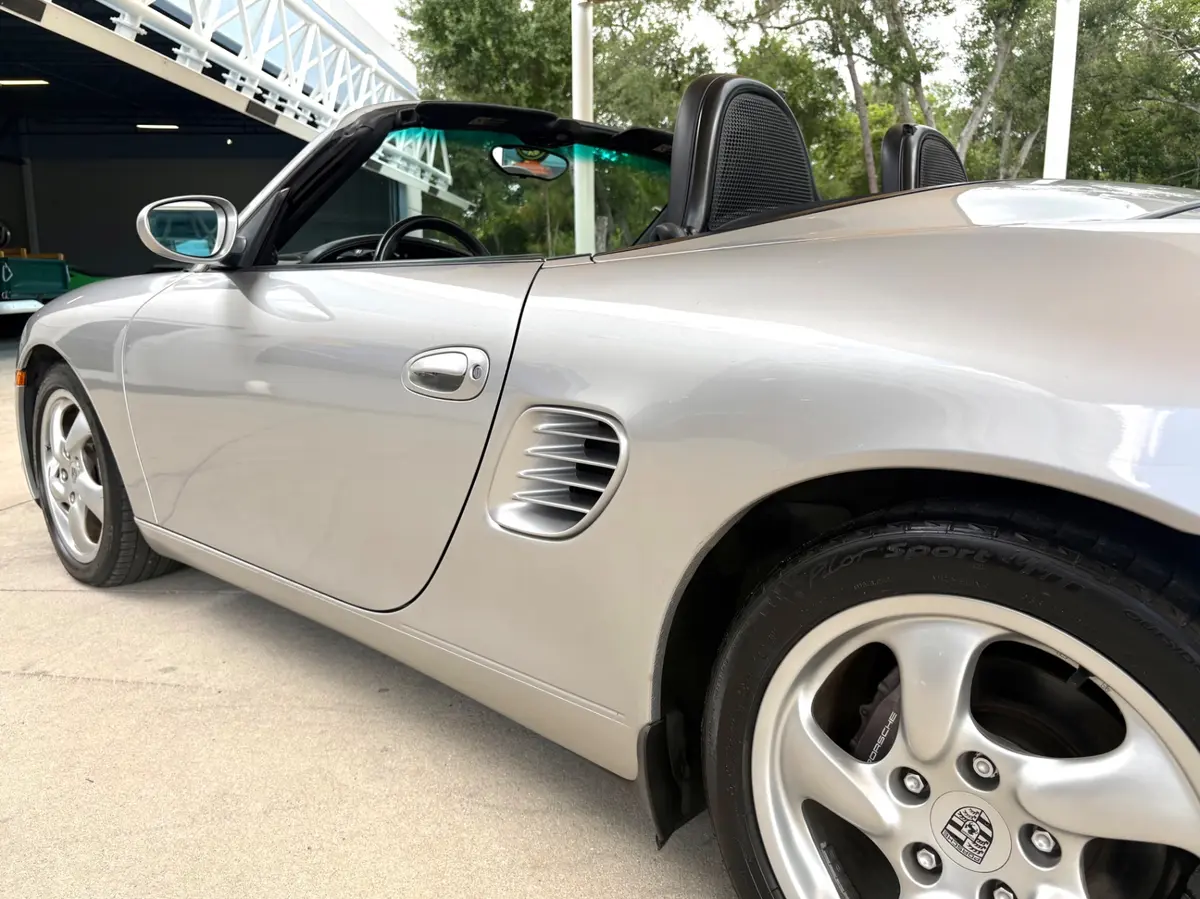
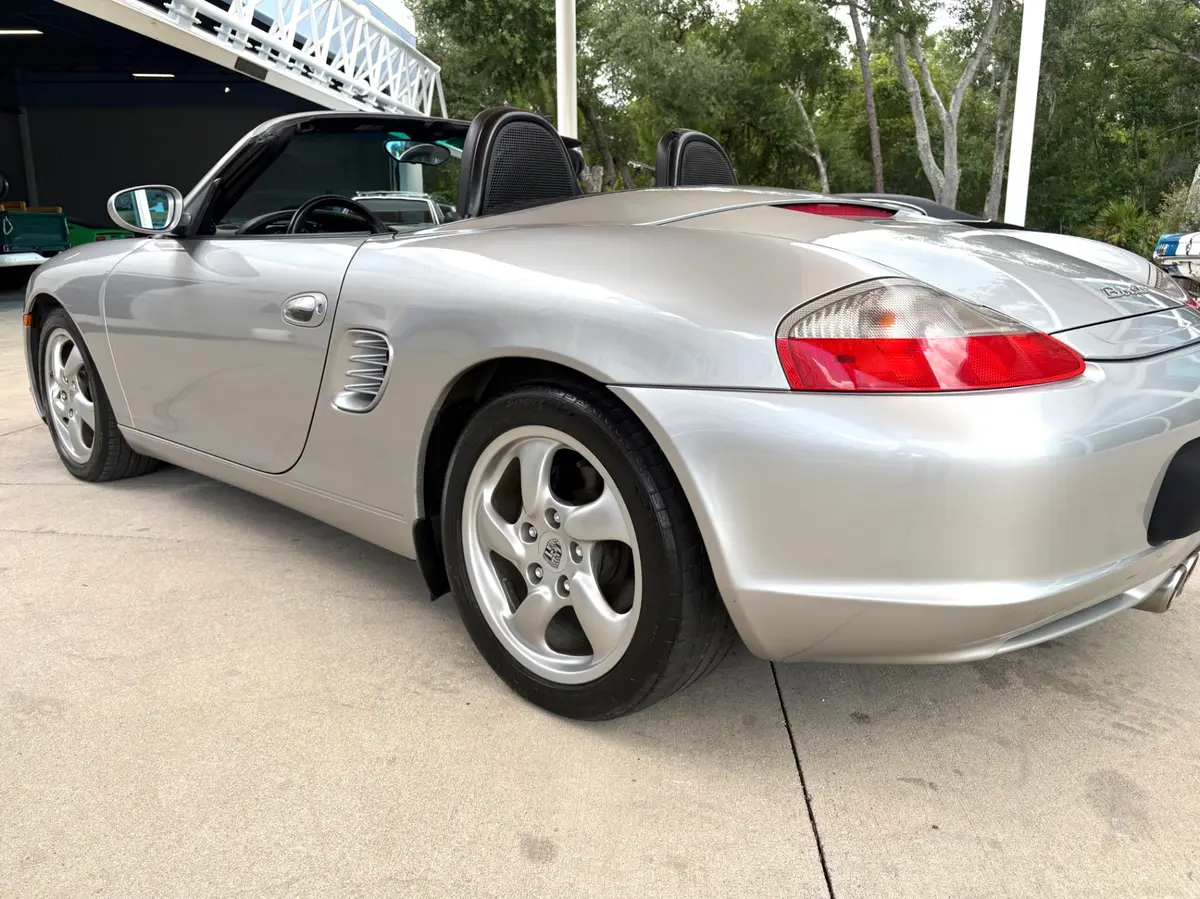
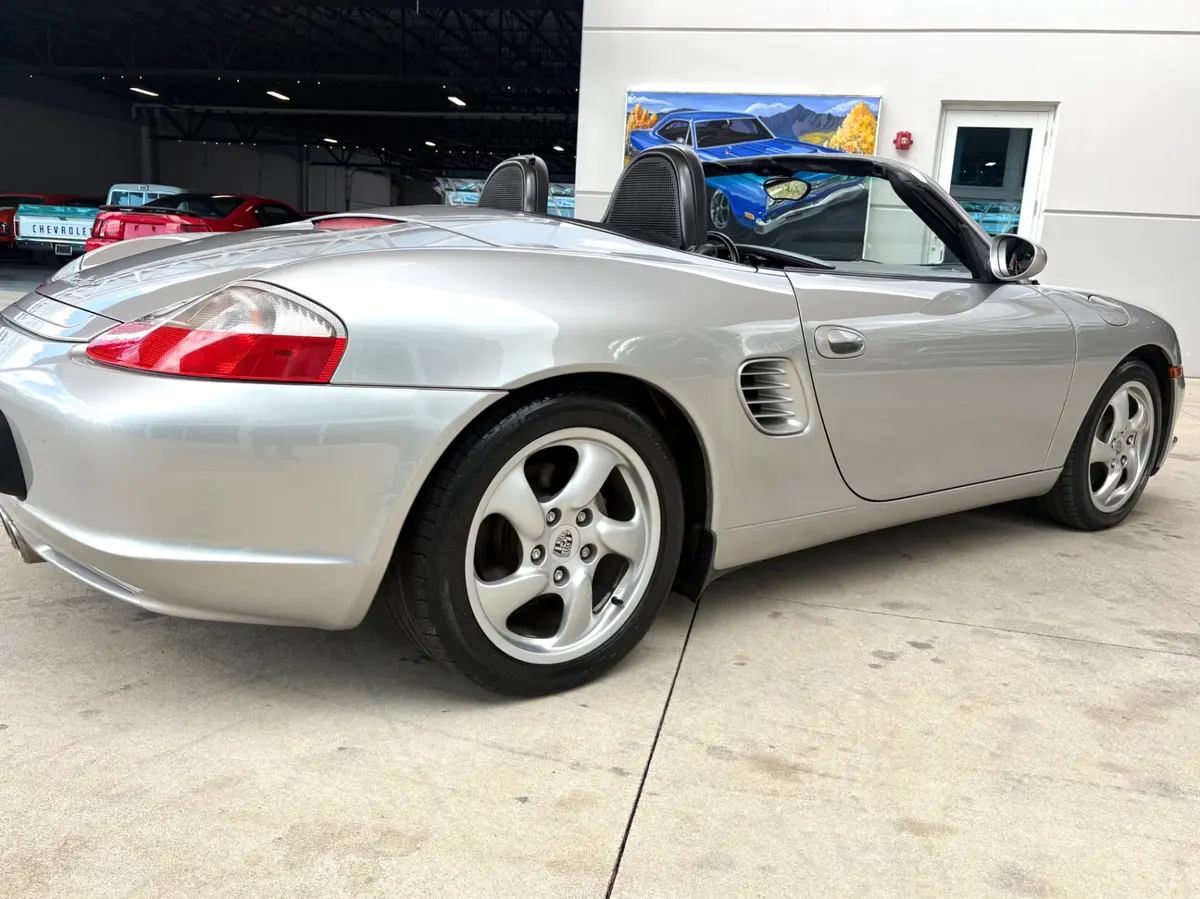
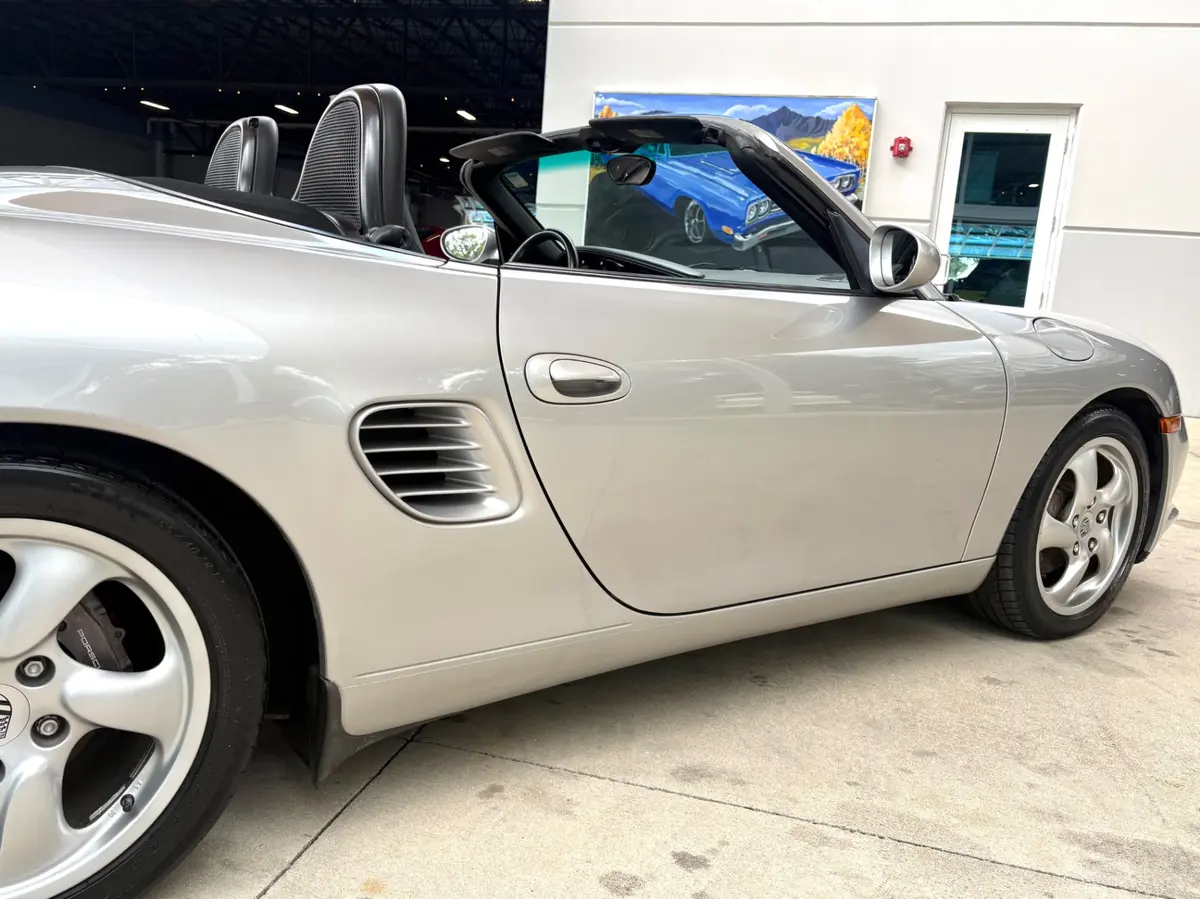
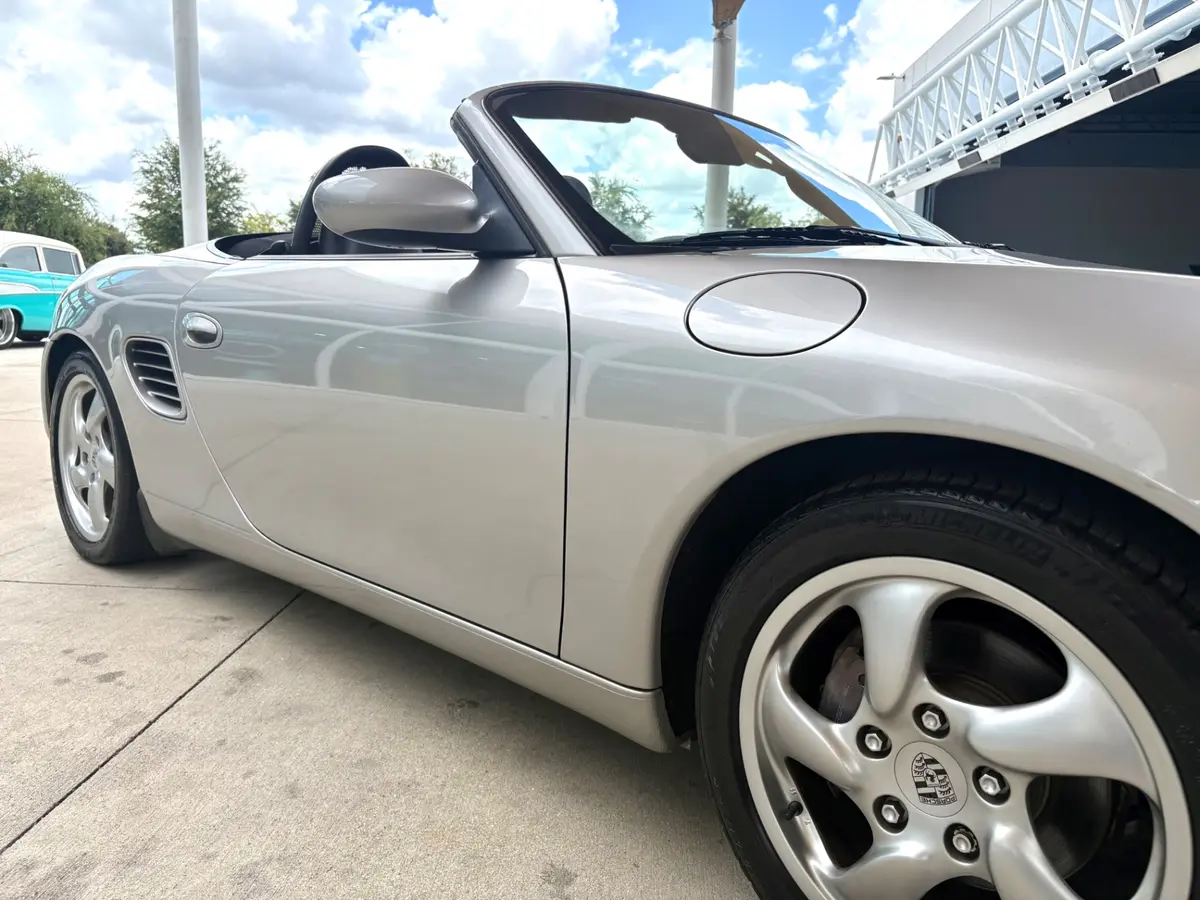
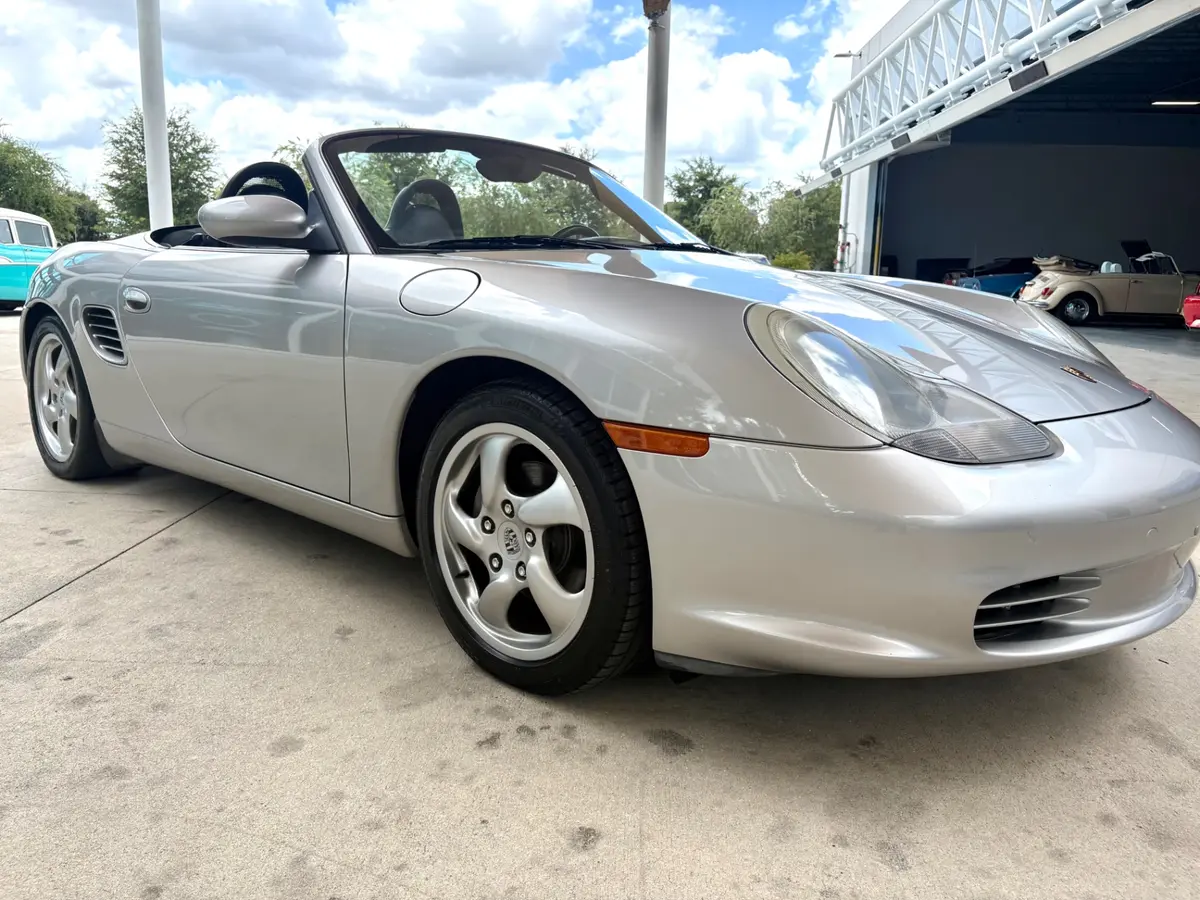
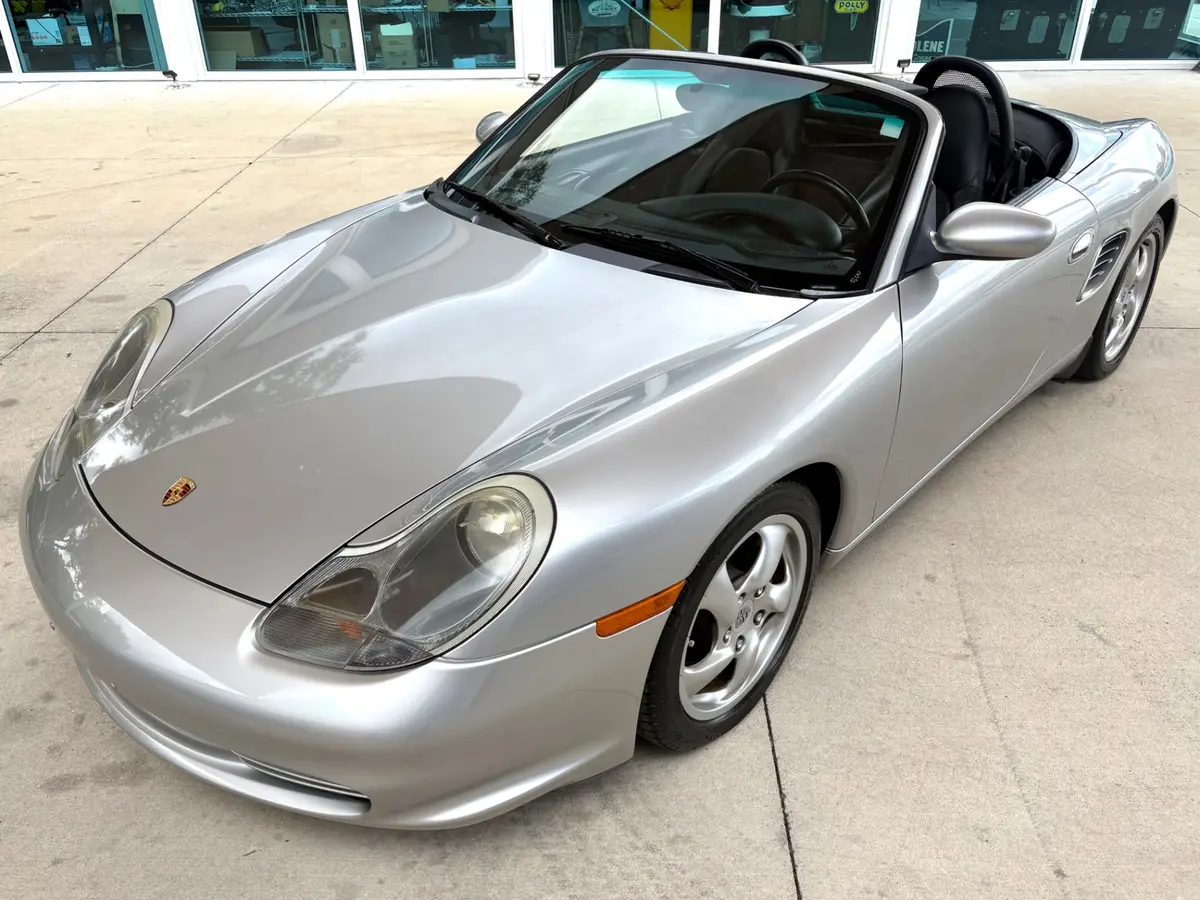
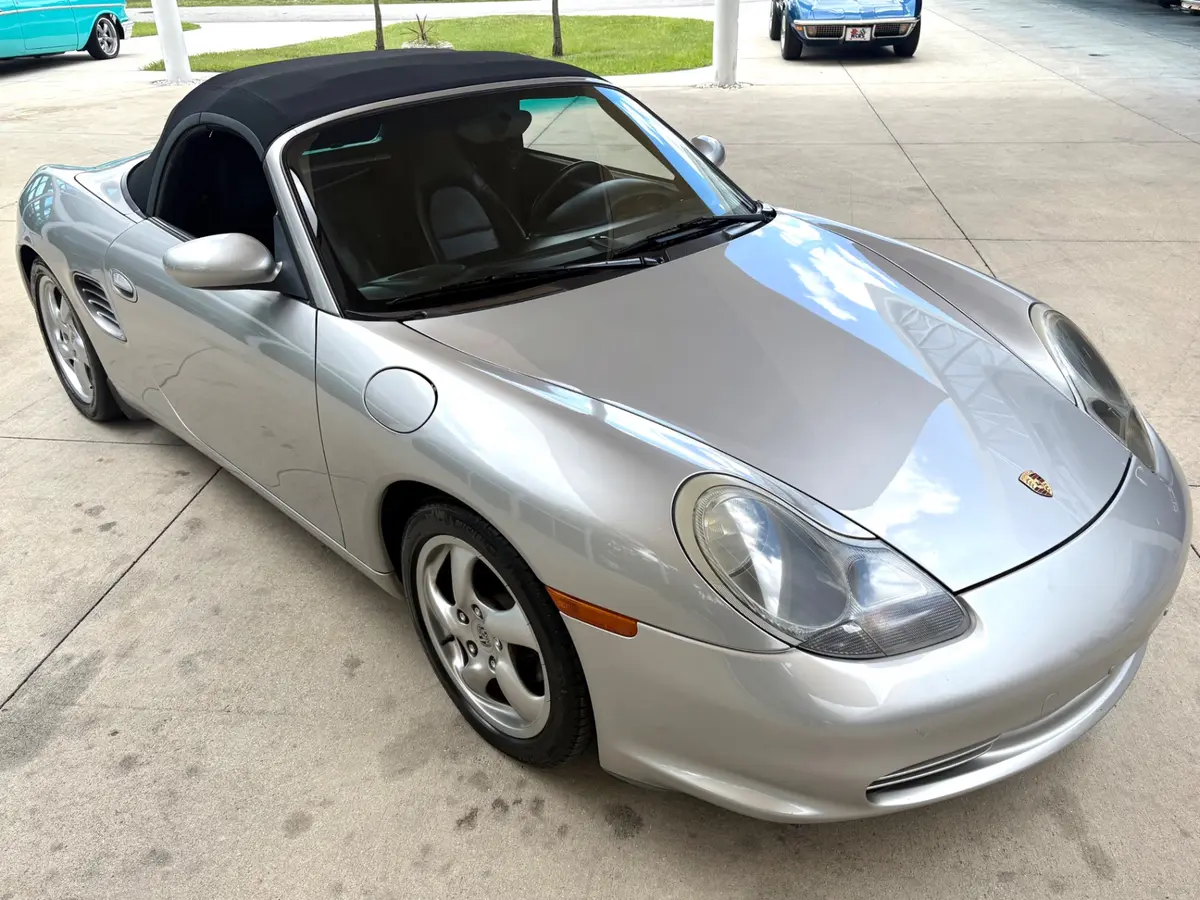
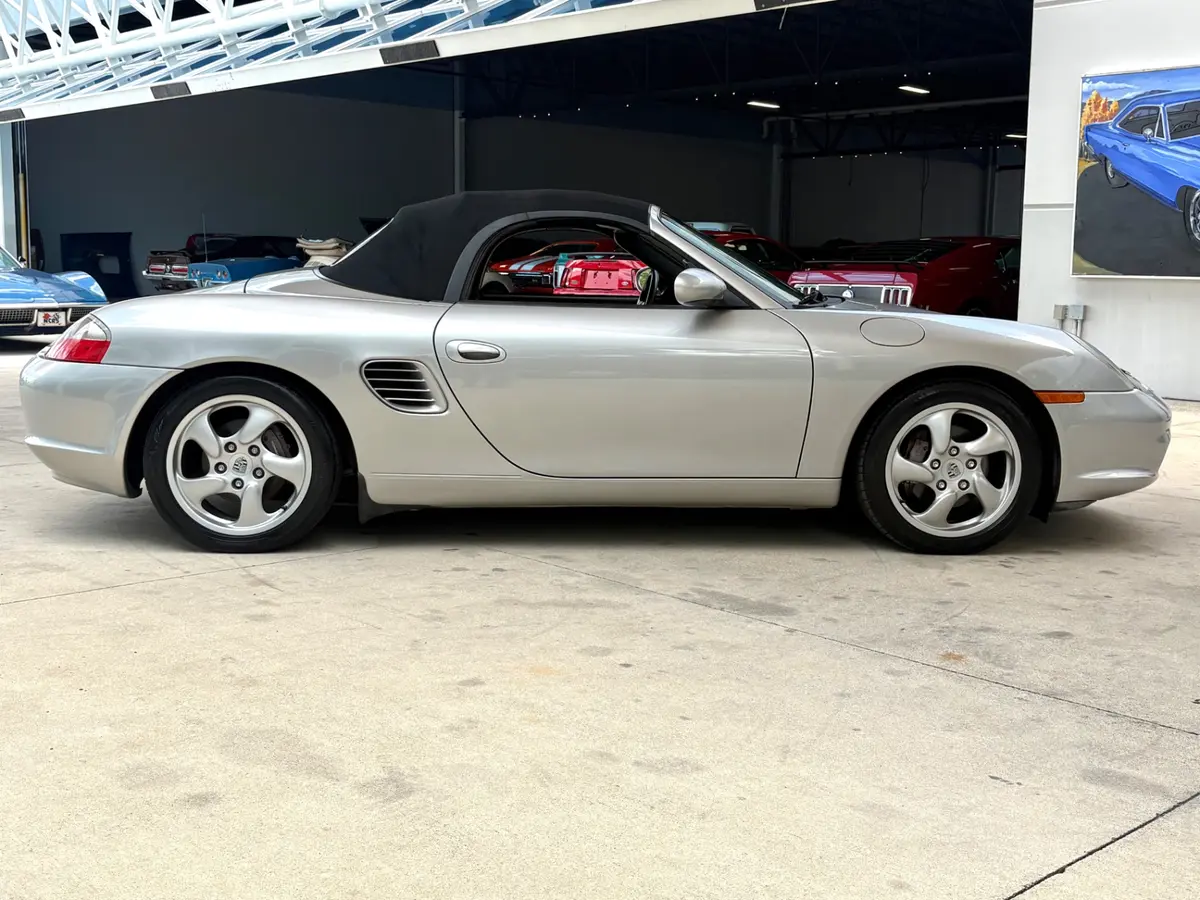
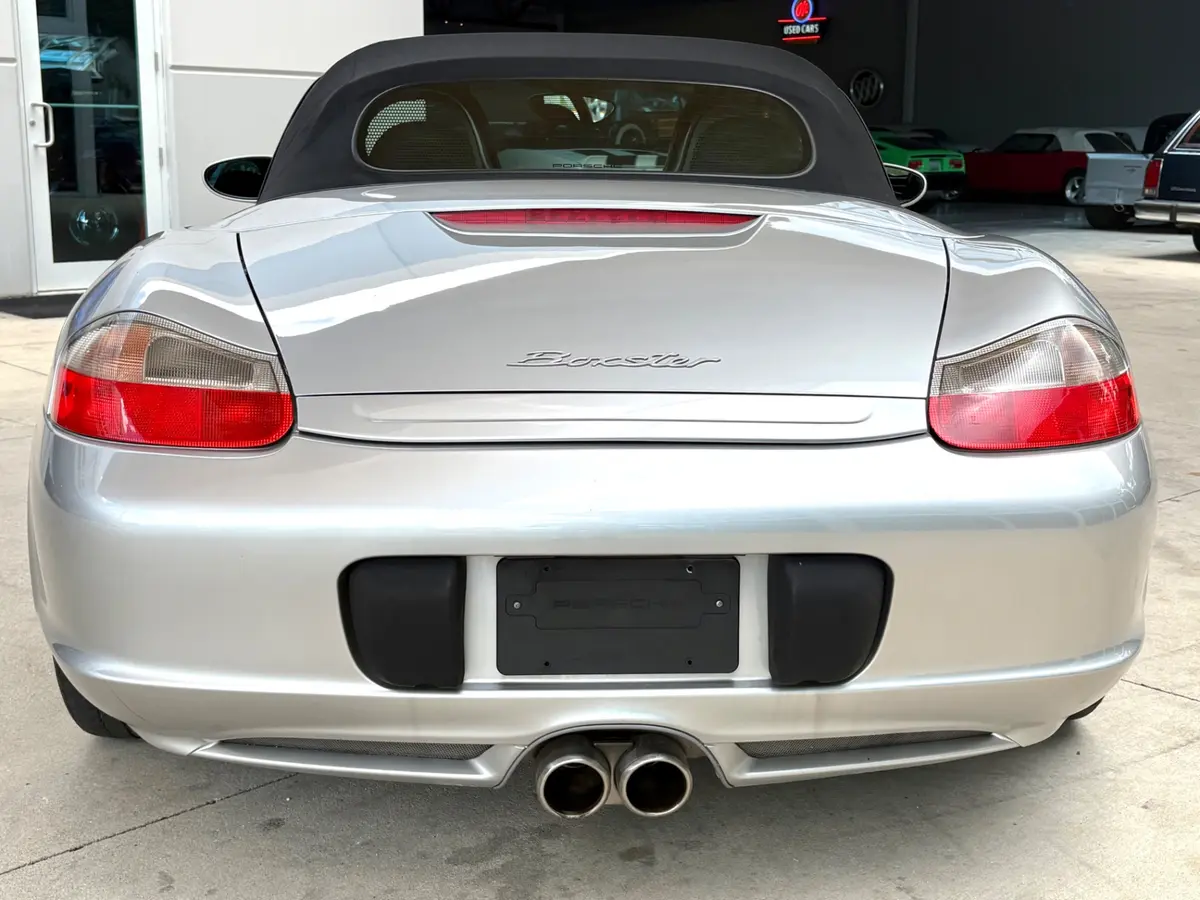
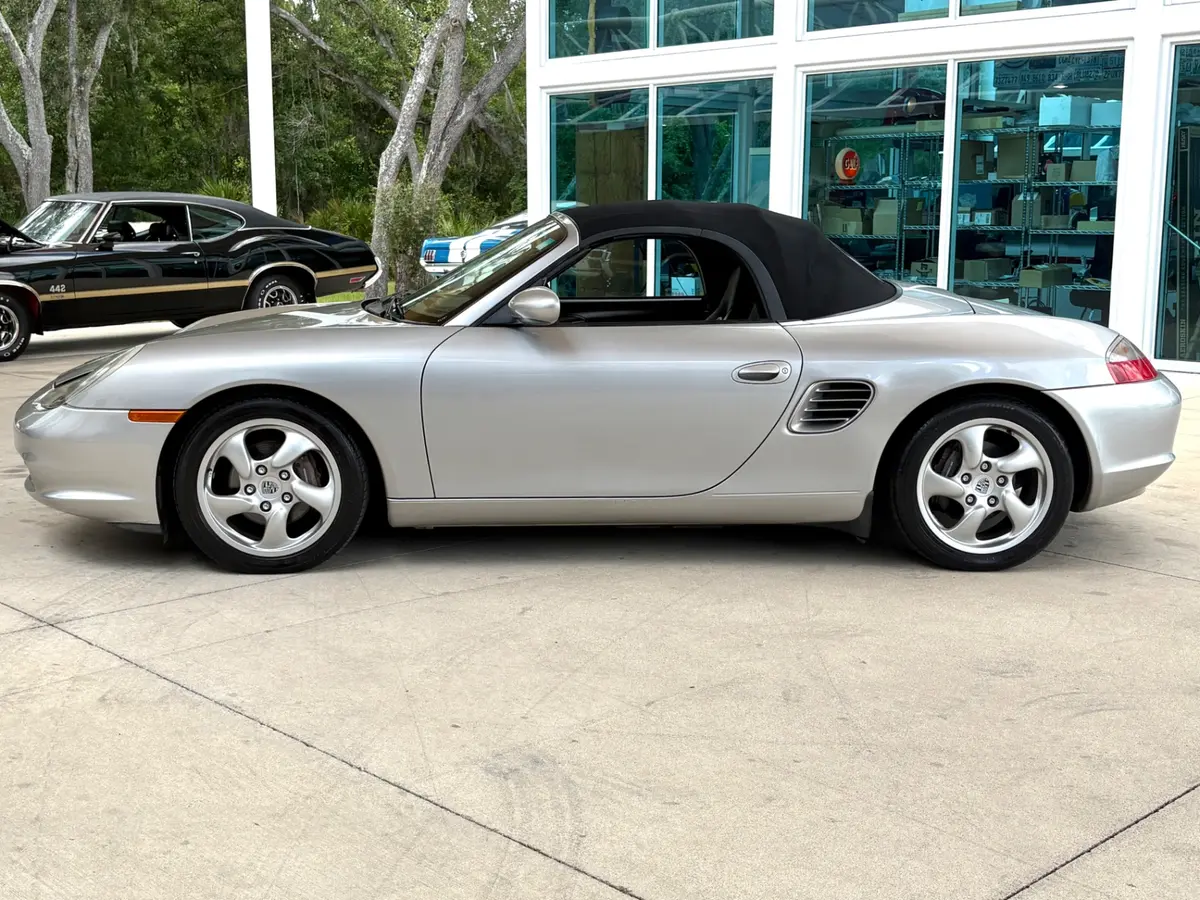

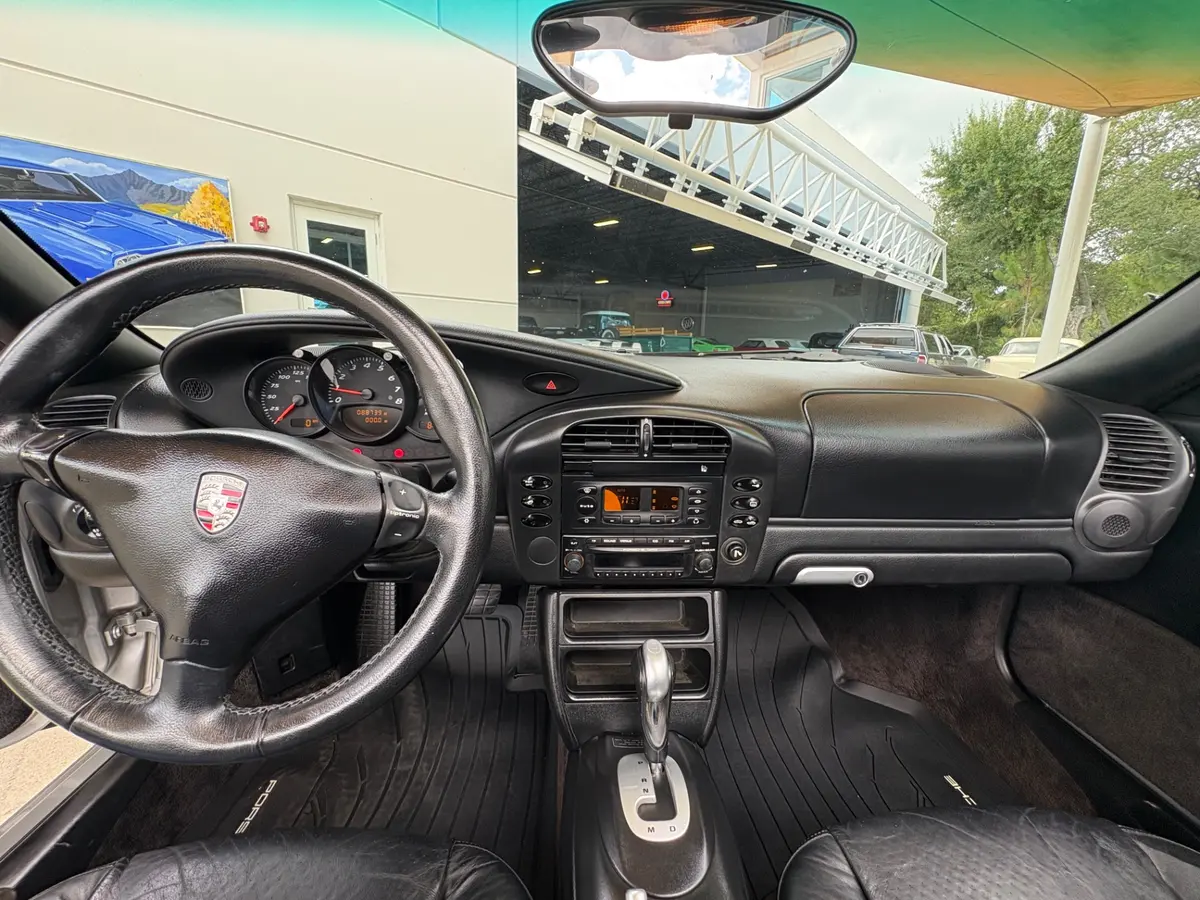
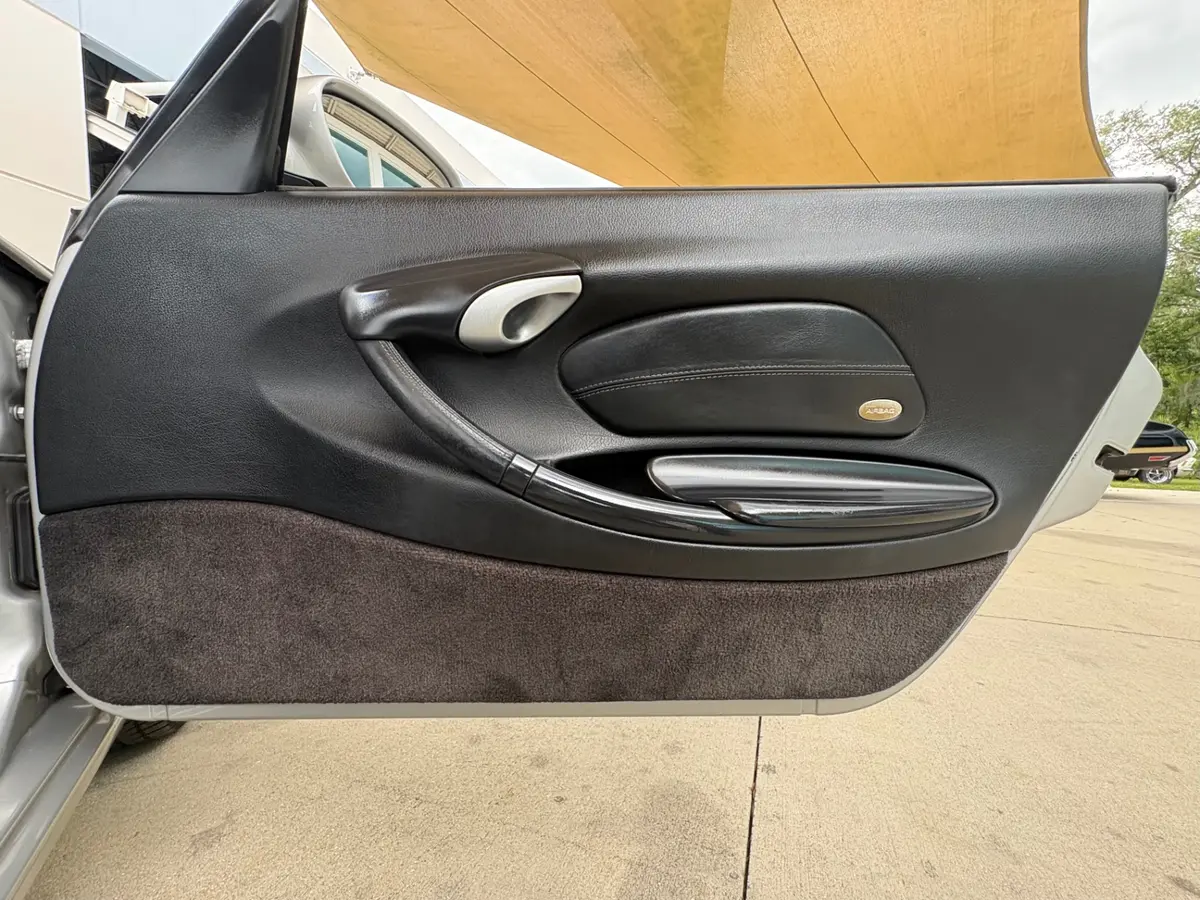
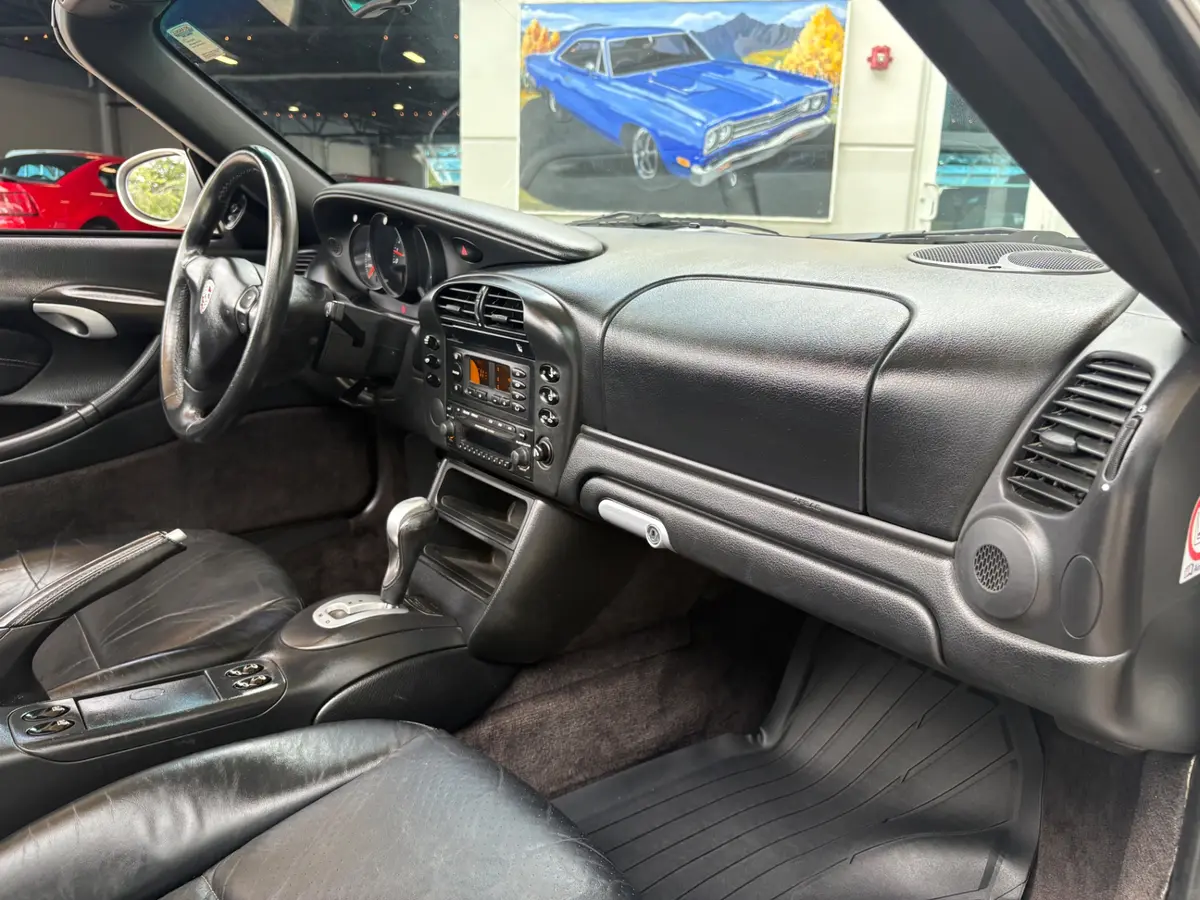
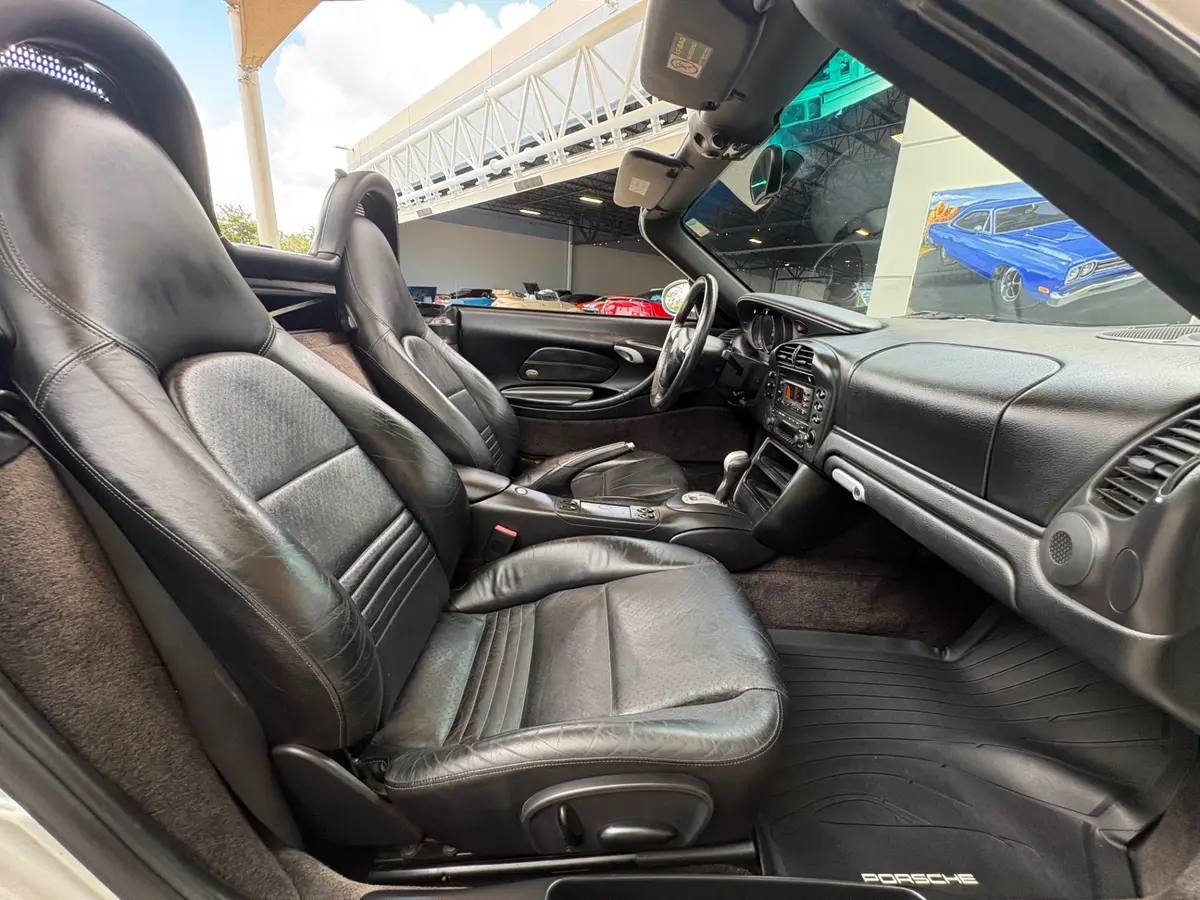
2003 Porsche Boxster — Arctic Silver with Black Interior, Tiptronic, Clean Undercarriage
Why This Car Is Special
The 2003 Porsche Boxster represents the final model year of the original 986-generation platform, a roadster that Porsche introduced in 1996 to revive the entry-level sports car segment and, frankly, to save the company financially during a difficult period. It worked. The Boxster restored Porsche's profitability and introduced an entirely new generation of buyers to what it means to drive a mid-engine, rear-wheel-drive sports car. By 2003, the car had been refined through several updates including a redesigned front fascia, revised headlights that moved away from the shared 996 911 units, and engine displacement bumps across the lineup. The base 2.7-liter flat-six in this car produced 228 horsepower in its 2003 state of tune — up from 201 horsepower when the Boxster debuted. That is not an insignificant improvement for a car that weighs around 2,800 pounds.
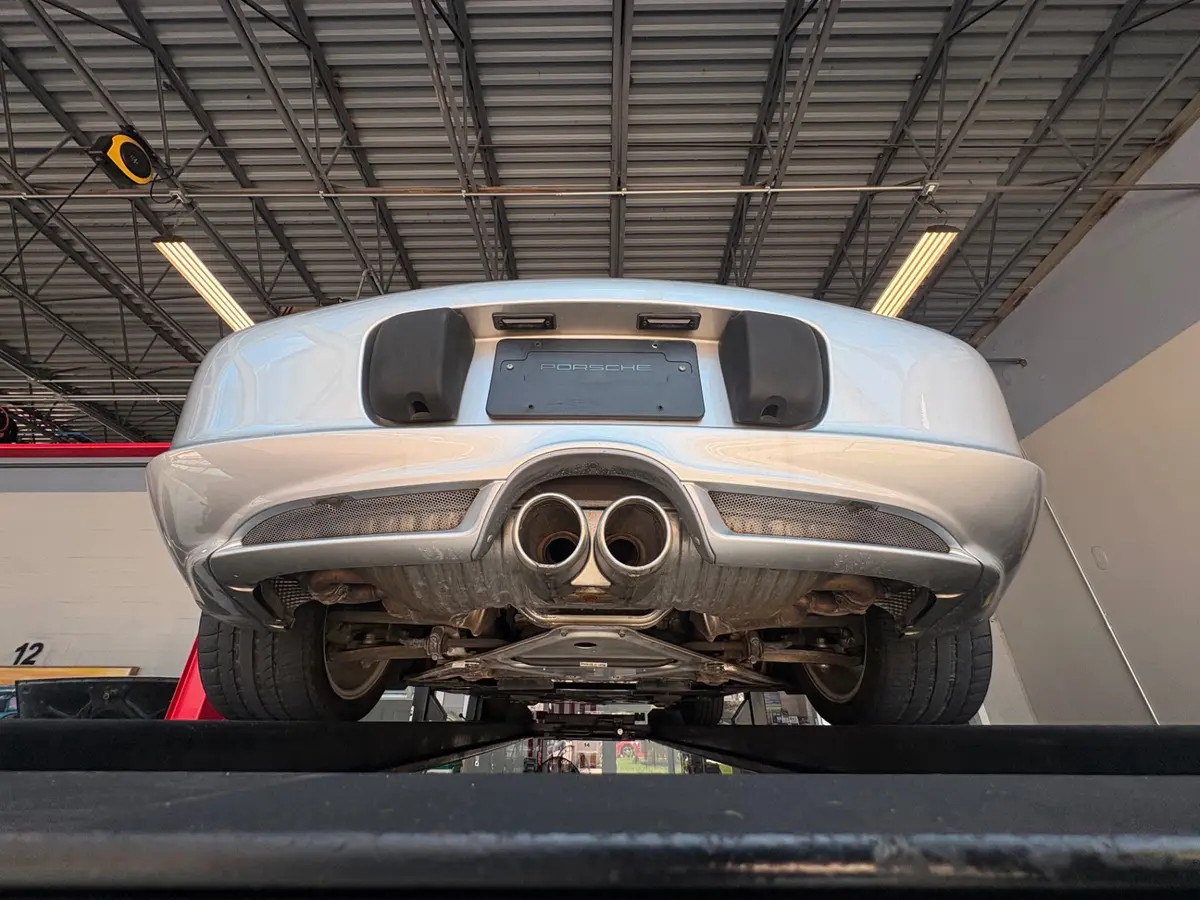
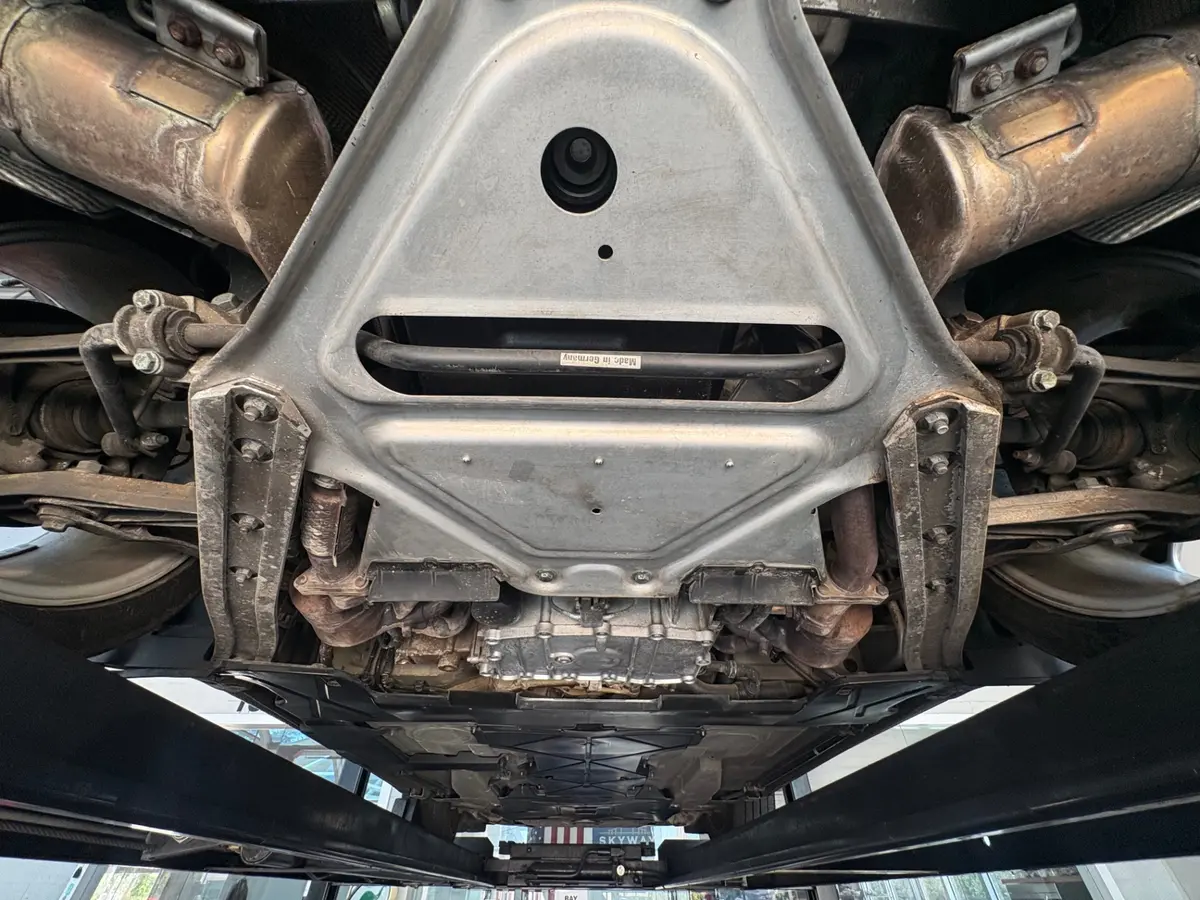
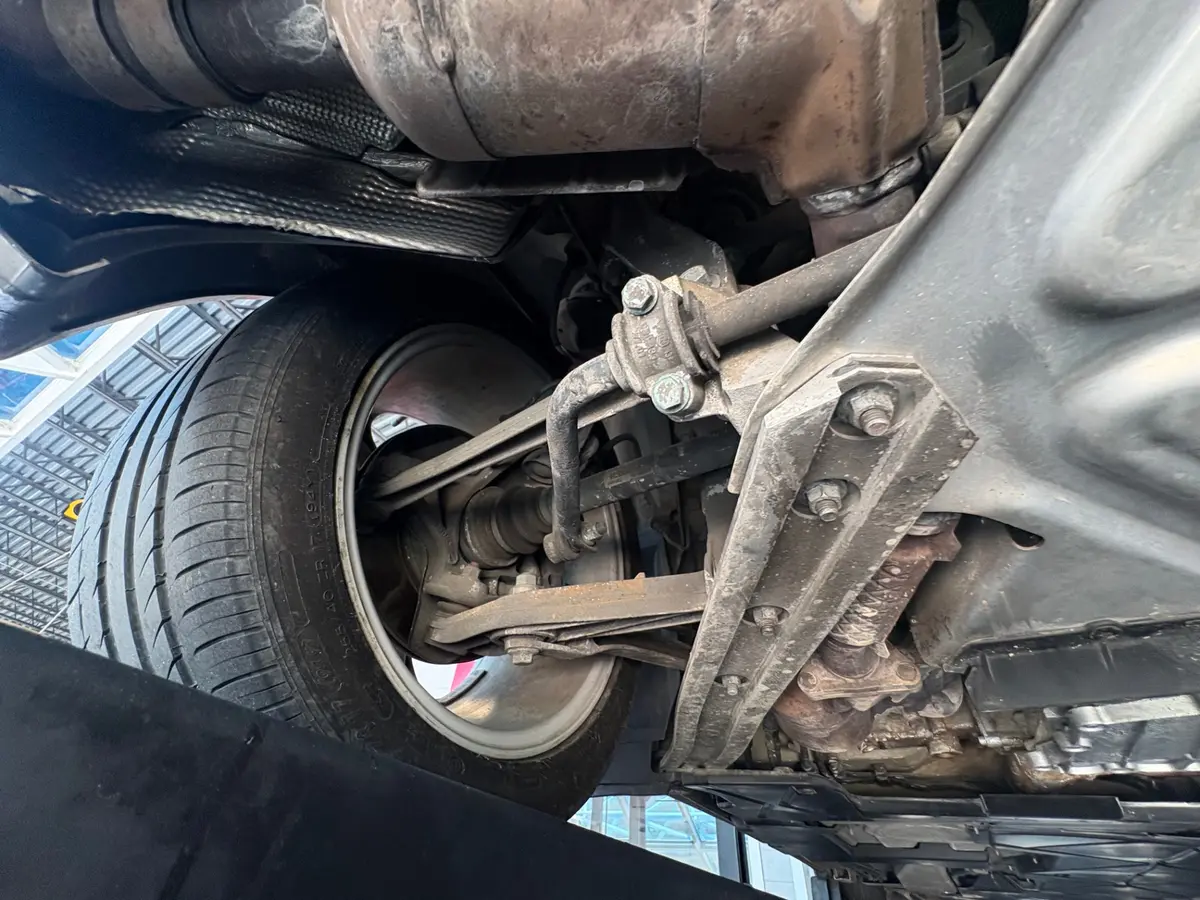
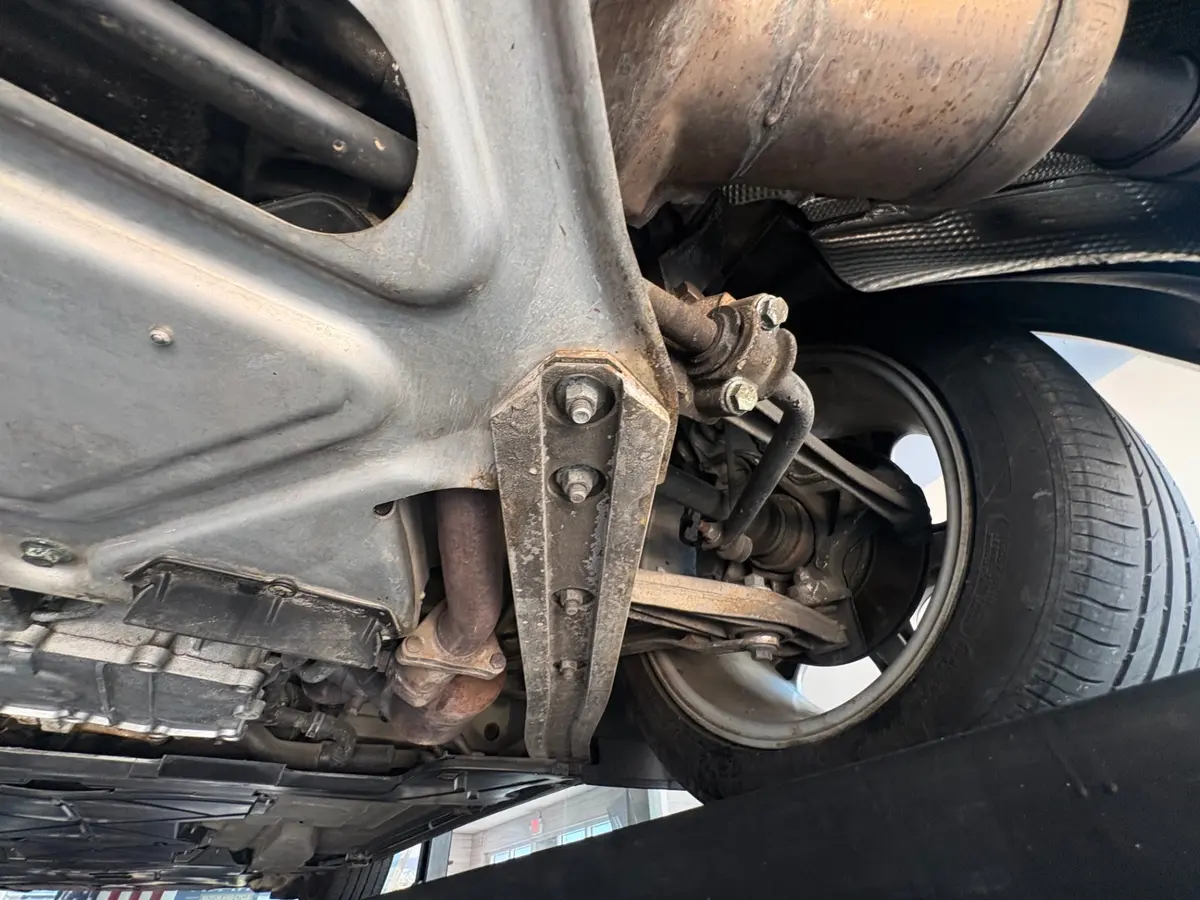
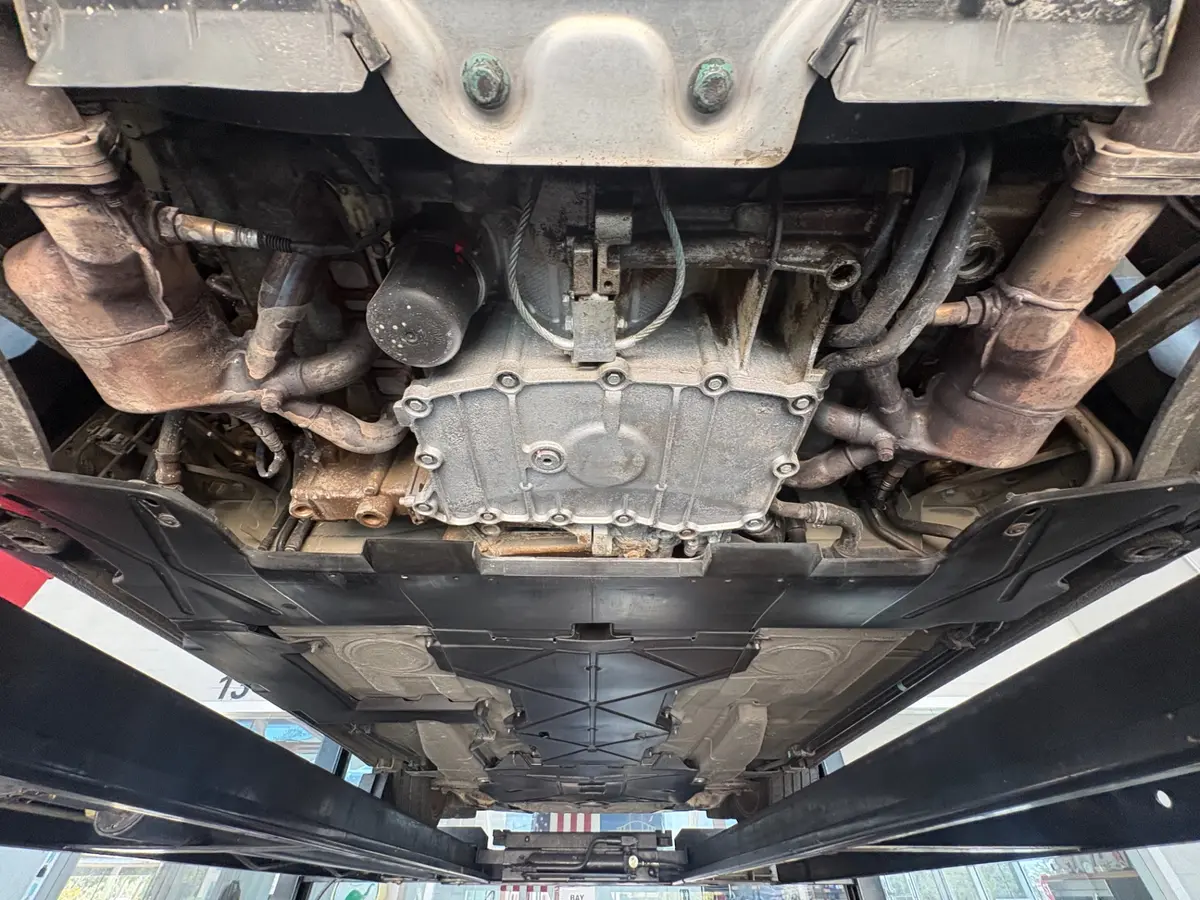
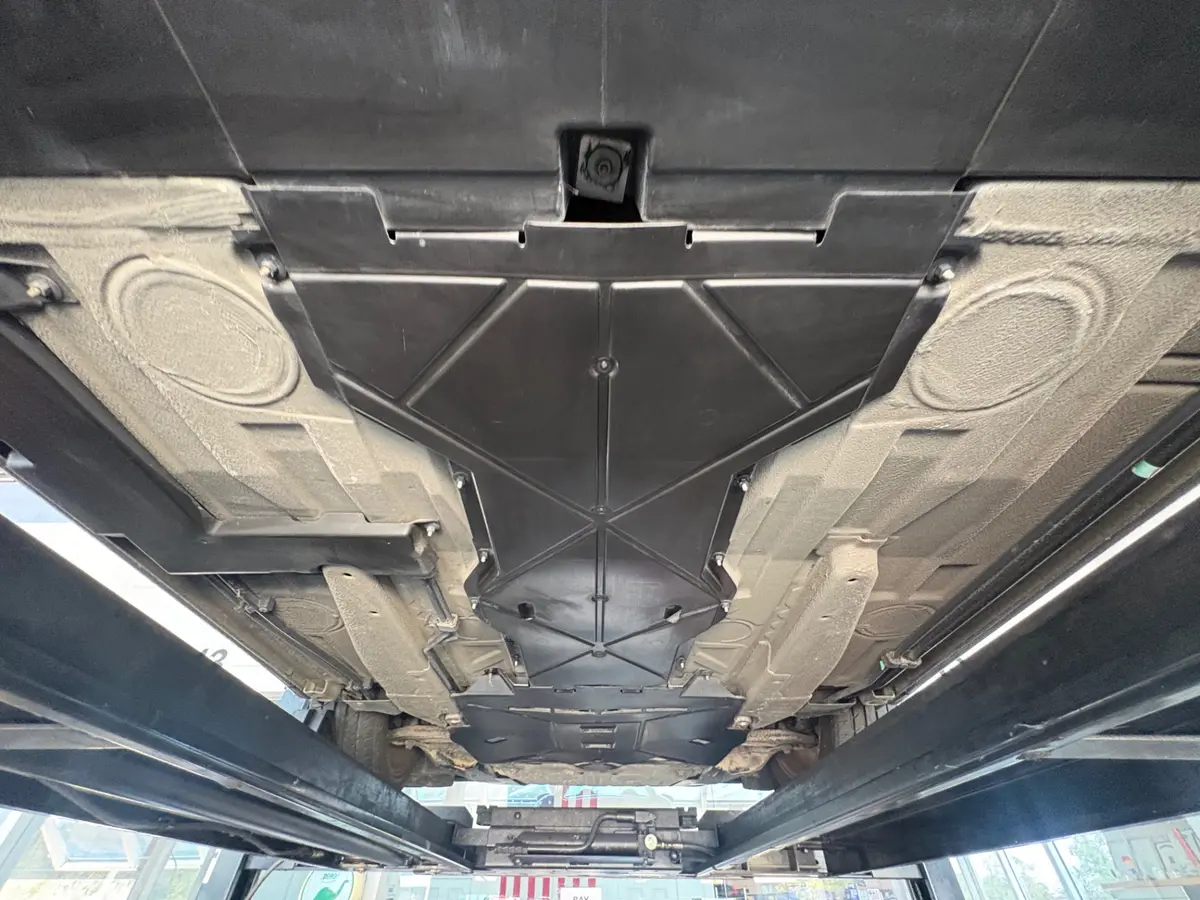
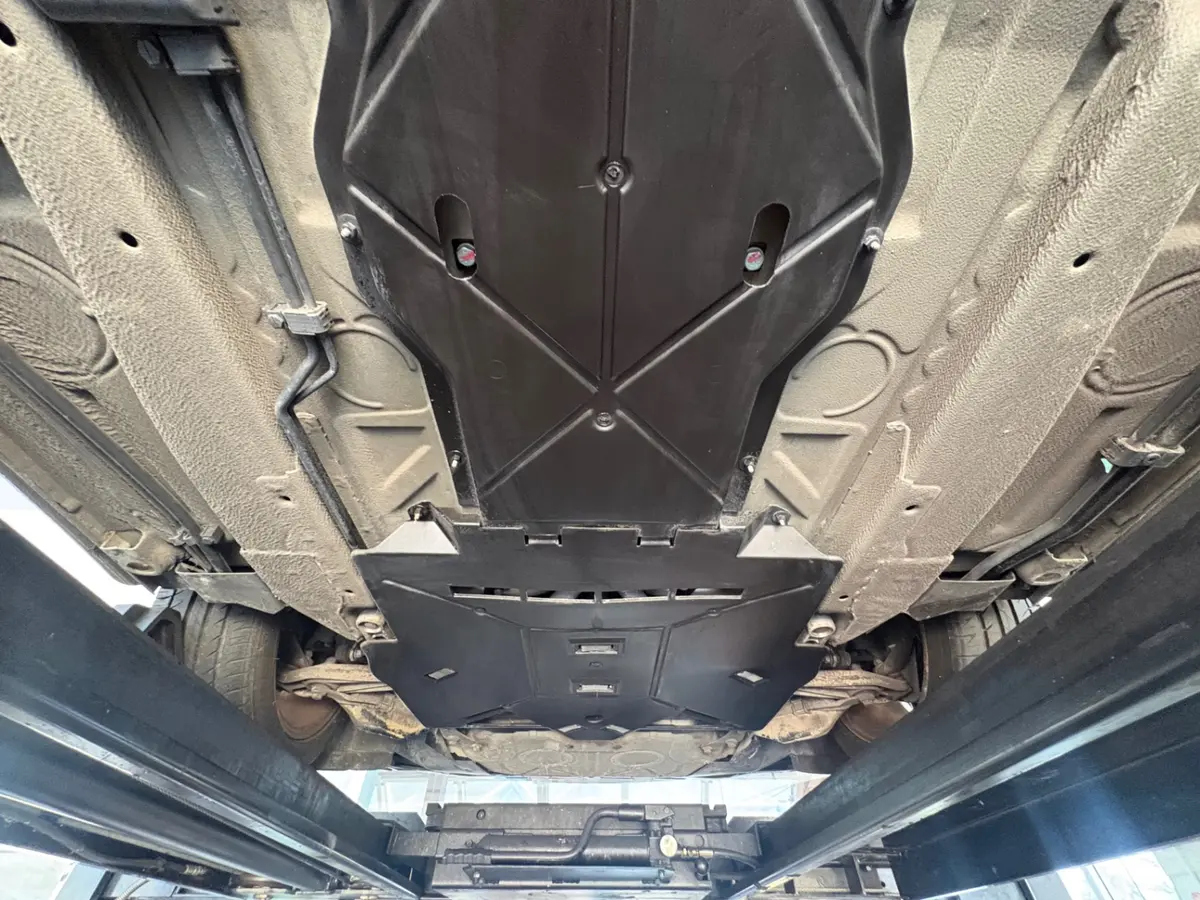
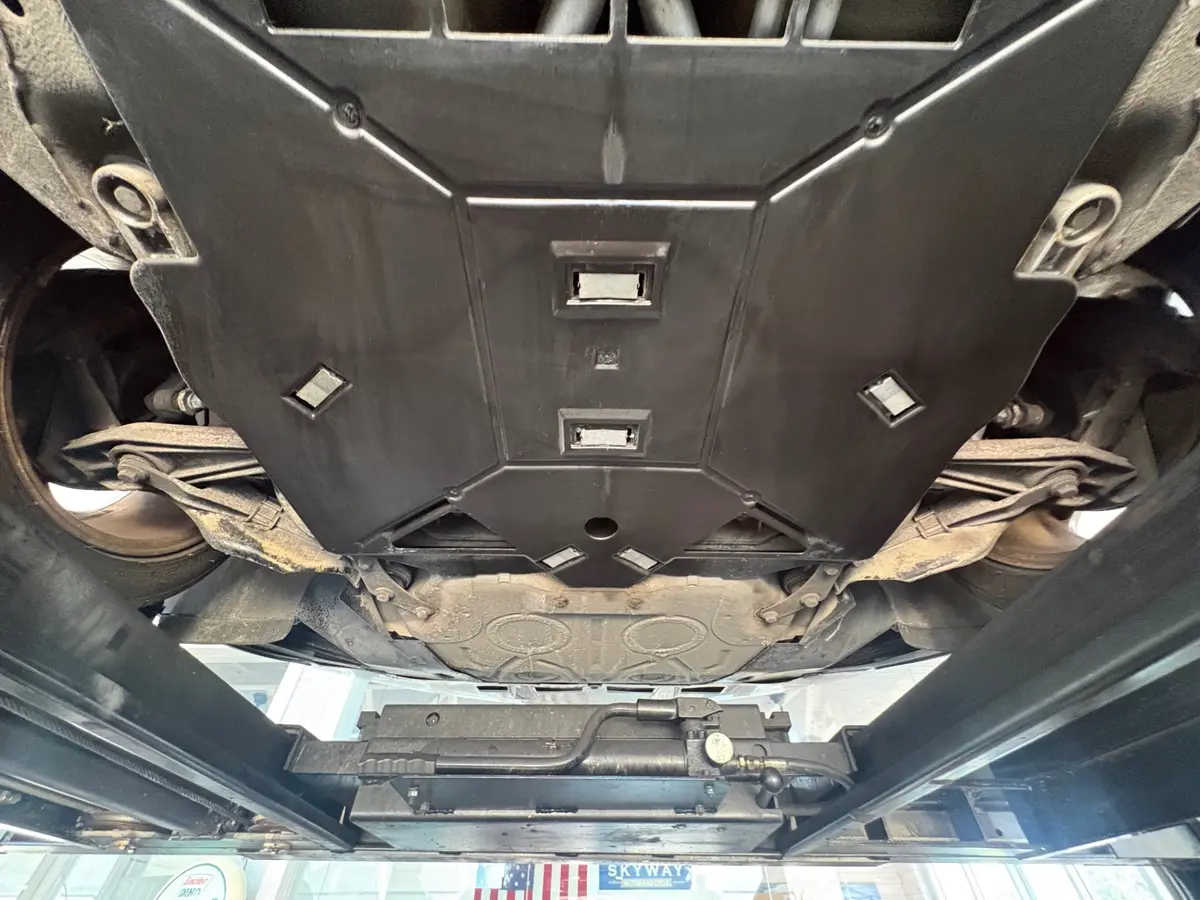
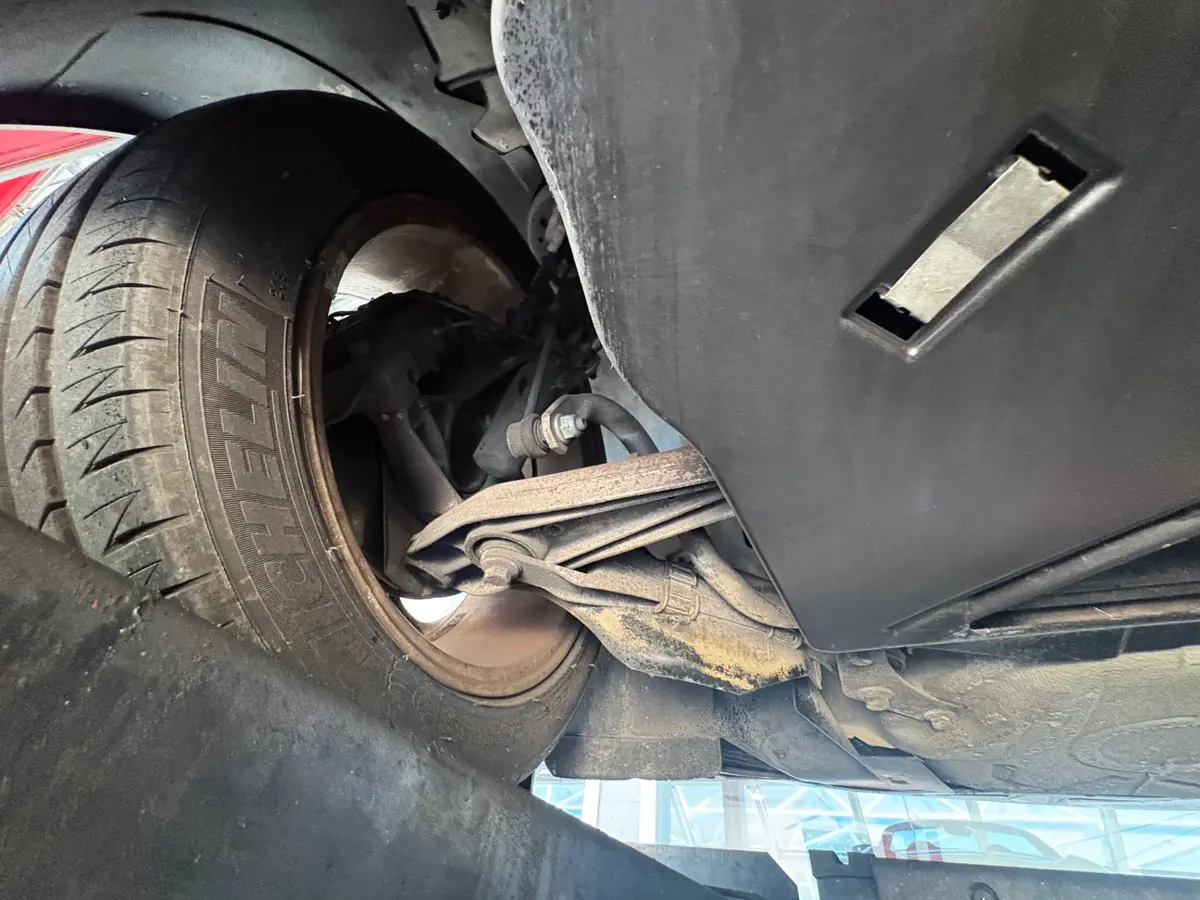
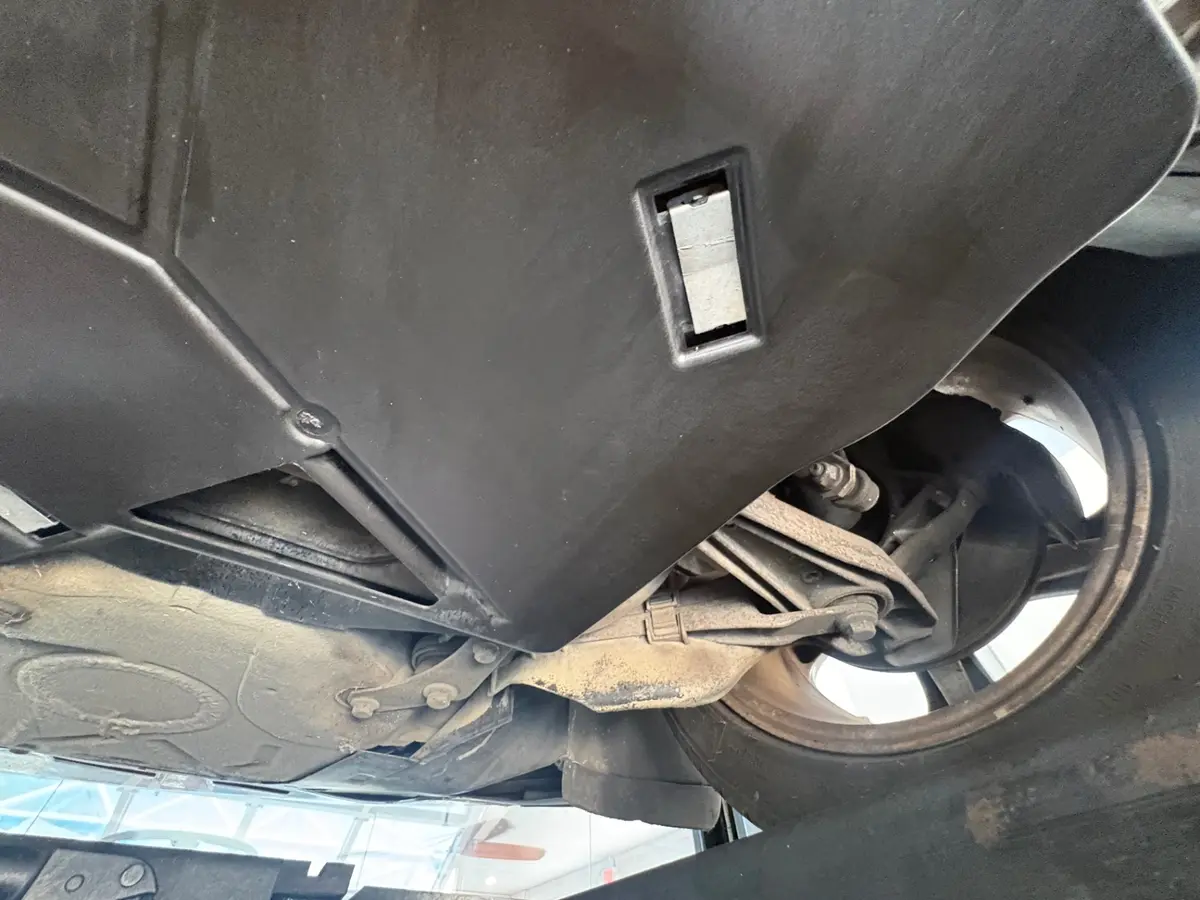
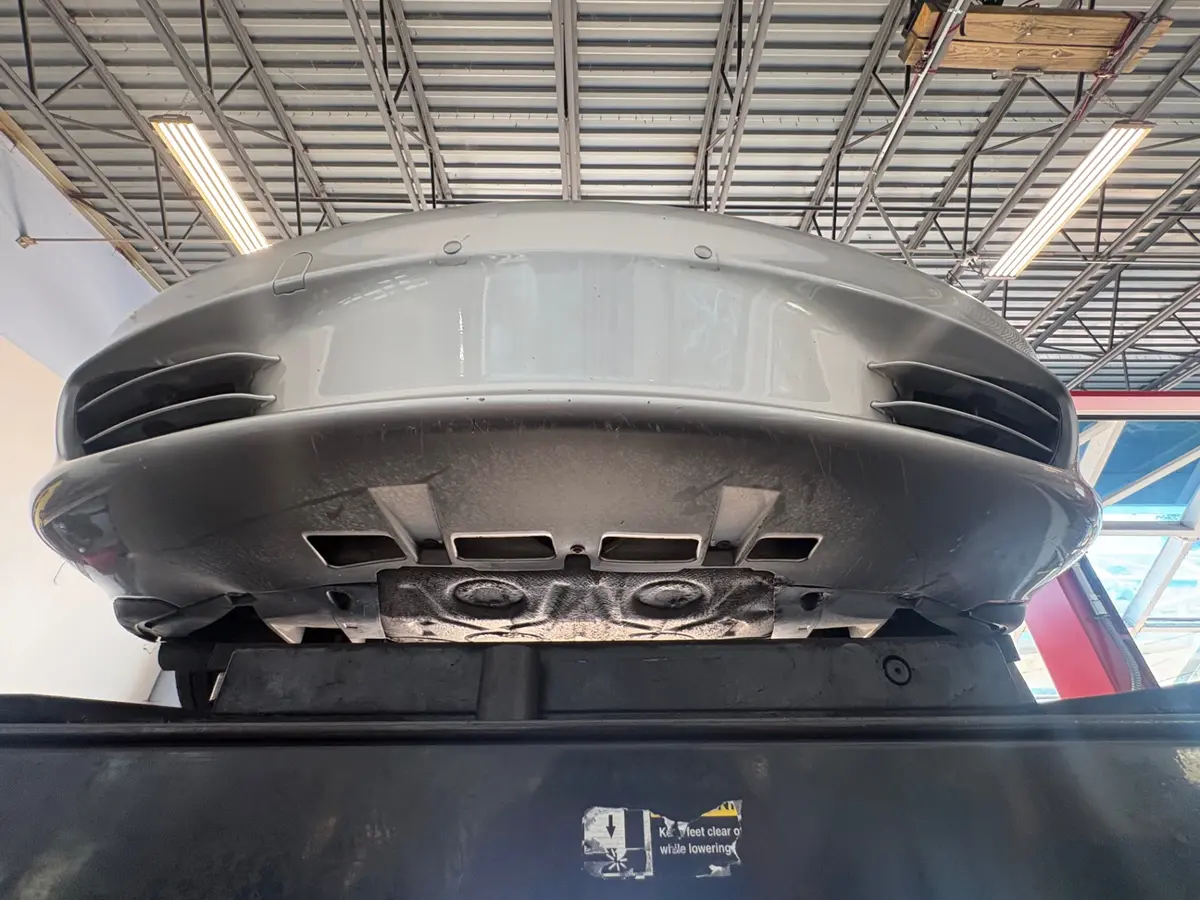
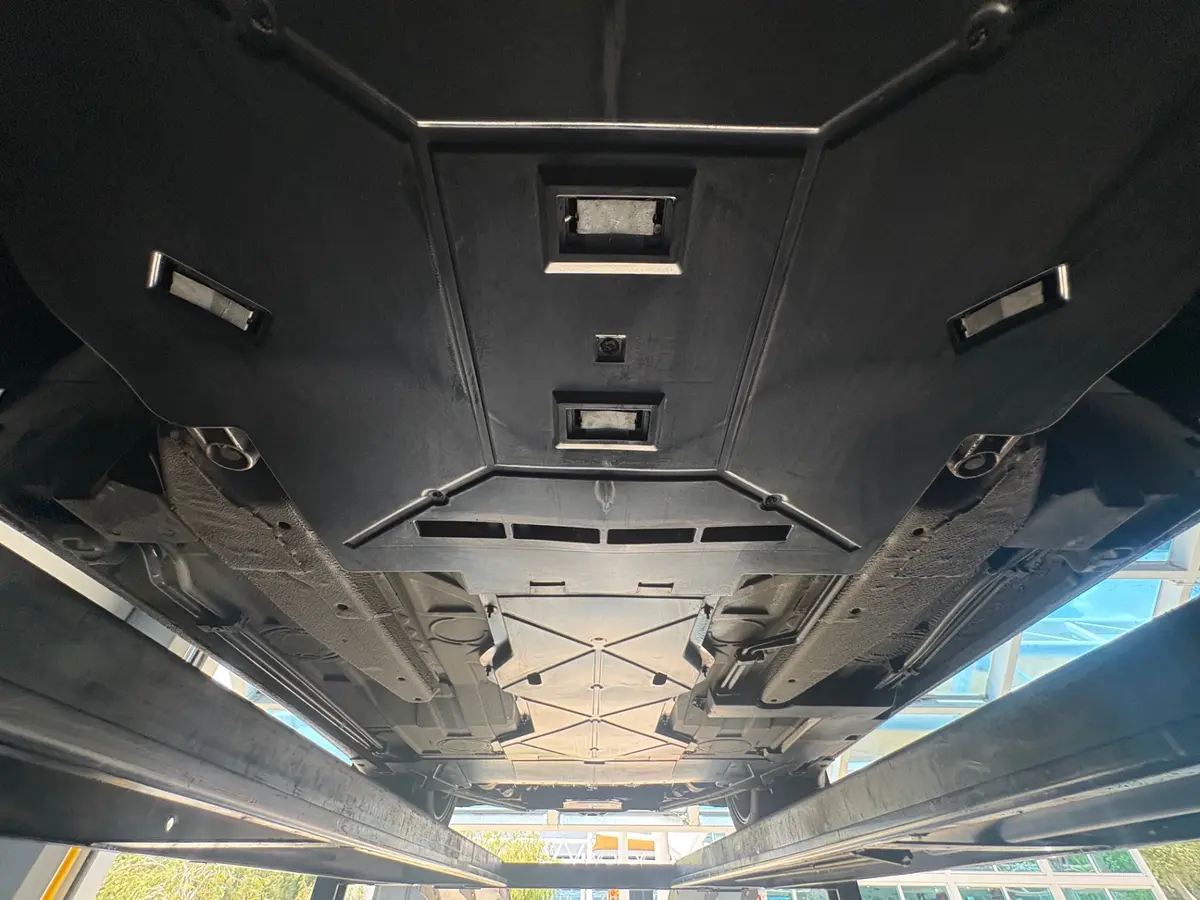
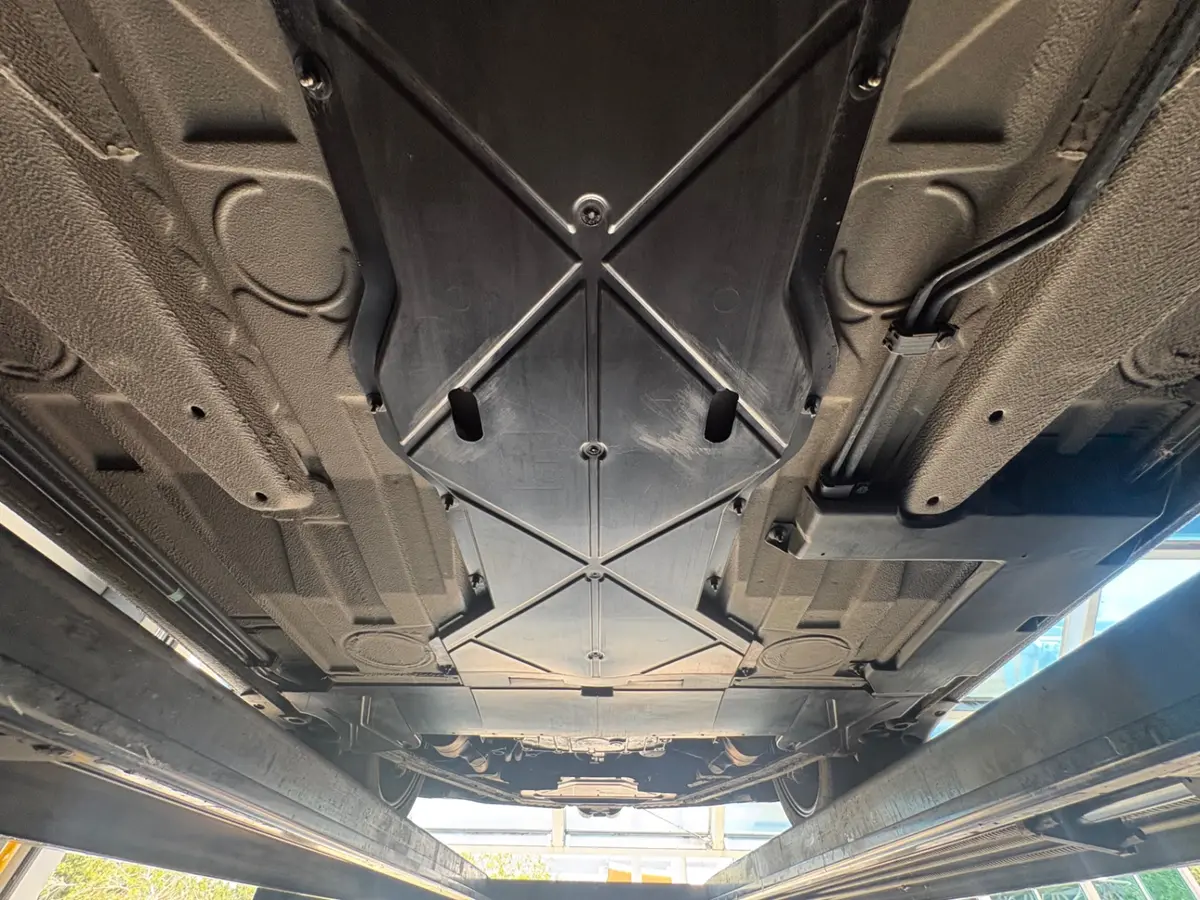
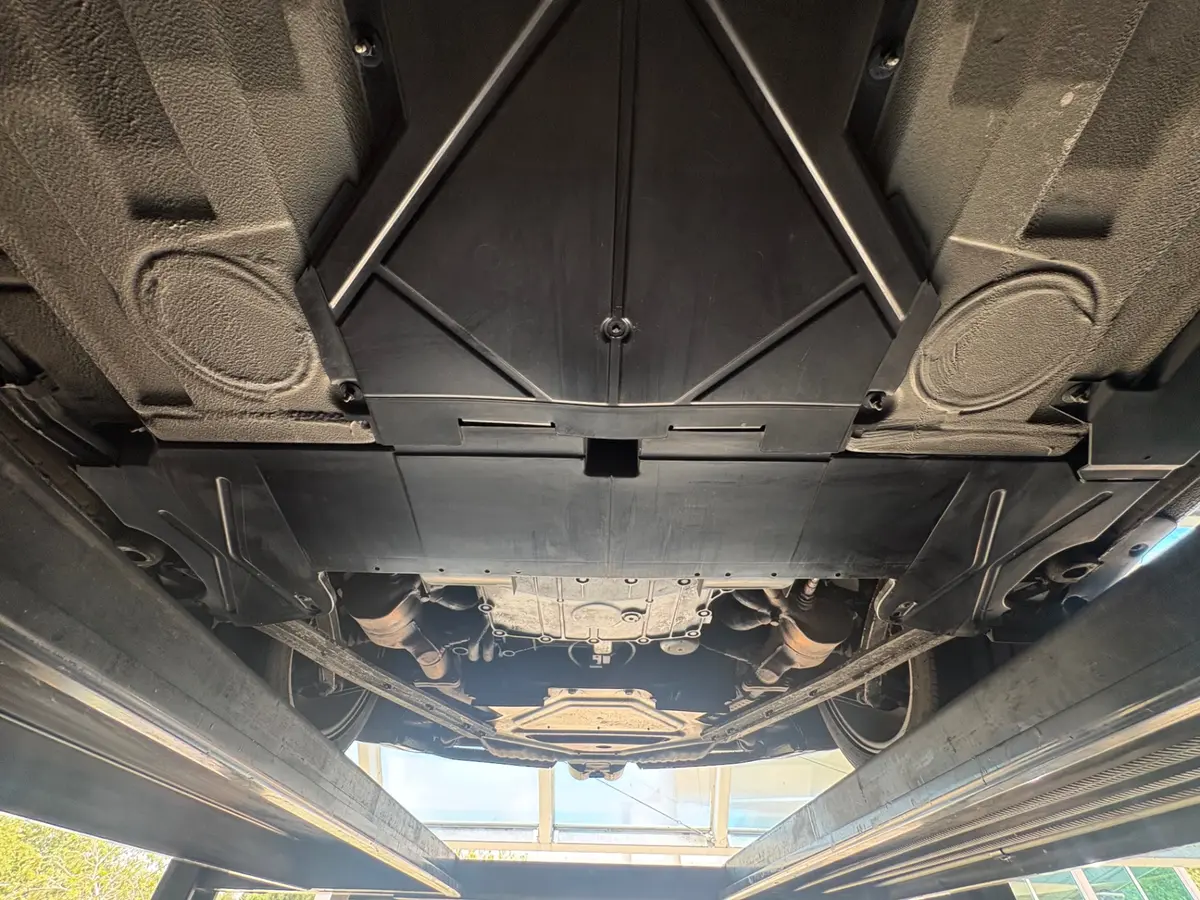
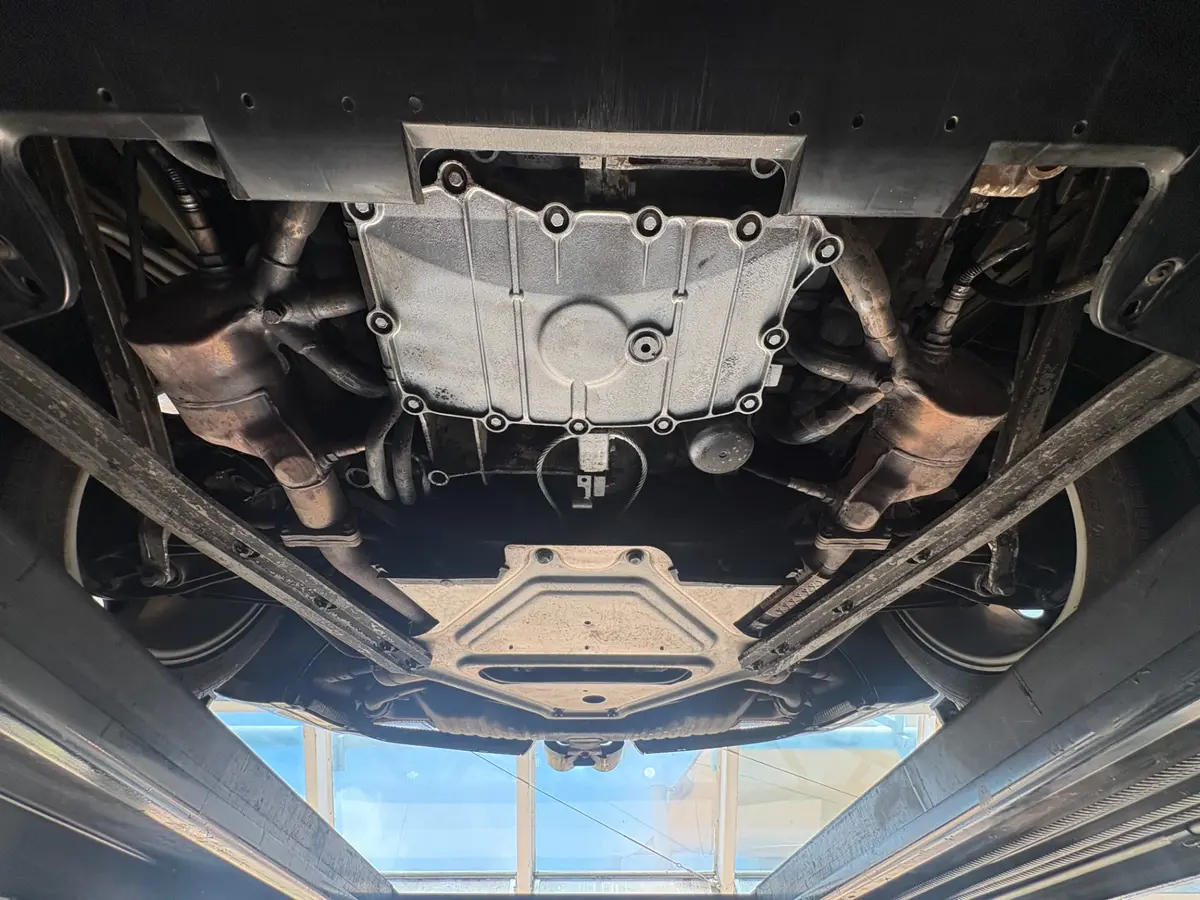
What makes the 986-generation Boxster increasingly interesting in the used market is the combination of genuine Porsche engineering at an accessible price point, and the fact that clean, well-optioned examples are becoming harder to find as these cars age into their third decade. This particular 2003 Porsche Boxster presents in Arctic Silver over a full black leather interior, wears the 5-speed Tiptronic automatic, and — critically — shows a clean undercarriage that confirms it has lived its life in a dry or well-maintained environment. The underside photos tell a story that words alone cannot: the floors, frame rails, suspension components, and engine bay below are free of the rust and rot that sidelines so many of these cars when they come out of the northern states.
The VIN on this car confirms it is a North American market Boxster built in the 2003 model year at the Valmet Automotive facility in Uusikaupunki, Finland, where Porsche contracted production of the 986 Boxster throughout the model's entire run. Many buyers do not realize this. The 911 was built in Stuttgart; the Boxster came from Finland. This was a deliberate manufacturing partnership, not a cost-cutting shortcut — Valmet had a strong reputation for quality production, and the arrangement allowed Porsche to maintain capacity flexibility. Build quality between the two facilities was consistent.
Features List
- 2.7L Horizontally Opposed 6-Cylinder (Flat-Six) Engine
- 5-Speed Tiptronic Automatic Transmission
- Power Convertible Soft Top
- Black Convertible Soft Top
- Heated Glass Rear Window
- Porsche Factory Alloy Wheels
- Michelin Tires
- Porsche Disc Brakes with Anti-Lock Braking System (ABS)
- Sport Leather Bucket Seats
- Power Seat Adjusters
- Power Windows
- Power Door Locks
- Power Mirrors with Heating
- Automatic Climate Control with Air Conditioning
- Front and Side Airbags
- Center Console
- AM/FM CD Stereo
- Tachometer
- Rear Pop-Up Spoiler
- Dual Exhaust Tips
- Porsche Factory Floor Mats
- Illuminated Vanity Mirrors
- Clean Undercarriage
Mechanical
The engine in this 2003 Porsche Boxster is the M96/22 2.7-liter flat-six, producing 228 horsepower at 6,300 rpm and 192 lb-ft of torque at 4,700 rpm. It is mounted in a true mid-engine position — behind the seats and ahead of the rear axle — which gives the 986 Boxster a near-ideal weight distribution that its contemporaries, including the Mazda Miata and BMW Z3, simply could not match with their front-engine layouts. The flat-six spins smoothly to its 7,200 rpm redline and delivers a characteristic sound that is distinctly Porsche — a flat, purposeful note that intensifies as revs build.
The transmission in this car is the 5-speed Tiptronic automatic. In 2003, the Tiptronic used a conventional torque converter automatic gearbox with steering wheel-mounted buttons that allowed the driver to select individual gears manually. It is not a dual-clutch unit, and it does sacrifice some of the driver engagement that the 5-speed manual delivers. However, the Tiptronic has a well-documented advantage in one area: it does not carry the intermediate shaft (IMS) bearing risk in the same way as the manual-equipped cars. The IMS bearing is the known failure point on the M96 engine, and while it can fail in any 986 or 996 with the M96 engine, the Tiptronic-equipped cars use a different rear main bearing configuration that many specialists consider less prone to sudden catastrophic failure. This is worth knowing when evaluating an M96-powered Porsche.
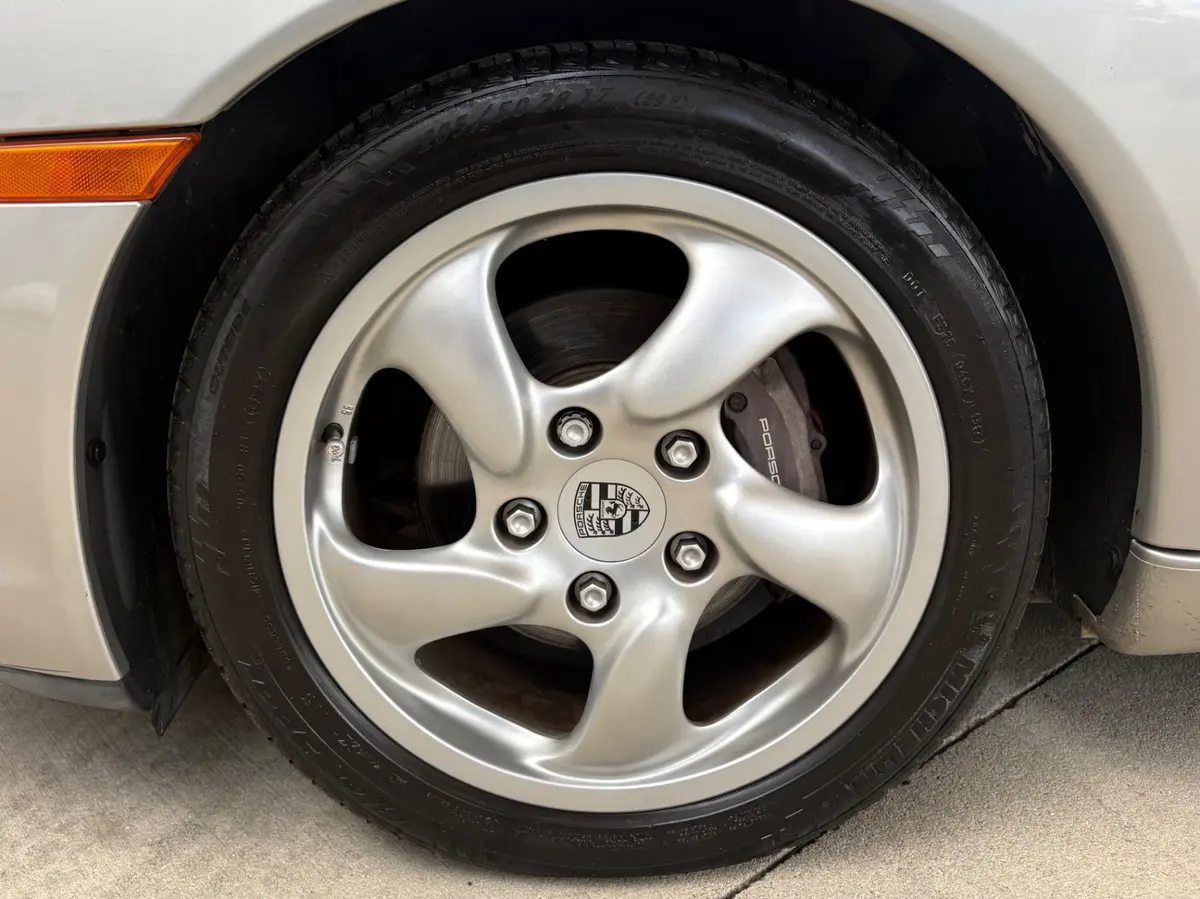
Porsche disc brakes are fitted at all four corners with ABS as standard equipment. The suspension is a MacPherson strut design up front and a multi-link rear setup — both purpose-built for the Boxster — that contributes to the car's well-documented handling precision. Michelin tires wrap the factory alloy wheels. The undercarriage photos show the suspension components, subframes, and drivetrain from multiple angles, and the condition is consistent with a car that has been kept in clean-climate environments throughout its life.
Interior
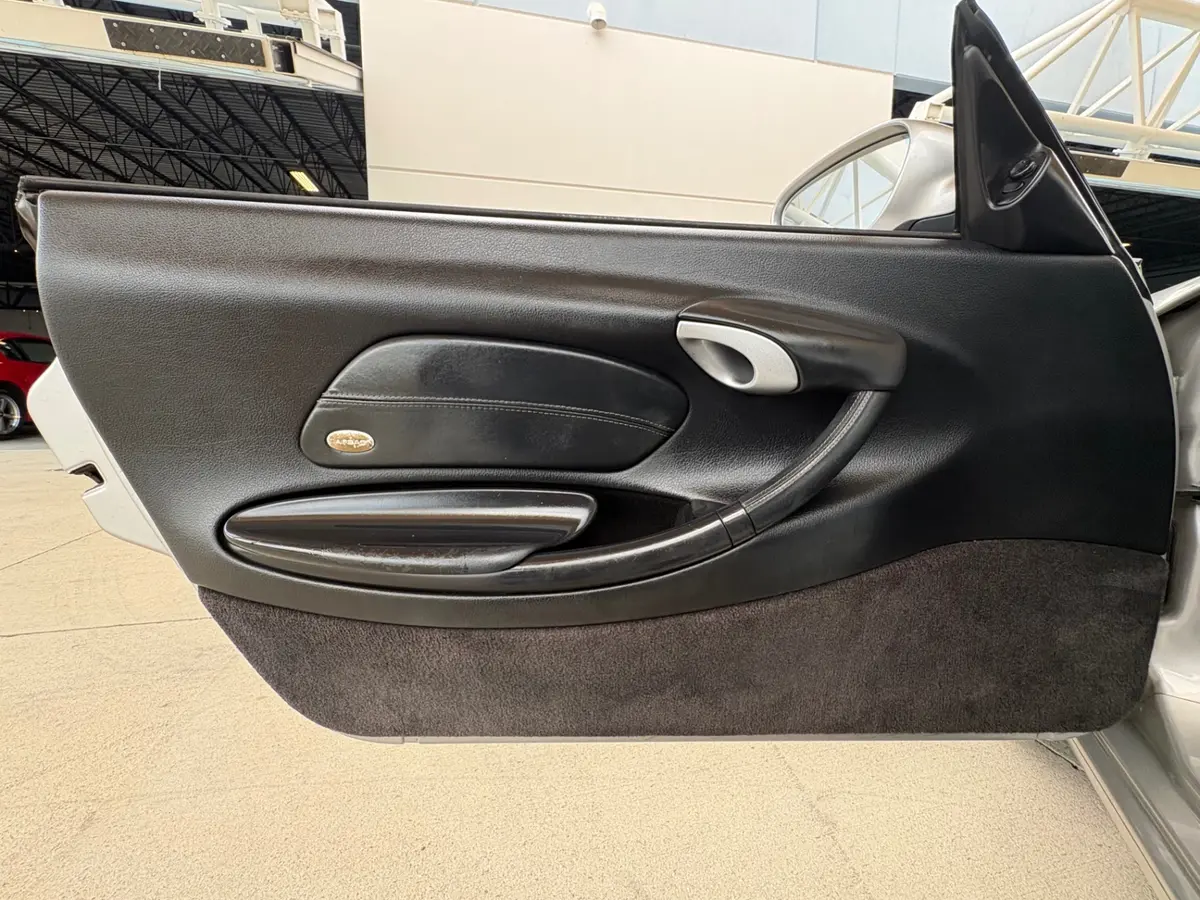
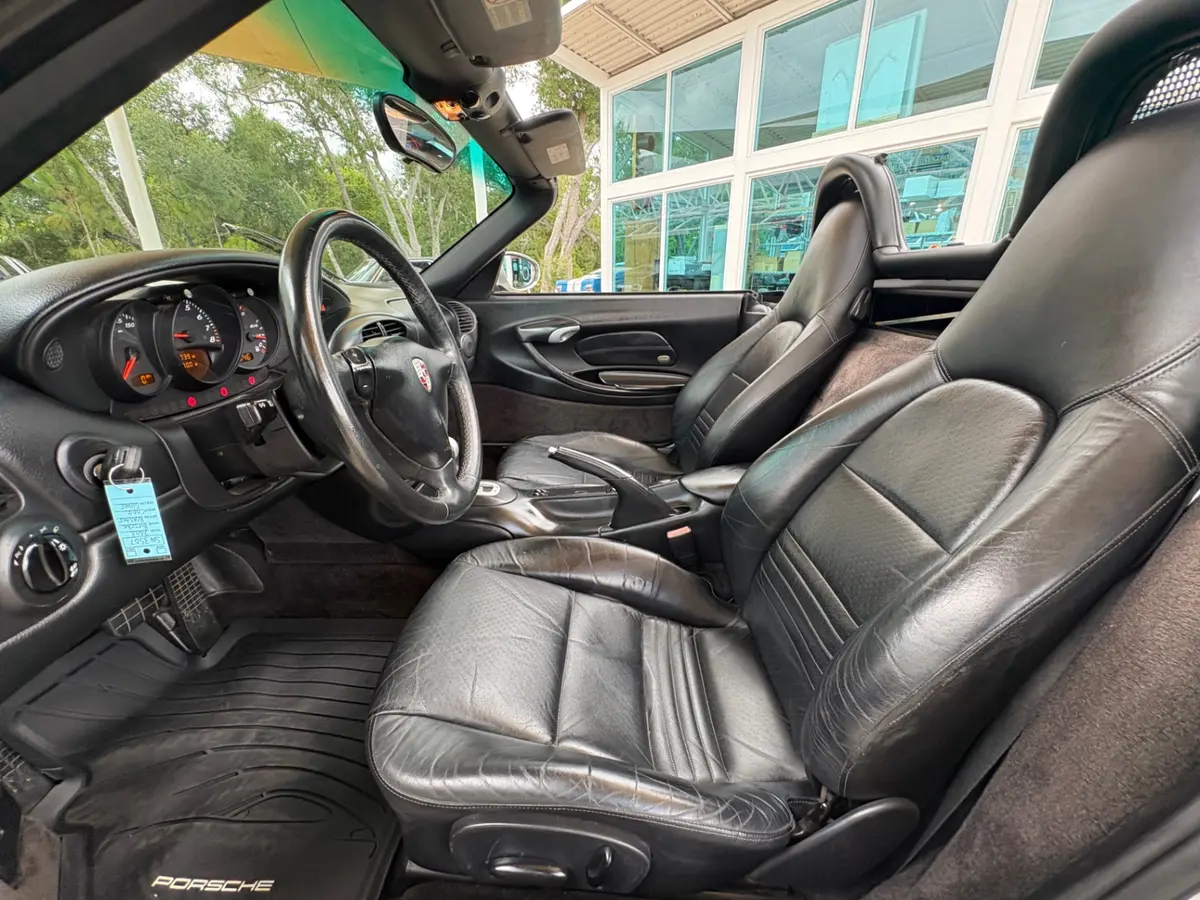
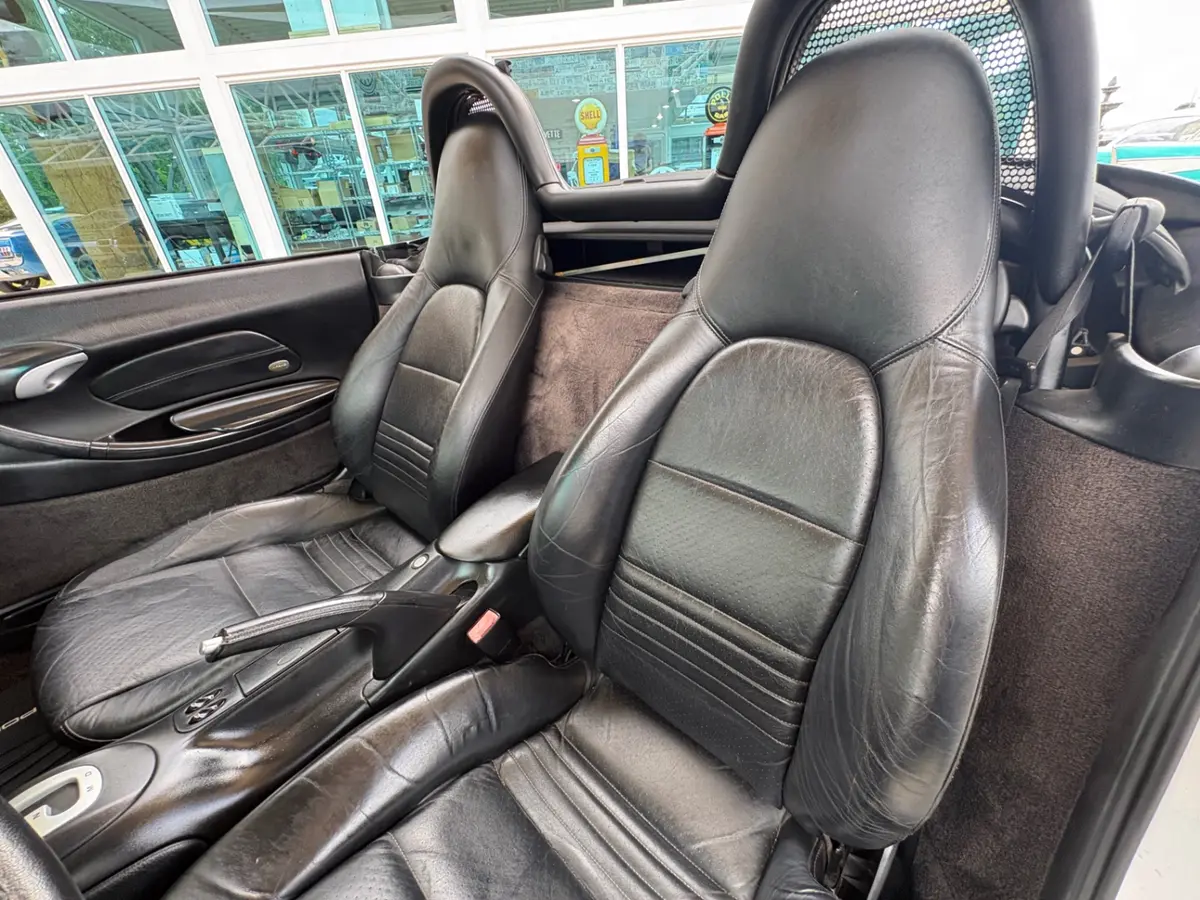
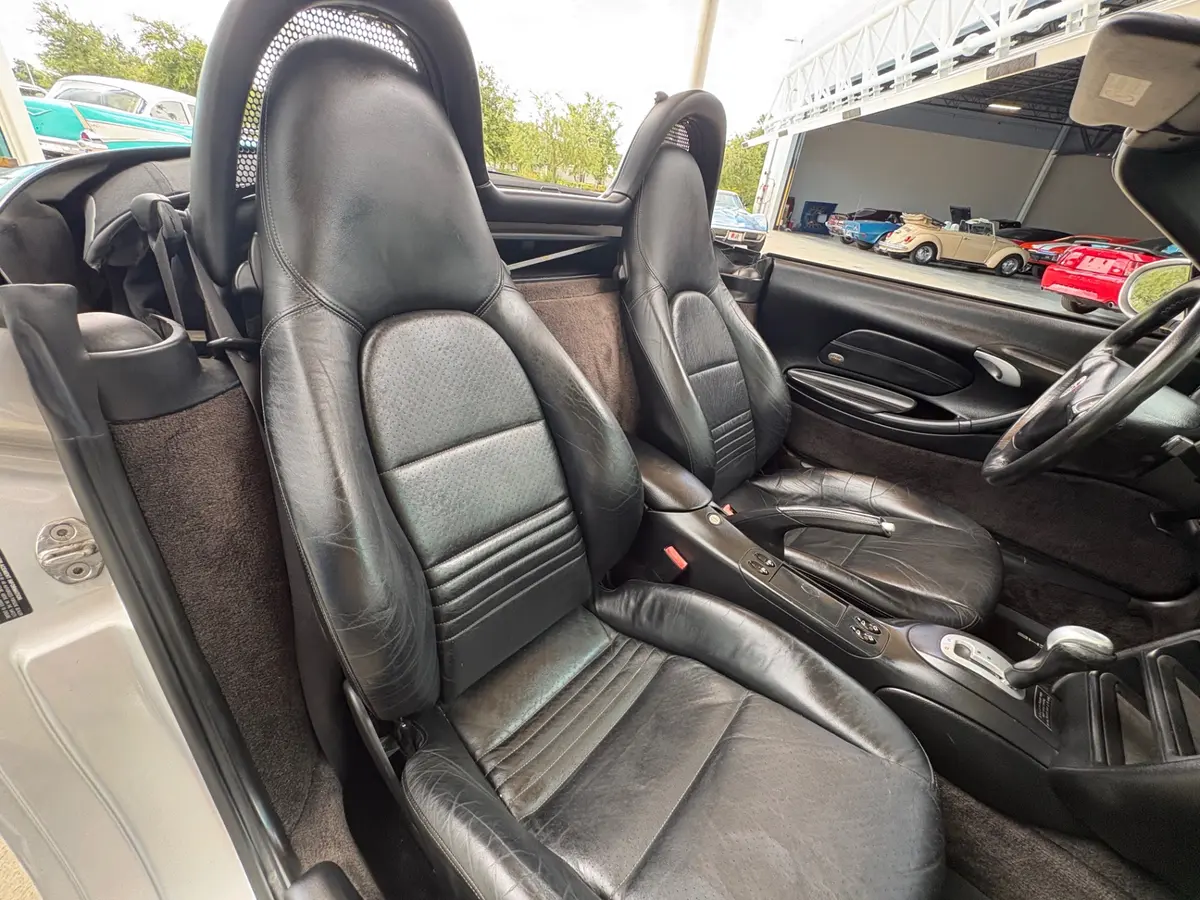
The 2003 Porsche Boxster interior is finished in full black leather with matching door panels and Alcantara accents visible on the lower door cards and surrounding surfaces. The sport leather bucket seats are power-adjustable, which was a frequently selected option on the 986. The seats themselves have bolstered side cushions designed to hold the driver in place under cornering loads, and they are mounted low in the cockpit in the manner typical of Porsche roadsters — you sit in this car, not on top of it.
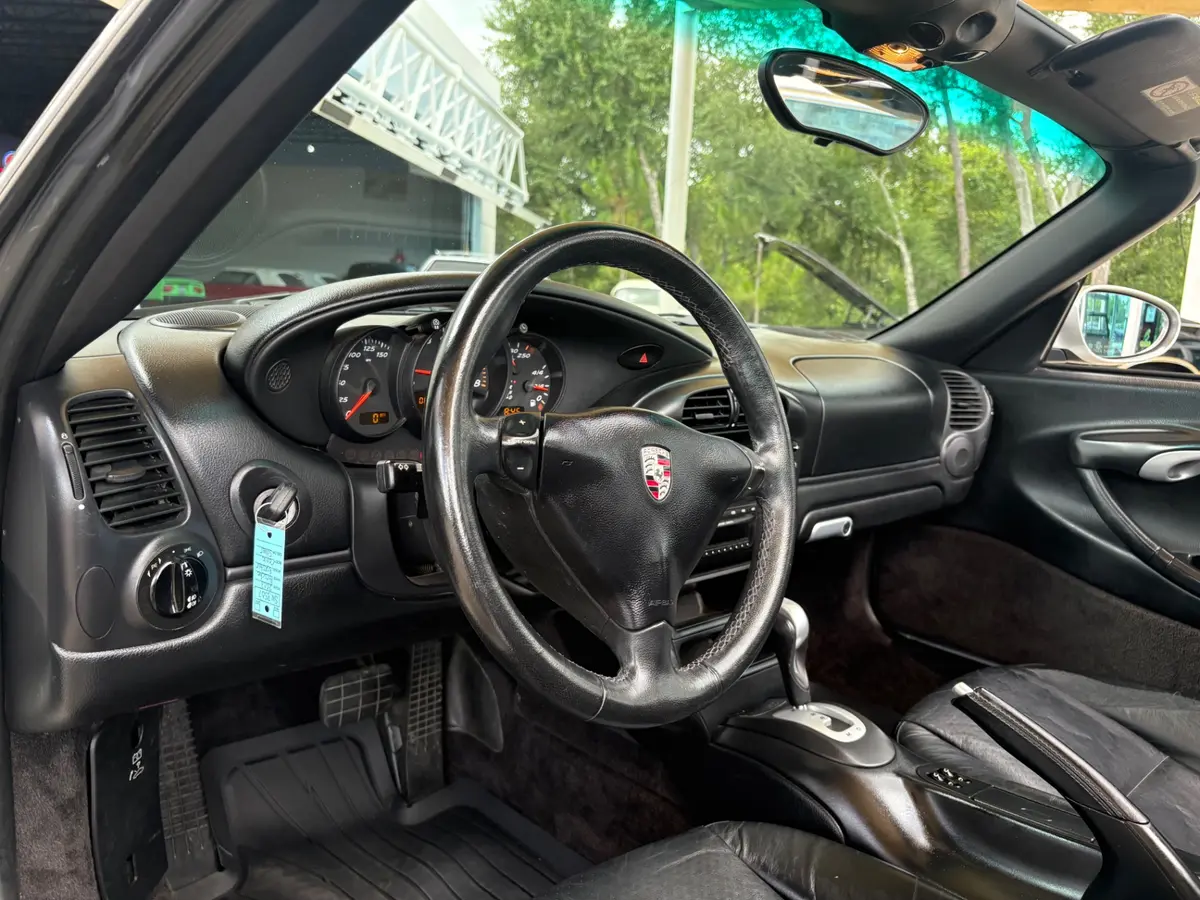
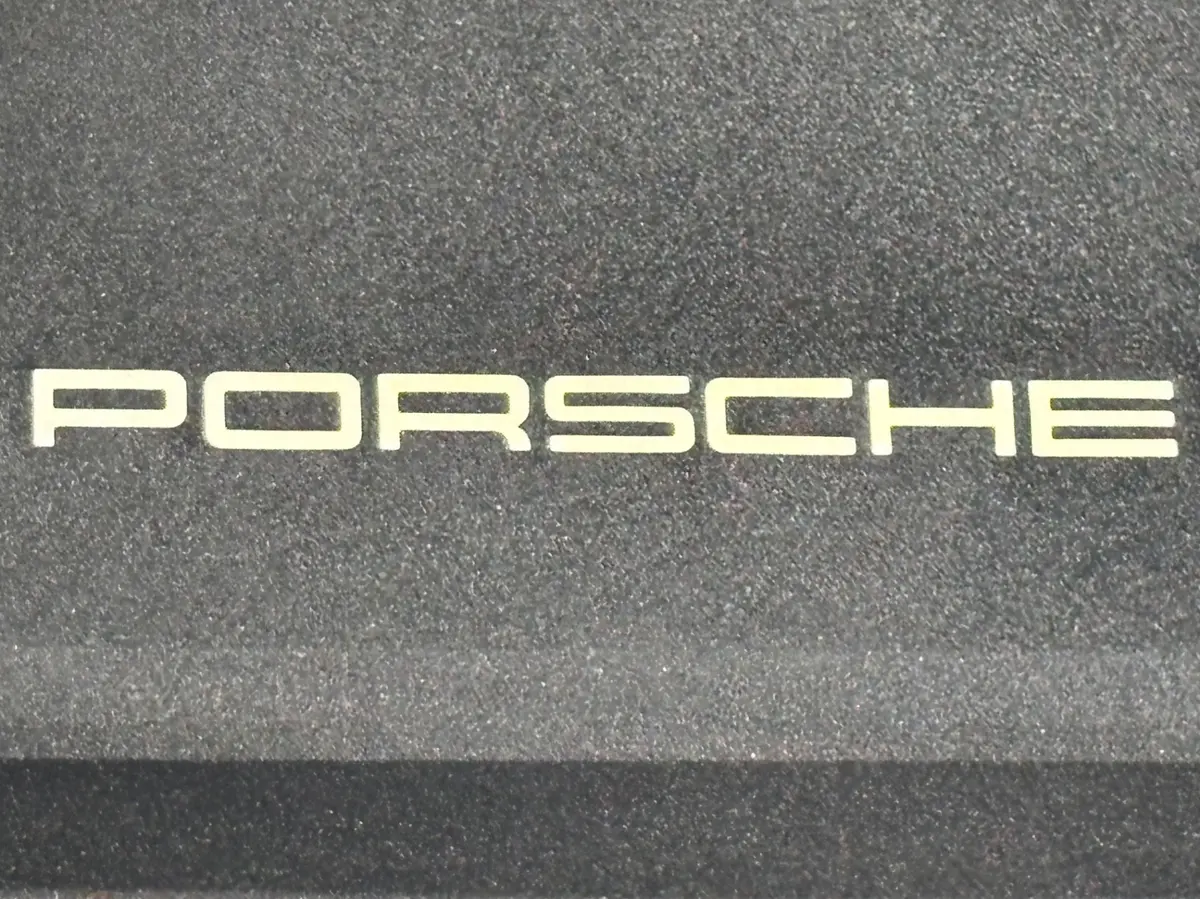
The instrument cluster is driver-centric, with the tachometer positioned at the top center of the gauge pod — a Porsche tradition that signals what the car considers most important. The speedometer, oil temperature, and fuel gauges flank it. The Tiptronic selector gate is visible in the center console, along with the heating and accessory controls mounted in the clean, functional dashboard layout. Automatic climate control handles cabin temperature management without the manual adjustment fiddle. The factory AM/FM CD stereo is present. Factory Porsche floor mats remain in place and show the embossed Porsche lettering clearly. Illuminated vanity mirrors are built into both sun visors. The overall impression of the interior is a cockpit that was designed with purpose rather than luxury as the primary goal — everything the driver needs is present and positioned logically.
Exterior
The body of this 2003 Porsche Boxster is finished in Arctic Silver Metallic, a color that suits the 986's sculpted shape well. The Boxster's bodywork is characterized by the pronounced side air intakes behind the doors — functional openings that feed air to the mid-mounted engine — as well as the smooth, uninterrupted hood line over the front trunk and the rounded rear treatment that flows into the tail. By 2003, Porsche had updated the front end of the 986 to use headlights specific to the Boxster rather than the units shared with the 996 911 in earlier production years, which eliminated a design inconsistency that had drawn criticism.
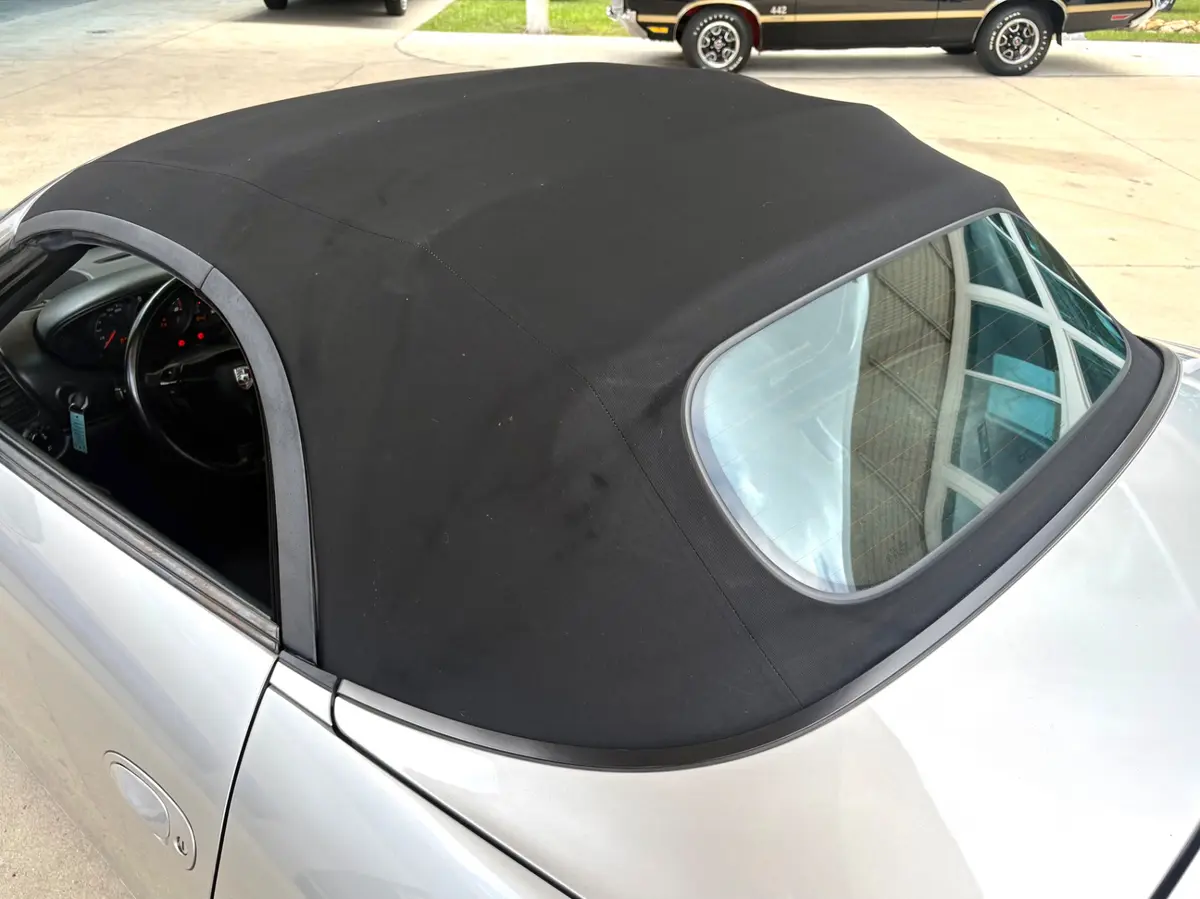
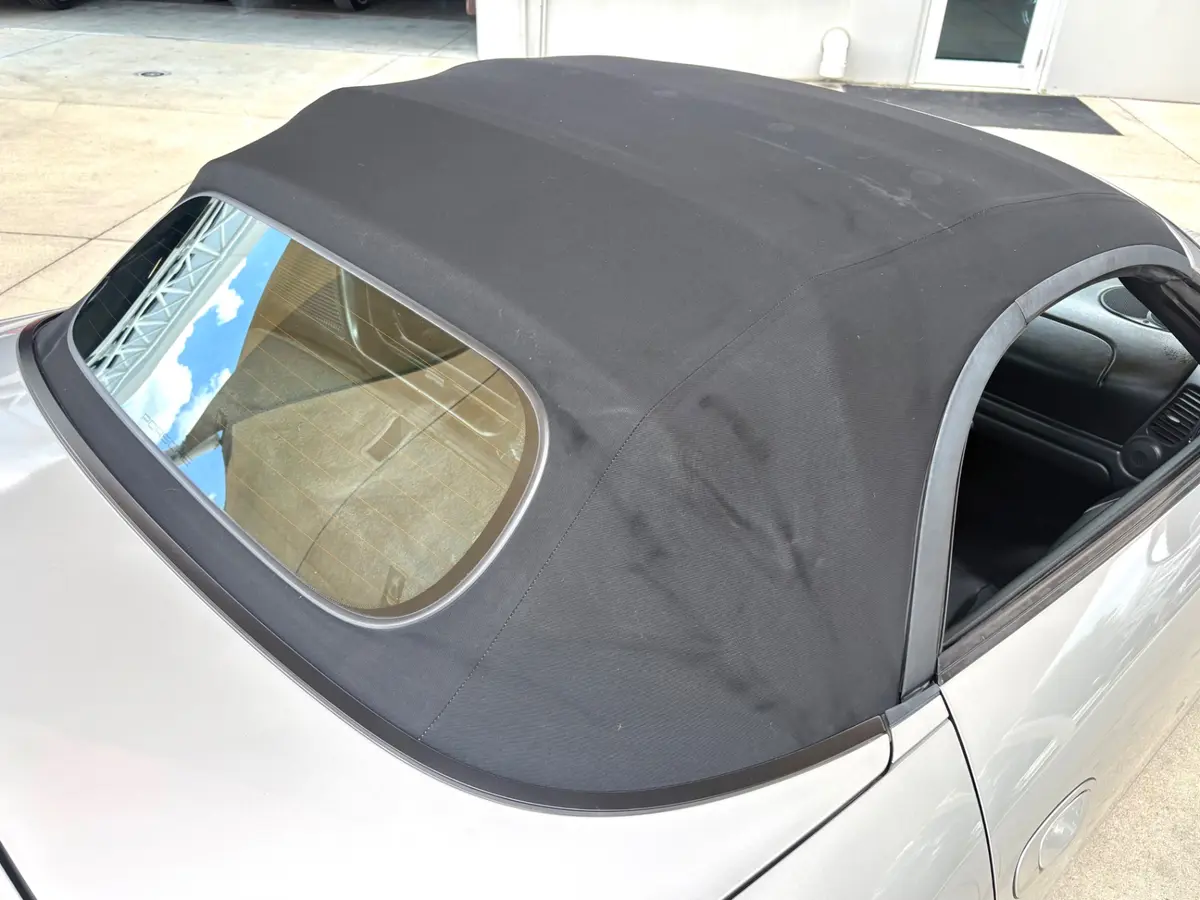
The black power convertible soft top operates electrically and stows beneath a hard cover behind the seats. It includes a heated glass rear window — a detail worth noting because earlier or cheaper convertible tops of this era often used a plastic rear window that could crack or fog over time. The heated glass unit in this car is more durable and maintains visibility in cold conditions. The factory alloy wheels wear Michelin tires and fill the wheel arches correctly without modification. At the rear, the dual exhaust tips exit from a centered outlet in the lower bumper, and the speed-dependent rear spoiler rises automatically from the decklid. The underside of the rear bumper and front valance are visible in the inspection photos and show no significant damage or deformation.
Conclusion
The 2003 Porsche Boxster is increasingly recognized as a legitimate driver's car rather than a budget alternative to the 911. Its mid-engine balance, flat-six sound, and Porsche build quality were never in question — only its value relative to other models in the lineup was ever debated, and that debate has largely resolved itself as the cars have aged into collector territory. This particular example makes a strong case on the specifics: Arctic Silver over black leather, a clean undercarriage that confirms responsible geographic history, and a Tiptronic transmission that sidesteps the IMS bearing anxiety that follows the M96 engine. It is a 2003 Porsche Boxster that presents as a usable, honest car with no obvious shortcuts taken in its care.
To learn more or to arrange an inspection, call Skyway Classics in Sarasota, Florida at 941-254-6608.
Disclaimer
Information found on the website is presented as given to us by the owner of the car, whether on consignment or from the owner we bought it from. Some Photos, materials for videos, descriptions and other information are provided by the consignor/seller and is deemed reliable, but Skyway Classics does not warranty or guarantee this information. Skyway Classics is not responsible for information that may incorrect or a publishing error. The decision to purchase should be based solely on the buyers personal inspection of the vehicle or by a professional inspection service prior to offer or purchase being made.
2003 Porsche Boxster — Arctic Silver with Black Interior, Tiptronic, Clean Undercarriage
Why This Car Is Special
The 2003 Porsche Boxster represents the final model year of the original 986-generation platform, a roadster that Porsche introduced in 1996 to revive the entry-level sports car segment and, frankly, to save the company financially during a difficult period. It worked. The Boxster restored Porsche's profitability and introduced an entirely new generation of buyers to what it means to drive a mid-engine, rear-wheel-drive sports car. By 2003, the car had been refined through several updates including a redesigned front fascia, revised headlights that moved away from the shared 996 911 units, and engine displacement bumps across the lineup. The base 2.7-liter flat-six in this car produced 228 horsepower in its 2003 state of tune — up from 201 horsepower when the Boxster debuted. That is not an insignificant improvement for a car that weighs around 2,800 pounds.
What makes the 986-generation Boxster increasingly interesting in the used market is the combination of genuine Porsche engineering at an accessible price point, and the fact that clean, well-optioned examples are becoming harder to find as these cars age into their third decade. This particular 2003 Porsche Boxster presents in Arctic Silver over a full black leather interior, wears the 5-speed Tiptronic automatic, and — critically — shows a clean undercarriage that confirms it has lived its life in a dry or well-maintained environment. The underside photos tell a story that words alone cannot: the floors, frame rails, suspension components, and engine bay below are free of the rust and rot that sidelines so many of these cars when they come out of the northern states.
The VIN on this car confirms it is a North American market Boxster built in the 2003 model year at the Valmet Automotive facility in Uusikaupunki, Finland, where Porsche contracted production of the 986 Boxster throughout the model's entire run. Many buyers do not realize this. The 911 was built in Stuttgart; the Boxster came from Finland. This was a deliberate manufacturing partnership, not a cost-cutting shortcut — Valmet had a strong reputation for quality production, and the arrangement allowed Porsche to maintain capacity flexibility. Build quality between the two facilities was consistent.
Features List
- 2.7L Horizontally Opposed 6-Cylinder (Flat-Six) Engine
- 5-Speed Tiptronic Automatic Transmission
- Power Convertible Soft Top
- Black Convertible Soft Top
- Heated Glass Rear Window
- Porsche Factory Alloy Wheels
- Michelin Tires
- Porsche Disc Brakes with Anti-Lock Braking System (ABS)
- Sport Leather Bucket Seats
- Power Seat Adjusters
- Power Windows
- Power Door Locks
- Power Mirrors with Heating
- Automatic Climate Control with Air Conditioning
- Front and Side Airbags
- Center Console
- AM/FM CD Stereo
- Tachometer
- Rear Pop-Up Spoiler
- Dual Exhaust Tips
- Porsche Factory Floor Mats
- Illuminated Vanity Mirrors
- Clean Undercarriage
Mechanical
The engine in this 2003 Porsche Boxster is the M96/22 2.7-liter flat-six, producing 228 horsepower at 6,300 rpm and 192 lb-ft of torque at 4,700 rpm. It is mounted in a true mid-engine position — behind the seats and ahead of the rear axle — which gives the 986 Boxster a near-ideal weight distribution that its contemporaries, including the Mazda Miata and BMW Z3, simply could not match with their front-engine layouts. The flat-six spins smoothly to its 7,200 rpm redline and delivers a characteristic sound that is distinctly Porsche — a flat, purposeful note that intensifies as revs build.
The transmission in this car is the 5-speed Tiptronic automatic. In 2003, the Tiptronic used a conventional torque converter automatic gearbox with steering wheel-mounted buttons that allowed the driver to select individual gears manually. It is not a dual-clutch unit, and it does sacrifice some of the driver engagement that the 5-speed manual delivers. However, the Tiptronic has a well-documented advantage in one area: it does not carry the intermediate shaft (IMS) bearing risk in the same way as the manual-equipped cars. The IMS bearing is the known failure point on the M96 engine, and while it can fail in any 986 or 996 with the M96 engine, the Tiptronic-equipped cars use a different rear main bearing configuration that many specialists consider less prone to sudden catastrophic failure. This is worth knowing when evaluating an M96-powered Porsche.
Porsche disc brakes are fitted at all four corners with ABS as standard equipment. The suspension is a MacPherson strut design up front and a multi-link rear setup — both purpose-built for the Boxster — that contributes to the car's well-documented handling precision. Michelin tires wrap the factory alloy wheels. The undercarriage photos show the suspension components, subframes, and drivetrain from multiple angles, and the condition is consistent with a car that has been kept in clean-climate environments throughout its life.
Interior
The 2003 Porsche Boxster interior is finished in full black leather with matching door panels and Alcantara accents visible on the lower door cards and surrounding surfaces. The sport leather bucket seats are power-adjustable, which was a frequently selected option on the 986. The seats themselves have bolstered side cushions designed to hold the driver in place under cornering loads, and they are mounted low in the cockpit in the manner typical of Porsche roadsters — you sit in this car, not on top of it.
The instrument cluster is driver-centric, with the tachometer positioned at the top center of the gauge pod — a Porsche tradition that signals what the car considers most important. The speedometer, oil temperature, and fuel gauges flank it. The Tiptronic selector gate is visible in the center console, along with the heating and accessory controls mounted in the clean, functional dashboard layout. Automatic climate control handles cabin temperature management without the manual adjustment fiddle. The factory AM/FM CD stereo is present. Factory Porsche floor mats remain in place and show the embossed Porsche lettering clearly. Illuminated vanity mirrors are built into both sun visors. The overall impression of the interior is a cockpit that was designed with purpose rather than luxury as the primary goal — everything the driver needs is present and positioned logically.
Exterior
The body of this 2003 Porsche Boxster is finished in Arctic Silver Metallic, a color that suits the 986's sculpted shape well. The Boxster's bodywork is characterized by the pronounced side air intakes behind the doors — functional openings that feed air to the mid-mounted engine — as well as the smooth, uninterrupted hood line over the front trunk and the rounded rear treatment that flows into the tail. By 2003, Porsche had updated the front end of the 986 to use headlights specific to the Boxster rather than the units shared with the 996 911 in earlier production years, which eliminated a design inconsistency that had drawn criticism.
The black power convertible soft top operates electrically and stows beneath a hard cover behind the seats. It includes a heated glass rear window — a detail worth noting because earlier or cheaper convertible tops of this era often used a plastic rear window that could crack or fog over time. The heated glass unit in this car is more durable and maintains visibility in cold conditions. The factory alloy wheels wear Michelin tires and fill the wheel arches correctly without modification. At the rear, the dual exhaust tips exit from a centered outlet in the lower bumper, and the speed-dependent rear spoiler rises automatically from the decklid. The underside of the rear bumper and front valance are visible in the inspection photos and show no significant damage or deformation.
Conclusion
The 2003 Porsche Boxster is increasingly recognized as a legitimate driver's car rather than a budget alternative to the 911. Its mid-engine balance, flat-six sound, and Porsche build quality were never in question — only its value relative to other models in the lineup was ever debated, and that debate has largely resolved itself as the cars have aged into collector territory. This particular example makes a strong case on the specifics: Arctic Silver over black leather, a clean undercarriage that confirms responsible geographic history, and a Tiptronic transmission that sidesteps the IMS bearing anxiety that follows the M96 engine. It is a 2003 Porsche Boxster that presents as a usable, honest car with no obvious shortcuts taken in its care.
To learn more or to arrange an inspection, call Skyway Classics in Sarasota, Florida at 941-254-6608.
Disclaimer
Information found on the website is presented as given to us by the owner of the car, whether on consignment or from the owner we bought it from. Some Photos, materials for videos, descriptions and other information are provided by the consignor/seller and is deemed reliable, but Skyway Classics does not warranty or guarantee this information. Skyway Classics is not responsible for information that may incorrect or a publishing error. The decision to purchase should be based solely on the buyers personal inspection of the vehicle or by a professional inspection service prior to offer or purchase being made.
2003 Porsche
Boxster Base
Why Choose Skyway Classics?
Explore our curated inventory of classic and collector cars—thoughtfully selected, ready to drive, and supported by experts who make ownership simple.
Expert Curation
Every vehicle is hand-selected by our experts for quality, authenticity, and investment potential.
Fast Transactions
Streamlined buying and selling process with quick financing and immediate delivery options.
Only National Dealer With Classic Service & Repair
We’re the only national dealership that services and repairs the classics we sell—before and after the sale.
Nationwide Network
Access to our extensive network of collectors, restorers, and classic car enthusiasts nationwide.
Concierge Ownership Support
From financing and insurance to paperwork, shipping, and titling—we handle the details so you can enjoy the drive.
Passion-Driven Service
We're classic car enthusiasts first, providing personalized service with genuine passion for the hobby.