
1970 Chevrolet
Corvette Stingray
1970 Chevrolet Corvette Stingray LS5 454 — Numbers-Correct Big Block with NCRS Documentation
Why This Car Is Special
The 1970 Chevrolet Corvette Stingray is widely regarded as the high-water mark of the C3 generation, and for good reason. It was the last model year before emissions regulations and insurance pressures began pulling horsepower ratings down across the industry. Nineteen-seventy also happened to be a shortened production year — the Bowling Green assembly line ran behind schedule, and total Corvette output for the model year came in at just 17,316 units, making 1970 one of the lowest-production Corvette years of the entire C3 run.
Within that already-limited pool, the LS5 454 was a significant option. Chevrolet offered two big block choices in 1970: the LS5 at 390 horsepower and the top-shelf LS7 at a factory-rated 460 horsepower. The LS7 was listed in early literature but was never actually put into production for street cars that year, which means the LS5 was effectively the most powerful engine a buyer could order in a 1970 Corvette. Only 4,473 buyers checked that box. This is one of them.
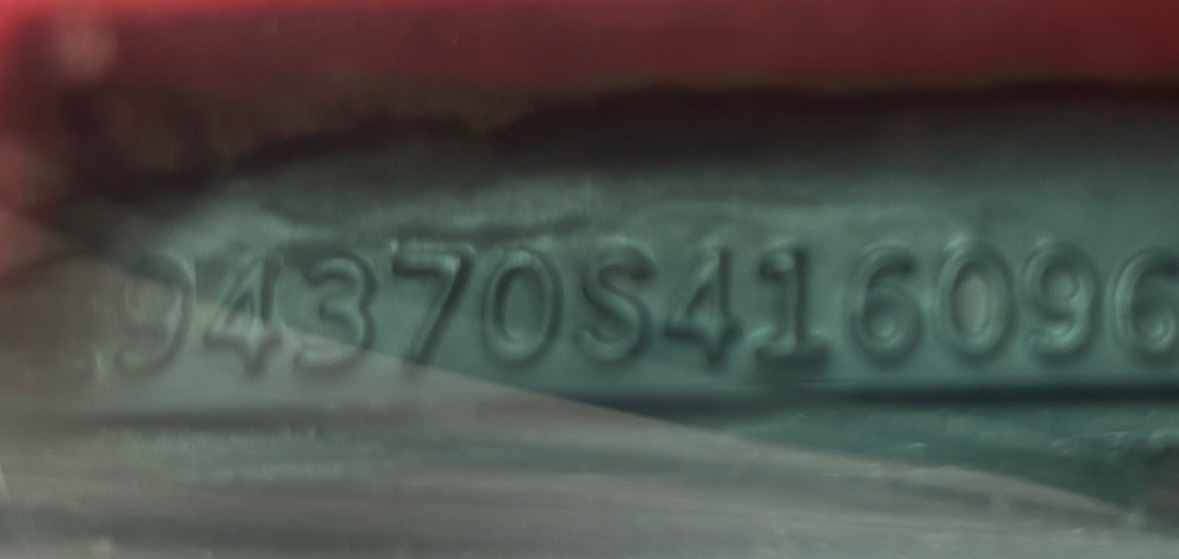
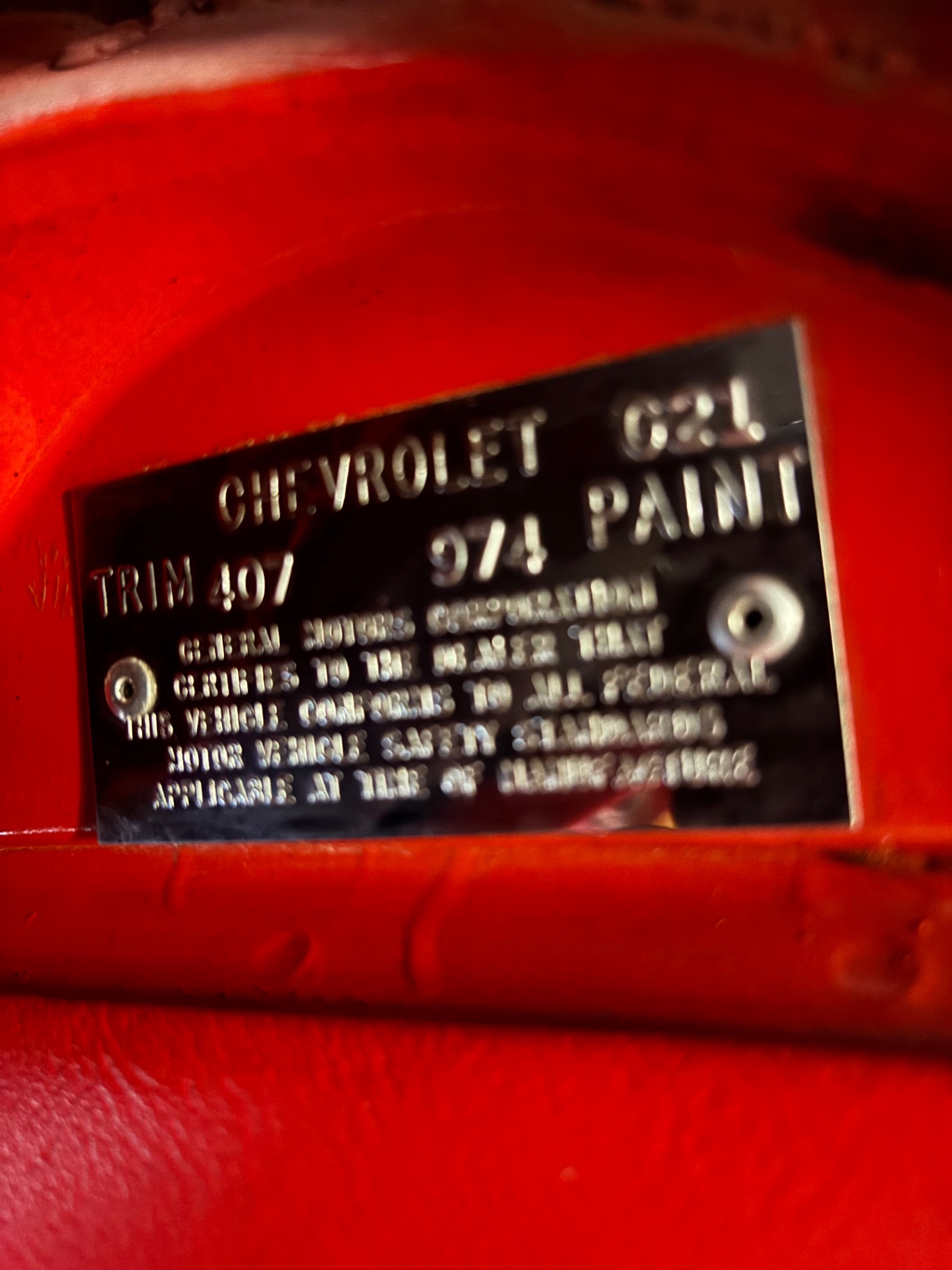
The VIN on this car decodes to a 1970 Corvette coupe built at the St. Louis assembly plant, with the "S" engine code confirming the factory LS5 454 installation. The exterior color is documented under paint code 974 — Monza Red — and the interior carries trim code 407, confirming the factory red leather bucket seat interior. Both codes match what you see on the car today, which matters considerably to NCRS judges and serious collectors alike. This car is an active NCRS member vehicle, which means it has been submitted to the scrutiny of the National Corvette Restorers Society — an organization whose judging standards are among the most demanding in the hobby.
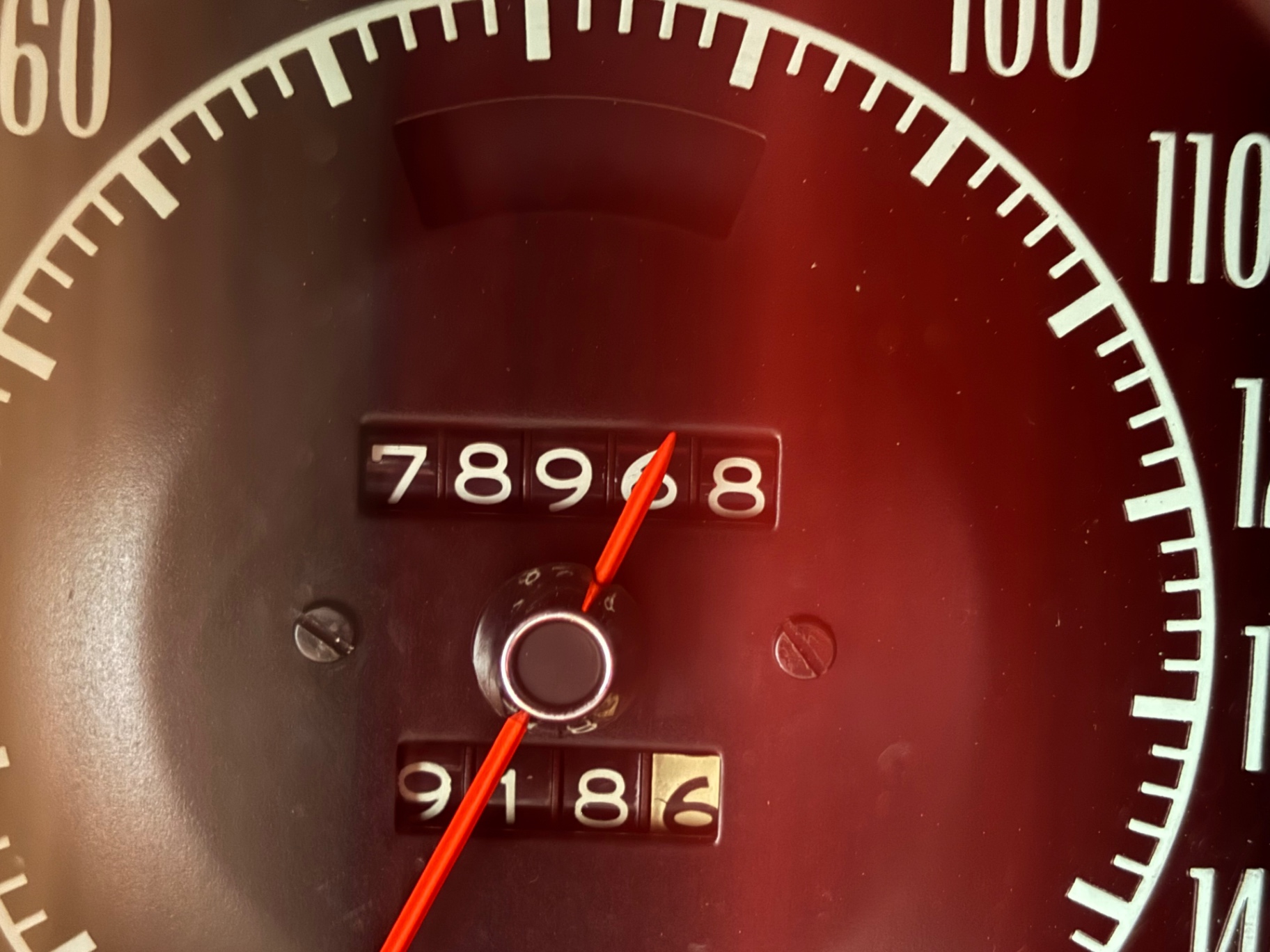
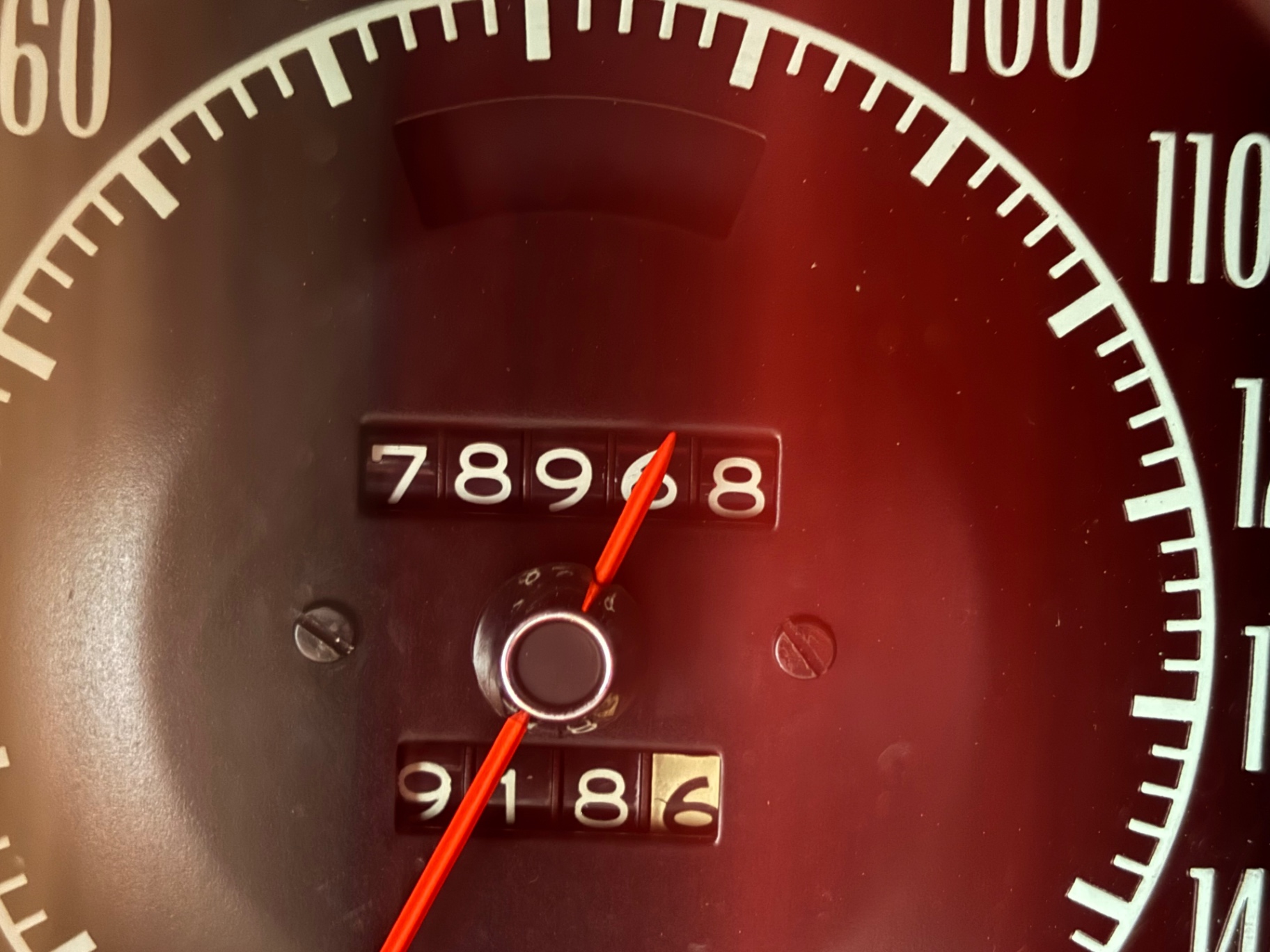
The odometer reads just over 78,000 miles.
Features List
- 454 cubic inch / 390 horsepower LS5 Big Block V8, 4-barrel carburetor
- 4-speed manual transmission
- Positraction limited-slip rear end
- 4-wheel disc brakes
- Power brakes
- Power steering
- Factory air conditioning
- Removable T-Tops
- Tilt-telescopic steering column
- AM/FM radio
- Edelbrock chrome valve covers and air cleaner
- MSD ignition
- Chrome side exhaust
- Chrome luggage rack
- Correct paint code 974 (Monza Red) exterior
- Correct trim code 407 red leather interior
- Wood-grain door panel trim inserts
- NCRS member car
Mechanical
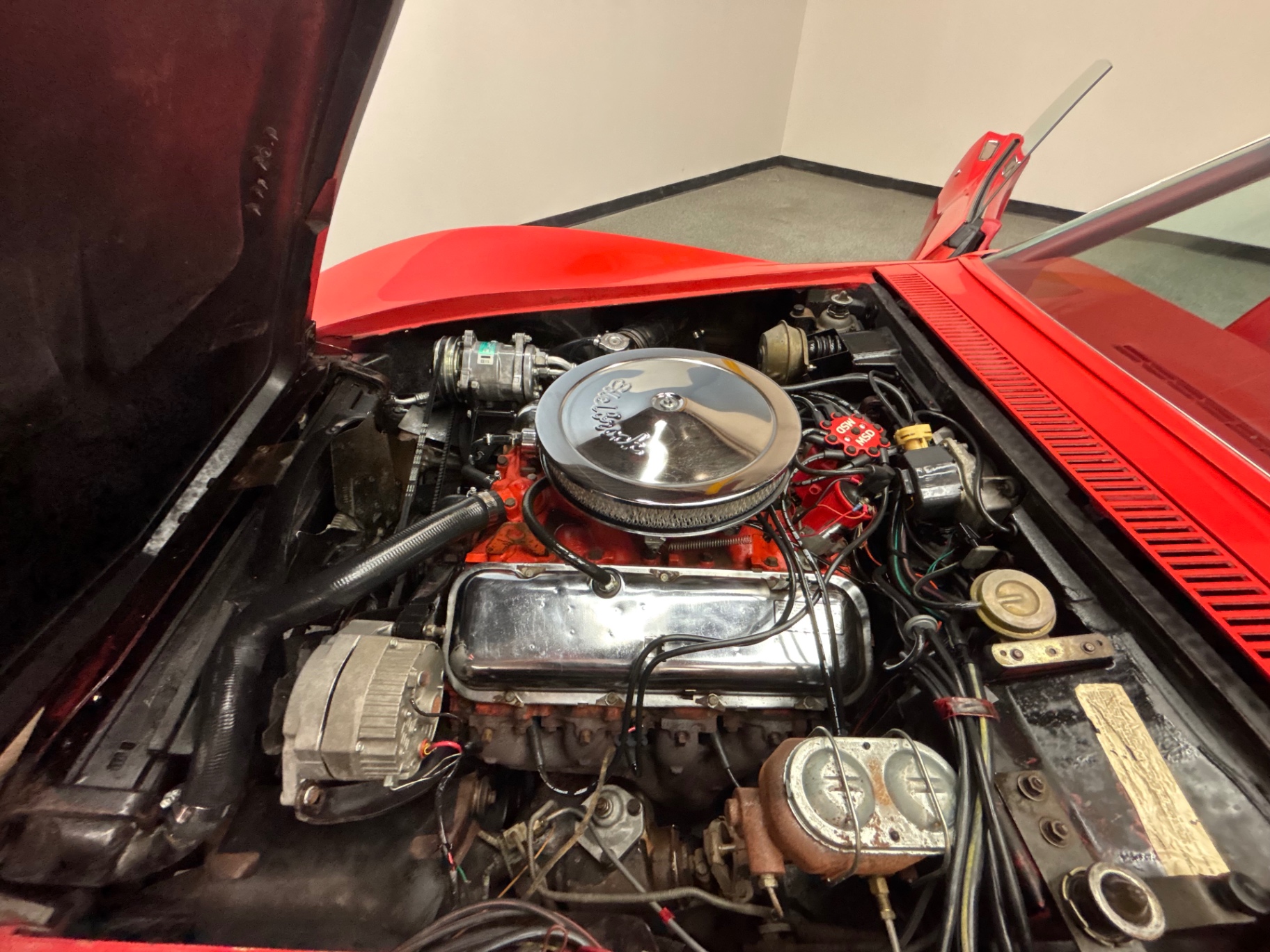
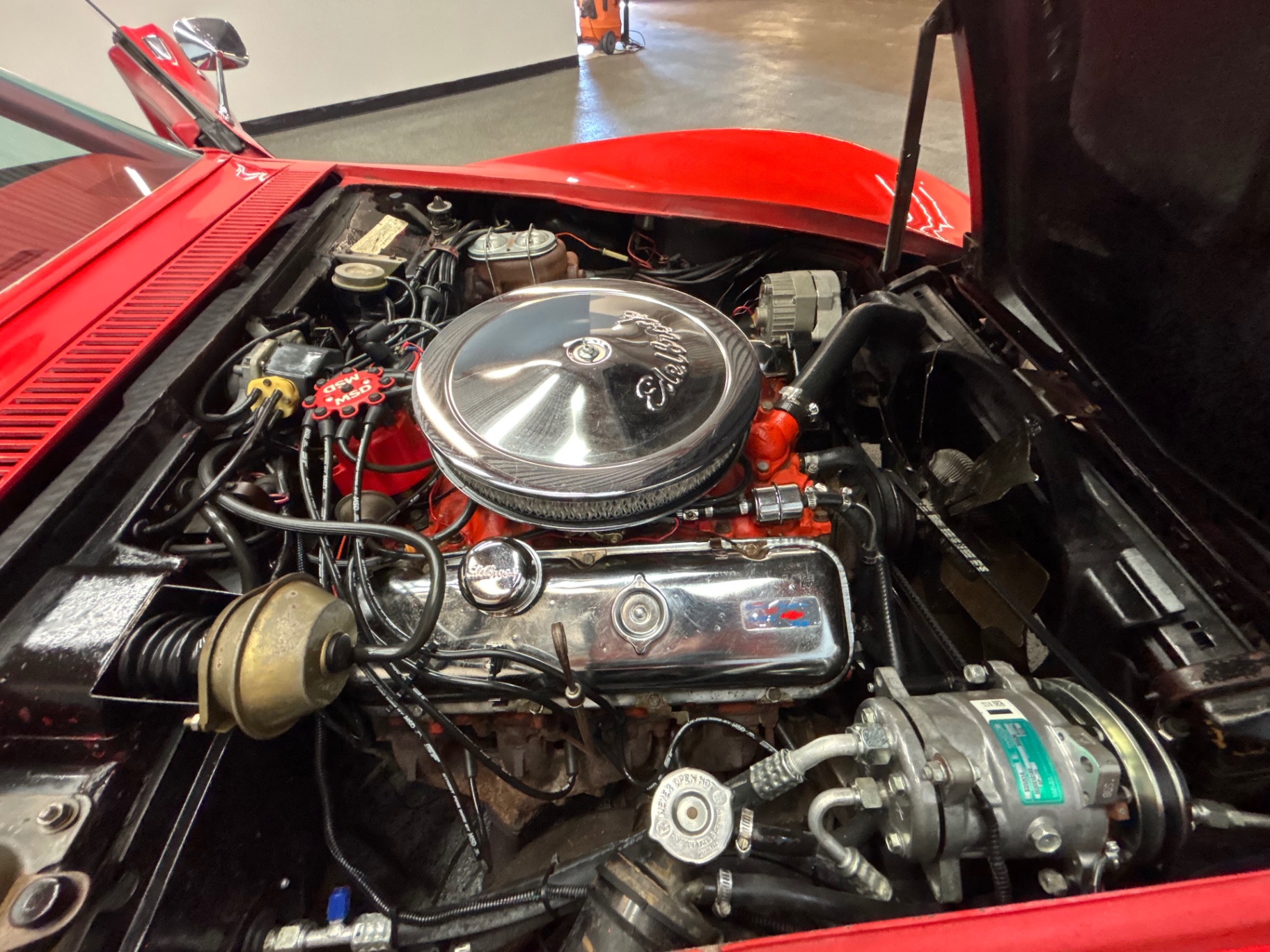
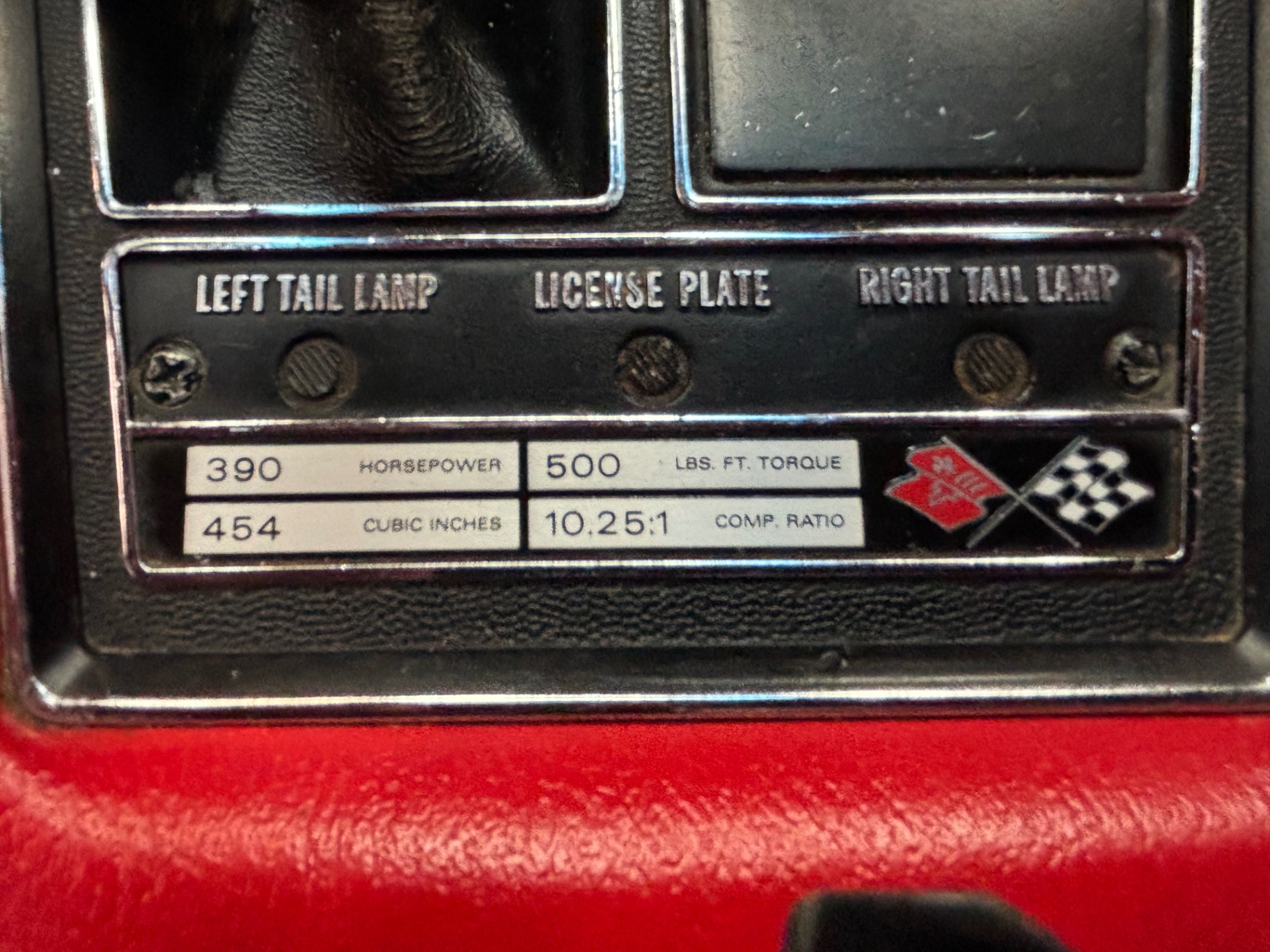
The heart of this 1970 Chevrolet Corvette Stingray is the LS5 454 cubic inch big block, factory-rated at 390 horsepower and 500 lb-ft of torque at a 10.25:1 compression ratio — figures confirmed by the engine data plate visible on the center console. The LS5 used rectangular-port cylinder heads, a hydraulic camshaft, and a single Rochester Quadrajet four-barrel carburetor. It was a torque-heavy, street-friendly package that could be driven daily while still delivering serious performance. The 500 lb-ft torque figure is what makes these cars feel so different from small block Corvettes of the same era — the power comes in low and stays flat across a wide rpm range.
Behind the engine sits a 4-speed manual transmission, the correct and desirable gearbox pairing for a car of this specification. The Positraction rear end ensures both rear wheels put power to the ground consistently, which is especially relevant given the torque output of the 454.
Stopping power comes from 4-wheel disc brakes — a feature that set the Corvette apart from nearly every other American production car of its time. The factory equipped these with power assist, and the combination of disc brakes at all four corners with a big block engine was a genuinely capable performance package by the standards of 1970.
Under the hood, Edelbrock chrome valve covers and a matching chrome Edelbrock air cleaner have been fitted, giving the engine bay a clean, finished appearance without straying into outlandish territory. An MSD ignition system has also been installed, which improves spark consistency and reliability over the original points-style system. These are the kinds of sensible, bolt-on upgrades that a knowledgeable owner makes — they improve the driving experience without altering the fundamental character of the car.
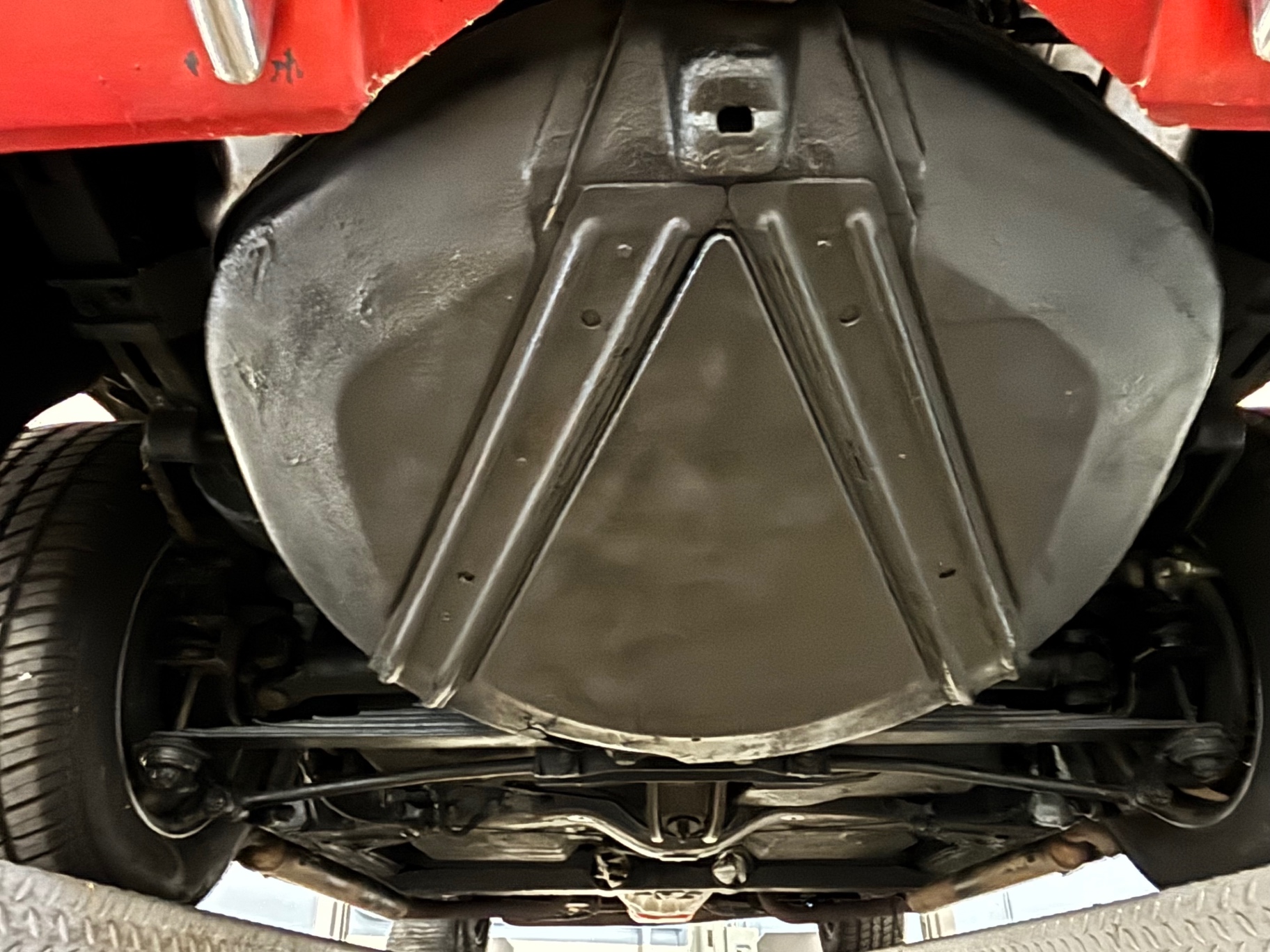
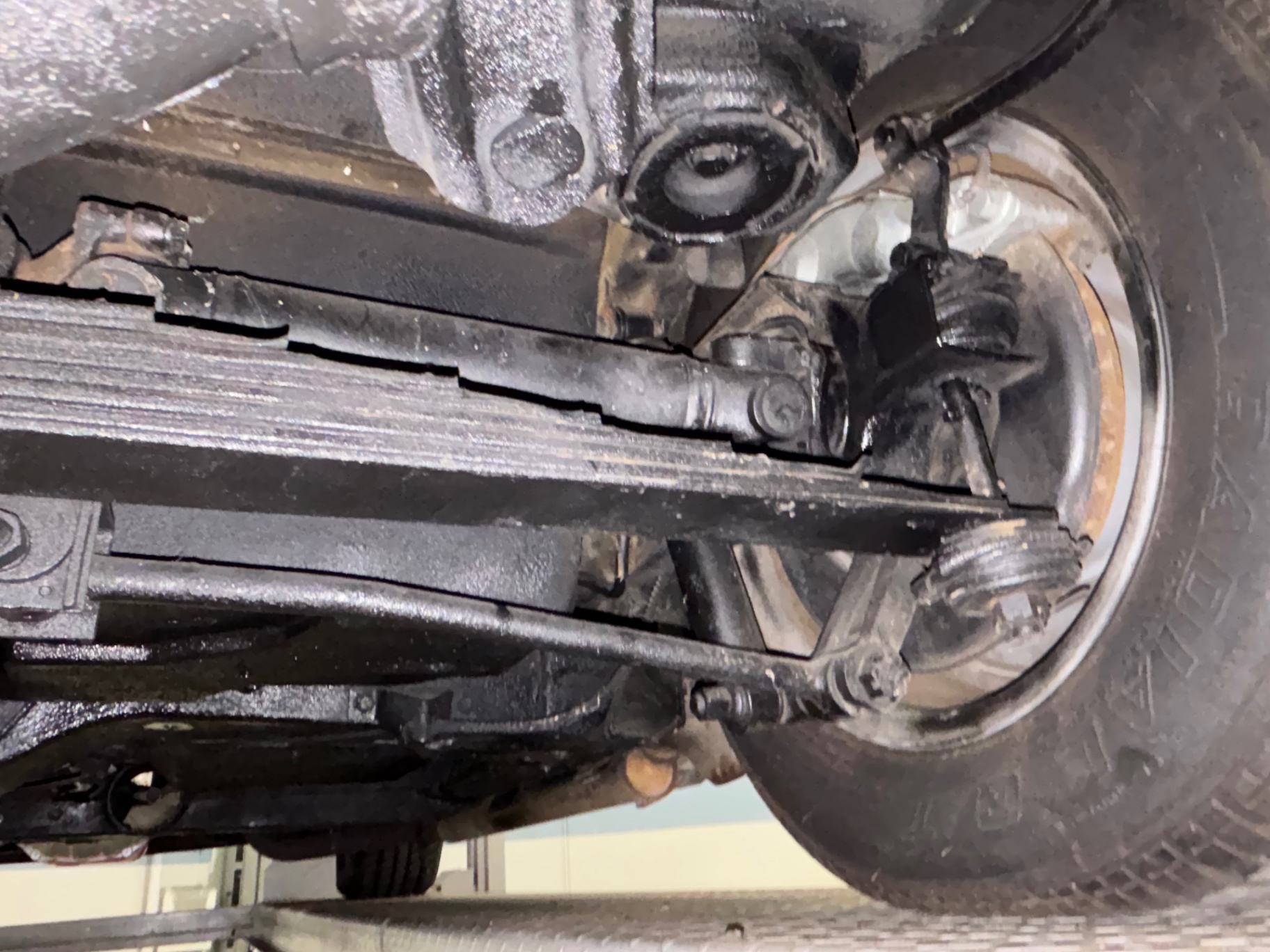
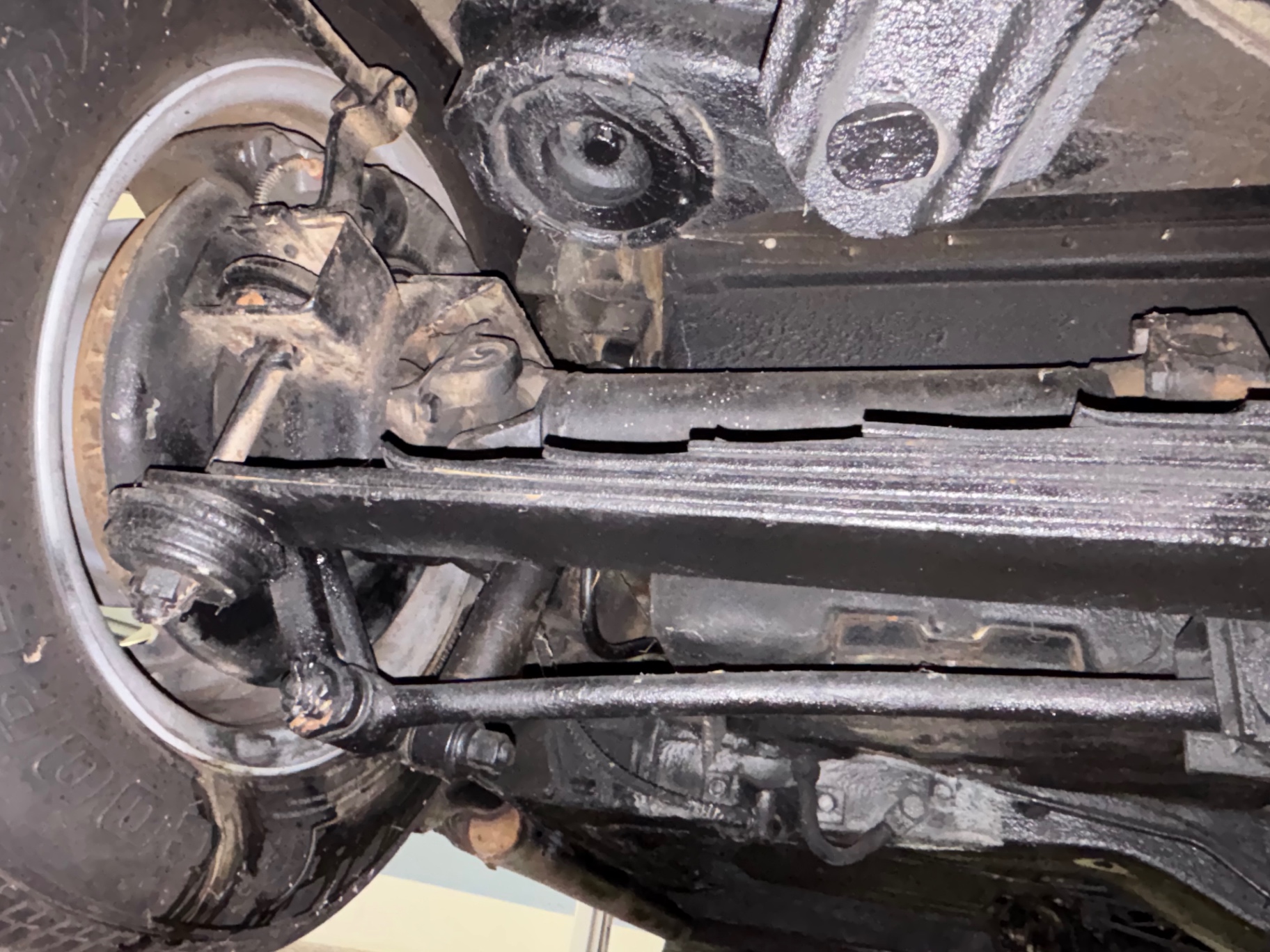
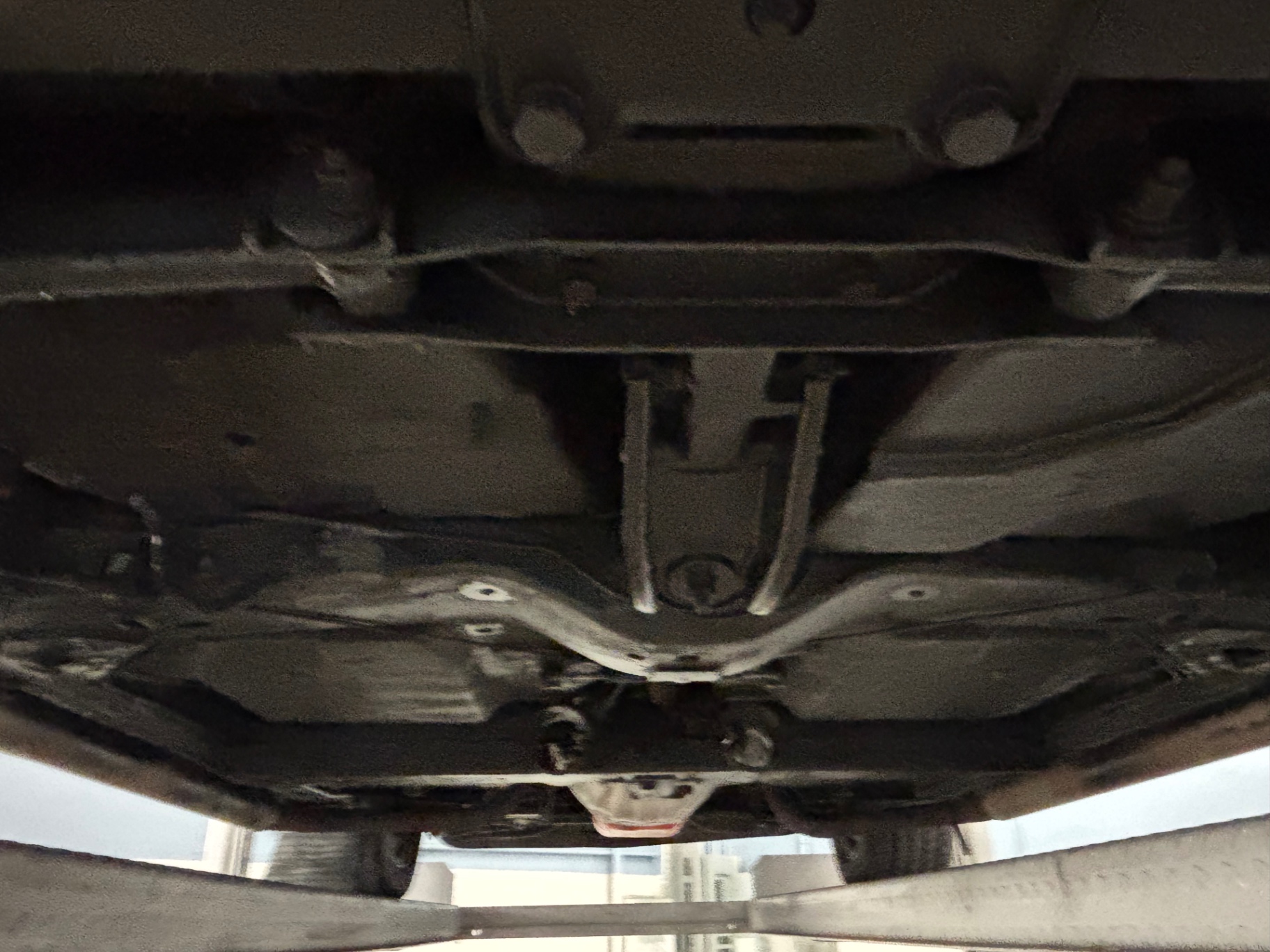
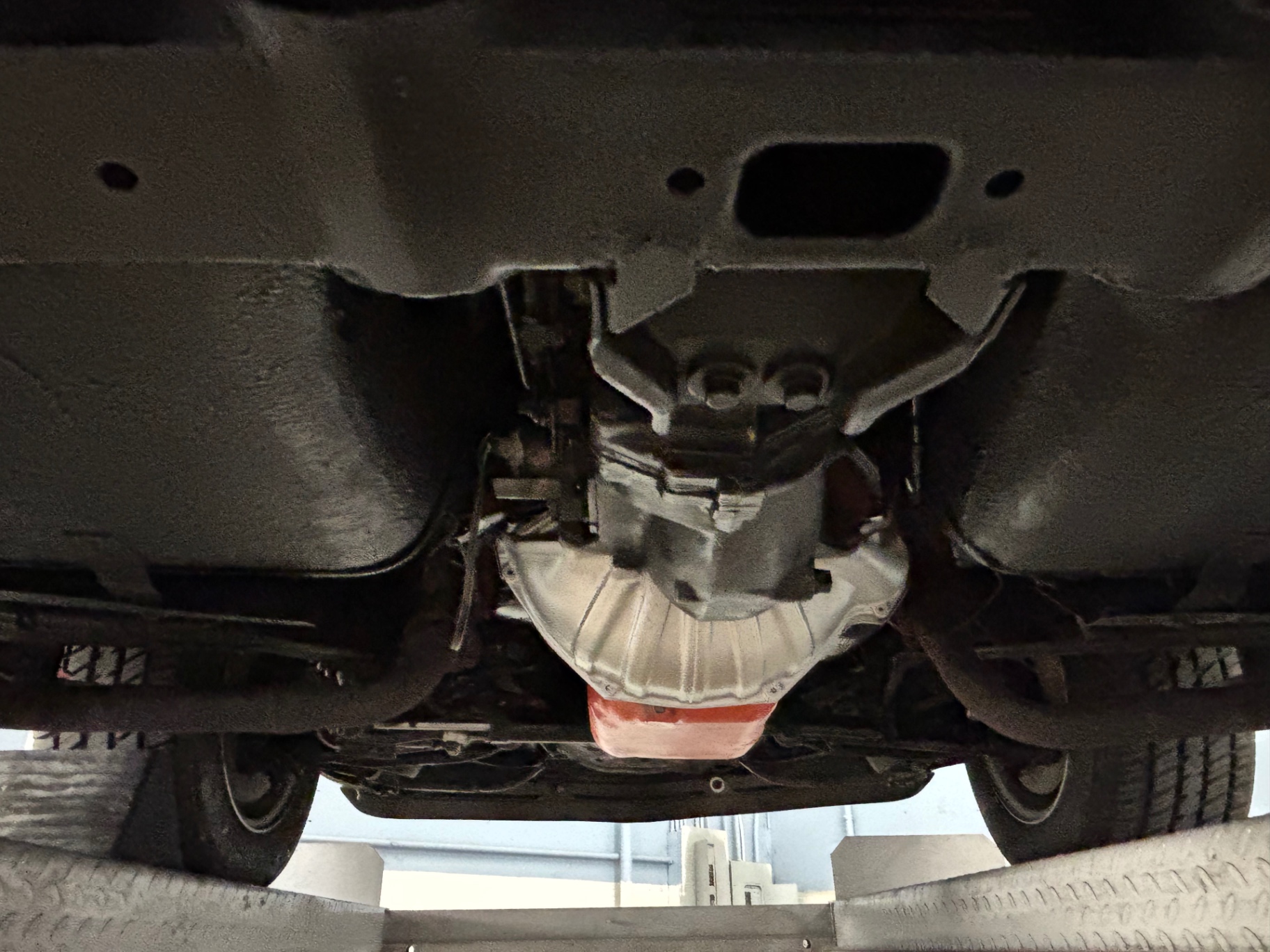
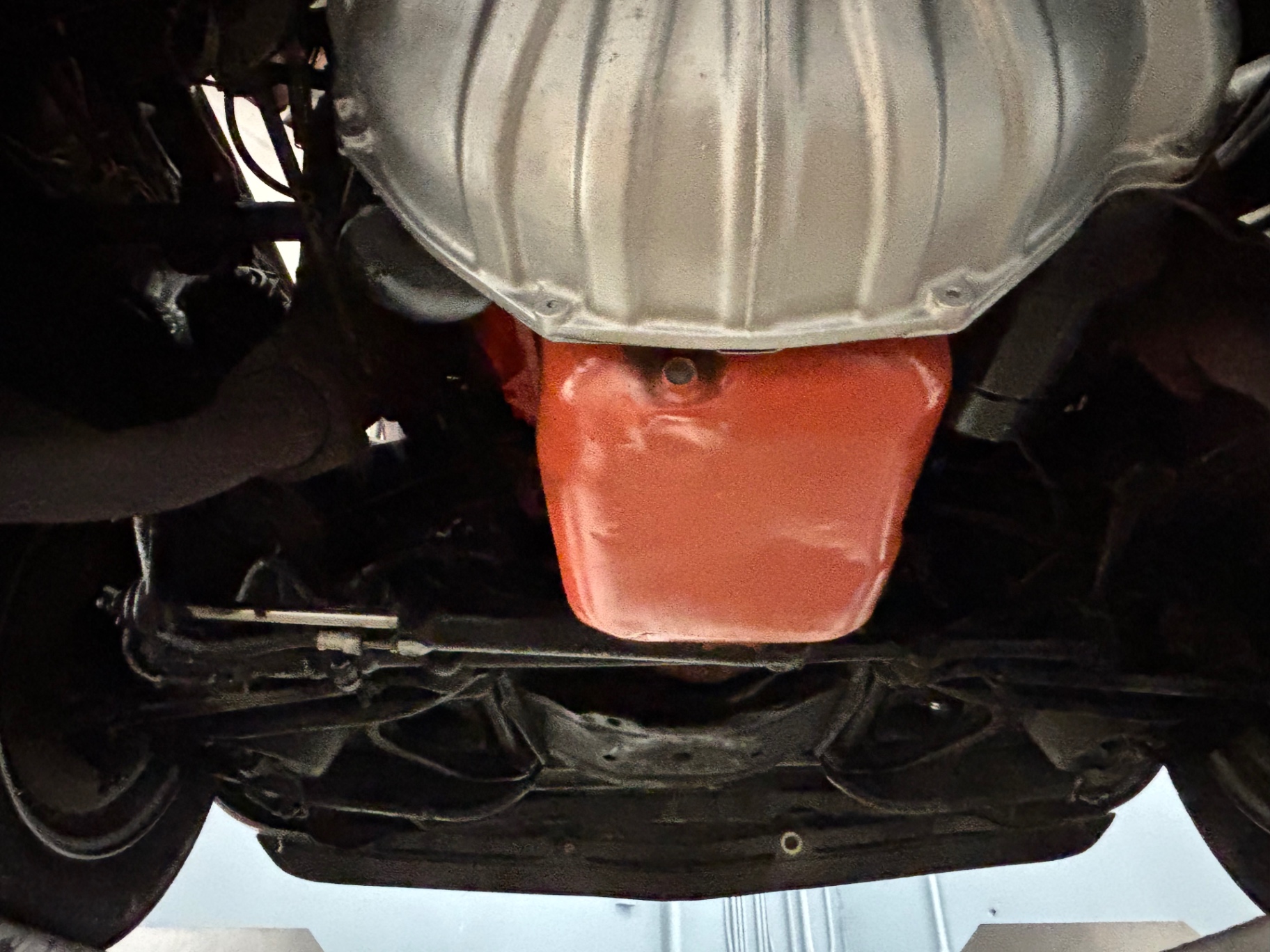
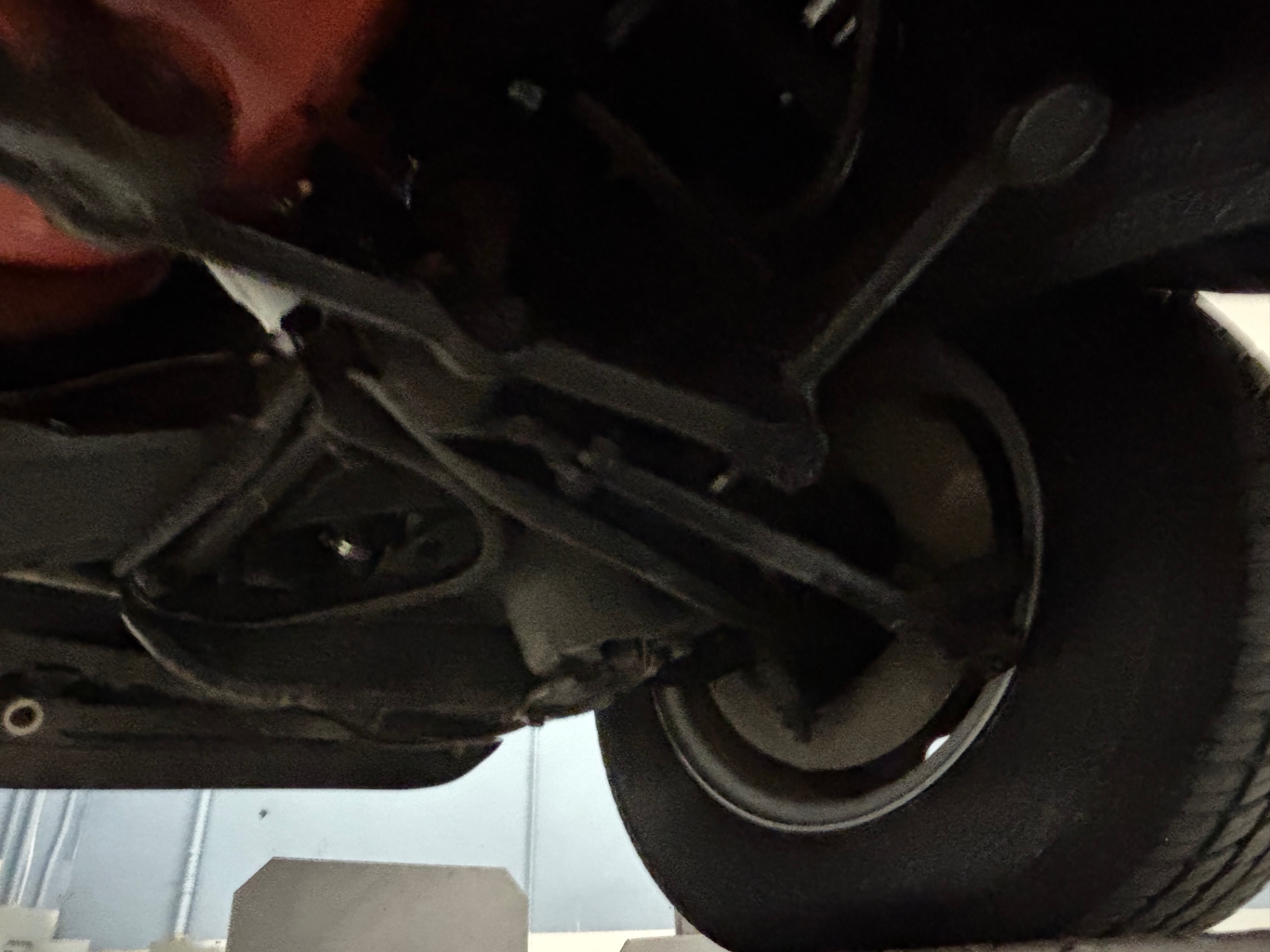
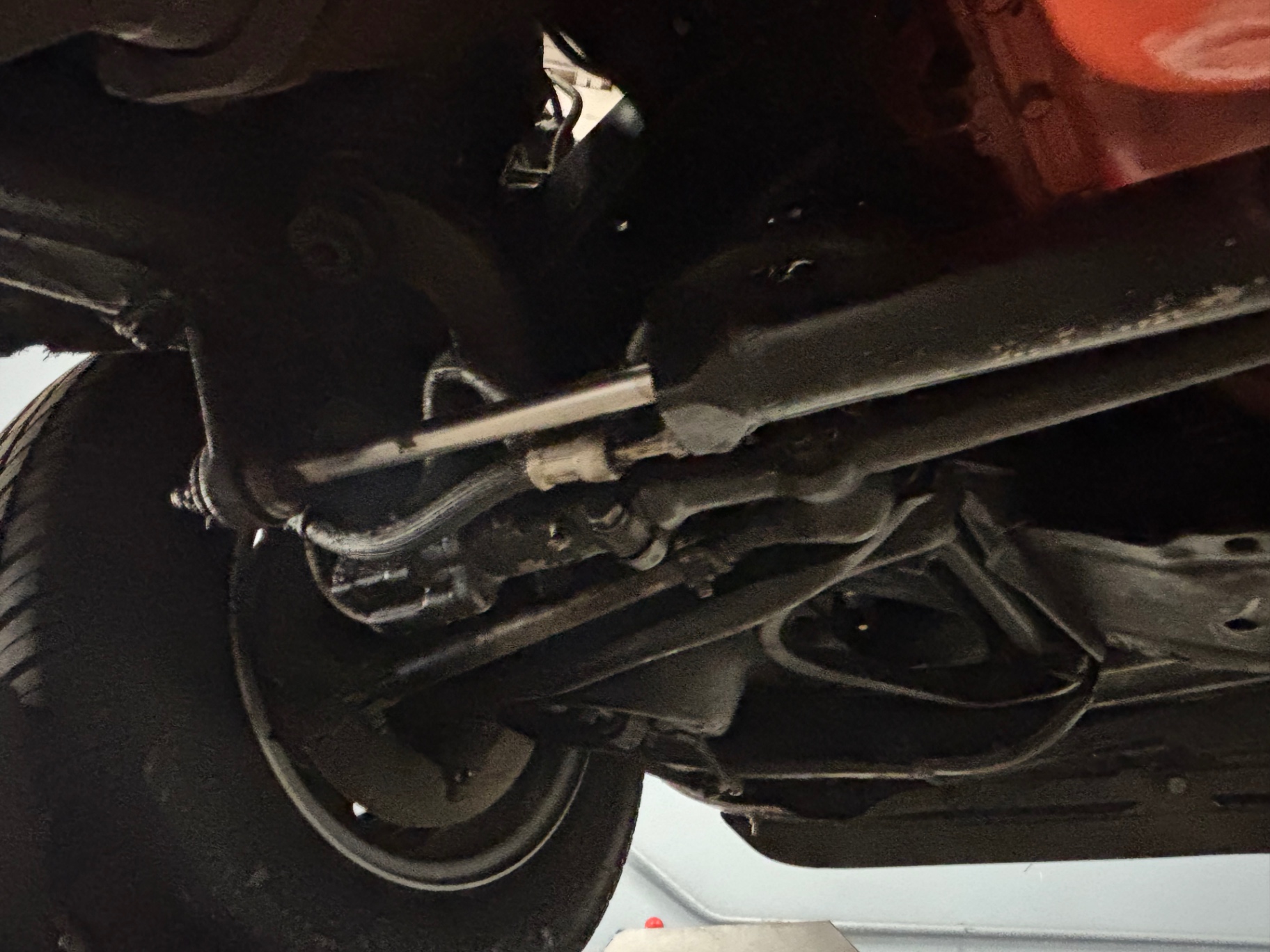
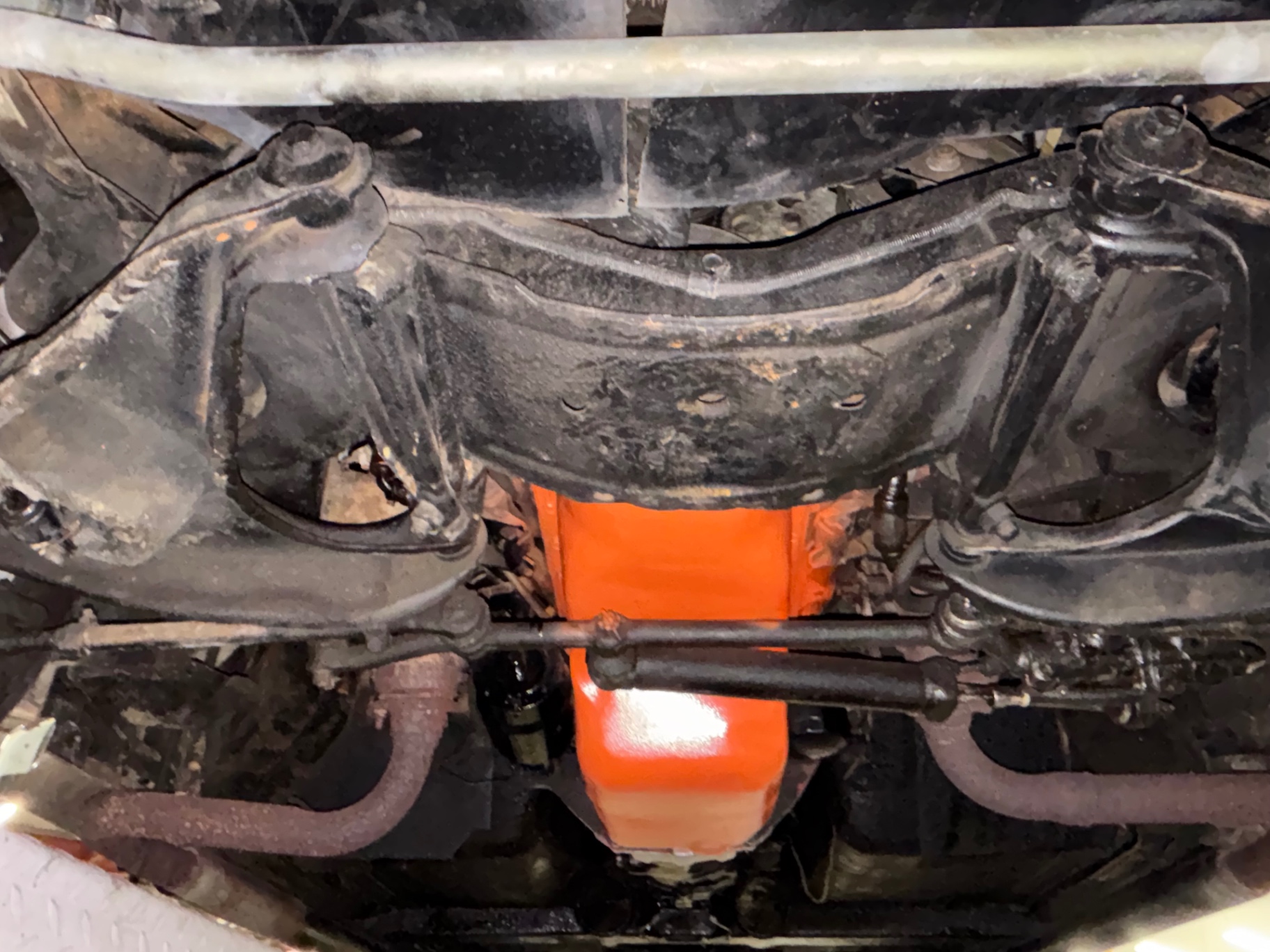
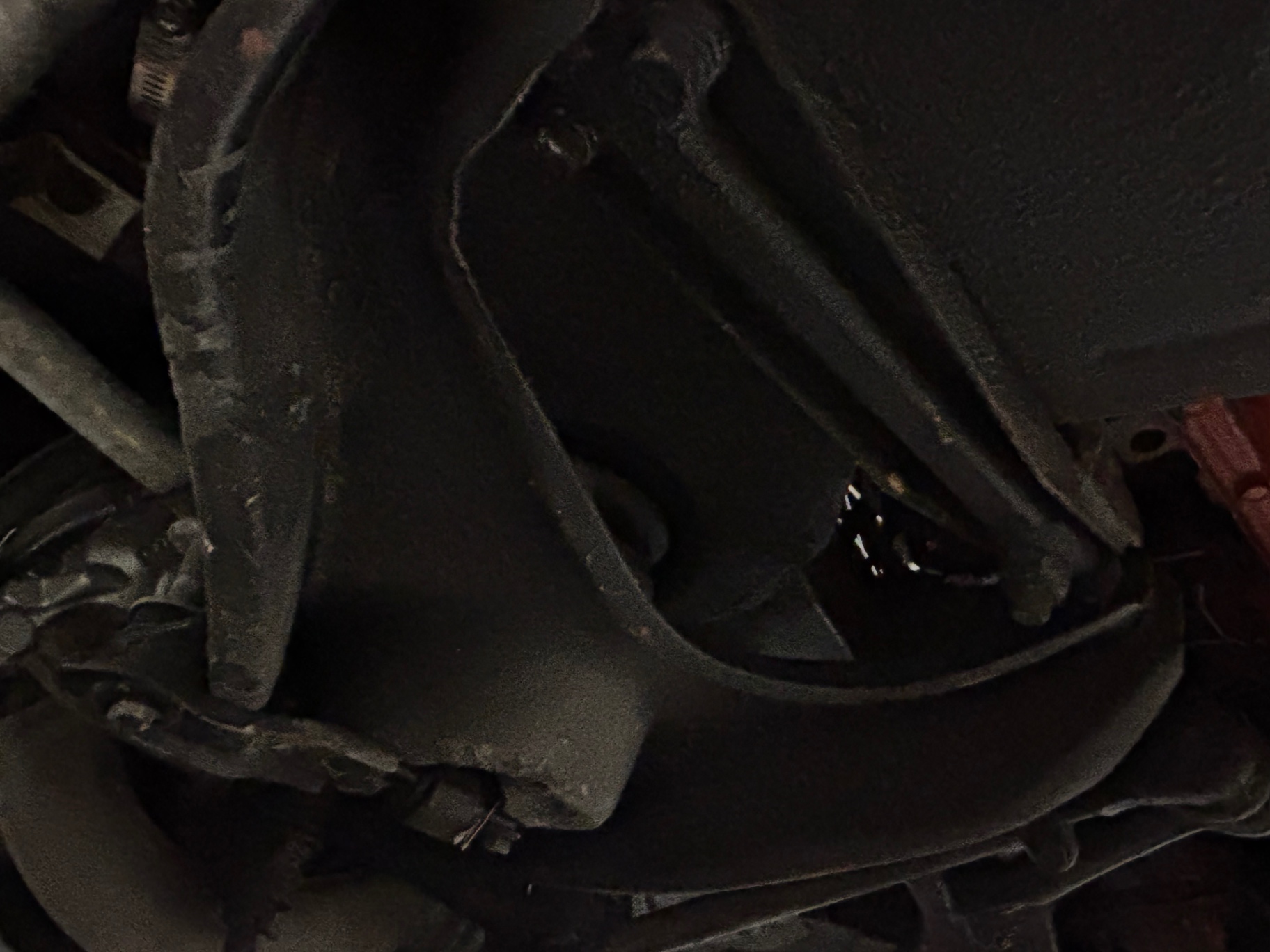
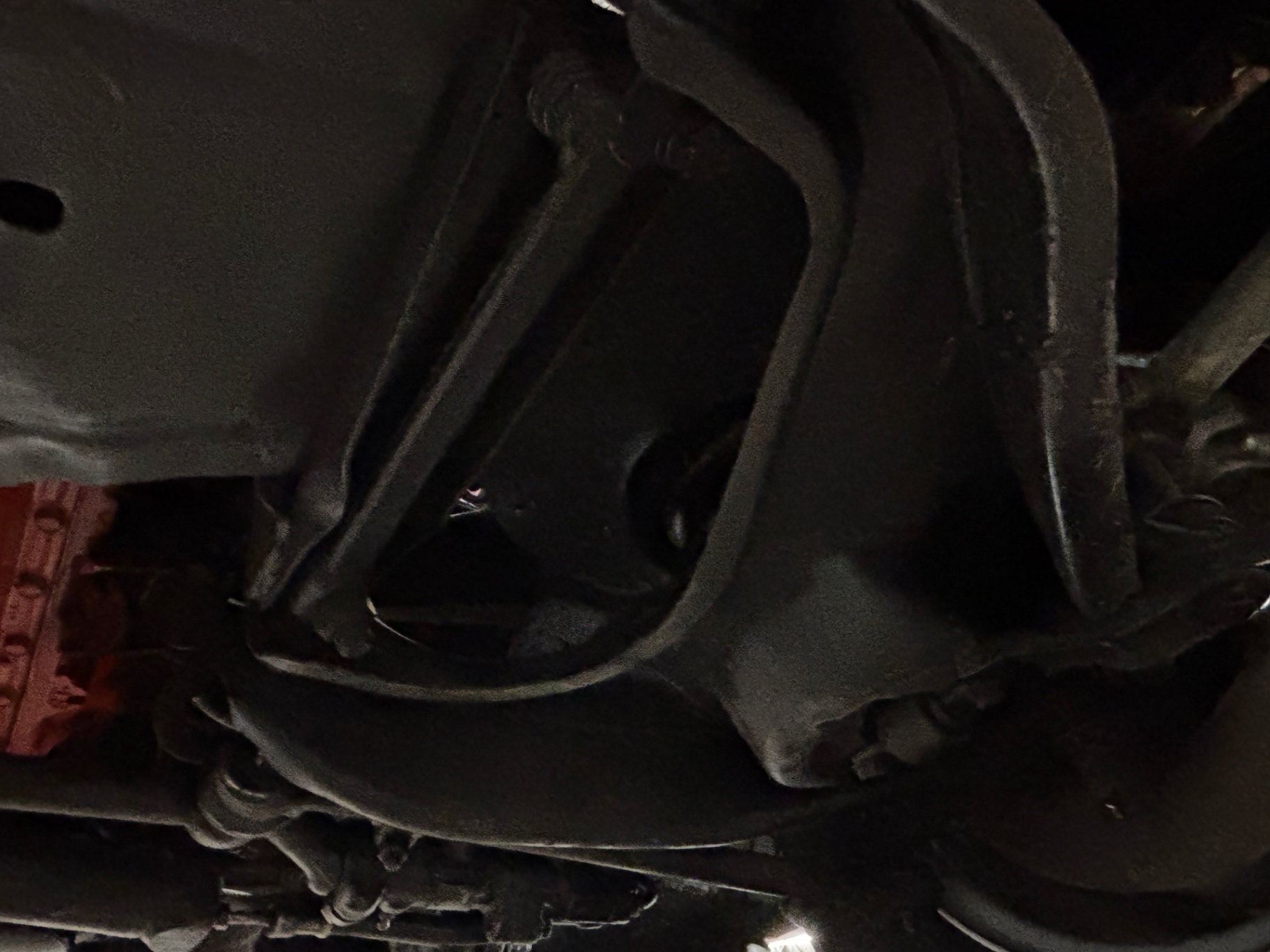
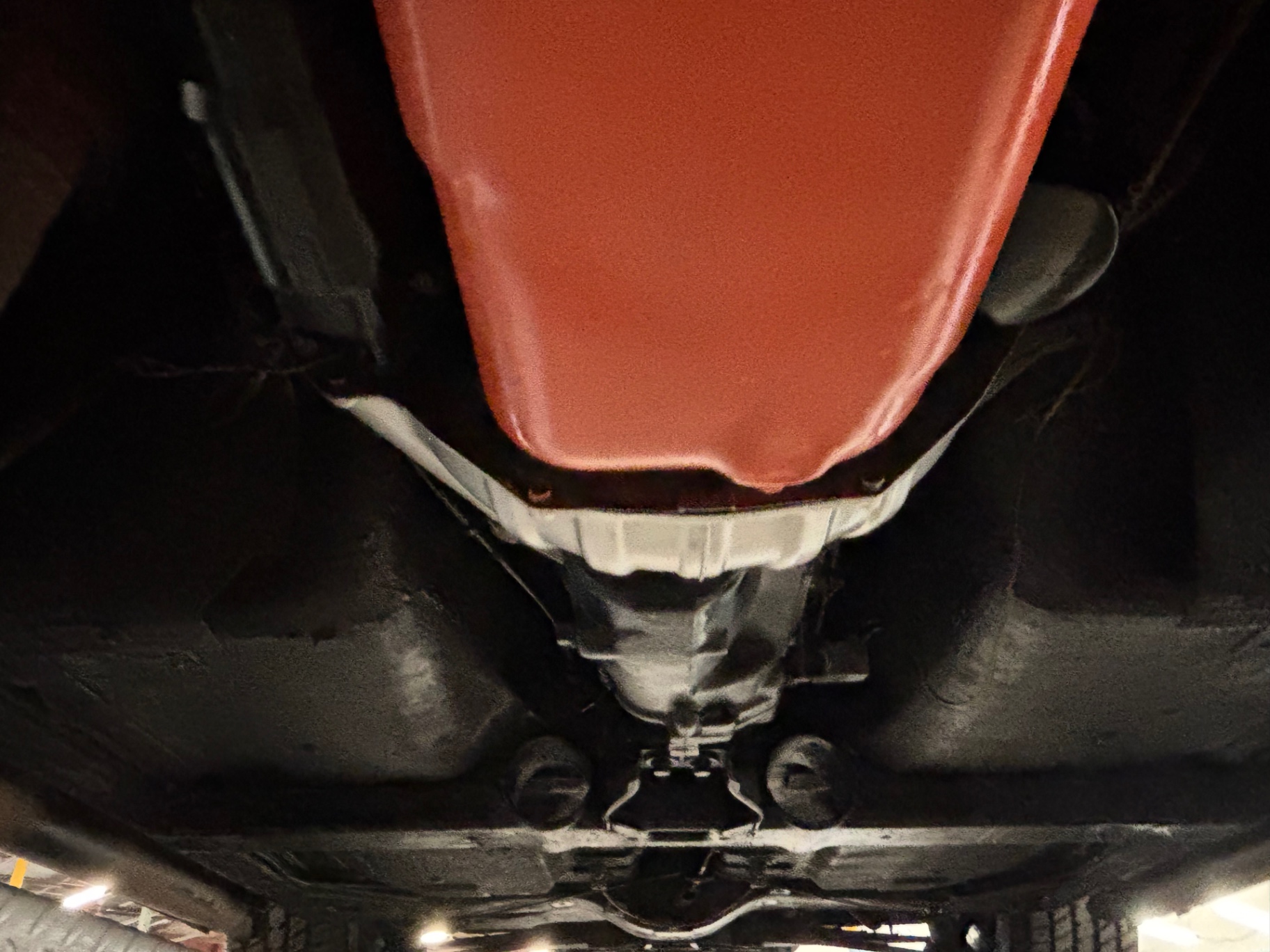
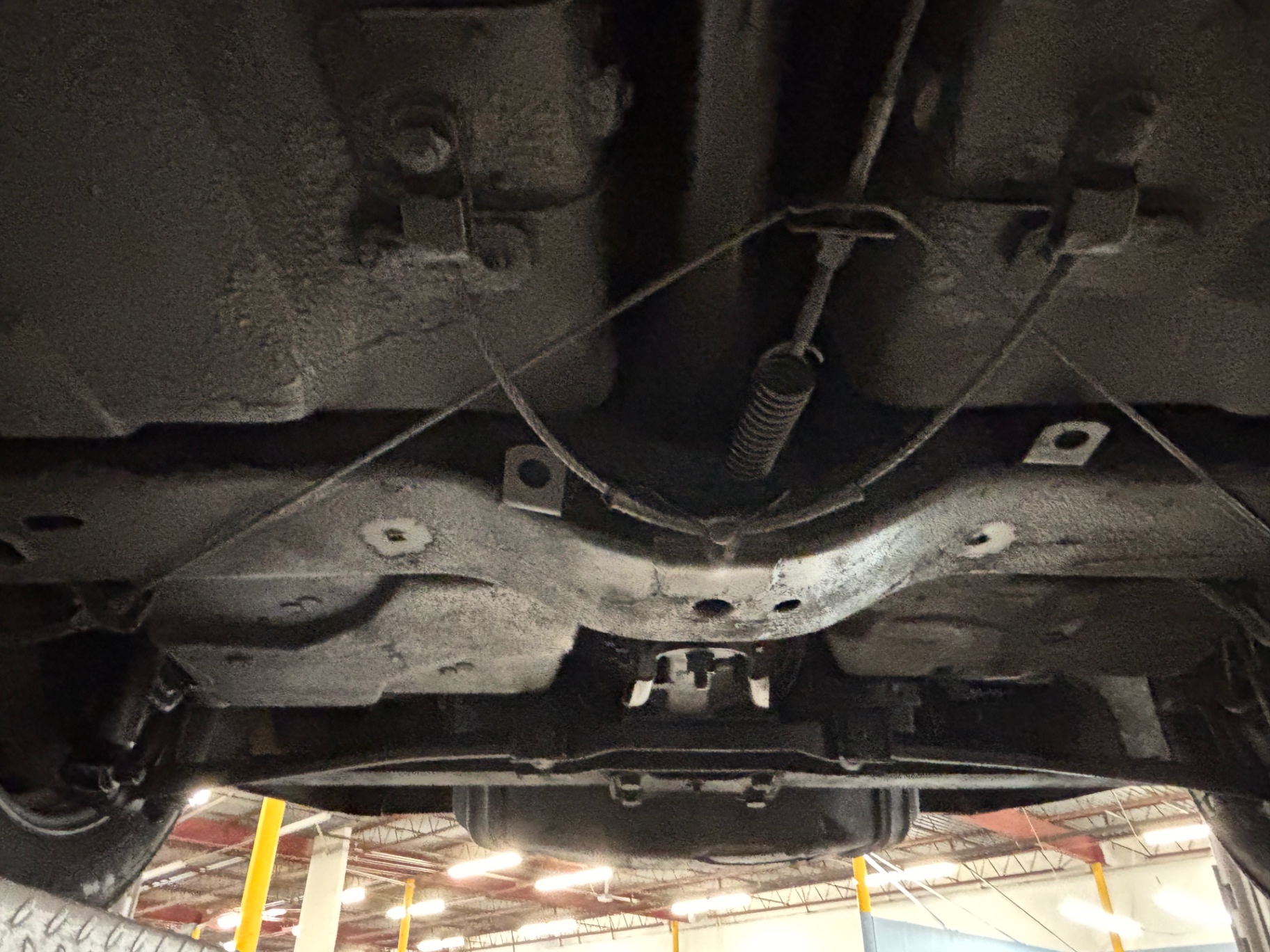
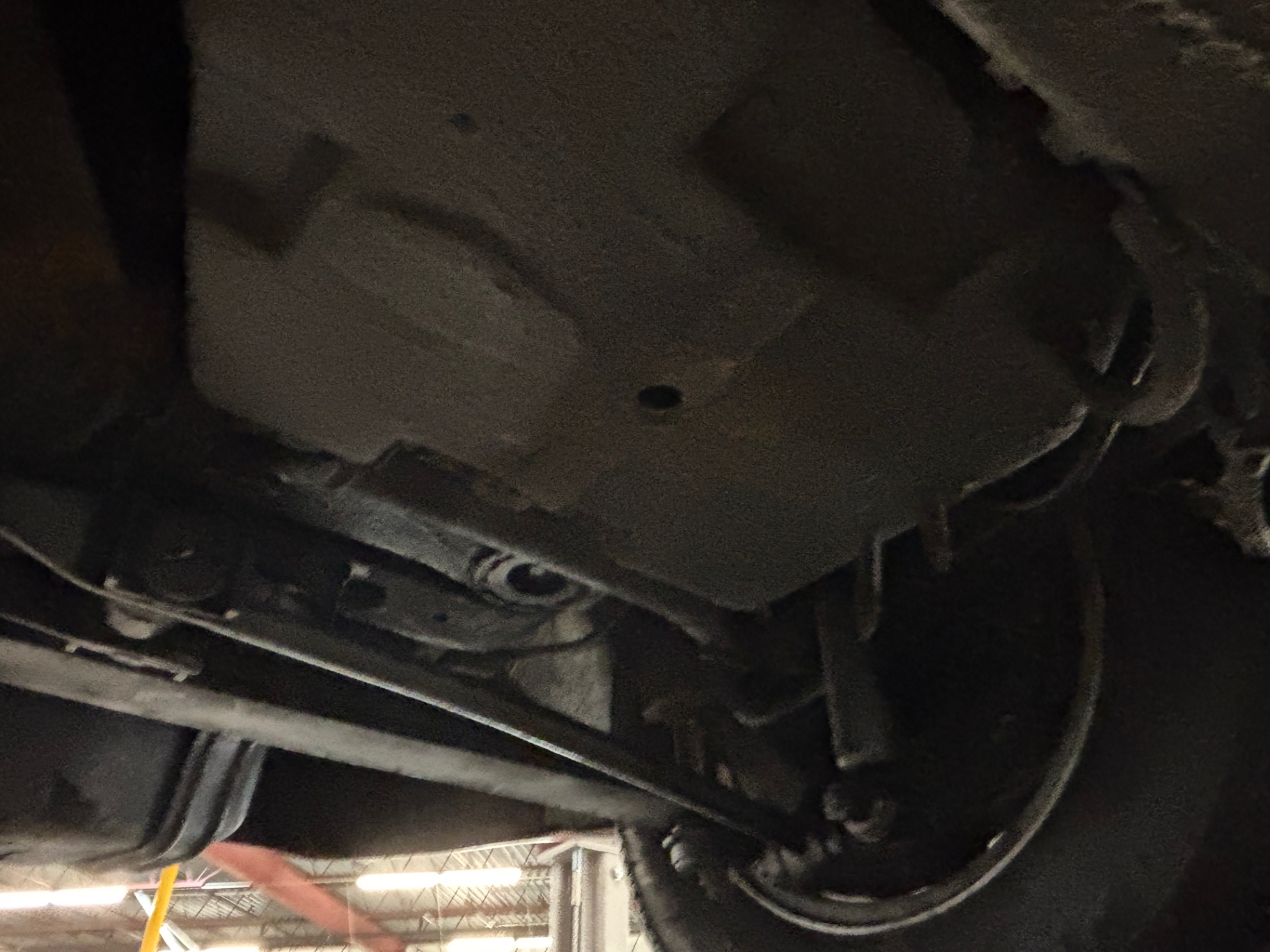
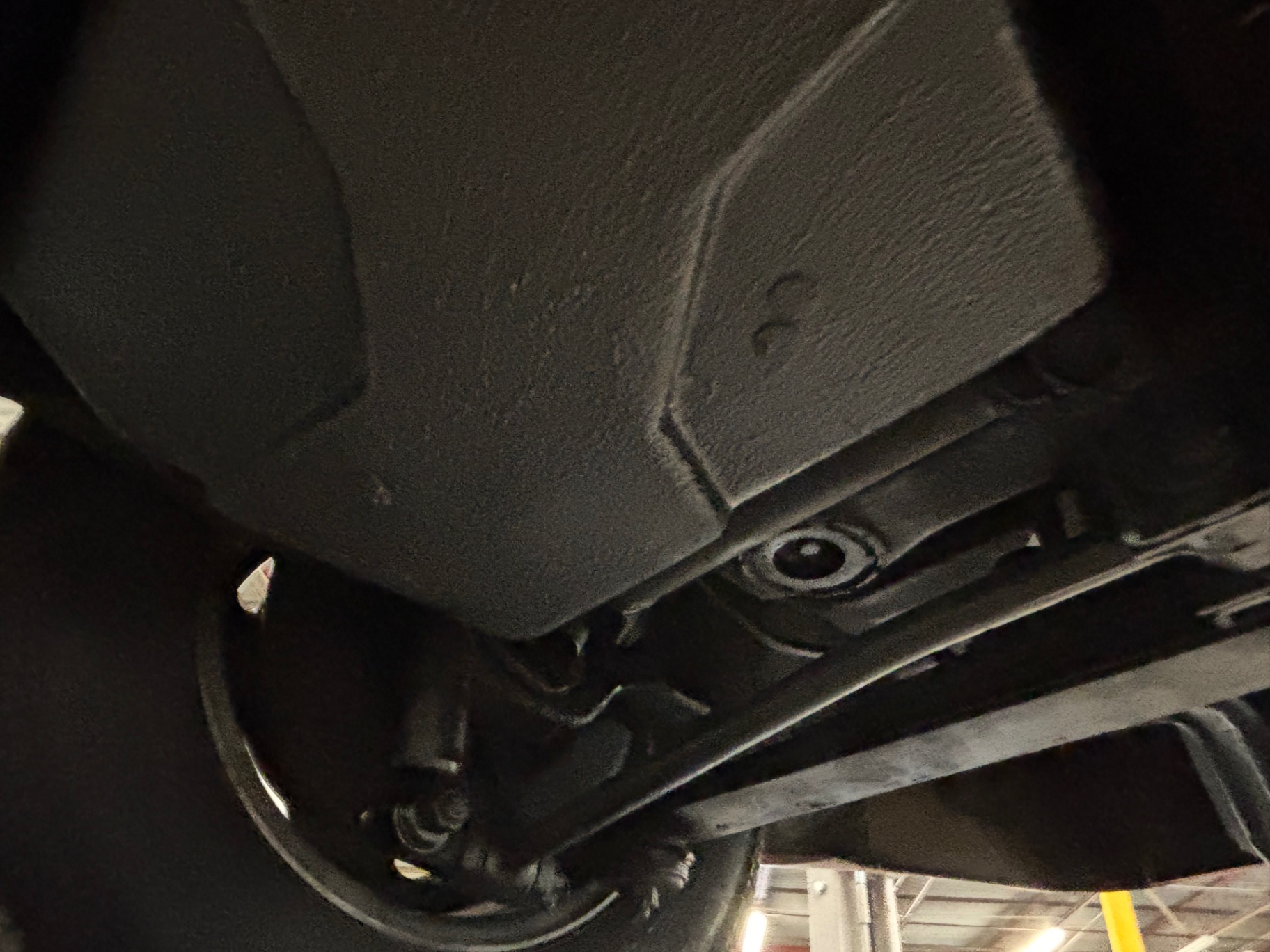
The underside of this 1970 Corvette shows a well-maintained chassis. The photos reveal a clean, solid floor pan with no visible rust or structural concerns, and the independent rear suspension components appear to be in good order. The fiberglass body of the C3 Corvette eliminates the rust issues that plague steel-bodied contemporaries, and the chassis on this example reflects a car that has been looked after over its life.
Interior
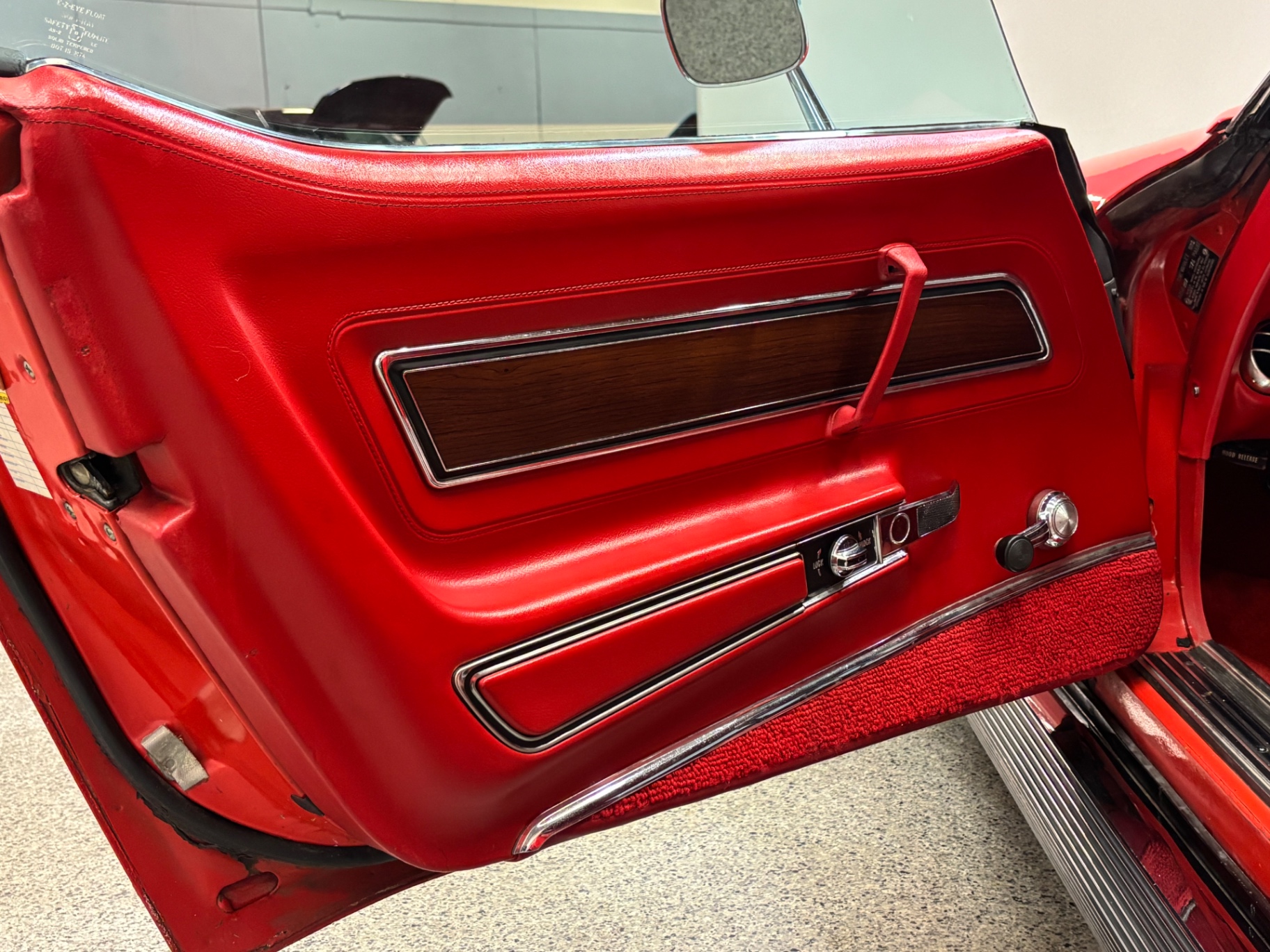
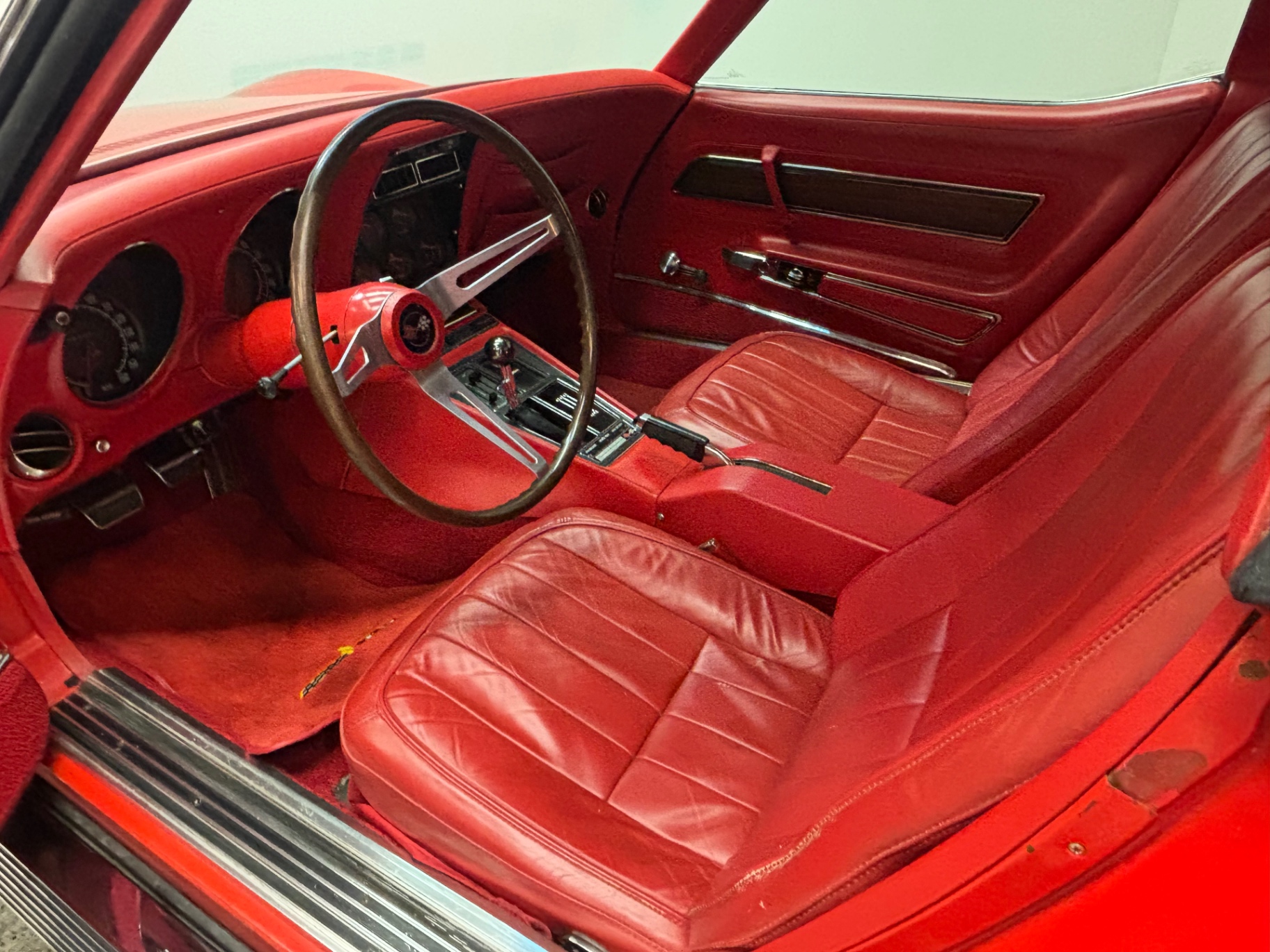
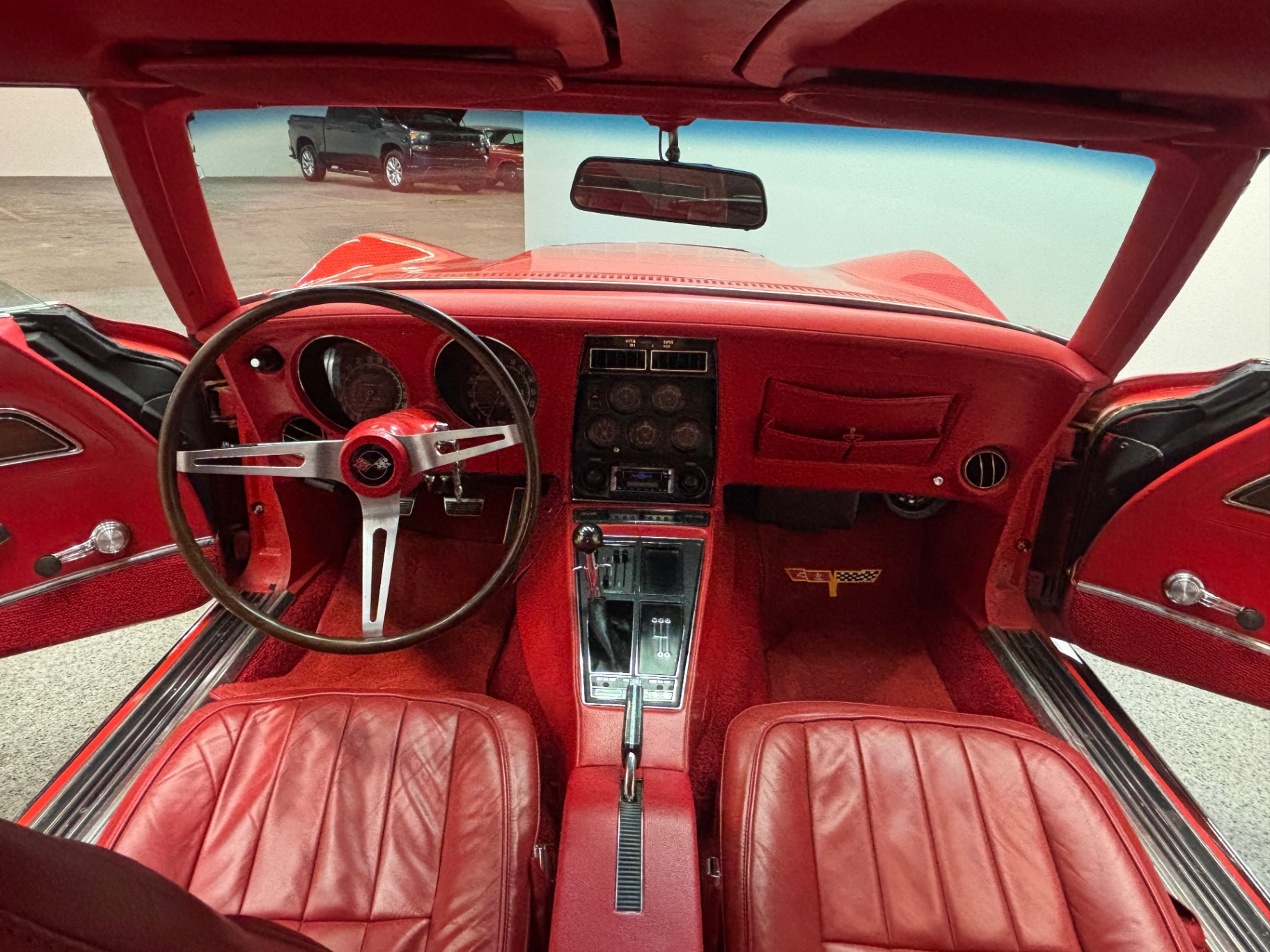
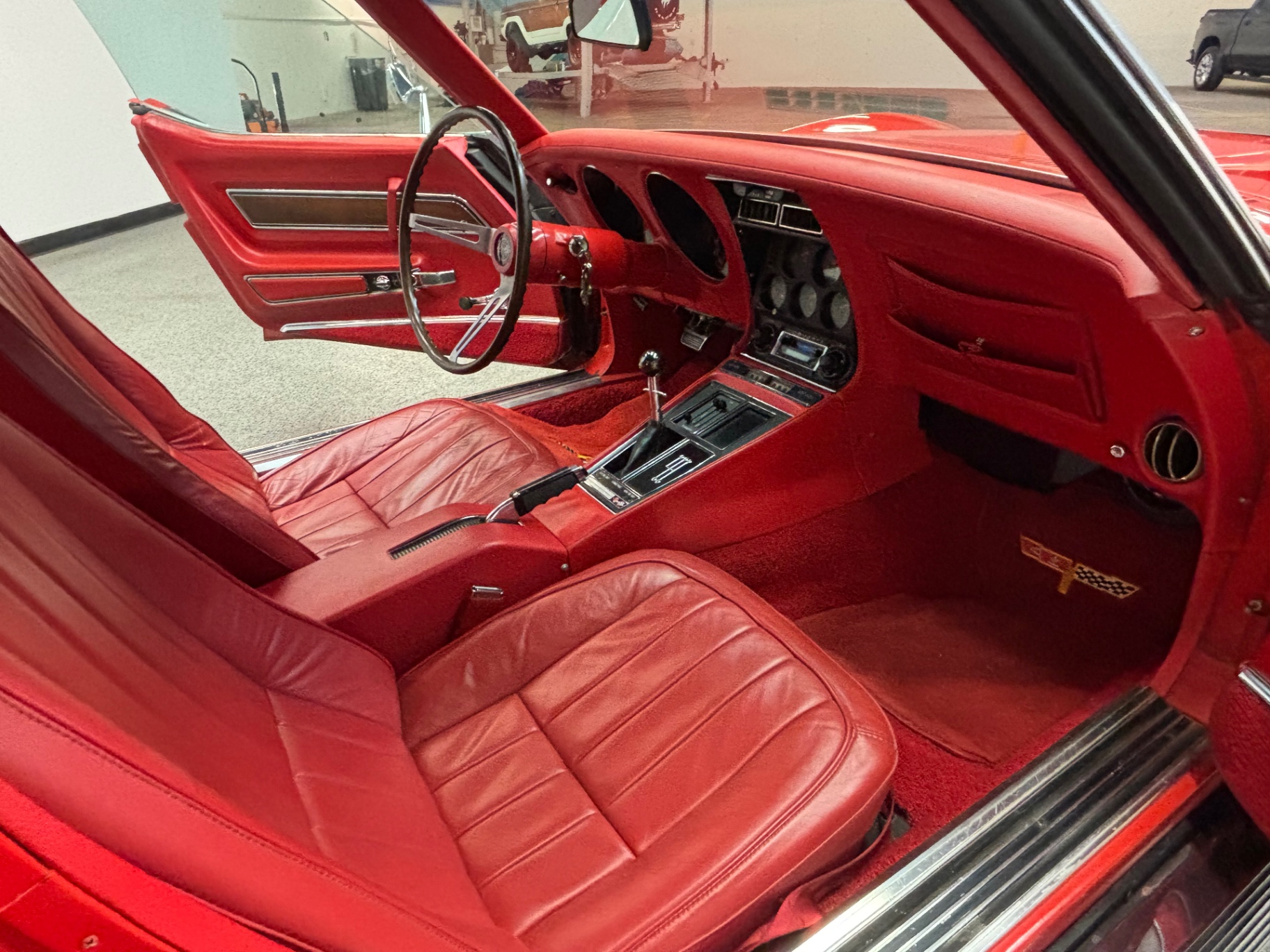
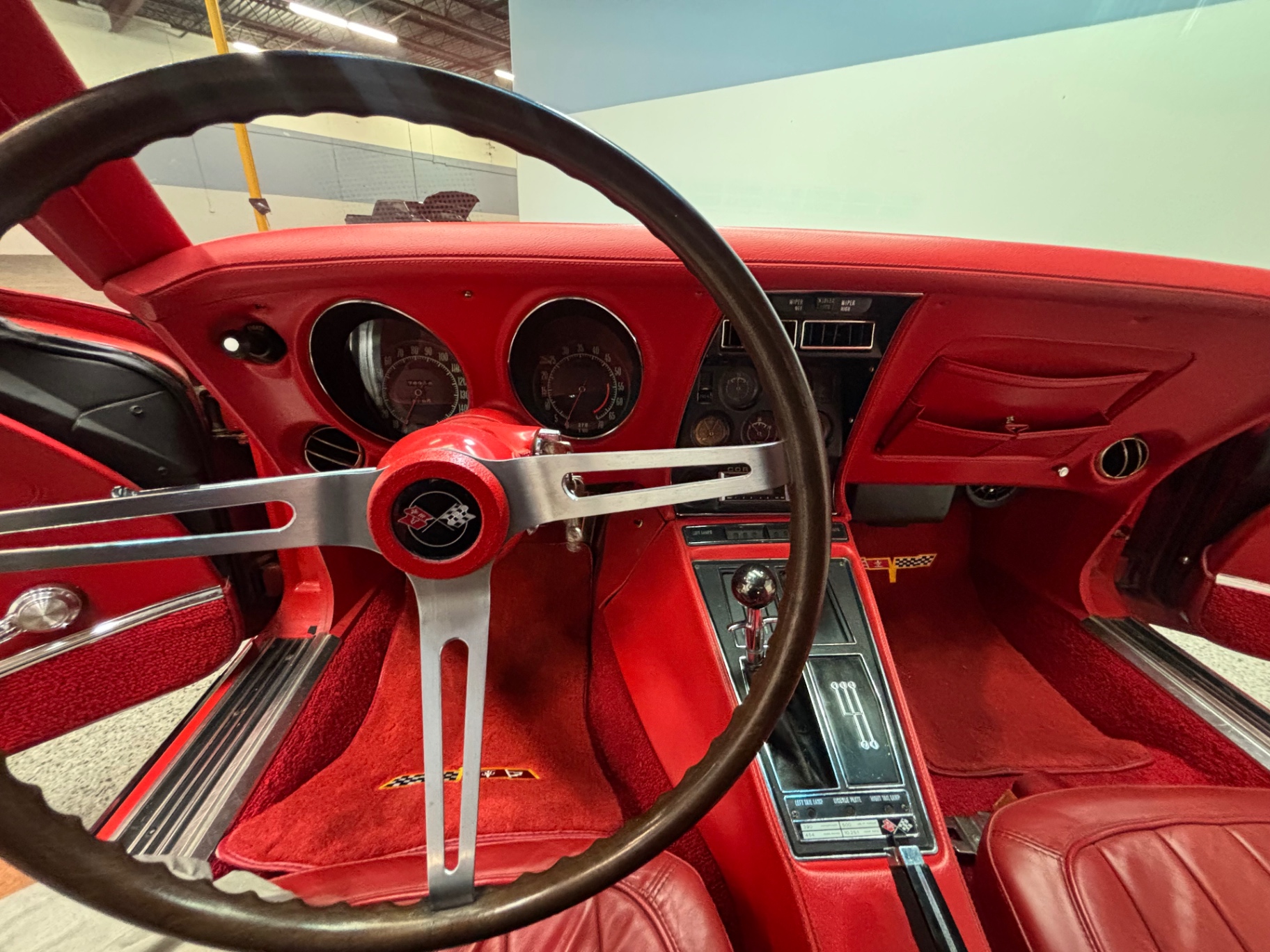
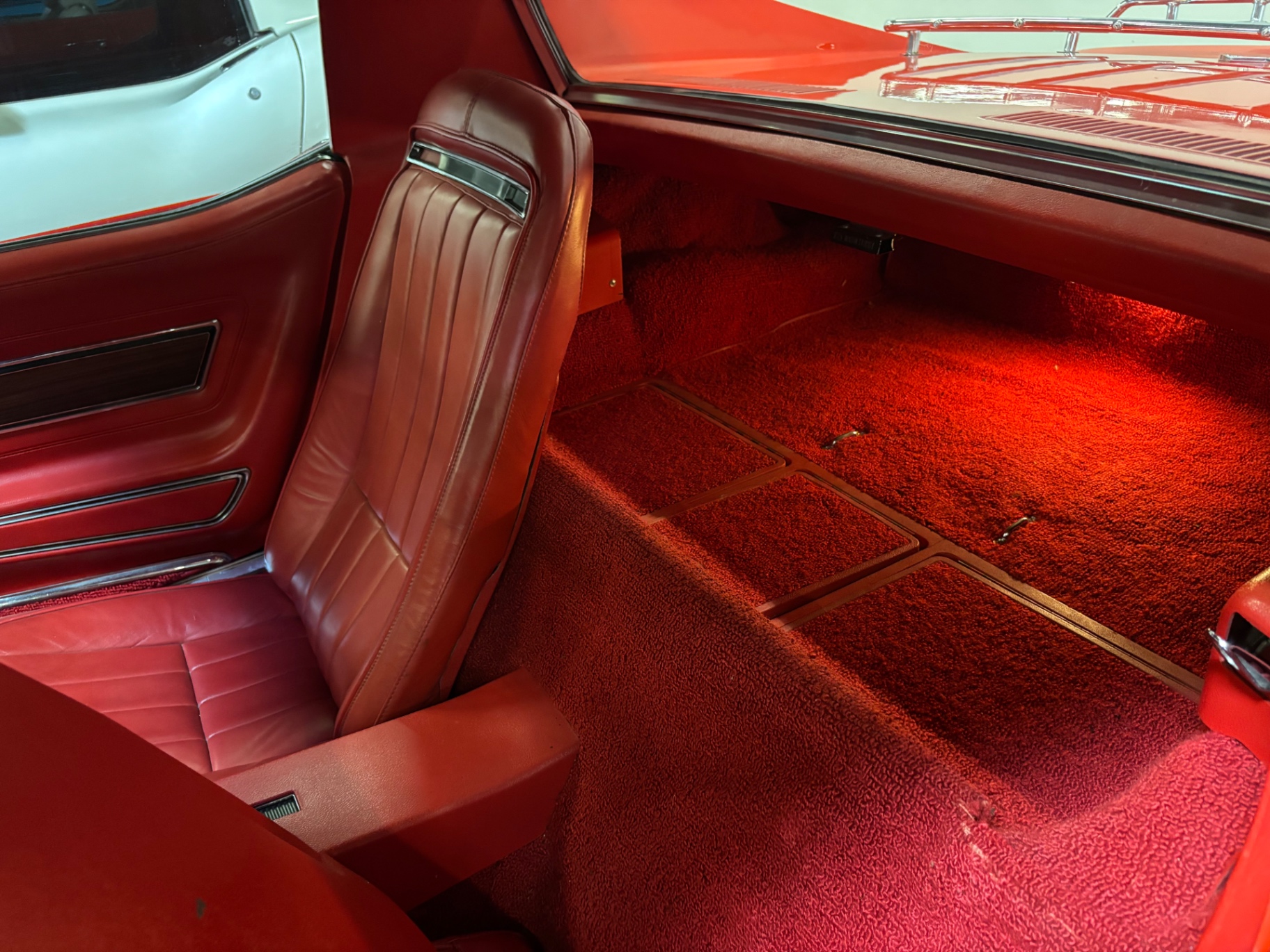
The interior of this 1970 Chevrolet Corvette Stingray is finished in factory red leather throughout, corresponding to trim code 407. Red-on-red was one of the more committed color combinations available in 1970, and when the exterior is also red — as it is here — the result is a cohesive, period-correct presentation that reads as intentional rather than incidental. The leather bucket seats show the expected wear of a car with genuine mileage, but the overall condition is consistent and the color remains rich.
The dashboard layout in the 1970 Corvette was redesigned from the previous generation and is widely considered one of the cleaner instrument arrangements of the C3 run. The full gauge cluster, including a 7,000 rpm tachometer and 160 mph speedometer, sits directly in front of the driver in a deeply recessed pod. Secondary gauges — including fuel, temperature, oil pressure, and battery — are mounted in a center console stack, giving the driver complete information at a glance.
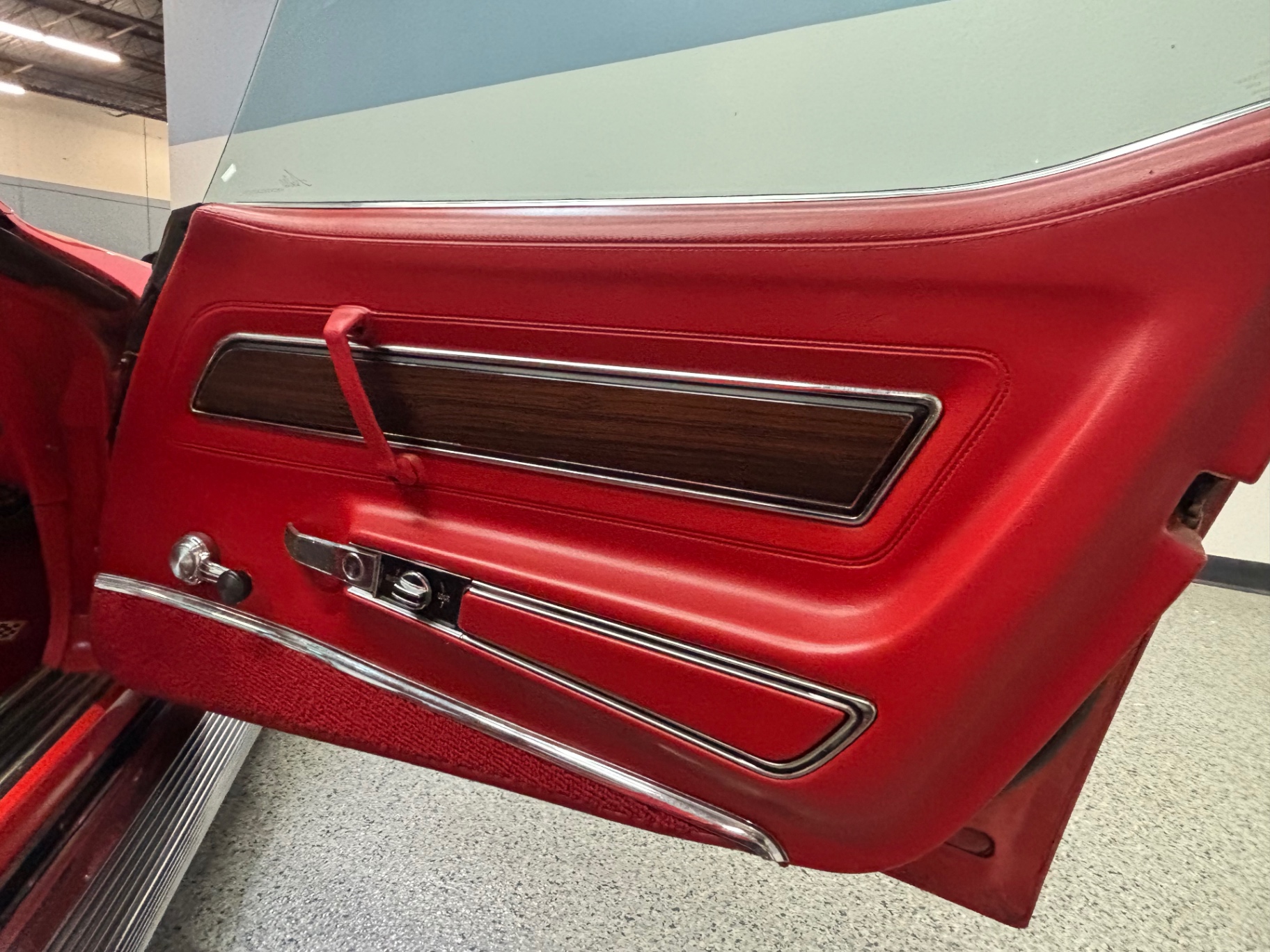
The tilt-telescopic steering column is present, which allows the driver to adjust both the angle and reach of the wheel — a meaningful feature on a car this low to the ground. The factory AM/FM radio is fitted in the dash. Wood-grain trim inserts on the door panels break up the all-red theme with a contrasting material that was standard on the 1970 Corvette interior package. The center console houses the 4-speed shifter and T-top storage controls, and the floor is carpeted in matching red throughout.
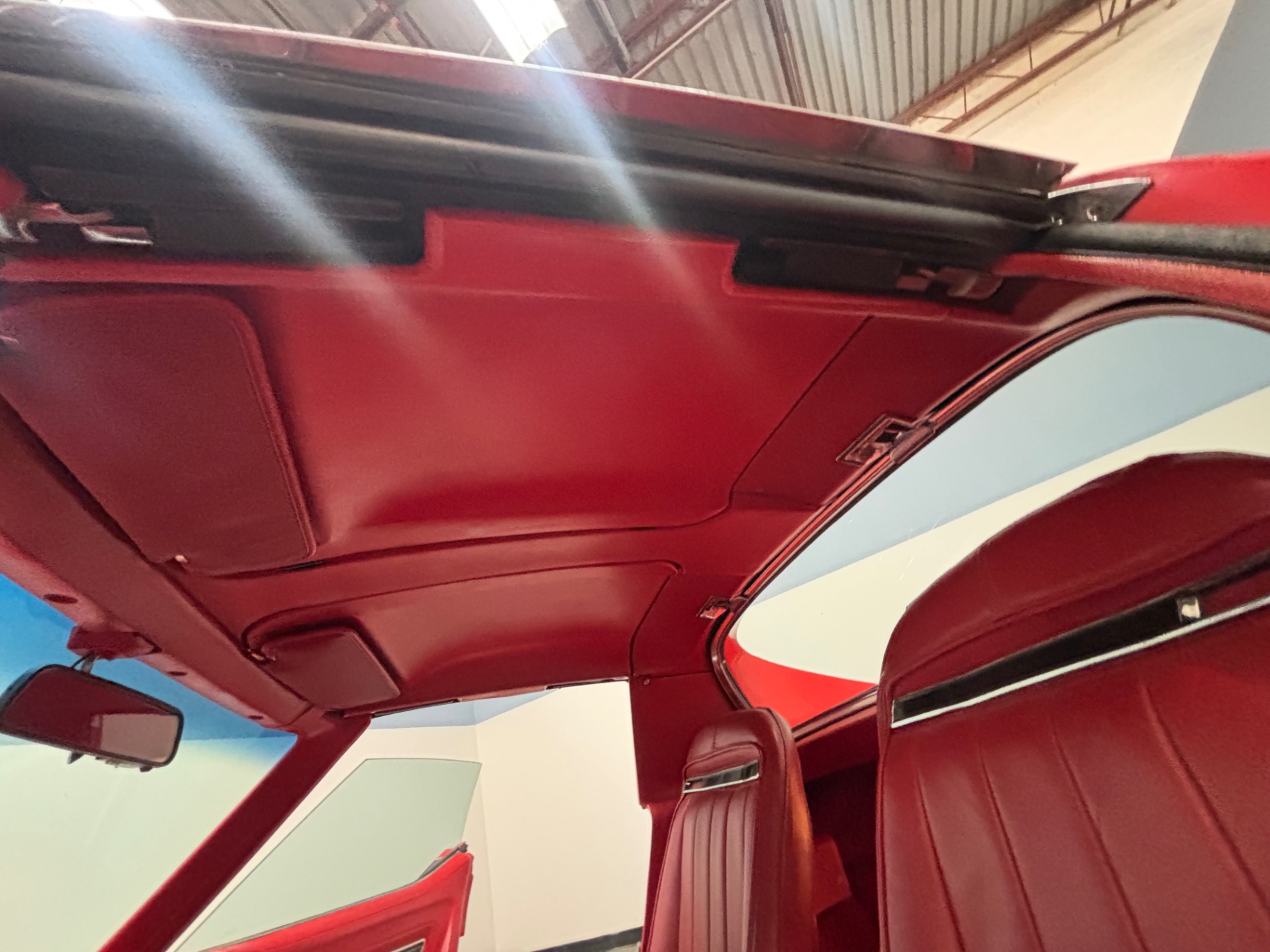
The removable T-Tops are in place, which give this coupe the open-air experience of a roadster while retaining the structural rigidity of a fixed roof. The 1970 model year was the first full year Corvette offered the T-Top configuration, making it a defining feature of the C3 era.
Exterior
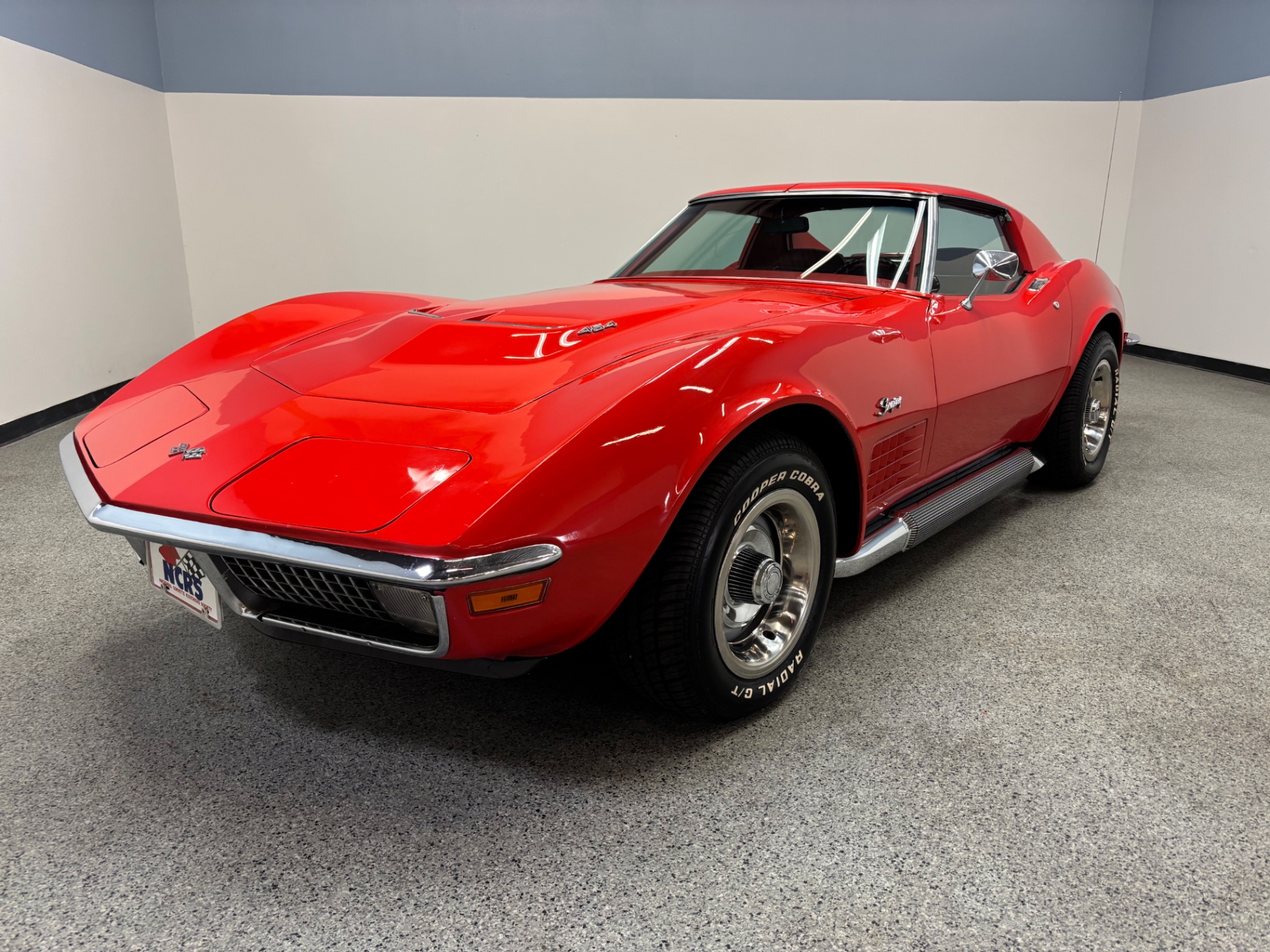
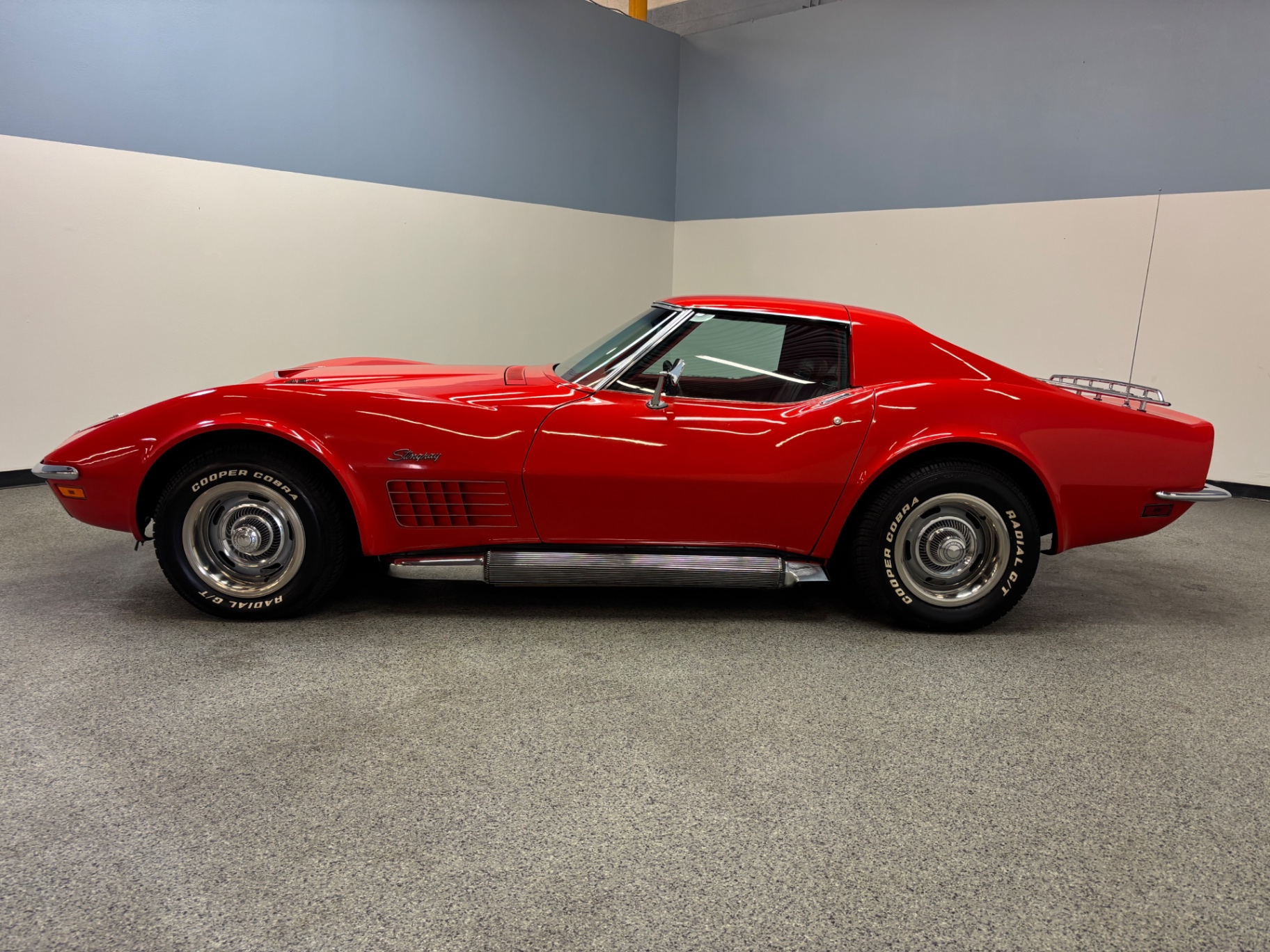
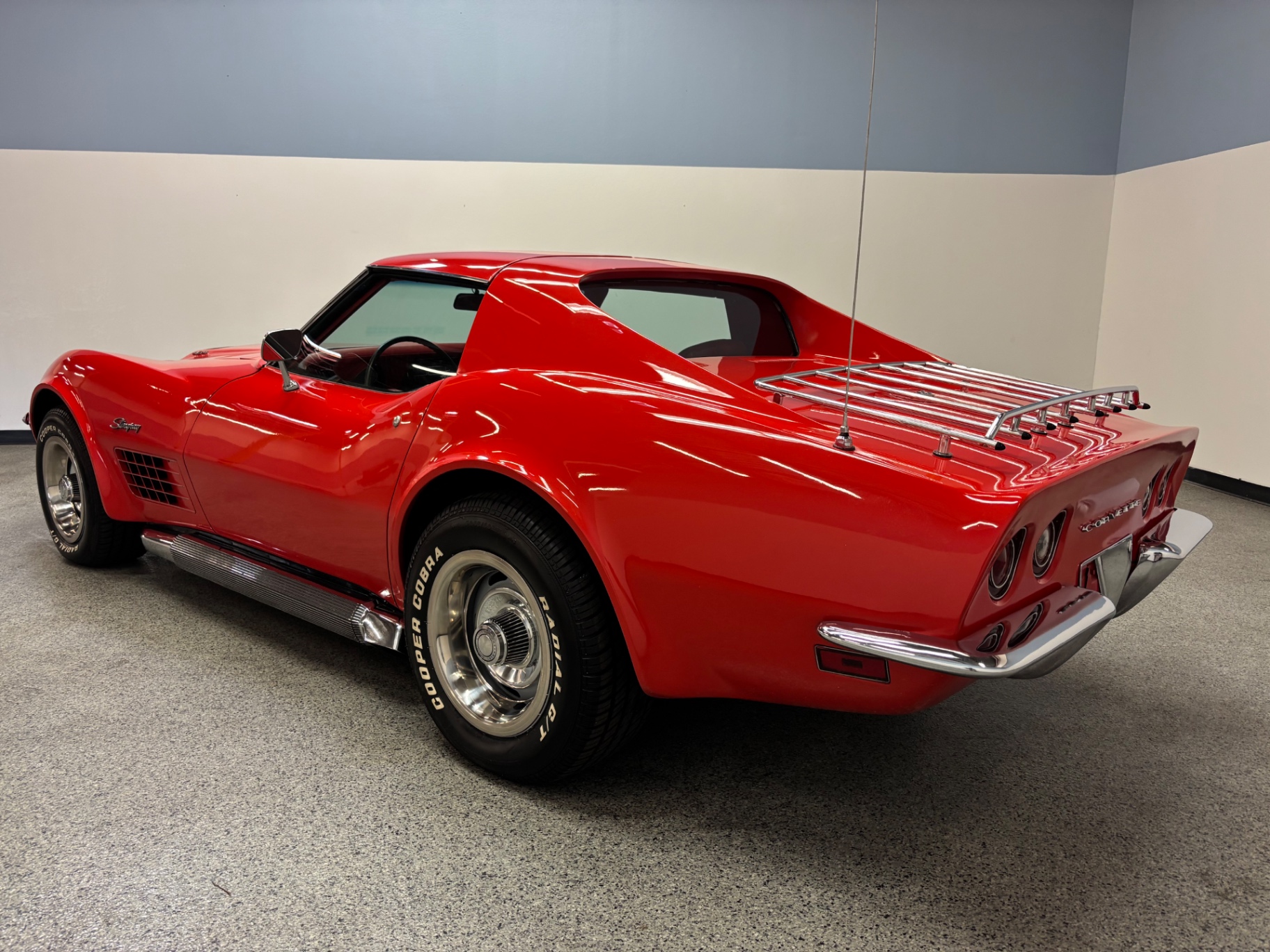
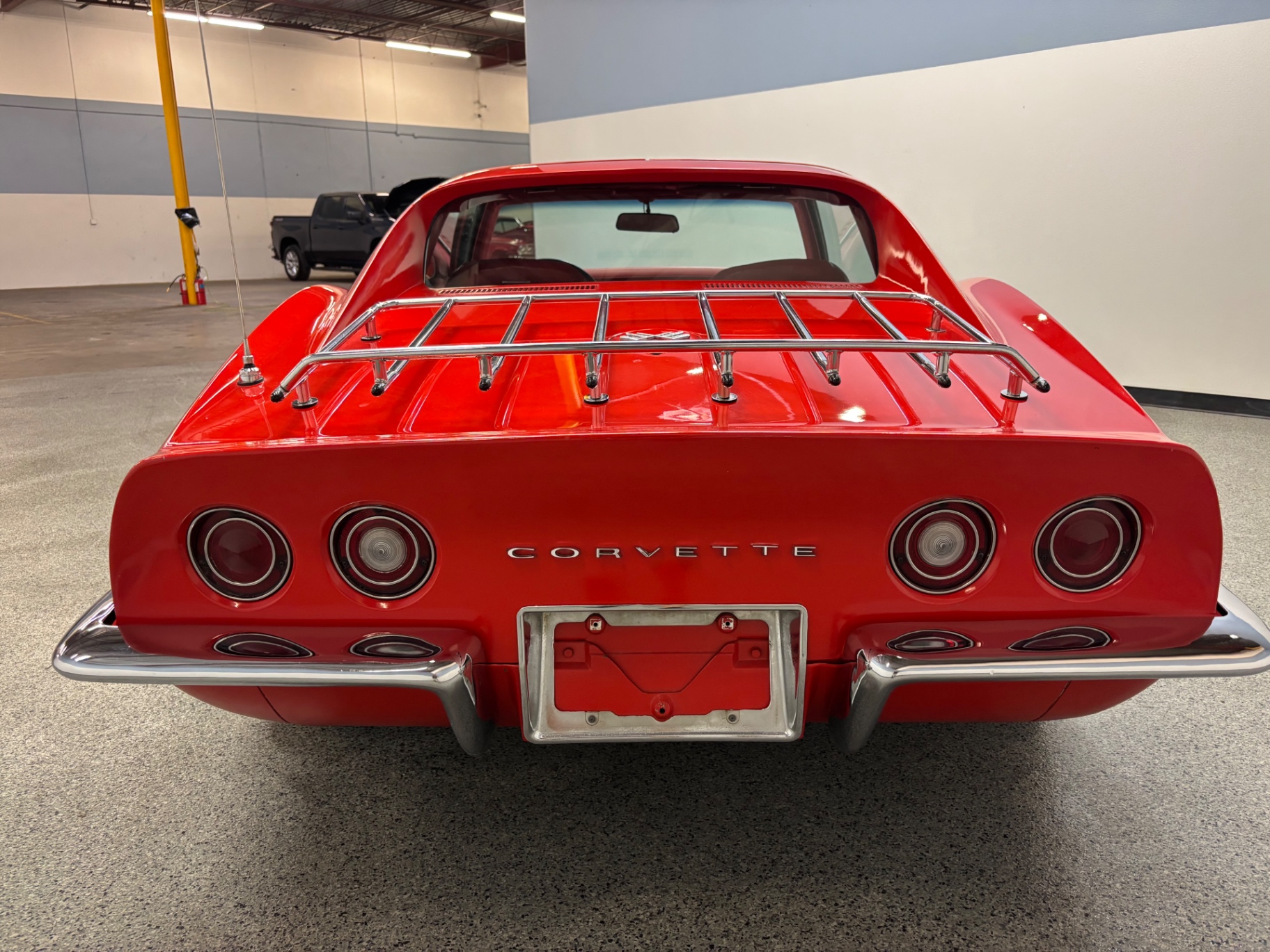
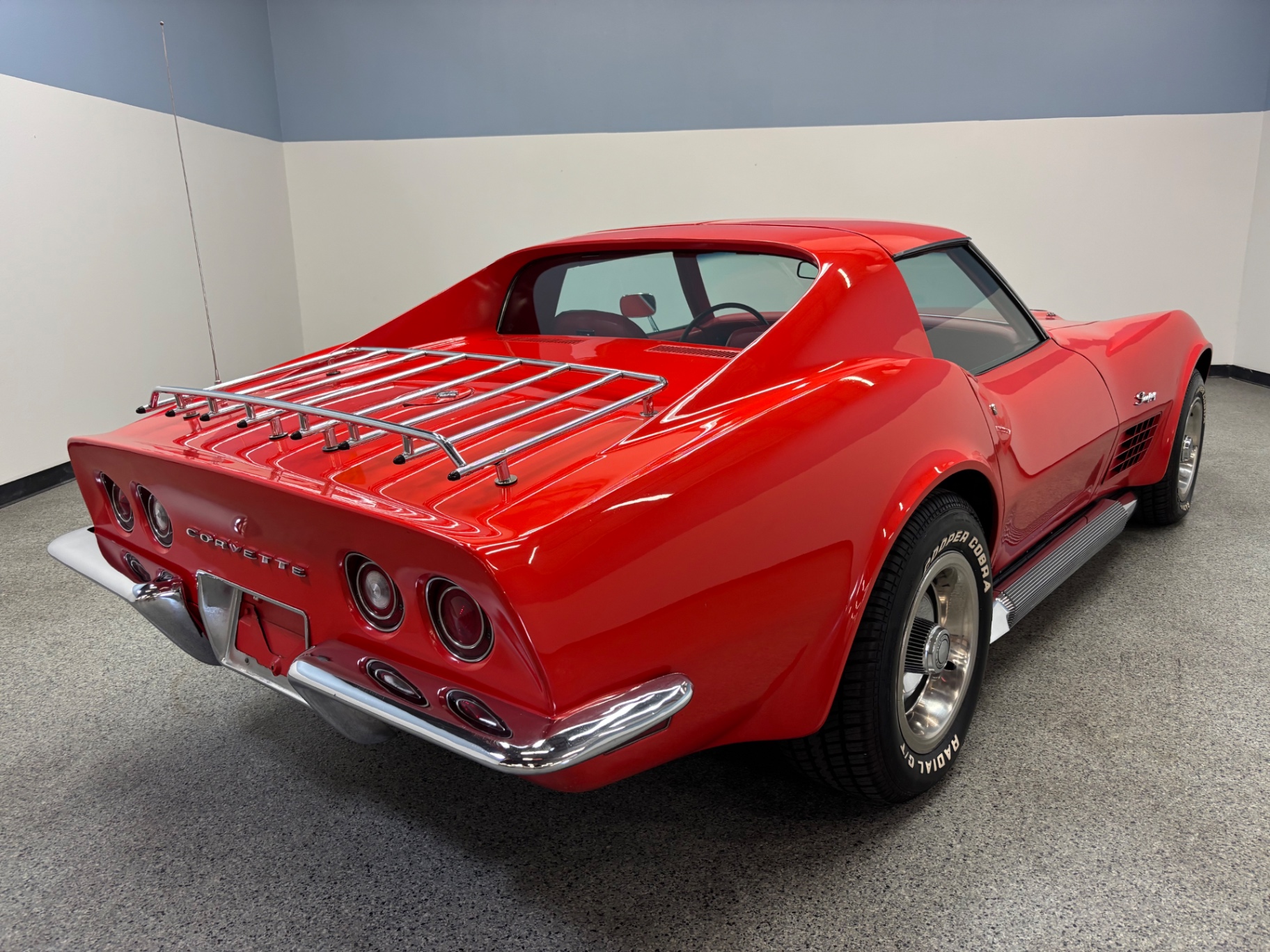
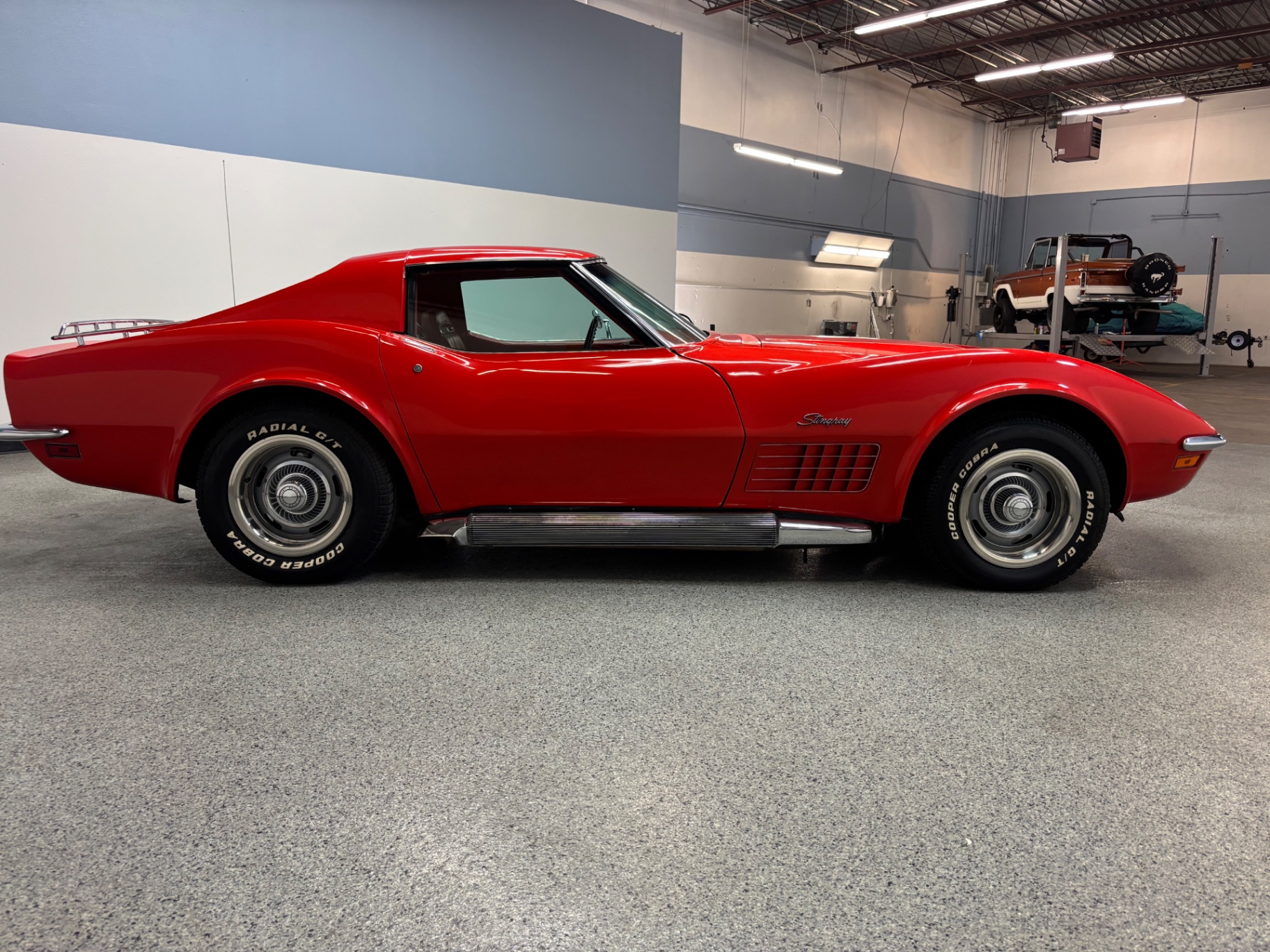
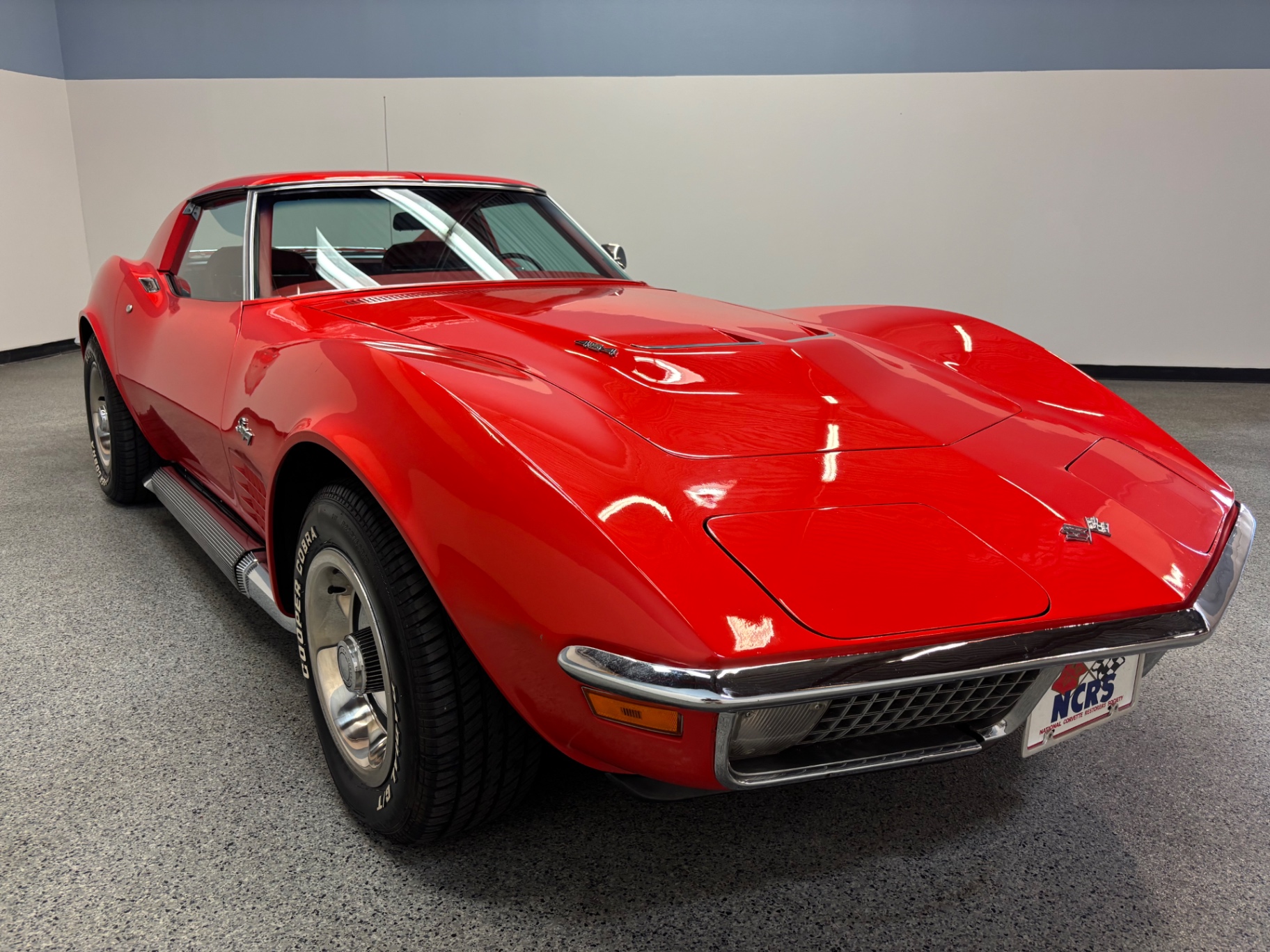
This 1970 Chevrolet Corvette Stingray wears Monza Red, factory paint code 974. The color is correct for the car as documented by the trim tag, and the red exterior paired with chrome side exhaust pipes and a chrome luggage rack gives the car a strong, purposeful presence. The chrome side exhaust is a signature visual element of the C3 Corvette and one of the most recognized styling details of the entire nameplate. On a red car, the contrast between the polished chrome pipes and the bodywork is particularly effective.
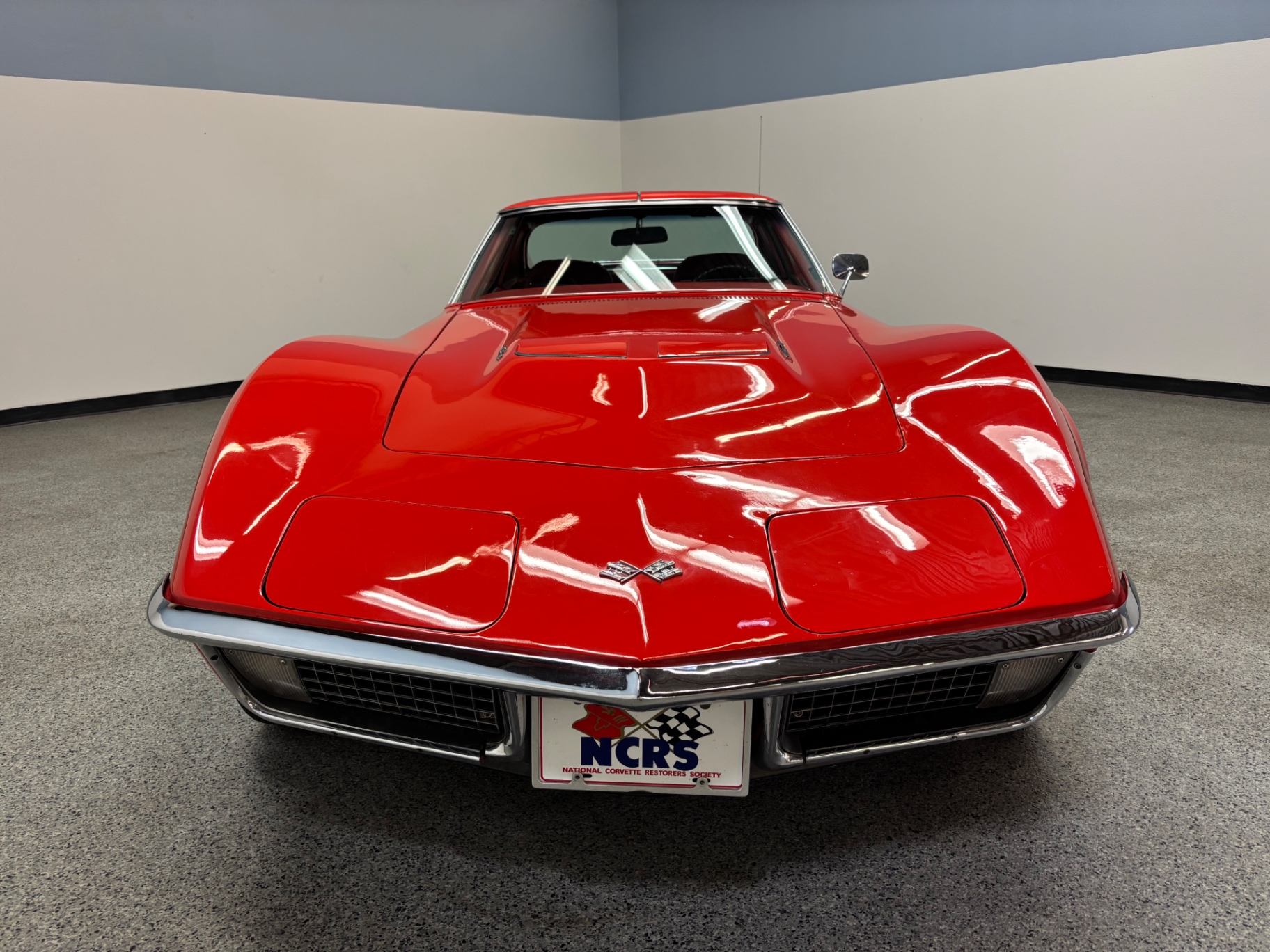
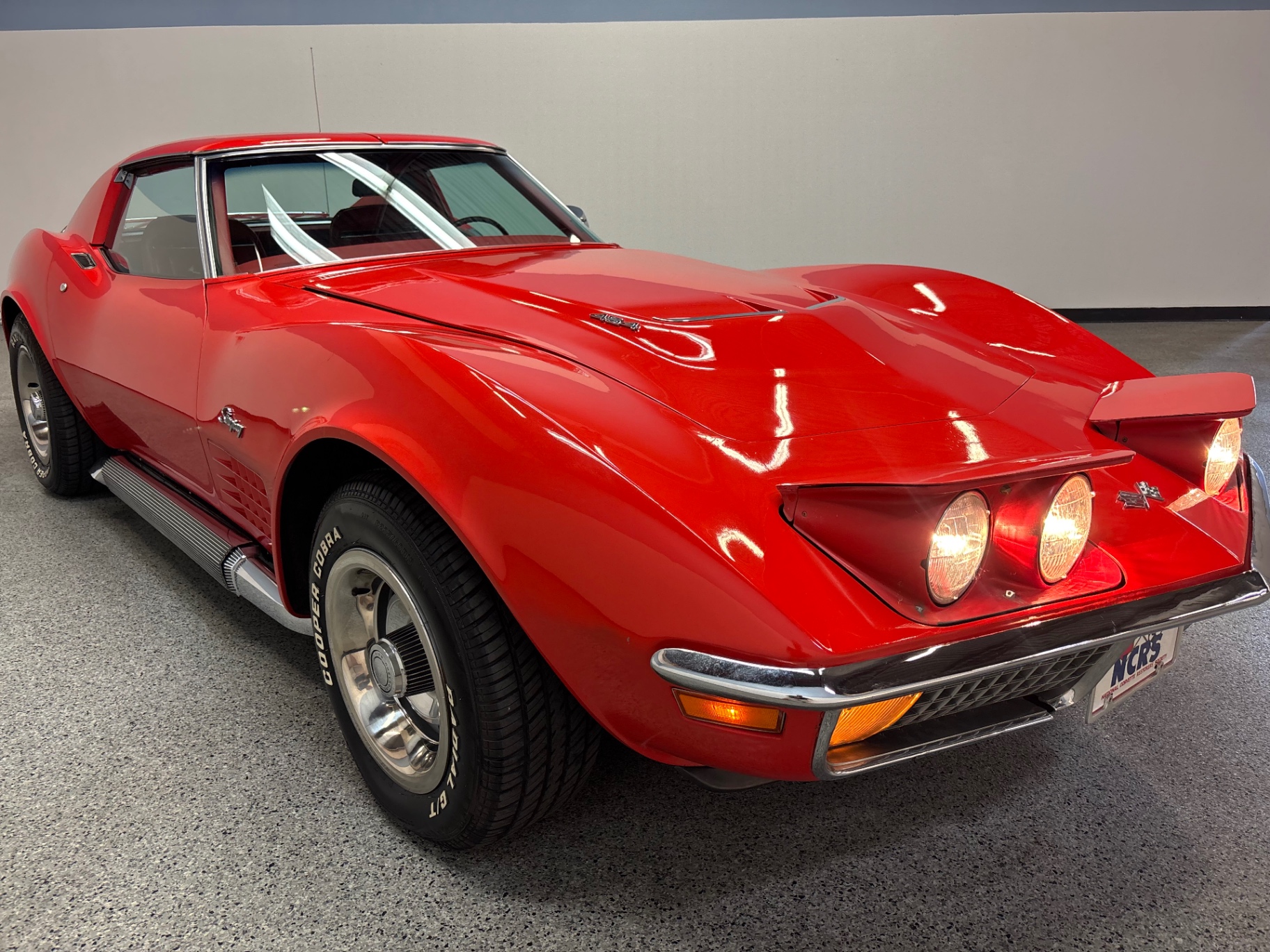
The 1970 Corvette body was a refinement of the shape introduced in 1968. The aggressive front fenders, the low hood line, and the tapered rear deck were all carried over, but the 1970 model received flared wheel arches and a reshaped front grille that many enthusiasts consider more refined than the 1968-1969 versions. The hidden headlights, integrated front bumper, and Stingray badge on the front fender are all present and correct.
The chrome luggage rack mounted to the rear deck was a popular factory accessory that added a practical storage option without altering the car's profile significantly. The removable T-Top panels are visible when the car is viewed from above, and the black roof structure frames the glass cleanly.
The underside photos show a solid, well-preserved chassis with no evidence of significant corrosion. The fiberglass body panels that define the Corvette's construction are free from the rust issues that affect steel-bodied muscle cars, and this example reflects that advantage. Panel fit and finish appear consistent throughout.
Conclusion
The 1970 Chevrolet Corvette Stingray LS5 454 occupies a specific and well-understood position in the collector car market. It was produced in the last year before horsepower peaked and then declined, it carries the most powerful engine actually delivered to customers that model year, and it was built in a low-production run that makes all 1970 Corvettes relatively scarce by C3 standards. This particular example adds NCRS documentation, a confirmed numbers-correct color combination in paint code 974 and trim code 407, and a matching red leather interior — details that matter to collectors who have been through the process of verifying correctness on cars that claim to be original.
Buyers searching for a 1970 Corvette 454, an LS5 big block Corvette, or a documented C3 Stingray will find this car checks the boxes that are genuinely difficult to find combined in a single vehicle. The factory air conditioning, power steering, power brakes, tilt-telescopic column, and T-Tops make it a fully loaded example by 1970 standards — not a base car with a big engine dropped in, but a car ordered with comfort and convenience options alongside the performance hardware.
To arrange an inspection or ask specific questions about this 1970 Chevrolet Corvette Stingray LS5 454, call Skyway Classics in Sarasota, Florida at 941-254-6608.
Disclaimer
Information found on the website is presented as given to us by the owner of the car, whether on consignment or from the owner we bought it from. Some Photos, materials for videos, descriptions and other information are provided by the consignor/seller and is deemed reliable, but Skyway Classics does not warranty or guarantee this information. Skyway Classics is not responsible for information that may incorrect or a publishing error. The decision to purchase should be based solely on the buyers personal inspection of the vehicle or by a professional inspection service prior to offer or purchase being made.
1970 Chevrolet Corvette Stingray LS5 454 — Numbers-Correct Big Block with NCRS Documentation
Why This Car Is Special
The 1970 Chevrolet Corvette Stingray is widely regarded as the high-water mark of the C3 generation, and for good reason. It was the last model year before emissions regulations and insurance pressures began pulling horsepower ratings down across the industry. Nineteen-seventy also happened to be a shortened production year — the Bowling Green assembly line ran behind schedule, and total Corvette output for the model year came in at just 17,316 units, making 1970 one of the lowest-production Corvette years of the entire C3 run.
Within that already-limited pool, the LS5 454 was a significant option. Chevrolet offered two big block choices in 1970: the LS5 at 390 horsepower and the top-shelf LS7 at a factory-rated 460 horsepower. The LS7 was listed in early literature but was never actually put into production for street cars that year, which means the LS5 was effectively the most powerful engine a buyer could order in a 1970 Corvette. Only 4,473 buyers checked that box. This is one of them.
The VIN on this car decodes to a 1970 Corvette coupe built at the St. Louis assembly plant, with the "S" engine code confirming the factory LS5 454 installation. The exterior color is documented under paint code 974 — Monza Red — and the interior carries trim code 407, confirming the factory red leather bucket seat interior. Both codes match what you see on the car today, which matters considerably to NCRS judges and serious collectors alike. This car is an active NCRS member vehicle, which means it has been submitted to the scrutiny of the National Corvette Restorers Society — an organization whose judging standards are among the most demanding in the hobby.
The odometer reads just over 78,000 miles.
Features List
- 454 cubic inch / 390 horsepower LS5 Big Block V8, 4-barrel carburetor
- 4-speed manual transmission
- Positraction limited-slip rear end
- 4-wheel disc brakes
- Power brakes
- Power steering
- Factory air conditioning
- Removable T-Tops
- Tilt-telescopic steering column
- AM/FM radio
- Edelbrock chrome valve covers and air cleaner
- MSD ignition
- Chrome side exhaust
- Chrome luggage rack
- Correct paint code 974 (Monza Red) exterior
- Correct trim code 407 red leather interior
- Wood-grain door panel trim inserts
- NCRS member car
Mechanical
The heart of this 1970 Chevrolet Corvette Stingray is the LS5 454 cubic inch big block, factory-rated at 390 horsepower and 500 lb-ft of torque at a 10.25:1 compression ratio — figures confirmed by the engine data plate visible on the center console. The LS5 used rectangular-port cylinder heads, a hydraulic camshaft, and a single Rochester Quadrajet four-barrel carburetor. It was a torque-heavy, street-friendly package that could be driven daily while still delivering serious performance. The 500 lb-ft torque figure is what makes these cars feel so different from small block Corvettes of the same era — the power comes in low and stays flat across a wide rpm range.
Behind the engine sits a 4-speed manual transmission, the correct and desirable gearbox pairing for a car of this specification. The Positraction rear end ensures both rear wheels put power to the ground consistently, which is especially relevant given the torque output of the 454.
Stopping power comes from 4-wheel disc brakes — a feature that set the Corvette apart from nearly every other American production car of its time. The factory equipped these with power assist, and the combination of disc brakes at all four corners with a big block engine was a genuinely capable performance package by the standards of 1970.
Under the hood, Edelbrock chrome valve covers and a matching chrome Edelbrock air cleaner have been fitted, giving the engine bay a clean, finished appearance without straying into outlandish territory. An MSD ignition system has also been installed, which improves spark consistency and reliability over the original points-style system. These are the kinds of sensible, bolt-on upgrades that a knowledgeable owner makes — they improve the driving experience without altering the fundamental character of the car.
The underside of this 1970 Corvette shows a well-maintained chassis. The photos reveal a clean, solid floor pan with no visible rust or structural concerns, and the independent rear suspension components appear to be in good order. The fiberglass body of the C3 Corvette eliminates the rust issues that plague steel-bodied contemporaries, and the chassis on this example reflects a car that has been looked after over its life.
Interior
The interior of this 1970 Chevrolet Corvette Stingray is finished in factory red leather throughout, corresponding to trim code 407. Red-on-red was one of the more committed color combinations available in 1970, and when the exterior is also red — as it is here — the result is a cohesive, period-correct presentation that reads as intentional rather than incidental. The leather bucket seats show the expected wear of a car with genuine mileage, but the overall condition is consistent and the color remains rich.
The dashboard layout in the 1970 Corvette was redesigned from the previous generation and is widely considered one of the cleaner instrument arrangements of the C3 run. The full gauge cluster, including a 7,000 rpm tachometer and 160 mph speedometer, sits directly in front of the driver in a deeply recessed pod. Secondary gauges — including fuel, temperature, oil pressure, and battery — are mounted in a center console stack, giving the driver complete information at a glance.
The tilt-telescopic steering column is present, which allows the driver to adjust both the angle and reach of the wheel — a meaningful feature on a car this low to the ground. The factory AM/FM radio is fitted in the dash. Wood-grain trim inserts on the door panels break up the all-red theme with a contrasting material that was standard on the 1970 Corvette interior package. The center console houses the 4-speed shifter and T-top storage controls, and the floor is carpeted in matching red throughout.
The removable T-Tops are in place, which give this coupe the open-air experience of a roadster while retaining the structural rigidity of a fixed roof. The 1970 model year was the first full year Corvette offered the T-Top configuration, making it a defining feature of the C3 era.
Exterior
This 1970 Chevrolet Corvette Stingray wears Monza Red, factory paint code 974. The color is correct for the car as documented by the trim tag, and the red exterior paired with chrome side exhaust pipes and a chrome luggage rack gives the car a strong, purposeful presence. The chrome side exhaust is a signature visual element of the C3 Corvette and one of the most recognized styling details of the entire nameplate. On a red car, the contrast between the polished chrome pipes and the bodywork is particularly effective.
The 1970 Corvette body was a refinement of the shape introduced in 1968. The aggressive front fenders, the low hood line, and the tapered rear deck were all carried over, but the 1970 model received flared wheel arches and a reshaped front grille that many enthusiasts consider more refined than the 1968-1969 versions. The hidden headlights, integrated front bumper, and Stingray badge on the front fender are all present and correct.
The chrome luggage rack mounted to the rear deck was a popular factory accessory that added a practical storage option without altering the car's profile significantly. The removable T-Top panels are visible when the car is viewed from above, and the black roof structure frames the glass cleanly.
The underside photos show a solid, well-preserved chassis with no evidence of significant corrosion. The fiberglass body panels that define the Corvette's construction are free from the rust issues that affect steel-bodied muscle cars, and this example reflects that advantage. Panel fit and finish appear consistent throughout.
Conclusion
The 1970 Chevrolet Corvette Stingray LS5 454 occupies a specific and well-understood position in the collector car market. It was produced in the last year before horsepower peaked and then declined, it carries the most powerful engine actually delivered to customers that model year, and it was built in a low-production run that makes all 1970 Corvettes relatively scarce by C3 standards. This particular example adds NCRS documentation, a confirmed numbers-correct color combination in paint code 974 and trim code 407, and a matching red leather interior — details that matter to collectors who have been through the process of verifying correctness on cars that claim to be original.
Buyers searching for a 1970 Corvette 454, an LS5 big block Corvette, or a documented C3 Stingray will find this car checks the boxes that are genuinely difficult to find combined in a single vehicle. The factory air conditioning, power steering, power brakes, tilt-telescopic column, and T-Tops make it a fully loaded example by 1970 standards — not a base car with a big engine dropped in, but a car ordered with comfort and convenience options alongside the performance hardware.
To arrange an inspection or ask specific questions about this 1970 Chevrolet Corvette Stingray LS5 454, call Skyway Classics in Sarasota, Florida at 941-254-6608.
Disclaimer
Information found on the website is presented as given to us by the owner of the car, whether on consignment or from the owner we bought it from. Some Photos, materials for videos, descriptions and other information are provided by the consignor/seller and is deemed reliable, but Skyway Classics does not warranty or guarantee this information. Skyway Classics is not responsible for information that may incorrect or a publishing error. The decision to purchase should be based solely on the buyers personal inspection of the vehicle or by a professional inspection service prior to offer or purchase being made.
1970 Chevrolet
Corvette Stingray
Why Choose Skyway Classics?
Explore our curated inventory of classic and collector cars—thoughtfully selected, ready to drive, and supported by experts who make ownership simple.
Expert Curation
Every vehicle is hand-selected by our experts for quality, authenticity, and investment potential.
Fast Transactions
Streamlined buying and selling process with quick financing and immediate delivery options.
Only National Dealer With Classic Service & Repair
We’re the only national dealership that services and repairs the classics we sell—before and after the sale.
Nationwide Network
Access to our extensive network of collectors, restorers, and classic car enthusiasts nationwide.
Concierge Ownership Support
From financing and insurance to paperwork, shipping, and titling—we handle the details so you can enjoy the drive.
Passion-Driven Service
We're classic car enthusiasts first, providing personalized service with genuine passion for the hobby.