
1969 Chevrolet
Camaro RS/SS
1969 Chevrolet Camaro RS/SS Convertible — Big Block 469 V8, TH400, Frame Connectors, Coilovers
Why This Car Is Special
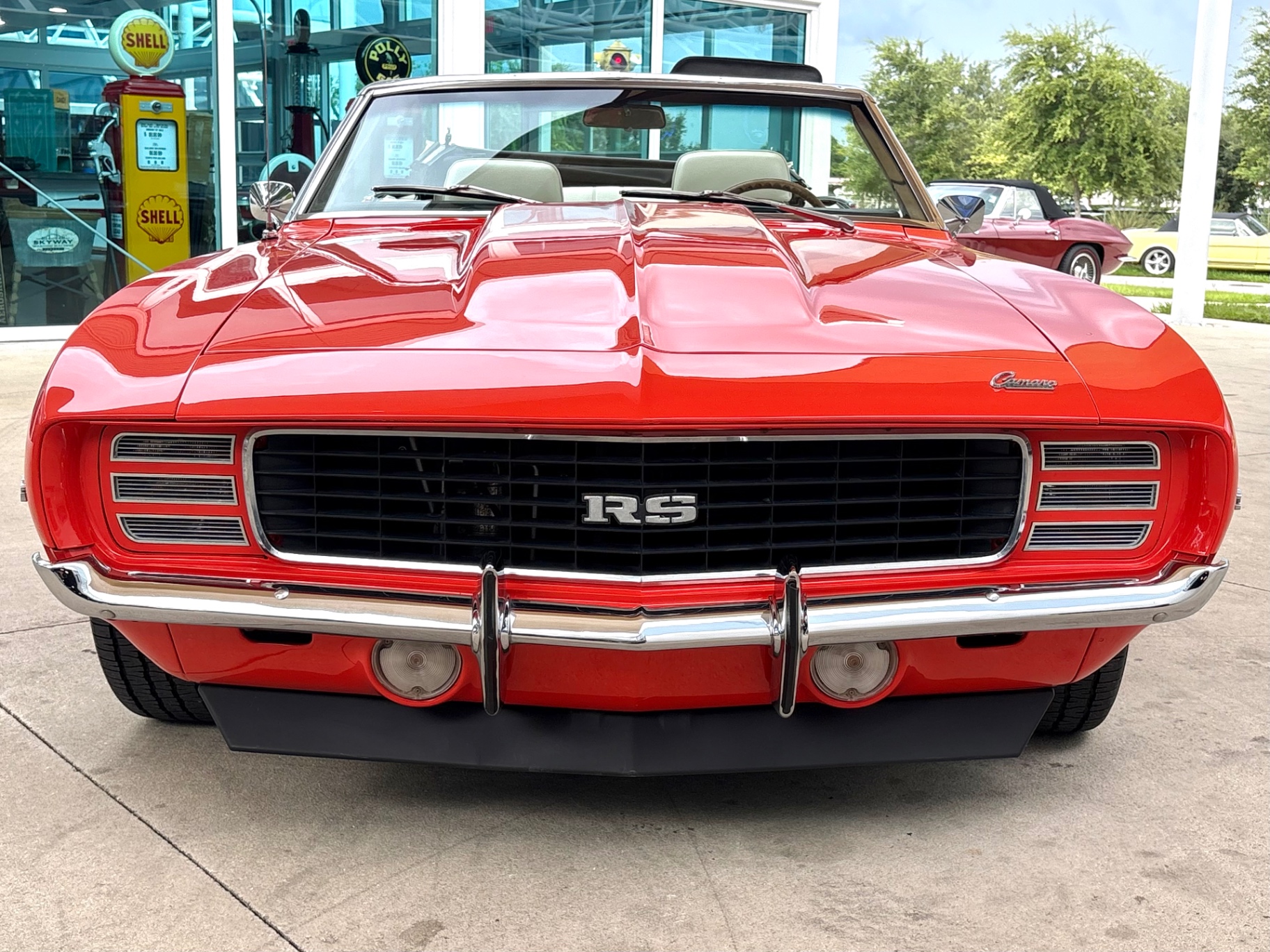
The 1969 Chevrolet Camaro is widely regarded as the pinnacle of the first-generation platform. Chevrolet redesigned the body for 1969, giving it a lower, wider, more aggressive stance compared to the 1967–68 cars, and the market responded — 1969 remains the highest-production year of the first-gen Camaro, with more than 243,000 units built. Within that production run, the RS/SS convertible combination was one of the most optioned and most desirable configurations a buyer could order. The Rally Sport package (RPO Z22) added the iconic hideaway headlight system, a blacked-out grille with RS badging, and body-color bumper fillers, while the Super Sport package (RPO Z27) brought the big-block drivetrain, SS badges, and the hockey stick body stripe. Ordering both on a convertible, with a big-block engine, put this car at or near the top of the Camaro option sheet in 1969.
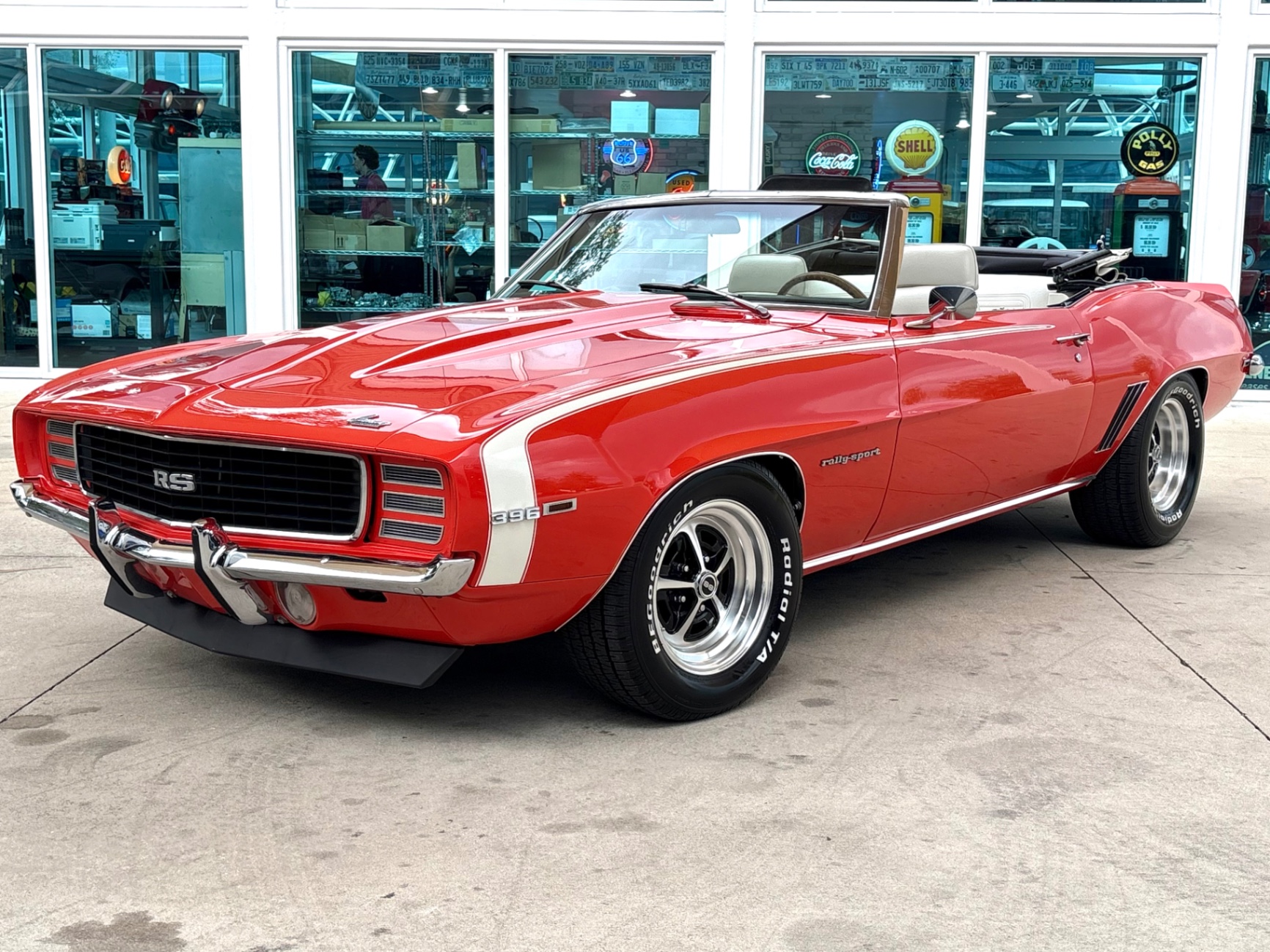
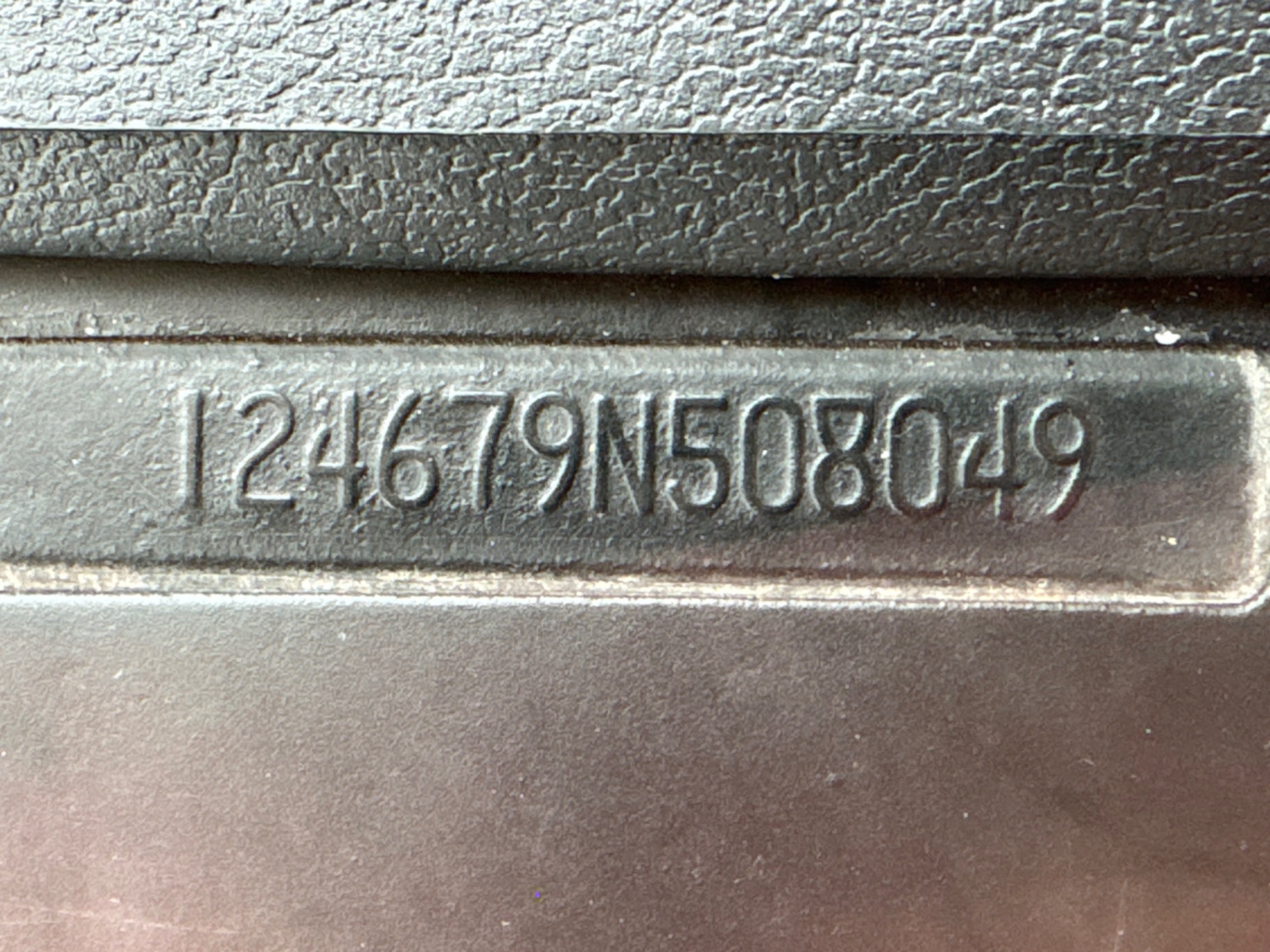
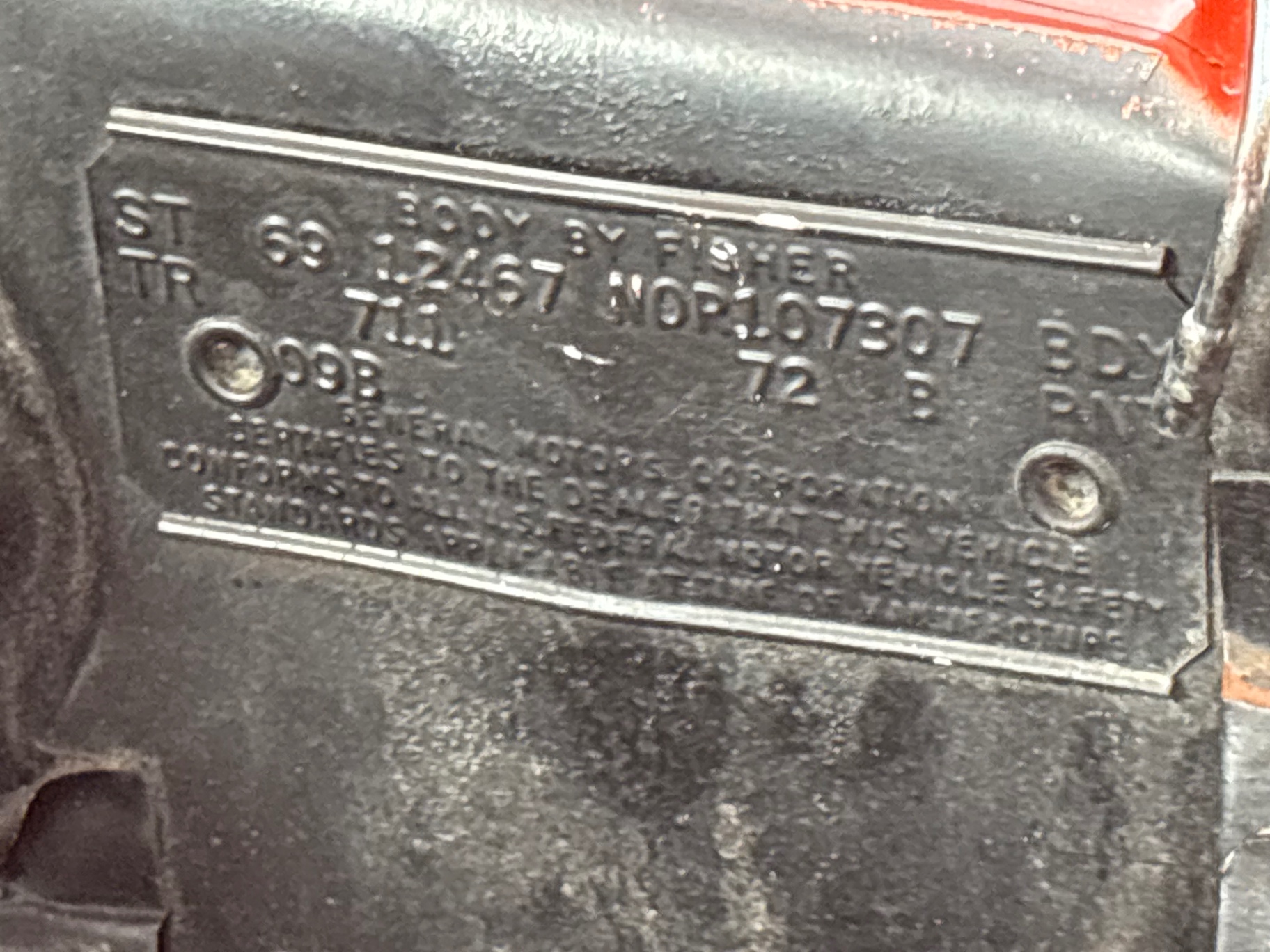
The VIN on this car decodes to a Norwood, Ohio assembly plant build — the "N" in the seventh position confirms that. Norwood was one of two Camaro assembly facilities in 1969, and it produced the majority of first-gen Camaros. The body style code "67" in the VIN confirms the convertible body, and the engine code "8" indicates this car left the factory with a big-block V8. The original factory color, confirmed by the trim tag, was Hugger Orange — GM paint code 72, one of the signature colors of the muscle car era and one of the most recognized Camaro colors from the 1969 model year. The car has since been repainted red, which complements the white interior and white convertible top in a clean, high-contrast combination.
What makes this particular 1969 Camaro RS/SS Convertible stand out beyond its credentials is the scope of the mechanical work done to it. The original drivetrain has been replaced with a Blueprint Engines 469 cubic inch big-block crate engine sourced through Summit Racing, rated by the builder at 491 to 530 horsepower. That engine is backed by a built TH400 3-speed automatic transmission — the same unit Chevrolet used in its most serious performance applications. The suspension, steering, and chassis have all been upgraded in ways that make this car significantly more capable and more comfortable than it left the factory. This is a car that has been built to be driven.
Features List
- Blueprint Engines 469 cubic inch Big Block V8 crate engine (from Summit Racing), rated 491–530 HP per builder - Built TH400 3-Speed Automatic Transmission with chrome pan - Aftermarket rack and pinion power steering - Adjustable coilover suspension (front) - Power front disc brakes - Front and rear sway bars - Frame connectors - Aluminum 4-core radiator - Air conditioning - Flowmaster dual exhaust - RS/SS Convertible body configuration - New white power convertible top - Hideaway headlights (Rally Sport) - Rally Sport badges and RS grille - 396 fender badges - Hockey stick SS-style body stripe - SS-style mag wheels with BFGoodrich Radial T/A tires - White vinyl bucket seats with center console - Horseshoe floor shifter - Console gauges and tachometer - In-dash clock - Astro Ventilation system - Wood-grain steering wheel - Black carpet - Aftermarket stereo - Chrome engine dress-up - Front and rear bumper guards - Clean undercarriage - Originally Hugger Orange (Code 72), repainted red
Mechanical
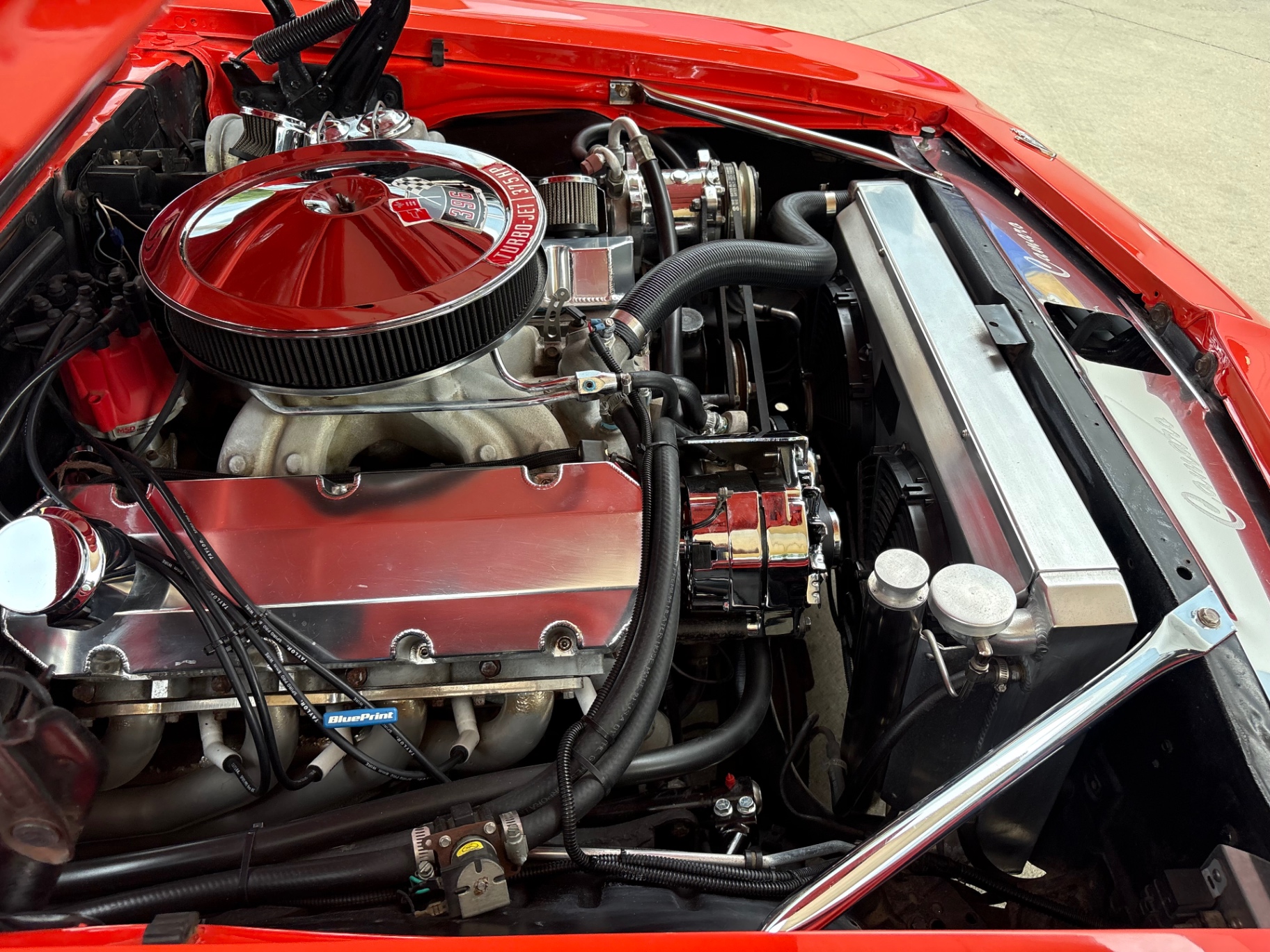
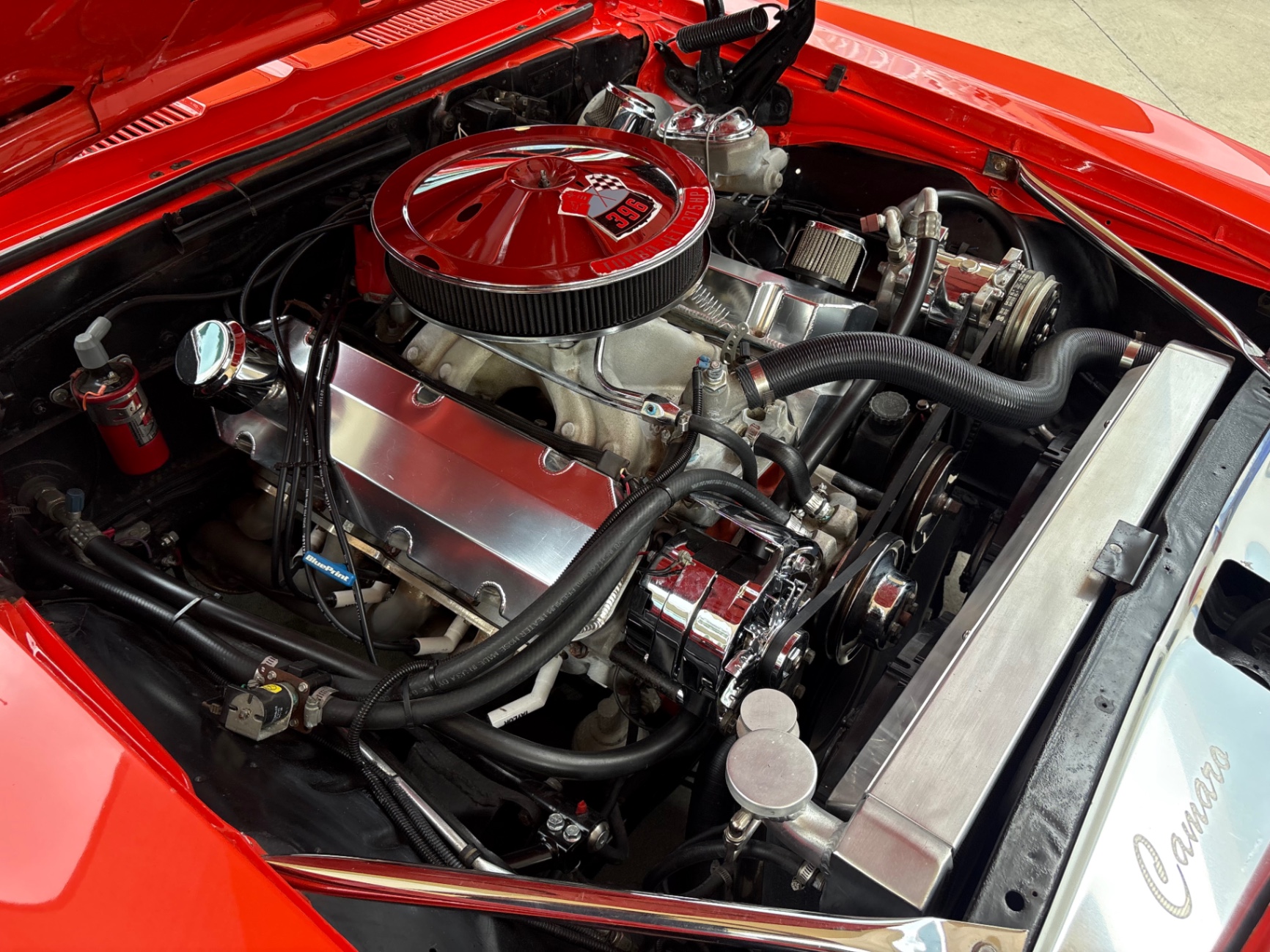
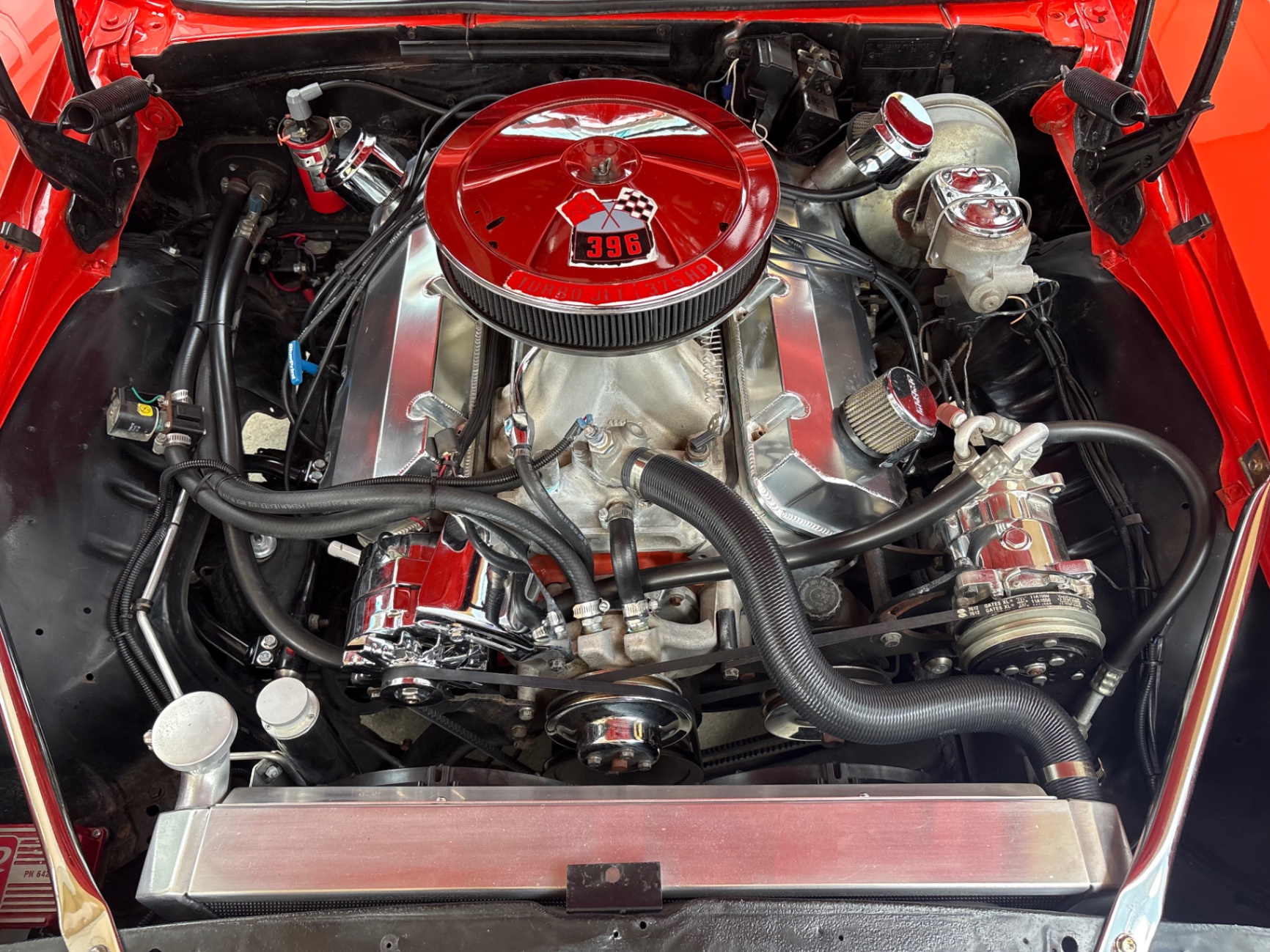
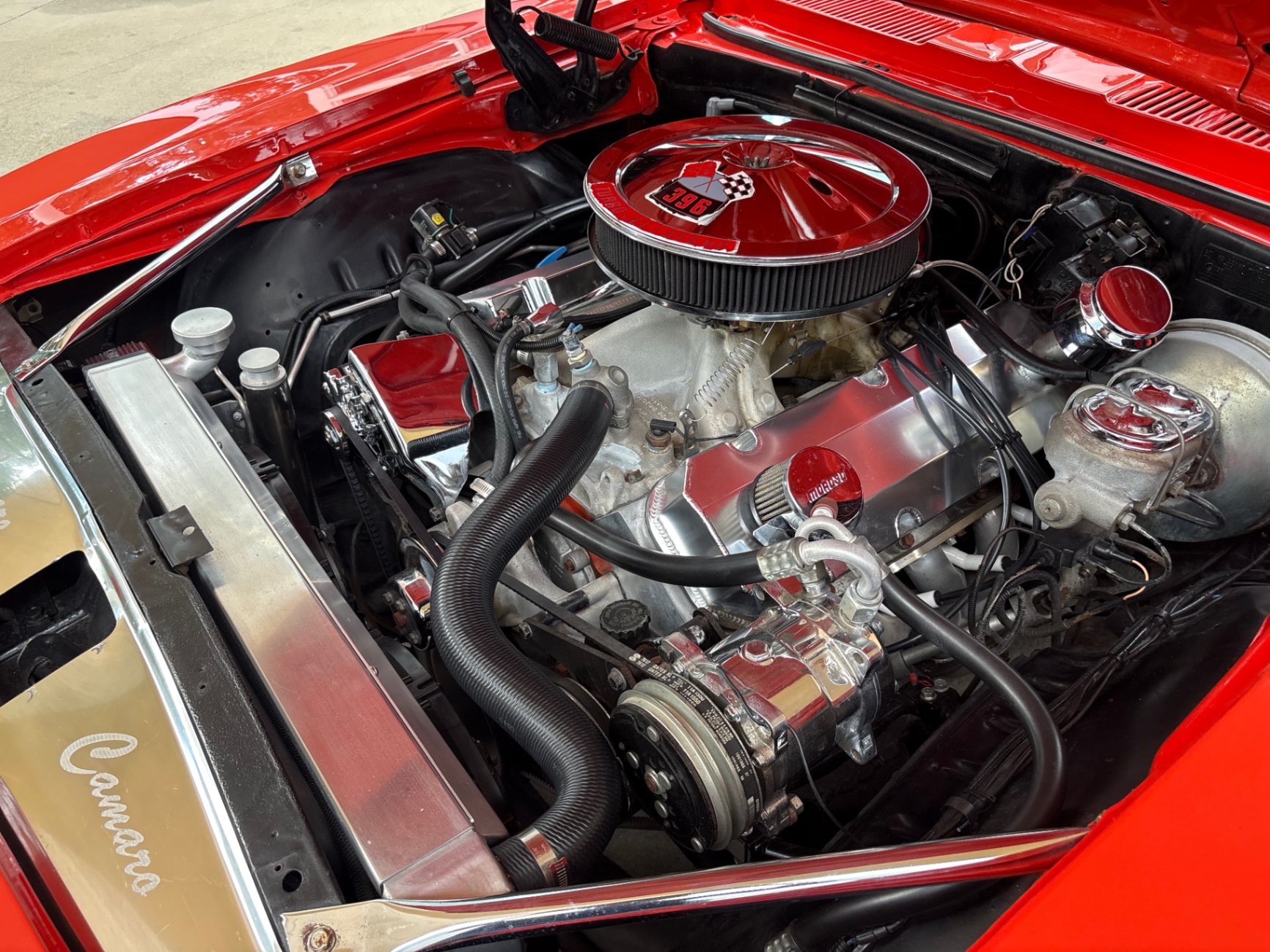
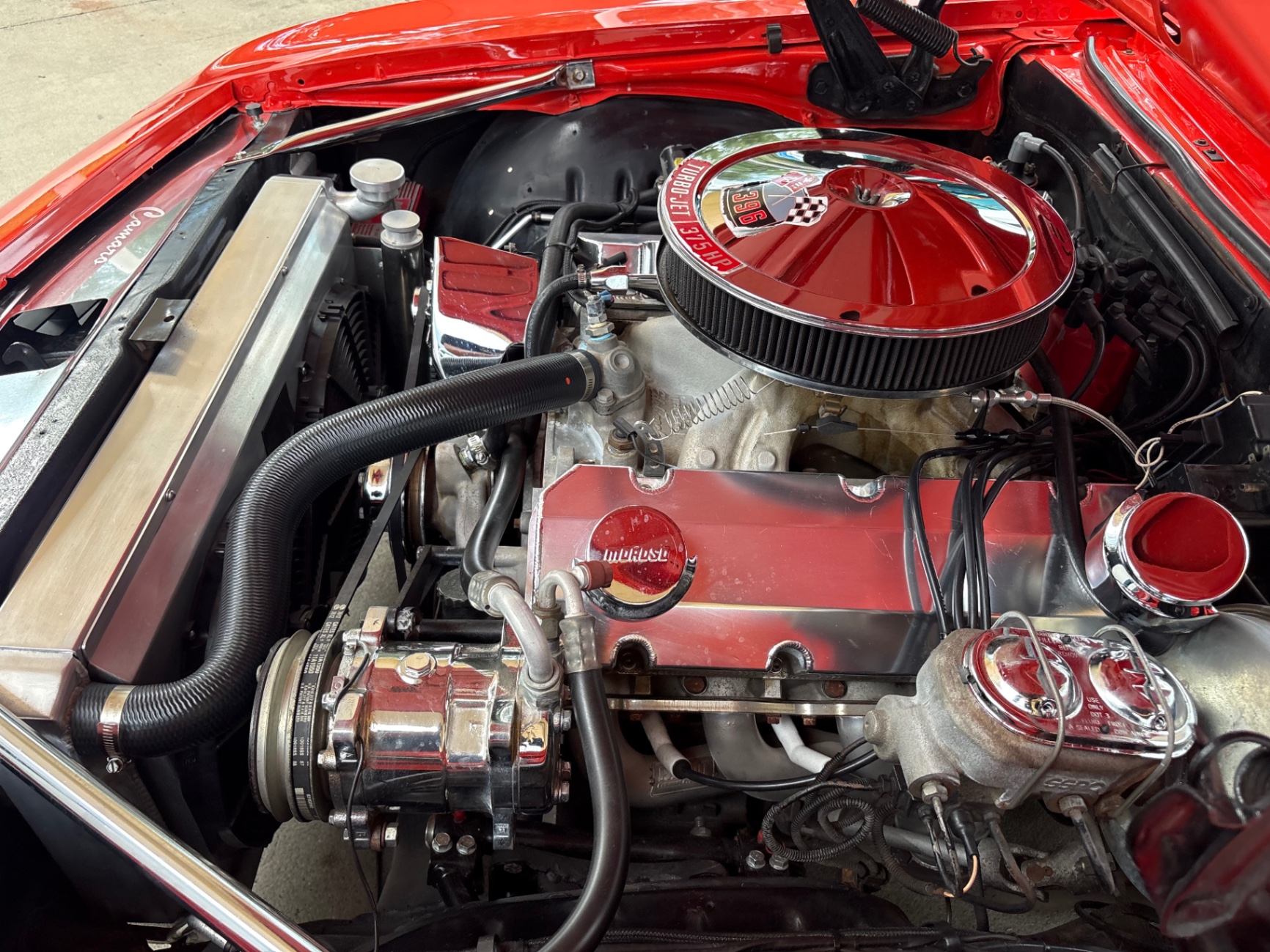
Under the hood sits a Blueprint Engines 469 cubic inch big-block V8 — a professionally assembled crate engine sourced through Summit Racing. Blueprint Engines is one of the most well-regarded names in the crate engine business, known for precision balancing, consistent builds, and dyno-verified output. The builder rates this engine at 491 to 530 horsepower, which puts it well above anything that came from the factory in 1969. For reference, the hottest production big-block Camaro engine that year — the L89 aluminum-head 396 — was rated at 375 horsepower under GM's conservative factory figures. This engine goes considerably further than that.
The chrome dress-up package in the engine bay is well executed and period-appropriate in style. An aluminum 4-core radiator handles cooling duties, which is a practical and necessary upgrade when running this level of power, particularly in the Florida heat.
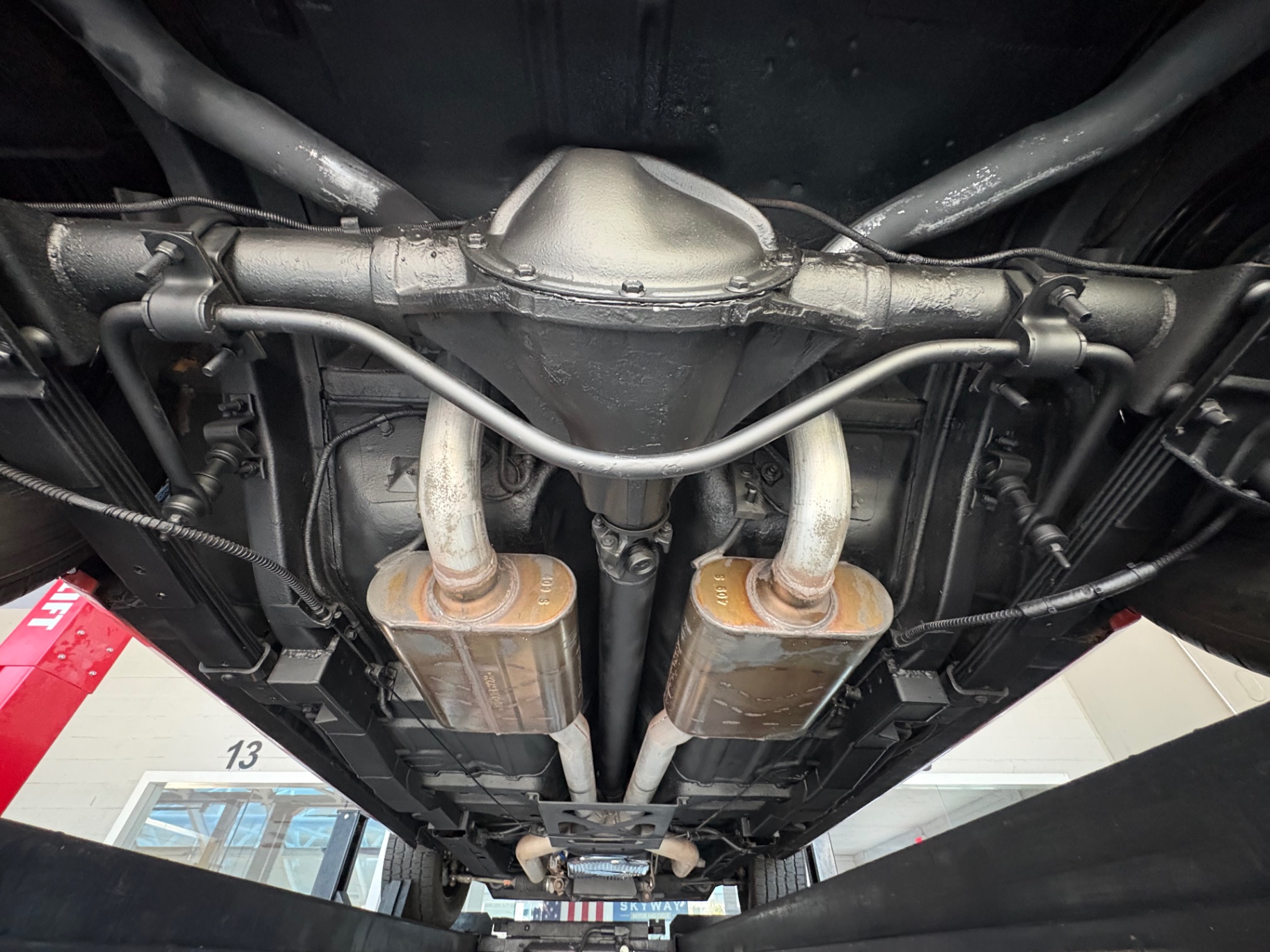
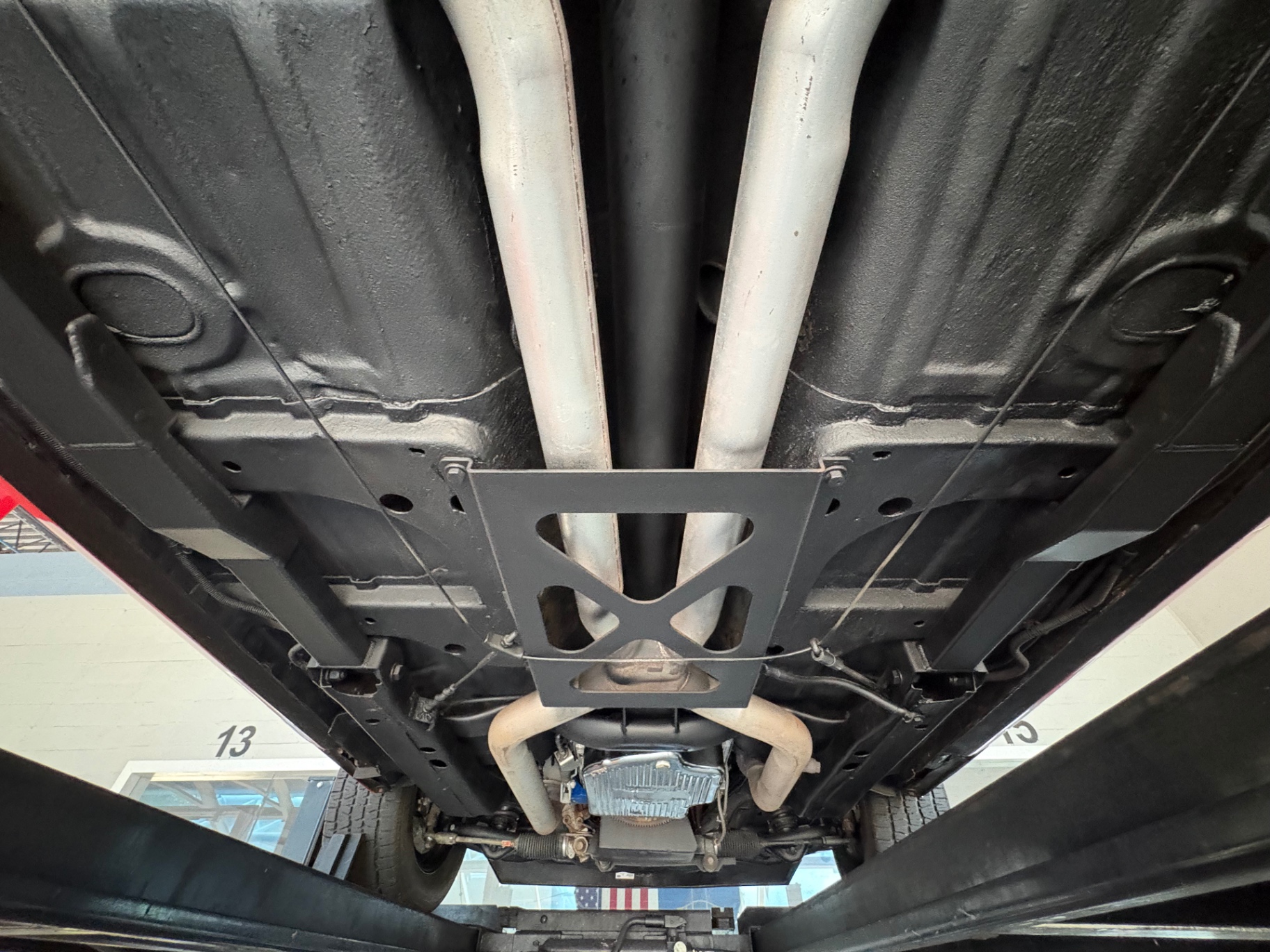
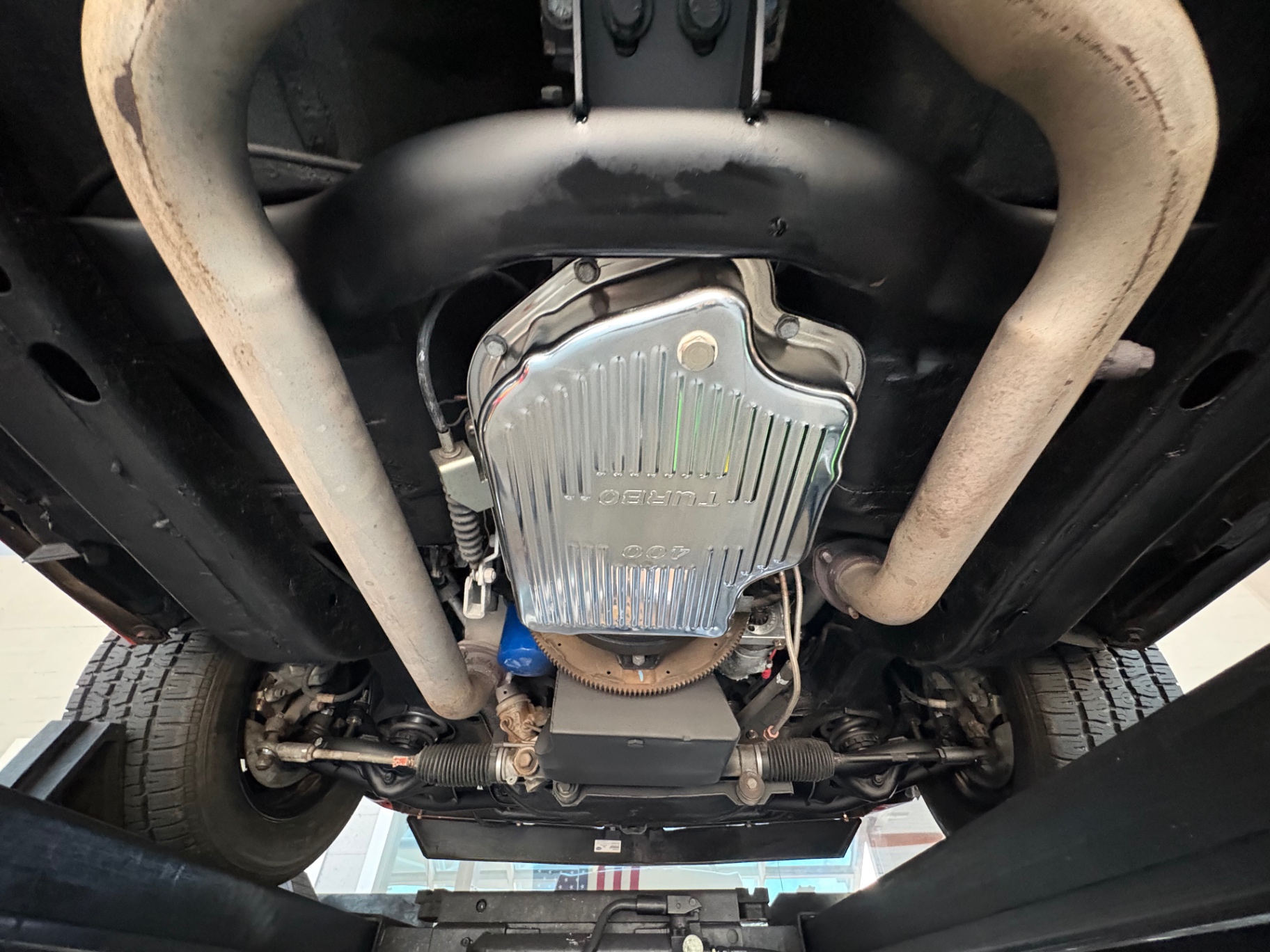
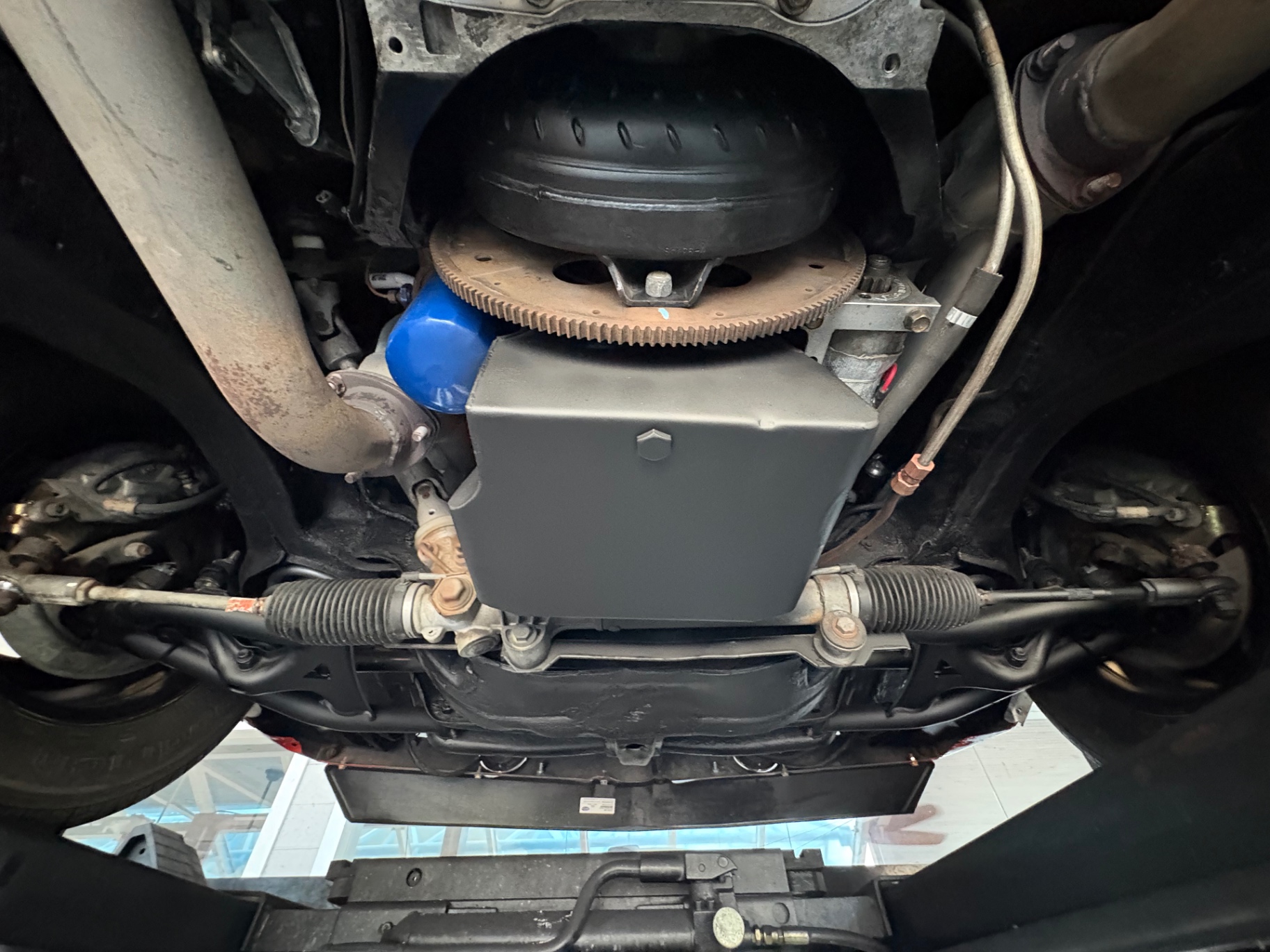
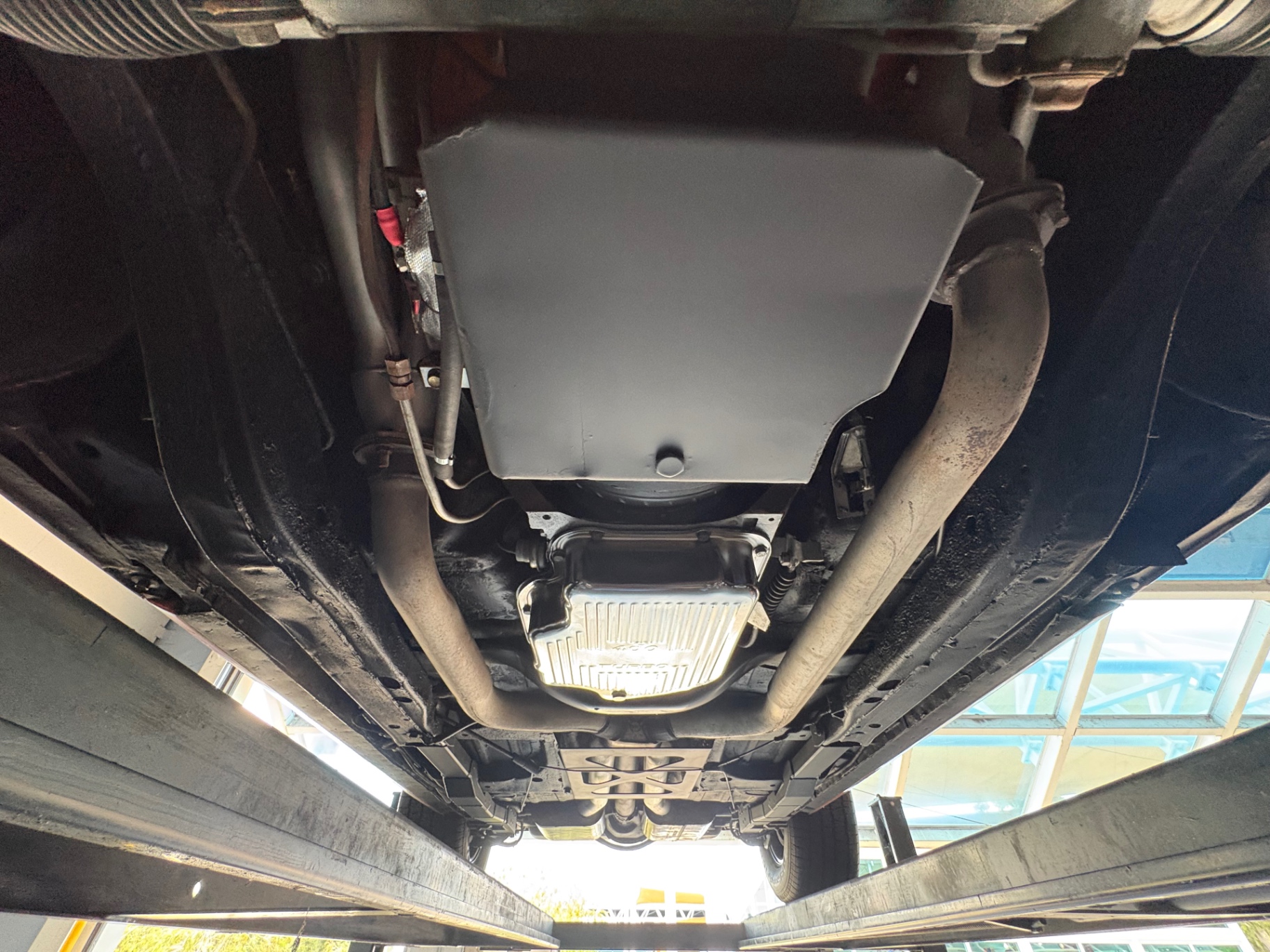
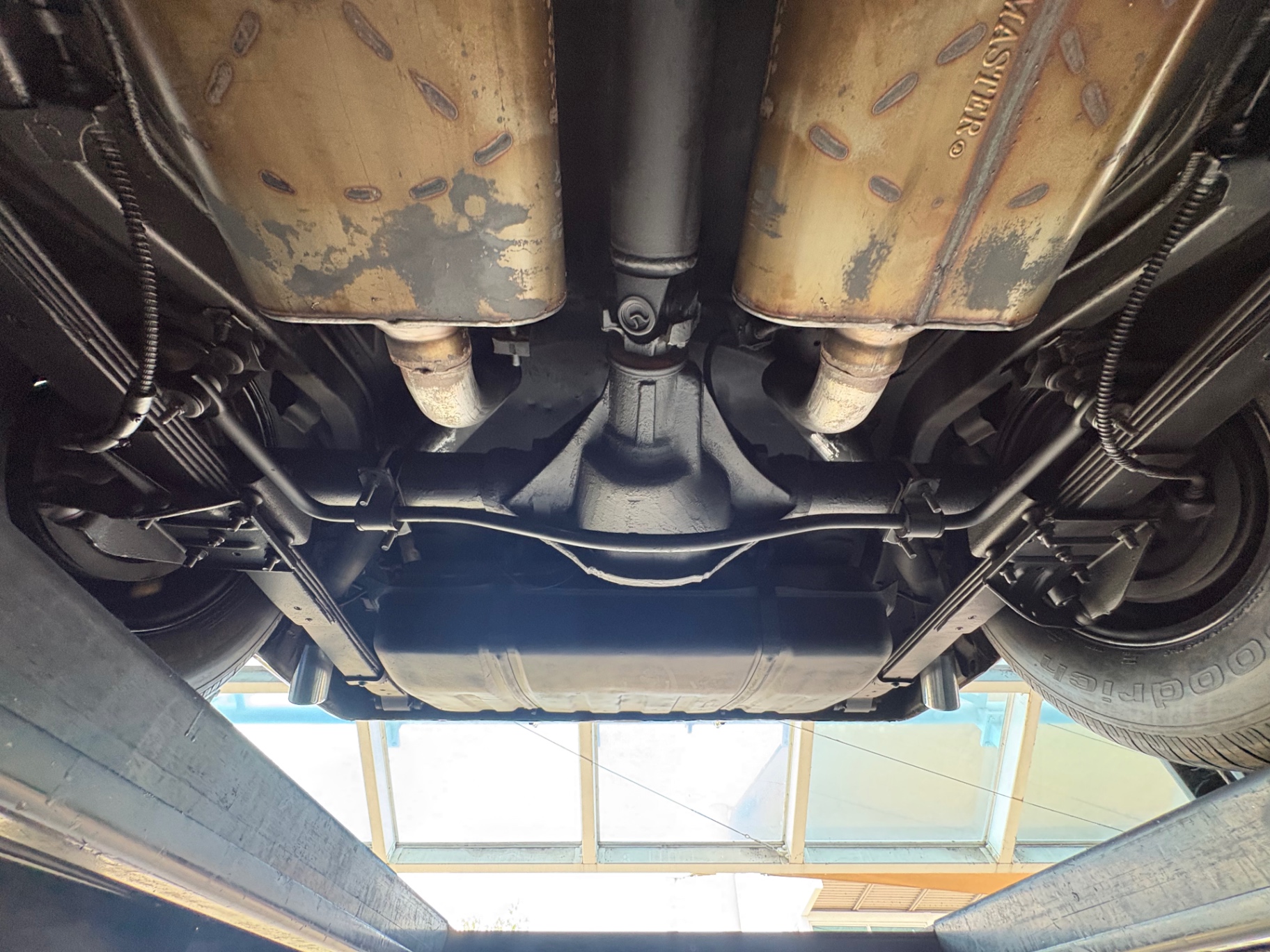
Behind the engine is a built TH400 3-speed automatic transmission. The TH400 was Chevrolet's heavy-duty automatic, used in the highest-powered applications from 1965 onward. This one has been built for performance use, and a chrome TH400 transmission pan is visible from below — a clean detail on an already clean undercarriage.
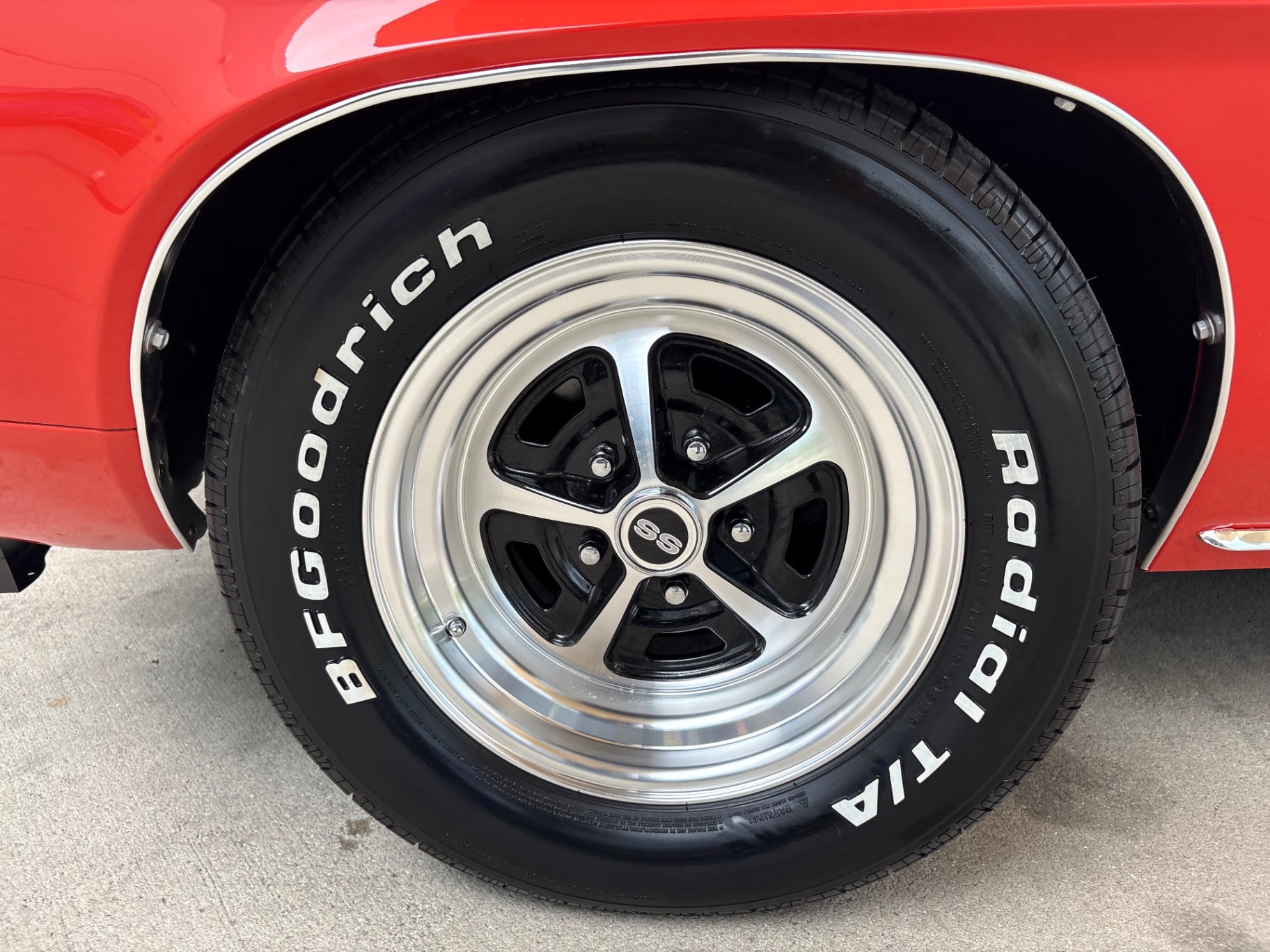
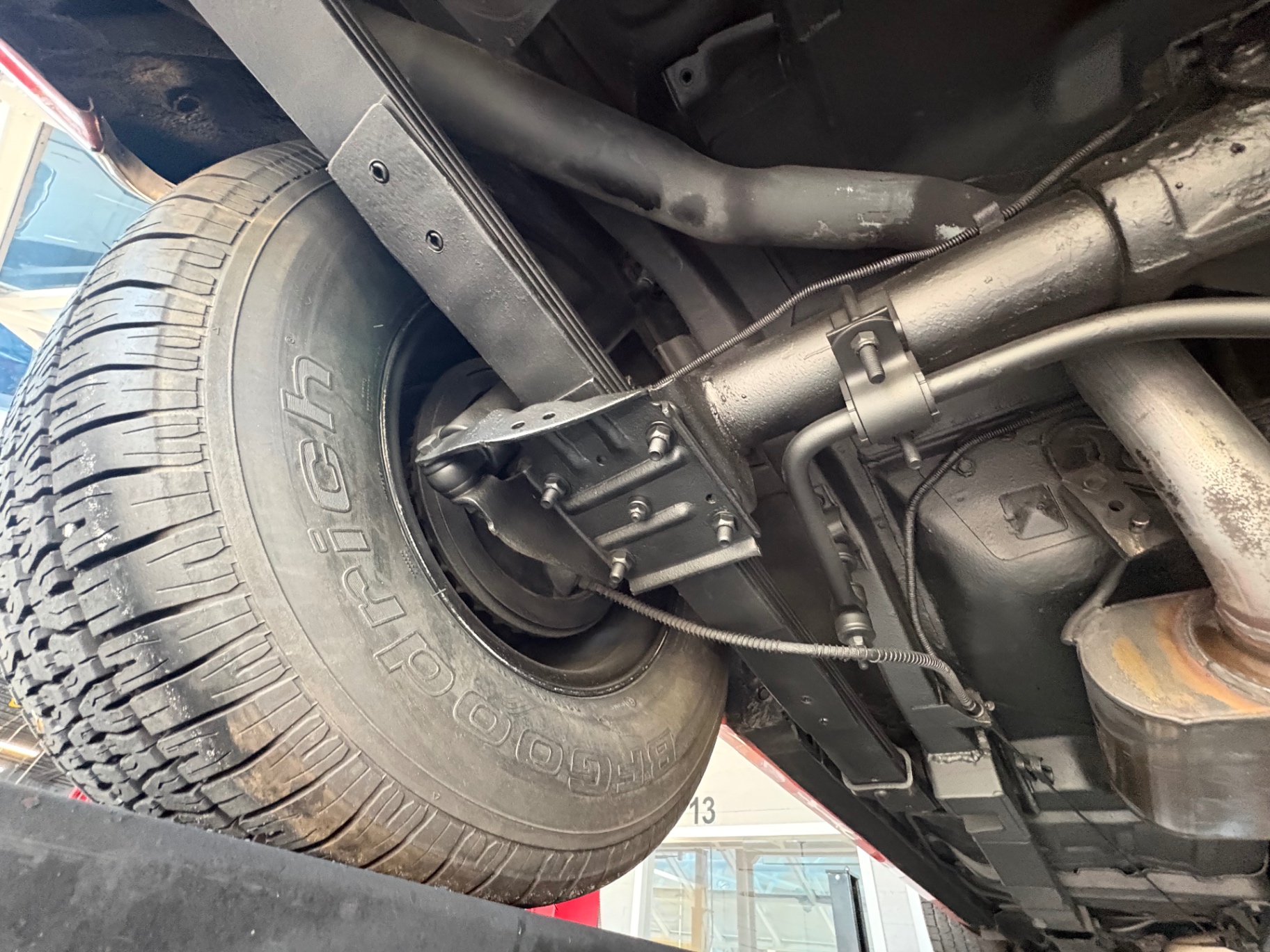
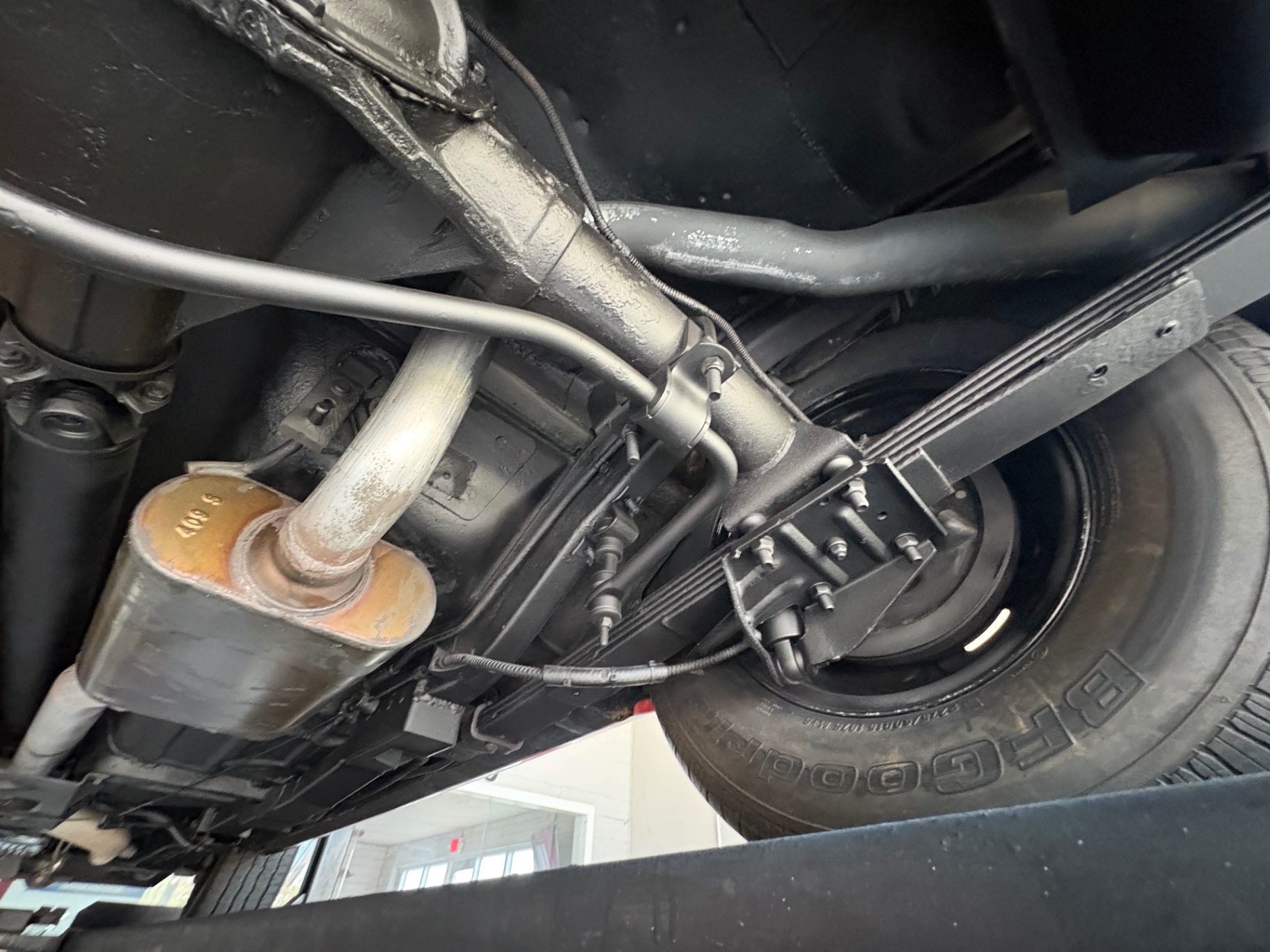
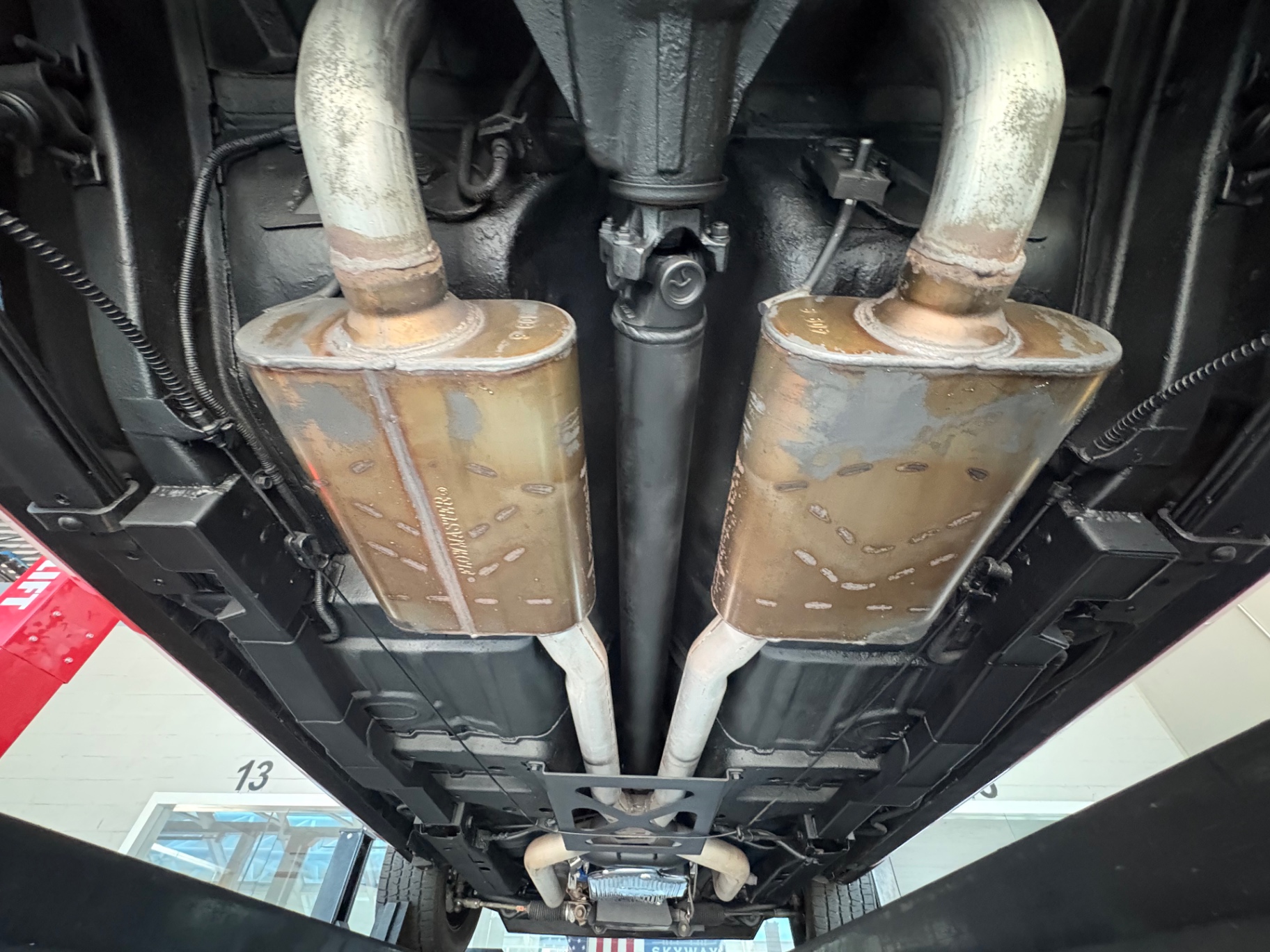
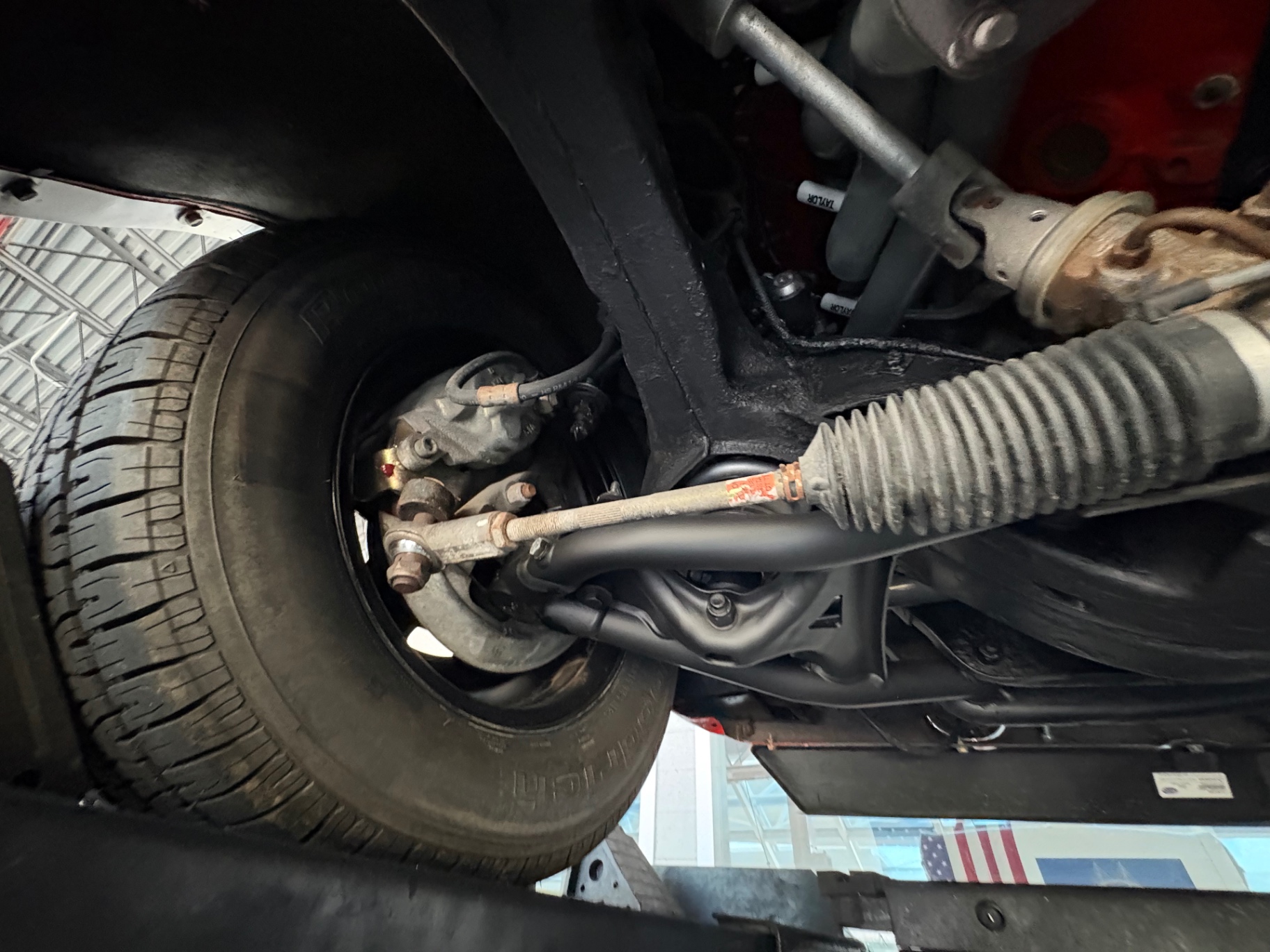
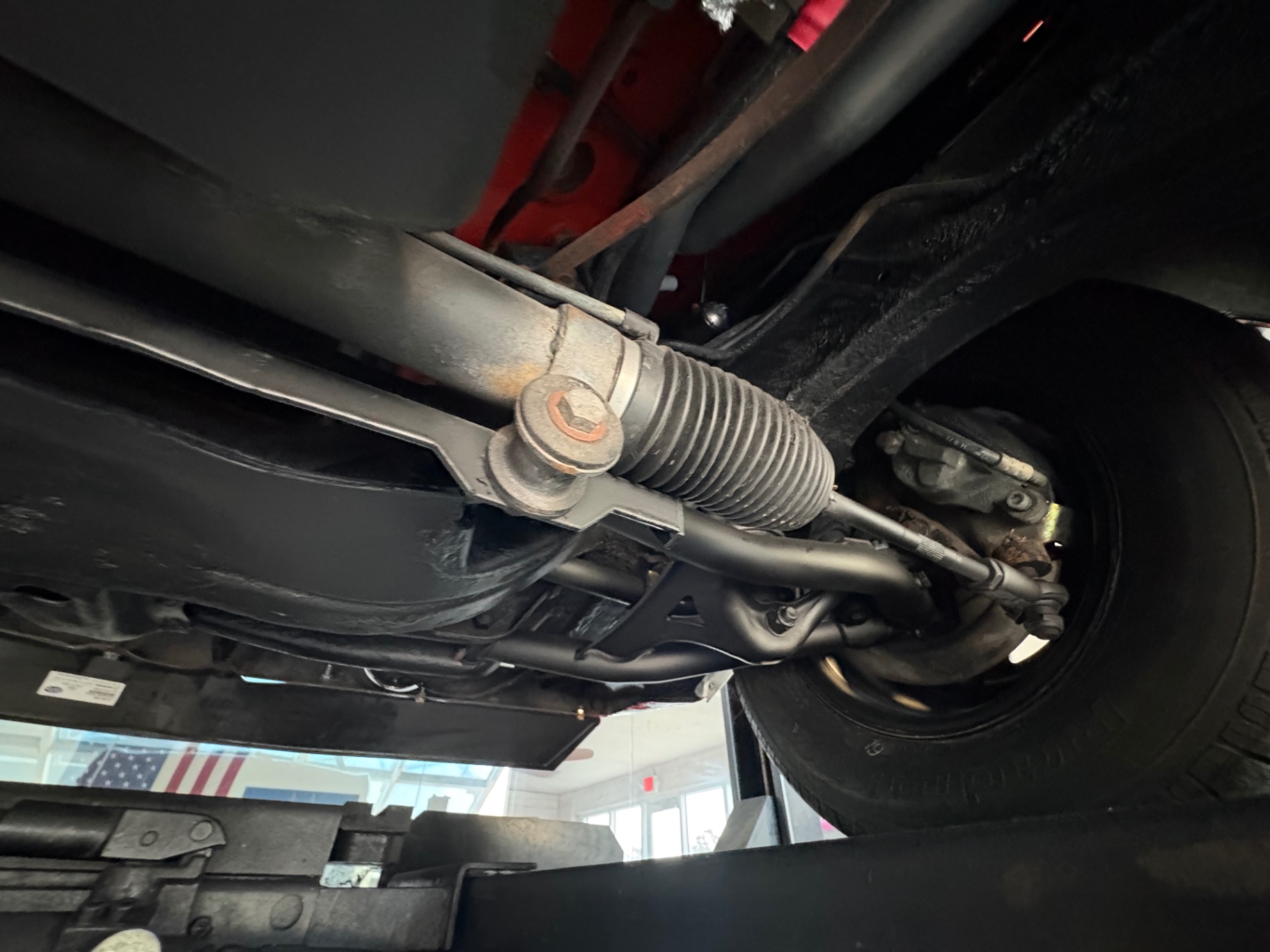
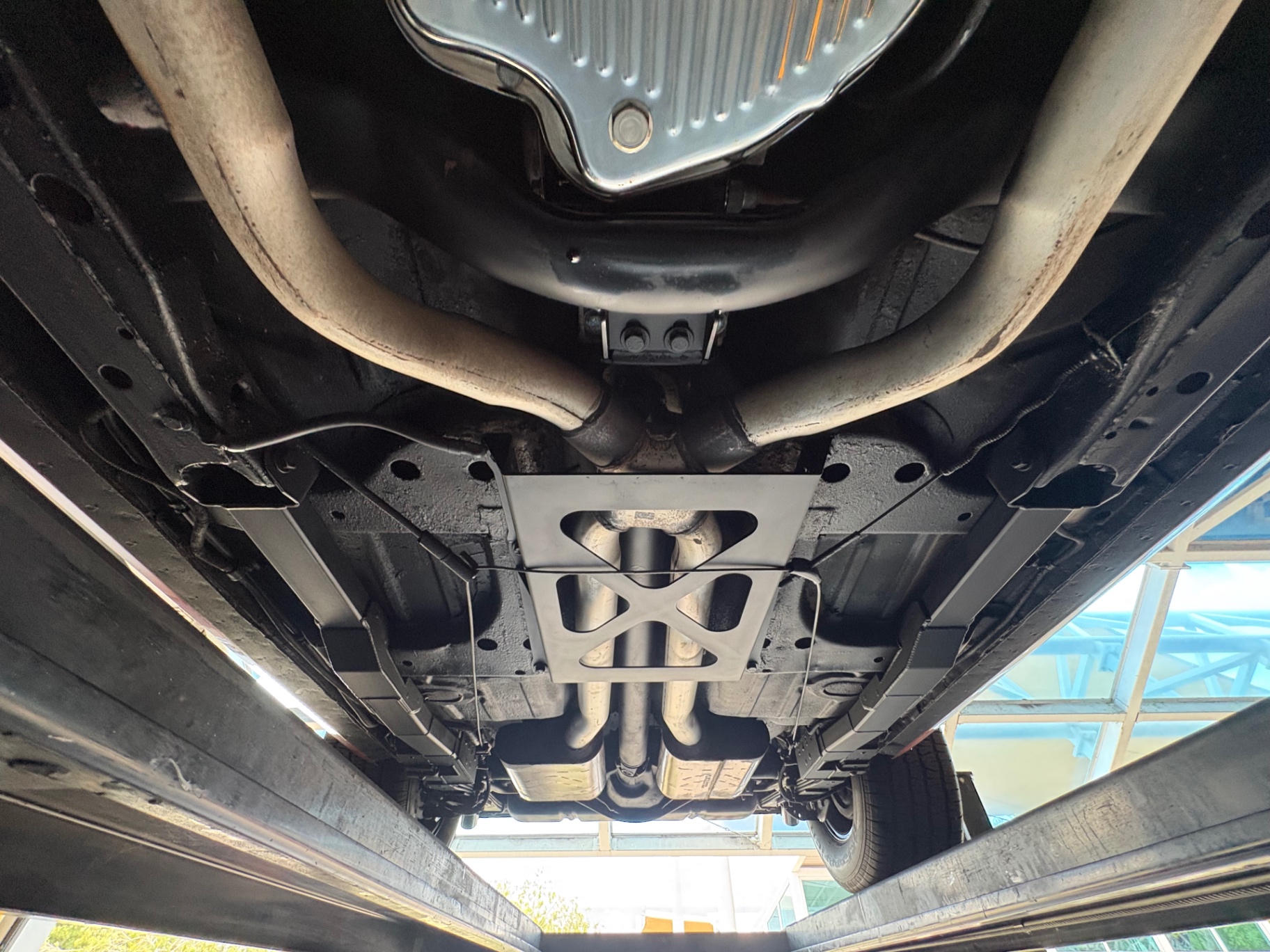
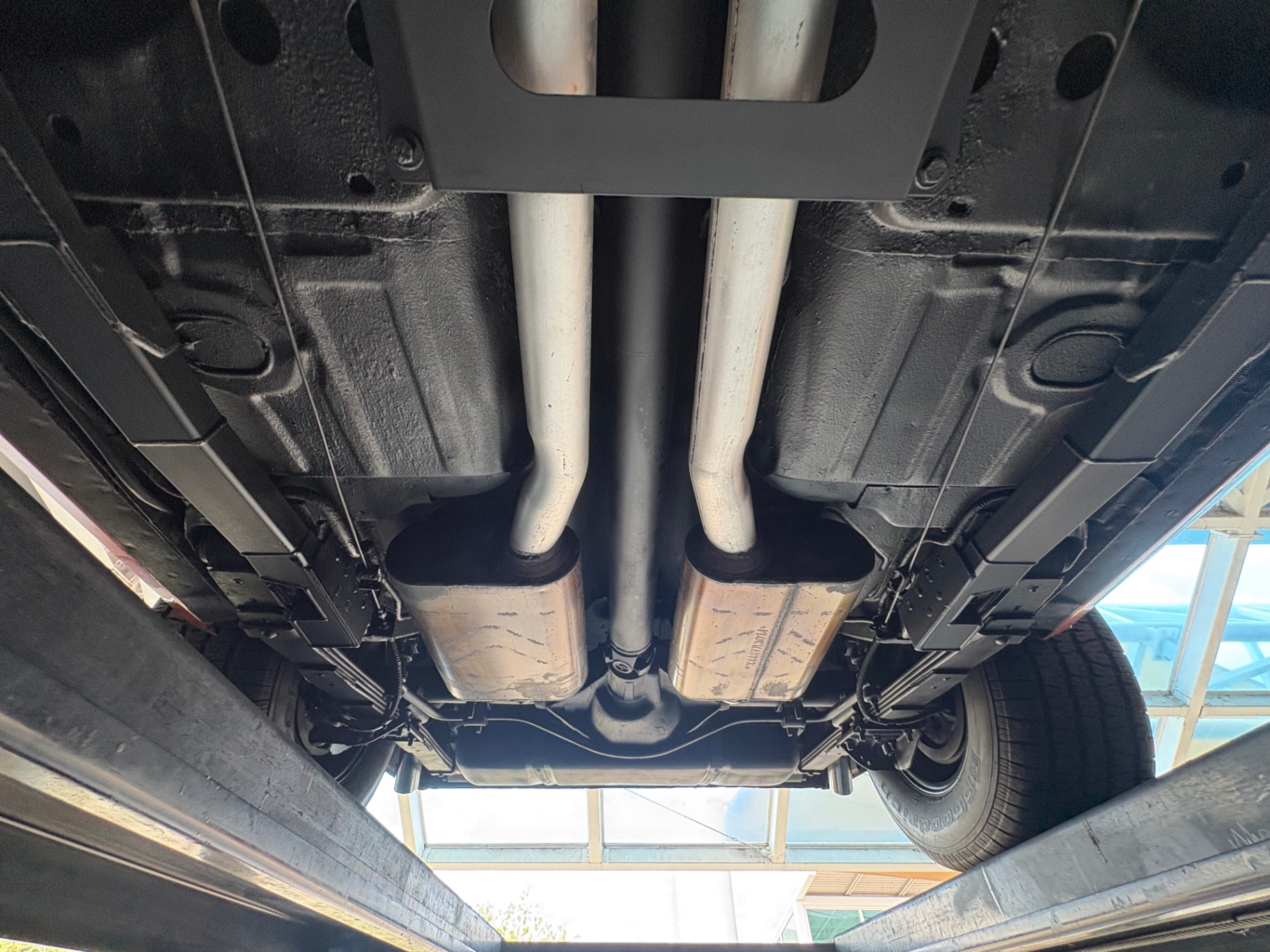
Steering has been converted to an aftermarket rack and pinion setup, replacing the original recirculating ball steering gear. This is a popular and widely respected upgrade on first-gen Camaros that meaningfully improves steering feel and response. Power assist is retained. The front suspension has been upgraded to adjustable coilovers, allowing ride height and damping to be dialed in. Front and rear sway bars reduce body roll, and frame connectors have been welded in to stiffen the unibody — a structural upgrade that matters especially on a convertible, where the absence of a roof reduces overall chassis rigidity. Front brakes are power-assisted discs. BFGoodrich Radial T/A tires are fitted all around, one of the most recognized and historically appropriate tire choices for a first-gen Camaro build. The undercarriage is clean, well-painted, and shows the work that has been done to it.
Interior
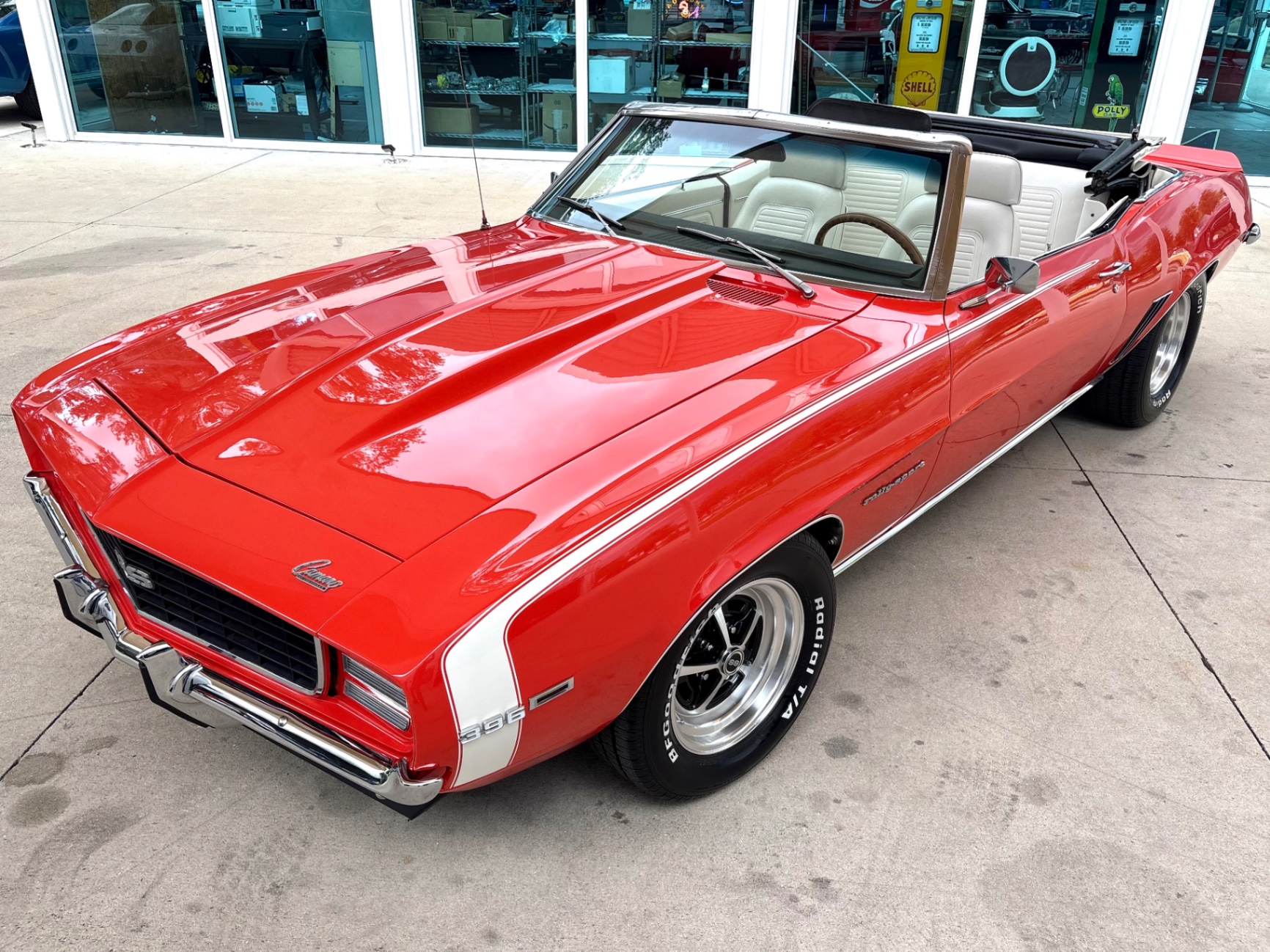
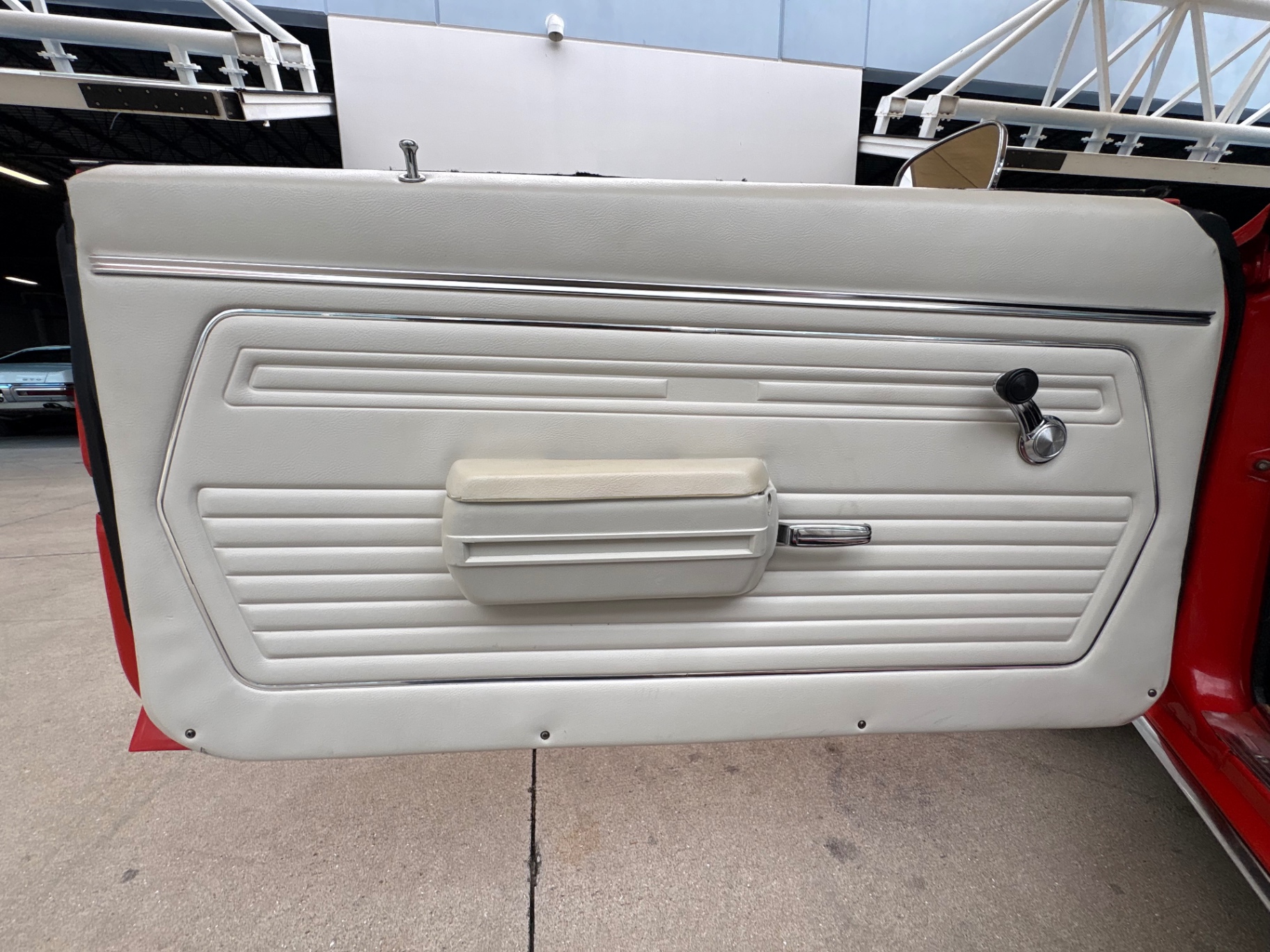
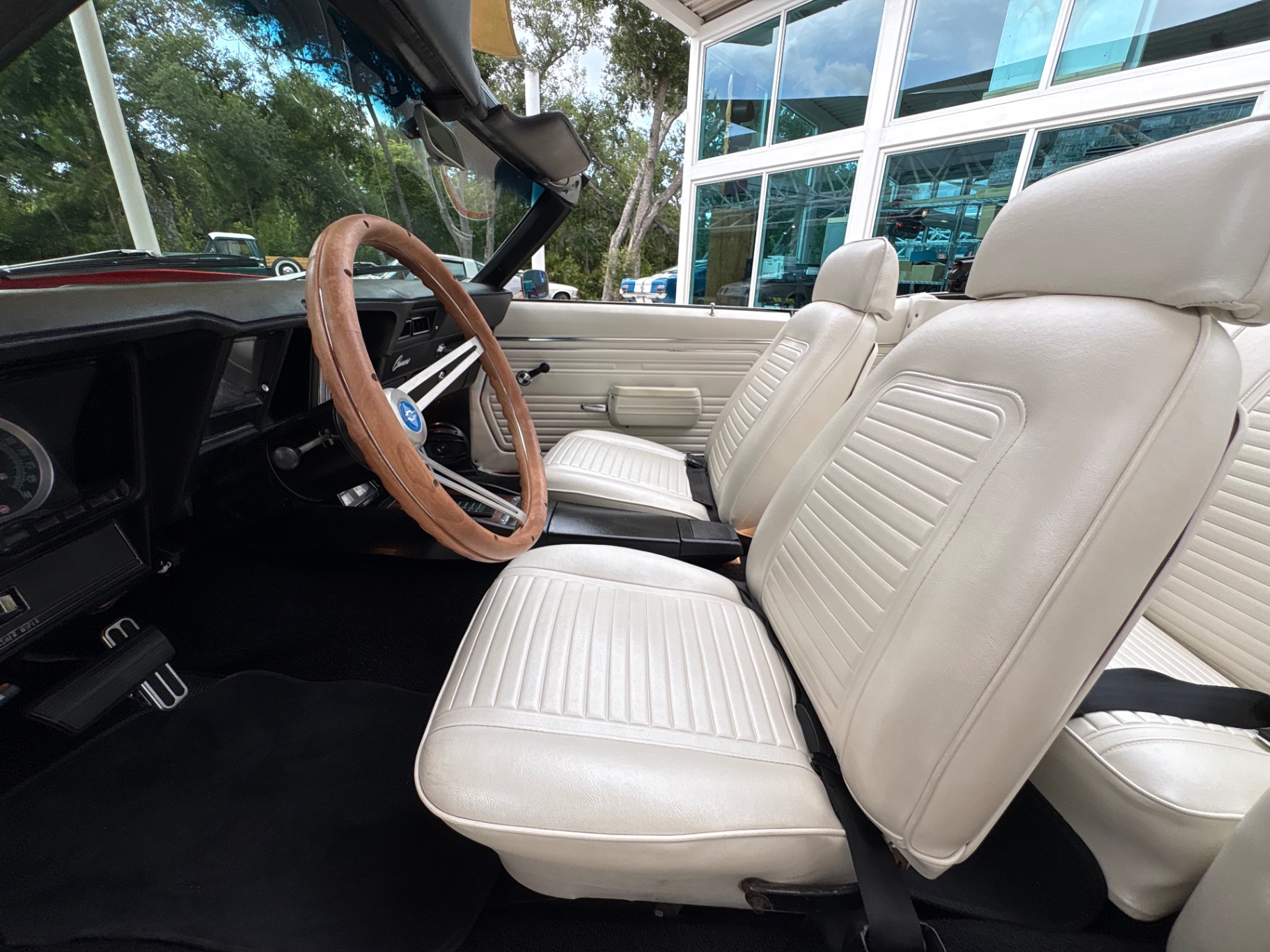
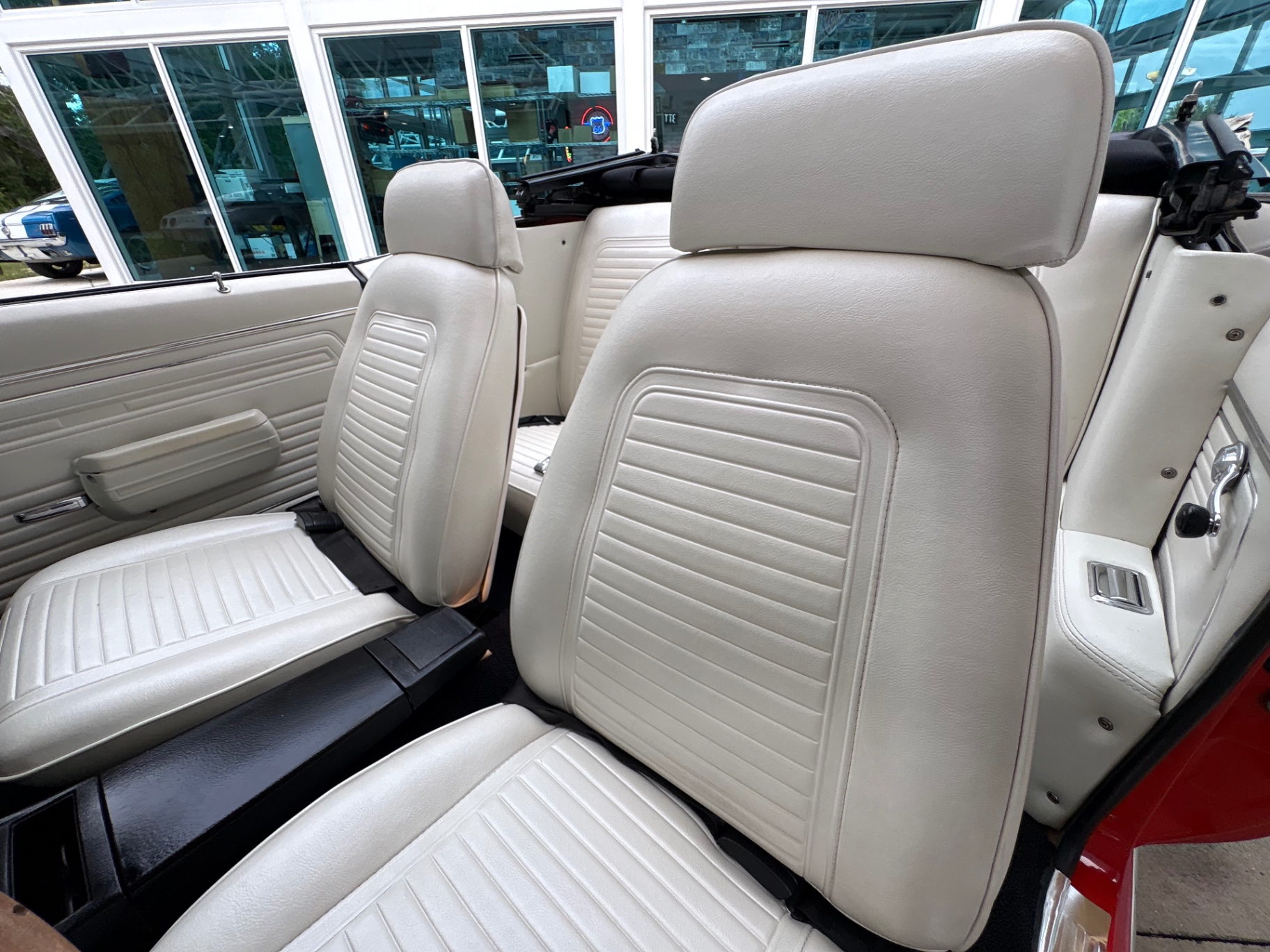
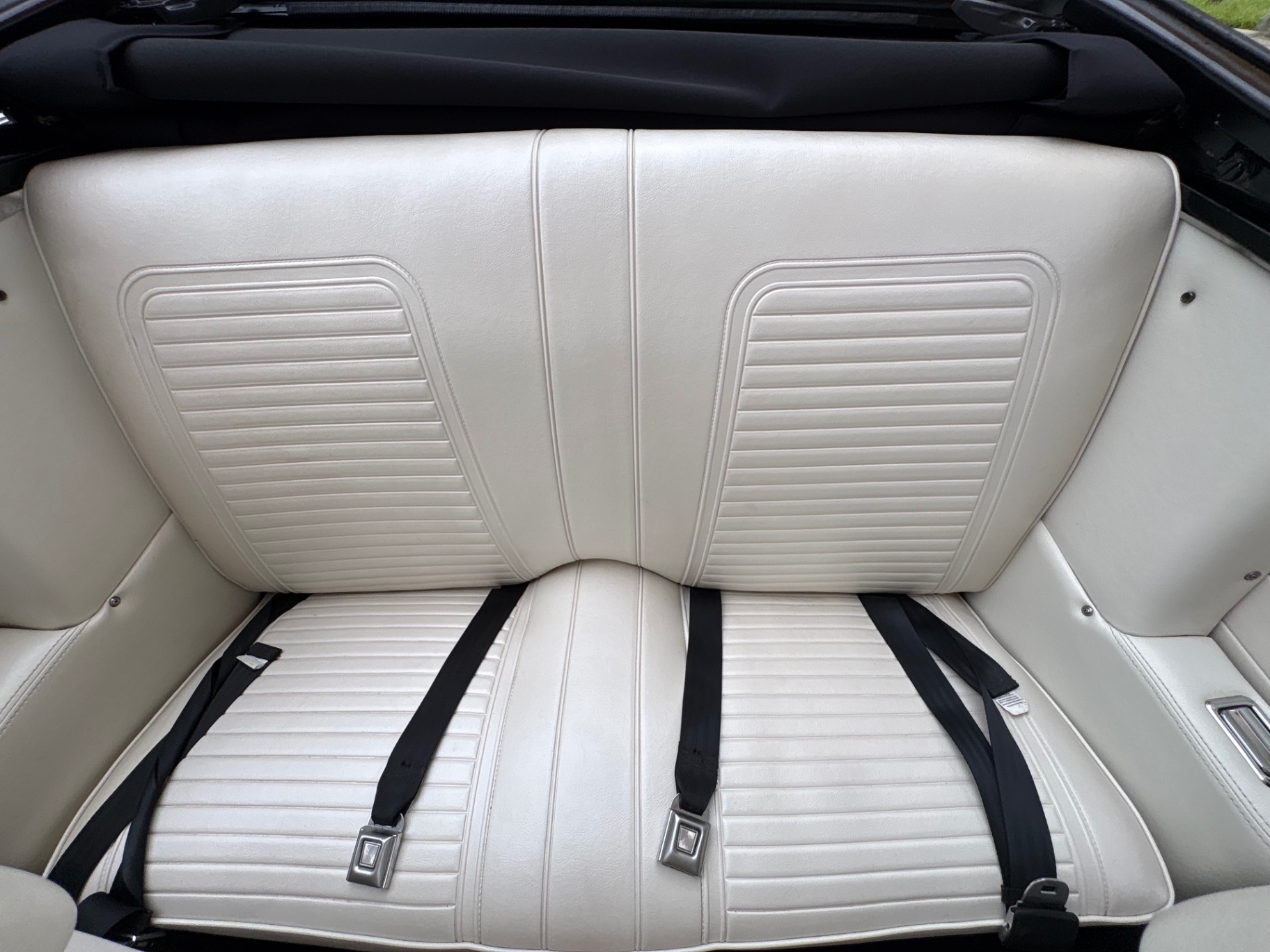
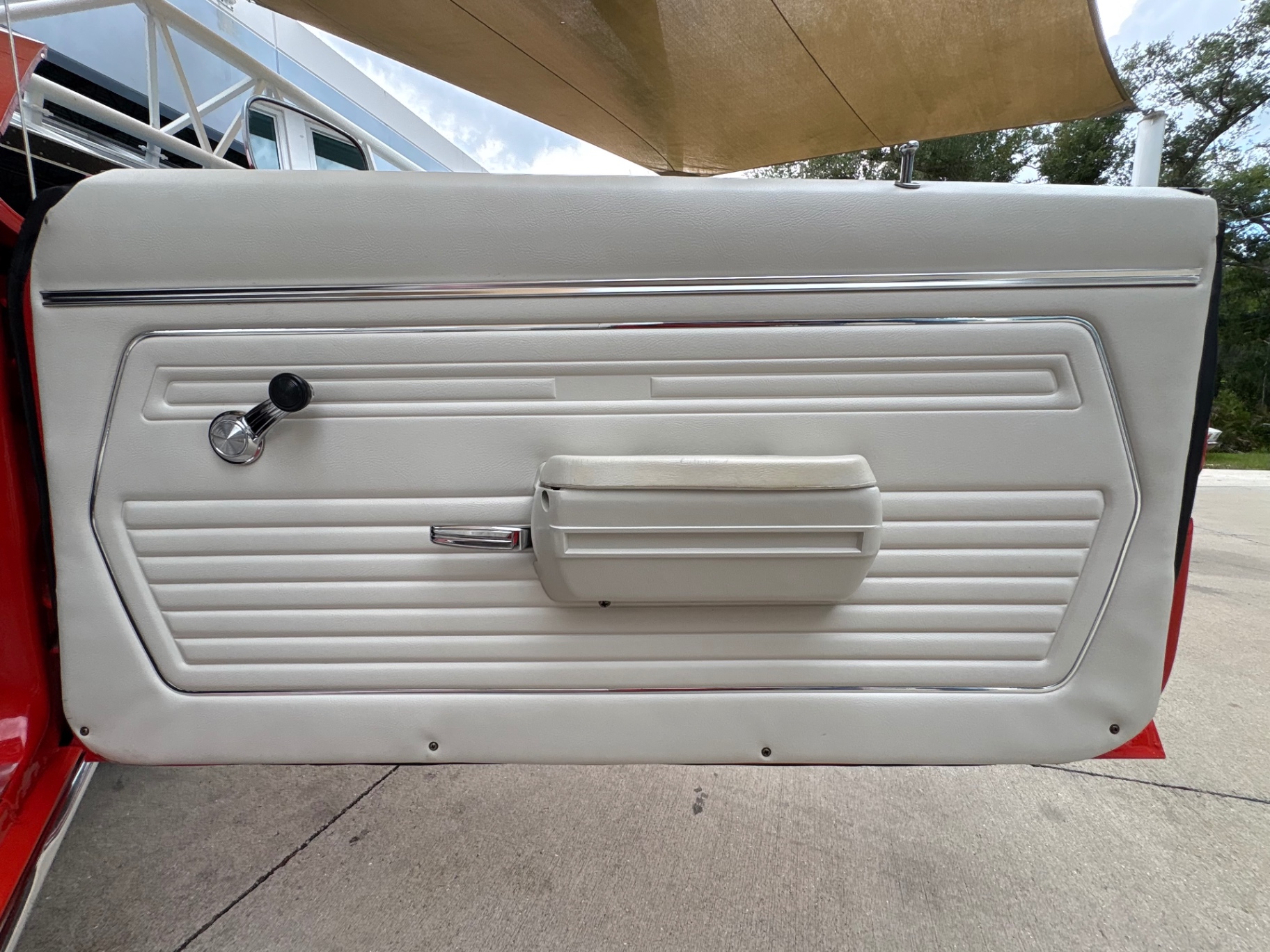
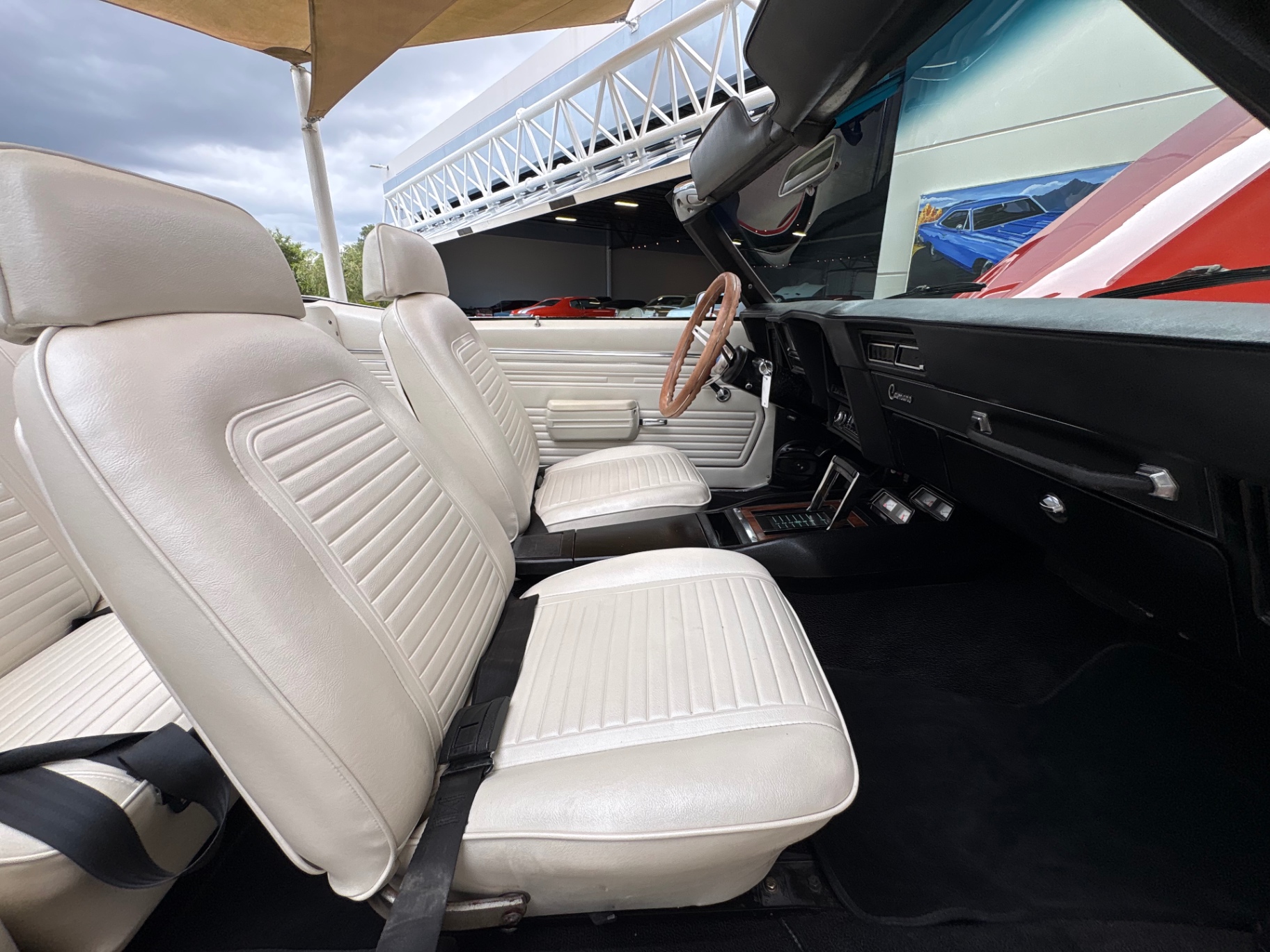
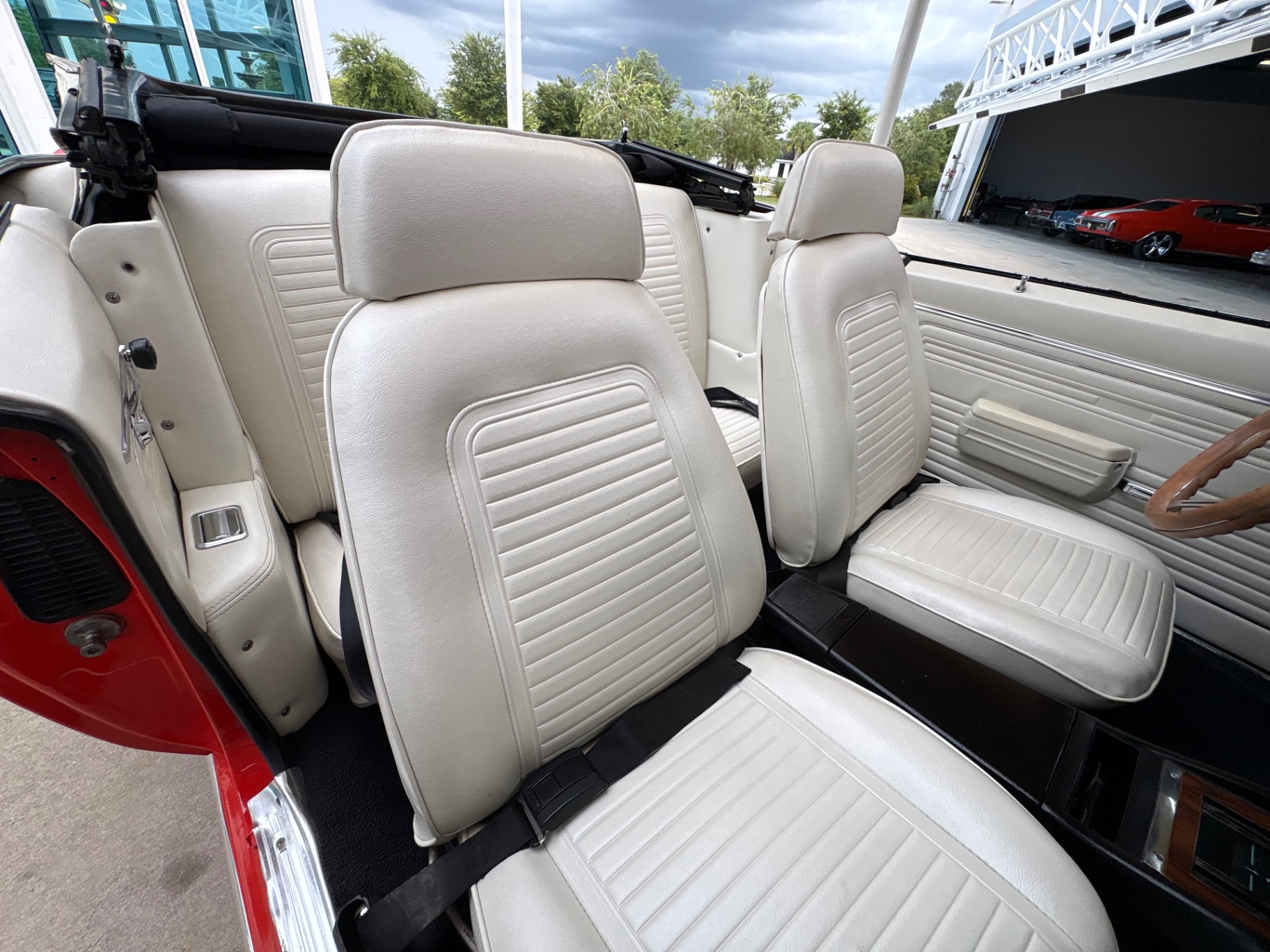
The 1969 Camaro RS/SS Convertible interior here is white vinyl throughout — bucket seats front and rear, door panels, and rear seat back — set against black carpet. The contrast is sharp and the condition of the vinyl is good. This is a correct configuration for a 1969 Camaro SS with the console option, and it reads as clean and well-maintained rather than worn.
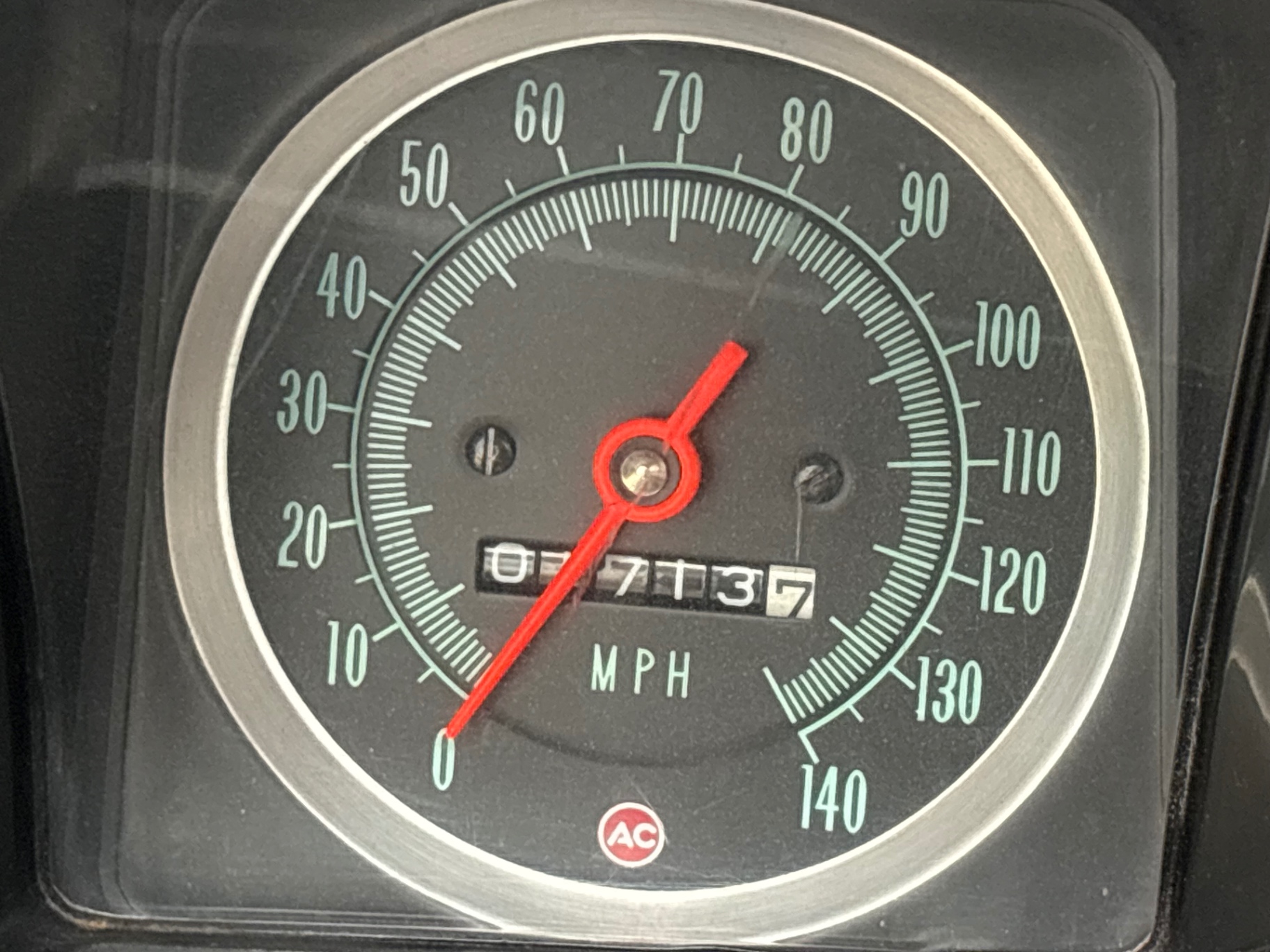
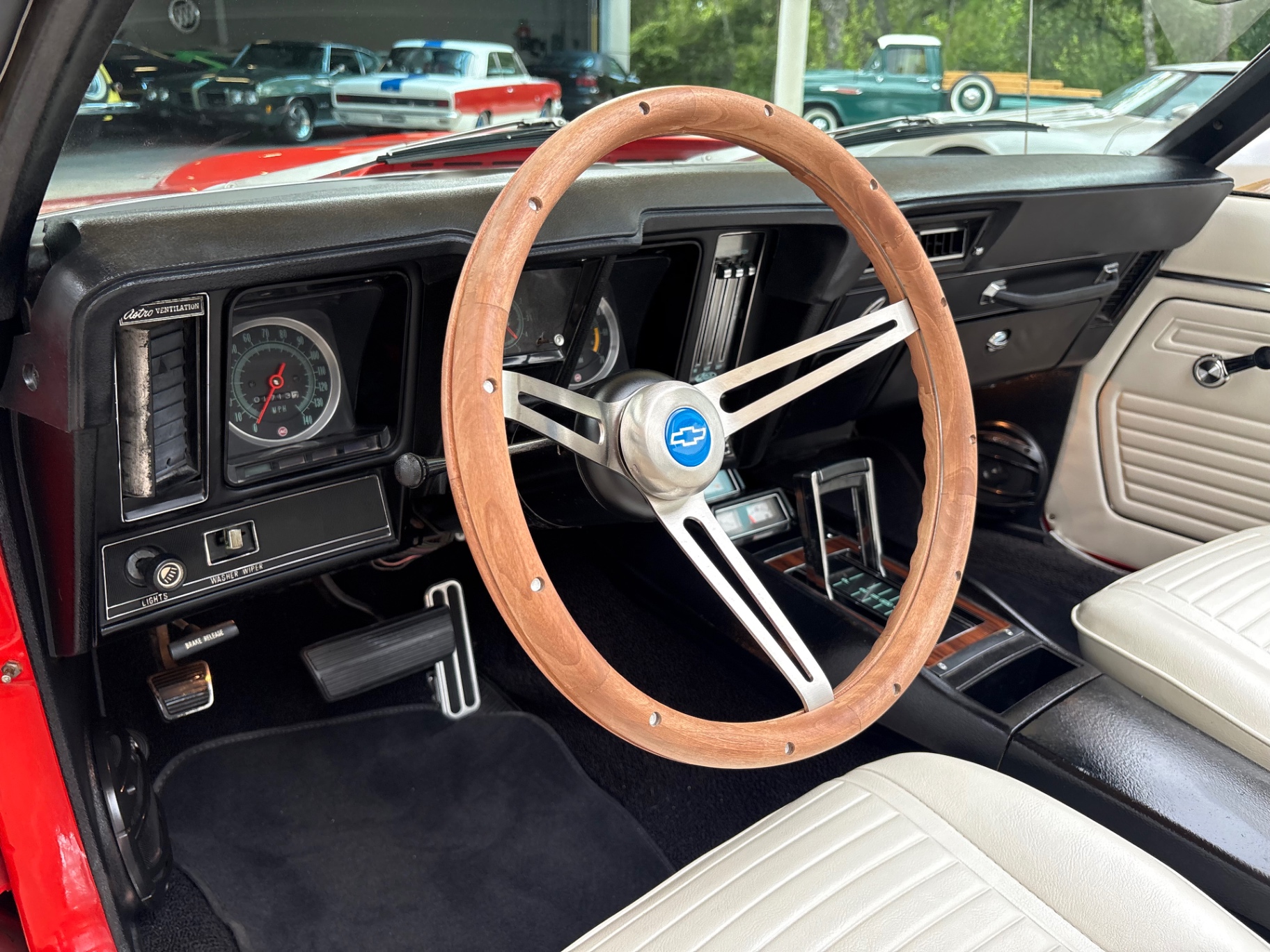
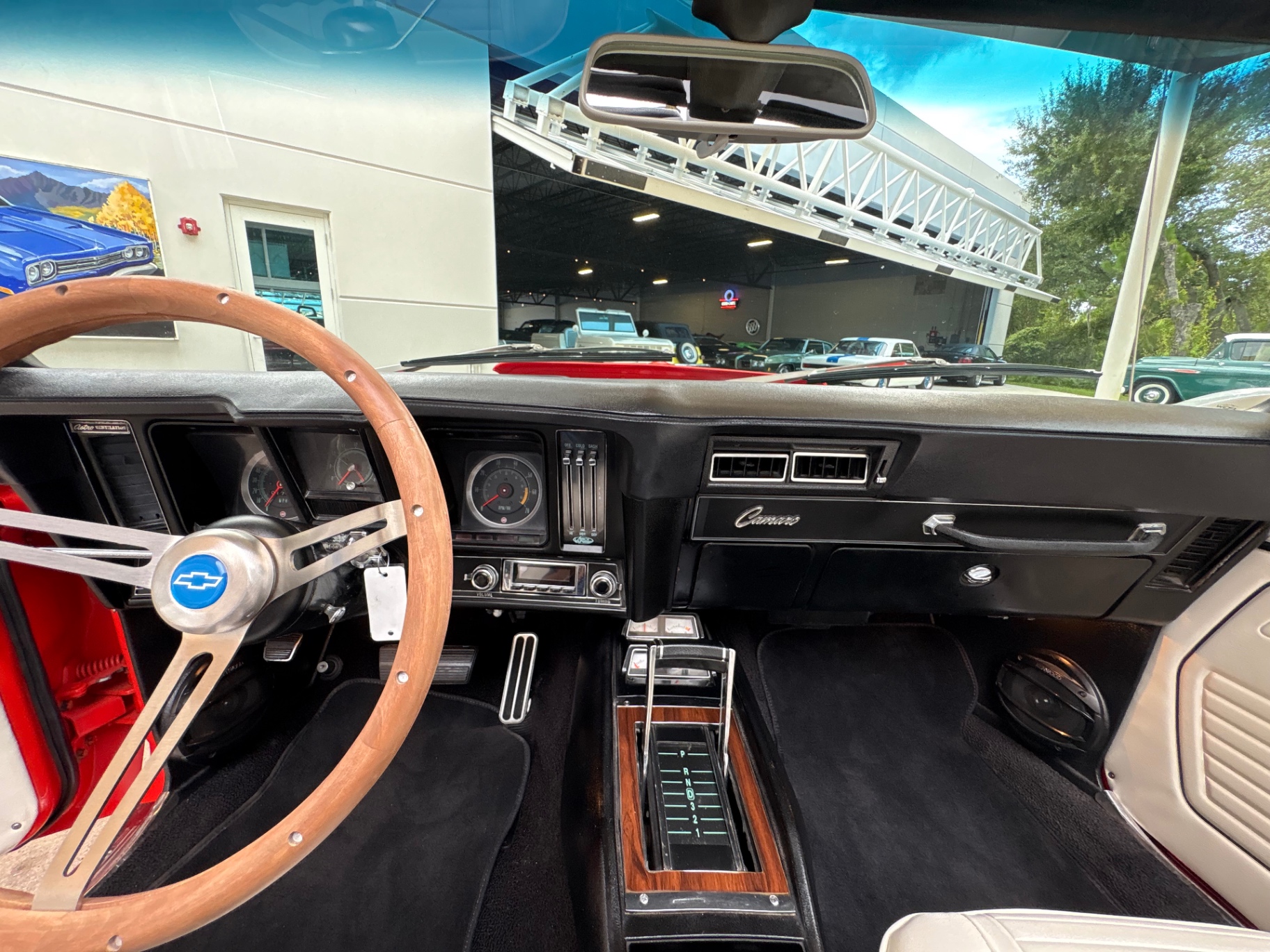
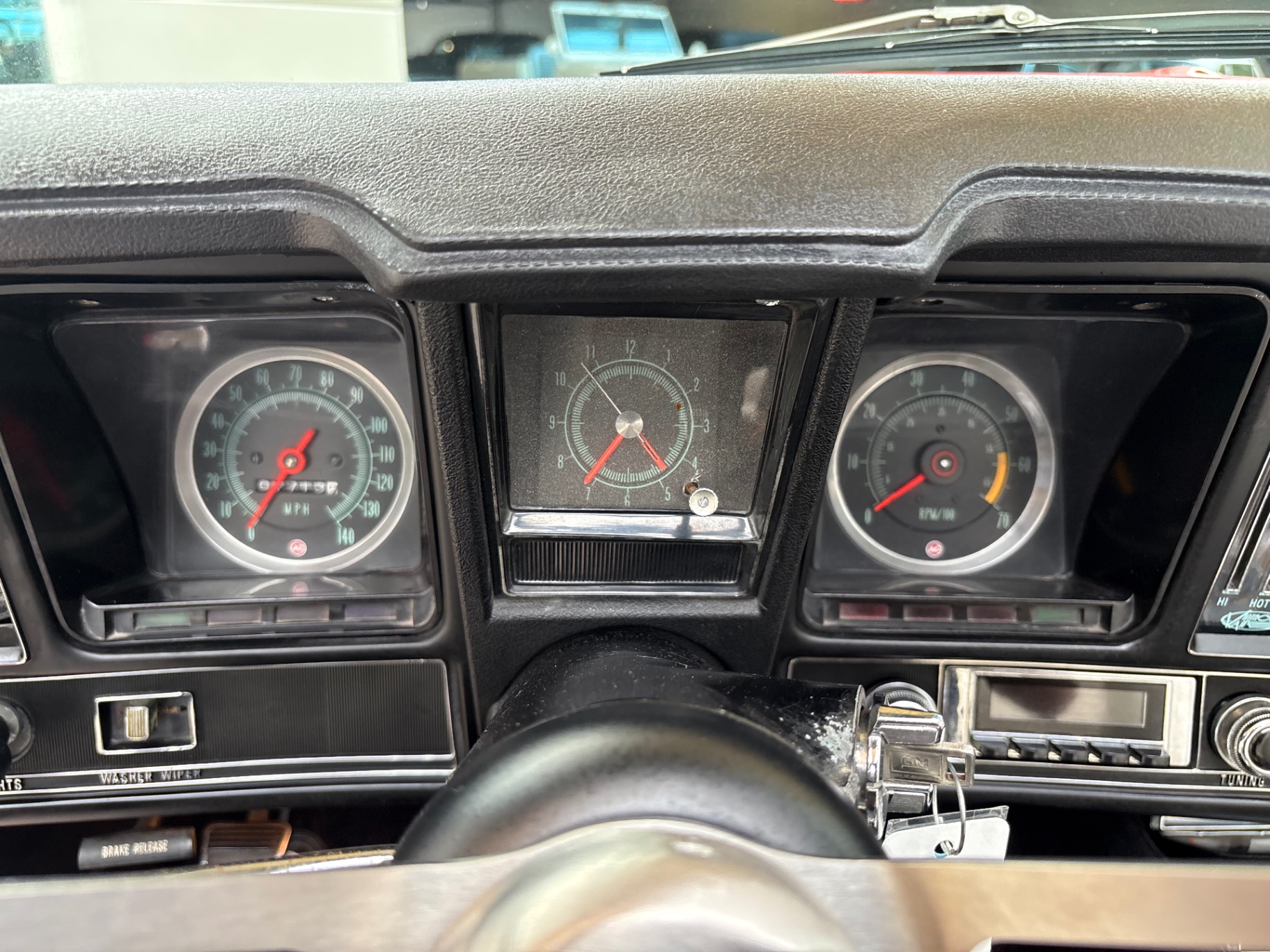
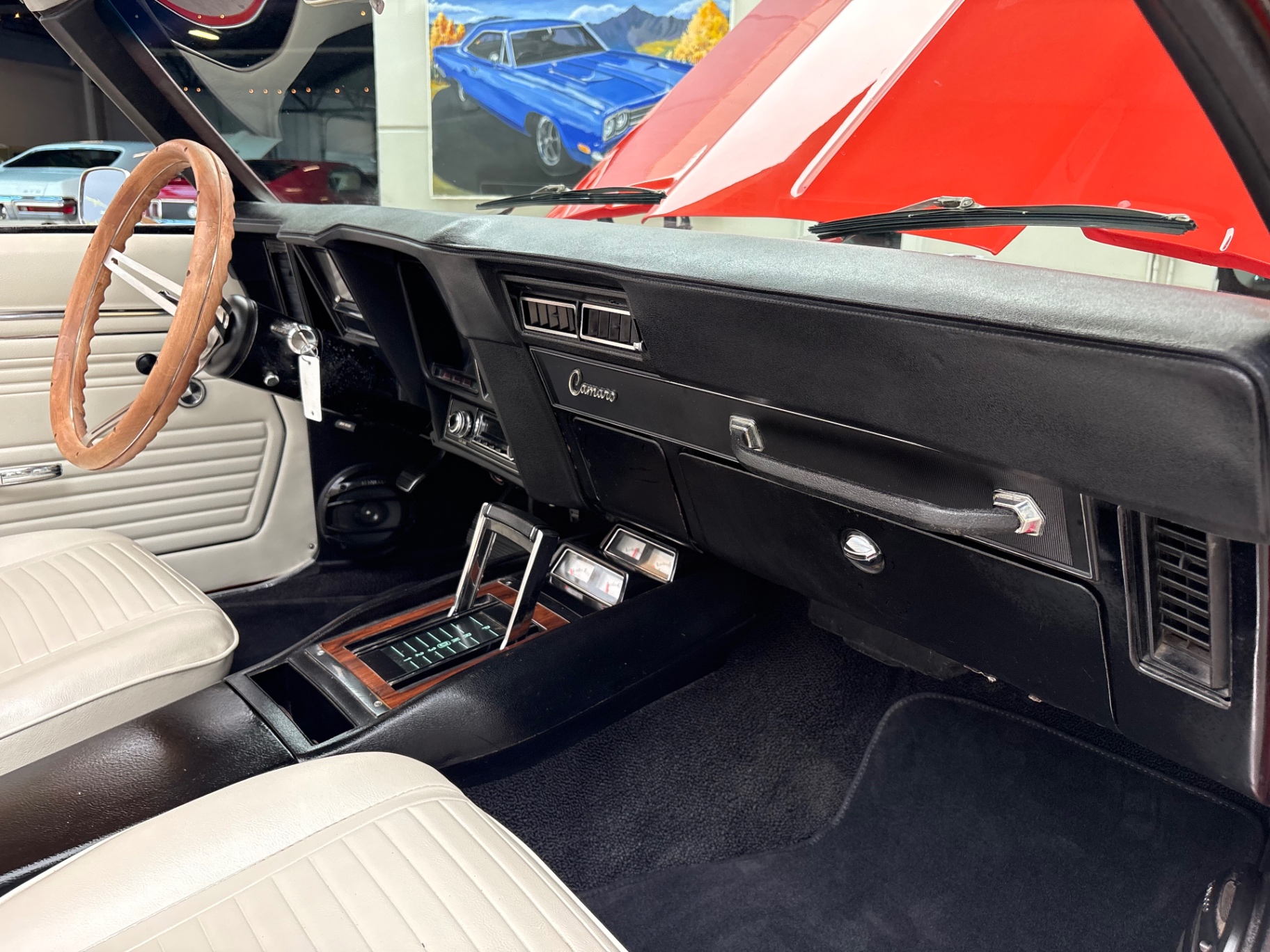
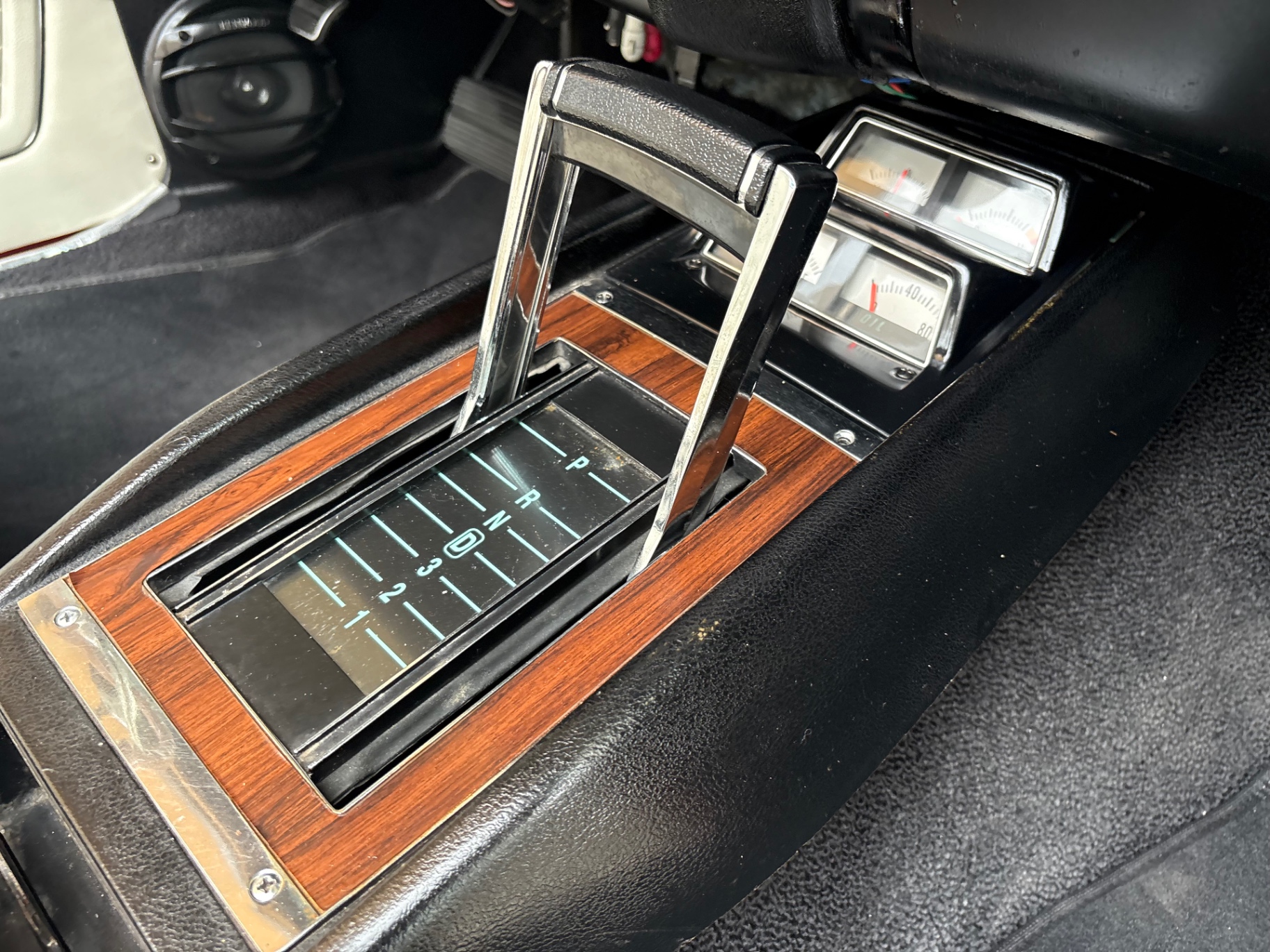
The center console is in place with the horseshoe-style floor shifter for the TH400, framed in wood-grain trim that runs the length of the console. The instrument cluster carries the full gauge package: speedometer, tachometer, and console-mounted auxiliary gauges for oil pressure and temperature are visible in the photographs. The in-dash clock is present and correct for a 1969 RS. The Astro Ventilation vents — a 1969 Camaro feature that routed outside air through the instrument panel without requiring the windows down — are visible on the left side of the dash.
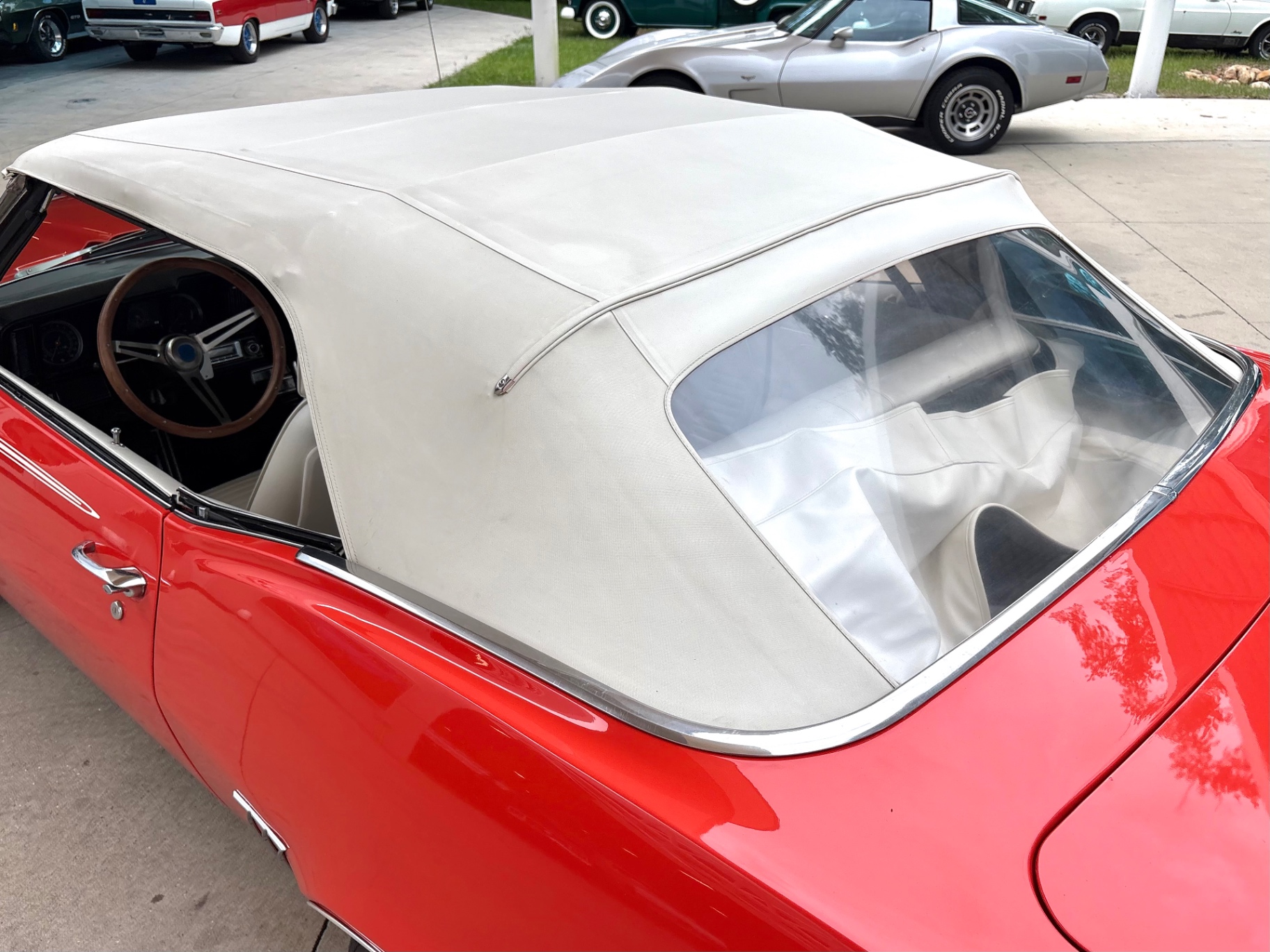
The wood-grain steering wheel is a period-correct style that suits the interior well. An aftermarket stereo has been fitted in place of the original radio opening, which is a practical upgrade that keeps the car usable on longer drives. Air conditioning is present, which is a significant comfort item in the Florida climate and adds to the daily drivability of the car.
Exterior
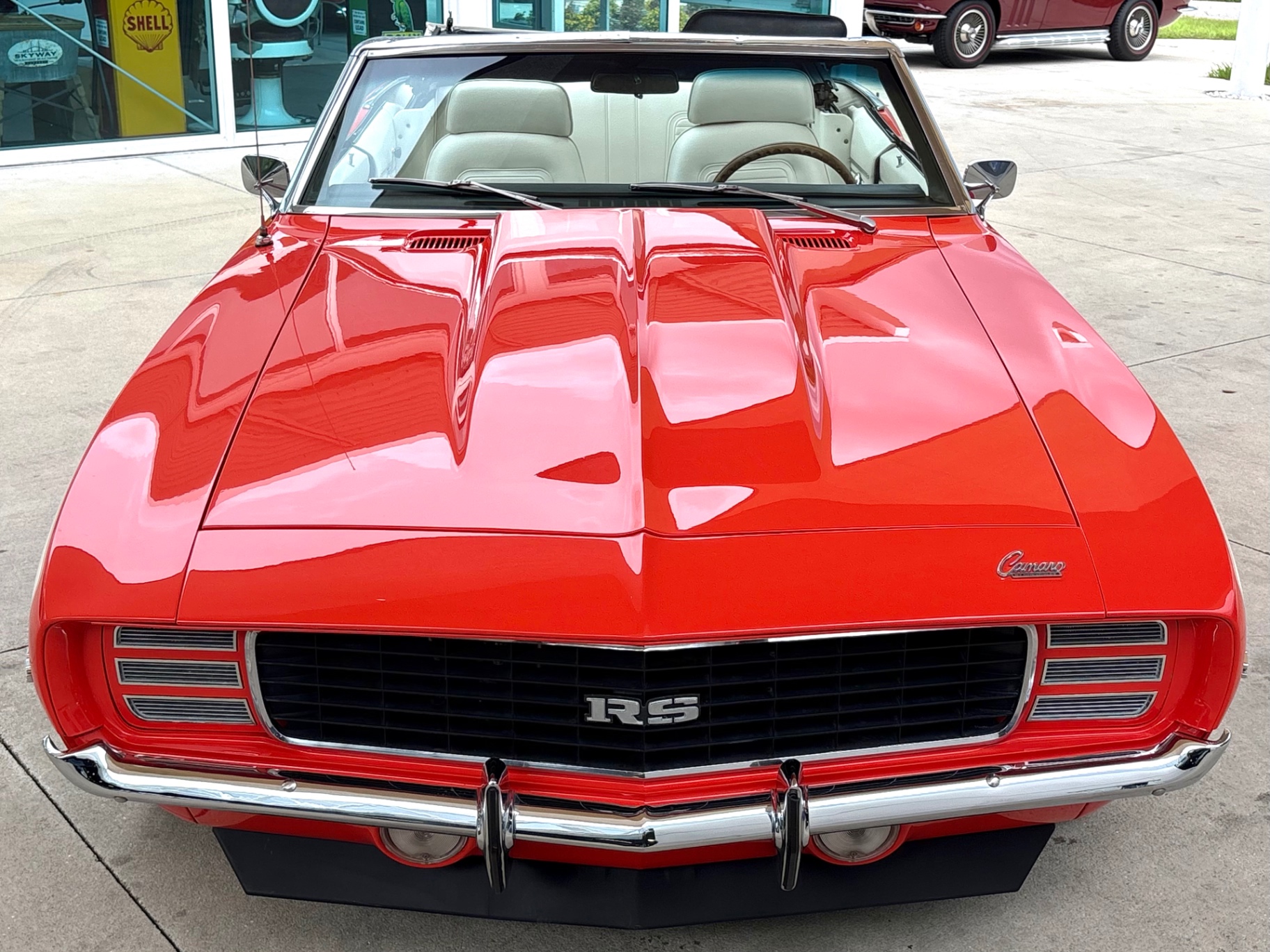
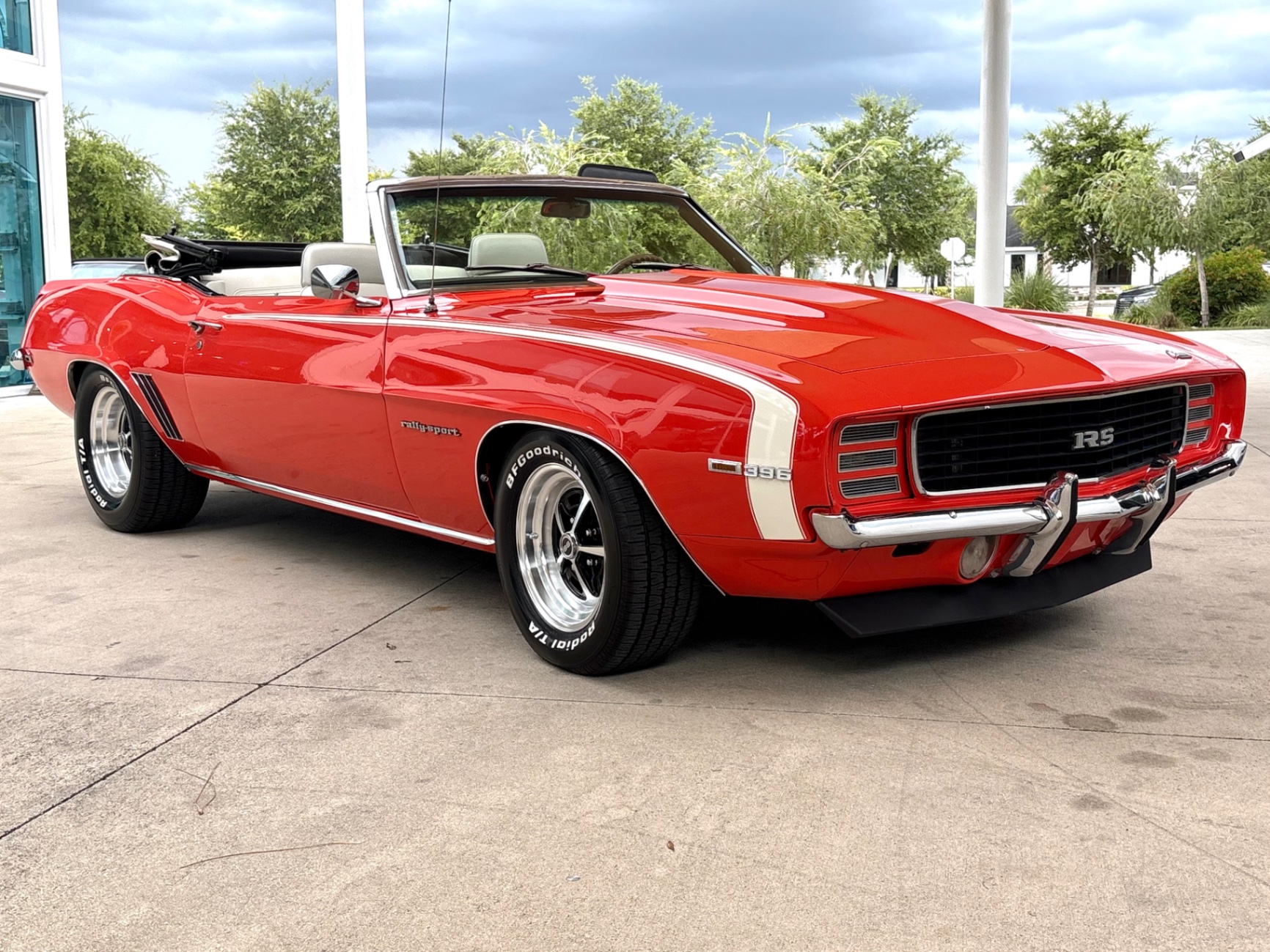
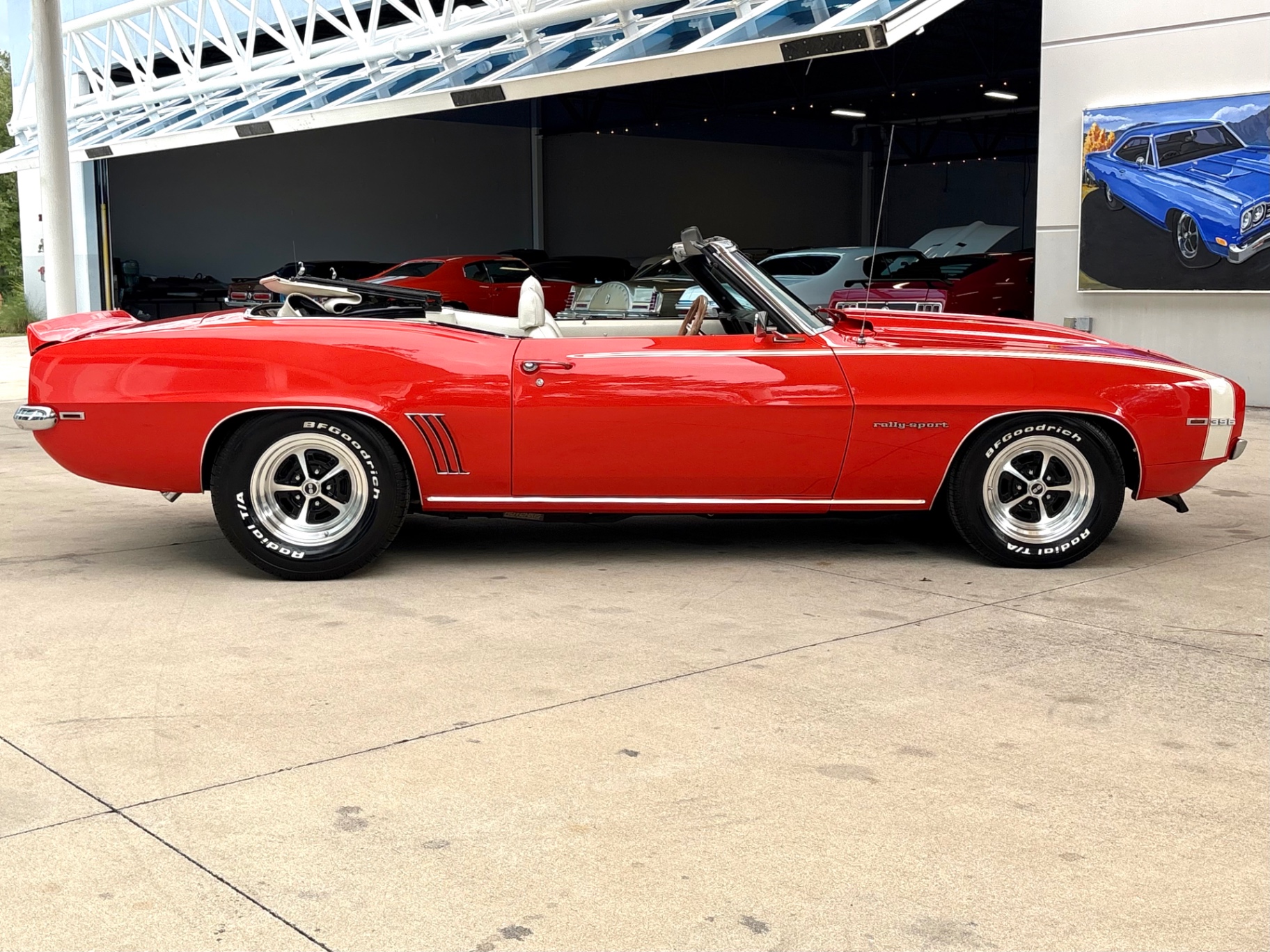
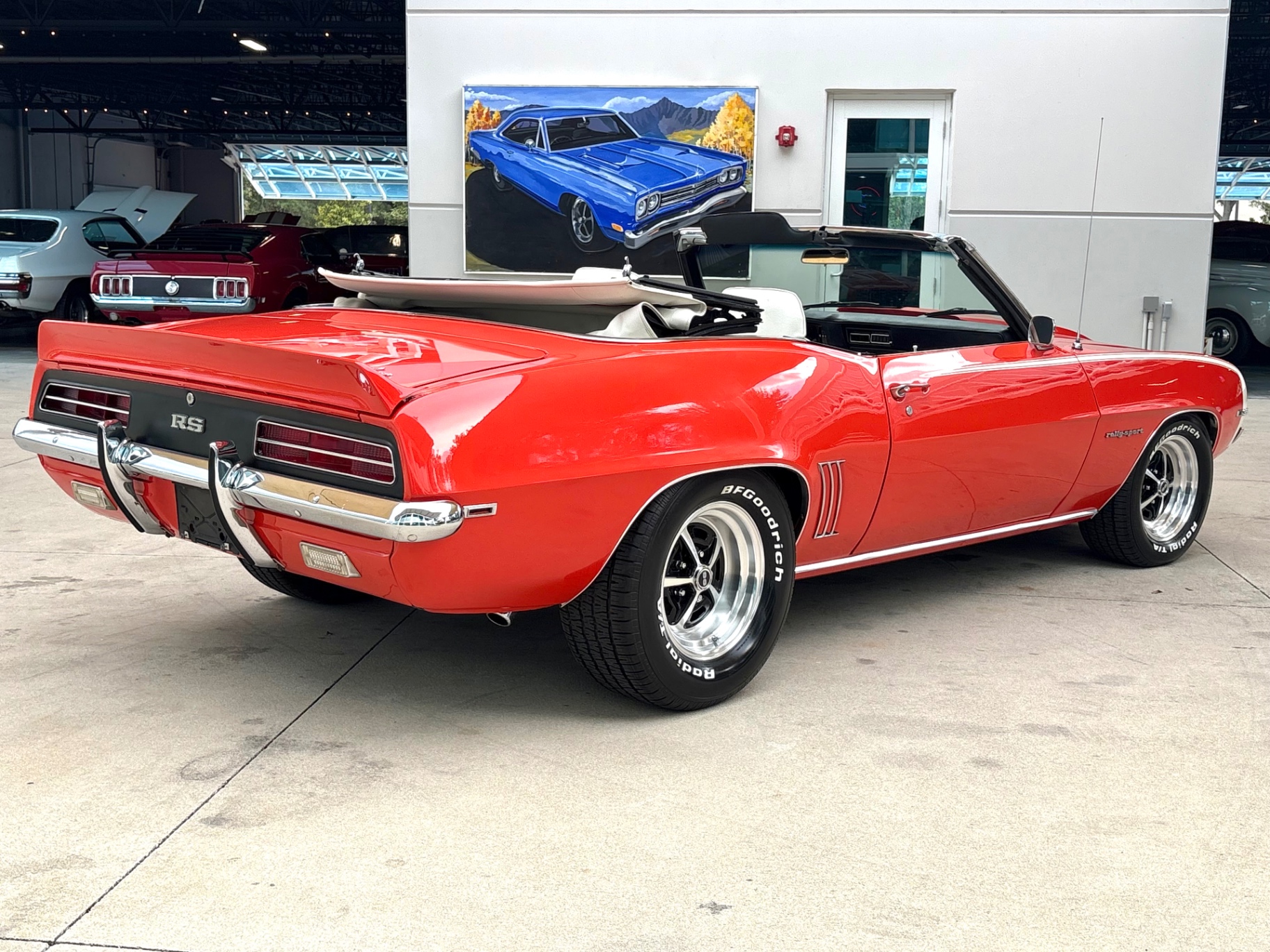
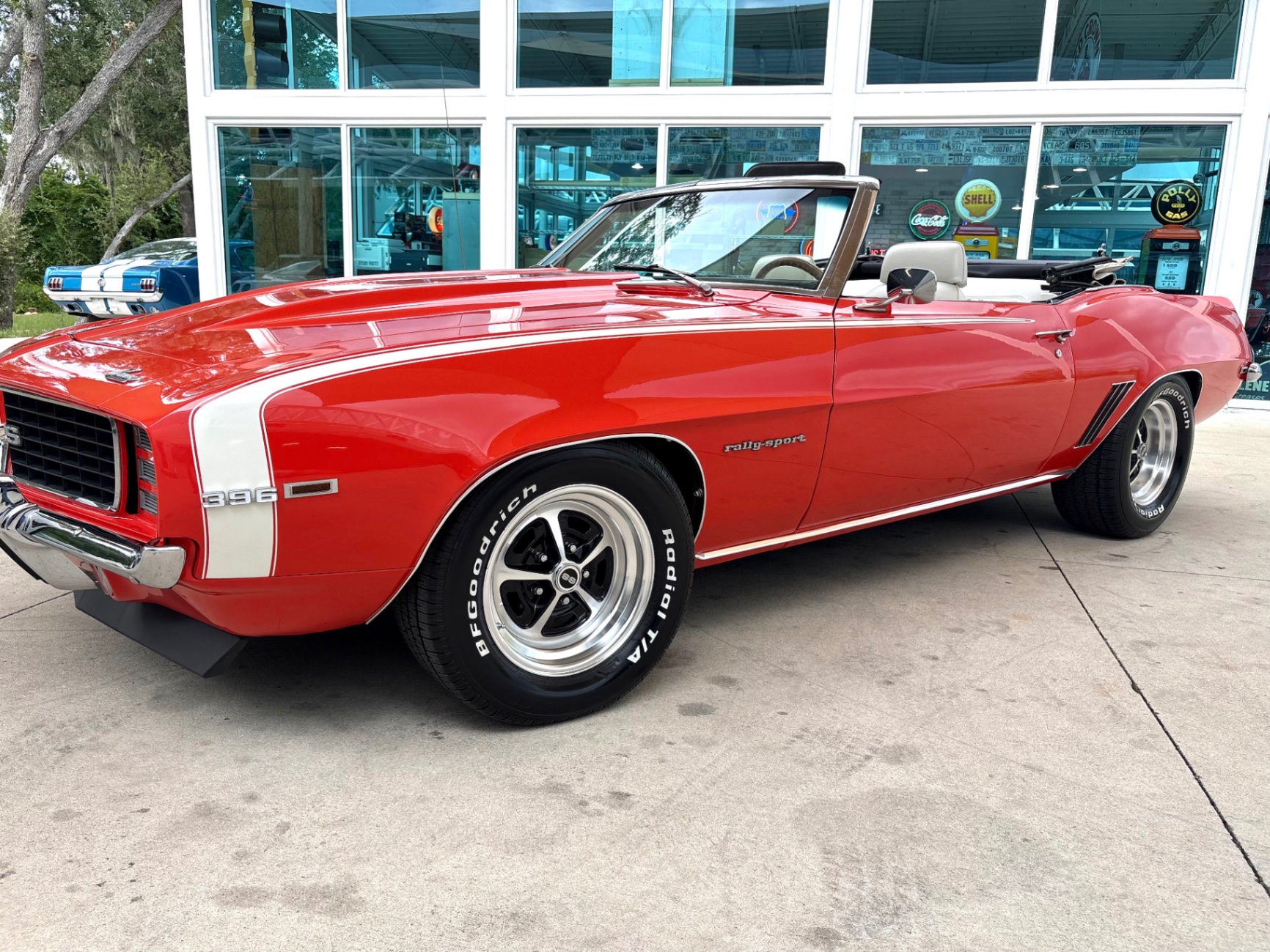
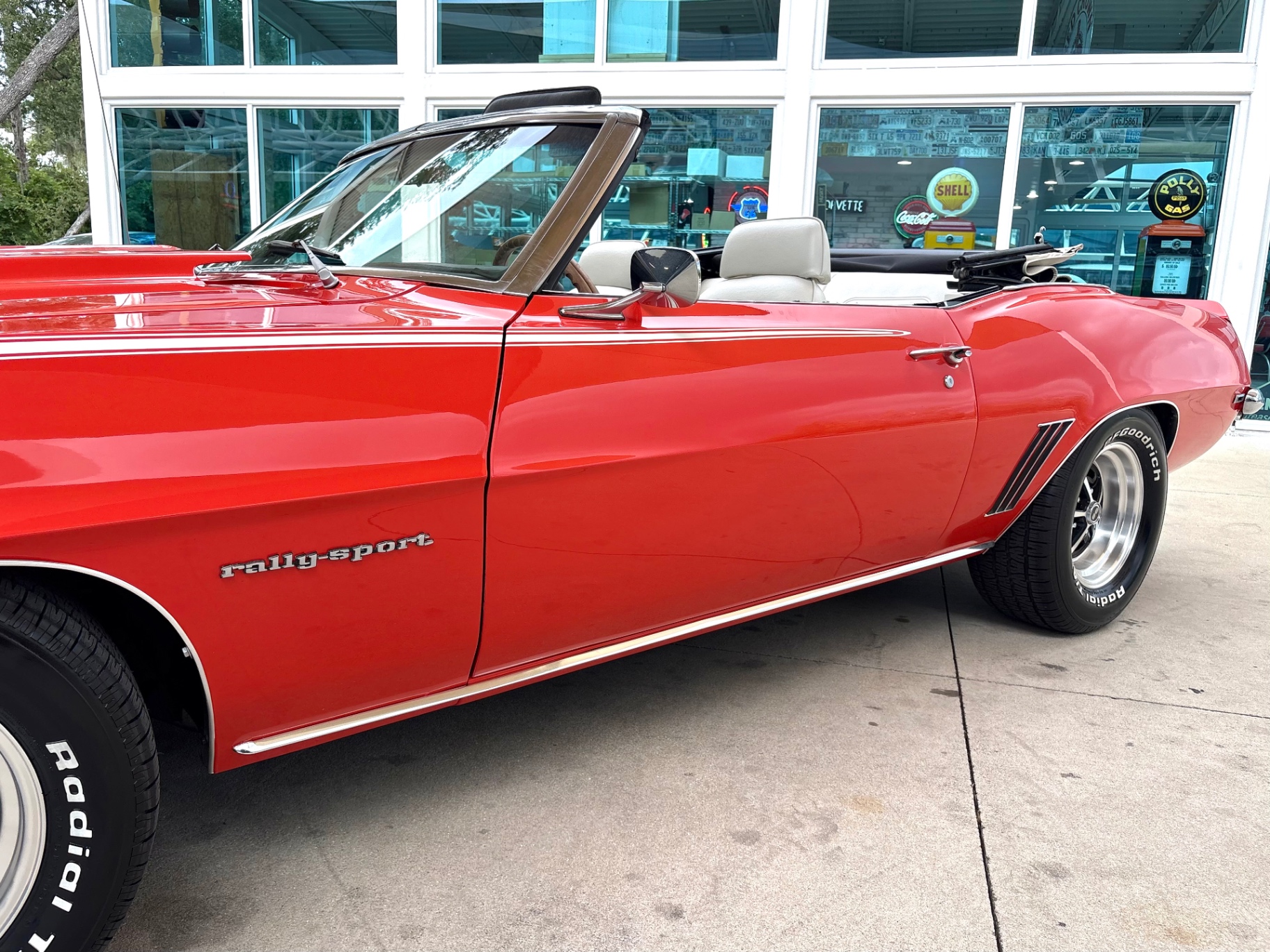
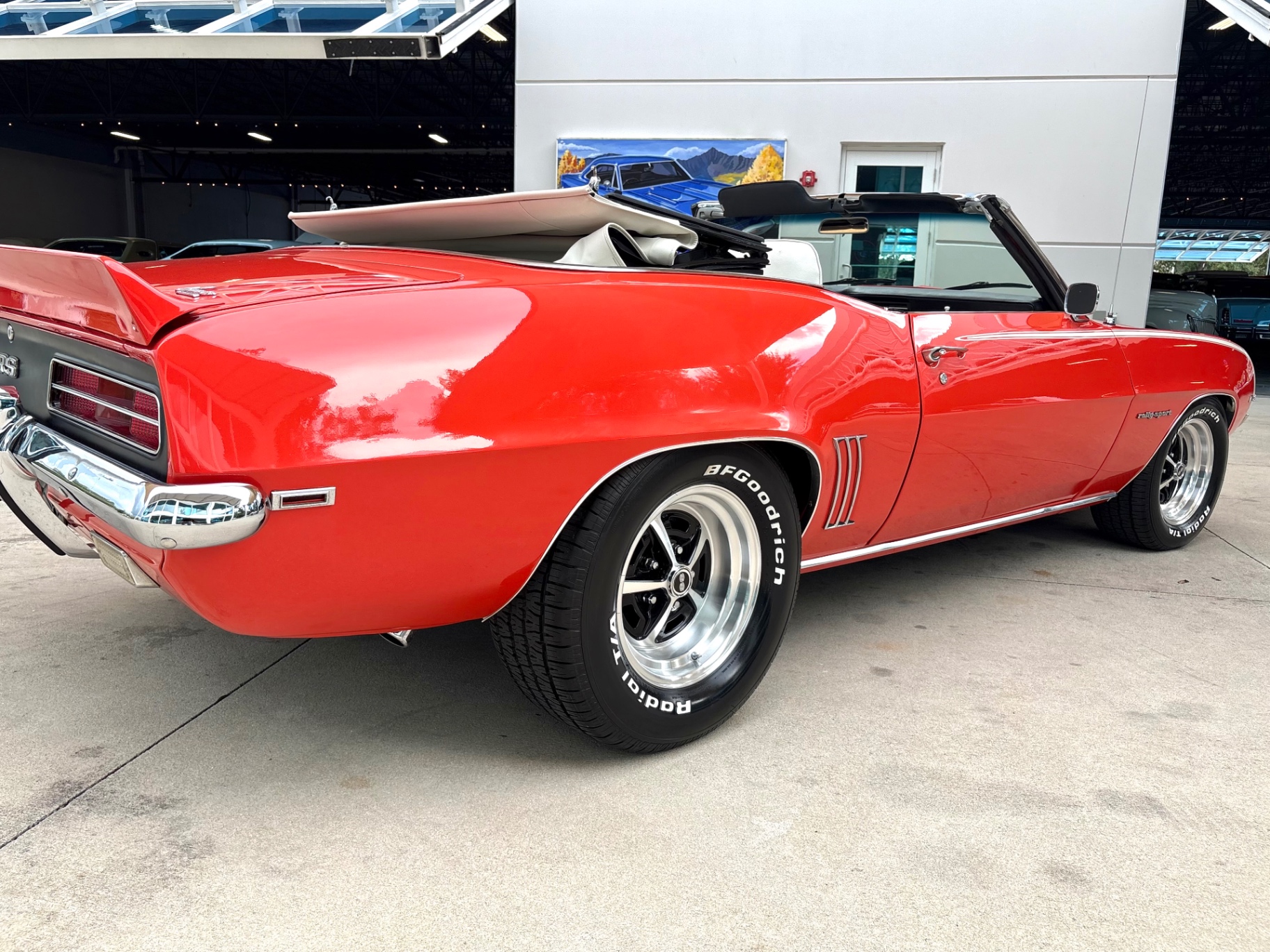
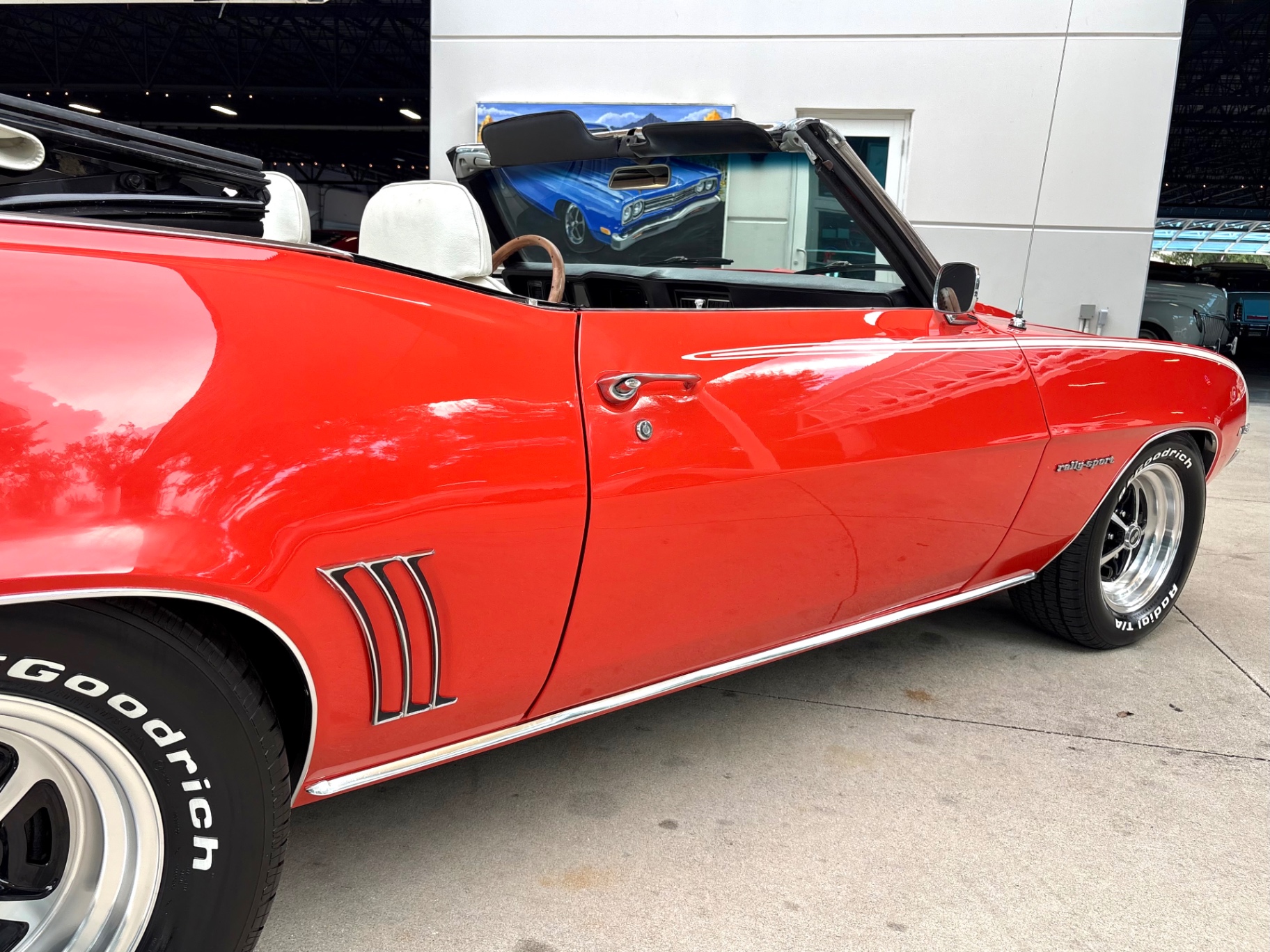
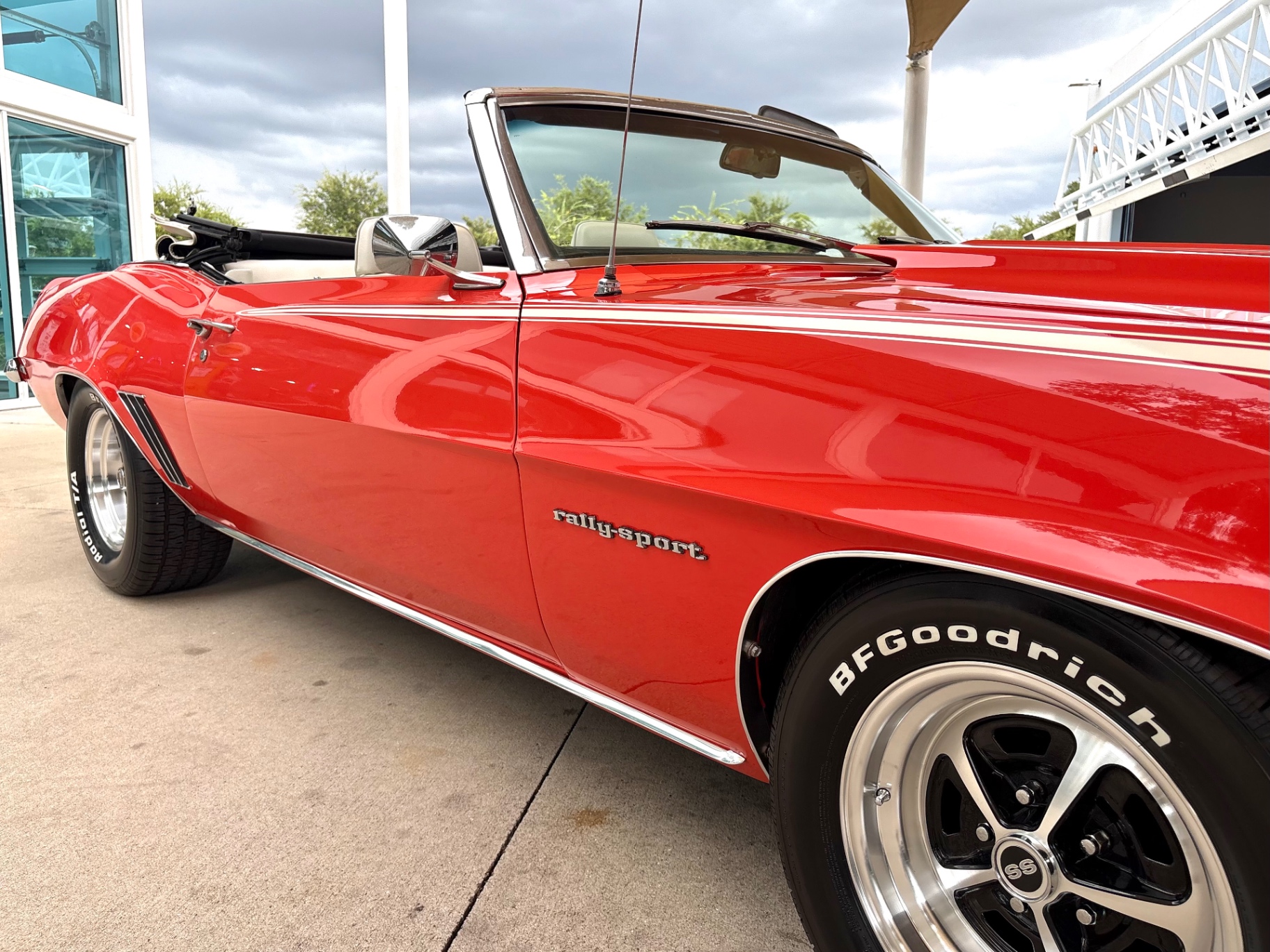
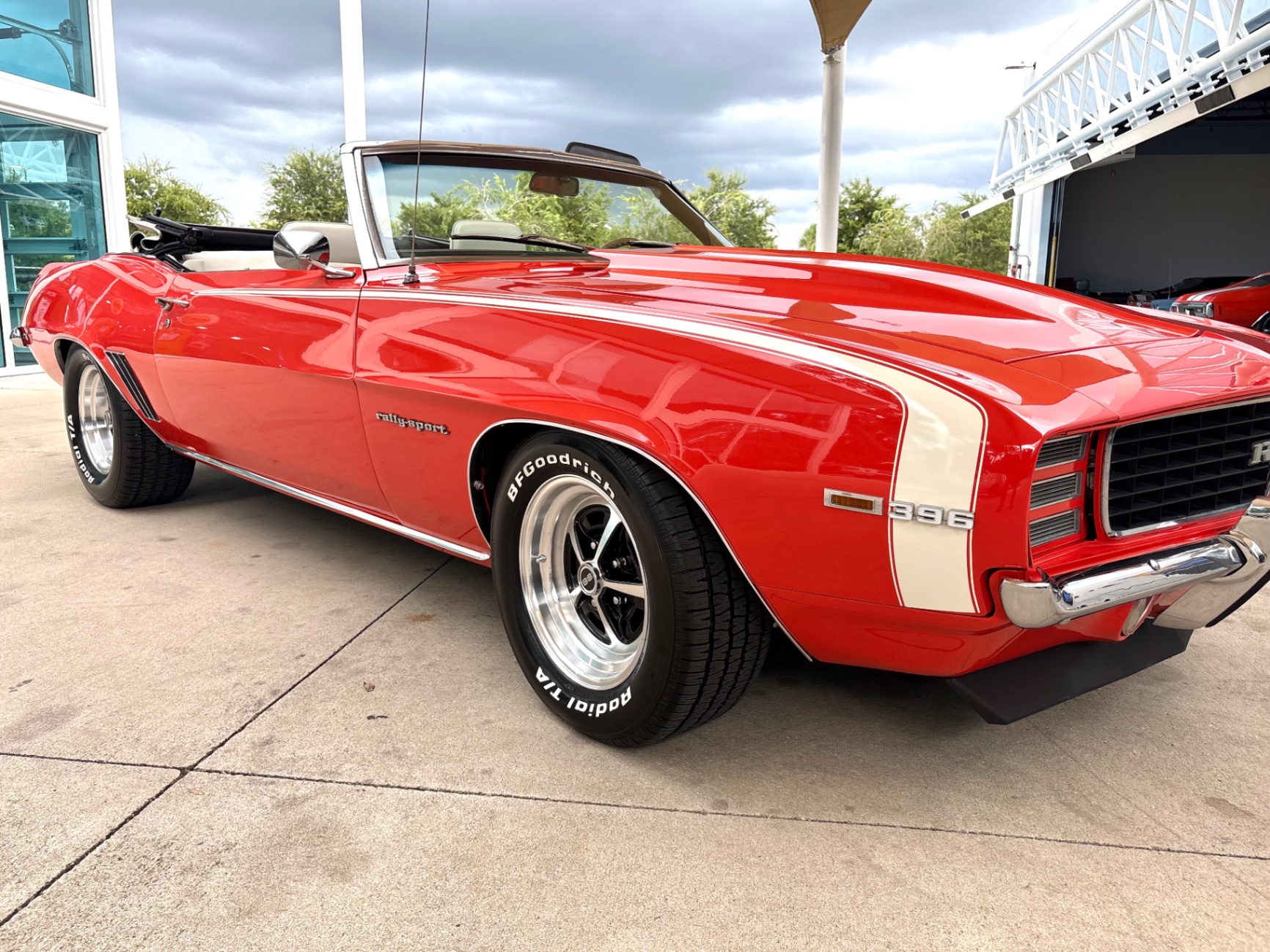
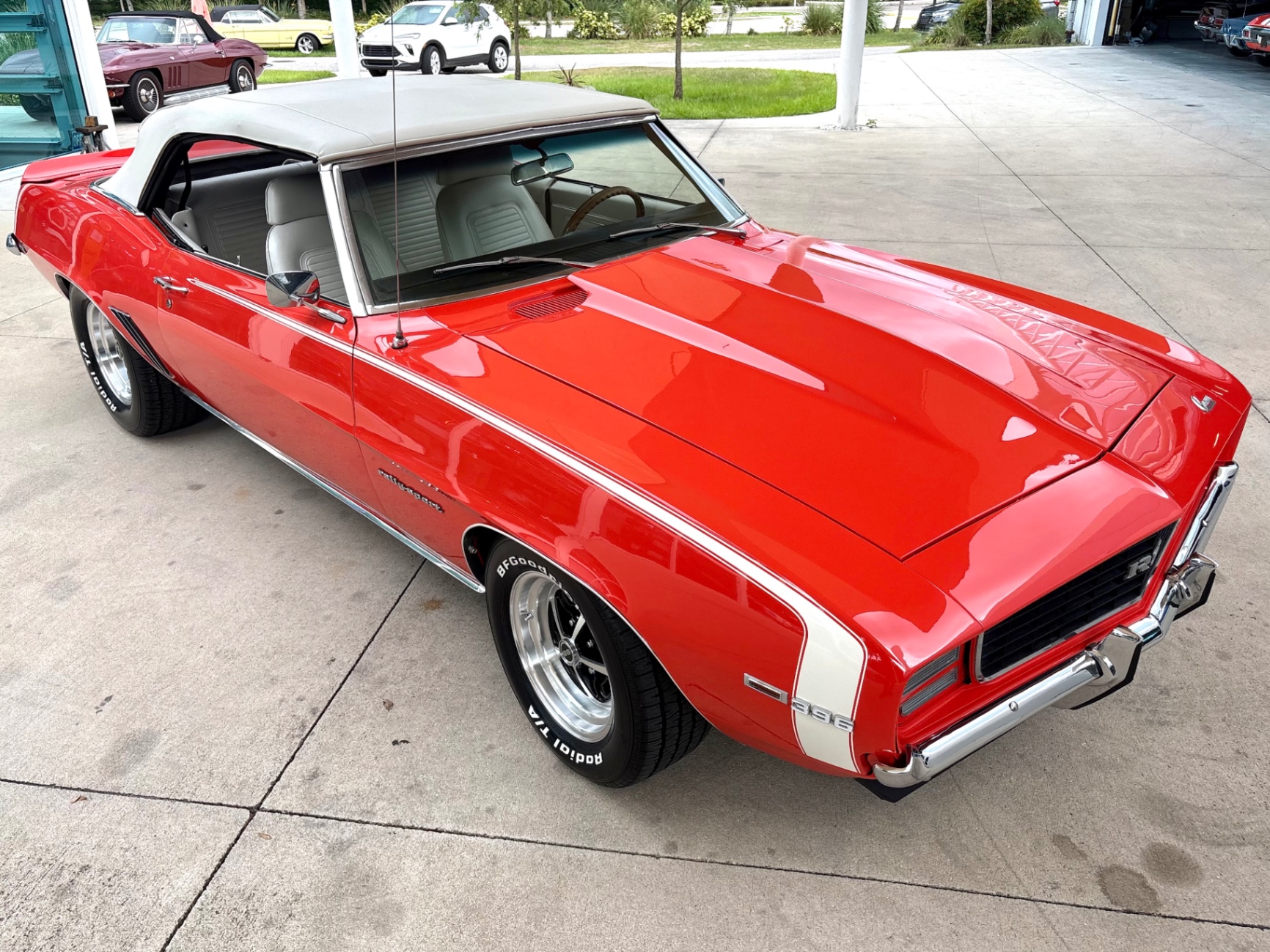
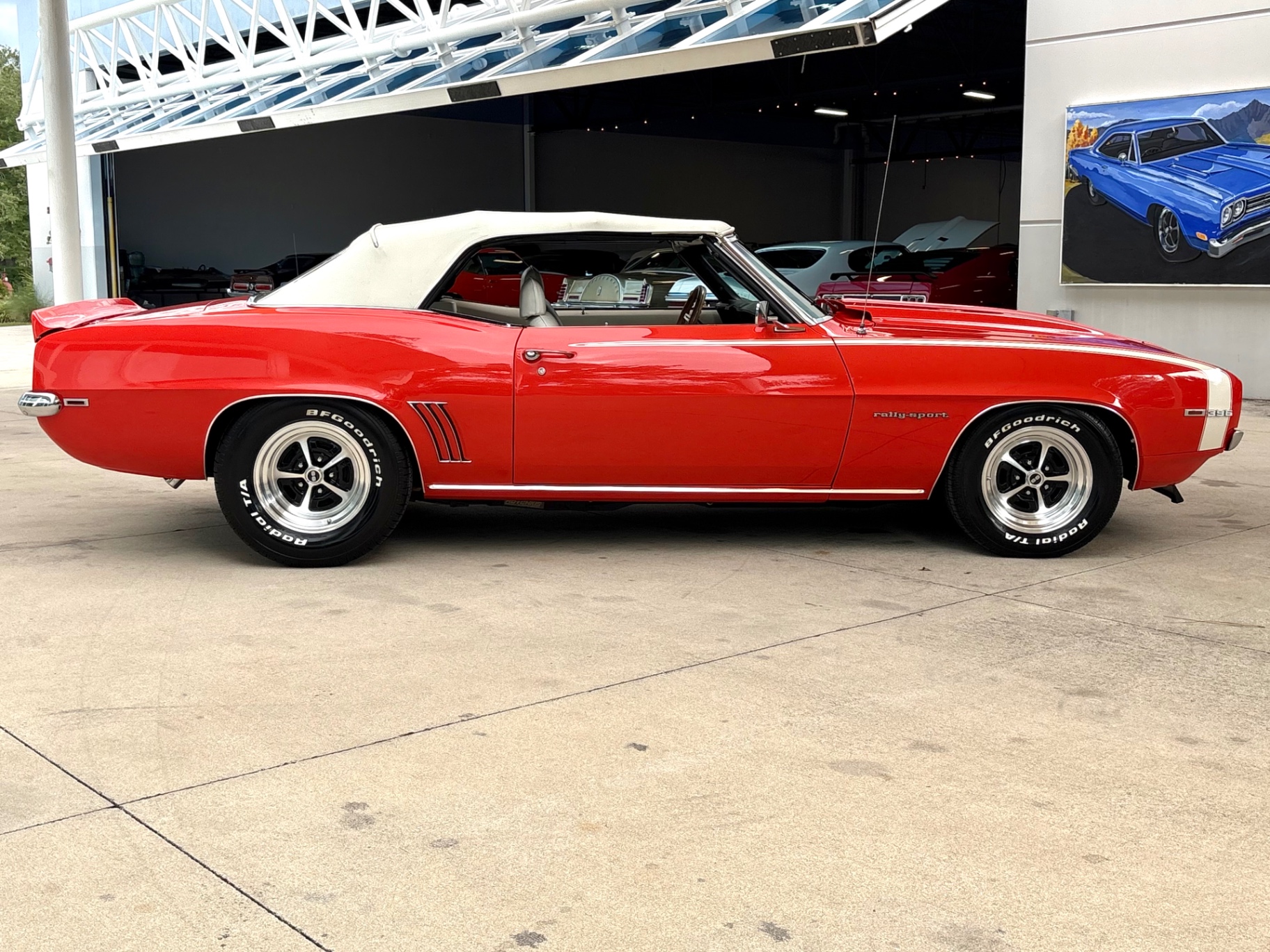
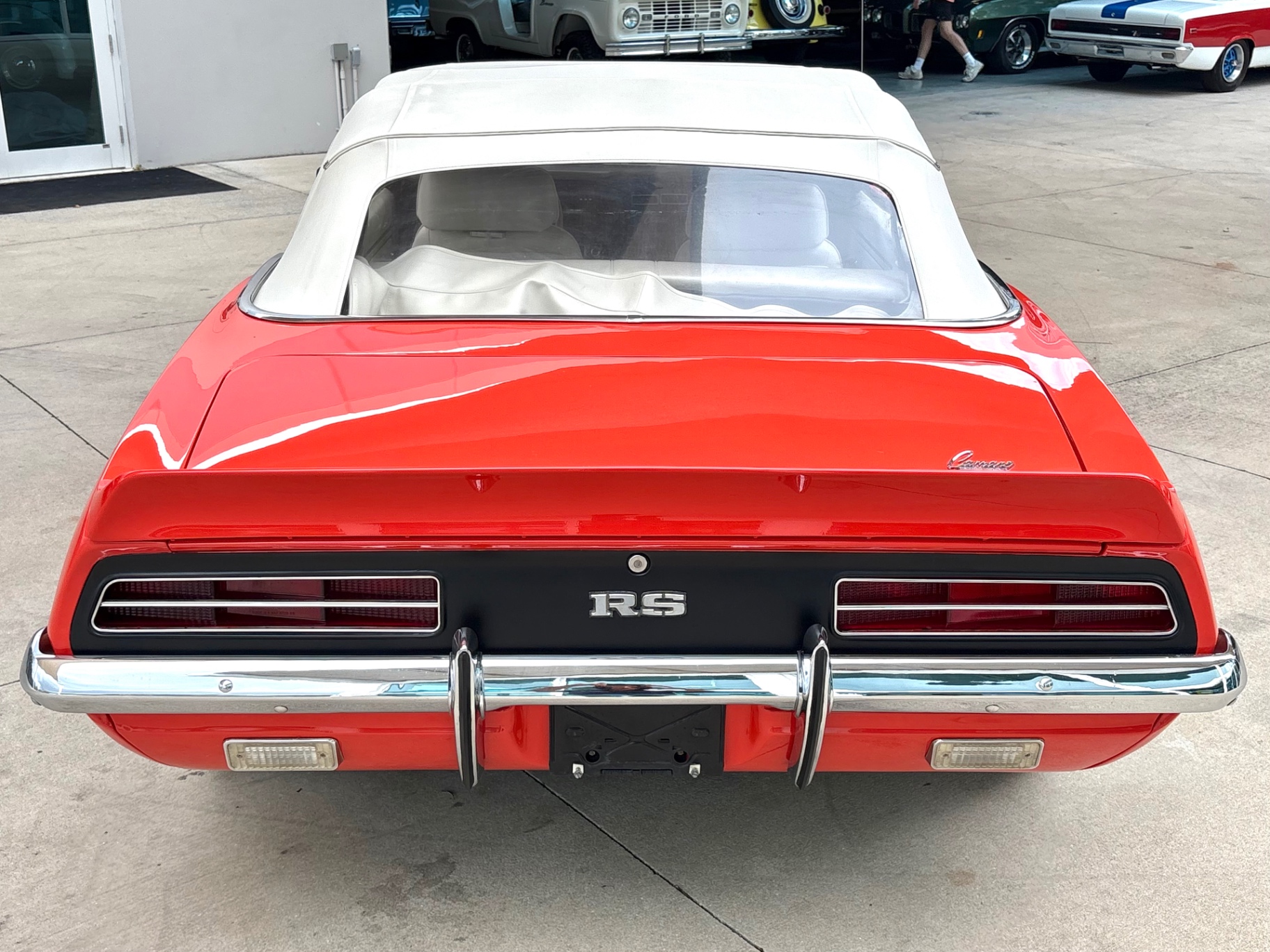
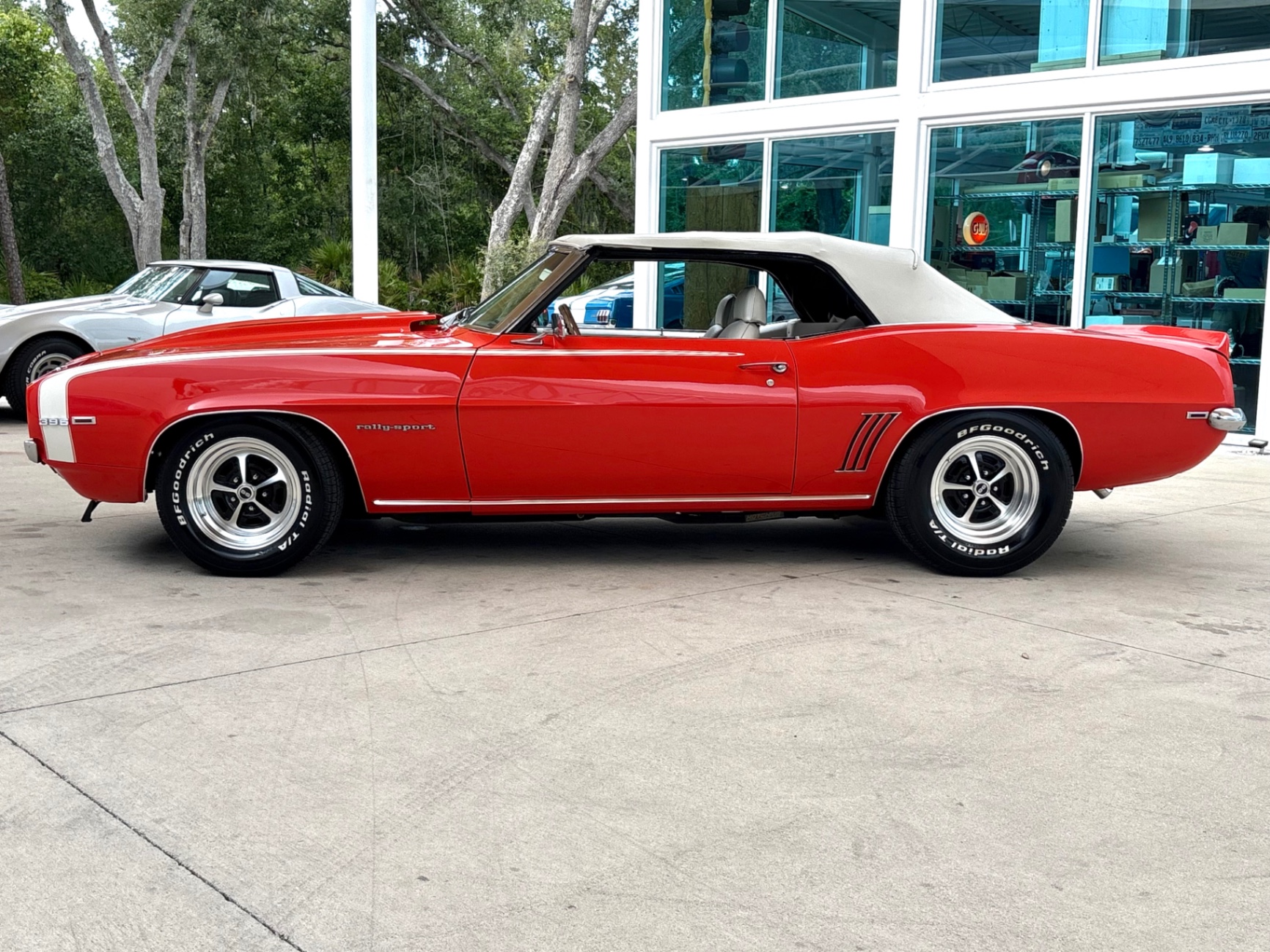
The 1969 Chevrolet Camaro RS/SS Convertible body is one of the most recognizable shapes in American automotive history, and this example wears its red repaint in solid, consistent condition. The car left the factory in Hugger Orange — GM code 72 — and has been repainted red at some point in its history. The red works well against the white top and white interior, and the paint presents cleanly in photographs.
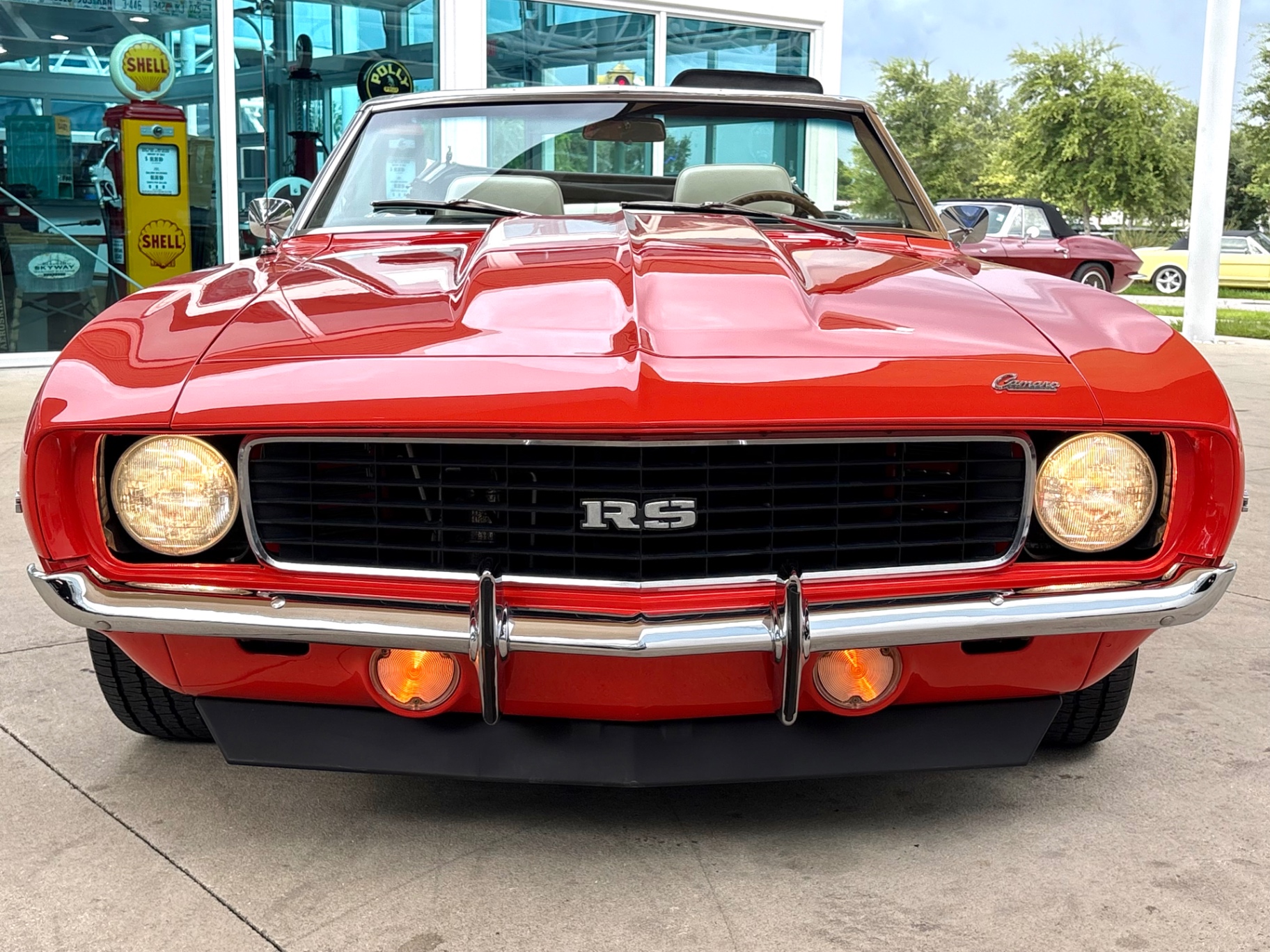
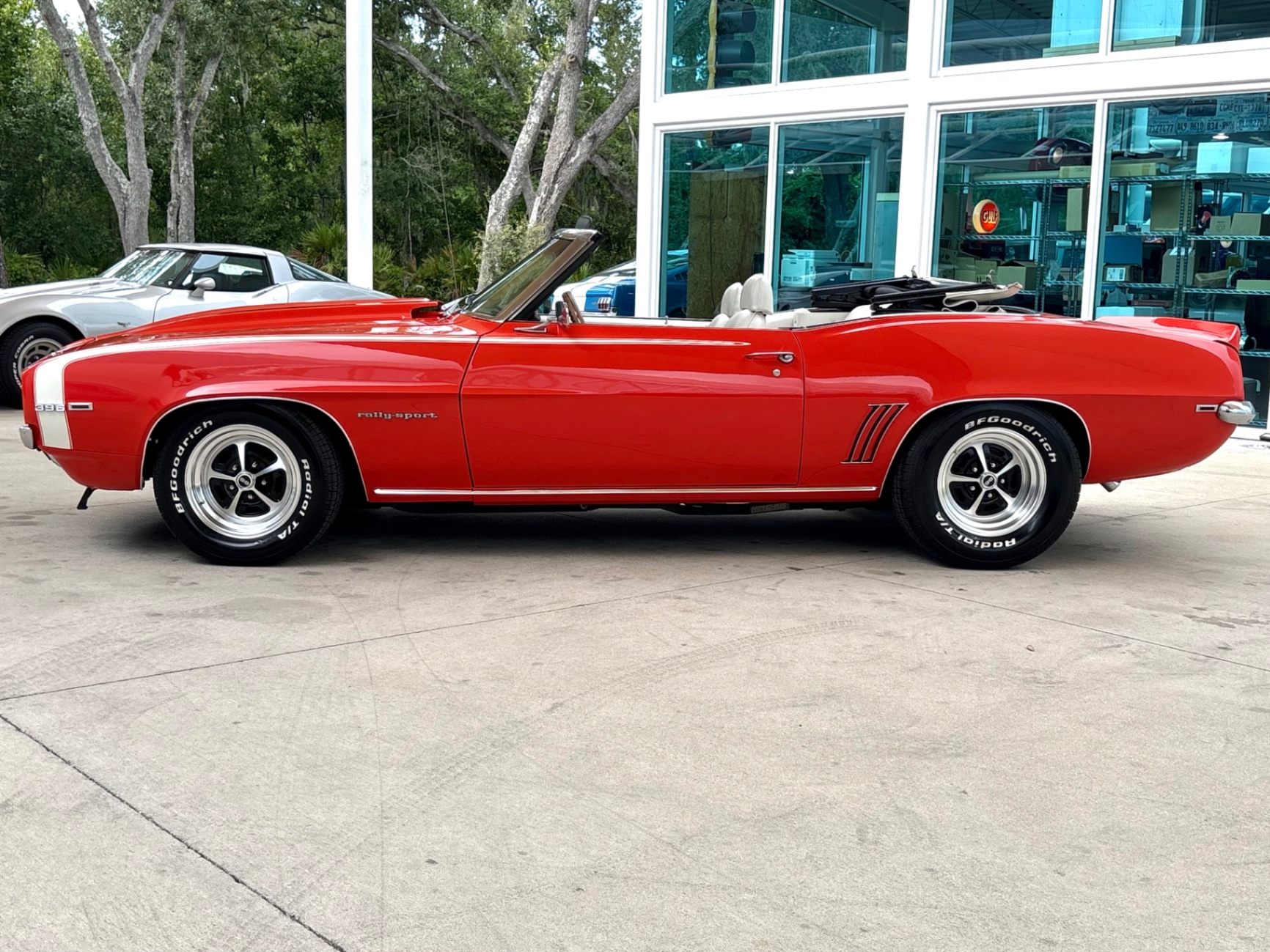
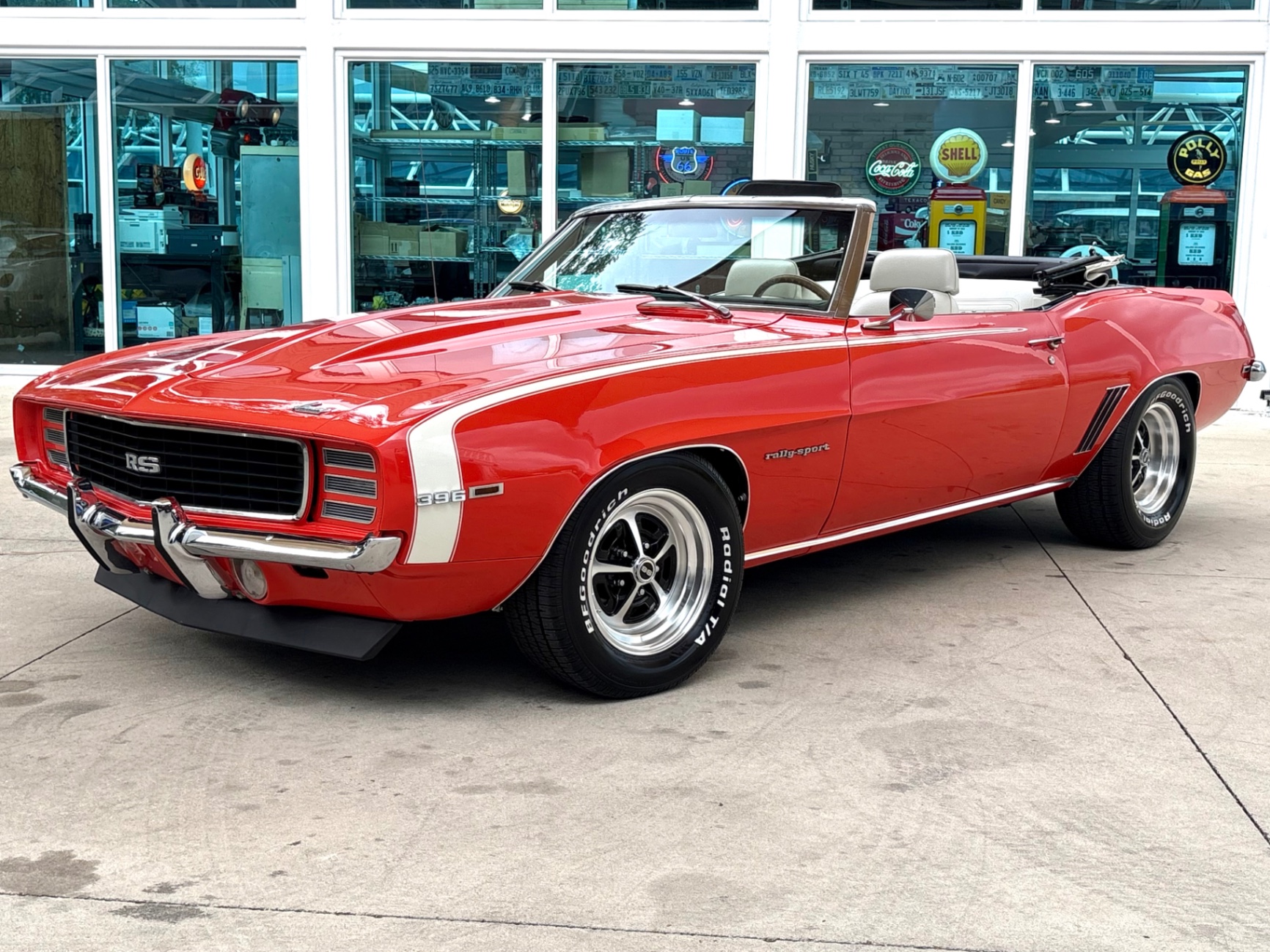
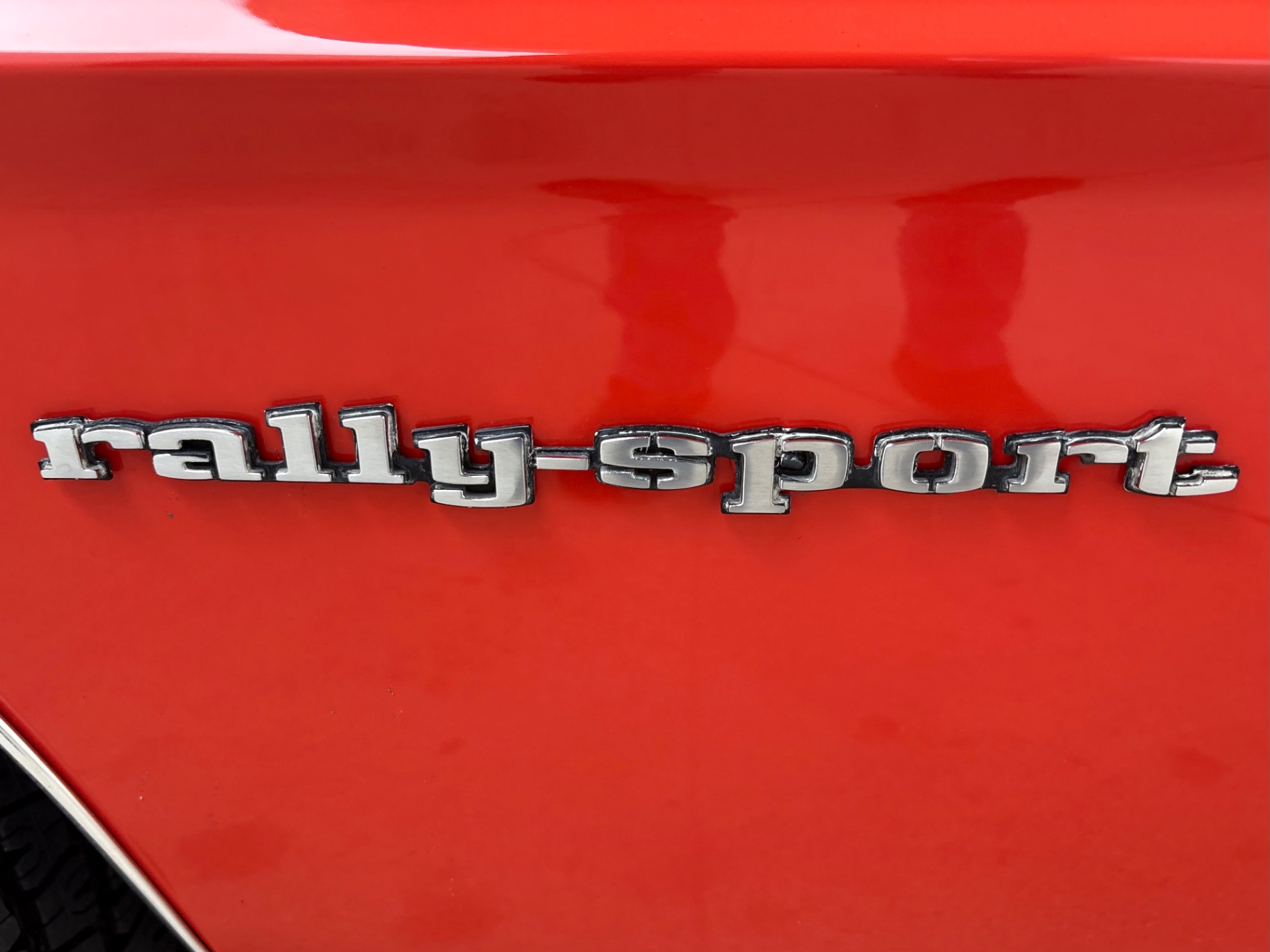
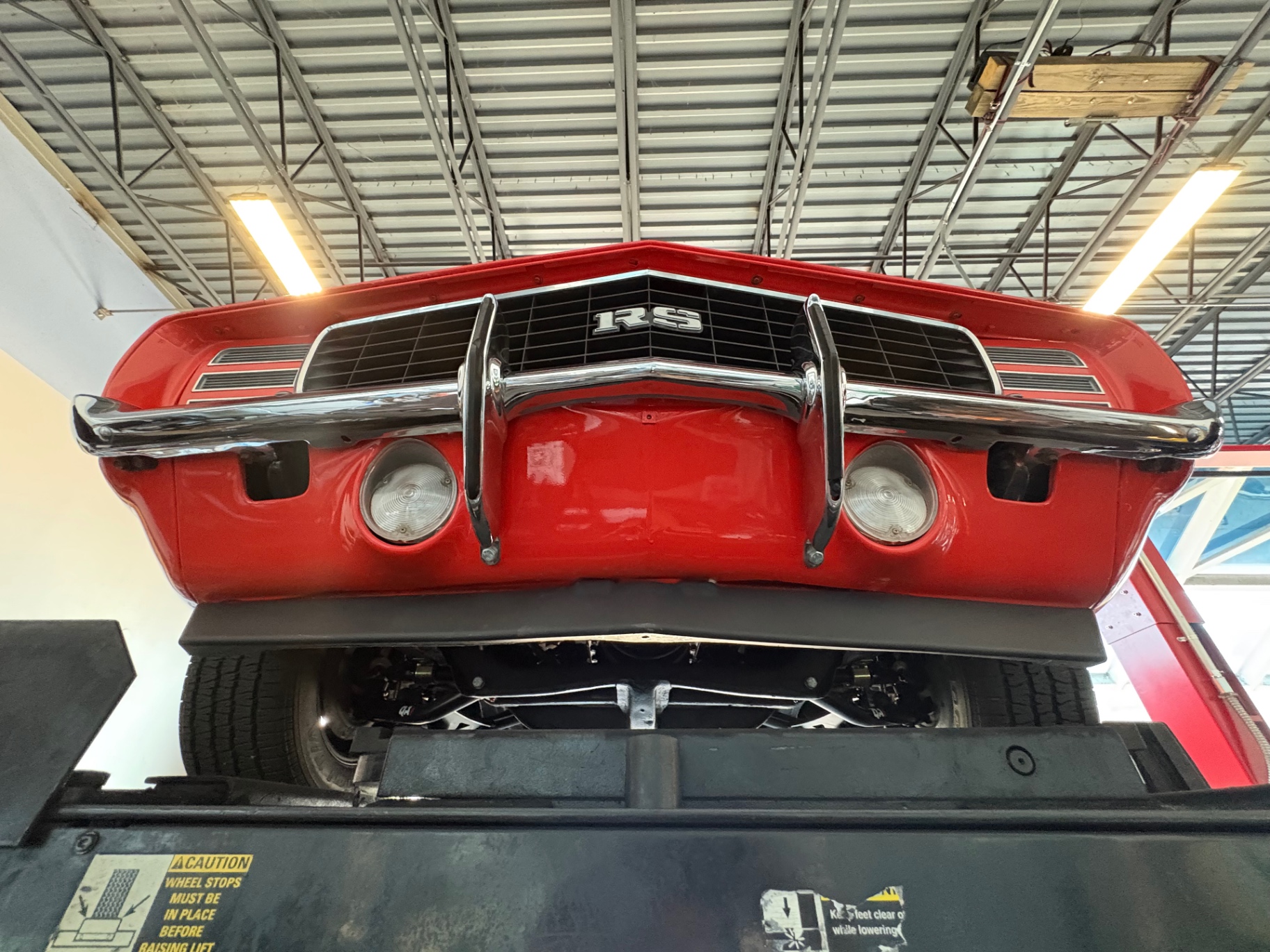
The Rally Sport package features are all present. The hideaway headlight system — where the headlights sit behind body-colored doors that swing open on activation — is one of the most distinctive styling details on the 1969 Camaro and was exclusive to the RS package. The blacked-out RS grille and RS badge are correct and in place. The 396 fender badges are fitted on both front fenders, appropriate for a big-block SS car regardless of the displacement of the current engine. The hockey stick body stripe runs along the lower body in the correct SS location.
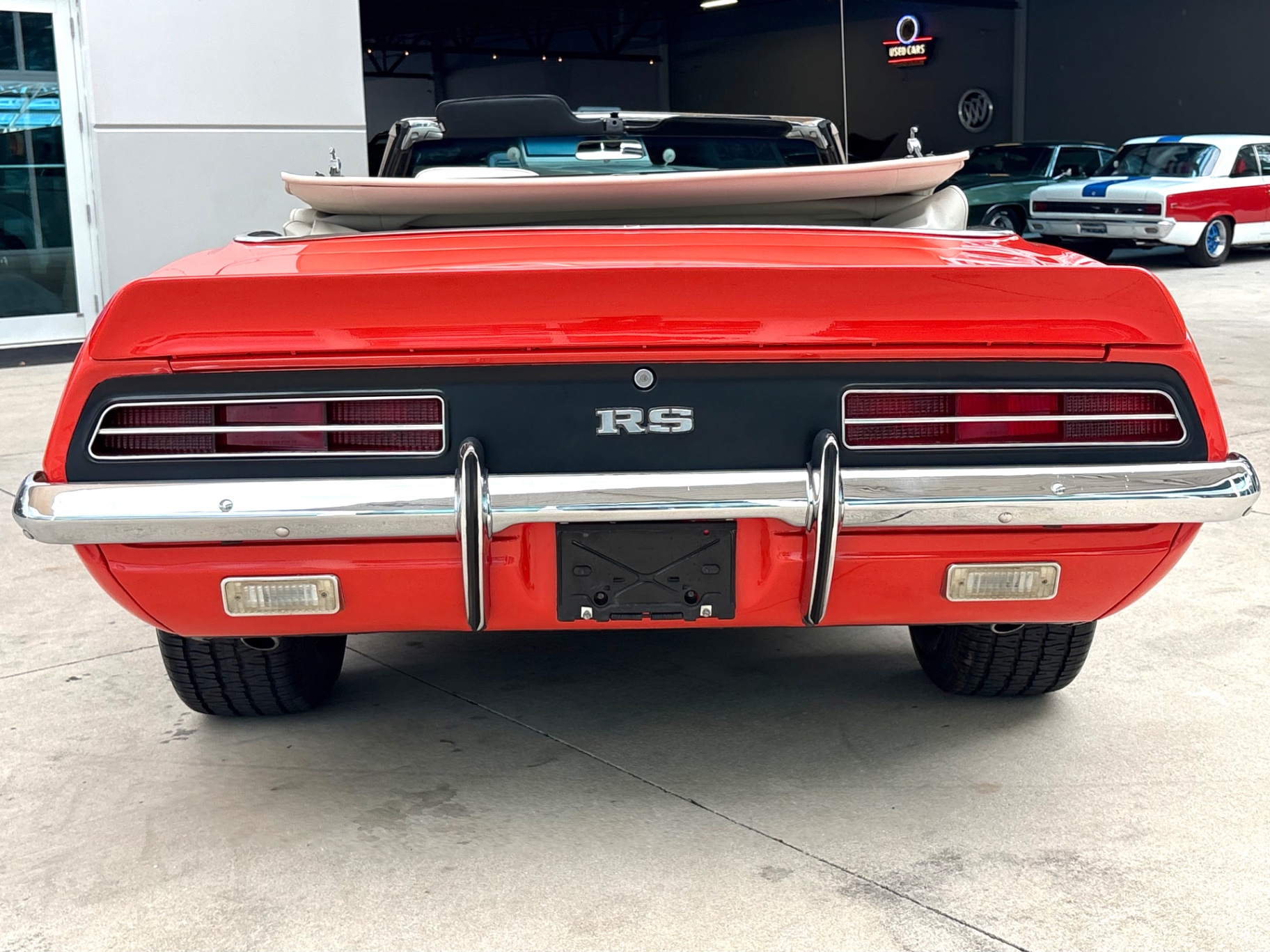
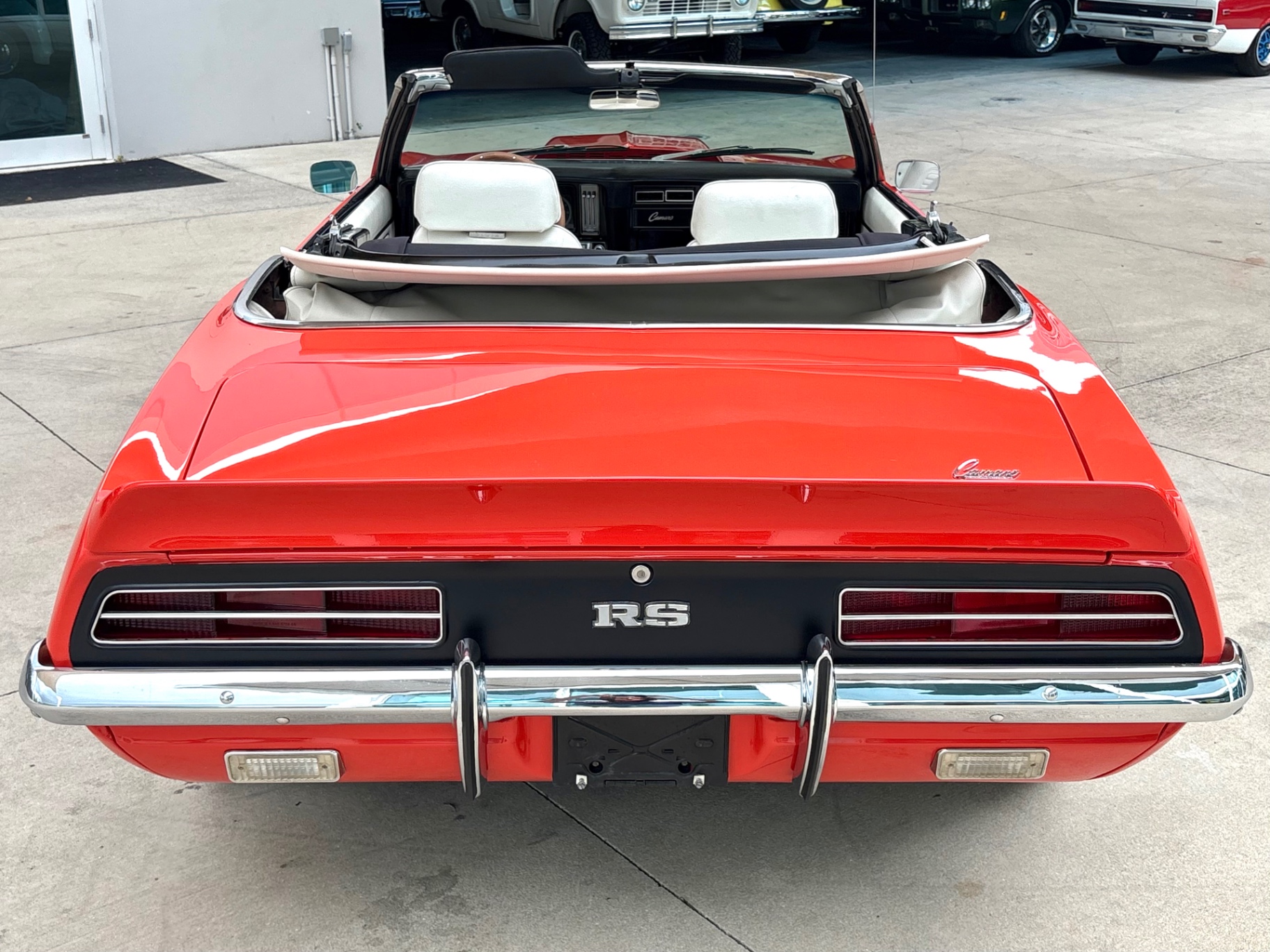
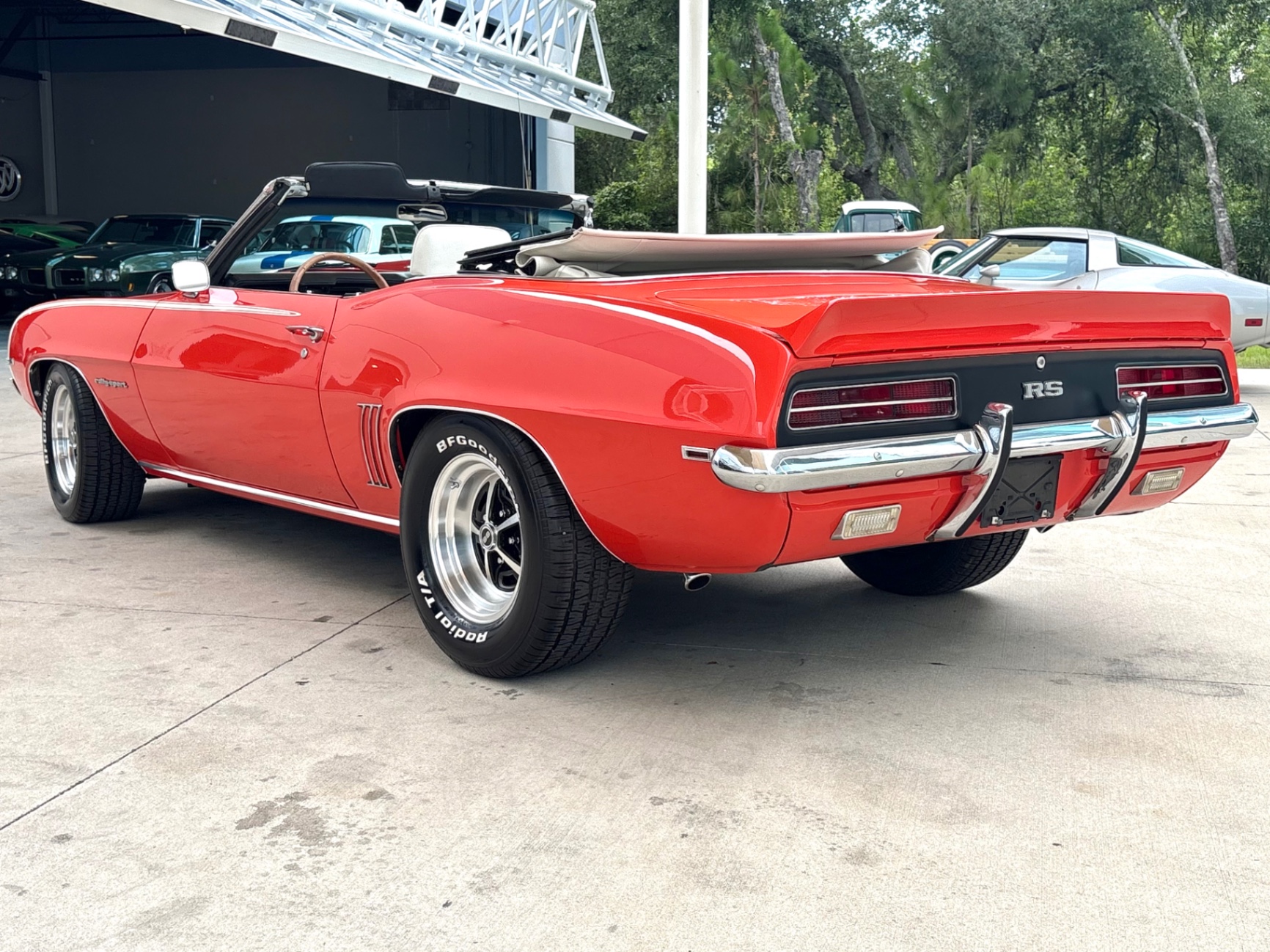
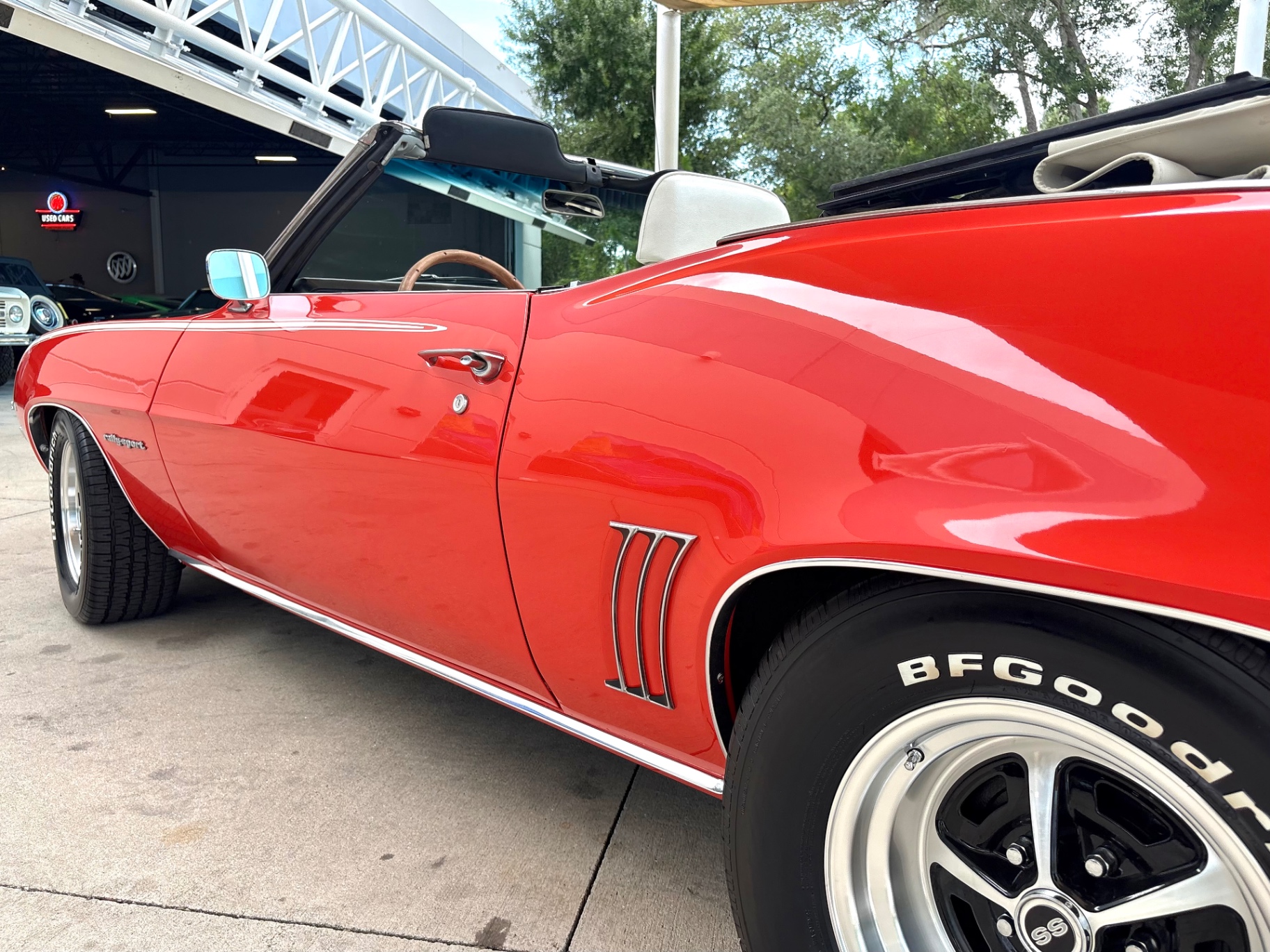
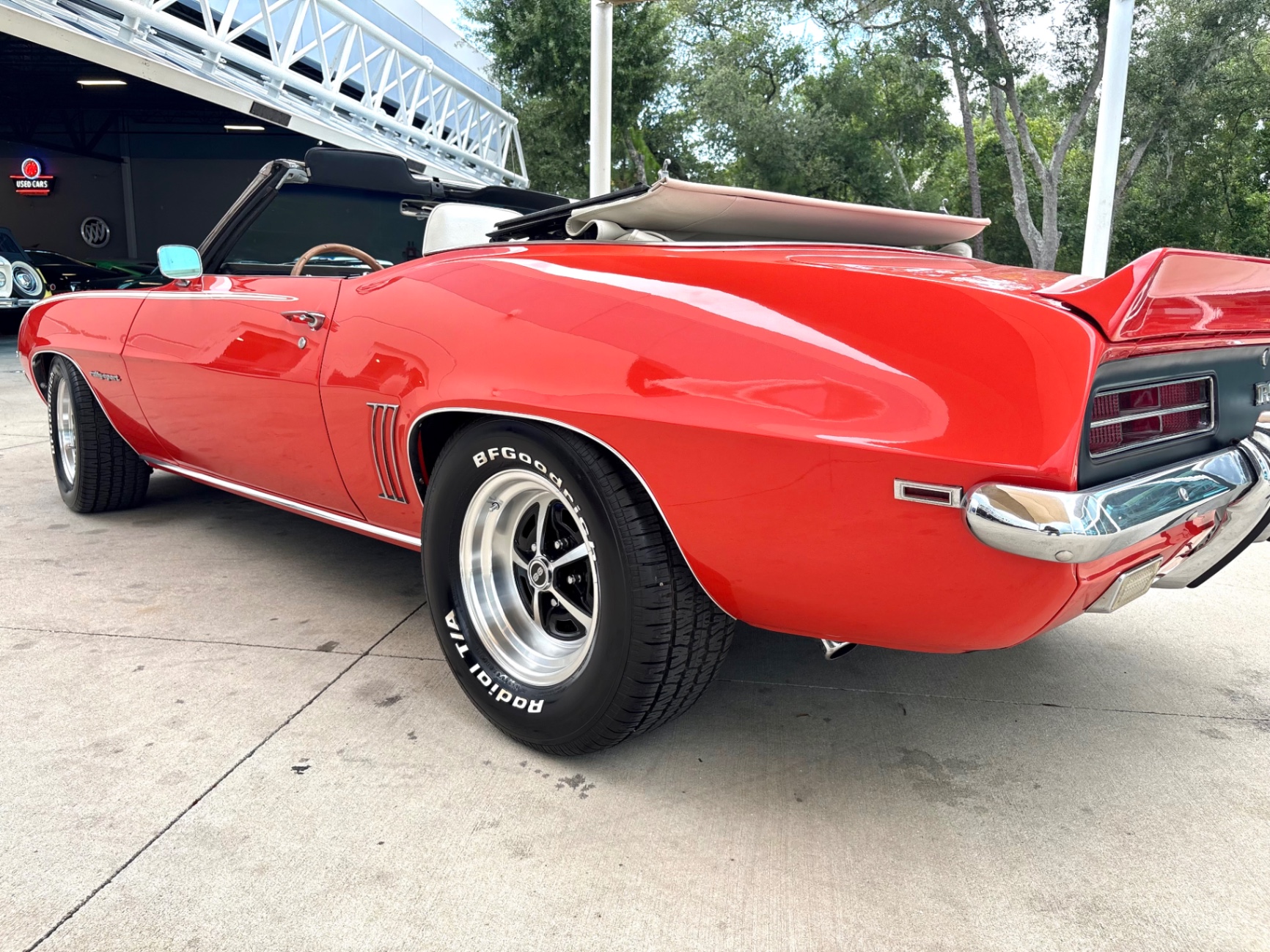
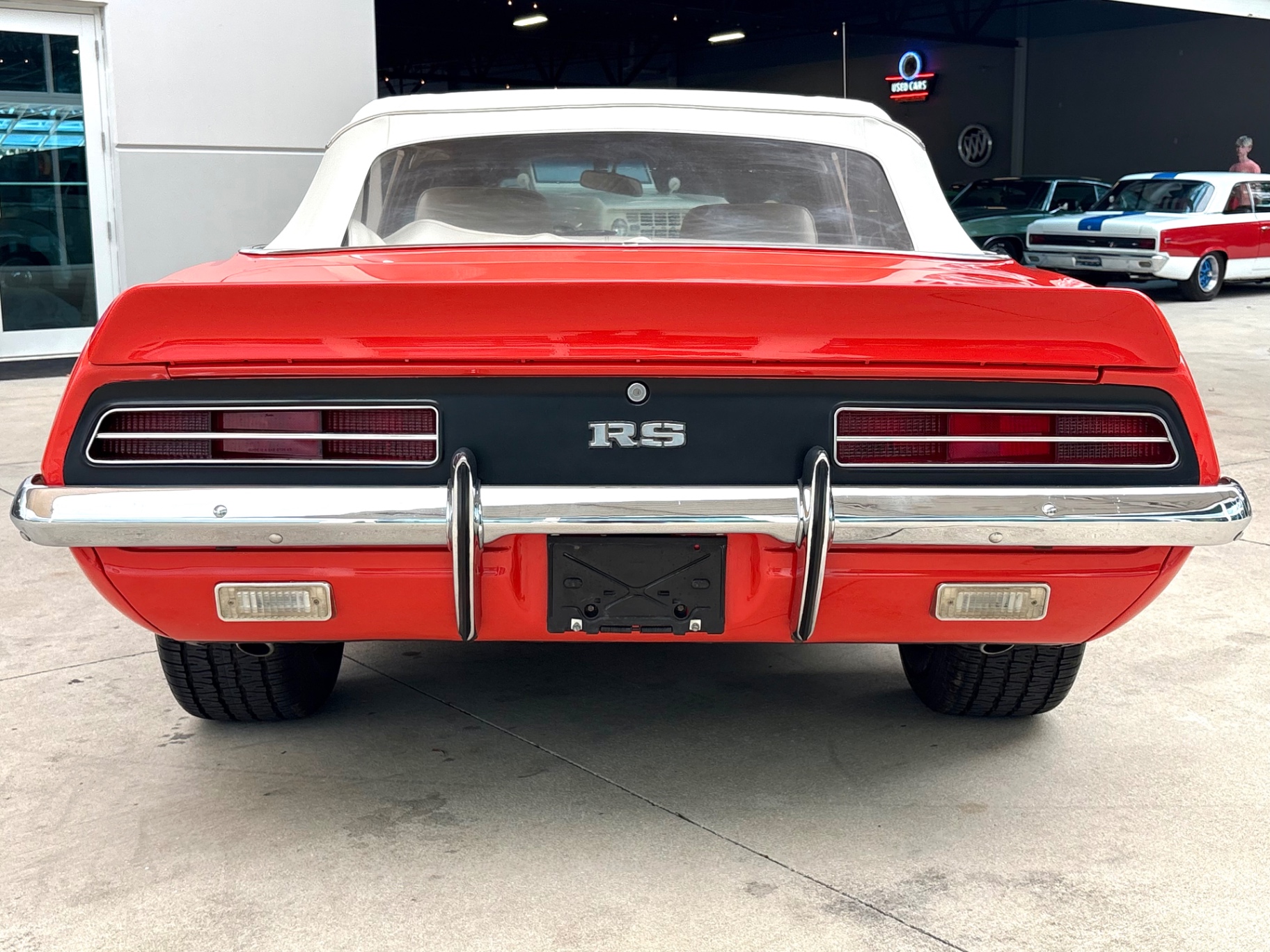
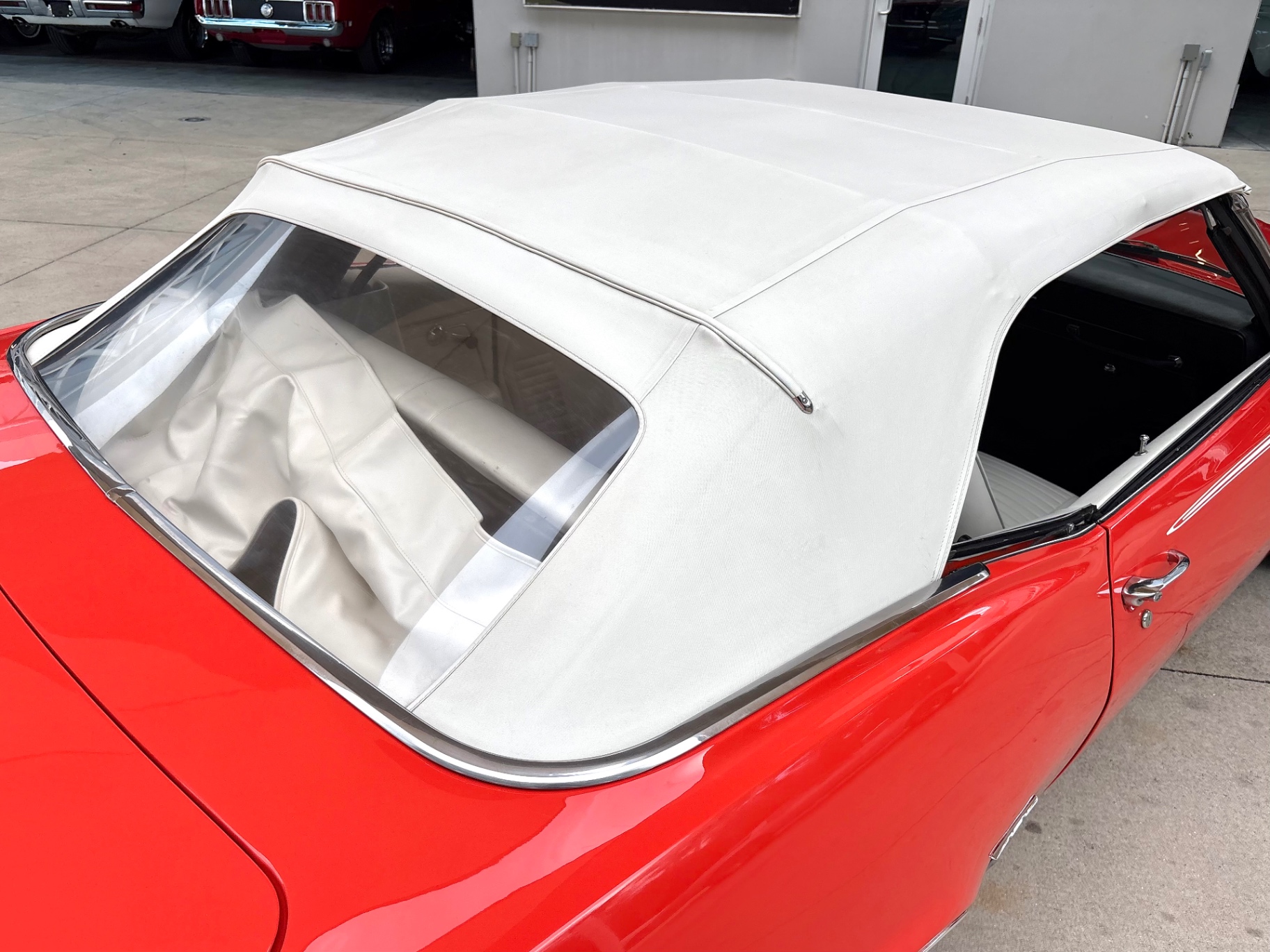
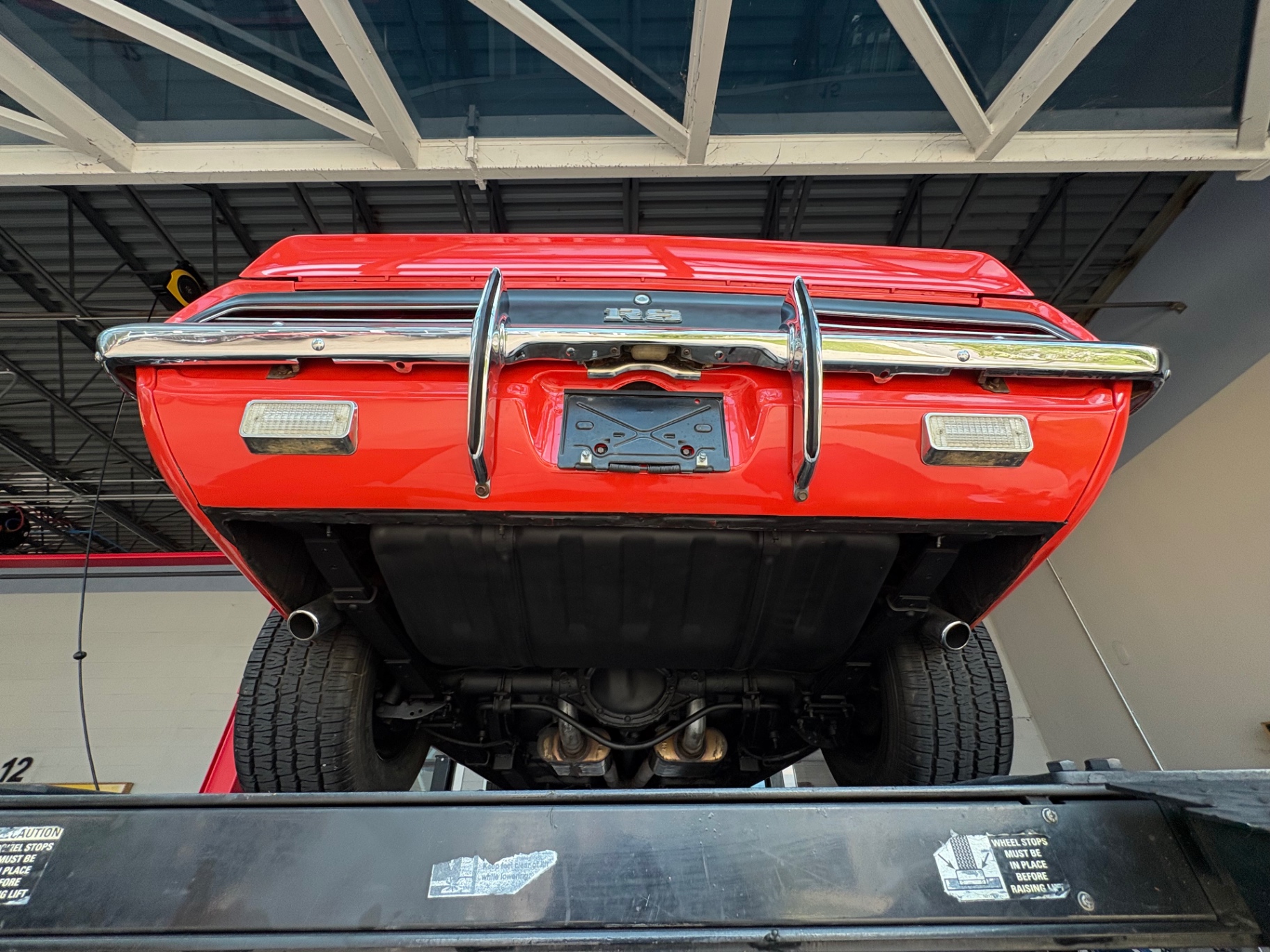
The convertible top is new and white, fitting the car cleanly. Front and rear bumper guards are fitted. The SS-style mag wheels are a classic five-spoke design that suits the body well, and the BFGoodrich Radial T/A tires fill the wheel openings correctly. Dual exhaust exits at the rear with tips visible below the bumper. The rear of the car shows the RS badge on the trunk lid, correct for the RS/SS combination.
Conclusion
The 1969 Chevrolet Camaro RS/SS Convertible is one of the most collectible configurations from what was already the most popular production year of the first-generation platform. This example combines the visual package — hideaway headlights, hockey stripe, RS and SS badging, convertible body — with a serious mechanical build underneath. The Blueprint 469 big-block, the built TH400, the rack and pinion steering, the coilovers, the frame connectors, and the front disc brakes represent a well-thought-out combination of power and drivability. The white interior and new white top against the red exterior are clean and consistent. The undercarriage is solid. This is a car that has been put together to be used.
To learn more or to schedule a time to see this 1969 Chevrolet Camaro RS/SS Convertible in person, call Skyway Classics at 941-254-6608. We're located in Sarasota, Florida and welcome serious inquiries from buyers nationwide.
Disclaimer Information found on the website is presented as given to us by the owner of the car, whether on consignment or from the owner we bought it from. Some Photos, materials for videos, descriptions and other information are provided by the consignor/seller and is deemed reliable, but Skyway Classics does not warranty or guarantee this information. Skyway Classics is not responsible for information that may incorrect or a publishing error. The decision to purchase should be based solely on the buyers personal inspection of the vehicle or by a professional inspection service prior to offer or purchase being made.
1969 Chevrolet Camaro RS/SS Convertible — Big Block 469 V8, TH400, Frame Connectors, Coilovers
Why This Car Is Special
The 1969 Chevrolet Camaro is widely regarded as the pinnacle of the first-generation platform. Chevrolet redesigned the body for 1969, giving it a lower, wider, more aggressive stance compared to the 1967–68 cars, and the market responded — 1969 remains the highest-production year of the first-gen Camaro, with more than 243,000 units built. Within that production run, the RS/SS convertible combination was one of the most optioned and most desirable configurations a buyer could order. The Rally Sport package (RPO Z22) added the iconic hideaway headlight system, a blacked-out grille with RS badging, and body-color bumper fillers, while the Super Sport package (RPO Z27) brought the big-block drivetrain, SS badges, and the hockey stick body stripe. Ordering both on a convertible, with a big-block engine, put this car at or near the top of the Camaro option sheet in 1969.
The VIN on this car decodes to a Norwood, Ohio assembly plant build — the "N" in the seventh position confirms that. Norwood was one of two Camaro assembly facilities in 1969, and it produced the majority of first-gen Camaros. The body style code "67" in the VIN confirms the convertible body, and the engine code "8" indicates this car left the factory with a big-block V8. The original factory color, confirmed by the trim tag, was Hugger Orange — GM paint code 72, one of the signature colors of the muscle car era and one of the most recognized Camaro colors from the 1969 model year. The car has since been repainted red, which complements the white interior and white convertible top in a clean, high-contrast combination.
What makes this particular 1969 Camaro RS/SS Convertible stand out beyond its credentials is the scope of the mechanical work done to it. The original drivetrain has been replaced with a Blueprint Engines 469 cubic inch big-block crate engine sourced through Summit Racing, rated by the builder at 491 to 530 horsepower. That engine is backed by a built TH400 3-speed automatic transmission — the same unit Chevrolet used in its most serious performance applications. The suspension, steering, and chassis have all been upgraded in ways that make this car significantly more capable and more comfortable than it left the factory. This is a car that has been built to be driven.
Features List
- Blueprint Engines 469 cubic inch Big Block V8 crate engine (from Summit Racing), rated 491–530 HP per builder - Built TH400 3-Speed Automatic Transmission with chrome pan - Aftermarket rack and pinion power steering - Adjustable coilover suspension (front) - Power front disc brakes - Front and rear sway bars - Frame connectors - Aluminum 4-core radiator - Air conditioning - Flowmaster dual exhaust - RS/SS Convertible body configuration - New white power convertible top - Hideaway headlights (Rally Sport) - Rally Sport badges and RS grille - 396 fender badges - Hockey stick SS-style body stripe - SS-style mag wheels with BFGoodrich Radial T/A tires - White vinyl bucket seats with center console - Horseshoe floor shifter - Console gauges and tachometer - In-dash clock - Astro Ventilation system - Wood-grain steering wheel - Black carpet - Aftermarket stereo - Chrome engine dress-up - Front and rear bumper guards - Clean undercarriage - Originally Hugger Orange (Code 72), repainted red
Mechanical
Under the hood sits a Blueprint Engines 469 cubic inch big-block V8 — a professionally assembled crate engine sourced through Summit Racing. Blueprint Engines is one of the most well-regarded names in the crate engine business, known for precision balancing, consistent builds, and dyno-verified output. The builder rates this engine at 491 to 530 horsepower, which puts it well above anything that came from the factory in 1969. For reference, the hottest production big-block Camaro engine that year — the L89 aluminum-head 396 — was rated at 375 horsepower under GM's conservative factory figures. This engine goes considerably further than that.
The chrome dress-up package in the engine bay is well executed and period-appropriate in style. An aluminum 4-core radiator handles cooling duties, which is a practical and necessary upgrade when running this level of power, particularly in the Florida heat.
Behind the engine is a built TH400 3-speed automatic transmission. The TH400 was Chevrolet's heavy-duty automatic, used in the highest-powered applications from 1965 onward. This one has been built for performance use, and a chrome TH400 transmission pan is visible from below — a clean detail on an already clean undercarriage.
Steering has been converted to an aftermarket rack and pinion setup, replacing the original recirculating ball steering gear. This is a popular and widely respected upgrade on first-gen Camaros that meaningfully improves steering feel and response. Power assist is retained. The front suspension has been upgraded to adjustable coilovers, allowing ride height and damping to be dialed in. Front and rear sway bars reduce body roll, and frame connectors have been welded in to stiffen the unibody — a structural upgrade that matters especially on a convertible, where the absence of a roof reduces overall chassis rigidity. Front brakes are power-assisted discs. BFGoodrich Radial T/A tires are fitted all around, one of the most recognized and historically appropriate tire choices for a first-gen Camaro build. The undercarriage is clean, well-painted, and shows the work that has been done to it.
Interior
The 1969 Camaro RS/SS Convertible interior here is white vinyl throughout — bucket seats front and rear, door panels, and rear seat back — set against black carpet. The contrast is sharp and the condition of the vinyl is good. This is a correct configuration for a 1969 Camaro SS with the console option, and it reads as clean and well-maintained rather than worn.
The center console is in place with the horseshoe-style floor shifter for the TH400, framed in wood-grain trim that runs the length of the console. The instrument cluster carries the full gauge package: speedometer, tachometer, and console-mounted auxiliary gauges for oil pressure and temperature are visible in the photographs. The in-dash clock is present and correct for a 1969 RS. The Astro Ventilation vents — a 1969 Camaro feature that routed outside air through the instrument panel without requiring the windows down — are visible on the left side of the dash.
The wood-grain steering wheel is a period-correct style that suits the interior well. An aftermarket stereo has been fitted in place of the original radio opening, which is a practical upgrade that keeps the car usable on longer drives. Air conditioning is present, which is a significant comfort item in the Florida climate and adds to the daily drivability of the car.
Exterior
The 1969 Chevrolet Camaro RS/SS Convertible body is one of the most recognizable shapes in American automotive history, and this example wears its red repaint in solid, consistent condition. The car left the factory in Hugger Orange — GM code 72 — and has been repainted red at some point in its history. The red works well against the white top and white interior, and the paint presents cleanly in photographs.
The Rally Sport package features are all present. The hideaway headlight system — where the headlights sit behind body-colored doors that swing open on activation — is one of the most distinctive styling details on the 1969 Camaro and was exclusive to the RS package. The blacked-out RS grille and RS badge are correct and in place. The 396 fender badges are fitted on both front fenders, appropriate for a big-block SS car regardless of the displacement of the current engine. The hockey stick body stripe runs along the lower body in the correct SS location.
The convertible top is new and white, fitting the car cleanly. Front and rear bumper guards are fitted. The SS-style mag wheels are a classic five-spoke design that suits the body well, and the BFGoodrich Radial T/A tires fill the wheel openings correctly. Dual exhaust exits at the rear with tips visible below the bumper. The rear of the car shows the RS badge on the trunk lid, correct for the RS/SS combination.
Conclusion
The 1969 Chevrolet Camaro RS/SS Convertible is one of the most collectible configurations from what was already the most popular production year of the first-generation platform. This example combines the visual package — hideaway headlights, hockey stripe, RS and SS badging, convertible body — with a serious mechanical build underneath. The Blueprint 469 big-block, the built TH400, the rack and pinion steering, the coilovers, the frame connectors, and the front disc brakes represent a well-thought-out combination of power and drivability. The white interior and new white top against the red exterior are clean and consistent. The undercarriage is solid. This is a car that has been put together to be used.
To learn more or to schedule a time to see this 1969 Chevrolet Camaro RS/SS Convertible in person, call Skyway Classics at 941-254-6608. We're located in Sarasota, Florida and welcome serious inquiries from buyers nationwide.
Disclaimer Information found on the website is presented as given to us by the owner of the car, whether on consignment or from the owner we bought it from. Some Photos, materials for videos, descriptions and other information are provided by the consignor/seller and is deemed reliable, but Skyway Classics does not warranty or guarantee this information. Skyway Classics is not responsible for information that may incorrect or a publishing error. The decision to purchase should be based solely on the buyers personal inspection of the vehicle or by a professional inspection service prior to offer or purchase being made.
1969 Chevrolet
Camaro RS/SS
Why Choose Skyway Classics?
Explore our curated inventory of classic and collector cars—thoughtfully selected, ready to drive, and supported by experts who make ownership simple.
Expert Curation
Every vehicle is hand-selected by our experts for quality, authenticity, and investment potential.
Fast Transactions
Streamlined buying and selling process with quick financing and immediate delivery options.
Only National Dealer With Classic Service & Repair
We’re the only national dealership that services and repairs the classics we sell—before and after the sale.
Nationwide Network
Access to our extensive network of collectors, restorers, and classic car enthusiasts nationwide.
Concierge Ownership Support
From financing and insurance to paperwork, shipping, and titling—we handle the details so you can enjoy the drive.
Passion-Driven Service
We're classic car enthusiasts first, providing personalized service with genuine passion for the hobby.