
1968 Chevrolet
Camaro Base
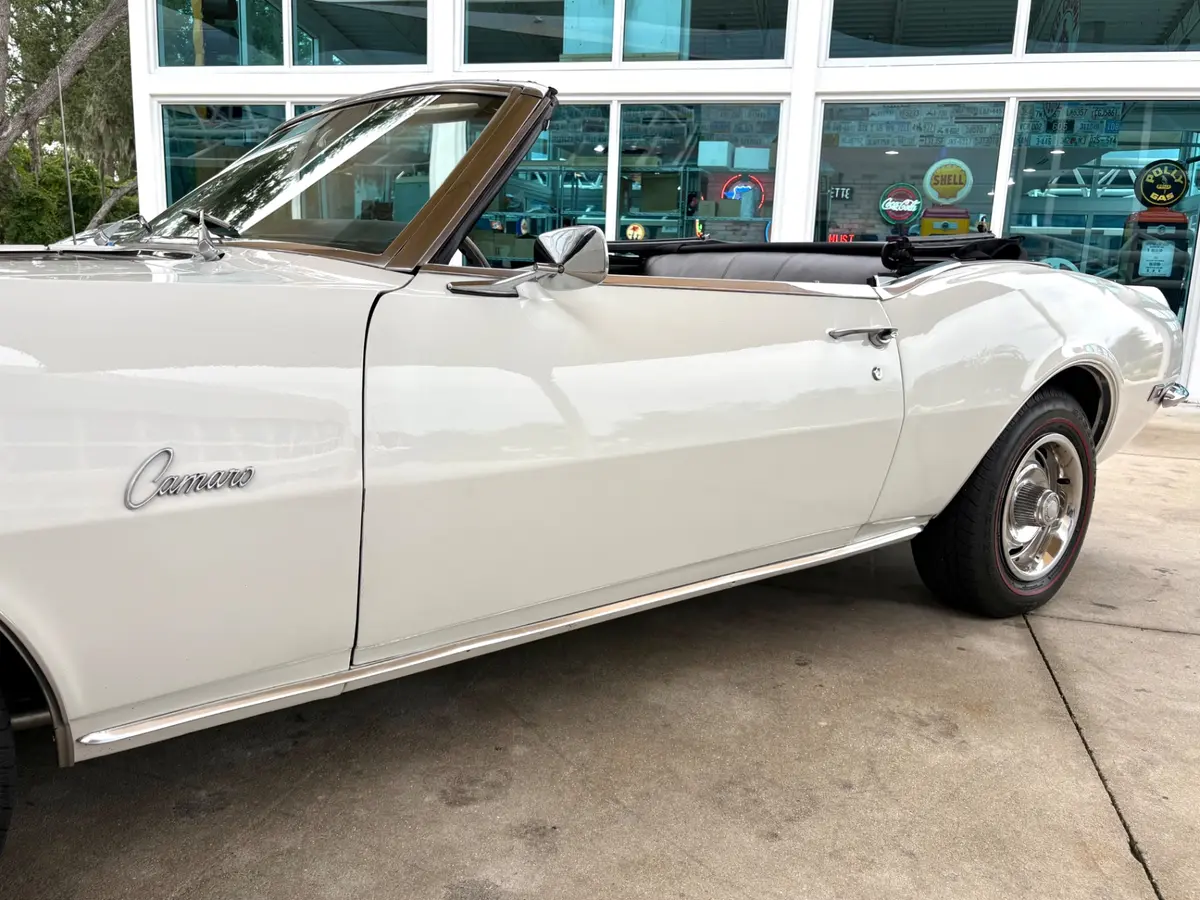
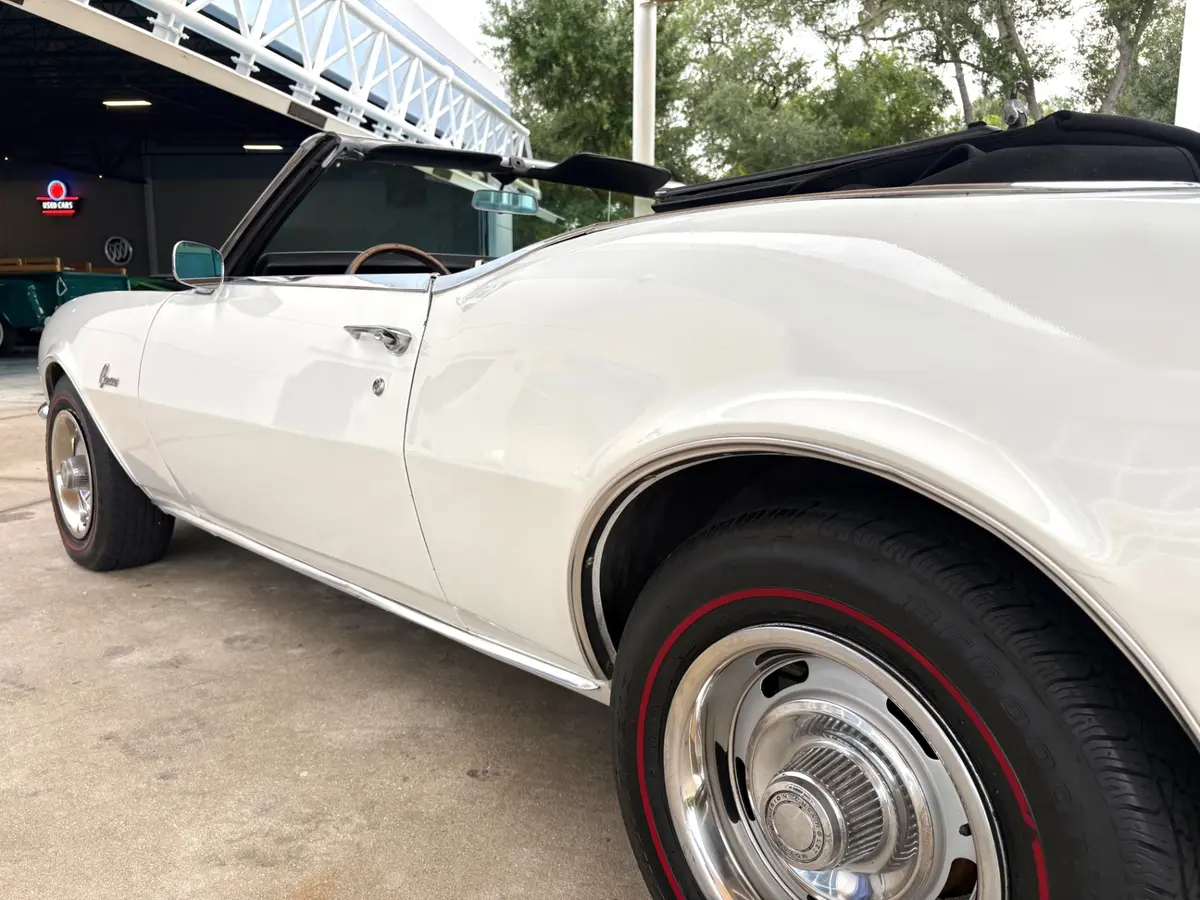
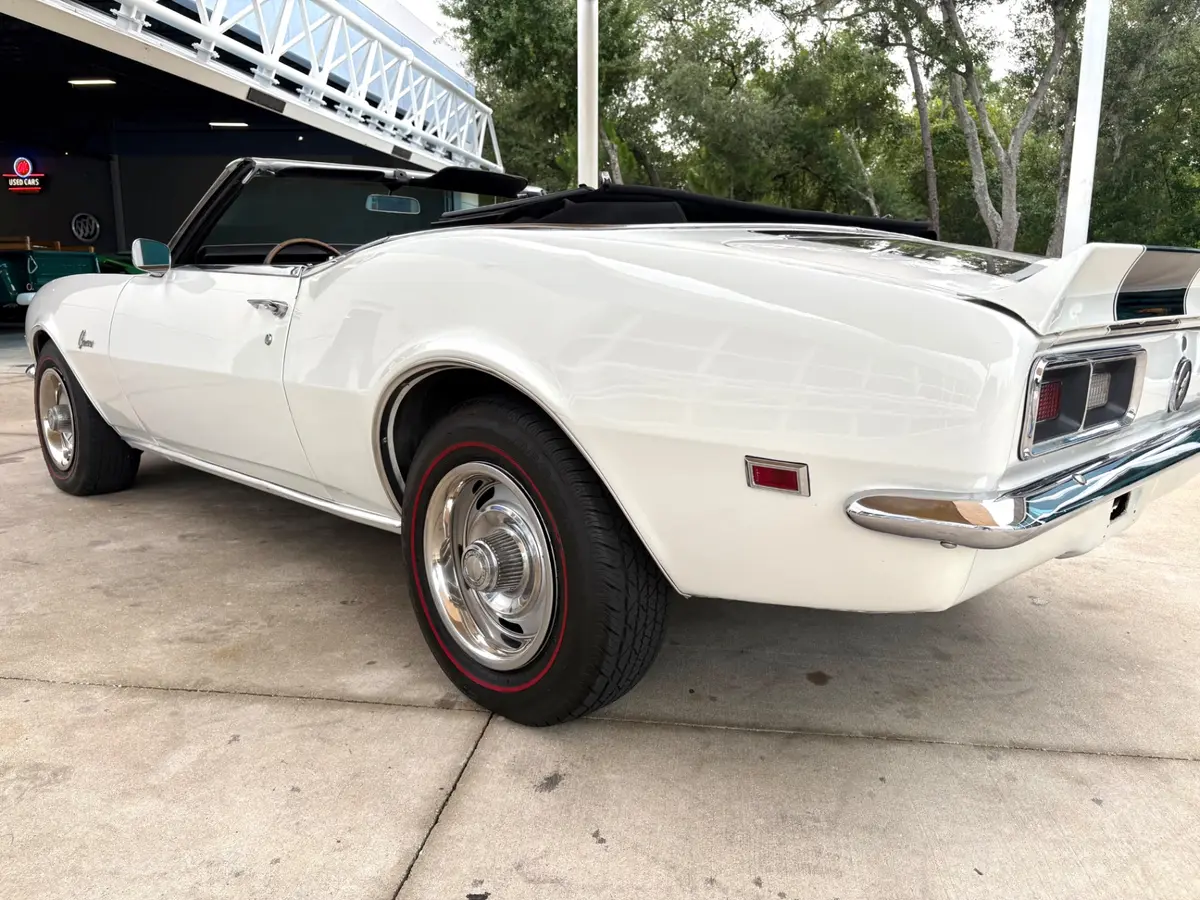
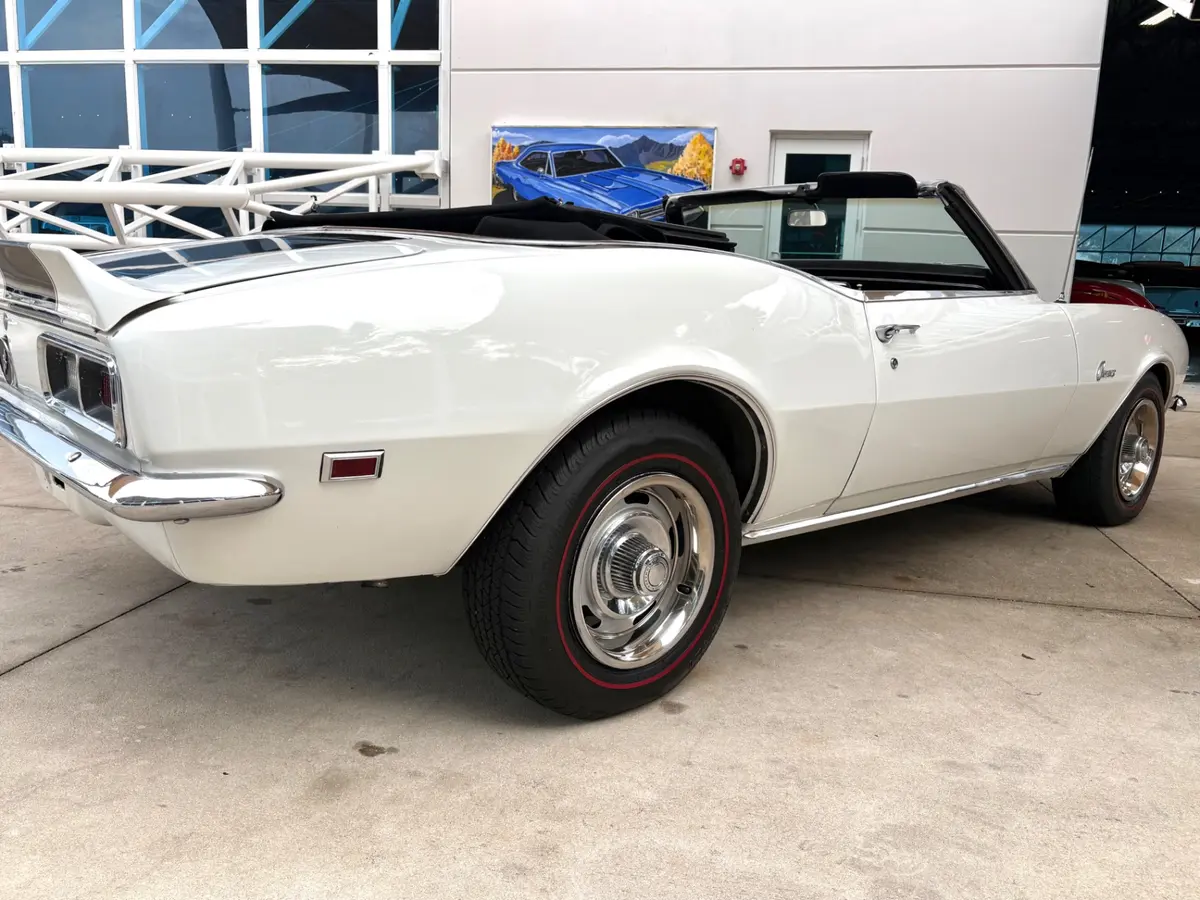
1968 Chevrolet Camaro Convertible — Numbers-Correct 327 V8, Norwood-Built, Fisher Body Documented
Why This Car Is Special
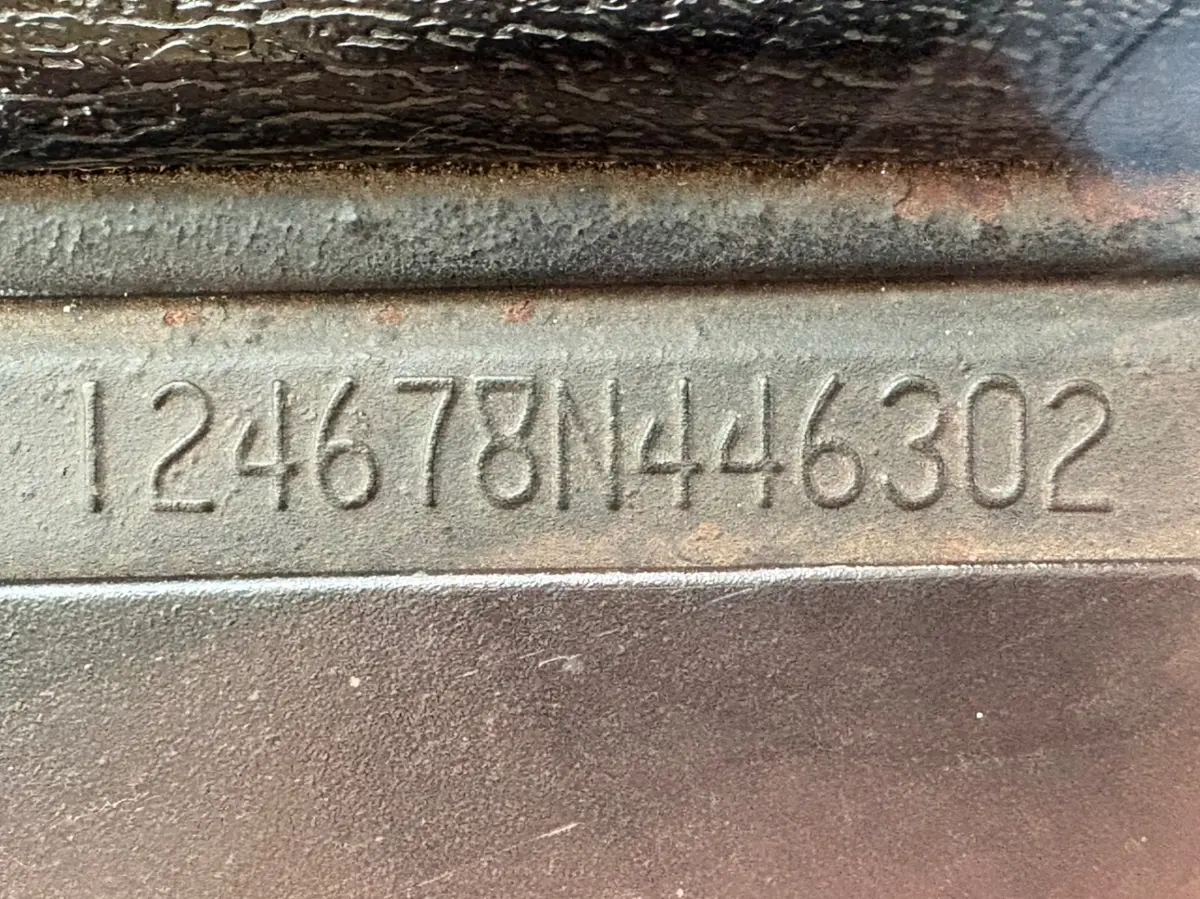
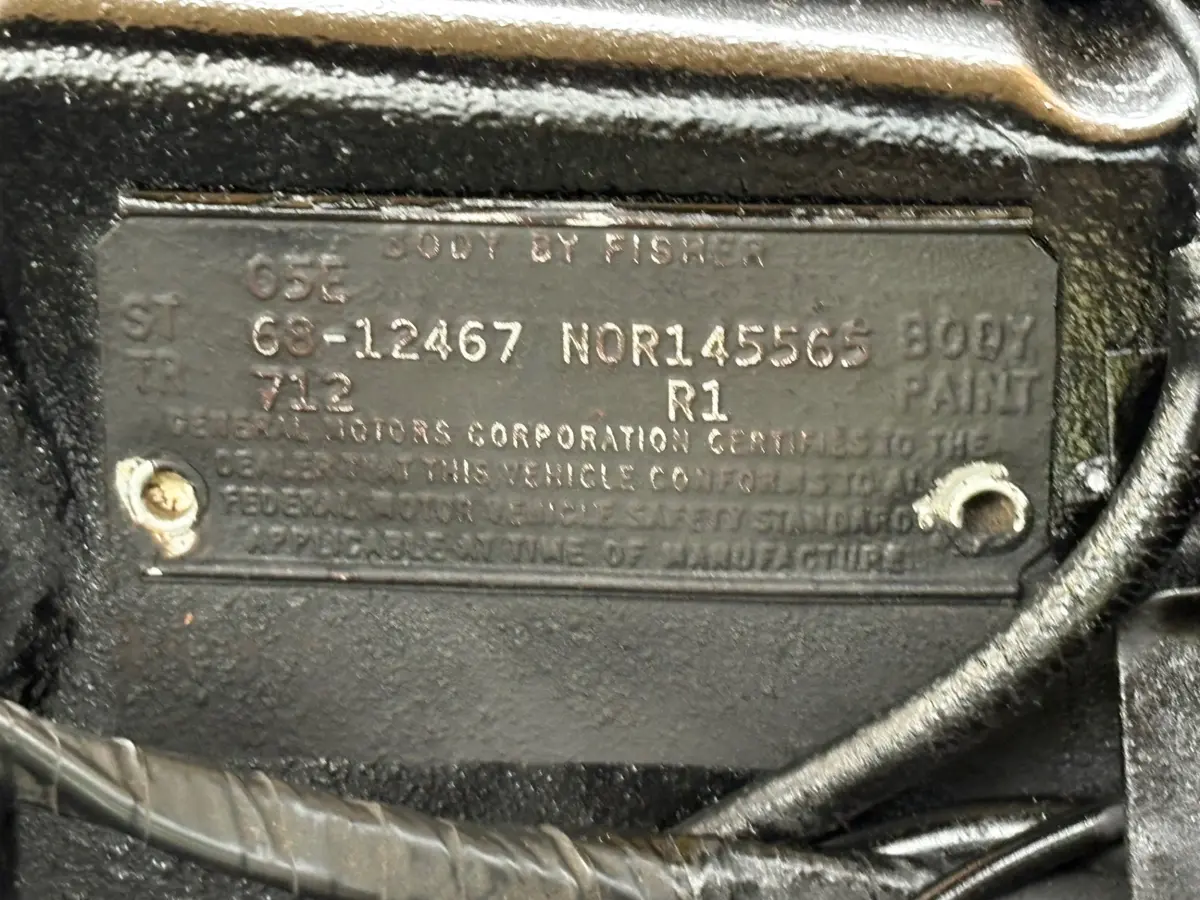
The 1968 Chevrolet Camaro convertible is one of the more sought-after configurations of the first-generation platform, and for good reason. Chevrolet sold just over 20,000 Camaro convertibles for the 1968 model year, compared to more than 215,000 coupes. That alone makes any open-top first-gen Camaro a relatively scarce find. What separates this particular car from the typical survivor is the paperwork behind it — specifically, the Fisher Body tag still mounted in the car, which confirms the factory paint color, interior trim code, body style, assembly plant, and build date without any guesswork.
The Fisher Body plate on this car decodes as follows: body style ST 68-12467, which confirms this is a 1968 Camaro convertible. The interior trim code TR 712 matches black standard vinyl, exactly what you see inside the car. The paint code R1 confirms Ermine White, which is the correct name for this off-white factory color. The assembly plant code NOR identifies this as a Norwood, Ohio build — one of two plants that produced first-generation Camaros, the other being Van Nuys, California. The build date code 05E places production in the fifth week of May 1968, meaning this car was assembled very late in the 1968 model year run. For collectors, that level of documentation is not always available on 56-year-old cars.
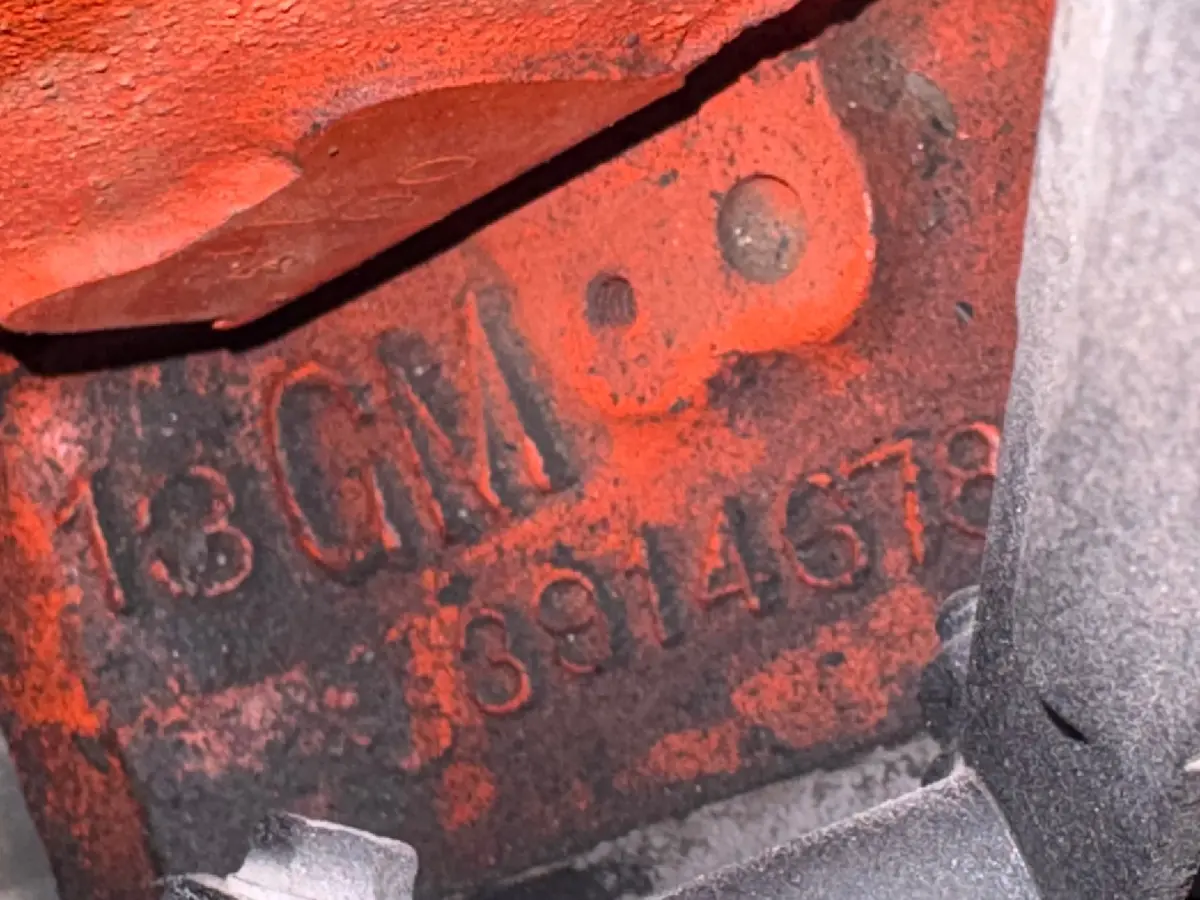
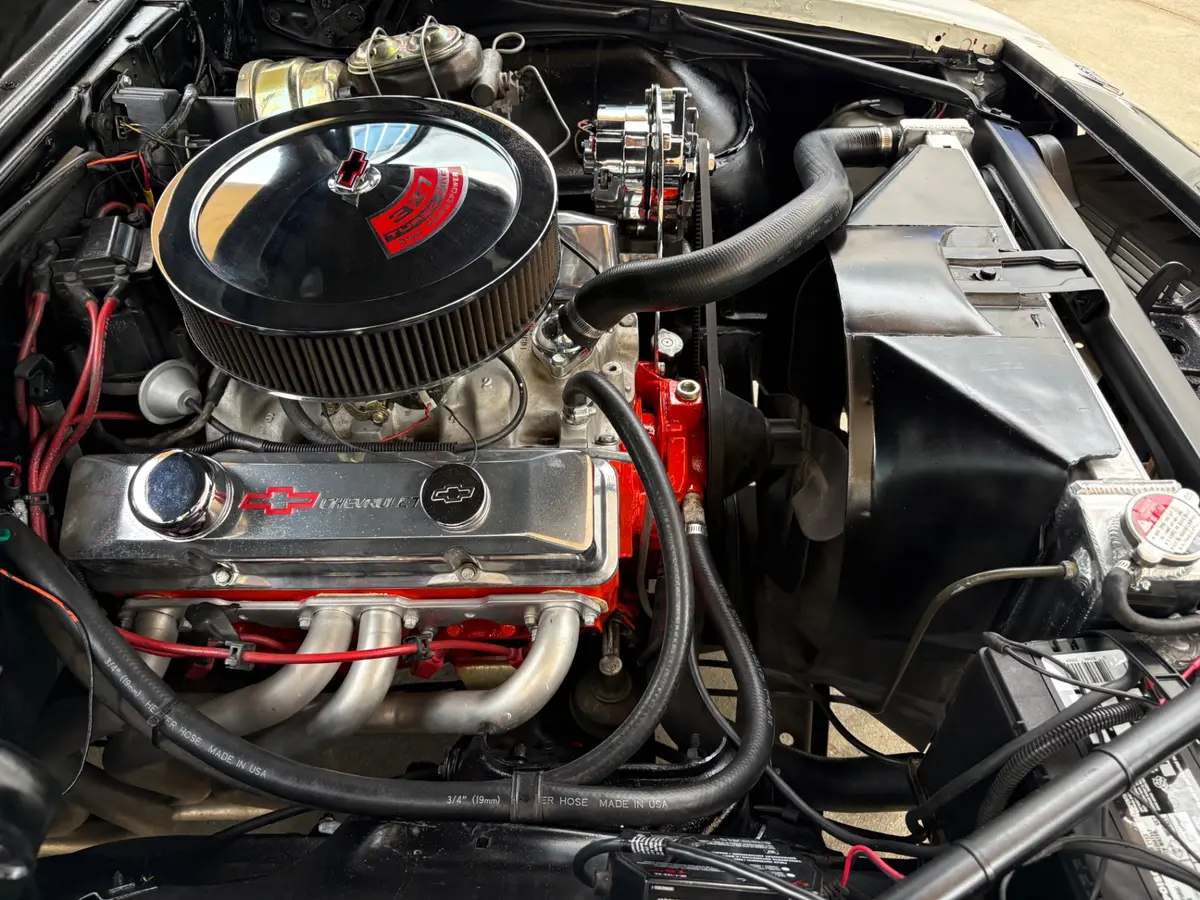
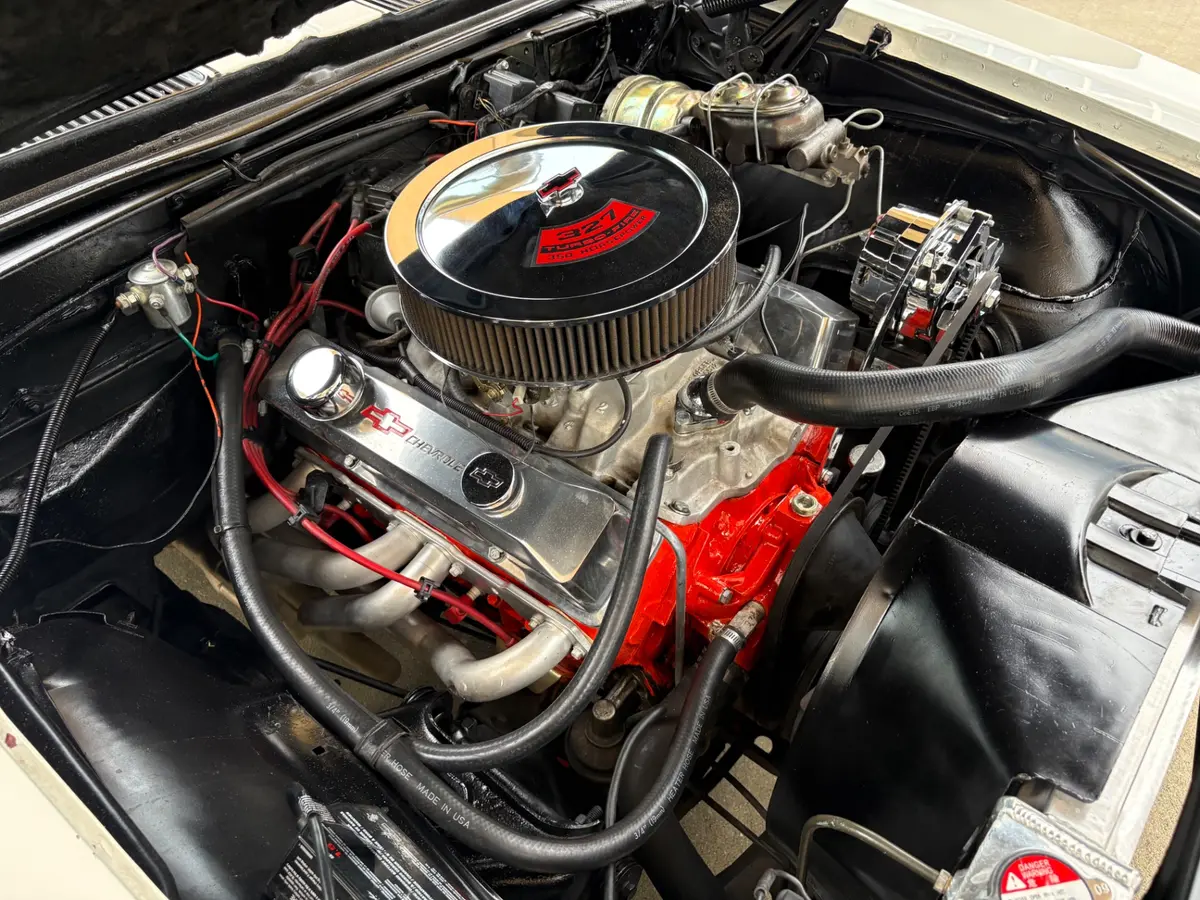
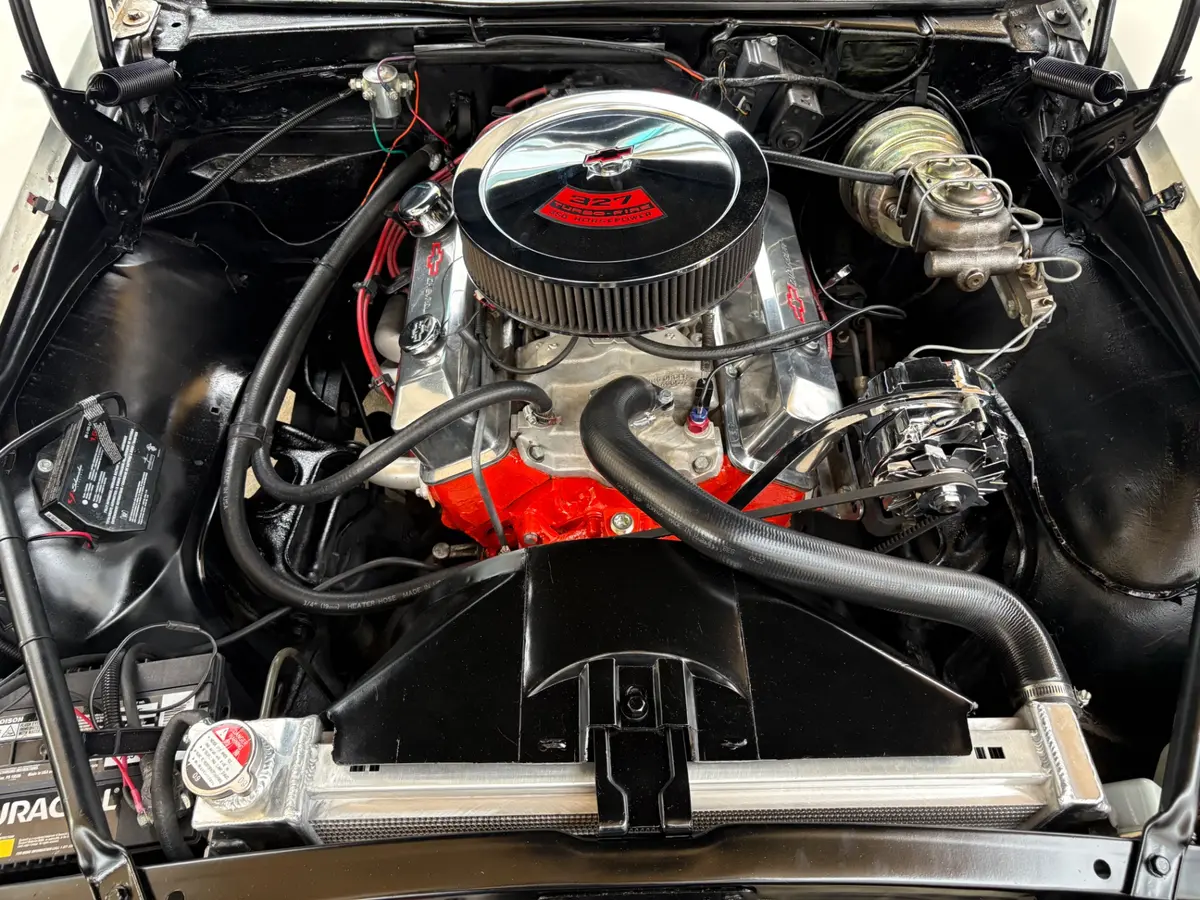
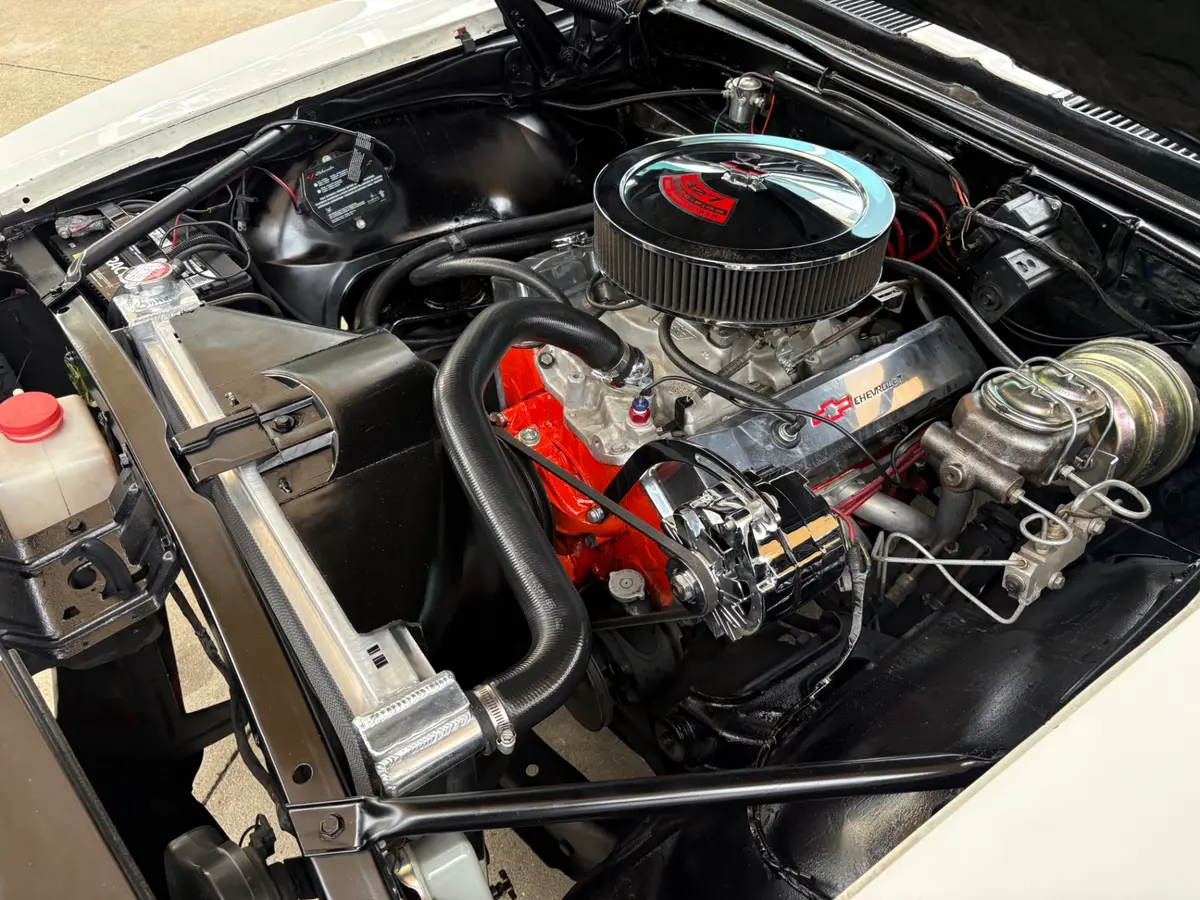
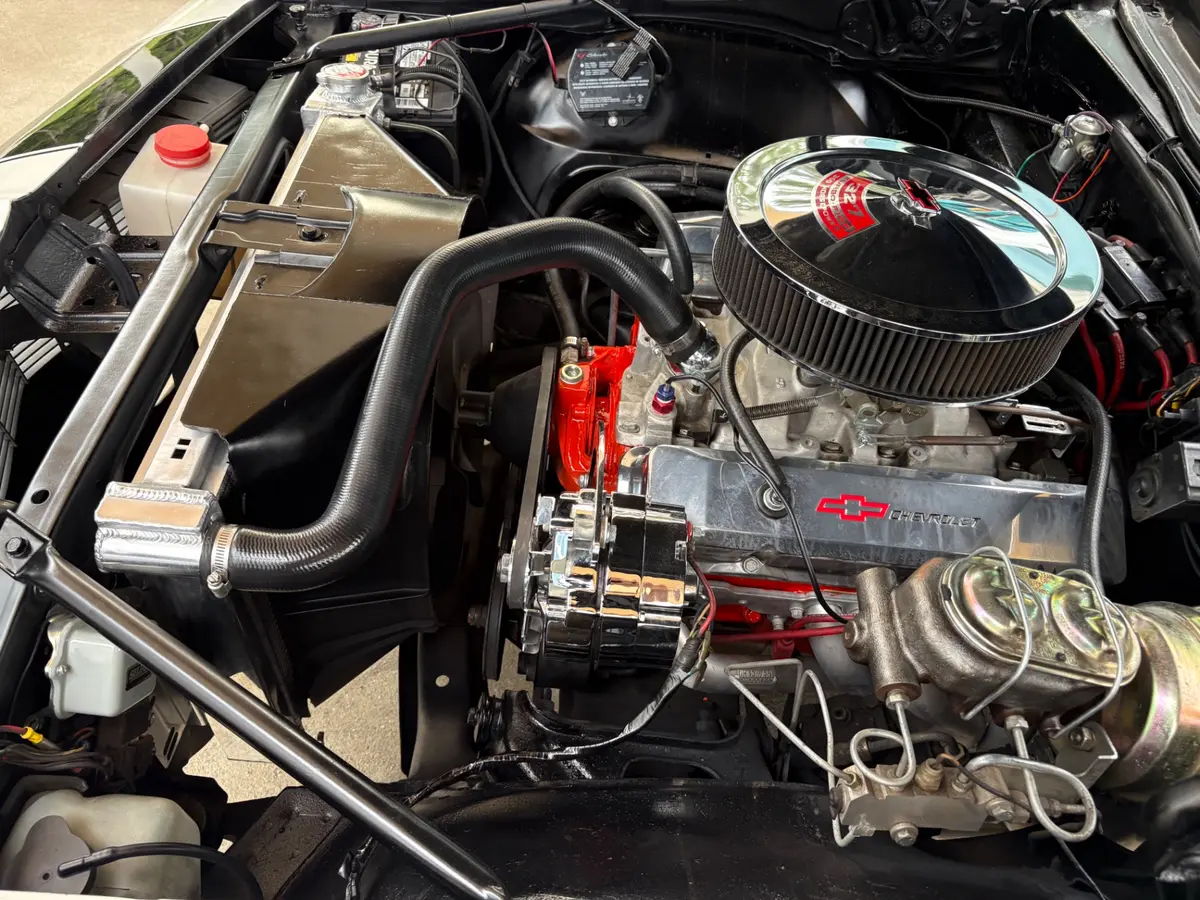
The engine is numbers-correct — the 327 cubic inch V8 that belongs in this car is still under the hood. That matters both for valuation and for authenticity. The 327 was a well-regarded small-block in 1968, offered in the Camaro in multiple states of tune. This car carries a 327 Turbo-Fire decal on the air cleaner lid, consistent with the era. The combination of a documented body tag, matching engine, convertible body style, and a desirable Ermine White over black color scheme puts this 1968 Camaro convertible in a different category than a re-painted or re-engined example.
Features List
- Numbers-correct 327 cubic inch V8 engine
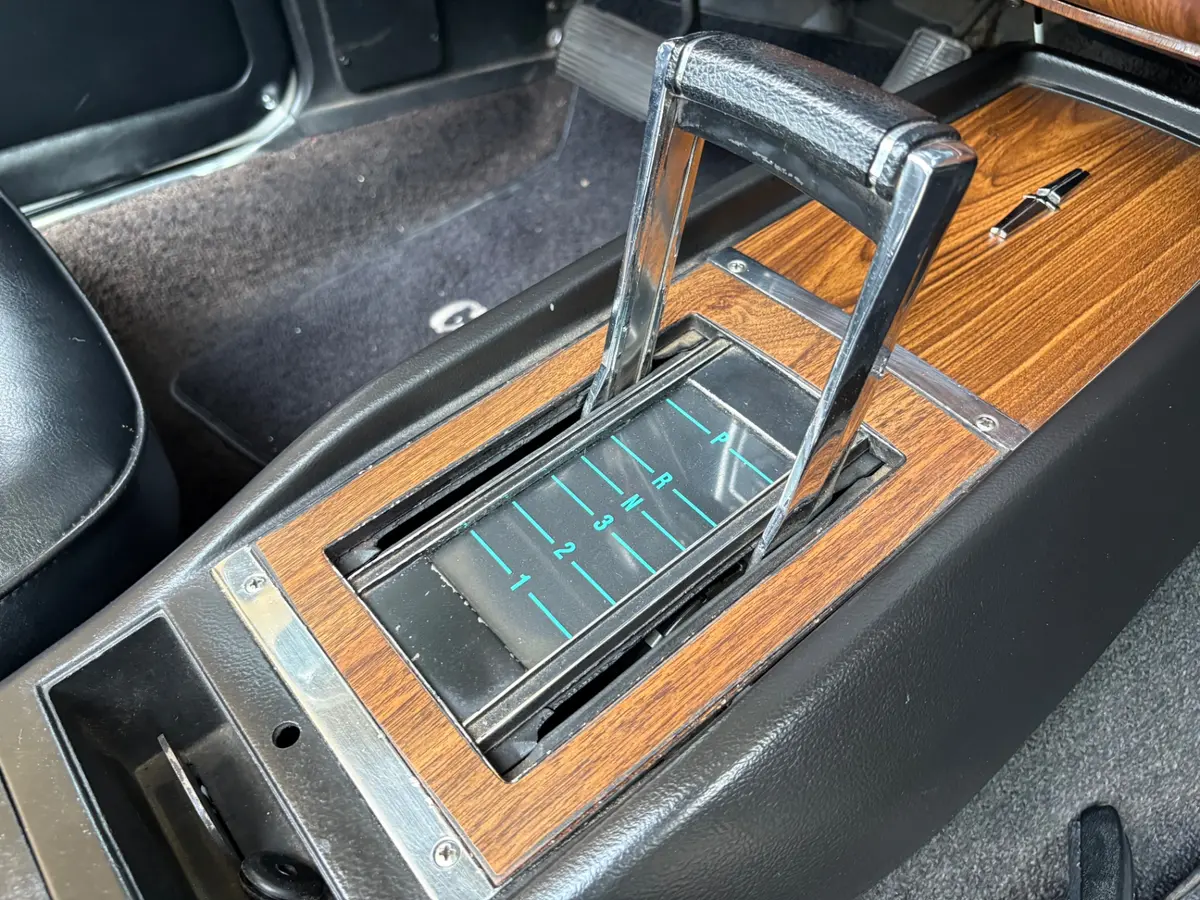
- Turbo-Hydramatic automatic transmission, floor-shifted with console
- Power steering
- Power front disc brakes
- Black power soft-top convertible (newer black replacement top)
- Fisher Body plate present — confirms R1 Ermine White paint, TR 712 black vinyl interior, Norwood assembly, May 1968 build date
- Chrome Rally wheels with Chevrolet Motor Division center caps
- Red-line tires (Bridgestone Radial)
- Full-length black hood-to-trunk rally stripes
- Chrome bumpers front and rear
- Chrome/polished valve covers with Chevrolet bowtie emblems
- 327 fender badges (front fenders)
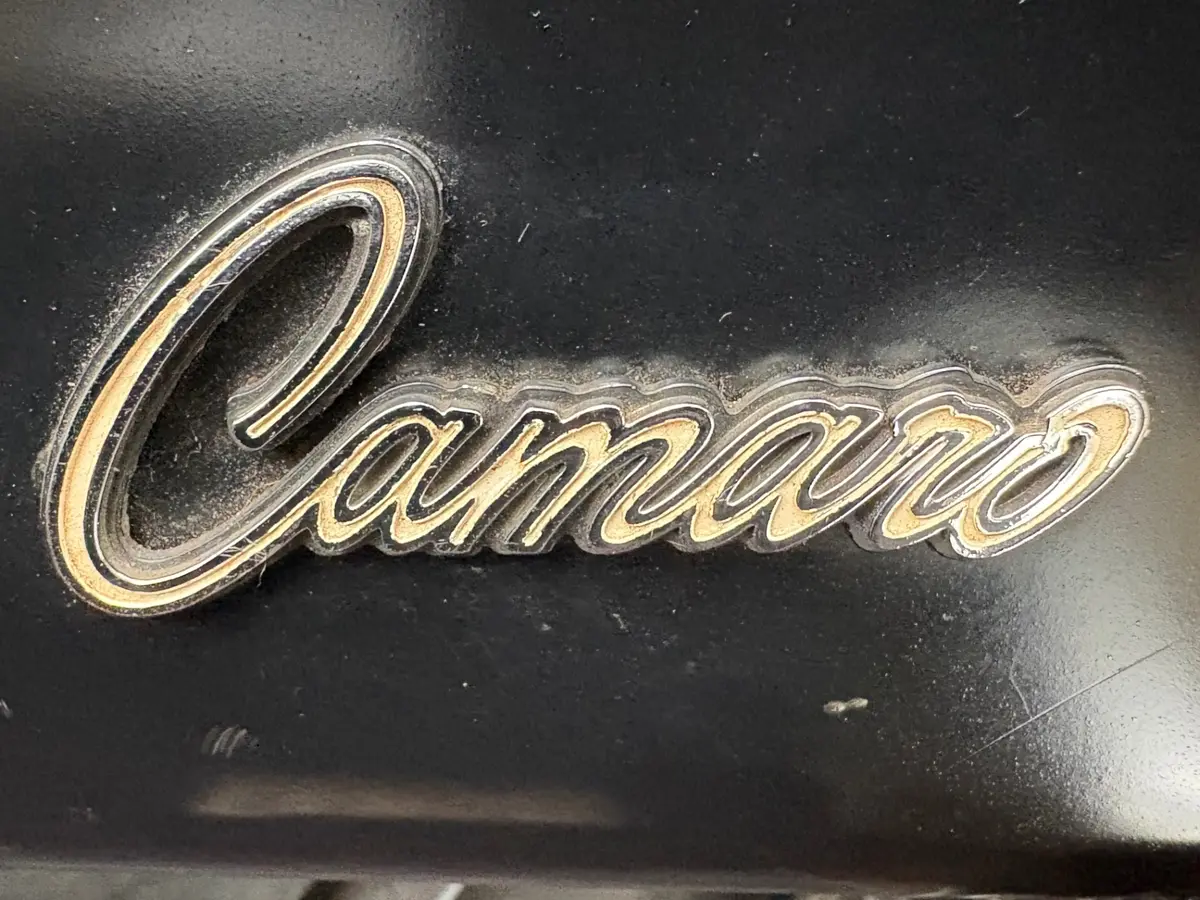
- Camaro script badges (front fenders and rear trunk lid)
- Chrome exterior side rocker trim
- Driver-side chrome exterior mirror
- Black standard vinyl bucket seats, front and rear — interior code TR 712
- Center console with simulated wood-grain trim and lighted automatic shifter indicator (P-R-N-3-2-1)
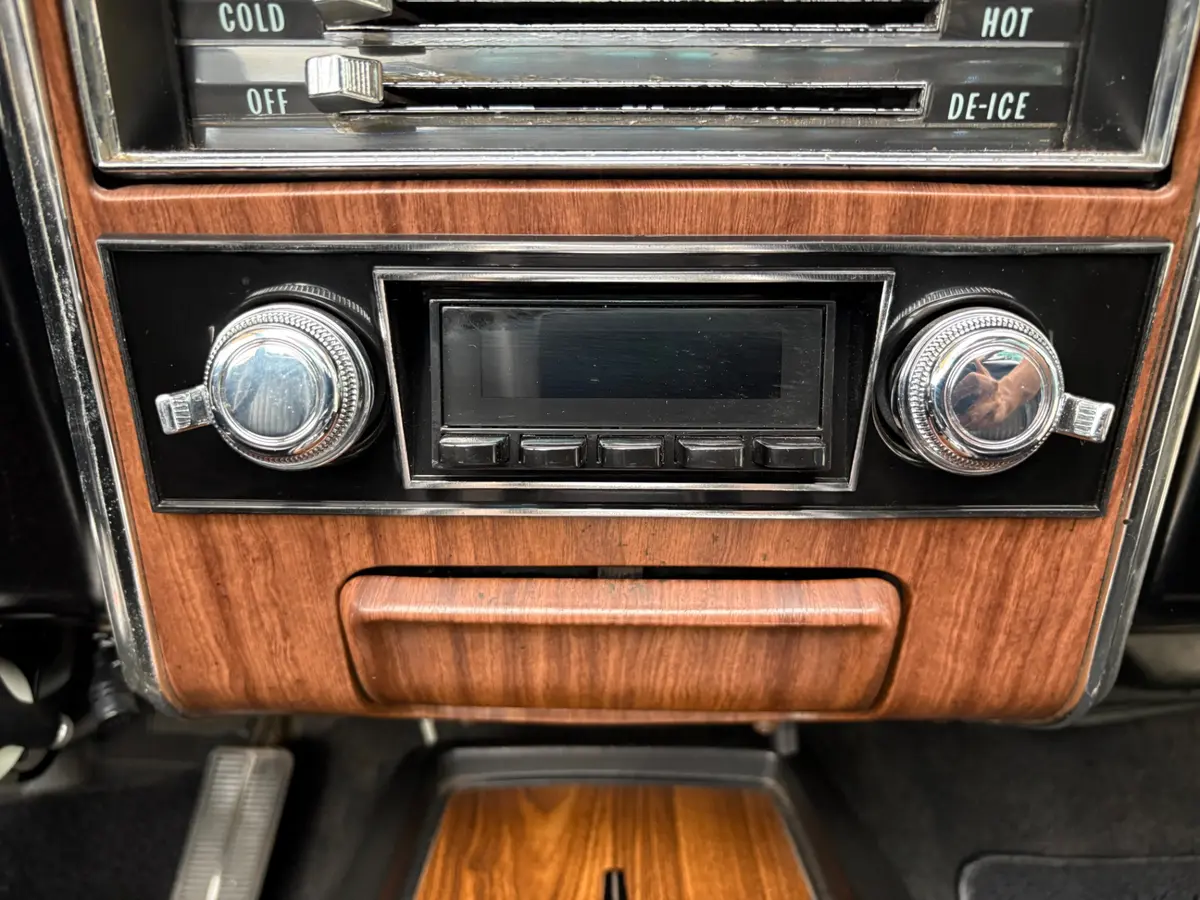
- Simulated wood-grain dash insert surrounding radio and center stack
- 3-spoke simulated wood-grain steering wheel with bowtie center cap (wear/peeling present)
- AM push-button radio (factory-style unit)
- Heater controls (Cold/Hot/Off/De-Ice) — no factory air conditioning
- Standard base gauge cluster — speedometer and fuel gauge
- Aftermarket auxiliary gauge (oil pressure or similar) mounted below steering column
- Camaro-logo floor mats (black with script lettering)
- Dual exhaust system
Mechanical
Under the hood of this 1968 Chevrolet Camaro convertible sits the numbers-correct 327 cubic inch small-block V8. The 327 was introduced in the Camaro lineup at the car's 1967 launch and carried over into 1968. It was derived from the same small-block architecture that Chevrolet had been developing since 1955, making it a proven, well-supported engine with a deep aftermarket and strong parts availability even today. The engine bay has been dressed up with chrome and polished valve covers carrying the Chevrolet bowtie emblem, along with a chrome air cleaner bearing a 327 Turbo-Fire decal. The block and accessories are finished in the correct Chevrolet engine red.
The transmission is a Turbo-Hydramatic automatic, shifted via a floor-mounted console shifter with a lighted gear indicator — a desirable and correct period option for an automatic-equipped 1968 Camaro. The car also includes power steering and power front disc brakes. Front disc brakes were an important option on the 1968 Camaro; the base configuration came with drums at all four corners, so the presence of power front discs represents a meaningful upgrade in stopping performance that was available at the factory.
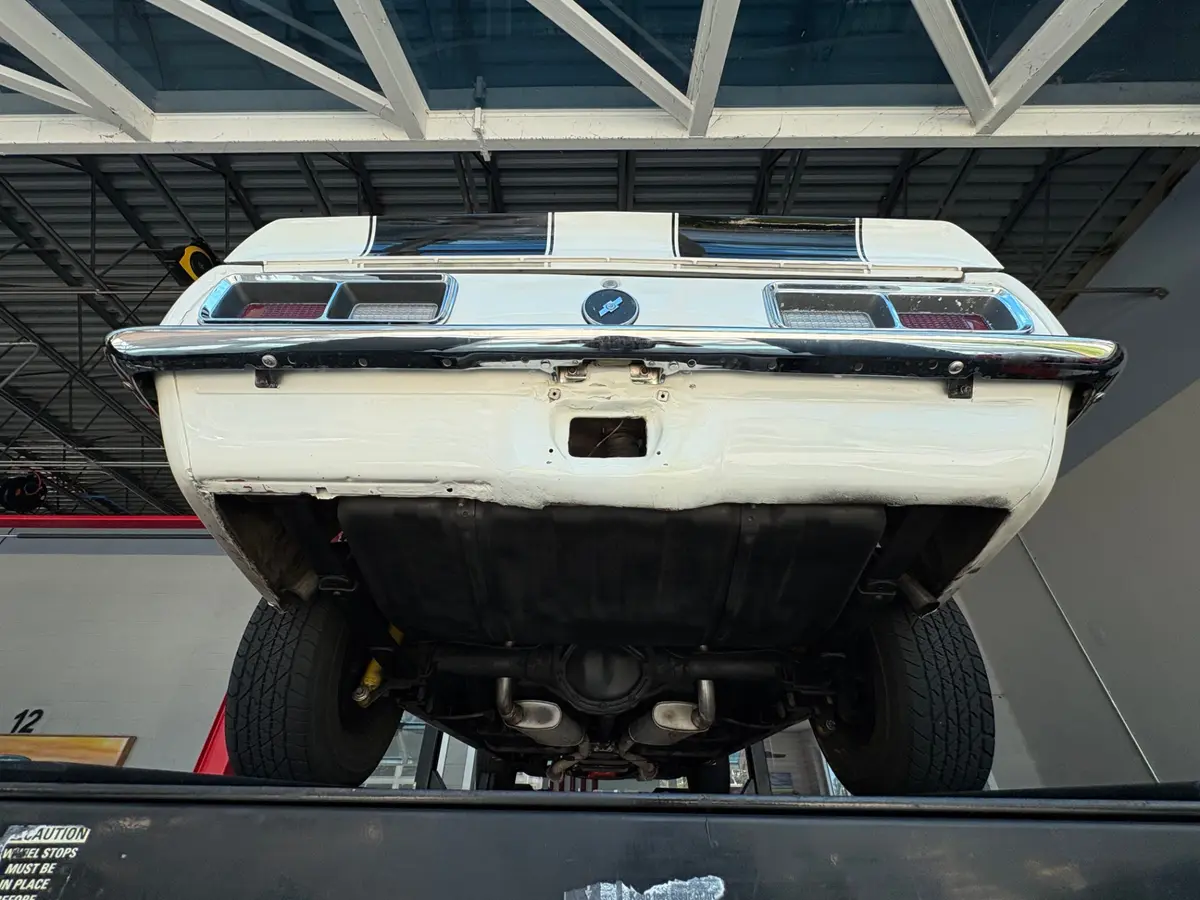
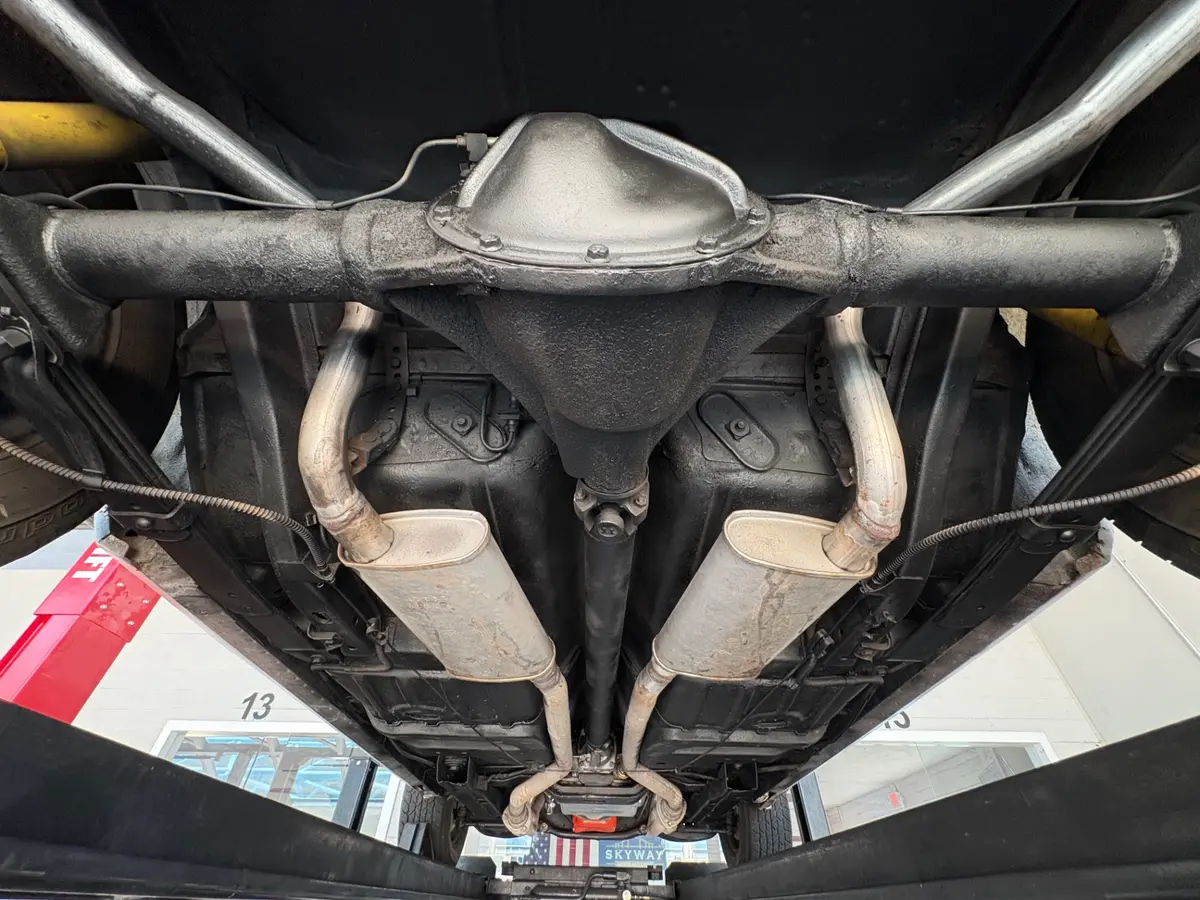
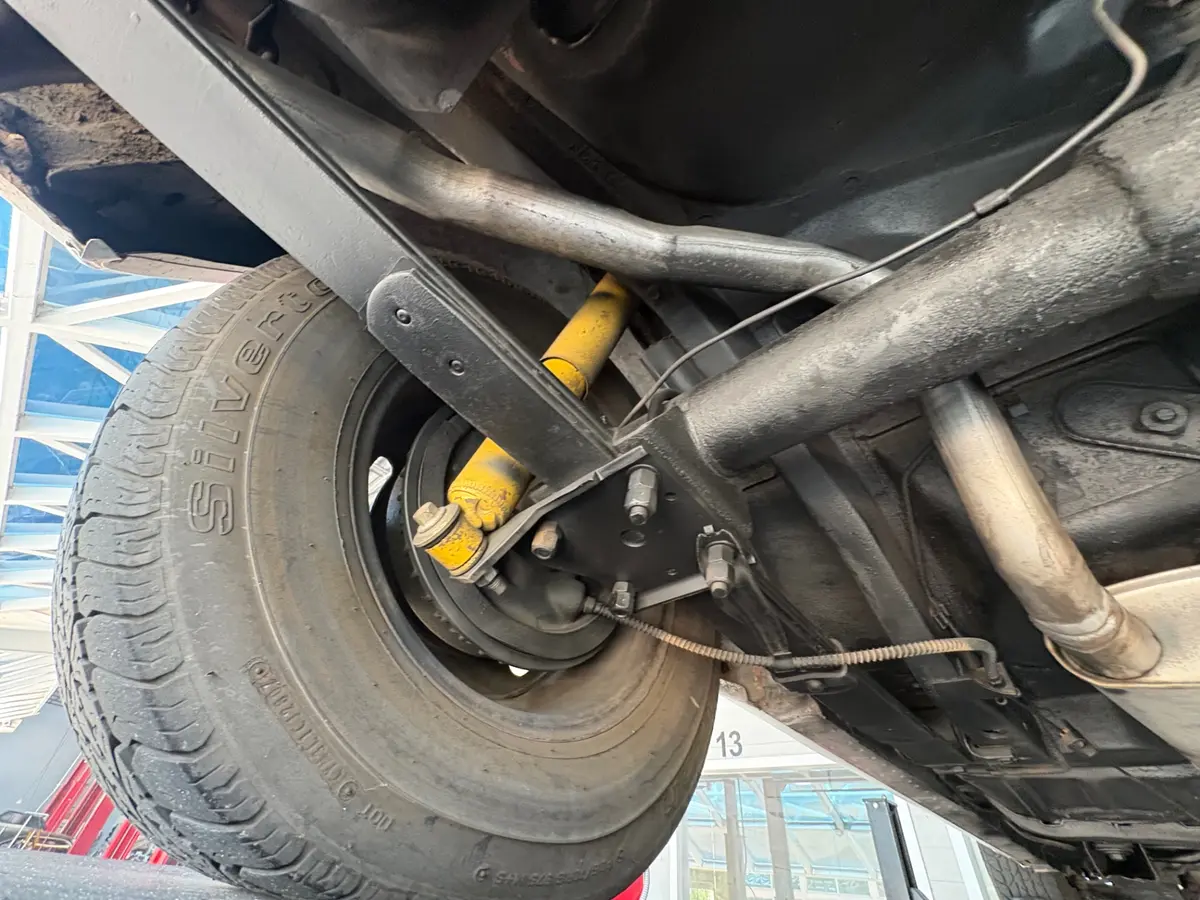
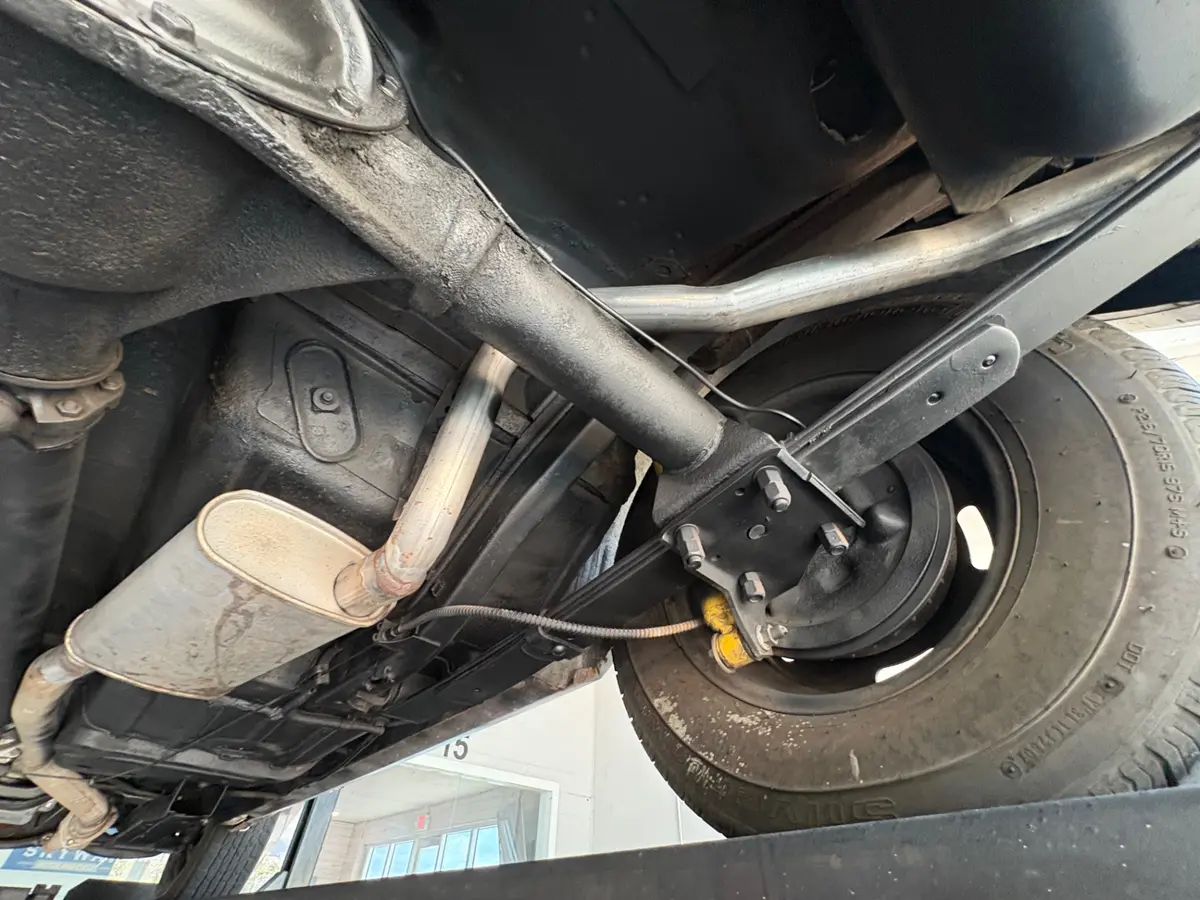
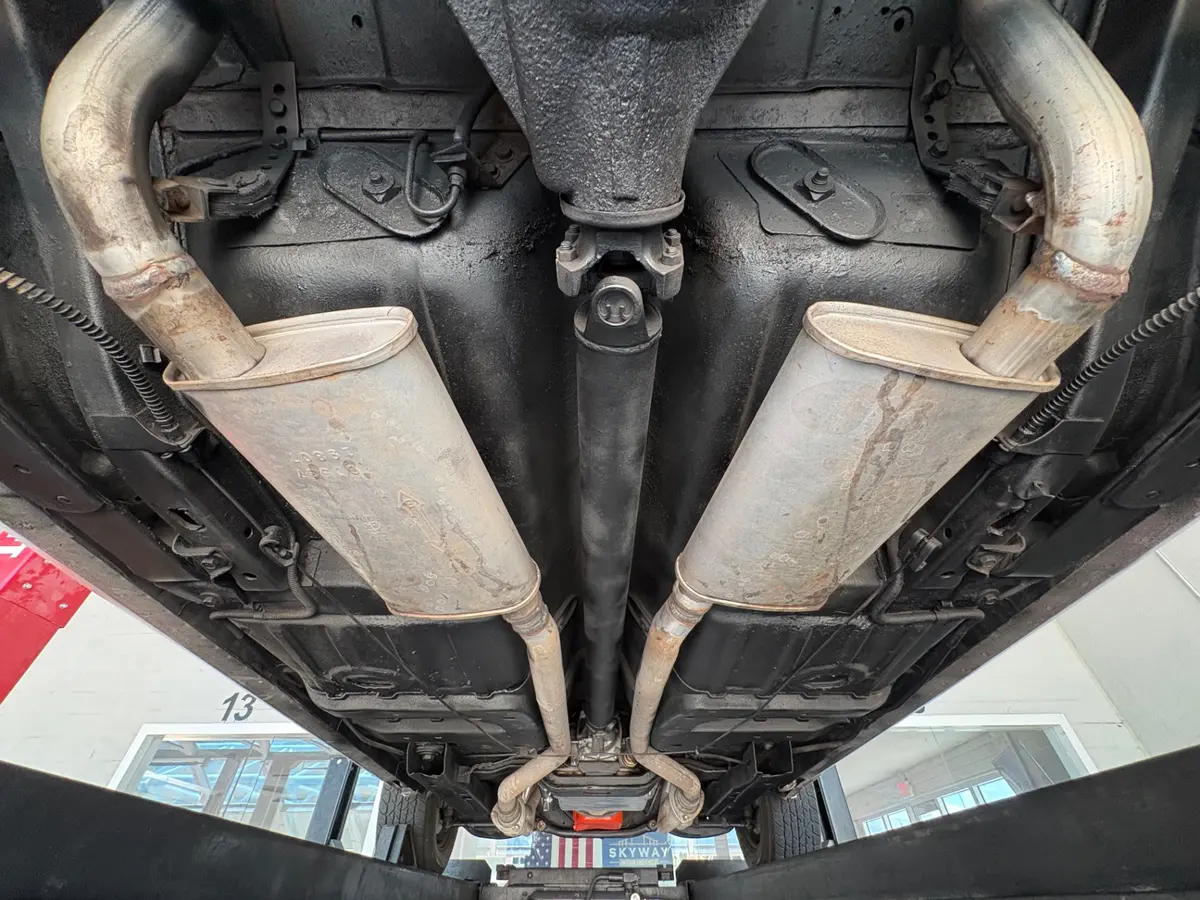
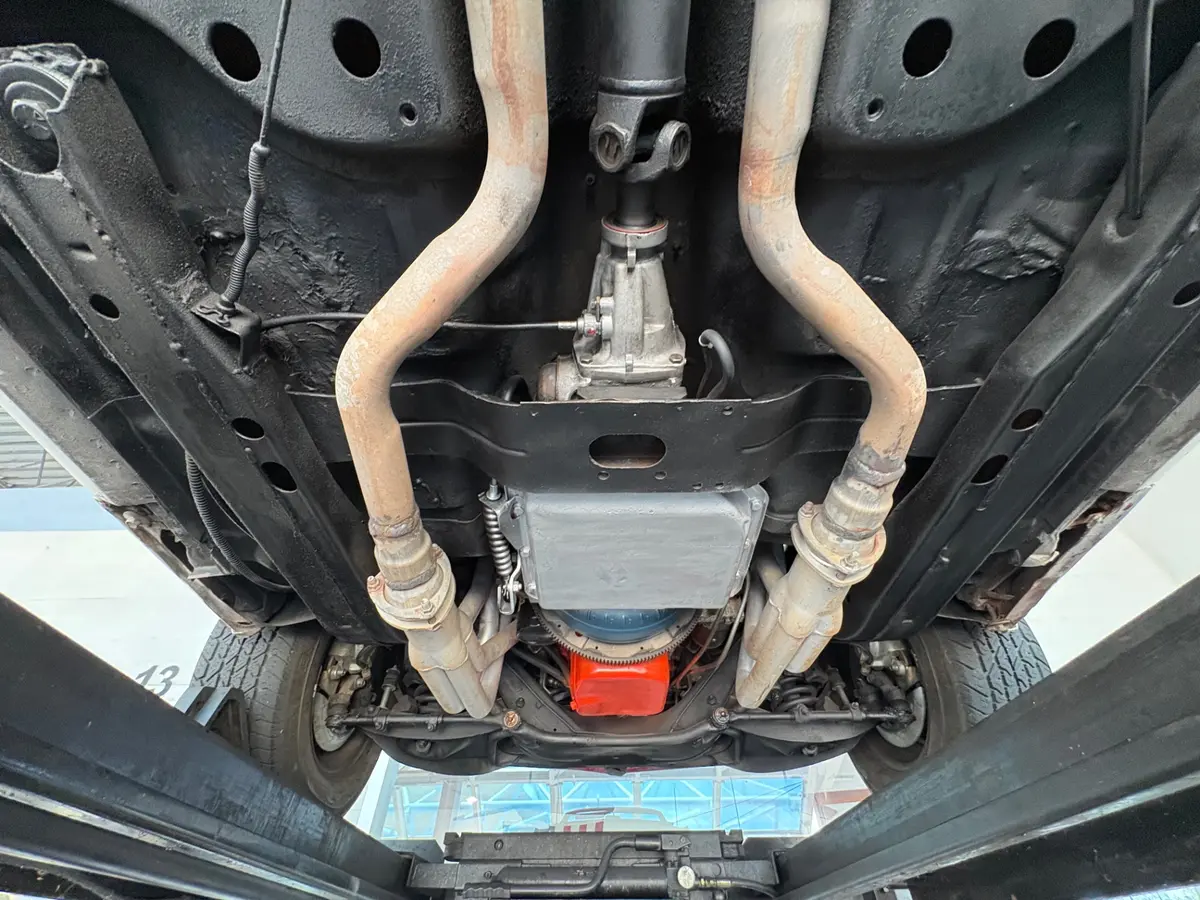
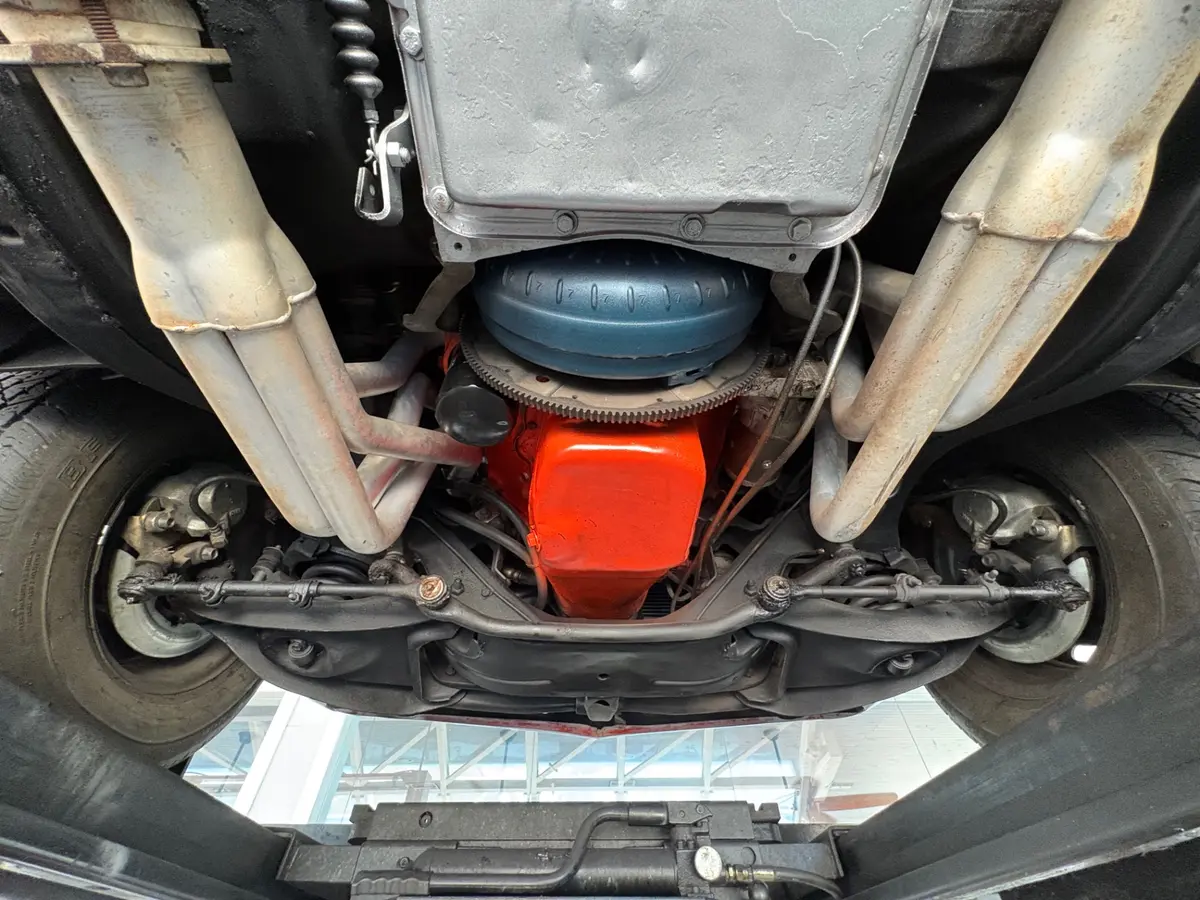
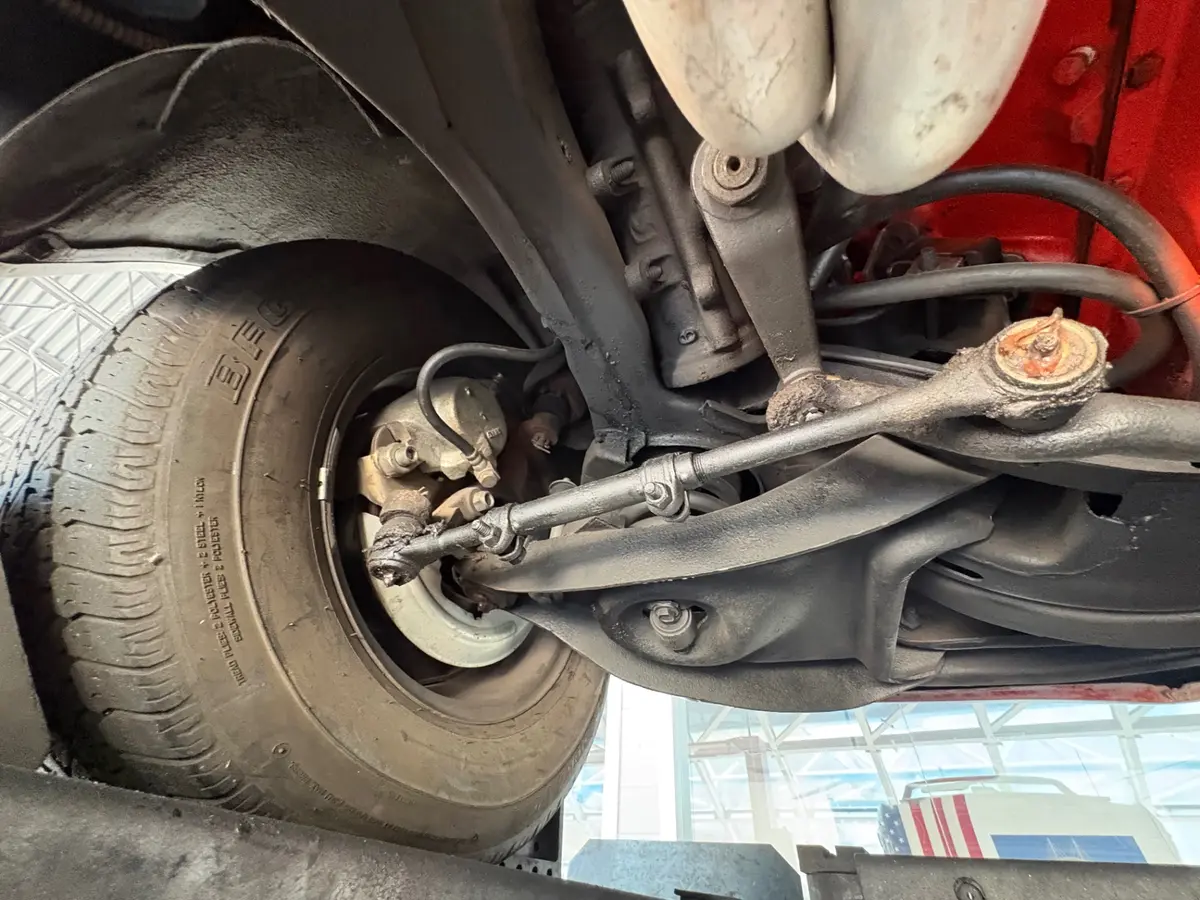
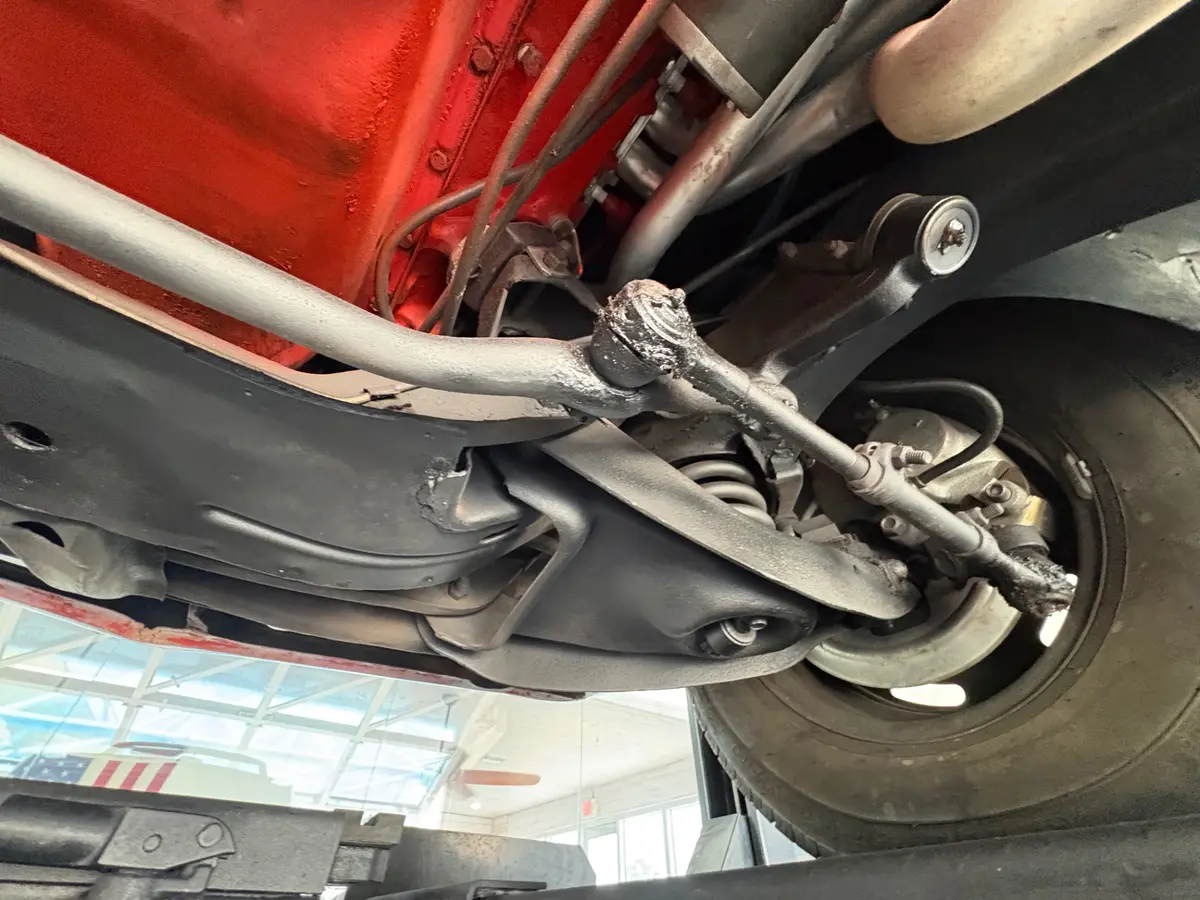
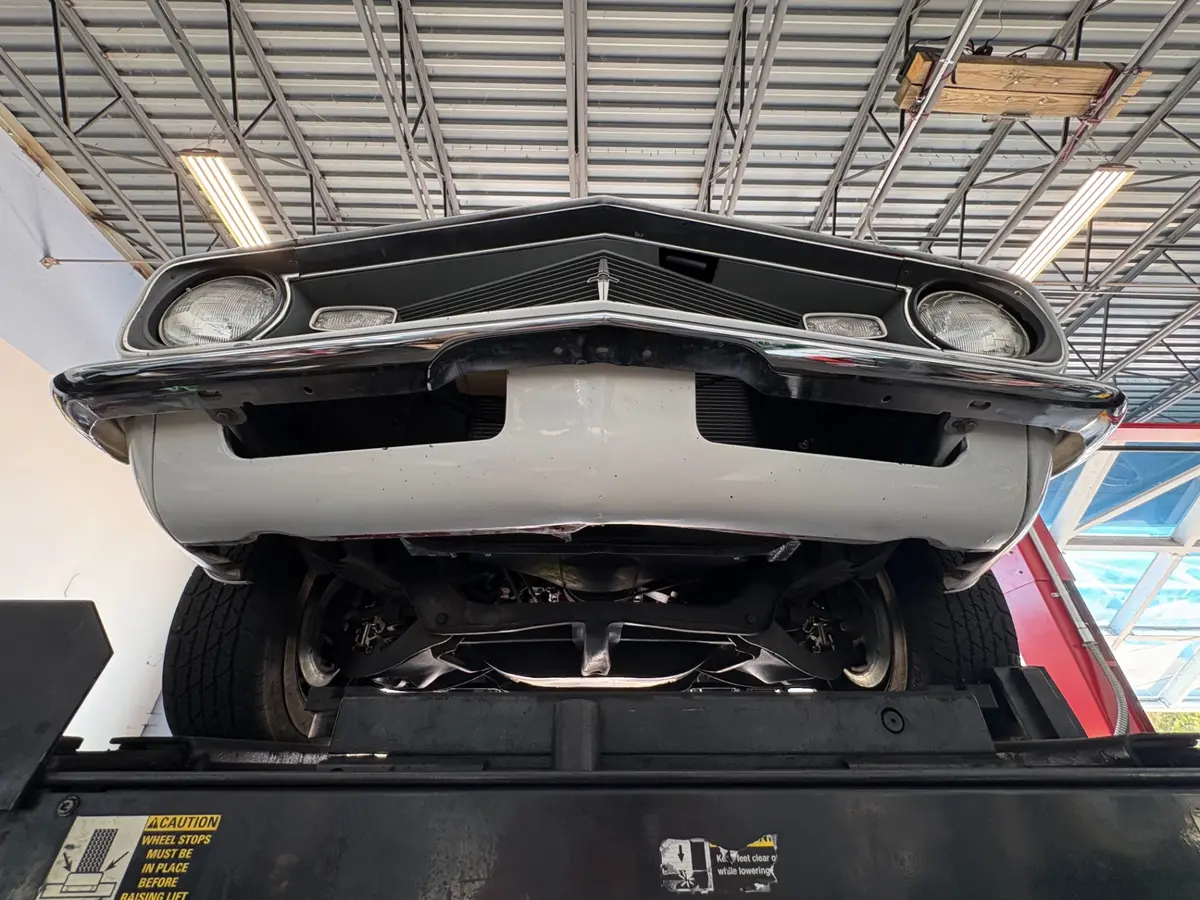
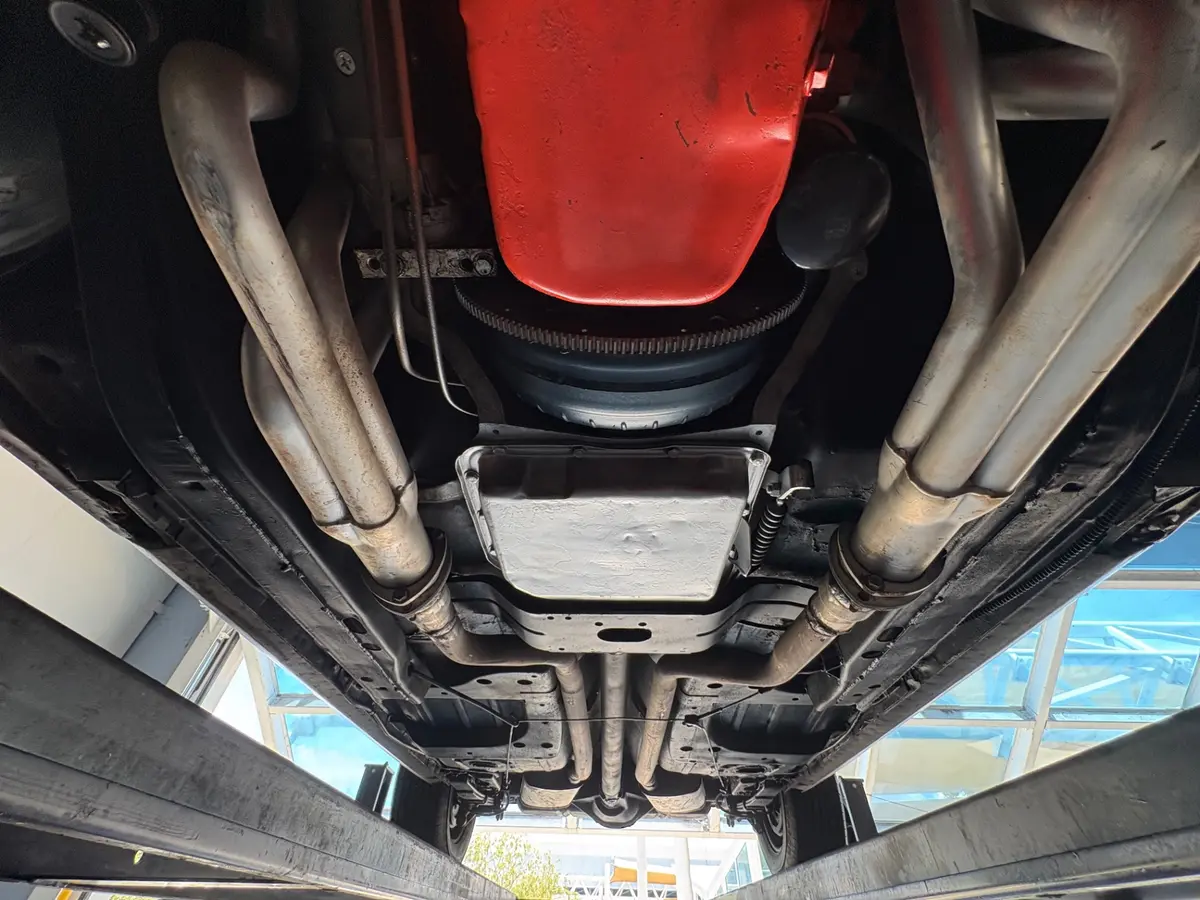
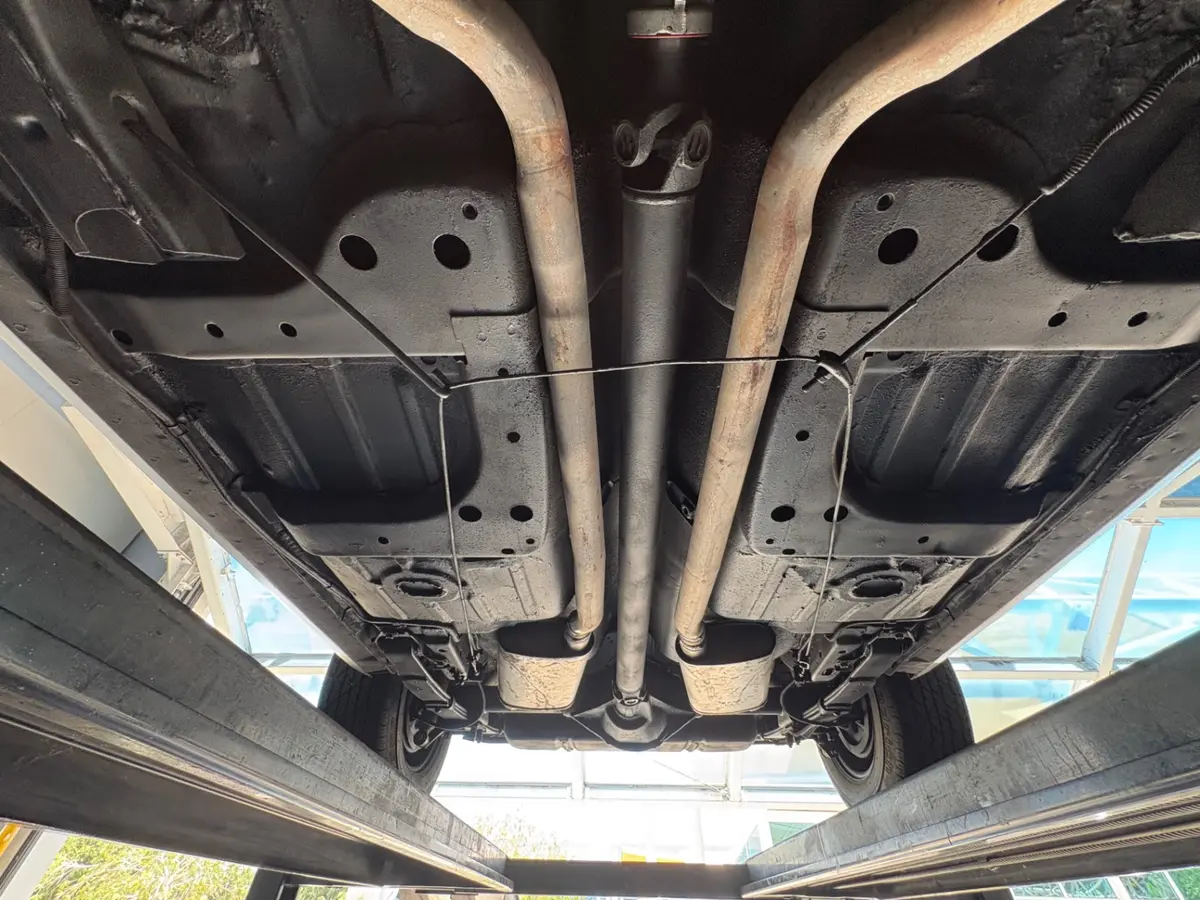
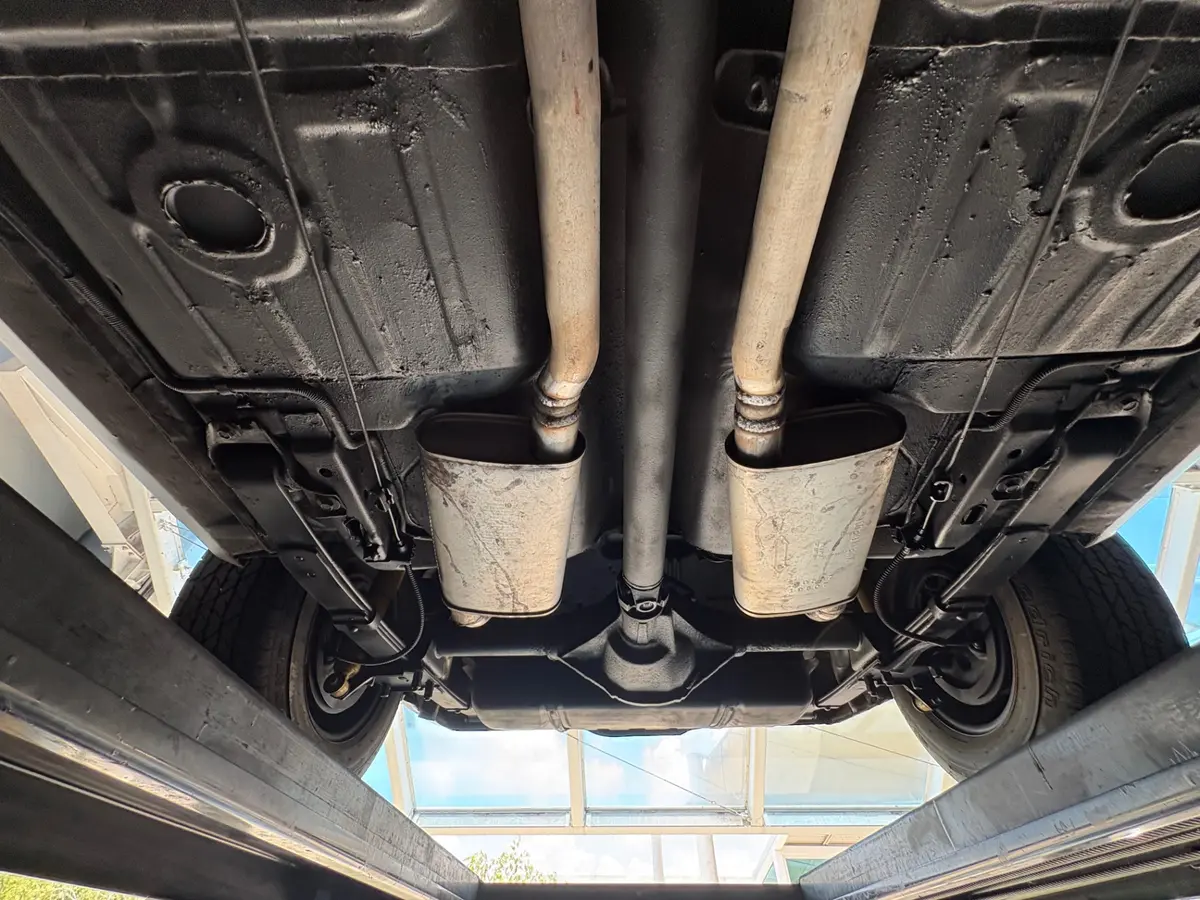
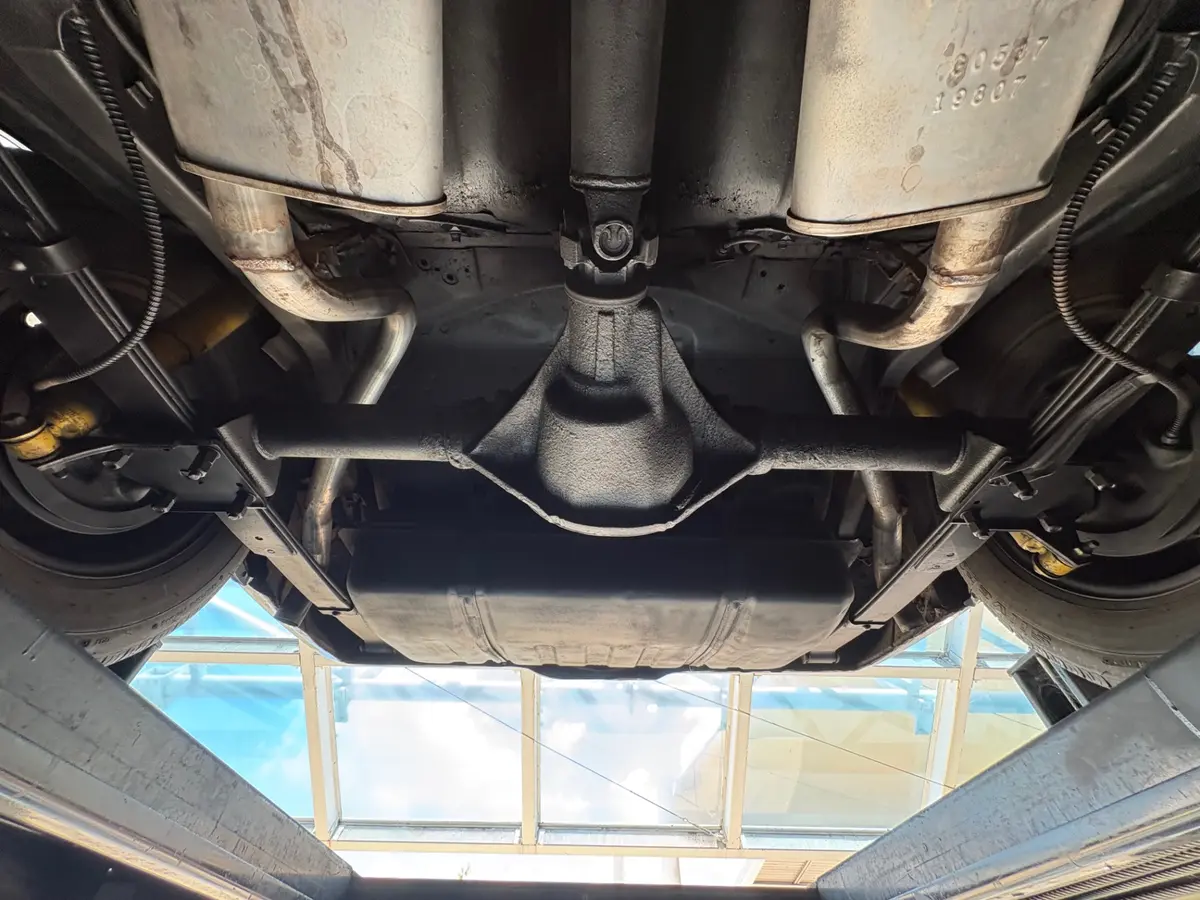
Under the car, the floorpans have been coated and appear solid. The underside shows evidence of having been cleaned up and protected, with a painted finish visible on the floor and framing areas. The dual exhaust runs the full length of the car with a Y-pipe configuration meeting at a single catalytic area near the transmission. The rear axle is the standard Salisbury-style unit appropriate for the platform. The front suspension uses the standard first-gen Camaro subframe design with unequal-length A-arms, coil springs, and power steering linkage visible. The rear suspension is a multi-leaf spring setup with what appear to be yellow-finished shock absorbers currently installed.
Interior
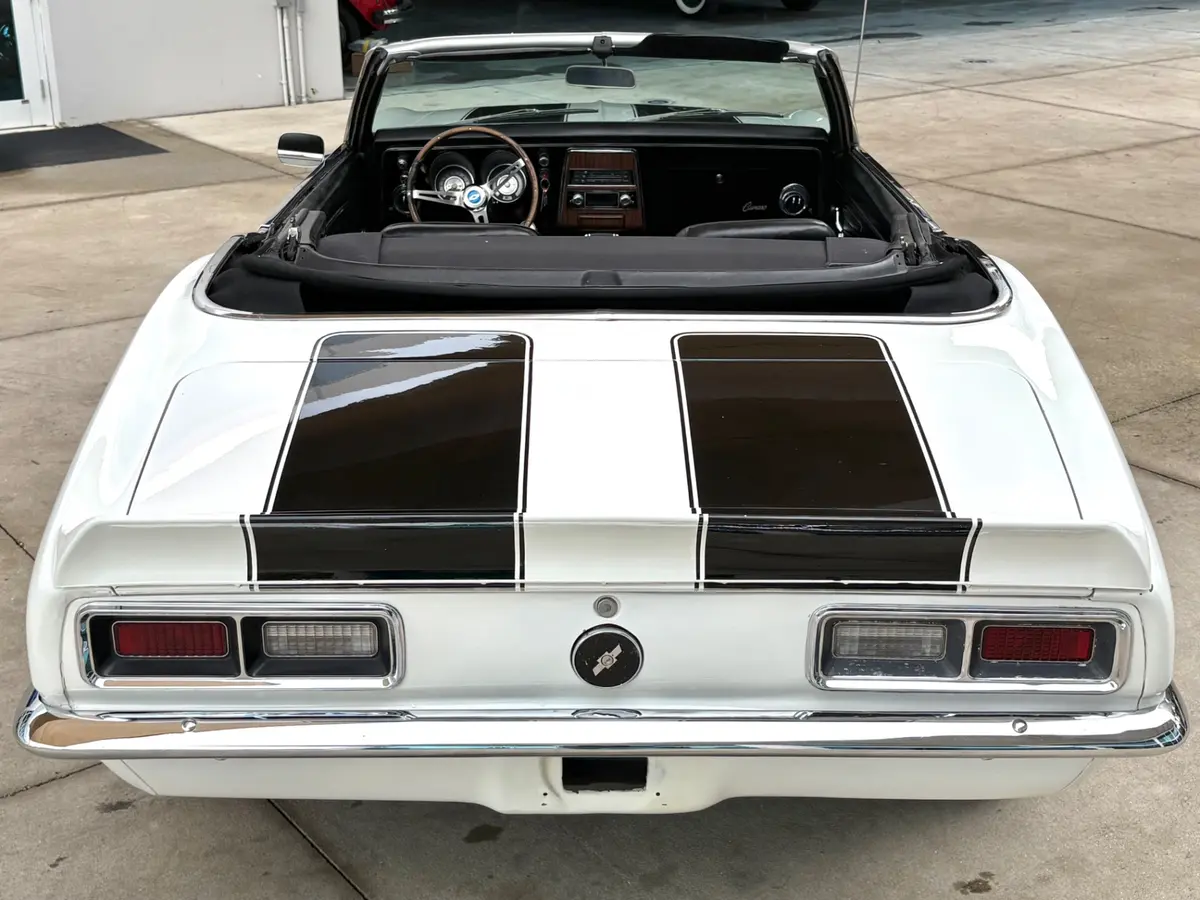
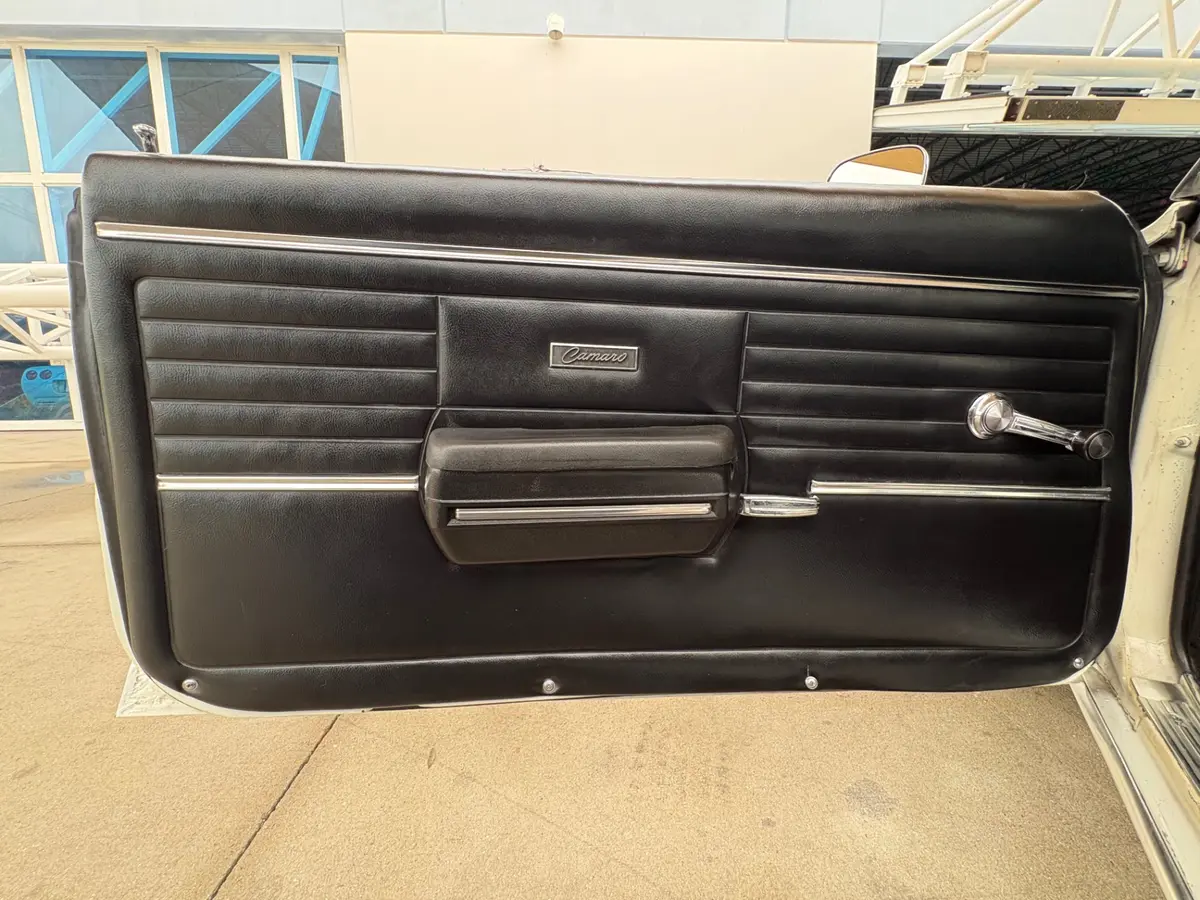
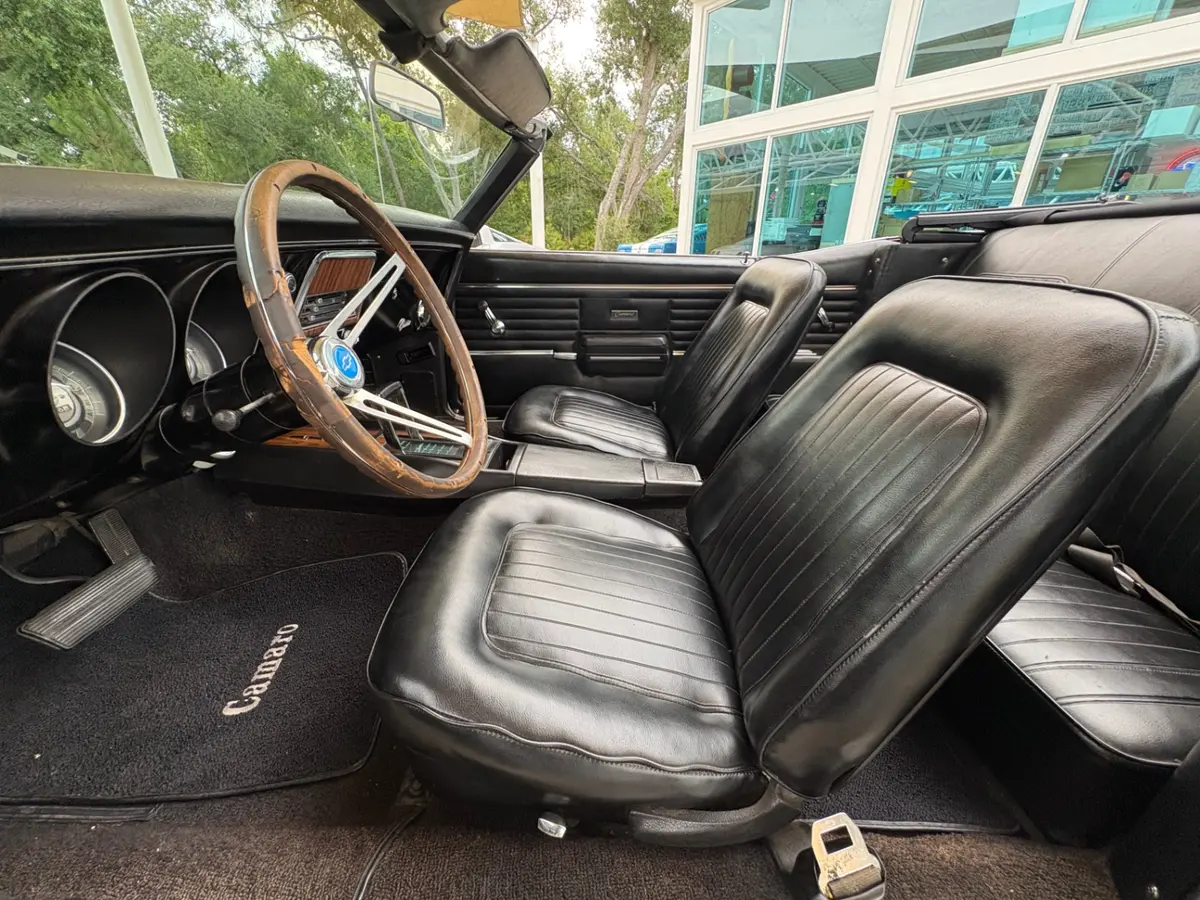
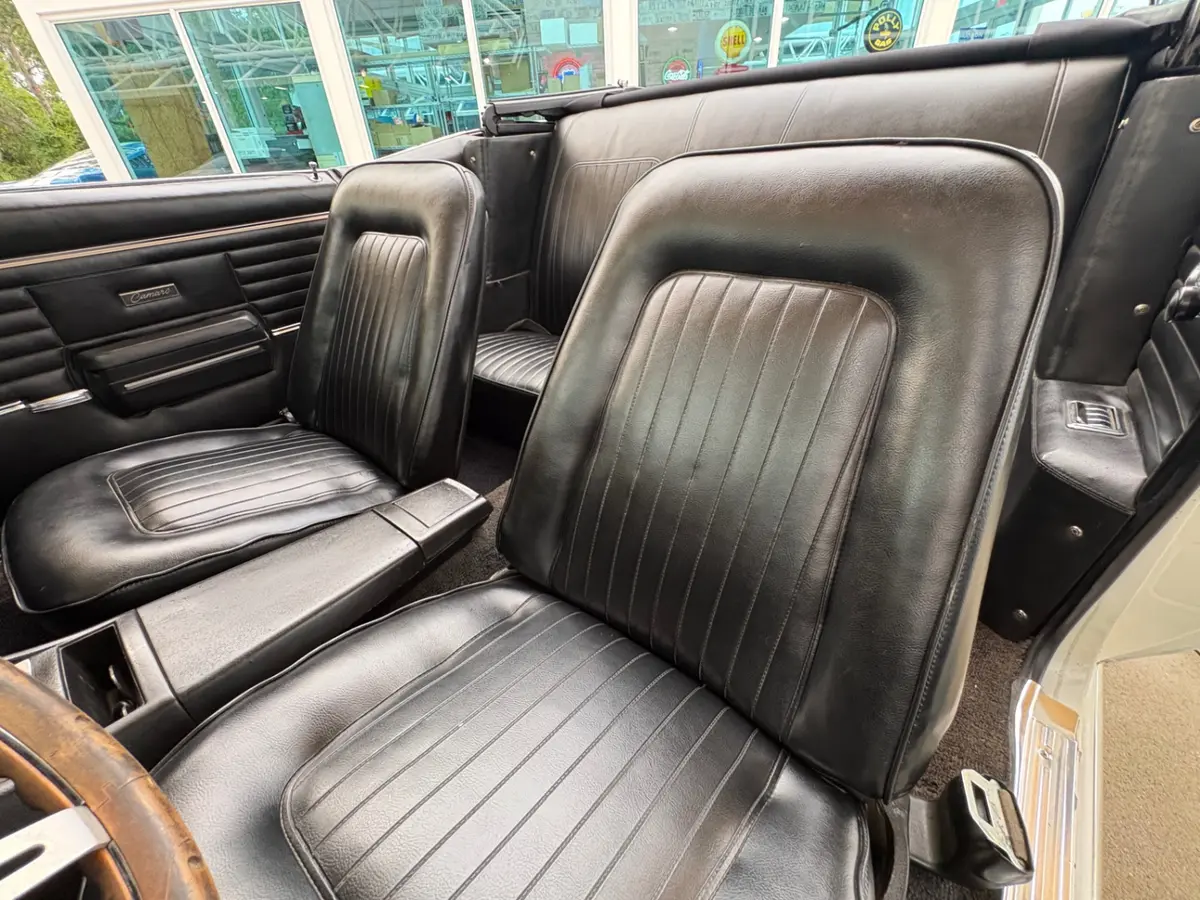
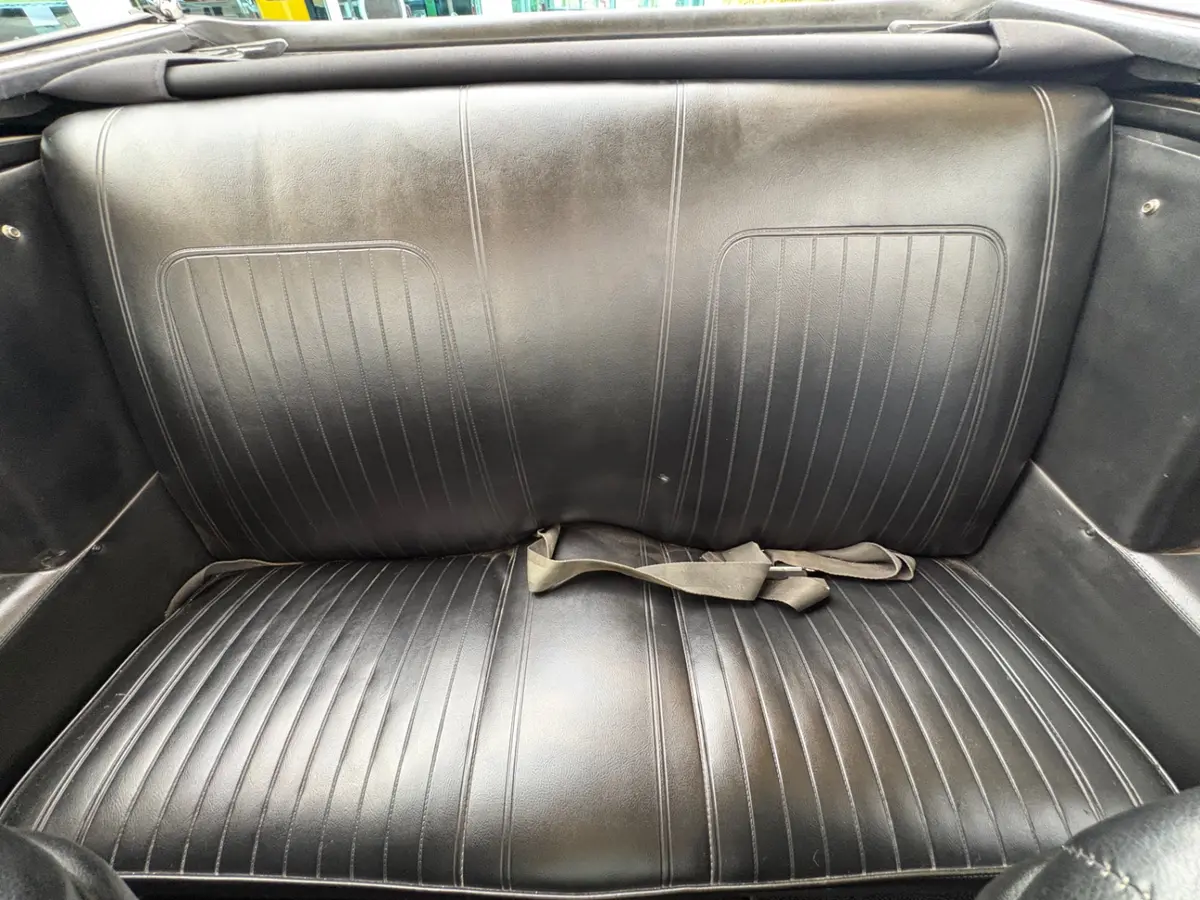
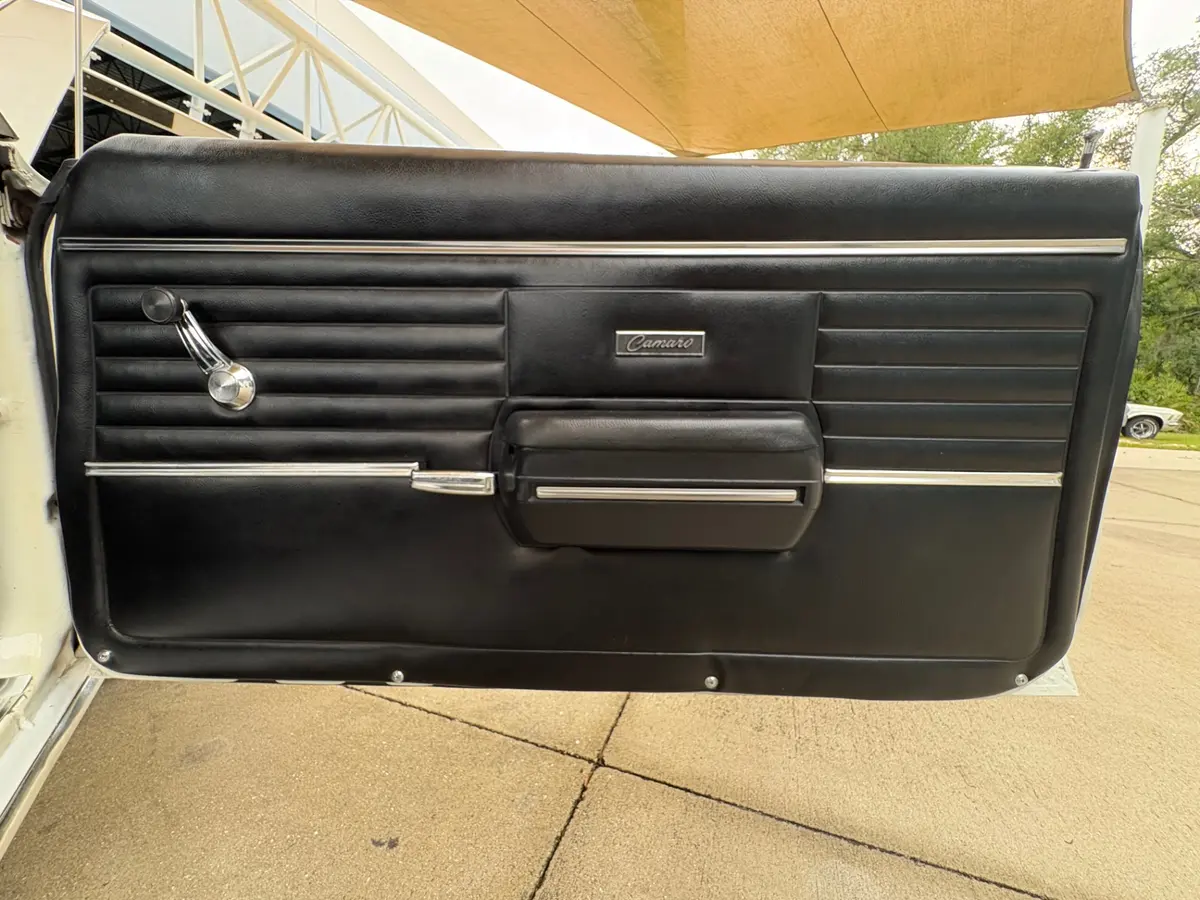
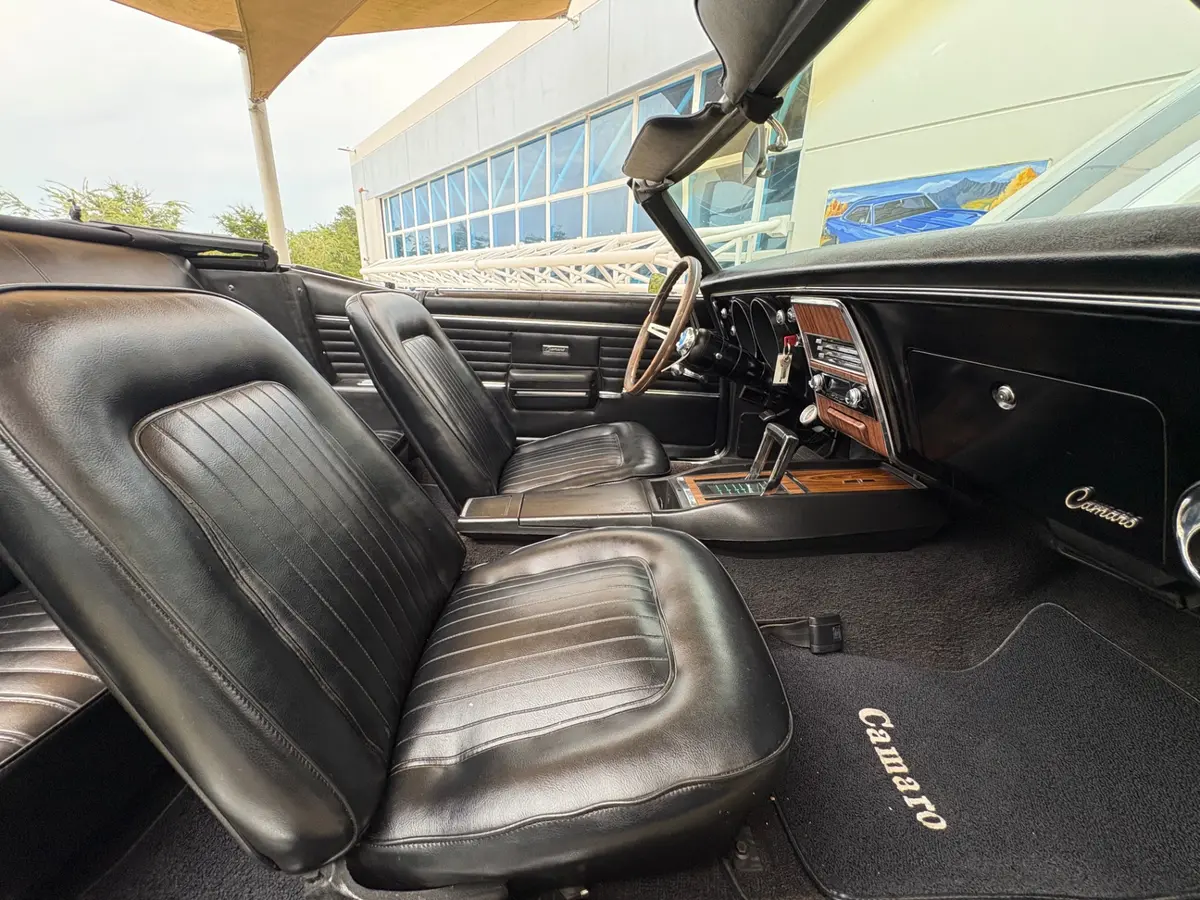
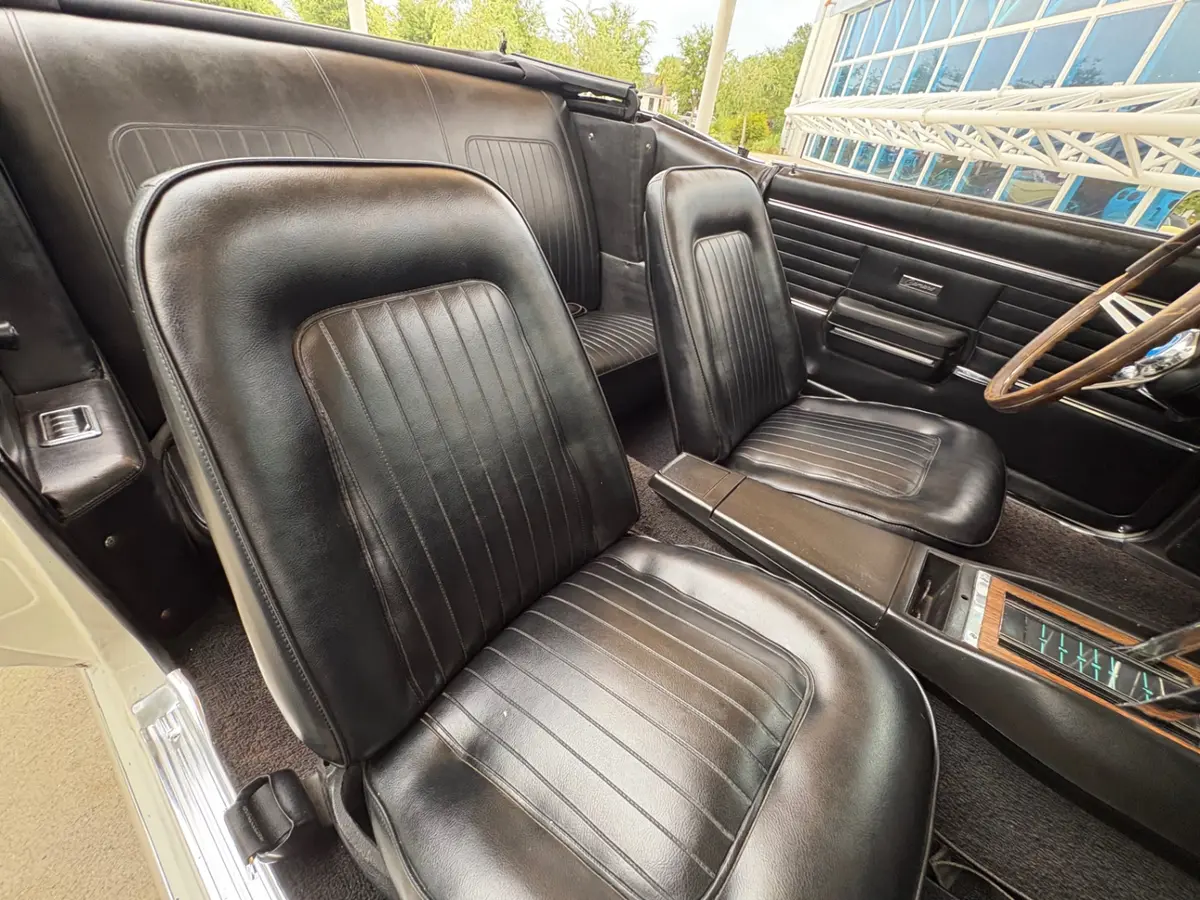
The interior of this 1968 Chevrolet Camaro convertible is finished in black standard vinyl, which matches the Fisher Body tag code TR 712 exactly. The front bucket seats retain the original ribbed vinyl pattern and show good shape overall, with no major cracking visible in the photos. The rear seat — a narrower bench-style unit specific to the convertible body — is also black vinyl and appears presentable. The door panels carry the correct ribbed vinyl pattern with chrome trim strips and Camaro script badges in the upper portion, correct for the 1968 model year.
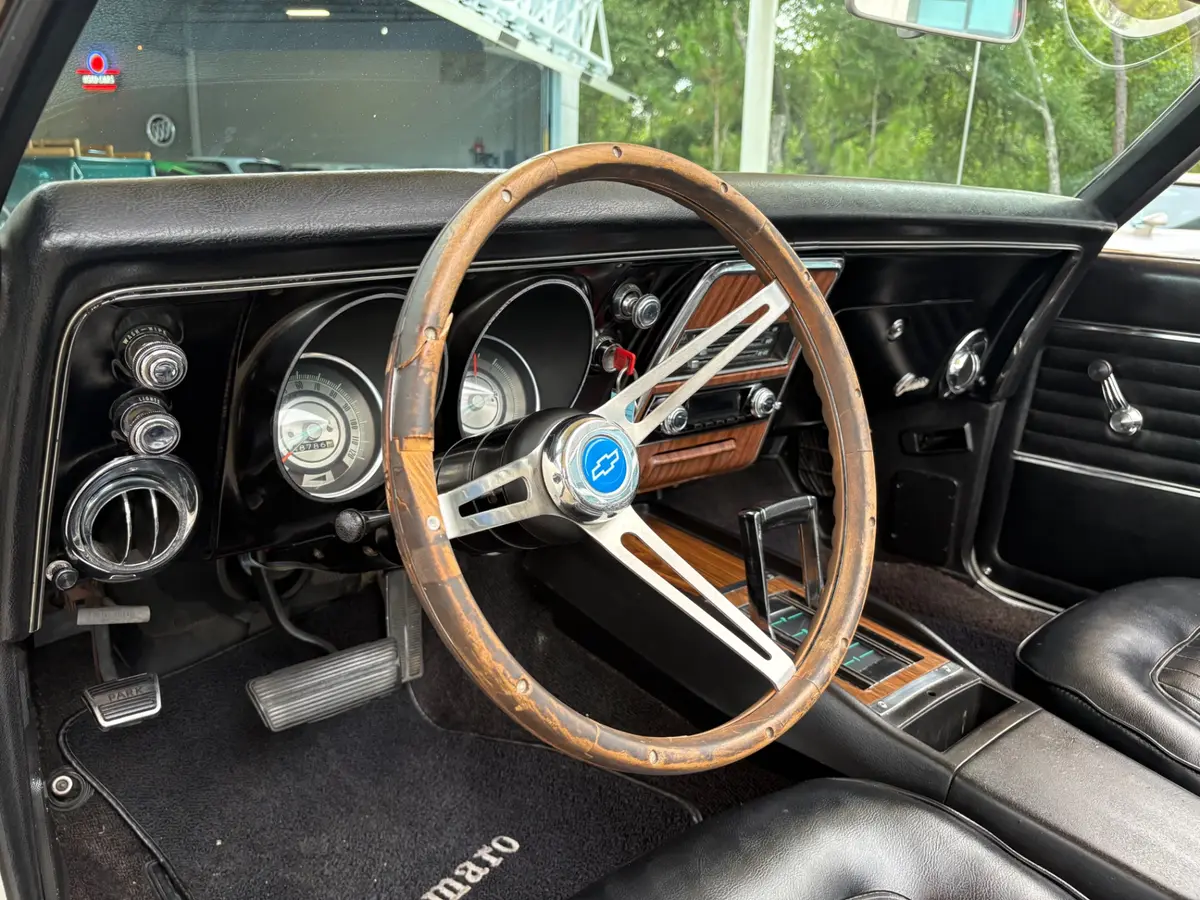
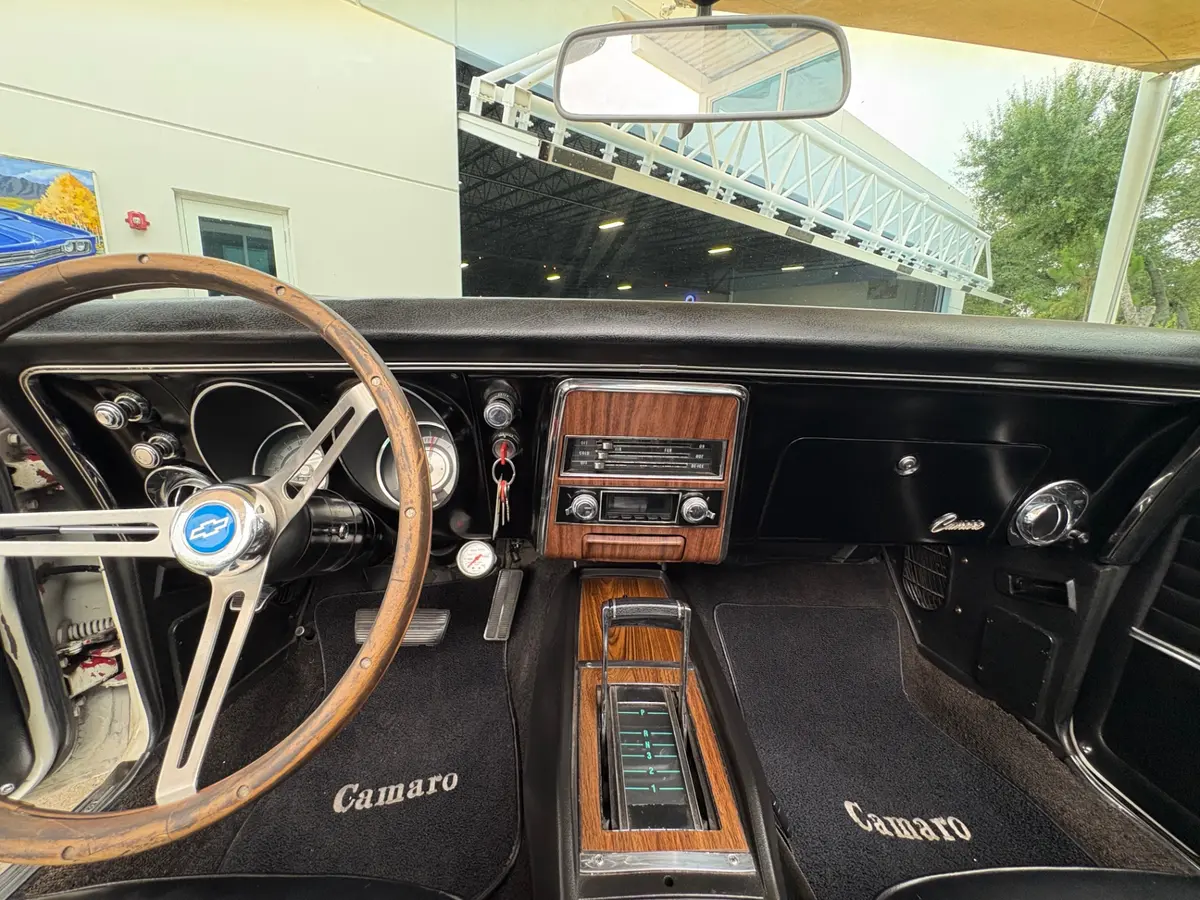
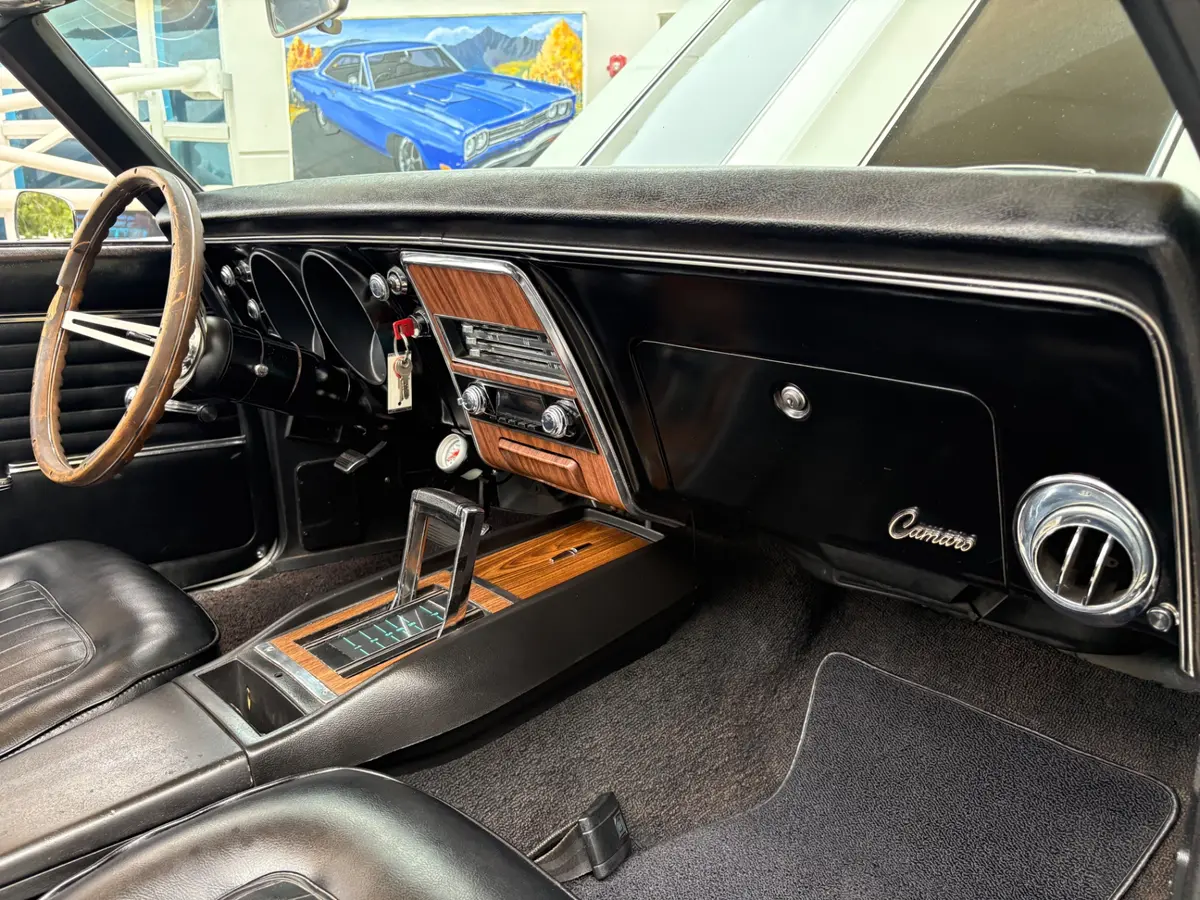
The center console is one of the more distinctive interior features on this car. It runs the length of the cabin between the front seats and carries the floor-mounted automatic shifter with a lighted P-R-N-3-2-1 indicator. The console and surrounding trim are finished in simulated wood grain, as is the dash insert surrounding the radio and center stack. This combination of console, wood-grain accents, and floor-shifted automatic was a popular and period-correct option combination on the 1968 Camaro.
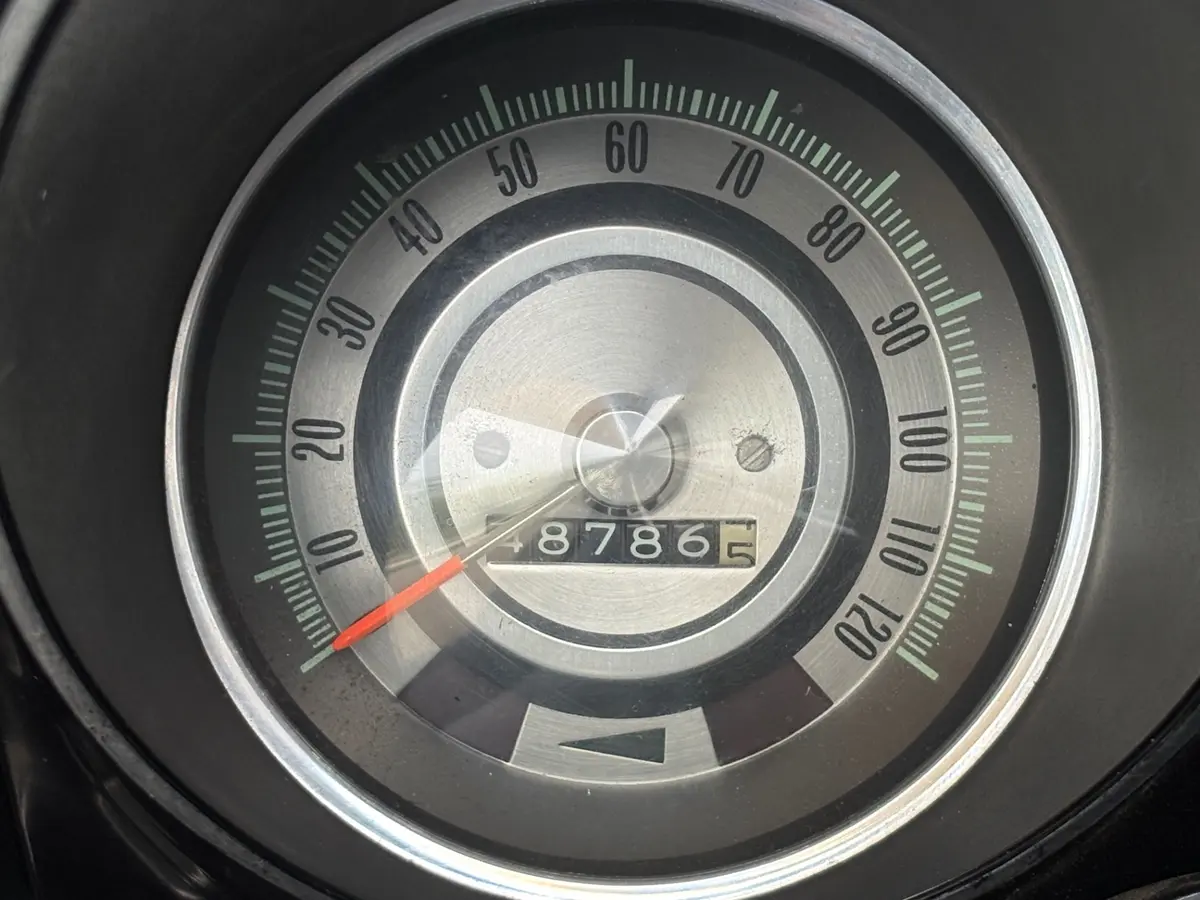
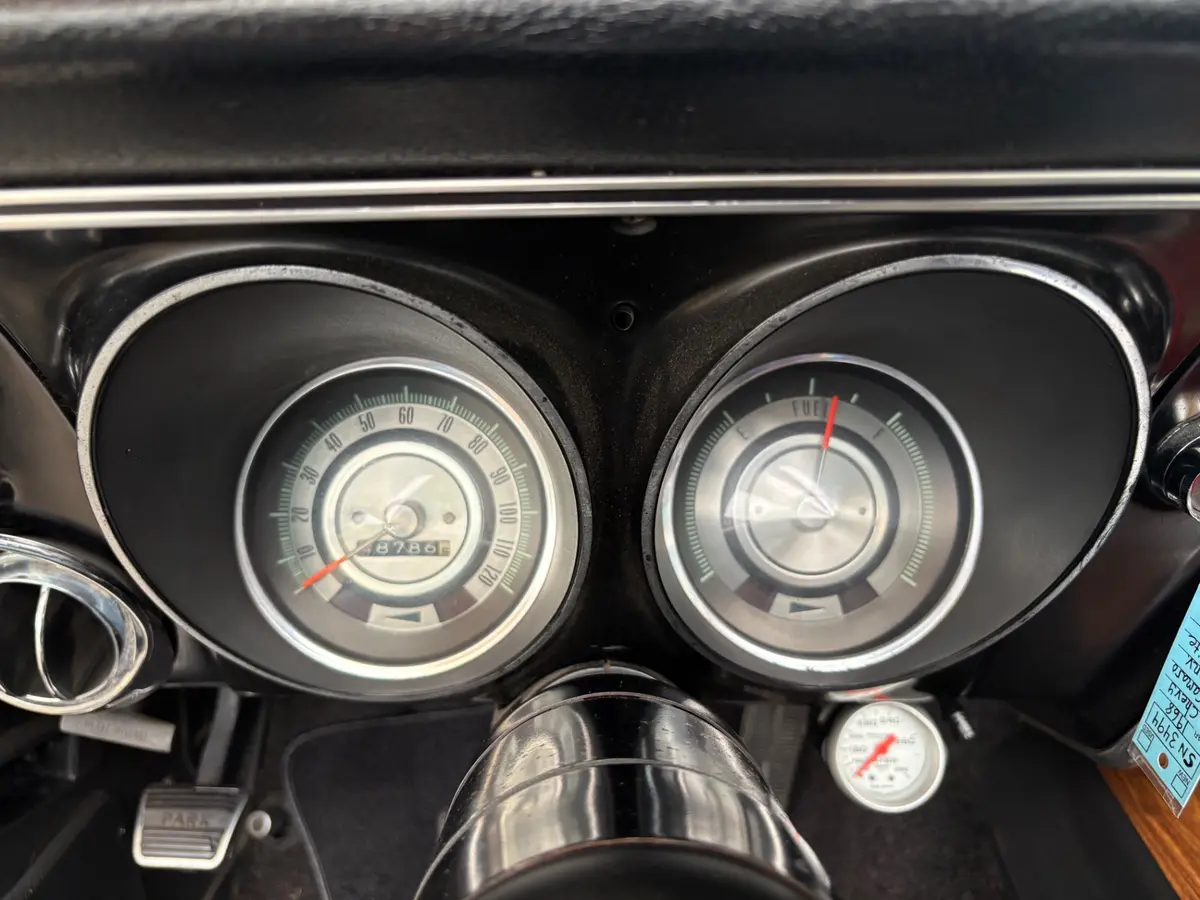
The steering wheel is a 3-spoke design with a simulated wood-grain rim and a bowtie center cap. It shows wear and some peeling on the rim, which is honestly typical of 56-year-old wood-grain coated steering wheels — the underlying spokes and hub appear intact. The gauge cluster is the standard base unit for the 1968 Camaro, featuring a large round speedometer and a fuel gauge. An aftermarket auxiliary gauge — likely oil pressure — has been added below the steering column on a bracket. The AM push-button radio sits in the dash in the factory location, surrounded by the wood-grain insert. The heater control panel, visible in the dash photos with Cold, Hot, Off, and De-Ice markings, confirms this car was built without factory air conditioning, which is consistent with the absence of an A/C compressor in the engine bay or dash vents. The floor is covered in black carpet with Camaro-script floor mats.
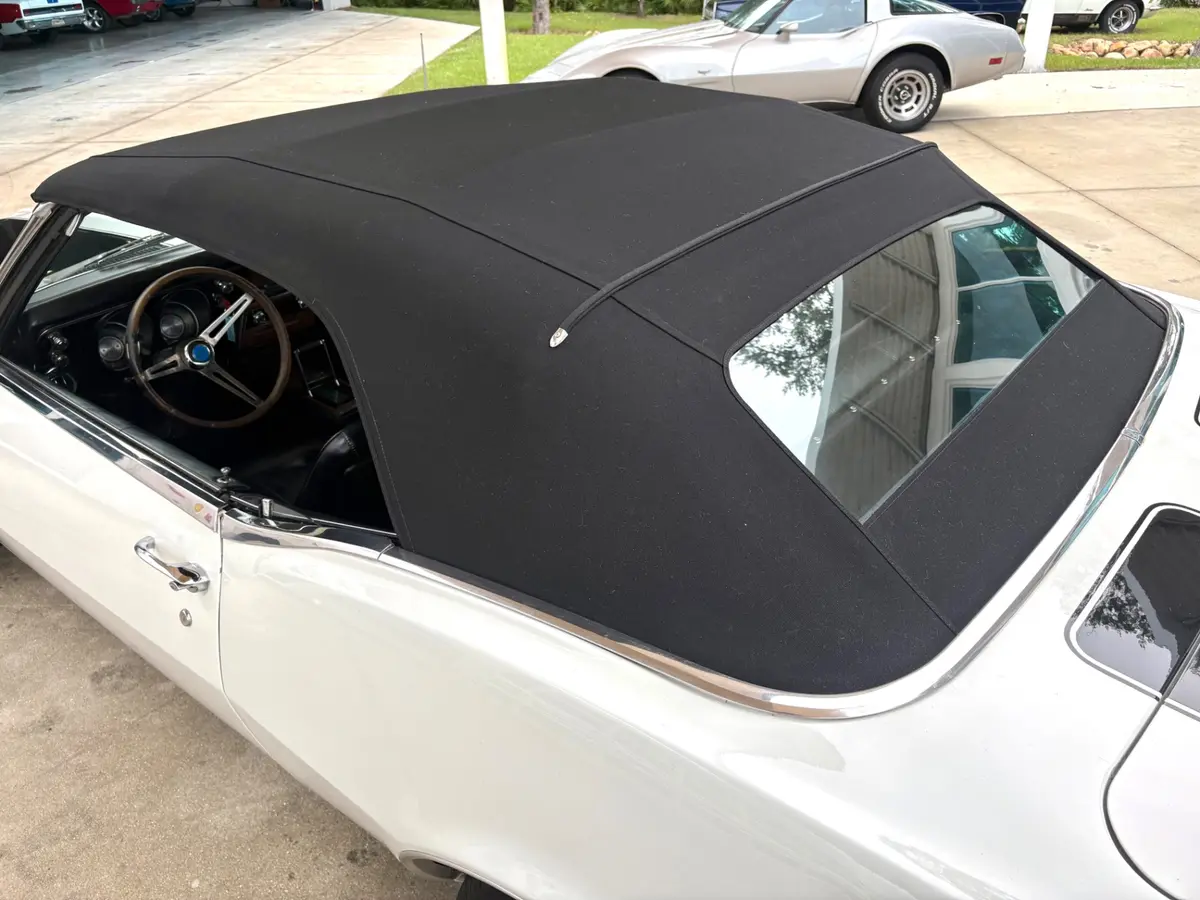
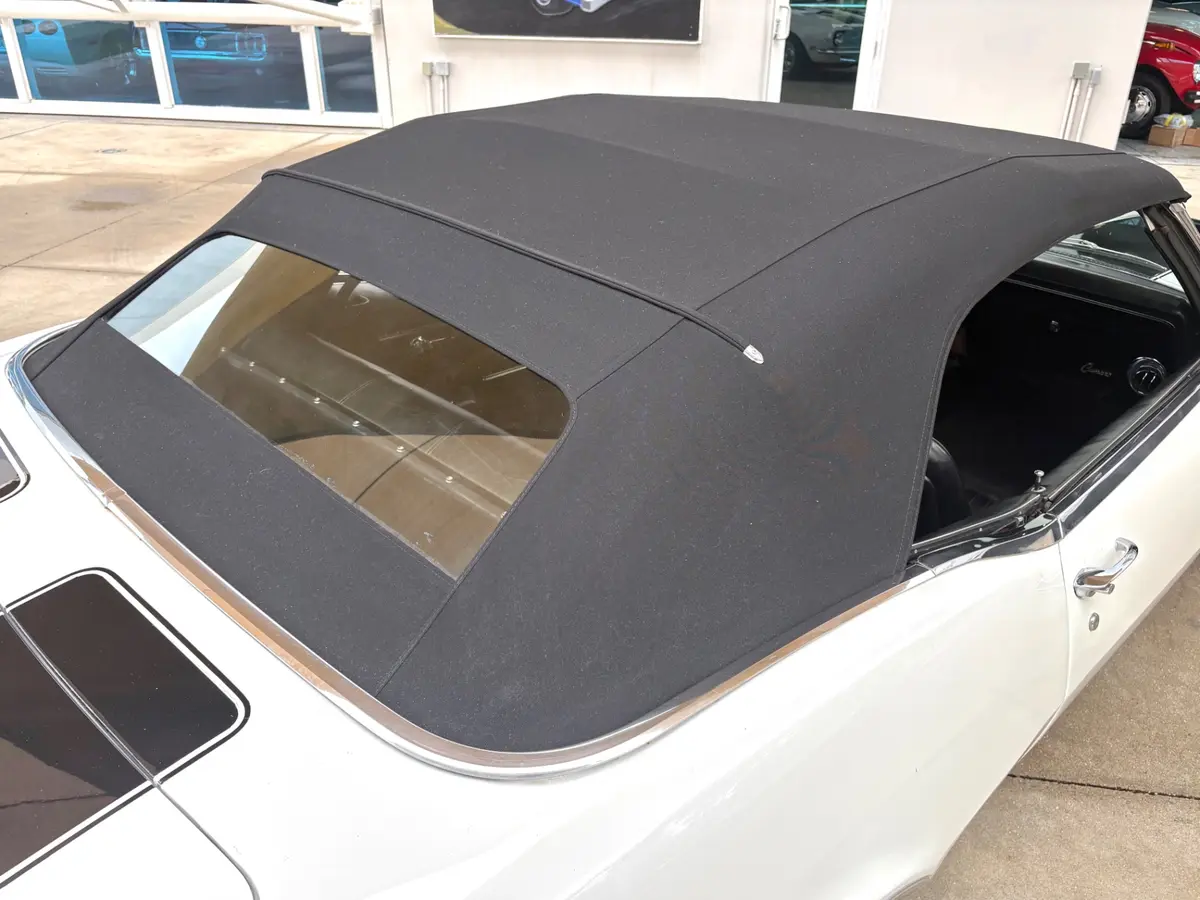
The soft top is a black replacement unit. The rear glass window is intact. The top mechanism appears functional. Original or very early convertible tops on cars of this age are essentially never found in usable condition, so a quality replacement is what the market expects.
Exterior
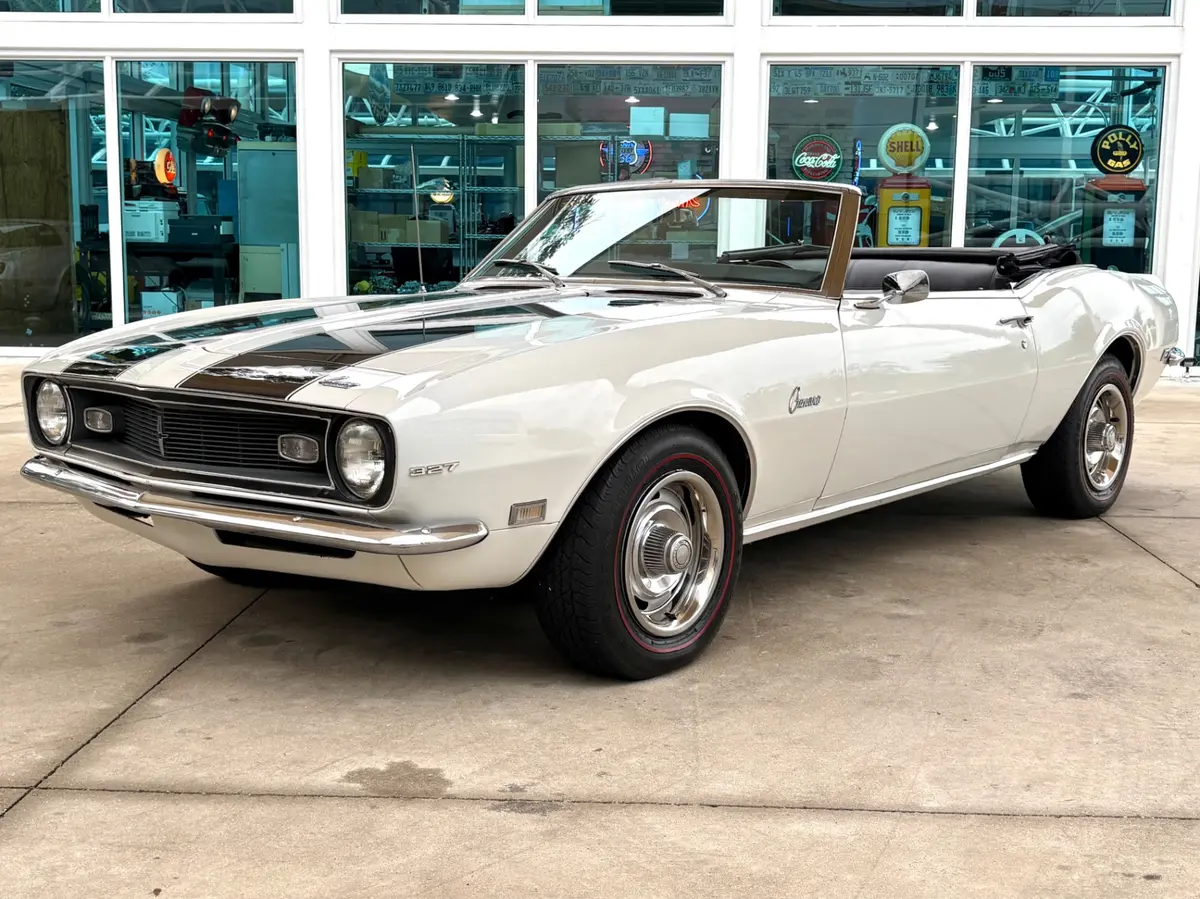
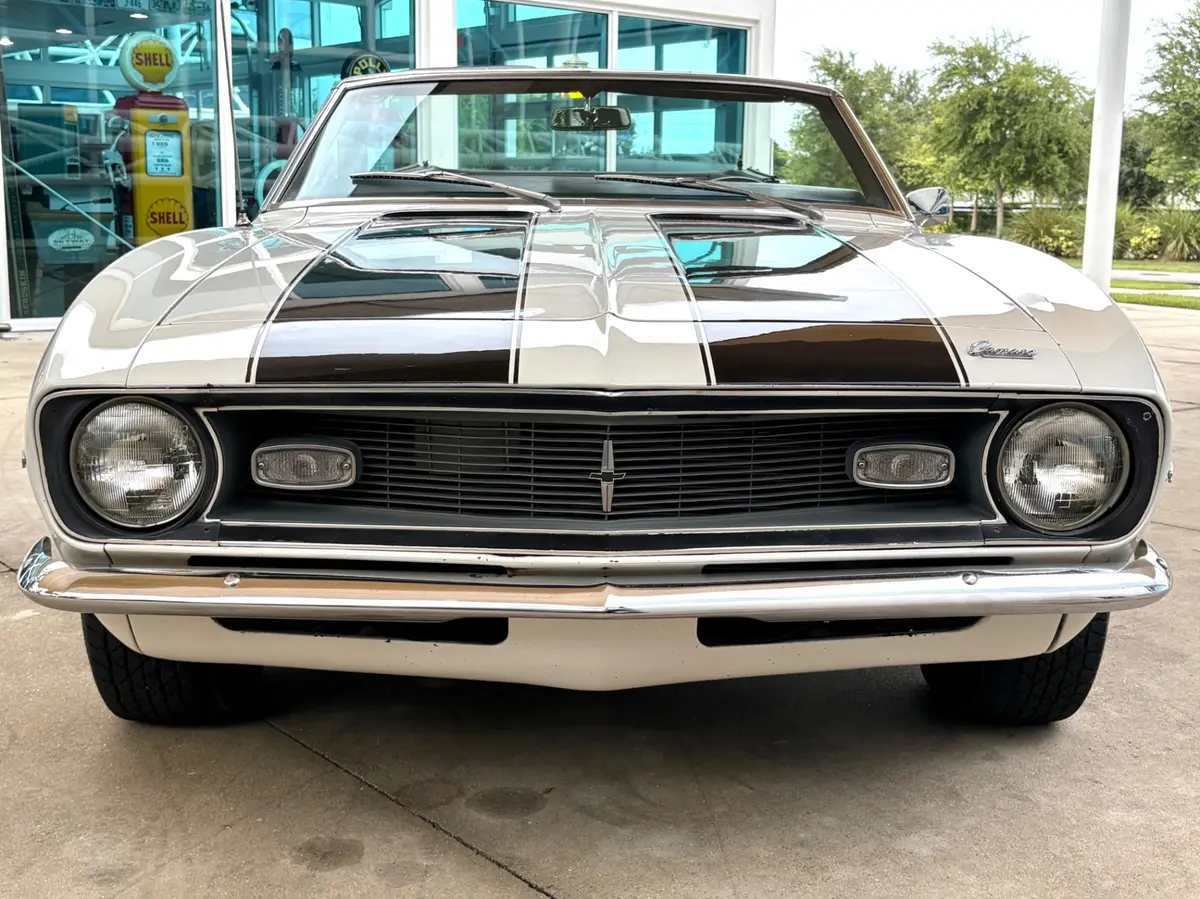
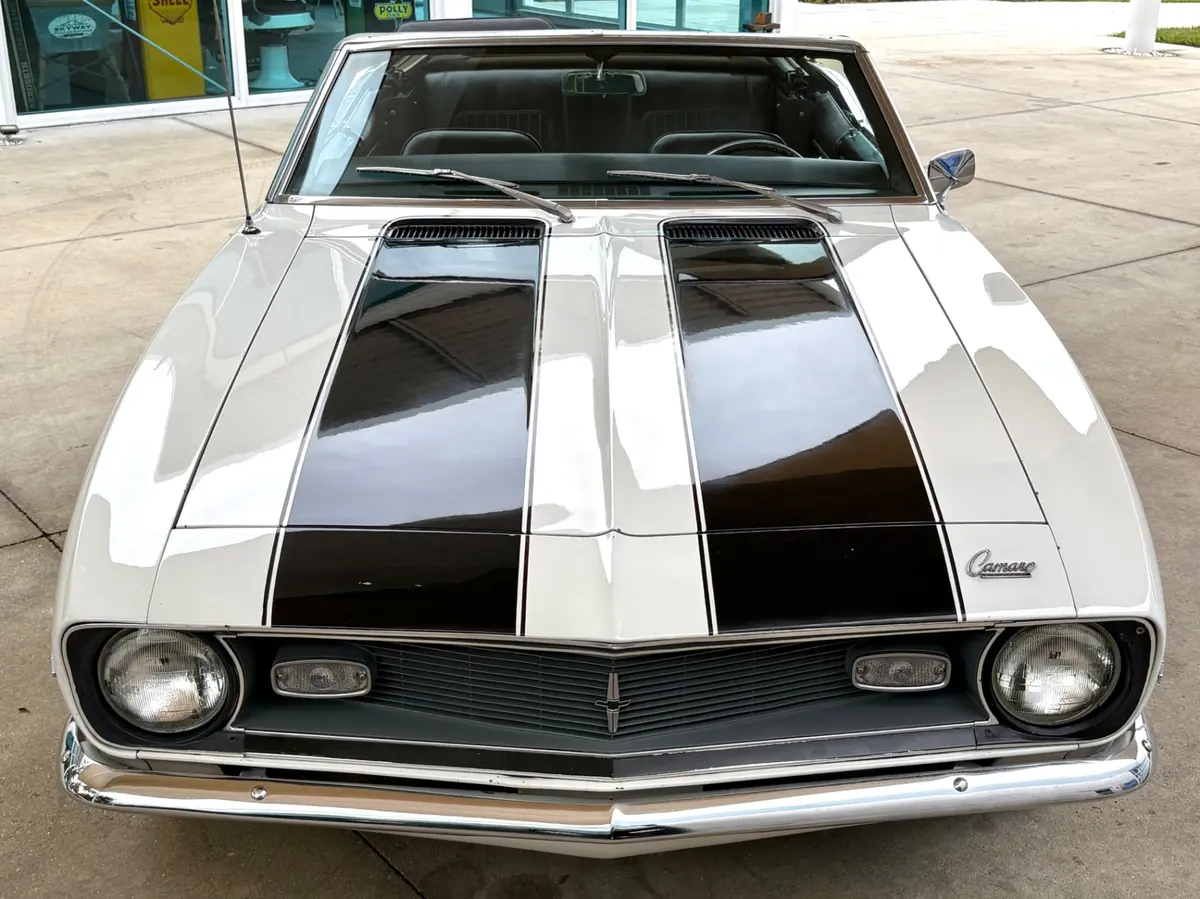
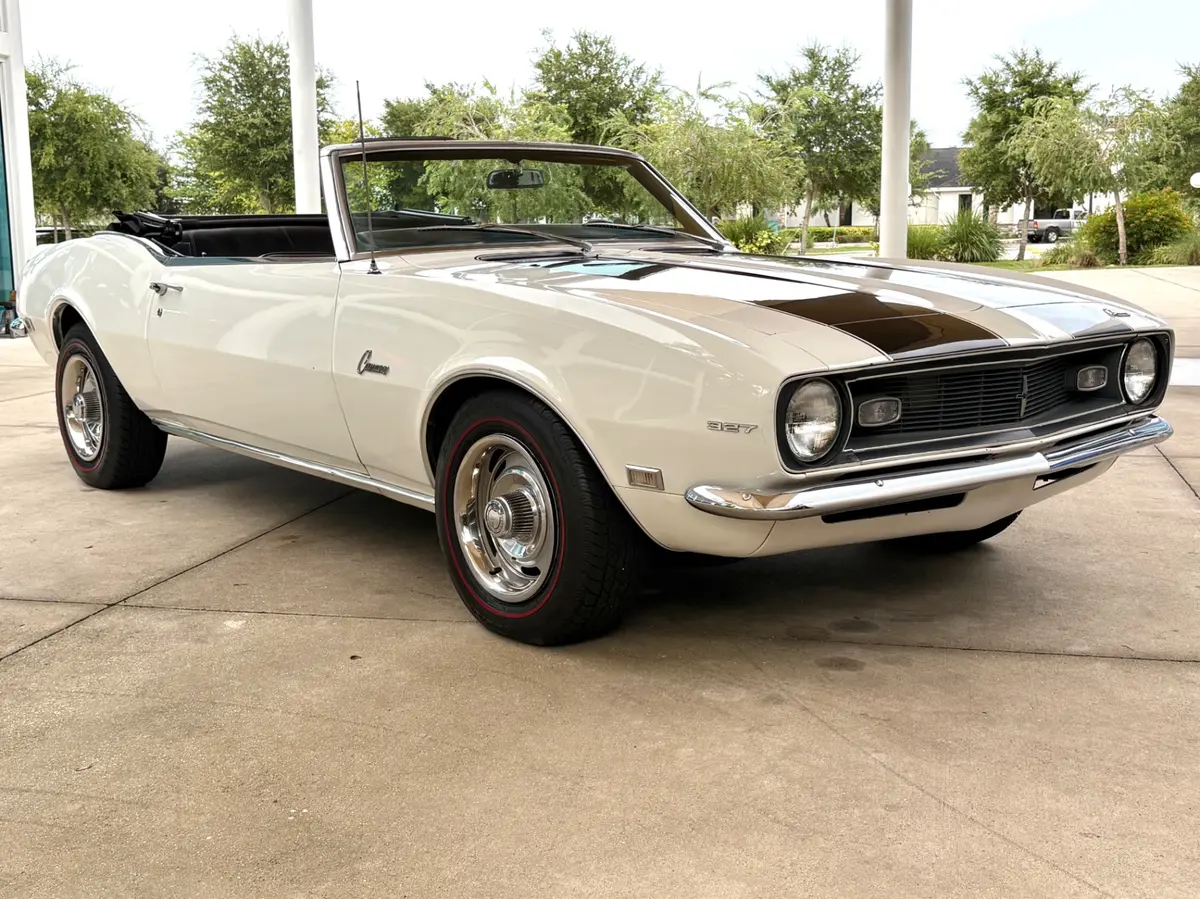
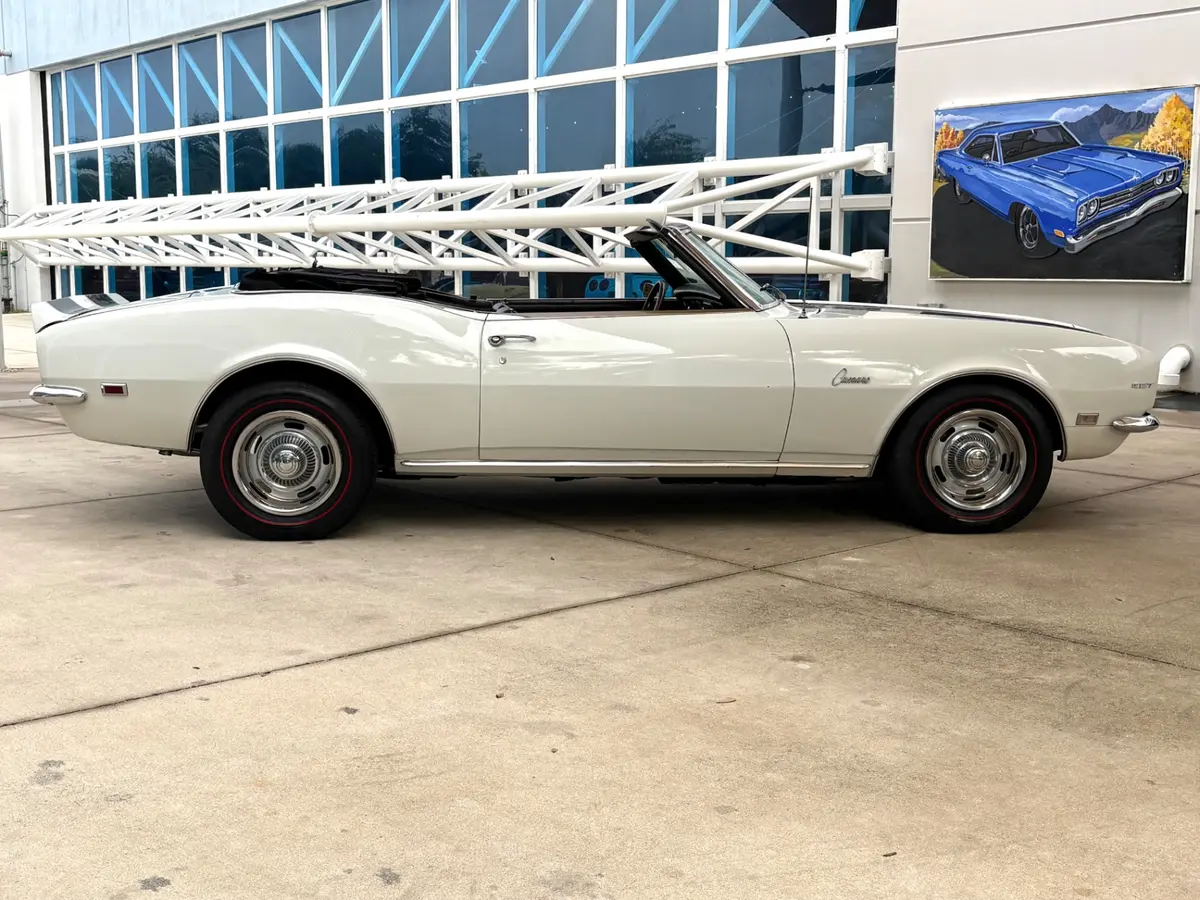
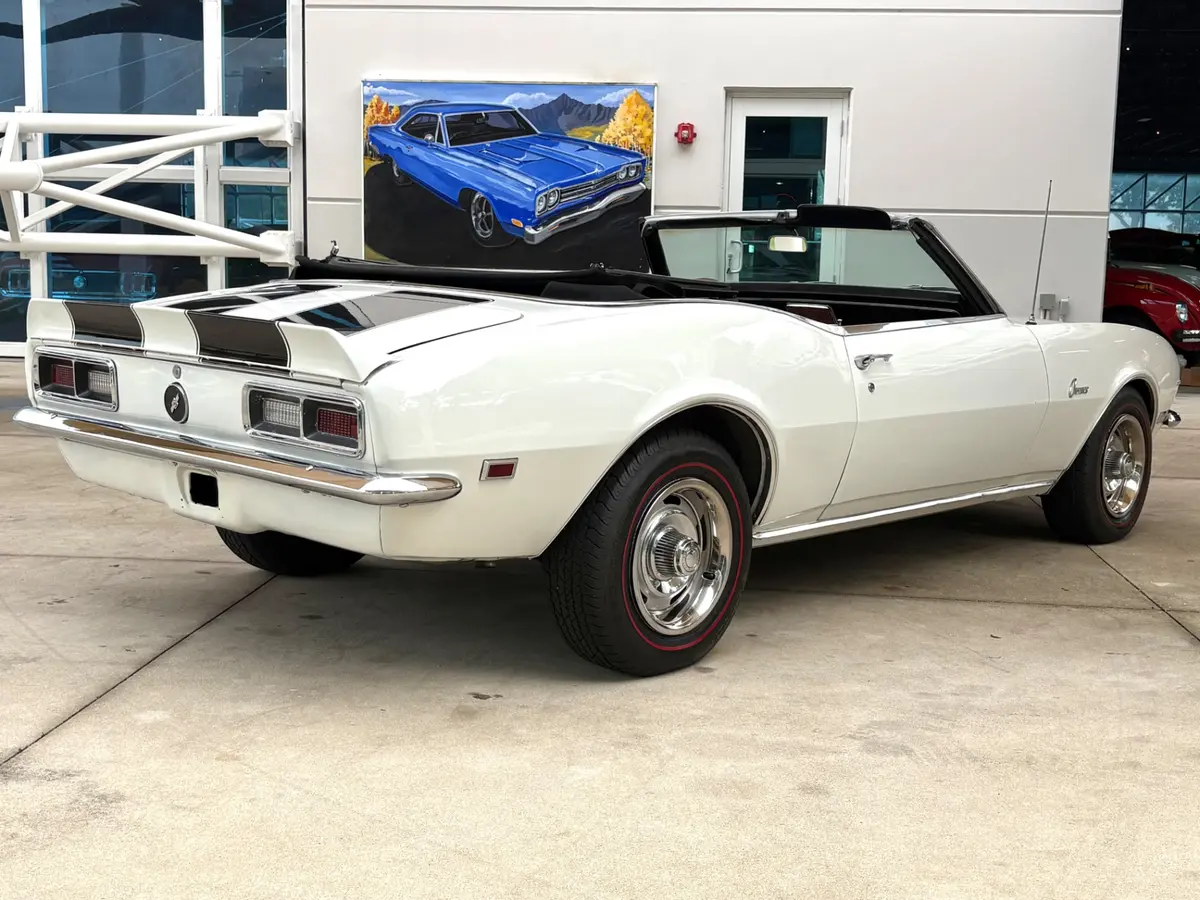
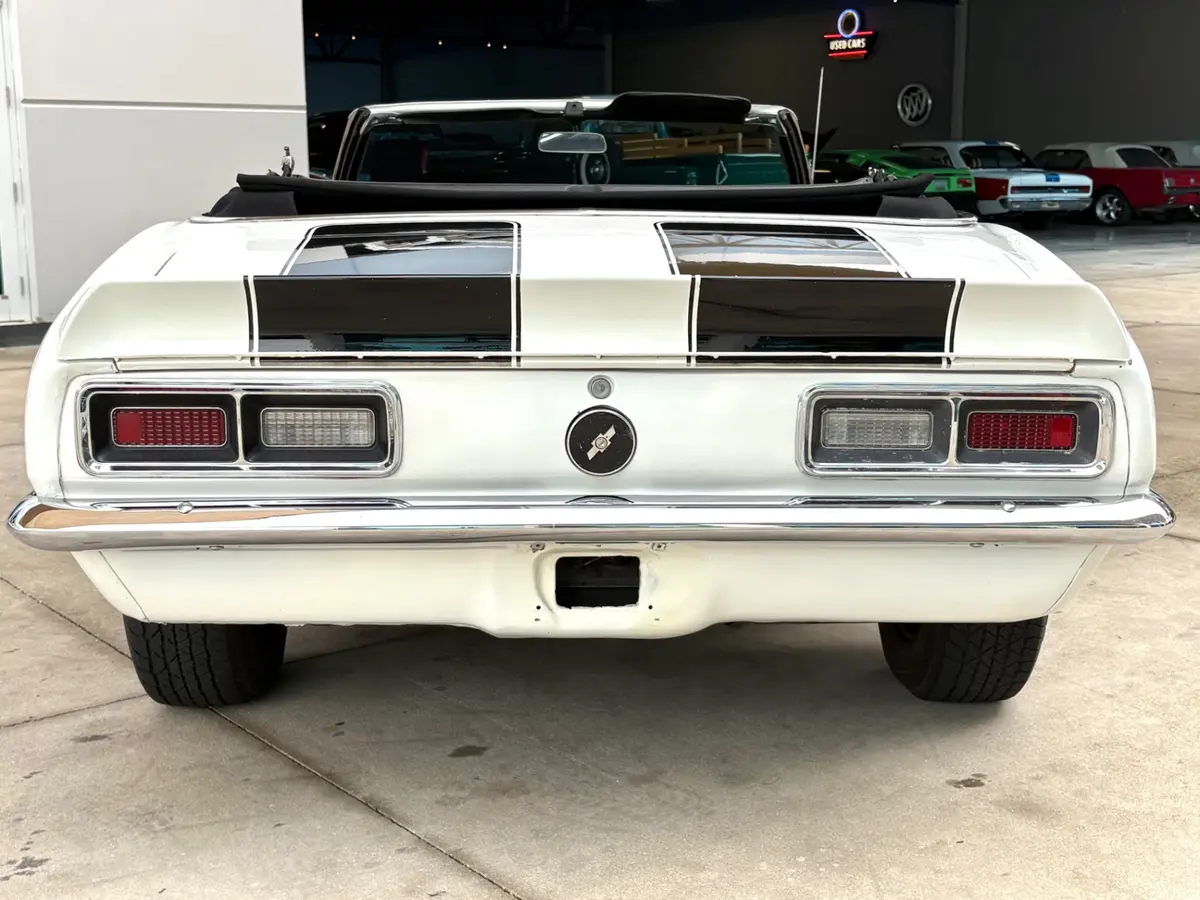
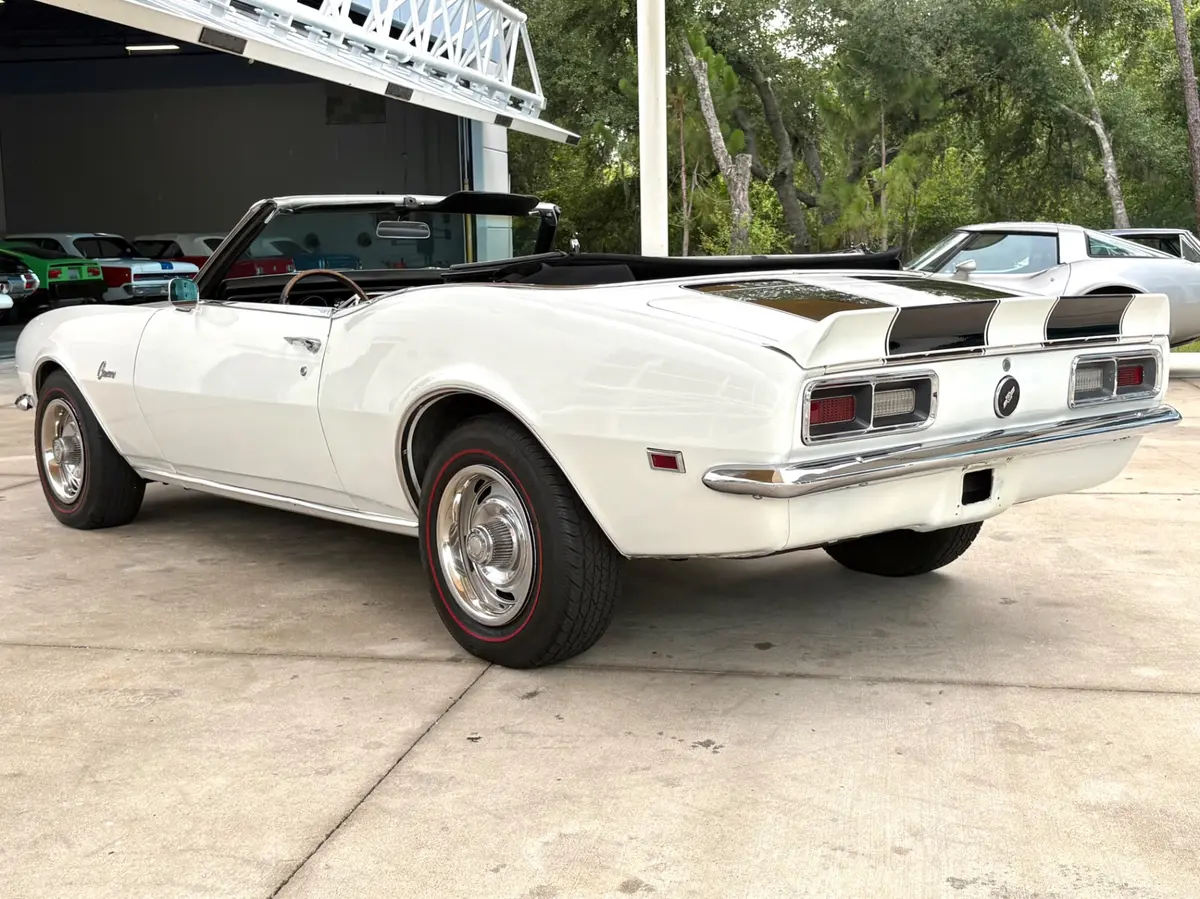
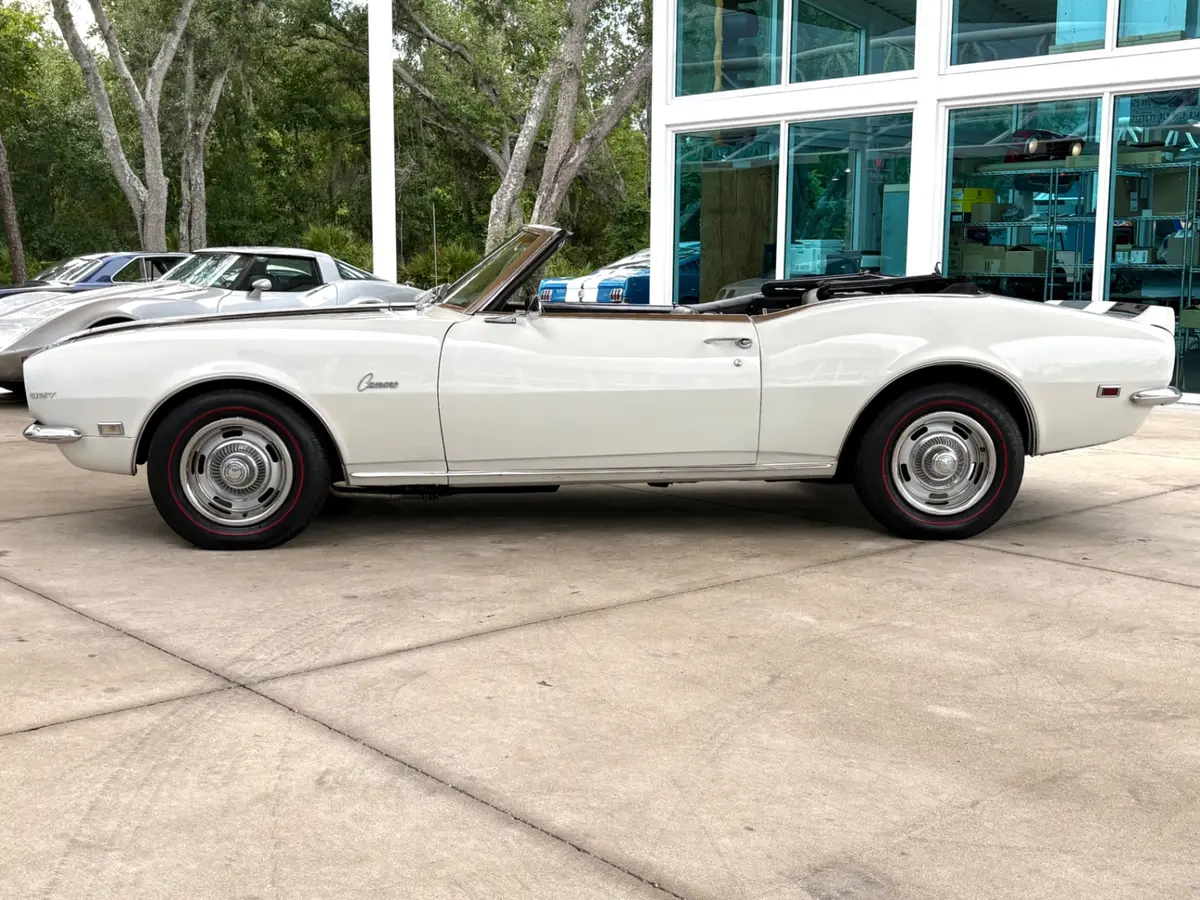
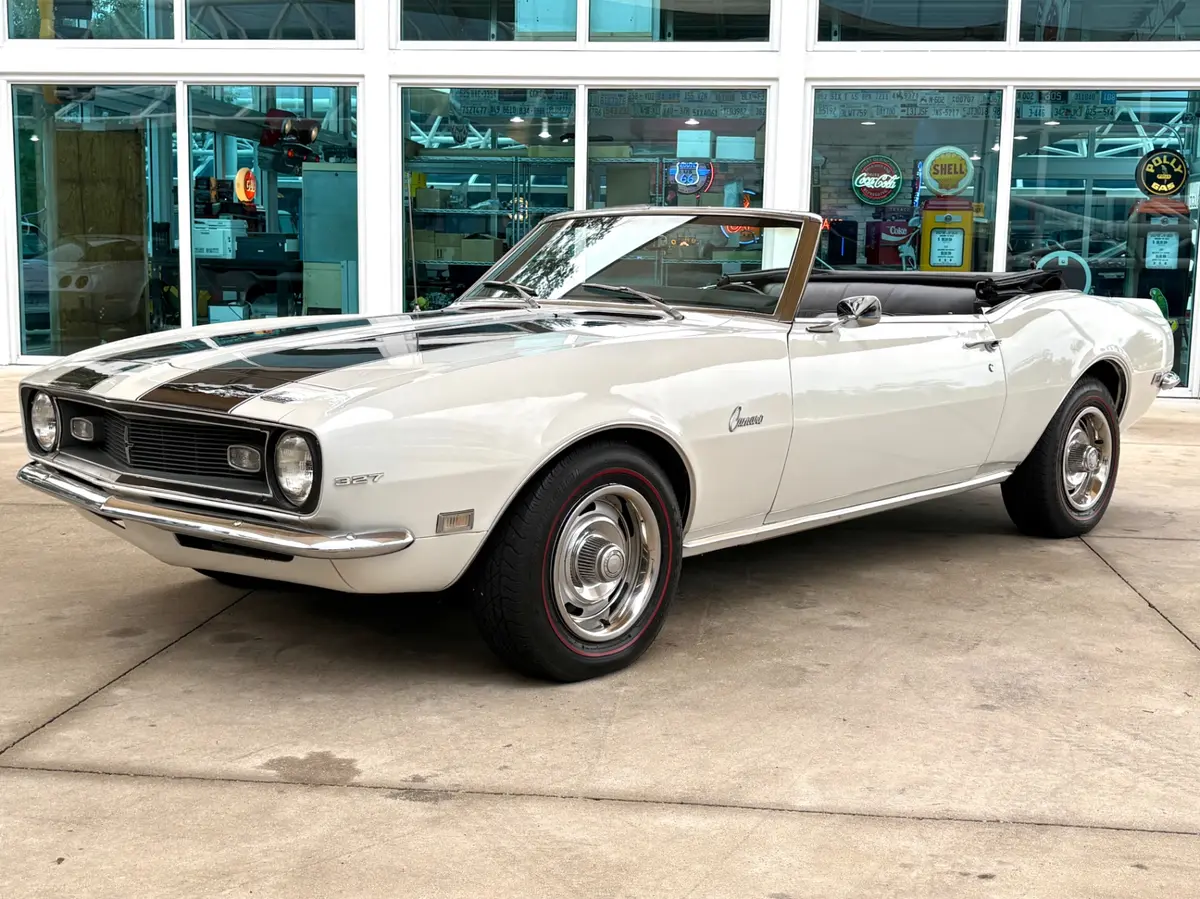
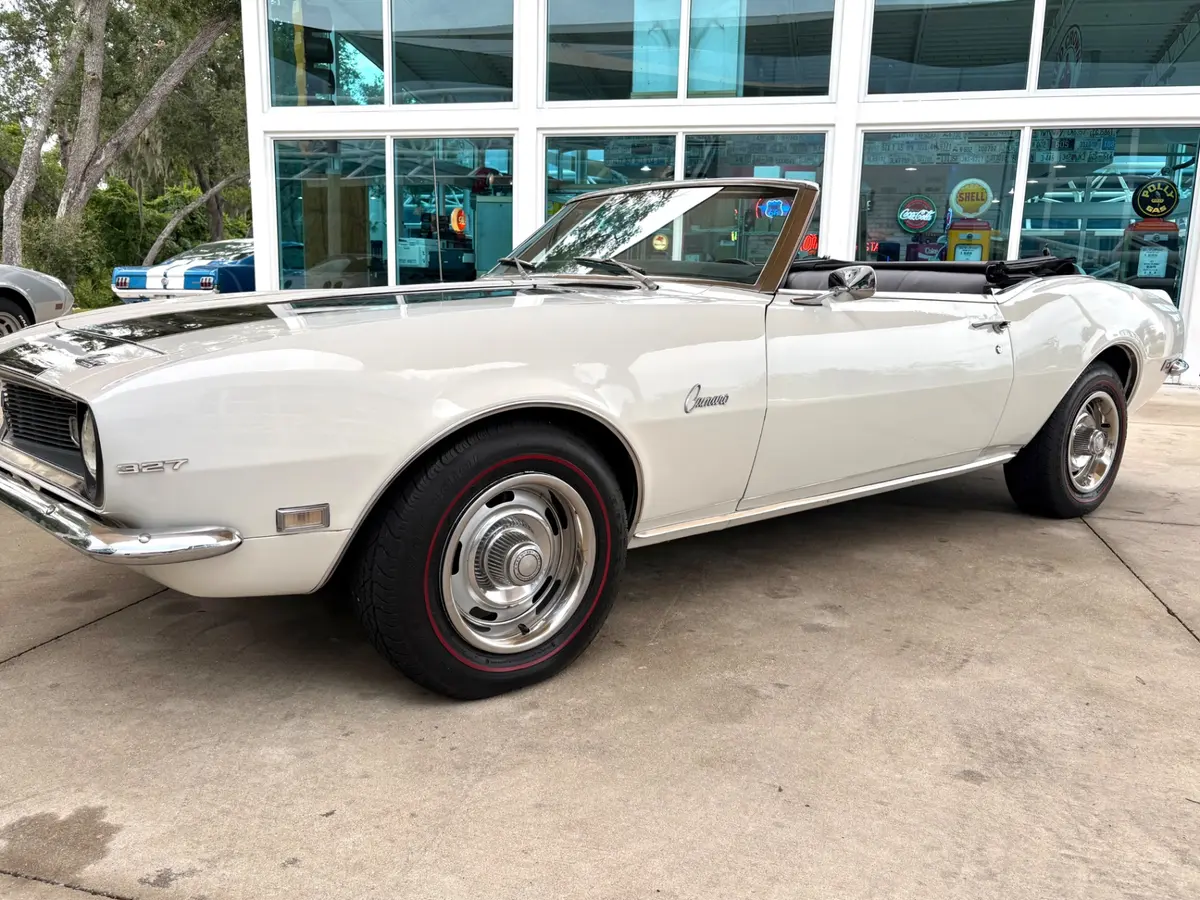
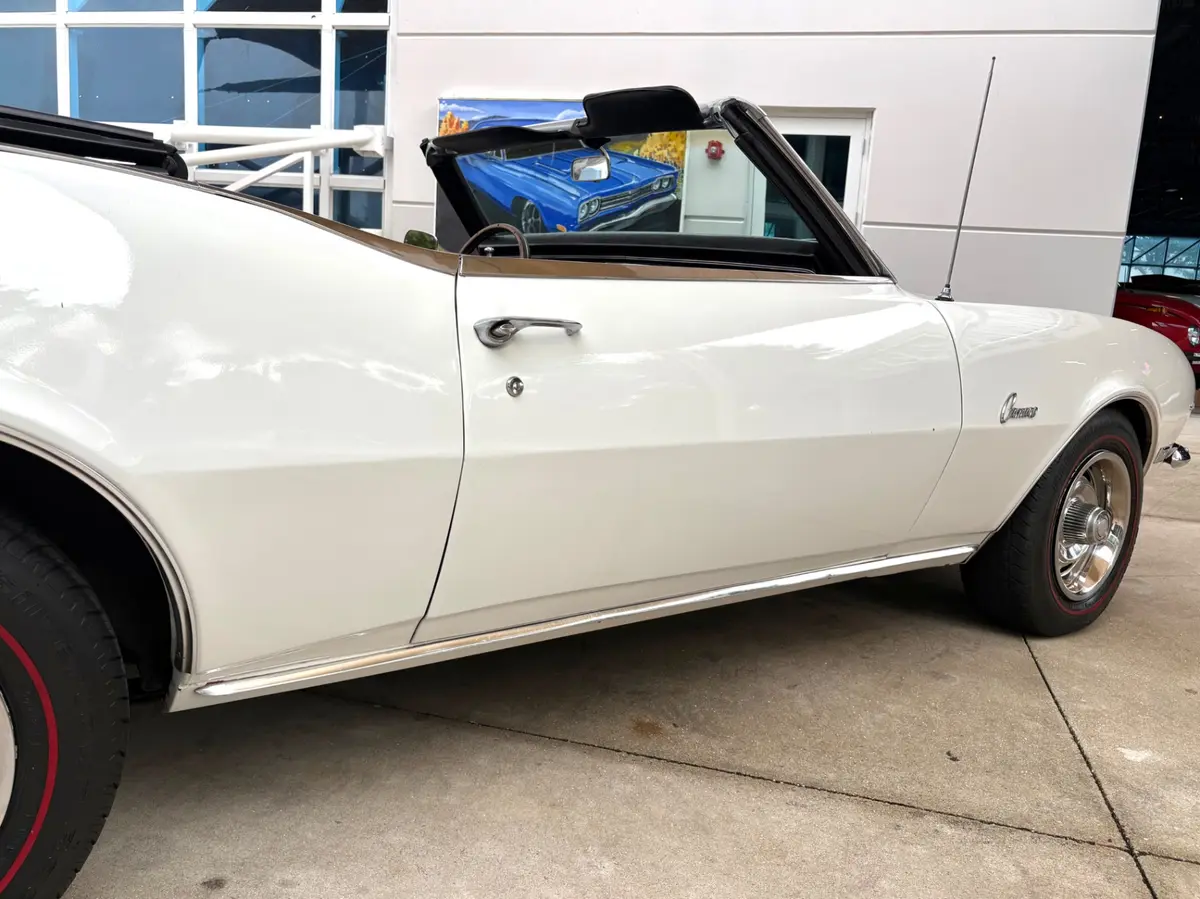
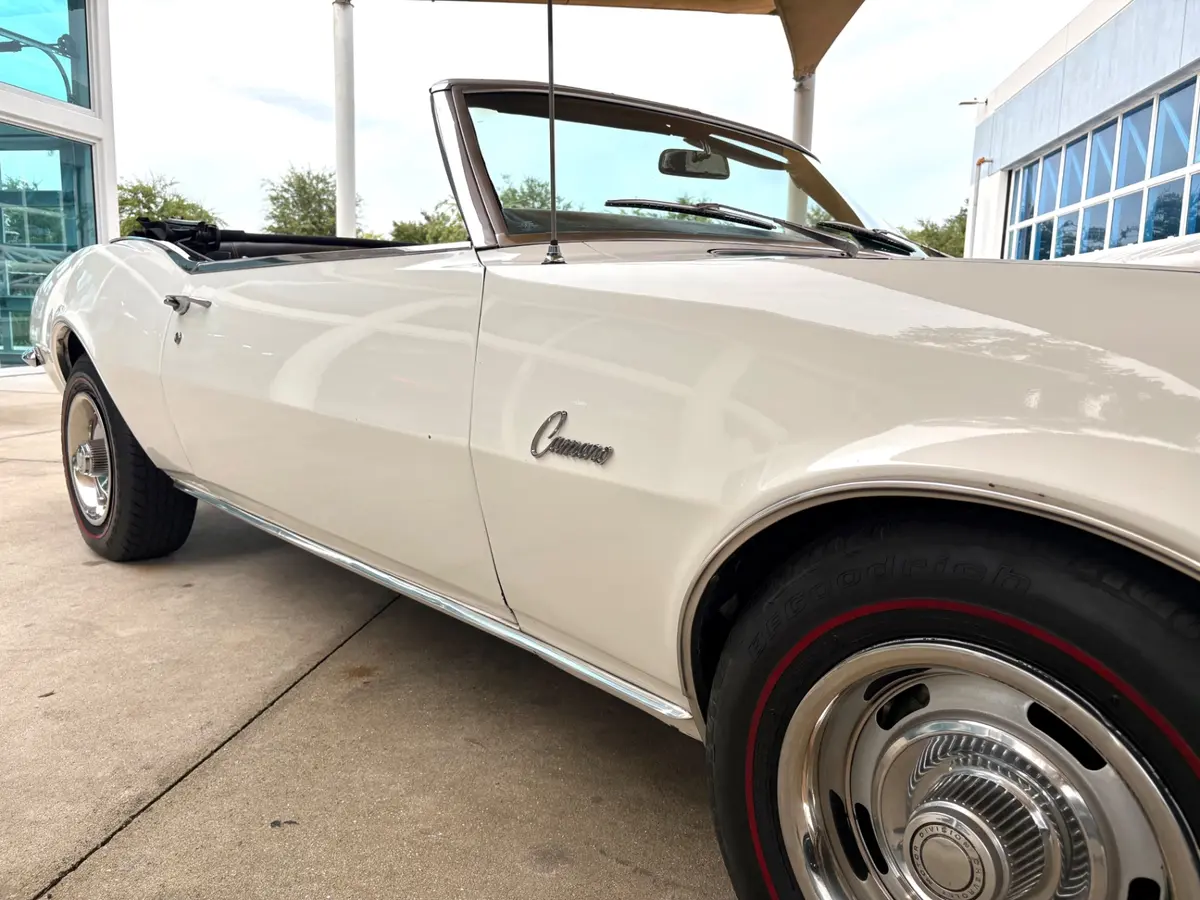
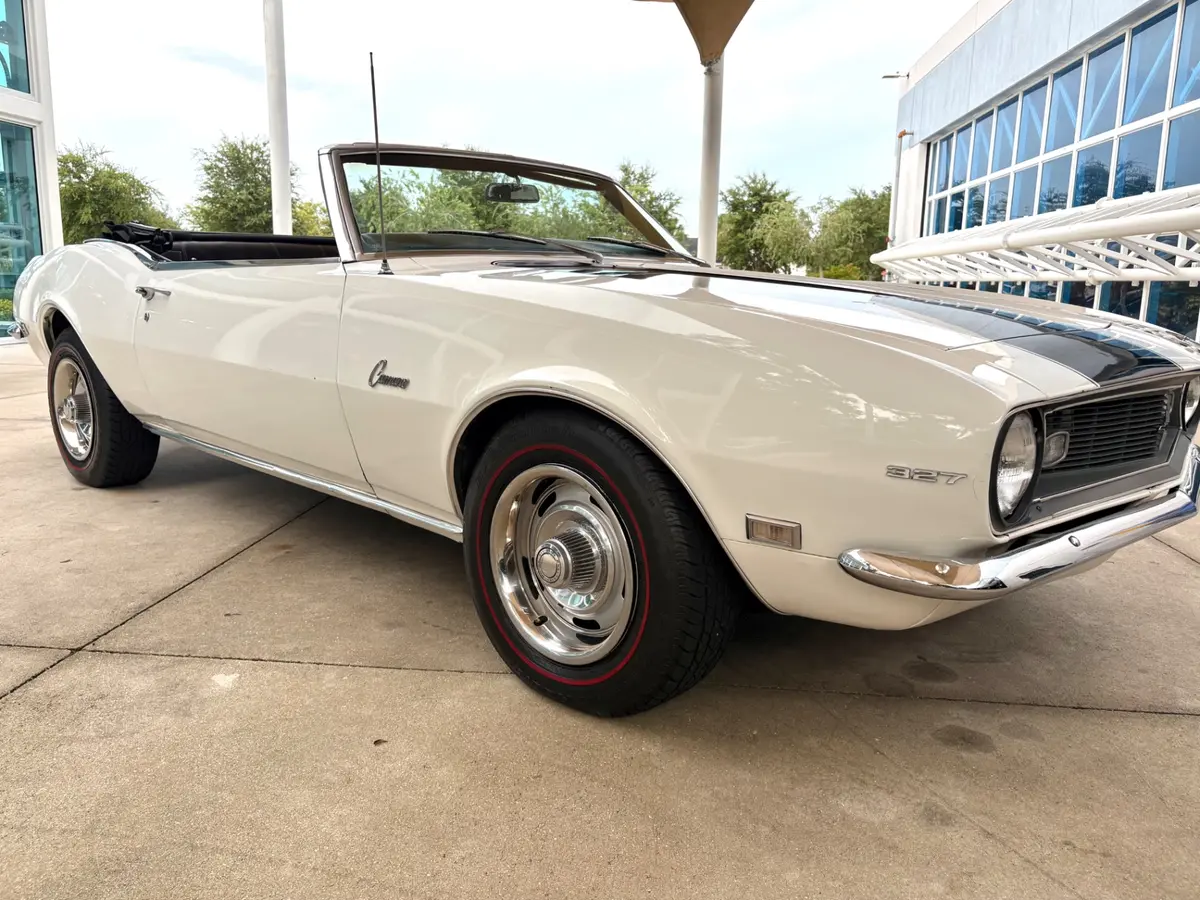
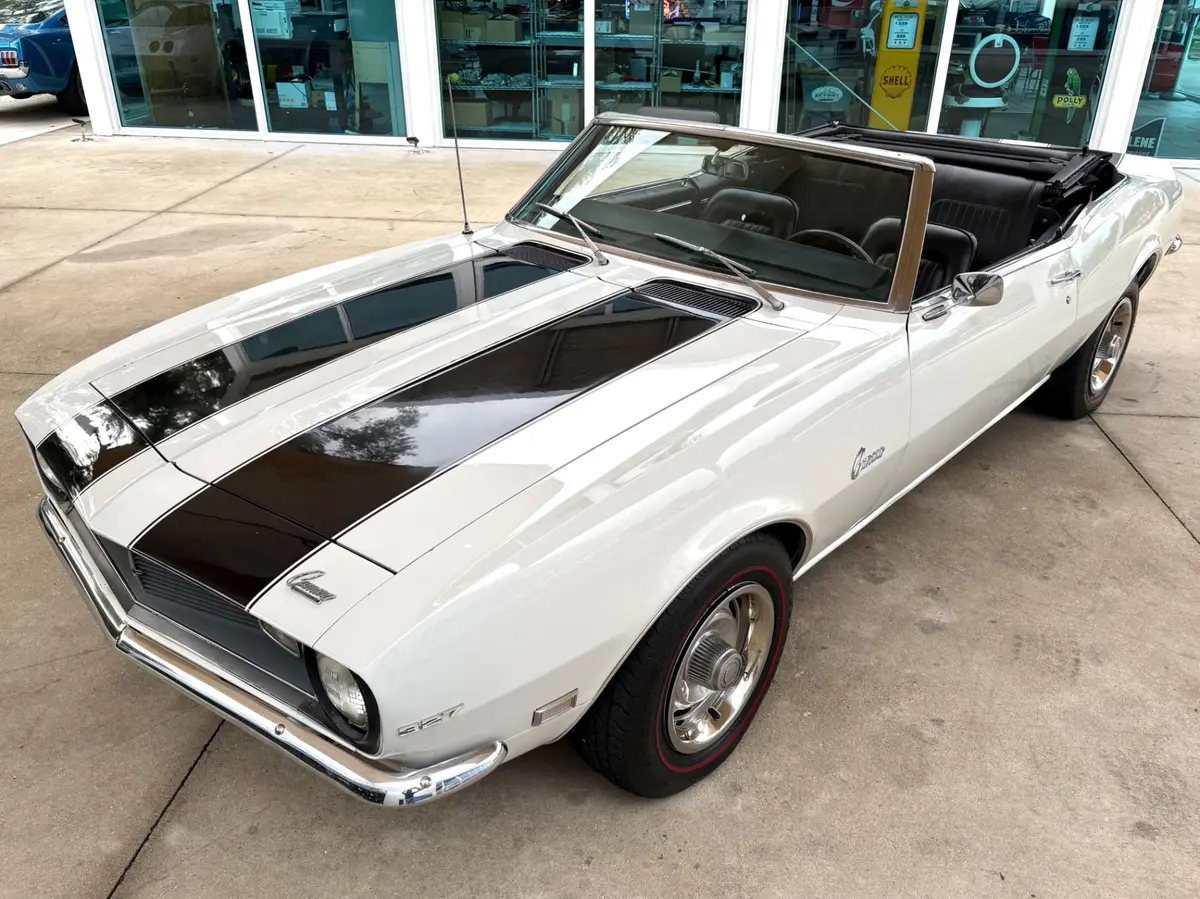
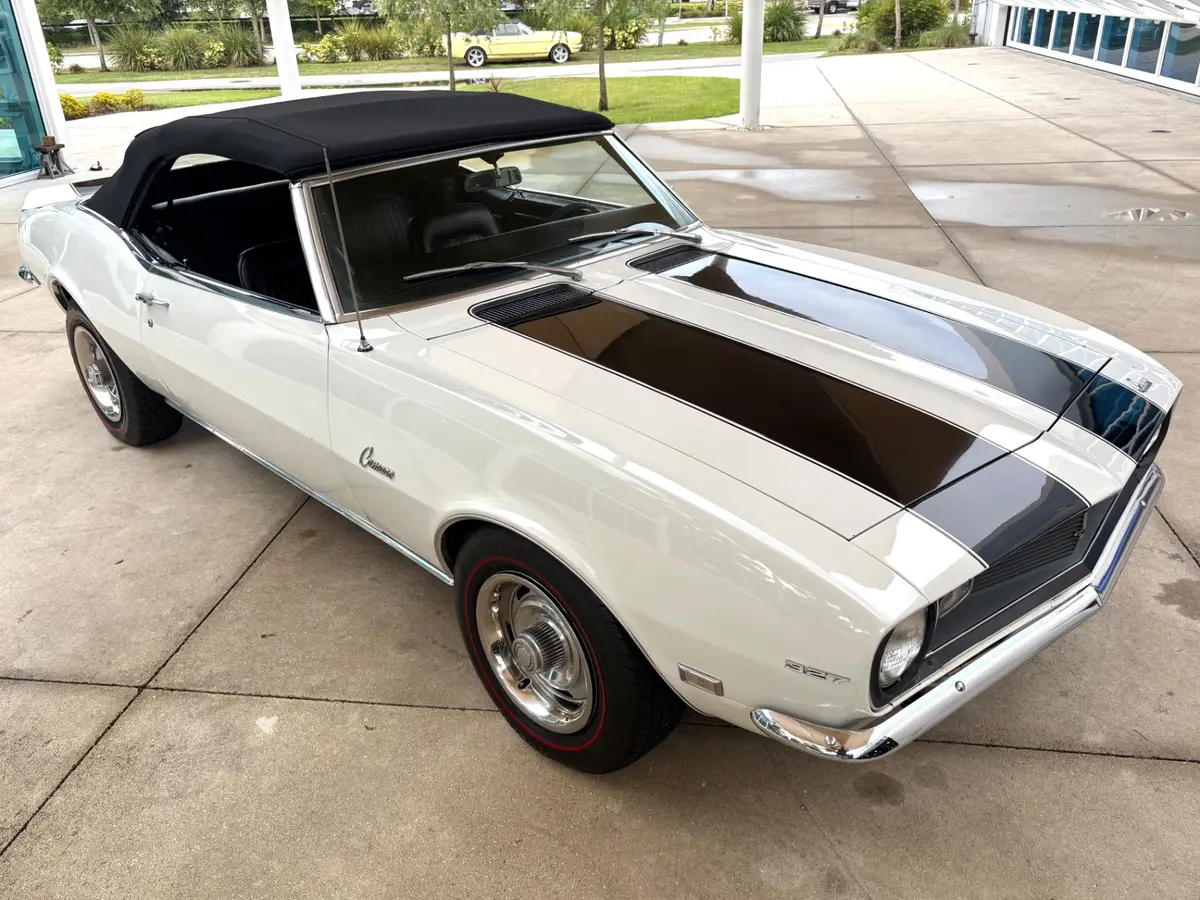
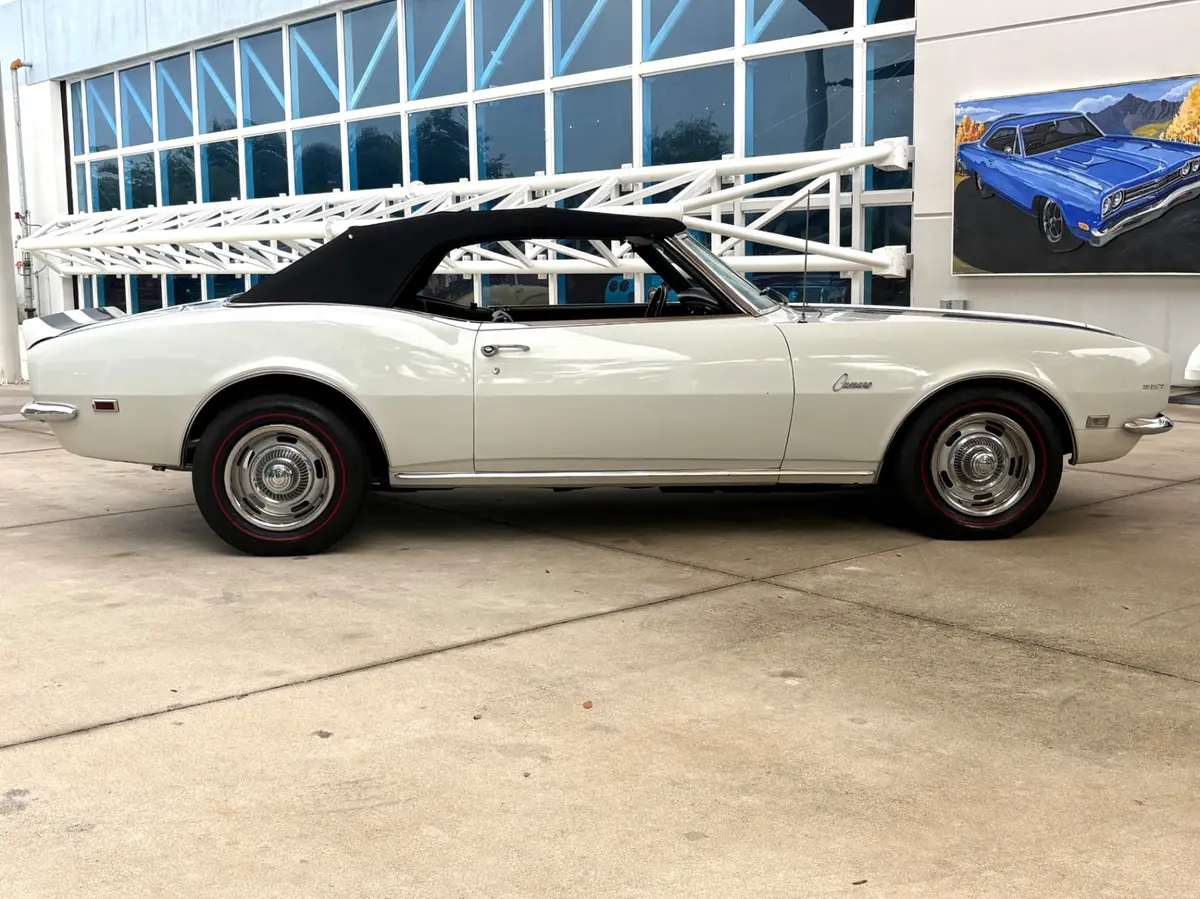
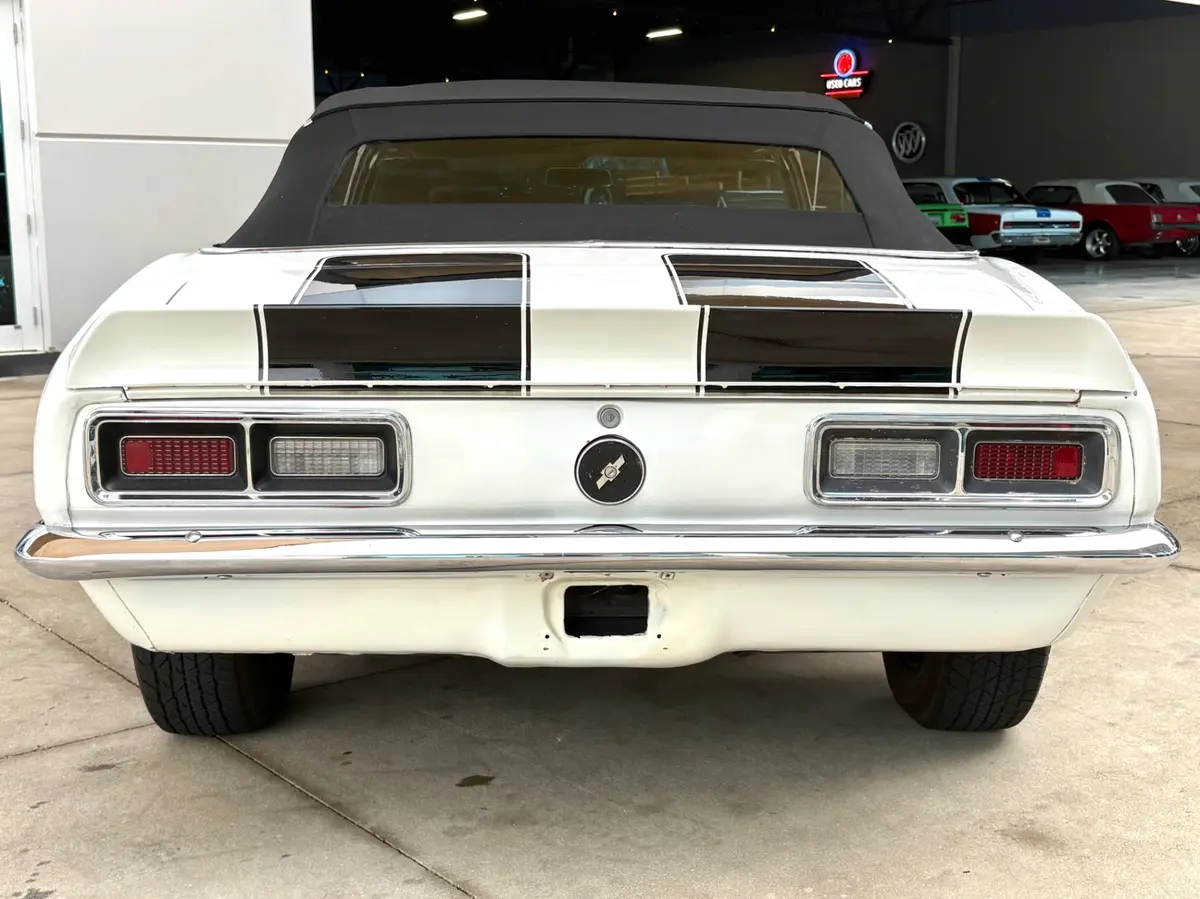
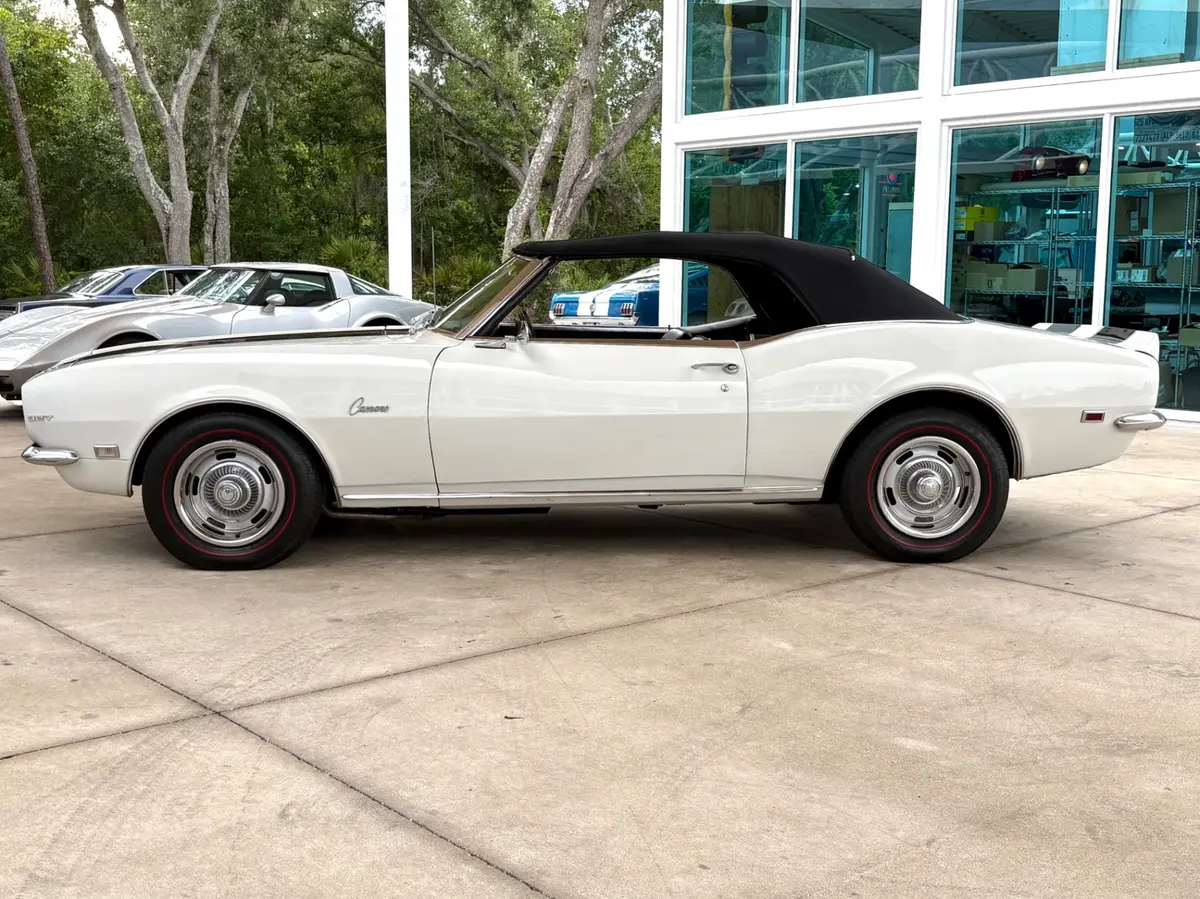
The exterior of this 1968 Chevrolet Camaro convertible is finished in Ermine White, confirmed by Fisher Body tag paint code R1. Ermine White was one of the standard Camaro colors for 1968 and presents particularly well on the convertible body, especially against the black soft top and black rally stripes. The stripes run the full length of the car from the hood to the trunk lid in the classic first-gen rally configuration. The contrast between the white body and the black stripes is one of the most visually direct color combinations available on a 1968 Camaro.
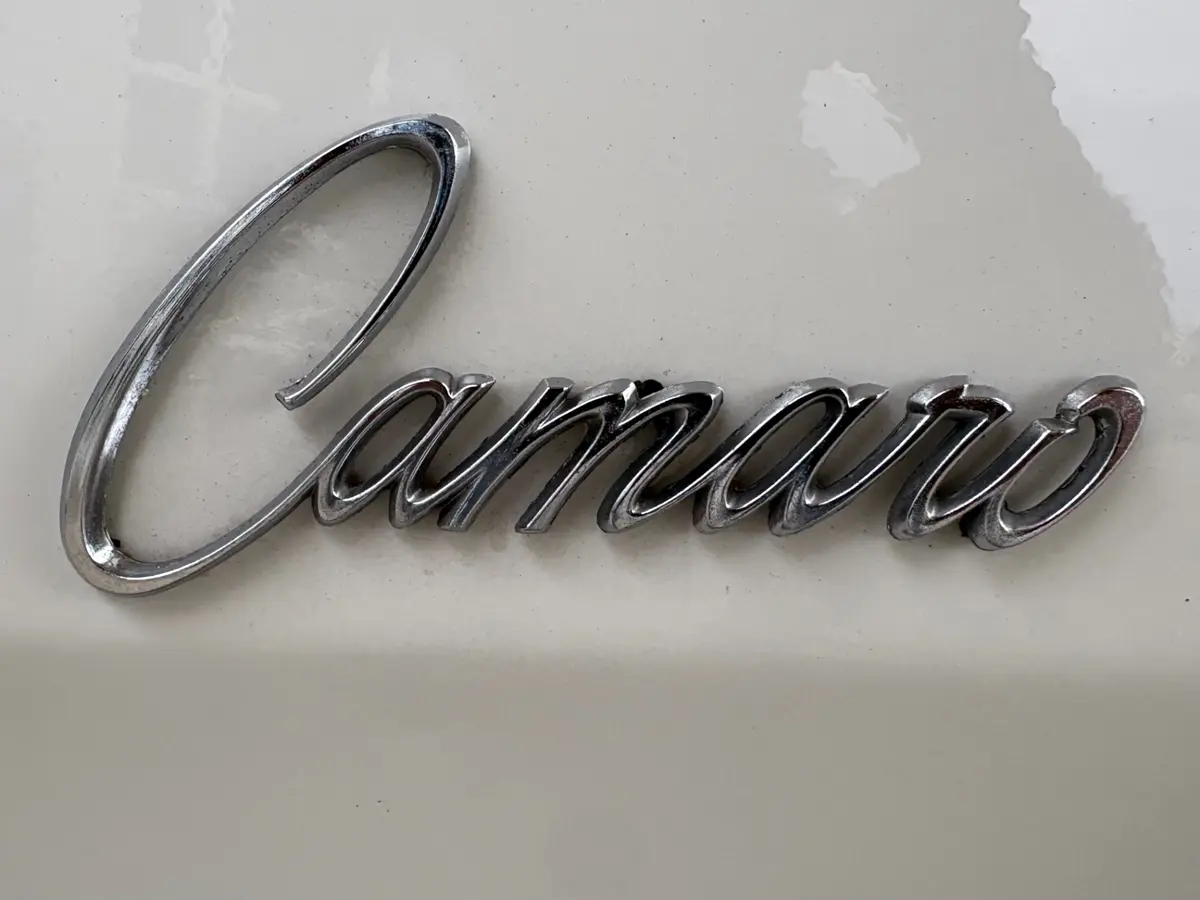
Chrome bumpers are present front and rear, and both appear in good condition. The front grille carries the 1968-specific horizontal bar design with the bowtie emblem centered, flanked by round headlamps and rectangular parking/turn signal lamps. The 327 badges on the front fenders identify the engine to anyone who knows what to look for. Camaro script badges appear on both front fenders and the rear trunk lid. Chrome side rocker trim runs along the lower body. A chrome driver-side exterior mirror is mounted on the door.
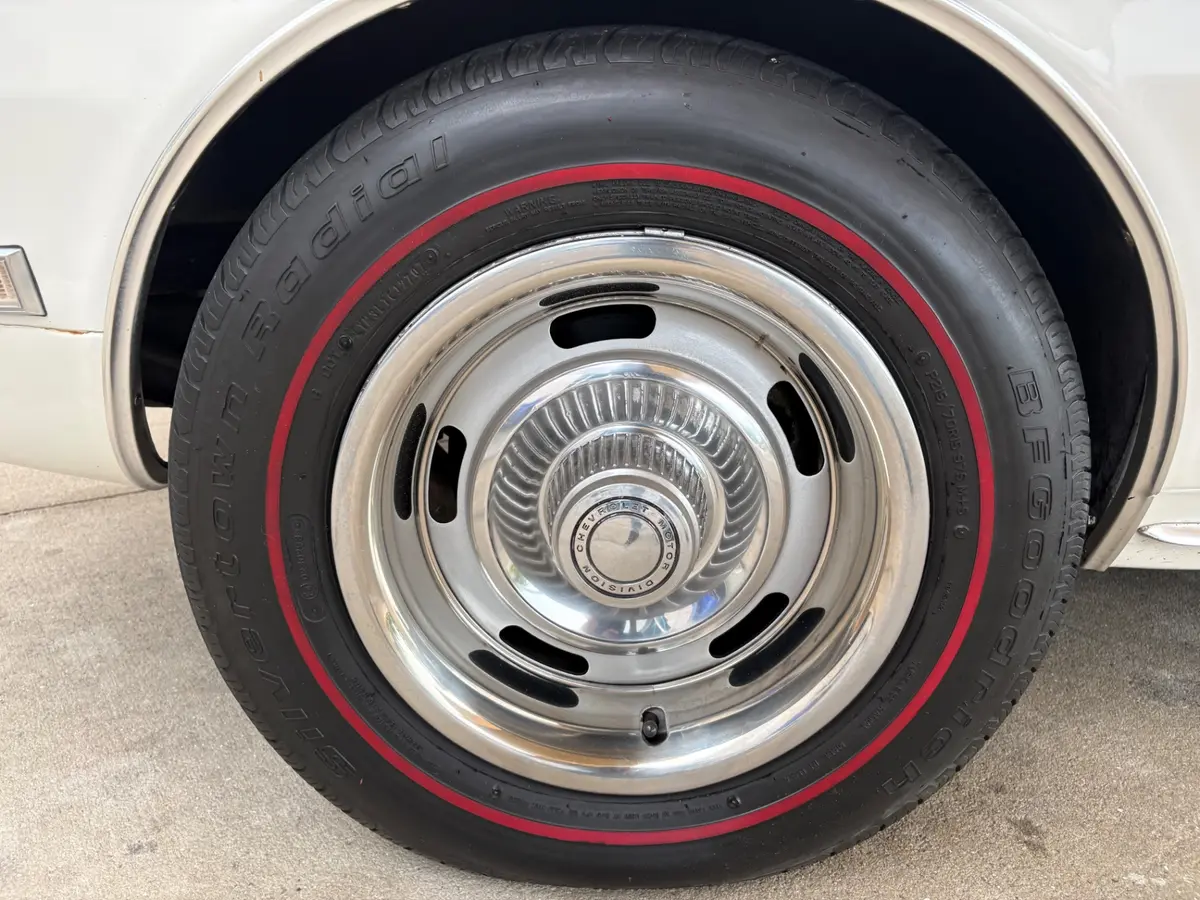
The wheels are chrome Rally wheels wearing Chevrolet Motor Division center caps. These are the correct style for a 1968 Camaro equipped with Rally wheels — the GMD center cap was specific to that wheel option in this era. The tires are Bridgestone Radial red-line units, which complement the Rally wheel appearance while providing modern radial construction. The underside photos confirm the body is coated and solid, and there are no visible signs of structural rot or major prior accident damage in the undercarriage photographs.
One item worth noting: the rear valance area in the underside photos shows some minor surface work near the rear bumper mounting area, visible in the rear exterior undercarriage shot. Buyers doing a pre-purchase inspection should take a look at that area in person. Overall, the exterior presents as a well-kept, driver-quality 1968 Camaro convertible with a correct and well-matched color scheme.
Conclusion
This 1968 Chevrolet Camaro convertible checks the boxes that matter most to serious buyers: numbers-correct 327 V8, a surviving Fisher Body tag that confirms the factory color and interior codes, a legitimate Norwood build, and a late May 1968 production date. The convertible body style is the rarer configuration — fewer than one in ten 1968 Camaros left the factory as a drop-top. The combination of Ermine White paint, black rally stripes, black interior, and a floor-shifted Turbo-Hydramatic with console is exactly the kind of option combination that made the 1968 Camaro popular when it was new and keeps it desirable today.
This is not a trailer queen or a rotisserie restoration. It is a well-documented, correctly configured, open-top first-gen Camaro that can be driven, shown, and enjoyed. The floorpans and undercarriage are solid, the drivetrain is correct, and the documentation is there to back up what the car claims to be.
If you have questions about this 1968 Chevrolet Camaro convertible or want to arrange a time to inspect it in person, call Skyway Classics at 941-254-6608. We are located in Sarasota, Florida, and we are happy to assist buyers traveling from out of state.
Disclaimer
Information found on the website is presented as given to us by the owner of the car, whether on consignment or from the owner we bought it from. Some Photos, materials for videos, descriptions and other information are provided by the consignor/seller and is deemed reliable, but Skyway Classics does not warranty or guarantee this information. Skyway Classics is not responsible for information that may incorrect or a publishing error. The decision to purchase should be based solely on the buyers personal inspection of the vehicle or by a professional inspection service prior to offer or purchase being made.
1968 Chevrolet Camaro Convertible — Numbers-Correct 327 V8, Norwood-Built, Fisher Body Documented
Why This Car Is Special
The 1968 Chevrolet Camaro convertible is one of the more sought-after configurations of the first-generation platform, and for good reason. Chevrolet sold just over 20,000 Camaro convertibles for the 1968 model year, compared to more than 215,000 coupes. That alone makes any open-top first-gen Camaro a relatively scarce find. What separates this particular car from the typical survivor is the paperwork behind it — specifically, the Fisher Body tag still mounted in the car, which confirms the factory paint color, interior trim code, body style, assembly plant, and build date without any guesswork.
The Fisher Body plate on this car decodes as follows: body style ST 68-12467, which confirms this is a 1968 Camaro convertible. The interior trim code TR 712 matches black standard vinyl, exactly what you see inside the car. The paint code R1 confirms Ermine White, which is the correct name for this off-white factory color. The assembly plant code NOR identifies this as a Norwood, Ohio build — one of two plants that produced first-generation Camaros, the other being Van Nuys, California. The build date code 05E places production in the fifth week of May 1968, meaning this car was assembled very late in the 1968 model year run. For collectors, that level of documentation is not always available on 56-year-old cars.
The engine is numbers-correct — the 327 cubic inch V8 that belongs in this car is still under the hood. That matters both for valuation and for authenticity. The 327 was a well-regarded small-block in 1968, offered in the Camaro in multiple states of tune. This car carries a 327 Turbo-Fire decal on the air cleaner lid, consistent with the era. The combination of a documented body tag, matching engine, convertible body style, and a desirable Ermine White over black color scheme puts this 1968 Camaro convertible in a different category than a re-painted or re-engined example.
Features List
- Numbers-correct 327 cubic inch V8 engine
- Turbo-Hydramatic automatic transmission, floor-shifted with console
- Power steering
- Power front disc brakes
- Black power soft-top convertible (newer black replacement top)
- Fisher Body plate present — confirms R1 Ermine White paint, TR 712 black vinyl interior, Norwood assembly, May 1968 build date
- Chrome Rally wheels with Chevrolet Motor Division center caps
- Red-line tires (Bridgestone Radial)
- Full-length black hood-to-trunk rally stripes
- Chrome bumpers front and rear
- Chrome/polished valve covers with Chevrolet bowtie emblems
- 327 fender badges (front fenders)
- Camaro script badges (front fenders and rear trunk lid)
- Chrome exterior side rocker trim
- Driver-side chrome exterior mirror
- Black standard vinyl bucket seats, front and rear — interior code TR 712
- Center console with simulated wood-grain trim and lighted automatic shifter indicator (P-R-N-3-2-1)
- Simulated wood-grain dash insert surrounding radio and center stack
- 3-spoke simulated wood-grain steering wheel with bowtie center cap (wear/peeling present)
- AM push-button radio (factory-style unit)
- Heater controls (Cold/Hot/Off/De-Ice) — no factory air conditioning
- Standard base gauge cluster — speedometer and fuel gauge
- Aftermarket auxiliary gauge (oil pressure or similar) mounted below steering column
- Camaro-logo floor mats (black with script lettering)
- Dual exhaust system
Mechanical
Under the hood of this 1968 Chevrolet Camaro convertible sits the numbers-correct 327 cubic inch small-block V8. The 327 was introduced in the Camaro lineup at the car's 1967 launch and carried over into 1968. It was derived from the same small-block architecture that Chevrolet had been developing since 1955, making it a proven, well-supported engine with a deep aftermarket and strong parts availability even today. The engine bay has been dressed up with chrome and polished valve covers carrying the Chevrolet bowtie emblem, along with a chrome air cleaner bearing a 327 Turbo-Fire decal. The block and accessories are finished in the correct Chevrolet engine red.
The transmission is a Turbo-Hydramatic automatic, shifted via a floor-mounted console shifter with a lighted gear indicator — a desirable and correct period option for an automatic-equipped 1968 Camaro. The car also includes power steering and power front disc brakes. Front disc brakes were an important option on the 1968 Camaro; the base configuration came with drums at all four corners, so the presence of power front discs represents a meaningful upgrade in stopping performance that was available at the factory.
Under the car, the floorpans have been coated and appear solid. The underside shows evidence of having been cleaned up and protected, with a painted finish visible on the floor and framing areas. The dual exhaust runs the full length of the car with a Y-pipe configuration meeting at a single catalytic area near the transmission. The rear axle is the standard Salisbury-style unit appropriate for the platform. The front suspension uses the standard first-gen Camaro subframe design with unequal-length A-arms, coil springs, and power steering linkage visible. The rear suspension is a multi-leaf spring setup with what appear to be yellow-finished shock absorbers currently installed.
Interior
The interior of this 1968 Chevrolet Camaro convertible is finished in black standard vinyl, which matches the Fisher Body tag code TR 712 exactly. The front bucket seats retain the original ribbed vinyl pattern and show good shape overall, with no major cracking visible in the photos. The rear seat — a narrower bench-style unit specific to the convertible body — is also black vinyl and appears presentable. The door panels carry the correct ribbed vinyl pattern with chrome trim strips and Camaro script badges in the upper portion, correct for the 1968 model year.
The center console is one of the more distinctive interior features on this car. It runs the length of the cabin between the front seats and carries the floor-mounted automatic shifter with a lighted P-R-N-3-2-1 indicator. The console and surrounding trim are finished in simulated wood grain, as is the dash insert surrounding the radio and center stack. This combination of console, wood-grain accents, and floor-shifted automatic was a popular and period-correct option combination on the 1968 Camaro.
The steering wheel is a 3-spoke design with a simulated wood-grain rim and a bowtie center cap. It shows wear and some peeling on the rim, which is honestly typical of 56-year-old wood-grain coated steering wheels — the underlying spokes and hub appear intact. The gauge cluster is the standard base unit for the 1968 Camaro, featuring a large round speedometer and a fuel gauge. An aftermarket auxiliary gauge — likely oil pressure — has been added below the steering column on a bracket. The AM push-button radio sits in the dash in the factory location, surrounded by the wood-grain insert. The heater control panel, visible in the dash photos with Cold, Hot, Off, and De-Ice markings, confirms this car was built without factory air conditioning, which is consistent with the absence of an A/C compressor in the engine bay or dash vents. The floor is covered in black carpet with Camaro-script floor mats.
The soft top is a black replacement unit. The rear glass window is intact. The top mechanism appears functional. Original or very early convertible tops on cars of this age are essentially never found in usable condition, so a quality replacement is what the market expects.
Exterior
The exterior of this 1968 Chevrolet Camaro convertible is finished in Ermine White, confirmed by Fisher Body tag paint code R1. Ermine White was one of the standard Camaro colors for 1968 and presents particularly well on the convertible body, especially against the black soft top and black rally stripes. The stripes run the full length of the car from the hood to the trunk lid in the classic first-gen rally configuration. The contrast between the white body and the black stripes is one of the most visually direct color combinations available on a 1968 Camaro.
Chrome bumpers are present front and rear, and both appear in good condition. The front grille carries the 1968-specific horizontal bar design with the bowtie emblem centered, flanked by round headlamps and rectangular parking/turn signal lamps. The 327 badges on the front fenders identify the engine to anyone who knows what to look for. Camaro script badges appear on both front fenders and the rear trunk lid. Chrome side rocker trim runs along the lower body. A chrome driver-side exterior mirror is mounted on the door.
The wheels are chrome Rally wheels wearing Chevrolet Motor Division center caps. These are the correct style for a 1968 Camaro equipped with Rally wheels — the GMD center cap was specific to that wheel option in this era. The tires are Bridgestone Radial red-line units, which complement the Rally wheel appearance while providing modern radial construction. The underside photos confirm the body is coated and solid, and there are no visible signs of structural rot or major prior accident damage in the undercarriage photographs.
One item worth noting: the rear valance area in the underside photos shows some minor surface work near the rear bumper mounting area, visible in the rear exterior undercarriage shot. Buyers doing a pre-purchase inspection should take a look at that area in person. Overall, the exterior presents as a well-kept, driver-quality 1968 Camaro convertible with a correct and well-matched color scheme.
Conclusion
This 1968 Chevrolet Camaro convertible checks the boxes that matter most to serious buyers: numbers-correct 327 V8, a surviving Fisher Body tag that confirms the factory color and interior codes, a legitimate Norwood build, and a late May 1968 production date. The convertible body style is the rarer configuration — fewer than one in ten 1968 Camaros left the factory as a drop-top. The combination of Ermine White paint, black rally stripes, black interior, and a floor-shifted Turbo-Hydramatic with console is exactly the kind of option combination that made the 1968 Camaro popular when it was new and keeps it desirable today.
This is not a trailer queen or a rotisserie restoration. It is a well-documented, correctly configured, open-top first-gen Camaro that can be driven, shown, and enjoyed. The floorpans and undercarriage are solid, the drivetrain is correct, and the documentation is there to back up what the car claims to be.
If you have questions about this 1968 Chevrolet Camaro convertible or want to arrange a time to inspect it in person, call Skyway Classics at 941-254-6608. We are located in Sarasota, Florida, and we are happy to assist buyers traveling from out of state.
Disclaimer
Information found on the website is presented as given to us by the owner of the car, whether on consignment or from the owner we bought it from. Some Photos, materials for videos, descriptions and other information are provided by the consignor/seller and is deemed reliable, but Skyway Classics does not warranty or guarantee this information. Skyway Classics is not responsible for information that may incorrect or a publishing error. The decision to purchase should be based solely on the buyers personal inspection of the vehicle or by a professional inspection service prior to offer or purchase being made.
1968 Chevrolet
Camaro Base
Why Choose Skyway Classics?
Explore our curated inventory of classic and collector cars—thoughtfully selected, ready to drive, and supported by experts who make ownership simple.
Expert Curation
Every vehicle is hand-selected by our experts for quality, authenticity, and investment potential.
Fast Transactions
Streamlined buying and selling process with quick financing and immediate delivery options.
Only National Dealer With Classic Service & Repair
We’re the only national dealership that services and repairs the classics we sell—before and after the sale.
Nationwide Network
Access to our extensive network of collectors, restorers, and classic car enthusiasts nationwide.
Concierge Ownership Support
From financing and insurance to paperwork, shipping, and titling—we handle the details so you can enjoy the drive.
Passion-Driven Service
We're classic car enthusiasts first, providing personalized service with genuine passion for the hobby.