
1974 Ford
Bronco Ranger
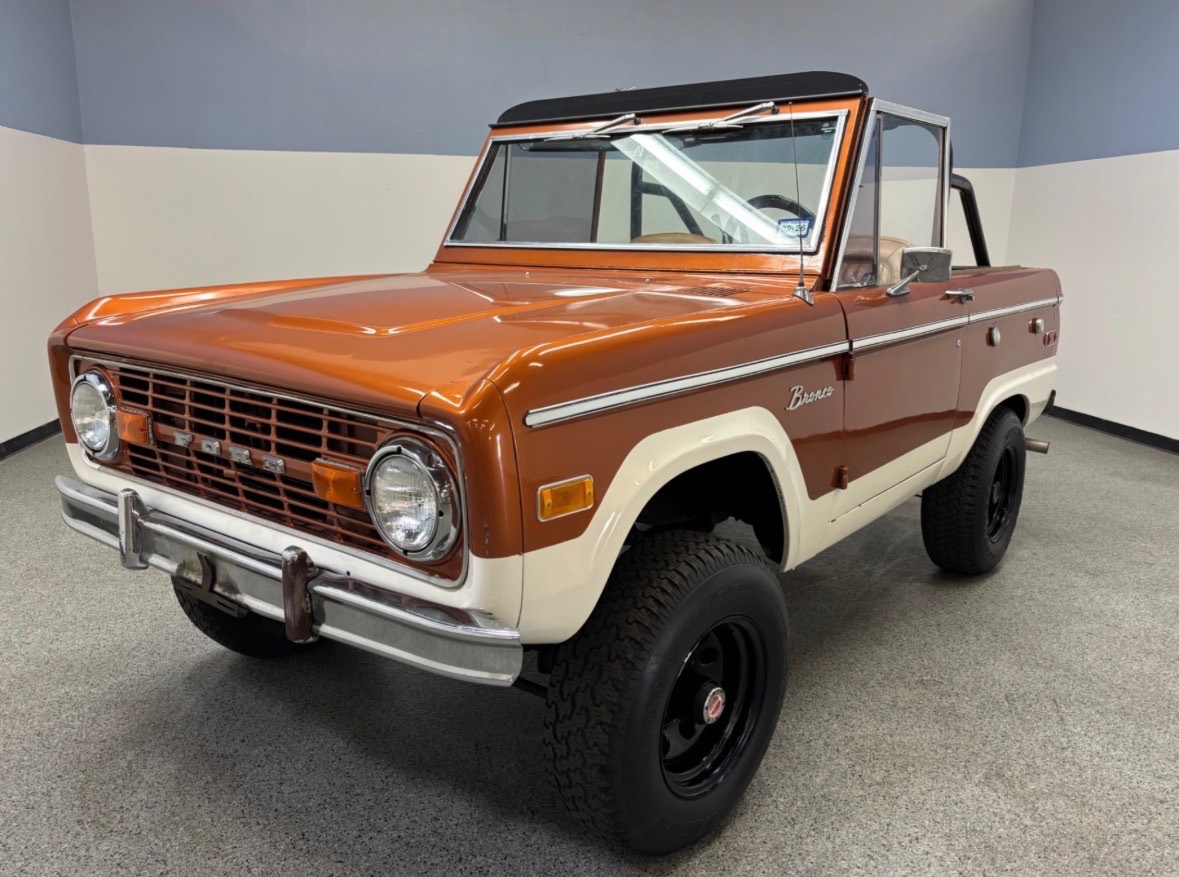
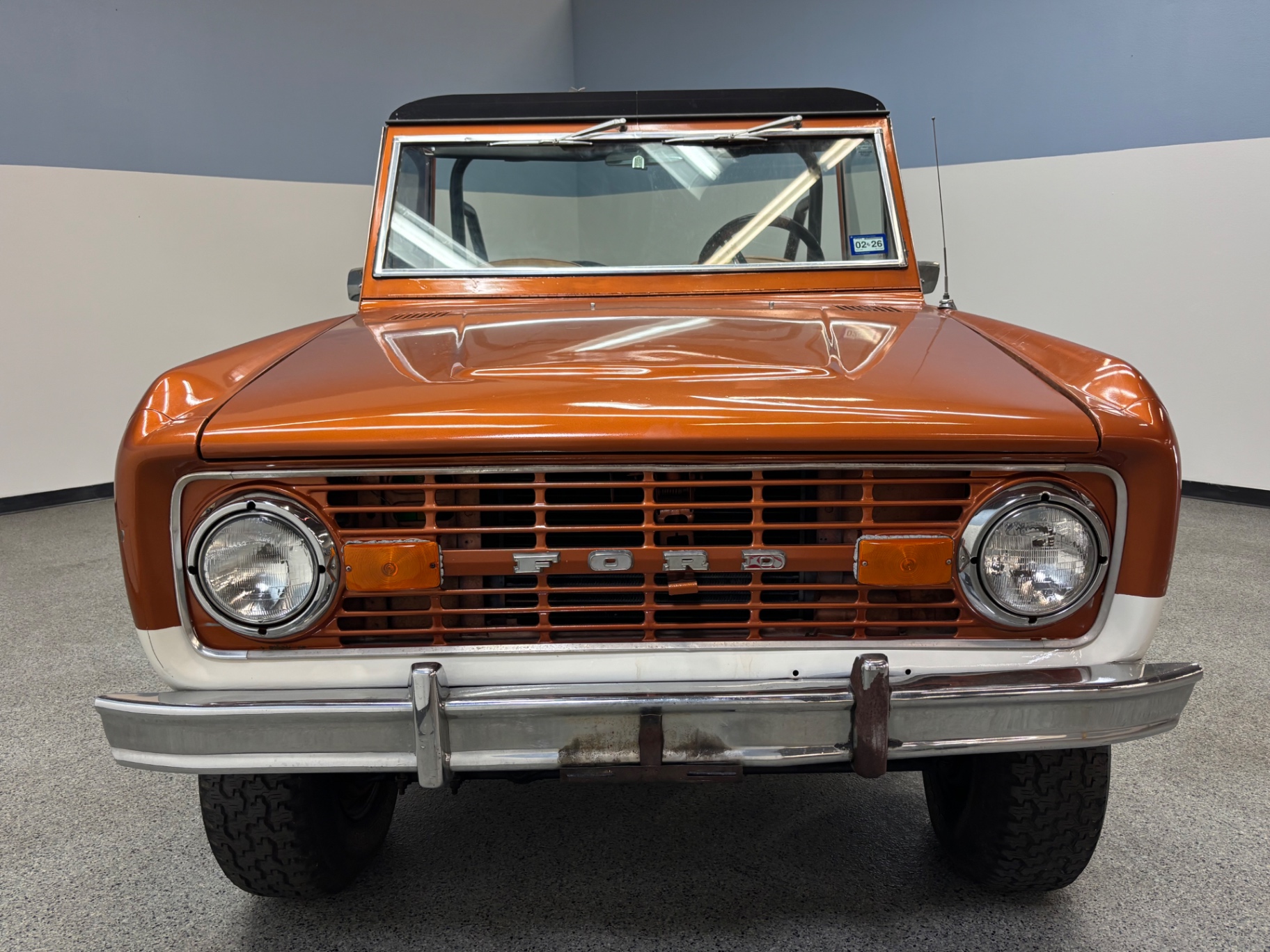
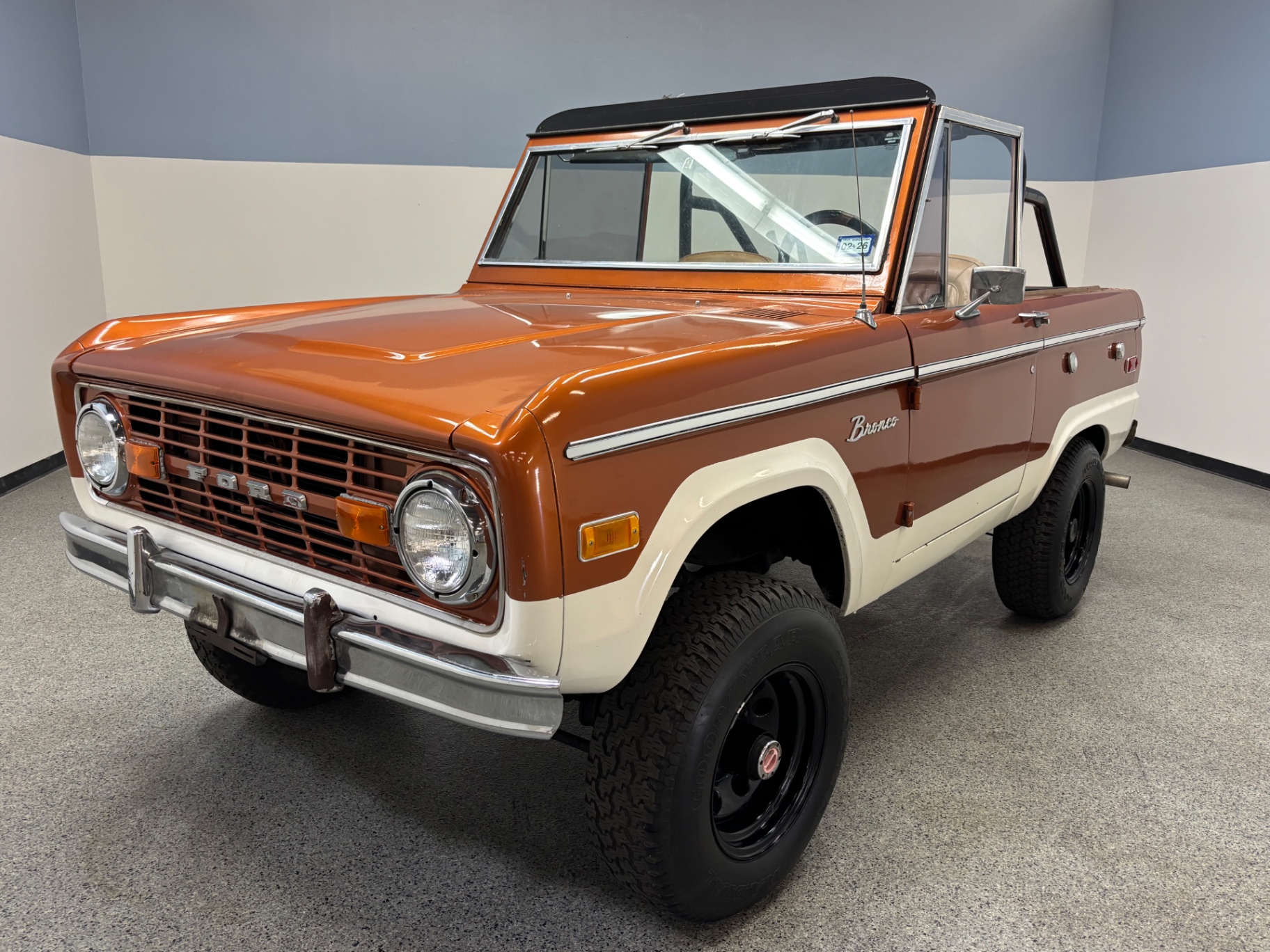
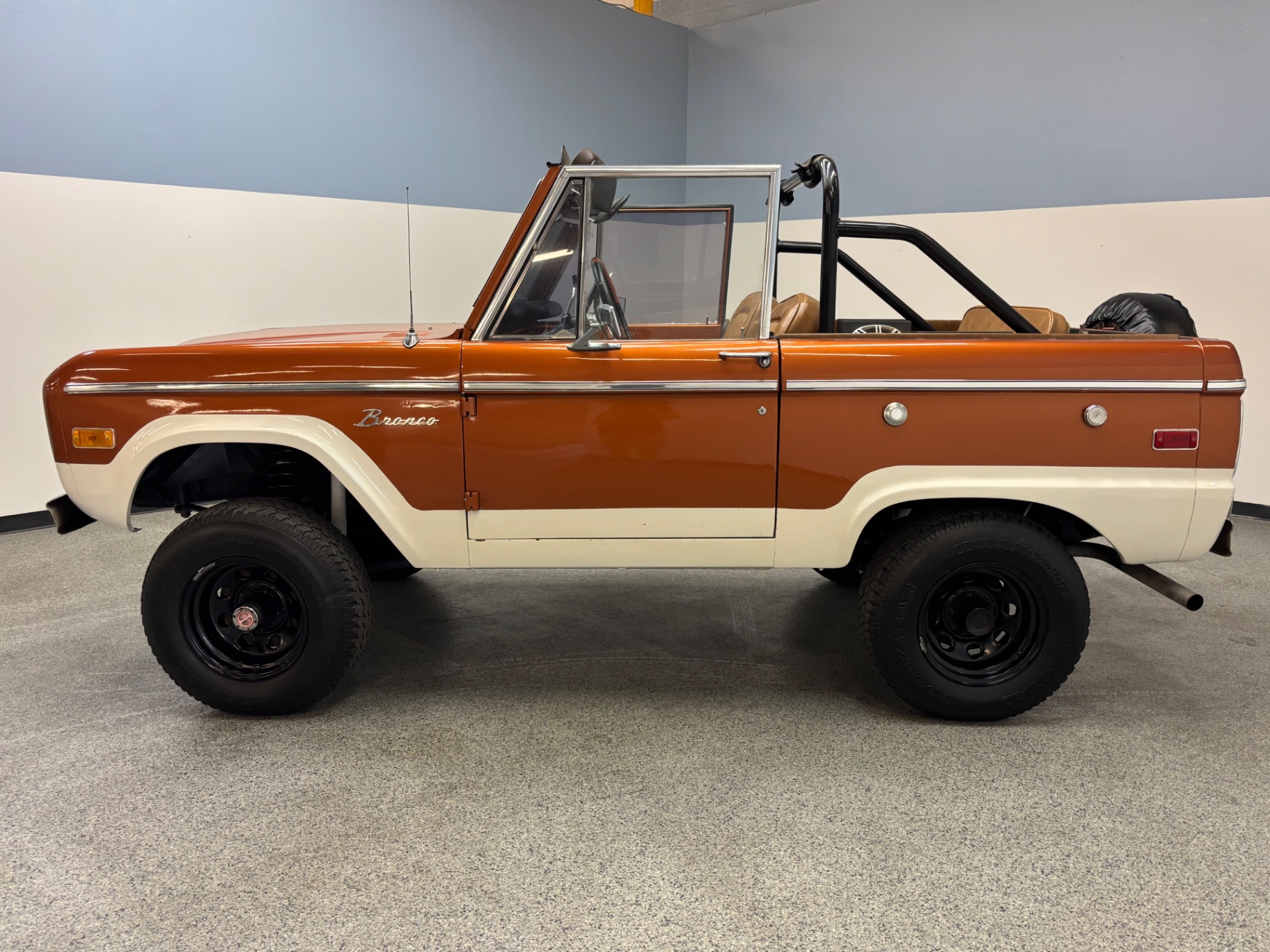
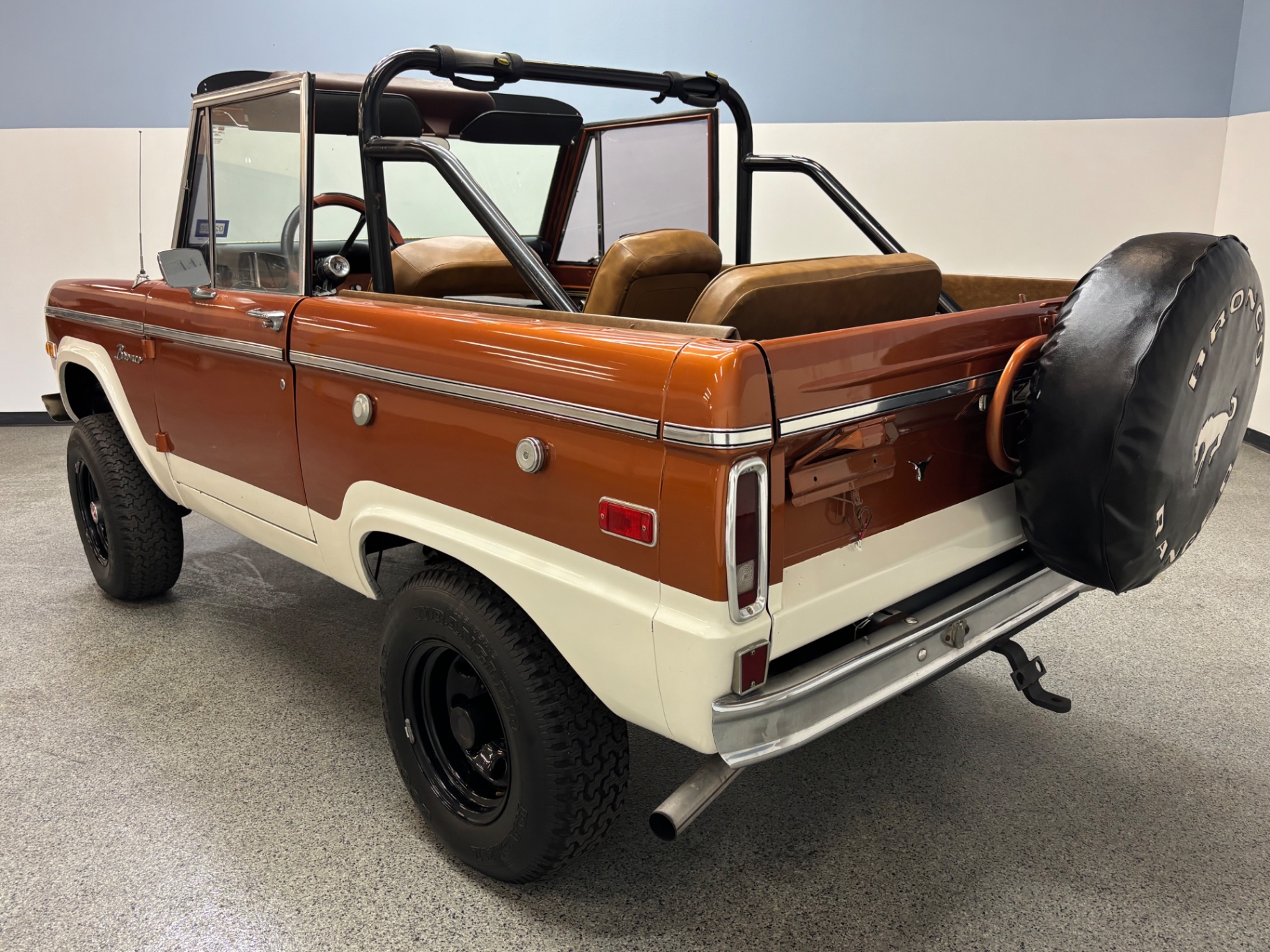
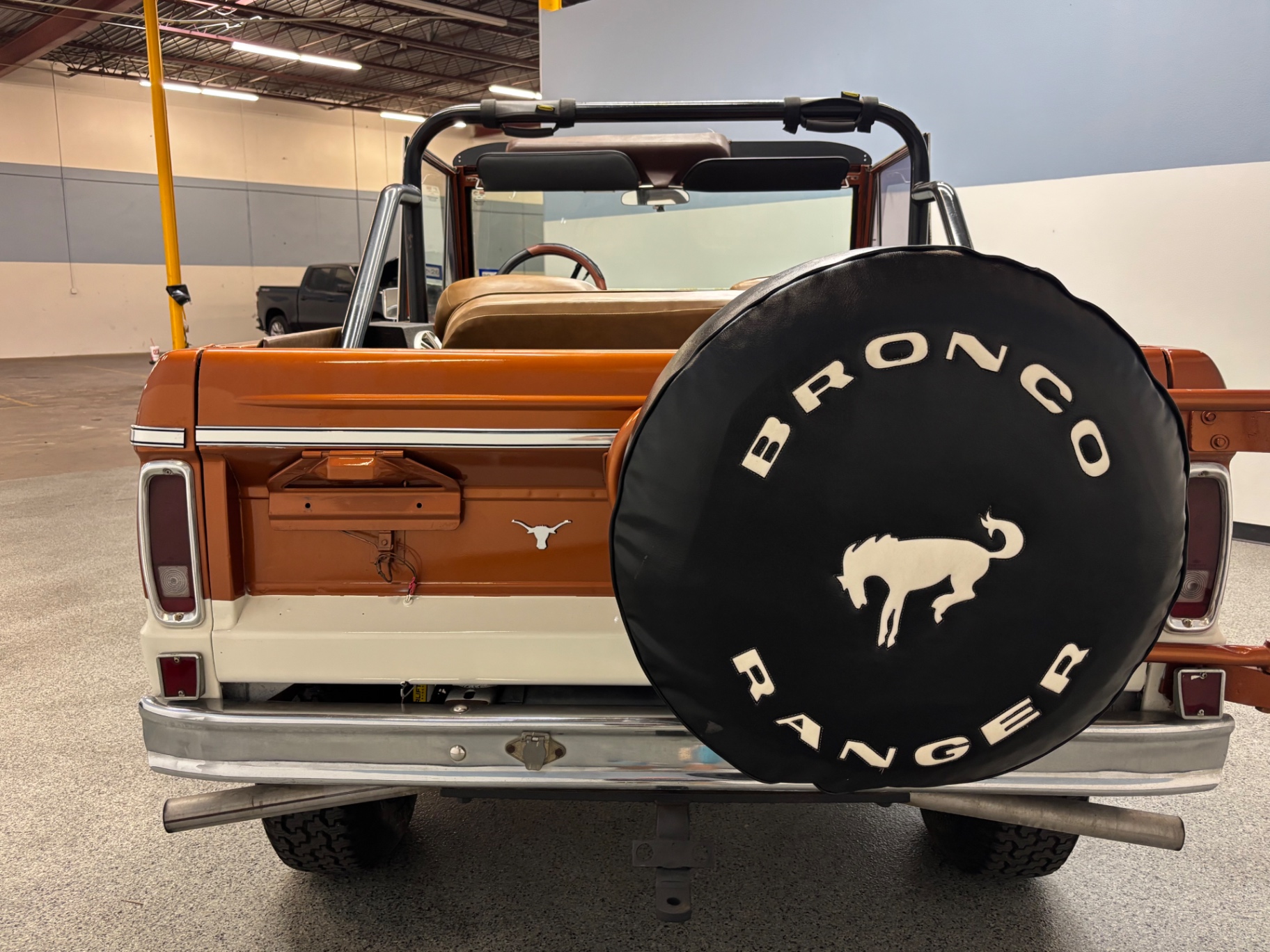
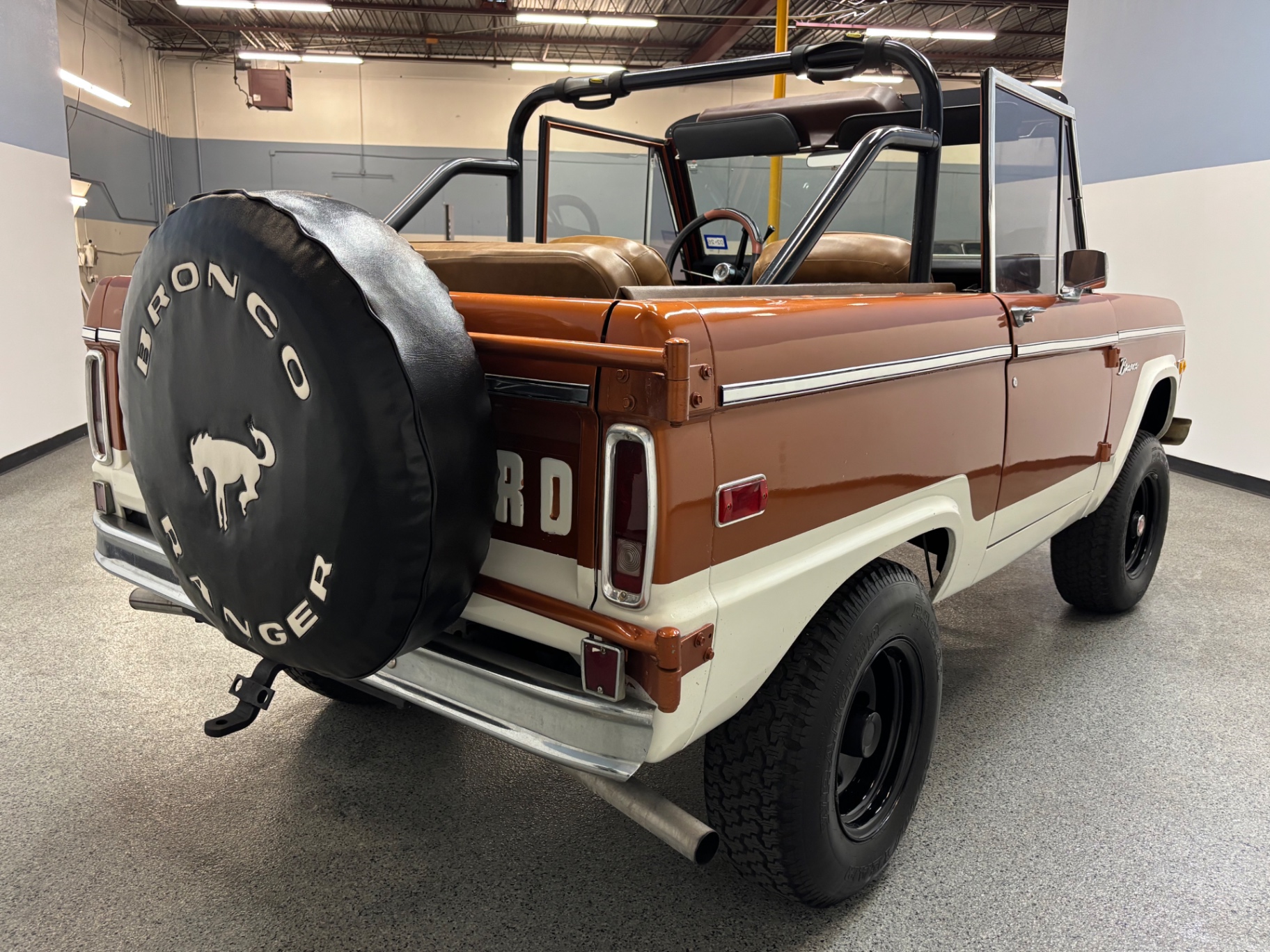
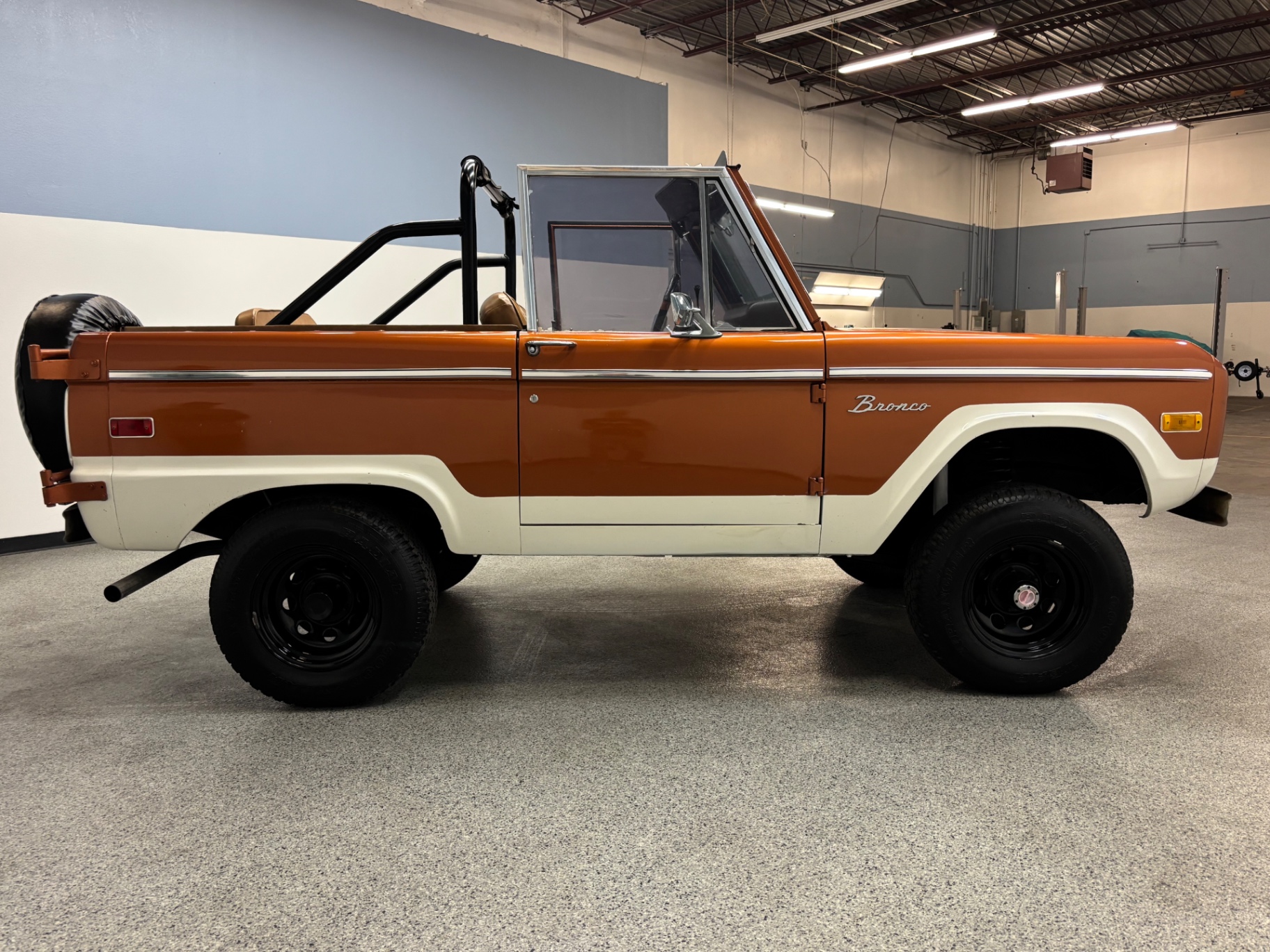
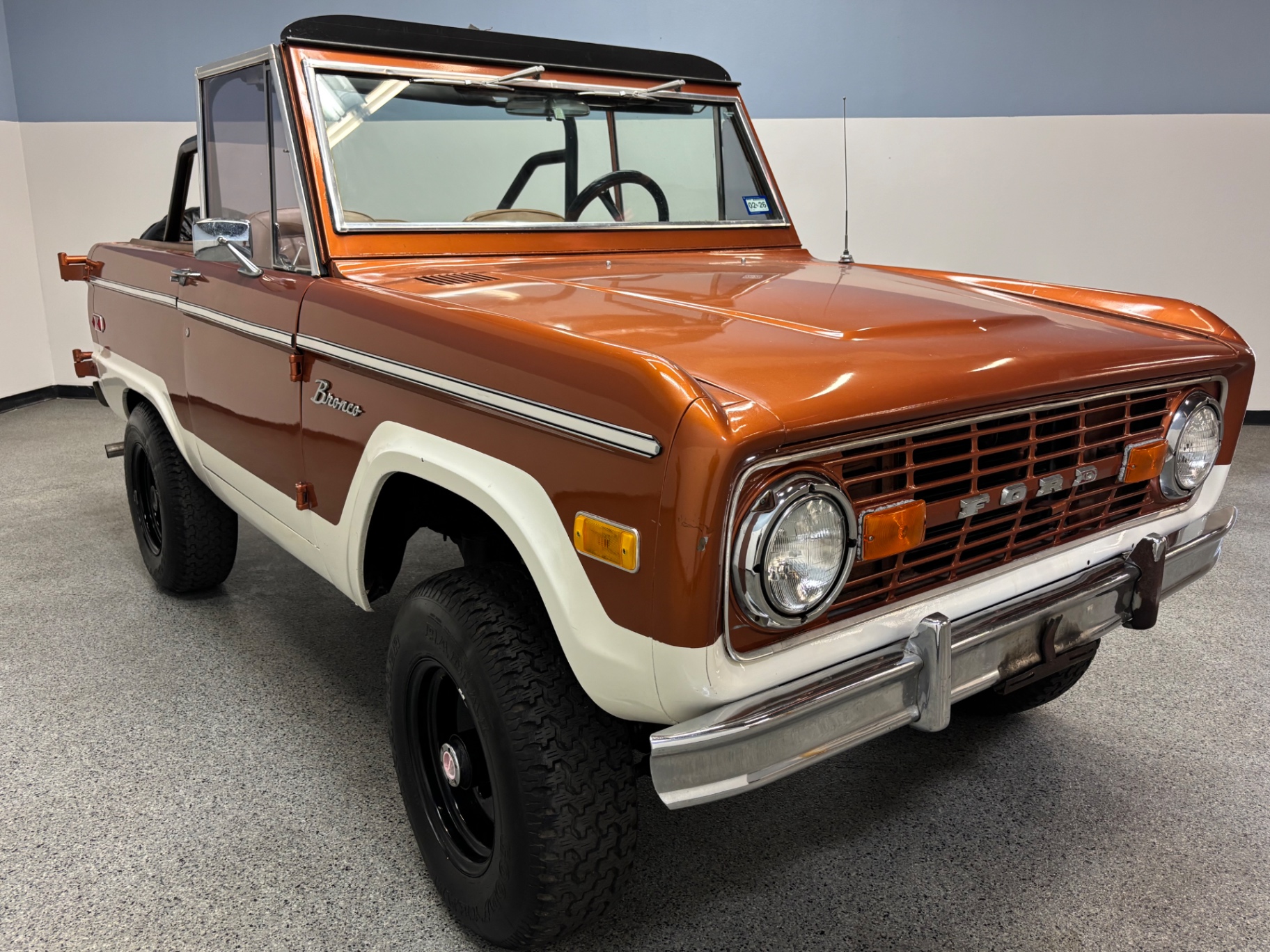
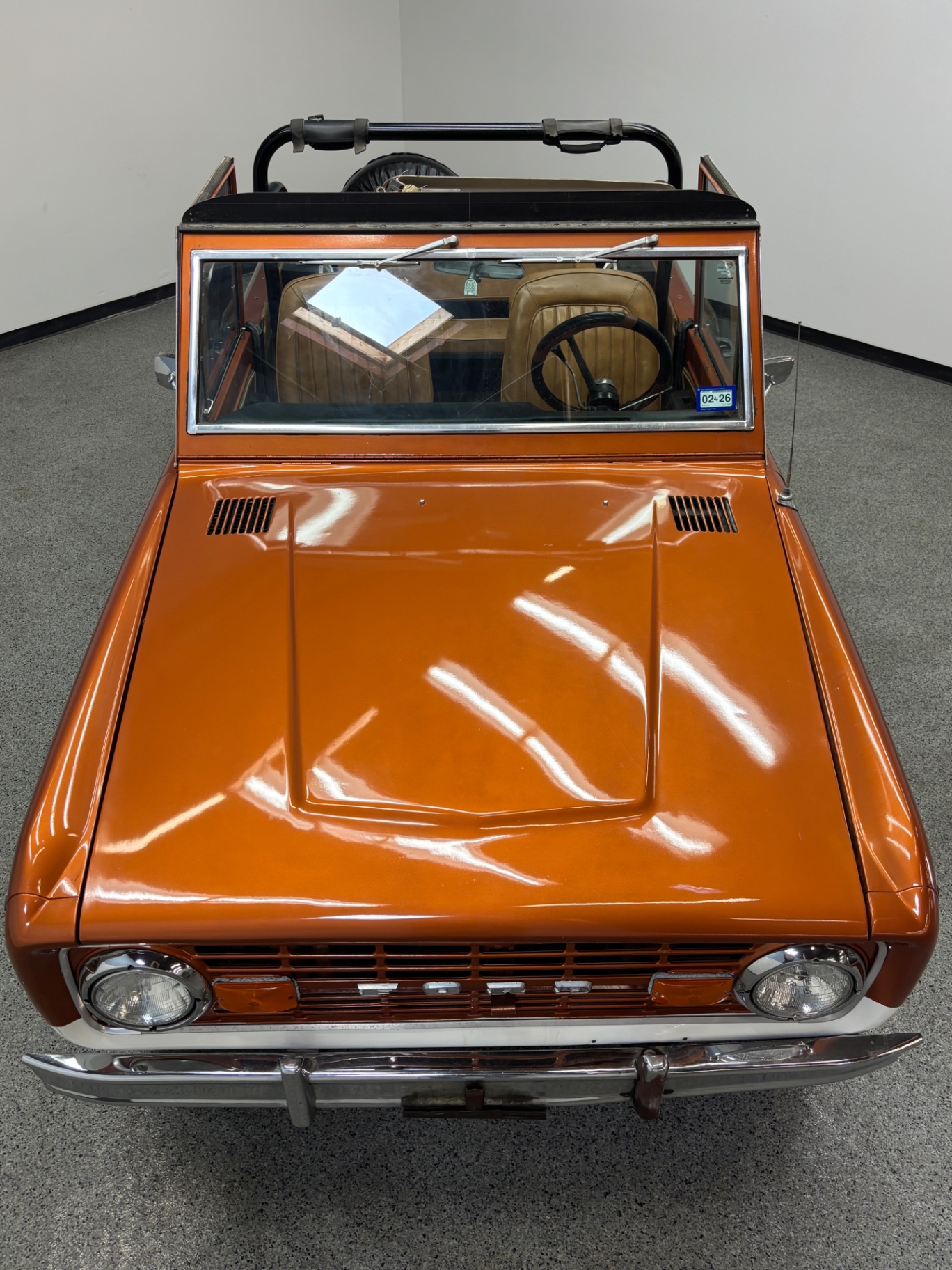

1974 Ford Bronco Ranger — 302 V8, 4x4, Two-Tone Burnt Orange, Soft Top
Why This Car Is Special
The first-generation Ford Bronco ran from 1966 through 1977, and those early trucks have become some of the most sought-after American four-wheel-drive vehicles on the collector market. The reason is straightforward: they were purpose-built, body-on-frame trucks with solid axles front and rear, a short 92-inch wheelbase that made them genuinely capable off-road, and enough factory trim options to give buyers real choices. Ford produced the first-gen Bronco in three body styles — roadster, half-cab, and wagon — but by 1974, the wagon configuration had become the dominant seller, and that's exactly what this truck is.
The 1974 model year is particularly interesting from a drivetrain standpoint. The 302 cubic inch V8 — the same engine Ford had been developing and refining since 1968 — was the go-to engine choice for buyers who wanted a capable street and trail performer without the added weight and fuel consumption of the larger 360. By 1974, Ford had begun fitting emissions controls across the lineup in response to federal regulations, but the 302 remained a proven and parts-friendly small-block that owners and mechanics have understood for decades. This particular 1974 Ford Bronco Ranger carries that 302, backed by a C4 three-speed automatic and a Dana 20 transfer case — a combination that has logged millions of miles in trucks just like this one.
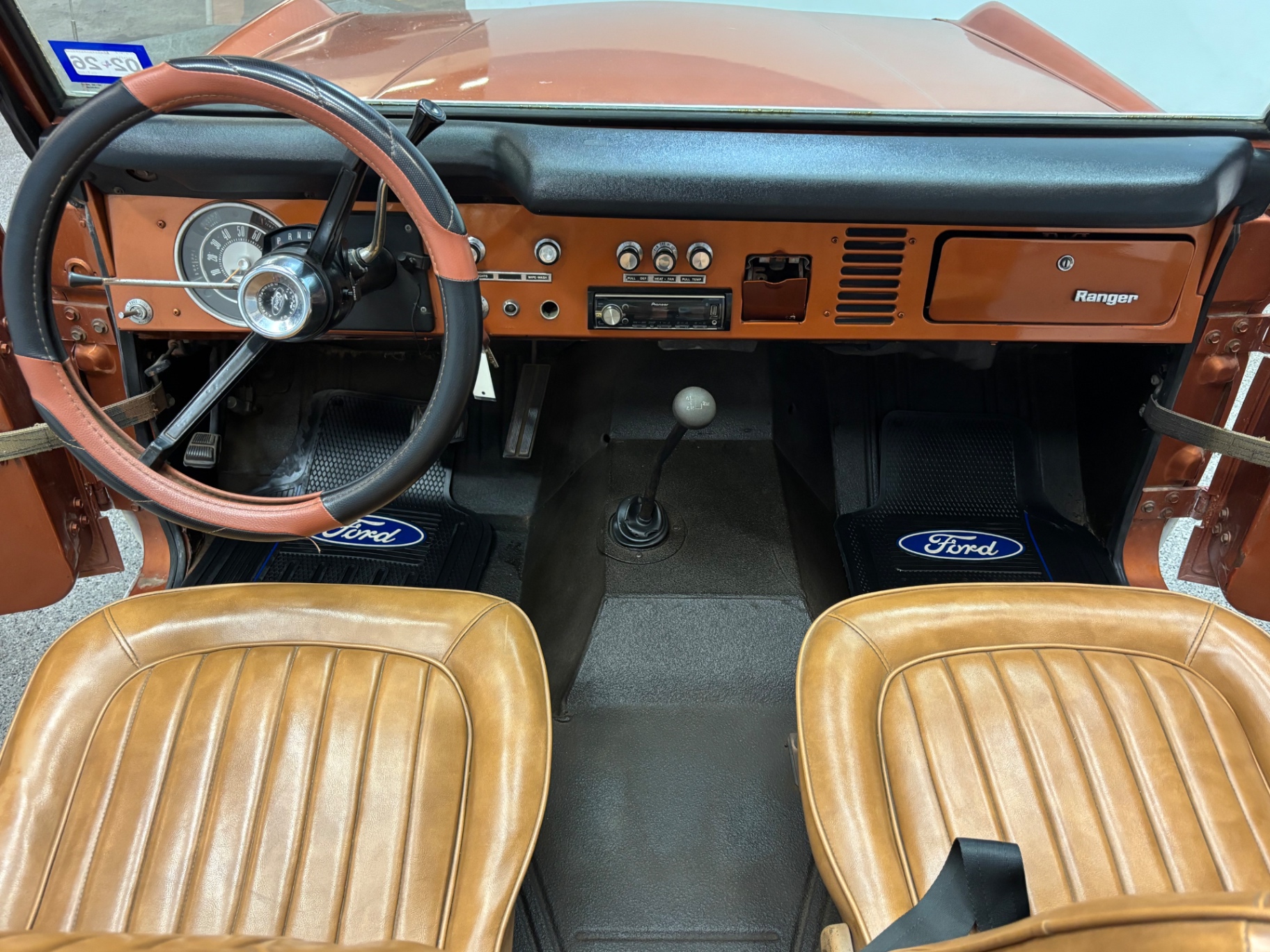
What separates this truck from a basic Bronco Sport is the Ranger trim designation. The Bronco Ranger was Ford's upper-level package for the first-gen truck, bringing a more finished interior and exterior compared to the base Sport trim. The dash badging visible in the photos confirms the Ranger designation, and the interior reflects it — more on that below. This is the configuration serious collectors and users look for when they want a first-gen that was well-optioned from the factory rather than stripped down.
The two-tone Burnt Orange over white exterior is a period-correct color combination that photographs well and reads as a complete, intentional build rather than a tired work truck. Someone has put real money and thought into this Bronco, with upgrades that add utility without undoing its character.
Features List
- 302 5.0L V8 Engine
- C4 3-Speed Automatic Transmission
- Part-Time 4-Wheel Drive
- Dana 20 Transfer Case
- Power Steering
- Dual Exhaust
- Superlift Shocks
- Two-Tone Burnt Orange and White Paint
- Soft Top
- Black Steel Wheels
- Goodyear Wrangler Tires
- Spare Tire Mounted Rear
- Bronco Ranger Tire Cover
- Chrome Front and Rear Bumpers
- Chrome Side Trim
- Wood-Grain Dash Trim
- Leather Bucket Seats (Tan)
- Rear Bench Seat (Tan)
- Houndstooth Door Panels
- Ford Logo Floor Mats
- Pioneer Head Unit (Upgraded)
- Upgraded Rear Speakers
- Roll Bar Installed
- Rear Locking Storage Box
- Fire Extinguisher Mounted
Mechanical
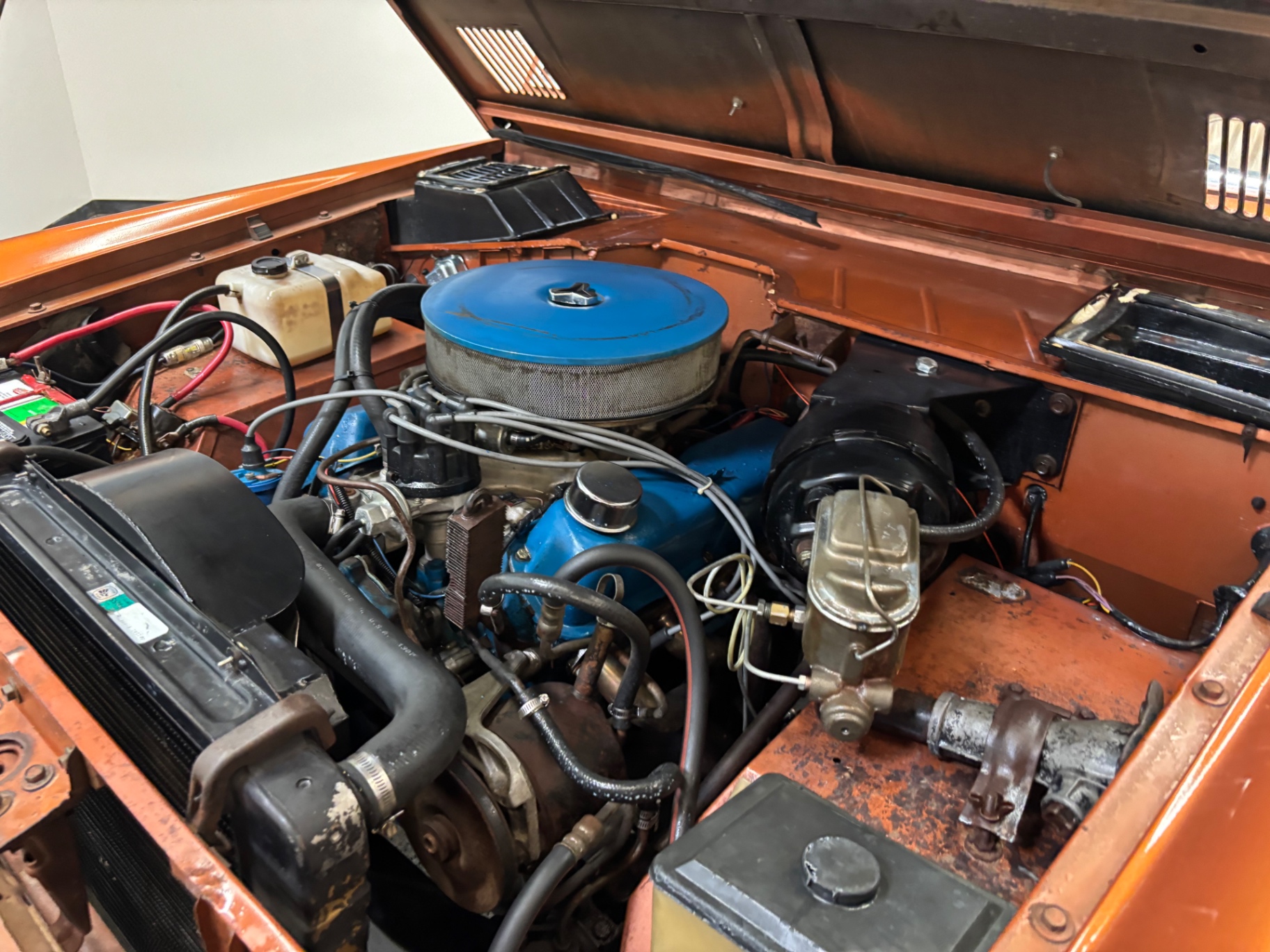
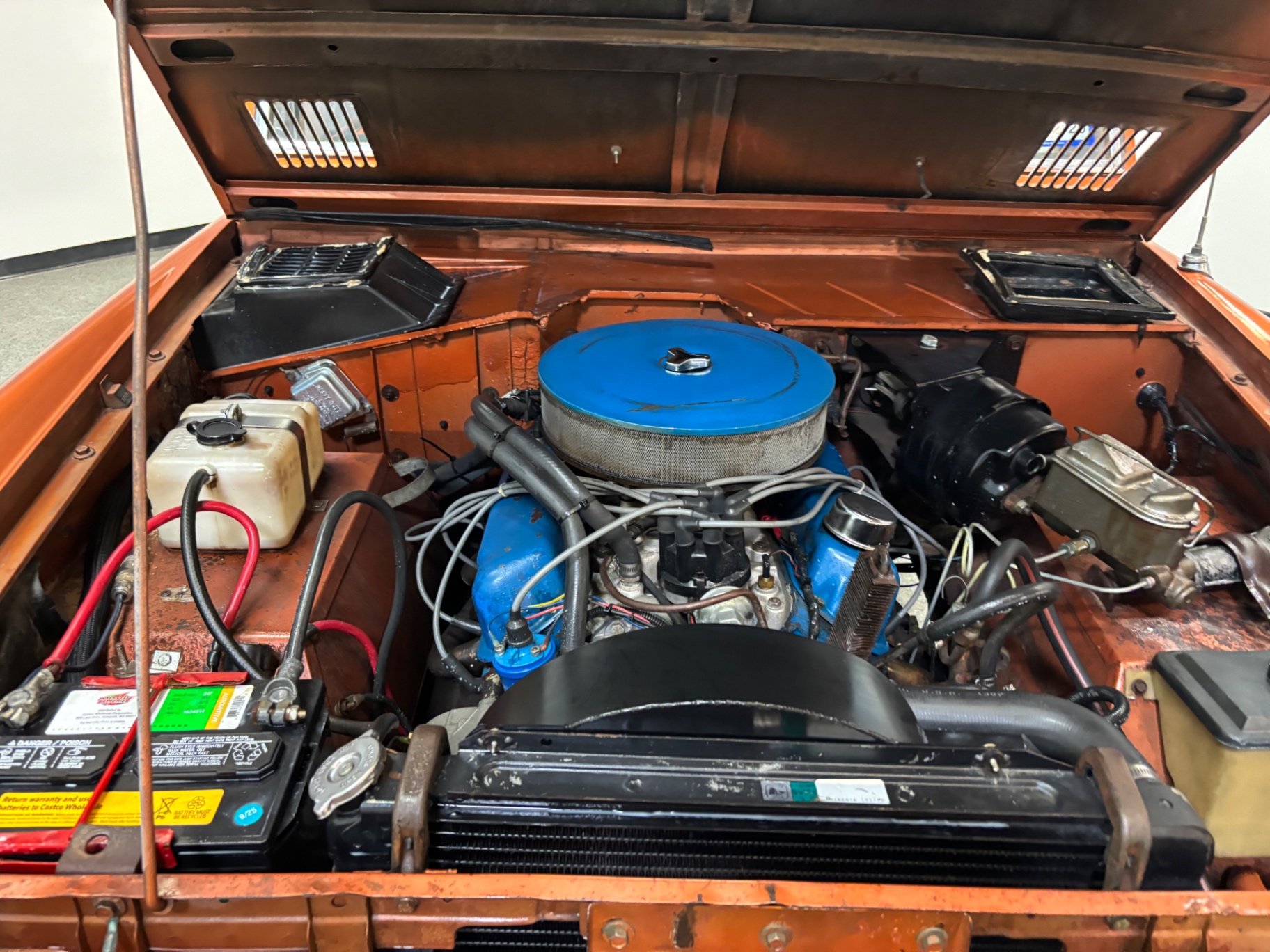
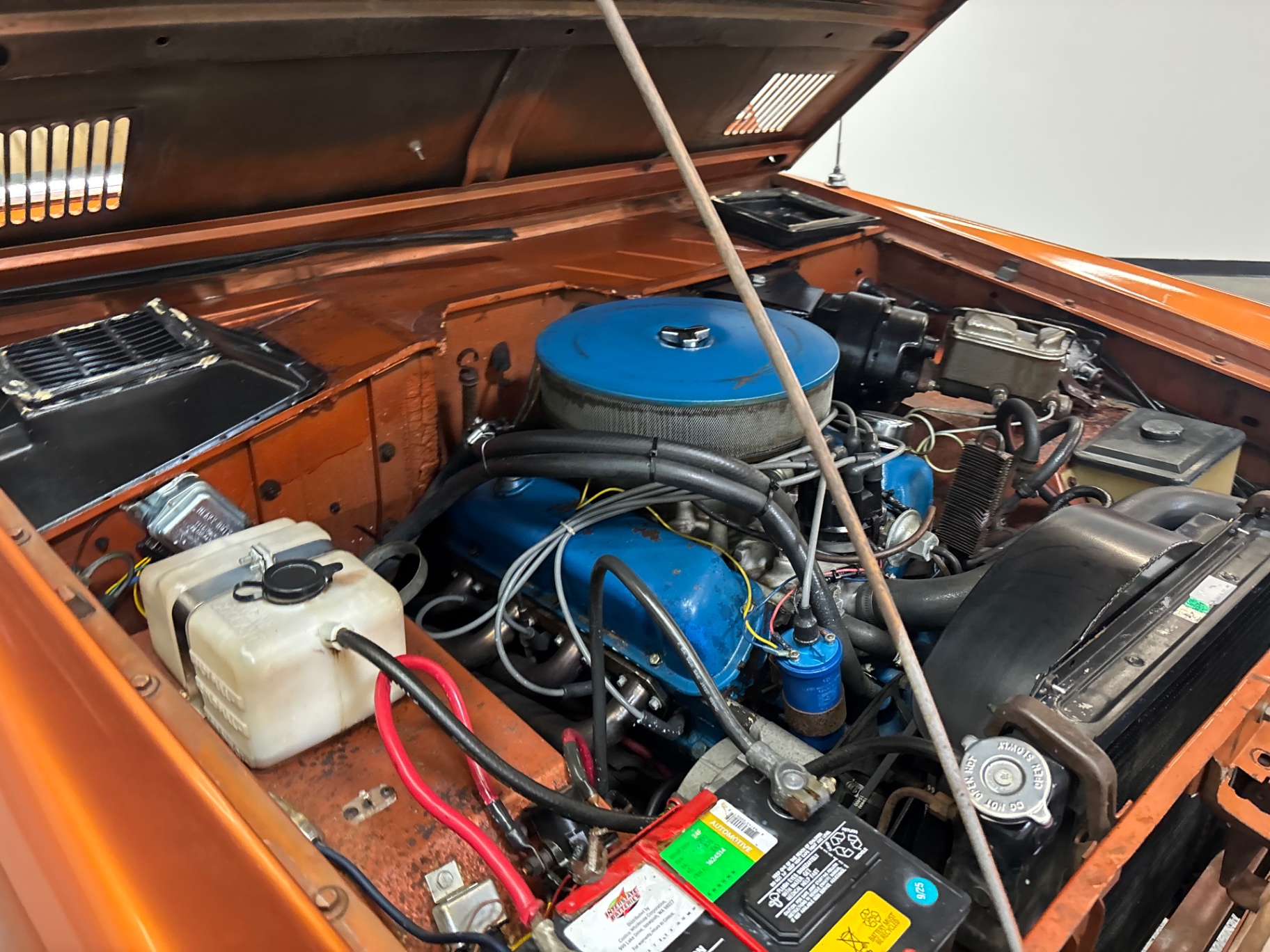
Under the hood sits Ford's 302 cubic inch V8 — 5.0 liters in modern terms — wearing its factory-style blue valve covers and a round air cleaner assembly. The 302 was introduced in 1968 and became one of Ford's most versatile and reliable engines, used across the Mustang, F-Series, and Bronco lineups. In the relatively light first-gen Bronco, it provides adequate power for street driving and enough low-end torque to handle trail work without complaint. Parts availability for this engine is about as good as it gets for any American V8 of this era.
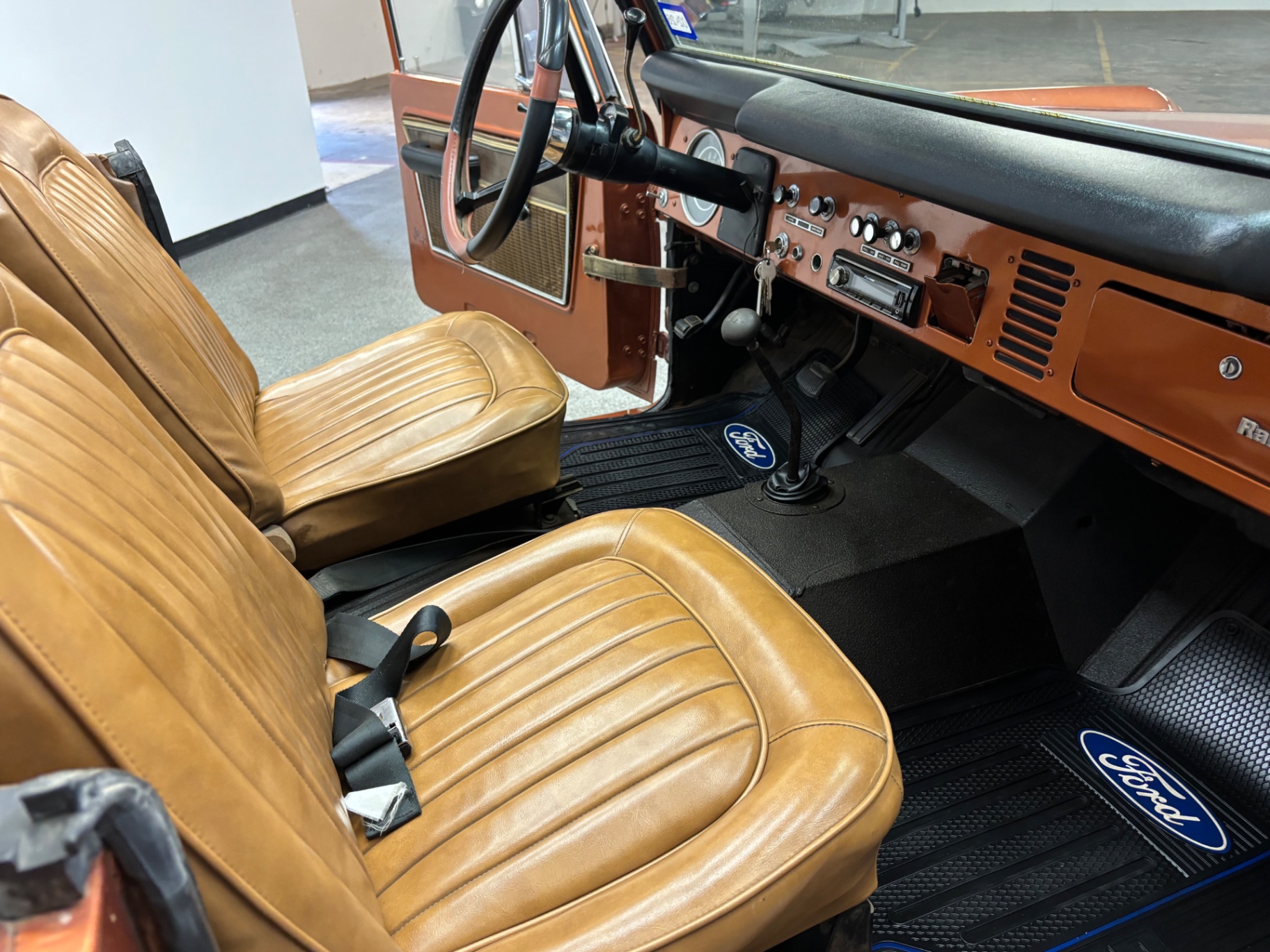
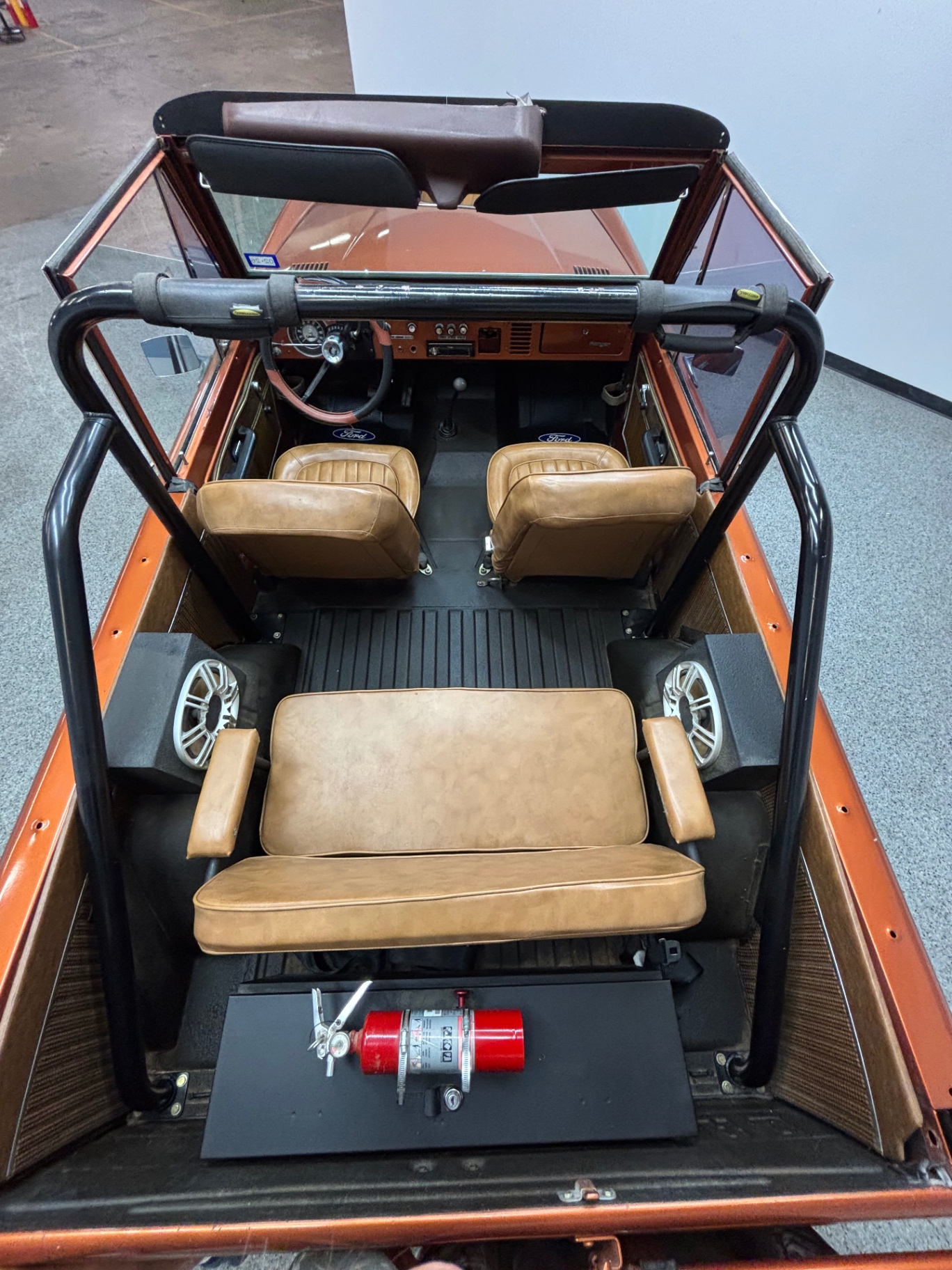
Power routes through a Ford C4 three-speed automatic transmission, which was a common and practical pairing for the 302 in truck applications. The C4 is a straightforward, proven unit with a long service history in Ford vehicles. Behind the C4 sits the Dana 20 transfer case, a two-speed unit that offers a low range for off-road work. The Dana 20 was standard equipment on the first-gen Bronco and has a solid reputation for durability. The floor-mounted transfer case shifter is clearly visible in the interior photos, sitting alongside the automatic transmission selector.
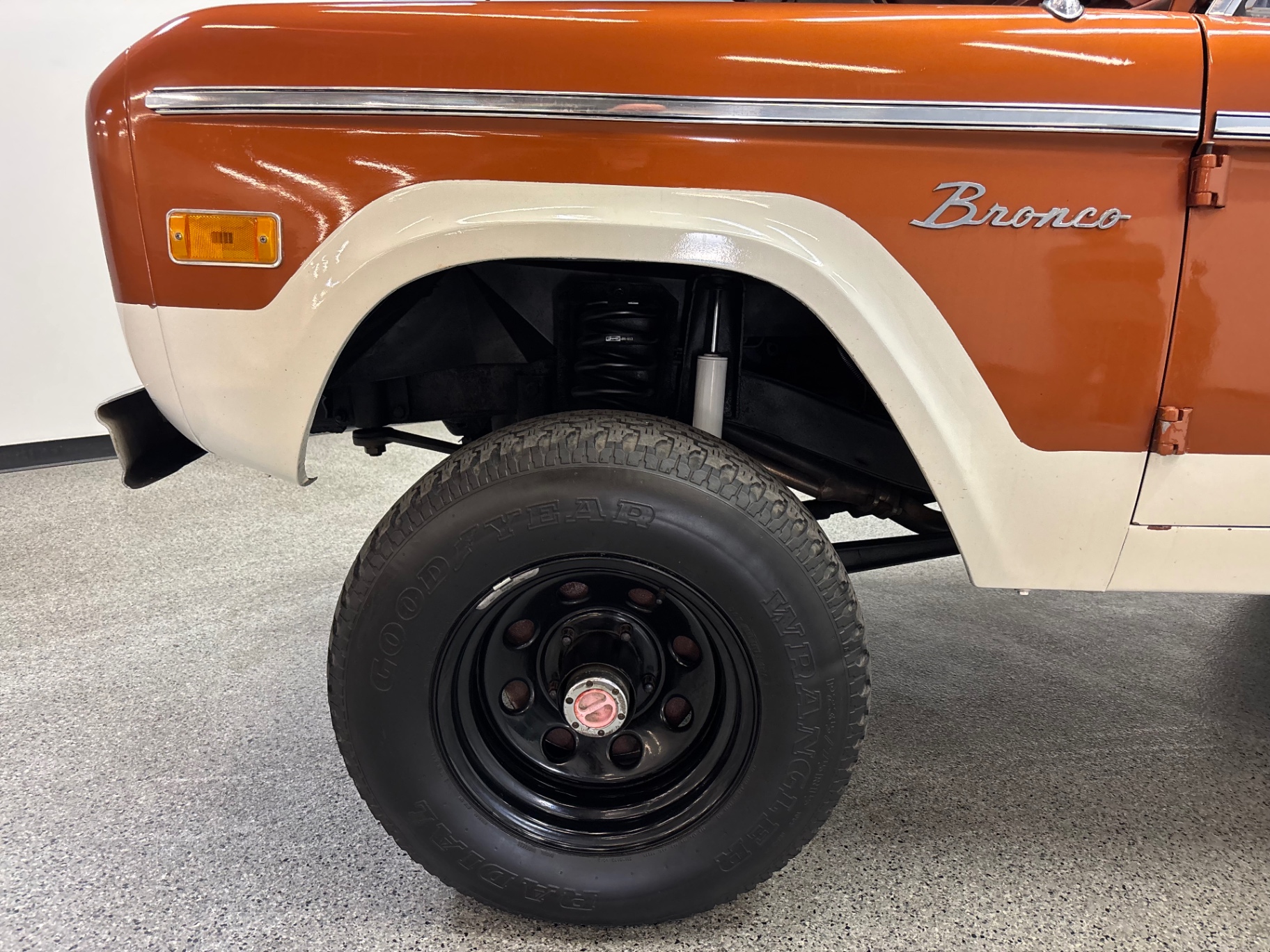
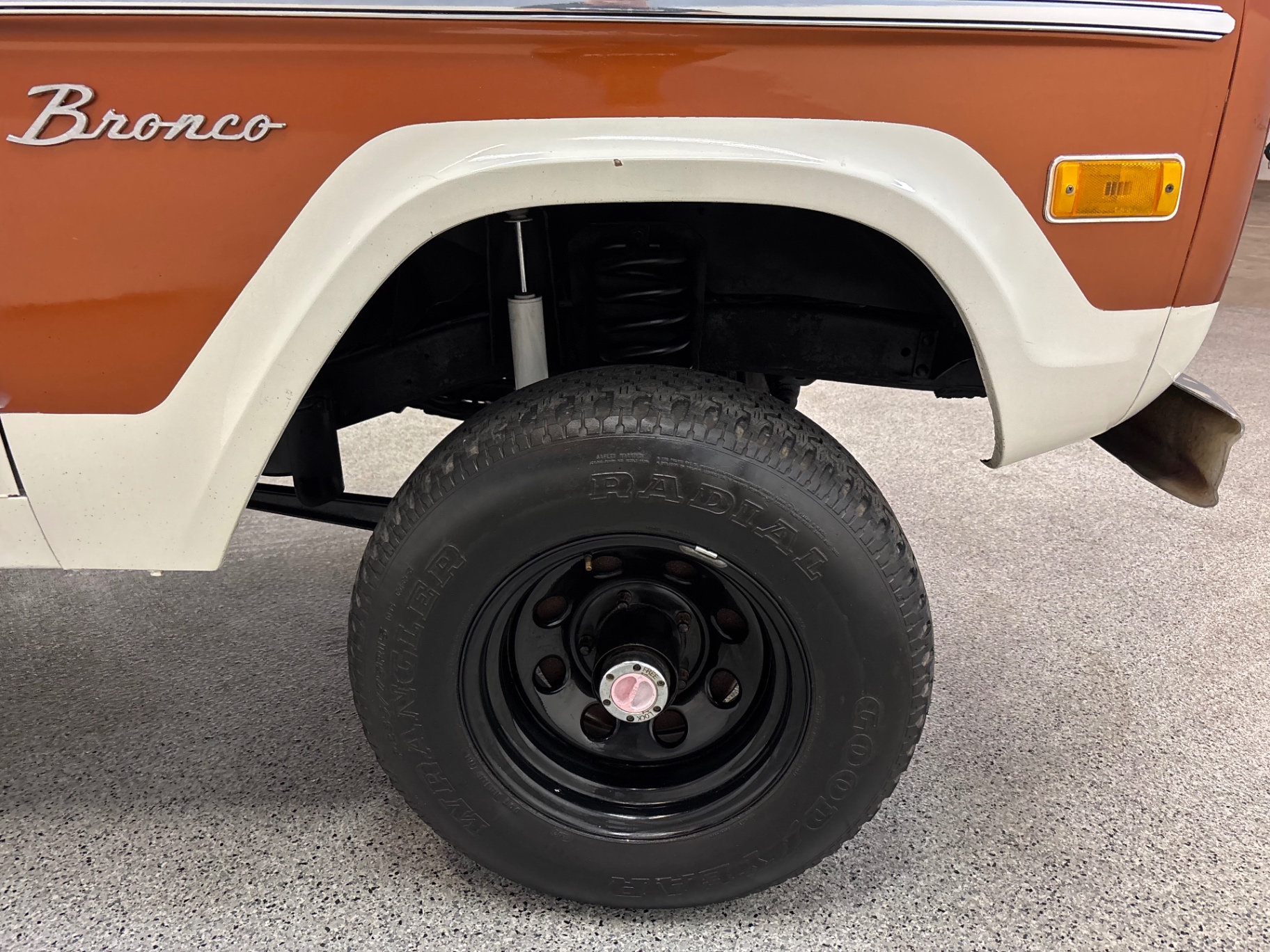
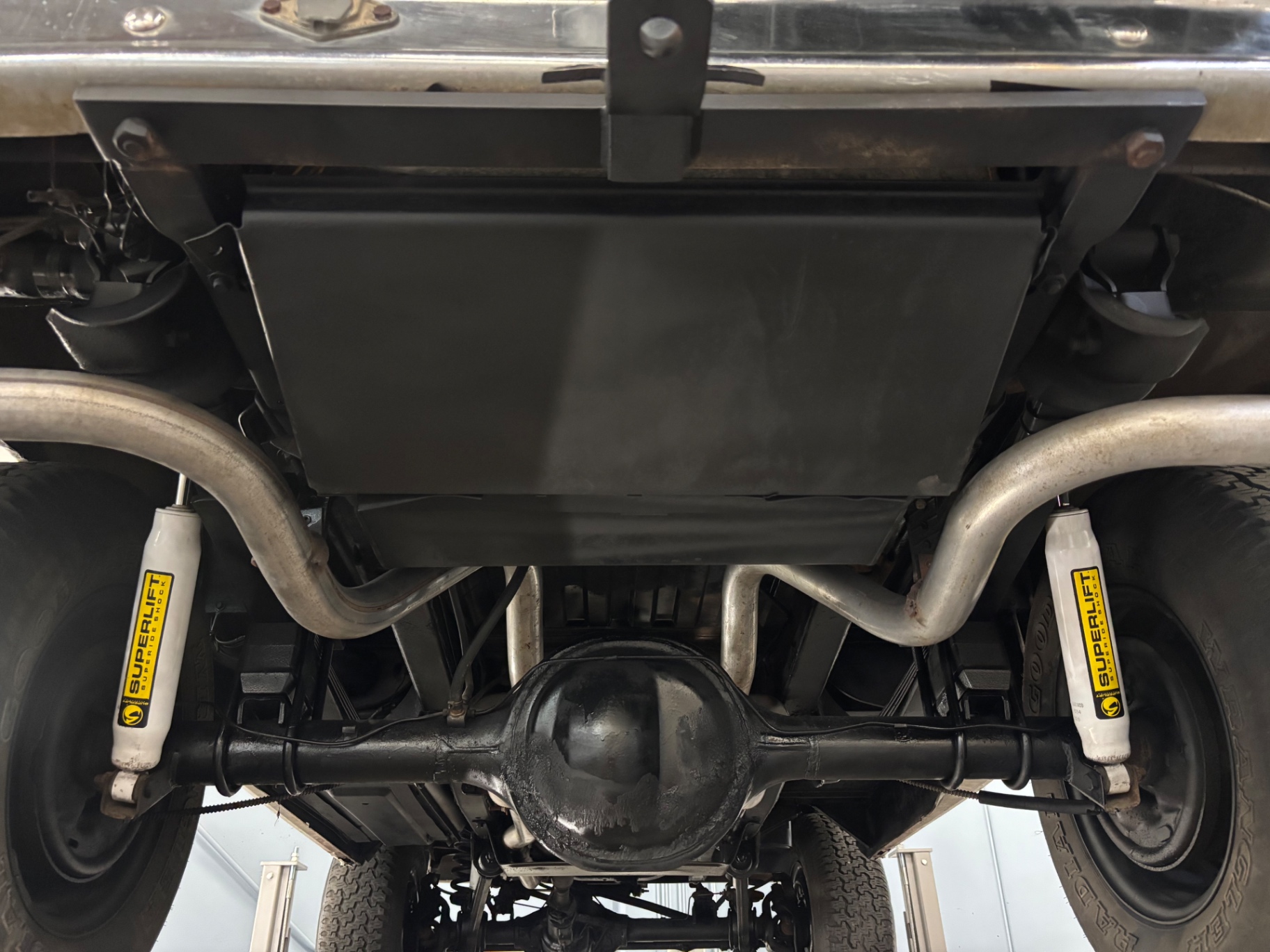
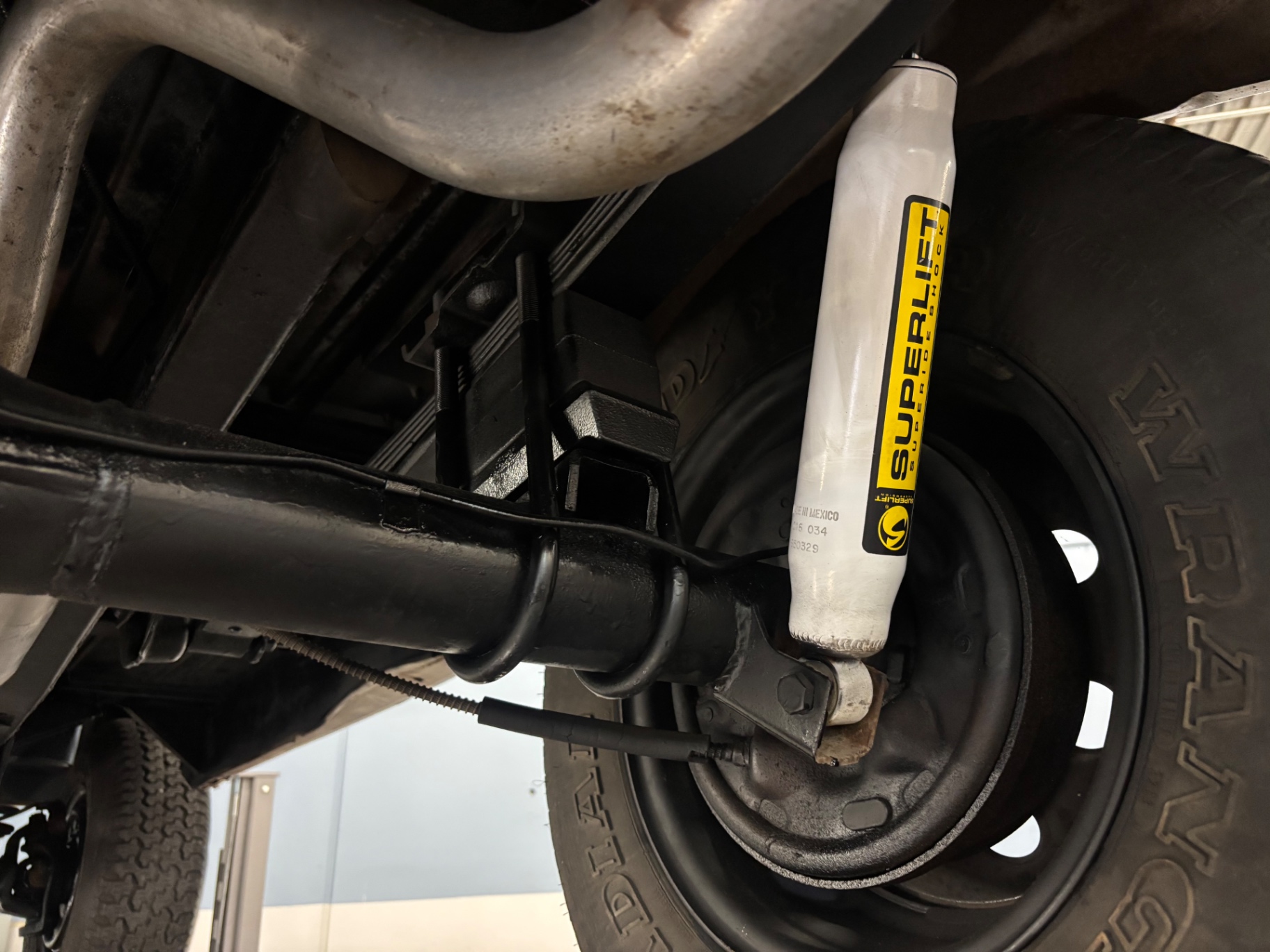
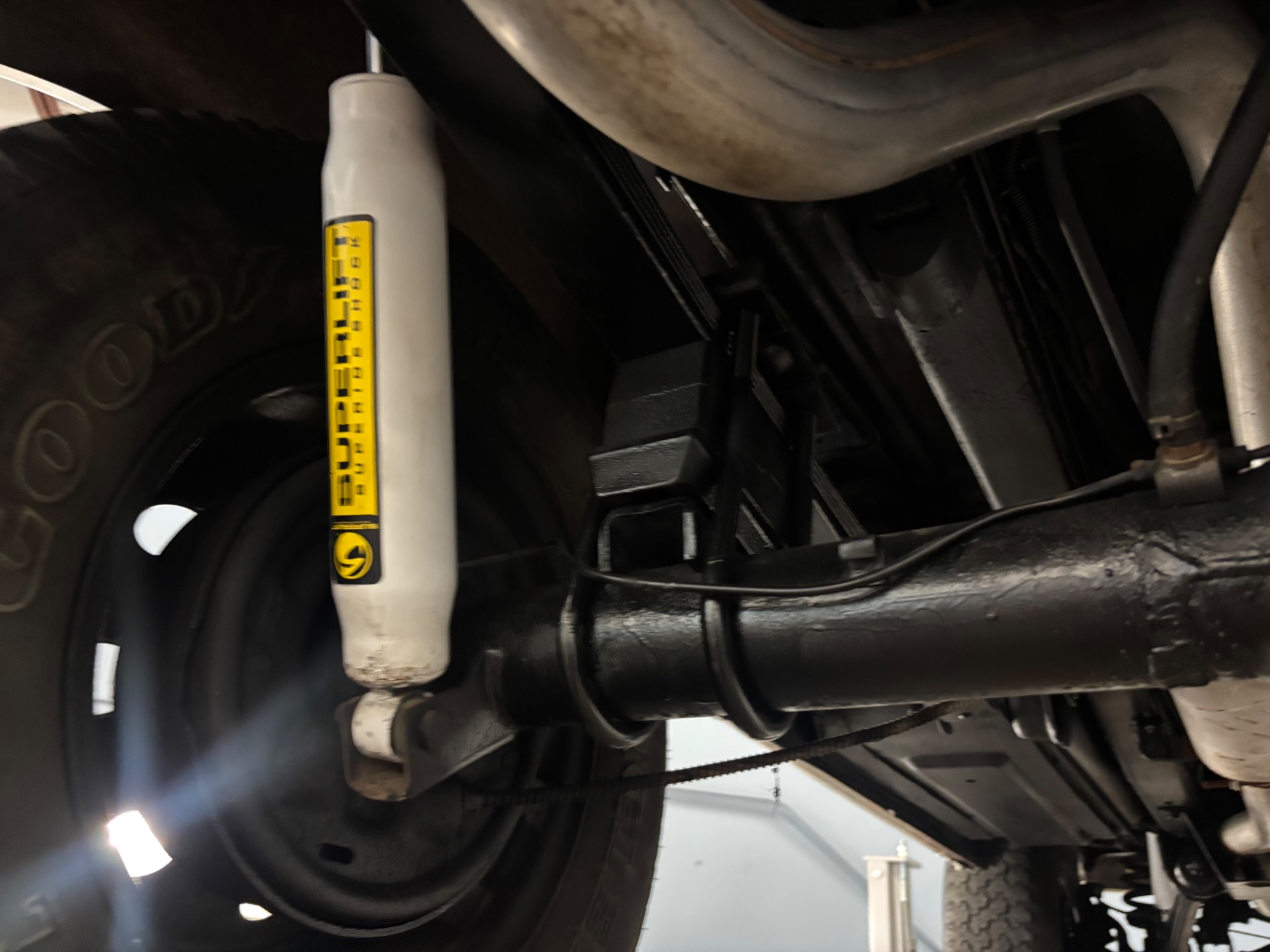
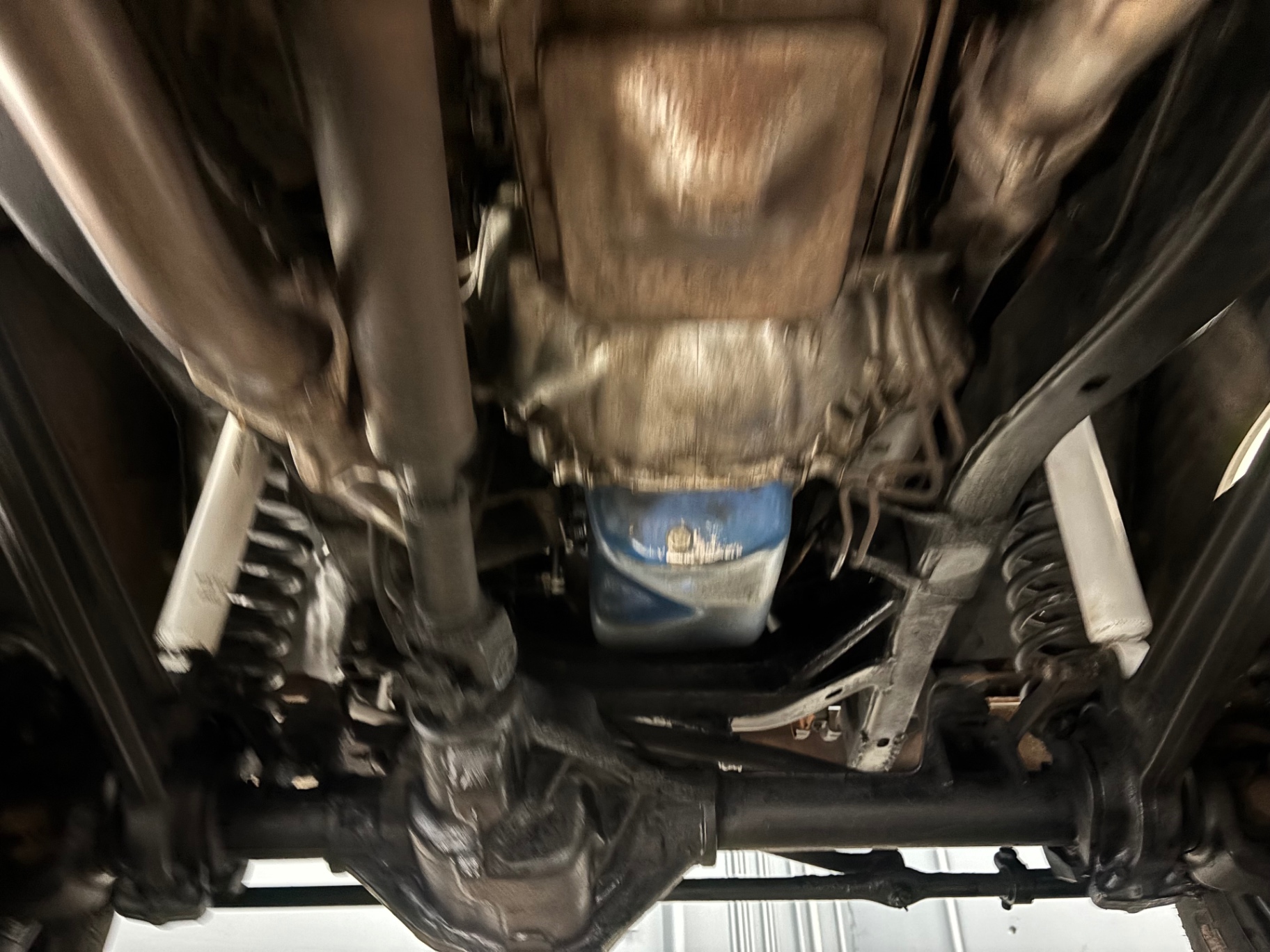
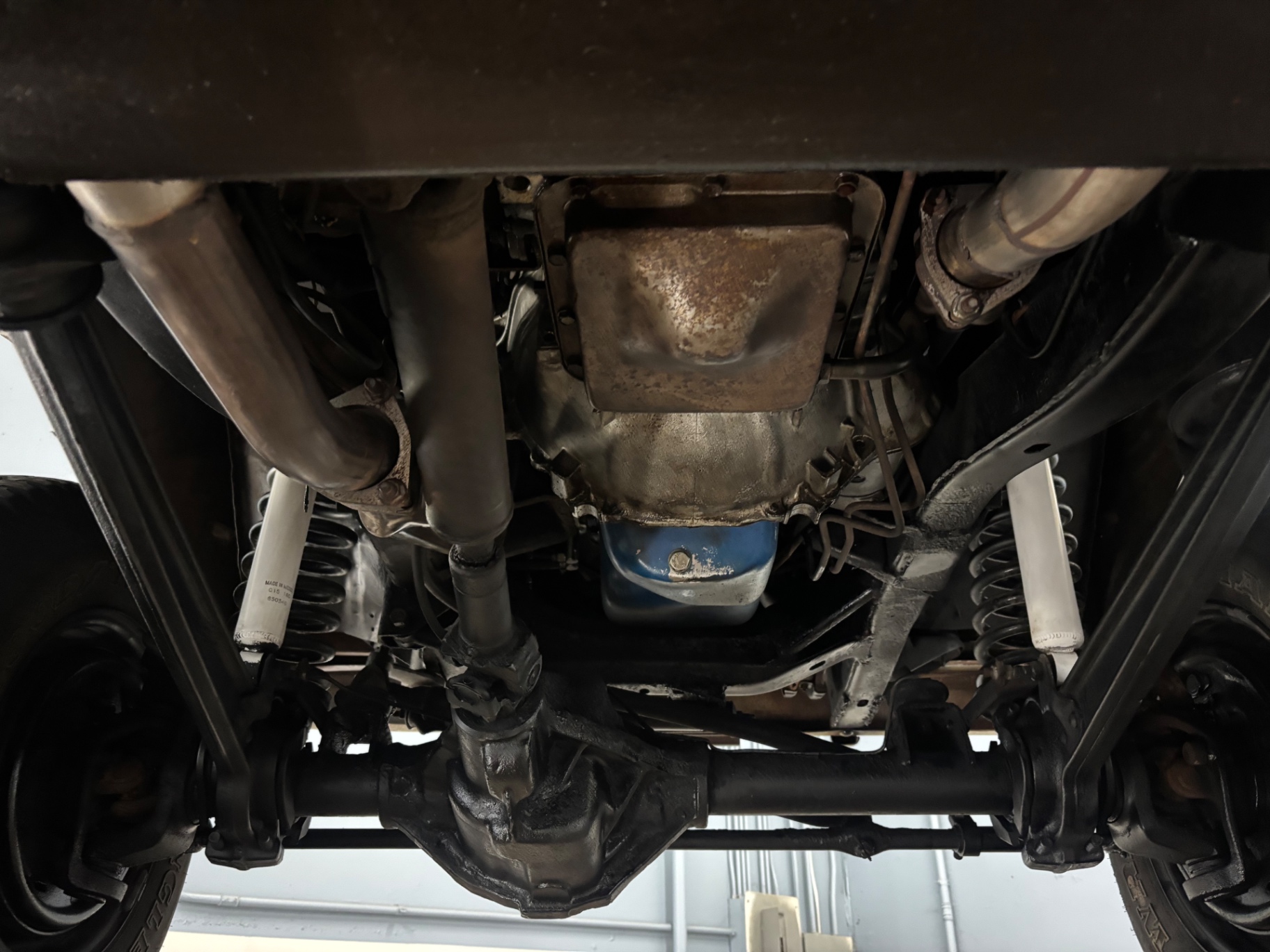
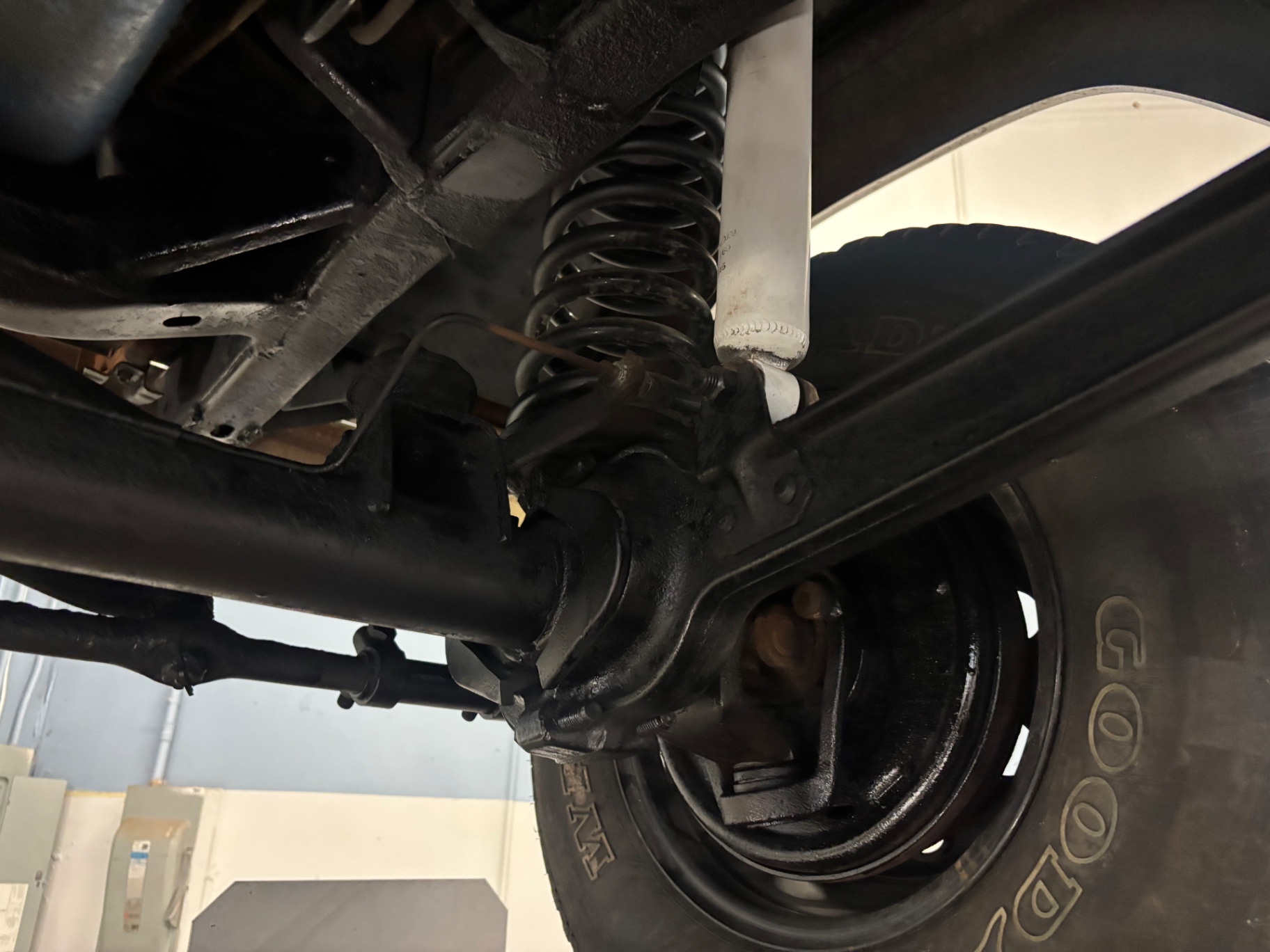
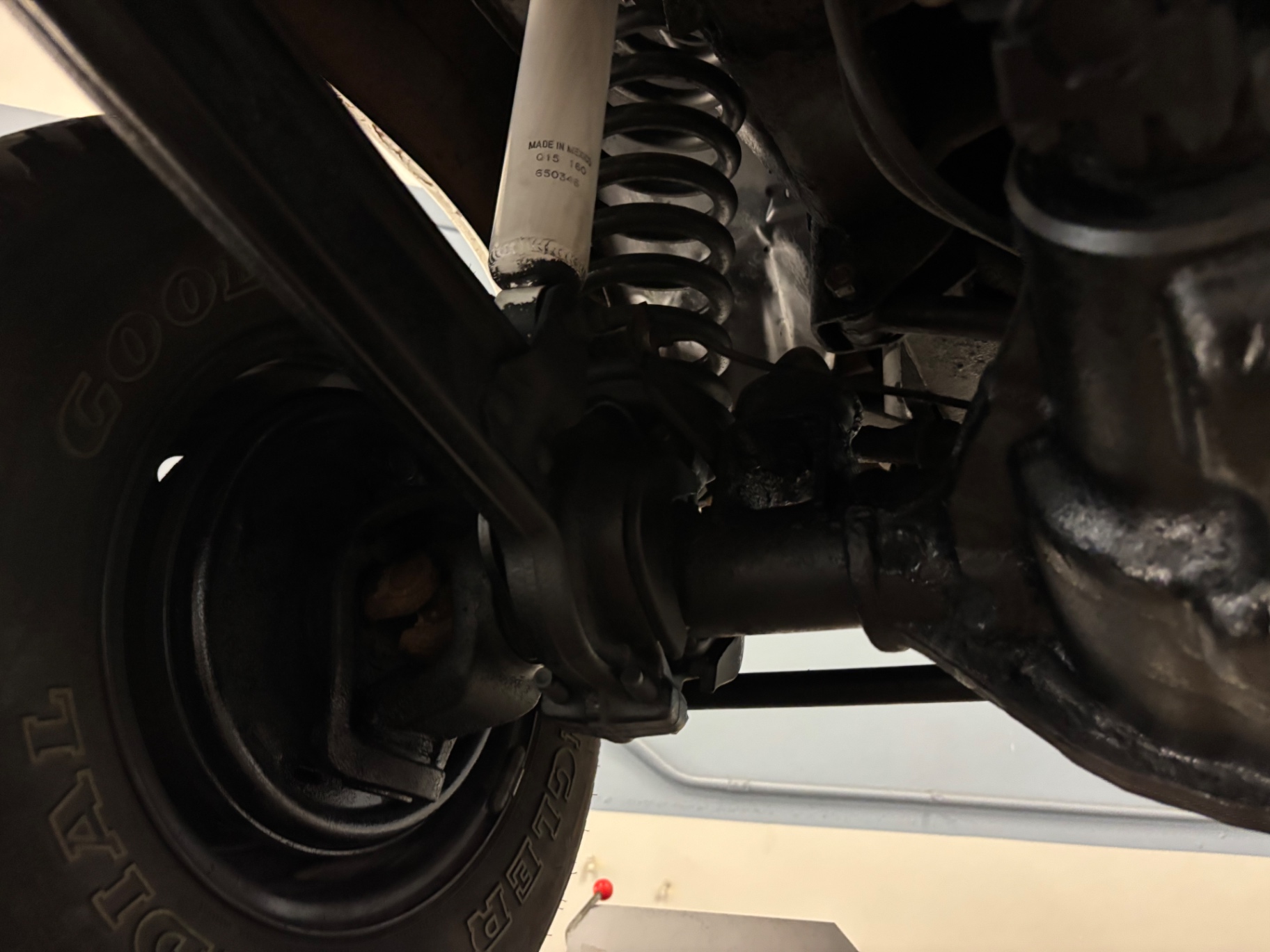
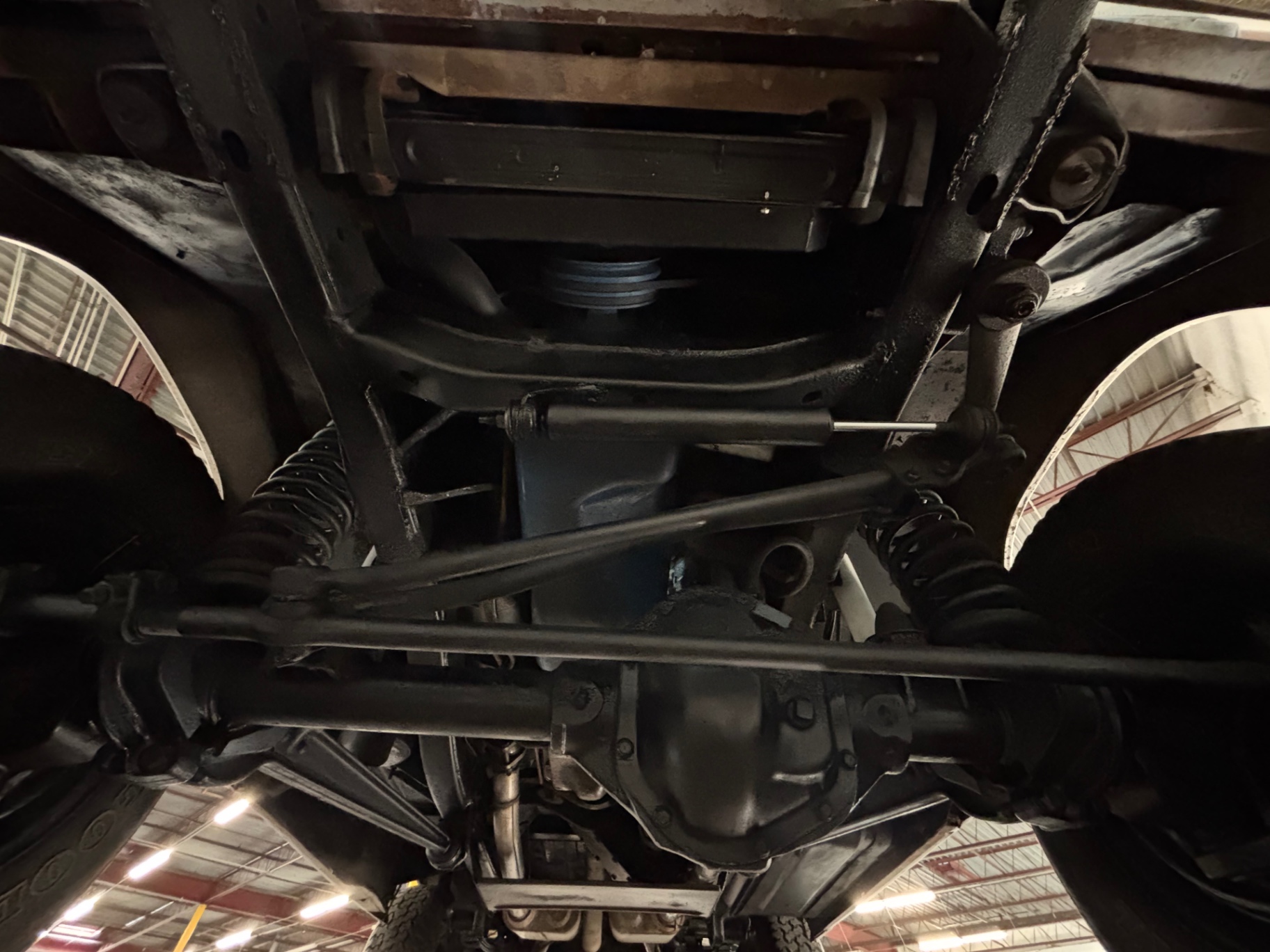
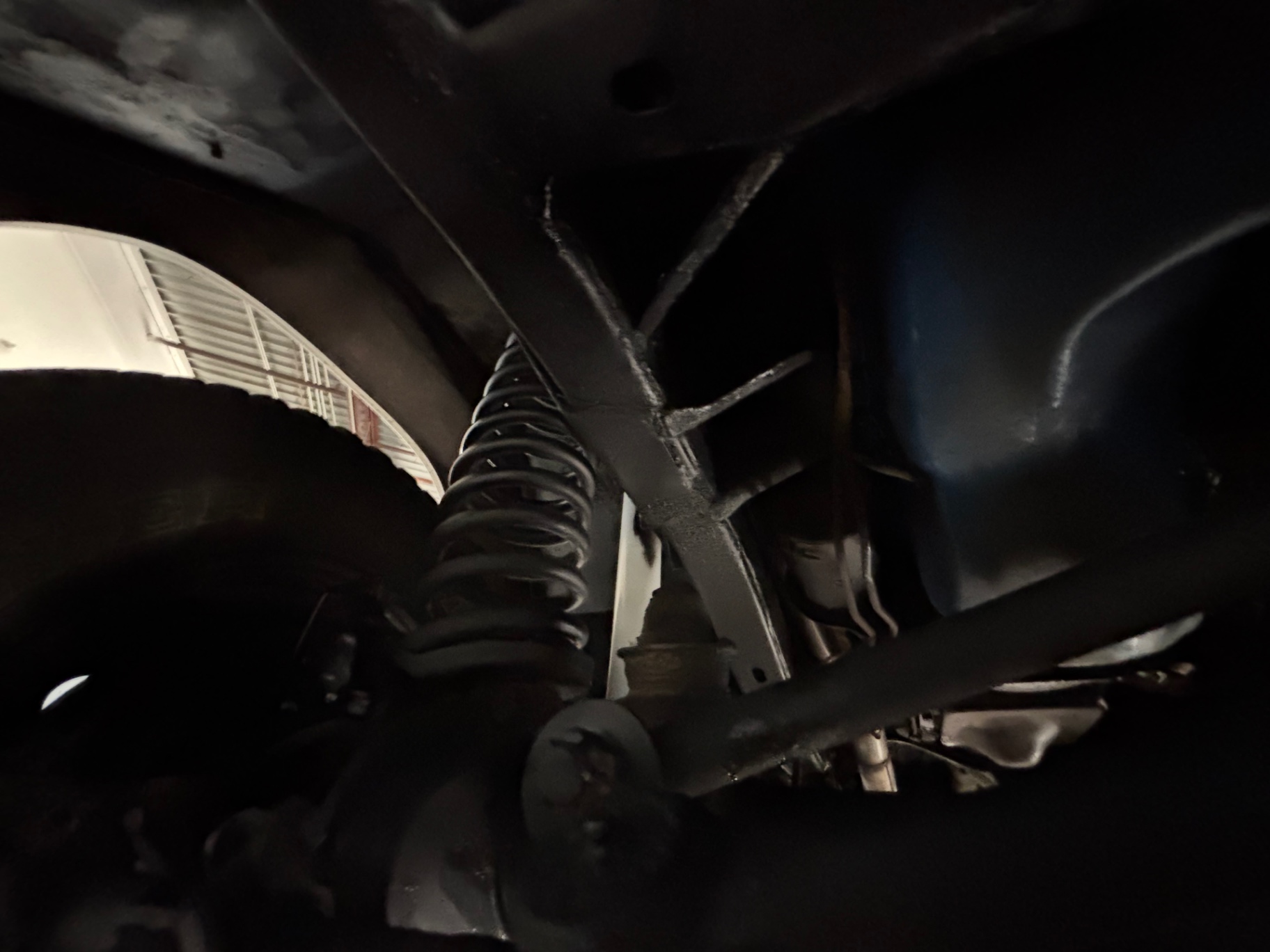
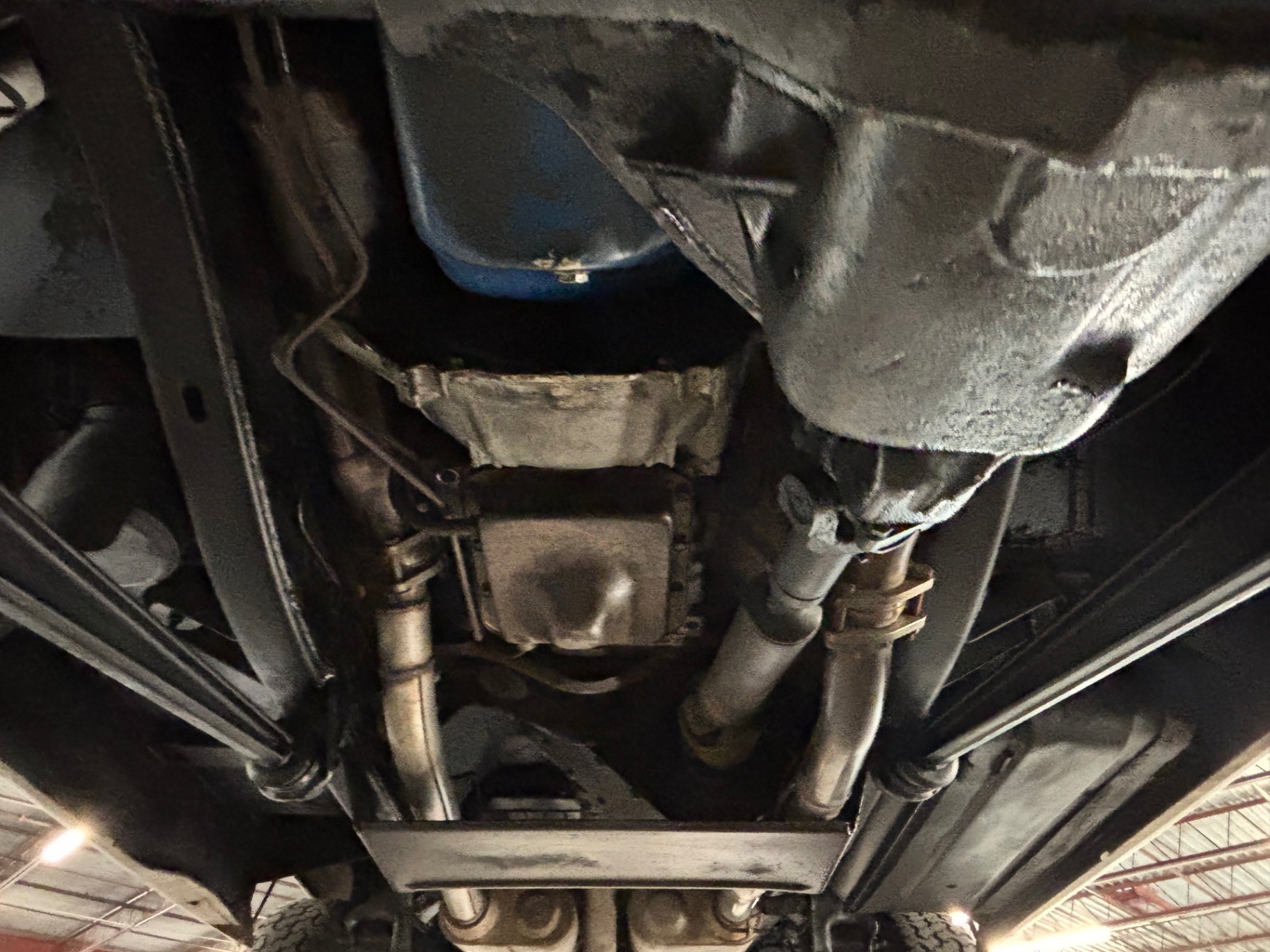
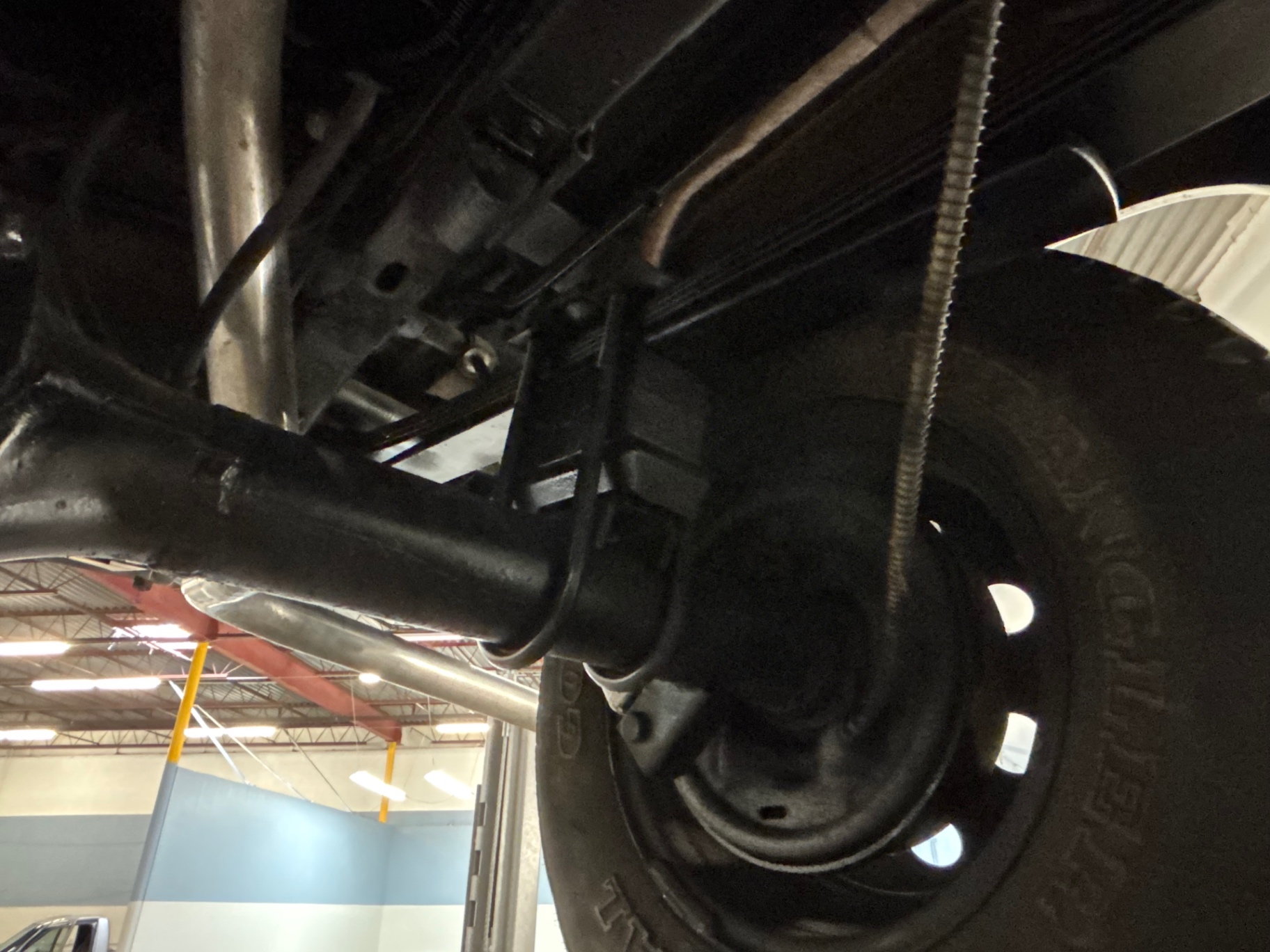
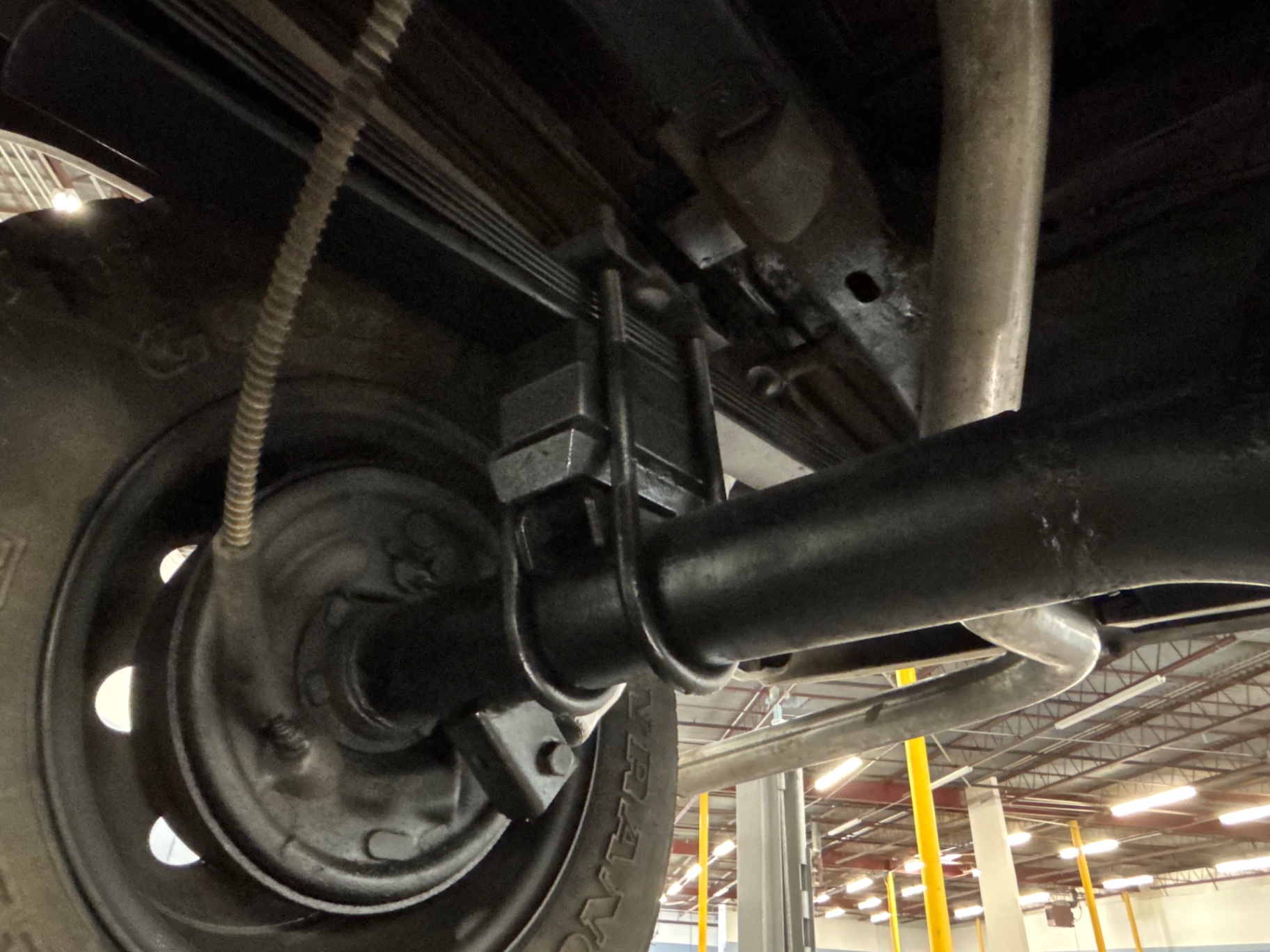
Power steering is fitted, which makes a meaningful difference in a short-wheelbase truck with solid front axle geometry. The front axle — a Dana 30 as was standard on the 1974 Bronco — uses twin I-beam suspension up front with coil springs, a design Ford used across its light truck line during this period. Superlift shocks are installed at all four corners, visible in the undercarriage photos. Superlift is a well-regarded aftermarket suspension brand with decades of history in the off-road market, and the shocks here appear to be in good condition.
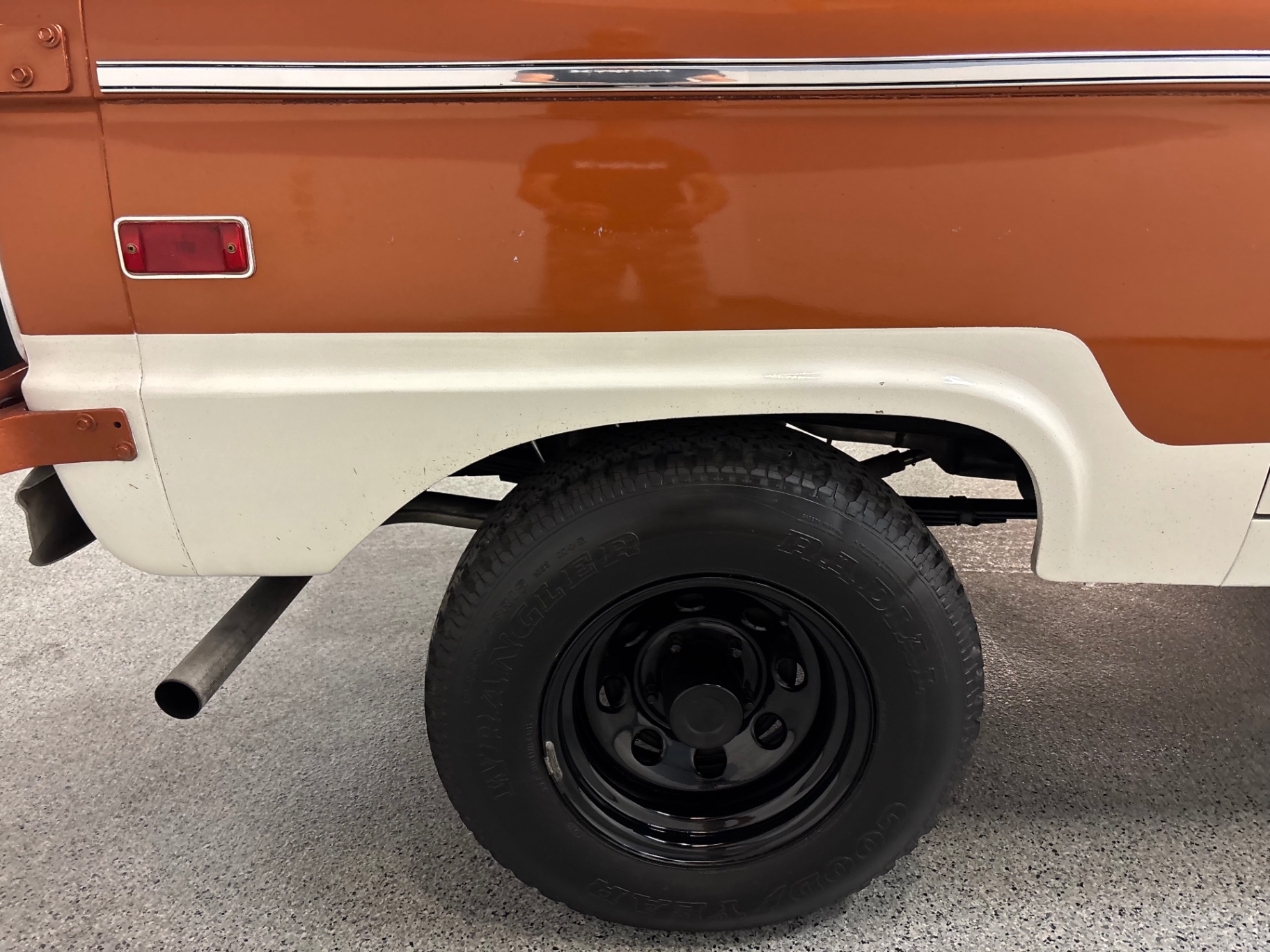
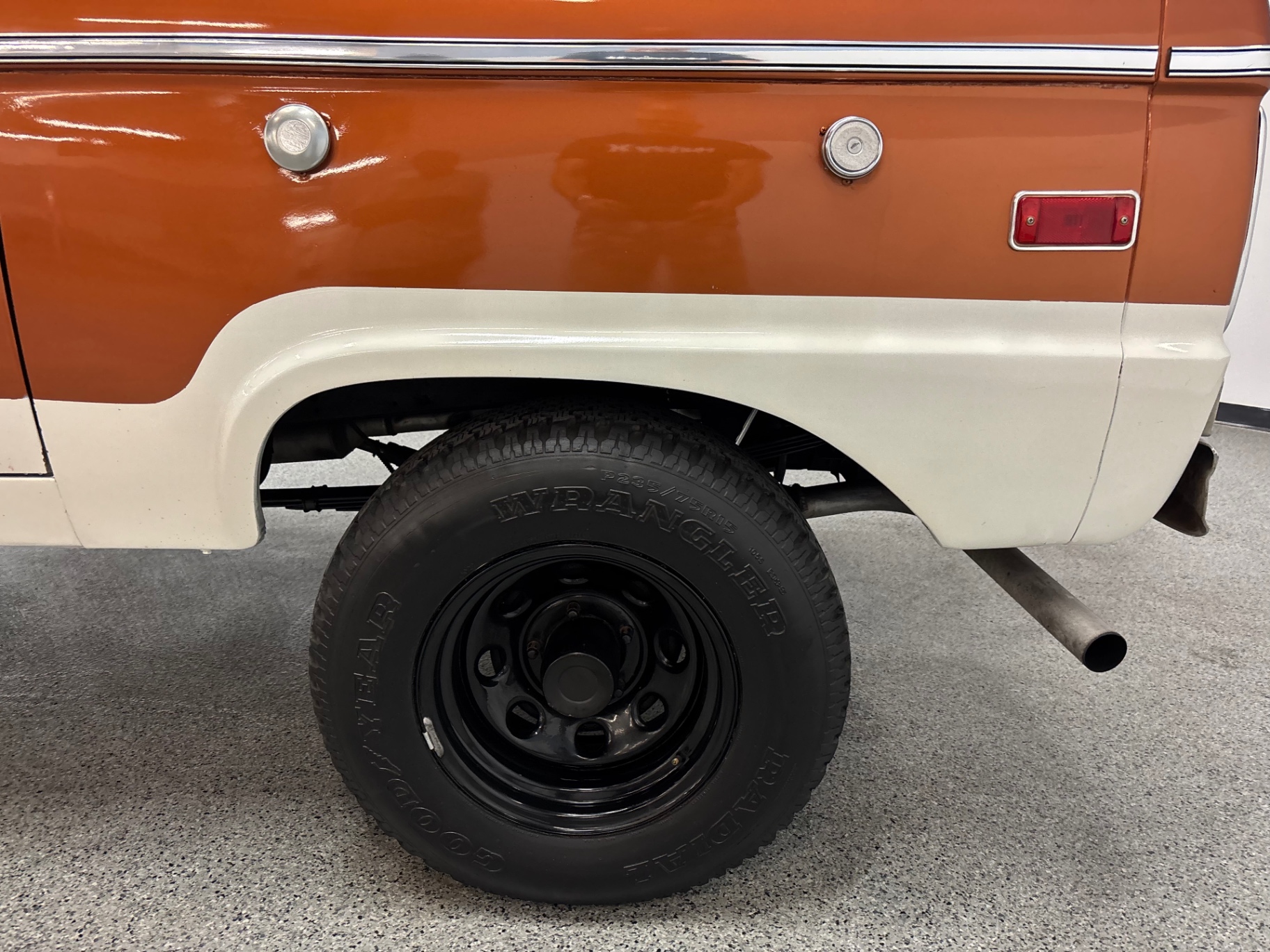
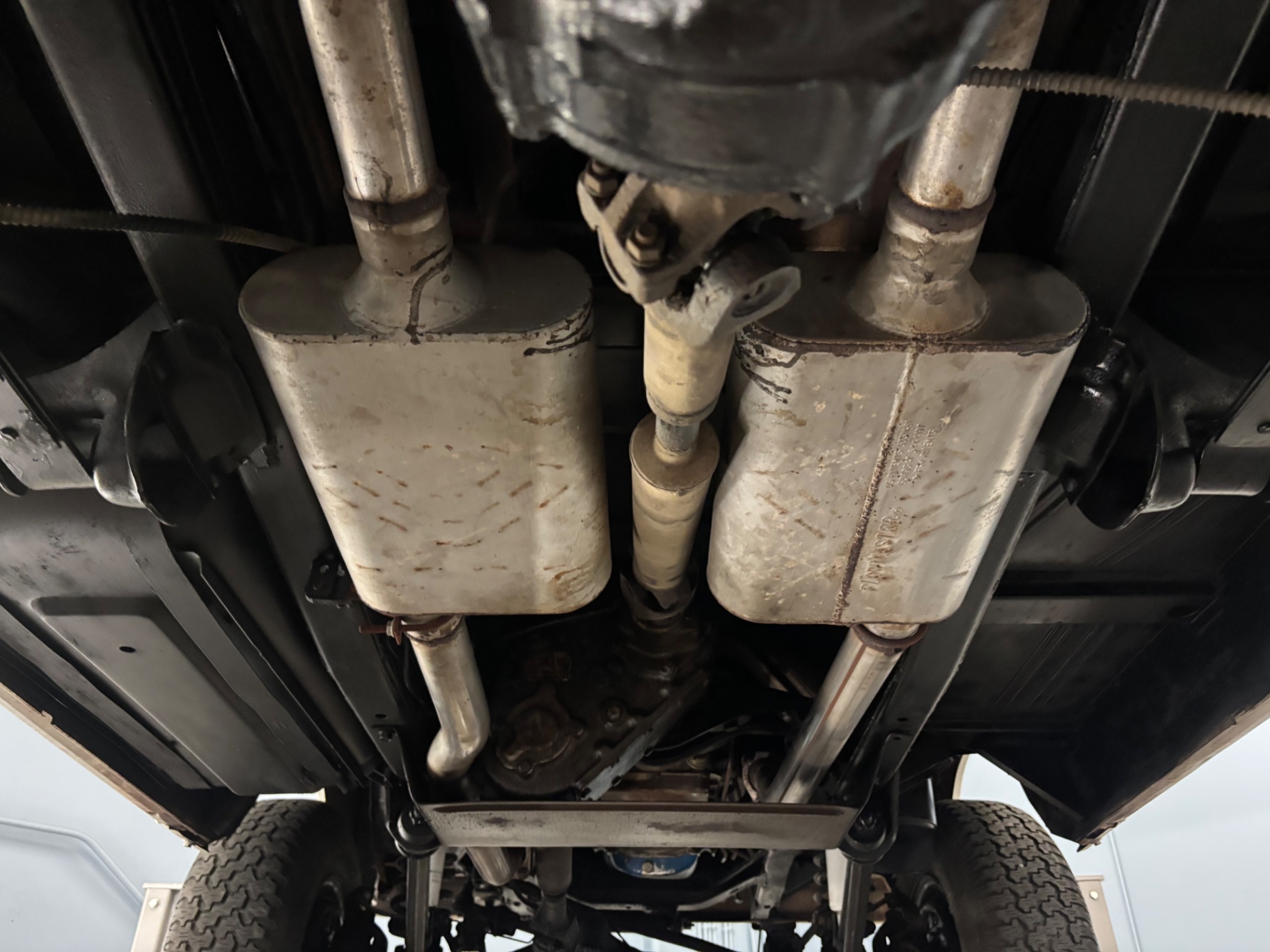
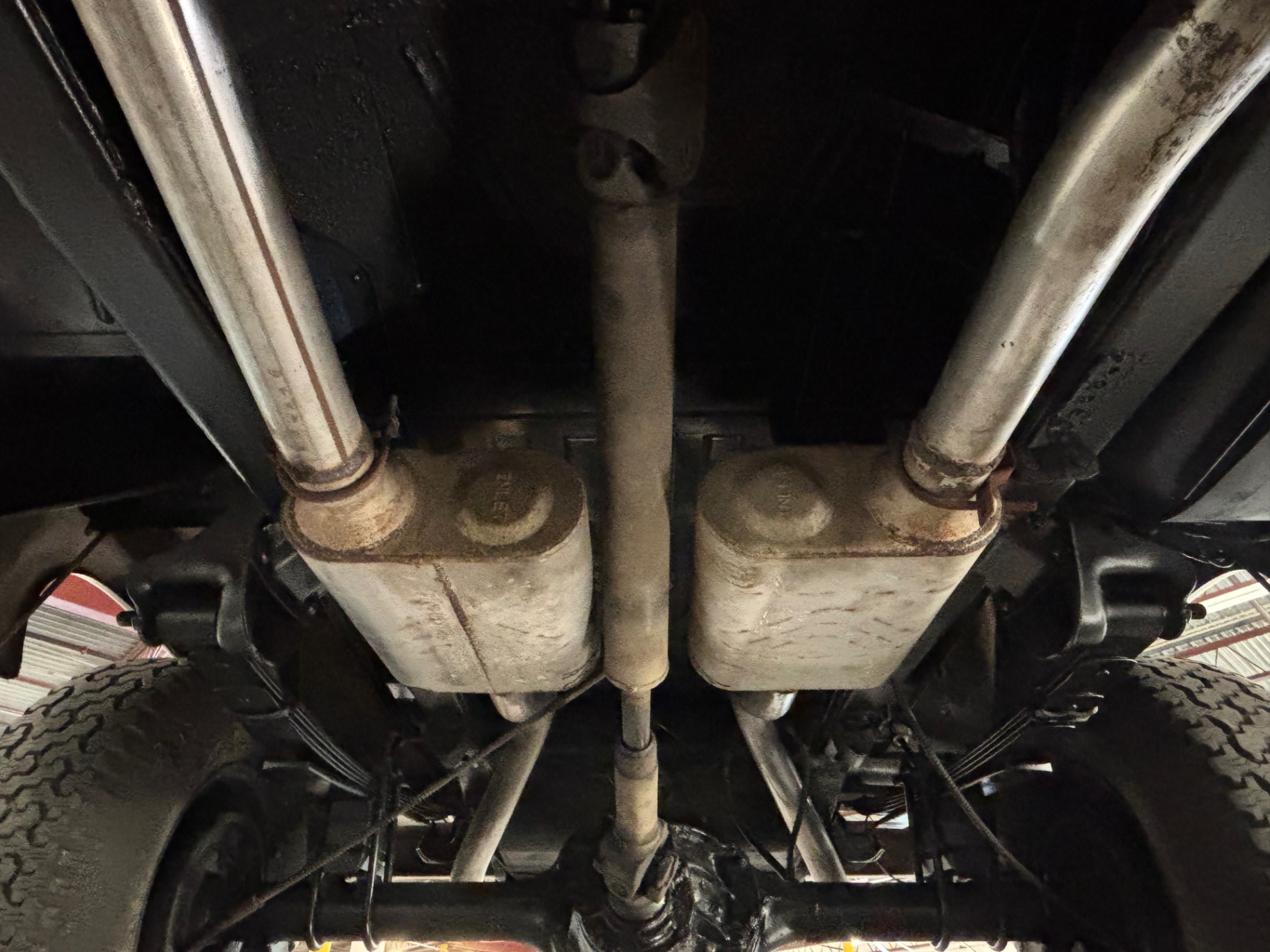
The dual exhaust setup is a notable addition. The stock 1974 Bronco ran a single exhaust, so the dual exhaust on this truck — clearly shown in the undercarriage photos with paired mufflers exiting at the rear — is an upgrade that improves exhaust flow and gives the 302 a more characteristic V8 note. The undercarriage itself presents well in the photos, with the frame and axle components showing black paint and no obvious rot or heavy corrosion, which is consistent with a truck that has been cared for.
Interior
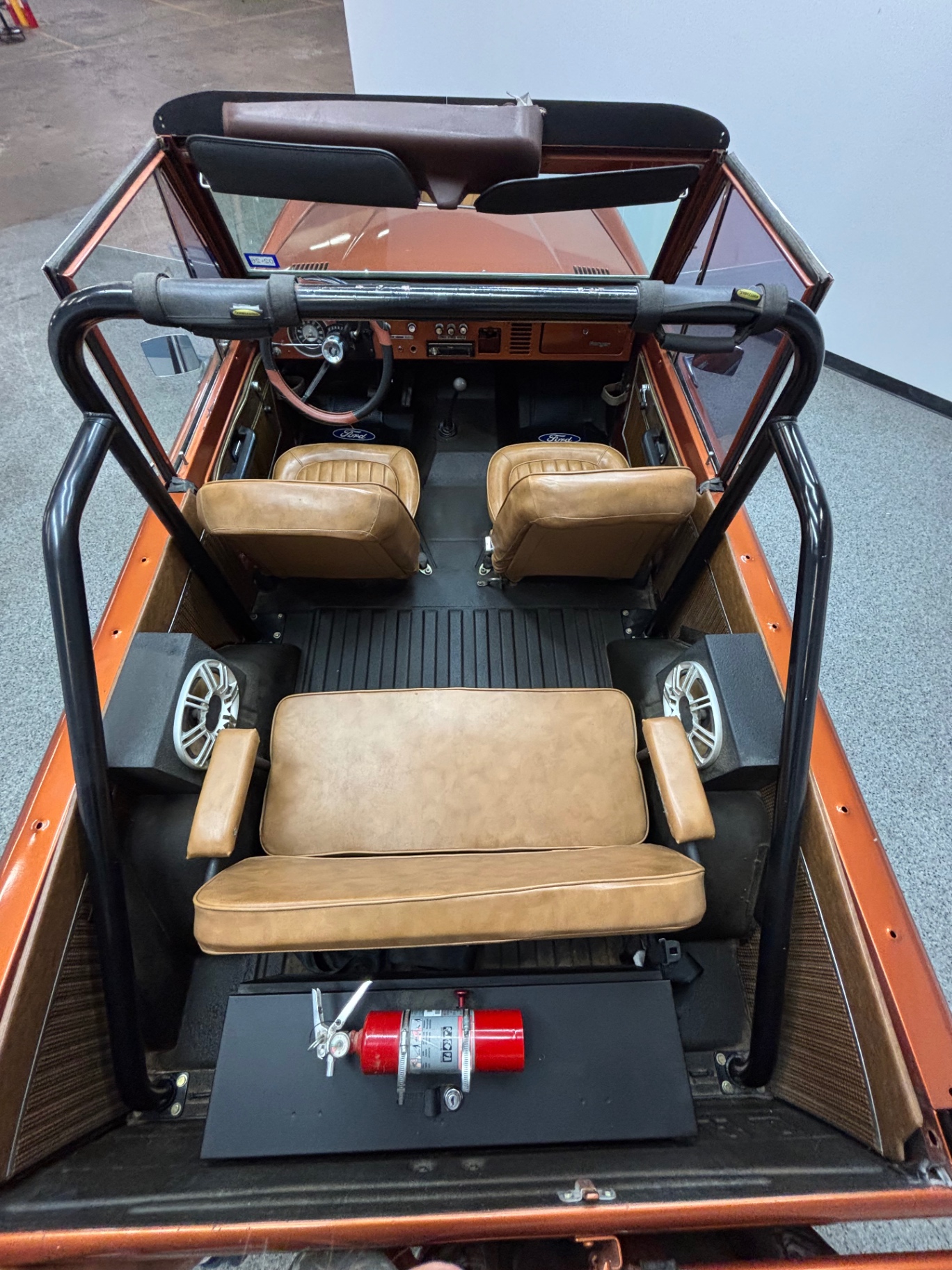
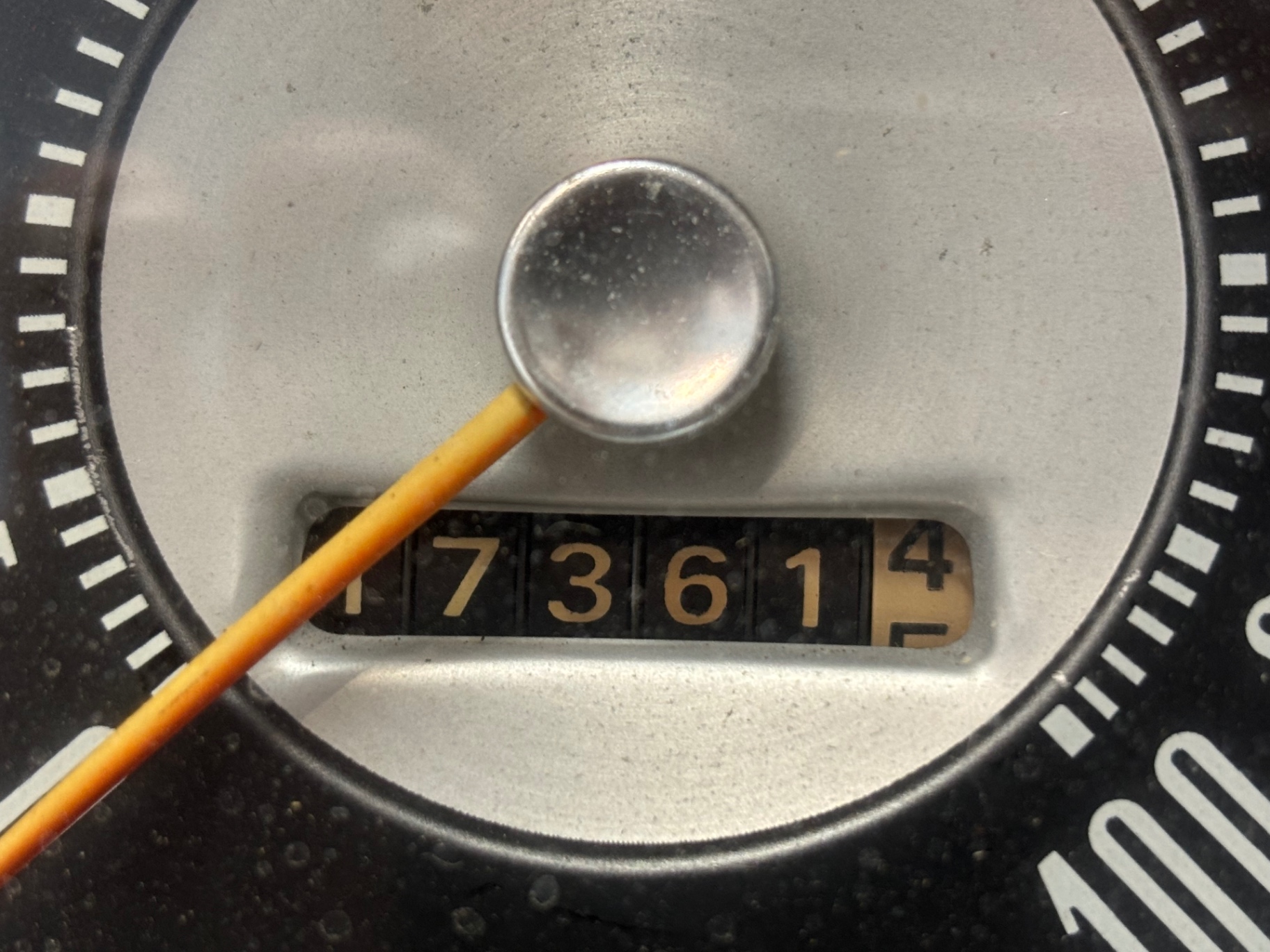
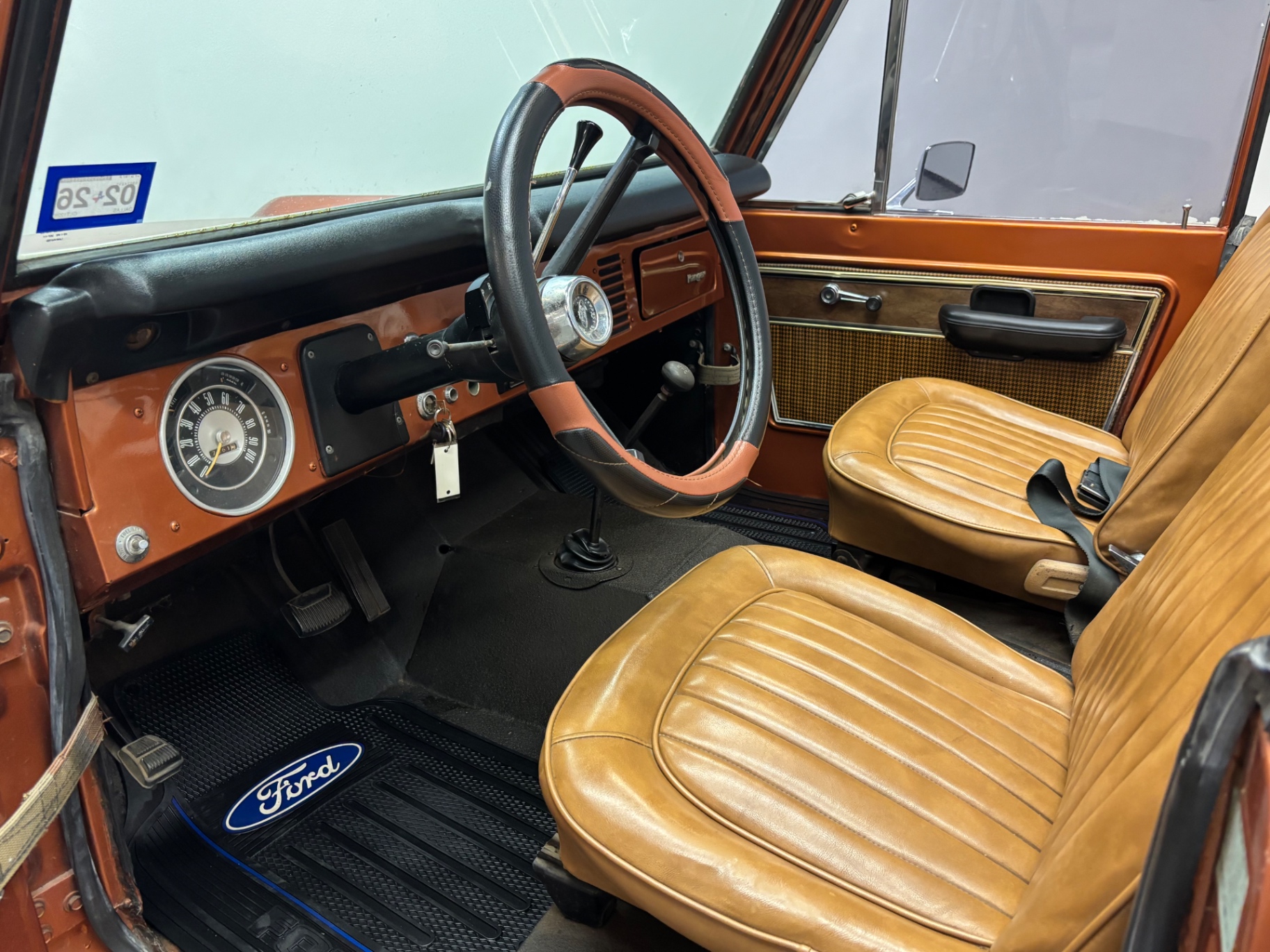
The 1974 Ford Bronco Ranger interior in this truck is one of its strongest selling points. Ranger trim brought a more complete cabin to the first-gen, and this example shows it well. The dashboard carries wood-grain trim and a "Ranger" badge on the glovebox door, both period-correct Ranger package details. The instrument cluster is the standard first-gen layout — a large speedometer flanked by secondary gauges — housed in the wood-grain panel.
The front bucket seats are upholstered in tan leather and show the ribbed, high-back styling typical of the era. The color matches the exterior two-tone scheme well and gives the cabin a warm, cohesive look. Both front seats appear in good condition with no visible cracking or damage to the leather. Ford Logo floor mats cover the floor on both sides.
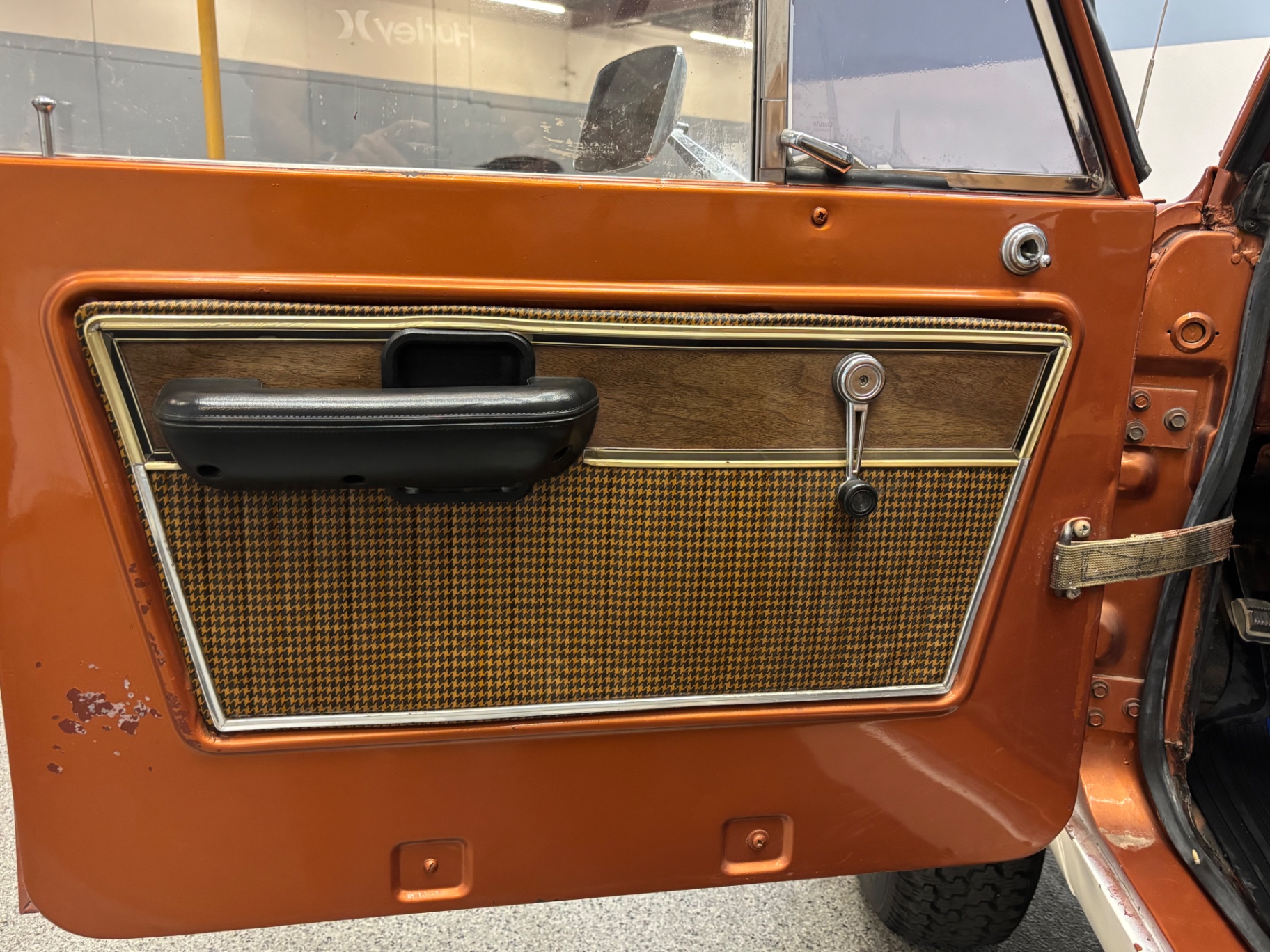
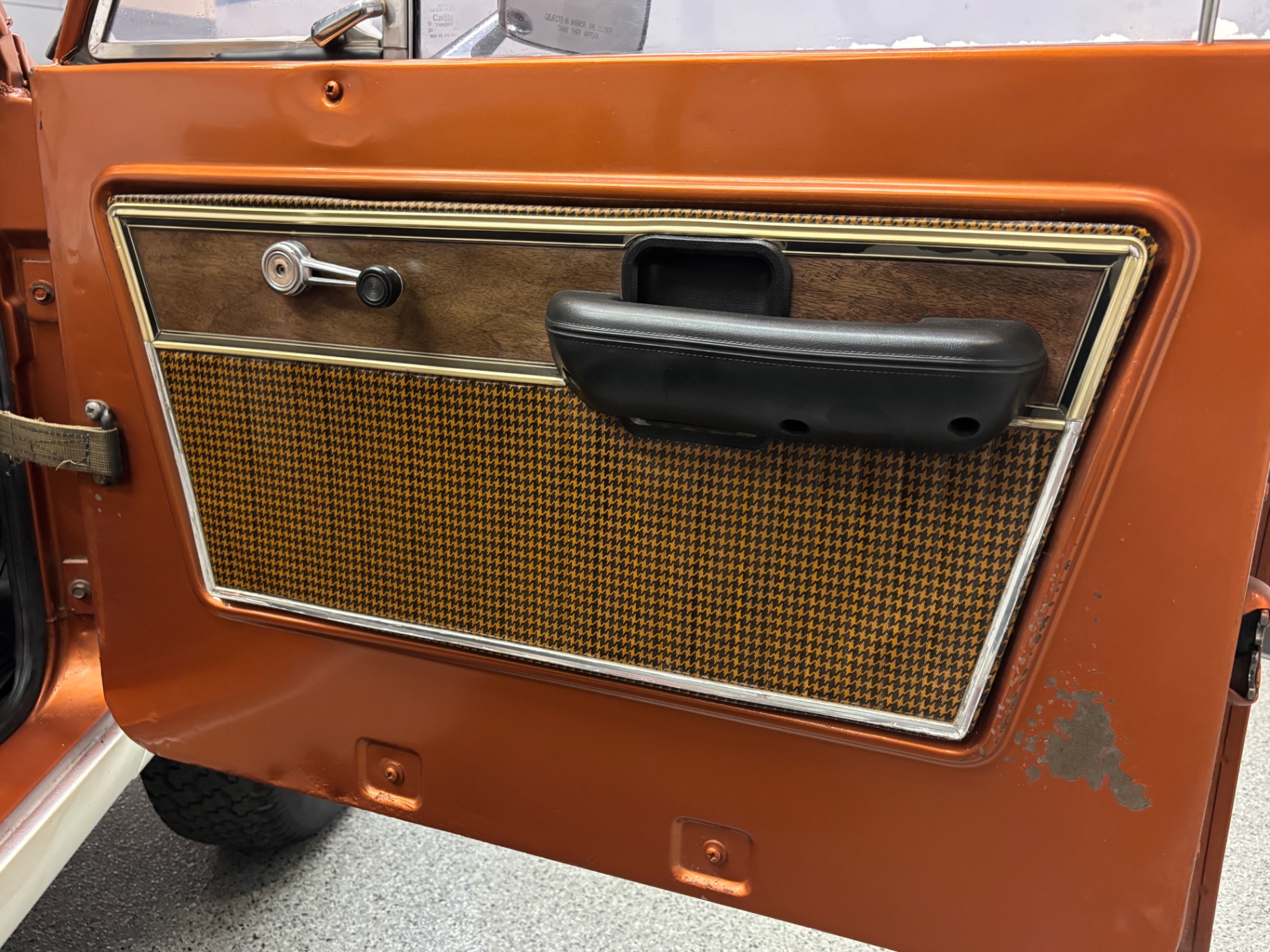
The door panels are a genuine highlight. The houndstooth pattern fabric insert framed by wood-grain trim and chrome beading is a period look that is hard to replicate and rarely survives fifty years in this condition. The pattern is intact, the chrome surround is present, and the wood-grain trim strip shows no obvious damage. This is exactly what a Ranger-trimmed first-gen Bronco should look like inside.
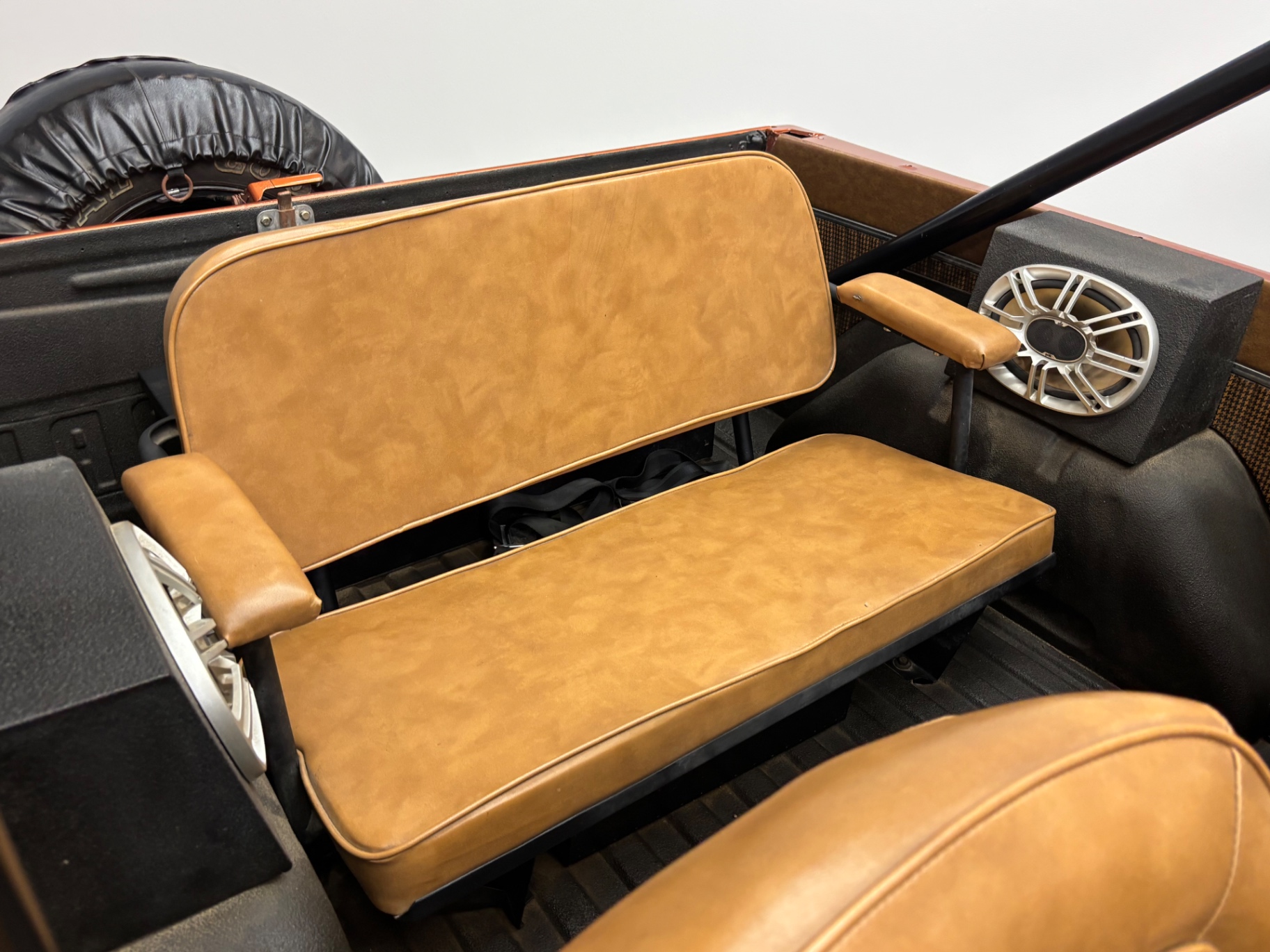
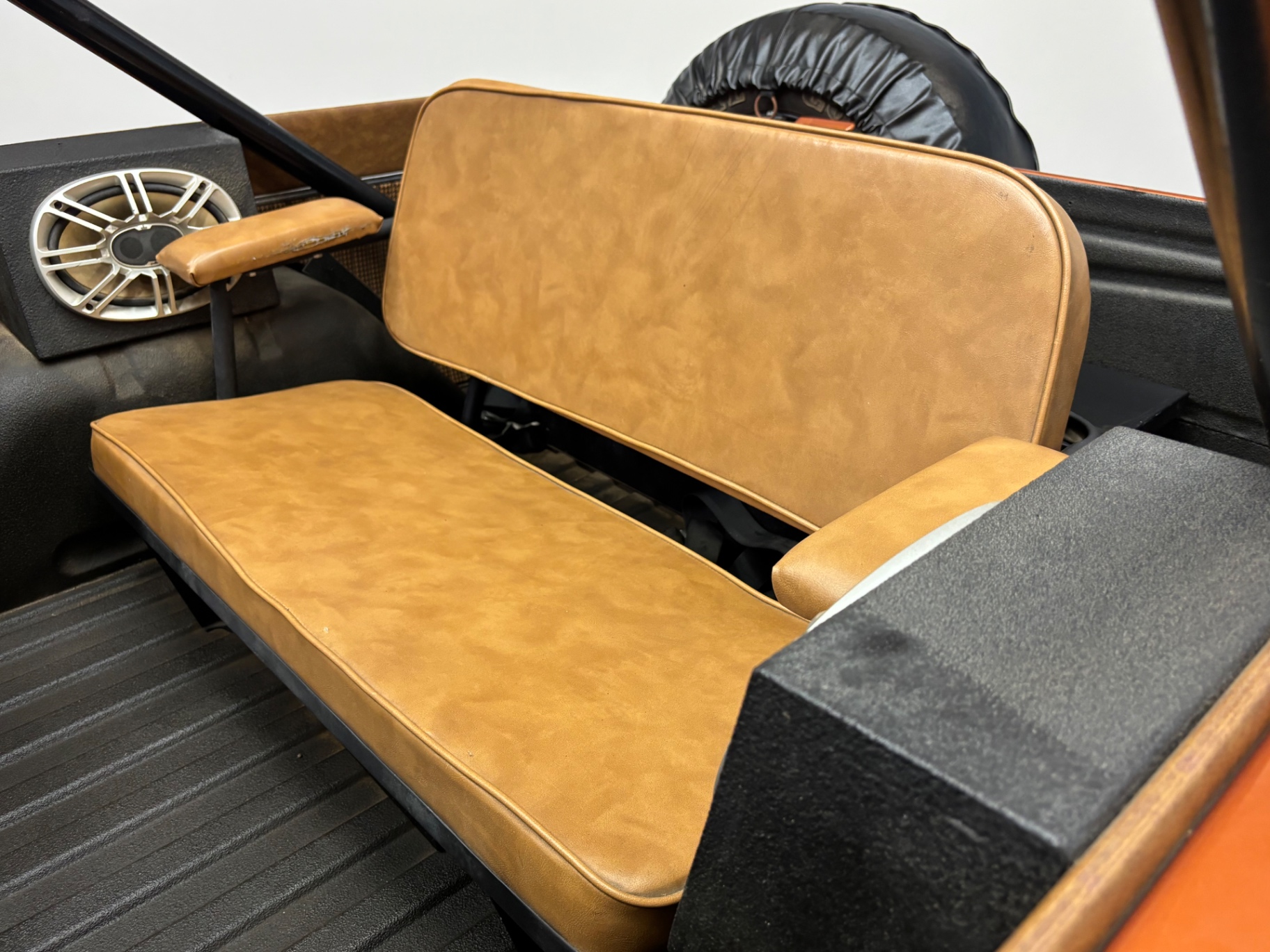
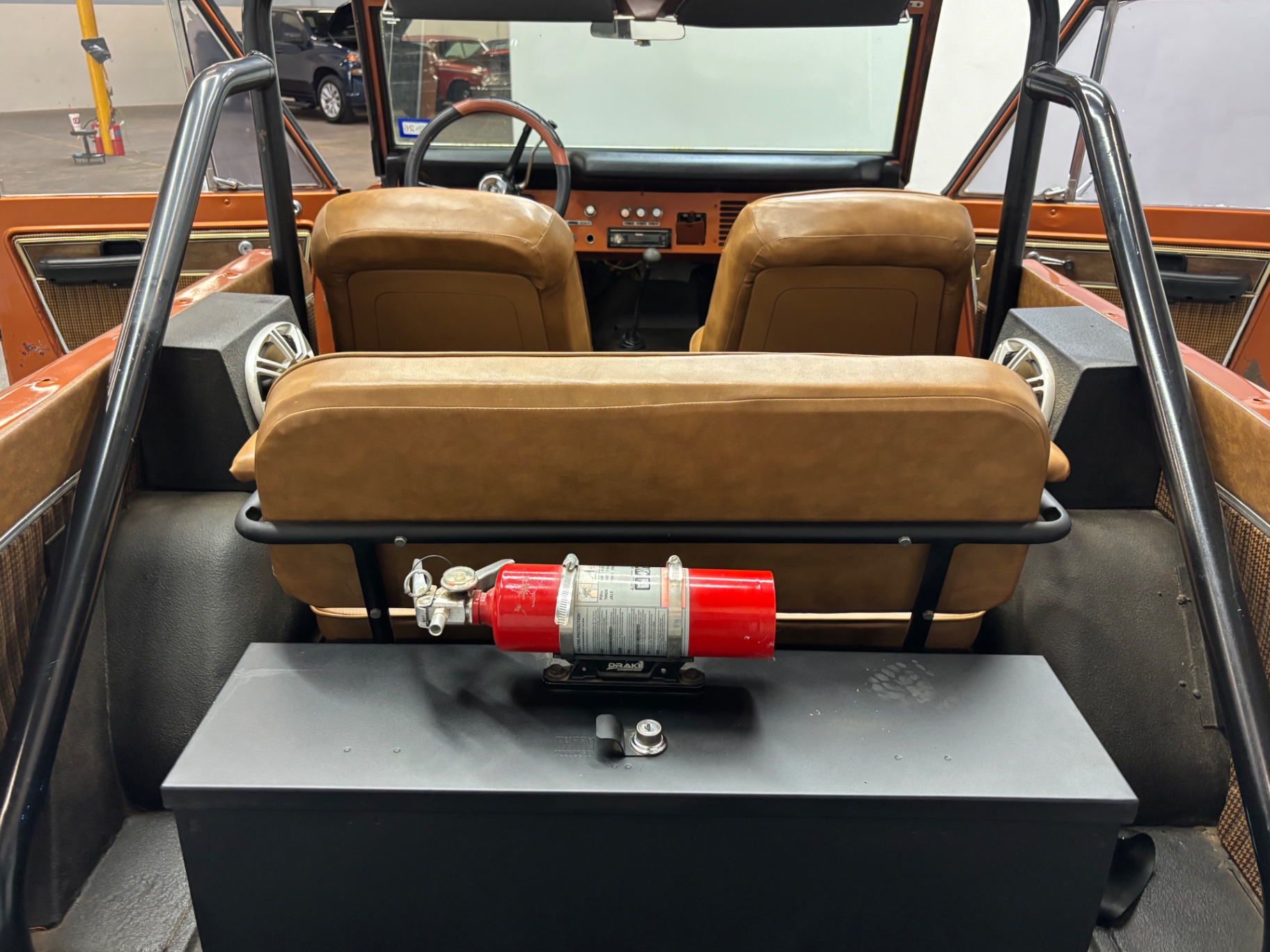
In the rear, a tan bench seat in a material that matches the fronts provides seating for additional passengers. On either side of the rear cargo area, upgraded speakers are mounted in dedicated enclosures — a practical addition for a truck that will be driven and enjoyed. A Pioneer head unit sits in the dash, replacing the original radio location cleanly. An installed roll bar runs the perimeter of the rear cargo area and connects to the windshield frame, adding structural reinforcement. A locking steel storage box is bolted to the rear floor ahead of the bench seat, and a mounted fire extinguisher is bracketed to the storage box — both sensible additions for a truck used off-road.
Exterior
The two-tone Burnt Orange over white paint scheme is correct for the mid-1970s Ford truck palette and suits the first-gen Bronco's proportions well. The upper body is finished in Burnt Orange — a rich copper-brown tone Ford offered during this period — while the lower body below the chrome side trim strip is finished in white. The chrome side trim that divides the two colors runs the length of the body and is present and intact. Chrome bumpers are fitted front and rear, both appearing in solid condition in the photos.
The soft top is installed and appears serviceable, covering the rear cargo area and passenger space behind the windshield. Soft tops on first-gen Broncos were a factory-available option and are part of what makes these trucks versatile — they can be driven open, partially open, or fully enclosed depending on conditions. A spare tire is mounted at the rear of the truck in a Bronco Ranger tire cover, a period-correct detail that completes the look of the rear end.
The black steel wheels are a clean, practical choice that work visually with the two-tone exterior. Goodyear Wrangler radial tires are fitted all around, including the rear-mounted spare. The Wrangler is a highway-terrain tire well-suited to a truck that sees mixed use. Tire sidewalls in the photos show the Goodyear Wrangler lettering clearly and the tread appears in good condition.
Conclusion
This 1974 Ford Bronco Ranger represents the first-generation truck at a level of specification and presentation that is increasingly difficult to find. The Ranger trim, the 302 V8, the Dana 20 transfer case, the dual exhaust, the Superlift suspension, and the intact houndstooth interior all point to a truck that has been built with purpose and maintained with care. The first-gen Bronco market has strengthened consistently over the past decade as the supply of clean, usable examples has tightened. This is a truck that can be driven, shown, and enjoyed without requiring a major investment of time or money to bring up to standard. It arrives ready to use.
If you'd like to discuss this 1974 Ford Bronco Ranger further or arrange an inspection, call Skyway Classics at 941-254-6608. We're happy to answer questions and work with out-of-state buyers on shipping arrangements.
Disclaimer
Information found on the website is presented as given to us by the owner of the car, whether on consignment or from the owner we bought it from. Some Photos, materials for videos, descriptions and other information are provided by the consignor/seller and is deemed reliable, but Skyway Classics does not warranty or guarantee this information. Skyway Classics is not responsible for information that may incorrect or a publishing error. The decision to purchase should be based solely on the buyers personal inspection of the vehicle or by a professional inspection service prior to offer or purchase being made.
1974 Ford Bronco Ranger — 302 V8, 4x4, Two-Tone Burnt Orange, Soft Top
Why This Car Is Special
The first-generation Ford Bronco ran from 1966 through 1977, and those early trucks have become some of the most sought-after American four-wheel-drive vehicles on the collector market. The reason is straightforward: they were purpose-built, body-on-frame trucks with solid axles front and rear, a short 92-inch wheelbase that made them genuinely capable off-road, and enough factory trim options to give buyers real choices. Ford produced the first-gen Bronco in three body styles — roadster, half-cab, and wagon — but by 1974, the wagon configuration had become the dominant seller, and that's exactly what this truck is.
The 1974 model year is particularly interesting from a drivetrain standpoint. The 302 cubic inch V8 — the same engine Ford had been developing and refining since 1968 — was the go-to engine choice for buyers who wanted a capable street and trail performer without the added weight and fuel consumption of the larger 360. By 1974, Ford had begun fitting emissions controls across the lineup in response to federal regulations, but the 302 remained a proven and parts-friendly small-block that owners and mechanics have understood for decades. This particular 1974 Ford Bronco Ranger carries that 302, backed by a C4 three-speed automatic and a Dana 20 transfer case — a combination that has logged millions of miles in trucks just like this one.
What separates this truck from a basic Bronco Sport is the Ranger trim designation. The Bronco Ranger was Ford's upper-level package for the first-gen truck, bringing a more finished interior and exterior compared to the base Sport trim. The dash badging visible in the photos confirms the Ranger designation, and the interior reflects it — more on that below. This is the configuration serious collectors and users look for when they want a first-gen that was well-optioned from the factory rather than stripped down.
The two-tone Burnt Orange over white exterior is a period-correct color combination that photographs well and reads as a complete, intentional build rather than a tired work truck. Someone has put real money and thought into this Bronco, with upgrades that add utility without undoing its character.
Features List
- 302 5.0L V8 Engine
- C4 3-Speed Automatic Transmission
- Part-Time 4-Wheel Drive
- Dana 20 Transfer Case
- Power Steering
- Dual Exhaust
- Superlift Shocks
- Two-Tone Burnt Orange and White Paint
- Soft Top
- Black Steel Wheels
- Goodyear Wrangler Tires
- Spare Tire Mounted Rear
- Bronco Ranger Tire Cover
- Chrome Front and Rear Bumpers
- Chrome Side Trim
- Wood-Grain Dash Trim
- Leather Bucket Seats (Tan)
- Rear Bench Seat (Tan)
- Houndstooth Door Panels
- Ford Logo Floor Mats
- Pioneer Head Unit (Upgraded)
- Upgraded Rear Speakers
- Roll Bar Installed
- Rear Locking Storage Box
- Fire Extinguisher Mounted
Mechanical
Under the hood sits Ford's 302 cubic inch V8 — 5.0 liters in modern terms — wearing its factory-style blue valve covers and a round air cleaner assembly. The 302 was introduced in 1968 and became one of Ford's most versatile and reliable engines, used across the Mustang, F-Series, and Bronco lineups. In the relatively light first-gen Bronco, it provides adequate power for street driving and enough low-end torque to handle trail work without complaint. Parts availability for this engine is about as good as it gets for any American V8 of this era.
Power routes through a Ford C4 three-speed automatic transmission, which was a common and practical pairing for the 302 in truck applications. The C4 is a straightforward, proven unit with a long service history in Ford vehicles. Behind the C4 sits the Dana 20 transfer case, a two-speed unit that offers a low range for off-road work. The Dana 20 was standard equipment on the first-gen Bronco and has a solid reputation for durability. The floor-mounted transfer case shifter is clearly visible in the interior photos, sitting alongside the automatic transmission selector.
Power steering is fitted, which makes a meaningful difference in a short-wheelbase truck with solid front axle geometry. The front axle — a Dana 30 as was standard on the 1974 Bronco — uses twin I-beam suspension up front with coil springs, a design Ford used across its light truck line during this period. Superlift shocks are installed at all four corners, visible in the undercarriage photos. Superlift is a well-regarded aftermarket suspension brand with decades of history in the off-road market, and the shocks here appear to be in good condition.
The dual exhaust setup is a notable addition. The stock 1974 Bronco ran a single exhaust, so the dual exhaust on this truck — clearly shown in the undercarriage photos with paired mufflers exiting at the rear — is an upgrade that improves exhaust flow and gives the 302 a more characteristic V8 note. The undercarriage itself presents well in the photos, with the frame and axle components showing black paint and no obvious rot or heavy corrosion, which is consistent with a truck that has been cared for.
Interior
The 1974 Ford Bronco Ranger interior in this truck is one of its strongest selling points. Ranger trim brought a more complete cabin to the first-gen, and this example shows it well. The dashboard carries wood-grain trim and a "Ranger" badge on the glovebox door, both period-correct Ranger package details. The instrument cluster is the standard first-gen layout — a large speedometer flanked by secondary gauges — housed in the wood-grain panel.
The front bucket seats are upholstered in tan leather and show the ribbed, high-back styling typical of the era. The color matches the exterior two-tone scheme well and gives the cabin a warm, cohesive look. Both front seats appear in good condition with no visible cracking or damage to the leather. Ford Logo floor mats cover the floor on both sides.
The door panels are a genuine highlight. The houndstooth pattern fabric insert framed by wood-grain trim and chrome beading is a period look that is hard to replicate and rarely survives fifty years in this condition. The pattern is intact, the chrome surround is present, and the wood-grain trim strip shows no obvious damage. This is exactly what a Ranger-trimmed first-gen Bronco should look like inside.
In the rear, a tan bench seat in a material that matches the fronts provides seating for additional passengers. On either side of the rear cargo area, upgraded speakers are mounted in dedicated enclosures — a practical addition for a truck that will be driven and enjoyed. A Pioneer head unit sits in the dash, replacing the original radio location cleanly. An installed roll bar runs the perimeter of the rear cargo area and connects to the windshield frame, adding structural reinforcement. A locking steel storage box is bolted to the rear floor ahead of the bench seat, and a mounted fire extinguisher is bracketed to the storage box — both sensible additions for a truck used off-road.
Exterior
The two-tone Burnt Orange over white paint scheme is correct for the mid-1970s Ford truck palette and suits the first-gen Bronco's proportions well. The upper body is finished in Burnt Orange — a rich copper-brown tone Ford offered during this period — while the lower body below the chrome side trim strip is finished in white. The chrome side trim that divides the two colors runs the length of the body and is present and intact. Chrome bumpers are fitted front and rear, both appearing in solid condition in the photos.
The soft top is installed and appears serviceable, covering the rear cargo area and passenger space behind the windshield. Soft tops on first-gen Broncos were a factory-available option and are part of what makes these trucks versatile — they can be driven open, partially open, or fully enclosed depending on conditions. A spare tire is mounted at the rear of the truck in a Bronco Ranger tire cover, a period-correct detail that completes the look of the rear end.
The black steel wheels are a clean, practical choice that work visually with the two-tone exterior. Goodyear Wrangler radial tires are fitted all around, including the rear-mounted spare. The Wrangler is a highway-terrain tire well-suited to a truck that sees mixed use. Tire sidewalls in the photos show the Goodyear Wrangler lettering clearly and the tread appears in good condition.
Conclusion
This 1974 Ford Bronco Ranger represents the first-generation truck at a level of specification and presentation that is increasingly difficult to find. The Ranger trim, the 302 V8, the Dana 20 transfer case, the dual exhaust, the Superlift suspension, and the intact houndstooth interior all point to a truck that has been built with purpose and maintained with care. The first-gen Bronco market has strengthened consistently over the past decade as the supply of clean, usable examples has tightened. This is a truck that can be driven, shown, and enjoyed without requiring a major investment of time or money to bring up to standard. It arrives ready to use.
If you'd like to discuss this 1974 Ford Bronco Ranger further or arrange an inspection, call Skyway Classics at 941-254-6608. We're happy to answer questions and work with out-of-state buyers on shipping arrangements.
Disclaimer
Information found on the website is presented as given to us by the owner of the car, whether on consignment or from the owner we bought it from. Some Photos, materials for videos, descriptions and other information are provided by the consignor/seller and is deemed reliable, but Skyway Classics does not warranty or guarantee this information. Skyway Classics is not responsible for information that may incorrect or a publishing error. The decision to purchase should be based solely on the buyers personal inspection of the vehicle or by a professional inspection service prior to offer or purchase being made.
1974 Ford
Bronco Ranger
Why Choose Skyway Classics?
Explore our curated inventory of classic and collector cars—thoughtfully selected, ready to drive, and supported by experts who make ownership simple.
Expert Curation
Every vehicle is hand-selected by our experts for quality, authenticity, and investment potential.
Fast Transactions
Streamlined buying and selling process with quick financing and immediate delivery options.
Only National Dealer With Classic Service & Repair
We’re the only national dealership that services and repairs the classics we sell—before and after the sale.
Nationwide Network
Access to our extensive network of collectors, restorers, and classic car enthusiasts nationwide.
Concierge Ownership Support
From financing and insurance to paperwork, shipping, and titling—we handle the details so you can enjoy the drive.
Passion-Driven Service
We're classic car enthusiasts first, providing personalized service with genuine passion for the hobby.