
1966 Ford
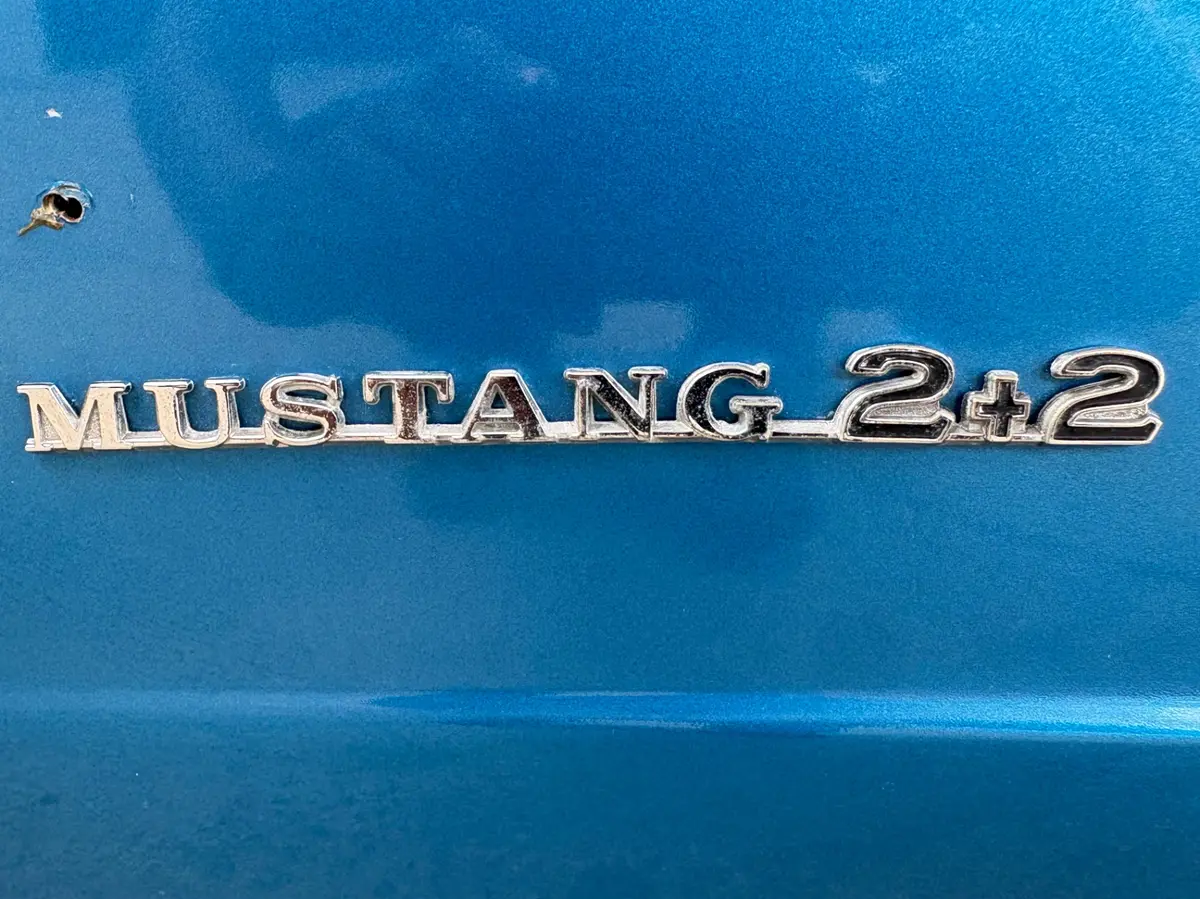
Mustang 2+2 Fastback
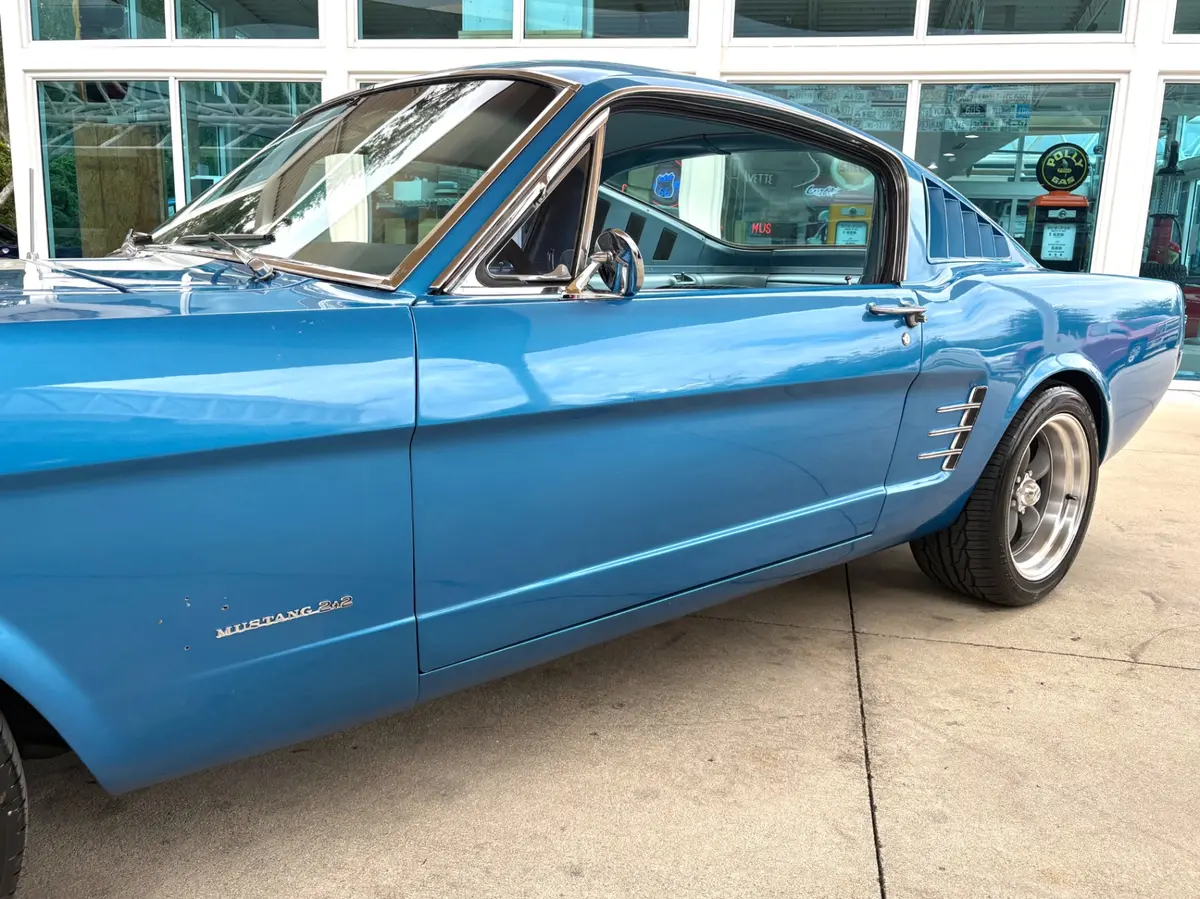
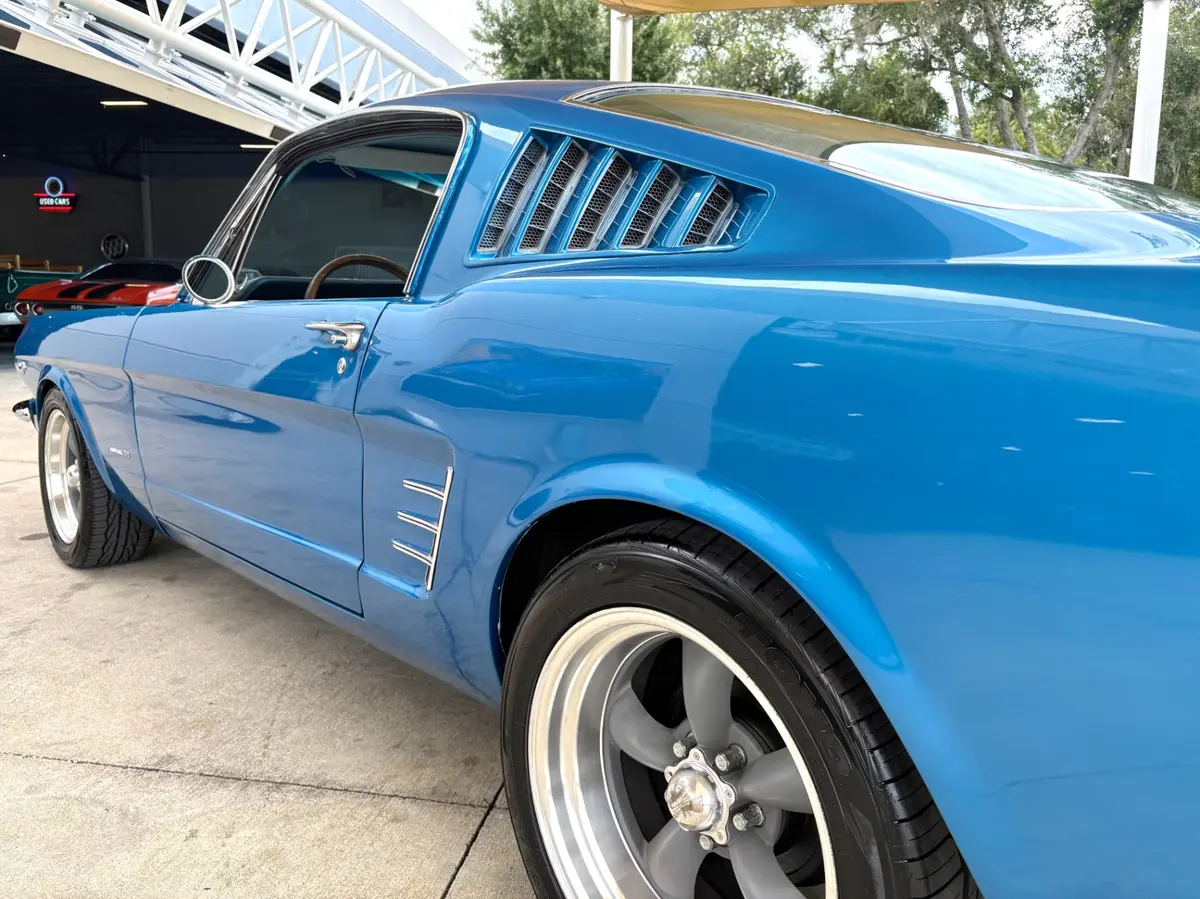
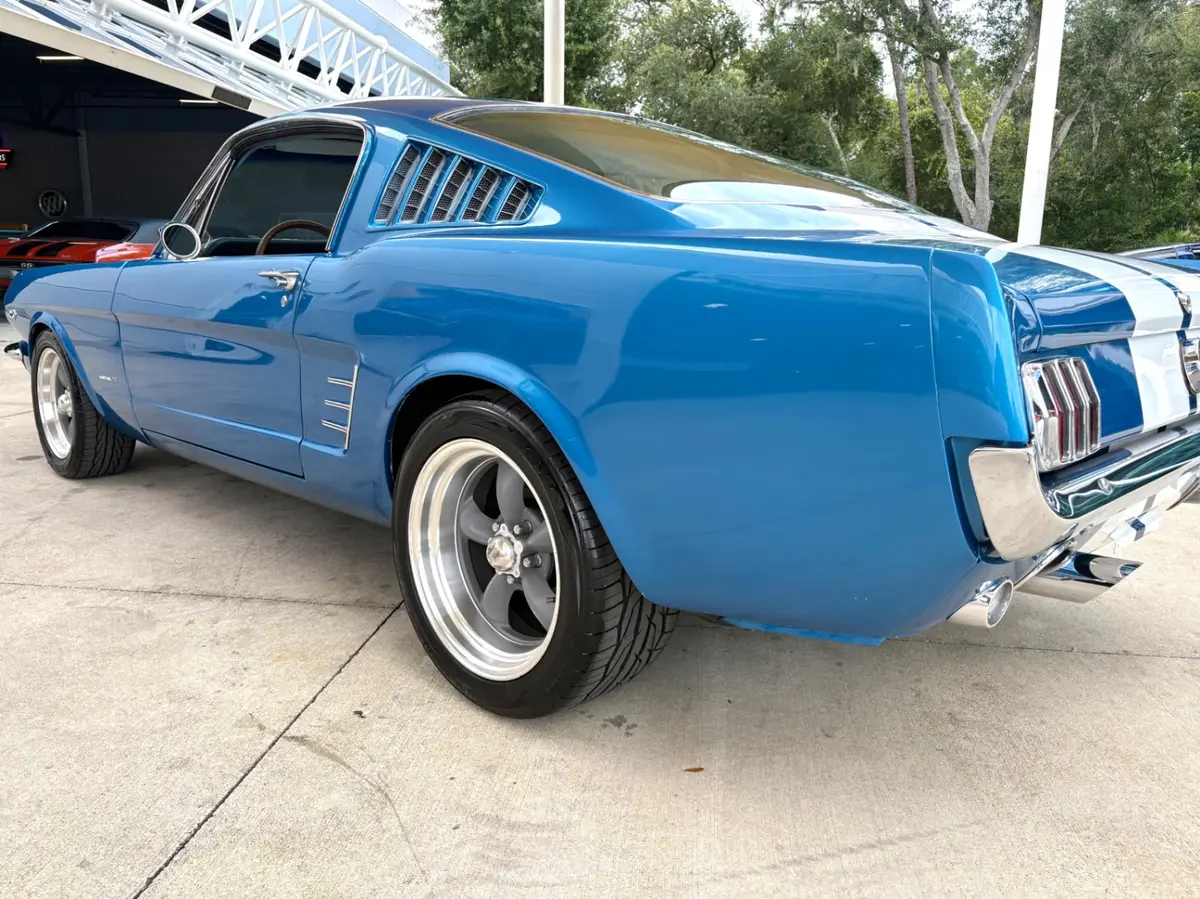
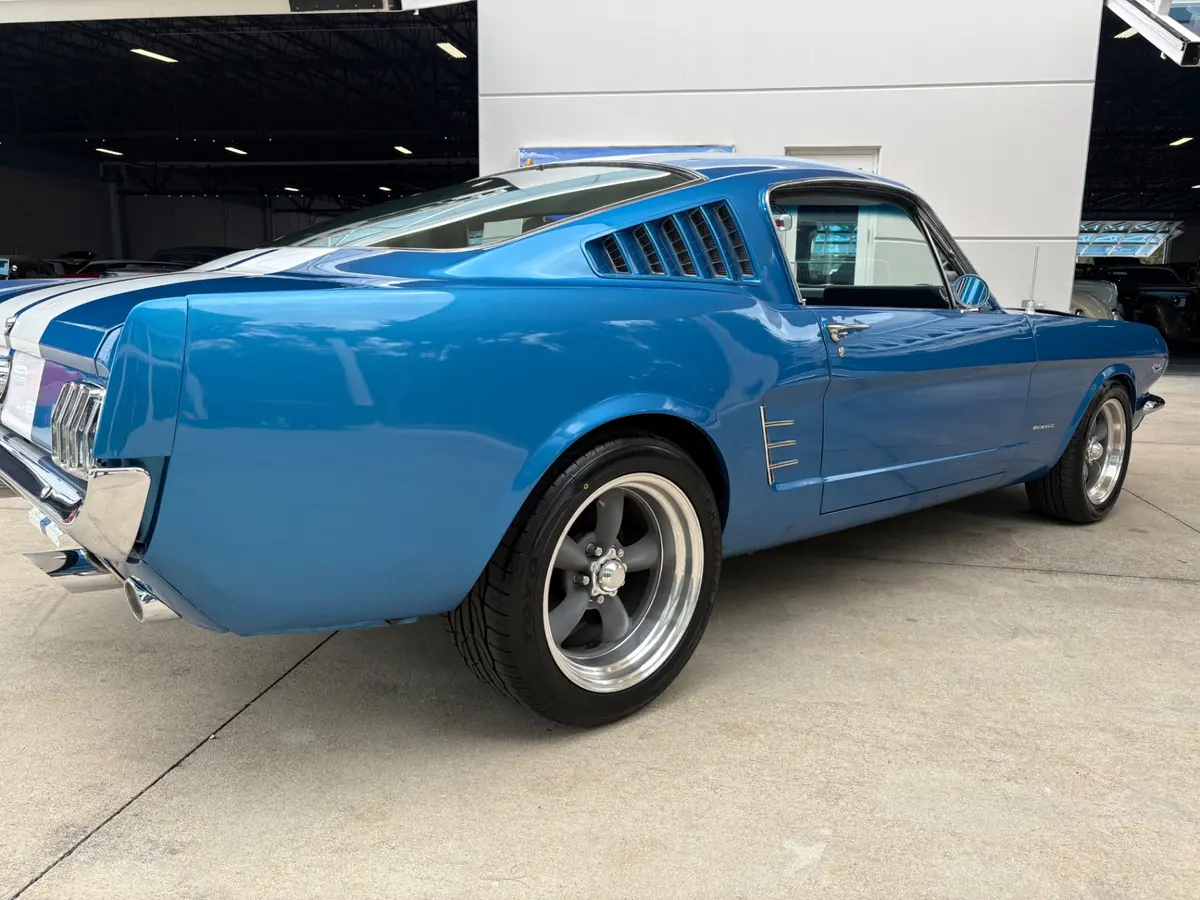

1966 Ford Mustang Fastback — 347 Stroker, Holley Sniper EFI, GT350 Styling
Why This Car Is Special
The 1966 Ford Mustang Fastback is one of the most sought-after body styles in the entire first-generation Mustang run. Ford introduced the fastback — officially called the 2+2 — for the 1965 model year, and it carried into 1966 with refinements that made it the sharper-looking of the two years. The long roofline sweeping down to a short deck, the functional rear quarter vents, and the fold-down rear seat made the fastback distinctly different from the coupe and convertible. Ford sold just over 499,000 Mustangs in 1966 across all body styles, but the fastback was always the most visually aggressive of the three. It is also the body style that Carroll Shelby chose as the starting point for his GT350, which has cemented the fastback's place in Mustang history permanently.
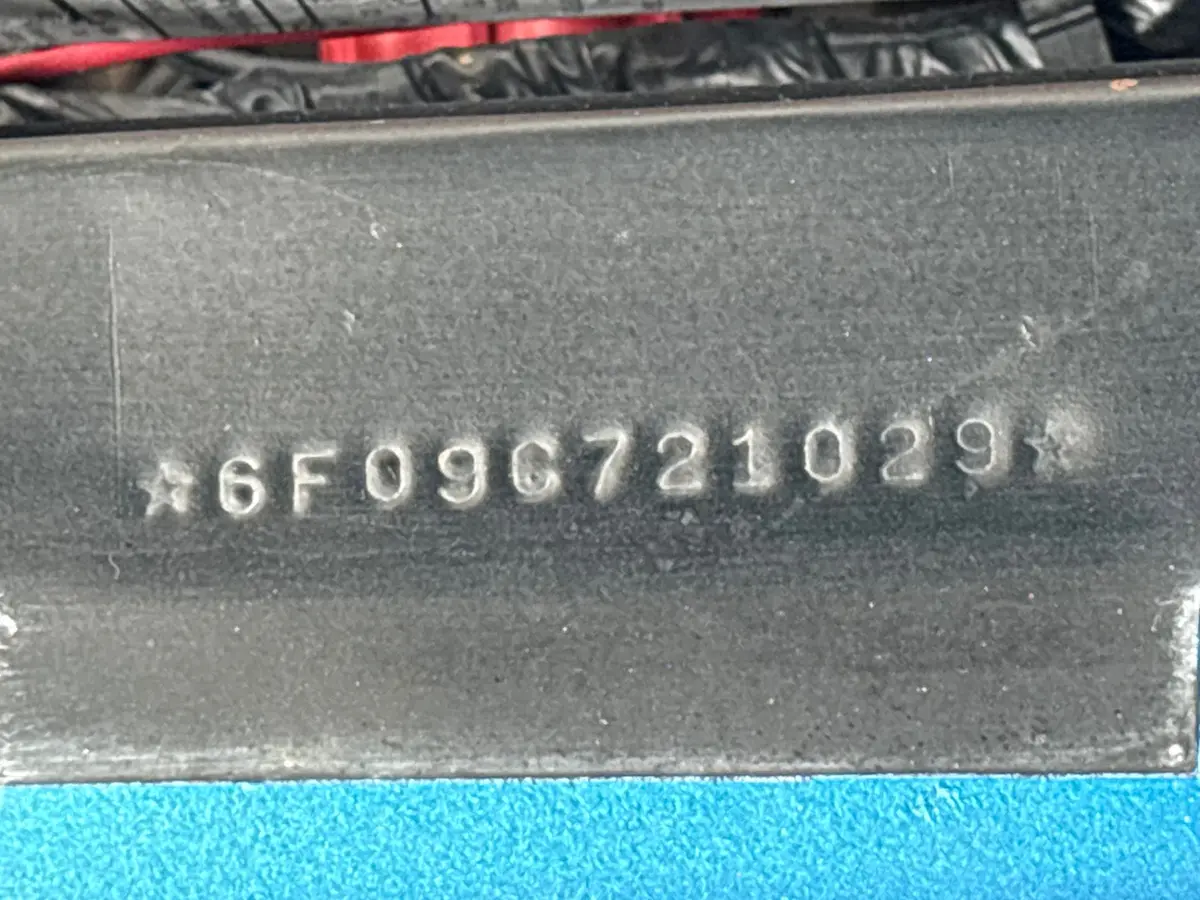
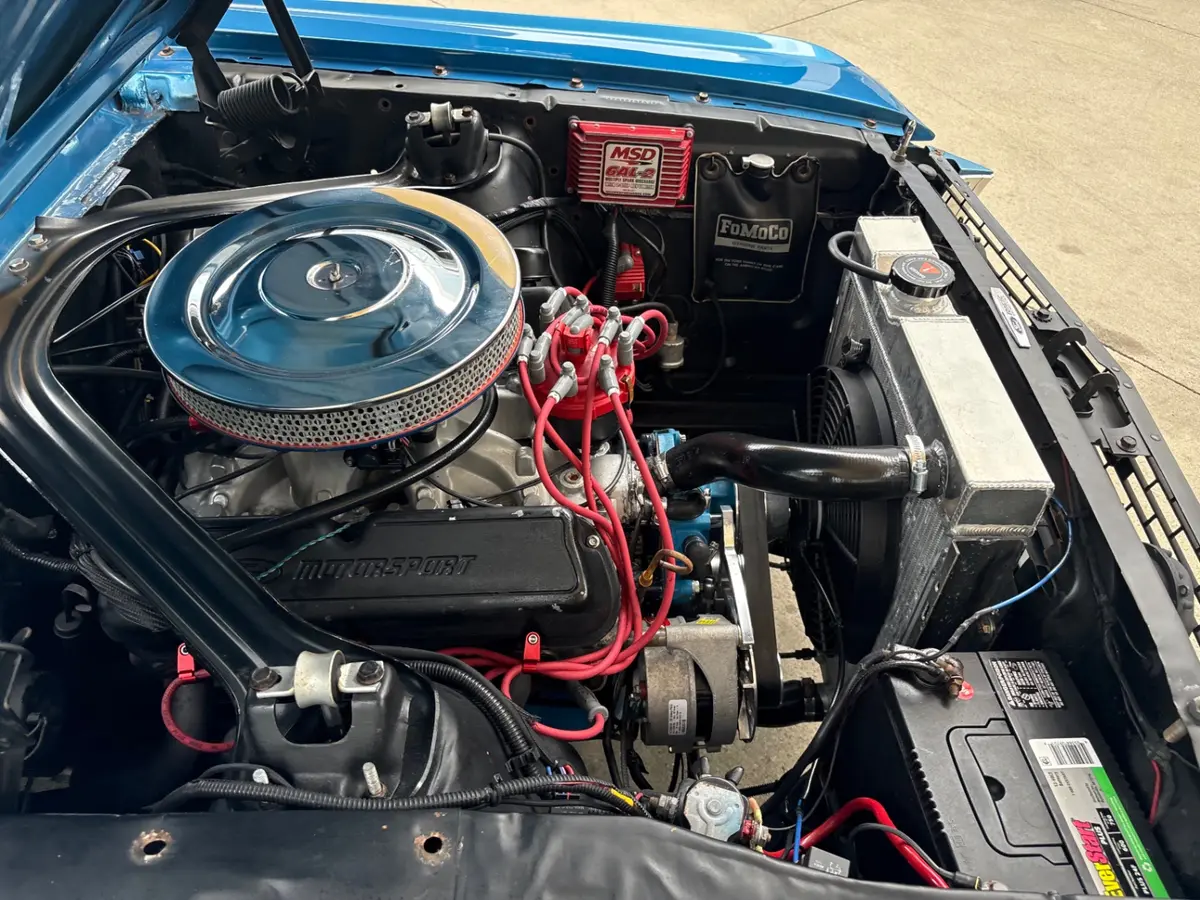
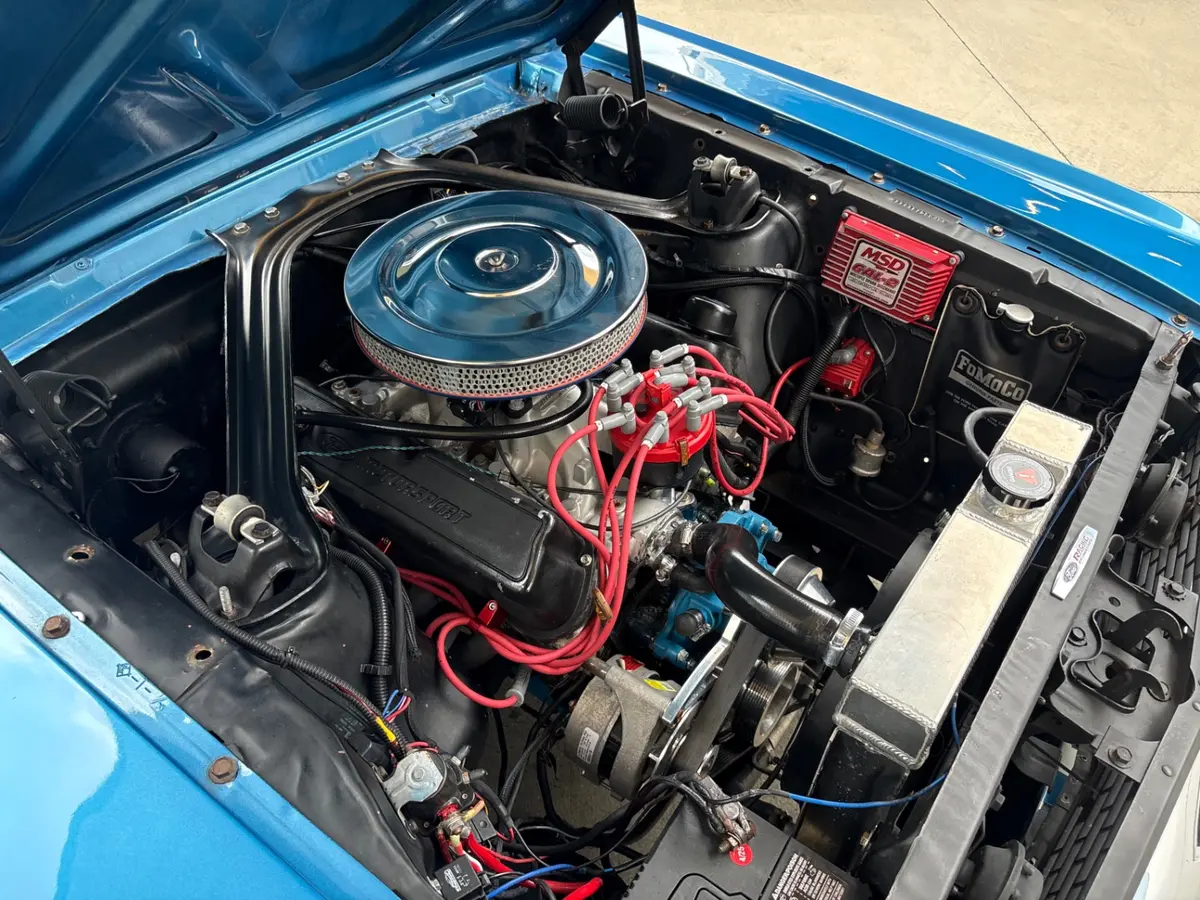
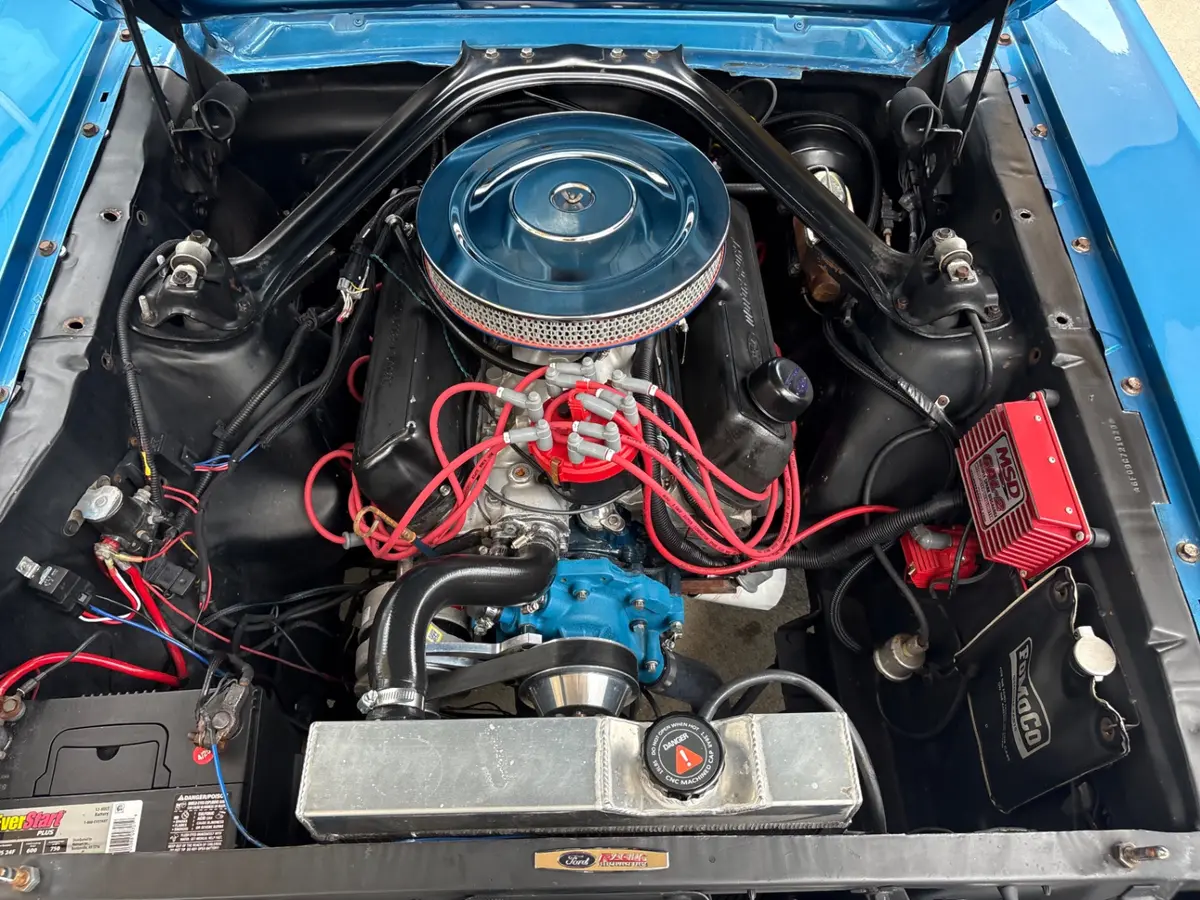
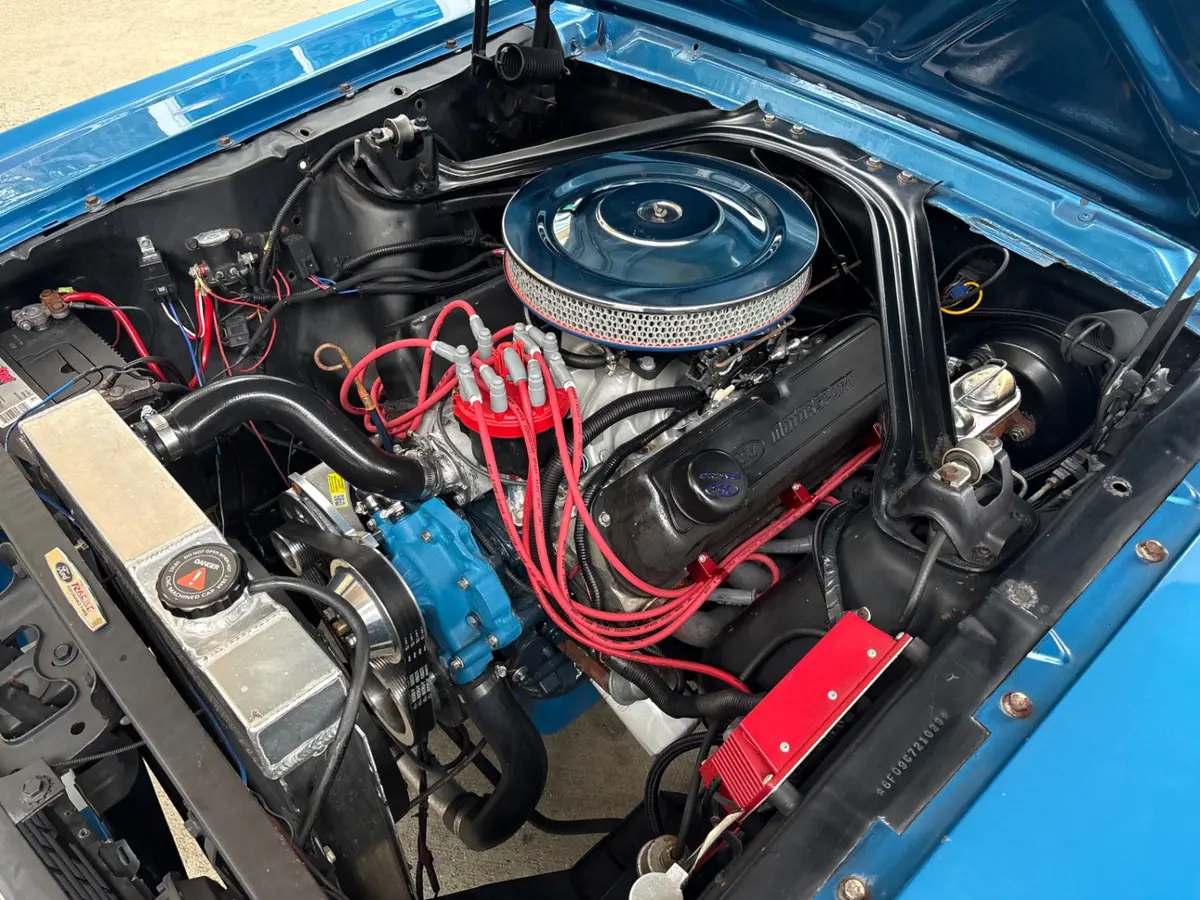
This particular 1966 Ford Mustang Fastback has been built as a serious driver. The VIN confirms it as a San Jose, California-assembled car — the "F" in the VIN prefix denotes the San Jose plant, which produced Mustangs alongside the Dearborn and Metuchen facilities during this era. The "09" body code confirms the fastback body style. Rather than preserved as a static show piece, this car was given a thoughtful performance build: a 347 cubic inch stroker small block V8, Holley Sniper EFI fuel injection, MSD ignition, front disc brakes, and the visual package of a Shelby GT350 tribute. It drives the way a 1966 Ford Mustang Fastback should — with authority.
Features List
- 347 Stroker Small Block V8
- Holley Sniper EFI with dedicated Holley Sniper EFI display monitor
- MSD 6AL-2 ignition module
- Ford Motorsport valve covers
- Aluminum radiator with electric cooling fan
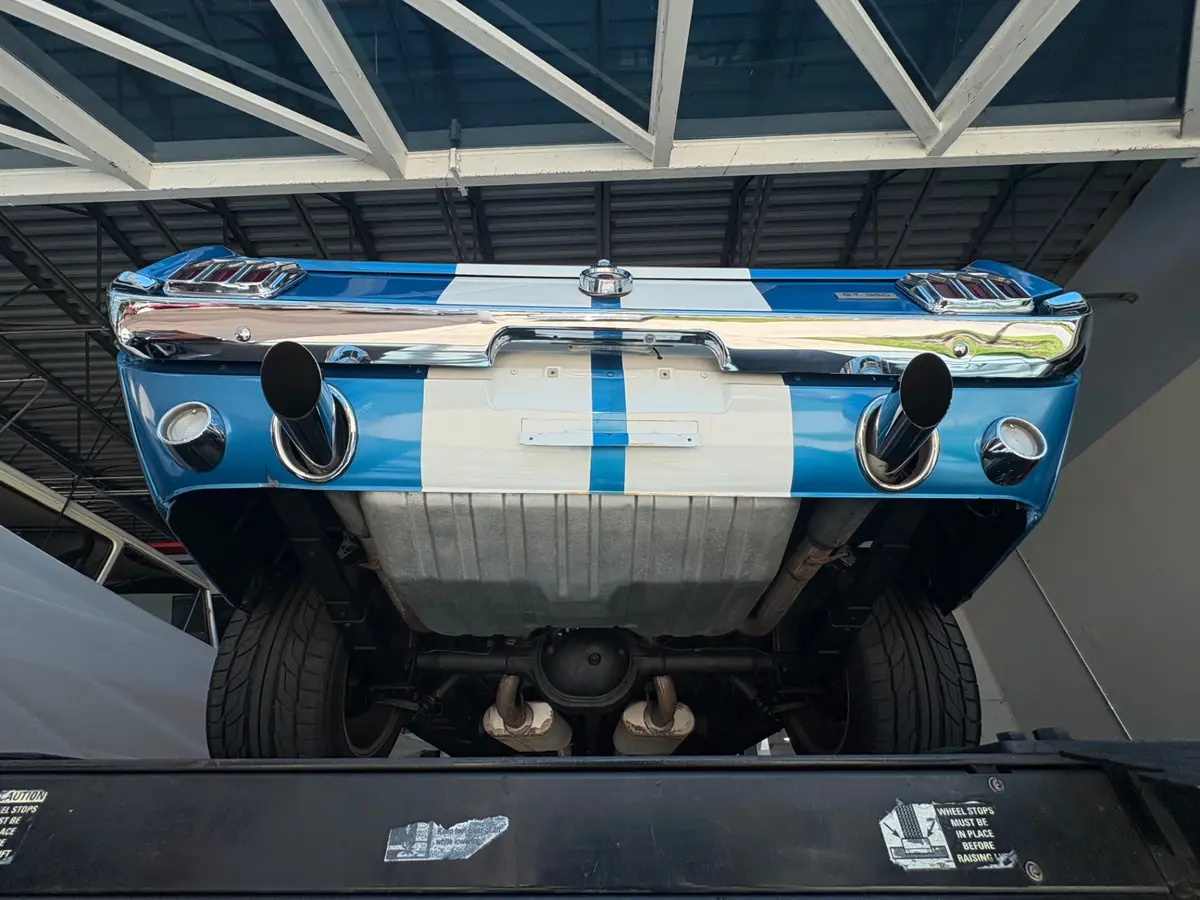
- Dual Flowmaster exhaust with quad tips exiting through the rear valance
- Front disc brakes
- Shelby GT350 exterior styling with hood scoop
- White racing stripes over blue exterior
- GT350 rear badging
- Torq-Thrust style wheels with Toyo tires
- Blue and white two-tone leather bucket seats
- Fold-down rear seat
- Center console
- Custom blue carpet
- Wood-rim steering wheel
- Jensen DVD/Bluetooth stereo
- Original Ford AM radio retained in dash
- Rear speakers installed
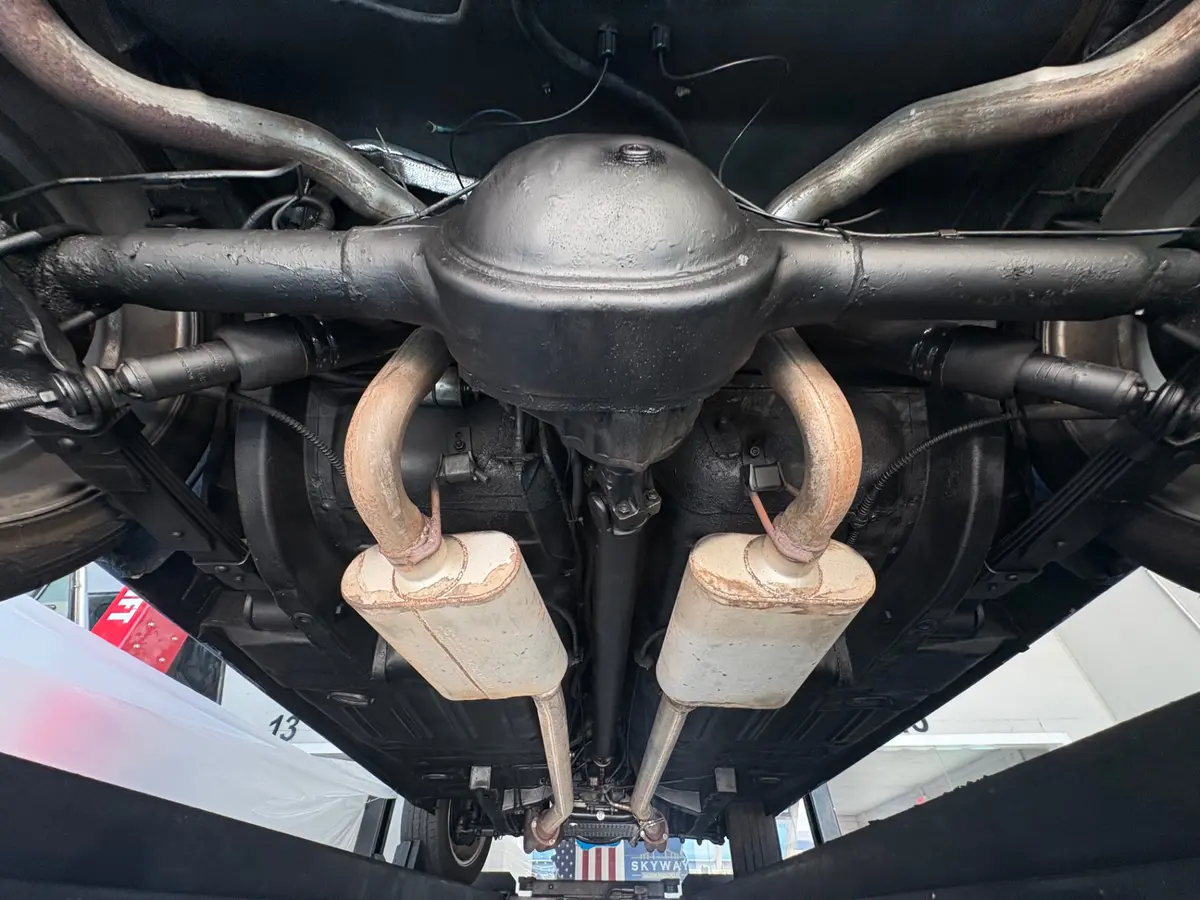
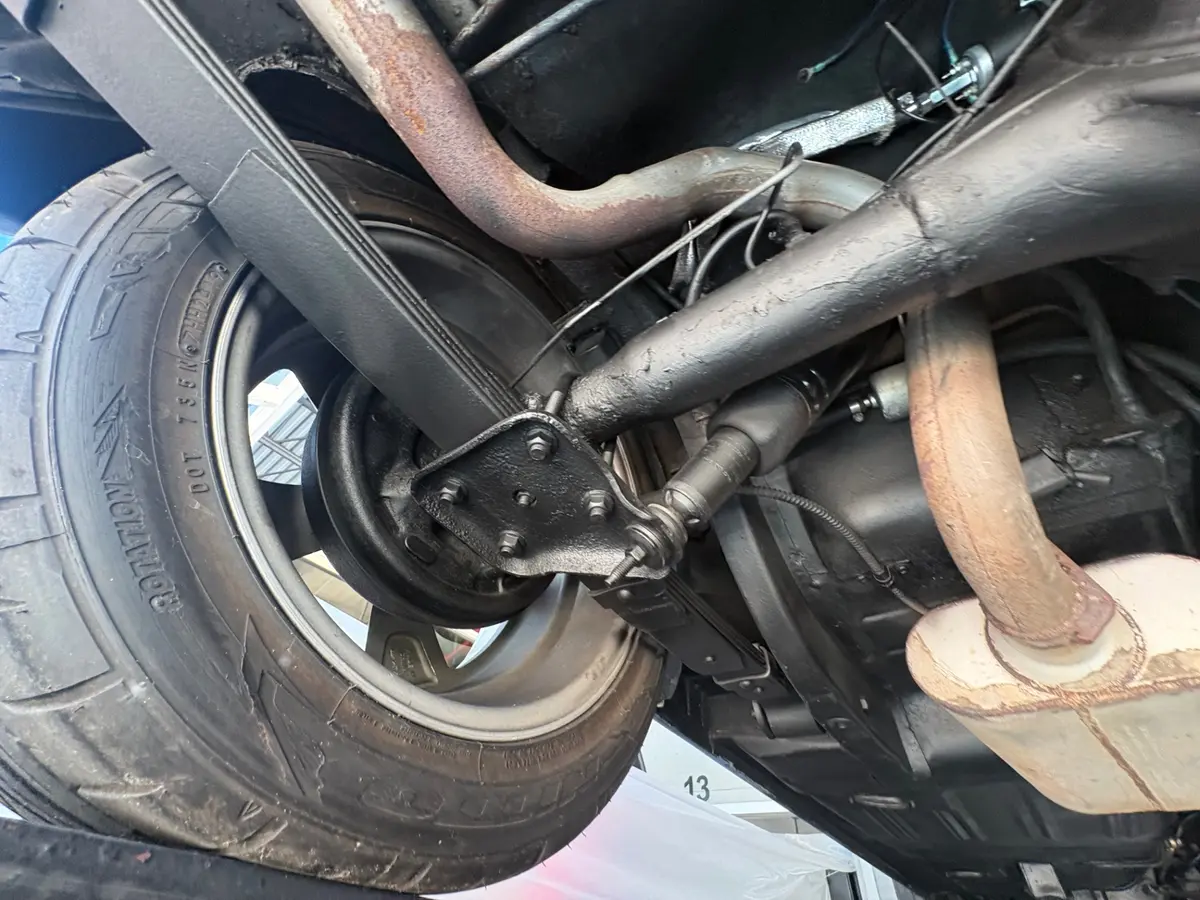
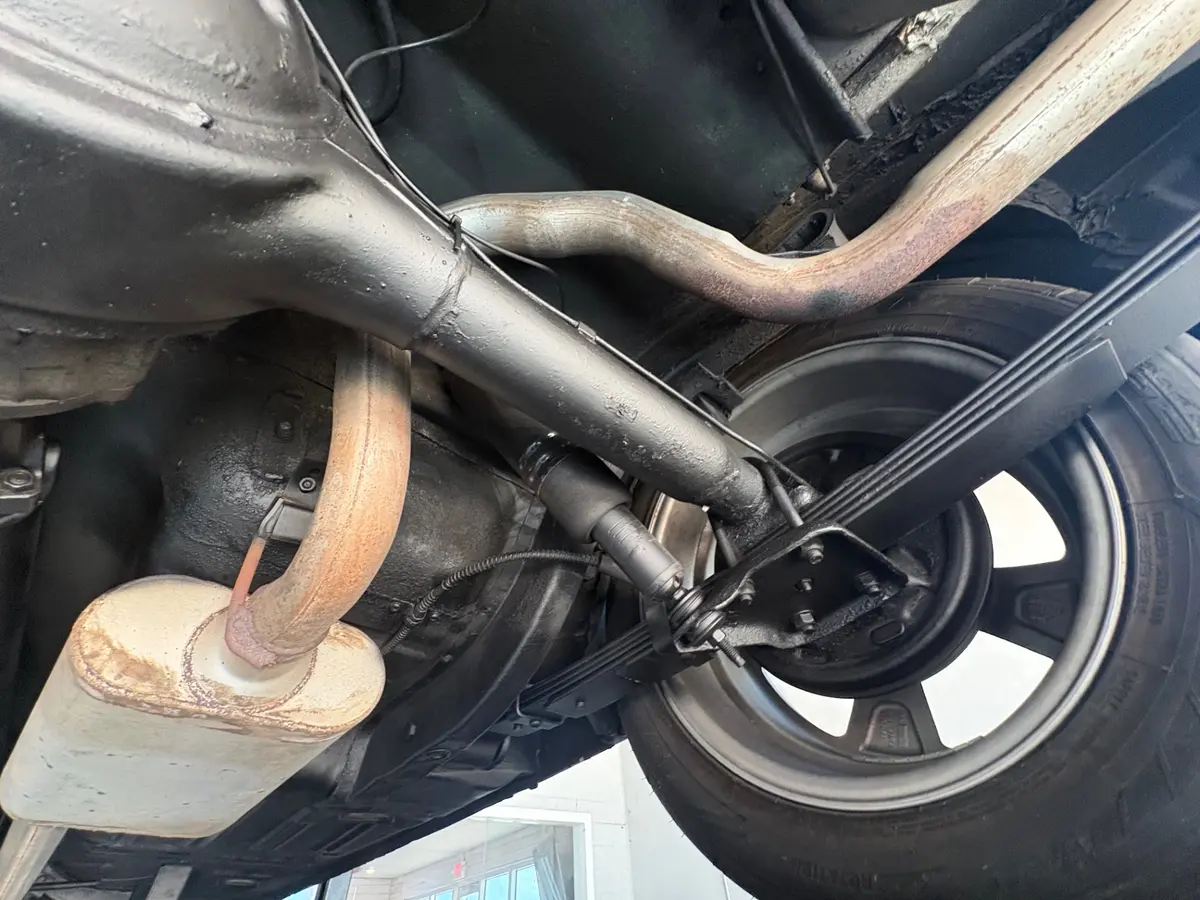
- Solid undercarriage
Mechanical
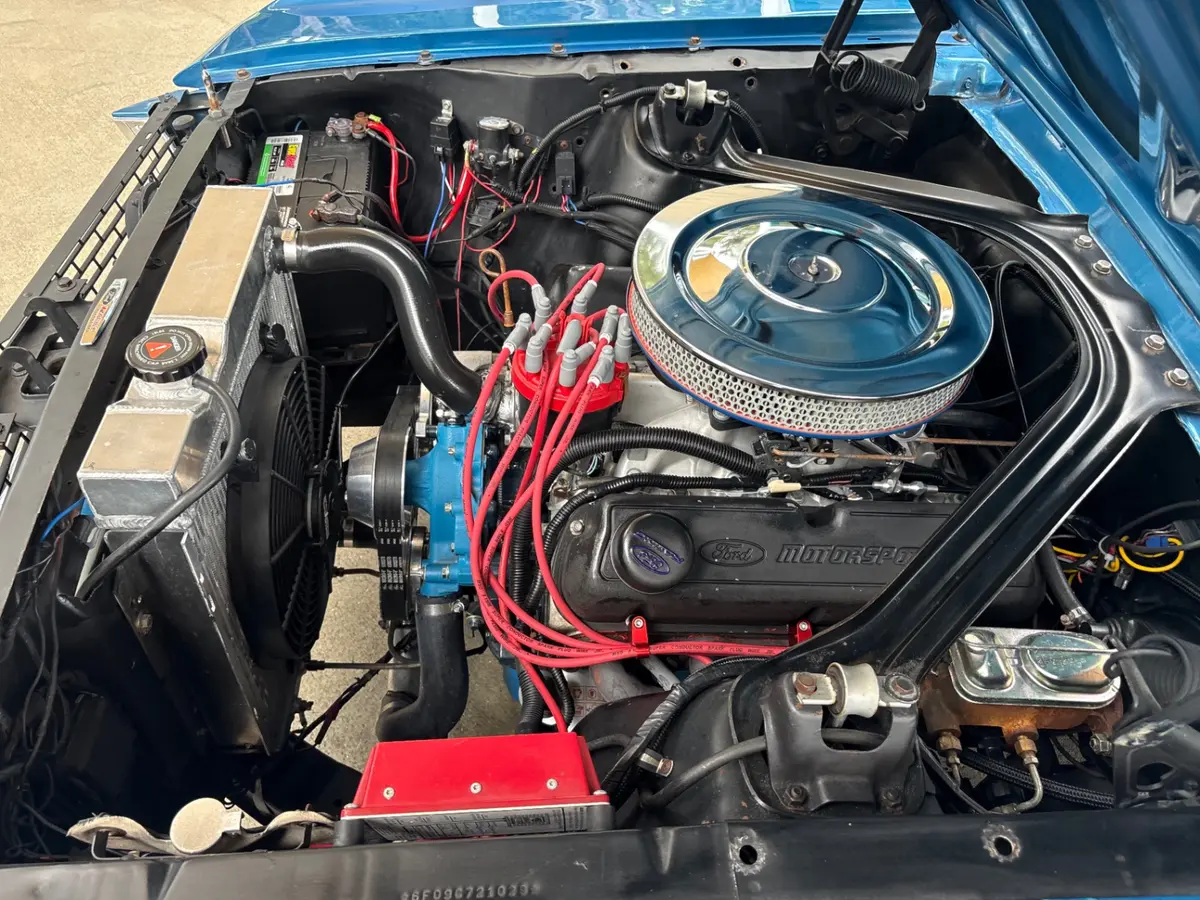
The heart of this 1966 Ford Mustang Fastback is a 347 cubic inch stroker small block. The 347 is built by taking a Ford 302 block and installing a crankshaft with a longer stroke — typically 3.40 inches versus the standard 3.00 inches — combined with shorter connecting rods and appropriate pistons to keep everything in the correct geometry. The result is 347 cubic inches of displacement from a package that fits neatly in the original engine bay without modification. It is one of the most popular small block Ford builds for exactly this reason: more displacement, more torque, and it still looks period-correct under the hood with the right dress-up parts.
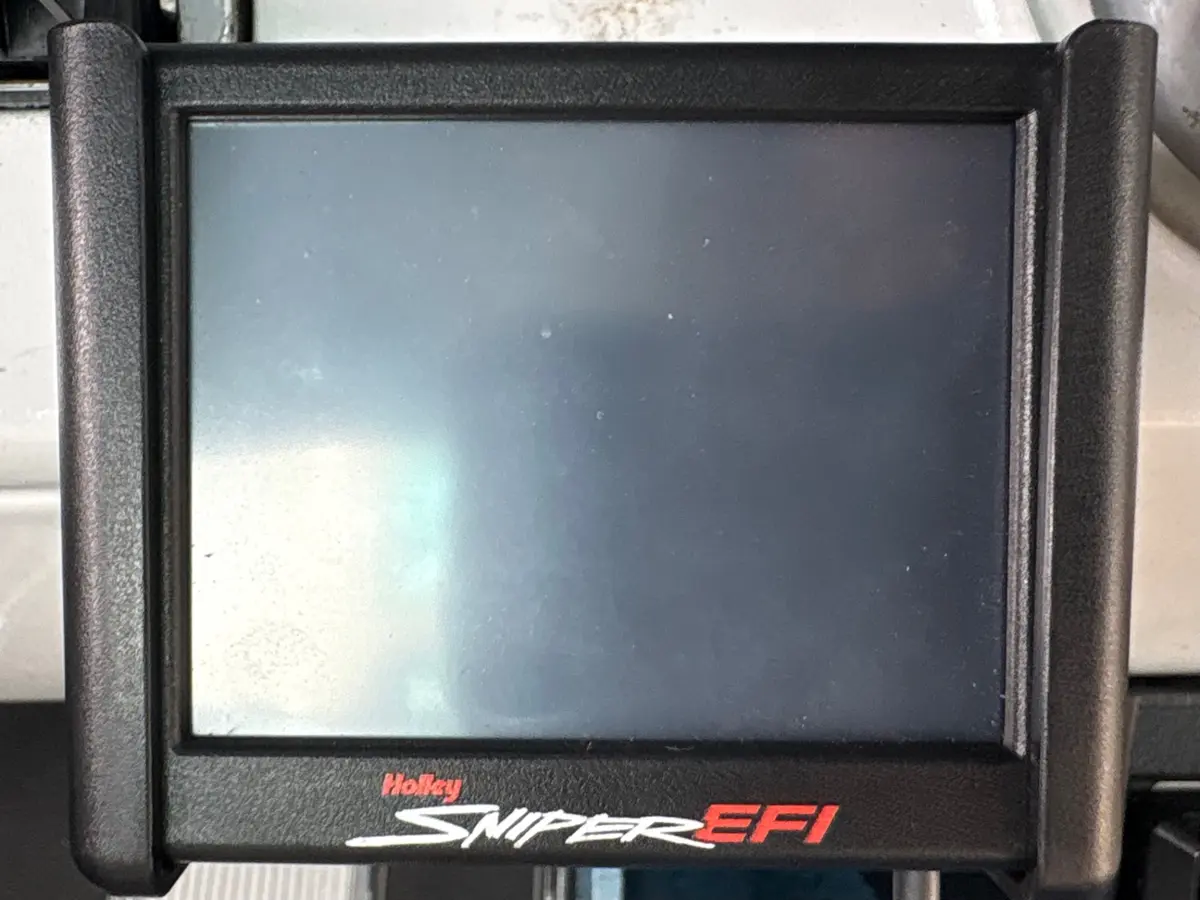
Fuel delivery is handled by a Holley Sniper EFI system, which replaces a traditional carburetor with a throttle body-style electronic fuel injection unit. The Sniper uses a self-tuning closed-loop system with a built-in wideband oxygen sensor. It reads air/fuel ratio in real time and adjusts the fuel map on its own, which means this car starts reliably in all temperatures, does not require a warm-up choke ritual, and delivers consistent power without the flat spots and stumbles that aging carburetors on street-driven classics are prone to. The Holley Sniper EFI display inside the car gives the driver a live readout of key engine data. Spark management comes from an MSD 6AL-2 ignition box, which delivers a higher-energy spark than factory points ignition and includes a built-in two-step rev limiter. Ford Motorsport valve covers finish the engine visually and tie the build back to Ford's own performance heritage.
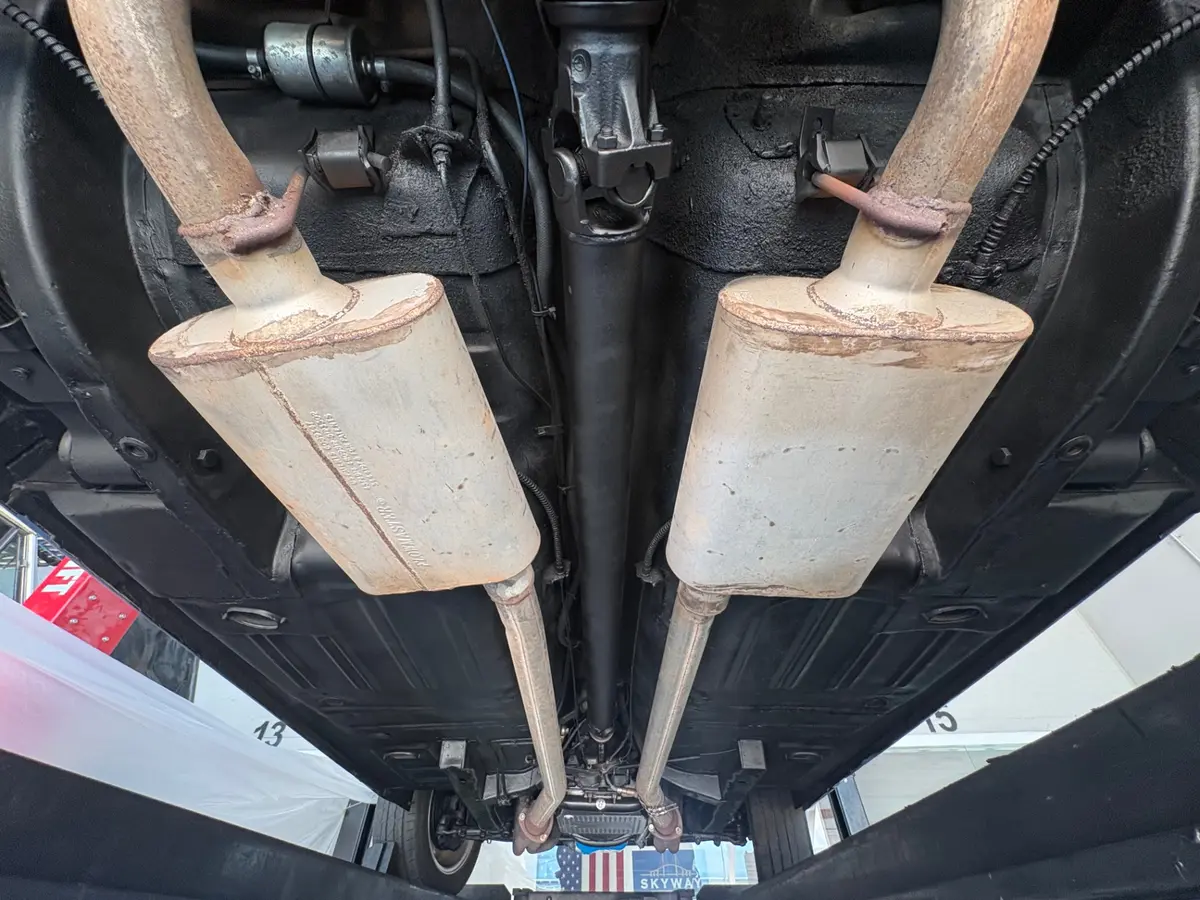
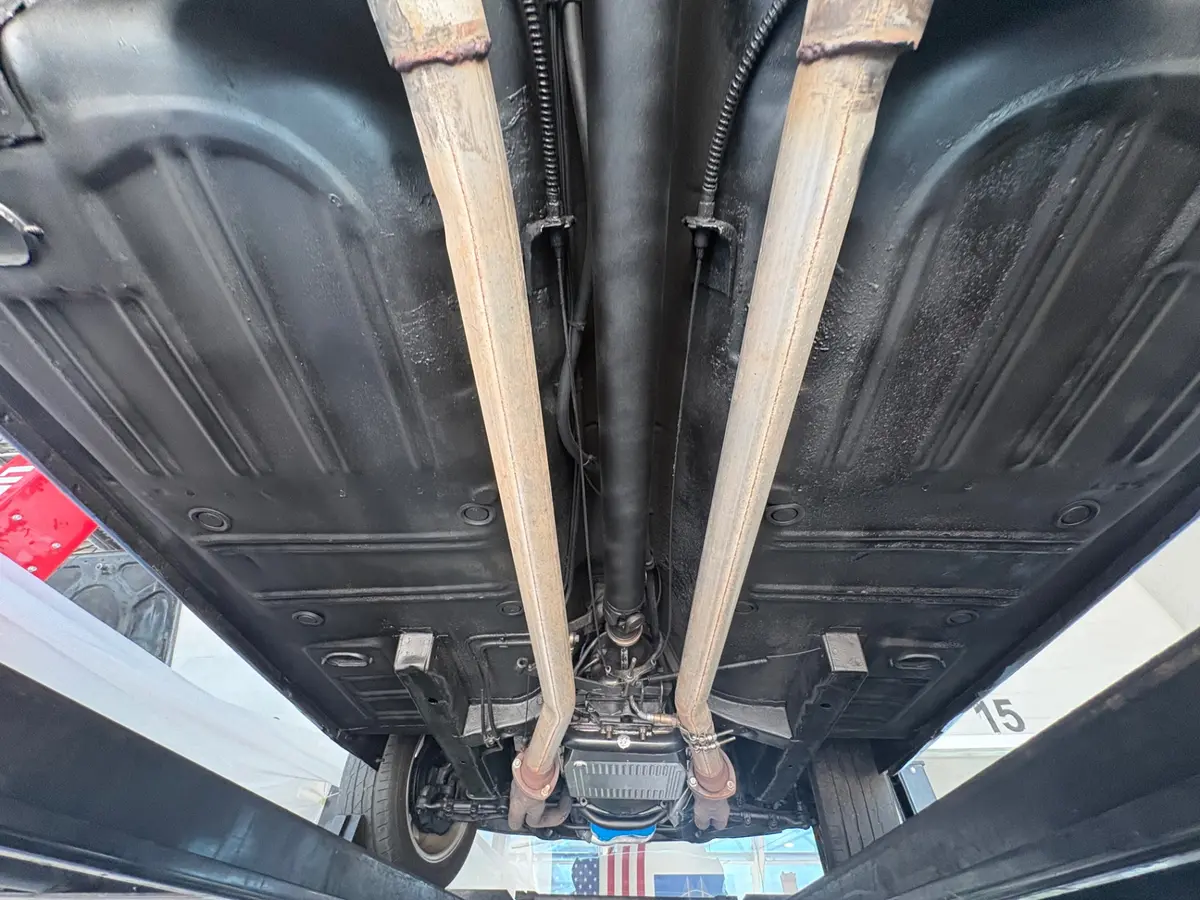
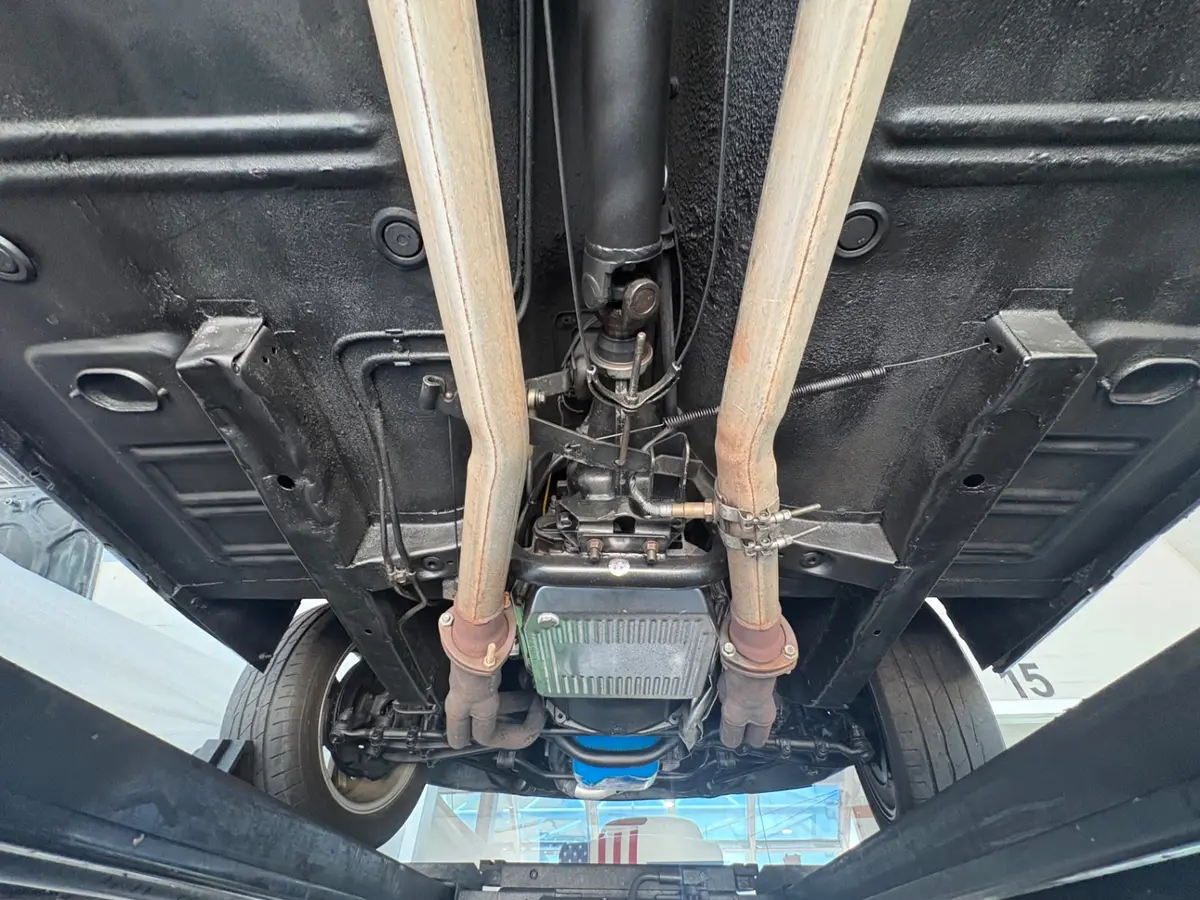
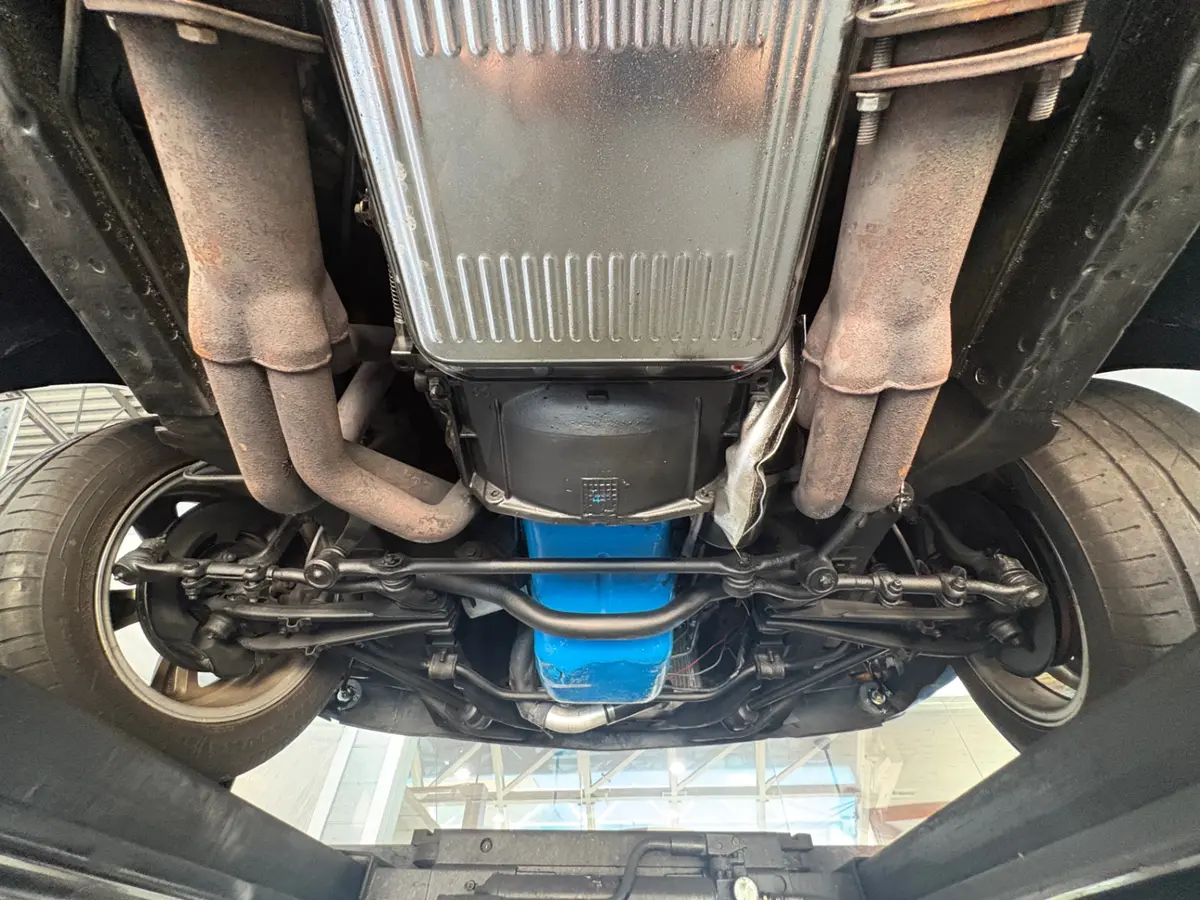
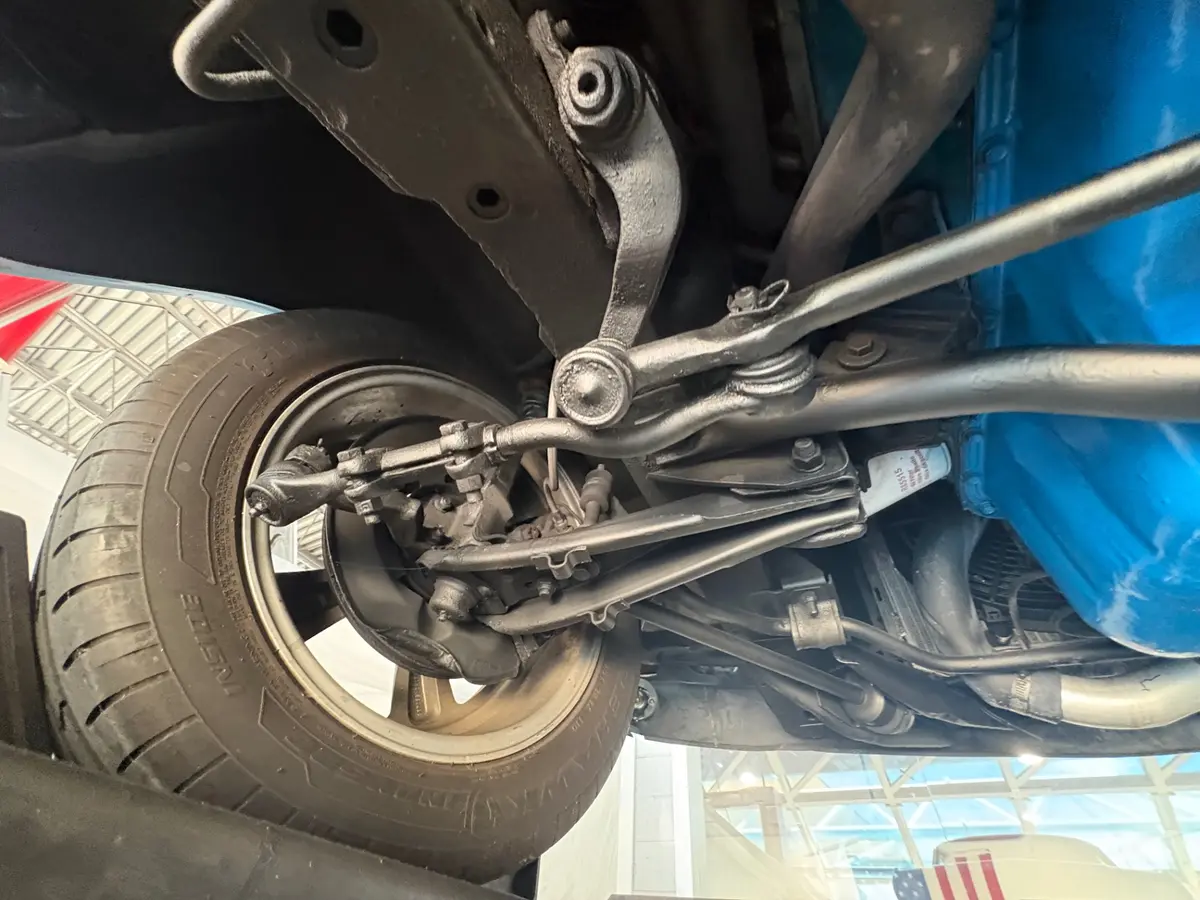
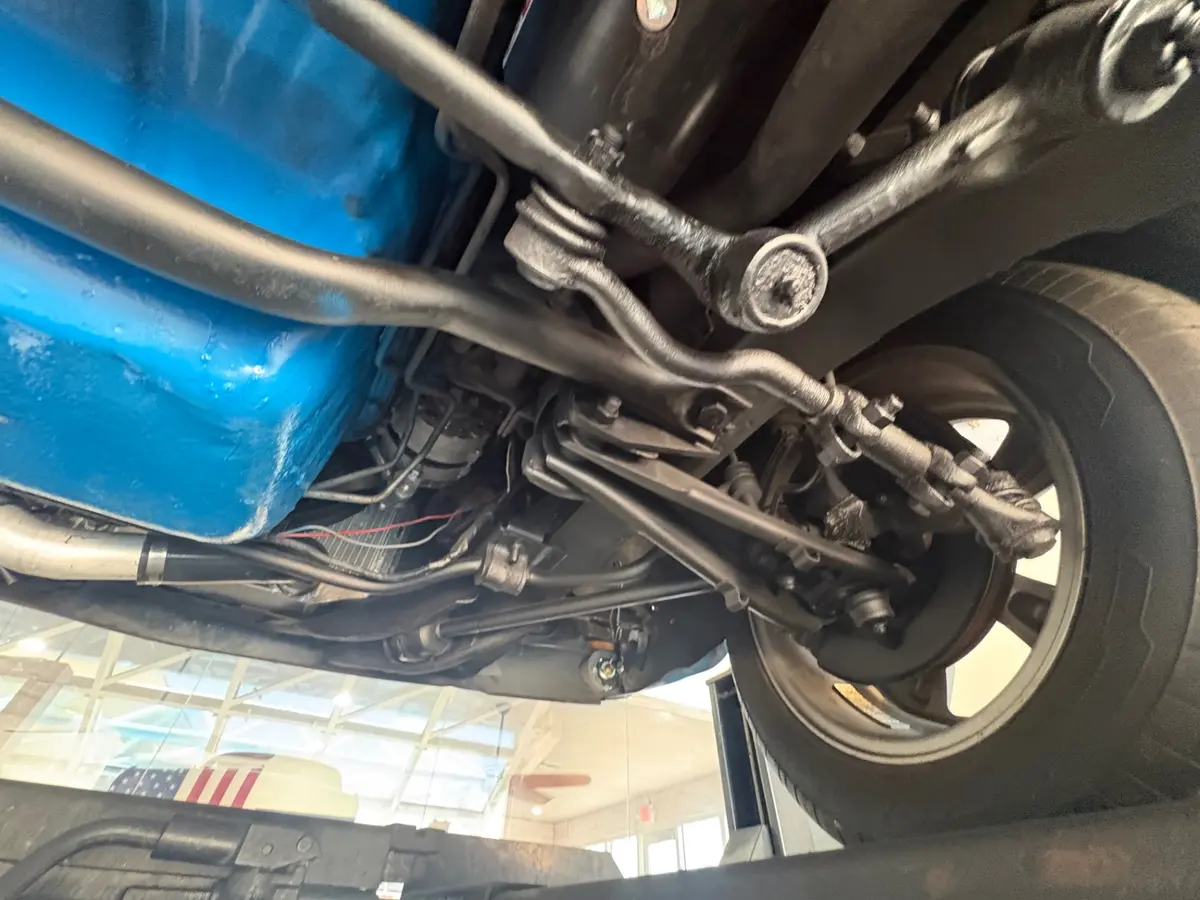
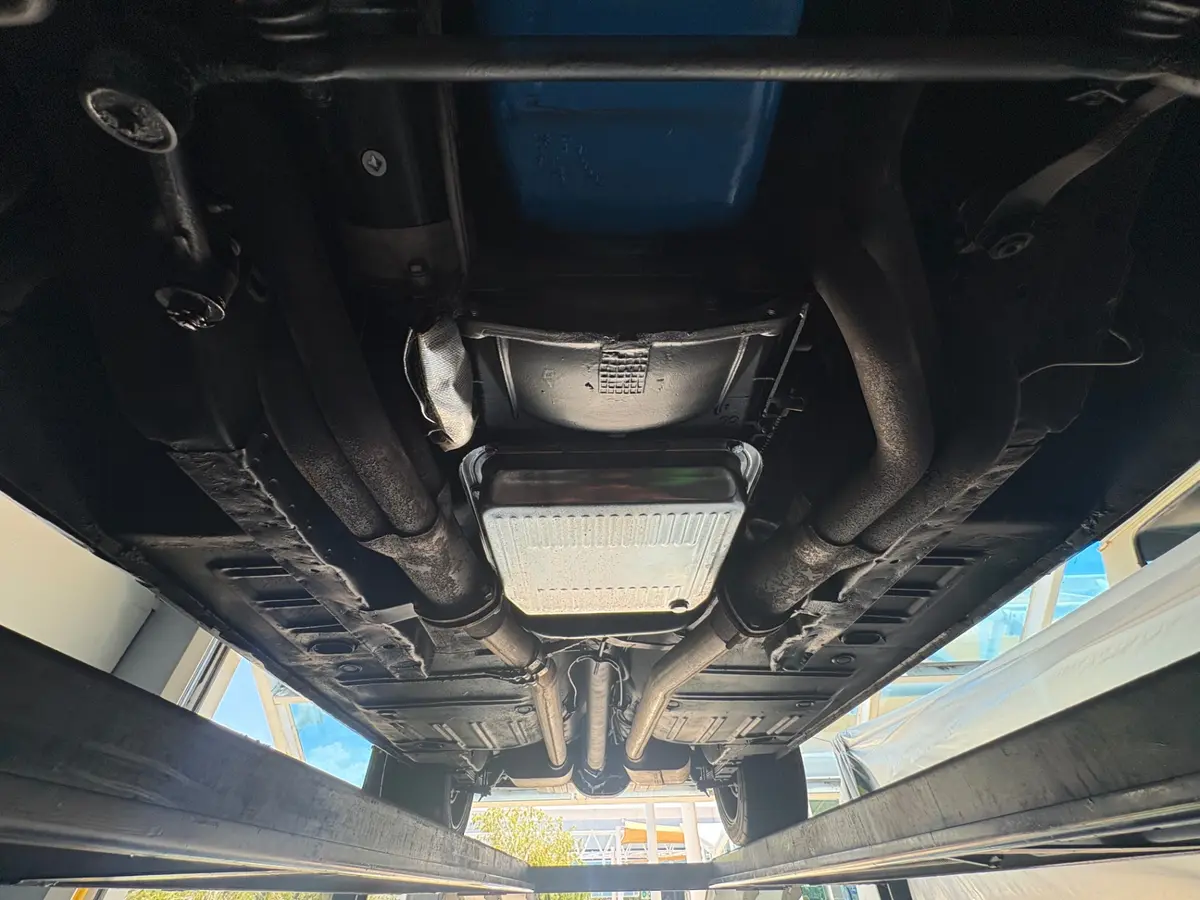
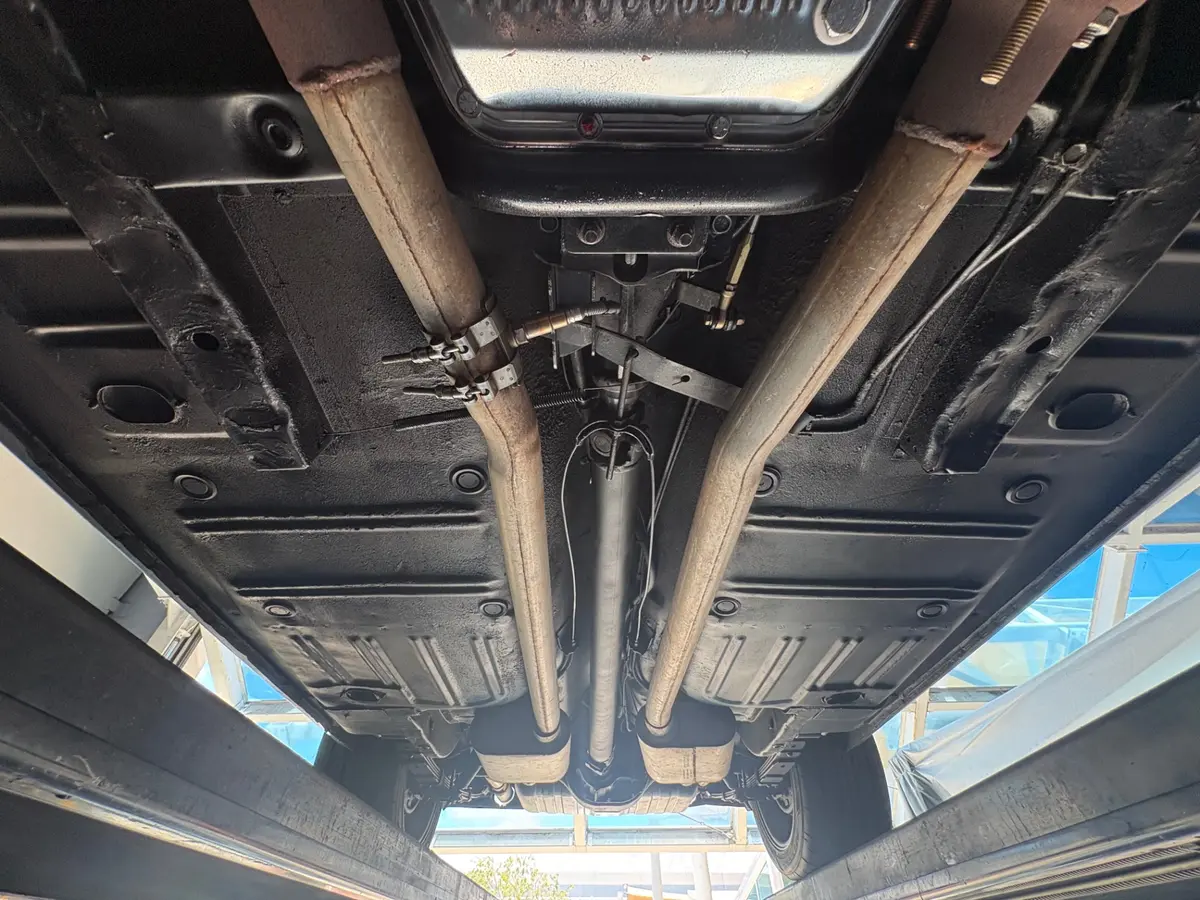
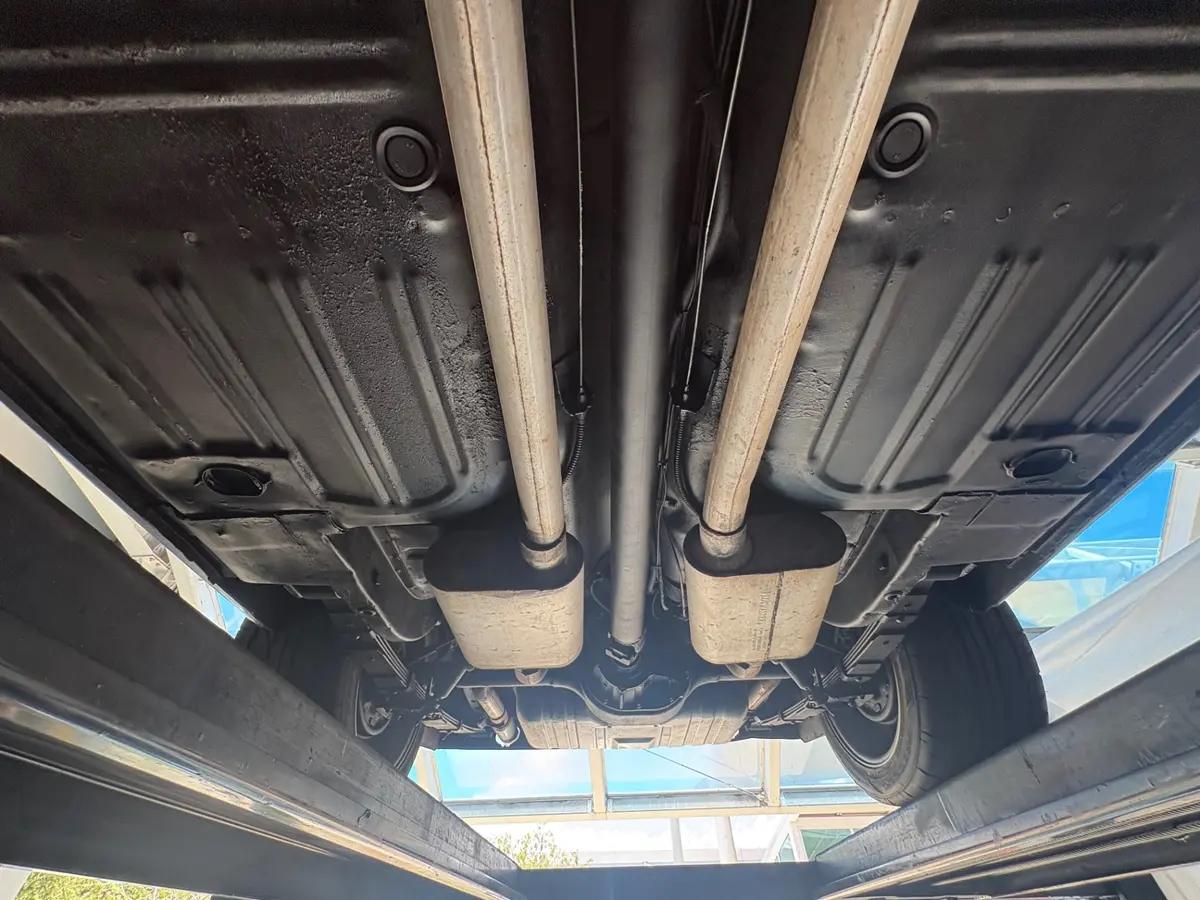
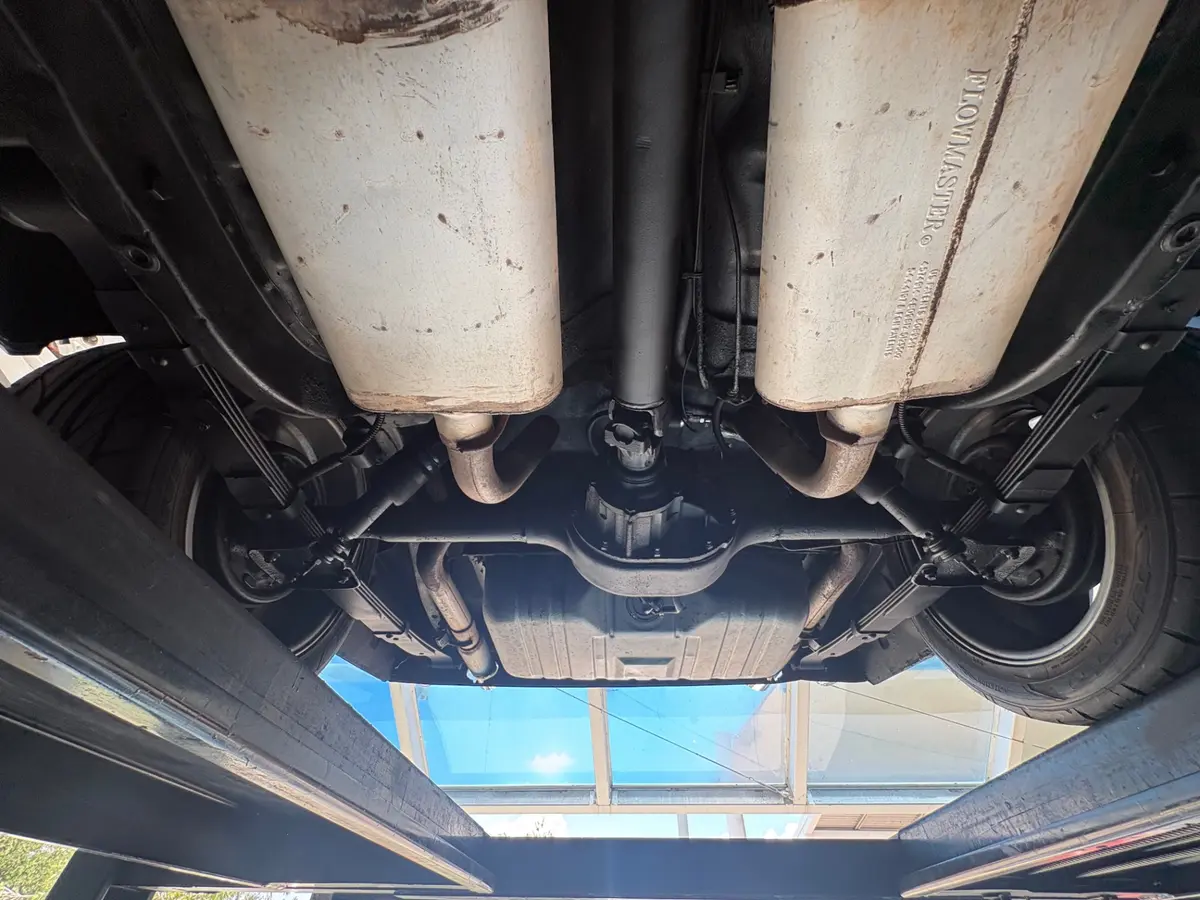
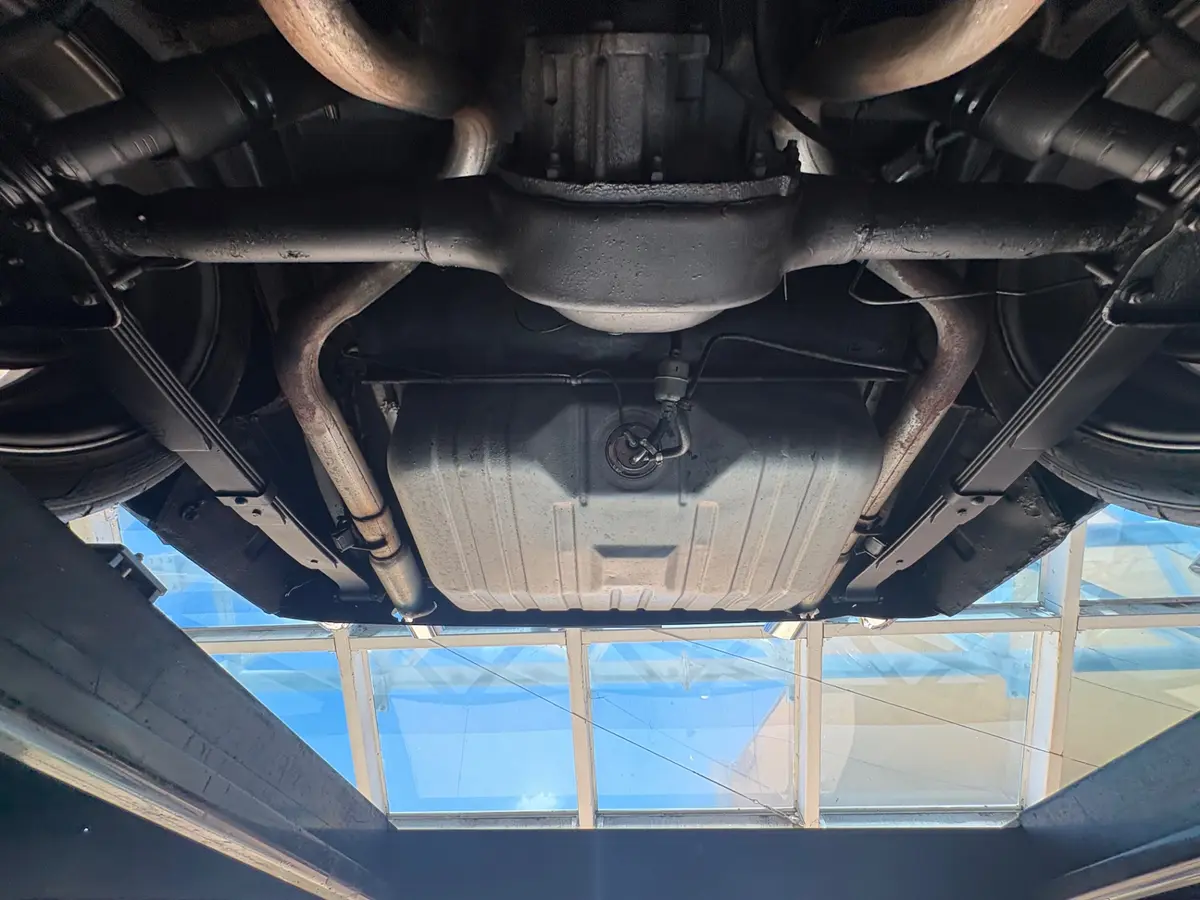
Cooling is handled by an aluminum radiator paired with an electric fan — a meaningful upgrade on a car that will sit in Florida traffic or cruise at lower speeds where a mechanical fan loses efficiency. Up front, disc brakes replace the original drums, which is one of the most practical safety upgrades a first-generation Mustang can receive. The undercarriage photos show a solid, well-preserved floor and framing with no signs of significant rust or structural repair — a critical point on any 59-year-old unibody car and one that is increasingly difficult to find.
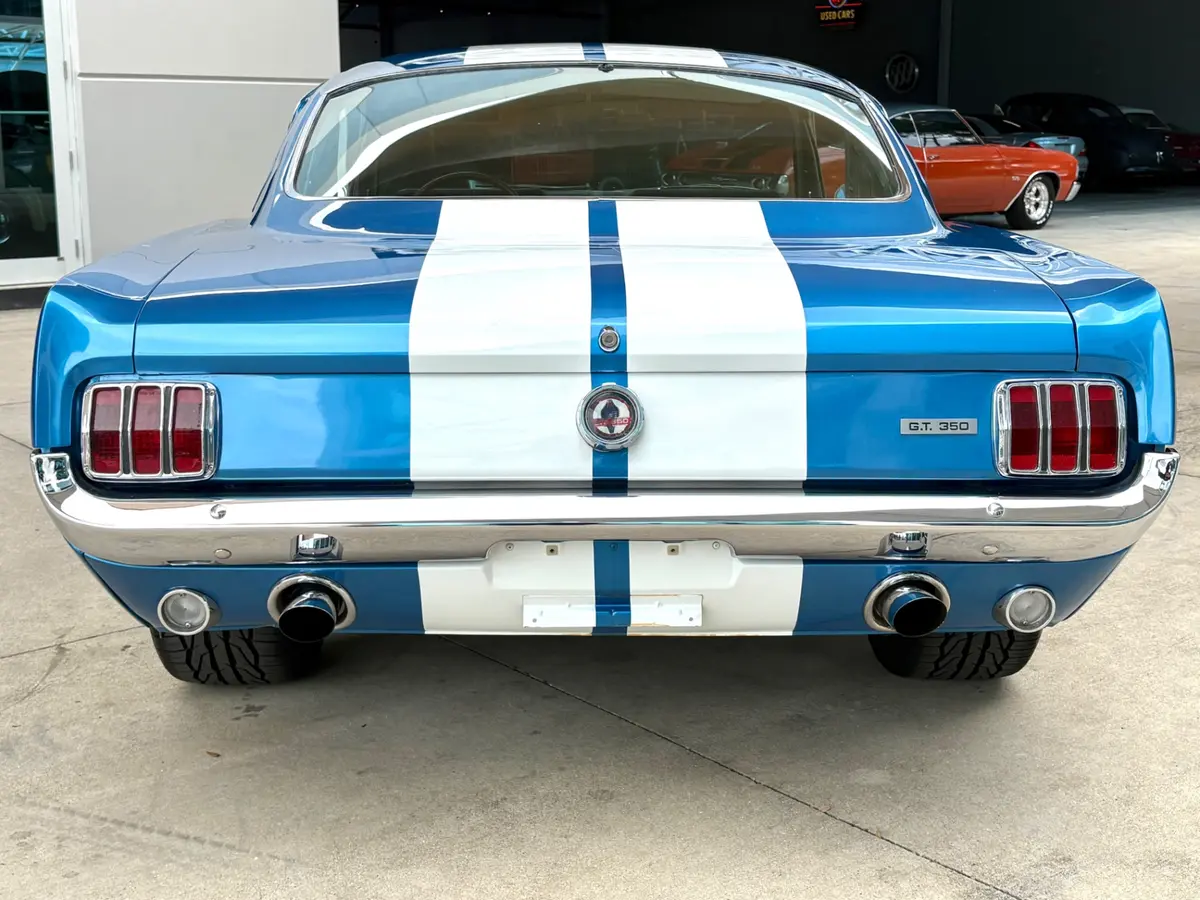
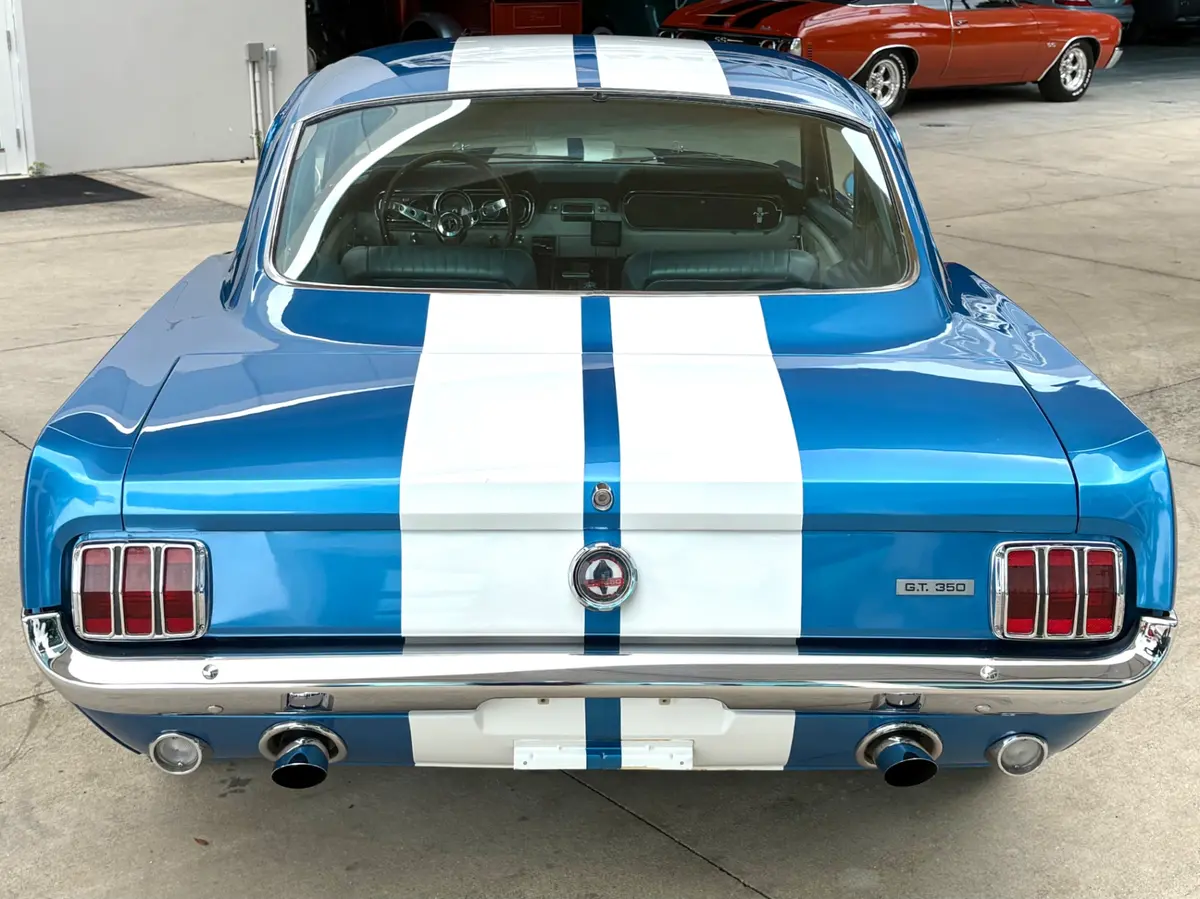
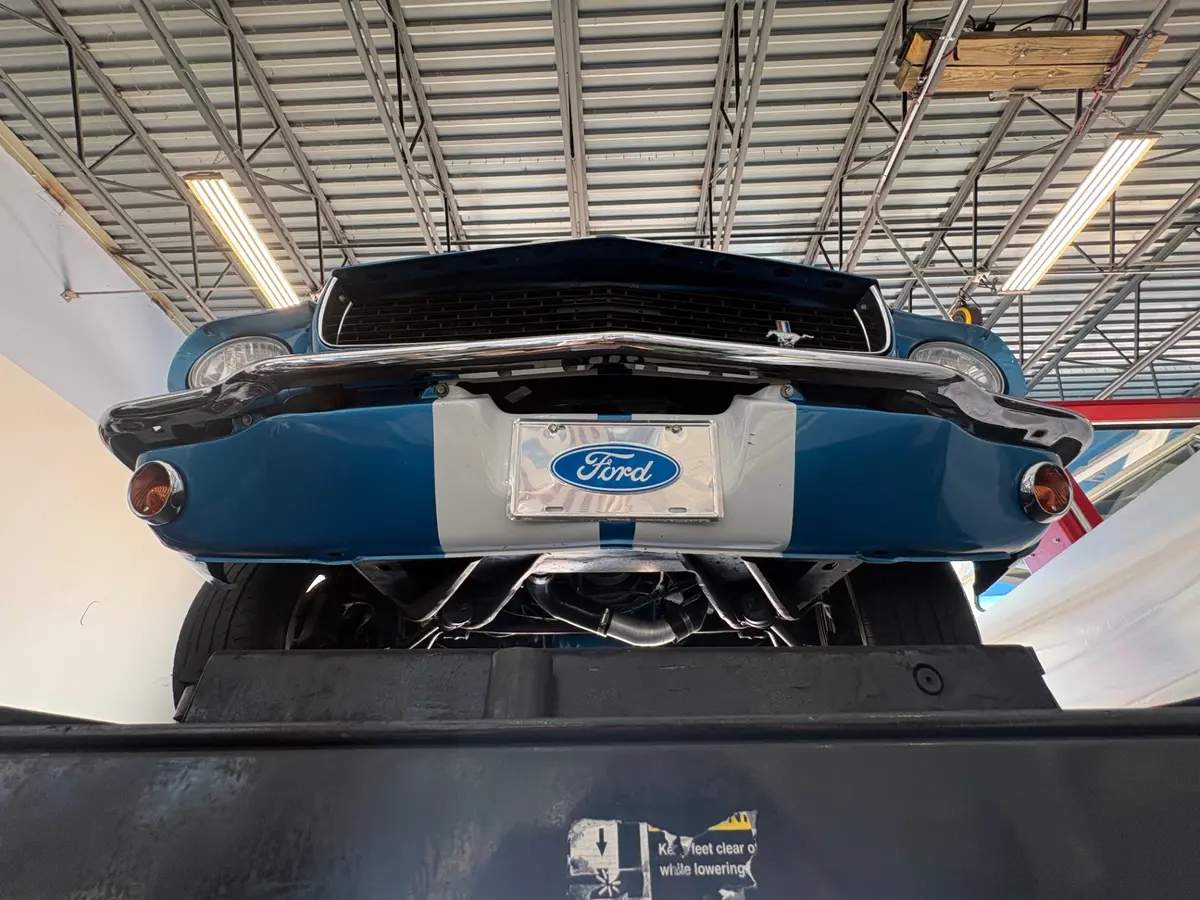
The Flowmaster dual exhaust exits through a quad-tip setup in the rear valance in the style of the original Shelby GT350, which routed exhaust through the rear apron rather than under the bumper. It is a detail that enthusiasts notice immediately and one that works visually with the overall GT350 tribute presentation.
Interior
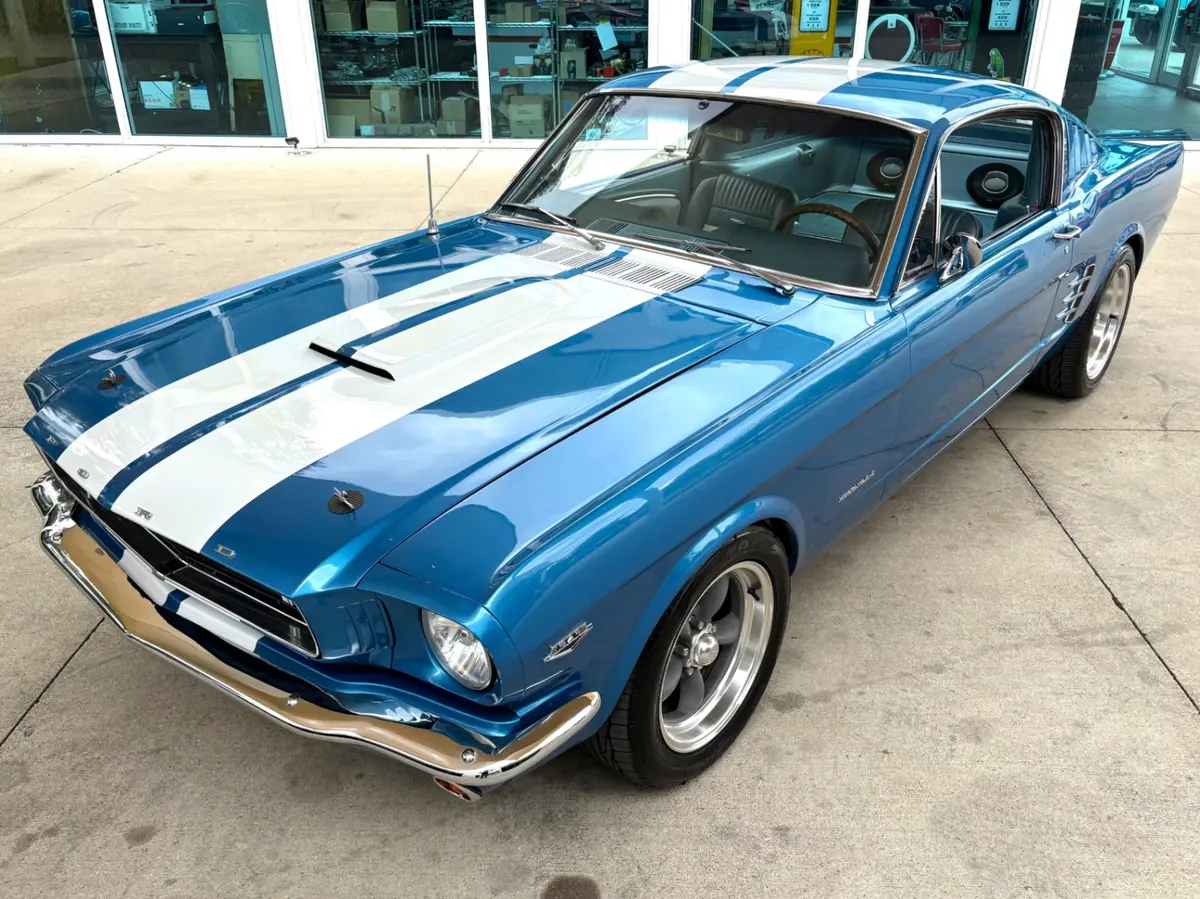
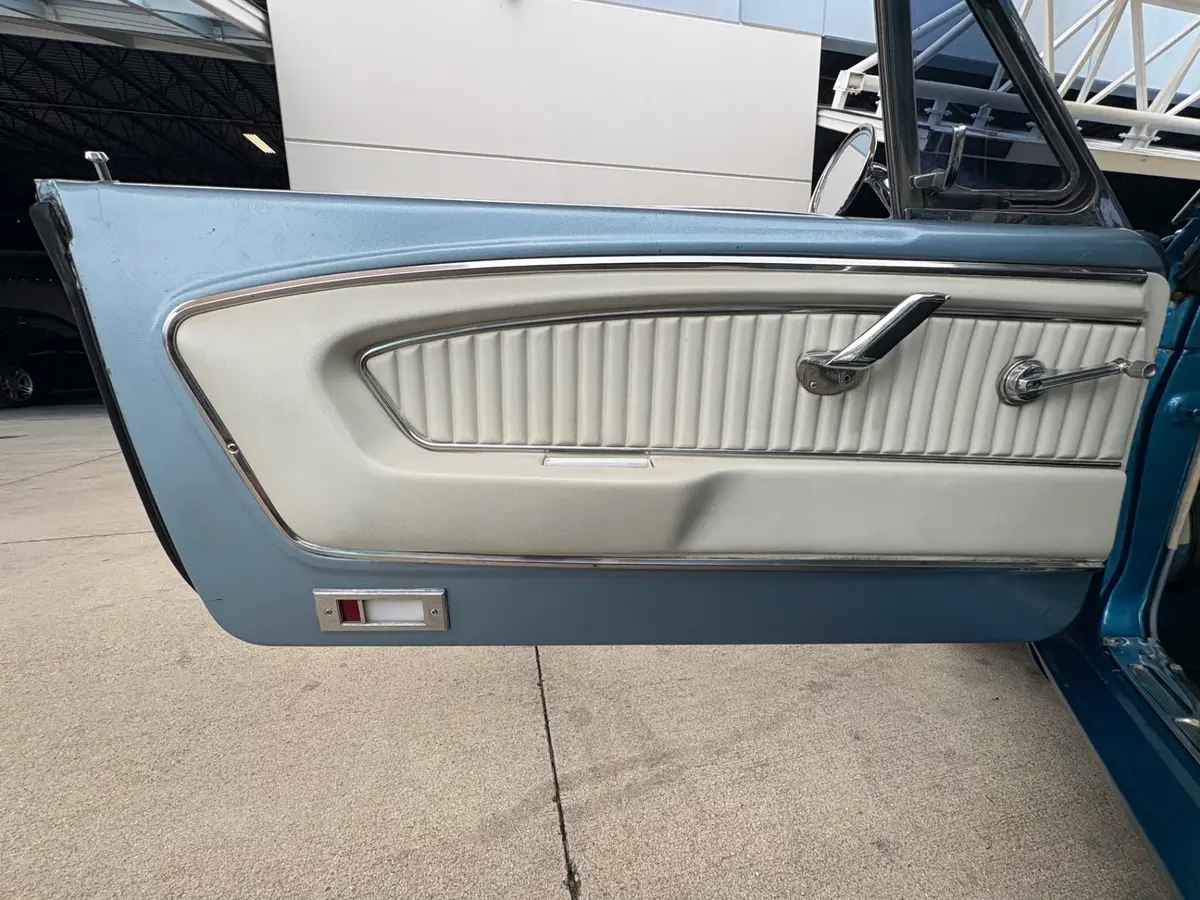
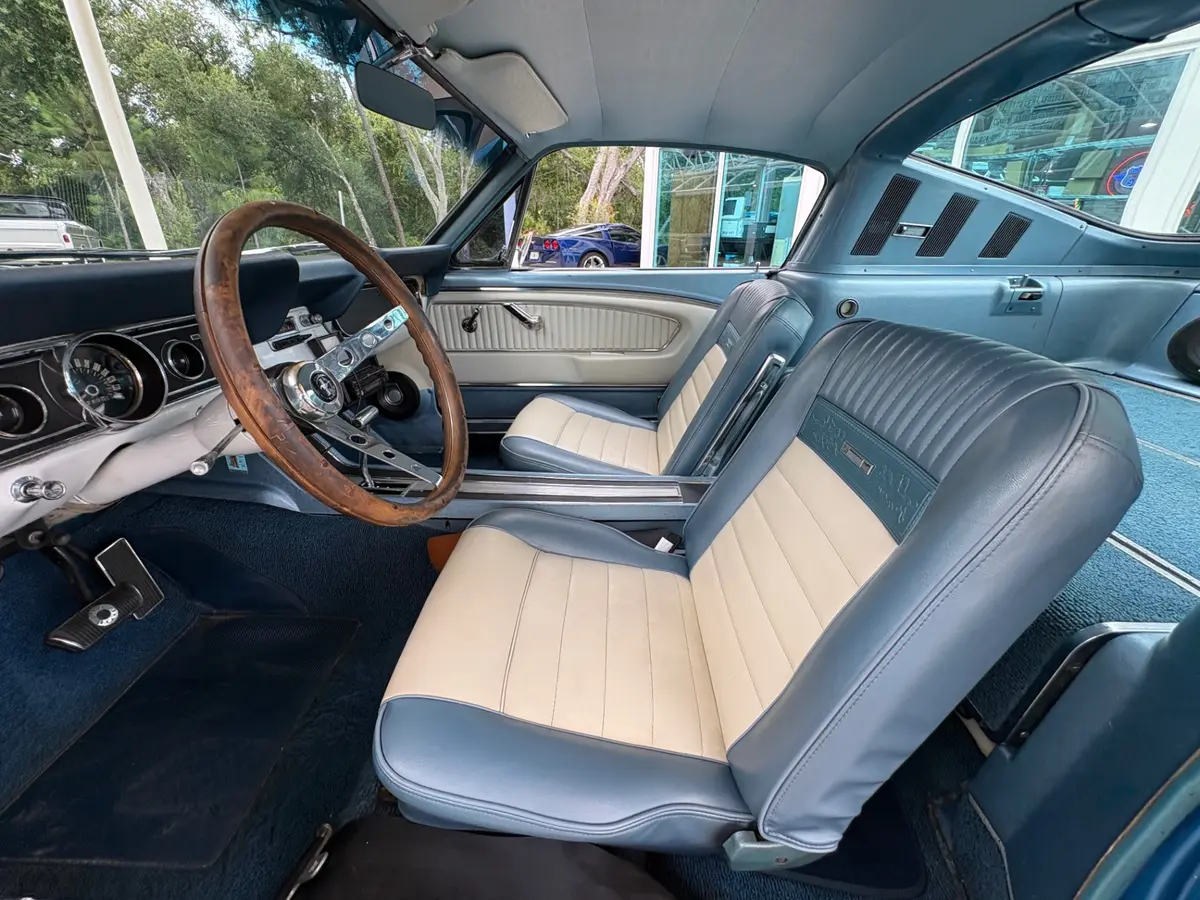
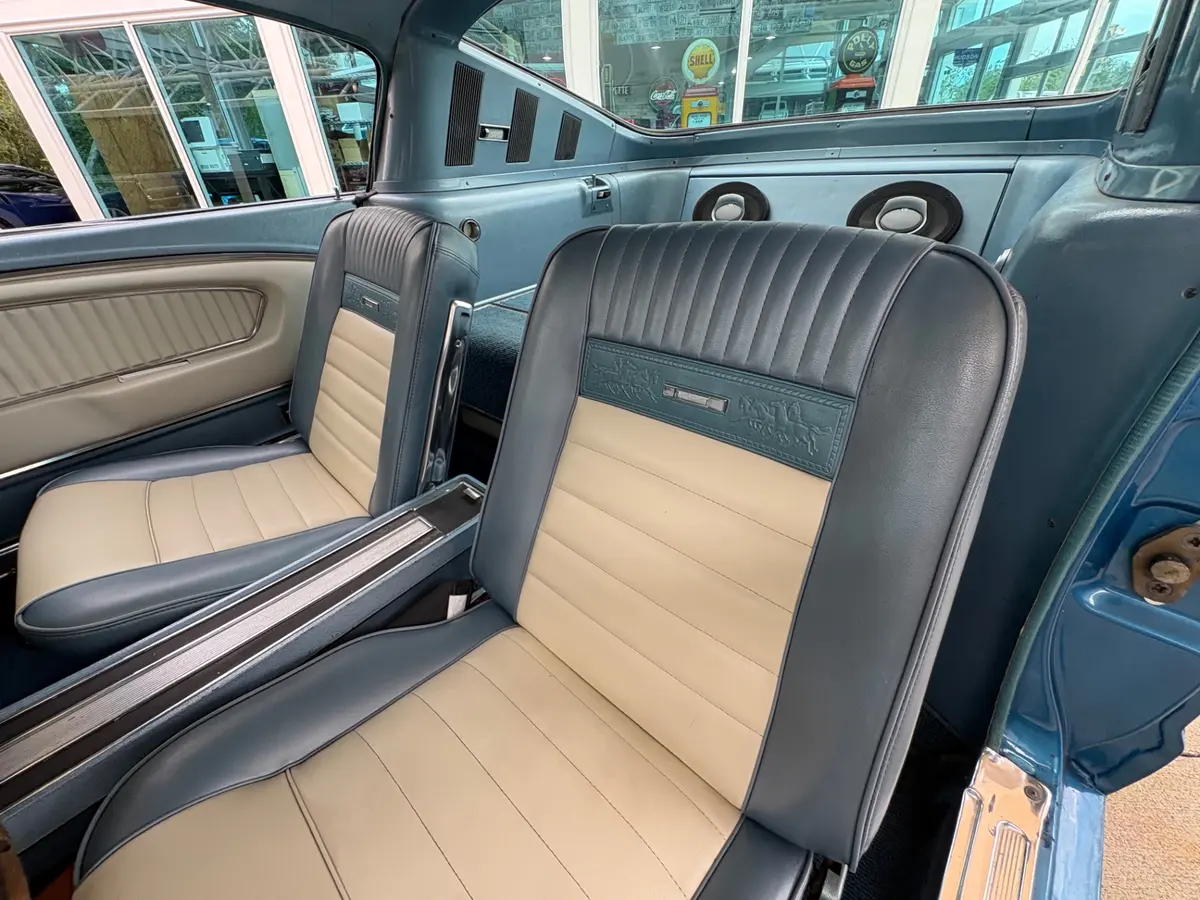
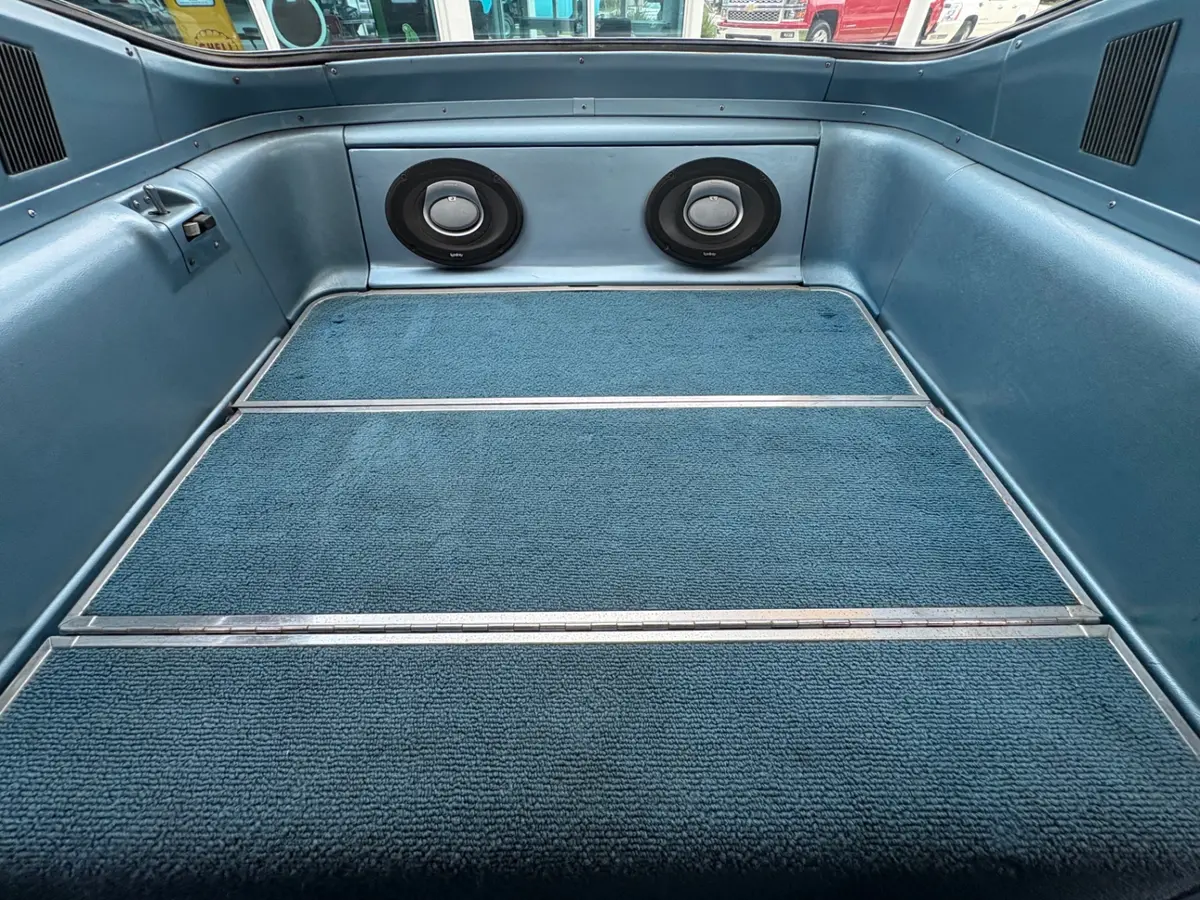
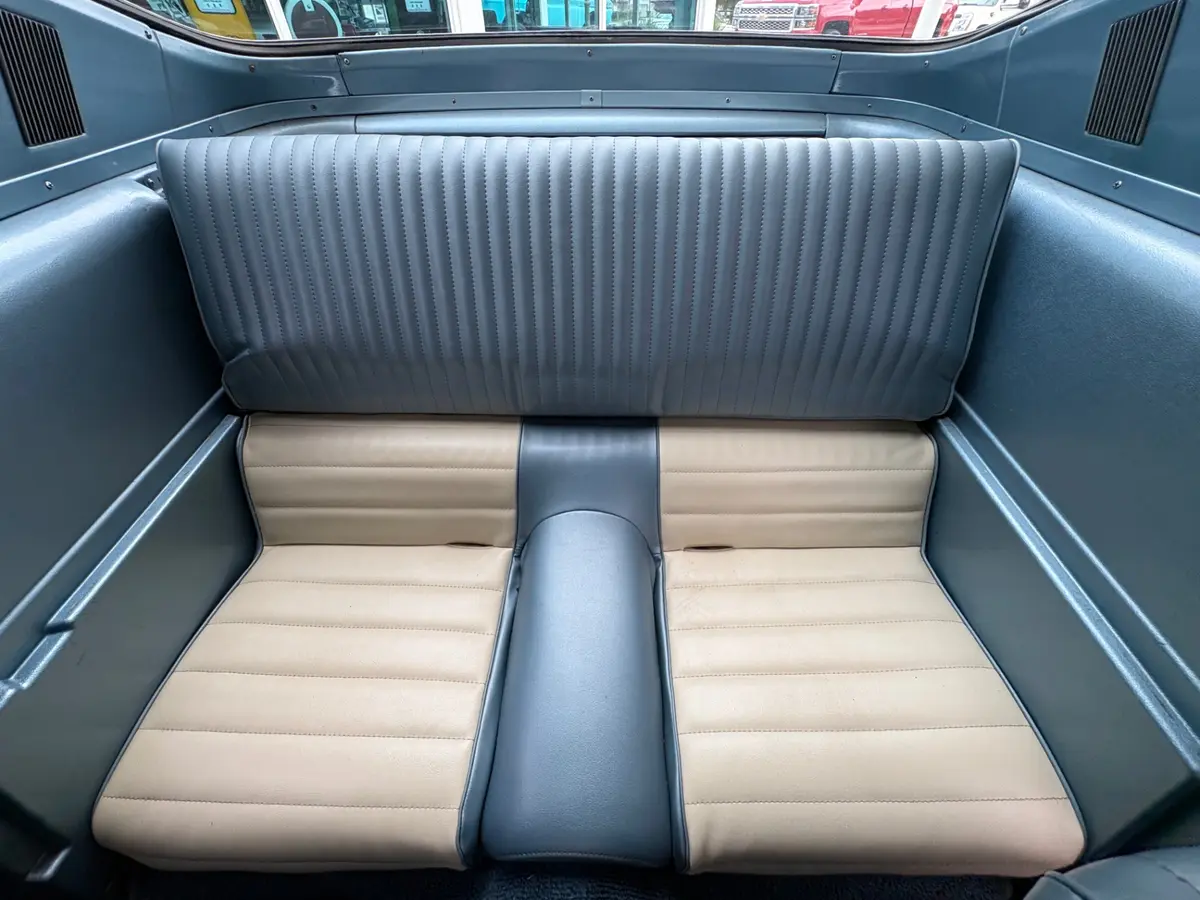
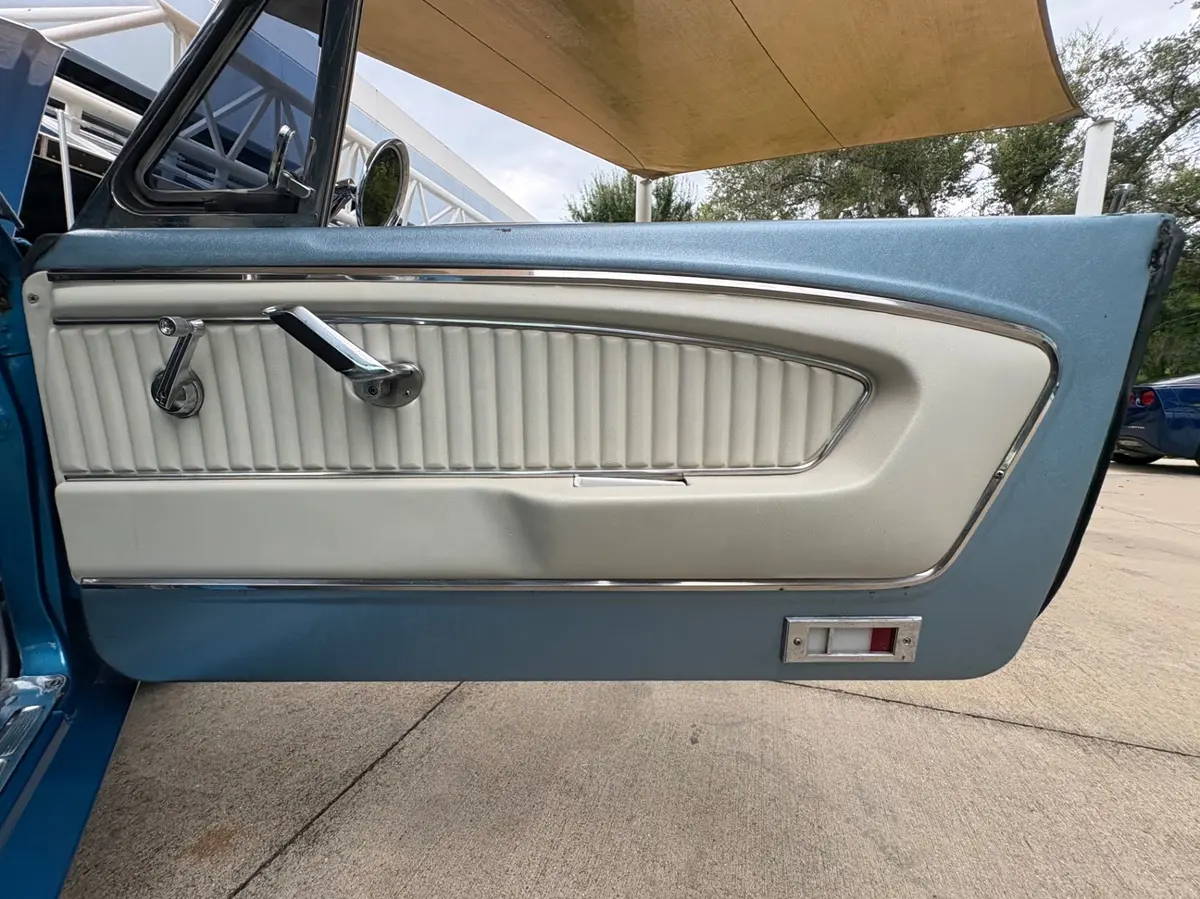
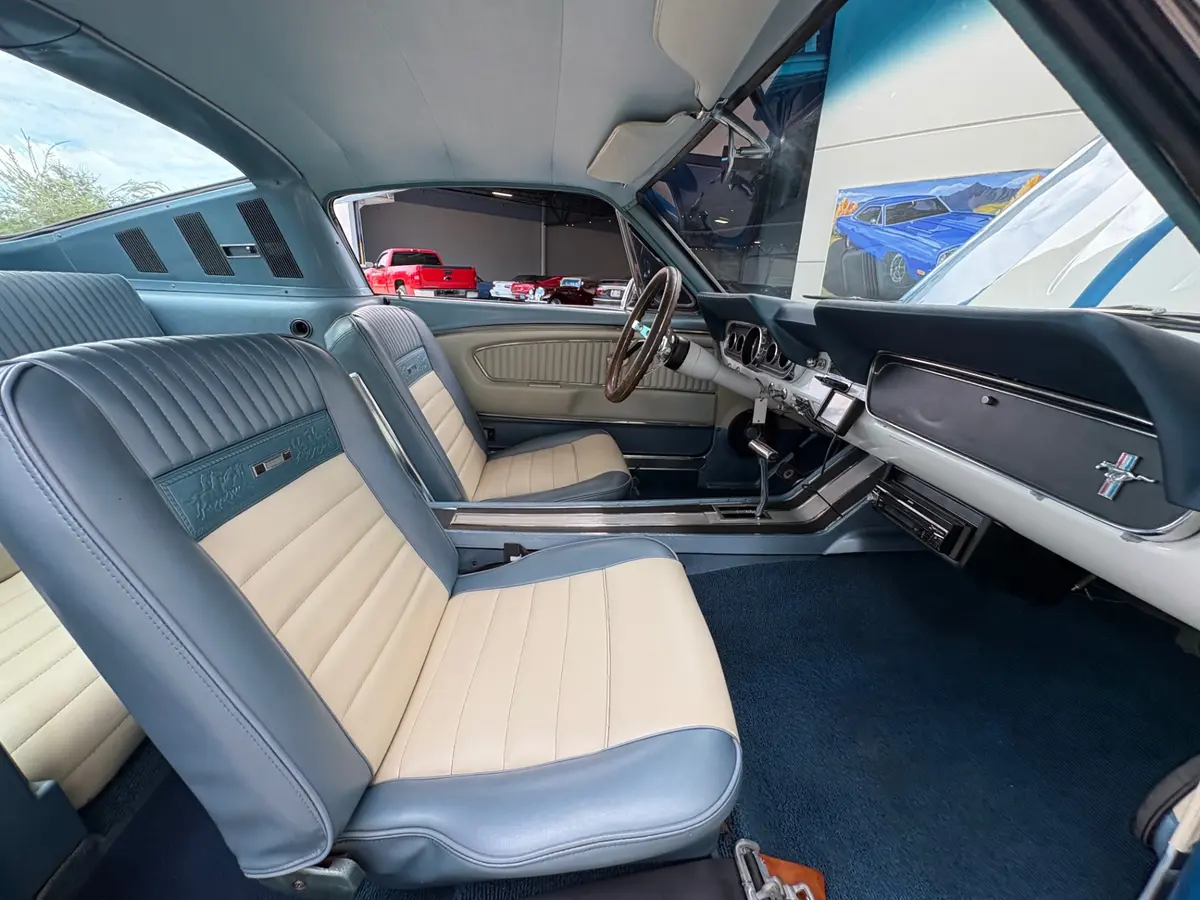
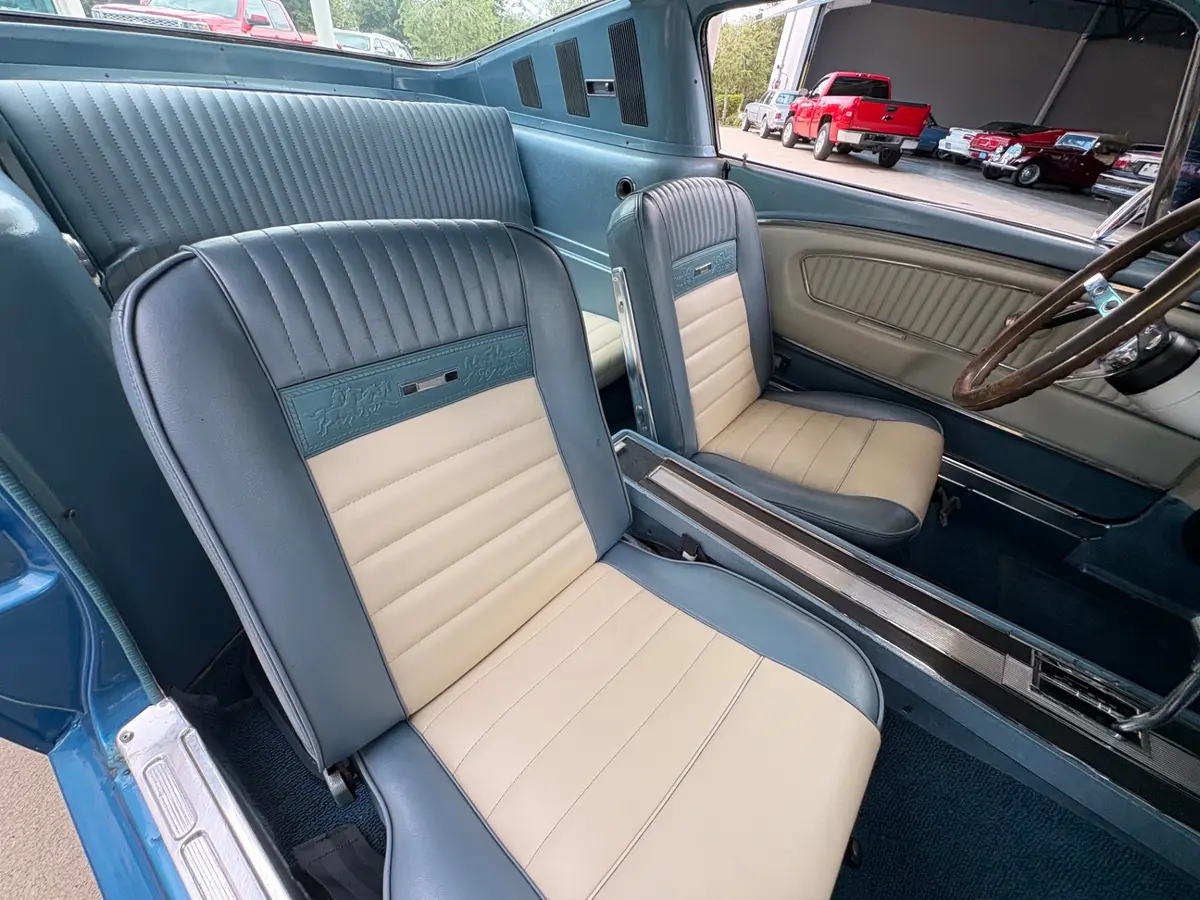
Inside, the 1966 Ford Mustang Fastback wears a two-tone blue and white leather interior that coordinates closely with the exterior color. The bucket seats up front carry the correct vertical-stitch pattern that is period-appropriate for the 1966 Mustang, executed in a blue and cream combination. The rear seat uses the same leather treatment and folds flat, one of the signature functional features of the fastback body style that distinguished it from the coupe. When the rear seat is folded, the space behind the front buckets opens up significantly — more than you would expect from a car this size — and it is covered in matching blue carpet.
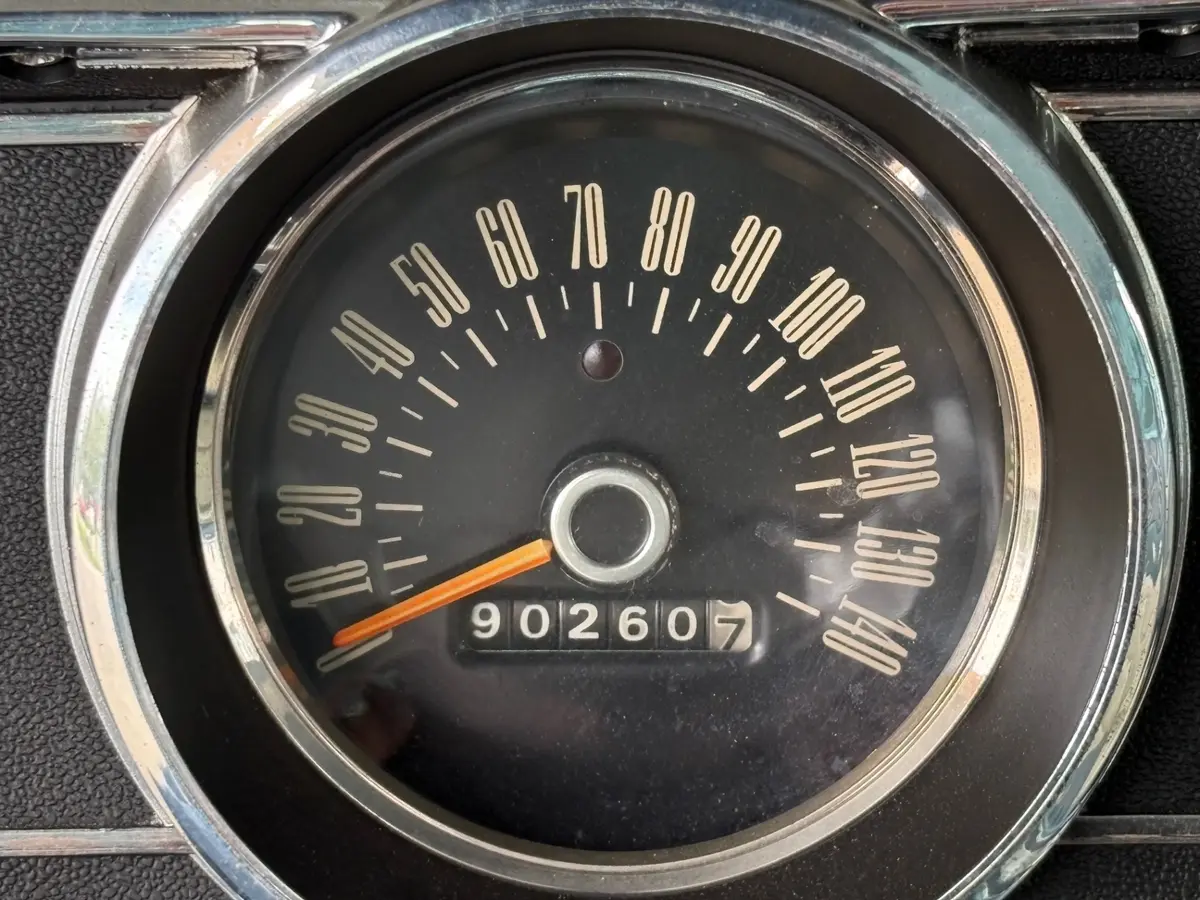
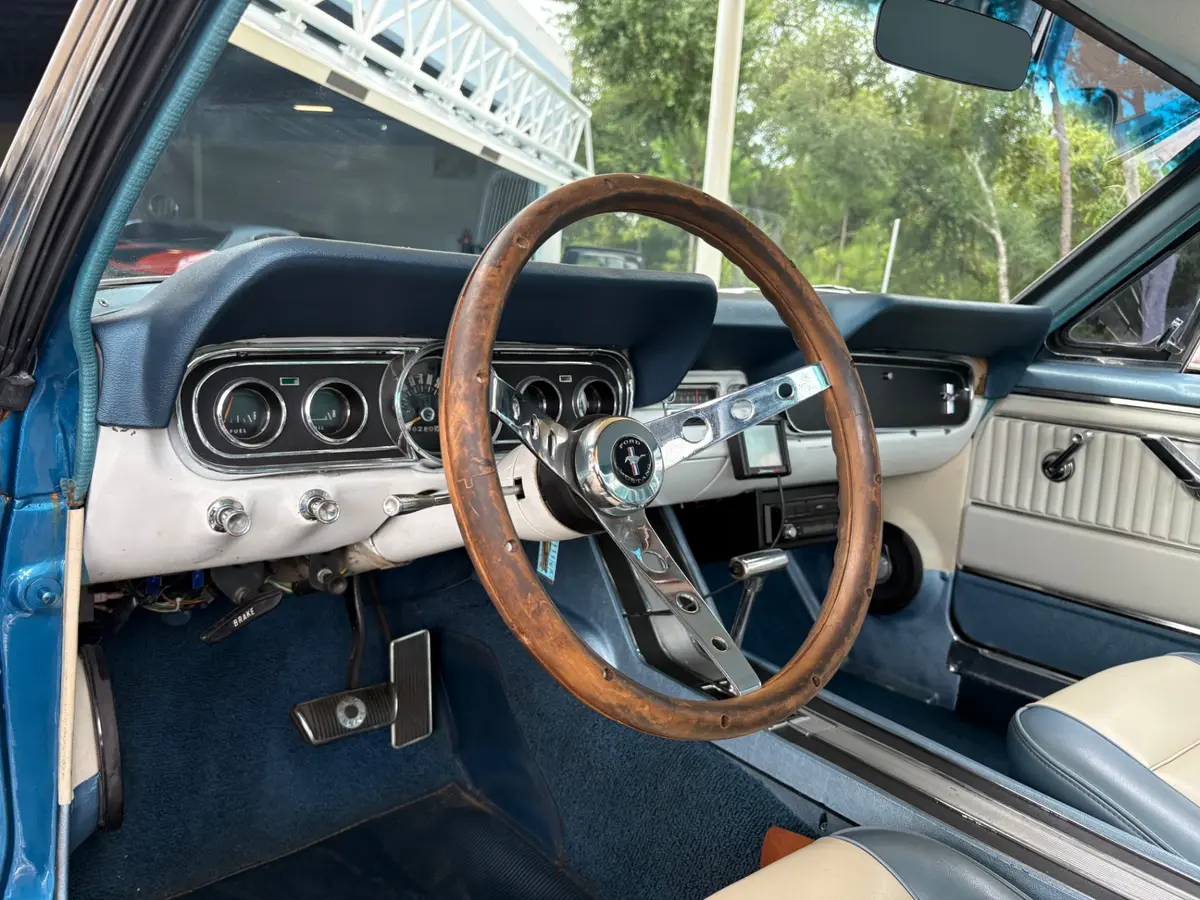
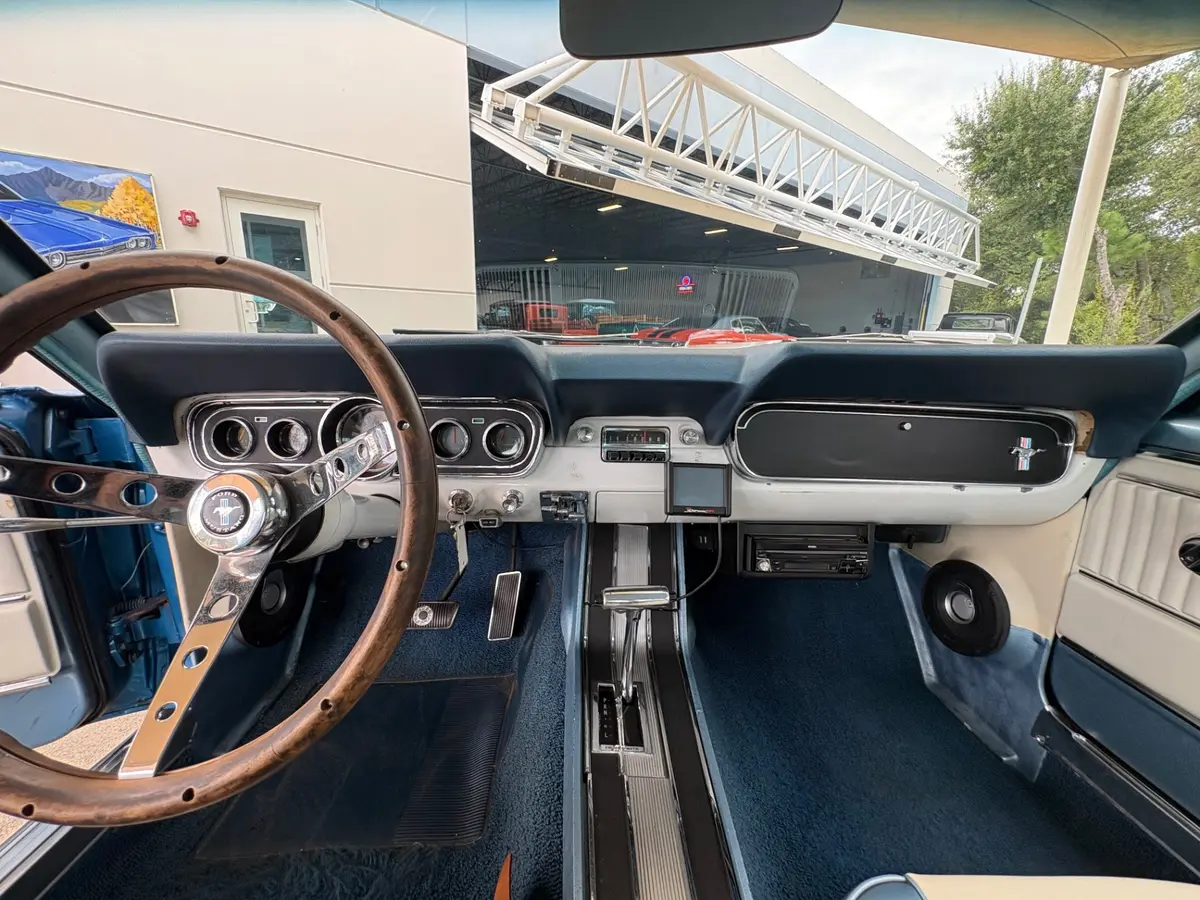
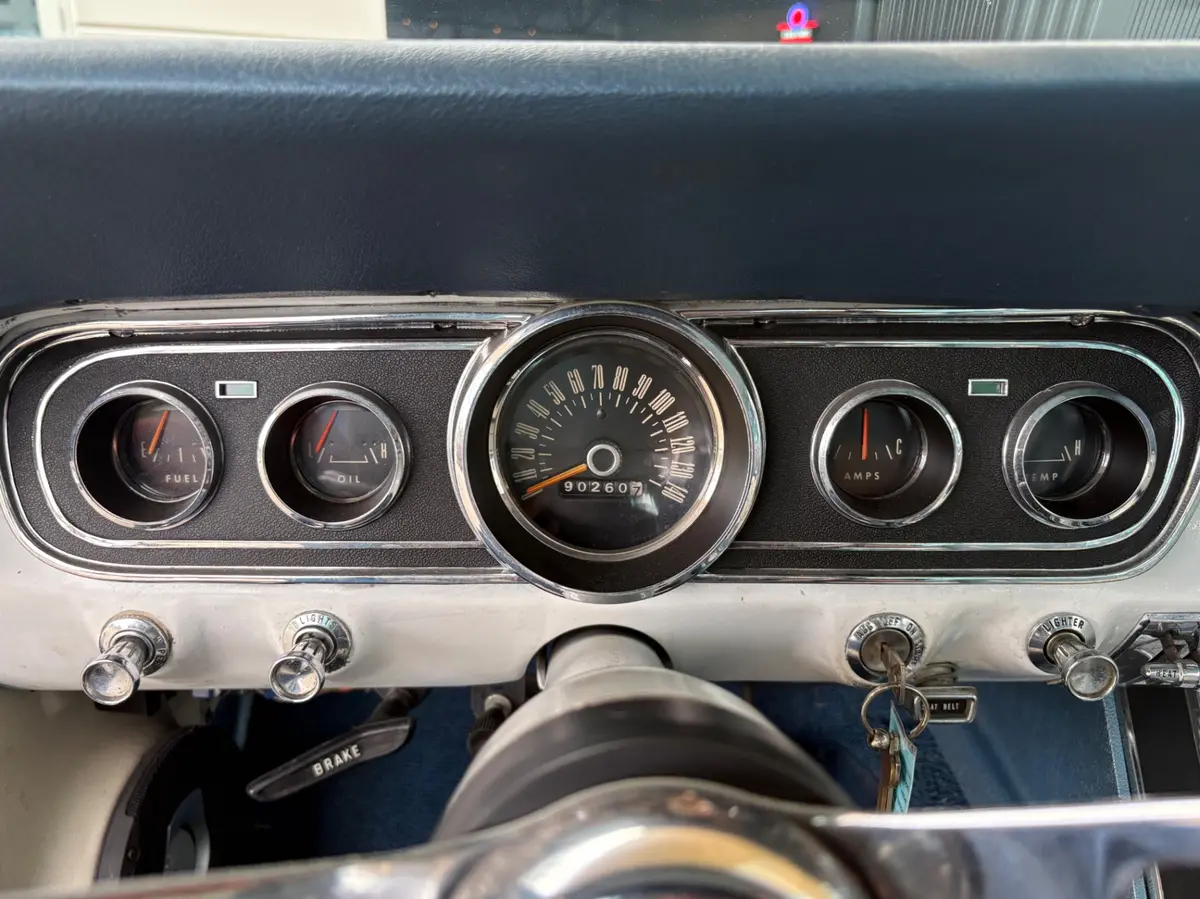
The dashboard retains its factory five-gauge cluster layout with the original round instruments reading fuel, oil pressure, speedometer, ammeter, and temperature. The wood-rim steering wheel is a period-style accessory that fits the GT350 tribute theme and was a popular dealer-installed and aftermarket option on 1966 Mustangs. The center console runs the length of the transmission tunnel and houses the automatic transmission shifter.
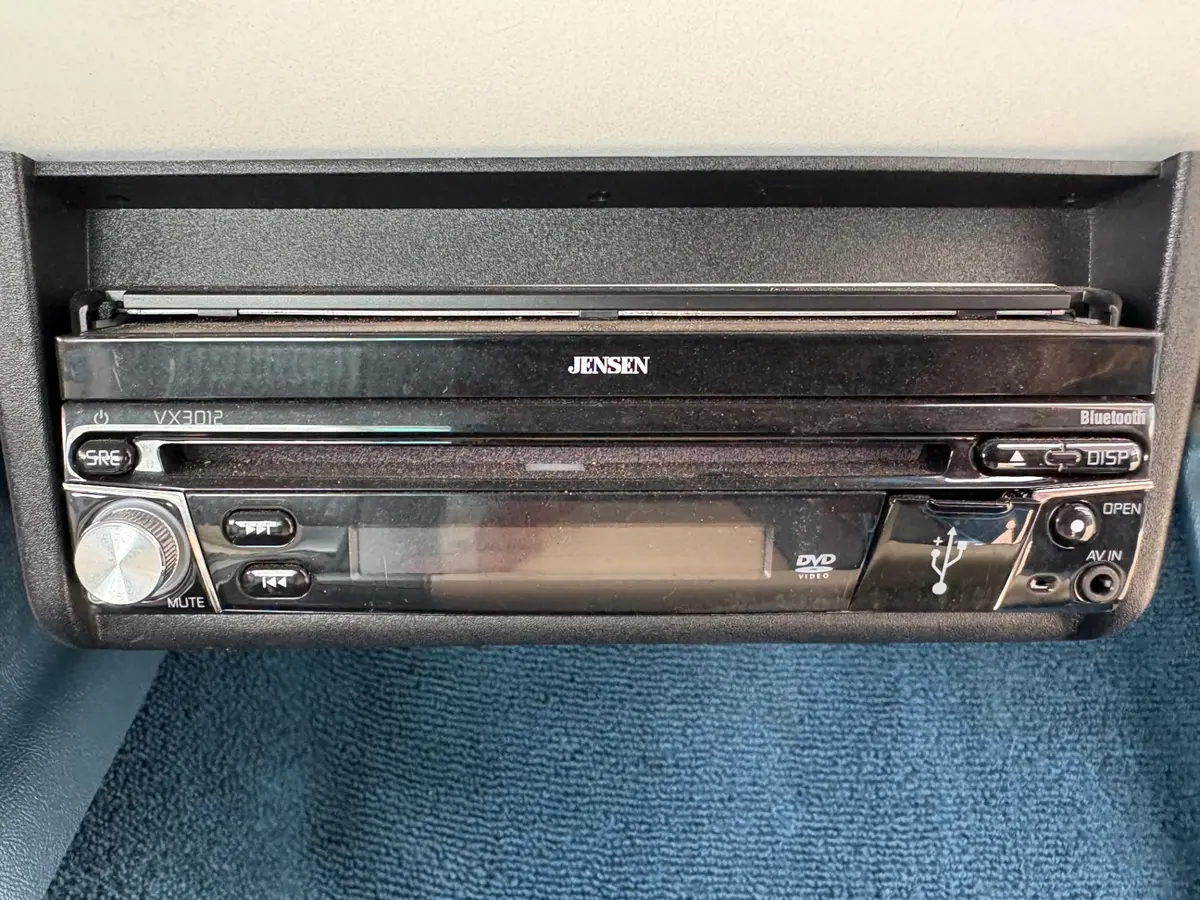
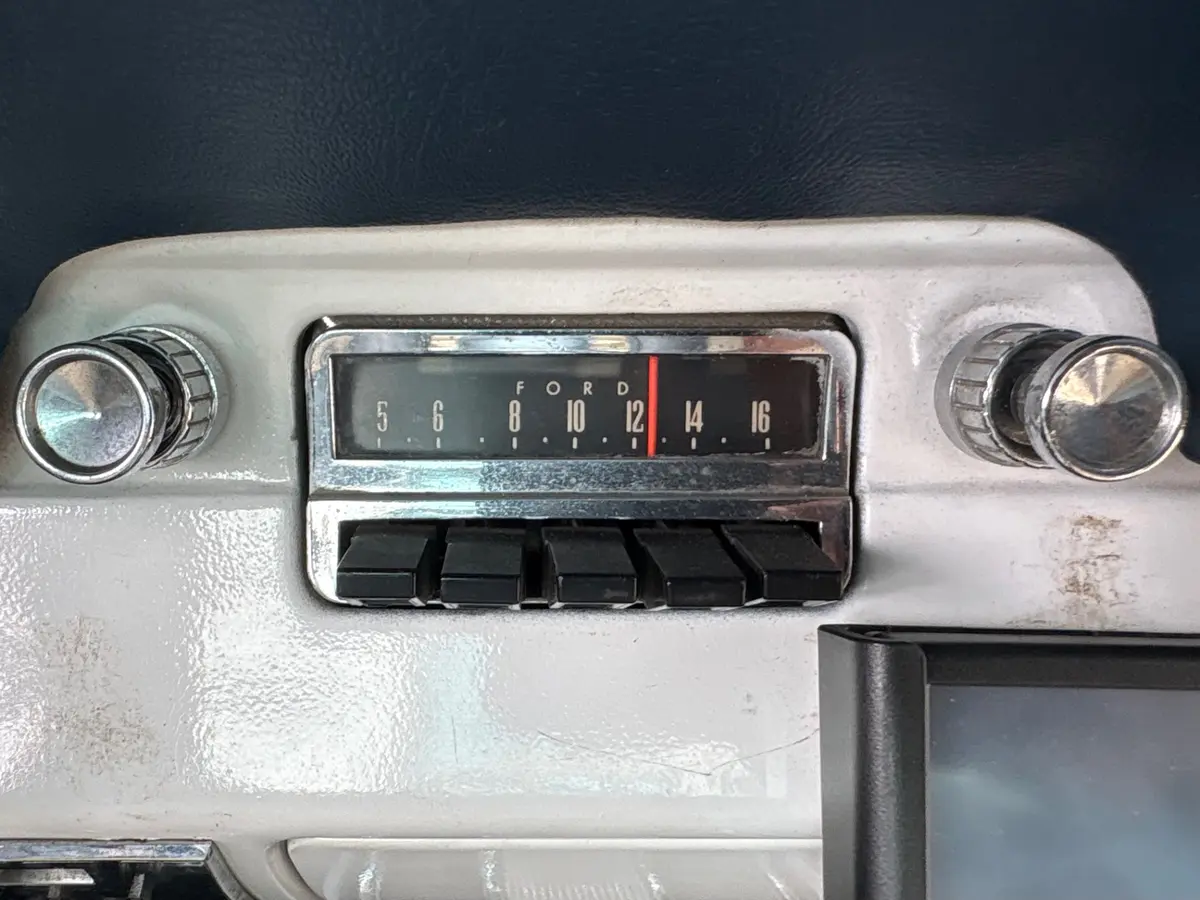
Audio is handled two ways. The original Ford AM radio remains in its factory location in the dash — a correct-looking push-button unit that collectors and purists appreciate seeing in place. A Jensen DVD/Bluetooth receiver has been installed in the console area, providing modern audio capability including wireless phone connectivity and rear speaker output. The Holley Sniper EFI display is also mounted inside the cabin, giving the driver real-time access to engine data without pulling out a phone or laptop. It is a practical touch that makes this car easy to live with.
Exterior
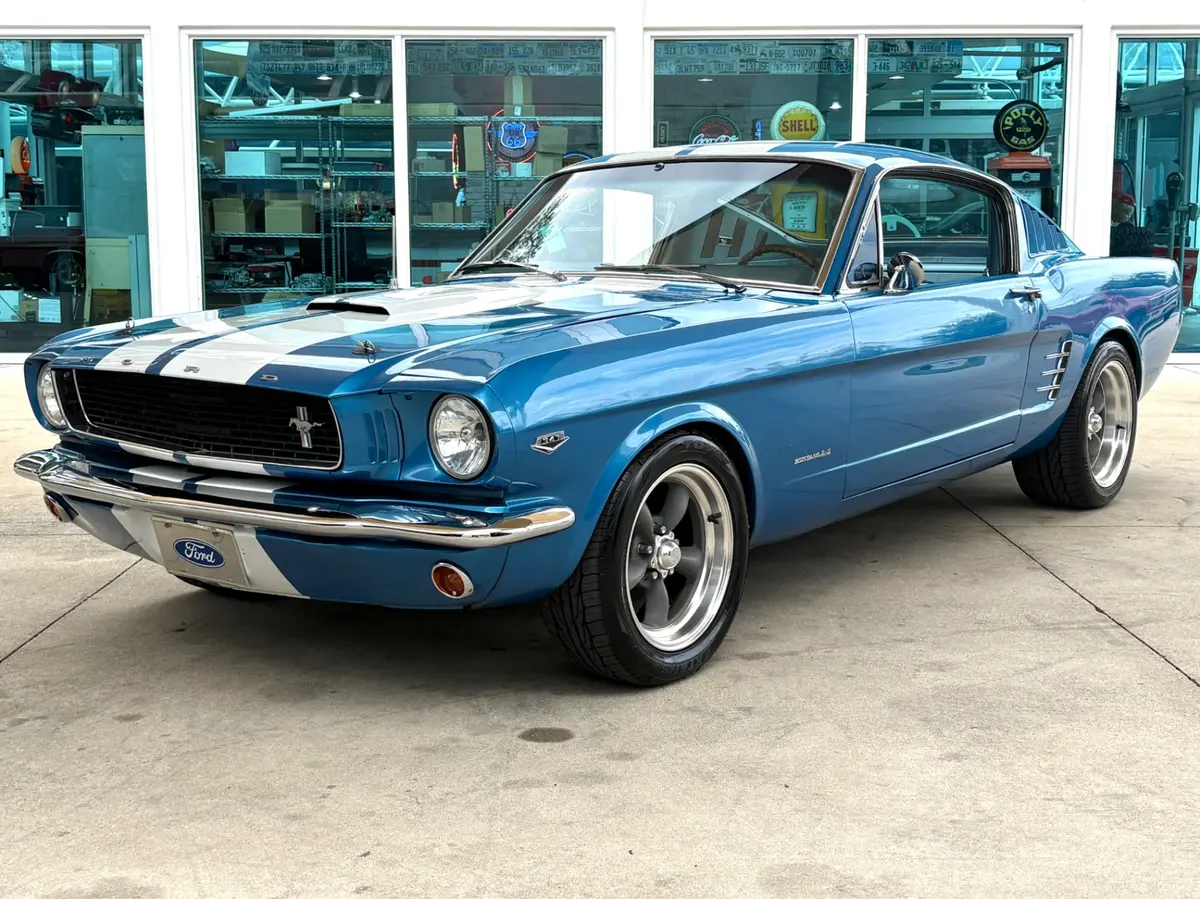
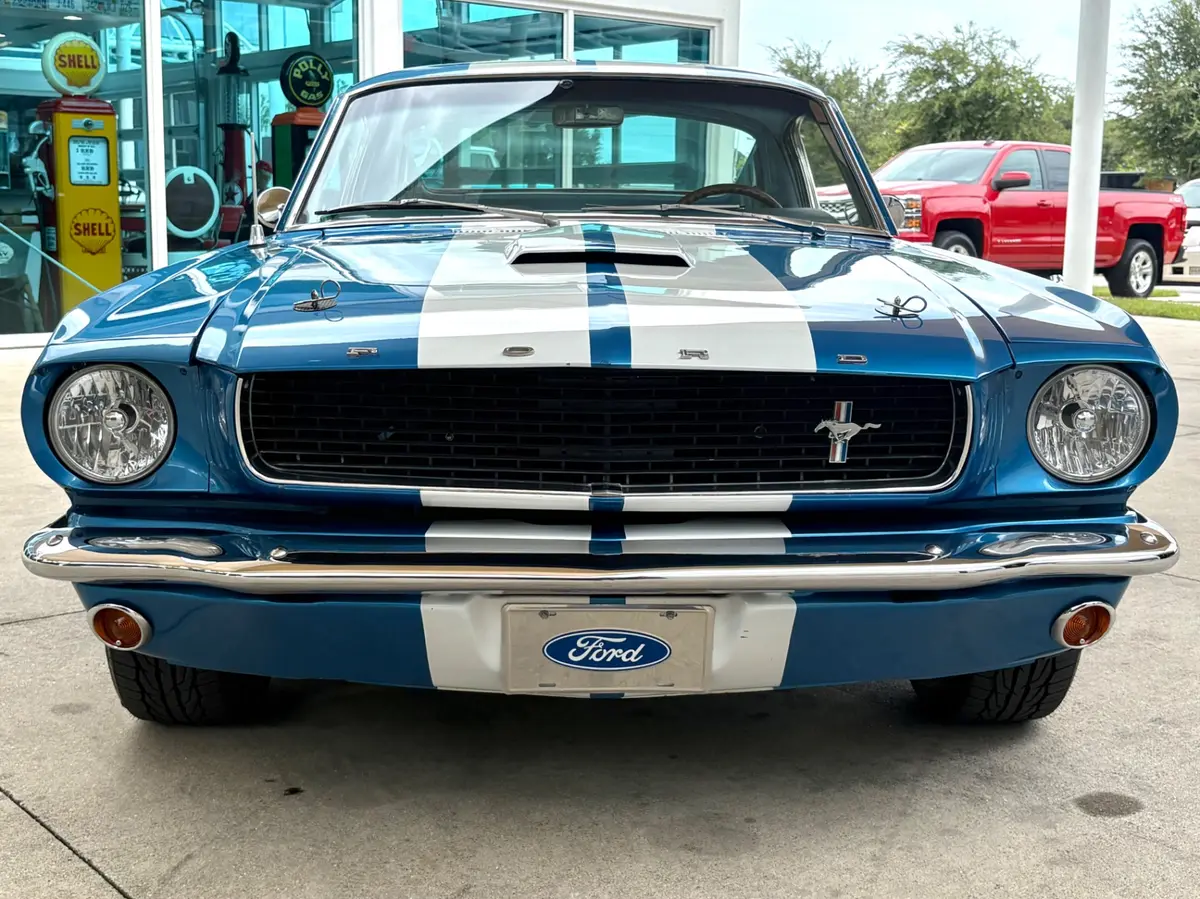
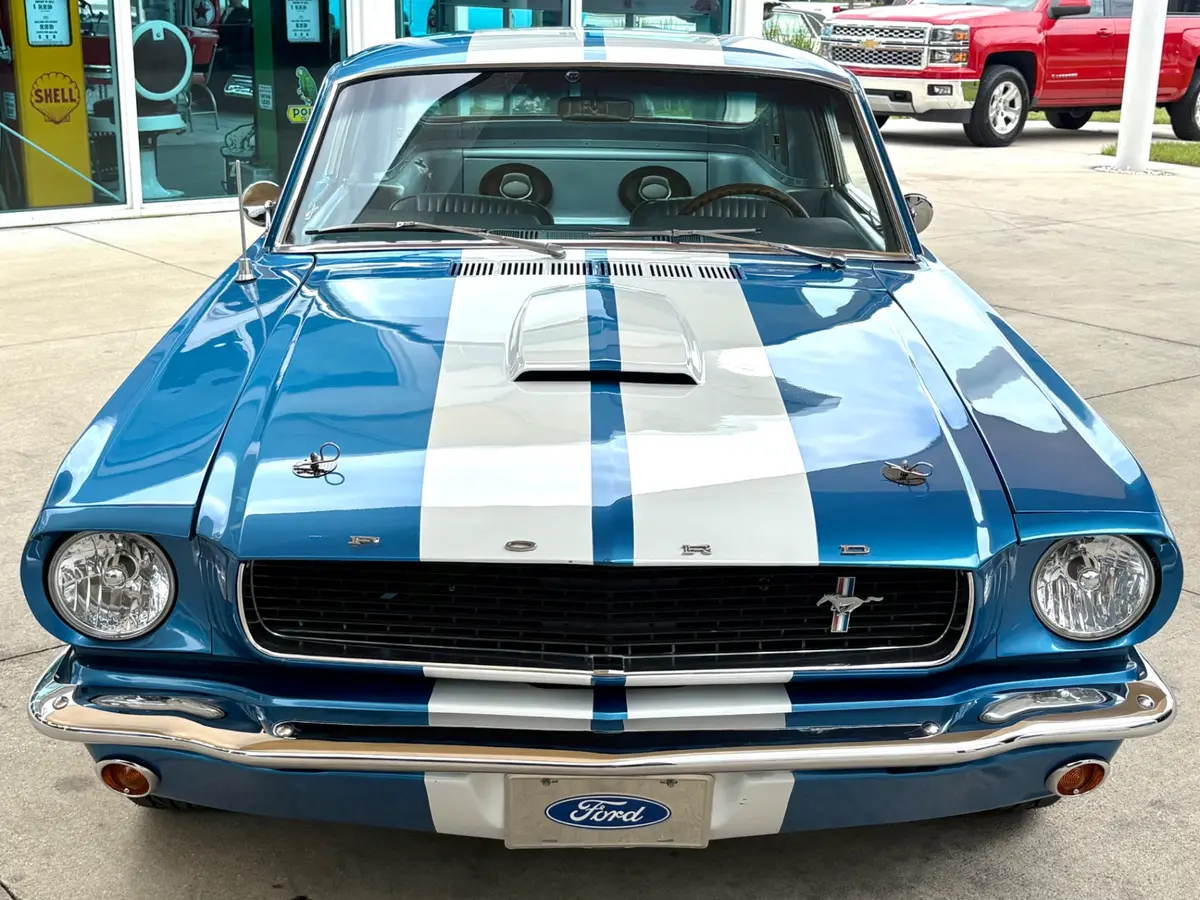
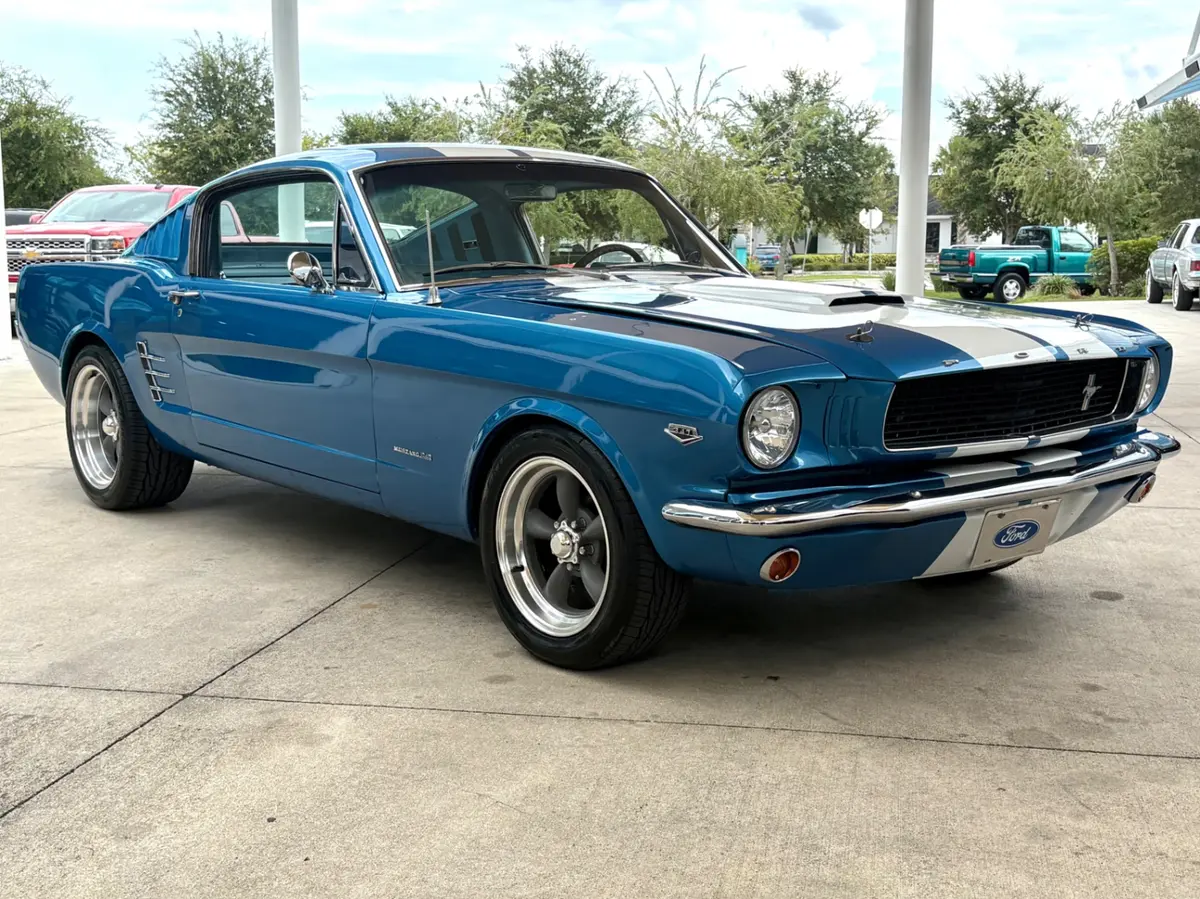
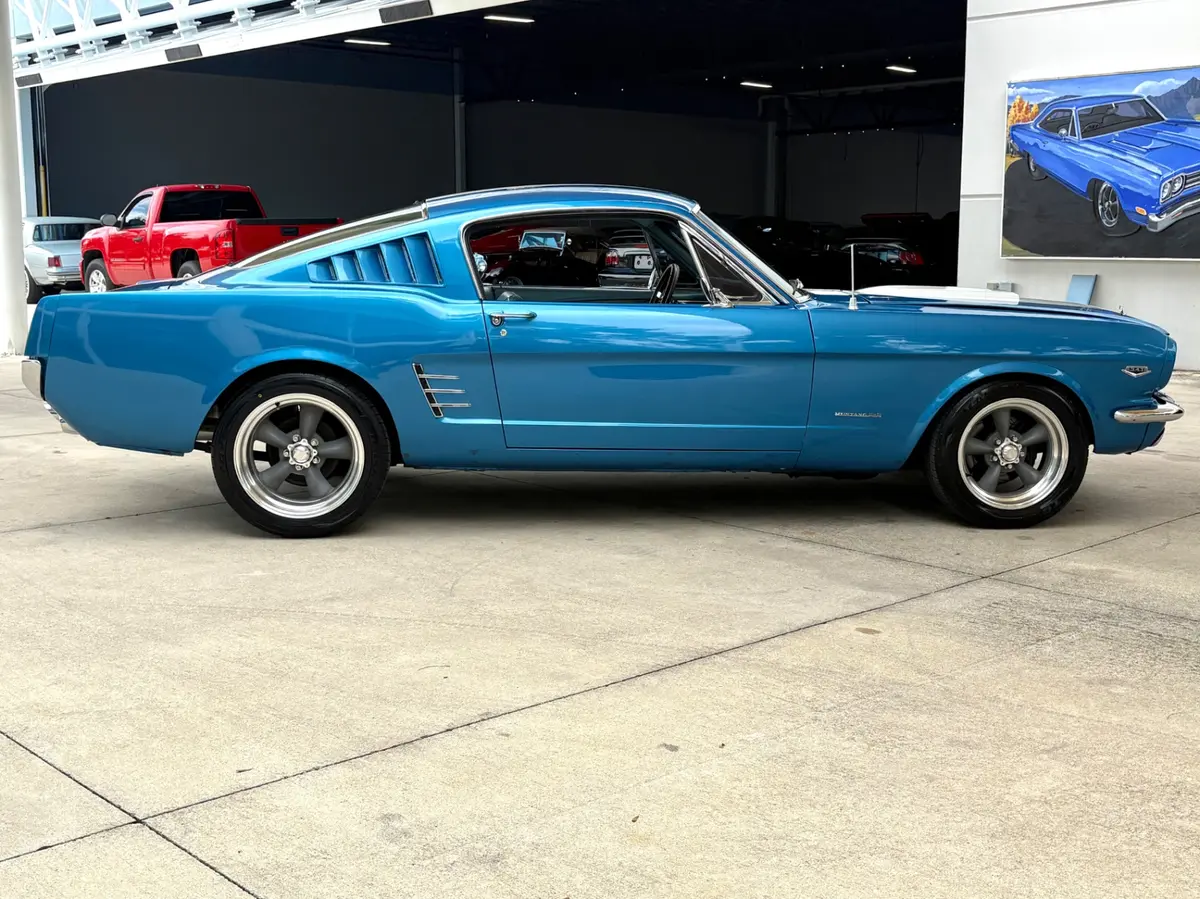
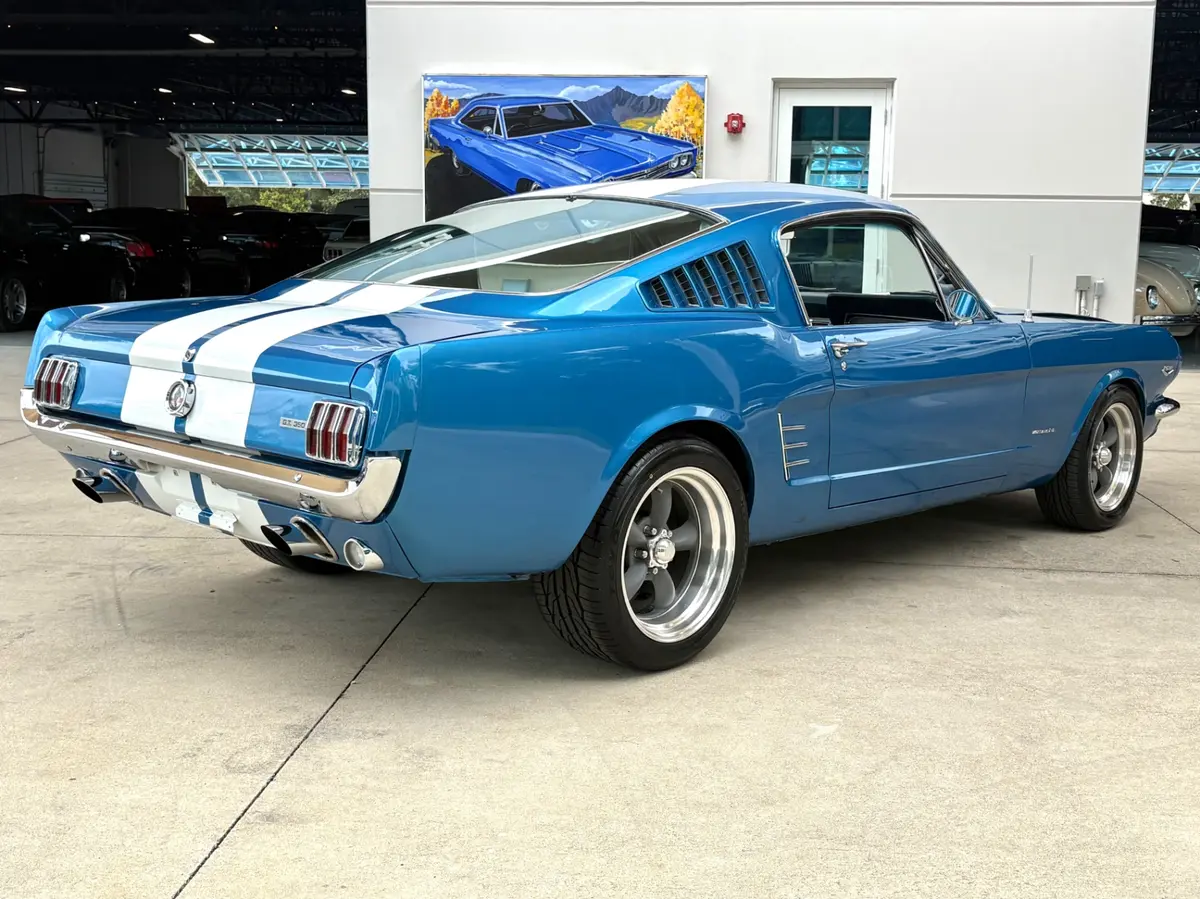
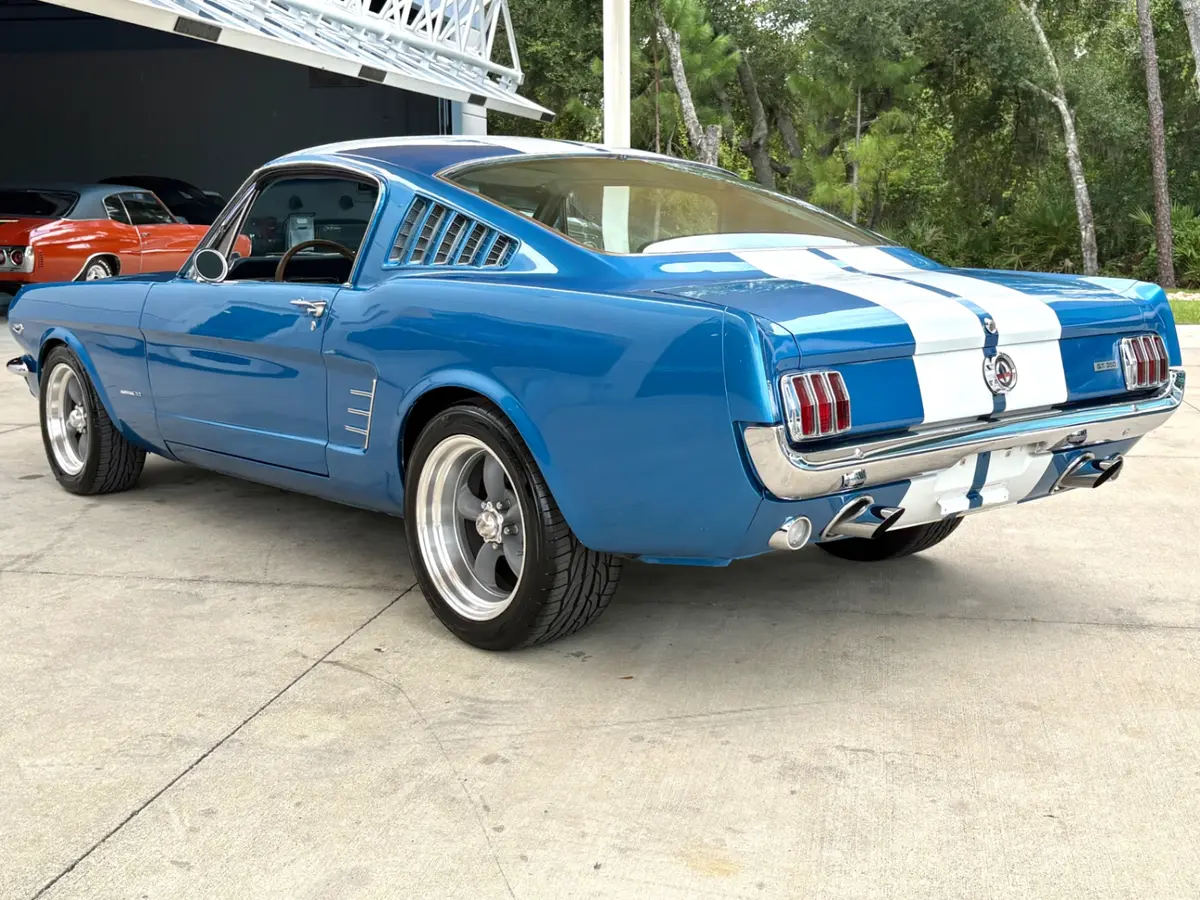
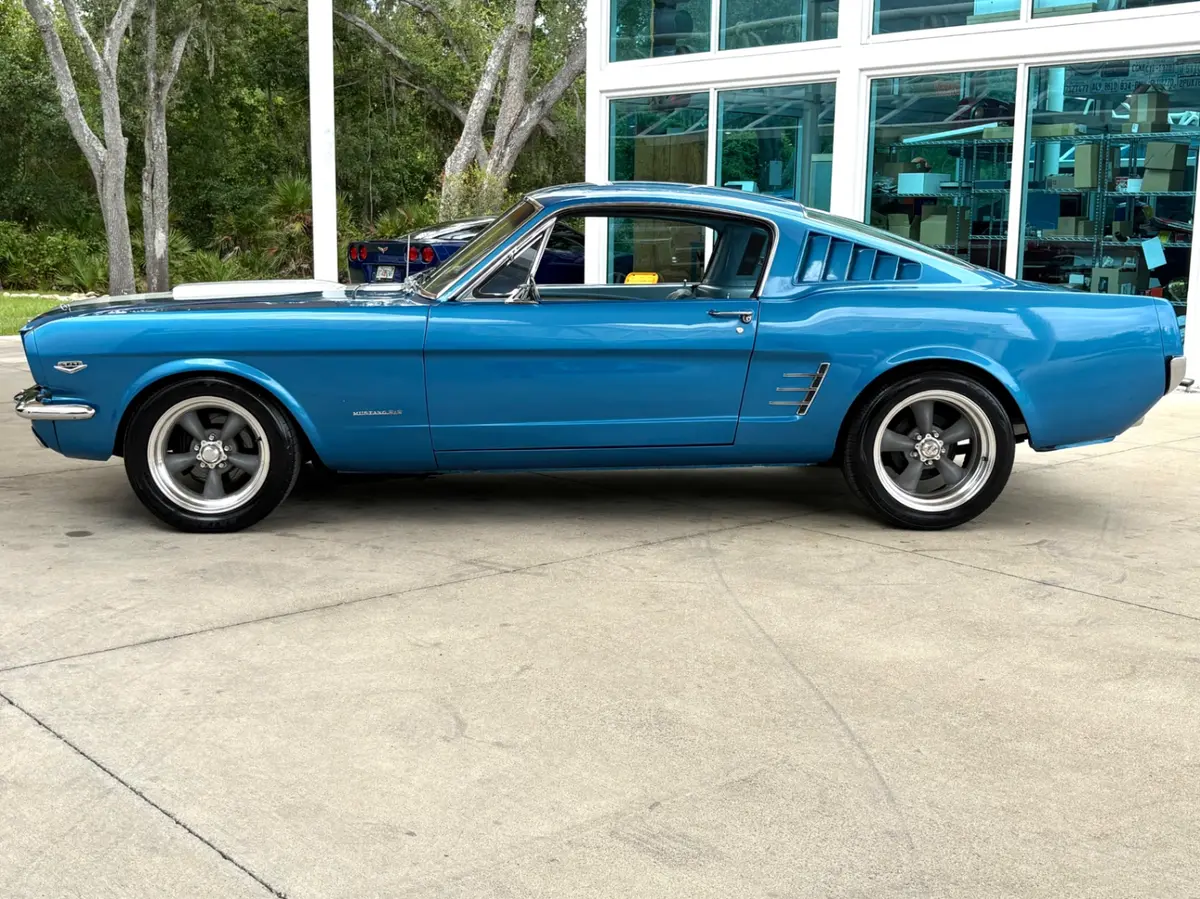
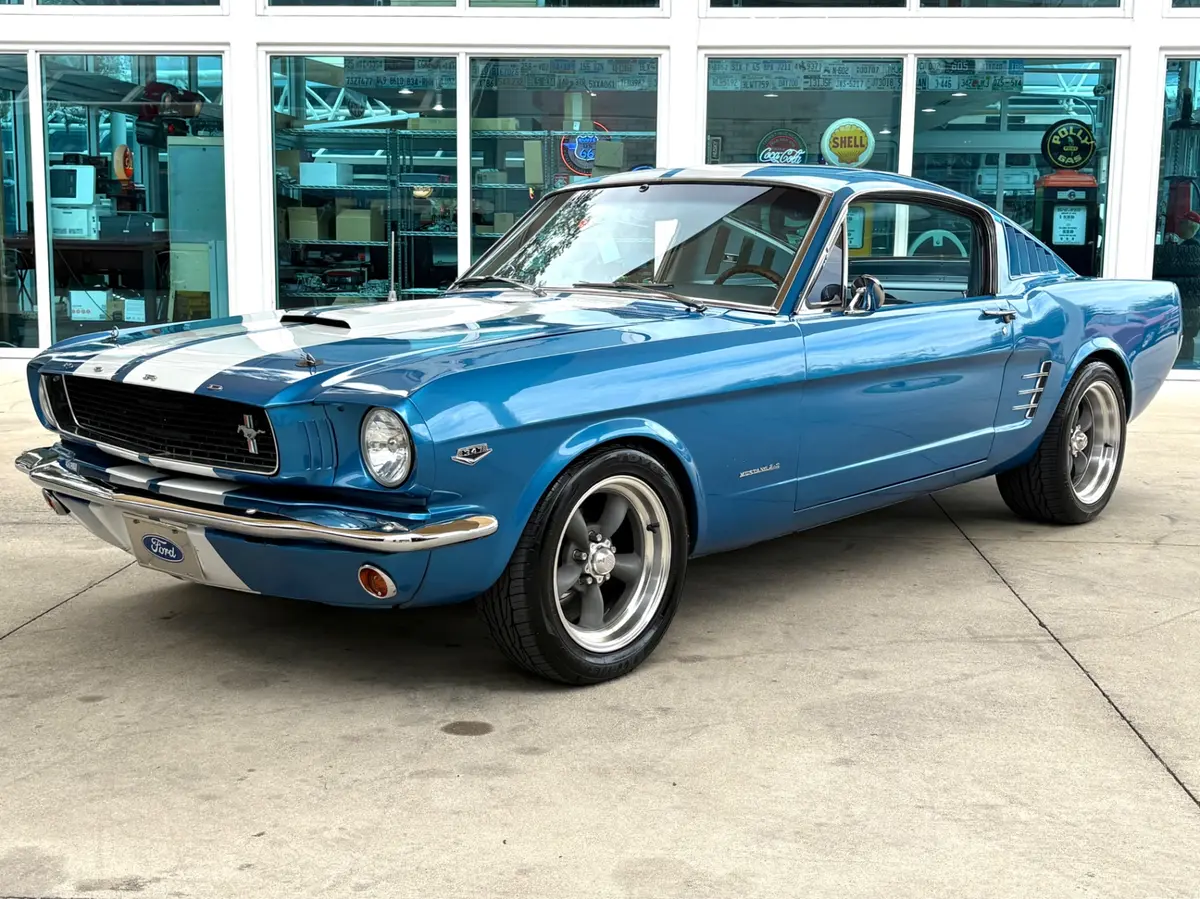
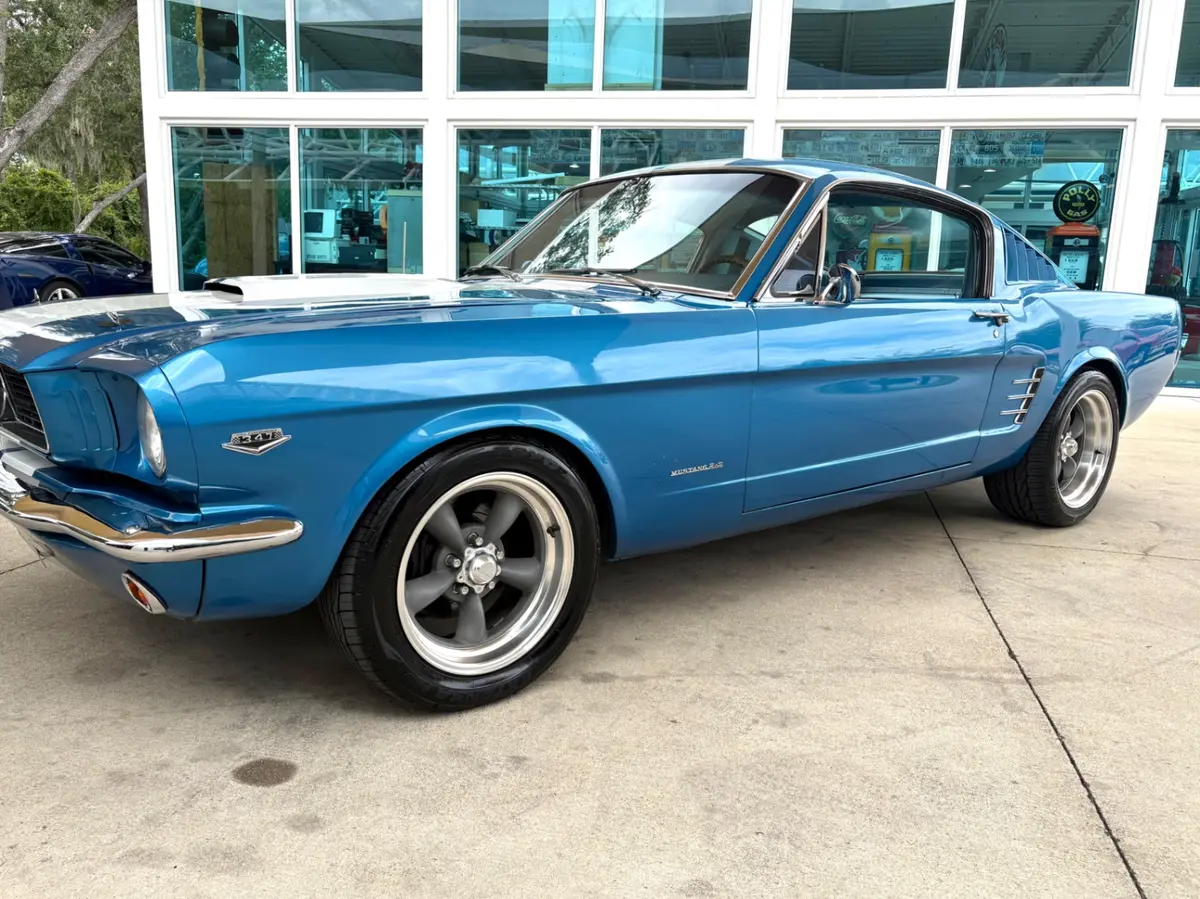
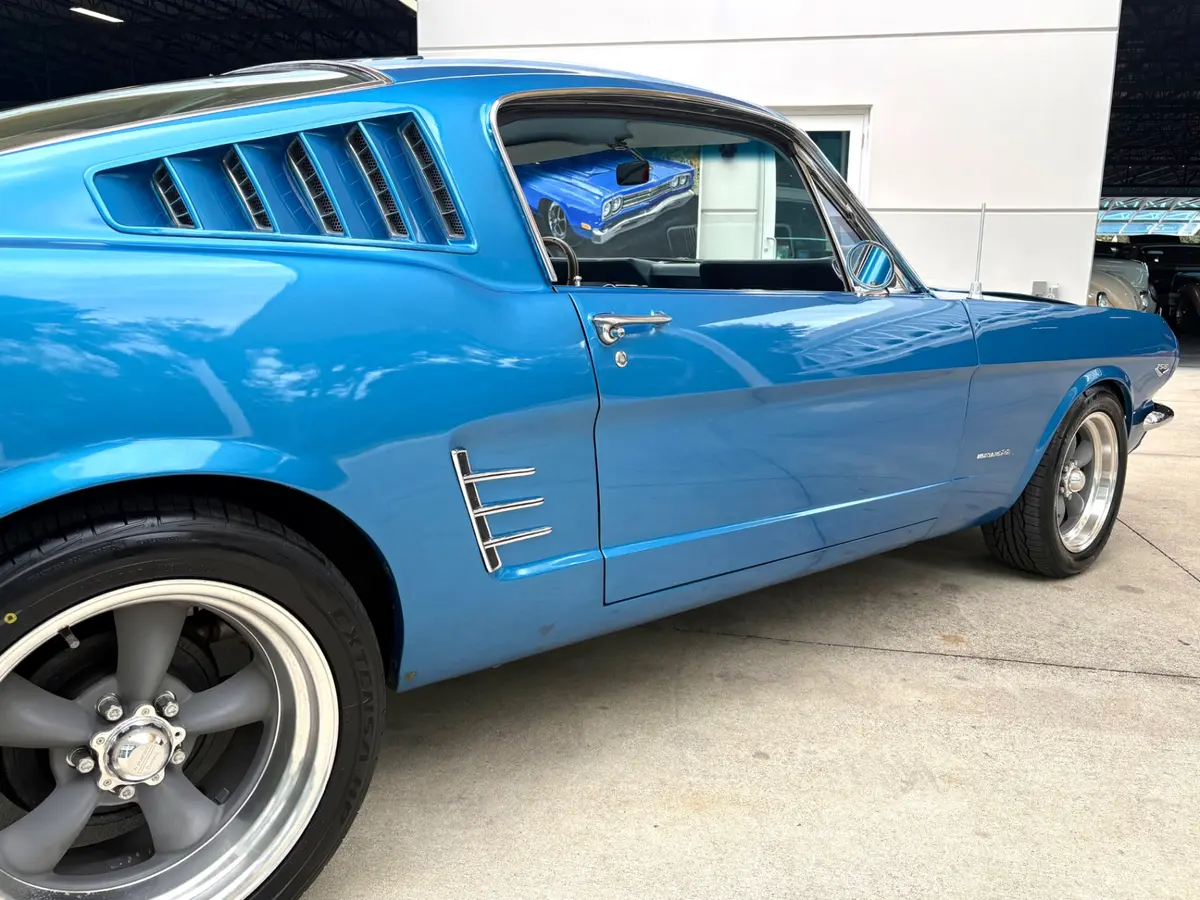
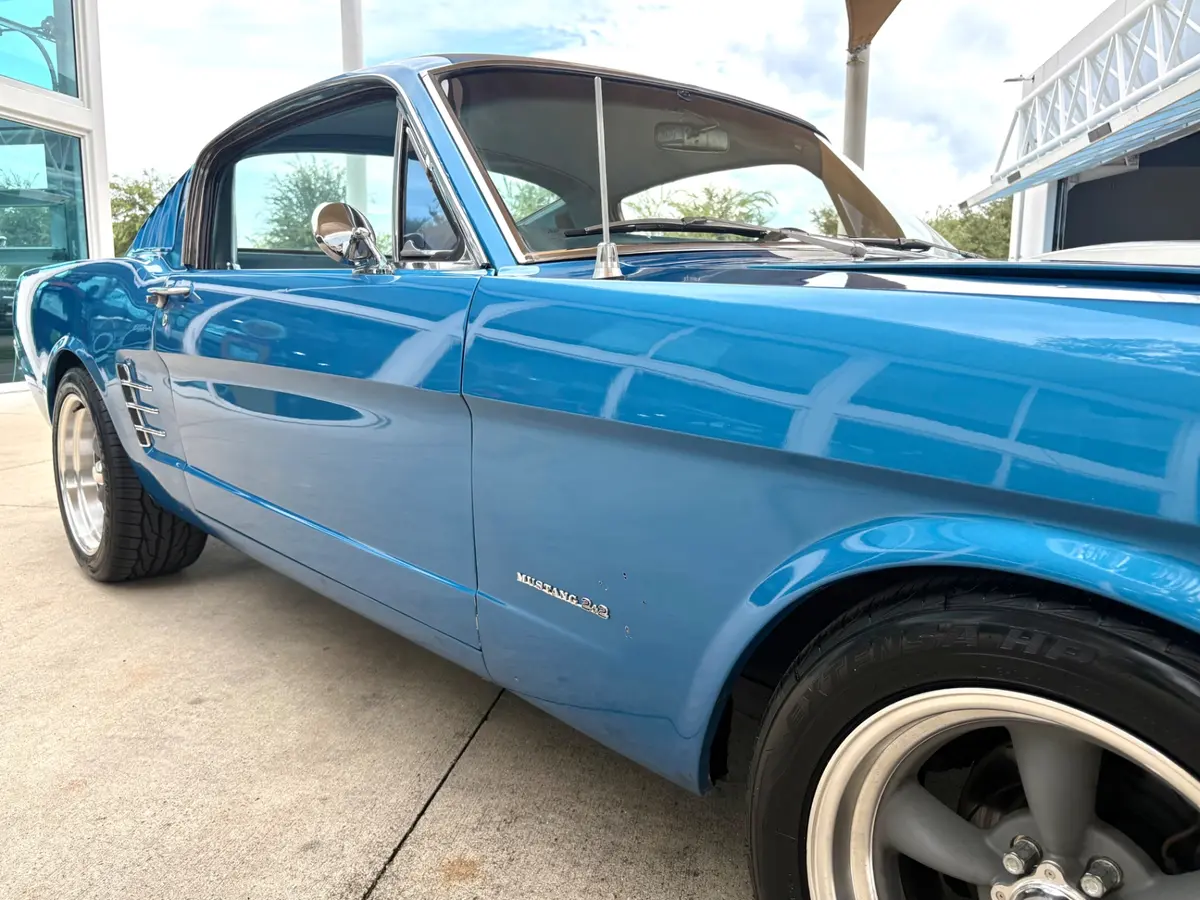
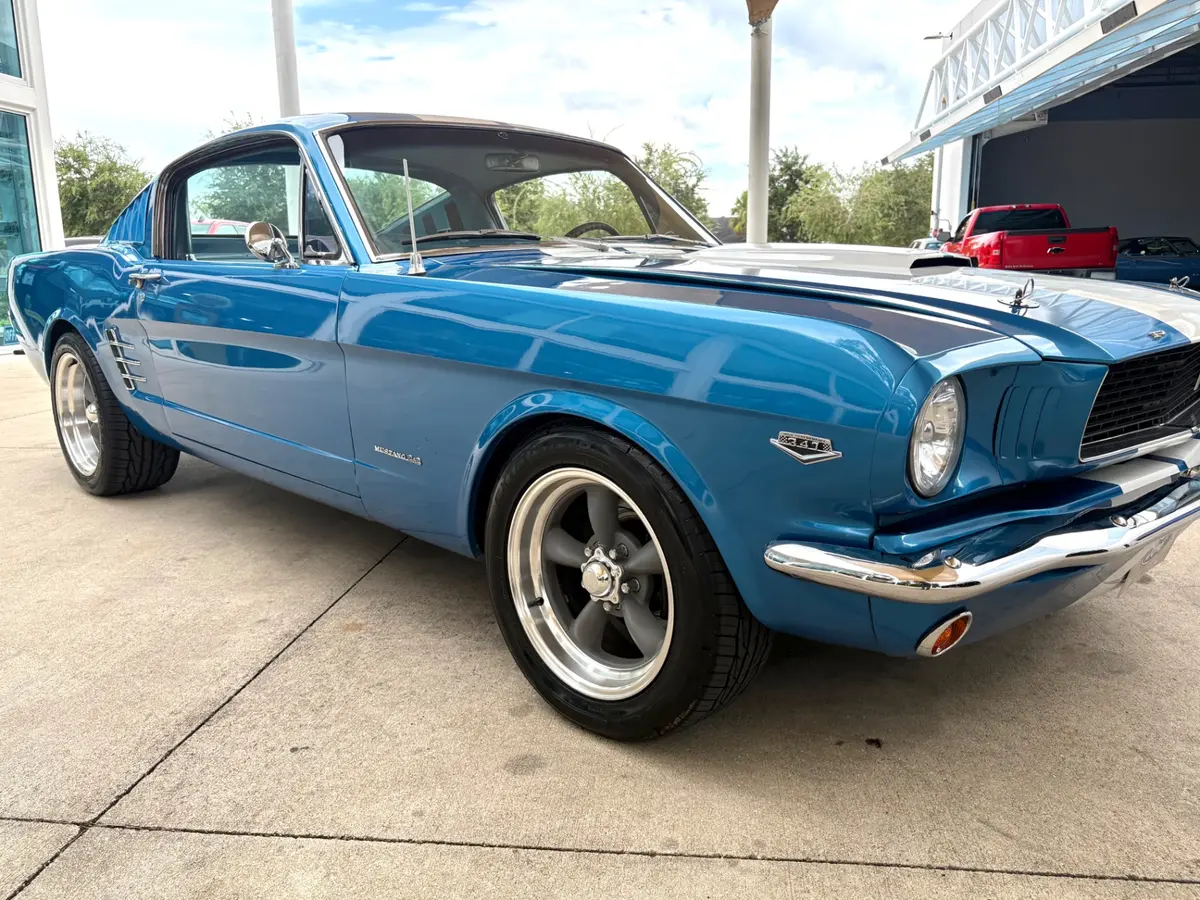
The 1966 Ford Mustang Fastback wears a vivid blue exterior finish with white racing stripes running nose to tail, mimicking the most iconic visual element of the 1965-1966 Shelby GT350. The original GT350 ran Oxford White with Guardsman Blue stripes, but this car reverses that combination — blue body, white stripes — which is a common and well-recognized variation on the GT350 tribute theme. The stripes are wide and run continuously from the hood scoop through the roof and down to the rear valance, where the stripe terminates between the quad exhaust tips.
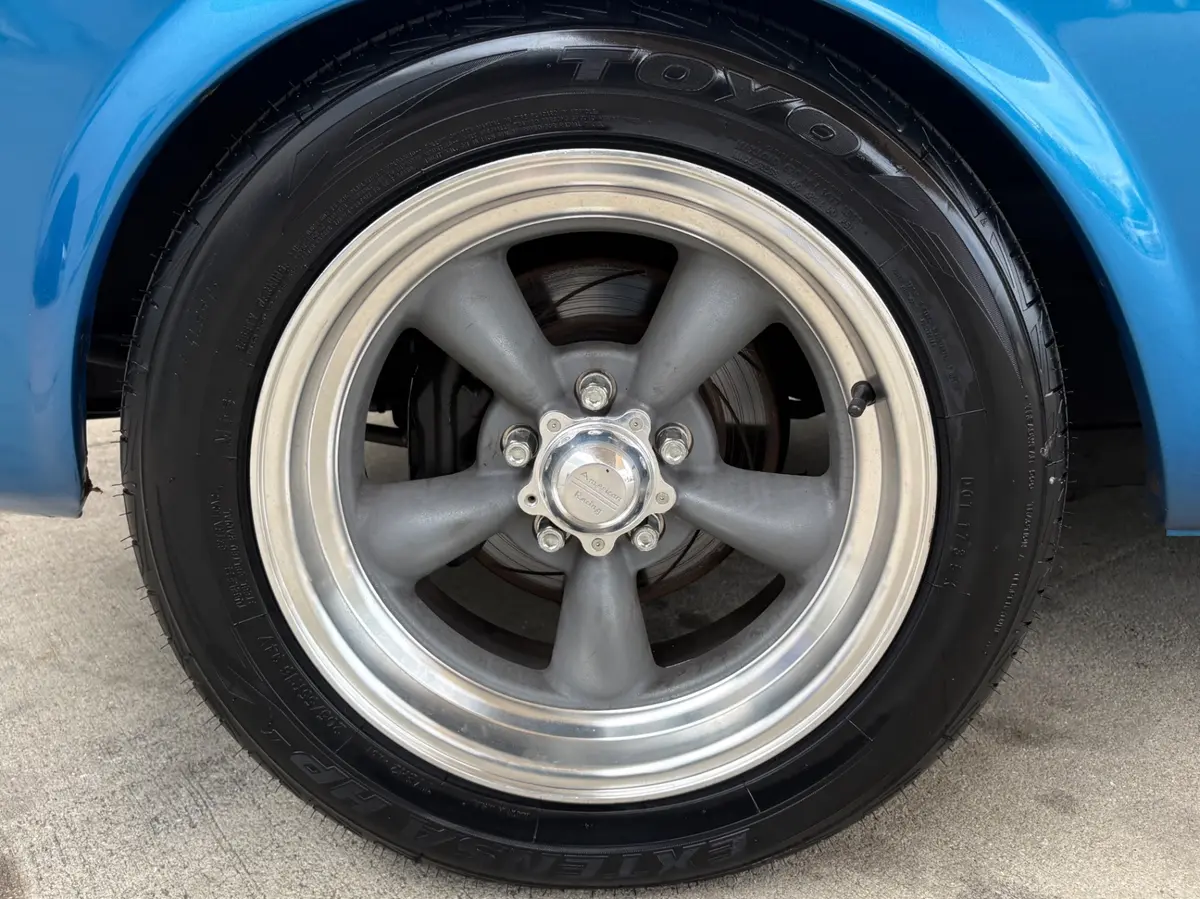
The hood scoop is functional in appearance and adds to the GT350 look. GT350 rear badging is fitted on the tail panel. The rear valance carries the quad exhaust tips that exit in the same location as the original Shelby cars, framed by the Mustang's three-element sequential taillights. The Torq-Thrust style wheels are one of the most recognized classic American performance wheel designs — a five-spoke cast aluminum design that American Racing introduced in the 1960s and that has been synonymous with period-correct performance cars ever since. Wrapped in Toyo tires, the wheel and tire combination fills the wheel wells correctly without the overly stretched or tucked look that can age a build quickly.
The overall fit of the body panels is consistent, and the undercarriage inspection photos confirm solid floor pans, clean framing, and a properly routed dual exhaust system. This is a fastback that has been maintained and built with attention to detail, not a quick flip.
Conclusion
The 1966 Ford Mustang Fastback occupies a specific place in automotive history that is difficult to overstate. It is the body style that Shelby chose, the shape that appeared in Bullitt a few years later, and the silhouette that most people picture when they think of a first-generation Mustang at its best. This particular car takes that already desirable platform and adds a modern performance drivetrain — 347 stroker, Holley Sniper EFI, MSD ignition, front discs — while keeping the GT350 visual tribute intact inside and out. The undercarriage is solid, the interior is complete and comfortable, and the build has been done with real components from names like Holley, MSD, Flowmaster, and Ford Motorsport.
If you are looking at a 1966 Ford Mustang Fastback as a car you can drive regularly rather than trailer to shows, this one is already there. It starts easily, runs on modern fuel injection, stops with disc brakes, and has the power to back up the way it looks.
To ask questions or arrange a viewing, call Skyway Classics at 941-254-6608.
Disclaimer
Information found on the website is presented as given to us by the owner of the car, whether on consignment or from the owner we bought it from. Some Photos, materials for videos, descriptions and other information are provided by the consignor/seller and is deemed reliable, but Skyway Classics does not warranty or guarantee this information. Skyway Classics is not responsible for information that may incorrect or a publishing error. The decision to purchase should be based solely on the buyers personal inspection of the vehicle or by a professional inspection service prior to offer or purchase being made.
1966 Ford Mustang Fastback — 347 Stroker, Holley Sniper EFI, GT350 Styling
Why This Car Is Special
The 1966 Ford Mustang Fastback is one of the most sought-after body styles in the entire first-generation Mustang run. Ford introduced the fastback — officially called the 2+2 — for the 1965 model year, and it carried into 1966 with refinements that made it the sharper-looking of the two years. The long roofline sweeping down to a short deck, the functional rear quarter vents, and the fold-down rear seat made the fastback distinctly different from the coupe and convertible. Ford sold just over 499,000 Mustangs in 1966 across all body styles, but the fastback was always the most visually aggressive of the three. It is also the body style that Carroll Shelby chose as the starting point for his GT350, which has cemented the fastback's place in Mustang history permanently.
This particular 1966 Ford Mustang Fastback has been built as a serious driver. The VIN confirms it as a San Jose, California-assembled car — the "F" in the VIN prefix denotes the San Jose plant, which produced Mustangs alongside the Dearborn and Metuchen facilities during this era. The "09" body code confirms the fastback body style. Rather than preserved as a static show piece, this car was given a thoughtful performance build: a 347 cubic inch stroker small block V8, Holley Sniper EFI fuel injection, MSD ignition, front disc brakes, and the visual package of a Shelby GT350 tribute. It drives the way a 1966 Ford Mustang Fastback should — with authority.
Features List
- 347 Stroker Small Block V8
- Holley Sniper EFI with dedicated Holley Sniper EFI display monitor
- MSD 6AL-2 ignition module
- Ford Motorsport valve covers
- Aluminum radiator with electric cooling fan
- Dual Flowmaster exhaust with quad tips exiting through the rear valance
- Front disc brakes
- Shelby GT350 exterior styling with hood scoop
- White racing stripes over blue exterior
- GT350 rear badging
- Torq-Thrust style wheels with Toyo tires
- Blue and white two-tone leather bucket seats
- Fold-down rear seat
- Center console
- Custom blue carpet
- Wood-rim steering wheel
- Jensen DVD/Bluetooth stereo
- Original Ford AM radio retained in dash
- Rear speakers installed
- Solid undercarriage
Mechanical
The heart of this 1966 Ford Mustang Fastback is a 347 cubic inch stroker small block. The 347 is built by taking a Ford 302 block and installing a crankshaft with a longer stroke — typically 3.40 inches versus the standard 3.00 inches — combined with shorter connecting rods and appropriate pistons to keep everything in the correct geometry. The result is 347 cubic inches of displacement from a package that fits neatly in the original engine bay without modification. It is one of the most popular small block Ford builds for exactly this reason: more displacement, more torque, and it still looks period-correct under the hood with the right dress-up parts.
Fuel delivery is handled by a Holley Sniper EFI system, which replaces a traditional carburetor with a throttle body-style electronic fuel injection unit. The Sniper uses a self-tuning closed-loop system with a built-in wideband oxygen sensor. It reads air/fuel ratio in real time and adjusts the fuel map on its own, which means this car starts reliably in all temperatures, does not require a warm-up choke ritual, and delivers consistent power without the flat spots and stumbles that aging carburetors on street-driven classics are prone to. The Holley Sniper EFI display inside the car gives the driver a live readout of key engine data. Spark management comes from an MSD 6AL-2 ignition box, which delivers a higher-energy spark than factory points ignition and includes a built-in two-step rev limiter. Ford Motorsport valve covers finish the engine visually and tie the build back to Ford's own performance heritage.
Cooling is handled by an aluminum radiator paired with an electric fan — a meaningful upgrade on a car that will sit in Florida traffic or cruise at lower speeds where a mechanical fan loses efficiency. Up front, disc brakes replace the original drums, which is one of the most practical safety upgrades a first-generation Mustang can receive. The undercarriage photos show a solid, well-preserved floor and framing with no signs of significant rust or structural repair — a critical point on any 59-year-old unibody car and one that is increasingly difficult to find.
The Flowmaster dual exhaust exits through a quad-tip setup in the rear valance in the style of the original Shelby GT350, which routed exhaust through the rear apron rather than under the bumper. It is a detail that enthusiasts notice immediately and one that works visually with the overall GT350 tribute presentation.
Interior
Inside, the 1966 Ford Mustang Fastback wears a two-tone blue and white leather interior that coordinates closely with the exterior color. The bucket seats up front carry the correct vertical-stitch pattern that is period-appropriate for the 1966 Mustang, executed in a blue and cream combination. The rear seat uses the same leather treatment and folds flat, one of the signature functional features of the fastback body style that distinguished it from the coupe. When the rear seat is folded, the space behind the front buckets opens up significantly — more than you would expect from a car this size — and it is covered in matching blue carpet.
The dashboard retains its factory five-gauge cluster layout with the original round instruments reading fuel, oil pressure, speedometer, ammeter, and temperature. The wood-rim steering wheel is a period-style accessory that fits the GT350 tribute theme and was a popular dealer-installed and aftermarket option on 1966 Mustangs. The center console runs the length of the transmission tunnel and houses the automatic transmission shifter.
Audio is handled two ways. The original Ford AM radio remains in its factory location in the dash — a correct-looking push-button unit that collectors and purists appreciate seeing in place. A Jensen DVD/Bluetooth receiver has been installed in the console area, providing modern audio capability including wireless phone connectivity and rear speaker output. The Holley Sniper EFI display is also mounted inside the cabin, giving the driver real-time access to engine data without pulling out a phone or laptop. It is a practical touch that makes this car easy to live with.
Exterior
The 1966 Ford Mustang Fastback wears a vivid blue exterior finish with white racing stripes running nose to tail, mimicking the most iconic visual element of the 1965-1966 Shelby GT350. The original GT350 ran Oxford White with Guardsman Blue stripes, but this car reverses that combination — blue body, white stripes — which is a common and well-recognized variation on the GT350 tribute theme. The stripes are wide and run continuously from the hood scoop through the roof and down to the rear valance, where the stripe terminates between the quad exhaust tips.
The hood scoop is functional in appearance and adds to the GT350 look. GT350 rear badging is fitted on the tail panel. The rear valance carries the quad exhaust tips that exit in the same location as the original Shelby cars, framed by the Mustang's three-element sequential taillights. The Torq-Thrust style wheels are one of the most recognized classic American performance wheel designs — a five-spoke cast aluminum design that American Racing introduced in the 1960s and that has been synonymous with period-correct performance cars ever since. Wrapped in Toyo tires, the wheel and tire combination fills the wheel wells correctly without the overly stretched or tucked look that can age a build quickly.
The overall fit of the body panels is consistent, and the undercarriage inspection photos confirm solid floor pans, clean framing, and a properly routed dual exhaust system. This is a fastback that has been maintained and built with attention to detail, not a quick flip.
Conclusion
The 1966 Ford Mustang Fastback occupies a specific place in automotive history that is difficult to overstate. It is the body style that Shelby chose, the shape that appeared in Bullitt a few years later, and the silhouette that most people picture when they think of a first-generation Mustang at its best. This particular car takes that already desirable platform and adds a modern performance drivetrain — 347 stroker, Holley Sniper EFI, MSD ignition, front discs — while keeping the GT350 visual tribute intact inside and out. The undercarriage is solid, the interior is complete and comfortable, and the build has been done with real components from names like Holley, MSD, Flowmaster, and Ford Motorsport.
If you are looking at a 1966 Ford Mustang Fastback as a car you can drive regularly rather than trailer to shows, this one is already there. It starts easily, runs on modern fuel injection, stops with disc brakes, and has the power to back up the way it looks.
To ask questions or arrange a viewing, call Skyway Classics at 941-254-6608.
Disclaimer
Information found on the website is presented as given to us by the owner of the car, whether on consignment or from the owner we bought it from. Some Photos, materials for videos, descriptions and other information are provided by the consignor/seller and is deemed reliable, but Skyway Classics does not warranty or guarantee this information. Skyway Classics is not responsible for information that may incorrect or a publishing error. The decision to purchase should be based solely on the buyers personal inspection of the vehicle or by a professional inspection service prior to offer or purchase being made.
1966 Ford
Mustang 2+2 Fastback
Why Choose Skyway Classics?
Explore our curated inventory of classic and collector cars—thoughtfully selected, ready to drive, and supported by experts who make ownership simple.
Expert Curation
Every vehicle is hand-selected by our experts for quality, authenticity, and investment potential.
Fast Transactions
Streamlined buying and selling process with quick financing and immediate delivery options.
Only National Dealer With Classic Service & Repair
We’re the only national dealership that services and repairs the classics we sell—before and after the sale.
Nationwide Network
Access to our extensive network of collectors, restorers, and classic car enthusiasts nationwide.
Concierge Ownership Support
From financing and insurance to paperwork, shipping, and titling—we handle the details so you can enjoy the drive.
Passion-Driven Service
We're classic car enthusiasts first, providing personalized service with genuine passion for the hobby.