
1957 Chevrolet
Bel Air Base
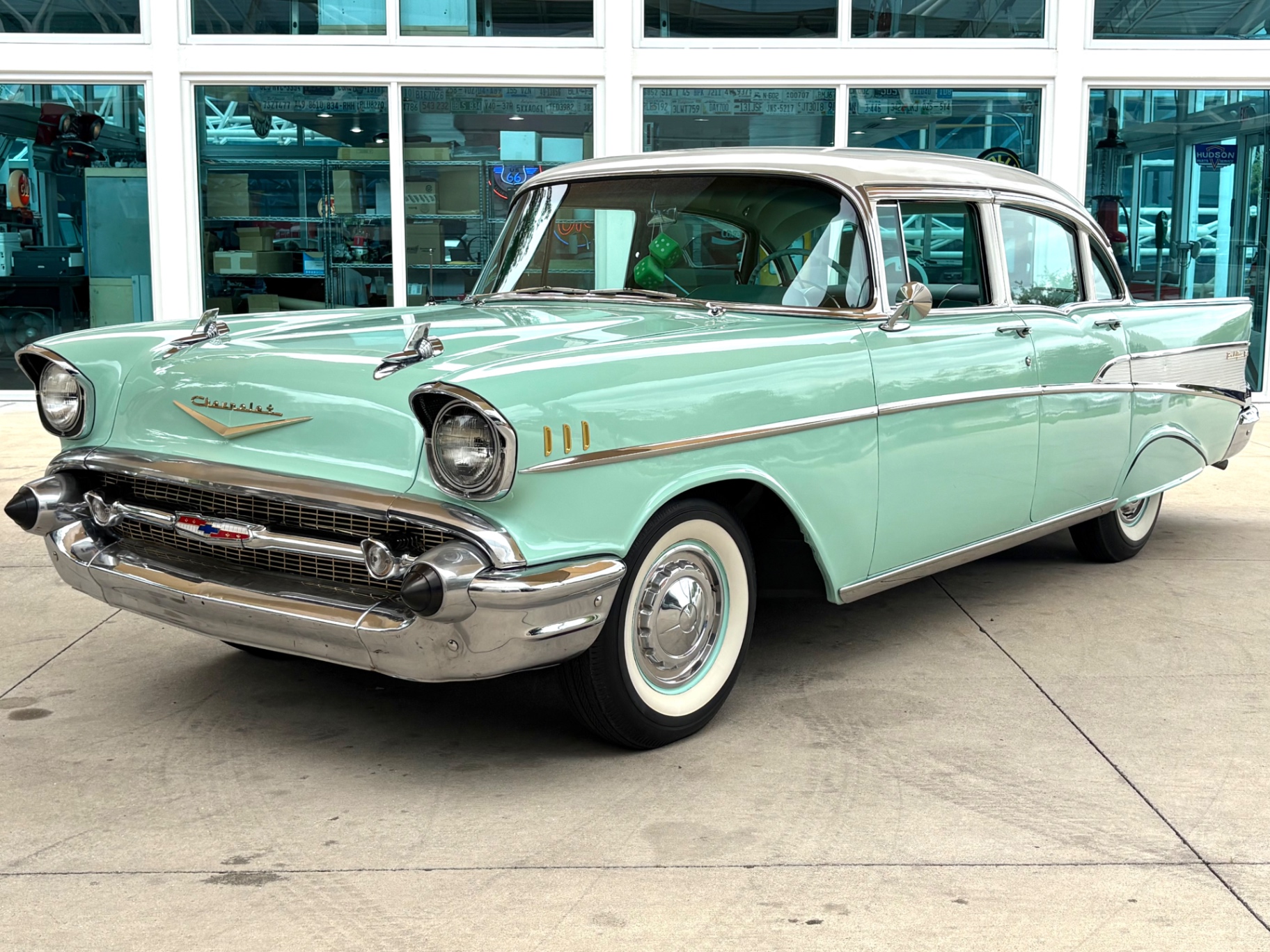
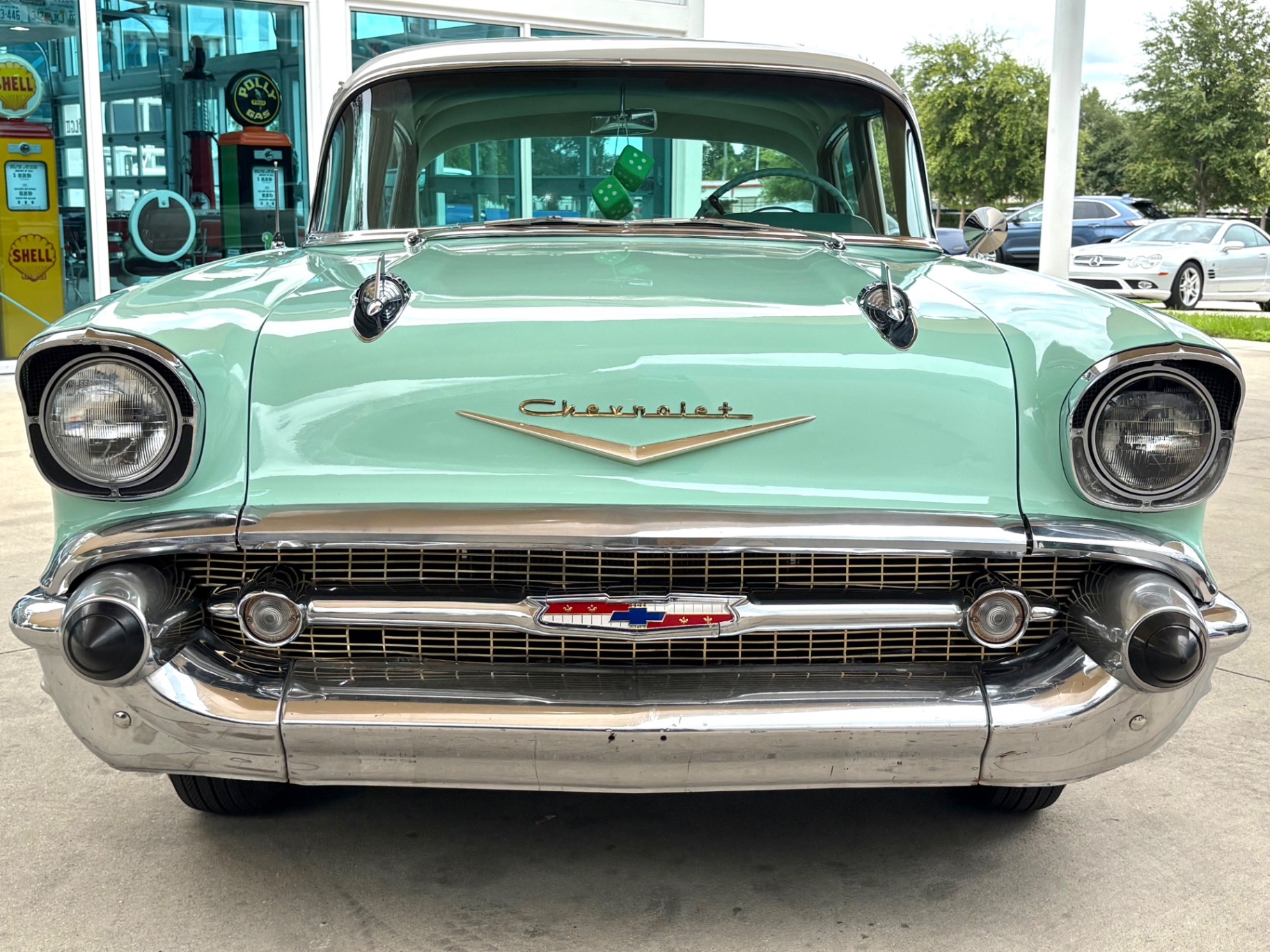
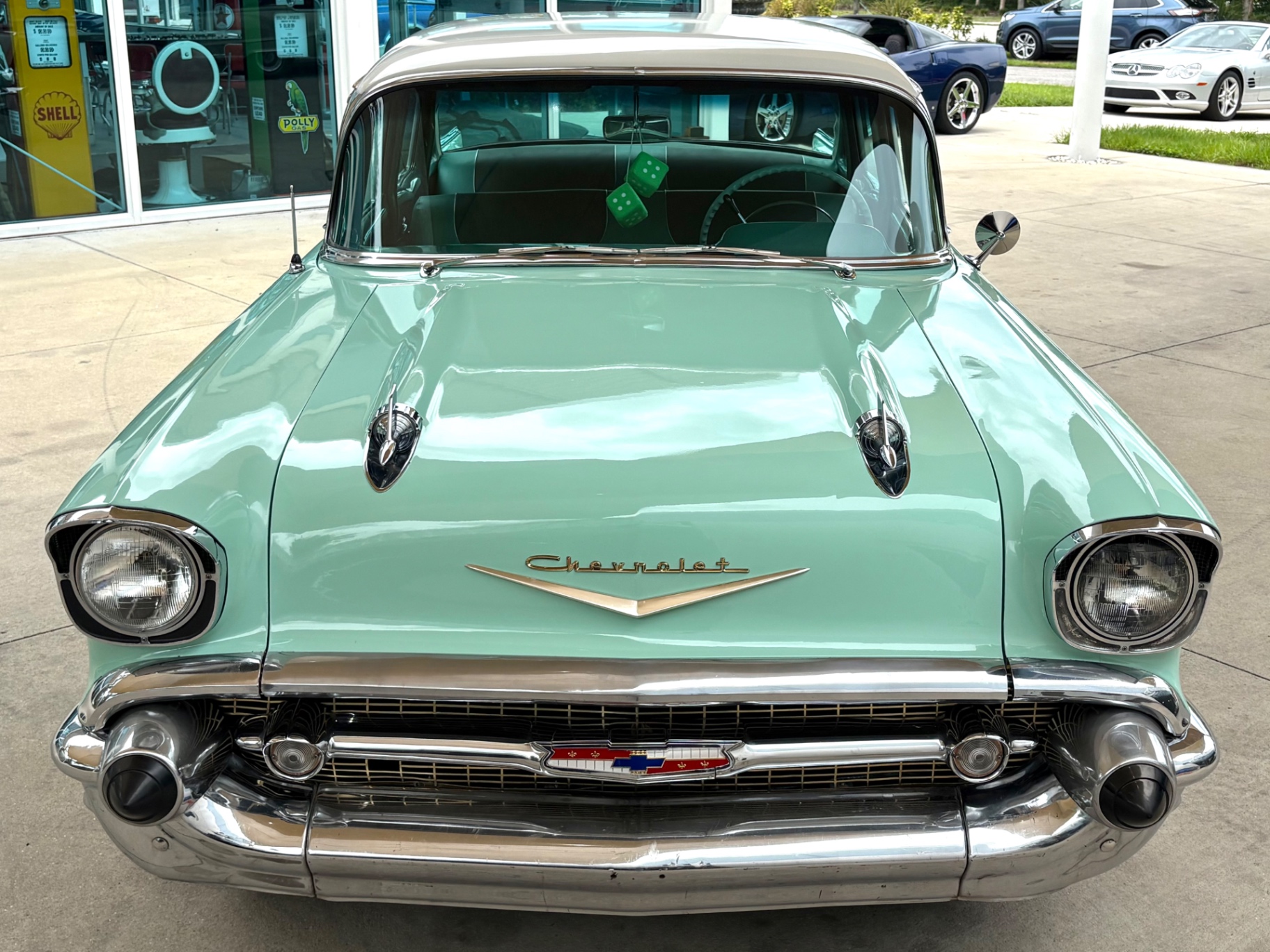
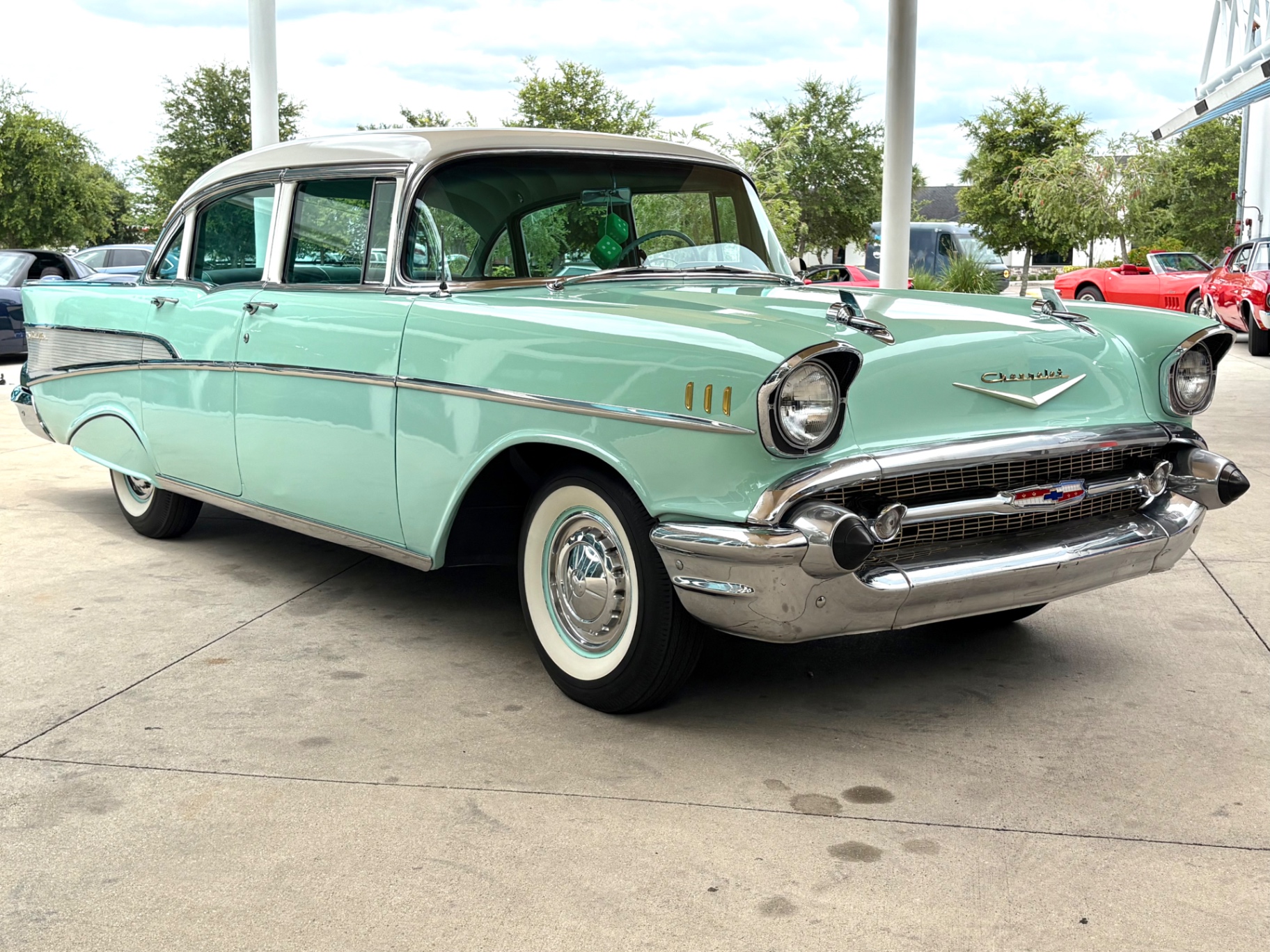
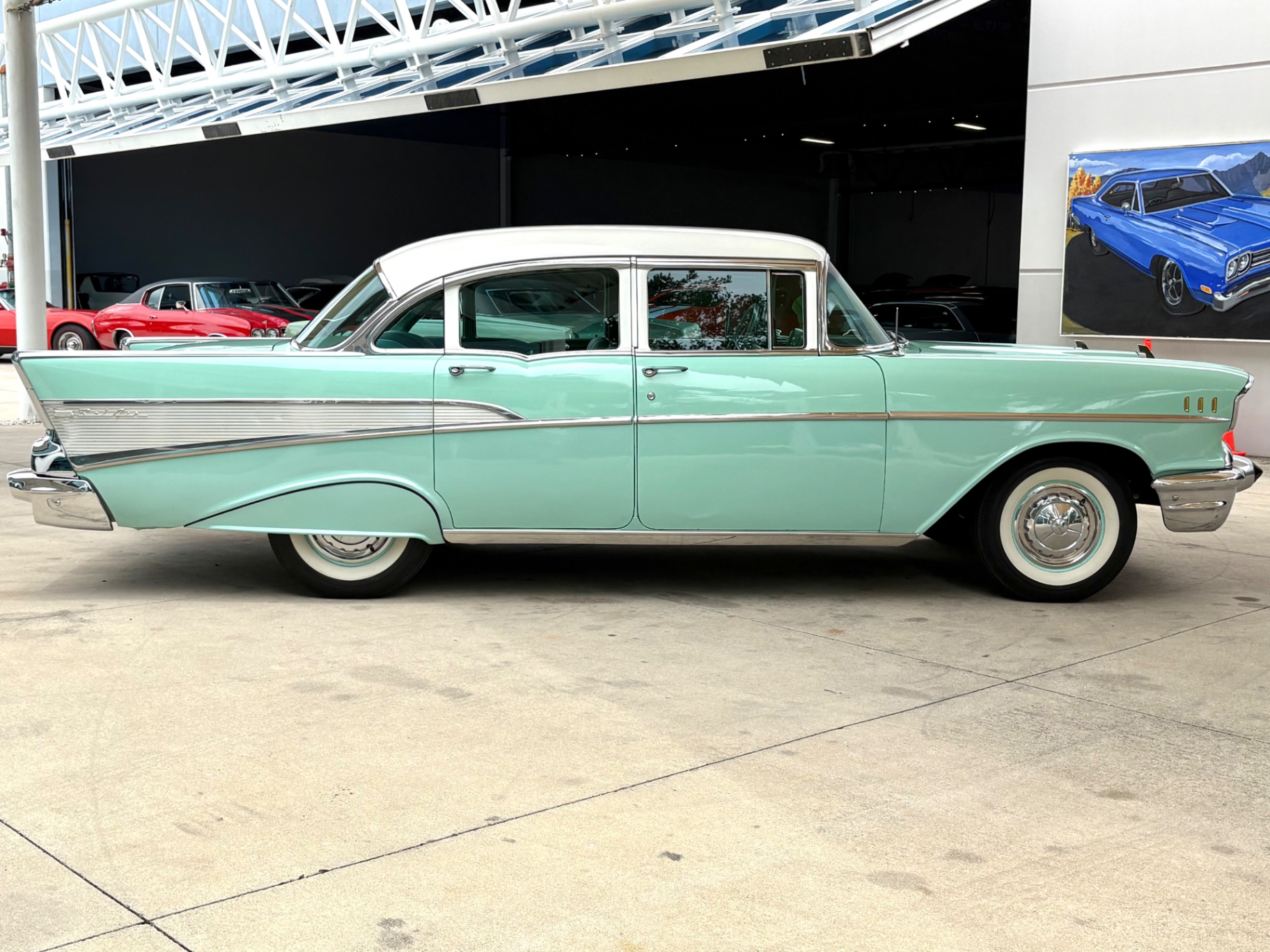
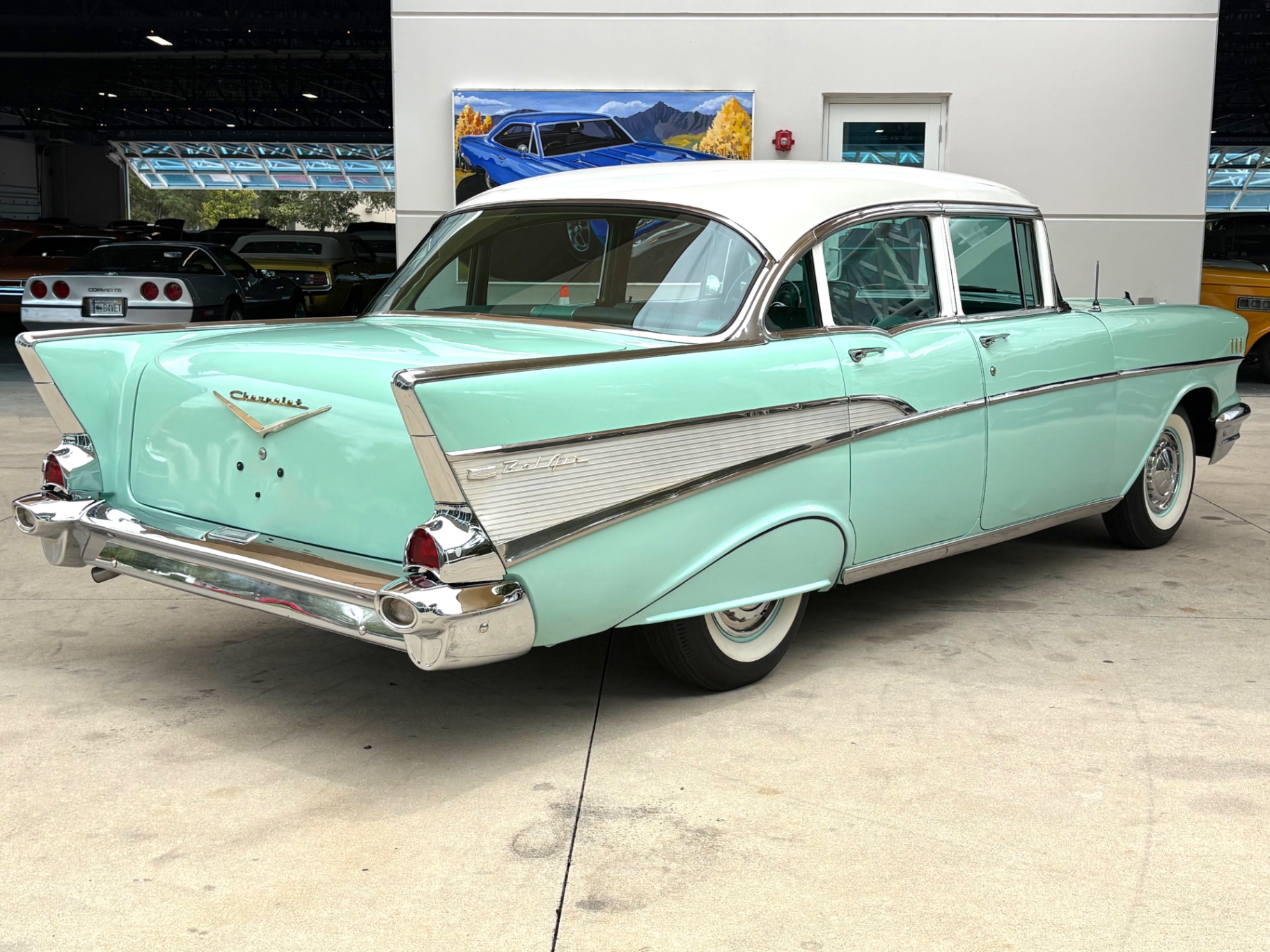
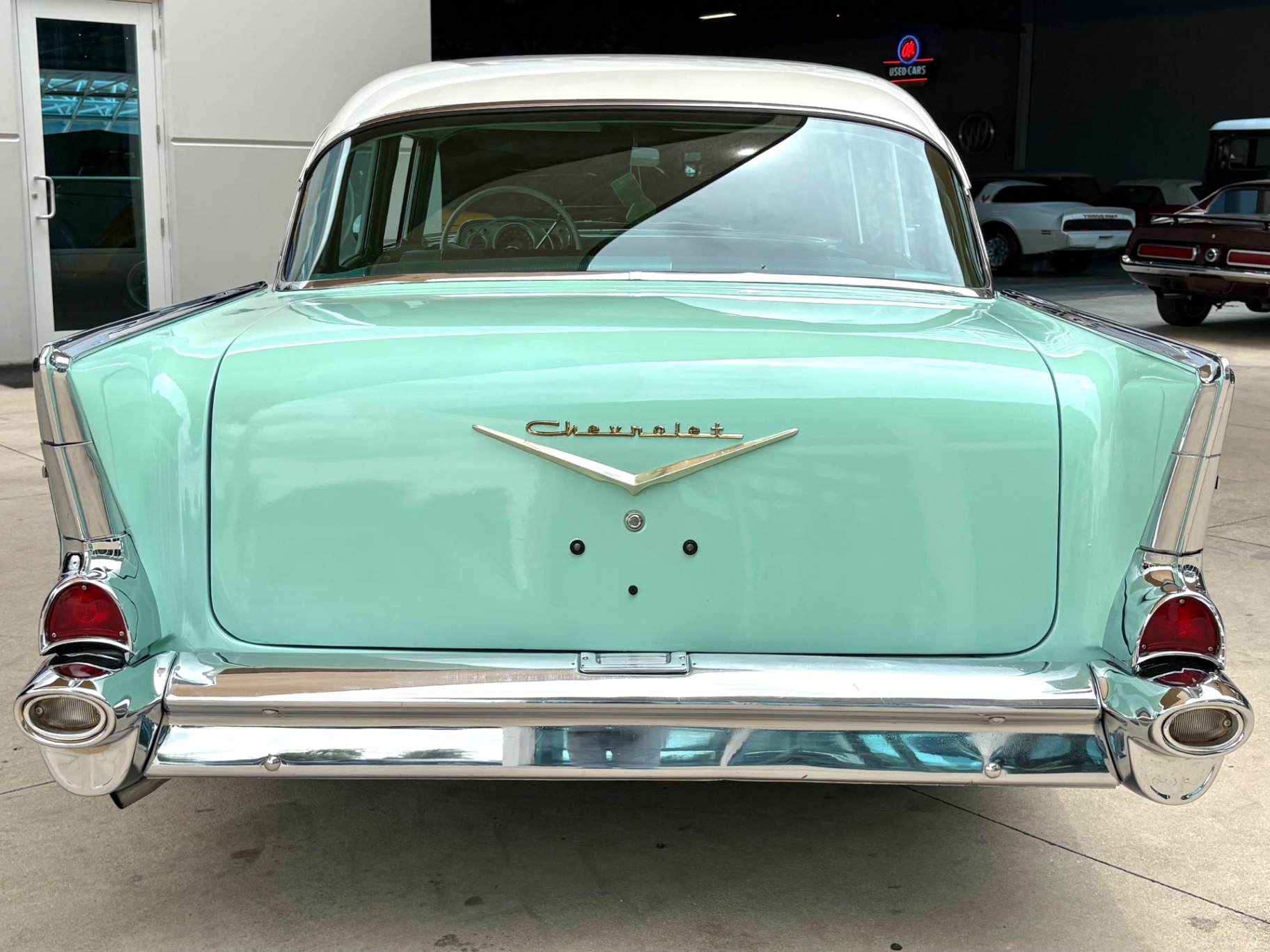
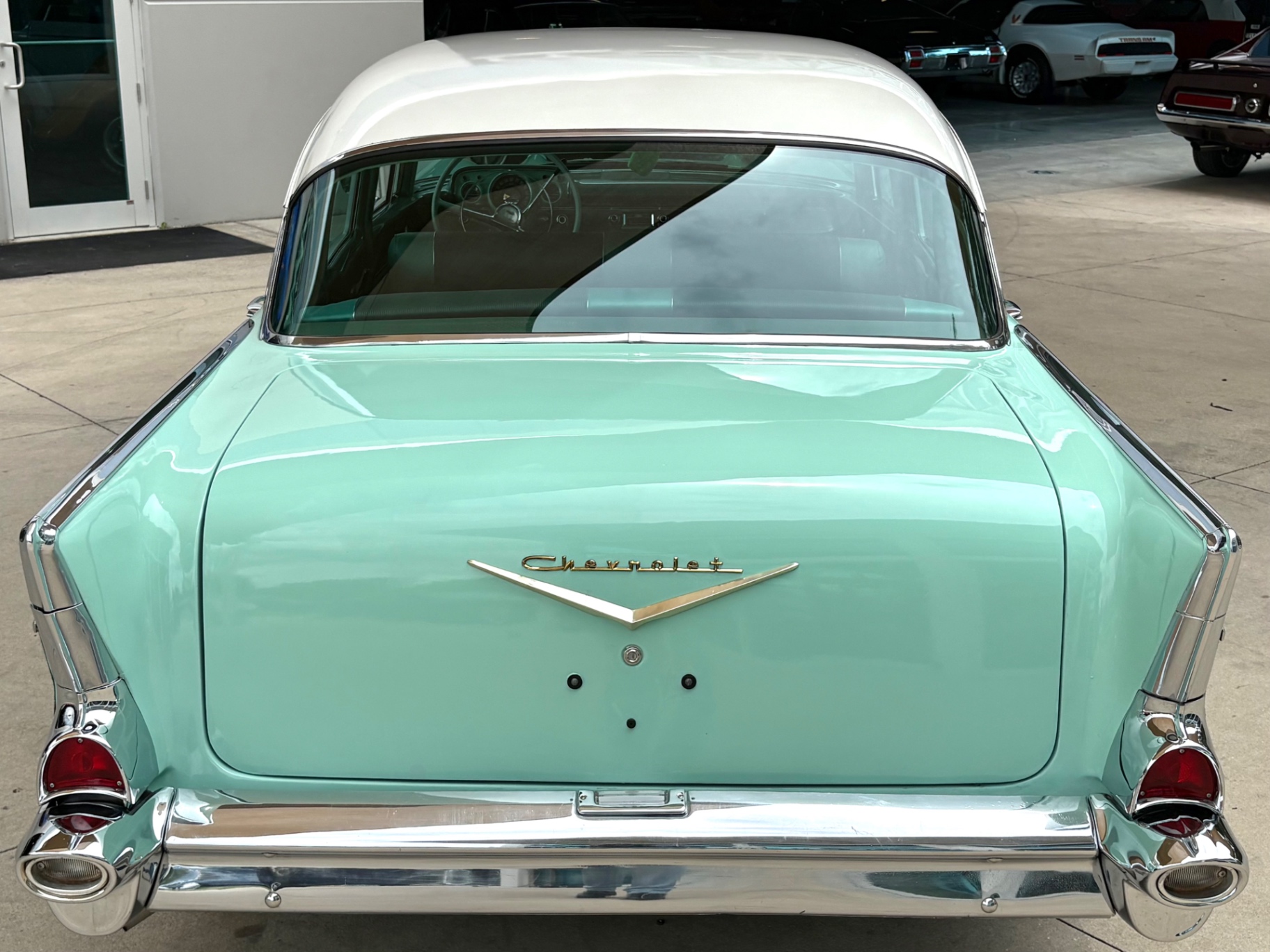
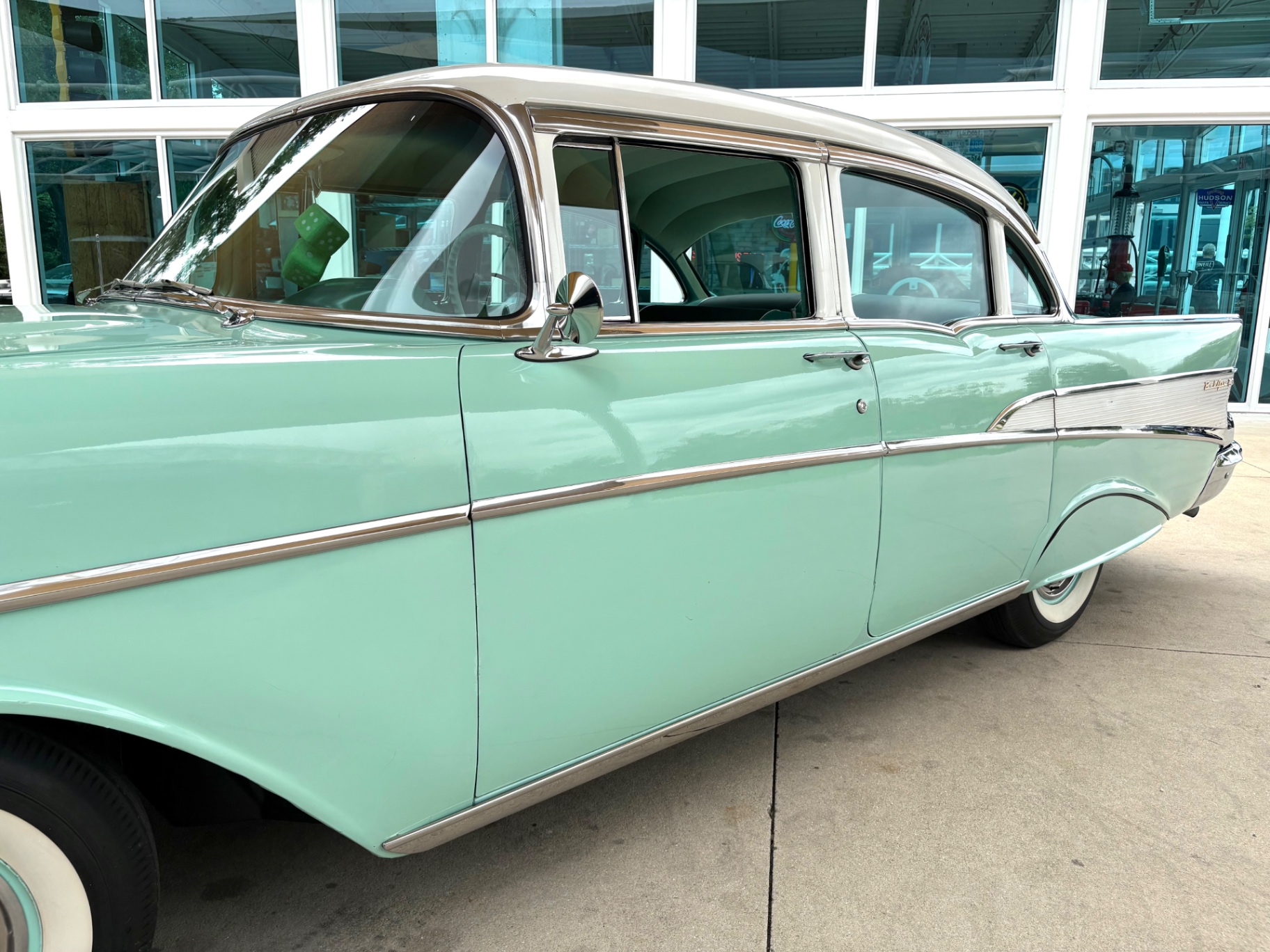
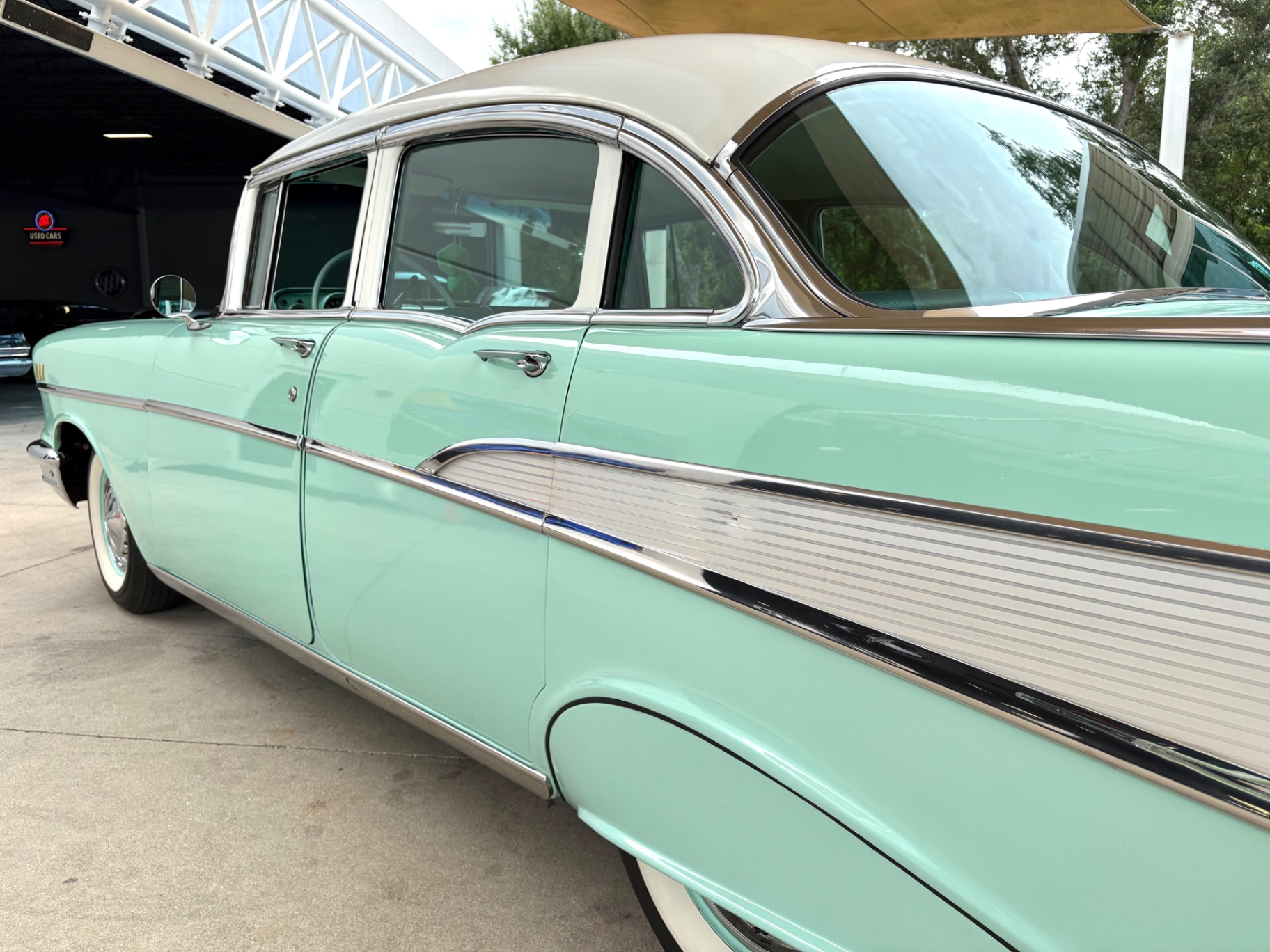
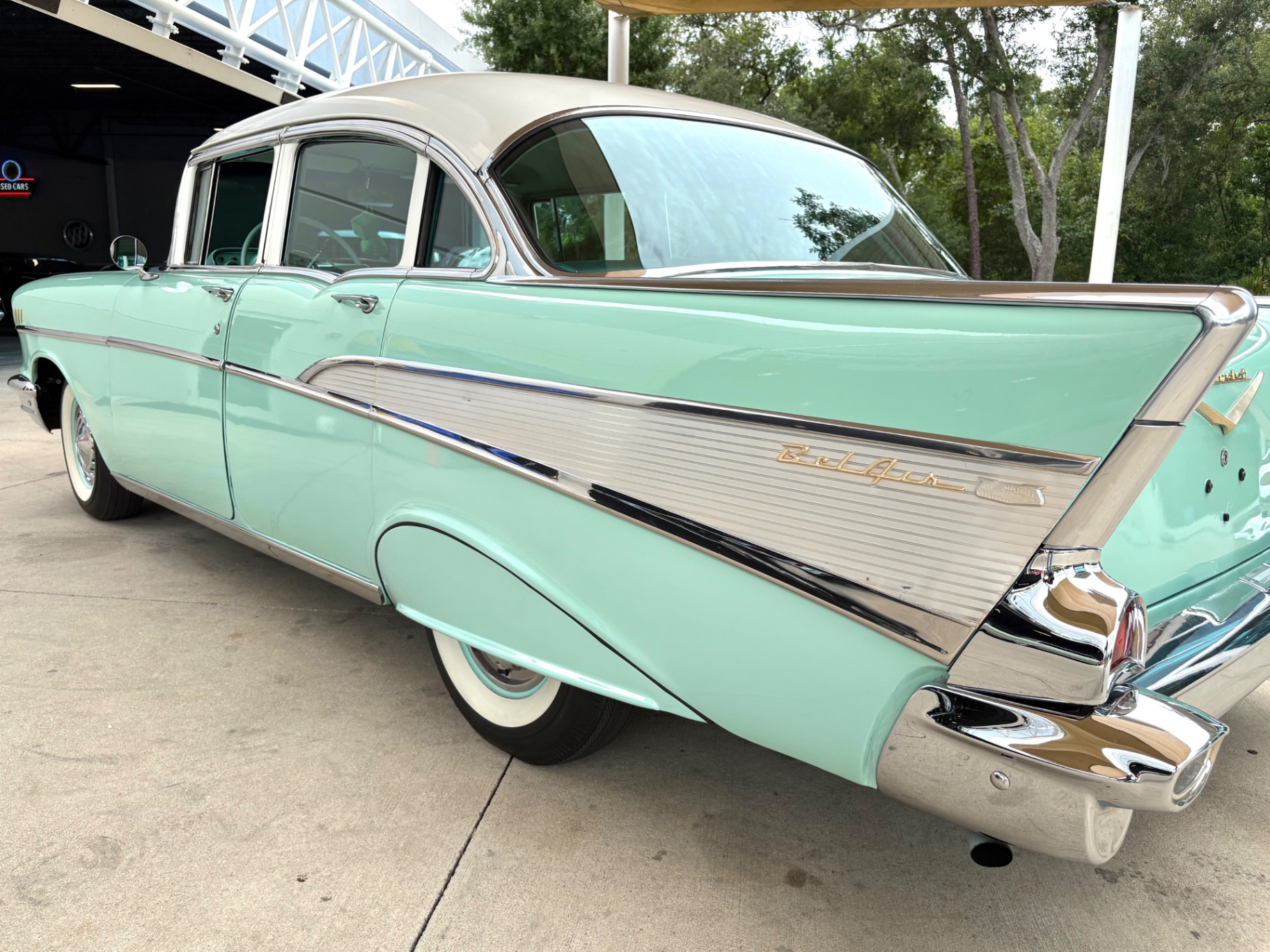
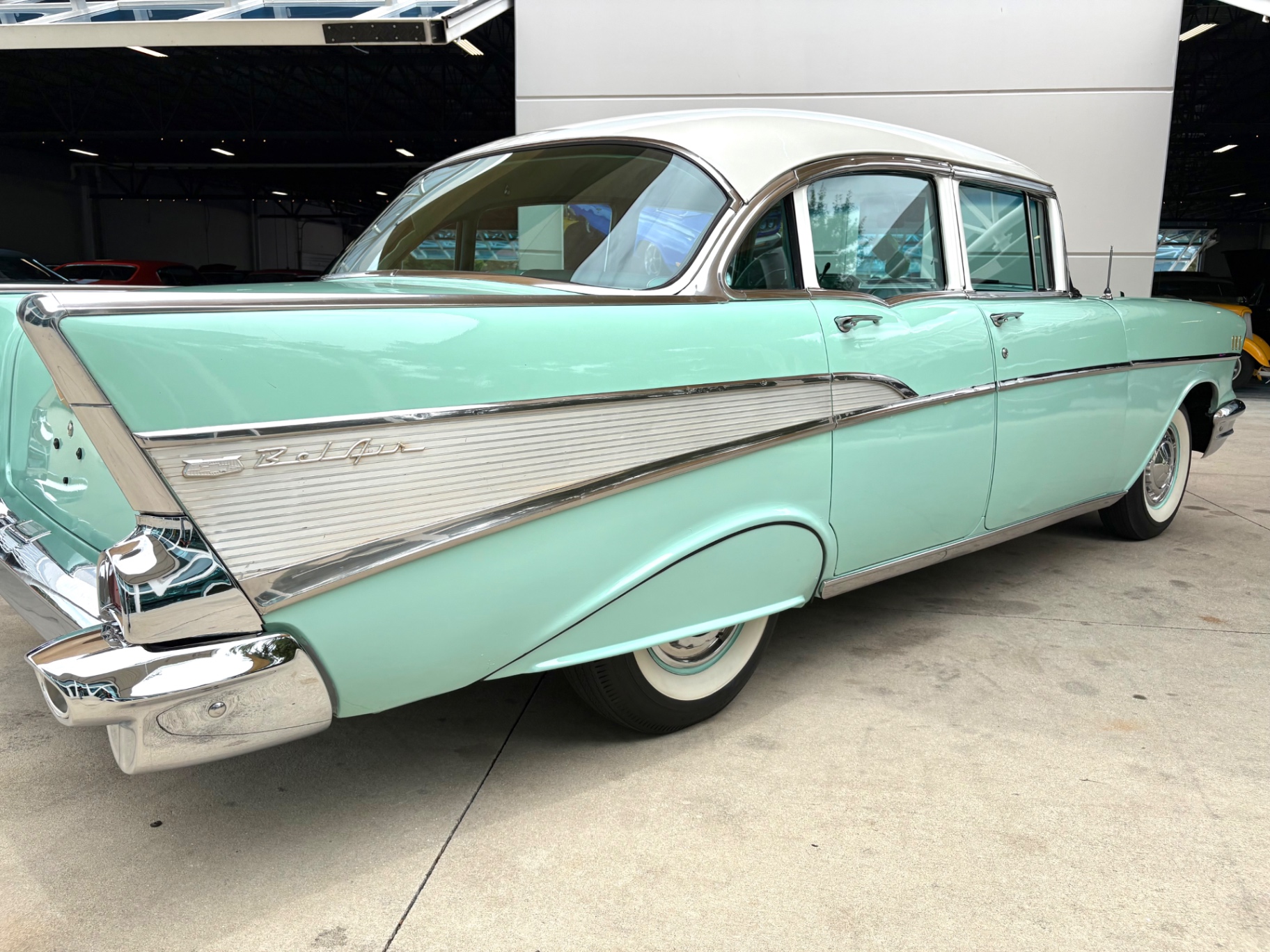
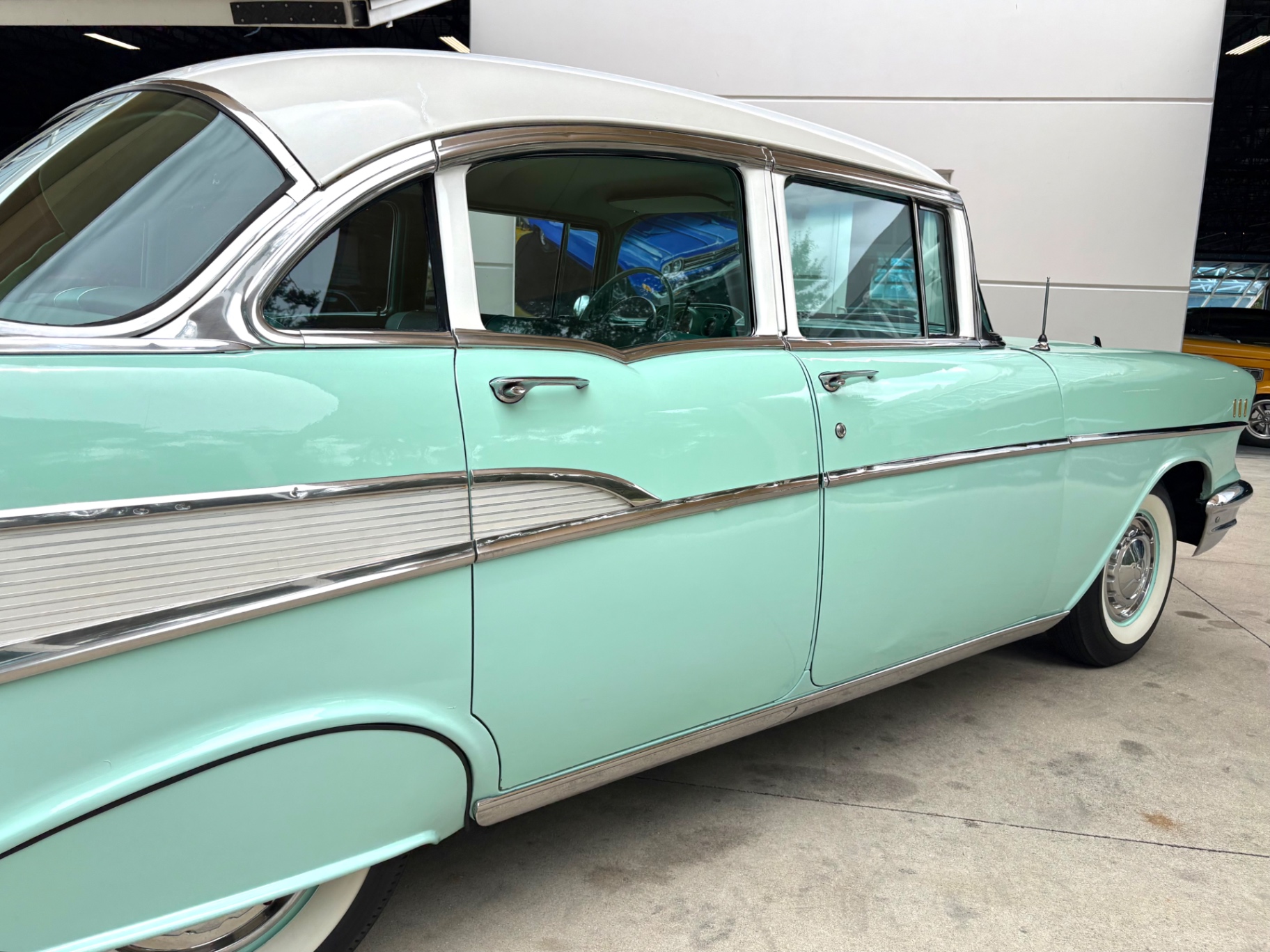
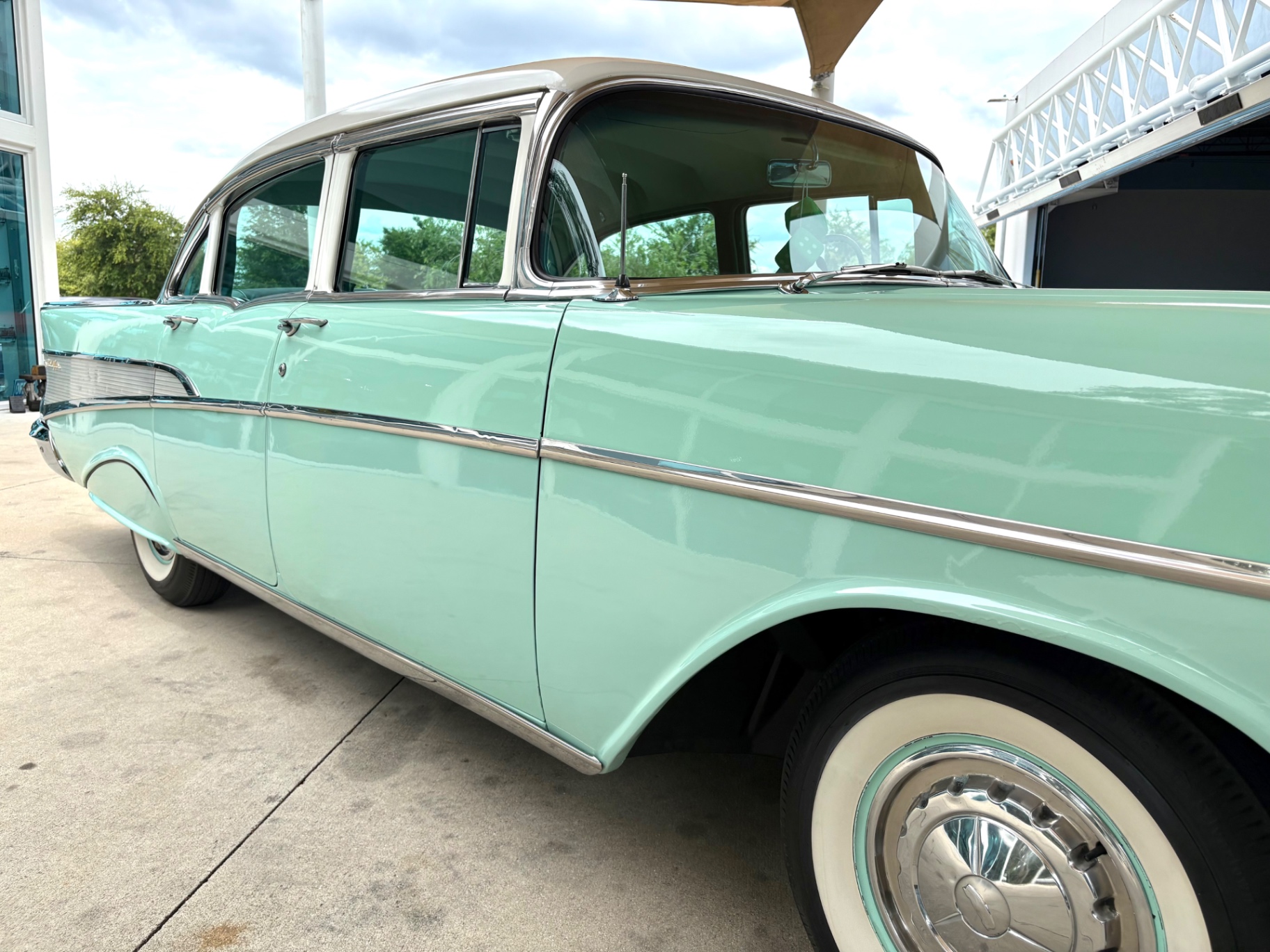
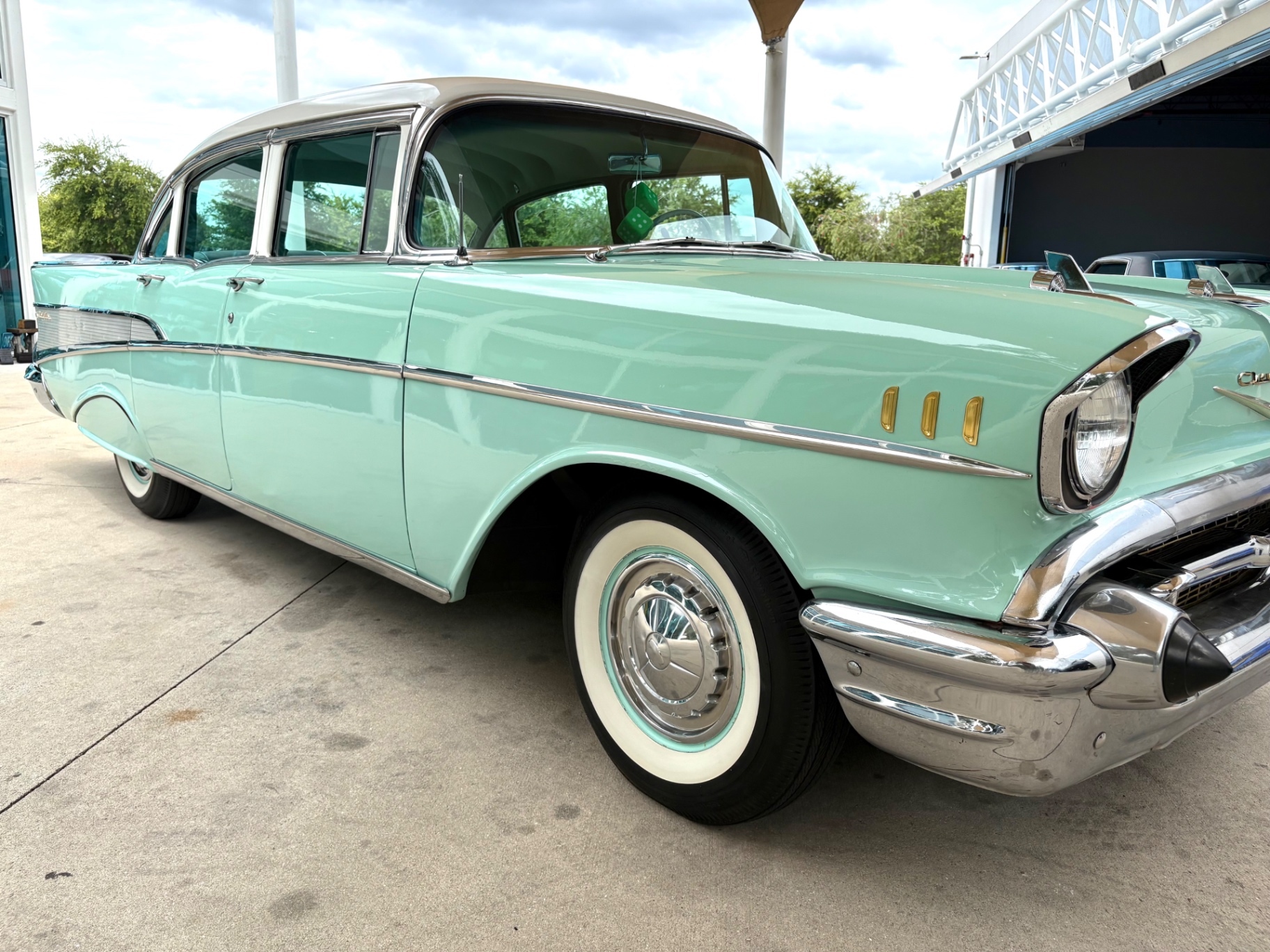
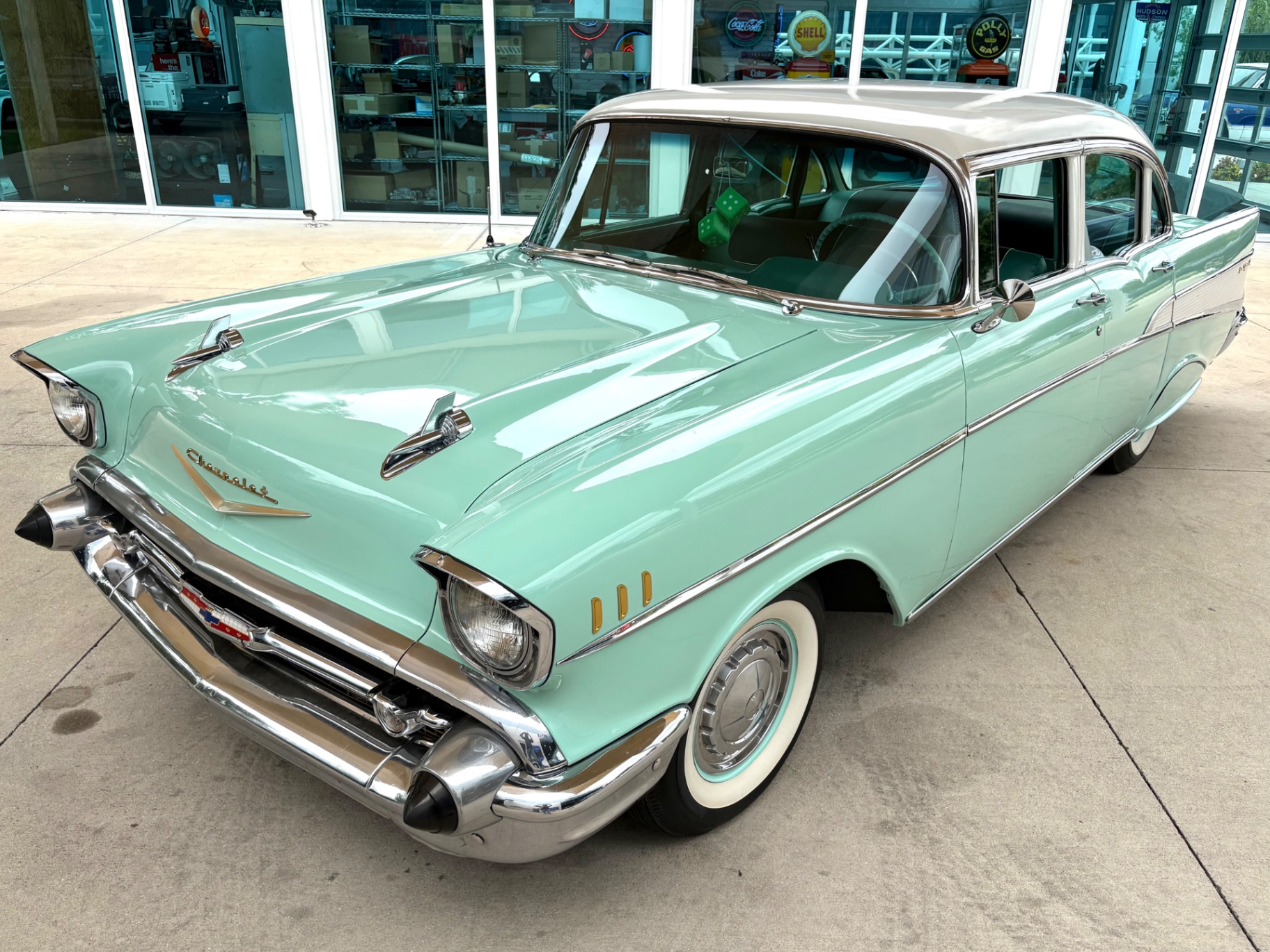
1957 Chevrolet Bel Air 4-Door Sedan — 283 V8, Ivy Green Two-Tone, Solid Driver with Show-Quality Details
Why This Car Is Special
The 1957 Chevrolet Bel Air is one of the most recognized American automobiles ever built, and that reputation is fully deserved. The 1957 model year represented the peak of the Tri-Five generation — a three-year run from 1955 to 1957 that transformed Chevrolet from a plain family car brand into something people genuinely wanted. Of the three years, 1957 carried the most chrome, the boldest fins, and the most engine options Chevrolet had ever offered on a passenger car up to that point.
This particular car is a 4-door sedan, which is a body style that collectors are beginning to pay closer attention to. For years, the 2-door hardtop and Sport Coupe grabbed most of the attention, which means clean 4-door examples like this one have historically been undervalued relative to their condition and content. That gap is closing. The 4-door sedan offered the same full Bel Air trim package as the coupes — the chrome, the two-tone paint, the full interior appointments — with the added practicality of rear door access and, in this case, rear seat belts.
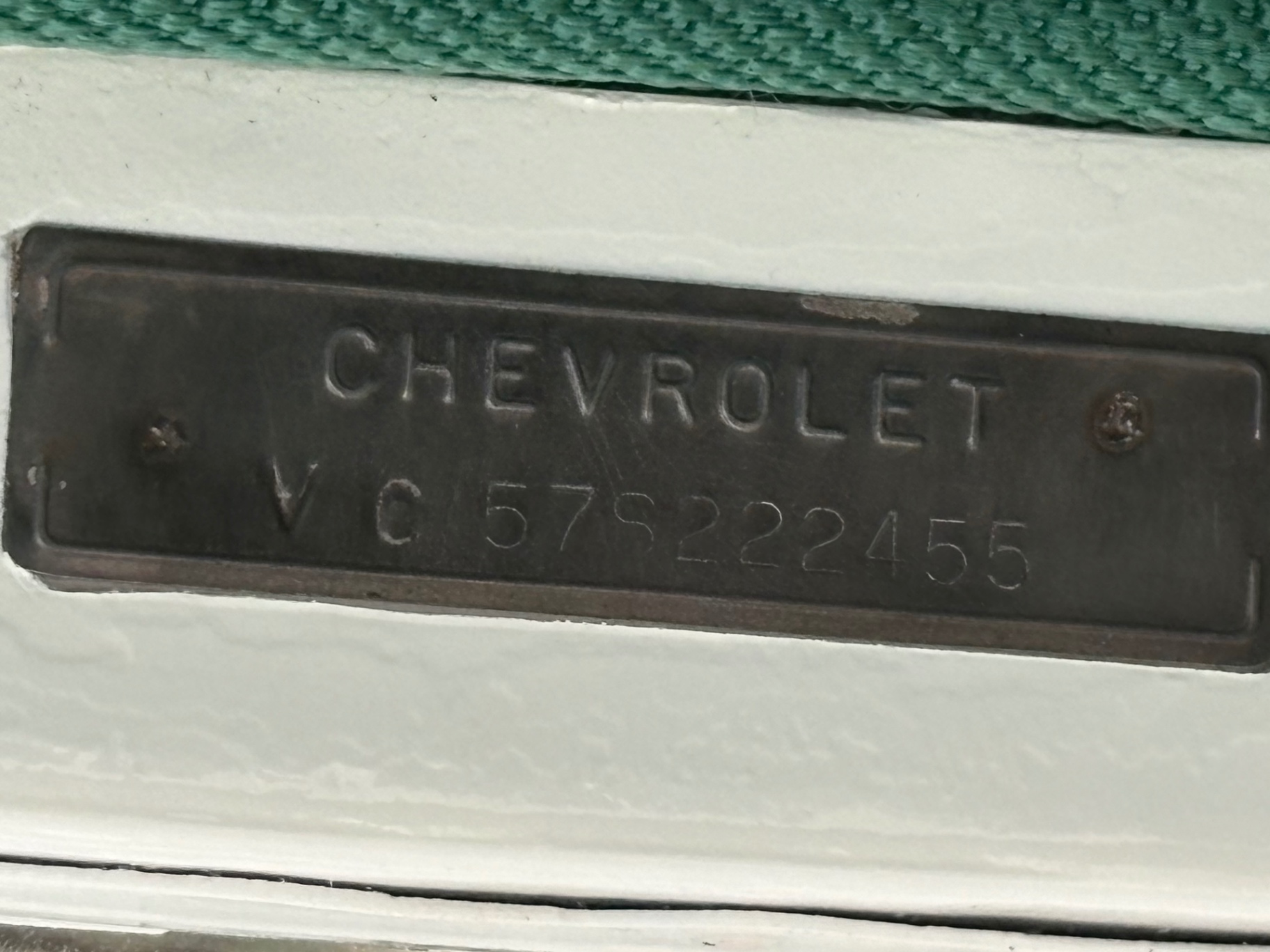
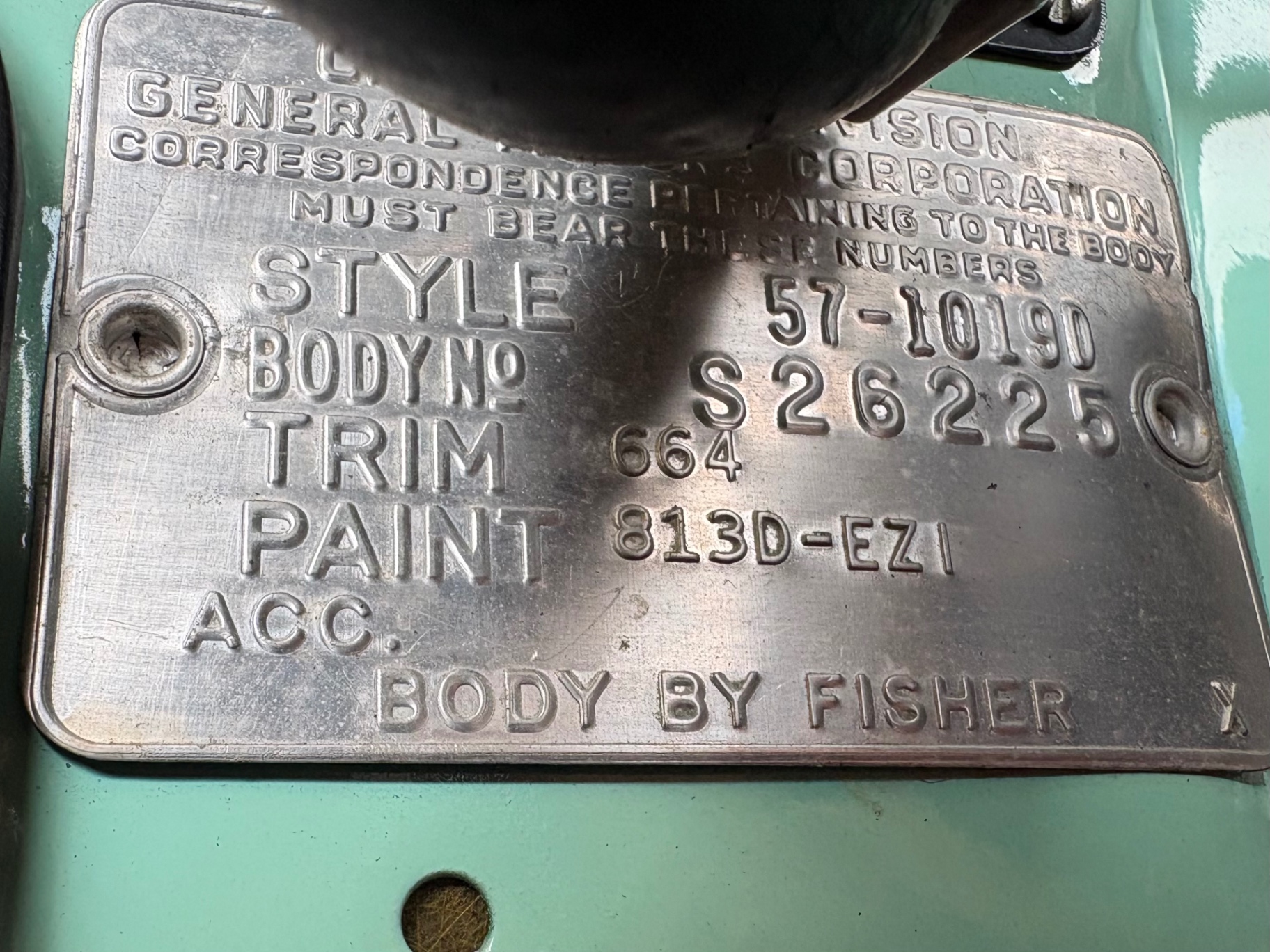
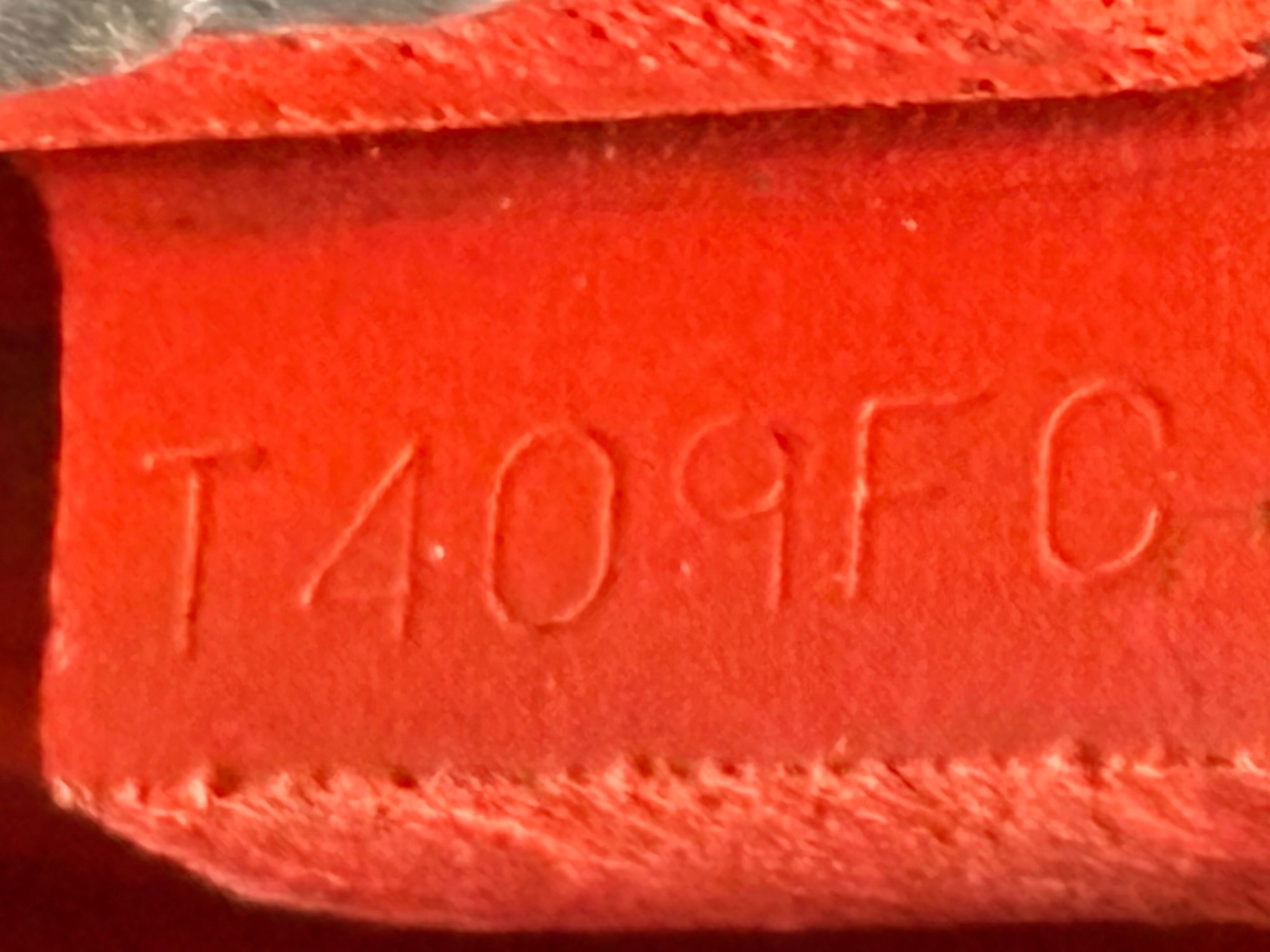
The VIN on this car confirms it was built as a Flint, Michigan assembly product, coded as a 1957 Chevrolet V8 Bel Air 4-door sedan. The "S" in the VIN sequence identifies Flint as the assembly plant, which is consistent with the car's documentation. The 283ci small block V8 was introduced by Chevrolet in 1957, replacing the 265 that debuted in 1955. The 283 is historically significant because it was the first production V8 in GM history to achieve one horsepower per cubic inch of displacement in its top fuel-injected form. This car carries the base 283 with a 2-speed Powerglide automatic, which was a common and practical specification for buyers who wanted V8 performance without a manual clutch. The gold "V" badge below the Chevrolet script on the hood confirms the V8 specification to any knowledgeable observer.
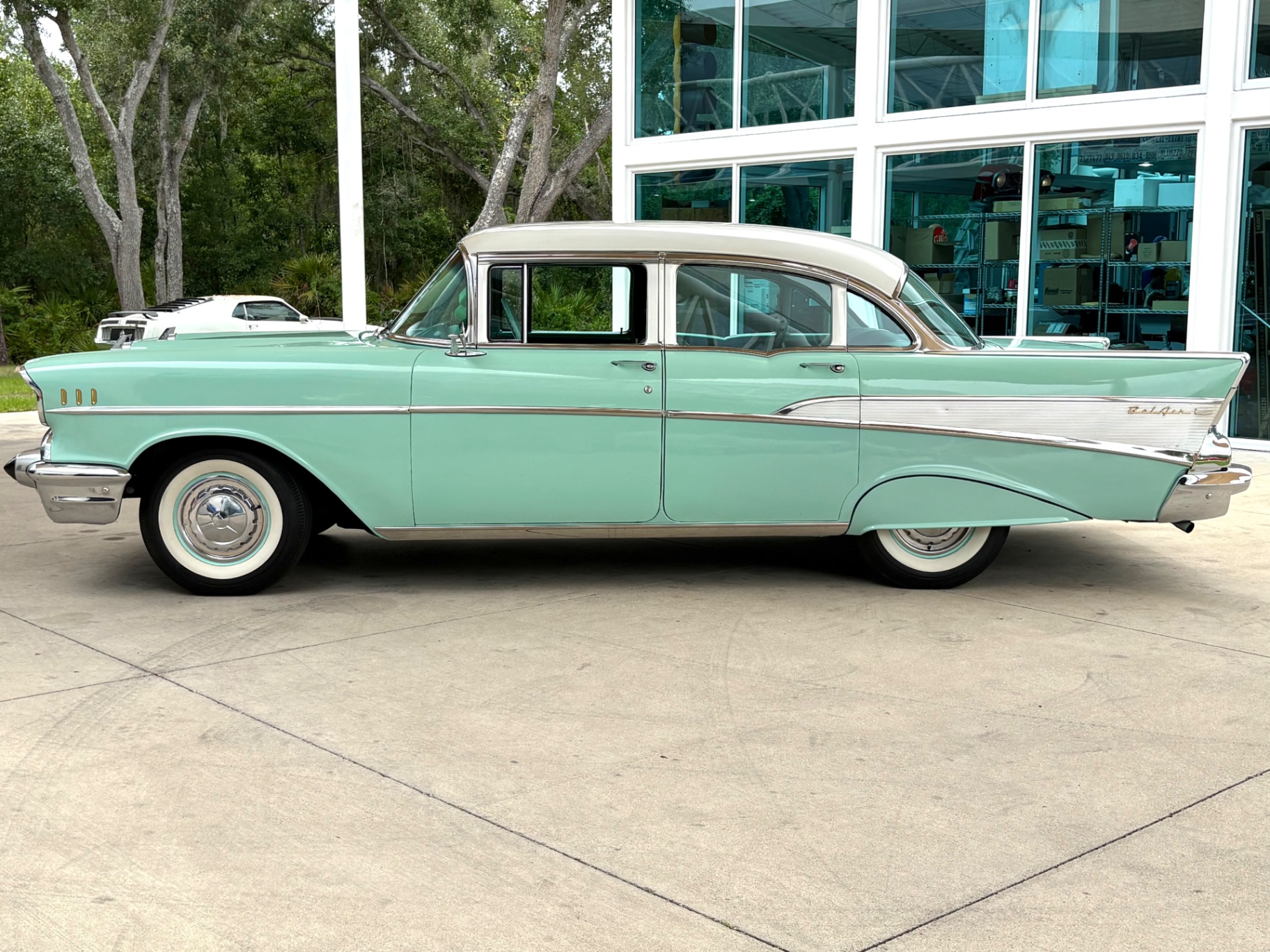
The color combination — Ivy Green body with a white two-tone roof — is one of the factory combinations offered for 1957 and gives this car a cooler, more understated presence than the red-and-white or black-and-white cars that tend to dominate show fields. It works particularly well on the 4-door sedan body, where the white roof caps the greenhouse cleanly and the chrome side molding divides the two colors right where GM's designers intended.
Features List
- 283ci Small Block V8 engine
- 2-Speed Powerglide Automatic Transmission
- 4-Door Sedan body style
- Ivy Green exterior with white two-tone roof
- Chrome front and rear bumpers
- Chrome grille
- Chrome hood ornament
- Chrome side moldings and body trim
- Chrome tail lamp bezels
- Tail fins
- Gold "V" badge (factory V8 identifier)
- Bel Air script badging
- Whitewall tires
- Original-style hubcaps
- Green and black two-tone vinyl interior
- Front and rear bench seats
- Rear seat belts
- Green matching dash and interior trim
- Bel Air script on dashboard fascia
- AM radio
- Dash clock
- Vinyl floor mats with Bowtie logo
- Chrome interior door handles
- Painted engine bay
- Aluminum radiator overflow canister
- Clean undercarriage
- Drum brakes all around
Mechanical
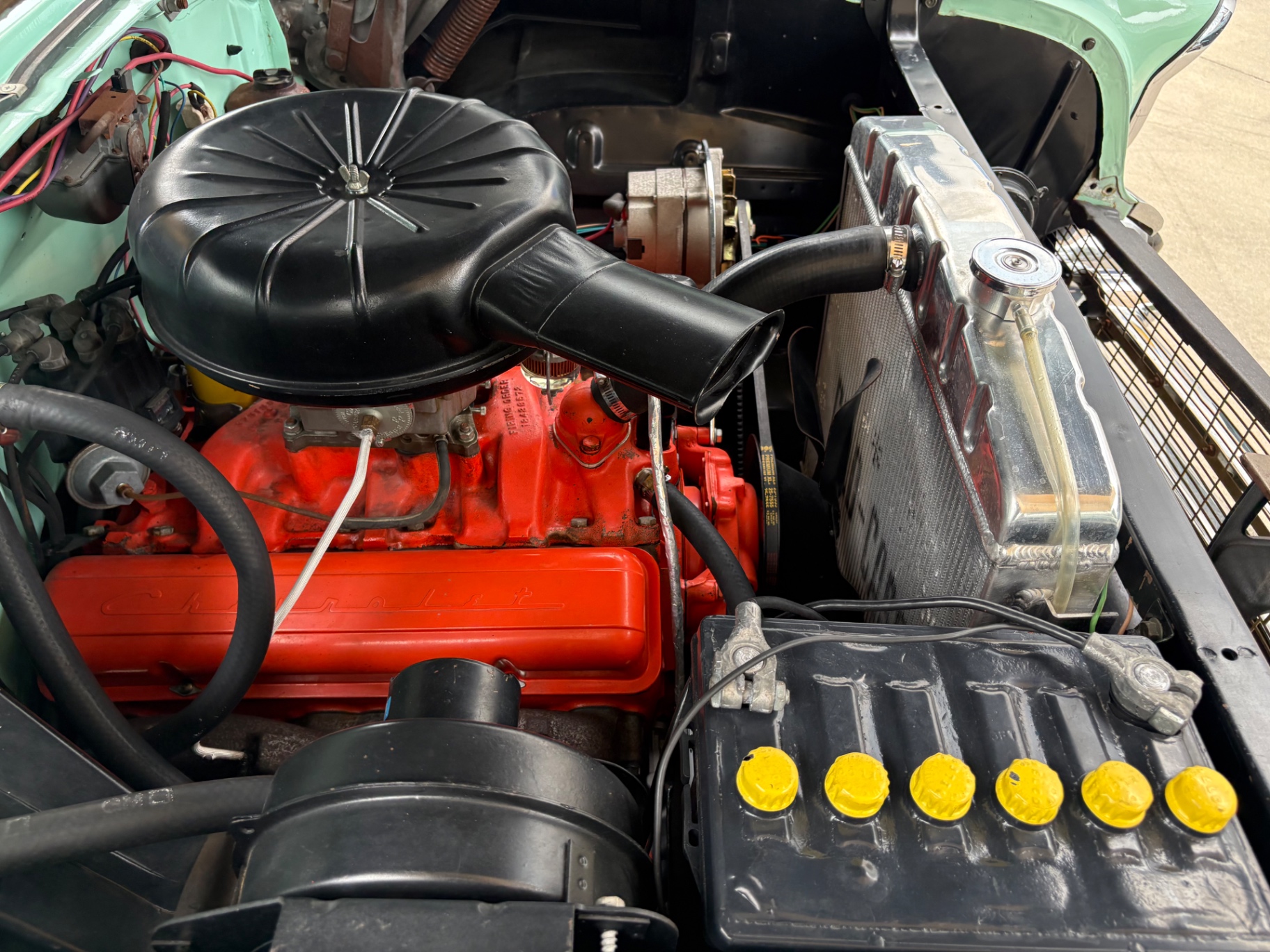
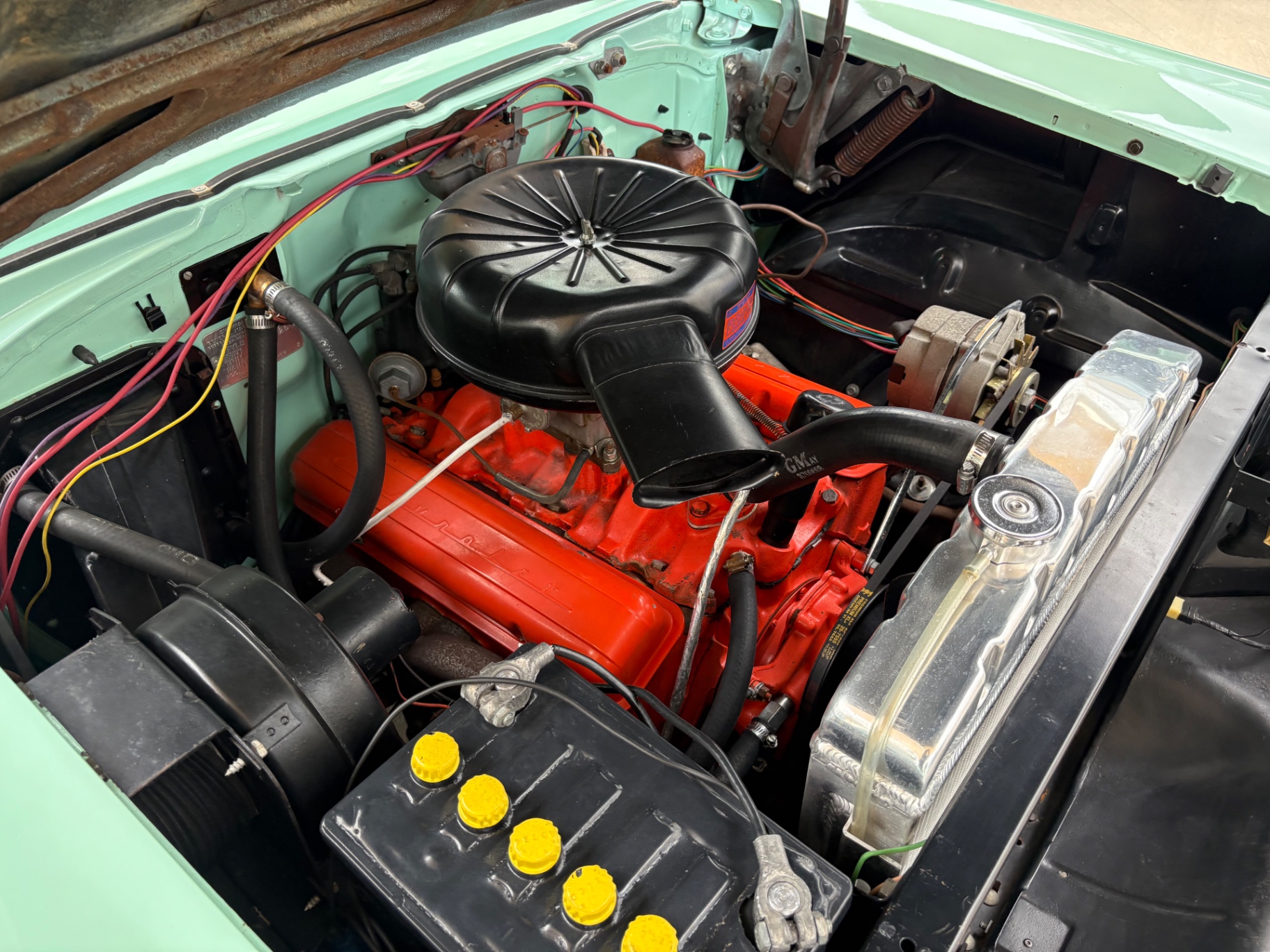
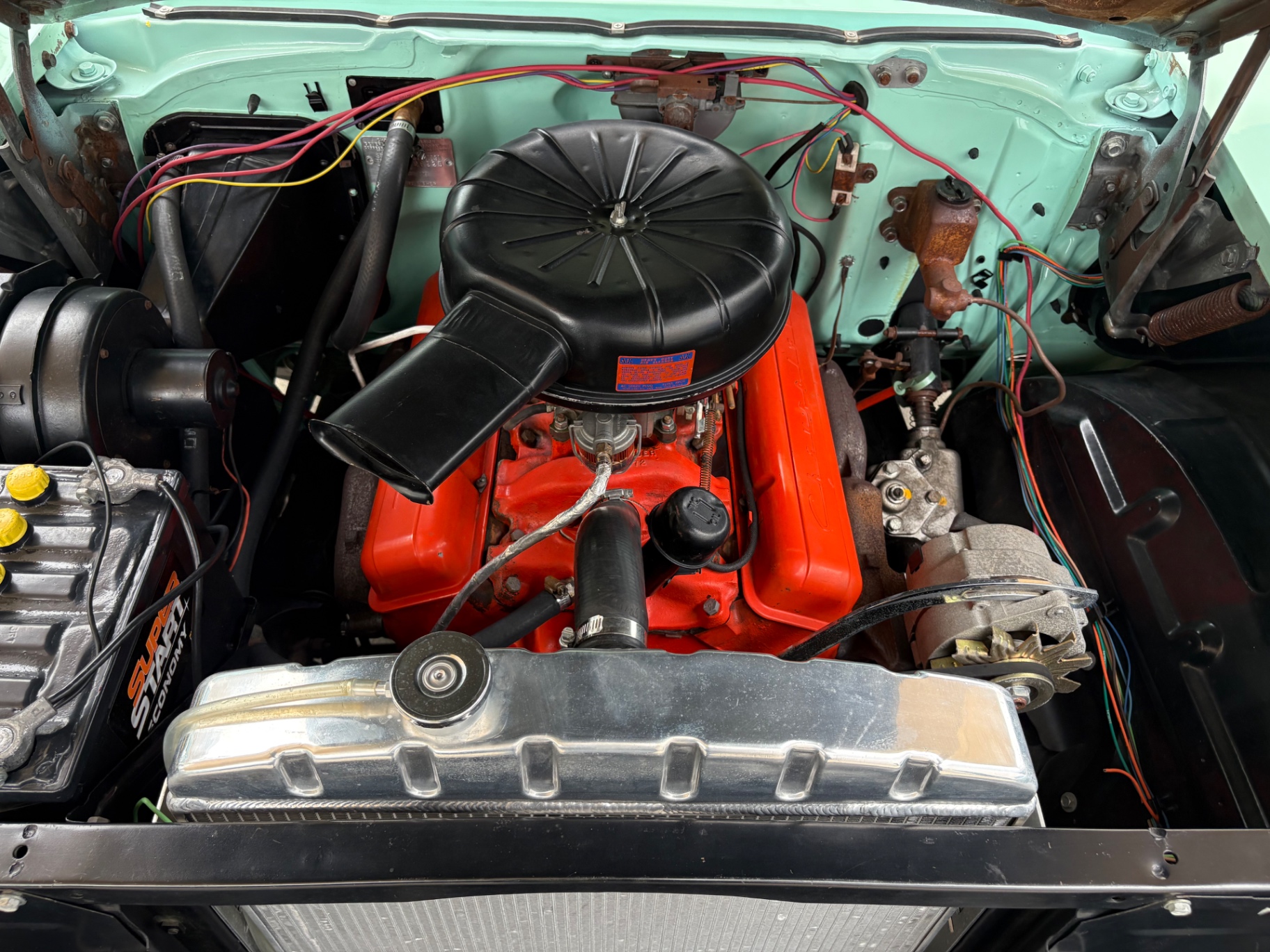
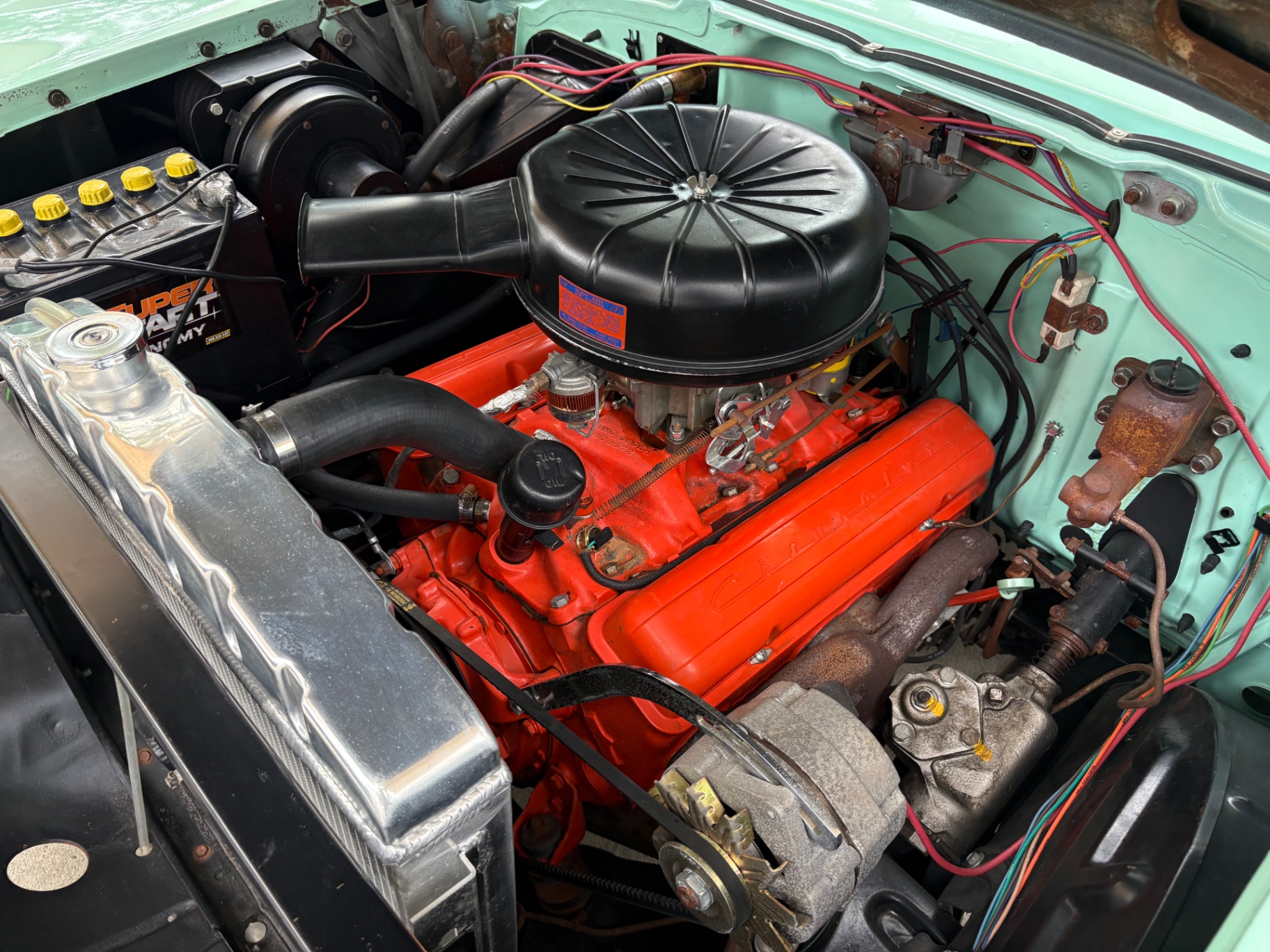
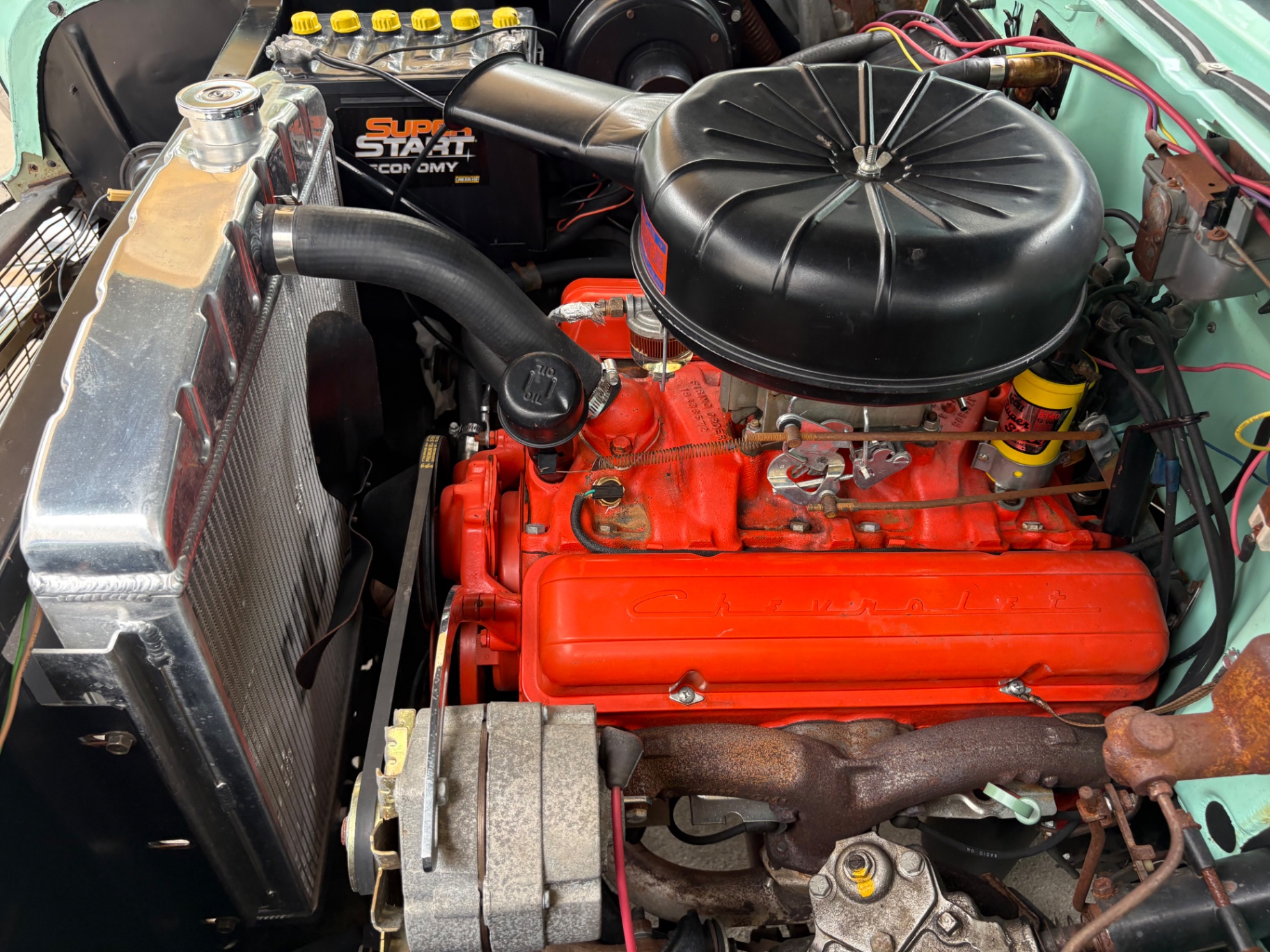
The 283ci small block V8 sits in the engine bay painted in the factory Chevrolet red, which is correct for the era and gives the compartment a purposeful, period-correct appearance. The engine is mated to the 2-speed Powerglide automatic, one of the most reliable transmissions Chevrolet produced during this period. The Powerglide had been in production since 1950 and by 1957 was a well-sorted unit. It requires less maintenance than a manual and is entirely appropriate for a car driven regularly rather than stored. The combination of the 283 and Powerglide was one of the most popular configurations on the order sheet in 1957.
An aluminum radiator overflow canister has been added, a practical improvement that manages coolant expansion more cleanly than an open system. The engine bay itself is painted, keeping things tidy under the hood without going overboard on show-quality detailing. This is a car that has been cared for and driven, not one that has been trailered and pampered to the point of being too precious to use.
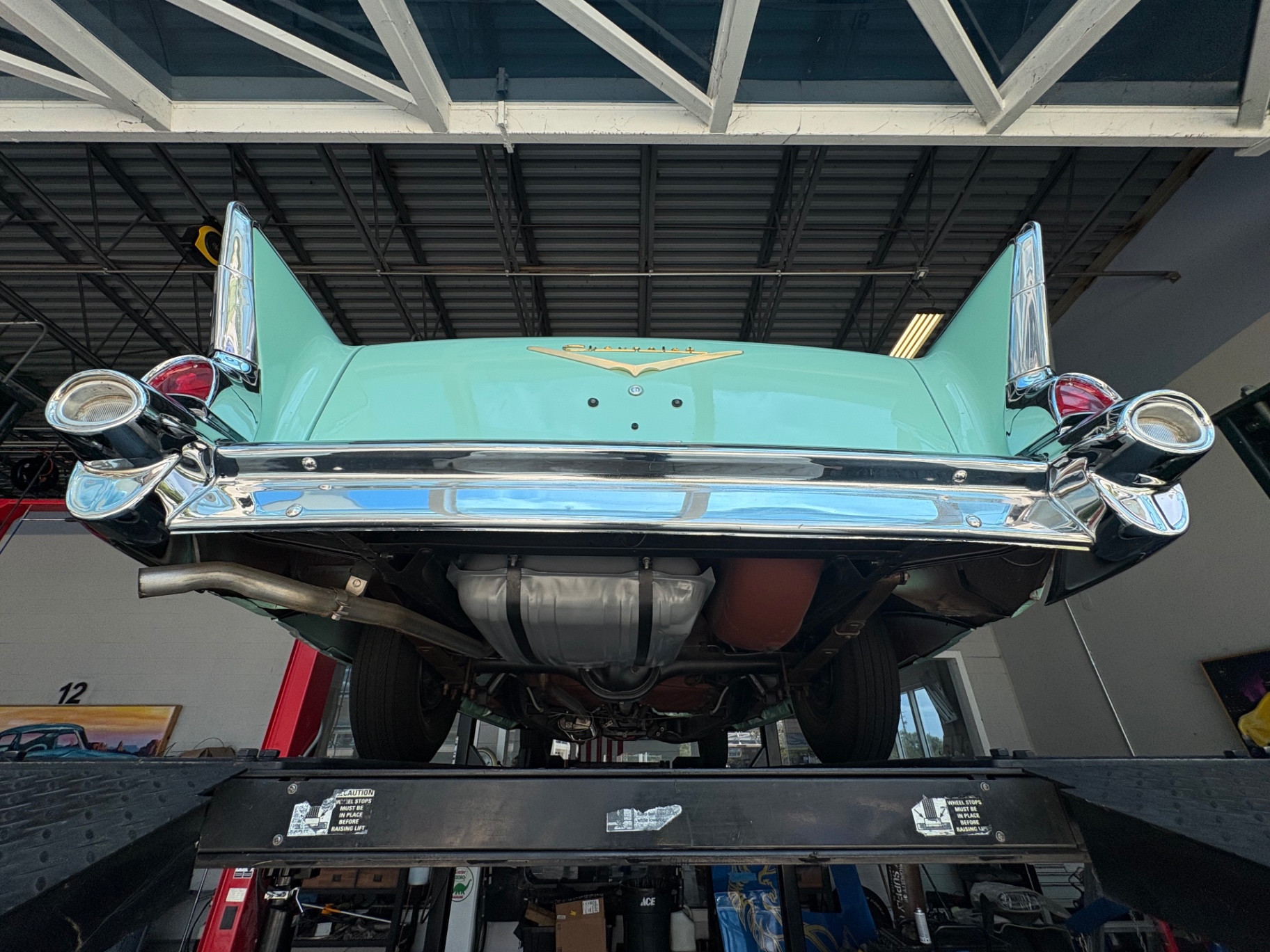
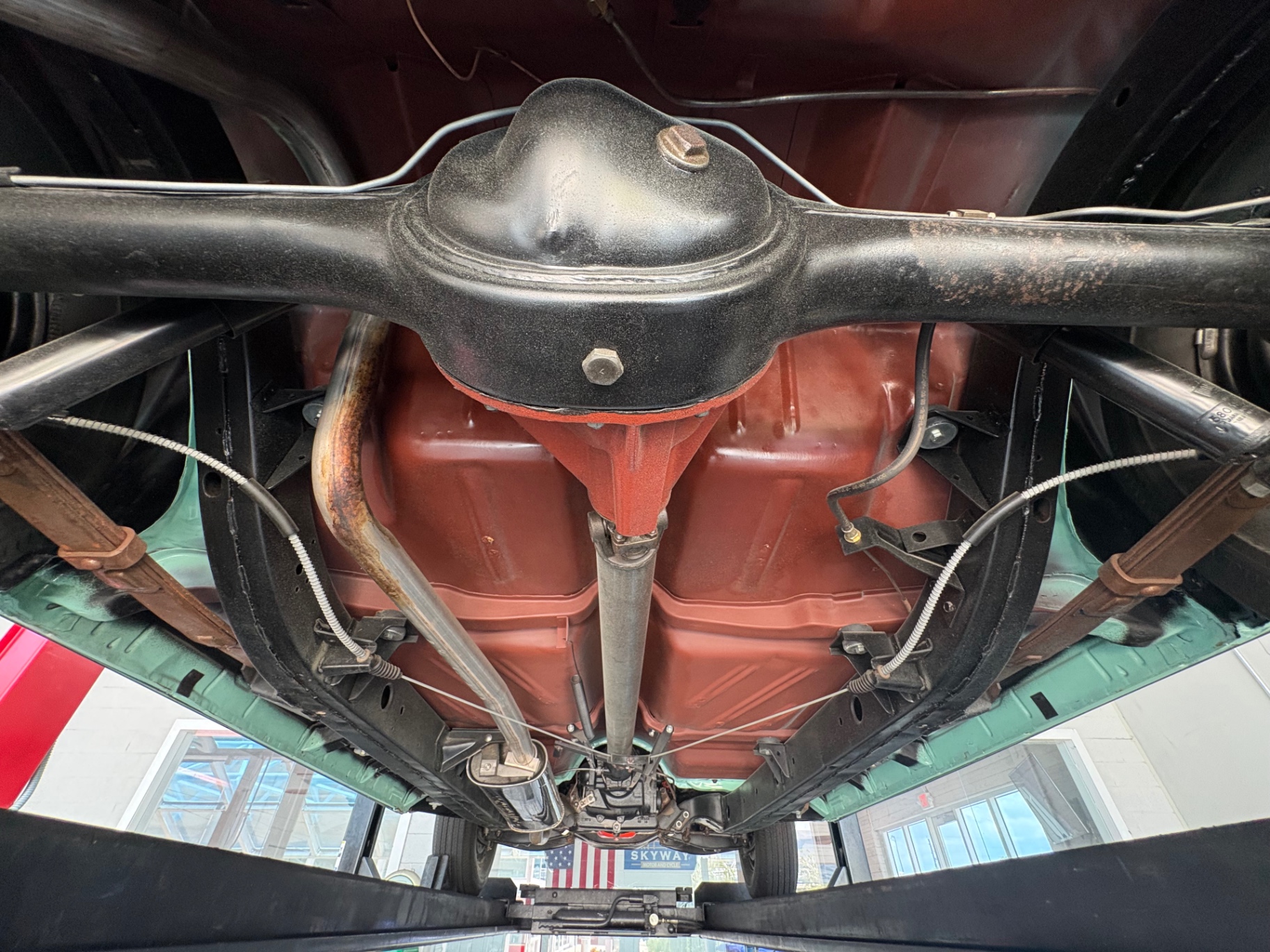
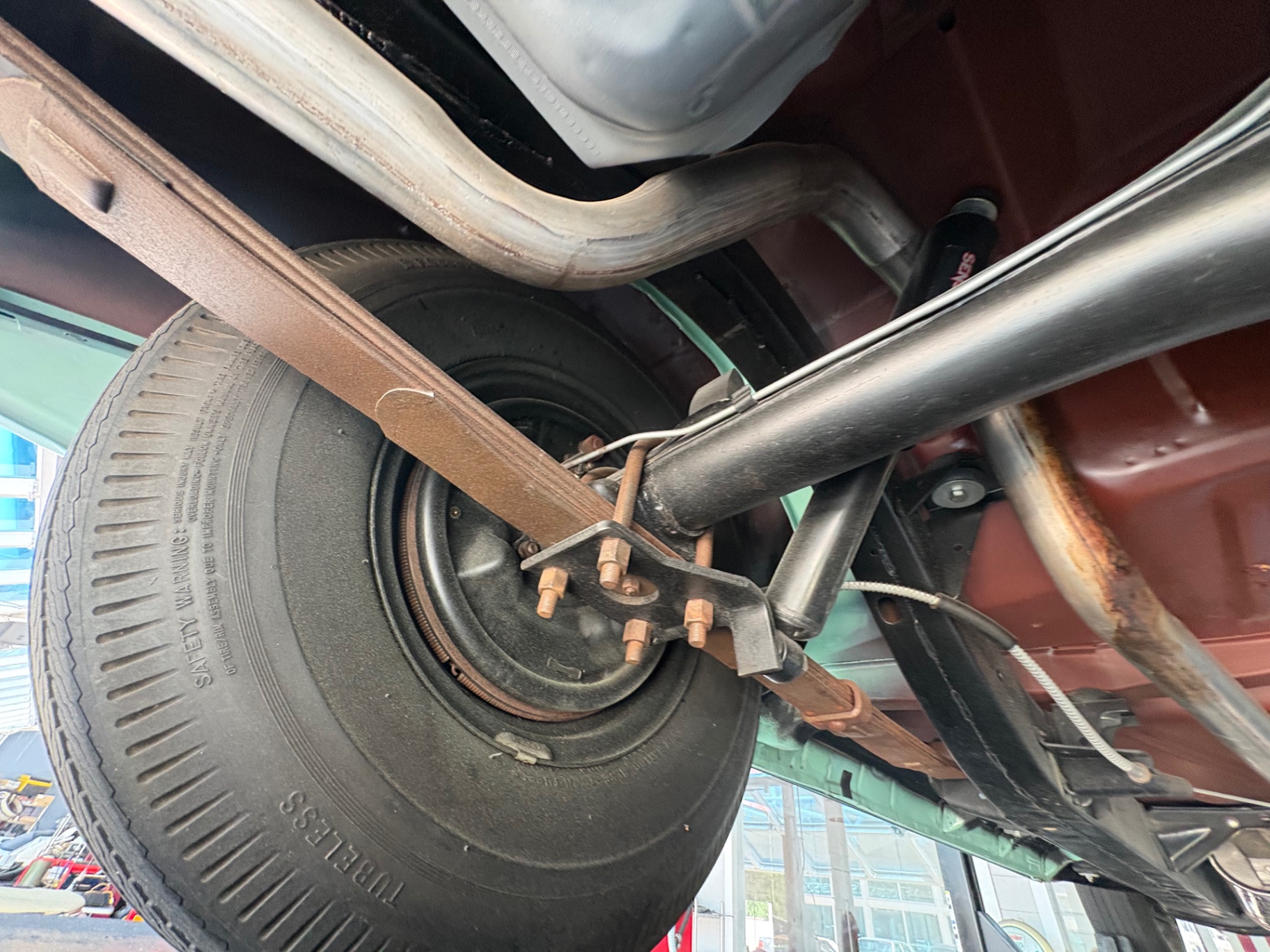
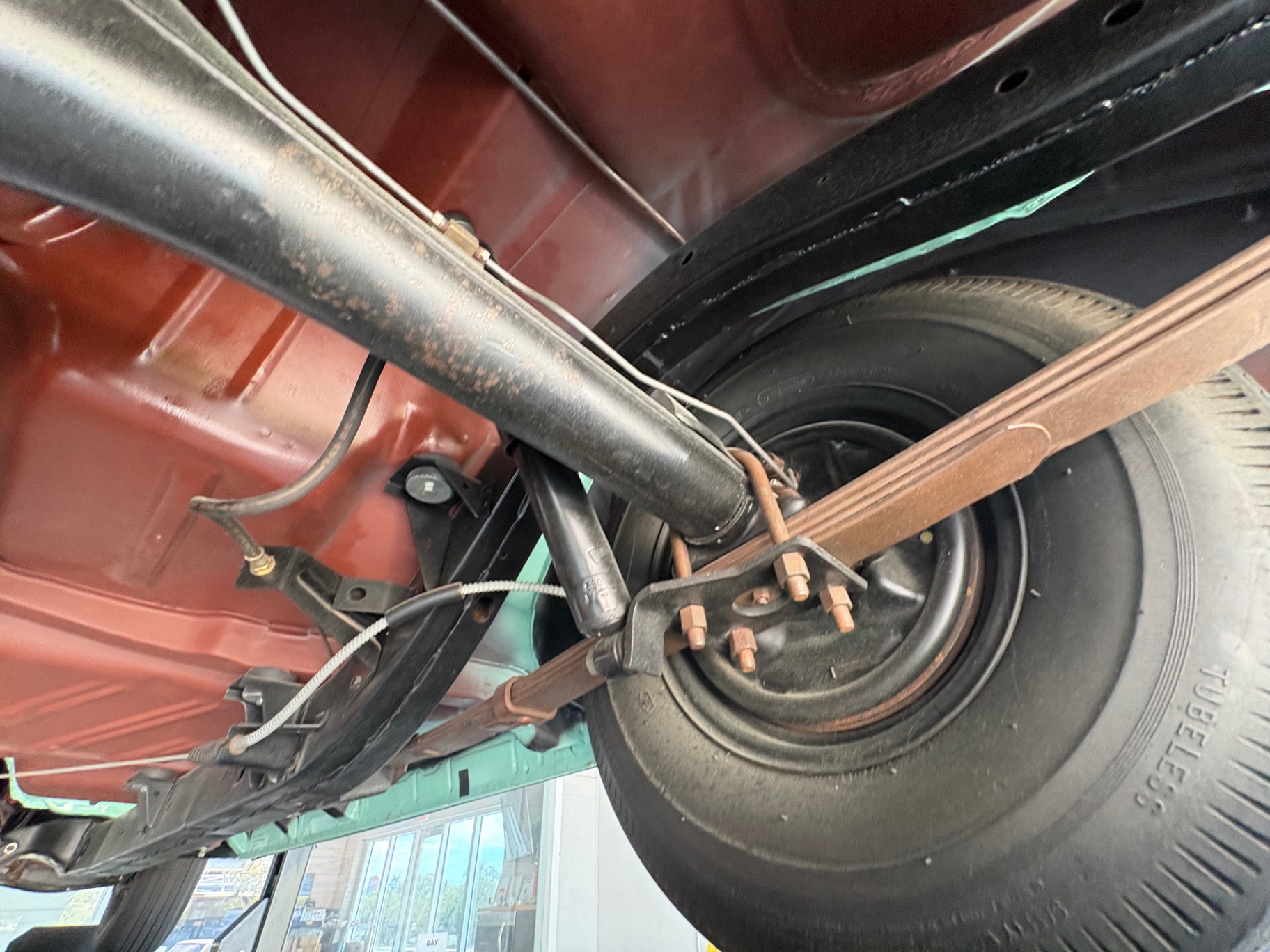
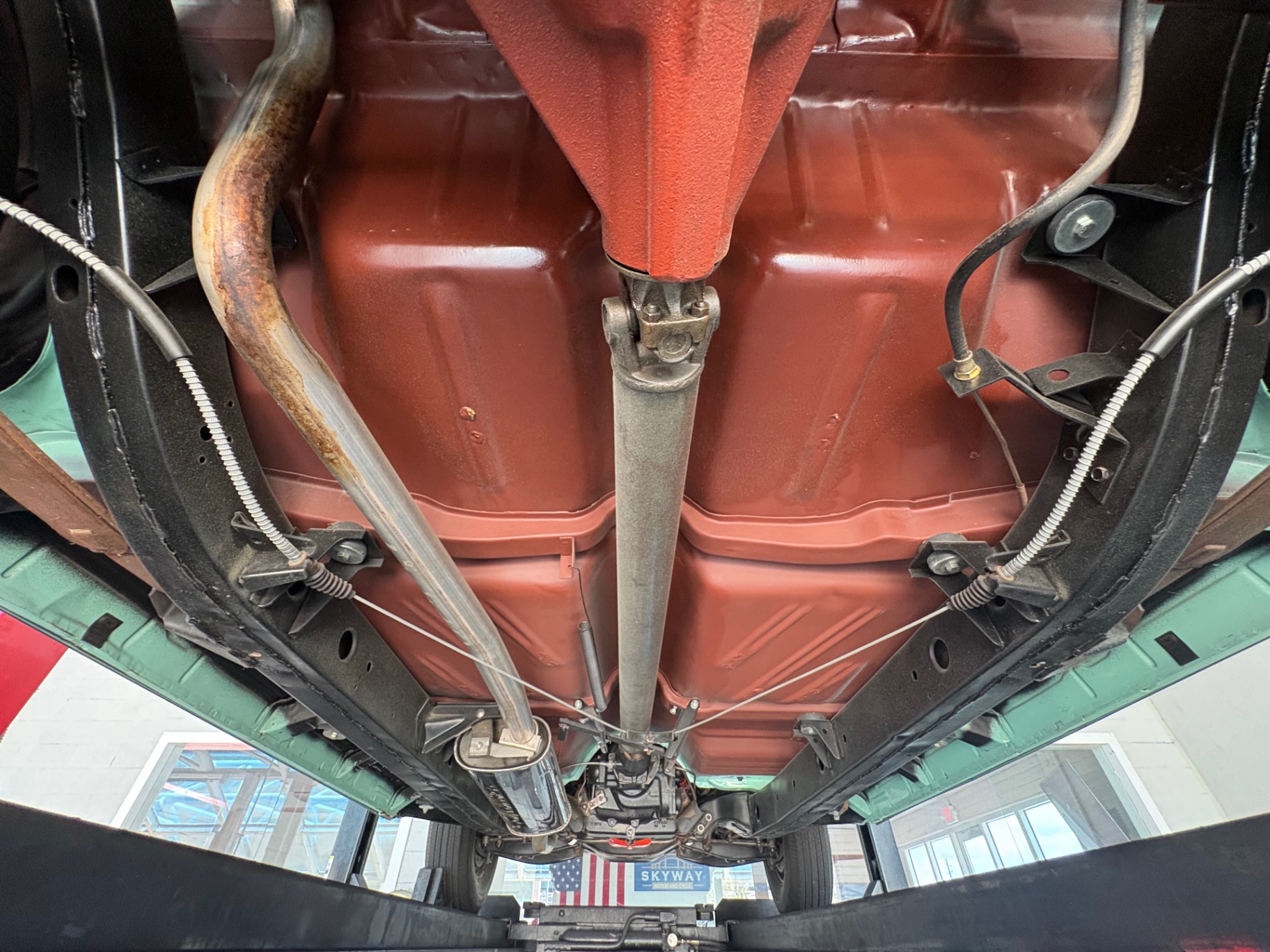
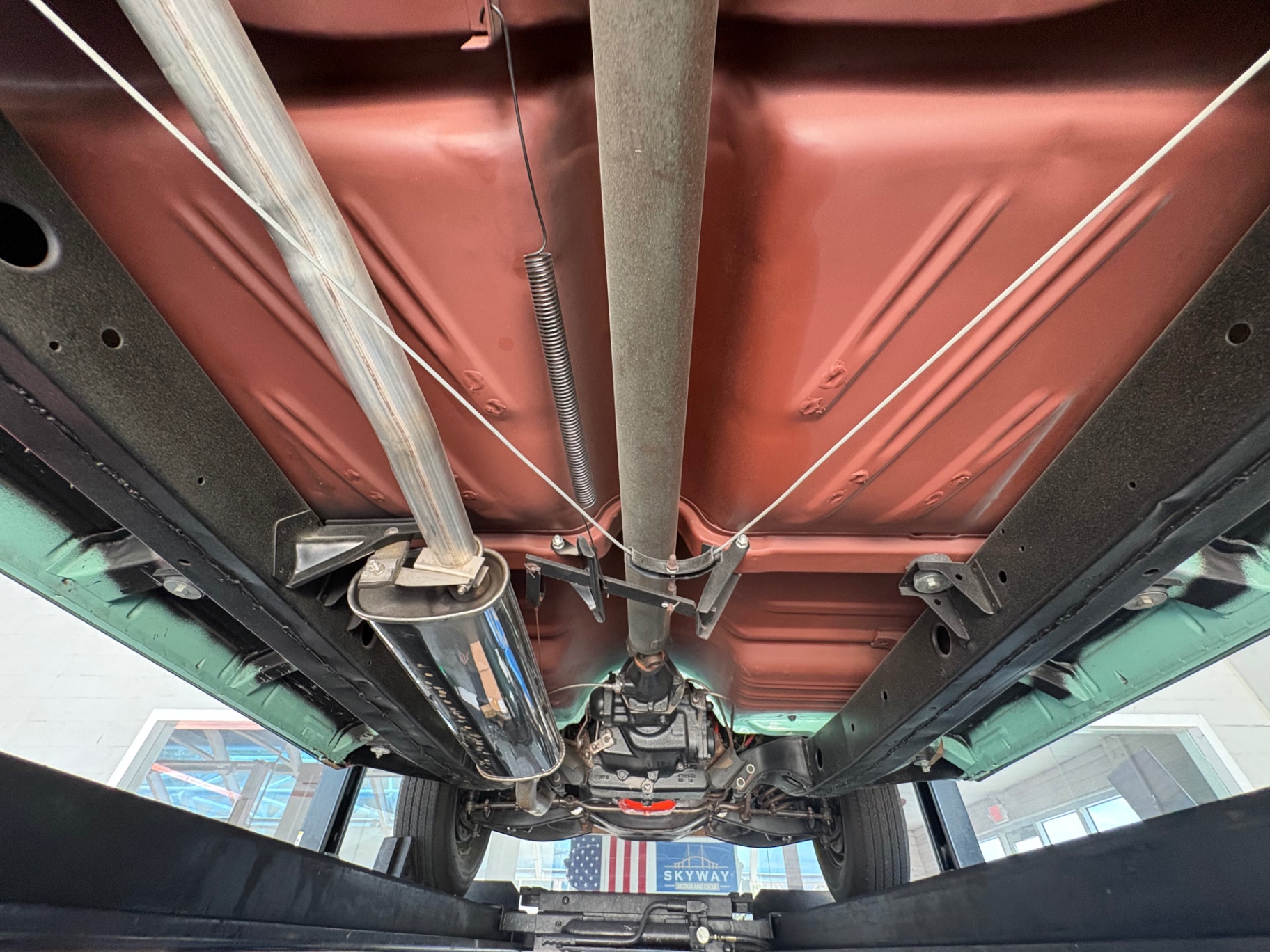
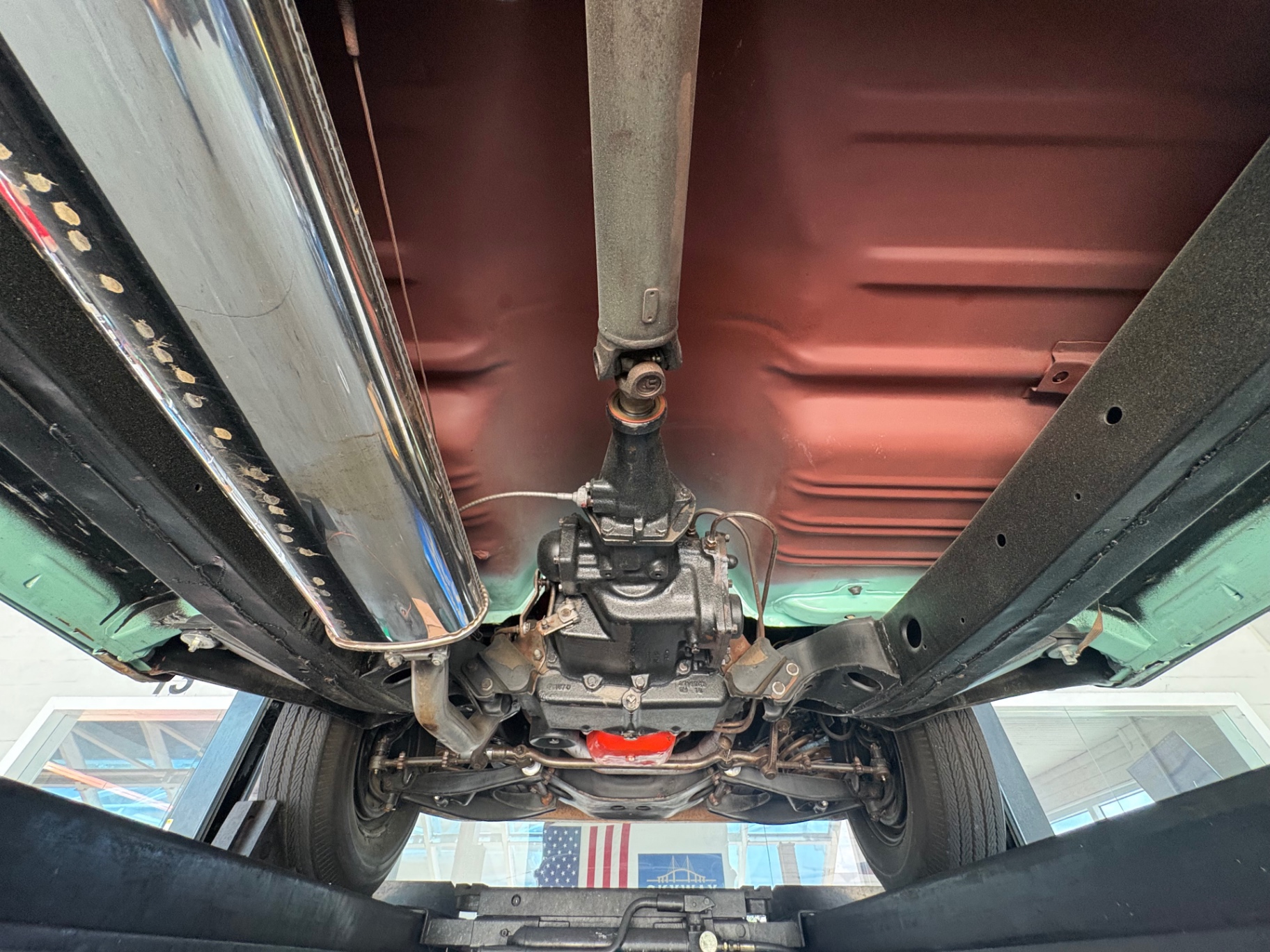
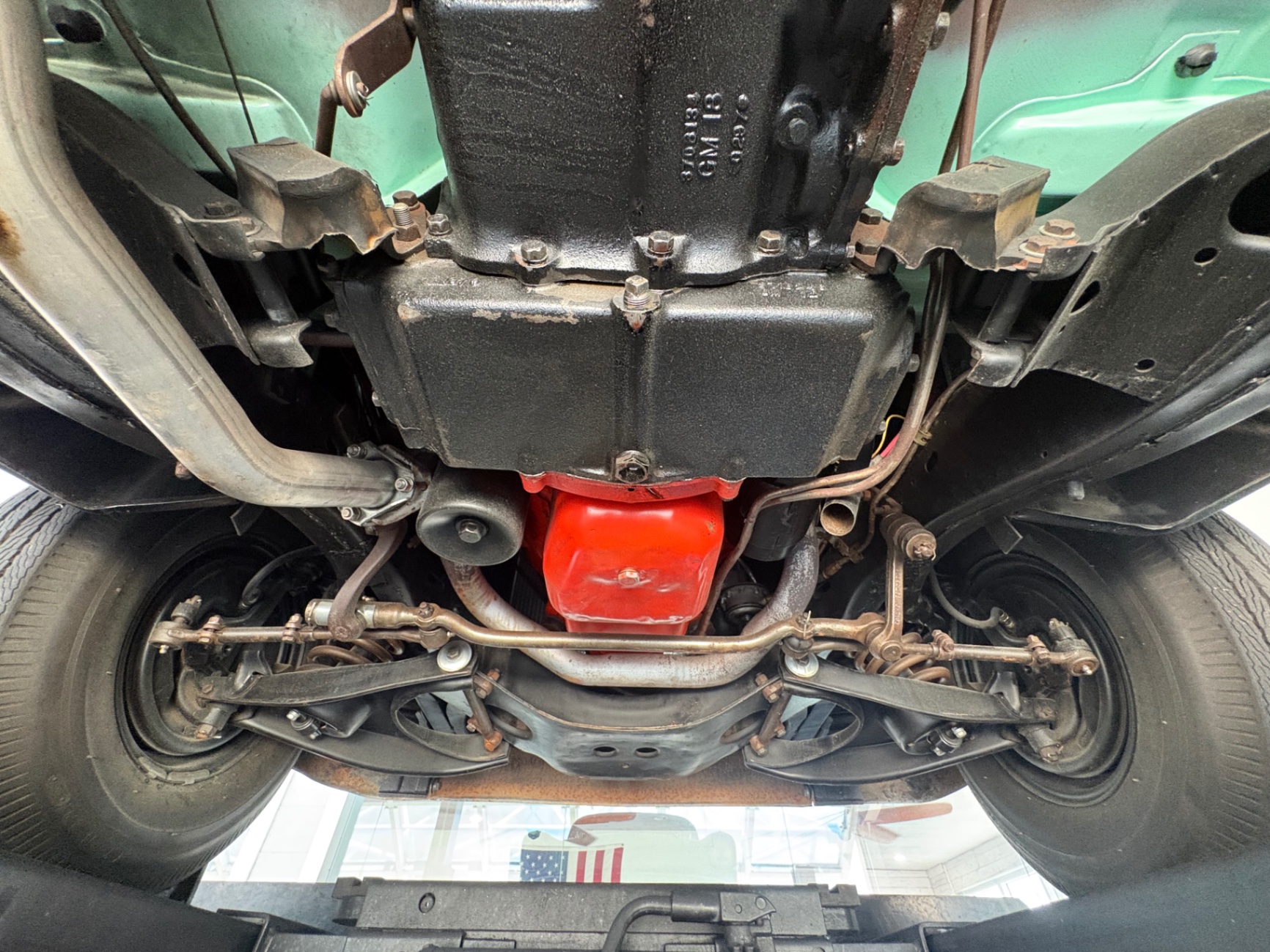
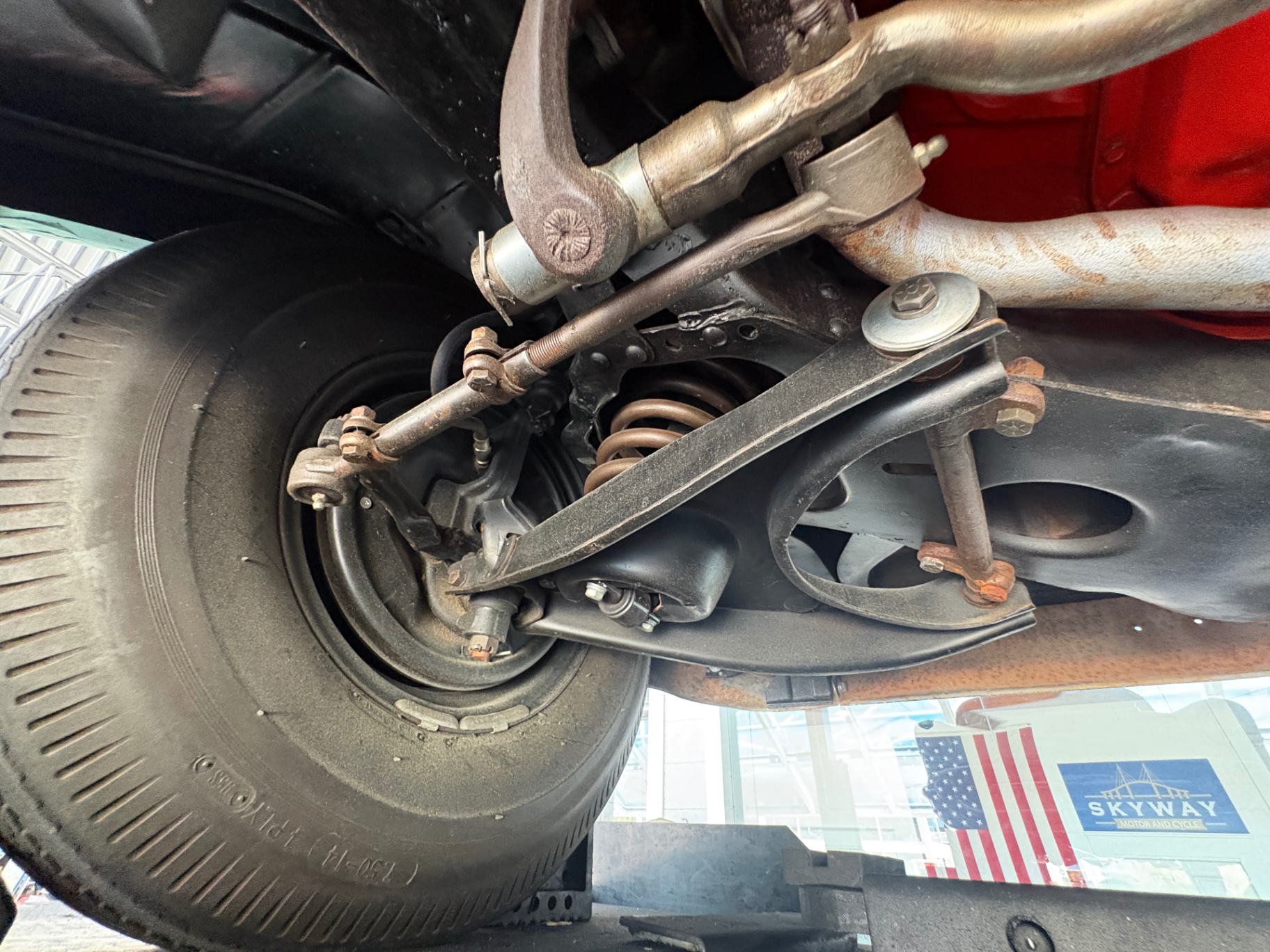
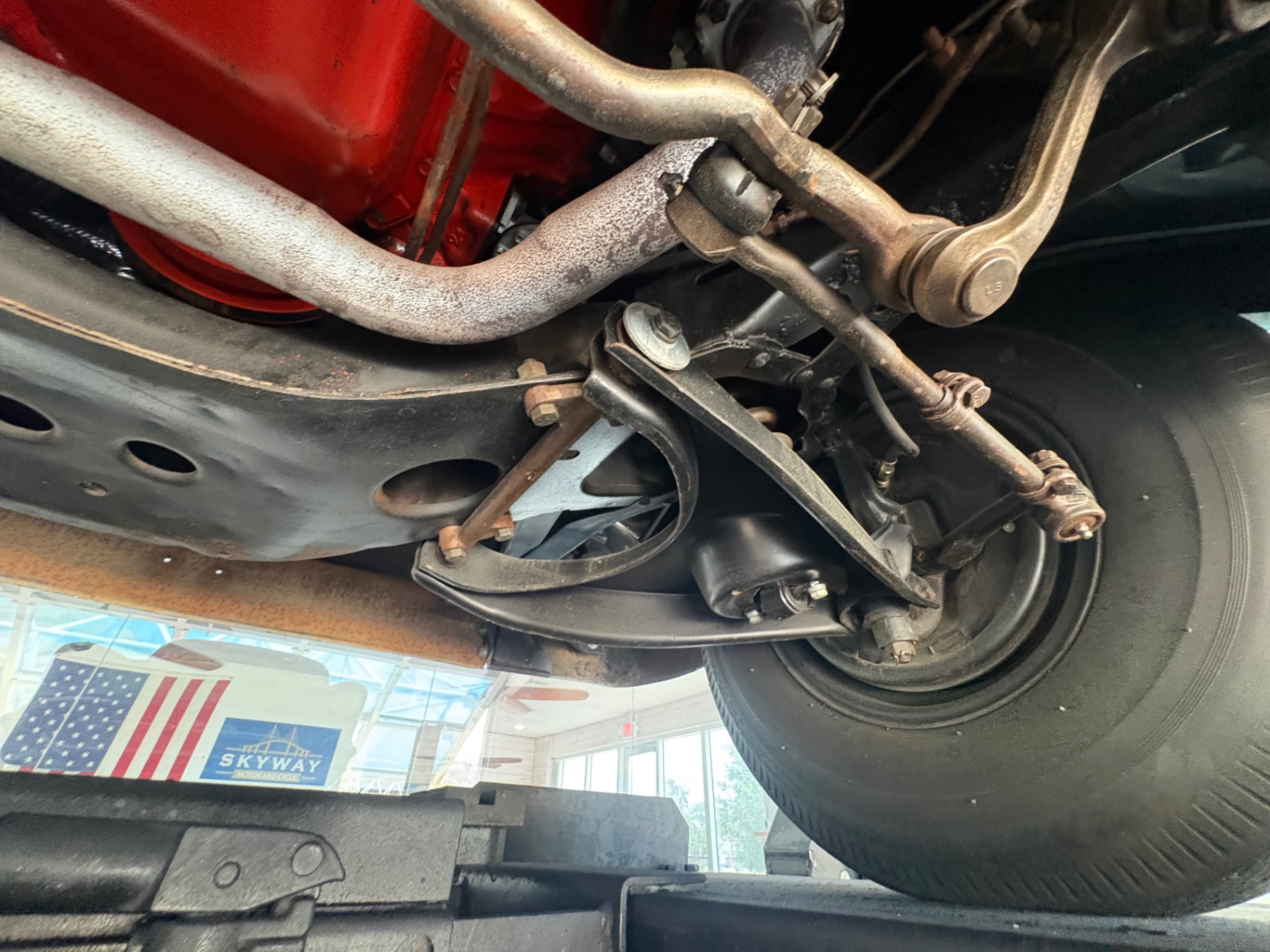
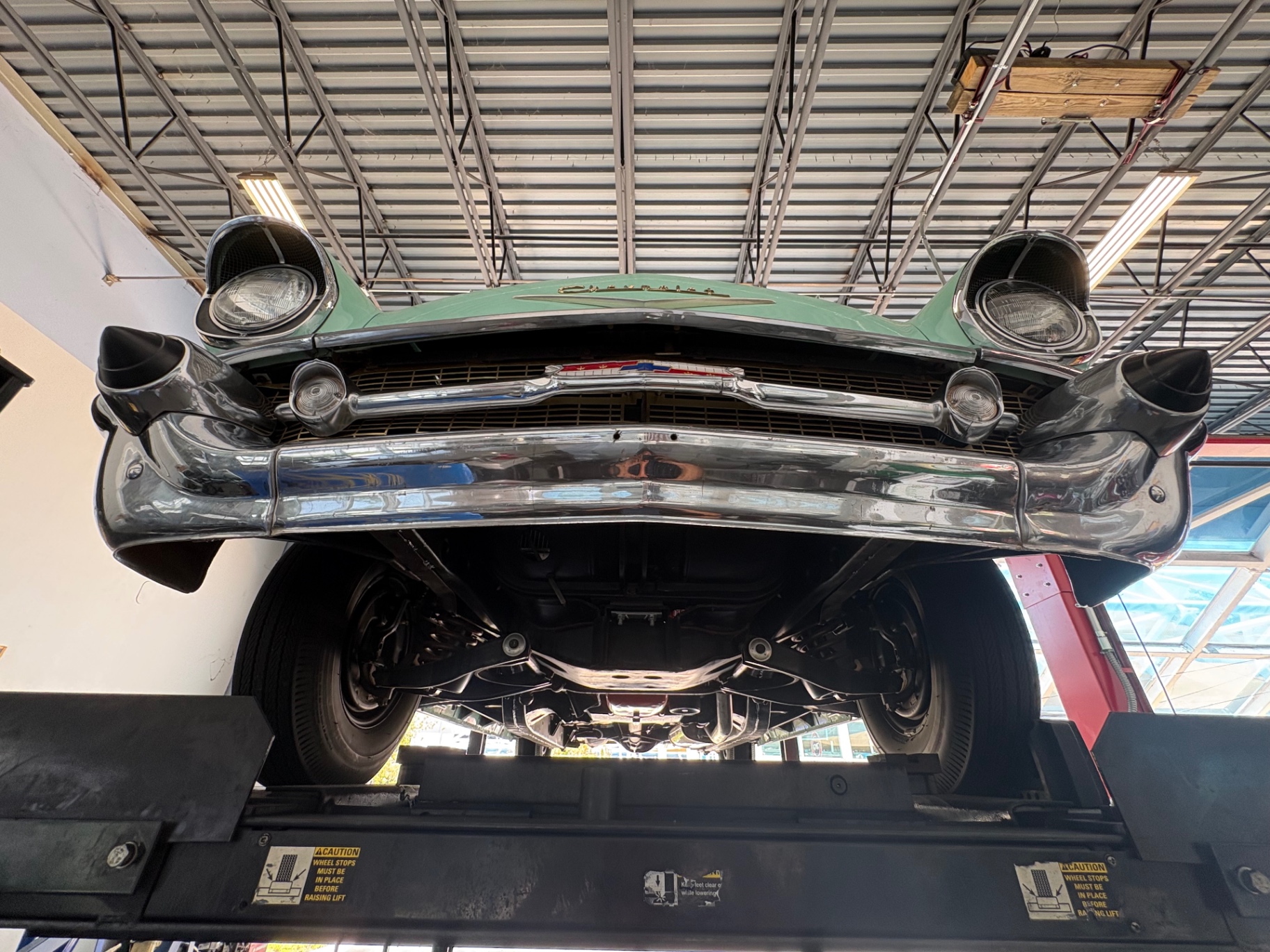
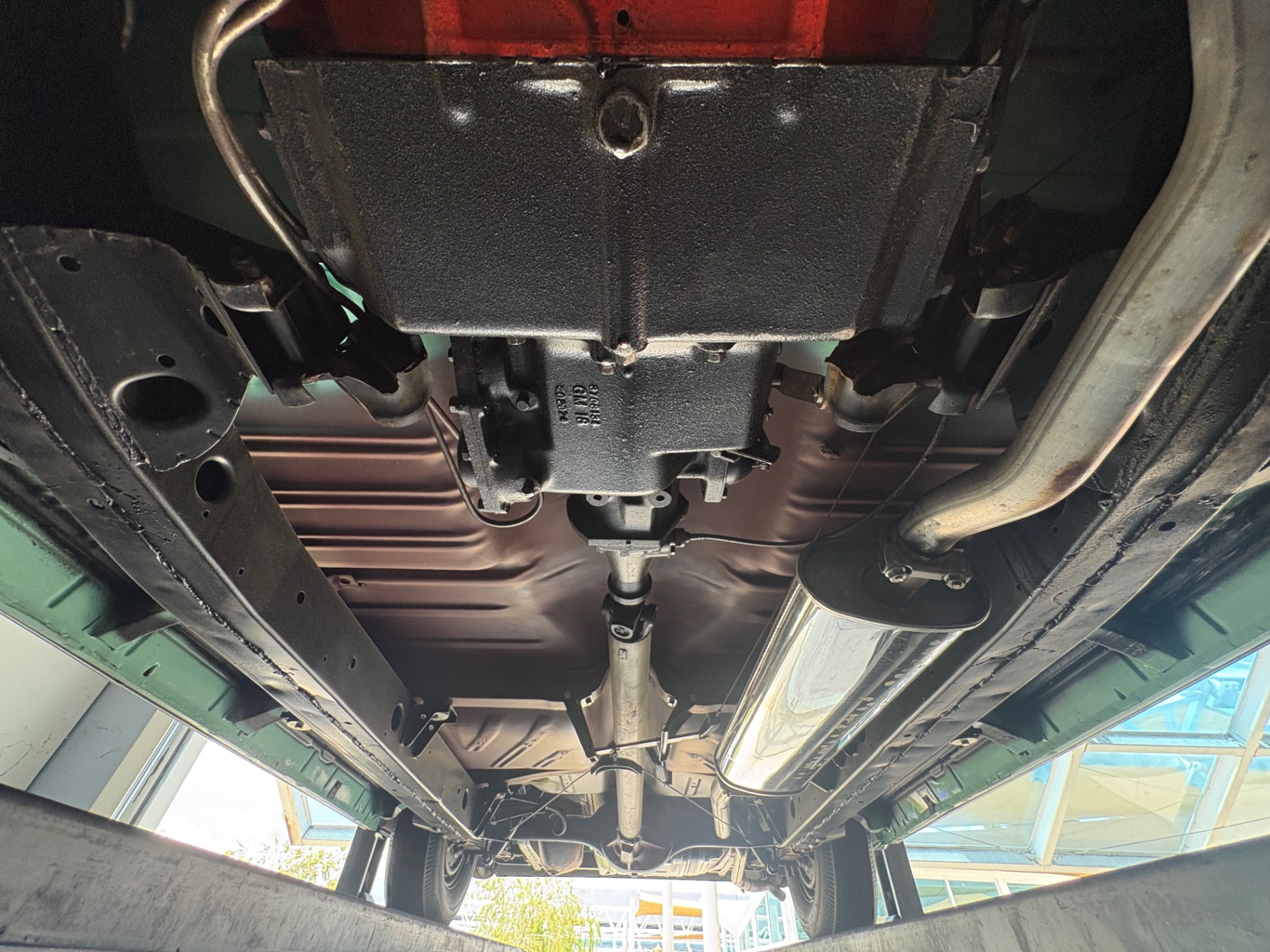
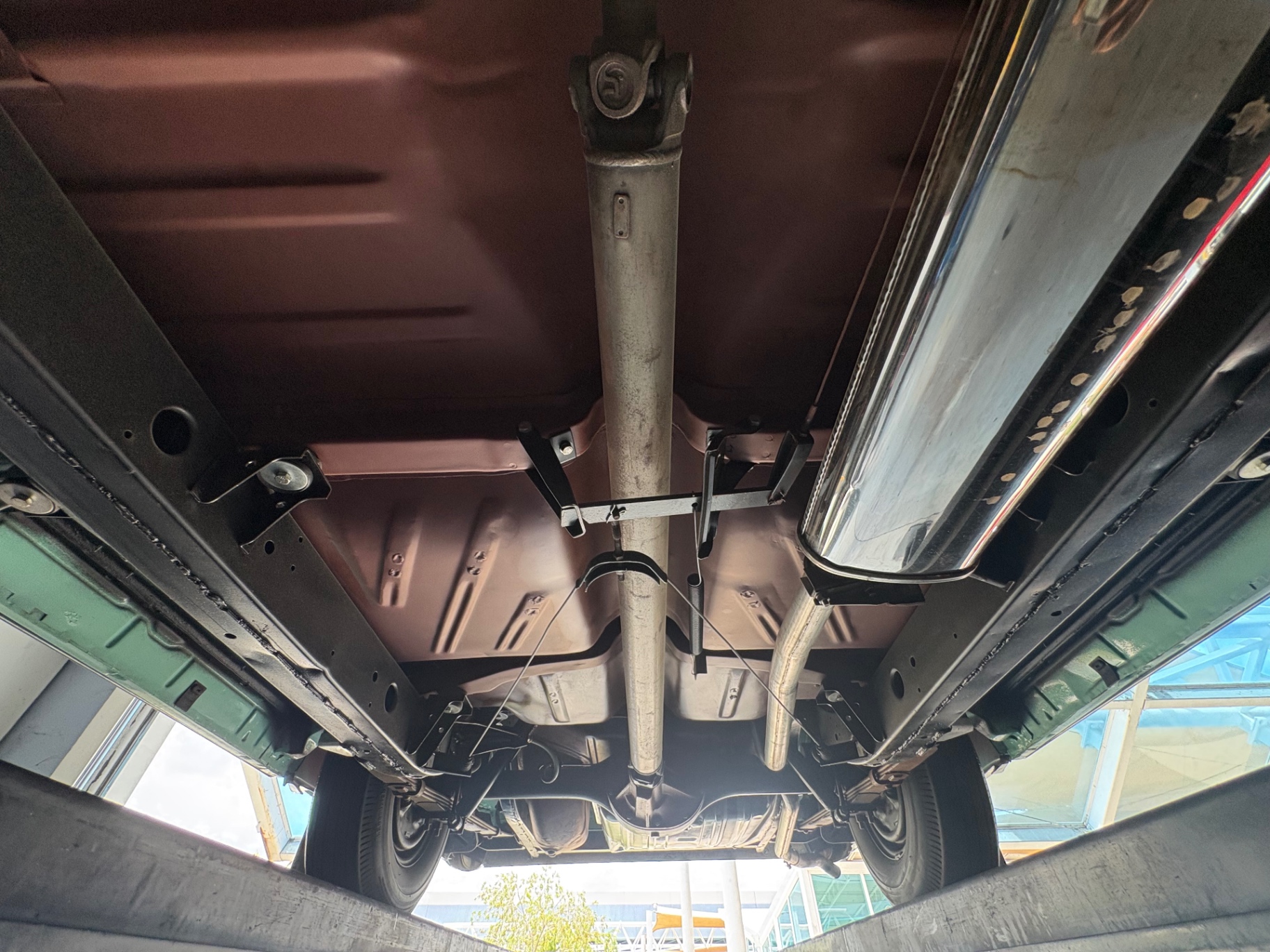
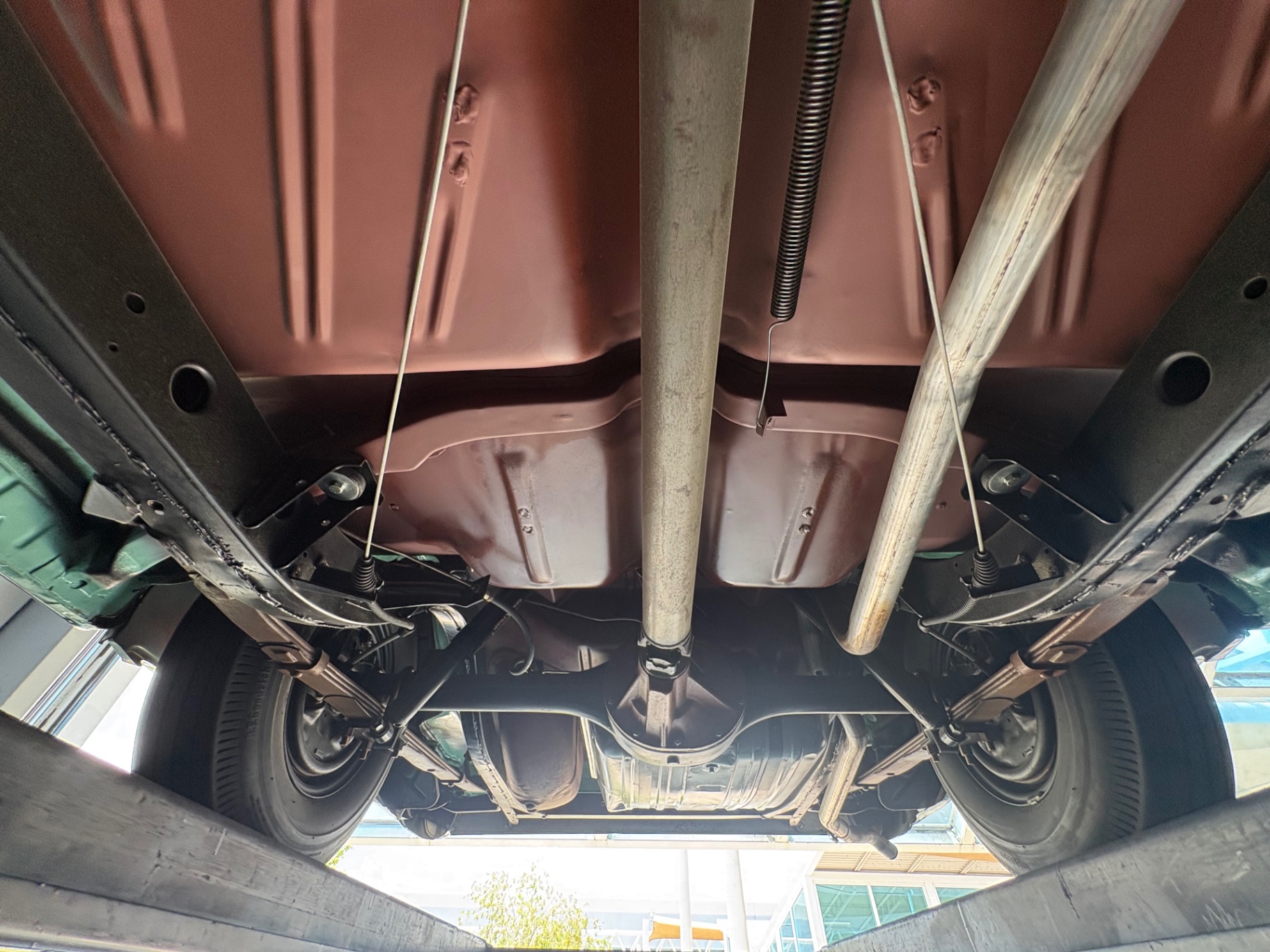
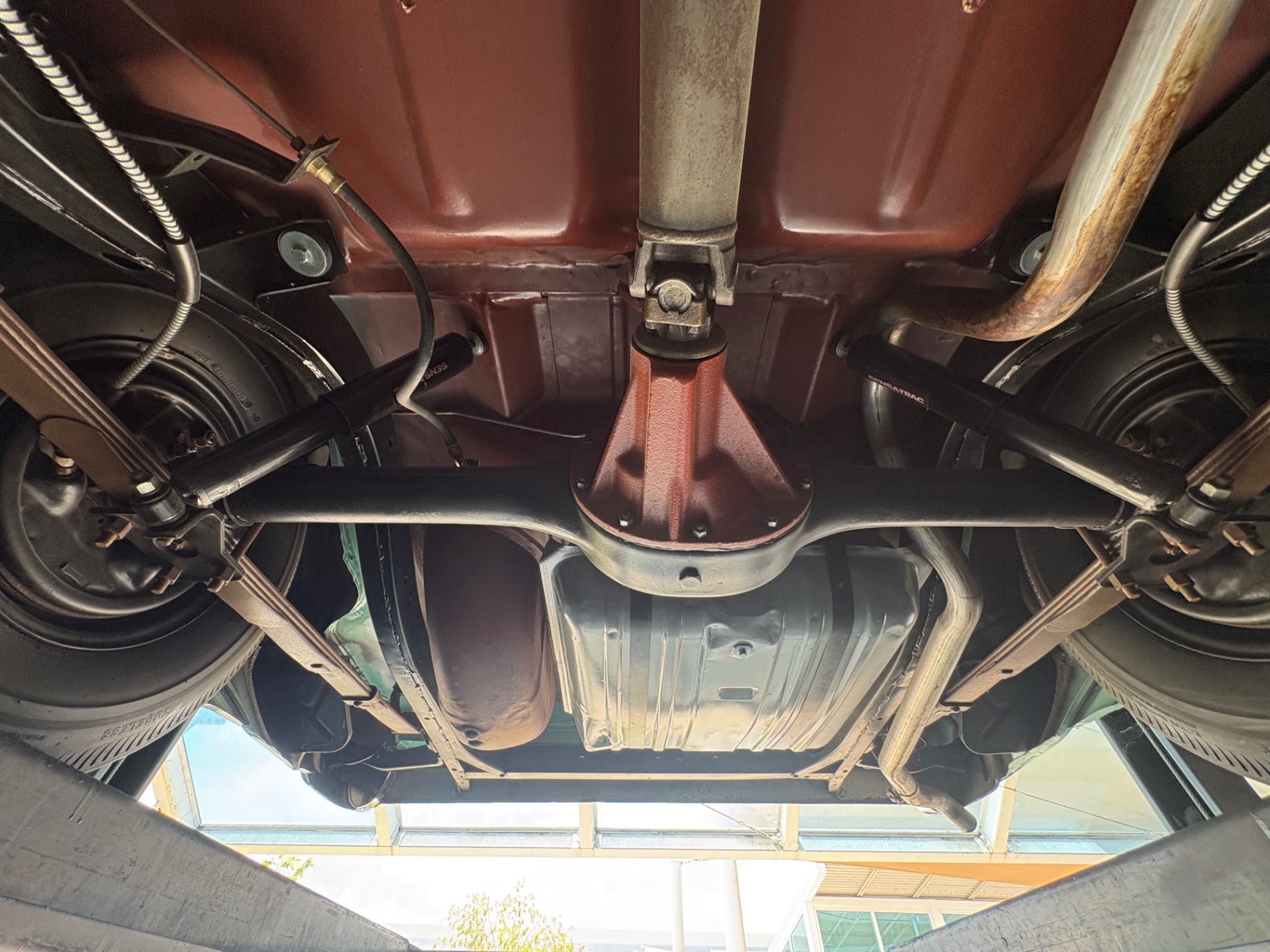
The undercarriage photos tell the real story of this car's condition. The floor pans are solid and show a clean coat of paint. The frame rails are straight and free of significant rust or patch work. The rear axle housing is intact, the leaf springs are in place, and the brake lines run cleanly to the four-wheel drum brake setup. Drum brakes are correct for the 1957 Bel Air and are entirely serviceable for normal street driving. The front suspension components visible in the undercarriage photos show good geometry and no obvious worn-out hardware. This is not a rust car that has been cleaned up for photography — the structural integrity is evident across multiple lift photos taken from every angle.
Interior
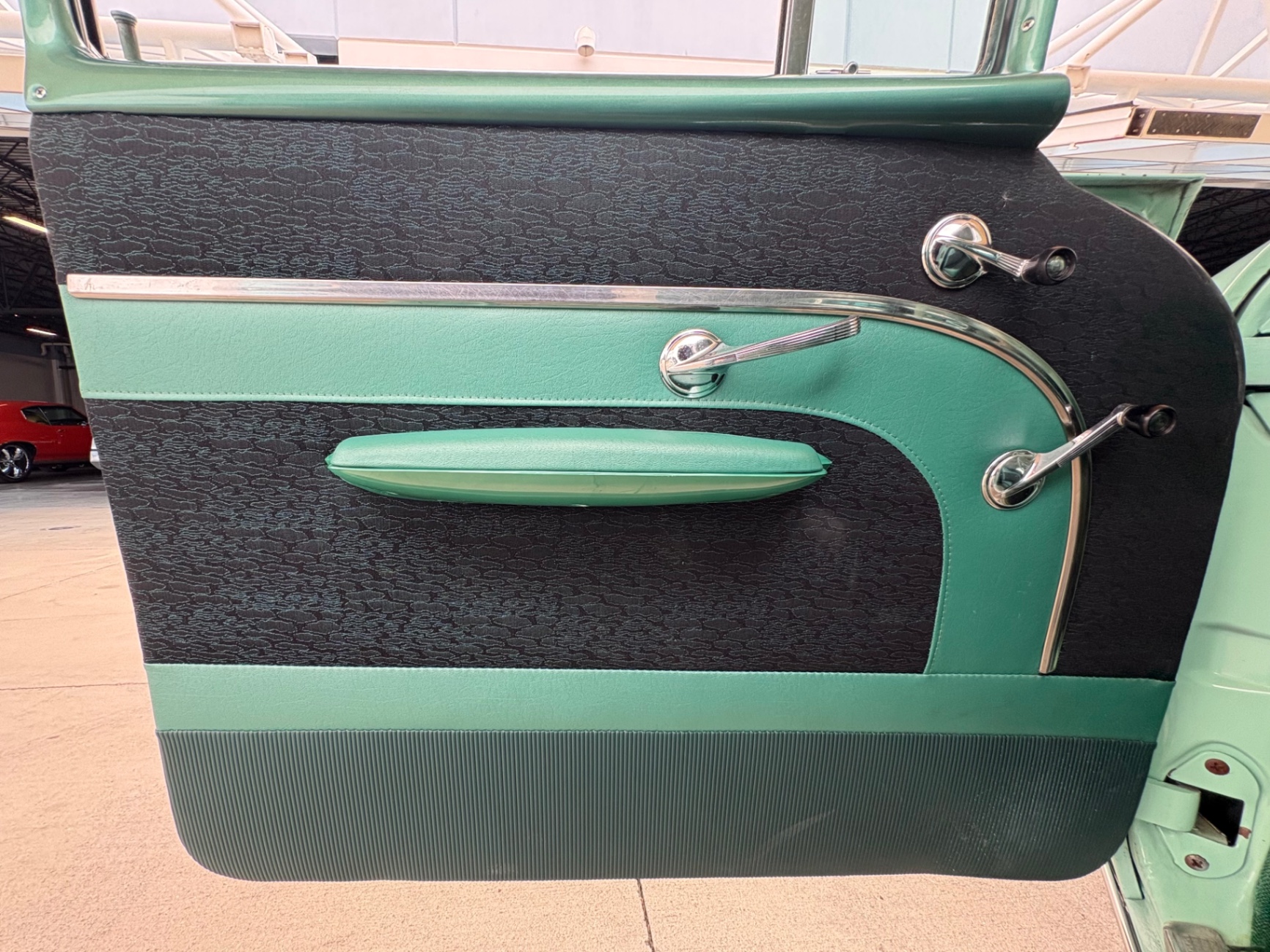
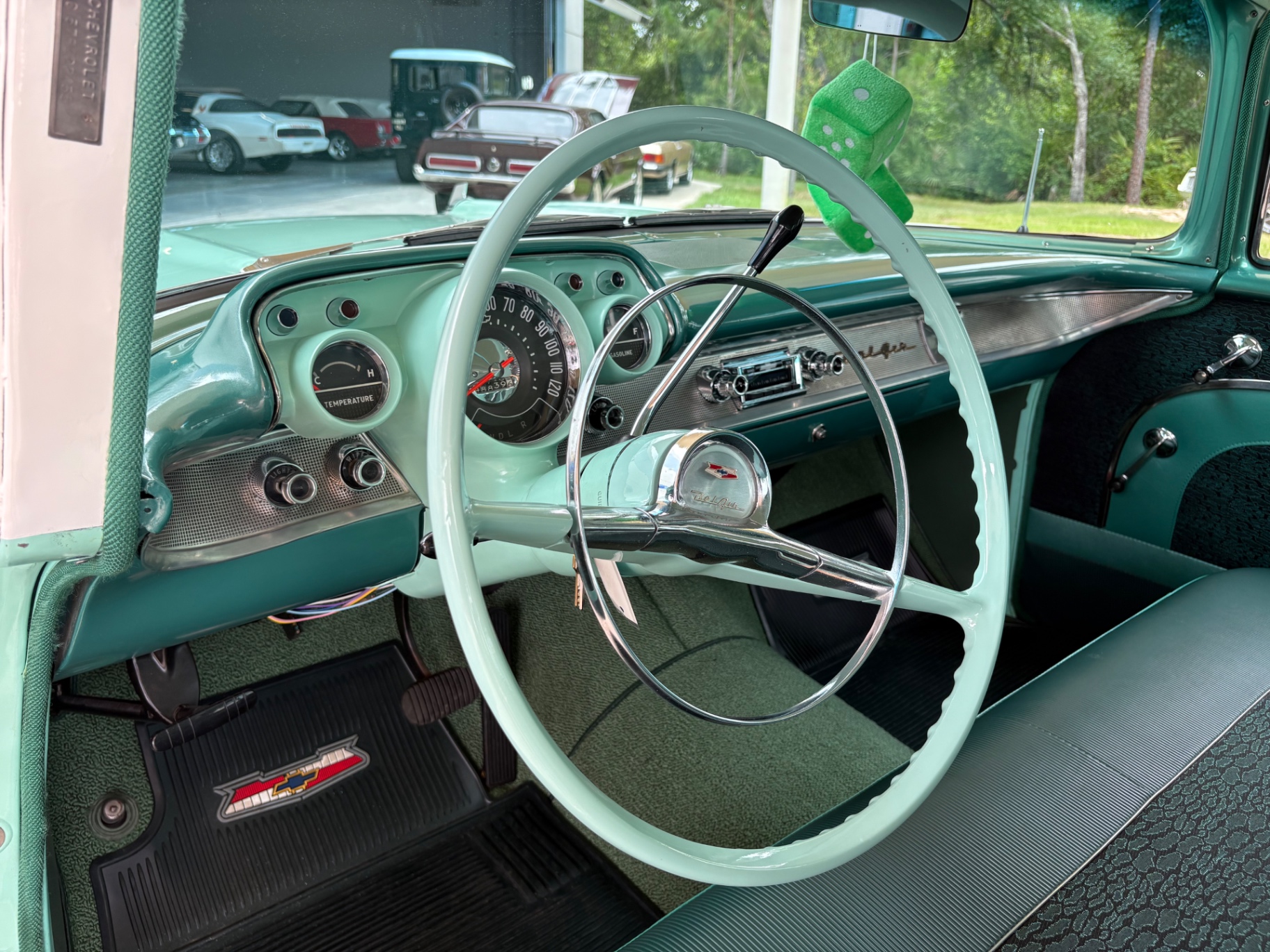
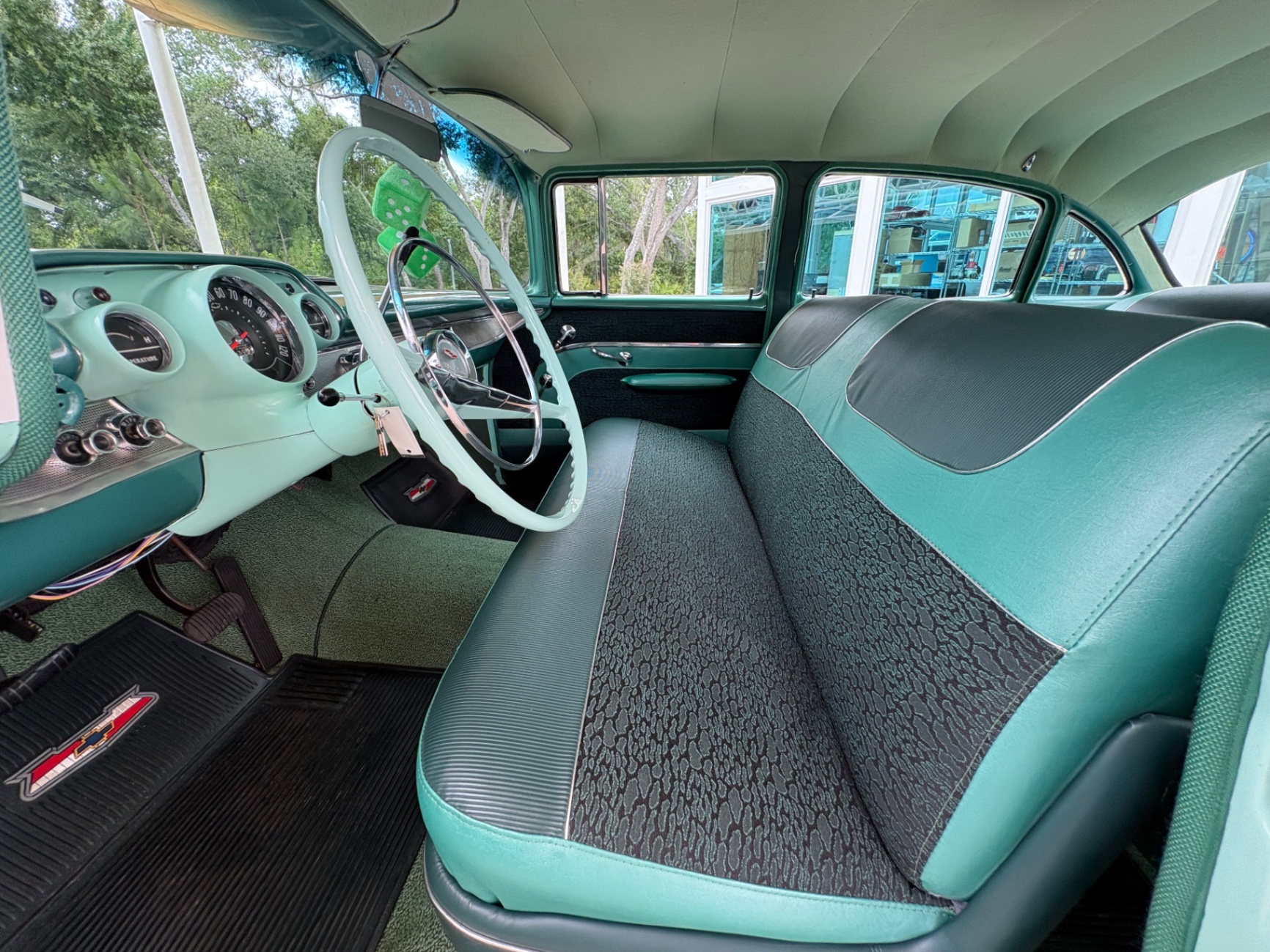
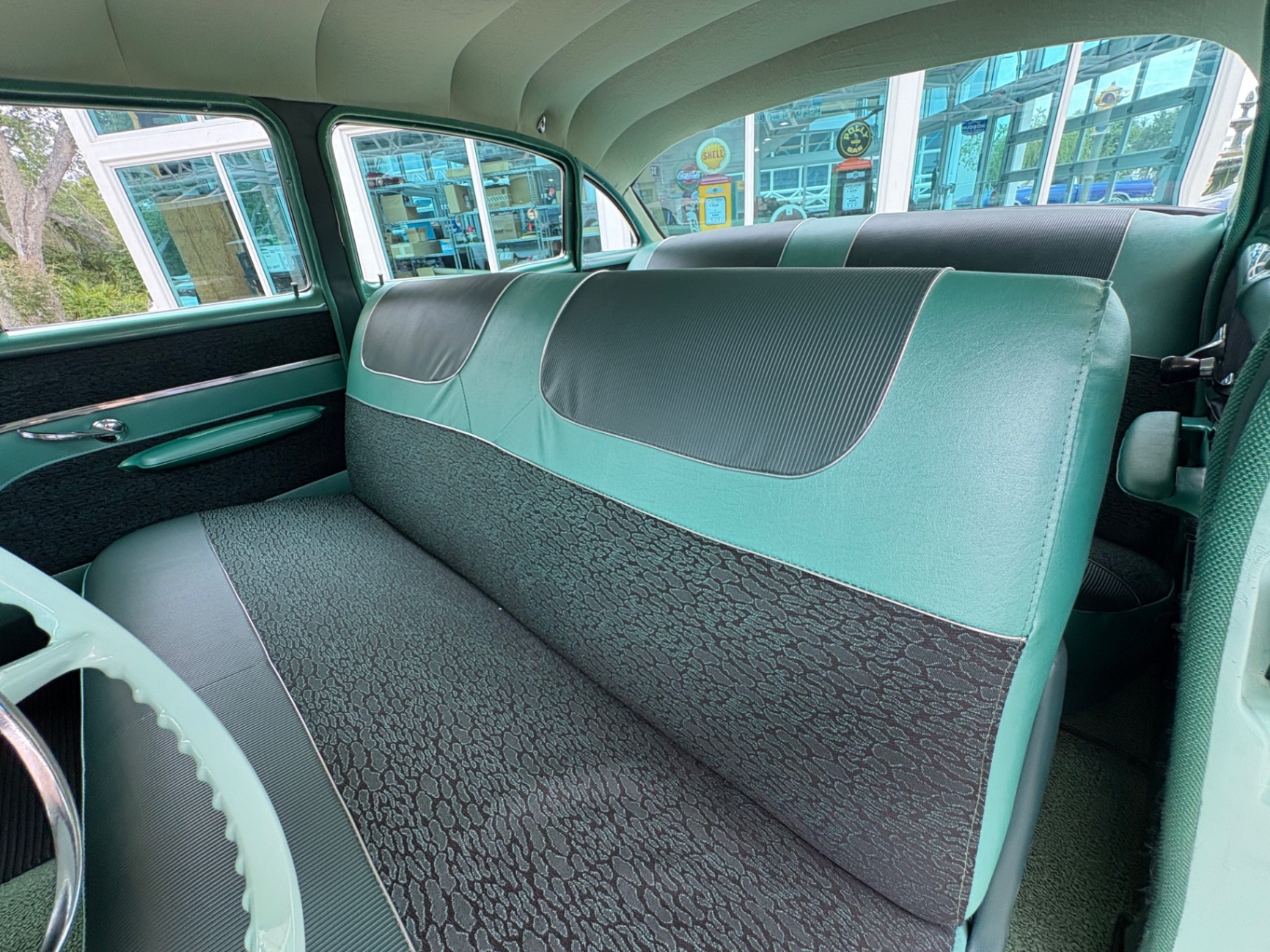
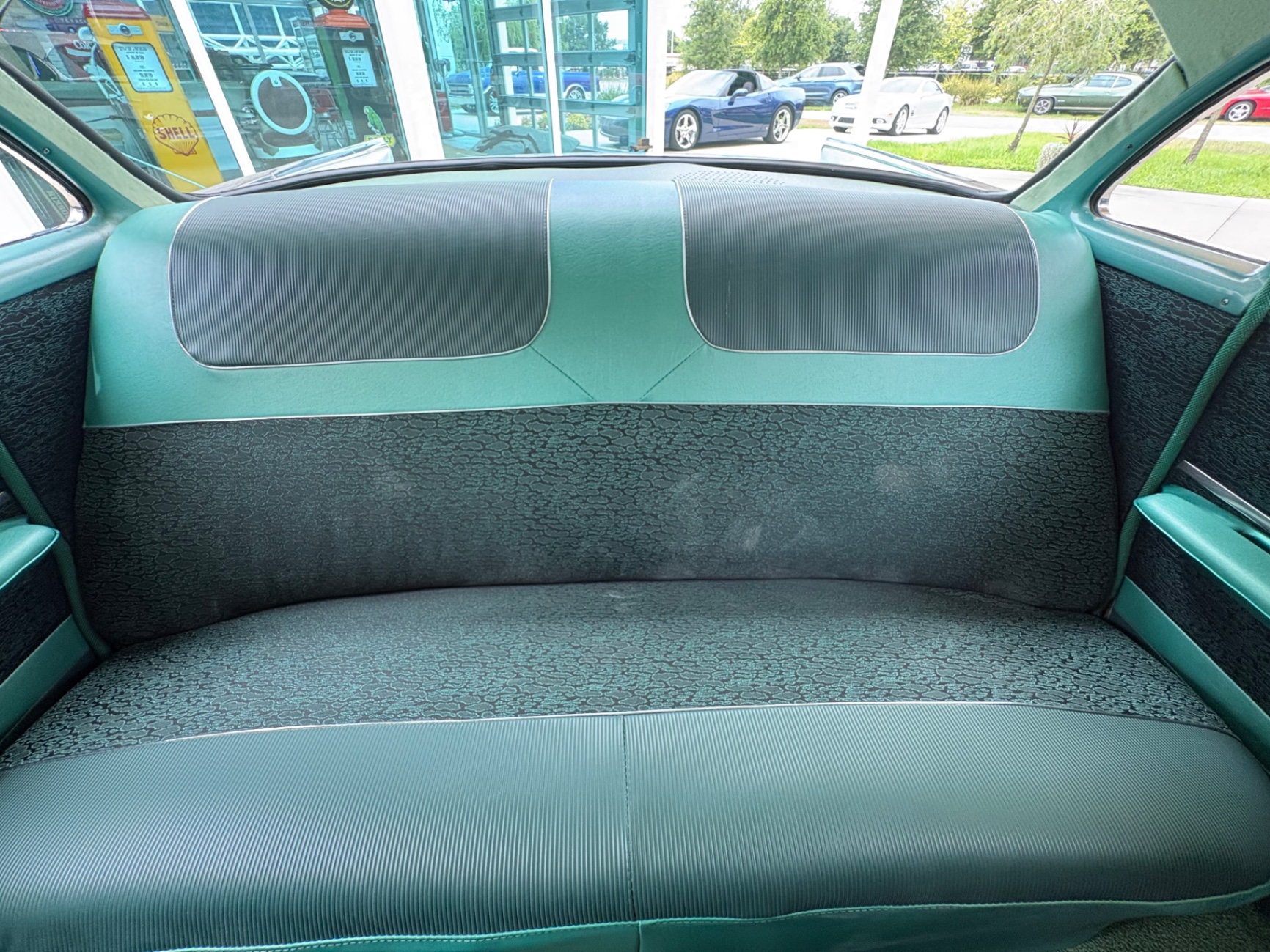
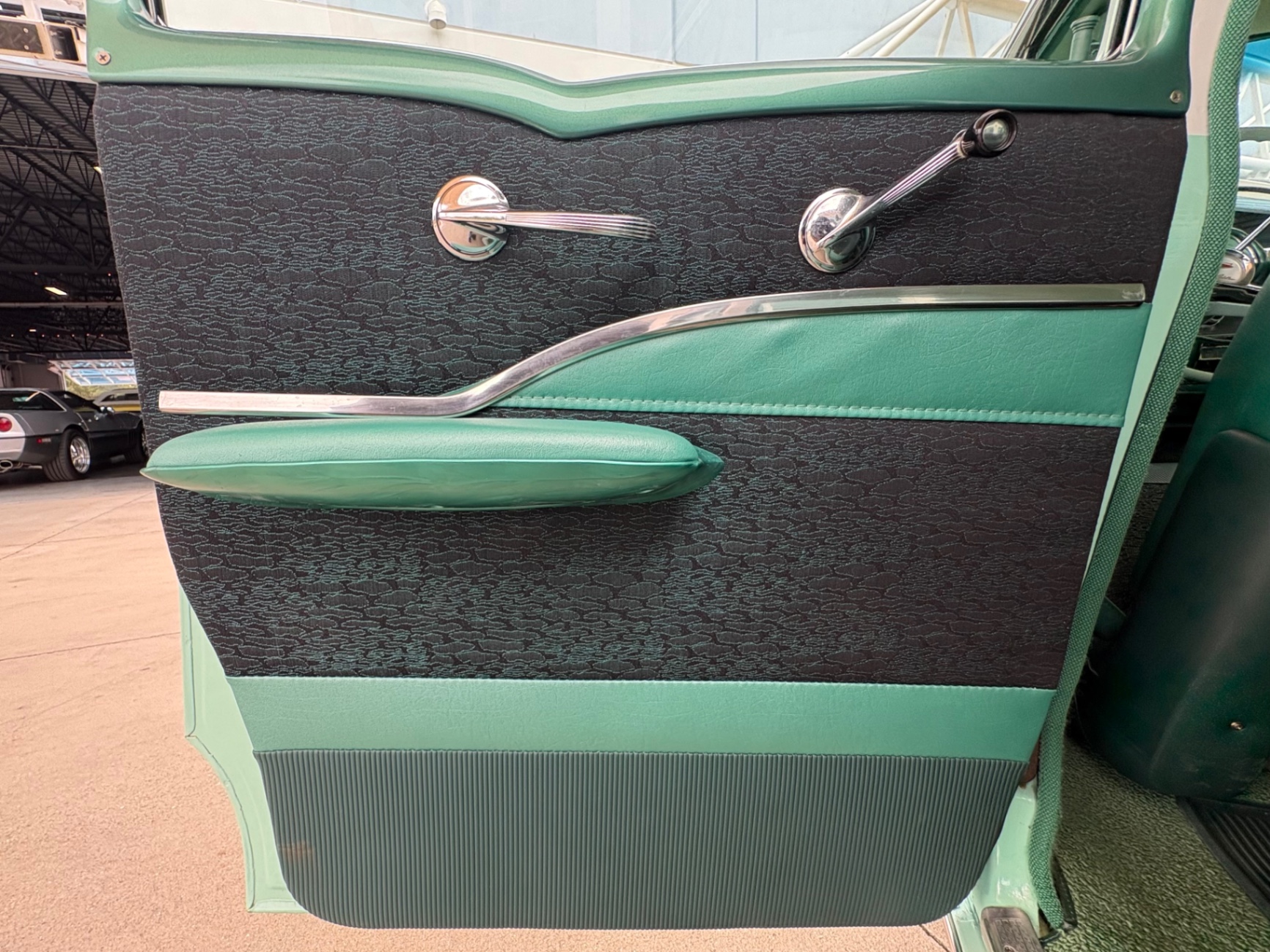
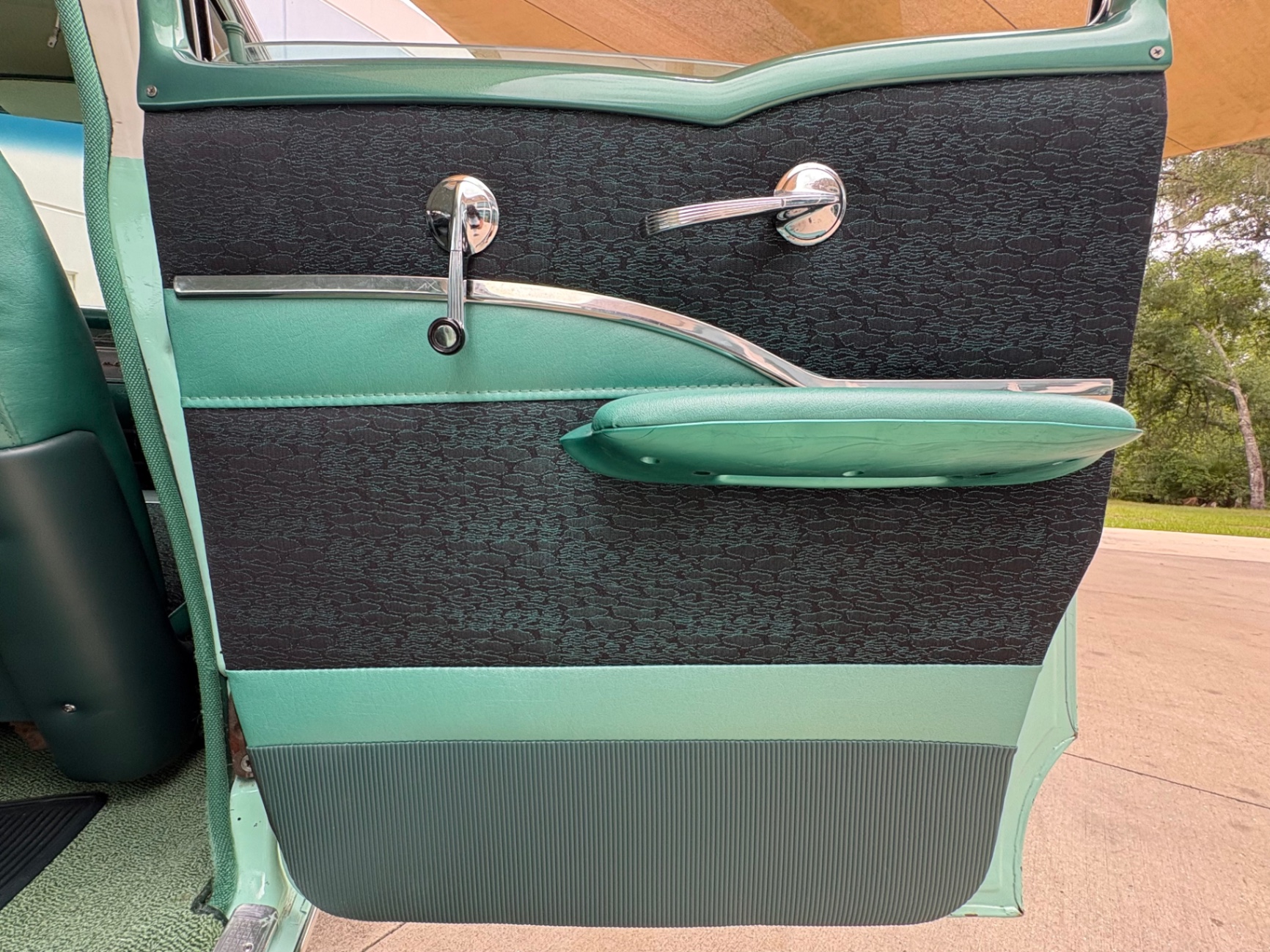
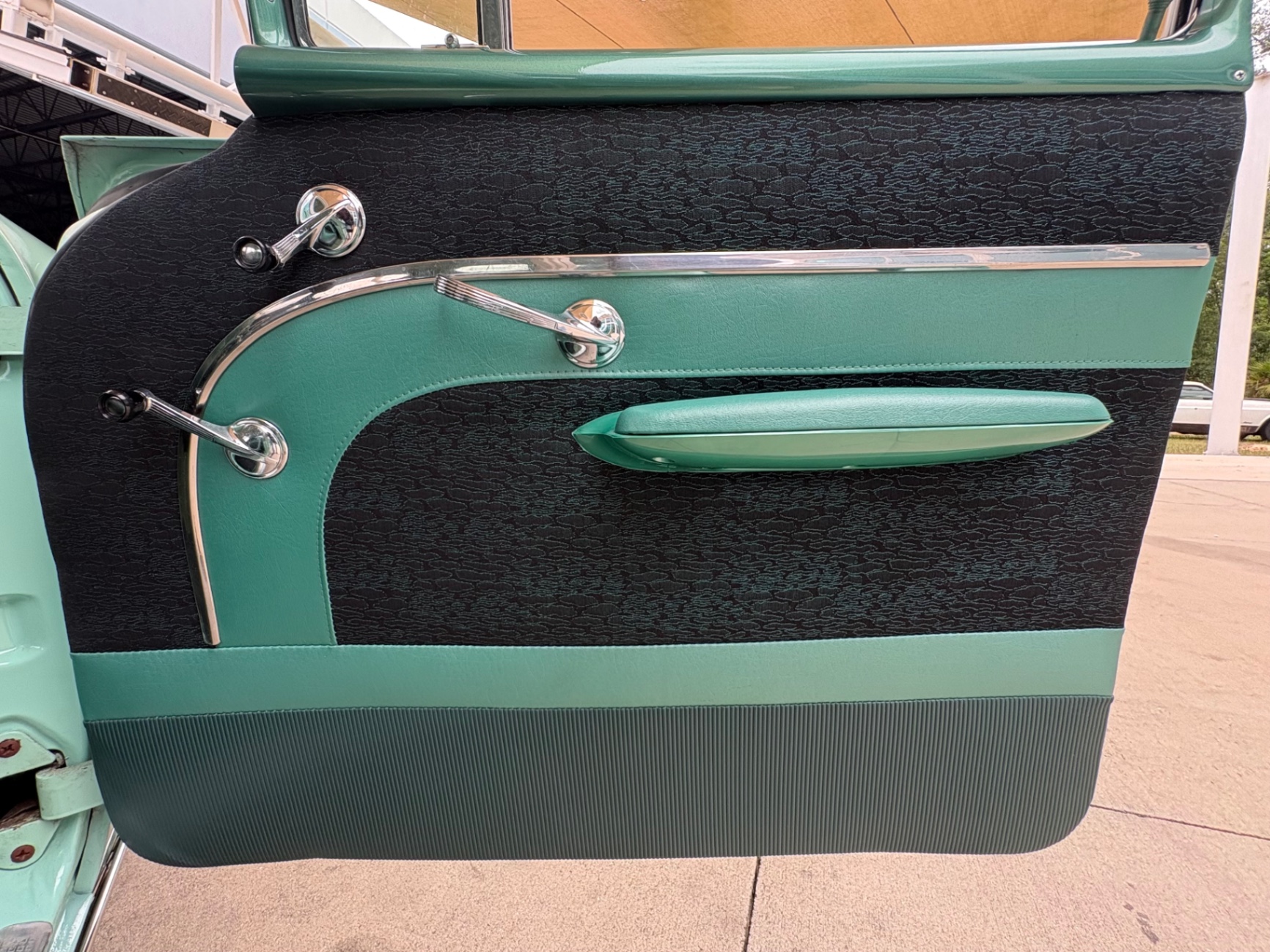
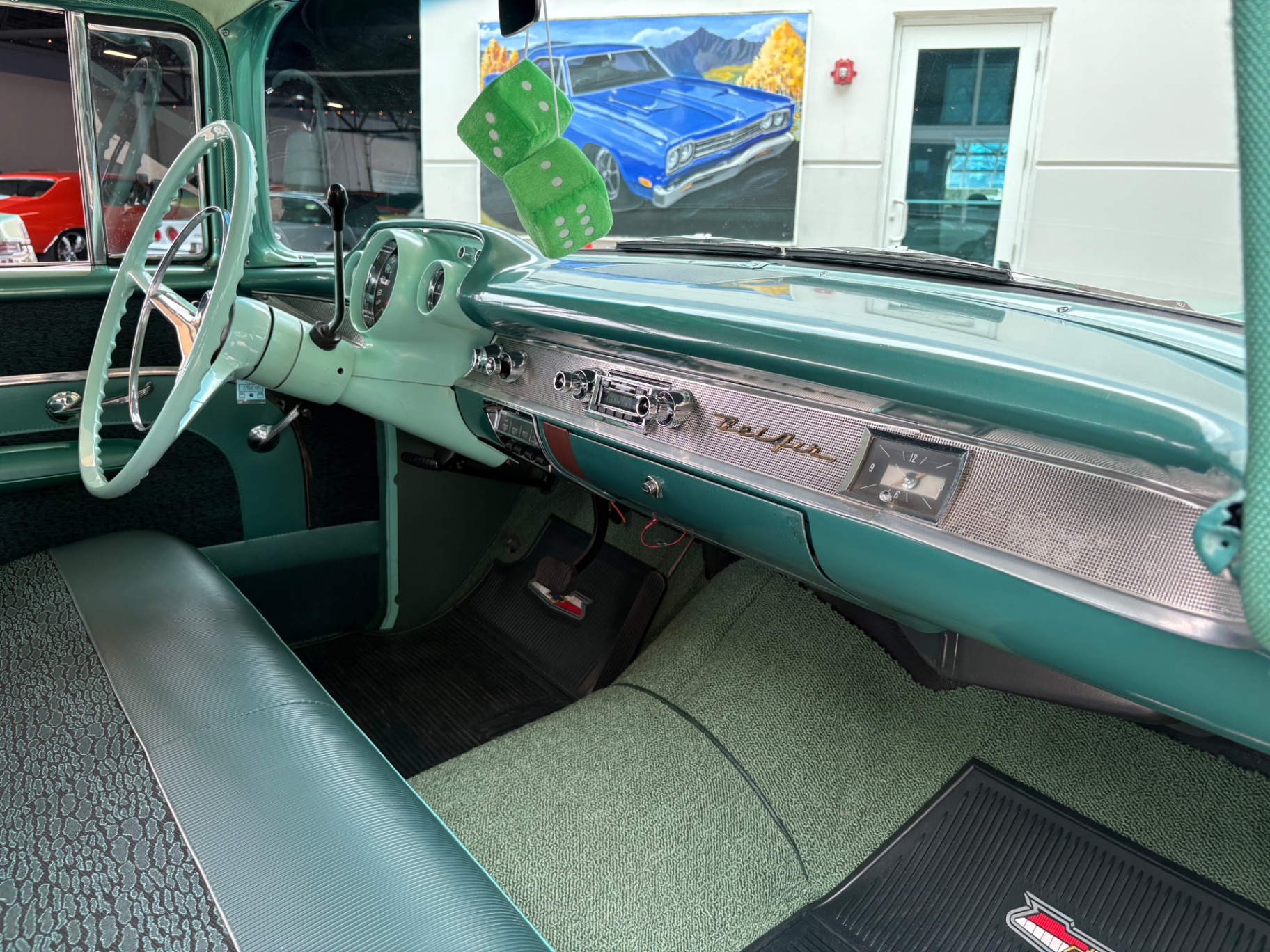
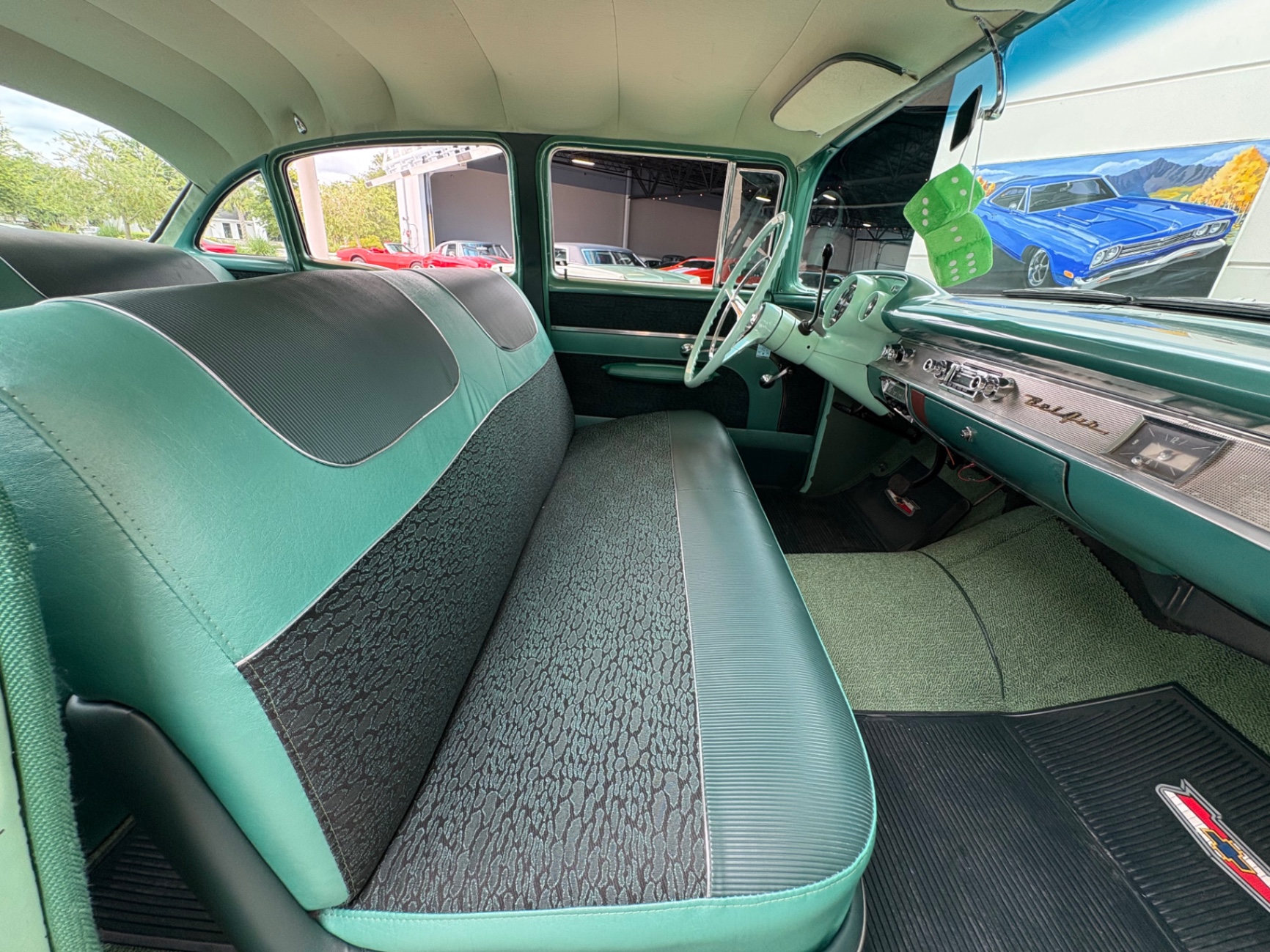
The interior of this 1957 Chevrolet Bel Air 4-door sedan is finished in green and black vinyl, a two-tone combination that mirrors the exterior color scheme and was a factory-appropriate pairing for an Ivy Green car. The door panels carry the green and black split with a chrome accent bar and a bolstered pull handle in green vinyl — exactly what Chevrolet specified for Bel Air trim level. All four doors have the same panel treatment, with chrome handles throughout.
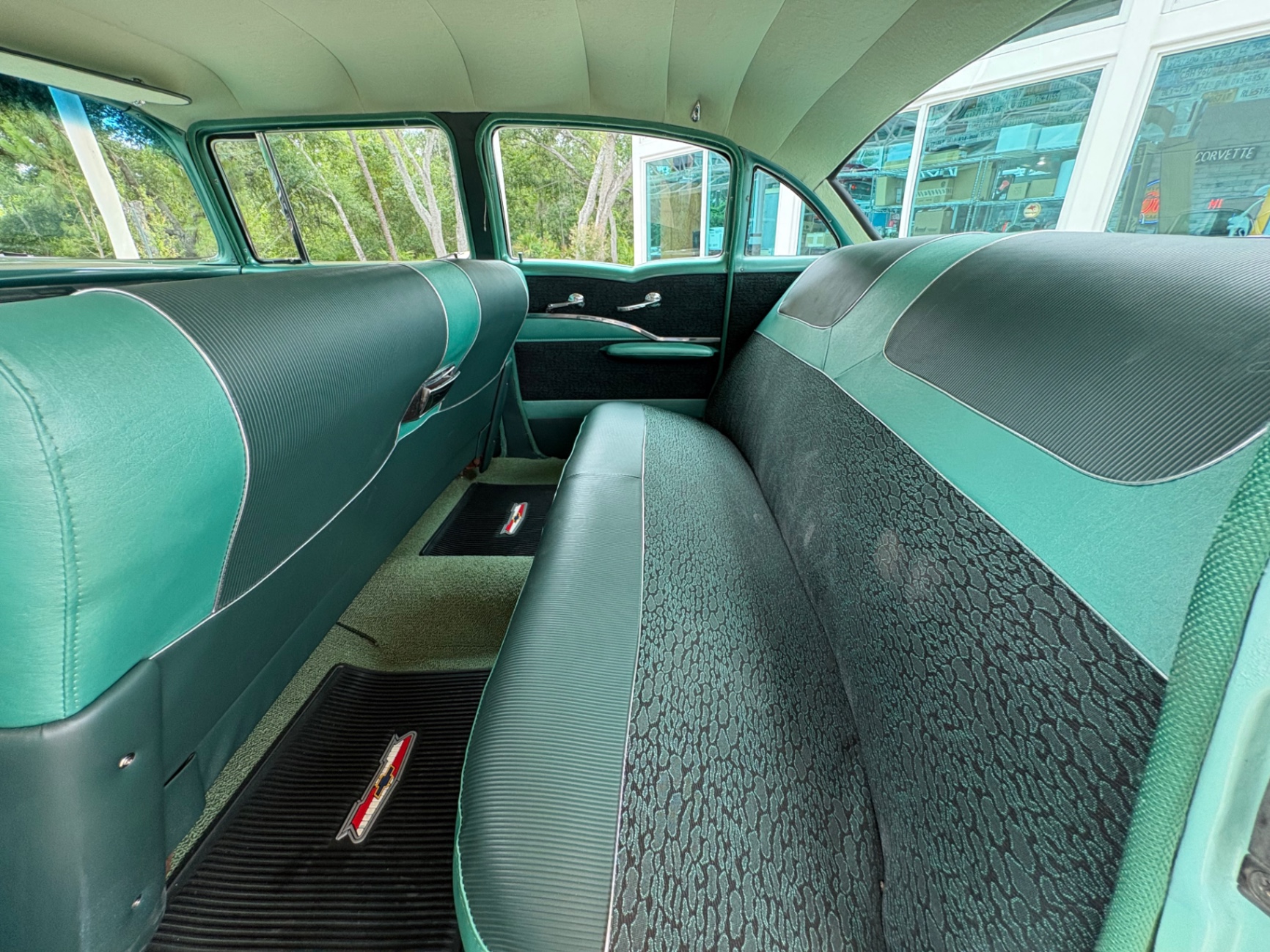
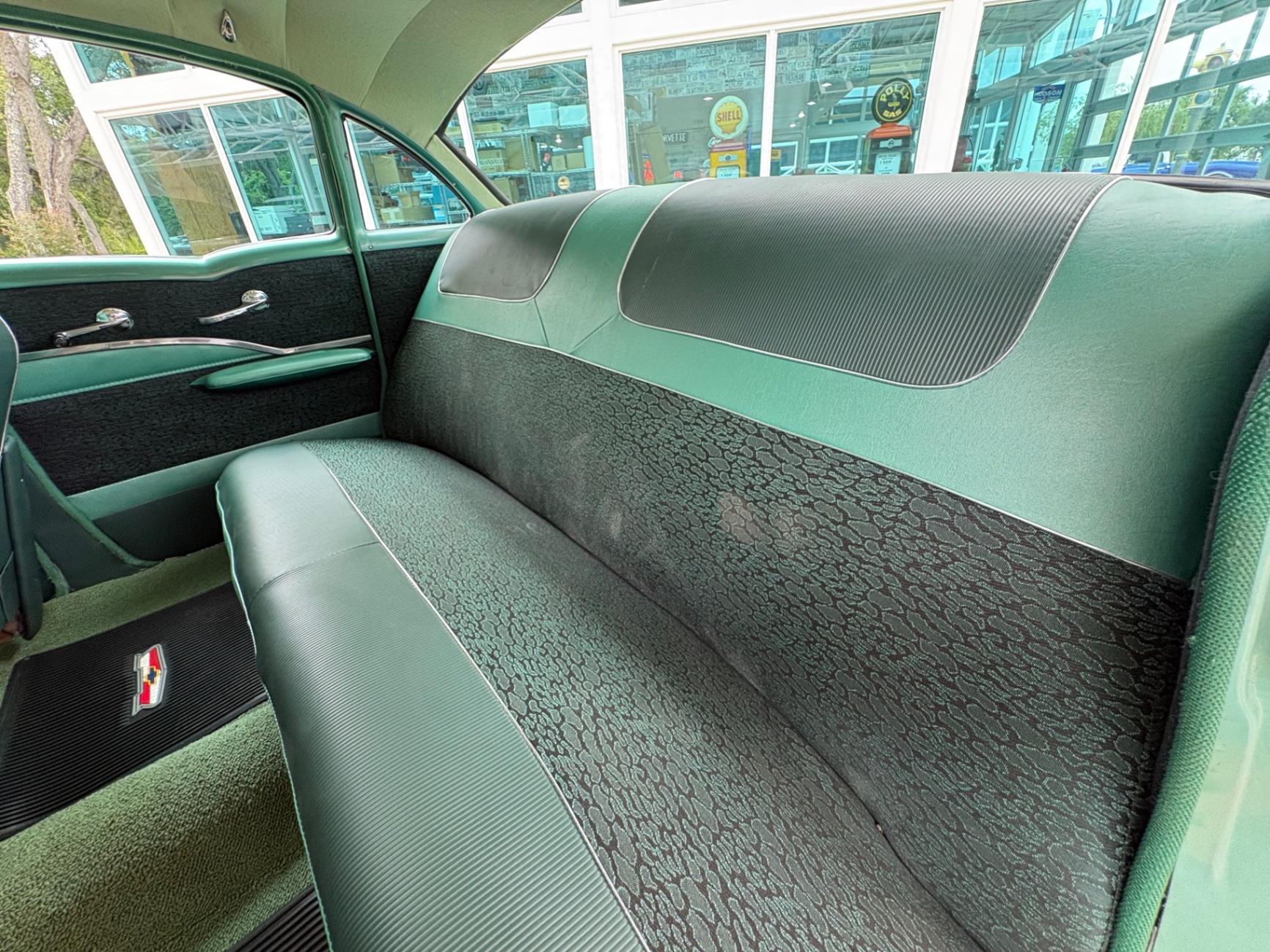
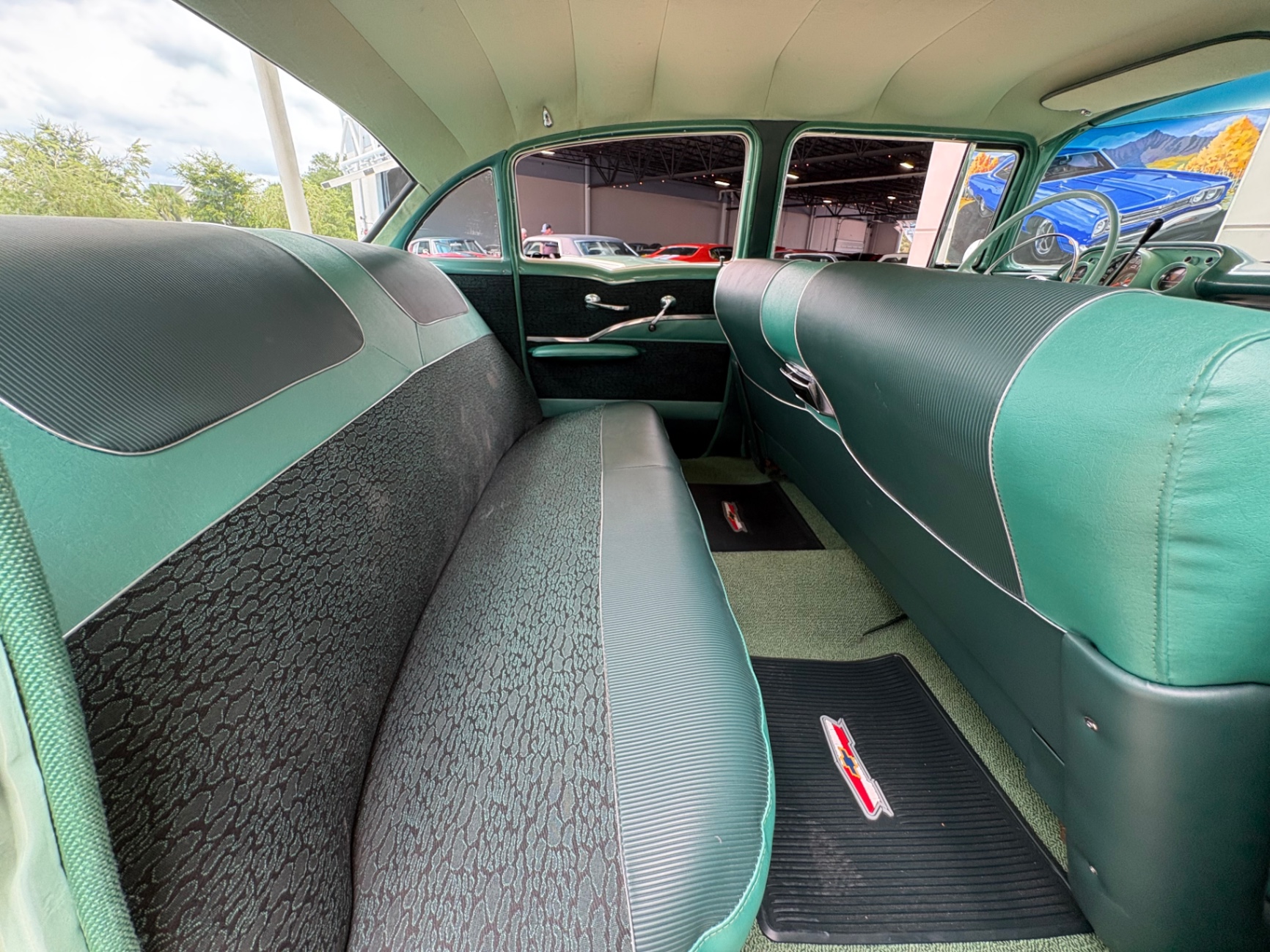
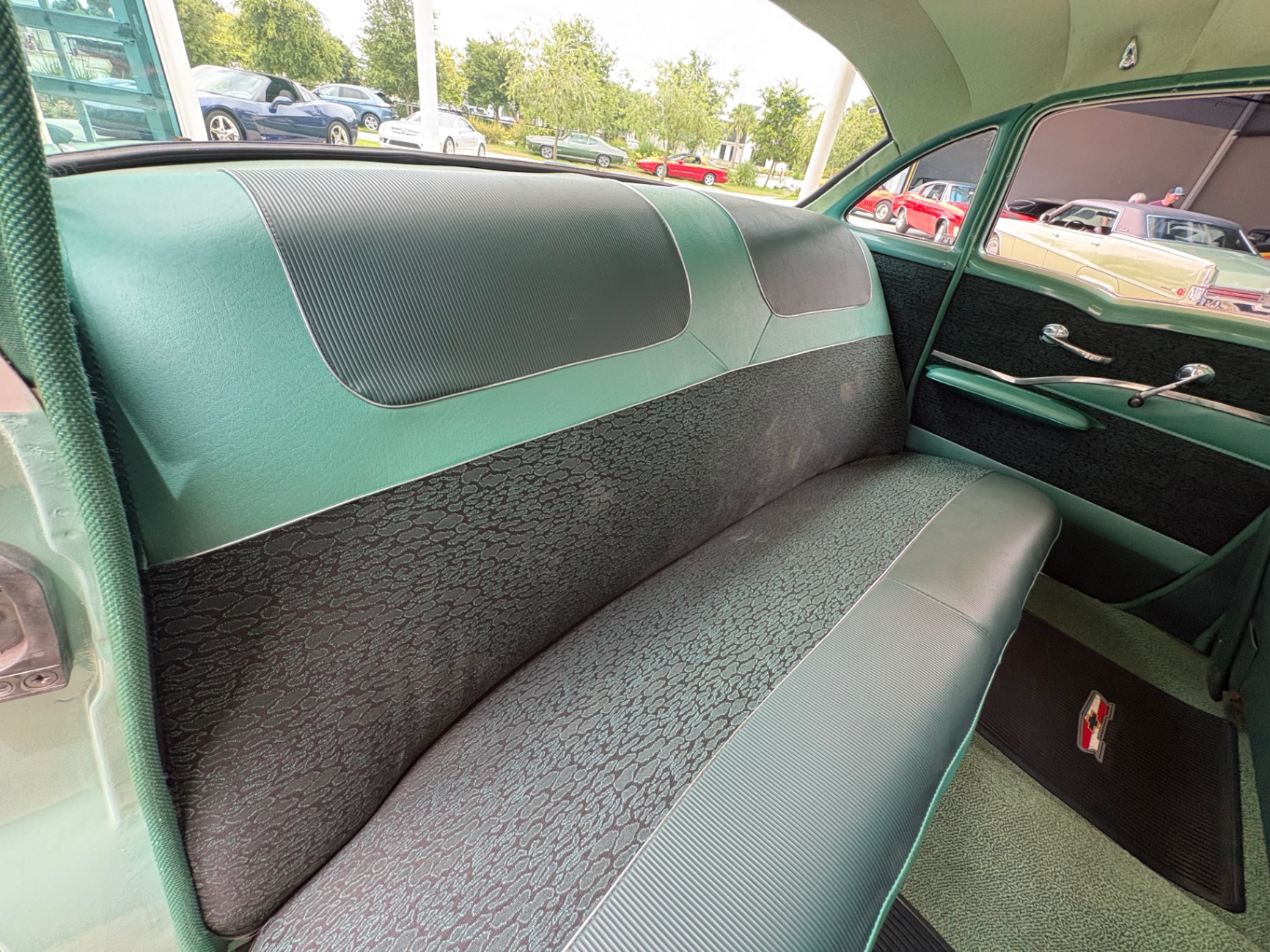
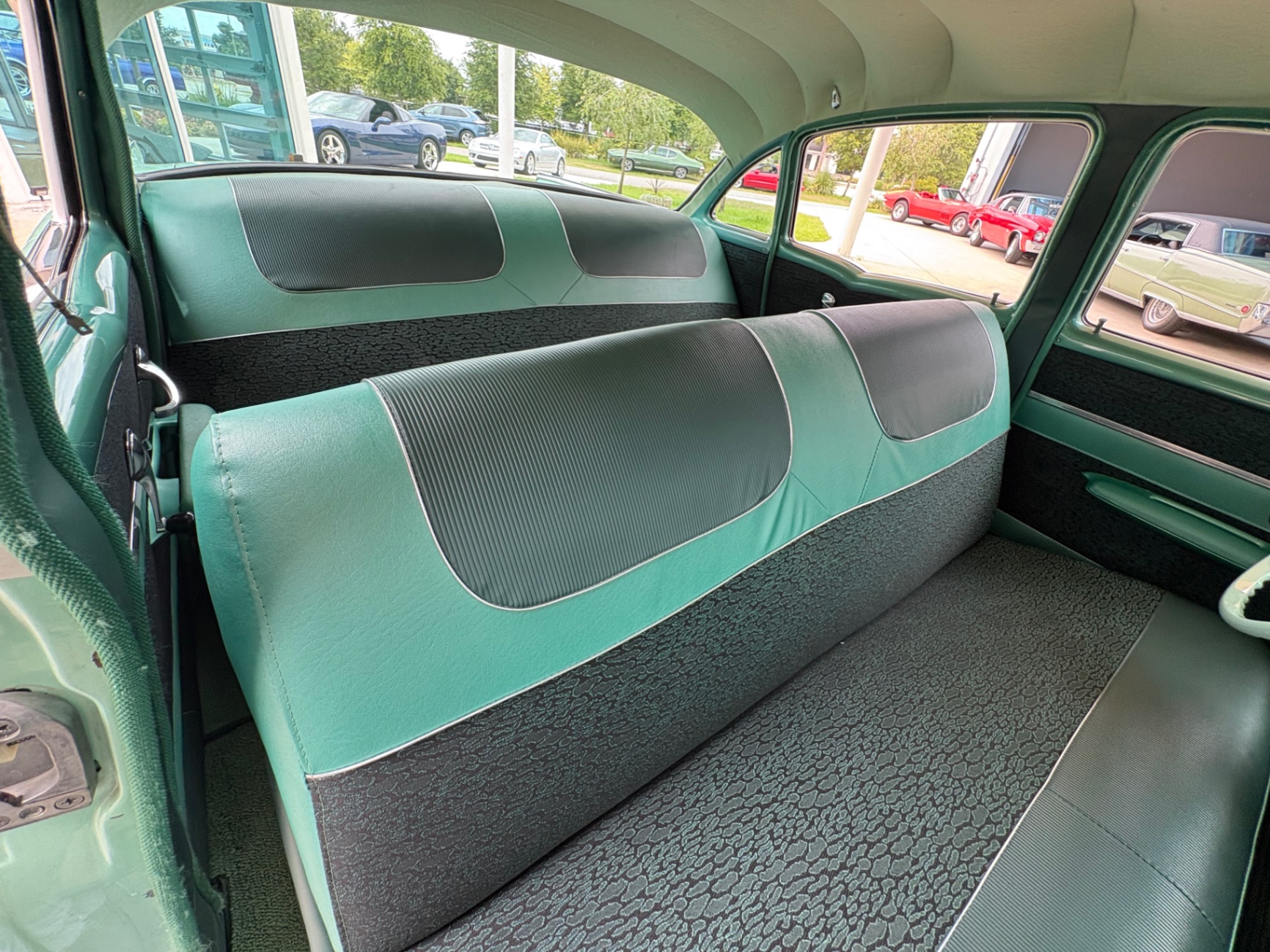
The front bench seat is upholstered in the same green and black pattern, with ribbed and patterned vinyl sections divided by a white piping line. The rear bench seat follows the same layout and shows consistent wear across the surface — evenly used rather than heavily abused. Rear seat belts are present, which is worth noting on a car this age, as they were not universally installed and are a practical addition for anyone who plans to drive the car regularly with passengers.
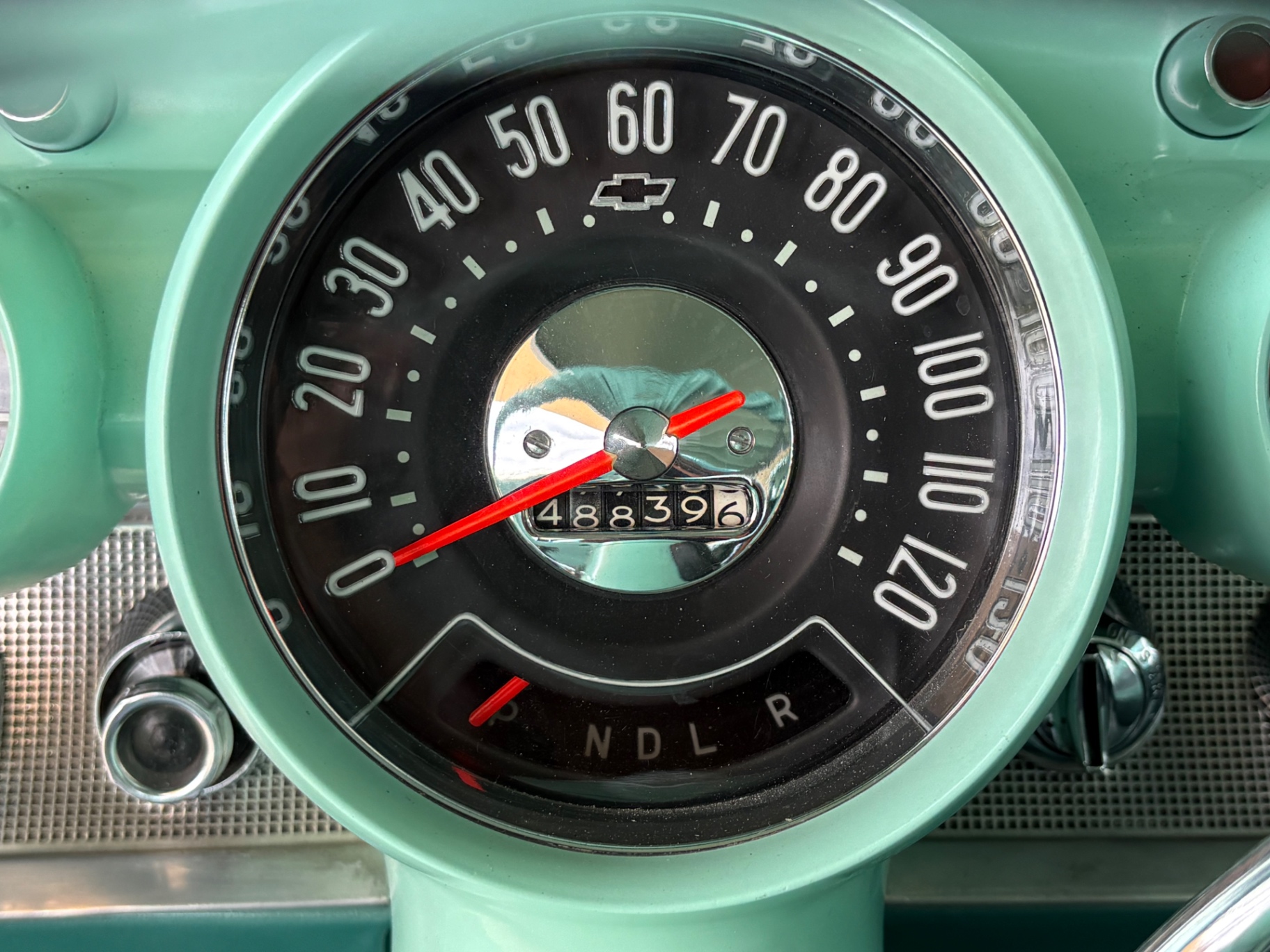
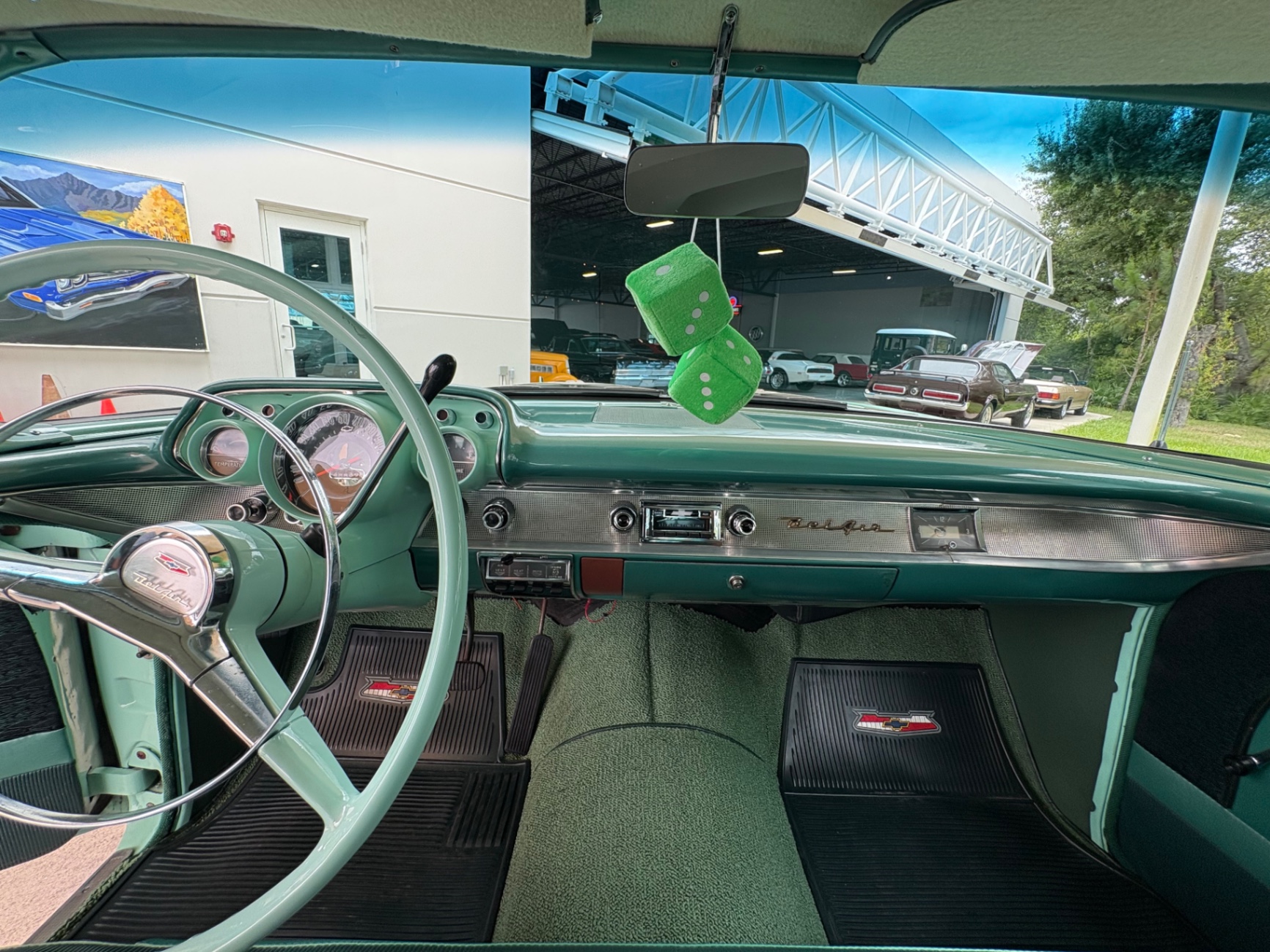
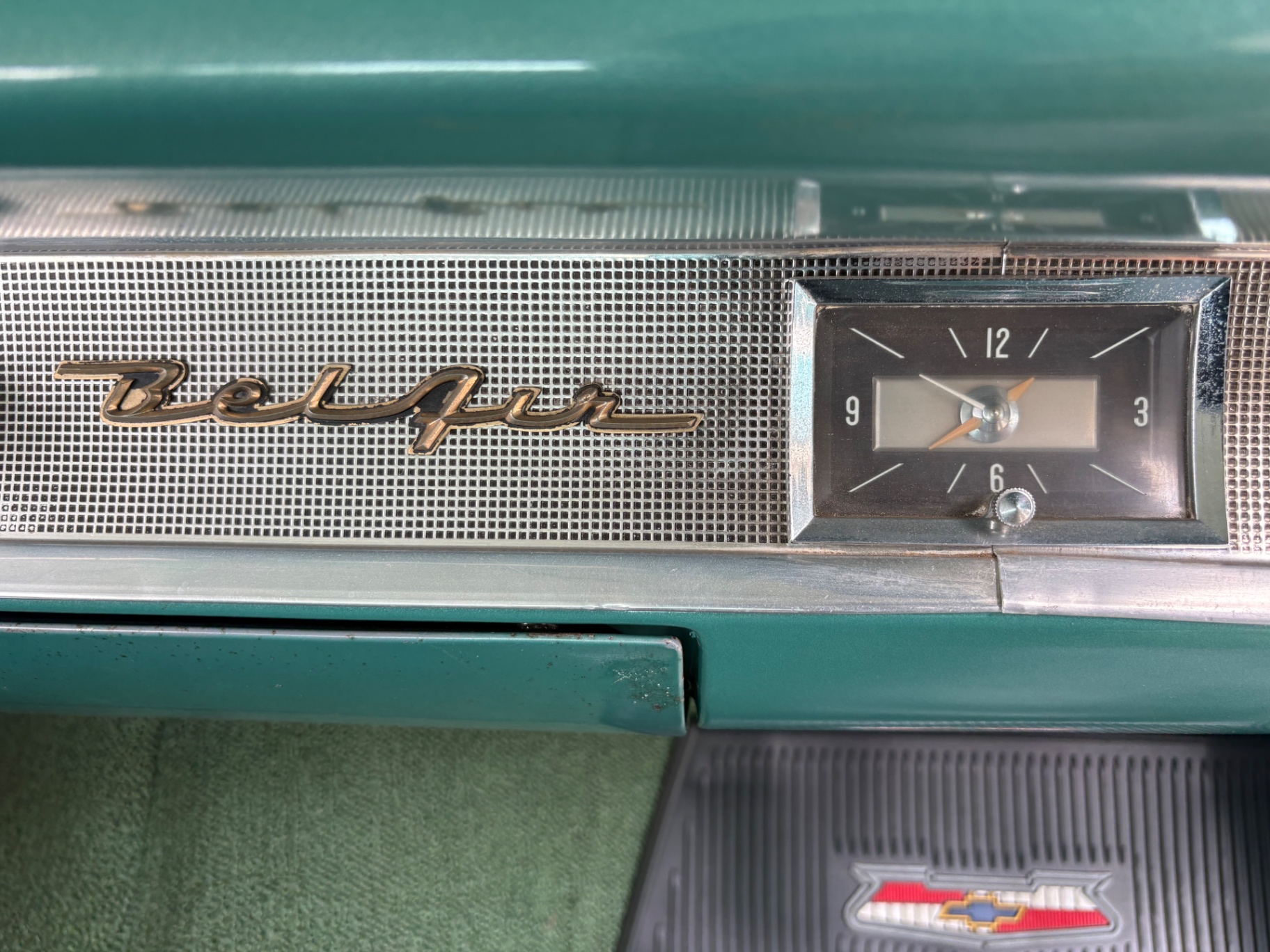
The dashboard is finished in green to match the interior, with a brushed metal insert panel running across the passenger side. The Bel Air script sits on the dash fascia in gold lettering, and the dash clock occupies its correct position to the right of center. The AM radio is installed in the factory location. The instrument cluster includes a speedometer and temperature gauge, both readable and correct for the model year. The steering wheel is the correct two-spoke design in light green, matching the dash and interior color. Black vinyl floor mats with the Bowtie logo protect the carpet underneath, which appears to be in green to coordinate with the rest of the cabin.
The overall impression of the interior is a car that has been kept up and enjoyed. The colors are consistent throughout, the chrome trim pieces are intact and present on all four doors, and the dash components are all accounted for. There is no cracked or shrunken vinyl, no missing trim pieces, and no evidence of prior water intrusion.
Exterior
The 1957 Chevrolet Bel Air was styled by a team at GM Design under Harley Earl, and the 1957 body represented a significant departure from the comparatively restrained 1955 and 1956 models. The fins grew taller and more angular, the front grille became more aggressive with quad headlights no longer required but widely adopted, and the chrome content increased substantially. The Bel Air was the top trim level in the passenger car lineup above the Two-Ten and One-Fifty, and that status showed in the exterior appointments.
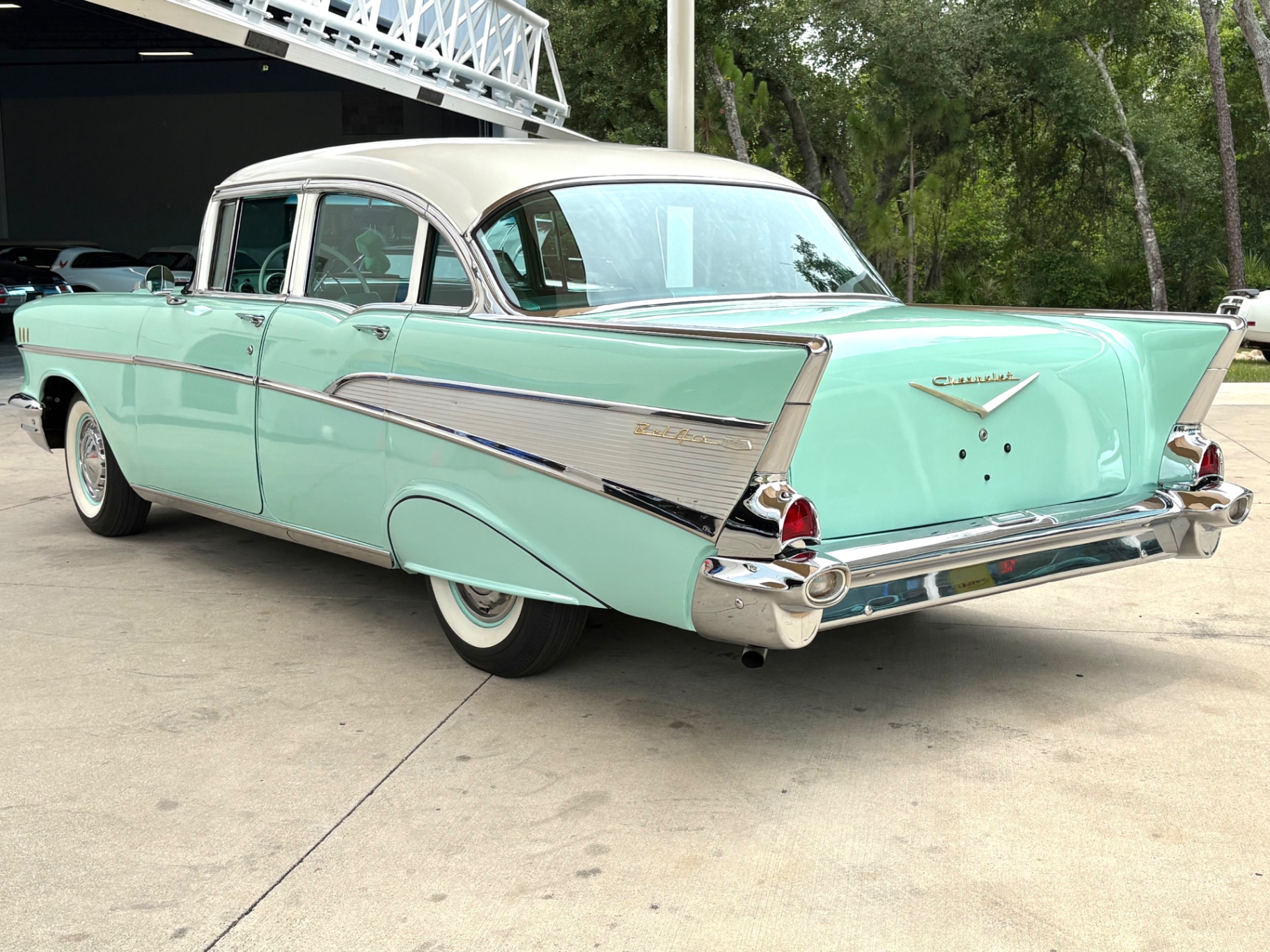
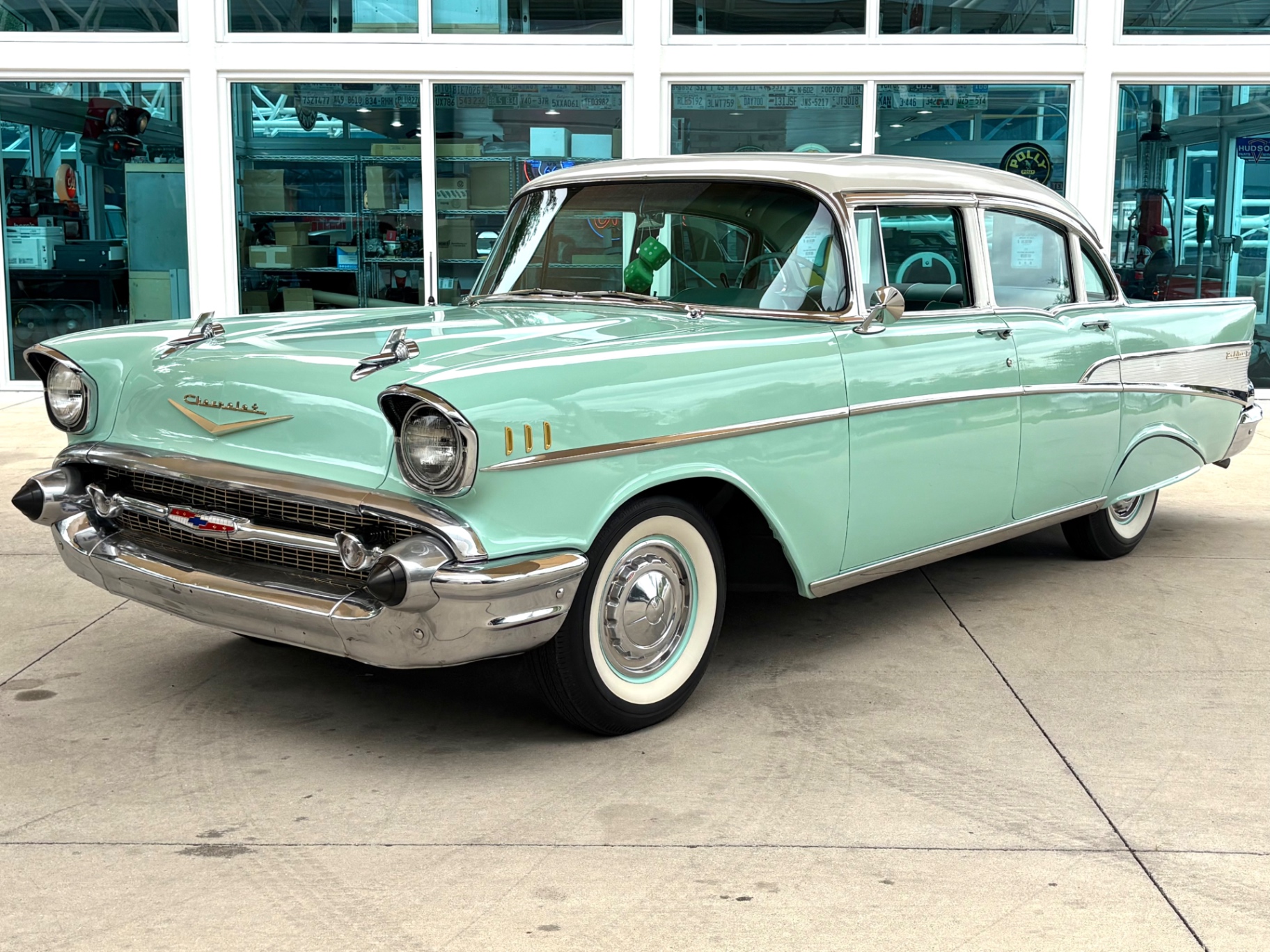
This car presents in Ivy Green with a white two-tone roof. The body color covers the lower section of the car, and the white picks up at the chrome side molding that runs along the body crease — a dividing line that GM's designers used specifically to accommodate the two-tone schemes that were enormously popular with buyers in 1957. The chrome side molding is present and straight. The chrome bumpers front and rear are intact. The chrome grille, which features the period Chevrolet crest in the center, is presentable with good chrome. The chrome tail lamp bezels frame the round taillights cleanly, and the fins carry the correct trim.
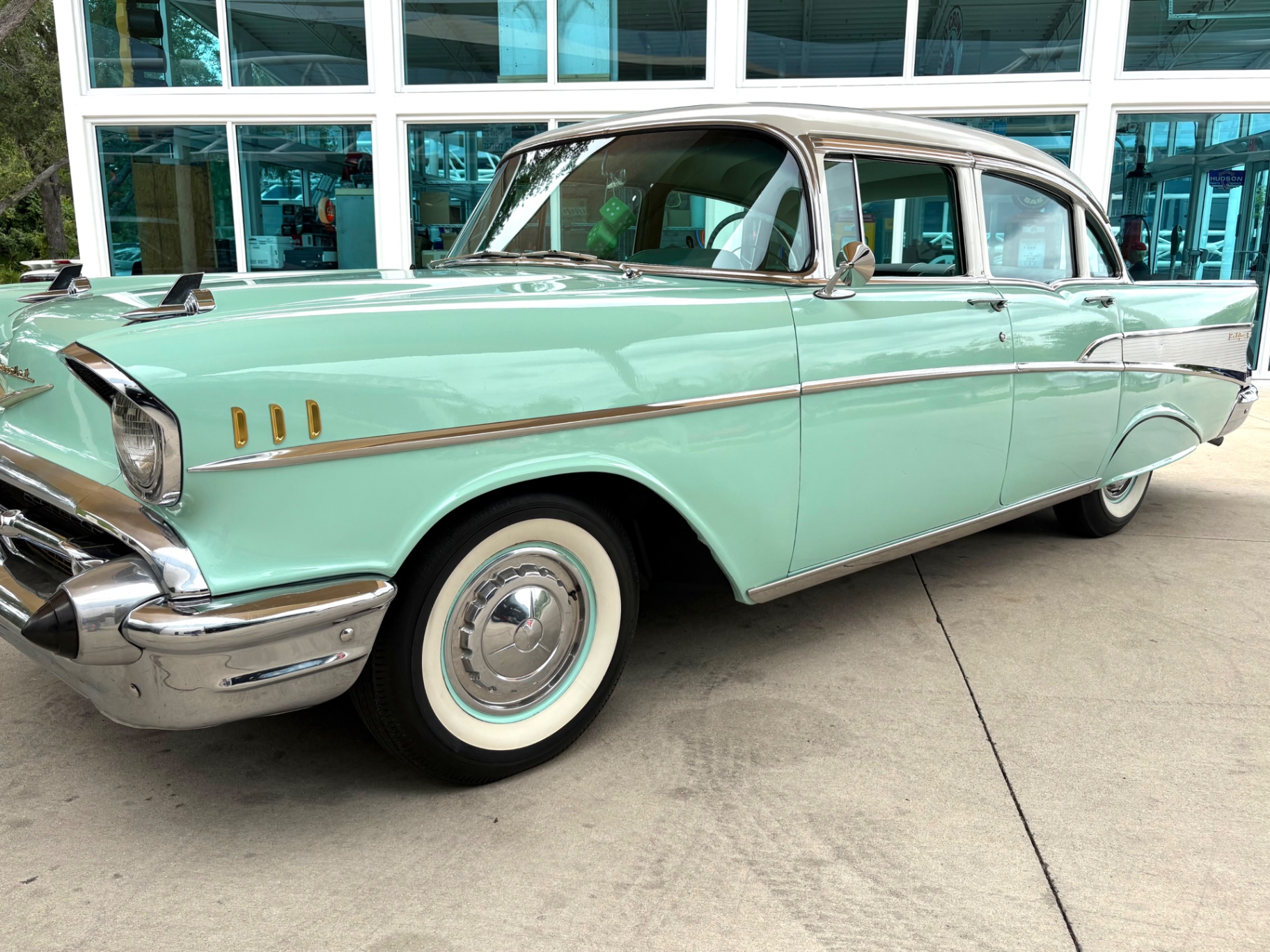
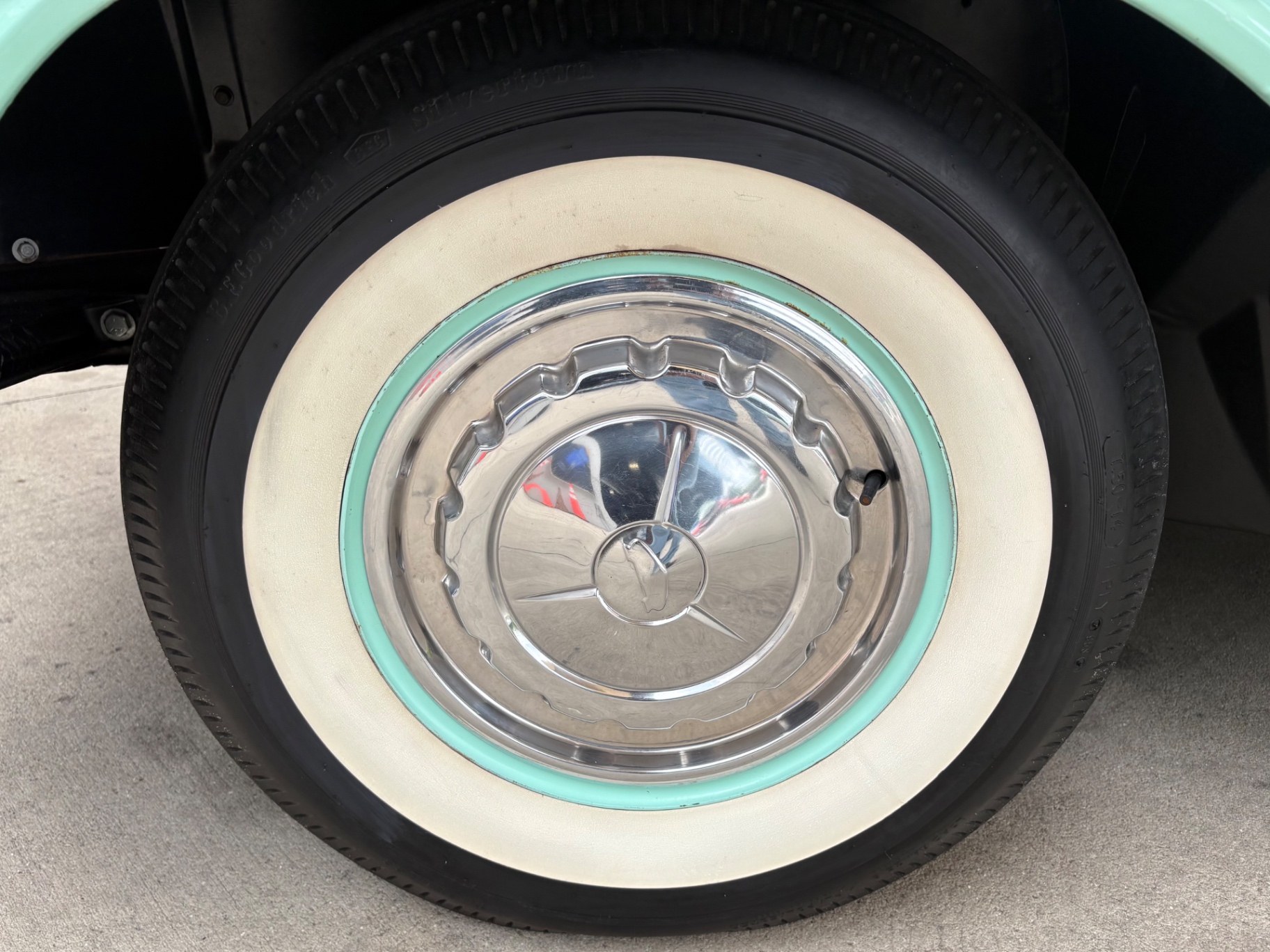
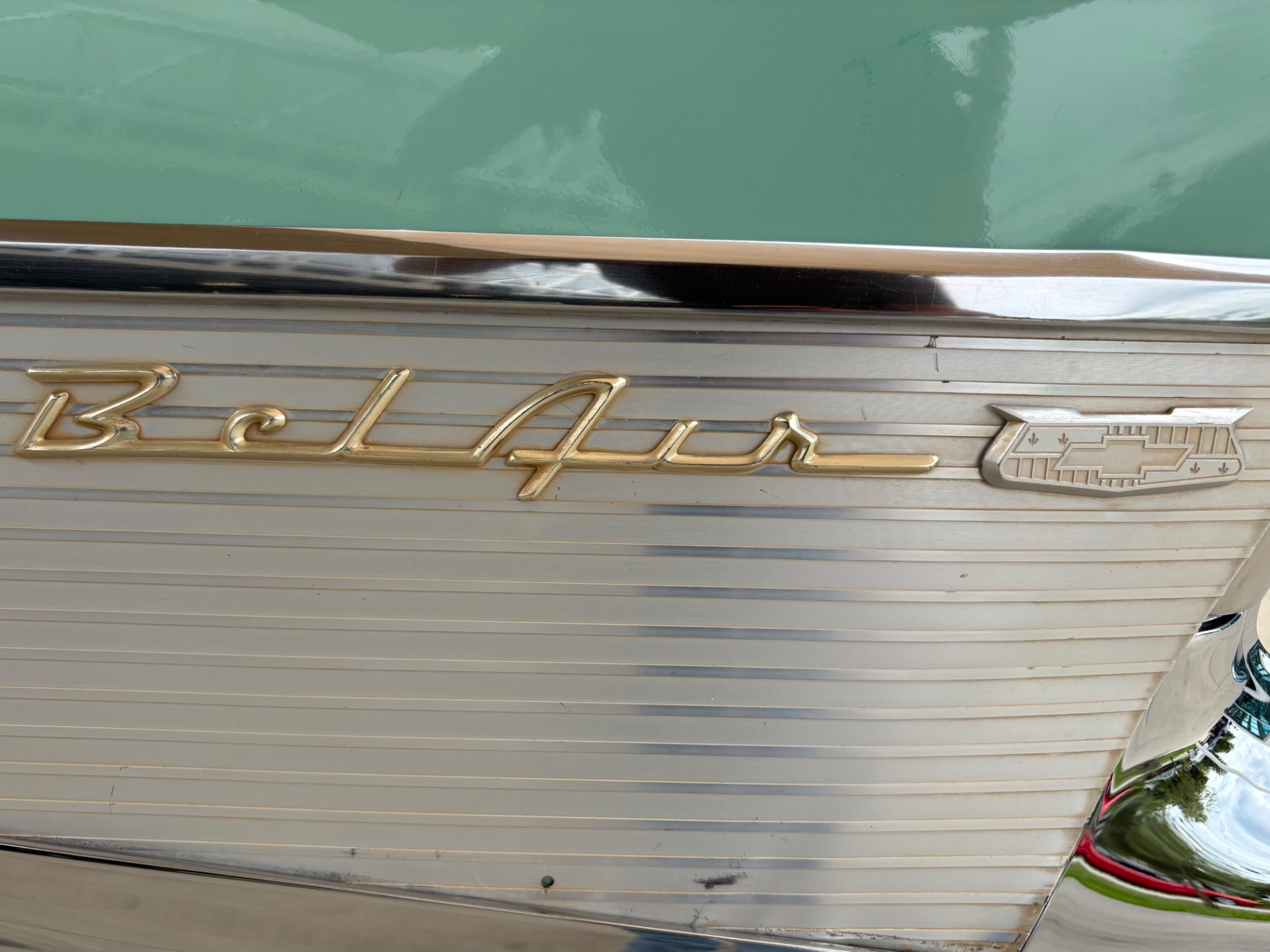
The hood carries the chrome ornament and the gold "V" badge that identifies this as a V8 car — a small but significant detail for authenticity. The Bel Air script badging appears on the front fenders. The whitewall tires with original-style hubcaps complete the look that these cars had when they left the dealership lot in 1957. The overall body shows the expected character of a car that has been used and maintained, not a concours restoration, but a solid, straight, well-kept example that represents the 1957 Chevrolet Bel Air as it was meant to be experienced — on the road.
Conclusion
The 1957 Chevrolet Bel Air 4-door sedan with a 283 V8 and Powerglide is not a car that needs to be explained to anyone who knows classic American iron. What does need to be pointed out is how this particular example separates itself from the field: a clean, solid undercarriage, a correct and intact interior with all trim pieces present, a matching-color Ivy Green and white two-tone scheme, and a driver-quality presentation that invites use rather than demanding careful storage. The 4-door body style means you get the full Bel Air experience — chrome, fins, two-tone paint, and the 283 small block — in a package that has historically been priced below comparable 2-door cars. That equation is shifting as collectors recognize what these 4-door cars actually are: full Bel Air content at a relative discount.
If you have been looking for a 1957 Chevrolet Bel Air that you can drive to shows, take on weekend trips, and enjoy without constant anxiety, this is the car. It is sorted, correct, and ready to go.
To schedule a viewing or ask specific questions about this 1957 Chevrolet Bel Air, call Skyway Classics in Sarasota, Florida at 941-254-6608.
Disclaimer
Information found on the website is presented as given to us by the owner of the car, whether on consignment or from the owner we bought it from. Some Photos, materials for videos, descriptions and other information are provided by the consignor/seller and is deemed reliable, but Skyway Classics does not warranty or guarantee this information. Skyway Classics is not responsible for information that may incorrect or a publishing error. The decision to purchase should be based solely on the buyers personal inspection of the vehicle or by a professional inspection service prior to offer or purchase being made.
1957 Chevrolet Bel Air 4-Door Sedan — 283 V8, Ivy Green Two-Tone, Solid Driver with Show-Quality Details
Why This Car Is Special
The 1957 Chevrolet Bel Air is one of the most recognized American automobiles ever built, and that reputation is fully deserved. The 1957 model year represented the peak of the Tri-Five generation — a three-year run from 1955 to 1957 that transformed Chevrolet from a plain family car brand into something people genuinely wanted. Of the three years, 1957 carried the most chrome, the boldest fins, and the most engine options Chevrolet had ever offered on a passenger car up to that point.
This particular car is a 4-door sedan, which is a body style that collectors are beginning to pay closer attention to. For years, the 2-door hardtop and Sport Coupe grabbed most of the attention, which means clean 4-door examples like this one have historically been undervalued relative to their condition and content. That gap is closing. The 4-door sedan offered the same full Bel Air trim package as the coupes — the chrome, the two-tone paint, the full interior appointments — with the added practicality of rear door access and, in this case, rear seat belts.
The VIN on this car confirms it was built as a Flint, Michigan assembly product, coded as a 1957 Chevrolet V8 Bel Air 4-door sedan. The "S" in the VIN sequence identifies Flint as the assembly plant, which is consistent with the car's documentation. The 283ci small block V8 was introduced by Chevrolet in 1957, replacing the 265 that debuted in 1955. The 283 is historically significant because it was the first production V8 in GM history to achieve one horsepower per cubic inch of displacement in its top fuel-injected form. This car carries the base 283 with a 2-speed Powerglide automatic, which was a common and practical specification for buyers who wanted V8 performance without a manual clutch. The gold "V" badge below the Chevrolet script on the hood confirms the V8 specification to any knowledgeable observer.
The color combination — Ivy Green body with a white two-tone roof — is one of the factory combinations offered for 1957 and gives this car a cooler, more understated presence than the red-and-white or black-and-white cars that tend to dominate show fields. It works particularly well on the 4-door sedan body, where the white roof caps the greenhouse cleanly and the chrome side molding divides the two colors right where GM's designers intended.
Features List
- 283ci Small Block V8 engine
- 2-Speed Powerglide Automatic Transmission
- 4-Door Sedan body style
- Ivy Green exterior with white two-tone roof
- Chrome front and rear bumpers
- Chrome grille
- Chrome hood ornament
- Chrome side moldings and body trim
- Chrome tail lamp bezels
- Tail fins
- Gold "V" badge (factory V8 identifier)
- Bel Air script badging
- Whitewall tires
- Original-style hubcaps
- Green and black two-tone vinyl interior
- Front and rear bench seats
- Rear seat belts
- Green matching dash and interior trim
- Bel Air script on dashboard fascia
- AM radio
- Dash clock
- Vinyl floor mats with Bowtie logo
- Chrome interior door handles
- Painted engine bay
- Aluminum radiator overflow canister
- Clean undercarriage
- Drum brakes all around
Mechanical
The 283ci small block V8 sits in the engine bay painted in the factory Chevrolet red, which is correct for the era and gives the compartment a purposeful, period-correct appearance. The engine is mated to the 2-speed Powerglide automatic, one of the most reliable transmissions Chevrolet produced during this period. The Powerglide had been in production since 1950 and by 1957 was a well-sorted unit. It requires less maintenance than a manual and is entirely appropriate for a car driven regularly rather than stored. The combination of the 283 and Powerglide was one of the most popular configurations on the order sheet in 1957.
An aluminum radiator overflow canister has been added, a practical improvement that manages coolant expansion more cleanly than an open system. The engine bay itself is painted, keeping things tidy under the hood without going overboard on show-quality detailing. This is a car that has been cared for and driven, not one that has been trailered and pampered to the point of being too precious to use.
The undercarriage photos tell the real story of this car's condition. The floor pans are solid and show a clean coat of paint. The frame rails are straight and free of significant rust or patch work. The rear axle housing is intact, the leaf springs are in place, and the brake lines run cleanly to the four-wheel drum brake setup. Drum brakes are correct for the 1957 Bel Air and are entirely serviceable for normal street driving. The front suspension components visible in the undercarriage photos show good geometry and no obvious worn-out hardware. This is not a rust car that has been cleaned up for photography — the structural integrity is evident across multiple lift photos taken from every angle.
Interior
The interior of this 1957 Chevrolet Bel Air 4-door sedan is finished in green and black vinyl, a two-tone combination that mirrors the exterior color scheme and was a factory-appropriate pairing for an Ivy Green car. The door panels carry the green and black split with a chrome accent bar and a bolstered pull handle in green vinyl — exactly what Chevrolet specified for Bel Air trim level. All four doors have the same panel treatment, with chrome handles throughout.
The front bench seat is upholstered in the same green and black pattern, with ribbed and patterned vinyl sections divided by a white piping line. The rear bench seat follows the same layout and shows consistent wear across the surface — evenly used rather than heavily abused. Rear seat belts are present, which is worth noting on a car this age, as they were not universally installed and are a practical addition for anyone who plans to drive the car regularly with passengers.
The dashboard is finished in green to match the interior, with a brushed metal insert panel running across the passenger side. The Bel Air script sits on the dash fascia in gold lettering, and the dash clock occupies its correct position to the right of center. The AM radio is installed in the factory location. The instrument cluster includes a speedometer and temperature gauge, both readable and correct for the model year. The steering wheel is the correct two-spoke design in light green, matching the dash and interior color. Black vinyl floor mats with the Bowtie logo protect the carpet underneath, which appears to be in green to coordinate with the rest of the cabin.
The overall impression of the interior is a car that has been kept up and enjoyed. The colors are consistent throughout, the chrome trim pieces are intact and present on all four doors, and the dash components are all accounted for. There is no cracked or shrunken vinyl, no missing trim pieces, and no evidence of prior water intrusion.
Exterior
The 1957 Chevrolet Bel Air was styled by a team at GM Design under Harley Earl, and the 1957 body represented a significant departure from the comparatively restrained 1955 and 1956 models. The fins grew taller and more angular, the front grille became more aggressive with quad headlights no longer required but widely adopted, and the chrome content increased substantially. The Bel Air was the top trim level in the passenger car lineup above the Two-Ten and One-Fifty, and that status showed in the exterior appointments.
This car presents in Ivy Green with a white two-tone roof. The body color covers the lower section of the car, and the white picks up at the chrome side molding that runs along the body crease — a dividing line that GM's designers used specifically to accommodate the two-tone schemes that were enormously popular with buyers in 1957. The chrome side molding is present and straight. The chrome bumpers front and rear are intact. The chrome grille, which features the period Chevrolet crest in the center, is presentable with good chrome. The chrome tail lamp bezels frame the round taillights cleanly, and the fins carry the correct trim.
The hood carries the chrome ornament and the gold "V" badge that identifies this as a V8 car — a small but significant detail for authenticity. The Bel Air script badging appears on the front fenders. The whitewall tires with original-style hubcaps complete the look that these cars had when they left the dealership lot in 1957. The overall body shows the expected character of a car that has been used and maintained, not a concours restoration, but a solid, straight, well-kept example that represents the 1957 Chevrolet Bel Air as it was meant to be experienced — on the road.
Conclusion
The 1957 Chevrolet Bel Air 4-door sedan with a 283 V8 and Powerglide is not a car that needs to be explained to anyone who knows classic American iron. What does need to be pointed out is how this particular example separates itself from the field: a clean, solid undercarriage, a correct and intact interior with all trim pieces present, a matching-color Ivy Green and white two-tone scheme, and a driver-quality presentation that invites use rather than demanding careful storage. The 4-door body style means you get the full Bel Air experience — chrome, fins, two-tone paint, and the 283 small block — in a package that has historically been priced below comparable 2-door cars. That equation is shifting as collectors recognize what these 4-door cars actually are: full Bel Air content at a relative discount.
If you have been looking for a 1957 Chevrolet Bel Air that you can drive to shows, take on weekend trips, and enjoy without constant anxiety, this is the car. It is sorted, correct, and ready to go.
To schedule a viewing or ask specific questions about this 1957 Chevrolet Bel Air, call Skyway Classics in Sarasota, Florida at 941-254-6608.
Disclaimer
Information found on the website is presented as given to us by the owner of the car, whether on consignment or from the owner we bought it from. Some Photos, materials for videos, descriptions and other information are provided by the consignor/seller and is deemed reliable, but Skyway Classics does not warranty or guarantee this information. Skyway Classics is not responsible for information that may incorrect or a publishing error. The decision to purchase should be based solely on the buyers personal inspection of the vehicle or by a professional inspection service prior to offer or purchase being made.
1957 Chevrolet
Bel Air Base
Why Choose Skyway Classics?
Explore our curated inventory of classic and collector cars—thoughtfully selected, ready to drive, and supported by experts who make ownership simple.
Expert Curation
Every vehicle is hand-selected by our experts for quality, authenticity, and investment potential.
Fast Transactions
Streamlined buying and selling process with quick financing and immediate delivery options.
Only National Dealer With Classic Service & Repair
We’re the only national dealership that services and repairs the classics we sell—before and after the sale.
Nationwide Network
Access to our extensive network of collectors, restorers, and classic car enthusiasts nationwide.
Concierge Ownership Support
From financing and insurance to paperwork, shipping, and titling—we handle the details so you can enjoy the drive.
Passion-Driven Service
We're classic car enthusiasts first, providing personalized service with genuine passion for the hobby.