
1933 Ford
Coupe Hotrod
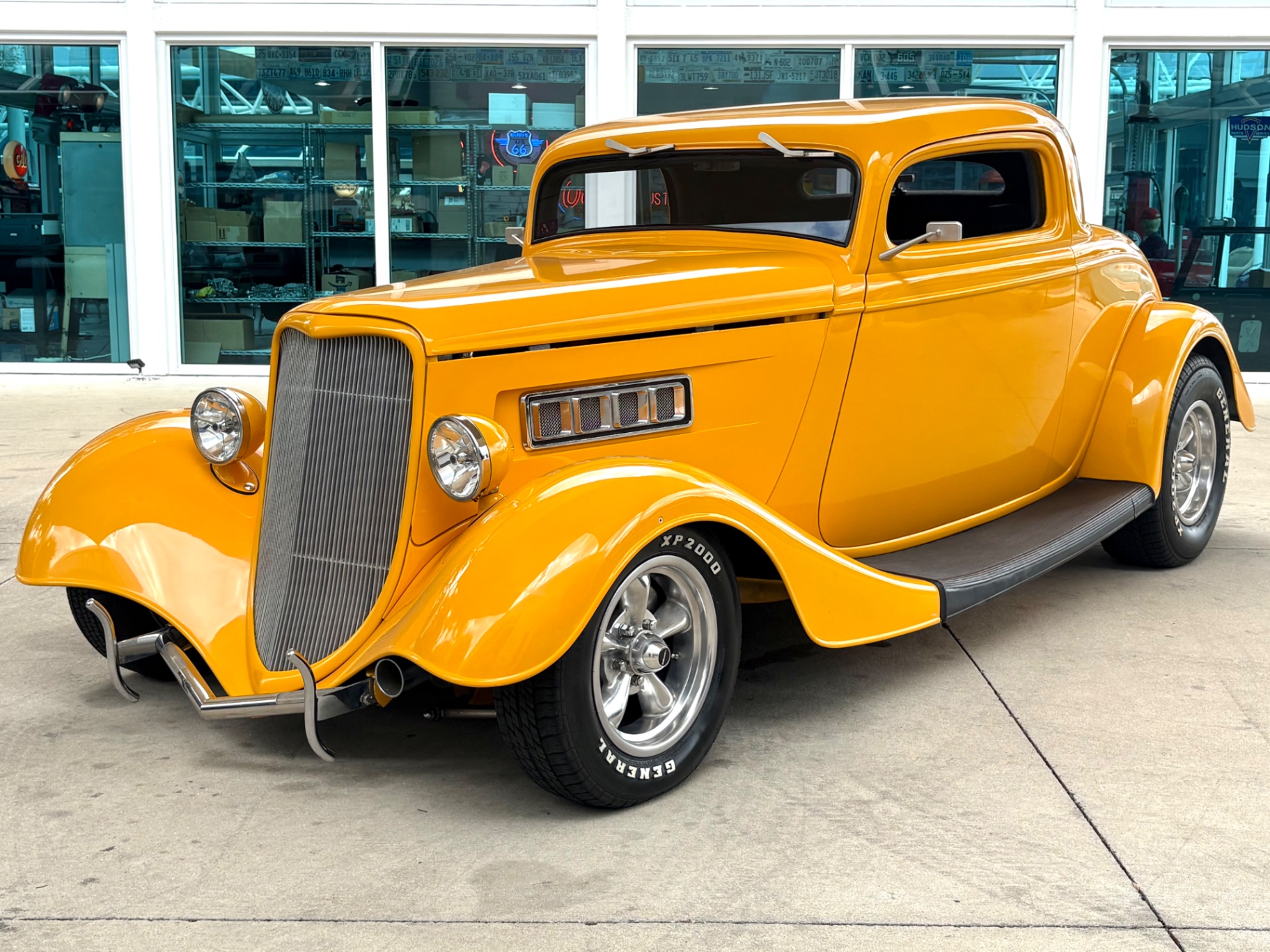
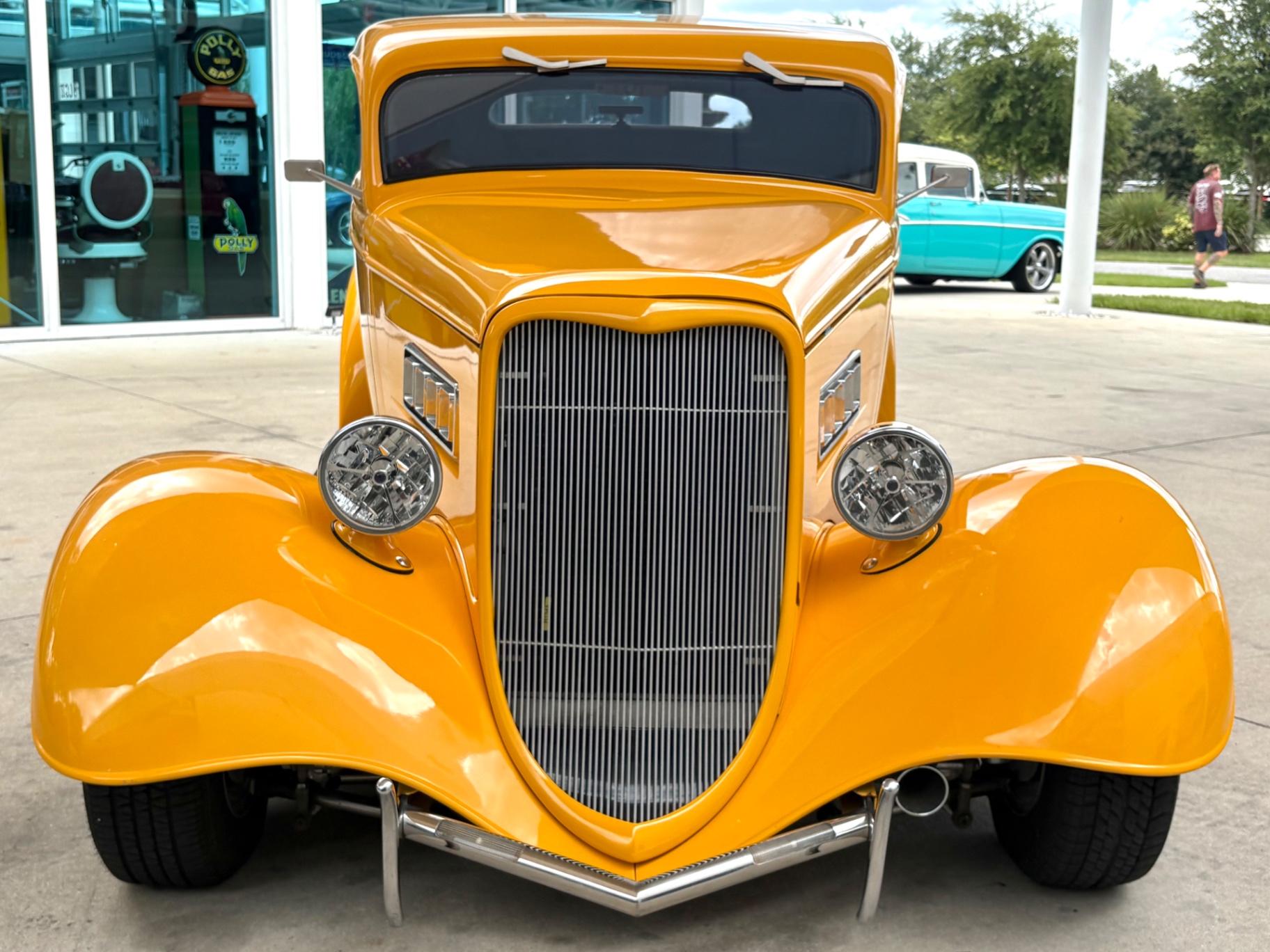
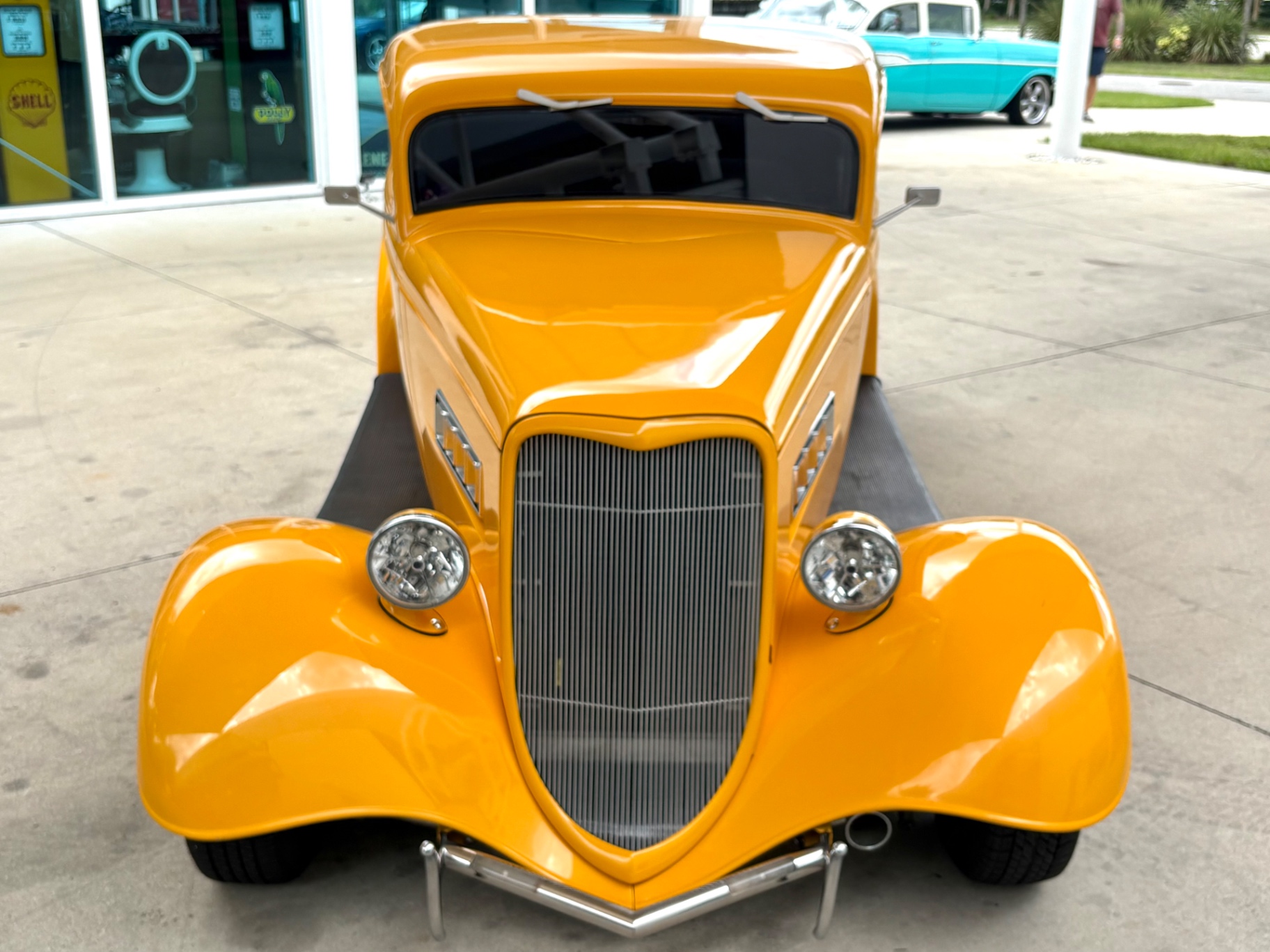
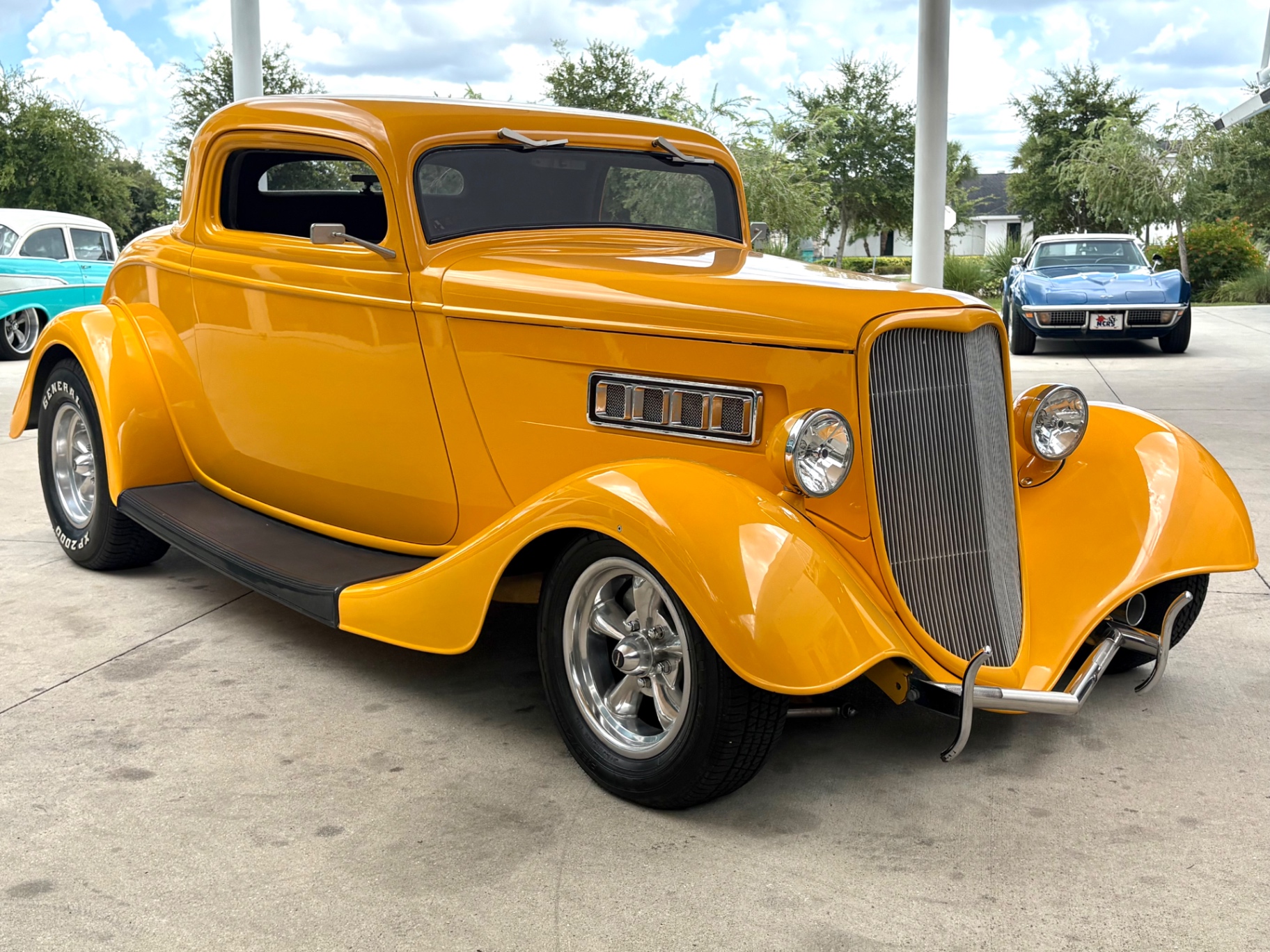
1933 Ford 3-Window Coupe — Chopped Top Hot Rod with 355 Small-Block, Full Build Documentation, and Show-Quality Chassis
Why This Car Is Special
The 1933 Ford 3-window coupe is one of the most recognized body styles in American hot rodding. Ford introduced the redesigned Model 40 for 1933 with a more streamlined body, a longer wheelbase, and a lower roofline compared to the Model 18 it replaced. The three-window coupe variant — named for its single side window per door rather than the opera window found on the five-window — has a cleaner, more aggressive silhouette that makes it a perennial favorite for custom builders. Henry Ford also introduced his flathead V8 for the 1932 model year, and by 1933 the combination of a powerful engine in a lightweight body had already established this platform as the foundation of postwar hot rodding culture. The shape still reads exactly the same way today.
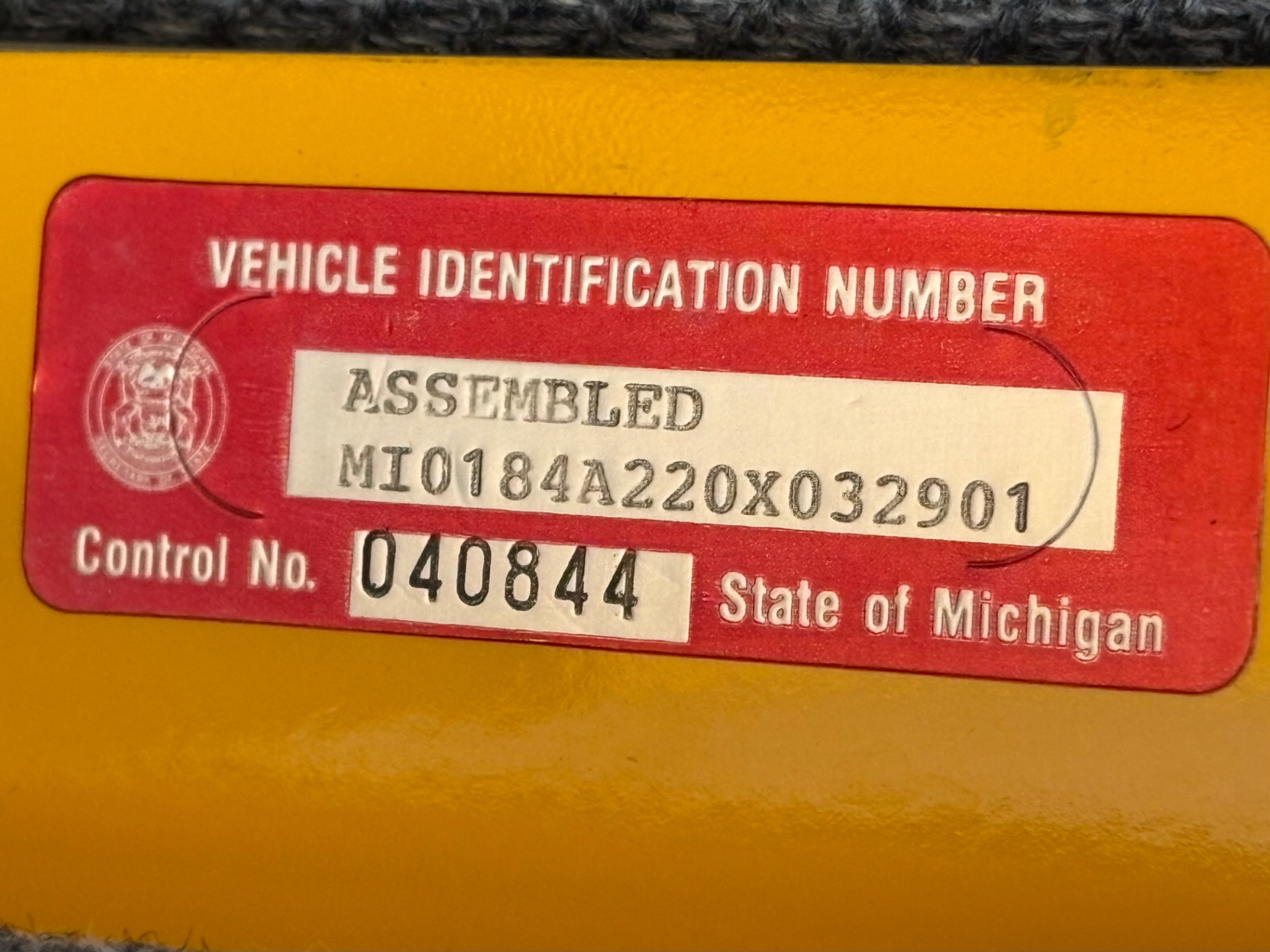
This particular 1933 Ford 3-window coupe is not a restoration. It is a ground-up custom build centered on a brand-new Downs Manufacturing body — serial number 001796, purchased new on February 26, 1999 — mounted on a Downs Manufacturing boxed frame with a tube X-member. Every major component comes from a known, named builder: the engine from Jon Barrett Hot Rod Engines in McLoud, Oklahoma; the transmission from Phoenix Transmission in Weatherford, Texas; the chassis fabrication from Downs Manufacturing in Lawton, Michigan. This is a documented build, not an anonymous project car assembled from unknown parts.
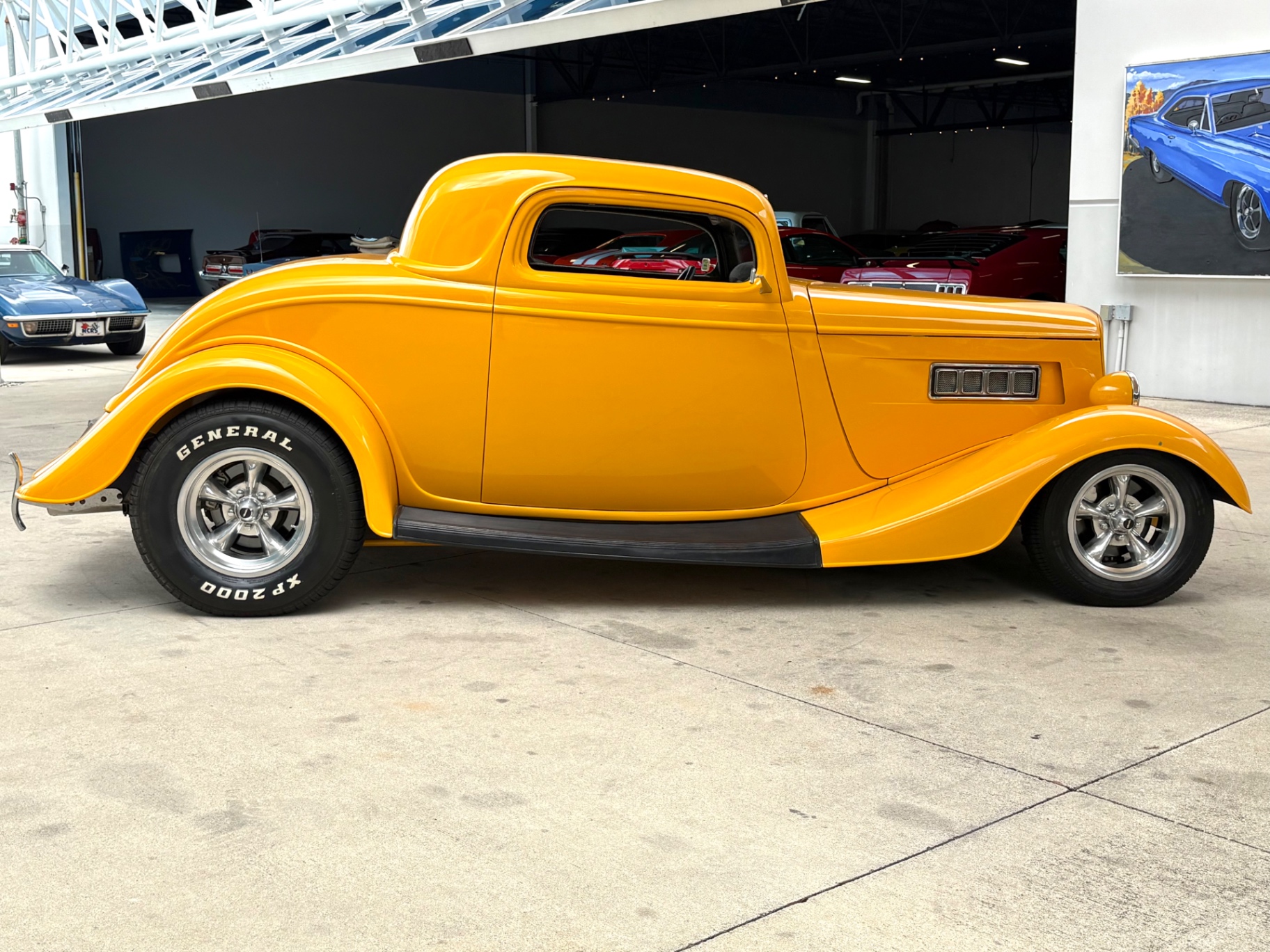
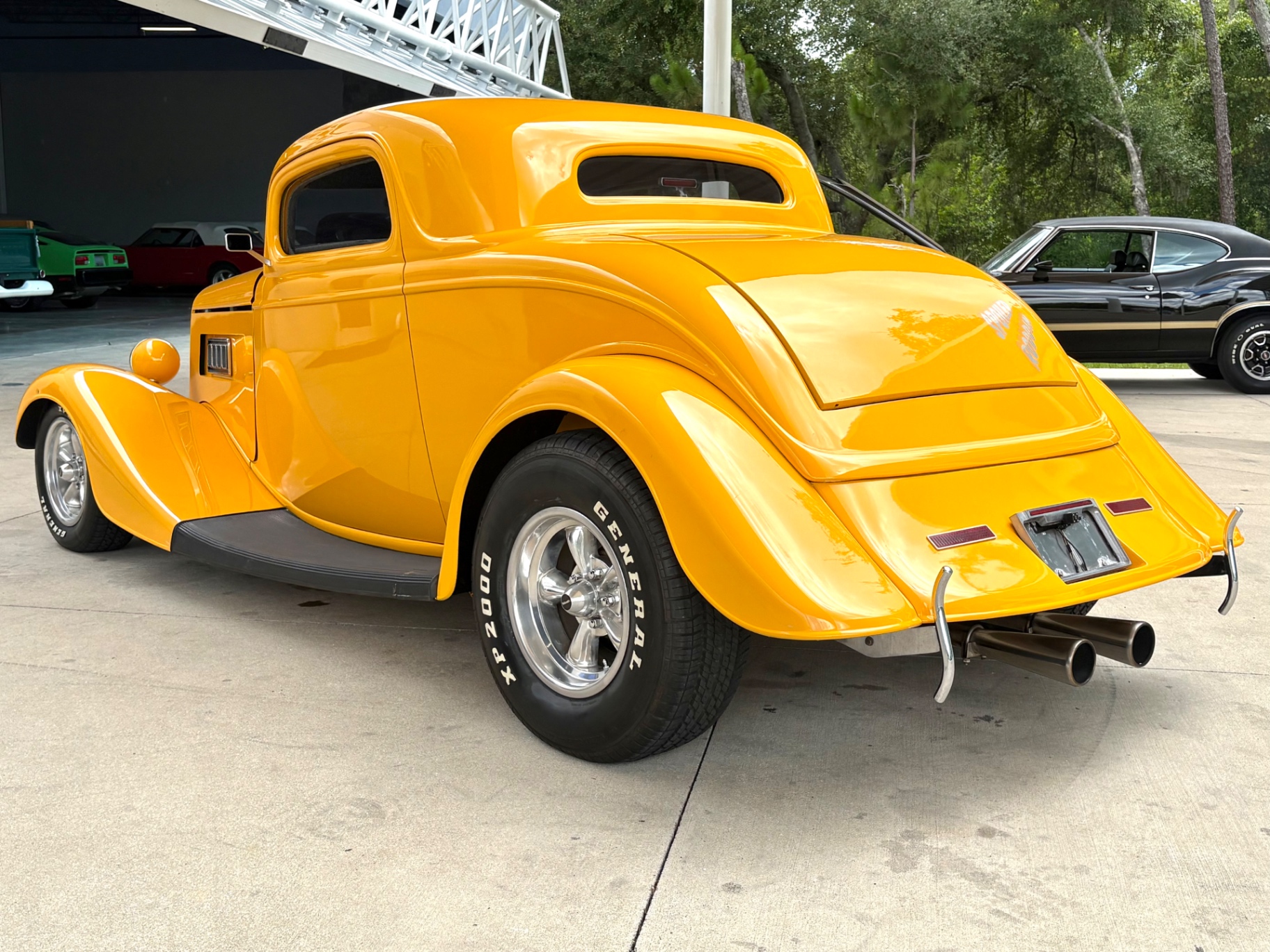
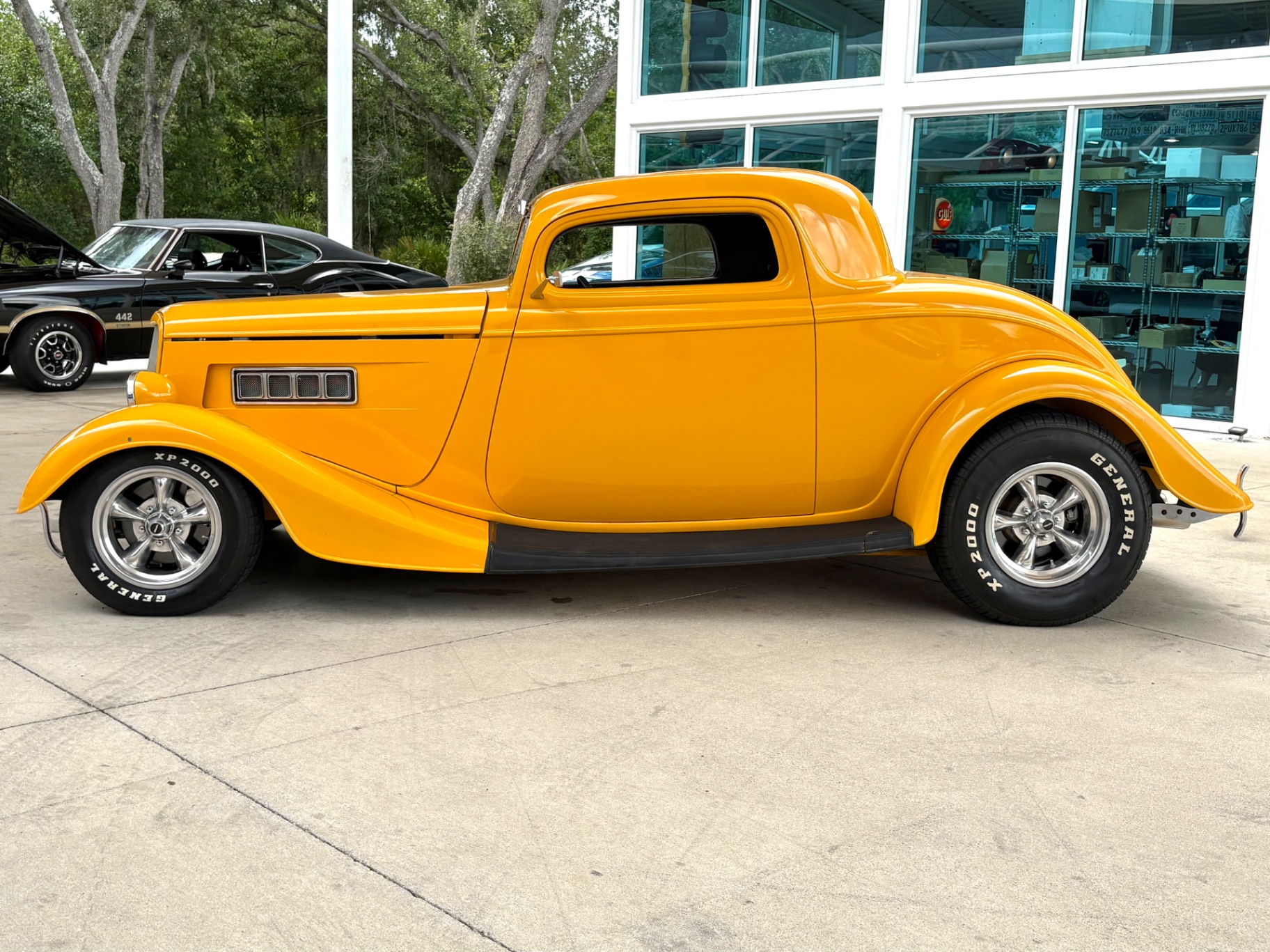
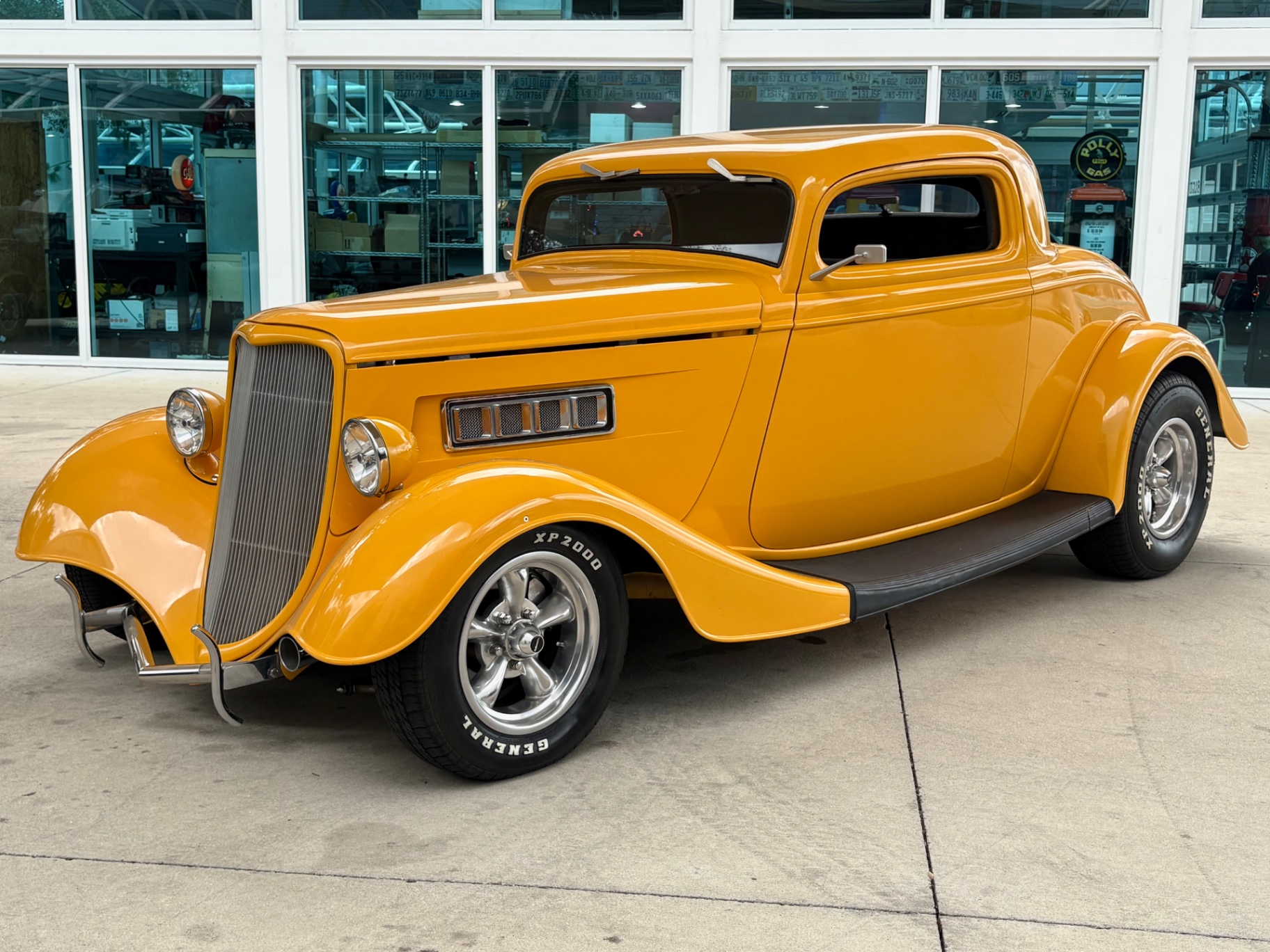
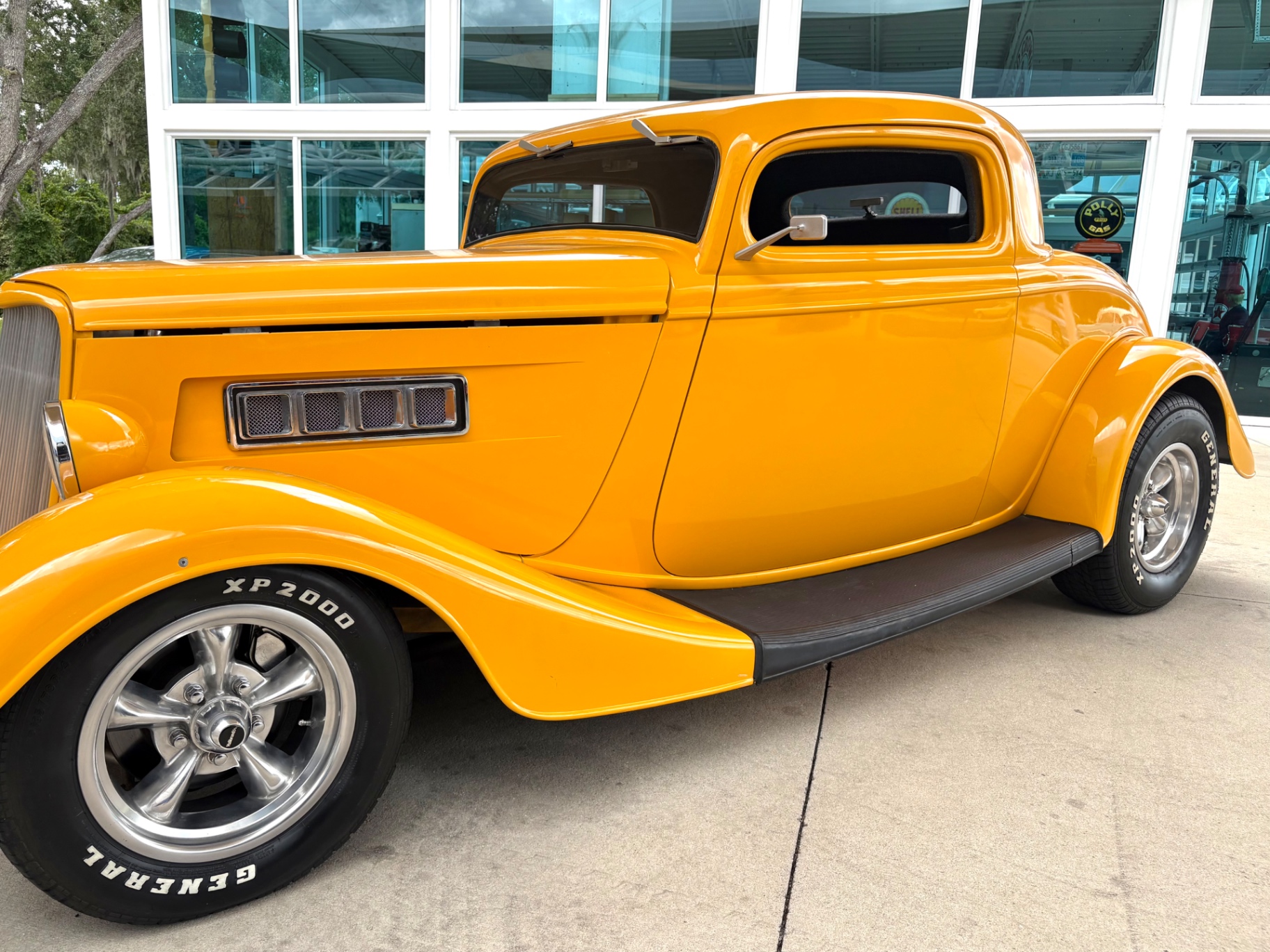
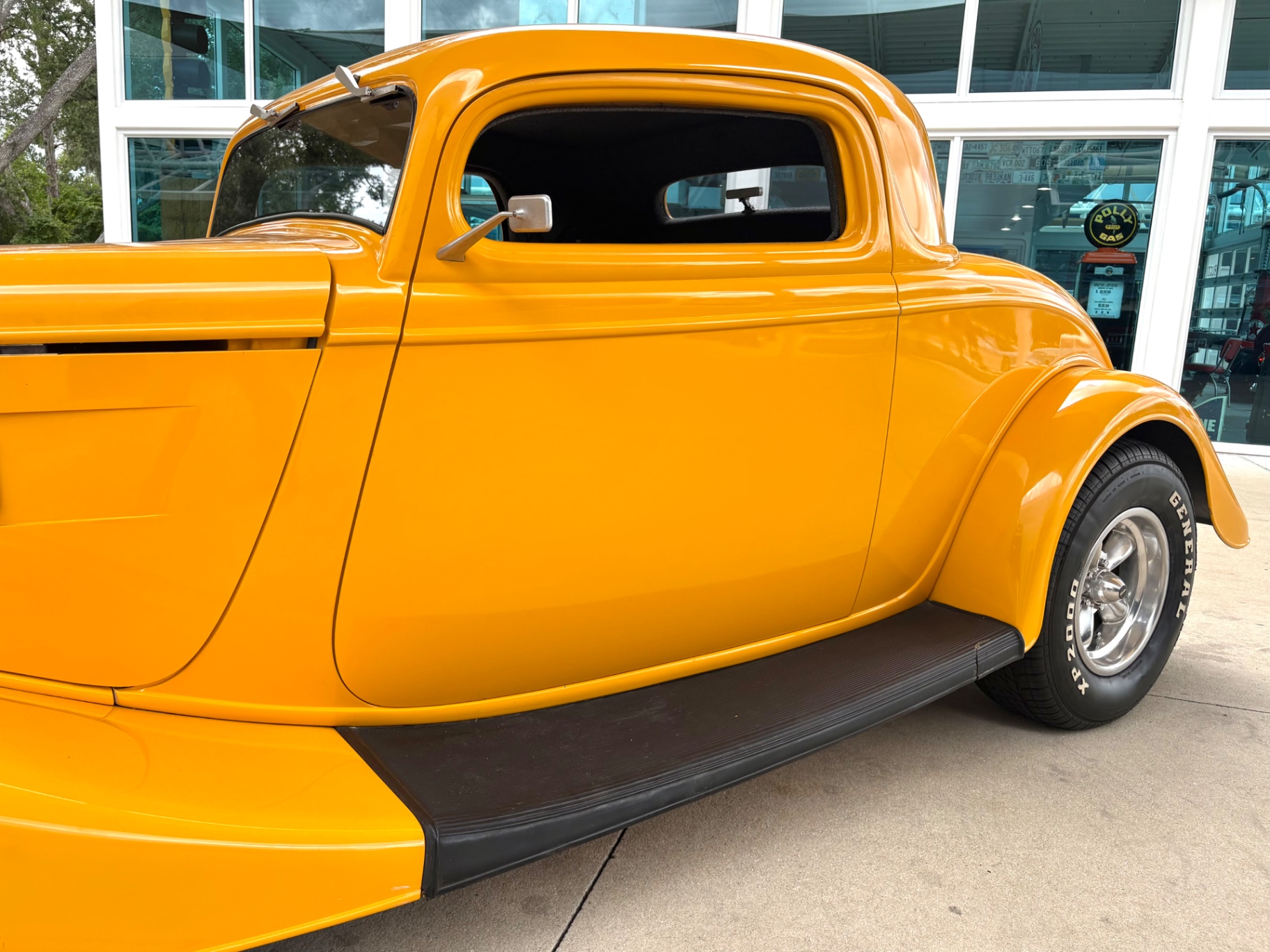
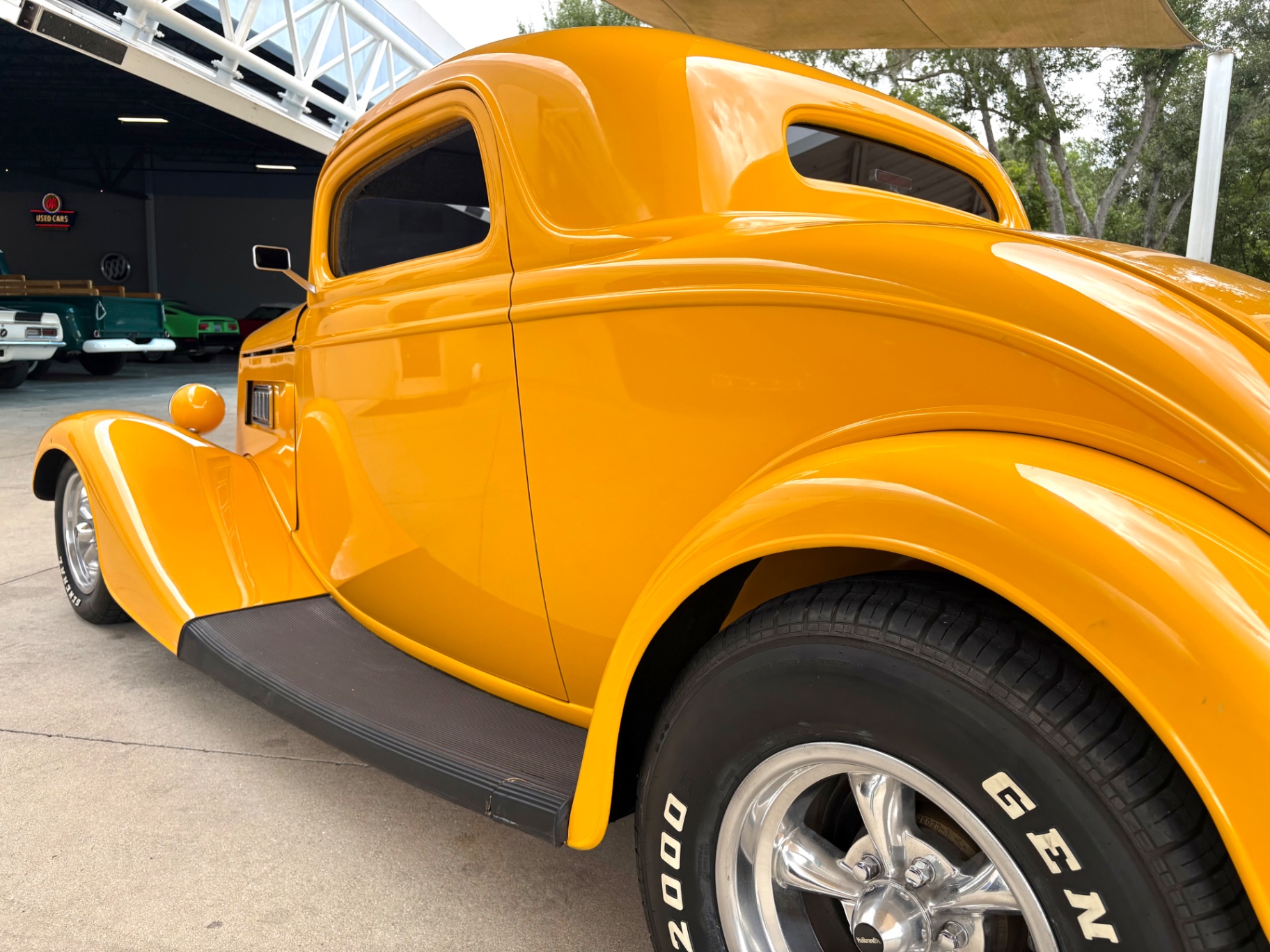
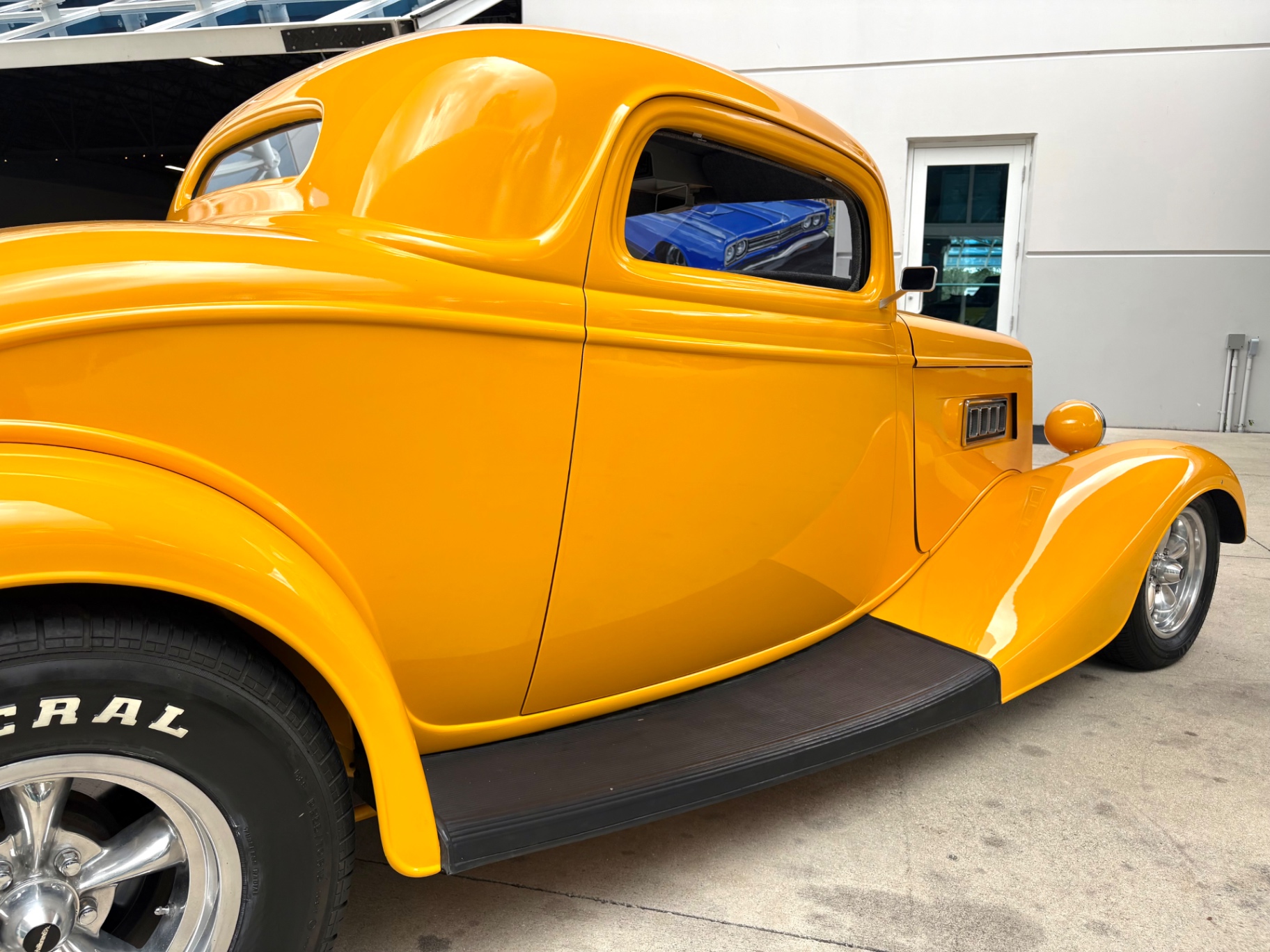
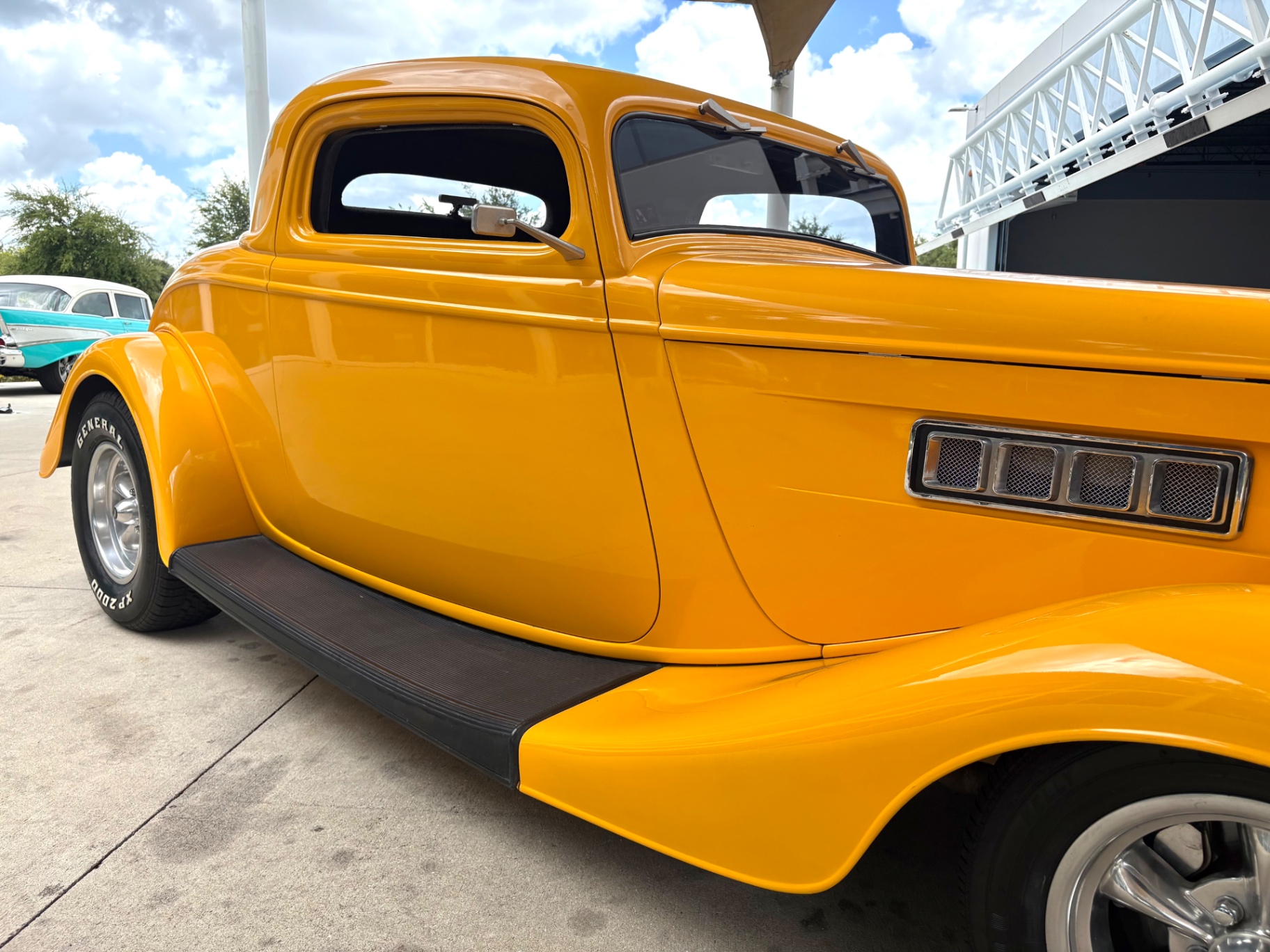
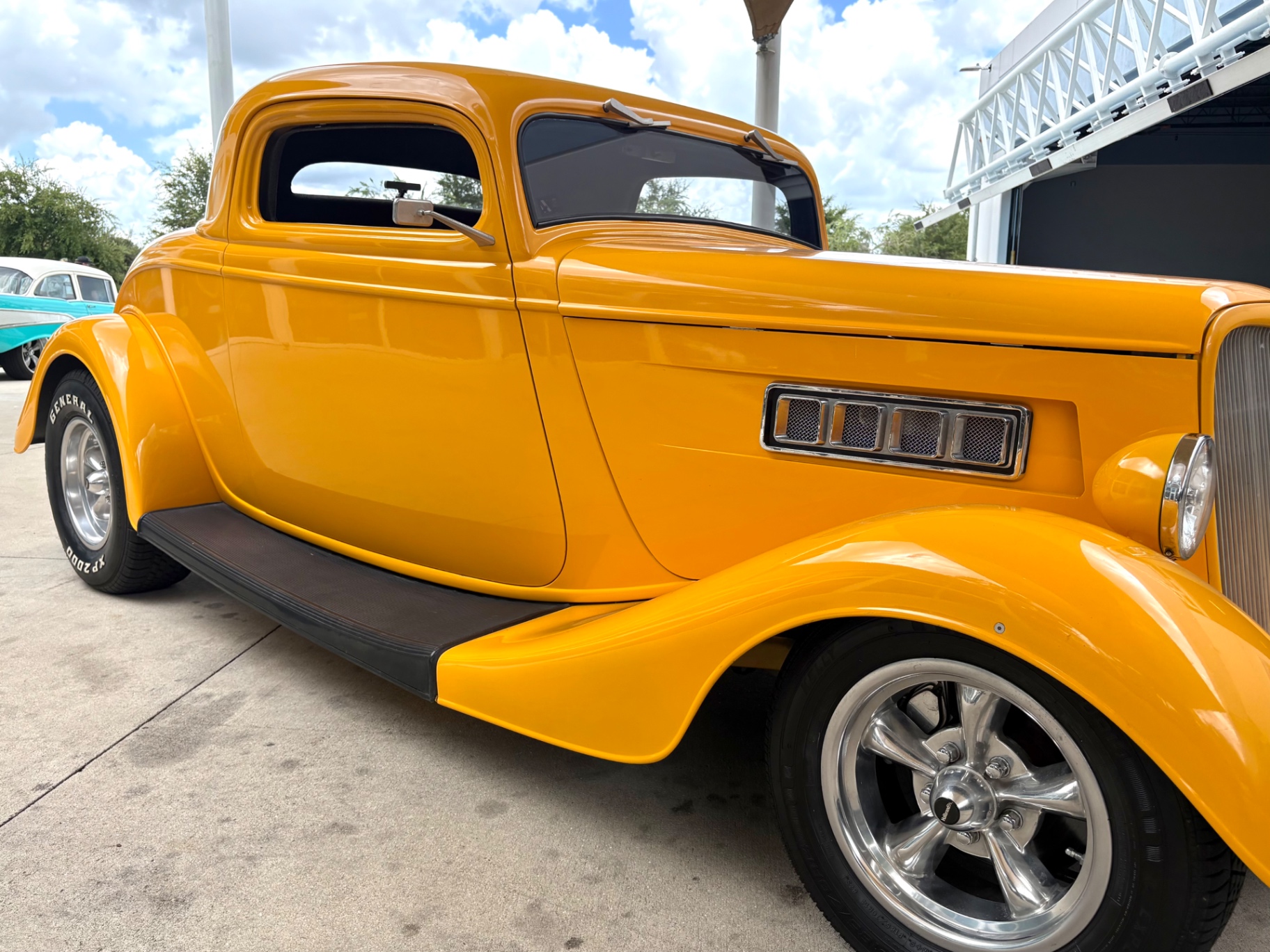
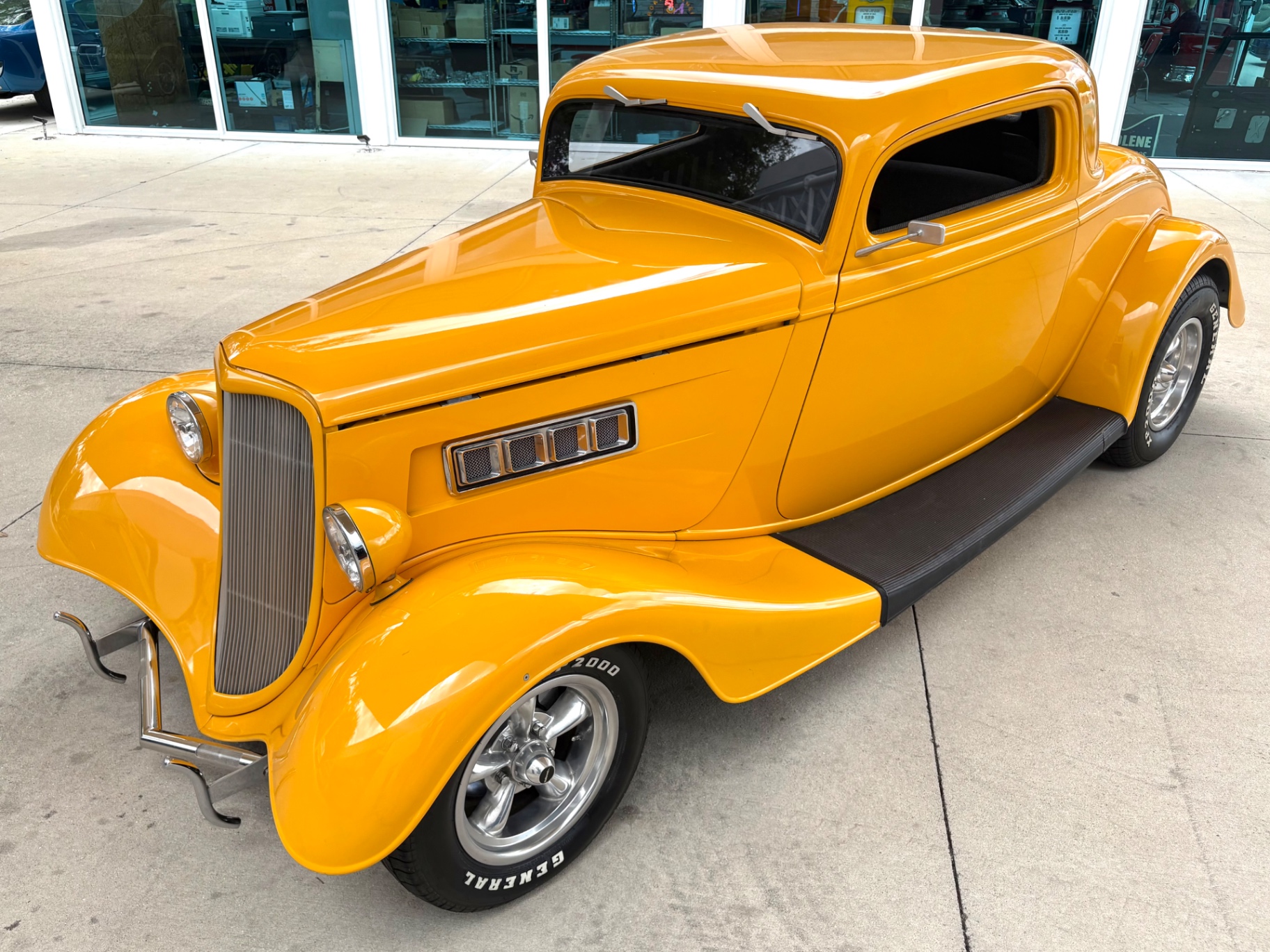
The top has been chopped 3.5 inches, which lowers the greenhouse and sharpens the coupe's profile considerably without distorting the original body geometry. The doors open suicide-style, hinged at the rear rather than the front, which was a period-correct custom treatment and remains one of the most visually striking features on any 1933 Ford coupe build. The car is finished in GM Wheatland Yellow, a bright factory color that puts the body lines on full display.
At the price point this car represents, the buyer is getting a completed, drivable hot rod built from quality components — not a project requiring additional investment to make road-ready. The Vintage Air Super Cooler climate system, cruise control, power windows, power doors, power trunk, and Ron Francis wiring harness mean this is a car you drive, not one you trailer to a show and push back into a garage.
Features List
- Downs Manufacturing 1933 Ford 3-window coupe body, serial 001796, purchased new 2/26/1999
- Top chopped 3.5 inches
- Suicide doors with power operation and remote-controlled power trunk
- GM Wheatland Yellow exterior paint
- Jon Barrett Hot Rod Engines 355 cu in small-block Chevrolet, rated 320 HP, runs on regular fuel
- 600 CFM Edelbrock carburetor
- Porcelain-coated headers
- Electronic ignition
- Extensive chrome engine dress-up package
- Phoenix Transmission Chevrolet 700R4 4-speed automatic with overdrive
- Lokar floor shifter, Lokar brake and gas pedals
- Aluminum driveshaft
- Currie 9-inch Ford rear end, 3.50 gears
- Downs Manufacturing boxed frame with tube X-member
- TCI show chrome Mustang II coilover front suspension
- Triangulated four-bar rear suspension with coils
- Ford Explorer front disc brakes, 8-inch Ford rear drum brakes
- Power dual master cylinder, steel brake lines throughout
- Aluminum tilt steering column
- Rootlieb steel 3-piece hood with single side scoops, Hagan aluminum hood supports (hinges either direction)
- Aluminum grille with insert
- Full fender set with smooth running boards and inner fenders
- Halibrand 5-spoke PM polished wheels, 14x6 front / 15x8 rear
- Vintage Air Super Cooler system with heat and defrost
- Be Cool aluminum radiator with electric fan
- Chrome Cool Flex radiator hoses, polished aluminum alternator and A/C compressor brackets
- Ron Francis wiring harness
- VDO gauges (speedometer, tachometer, oil pressure, voltmeter, water temp, fuel)
- Beckert rearview mirror with LED gear position, turn signal, and high beam indicators
- Pioneer head unit with 12-disc CD changer and overhead radio console
- Custom seats by Teas Designs
- Leather-wrapped banjo-string style steering wheel
- Self-retracting seat belts
- Halogen taillights, Dietz headlights with halogen blue dot bulbs
- Third brake light in license frame and additional third brake light in rear window
- Front spreader bar with built-in turn signals, front and rear nerf bars
- Dead bolts with indicator light, hidden radio antenna, chrome Aooga horn
- Intermittent wipers with aluminum arms, aluminum outside mirrors
- Cruise control and antitheft relays
- Stainless steel gas tank and custom stainless steel exhaust system
Mechanical
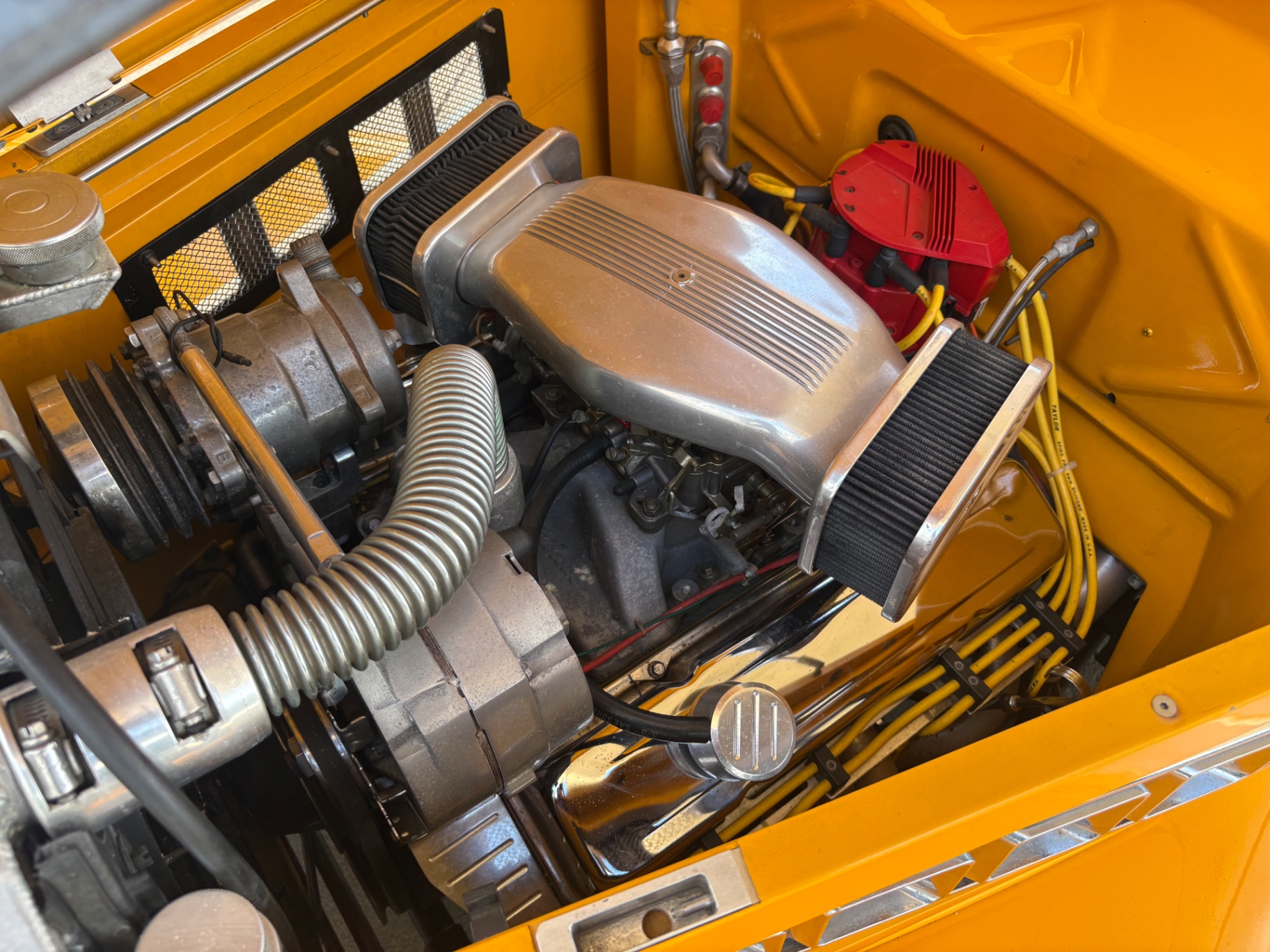
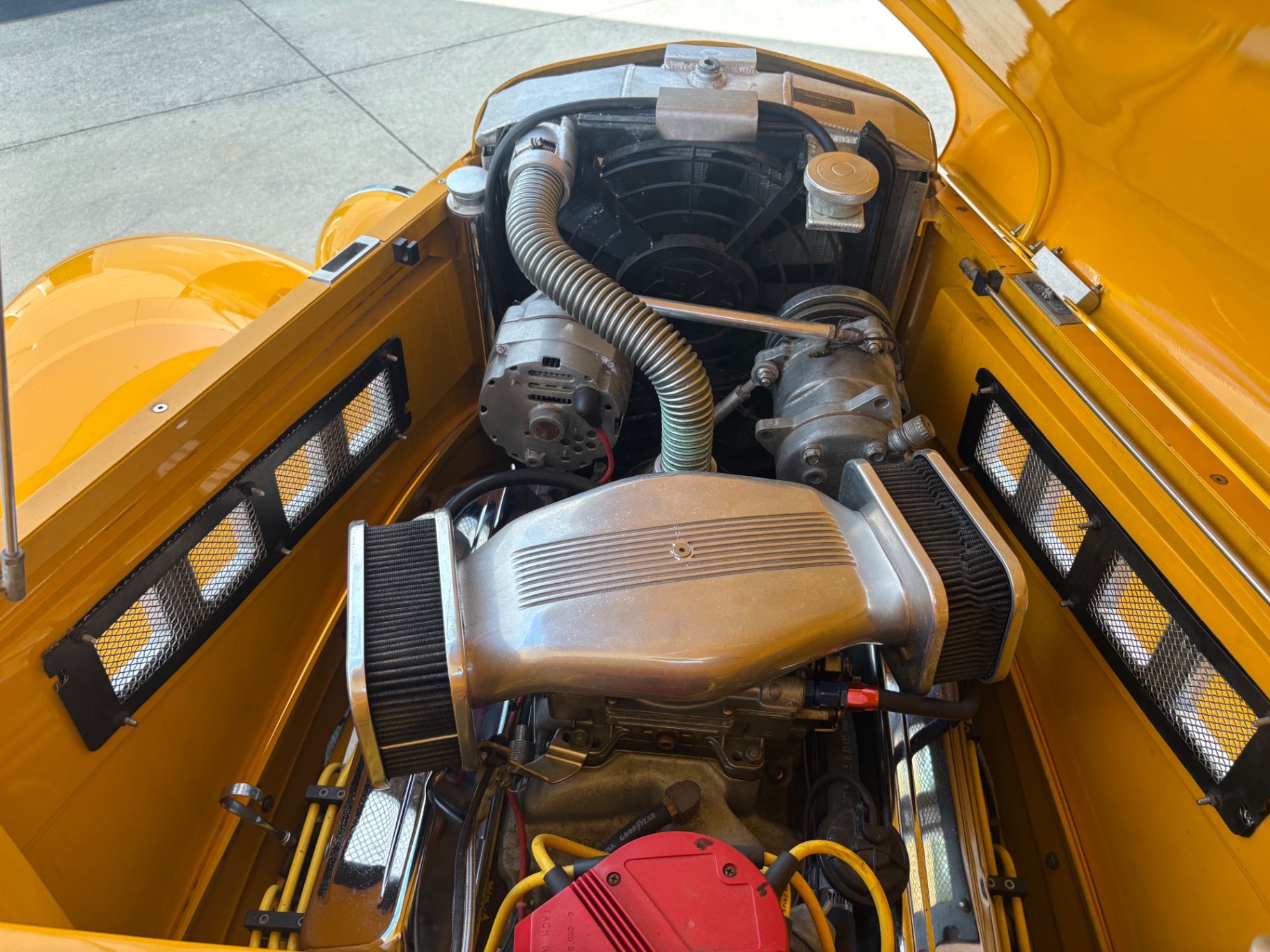
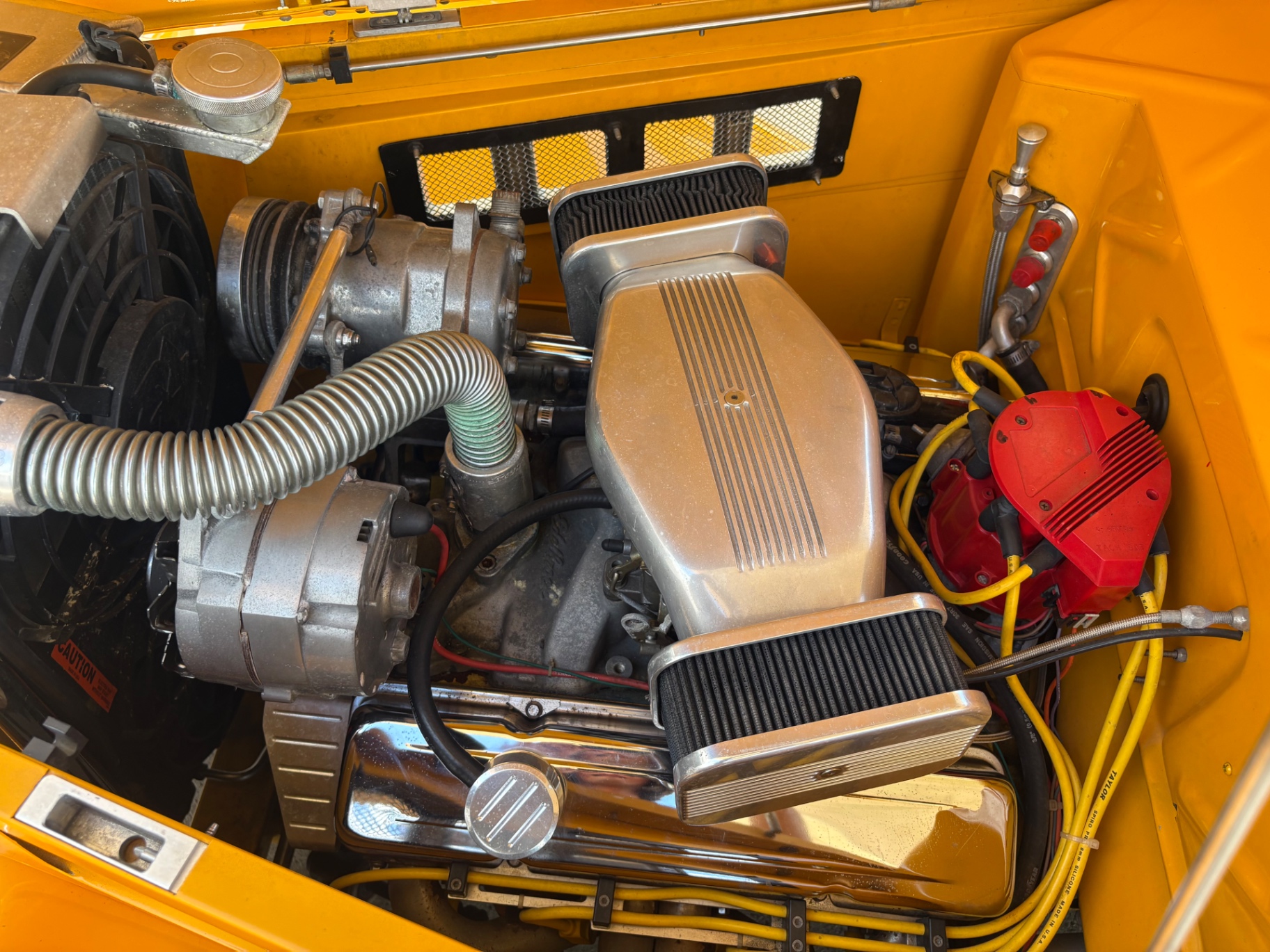
The engine in this 1933 Ford 3-window coupe was built by Jon Barrett Hot Rod Engines out of McLoud, Oklahoma, a shop with a long track record in the street rod community. The displacement is 355 cubic inches — a slightly overbored small-block Chevrolet — and the rated output is 320 horsepower. The carburetor is a 600 CFM Edelbrock, a proven street unit that balances fuel delivery with drivability and runs on regular-grade gasoline. The headers are porcelain-coated, which resists corrosion and heat discoloration far better than raw steel. Ignition is electronic. The engine bay also carries an extensive chrome dress-up package, and the photos confirm it — polished aluminum brackets for the alternator and A/C compressor, Chrome Cool Flex radiator hoses, and a Be Cool aluminum radiator with an electric fan handling cooling duties.
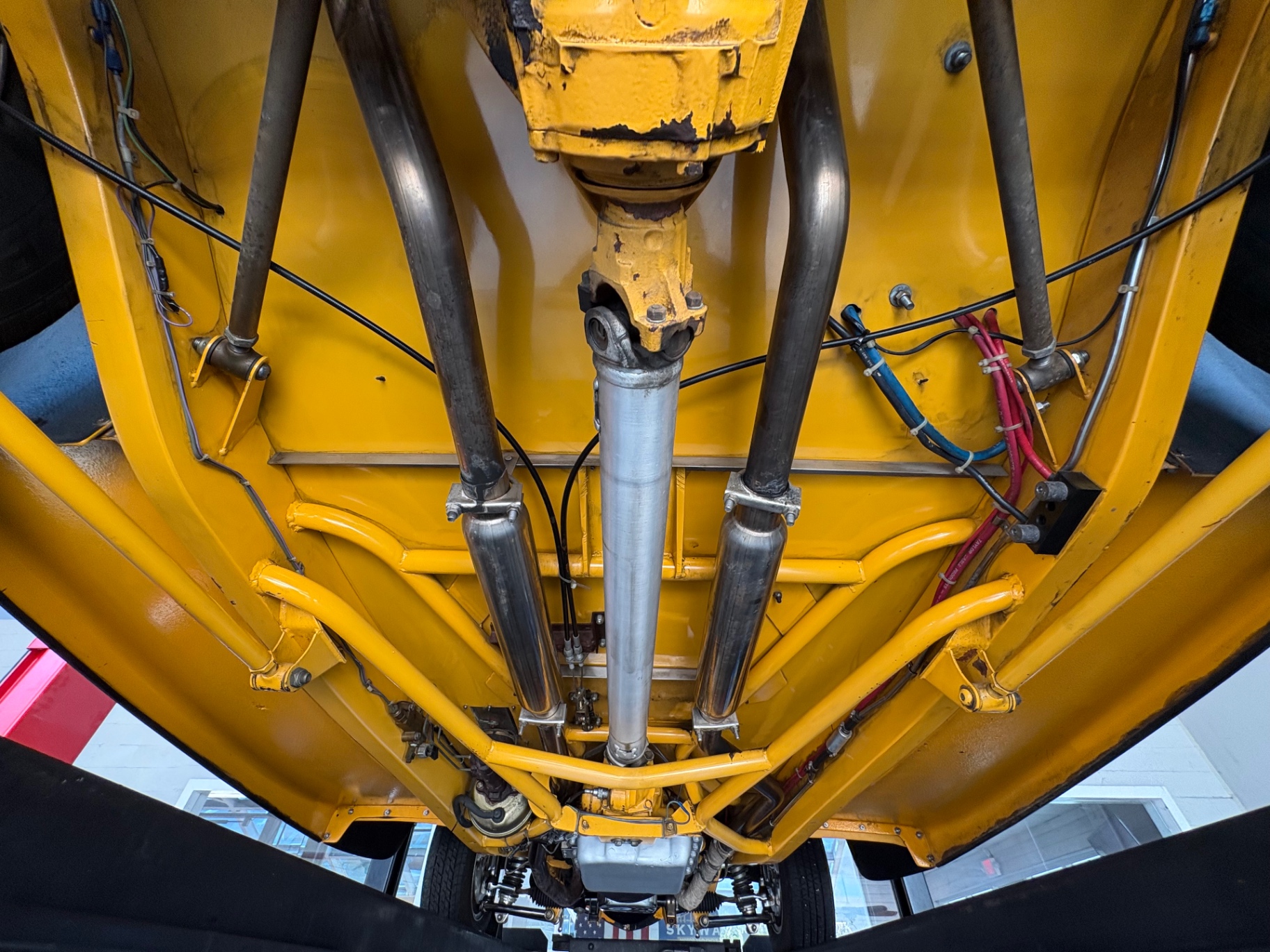
The transmission is a Chevrolet 700R4 4-speed automatic built by Phoenix Transmission in Weatherford, Texas. The 700R4 was introduced by General Motors in 1982 and became the overdrive transmission of choice for street rod builders throughout the 1980s and 1990s because of its deep first gear (3.06:1), its 0.70:1 overdrive fourth, and its proven durability in high-torque applications. Paired with the 3.50 rear gear in the Currie 9-inch Ford axle, this drivetrain combination gives the car strong low-end pull off the line while keeping engine RPM manageable at highway speeds. The Lokar floor shifter and matching Lokar brake and gas pedals keep the interior presentation clean and consistent. The driveshaft is aluminum, reducing rotating weight.
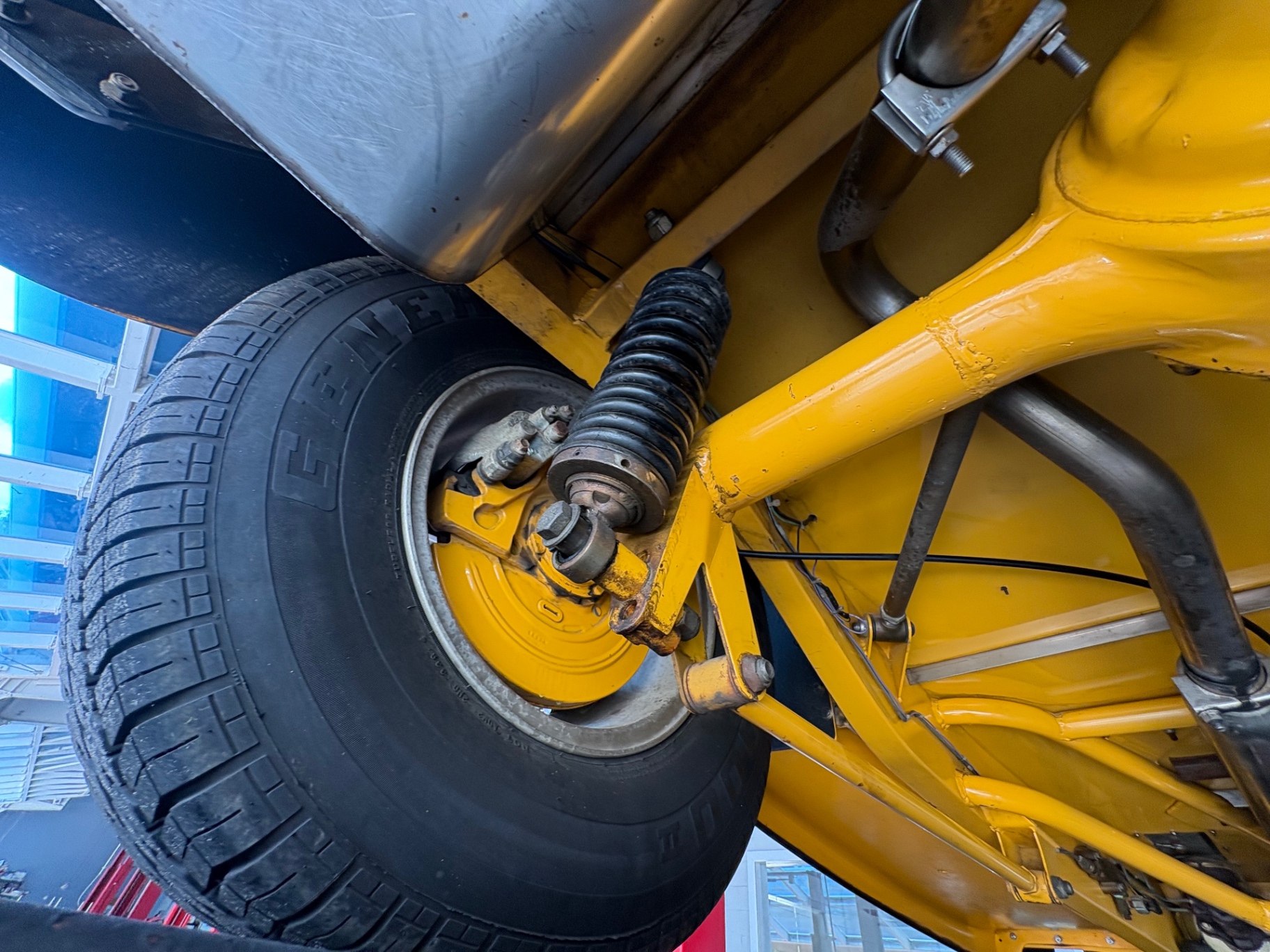
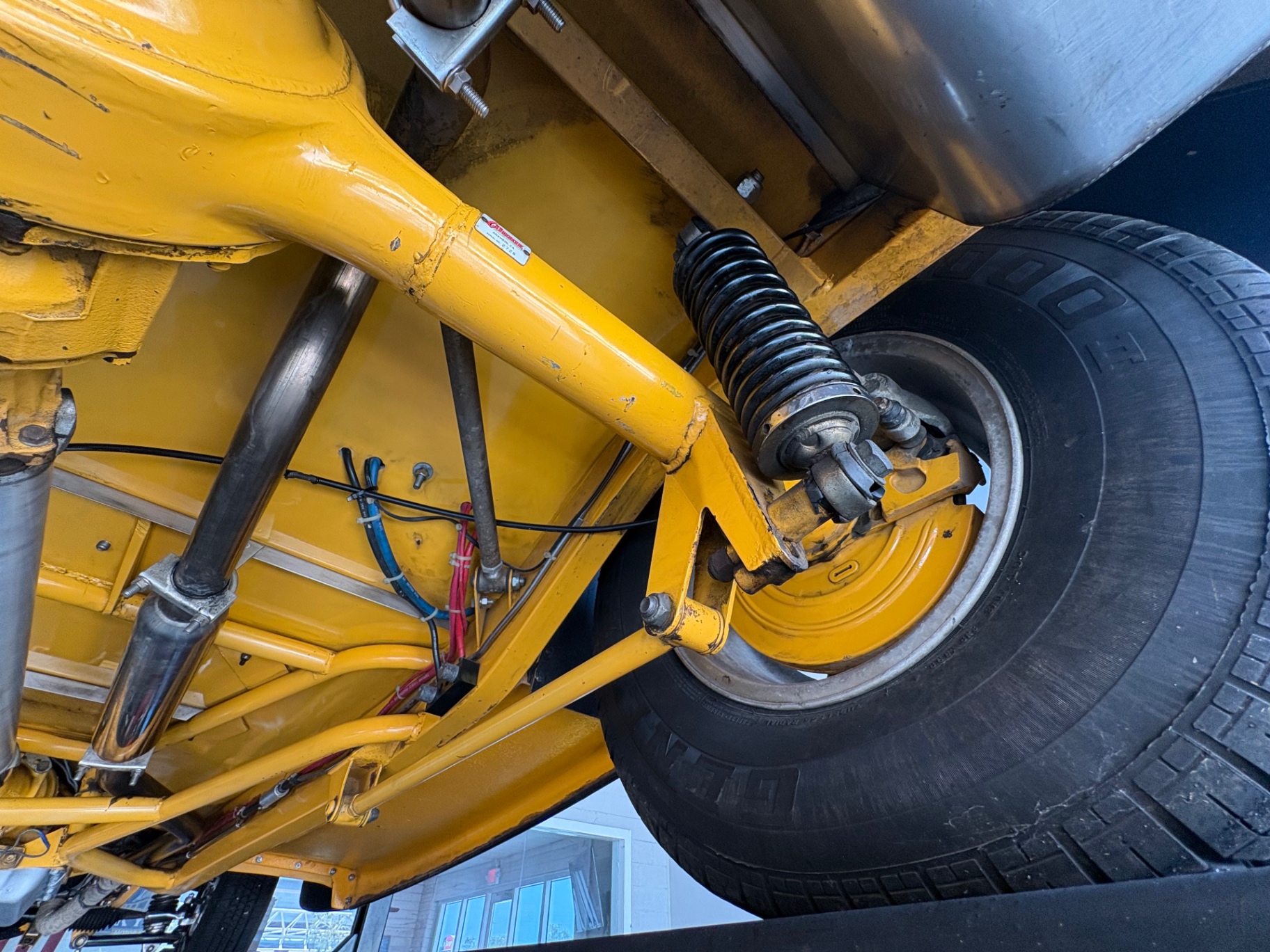
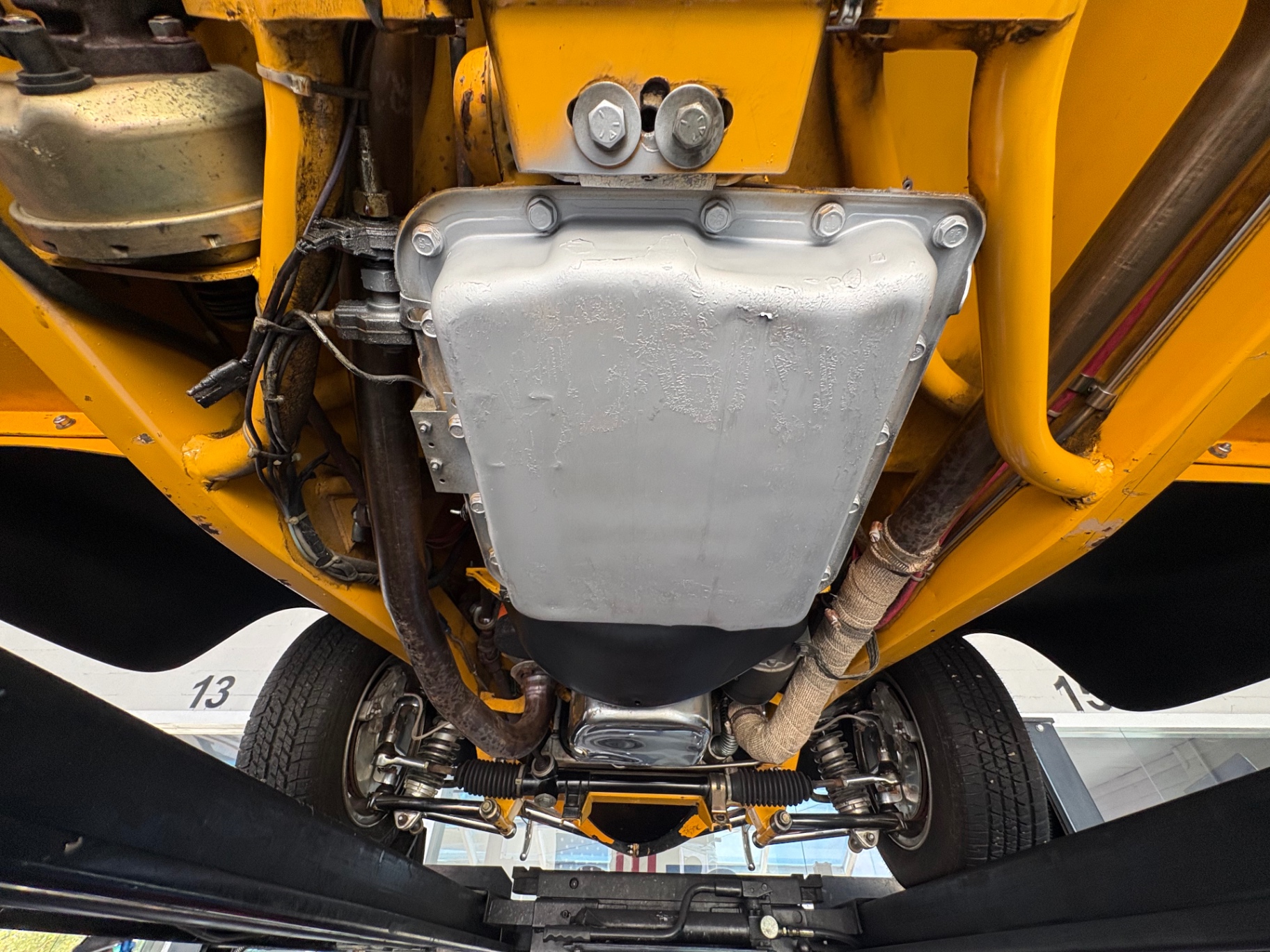
The chassis is a Downs Manufacturing boxed frame with a tube X-member — a significant upgrade over a simple ladder frame in terms of torsional rigidity. Up front, the suspension is a TCI show chrome Mustang II coilover setup, which is the most widely used independent front suspension conversion in the street rod industry. It provides far better handling geometry than a solid front axle, and the TCI version is finished in show chrome rather than painted steel. Out back, a triangulated four-bar with coils locates the Currie 9-inch Ford rear end. The Ford 9-inch is the standard benchmark for street rod rear axle conversions due to its interchangeable gear sets, strong housing, and broad aftermarket support. Braking up front is handled by Ford Explorer disc brakes, with 8-inch Ford drum brakes at the rear and a power dual master cylinder feeding steel brake lines throughout the car.
Interior
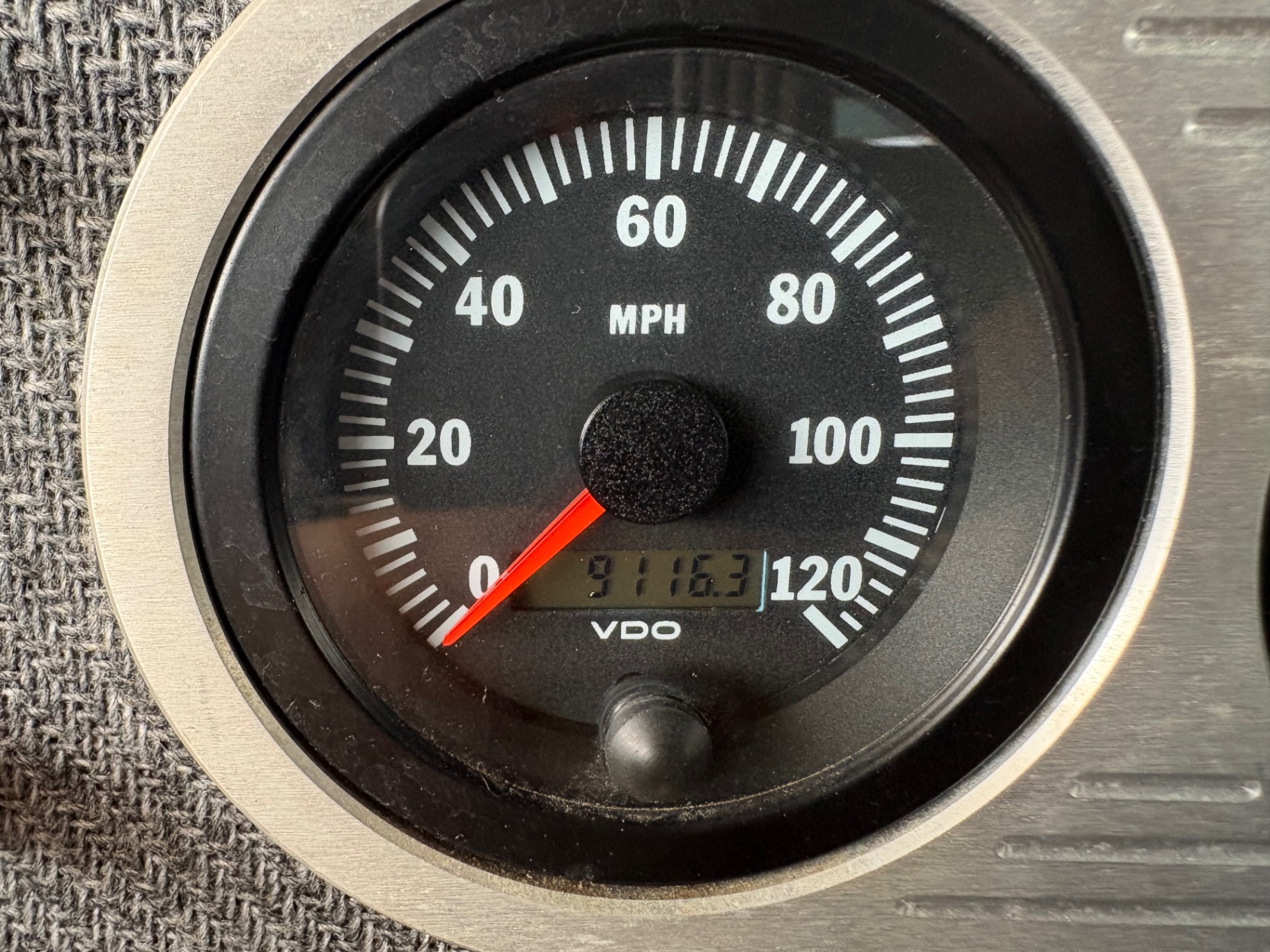
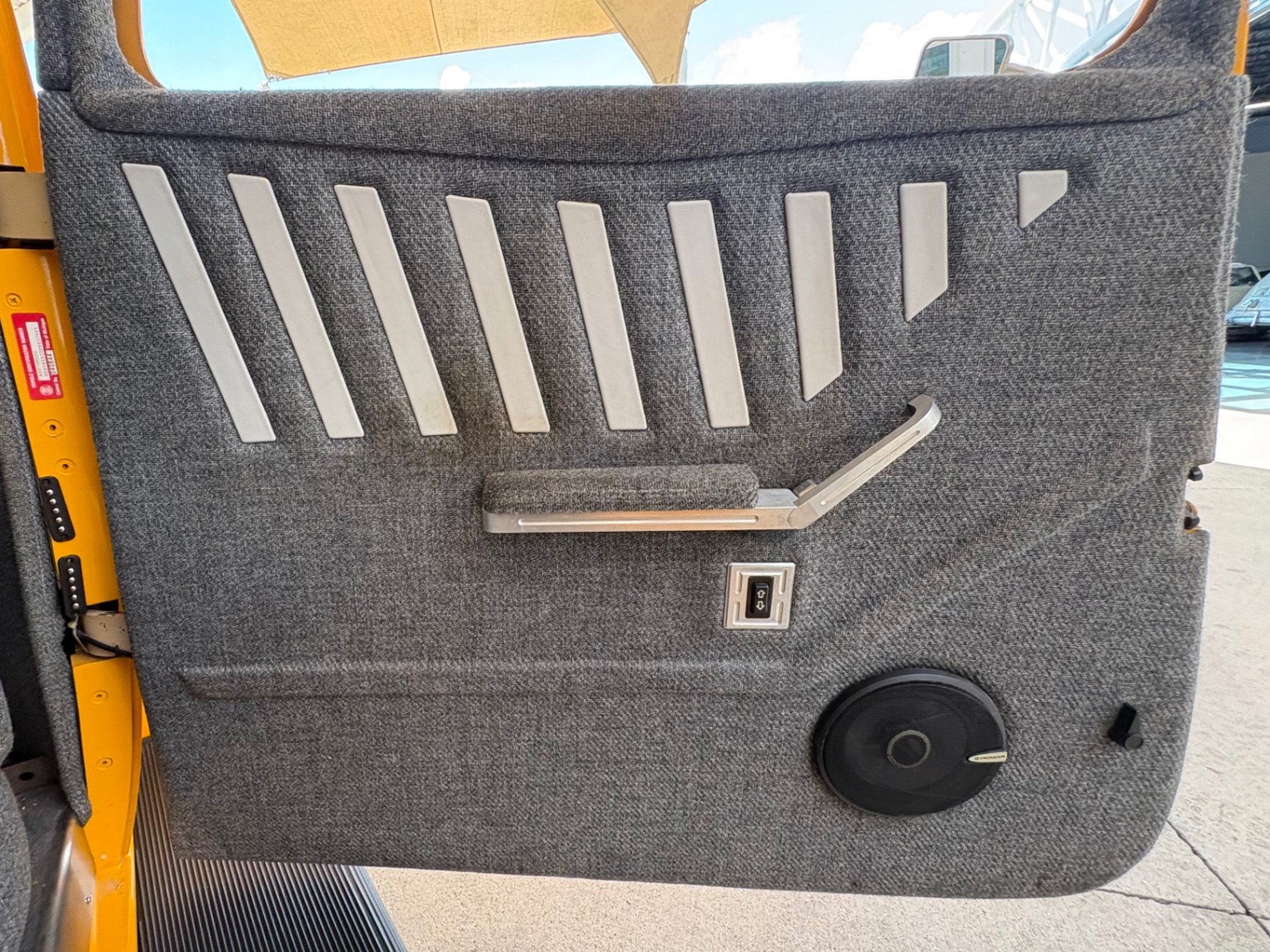
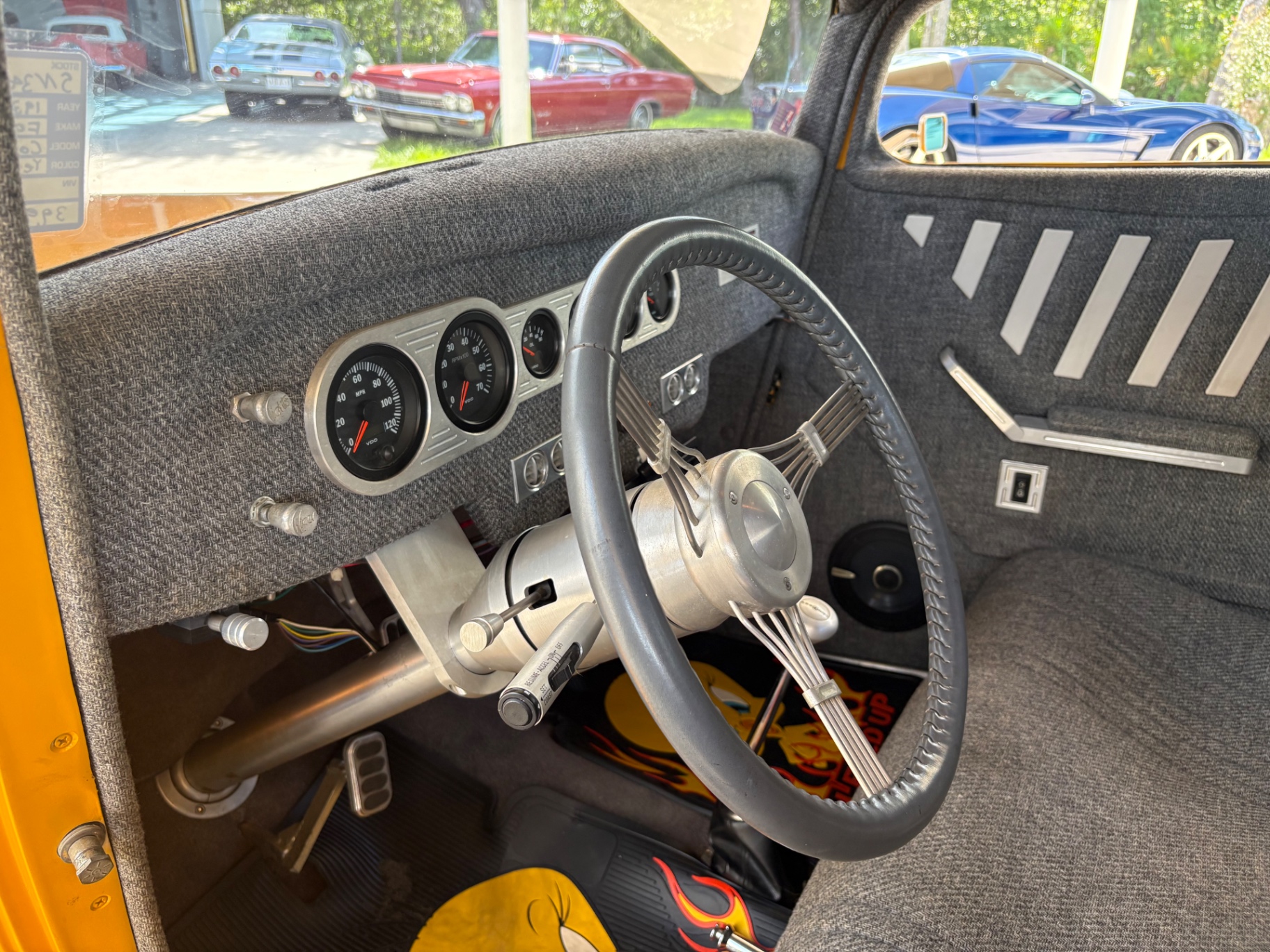
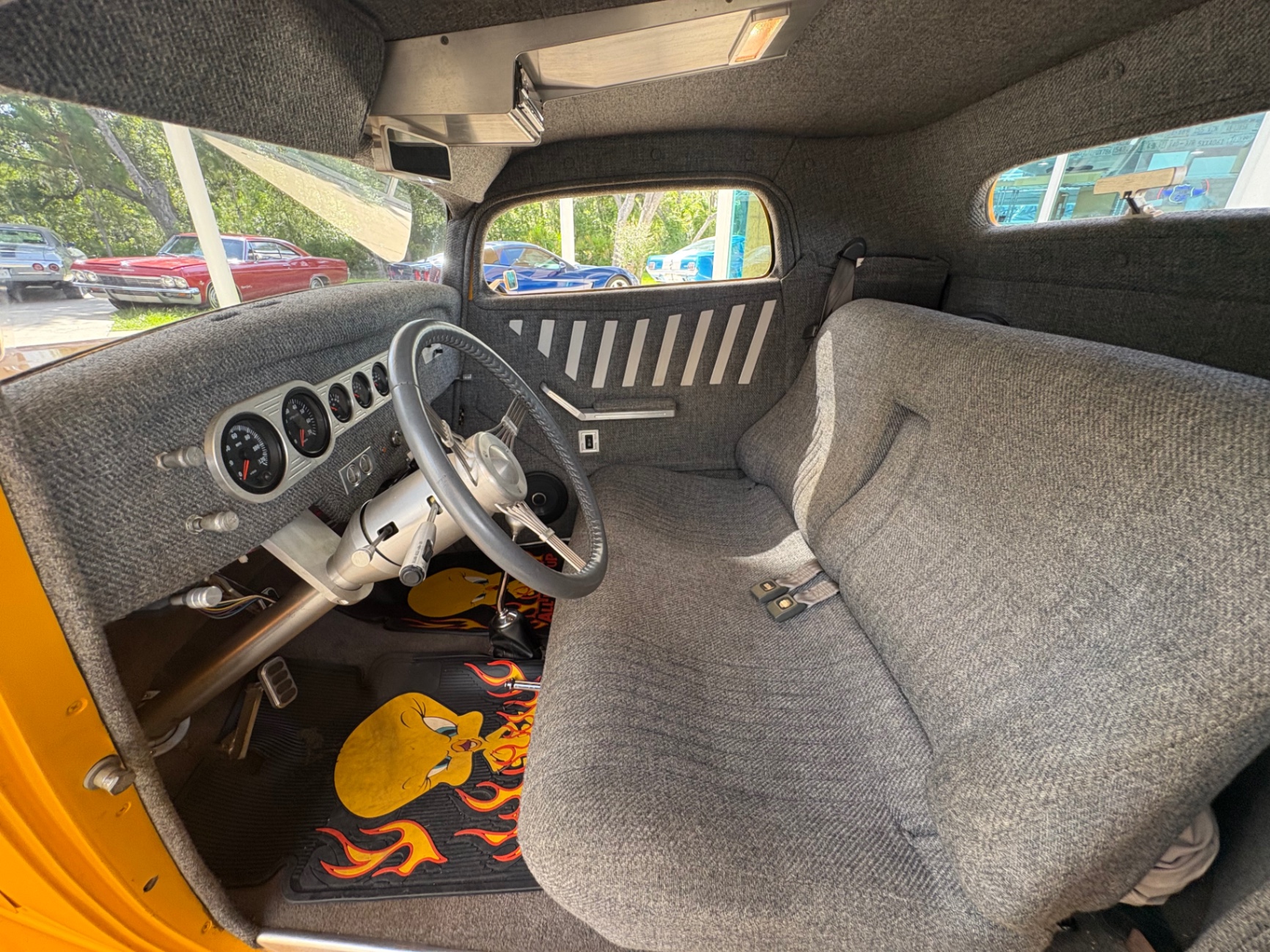
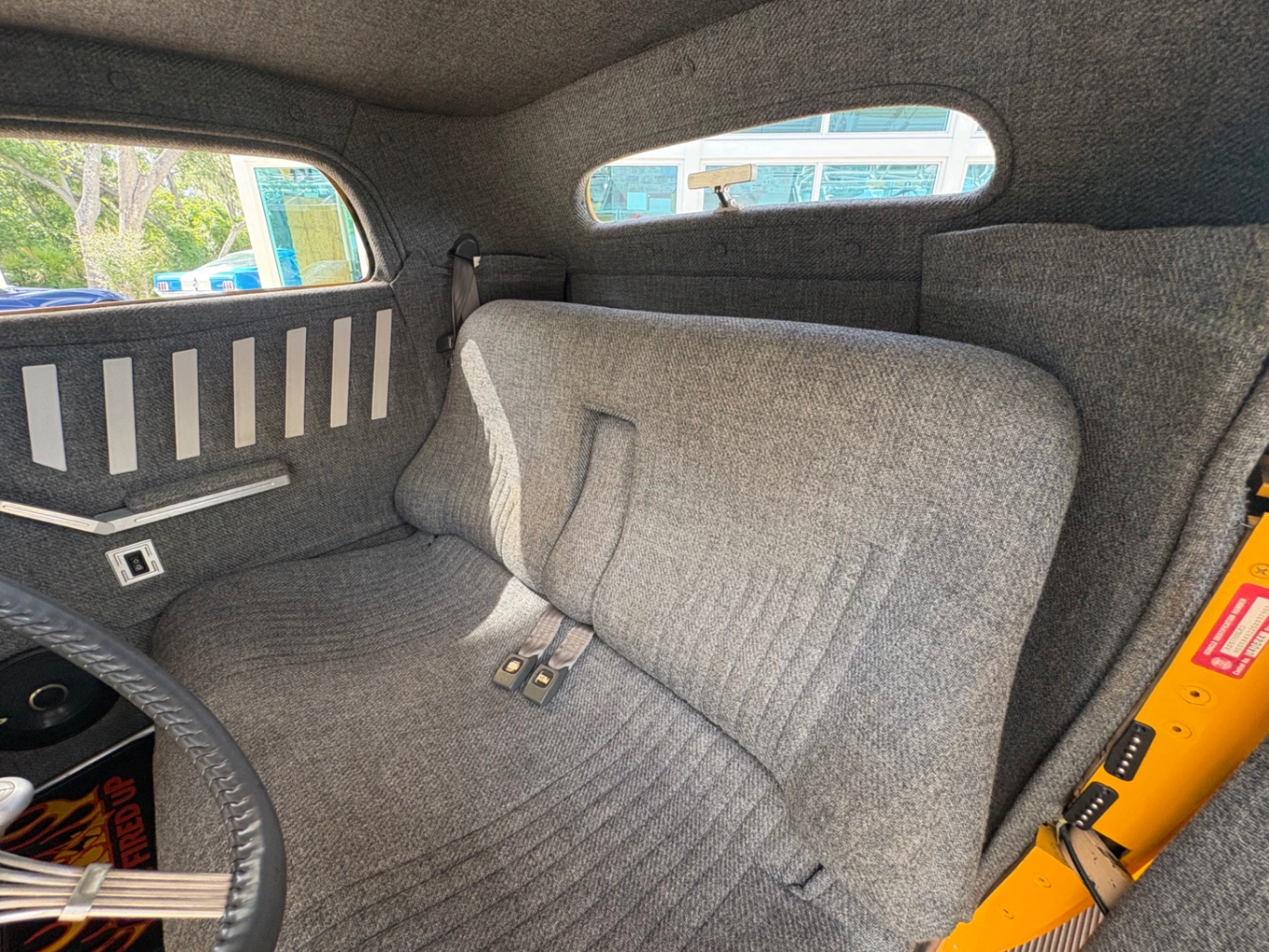
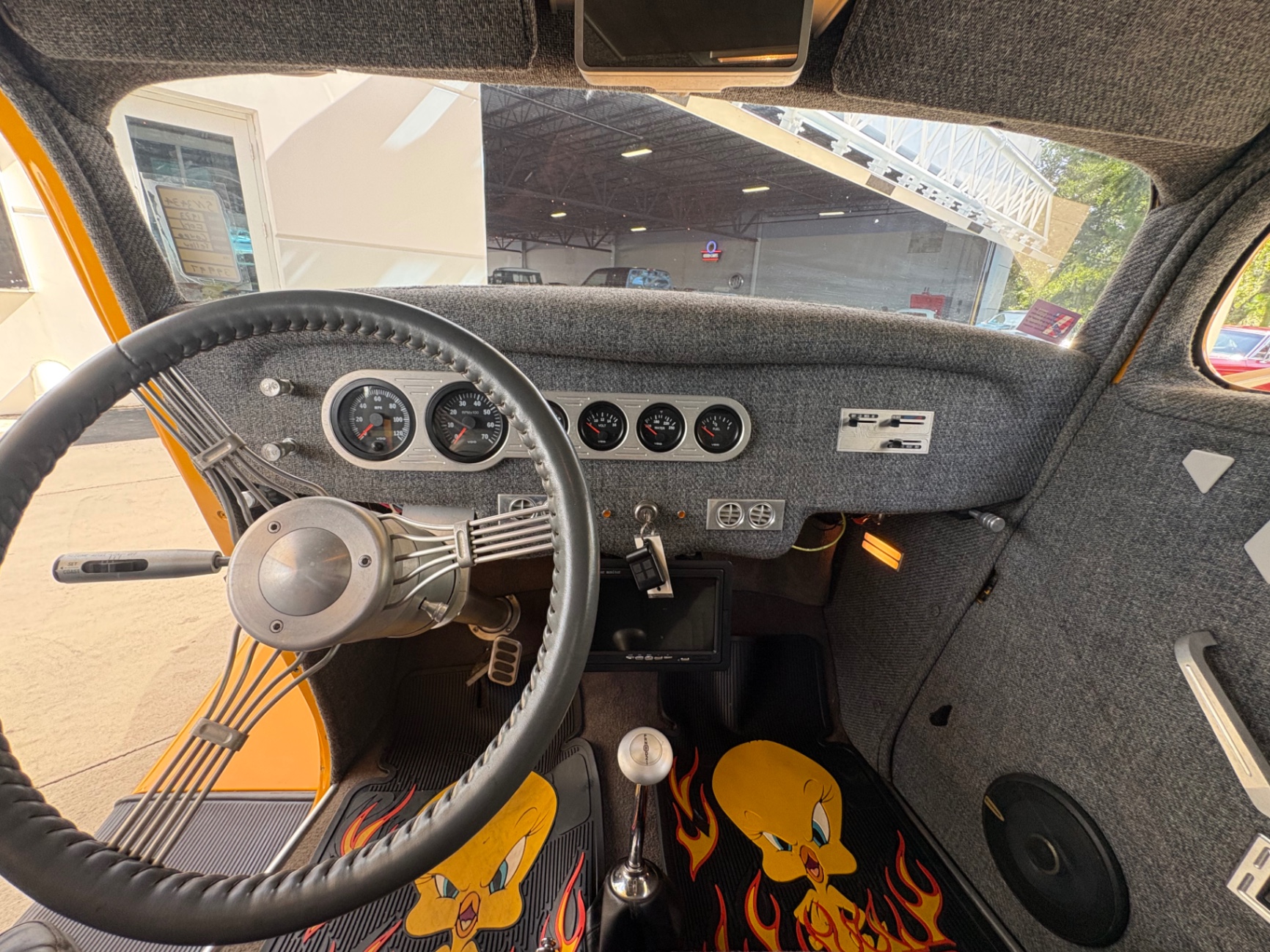
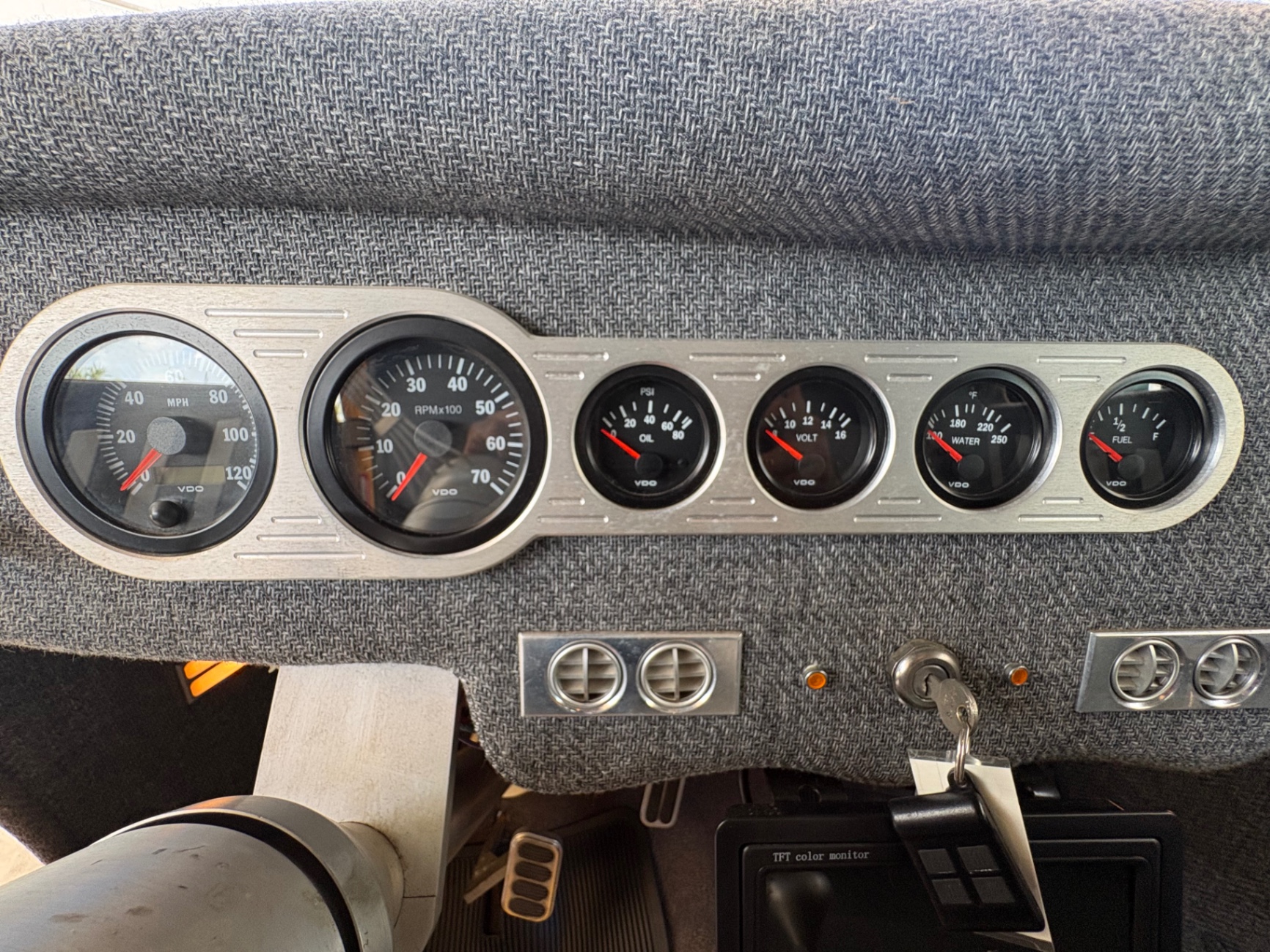
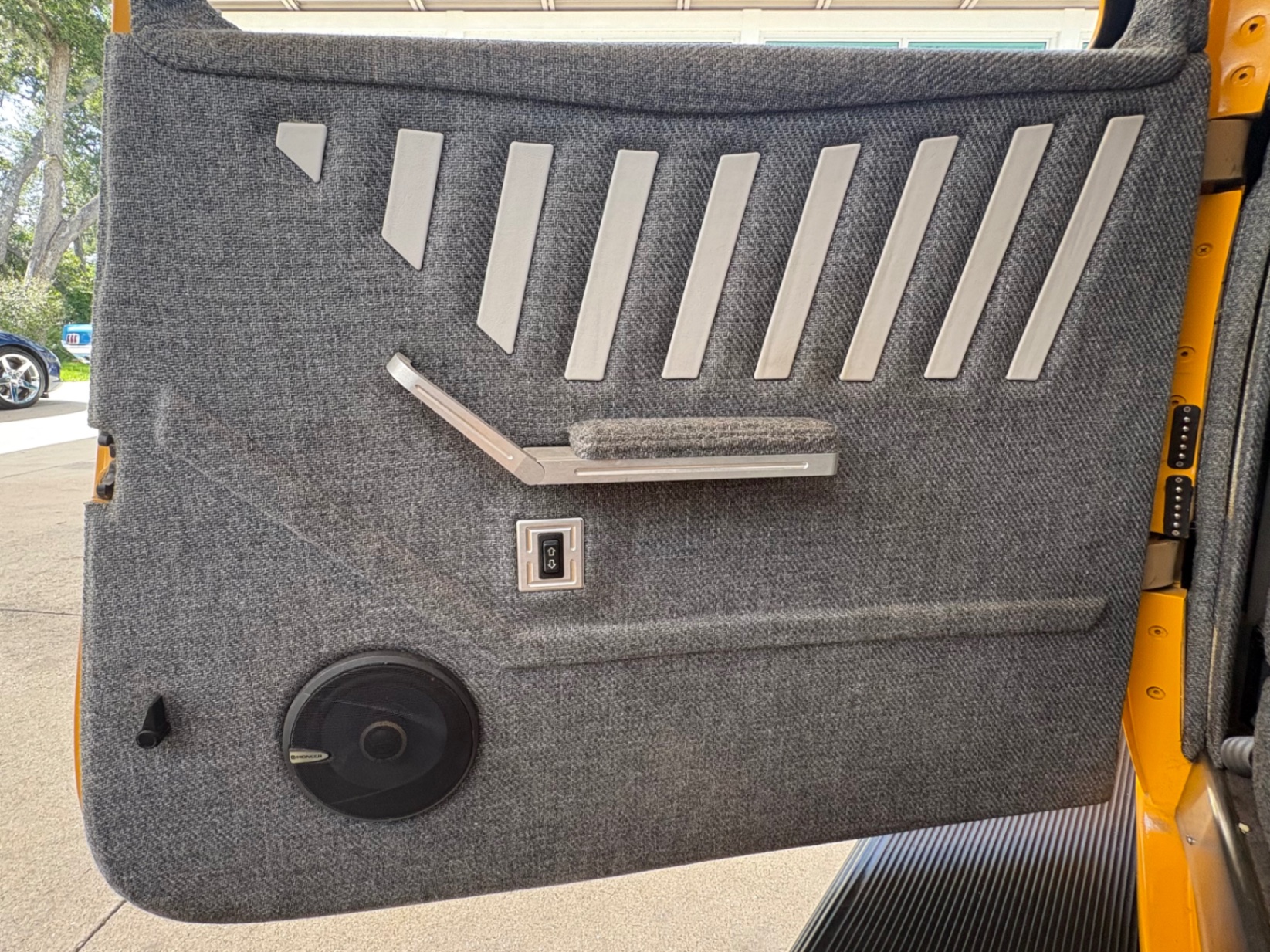
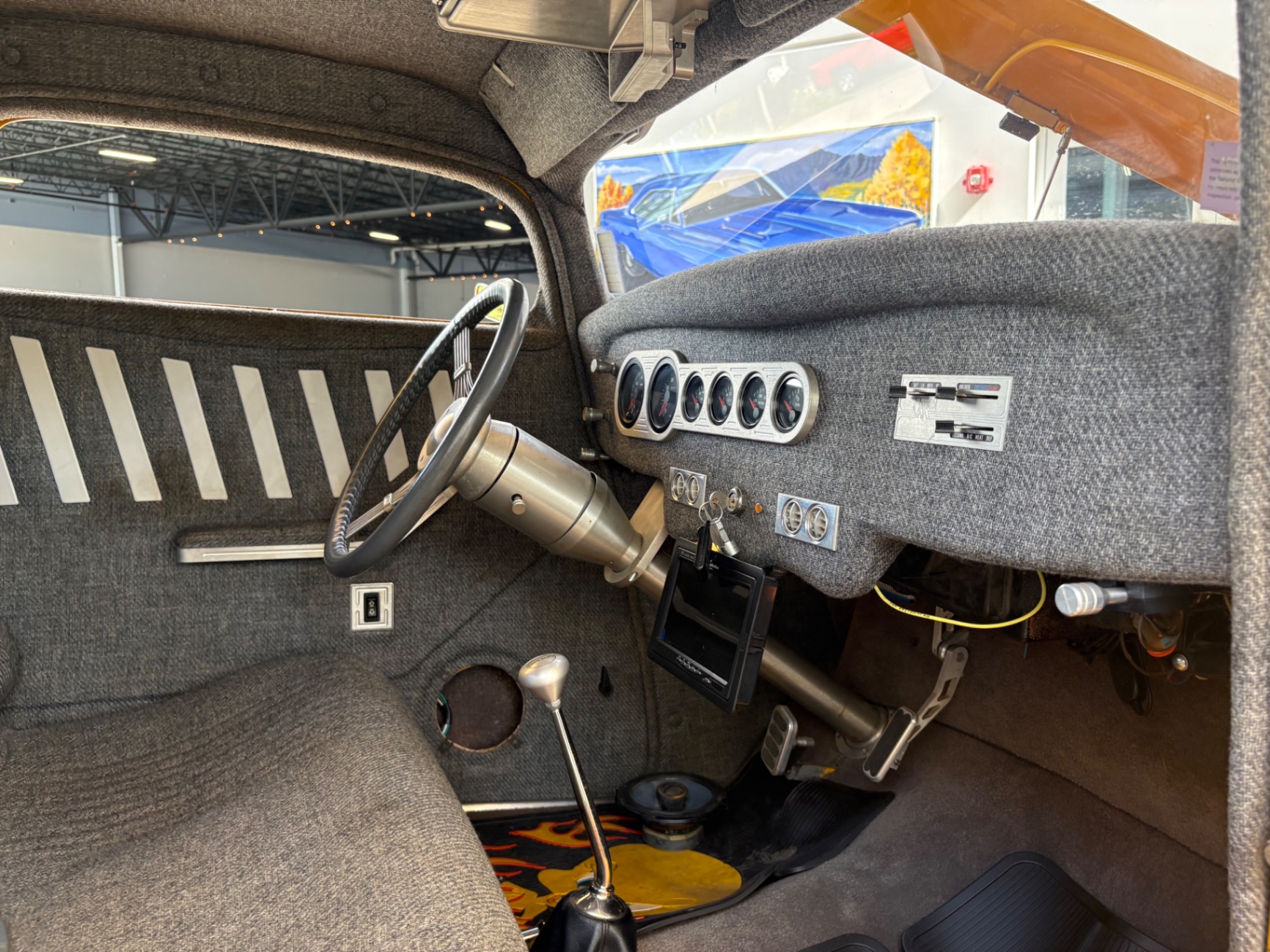
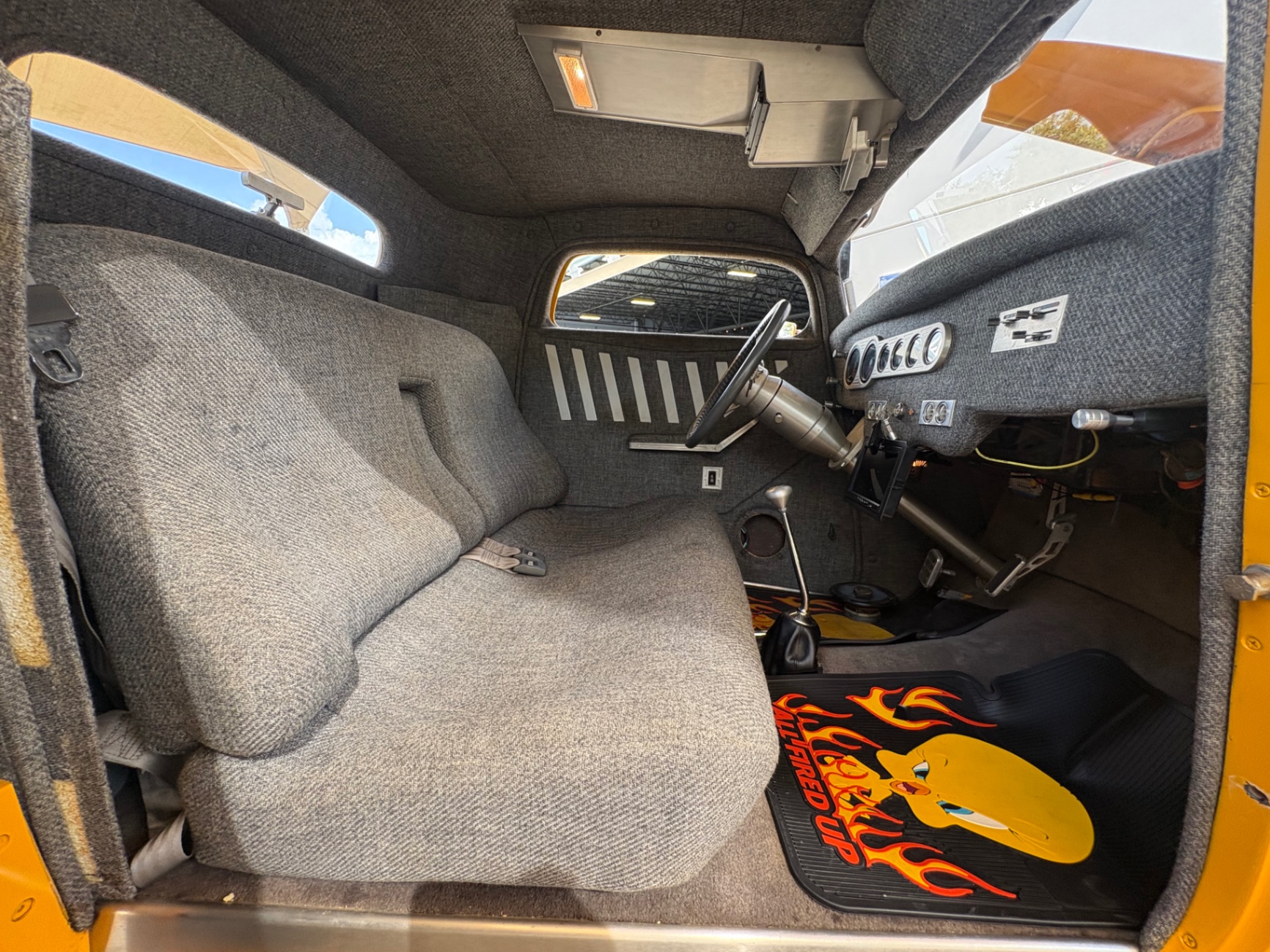
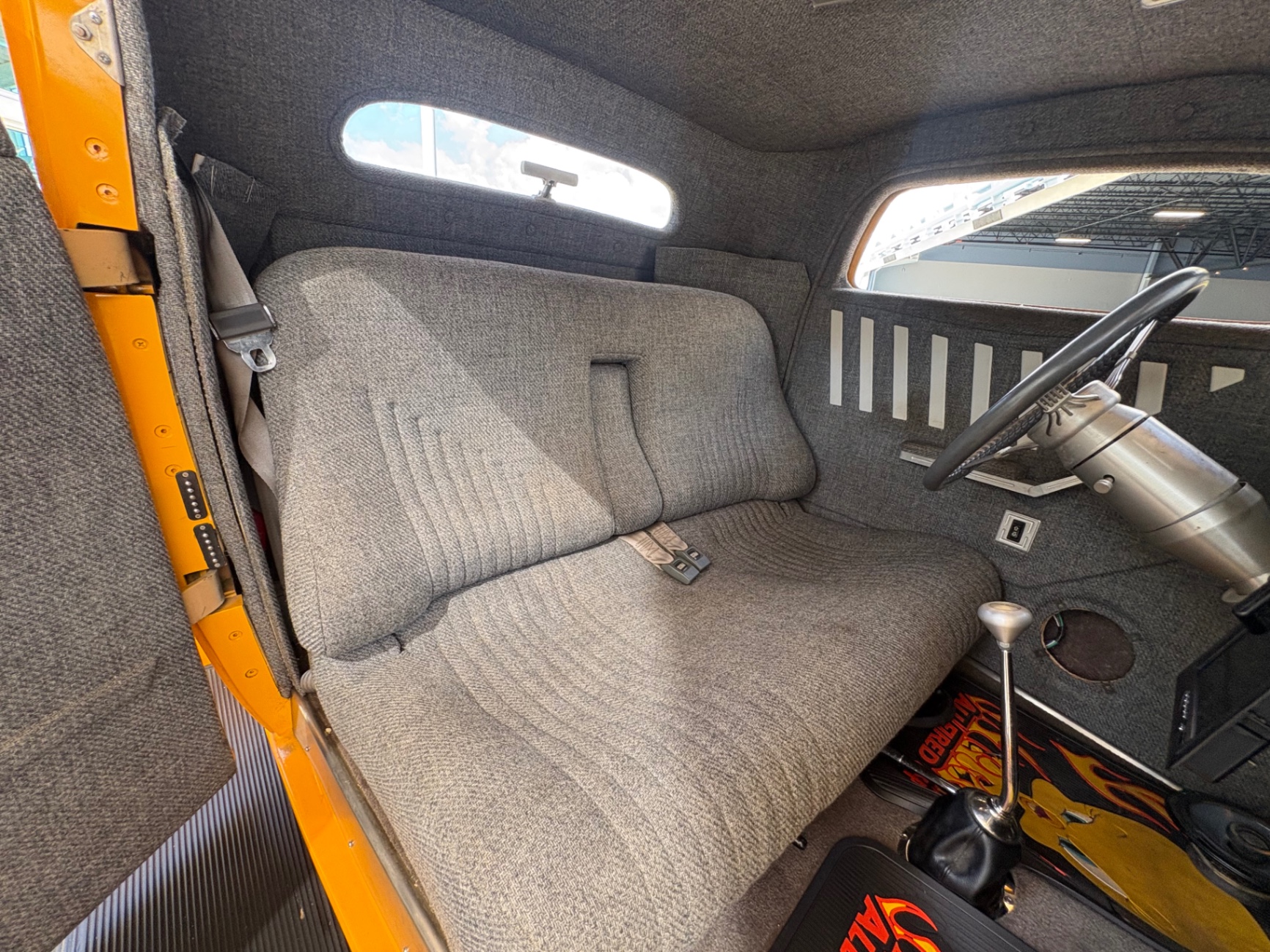
The interior of this 1933 Ford 3-window coupe is trimmed in gray cloth throughout — headliner, door panels, dash, seat surfaces, and rear bulkhead — giving the cabin a unified, purposeful look rather than the mismatched feel common to cars assembled over many years by multiple hands. The seats are custom work by Teas Designs. The dash houses a full set of VDO gauges mounted in a machined aluminum panel: speedometer, tachometer, oil pressure, voltmeter, water temperature, and fuel level. VDO has been supplying instrumentation to the automotive and marine industries for decades and is a common choice for serious street rod builds because the gauges are accurate, reliable, and readable.
The steering wheel is a leather-wrapped banjo-string style — a period-correct design reference that fits the 1930s body well without looking like a costume piece. The aluminum tilt steering column allows driver adjustment. The Beckert rearview mirror includes integrated LED indicators for gear position, turn signals, and high beam status, which is a practical addition given that a chopped-top coupe has limited rearward sightlines. The Lokar floor shifter and matching pedals carry through the clean aluminum aesthetic seen elsewhere in the build.
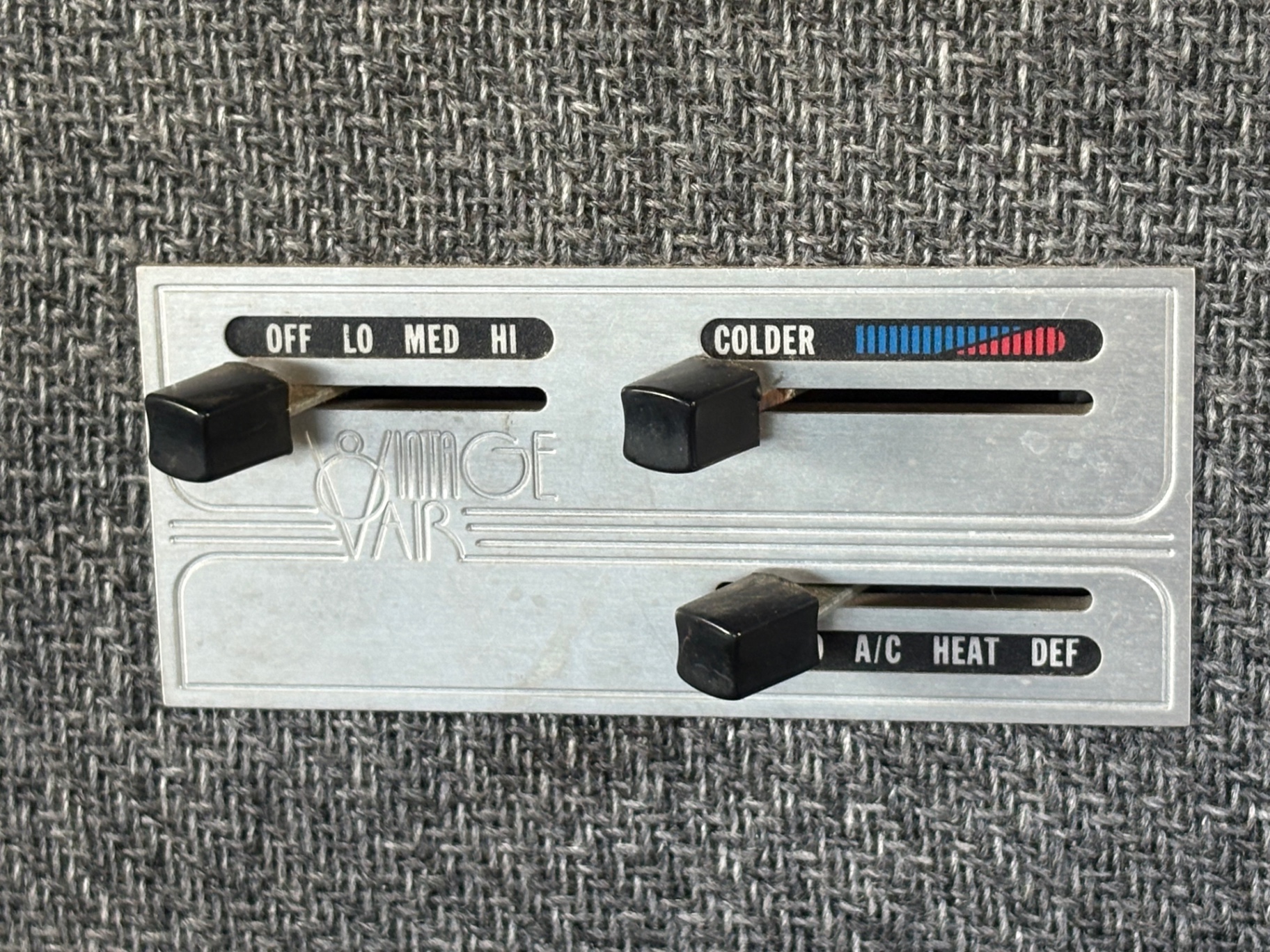
Comfort features include a Vintage Air Super Cooler system with heat and defrost — the Super Cooler is one of Vintage Air's higher-capacity units and is well-suited to Florida's climate. Power windows, power doors, and a remote-controlled power trunk with a magnetic trigger system are all operational. The car also has self-retracting seat belts, armrests, sunvisors, and courtesy lights. The audio system is a Pioneer head unit with a 12-disc CD changer and an overhead radio console. Cruise control is installed, and the car includes antitheft relays wired into the electrical system.
Exterior
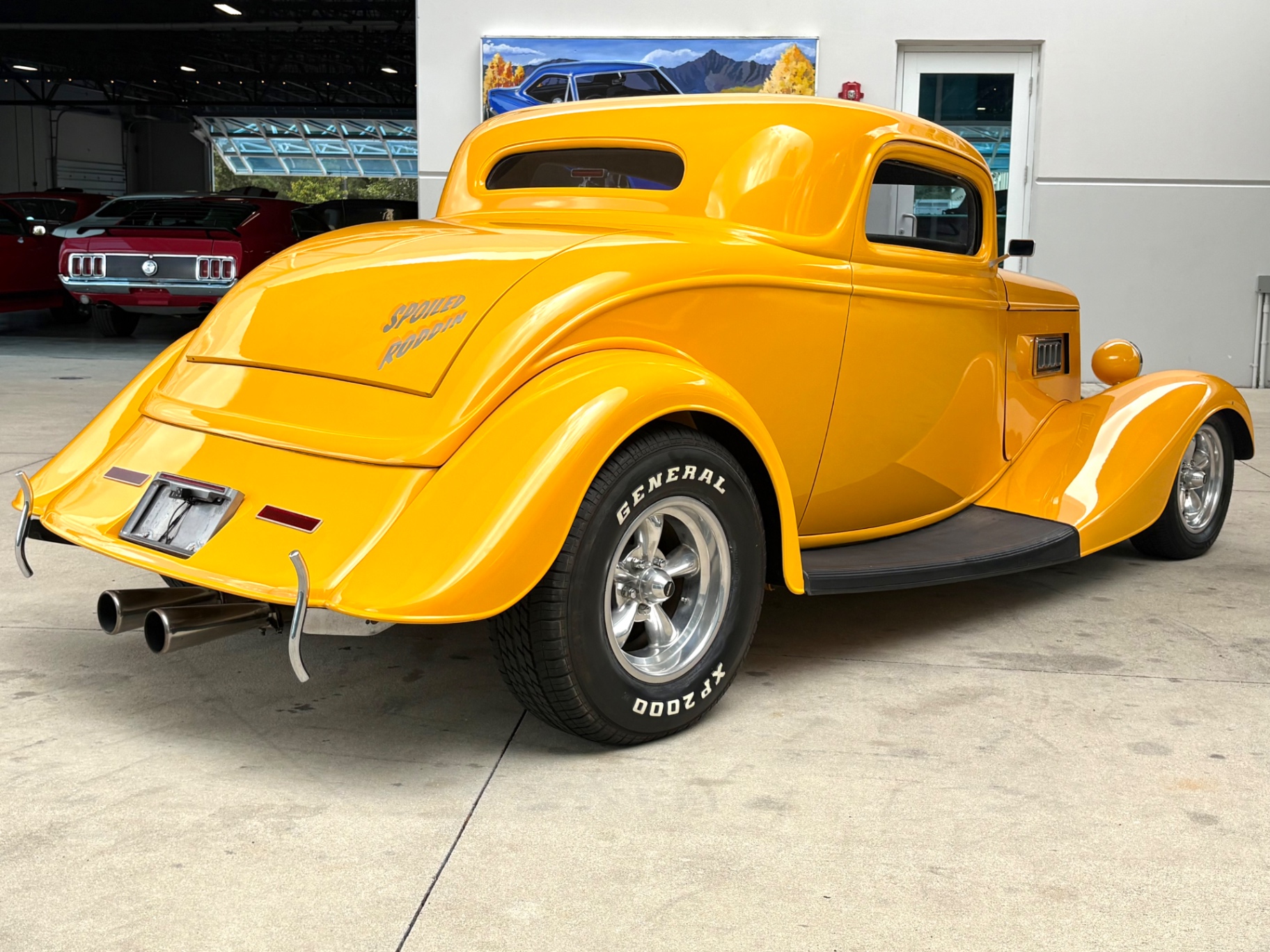
The body on this 1933 Ford 3-window coupe comes from Downs Manufacturing in Lawton, Michigan, one of the most respected names in fiberglass reproduction bodies for pre-war Fords. The body serial number is 001796, and documentation confirms it was purchased new on February 26, 1999. The top has been chopped 3.5 inches, a modification that requires careful recalculation of the A-pillar, windshield frame, and rear window angles to maintain proper proportions — this car carries the chop well. The doors are configured suicide-style, opening rearward from a rear-mounted hinge, which is both a traditional custom touch and a practical entry feature given the reduced roofline height.
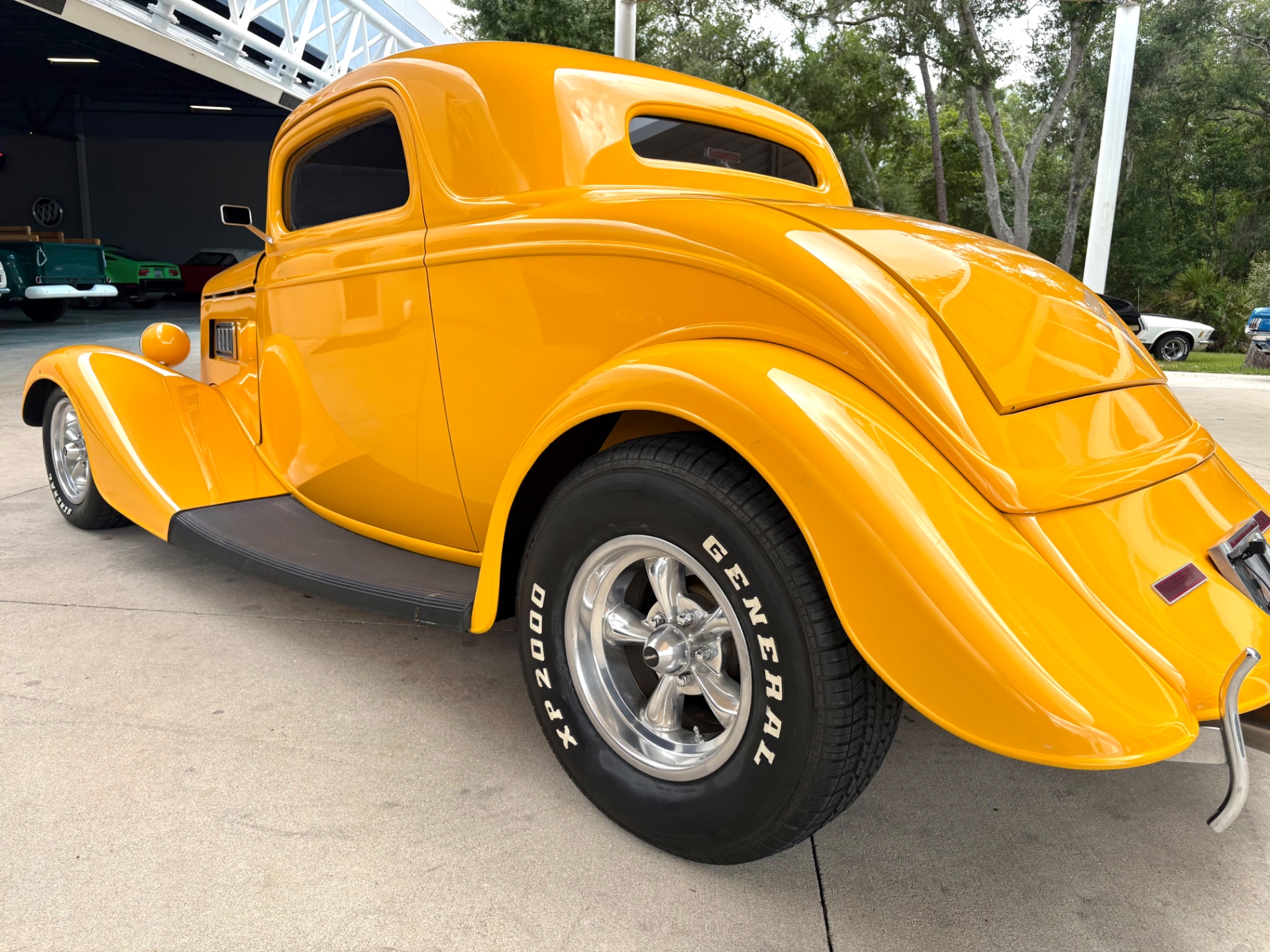
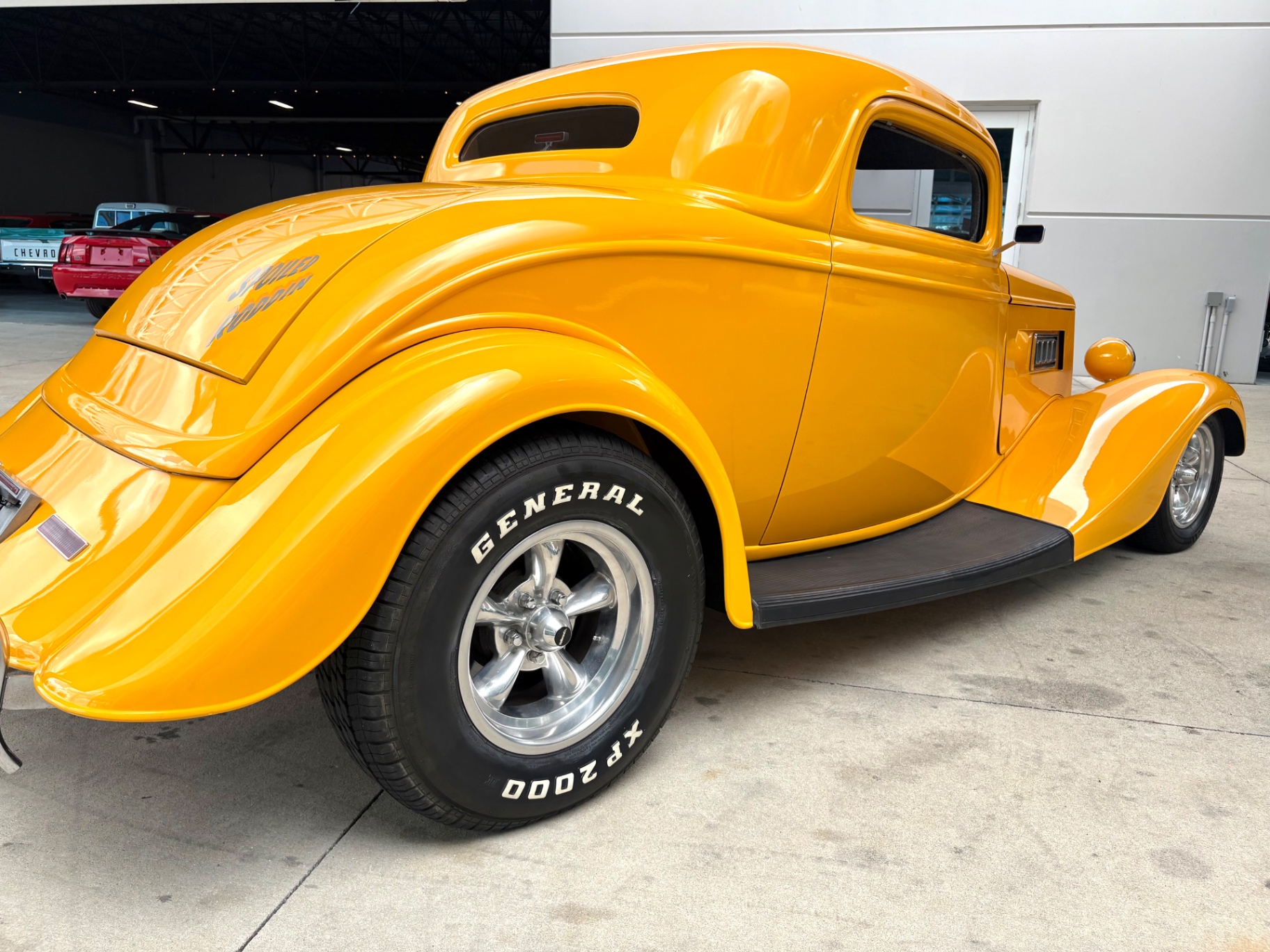
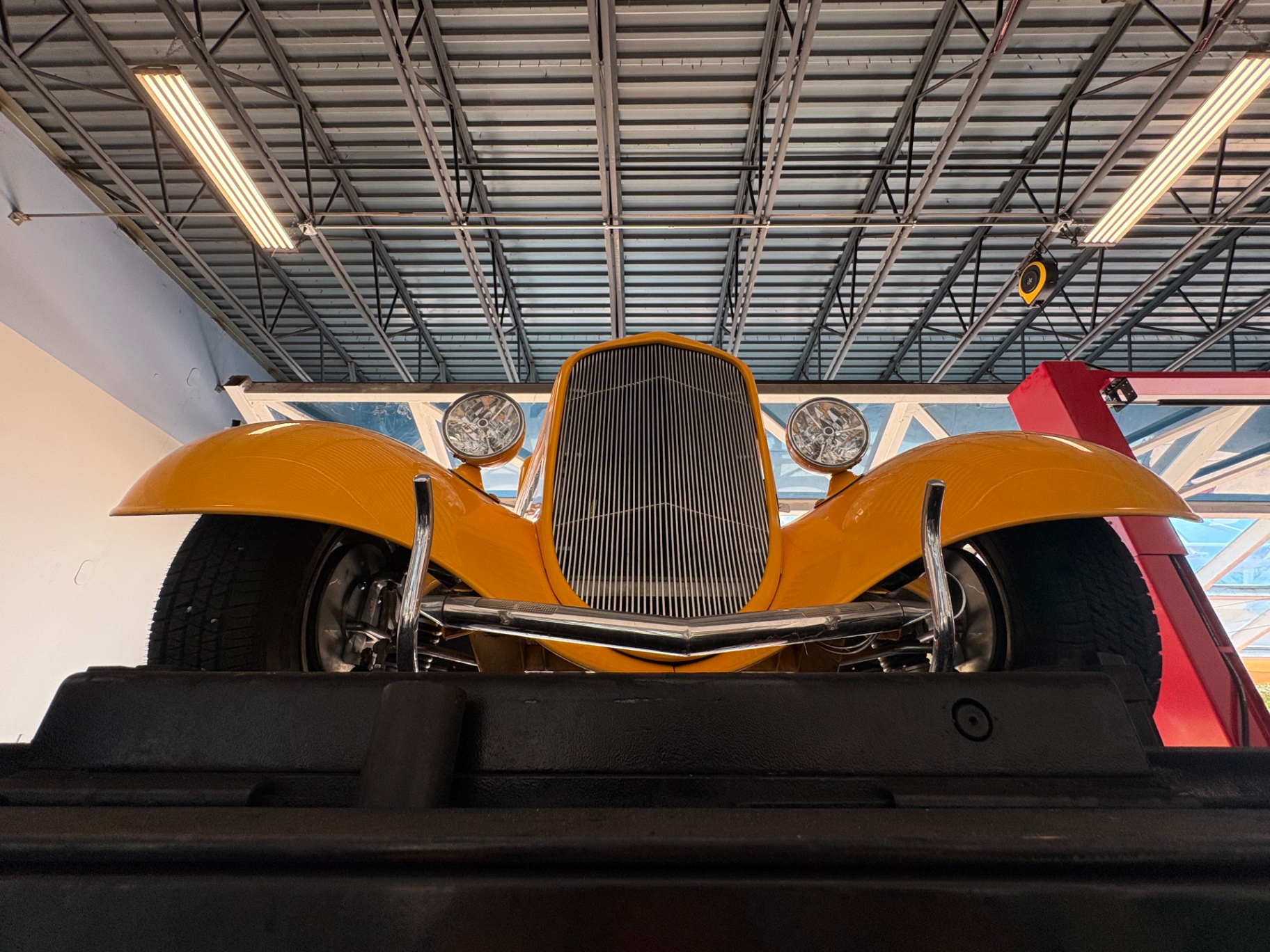
The paint is GM Wheatland Yellow, a vivid factory color from the General Motors palette that reads as a saturated golden yellow in natural light. The three-piece Rootlieb steel hood features single side scoops and uses Hagan aluminum hood supports, which allow the hood to hinge in either direction — a useful feature for engine access. The grille is an aluminum unit with insert. A full fender set is installed, including smooth running boards and inner fenders, giving the car a finished appearance rather than the exposed-frame look common to many hot rods of this era.
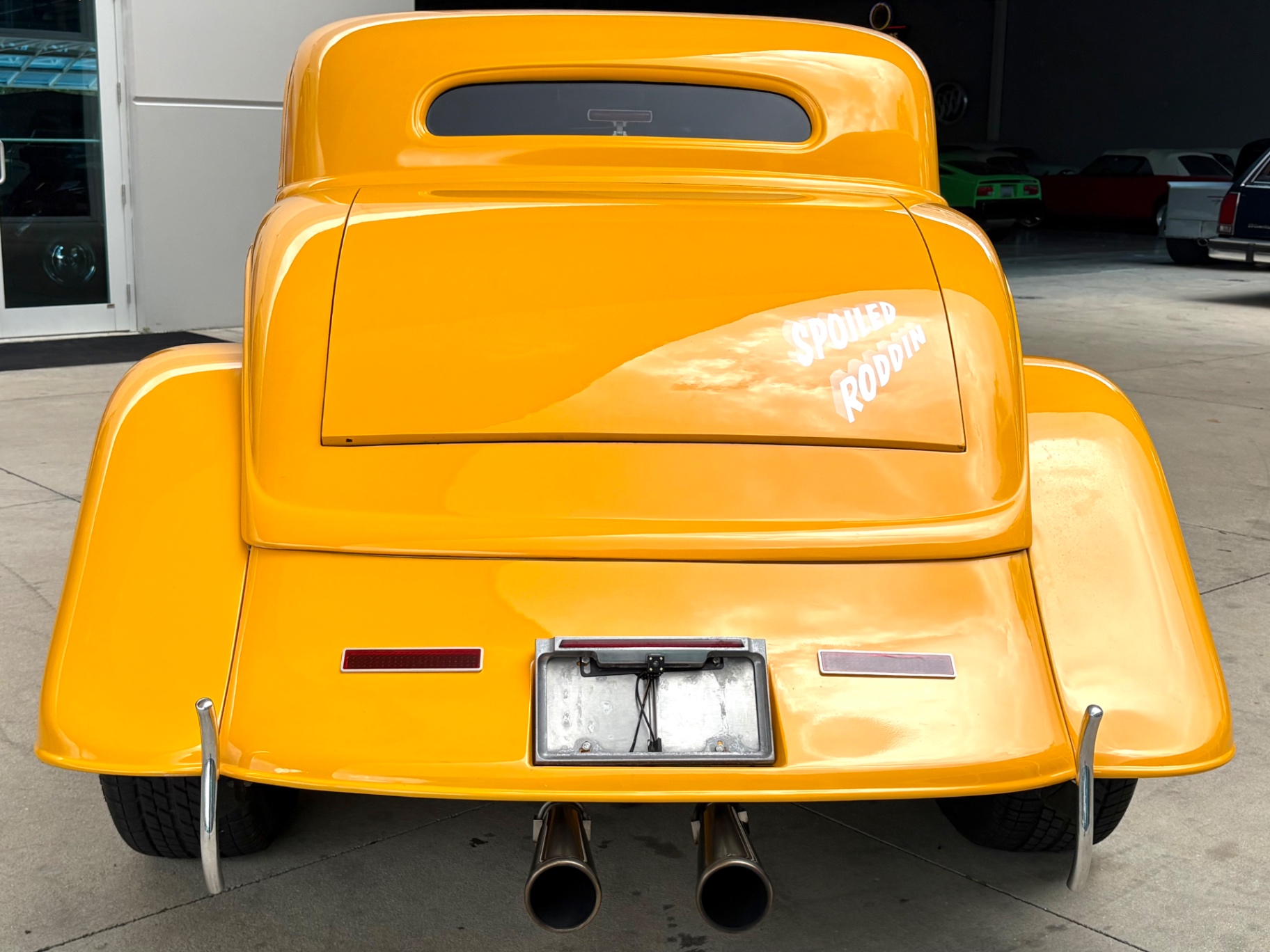
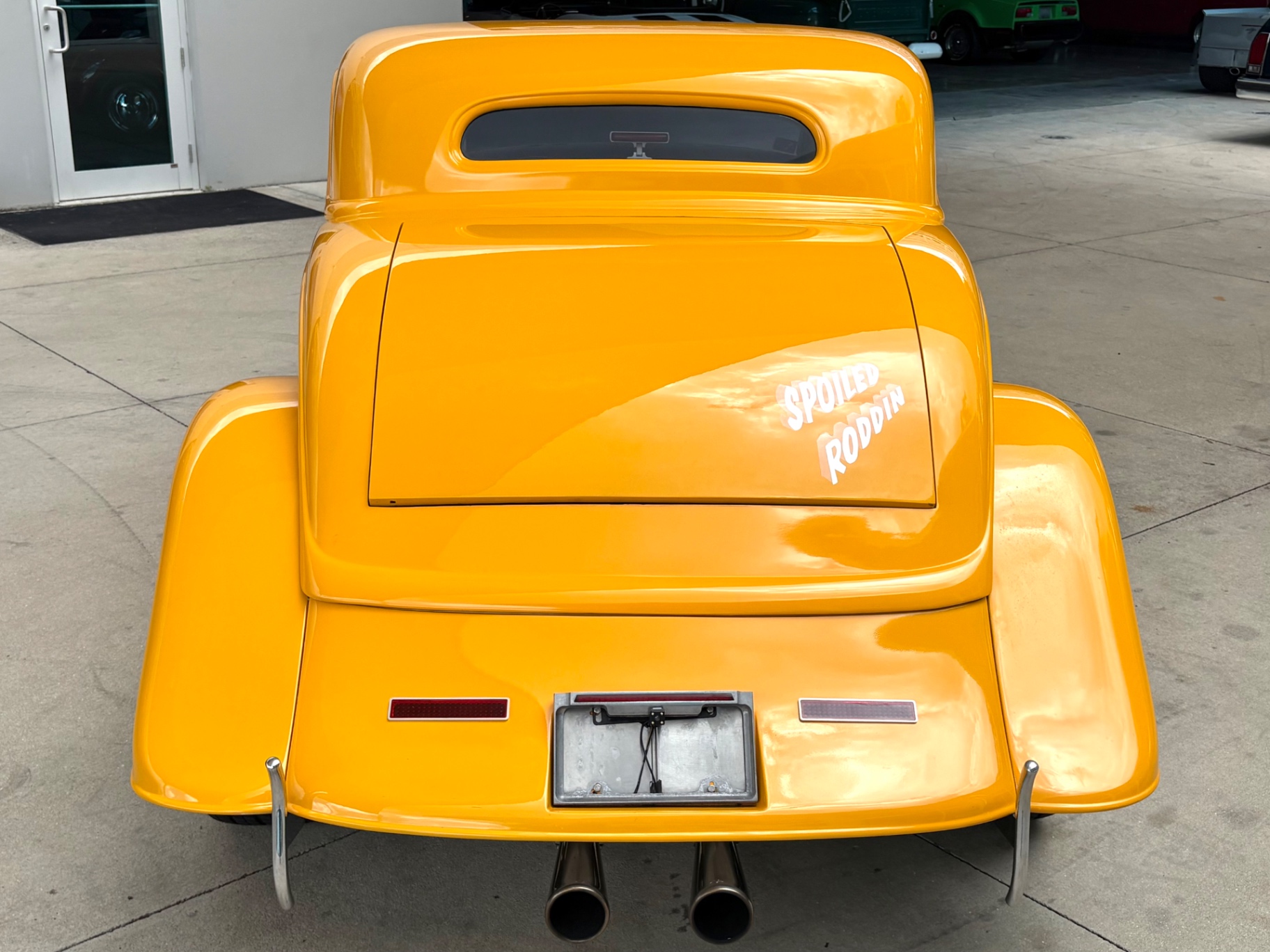
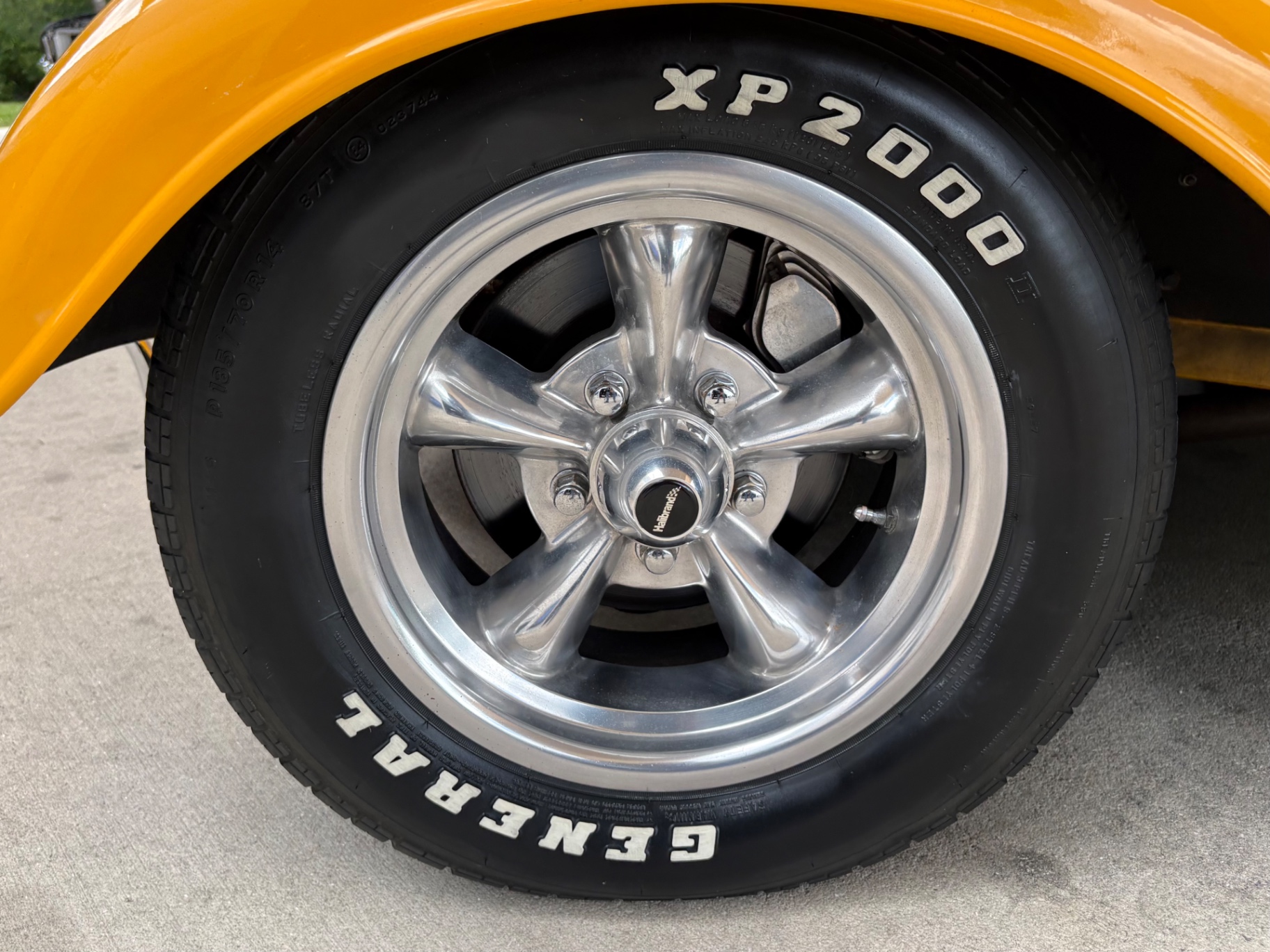
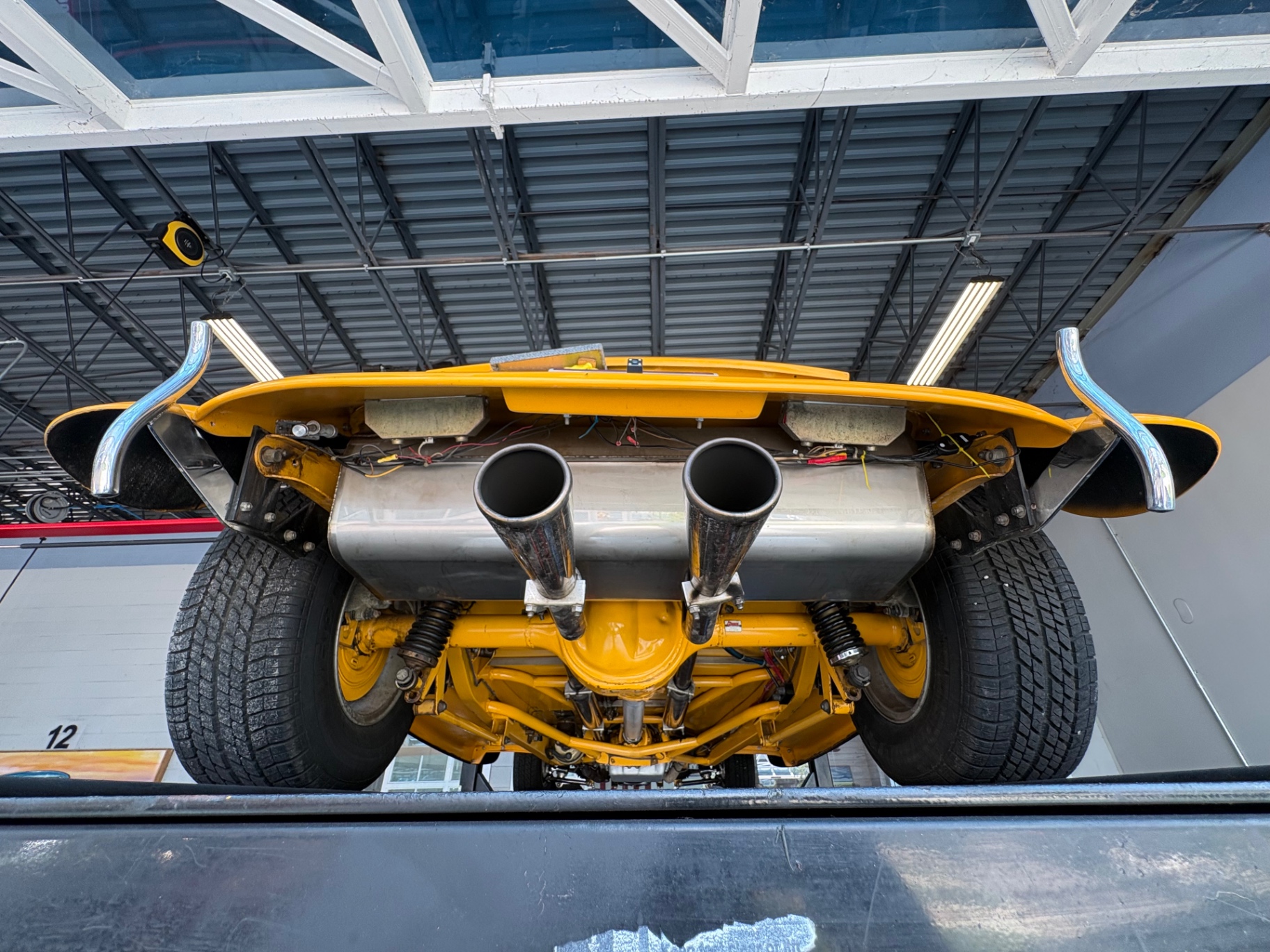
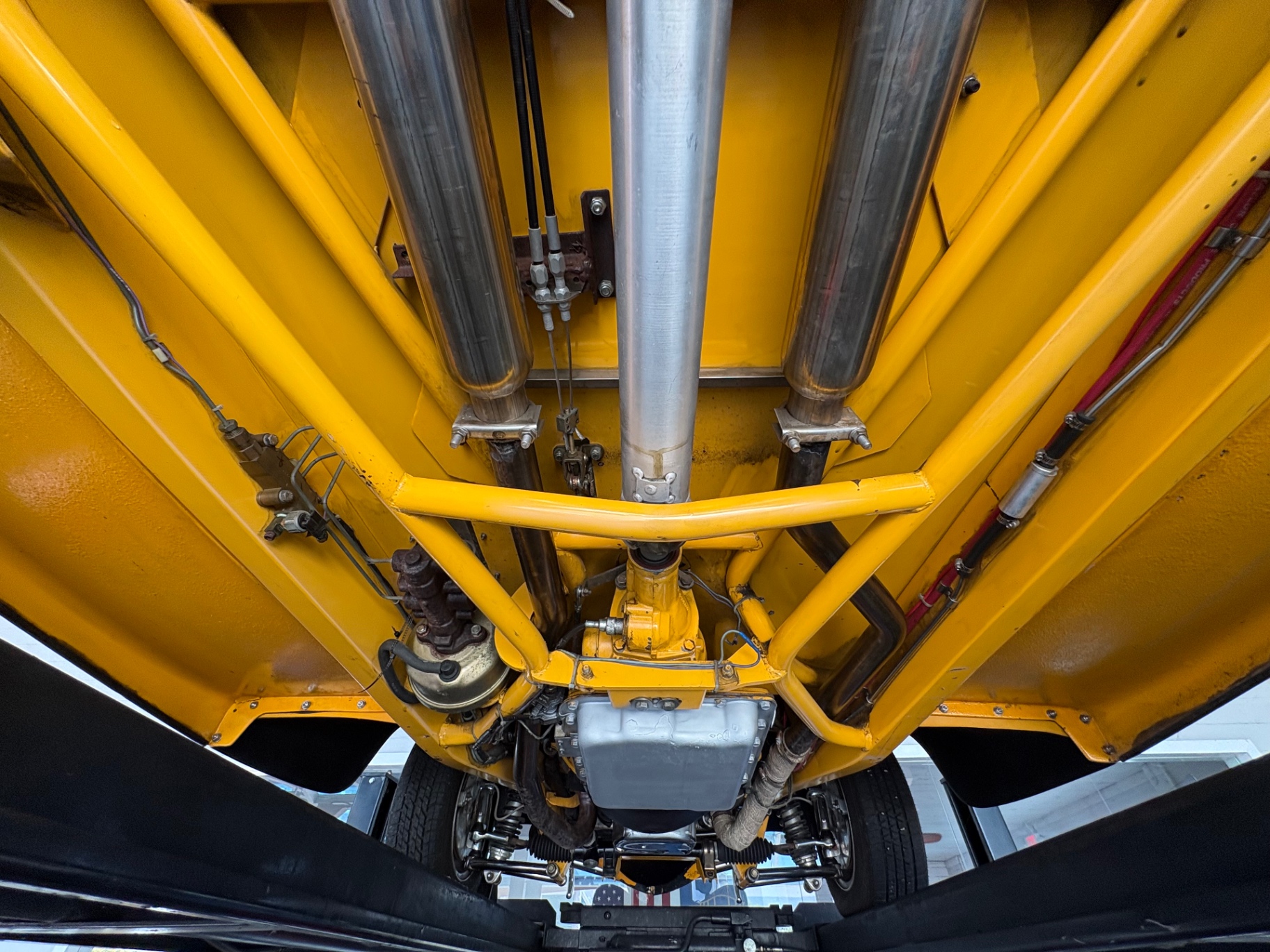
The wheels are Halibrand 5-spoke PM polished, sized 14x6 at the front and 15x8 at the rear. Halibrand is one of the original American racing wheel manufacturers, with roots in Indy car and sports car racing going back to the 1940s. The PM series is their polished billet take on the classic Halibrand kidney-spoke design and is a period-appropriate wheel choice for a 1930s-era hot rod. Up front, the Dietz headlights carry halogen blue dot bulbs. Lighting compliance is handled by halogen taillights, a third brake light in the license plate frame, and an additional third brake light mounted in the rear window. The front spreader bar has built-in turn signals. Front and rear nerf bars, aluminum outside mirrors, intermittent wipers with aluminum arms, a hidden radio antenna, dead bolts with an indicator light, and a chrome Aooga horn round out the exterior details. The exhaust exits through a custom stainless steel system that terminates at the rear valance.
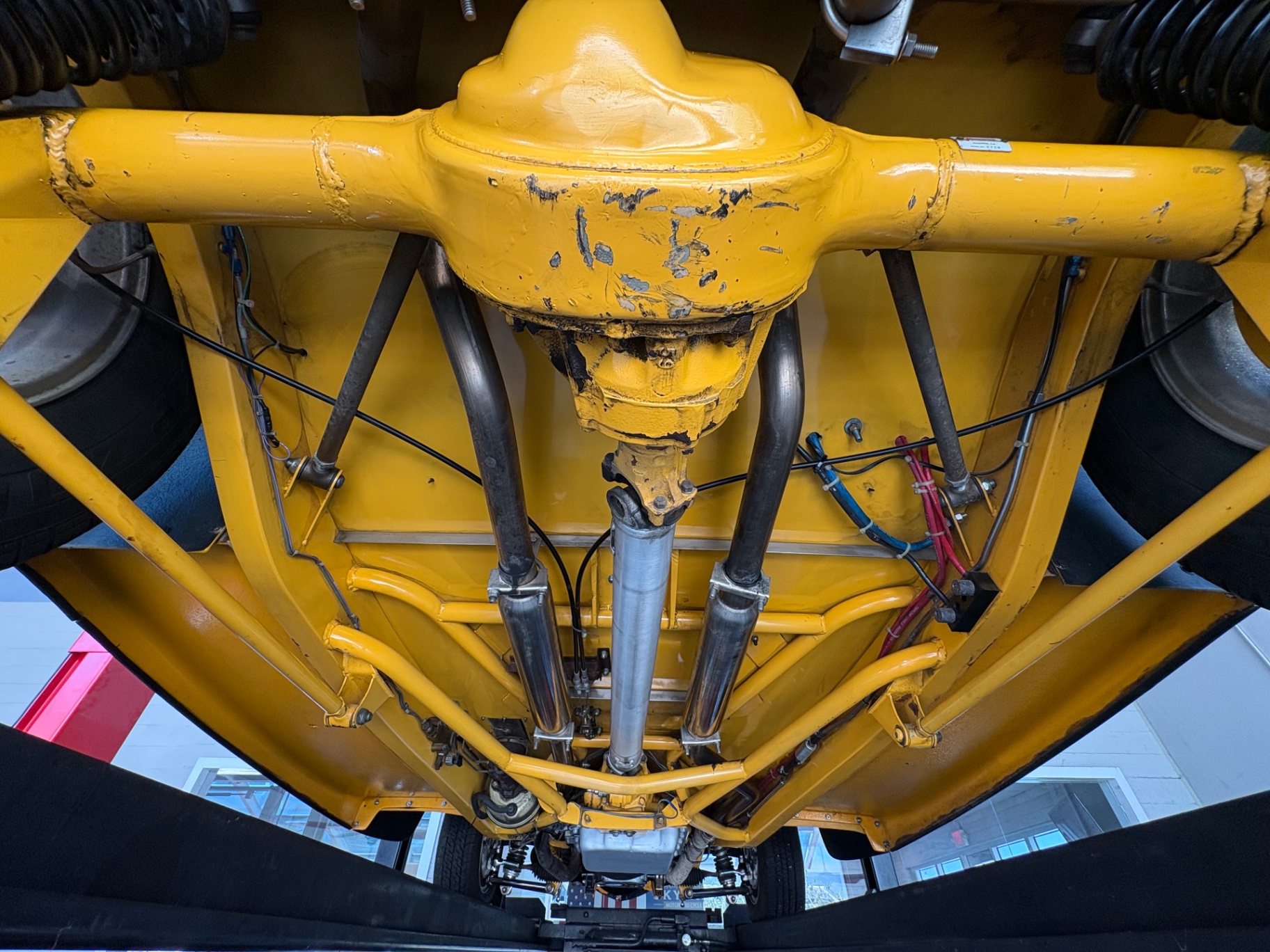
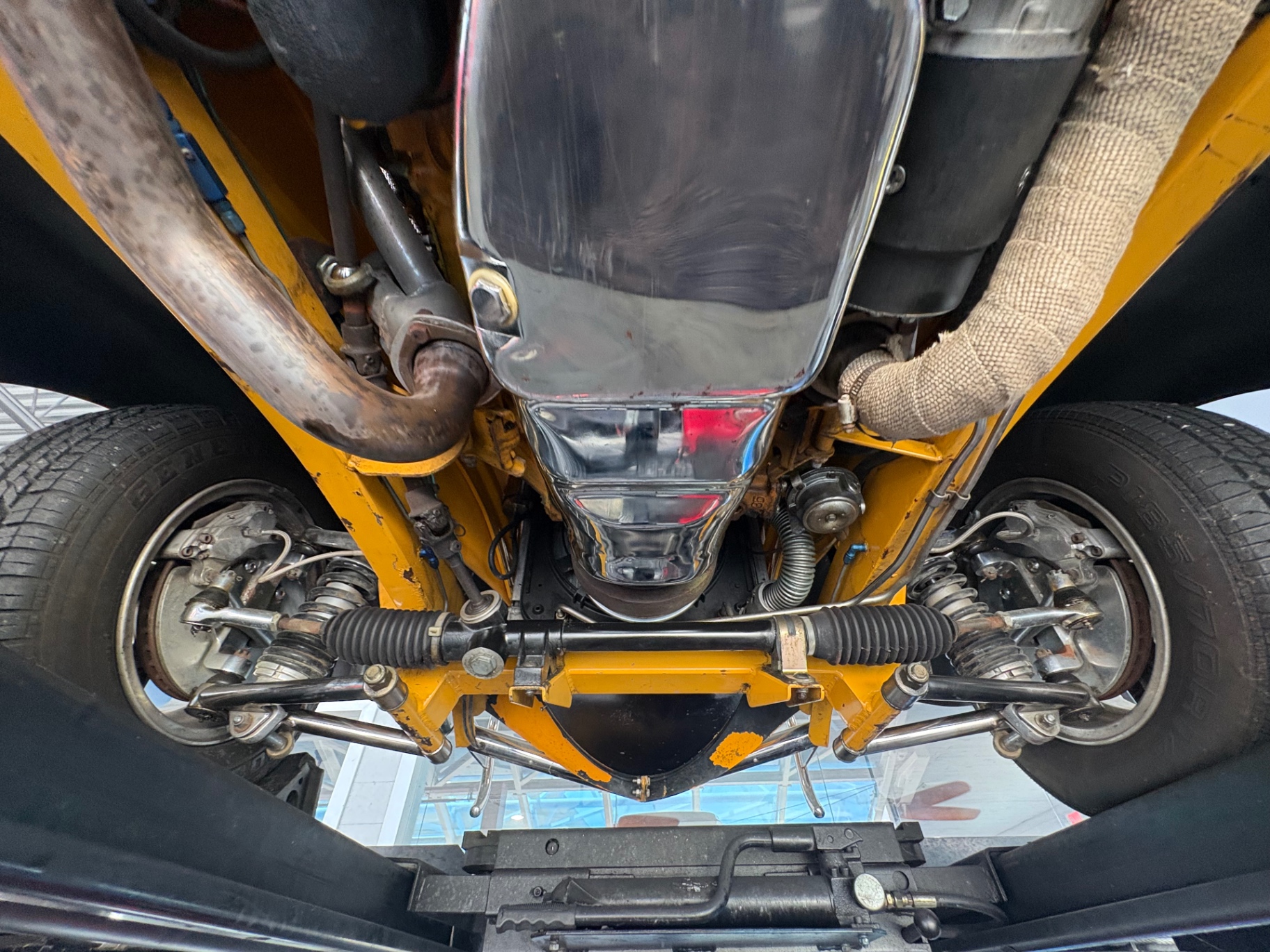
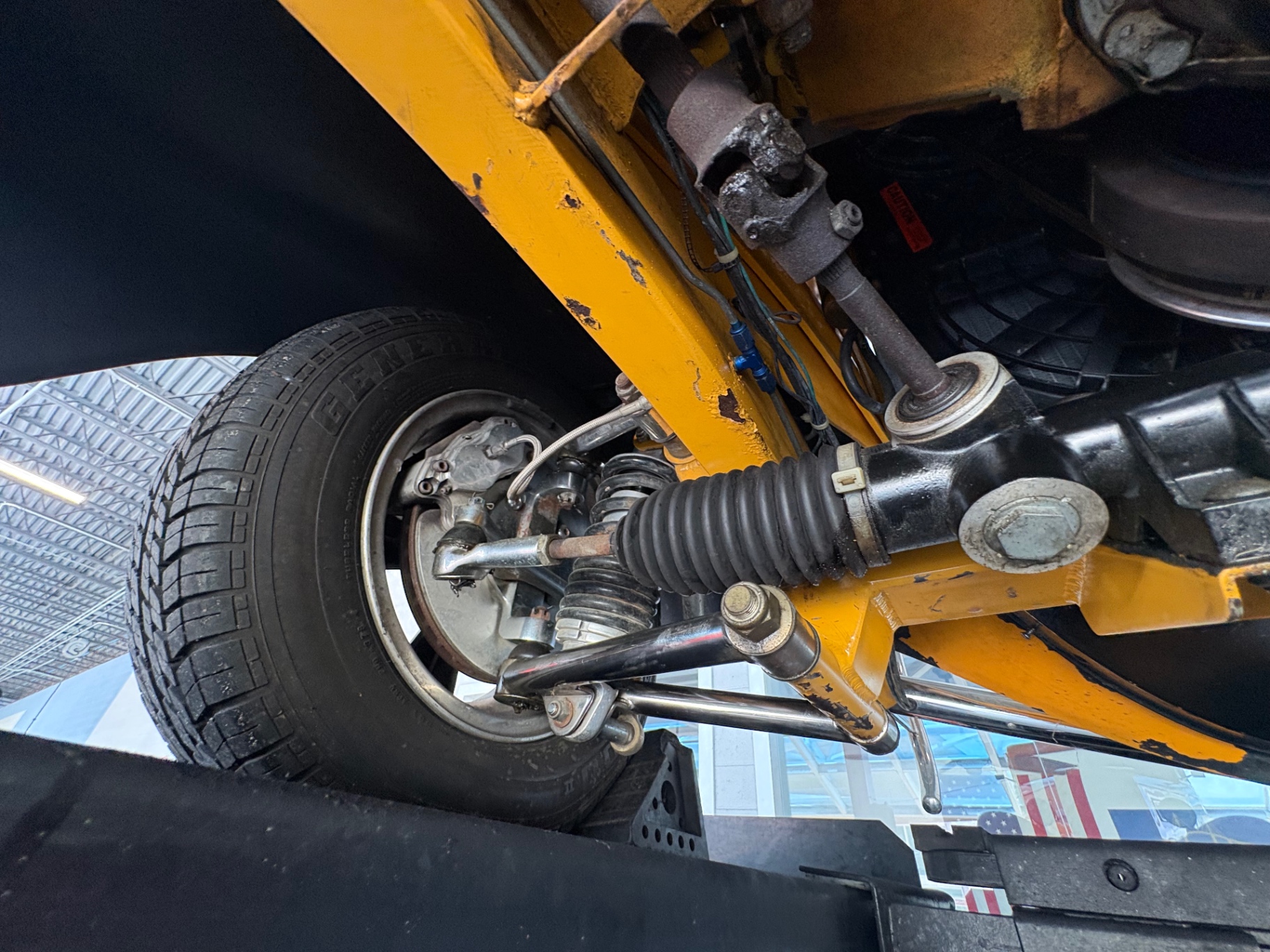
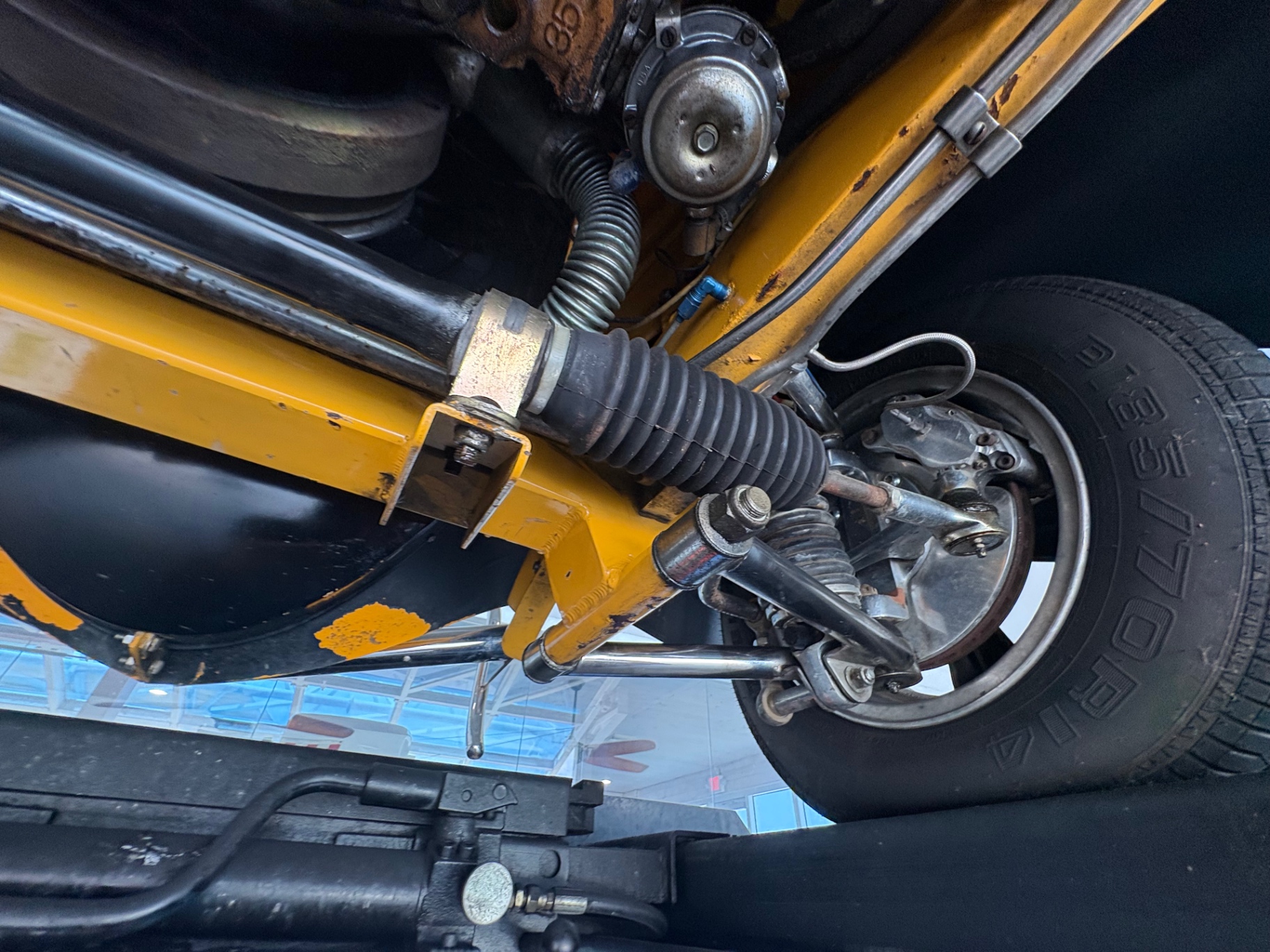
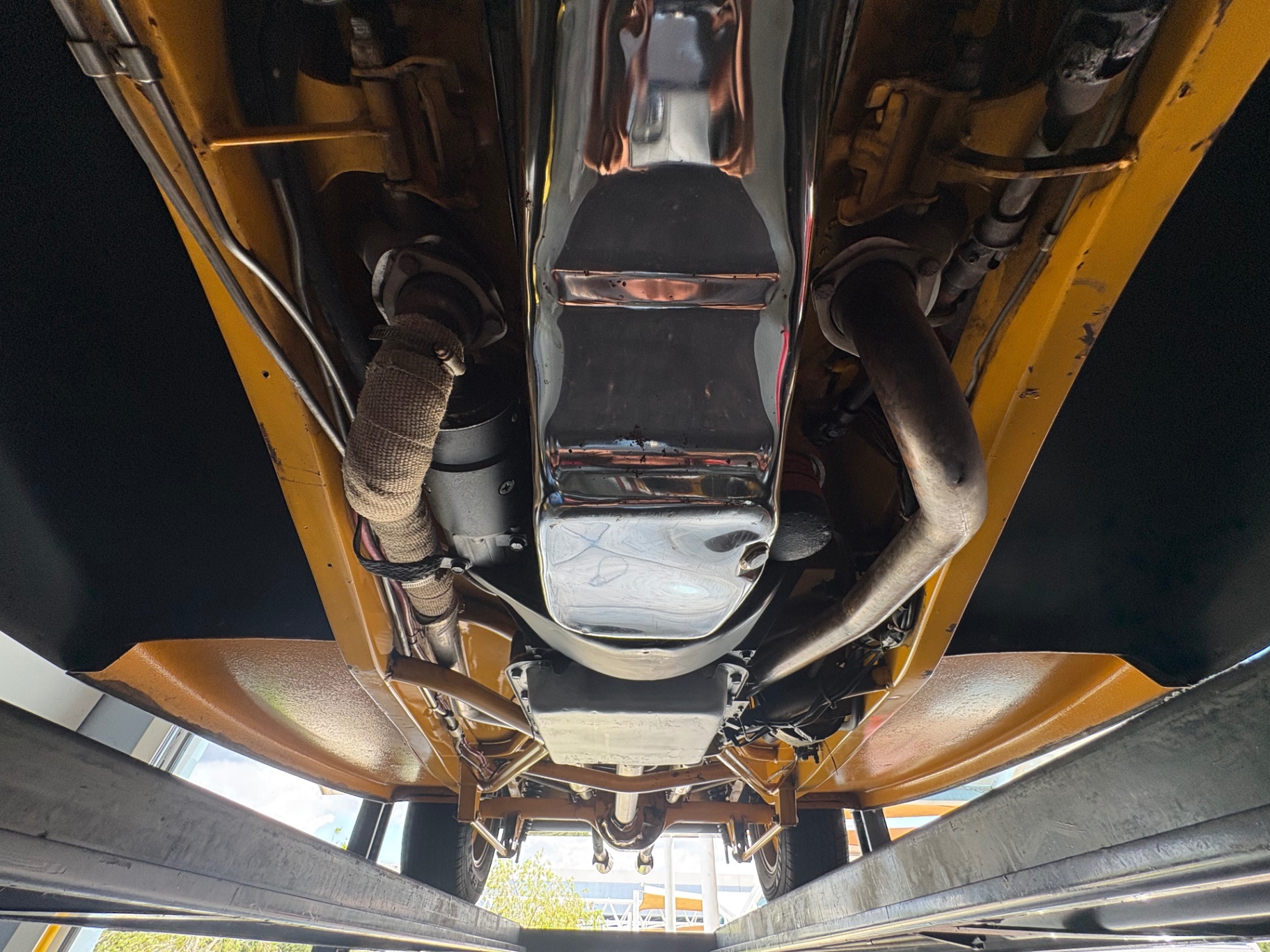
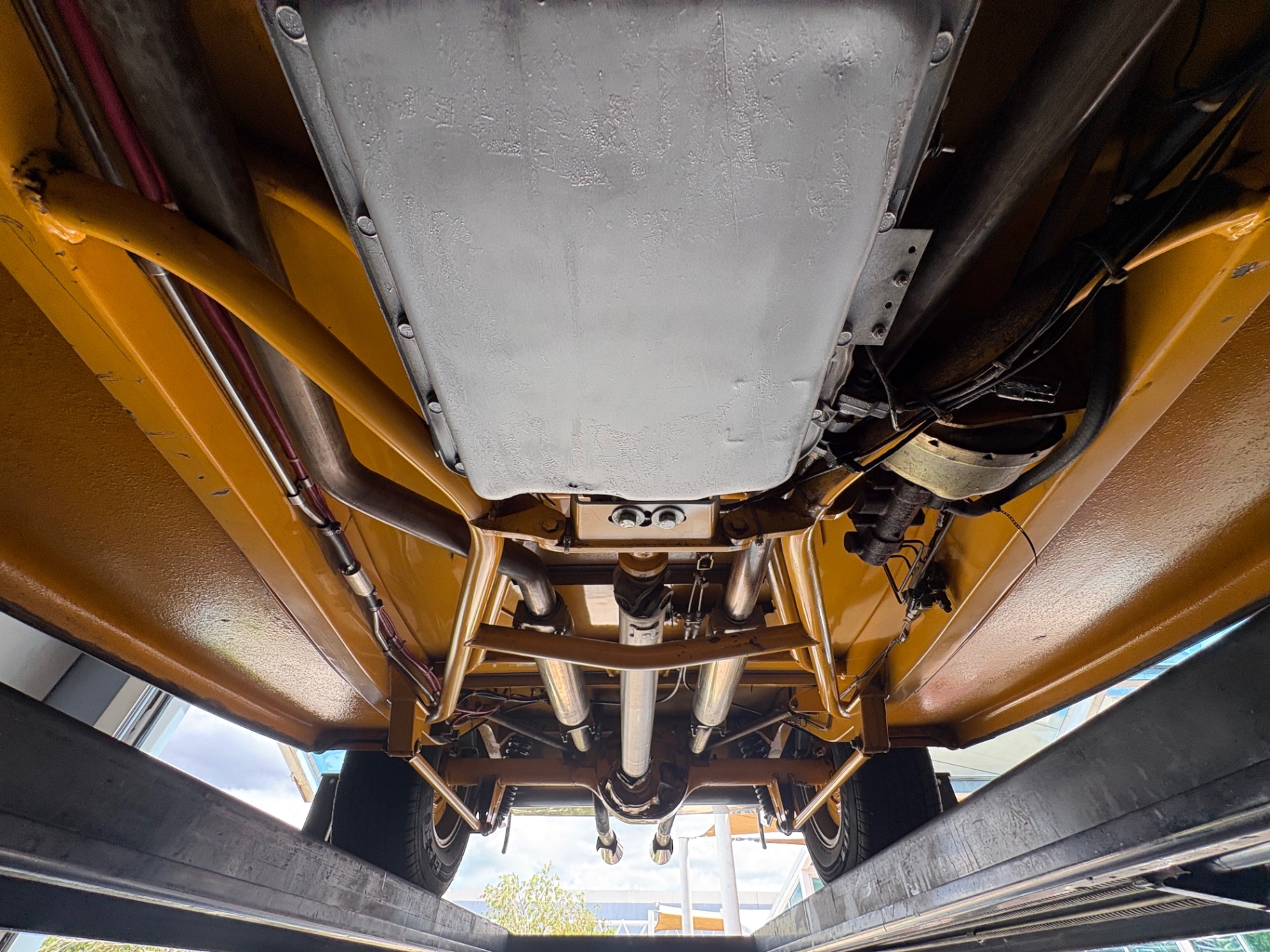
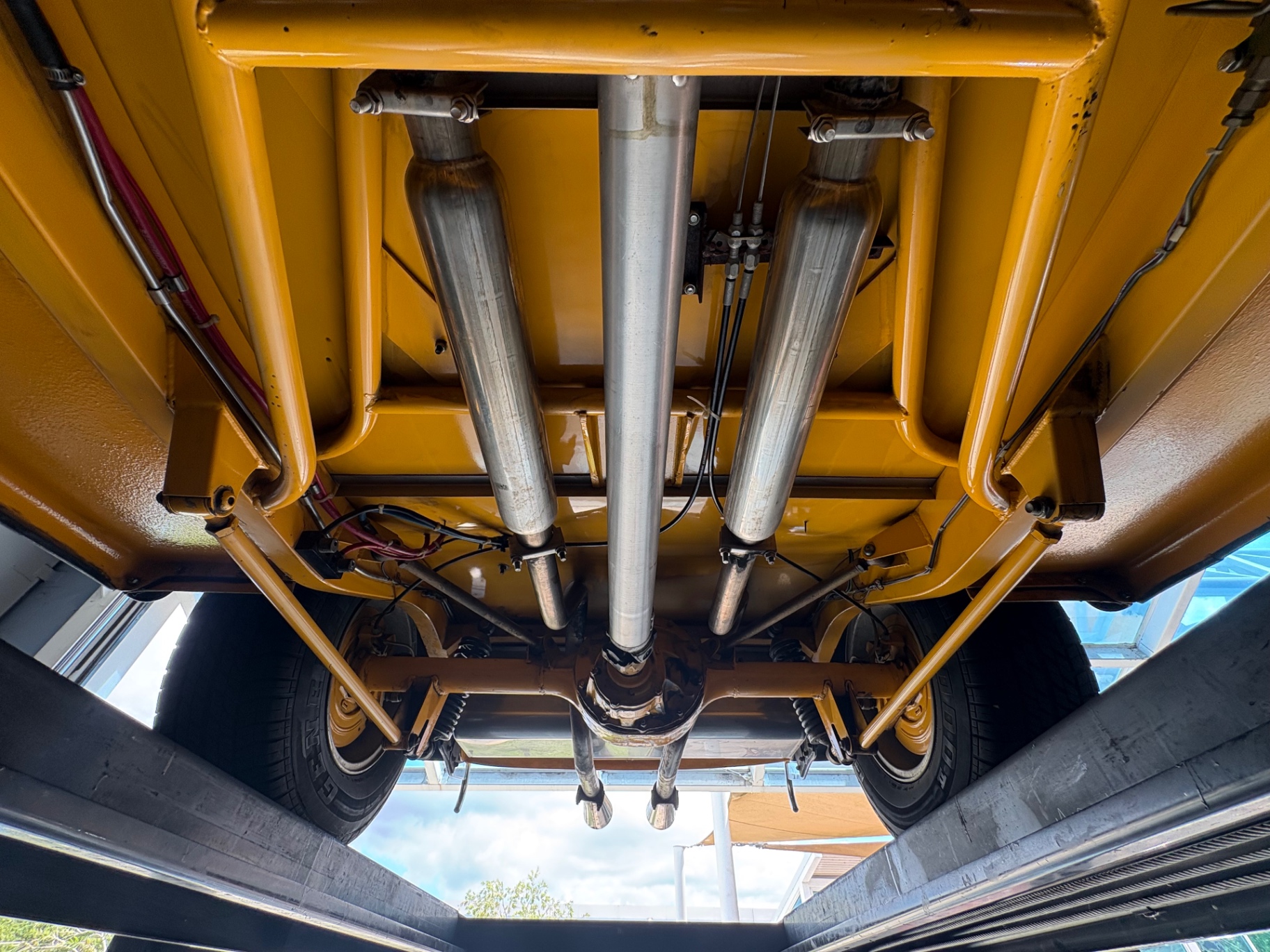
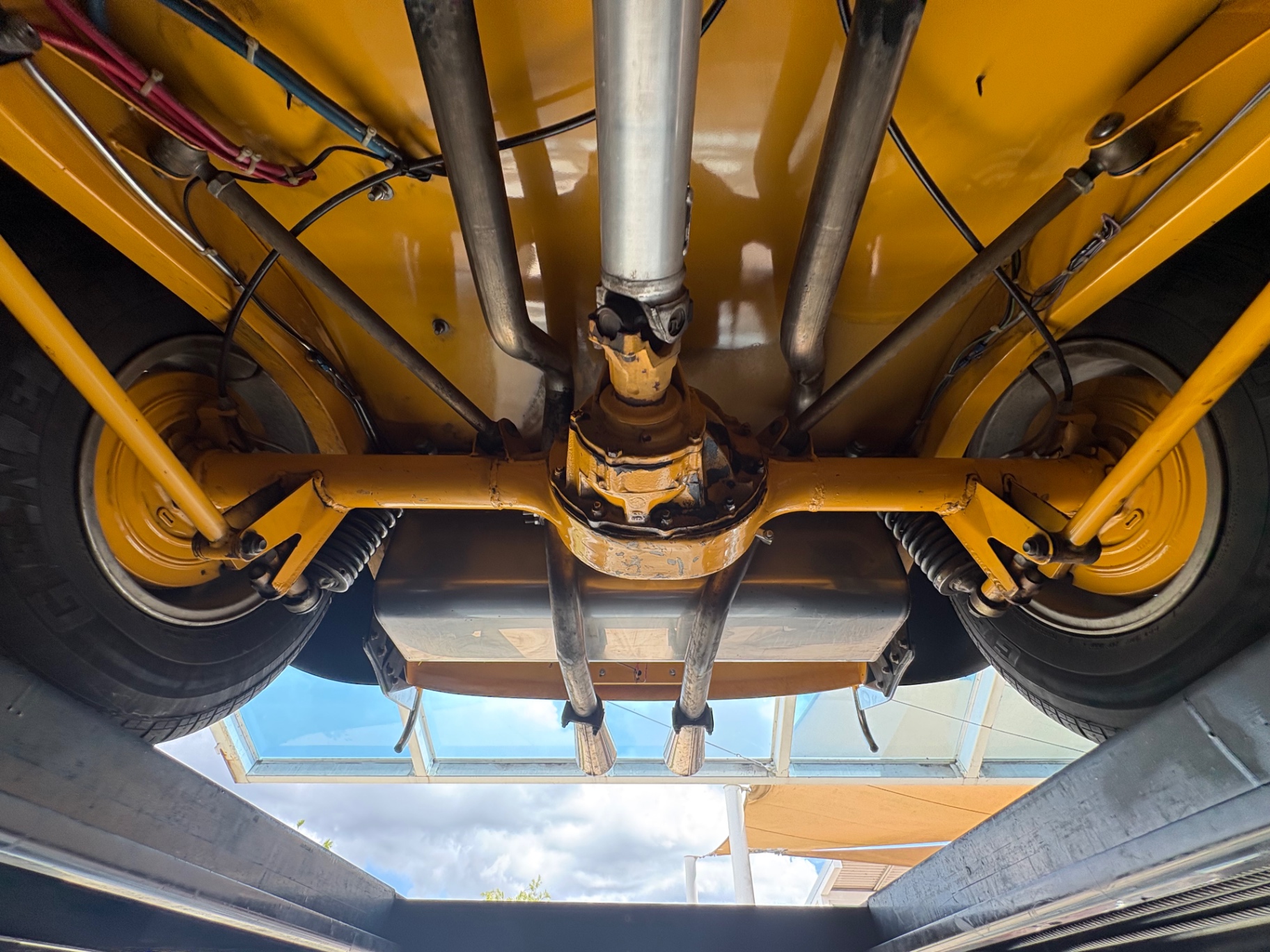
Looking underneath, the painted chassis shows the quality of the build. The boxed frame and tube X-member are finished in matching Wheatland Yellow. The triangulated four-bar links, aluminum driveshaft, and stainless steel exhaust routing are all clearly visible and cleanly executed. The stainless steel gas tank is mounted within the frame at the rear.
Conclusion
This 1933 Ford 3-window coupe represents a fully documented, professionally built street rod assembled from named, reputable components. The body is a new Downs Manufacturing unit with a known purchase date, the engine is a built 355 small-block from Jon Barrett Hot Rod Engines, and the 700R4 came out of Phoenix Transmission. The chassis, suspension, rear end, braking, climate control, and wiring all trace back to established manufacturers in the street rod industry. The 3.5-inch chop and suicide door configuration are executed cleanly on a body that already has strong proportions. The car is equipped to drive — air conditioning, cruise control, power accessories, modern braking, and an overdrive transmission — without giving up the visual character that makes the 1933 Ford 3-window coupe one of the most enduring shapes in the hobby.
If you want to discuss this 1933 Ford 3-window coupe further, call Skyway Classics at 941-254-6608. We are located in Sarasota, Florida, and are happy to answer questions, arrange an inspection, or discuss shipping options.
Disclaimer
Information found on the website is presented as given to us by the owner of the car, whether on consignment or from the owner we bought it from. Some Photos, materials for videos, descriptions and other information are provided by the consignor/seller and is deemed reliable, but Skyway Classics does not warranty or guarantee this information. Skyway Classics is not responsible for information that may incorrect or a publishing error. The decision to purchase should be based solely on the buyers personal inspection of the vehicle or by a professional inspection service prior to offer or purchase being made.
1933 Ford 3-Window Coupe — Chopped Top Hot Rod with 355 Small-Block, Full Build Documentation, and Show-Quality Chassis
Why This Car Is Special
The 1933 Ford 3-window coupe is one of the most recognized body styles in American hot rodding. Ford introduced the redesigned Model 40 for 1933 with a more streamlined body, a longer wheelbase, and a lower roofline compared to the Model 18 it replaced. The three-window coupe variant — named for its single side window per door rather than the opera window found on the five-window — has a cleaner, more aggressive silhouette that makes it a perennial favorite for custom builders. Henry Ford also introduced his flathead V8 for the 1932 model year, and by 1933 the combination of a powerful engine in a lightweight body had already established this platform as the foundation of postwar hot rodding culture. The shape still reads exactly the same way today.
This particular 1933 Ford 3-window coupe is not a restoration. It is a ground-up custom build centered on a brand-new Downs Manufacturing body — serial number 001796, purchased new on February 26, 1999 — mounted on a Downs Manufacturing boxed frame with a tube X-member. Every major component comes from a known, named builder: the engine from Jon Barrett Hot Rod Engines in McLoud, Oklahoma; the transmission from Phoenix Transmission in Weatherford, Texas; the chassis fabrication from Downs Manufacturing in Lawton, Michigan. This is a documented build, not an anonymous project car assembled from unknown parts.
The top has been chopped 3.5 inches, which lowers the greenhouse and sharpens the coupe's profile considerably without distorting the original body geometry. The doors open suicide-style, hinged at the rear rather than the front, which was a period-correct custom treatment and remains one of the most visually striking features on any 1933 Ford coupe build. The car is finished in GM Wheatland Yellow, a bright factory color that puts the body lines on full display.
At the price point this car represents, the buyer is getting a completed, drivable hot rod built from quality components — not a project requiring additional investment to make road-ready. The Vintage Air Super Cooler climate system, cruise control, power windows, power doors, power trunk, and Ron Francis wiring harness mean this is a car you drive, not one you trailer to a show and push back into a garage.
Features List
- Downs Manufacturing 1933 Ford 3-window coupe body, serial 001796, purchased new 2/26/1999
- Top chopped 3.5 inches
- Suicide doors with power operation and remote-controlled power trunk
- GM Wheatland Yellow exterior paint
- Jon Barrett Hot Rod Engines 355 cu in small-block Chevrolet, rated 320 HP, runs on regular fuel
- 600 CFM Edelbrock carburetor
- Porcelain-coated headers
- Electronic ignition
- Extensive chrome engine dress-up package
- Phoenix Transmission Chevrolet 700R4 4-speed automatic with overdrive
- Lokar floor shifter, Lokar brake and gas pedals
- Aluminum driveshaft
- Currie 9-inch Ford rear end, 3.50 gears
- Downs Manufacturing boxed frame with tube X-member
- TCI show chrome Mustang II coilover front suspension
- Triangulated four-bar rear suspension with coils
- Ford Explorer front disc brakes, 8-inch Ford rear drum brakes
- Power dual master cylinder, steel brake lines throughout
- Aluminum tilt steering column
- Rootlieb steel 3-piece hood with single side scoops, Hagan aluminum hood supports (hinges either direction)
- Aluminum grille with insert
- Full fender set with smooth running boards and inner fenders
- Halibrand 5-spoke PM polished wheels, 14x6 front / 15x8 rear
- Vintage Air Super Cooler system with heat and defrost
- Be Cool aluminum radiator with electric fan
- Chrome Cool Flex radiator hoses, polished aluminum alternator and A/C compressor brackets
- Ron Francis wiring harness
- VDO gauges (speedometer, tachometer, oil pressure, voltmeter, water temp, fuel)
- Beckert rearview mirror with LED gear position, turn signal, and high beam indicators
- Pioneer head unit with 12-disc CD changer and overhead radio console
- Custom seats by Teas Designs
- Leather-wrapped banjo-string style steering wheel
- Self-retracting seat belts
- Halogen taillights, Dietz headlights with halogen blue dot bulbs
- Third brake light in license frame and additional third brake light in rear window
- Front spreader bar with built-in turn signals, front and rear nerf bars
- Dead bolts with indicator light, hidden radio antenna, chrome Aooga horn
- Intermittent wipers with aluminum arms, aluminum outside mirrors
- Cruise control and antitheft relays
- Stainless steel gas tank and custom stainless steel exhaust system
Mechanical
The engine in this 1933 Ford 3-window coupe was built by Jon Barrett Hot Rod Engines out of McLoud, Oklahoma, a shop with a long track record in the street rod community. The displacement is 355 cubic inches — a slightly overbored small-block Chevrolet — and the rated output is 320 horsepower. The carburetor is a 600 CFM Edelbrock, a proven street unit that balances fuel delivery with drivability and runs on regular-grade gasoline. The headers are porcelain-coated, which resists corrosion and heat discoloration far better than raw steel. Ignition is electronic. The engine bay also carries an extensive chrome dress-up package, and the photos confirm it — polished aluminum brackets for the alternator and A/C compressor, Chrome Cool Flex radiator hoses, and a Be Cool aluminum radiator with an electric fan handling cooling duties.
The transmission is a Chevrolet 700R4 4-speed automatic built by Phoenix Transmission in Weatherford, Texas. The 700R4 was introduced by General Motors in 1982 and became the overdrive transmission of choice for street rod builders throughout the 1980s and 1990s because of its deep first gear (3.06:1), its 0.70:1 overdrive fourth, and its proven durability in high-torque applications. Paired with the 3.50 rear gear in the Currie 9-inch Ford axle, this drivetrain combination gives the car strong low-end pull off the line while keeping engine RPM manageable at highway speeds. The Lokar floor shifter and matching Lokar brake and gas pedals keep the interior presentation clean and consistent. The driveshaft is aluminum, reducing rotating weight.
The chassis is a Downs Manufacturing boxed frame with a tube X-member — a significant upgrade over a simple ladder frame in terms of torsional rigidity. Up front, the suspension is a TCI show chrome Mustang II coilover setup, which is the most widely used independent front suspension conversion in the street rod industry. It provides far better handling geometry than a solid front axle, and the TCI version is finished in show chrome rather than painted steel. Out back, a triangulated four-bar with coils locates the Currie 9-inch Ford rear end. The Ford 9-inch is the standard benchmark for street rod rear axle conversions due to its interchangeable gear sets, strong housing, and broad aftermarket support. Braking up front is handled by Ford Explorer disc brakes, with 8-inch Ford drum brakes at the rear and a power dual master cylinder feeding steel brake lines throughout the car.
Interior
The interior of this 1933 Ford 3-window coupe is trimmed in gray cloth throughout — headliner, door panels, dash, seat surfaces, and rear bulkhead — giving the cabin a unified, purposeful look rather than the mismatched feel common to cars assembled over many years by multiple hands. The seats are custom work by Teas Designs. The dash houses a full set of VDO gauges mounted in a machined aluminum panel: speedometer, tachometer, oil pressure, voltmeter, water temperature, and fuel level. VDO has been supplying instrumentation to the automotive and marine industries for decades and is a common choice for serious street rod builds because the gauges are accurate, reliable, and readable.
The steering wheel is a leather-wrapped banjo-string style — a period-correct design reference that fits the 1930s body well without looking like a costume piece. The aluminum tilt steering column allows driver adjustment. The Beckert rearview mirror includes integrated LED indicators for gear position, turn signals, and high beam status, which is a practical addition given that a chopped-top coupe has limited rearward sightlines. The Lokar floor shifter and matching pedals carry through the clean aluminum aesthetic seen elsewhere in the build.
Comfort features include a Vintage Air Super Cooler system with heat and defrost — the Super Cooler is one of Vintage Air's higher-capacity units and is well-suited to Florida's climate. Power windows, power doors, and a remote-controlled power trunk with a magnetic trigger system are all operational. The car also has self-retracting seat belts, armrests, sunvisors, and courtesy lights. The audio system is a Pioneer head unit with a 12-disc CD changer and an overhead radio console. Cruise control is installed, and the car includes antitheft relays wired into the electrical system.
Exterior
The body on this 1933 Ford 3-window coupe comes from Downs Manufacturing in Lawton, Michigan, one of the most respected names in fiberglass reproduction bodies for pre-war Fords. The body serial number is 001796, and documentation confirms it was purchased new on February 26, 1999. The top has been chopped 3.5 inches, a modification that requires careful recalculation of the A-pillar, windshield frame, and rear window angles to maintain proper proportions — this car carries the chop well. The doors are configured suicide-style, opening rearward from a rear-mounted hinge, which is both a traditional custom touch and a practical entry feature given the reduced roofline height.
The paint is GM Wheatland Yellow, a vivid factory color from the General Motors palette that reads as a saturated golden yellow in natural light. The three-piece Rootlieb steel hood features single side scoops and uses Hagan aluminum hood supports, which allow the hood to hinge in either direction — a useful feature for engine access. The grille is an aluminum unit with insert. A full fender set is installed, including smooth running boards and inner fenders, giving the car a finished appearance rather than the exposed-frame look common to many hot rods of this era.
The wheels are Halibrand 5-spoke PM polished, sized 14x6 at the front and 15x8 at the rear. Halibrand is one of the original American racing wheel manufacturers, with roots in Indy car and sports car racing going back to the 1940s. The PM series is their polished billet take on the classic Halibrand kidney-spoke design and is a period-appropriate wheel choice for a 1930s-era hot rod. Up front, the Dietz headlights carry halogen blue dot bulbs. Lighting compliance is handled by halogen taillights, a third brake light in the license plate frame, and an additional third brake light mounted in the rear window. The front spreader bar has built-in turn signals. Front and rear nerf bars, aluminum outside mirrors, intermittent wipers with aluminum arms, a hidden radio antenna, dead bolts with an indicator light, and a chrome Aooga horn round out the exterior details. The exhaust exits through a custom stainless steel system that terminates at the rear valance.
Looking underneath, the painted chassis shows the quality of the build. The boxed frame and tube X-member are finished in matching Wheatland Yellow. The triangulated four-bar links, aluminum driveshaft, and stainless steel exhaust routing are all clearly visible and cleanly executed. The stainless steel gas tank is mounted within the frame at the rear.
Conclusion
This 1933 Ford 3-window coupe represents a fully documented, professionally built street rod assembled from named, reputable components. The body is a new Downs Manufacturing unit with a known purchase date, the engine is a built 355 small-block from Jon Barrett Hot Rod Engines, and the 700R4 came out of Phoenix Transmission. The chassis, suspension, rear end, braking, climate control, and wiring all trace back to established manufacturers in the street rod industry. The 3.5-inch chop and suicide door configuration are executed cleanly on a body that already has strong proportions. The car is equipped to drive — air conditioning, cruise control, power accessories, modern braking, and an overdrive transmission — without giving up the visual character that makes the 1933 Ford 3-window coupe one of the most enduring shapes in the hobby.
If you want to discuss this 1933 Ford 3-window coupe further, call Skyway Classics at 941-254-6608. We are located in Sarasota, Florida, and are happy to answer questions, arrange an inspection, or discuss shipping options.
Disclaimer
Information found on the website is presented as given to us by the owner of the car, whether on consignment or from the owner we bought it from. Some Photos, materials for videos, descriptions and other information are provided by the consignor/seller and is deemed reliable, but Skyway Classics does not warranty or guarantee this information. Skyway Classics is not responsible for information that may incorrect or a publishing error. The decision to purchase should be based solely on the buyers personal inspection of the vehicle or by a professional inspection service prior to offer or purchase being made.
1933 Ford
Coupe Hotrod
Why Choose Skyway Classics?
Explore our curated inventory of classic and collector cars—thoughtfully selected, ready to drive, and supported by experts who make ownership simple.
Expert Curation
Every vehicle is hand-selected by our experts for quality, authenticity, and investment potential.
Fast Transactions
Streamlined buying and selling process with quick financing and immediate delivery options.
Only National Dealer With Classic Service & Repair
We’re the only national dealership that services and repairs the classics we sell—before and after the sale.
Nationwide Network
Access to our extensive network of collectors, restorers, and classic car enthusiasts nationwide.
Concierge Ownership Support
From financing and insurance to paperwork, shipping, and titling—we handle the details so you can enjoy the drive.
Passion-Driven Service
We're classic car enthusiasts first, providing personalized service with genuine passion for the hobby.