
1969 Chevrolet
Corvette Base
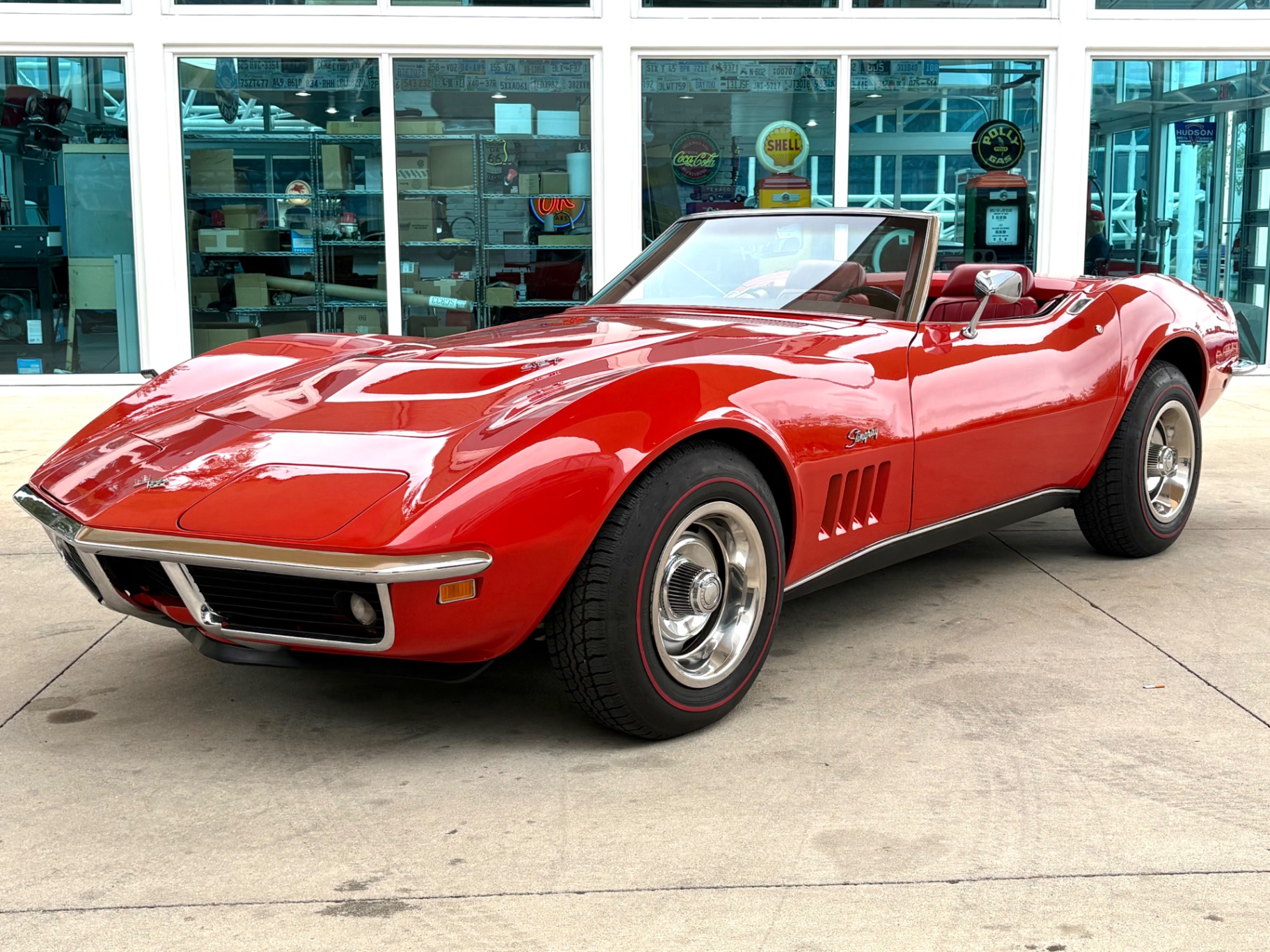
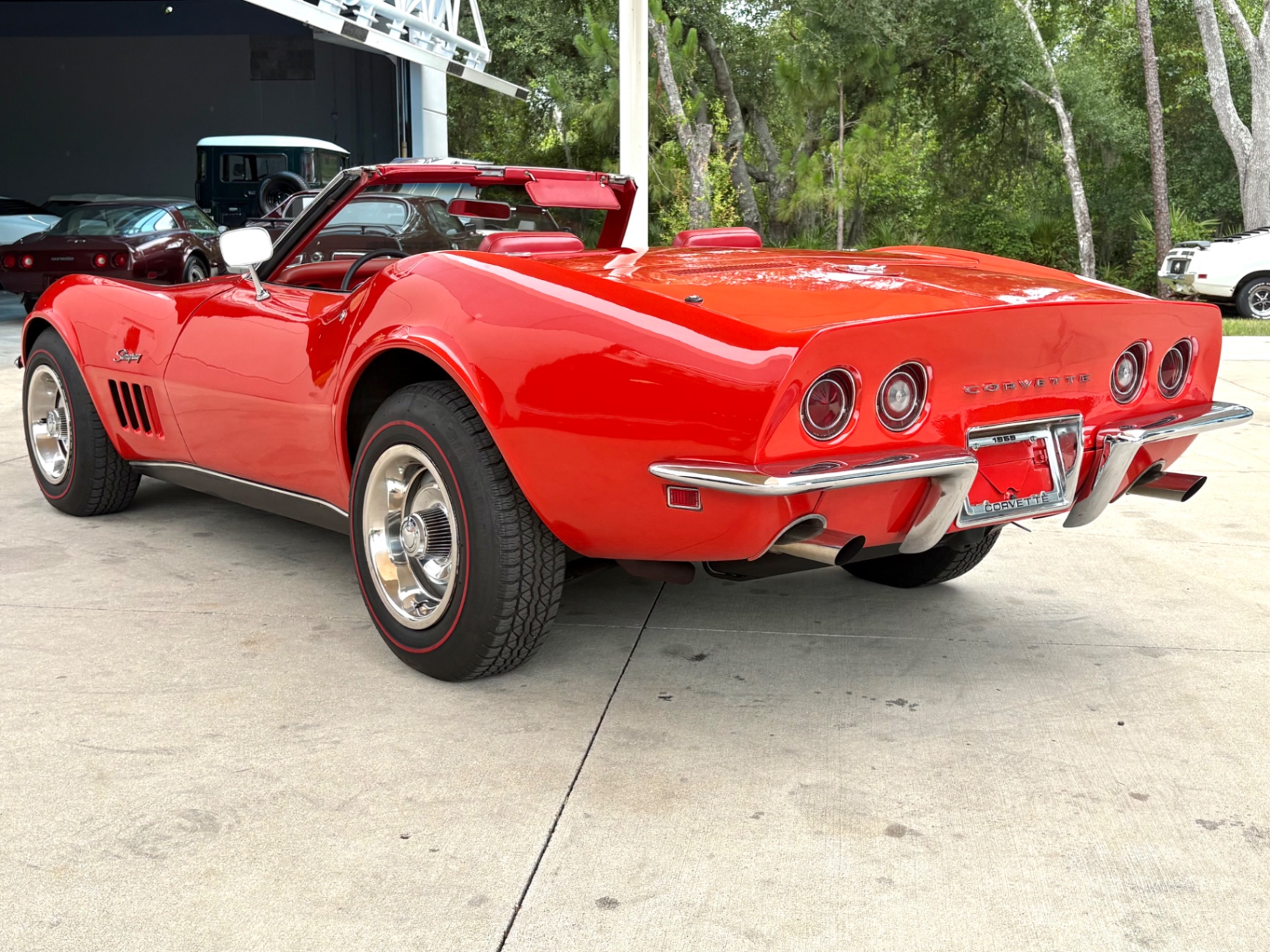
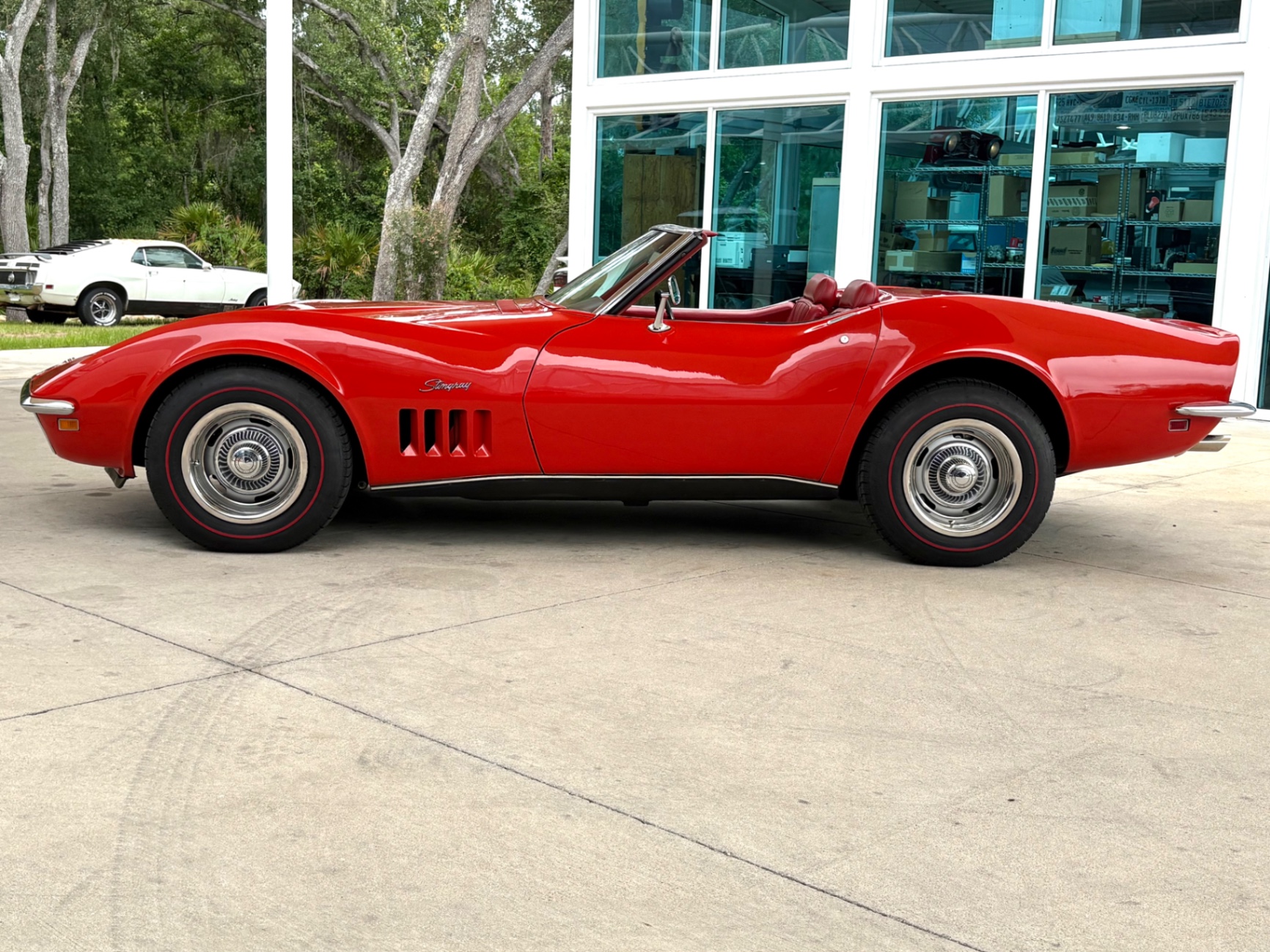
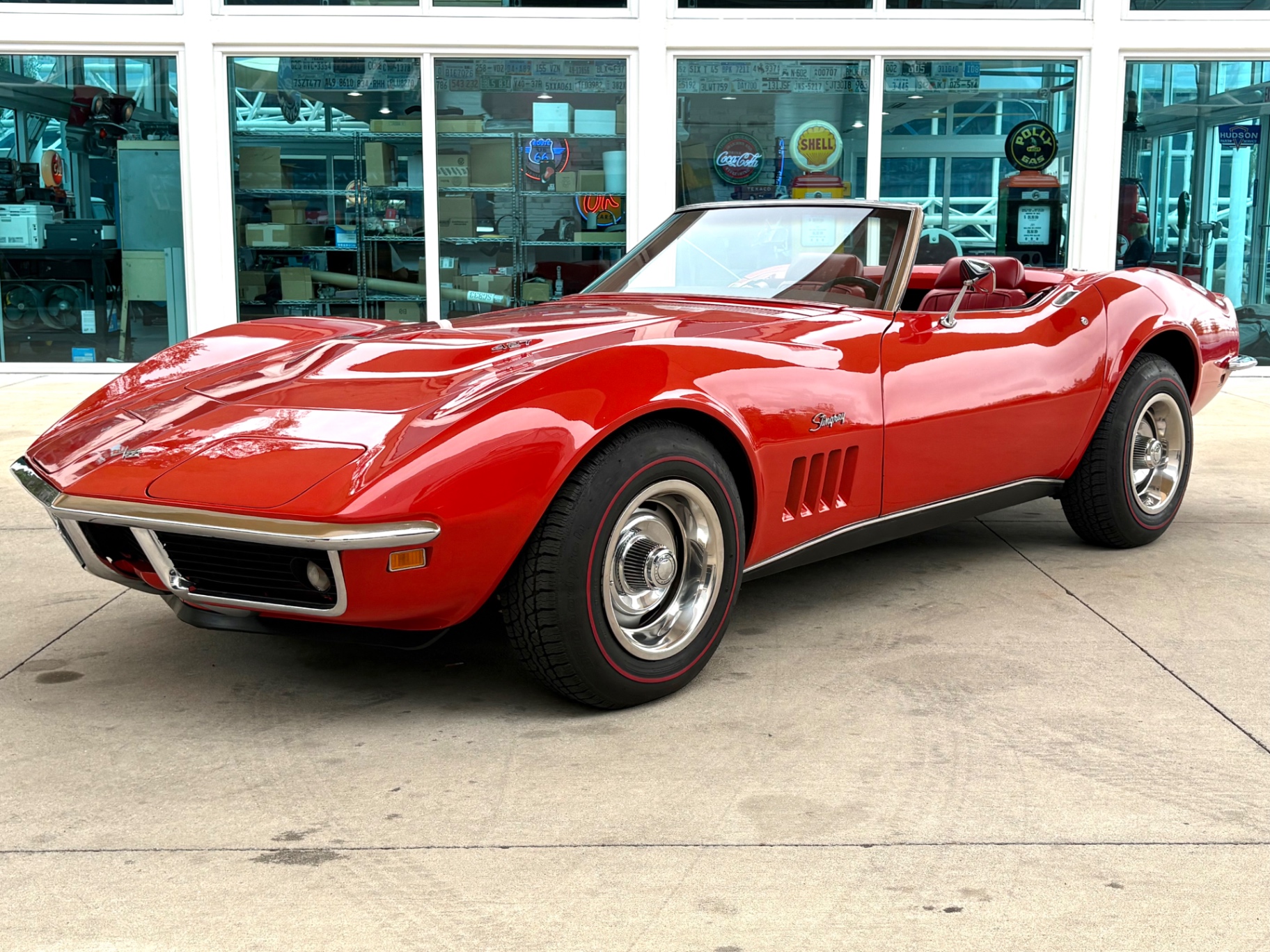
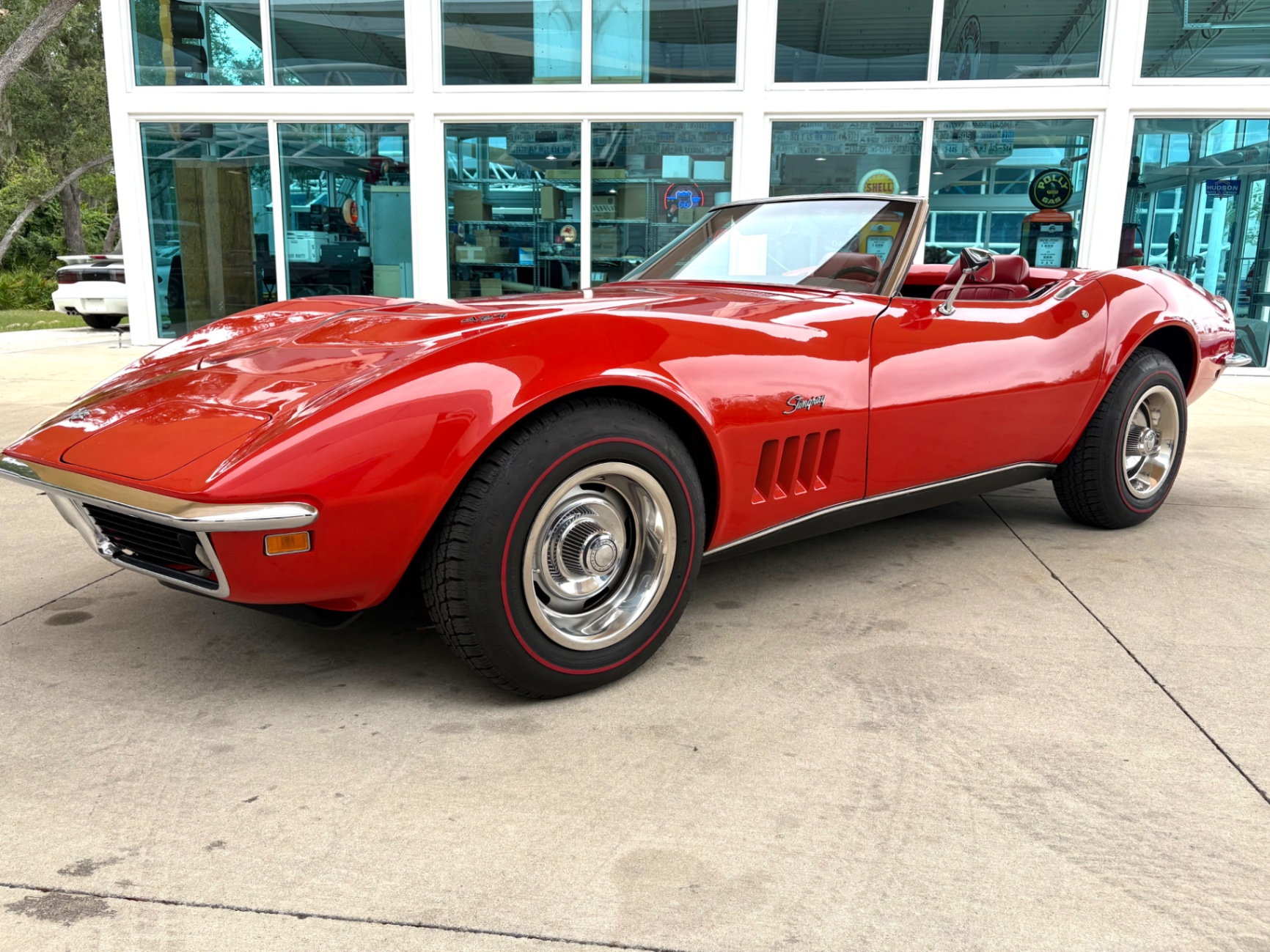
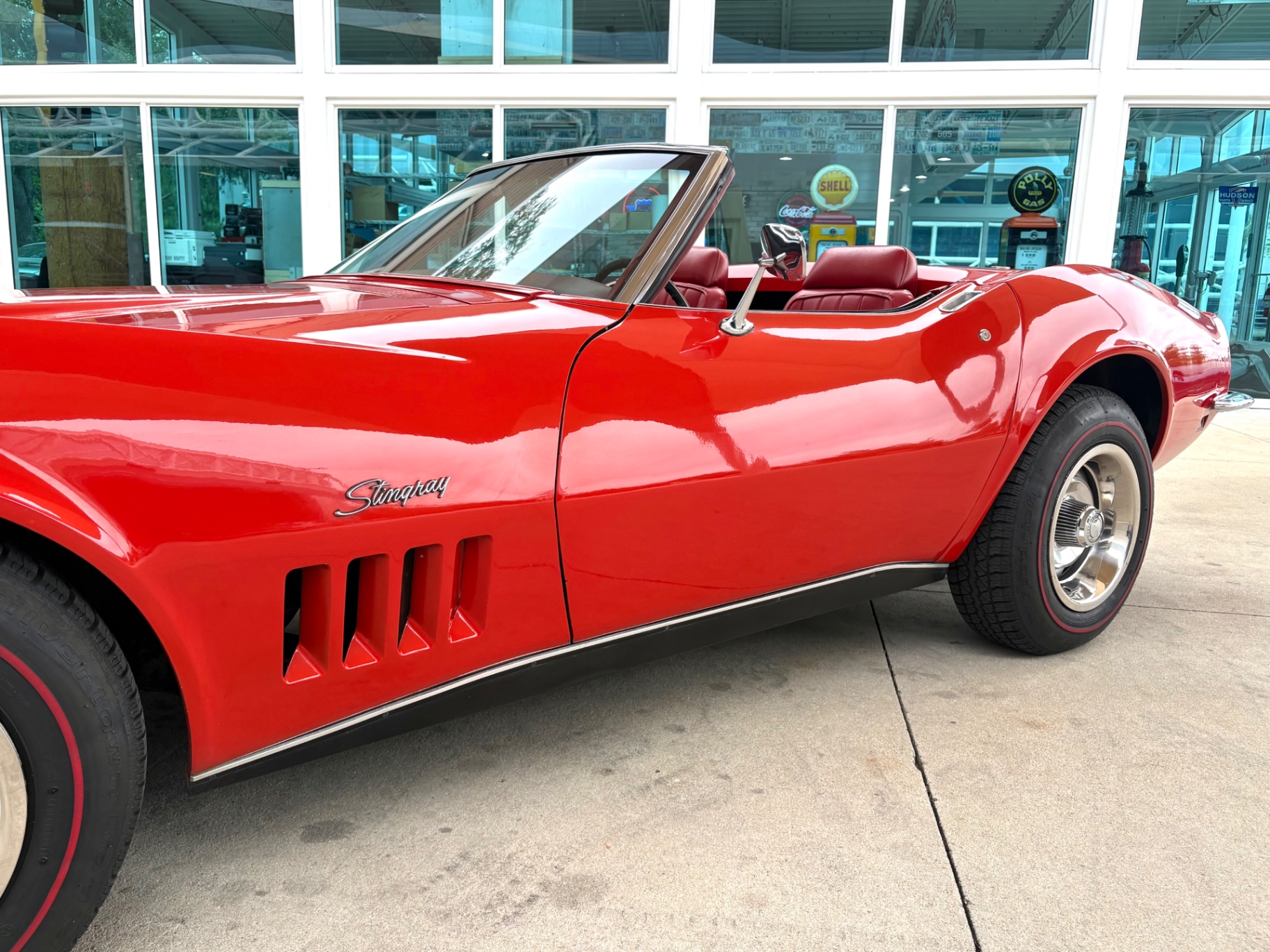
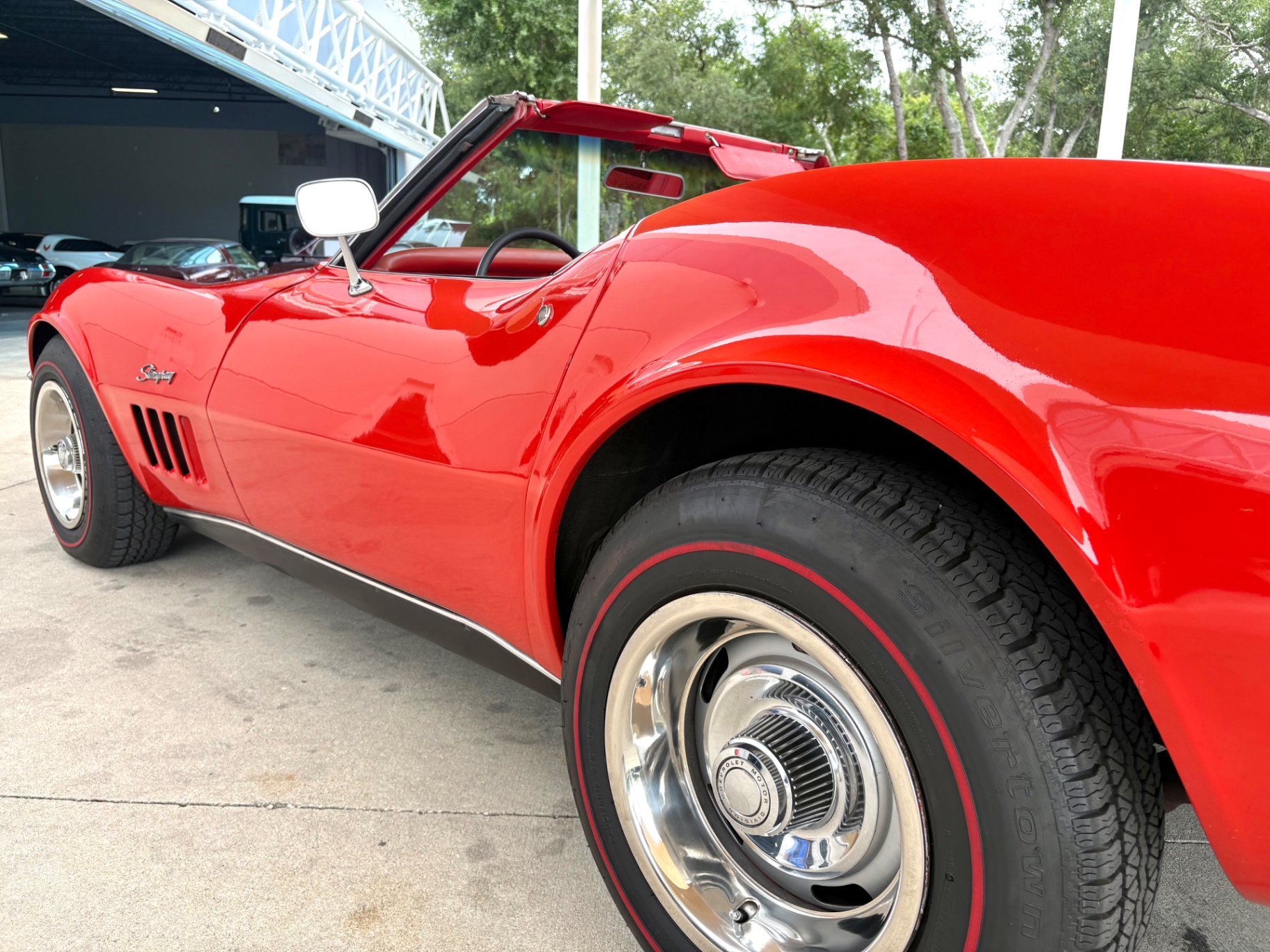
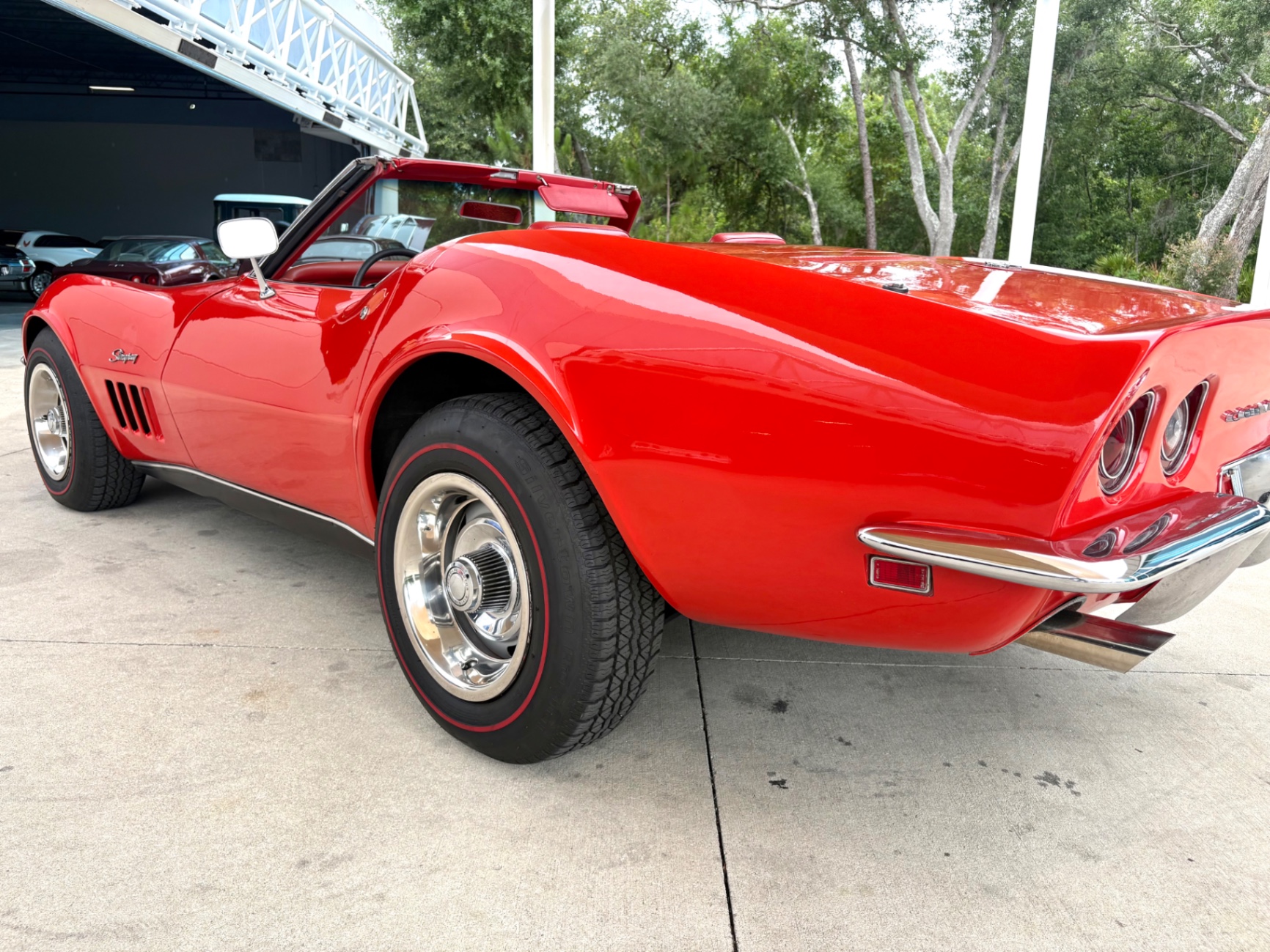
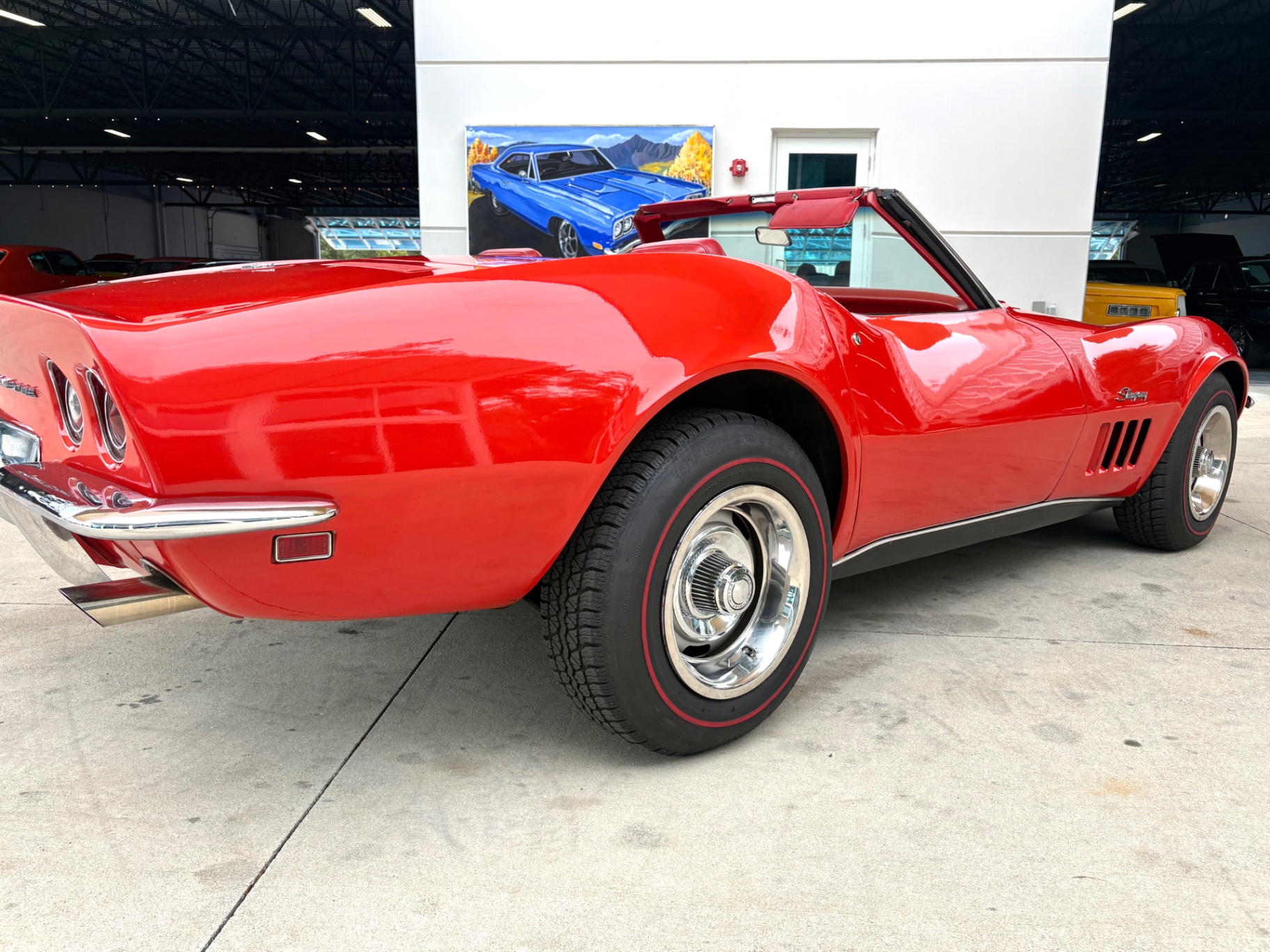
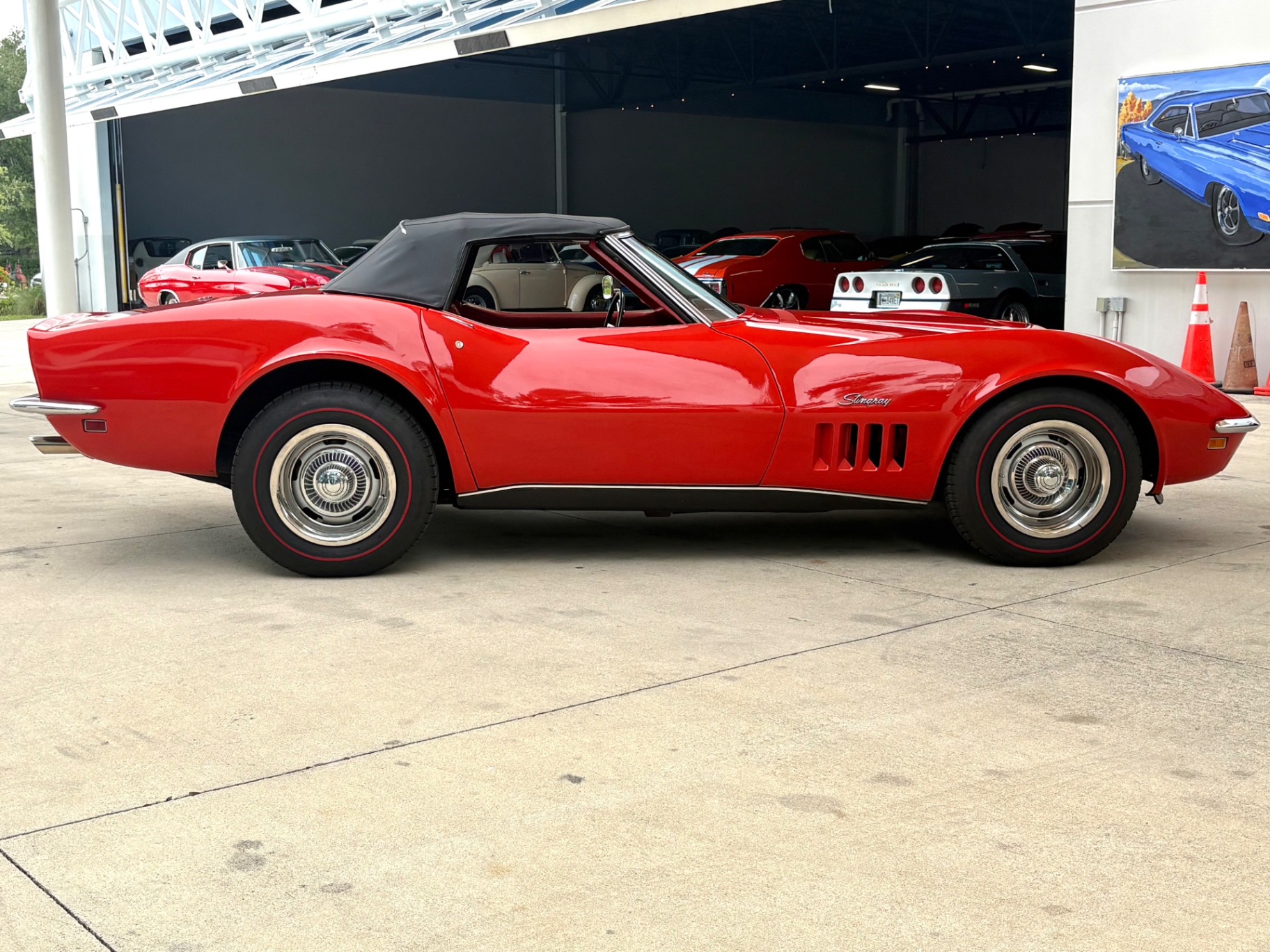
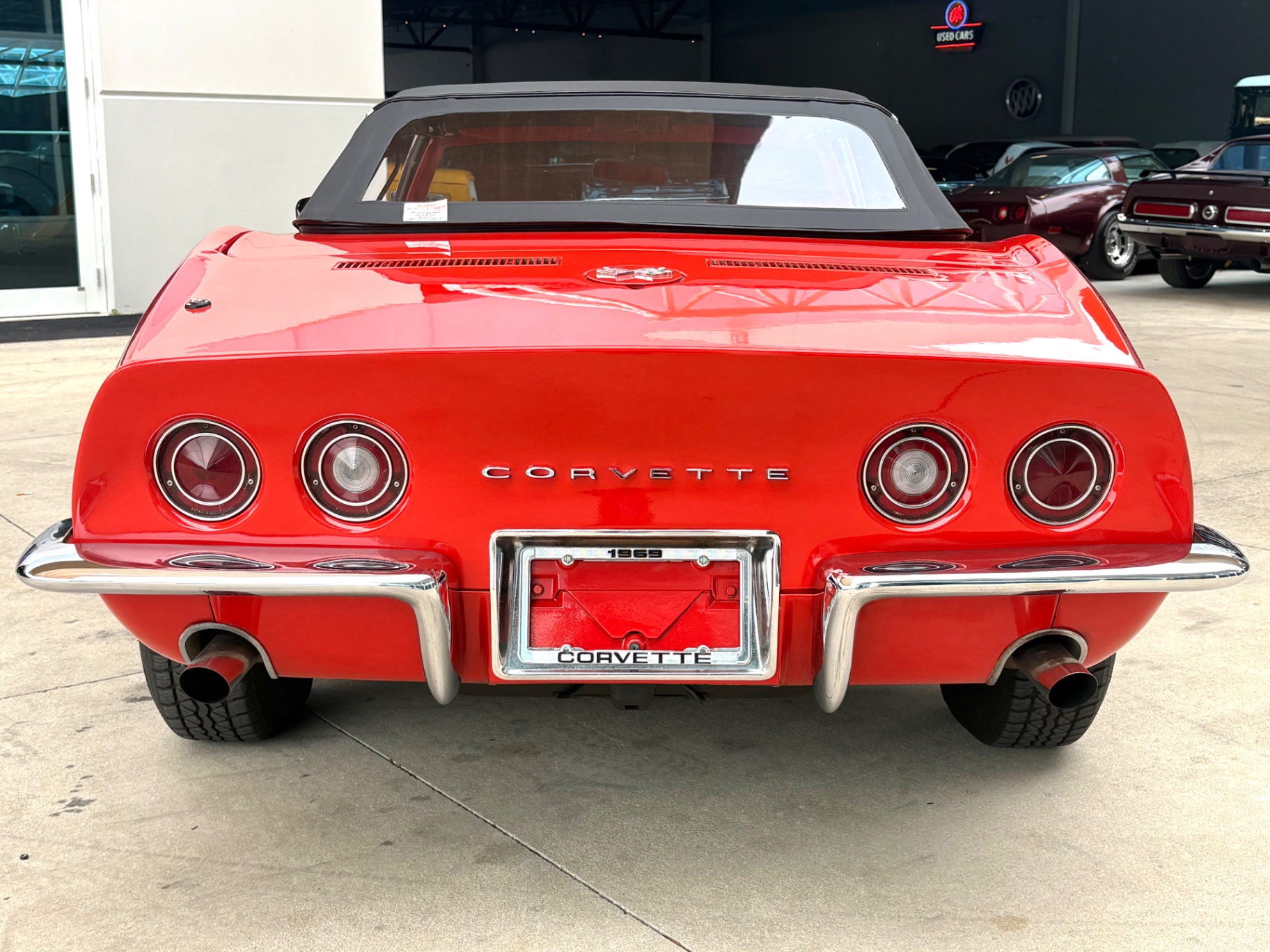
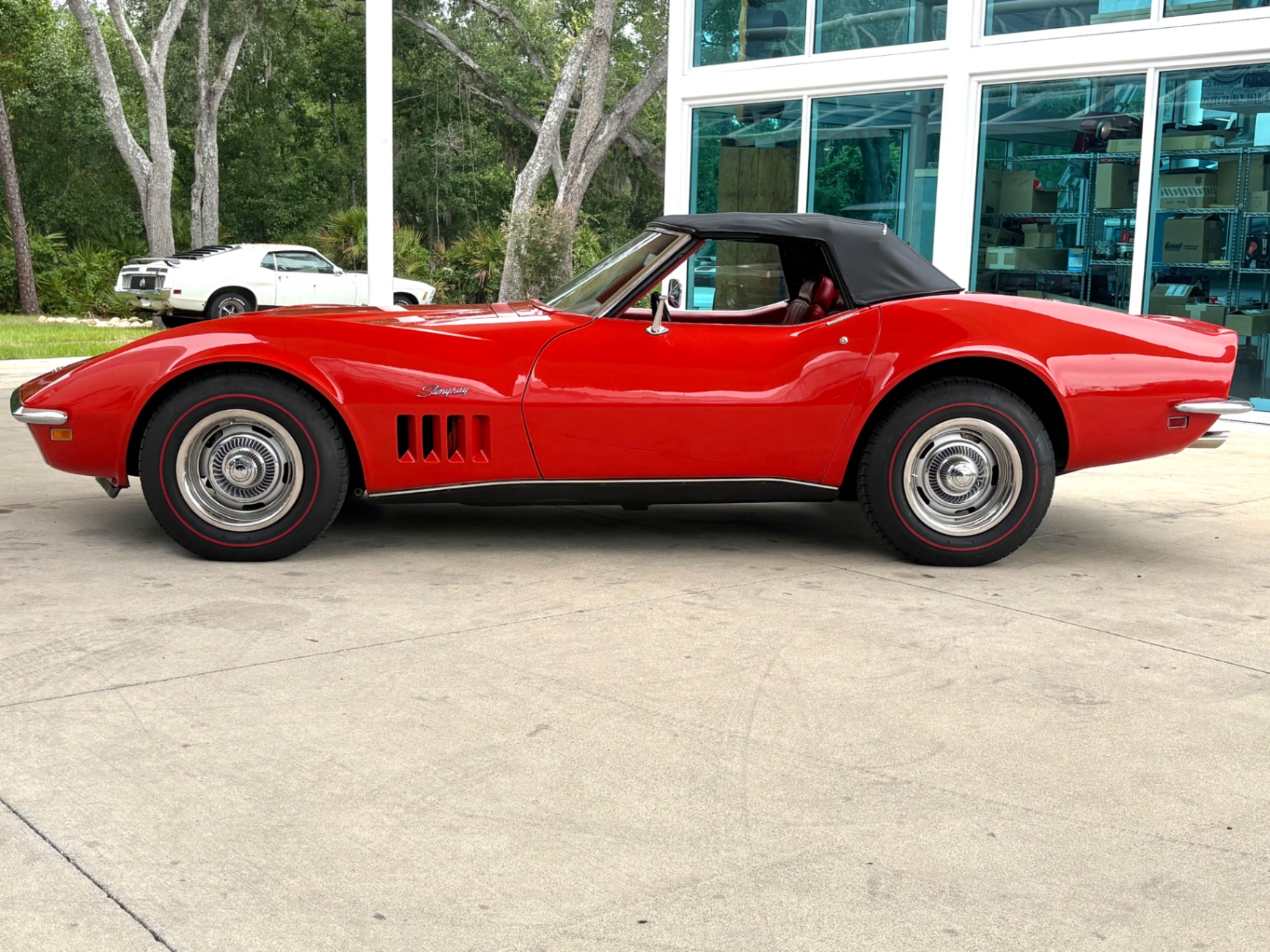
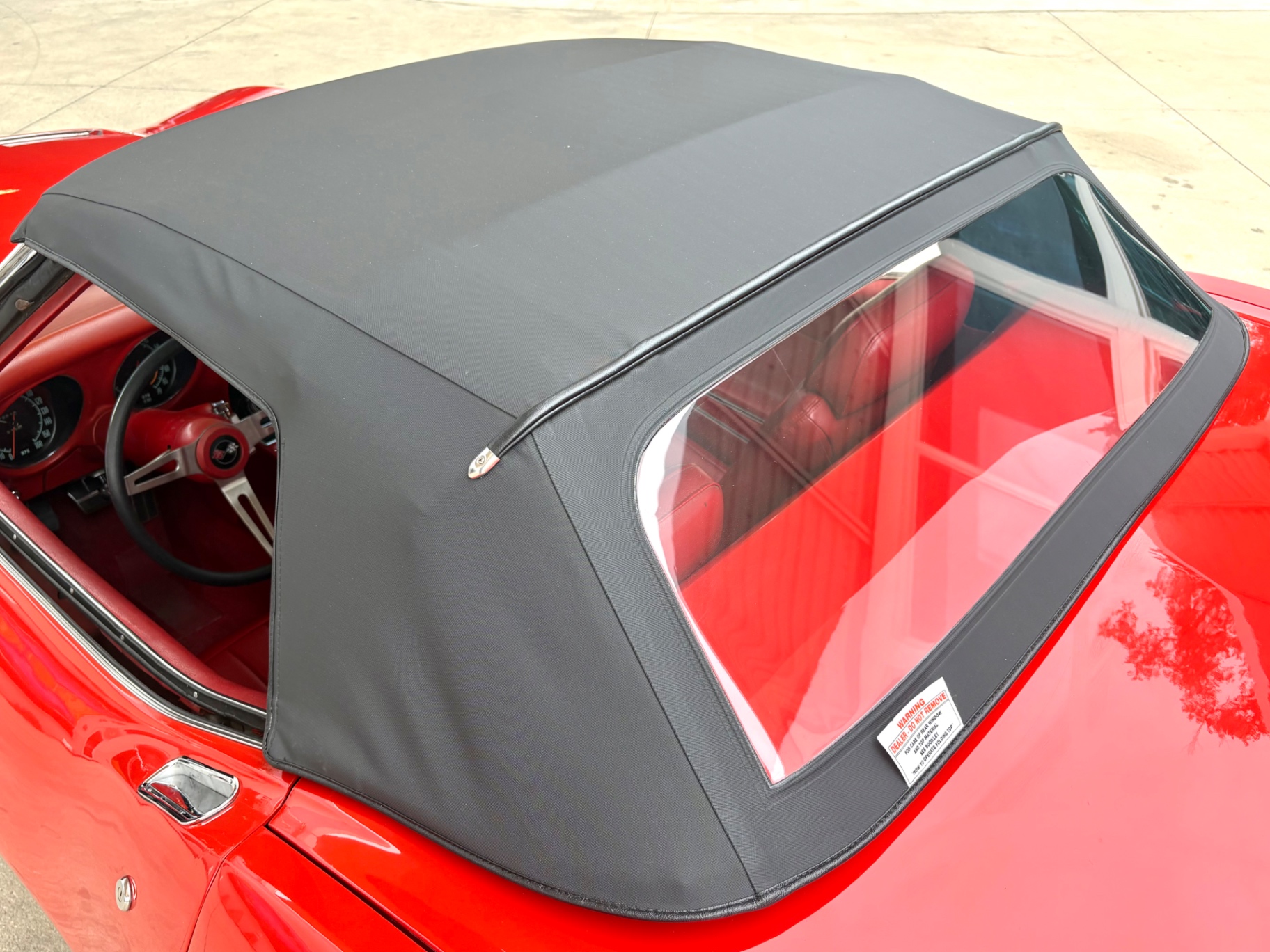
1969 Chevrolet Corvette Convertible — 427/390 V8, 4-Speed, Numbers Matching
Why This Car Is Special
The 1969 Chevrolet Corvette is widely considered the high-water mark of the C3 generation, and a well-optioned example like this one makes a strong case for that argument. The third-generation Corvette debuted in 1968 with a body styled after the Mako Shark II show car, and by 1969 Chevrolet had worked out the early production kinks, added the Stingray name back to the body, and refined the chassis to give buyers one of the most complete performance packages the factory ever offered in a street car.
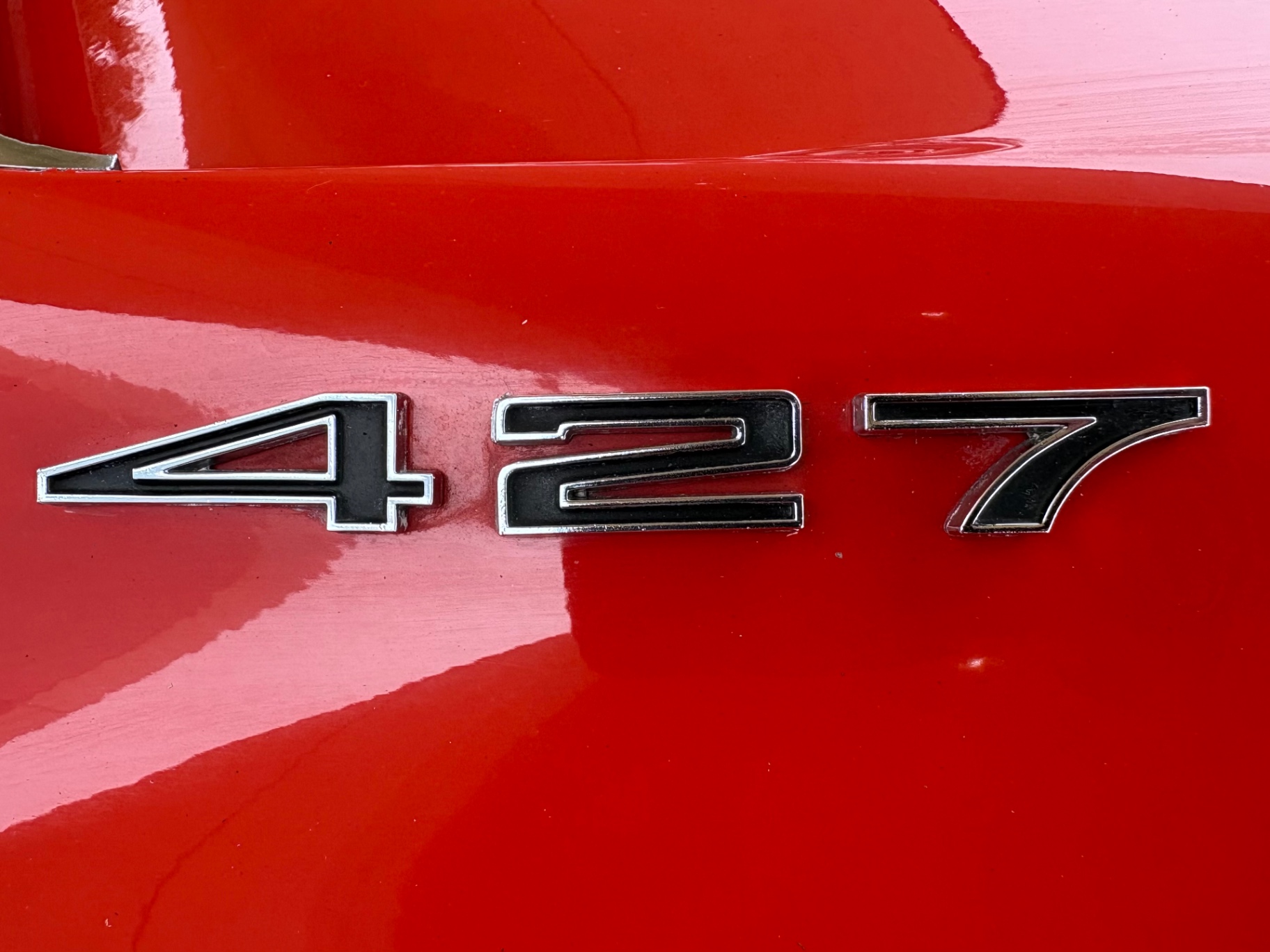
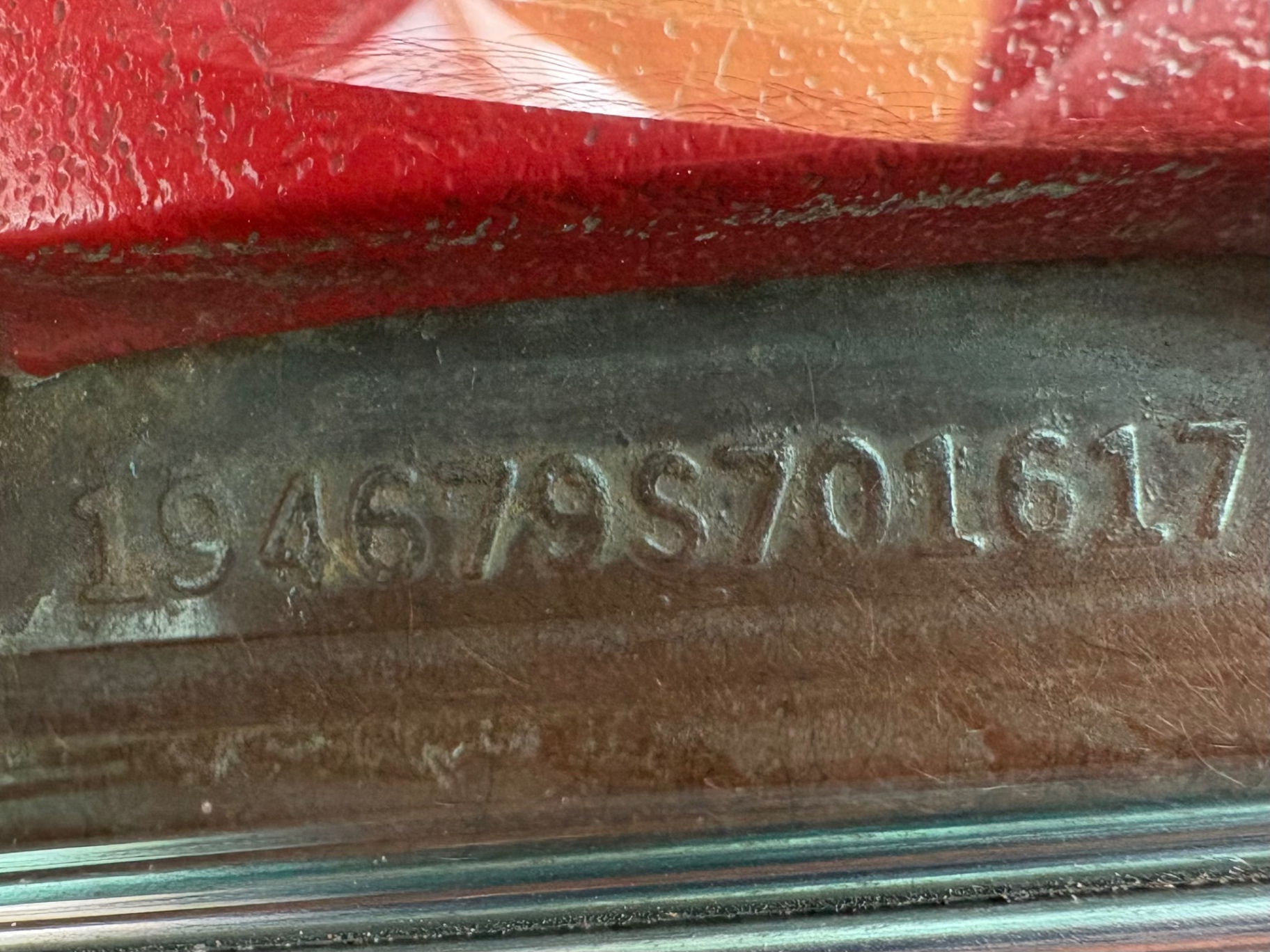
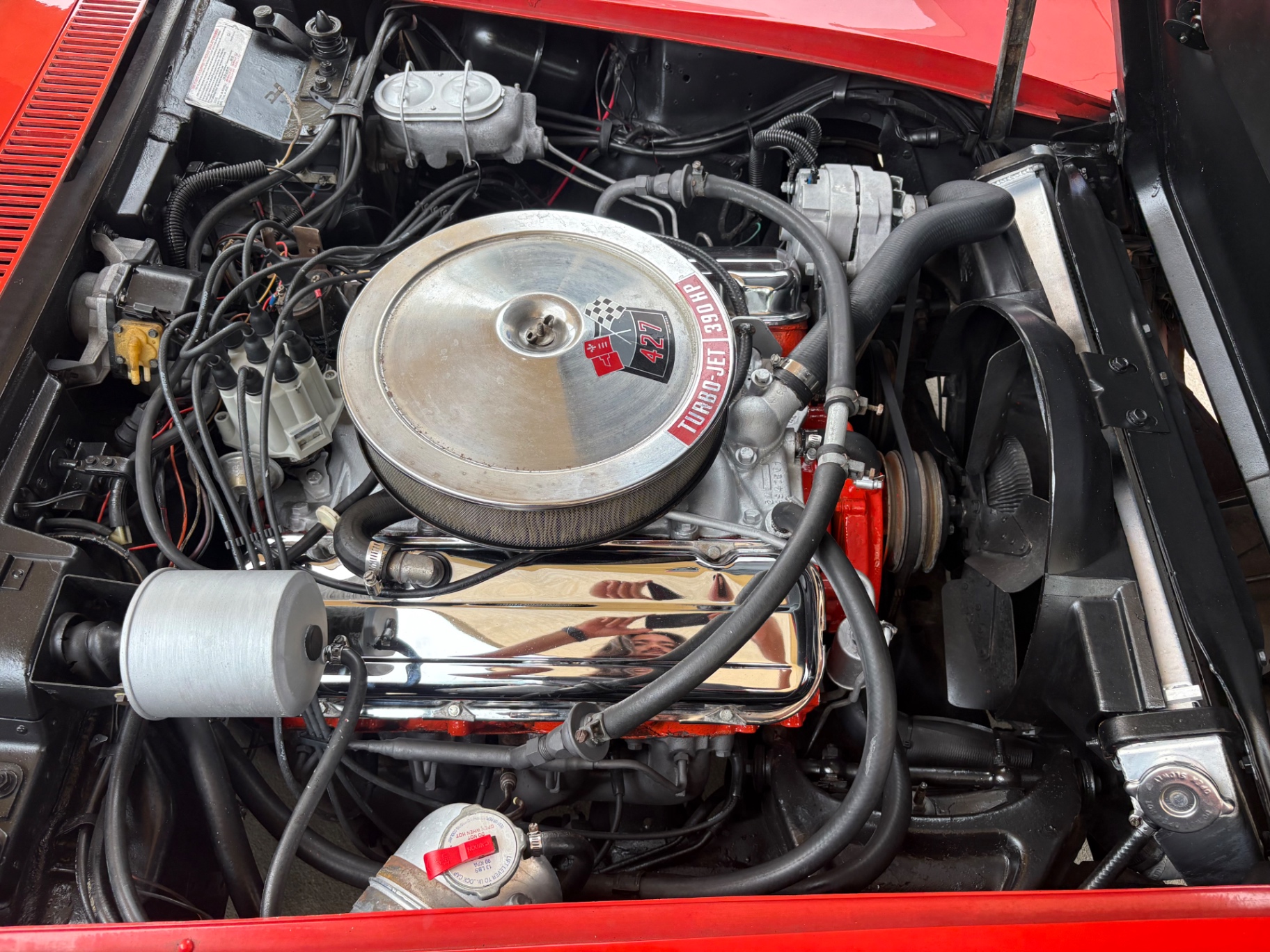
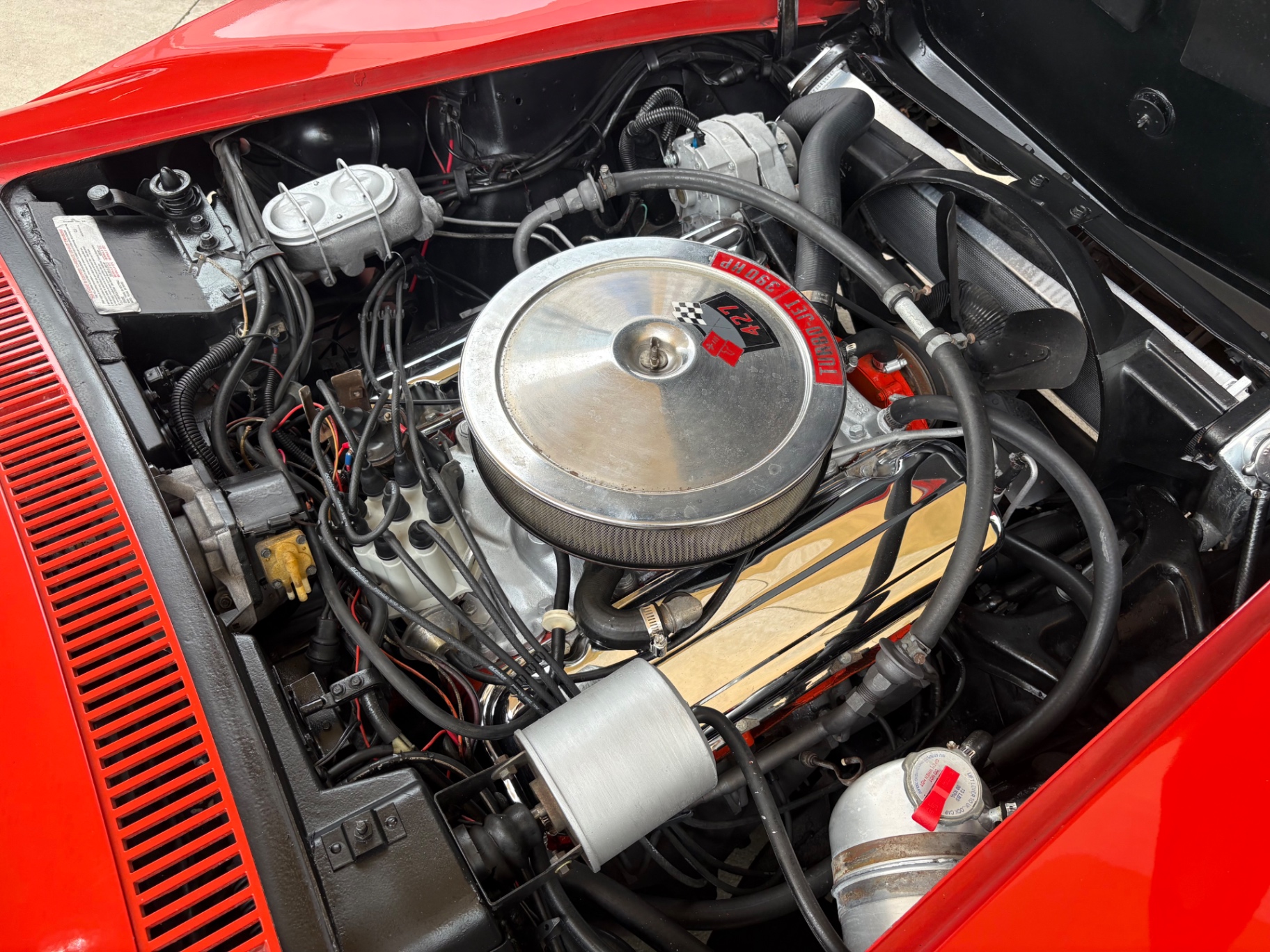
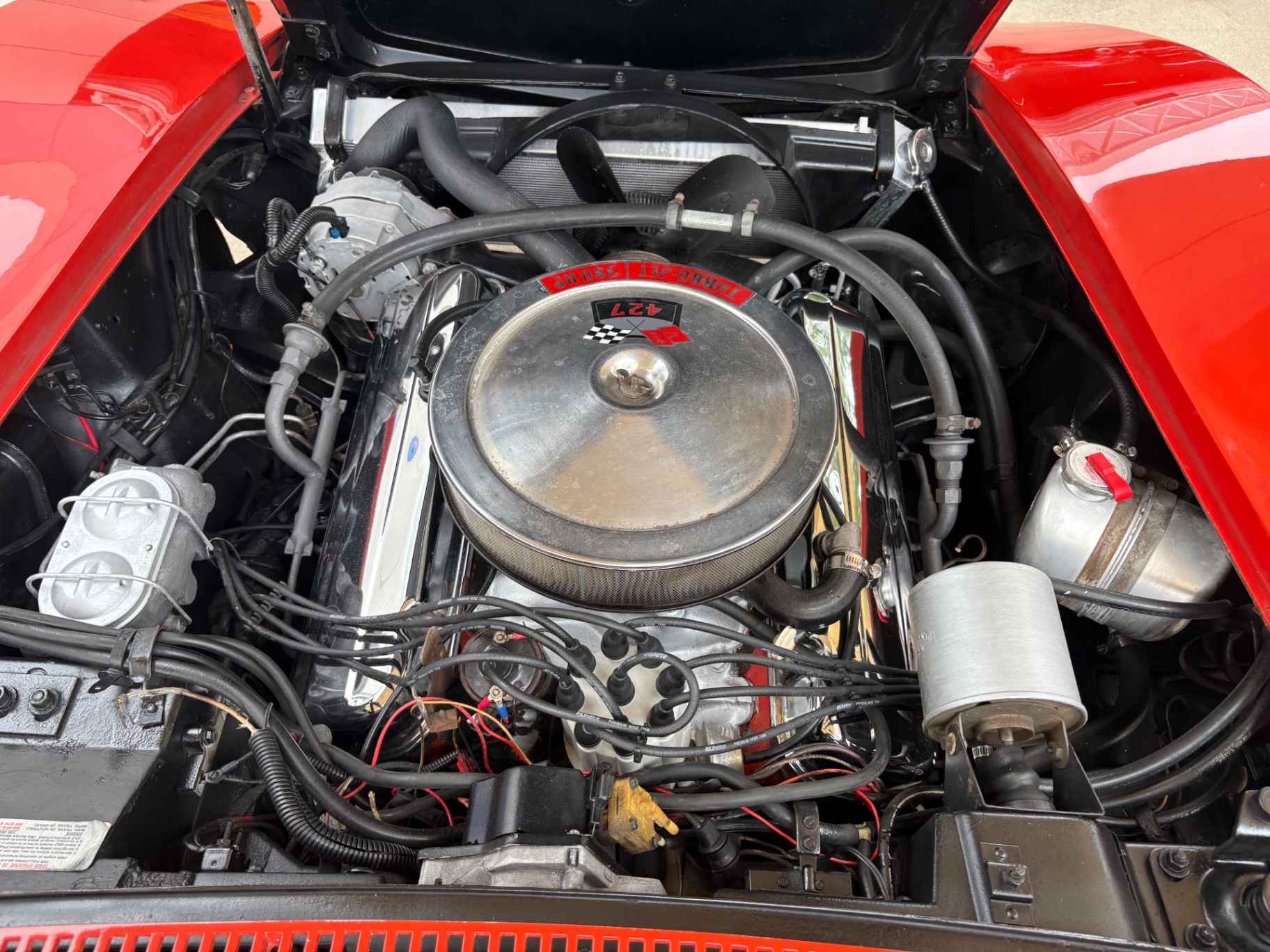
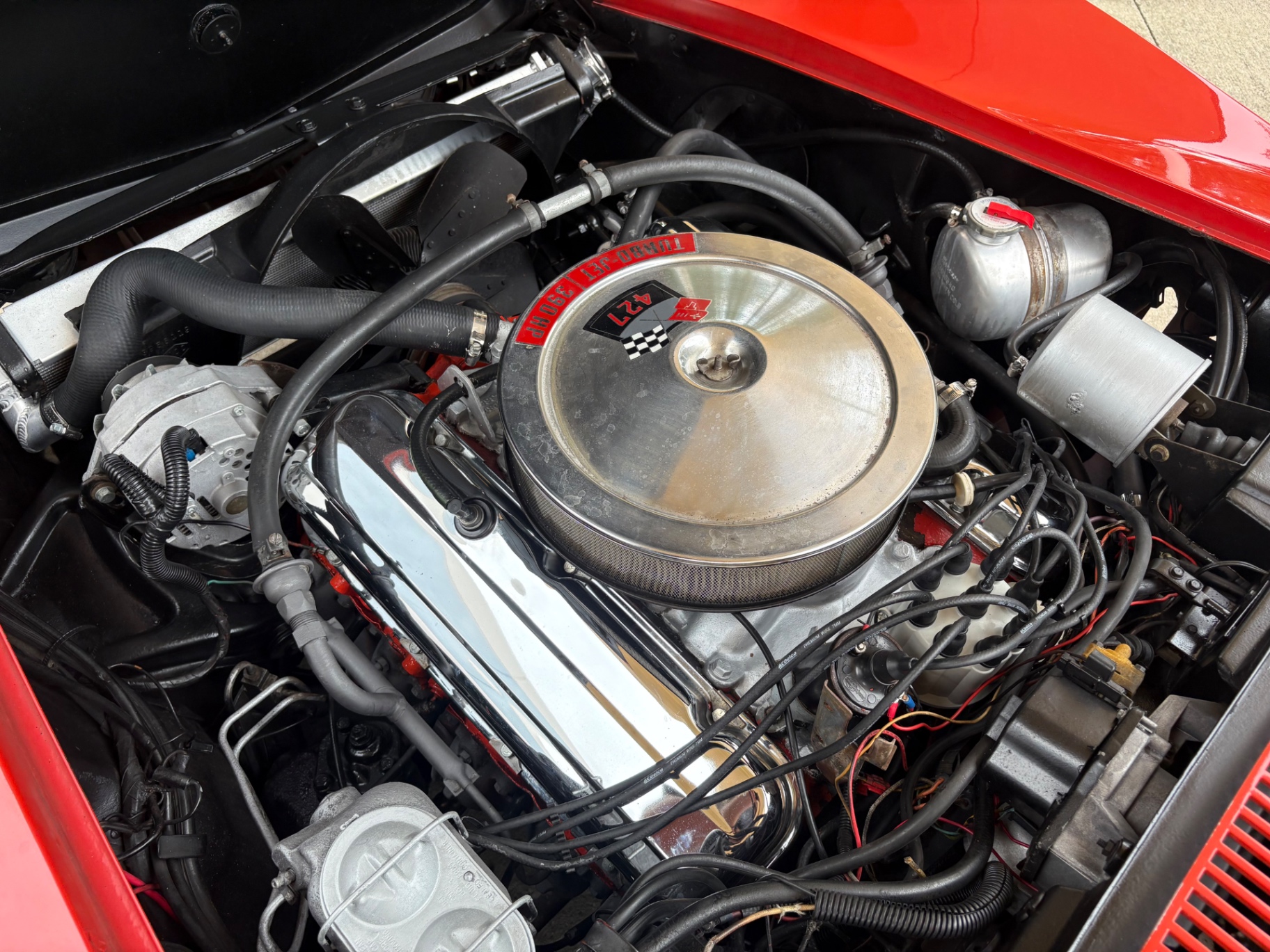
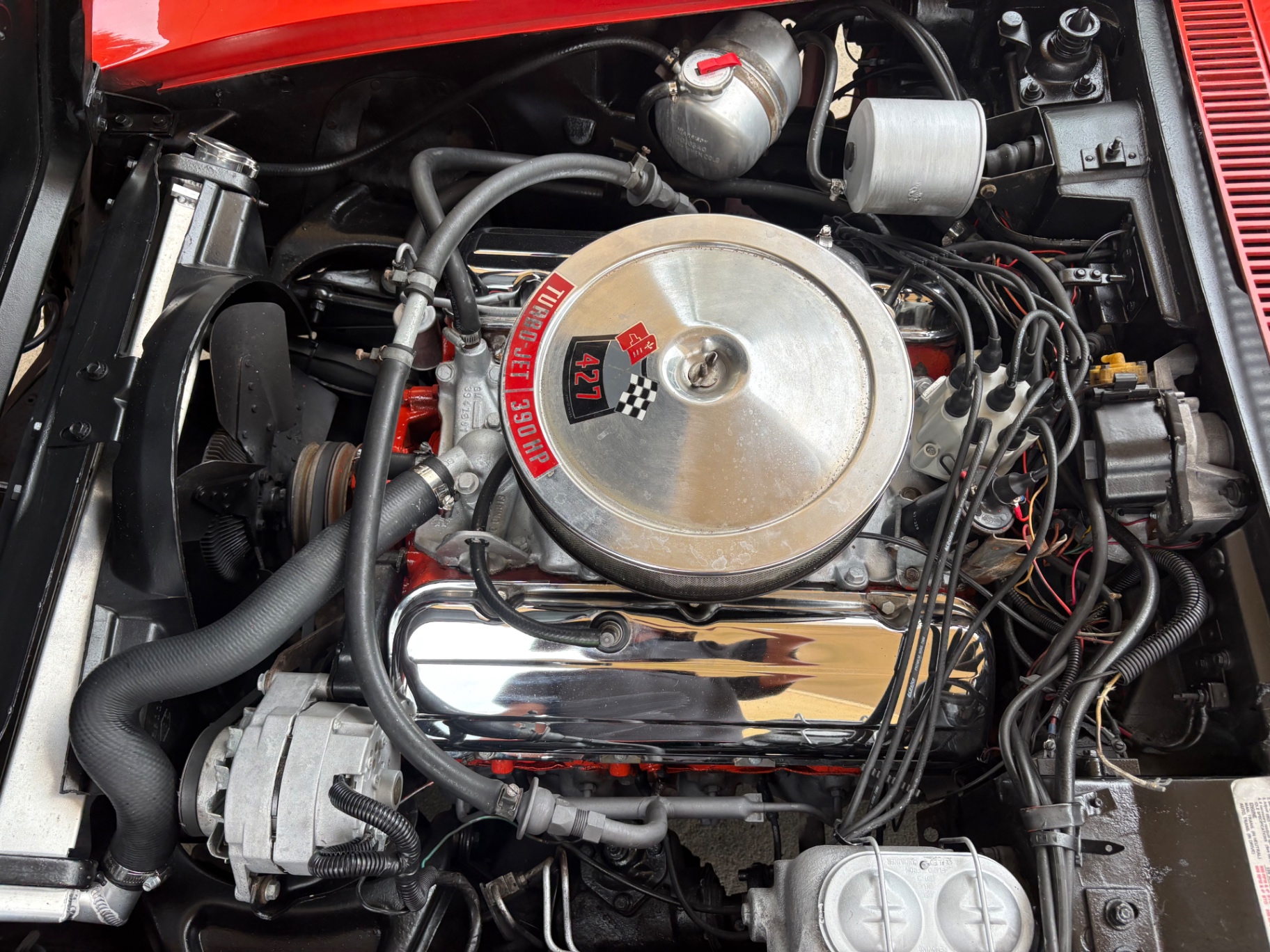
This particular 1969 Corvette Stingray is a convertible equipped with the 427 cubic inch Turbo-Jet V8 rated at 390 horsepower, backed by a 4-speed manual transmission. The drivetrain is numbers matching, which is the single most important detail for a serious collector. The VIN confirms this is a genuine big-block car built at the St. Louis assembly plant in 1969. In the collector market, the gap between a documented, numbers-matching 427 Corvette and a re-powered car is substantial — both in terms of value and long-term investment trajectory.
The 427/390 was one of four big-block options available in 1969, positioned above the base 390 and below the more radical 427/400 and 427/435 tri-power variants. It used a single Holley four-barrel carburetor and hydraulic lifters, which made it more streetable than the solid-lifter engines while still producing serious torque. Factory literature from the era listed 0-60 times in the mid-6-second range for comparably equipped cars — numbers that were genuinely fast in 1969 and still respectable today. The 427 was discontinued after 1969 when displacement limits were imposed on the Corvette, making the last year of big-block production a historically significant detail for this model specifically.
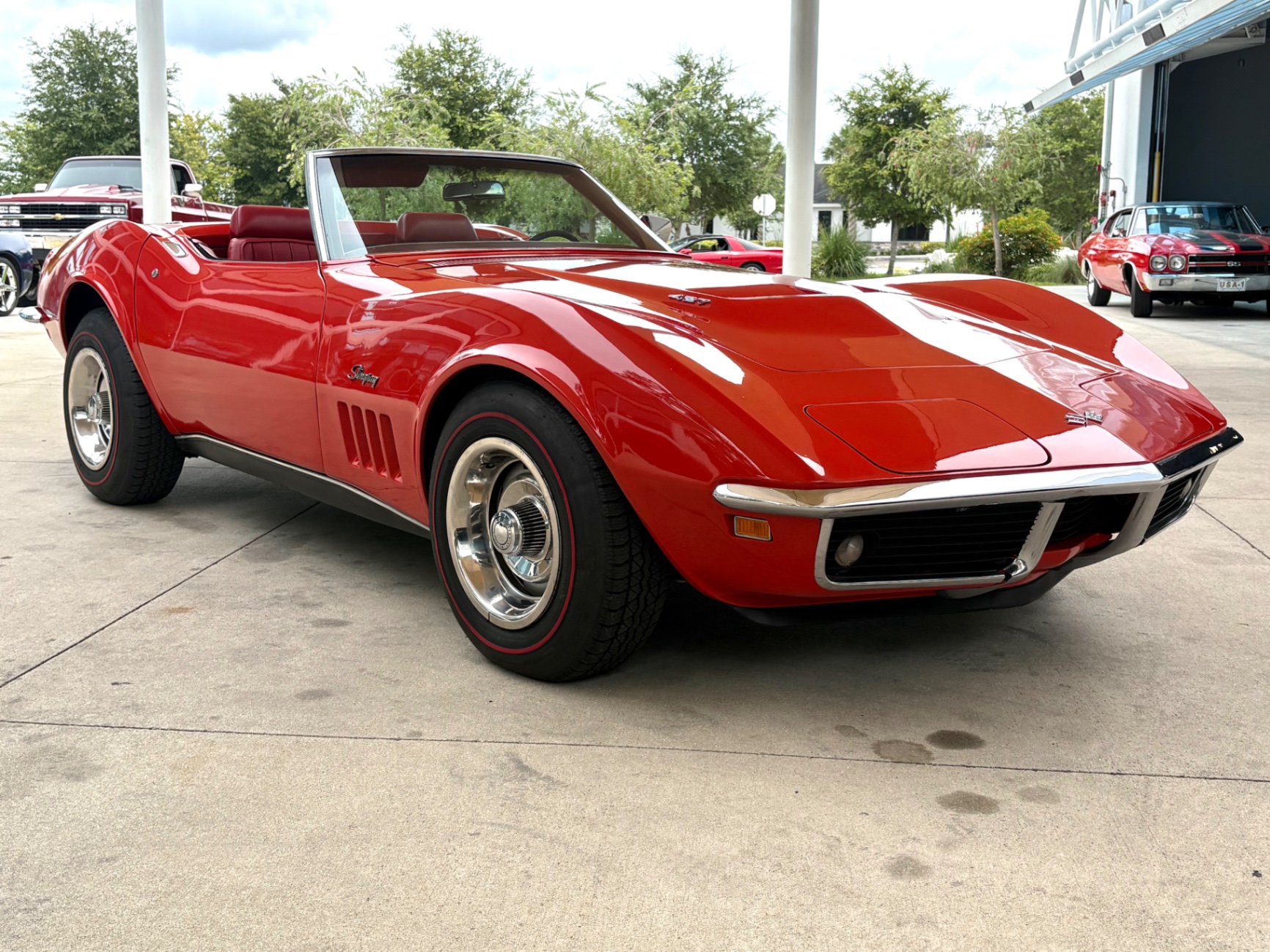
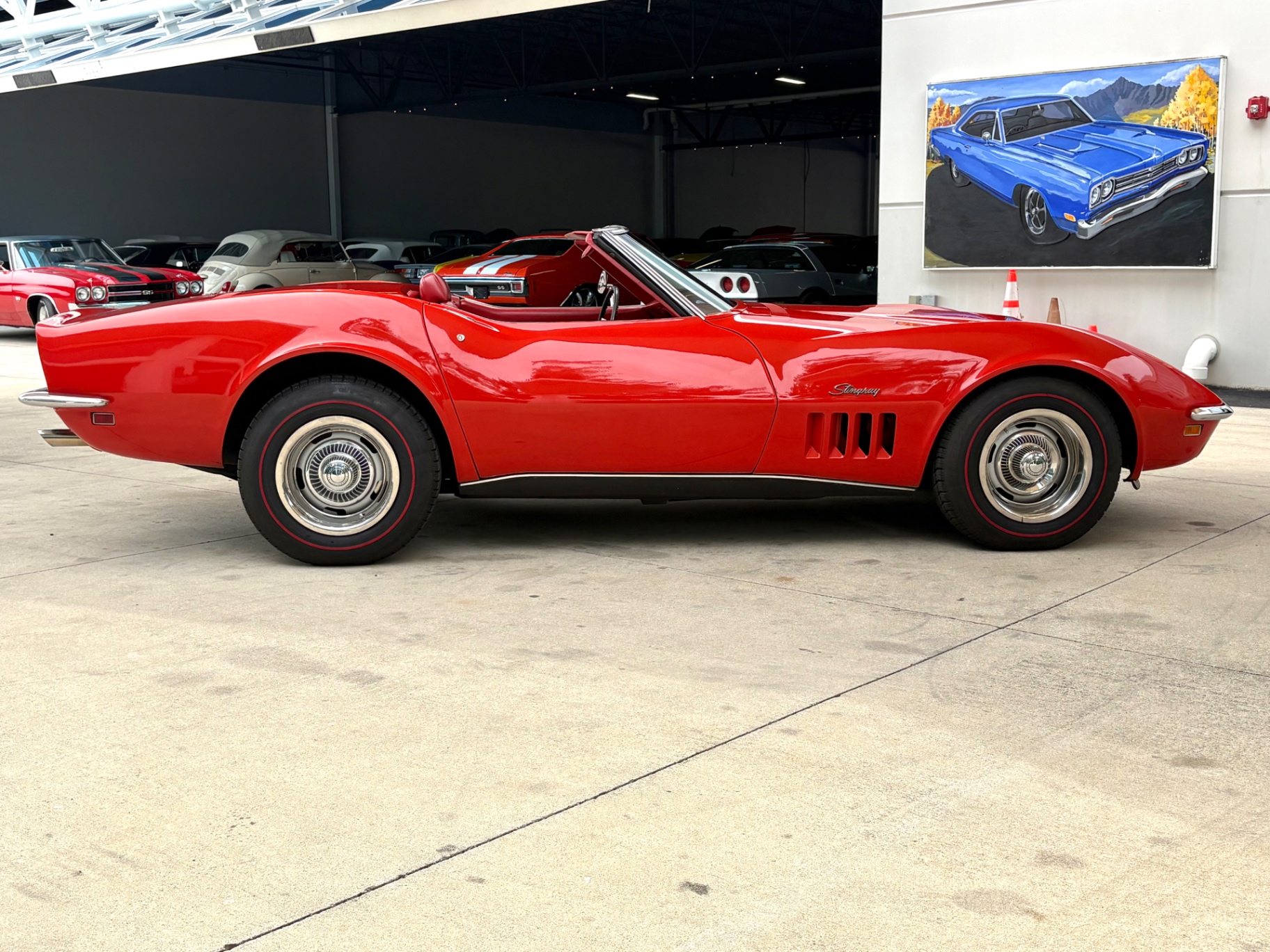
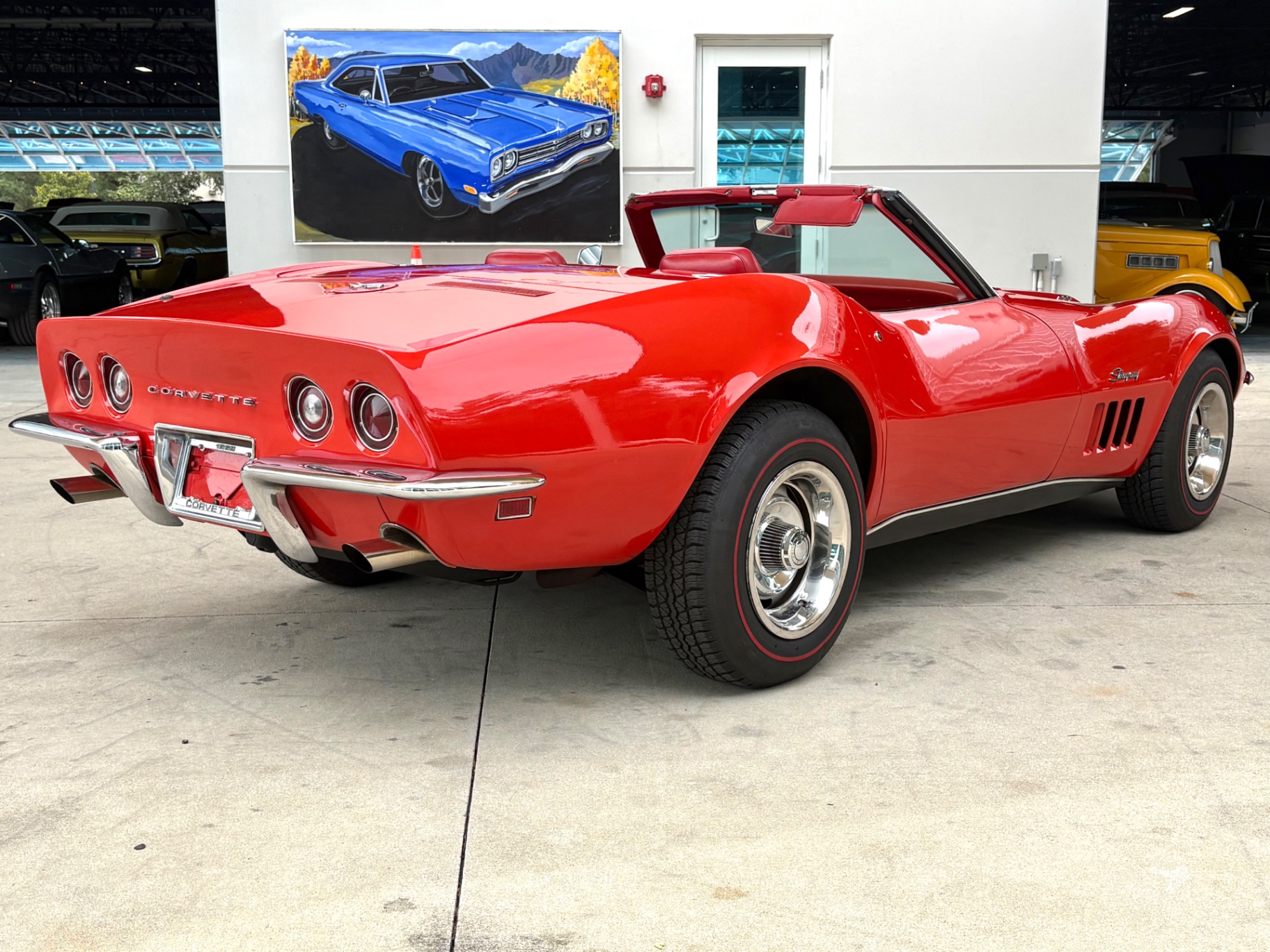
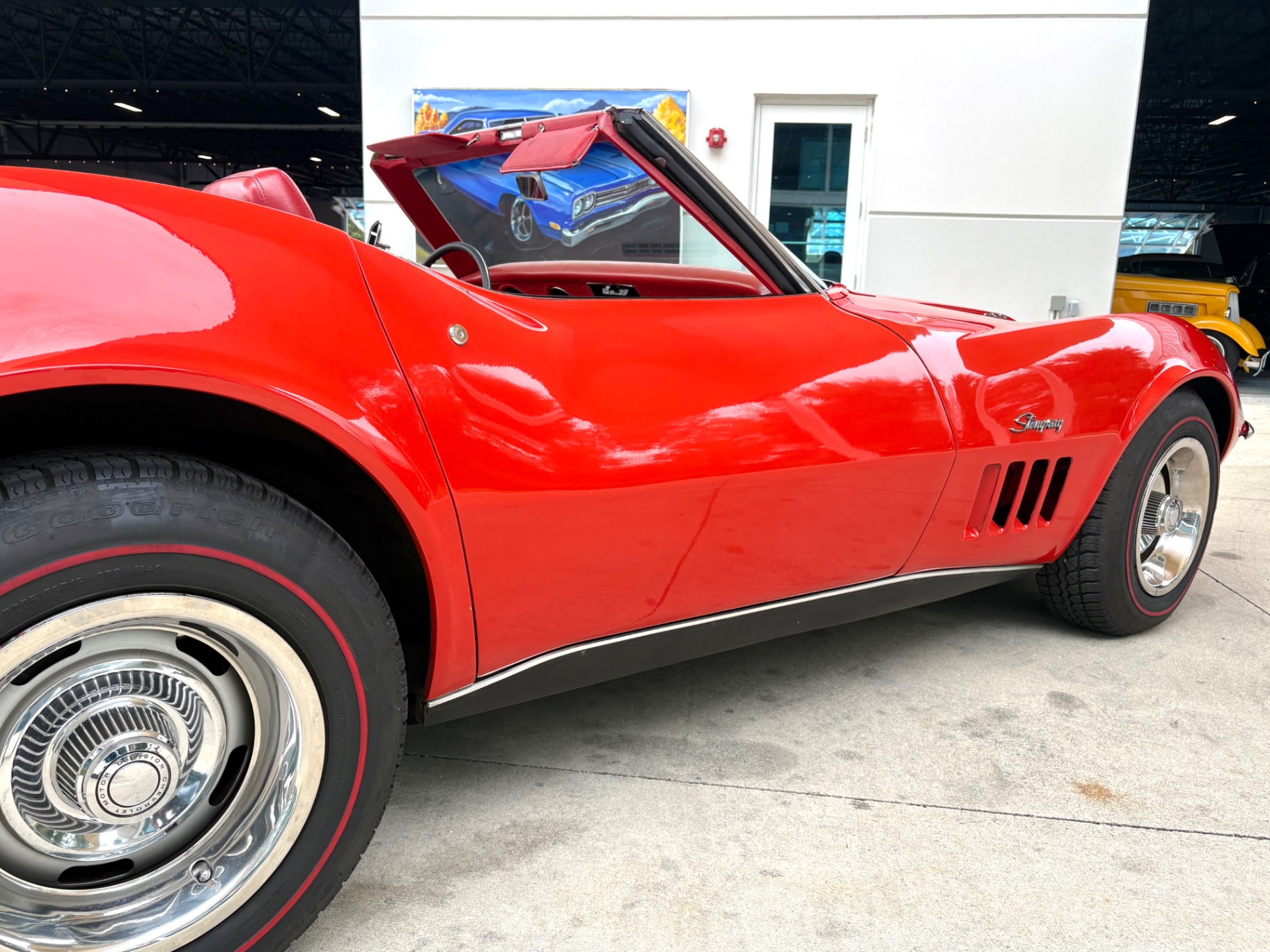
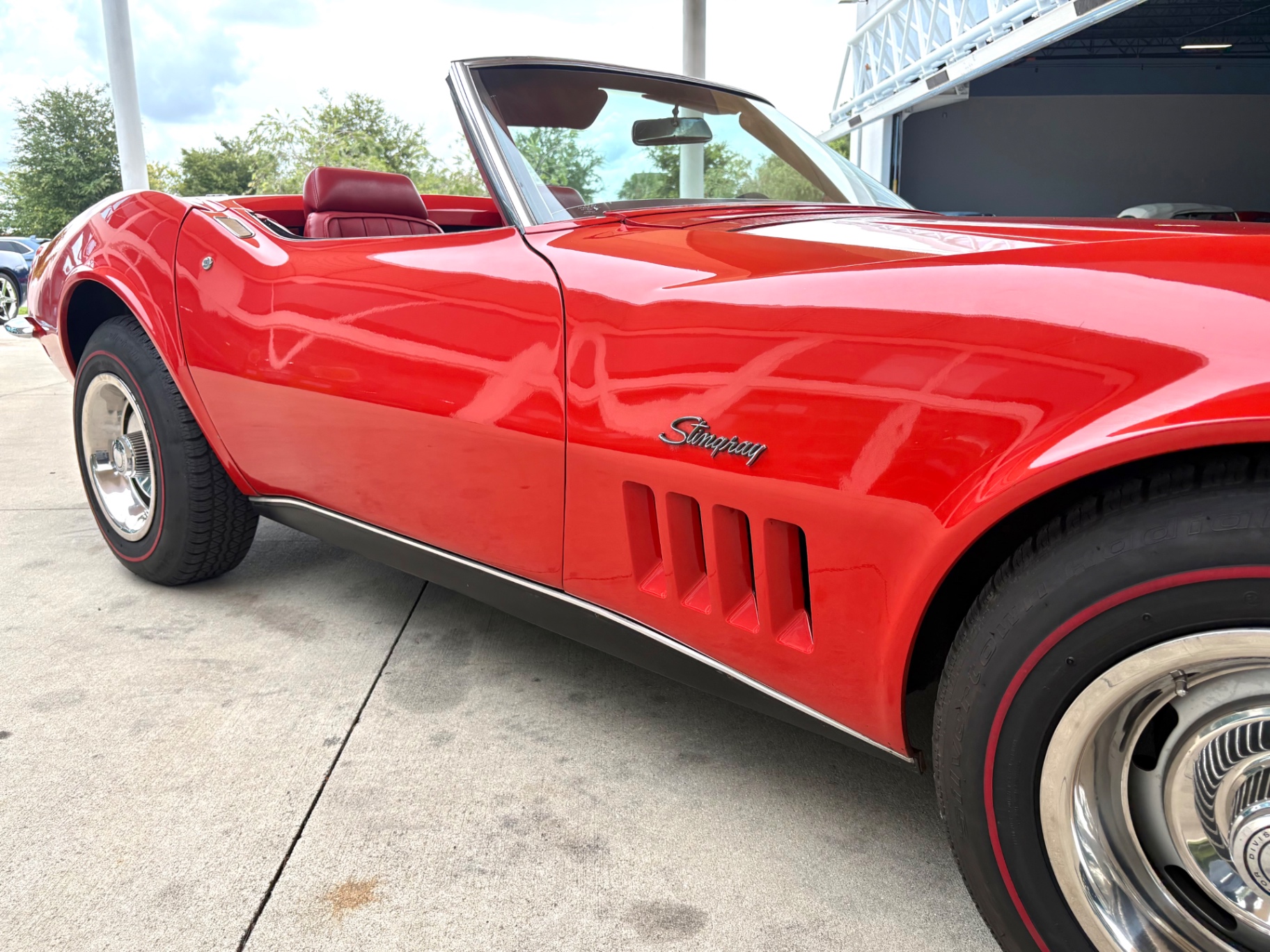
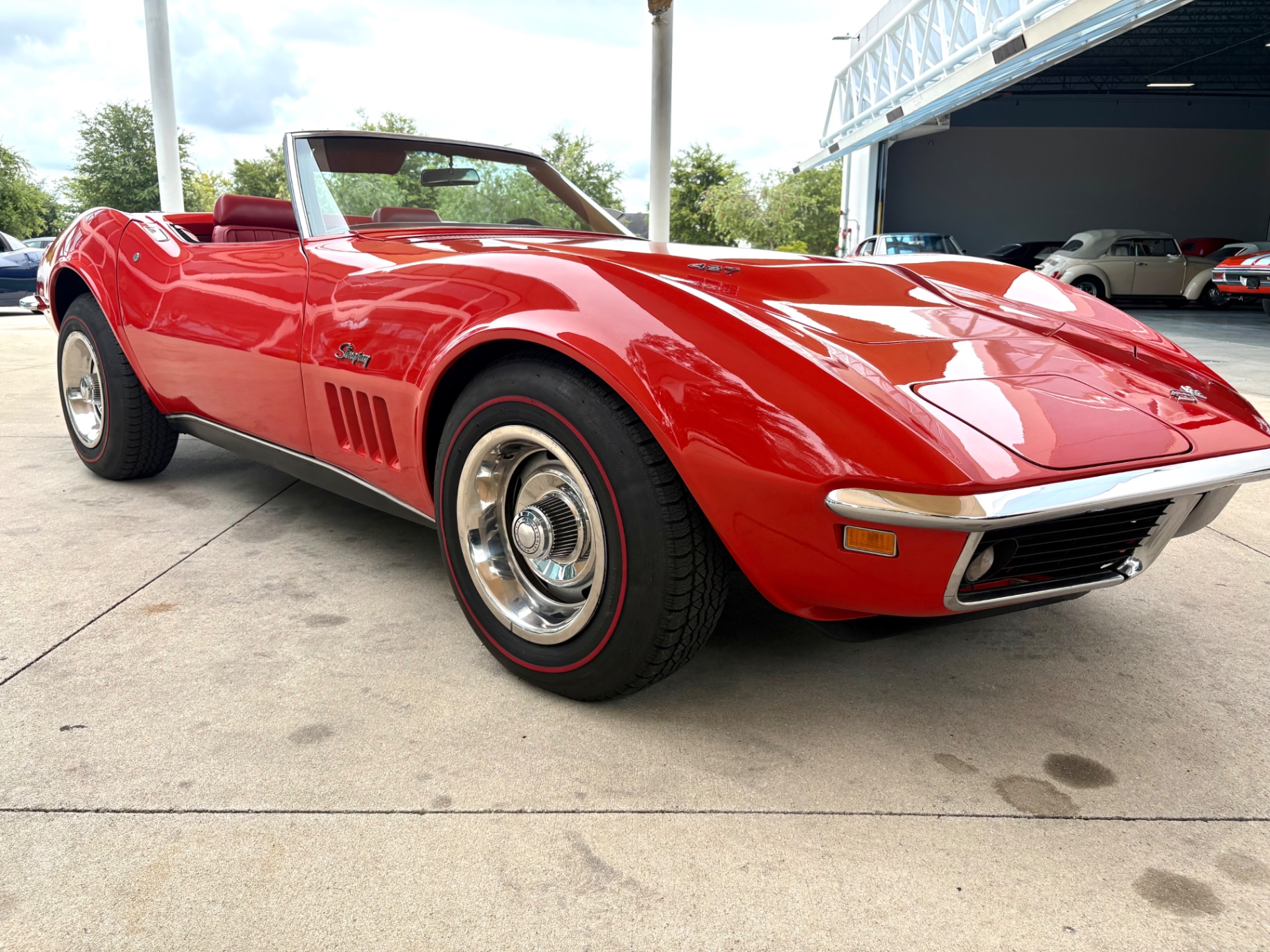
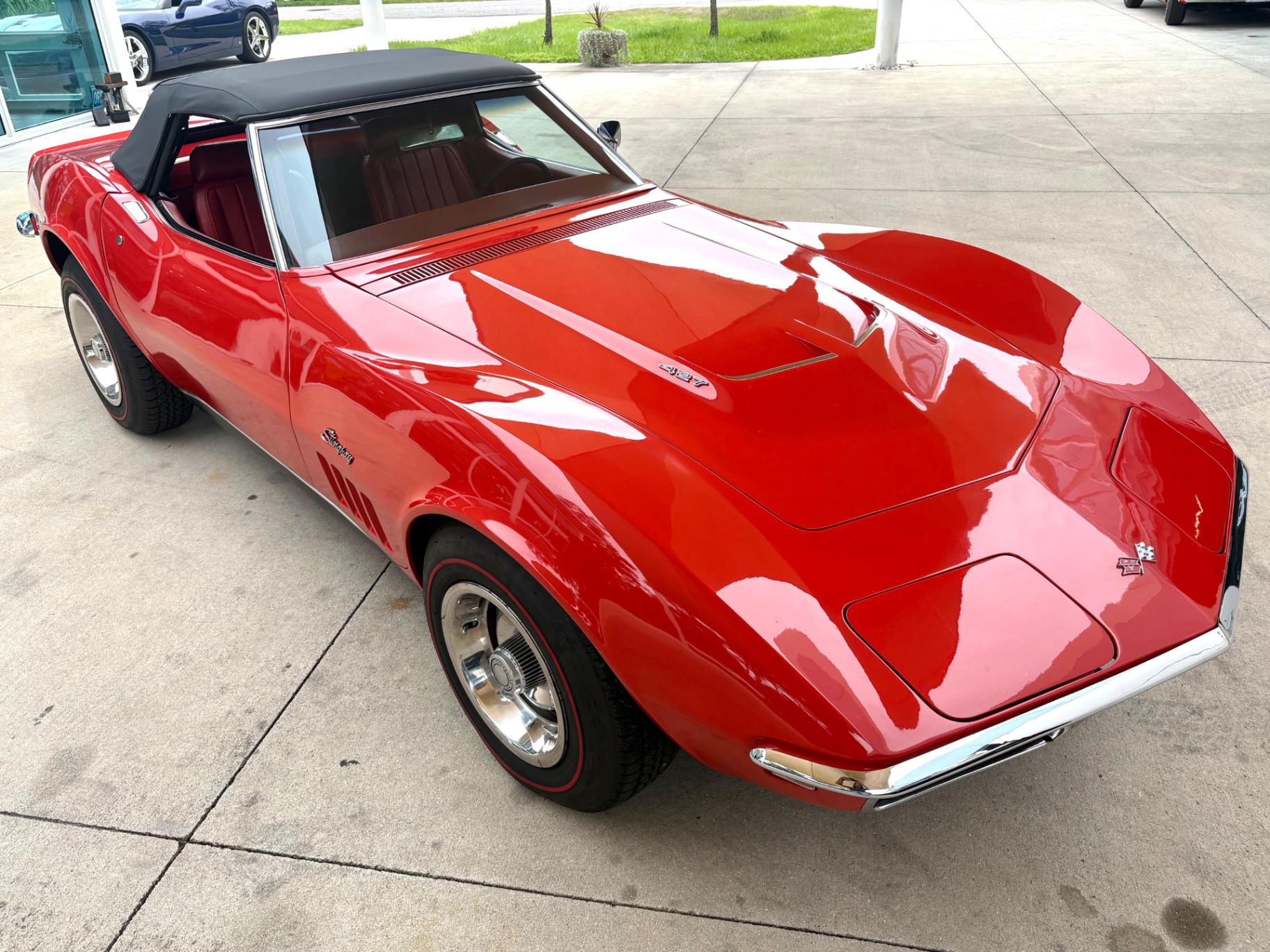
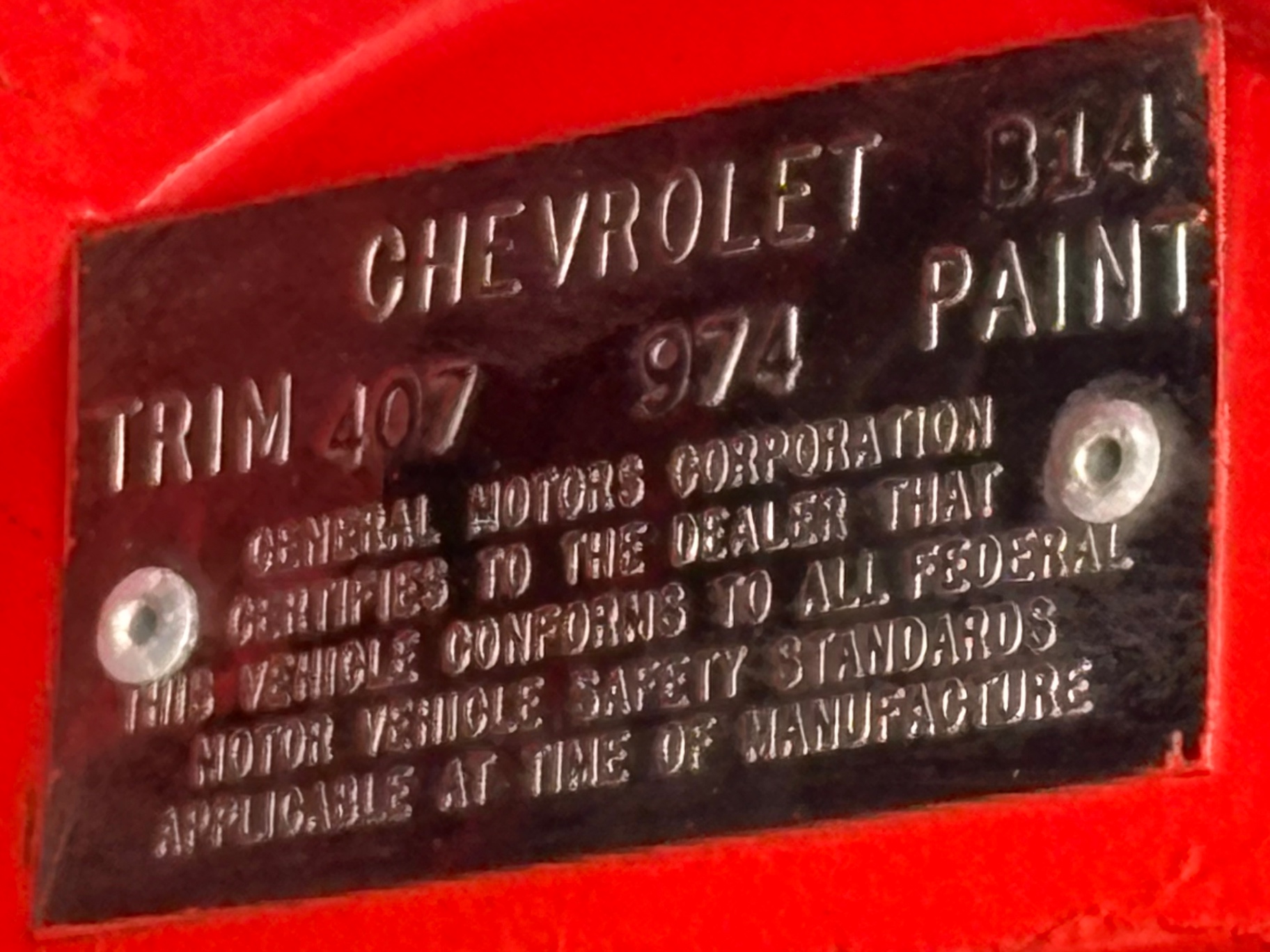
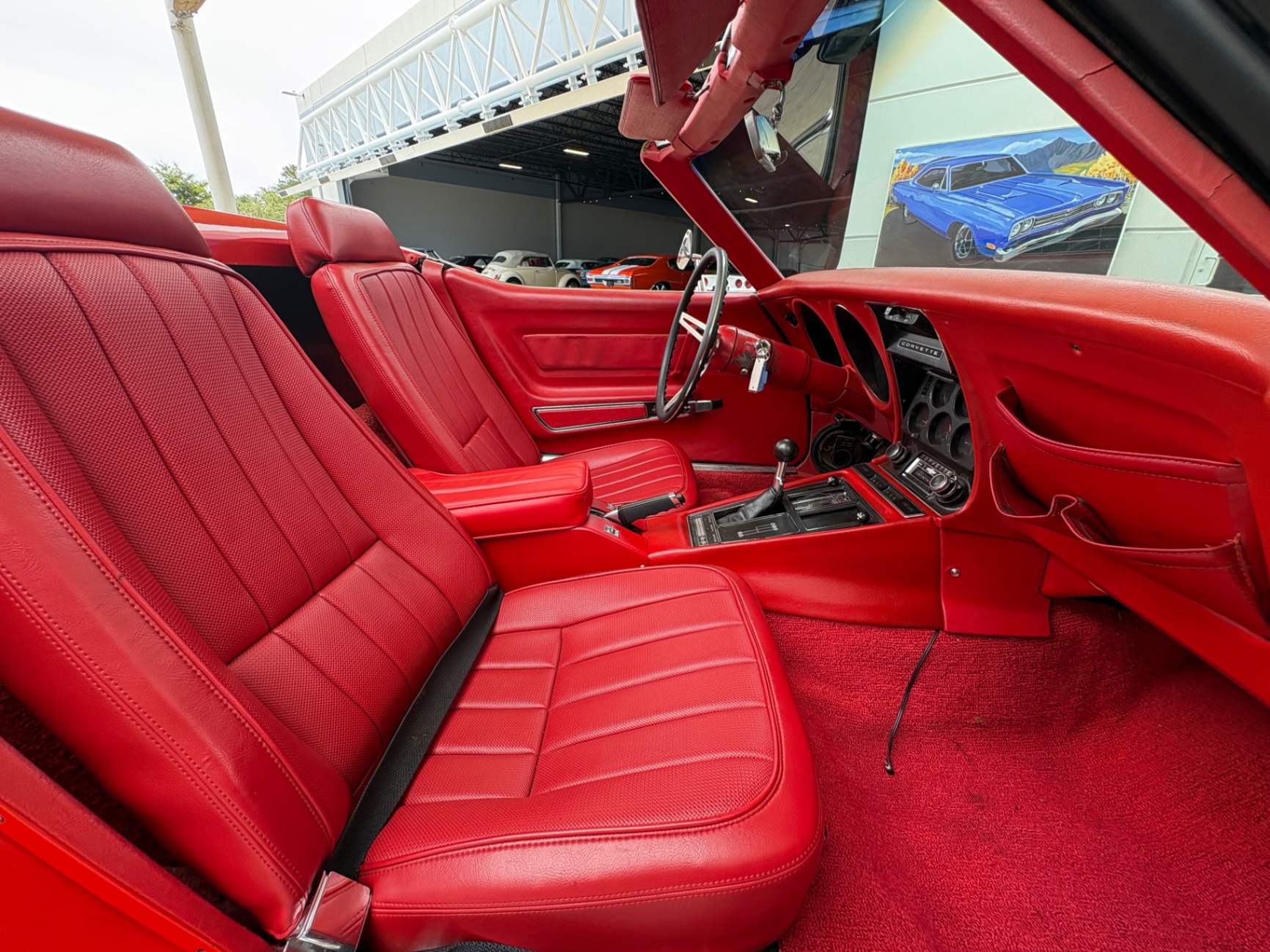
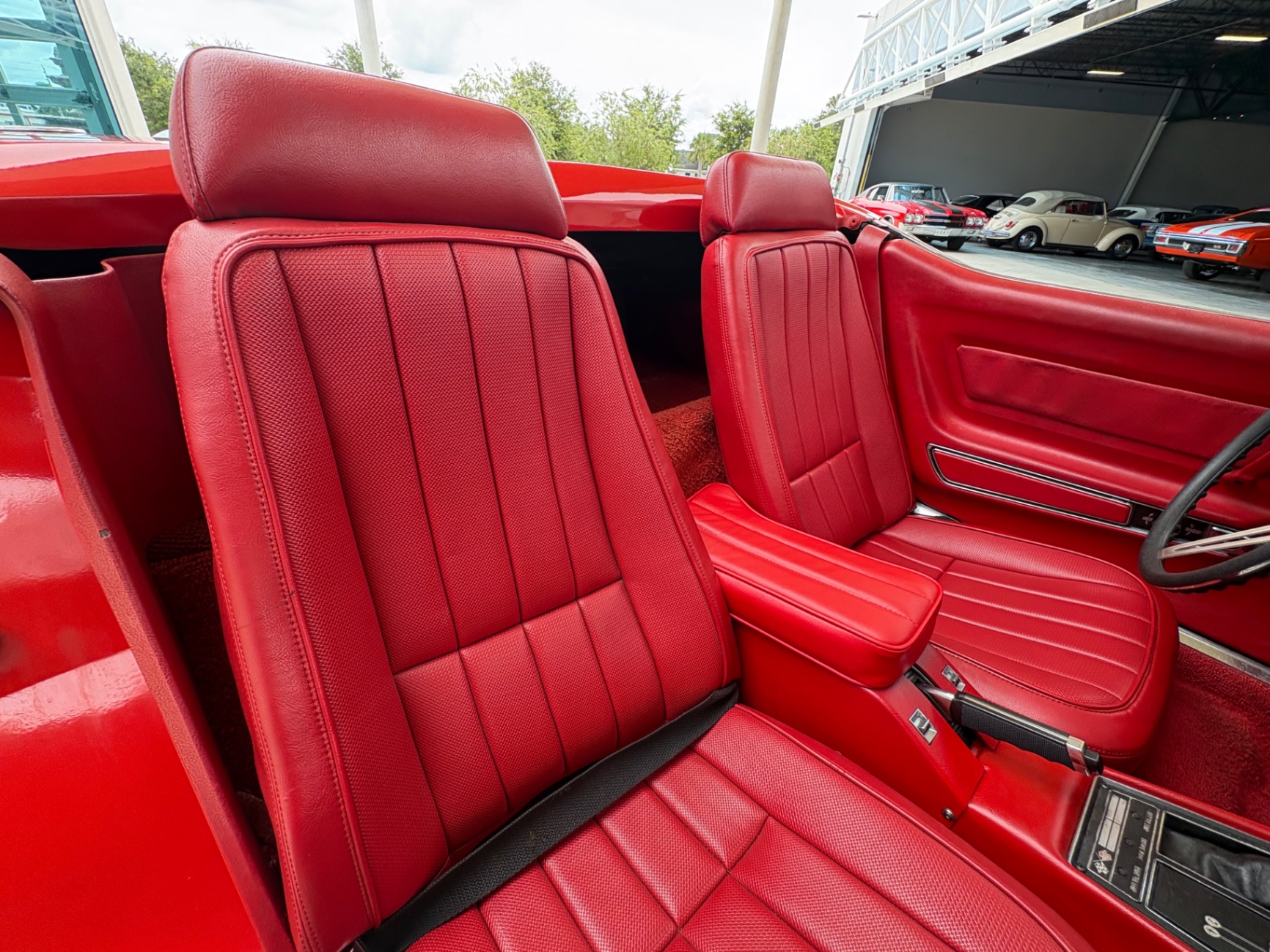
The car presents in red over red with a matching leather interior — a combination that reads correctly for the era and works well visually on the Stingray body.
Features List
- 427/390 Turbo-Jet V8, numbers matching
- 4-speed manual transmission, numbers matching
- Numbers matching drivetrain throughout
- Four-wheel disc brakes
- Power steering
- Power windows
- Functional hideaway headlights
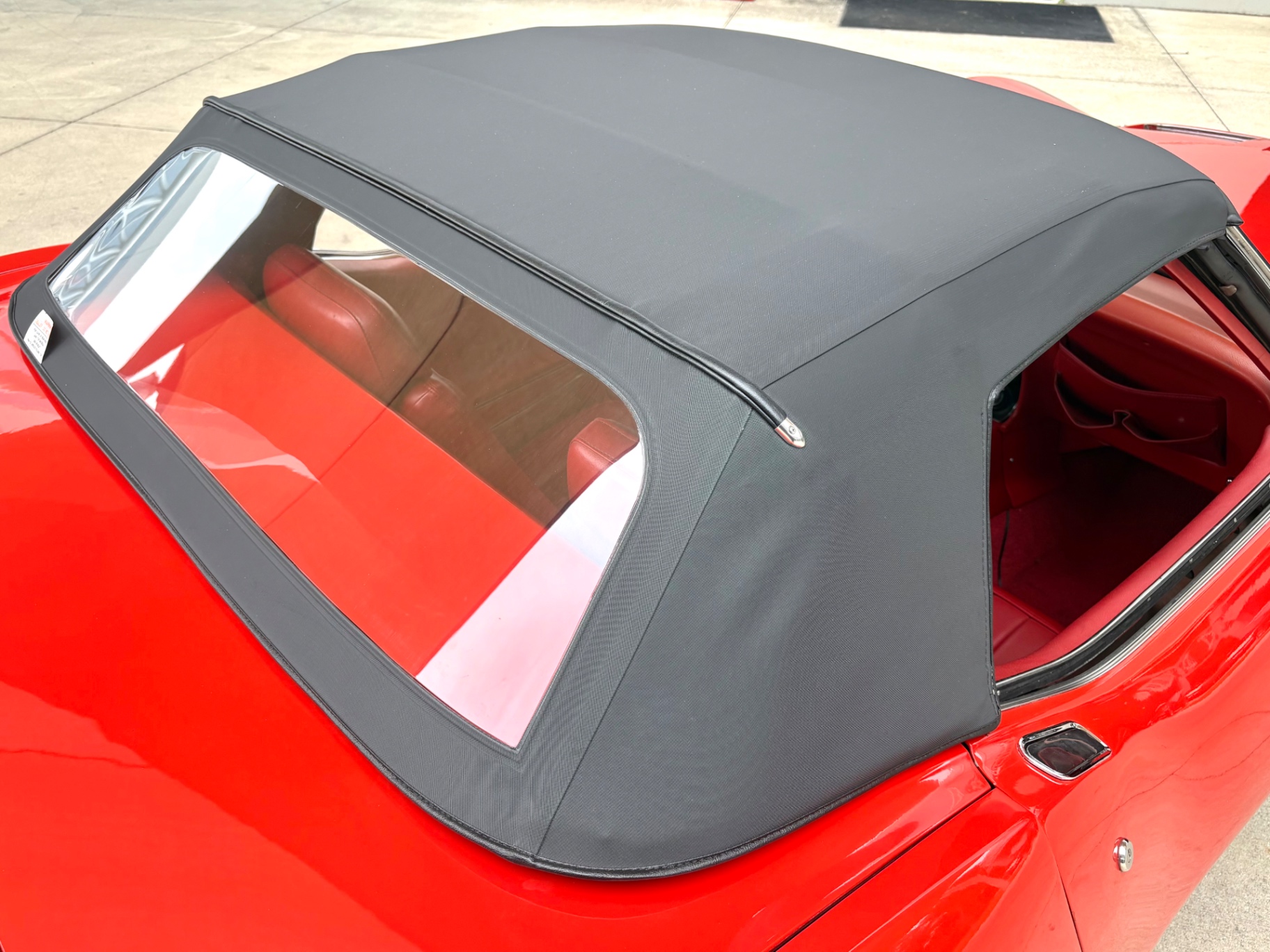
- New convertible top
- Rear brakes replaced January 2026
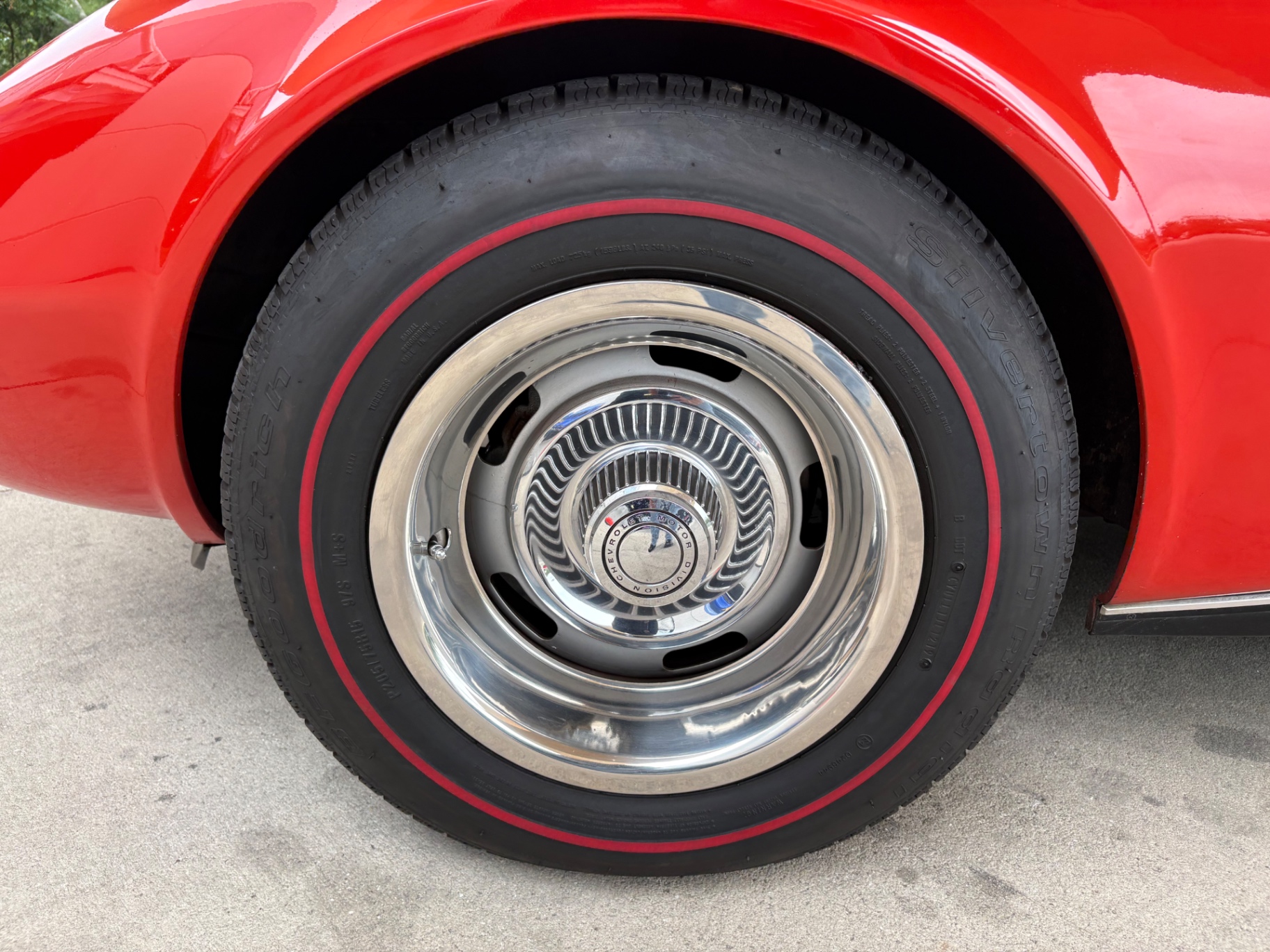
- 15-inch Rally Wheels with redline tires
- Red exterior with matching red leather interior
- Correct chrome bumpers front and rear
Mechanical
The 427 cubic inch Turbo-Jet engine under the hood of this 1969 Corvette is the engine the car was built with, and the numbers confirm it. For collectors, this is non-negotiable. A replaced engine drops the car into a different category regardless of how good the substitute motor is. This one stays in the correct category.
The 390-horsepower rating came from a single Holley 4-barrel carburetor, hydraulic camshaft, and iron cylinder heads. The engine is large-displacement, low-revving, and produces its torque early in the RPM range — characteristics that make it equally usable on a Sunday cruise or a highway on-ramp. The 4-speed manual is the correct transmission pairing for this engine and keeps the driver engaged in a way an automatic simply cannot replicate.
Four-wheel disc brakes were a significant option on the 1969 Corvette. Most passenger cars of the era still used drums at the rear, and the all-disc setup gave the Corvette braking capability that competitors could not match. Power steering rounds out the package and reduces driver fatigue on longer runs without removing road feel entirely. The rear brakes were replaced in January 2026, so the system is freshened and ready to use.
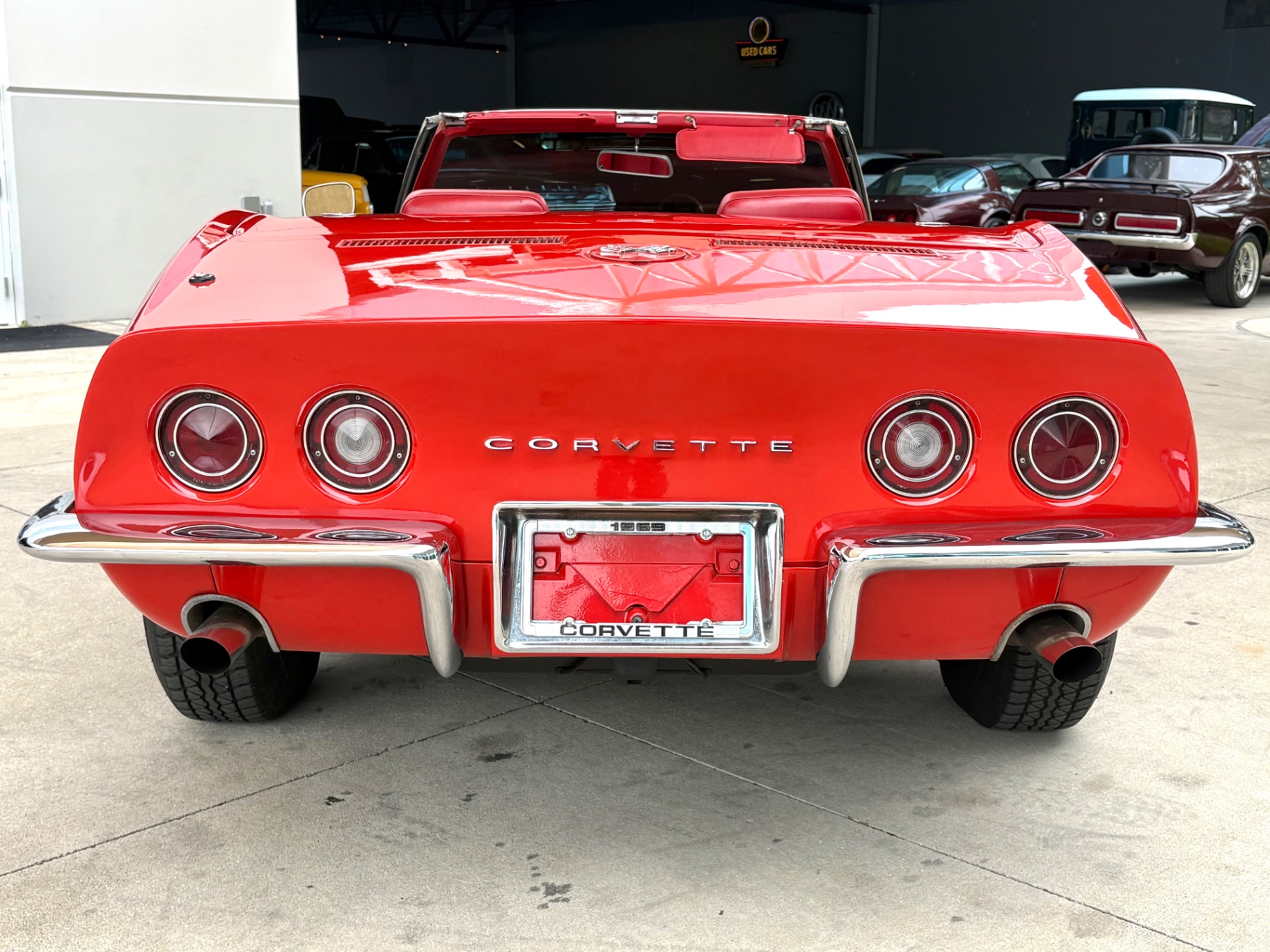
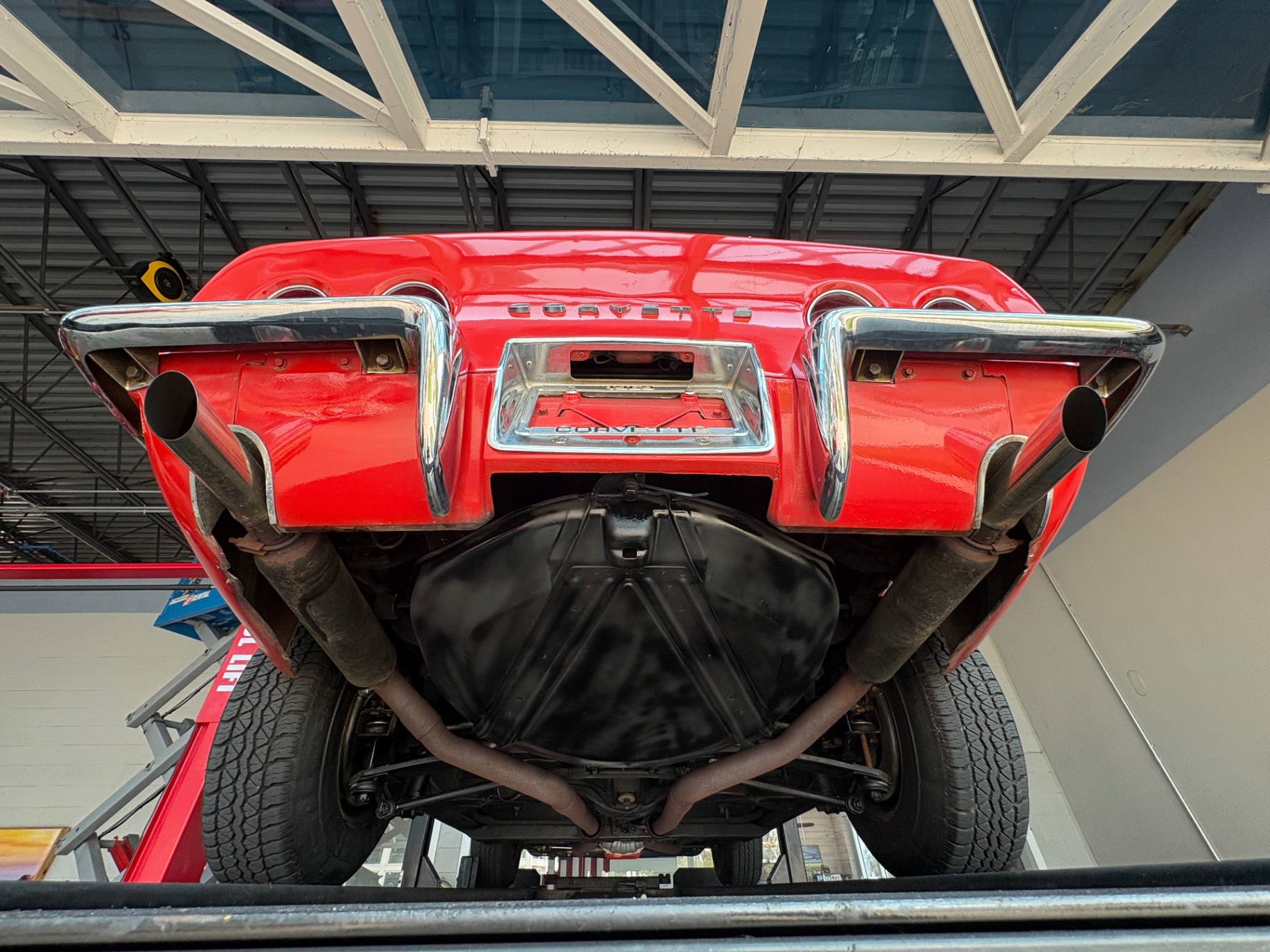
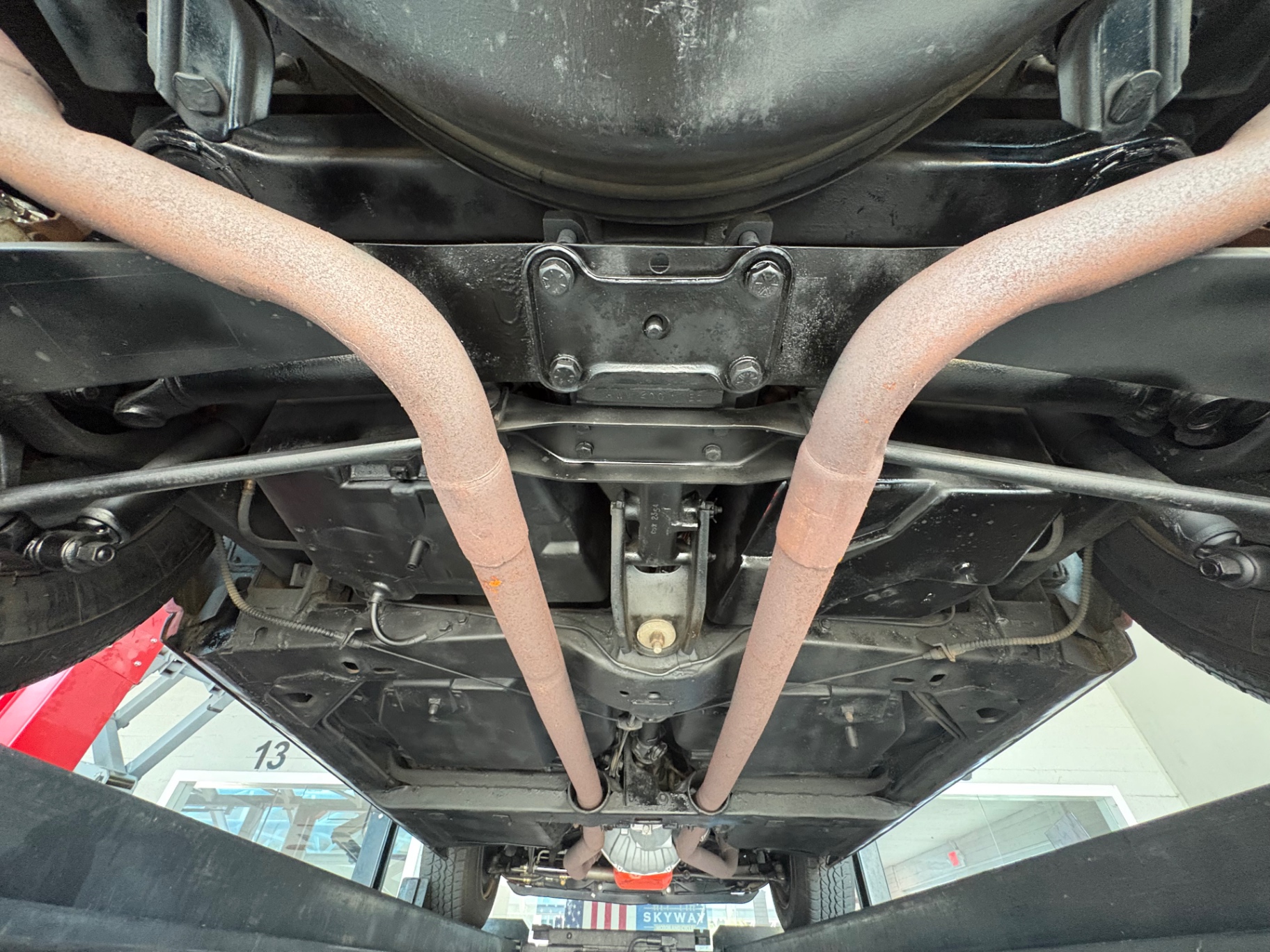
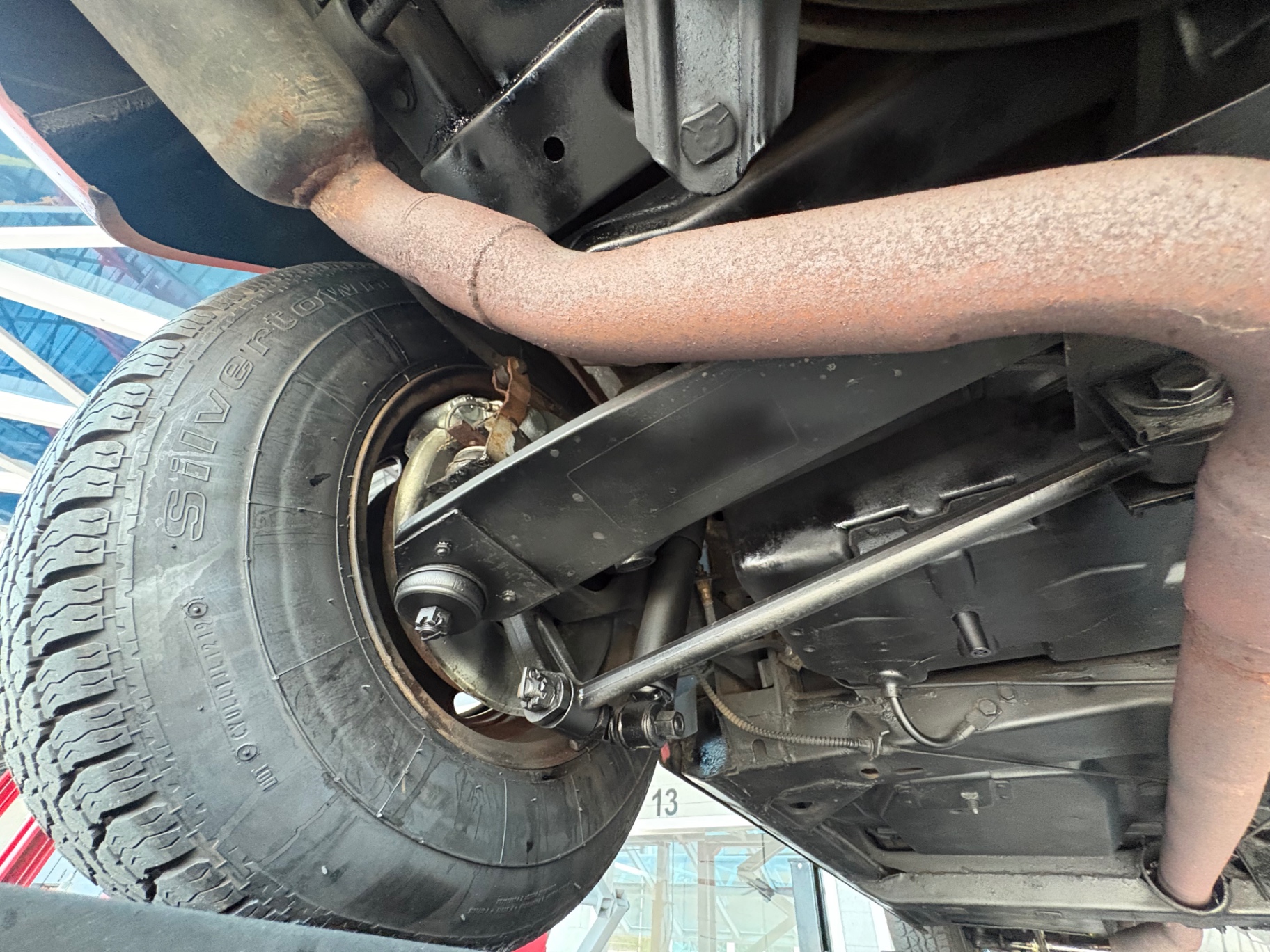
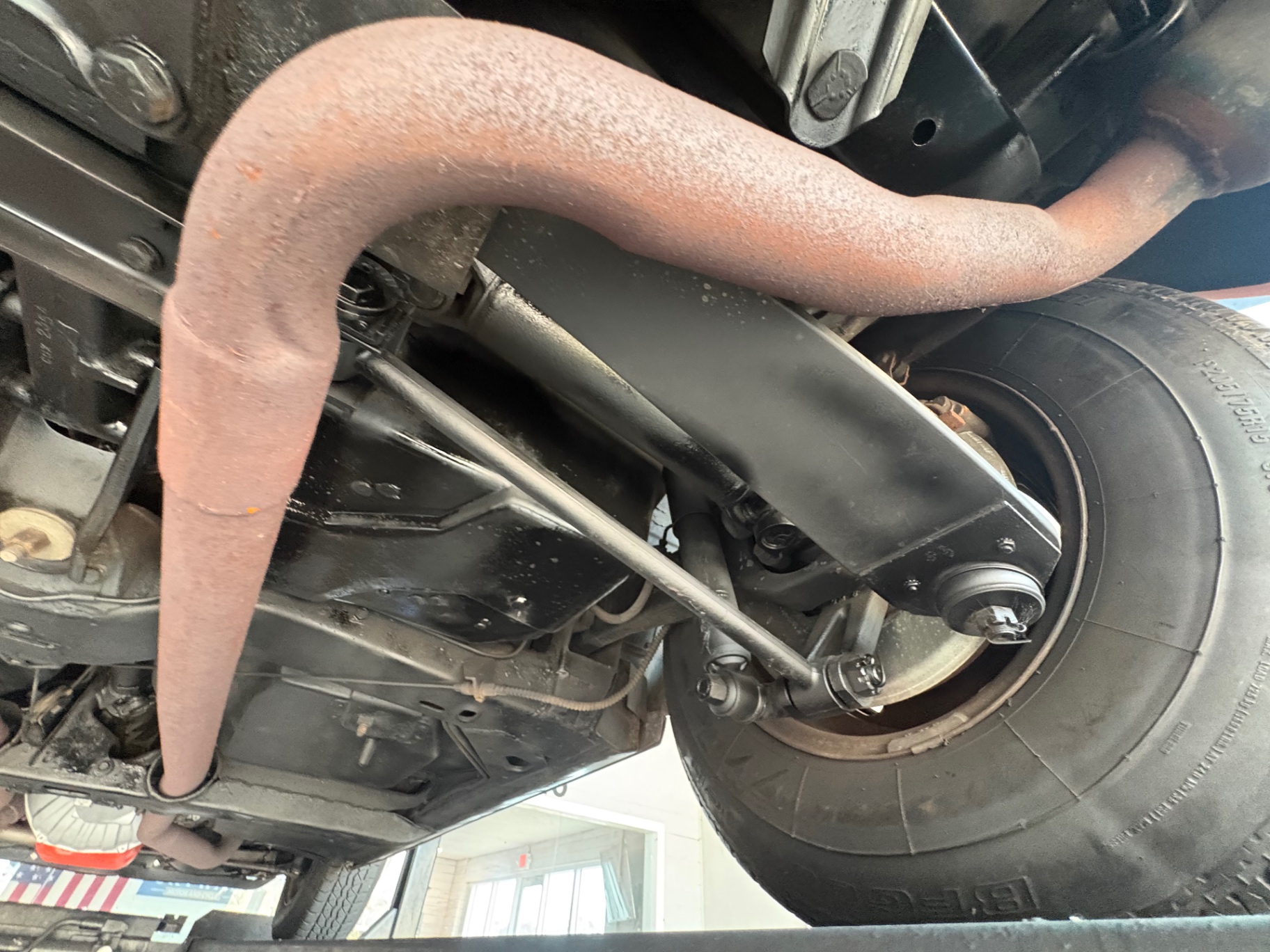
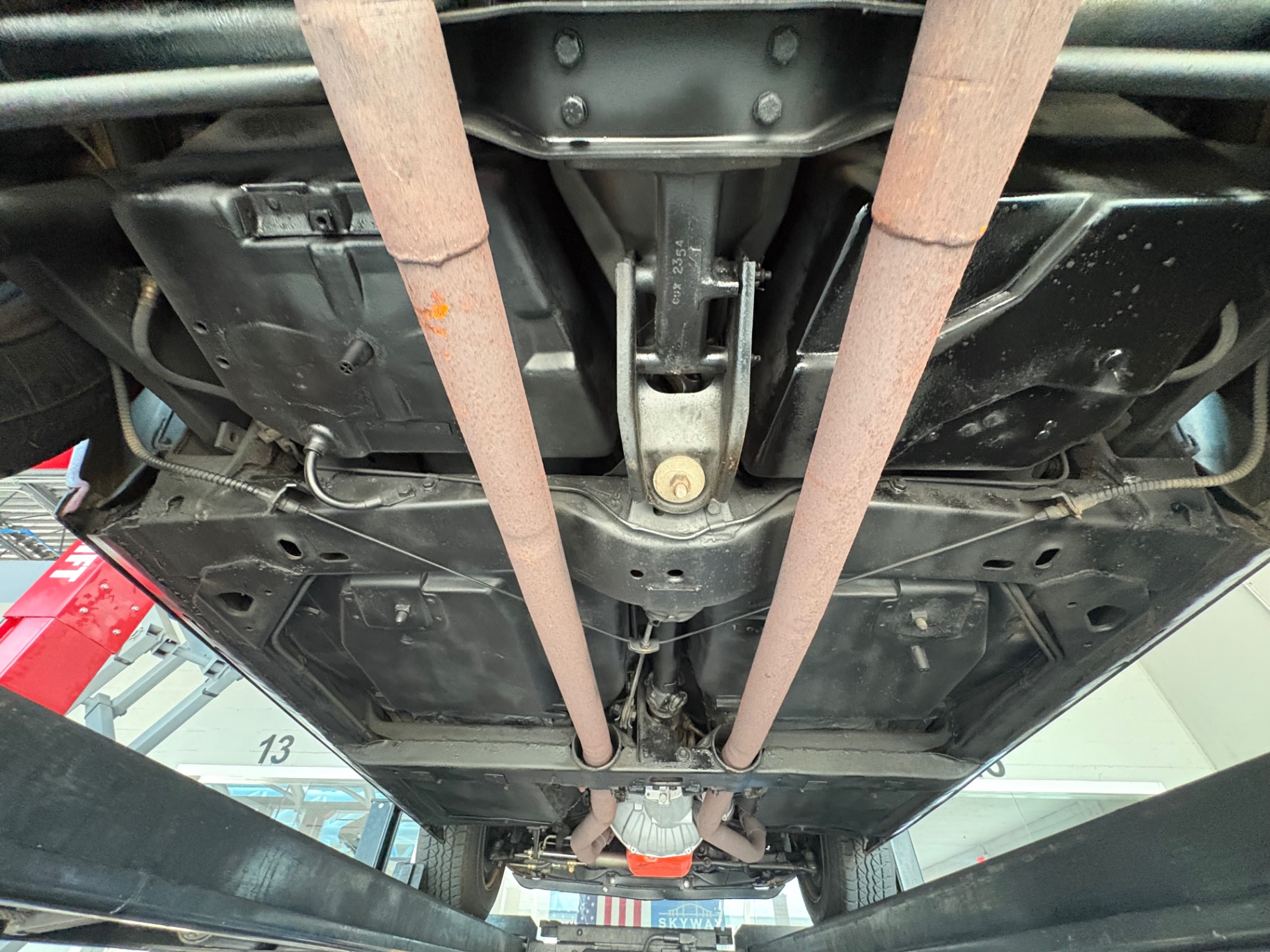
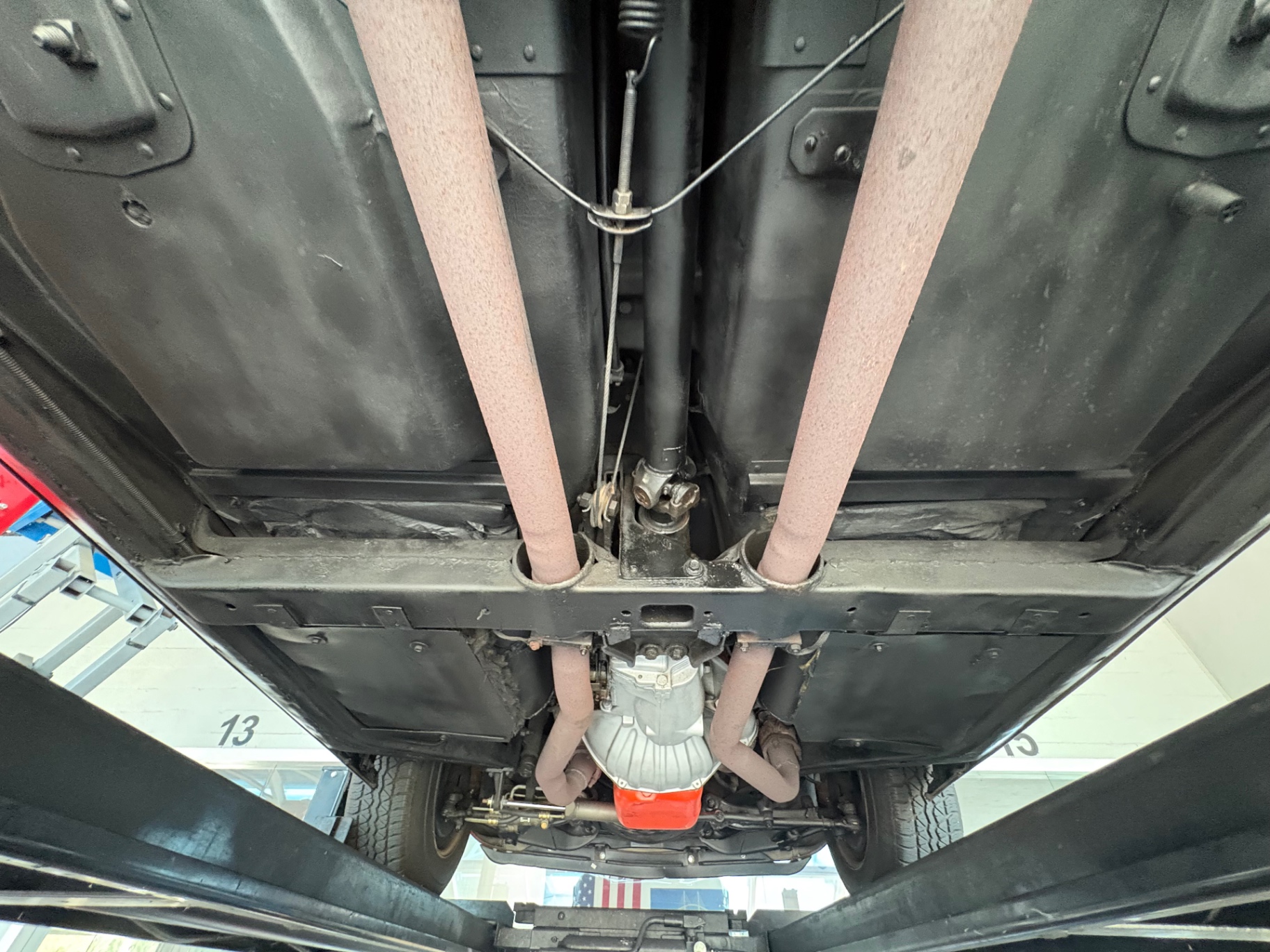
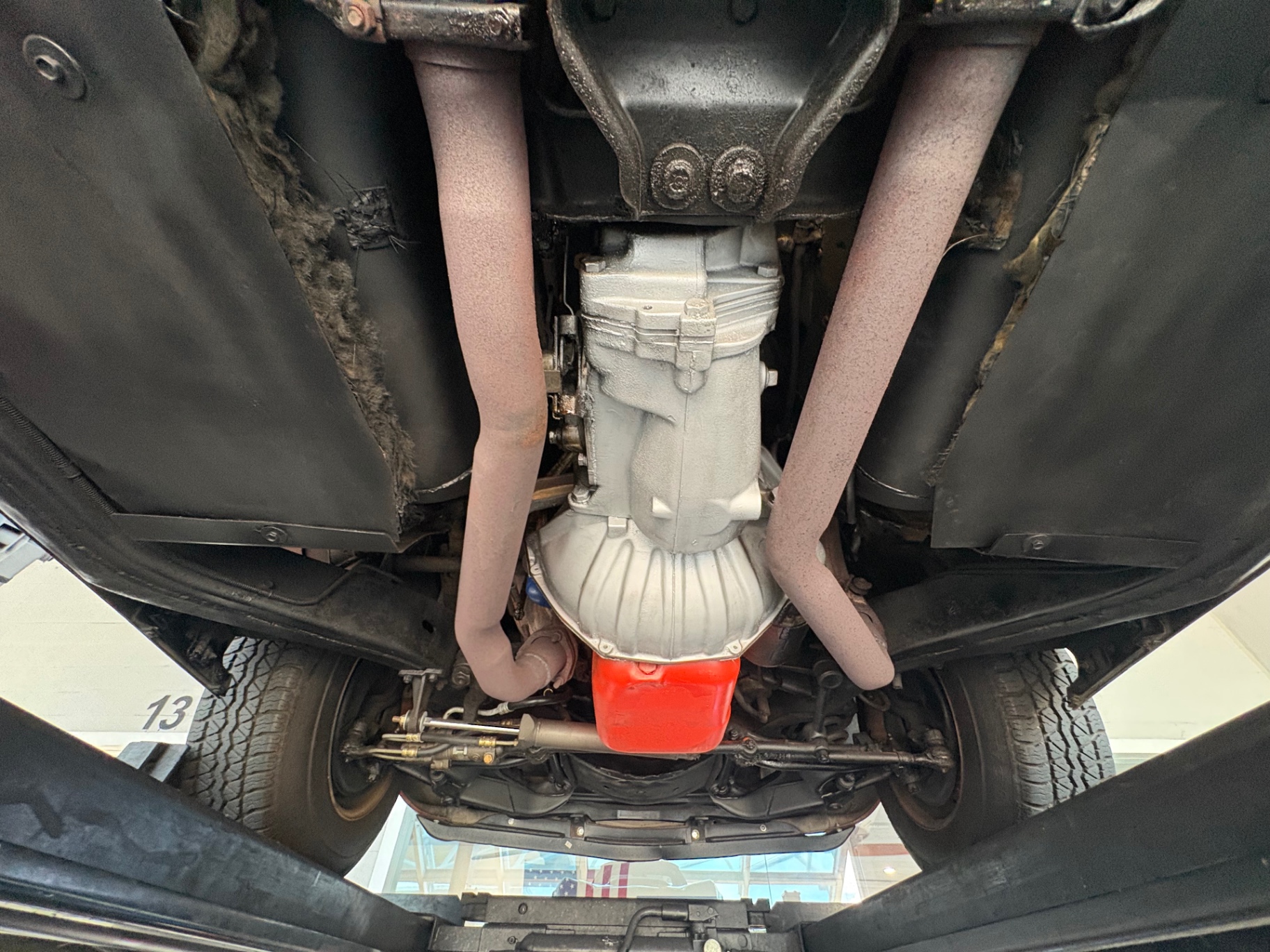
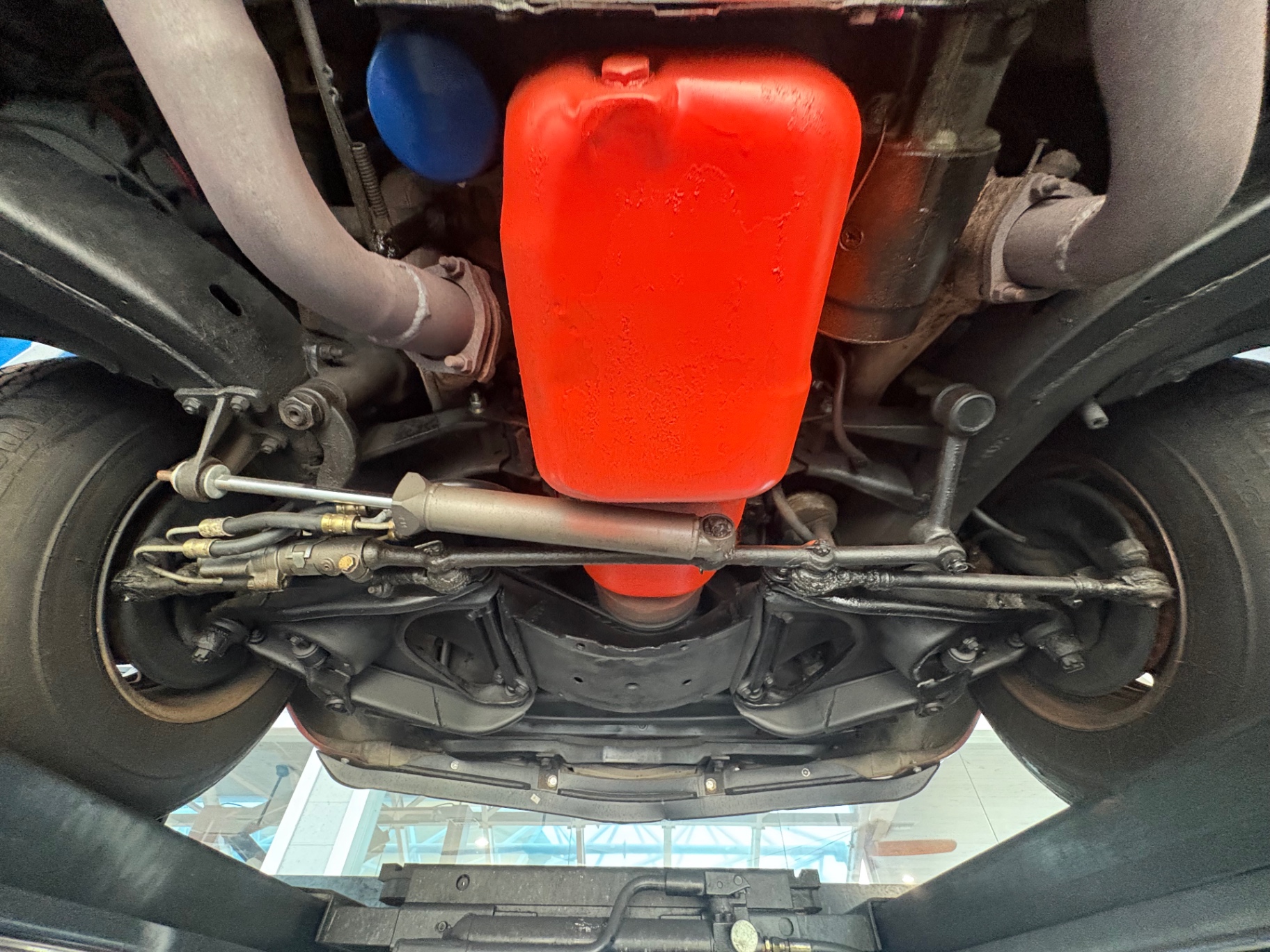
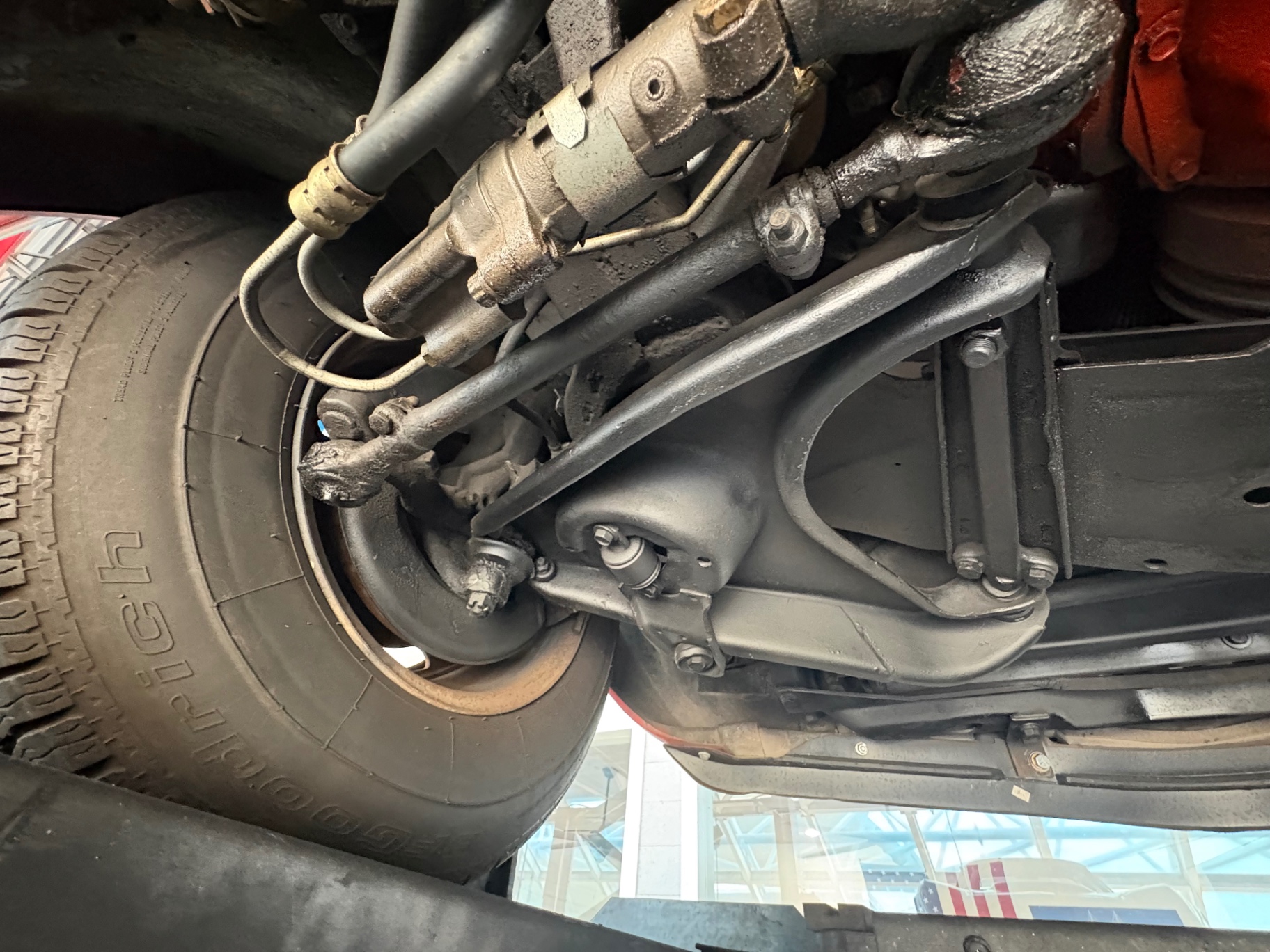
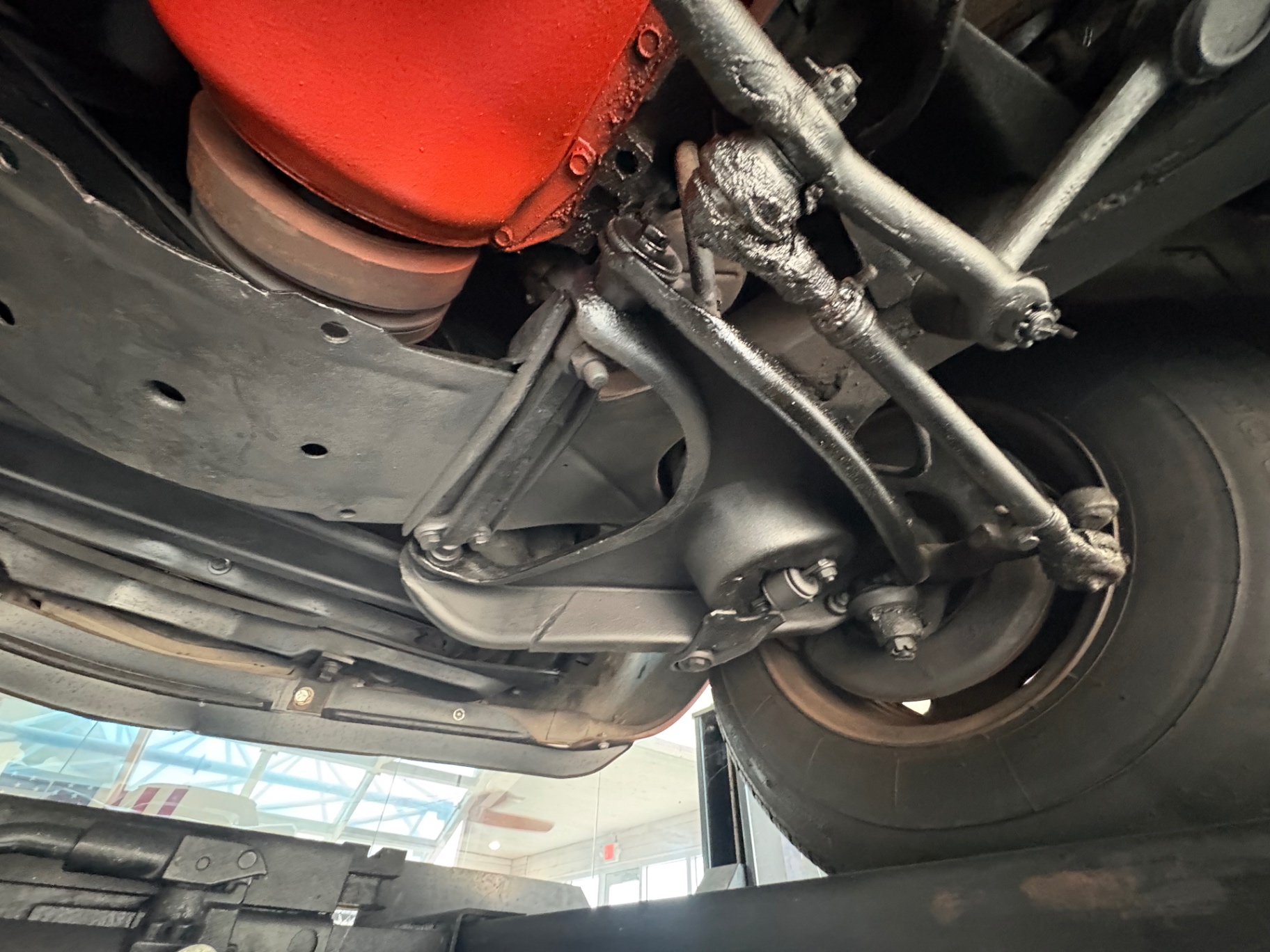
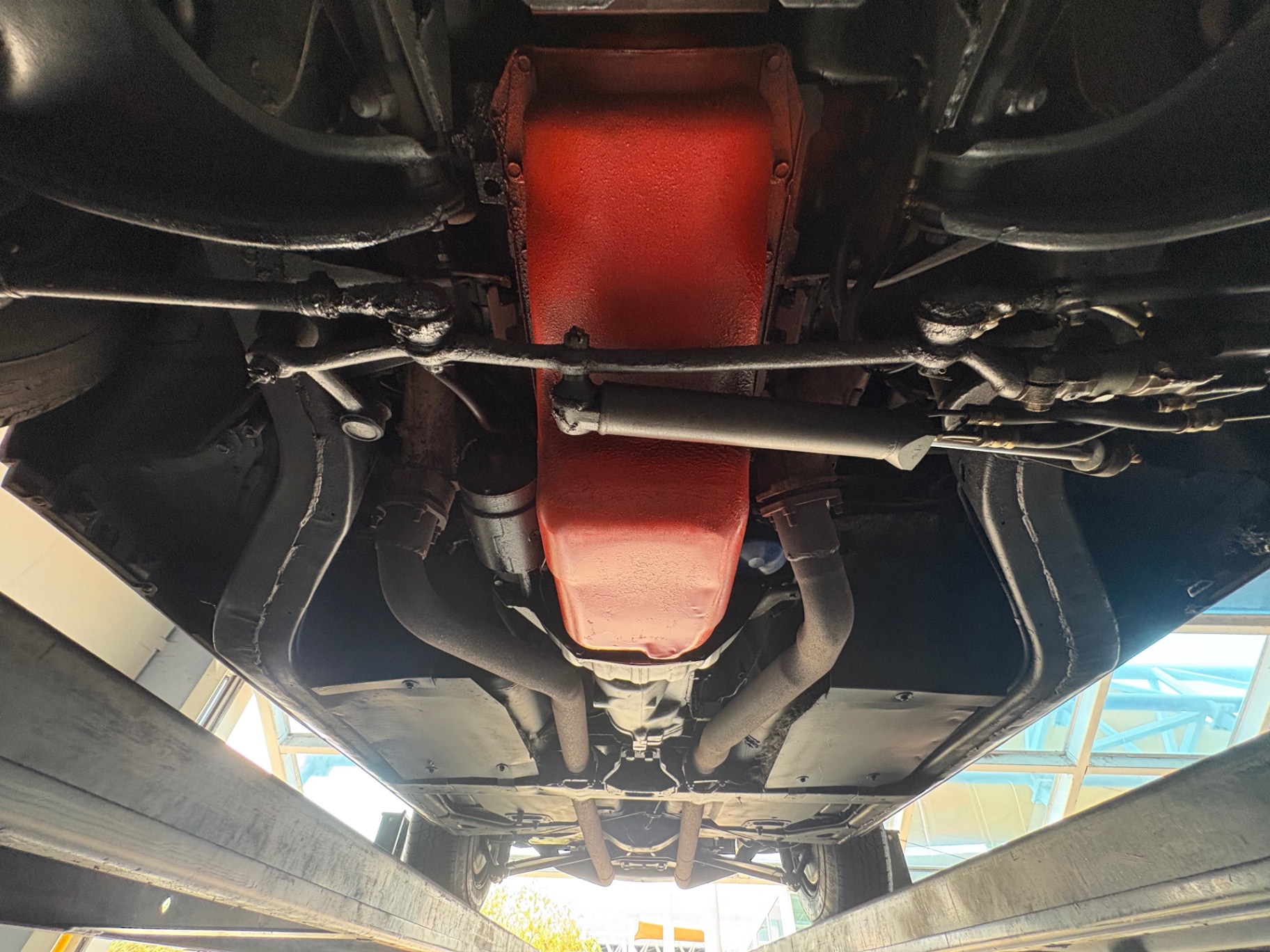
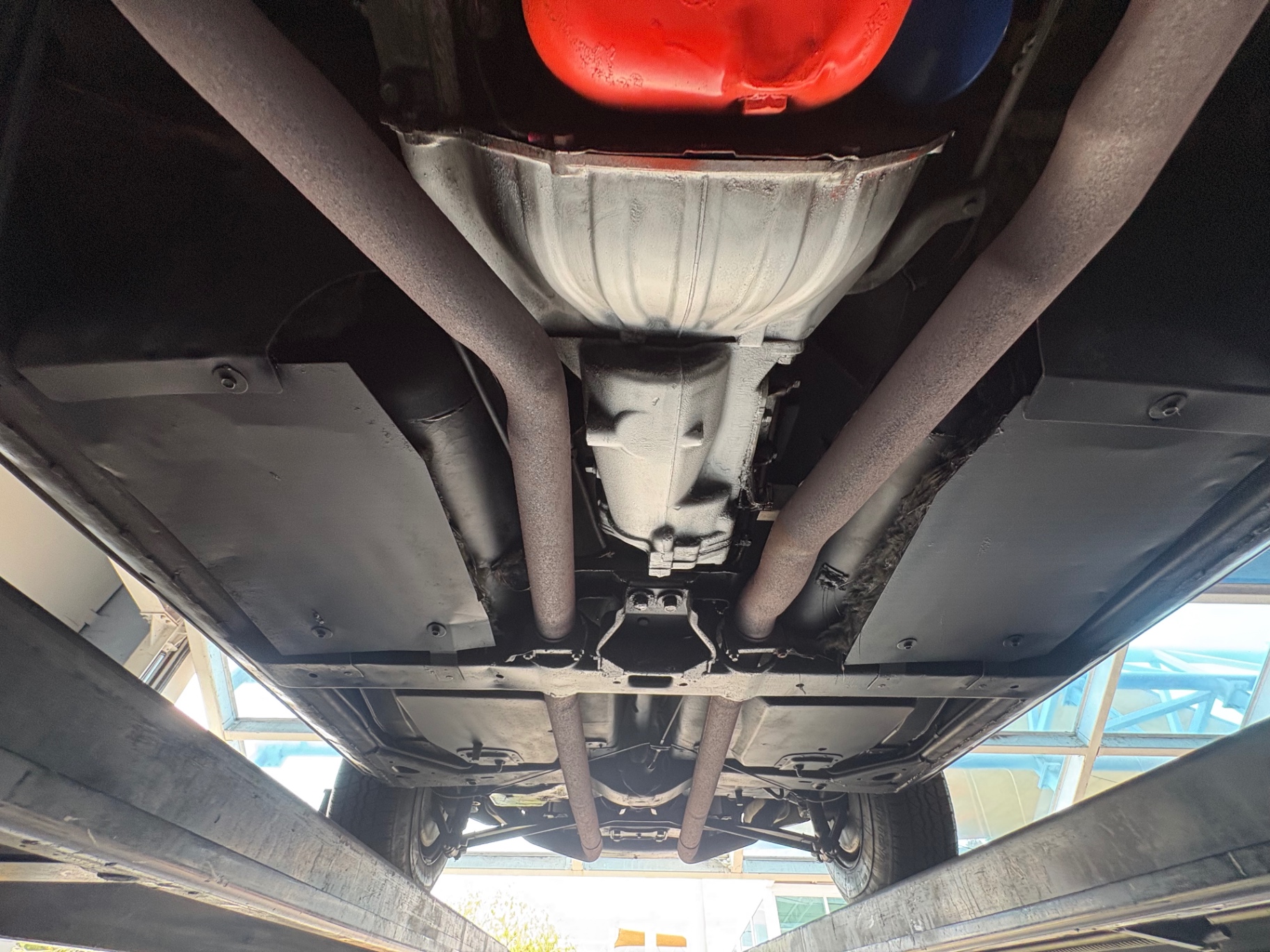
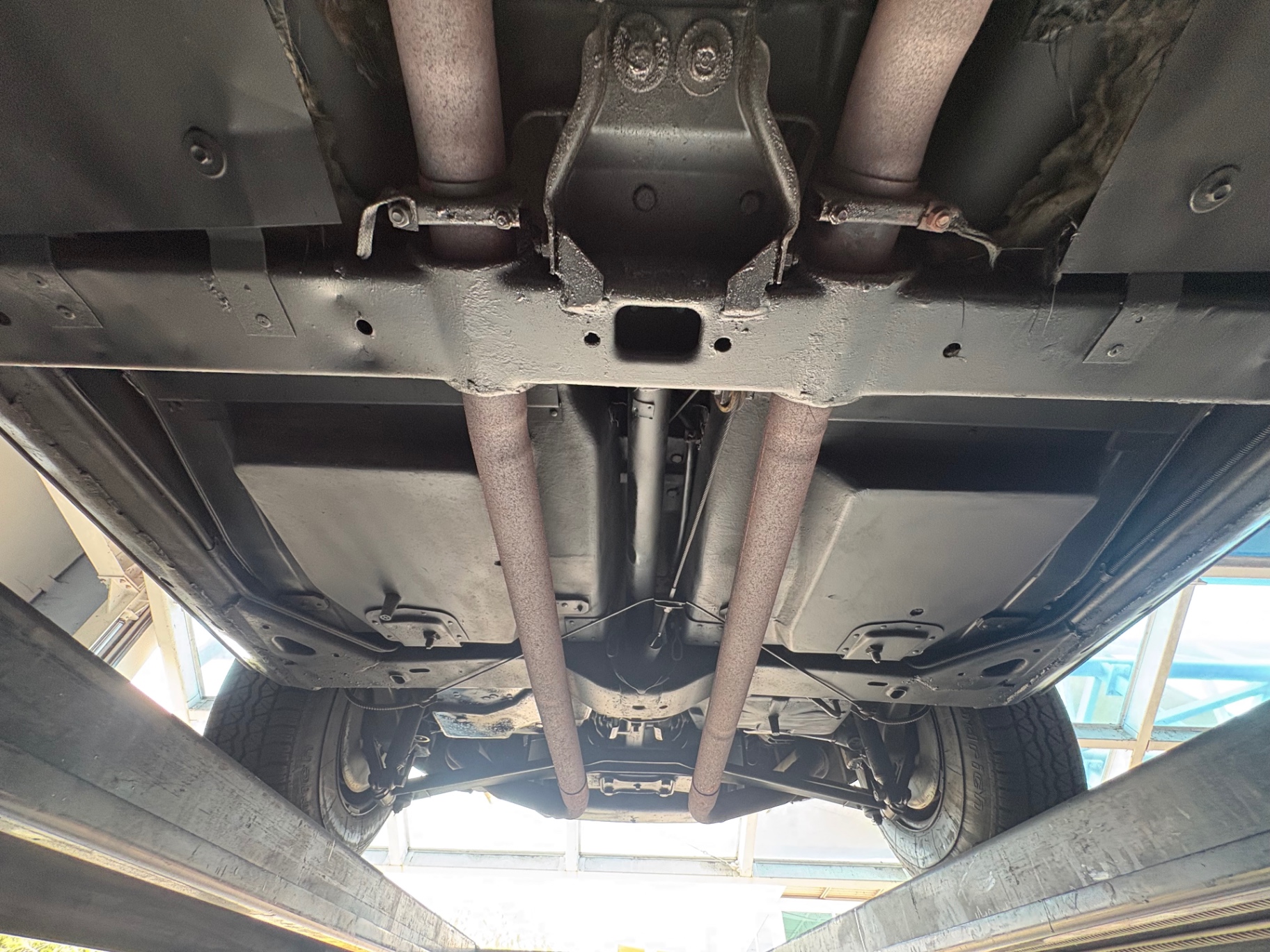
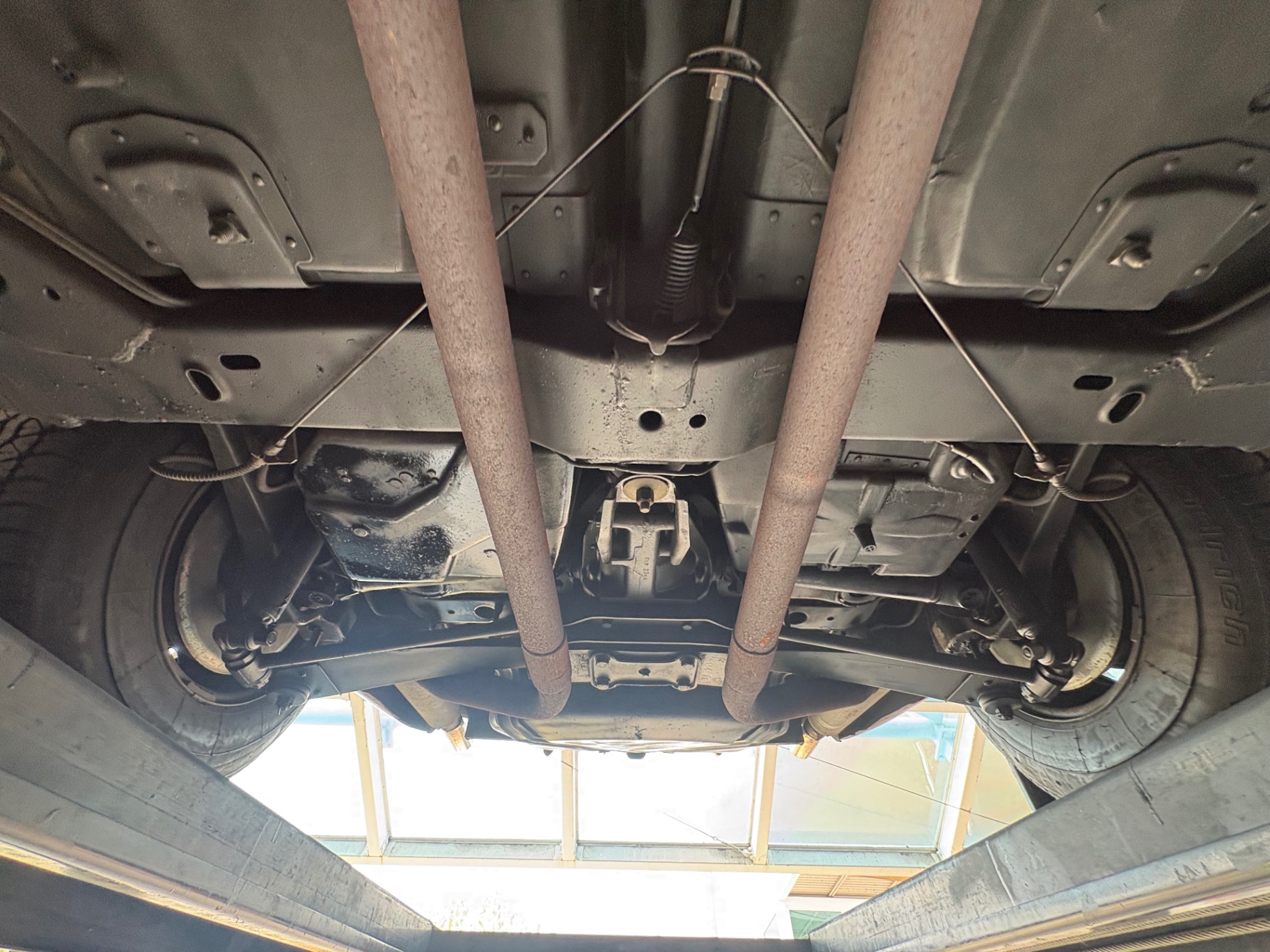
The underside photos show a solid structure. The floor pans are intact, the framerails are clean, and there is no evidence of significant rust or prior collision repair. The exhaust exits through the side-exit tips behind the rear wheels — a layout that is correct and original to the 1969 model. The independent rear suspension, a feature Corvette carried since 1963, is visible and looks correct with no obvious modifications.
Interior
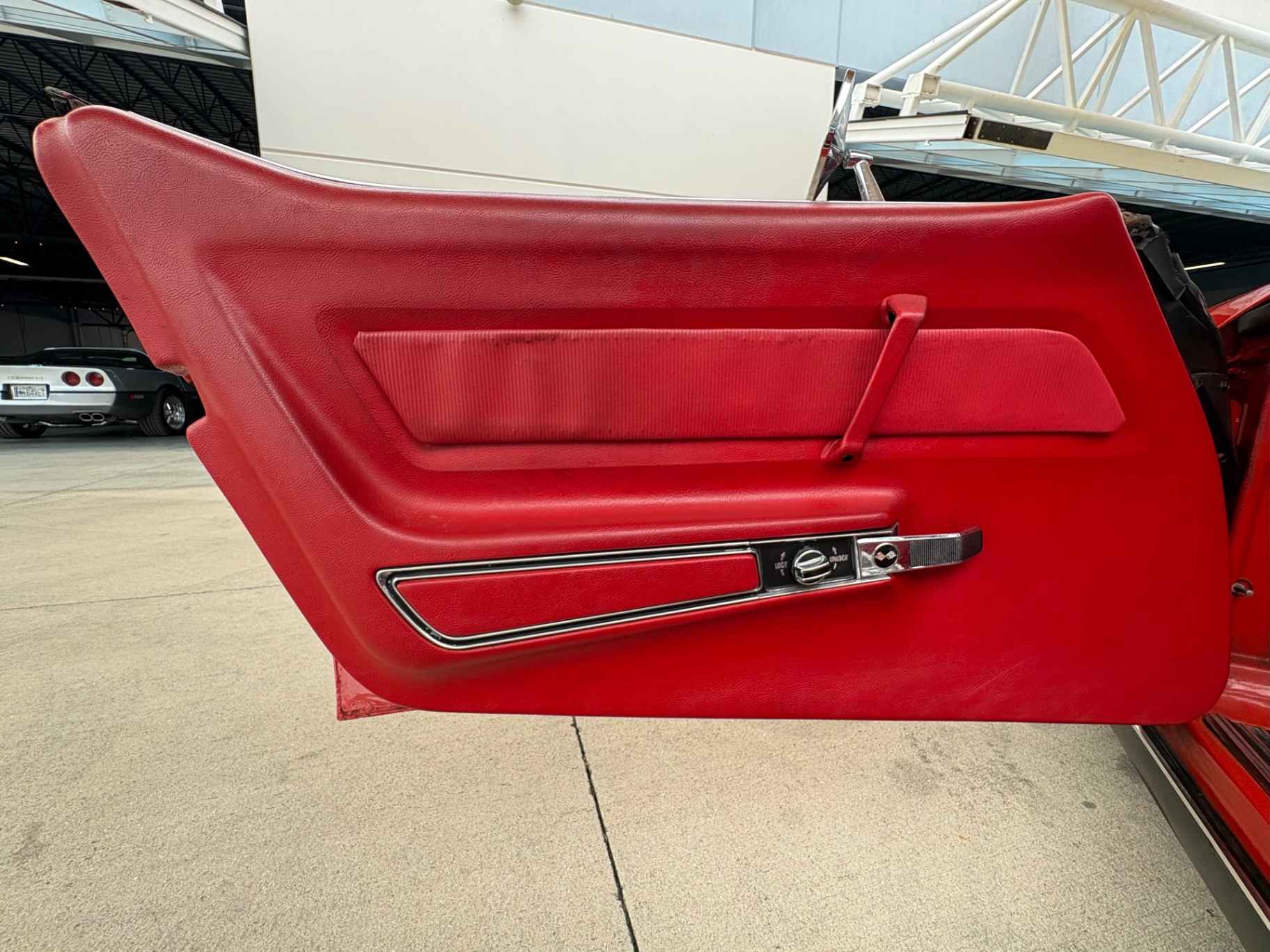
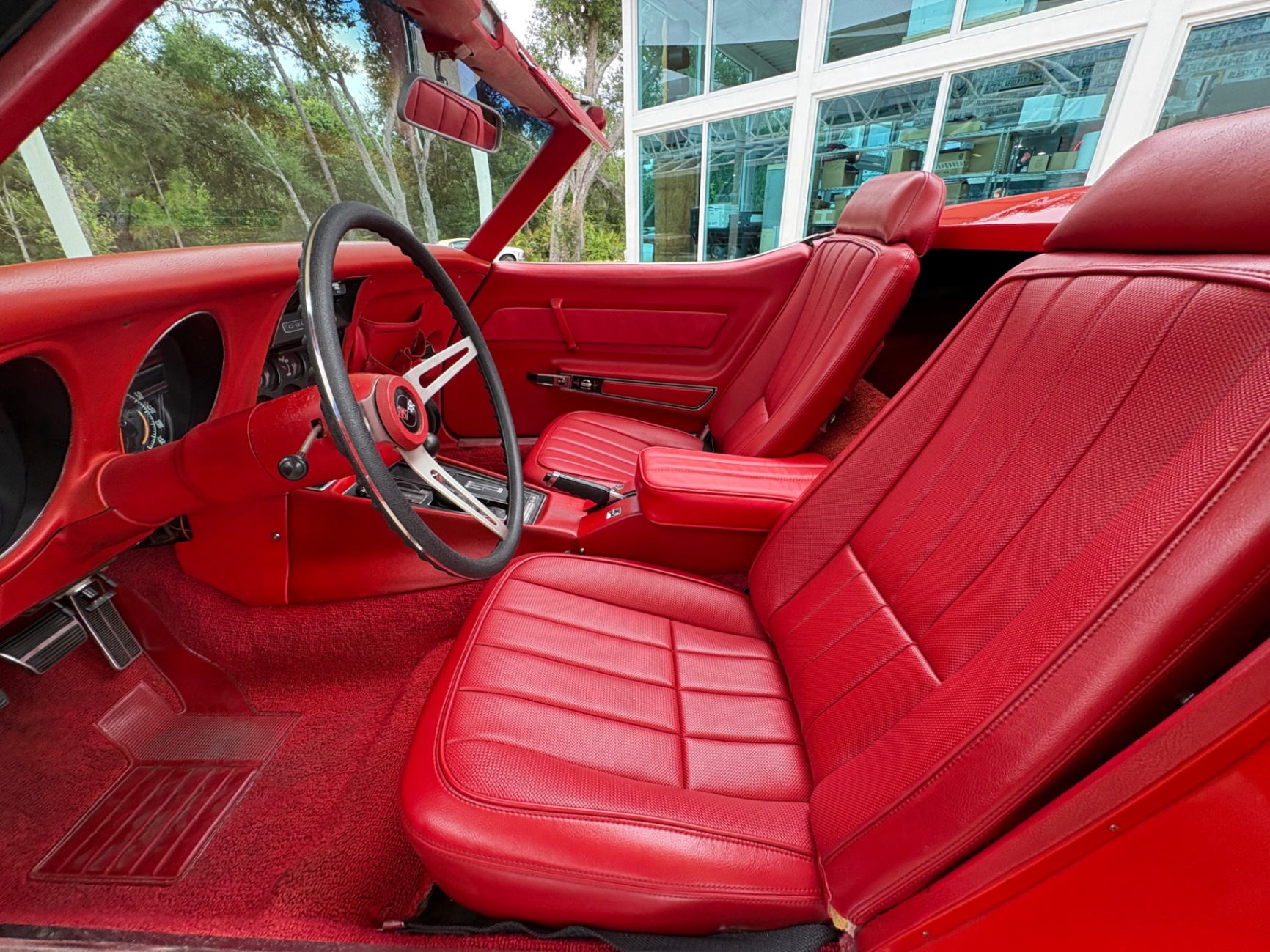
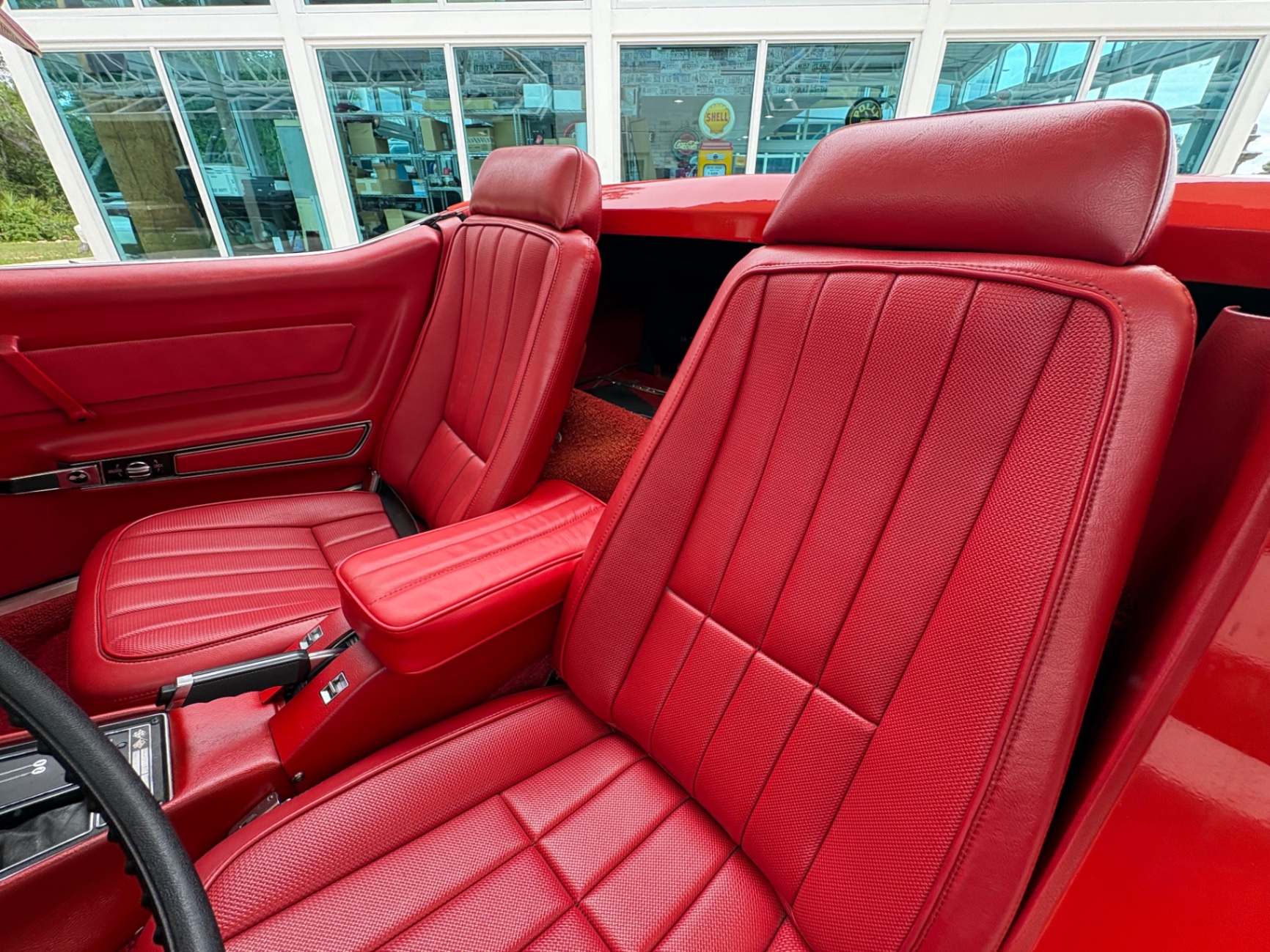
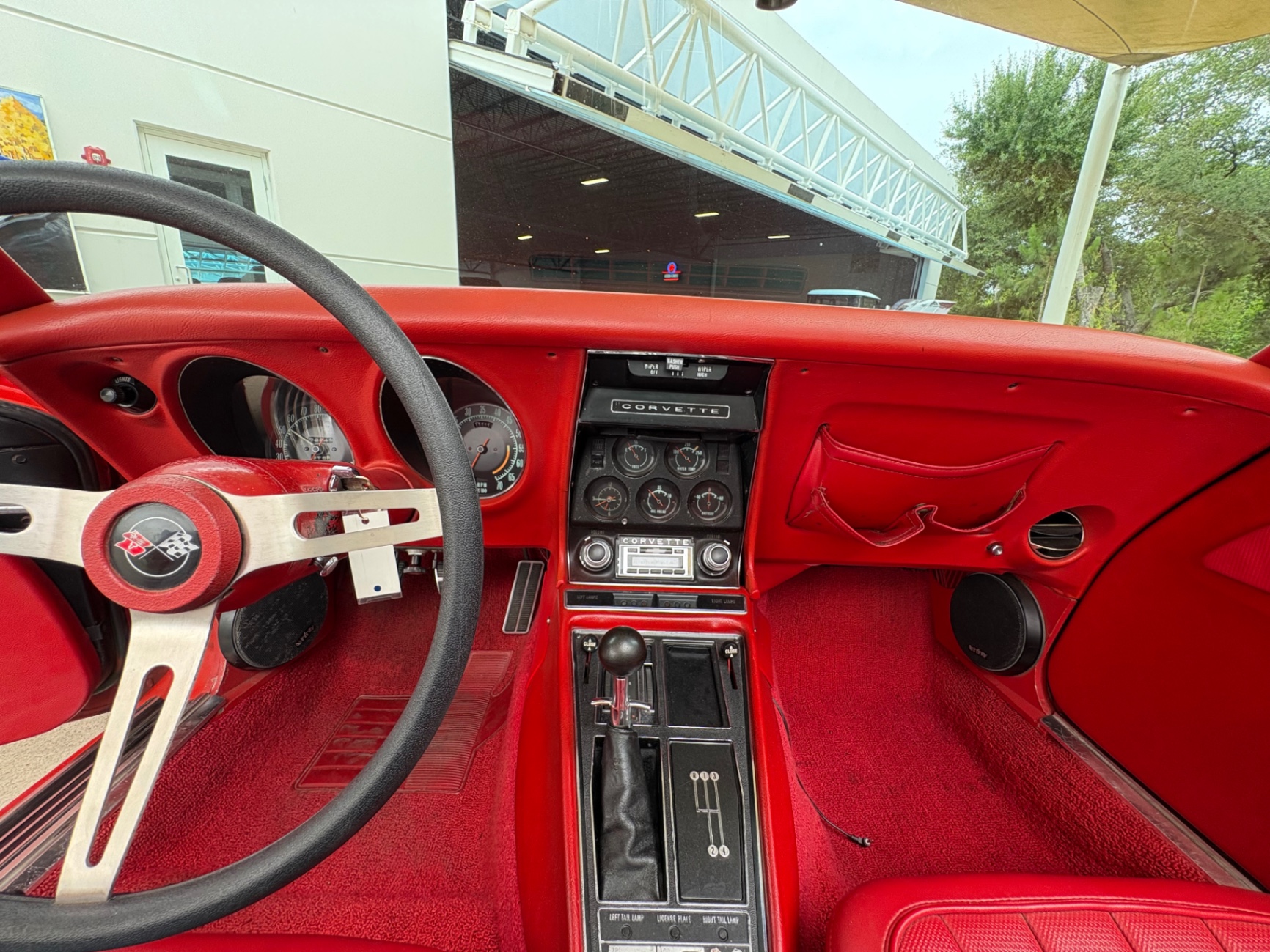
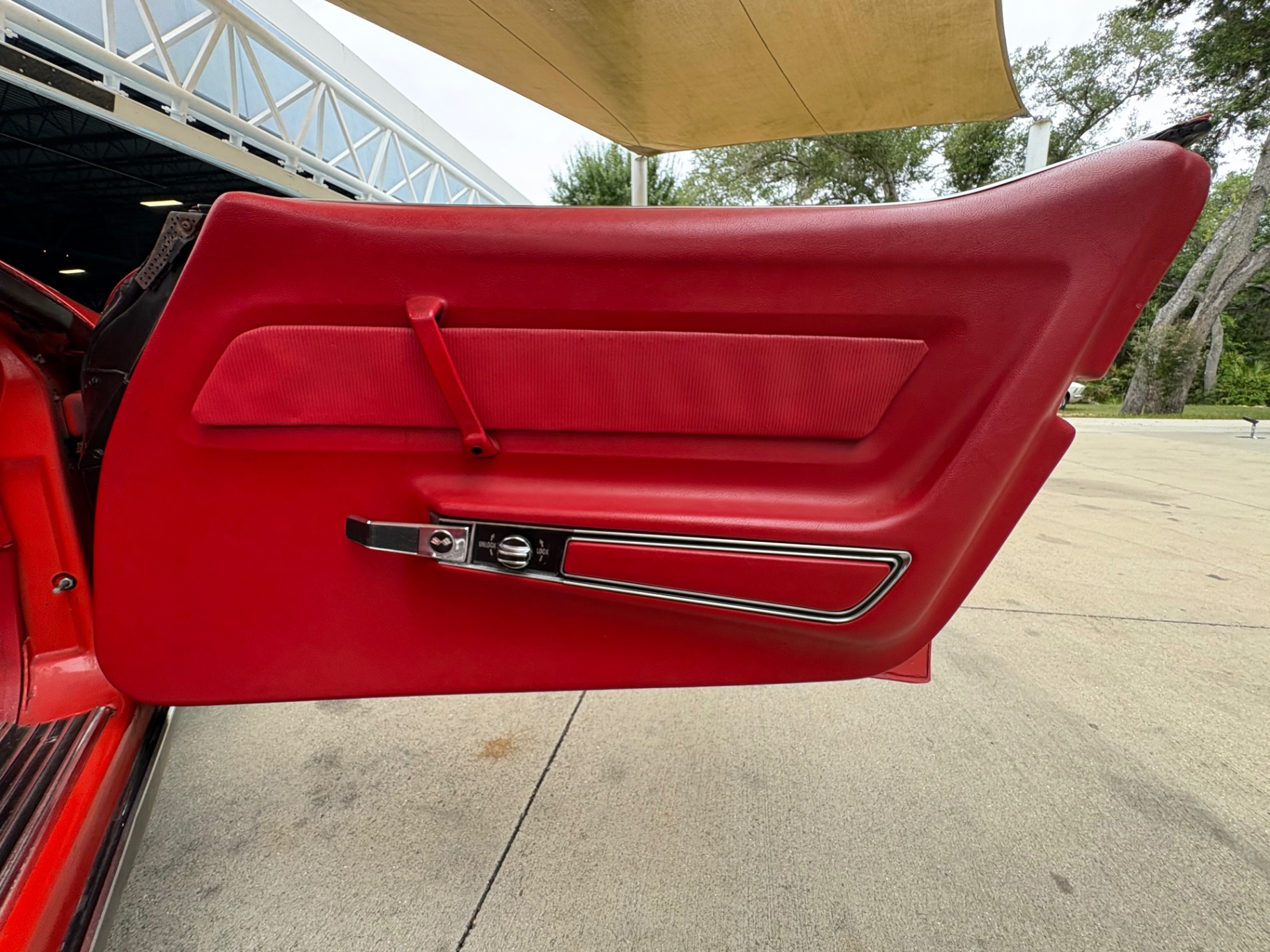
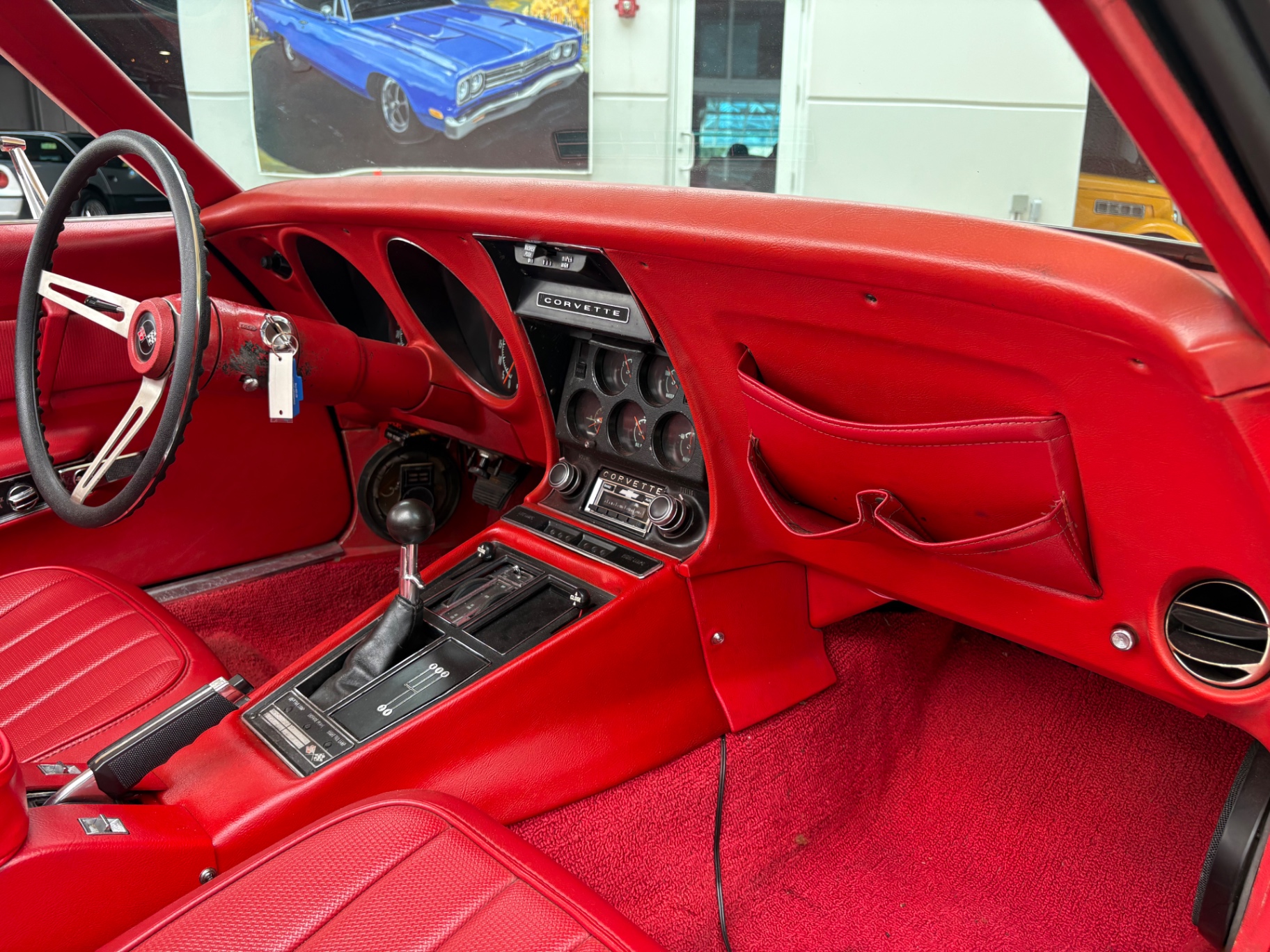
The 1969 Corvette Stingray cockpit was designed to place the driver at the center of everything, and this car delivers that experience with an all-red leather interior that is clean and consistent throughout. The seats show the correct vertical-pleat pattern and appear to be in good shape with no major cracking or fading. The door panels carry the correct chrome-trimmed pull handle and window control knob on each side, with the power window switches operating as they should.
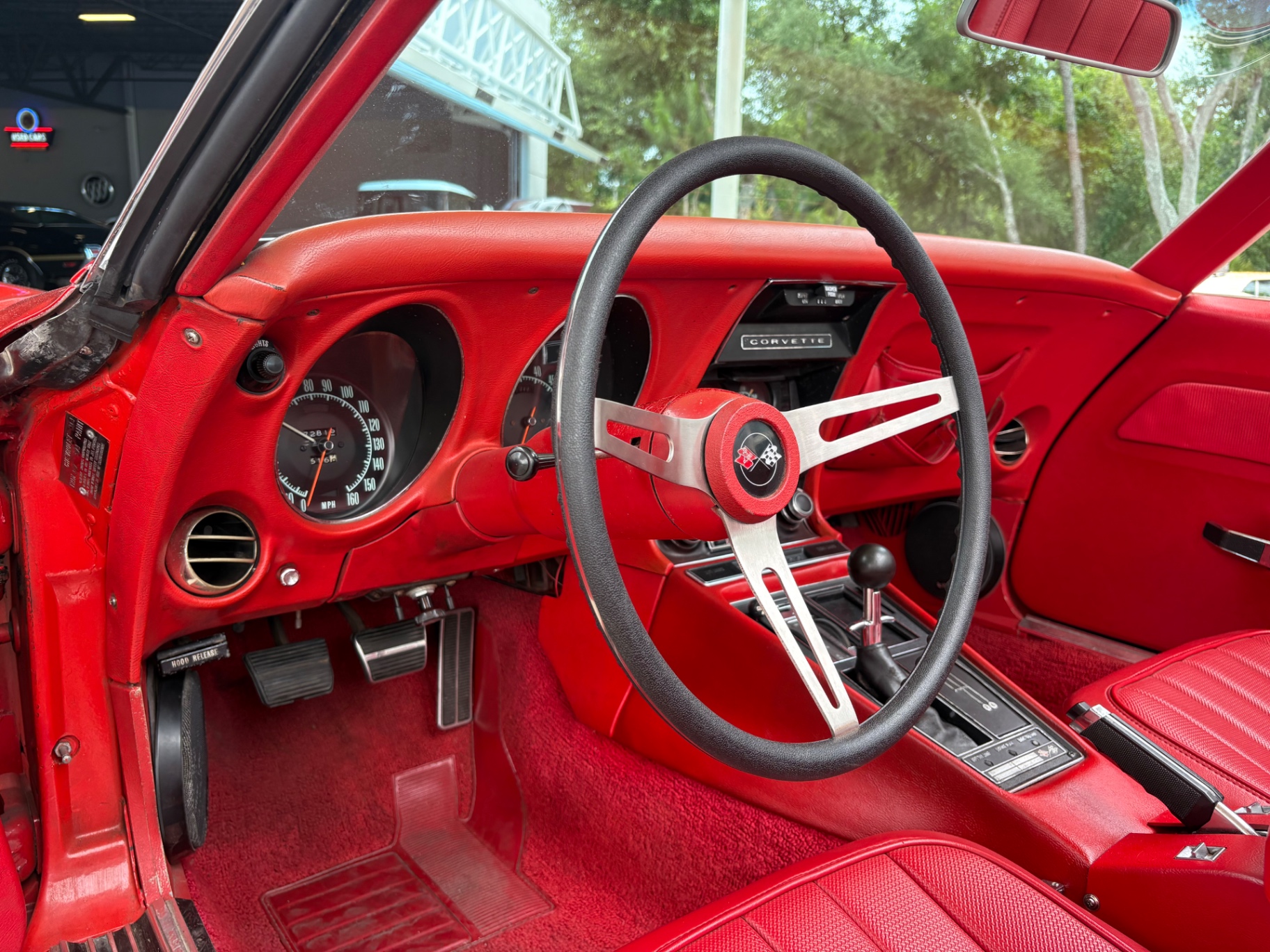
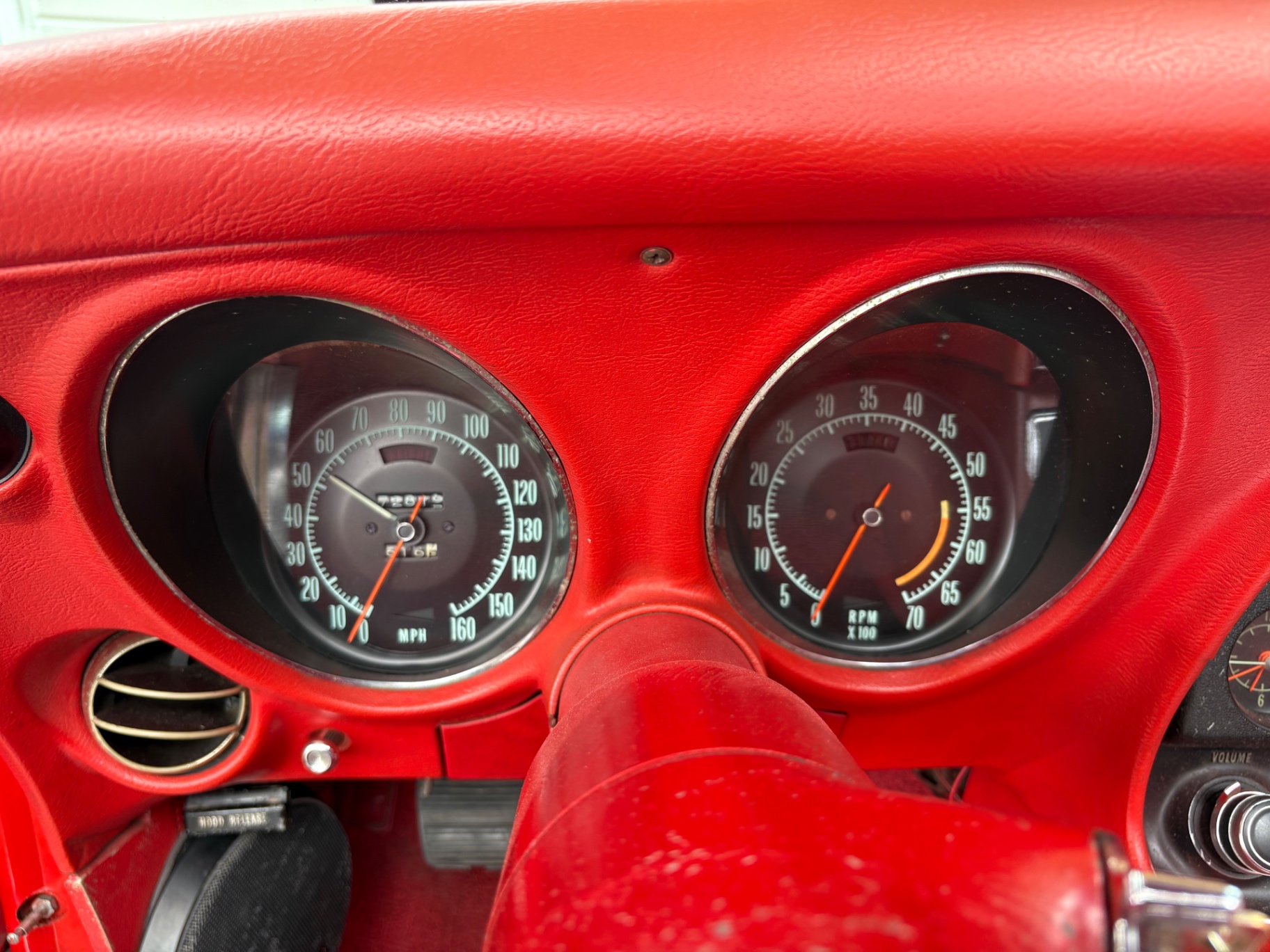
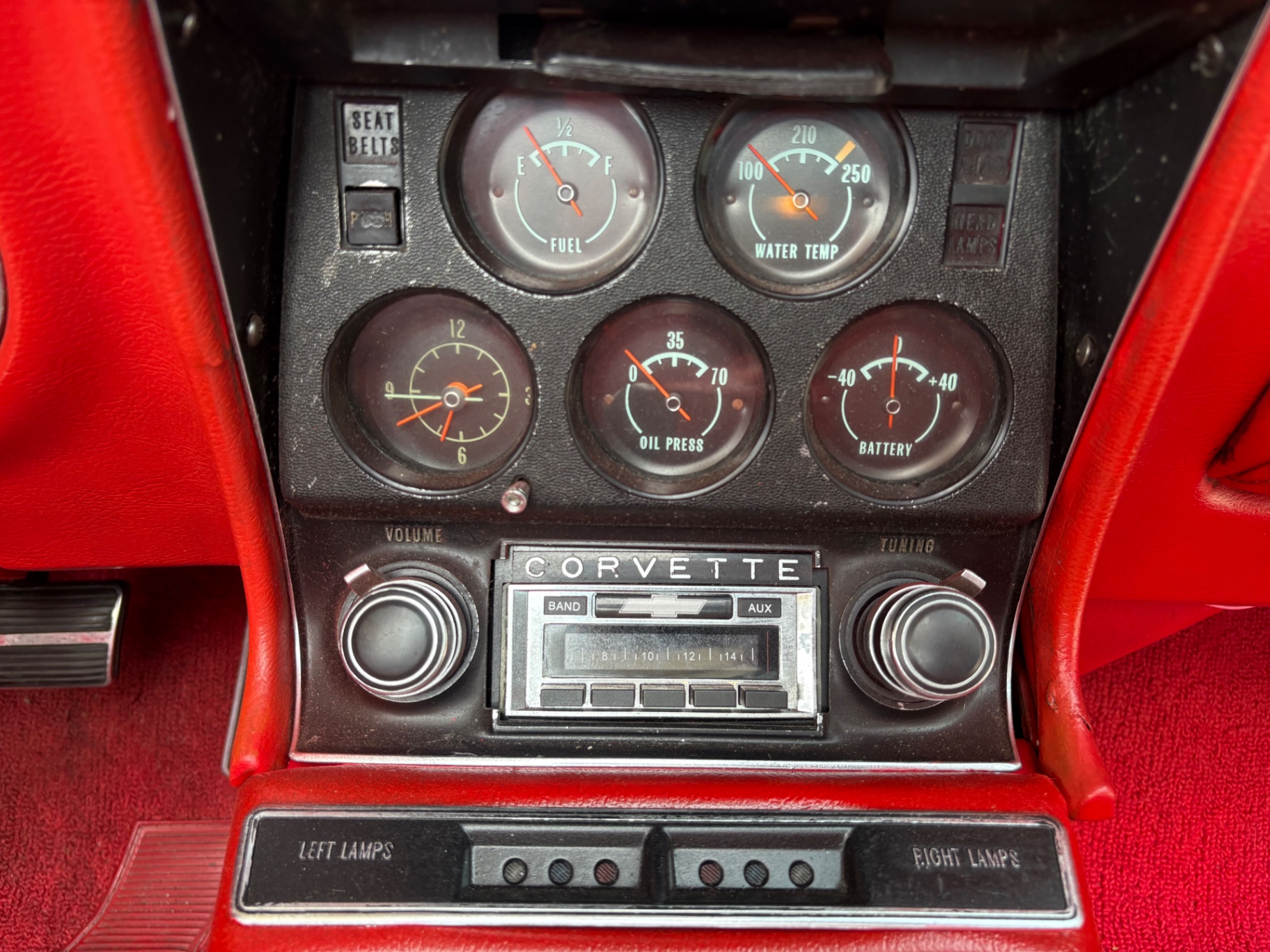
The dashboard carries the Corvette's distinctive round-gauge instrument cluster, with the large 160 mph speedometer and tachometer mounted in the two main pods directly in front of the driver. Secondary gauges for fuel level, water temperature, oil pressure, and battery condition are arranged in the center console tower, flanked by the Corvette-branded AM radio. The layout is busy by modern standards, but it gives a driver real information without having to dig through menus or interpret warning lights.
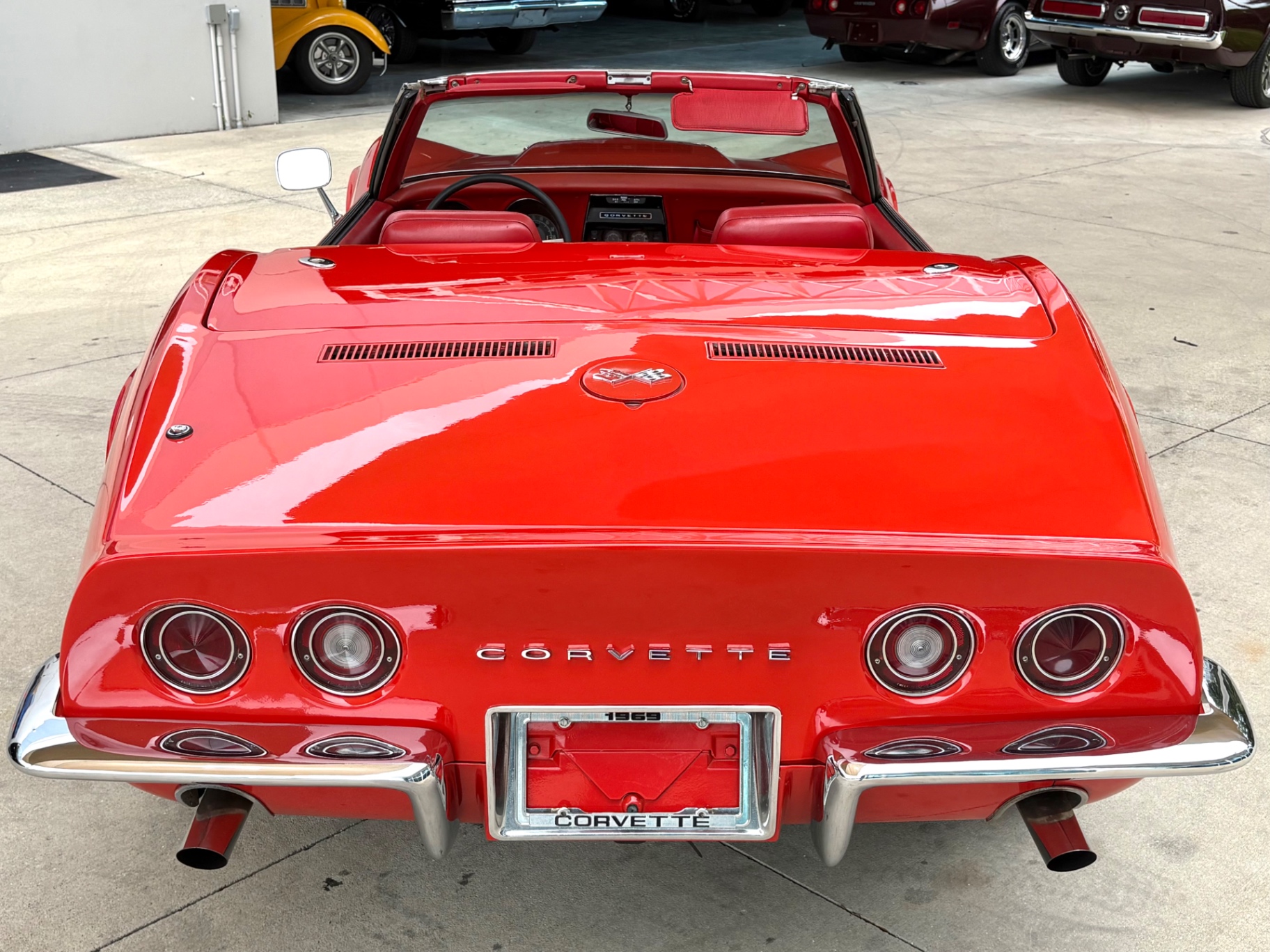
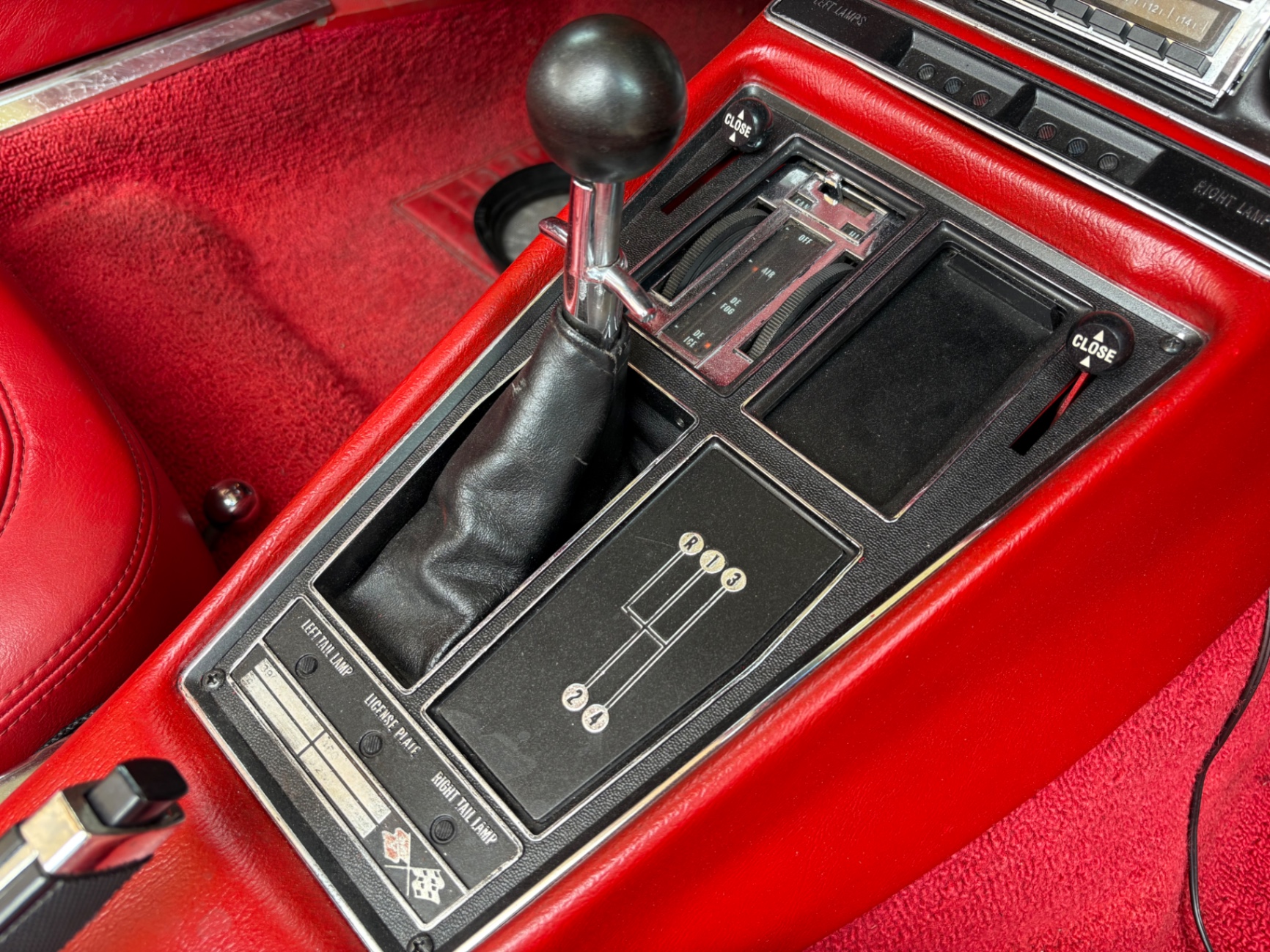
The center console houses the 4-speed shifter with its correct black ball shift knob and the gear pattern visible on the console plate. The climate controls, wiper, and accessory switches run across the top of the center stack in the correct configuration for a 1969 build. The carpet and lower trim areas are red throughout, matching the seats and door panels. The convertible top is new, which eliminates one of the most common maintenance items on any open car of this age.
Exterior
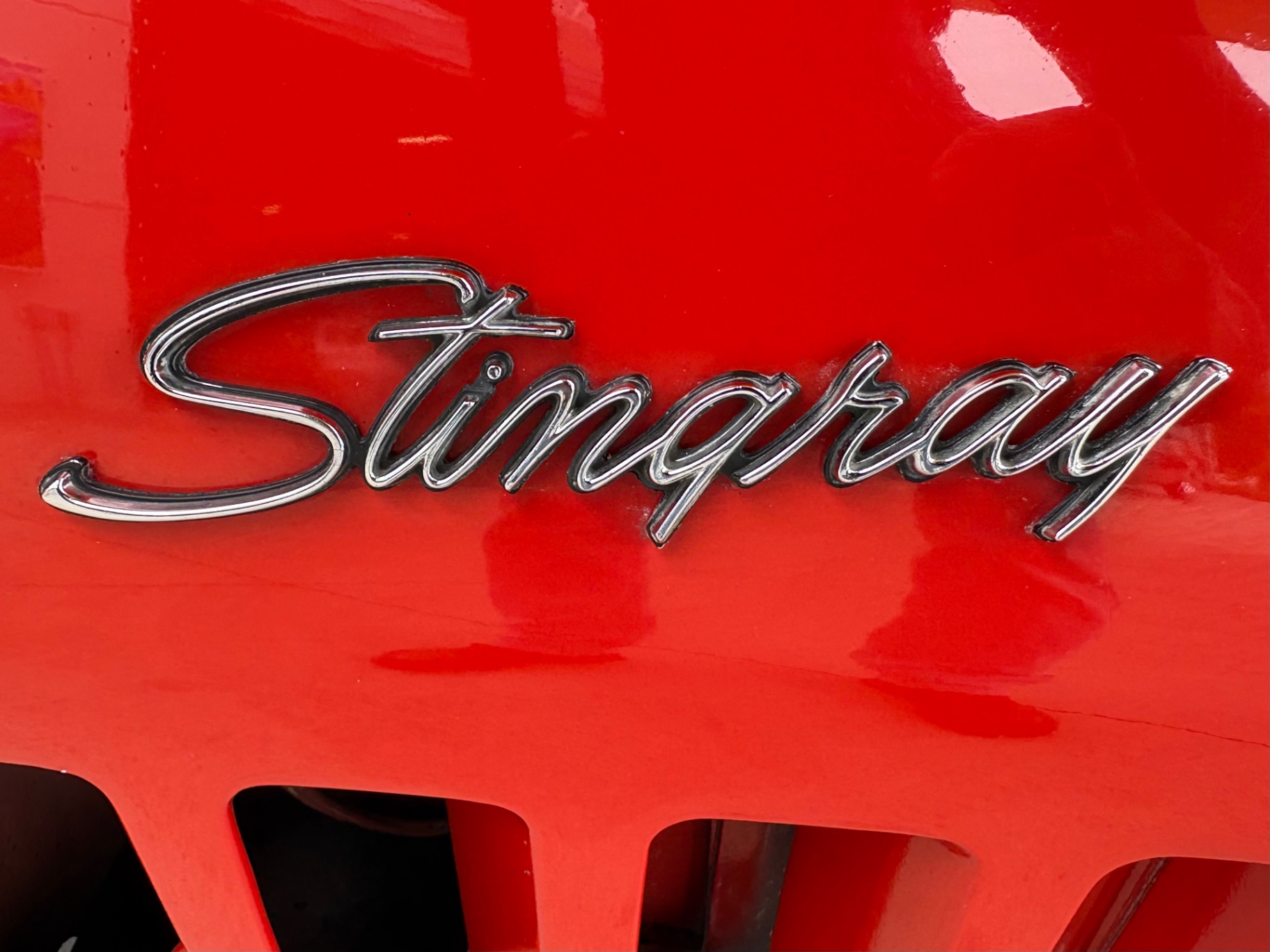
The 1969 Chevrolet Corvette Stingray body is one of the more complex fiberglass shapes of the muscle car era. The long hood, fastback roofline on the coupe version, and the tunneled rear with its four round taillights were all carried forward from the 1968 introduction, but the 1969 model added the Stingray script to the front fenders and made small refinements to the door and interior fit. The convertible body on this car eliminates the removable T-top roof panels and gives a cleaner open-air experience.
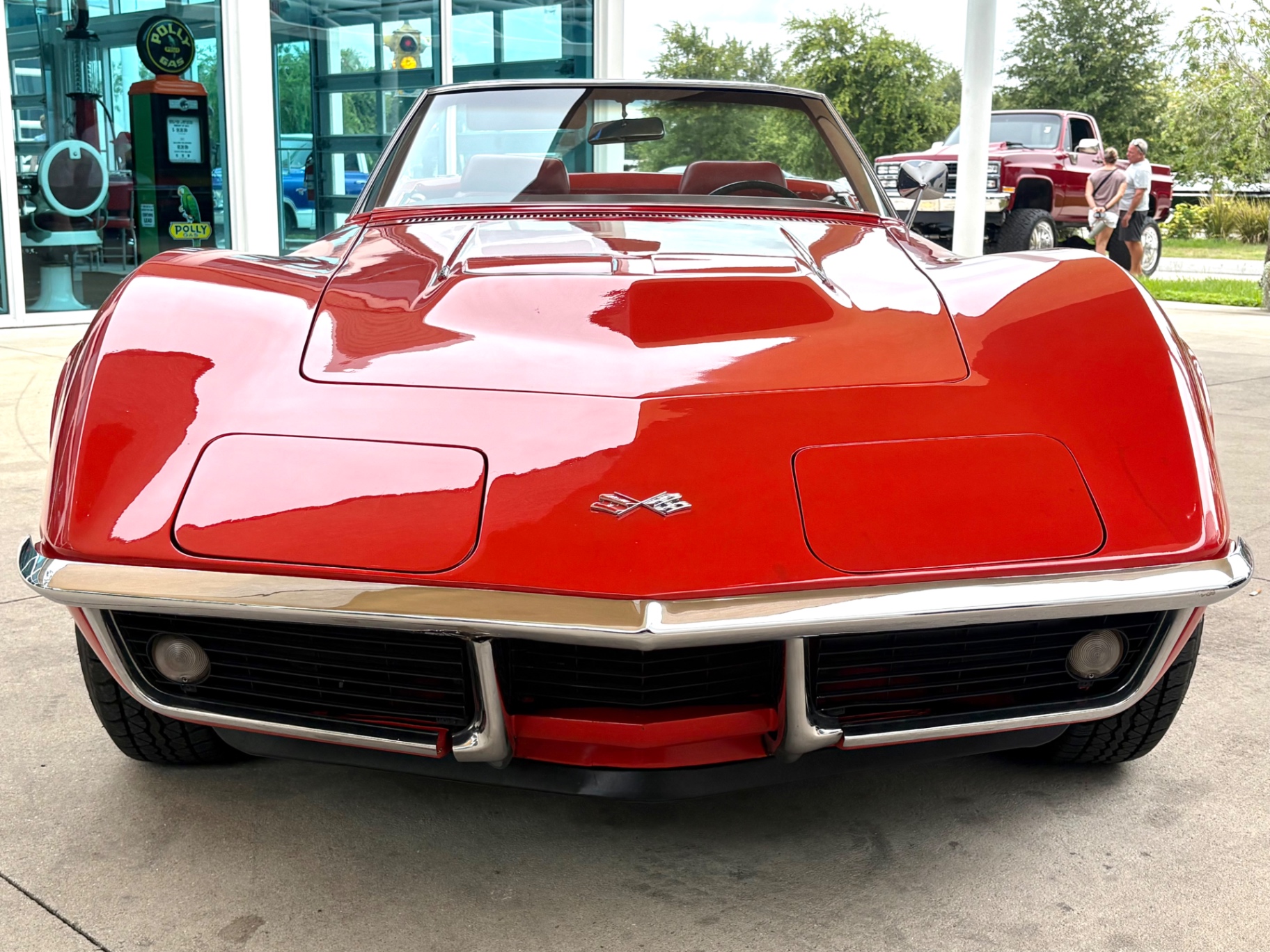
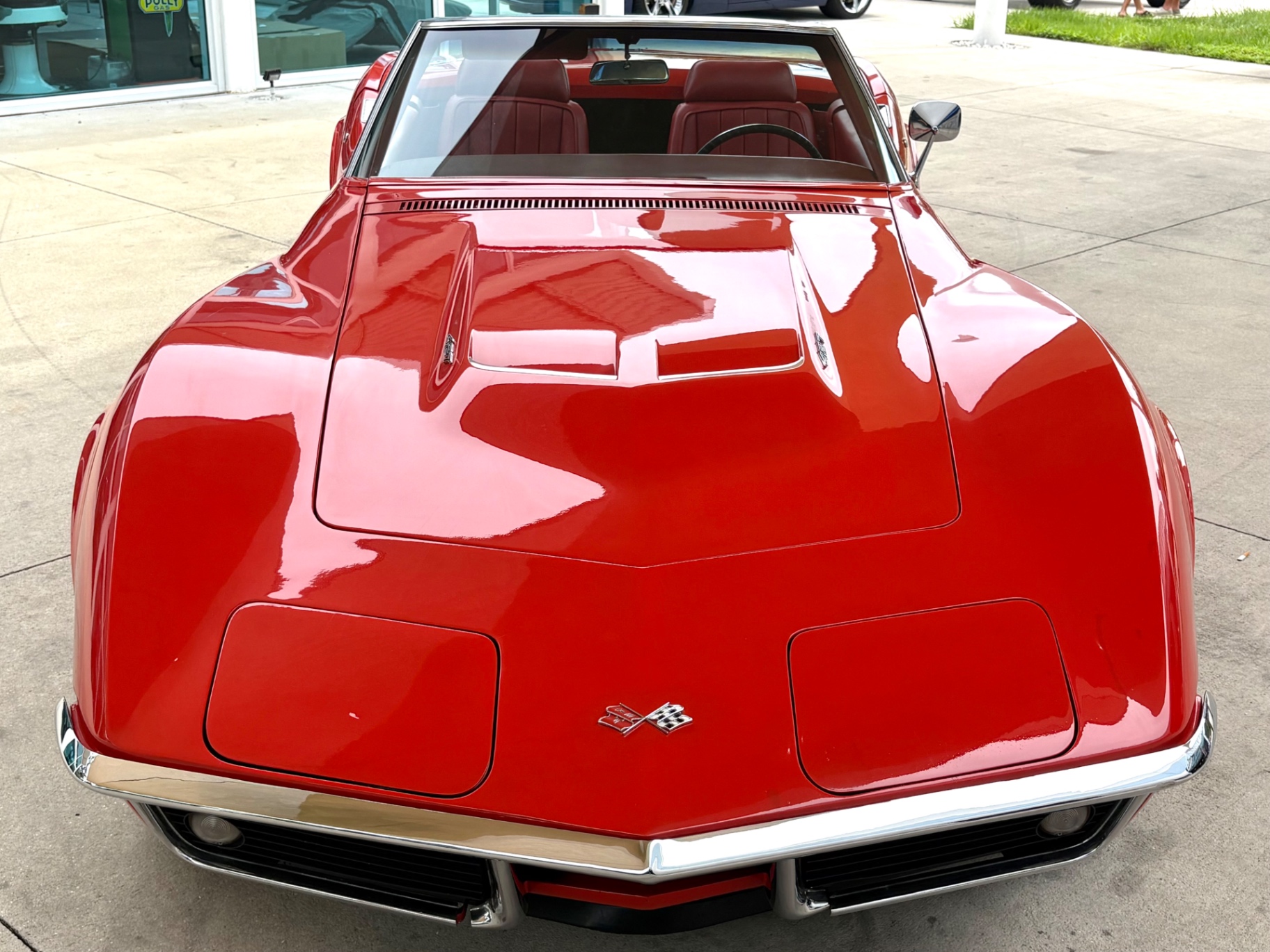
This car's red paint is deep and consistent, with no visible color mismatches between panels that would suggest prior bodywork. The fiberglass panels align well at the shut lines, the nose is intact, and the hideaway headlight doors open and close correctly — a detail that fails on many of these cars due to vacuum line deterioration over the decades. The fact that these are functional is worth noting.
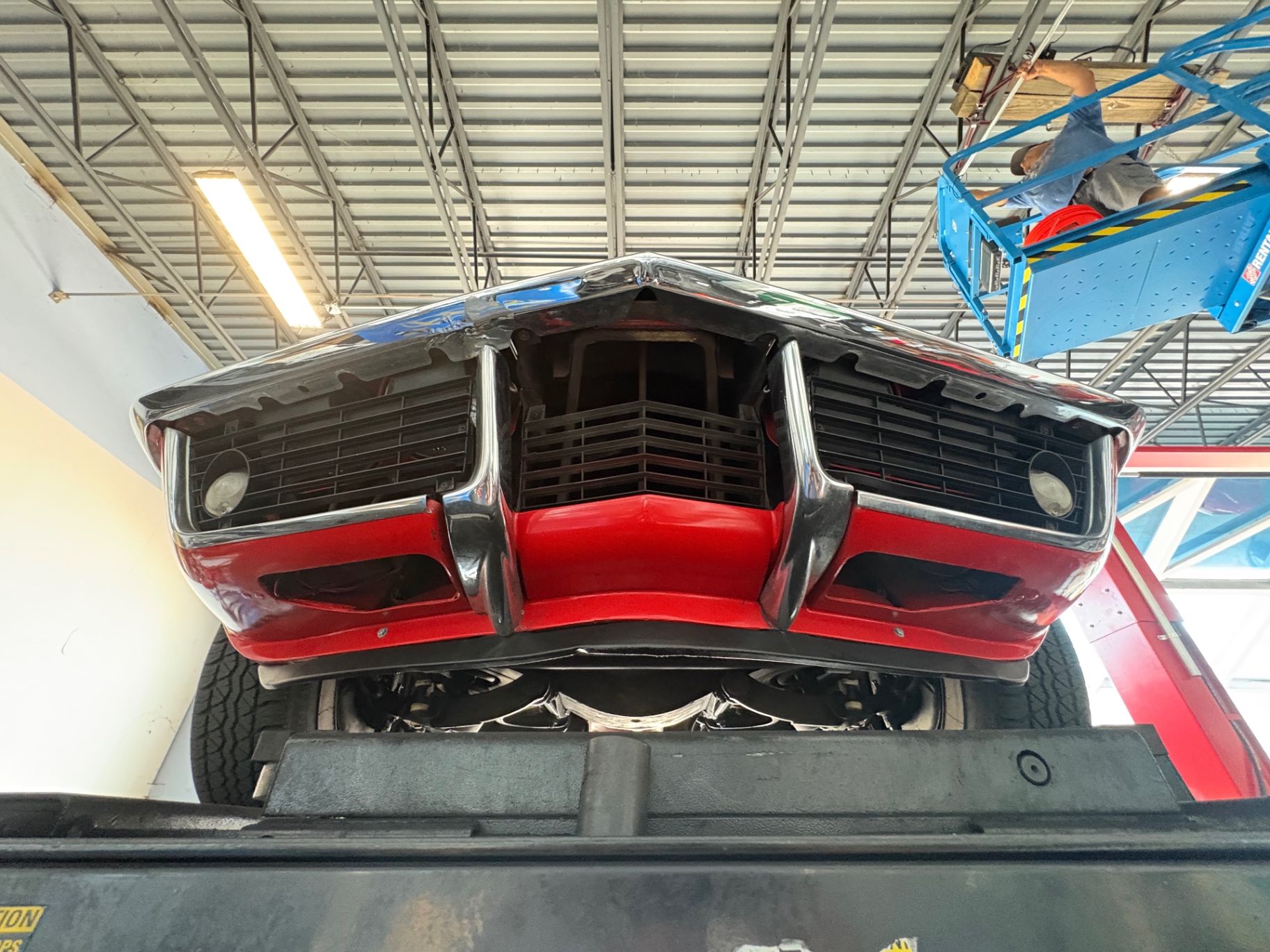
The chrome bumpers front and rear are correct for 1969. This was the final year for chrome bumpers on the Corvette; the 1973 model introduced a body-color urethane front cap, and by 1974 both ends had moved away from chrome. That makes the 1969 the last of the chrome-bumper C3s, which is a detail that matters to purists. The bumpers on this car are in good shape with no significant pitting.
The 15-inch Rally Wheels are correct for the platform and are fitted with redline tires that match the period-correct appearance. The wheel and tire combination completes the factory look without deviating into aftermarket territory.
Conclusion
This 1969 Chevrolet Corvette Stingray convertible represents the last year of big-block production and the last year of chrome bumpers — two facts that, taken together, make the 1969 model a natural stopping point for collectors who want the full factory muscle-car Corvette experience. The numbers-matching 427/390 drivetrain is intact, the car is a genuine convertible with a new top, the four-wheel disc brakes have been freshened, and the red-on-red presentation is correct and consistent. The undercarriage is clean, the interior is solid, and the car is ready to drive.
If you have questions about this 1969 Chevrolet Corvette or would like to arrange an inspection, call Skyway Classics in Sarasota, Florida at 941-254-6608. We are happy to walk you through the car in detail.
Disclaimer
Information found on the website is presented as given to us by the owner of the car, whether on consignment or from the owner we bought it from. Some Photos, materials for videos, descriptions and other information are provided by the consignor/seller and is deemed reliable, but Skyway Classics does not warranty or guarantee this information. Skyway Classics is not responsible for information that may incorrect or a publishing error. The decision to purchase should be based solely on the buyers personal inspection of the vehicle or by a professional inspection service prior to offer or purchase being made.
1969 Chevrolet Corvette Convertible — 427/390 V8, 4-Speed, Numbers Matching
Why This Car Is Special
The 1969 Chevrolet Corvette is widely considered the high-water mark of the C3 generation, and a well-optioned example like this one makes a strong case for that argument. The third-generation Corvette debuted in 1968 with a body styled after the Mako Shark II show car, and by 1969 Chevrolet had worked out the early production kinks, added the Stingray name back to the body, and refined the chassis to give buyers one of the most complete performance packages the factory ever offered in a street car.
This particular 1969 Corvette Stingray is a convertible equipped with the 427 cubic inch Turbo-Jet V8 rated at 390 horsepower, backed by a 4-speed manual transmission. The drivetrain is numbers matching, which is the single most important detail for a serious collector. The VIN confirms this is a genuine big-block car built at the St. Louis assembly plant in 1969. In the collector market, the gap between a documented, numbers-matching 427 Corvette and a re-powered car is substantial — both in terms of value and long-term investment trajectory.
The 427/390 was one of four big-block options available in 1969, positioned above the base 390 and below the more radical 427/400 and 427/435 tri-power variants. It used a single Holley four-barrel carburetor and hydraulic lifters, which made it more streetable than the solid-lifter engines while still producing serious torque. Factory literature from the era listed 0-60 times in the mid-6-second range for comparably equipped cars — numbers that were genuinely fast in 1969 and still respectable today. The 427 was discontinued after 1969 when displacement limits were imposed on the Corvette, making the last year of big-block production a historically significant detail for this model specifically.
The car presents in red over red with a matching leather interior — a combination that reads correctly for the era and works well visually on the Stingray body.
Features List
- 427/390 Turbo-Jet V8, numbers matching
- 4-speed manual transmission, numbers matching
- Numbers matching drivetrain throughout
- Four-wheel disc brakes
- Power steering
- Power windows
- Functional hideaway headlights
- New convertible top
- Rear brakes replaced January 2026
- 15-inch Rally Wheels with redline tires
- Red exterior with matching red leather interior
- Correct chrome bumpers front and rear
Mechanical
The 427 cubic inch Turbo-Jet engine under the hood of this 1969 Corvette is the engine the car was built with, and the numbers confirm it. For collectors, this is non-negotiable. A replaced engine drops the car into a different category regardless of how good the substitute motor is. This one stays in the correct category.
The 390-horsepower rating came from a single Holley 4-barrel carburetor, hydraulic camshaft, and iron cylinder heads. The engine is large-displacement, low-revving, and produces its torque early in the RPM range — characteristics that make it equally usable on a Sunday cruise or a highway on-ramp. The 4-speed manual is the correct transmission pairing for this engine and keeps the driver engaged in a way an automatic simply cannot replicate.
Four-wheel disc brakes were a significant option on the 1969 Corvette. Most passenger cars of the era still used drums at the rear, and the all-disc setup gave the Corvette braking capability that competitors could not match. Power steering rounds out the package and reduces driver fatigue on longer runs without removing road feel entirely. The rear brakes were replaced in January 2026, so the system is freshened and ready to use.
The underside photos show a solid structure. The floor pans are intact, the framerails are clean, and there is no evidence of significant rust or prior collision repair. The exhaust exits through the side-exit tips behind the rear wheels — a layout that is correct and original to the 1969 model. The independent rear suspension, a feature Corvette carried since 1963, is visible and looks correct with no obvious modifications.
Interior
The 1969 Corvette Stingray cockpit was designed to place the driver at the center of everything, and this car delivers that experience with an all-red leather interior that is clean and consistent throughout. The seats show the correct vertical-pleat pattern and appear to be in good shape with no major cracking or fading. The door panels carry the correct chrome-trimmed pull handle and window control knob on each side, with the power window switches operating as they should.
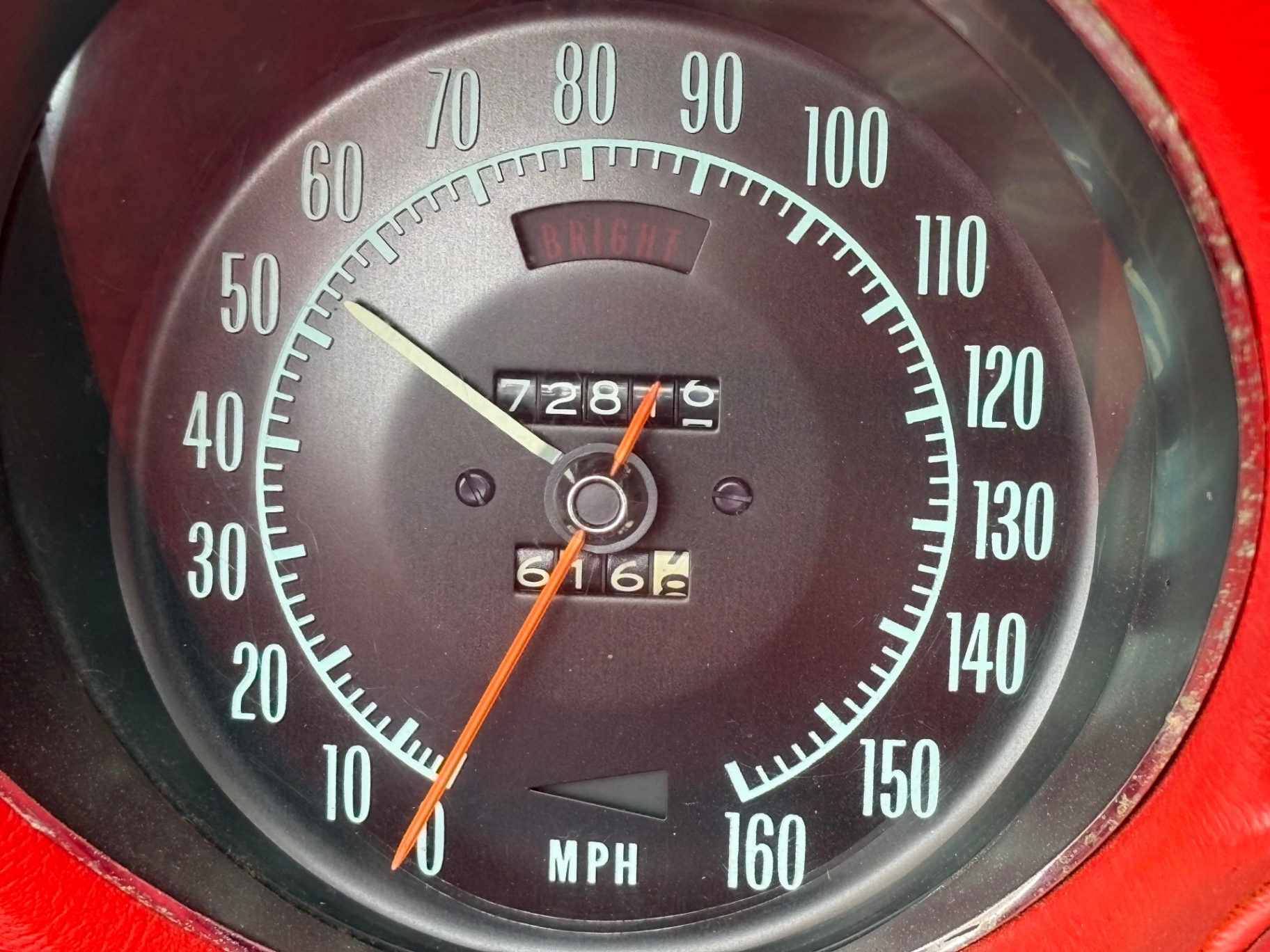
The dashboard carries the Corvette's distinctive round-gauge instrument cluster, with the large 160 mph speedometer and tachometer mounted in the two main pods directly in front of the driver. Secondary gauges for fuel level, water temperature, oil pressure, and battery condition are arranged in the center console tower, flanked by the Corvette-branded AM radio. The layout is busy by modern standards, but it gives a driver real information without having to dig through menus or interpret warning lights.
The center console houses the 4-speed shifter with its correct black ball shift knob and the gear pattern visible on the console plate. The climate controls, wiper, and accessory switches run across the top of the center stack in the correct configuration for a 1969 build. The carpet and lower trim areas are red throughout, matching the seats and door panels. The convertible top is new, which eliminates one of the most common maintenance items on any open car of this age.
Exterior
The 1969 Chevrolet Corvette Stingray body is one of the more complex fiberglass shapes of the muscle car era. The long hood, fastback roofline on the coupe version, and the tunneled rear with its four round taillights were all carried forward from the 1968 introduction, but the 1969 model added the Stingray script to the front fenders and made small refinements to the door and interior fit. The convertible body on this car eliminates the removable T-top roof panels and gives a cleaner open-air experience.
This car's red paint is deep and consistent, with no visible color mismatches between panels that would suggest prior bodywork. The fiberglass panels align well at the shut lines, the nose is intact, and the hideaway headlight doors open and close correctly — a detail that fails on many of these cars due to vacuum line deterioration over the decades. The fact that these are functional is worth noting.
The chrome bumpers front and rear are correct for 1969. This was the final year for chrome bumpers on the Corvette; the 1973 model introduced a body-color urethane front cap, and by 1974 both ends had moved away from chrome. That makes the 1969 the last of the chrome-bumper C3s, which is a detail that matters to purists. The bumpers on this car are in good shape with no significant pitting.
The 15-inch Rally Wheels are correct for the platform and are fitted with redline tires that match the period-correct appearance. The wheel and tire combination completes the factory look without deviating into aftermarket territory.
Conclusion
This 1969 Chevrolet Corvette Stingray convertible represents the last year of big-block production and the last year of chrome bumpers — two facts that, taken together, make the 1969 model a natural stopping point for collectors who want the full factory muscle-car Corvette experience. The numbers-matching 427/390 drivetrain is intact, the car is a genuine convertible with a new top, the four-wheel disc brakes have been freshened, and the red-on-red presentation is correct and consistent. The undercarriage is clean, the interior is solid, and the car is ready to drive.
If you have questions about this 1969 Chevrolet Corvette or would like to arrange an inspection, call Skyway Classics in Sarasota, Florida at 941-254-6608. We are happy to walk you through the car in detail.
Disclaimer
Information found on the website is presented as given to us by the owner of the car, whether on consignment or from the owner we bought it from. Some Photos, materials for videos, descriptions and other information are provided by the consignor/seller and is deemed reliable, but Skyway Classics does not warranty or guarantee this information. Skyway Classics is not responsible for information that may incorrect or a publishing error. The decision to purchase should be based solely on the buyers personal inspection of the vehicle or by a professional inspection service prior to offer or purchase being made.
1969 Chevrolet
Corvette Base
Why Choose Skyway Classics?
Explore our curated inventory of classic and collector cars—thoughtfully selected, ready to drive, and supported by experts who make ownership simple.
Expert Curation
Every vehicle is hand-selected by our experts for quality, authenticity, and investment potential.
Fast Transactions
Streamlined buying and selling process with quick financing and immediate delivery options.
Only National Dealer With Classic Service & Repair
We’re the only national dealership that services and repairs the classics we sell—before and after the sale.
Nationwide Network
Access to our extensive network of collectors, restorers, and classic car enthusiasts nationwide.
Concierge Ownership Support
From financing and insurance to paperwork, shipping, and titling—we handle the details so you can enjoy the drive.
Passion-Driven Service
We're classic car enthusiasts first, providing personalized service with genuine passion for the hobby.