
1979 Pontiac
Firebird Trans Am
1979 Pontiac Firebird Trans Am T/A 6.6 — Restored Black and Gold, 400 V8, 4-Speed Manual
Why This Car Is Special
The 1979 Pontiac Firebird Trans Am sits at the absolute peak of the second-generation Firebird's cultural moment. By 1979, the Trans Am had already starred in Smokey and the Bandit, and sales were through the roof — Pontiac moved over 117,000 Trans Ams that year alone, making it the best-selling year in the model's history up to that point. These were not quiet, understated cars. They were exactly what a performance car buyer in the late 1970s wanted: big displacement, manual transmission, aggressive graphics, and a shaker hood scoop that told you exactly what was living underneath it before you even opened the hood.
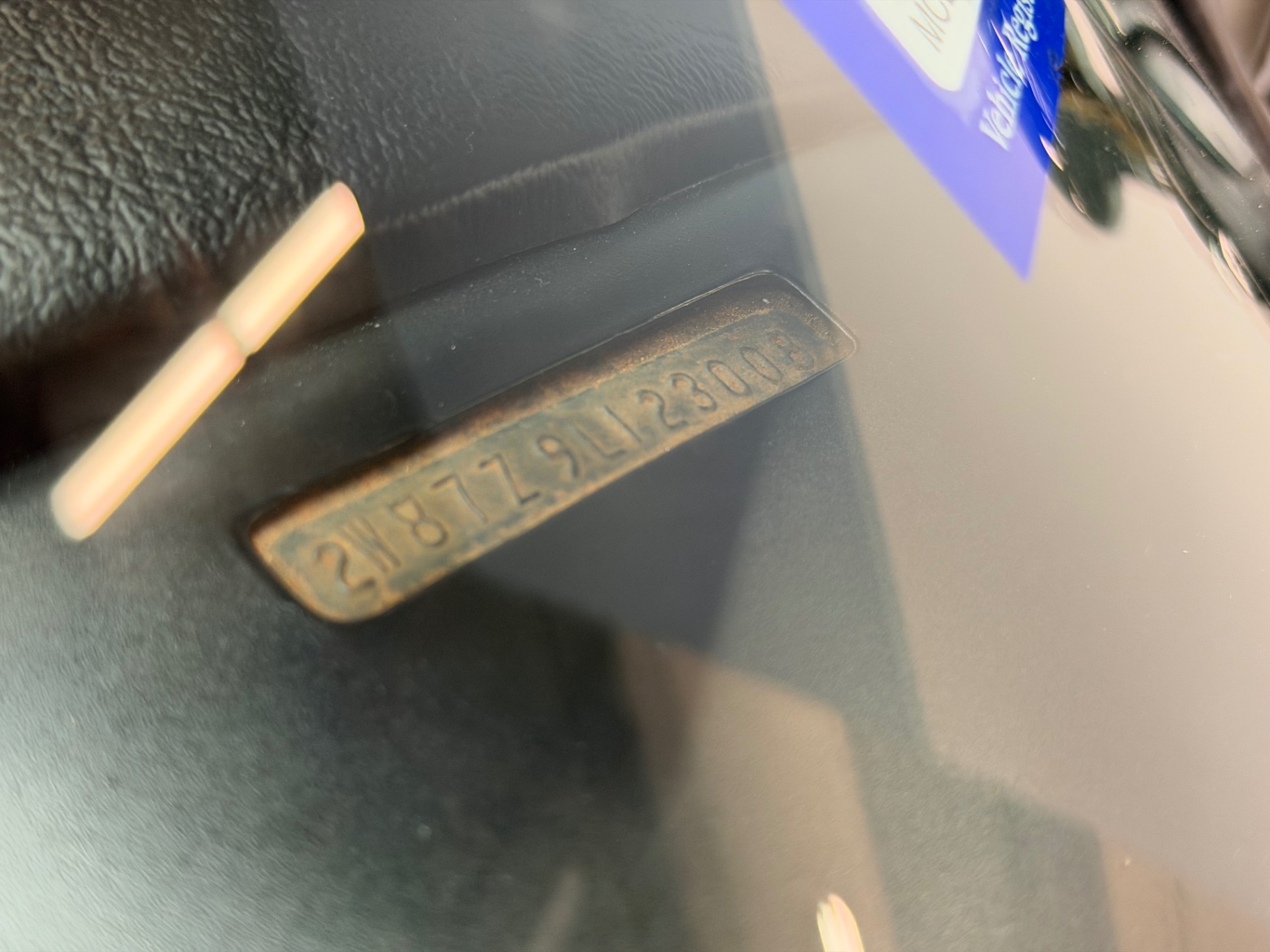
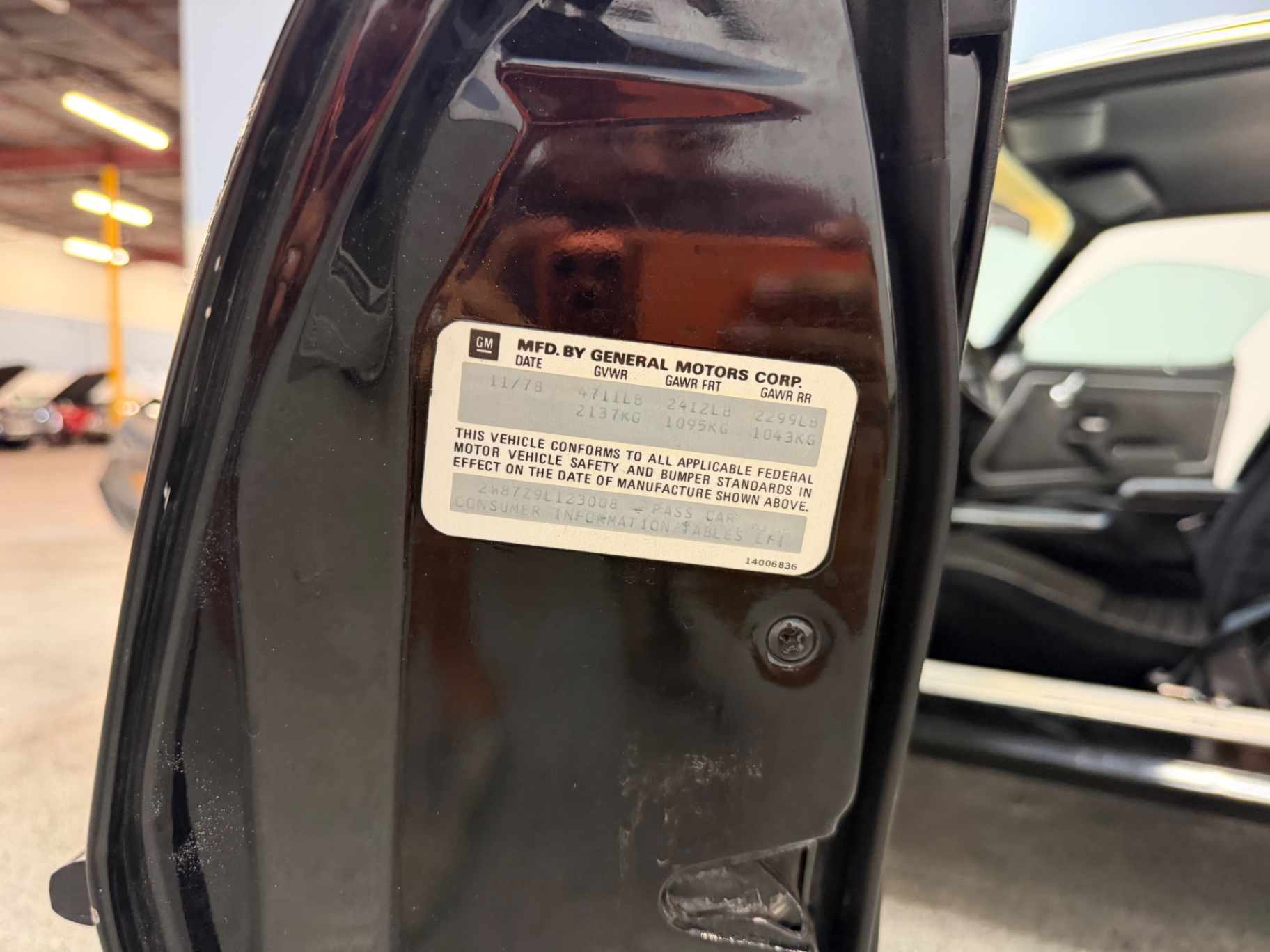
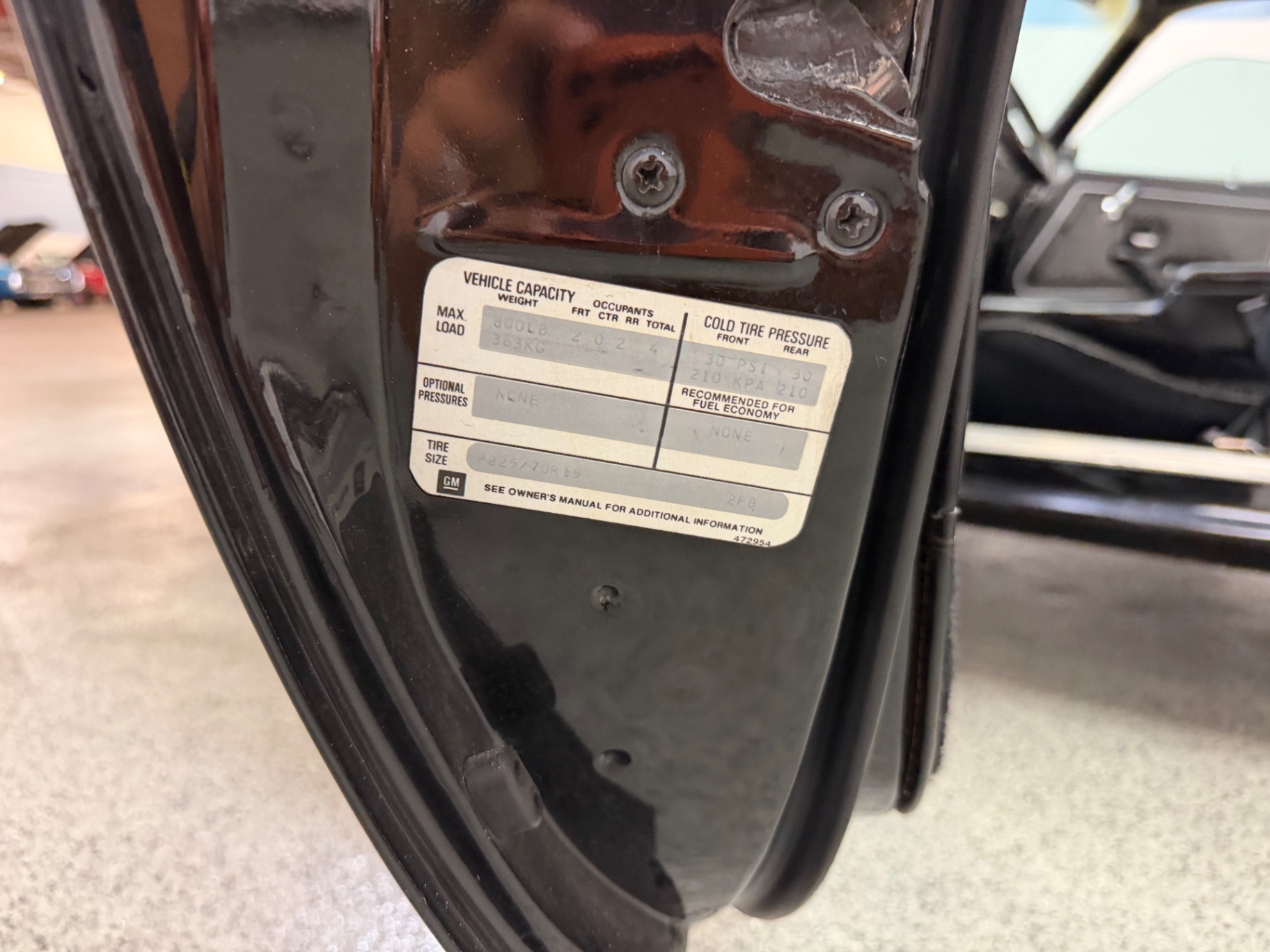
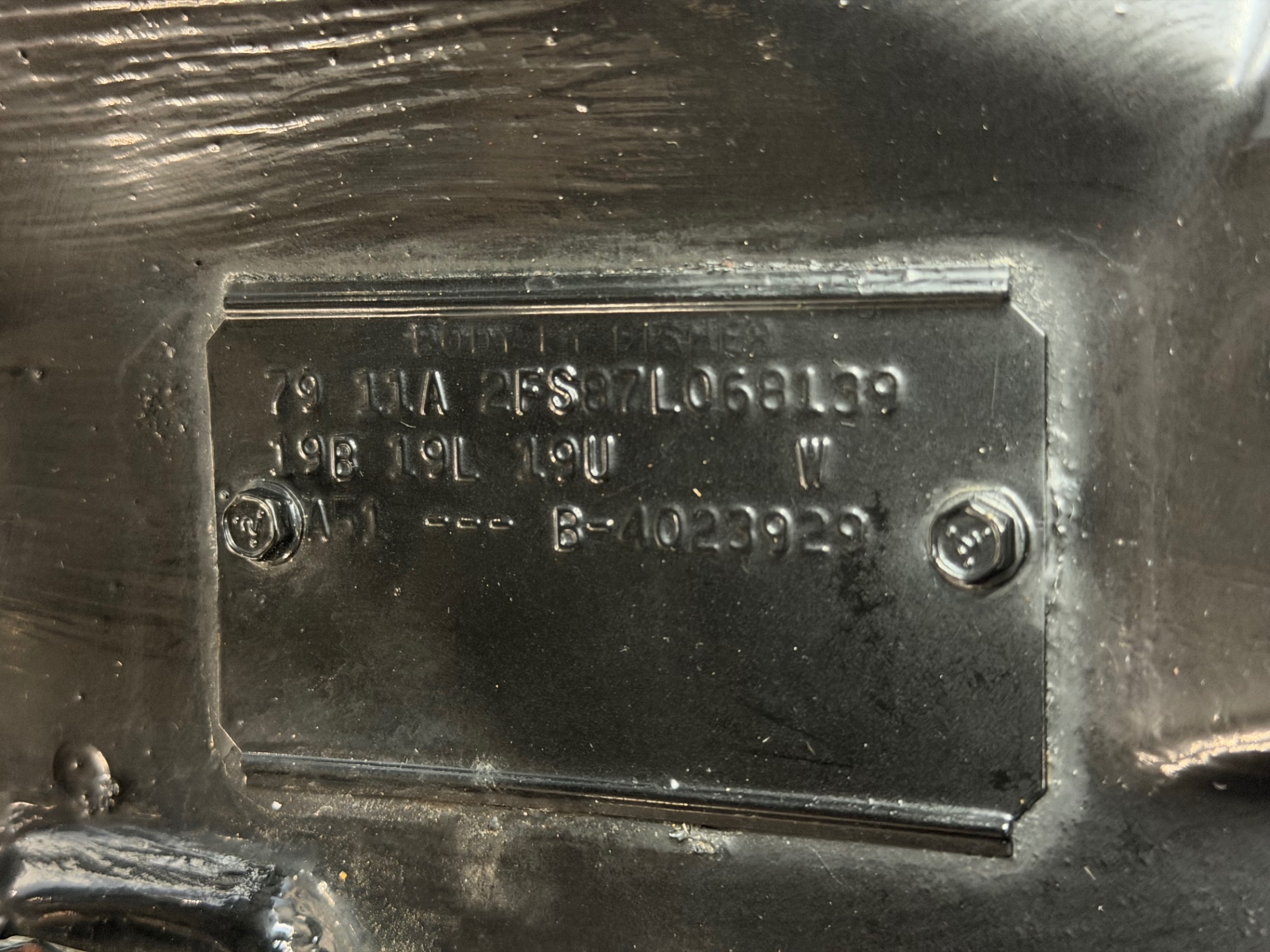
This particular 1979 Pontiac Firebird Trans Am carries the T/A 6.6 engine option — the 400 cubic inch Pontiac V8 — backed by a 4-speed manual transmission. The VIN confirms this is a coupe body style with the 6.6-liter engine and manual gearbox combination, which is the spec most Trans Am buyers today are specifically searching for. The automatic was far more common by 1979, so a correctly optioned 4-speed car like this one is harder to find. The engine code in this VIN decodes to the Pontiac 400, which by 1979 was being phased out in favor of the Oldsmobile 403 and Chevrolet 350 units that made their way into many Trans Ams that year. Getting the actual Pontiac-built 400 in a 1979 car with a 4-speed is a combination that collectors specifically seek out.
The restoration on this car has been done with an eye toward driving quality and mechanical correctness rather than trailer-queen show points. The result is a 1979 Pontiac Firebird Trans Am that looks right, sounds right, and is built to be used.
Features List
- T/A 6.6 Pontiac 400 cubic inch V8
- 4-speed manual transmission
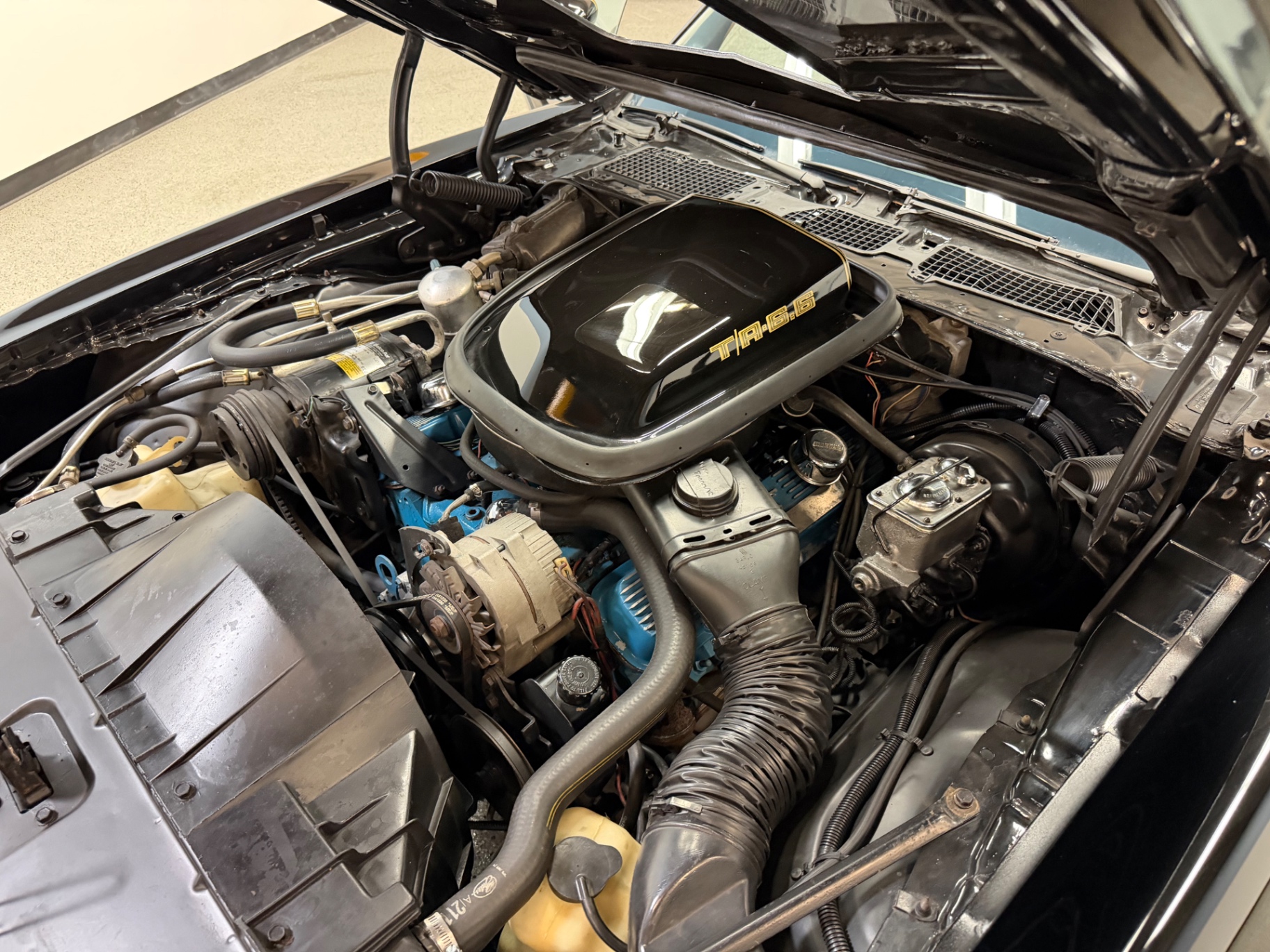
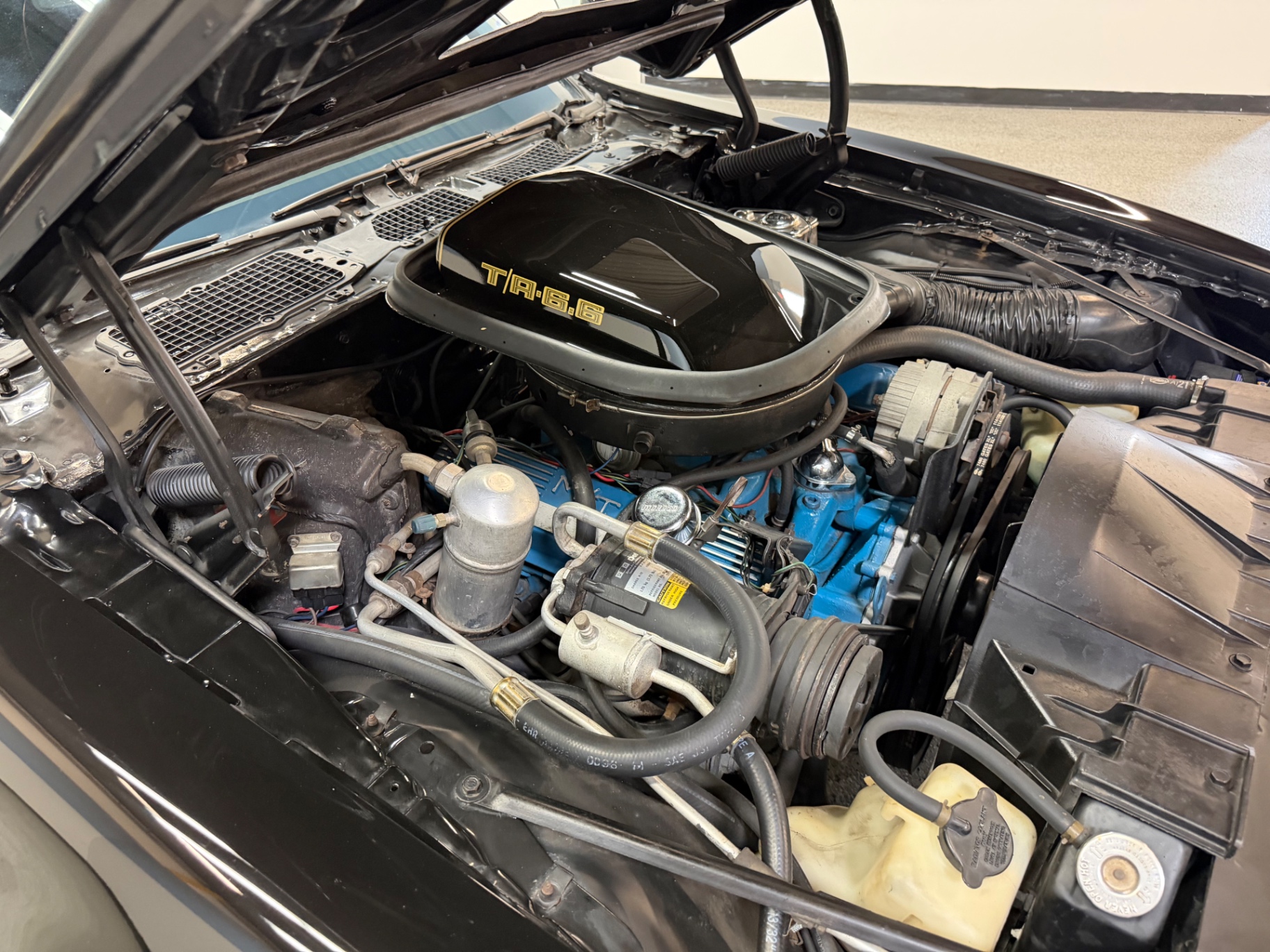
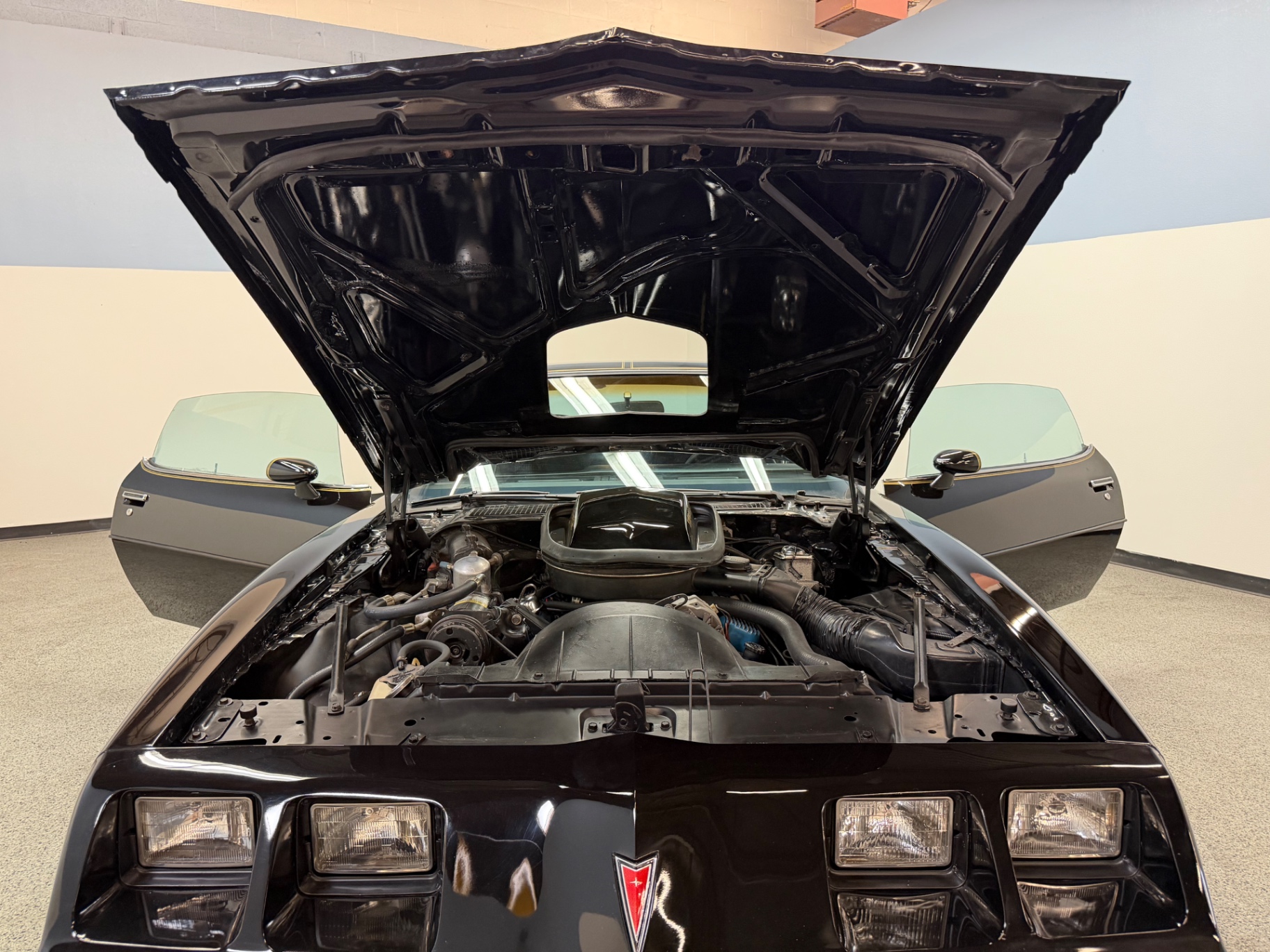
- Functional shaker hood scoop with T/A 6.6 identification decal
- Milodon performance oil pan
- Dual exhaust with Flowmaster mufflers
- Power steering
- Power front disc brakes
- Air conditioning
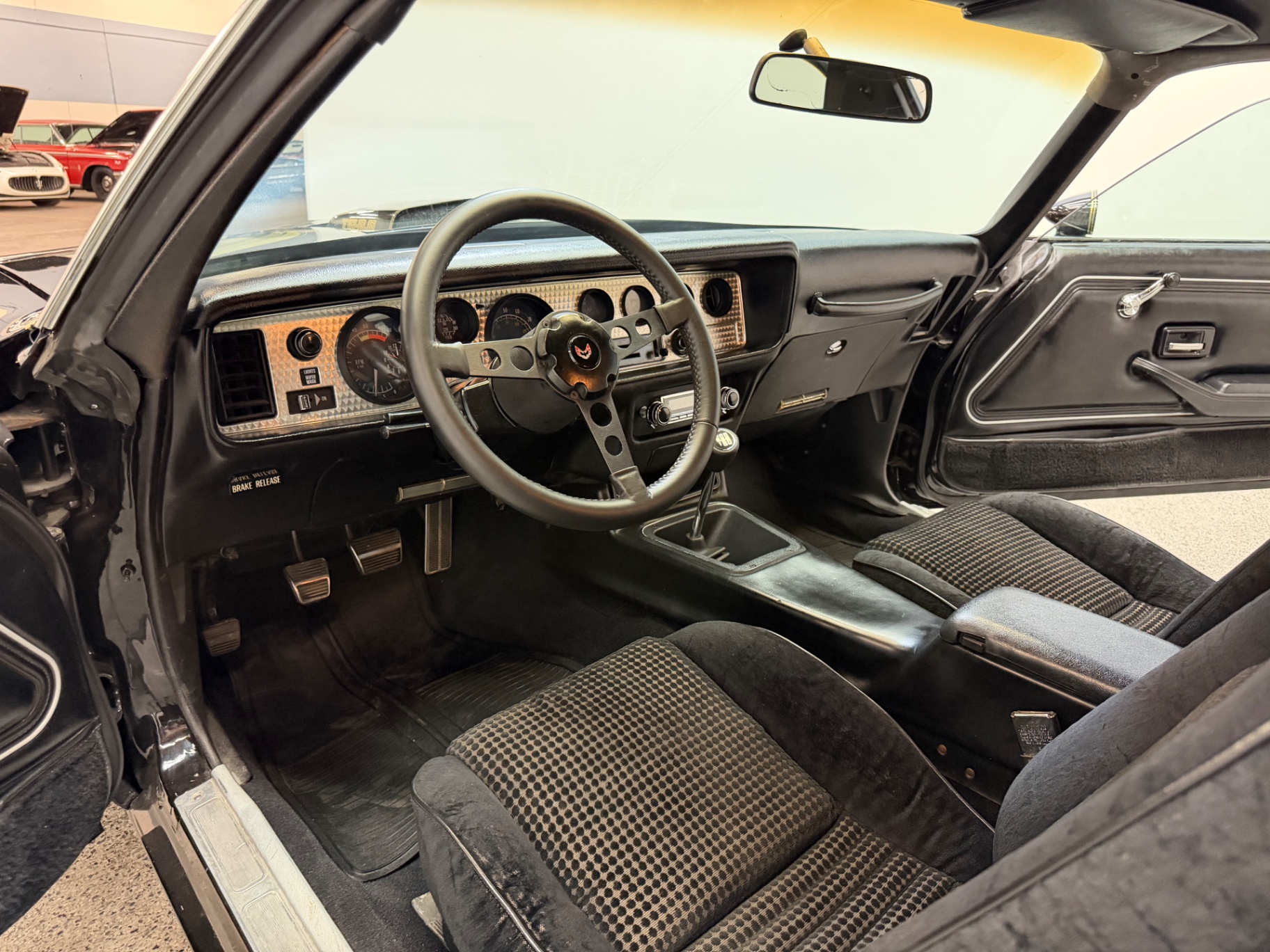
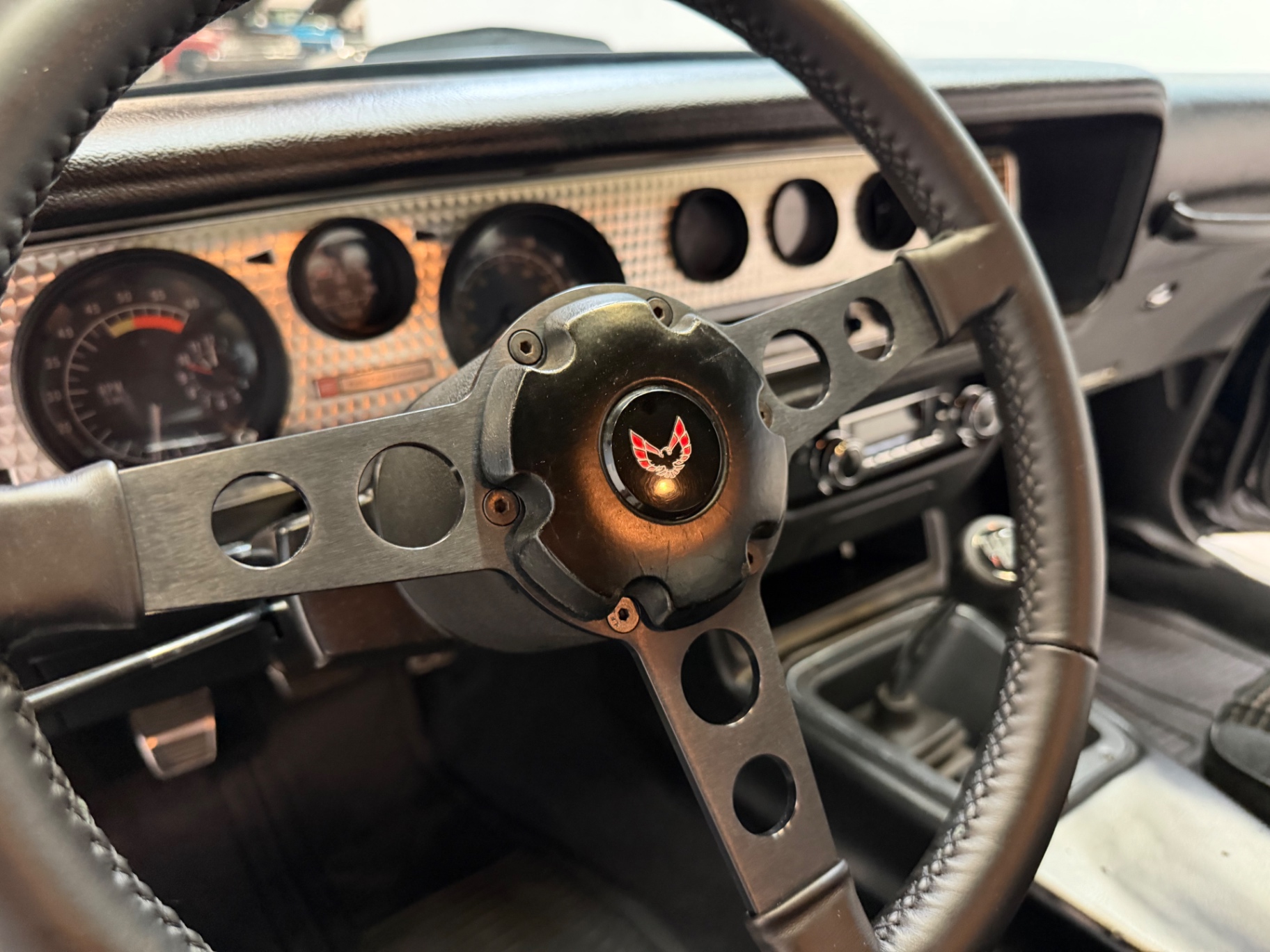
- Trans Am Firebird steering wheel with center cap
- Full gauge cluster with tachometer, water temp, fuel, and voltmeter gauges
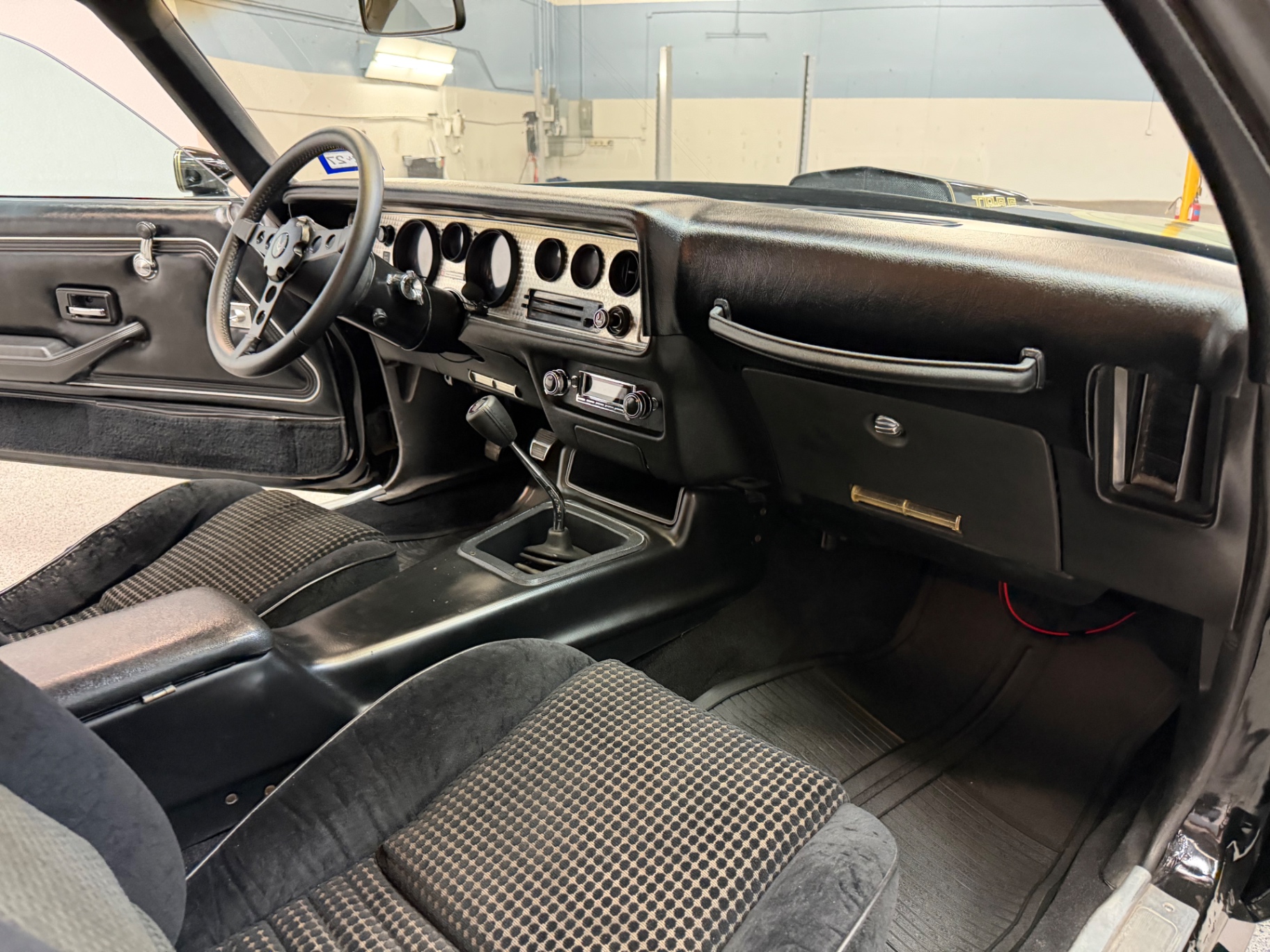
- 4-speed center console shifter
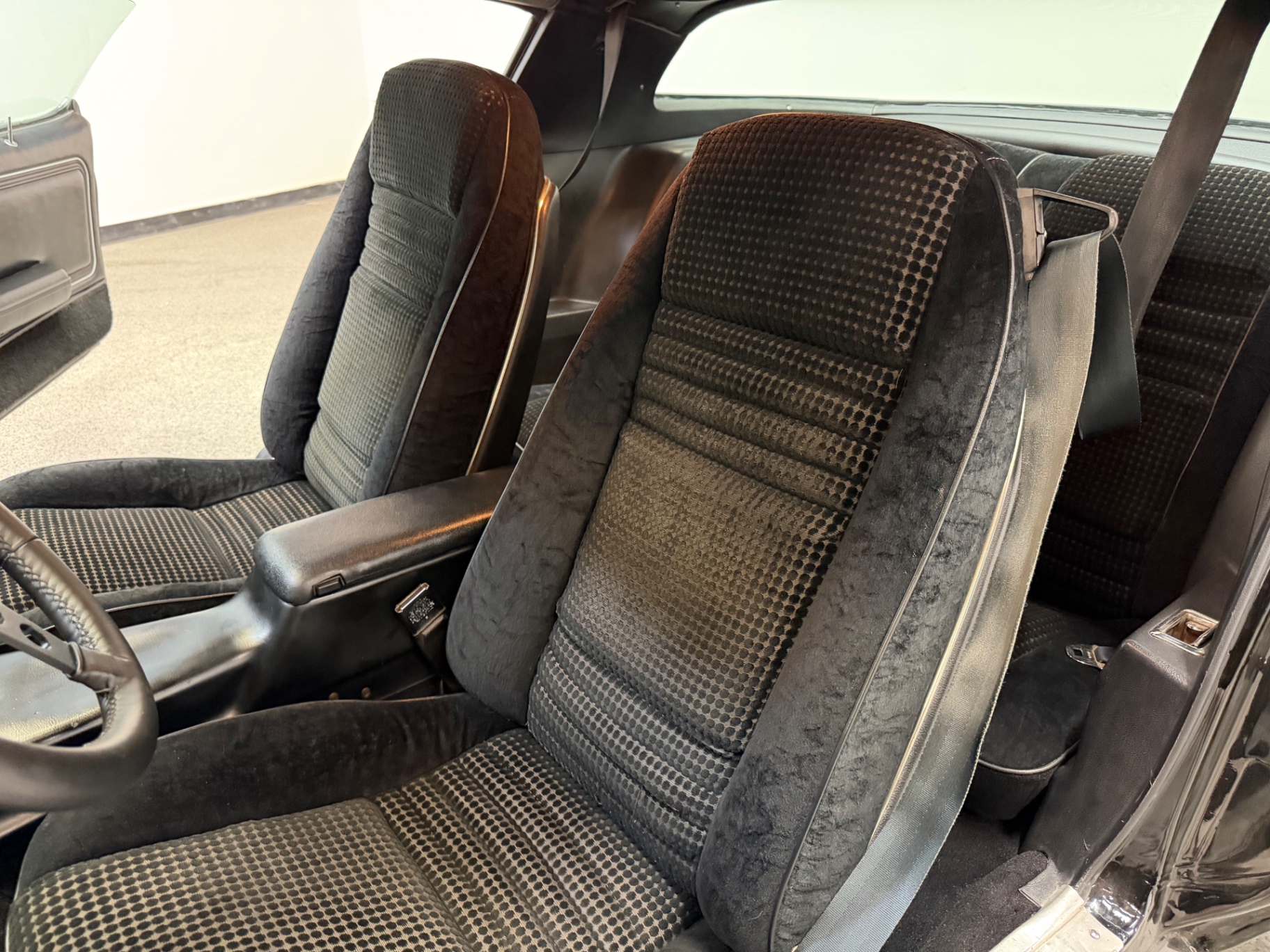
- High-back bucket seats with correct dot-pattern cloth upholstery
- Period-correct retro radio
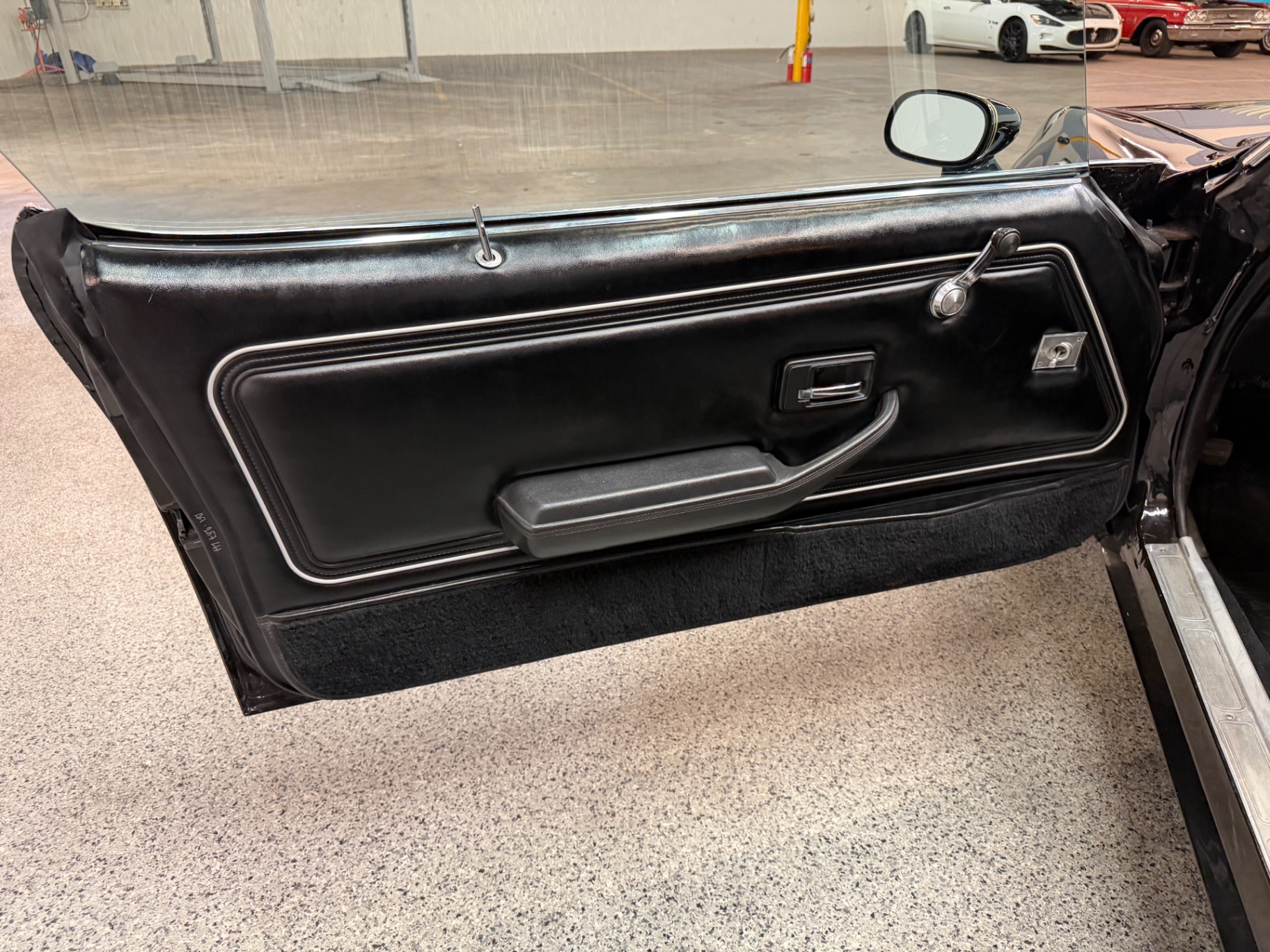
- Clean door panels
- Intact headliner
- Clean carpet
- SE decals
- Rust-free floorpans
- Clean frame rails
- Clean rear axle
- Blue-painted Pontiac block
Mechanical
The heart of this 1979 Pontiac Firebird Trans Am is the Pontiac-built 400 cubic inch V8, badged and sold as the T/A 6.6. By 1979, emissions regulations had tightened considerably compared to the muscle car era, and Pontiac was working hard to maintain performance character within those constraints. The 400 was the last of the true Pontiac-displacement big-inch engines available in the Trans Am, and it was on its way out after this model year. That gives 1979 a specific historical significance — it is the last year you could order a Pontiac Firebird Trans Am with a genuine Pontiac V8 under the hood.
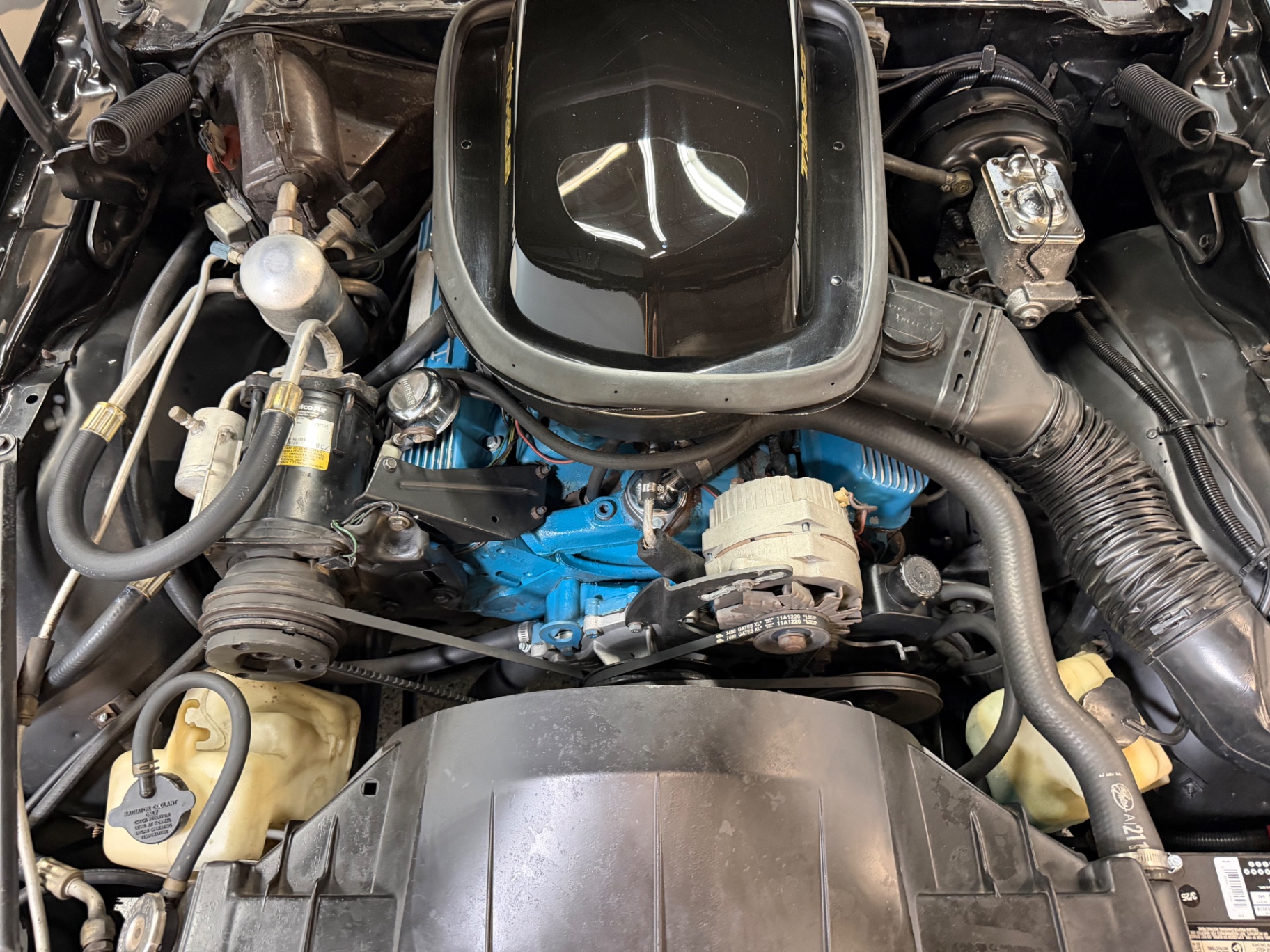
The engine bay on this car has been carefully restored. The Pontiac block is painted in the correct shade of blue, and the shaker air cleaner assembly sits properly on the intake, functional and visually correct. The shaker scoop on the 1979 Trans Am was a meaningful piece of equipment — it was directly connected to the air cleaner and moved with the engine, providing a cold-air induction path that made a visible difference at wide-open throttle. It is not cosmetic.
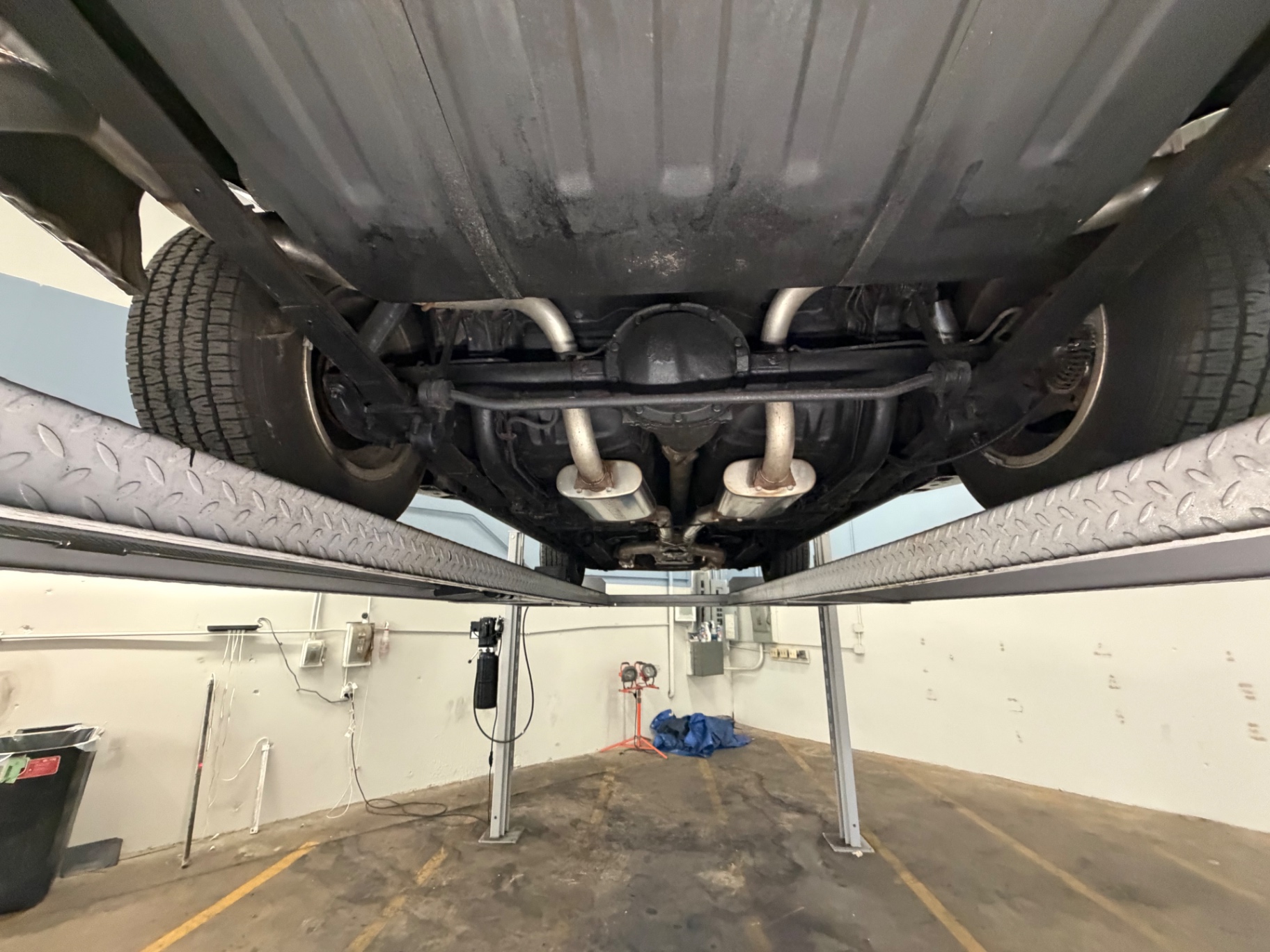
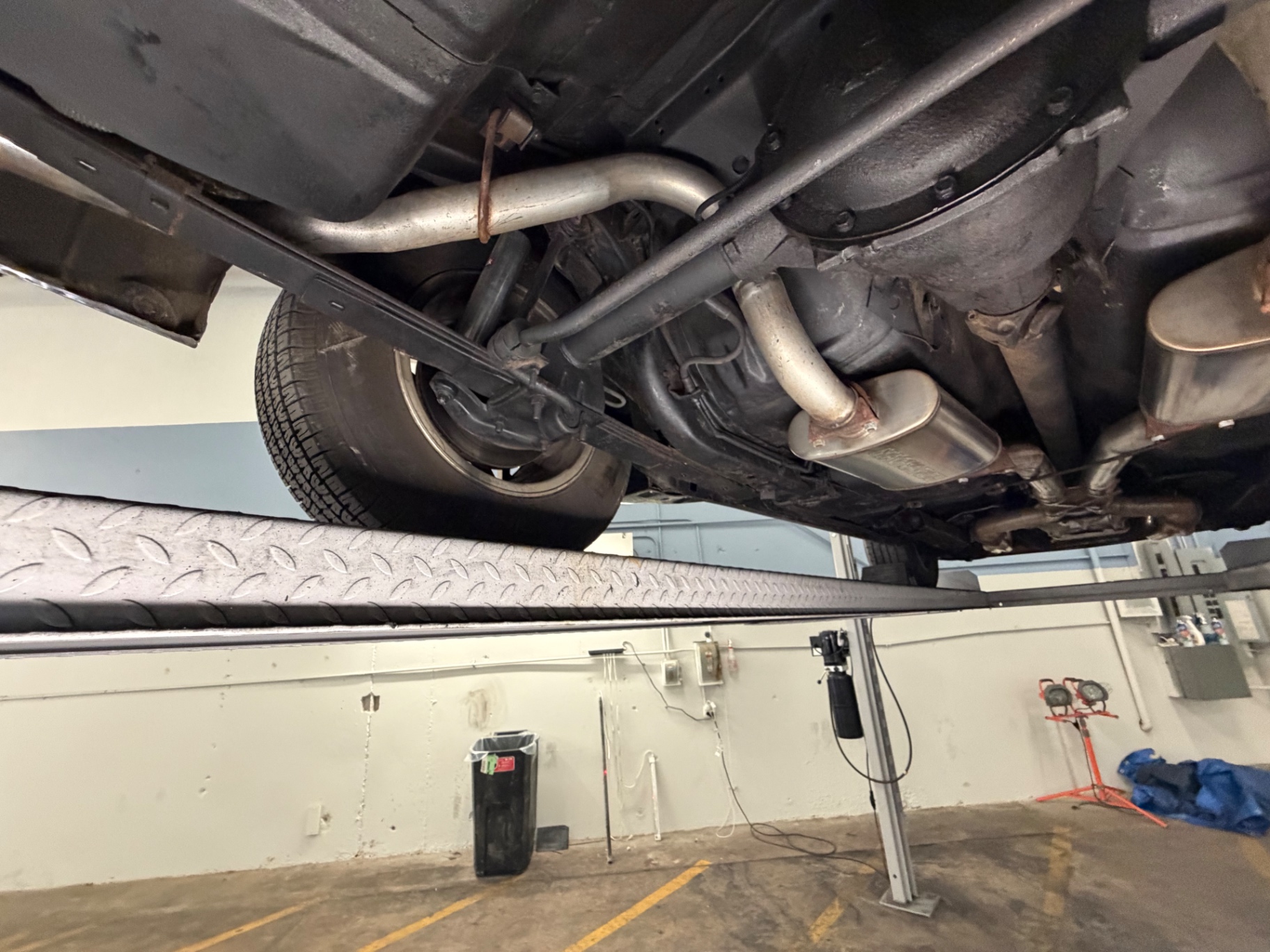
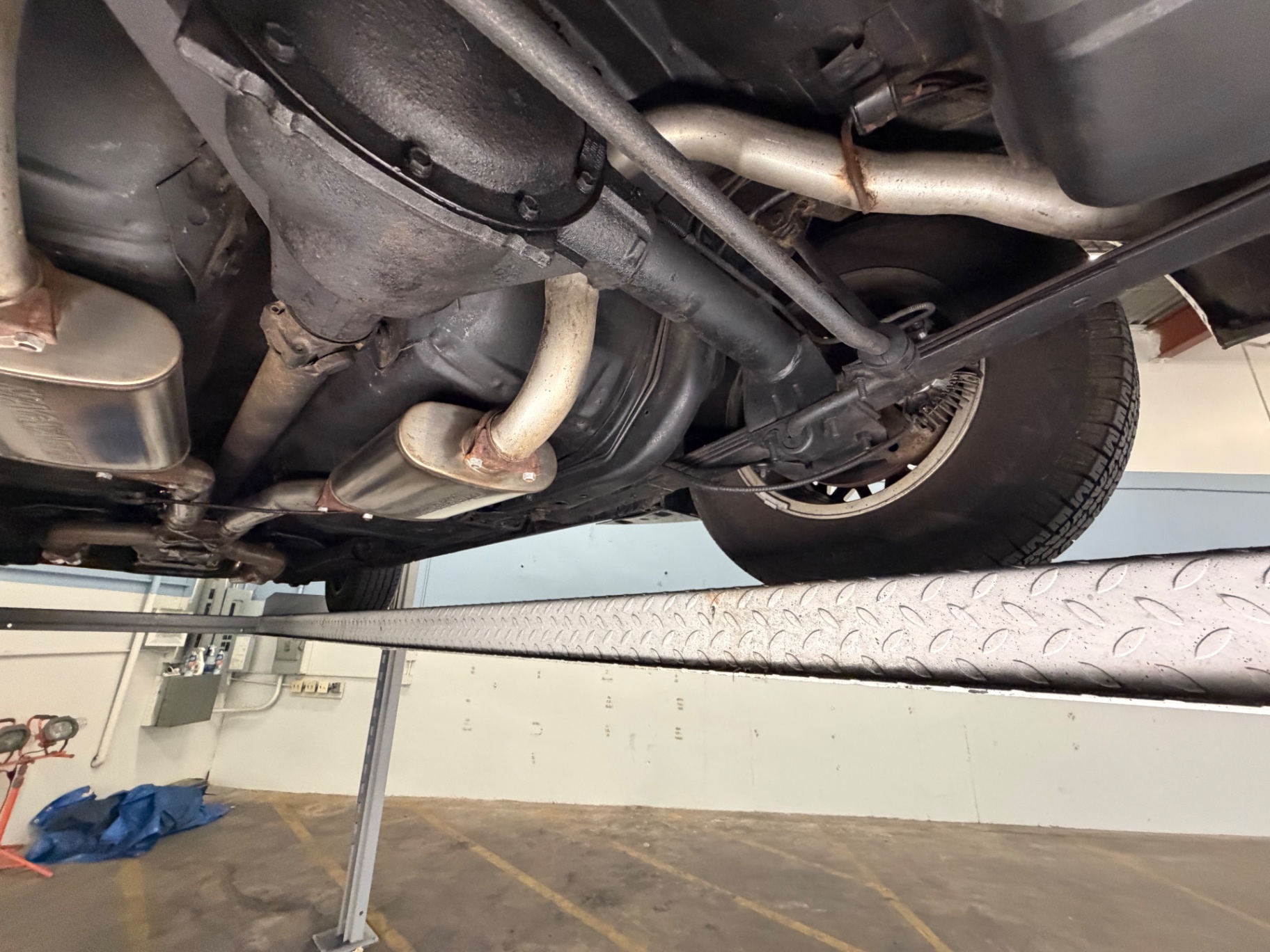
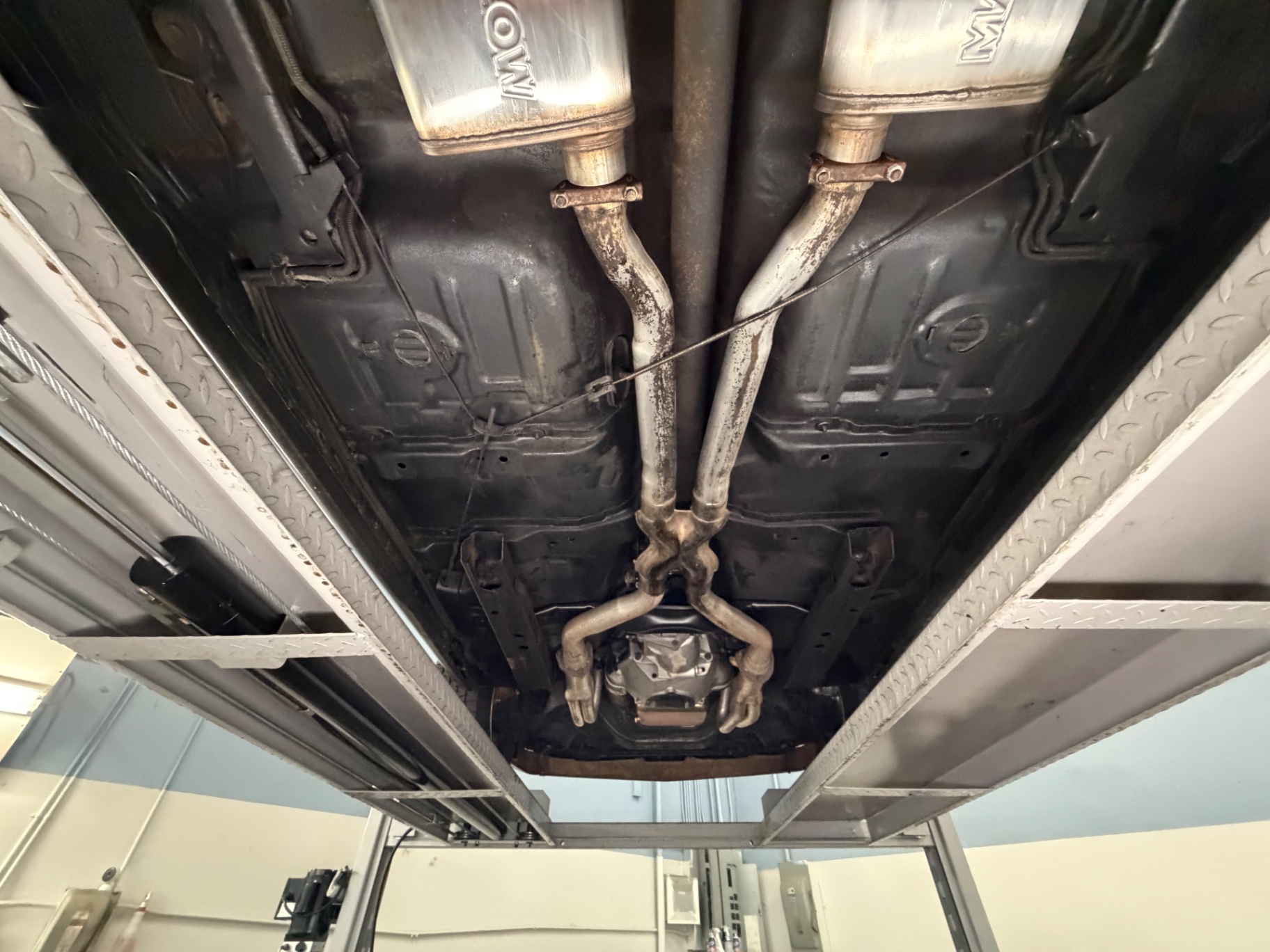
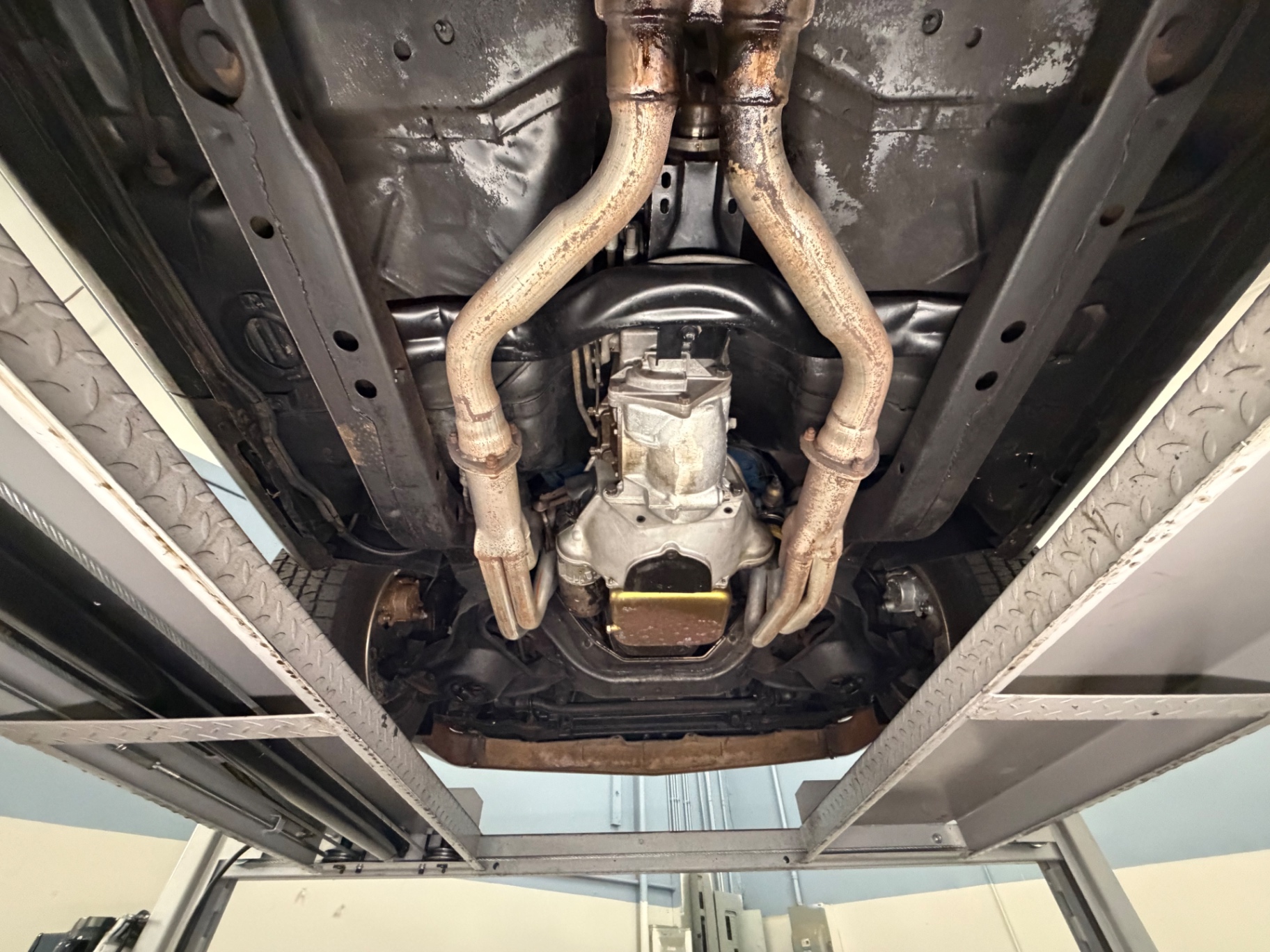
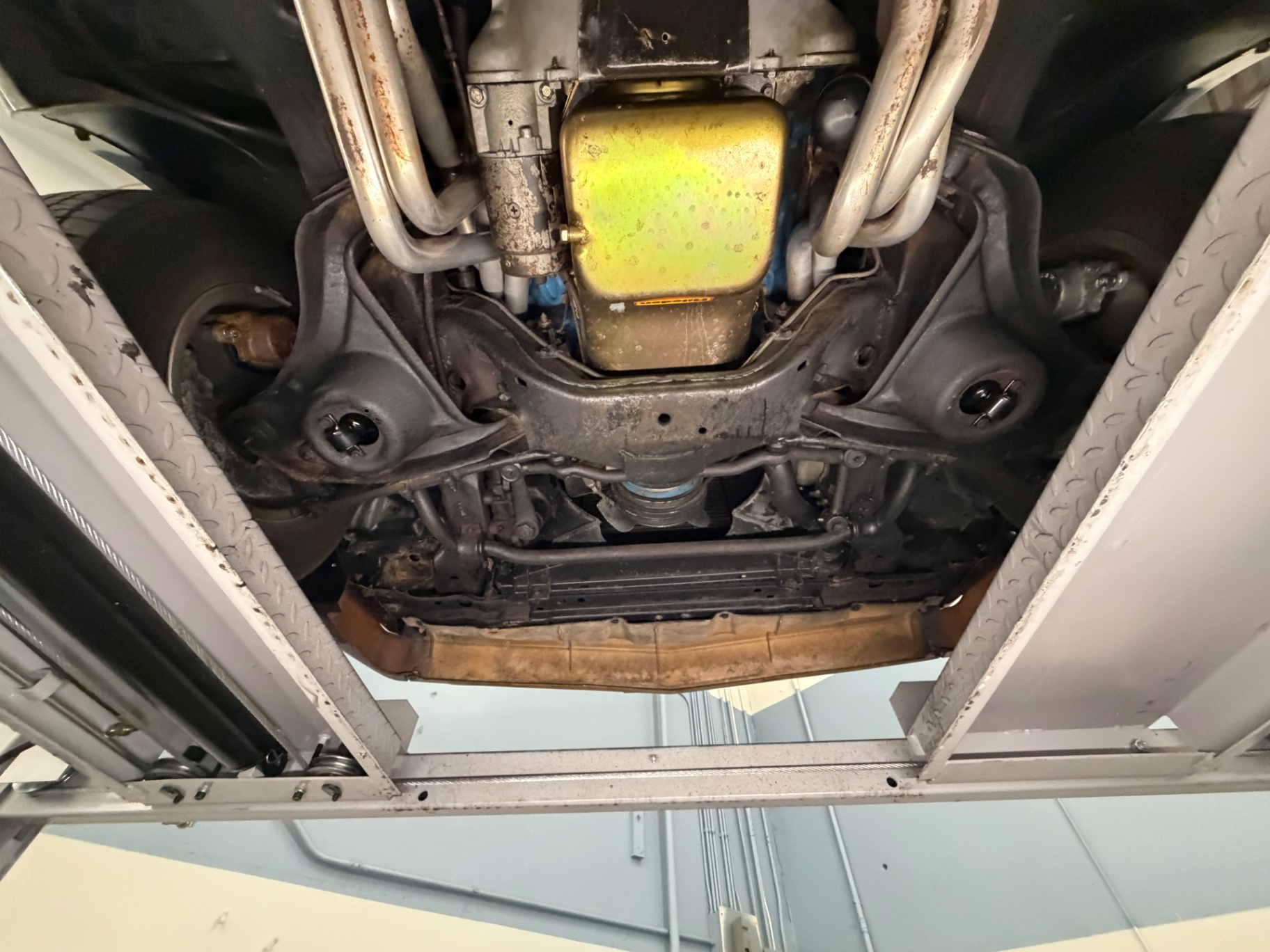
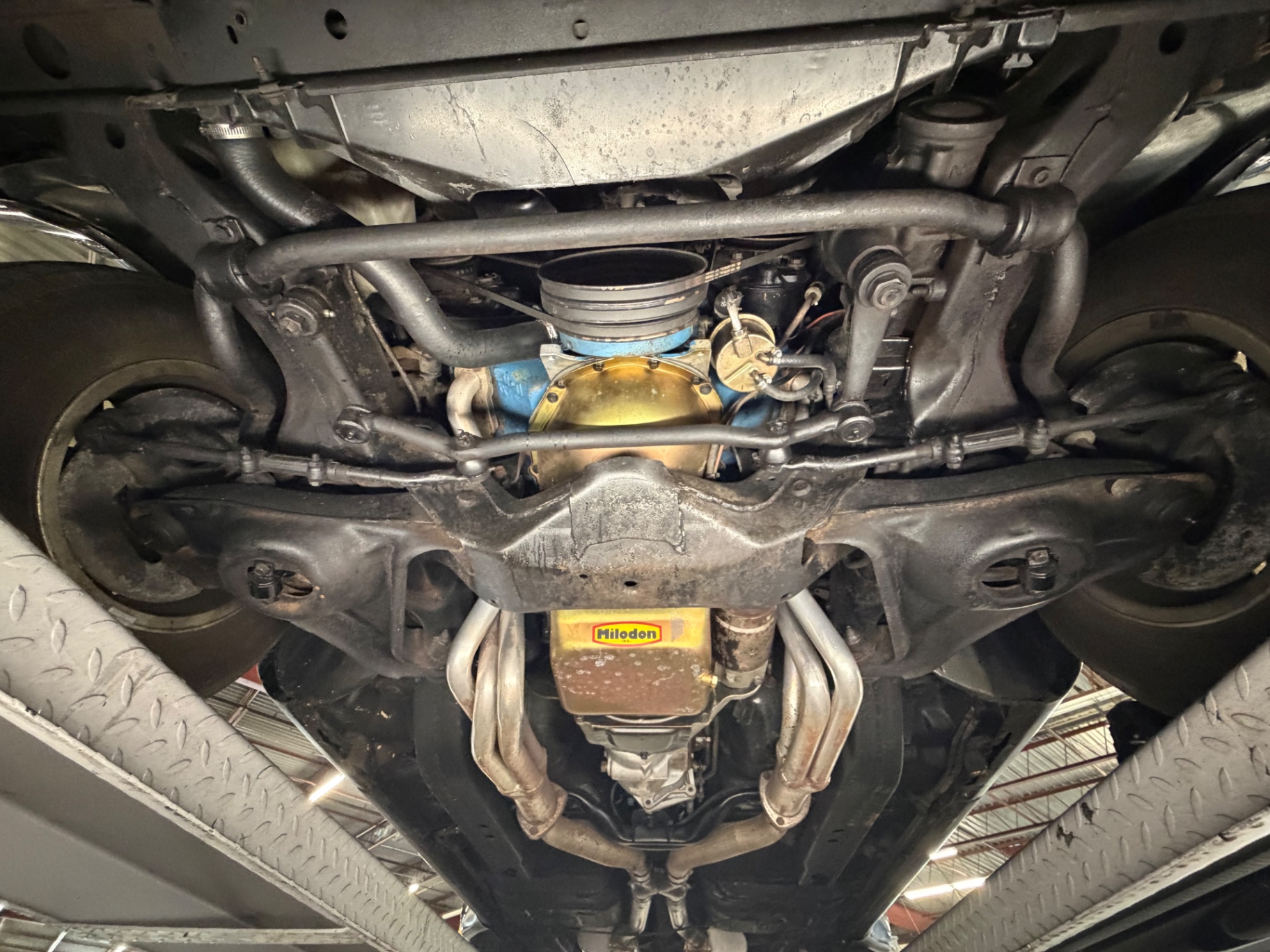
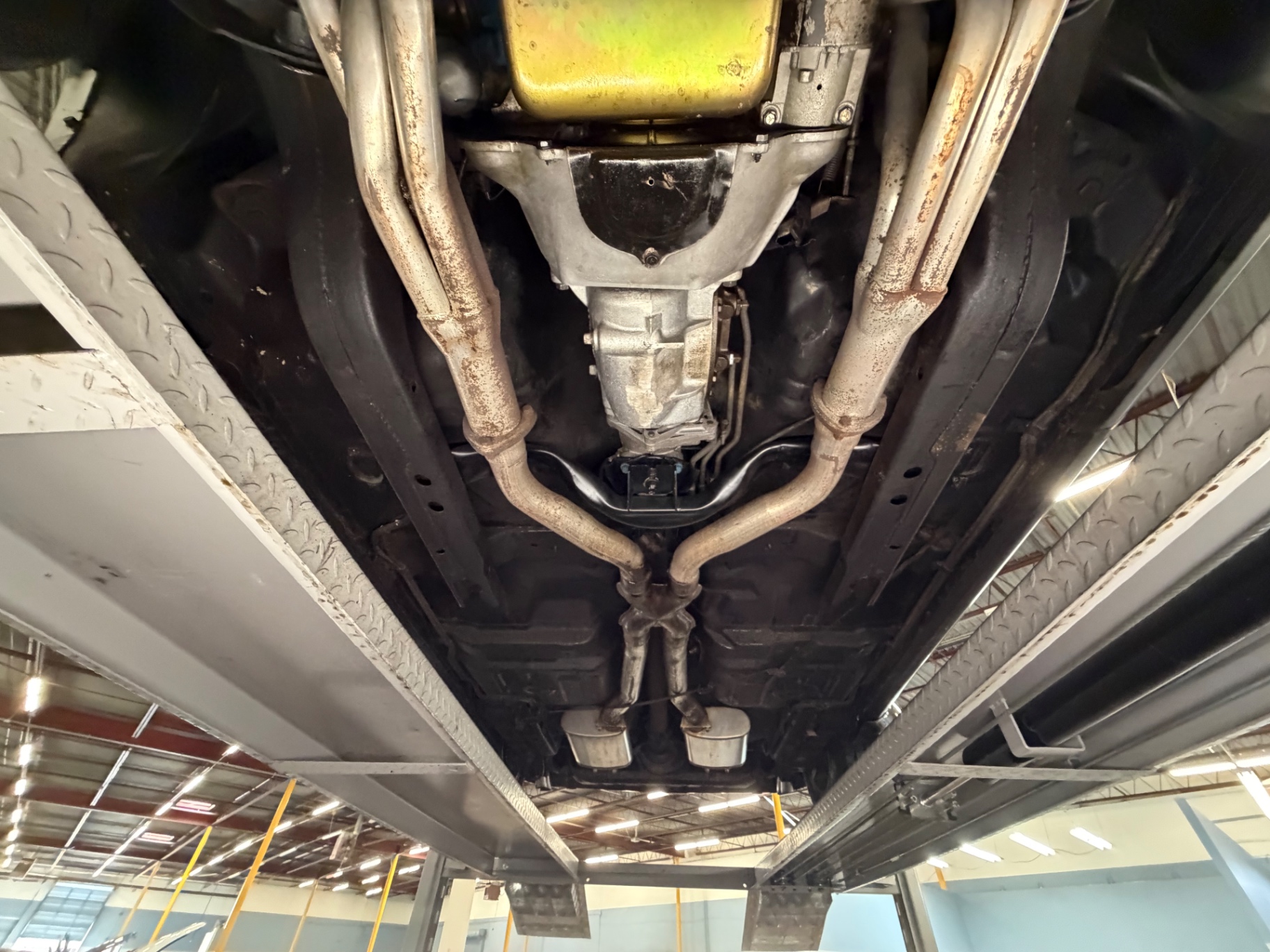
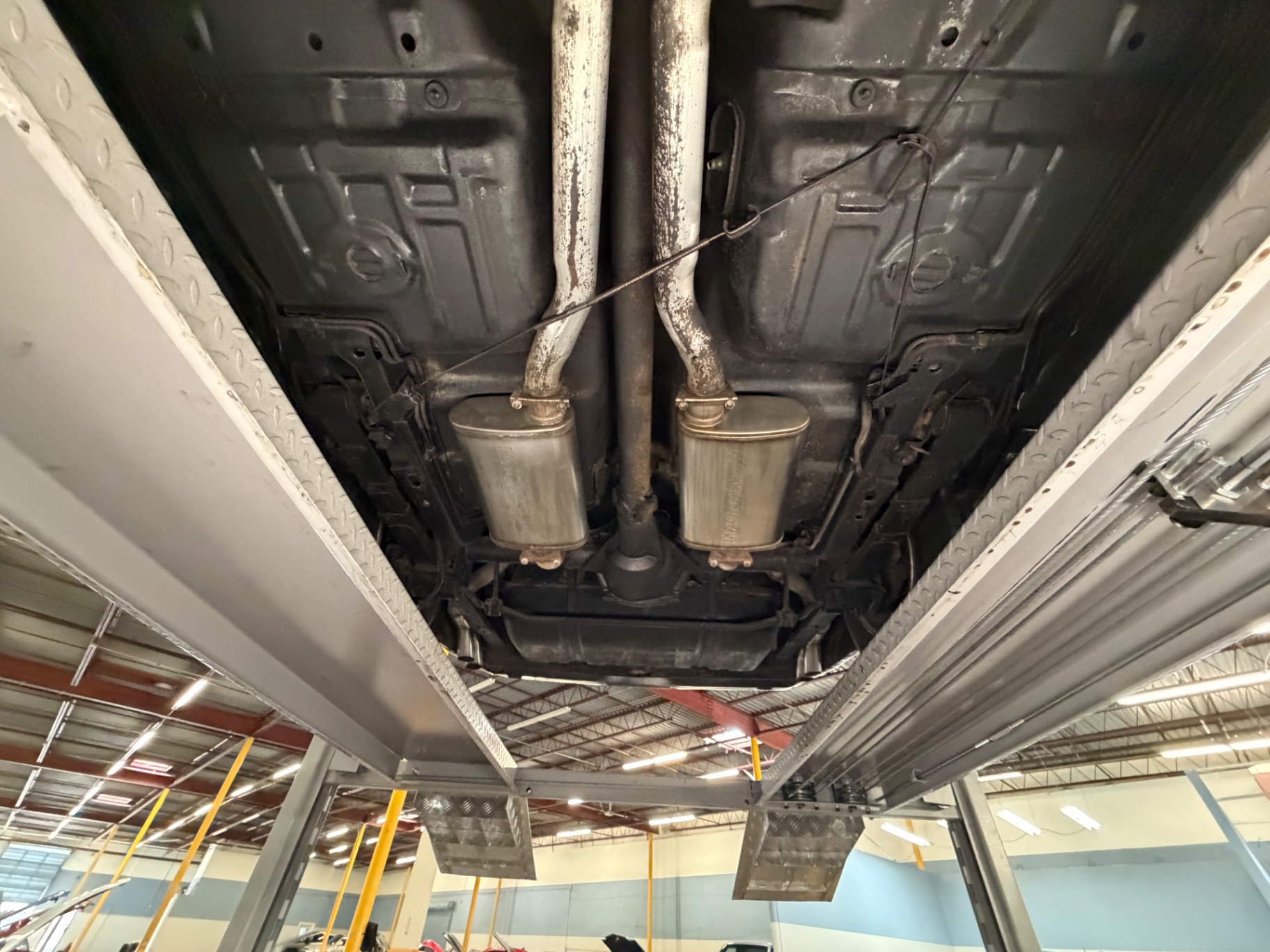
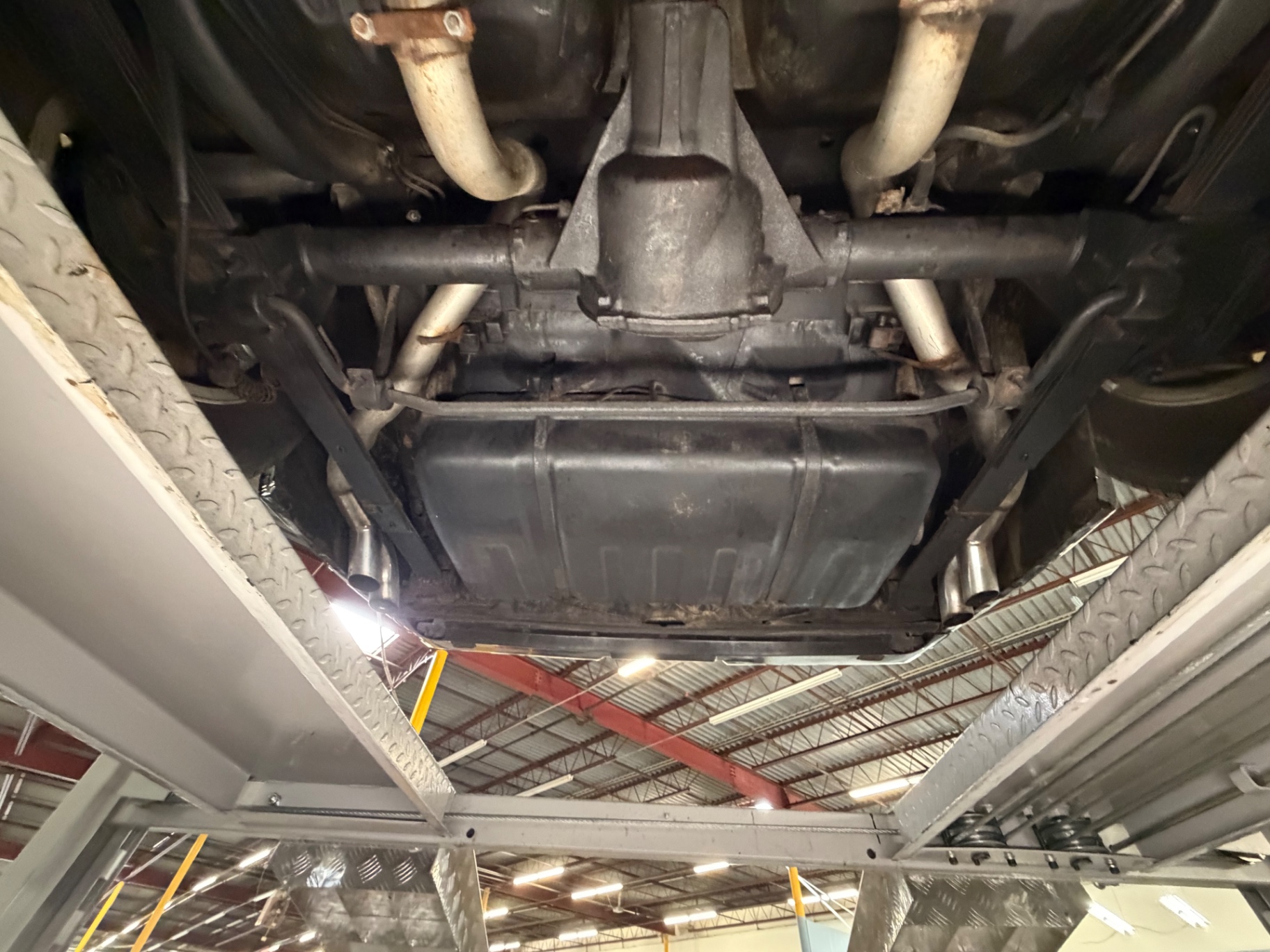
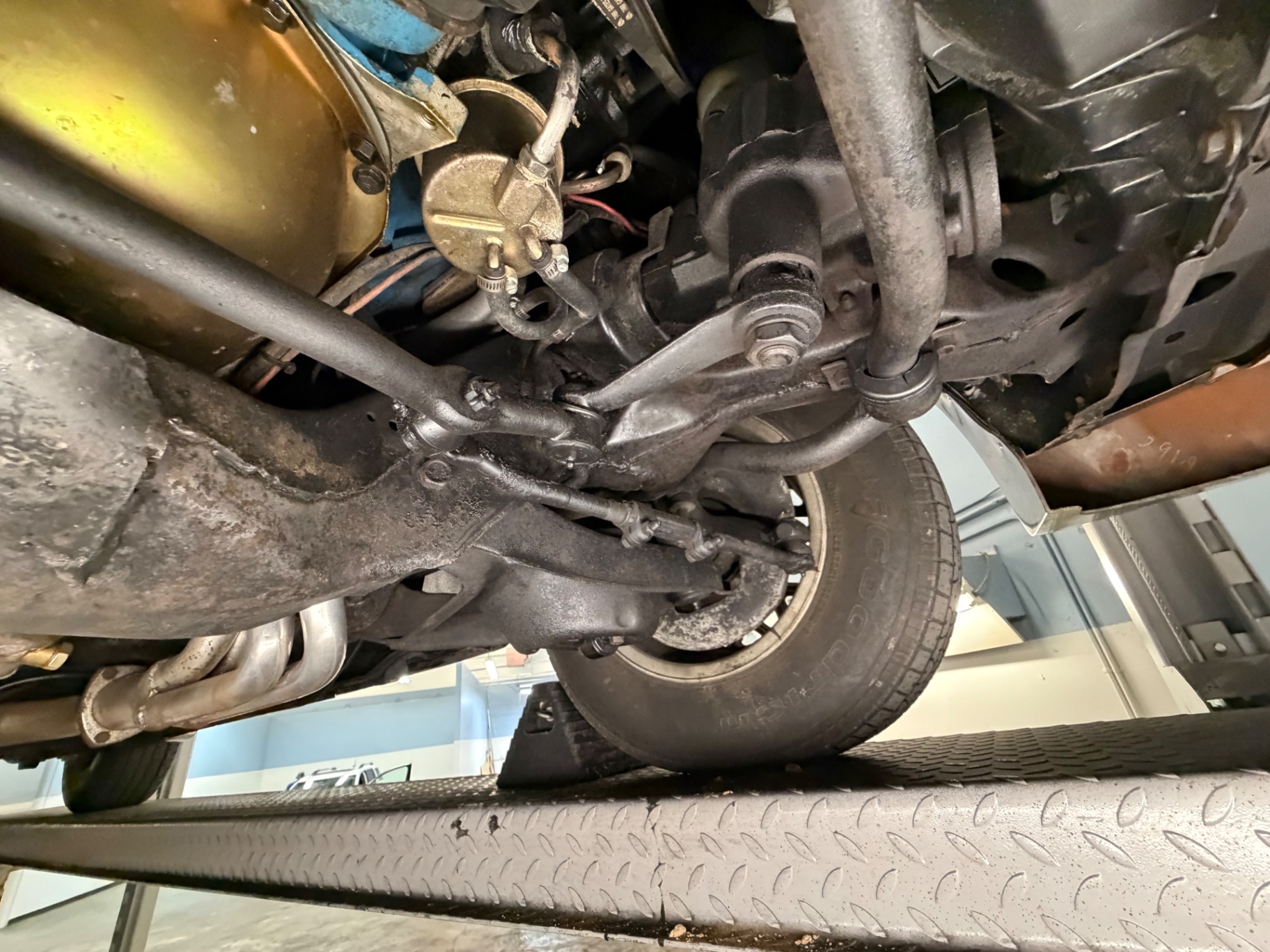
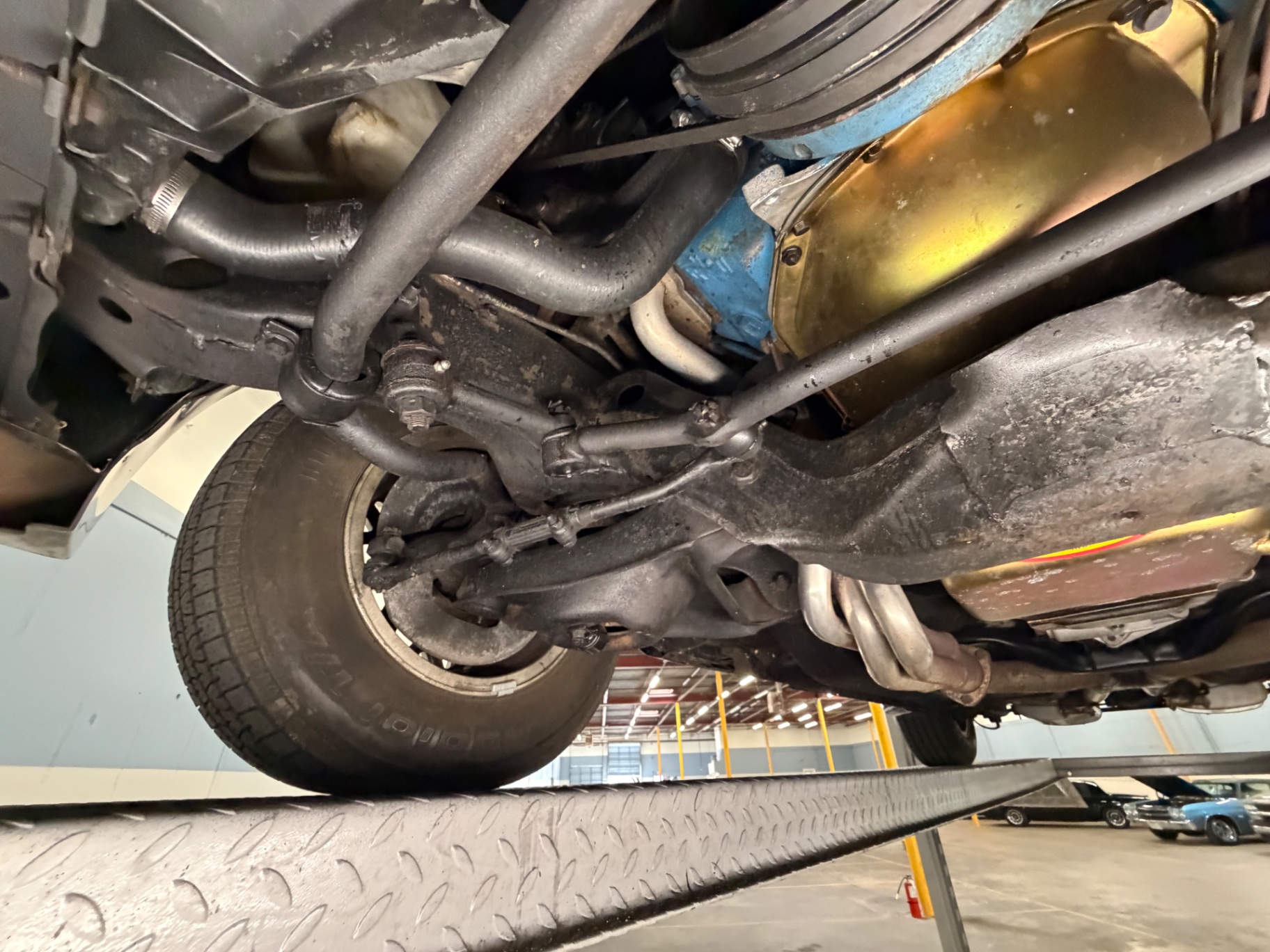
Underneath, the builder fitted a Milodon performance oil pan in place of the factory unit. Milodon has been a respected name in engine oiling systems for decades, and their pans offer increased oil capacity and improved oil control under hard acceleration and cornering — a sensible upgrade for a car that is meant to be driven. The dual exhaust system uses Flowmaster mufflers, which provide a tone consistent with the era without being obnoxiously loud. Frame rails are clean, floorpans show no rust, and the rear axle is in sound condition. The 4-speed manual gearbox is correct for this application and shifts through all four gears as it should. Power steering and power front disc brakes round out the mechanical package, keeping the car manageable in modern driving conditions.
Interior
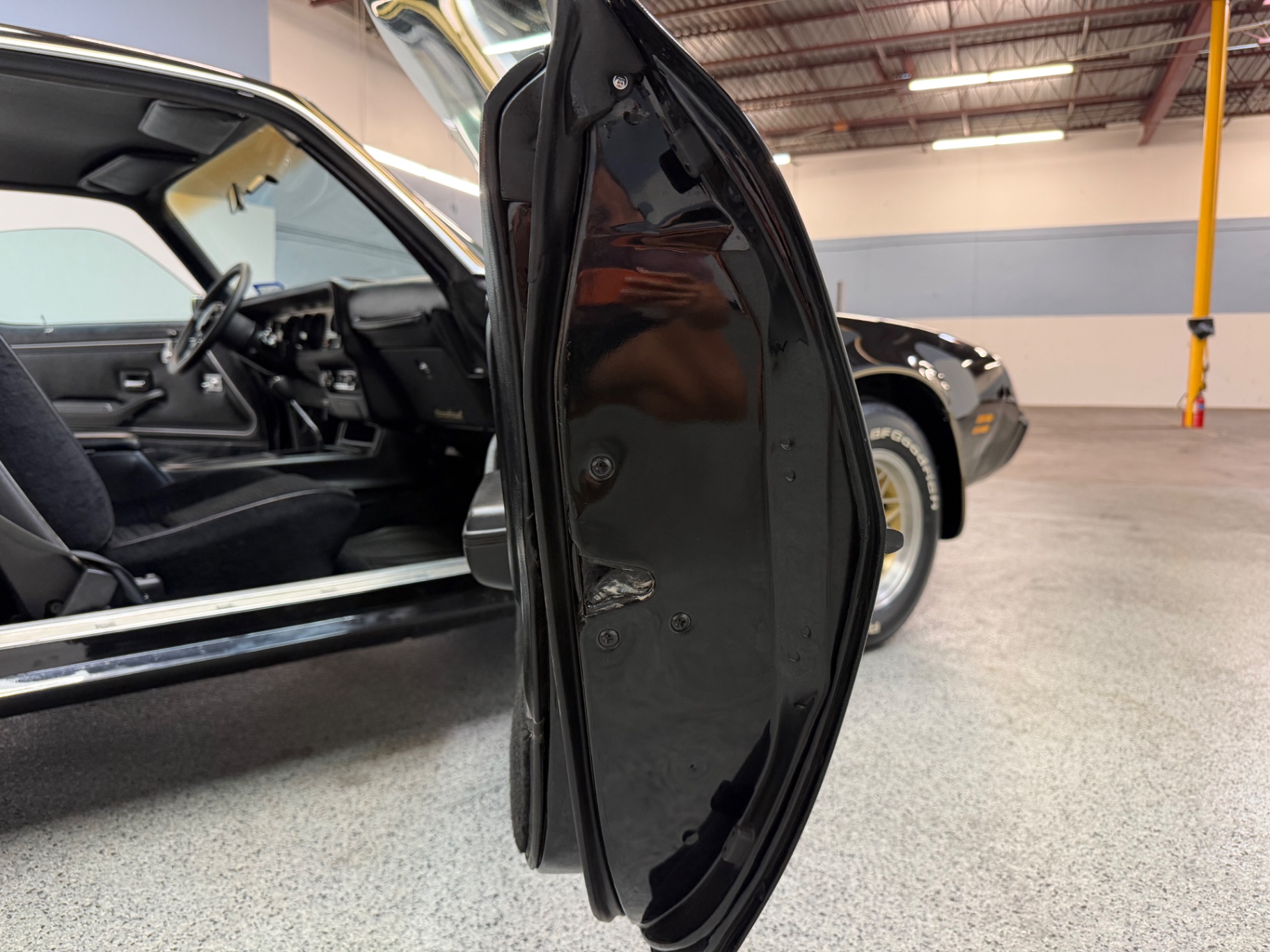
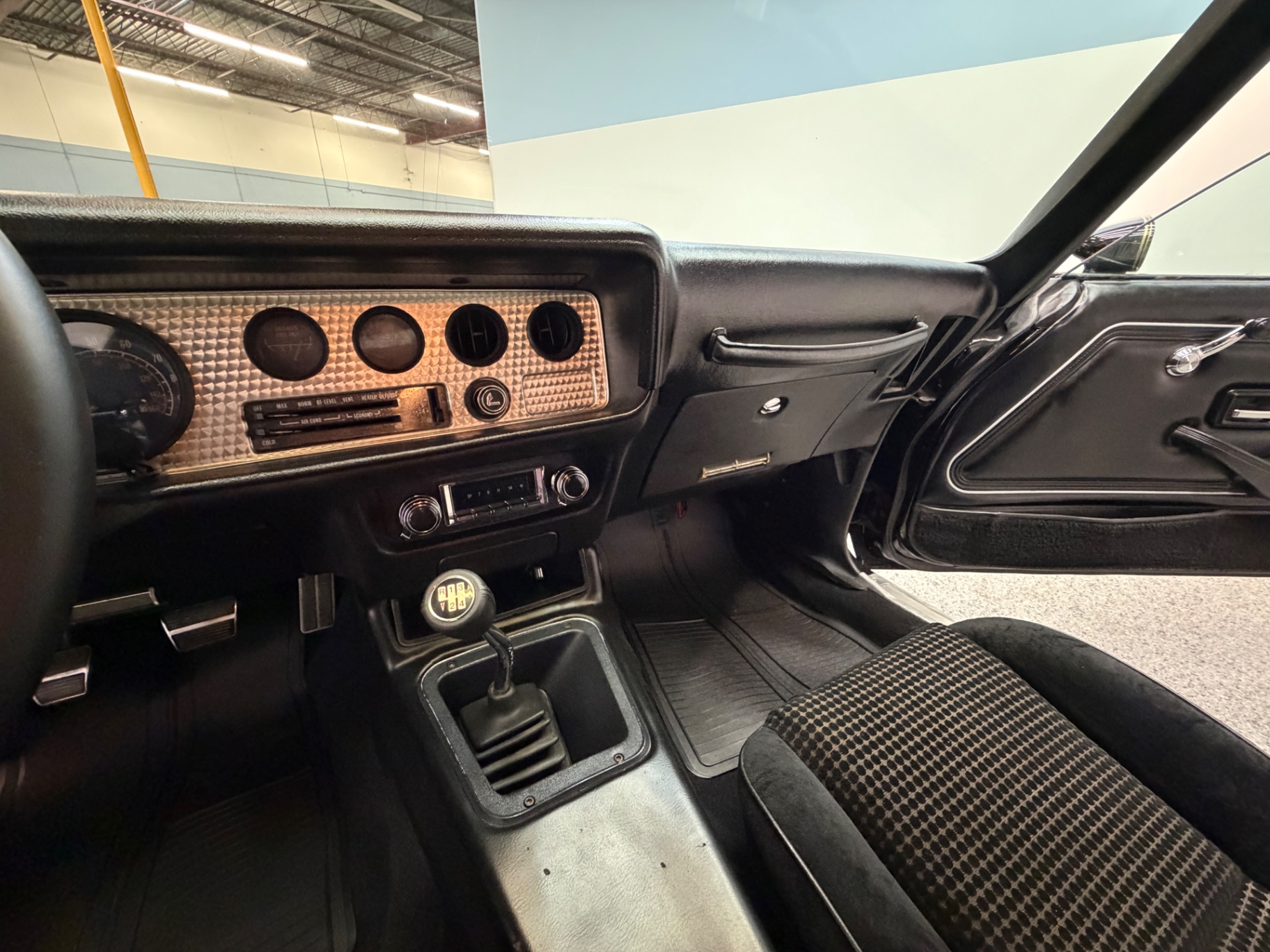
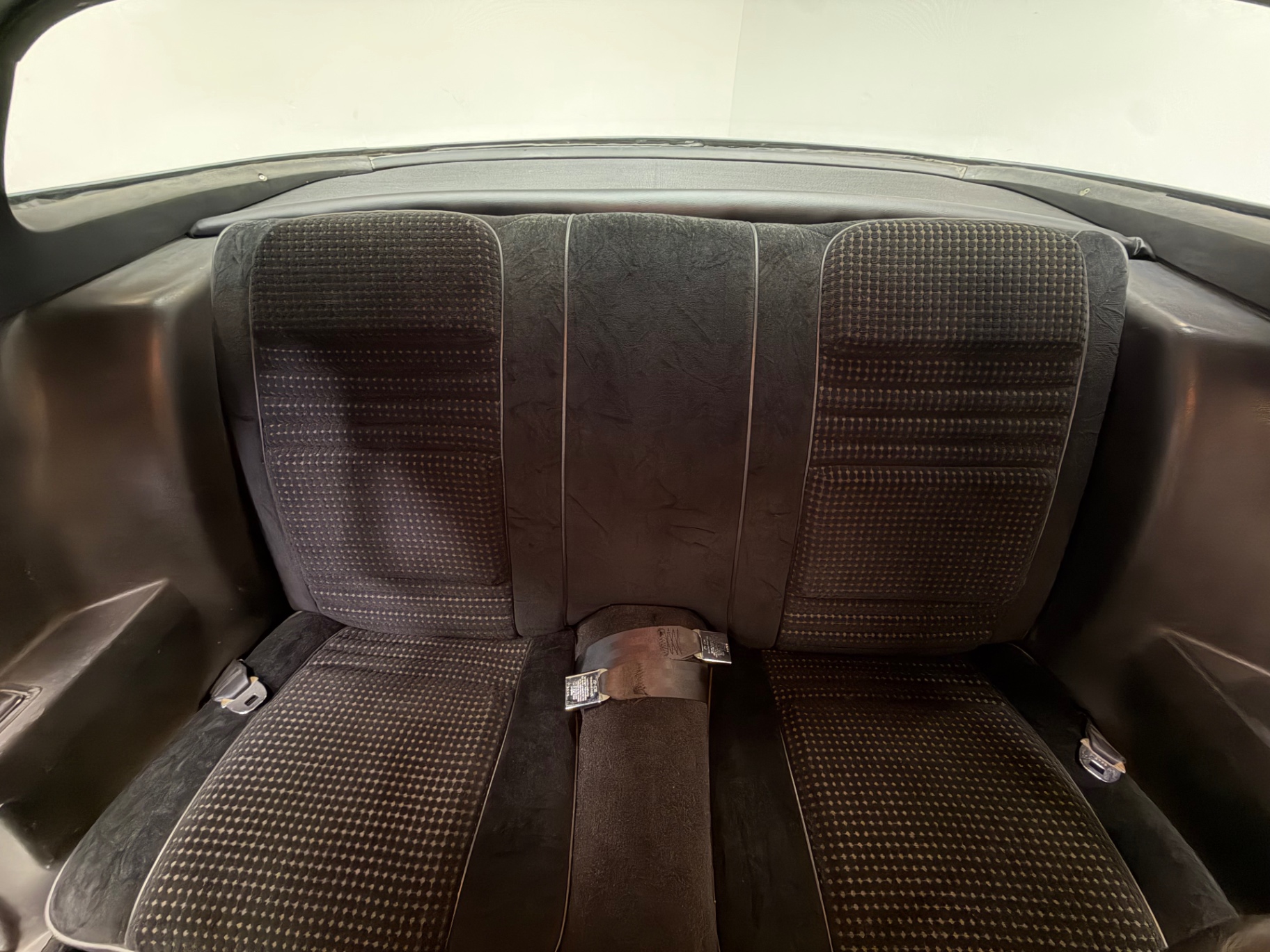
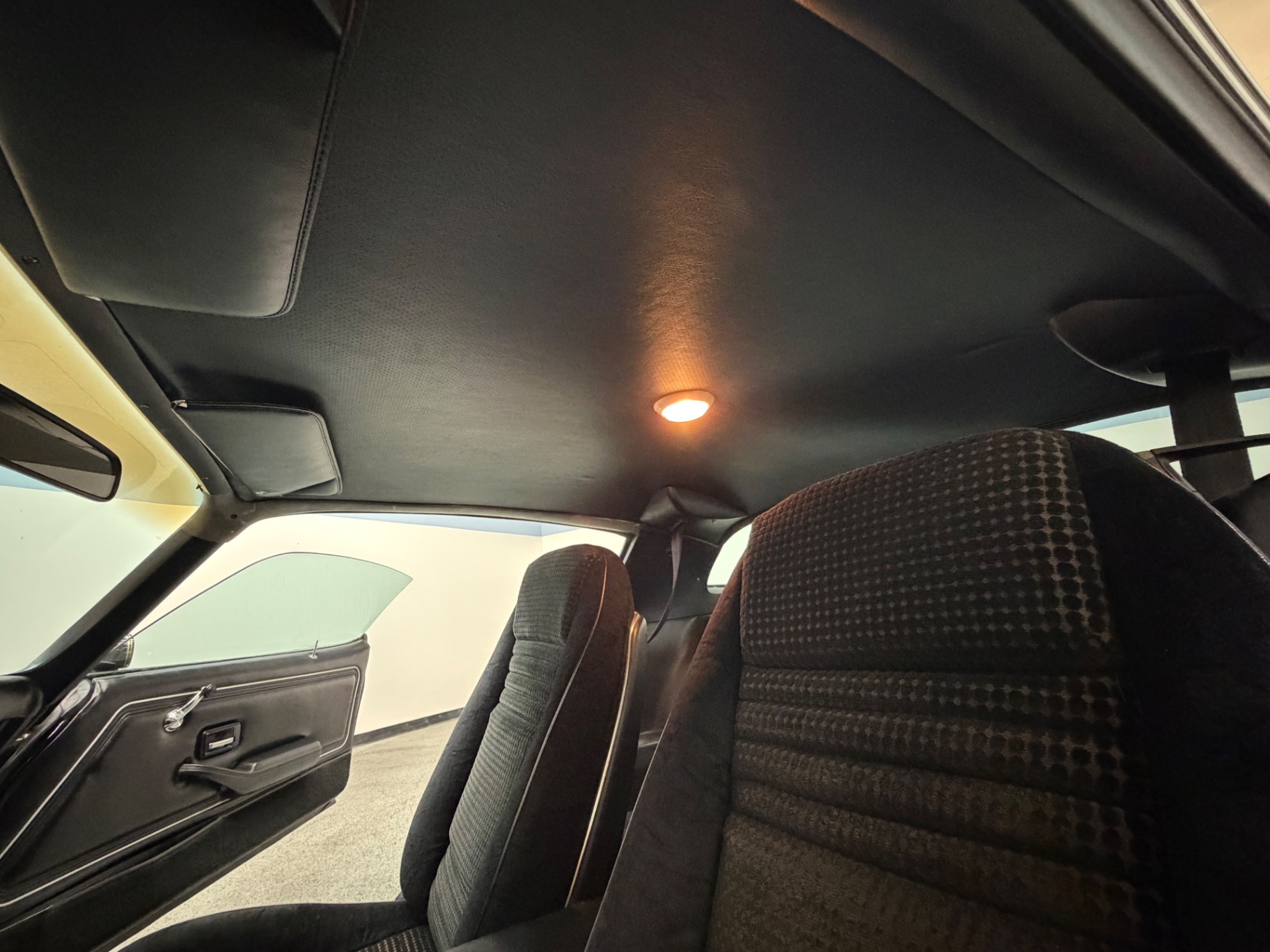
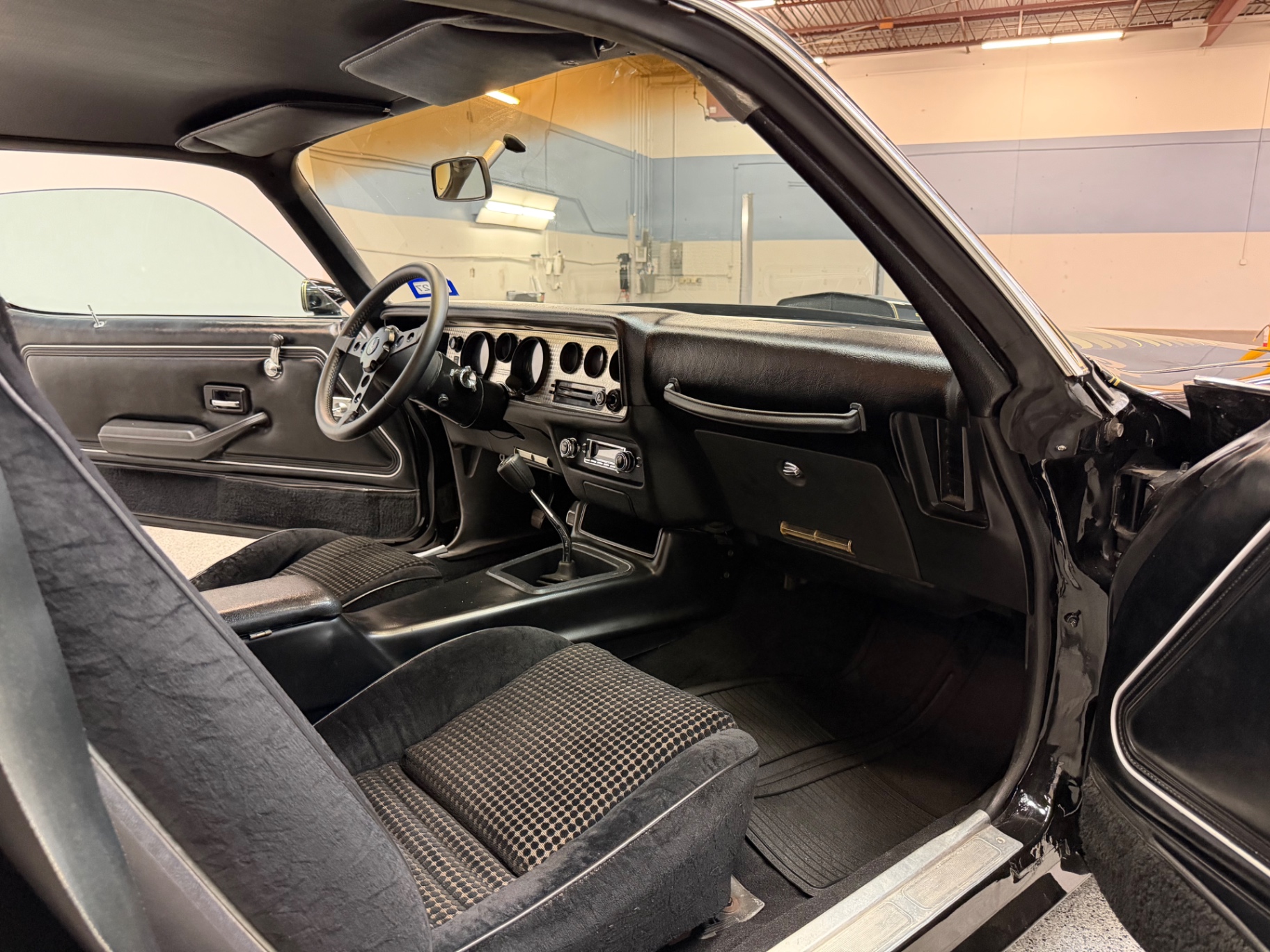
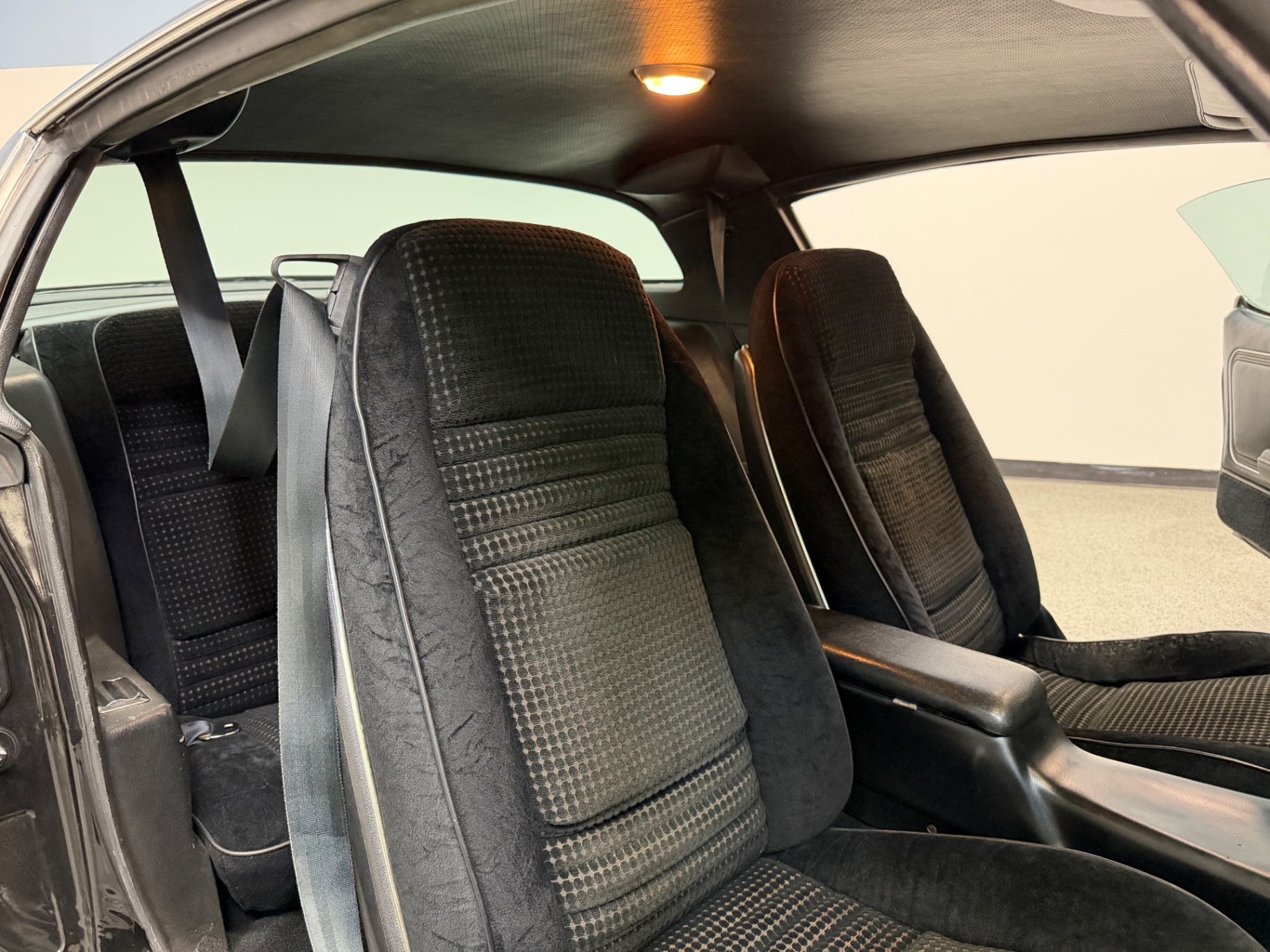
Open the door on this 1979 Pontiac Firebird Trans Am and the interior presents exactly as it should. The high-back bucket seats wear the correct dot-pattern cloth upholstery that was standard on Trans Am interiors of this period. The pattern is intact, which matters — reproduction cloth that does not match the original weave pattern is a detail that experienced Trans Am buyers notice immediately. These seats look period-correct.
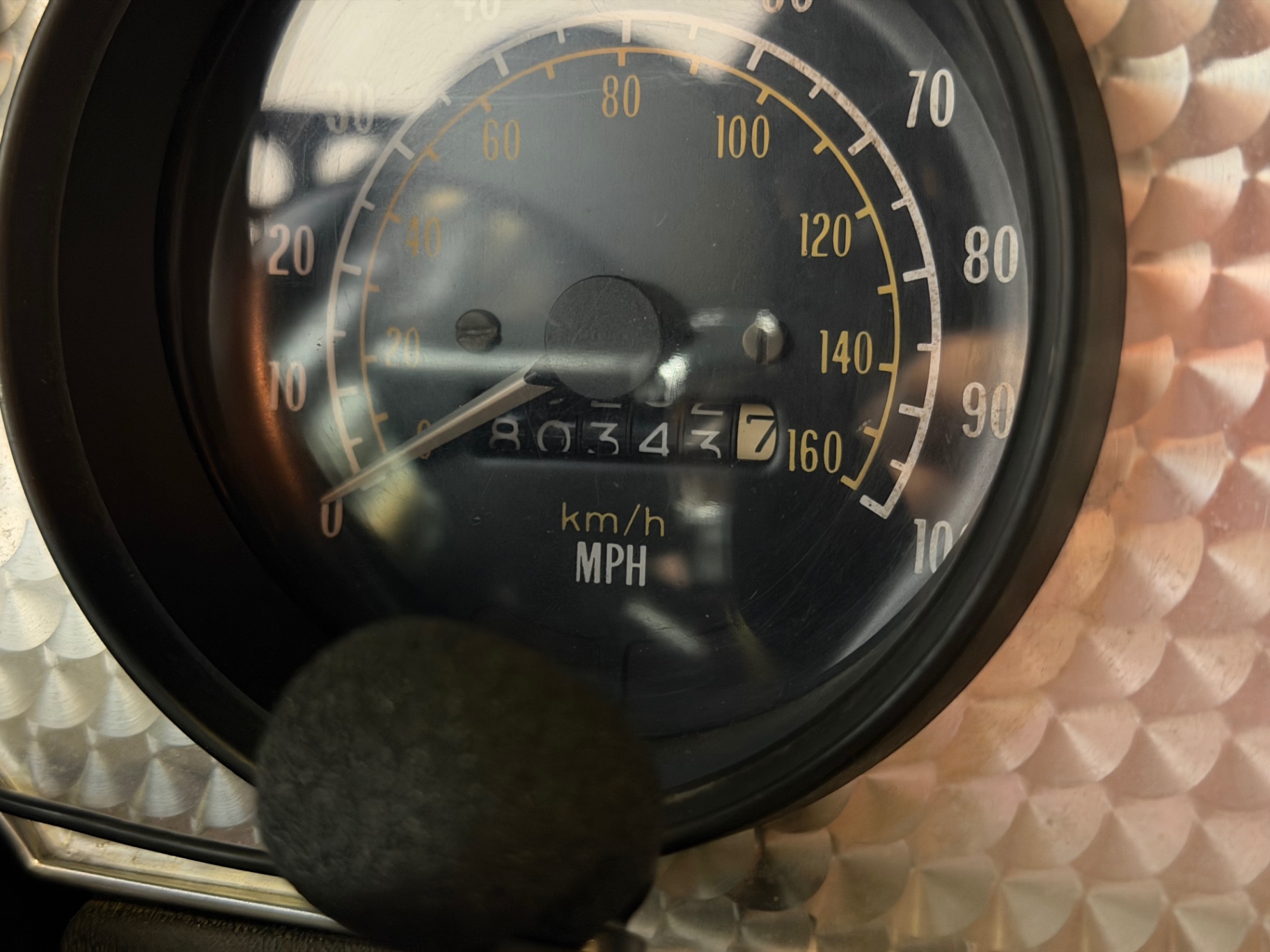
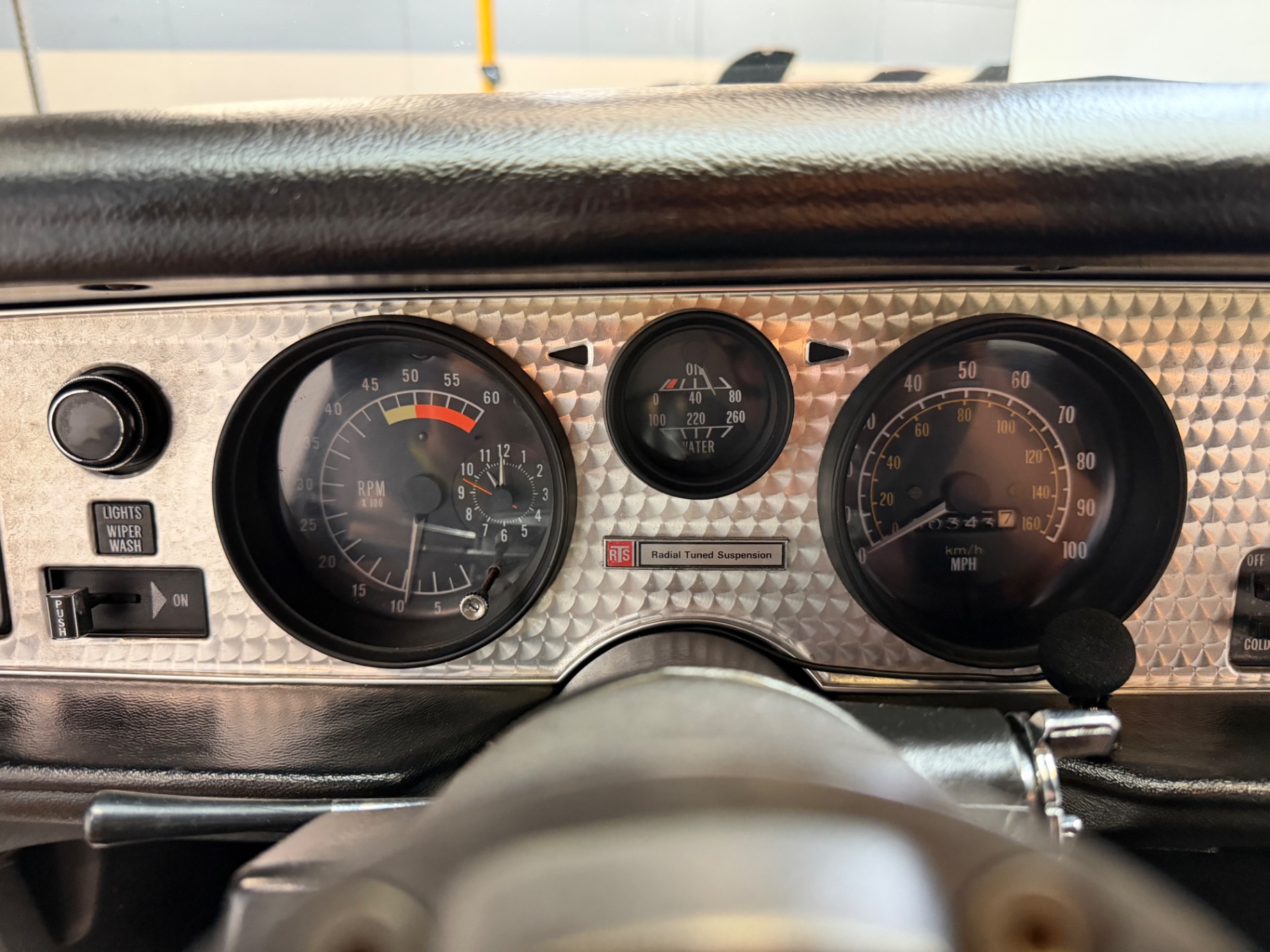
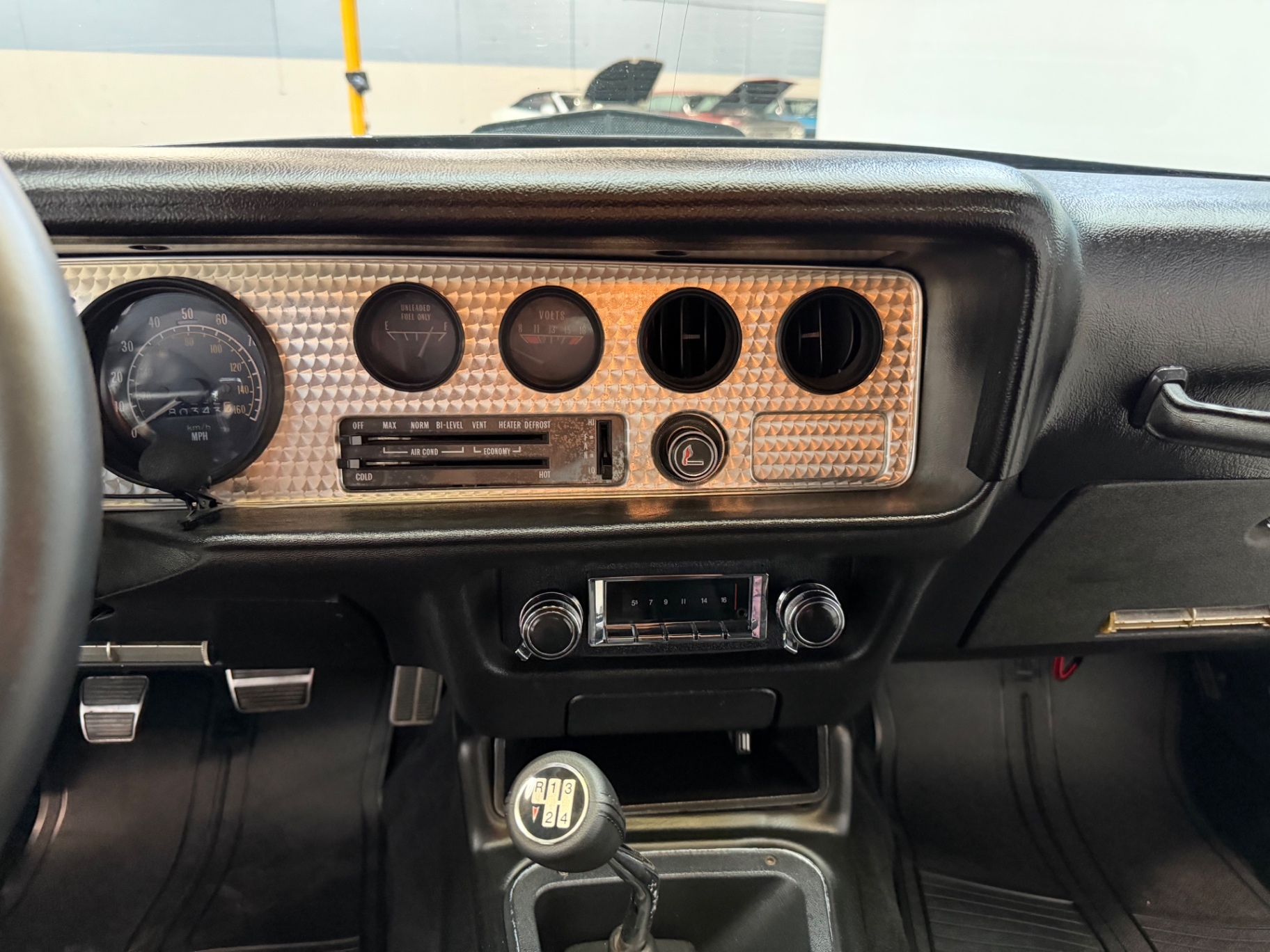
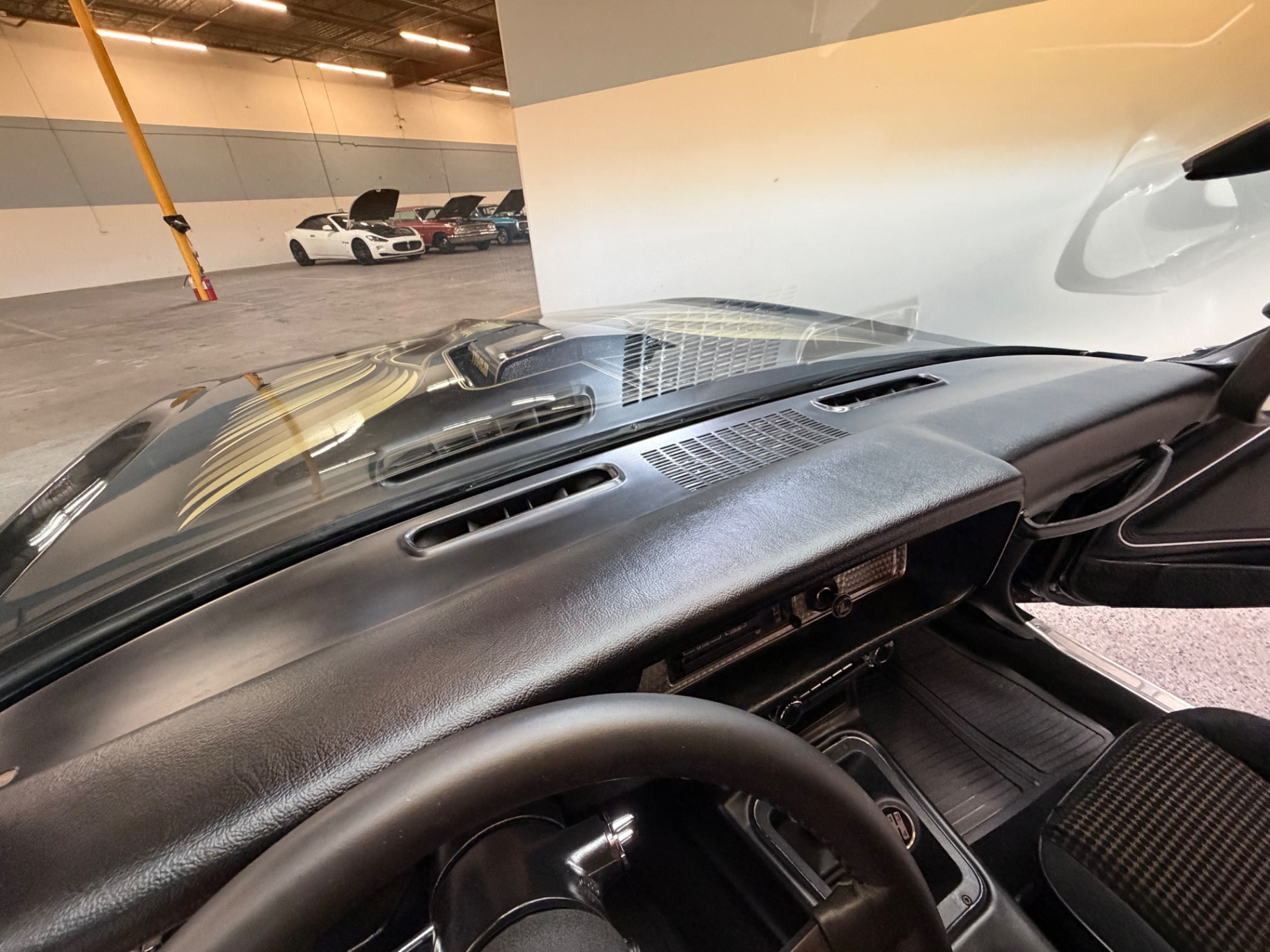
The dashboard carries the full Trans Am gauge cluster, which includes a large tachometer on the left, a water temperature gauge in the center, and a speedometer on the right — all set into the distinctive hobnail-textured instrument panel surround that Pontiac used on the second-generation Firebird. Secondary gauges for fuel level and voltage are positioned on the passenger side of the dash. This is a proper instrument package, not a base Firebird cluster with a tach bolted in.
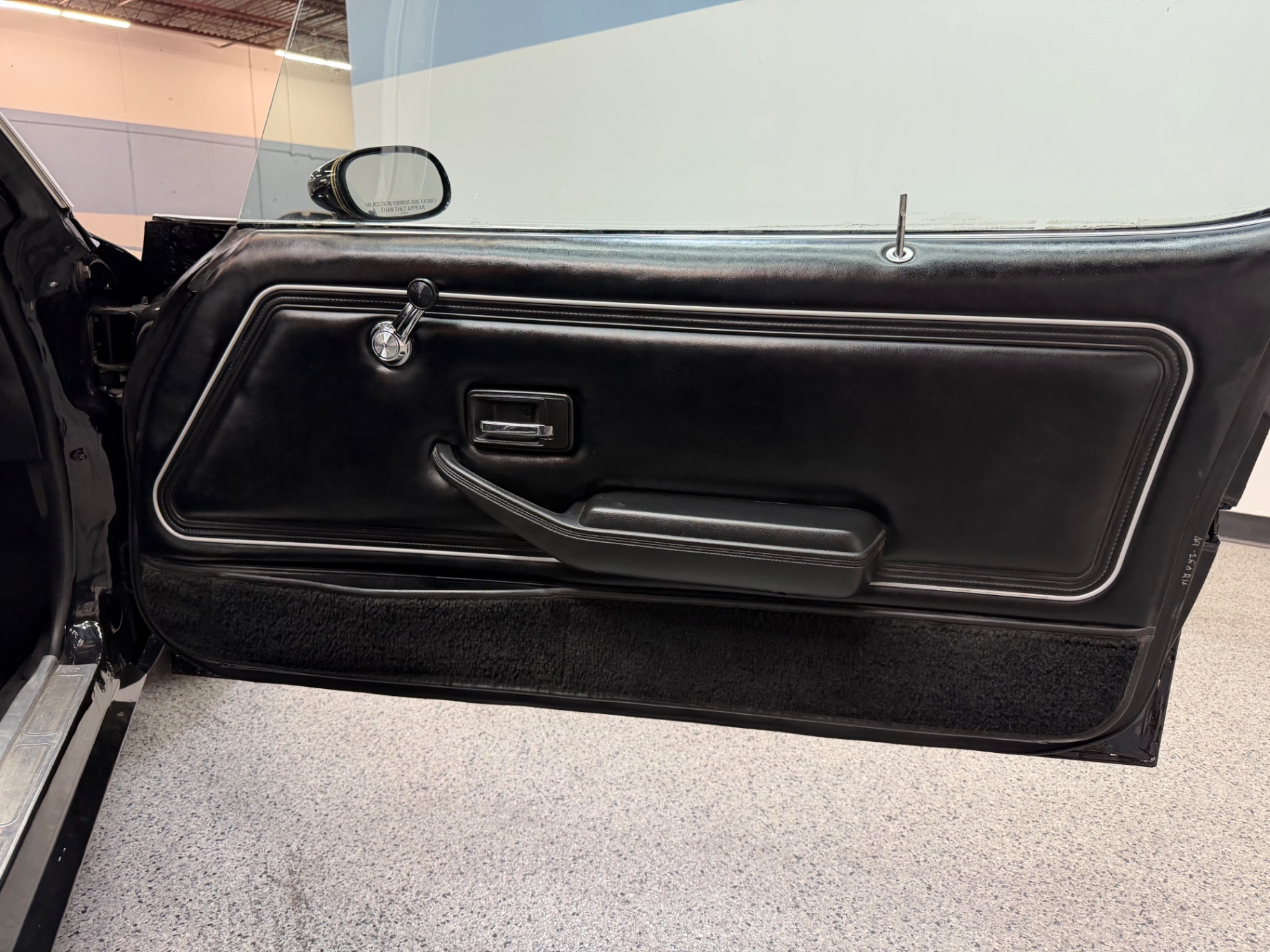
The steering wheel is the correct Trans Am unit — a three-spoke design with the Firebird emblem on the center cap, which gives the driver an appropriate and comfortable connection to the car. The 4-speed shifter sits in the center console where it belongs, with the correct shift pattern on the knob. The retro-style radio fits the dash opening correctly and maintains the period appearance without looking out of place. Door panels are clean, the carpet is in good shape, and the headliner is intact — this is an interior that has been looked after properly. Air conditioning is present and functional, which in the Florida market is not an afterthought.
Exterior
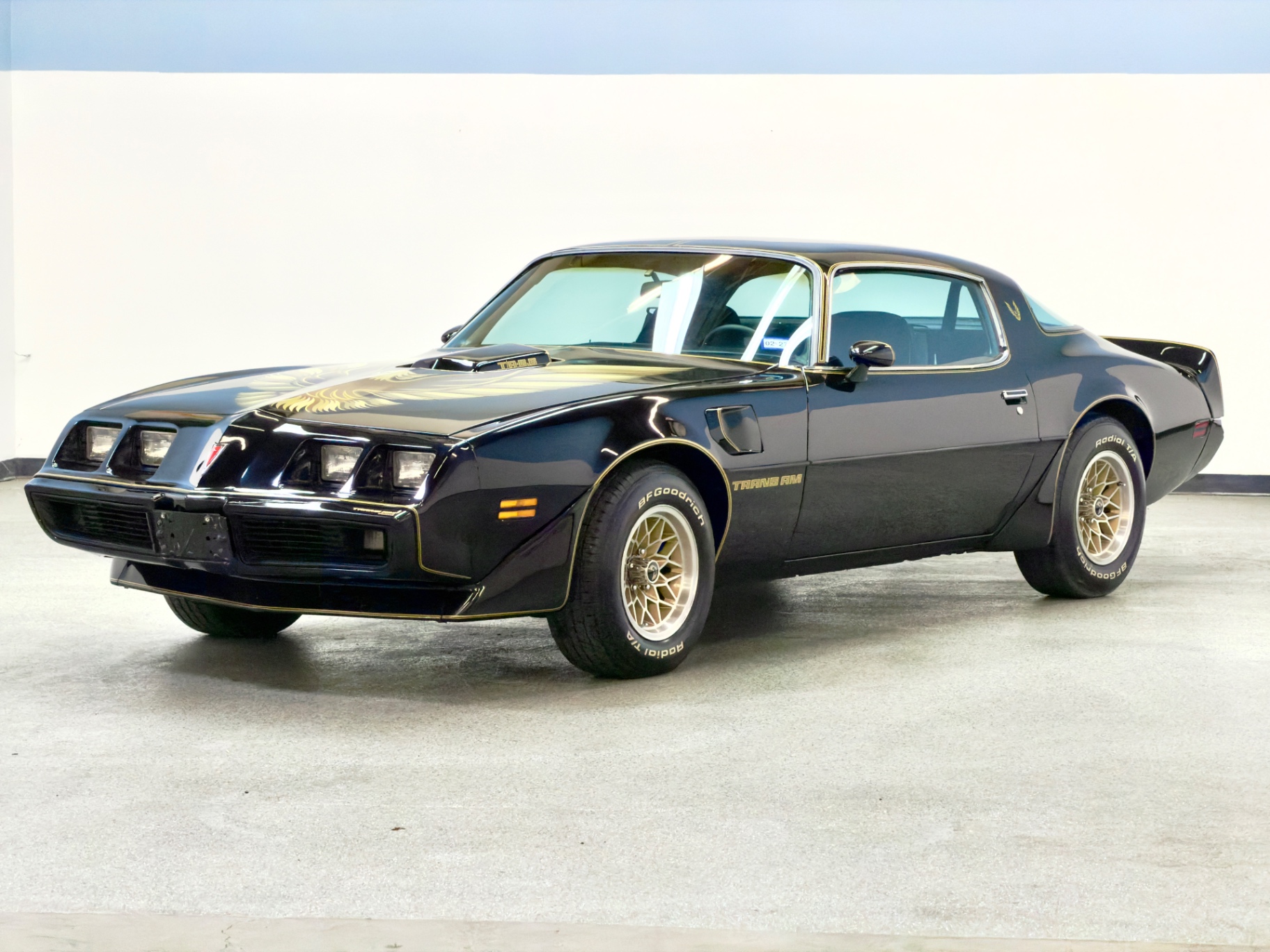
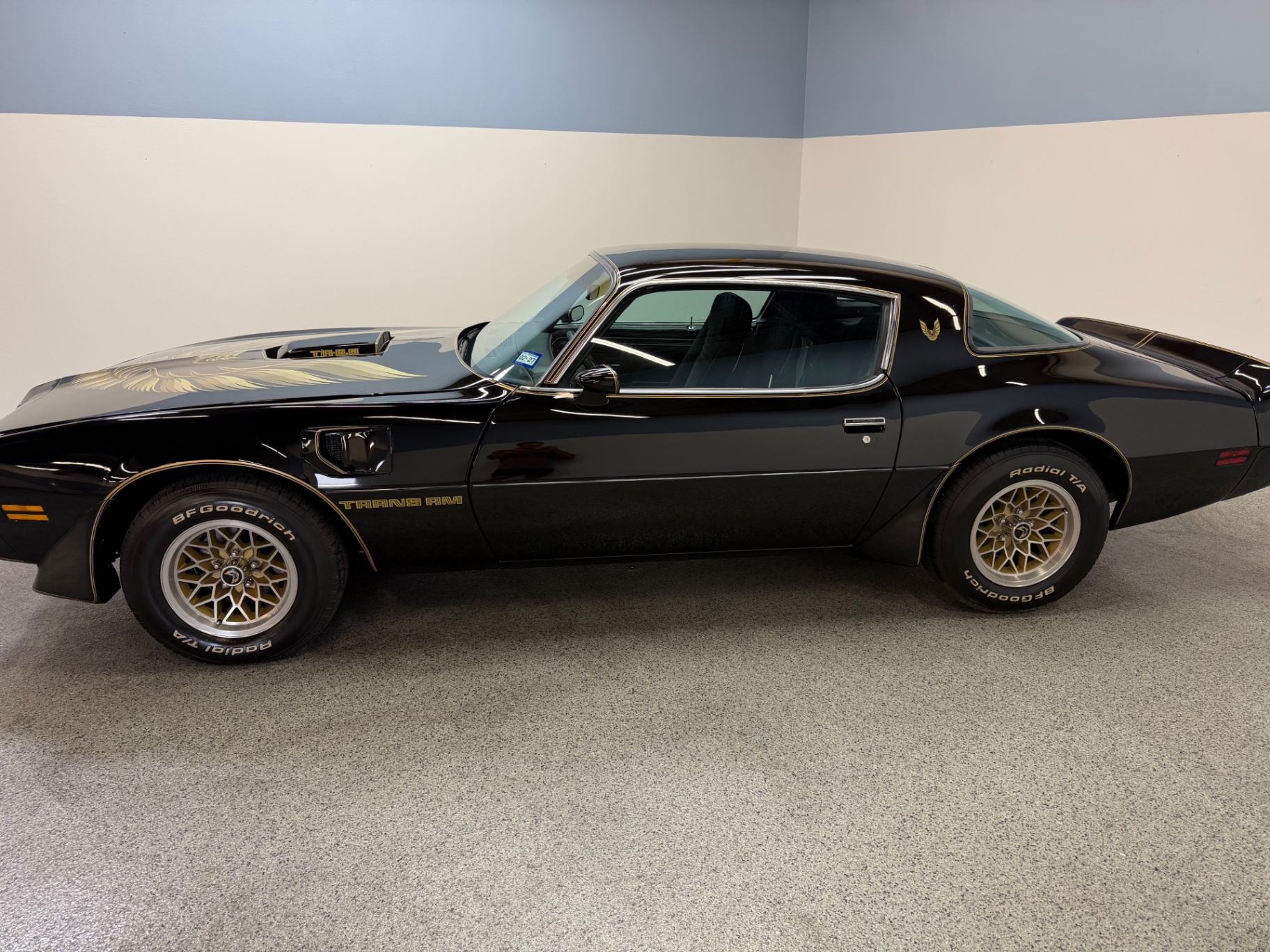
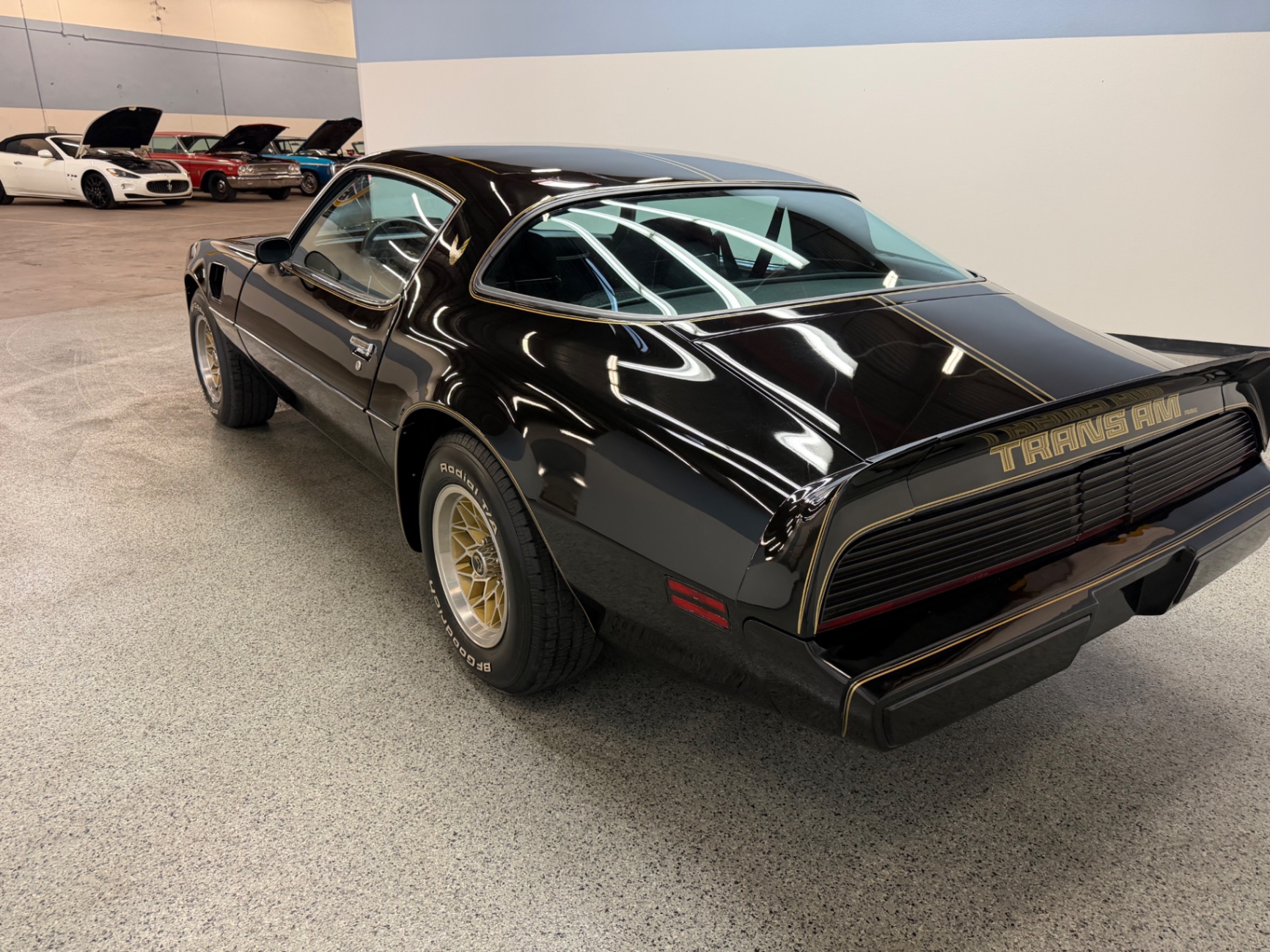
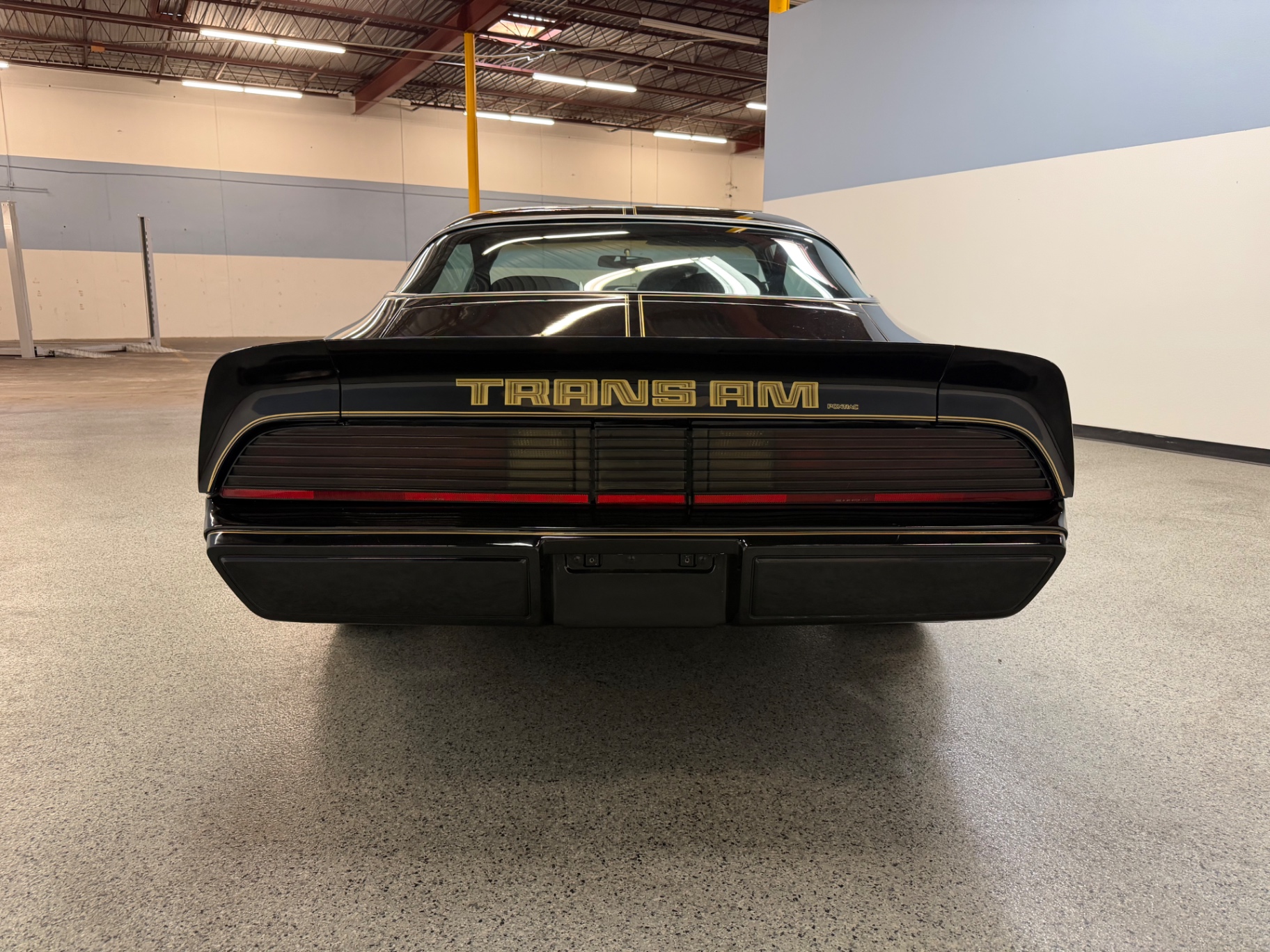
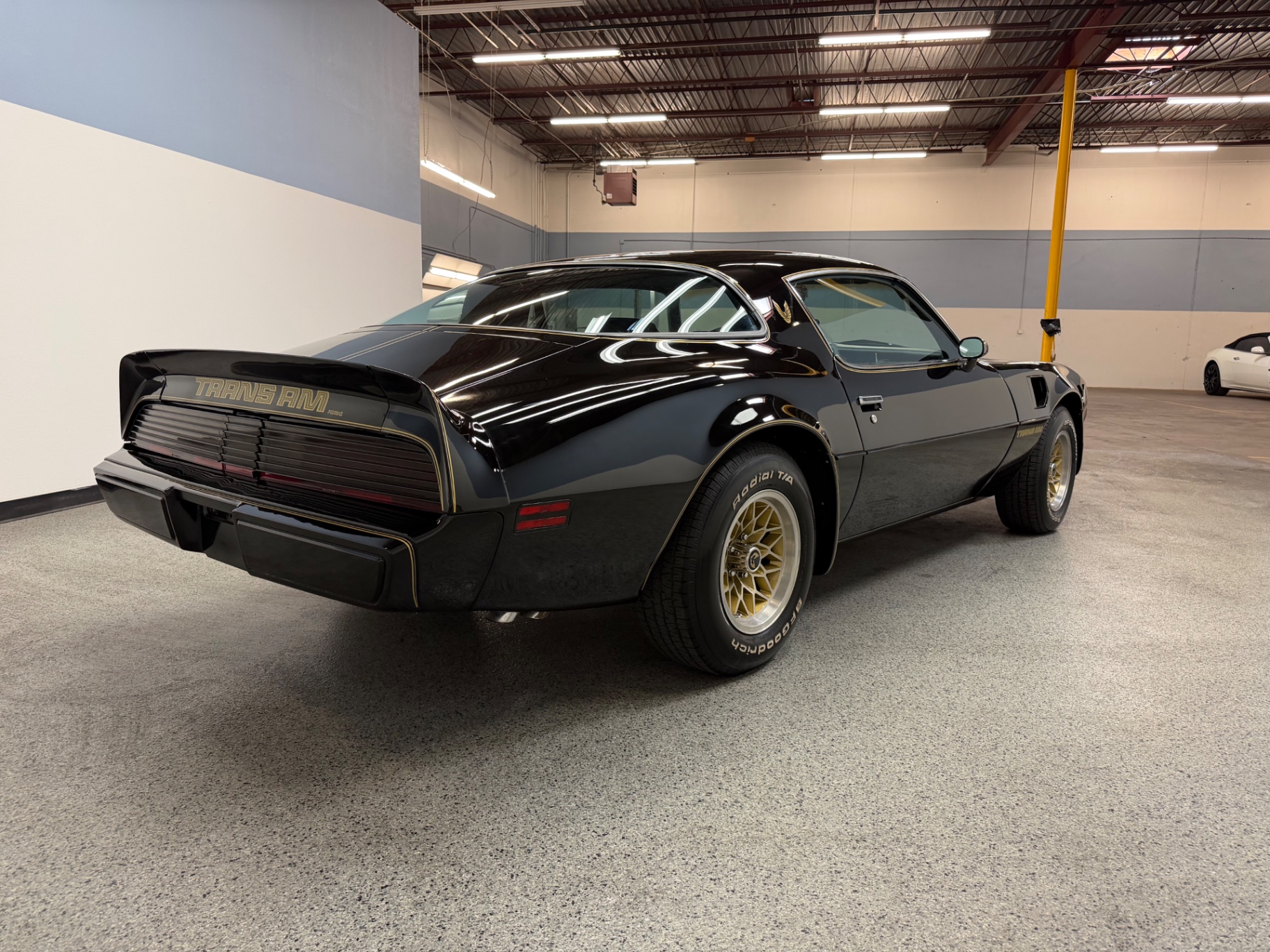
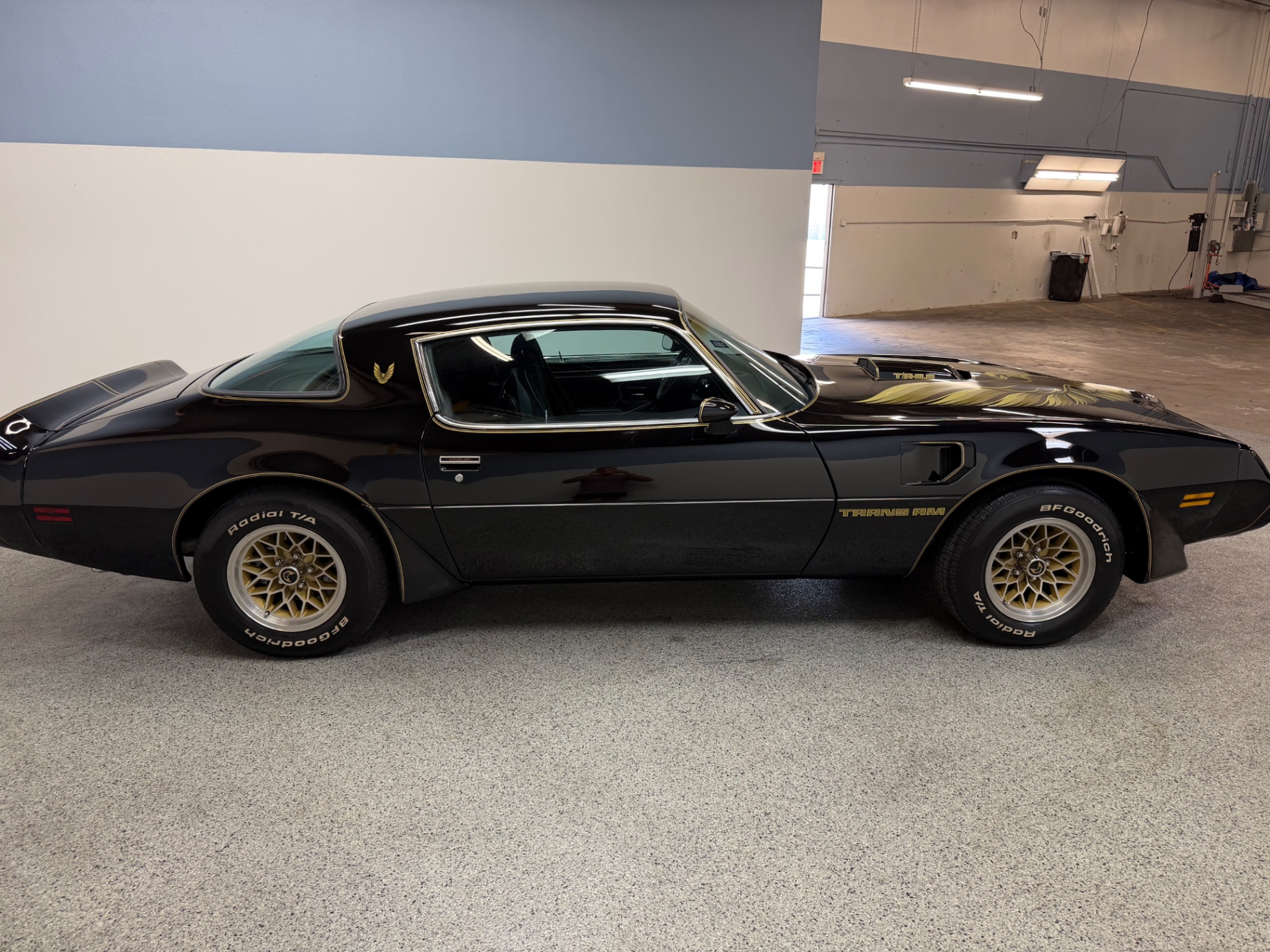
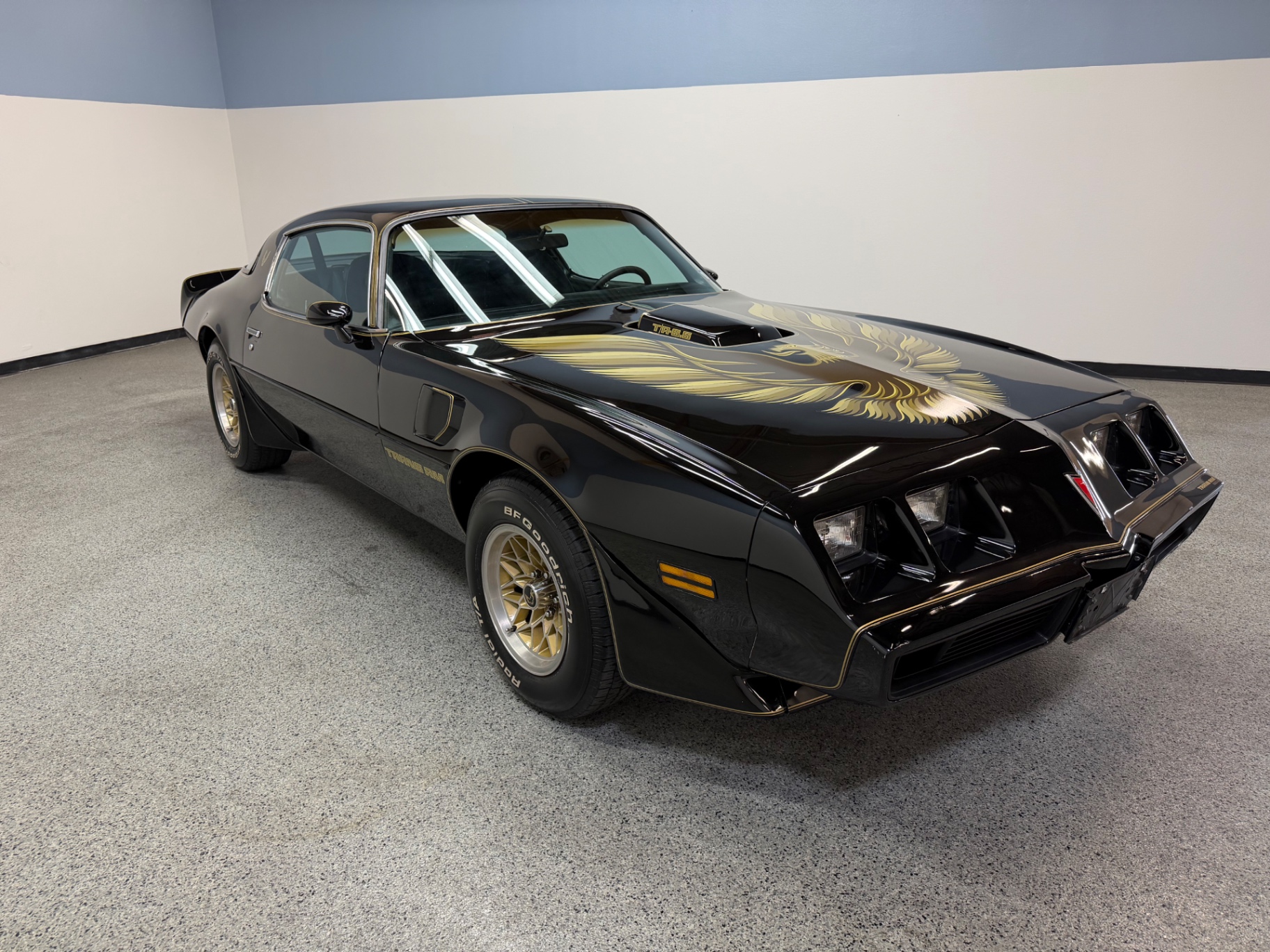
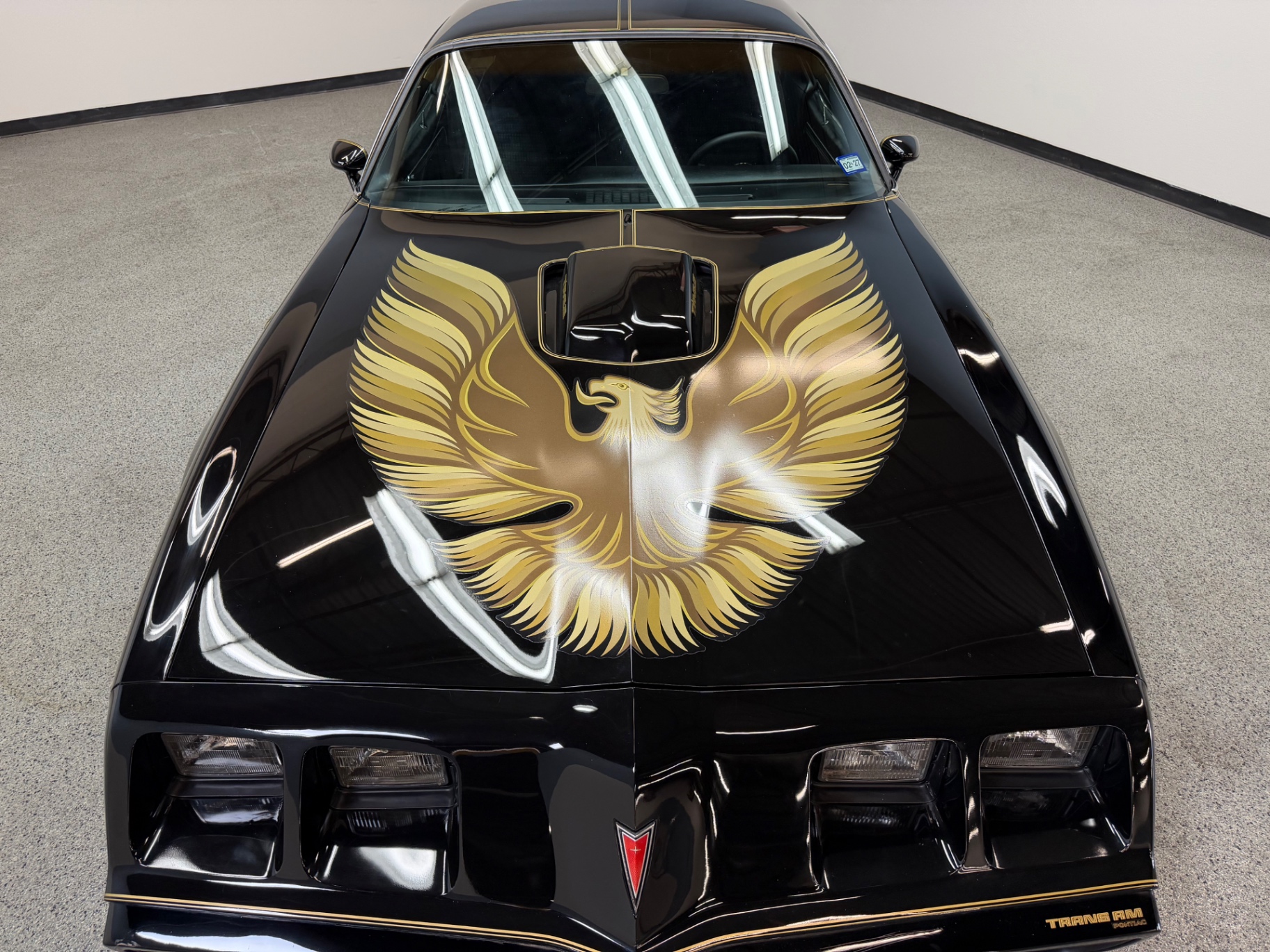
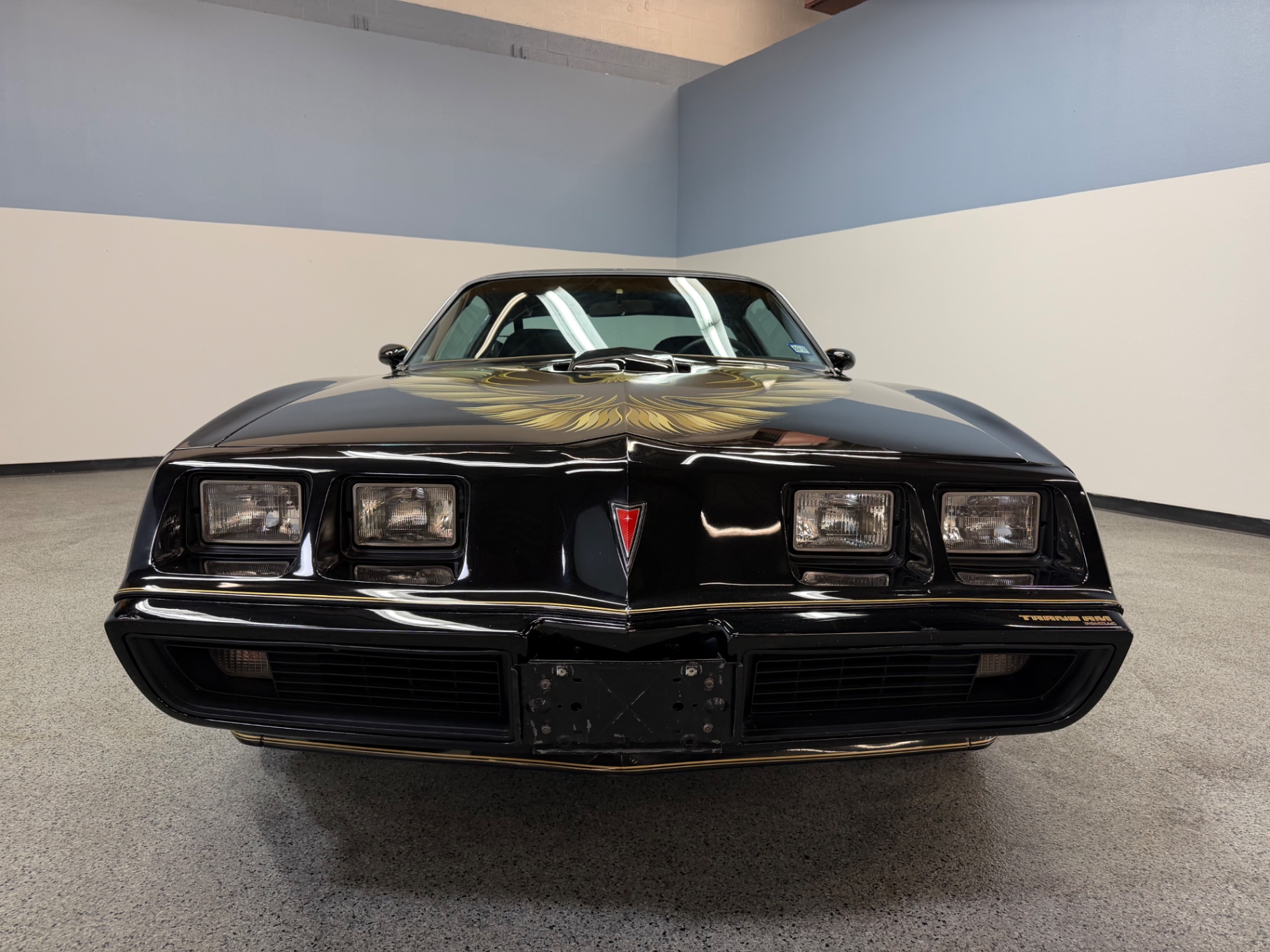
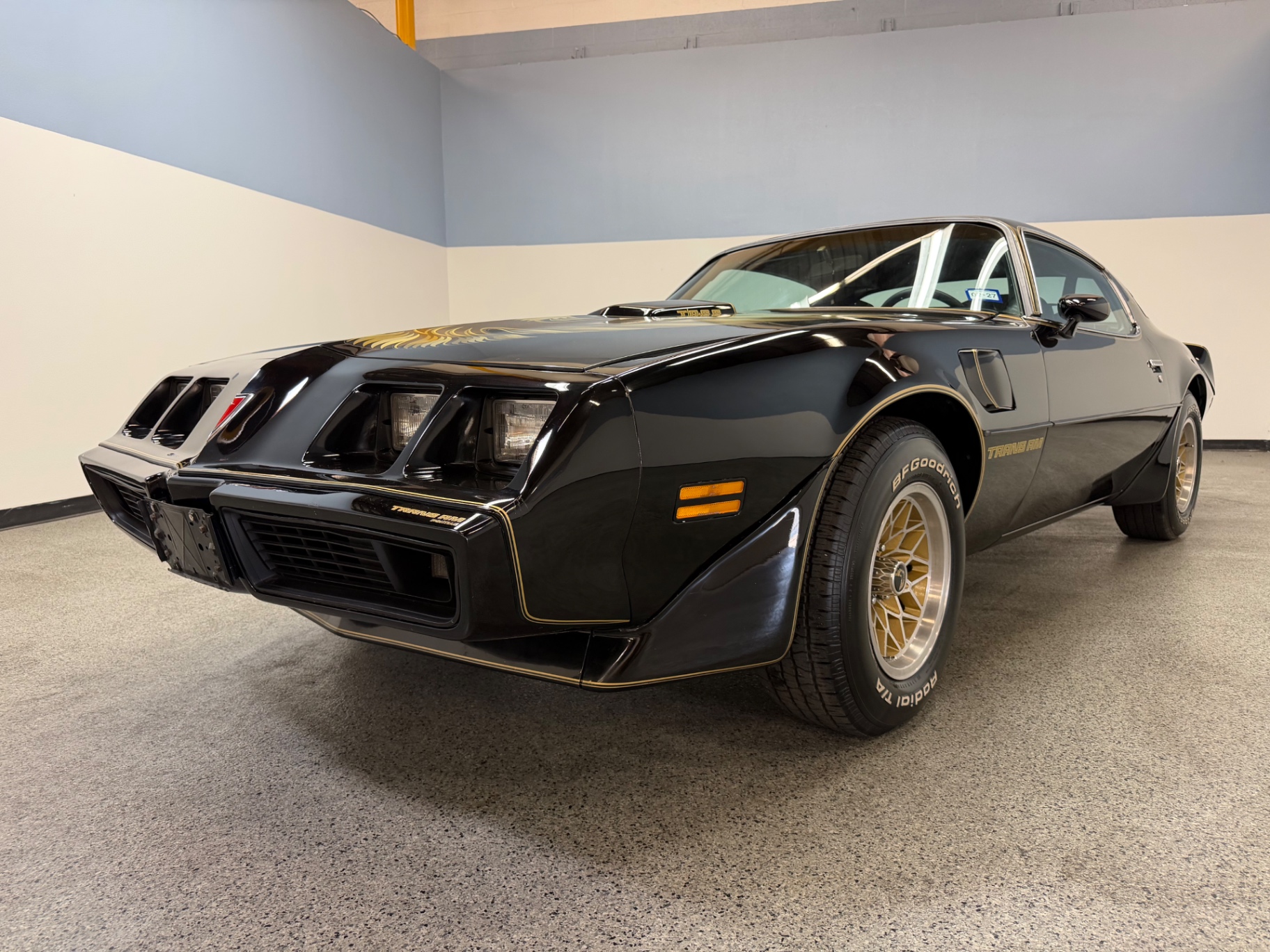
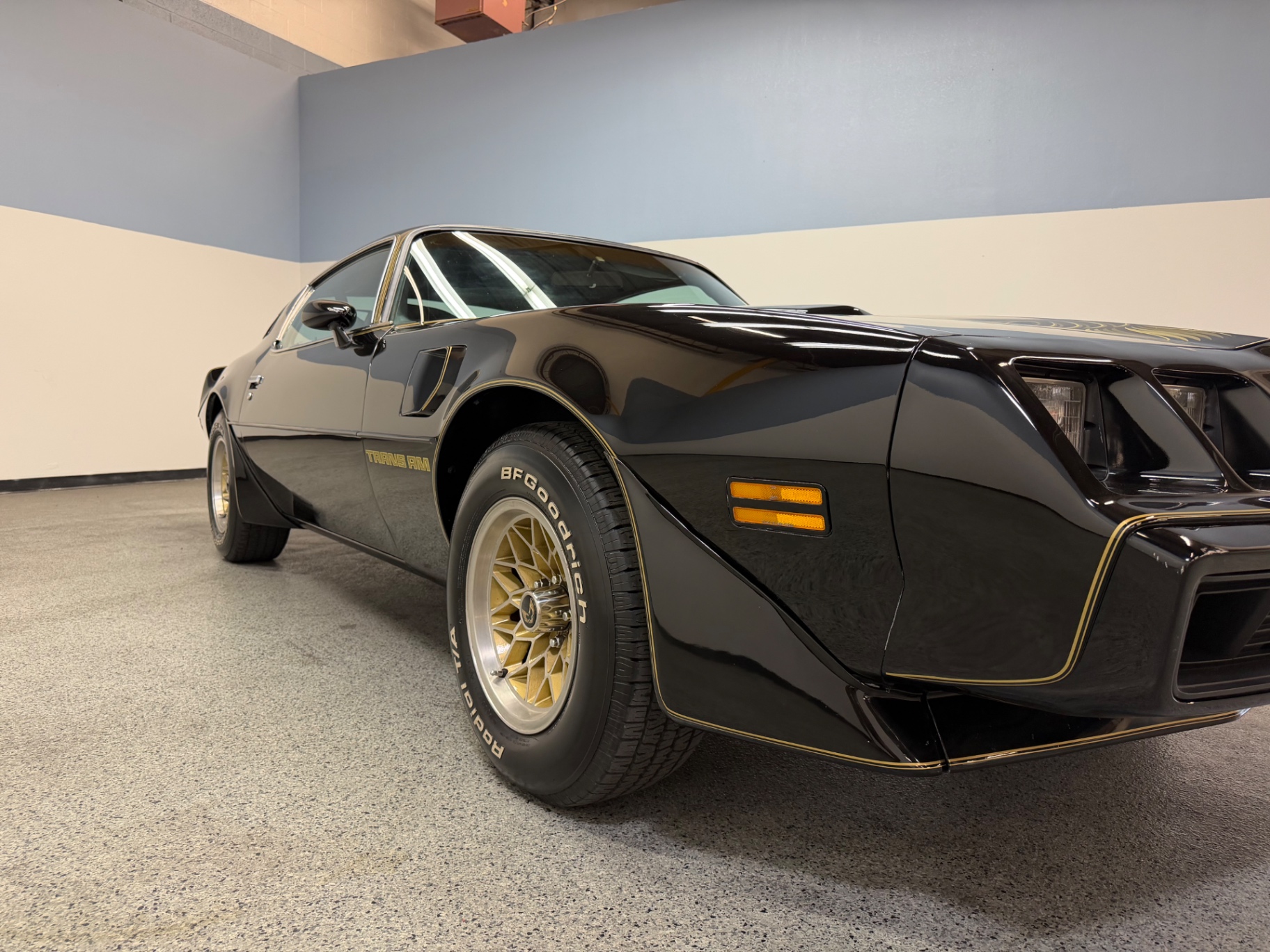
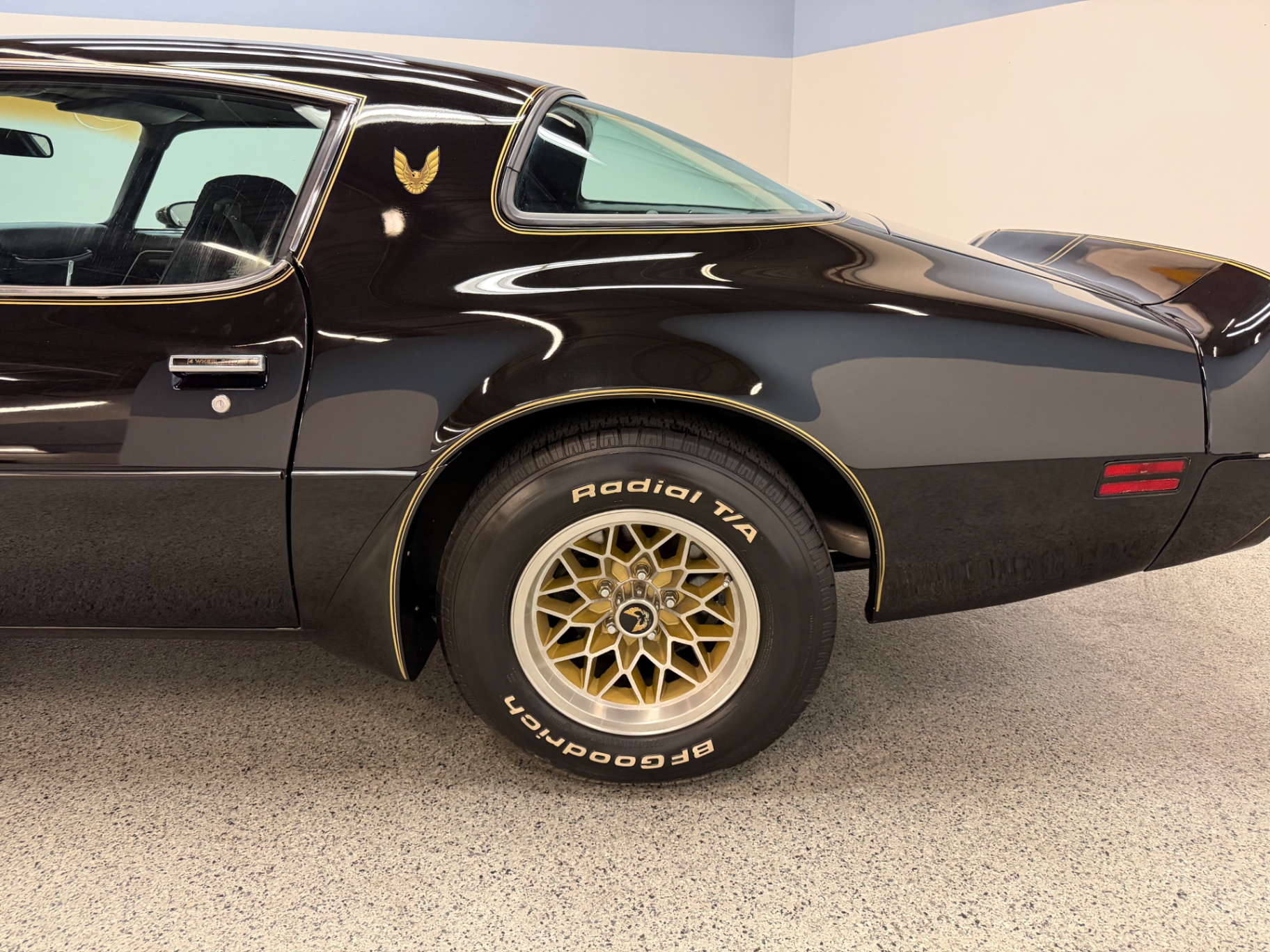
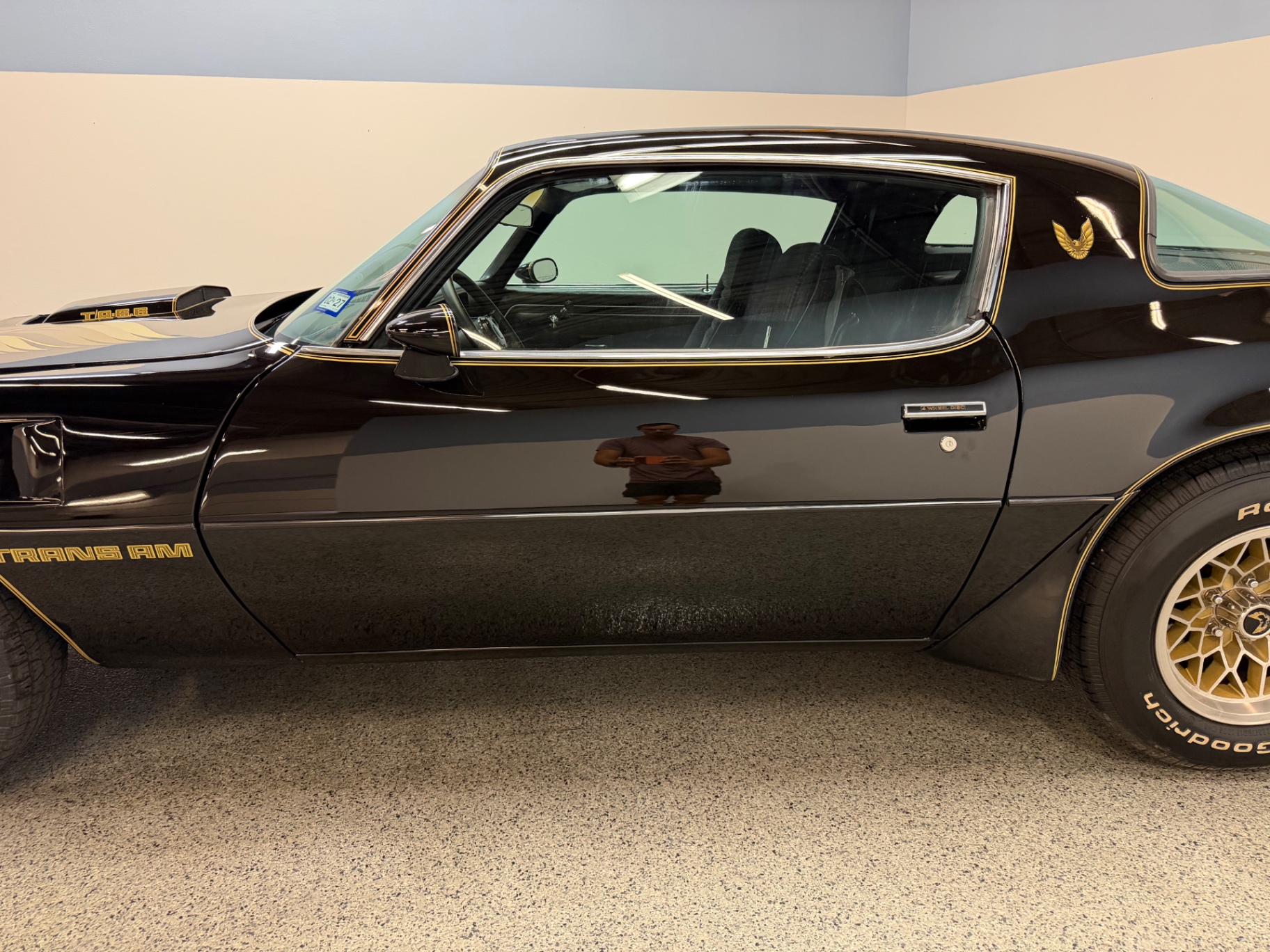
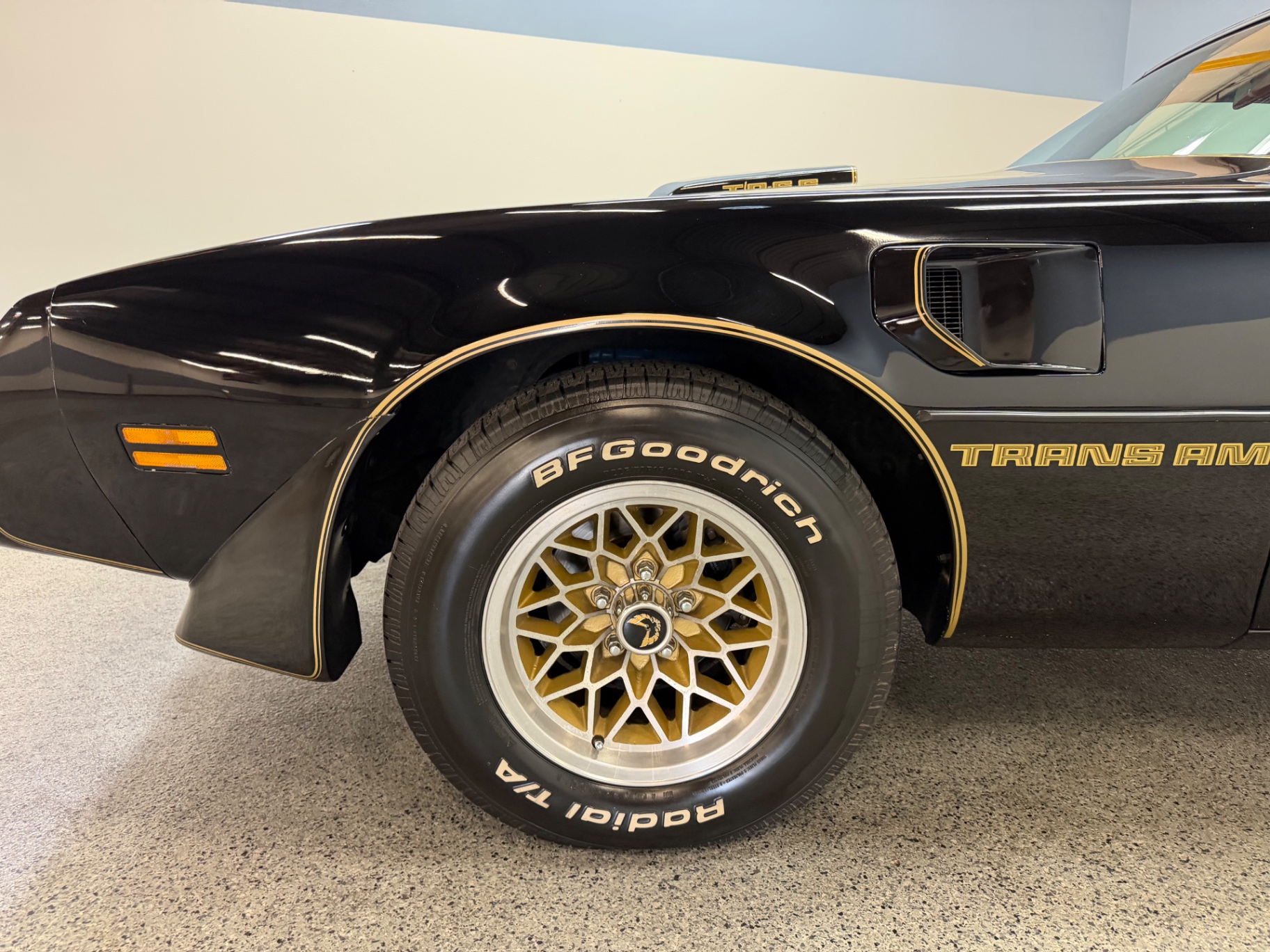
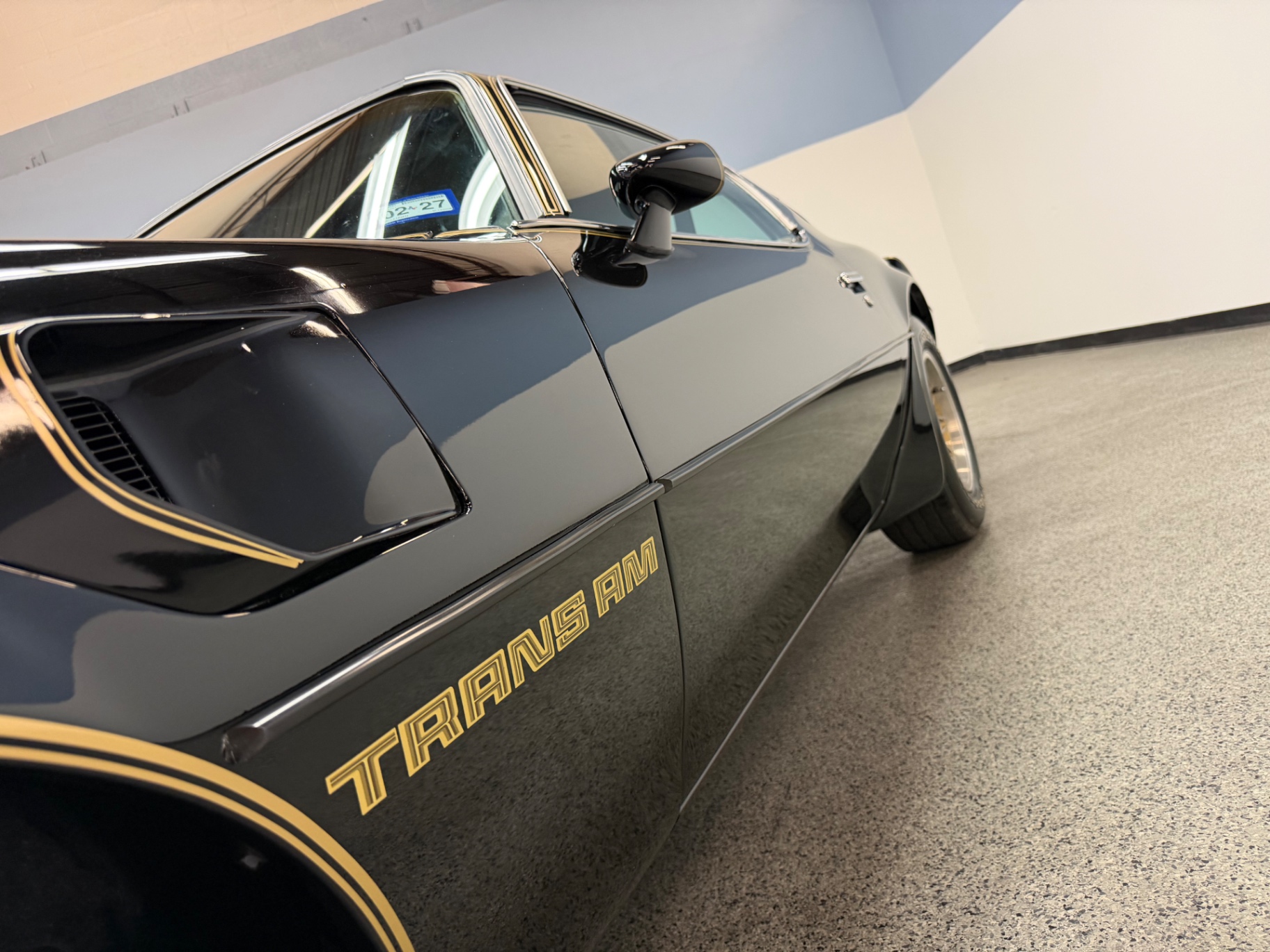
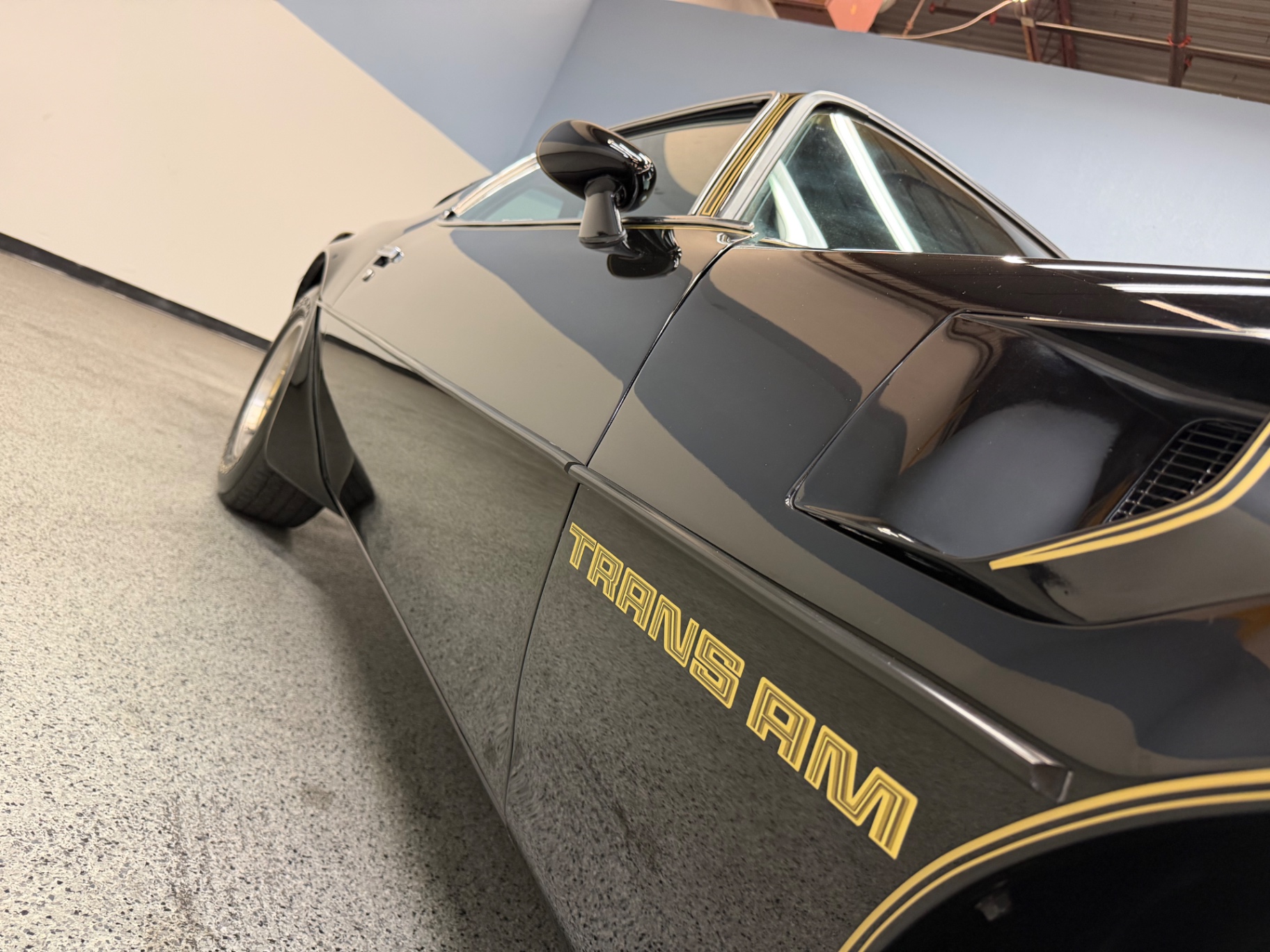
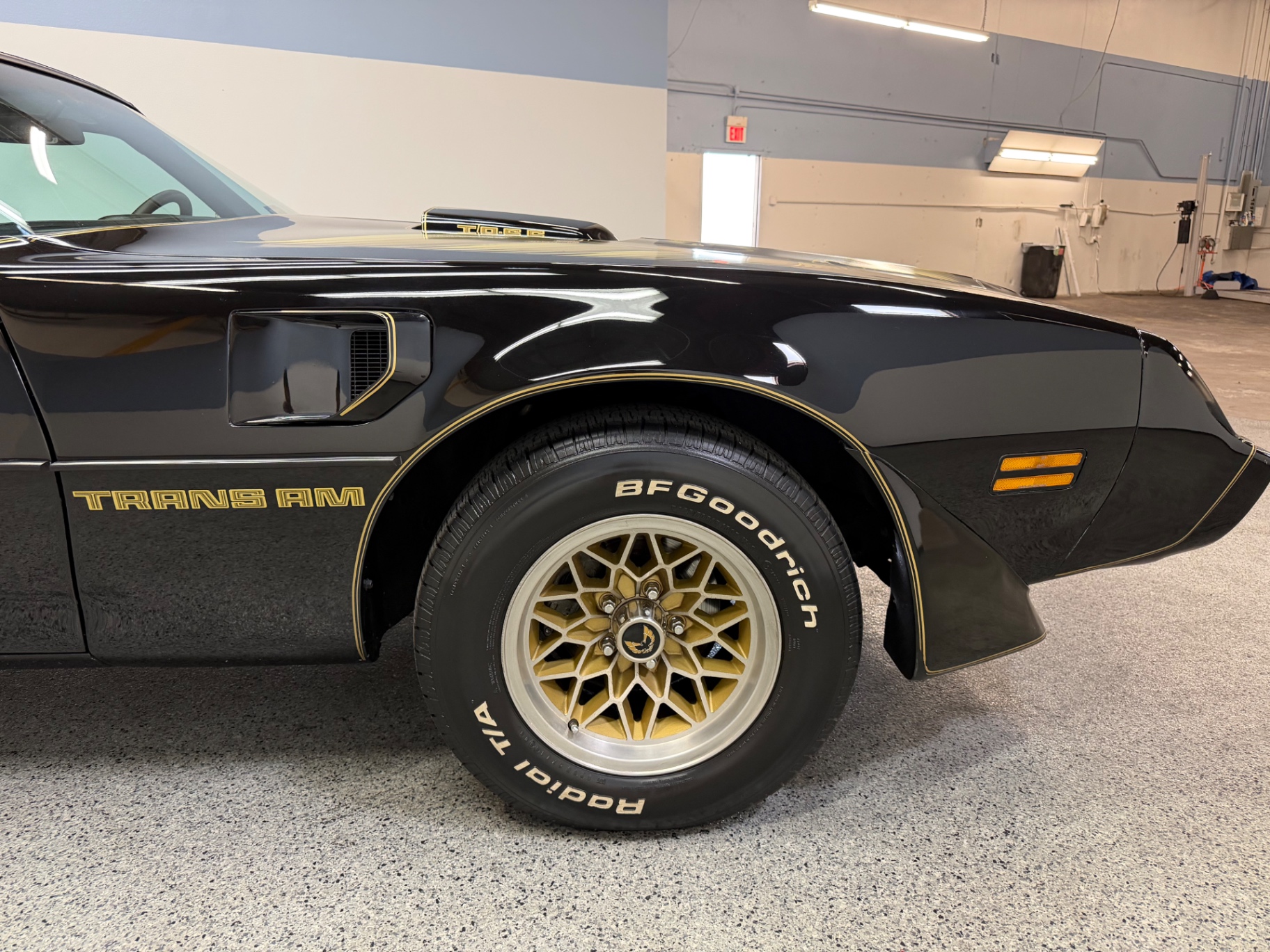
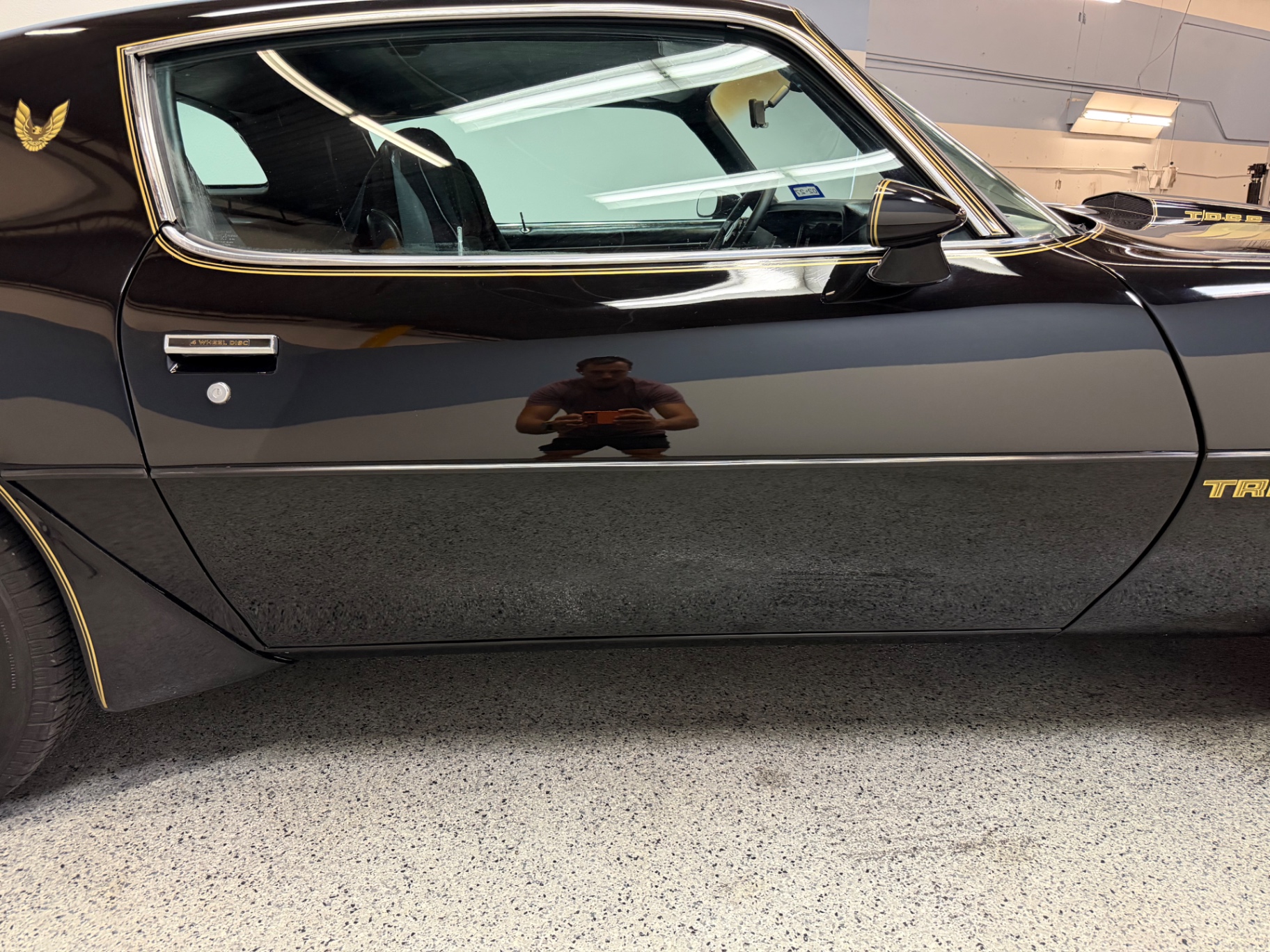
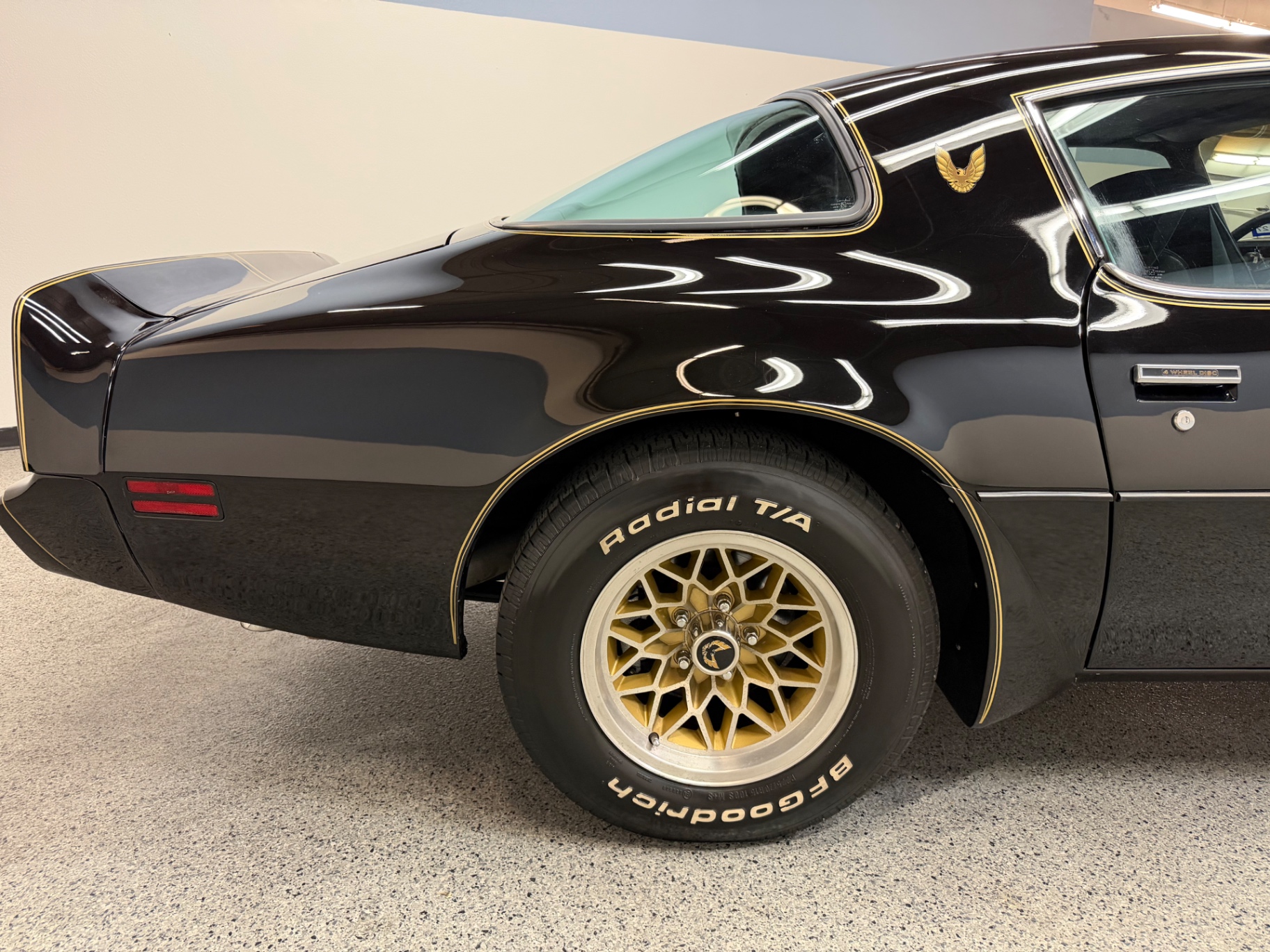
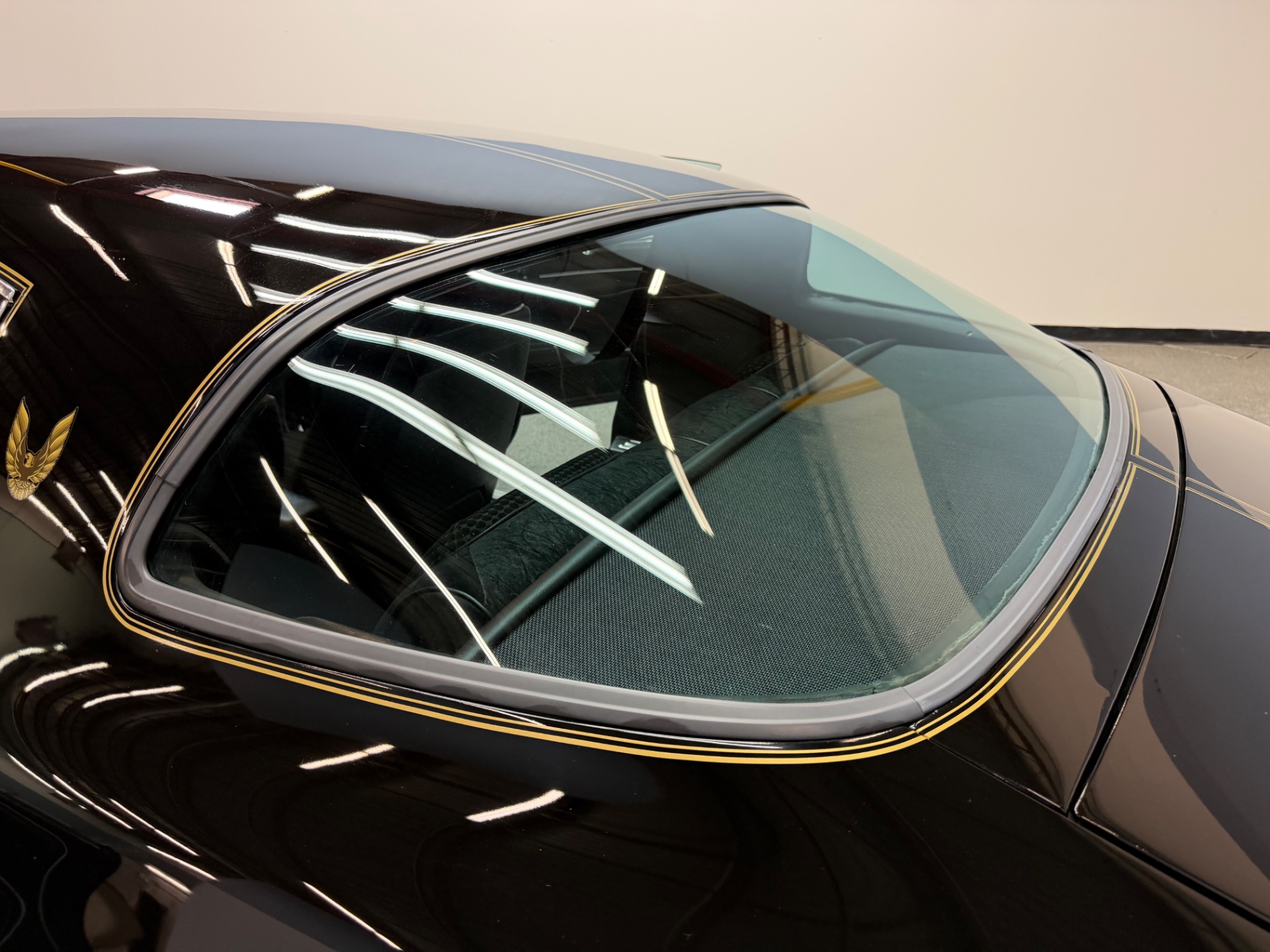
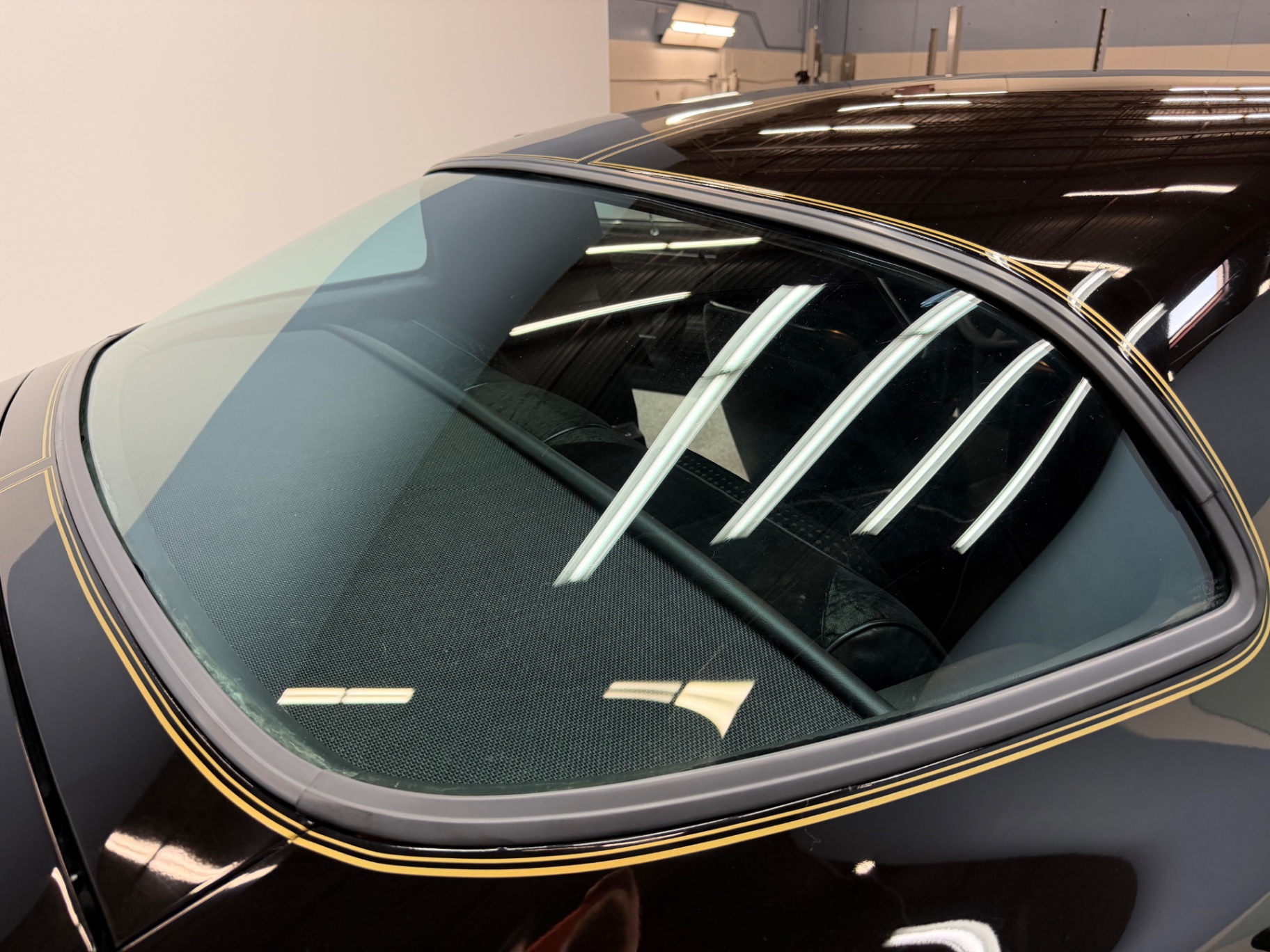
The black exterior on this 1979 Pontiac Firebird Trans Am is what most people picture when they think of this car. Black with gold accents was the defining color combination of the late-1970s Trans Am — the Bandit car in the film was black over gold, and that image defined an entire generation's idea of what a performance car looked like. The gold striping and SE decals on this car are applied correctly, running along the body lines and through the greenhouse area in the way Pontiac intended.
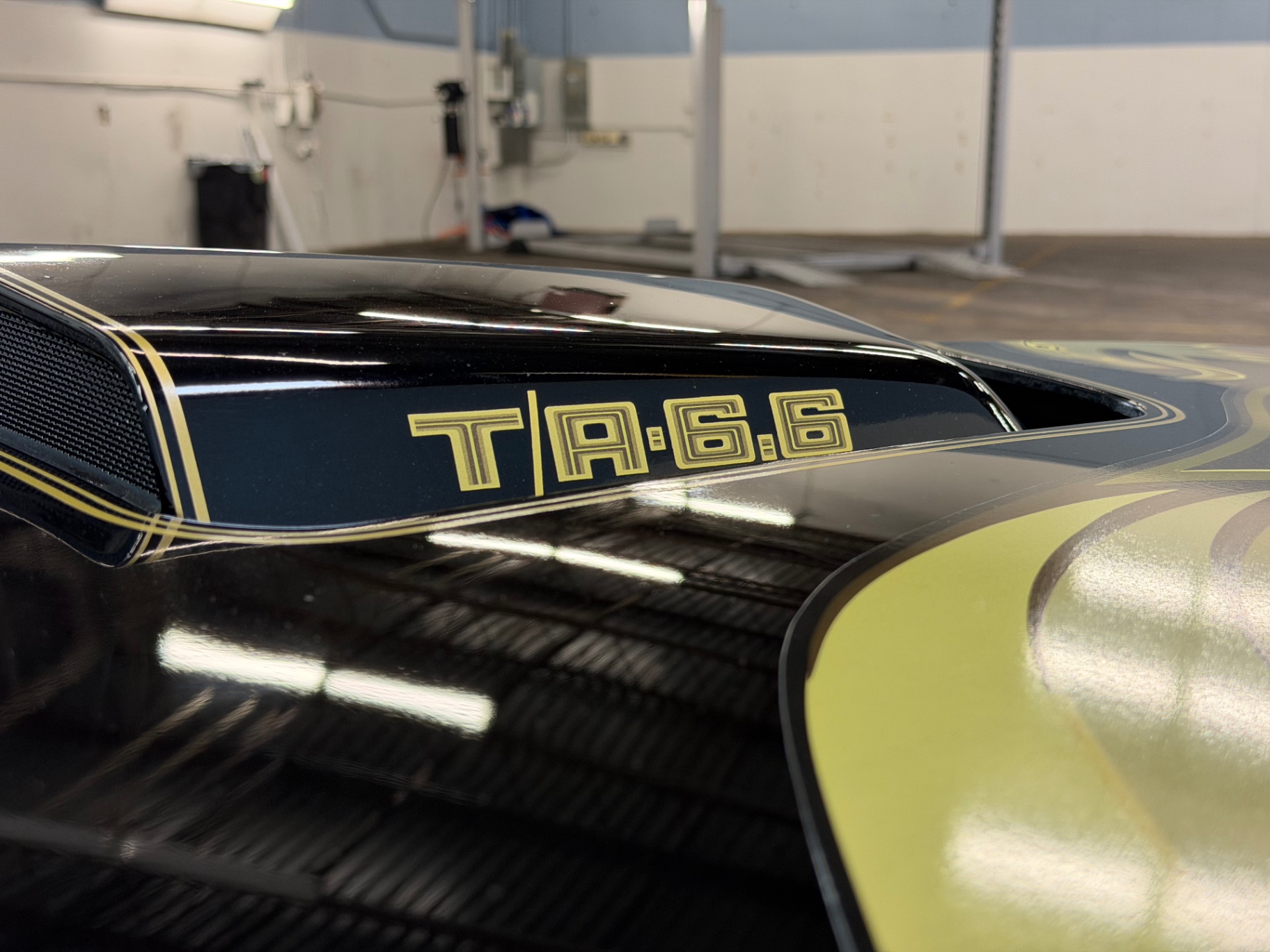
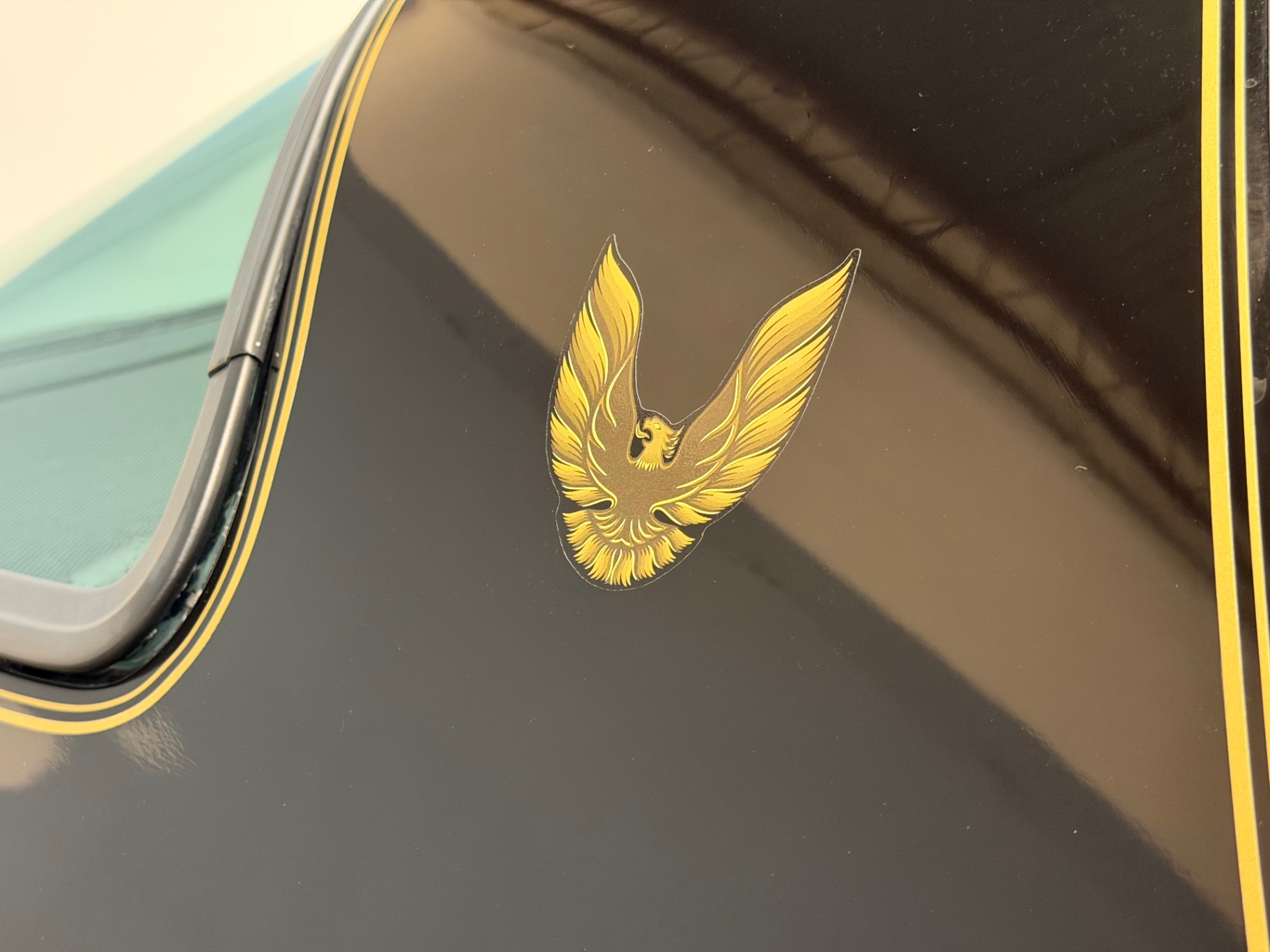
The large hood bird — the stylized Firebird graphic that covered most of the hood — is present and correctly executed in gold. On the flanks, the smaller Firebird emblem appears just behind the rear quarter windows, consistent with the correct 1979 trim application. The T/A 6.6 callout decal sits on the shaker scoop, identifying the engine for anyone standing nearby.
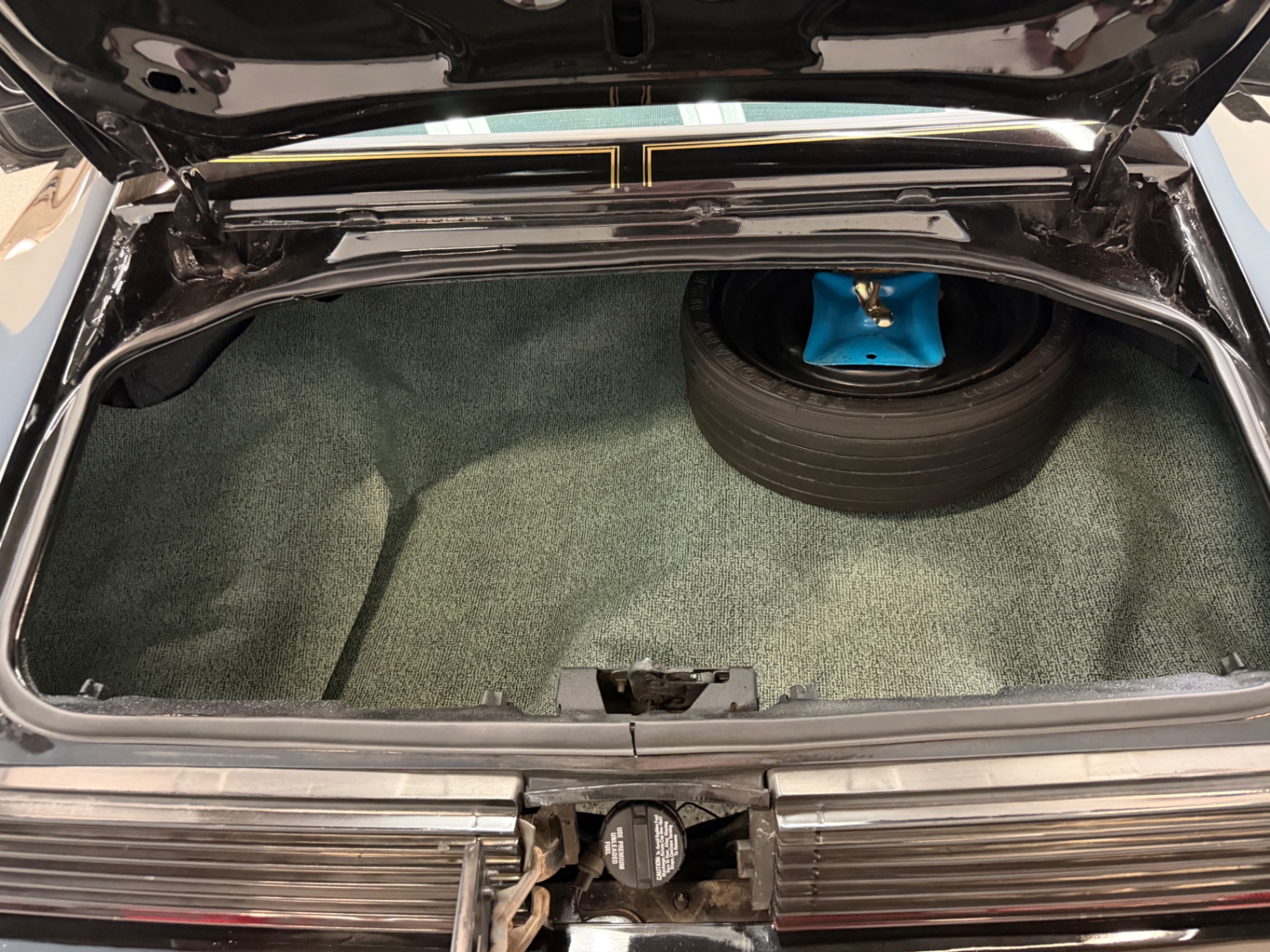
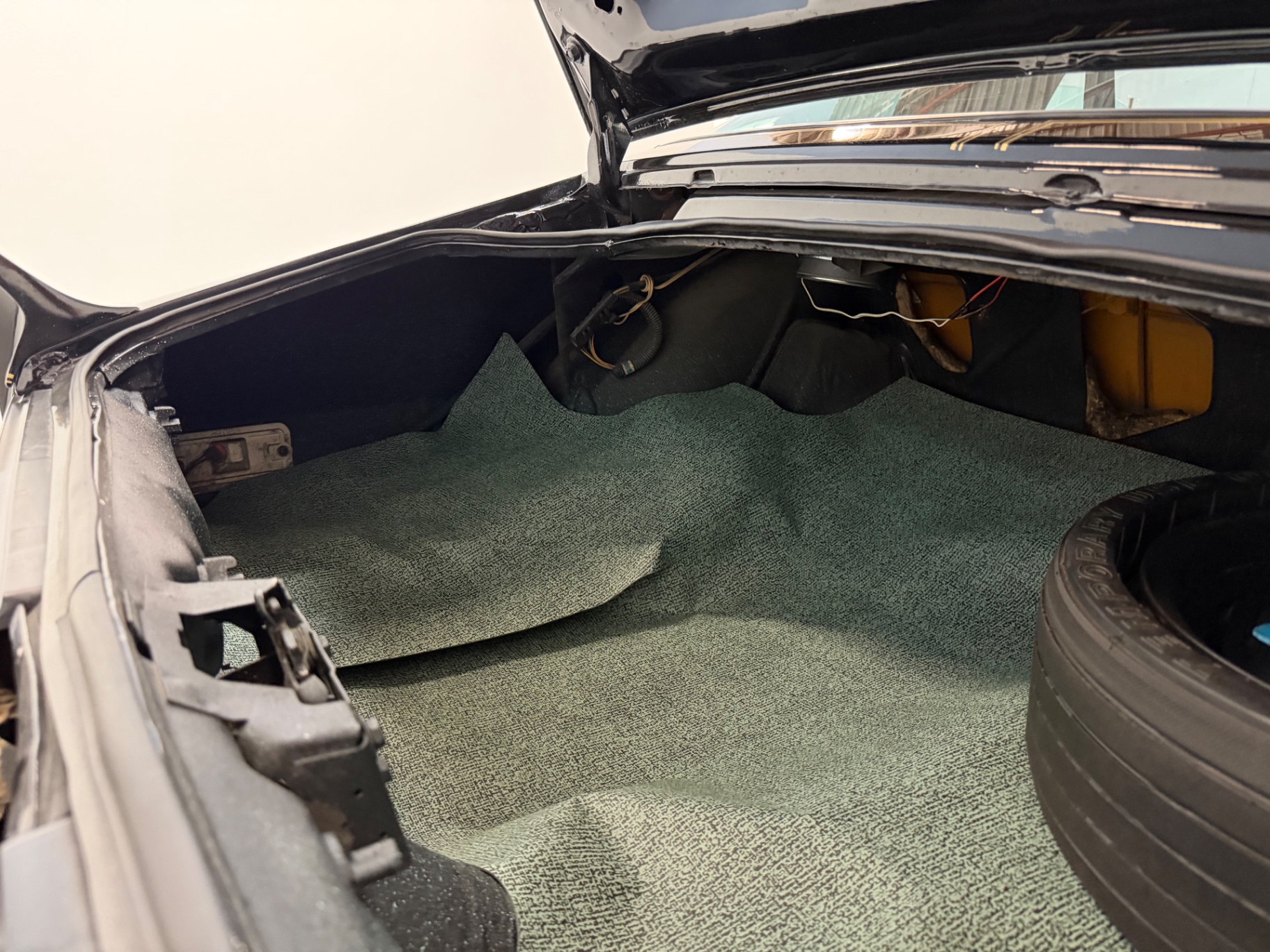
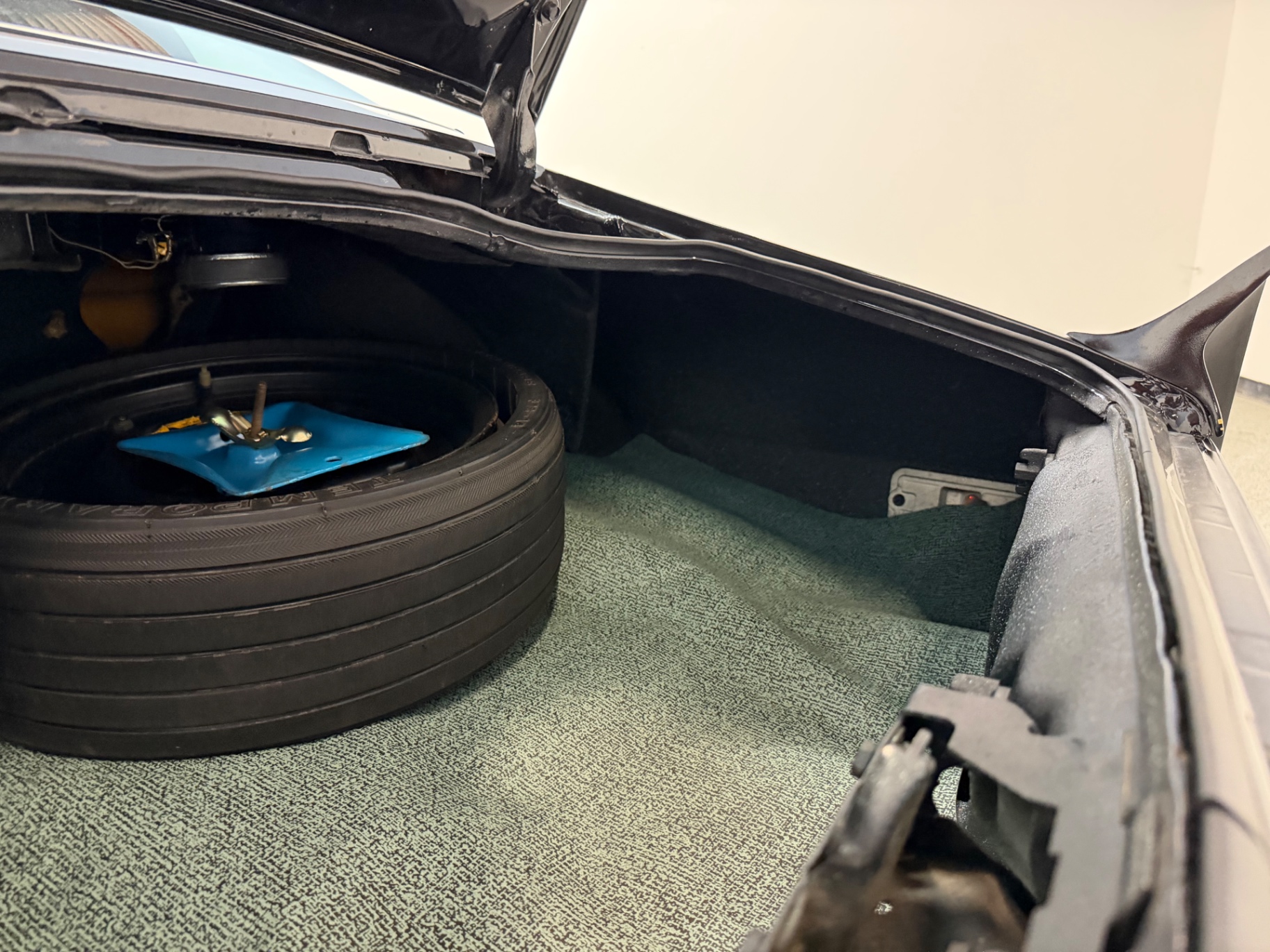
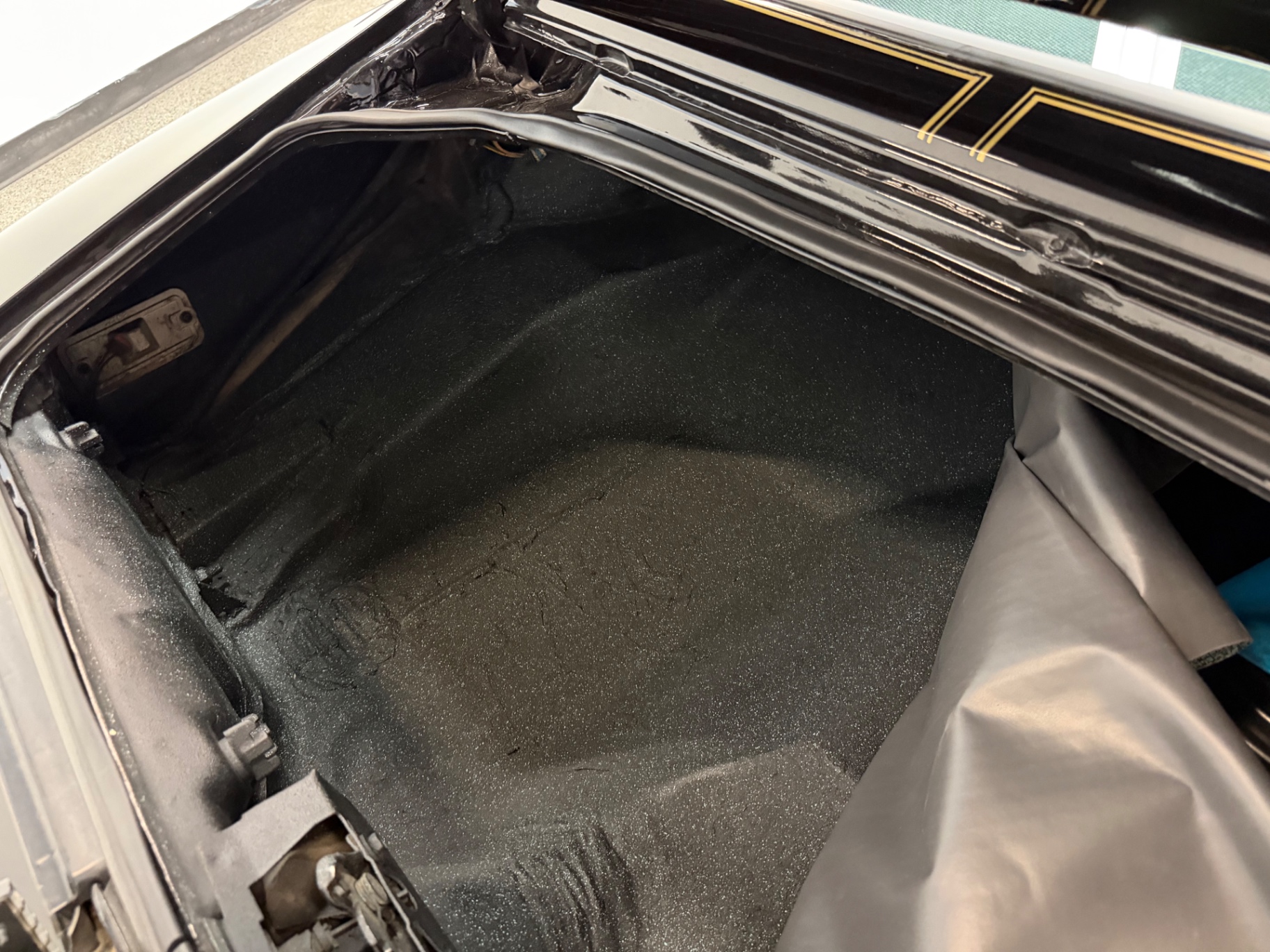
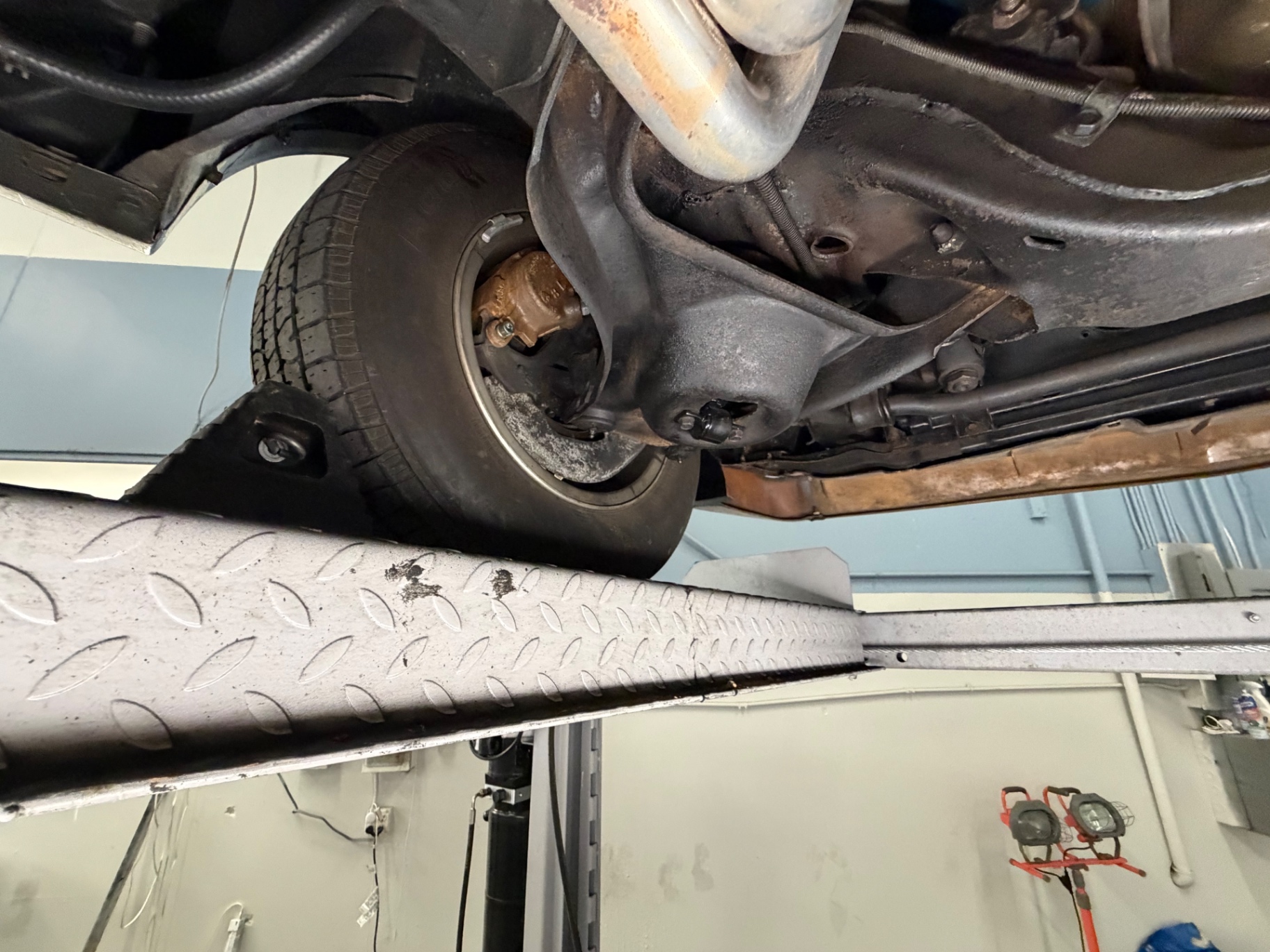
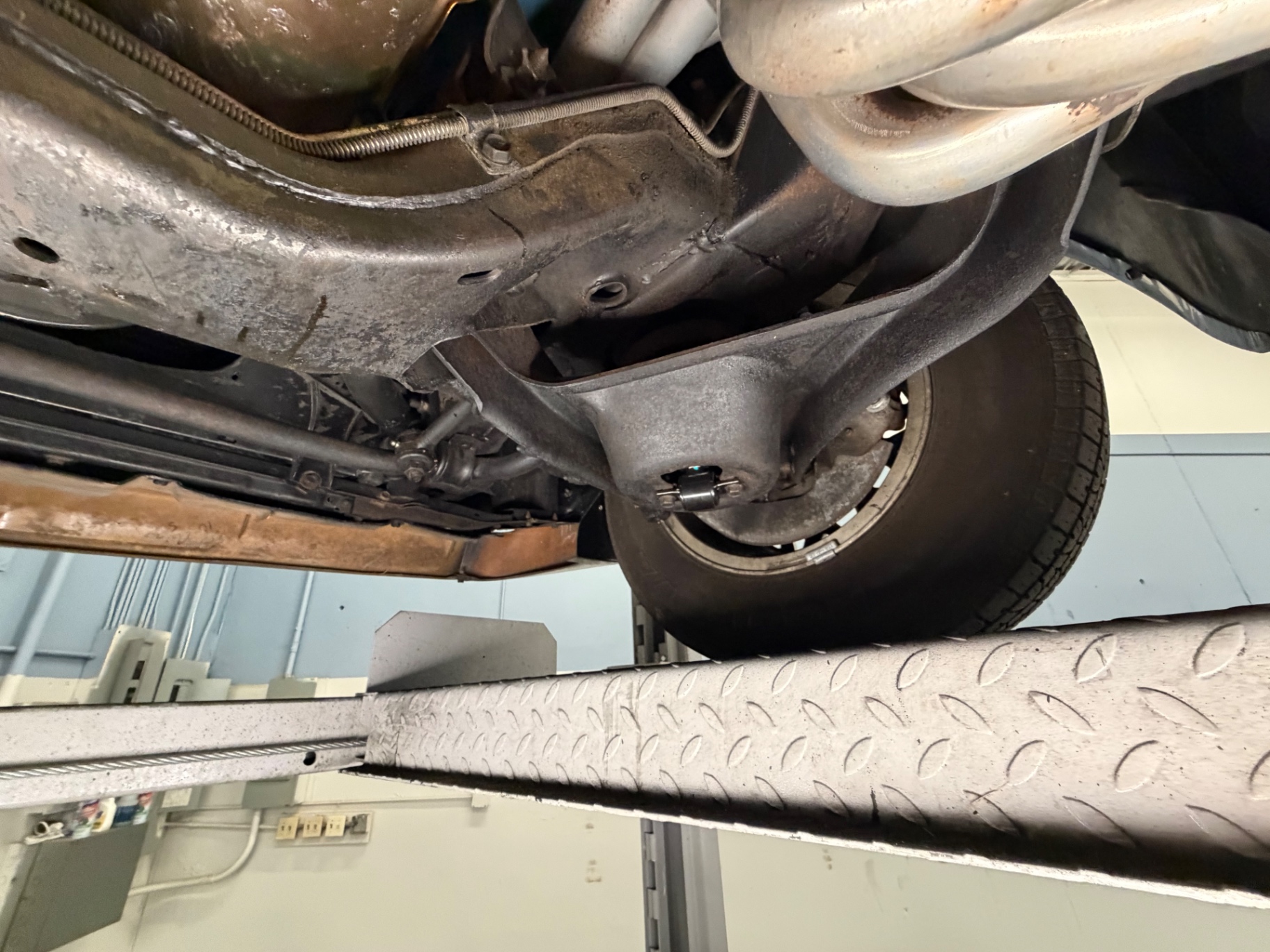
The body is rust-free, which is the most important structural condition statement you can make about a second-generation Firebird. These cars, built on the F-body platform, are known for rust in the lower rockers, the floors, and behind the rear wheel arches. Getting under this car on the lift shows clean frame rails and solid floorpans with no patching or filler over hidden damage. The trunk floor is solid as well. This is a car that has either been kept in a dry environment for much of its life or has been properly restored at the structural level — either way, the result is a solid foundation.
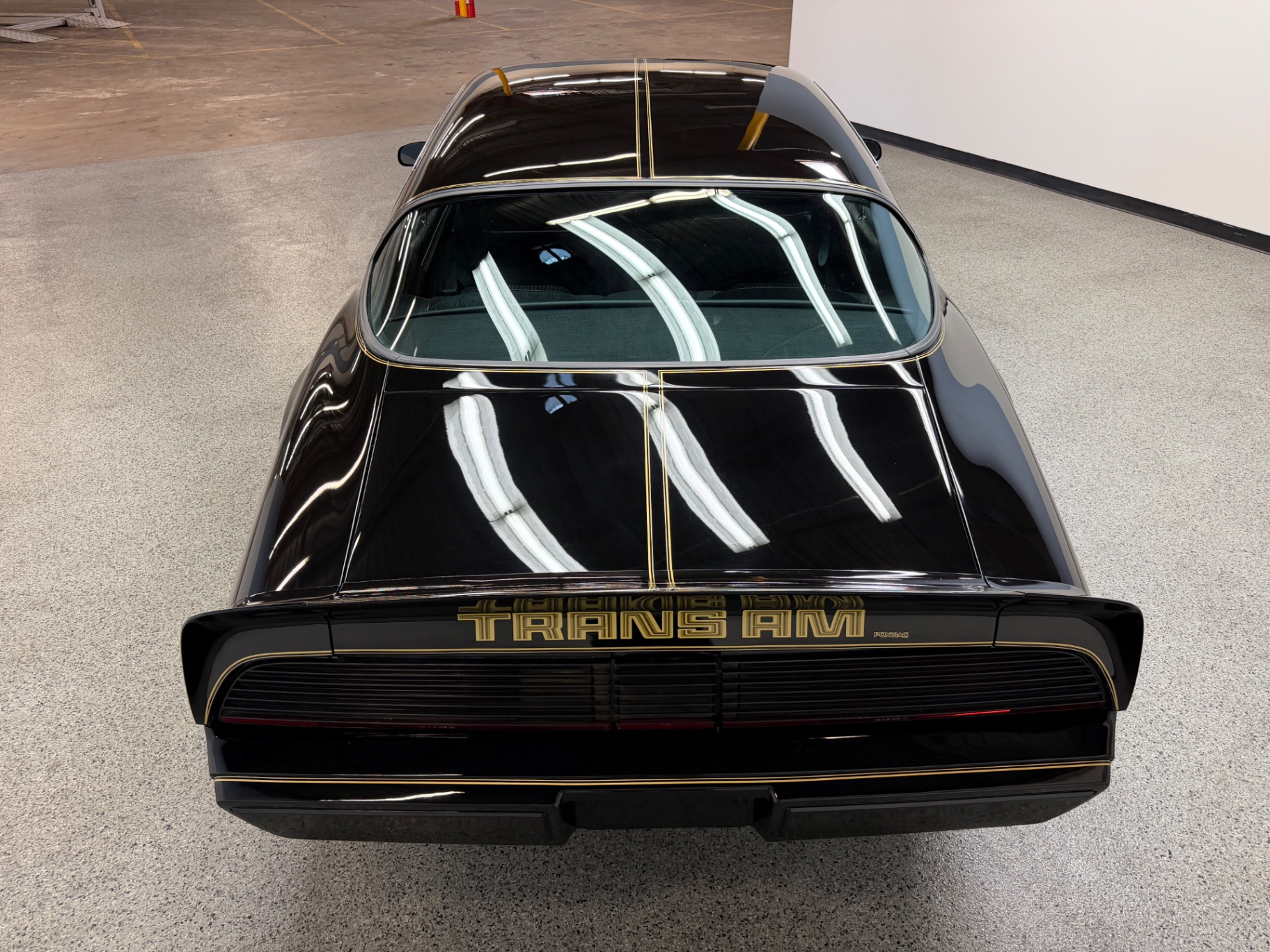
The Pontiac arrowhead emblem sits in the center of the front fascia between the four rectangular headlights, and the rear of the car carries the correct Trans Am tail treatment with the ribbed bumper cover and dual exhaust tips exiting below.
Conclusion
The 1979 Pontiac Firebird Trans Am was the right car at the right moment in American automotive history. It had the looks, the engine, and the cultural weight that no other car from that era could match in quite the same way. Finding one today with the actual Pontiac 400 V8, a 4-speed manual transmission, a functional shaker scoop, rust-free structure, and a correctly executed restoration is genuinely difficult. This example checks all of those boxes and has been set up to drive, not just to display. The mechanical upgrades — Milodon oil pan, Flowmaster exhaust — are the kind that a knowledgeable owner makes when they actually intend to use the car. Everything else has been kept correct to the period.
If you want to talk about this 1979 Pontiac Firebird Trans Am, call Skyway Classics in Sarasota, Florida at 941-254-6608.
Disclaimer
Information found on the website is presented as given to us by the owner of the car, whether on consignment or from the owner we bought it from. Some Photos, materials for videos, descriptions and other information are provided by the consignor/seller and is deemed reliable, but Skyway Classics does not warranty or guarantee this information. Skyway Classics is not responsible for information that may incorrect or a publishing error. The decision to purchase should be based solely on the buyers personal inspection of the vehicle or by a professional inspection service prior to offer or purchase being made.
1979 Pontiac Firebird Trans Am T/A 6.6 — Restored Black and Gold, 400 V8, 4-Speed Manual
Why This Car Is Special
The 1979 Pontiac Firebird Trans Am sits at the absolute peak of the second-generation Firebird's cultural moment. By 1979, the Trans Am had already starred in Smokey and the Bandit, and sales were through the roof — Pontiac moved over 117,000 Trans Ams that year alone, making it the best-selling year in the model's history up to that point. These were not quiet, understated cars. They were exactly what a performance car buyer in the late 1970s wanted: big displacement, manual transmission, aggressive graphics, and a shaker hood scoop that told you exactly what was living underneath it before you even opened the hood.
This particular 1979 Pontiac Firebird Trans Am carries the T/A 6.6 engine option — the 400 cubic inch Pontiac V8 — backed by a 4-speed manual transmission. The VIN confirms this is a coupe body style with the 6.6-liter engine and manual gearbox combination, which is the spec most Trans Am buyers today are specifically searching for. The automatic was far more common by 1979, so a correctly optioned 4-speed car like this one is harder to find. The engine code in this VIN decodes to the Pontiac 400, which by 1979 was being phased out in favor of the Oldsmobile 403 and Chevrolet 350 units that made their way into many Trans Ams that year. Getting the actual Pontiac-built 400 in a 1979 car with a 4-speed is a combination that collectors specifically seek out.
The restoration on this car has been done with an eye toward driving quality and mechanical correctness rather than trailer-queen show points. The result is a 1979 Pontiac Firebird Trans Am that looks right, sounds right, and is built to be used.
Features List
- T/A 6.6 Pontiac 400 cubic inch V8
- 4-speed manual transmission
- Functional shaker hood scoop with T/A 6.6 identification decal
- Milodon performance oil pan
- Dual exhaust with Flowmaster mufflers
- Power steering
- Power front disc brakes
- Air conditioning
- Trans Am Firebird steering wheel with center cap
- Full gauge cluster with tachometer, water temp, fuel, and voltmeter gauges
- 4-speed center console shifter
- High-back bucket seats with correct dot-pattern cloth upholstery
- Period-correct retro radio
- Clean door panels
- Intact headliner
- Clean carpet
- SE decals
- Rust-free floorpans
- Clean frame rails
- Clean rear axle
- Blue-painted Pontiac block
Mechanical
The heart of this 1979 Pontiac Firebird Trans Am is the Pontiac-built 400 cubic inch V8, badged and sold as the T/A 6.6. By 1979, emissions regulations had tightened considerably compared to the muscle car era, and Pontiac was working hard to maintain performance character within those constraints. The 400 was the last of the true Pontiac-displacement big-inch engines available in the Trans Am, and it was on its way out after this model year. That gives 1979 a specific historical significance — it is the last year you could order a Pontiac Firebird Trans Am with a genuine Pontiac V8 under the hood.
The engine bay on this car has been carefully restored. The Pontiac block is painted in the correct shade of blue, and the shaker air cleaner assembly sits properly on the intake, functional and visually correct. The shaker scoop on the 1979 Trans Am was a meaningful piece of equipment — it was directly connected to the air cleaner and moved with the engine, providing a cold-air induction path that made a visible difference at wide-open throttle. It is not cosmetic.
Underneath, the builder fitted a Milodon performance oil pan in place of the factory unit. Milodon has been a respected name in engine oiling systems for decades, and their pans offer increased oil capacity and improved oil control under hard acceleration and cornering — a sensible upgrade for a car that is meant to be driven. The dual exhaust system uses Flowmaster mufflers, which provide a tone consistent with the era without being obnoxiously loud. Frame rails are clean, floorpans show no rust, and the rear axle is in sound condition. The 4-speed manual gearbox is correct for this application and shifts through all four gears as it should. Power steering and power front disc brakes round out the mechanical package, keeping the car manageable in modern driving conditions.
Interior
Open the door on this 1979 Pontiac Firebird Trans Am and the interior presents exactly as it should. The high-back bucket seats wear the correct dot-pattern cloth upholstery that was standard on Trans Am interiors of this period. The pattern is intact, which matters — reproduction cloth that does not match the original weave pattern is a detail that experienced Trans Am buyers notice immediately. These seats look period-correct.
The dashboard carries the full Trans Am gauge cluster, which includes a large tachometer on the left, a water temperature gauge in the center, and a speedometer on the right — all set into the distinctive hobnail-textured instrument panel surround that Pontiac used on the second-generation Firebird. Secondary gauges for fuel level and voltage are positioned on the passenger side of the dash. This is a proper instrument package, not a base Firebird cluster with a tach bolted in.
The steering wheel is the correct Trans Am unit — a three-spoke design with the Firebird emblem on the center cap, which gives the driver an appropriate and comfortable connection to the car. The 4-speed shifter sits in the center console where it belongs, with the correct shift pattern on the knob. The retro-style radio fits the dash opening correctly and maintains the period appearance without looking out of place. Door panels are clean, the carpet is in good shape, and the headliner is intact — this is an interior that has been looked after properly. Air conditioning is present and functional, which in the Florida market is not an afterthought.
Exterior
The black exterior on this 1979 Pontiac Firebird Trans Am is what most people picture when they think of this car. Black with gold accents was the defining color combination of the late-1970s Trans Am — the Bandit car in the film was black over gold, and that image defined an entire generation's idea of what a performance car looked like. The gold striping and SE decals on this car are applied correctly, running along the body lines and through the greenhouse area in the way Pontiac intended.
The large hood bird — the stylized Firebird graphic that covered most of the hood — is present and correctly executed in gold. On the flanks, the smaller Firebird emblem appears just behind the rear quarter windows, consistent with the correct 1979 trim application. The T/A 6.6 callout decal sits on the shaker scoop, identifying the engine for anyone standing nearby.
The body is rust-free, which is the most important structural condition statement you can make about a second-generation Firebird. These cars, built on the F-body platform, are known for rust in the lower rockers, the floors, and behind the rear wheel arches. Getting under this car on the lift shows clean frame rails and solid floorpans with no patching or filler over hidden damage. The trunk floor is solid as well. This is a car that has either been kept in a dry environment for much of its life or has been properly restored at the structural level — either way, the result is a solid foundation.
The Pontiac arrowhead emblem sits in the center of the front fascia between the four rectangular headlights, and the rear of the car carries the correct Trans Am tail treatment with the ribbed bumper cover and dual exhaust tips exiting below.
Conclusion
The 1979 Pontiac Firebird Trans Am was the right car at the right moment in American automotive history. It had the looks, the engine, and the cultural weight that no other car from that era could match in quite the same way. Finding one today with the actual Pontiac 400 V8, a 4-speed manual transmission, a functional shaker scoop, rust-free structure, and a correctly executed restoration is genuinely difficult. This example checks all of those boxes and has been set up to drive, not just to display. The mechanical upgrades — Milodon oil pan, Flowmaster exhaust — are the kind that a knowledgeable owner makes when they actually intend to use the car. Everything else has been kept correct to the period.
If you want to talk about this 1979 Pontiac Firebird Trans Am, call Skyway Classics in Sarasota, Florida at 941-254-6608.
Disclaimer
Information found on the website is presented as given to us by the owner of the car, whether on consignment or from the owner we bought it from. Some Photos, materials for videos, descriptions and other information are provided by the consignor/seller and is deemed reliable, but Skyway Classics does not warranty or guarantee this information. Skyway Classics is not responsible for information that may incorrect or a publishing error. The decision to purchase should be based solely on the buyers personal inspection of the vehicle or by a professional inspection service prior to offer or purchase being made.
1979 Pontiac
Firebird Trans Am
Why Choose Skyway Classics?
Explore our curated inventory of classic and collector cars—thoughtfully selected, ready to drive, and supported by experts who make ownership simple.
Expert Curation
Every vehicle is hand-selected by our experts for quality, authenticity, and investment potential.
Fast Transactions
Streamlined buying and selling process with quick financing and immediate delivery options.
Only National Dealer With Classic Service & Repair
We’re the only national dealership that services and repairs the classics we sell—before and after the sale.
Nationwide Network
Access to our extensive network of collectors, restorers, and classic car enthusiasts nationwide.
Concierge Ownership Support
From financing and insurance to paperwork, shipping, and titling—we handle the details so you can enjoy the drive.
Passion-Driven Service
We're classic car enthusiasts first, providing personalized service with genuine passion for the hobby.