
1979 Pontiac
Firebird Trans Am
1979 Pontiac Firebird Trans Am — 400ci V8, T-Tops, White over Red, Numbers-Correct Build
Why This Car Is Special
The 1979 Pontiac Firebird Trans Am sits at an interesting crossroads in American automotive history. By 1979, the Trans Am had become the best-selling version of the Firebird lineup, a remarkable reversal from its early days when it was a low-volume performance variant. That popularity was driven in no small part by the 1977 film Smokey and the Bandit, which planted the image of a black and gold Trans Am firmly into the cultural consciousness of an entire generation. But not every Trans Am from this era wore black and gold. This one wears white over a full red interior, and it carries the most desirable engine Pontiac still offered in 1979: the 6.6-liter, 400 cubic inch V8.
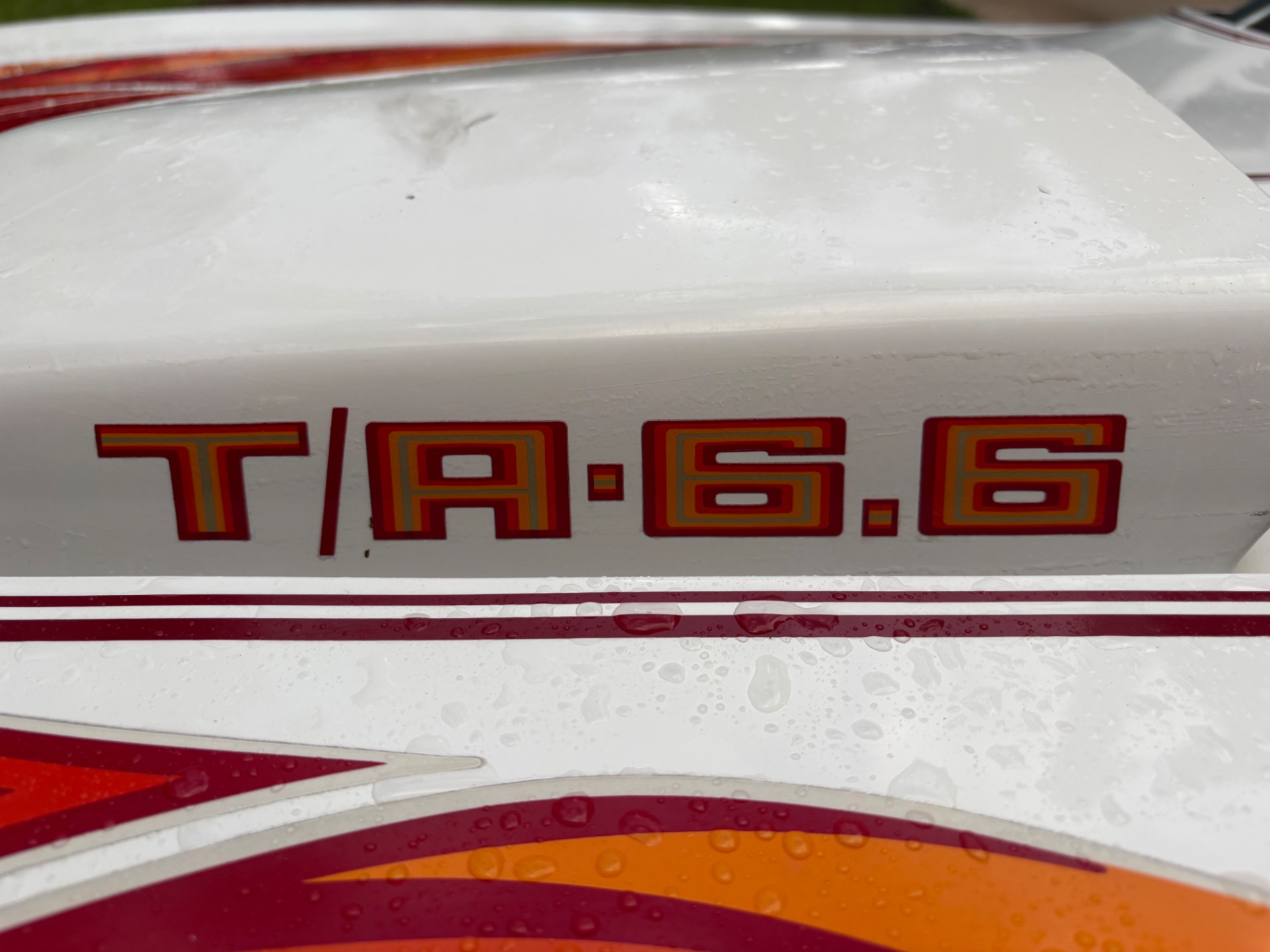
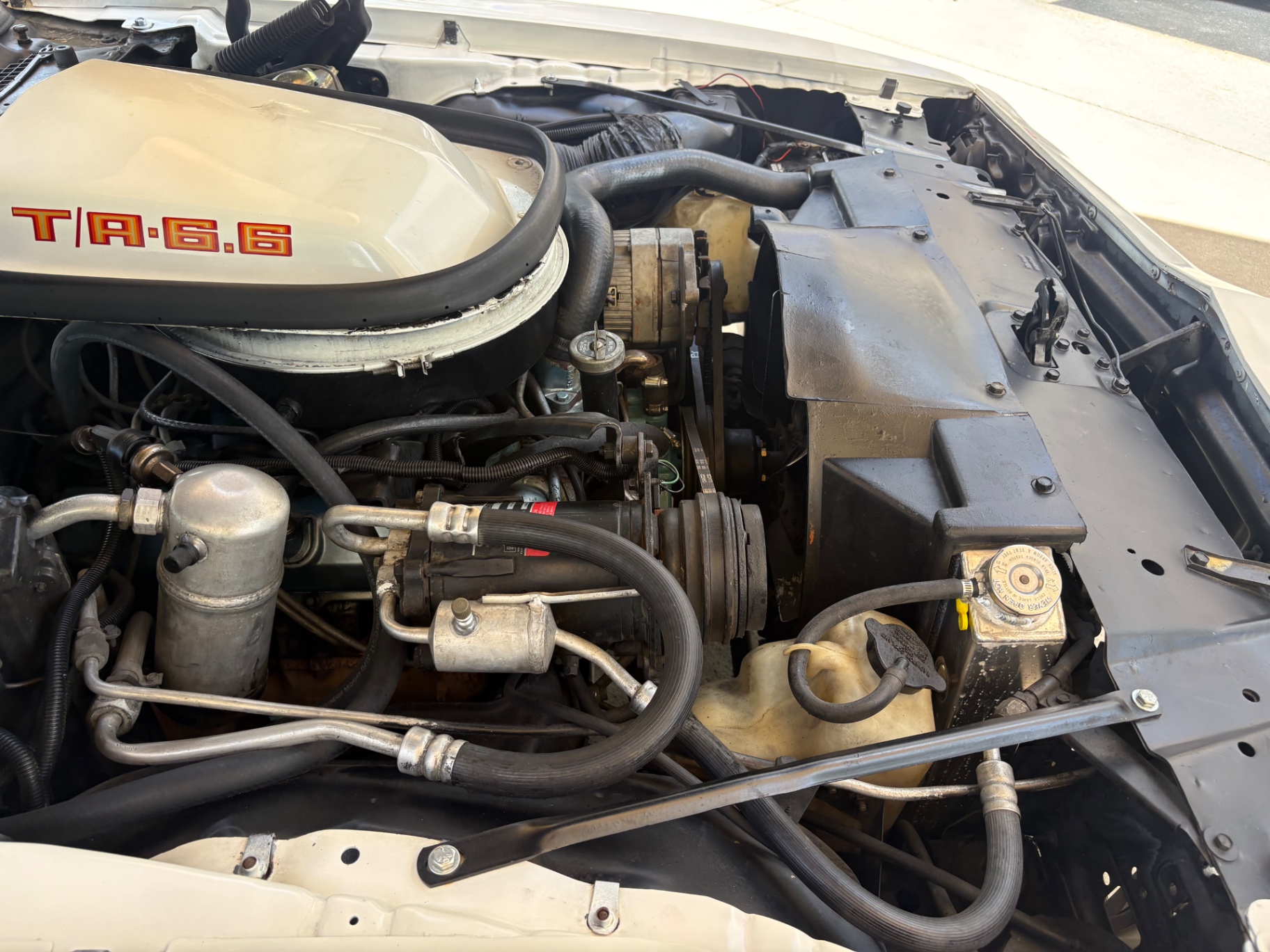
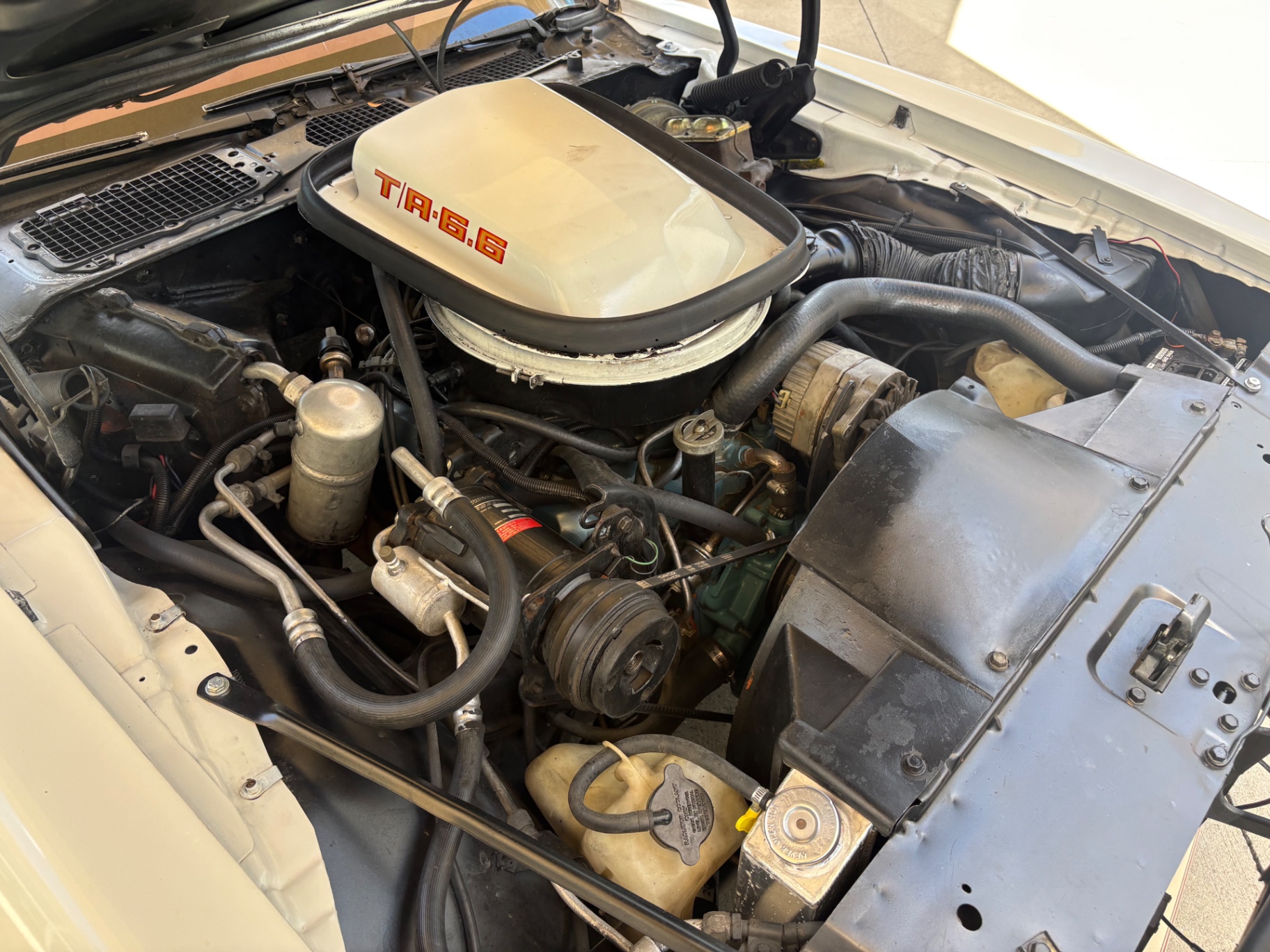
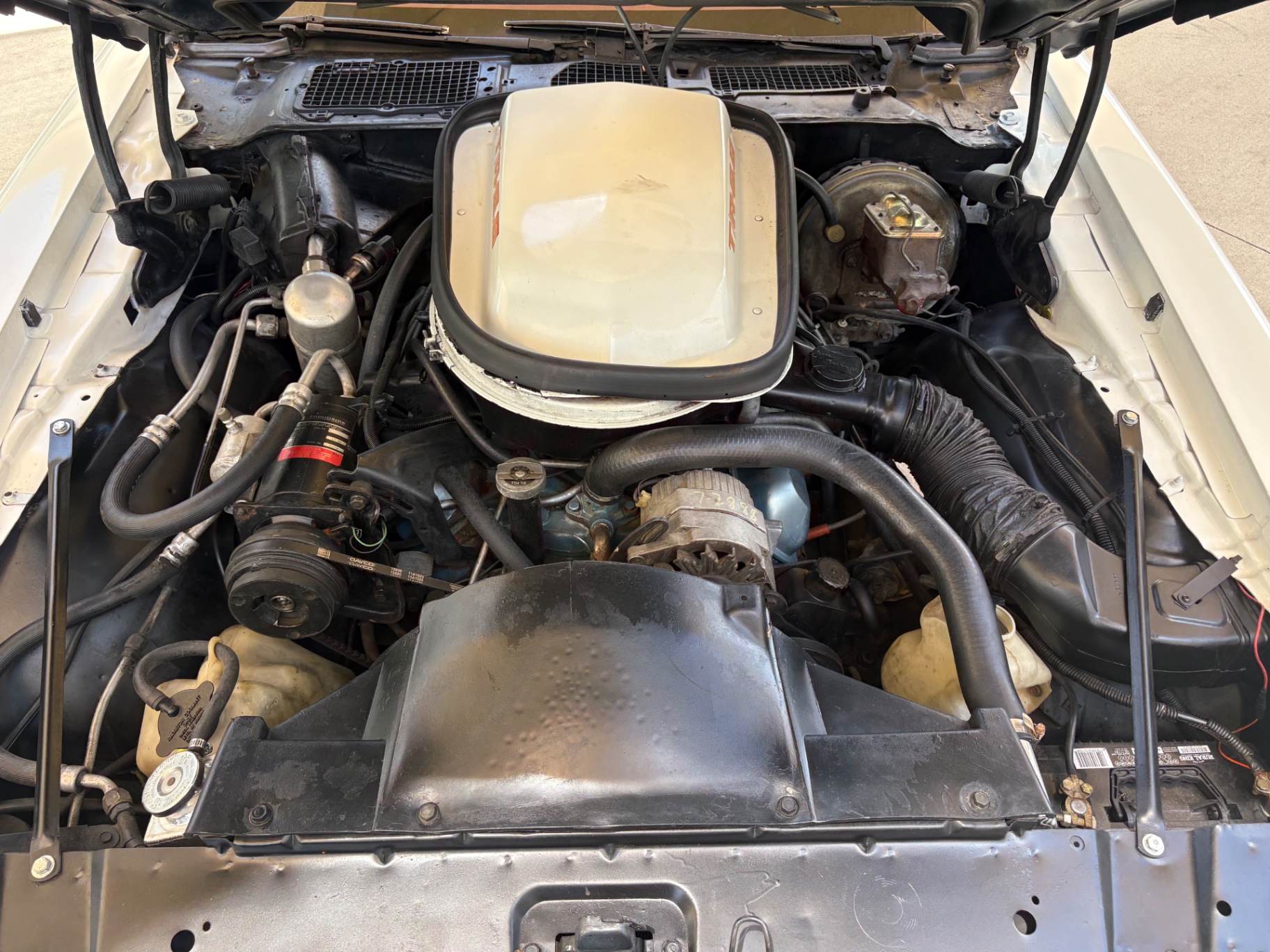
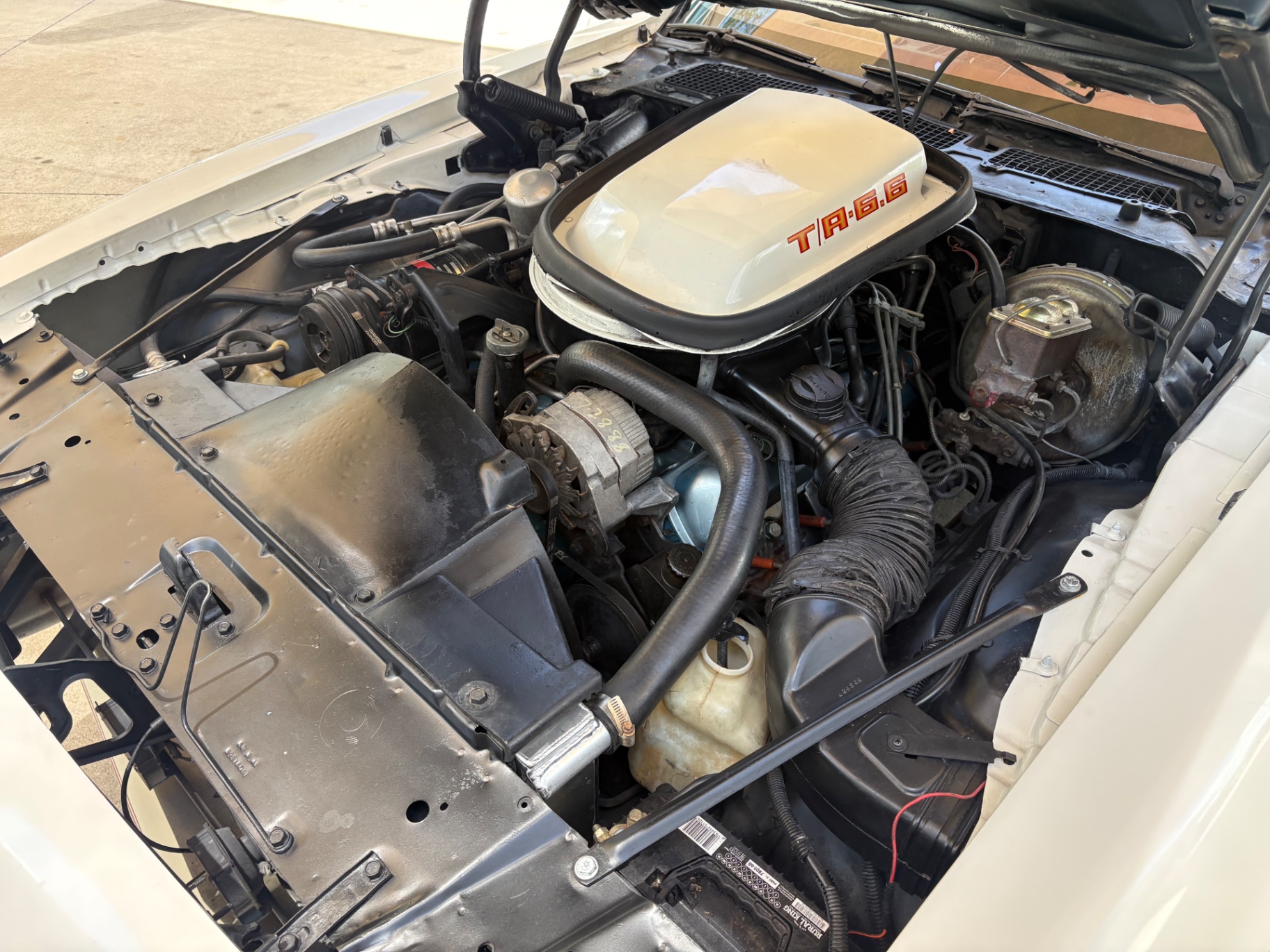
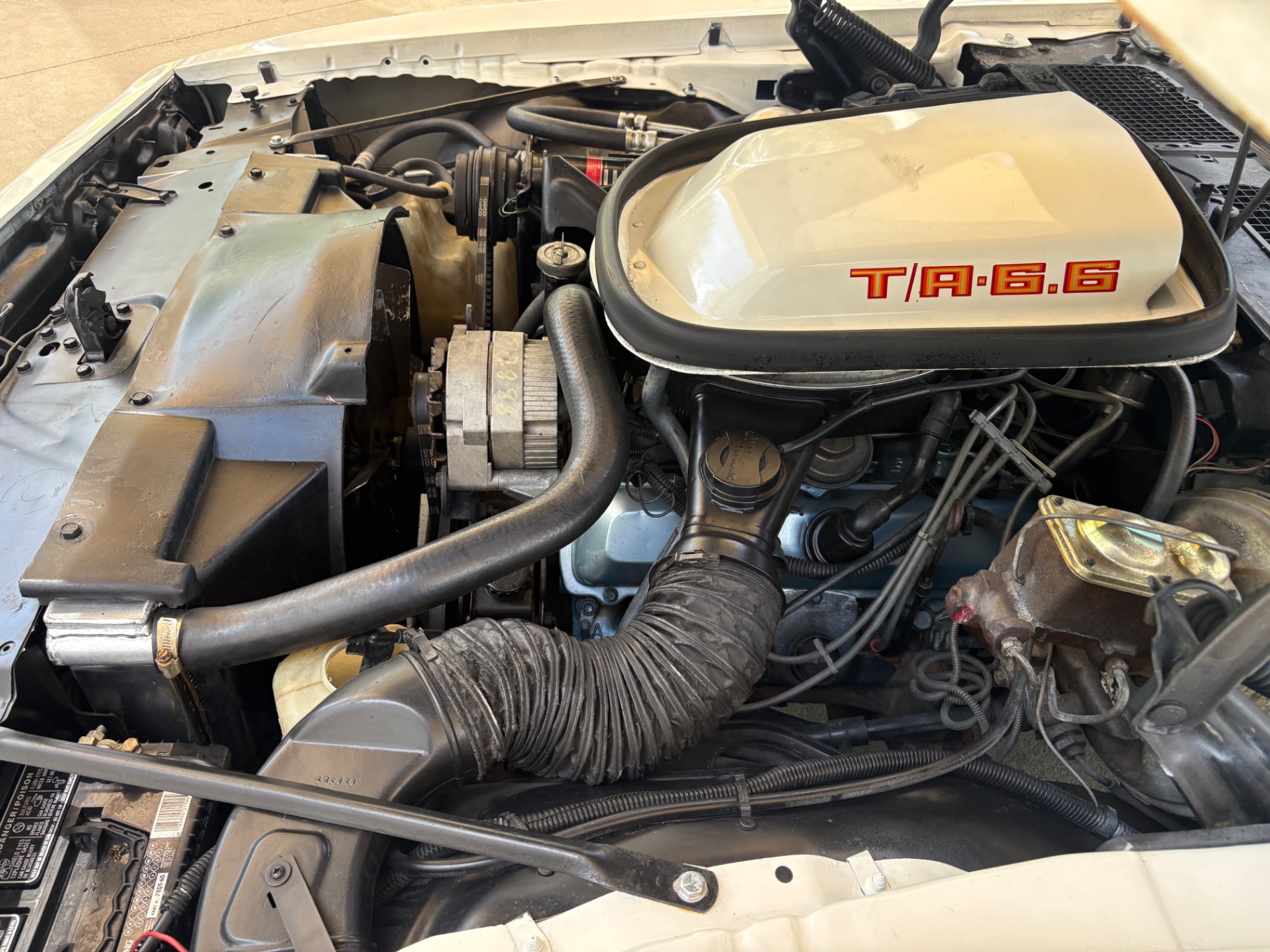
By 1979, the emissions era had taken a heavy toll on American performance engines. Pontiac's own 400ci V8 was in its final year of production in the Trans Am. The W72 performance-tuned version of that engine — which this car carries, as confirmed by the T/A 6.6 air cleaner badge — was rated at 220 horsepower under the SAE net measurement standard used at the time, making it the strongest engine available in a 1979 Trans Am. The following year, the 400 was gone entirely, replaced by a 301ci Pontiac V8 or a Chevy-sourced 305. For collectors who want a second-generation Trans Am with a genuine Pontiac 400 under the hood, 1979 is the last year that was possible from the factory.
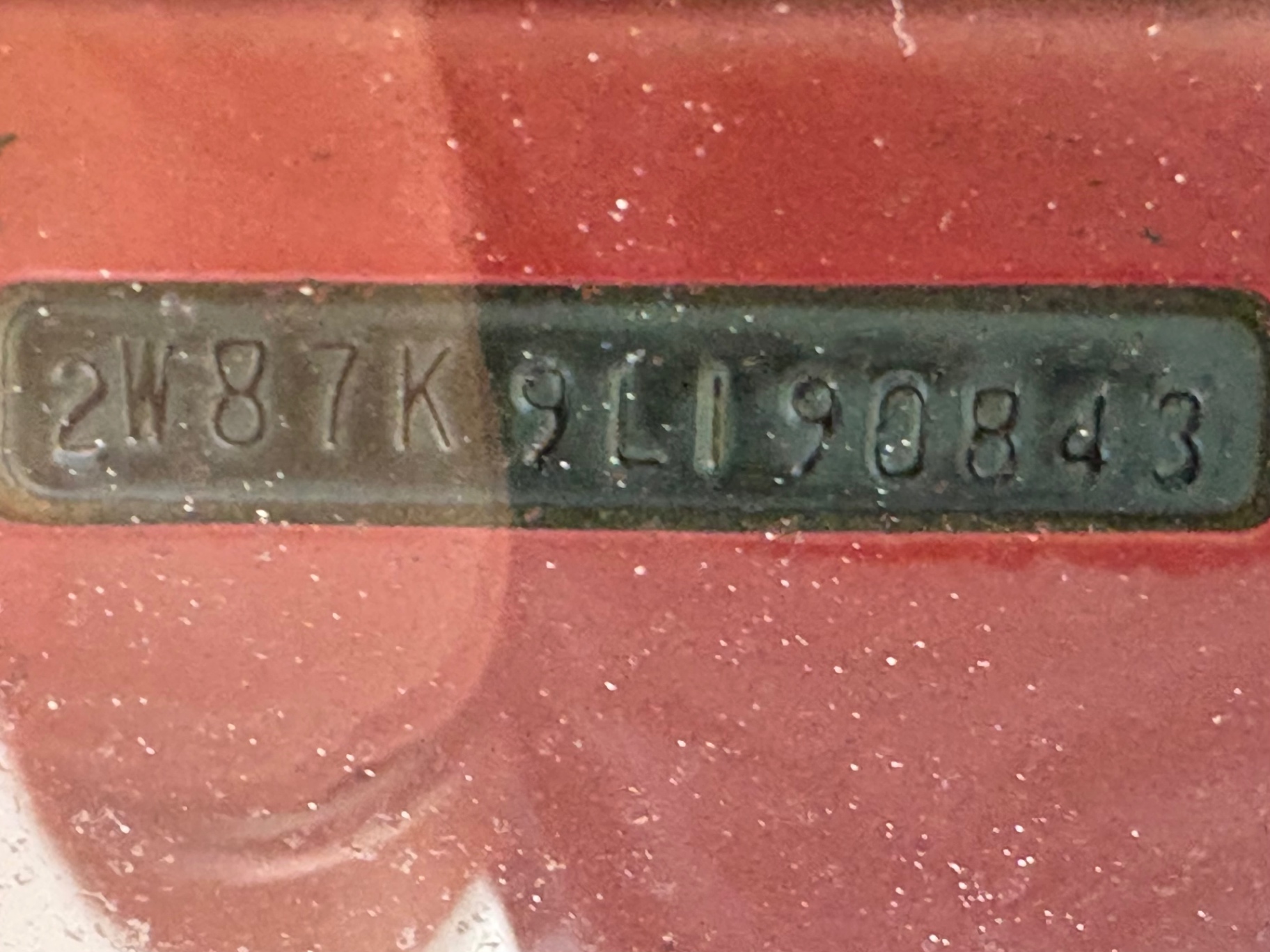
The VIN on this car encodes the body style as a two-door sport coupe (position 4: 87) built at the Norwood, Ohio assembly plant, which was one of two facilities that produced Firebirds during this period. The model year code confirms 1979, and the engine position confirms V8 displacement consistent with the 6.6-liter 400.
Features List
- 6.6L 400ci V8 with T/A 6.6 Air Cleaner Badge - Factory Shaker Hood with Functional Ram Air Inlet - 3-Speed Turbo Hydra-Matic Automatic Transmission - T-Tops (Removable Glass Roof Panels) - Snowflake Aluminum Wheels - Dual Exhaust with Rear Outlets - Factory Tachometer and Full Gauge Cluster with RTS Badge - Radial Tuned Suspension (RTS) with Front and Rear Sway Bars - Power Front Disc Brakes - Power Steering - Tilt Steering Column - Air Conditioning (reported cold) - Center Console - Bucket Seats — Red Vinyl - Power Door Locks - Rear Window Louvers - Front and Rear Spoilers - Firebird Hood Decal - Sony Aftermarket Stereo
Mechanical
The heart of this 1979 Pontiac Firebird Trans Am is the 6.6-liter (400 cubic inch) Pontiac V8, topped with the T/A 6.6 shaker air cleaner that draws air directly from a functional scoop built into the hood. This setup — often called ram air — was unique to the Trans Am and drew in cooler outside air rather than recirculating hot underhood air. The W72 designation, identifiable by the T/A 6.6 badge, indicated a higher-performance tune relative to the base 400, with a specific camshaft profile and carburetor calibration. It was the engine Pontiac engineers used when they wanted to get the most out of what the 400 could still legally do in the emissions era.
Backing the V8 is a 3-speed Turbo Hydra-Matic automatic transmission. While a 4-speed manual was available on some earlier Trans Ams, by 1979 the automatic was the dominant choice among buyers and is the more practical combination for daily driving and long-distance cruising today.
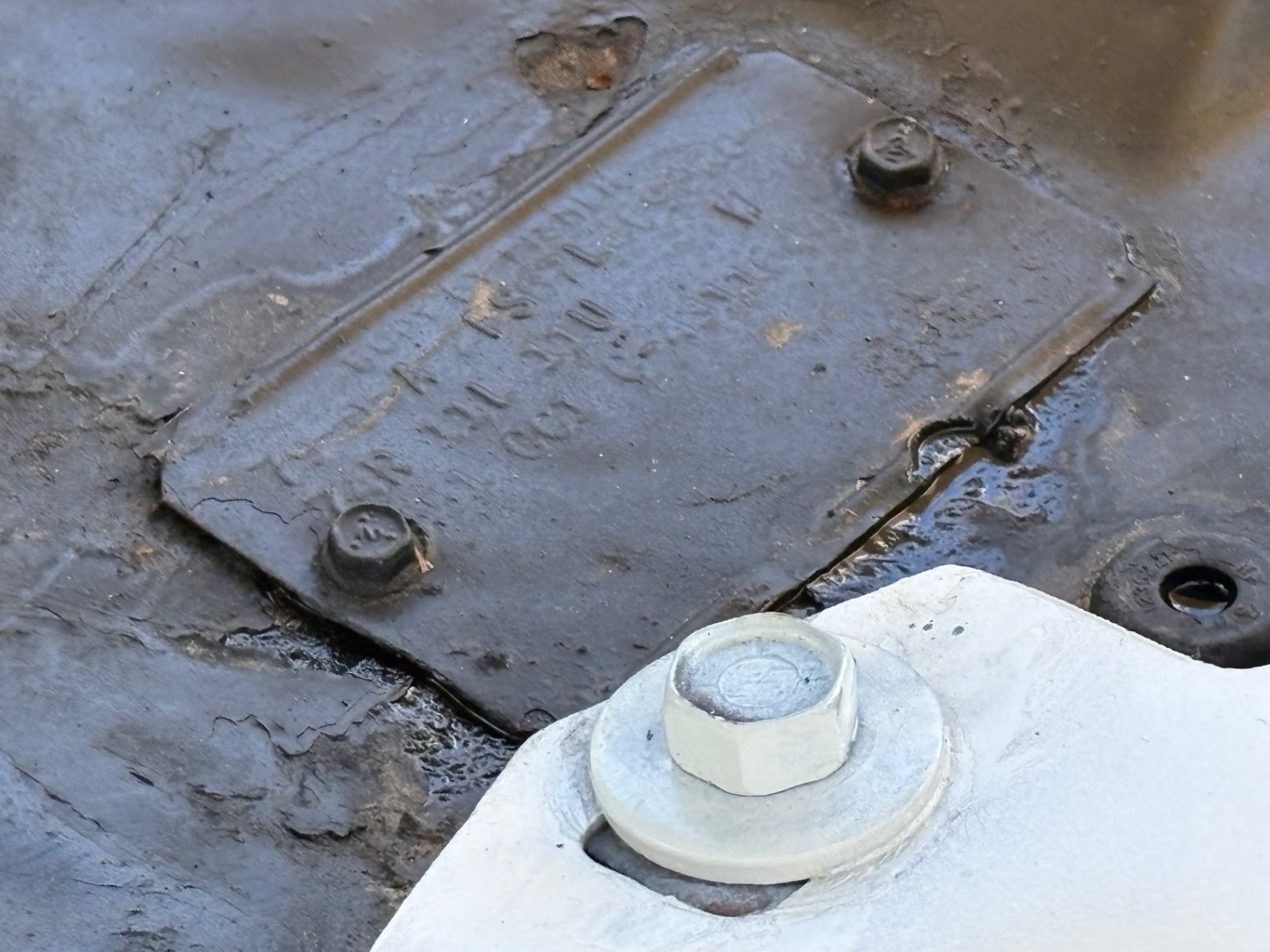
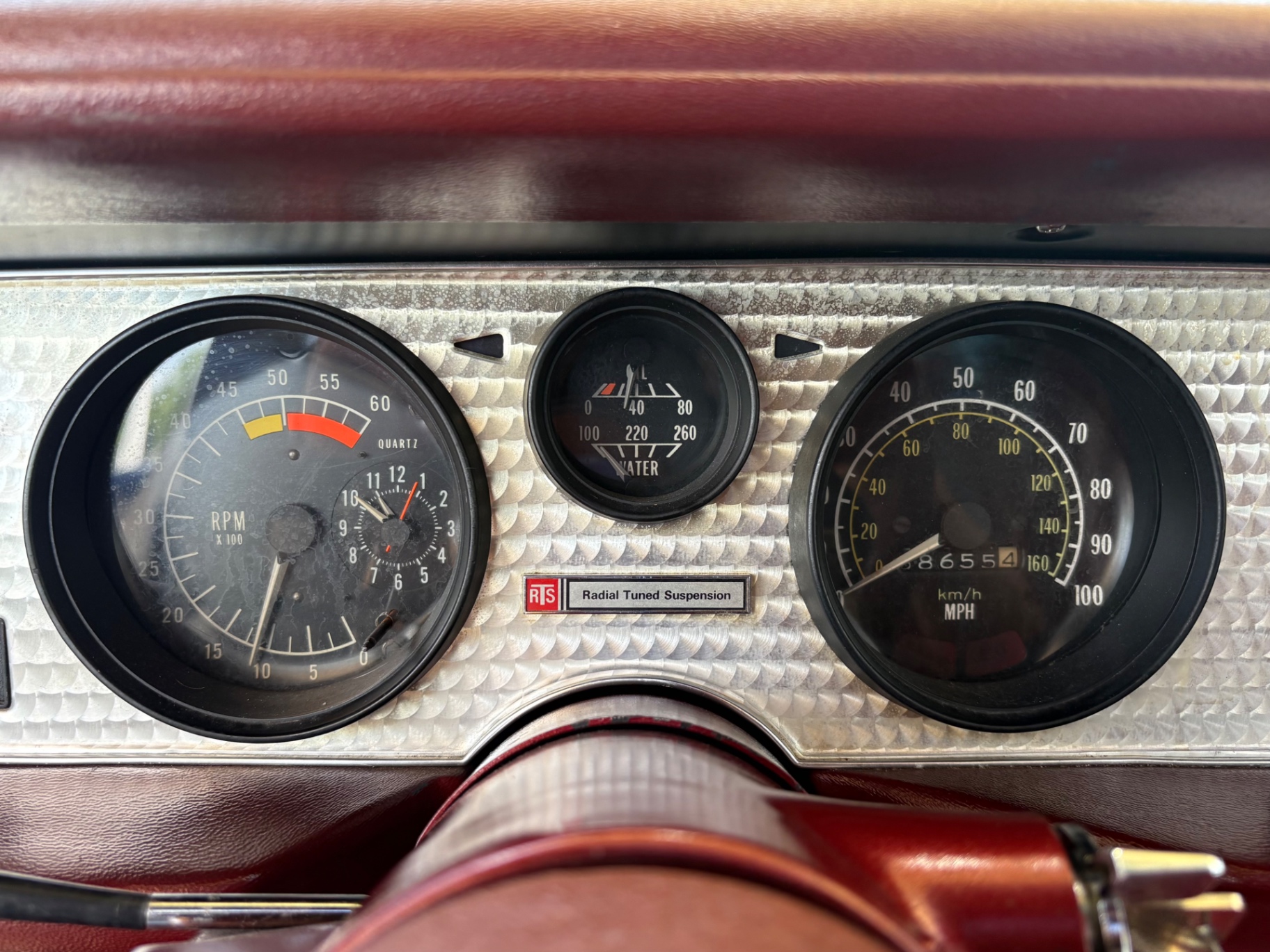
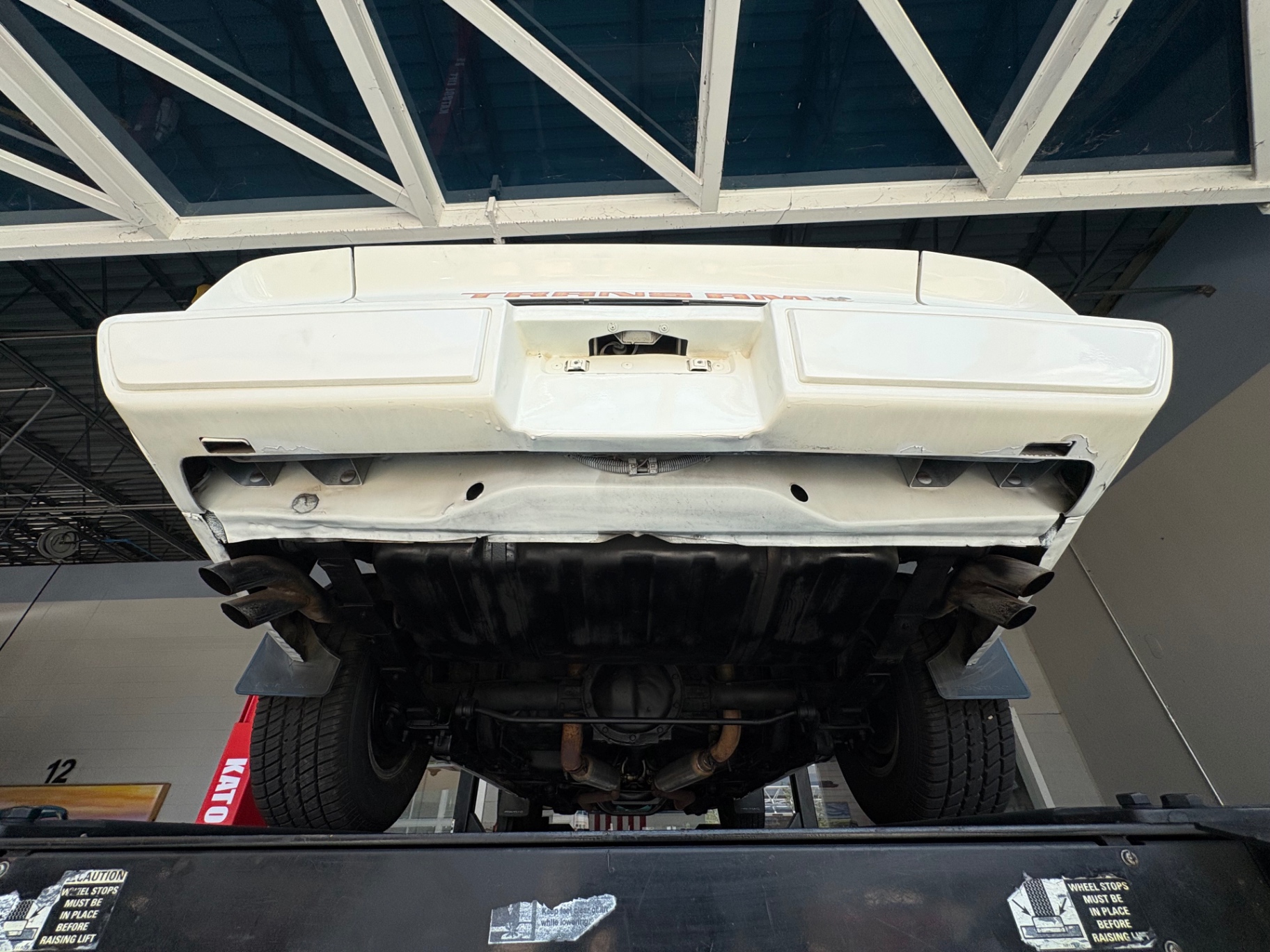
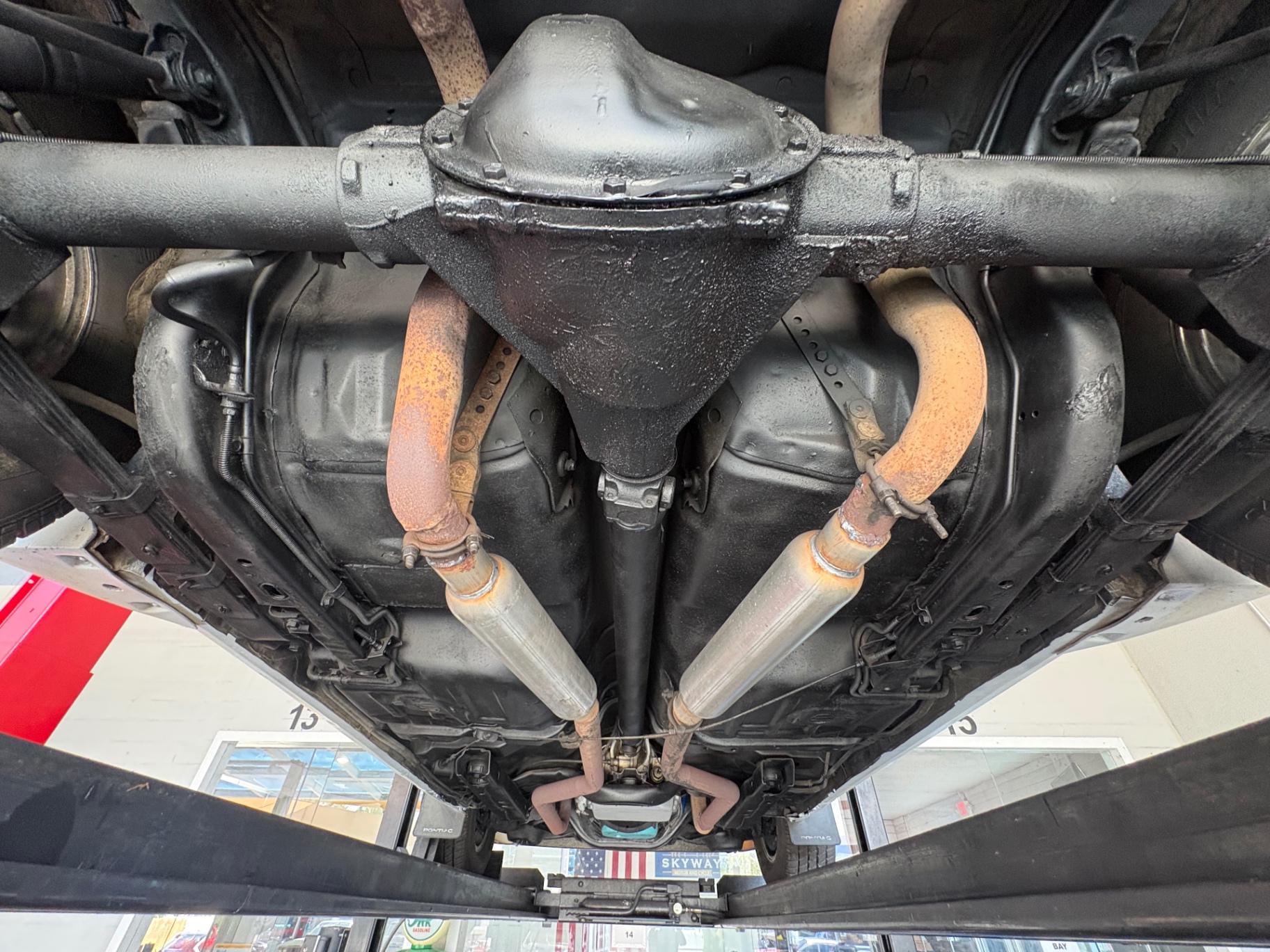
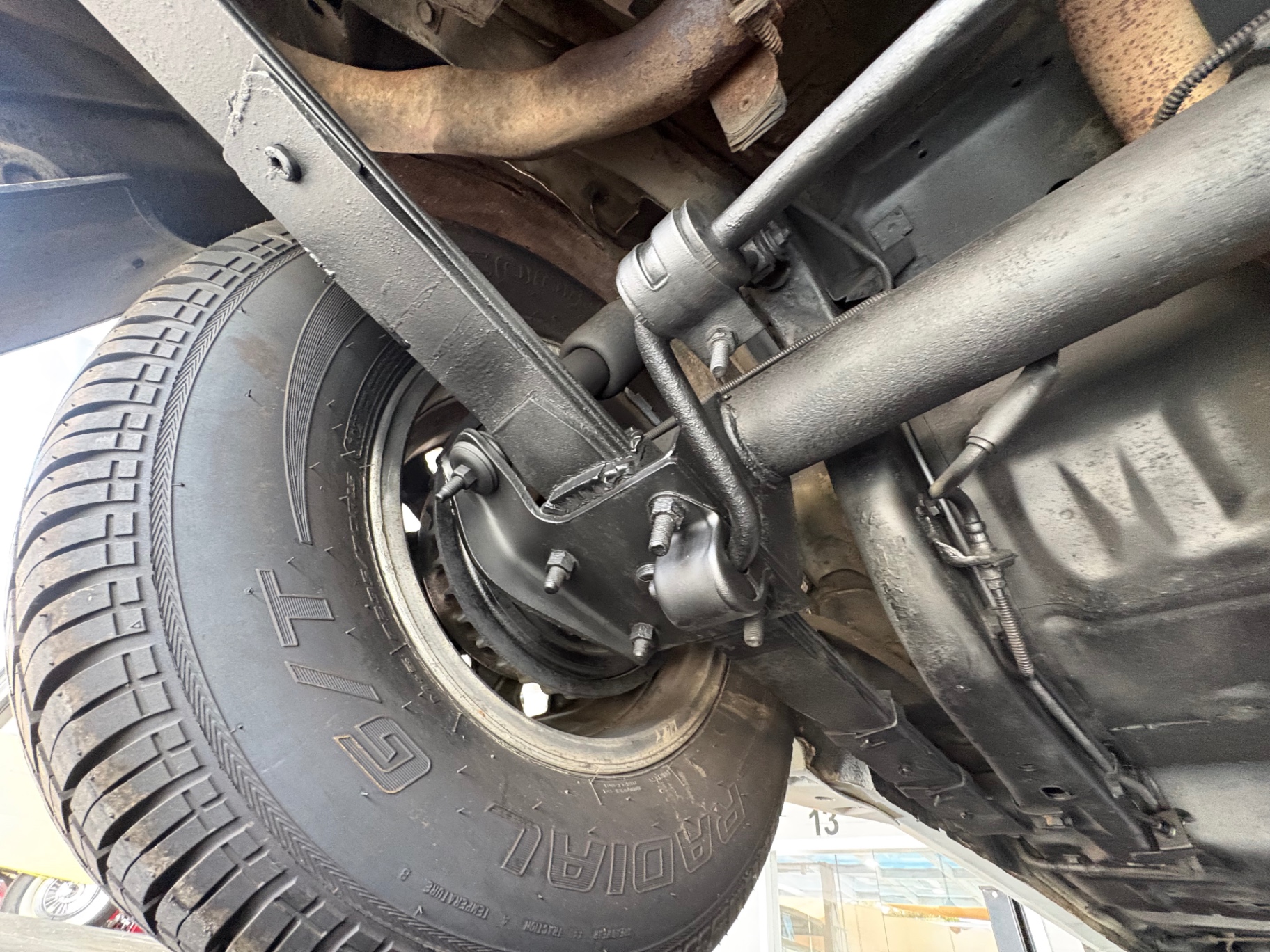
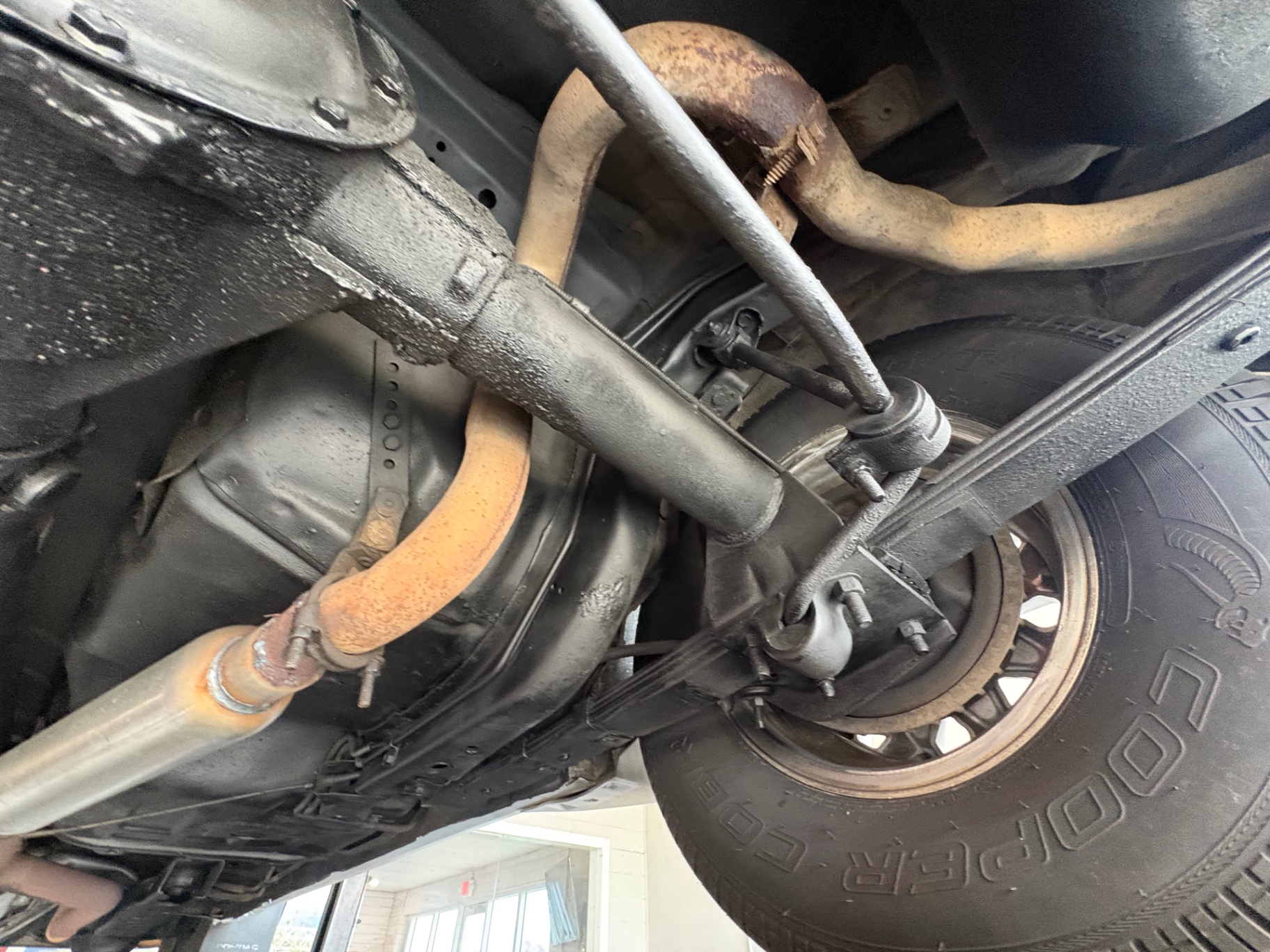
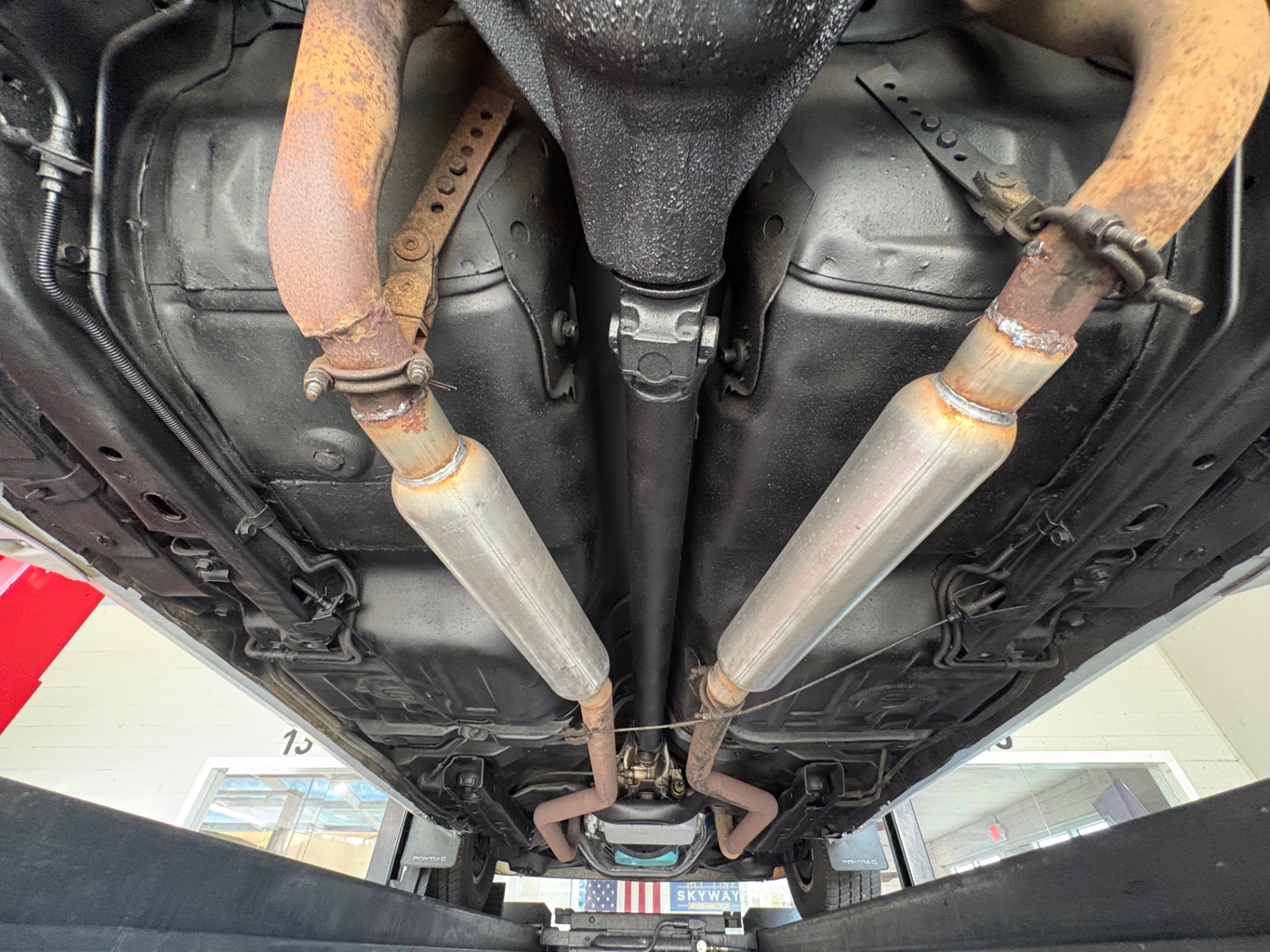
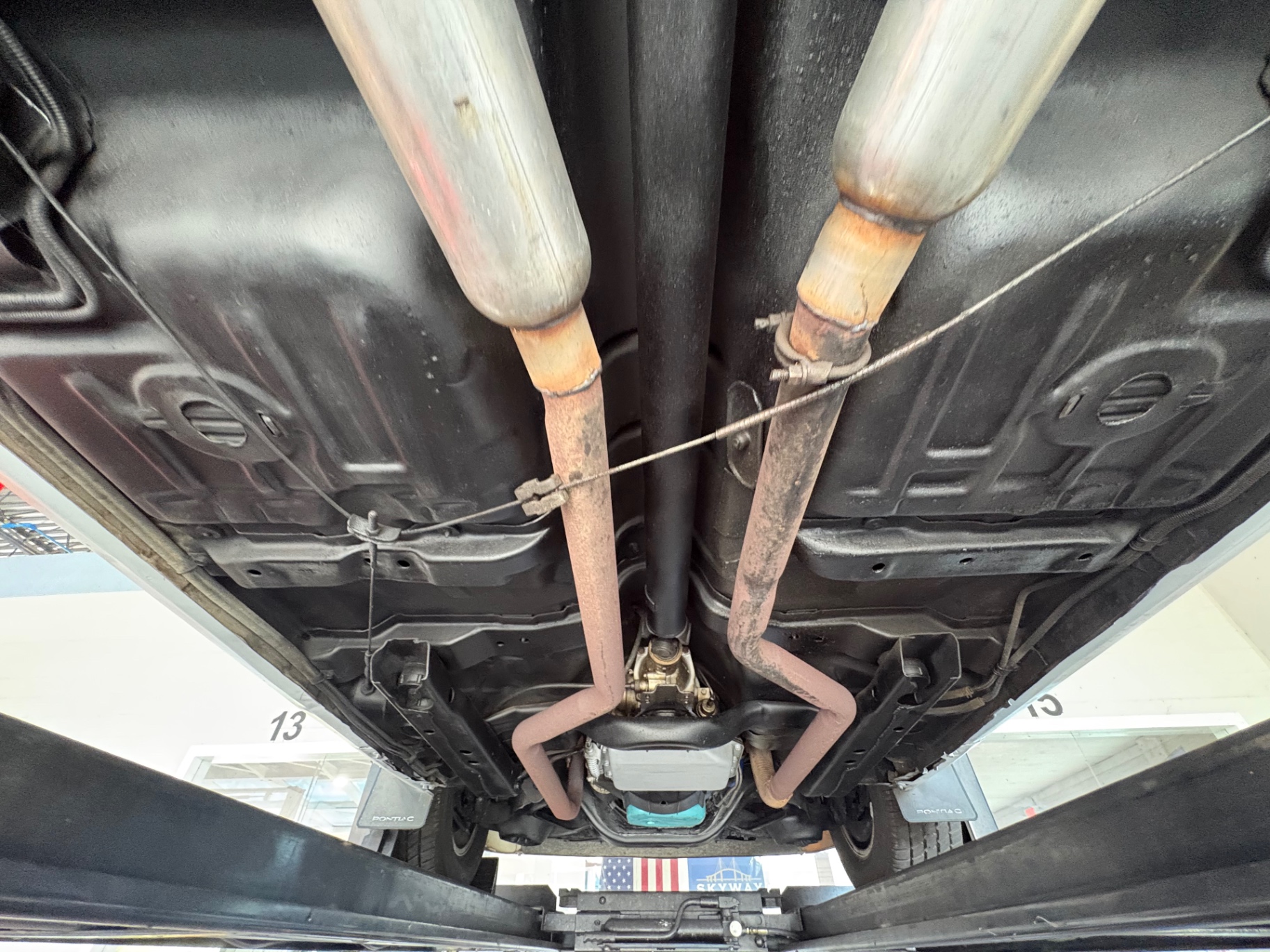
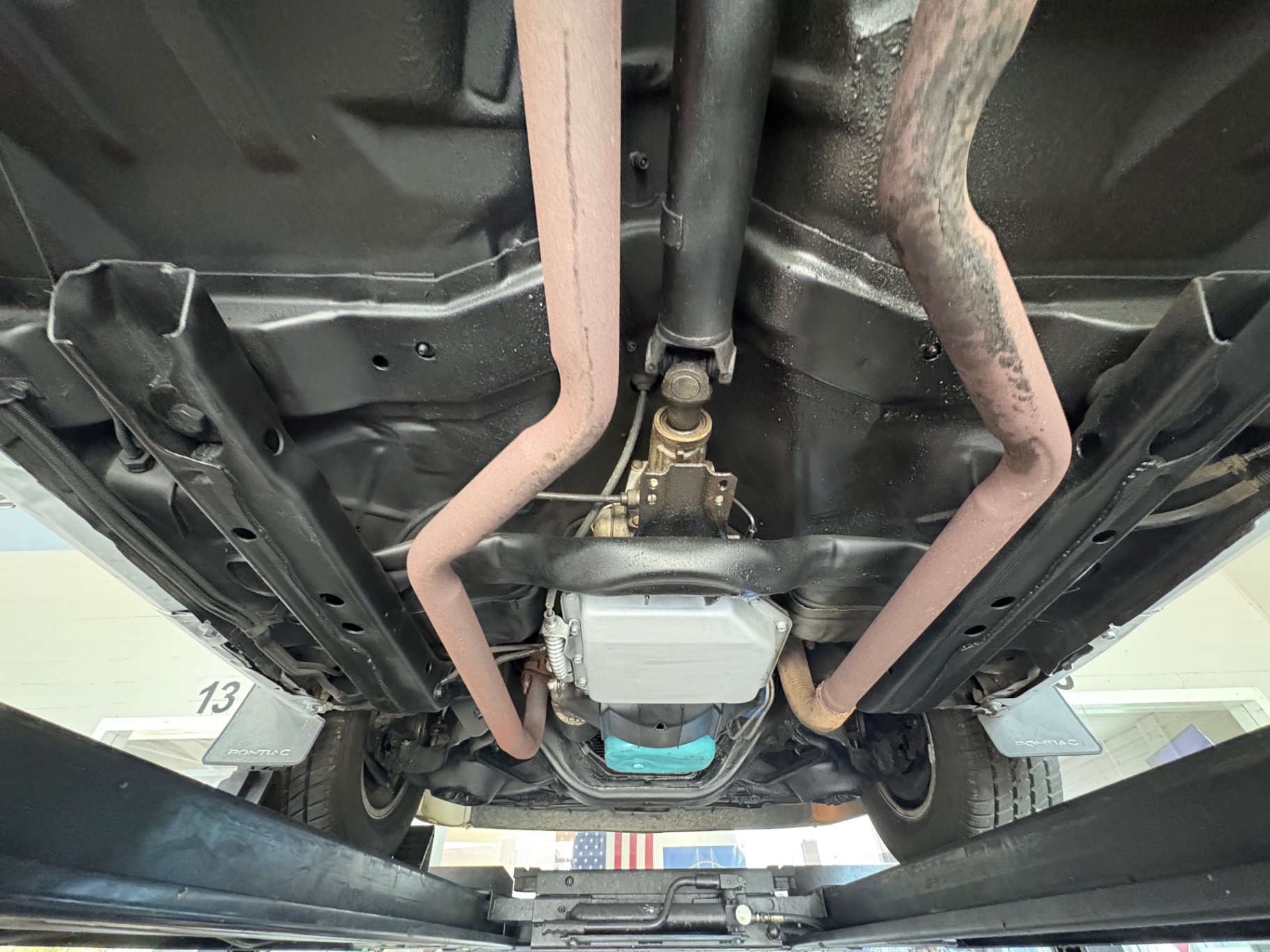
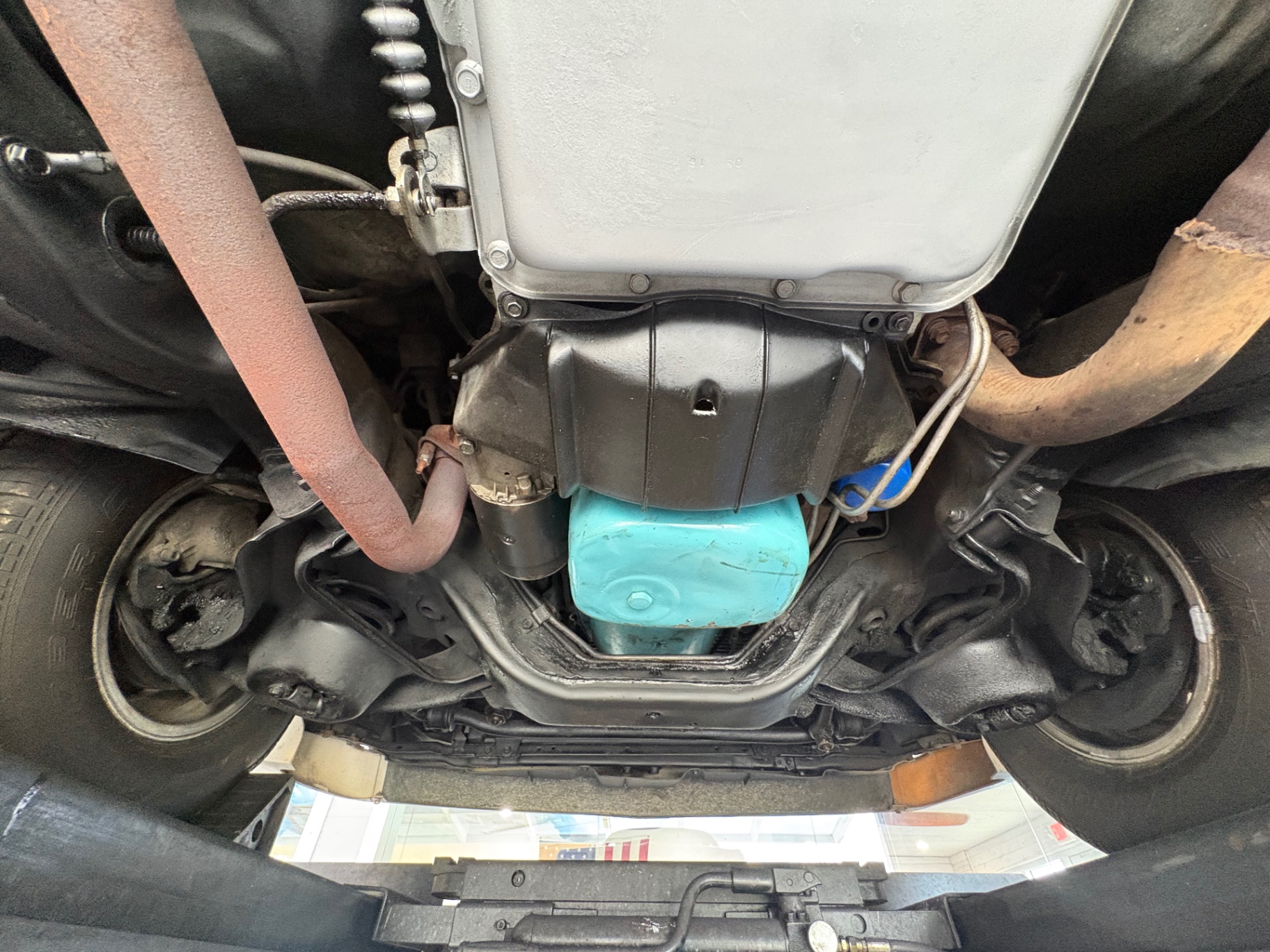
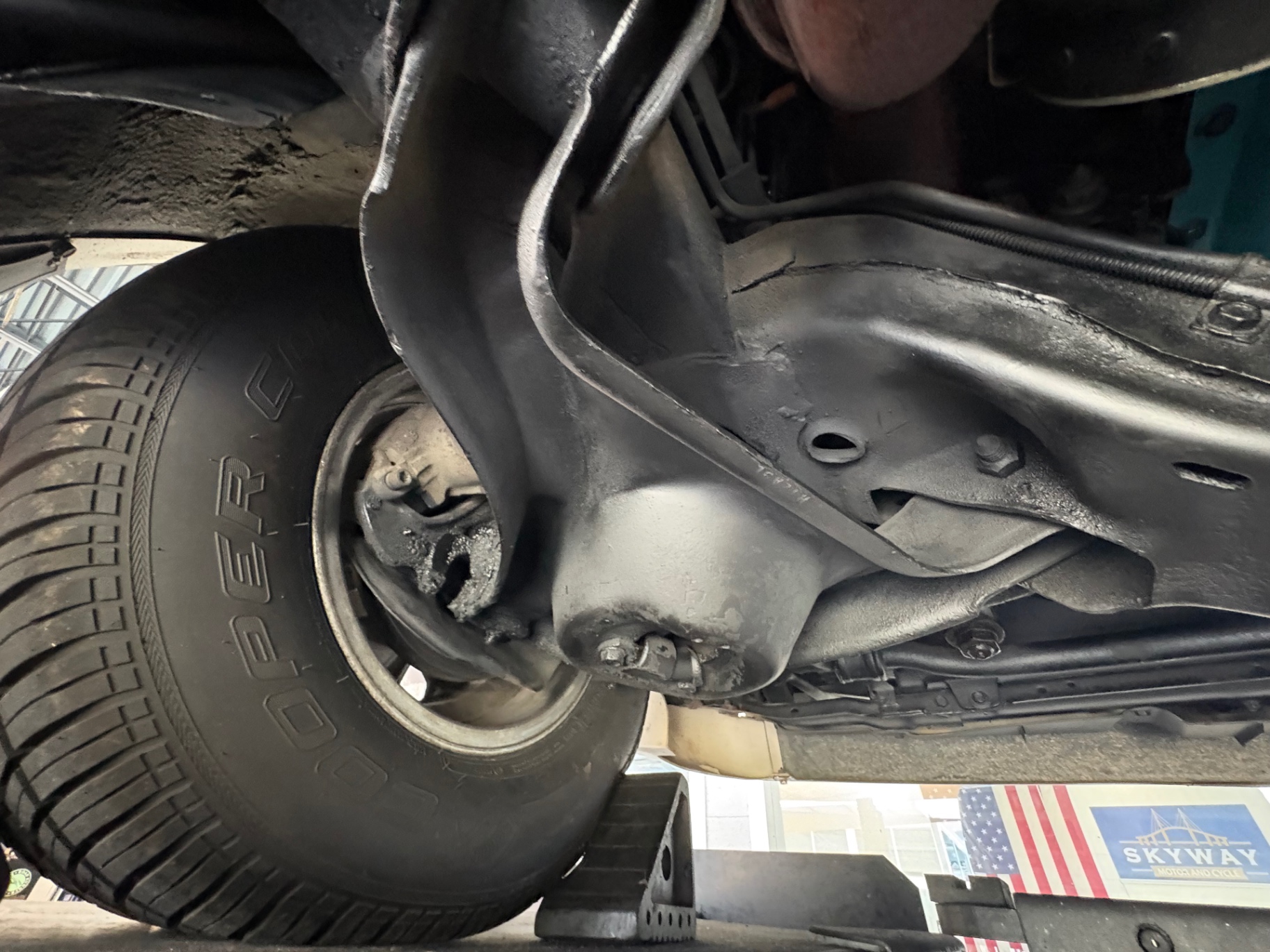
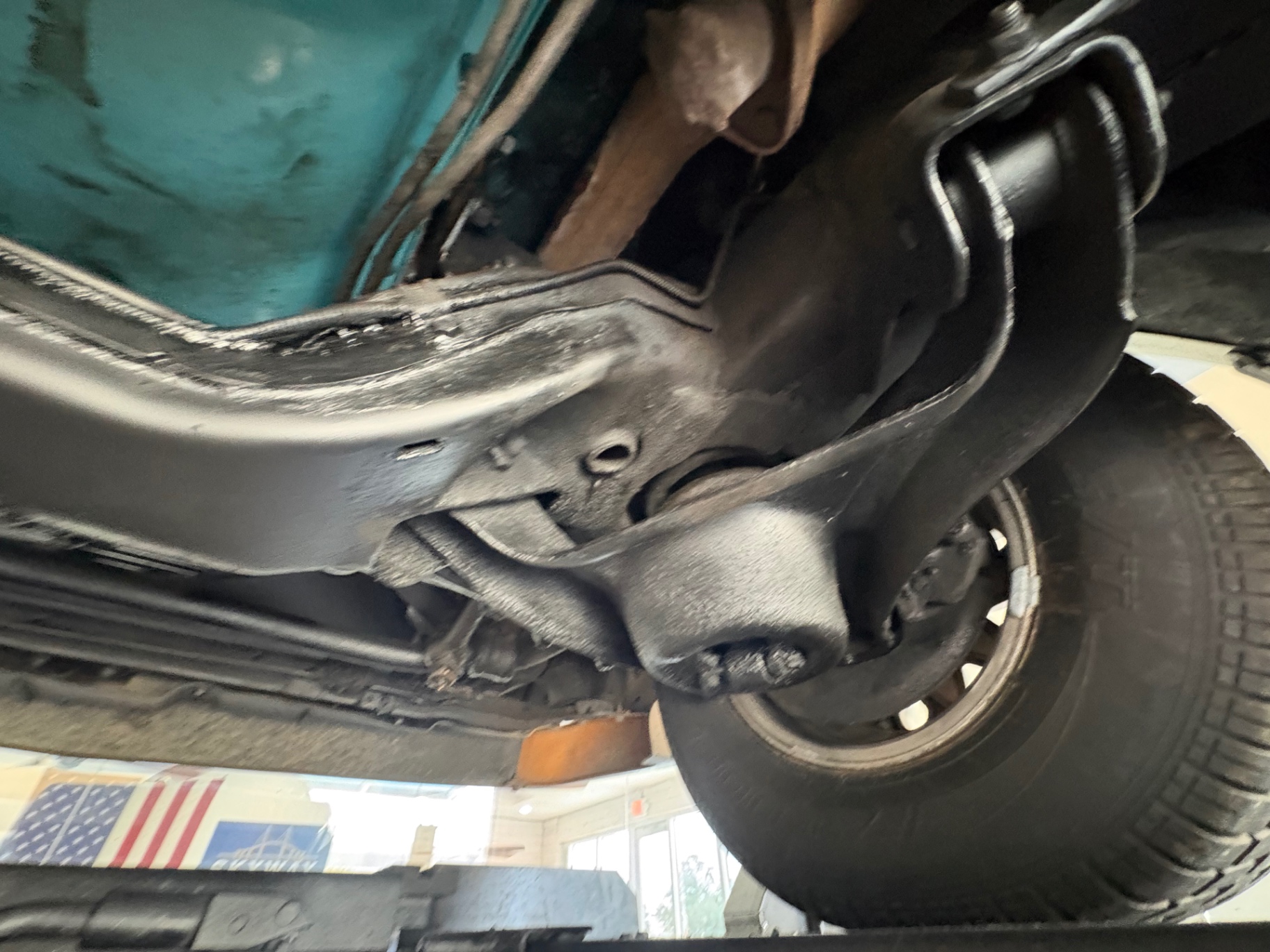
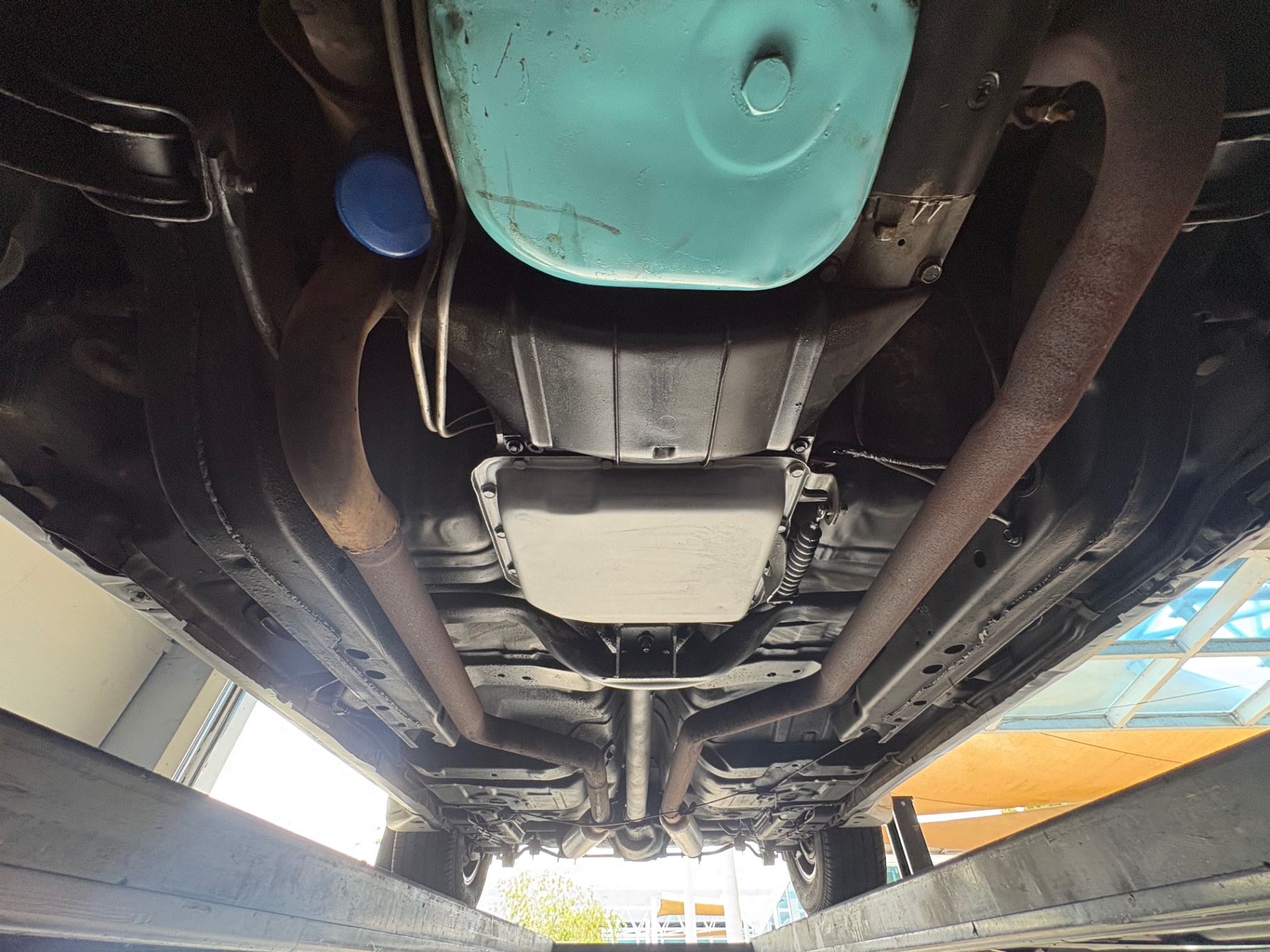
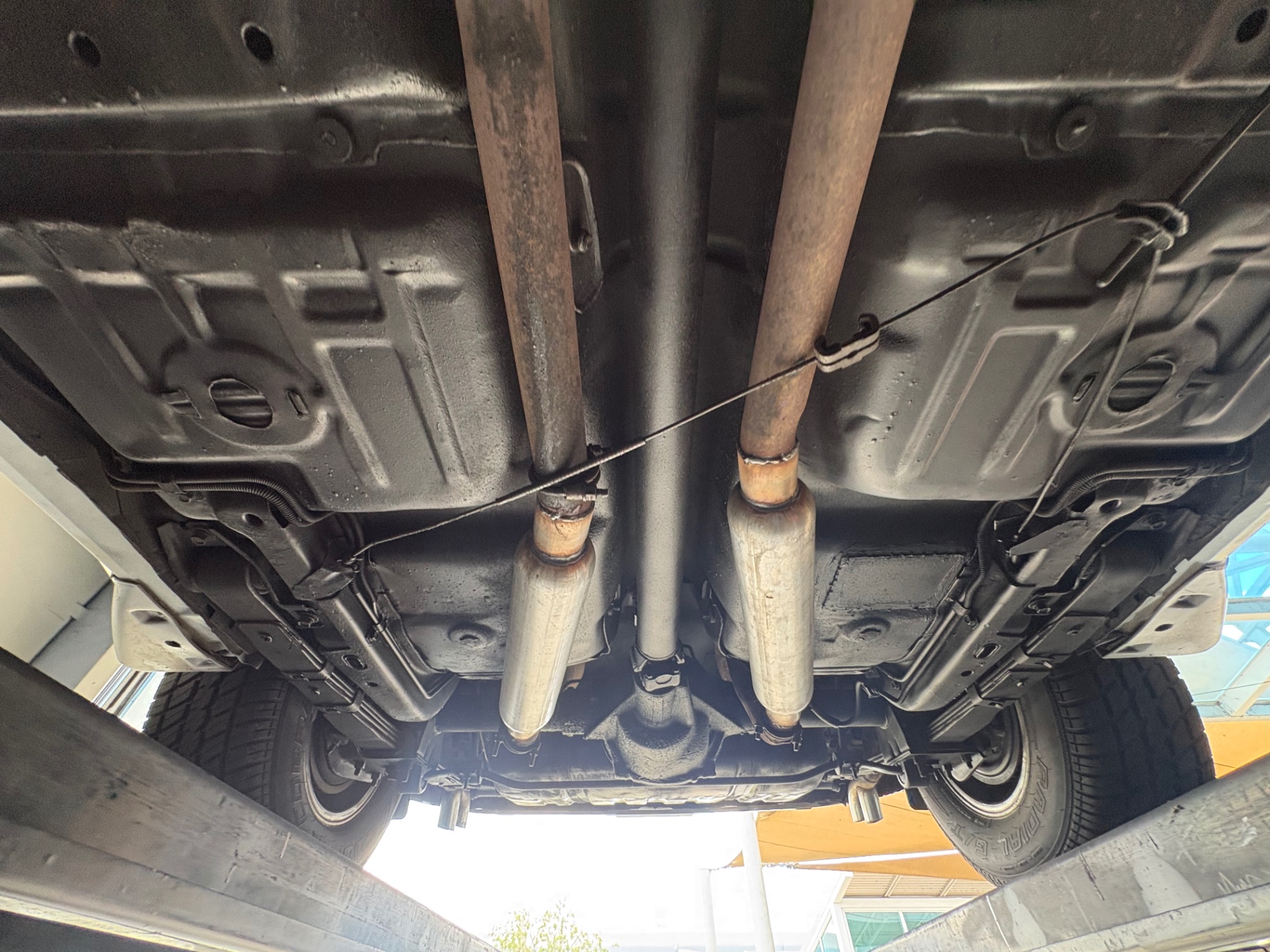
The chassis is equipped with the Radial Tuned Suspension package, which Pontiac developed specifically to take advantage of the wider, lower-profile radial tires that were becoming standard on performance cars in the late 1970s. The RTS badge is visible on the instrument cluster of this car. The suspension package included specific spring rates, shock valving, front and rear sway bars, and steering calibration tuned for radial tires. Looking at the undercarriage in the photos, the floorpans appear solid and well-preserved, with no visible rust or compromised structure — a meaningful detail for a 45-year-old unibody car.
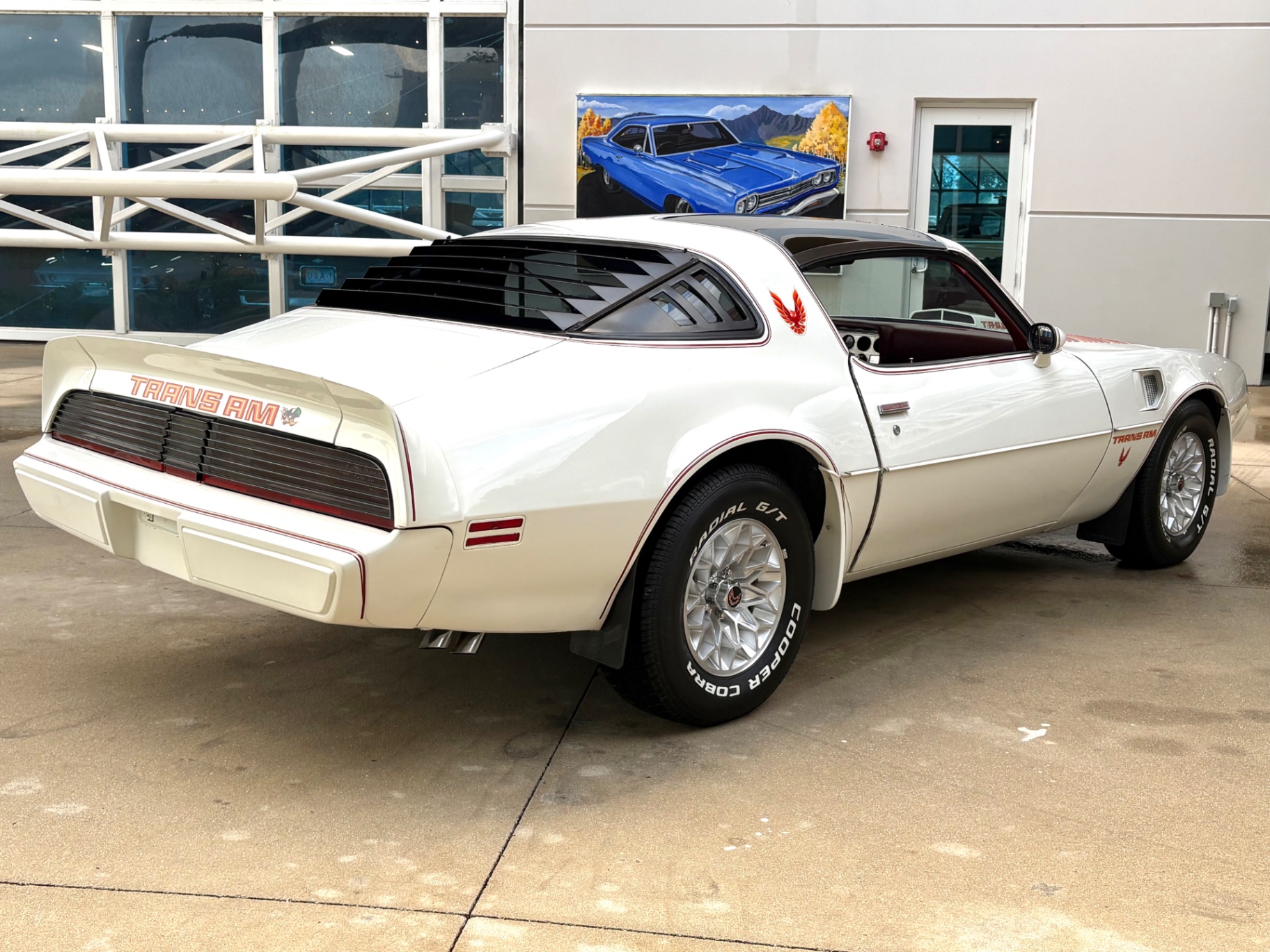
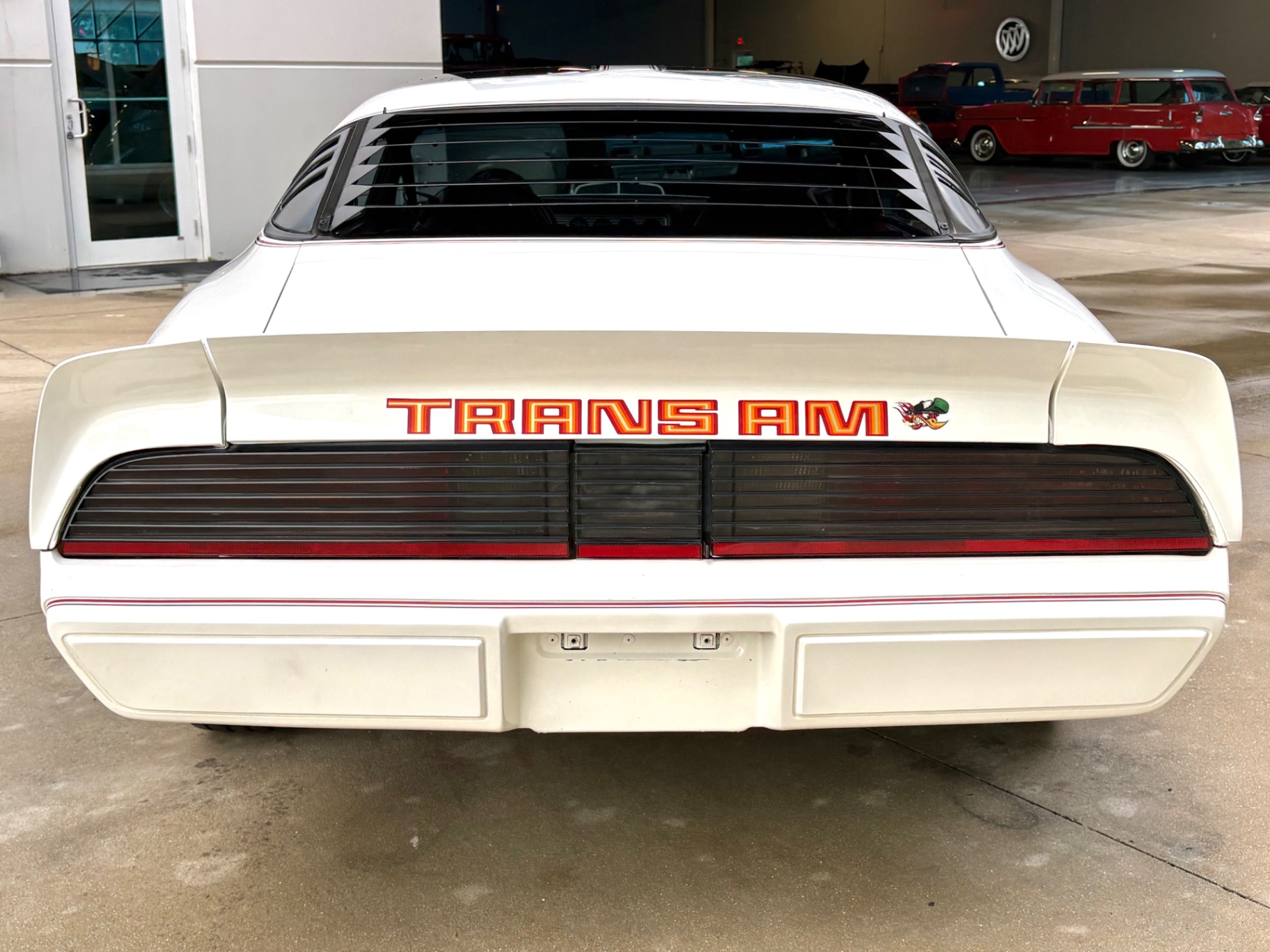
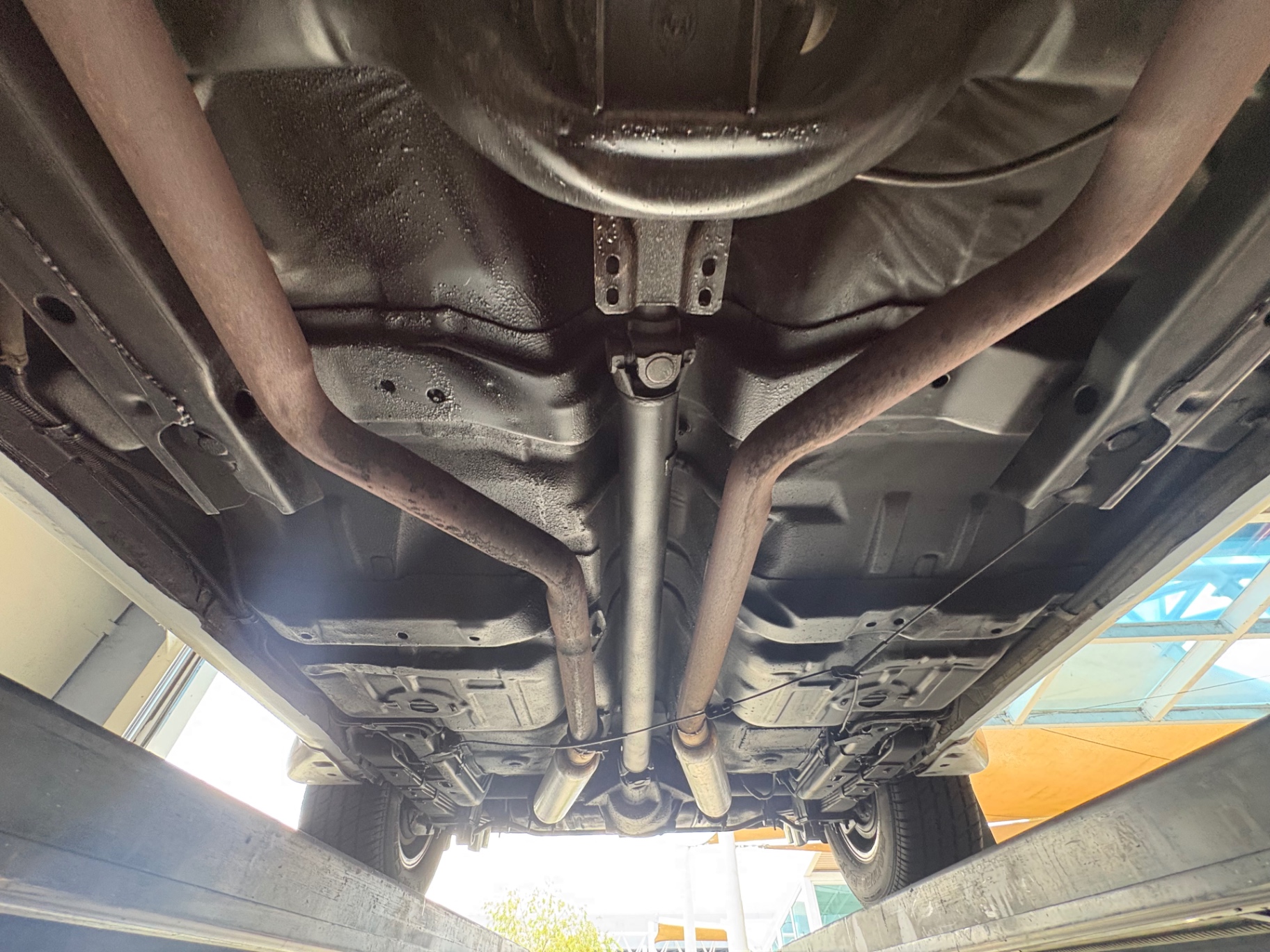
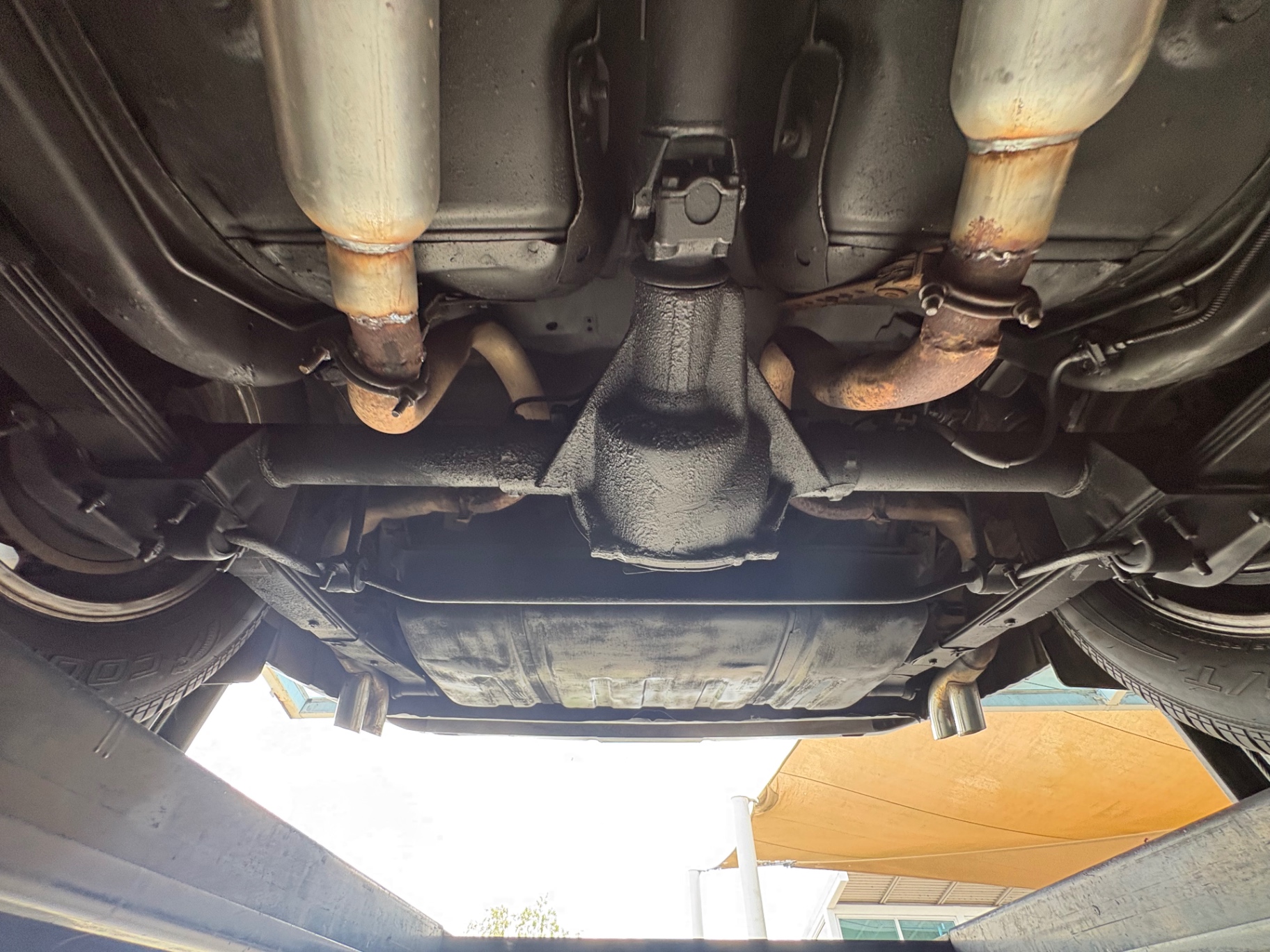
Stopping power comes from power front disc brakes with drums at the rear, the standard configuration for this generation. Power steering is also fitted, reducing the parking-lot effort that can make older muscle cars tiring in traffic. The dual exhaust exits through two sets of tailpipes visible beneath the rear valance, and the exhaust note from a factory 400 with dual outlets is a significant part of what these cars are known for.
Interior
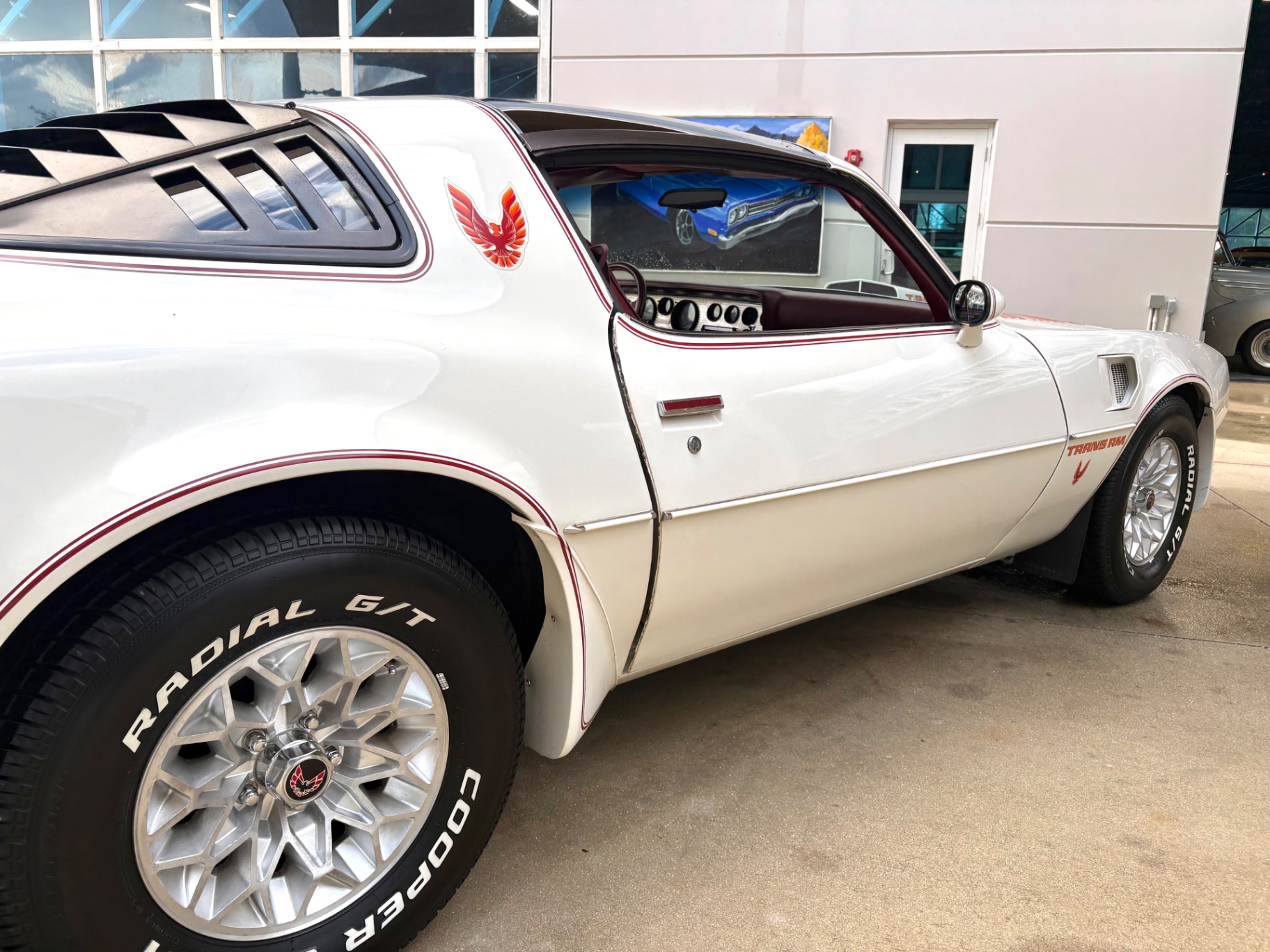
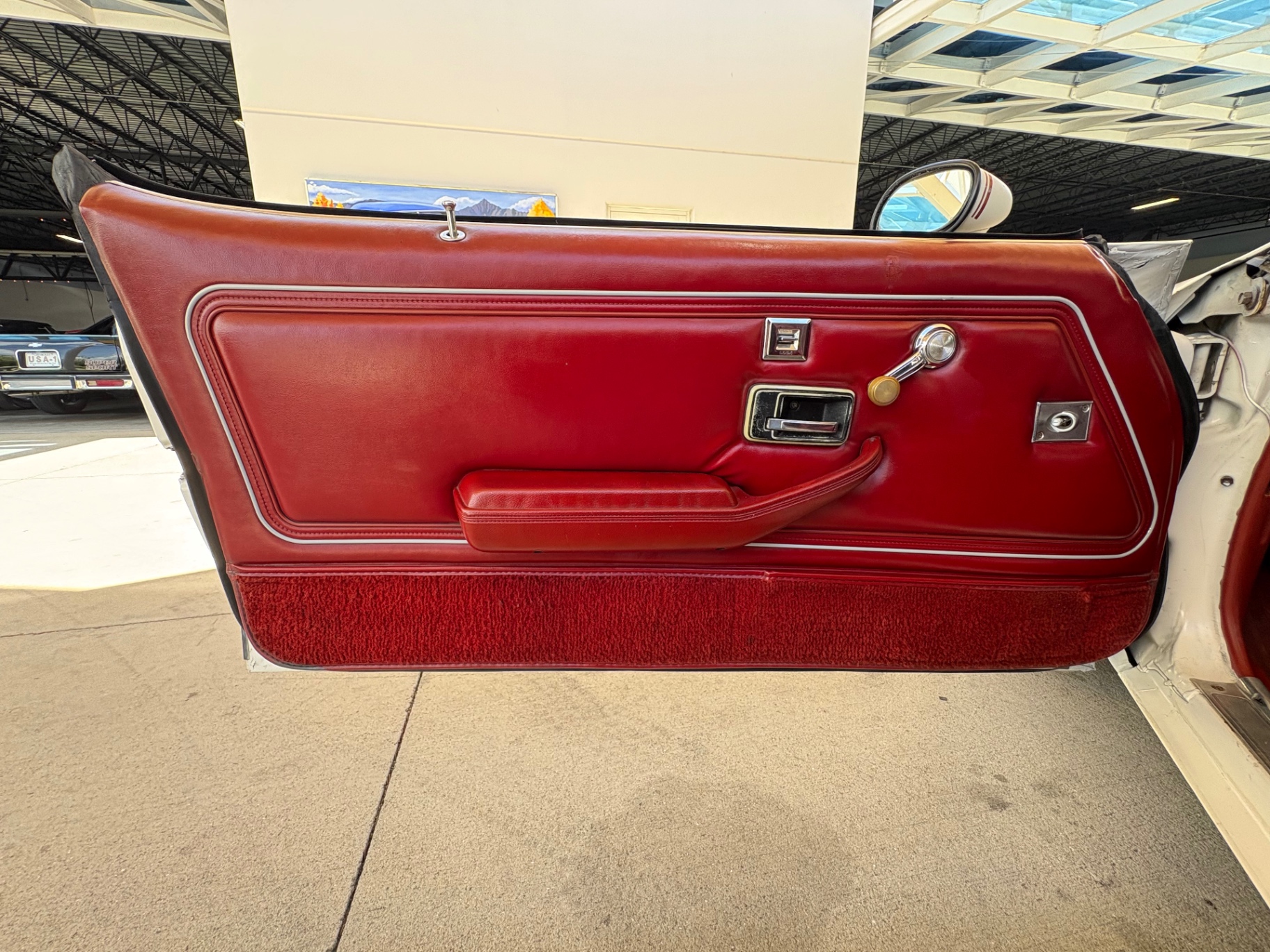
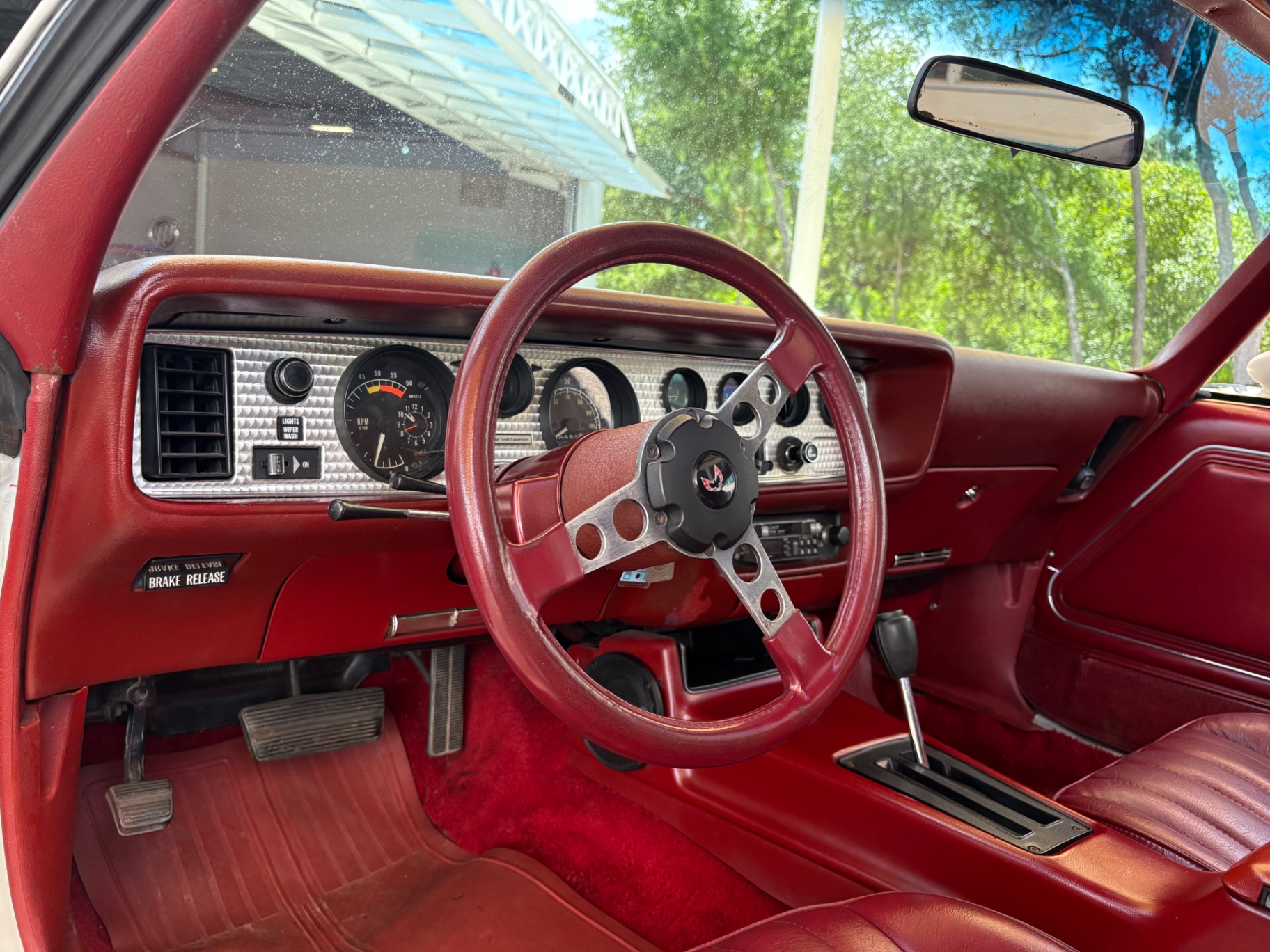
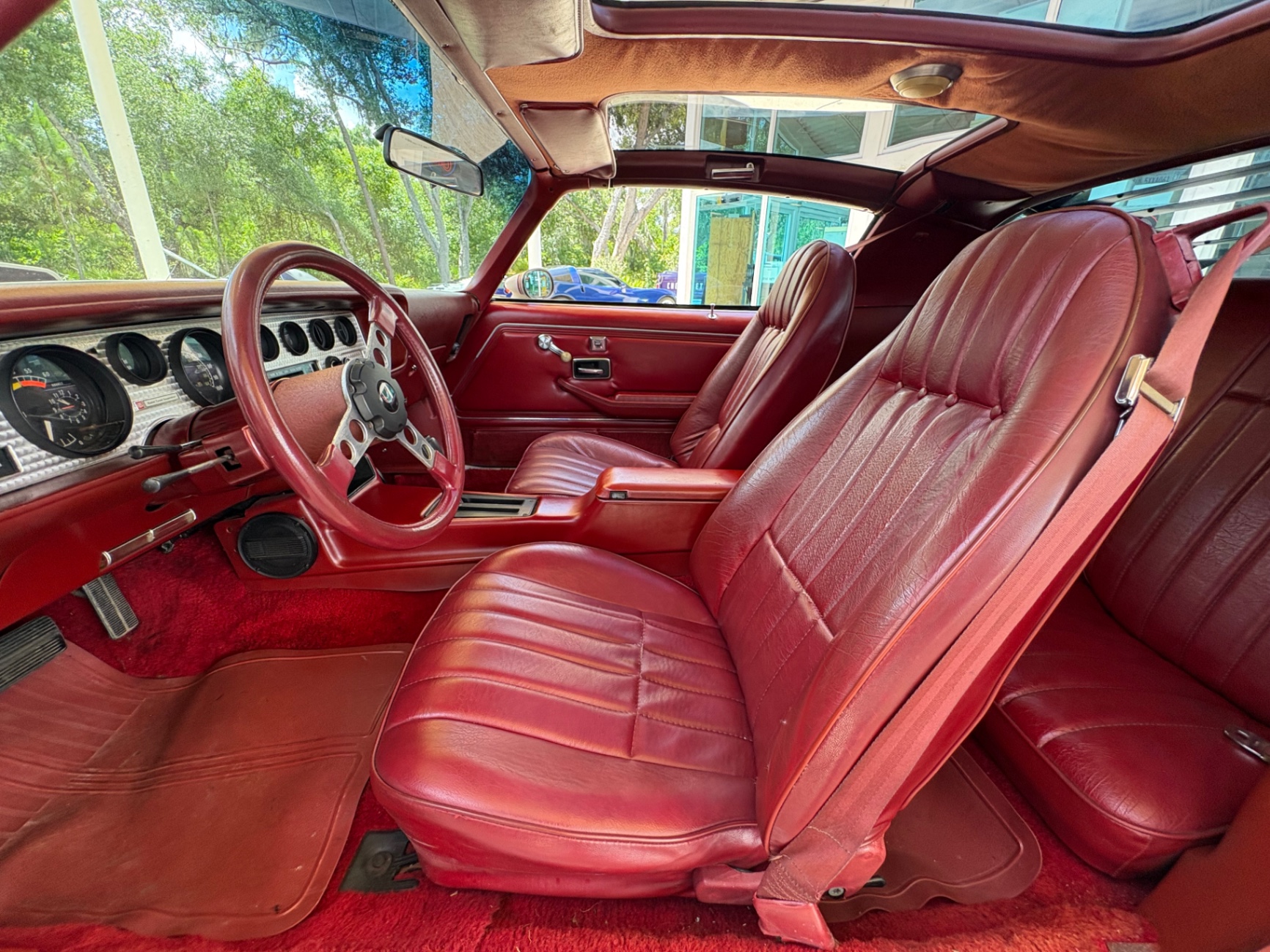
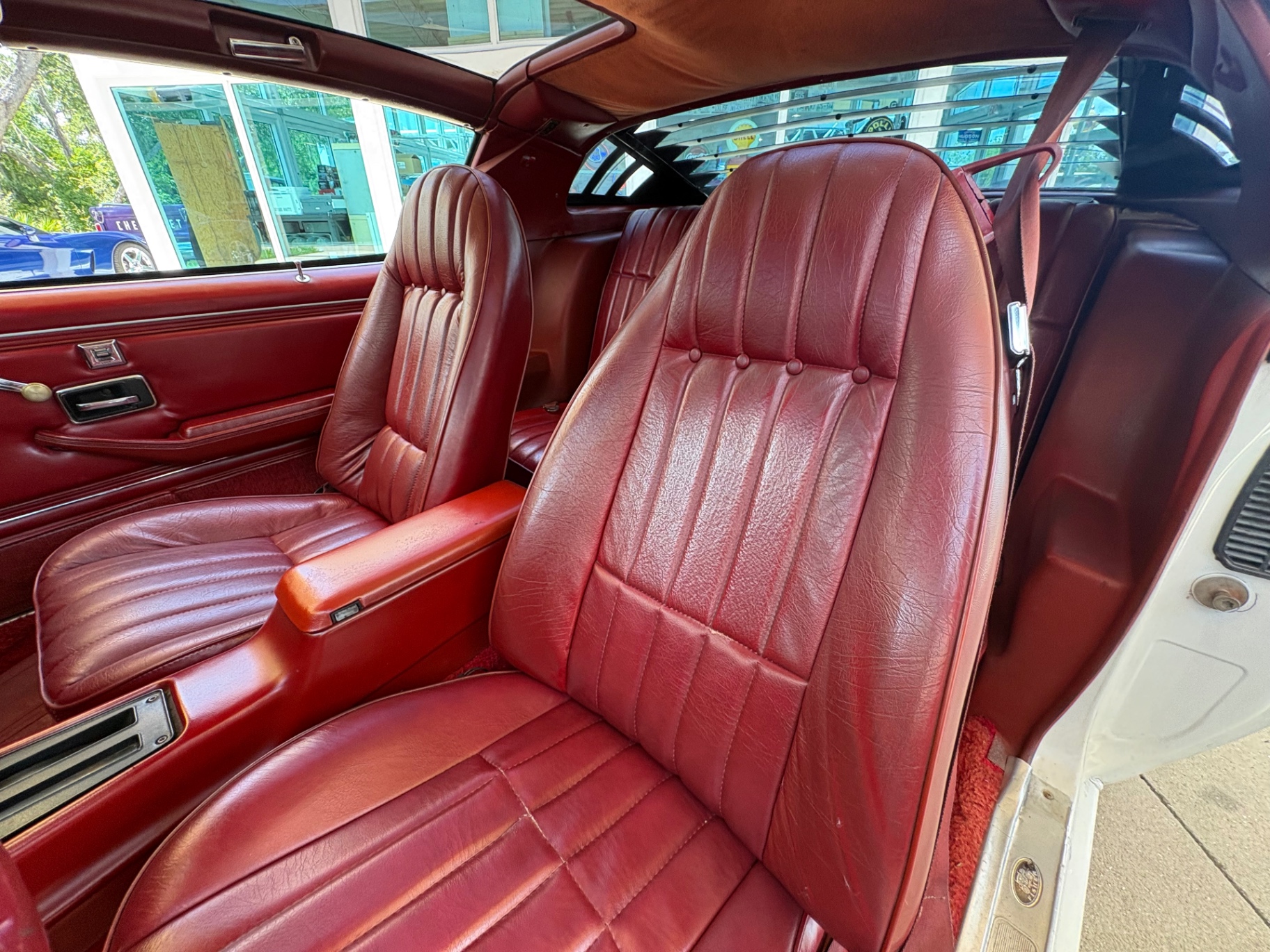
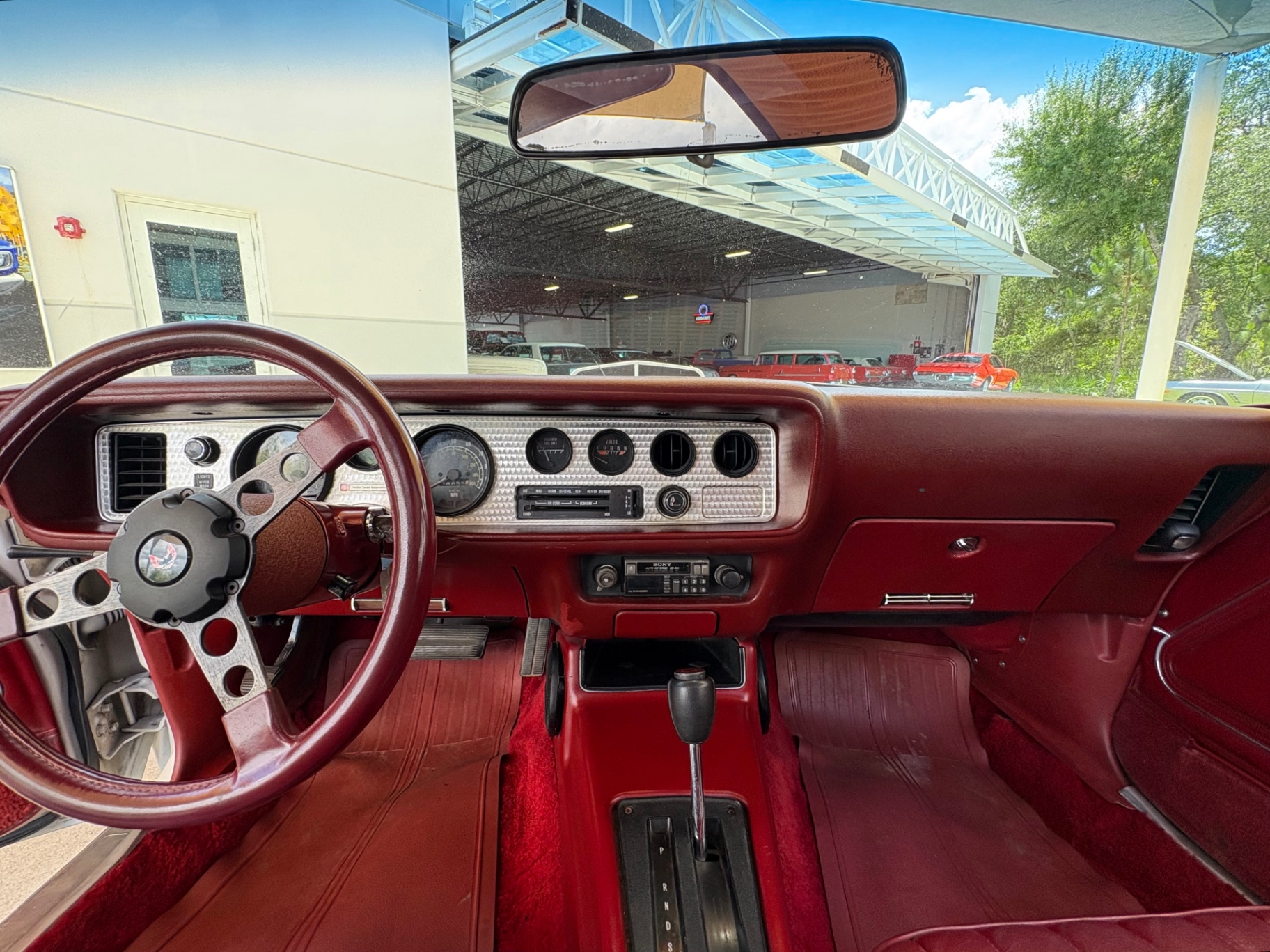
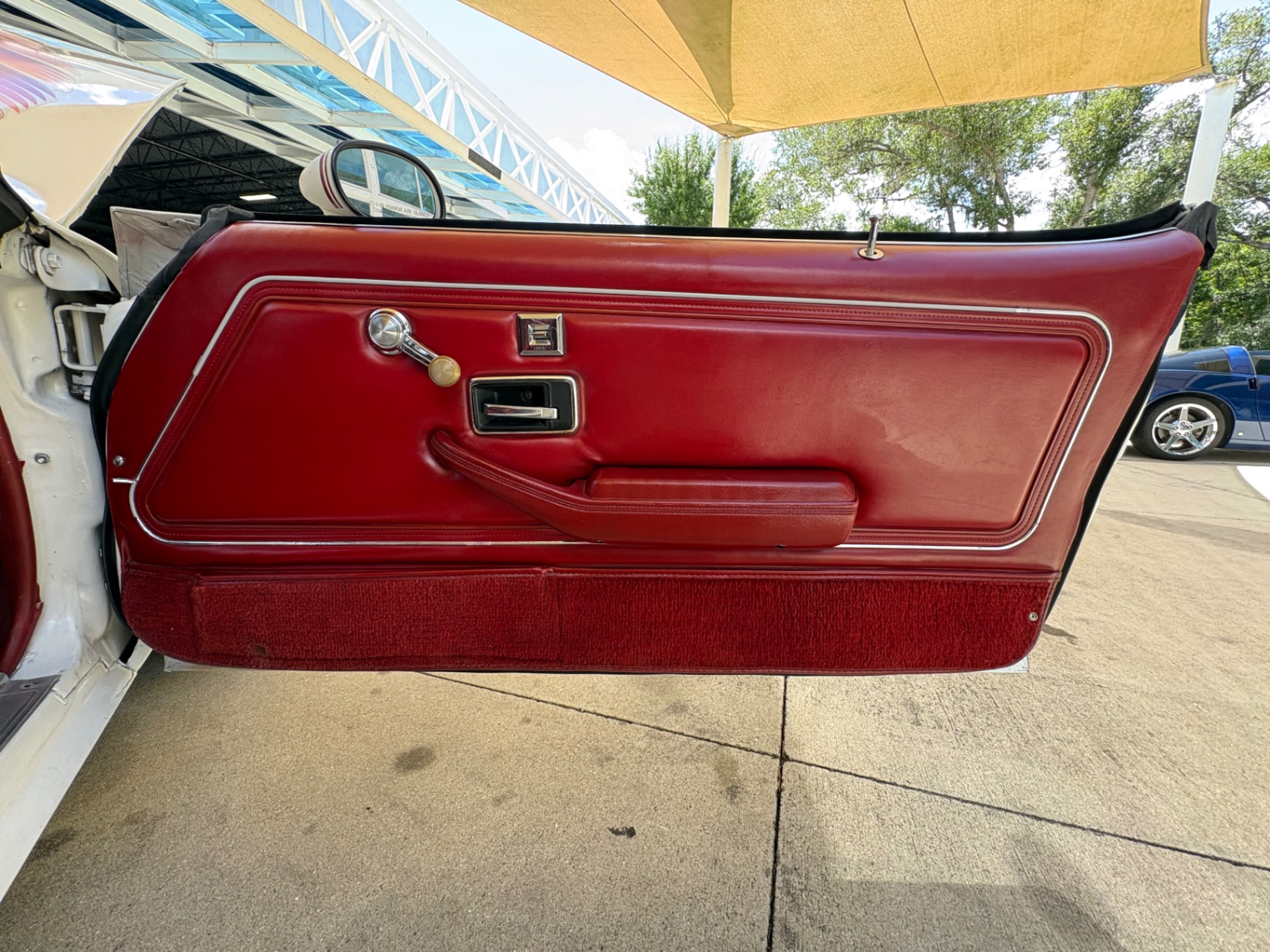
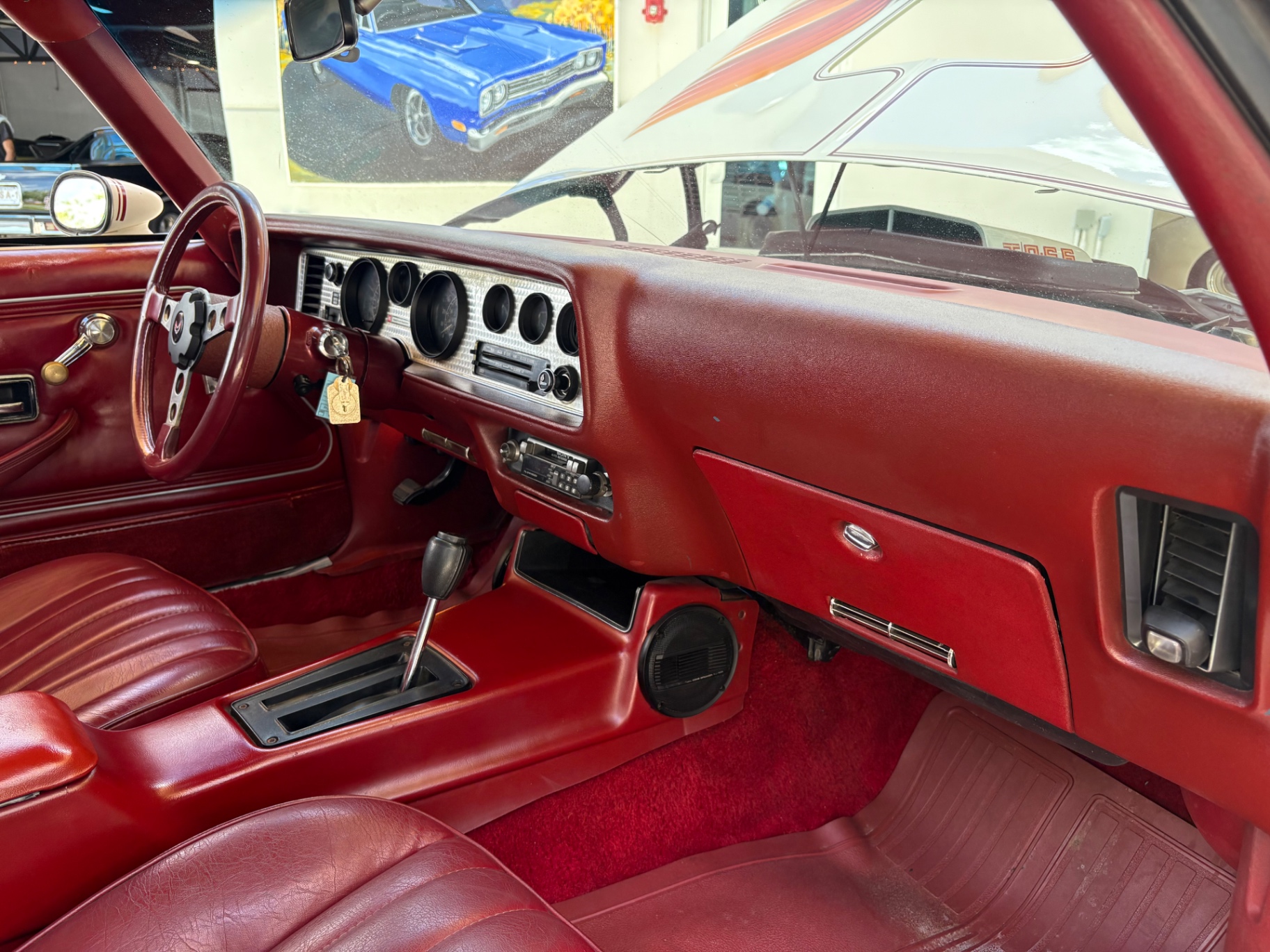
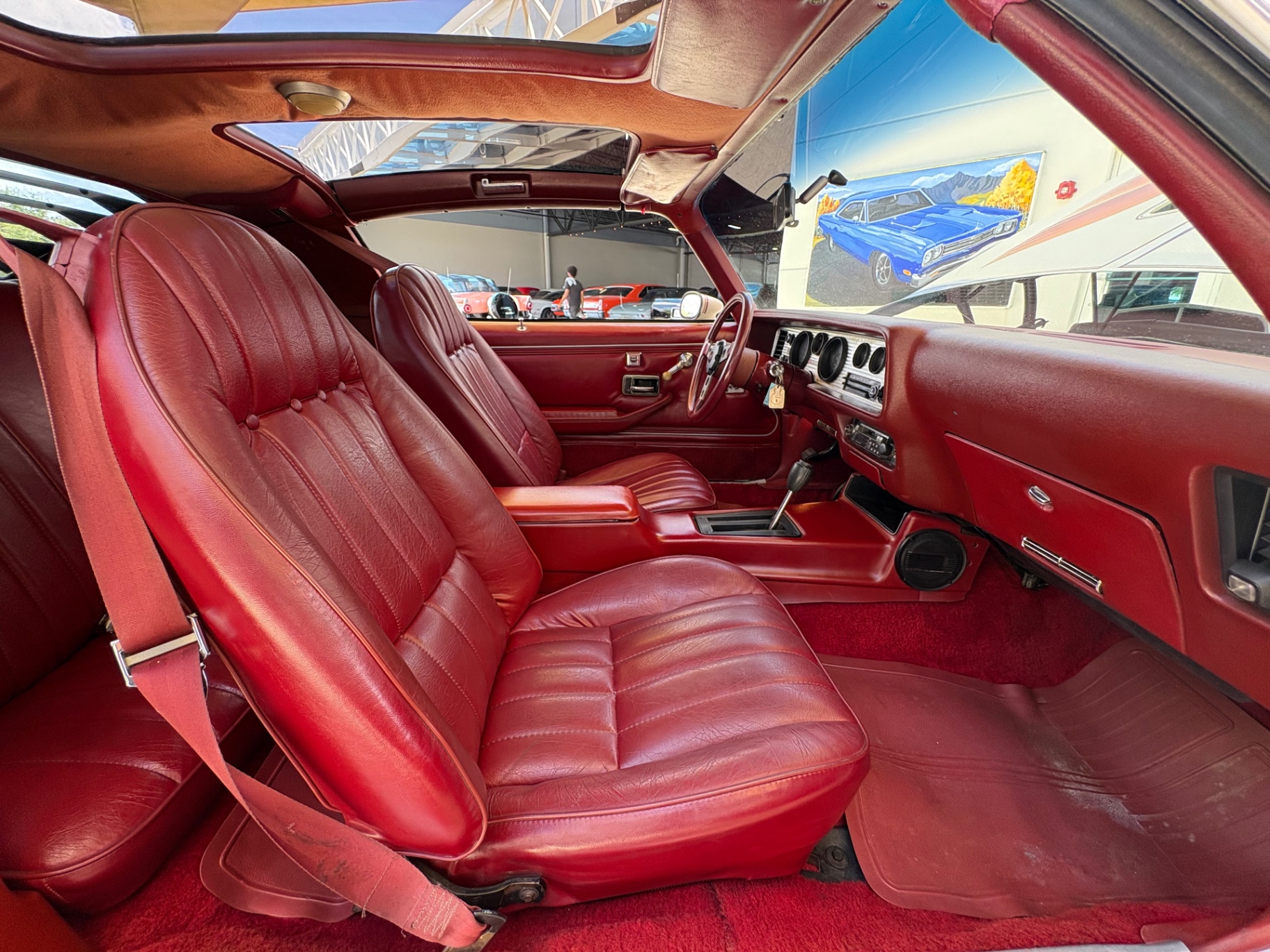
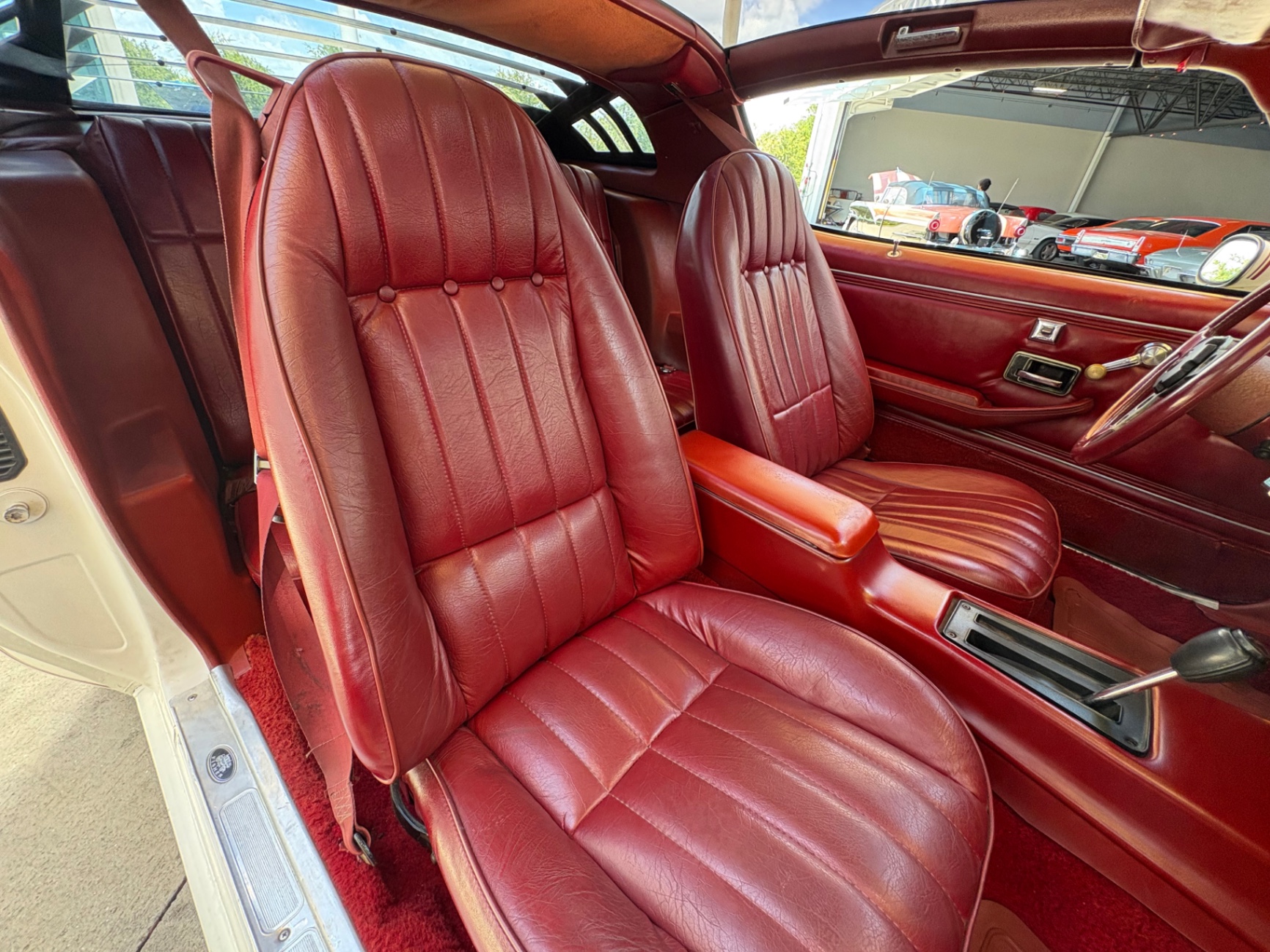
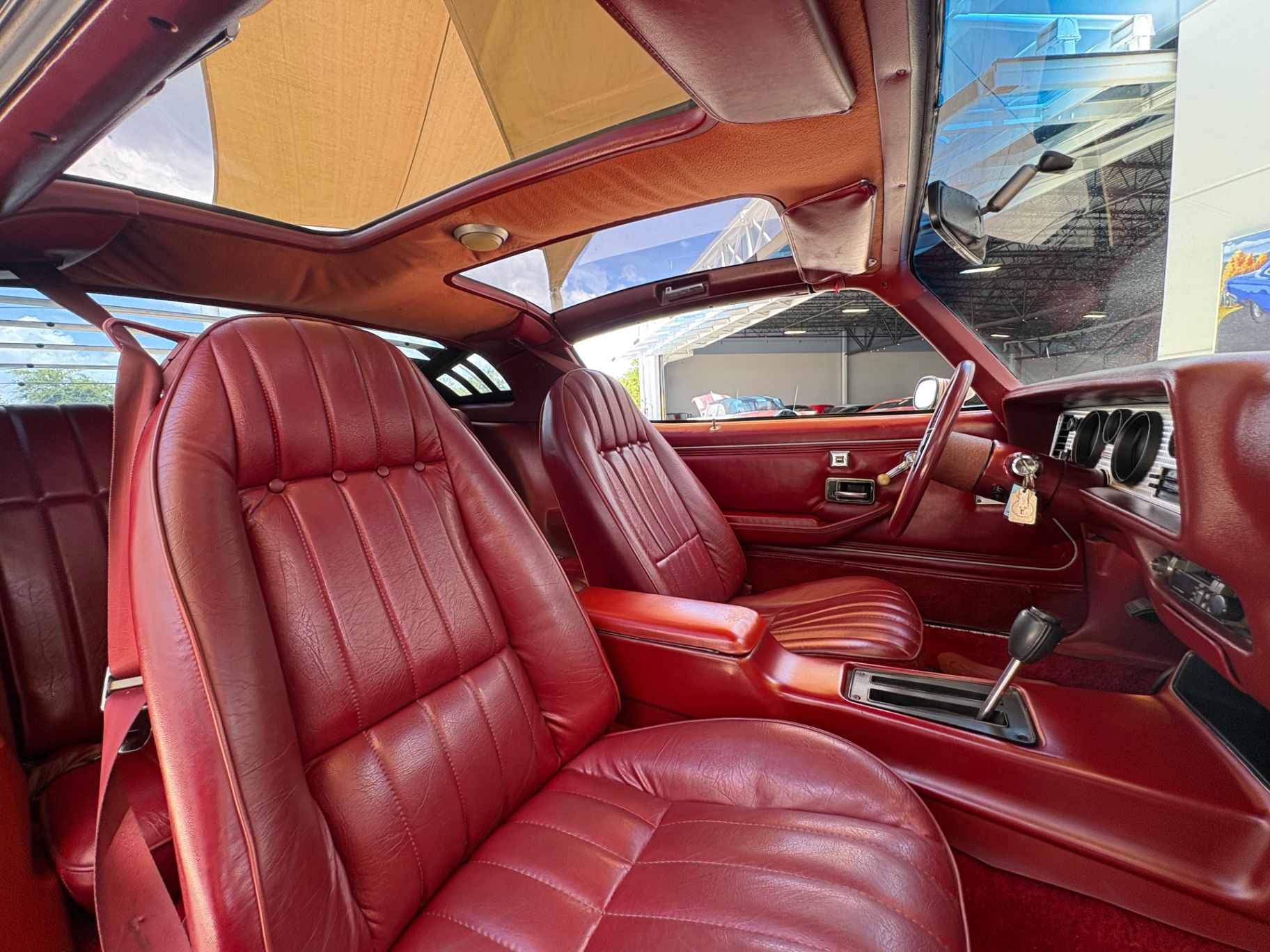
Open either door of this 1979 Pontiac Firebird Trans Am and you are met with a complete red interior — red vinyl bucket seats, red door panels with white accent piping, red carpet, and a red-trimmed center console. The color combination of white exterior with red interior was a factory-offered pairing and gives this car a distinctly different look from the more common black or gold Trans Ams of the era.
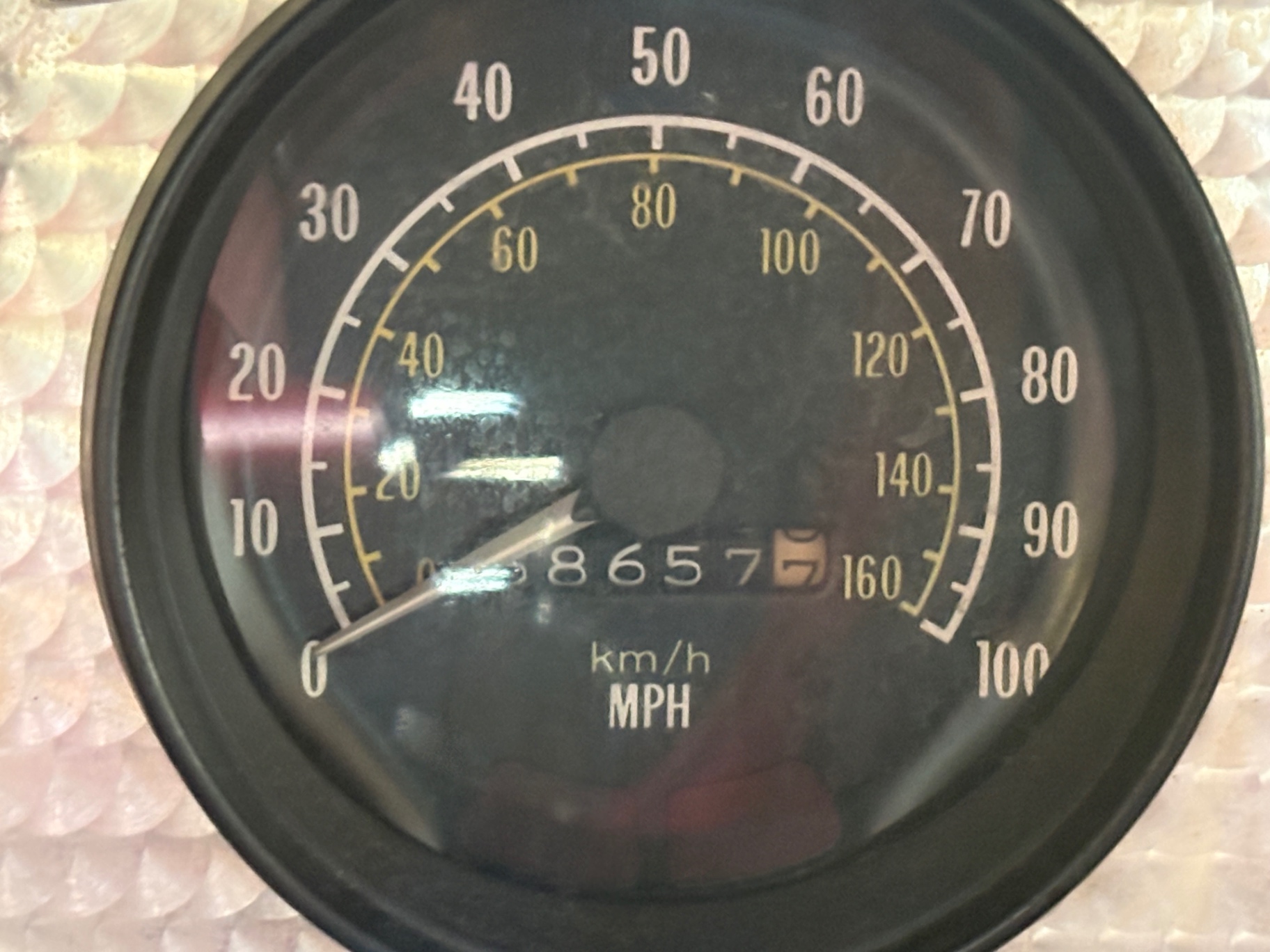
The driver faces the Trans Am's full instrument cluster, which includes the factory tachometer mounted prominently in the center of the gauge pod and an analog clock built into the same unit. The RTS badge is visible between the tach and speedometer, confirming the Radial Tuned Suspension equipment. The speedometer is calibrated in both MPH and km/h, which became a federal requirement on 1979 models. A tilt steering column is fitted, and the red three-spoke steering wheel with the Firebird medallion at the center is the correct period piece for this car.
The center console runs the length of the cabin floor and houses the automatic shifter with the correct T-handle grip. A Sony aftermarket stereo has been mounted below the factory radio location and is a clean, non-destructive install based on the photos. The factory radio opening appears to be retained above it. Air conditioning vents are integrated into both the dash and door sills. The air conditioning is reported to be functioning and blowing cold, which matters in a Florida summer and is worth verifying on any classic car this age.
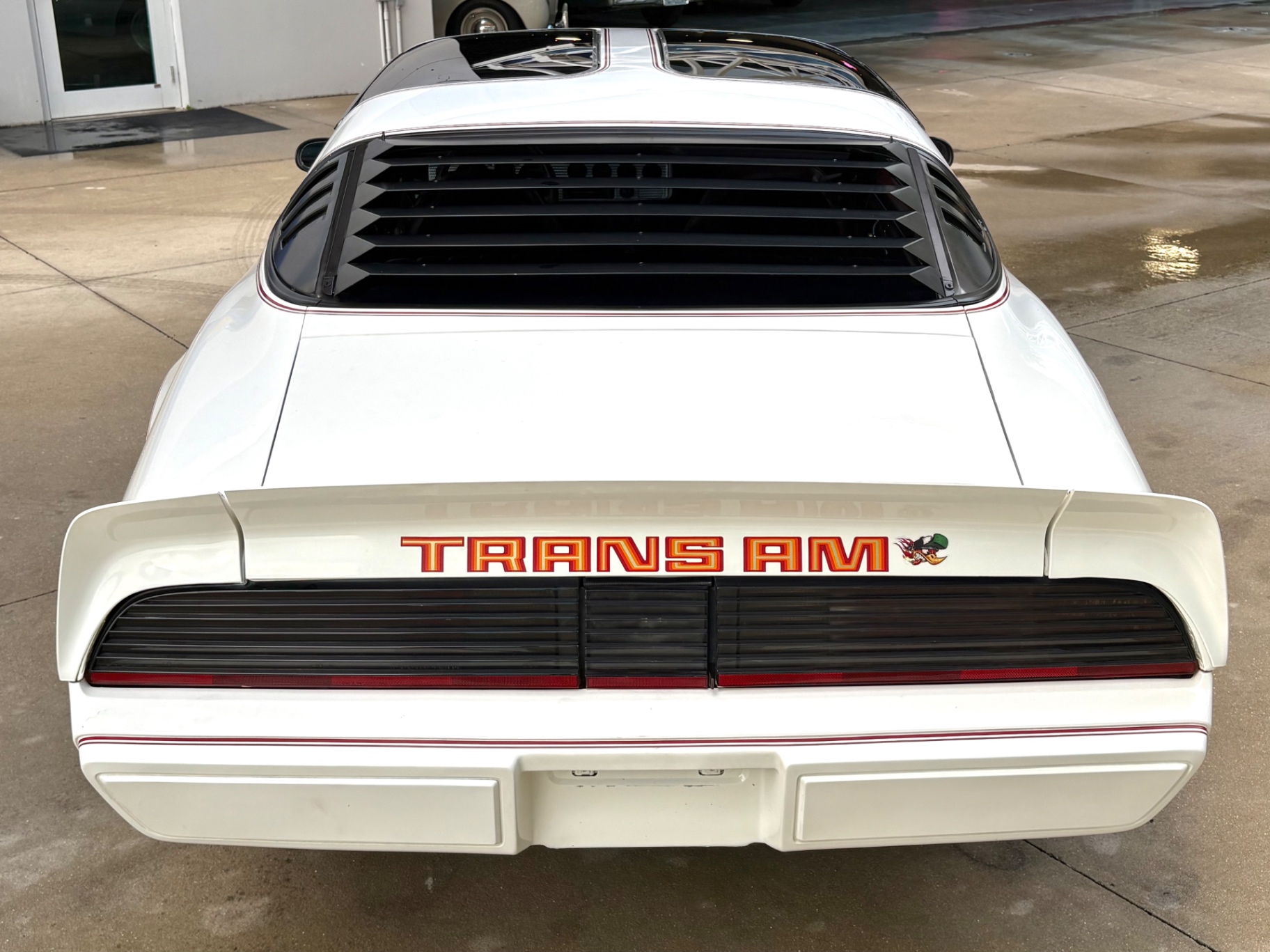
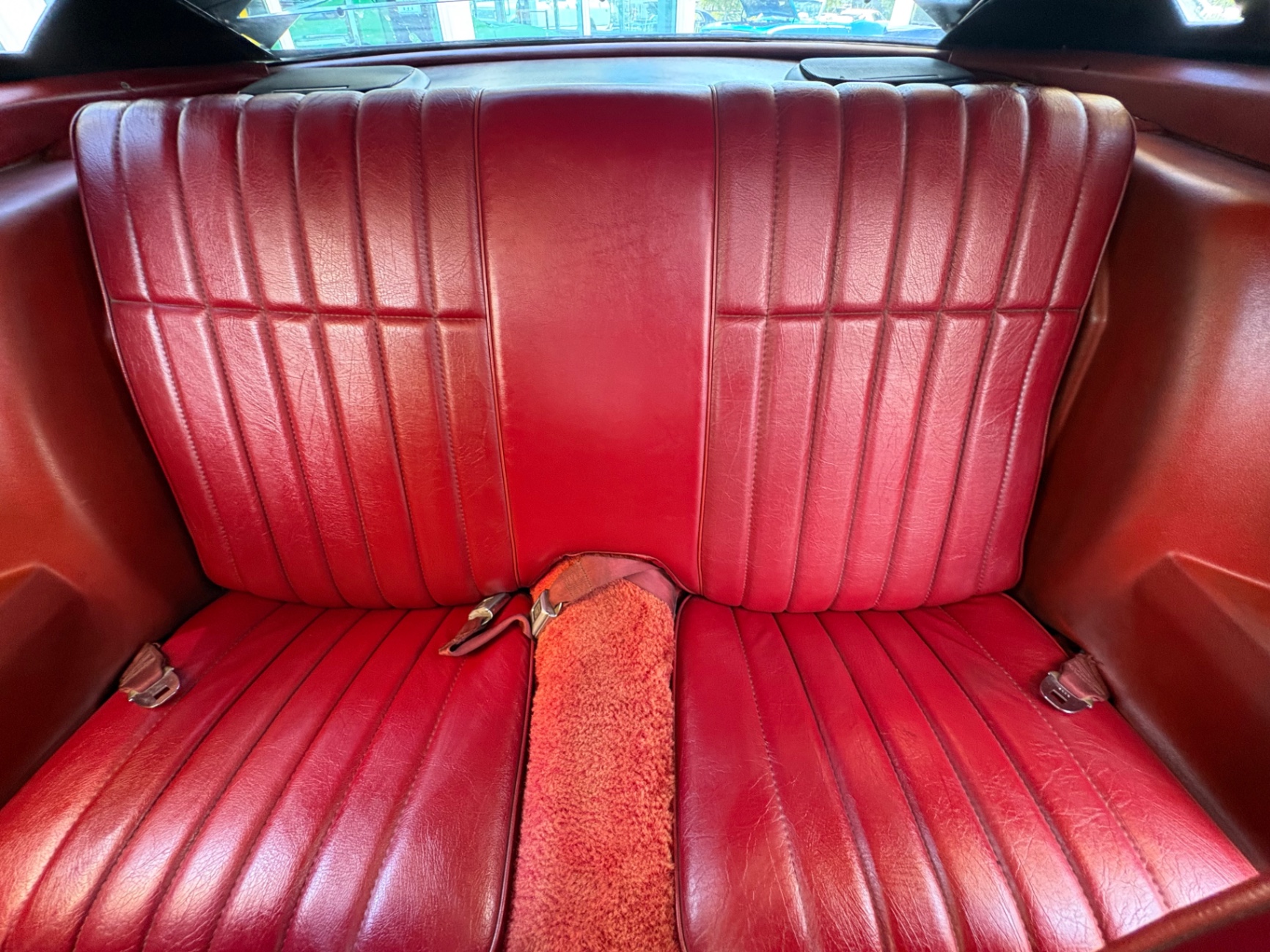
The rear seat is finished in the same red vinyl as the fronts. T-top cars present specific concerns about headliner and rear glass seal condition — the photos show the t-top panel area and rear glass appear intact. Rear window louvers are fitted on the exterior, visible from inside the cabin through the back glass.
Exterior
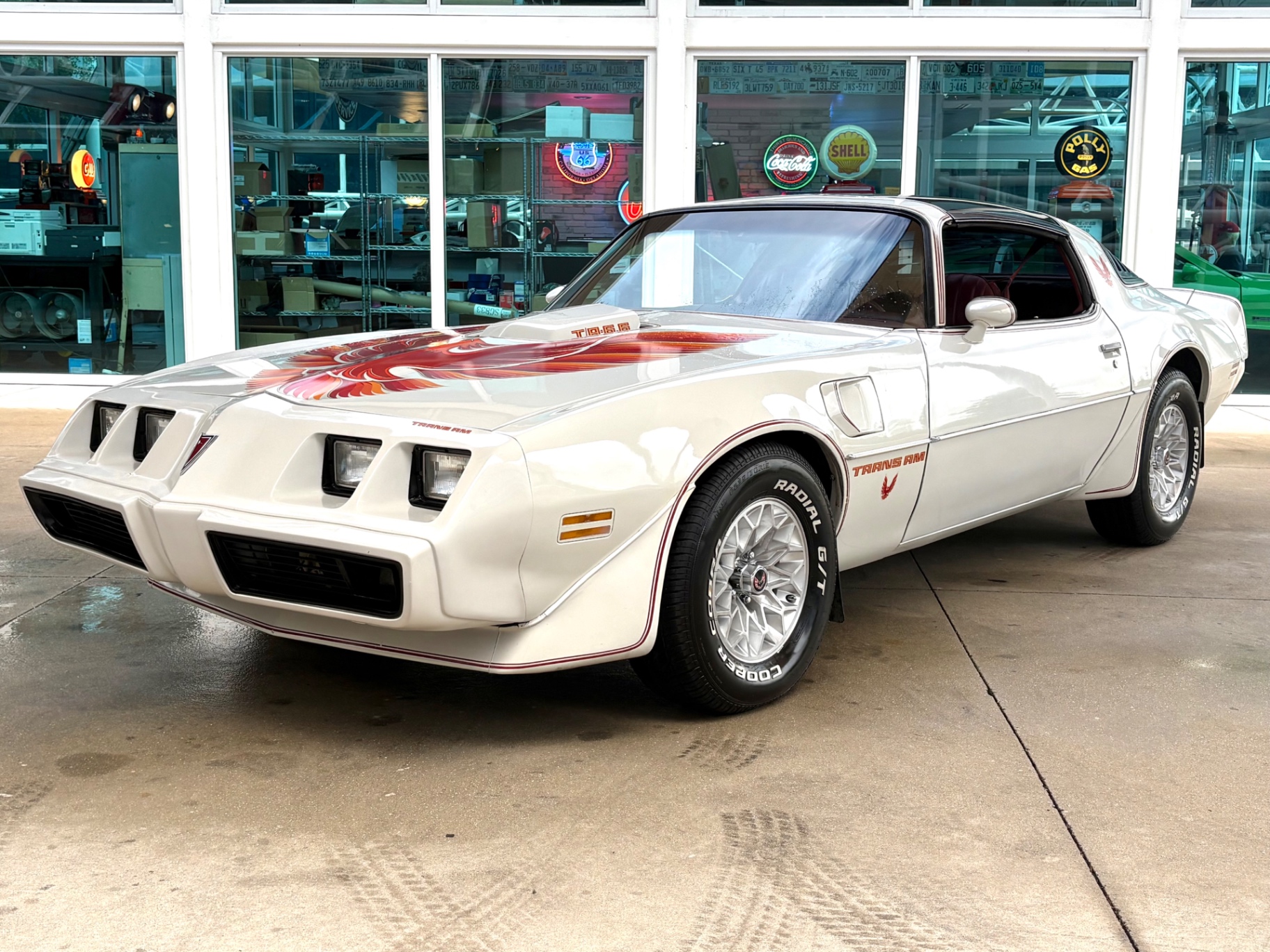
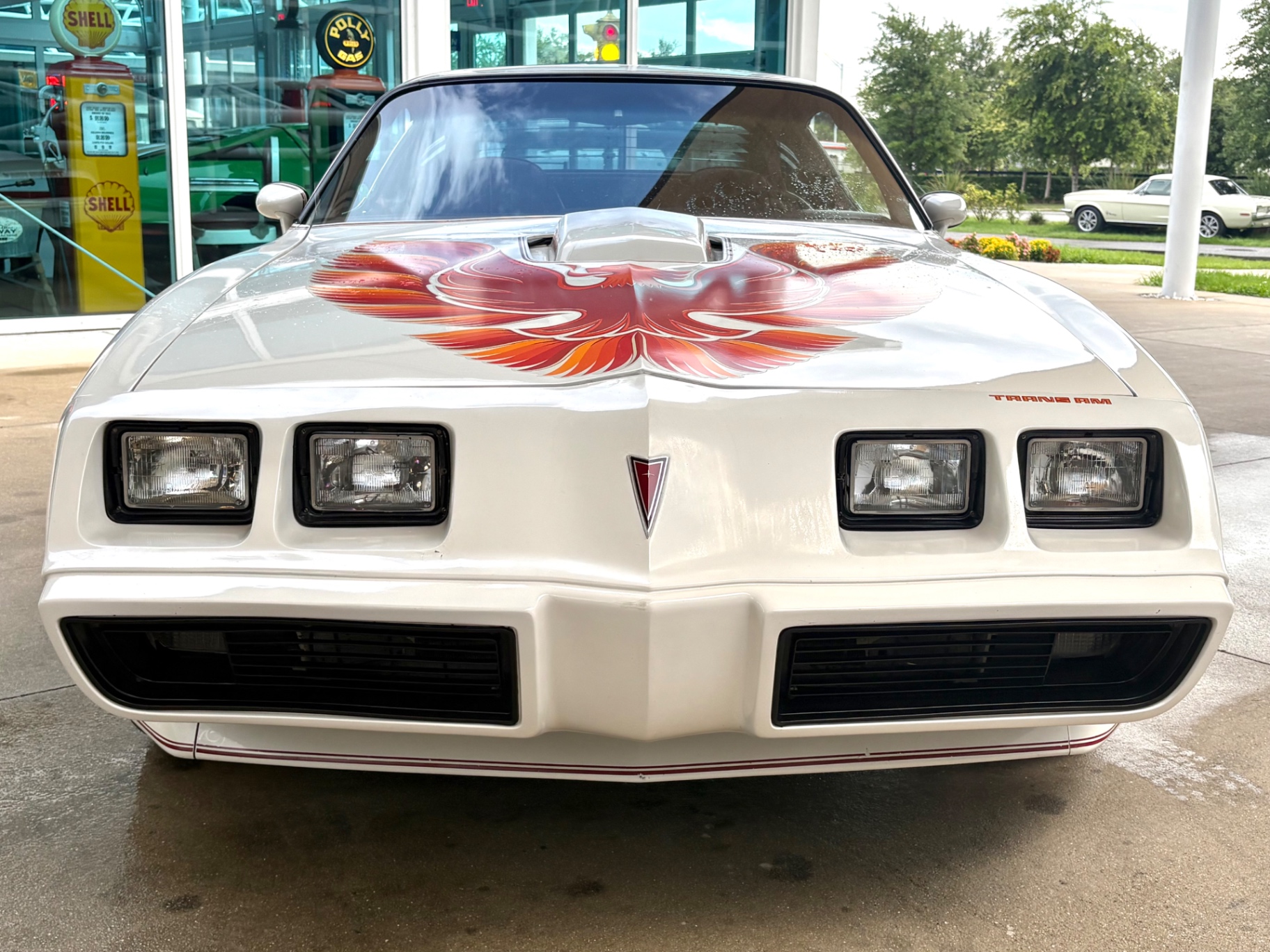
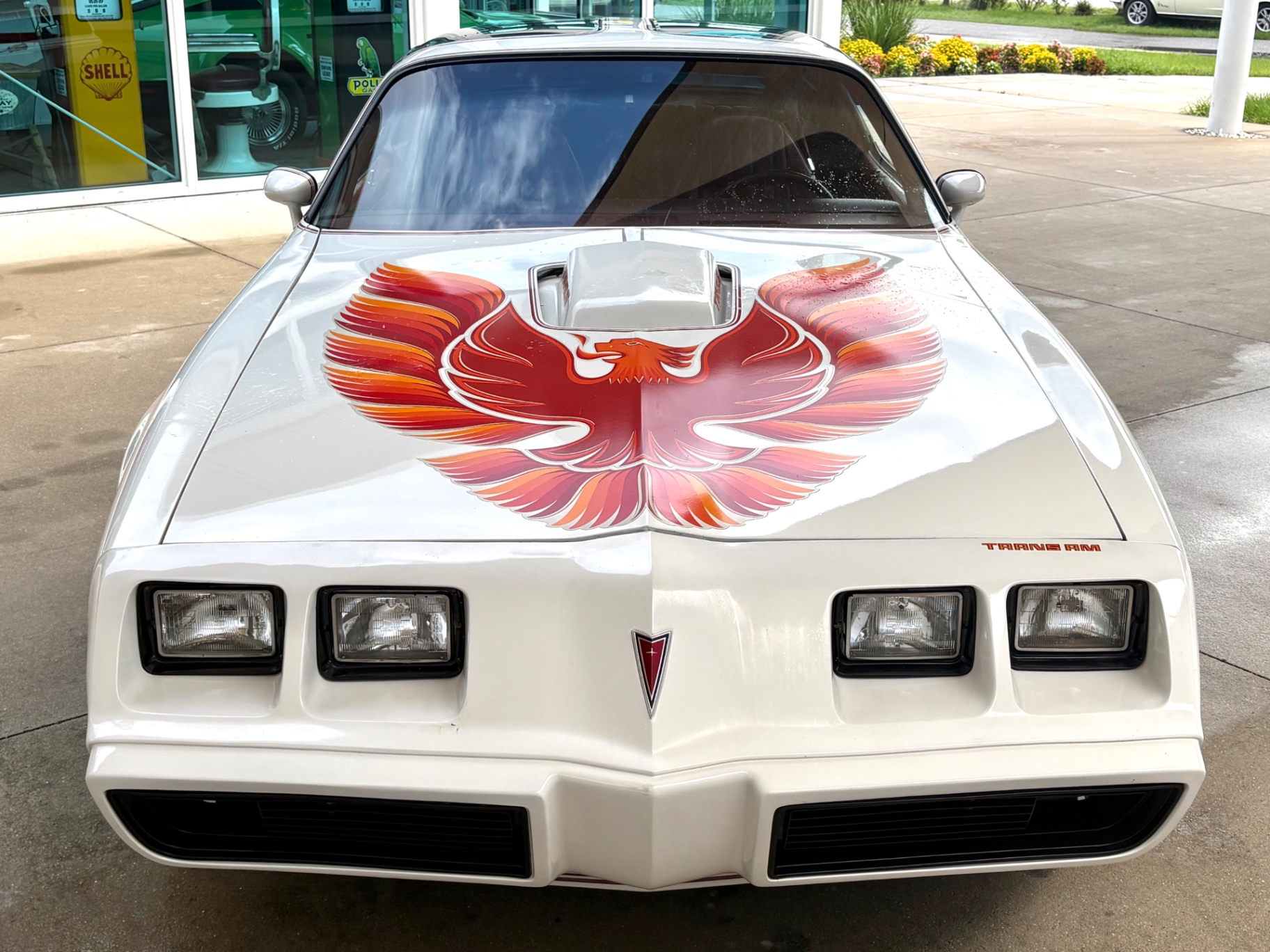
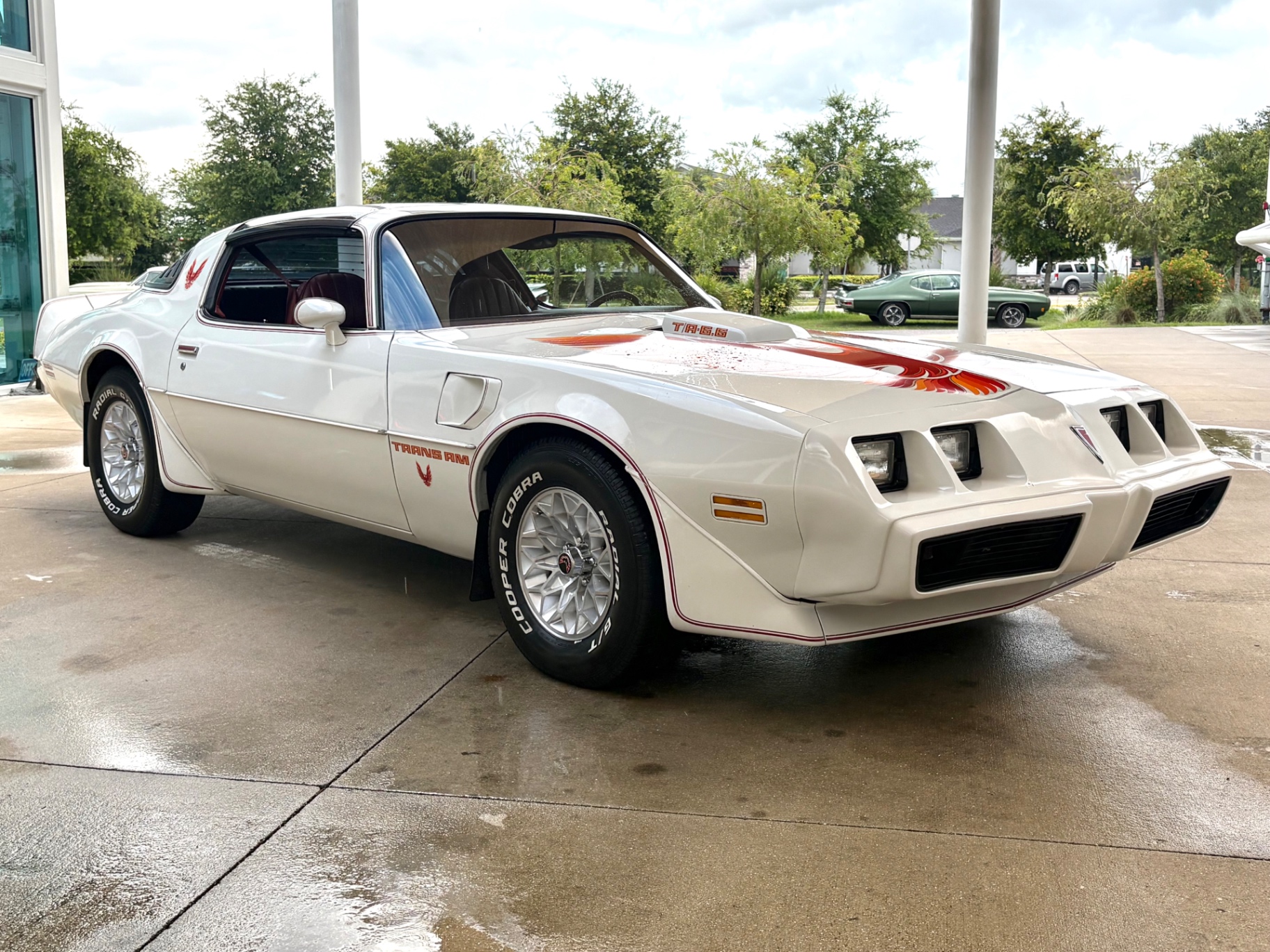
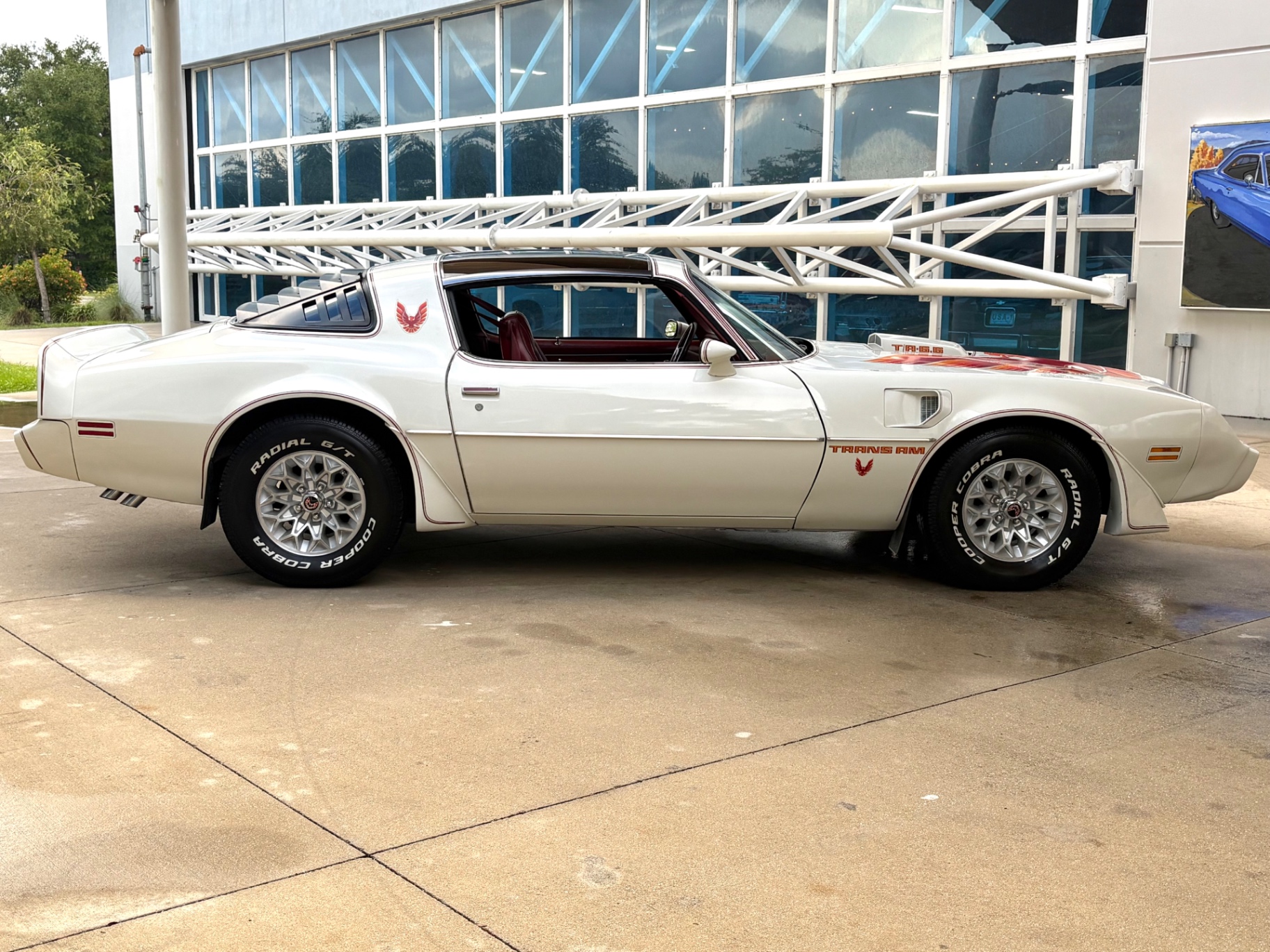
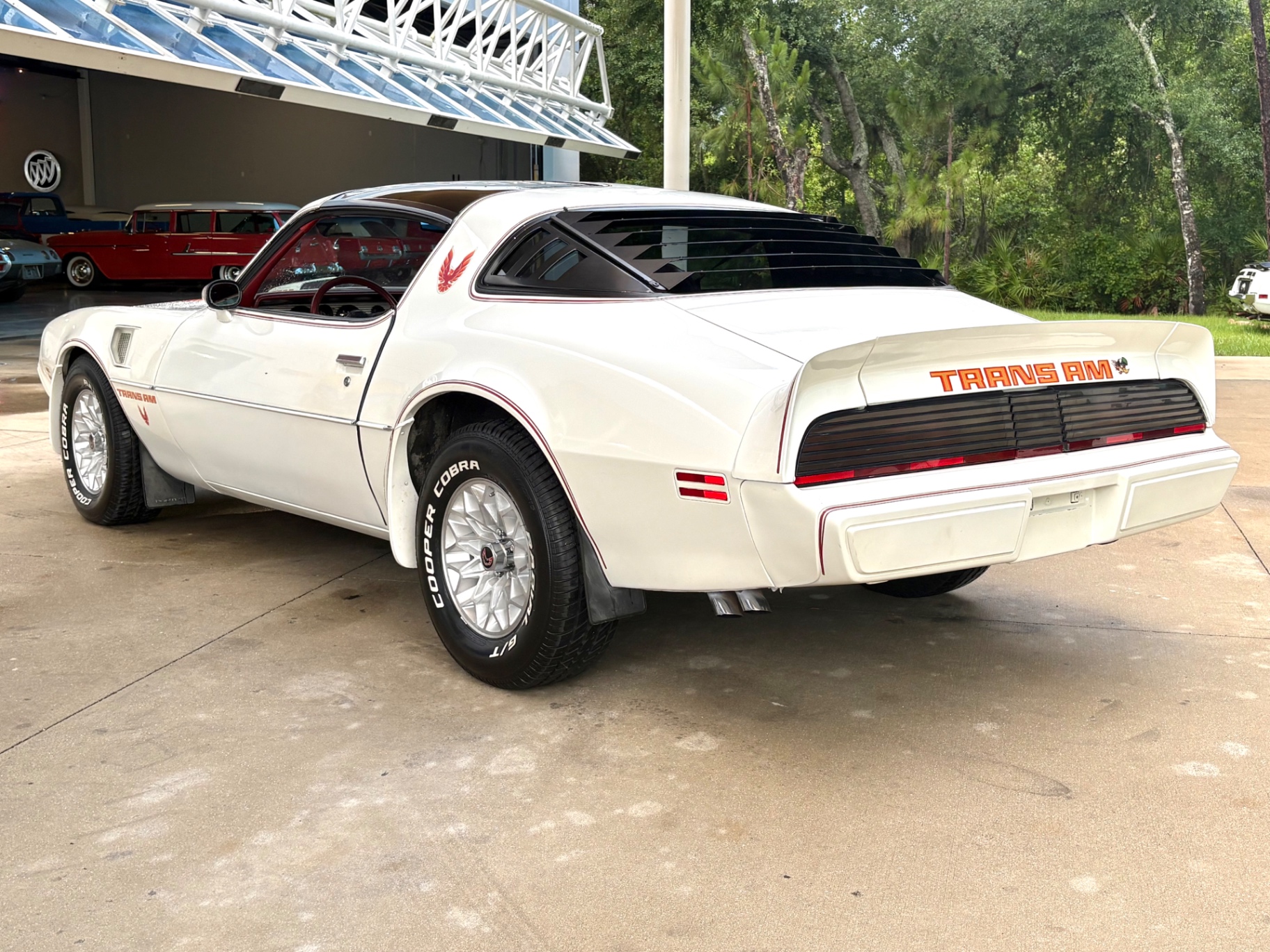
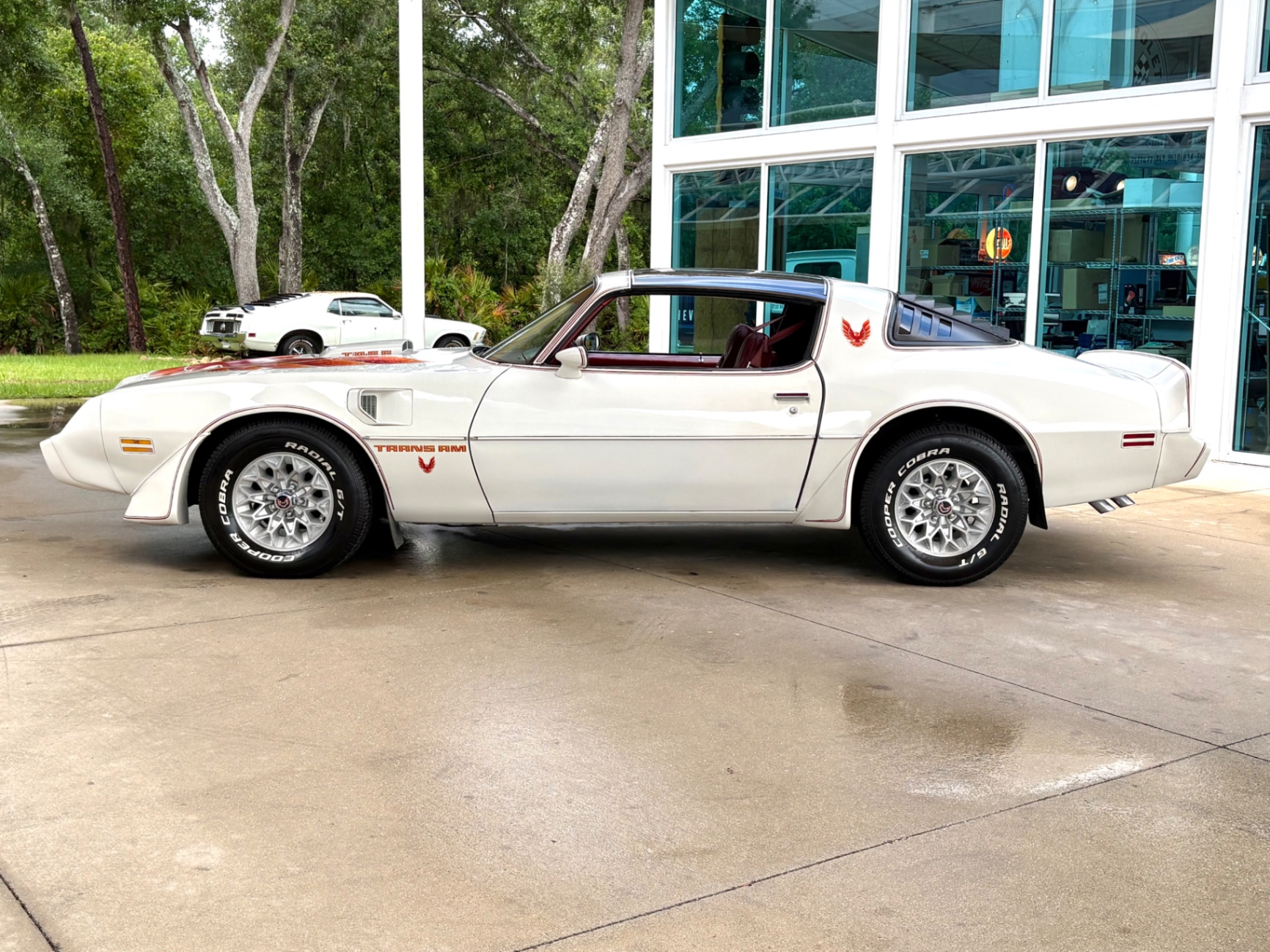
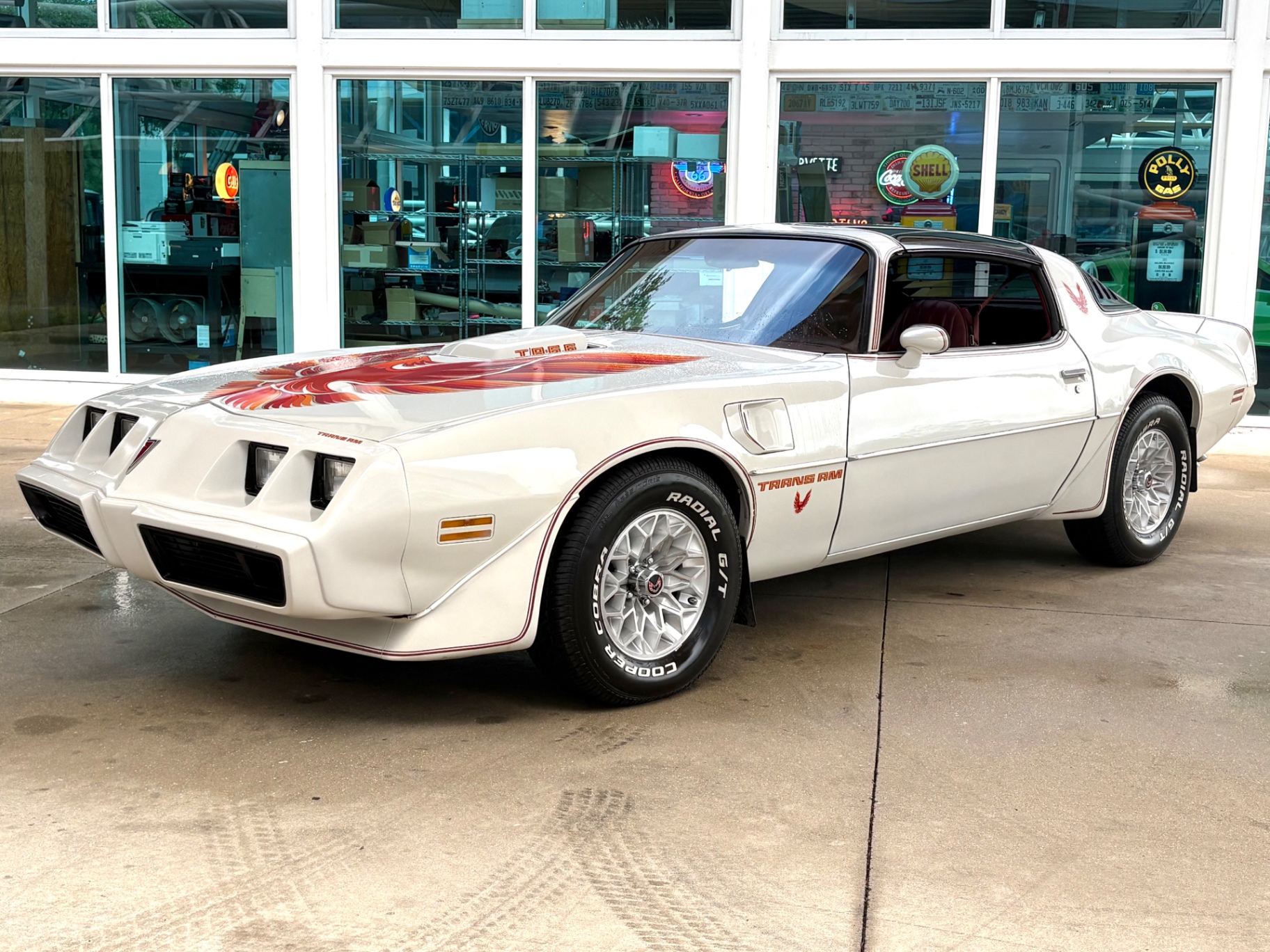
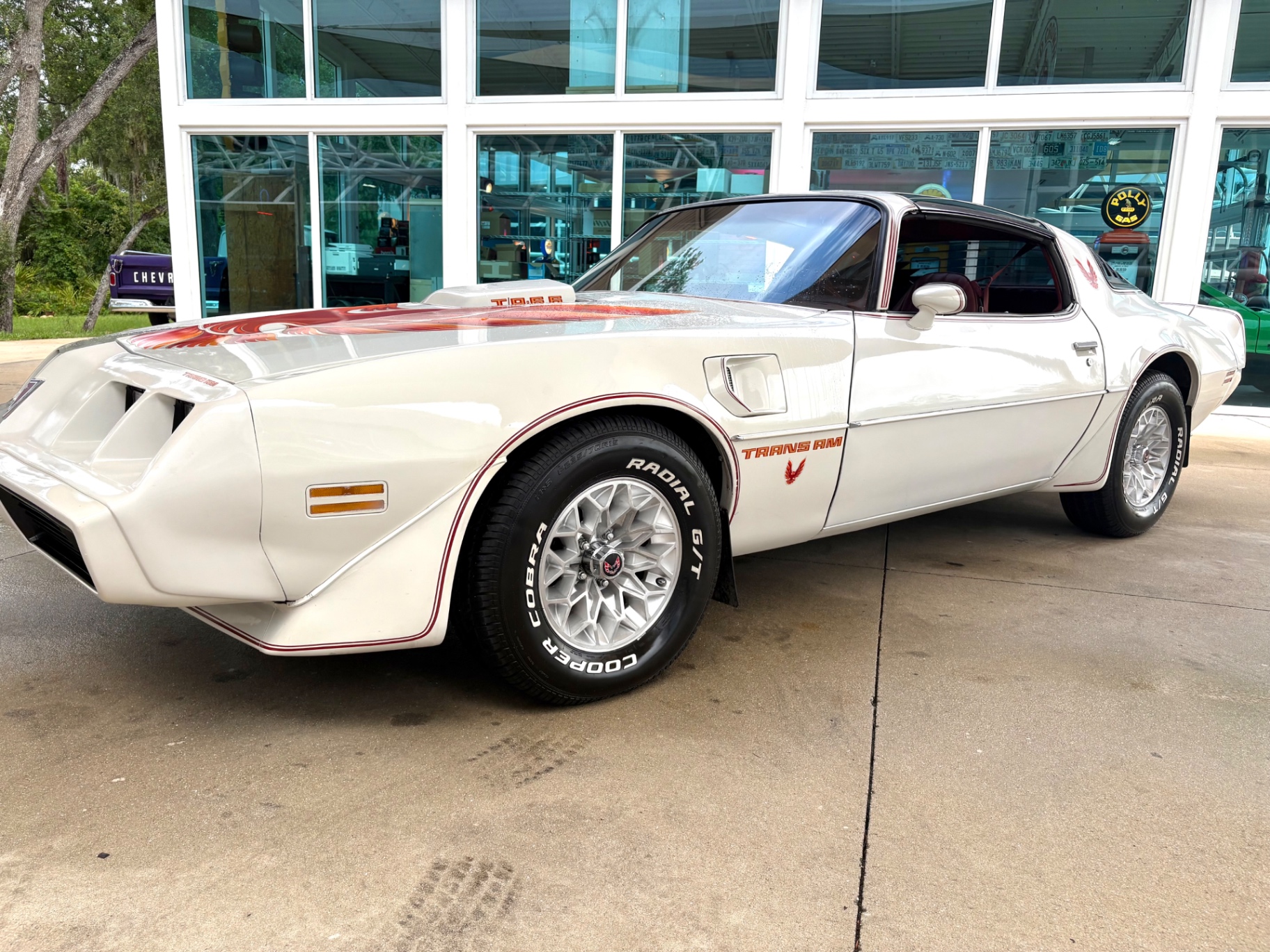
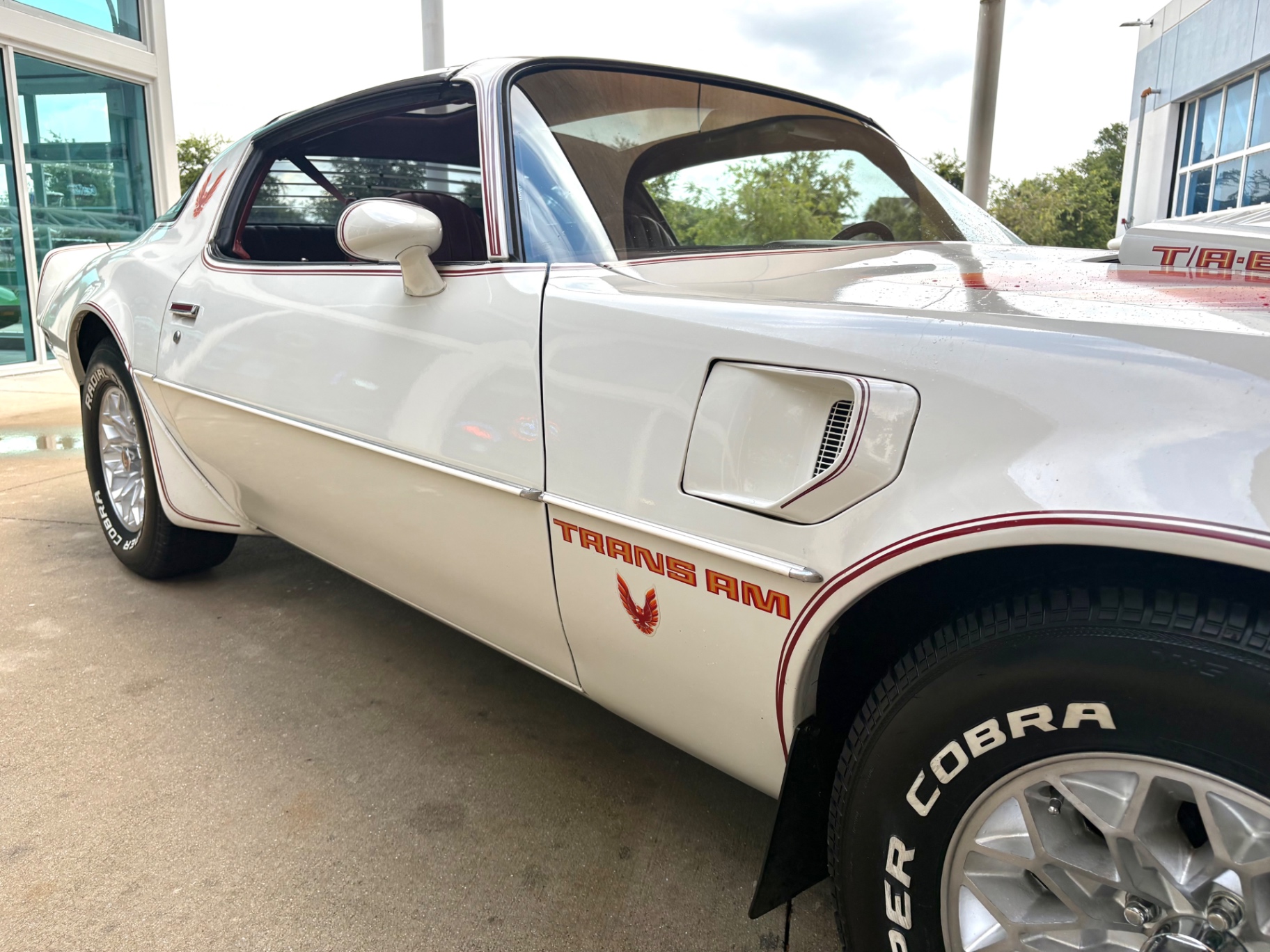
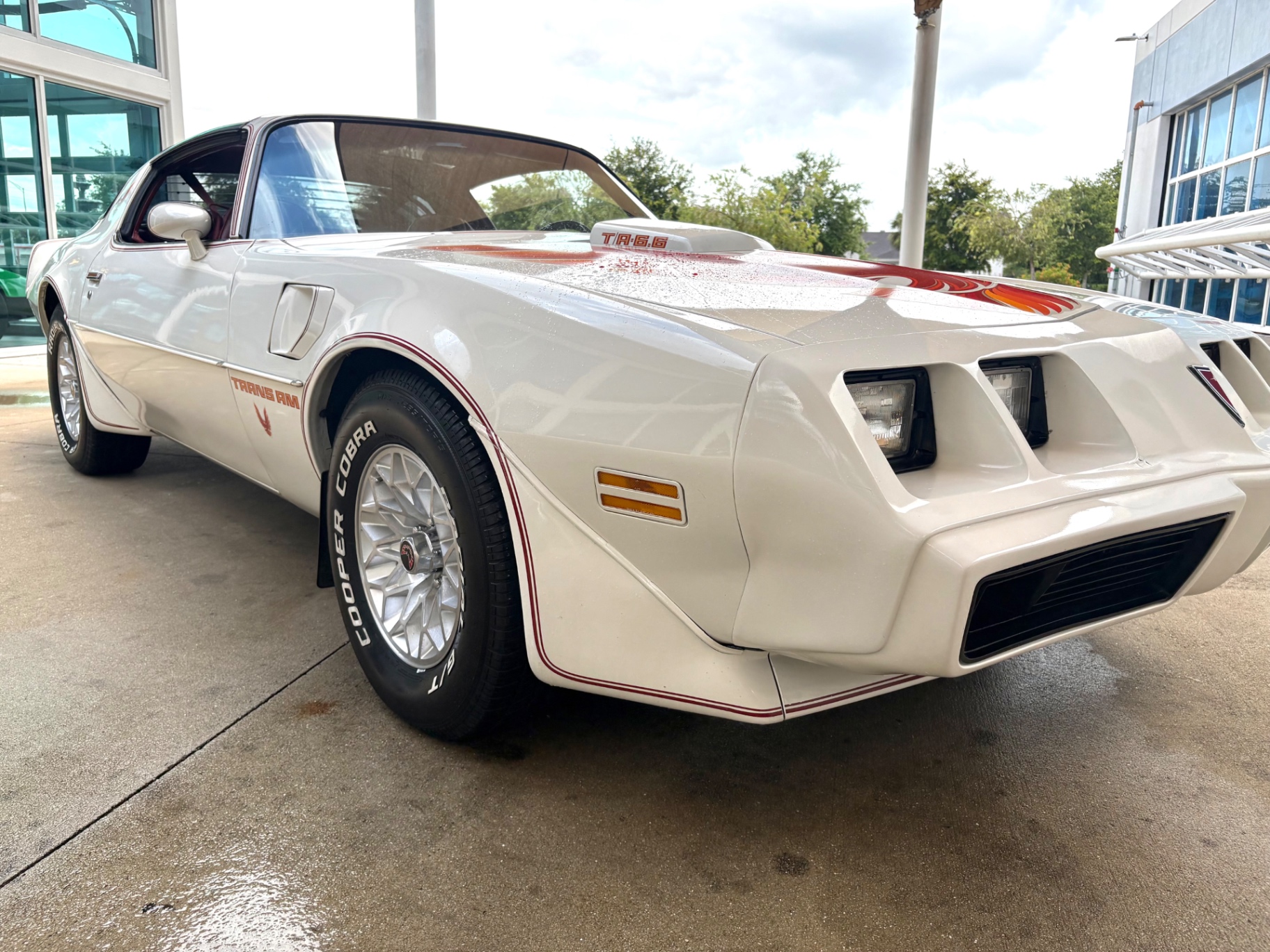
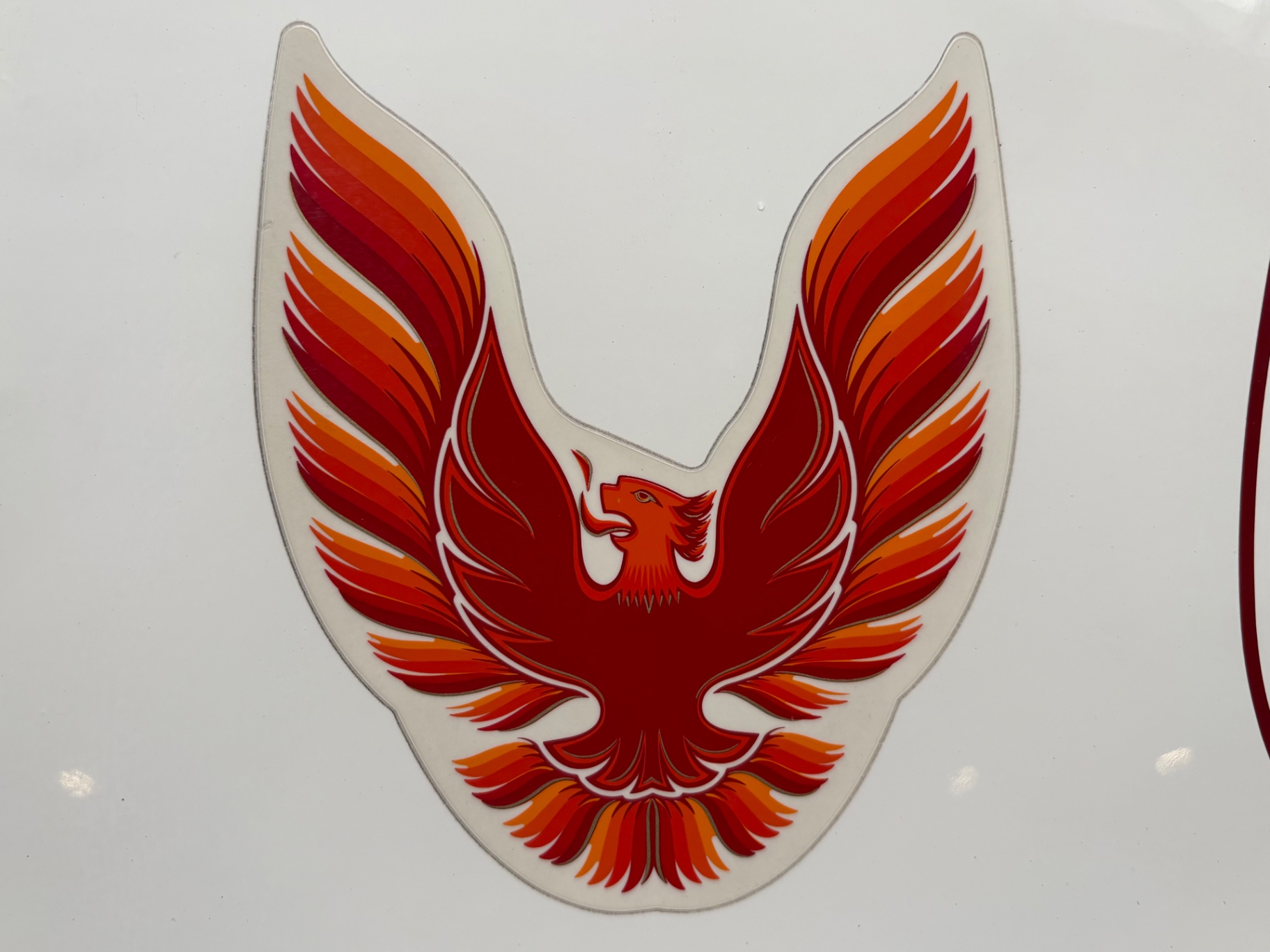
The 1979 Pontiac Firebird Trans Am wore its aerodynamic bodywork as a genuine design statement, not just decoration. The front fascia with its twin horizontal-slot openings, the nose-mounted front spoiler, and the body-side air extractors ahead of the rear wheels were all part of a body package developed with some attention to actual aerodynamic function. This car wears that full Trans Am exterior package including front spoiler, rear spoiler, and the complete Firebird hood decal — the large screaming bird graphic that covered the entire hood and became synonymous with the model.
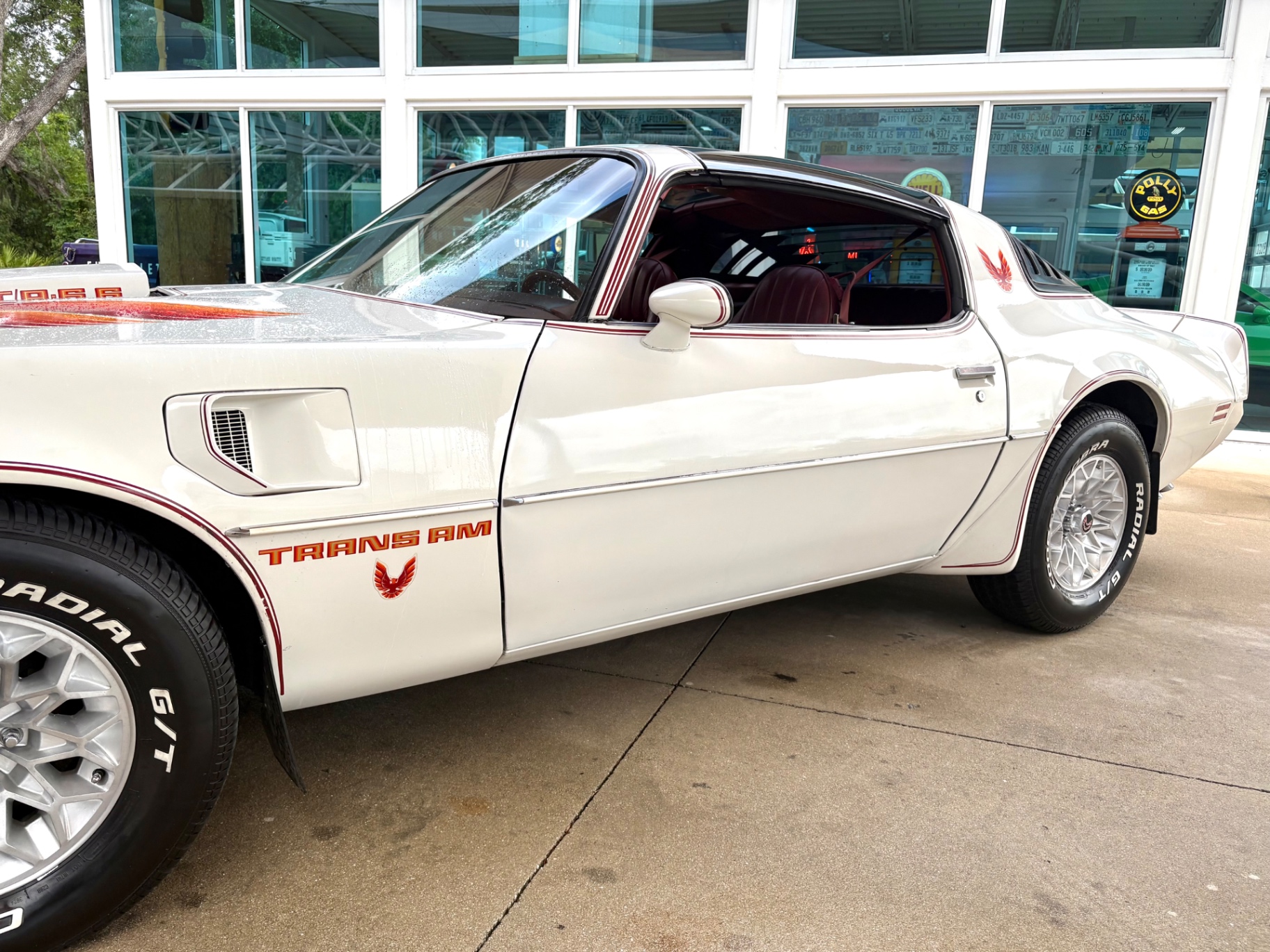
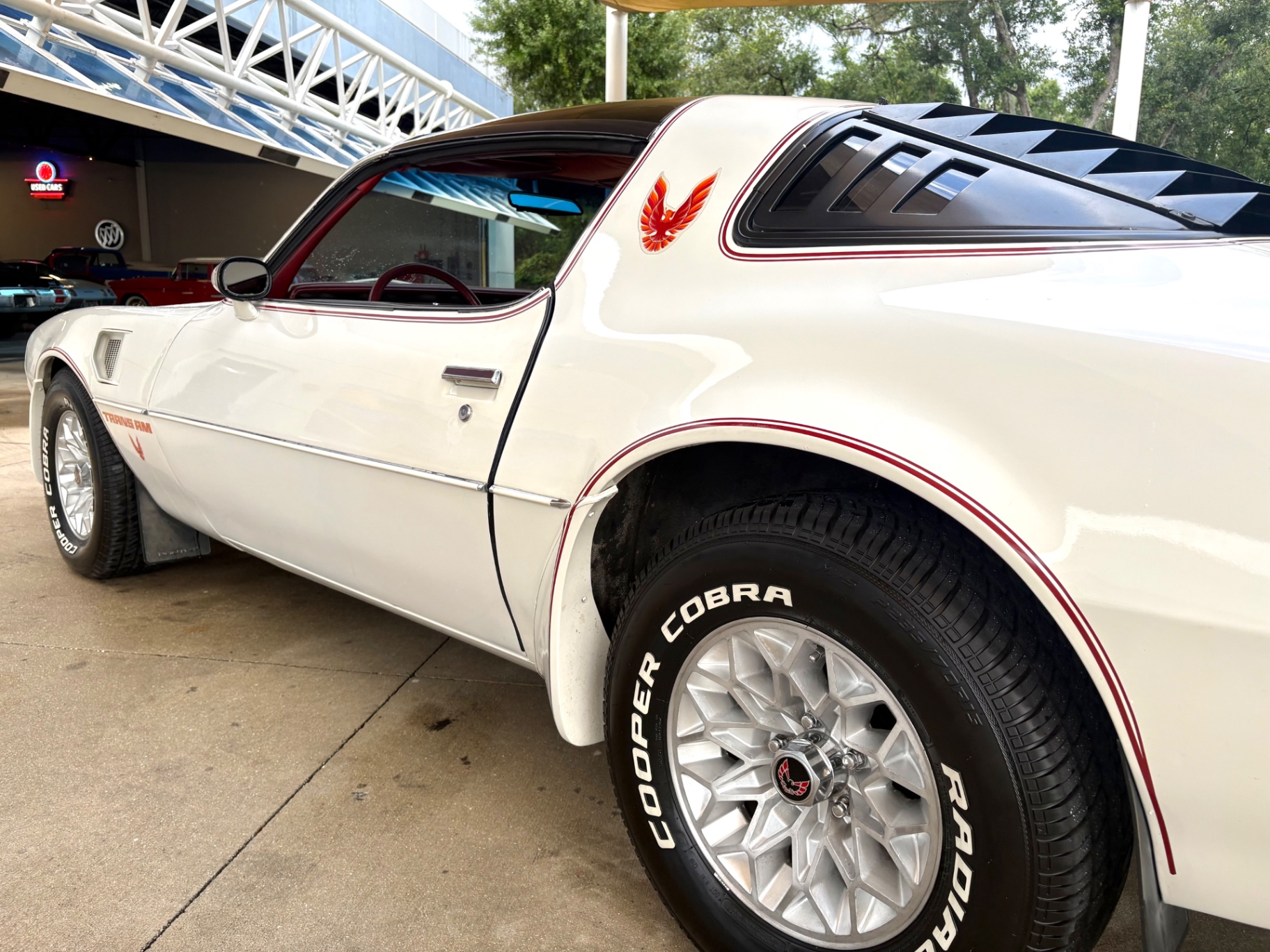
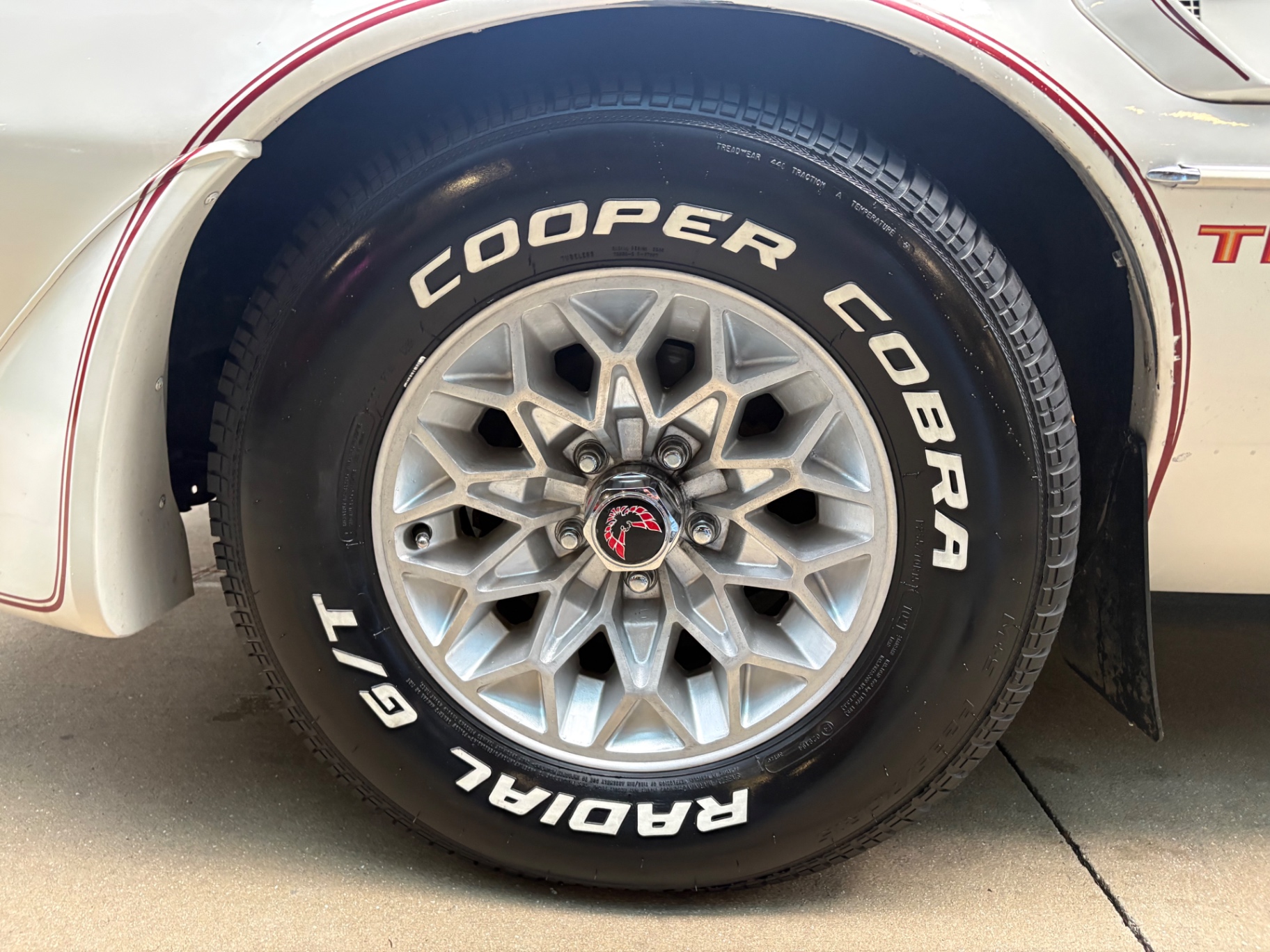
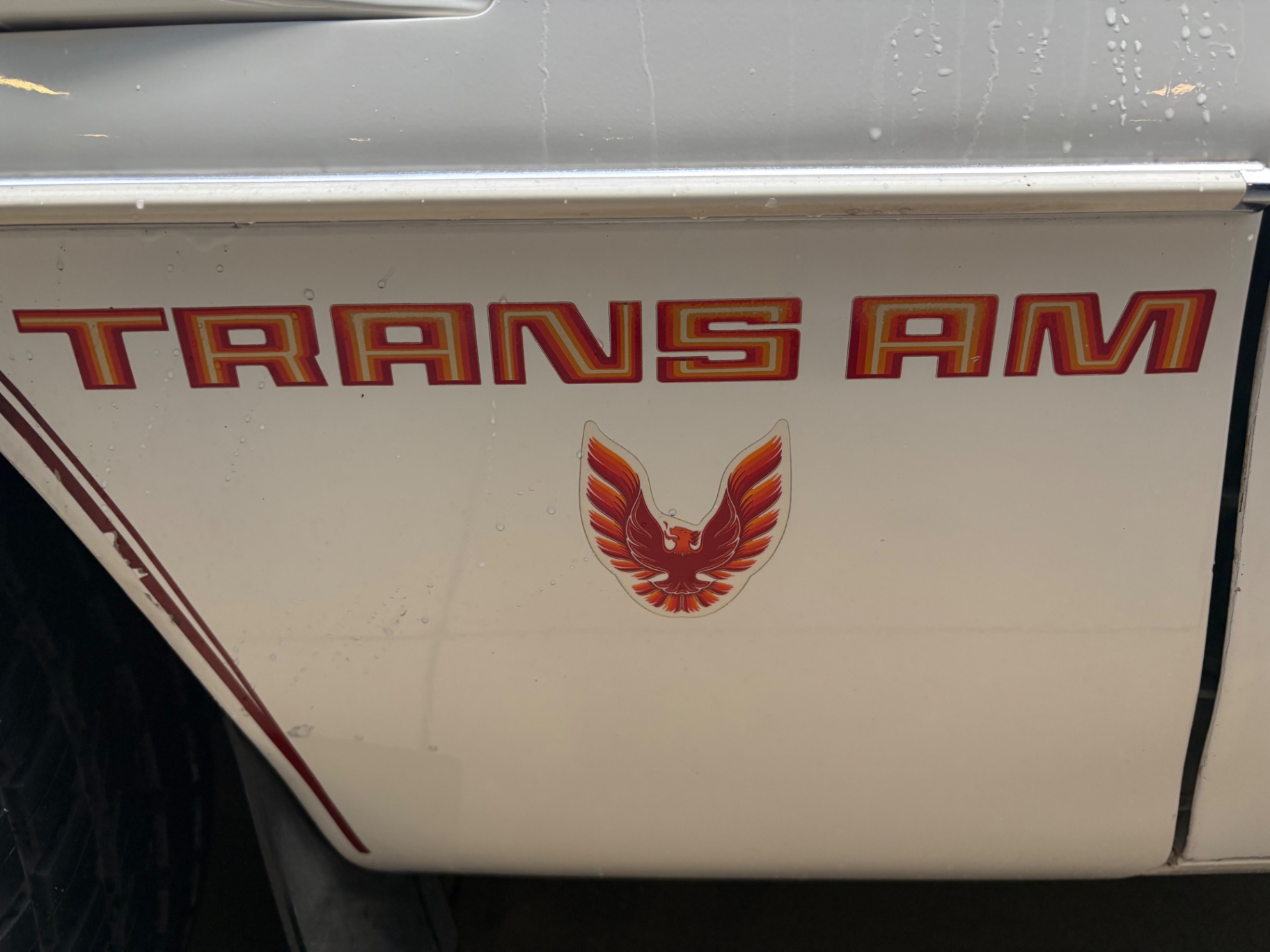
The exterior color is white, which shows off the body lines and the red accent striping along the lower body more cleanly than darker colors. The Trans Am lettering appears on the front fenders, and the Firebird decal on the hood is in the correct red and gold color scheme that pairs with the white paint. Snowflake aluminum wheels — the cast aluminum wheels officially known as the Rally II style with the snowflake cut pattern — are fitted at all four corners and are the correct, period-correct wheel for this car. They are mounted with raised white letter Cooper Radial G/T tires.
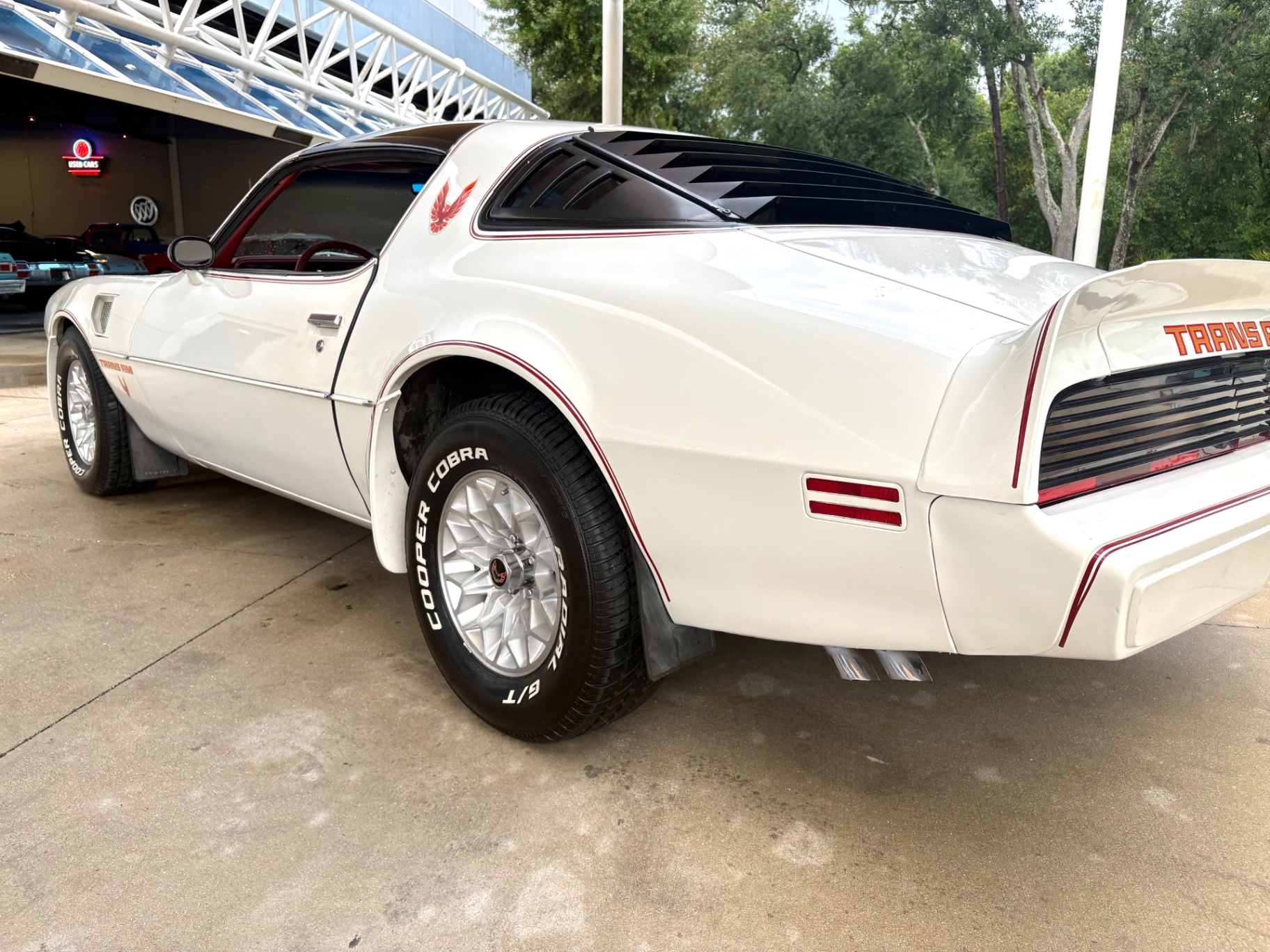
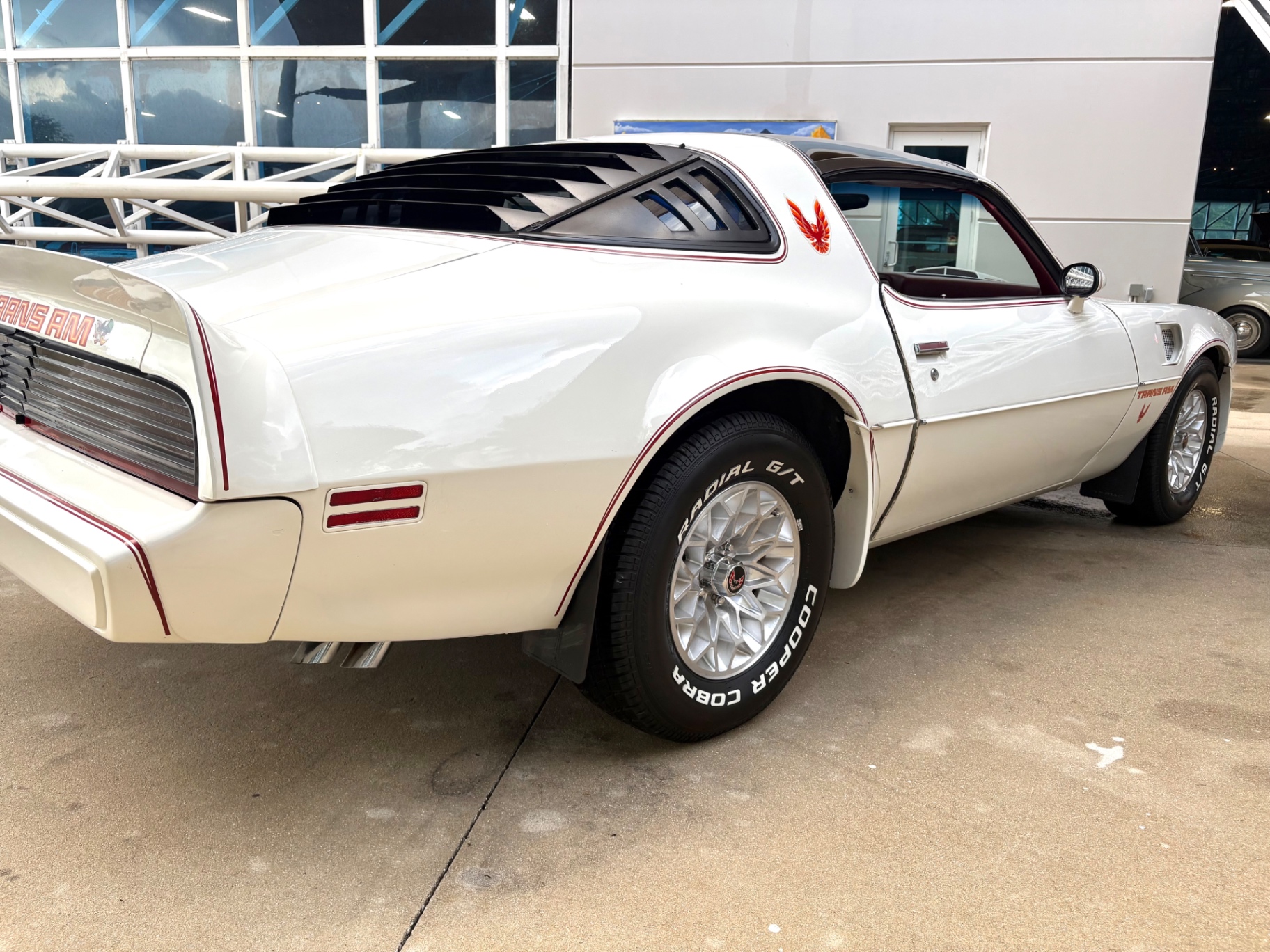
The rear window louvers are a period accessory that was extremely popular on Trans Ams of this generation, reducing rear glass glare and reinforcing the car's visual identity. The dual exhaust tips exit from beneath the rear bumper on both sides, which is the correct factory configuration for the 400-equipped cars.
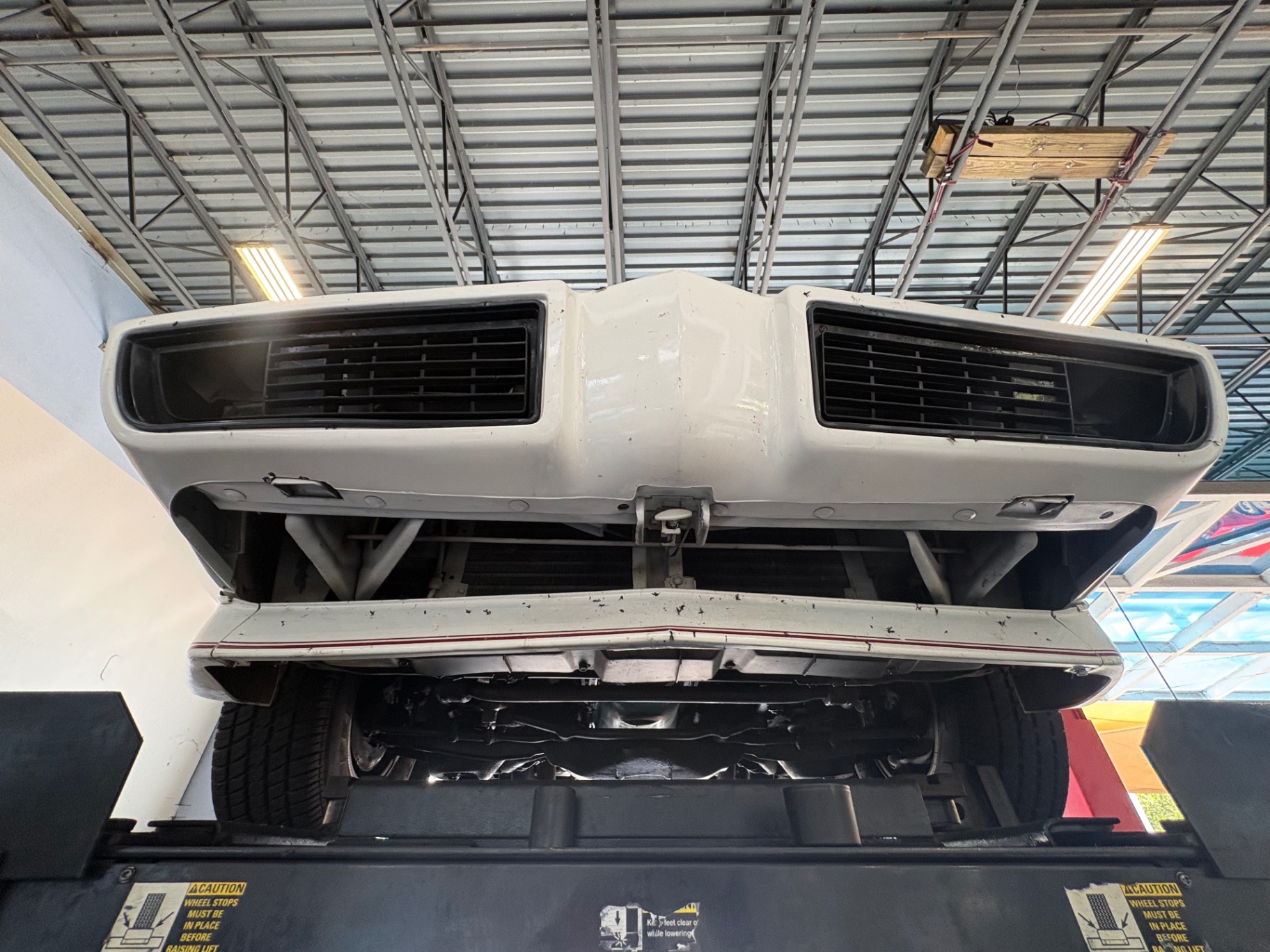
The undercarriage photos show a floor that has been undercoated and appears solid. No visible rust perforation is apparent in the floorpans, trunk area, or frame rails — this is a Florida car being sold in Florida, and a dry-climate vehicle history or southern ownership is consistent with what the underside shows.
Conclusion
The 1979 Pontiac Firebird Trans Am with the 400 cubic inch V8 represents the final chapter of the original Pontiac big-cube Trans Am story. After 1979, the 400 was gone, and so was Pontiac's ability to build a Trans Am around one of its own large-displacement engines. This particular car has the right combination: the W72-spec 400 with the functional shaker hood, T-tops, snowflake wheels, and a white-over-red color combination that stands apart from the more common color schemes. The undercarriage presents well for a car of this age, the interior is complete and color-correct, and the mechanical package — 400ci, dual exhaust, RTS suspension, power disc brakes — is exactly what Trans Am buyers were paying a premium for in 1979.
If you have questions about this 1979 Pontiac Firebird Trans Am or would like to schedule a time to see it in person, call Skyway Classics in Sarasota, Florida at 941-254-6608.
Disclaimer Information found on the website is presented as given to us by the owner of the car, whether on consignment or from the owner we bought it from. Some Photos, materials for videos, descriptions and other information are provided by the consignor/seller and is deemed reliable, but Skyway Classics does not warranty or guarantee this information. Skyway Classics is not responsible for information that may incorrect or a publishing error. The decision to purchase should be based solely on the buyers personal inspection of the vehicle or by a professional inspection service prior to offer or purchase being made.
1979 Pontiac Firebird Trans Am — 400ci V8, T-Tops, White over Red, Numbers-Correct Build
Why This Car Is Special
The 1979 Pontiac Firebird Trans Am sits at an interesting crossroads in American automotive history. By 1979, the Trans Am had become the best-selling version of the Firebird lineup, a remarkable reversal from its early days when it was a low-volume performance variant. That popularity was driven in no small part by the 1977 film Smokey and the Bandit, which planted the image of a black and gold Trans Am firmly into the cultural consciousness of an entire generation. But not every Trans Am from this era wore black and gold. This one wears white over a full red interior, and it carries the most desirable engine Pontiac still offered in 1979: the 6.6-liter, 400 cubic inch V8.
By 1979, the emissions era had taken a heavy toll on American performance engines. Pontiac's own 400ci V8 was in its final year of production in the Trans Am. The W72 performance-tuned version of that engine — which this car carries, as confirmed by the T/A 6.6 air cleaner badge — was rated at 220 horsepower under the SAE net measurement standard used at the time, making it the strongest engine available in a 1979 Trans Am. The following year, the 400 was gone entirely, replaced by a 301ci Pontiac V8 or a Chevy-sourced 305. For collectors who want a second-generation Trans Am with a genuine Pontiac 400 under the hood, 1979 is the last year that was possible from the factory.
The VIN on this car encodes the body style as a two-door sport coupe (position 4: 87) built at the Norwood, Ohio assembly plant, which was one of two facilities that produced Firebirds during this period. The model year code confirms 1979, and the engine position confirms V8 displacement consistent with the 6.6-liter 400.
Features List
- 6.6L 400ci V8 with T/A 6.6 Air Cleaner Badge - Factory Shaker Hood with Functional Ram Air Inlet - 3-Speed Turbo Hydra-Matic Automatic Transmission - T-Tops (Removable Glass Roof Panels) - Snowflake Aluminum Wheels - Dual Exhaust with Rear Outlets - Factory Tachometer and Full Gauge Cluster with RTS Badge - Radial Tuned Suspension (RTS) with Front and Rear Sway Bars - Power Front Disc Brakes - Power Steering - Tilt Steering Column - Air Conditioning (reported cold) - Center Console - Bucket Seats — Red Vinyl - Power Door Locks - Rear Window Louvers - Front and Rear Spoilers - Firebird Hood Decal - Sony Aftermarket Stereo
Mechanical
The heart of this 1979 Pontiac Firebird Trans Am is the 6.6-liter (400 cubic inch) Pontiac V8, topped with the T/A 6.6 shaker air cleaner that draws air directly from a functional scoop built into the hood. This setup — often called ram air — was unique to the Trans Am and drew in cooler outside air rather than recirculating hot underhood air. The W72 designation, identifiable by the T/A 6.6 badge, indicated a higher-performance tune relative to the base 400, with a specific camshaft profile and carburetor calibration. It was the engine Pontiac engineers used when they wanted to get the most out of what the 400 could still legally do in the emissions era.
Backing the V8 is a 3-speed Turbo Hydra-Matic automatic transmission. While a 4-speed manual was available on some earlier Trans Ams, by 1979 the automatic was the dominant choice among buyers and is the more practical combination for daily driving and long-distance cruising today.
The chassis is equipped with the Radial Tuned Suspension package, which Pontiac developed specifically to take advantage of the wider, lower-profile radial tires that were becoming standard on performance cars in the late 1970s. The RTS badge is visible on the instrument cluster of this car. The suspension package included specific spring rates, shock valving, front and rear sway bars, and steering calibration tuned for radial tires. Looking at the undercarriage in the photos, the floorpans appear solid and well-preserved, with no visible rust or compromised structure — a meaningful detail for a 45-year-old unibody car.
Stopping power comes from power front disc brakes with drums at the rear, the standard configuration for this generation. Power steering is also fitted, reducing the parking-lot effort that can make older muscle cars tiring in traffic. The dual exhaust exits through two sets of tailpipes visible beneath the rear valance, and the exhaust note from a factory 400 with dual outlets is a significant part of what these cars are known for.
Interior
Open either door of this 1979 Pontiac Firebird Trans Am and you are met with a complete red interior — red vinyl bucket seats, red door panels with white accent piping, red carpet, and a red-trimmed center console. The color combination of white exterior with red interior was a factory-offered pairing and gives this car a distinctly different look from the more common black or gold Trans Ams of the era.
The driver faces the Trans Am's full instrument cluster, which includes the factory tachometer mounted prominently in the center of the gauge pod and an analog clock built into the same unit. The RTS badge is visible between the tach and speedometer, confirming the Radial Tuned Suspension equipment. The speedometer is calibrated in both MPH and km/h, which became a federal requirement on 1979 models. A tilt steering column is fitted, and the red three-spoke steering wheel with the Firebird medallion at the center is the correct period piece for this car.
The center console runs the length of the cabin floor and houses the automatic shifter with the correct T-handle grip. A Sony aftermarket stereo has been mounted below the factory radio location and is a clean, non-destructive install based on the photos. The factory radio opening appears to be retained above it. Air conditioning vents are integrated into both the dash and door sills. The air conditioning is reported to be functioning and blowing cold, which matters in a Florida summer and is worth verifying on any classic car this age.
The rear seat is finished in the same red vinyl as the fronts. T-top cars present specific concerns about headliner and rear glass seal condition — the photos show the t-top panel area and rear glass appear intact. Rear window louvers are fitted on the exterior, visible from inside the cabin through the back glass.
Exterior
The 1979 Pontiac Firebird Trans Am wore its aerodynamic bodywork as a genuine design statement, not just decoration. The front fascia with its twin horizontal-slot openings, the nose-mounted front spoiler, and the body-side air extractors ahead of the rear wheels were all part of a body package developed with some attention to actual aerodynamic function. This car wears that full Trans Am exterior package including front spoiler, rear spoiler, and the complete Firebird hood decal — the large screaming bird graphic that covered the entire hood and became synonymous with the model.
The exterior color is white, which shows off the body lines and the red accent striping along the lower body more cleanly than darker colors. The Trans Am lettering appears on the front fenders, and the Firebird decal on the hood is in the correct red and gold color scheme that pairs with the white paint. Snowflake aluminum wheels — the cast aluminum wheels officially known as the Rally II style with the snowflake cut pattern — are fitted at all four corners and are the correct, period-correct wheel for this car. They are mounted with raised white letter Cooper Radial G/T tires.
The rear window louvers are a period accessory that was extremely popular on Trans Ams of this generation, reducing rear glass glare and reinforcing the car's visual identity. The dual exhaust tips exit from beneath the rear bumper on both sides, which is the correct factory configuration for the 400-equipped cars.
The undercarriage photos show a floor that has been undercoated and appears solid. No visible rust perforation is apparent in the floorpans, trunk area, or frame rails — this is a Florida car being sold in Florida, and a dry-climate vehicle history or southern ownership is consistent with what the underside shows.
Conclusion
The 1979 Pontiac Firebird Trans Am with the 400 cubic inch V8 represents the final chapter of the original Pontiac big-cube Trans Am story. After 1979, the 400 was gone, and so was Pontiac's ability to build a Trans Am around one of its own large-displacement engines. This particular car has the right combination: the W72-spec 400 with the functional shaker hood, T-tops, snowflake wheels, and a white-over-red color combination that stands apart from the more common color schemes. The undercarriage presents well for a car of this age, the interior is complete and color-correct, and the mechanical package — 400ci, dual exhaust, RTS suspension, power disc brakes — is exactly what Trans Am buyers were paying a premium for in 1979.
If you have questions about this 1979 Pontiac Firebird Trans Am or would like to schedule a time to see it in person, call Skyway Classics in Sarasota, Florida at 941-254-6608.
Disclaimer Information found on the website is presented as given to us by the owner of the car, whether on consignment or from the owner we bought it from. Some Photos, materials for videos, descriptions and other information are provided by the consignor/seller and is deemed reliable, but Skyway Classics does not warranty or guarantee this information. Skyway Classics is not responsible for information that may incorrect or a publishing error. The decision to purchase should be based solely on the buyers personal inspection of the vehicle or by a professional inspection service prior to offer or purchase being made.
1979 Pontiac
Firebird Trans Am
Why Choose Skyway Classics?
Explore our curated inventory of classic and collector cars—thoughtfully selected, ready to drive, and supported by experts who make ownership simple.
Expert Curation
Every vehicle is hand-selected by our experts for quality, authenticity, and investment potential.
Fast Transactions
Streamlined buying and selling process with quick financing and immediate delivery options.
Only National Dealer With Classic Service & Repair
We’re the only national dealership that services and repairs the classics we sell—before and after the sale.
Nationwide Network
Access to our extensive network of collectors, restorers, and classic car enthusiasts nationwide.
Concierge Ownership Support
From financing and insurance to paperwork, shipping, and titling—we handle the details so you can enjoy the drive.
Passion-Driven Service
We're classic car enthusiasts first, providing personalized service with genuine passion for the hobby.