
1969 Chevrolet
Camaro SS
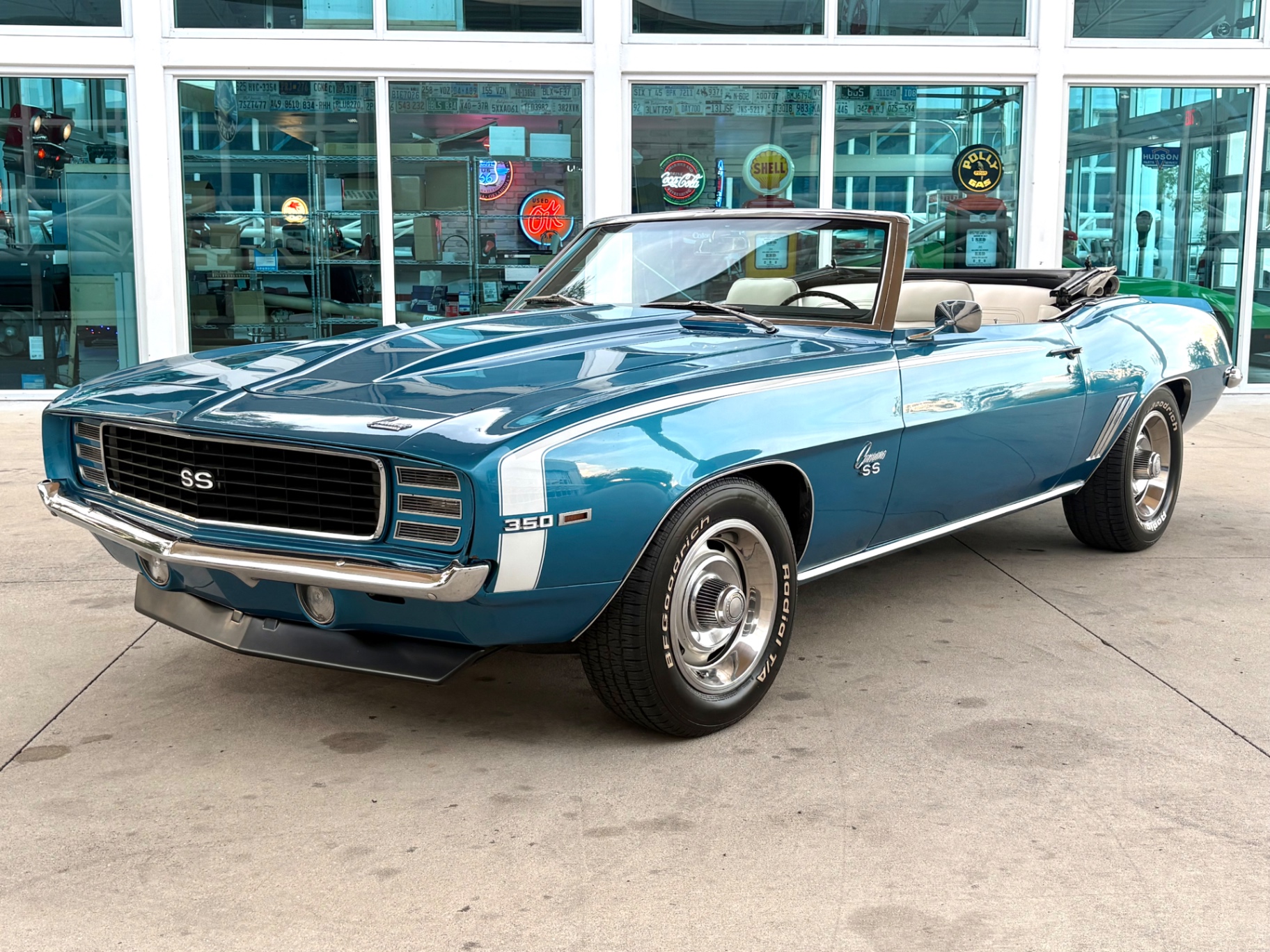
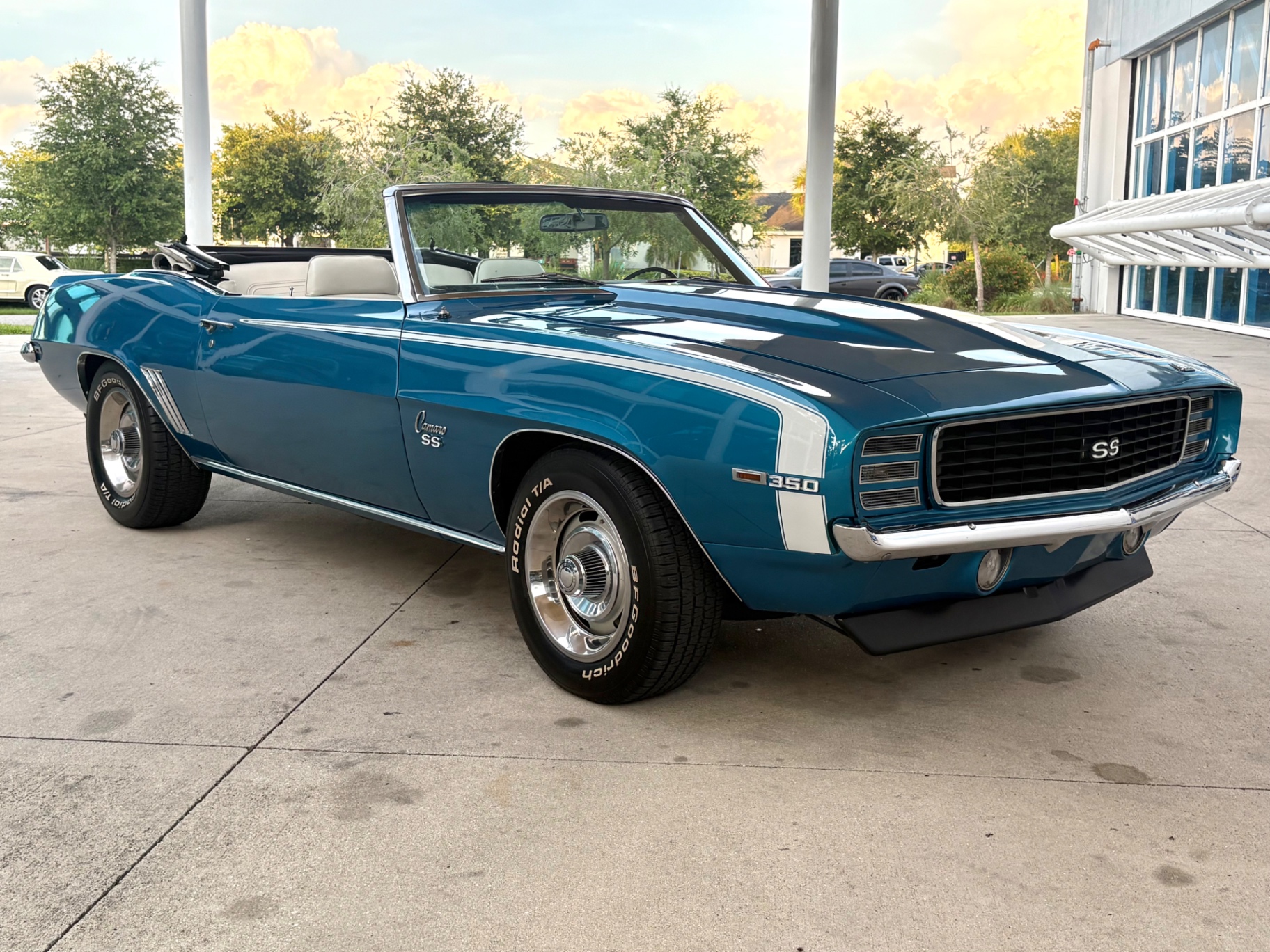
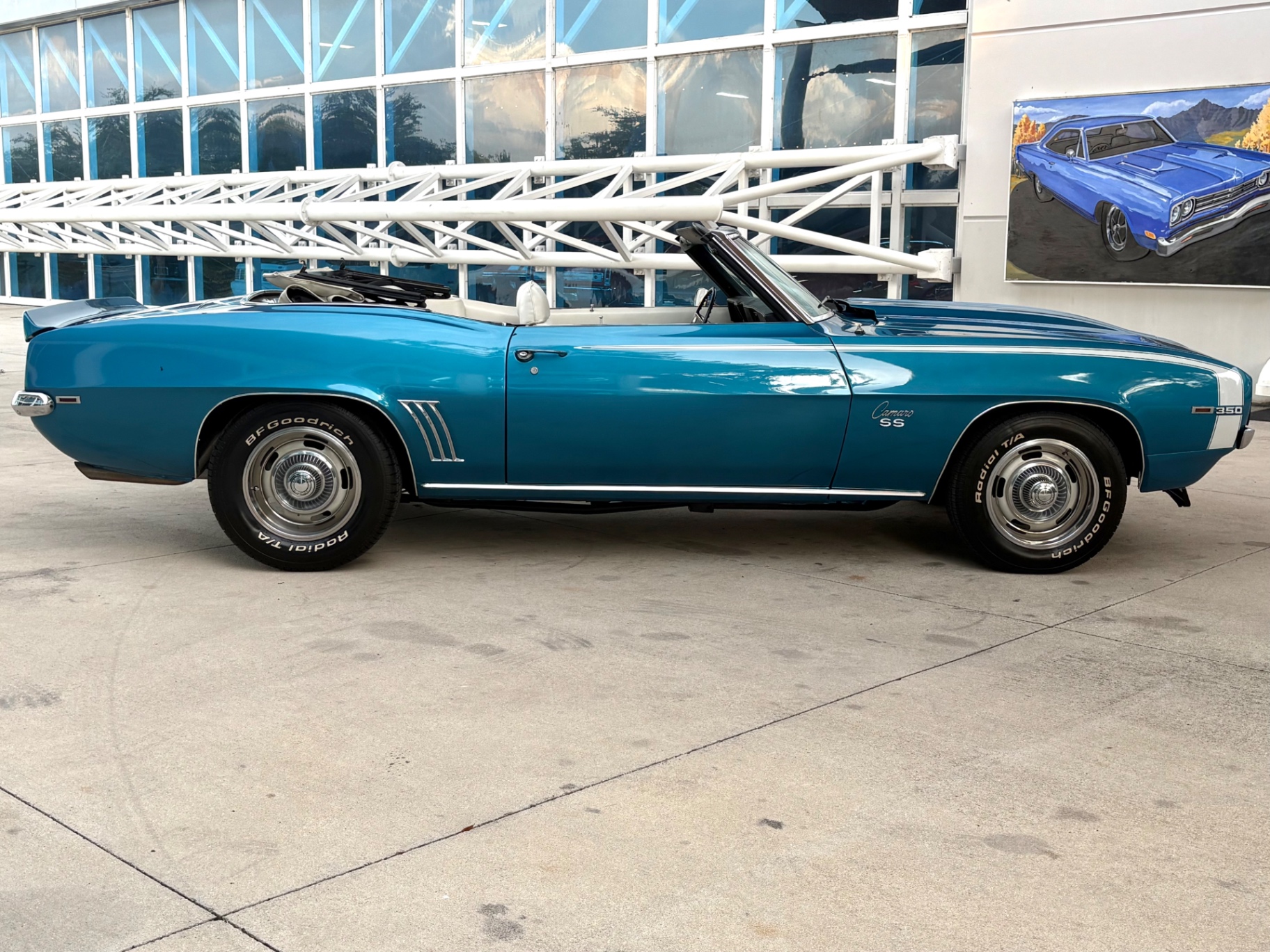
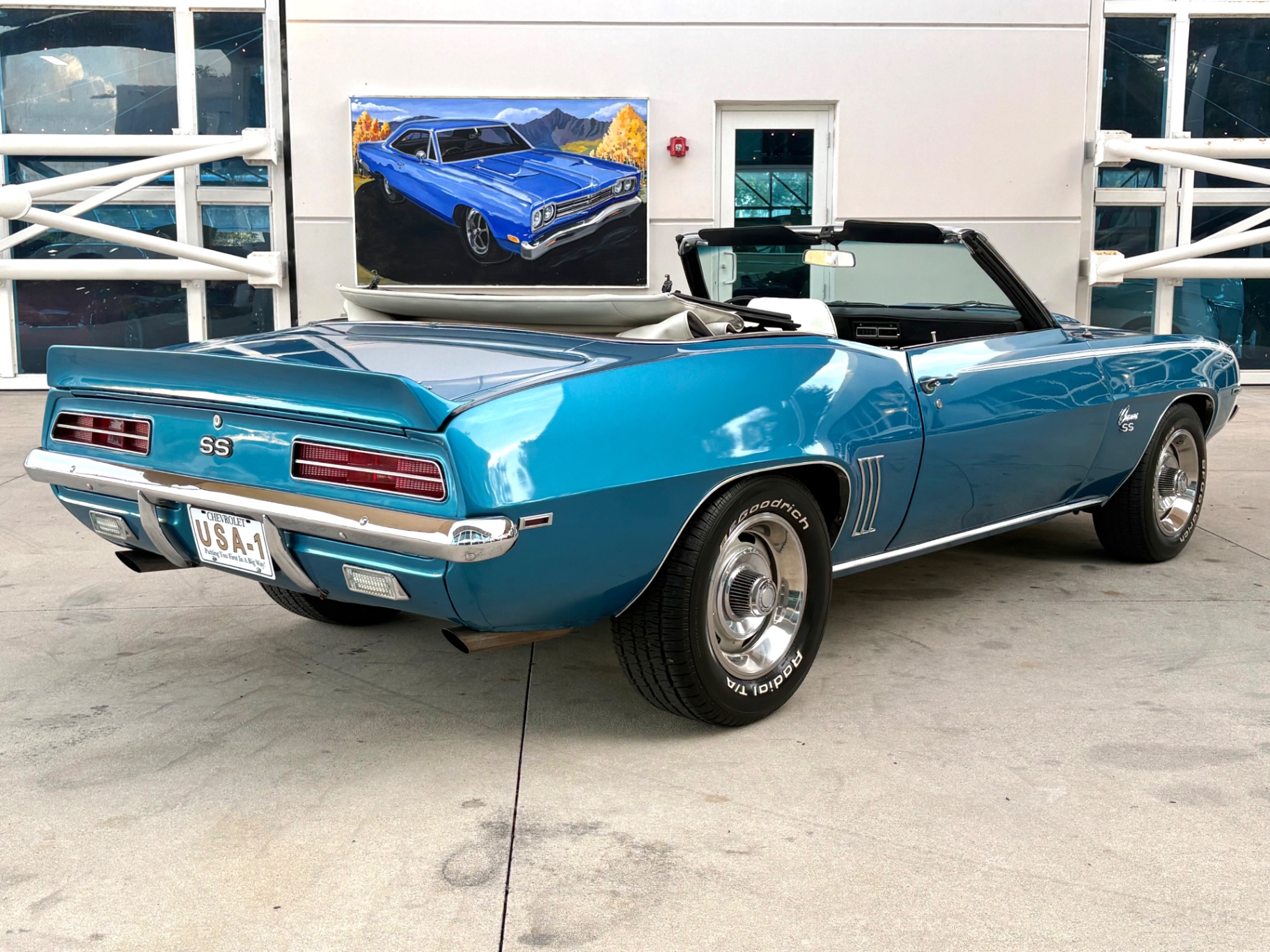
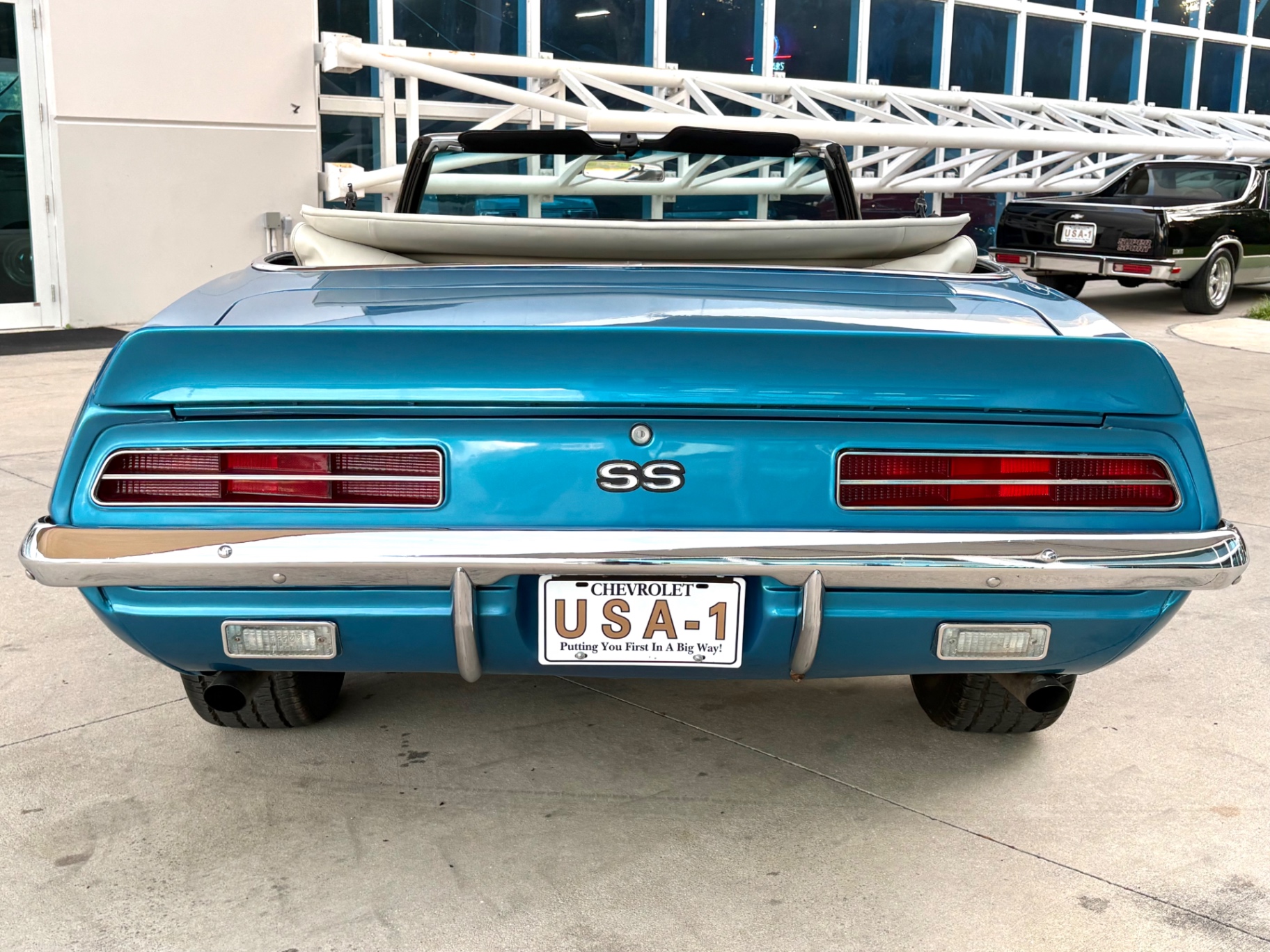
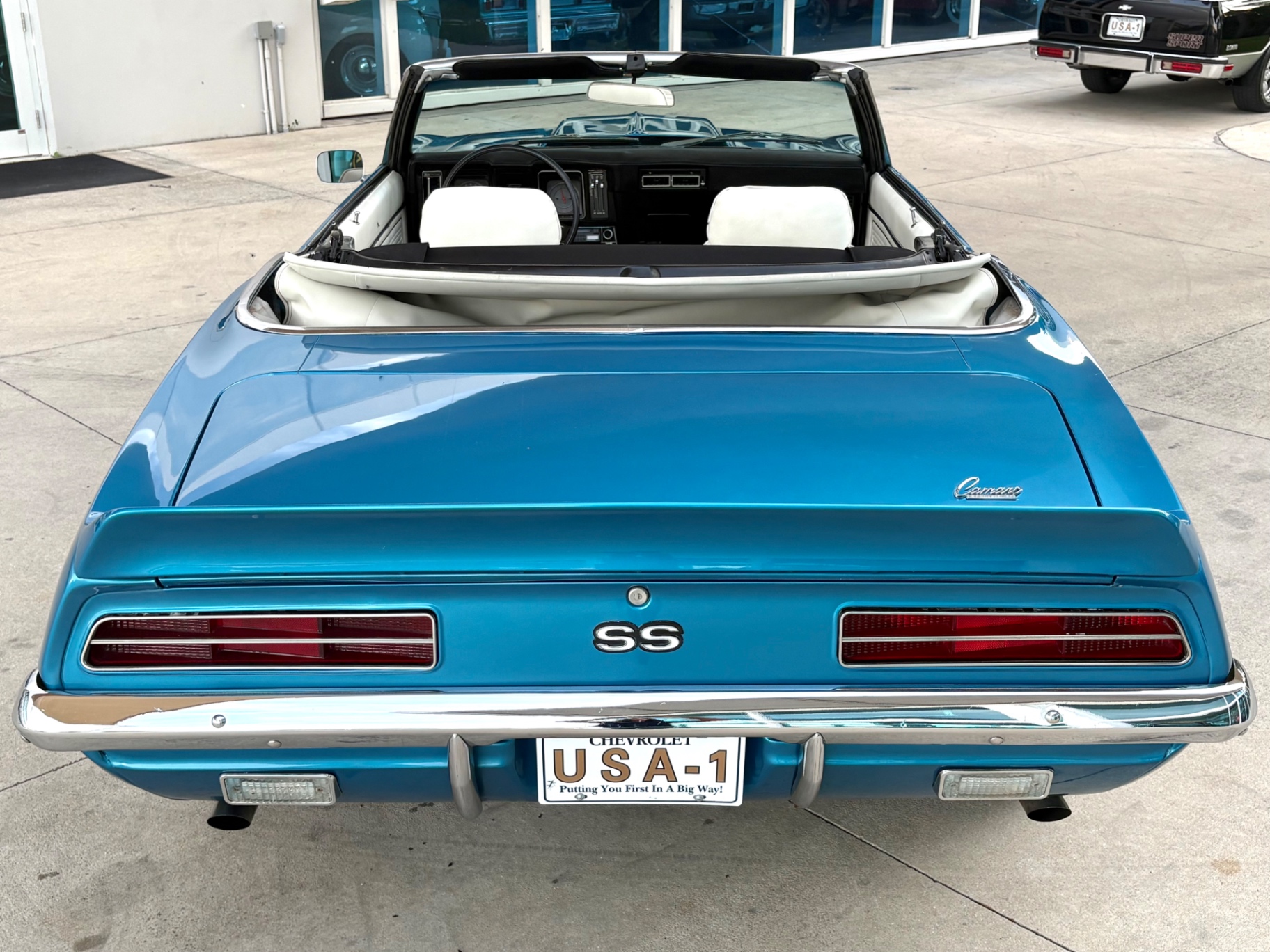
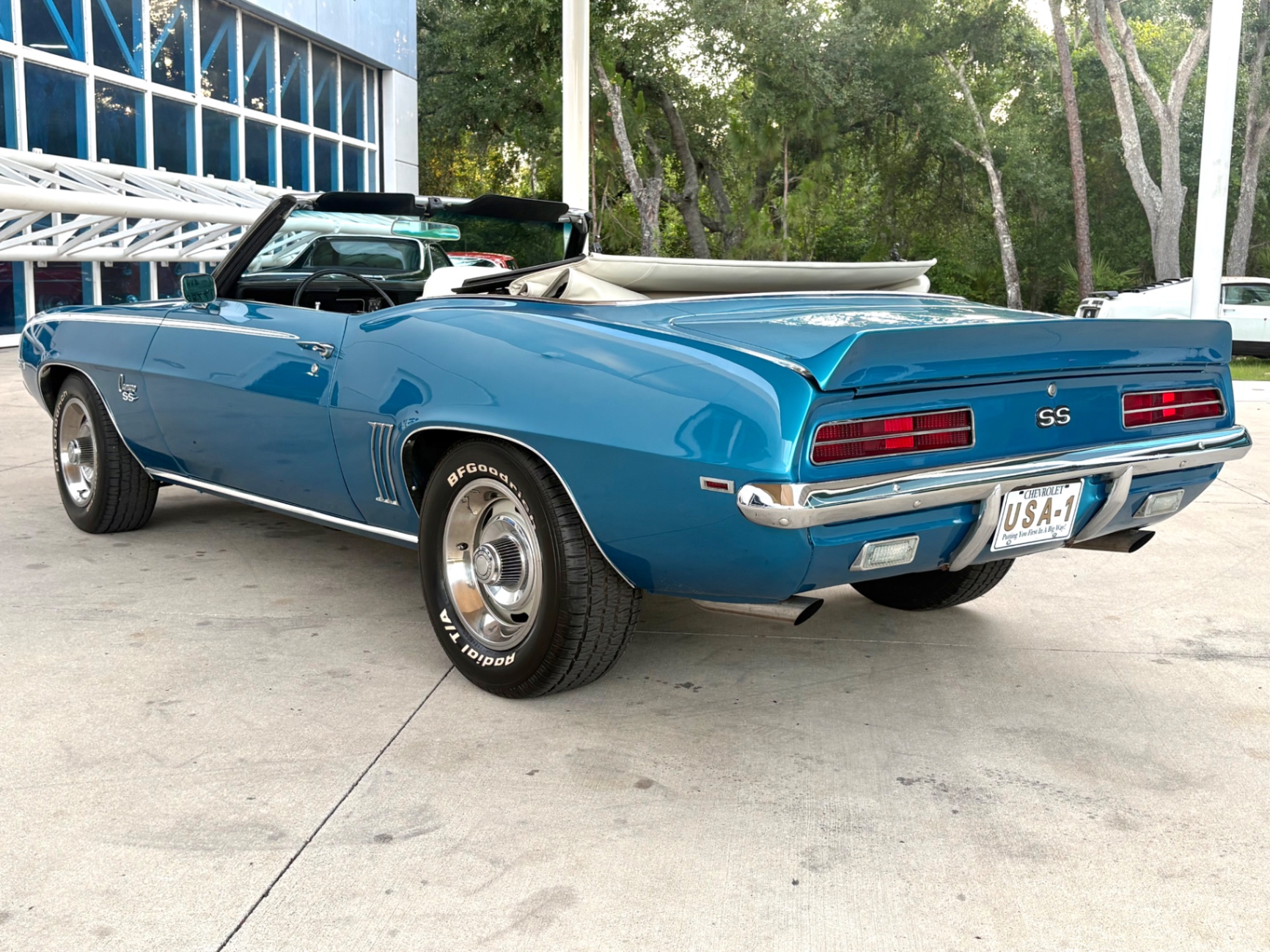
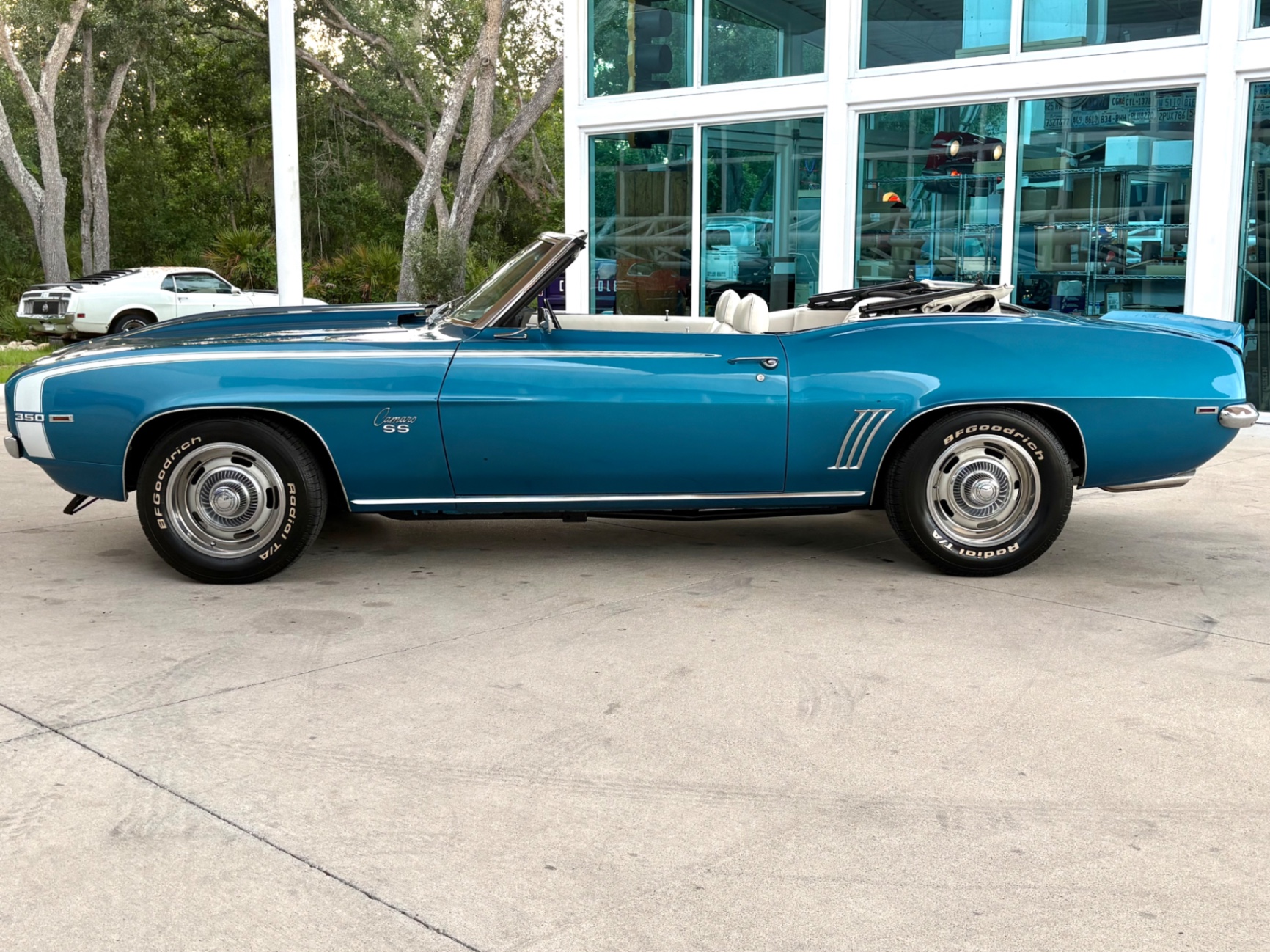
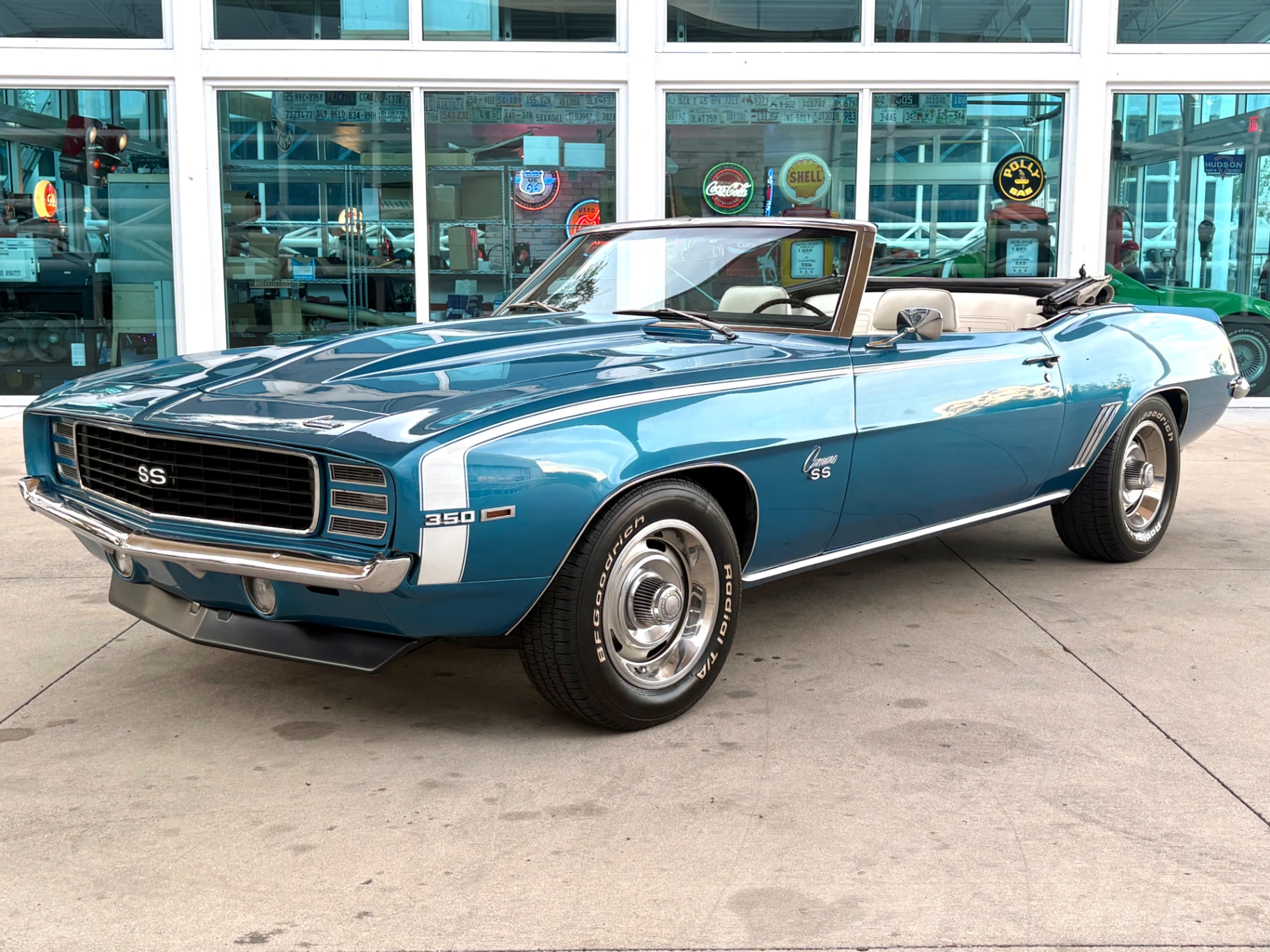
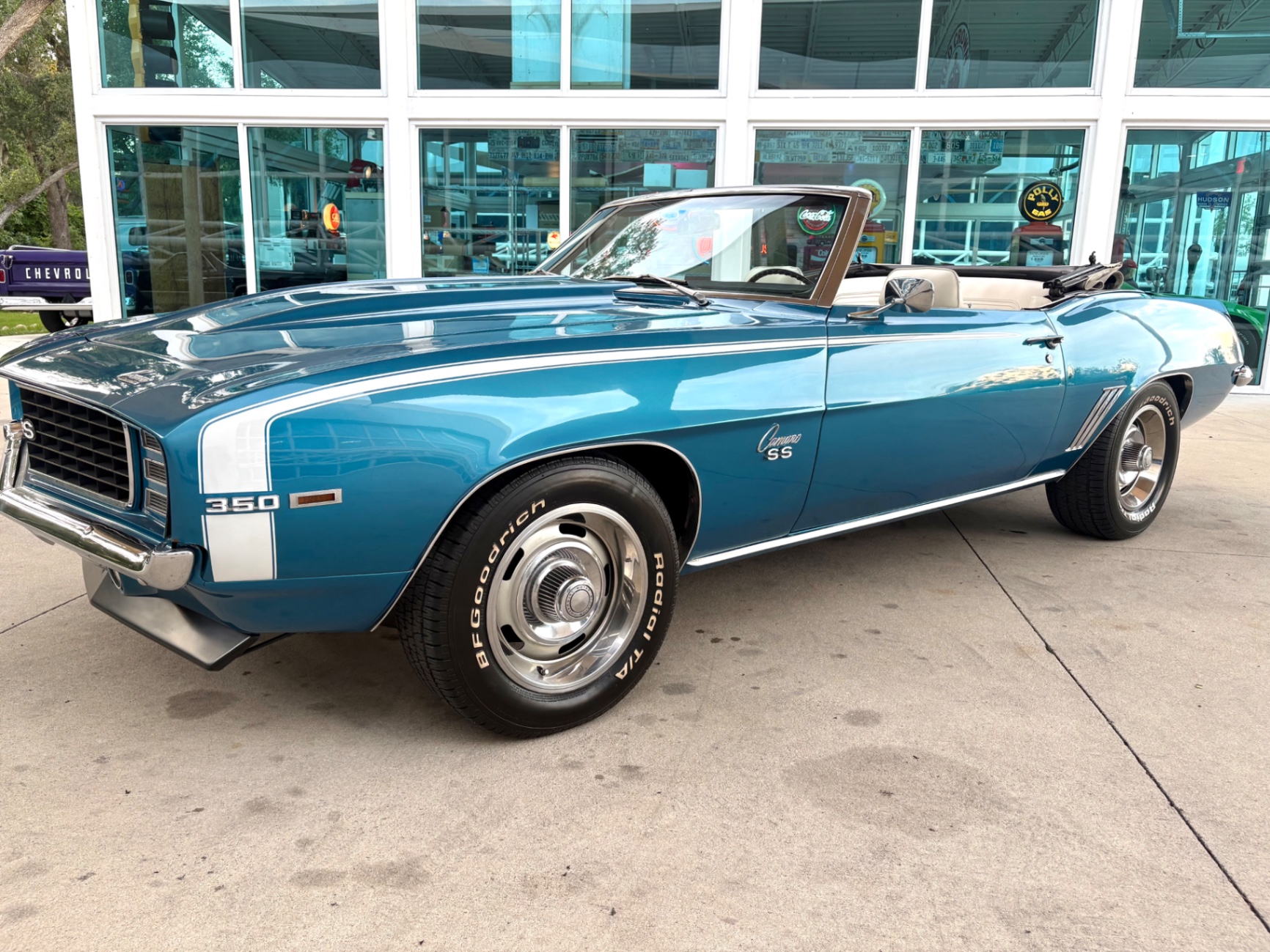
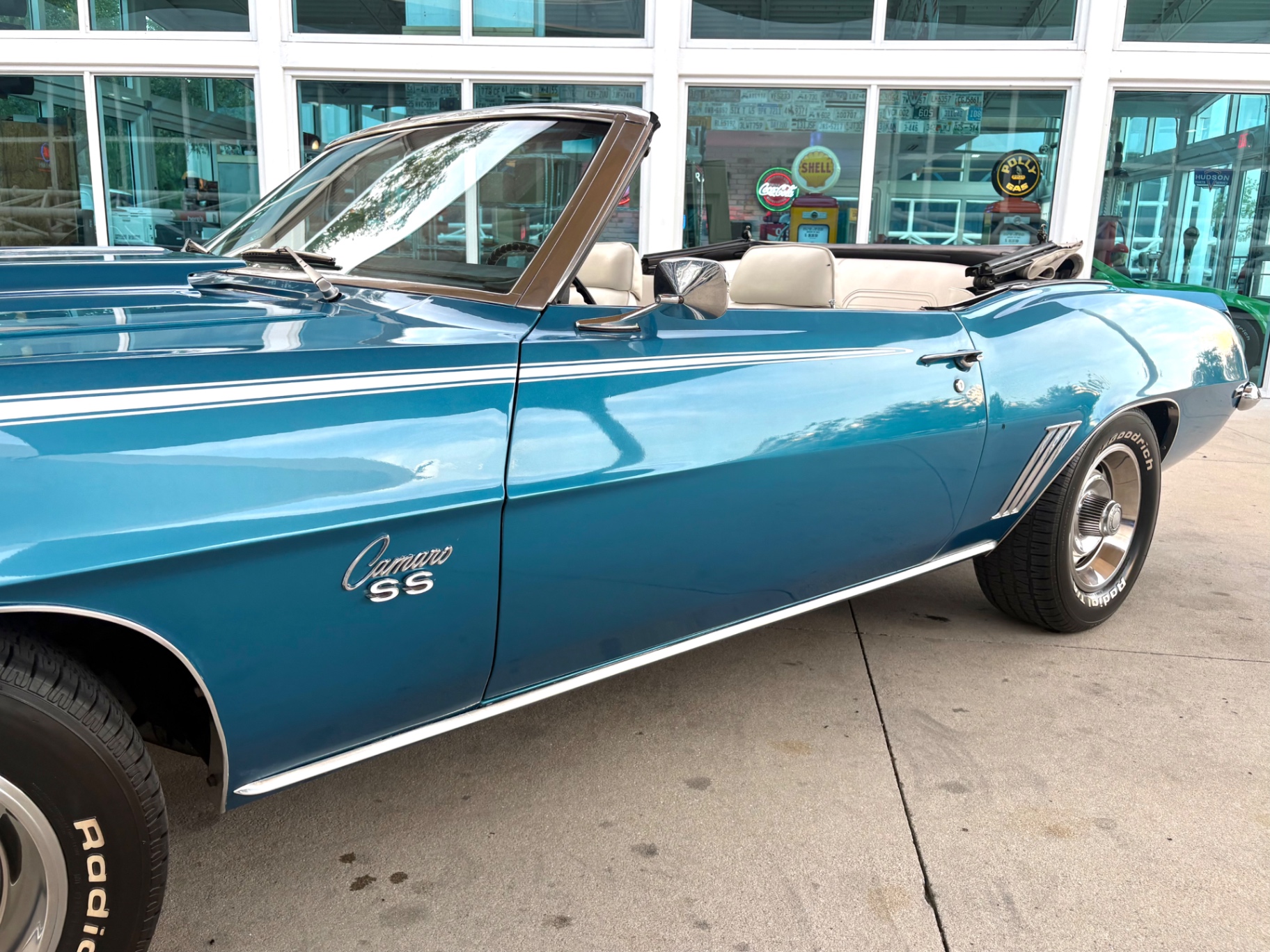
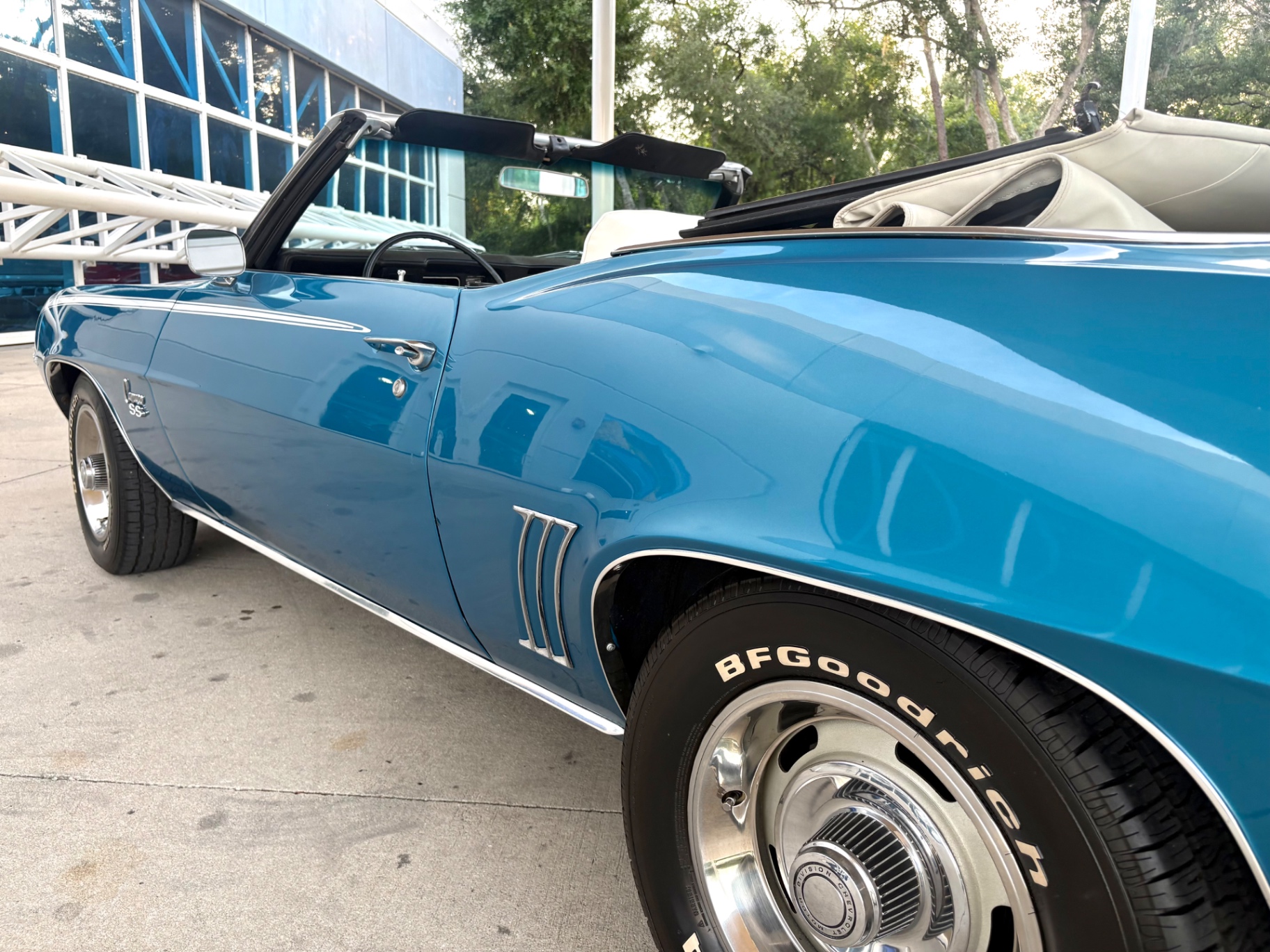
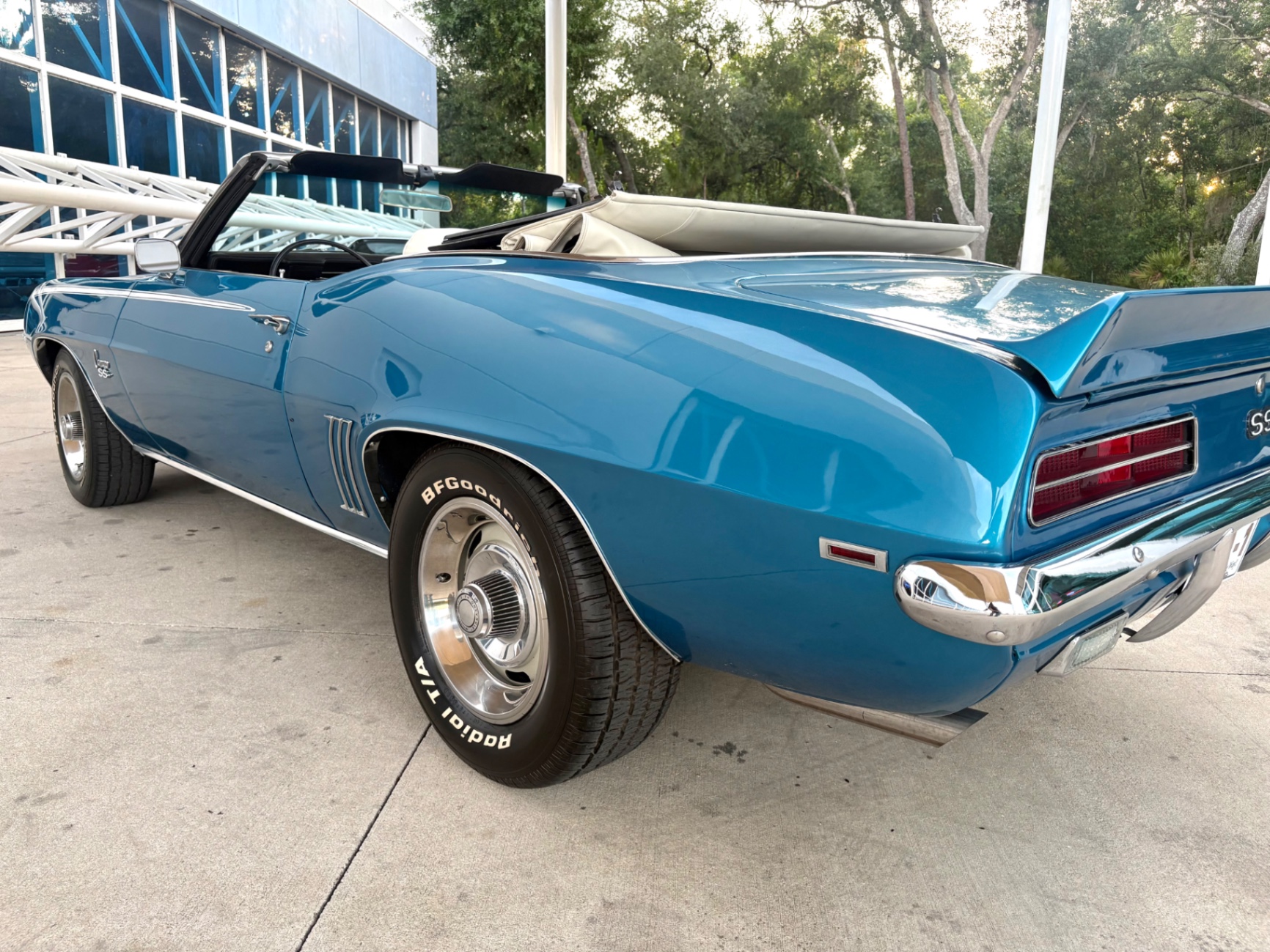
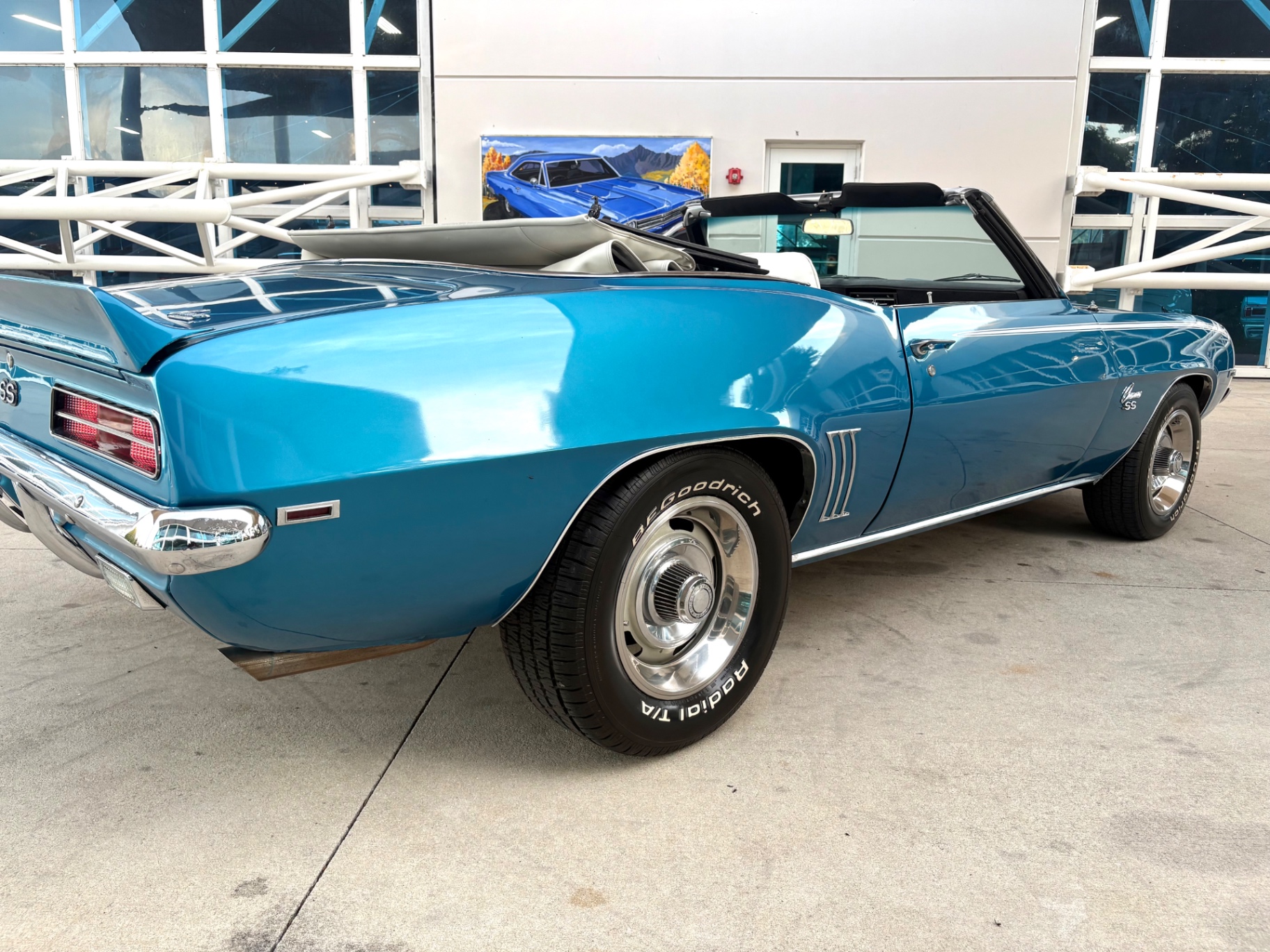
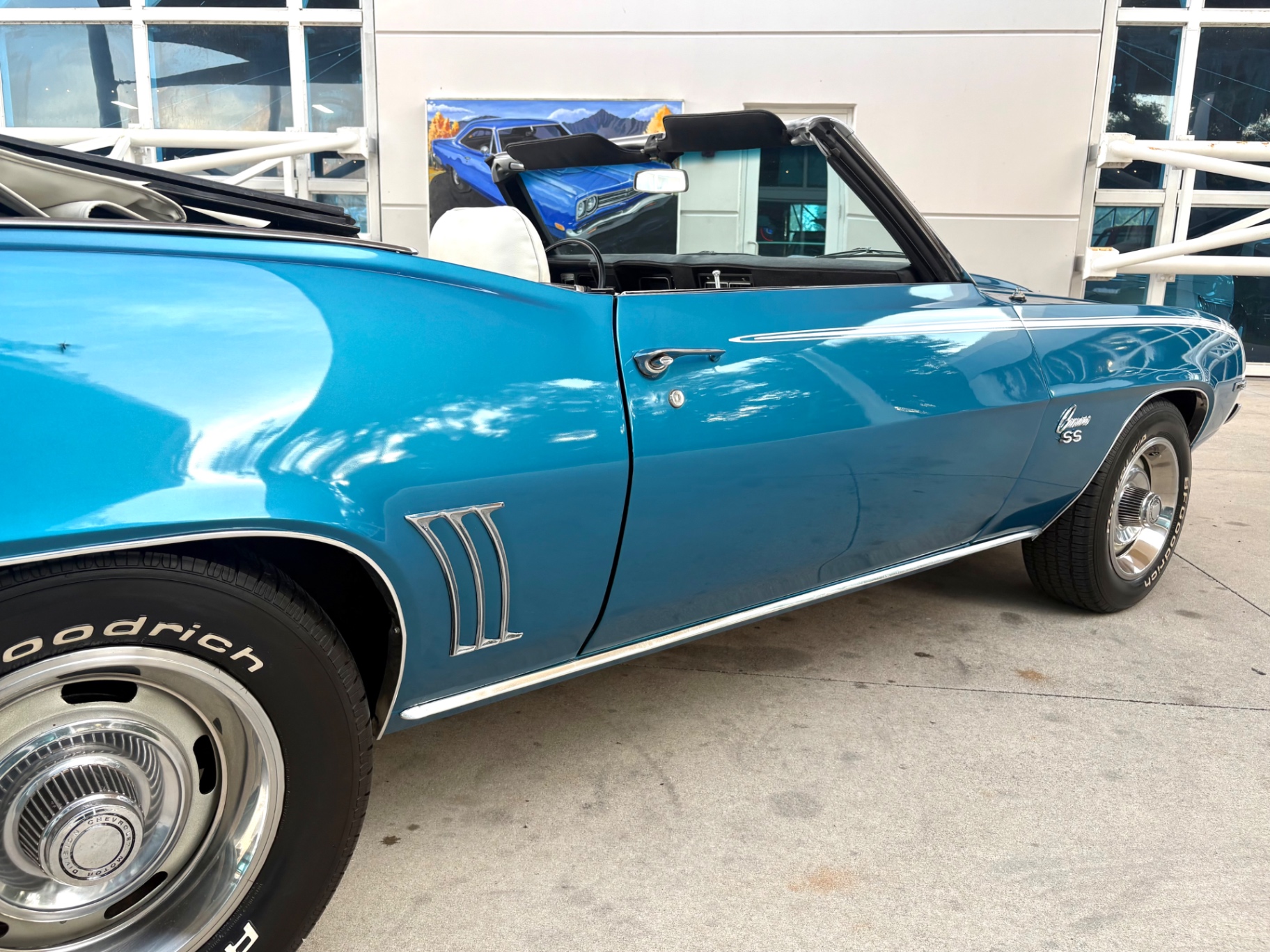
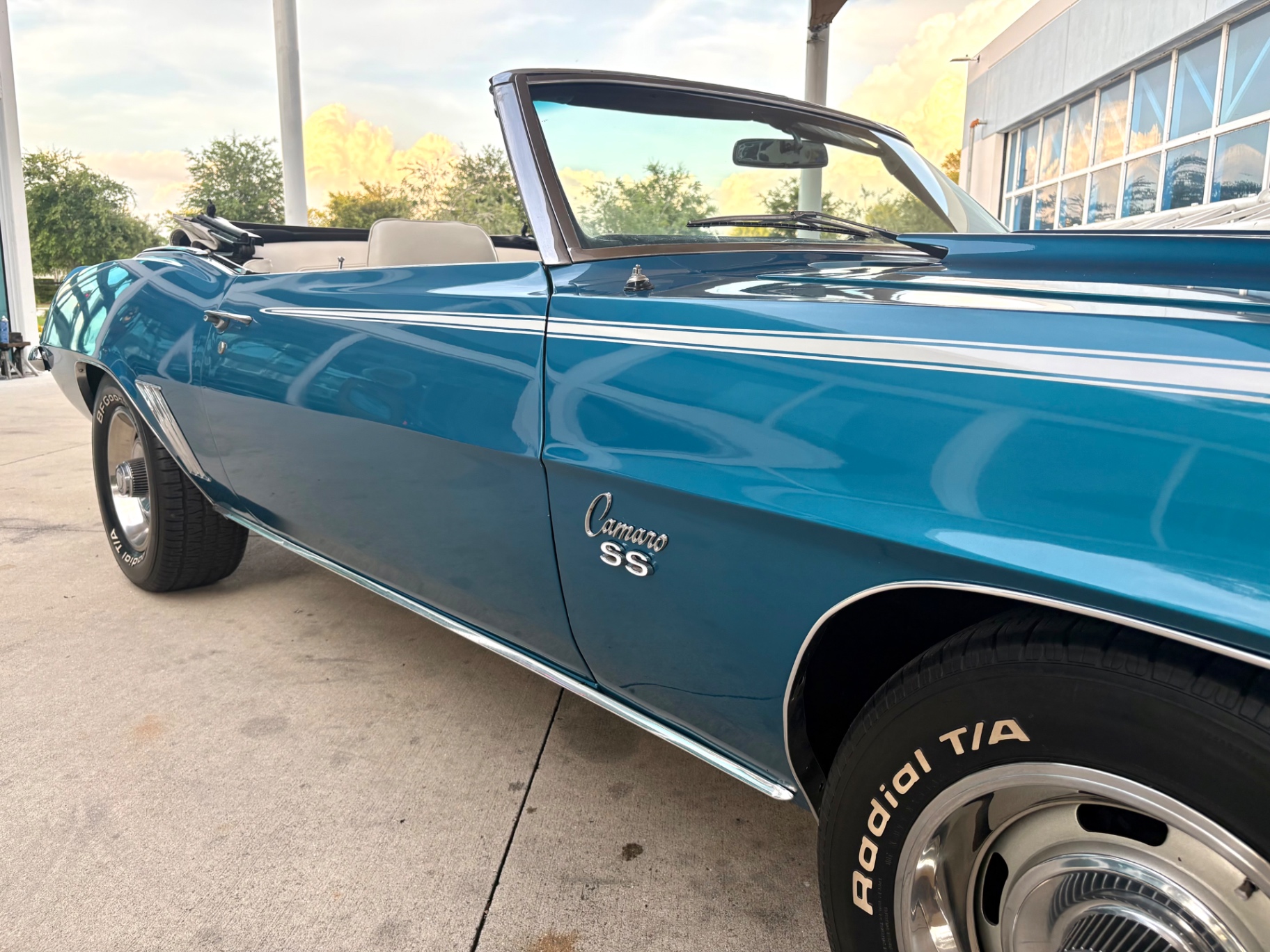
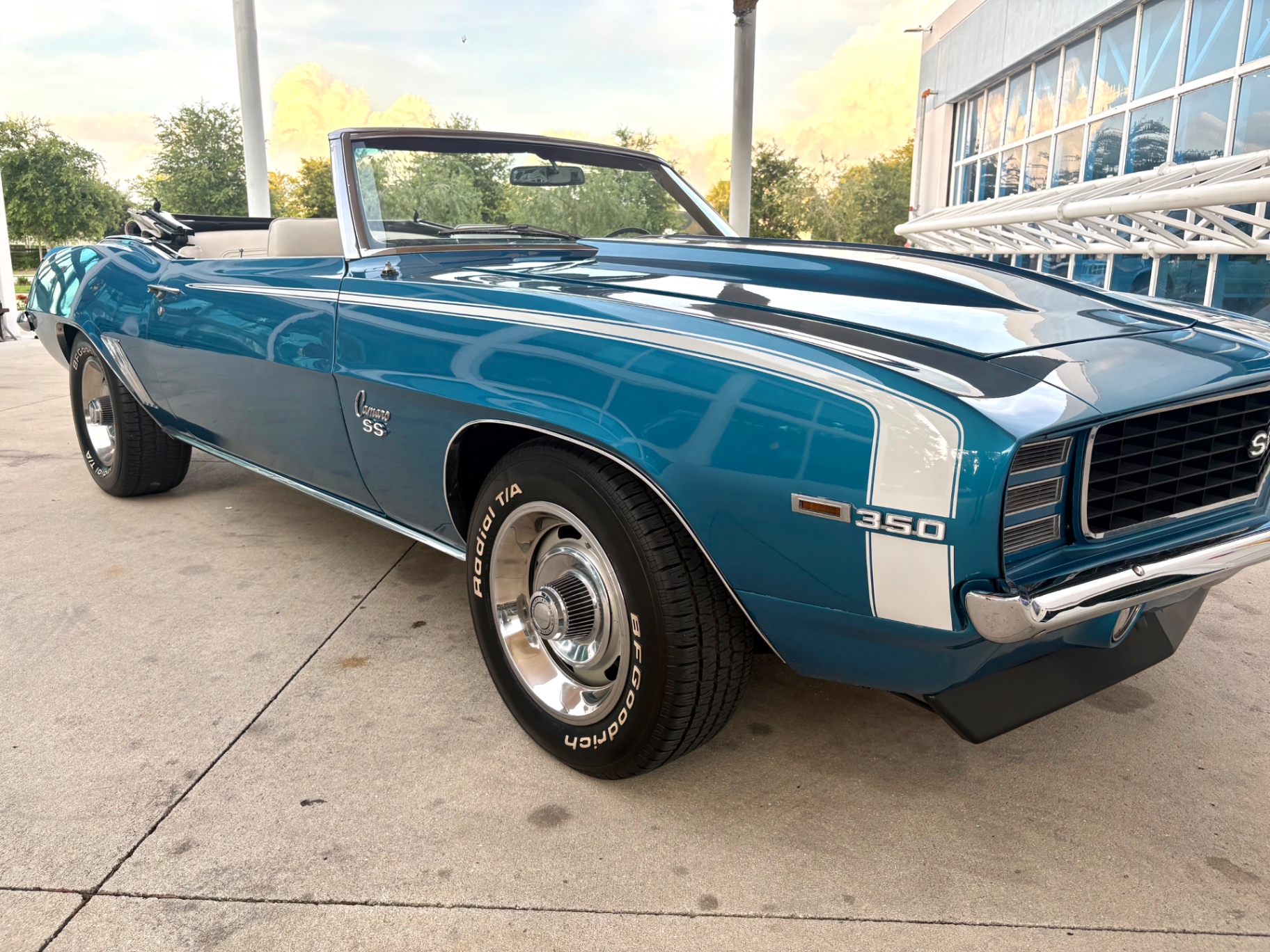
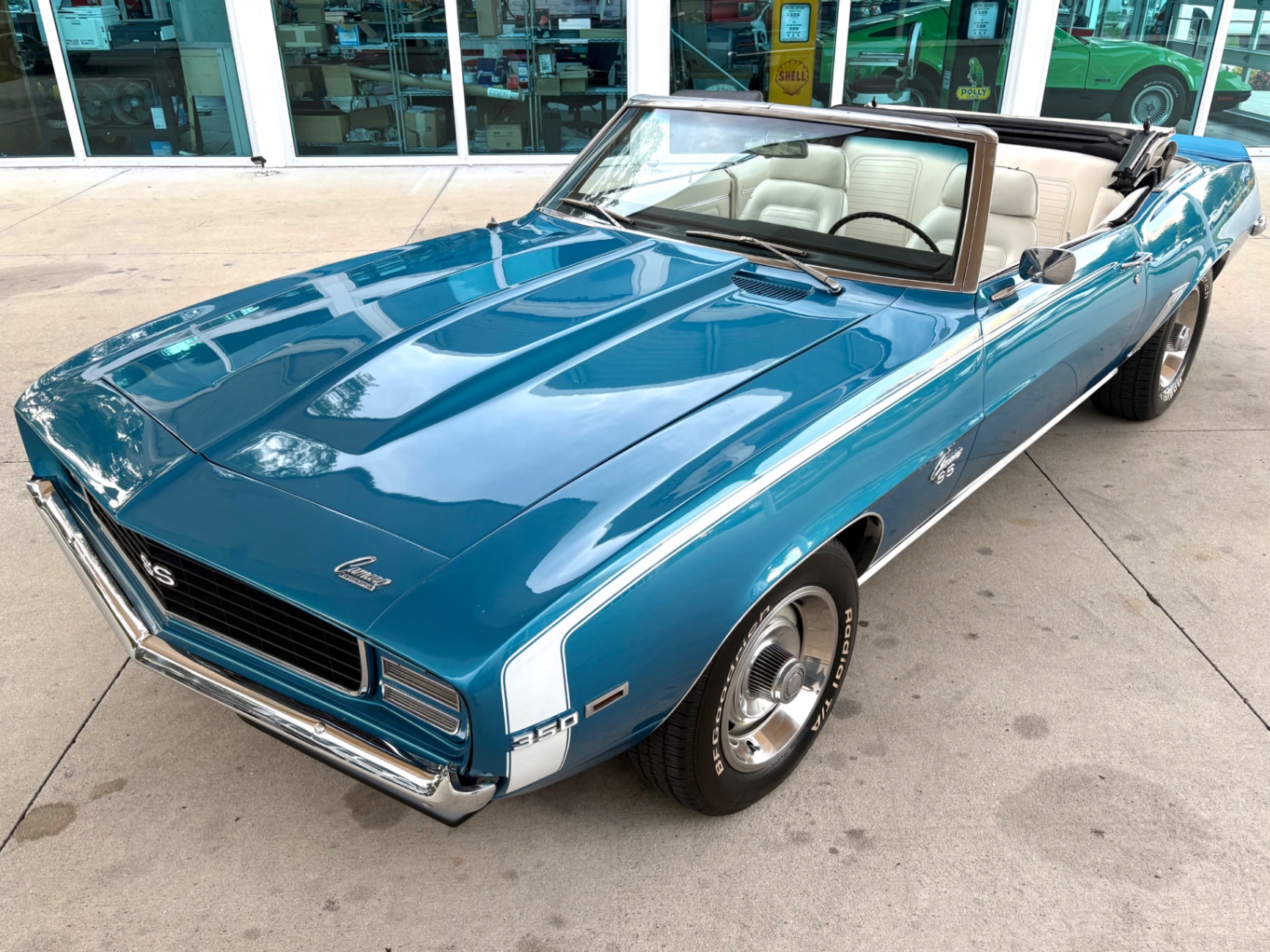
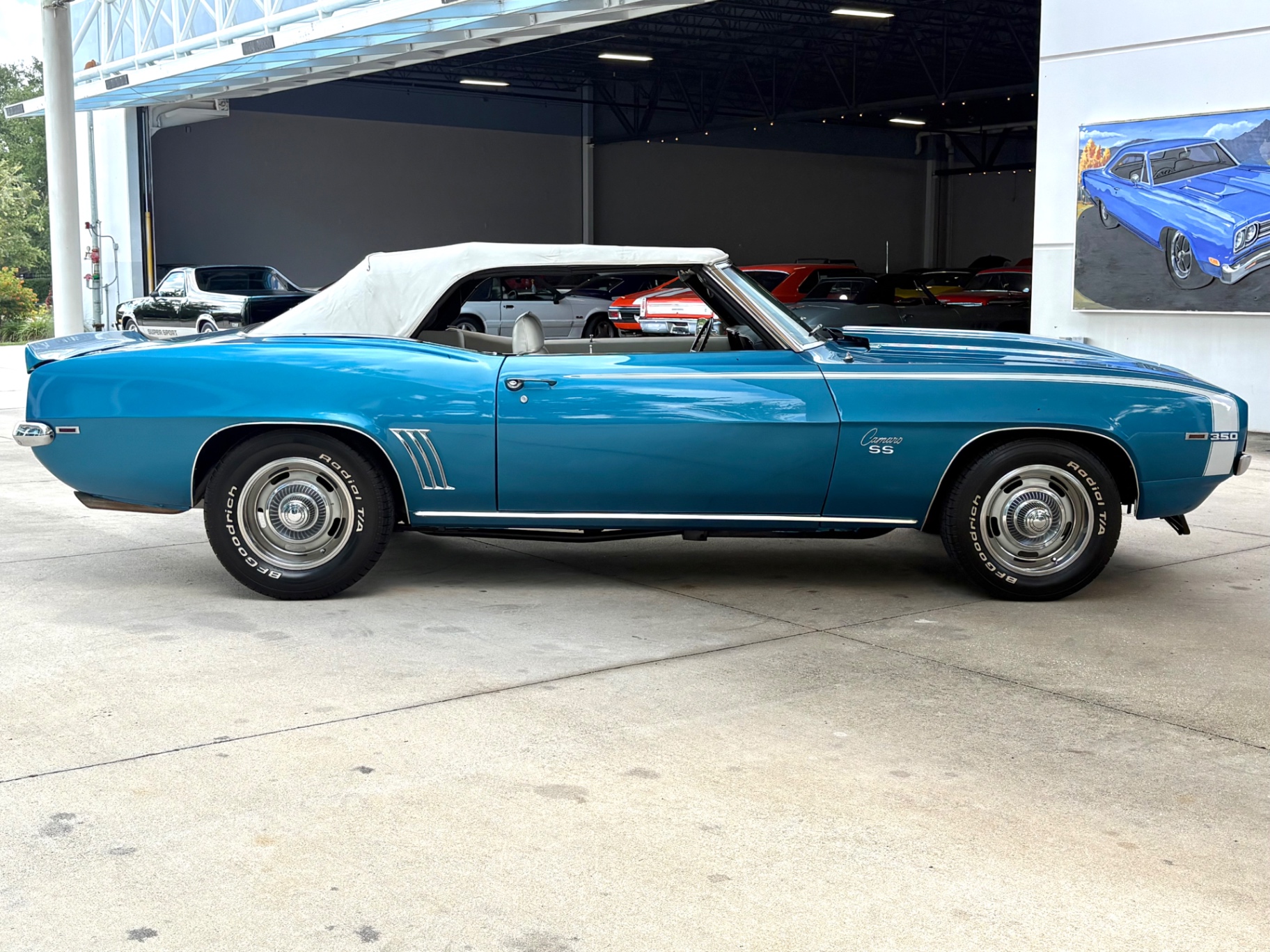
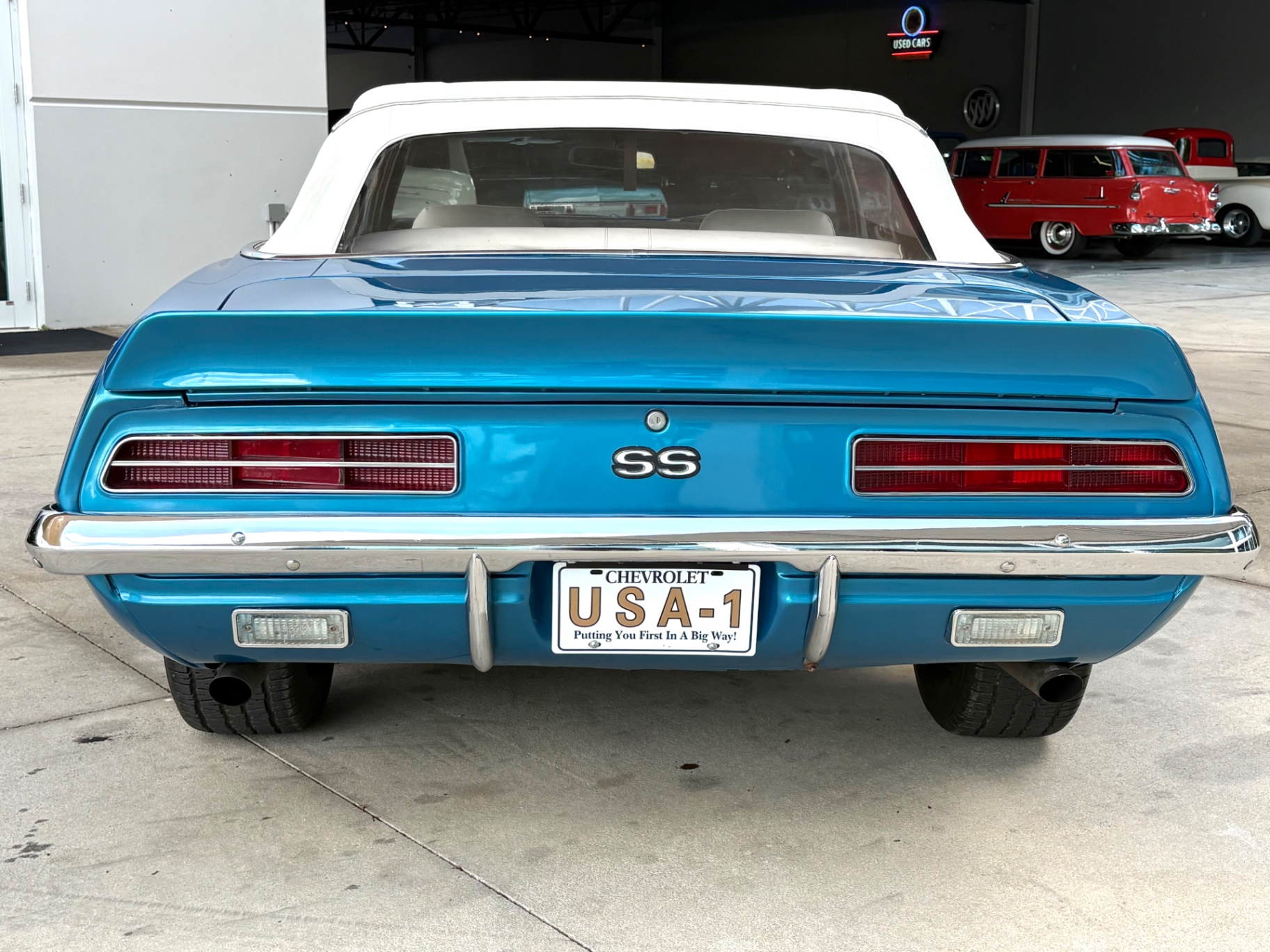
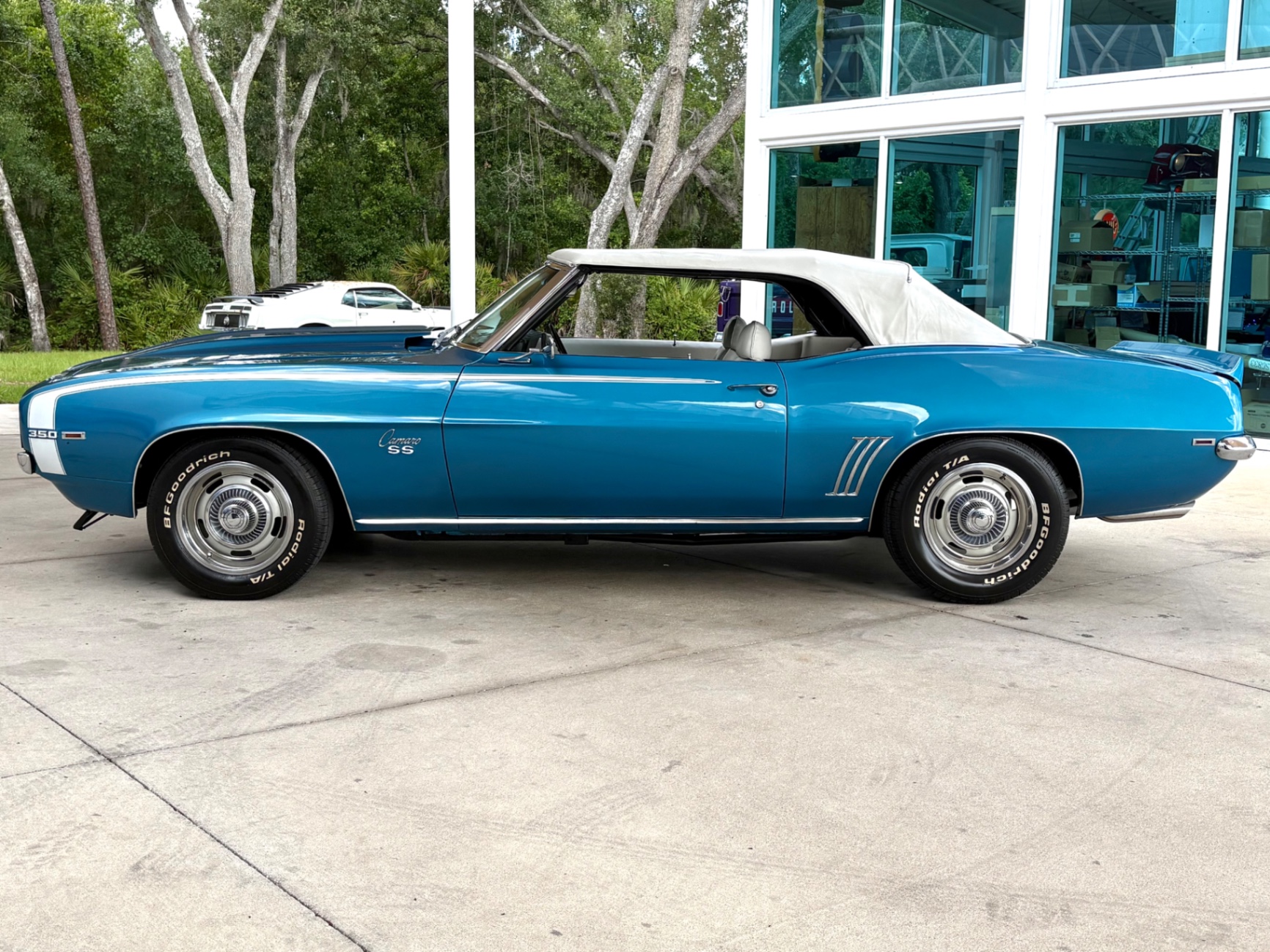
1969 Chevrolet Camaro RS/SS 350 Convertible — Blue with White Interior, 350/300hp V8, Loaded with Upgrades
Why This Car Is Special
The 1969 Chevrolet Camaro SS 350 Convertible sits at an interesting intersection in muscle car history. The first-generation Camaro ran from 1967 through 1969, and most enthusiasts agree that the 1969 model year represents the high point of that generation — it got a restyled body with a longer, lower, and more aggressive look than the 1967 and 1968 cars, while retaining the same basic platform. Chevrolet sold 243,085 Camaros in 1969, making it the most popular year of the first generation by a wide margin. Of those, convertibles represented a much smaller slice of production, and SS-optioned convertibles with factory air conditioning and power accessories were an even more select group.
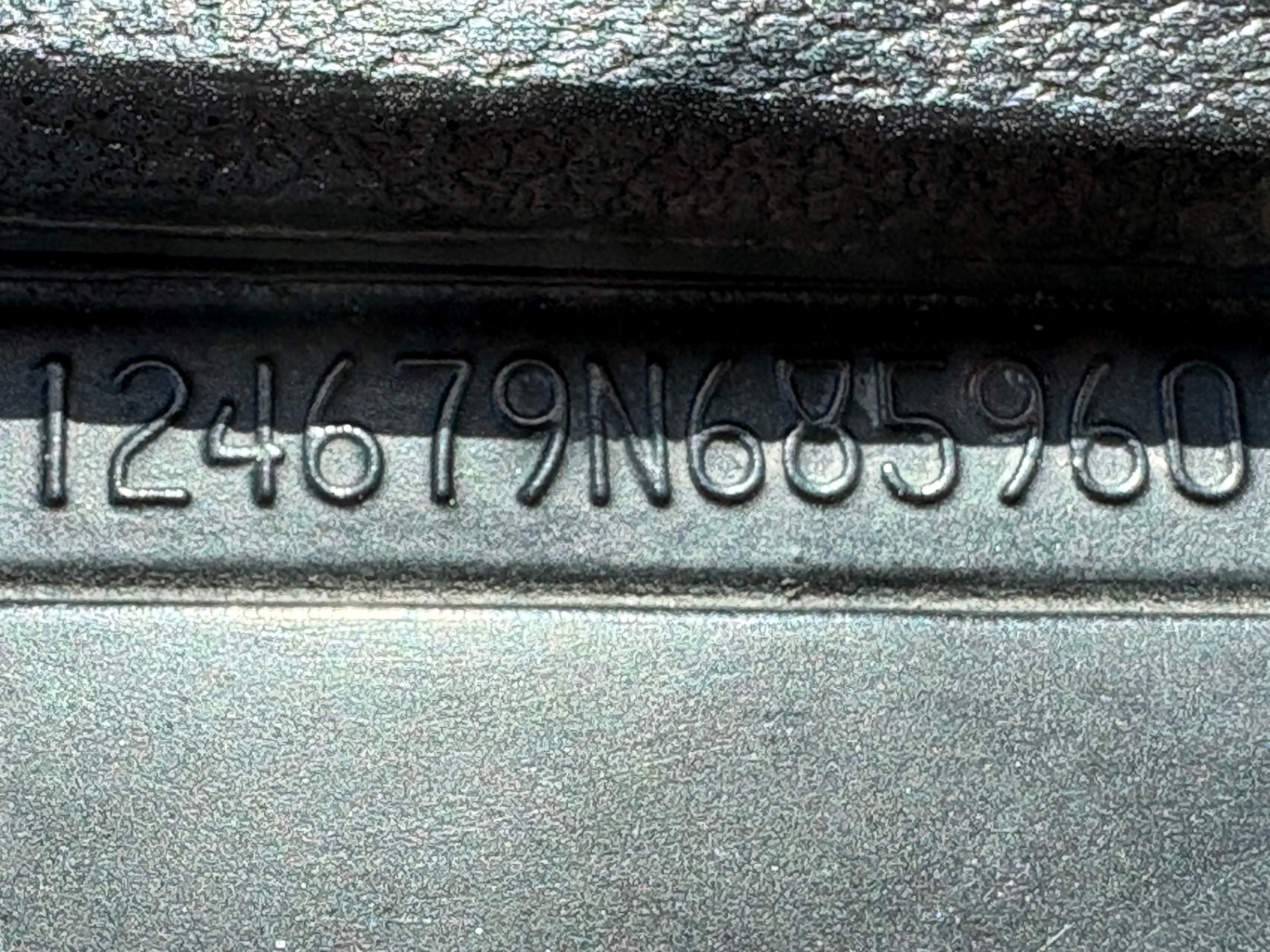
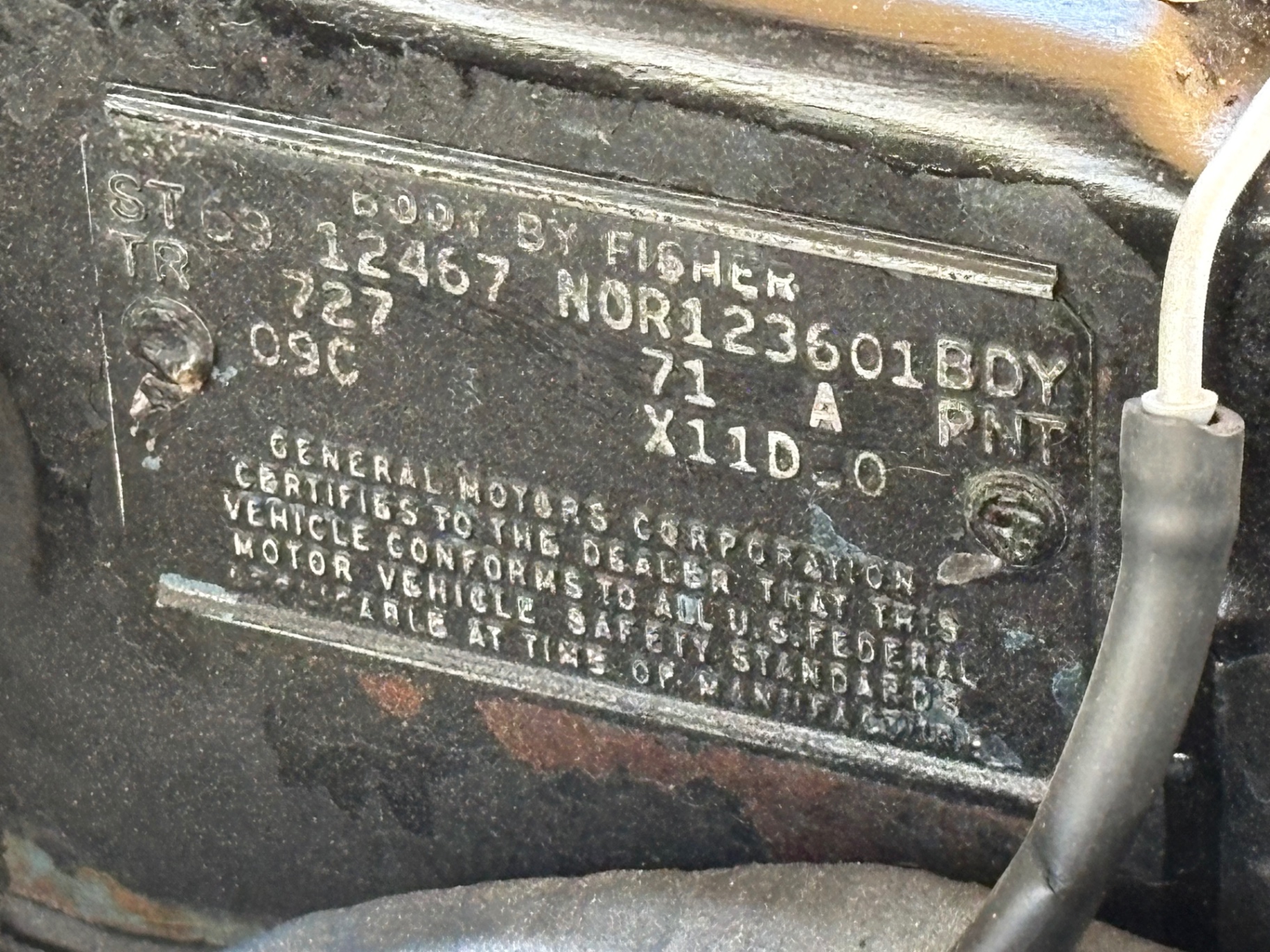
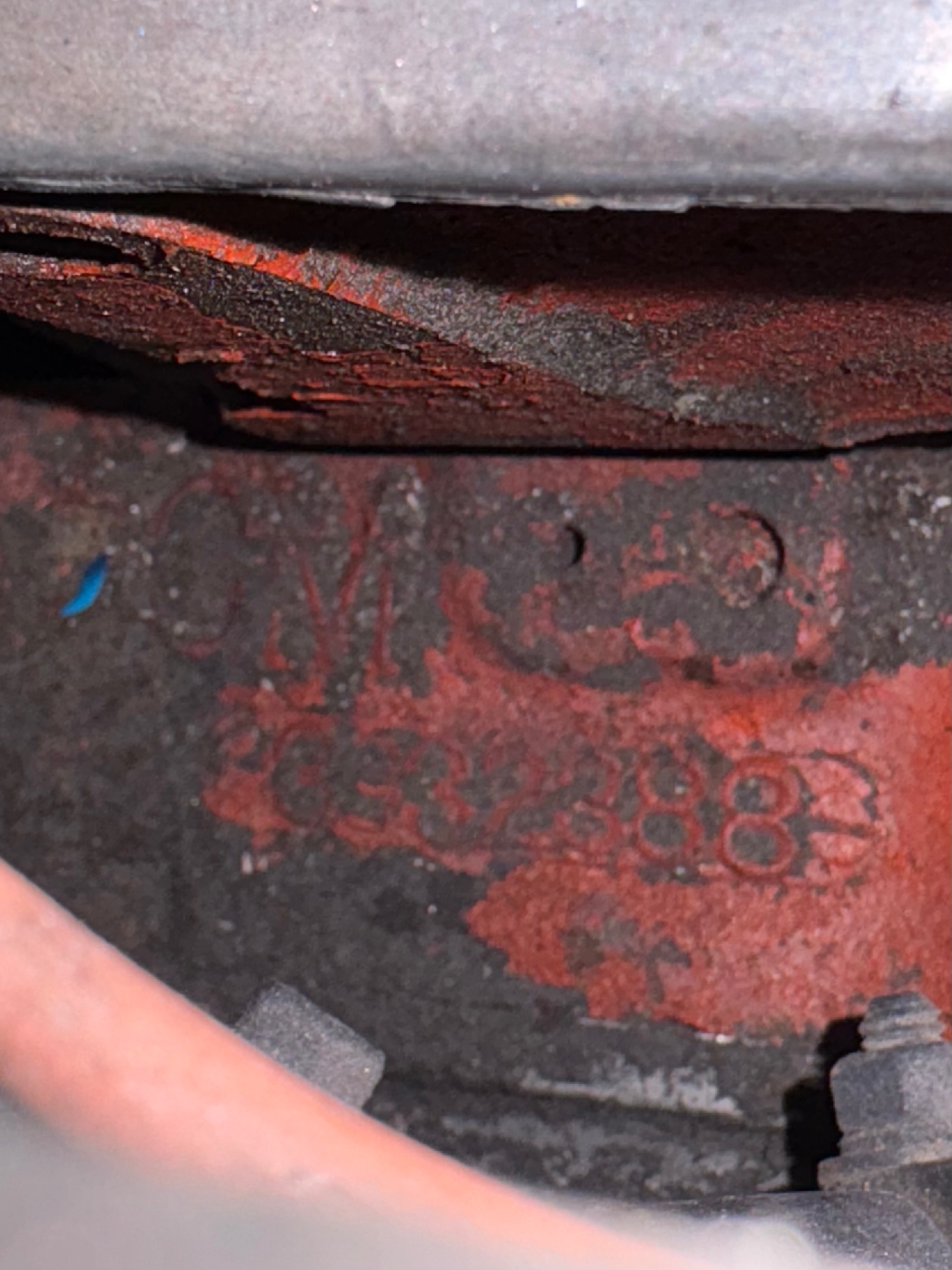
The VIN on this car decodes to a 1969 Camaro convertible (body code 67, indicating the open-top body style) built at the Norwood, Ohio assembly plant, with the 350ci/300hp V8 and automatic transmission. The "SS" designation in the VIN confirms this car left the factory as a genuine Super Sport, not a badge-added clone.
What makes this particular 1969 Camaro SS 350 Convertible worth a close look is the combination of a correct, numbers-relevant drivetrain with a list of thoughtfully chosen upgrades that improve the driving experience without destroying the car's character. The undercarriage is clean, the body is straight, and someone has clearly spent time and money getting this car right from the ground up.
Features List
- 350ci V8, 300 horsepower - Turbo-Hydramatic 3-speed automatic transmission - RS/SS Trim Package - Convertible body style with power top - GM 12-bolt rear axle with multi-leaf springs - Global West frame connectors - Power front disc brakes with power brake booster - Power steering - Factory air conditioning - Astro Ventilation system - SS steering wheel - Bucket seats, front and rear - Factory center console - Goodmark steel cowl induction hood - Detroit Speed electric headlight kit - Front and rear spoilers - Rally wheels with BFGoodrich Radial T/A tires - Dual exhaust - Aftermarket stereo - Chrome bumpers, front and rear - SS grille badge - Clean undercarriage
Mechanical
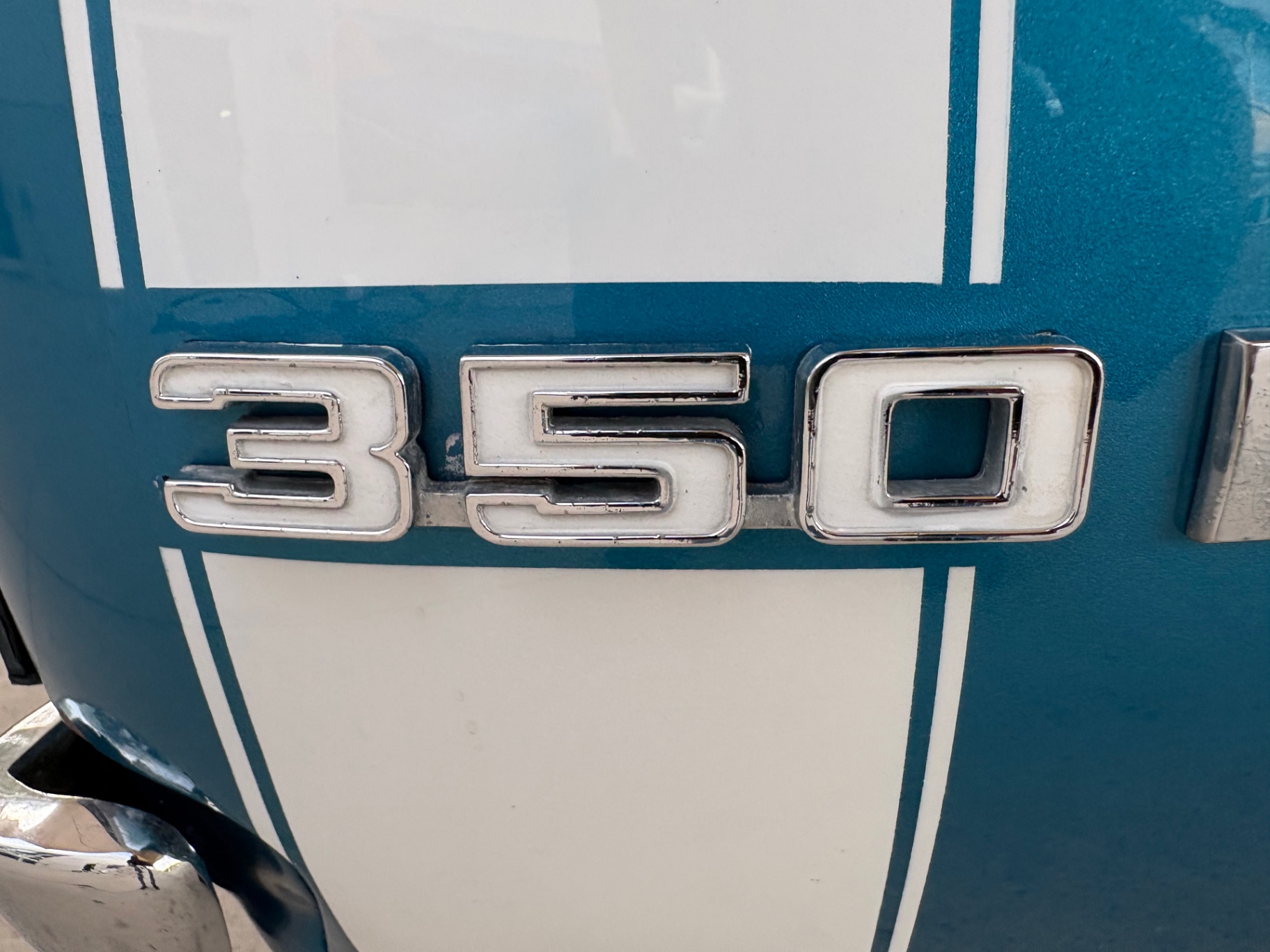
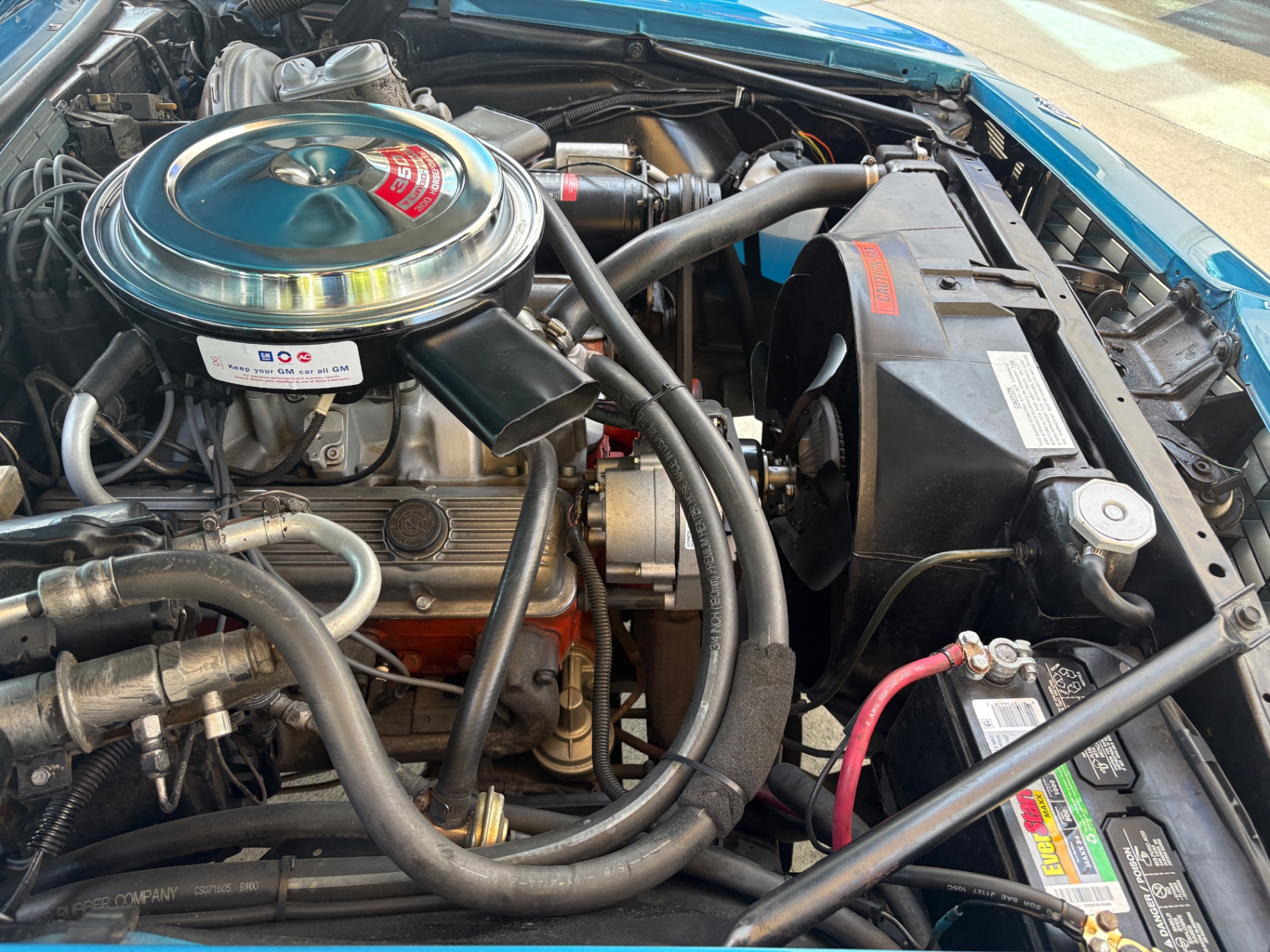
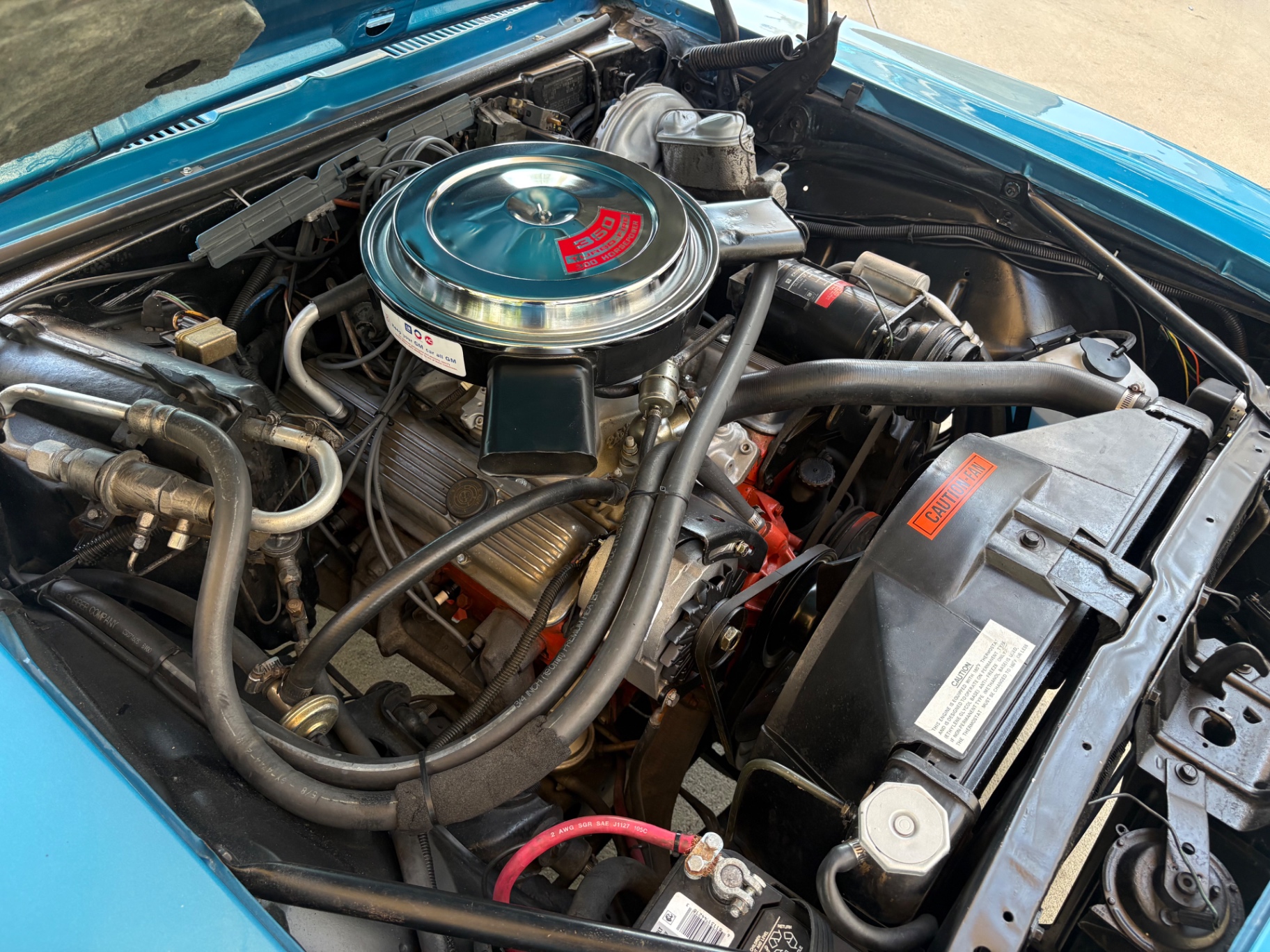
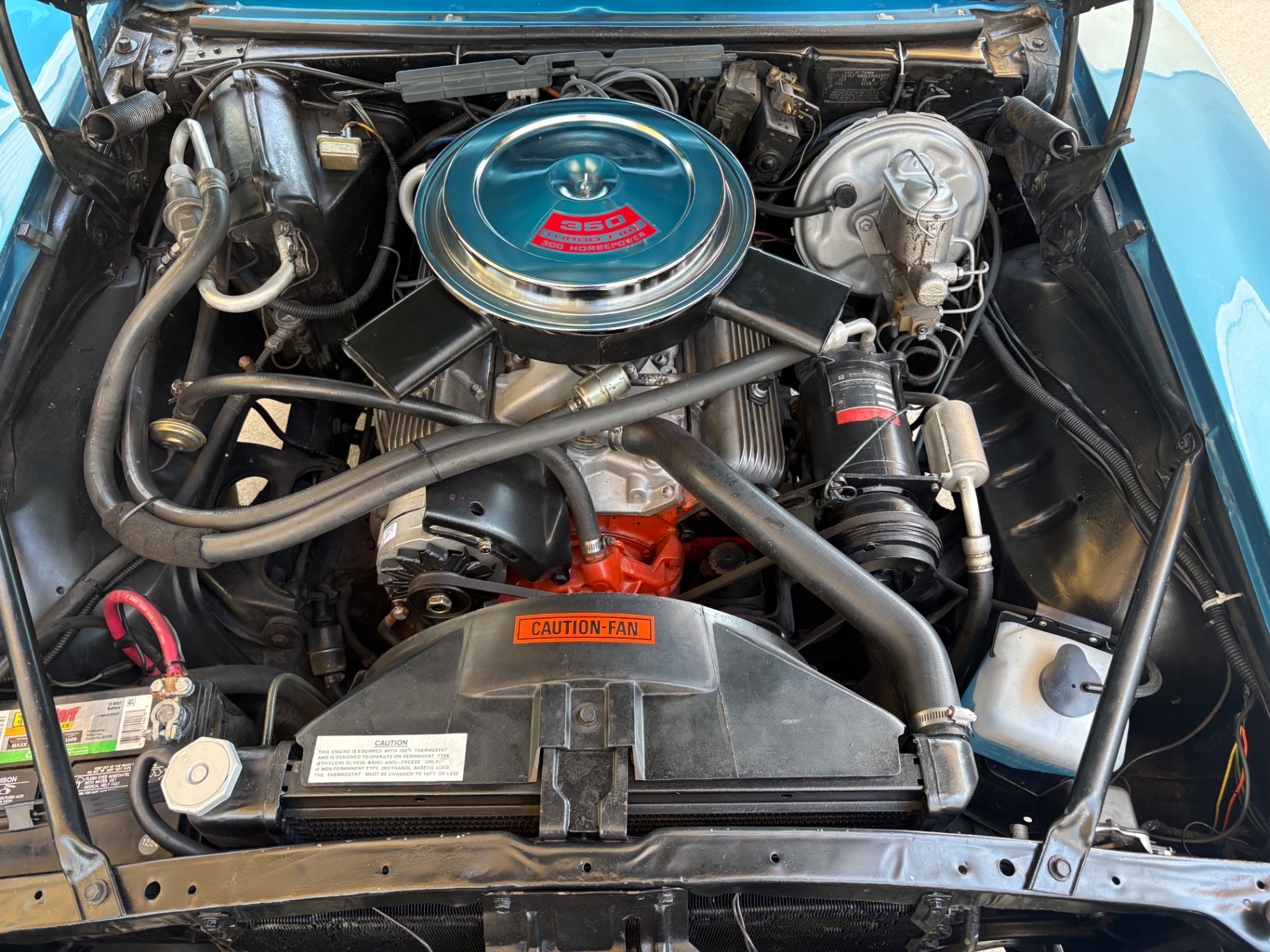
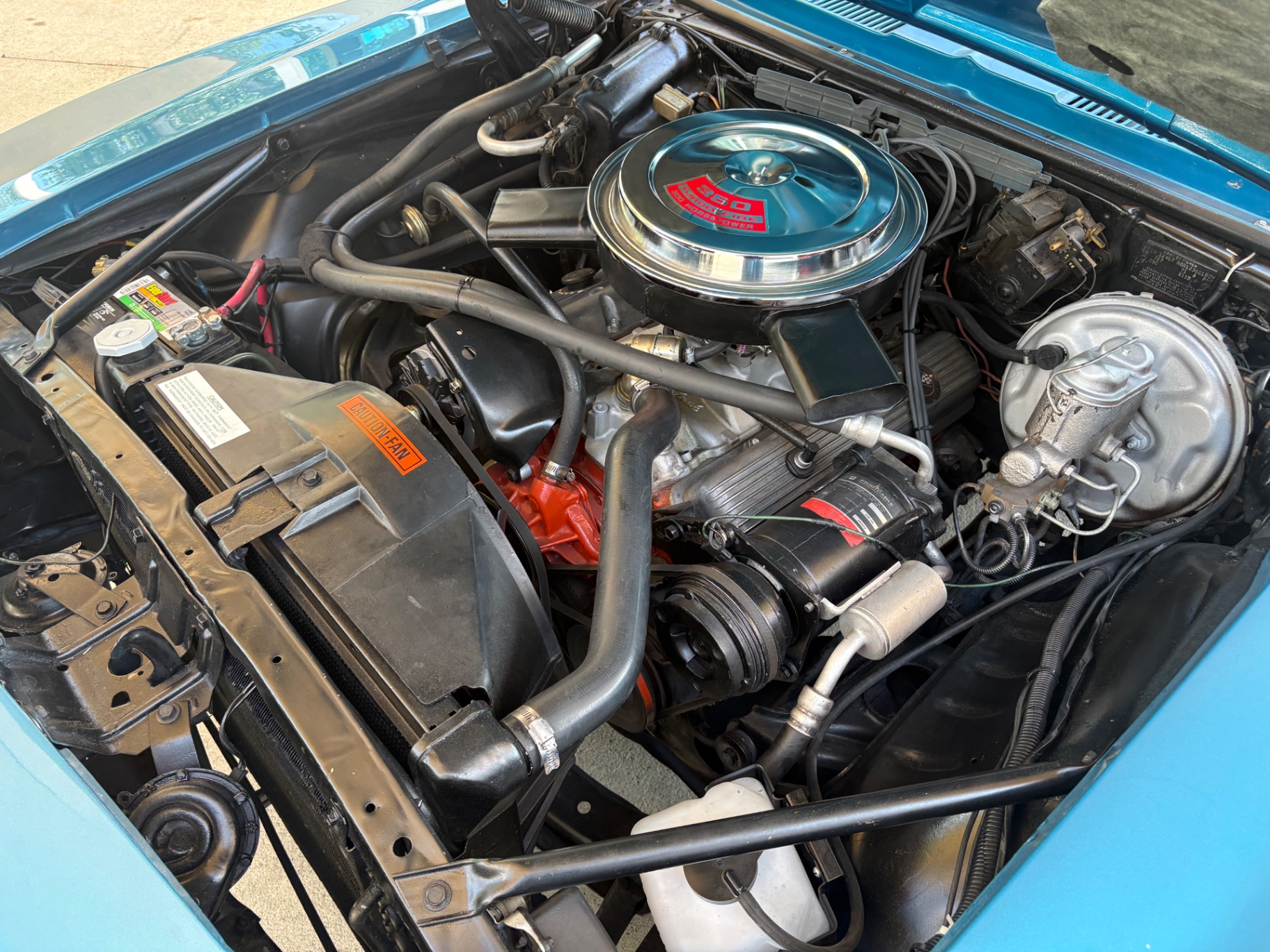
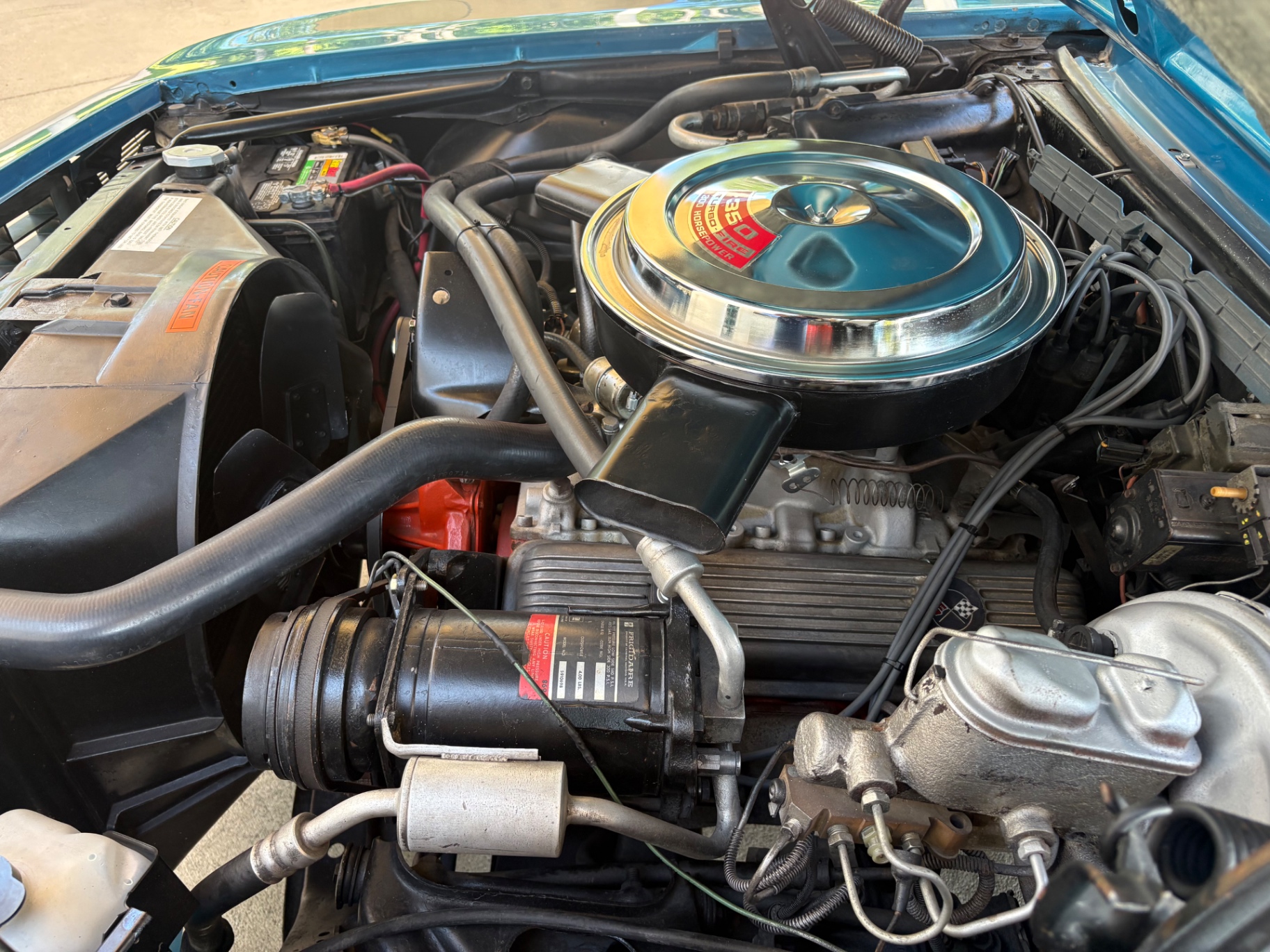
The 350/300hp small-block V8 was the standard SS engine in 1969. At the time, Chevrolet offered the SS package with either the 350 at 300hp or the 396 big-block in several states of tune. The 350 had a reputation for being a more balanced choice — it was lighter up front than the 396, which made the car easier to handle, and the small-block's powerband was well-suited to street driving. Backed by the Turbo-Hydramatic automatic, this is a car you can drive anywhere without drama.
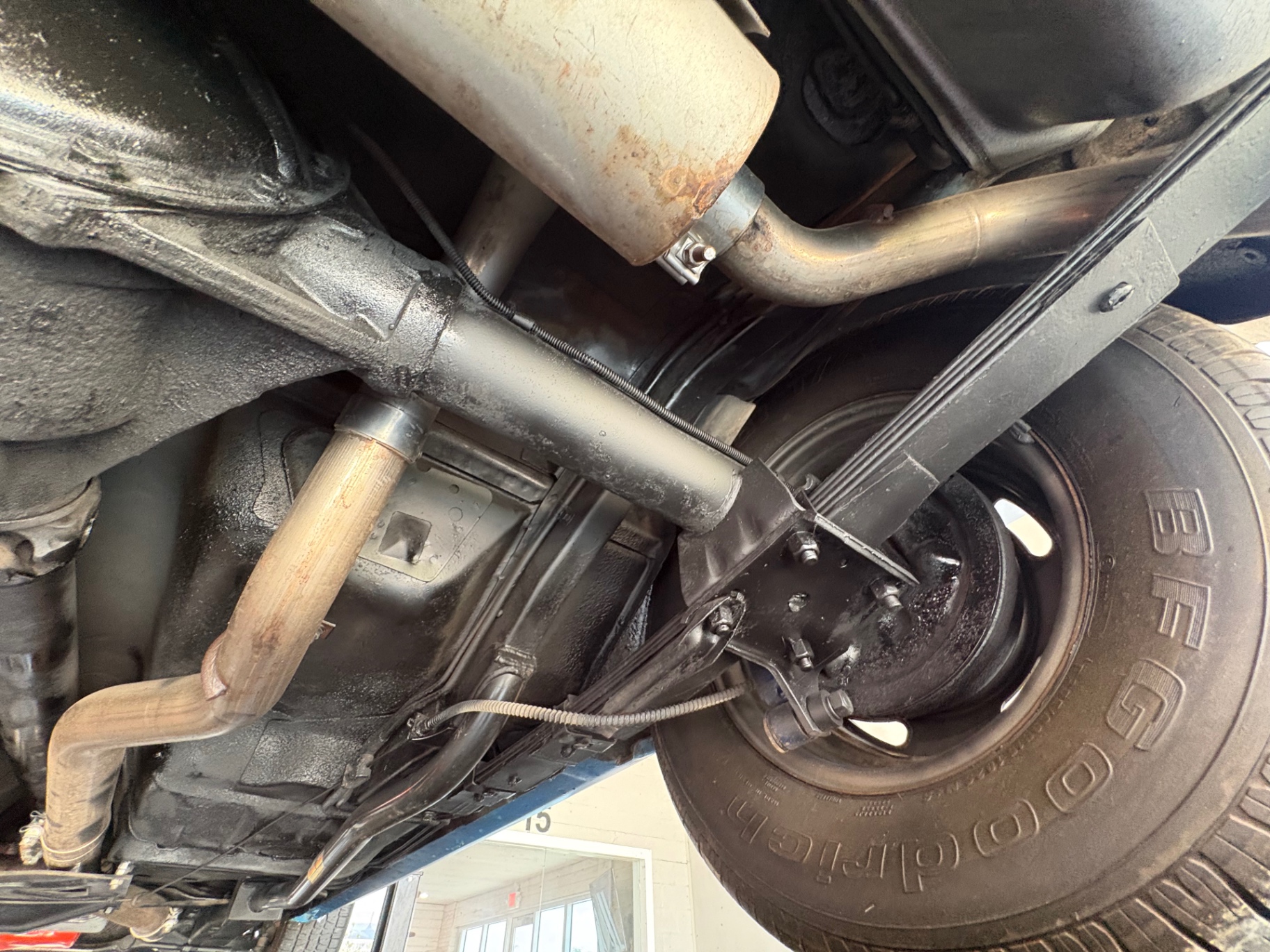
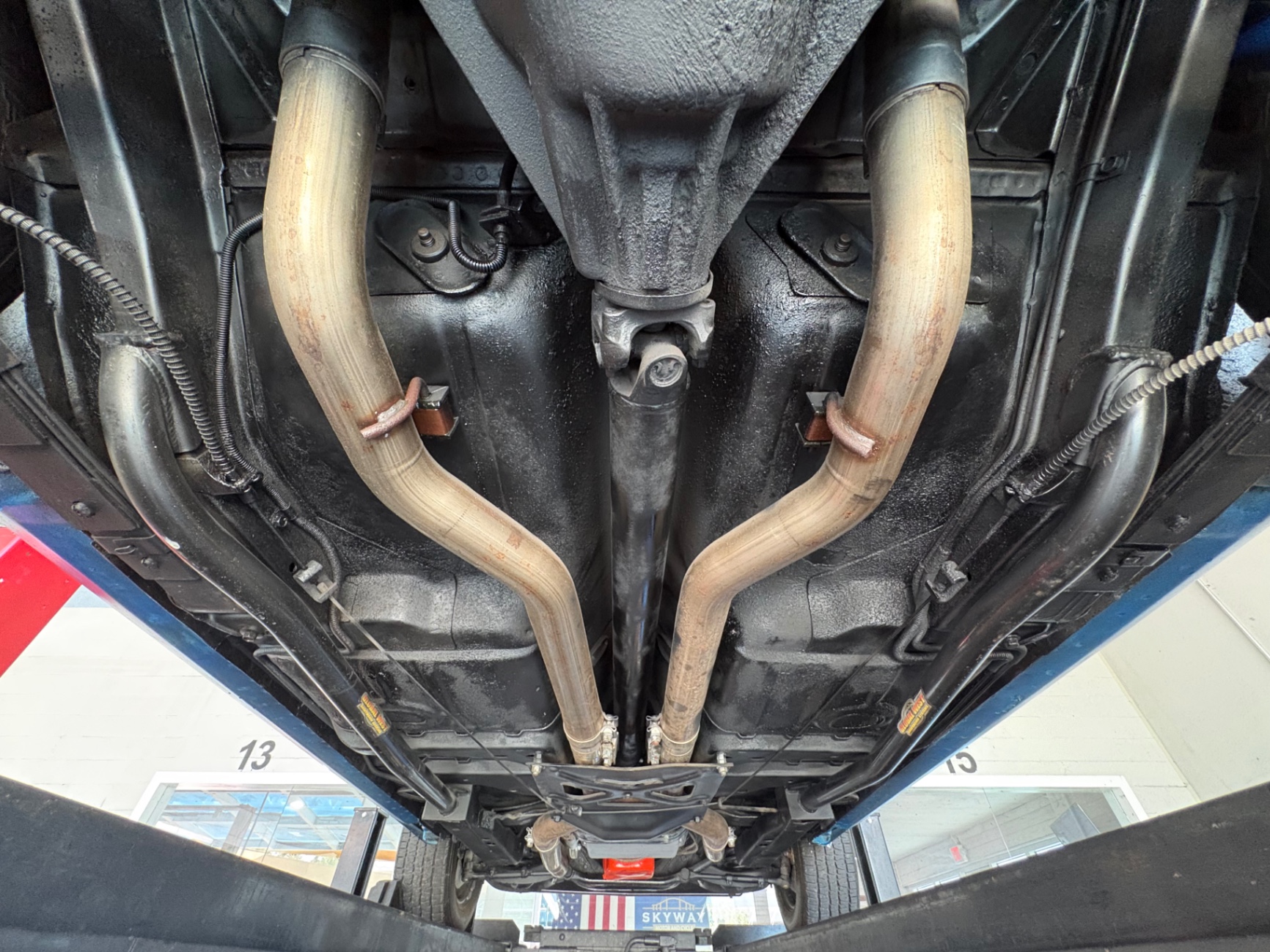
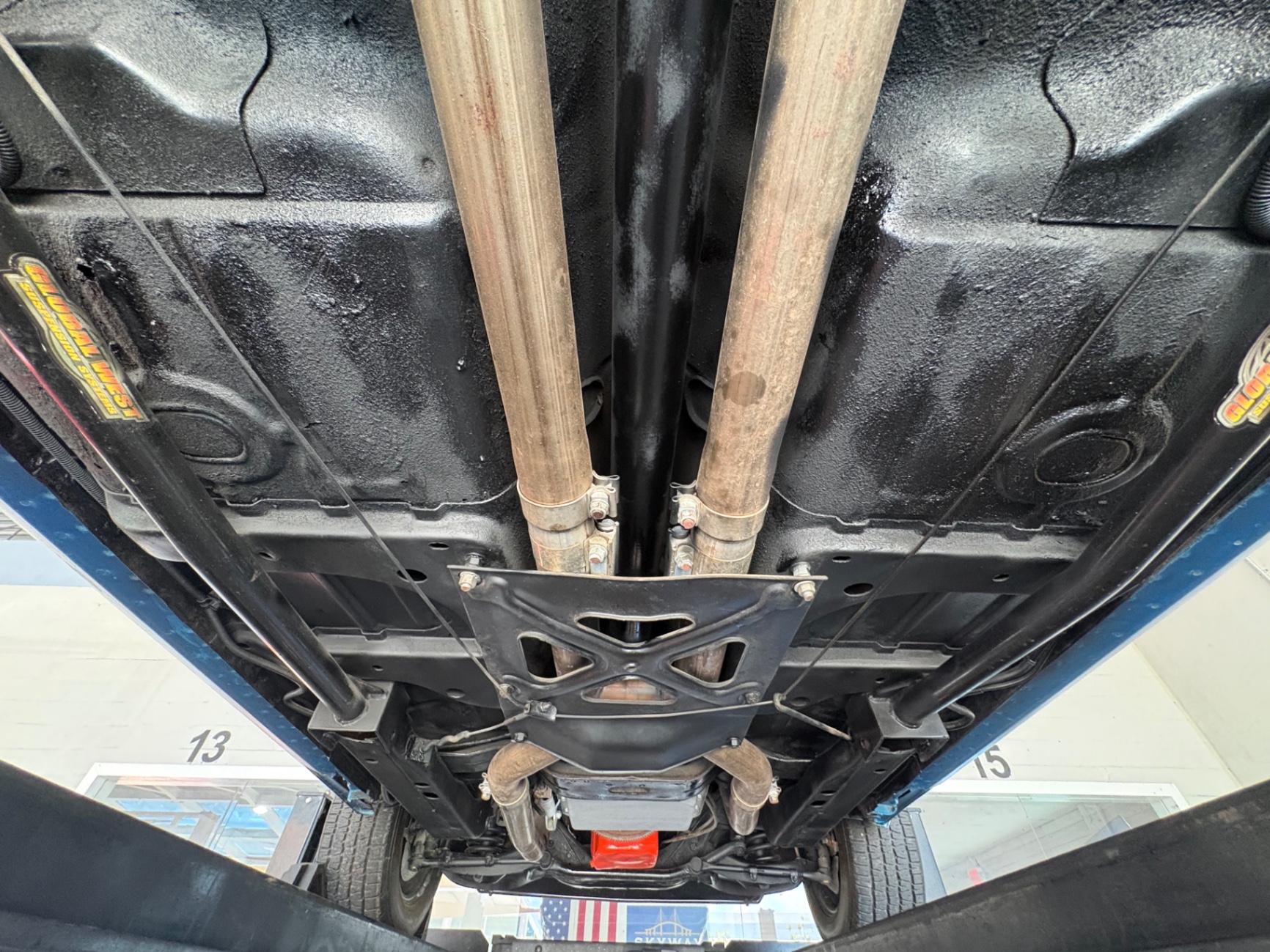
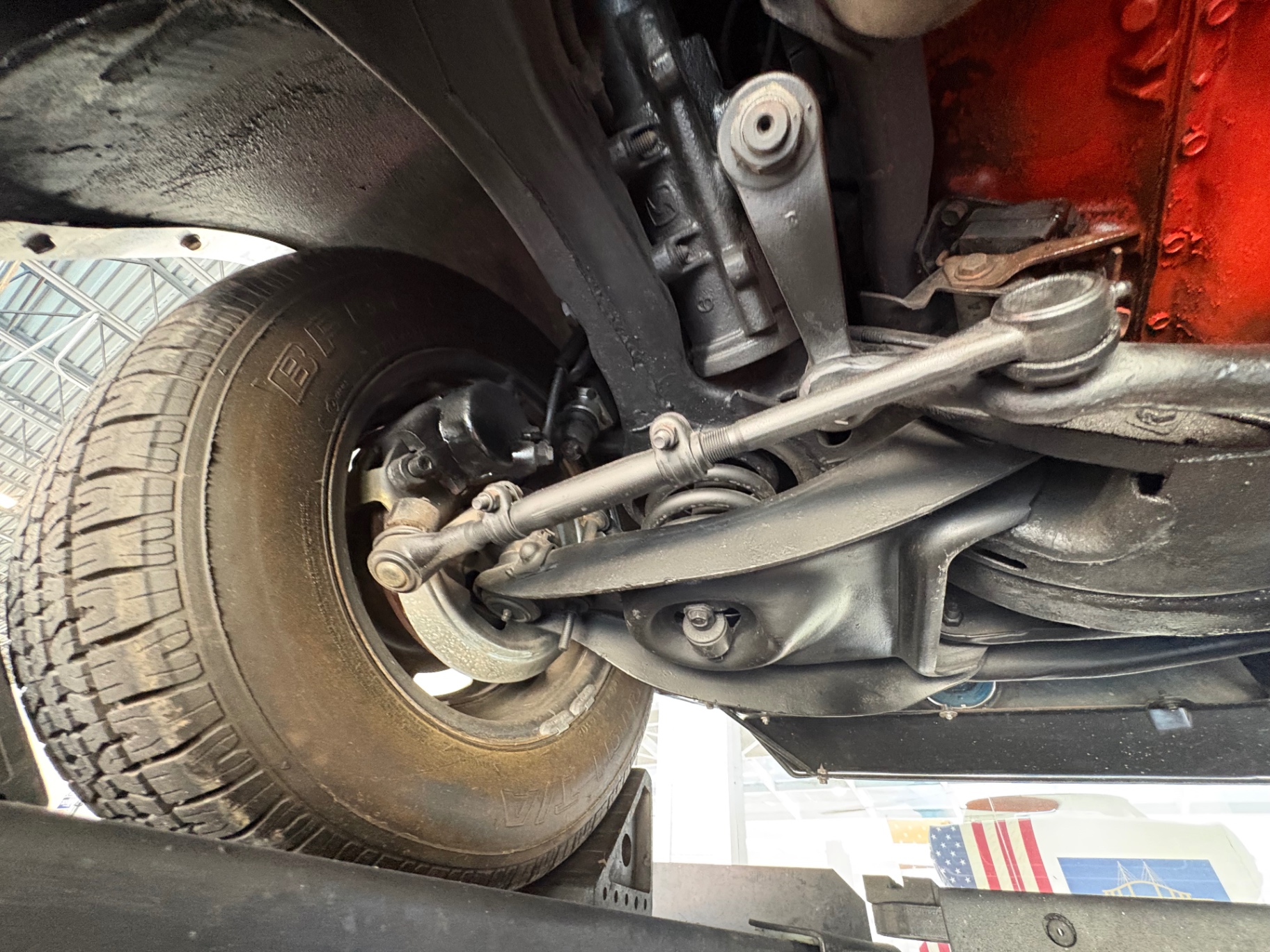
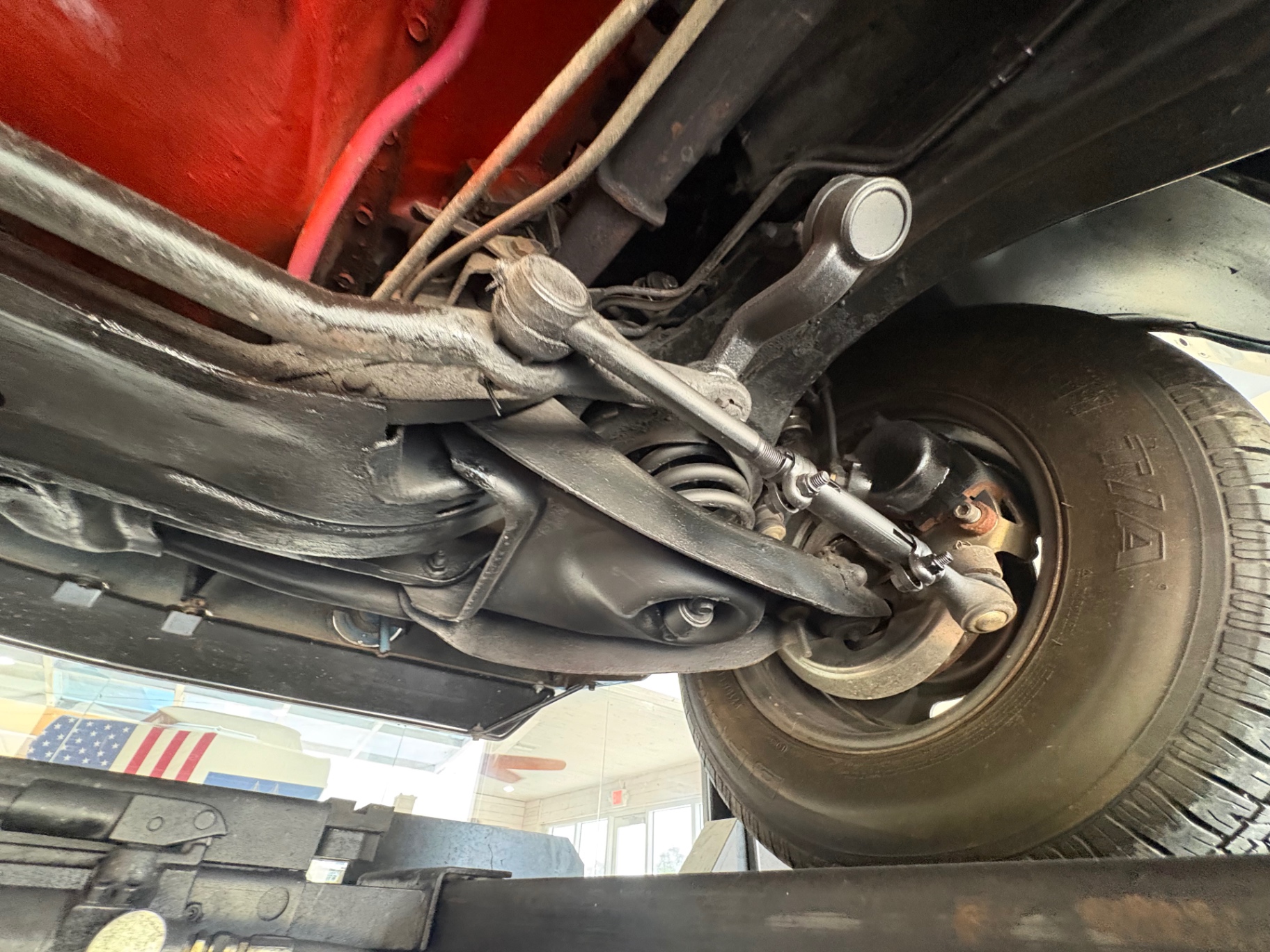
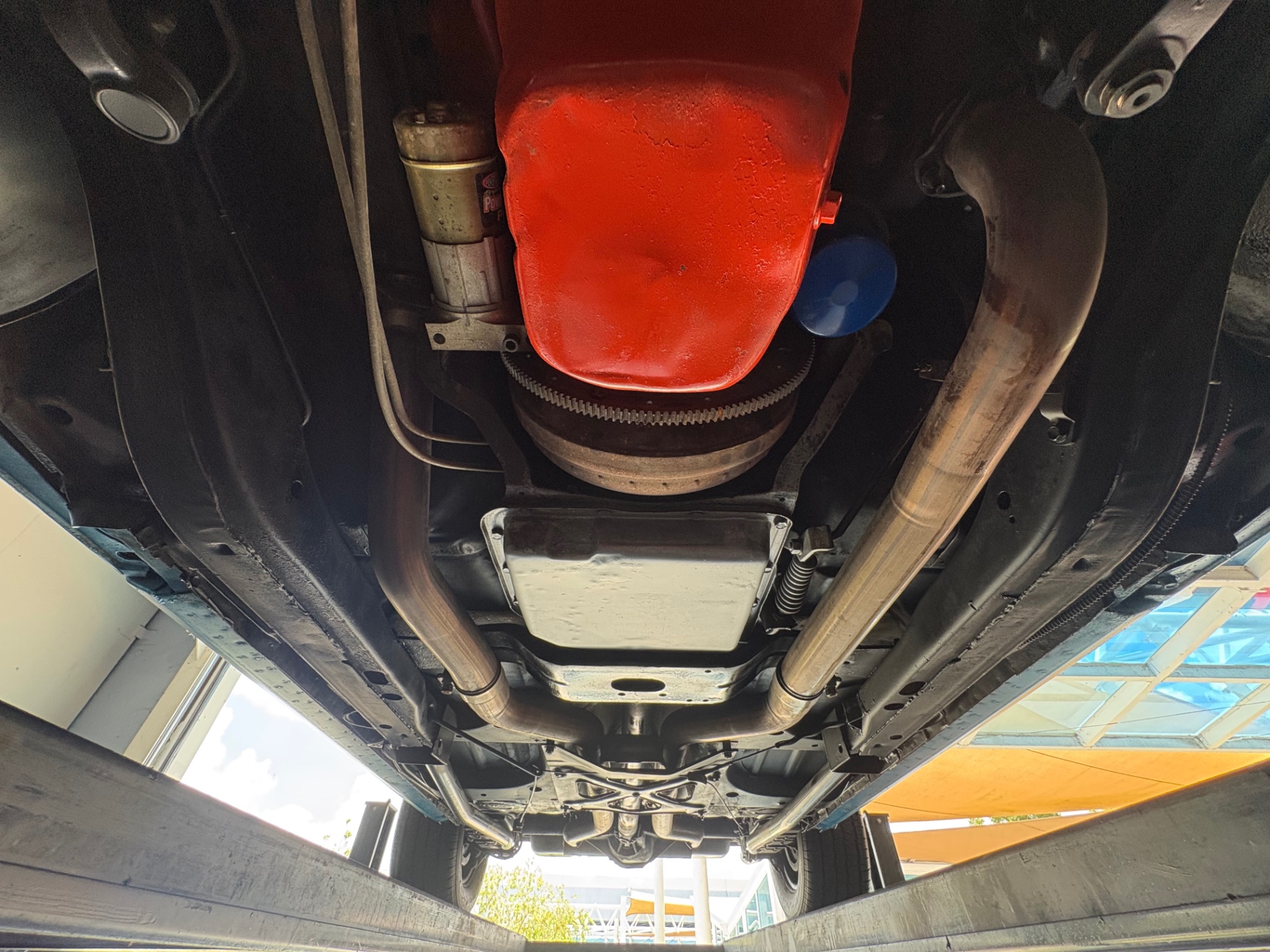
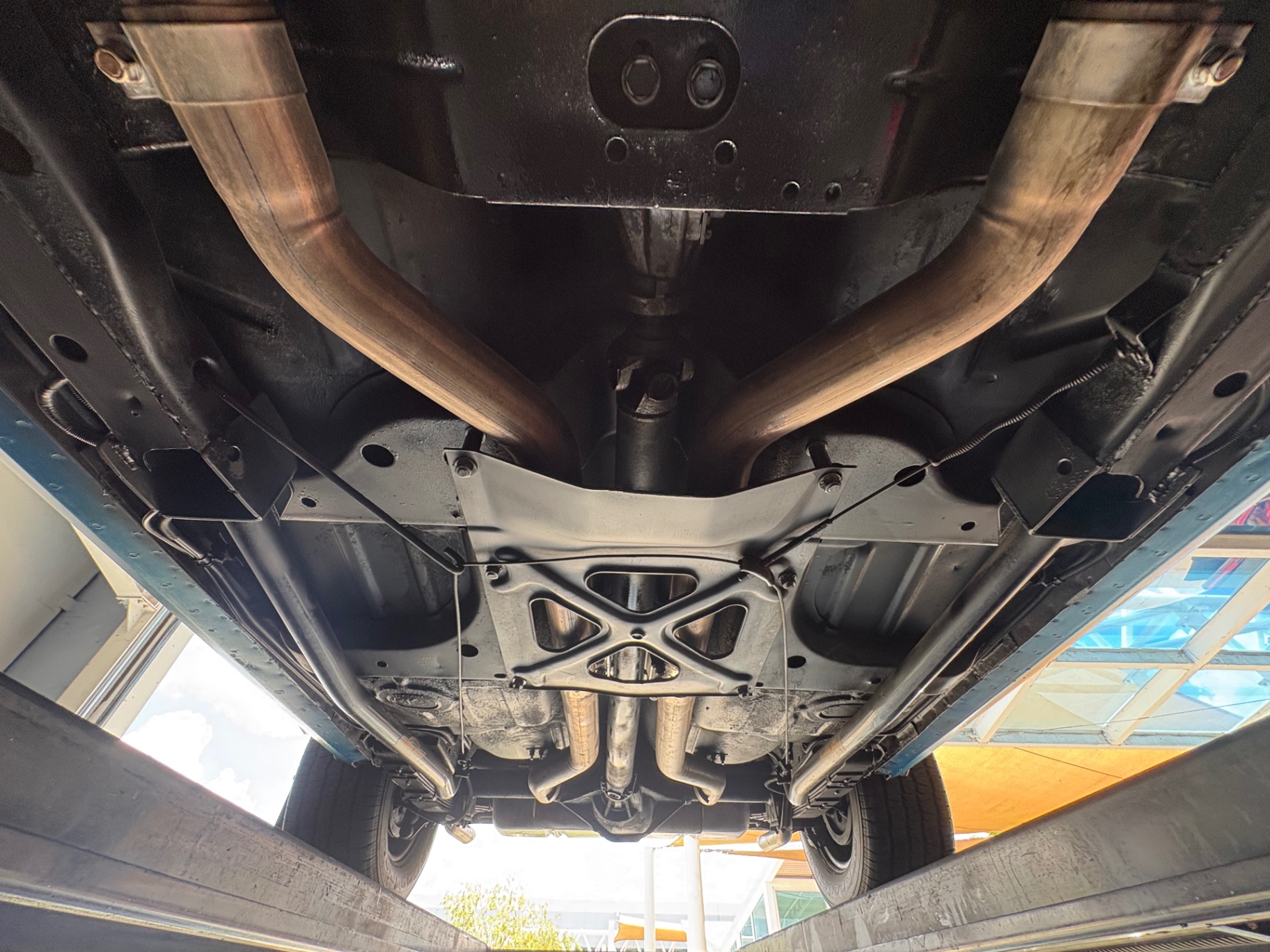
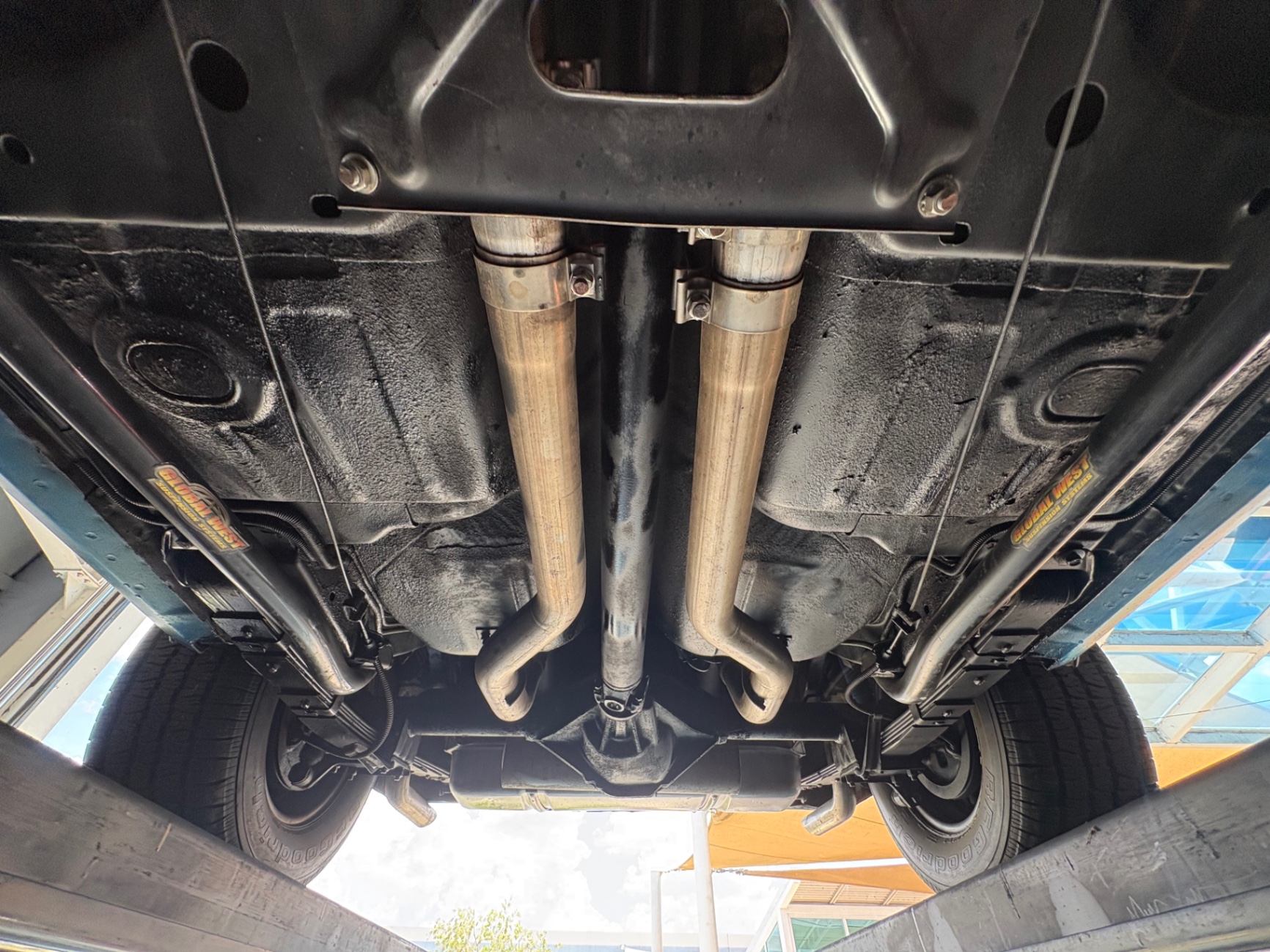
Beyond the drivetrain, the real story here is what has been done to the chassis and suspension. Global West frame connectors are welded in under the car, which is a well-regarded structural improvement for any unibody first-gen Camaro. These connectors tie the front subframe to the rear frame rails, significantly reducing body flex — something that matters on any unibody car, and especially on a convertible that lacks the rigidity of a coupe's roof structure. Anyone who has driven a first-gen Camaro convertible without frame connectors back-to-back with one that has them installed will notice the difference immediately.
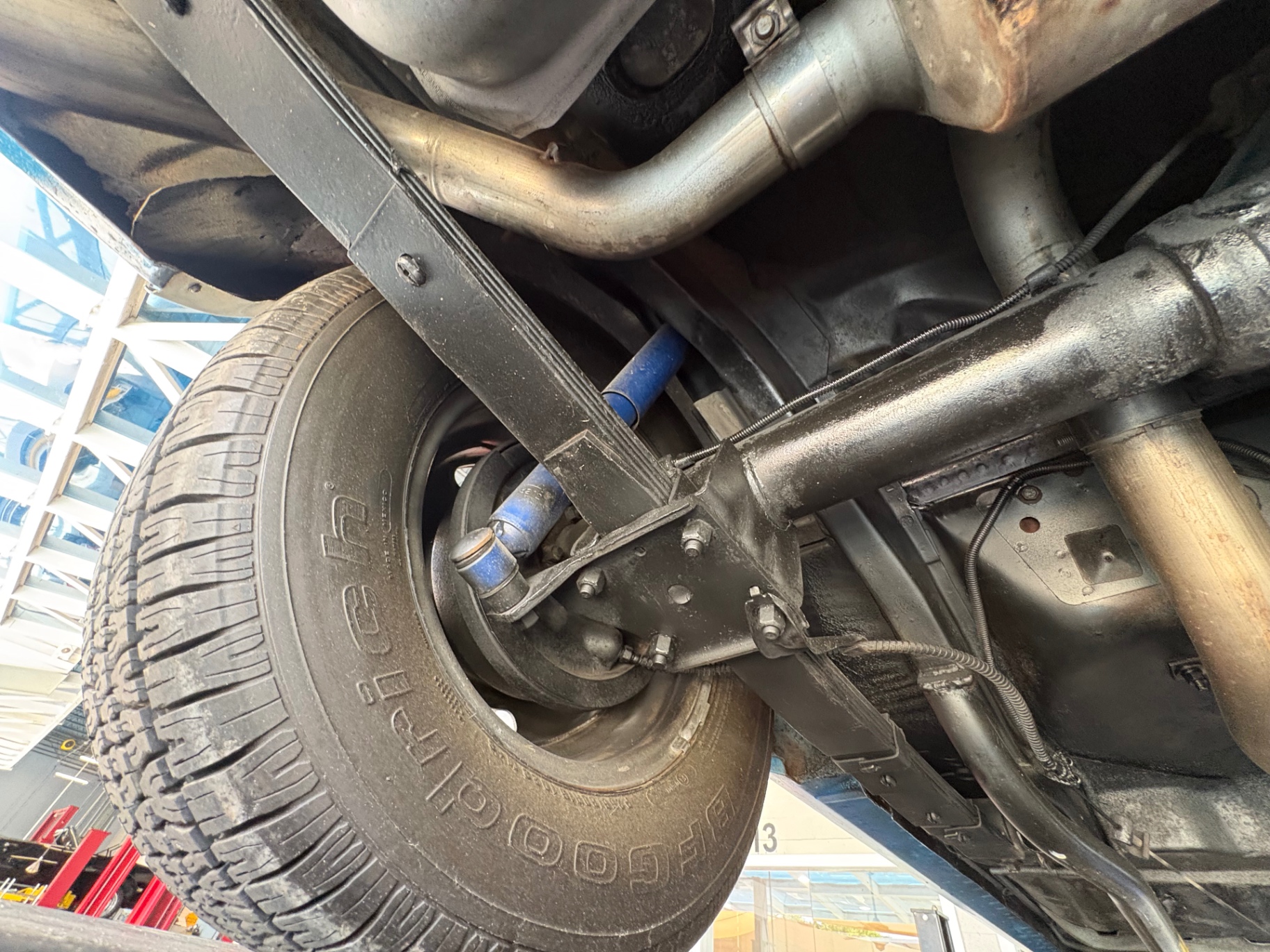
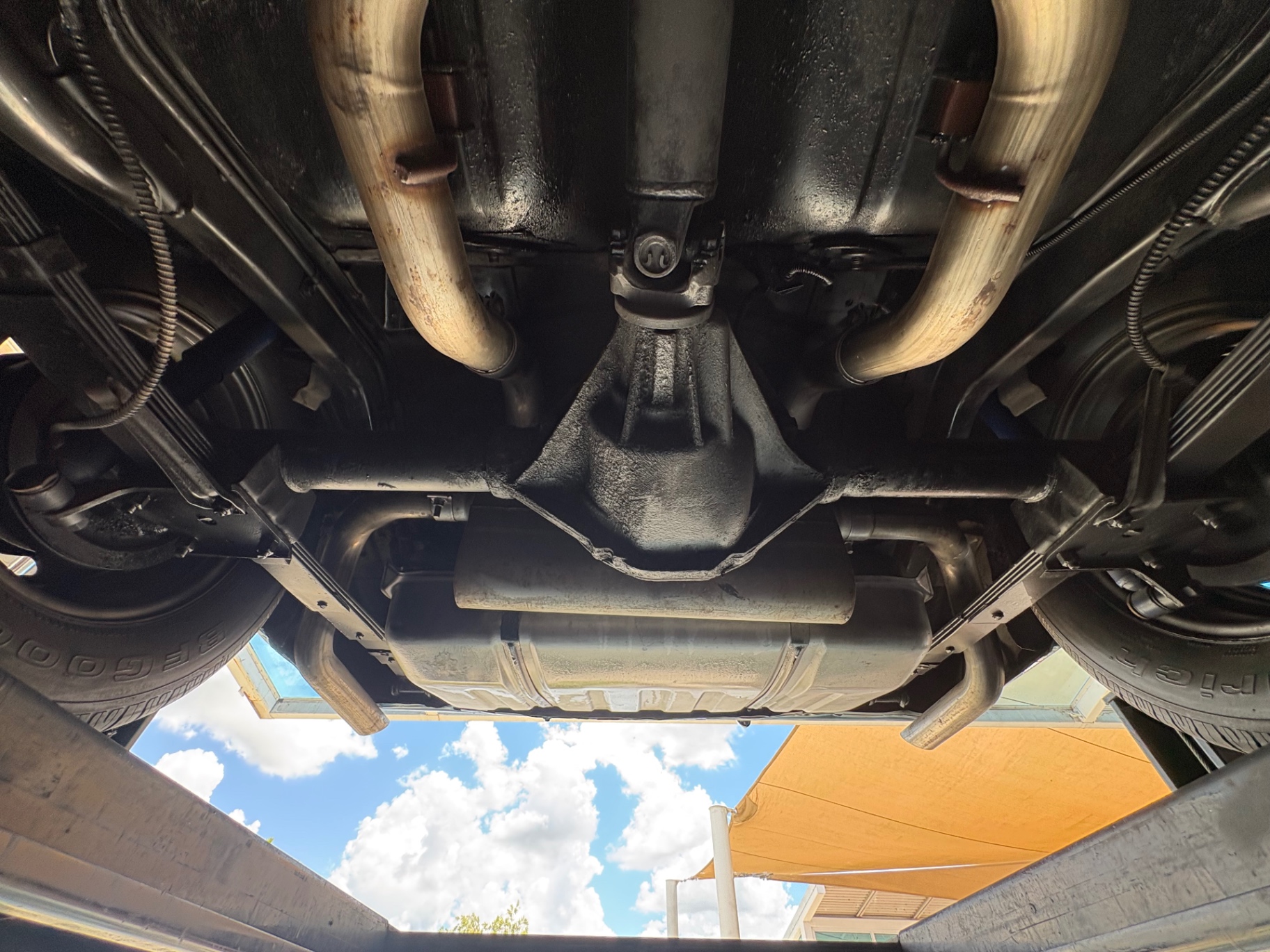
The rear axle is a GM 12-bolt unit with multi-leaf springs, which is the correct and desirable setup for this application. The 12-bolt was stronger than the 10-bolt used in many of the lighter-duty Camaro applications and has long been the preferred unit among first-gen owners. Power front disc brakes provide confident stopping, and the power steering makes the car easy to maneuver at parking lot speeds without dulling the feedback at highway speeds.
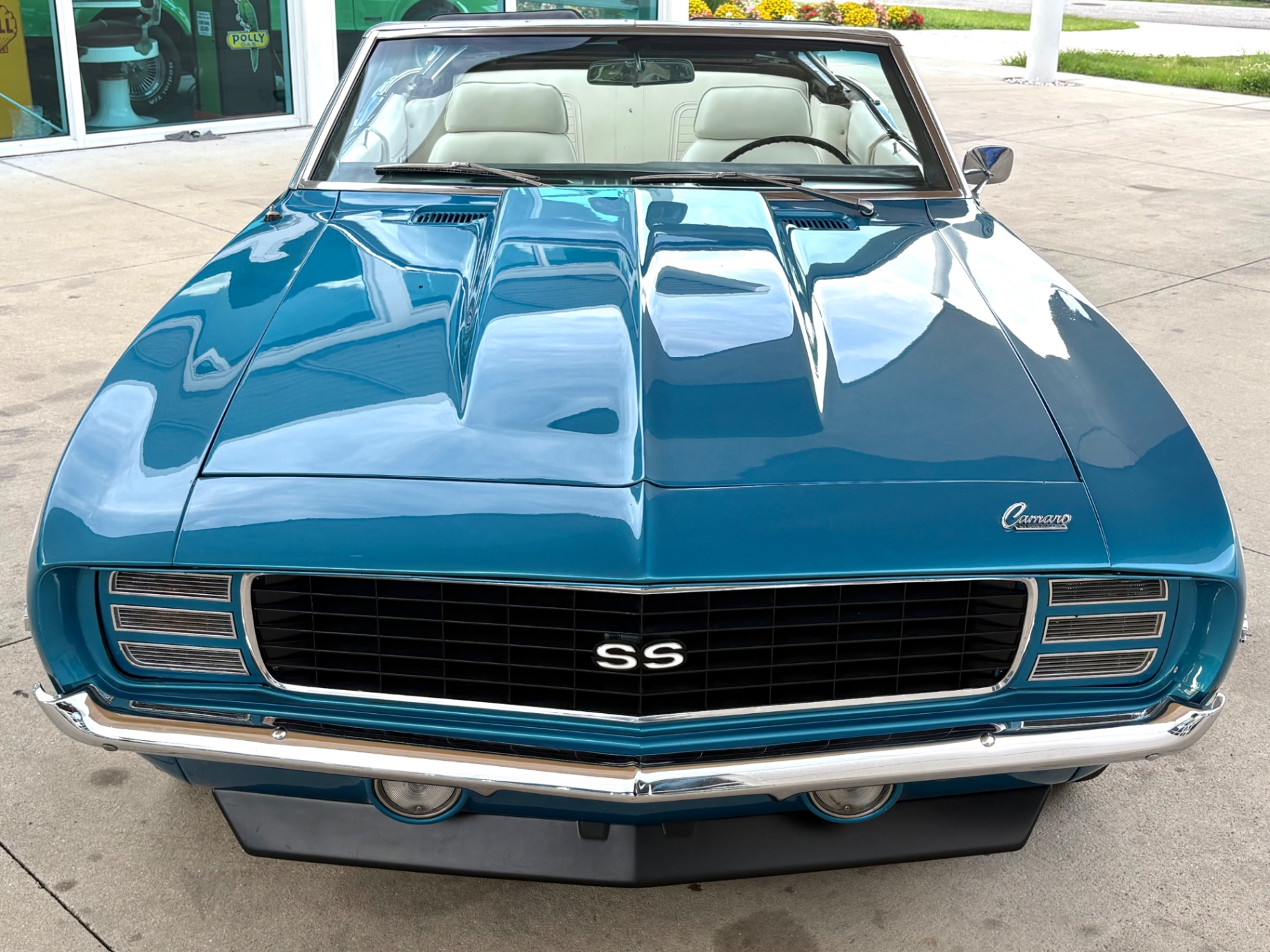
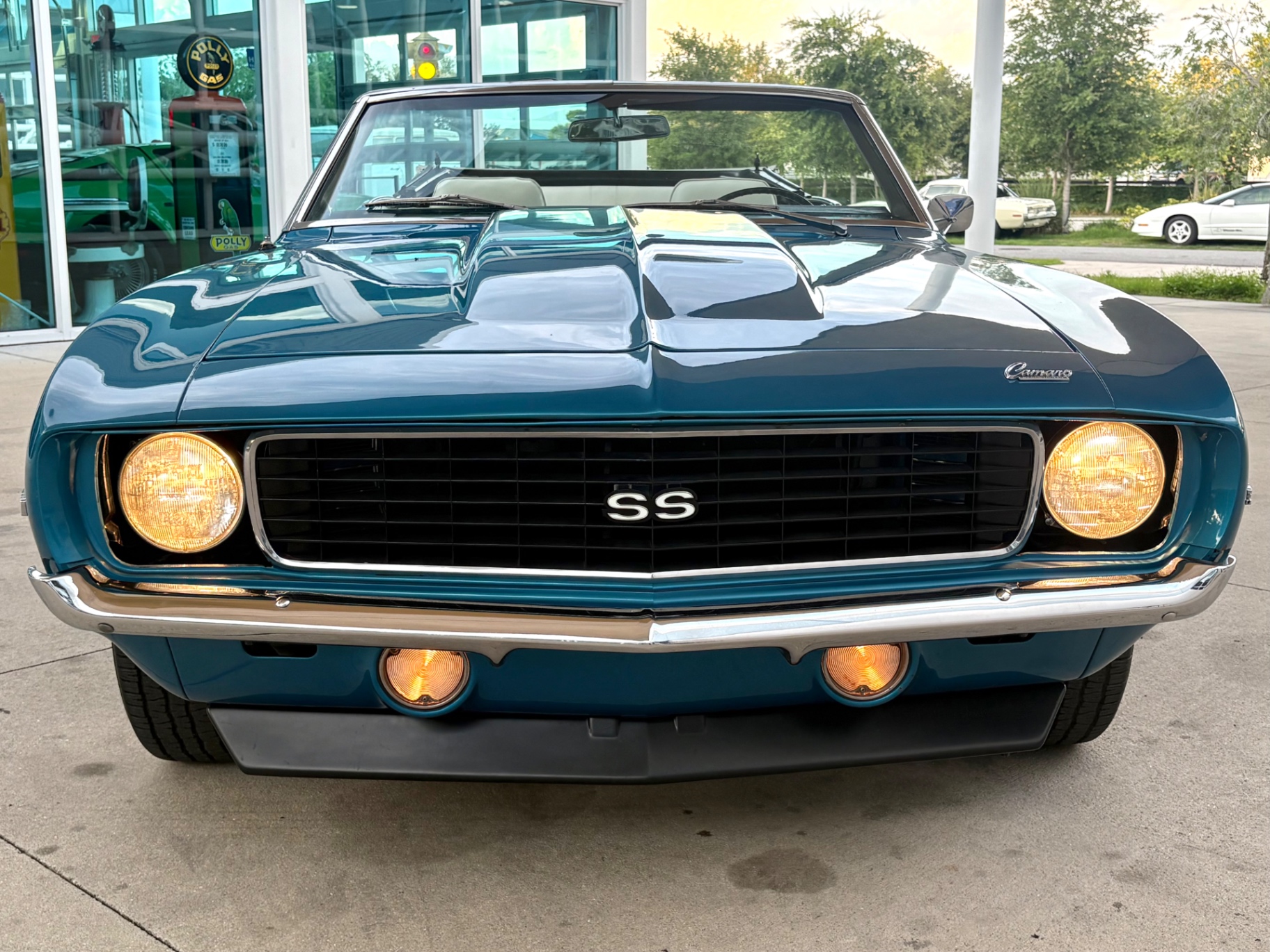
The Goodmark steel cowl hood is a quality reproduction piece that fits and functions correctly, and the Detroit Speed electric headlight kit replaces the vacuum-operated headlight doors that were a known weak point on these cars. The vacuum system on original 1969 Camaros could be slow and unreliable; the electric conversion solves that problem cleanly.
Interior
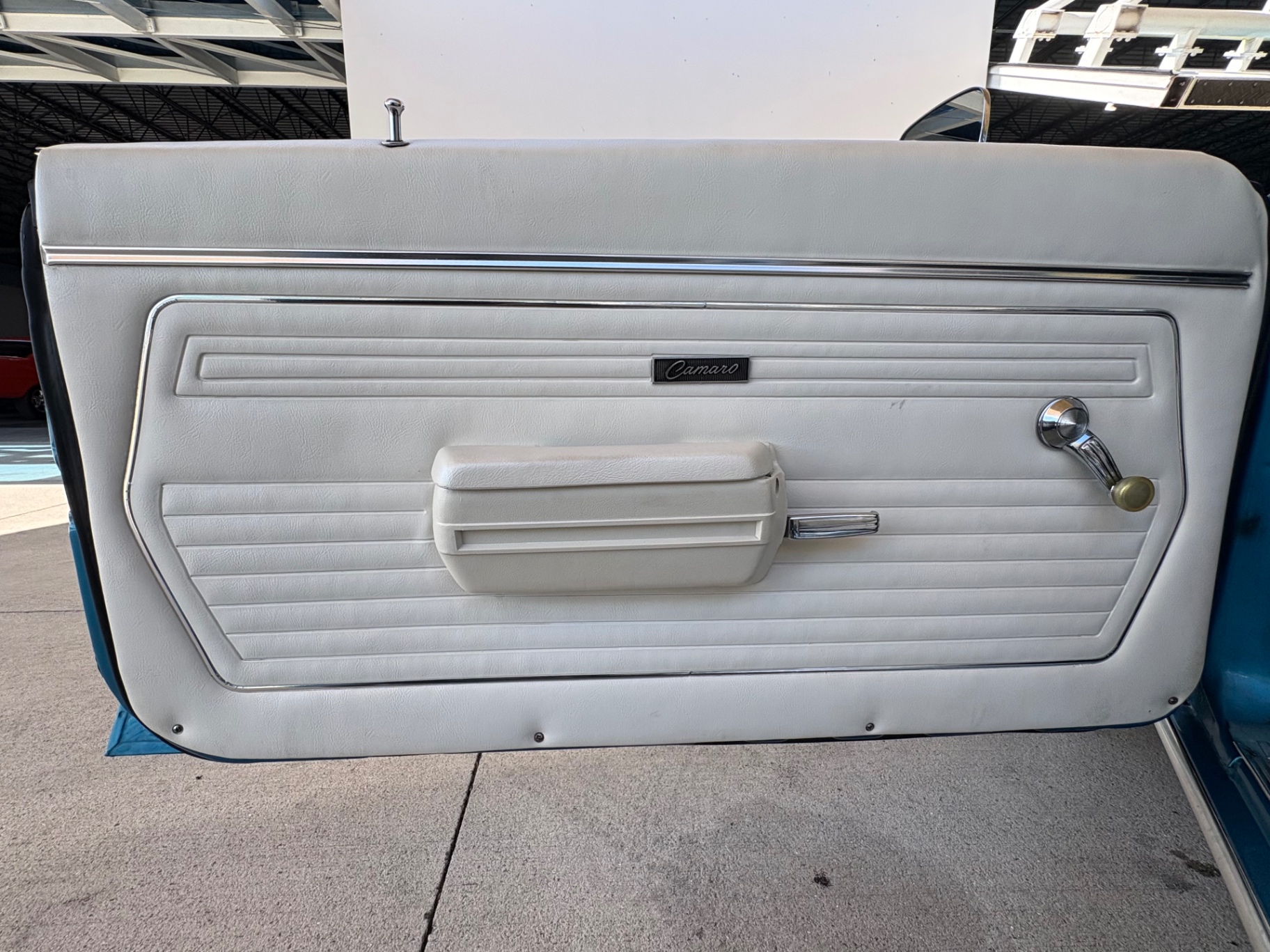
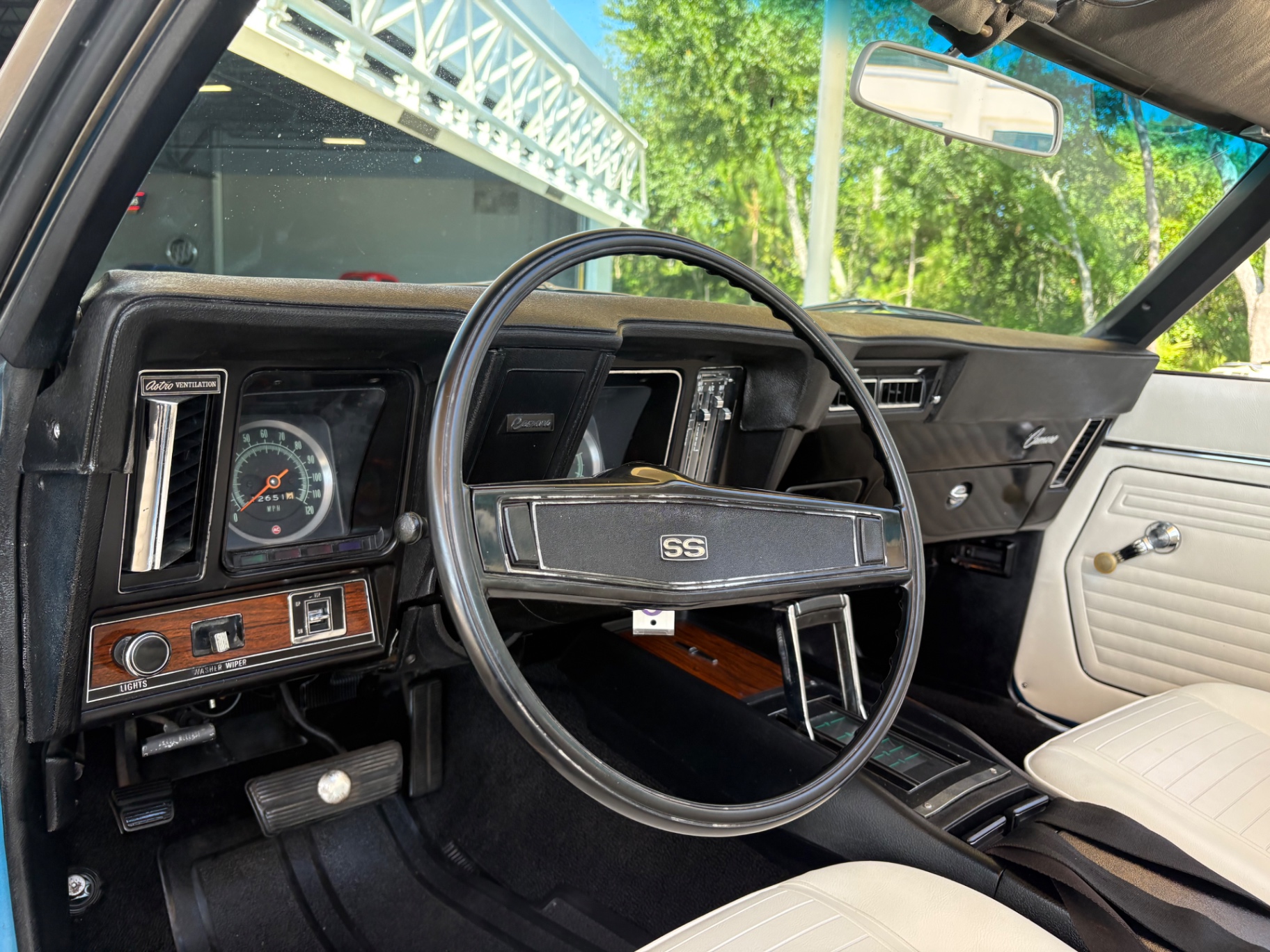
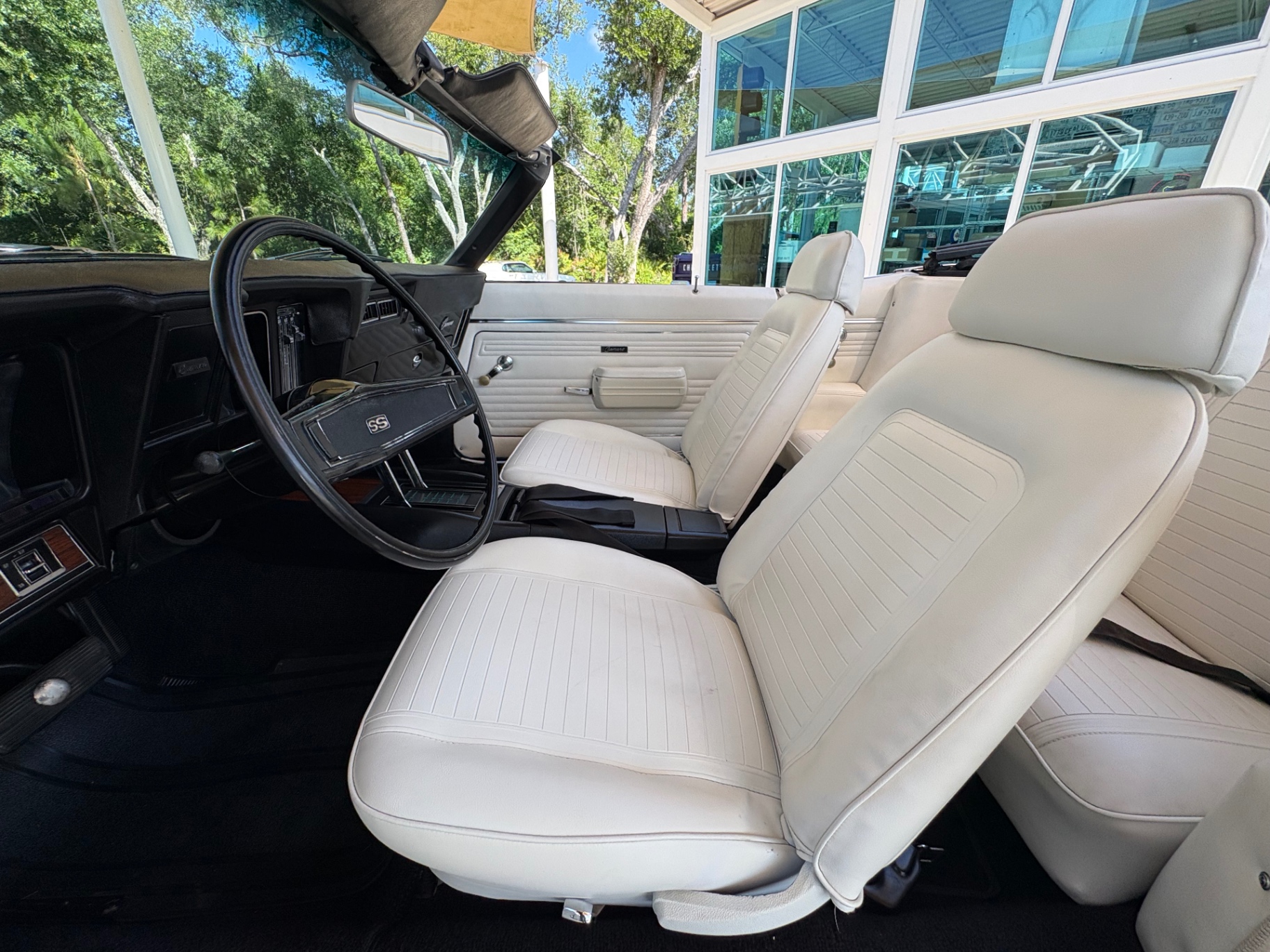
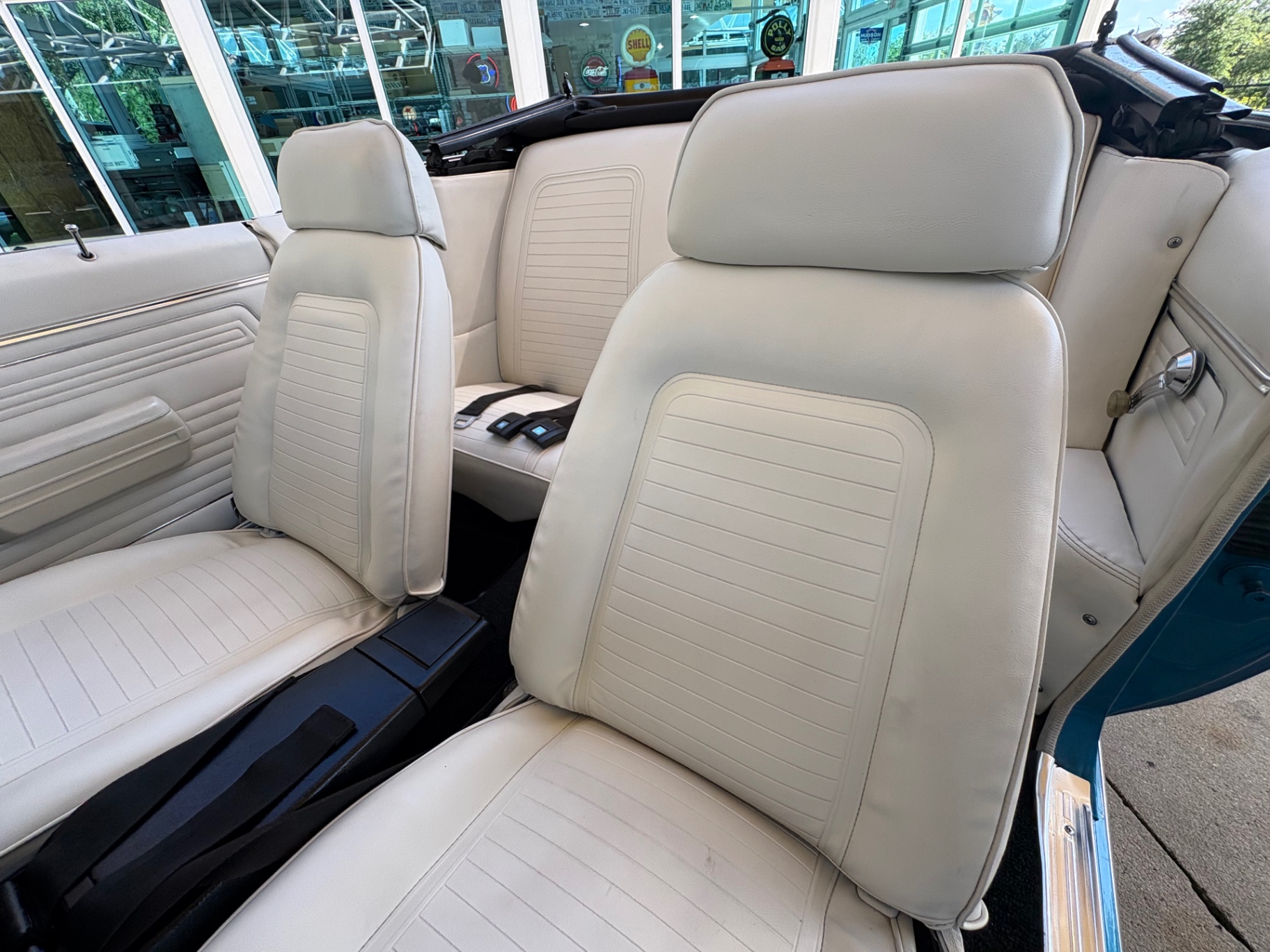
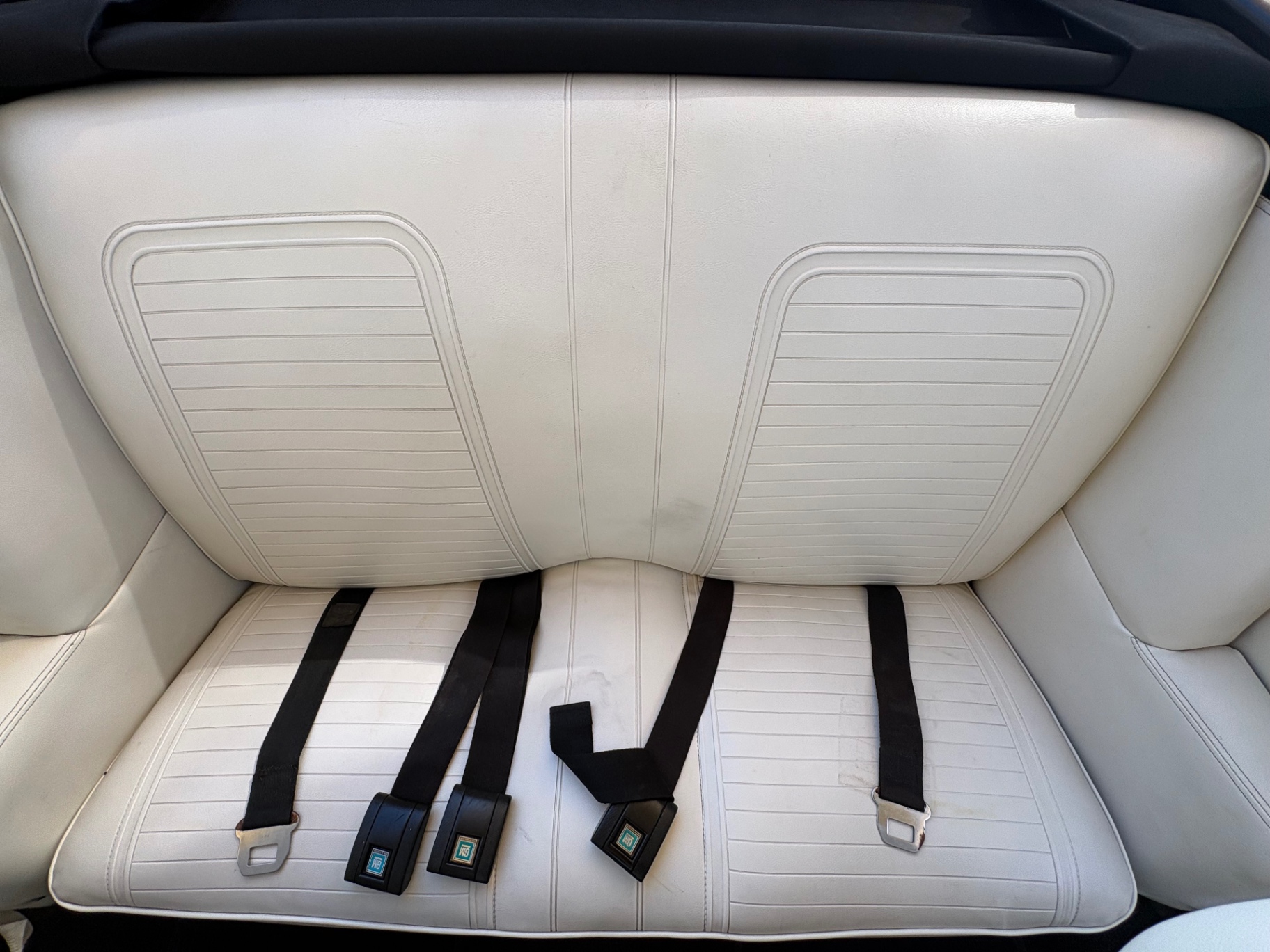
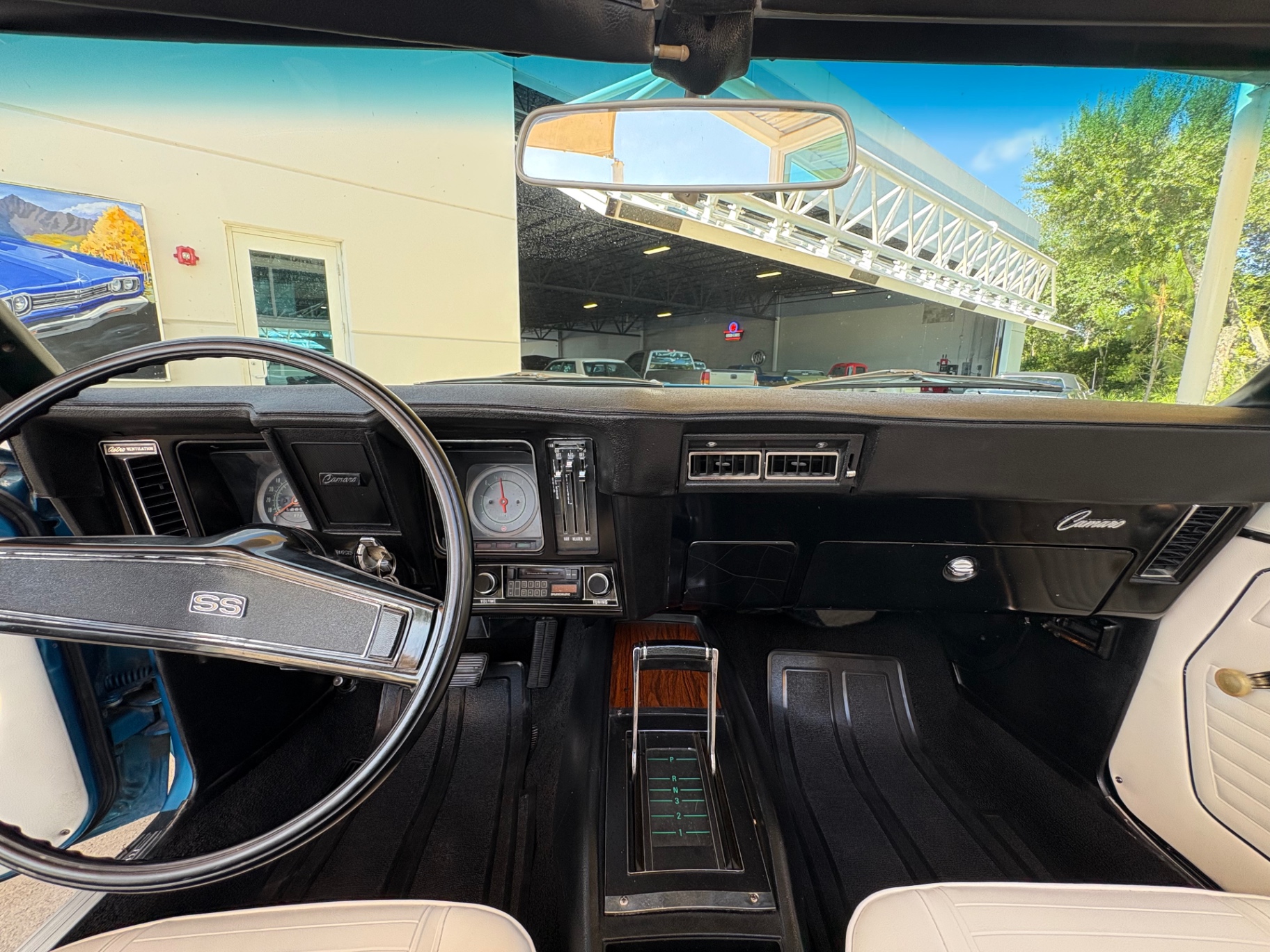
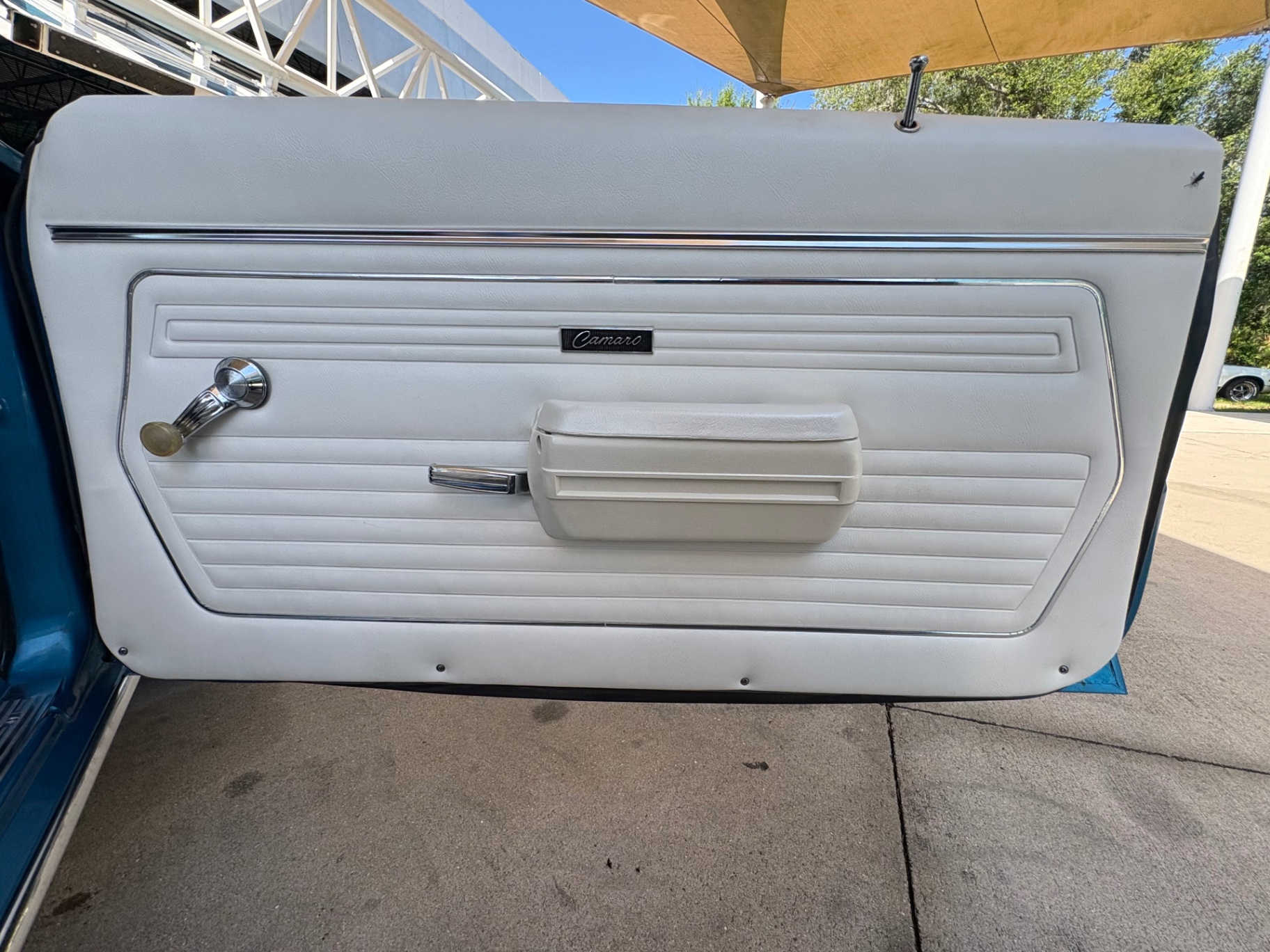
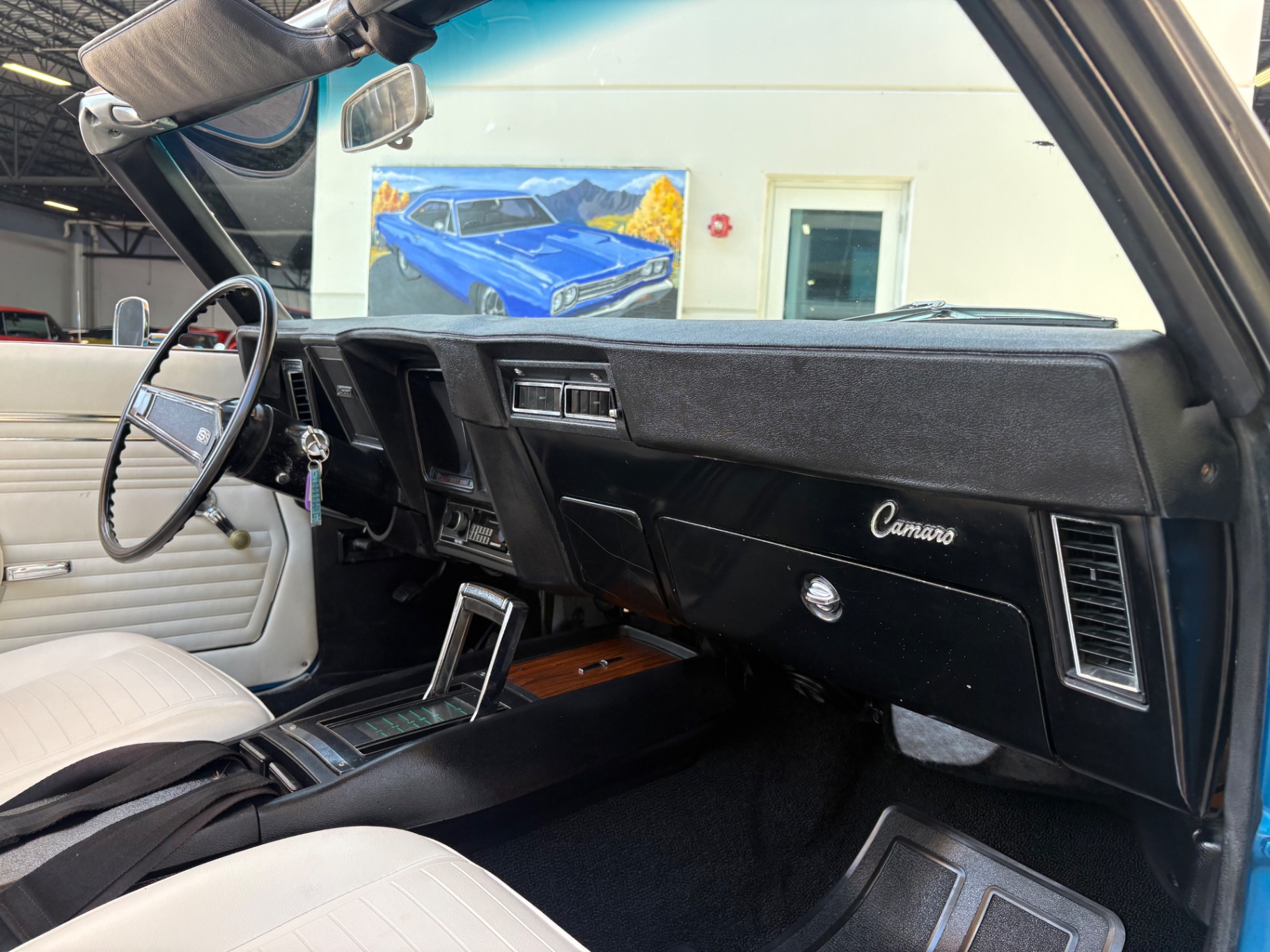
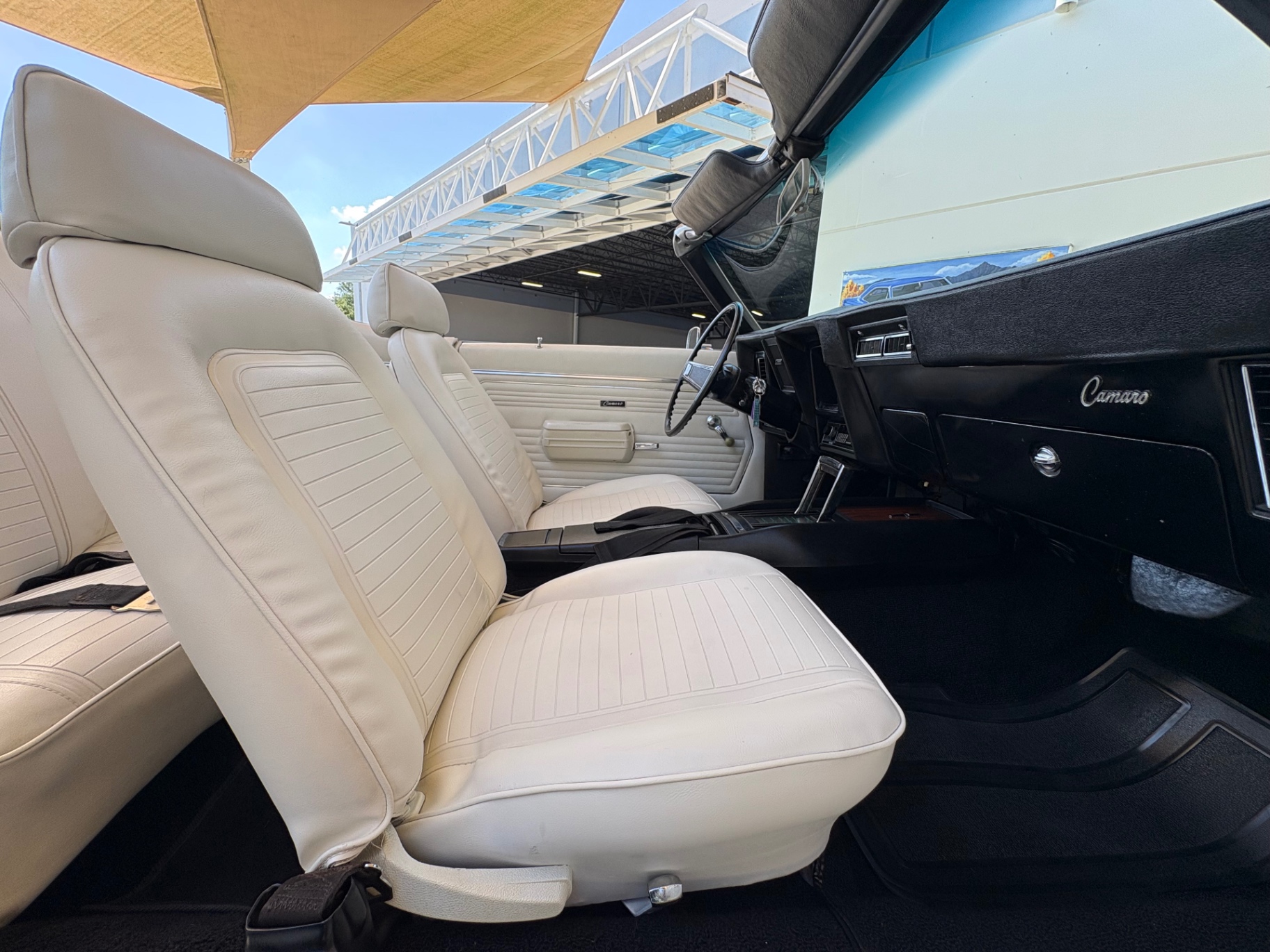
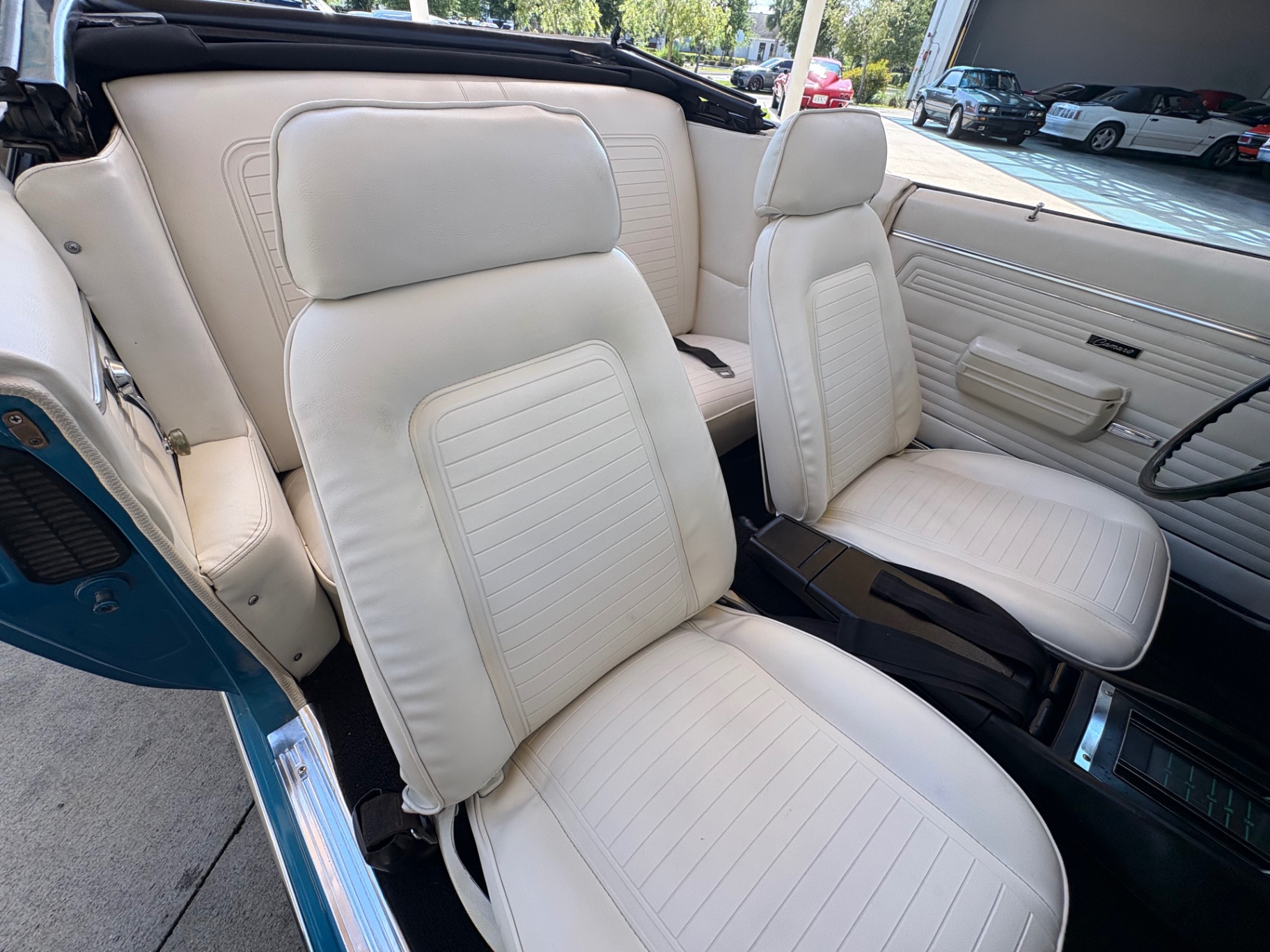
Inside, this 1969 Camaro SS Convertible wears a white vinyl interior that presents very well in photographs and in person. The bucket seats are covered in white vinyl front and rear, and the material shows its age without any significant damage. The factory console runs down the center of the cabin with the automatic shifter positioned correctly in the console gate, with the PRND321 indicator visible through the console lens — a detail that lets you know this is how the car was built, not converted from a floor-shift manual.
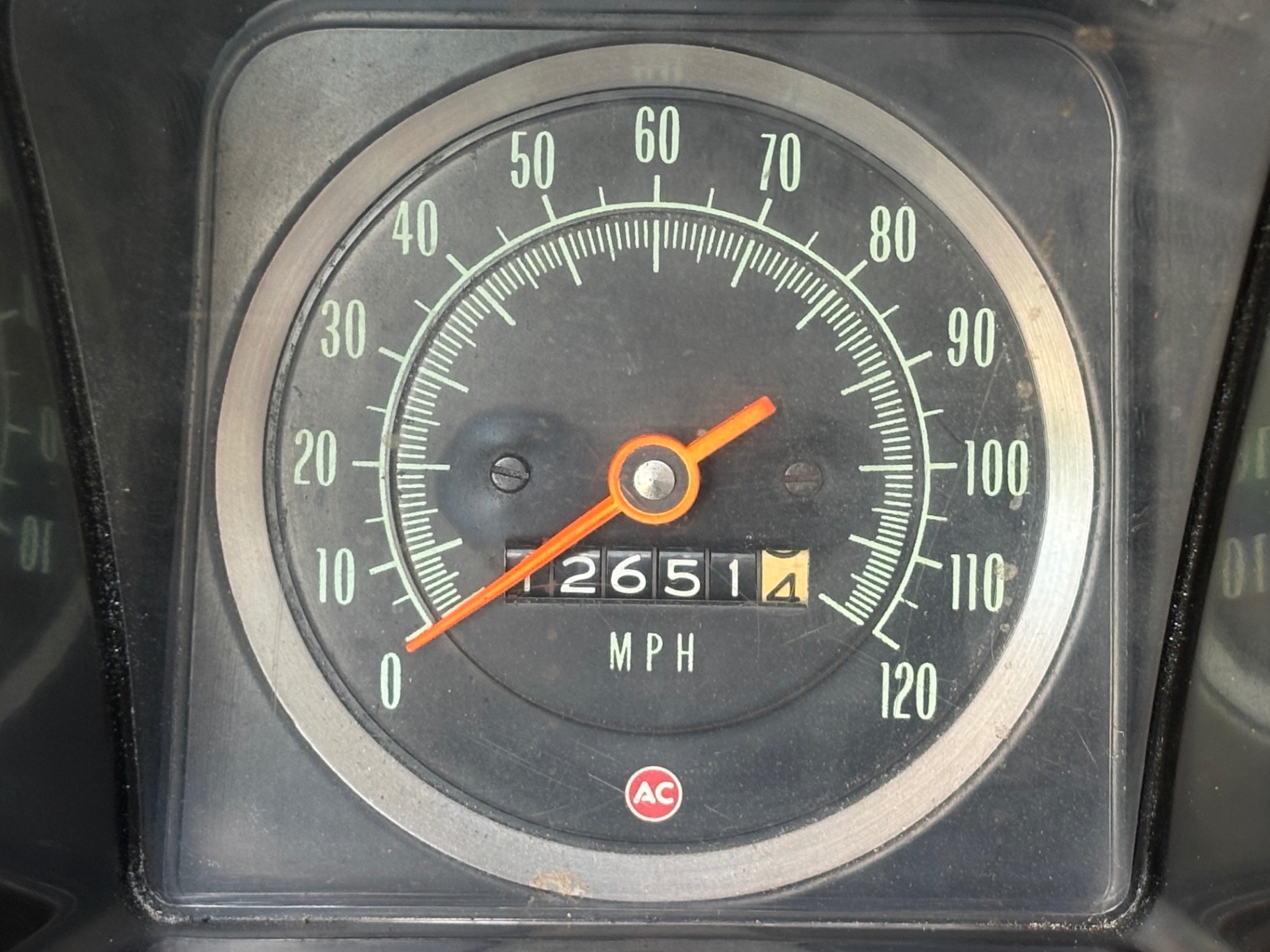
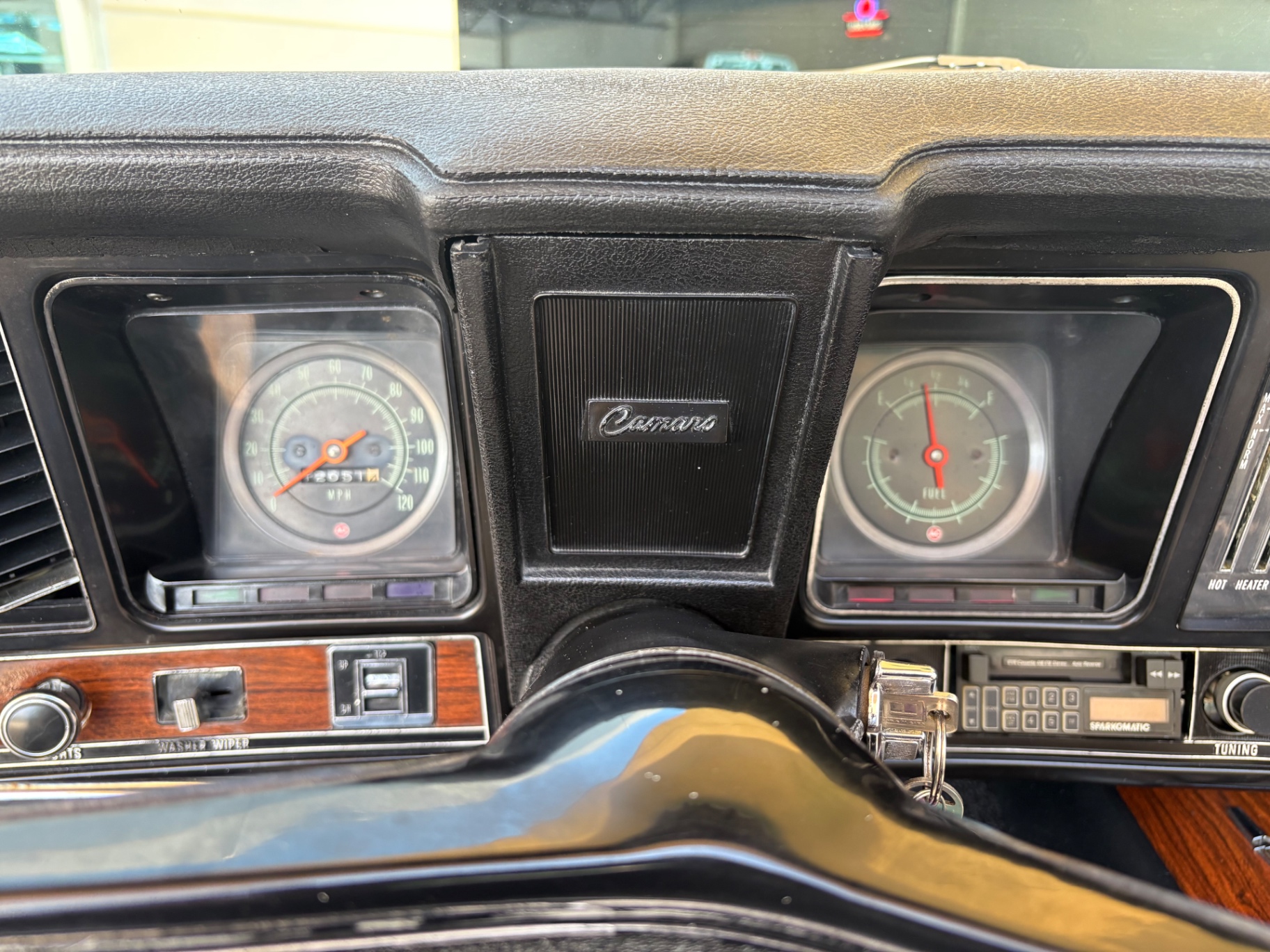
The SS steering wheel is in place, which is the correct three-spoke design specific to Super Sport models. The dashboard retains its factory layout, with the speedometer and fuel gauge positioned in the twin-pod instrument cluster that is one of the more distinctive interior features of the 1969 redesign. The Astro Ventilation label is visible on the dash — this was Chevrolet's flow-through ventilation system that used vents in the dash and exhaust ports in the rear of the cabin to move air through without opening windows, a feature that was factory-installed on this car. With the factory air conditioning also present, this Camaro is set up for comfortable top-up cruising in warm weather as well as top-down driving.
An aftermarket stereo has been fitted in the dash, a practical swap that allows for modern audio without significant modification to the surrounding dash structure. The woodgrain console trim is intact, and the overall cabin environment is consistent with what you would expect from a well-maintained, periodically refreshed first-gen Camaro.
Exterior
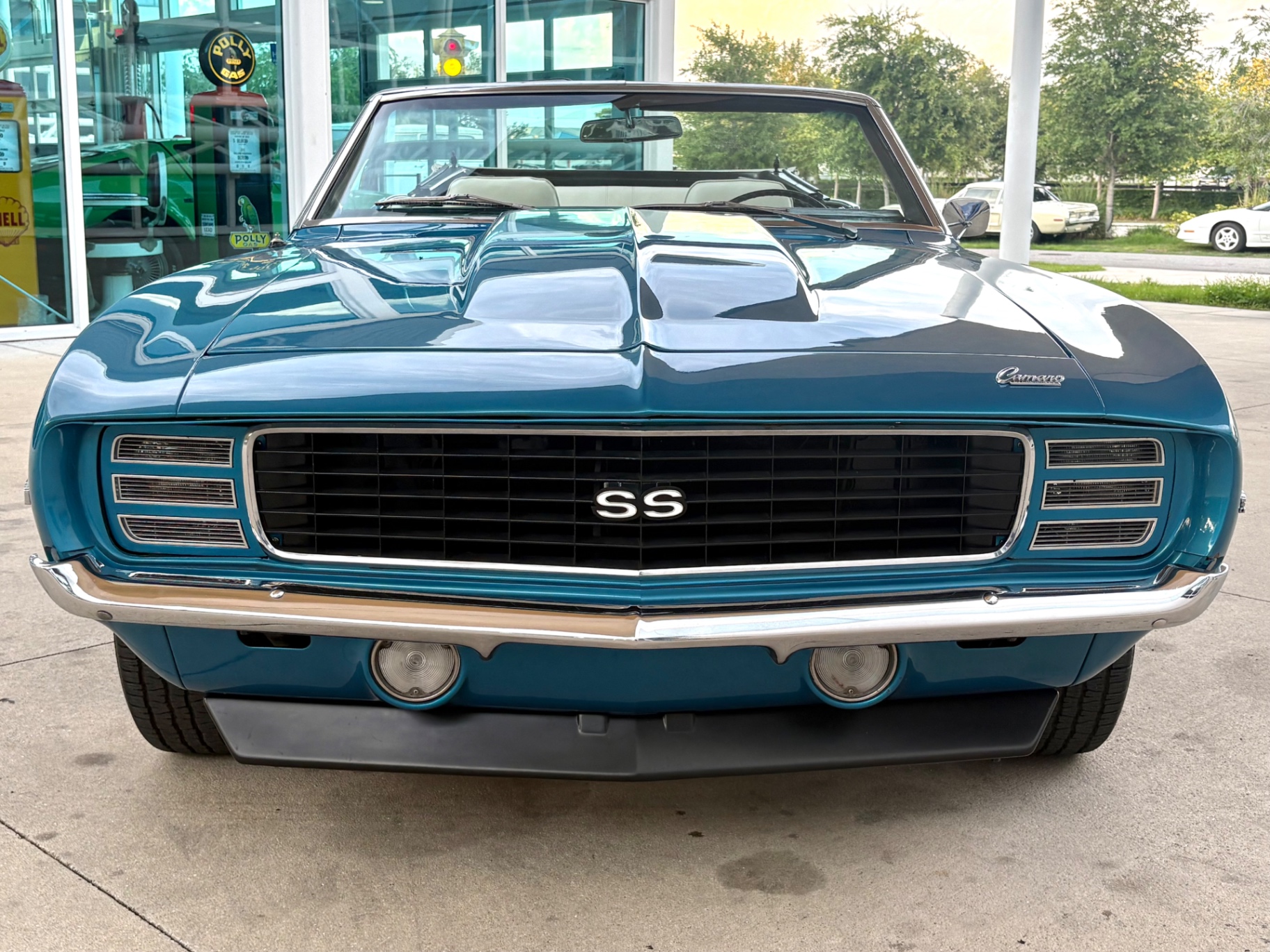
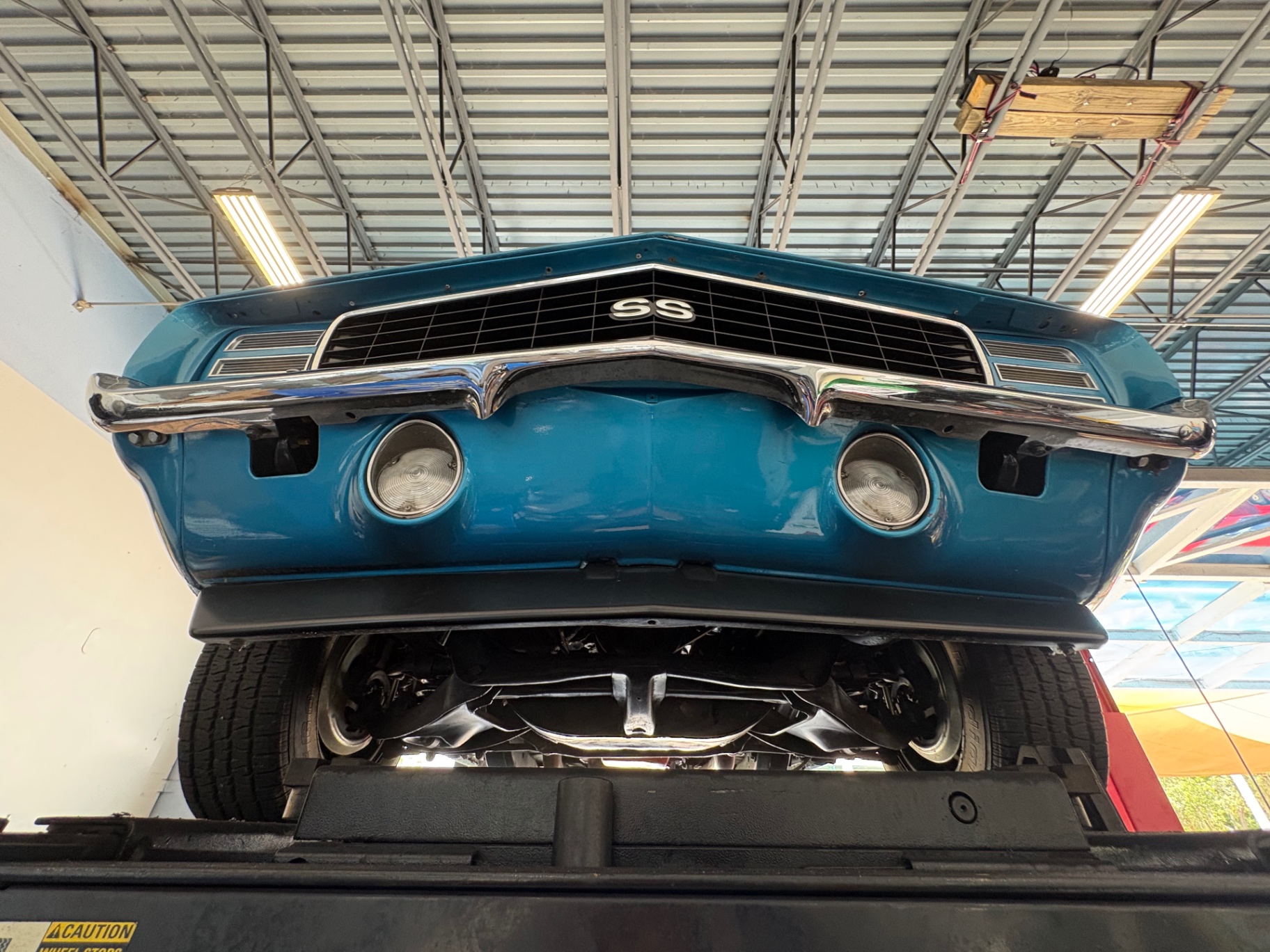
The body is finished in blue — a vivid, period-correct hue that suits the aggressive body lines of the 1969 Camaro well. The 1969 body style was a significant departure from the 1967-68 design, featuring a longer nose, revised character lines, and a more sculpted overall shape. The front end, in particular, with its recessed headlights and wide SS-badged grille, is one of the most recognized designs in American automotive history.
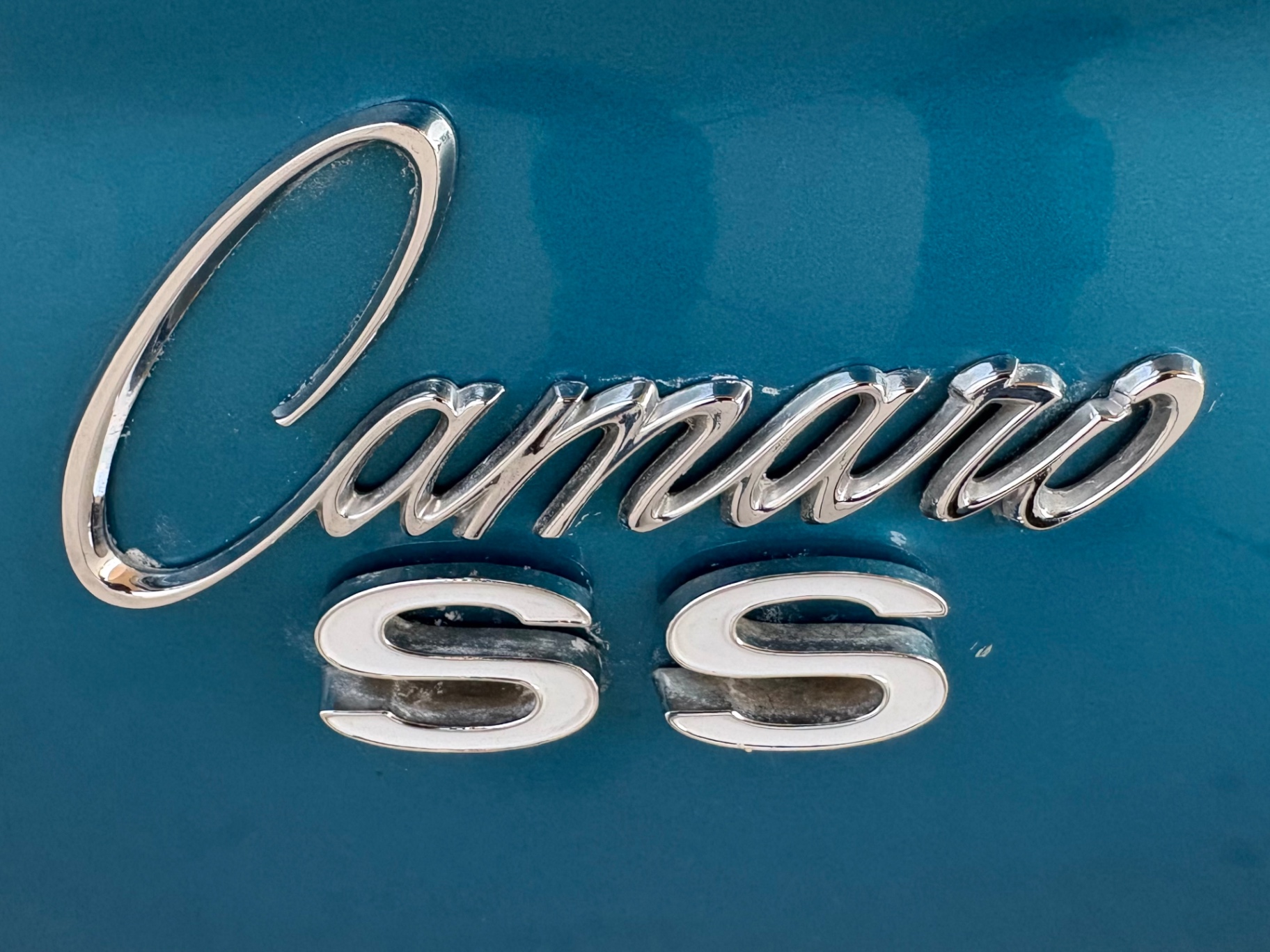
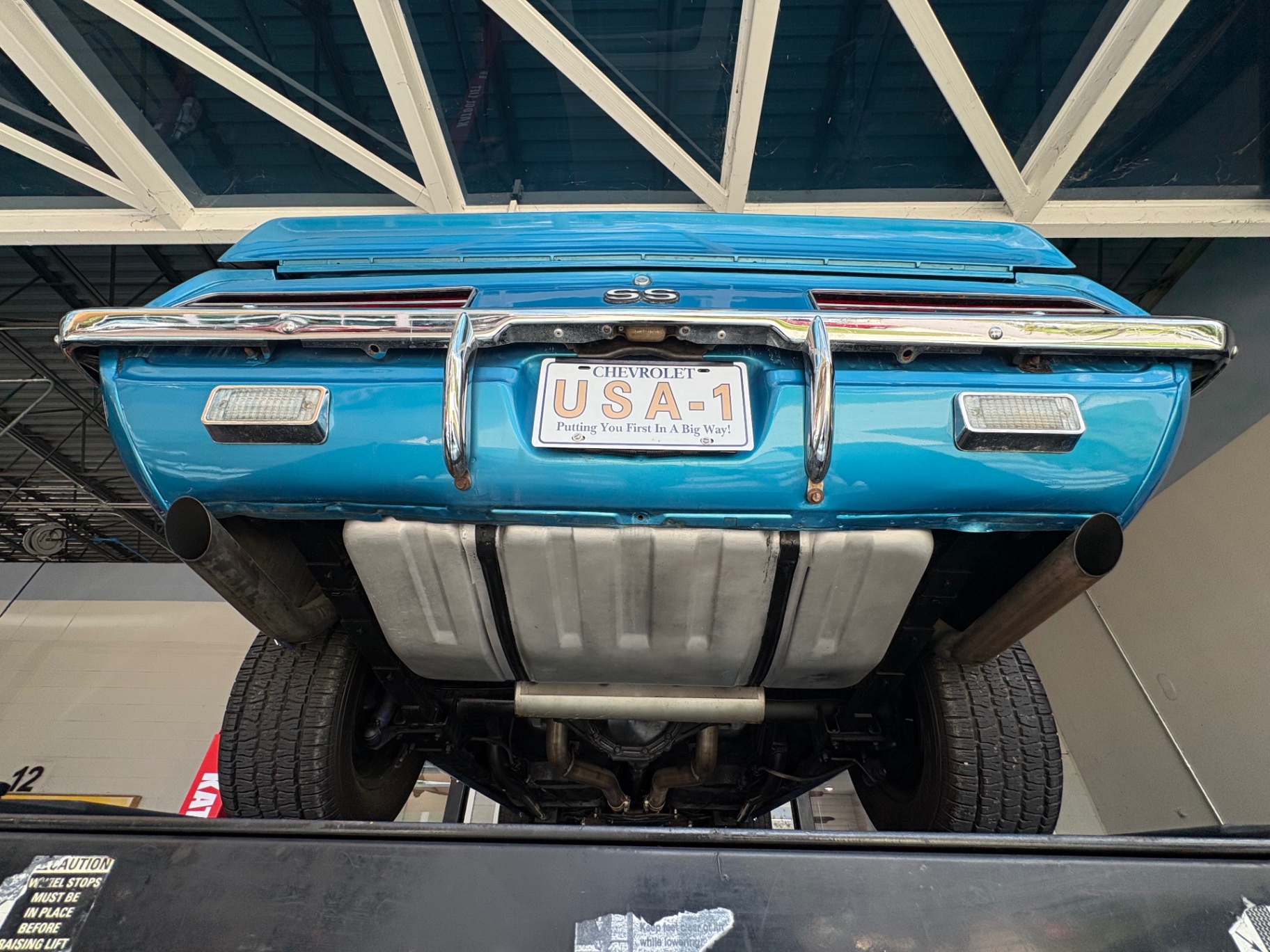
This car wears the SS grille badge up front and SS badging at the rear decklid. Chrome bumpers are present front and rear and show good quality. The Goodmark cowl hood adds visual interest and functional hood clearance without looking out of place on the car. Front and rear spoilers are fitted, which were period-available options and are consistent with the SS package's sporting character.
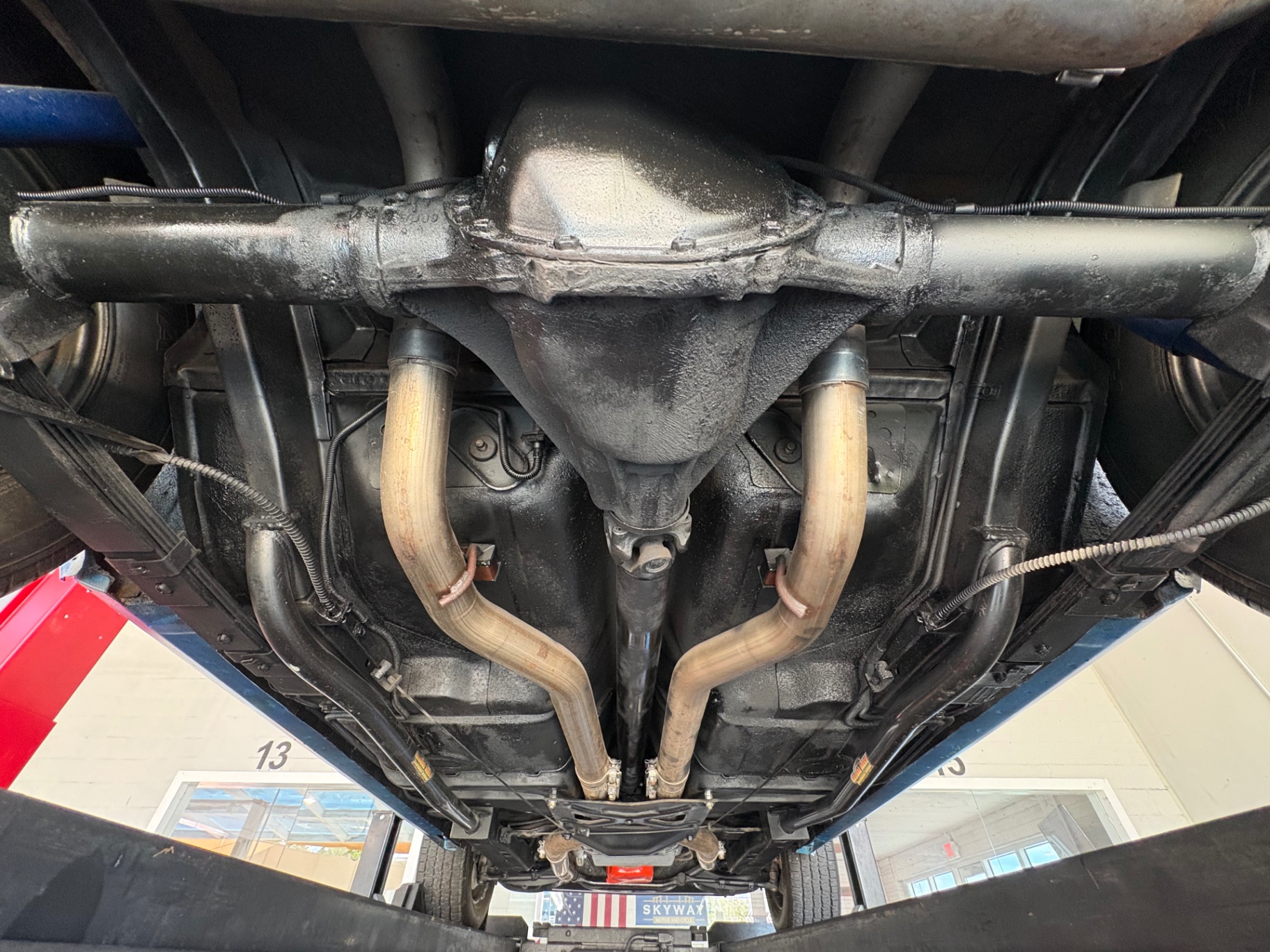
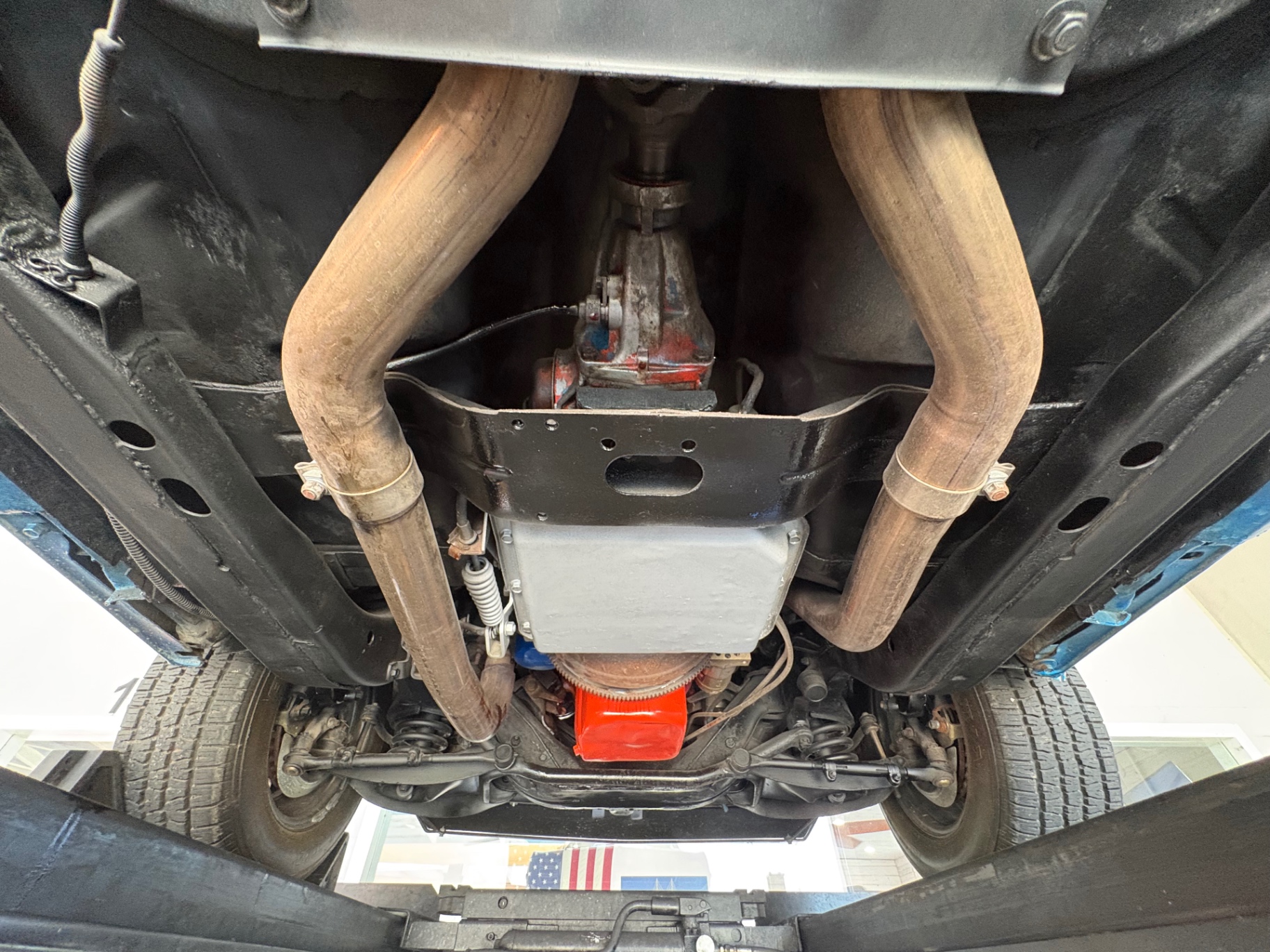
The Rally wheels are correct for the SS and are mounted with BFGoodrich Radial T/A tires — a widely respected period-appropriate radial that is correct for the look of a first-gen Camaro and significantly better in terms of grip and wear compared to the bias-ply tires this car would have originally worn. The undercarriage photographs confirm what the Global West stickers suggest: this car has been detailed underneath, painted, and properly attended to. The floor pans appear solid, the frame connectors are cleanly installed, and the dual exhaust runs neatly from front to back.
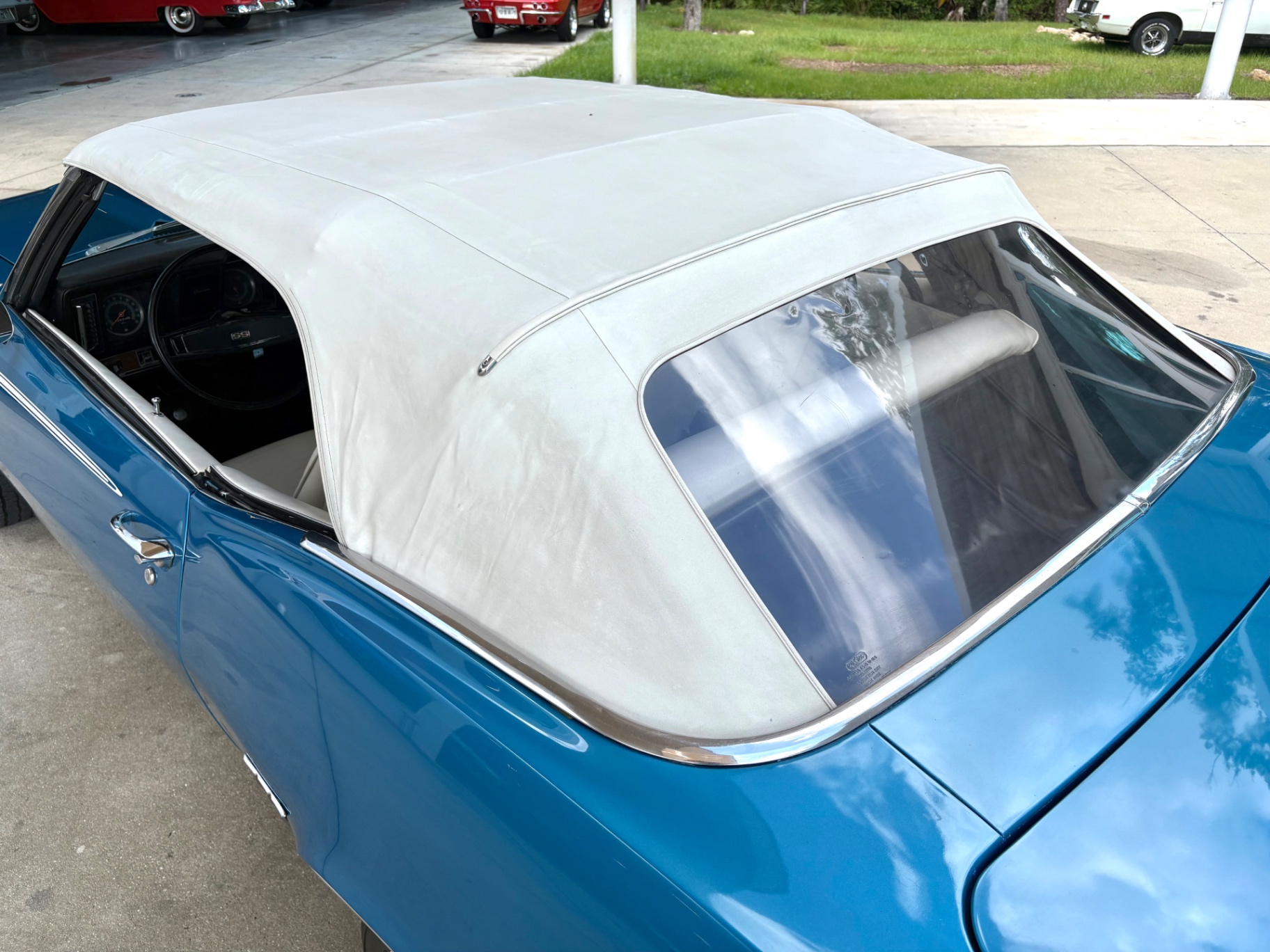
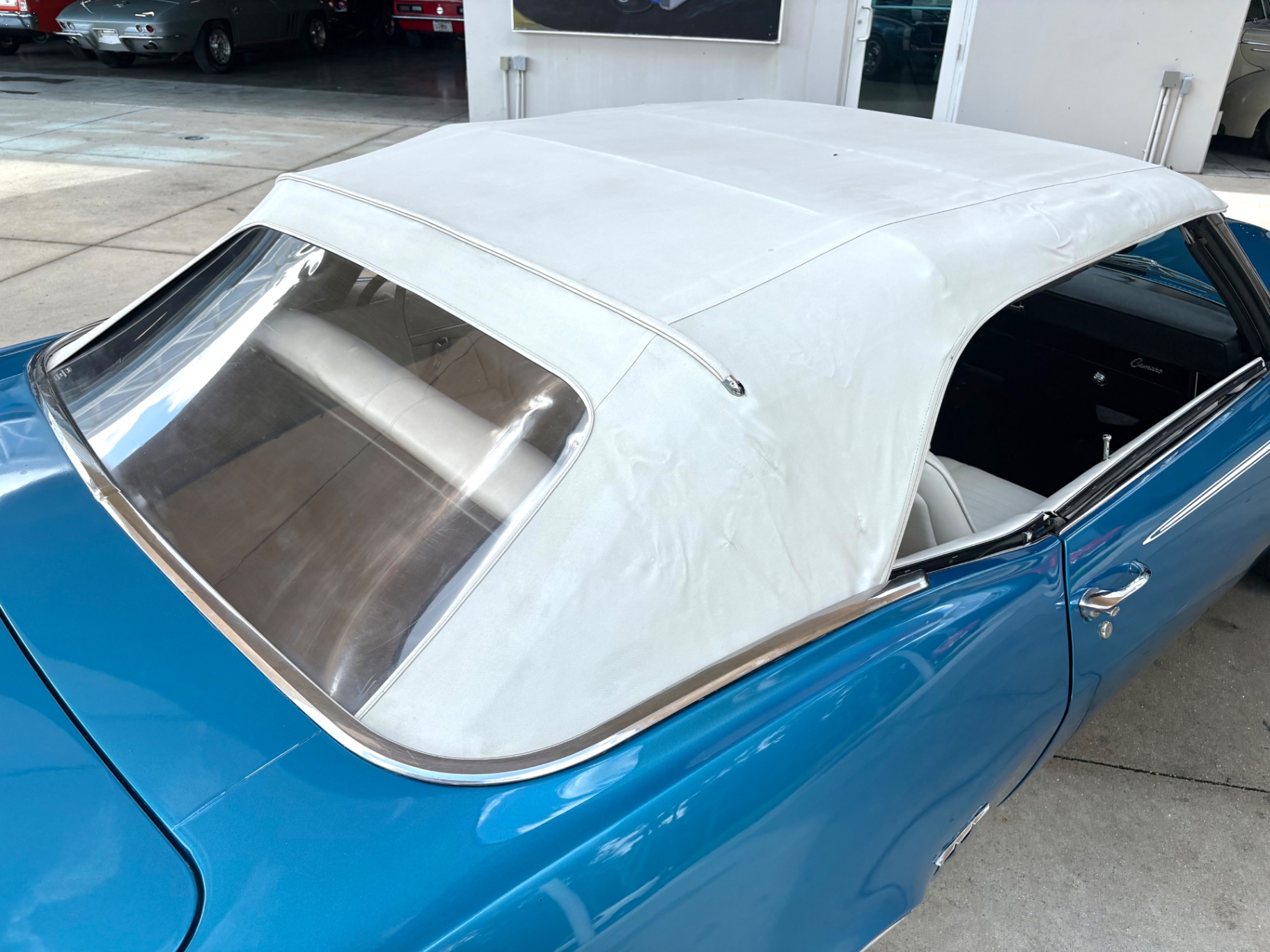
The power convertible top operates electrically, and the black top complements the blue body well. Convertible-top mechanisms on cars this age vary in condition, and the power system here is a practical feature that adds usability to an already well-equipped car.
Conclusion
This 1969 Chevrolet Camaro SS 350 Convertible checks several of the most important boxes for a serious first-gen buyer: genuine SS documentation from the VIN, the correct 350/300hp drivetrain, factory air conditioning, a clean undercarriage, and a set of chassis and mechanical improvements that make it a better car to drive than it was when it left Norwood in 1969. The combination of the blue exterior, white interior, convertible top, and Rally wheels is a visually cohesive package that represents the 1969 Camaro SS at its most appealing.
If you would like more information about this 1969 Chevrolet Camaro SS 350 Convertible or would like to schedule a time to see it in person, call Skyway Classics at 941-254-6608. We are located in Sarasota, Florida and welcome out-of-town buyers.
Disclaimer Information found on the website is presented as given to us by the owner of the car, whether on consignment or from the owner we bought it from. Some Photos, materials for videos, descriptions and other information are provided by the consignor/seller and is deemed reliable, but Skyway Classics does not warranty or guarantee this information. Skyway Classics is not responsible for information that may incorrect or a publishing error. The decision to purchase should be based solely on the buyers personal inspection of the vehicle or by a professional inspection service prior to offer or purchase being made.
1969 Chevrolet Camaro RS/SS 350 Convertible — Blue with White Interior, 350/300hp V8, Loaded with Upgrades
Why This Car Is Special
The 1969 Chevrolet Camaro SS 350 Convertible sits at an interesting intersection in muscle car history. The first-generation Camaro ran from 1967 through 1969, and most enthusiasts agree that the 1969 model year represents the high point of that generation — it got a restyled body with a longer, lower, and more aggressive look than the 1967 and 1968 cars, while retaining the same basic platform. Chevrolet sold 243,085 Camaros in 1969, making it the most popular year of the first generation by a wide margin. Of those, convertibles represented a much smaller slice of production, and SS-optioned convertibles with factory air conditioning and power accessories were an even more select group.
The VIN on this car decodes to a 1969 Camaro convertible (body code 67, indicating the open-top body style) built at the Norwood, Ohio assembly plant, with the 350ci/300hp V8 and automatic transmission. The "SS" designation in the VIN confirms this car left the factory as a genuine Super Sport, not a badge-added clone.
What makes this particular 1969 Camaro SS 350 Convertible worth a close look is the combination of a correct, numbers-relevant drivetrain with a list of thoughtfully chosen upgrades that improve the driving experience without destroying the car's character. The undercarriage is clean, the body is straight, and someone has clearly spent time and money getting this car right from the ground up.
Features List
- 350ci V8, 300 horsepower - Turbo-Hydramatic 3-speed automatic transmission - RS/SS Trim Package - Convertible body style with power top - GM 12-bolt rear axle with multi-leaf springs - Global West frame connectors - Power front disc brakes with power brake booster - Power steering - Factory air conditioning - Astro Ventilation system - SS steering wheel - Bucket seats, front and rear - Factory center console - Goodmark steel cowl induction hood - Detroit Speed electric headlight kit - Front and rear spoilers - Rally wheels with BFGoodrich Radial T/A tires - Dual exhaust - Aftermarket stereo - Chrome bumpers, front and rear - SS grille badge - Clean undercarriage
Mechanical
The 350/300hp small-block V8 was the standard SS engine in 1969. At the time, Chevrolet offered the SS package with either the 350 at 300hp or the 396 big-block in several states of tune. The 350 had a reputation for being a more balanced choice — it was lighter up front than the 396, which made the car easier to handle, and the small-block's powerband was well-suited to street driving. Backed by the Turbo-Hydramatic automatic, this is a car you can drive anywhere without drama.
Beyond the drivetrain, the real story here is what has been done to the chassis and suspension. Global West frame connectors are welded in under the car, which is a well-regarded structural improvement for any unibody first-gen Camaro. These connectors tie the front subframe to the rear frame rails, significantly reducing body flex — something that matters on any unibody car, and especially on a convertible that lacks the rigidity of a coupe's roof structure. Anyone who has driven a first-gen Camaro convertible without frame connectors back-to-back with one that has them installed will notice the difference immediately.
The rear axle is a GM 12-bolt unit with multi-leaf springs, which is the correct and desirable setup for this application. The 12-bolt was stronger than the 10-bolt used in many of the lighter-duty Camaro applications and has long been the preferred unit among first-gen owners. Power front disc brakes provide confident stopping, and the power steering makes the car easy to maneuver at parking lot speeds without dulling the feedback at highway speeds.
The Goodmark steel cowl hood is a quality reproduction piece that fits and functions correctly, and the Detroit Speed electric headlight kit replaces the vacuum-operated headlight doors that were a known weak point on these cars. The vacuum system on original 1969 Camaros could be slow and unreliable; the electric conversion solves that problem cleanly.
Interior
Inside, this 1969 Camaro SS Convertible wears a white vinyl interior that presents very well in photographs and in person. The bucket seats are covered in white vinyl front and rear, and the material shows its age without any significant damage. The factory console runs down the center of the cabin with the automatic shifter positioned correctly in the console gate, with the PRND321 indicator visible through the console lens — a detail that lets you know this is how the car was built, not converted from a floor-shift manual.
The SS steering wheel is in place, which is the correct three-spoke design specific to Super Sport models. The dashboard retains its factory layout, with the speedometer and fuel gauge positioned in the twin-pod instrument cluster that is one of the more distinctive interior features of the 1969 redesign. The Astro Ventilation label is visible on the dash — this was Chevrolet's flow-through ventilation system that used vents in the dash and exhaust ports in the rear of the cabin to move air through without opening windows, a feature that was factory-installed on this car. With the factory air conditioning also present, this Camaro is set up for comfortable top-up cruising in warm weather as well as top-down driving.
An aftermarket stereo has been fitted in the dash, a practical swap that allows for modern audio without significant modification to the surrounding dash structure. The woodgrain console trim is intact, and the overall cabin environment is consistent with what you would expect from a well-maintained, periodically refreshed first-gen Camaro.
Exterior
The body is finished in blue — a vivid, period-correct hue that suits the aggressive body lines of the 1969 Camaro well. The 1969 body style was a significant departure from the 1967-68 design, featuring a longer nose, revised character lines, and a more sculpted overall shape. The front end, in particular, with its recessed headlights and wide SS-badged grille, is one of the most recognized designs in American automotive history.
This car wears the SS grille badge up front and SS badging at the rear decklid. Chrome bumpers are present front and rear and show good quality. The Goodmark cowl hood adds visual interest and functional hood clearance without looking out of place on the car. Front and rear spoilers are fitted, which were period-available options and are consistent with the SS package's sporting character.
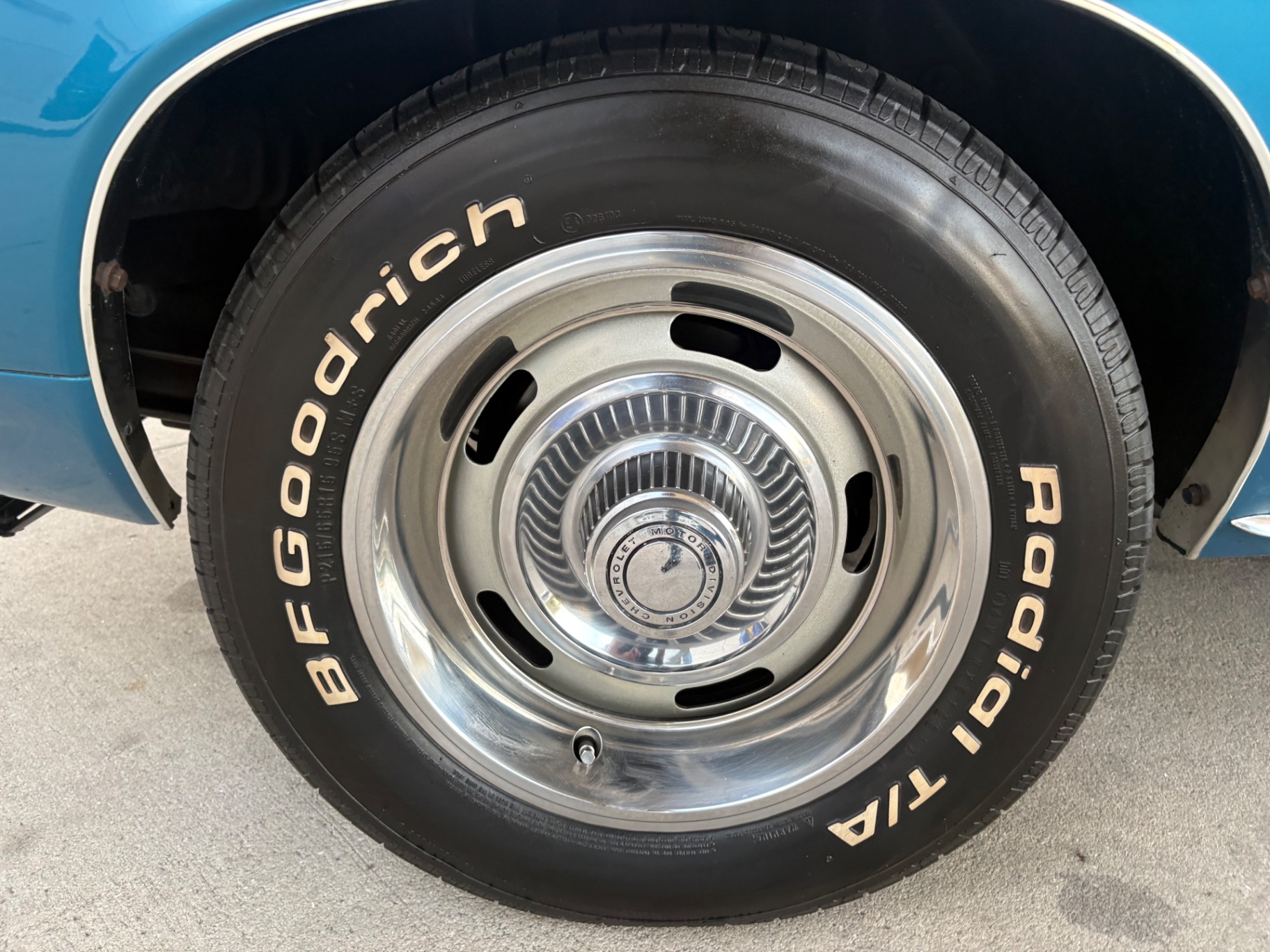
The Rally wheels are correct for the SS and are mounted with BFGoodrich Radial T/A tires — a widely respected period-appropriate radial that is correct for the look of a first-gen Camaro and significantly better in terms of grip and wear compared to the bias-ply tires this car would have originally worn. The undercarriage photographs confirm what the Global West stickers suggest: this car has been detailed underneath, painted, and properly attended to. The floor pans appear solid, the frame connectors are cleanly installed, and the dual exhaust runs neatly from front to back.
The power convertible top operates electrically, and the black top complements the blue body well. Convertible-top mechanisms on cars this age vary in condition, and the power system here is a practical feature that adds usability to an already well-equipped car.
Conclusion
This 1969 Chevrolet Camaro SS 350 Convertible checks several of the most important boxes for a serious first-gen buyer: genuine SS documentation from the VIN, the correct 350/300hp drivetrain, factory air conditioning, a clean undercarriage, and a set of chassis and mechanical improvements that make it a better car to drive than it was when it left Norwood in 1969. The combination of the blue exterior, white interior, convertible top, and Rally wheels is a visually cohesive package that represents the 1969 Camaro SS at its most appealing.
If you would like more information about this 1969 Chevrolet Camaro SS 350 Convertible or would like to schedule a time to see it in person, call Skyway Classics at 941-254-6608. We are located in Sarasota, Florida and welcome out-of-town buyers.
Disclaimer Information found on the website is presented as given to us by the owner of the car, whether on consignment or from the owner we bought it from. Some Photos, materials for videos, descriptions and other information are provided by the consignor/seller and is deemed reliable, but Skyway Classics does not warranty or guarantee this information. Skyway Classics is not responsible for information that may incorrect or a publishing error. The decision to purchase should be based solely on the buyers personal inspection of the vehicle or by a professional inspection service prior to offer or purchase being made.
1969 Chevrolet
Camaro SS
Why Choose Skyway Classics?
Explore our curated inventory of classic and collector cars—thoughtfully selected, ready to drive, and supported by experts who make ownership simple.
Expert Curation
Every vehicle is hand-selected by our experts for quality, authenticity, and investment potential.
Fast Transactions
Streamlined buying and selling process with quick financing and immediate delivery options.
Only National Dealer With Classic Service & Repair
We’re the only national dealership that services and repairs the classics we sell—before and after the sale.
Nationwide Network
Access to our extensive network of collectors, restorers, and classic car enthusiasts nationwide.
Concierge Ownership Support
From financing and insurance to paperwork, shipping, and titling—we handle the details so you can enjoy the drive.
Passion-Driven Service
We're classic car enthusiasts first, providing personalized service with genuine passion for the hobby.