
1976 Volkswagen
Super Beetle Base
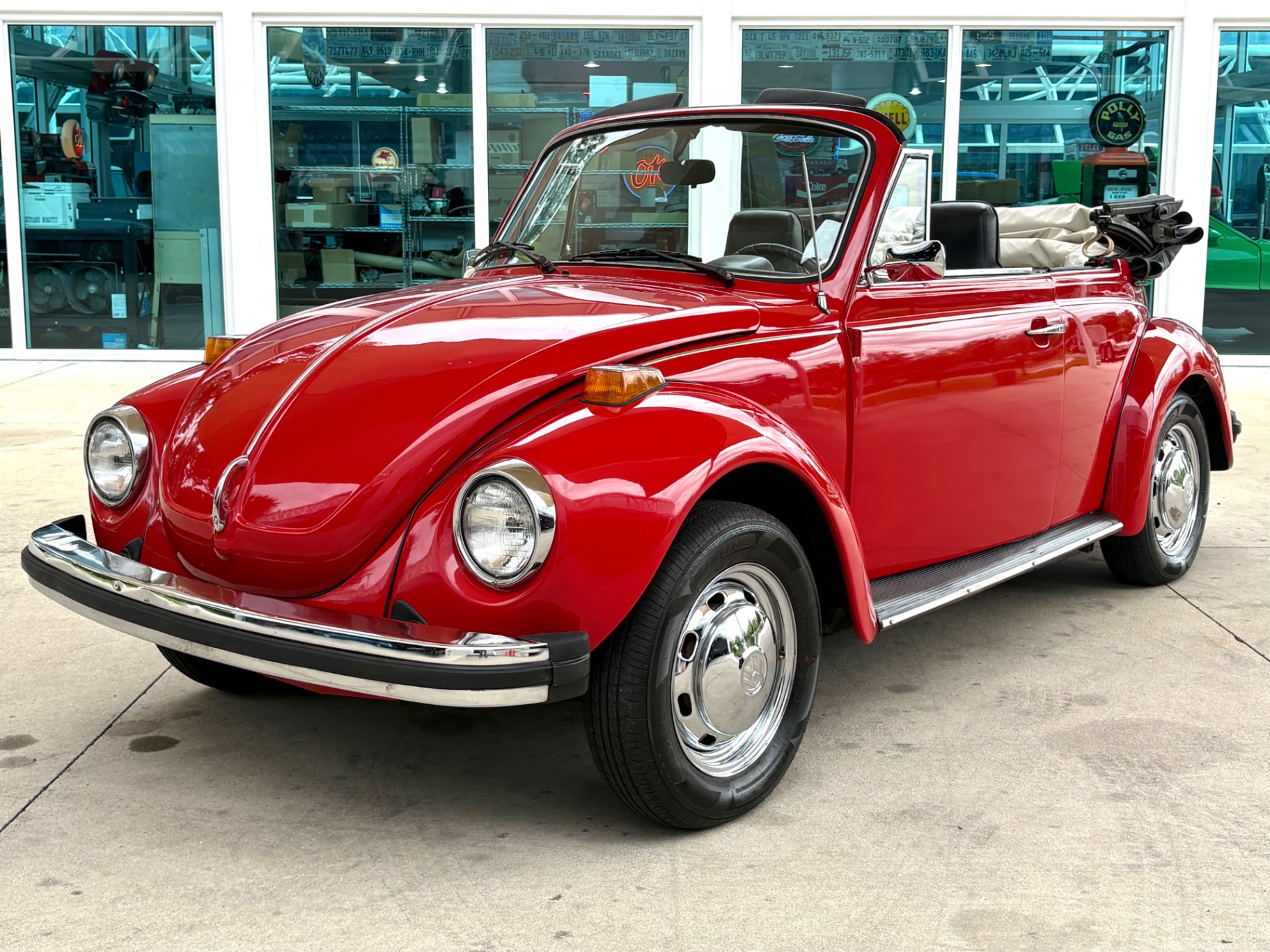
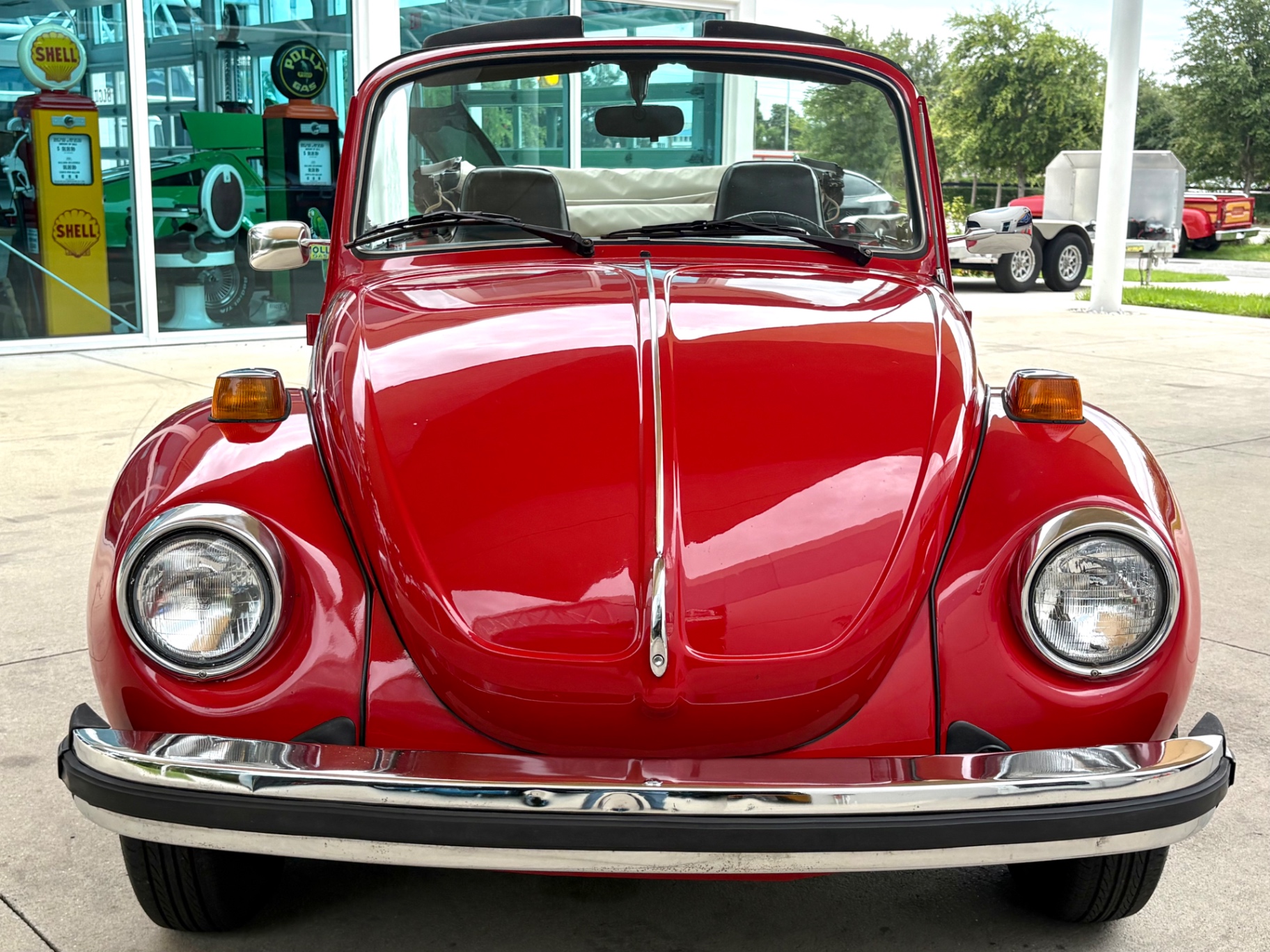
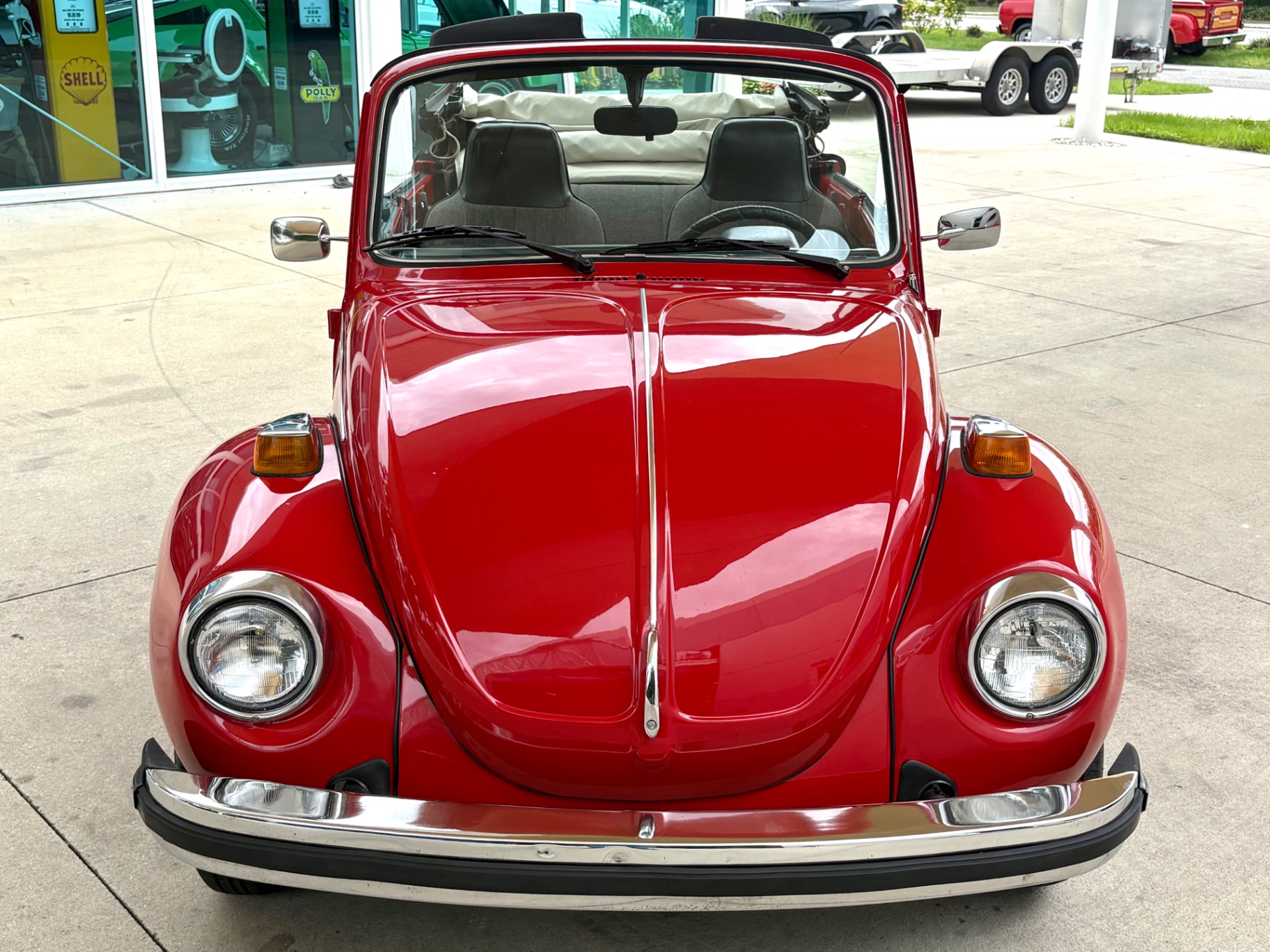
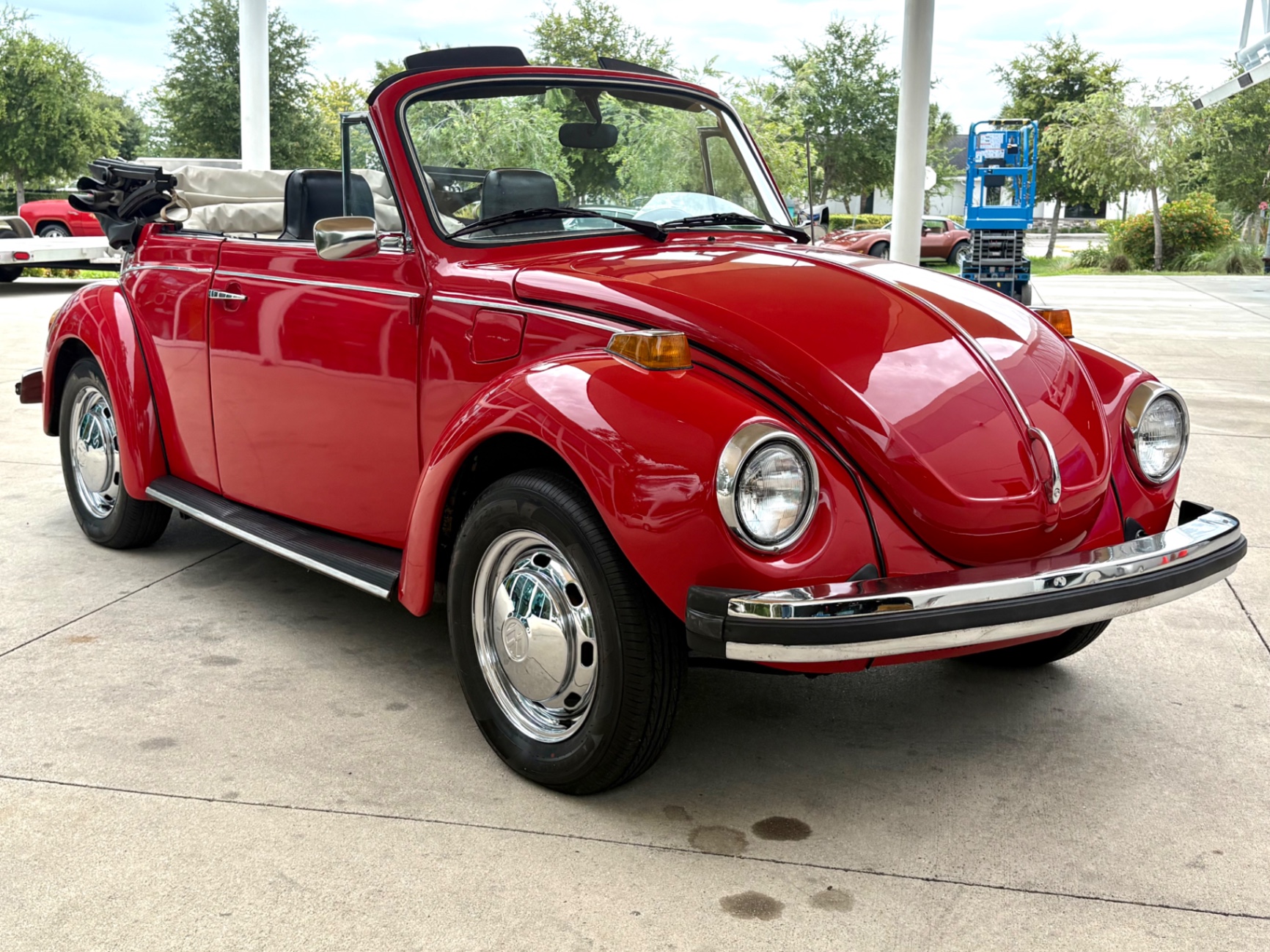
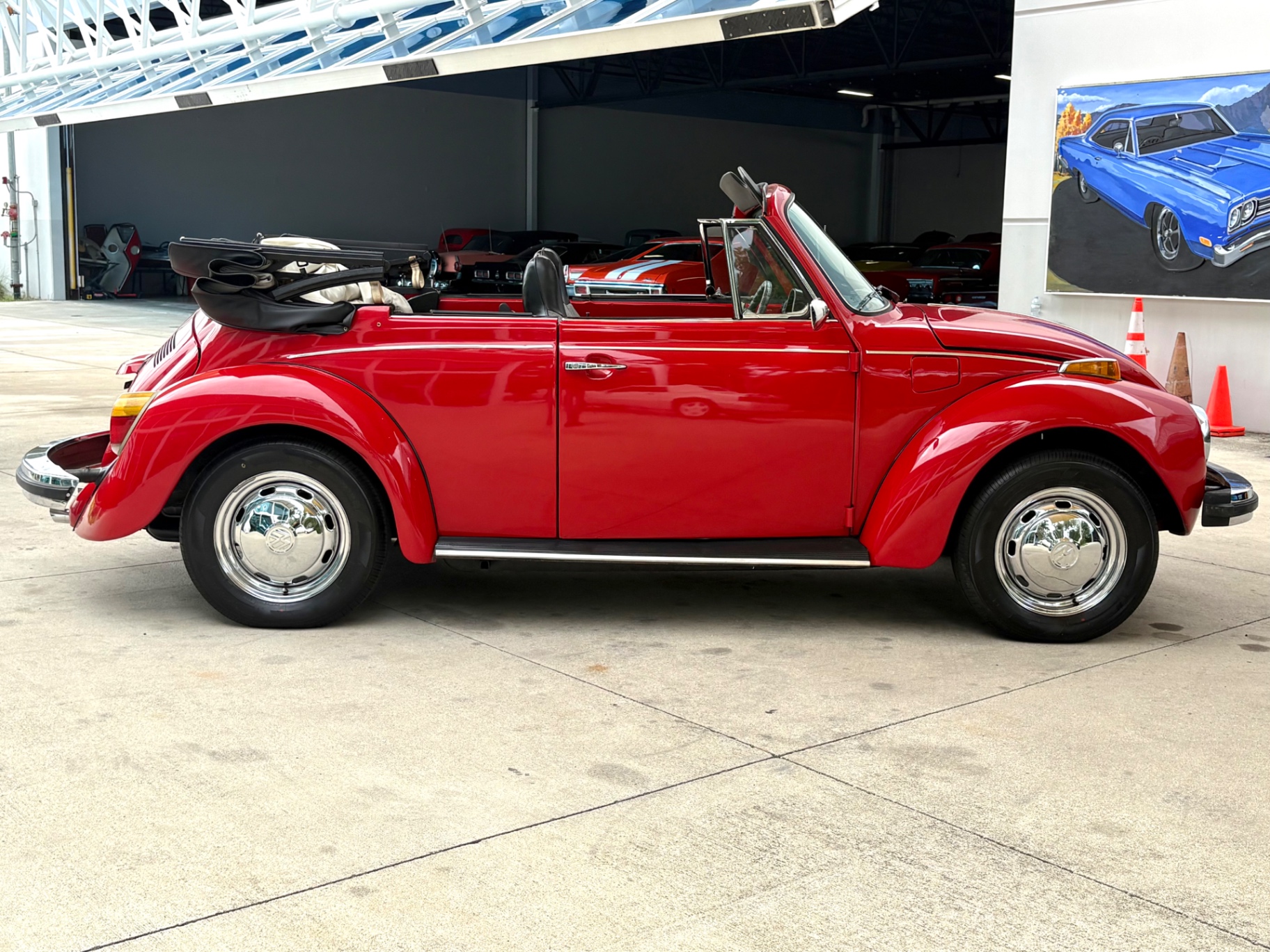
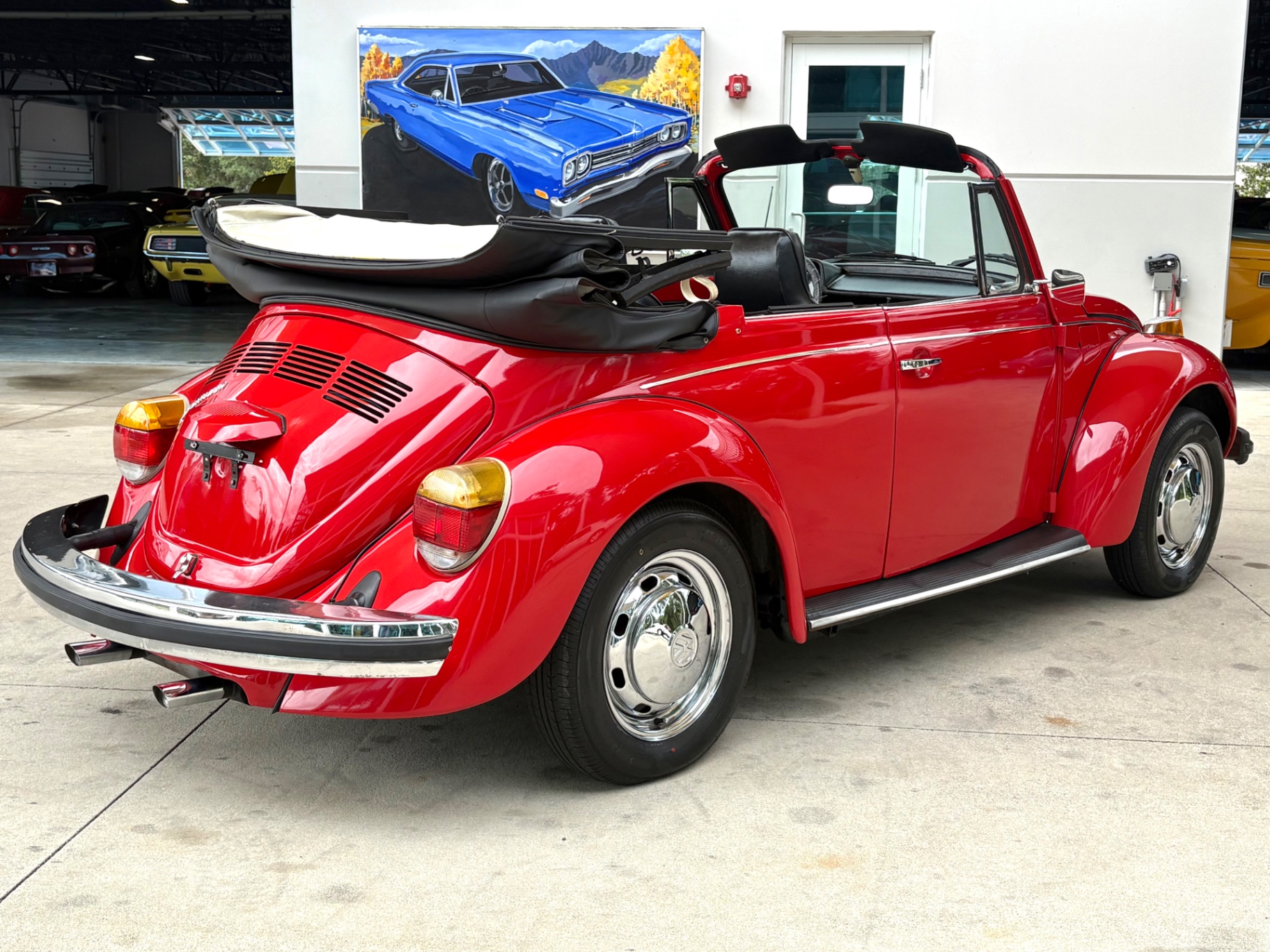
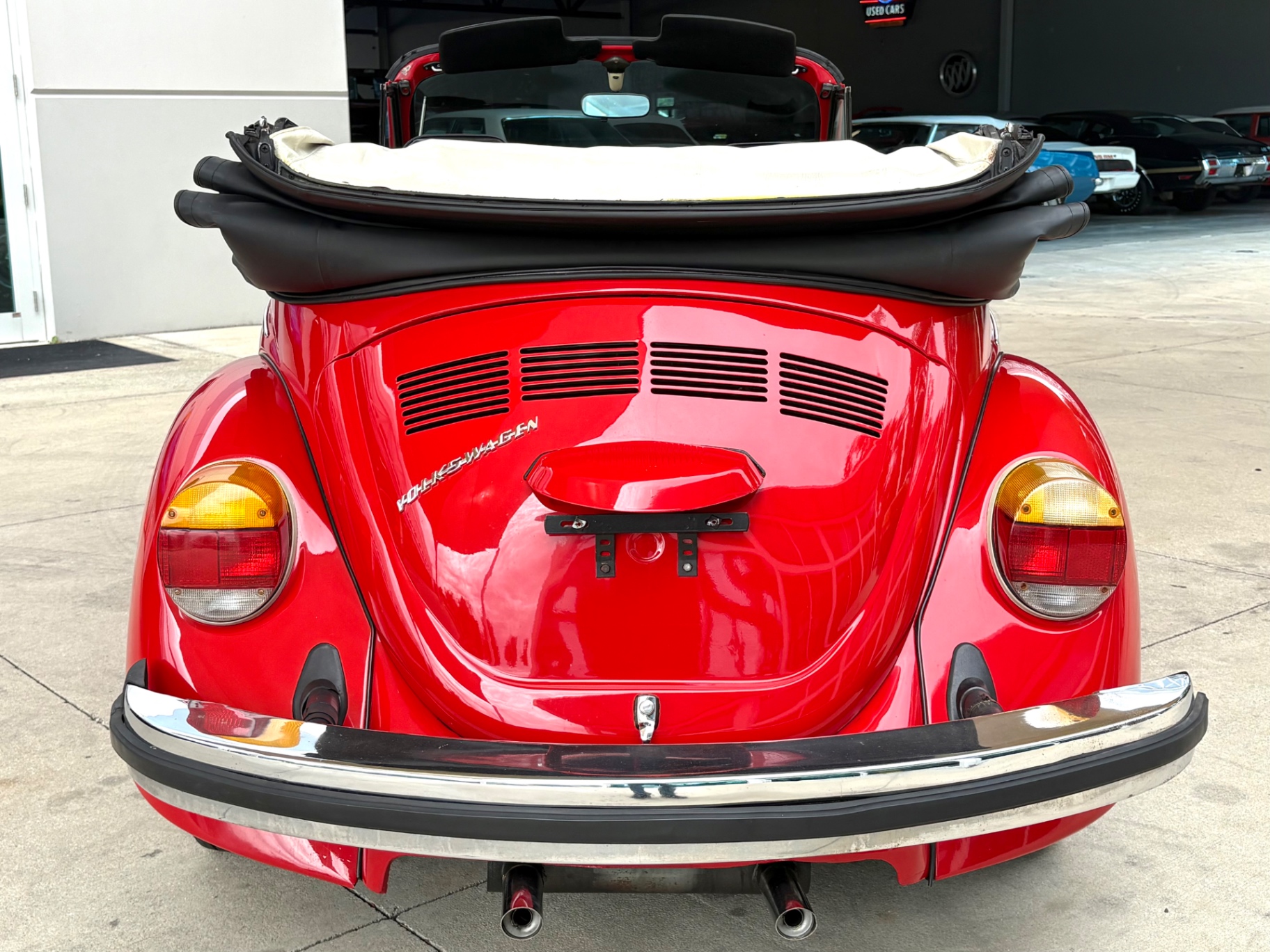
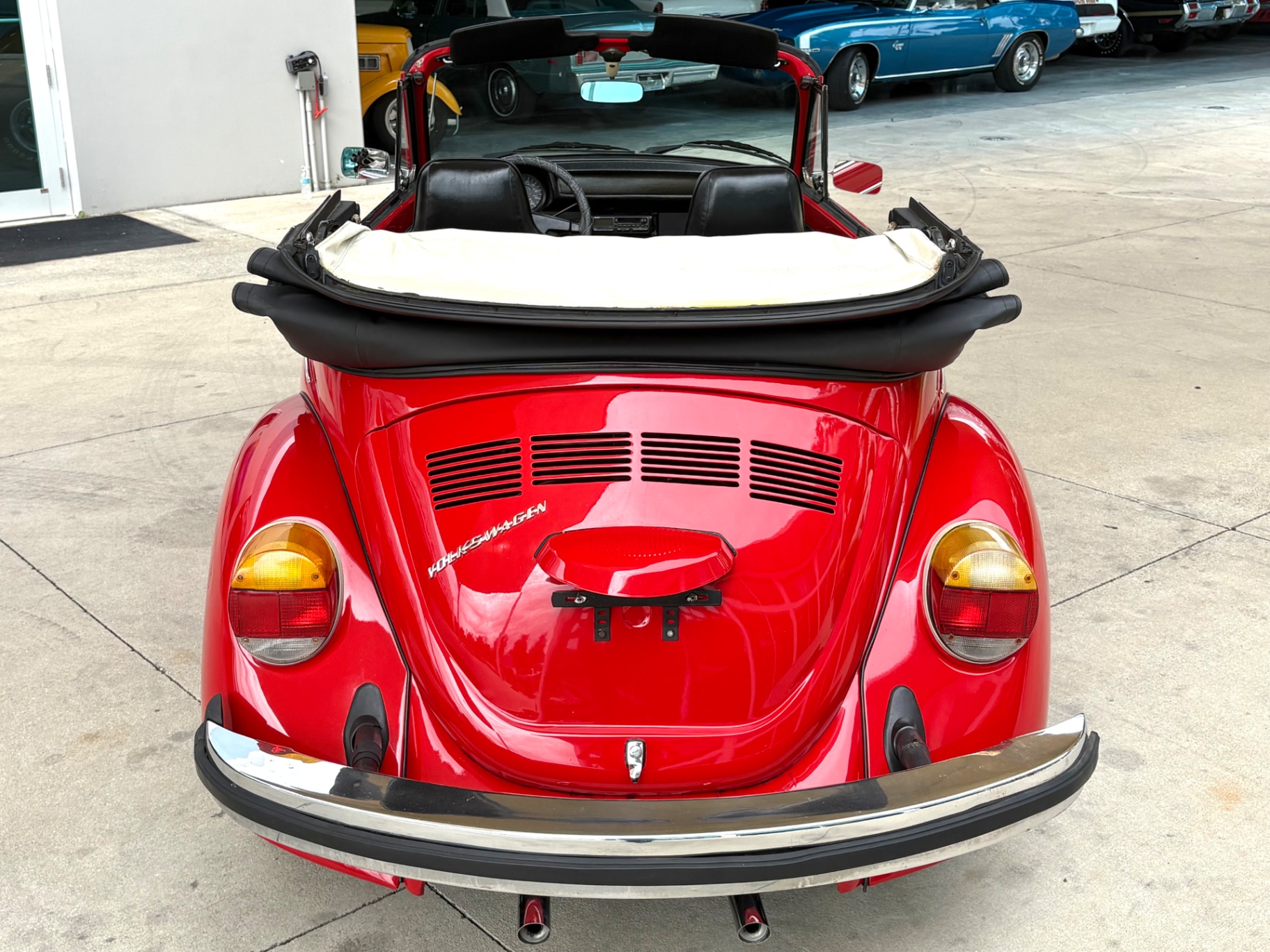
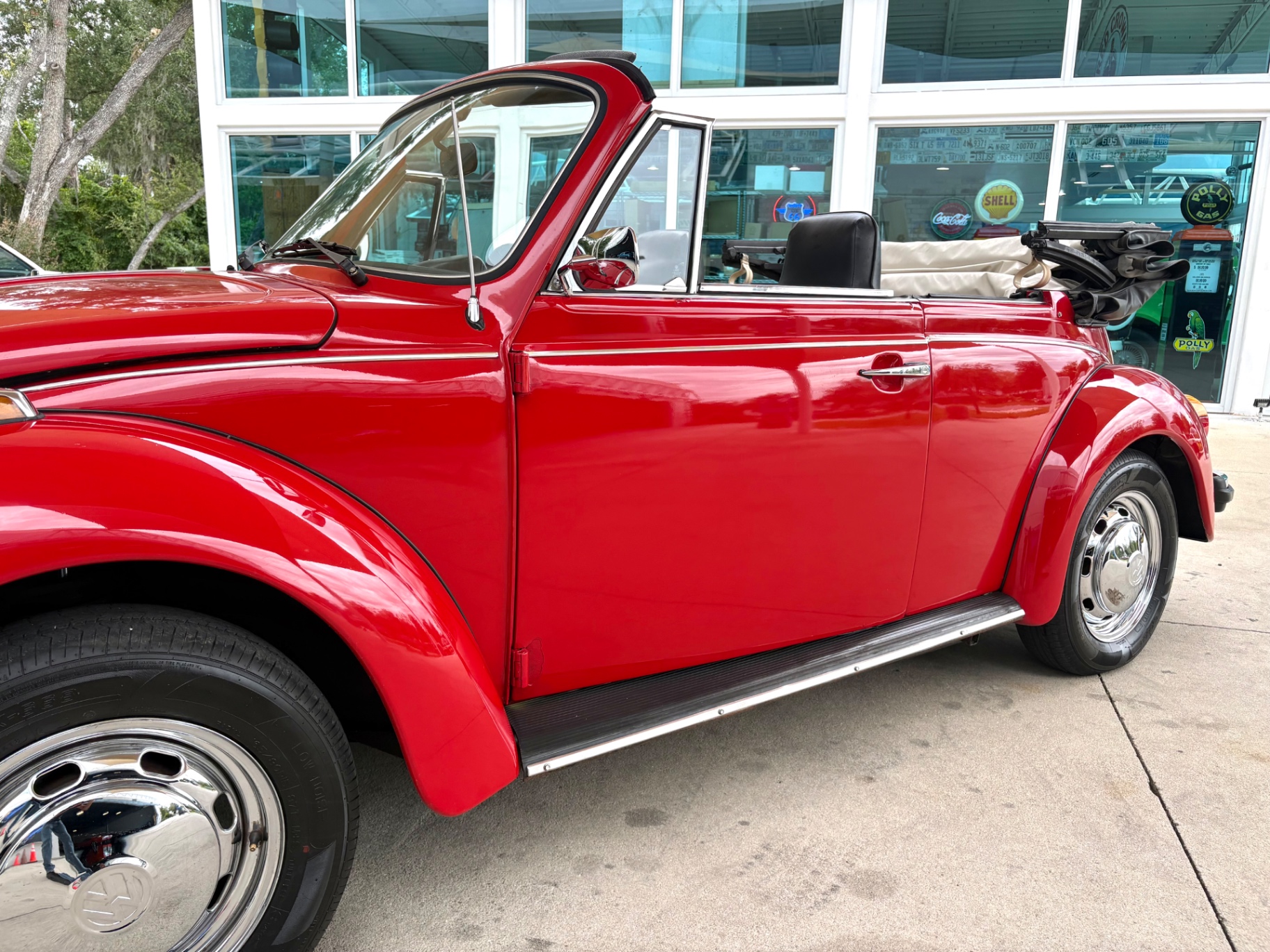
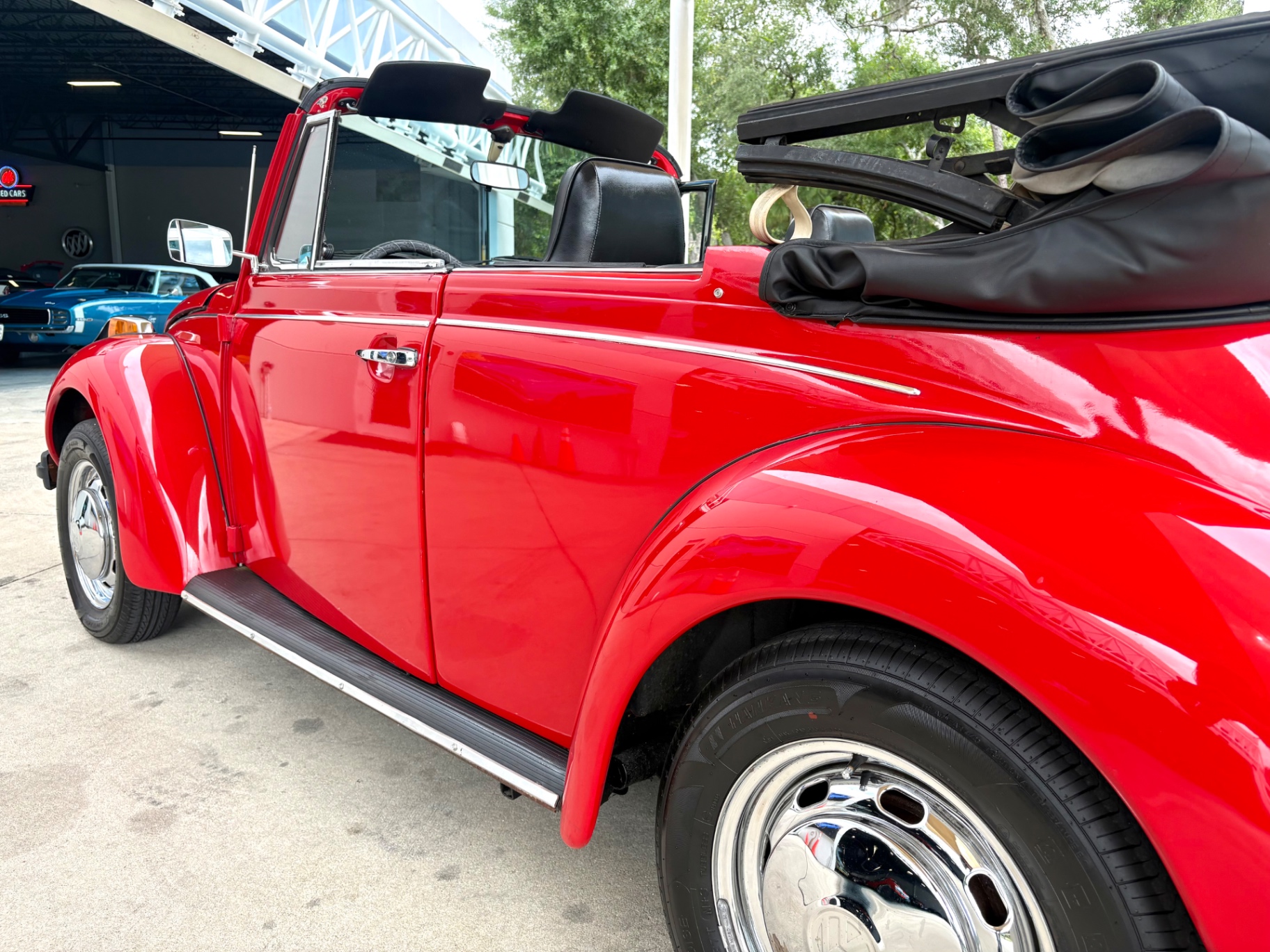
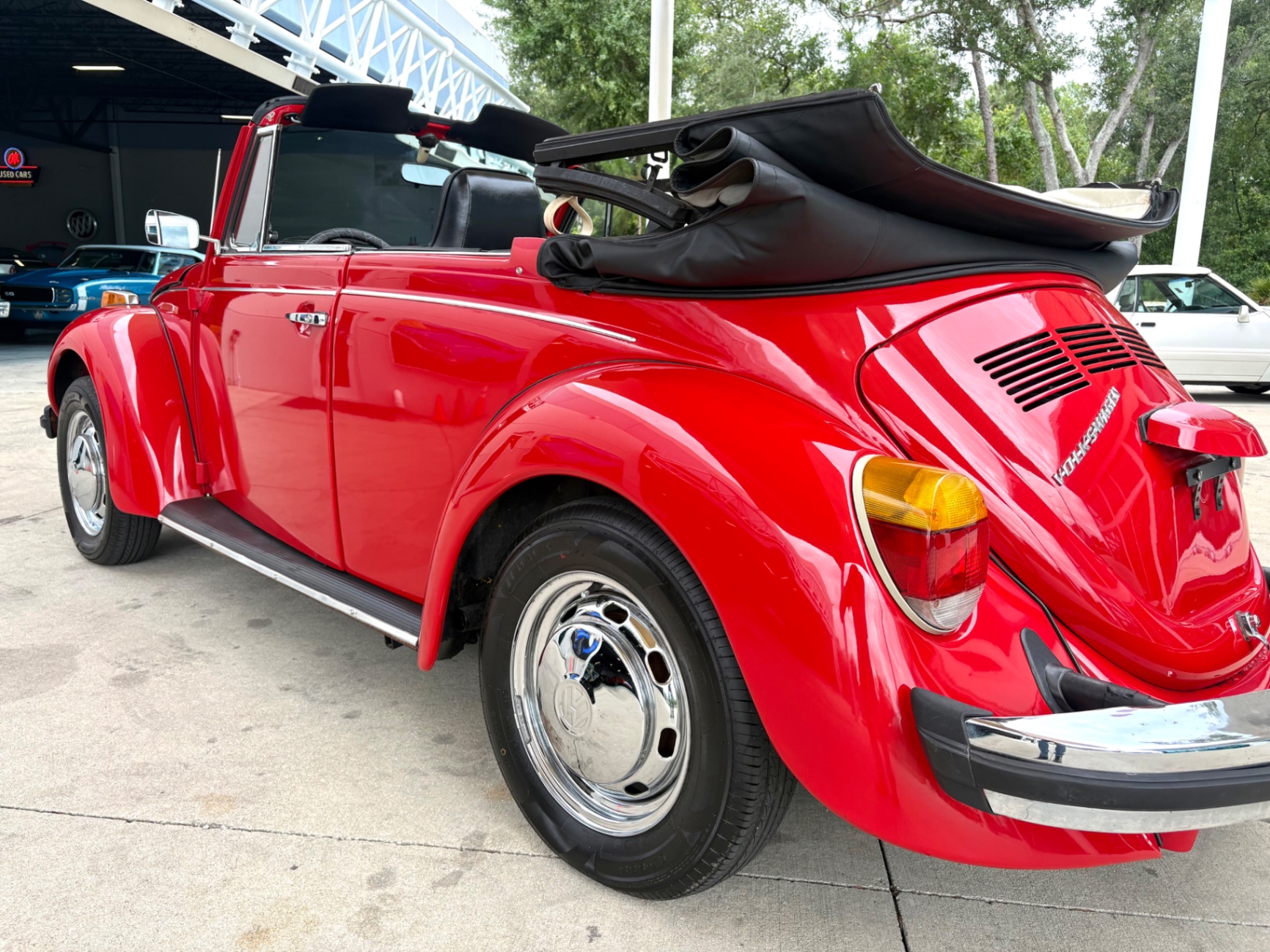
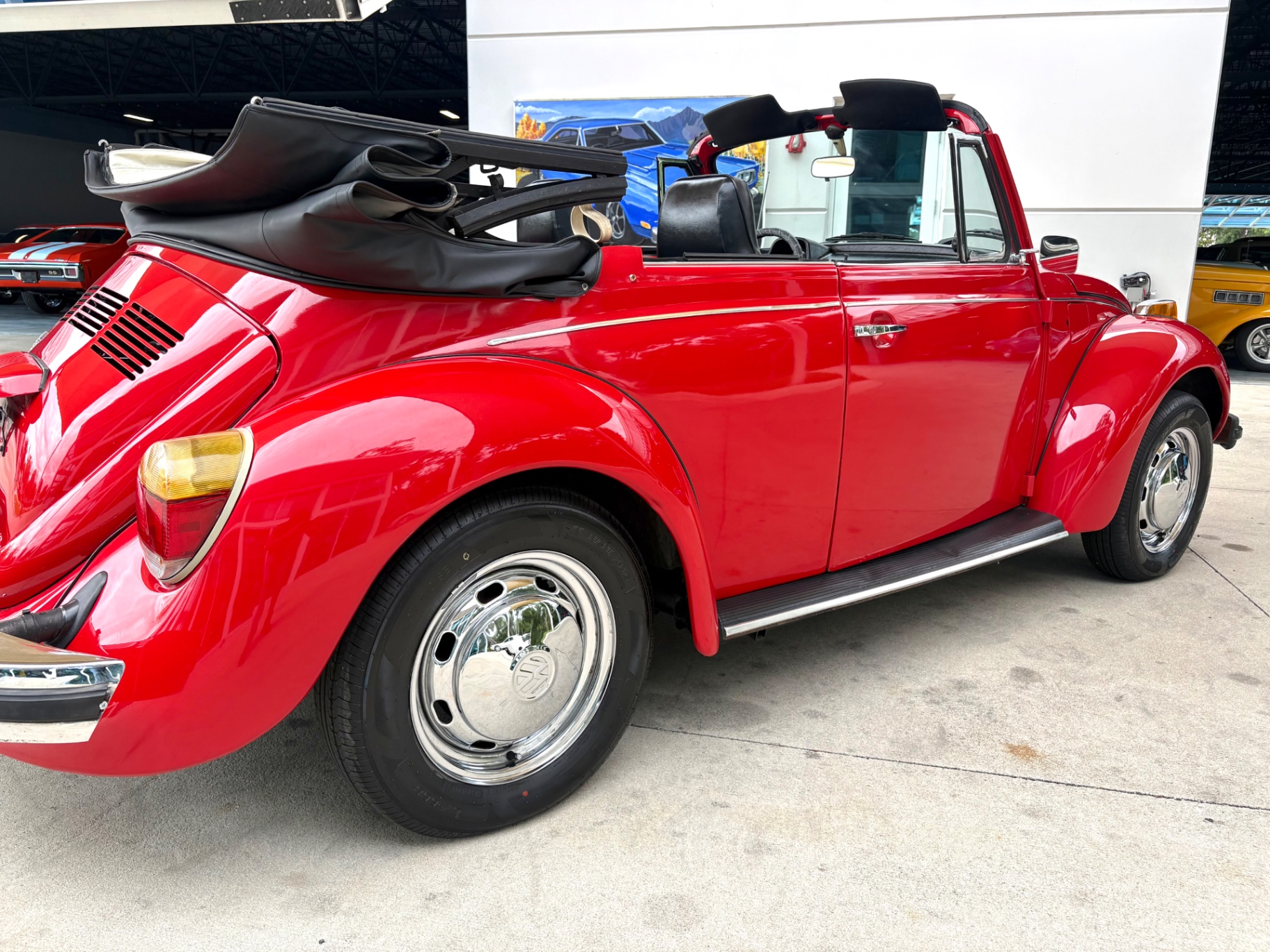
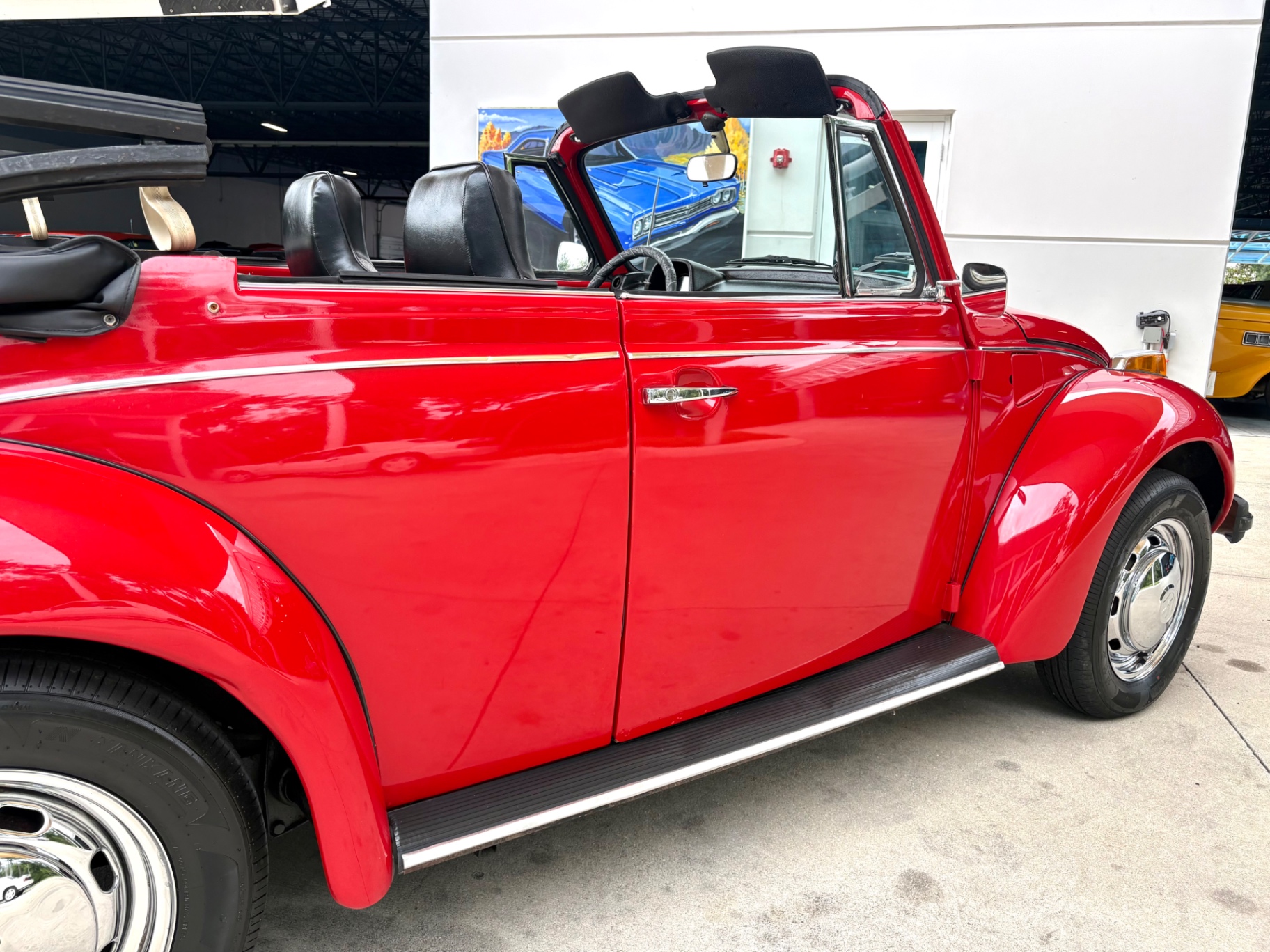
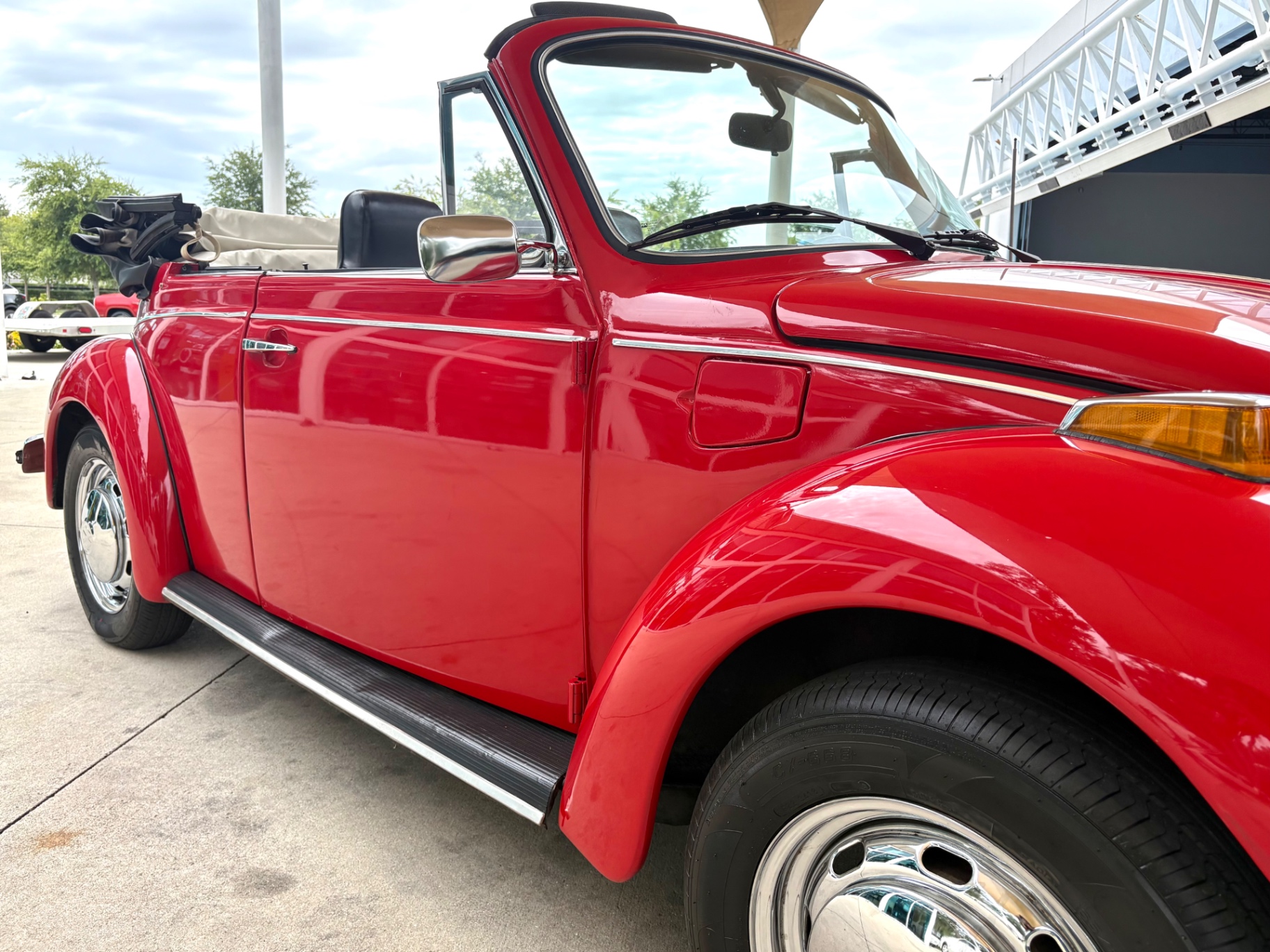
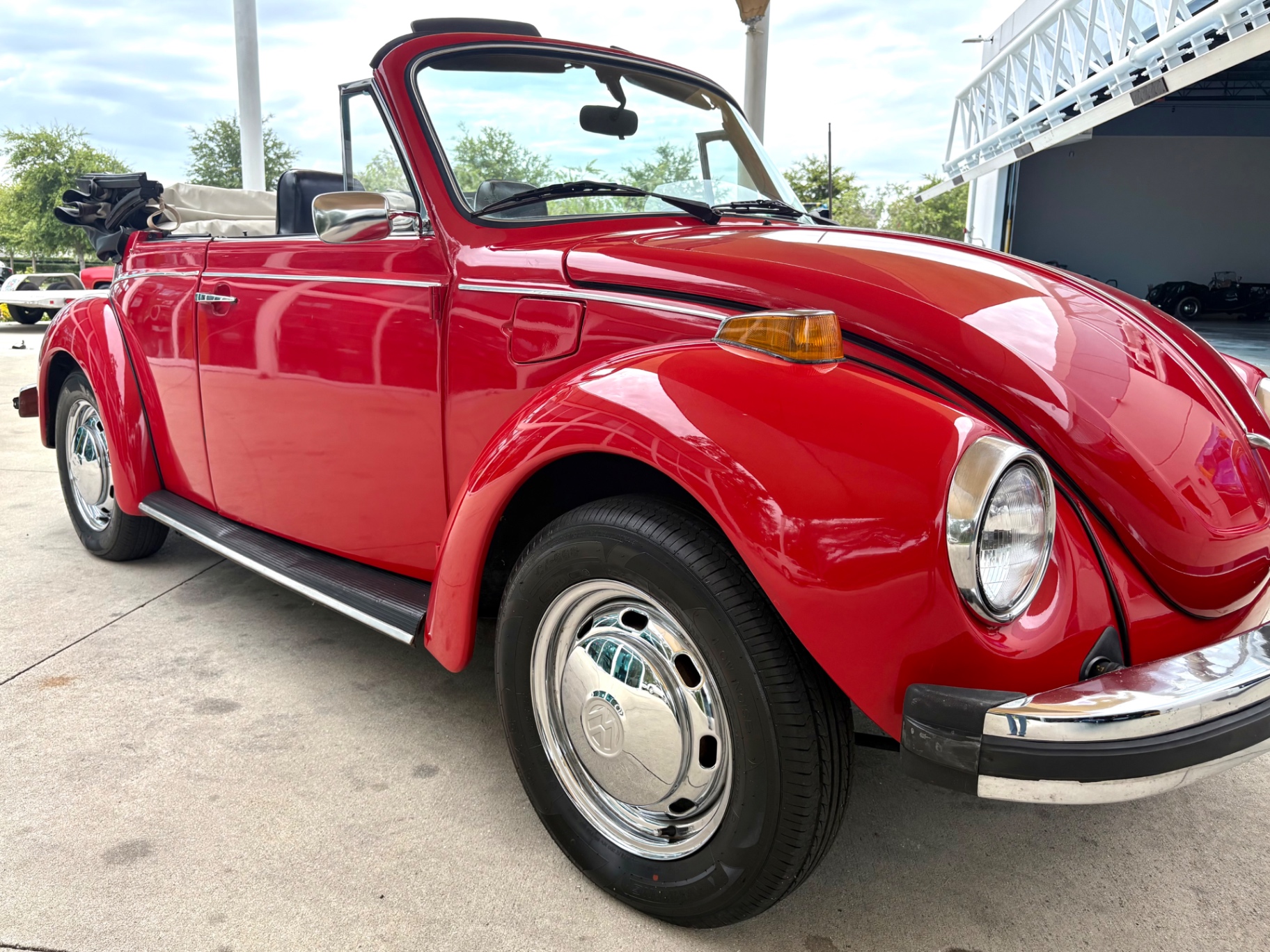
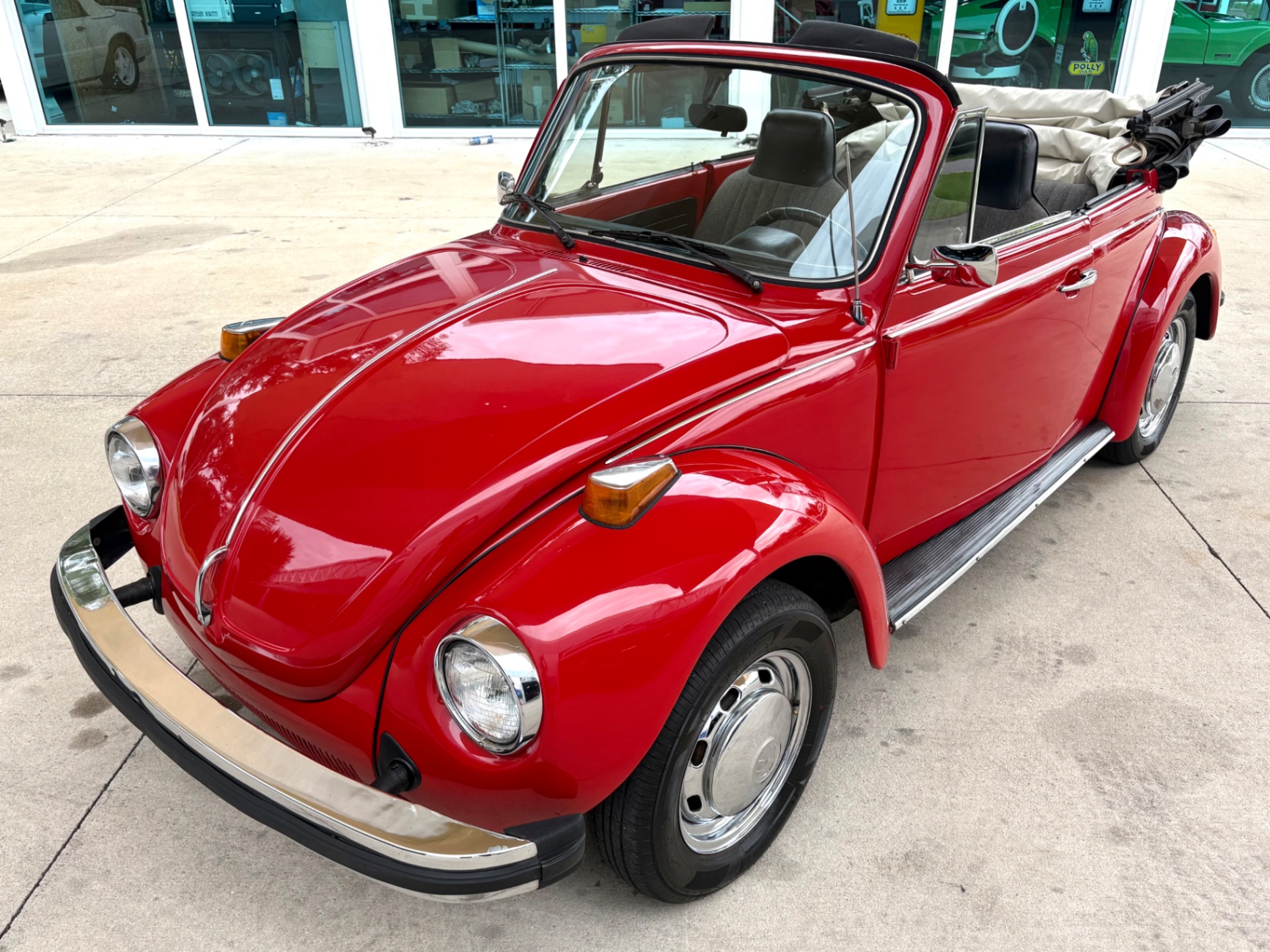
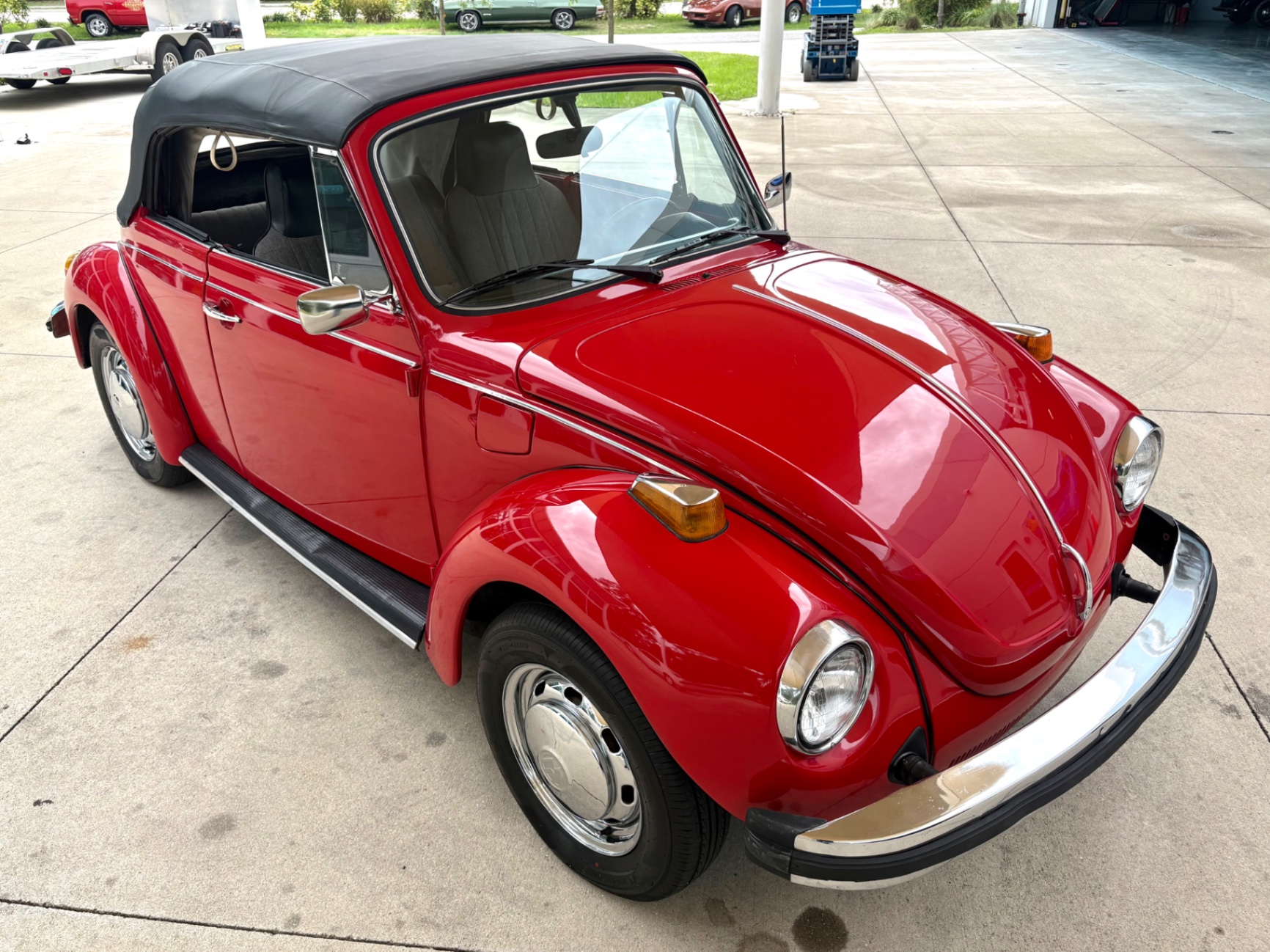
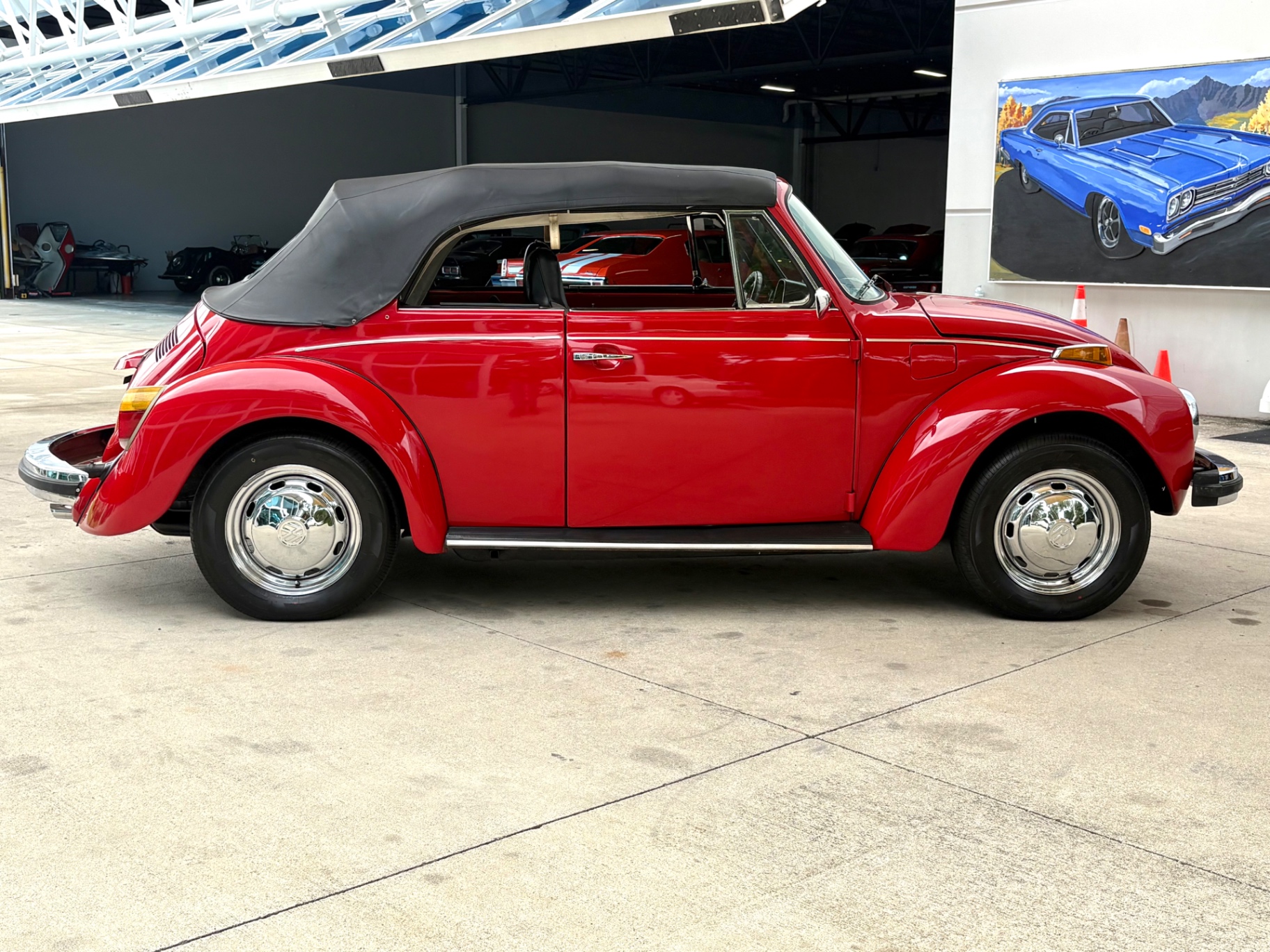
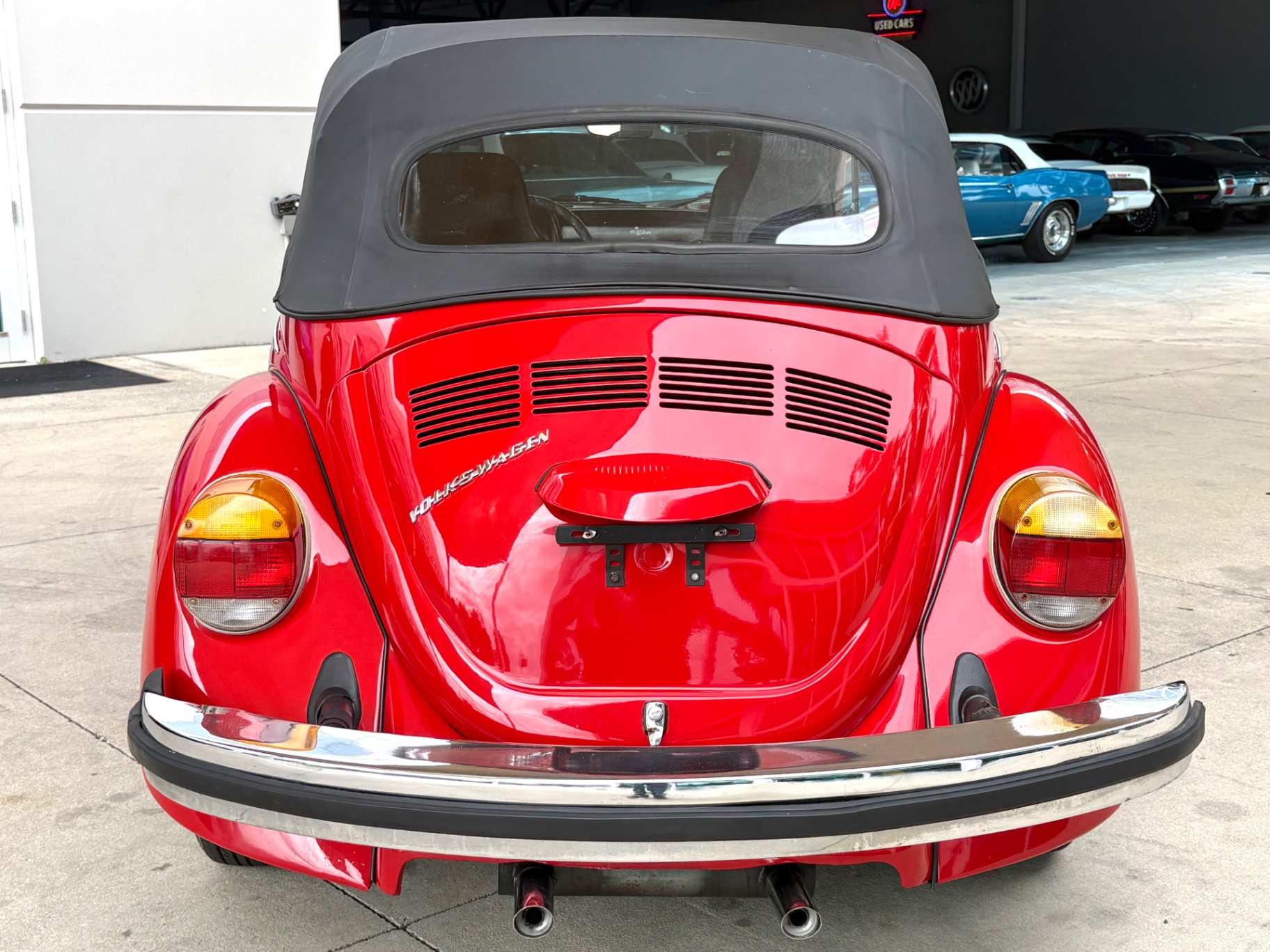
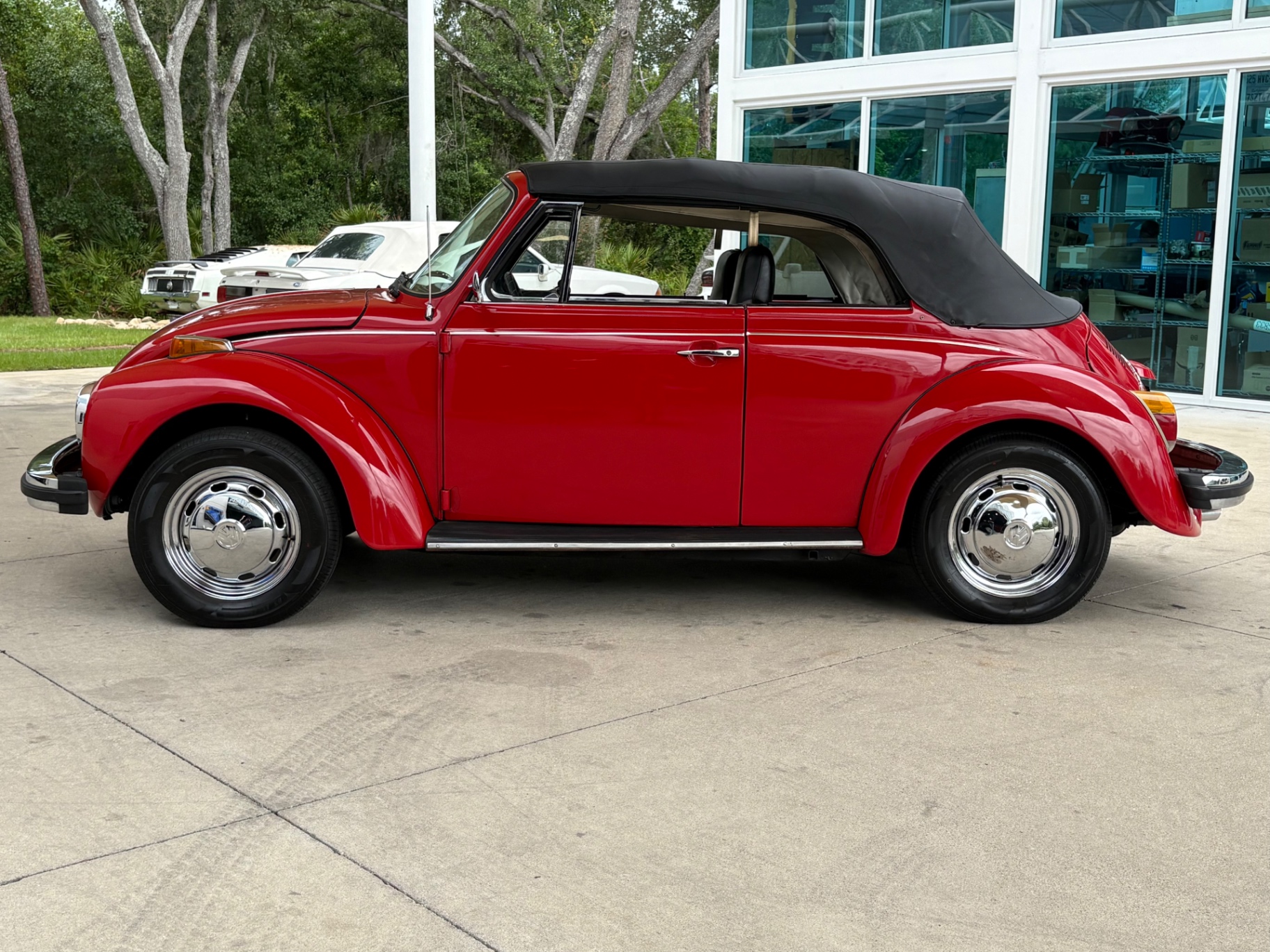
1976 Volkswagen Super Beetle Convertible — Rebuilt Engine, Solid Floor Pans, Red over Gray
Why This Car Is Special
The 1976 Volkswagen Super Beetle Convertible sits at an interesting crossroads in VW history. By 1976, Volkswagen had already begun phasing out the Beetle in most markets, shifting its focus to the water-cooled Golf and Jetta platforms. The United States was one of the last major markets to receive the Beetle, and the convertible version — built exclusively by Karmann in Osnabrück, Germany — was kept in production through 1979 specifically because American demand remained strong. That makes a 1976 Super Beetle Convertible a late-run example of a car that Volkswagen was deliberately winding down, which gives it a distinct place in the model's long history.
The Super Beetle itself, known internally as the Type 1 with the "1302" or "1303" designation depending on the year, was introduced in 1971 as an evolution of the original Beetle. The key differences between a Super Beetle and a standard Beetle are meaningful to anyone who has owned both. The Super Beetle uses a MacPherson strut front suspension in place of the original torsion bar setup, which noticeably improves ride quality and handling. The front trunk was also redesigned with a curved windshield on the 1303 variant, yielding significantly more luggage space than the flat-glass original. The 1303-based convertible, which this car is, also features the curved panoramic windshield — a detail that collectors specifically look for when distinguishing late Super Beetle Cabriolets from earlier models.
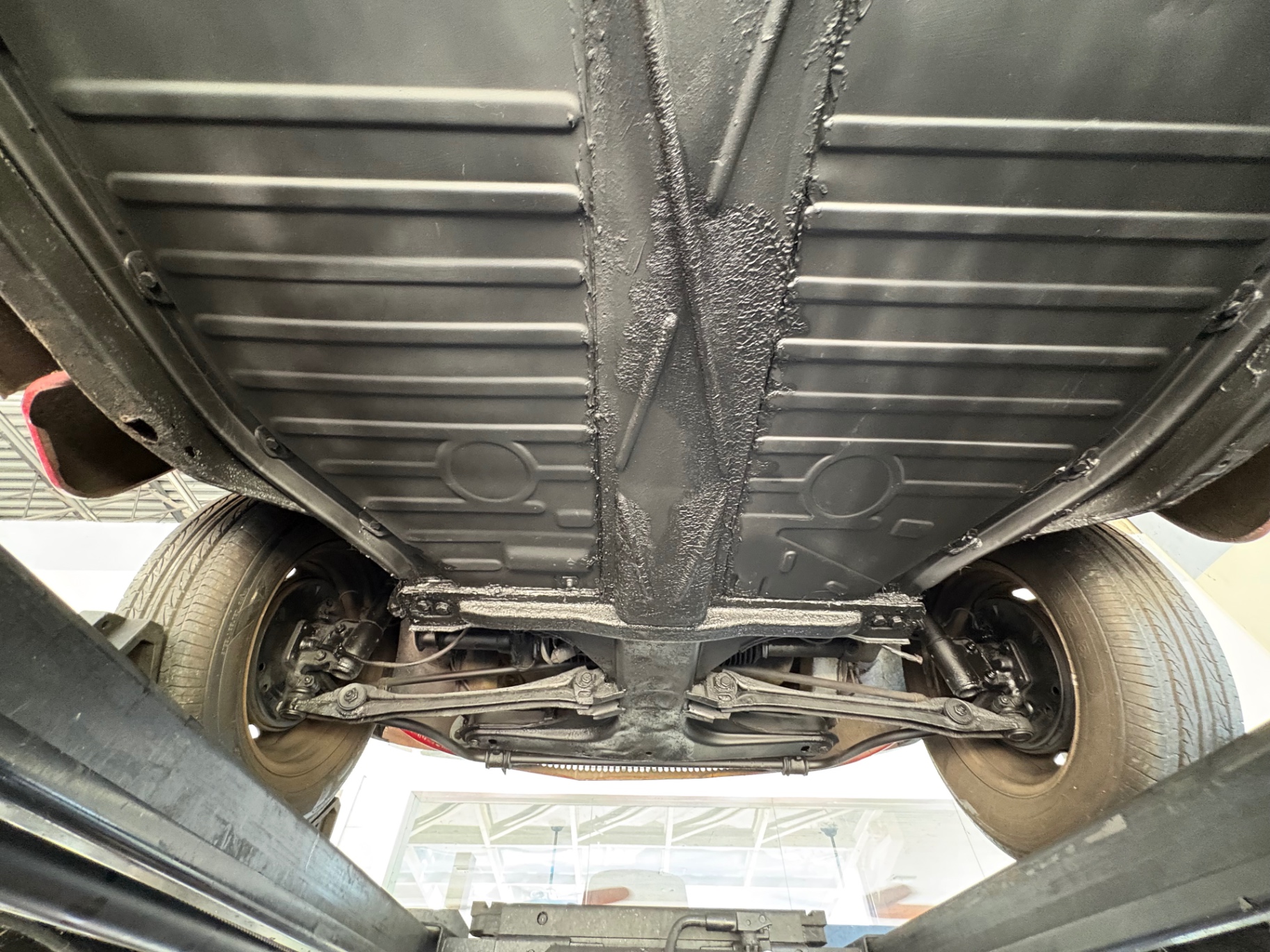
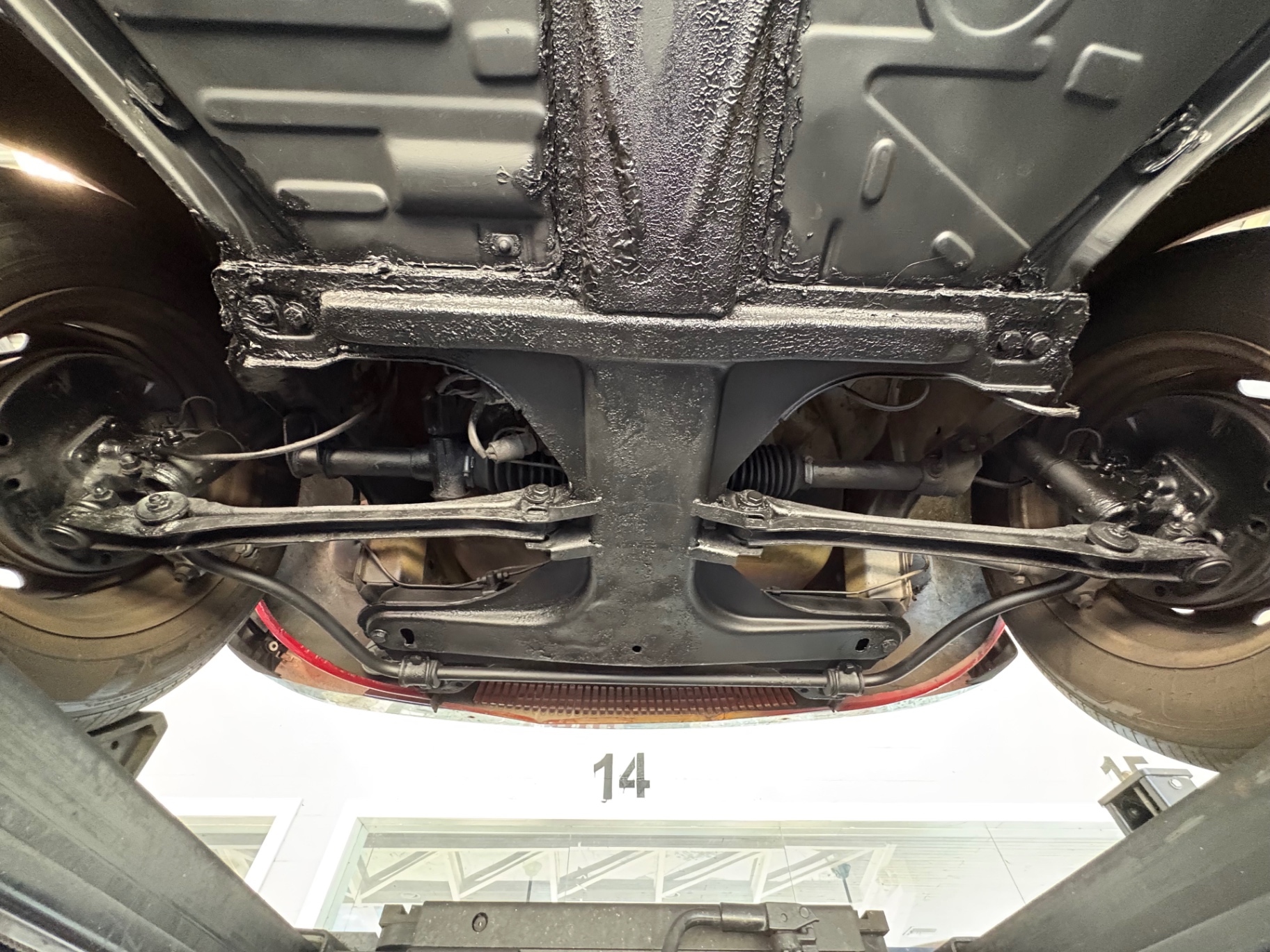
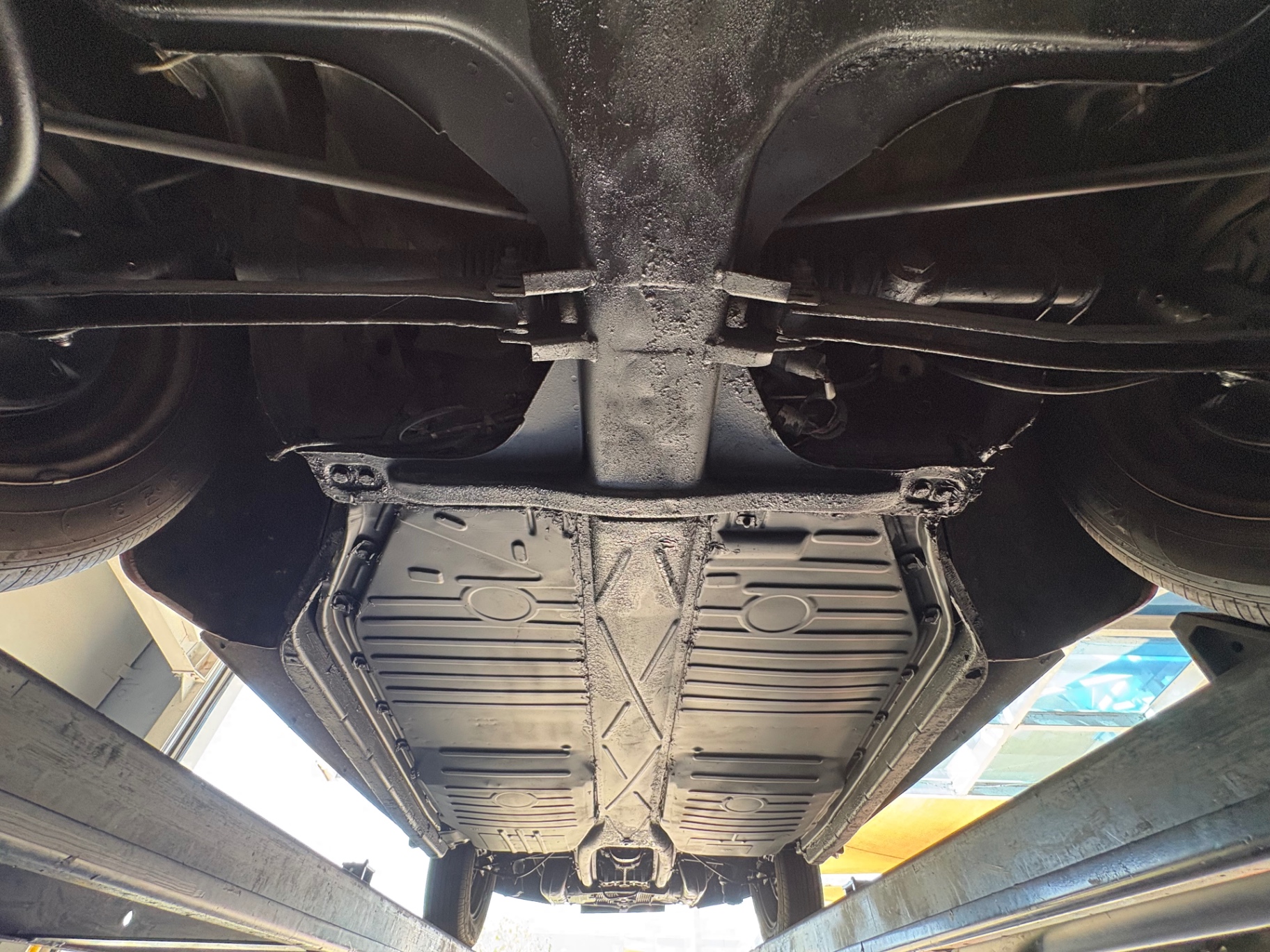
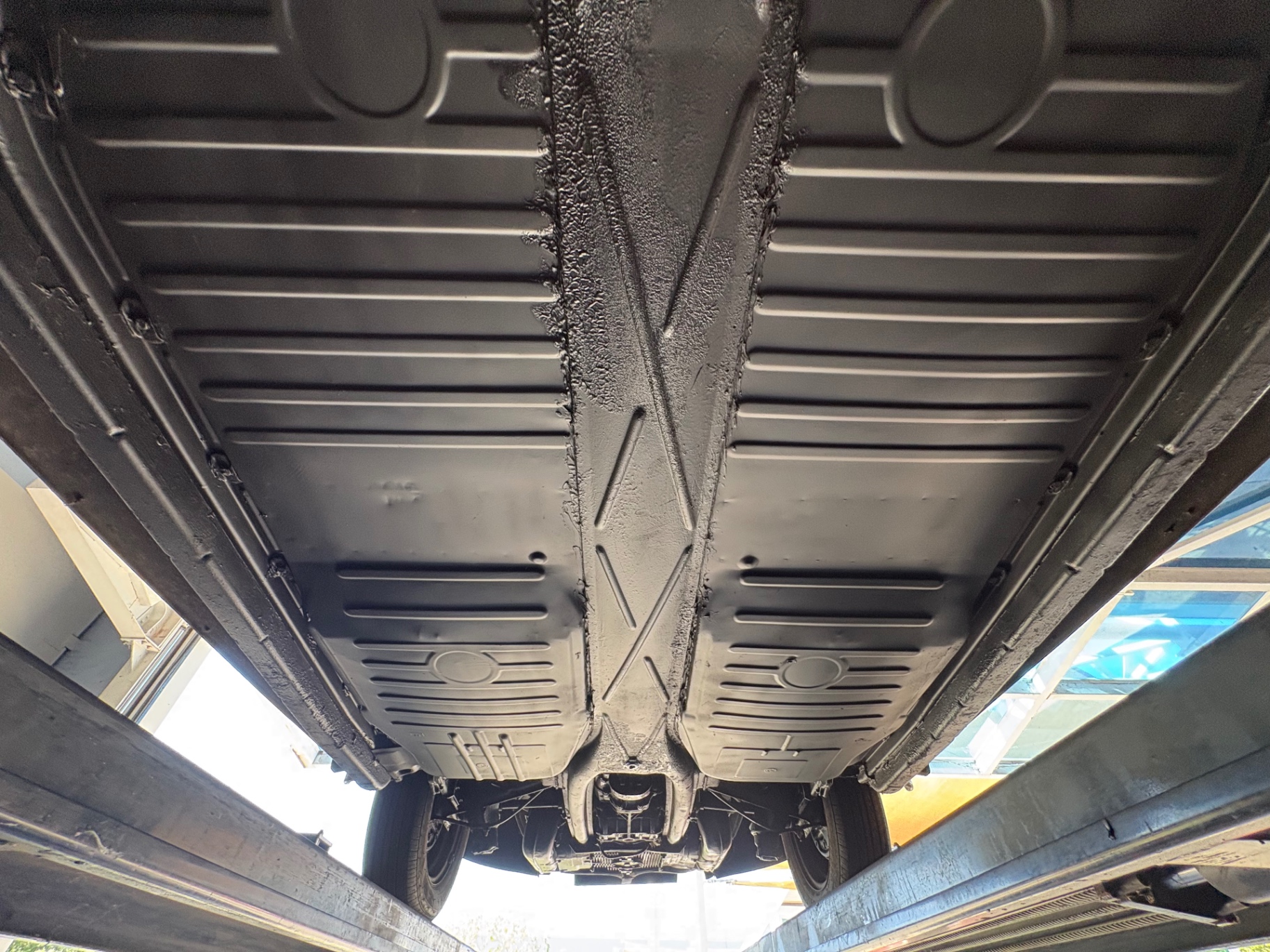
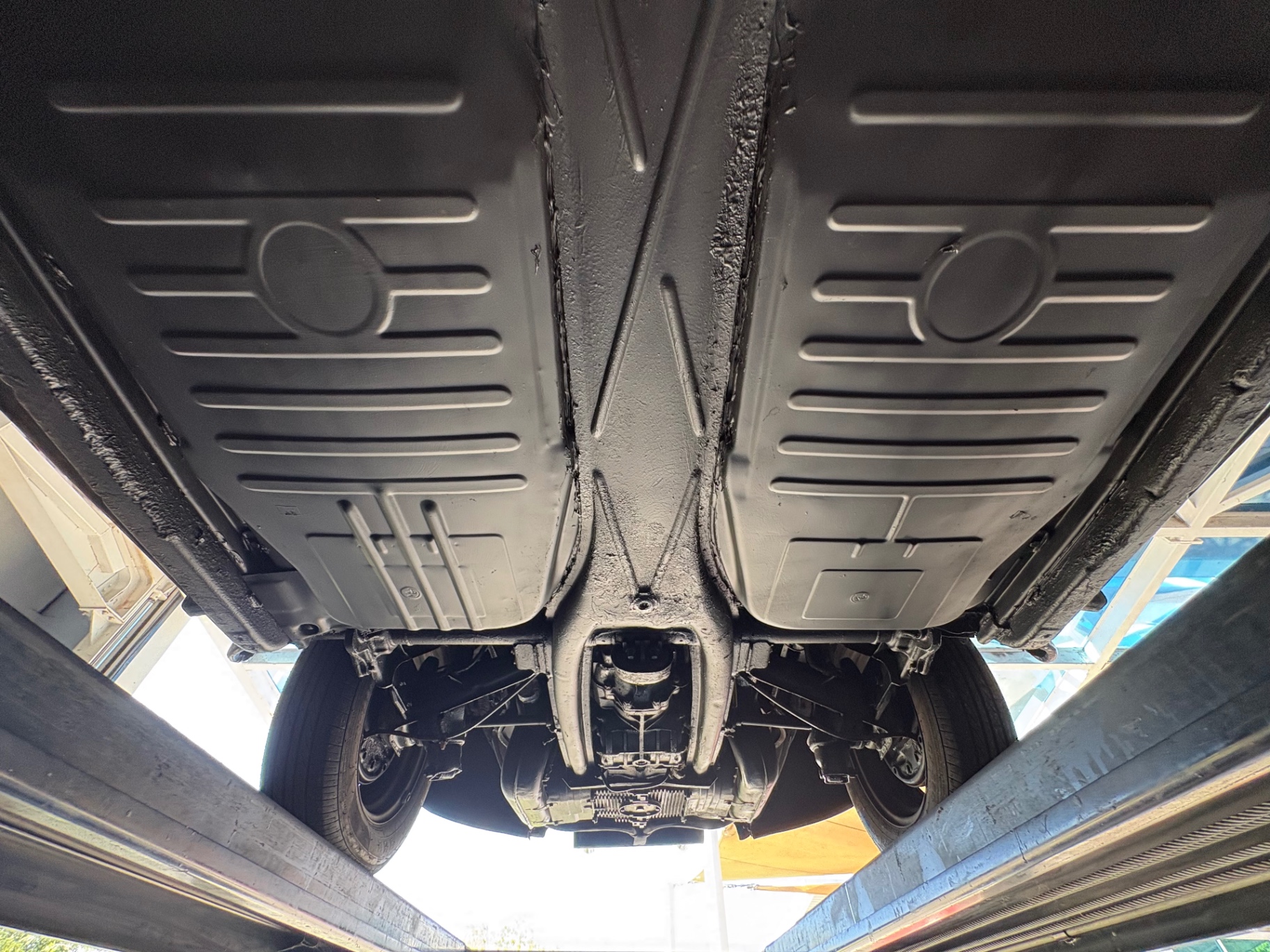
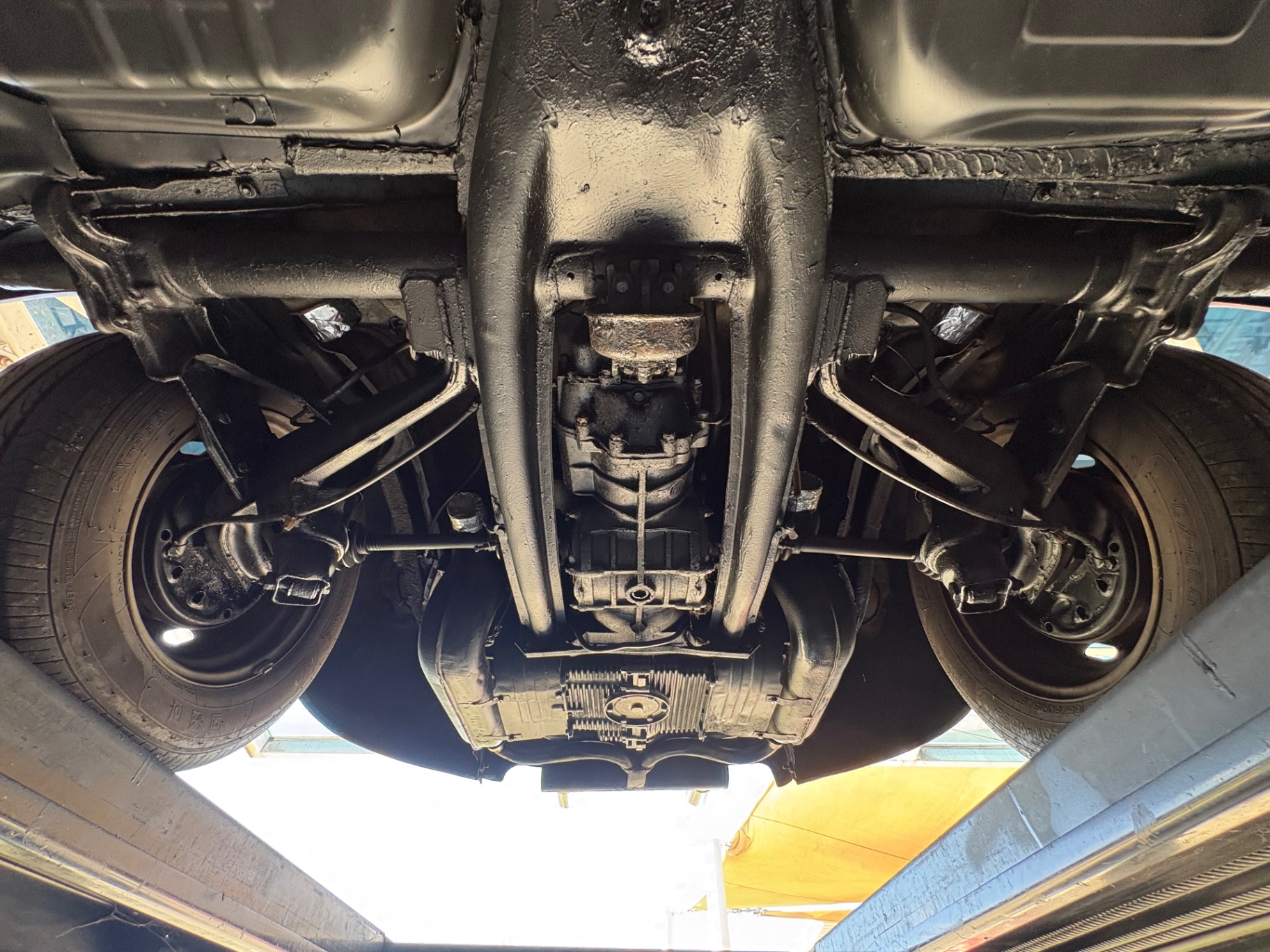
What makes the Karmann-built Beetle convertible especially collectible is the construction quality of the top mechanism and body reinforcement. Karmann was contracted by Volkswagen to produce the convertible, and the company had decades of experience building open-top cars. The body was substantially reinforced to compensate for the missing roof structure, and the convertible top mechanism was engineered to last. Finding a 1976 Super Beetle Convertible with a solid undercarriage and intact floor pans nearly five decades later is not a given — it requires either a dry-climate history or deliberate preservation work. This car has coated and sealed floor pans and a solid undercarriage, which is the first thing an experienced VW buyer checks.
Features List
- Recently rebuilt 1.6L air-cooled flat-4 engine
- 4-speed manual transmission
- Aftermarket performance air filter
- Inline fuel filter
- Dual exhaust tips
- CV axle boots in good condition
- Coated and sealed floor pans
- Solid undercarriage
- Black soft top
- Red exterior
- Chrome bumpers
- Chrome VW wheel covers
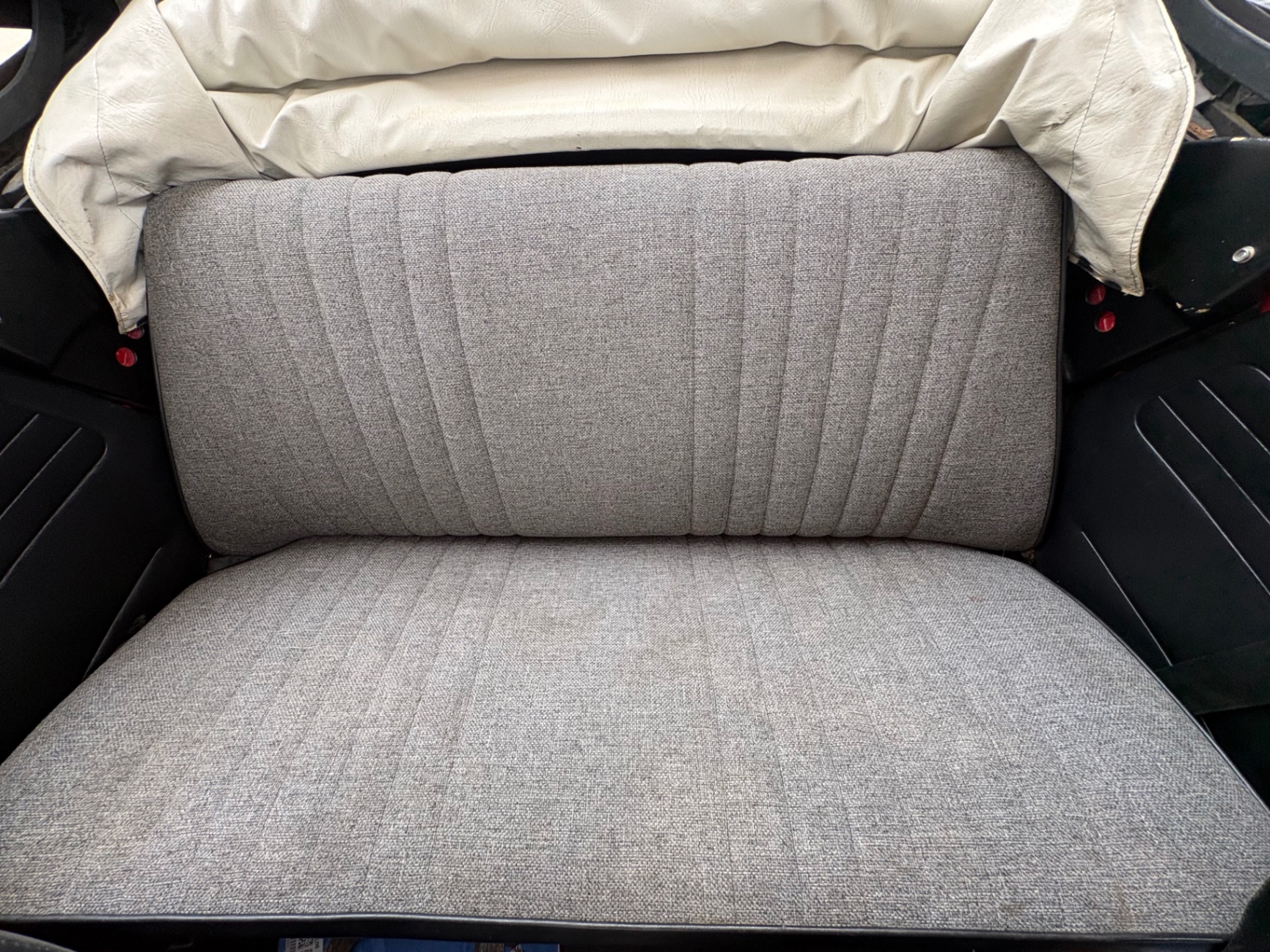
- Gray cloth bucket seats with headrests
- Rear bench seat in matching gray cloth
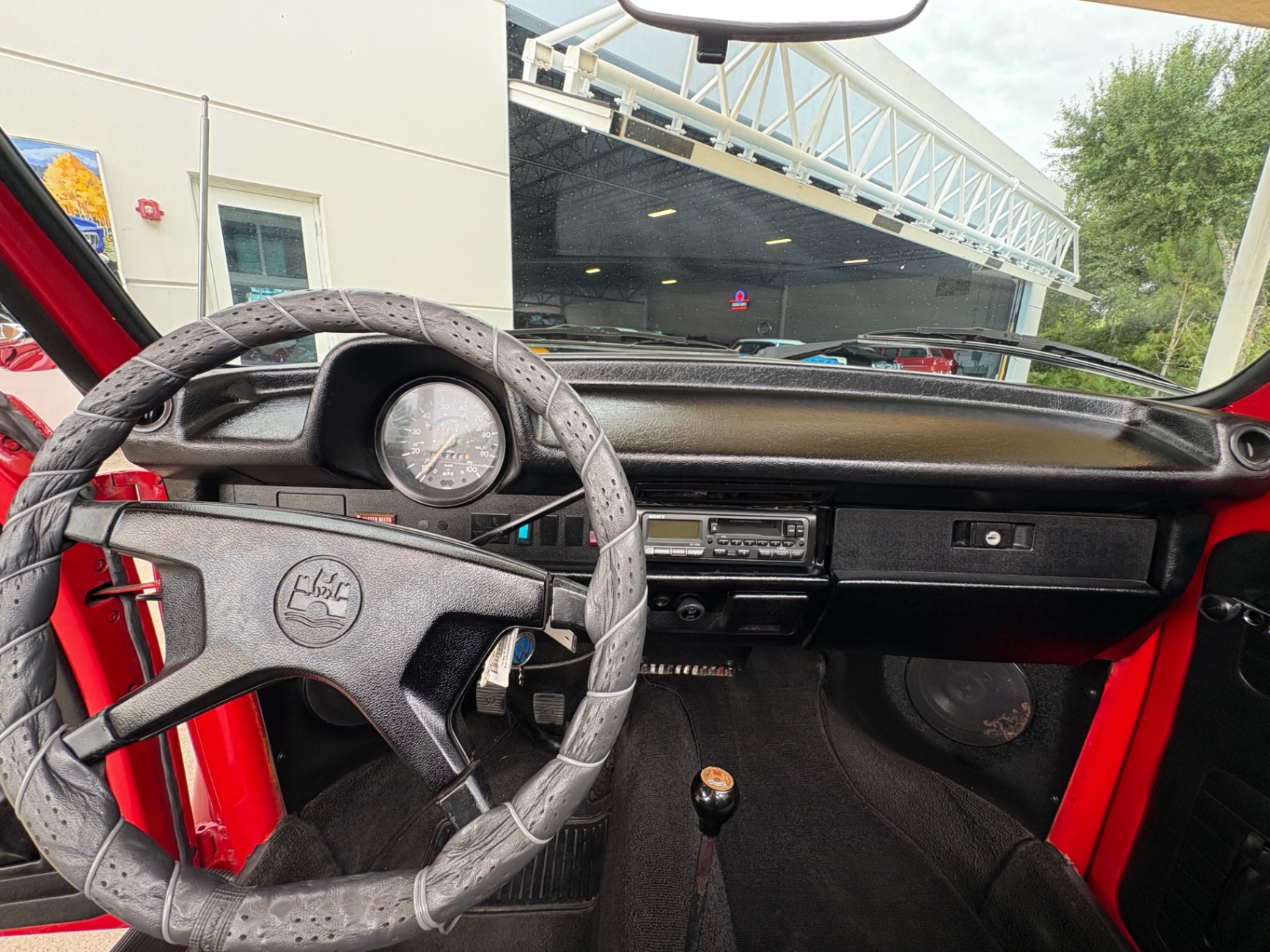
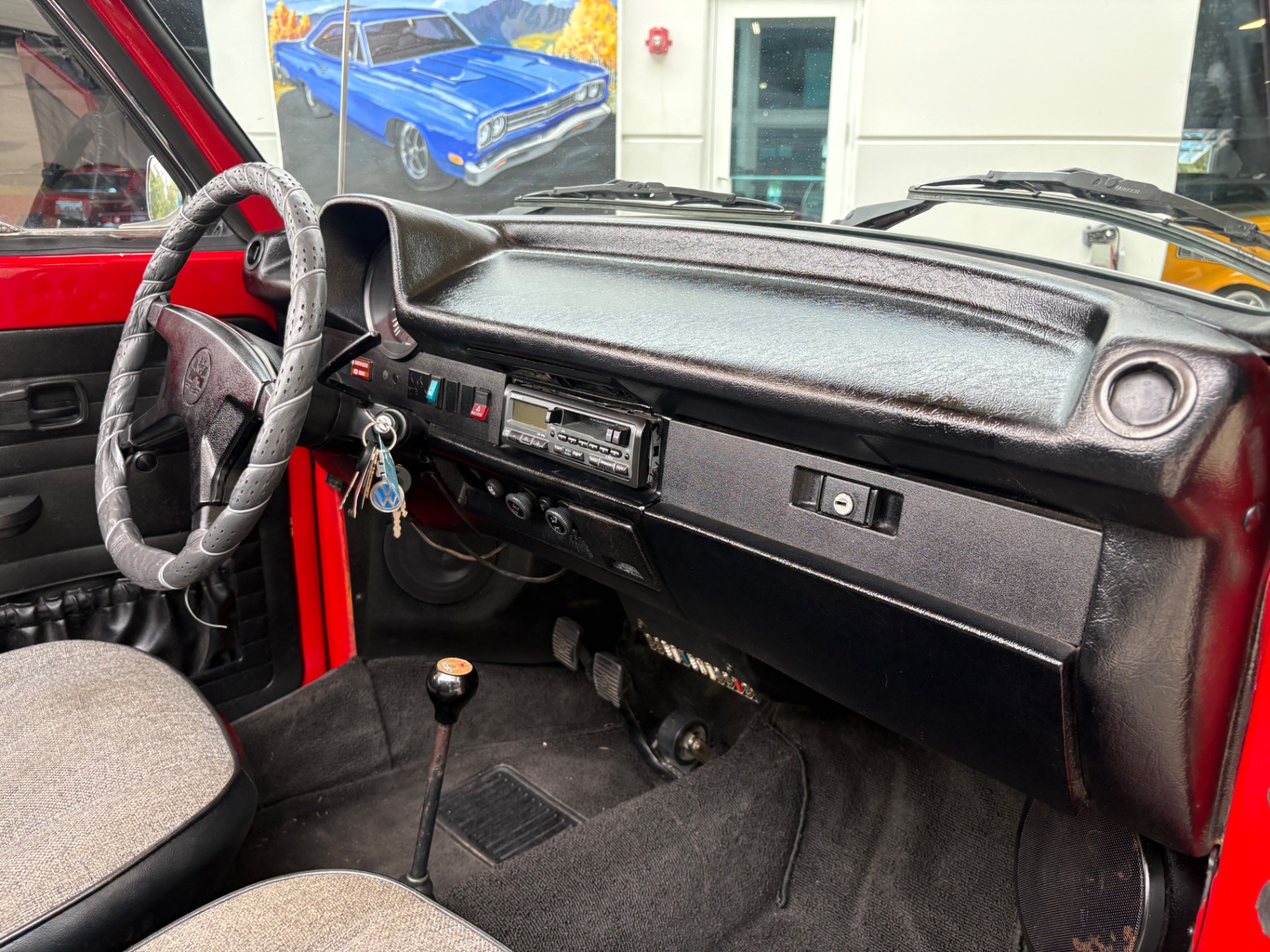
- Sport steering wheel
- Aftermarket stereo head unit with CD player
Mechanical
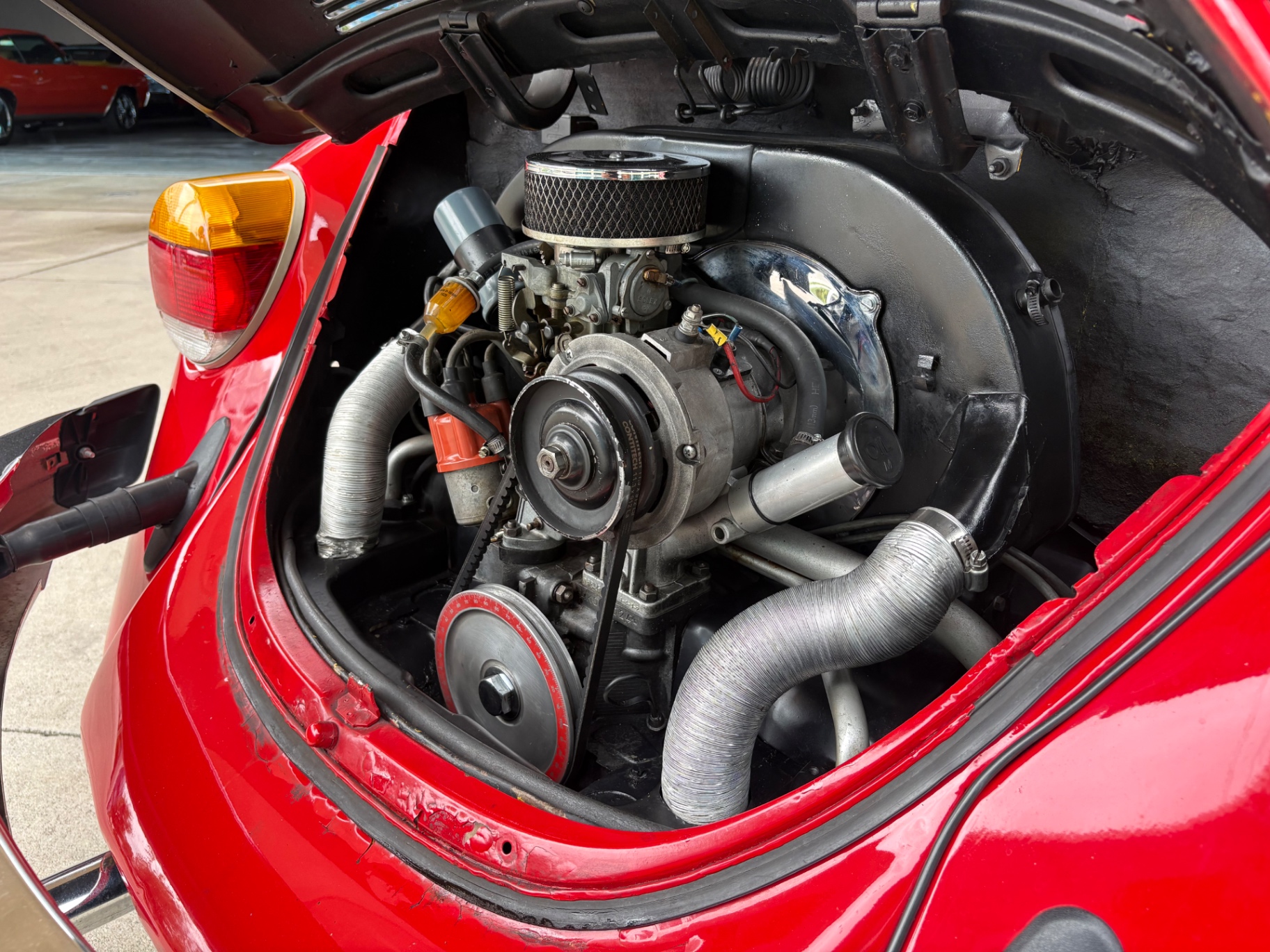
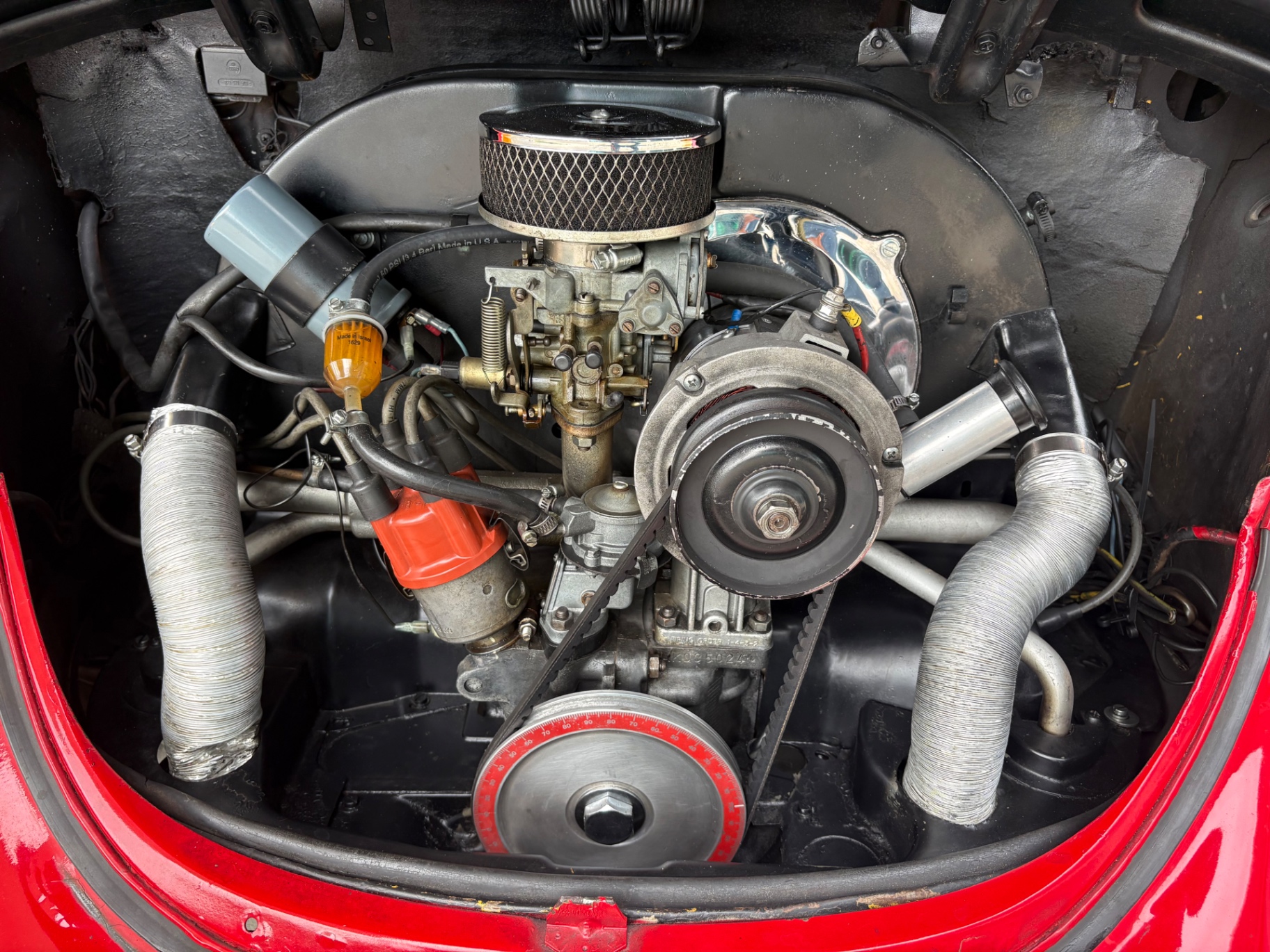
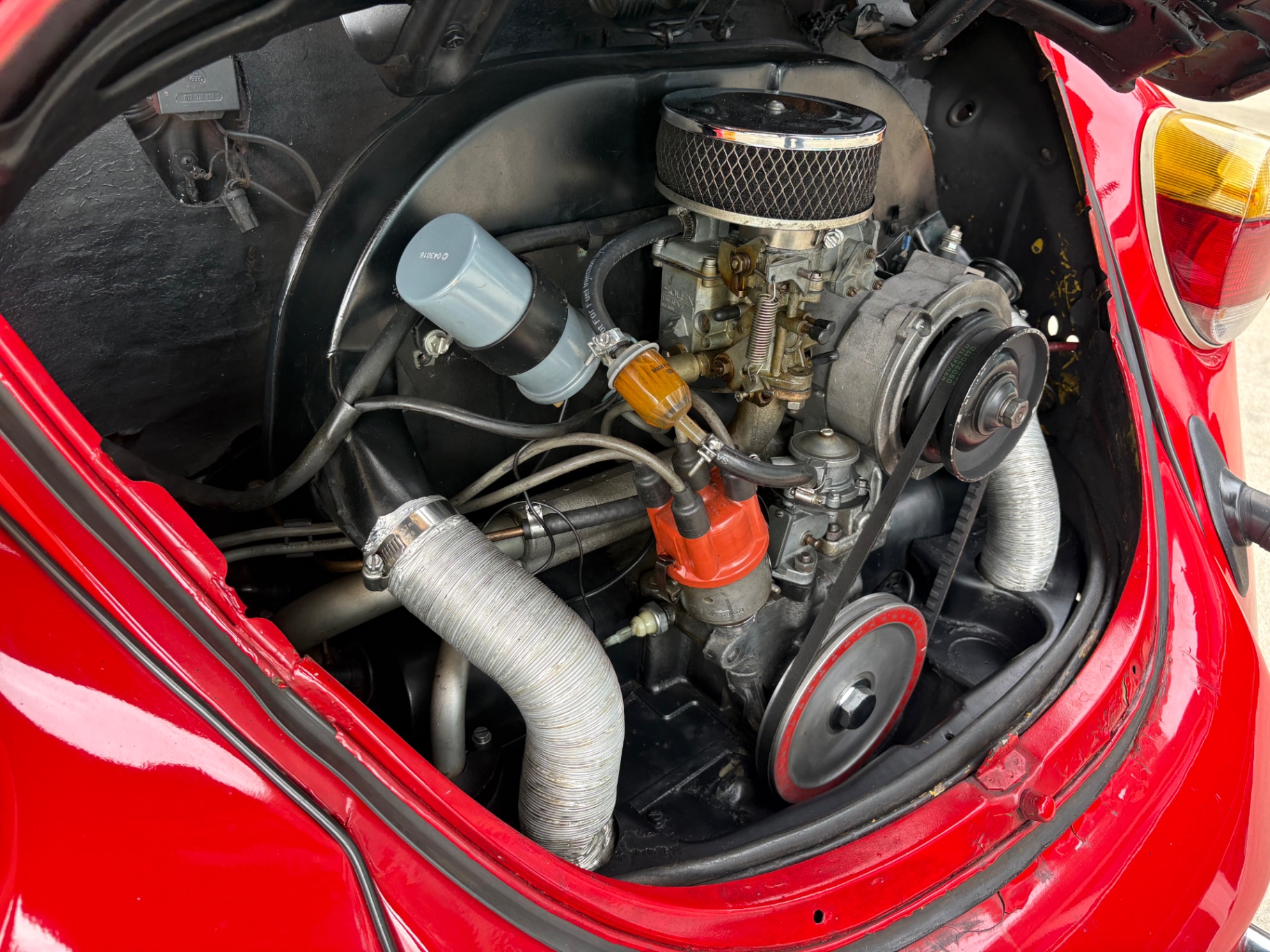
The engine in this 1976 Volkswagen Super Beetle is the 1.6-liter air-cooled flat-four, which was the displacement used in U.S.-market Beetles during this period following the emissions-related detuning that affected the early 1970s models. This particular engine has been recently rebuilt, which is one of the most significant practical details about this car. The air-cooled flat-four in a Beetle is a well-understood engine with a robust parts supply and a large community of knowledgeable mechanics, but a freshly rebuilt unit means the buyer is not inheriting the unknown mechanical history that comes with most 45-year-old cars. The engine bay photos show a clean, organized setup with the aftermarket performance air filter sitting atop the carburetor and an inline fuel filter visible in the fuel line — straightforward additions that improve filtration without altering the fundamental character of the drivetrain.
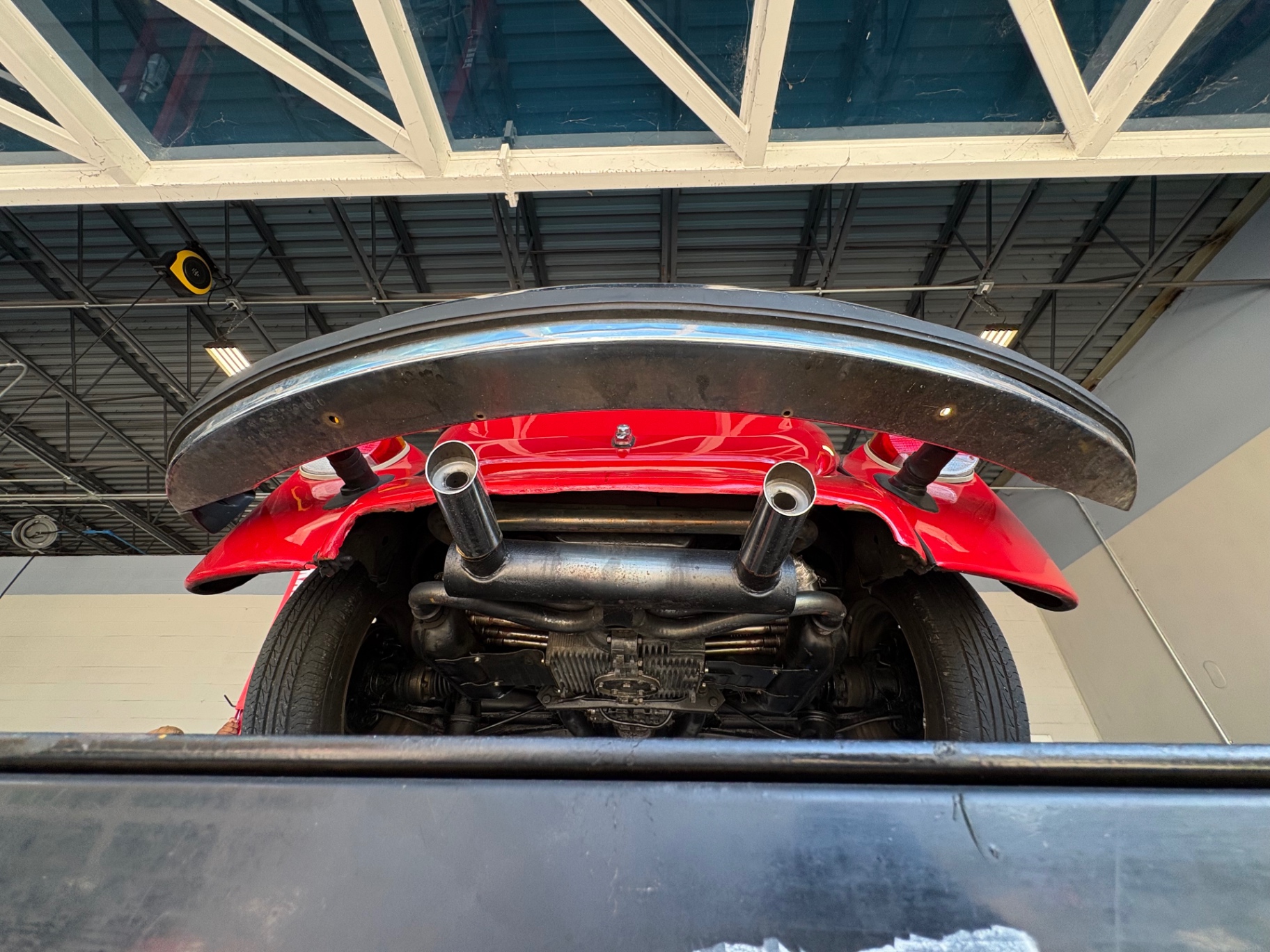
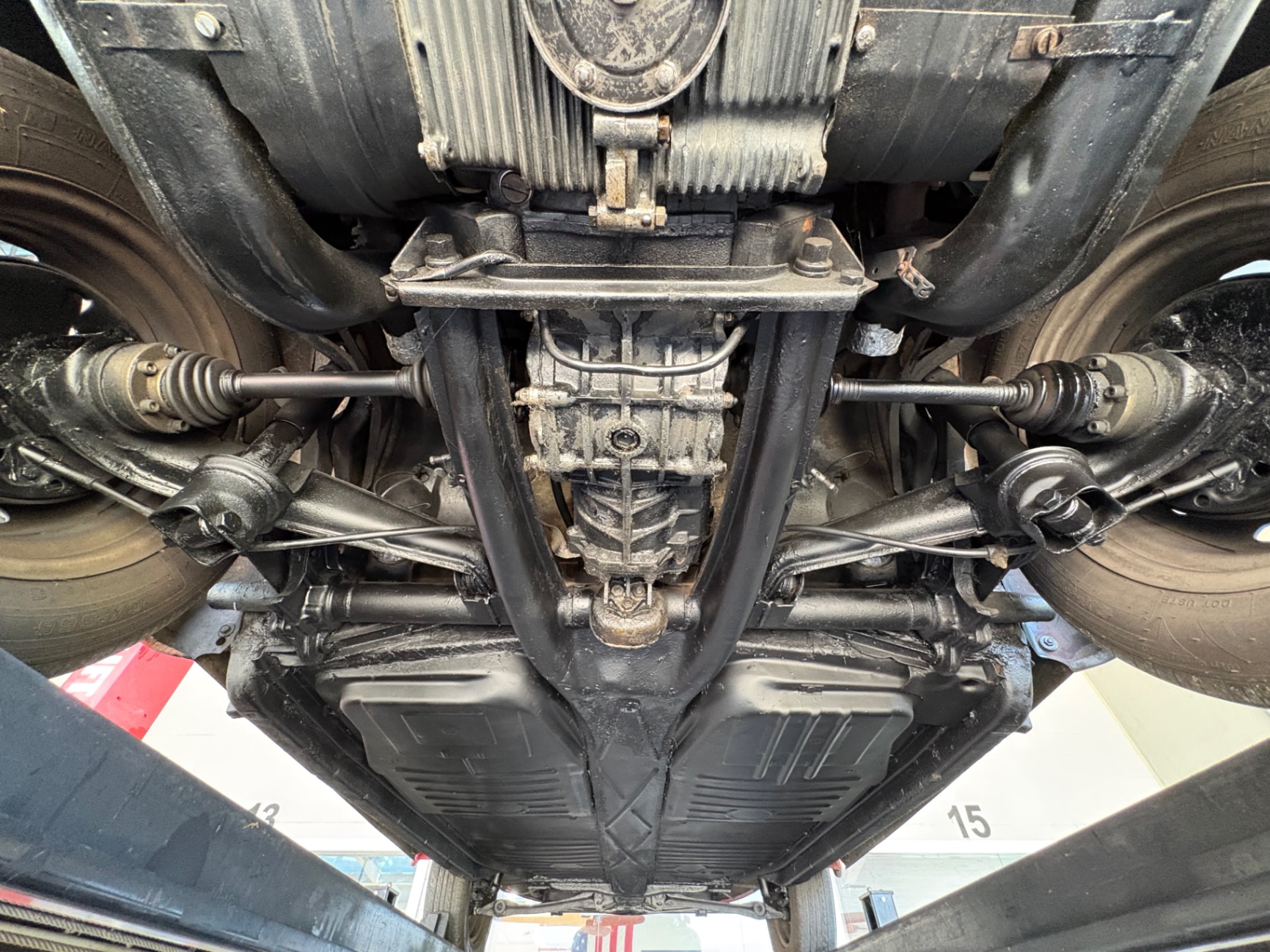
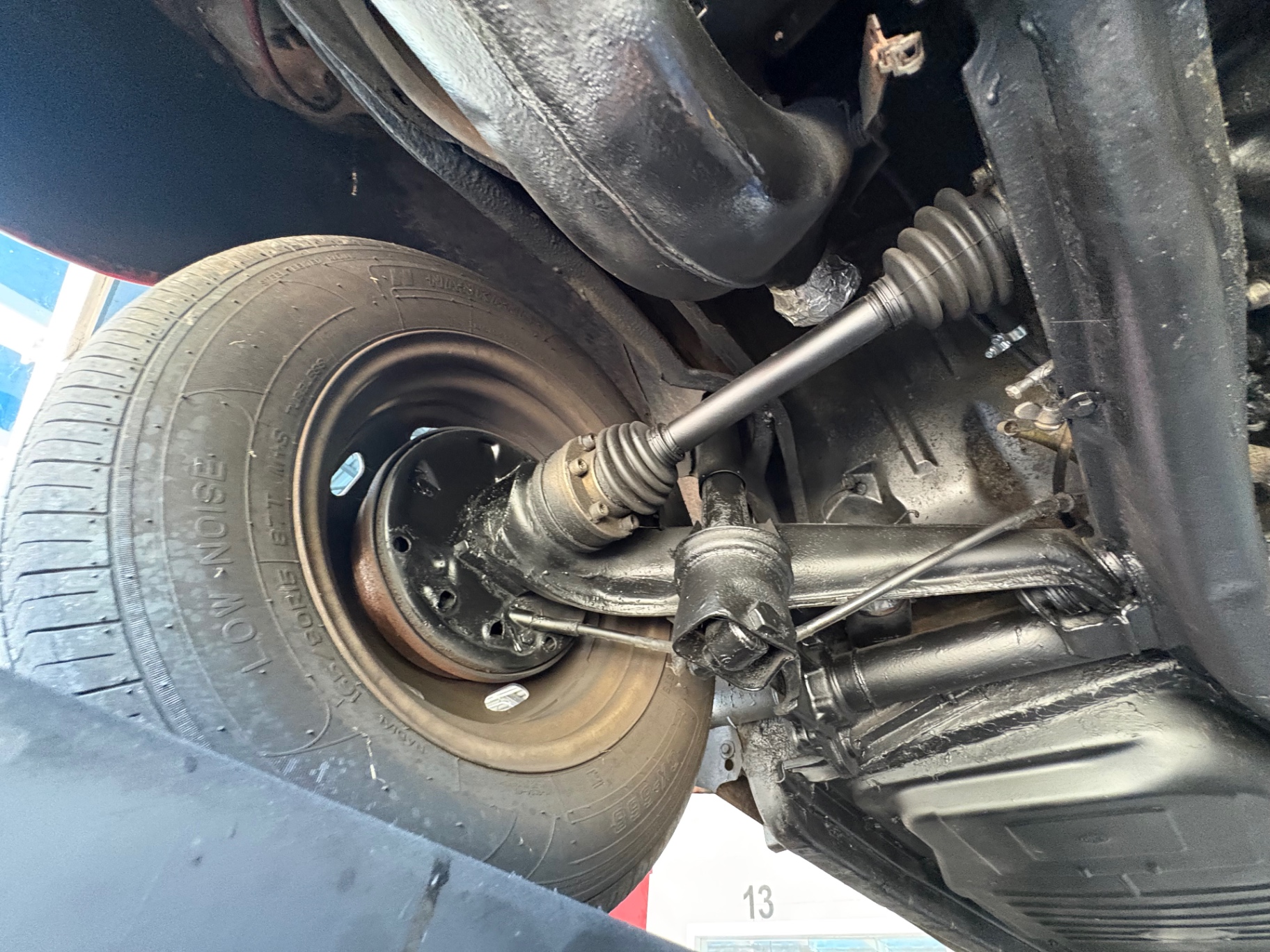
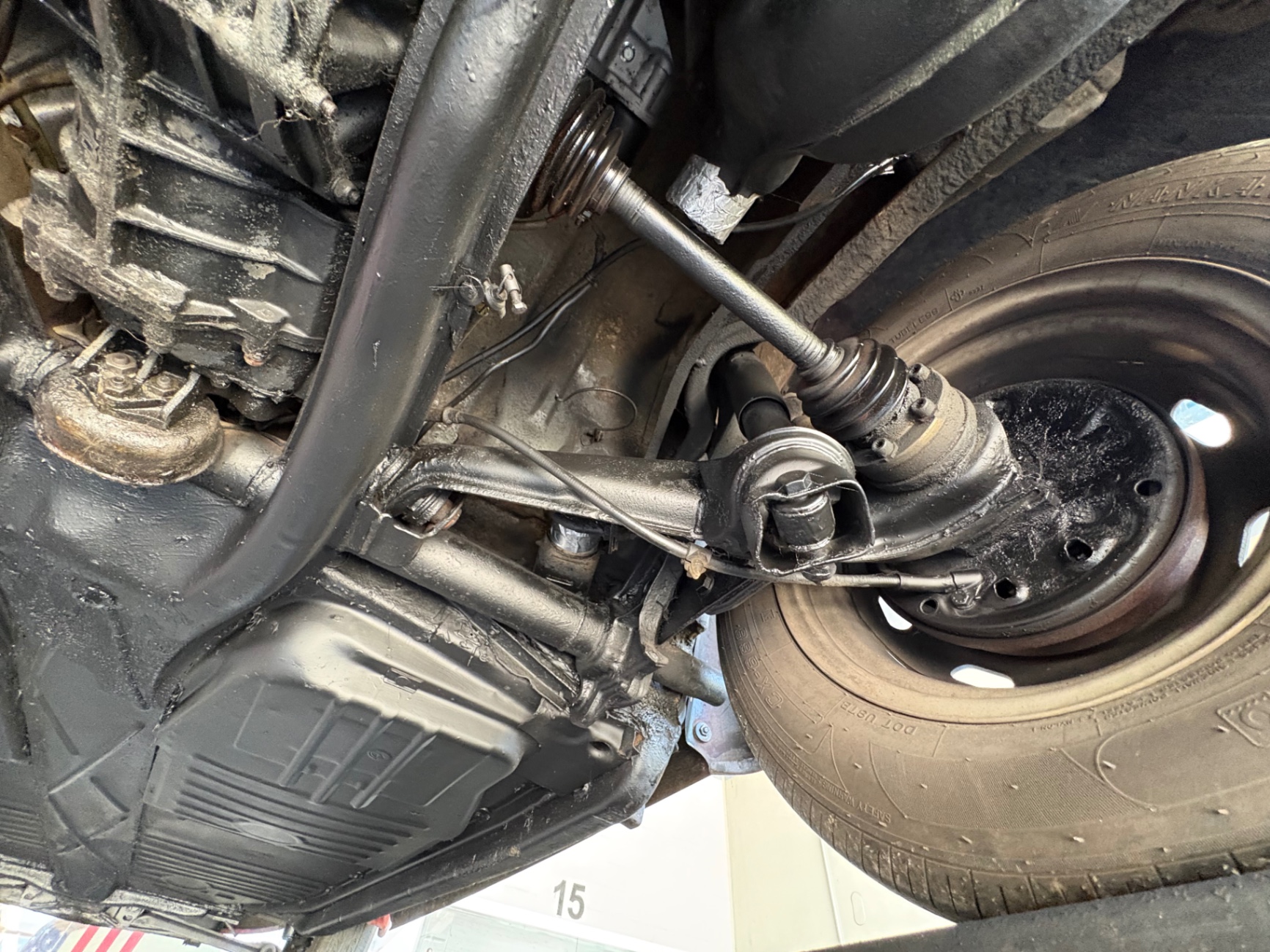
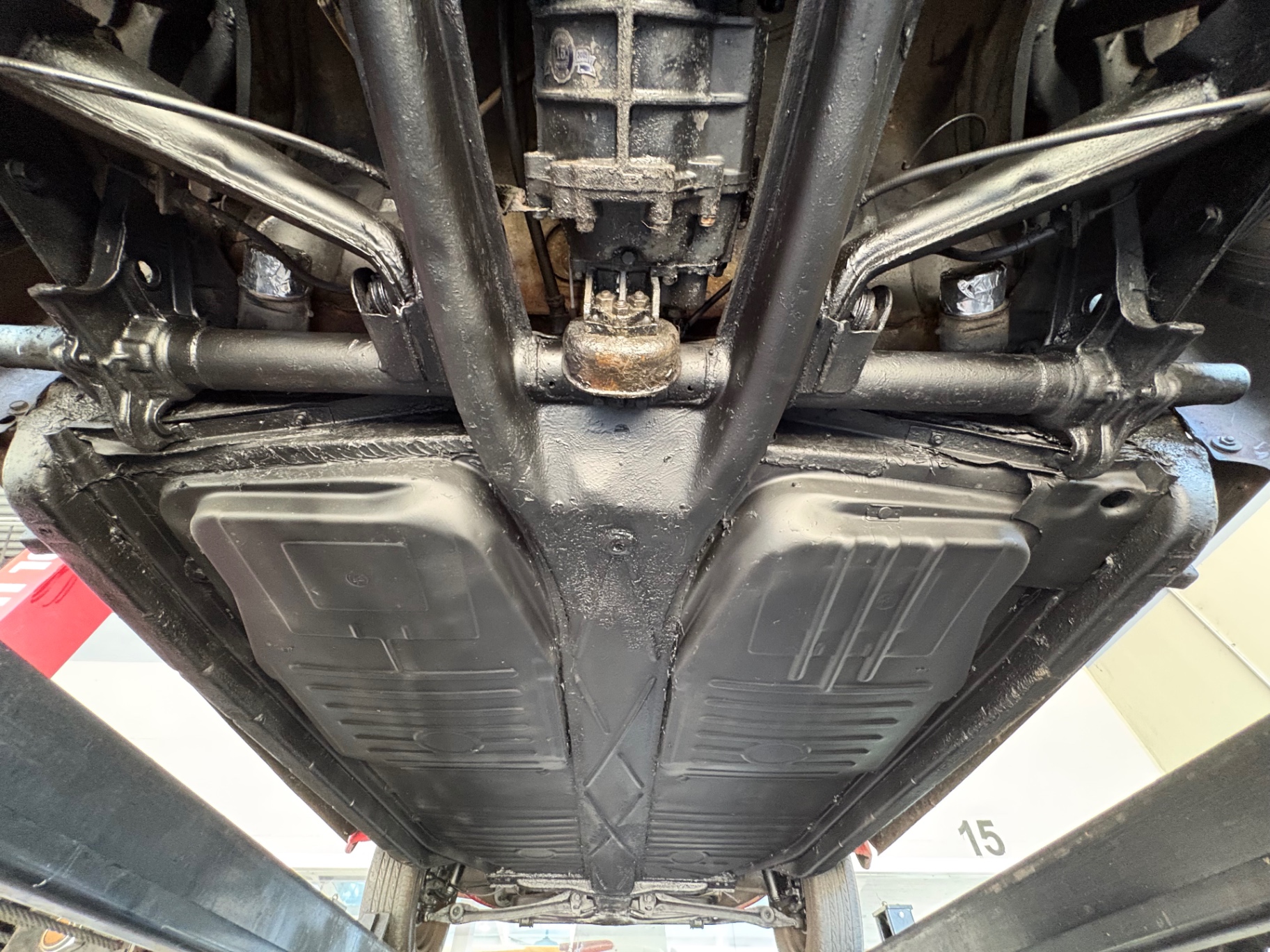
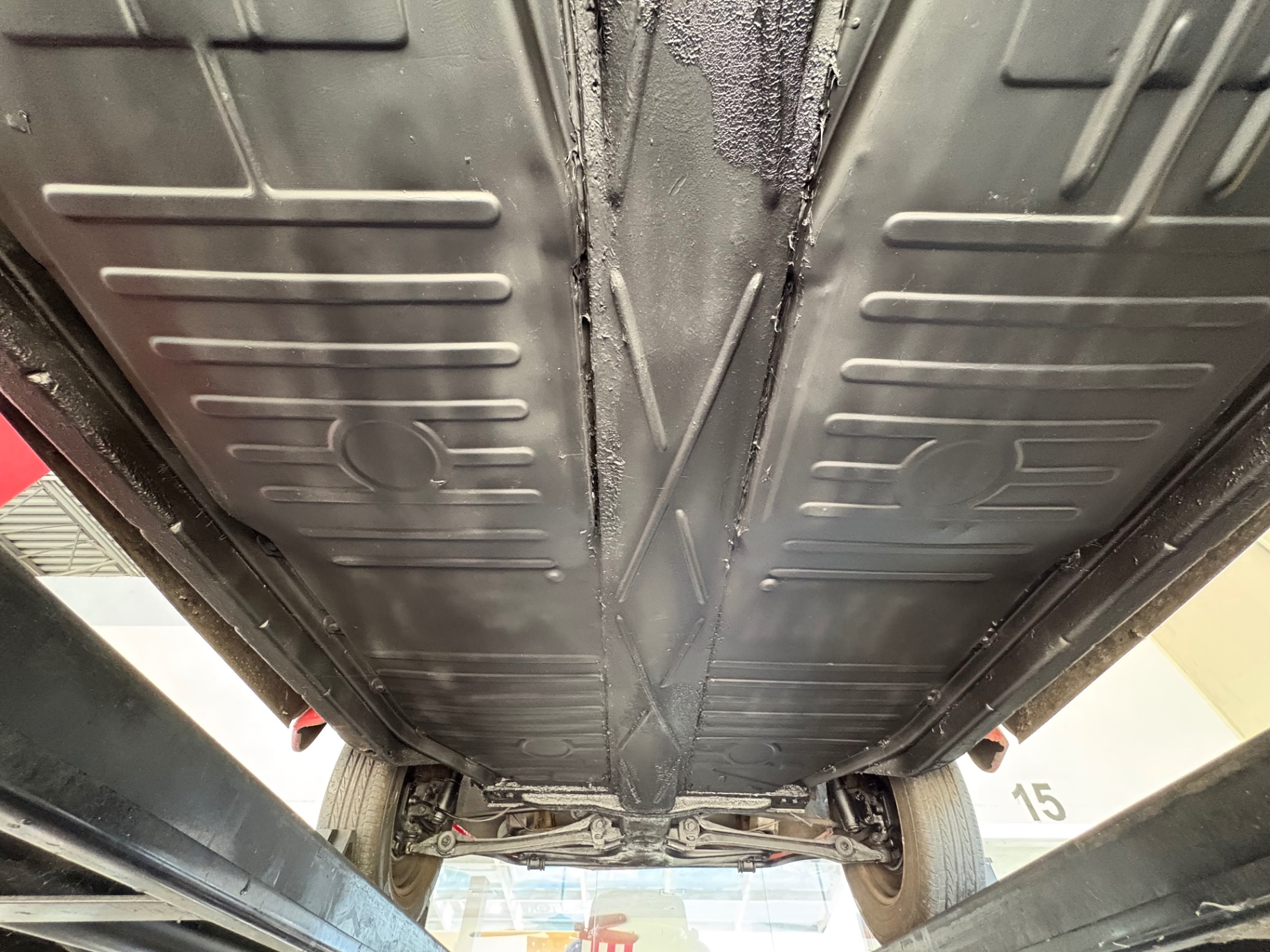
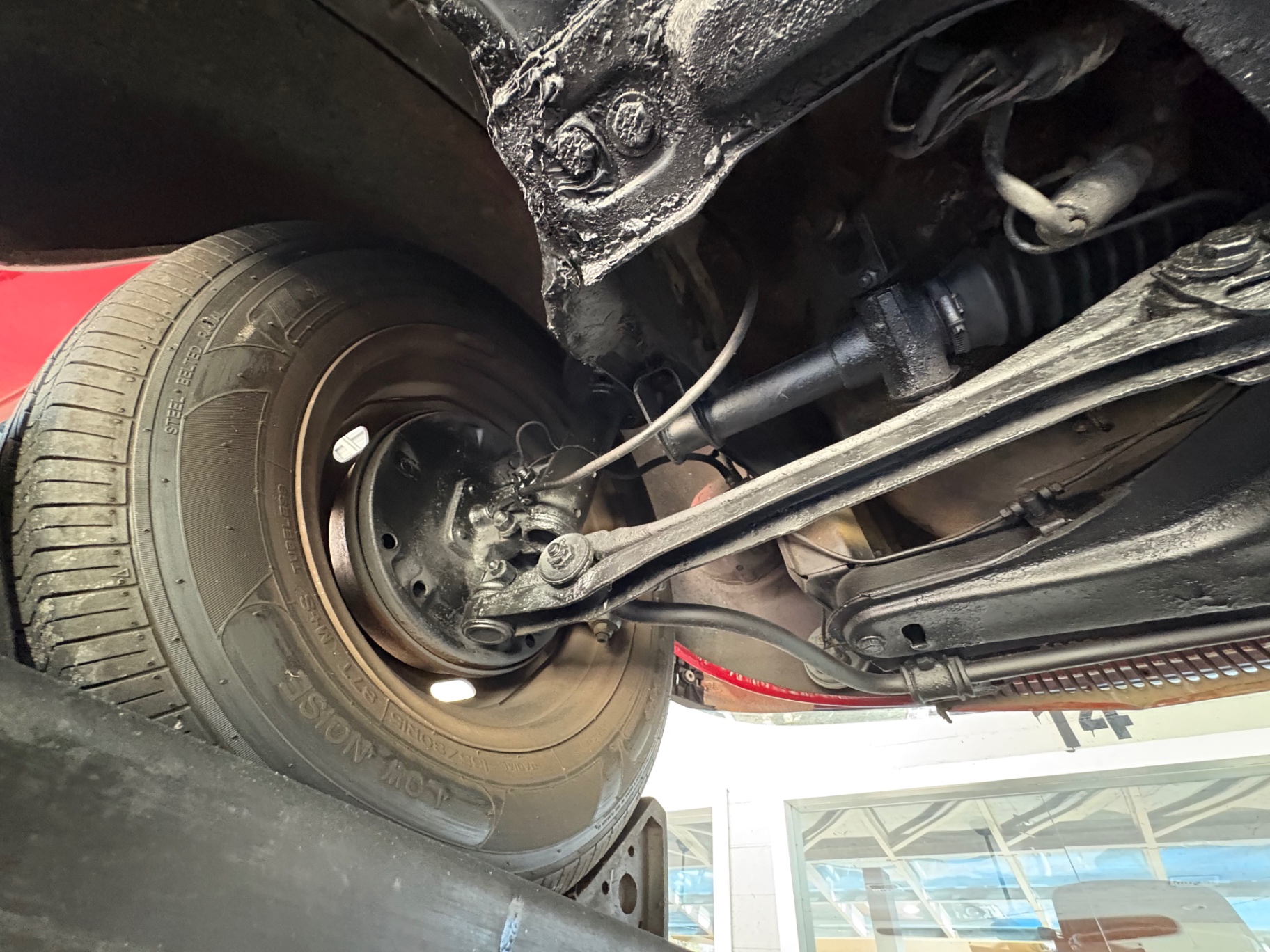
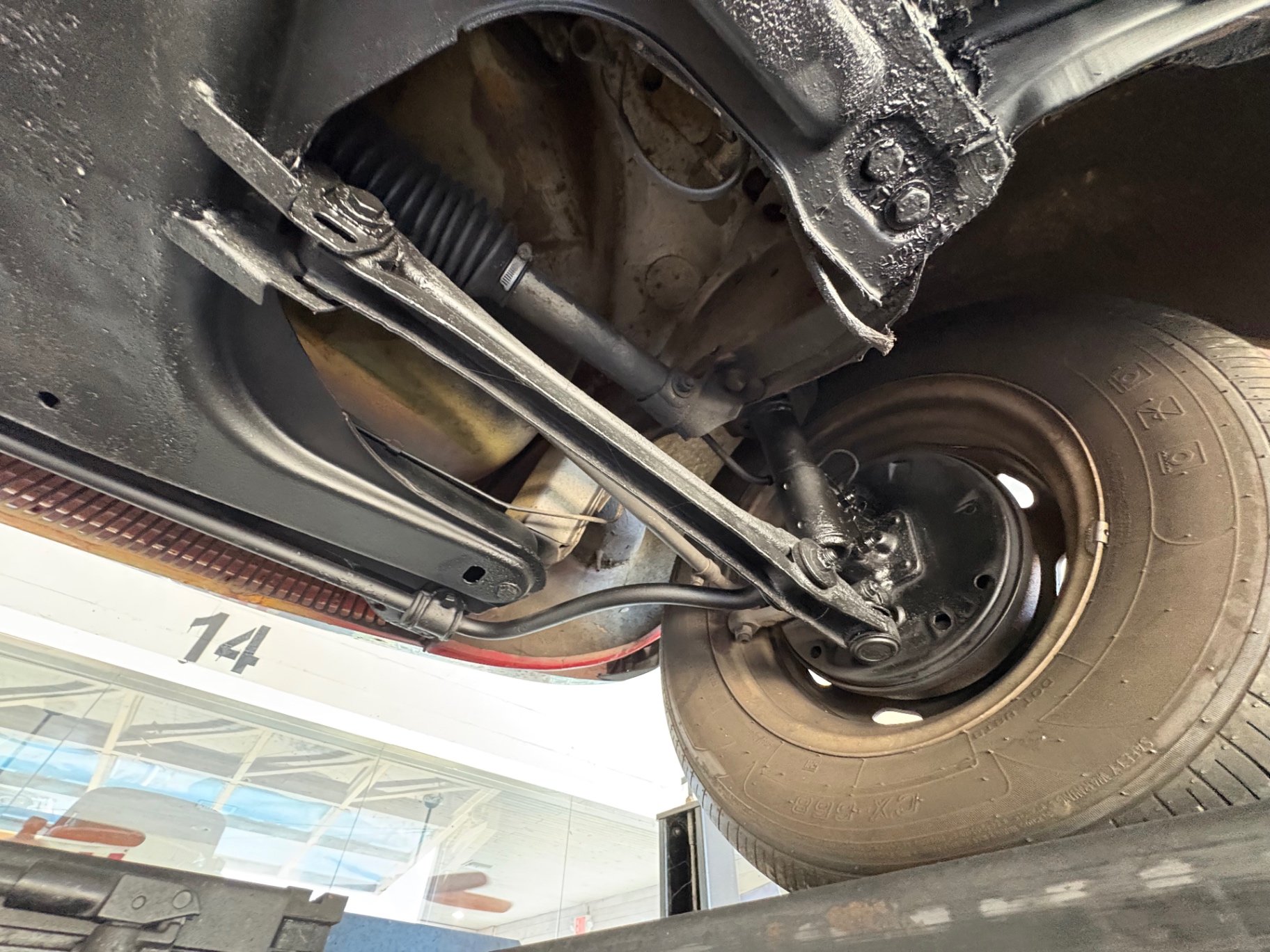
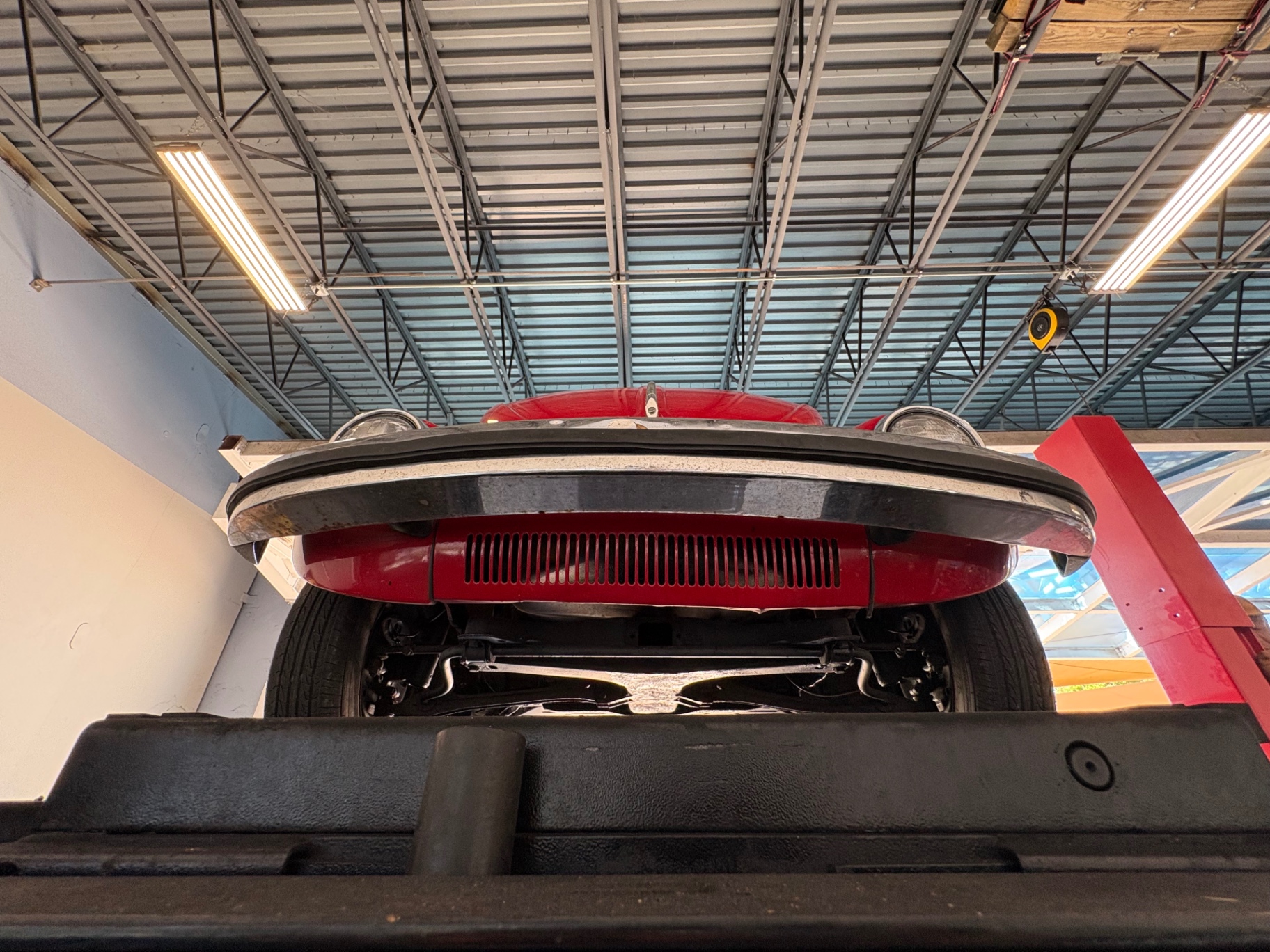
The 4-speed manual transmission is the correct unit for this application and is paired with the rebuilt engine. CV axle boots are reported to be in good condition, which matters on these cars because torn boots are one of the most common deferred maintenance items and lead directly to CV joint failure if left unaddressed. The undercarriage photographs confirm what the listing states — the floor pans have been coated and sealed, and the structure underneath this car is solid. The suspension components, torsion bars, and trailing arms visible in the lift photos show no evidence of the heavy corrosion that typically disqualifies older Beetles from serious consideration. The dual exhaust tips exit at the rear in the classic Super Beetle position, and the exhaust system appears intact and properly routed.
Interior
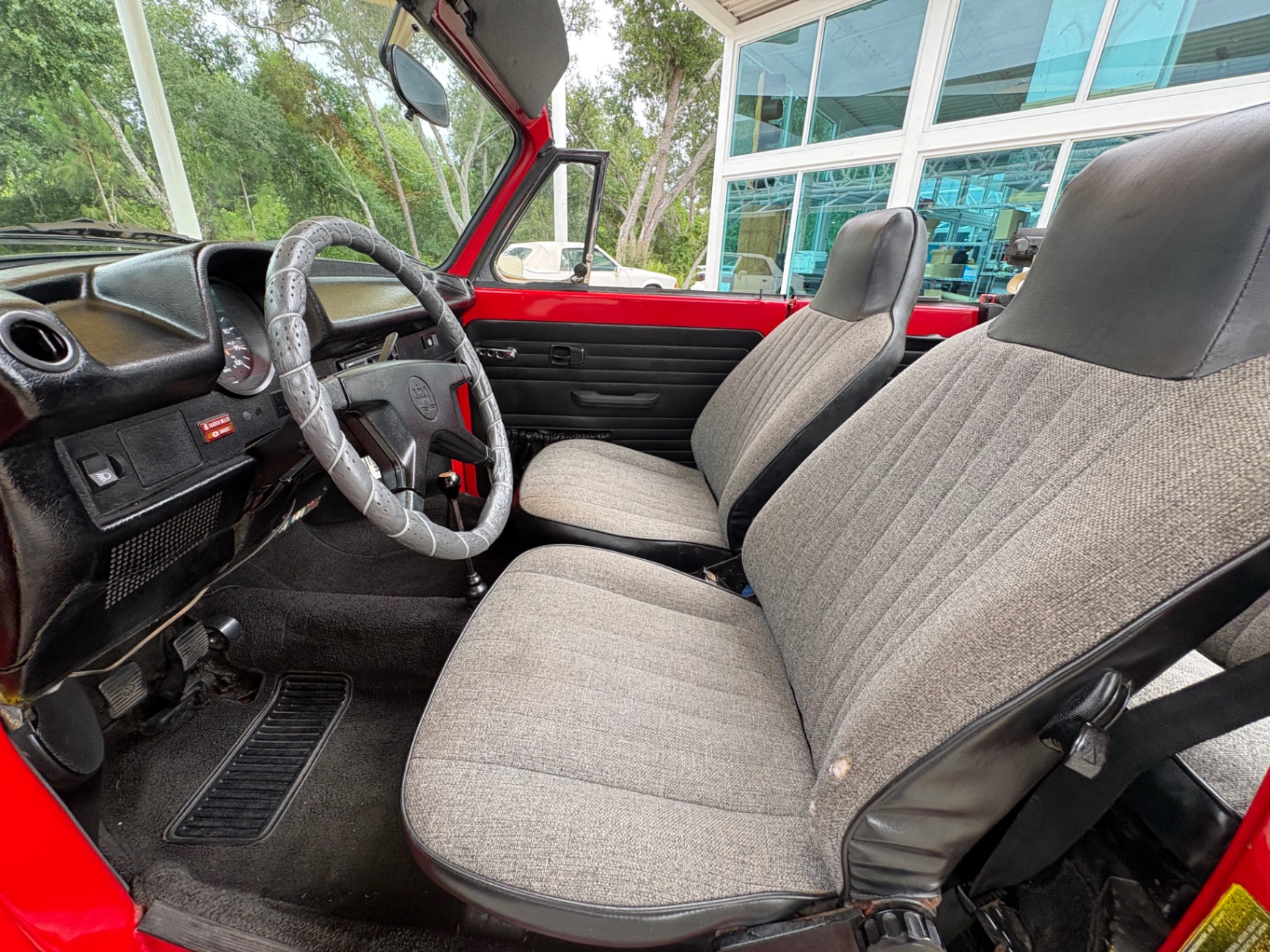
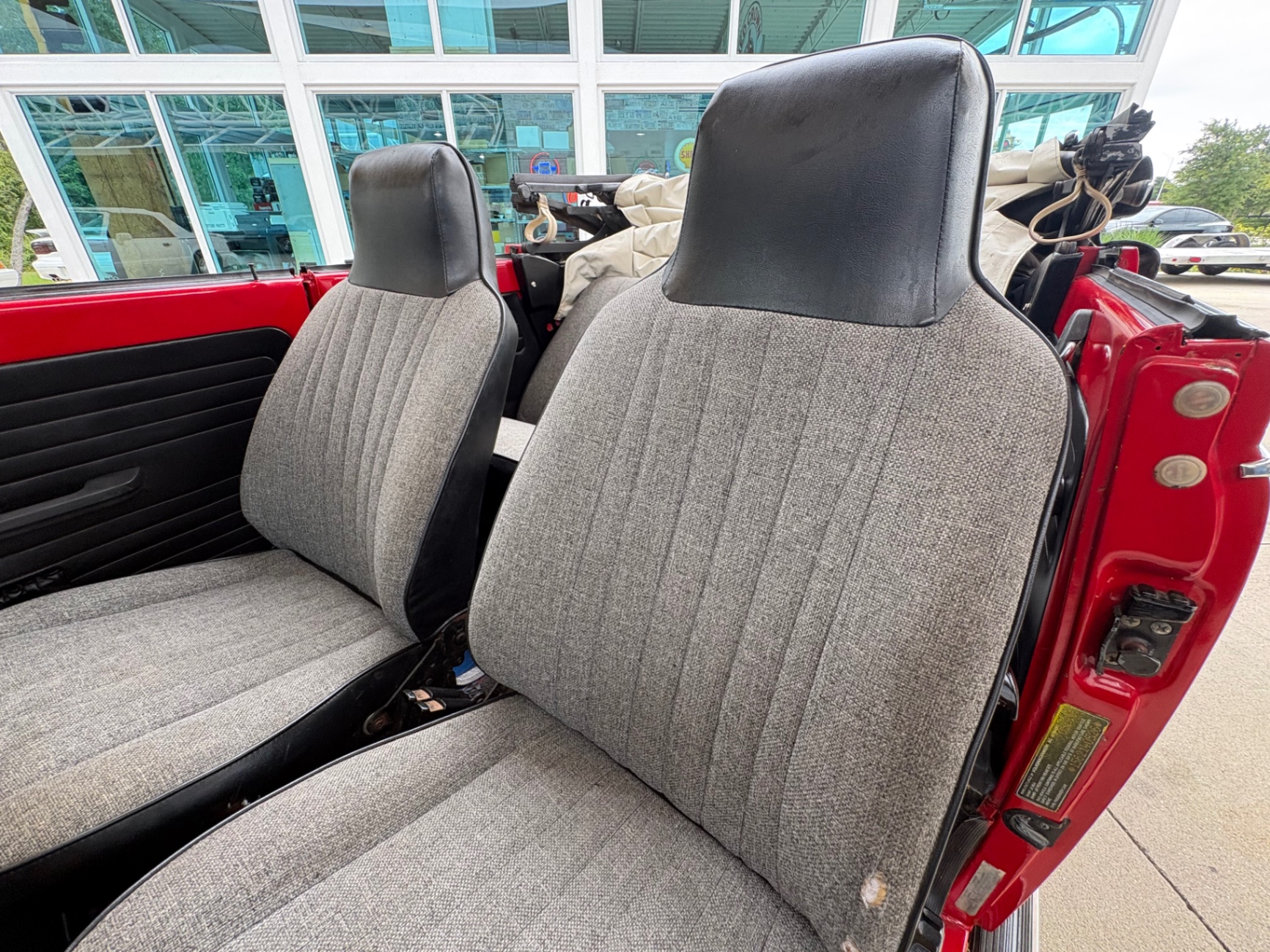
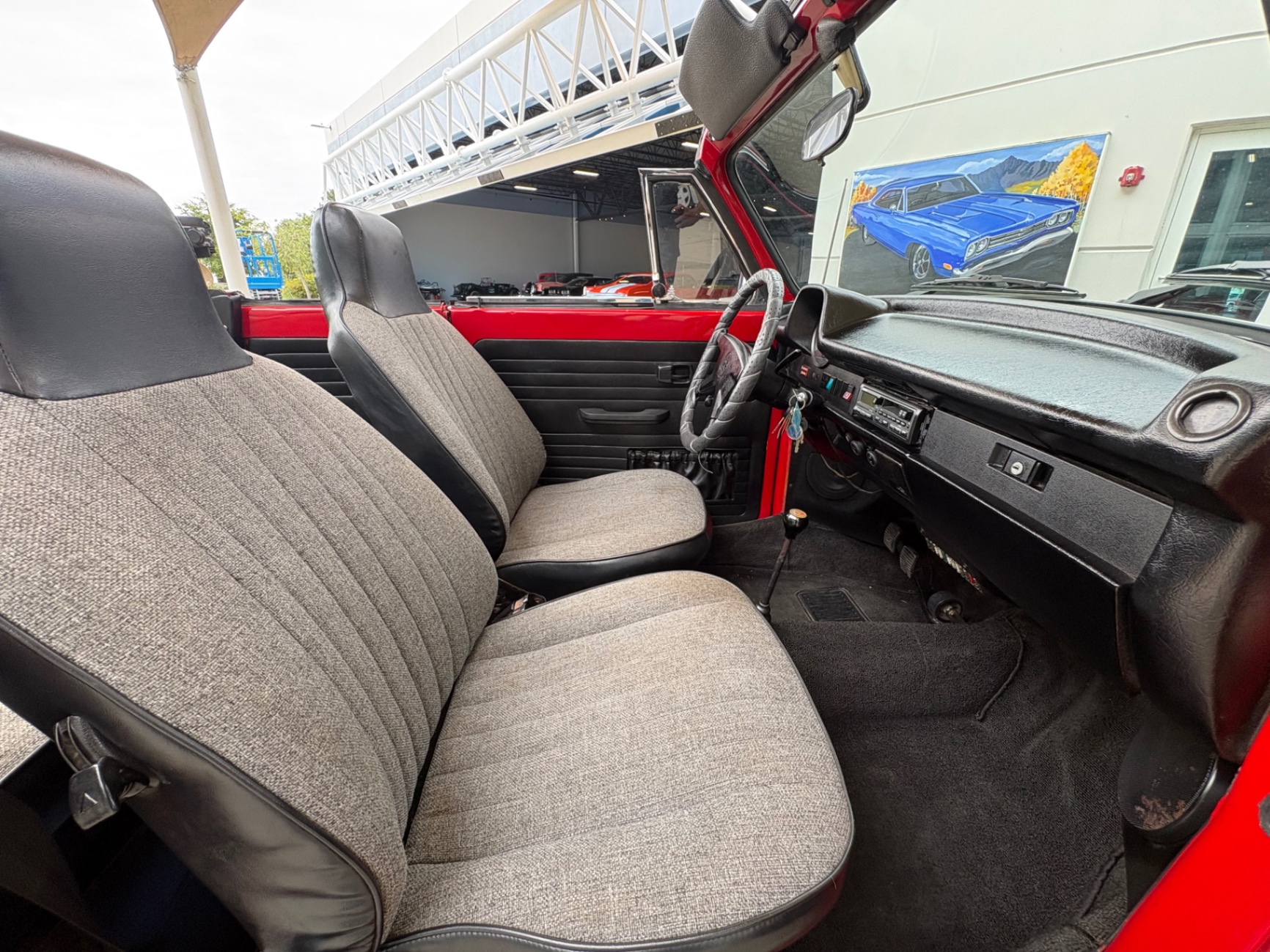
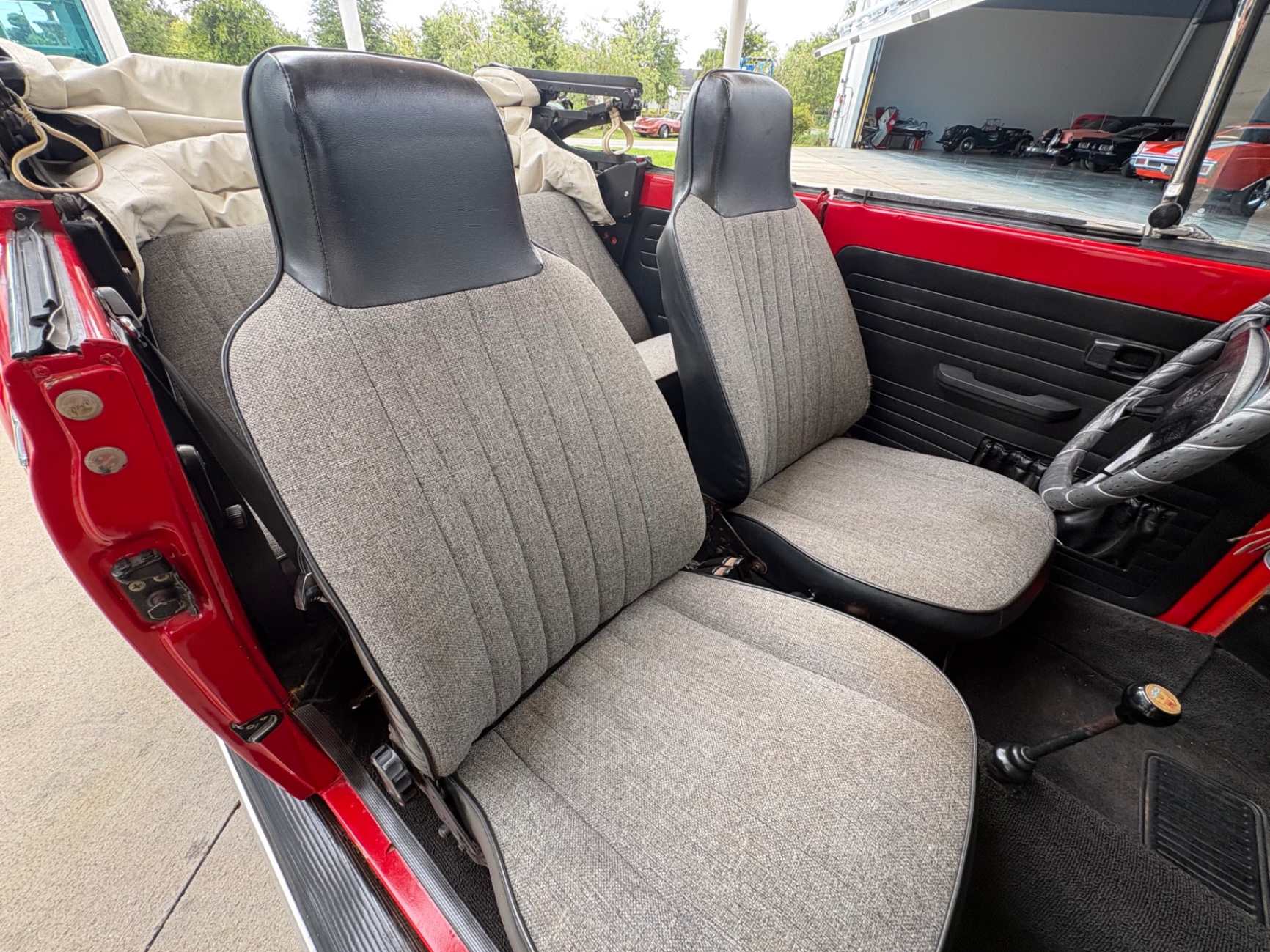
The interior of this 1976 Volkswagen Super Beetle Convertible is finished in gray cloth throughout, with the front bucket seats, rear bench seat, and headrests all matching in the same material. The seats show the vertical-ribbed cloth pattern consistent with late-production Beetle interiors, and the headrests — which became standard on U.S.-market vehicles following federal safety requirements — are intact on both front buckets. The rear bench, which is a meaningful feature in a convertible of this size, carries the same gray cloth and is in presentable condition based on the photos.
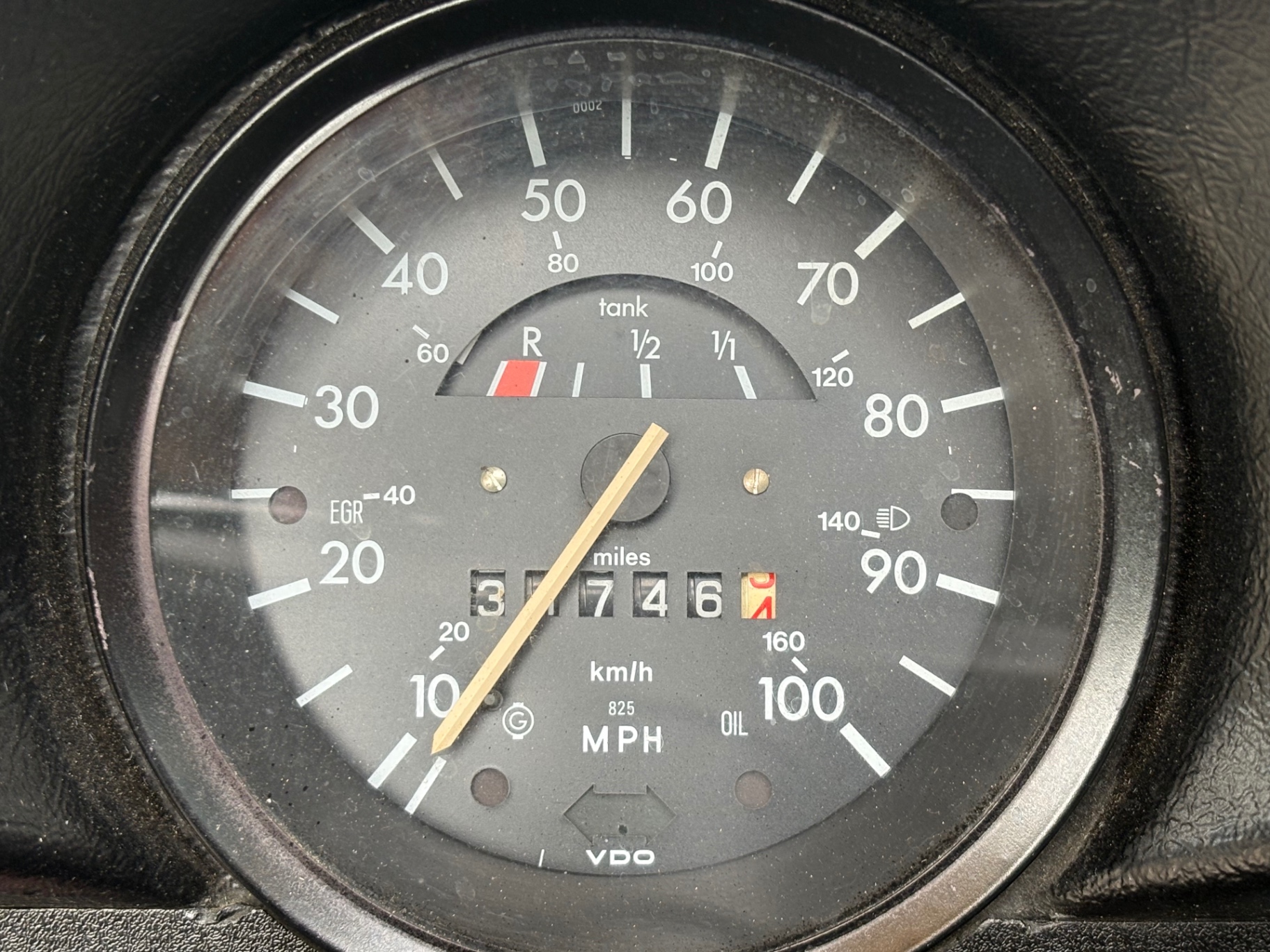
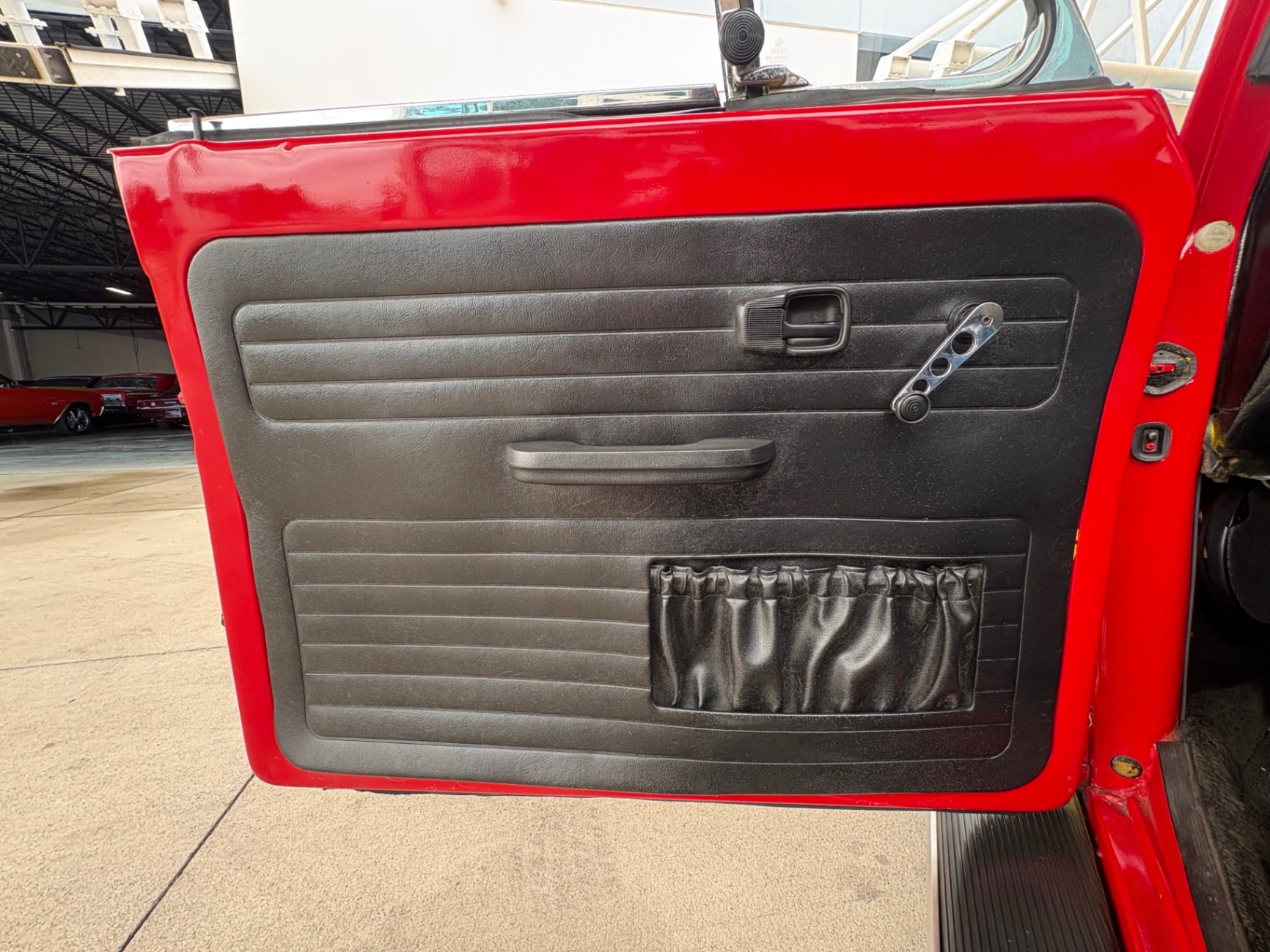
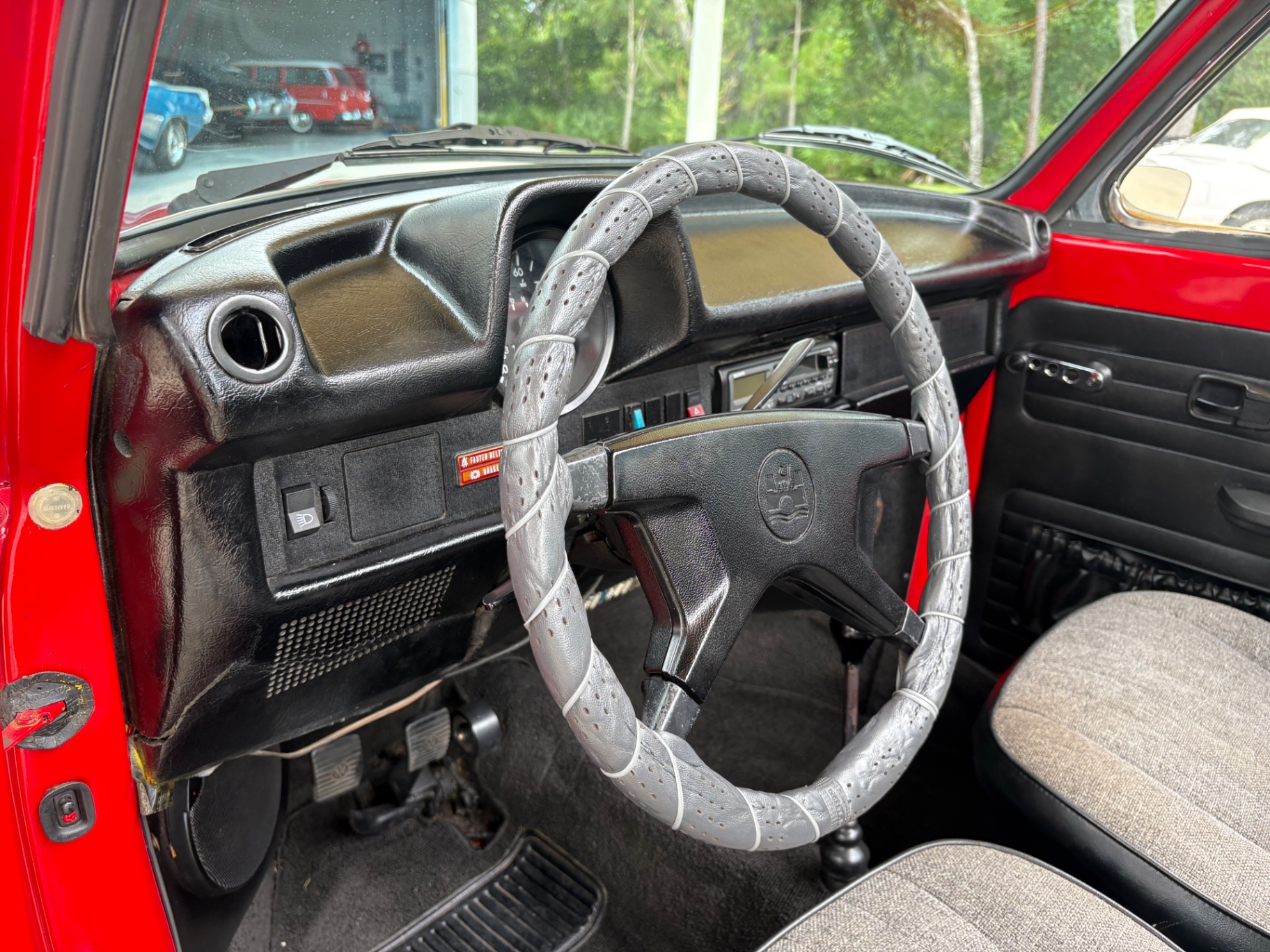
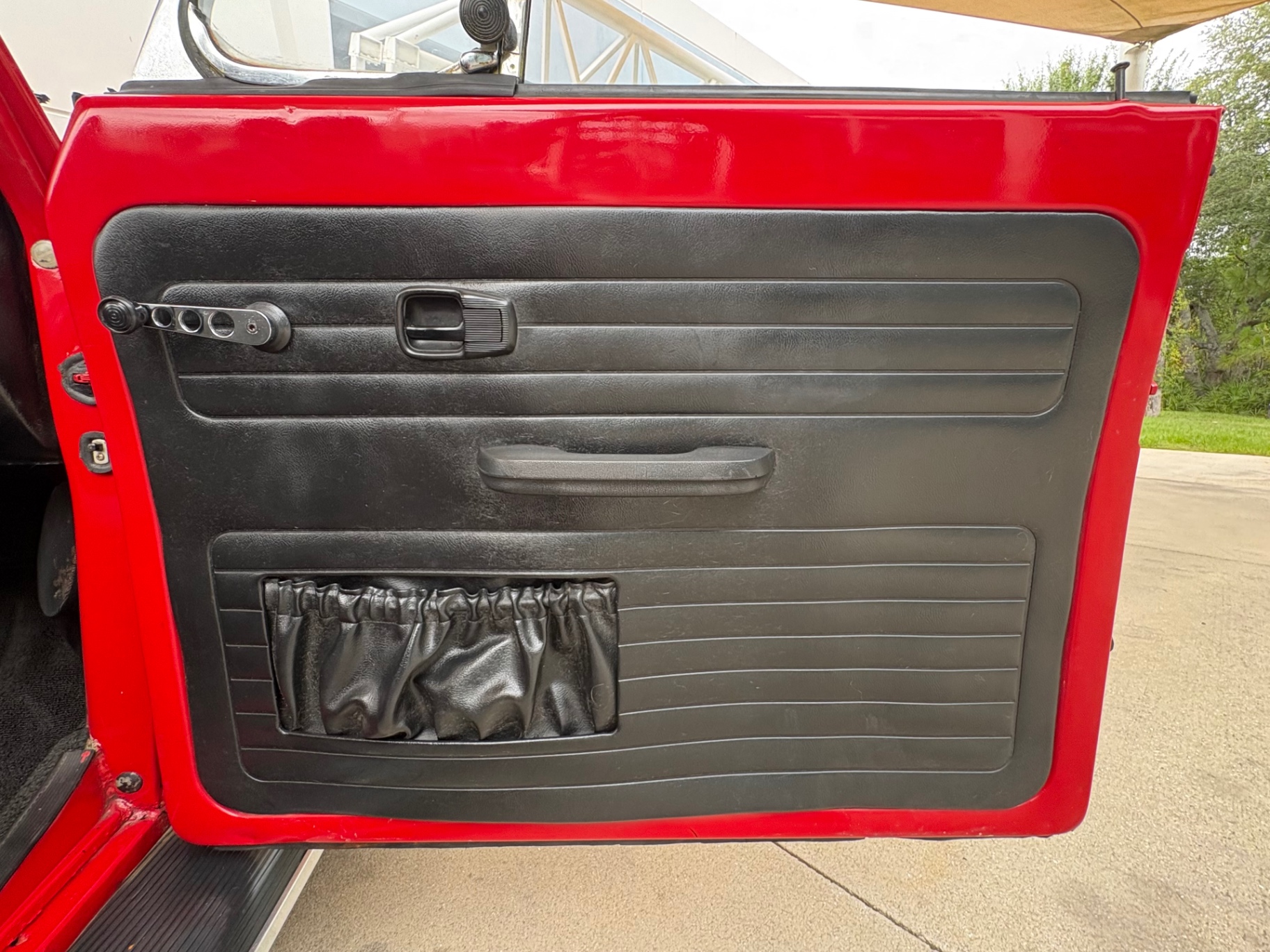
The sport steering wheel is a noticeable departure from the original large-diameter VW unit, and the photographs show a gray perforated leather-wrapped wheel that fills the cockpit with a more driving-oriented feel than the factory item. The VW logo is visible on the horn button. The dashboard retains its original late-model Super Beetle layout, with the pod-style instrument cluster housing the speedometer directly ahead of the driver. In place of the factory radio, there is an aftermarket head unit with a CD player installed in the center of the dash — a practical upgrade that does not require any cutting or irreversible modification to the original dashboard structure. The door panels are the correct black molded units for this model year, with the integrated map pocket and window crank hardware intact on both sides.
Exterior
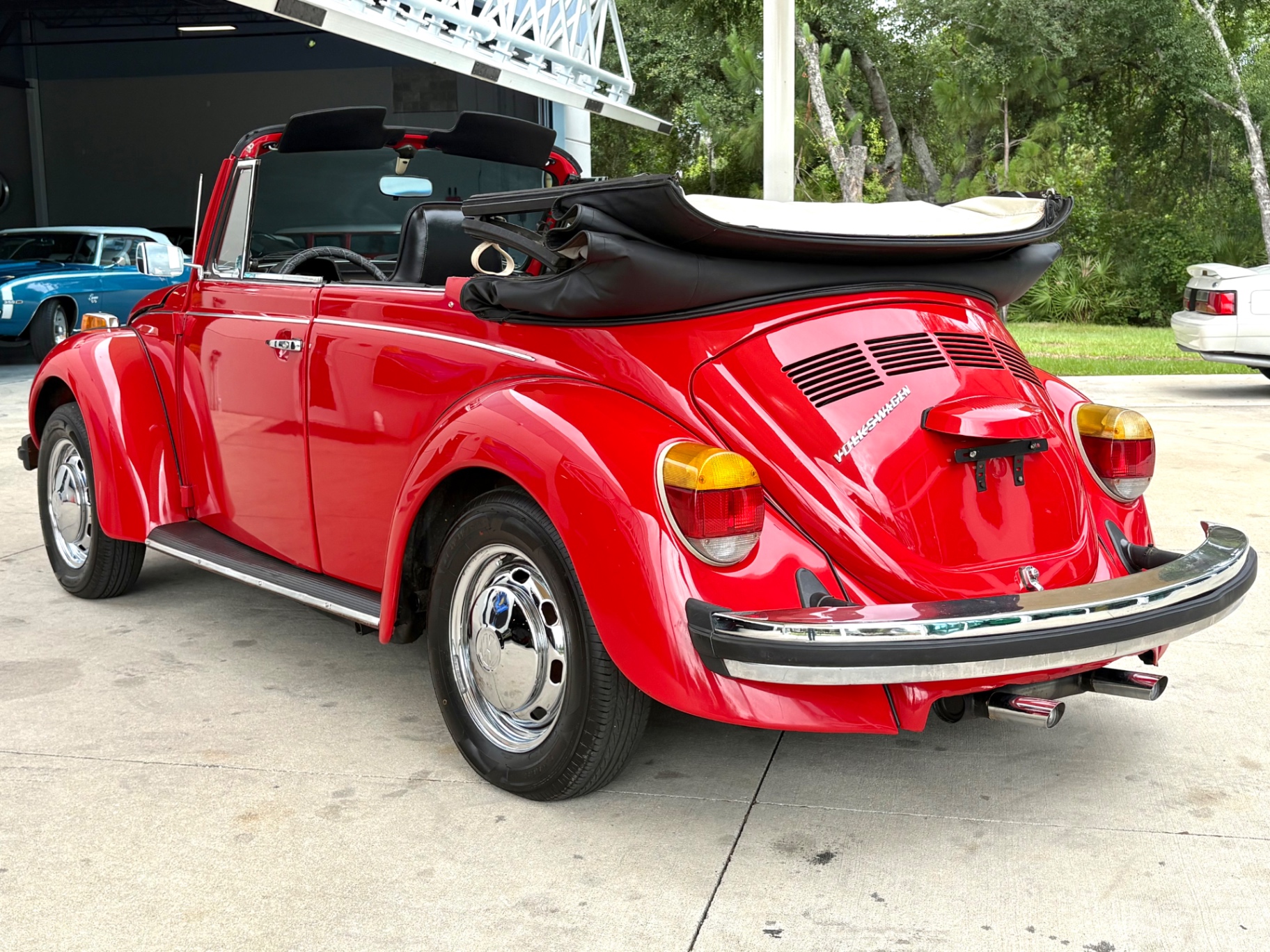
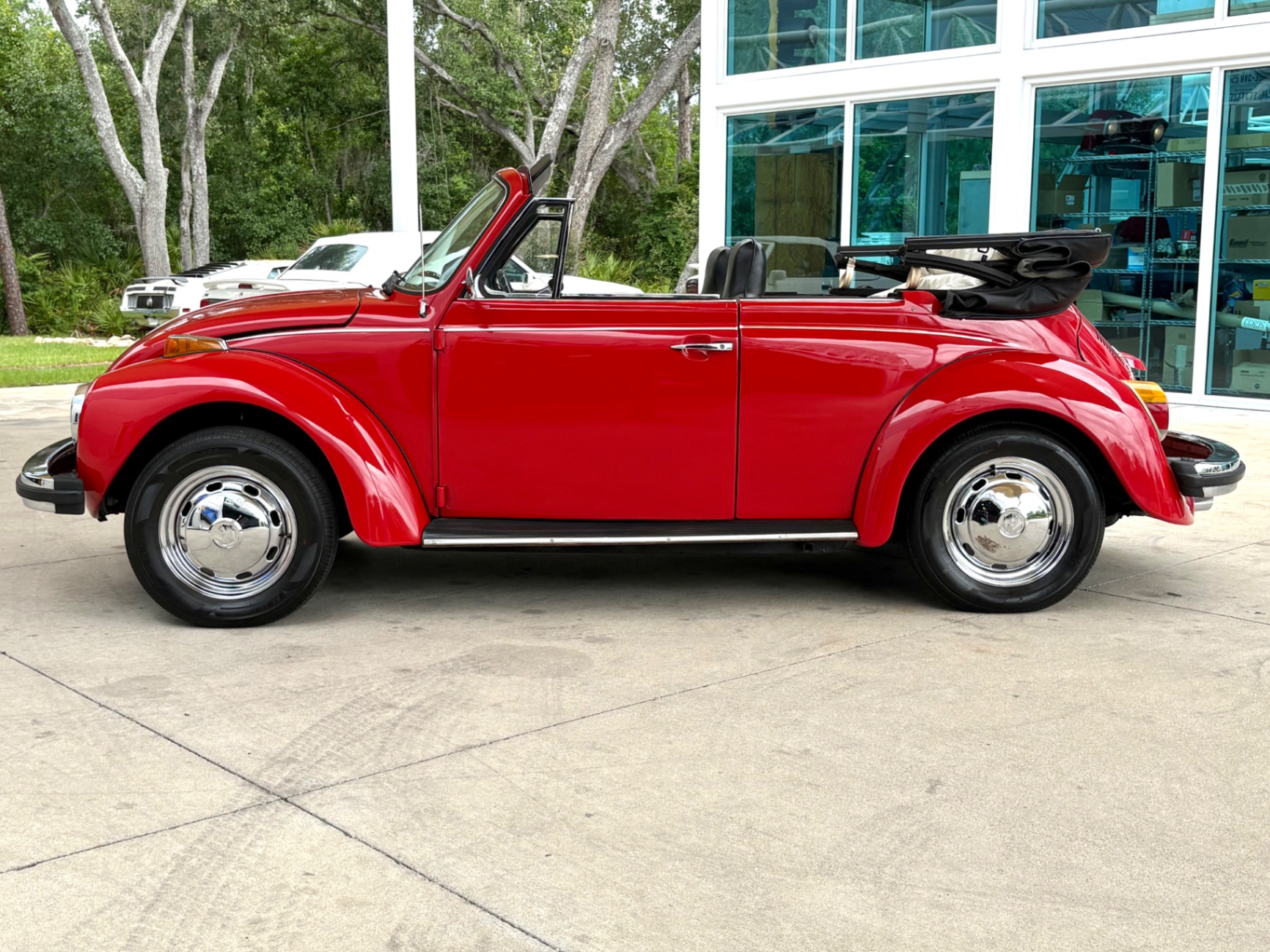
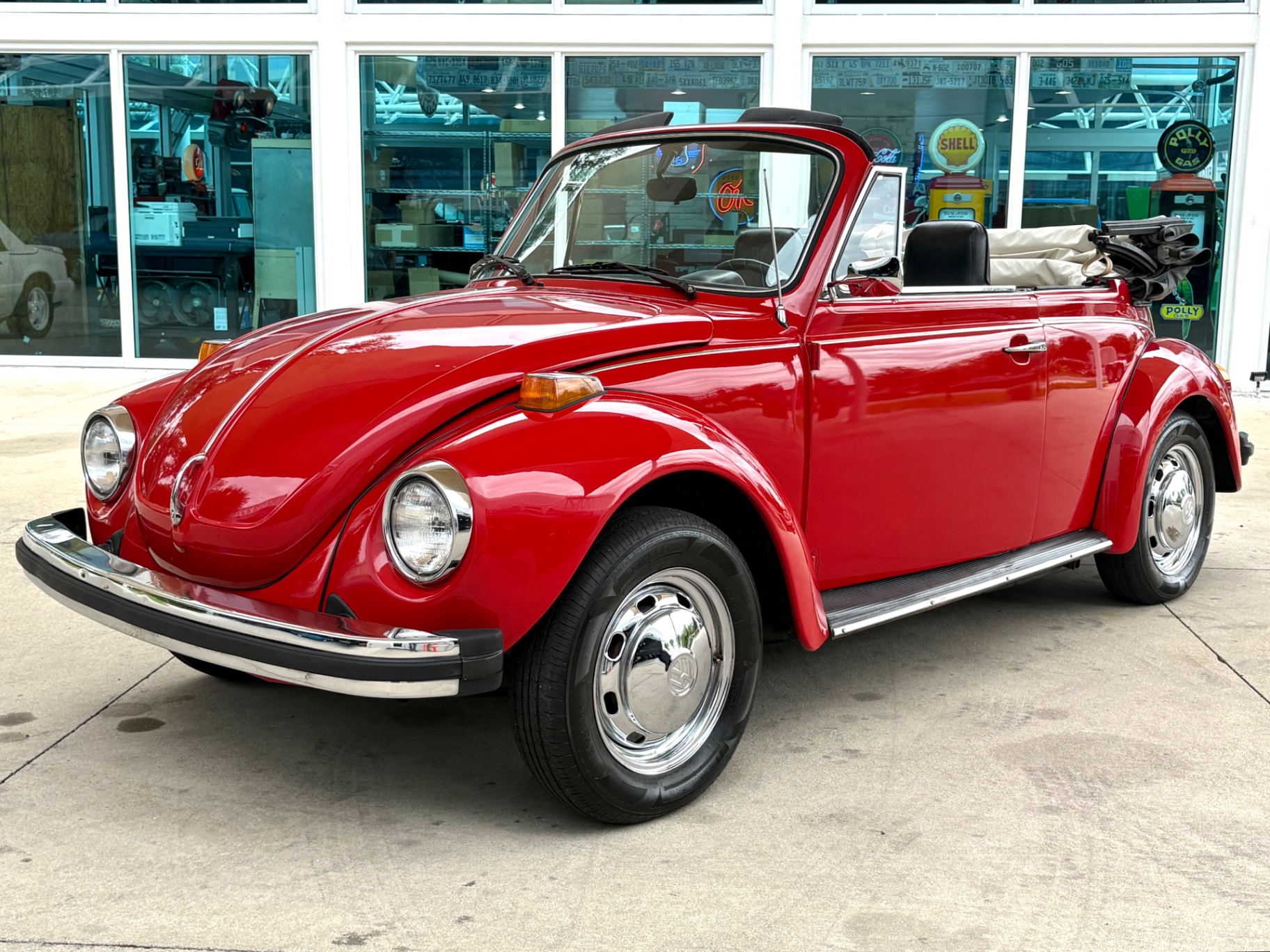
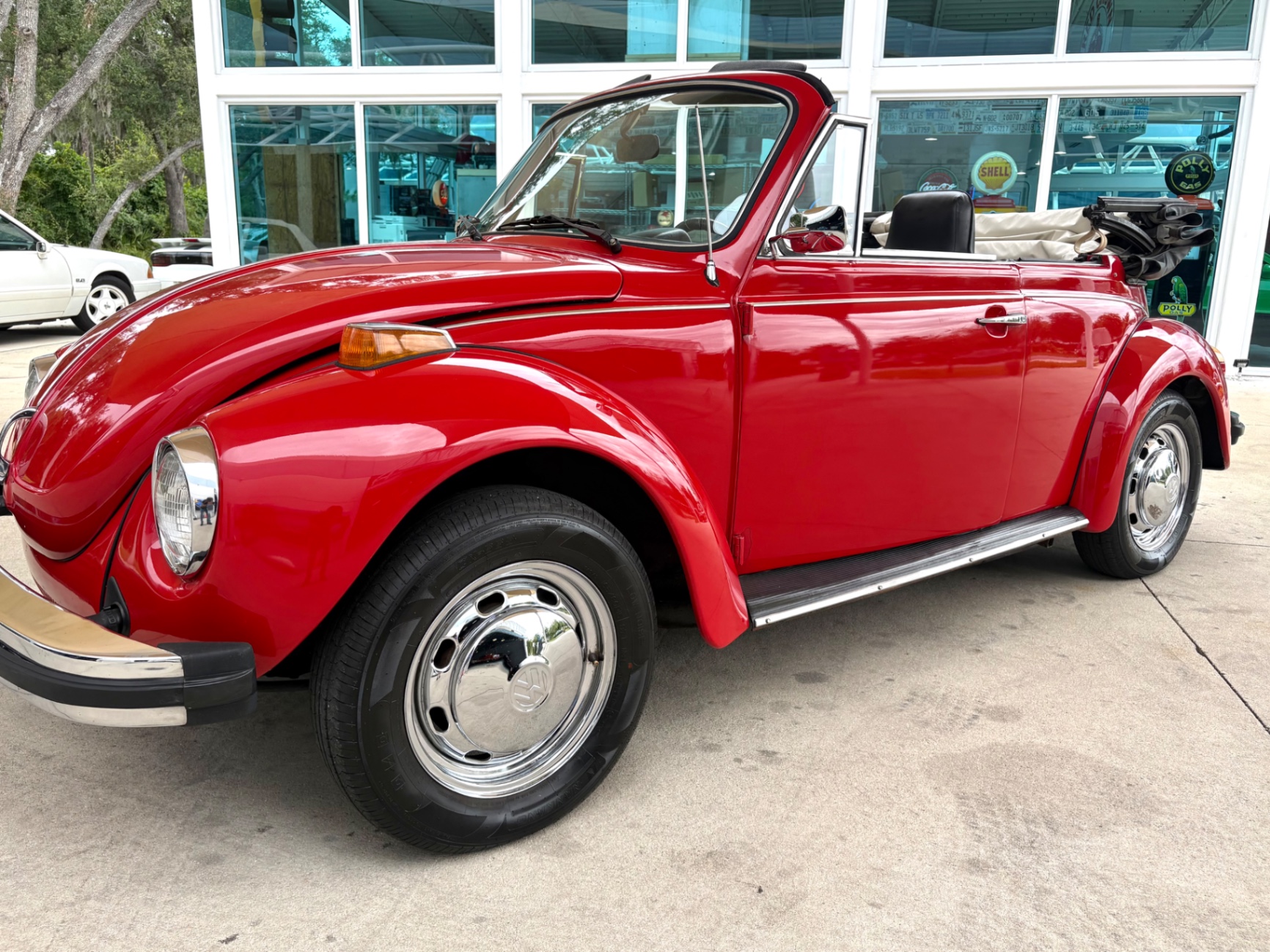
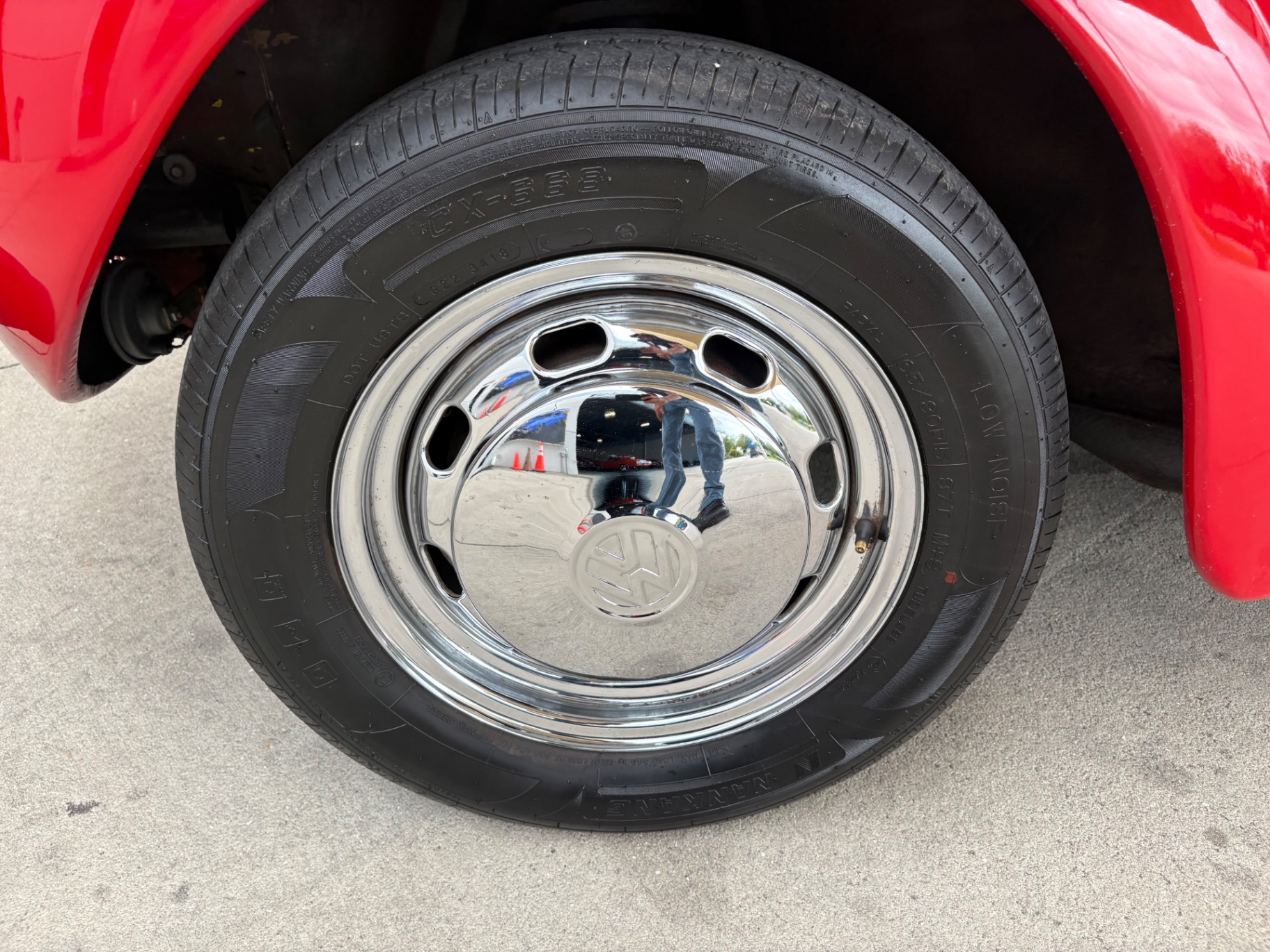
The exterior of this 1976 Volkswagen Super Beetle Convertible is finished in red, which reads cleanly against the black soft top when it is raised and presents an open, uncluttered look with the top folded down. The body panels carry the rounded profile of the 1303-series Super Beetle, including the curved panoramic windshield that distinguishes it from both the flat-windshield 1302 Super Beetle and the original standard Beetle. The chrome front and rear bumpers are in place, retaining the correct period look of the late-production U.S.-market car. Chrome VW wheel covers dress the steel wheels, which is the correct and period-appropriate wheel treatment for this model.
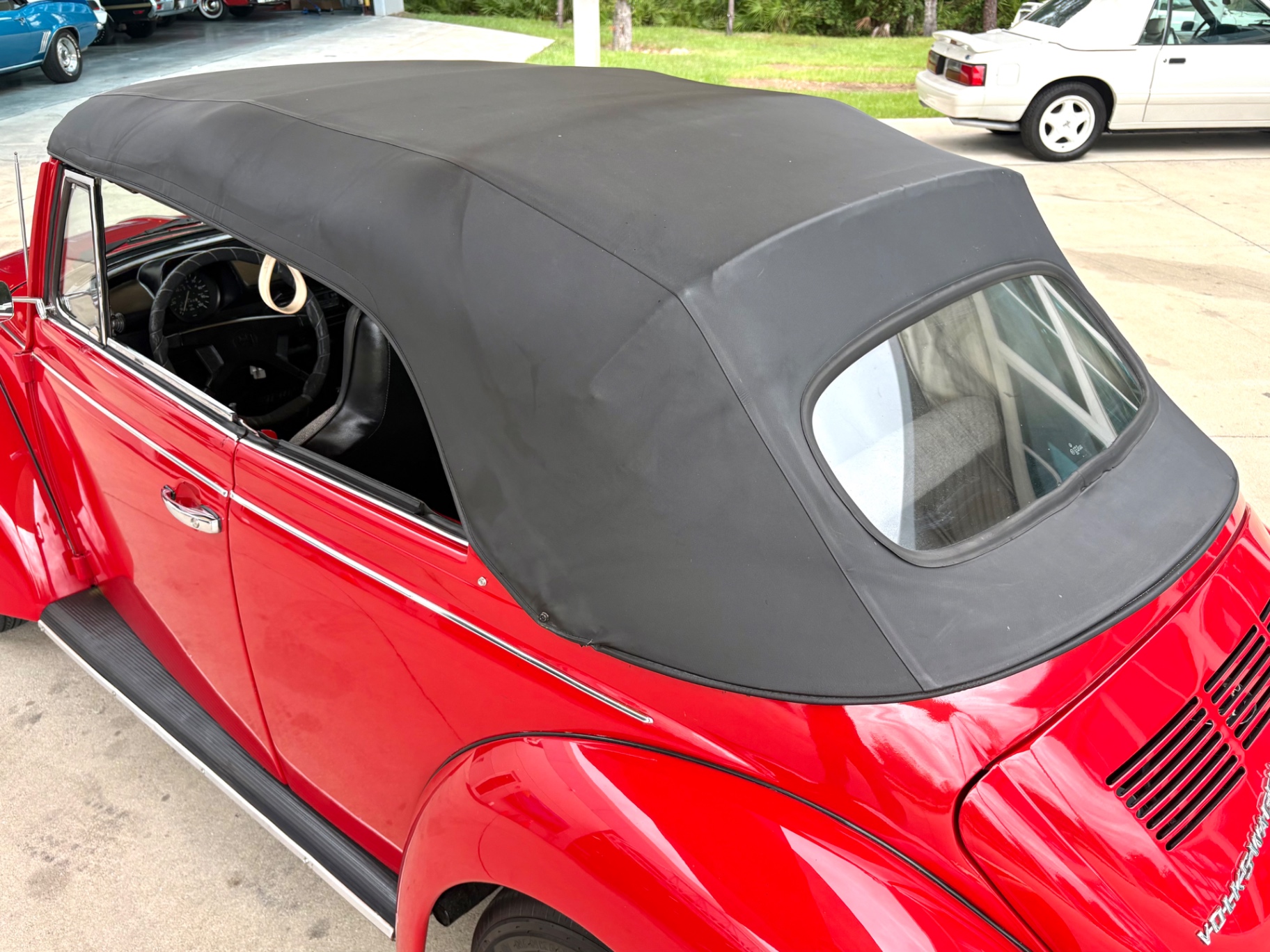
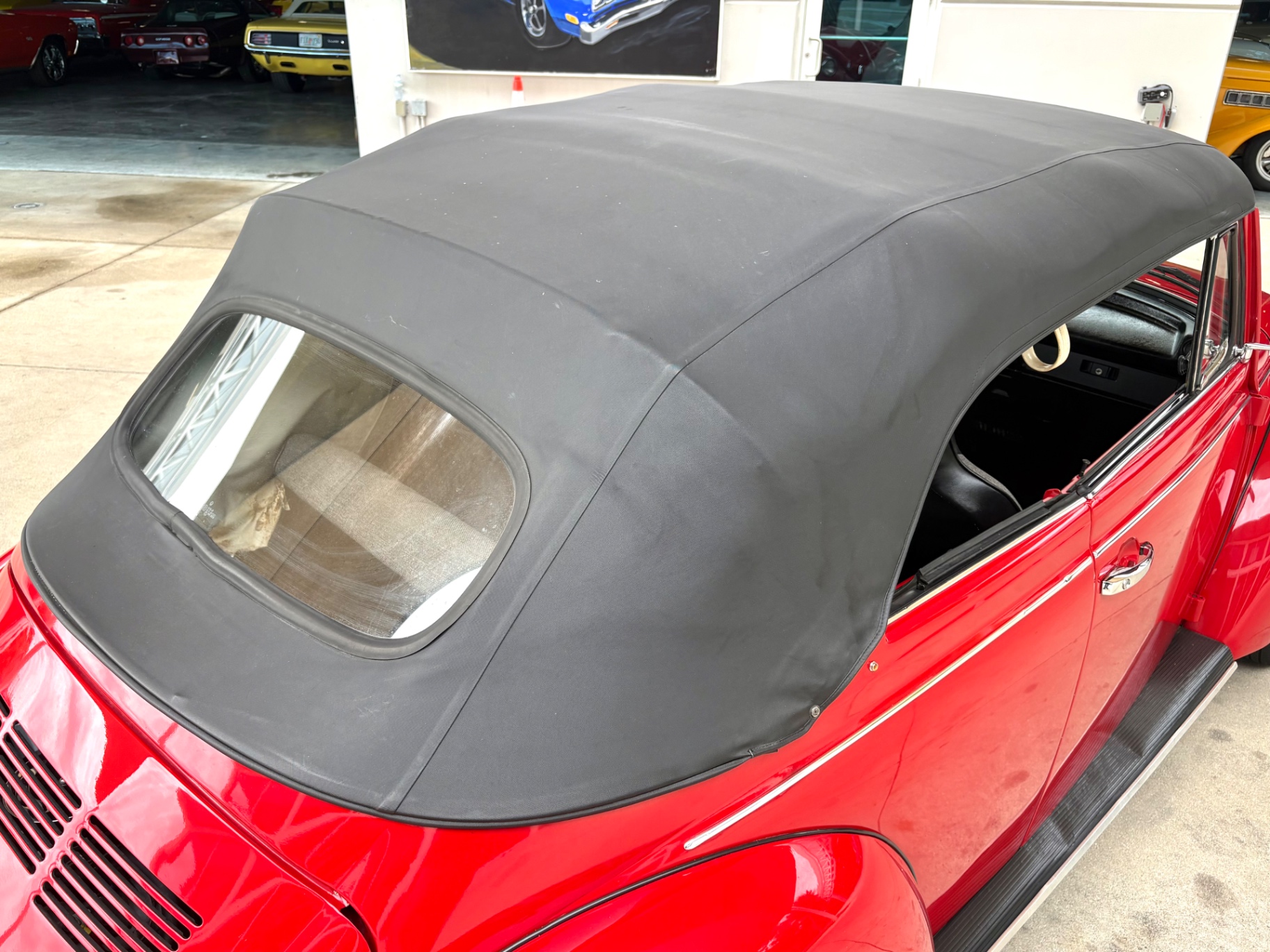
The black soft top, which is the Karmann-constructed folding unit, is present and functional. Soft tops on these cars are available as reproduction units from multiple suppliers, so condition is assessable and replaceable, but a functioning top is always preferable to a car that has been sitting open for extended periods, which accelerates interior deterioration. The body lines are consistent across the panels in the photos, and the rear of the car shows the dual exhaust tips exiting symmetrically below the rear apron — a clean look that suits the red and chrome exterior combination well.
Conclusion
The 1976 Volkswagen Super Beetle Convertible is one of those cars that occupies a very specific and well-understood place in the collector market. It is late enough in the production run to benefit from the fully developed Super Beetle platform, it carries the desirable Karmann-built convertible body with the panoramic windshield, and it has the practical advantage of a recently rebuilt engine and a solid, treated undercarriage. The gray cloth interior is consistent and intact throughout, the floor pans have been sealed against future moisture intrusion, and the CV axle boots — one of the most commonly neglected wear items on these cars — are in good condition. This is a driver-quality 1976 Super Beetle Convertible that has had real mechanical attention put into it, not a garage piece waiting for a long-term project.
If you have questions about this 1976 Volkswagen Super Beetle Convertible or would like to arrange a time to see it in person, call Skyway Classics at 941-254-6608. We are located in Sarasota, Florida, and happy to walk you through every detail of the car.
Disclaimer
Information found on the website is presented as given to us by the owner of the car, whether on consignment or from the owner we bought it from. Some Photos, materials for videos, descriptions and other information are provided by the consignor/seller and is deemed reliable, but Skyway Classics does not warranty or guarantee this information. Skyway Classics is not responsible for information that may incorrect or a publishing error. The decision to purchase should be based solely on the buyers personal inspection of the vehicle or by a professional inspection service prior to offer or purchase being made.
1976 Volkswagen Super Beetle Convertible — Rebuilt Engine, Solid Floor Pans, Red over Gray
Why This Car Is Special
The 1976 Volkswagen Super Beetle Convertible sits at an interesting crossroads in VW history. By 1976, Volkswagen had already begun phasing out the Beetle in most markets, shifting its focus to the water-cooled Golf and Jetta platforms. The United States was one of the last major markets to receive the Beetle, and the convertible version — built exclusively by Karmann in Osnabrück, Germany — was kept in production through 1979 specifically because American demand remained strong. That makes a 1976 Super Beetle Convertible a late-run example of a car that Volkswagen was deliberately winding down, which gives it a distinct place in the model's long history.
The Super Beetle itself, known internally as the Type 1 with the "1302" or "1303" designation depending on the year, was introduced in 1971 as an evolution of the original Beetle. The key differences between a Super Beetle and a standard Beetle are meaningful to anyone who has owned both. The Super Beetle uses a MacPherson strut front suspension in place of the original torsion bar setup, which noticeably improves ride quality and handling. The front trunk was also redesigned with a curved windshield on the 1303 variant, yielding significantly more luggage space than the flat-glass original. The 1303-based convertible, which this car is, also features the curved panoramic windshield — a detail that collectors specifically look for when distinguishing late Super Beetle Cabriolets from earlier models.
What makes the Karmann-built Beetle convertible especially collectible is the construction quality of the top mechanism and body reinforcement. Karmann was contracted by Volkswagen to produce the convertible, and the company had decades of experience building open-top cars. The body was substantially reinforced to compensate for the missing roof structure, and the convertible top mechanism was engineered to last. Finding a 1976 Super Beetle Convertible with a solid undercarriage and intact floor pans nearly five decades later is not a given — it requires either a dry-climate history or deliberate preservation work. This car has coated and sealed floor pans and a solid undercarriage, which is the first thing an experienced VW buyer checks.
Features List
- Recently rebuilt 1.6L air-cooled flat-4 engine
- 4-speed manual transmission
- Aftermarket performance air filter
- Inline fuel filter
- Dual exhaust tips
- CV axle boots in good condition
- Coated and sealed floor pans
- Solid undercarriage
- Black soft top
- Red exterior
- Chrome bumpers
- Chrome VW wheel covers
- Gray cloth bucket seats with headrests
- Rear bench seat in matching gray cloth
- Sport steering wheel
- Aftermarket stereo head unit with CD player
Mechanical
The engine in this 1976 Volkswagen Super Beetle is the 1.6-liter air-cooled flat-four, which was the displacement used in U.S.-market Beetles during this period following the emissions-related detuning that affected the early 1970s models. This particular engine has been recently rebuilt, which is one of the most significant practical details about this car. The air-cooled flat-four in a Beetle is a well-understood engine with a robust parts supply and a large community of knowledgeable mechanics, but a freshly rebuilt unit means the buyer is not inheriting the unknown mechanical history that comes with most 45-year-old cars. The engine bay photos show a clean, organized setup with the aftermarket performance air filter sitting atop the carburetor and an inline fuel filter visible in the fuel line — straightforward additions that improve filtration without altering the fundamental character of the drivetrain.
The 4-speed manual transmission is the correct unit for this application and is paired with the rebuilt engine. CV axle boots are reported to be in good condition, which matters on these cars because torn boots are one of the most common deferred maintenance items and lead directly to CV joint failure if left unaddressed. The undercarriage photographs confirm what the listing states — the floor pans have been coated and sealed, and the structure underneath this car is solid. The suspension components, torsion bars, and trailing arms visible in the lift photos show no evidence of the heavy corrosion that typically disqualifies older Beetles from serious consideration. The dual exhaust tips exit at the rear in the classic Super Beetle position, and the exhaust system appears intact and properly routed.
Interior
The interior of this 1976 Volkswagen Super Beetle Convertible is finished in gray cloth throughout, with the front bucket seats, rear bench seat, and headrests all matching in the same material. The seats show the vertical-ribbed cloth pattern consistent with late-production Beetle interiors, and the headrests — which became standard on U.S.-market vehicles following federal safety requirements — are intact on both front buckets. The rear bench, which is a meaningful feature in a convertible of this size, carries the same gray cloth and is in presentable condition based on the photos.
The sport steering wheel is a noticeable departure from the original large-diameter VW unit, and the photographs show a gray perforated leather-wrapped wheel that fills the cockpit with a more driving-oriented feel than the factory item. The VW logo is visible on the horn button. The dashboard retains its original late-model Super Beetle layout, with the pod-style instrument cluster housing the speedometer directly ahead of the driver. In place of the factory radio, there is an aftermarket head unit with a CD player installed in the center of the dash — a practical upgrade that does not require any cutting or irreversible modification to the original dashboard structure. The door panels are the correct black molded units for this model year, with the integrated map pocket and window crank hardware intact on both sides.
Exterior
The exterior of this 1976 Volkswagen Super Beetle Convertible is finished in red, which reads cleanly against the black soft top when it is raised and presents an open, uncluttered look with the top folded down. The body panels carry the rounded profile of the 1303-series Super Beetle, including the curved panoramic windshield that distinguishes it from both the flat-windshield 1302 Super Beetle and the original standard Beetle. The chrome front and rear bumpers are in place, retaining the correct period look of the late-production U.S.-market car. Chrome VW wheel covers dress the steel wheels, which is the correct and period-appropriate wheel treatment for this model.
The black soft top, which is the Karmann-constructed folding unit, is present and functional. Soft tops on these cars are available as reproduction units from multiple suppliers, so condition is assessable and replaceable, but a functioning top is always preferable to a car that has been sitting open for extended periods, which accelerates interior deterioration. The body lines are consistent across the panels in the photos, and the rear of the car shows the dual exhaust tips exiting symmetrically below the rear apron — a clean look that suits the red and chrome exterior combination well.
Conclusion
The 1976 Volkswagen Super Beetle Convertible is one of those cars that occupies a very specific and well-understood place in the collector market. It is late enough in the production run to benefit from the fully developed Super Beetle platform, it carries the desirable Karmann-built convertible body with the panoramic windshield, and it has the practical advantage of a recently rebuilt engine and a solid, treated undercarriage. The gray cloth interior is consistent and intact throughout, the floor pans have been sealed against future moisture intrusion, and the CV axle boots — one of the most commonly neglected wear items on these cars — are in good condition. This is a driver-quality 1976 Super Beetle Convertible that has had real mechanical attention put into it, not a garage piece waiting for a long-term project.
If you have questions about this 1976 Volkswagen Super Beetle Convertible or would like to arrange a time to see it in person, call Skyway Classics at 941-254-6608. We are located in Sarasota, Florida, and happy to walk you through every detail of the car.
Disclaimer
Information found on the website is presented as given to us by the owner of the car, whether on consignment or from the owner we bought it from. Some Photos, materials for videos, descriptions and other information are provided by the consignor/seller and is deemed reliable, but Skyway Classics does not warranty or guarantee this information. Skyway Classics is not responsible for information that may incorrect or a publishing error. The decision to purchase should be based solely on the buyers personal inspection of the vehicle or by a professional inspection service prior to offer or purchase being made.
1976 Volkswagen
Super Beetle Base
Why Choose Skyway Classics?
Explore our curated inventory of classic and collector cars—thoughtfully selected, ready to drive, and supported by experts who make ownership simple.
Expert Curation
Every vehicle is hand-selected by our experts for quality, authenticity, and investment potential.
Fast Transactions
Streamlined buying and selling process with quick financing and immediate delivery options.
Only National Dealer With Classic Service & Repair
We’re the only national dealership that services and repairs the classics we sell—before and after the sale.
Nationwide Network
Access to our extensive network of collectors, restorers, and classic car enthusiasts nationwide.
Concierge Ownership Support
From financing and insurance to paperwork, shipping, and titling—we handle the details so you can enjoy the drive.
Passion-Driven Service
We're classic car enthusiasts first, providing personalized service with genuine passion for the hobby.