
1951 Willys
Overland Jeepster VJ-473
1951 Willys Overland Jeepster — Last Year of Production, Hurricane F-Head Engine, Overdrive Transmission
Why This Car Is Special
The 1951 Willys Overland Jeepster holds a specific place in American automotive history that most people don't fully appreciate. It was the last model year Willys would produce the Jeepster before discontinuing the nameplate entirely, making every surviving 1951 example a legitimate end-of-run collectible. The Jeepster was Willys Overland's attempt to build a civilian leisure vehicle that carried the brand recognition and rugged identity of the wartime Jeep into the postwar consumer market. It first appeared in 1948, designed by Brooks Stevens, and was meant to appeal to buyers who wanted something sportier and more open-air than a station wagon but more practical than a roadster.
What makes 1951 particularly significant is the engine. That year, Willys introduced the Hurricane F-Head inline-four — an upgraded version of the Go Devil flathead that had powered earlier Jeepsters and wartime Jeeps. The F-Head design placed the intake valves in the head while retaining exhaust valves in the block, a hybrid configuration that improved breathing and thermal efficiency over a pure flathead. The result was a meaningful bump in output over what came before, and the Hurricane F-Head went on to power Willys and early Kaiser-Jeep vehicles well into the 1960s, earning a reputation for long-term durability that holds up even today.
The Jeepster was never produced in massive numbers. Across its four model years — 1948 through 1951 — total production was relatively modest compared to mainstream American convertibles of the era, and 1951 was the lowest-volume year of the run. Finding a 1951 Willys Overland Jeepster in drivable, solid condition with correct trim and a functioning convertible top is genuinely difficult. This example checks all of those boxes and then some.
Features List
- Hurricane F-Head 134ci Inline-4 Engine
- 3-Speed Manual Transmission with Overdrive
- Black Convertible Top
- Front and Rear Bench Seats
- Whitewall Tires
- Chrome Bumpers, Front and Rear
- Willys Hub Caps
- Exterior Spare Tire Mount with Rear-Mounted Spare
- AM Radio Installed
- Body-Colored Dash (Yellow)
- Solid Undercarriage
- Independent Front Suspension
- Leaf Spring Rear Suspension
- Drum Brakes, Four-Wheel
- Split Windshield
- Wind Wings (Vent Windows)
- Exterior Sun Visor
- Interior Rearview Mirror
- Carpeted Floors
- Painted Engine Bay
- Chrome Windshield Frame
- Chrome Body Trim Moldings
- Side Step Plates
- Full Gauge Cluster (Fuel, Oil Pressure, Ammeter, Temperature)
- Choke Knob
- Willys Hood Ornament and Grille Badge
- All-Steel Body Construction
- Last Year of Jeepster Production
Mechanical
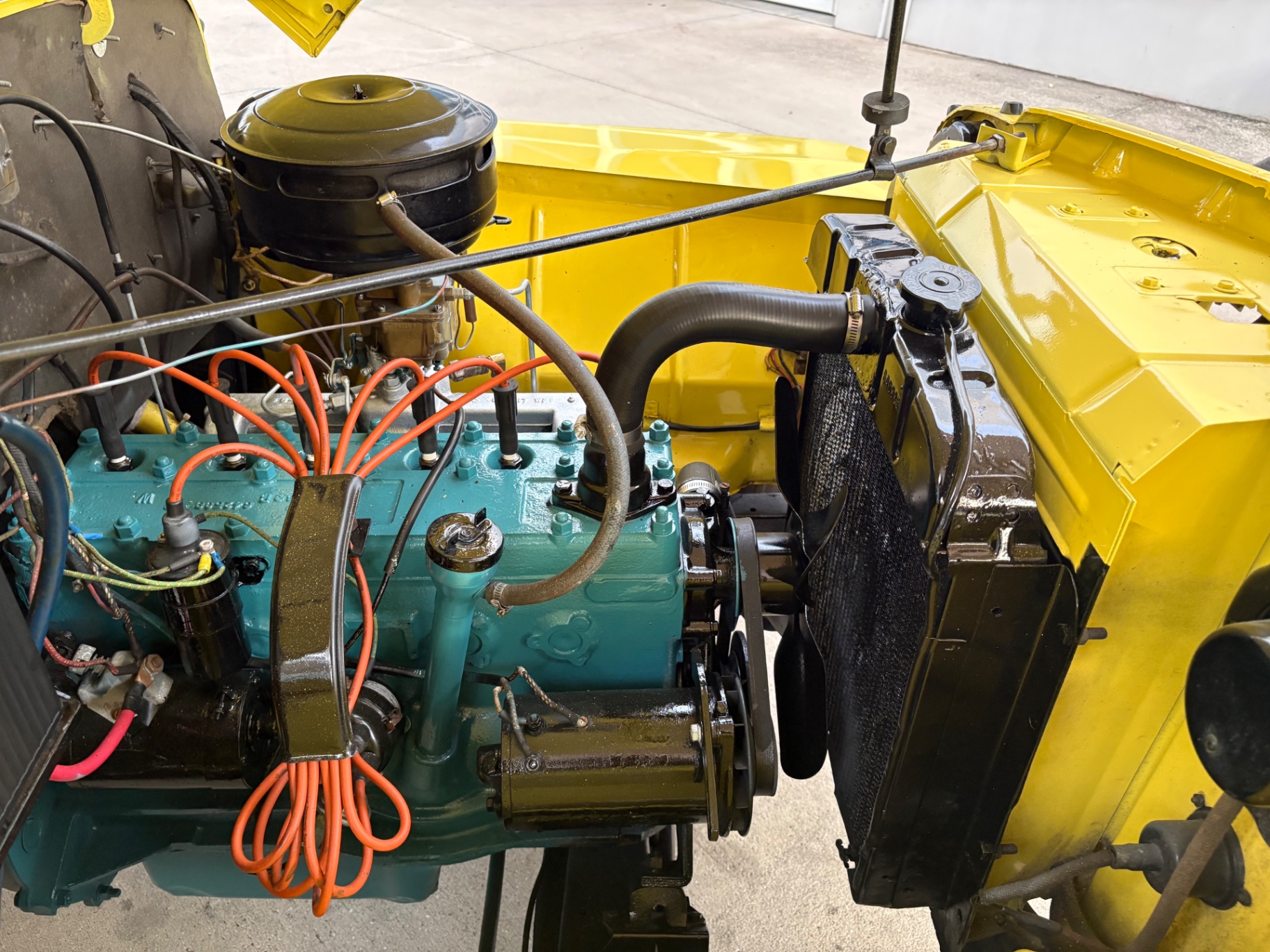
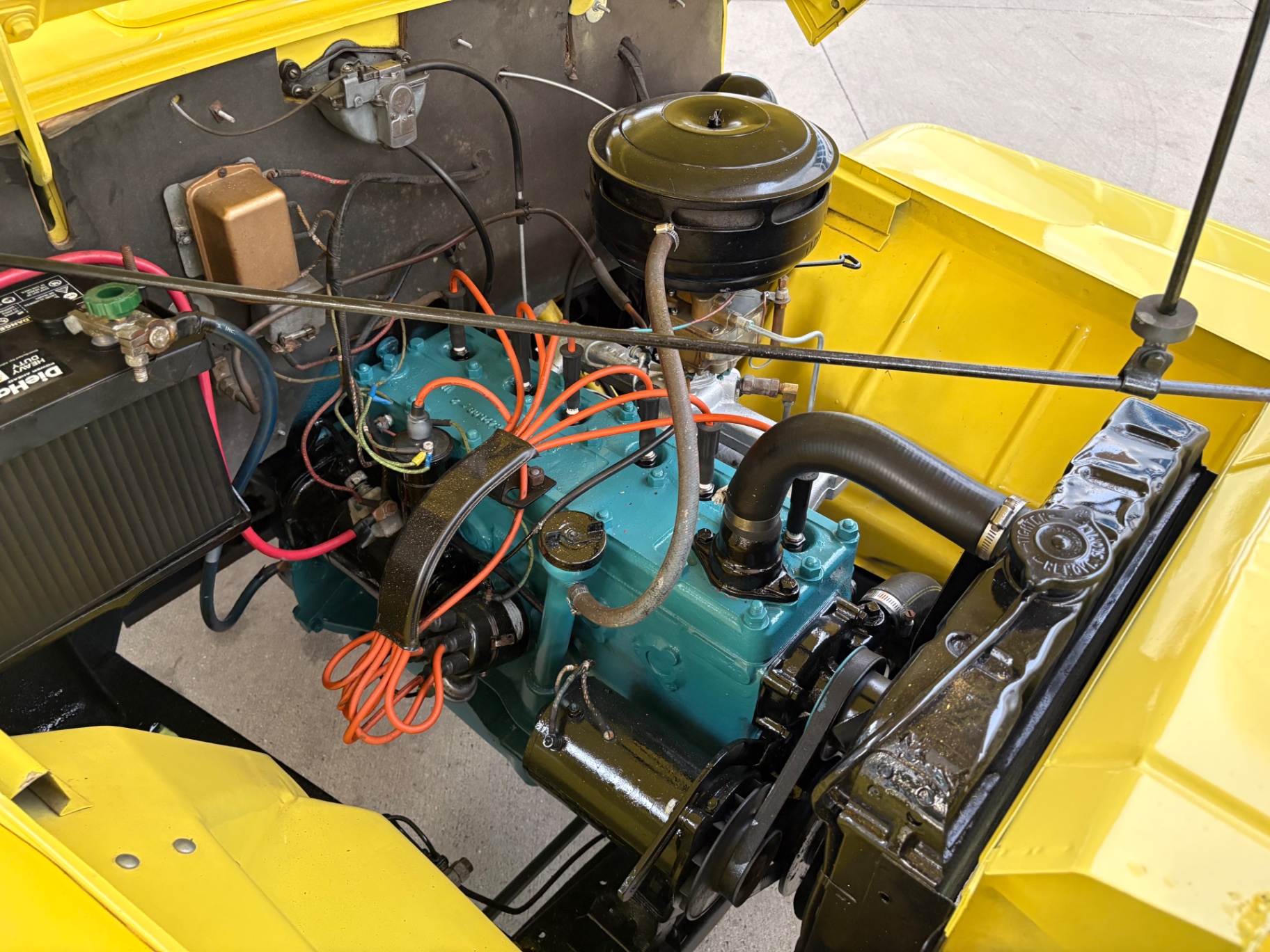
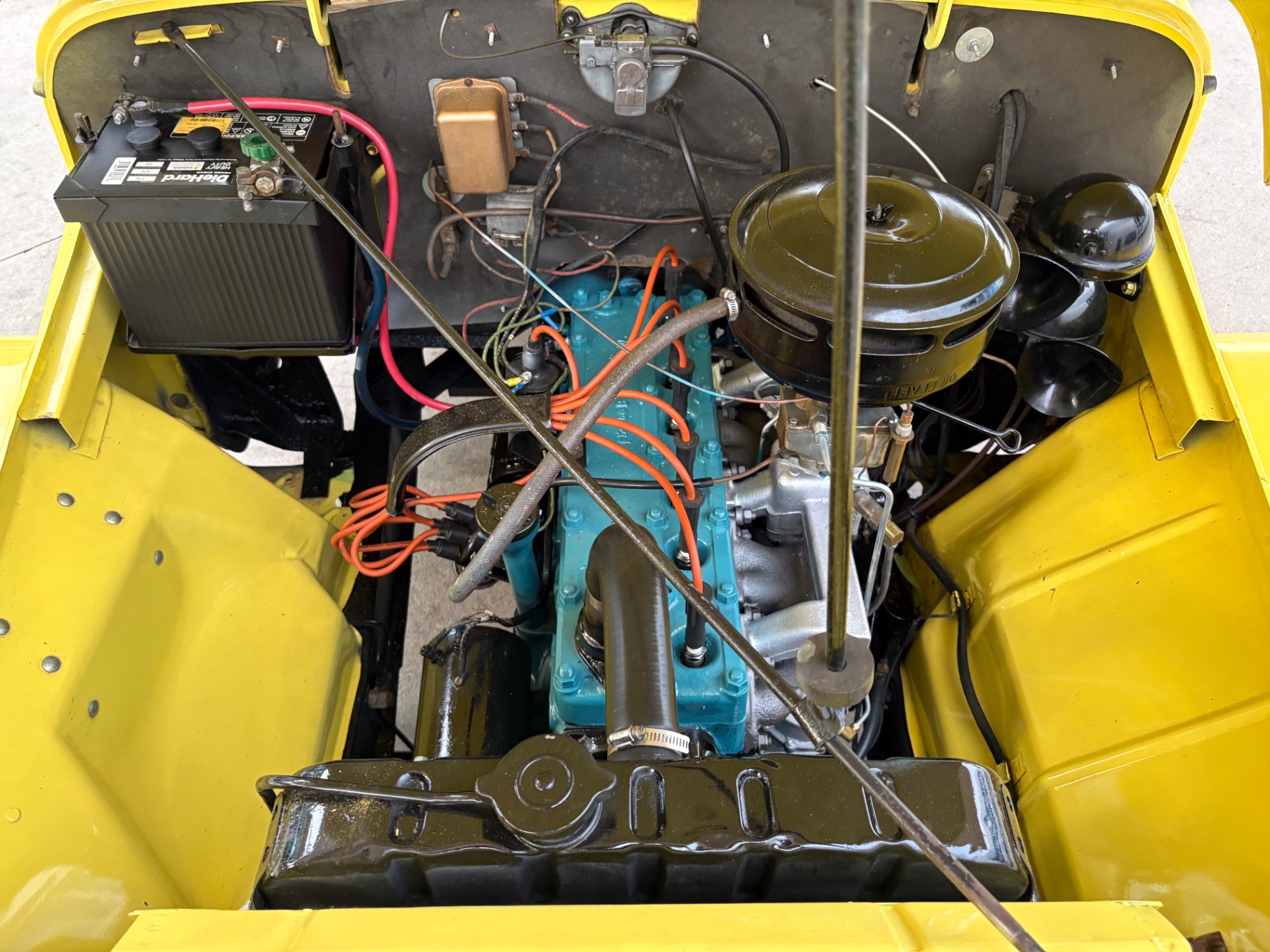
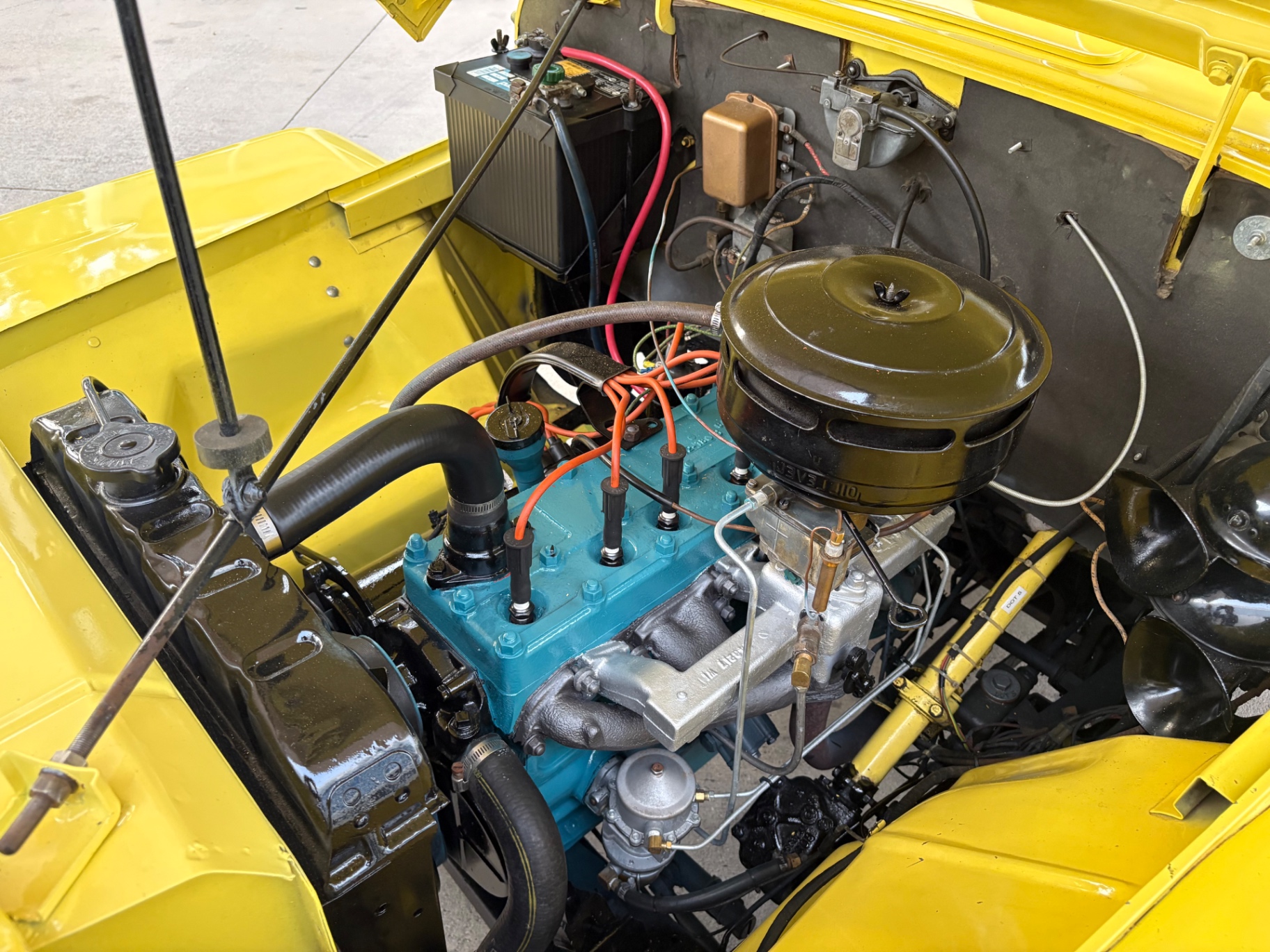
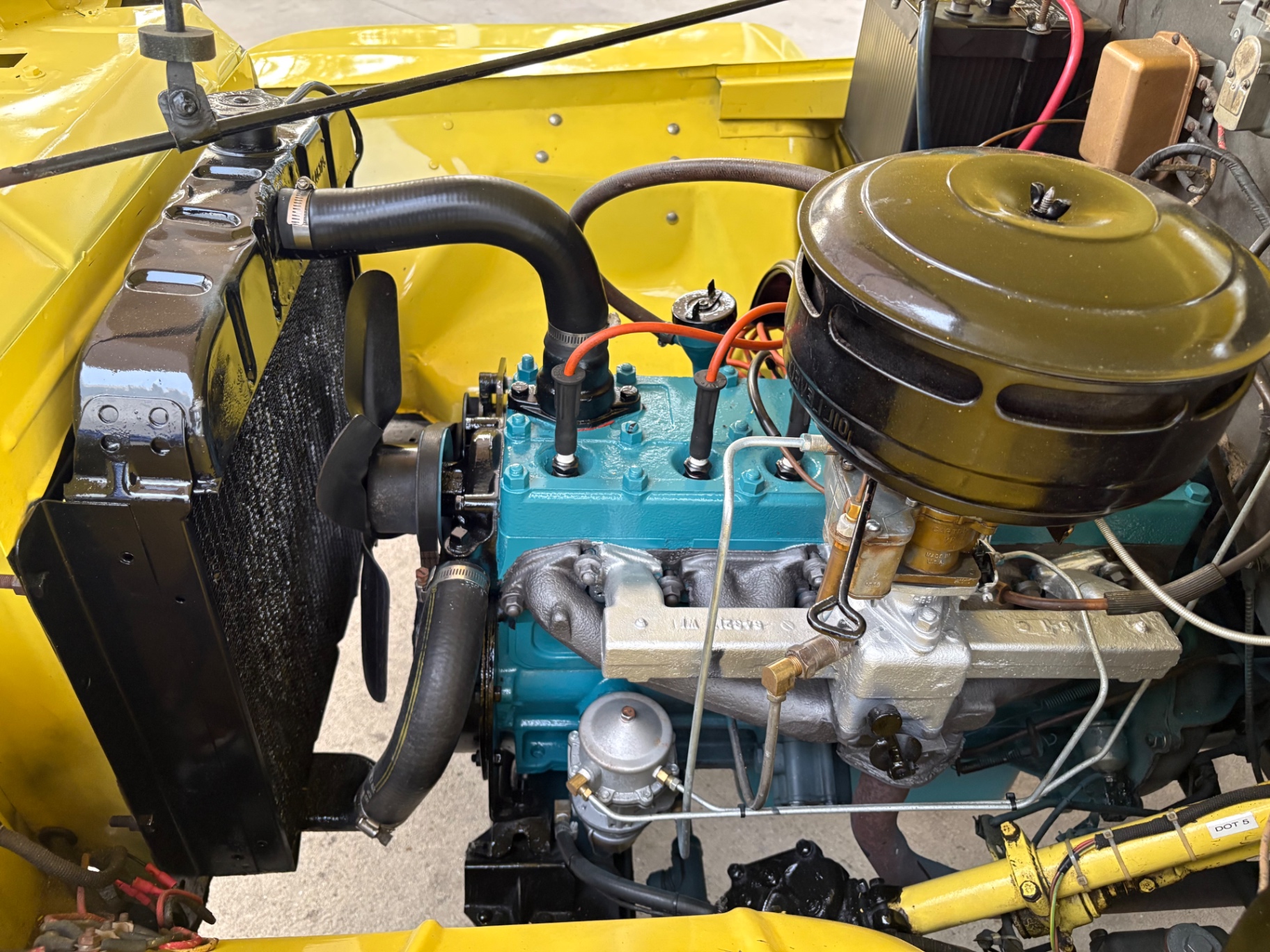
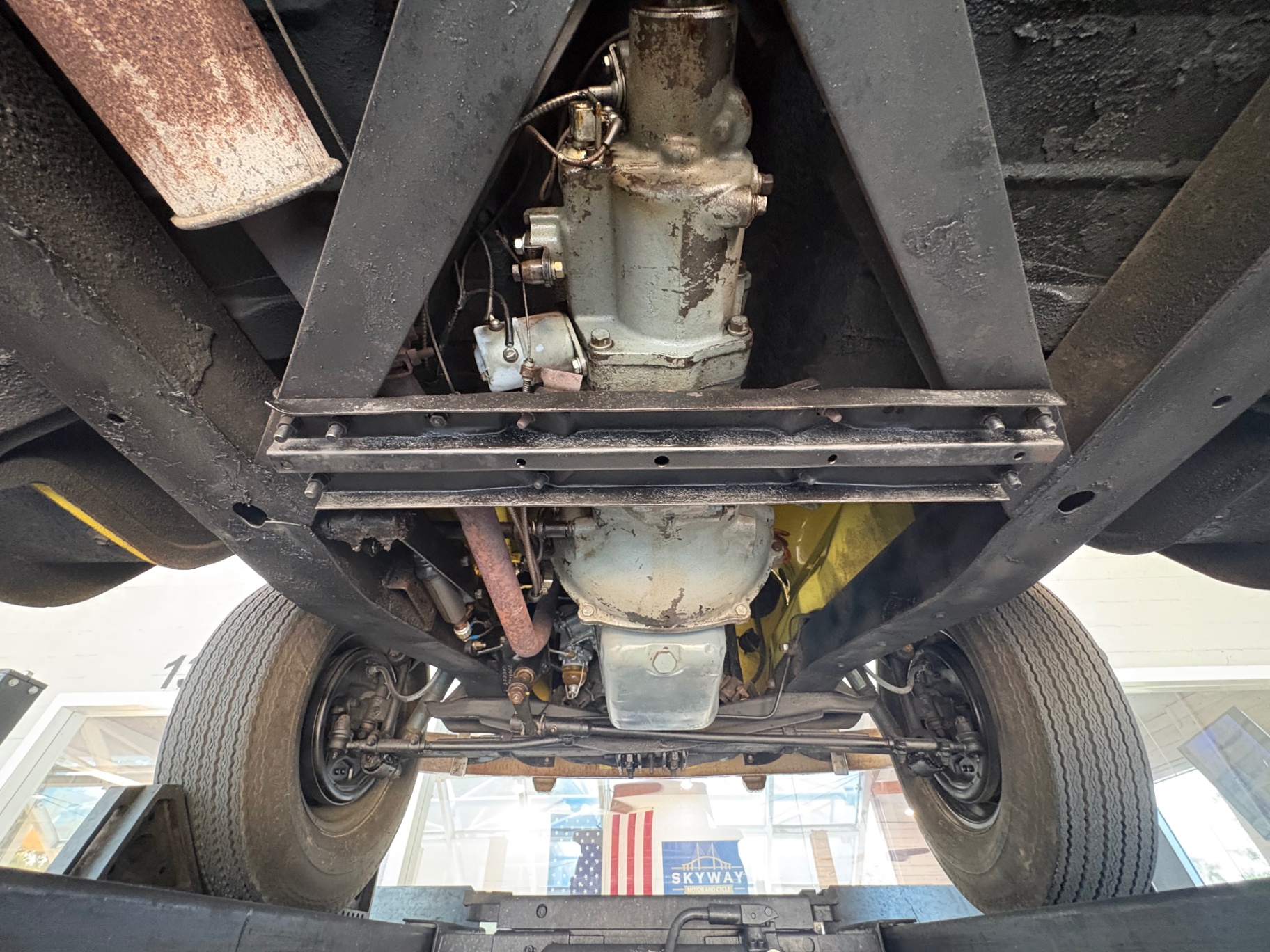
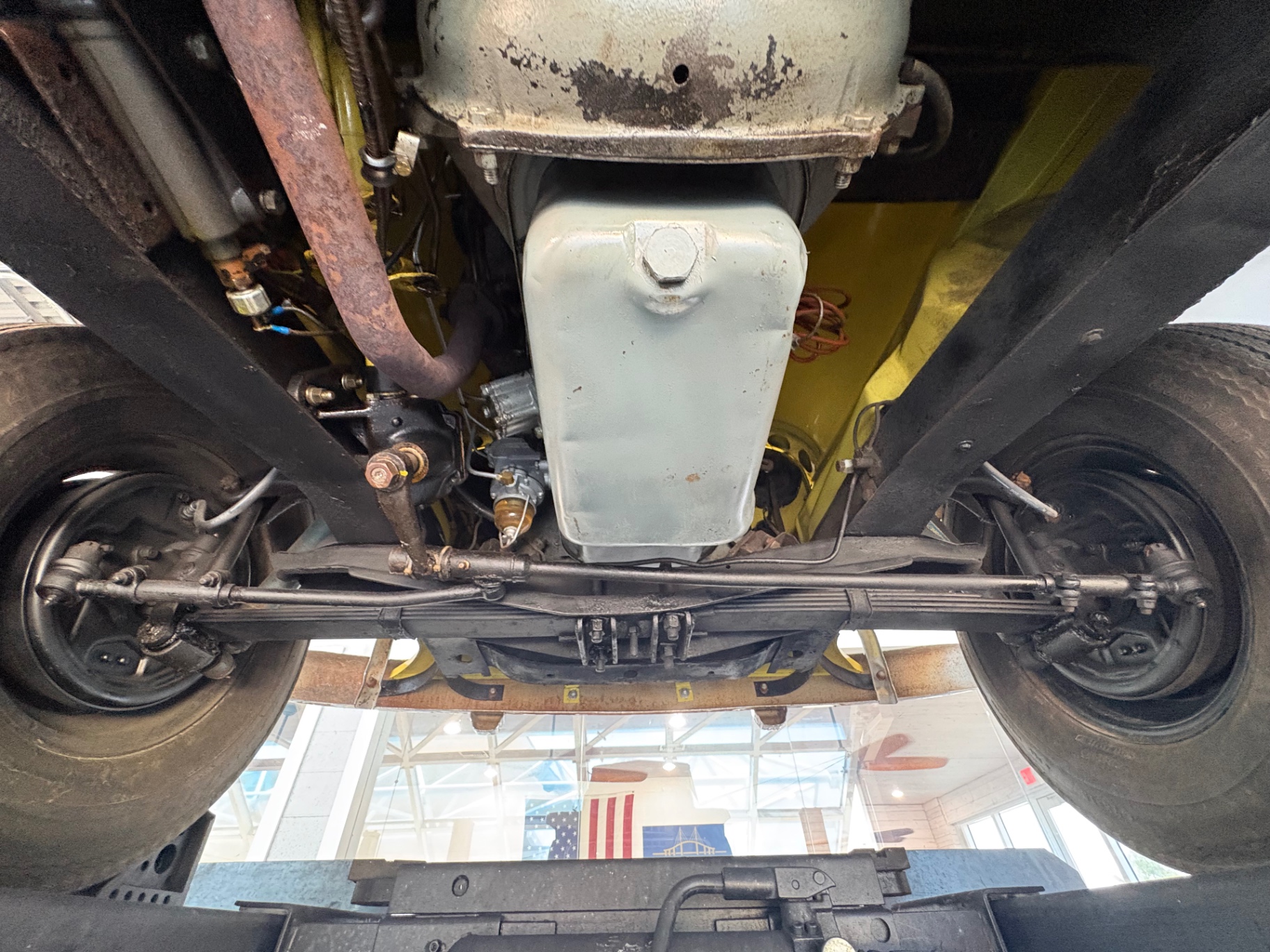
The heart of this 1951 Willys Overland Jeepster is the Hurricane F-Head 134 cubic inch inline-four, painted in its correct teal/turquoise block color as visible in the photos. The engine bay itself has been painted to match the exterior yellow, which was a period-correct detail on well-optioned Jeepsters and presents cleanly here. The F-Head configuration was a genuine engineering advancement for Willys at the time — by relocating the intake valves to the overhead position while keeping the exhaust valves in the block, engineers were able to improve combustion efficiency and torque delivery without a full overhead valve redesign. The engine is a known quantity among Willys enthusiasts for being straightforward to maintain and nearly bulletproof when properly cared for.
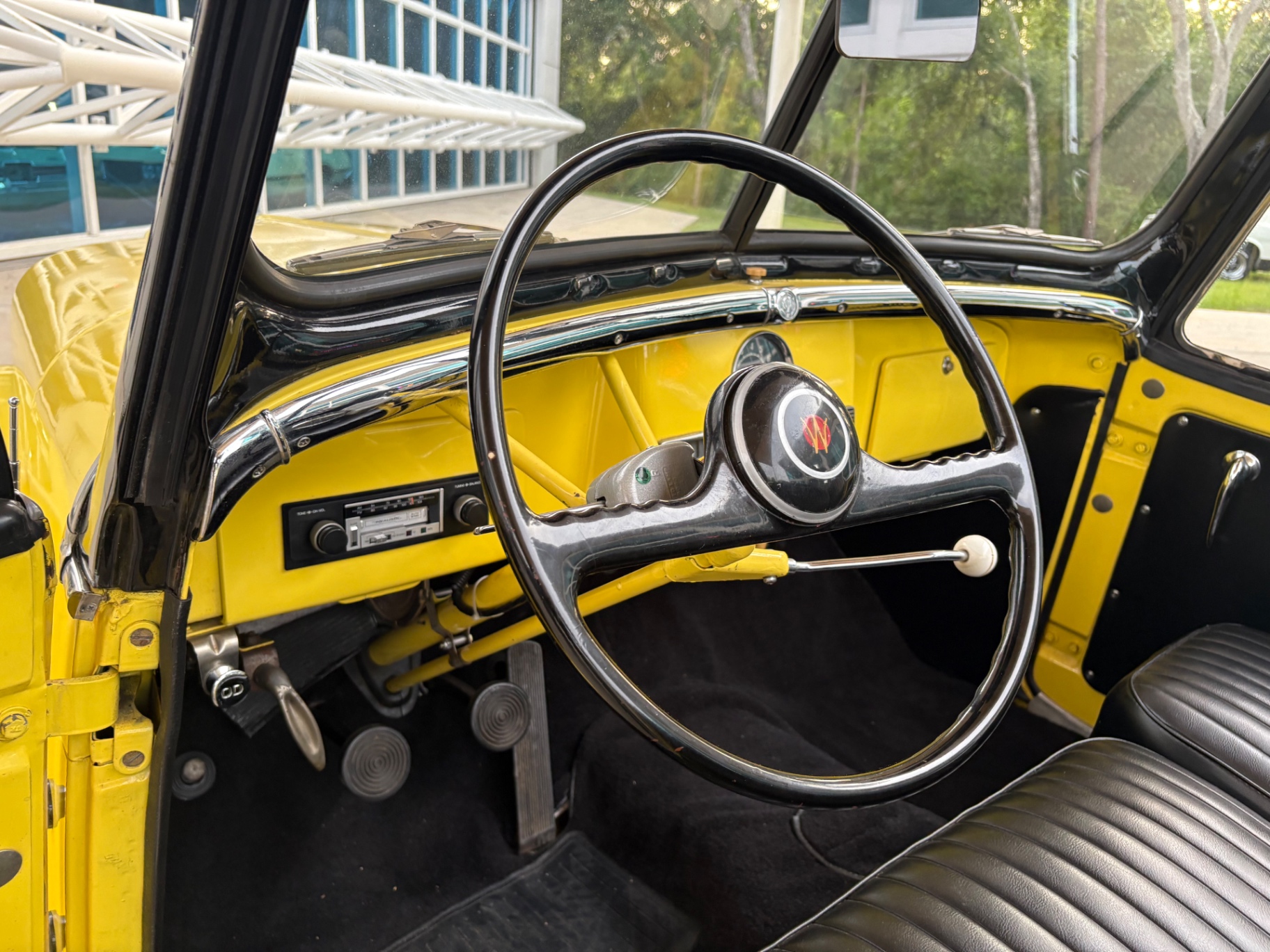
Behind the Hurricane engine sits a 3-speed manual transmission paired with an overdrive unit — a significant and desirable specification on any early 1950s vehicle. The overdrive allows the engine to drop into a relaxed, fuel-efficient cruising ratio at highway speeds, which makes this Jeepster a more usable and comfortable driver than a standard 3-speed would allow. The overdrive engagement lever is visible in the interior photos, positioned on the column. This combination of the F-Head four and overdrive was the powertrain setup that collectors specifically seek out on these cars.
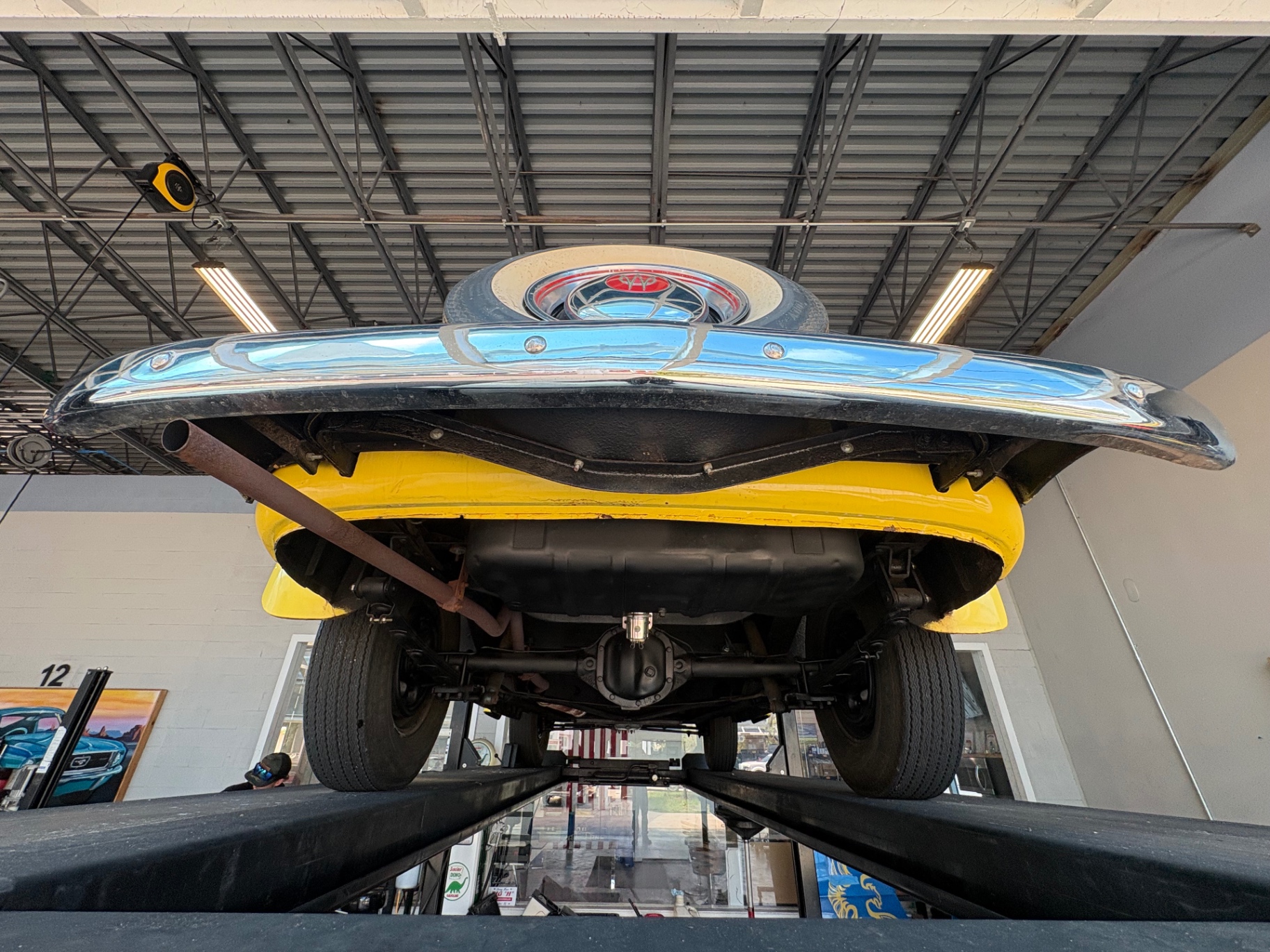
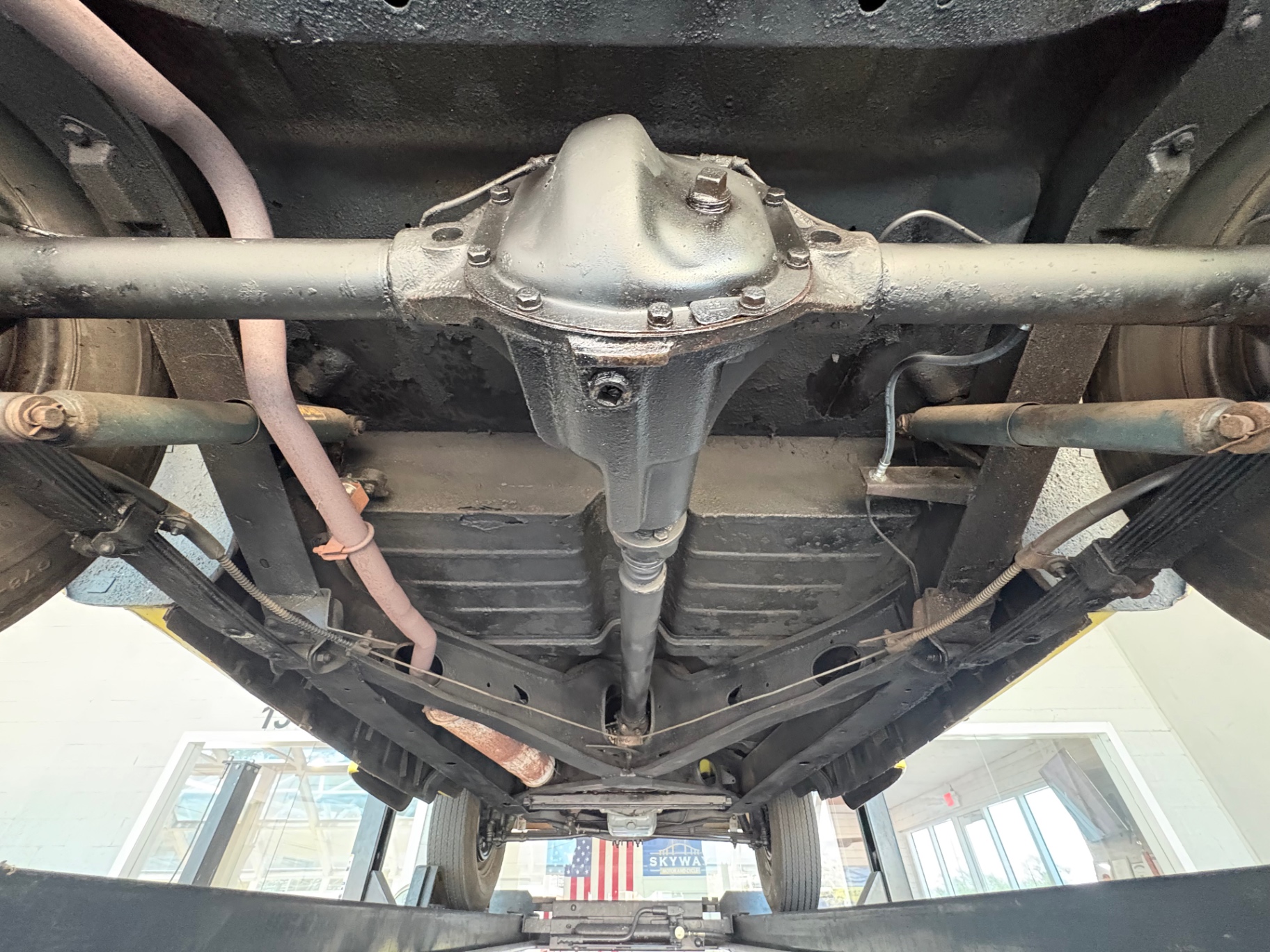
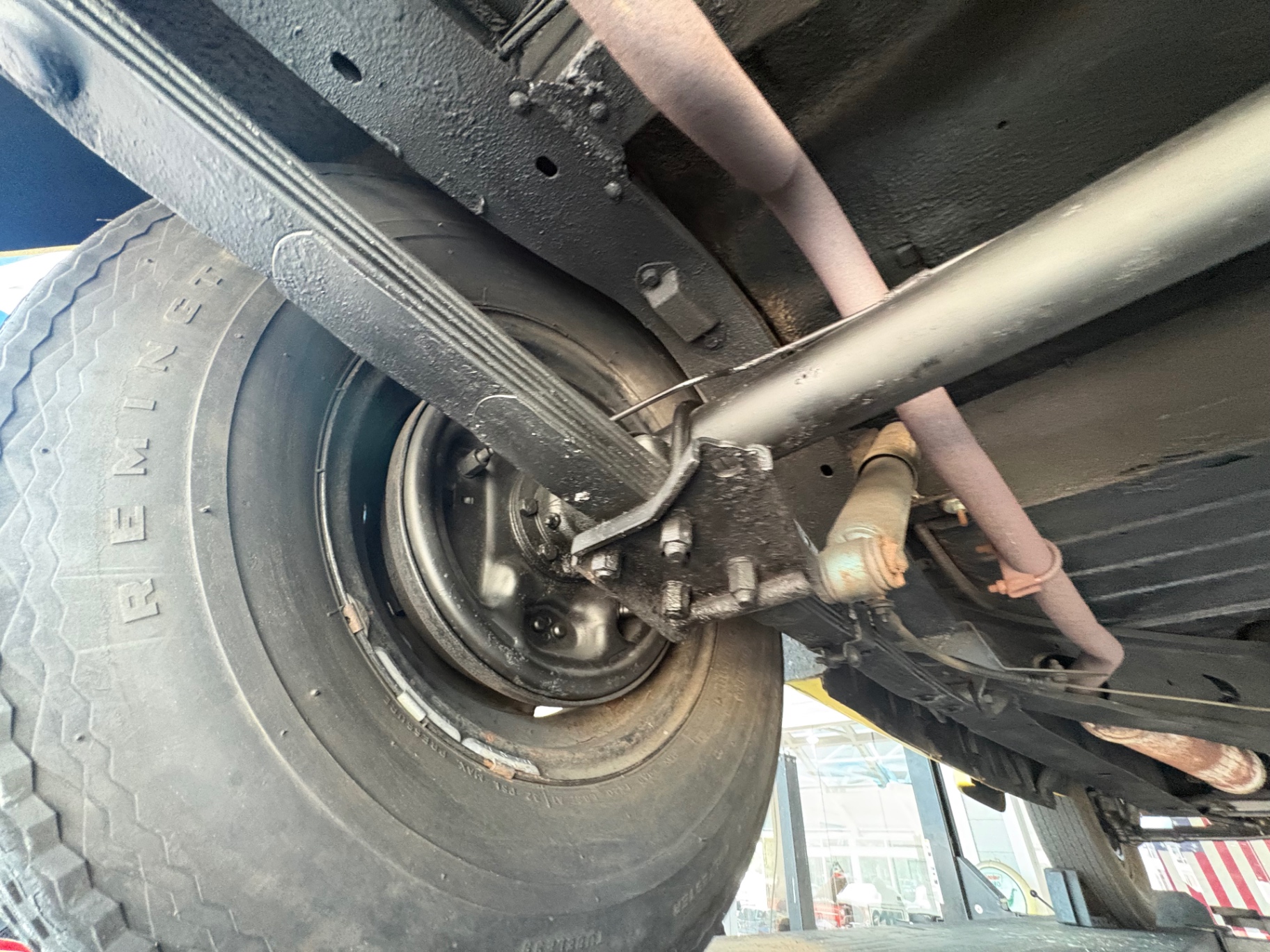
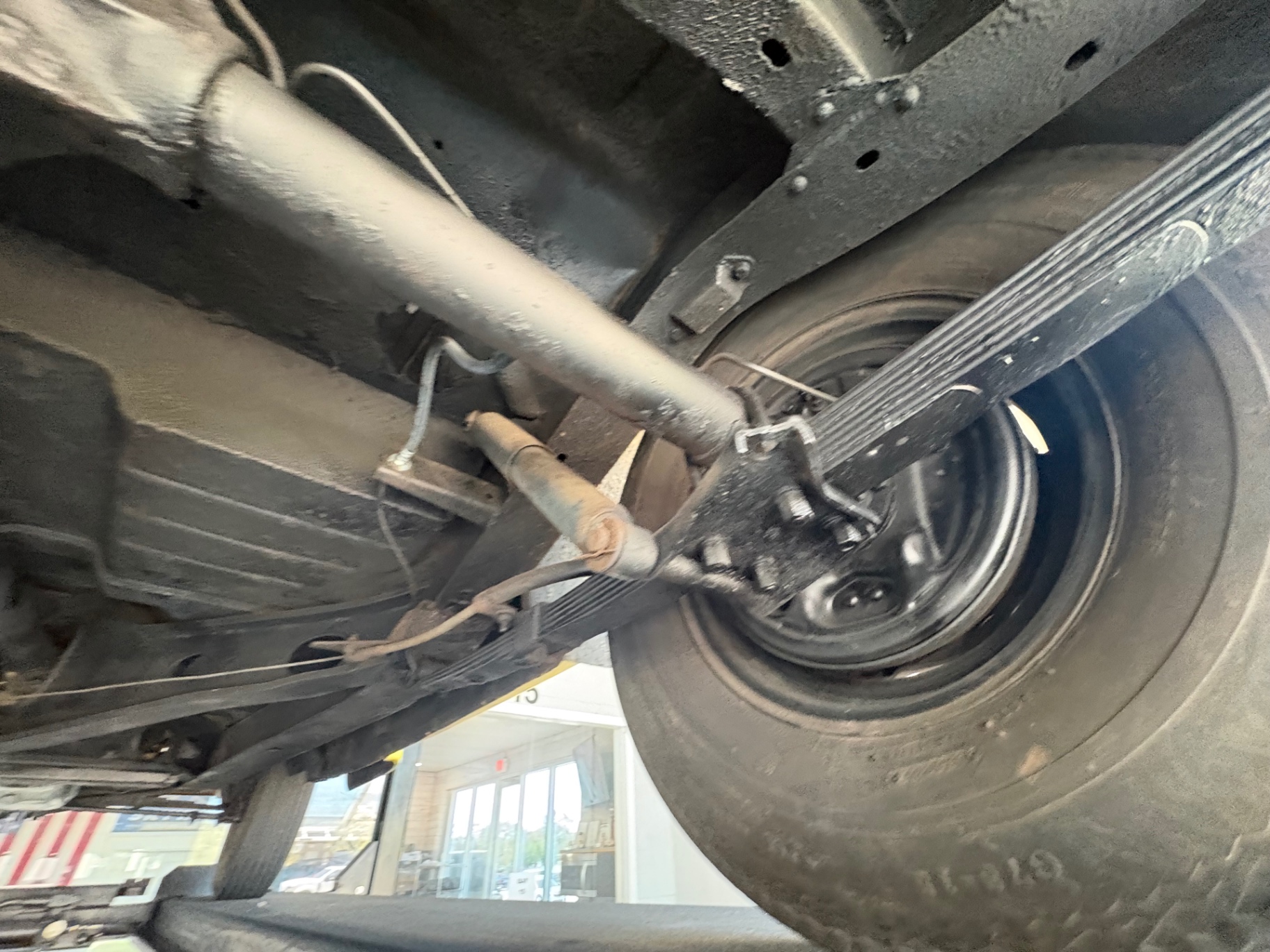
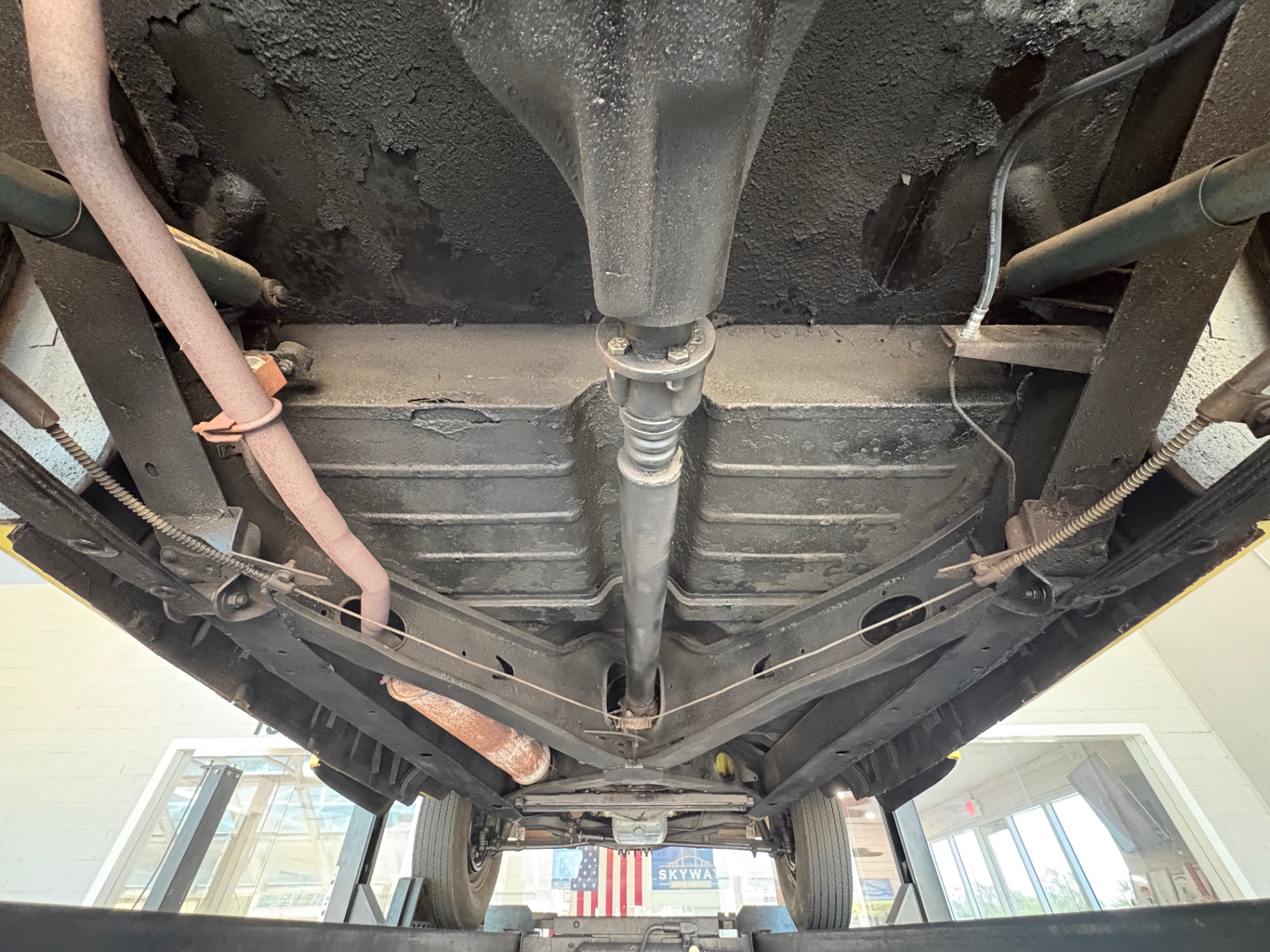
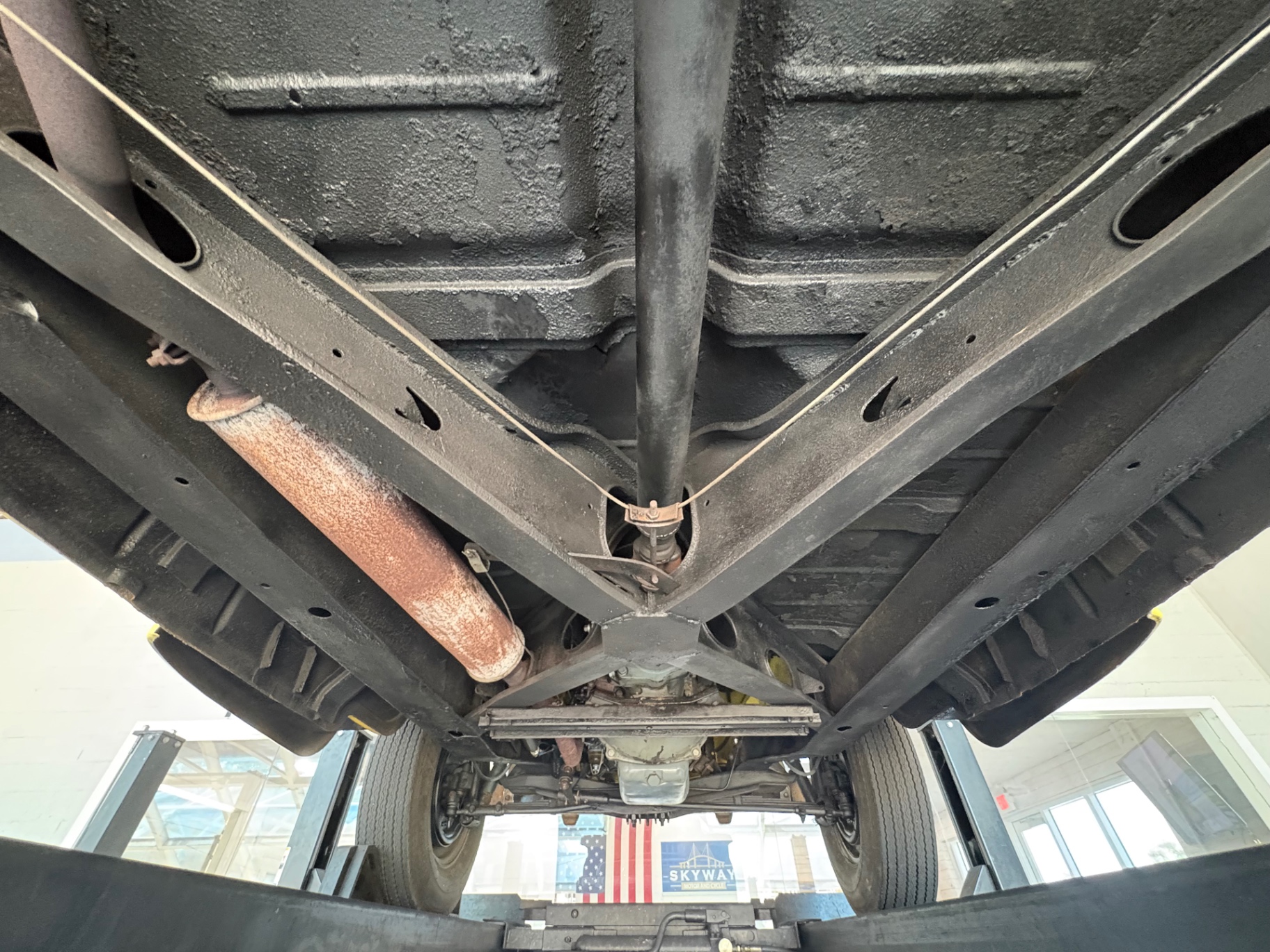
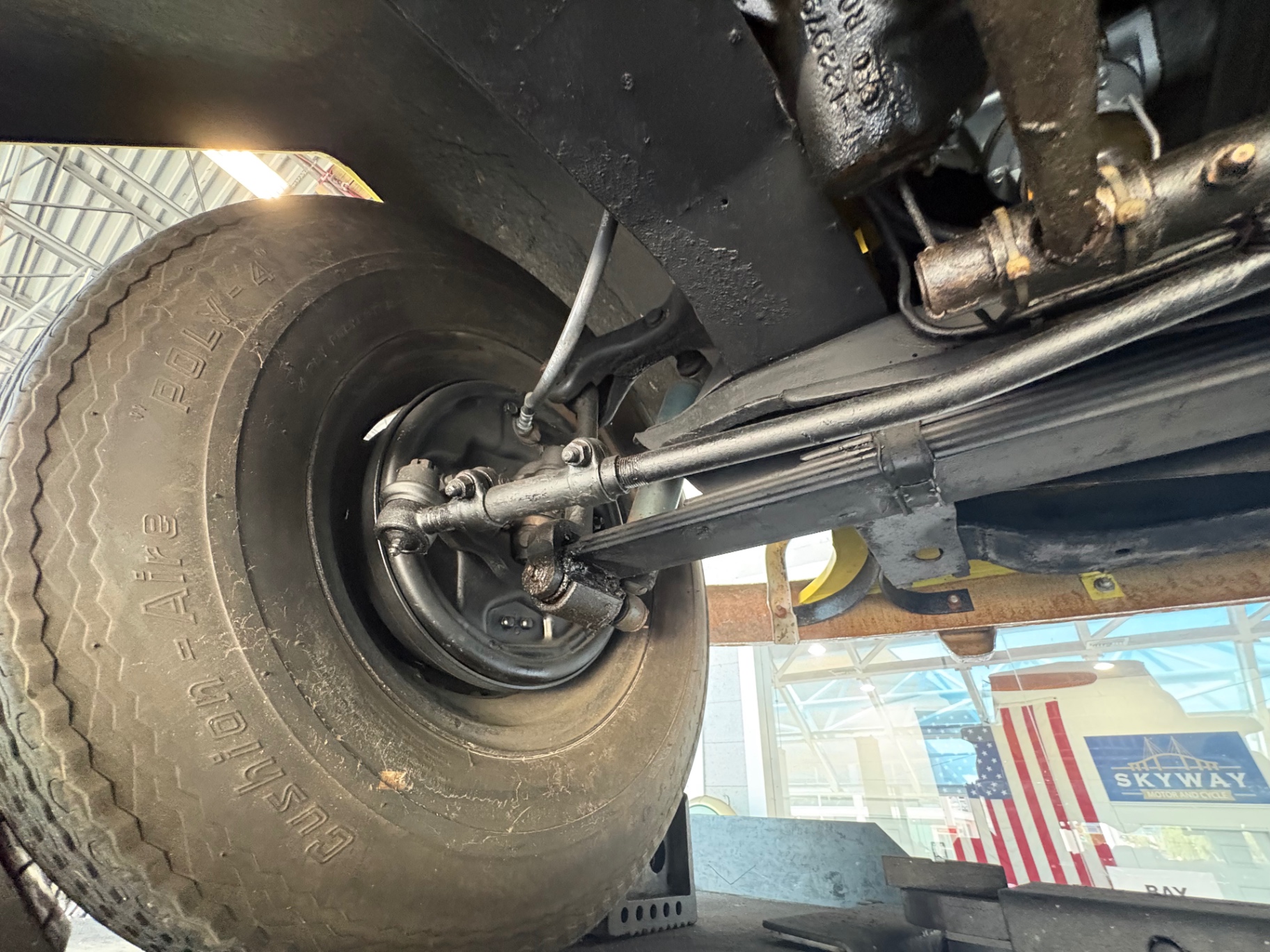
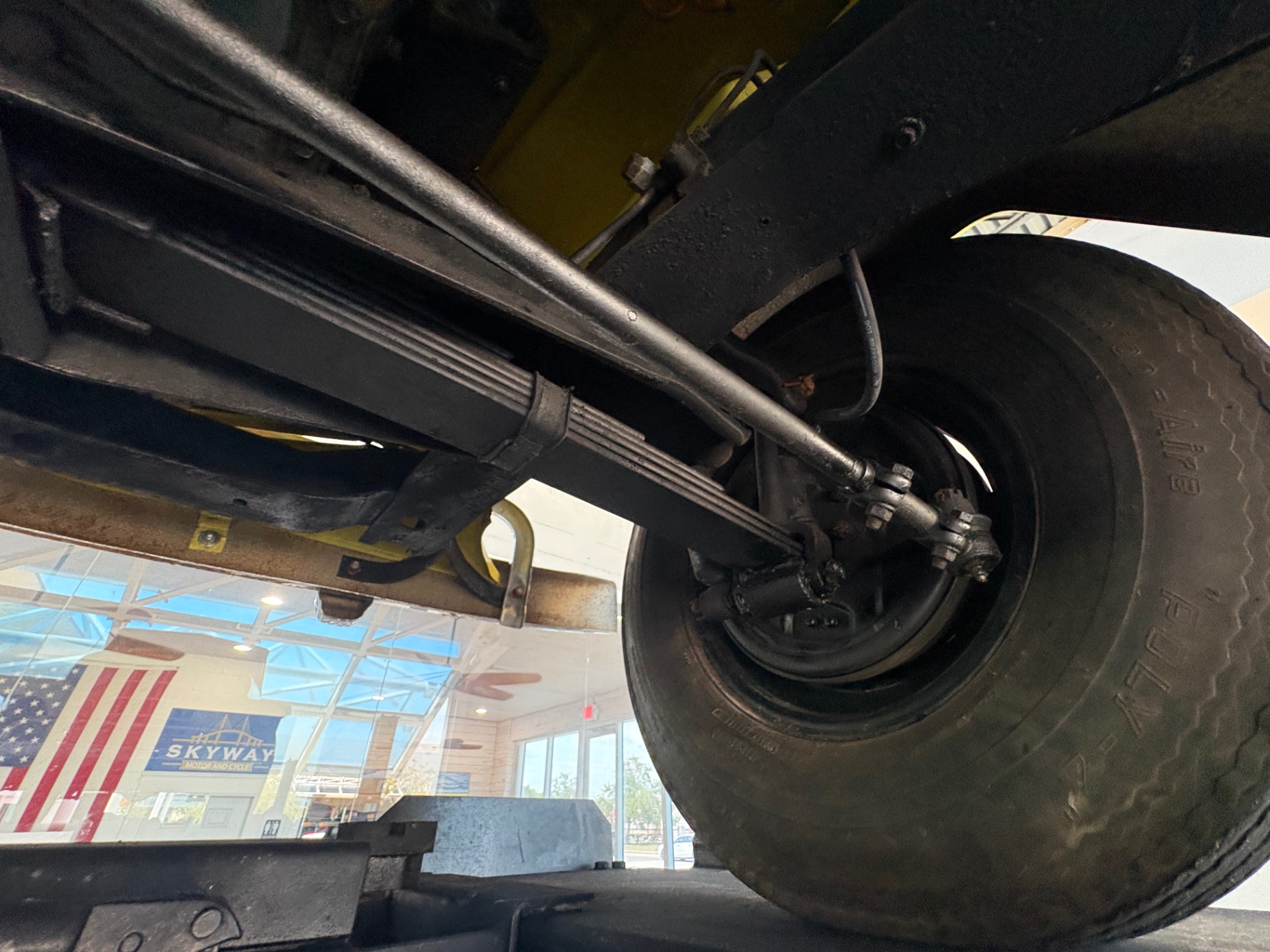
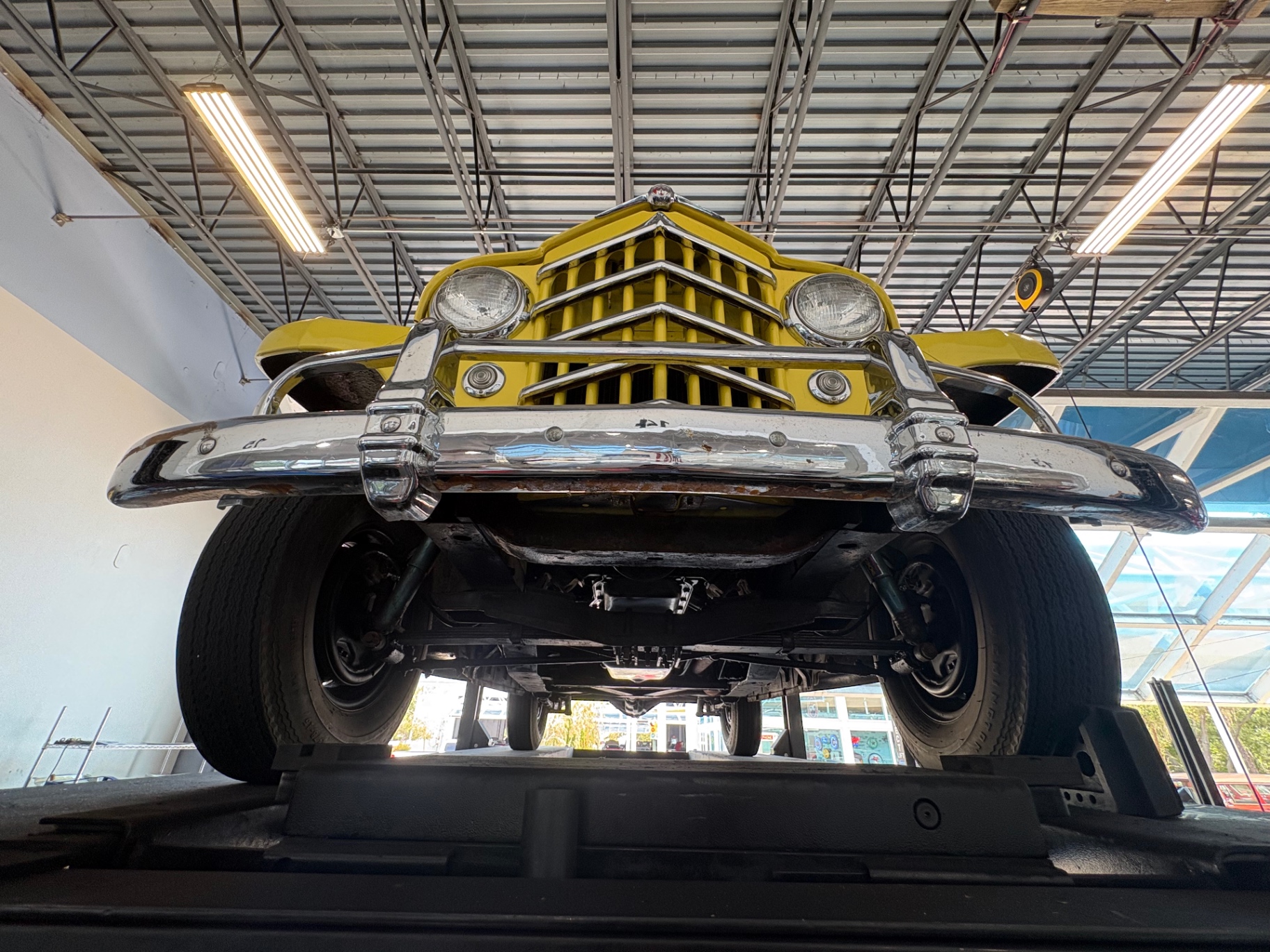
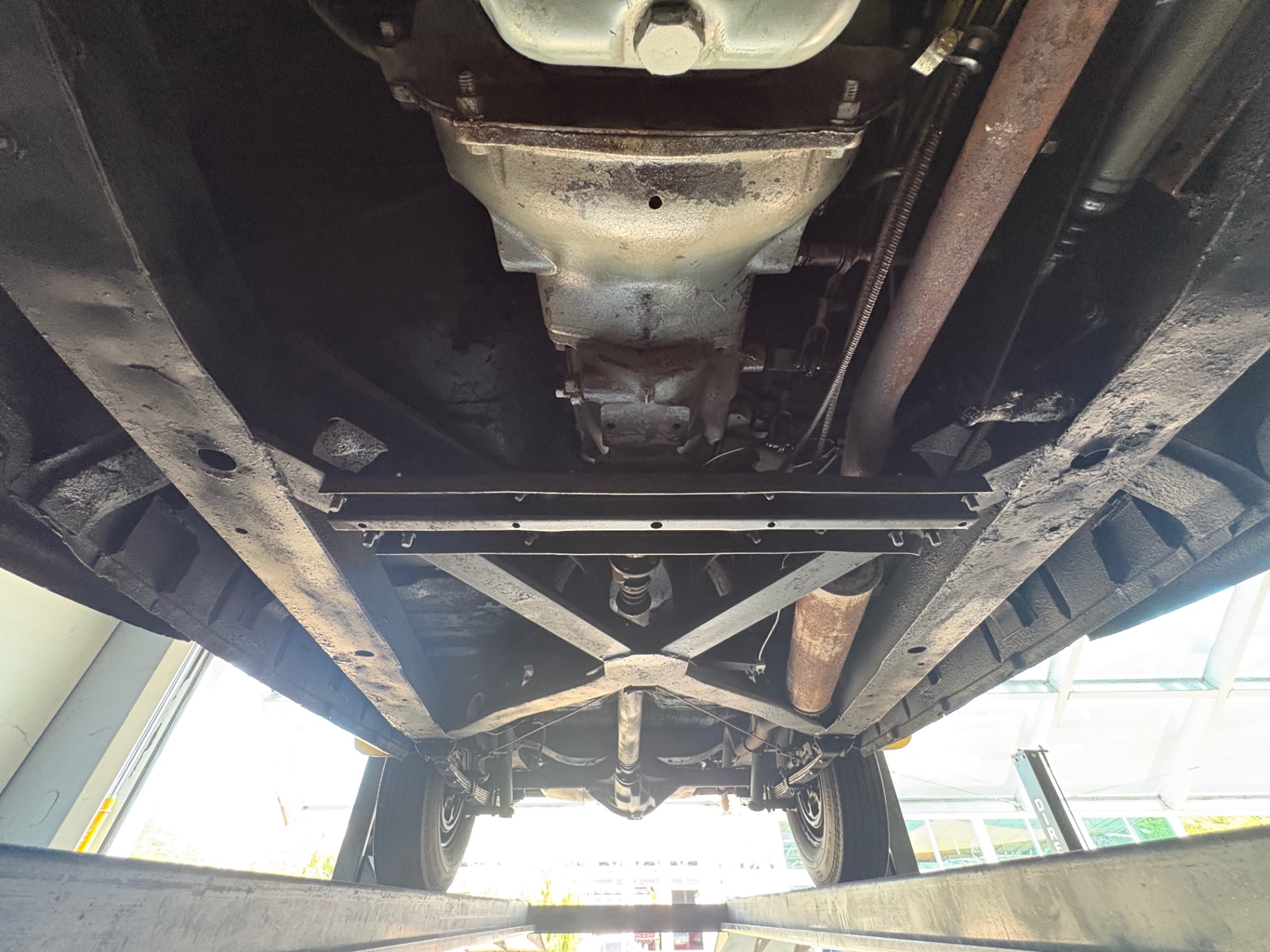
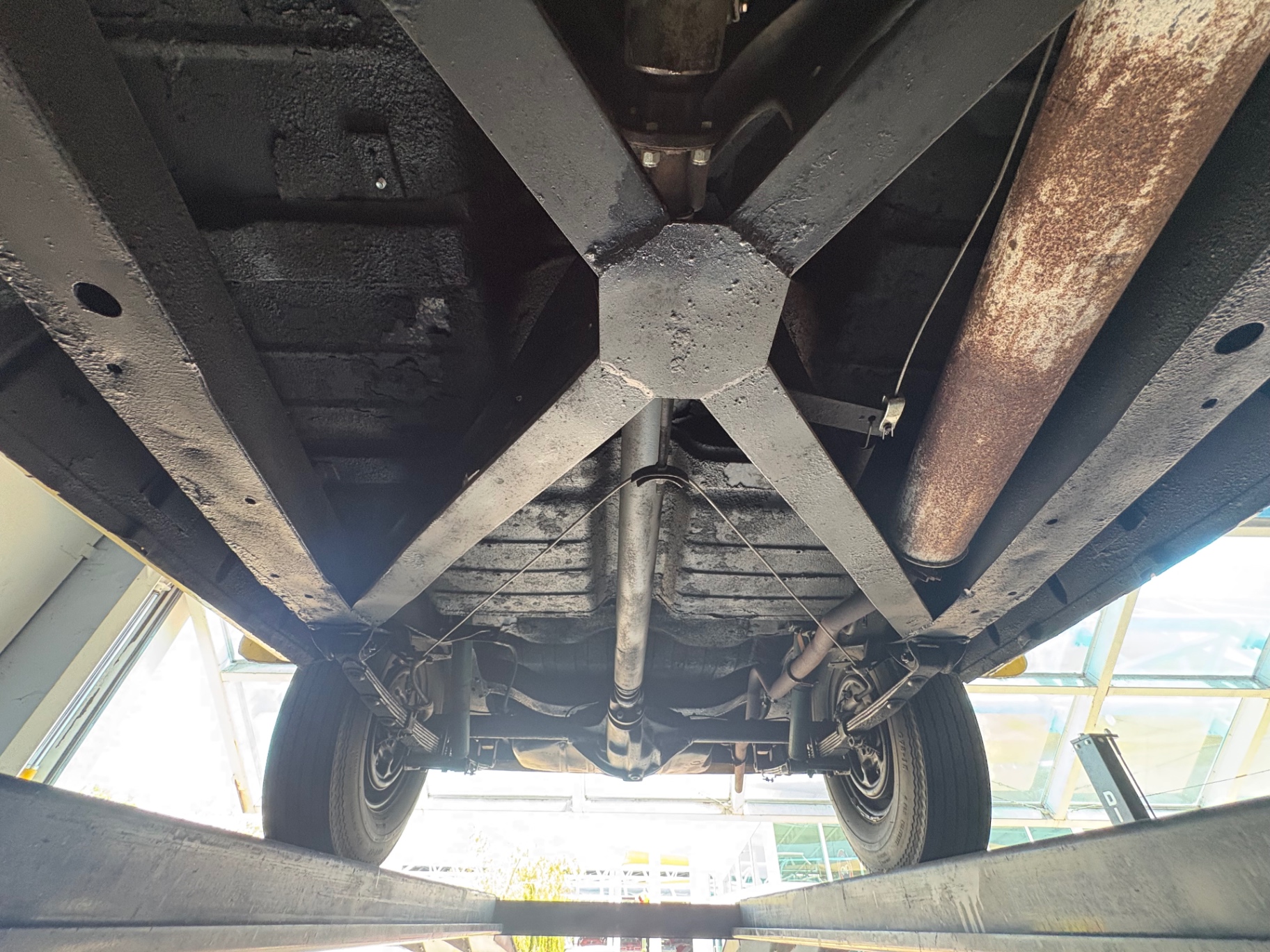
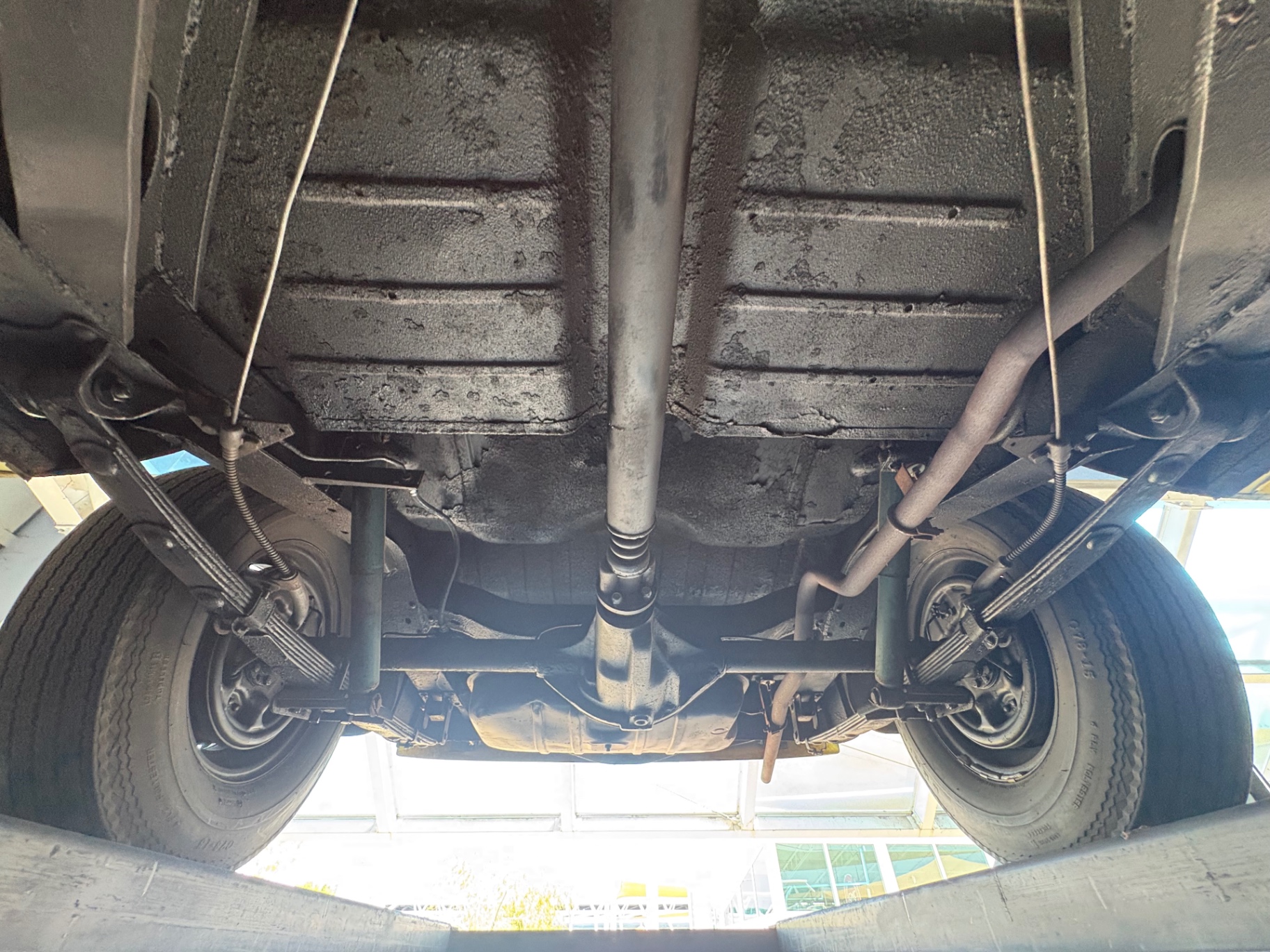
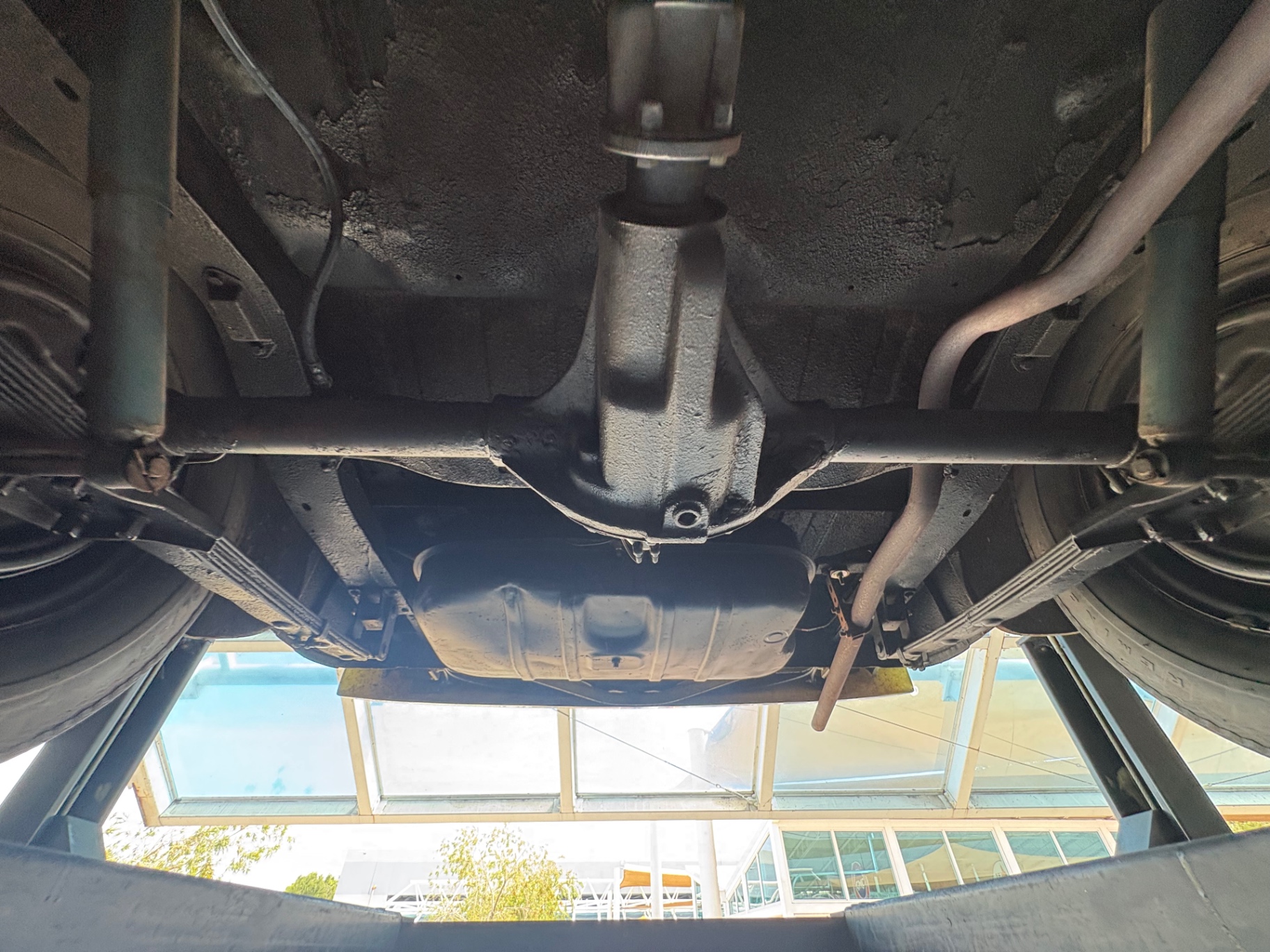
The undercarriage photographs show a solid, well-coated floor structure with no visible rot or patched sections. The frame rails are intact and straight. Front suspension is independent, which gave the Jeepster a noticeably more car-like ride quality compared to the solid front axle setup used on Willys utility vehicles of the same period. The rear uses a leaf spring setup, which is correct for the model. Four-wheel drum brakes are present and appropriate for the era. The underside has been coated in black, consistent with what you see in the lift photos.
Interior
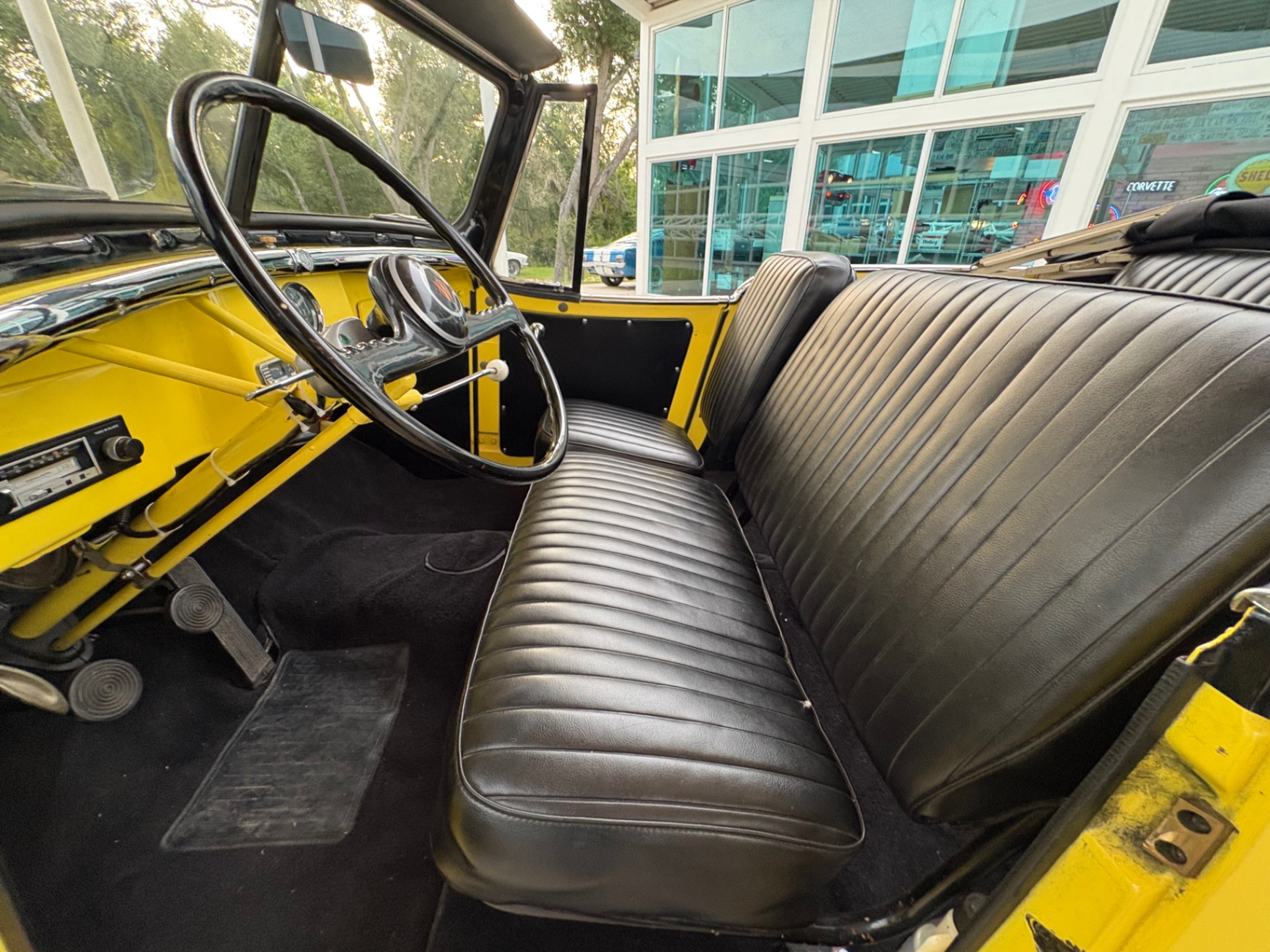
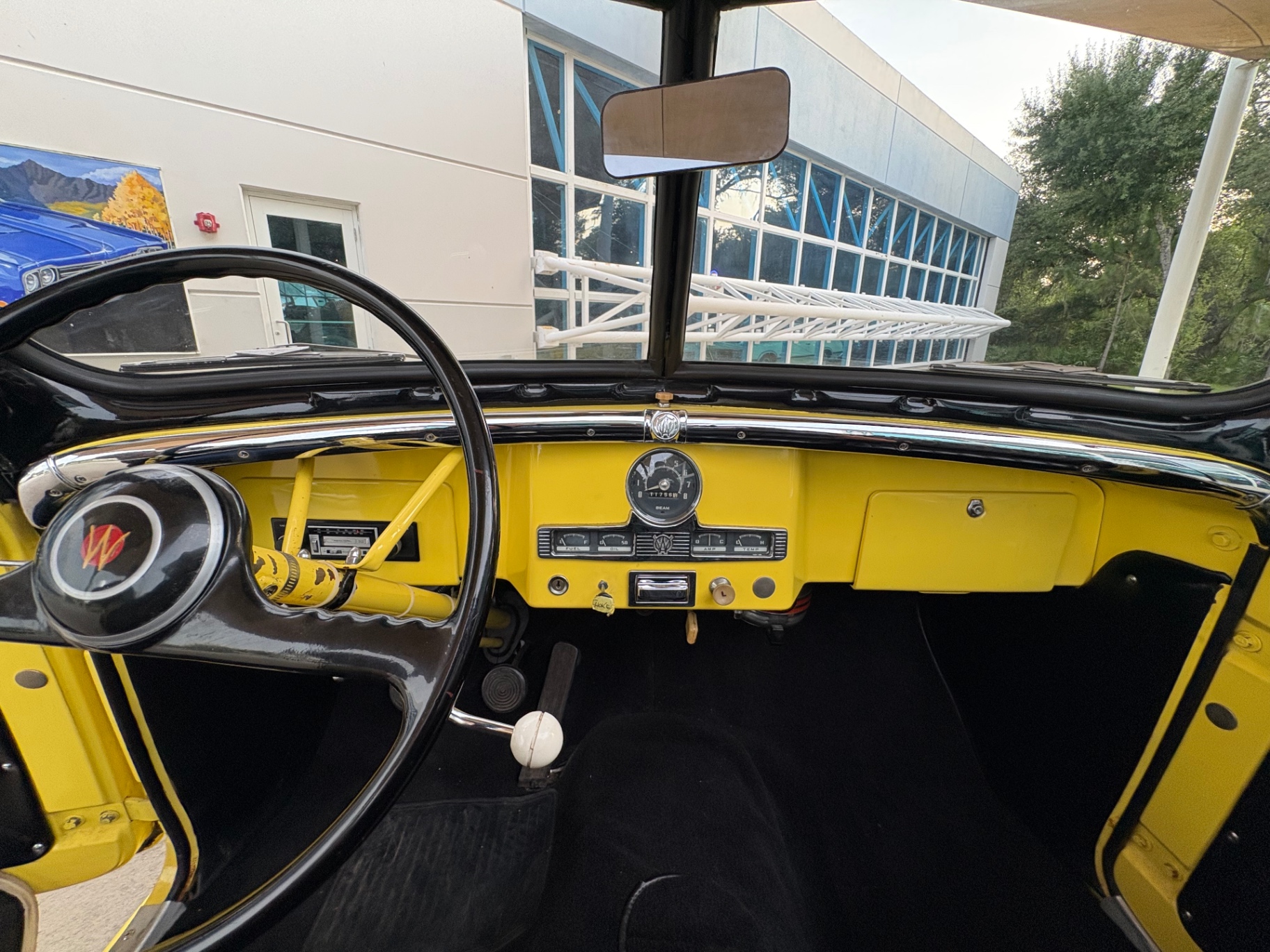
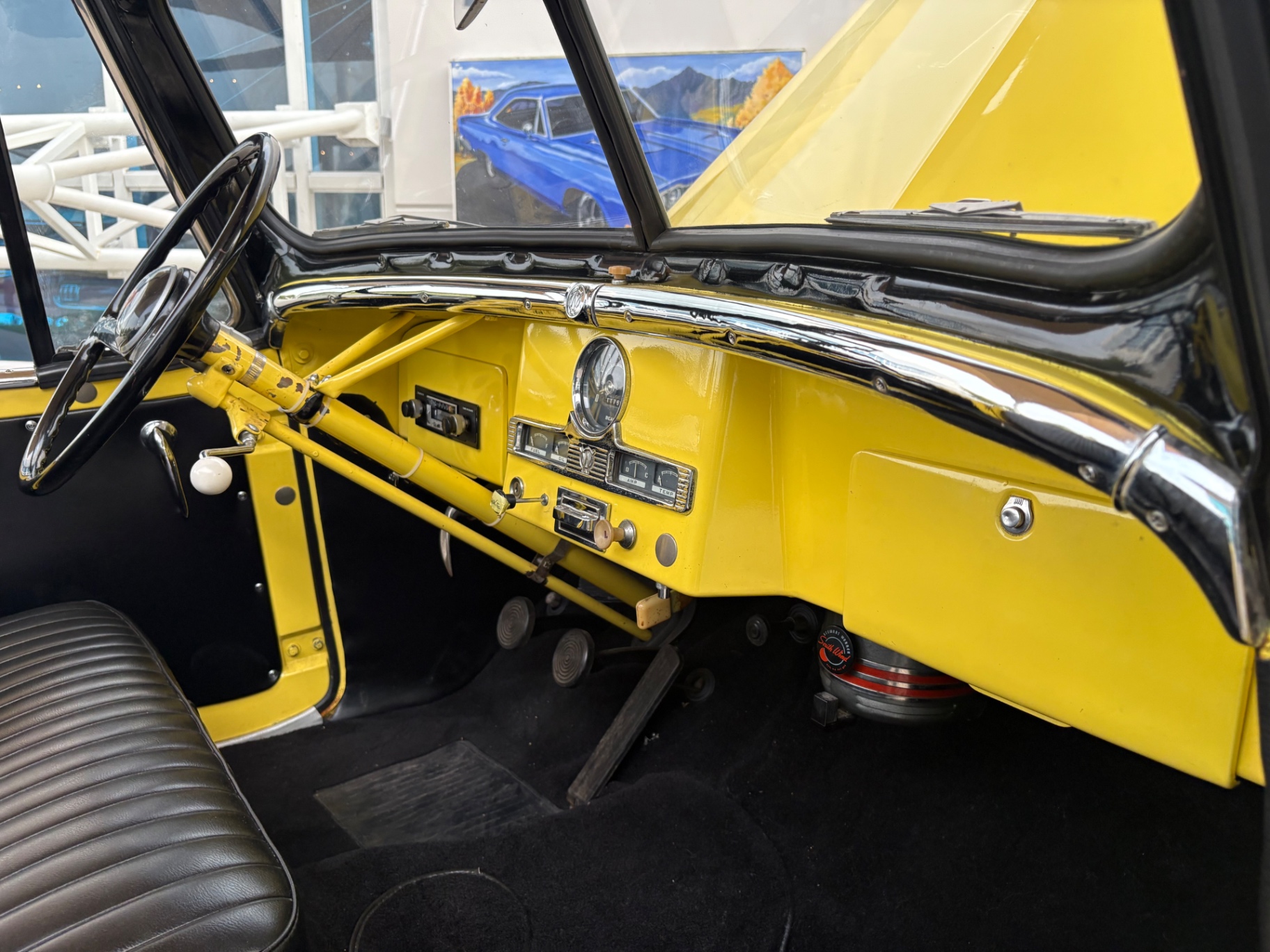
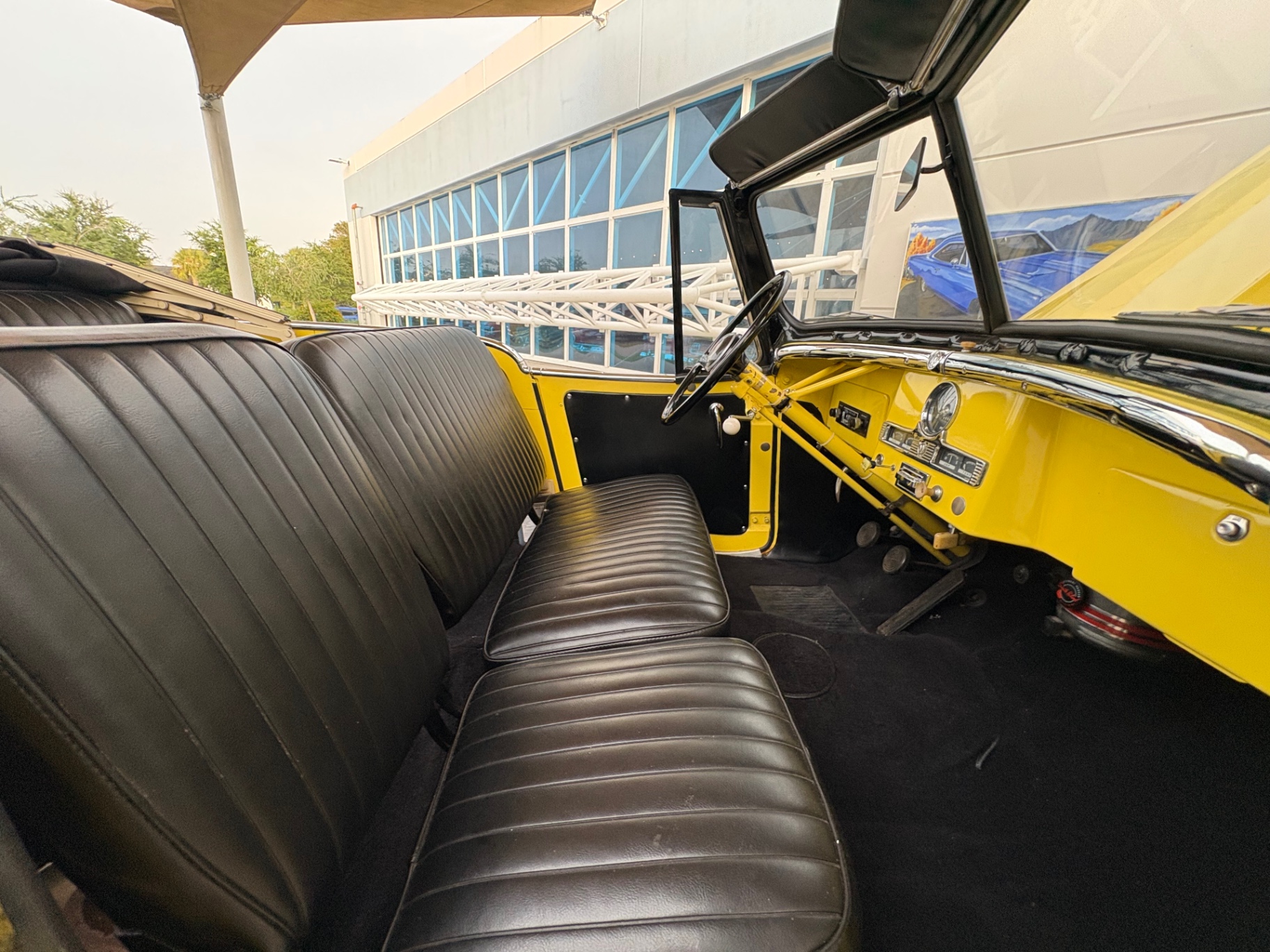
Inside, the 1951 Willys Overland Jeepster presents a clean, correctly configured cockpit in black vinyl with yellow body-colored dash. The dash color matching the exterior was a Willys styling feature intended to give the Jeepster a more integrated, sporty appearance, and it works well in this yellow-over-black combination. The Willys "W" badge is centered on the dash between the gauge cluster and the glove box, which is a detail that restoration-minded buyers will appreciate seeing retained.
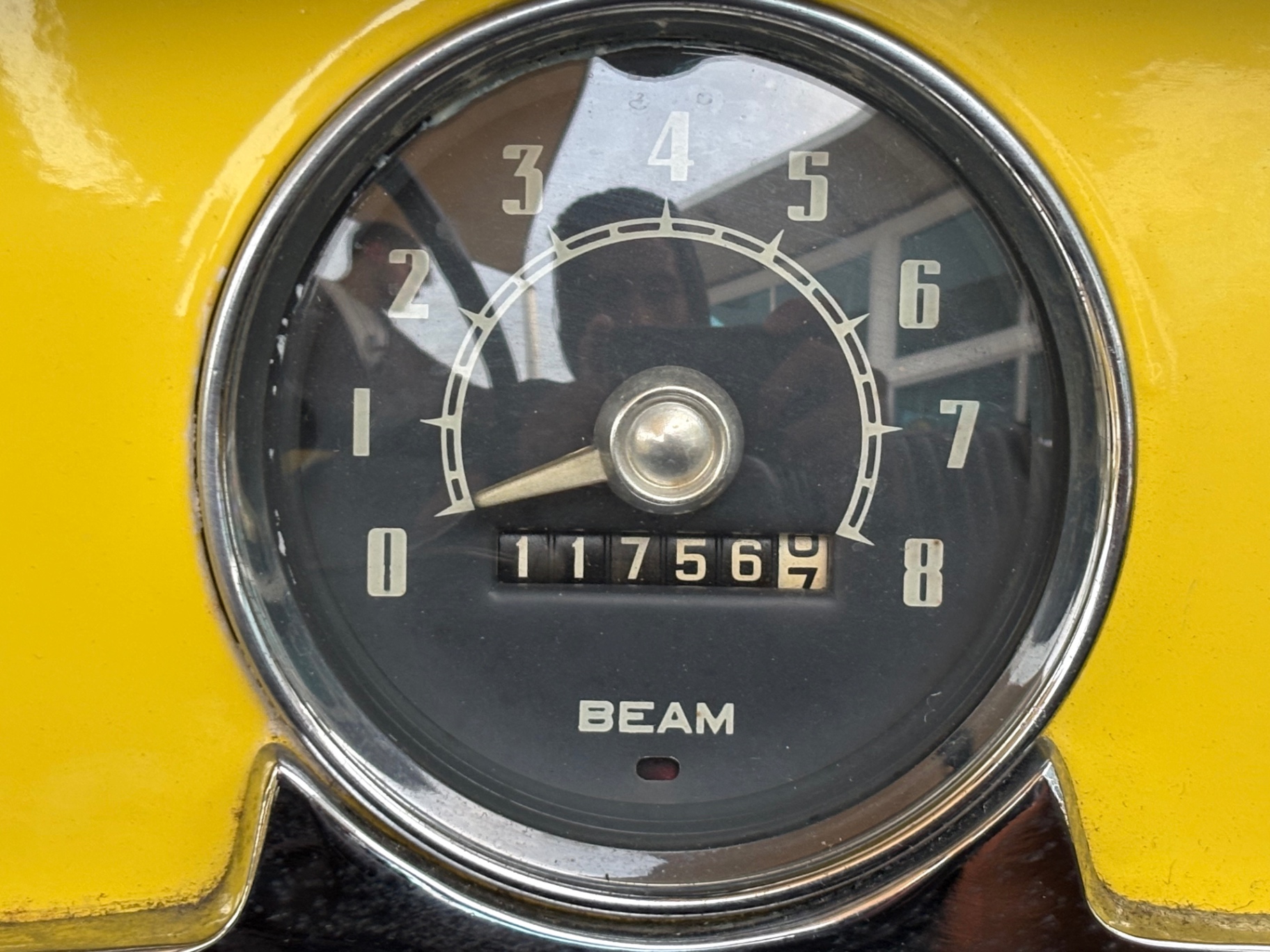
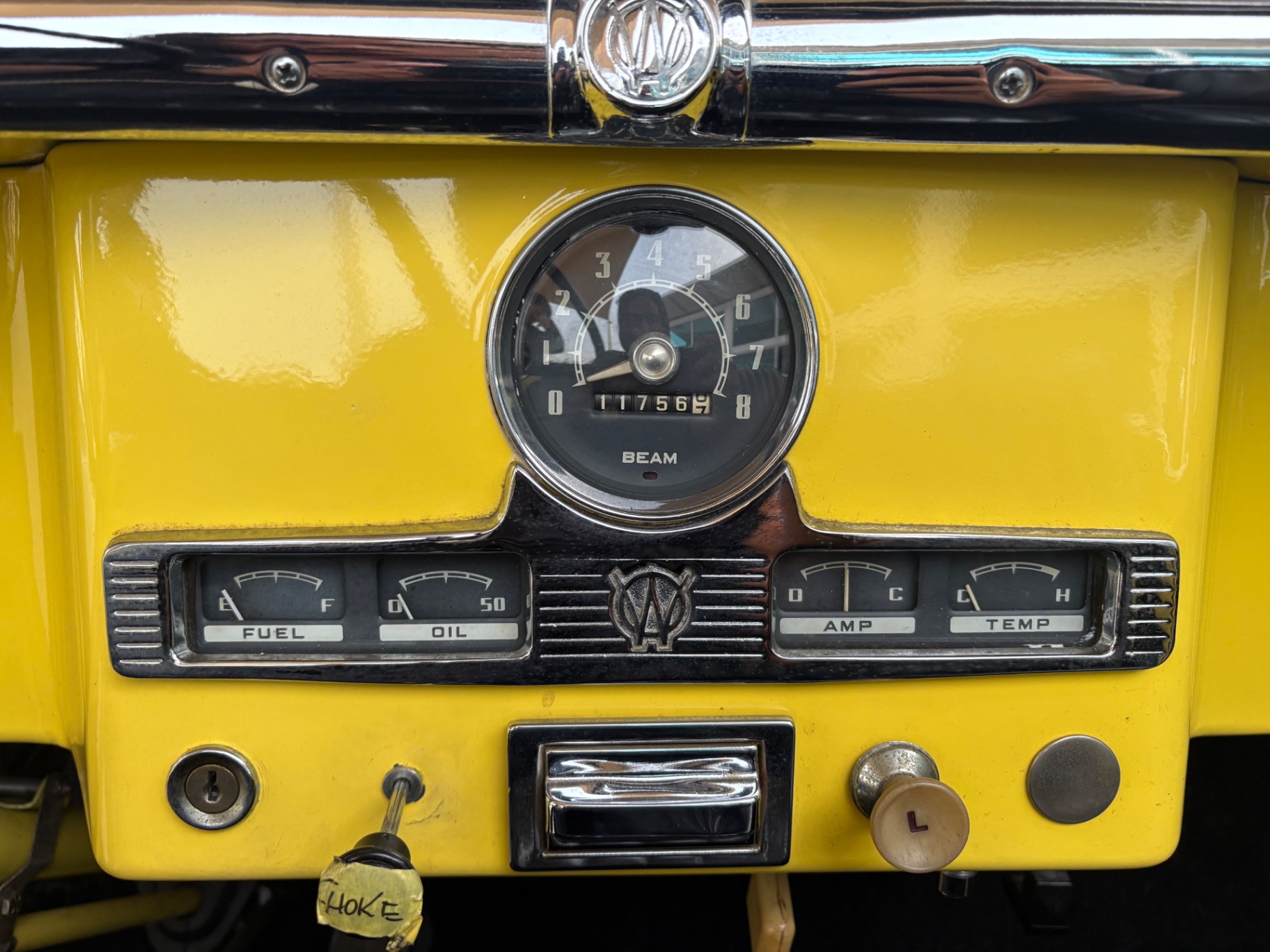
The gauge cluster is fully populated with fuel level, oil pressure, ammeter, and temperature gauges, all set into a chrome-trimmed housing that centers on the dashboard. The speedometer sits directly above in its own pod, and the odometer in the photos reads 11,756 miles — though on a 70-plus-year-old vehicle, the actual mileage history would need to be verified independently. The choke knob is present on the lower dash, labeled clearly. An AM radio has been installed, which is a period-appropriate addition that adds to the usability of the car without altering its character.
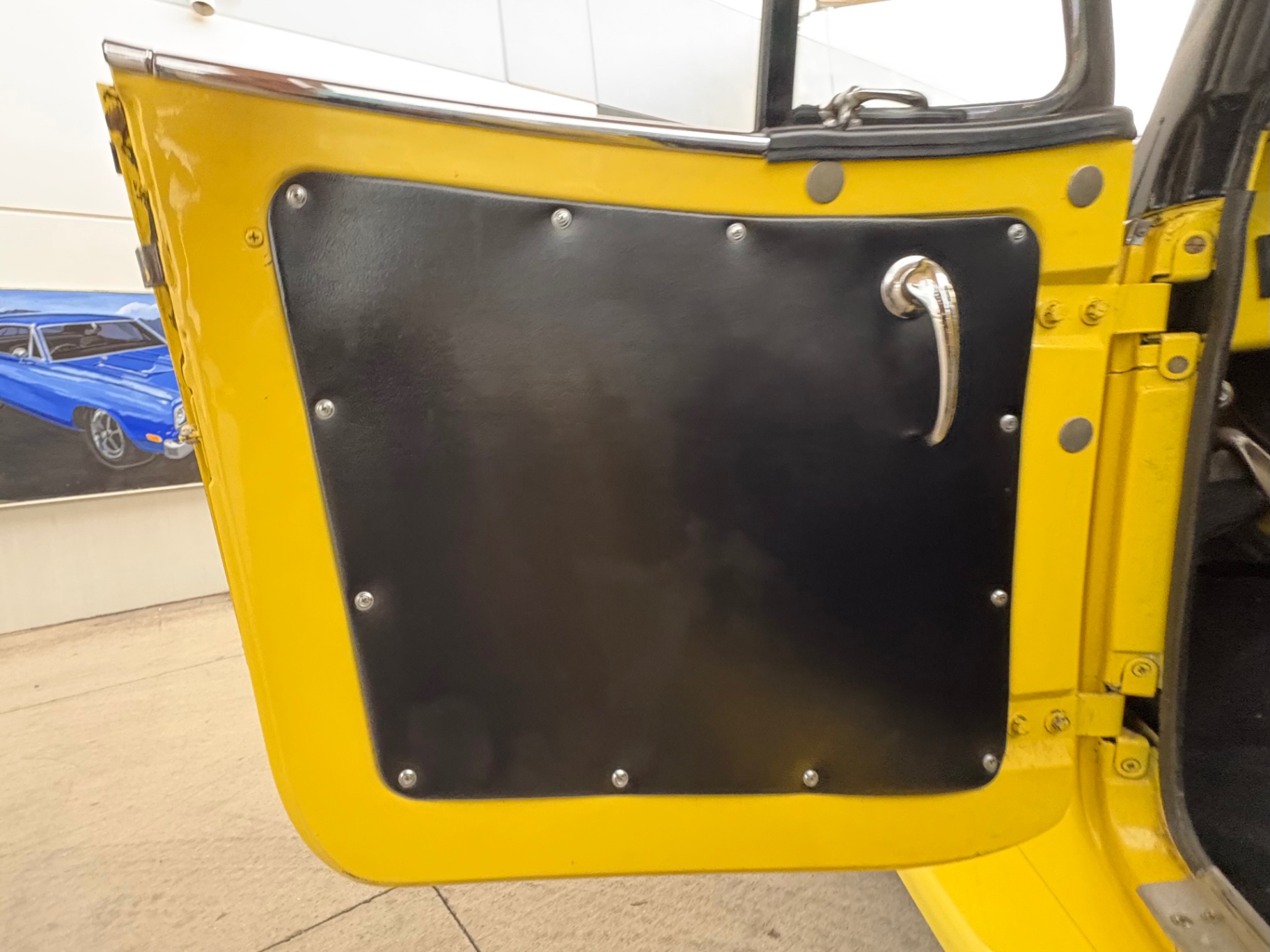
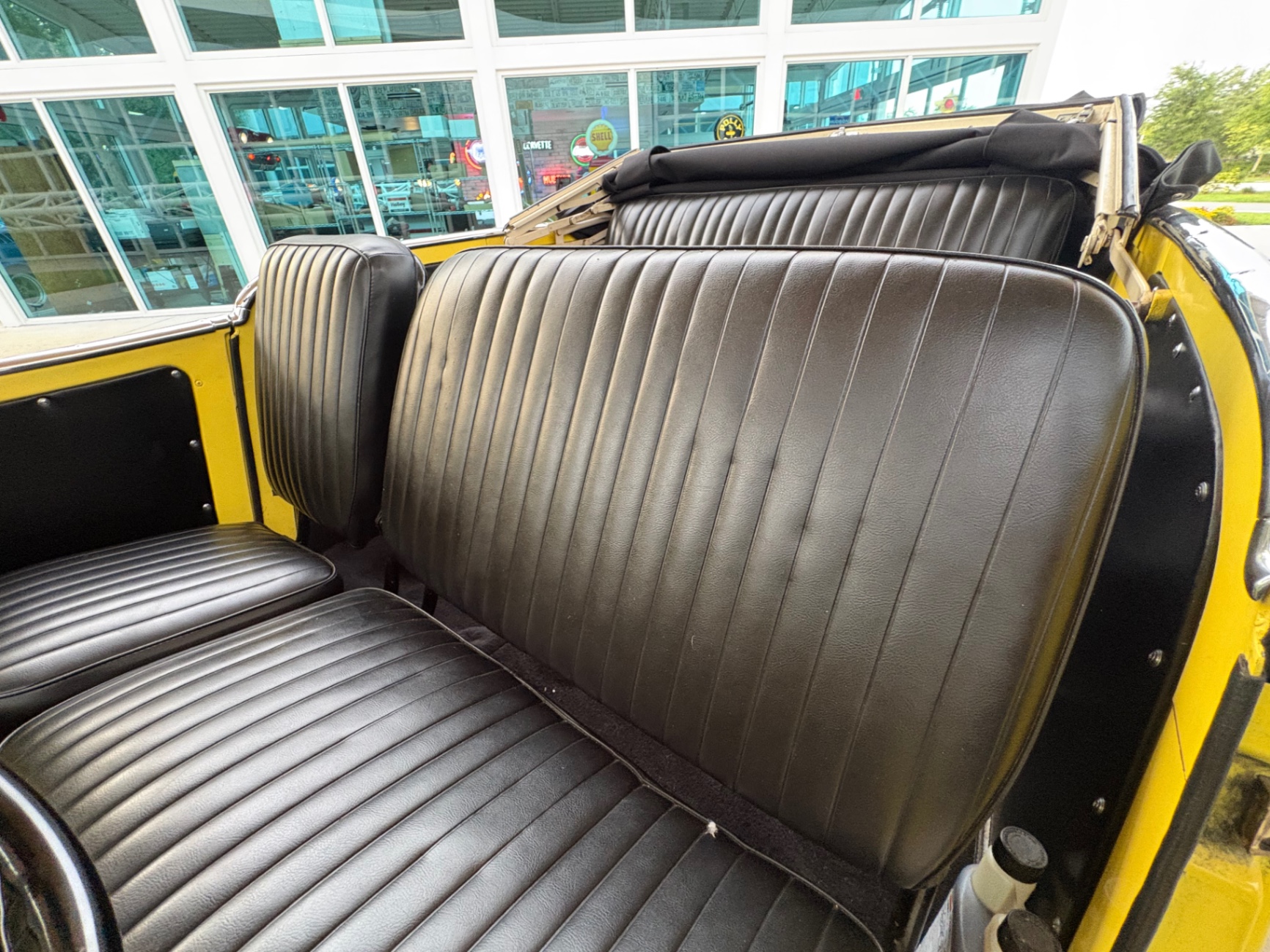
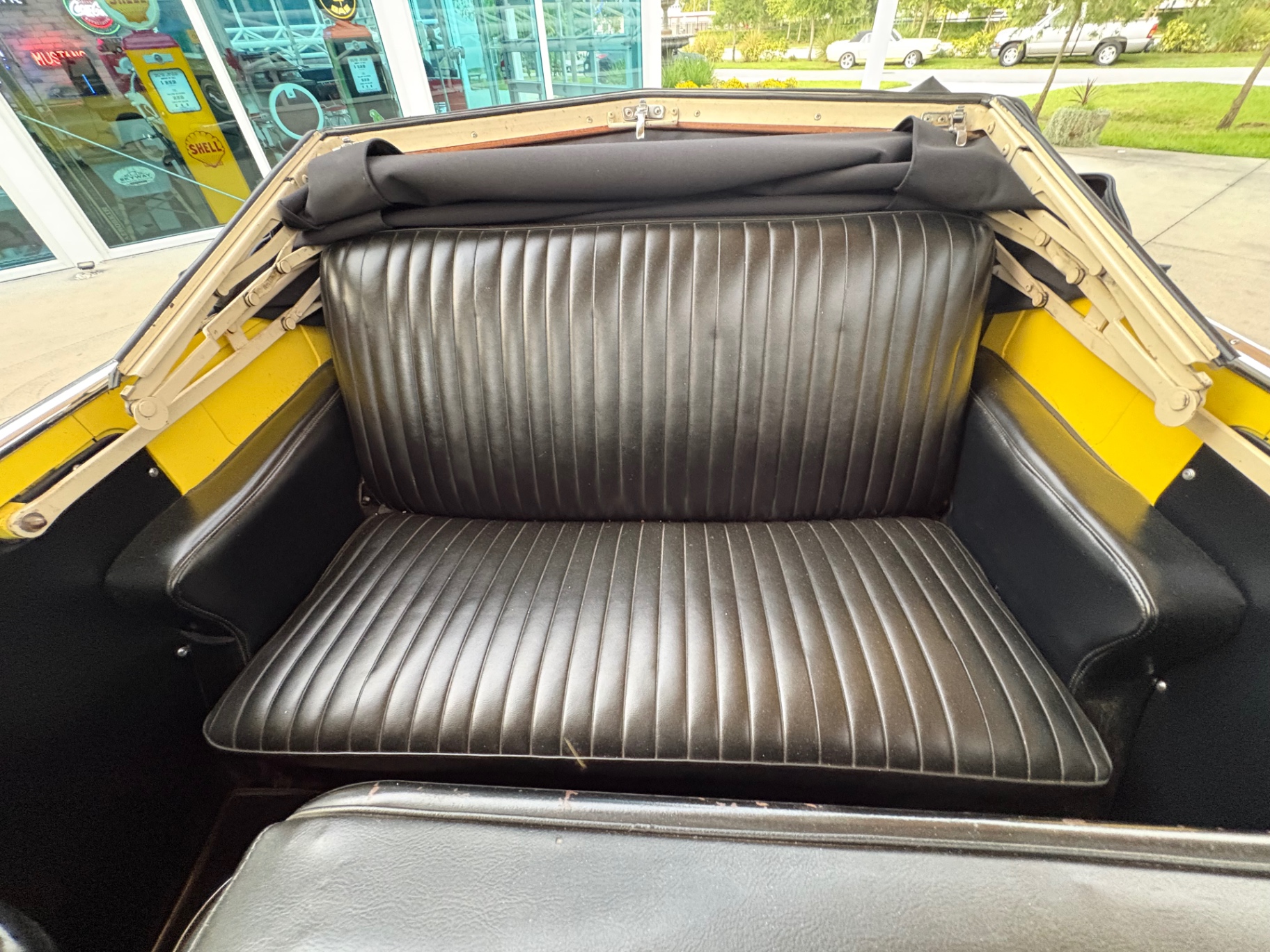
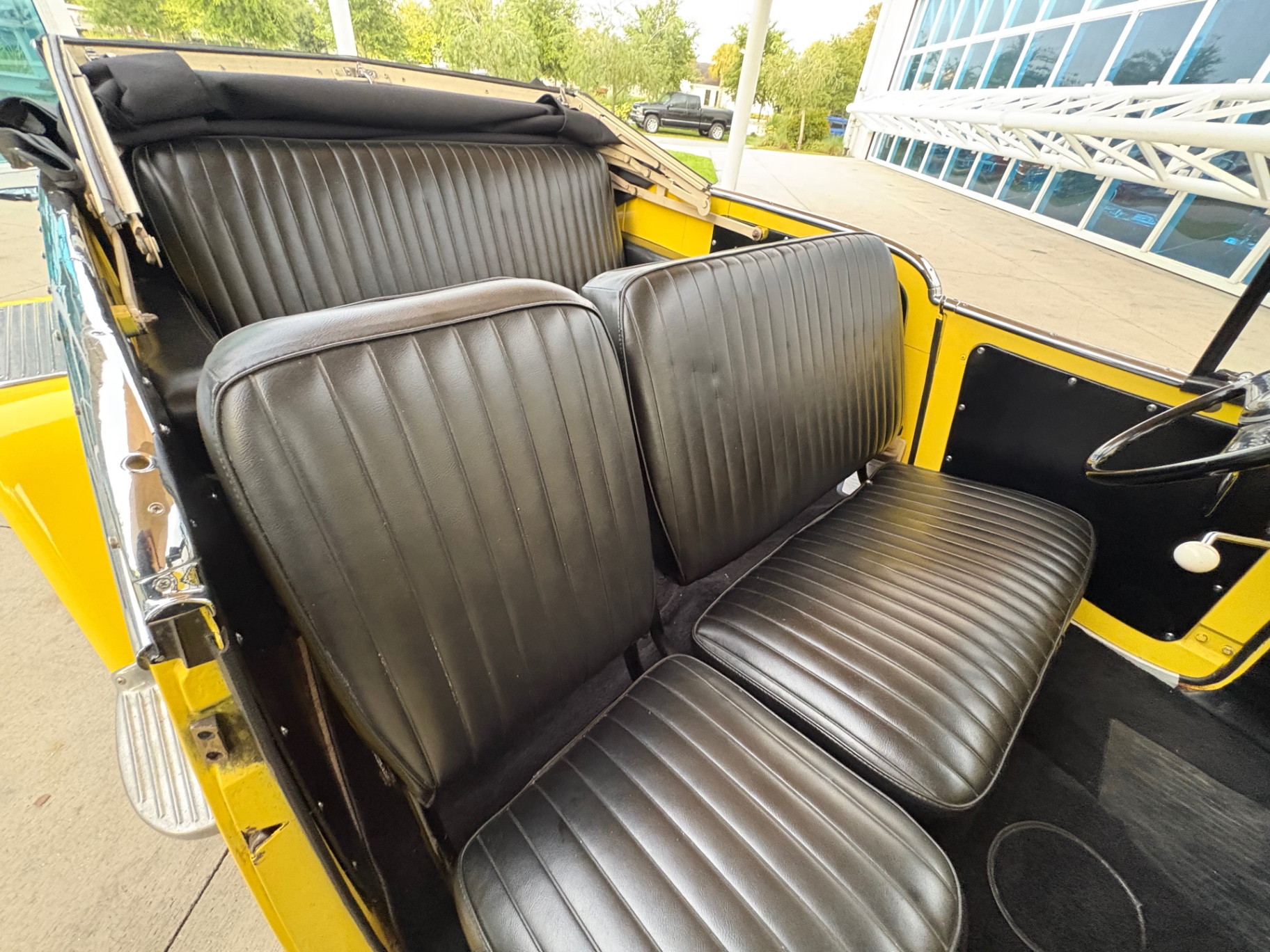
Both the front and rear bench seats are covered in black vinyl with a ribbed, vertical-stitch pattern that was typical of Willys interiors of this period. The front bench shows well, and the rear bench — which sits in an open-air compartment with the top folded — is also in good shape. The rear seating area on a Jeepster is genuinely usable for two adults, which was one of the features that set it apart from a two-seat roadster. The carpeted floors are black and appear clean throughout. Wind wings on the doors are present and functional, an important comfort feature on an open vehicle. The interior rearview mirror is mounted at the top of the windshield frame.
Exterior
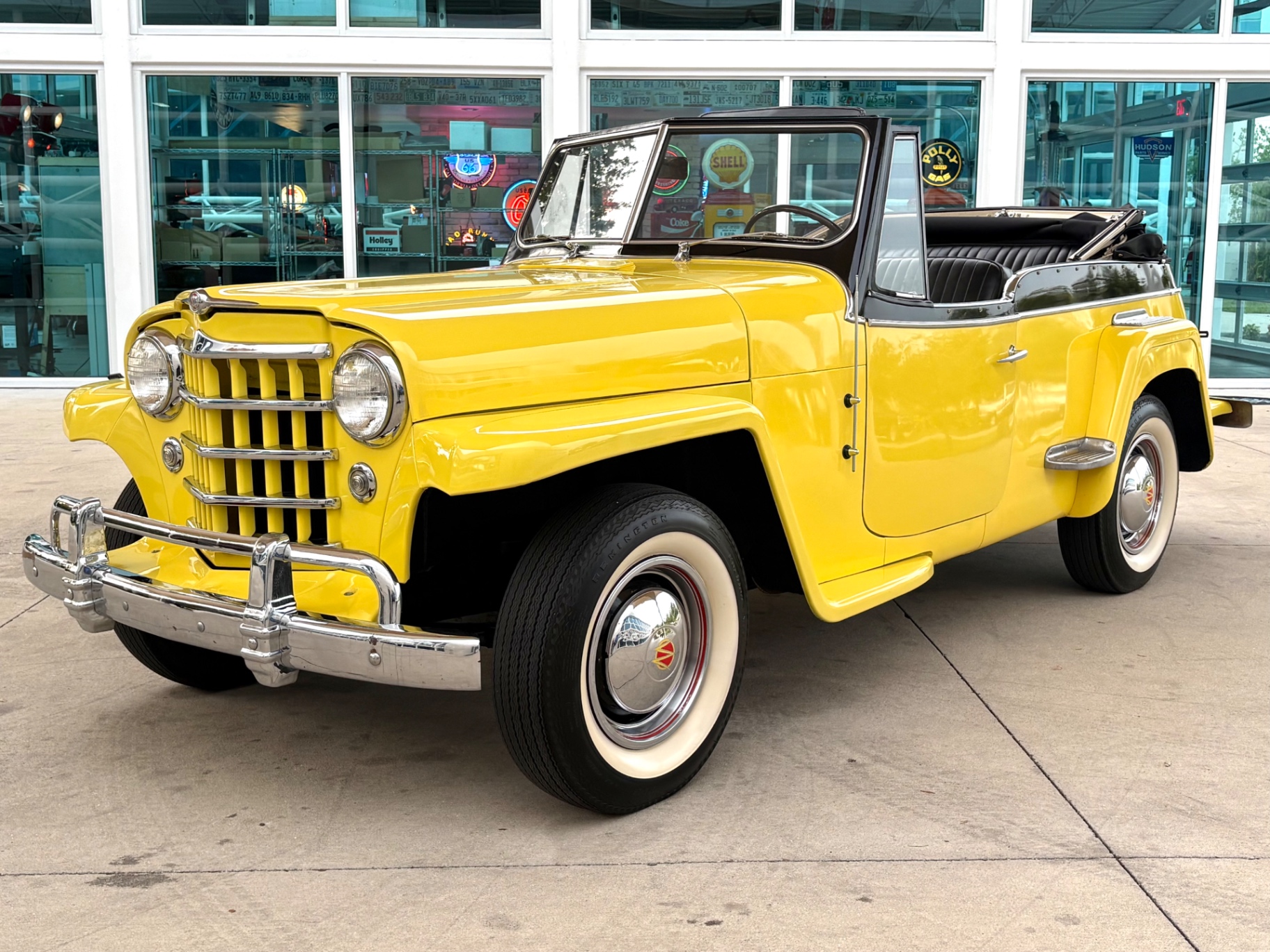
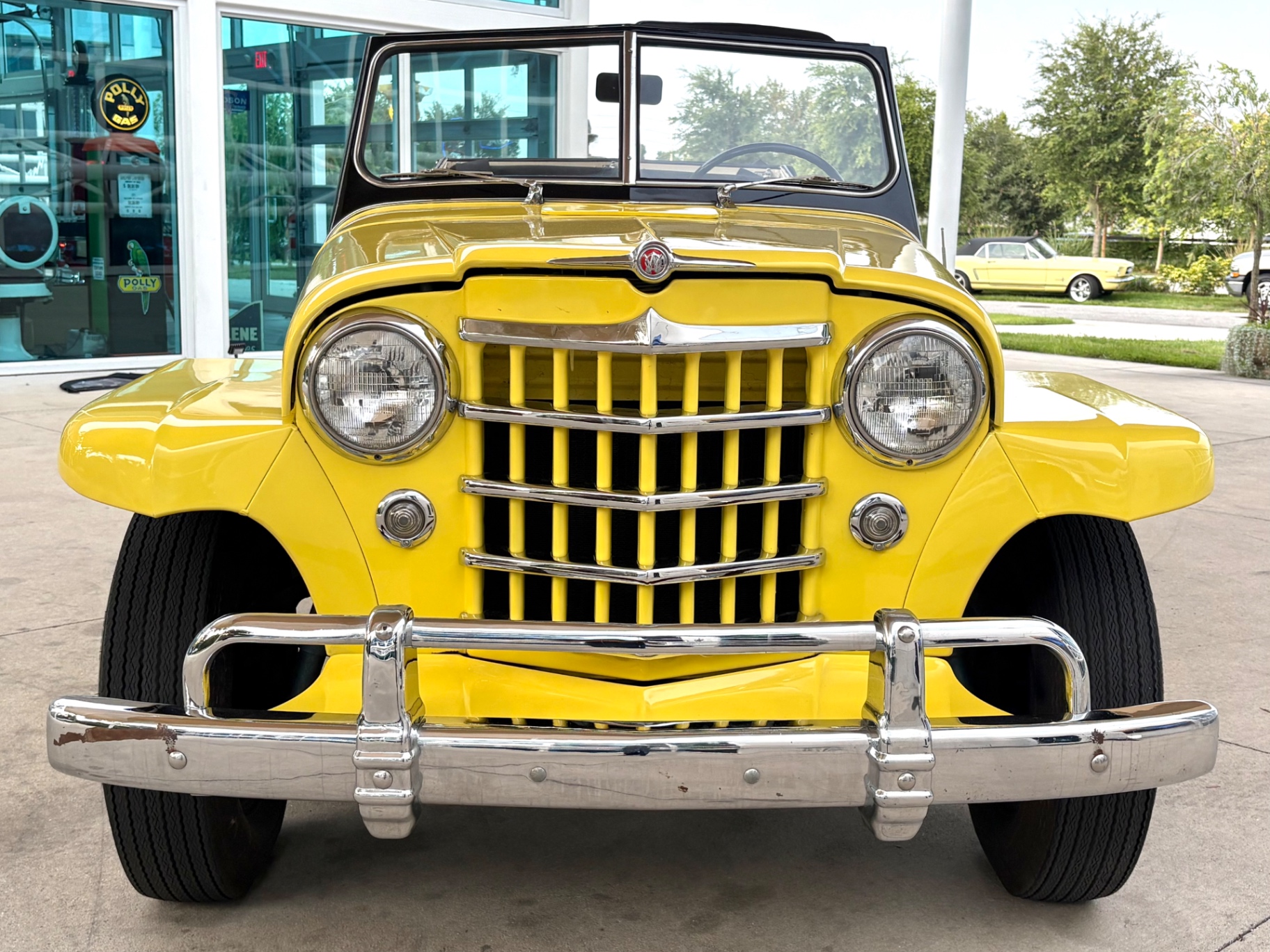
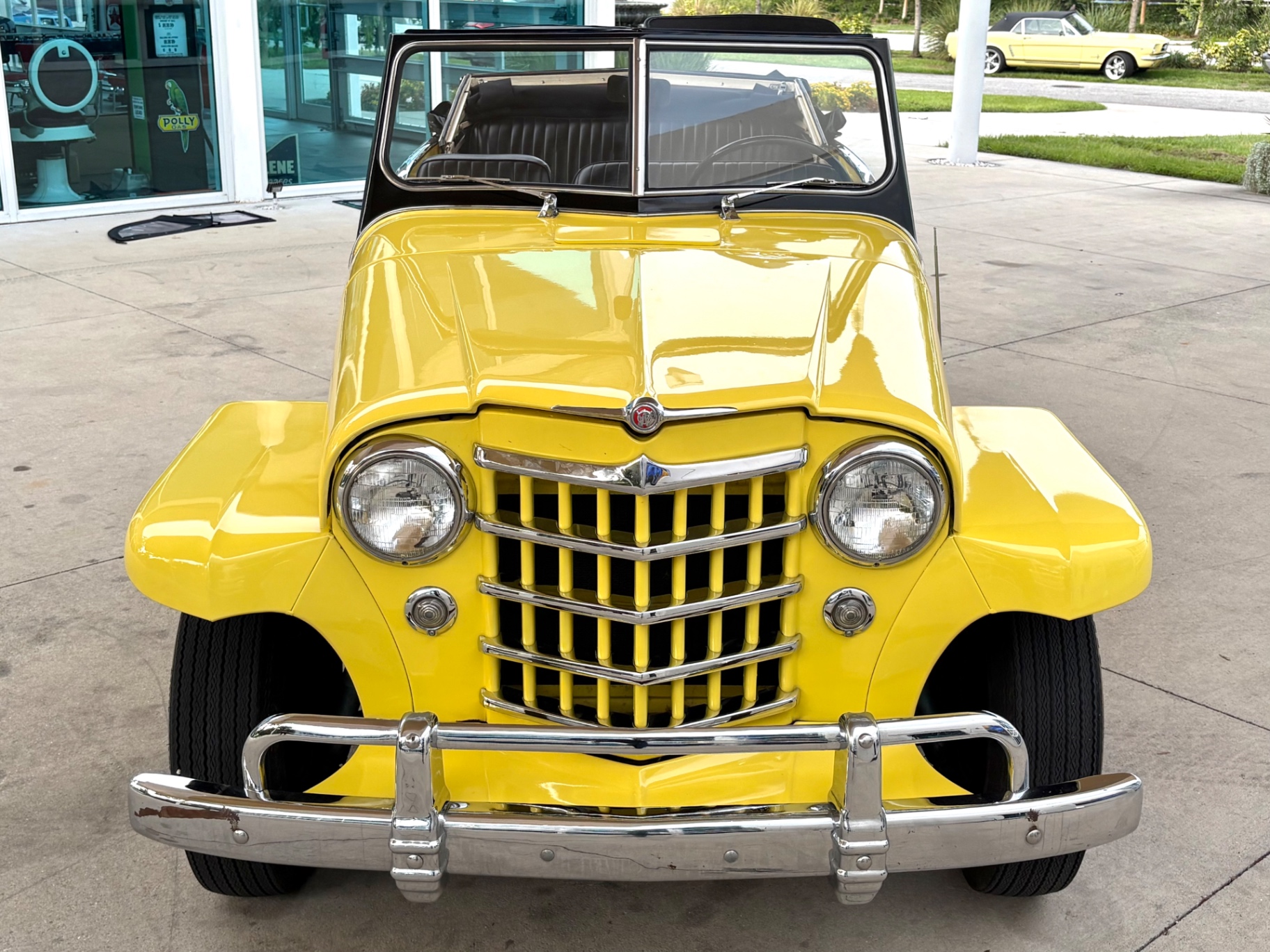
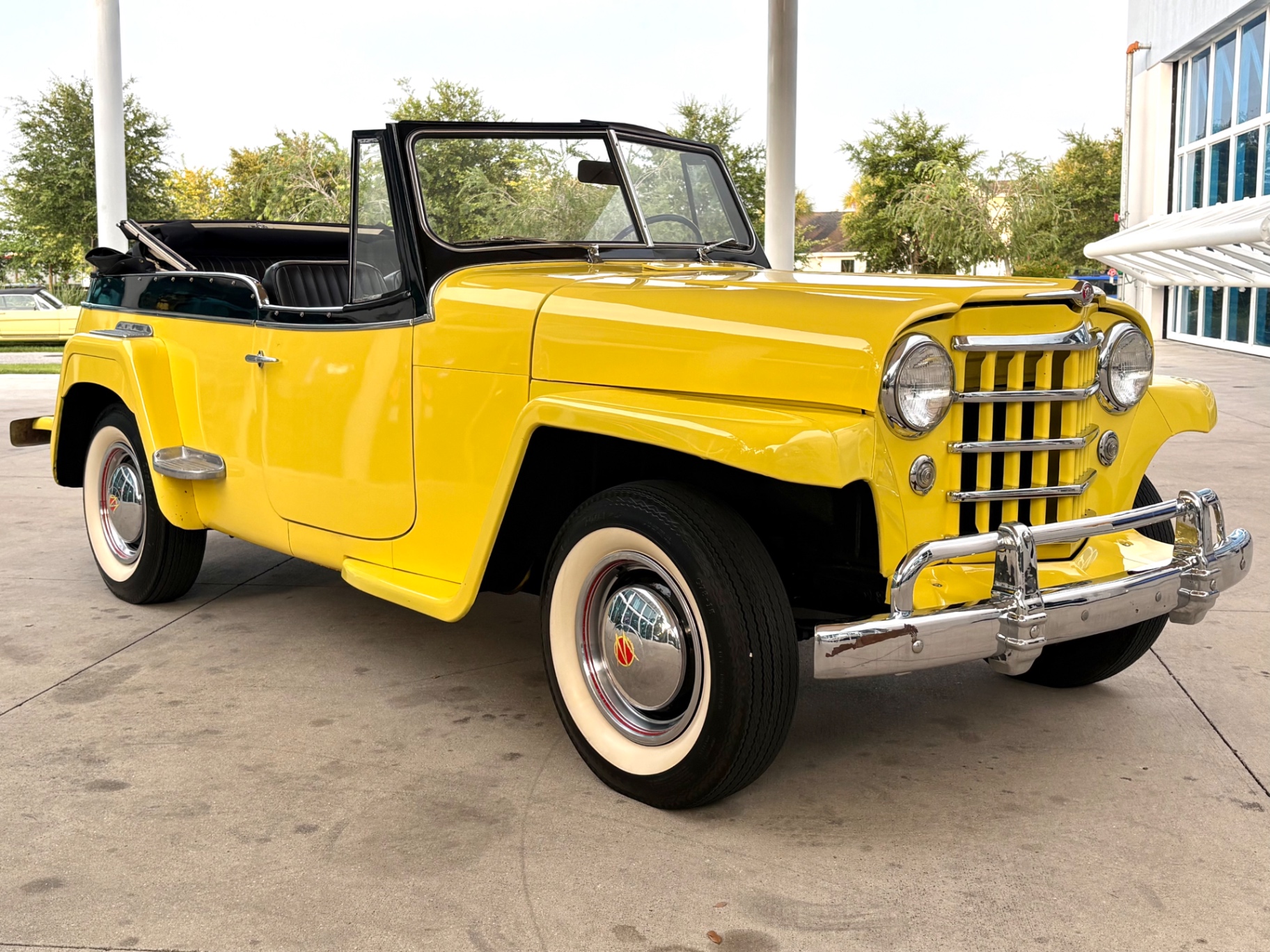
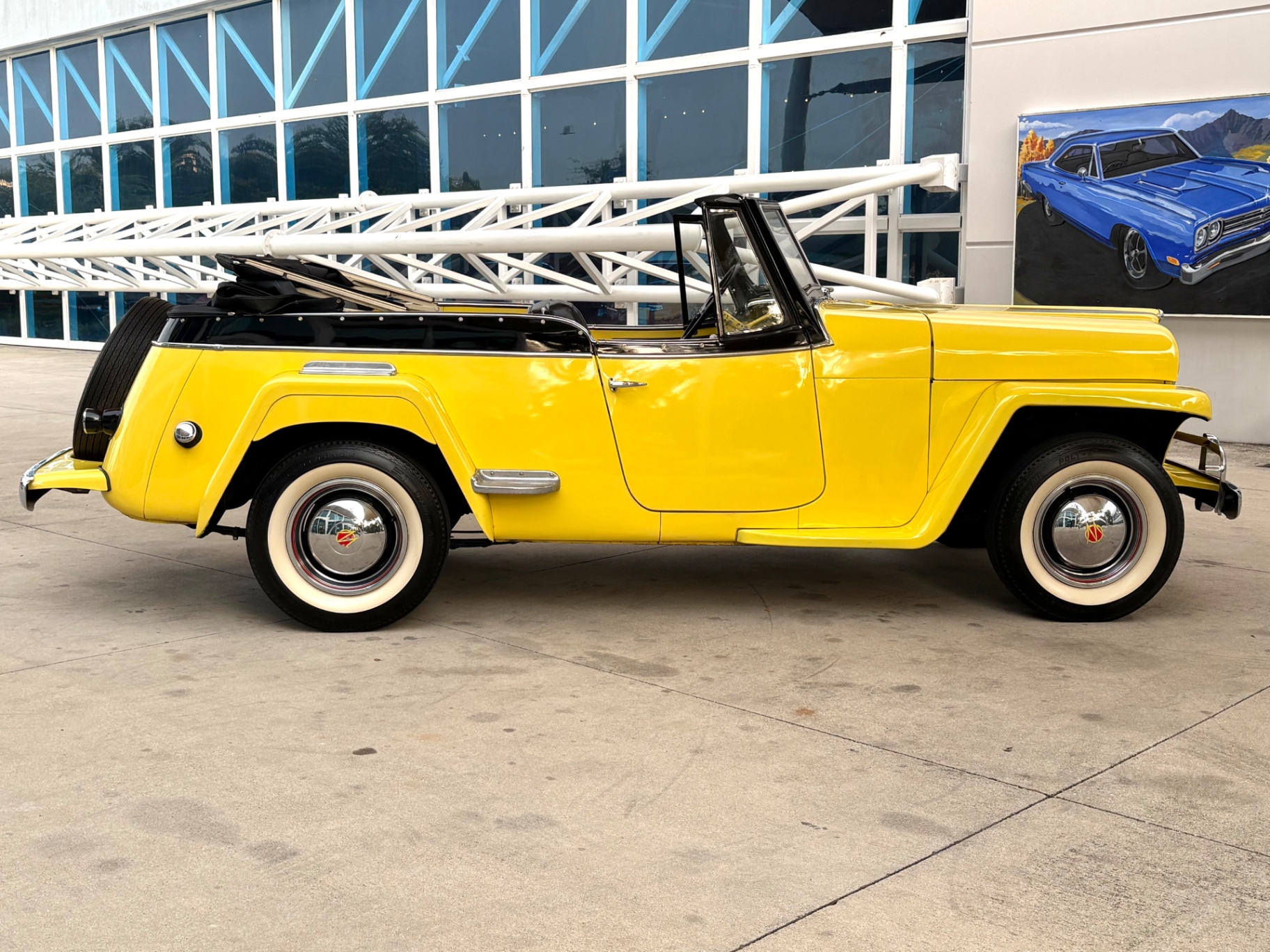
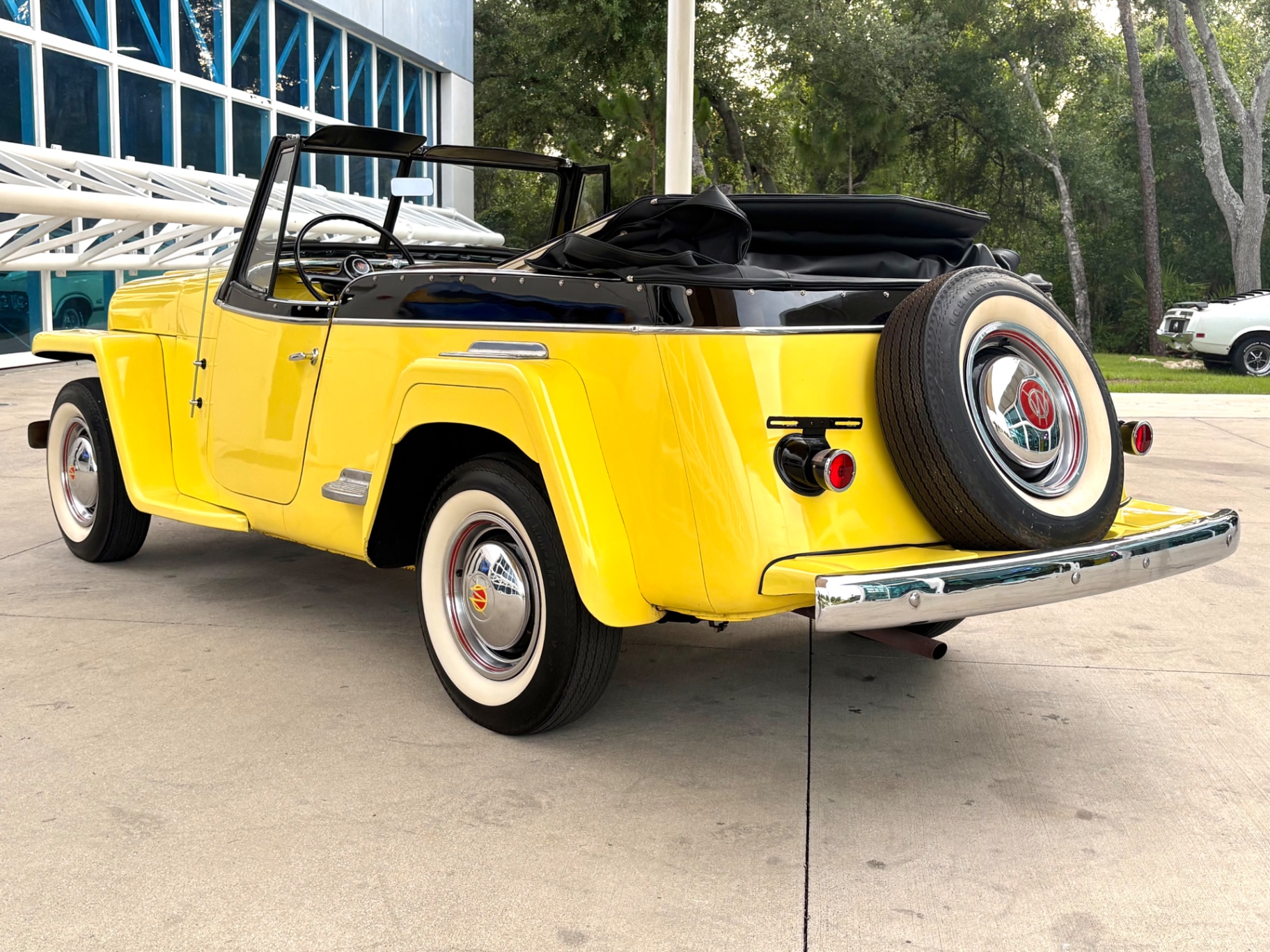
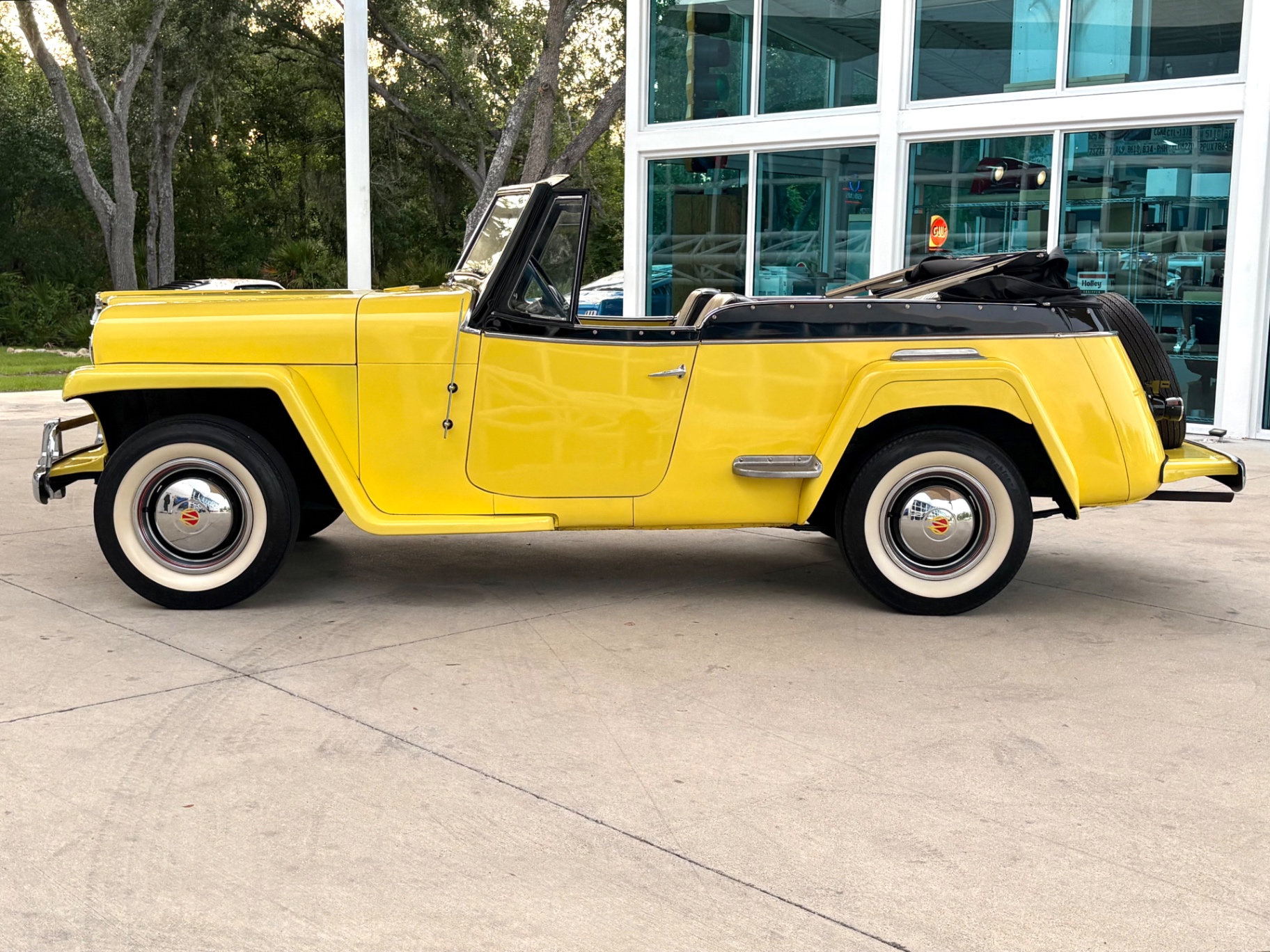
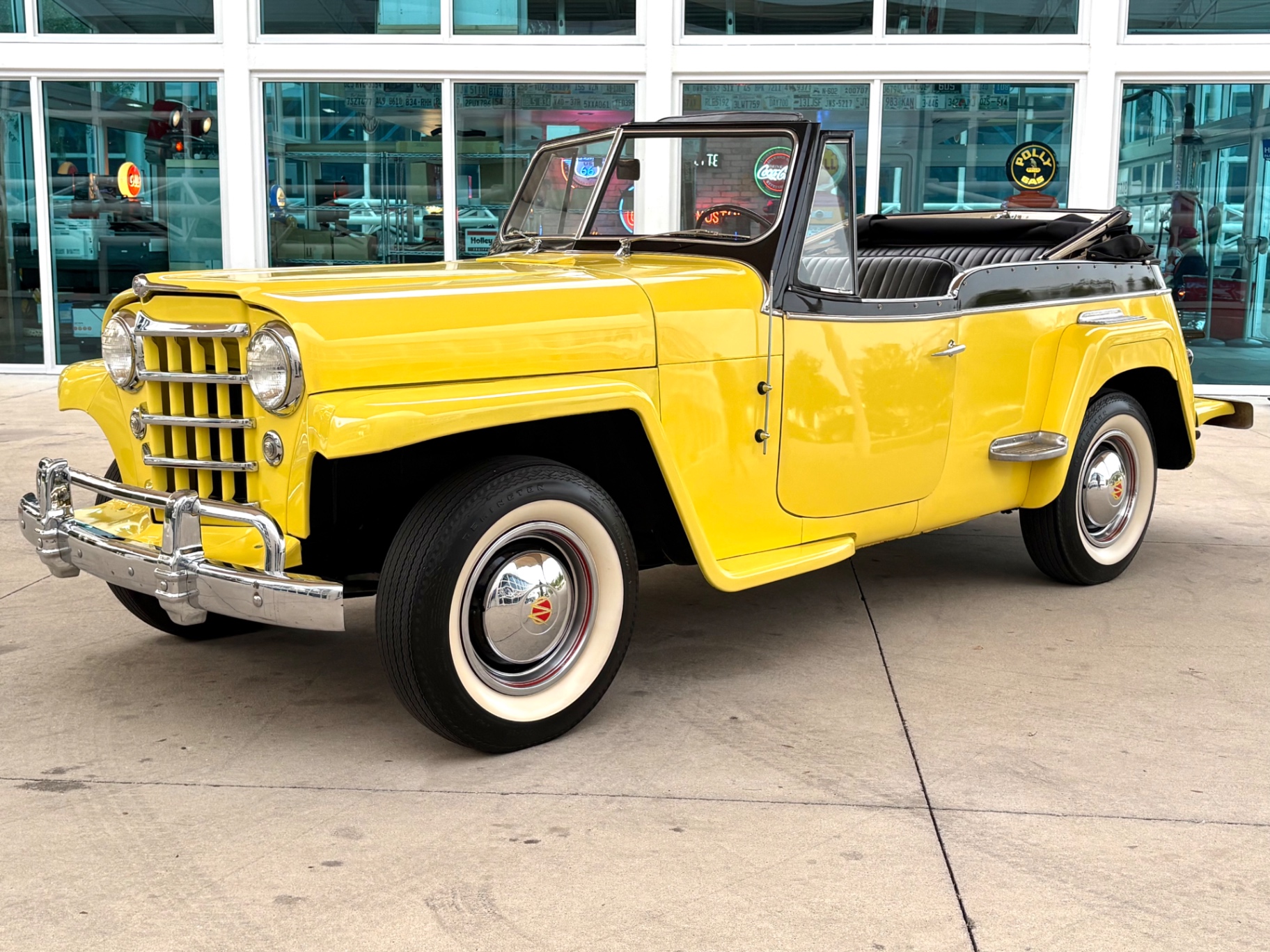
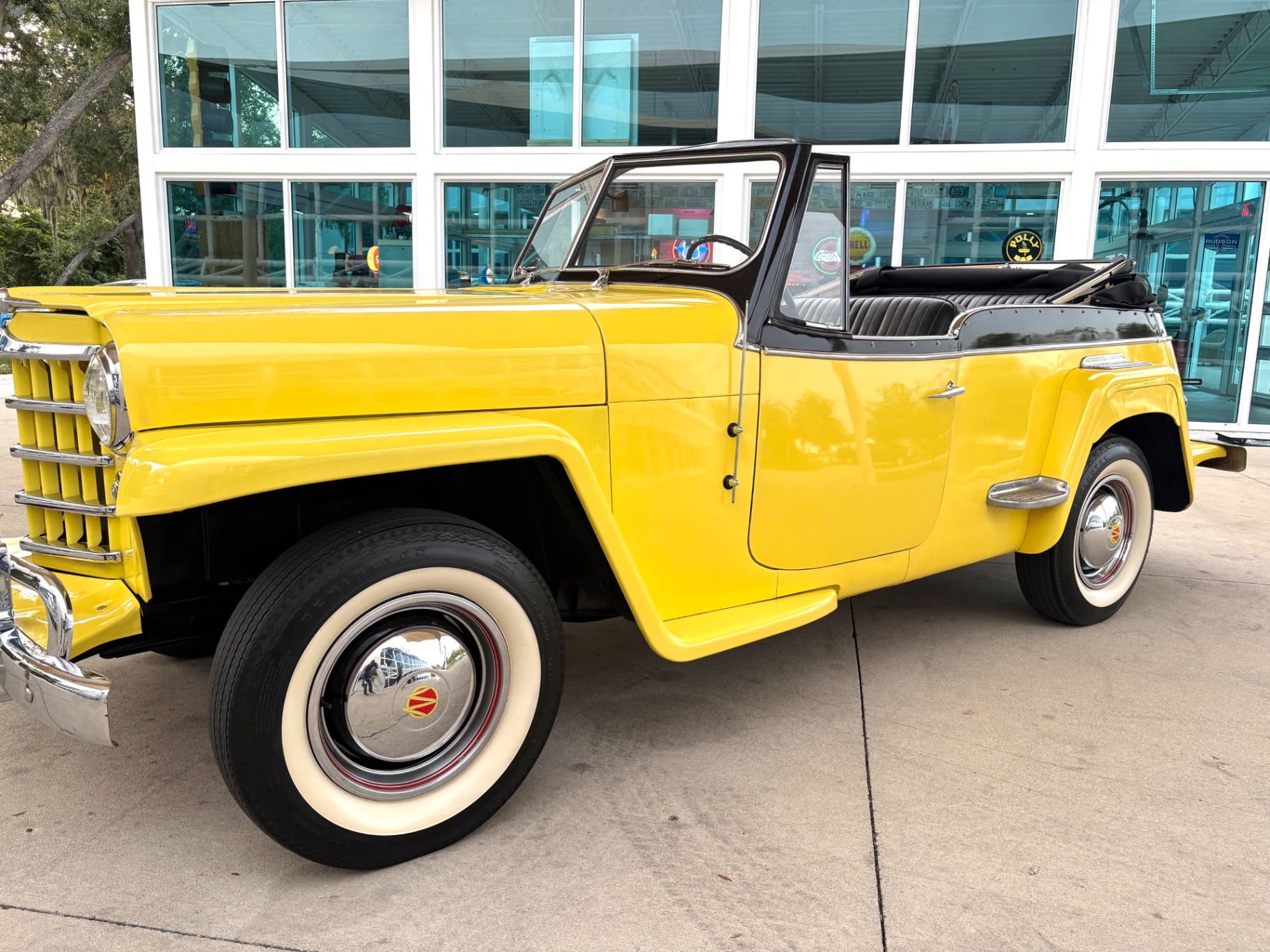
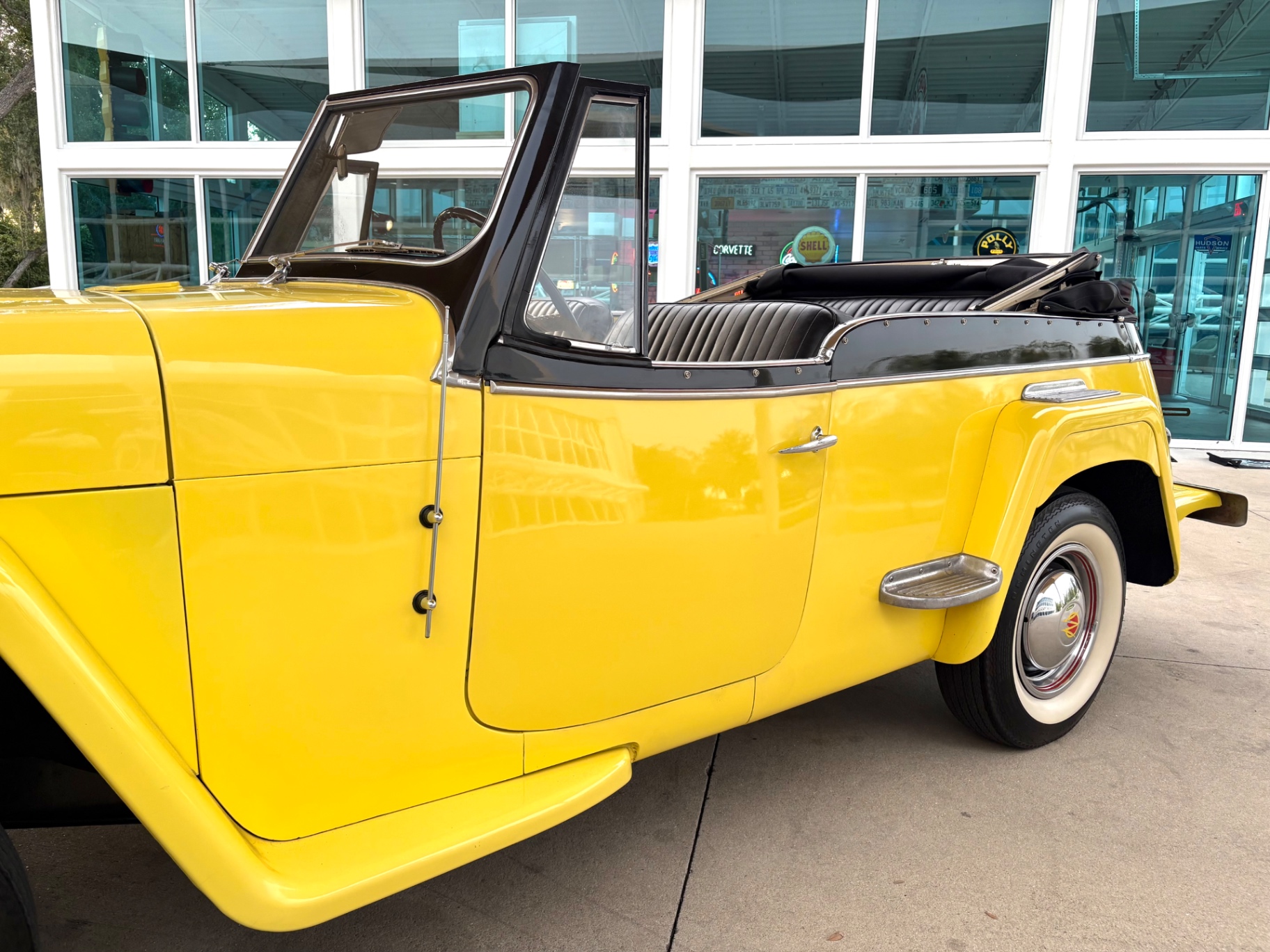
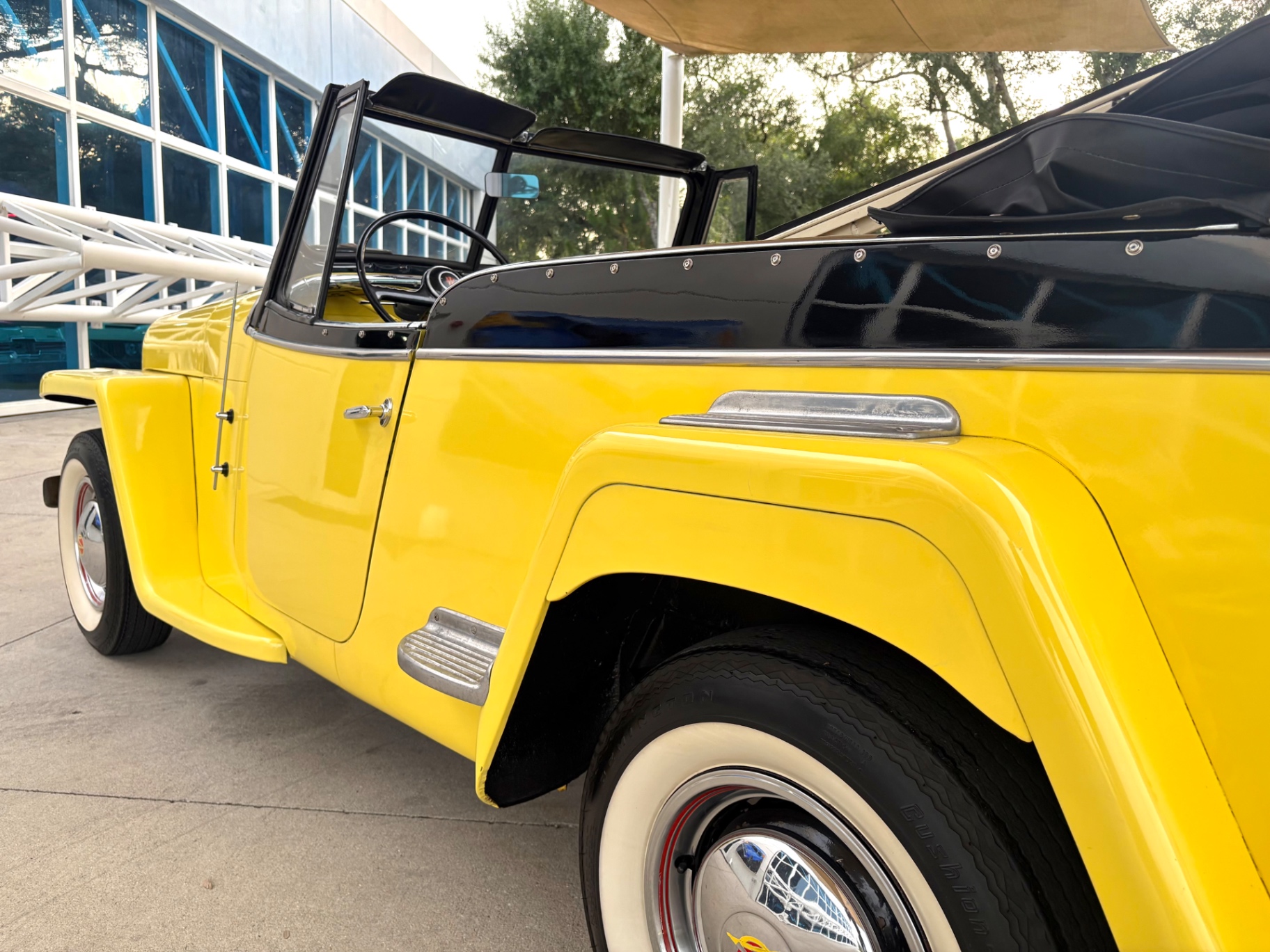
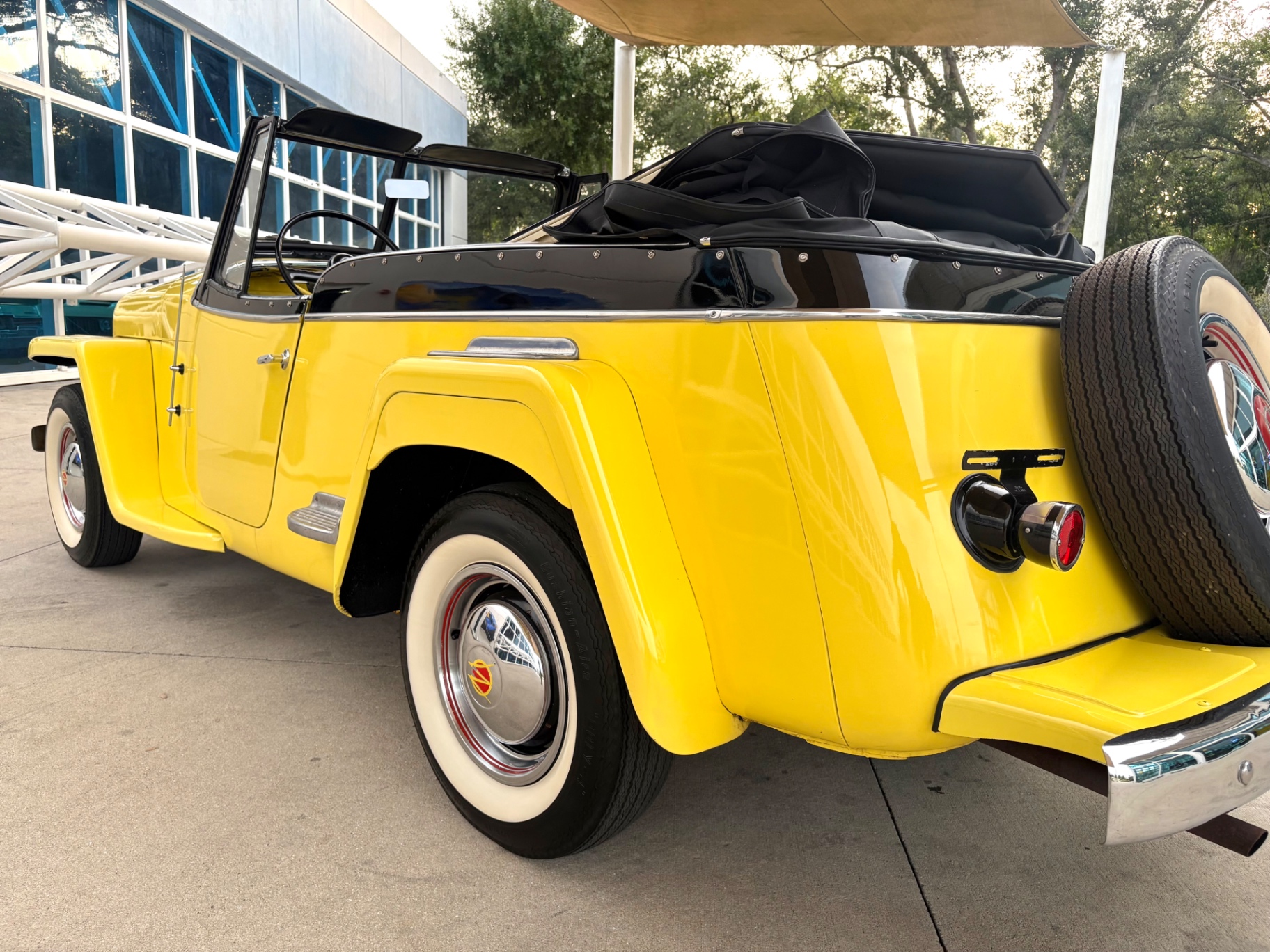
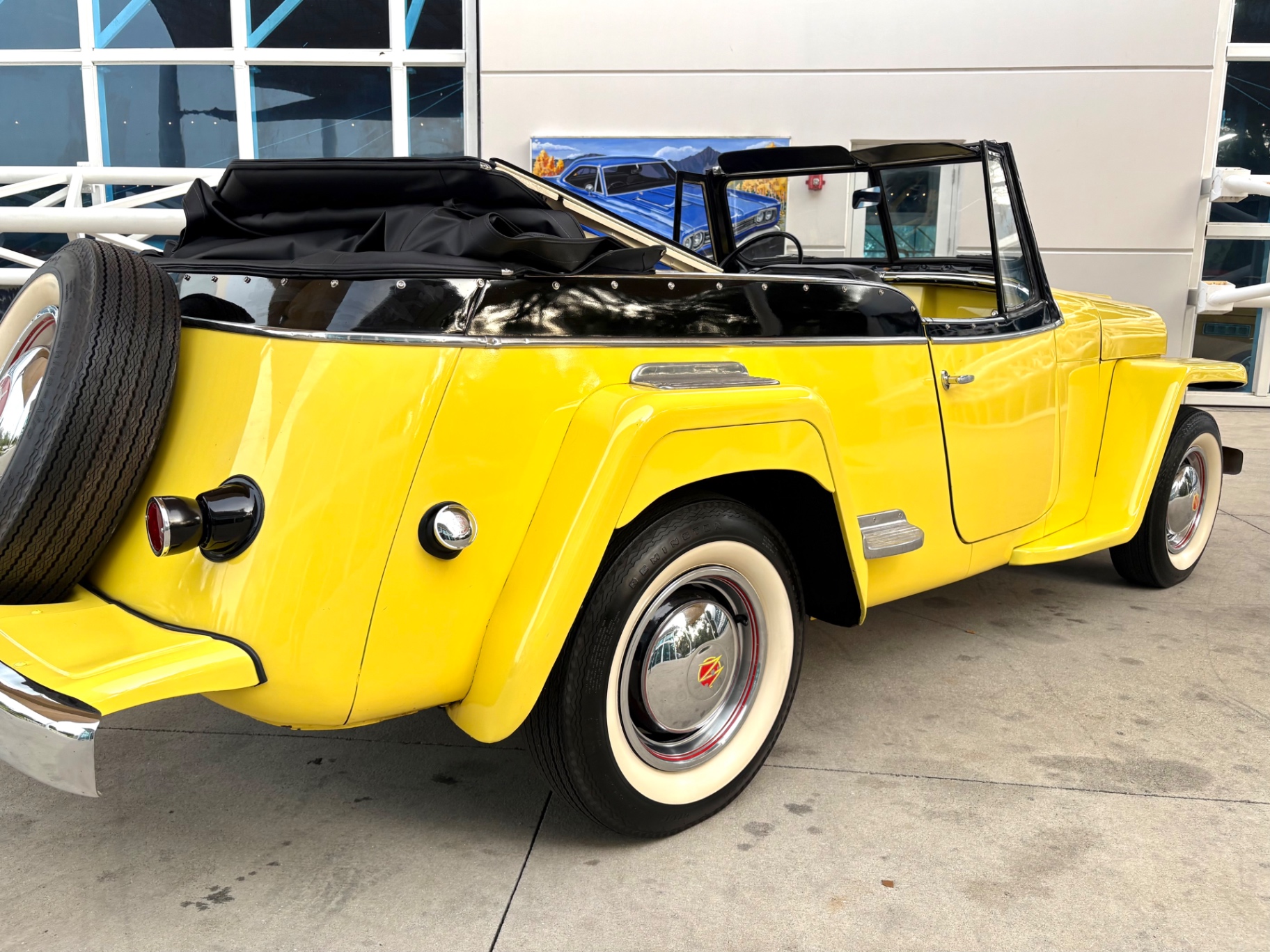
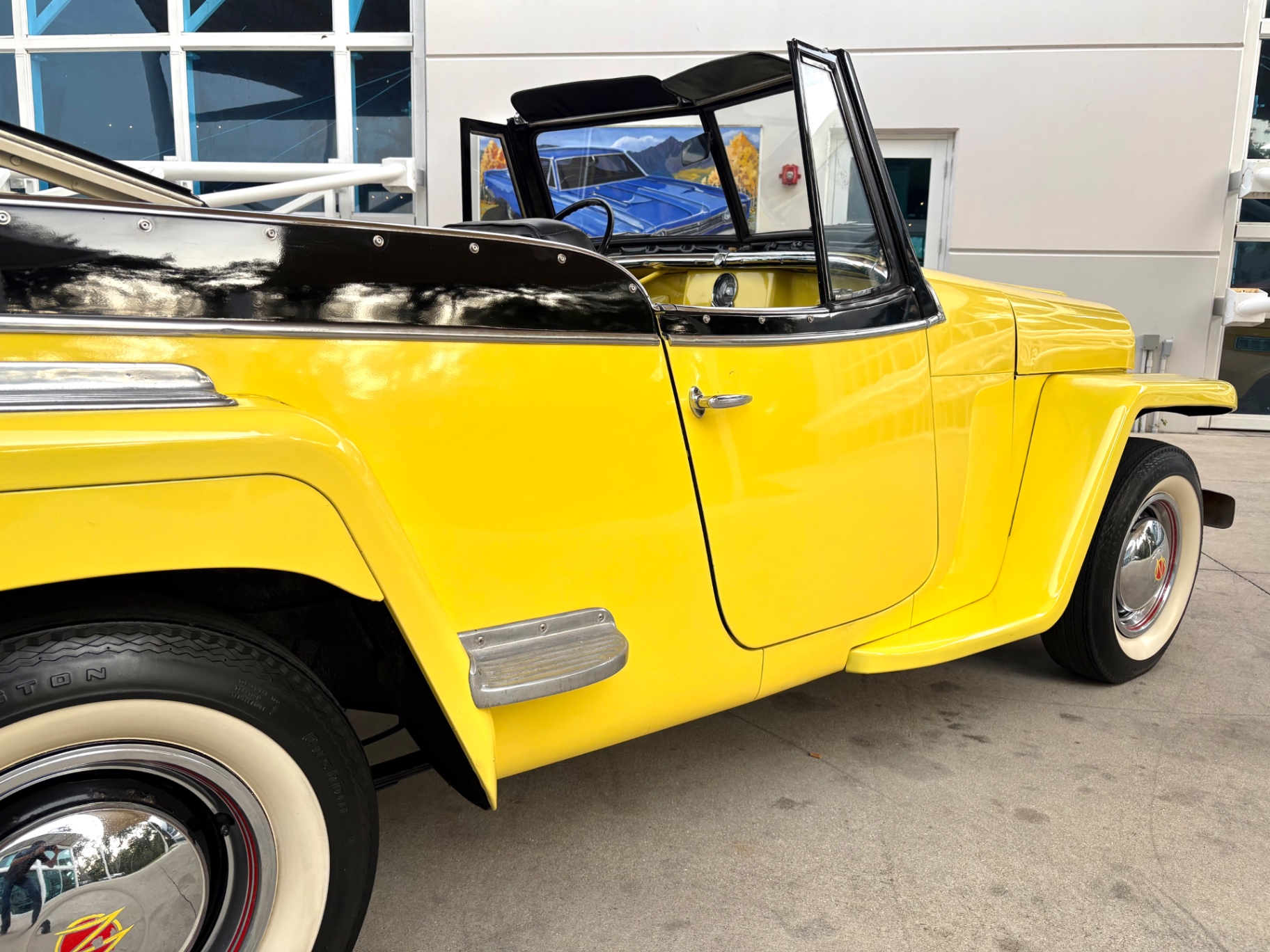
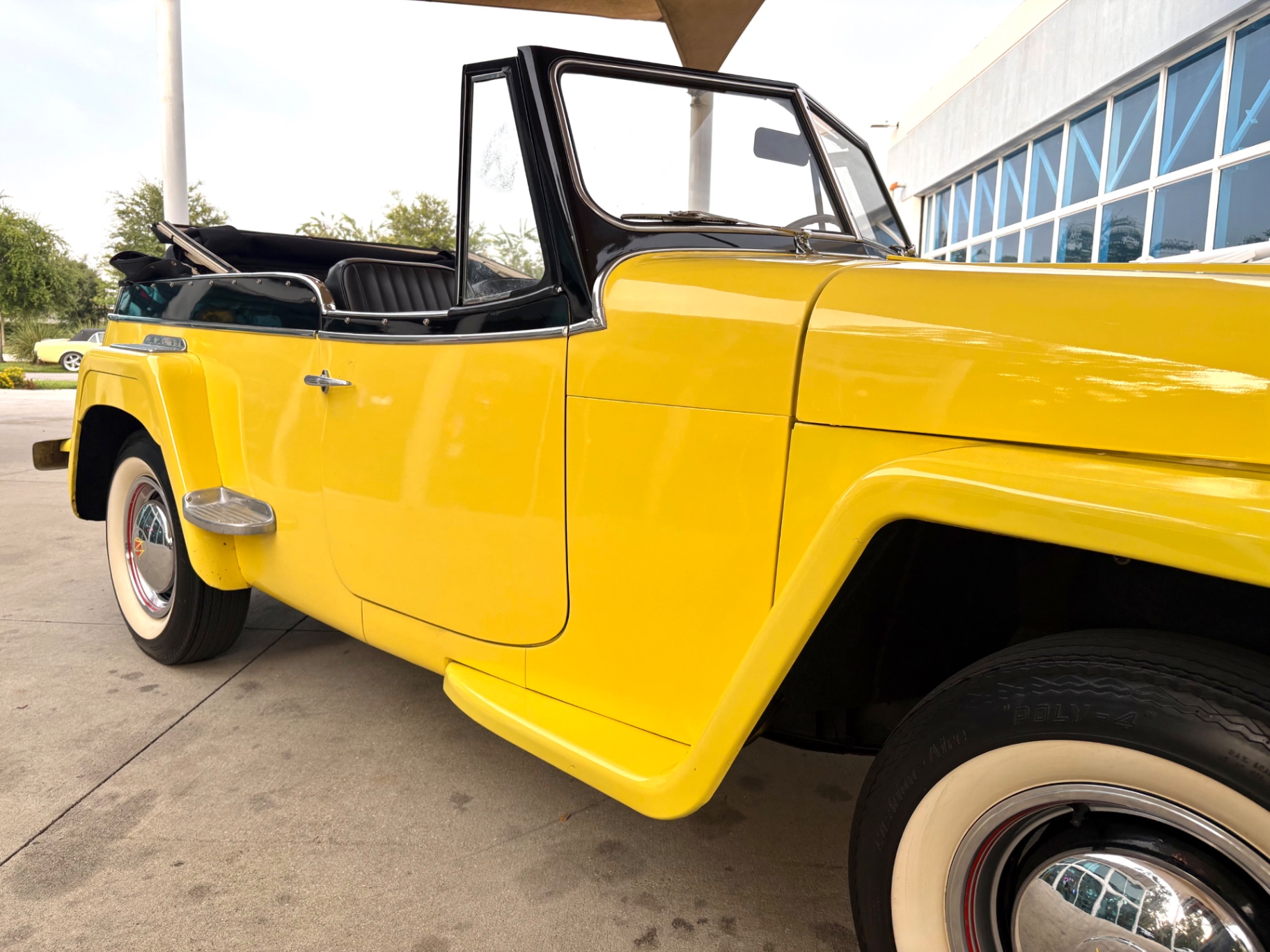
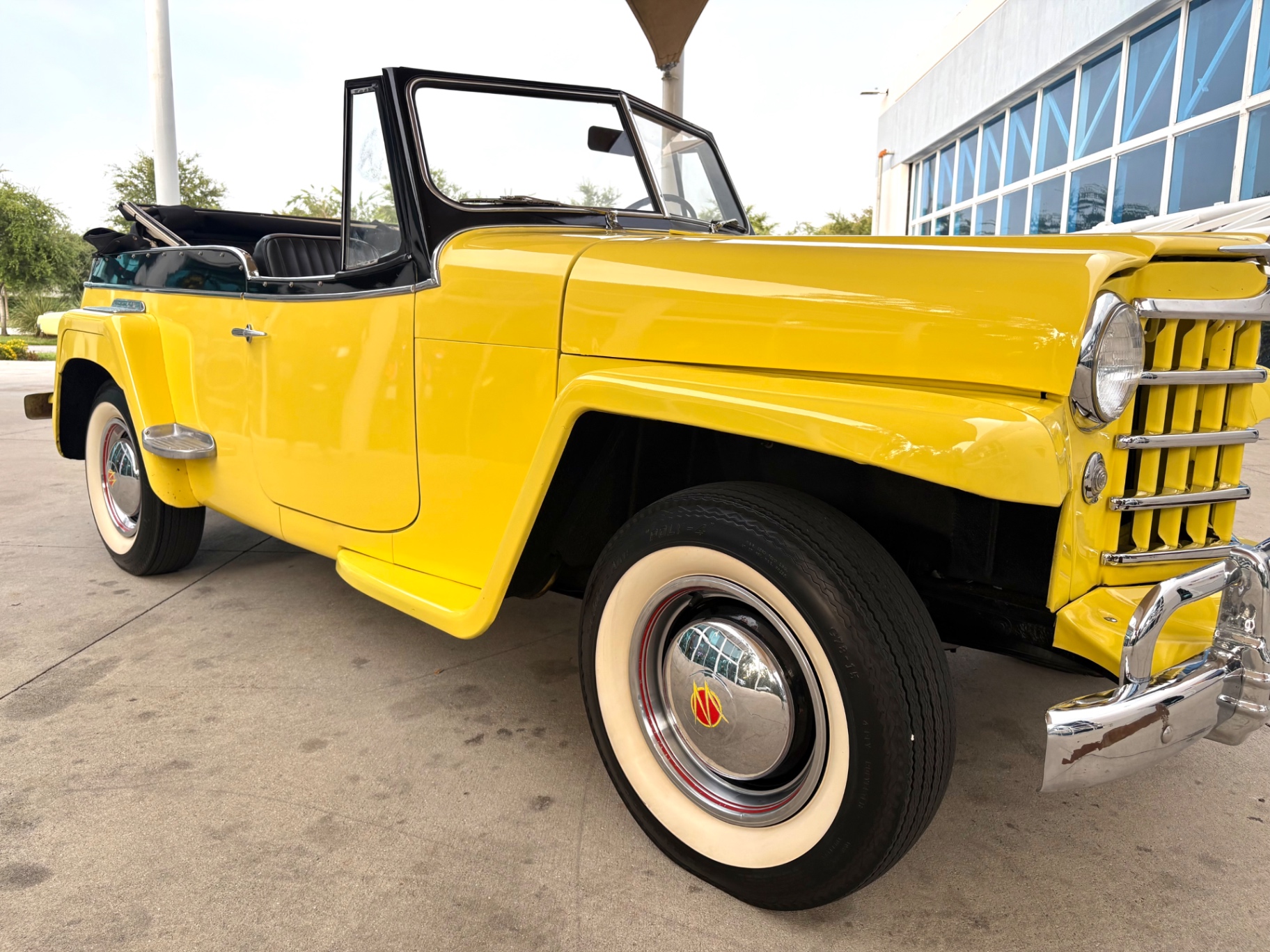
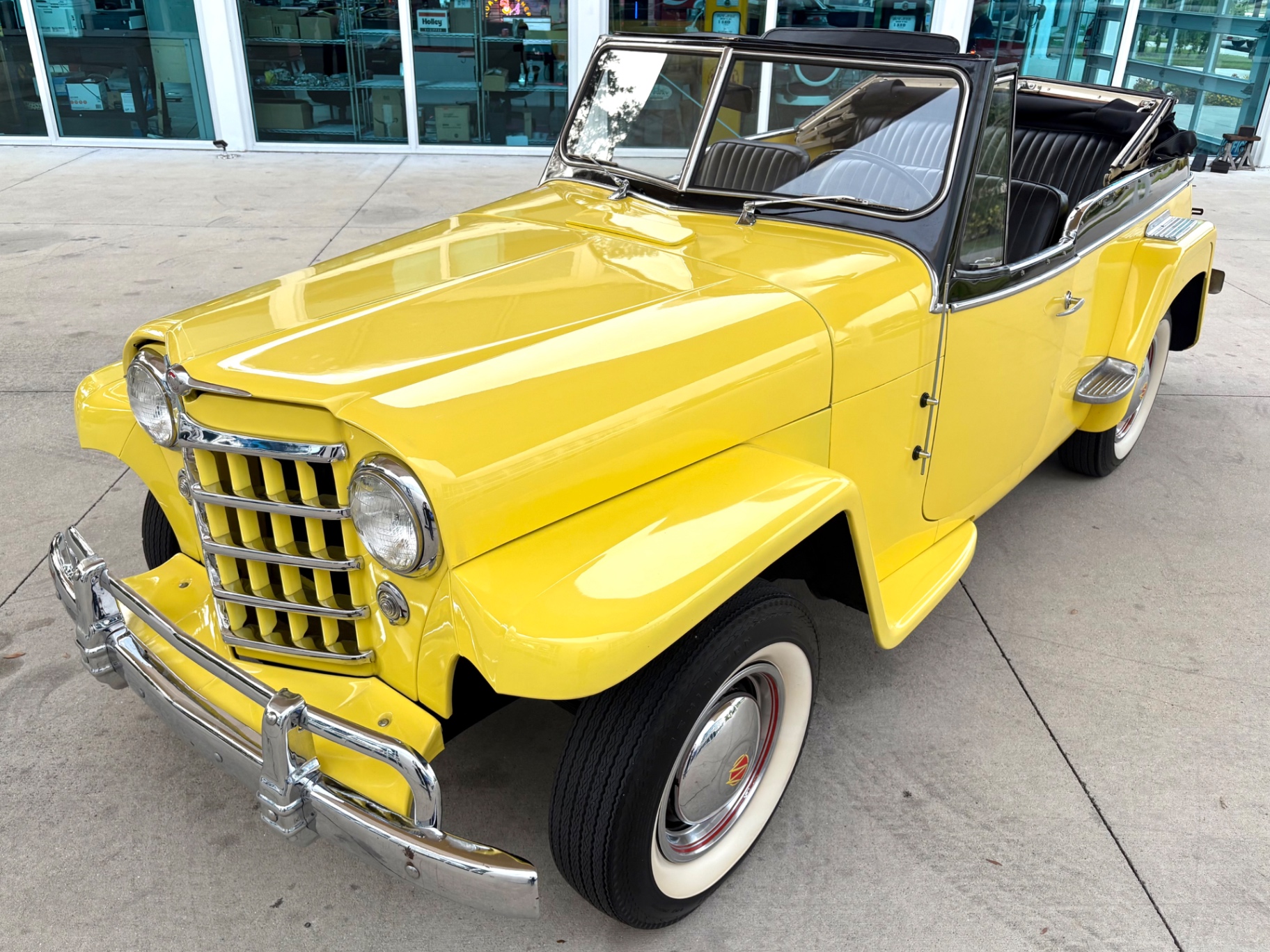
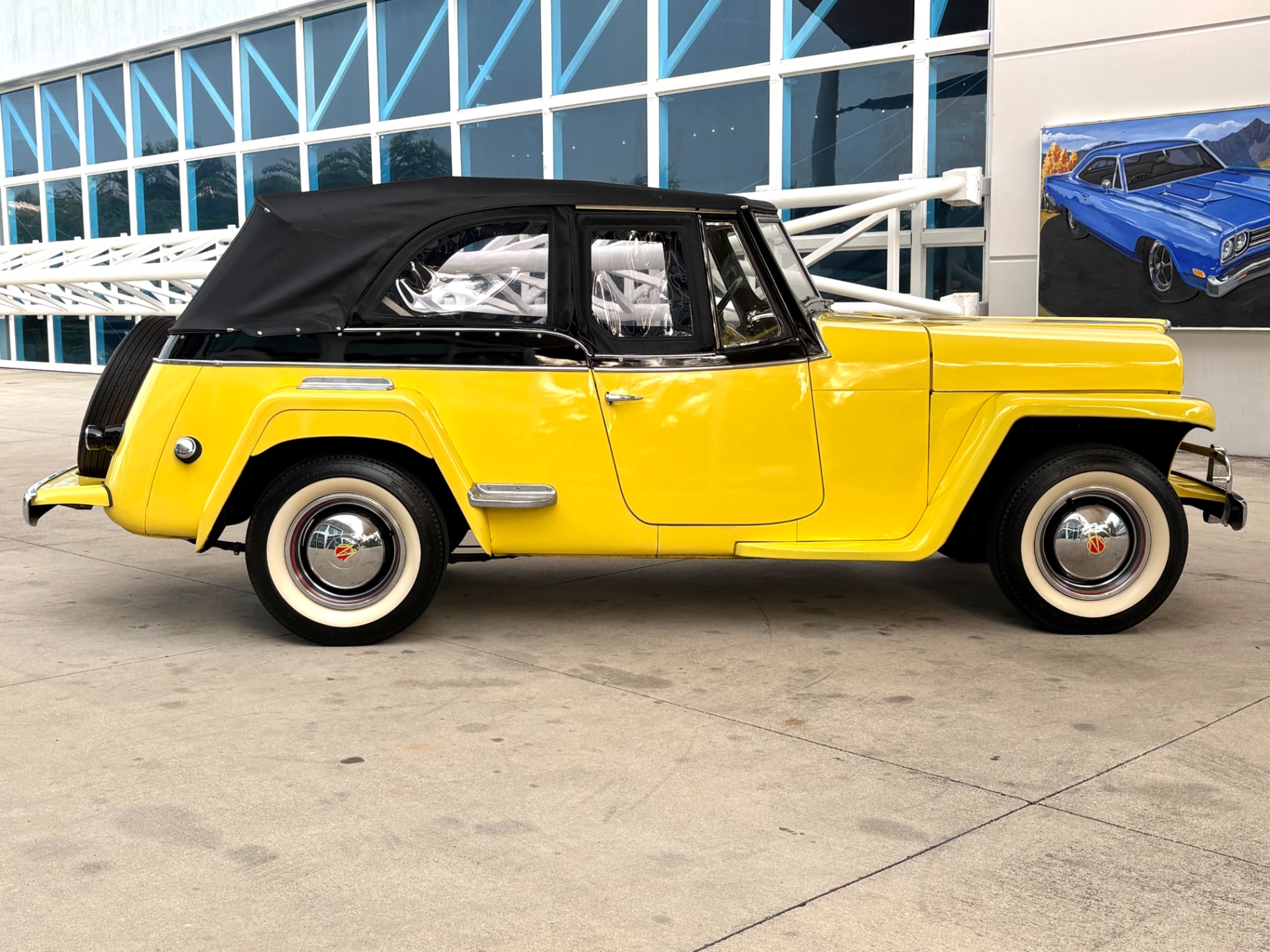
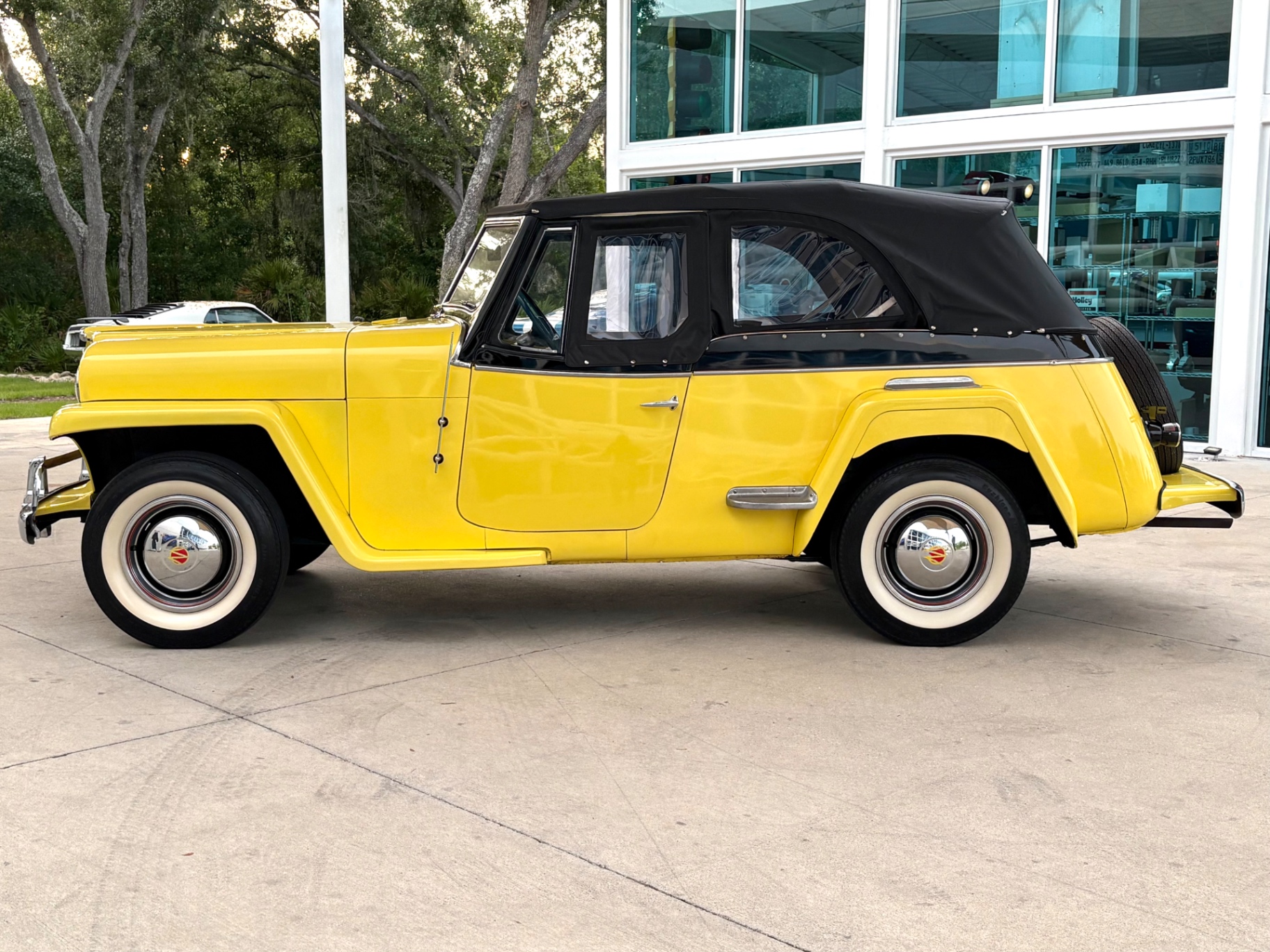
This 1951 Willys Overland Jeepster wears a yellow exterior that suits the vehicle's proportions and era well. Yellow was among the colors available on Jeepsters and is one of the more visually assertive choices, which fits a car that was designed from the beginning to be an expressive, leisure-oriented vehicle. The chrome bumpers front and rear are present and show good reflectivity in the photos. The chrome windshield frame, chrome body trim moldings, and Willys grille badge all contribute to the dressed-up appearance that separated the Jeepster from Willys's more utilitarian offerings.
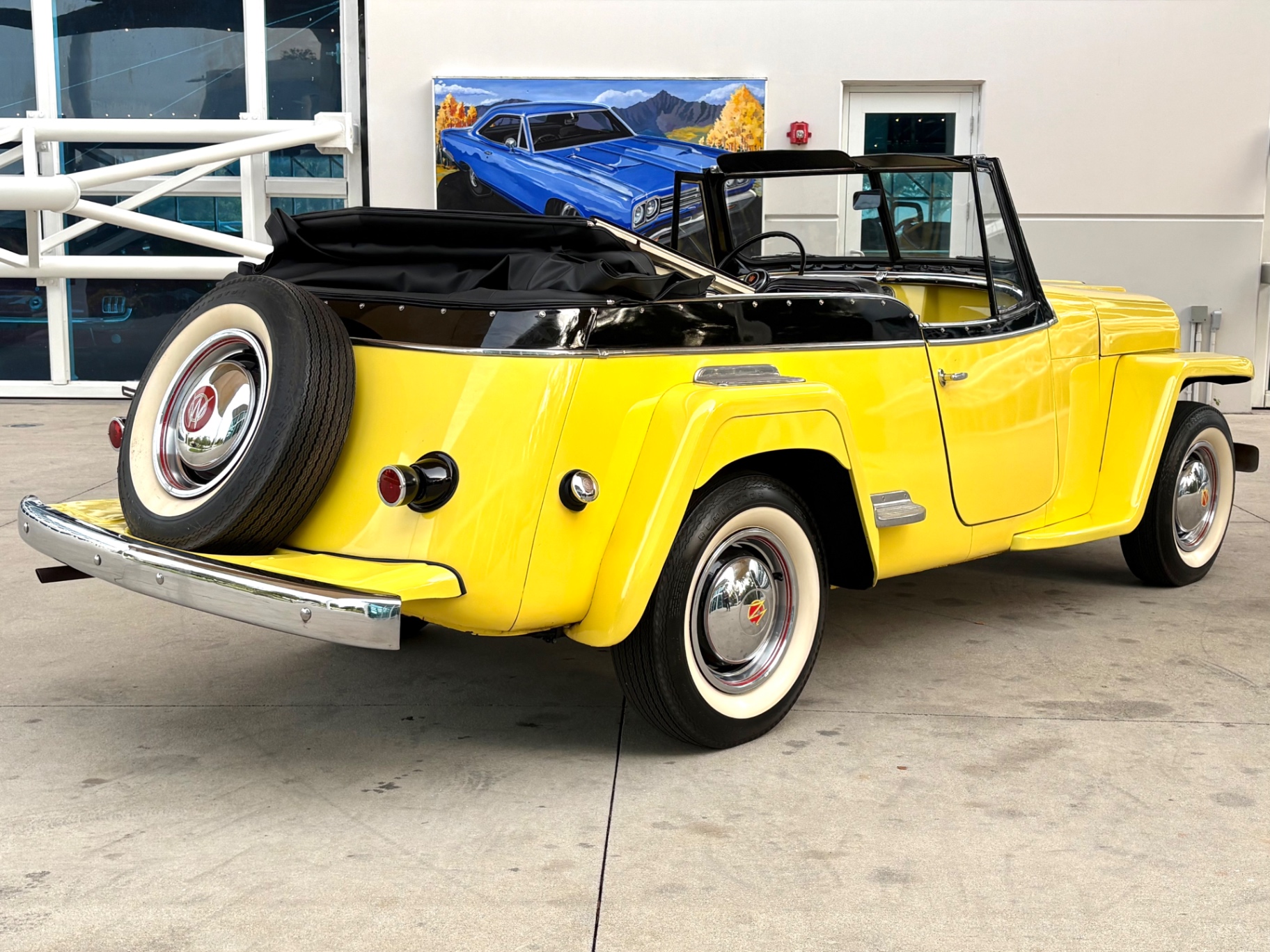
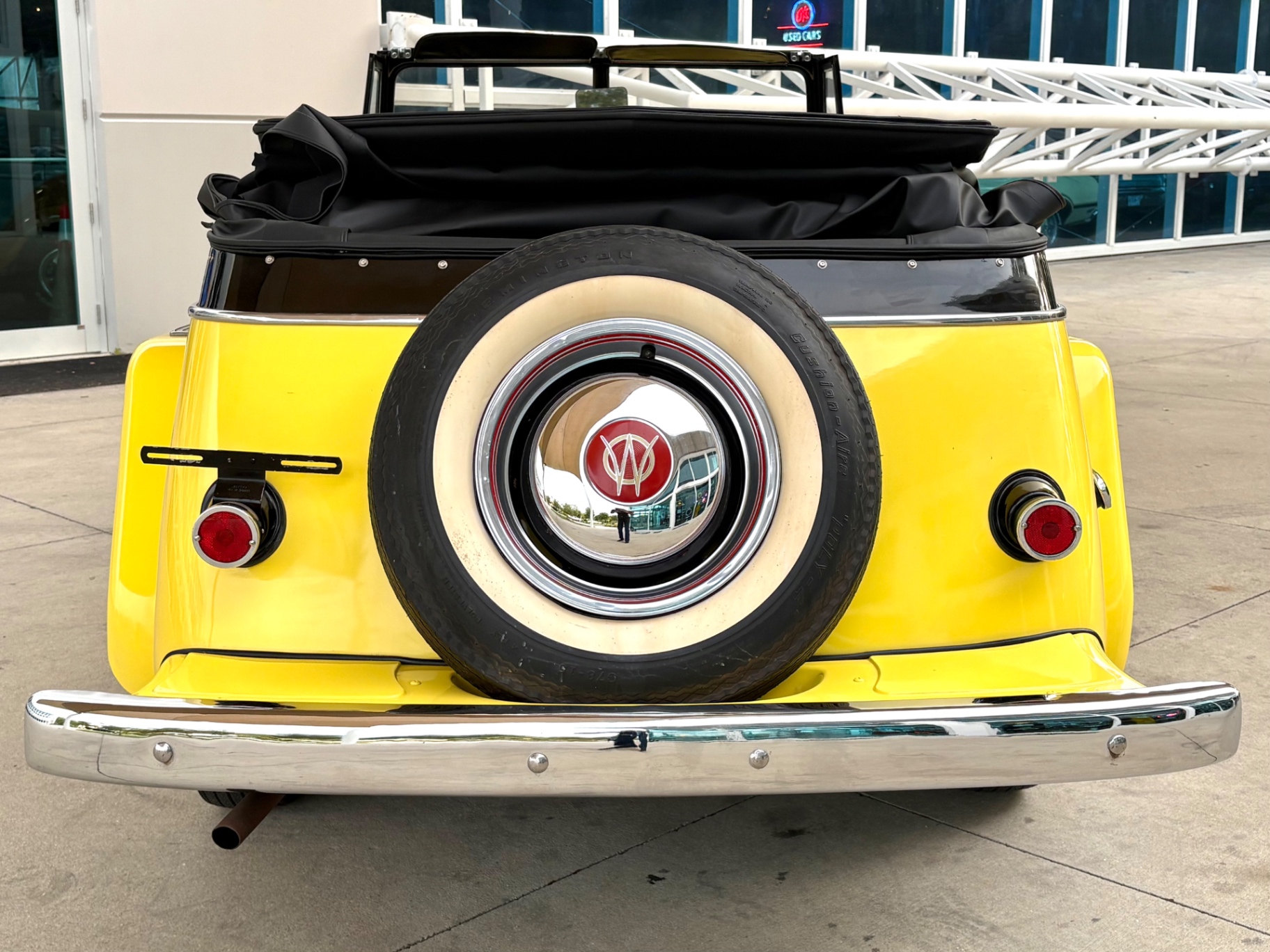
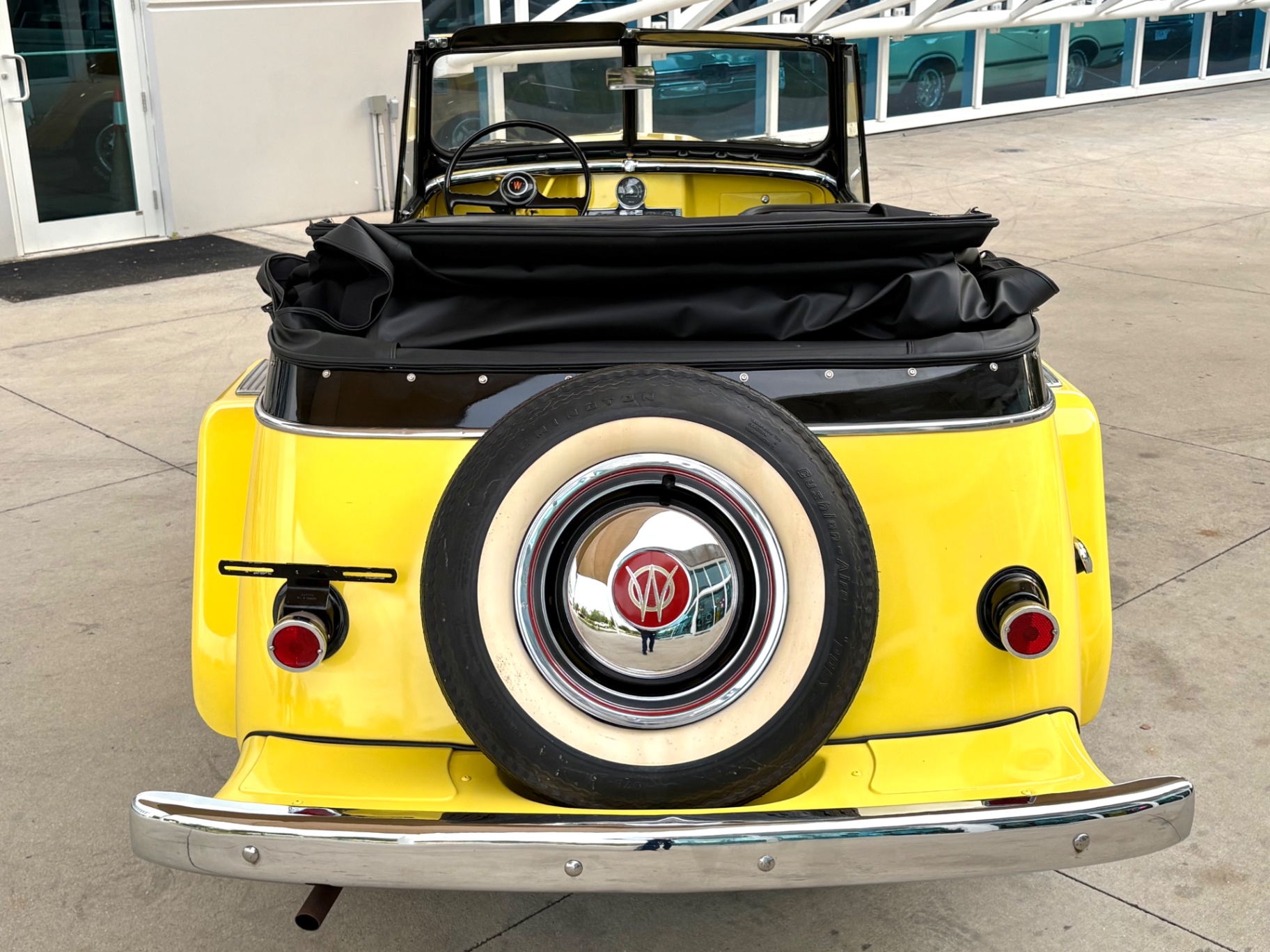
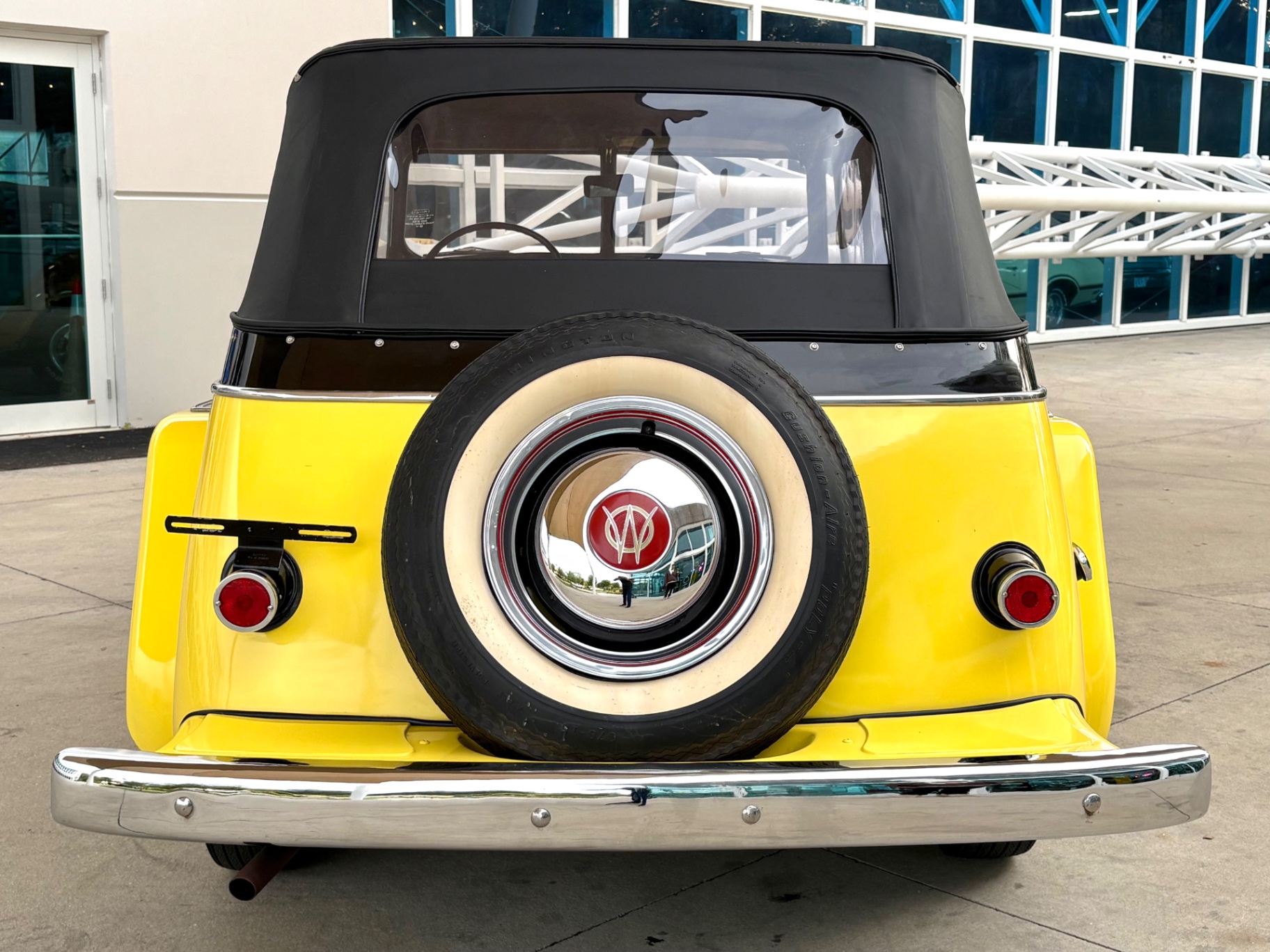
The split windshield is a defining visual element of the Jeepster body style — two separate glass panels divided by a center post — and it is present and intact here. The exterior sun visor above the windshield is another correct period feature. The Willys hub caps are mounted on all four corners, and the whitewall tires give the car its correct postwar aesthetic. The rear spare tire is mounted externally on the tail of the vehicle in the factory position, complete with a chrome carrier surround visible in the rear photos. The side step plates are present on both rocker panels, which were both functional and a styling cue carried over from the Jeep's utility roots.
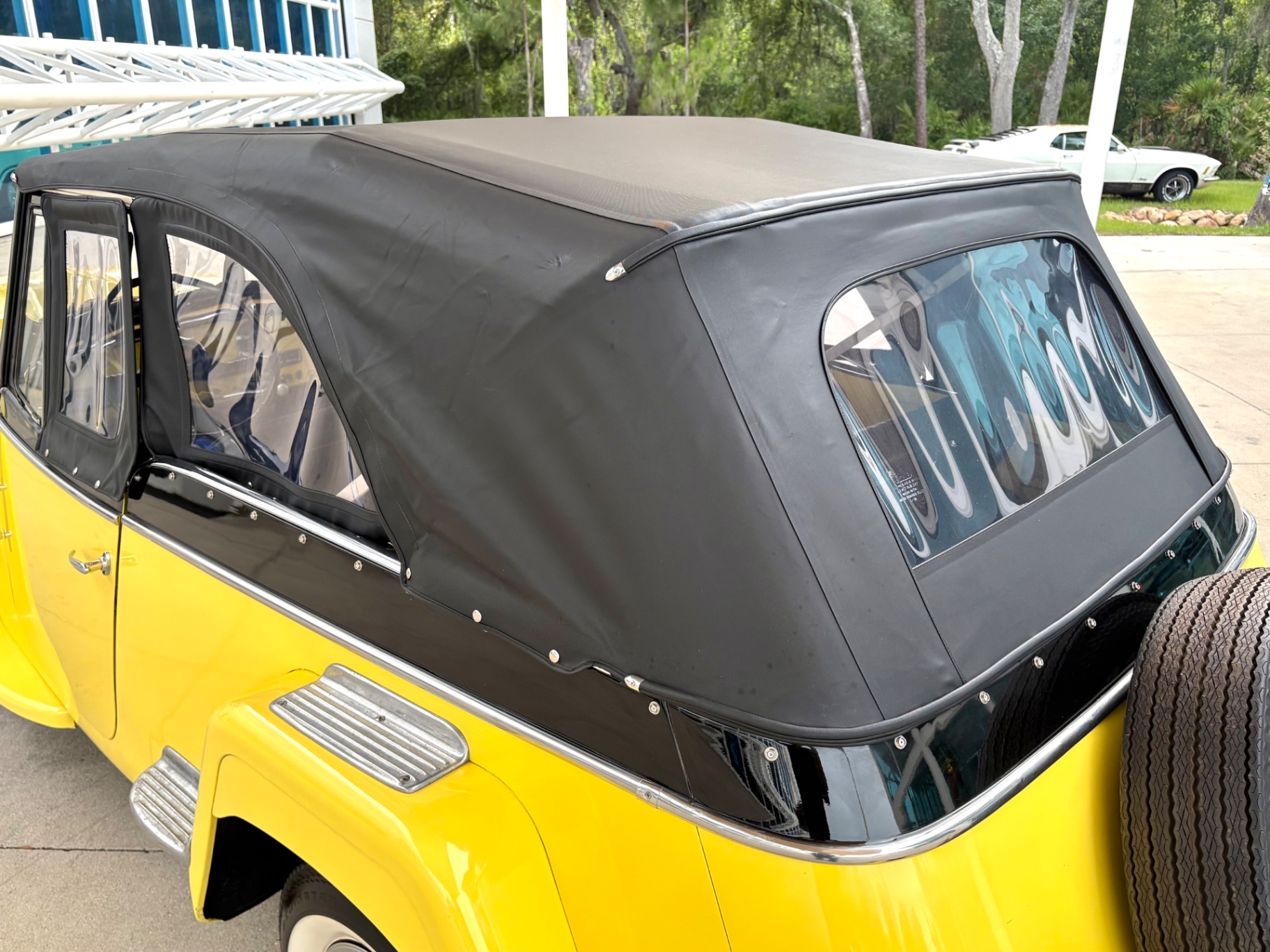
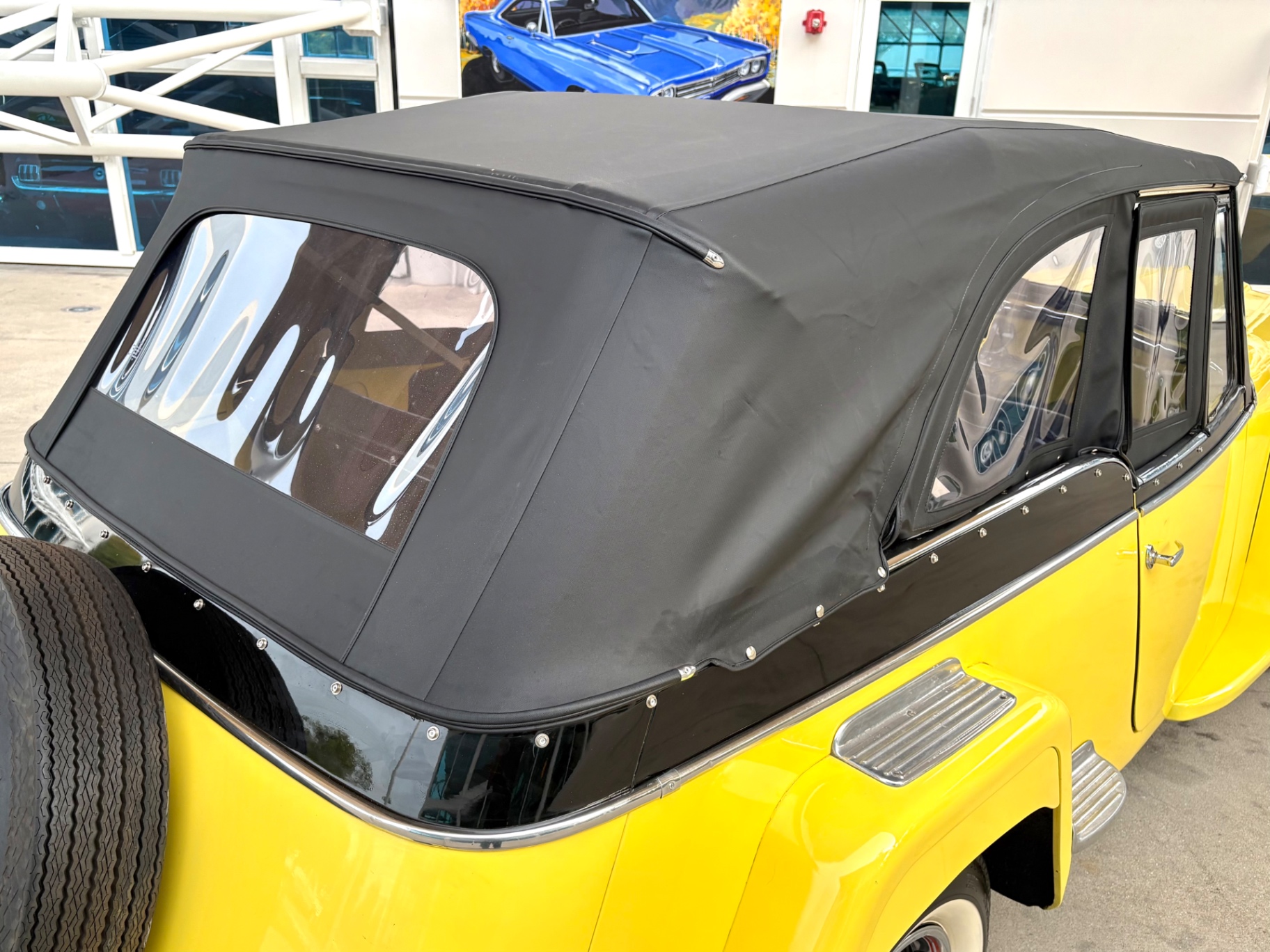
The black convertible top is present and in usable condition. The Jeepster's top mechanism was designed to fold completely behind the rear seat, giving it a fully open-air profile when down. The top bows and hardware are visible in the rear seat photos and appear intact. The all-steel body construction is correct for the Jeepster — unlike some contemporaries that used composite or partial fiberglass panels, the Jeepster was built entirely of steel throughout its production run.
Conclusion
The 1951 Willys Overland Jeepster is the final expression of a model that never got a fair chance in the market. Sales were modest during its four-year production run, largely because Willys struggled to position the Jeepster clearly as either a utility vehicle or a leisure car — it was, in fact, both, but the buying public of 1948 to 1951 wasn't quite ready for that concept. The market eventually came around to exactly that idea, as evidenced by everything from the Ford Bronco to the Jeep Wrangler that followed in later decades. The Jeepster was simply ahead of its time.
This specific example carries the most desirable powertrain configuration — the Hurricane F-Head four with overdrive — in the last model year of production. The undercarriage is solid, the chrome is present, the body color and dash color are correct, and the car retains its convertible top, spare tire mount, full gauge cluster, and factory-style interior. These details matter for both show judging and long-term collectibility.
If you have questions about this 1951 Willys Overland Jeepster, call Skyway Classics in Sarasota, Florida at 941-254-6608. Our team is available to walk you through the details, arrange an in-person inspection, or discuss transport options to anywhere in the country.
Disclaimer
Information found on the website is presented as given to us by the owner of the car, whether on consignment or from the owner we bought it from. Some Photos, materials for videos, descriptions and other information are provided by the consignor/seller and is deemed reliable, but Skyway Classics does not warranty or guarantee this information. Skyway Classics is not responsible for information that may incorrect or a publishing error. The decision to purchase should be based solely on the buyers personal inspection of the vehicle or by a professional inspection service prior to offer or purchase being made.
1951 Willys Overland Jeepster — Last Year of Production, Hurricane F-Head Engine, Overdrive Transmission
Why This Car Is Special
The 1951 Willys Overland Jeepster holds a specific place in American automotive history that most people don't fully appreciate. It was the last model year Willys would produce the Jeepster before discontinuing the nameplate entirely, making every surviving 1951 example a legitimate end-of-run collectible. The Jeepster was Willys Overland's attempt to build a civilian leisure vehicle that carried the brand recognition and rugged identity of the wartime Jeep into the postwar consumer market. It first appeared in 1948, designed by Brooks Stevens, and was meant to appeal to buyers who wanted something sportier and more open-air than a station wagon but more practical than a roadster.
What makes 1951 particularly significant is the engine. That year, Willys introduced the Hurricane F-Head inline-four — an upgraded version of the Go Devil flathead that had powered earlier Jeepsters and wartime Jeeps. The F-Head design placed the intake valves in the head while retaining exhaust valves in the block, a hybrid configuration that improved breathing and thermal efficiency over a pure flathead. The result was a meaningful bump in output over what came before, and the Hurricane F-Head went on to power Willys and early Kaiser-Jeep vehicles well into the 1960s, earning a reputation for long-term durability that holds up even today.
The Jeepster was never produced in massive numbers. Across its four model years — 1948 through 1951 — total production was relatively modest compared to mainstream American convertibles of the era, and 1951 was the lowest-volume year of the run. Finding a 1951 Willys Overland Jeepster in drivable, solid condition with correct trim and a functioning convertible top is genuinely difficult. This example checks all of those boxes and then some.
Features List
- Hurricane F-Head 134ci Inline-4 Engine
- 3-Speed Manual Transmission with Overdrive
- Black Convertible Top
- Front and Rear Bench Seats
- Whitewall Tires
- Chrome Bumpers, Front and Rear
- Willys Hub Caps
- Exterior Spare Tire Mount with Rear-Mounted Spare
- AM Radio Installed
- Body-Colored Dash (Yellow)
- Solid Undercarriage
- Independent Front Suspension
- Leaf Spring Rear Suspension
- Drum Brakes, Four-Wheel
- Split Windshield
- Wind Wings (Vent Windows)
- Exterior Sun Visor
- Interior Rearview Mirror
- Carpeted Floors
- Painted Engine Bay
- Chrome Windshield Frame
- Chrome Body Trim Moldings
- Side Step Plates
- Full Gauge Cluster (Fuel, Oil Pressure, Ammeter, Temperature)
- Choke Knob
- Willys Hood Ornament and Grille Badge
- All-Steel Body Construction
- Last Year of Jeepster Production
Mechanical
The heart of this 1951 Willys Overland Jeepster is the Hurricane F-Head 134 cubic inch inline-four, painted in its correct teal/turquoise block color as visible in the photos. The engine bay itself has been painted to match the exterior yellow, which was a period-correct detail on well-optioned Jeepsters and presents cleanly here. The F-Head configuration was a genuine engineering advancement for Willys at the time — by relocating the intake valves to the overhead position while keeping the exhaust valves in the block, engineers were able to improve combustion efficiency and torque delivery without a full overhead valve redesign. The engine is a known quantity among Willys enthusiasts for being straightforward to maintain and nearly bulletproof when properly cared for.
Behind the Hurricane engine sits a 3-speed manual transmission paired with an overdrive unit — a significant and desirable specification on any early 1950s vehicle. The overdrive allows the engine to drop into a relaxed, fuel-efficient cruising ratio at highway speeds, which makes this Jeepster a more usable and comfortable driver than a standard 3-speed would allow. The overdrive engagement lever is visible in the interior photos, positioned on the column. This combination of the F-Head four and overdrive was the powertrain setup that collectors specifically seek out on these cars.
The undercarriage photographs show a solid, well-coated floor structure with no visible rot or patched sections. The frame rails are intact and straight. Front suspension is independent, which gave the Jeepster a noticeably more car-like ride quality compared to the solid front axle setup used on Willys utility vehicles of the same period. The rear uses a leaf spring setup, which is correct for the model. Four-wheel drum brakes are present and appropriate for the era. The underside has been coated in black, consistent with what you see in the lift photos.
Interior
Inside, the 1951 Willys Overland Jeepster presents a clean, correctly configured cockpit in black vinyl with yellow body-colored dash. The dash color matching the exterior was a Willys styling feature intended to give the Jeepster a more integrated, sporty appearance, and it works well in this yellow-over-black combination. The Willys "W" badge is centered on the dash between the gauge cluster and the glove box, which is a detail that restoration-minded buyers will appreciate seeing retained.
The gauge cluster is fully populated with fuel level, oil pressure, ammeter, and temperature gauges, all set into a chrome-trimmed housing that centers on the dashboard. The speedometer sits directly above in its own pod, and the odometer in the photos reads 11,756 miles — though on a 70-plus-year-old vehicle, the actual mileage history would need to be verified independently. The choke knob is present on the lower dash, labeled clearly. An AM radio has been installed, which is a period-appropriate addition that adds to the usability of the car without altering its character.
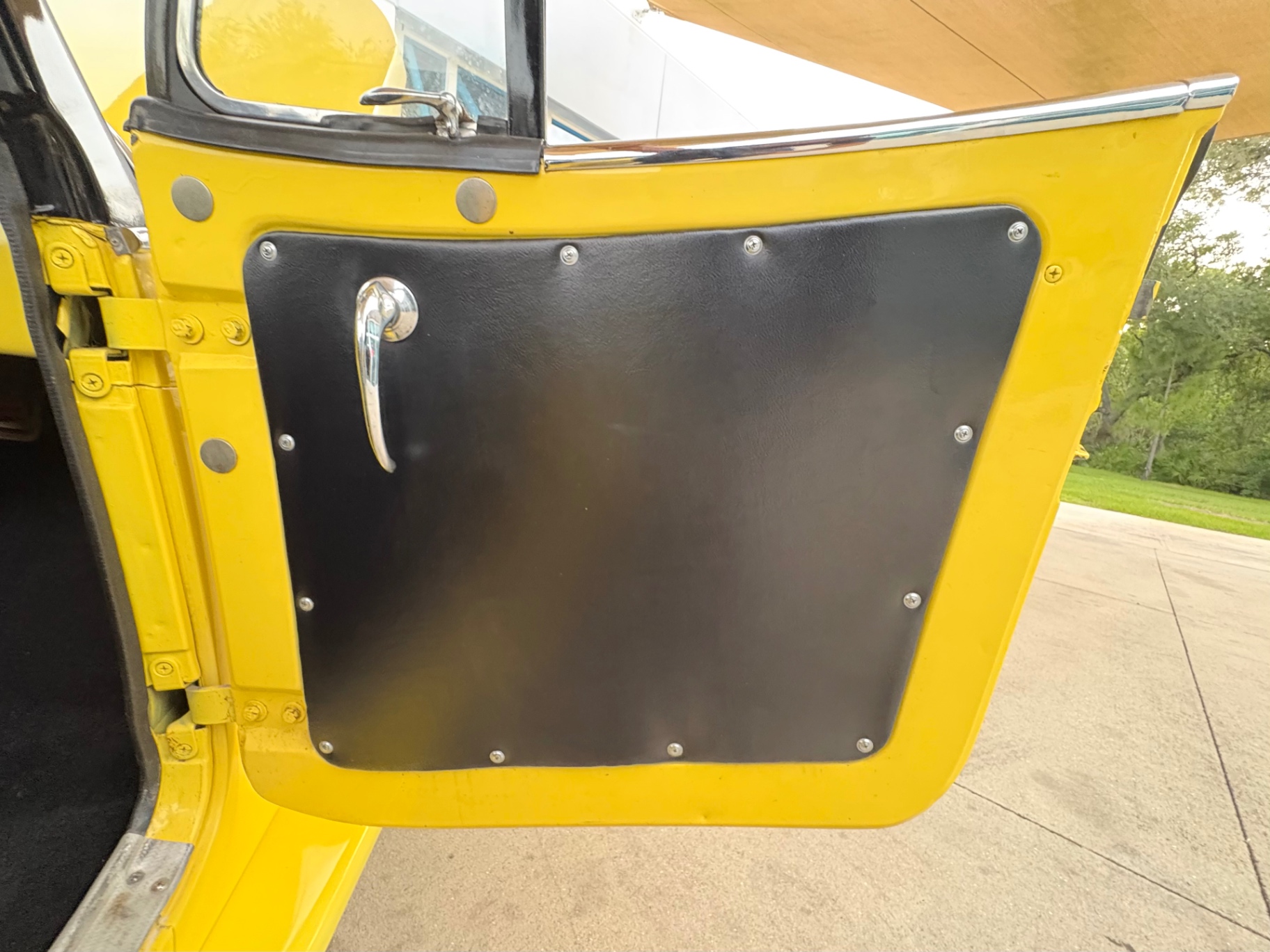
Both the front and rear bench seats are covered in black vinyl with a ribbed, vertical-stitch pattern that was typical of Willys interiors of this period. The front bench shows well, and the rear bench — which sits in an open-air compartment with the top folded — is also in good shape. The rear seating area on a Jeepster is genuinely usable for two adults, which was one of the features that set it apart from a two-seat roadster. The carpeted floors are black and appear clean throughout. Wind wings on the doors are present and functional, an important comfort feature on an open vehicle. The interior rearview mirror is mounted at the top of the windshield frame.
Exterior
This 1951 Willys Overland Jeepster wears a yellow exterior that suits the vehicle's proportions and era well. Yellow was among the colors available on Jeepsters and is one of the more visually assertive choices, which fits a car that was designed from the beginning to be an expressive, leisure-oriented vehicle. The chrome bumpers front and rear are present and show good reflectivity in the photos. The chrome windshield frame, chrome body trim moldings, and Willys grille badge all contribute to the dressed-up appearance that separated the Jeepster from Willys's more utilitarian offerings.
The split windshield is a defining visual element of the Jeepster body style — two separate glass panels divided by a center post — and it is present and intact here. The exterior sun visor above the windshield is another correct period feature. The Willys hub caps are mounted on all four corners, and the whitewall tires give the car its correct postwar aesthetic. The rear spare tire is mounted externally on the tail of the vehicle in the factory position, complete with a chrome carrier surround visible in the rear photos. The side step plates are present on both rocker panels, which were both functional and a styling cue carried over from the Jeep's utility roots.
The black convertible top is present and in usable condition. The Jeepster's top mechanism was designed to fold completely behind the rear seat, giving it a fully open-air profile when down. The top bows and hardware are visible in the rear seat photos and appear intact. The all-steel body construction is correct for the Jeepster — unlike some contemporaries that used composite or partial fiberglass panels, the Jeepster was built entirely of steel throughout its production run.
Conclusion
The 1951 Willys Overland Jeepster is the final expression of a model that never got a fair chance in the market. Sales were modest during its four-year production run, largely because Willys struggled to position the Jeepster clearly as either a utility vehicle or a leisure car — it was, in fact, both, but the buying public of 1948 to 1951 wasn't quite ready for that concept. The market eventually came around to exactly that idea, as evidenced by everything from the Ford Bronco to the Jeep Wrangler that followed in later decades. The Jeepster was simply ahead of its time.
This specific example carries the most desirable powertrain configuration — the Hurricane F-Head four with overdrive — in the last model year of production. The undercarriage is solid, the chrome is present, the body color and dash color are correct, and the car retains its convertible top, spare tire mount, full gauge cluster, and factory-style interior. These details matter for both show judging and long-term collectibility.
If you have questions about this 1951 Willys Overland Jeepster, call Skyway Classics in Sarasota, Florida at 941-254-6608. Our team is available to walk you through the details, arrange an in-person inspection, or discuss transport options to anywhere in the country.
Disclaimer
Information found on the website is presented as given to us by the owner of the car, whether on consignment or from the owner we bought it from. Some Photos, materials for videos, descriptions and other information are provided by the consignor/seller and is deemed reliable, but Skyway Classics does not warranty or guarantee this information. Skyway Classics is not responsible for information that may incorrect or a publishing error. The decision to purchase should be based solely on the buyers personal inspection of the vehicle or by a professional inspection service prior to offer or purchase being made.
1951 Willys
Overland Jeepster VJ-473
Why Choose Skyway Classics?
Explore our curated inventory of classic and collector cars—thoughtfully selected, ready to drive, and supported by experts who make ownership simple.
Expert Curation
Every vehicle is hand-selected by our experts for quality, authenticity, and investment potential.
Fast Transactions
Streamlined buying and selling process with quick financing and immediate delivery options.
Only National Dealer With Classic Service & Repair
We’re the only national dealership that services and repairs the classics we sell—before and after the sale.
Nationwide Network
Access to our extensive network of collectors, restorers, and classic car enthusiasts nationwide.
Concierge Ownership Support
From financing and insurance to paperwork, shipping, and titling—we handle the details so you can enjoy the drive.
Passion-Driven Service
We're classic car enthusiasts first, providing personalized service with genuine passion for the hobby.