
1979 Pontiac
Firebird Trans Am
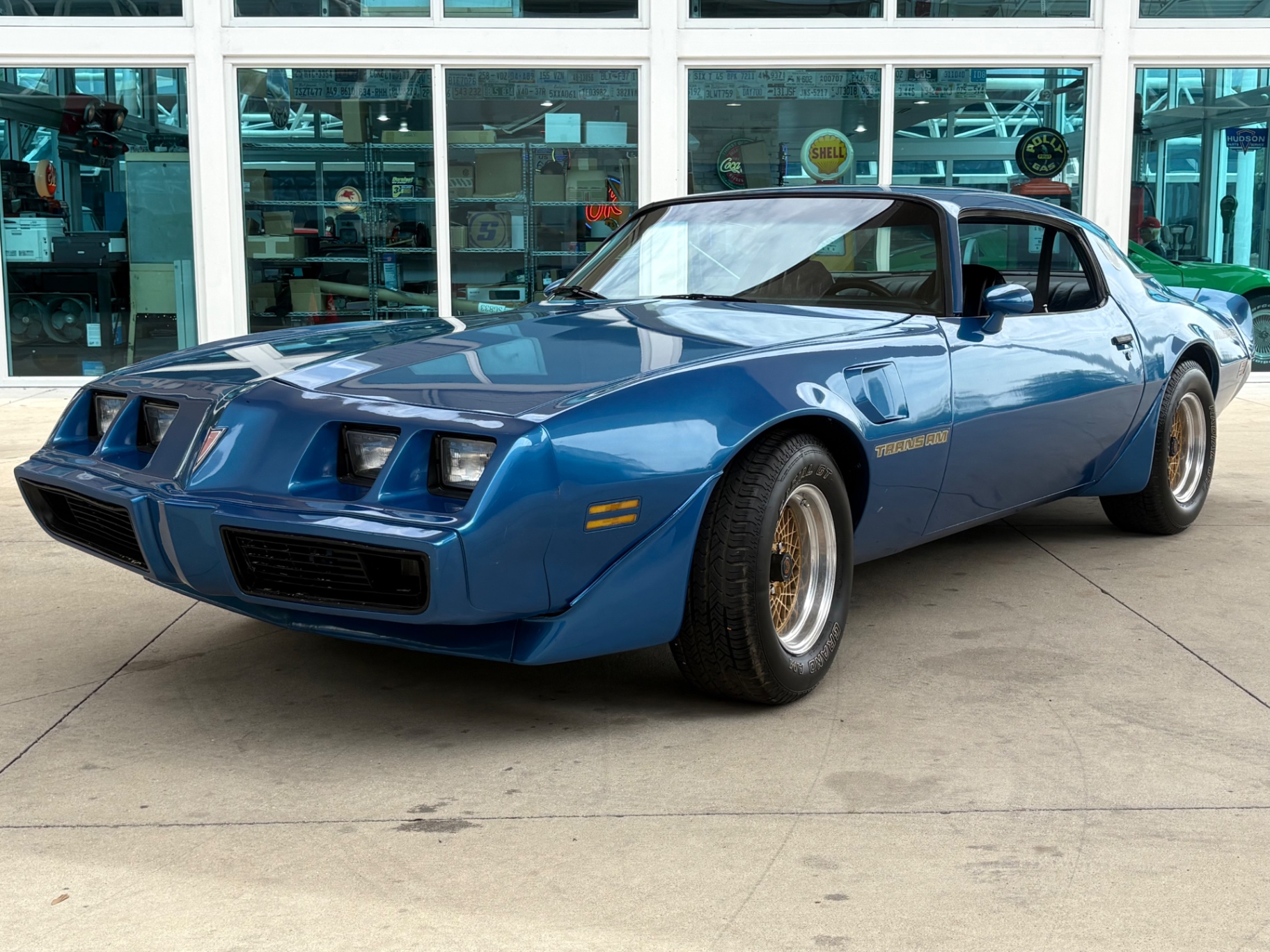
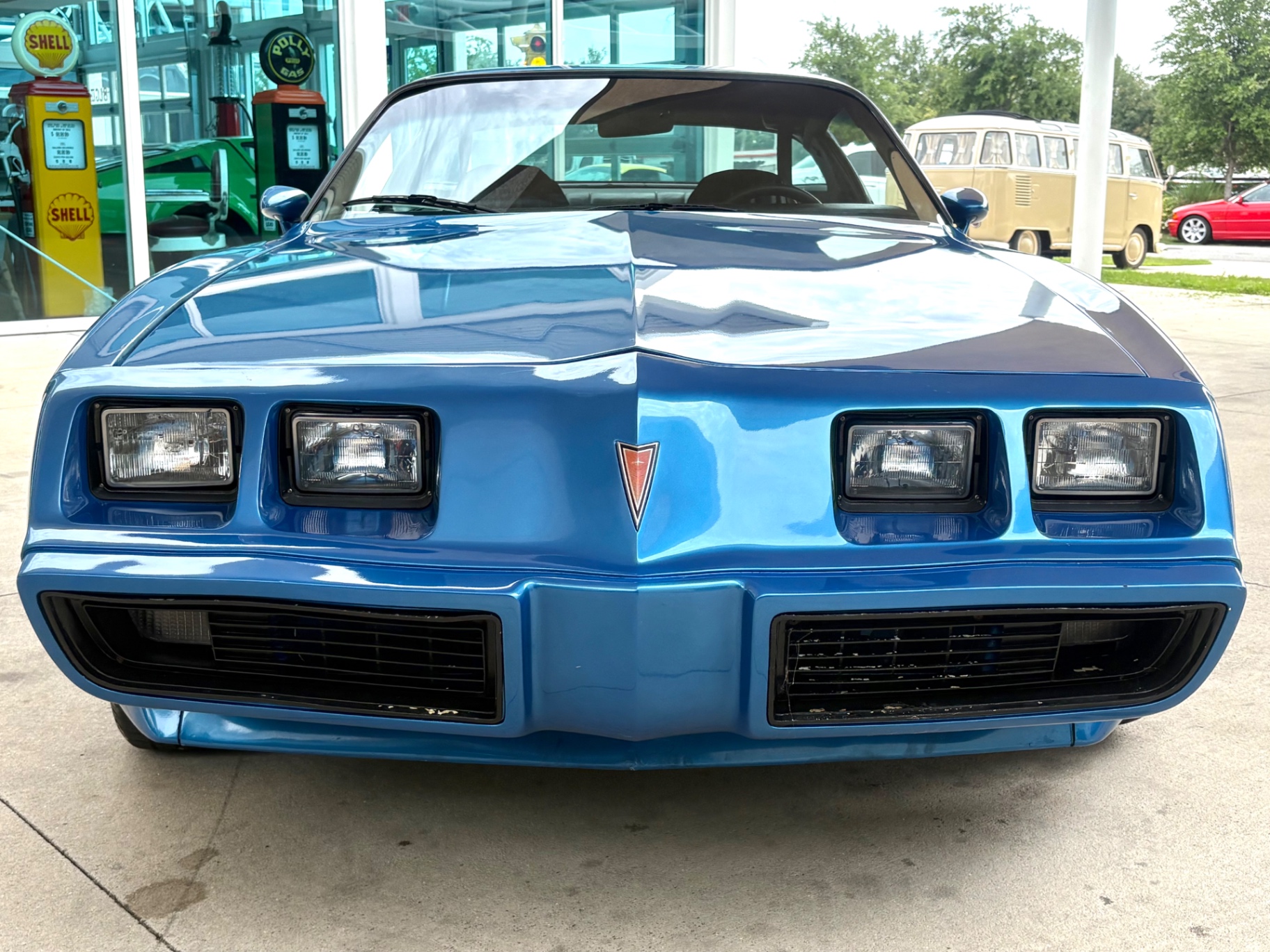
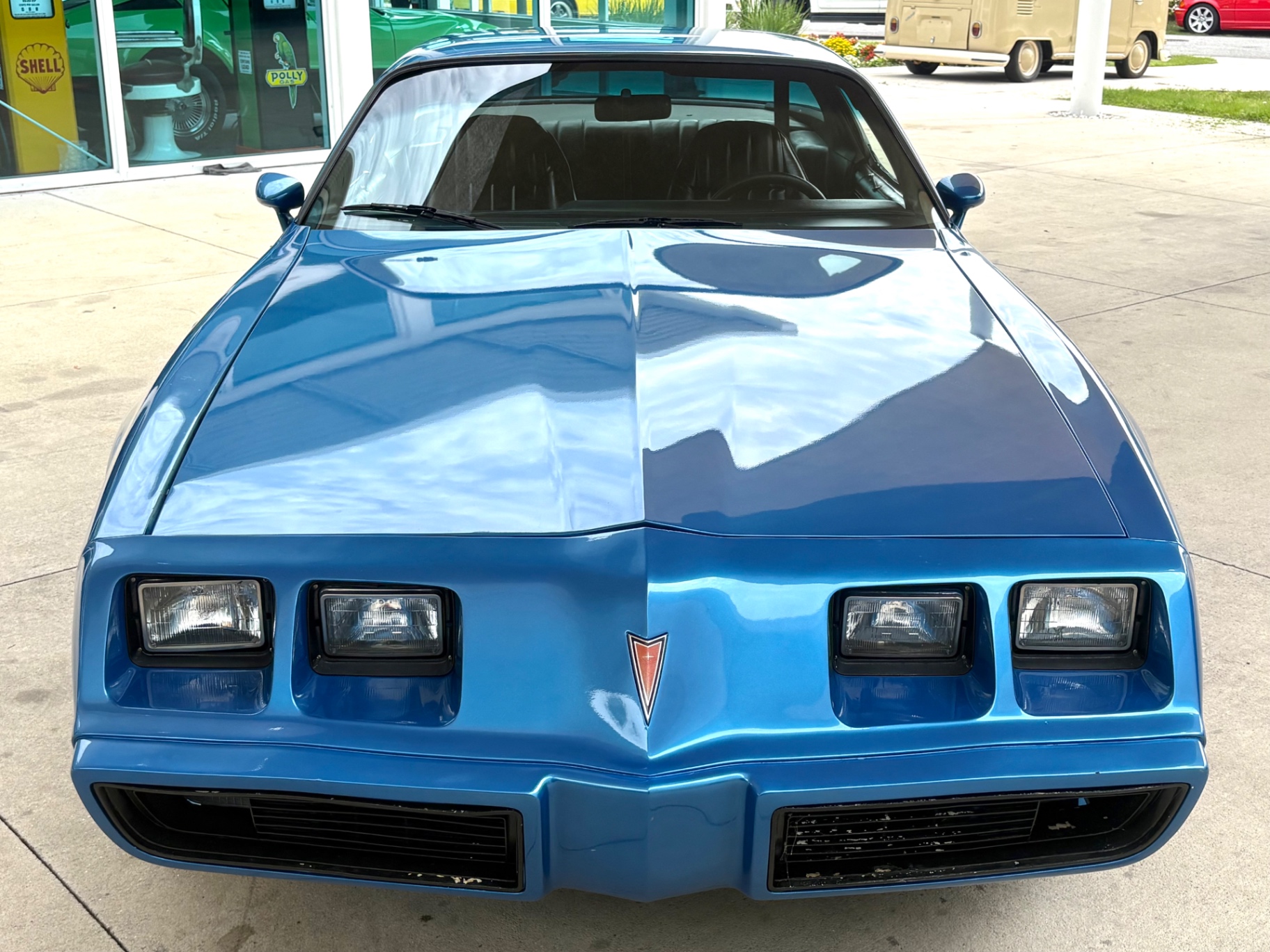
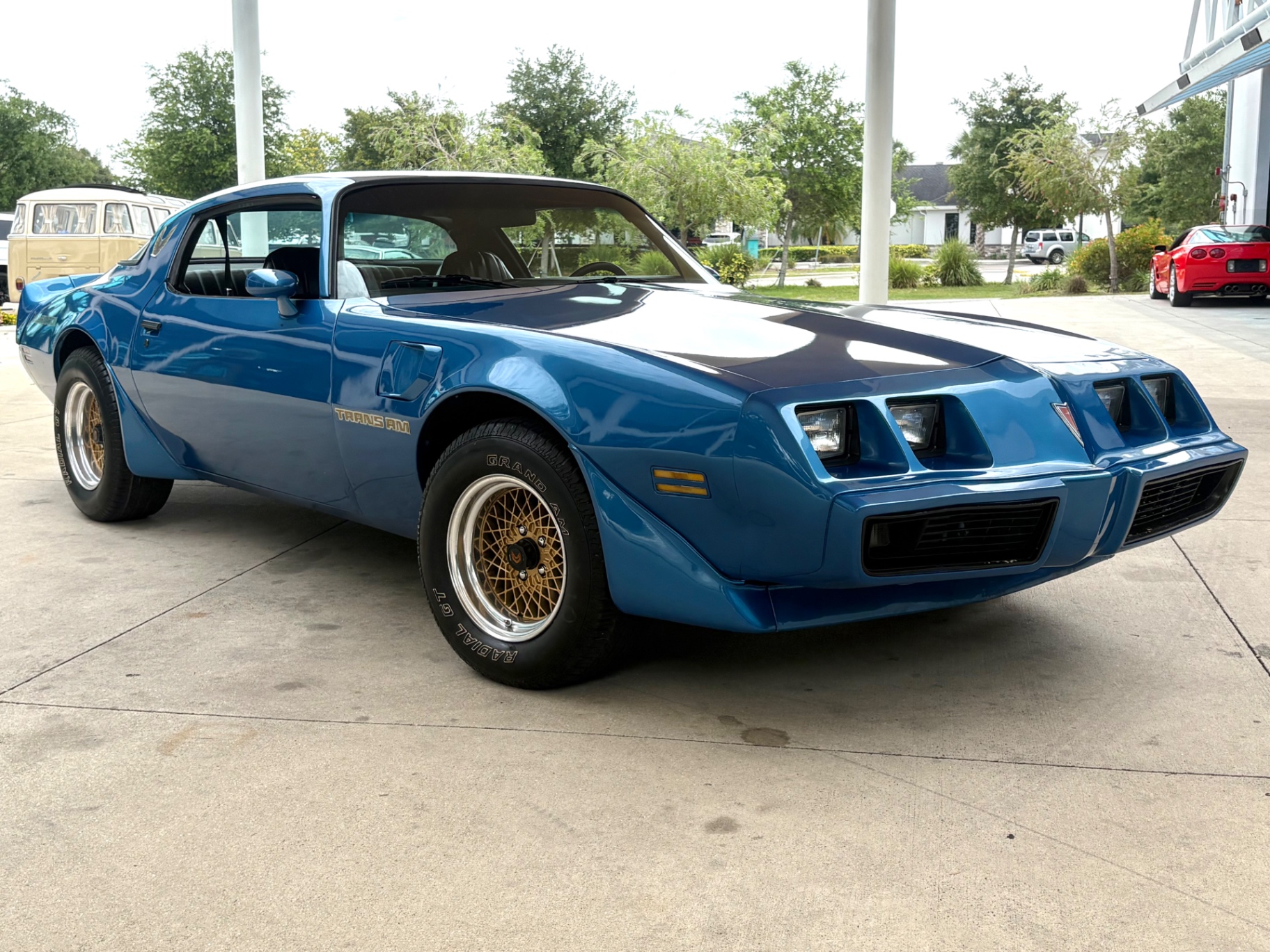
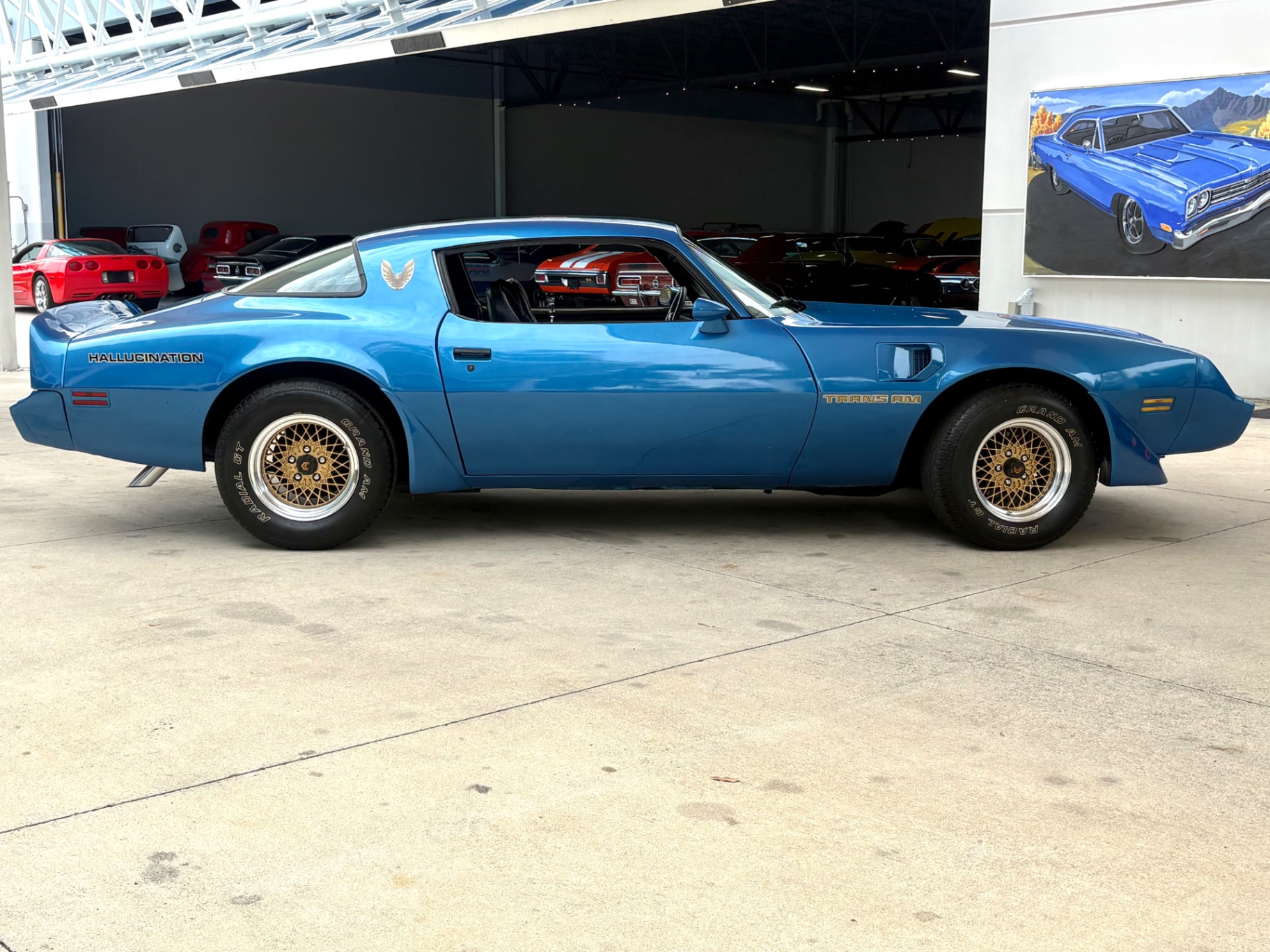
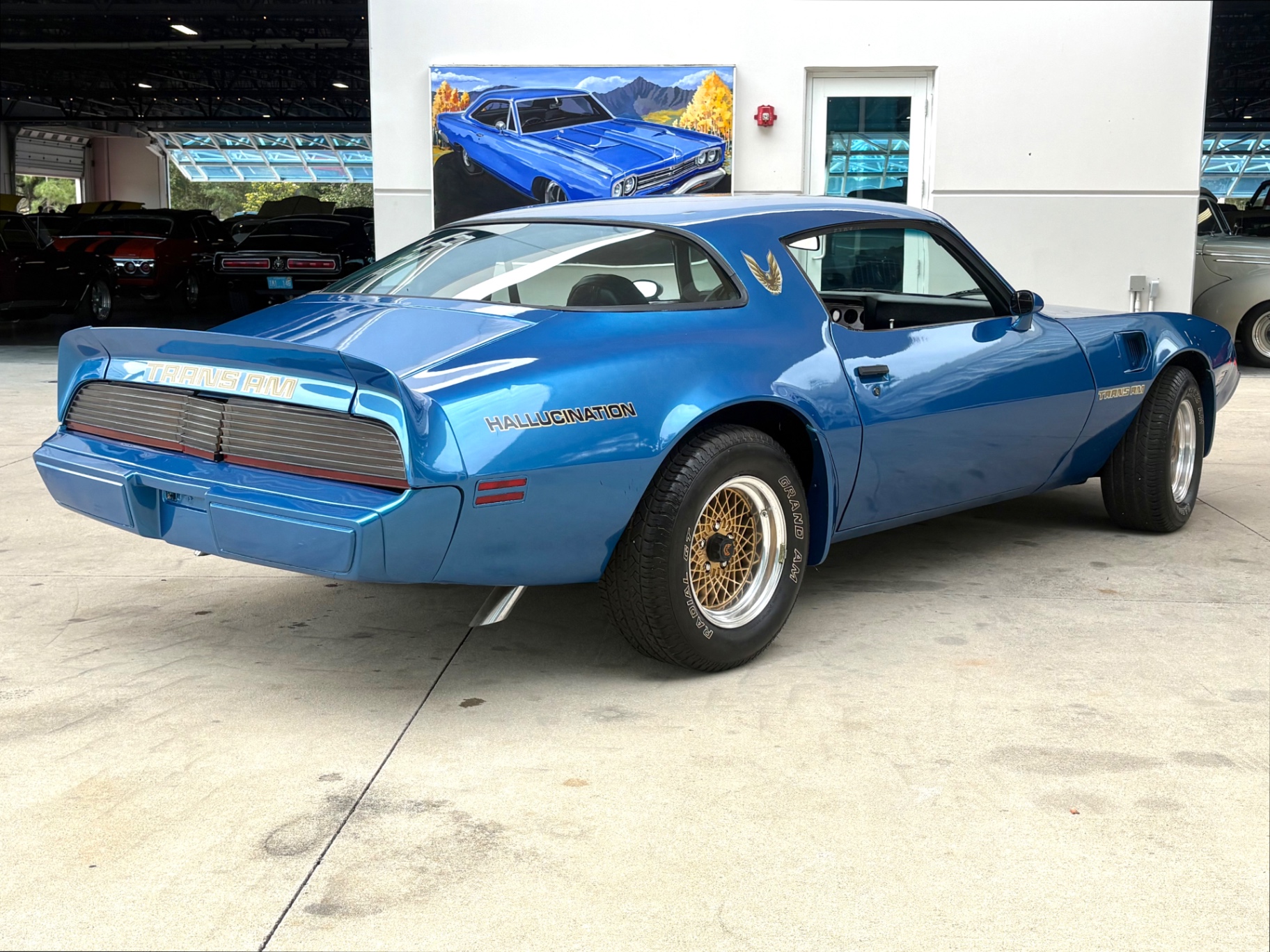
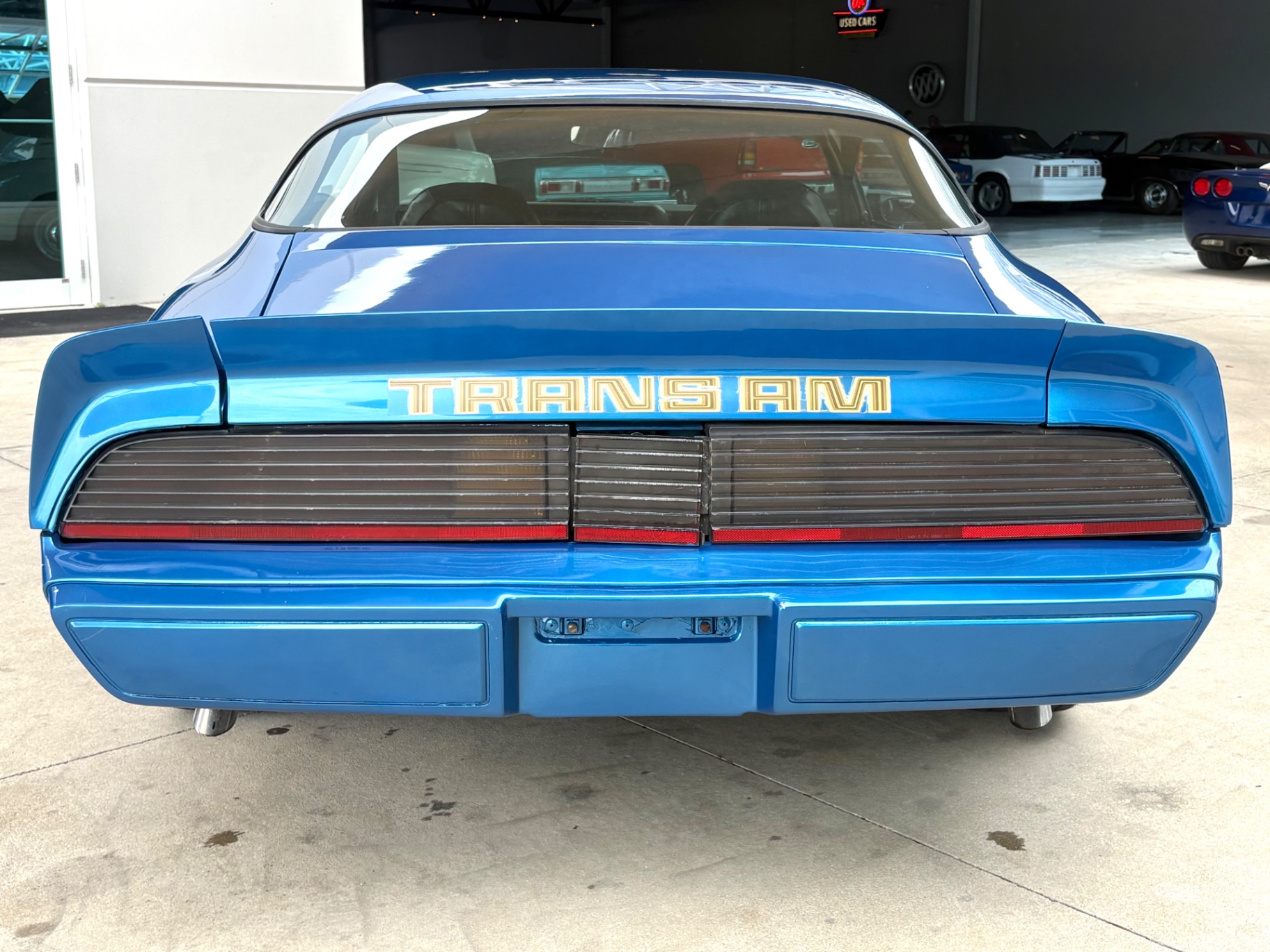
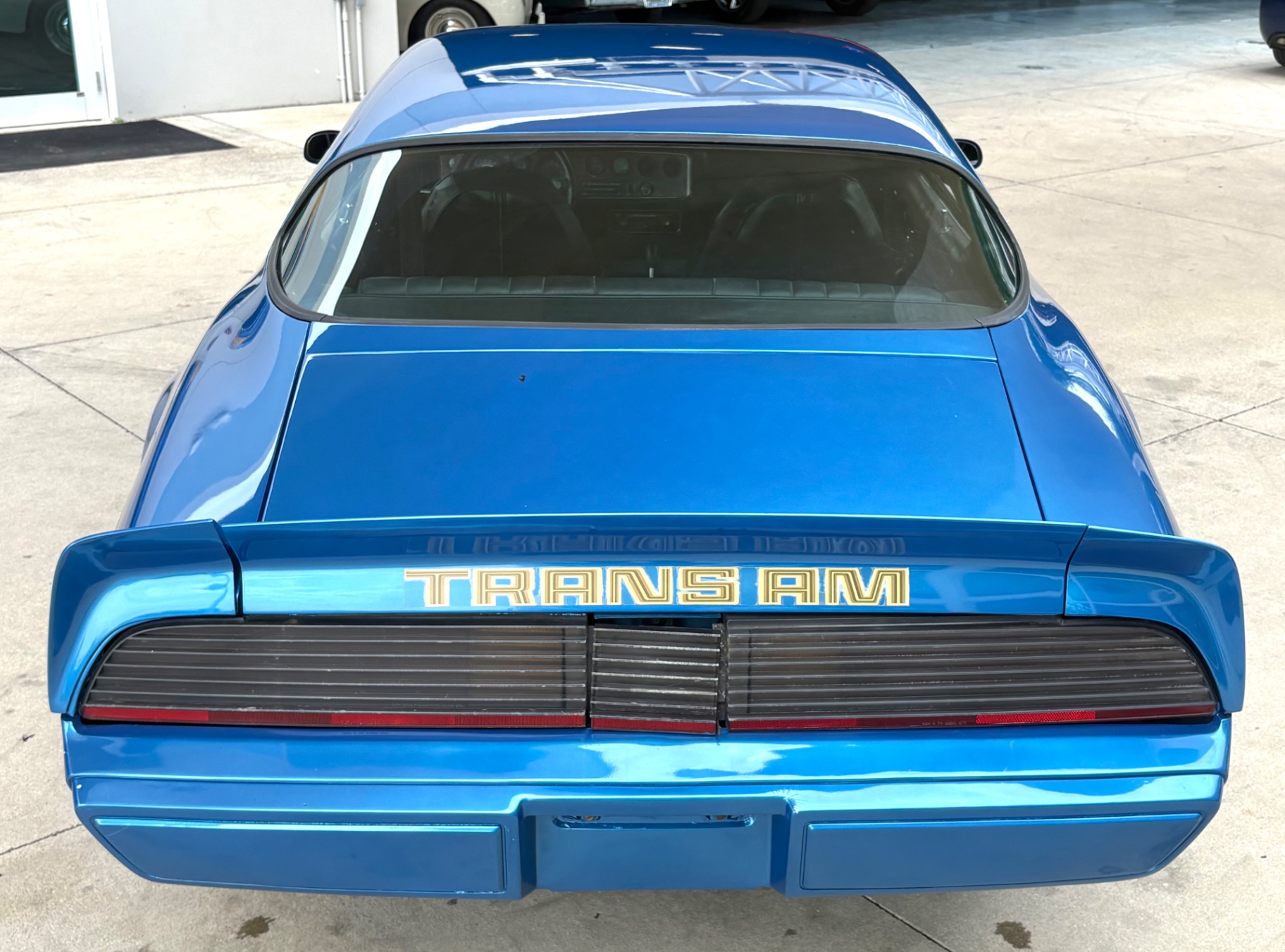
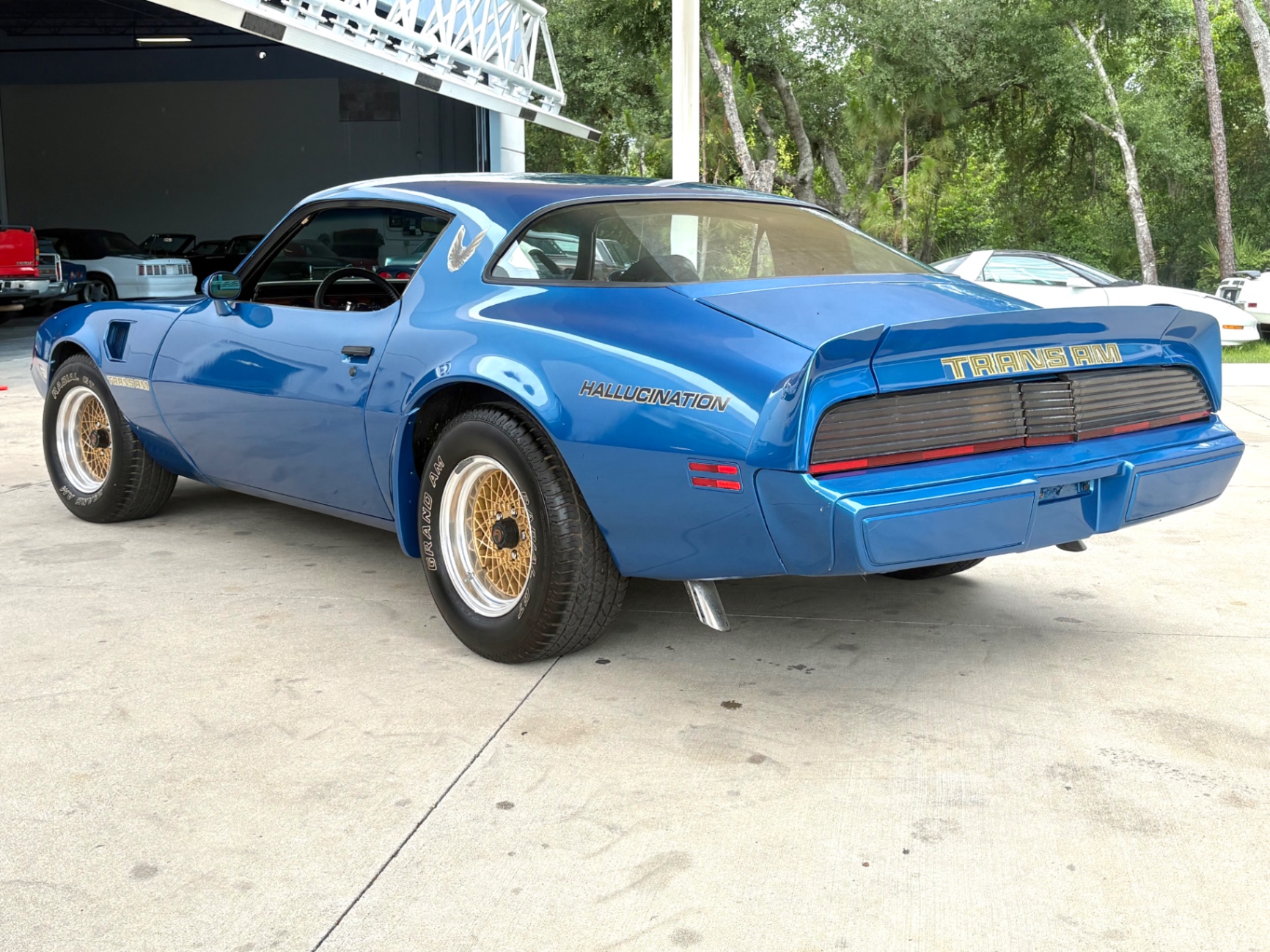
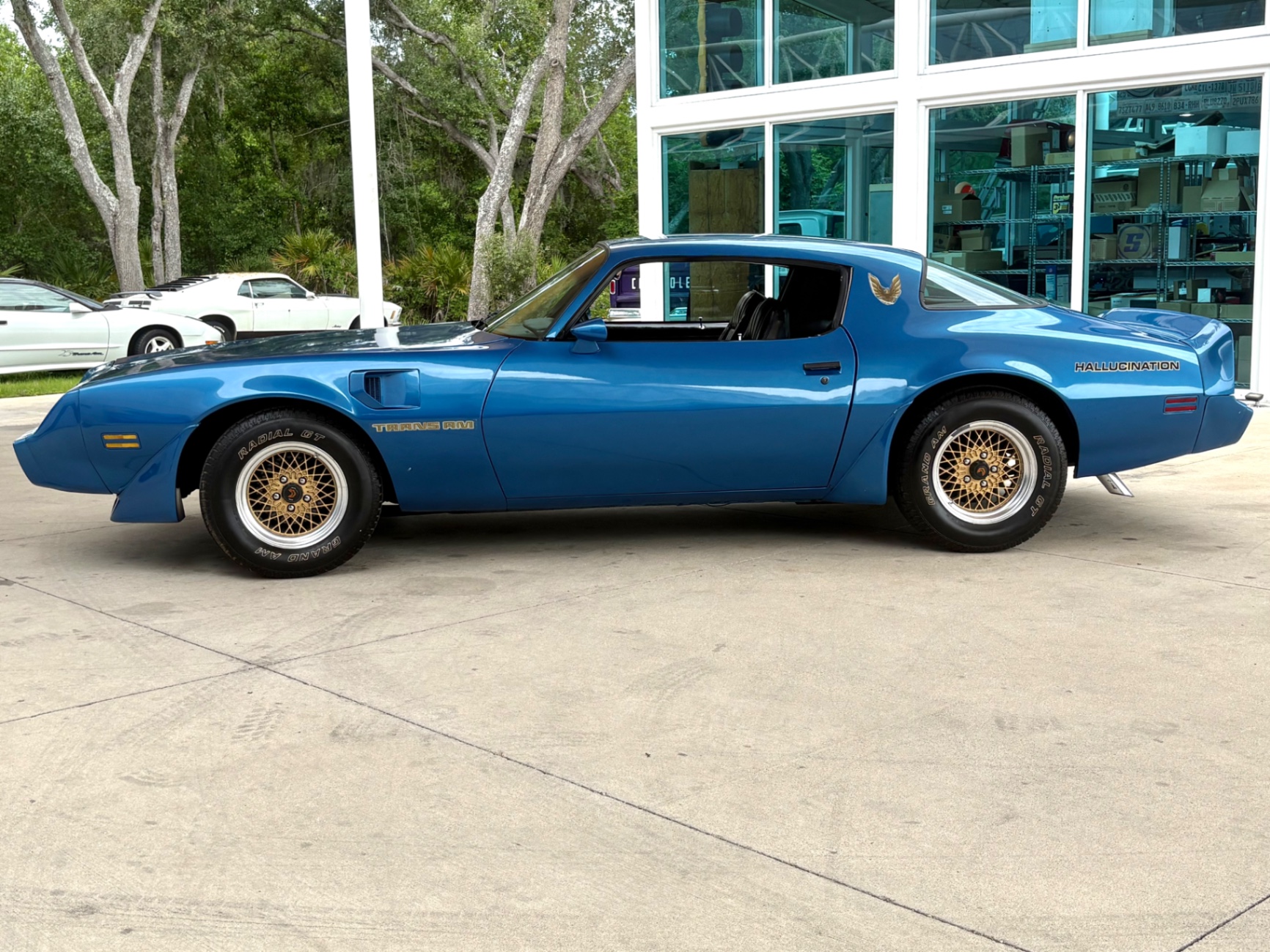
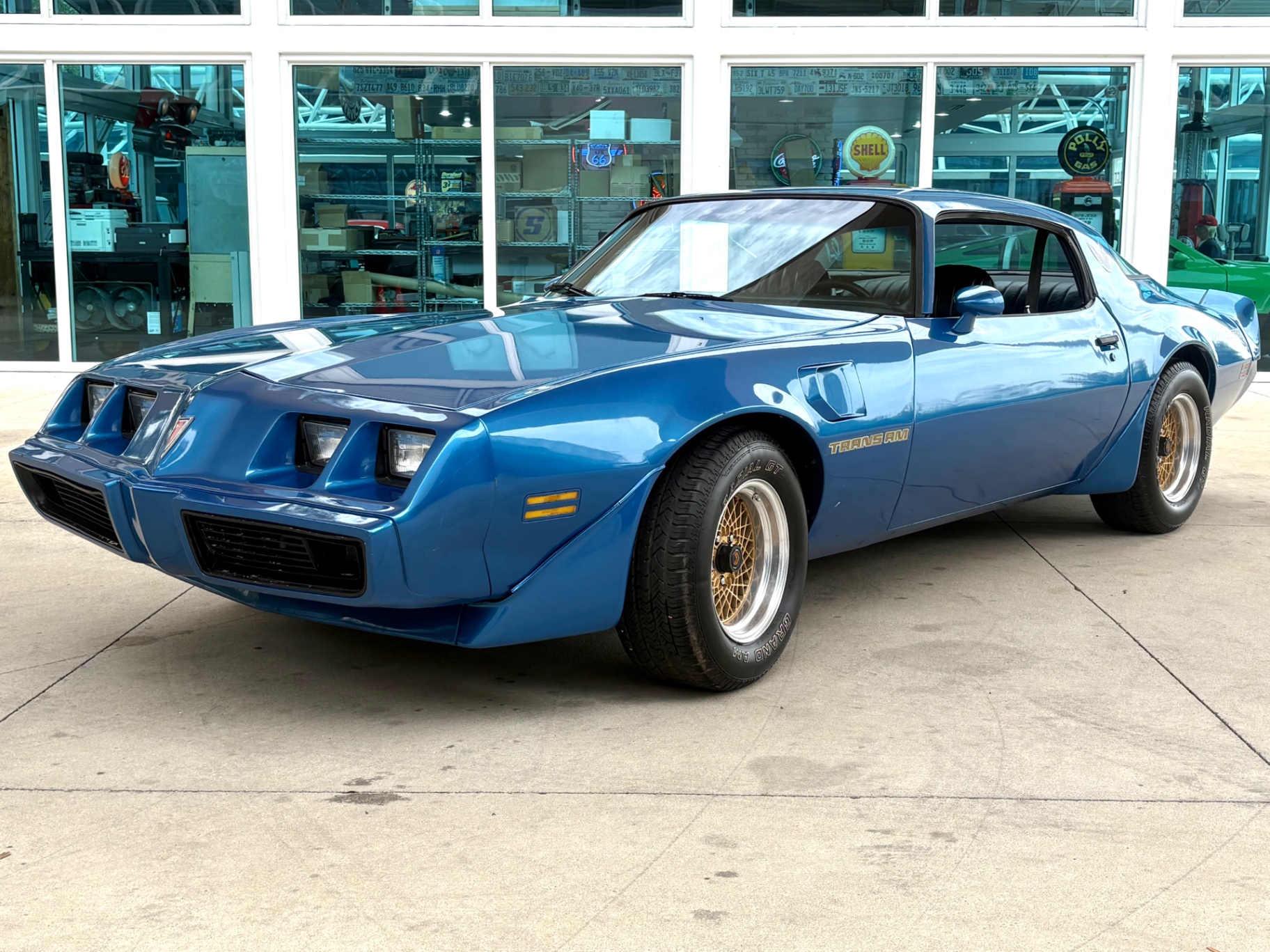
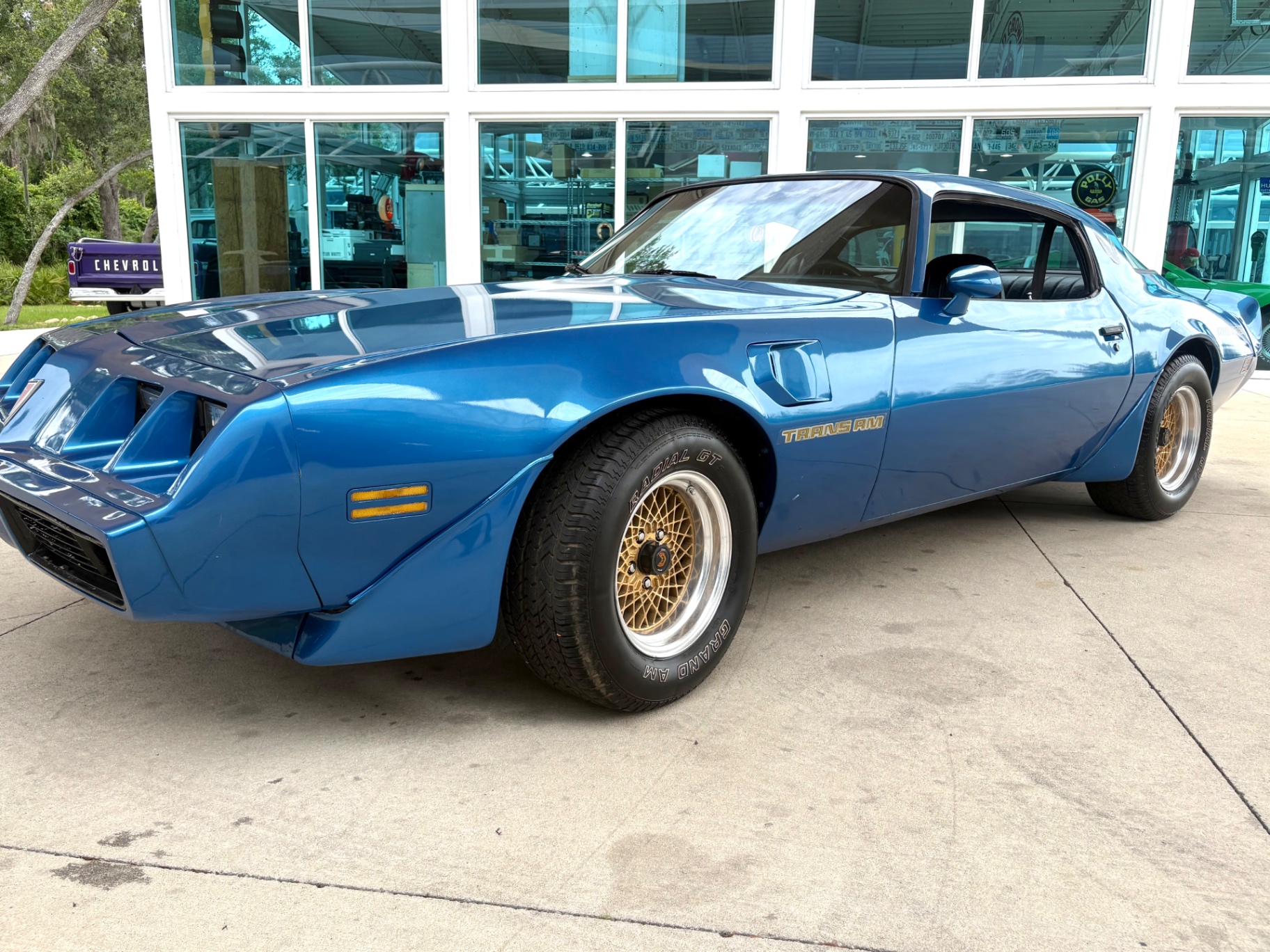
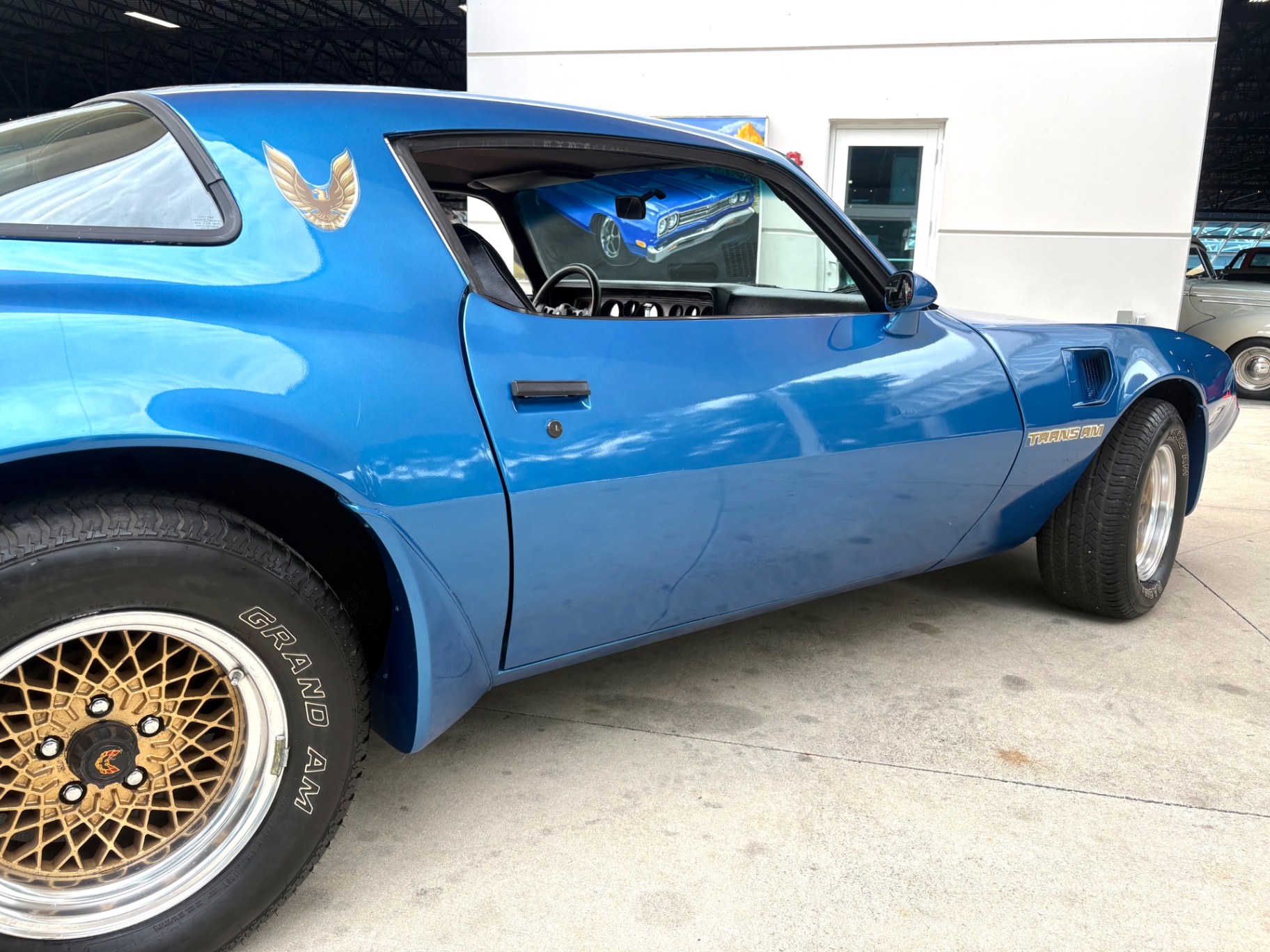
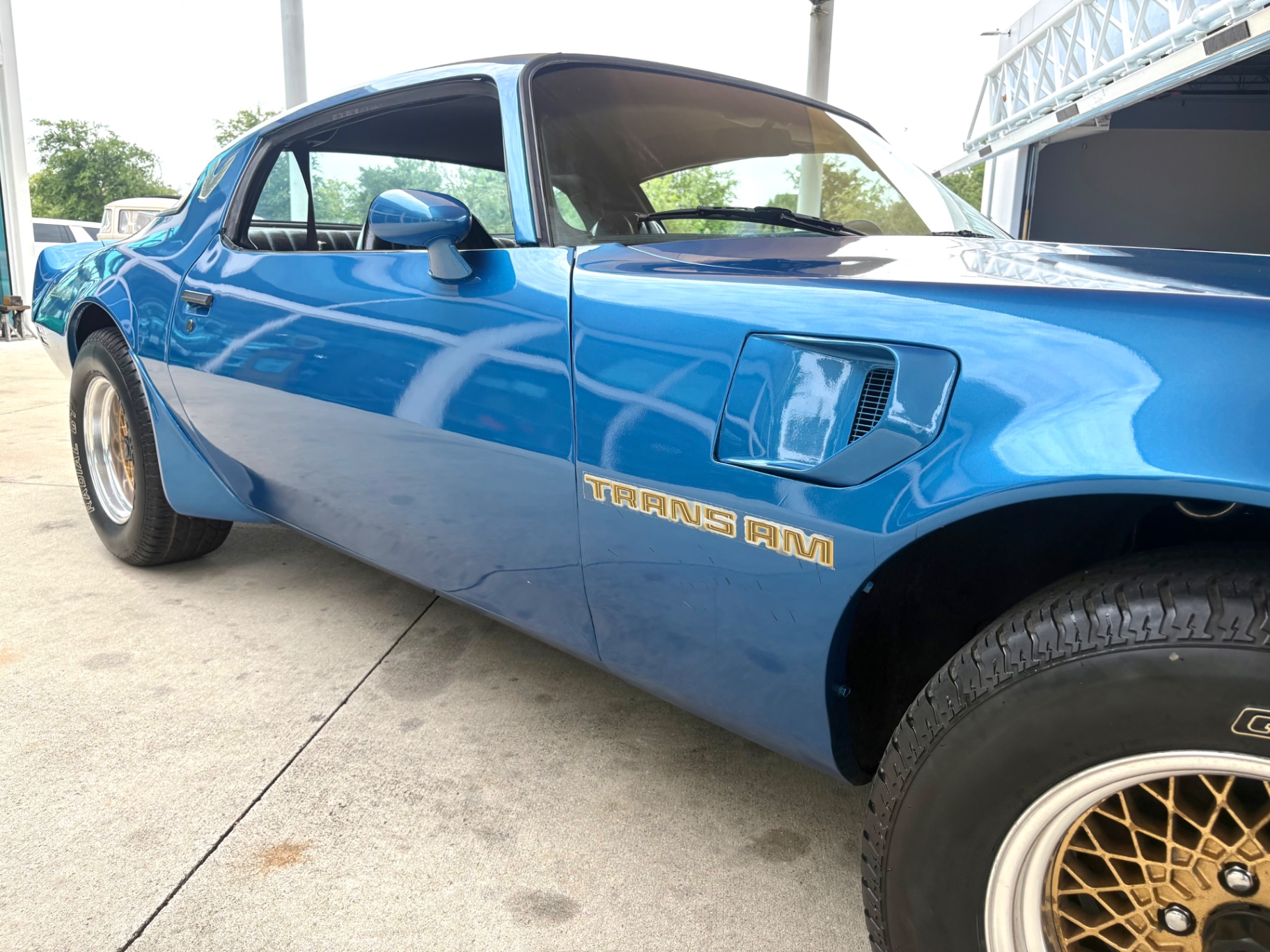
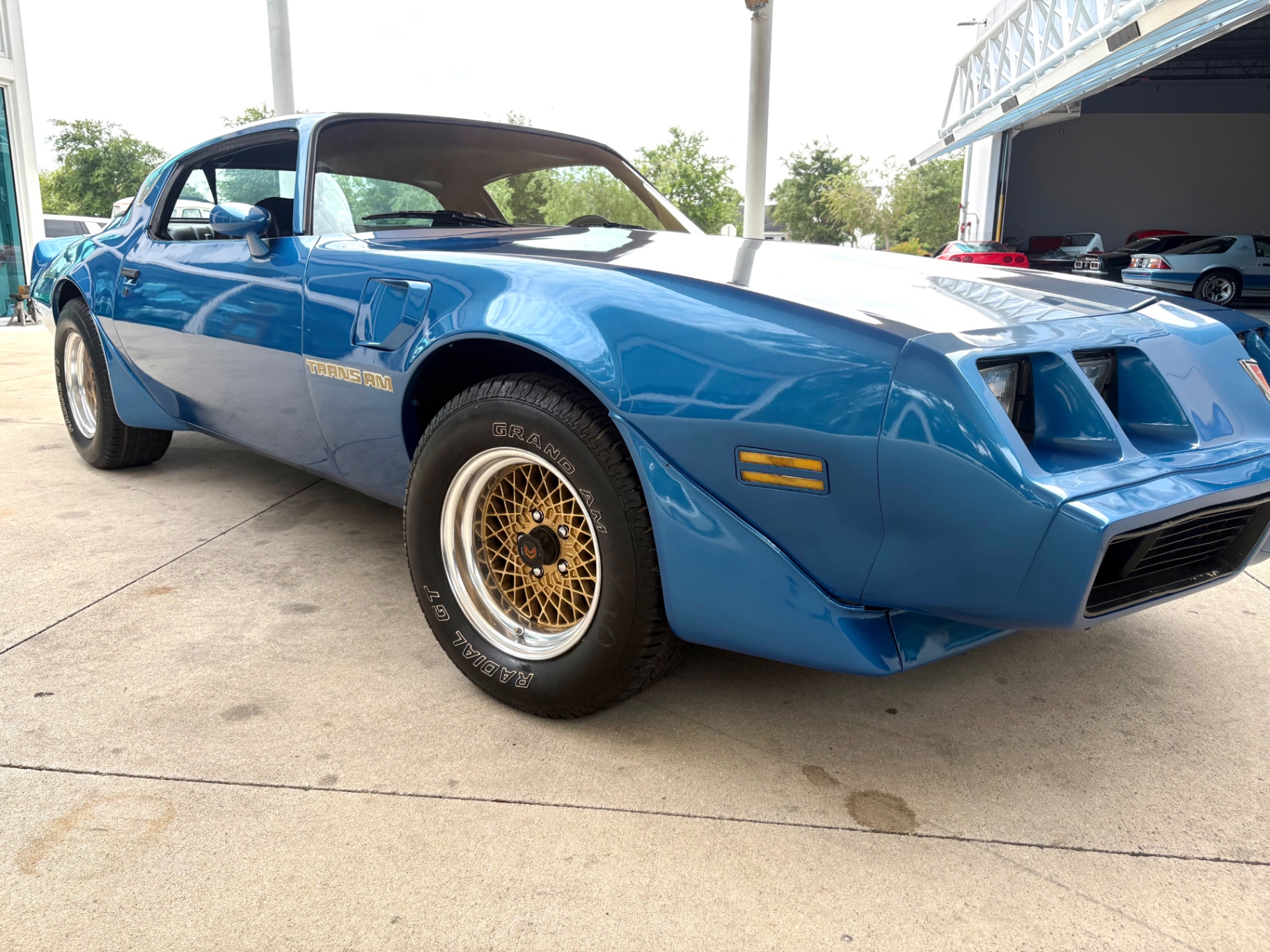
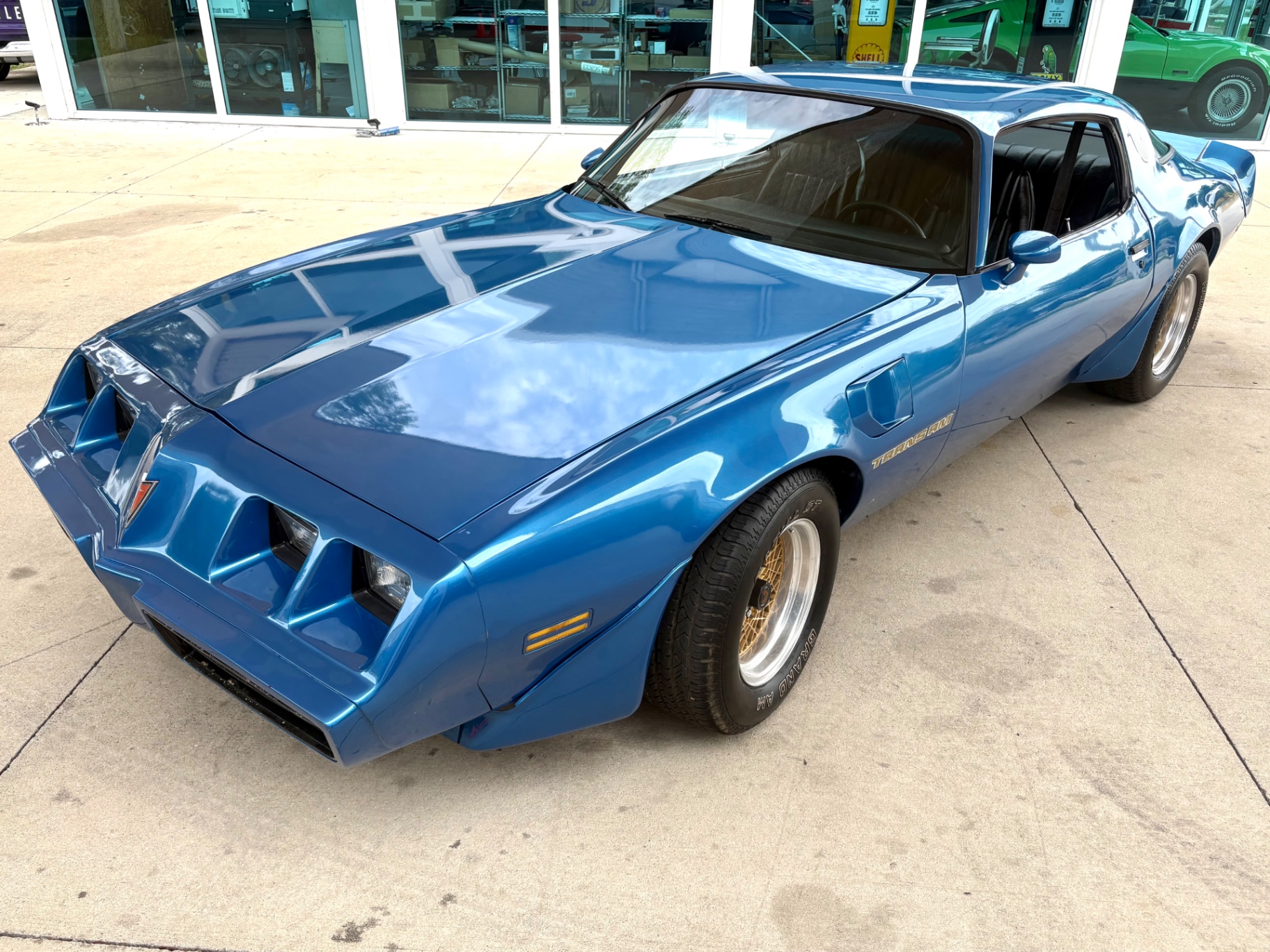
1979 Pontiac Firebird Trans Am — 6.6L 403 V8, TH400, Blue over Black
Why This Car Is Special
The 1979 Pontiac Firebird Trans Am sits at an interesting crossroads in American automotive history. By 1979, the emissions and fuel economy squeeze of the mid-1970s had already taken a real toll on performance across the industry, yet the Trans Am remained one of the last credible performance cars you could walk into a dealership and buy. Pontiac sold over 117,000 Trans Ams for the 1979 model year — a record at the time — driven in no small part by the car's cultural moment following the 1977 film Smokey and the Bandit. That popularity has since made clean, honest 1979 Trans Ams increasingly hard to find in original, driver-quality condition.
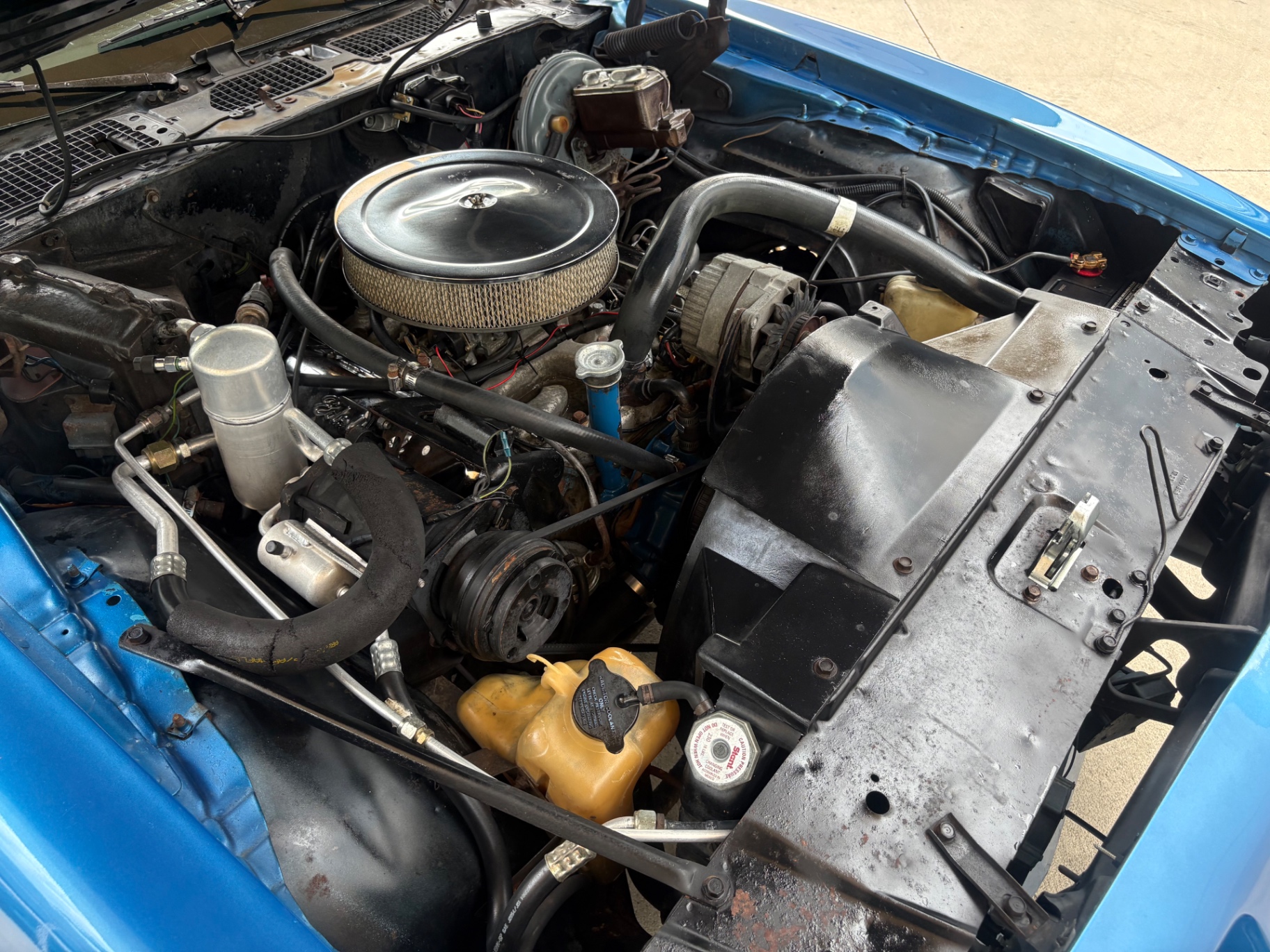
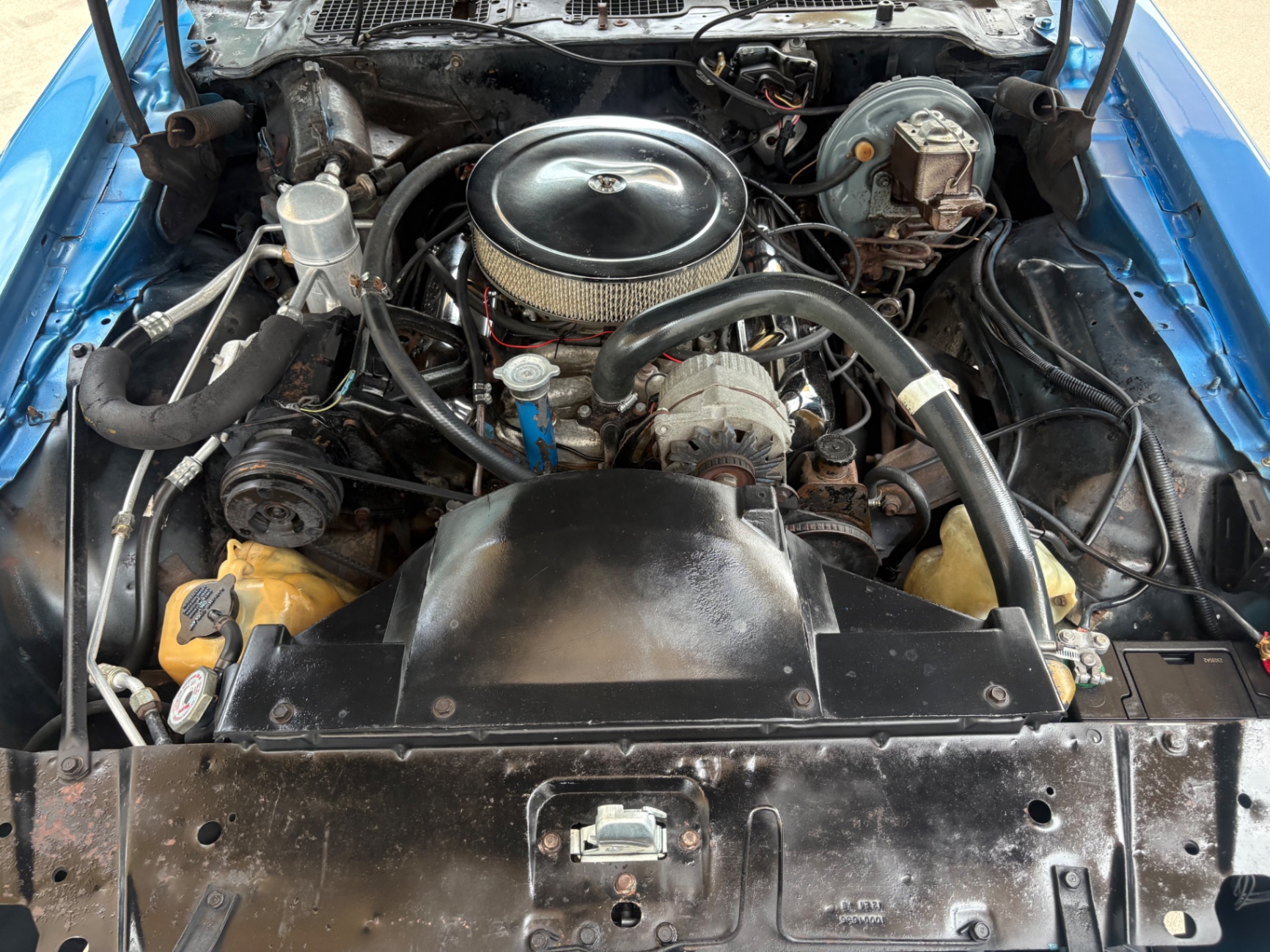
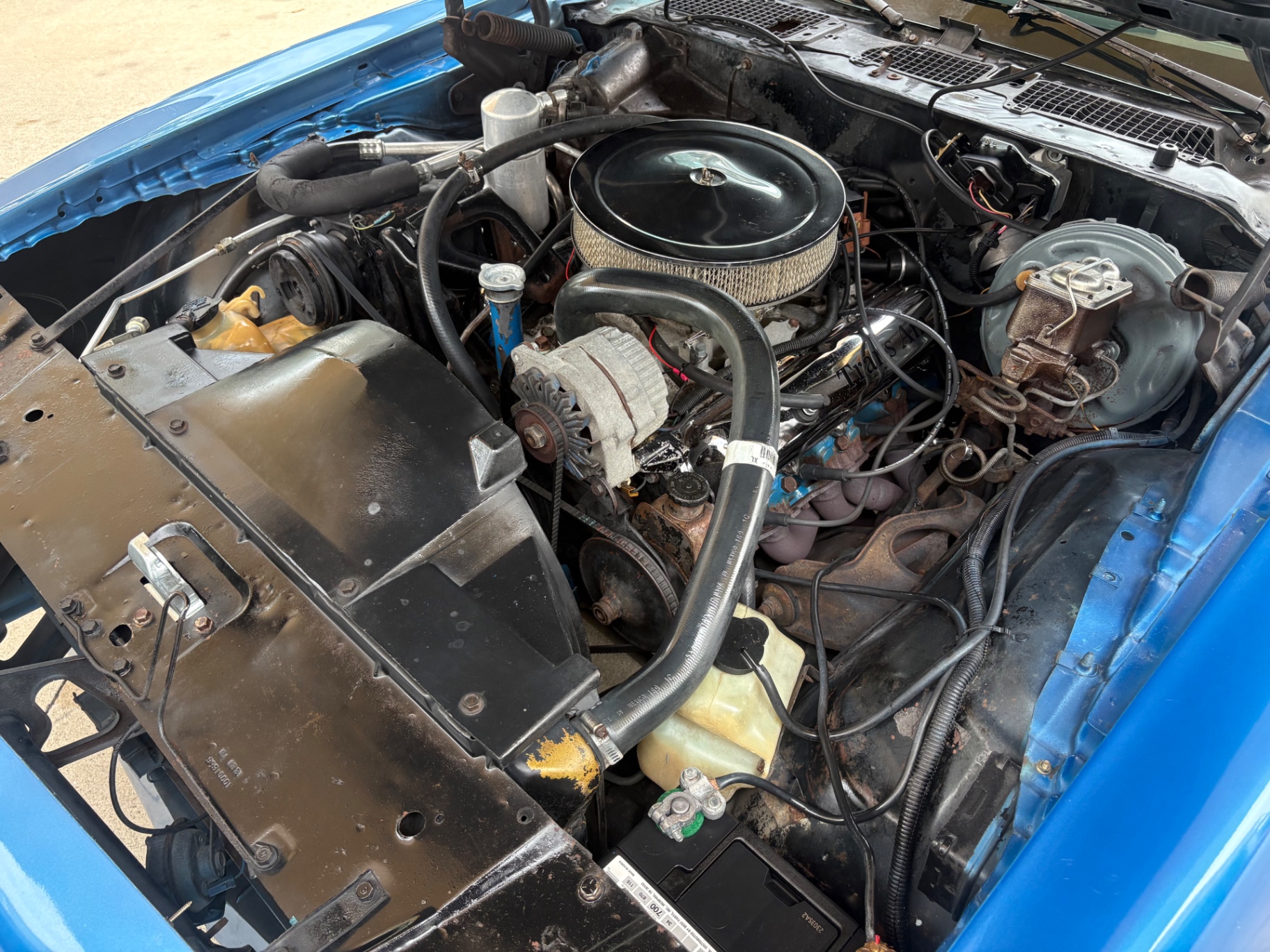
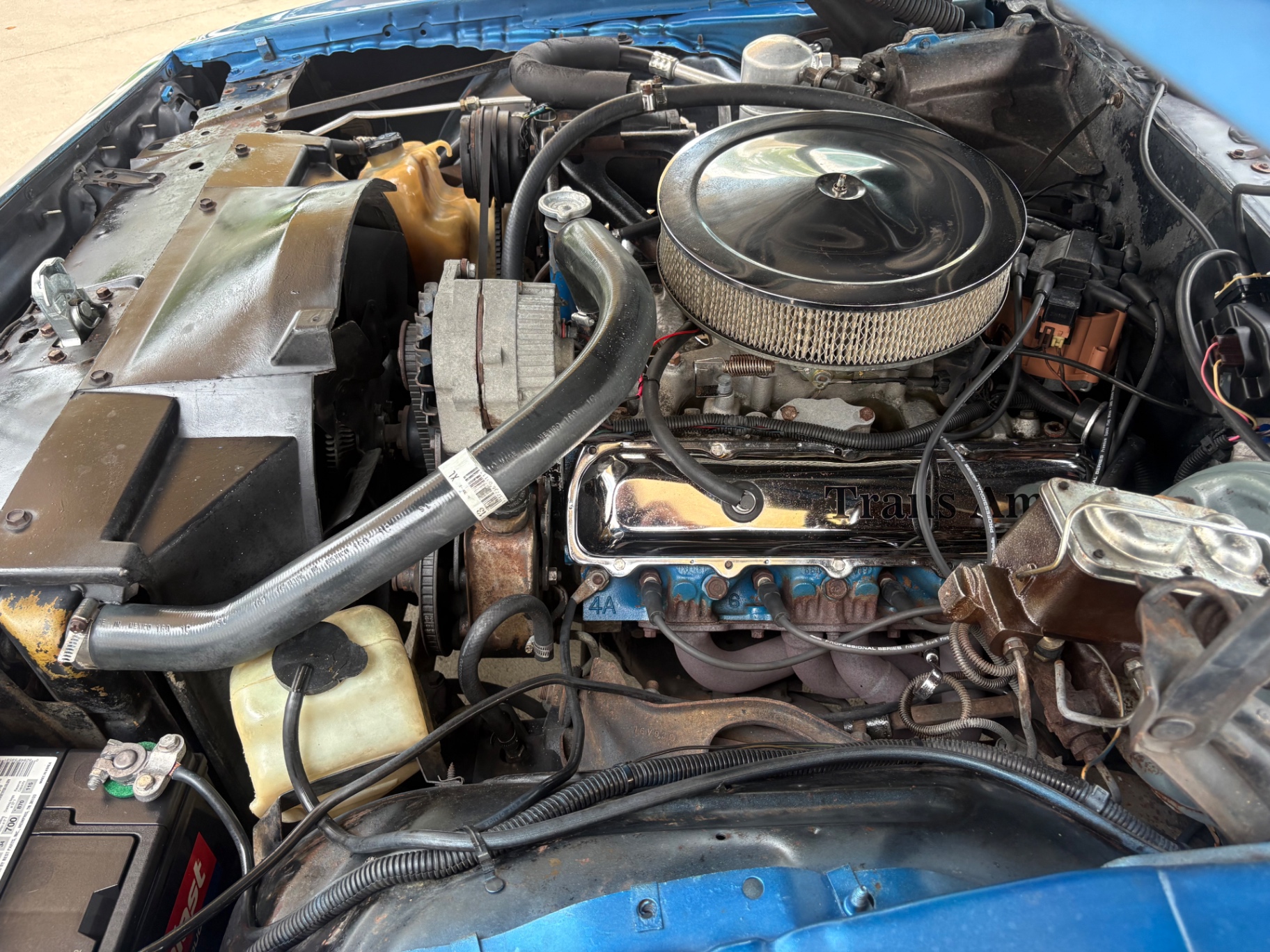
This particular 1979 Pontiac Firebird Trans Am is equipped with the 6.6-liter 403 cubic inch V8, which is a detail worth understanding. In 1979, buyers who checked the box for the 6.6L engine received one of two different motors depending on where the car was built and what transmission was ordered. Cars equipped with the TH400 three-speed automatic received the Oldsmobile-sourced 403 cubic inch V8, while the four-speed manual cars got the Pontiac-built 400. This car has the TH400, which confirms the 403 Olds mill under the hood — and that combination is actually well-regarded. The 403 is a torquey, durable engine that responds well to basic modifications and has a strong following among Firebird enthusiasts. The TH400 is one of GM's most proven automatic transmissions, known for its strength and longevity. Together they make for a straightforward, reliable drivetrain that has held up well over the decades.
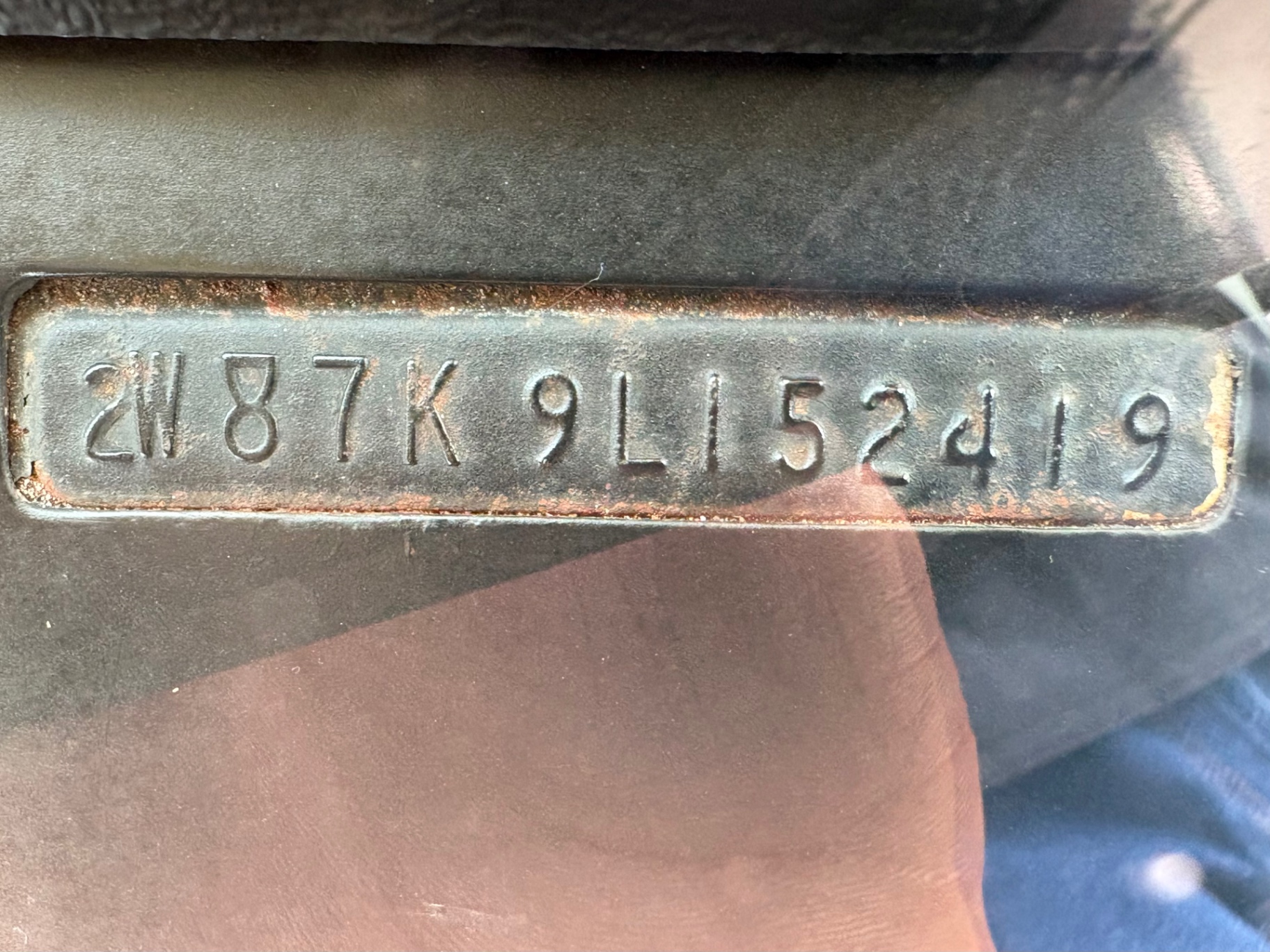
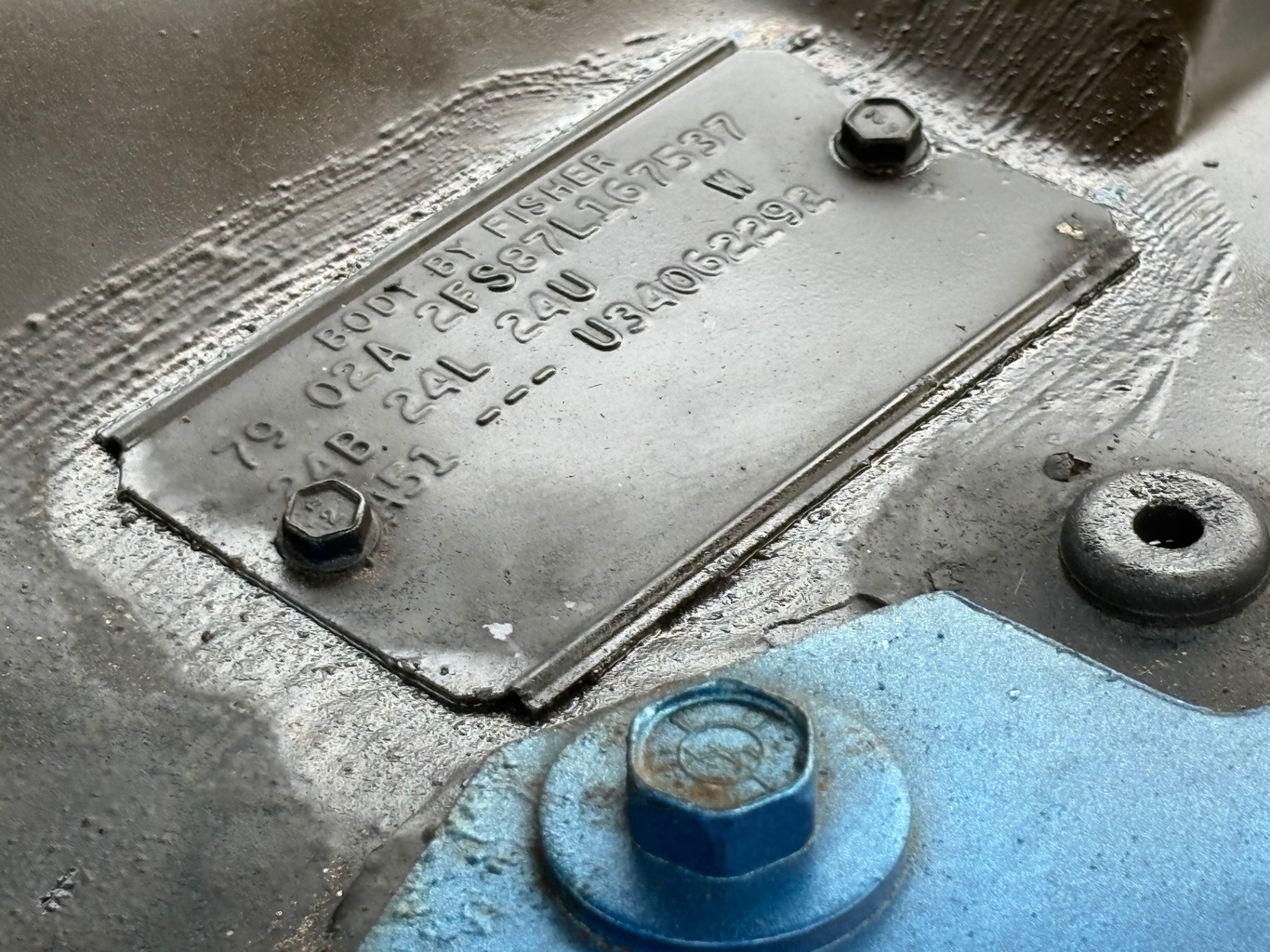
The VIN on this car decodes to a 1979 Pontiac Firebird (model code 87) built in the Norwood, Ohio assembly plant, with the 6.6L V8 engine designation confirmed in the powertrain position. Norwood-built Firebirds are well documented among collectors and the plant was one of GM's primary F-body production facilities throughout the second-generation run.
Features List
- 6.6L 403 cubic inch Oldsmobile V8 - TH400 3-Speed Automatic Transmission - Trans Am Badging - Gold Snowflake Wheels - Dashboard Tachometer - Center Console - Factory Bucket Seats - Factory Air Conditioning - Power Steering - Woodgrain Dash Trim - Firebird Door Emblems - Dual Exhaust - Black Vinyl Top - Black Vinyl Interior
Mechanical
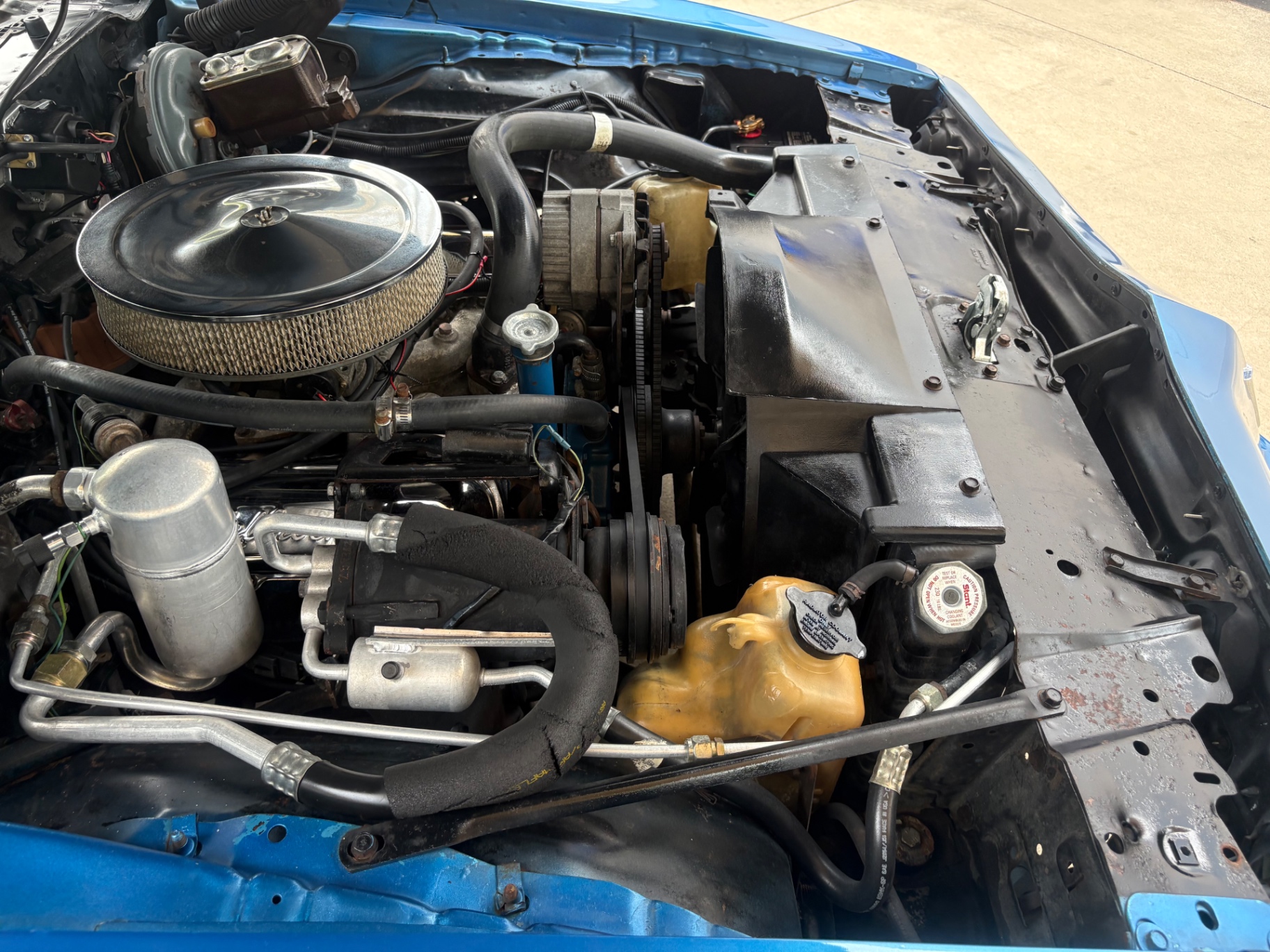
Under the hood, the 403 cubic inch V8 is a familiar sight to anyone who spent time around late-1970s GM performance cars. Oldsmobile developed this engine as a displacement-efficient way to maintain torque output while meeting tightening federal emissions standards. In Trans Am trim, it was rated at 185 horsepower in 1979 — a number that looks modest on paper but translates into a car that moves with authority in real-world driving, especially given the 403's strong low-end torque characteristics. The aftermarket air cleaner visible in the engine bay photographs is a common and functional upgrade on these cars, improving airflow over the stock unit.
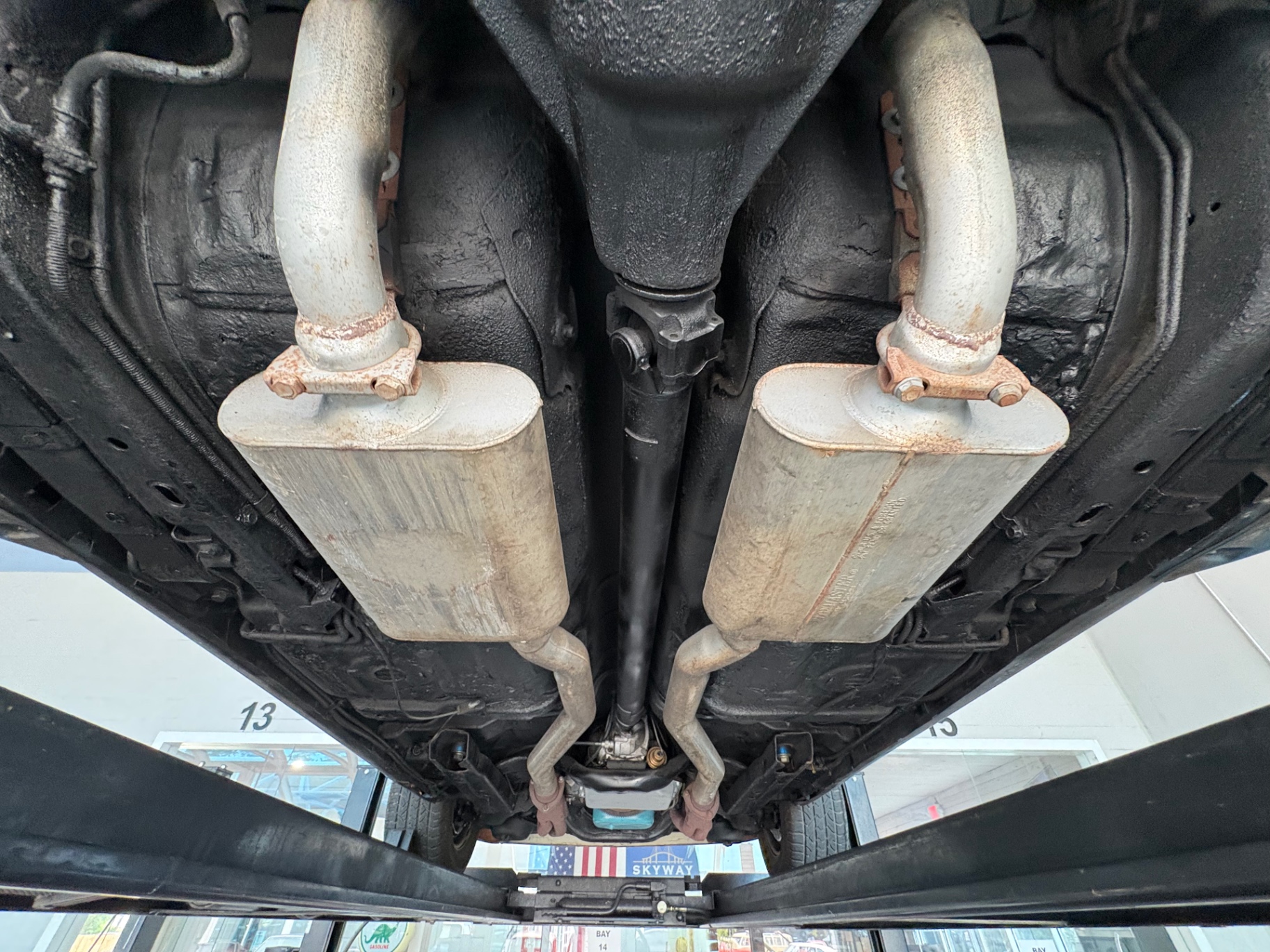
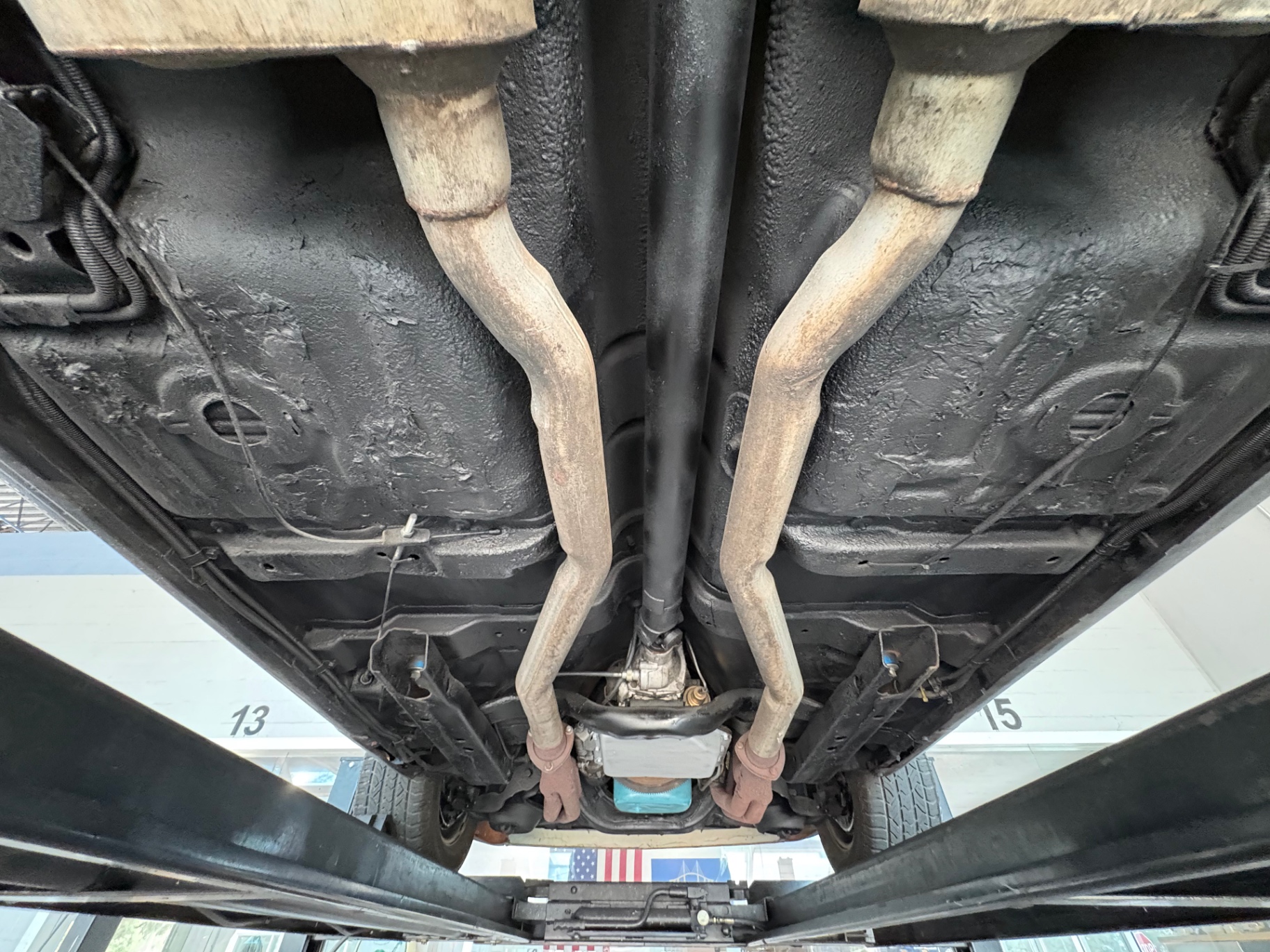
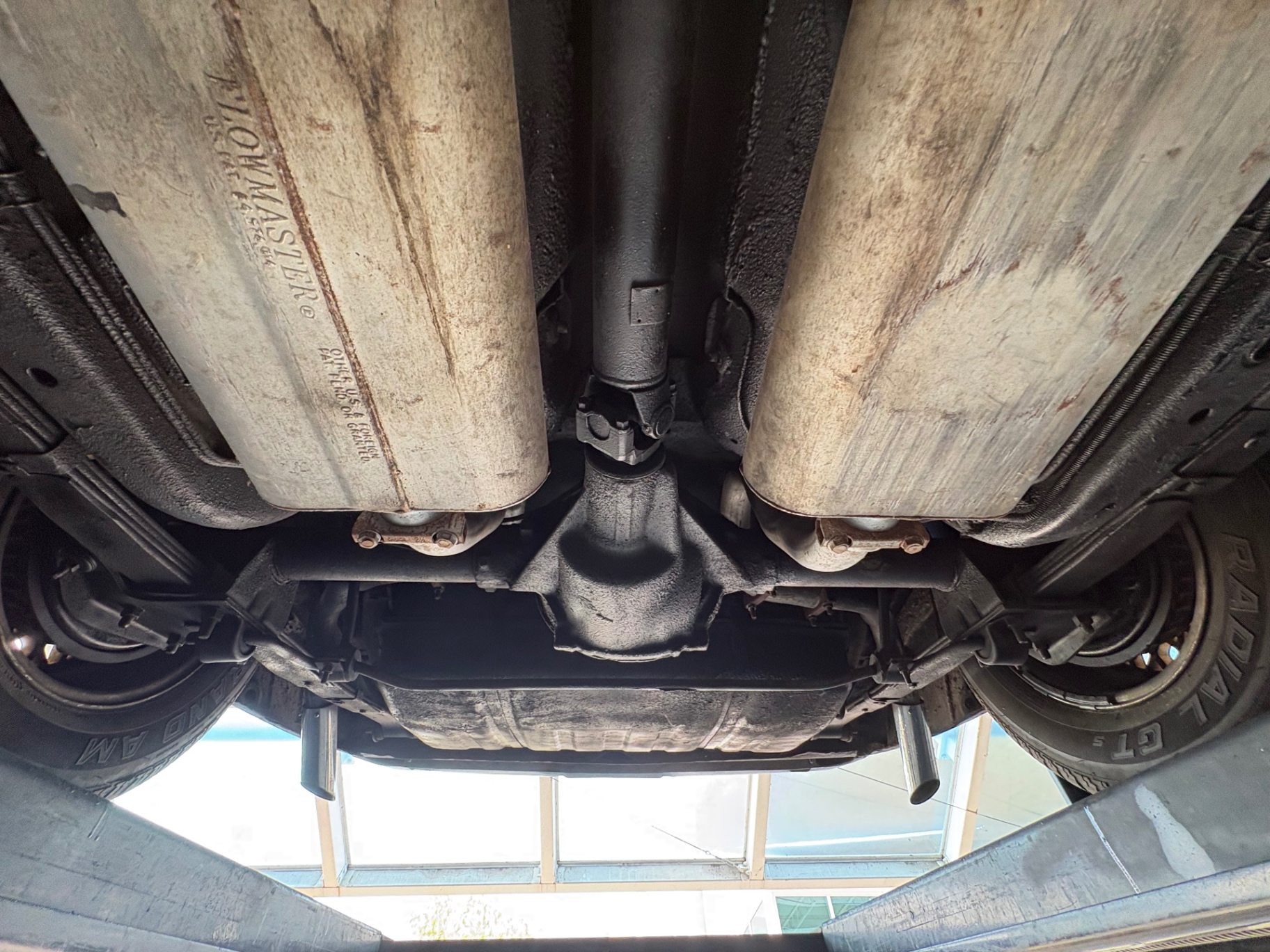
The TH400 three-speed automatic was one of the most robust transmissions GM produced during this era. Originally developed in the mid-1960s, it was used across a wide range of GM vehicles through the end of the 1970s and is well-supported by the rebuilding and parts community today. Power steering rounds out the driving experience, keeping effort manageable while maintaining enough road feel that the car stays engaging on longer drives. The dual exhaust setup gives the 403 a proper exhaust note and helps the engine breathe more freely than the single-exit configurations used on lower trim Firebirds.
Interior
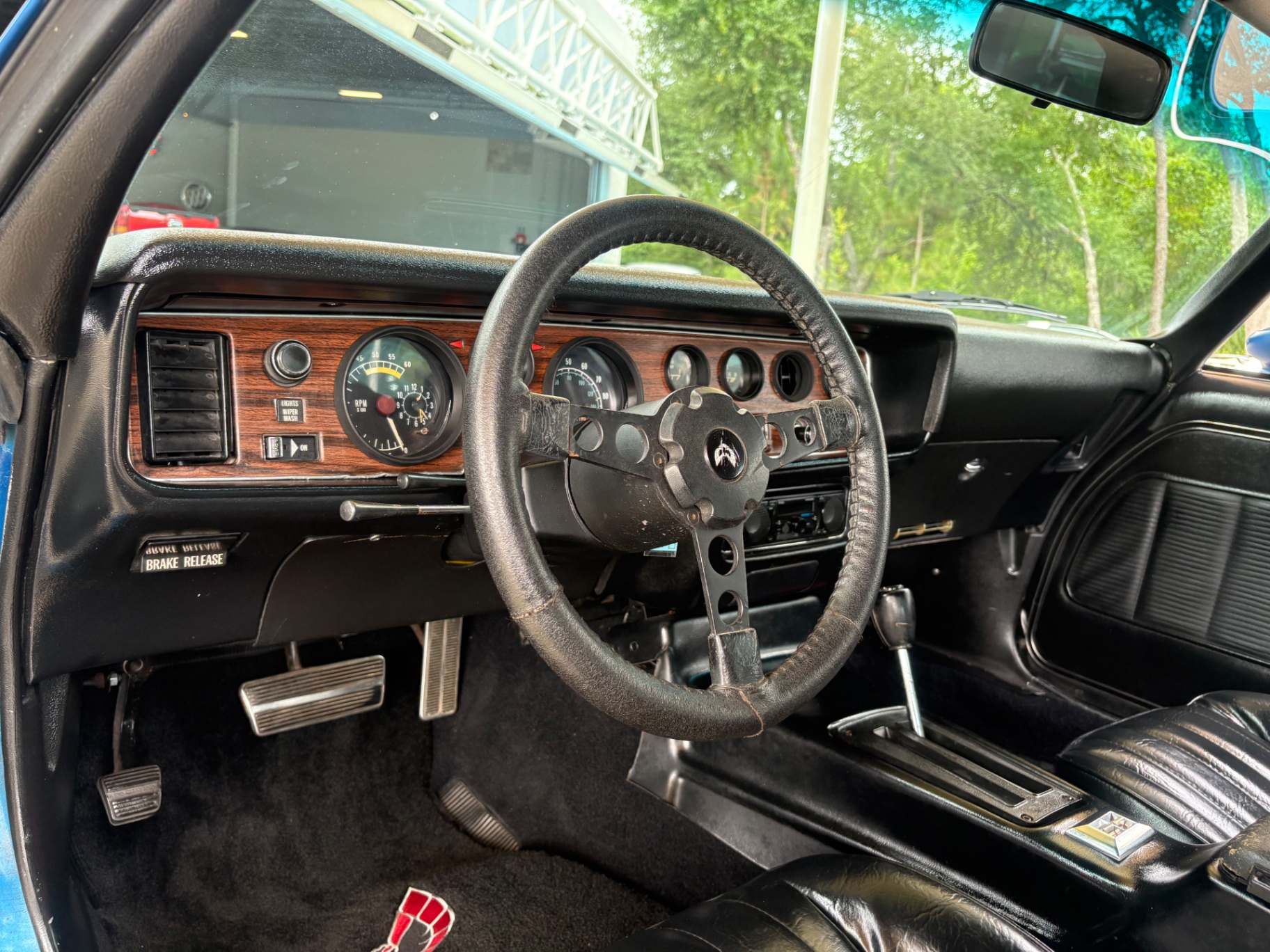
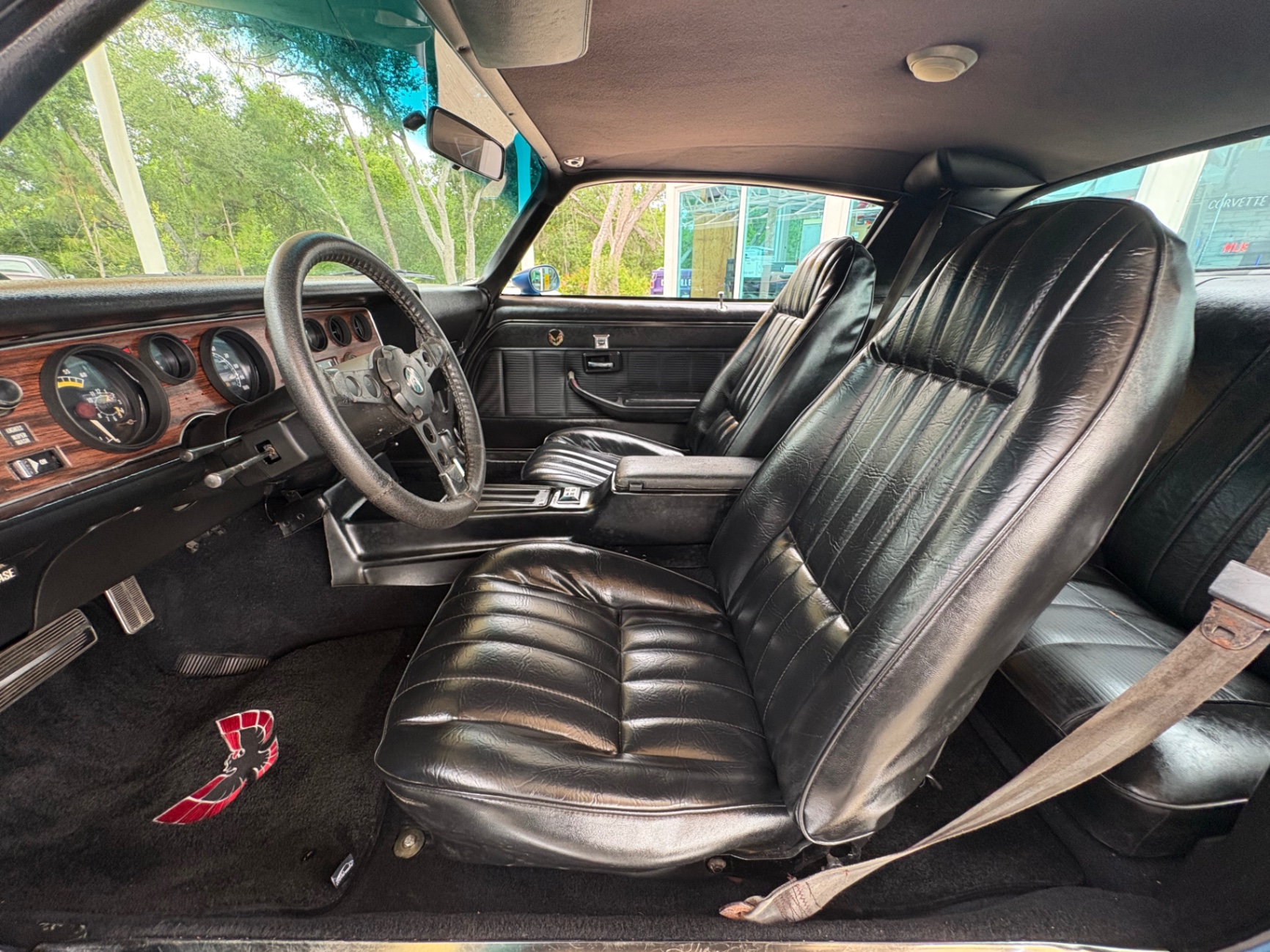
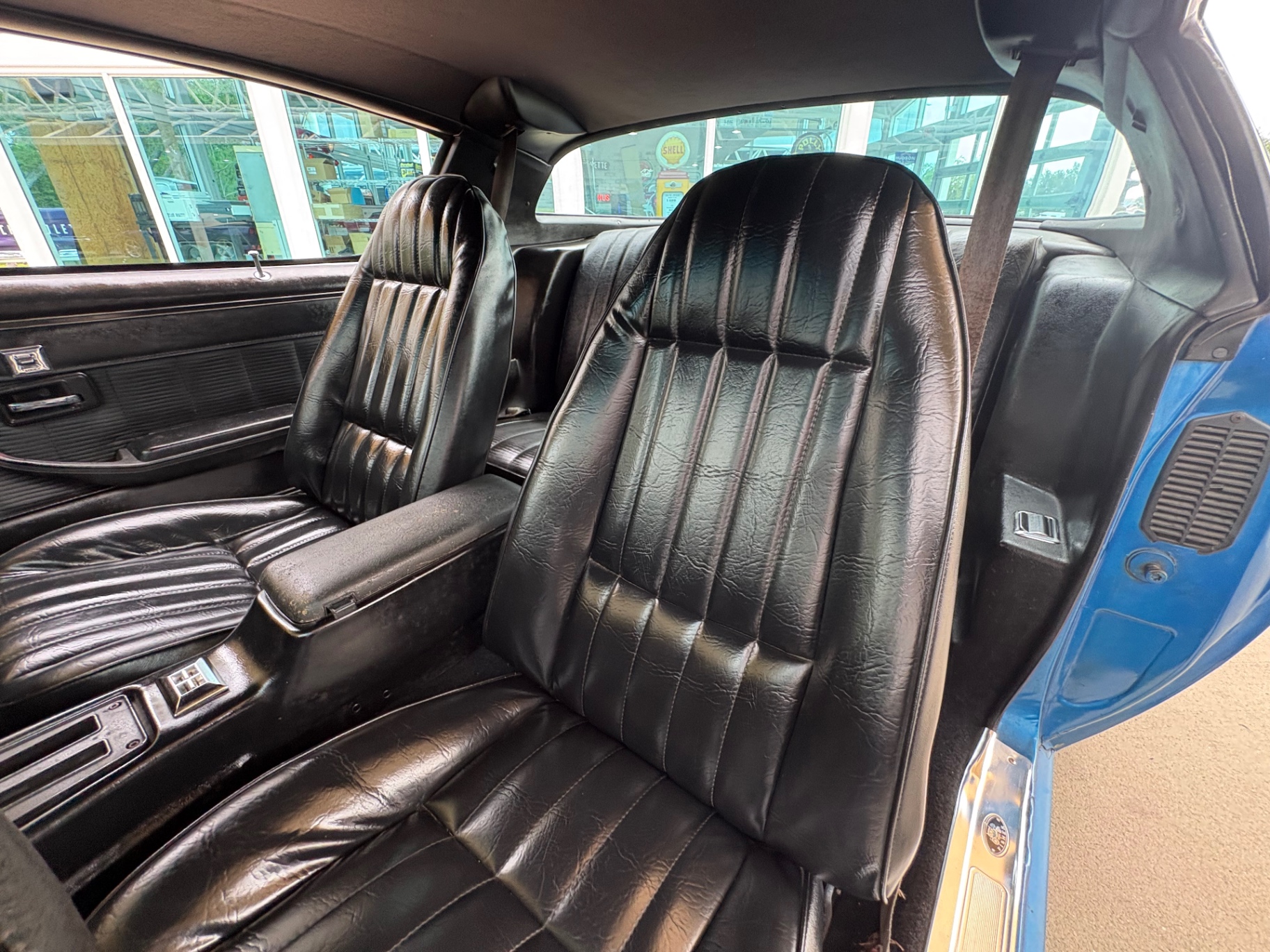
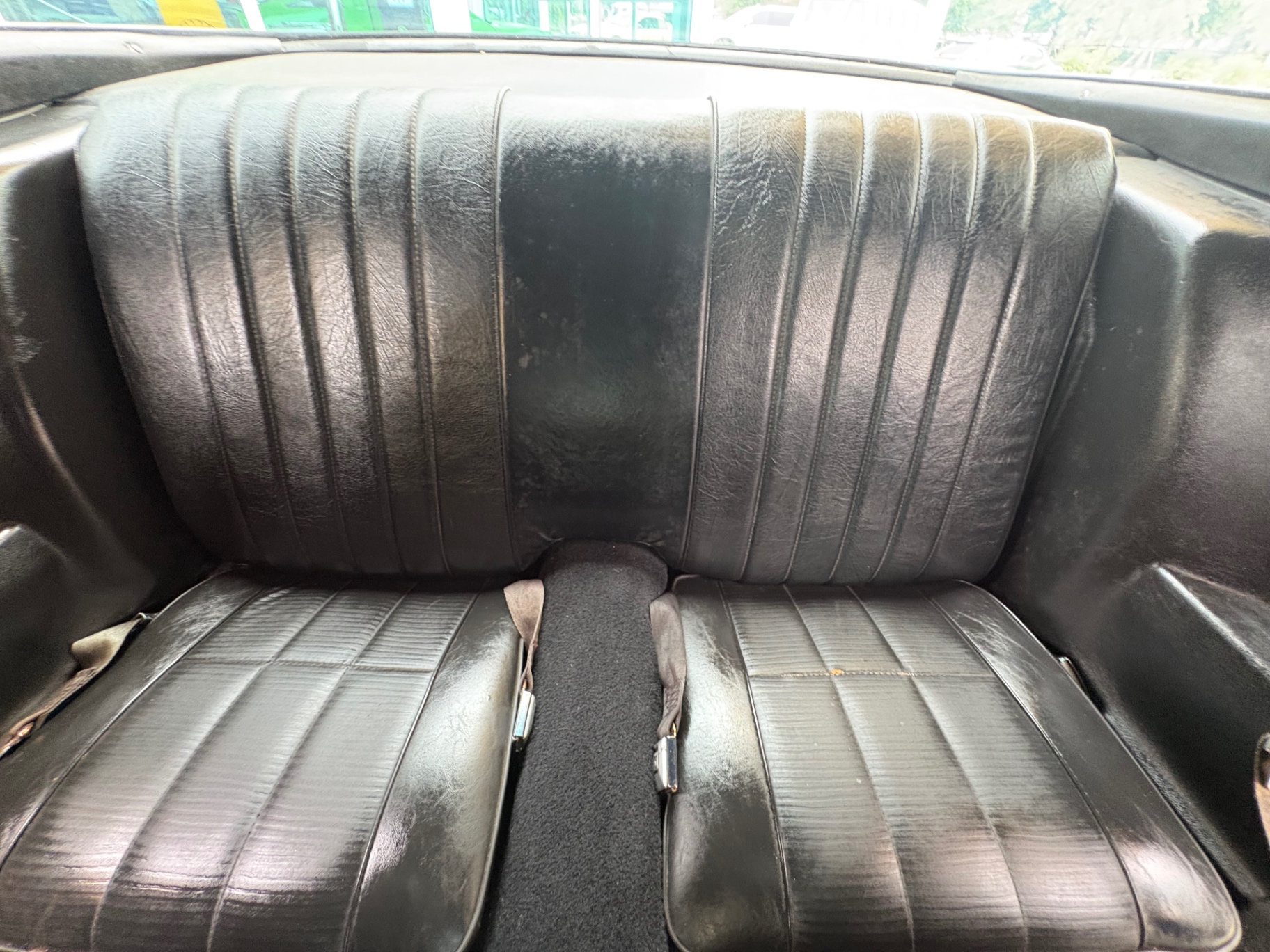
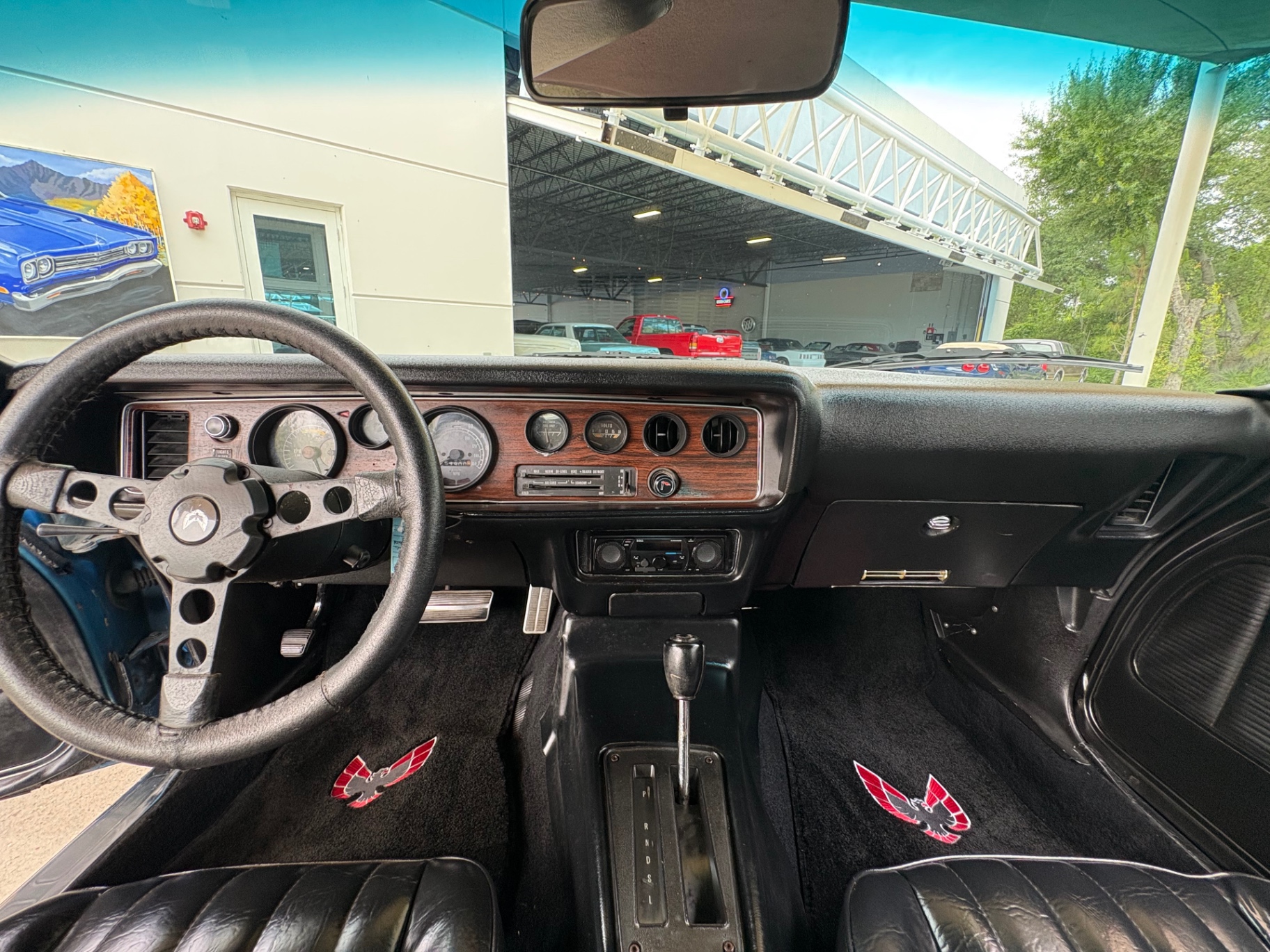
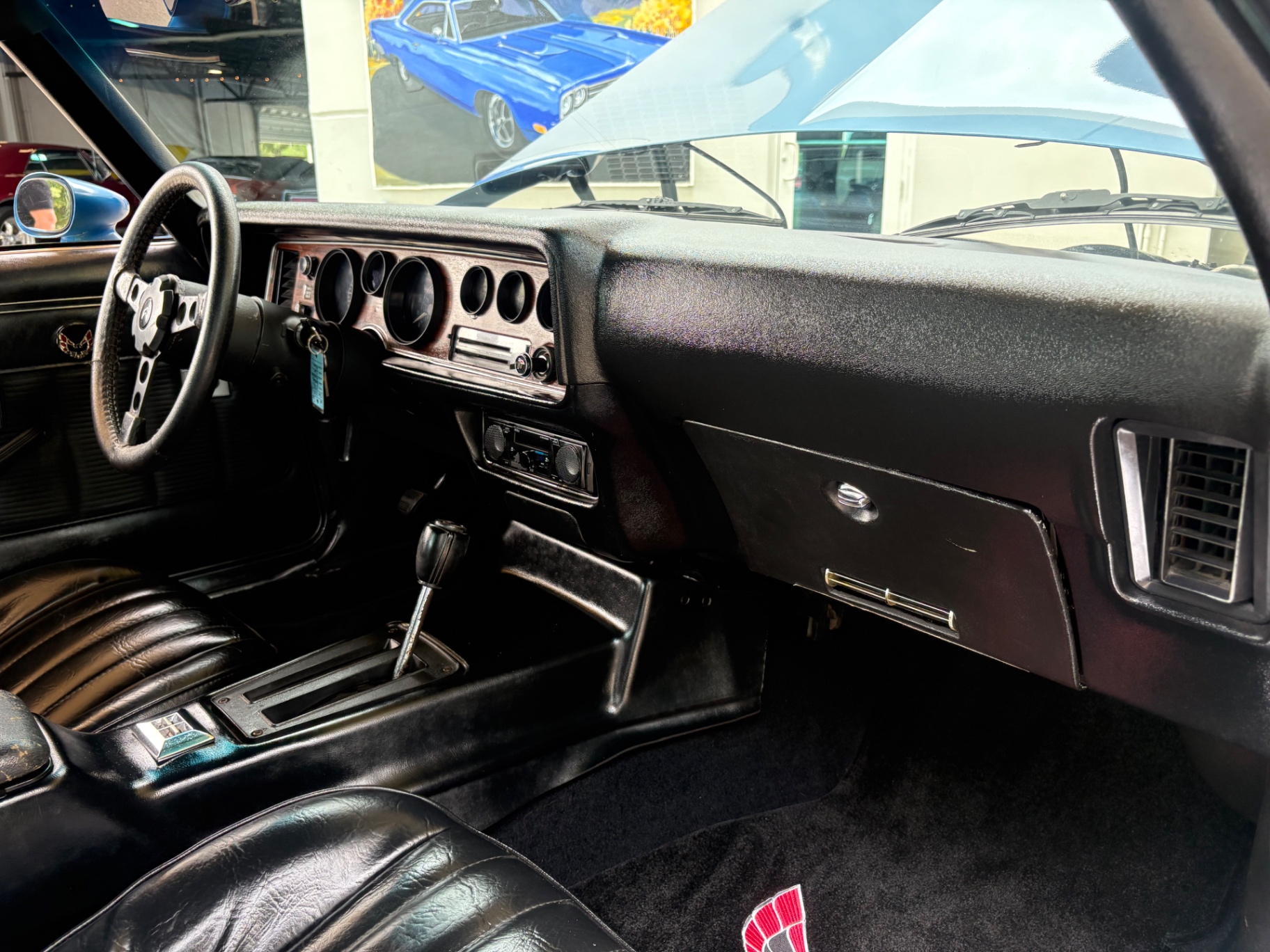
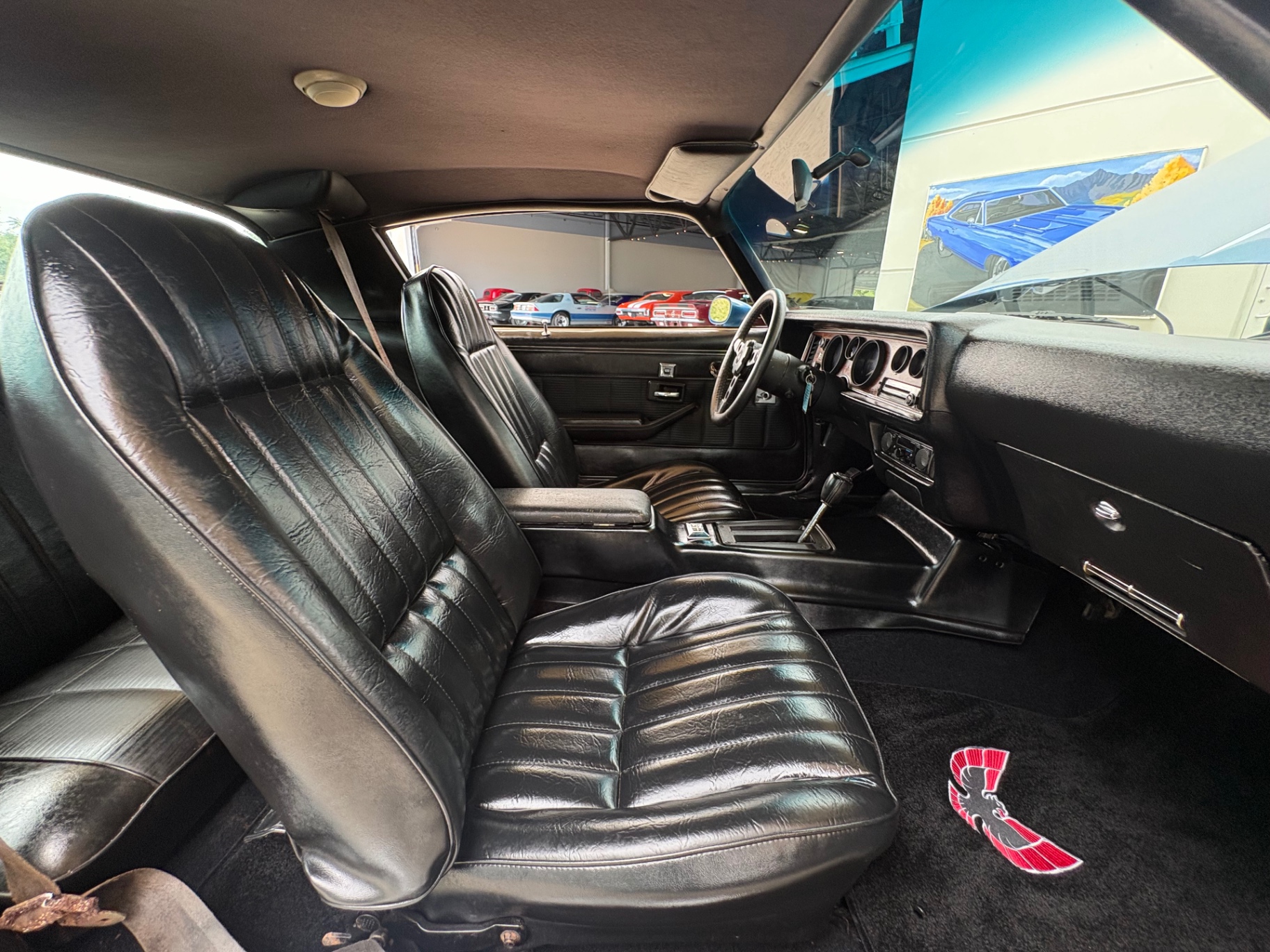
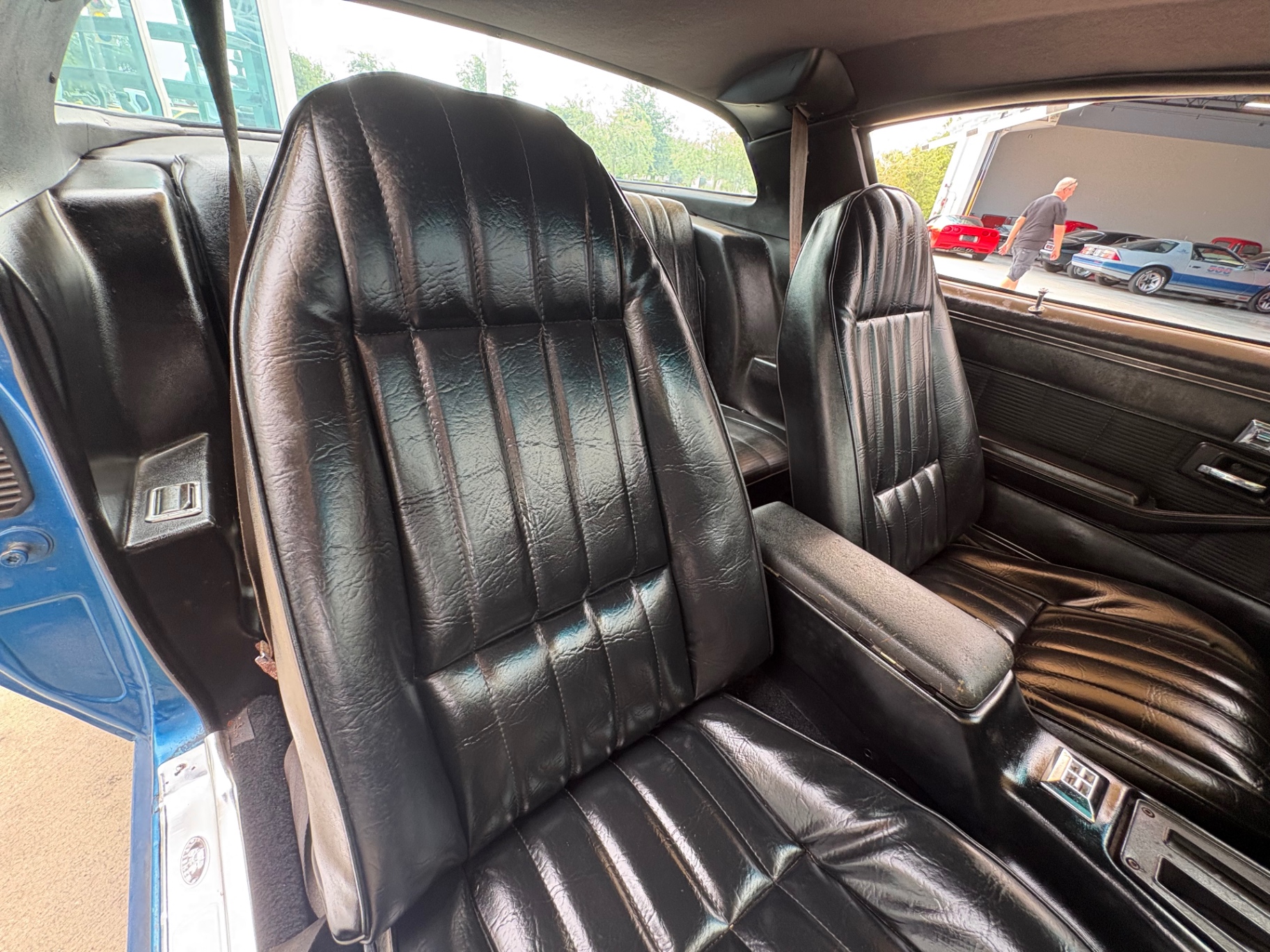
The black vinyl interior is correct and period-appropriate for the 1979 Pontiac Firebird Trans Am. Factory bucket seats sit up front, flanking a center console that houses the shifter for the TH400. These consoles were a standard Trans Am feature and give the cabin a focused, driver-oriented layout. The woodgrain dash trim adds visual contrast against the black interior and was a popular factory option that Pontiac offered to blend the sporty feel of the Trans Am with a slightly more refined look inside.
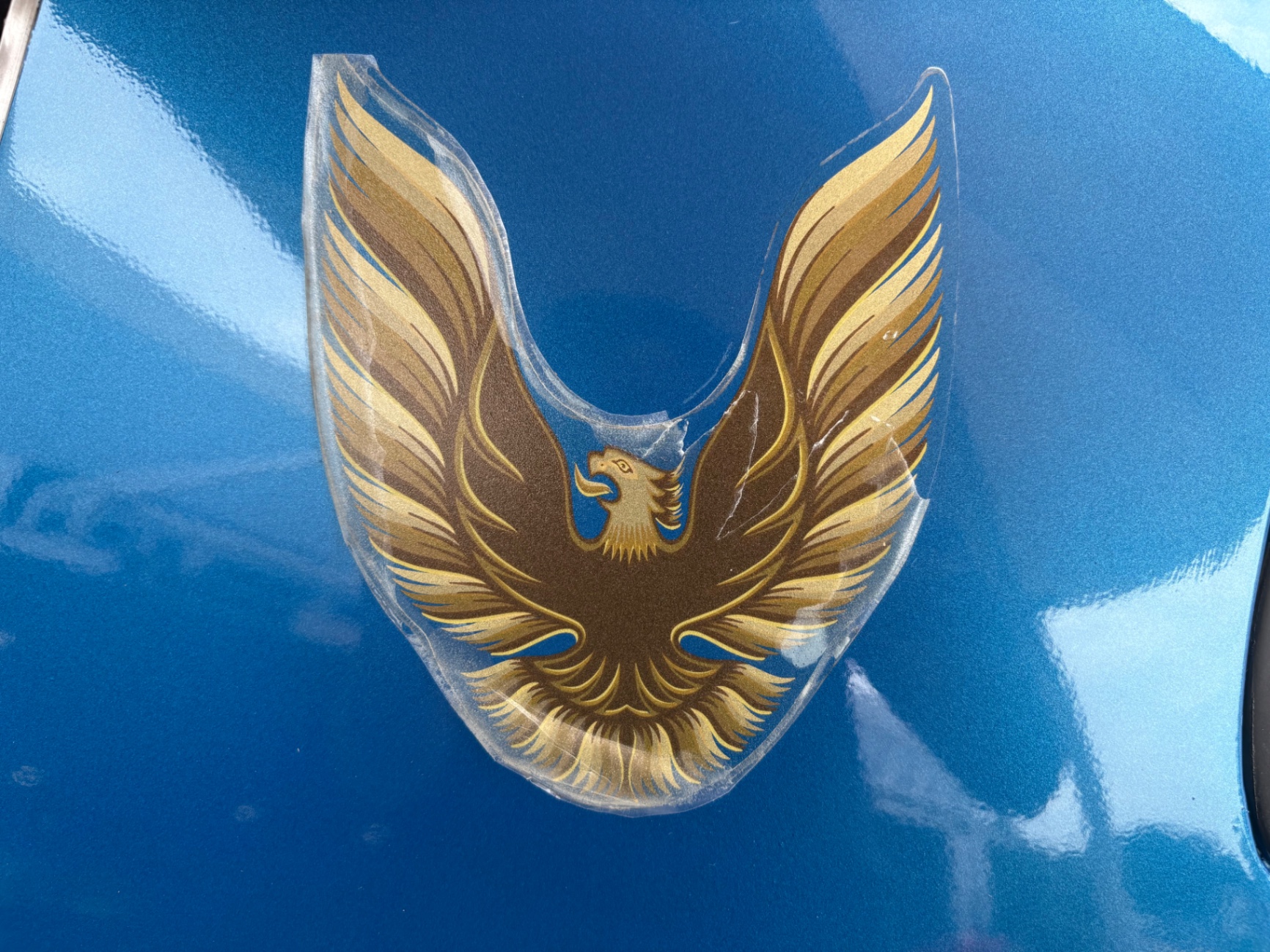
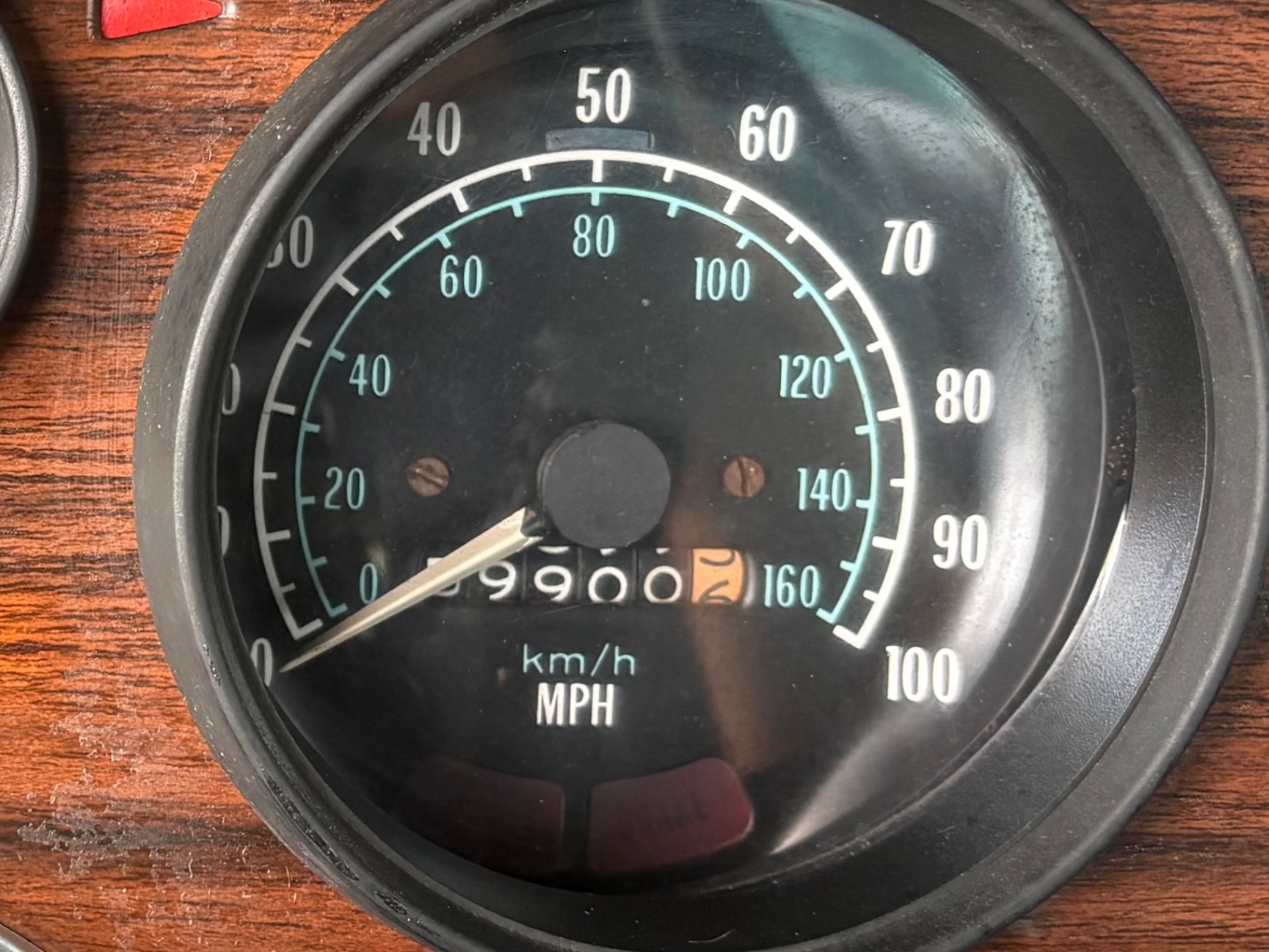
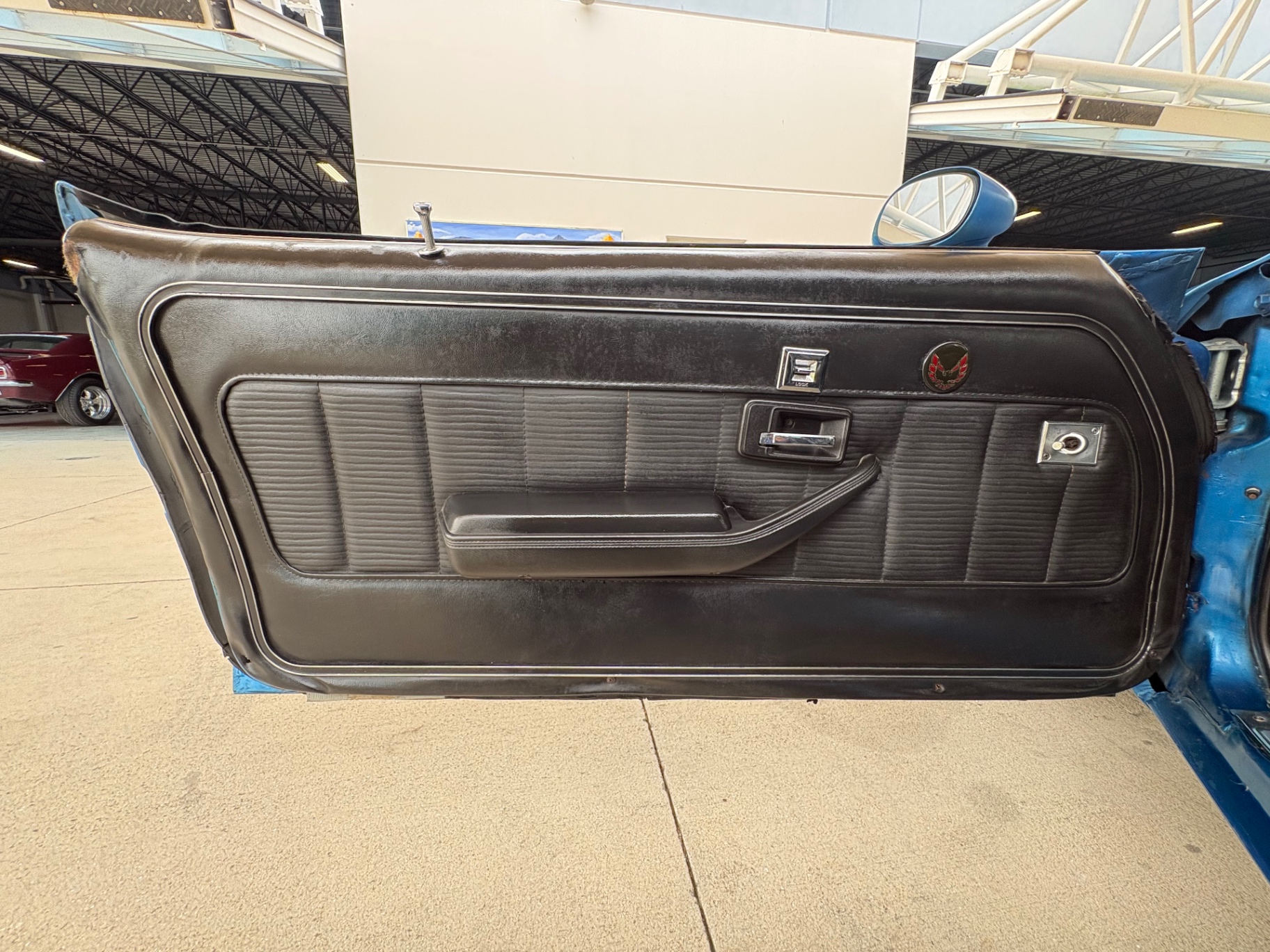
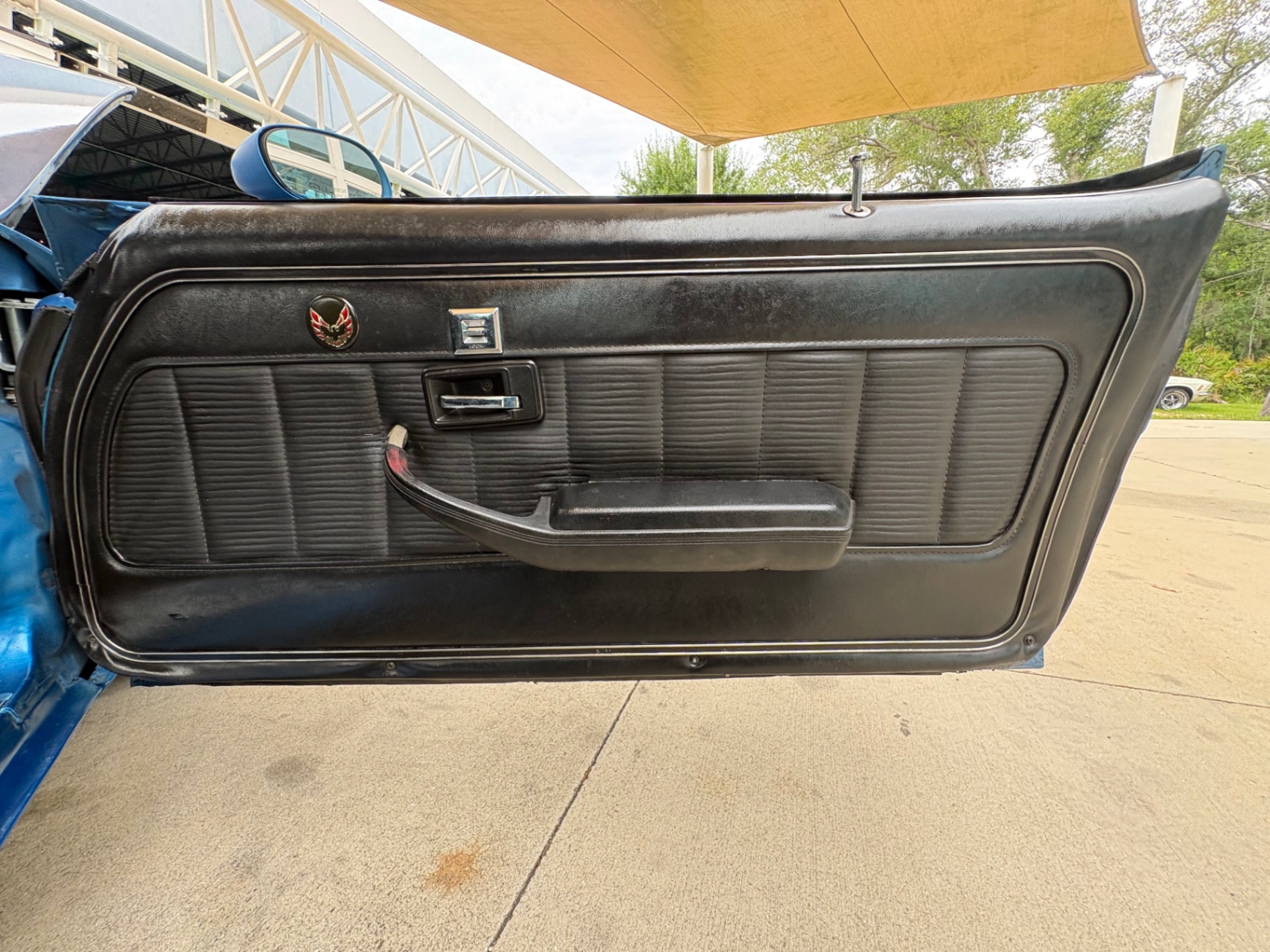
The tachometer is mounted in the instrument cluster, which was standard on the Trans Am. Knowing your engine speed in a car like this is practical, not decorative — the TH400 responds well to manual gear hold strategies and knowing where the 403 is in its powerband matters if you want to use the car the way it was intended. The Firebird door emblems carry through to the interior panels, with the red and gold bird logo visible on each door card. The air conditioning system is present, which in Florida's climate is not a luxury — it is a necessity for anyone who plans to actually drive this car.
Exterior
The blue exterior on this 1979 Pontiac Firebird Trans Am is a high-visibility color that suits the second-generation body lines well. The sheetmetal on the second-gen Firebird — designed by Bill Porter and John Schinella and introduced for 1970 — held up remarkably well through the entire production run, and the 1979 cars benefited from refinements made over the preceding decade. The front fascia with its twin port air intakes and quad rectangular headlights gives the car a wide, low presence on the road.
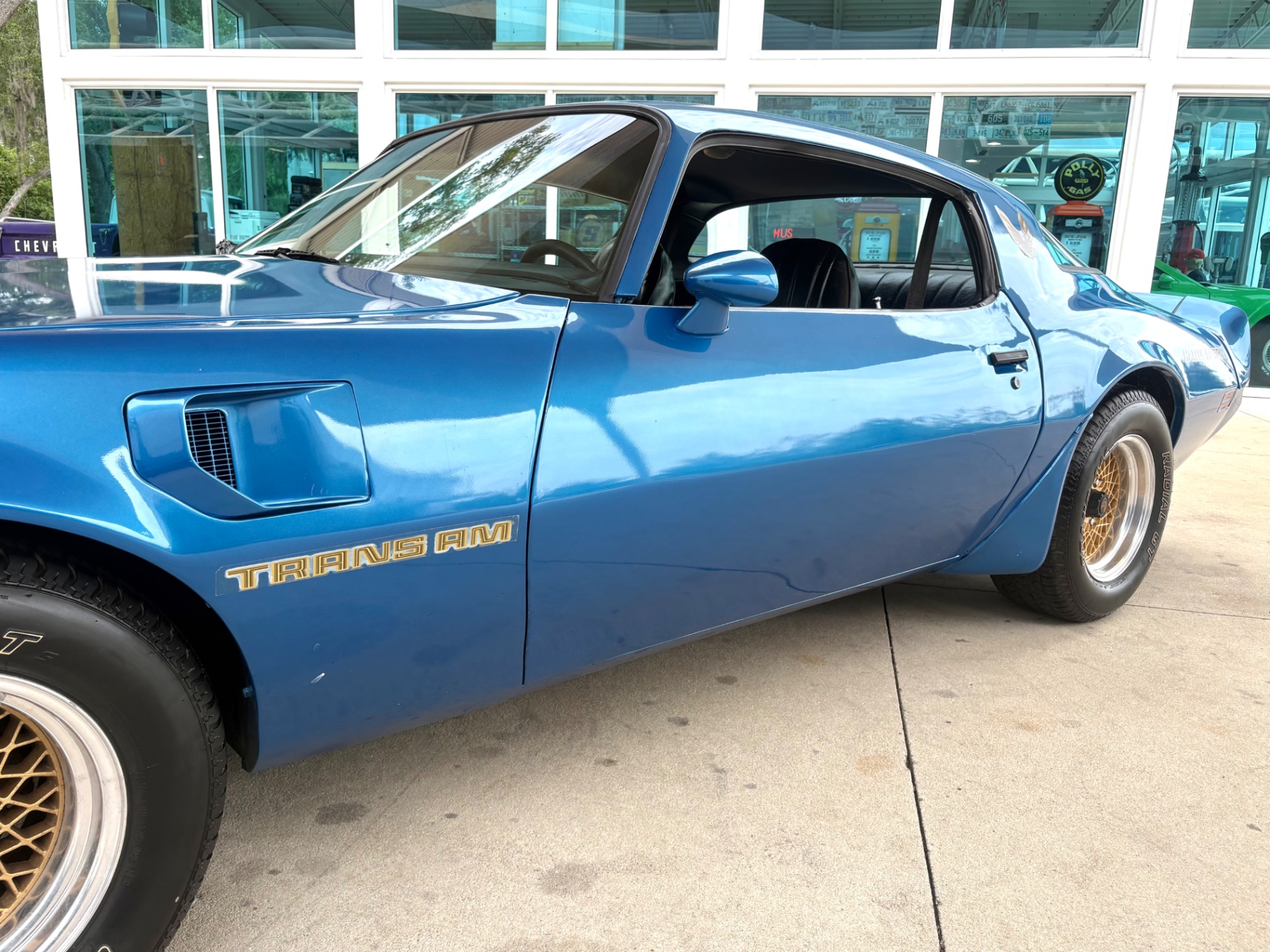
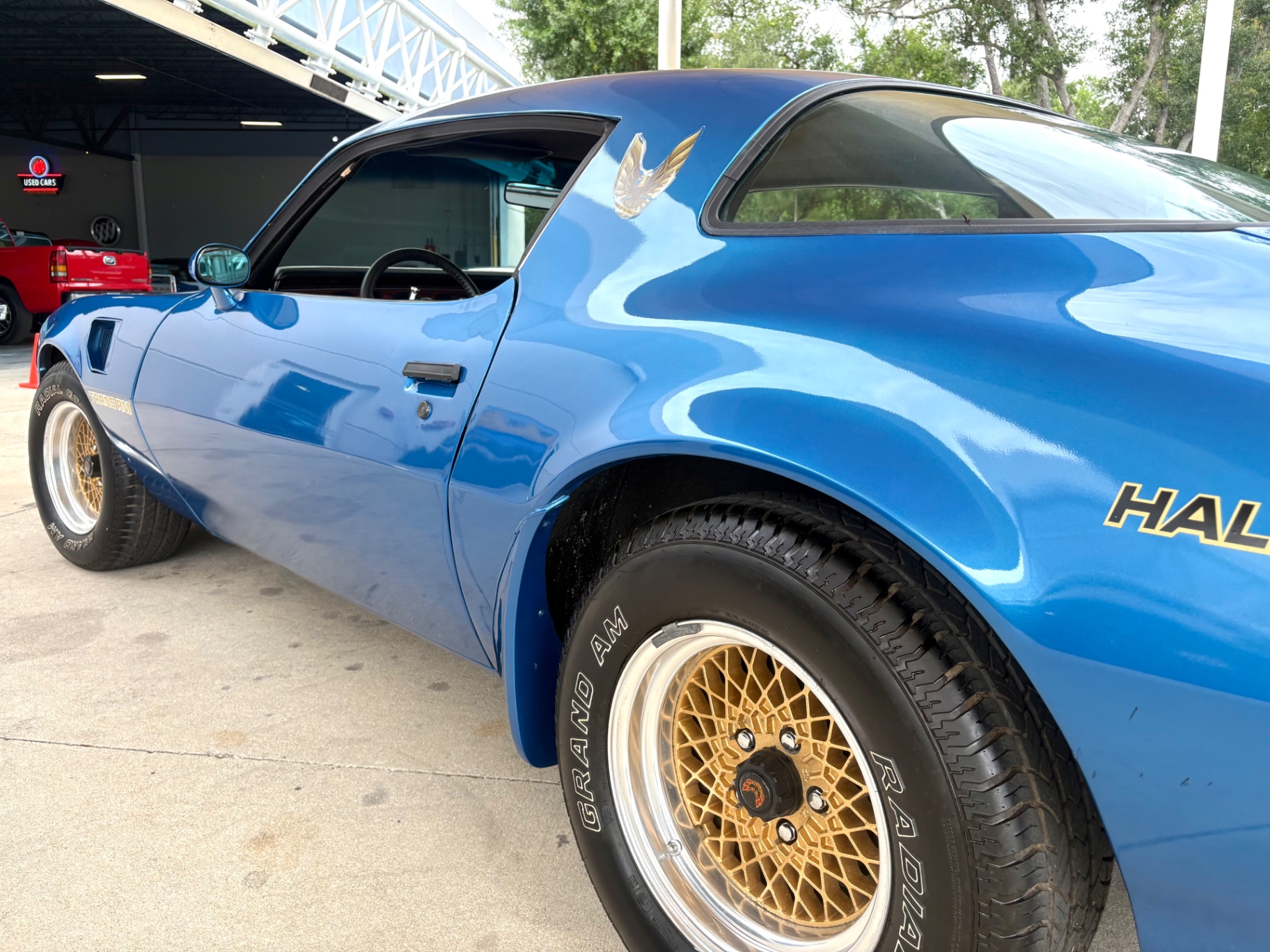
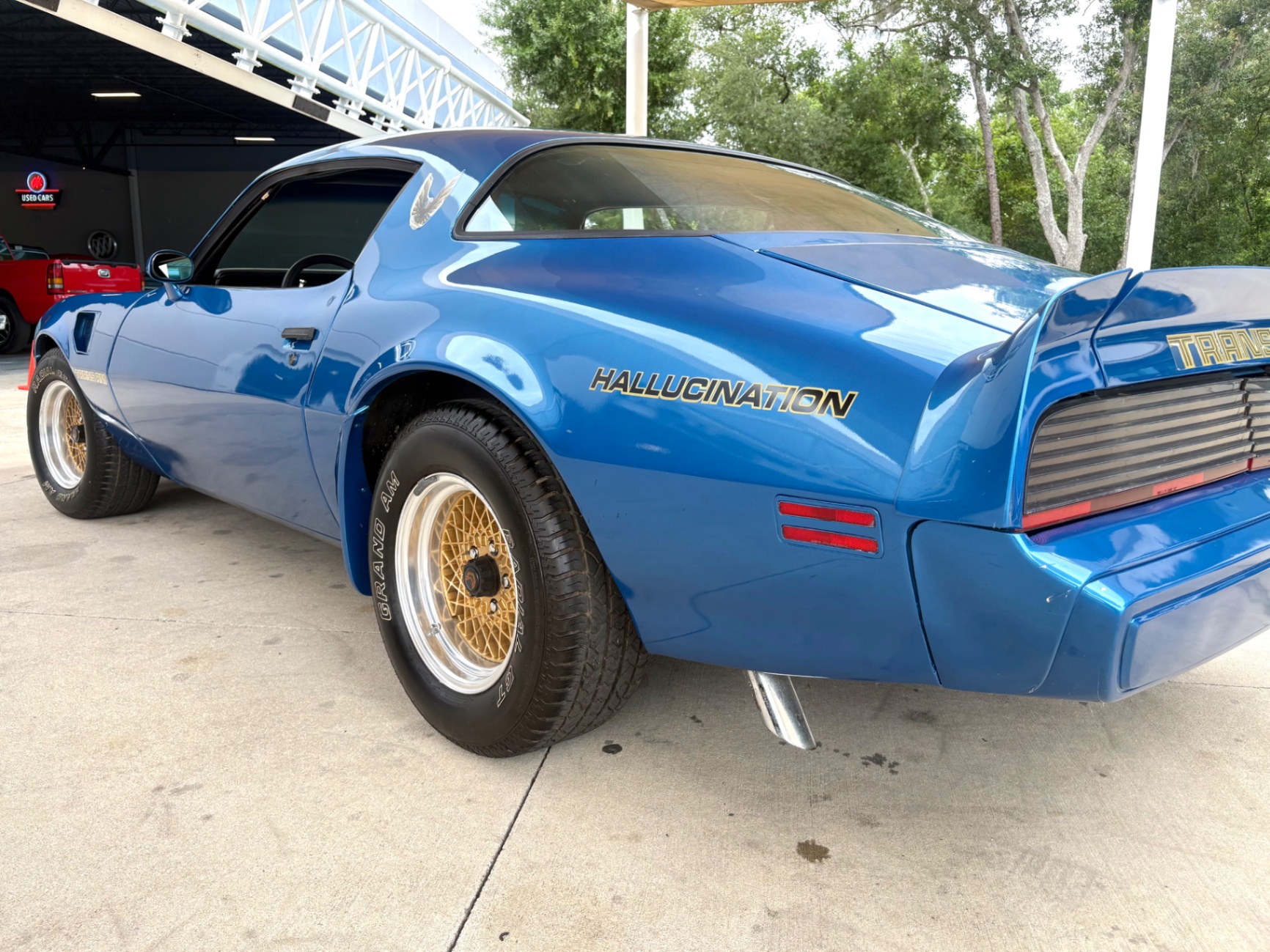
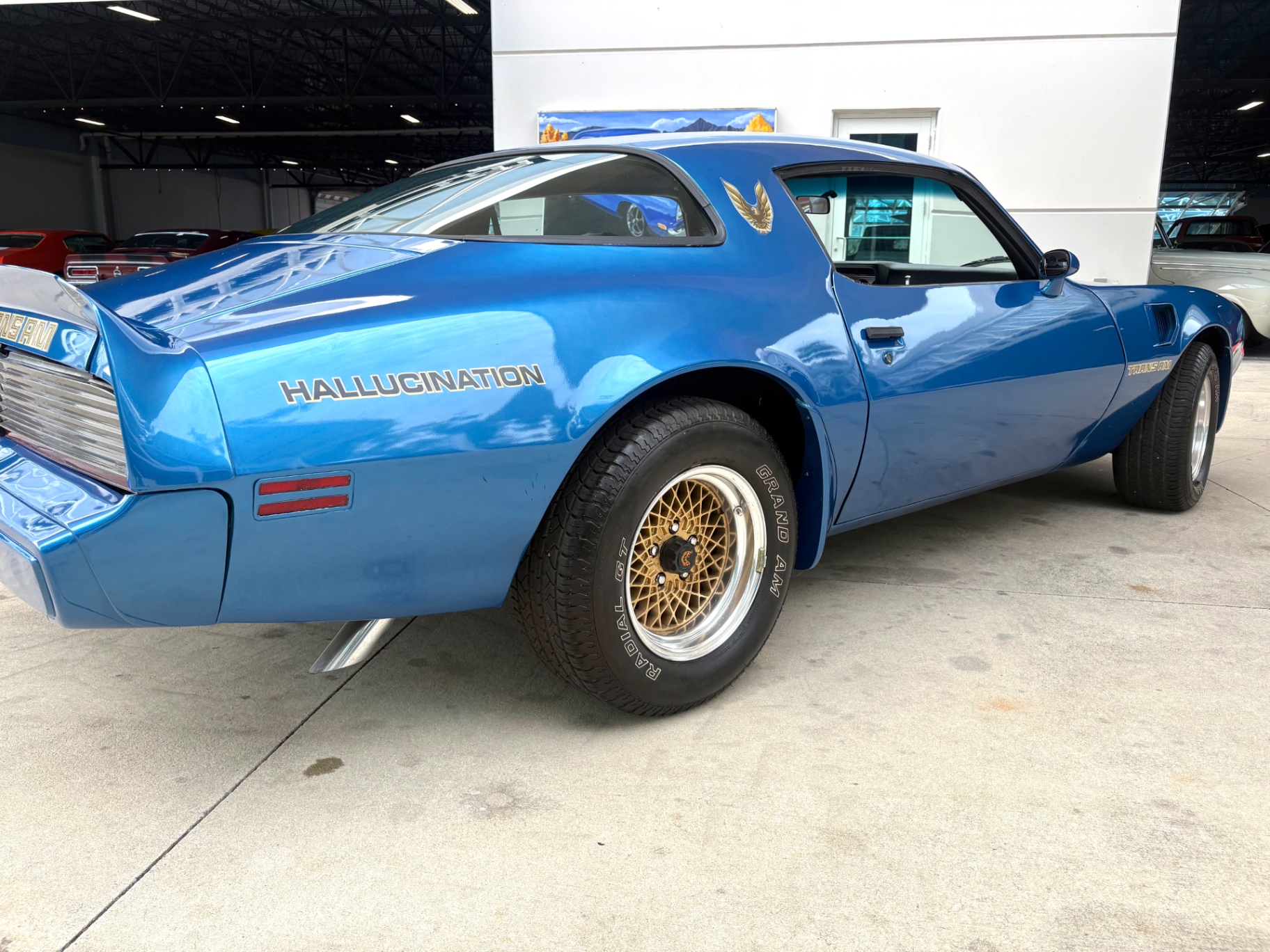
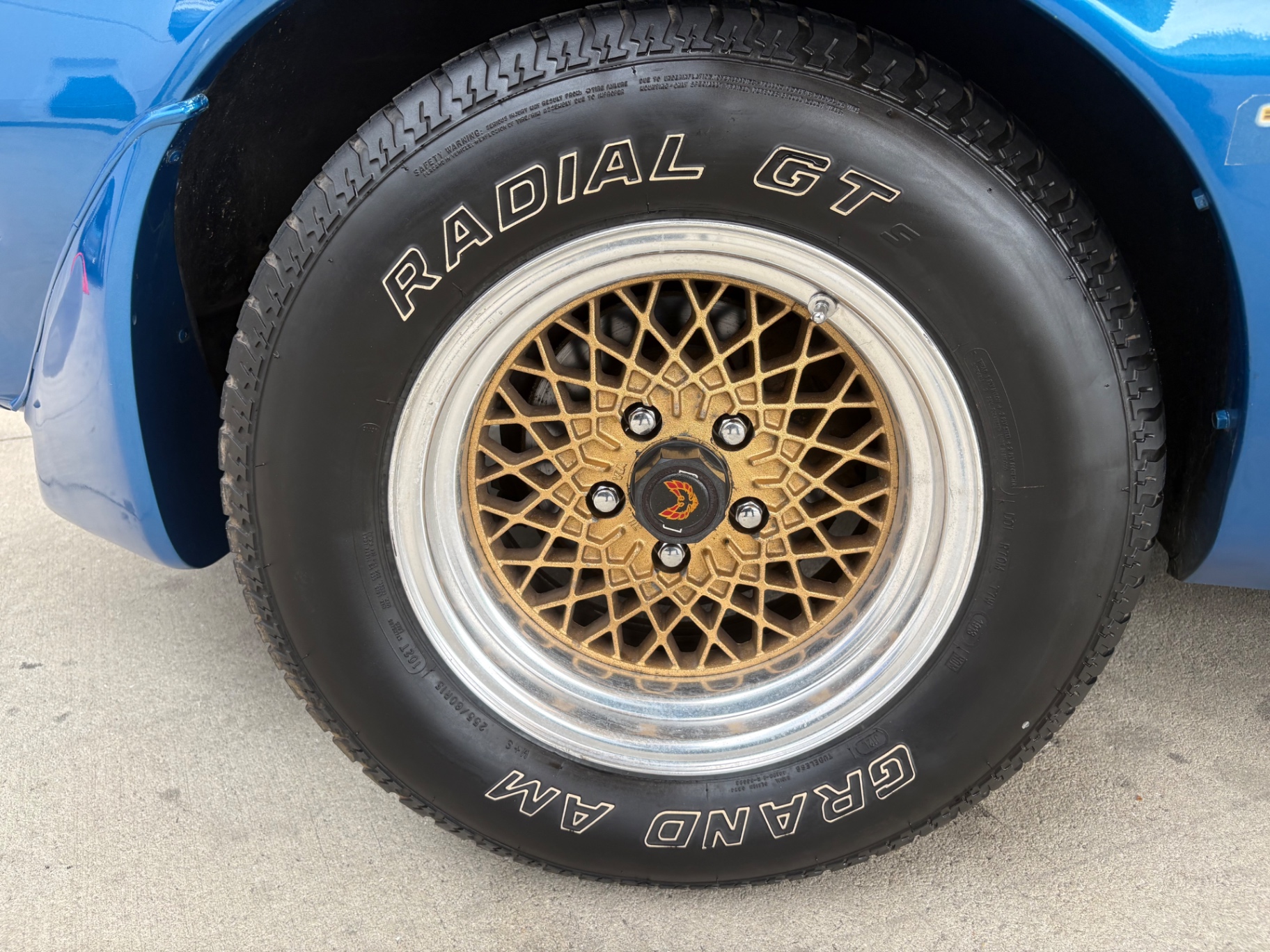
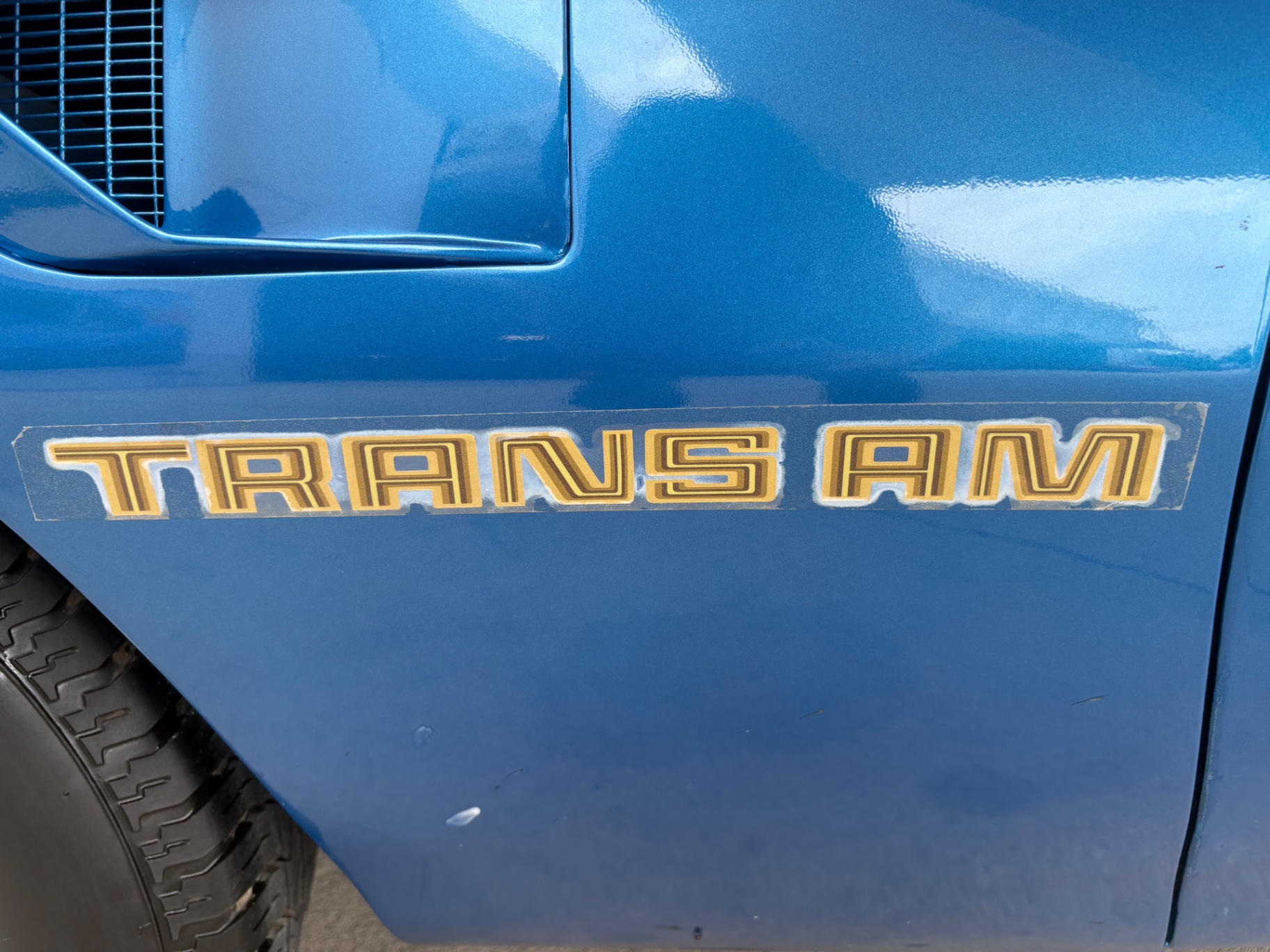
The black vinyl top adds a two-tone element that was popular on late-1970s personal luxury and performance cars. On a blue car with gold wheels, it creates a color combination with a clear period identity. The gold snowflake wheels are one of the most recognized visual signatures of the second-generation Trans Am. Those five-spoke cast aluminum wheels were introduced in the mid-1970s and became closely associated with the Trans Am's image. They wear well, resist corrosion better than many steel wheel and hubcap combinations from the era, and remain highly sought after by restorers and collectors today. The Trans Am badging runs along the lower body stripe, and the dual exhaust exits are visible at the rear — functional details that confirm this car's specification at a glance.
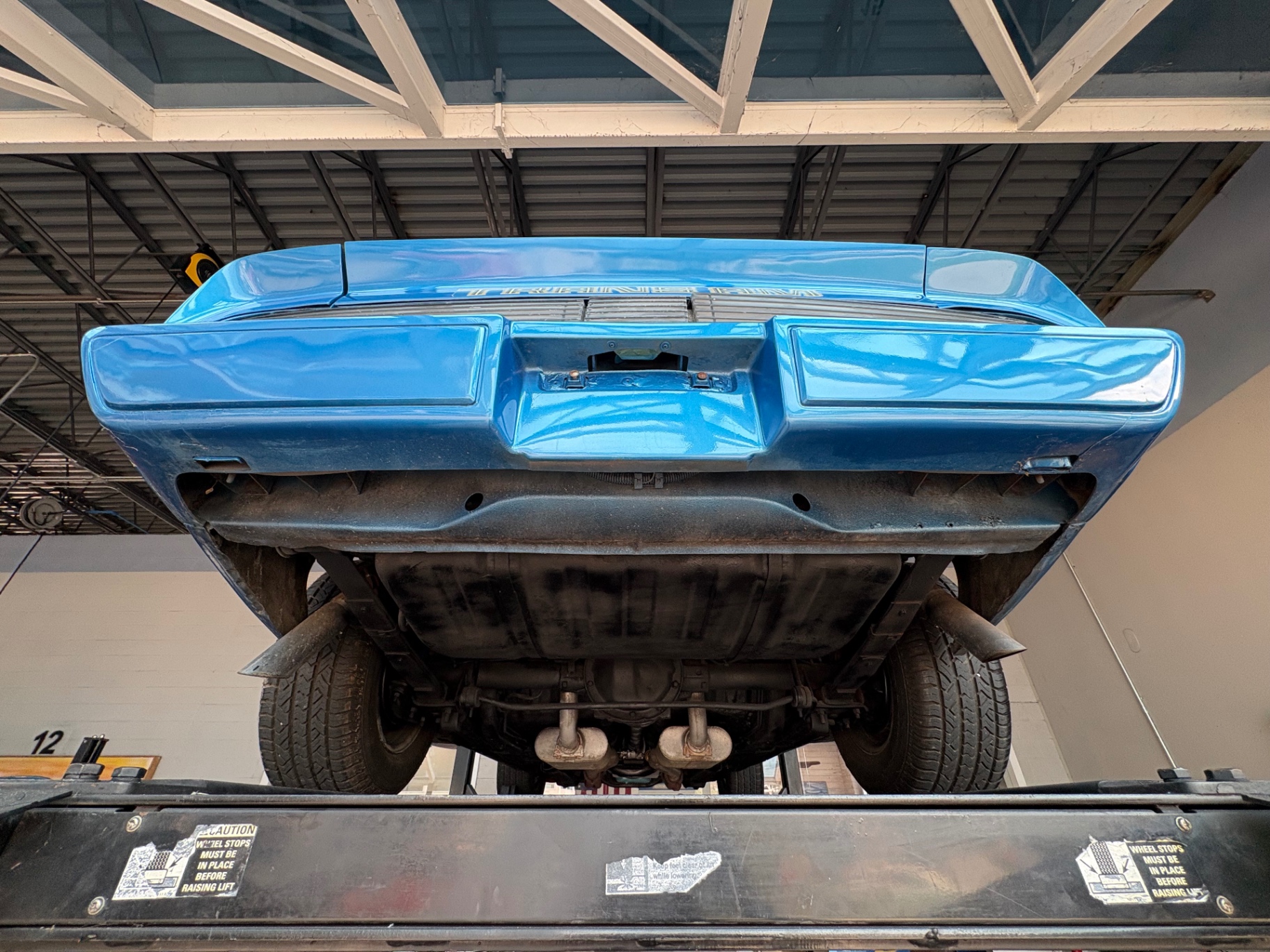
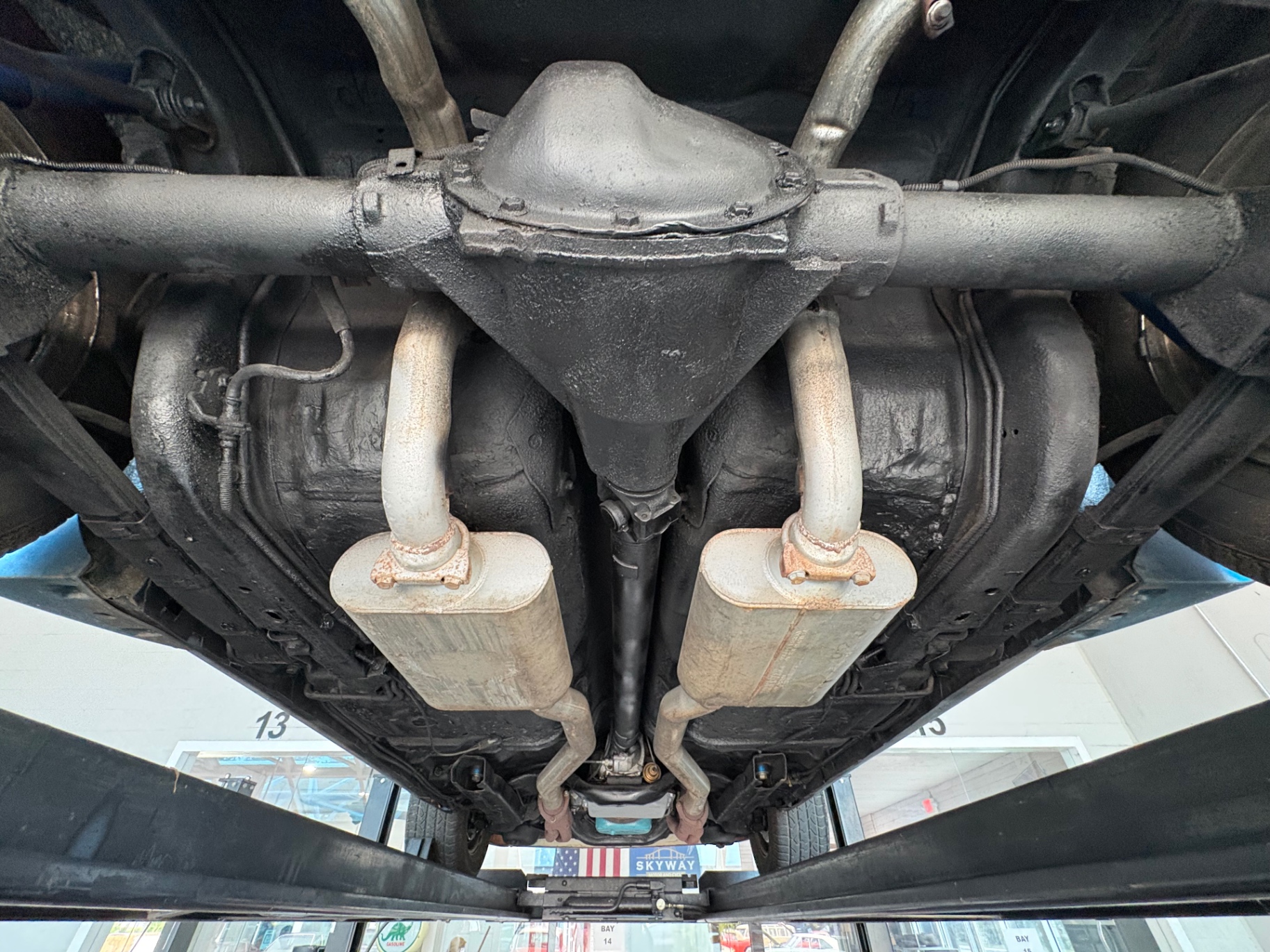
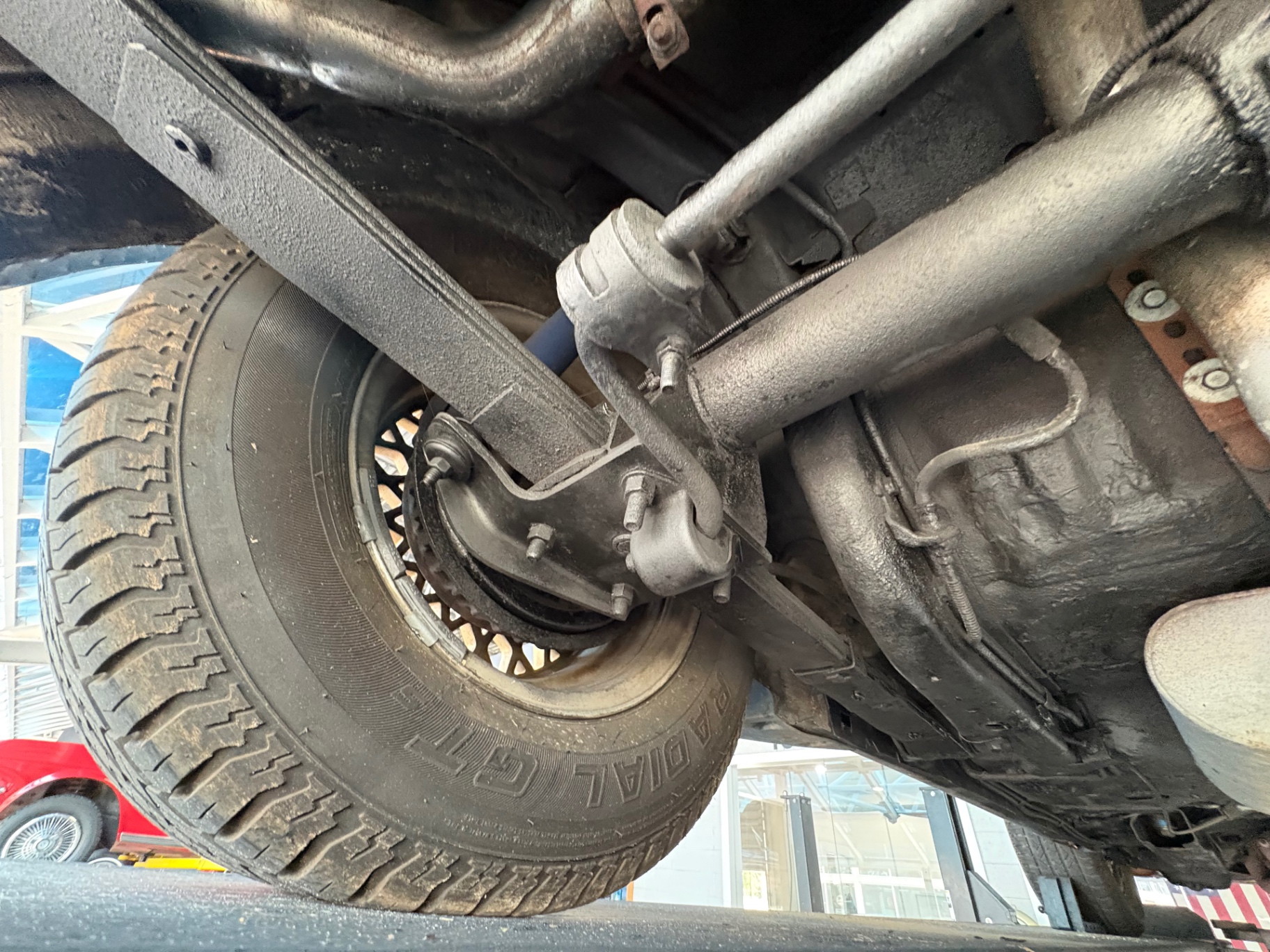
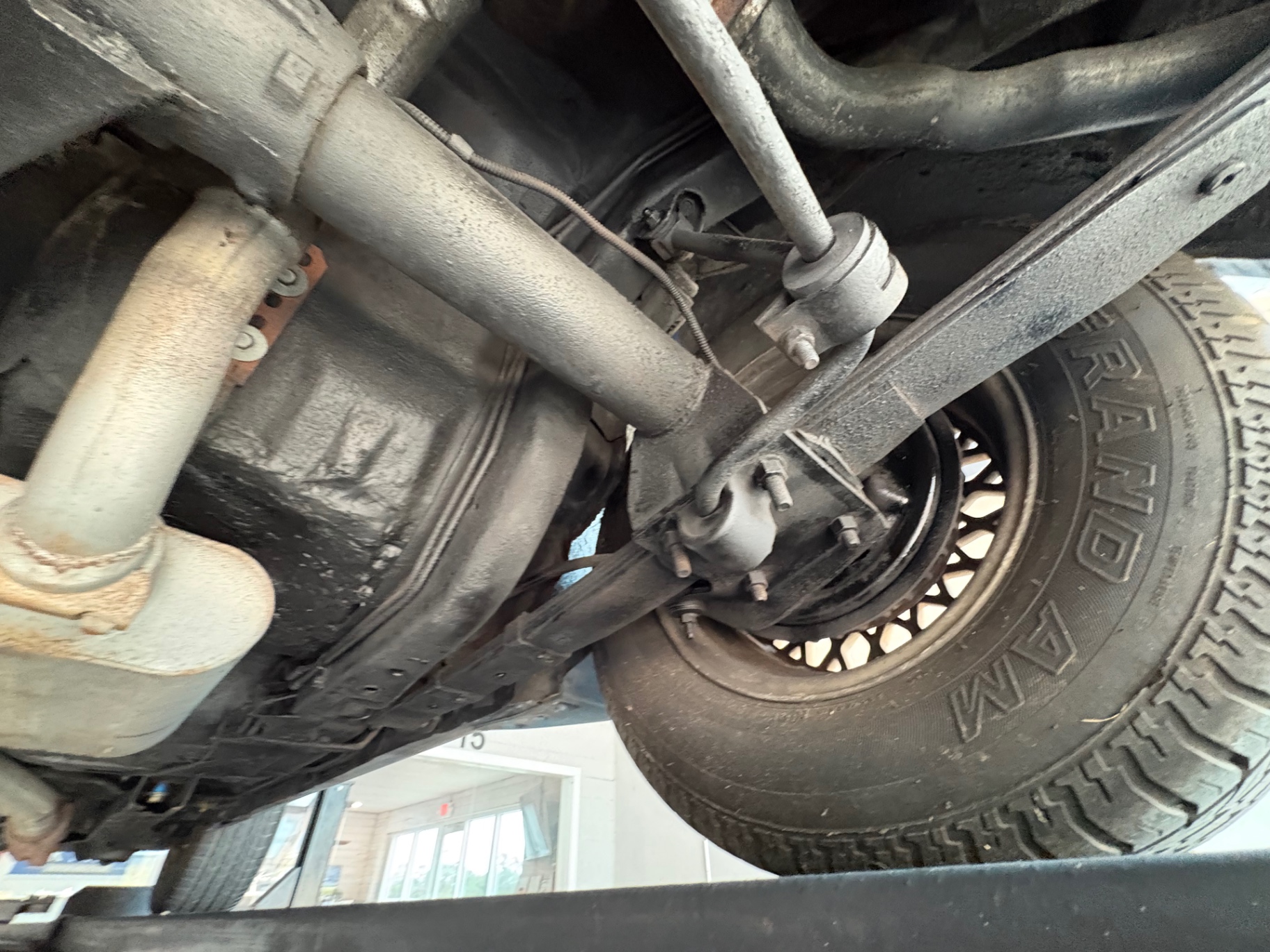
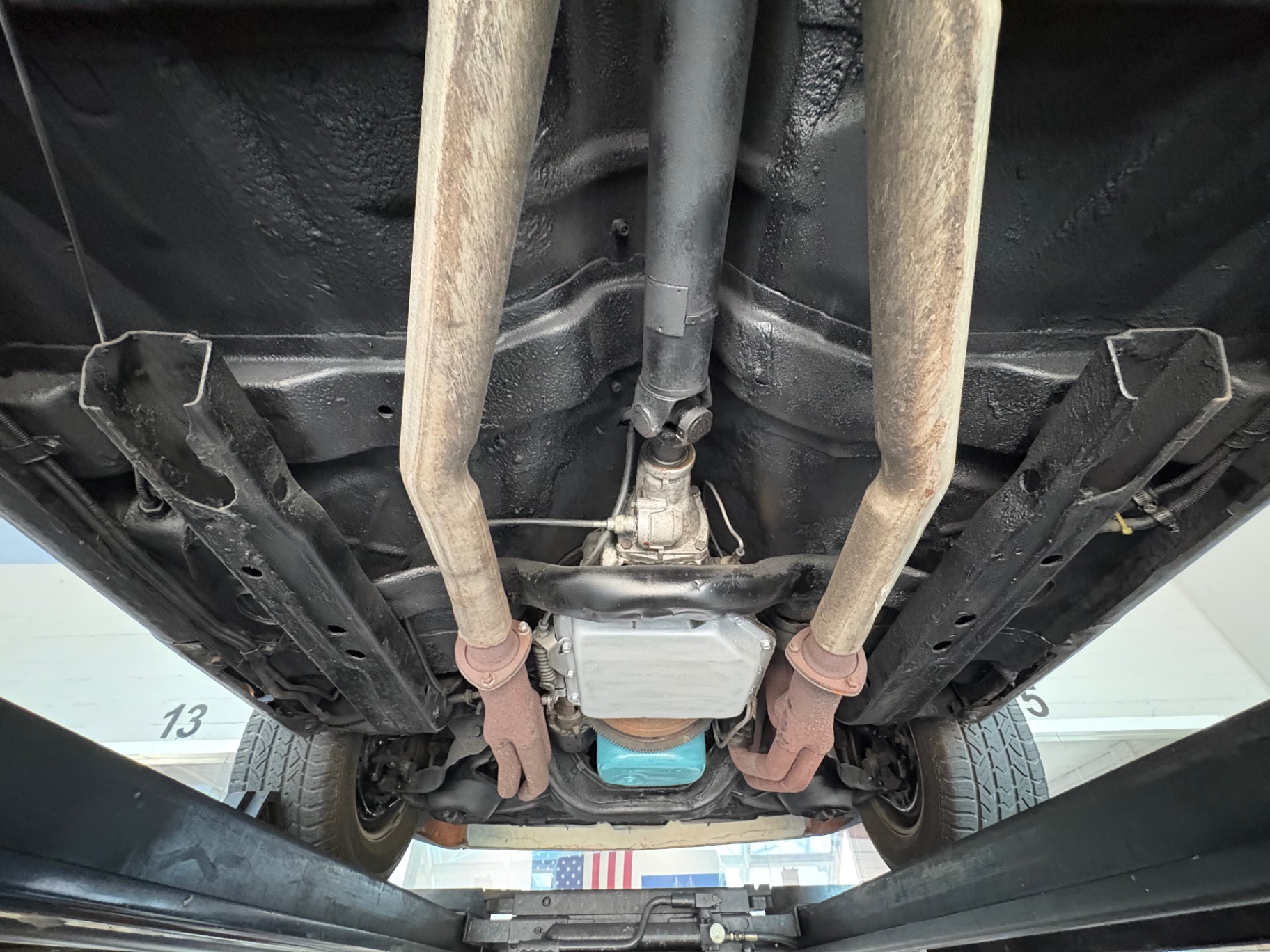
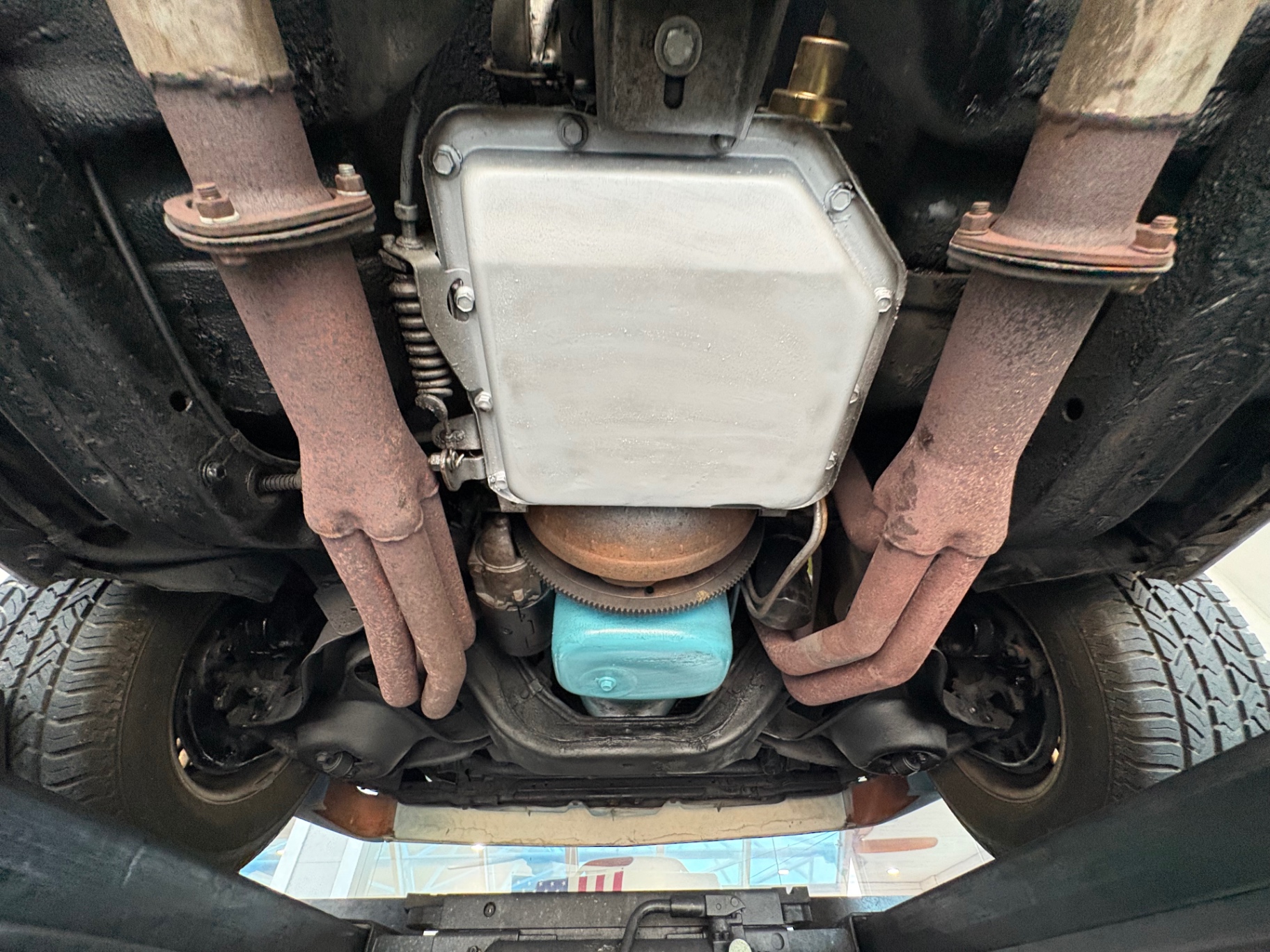
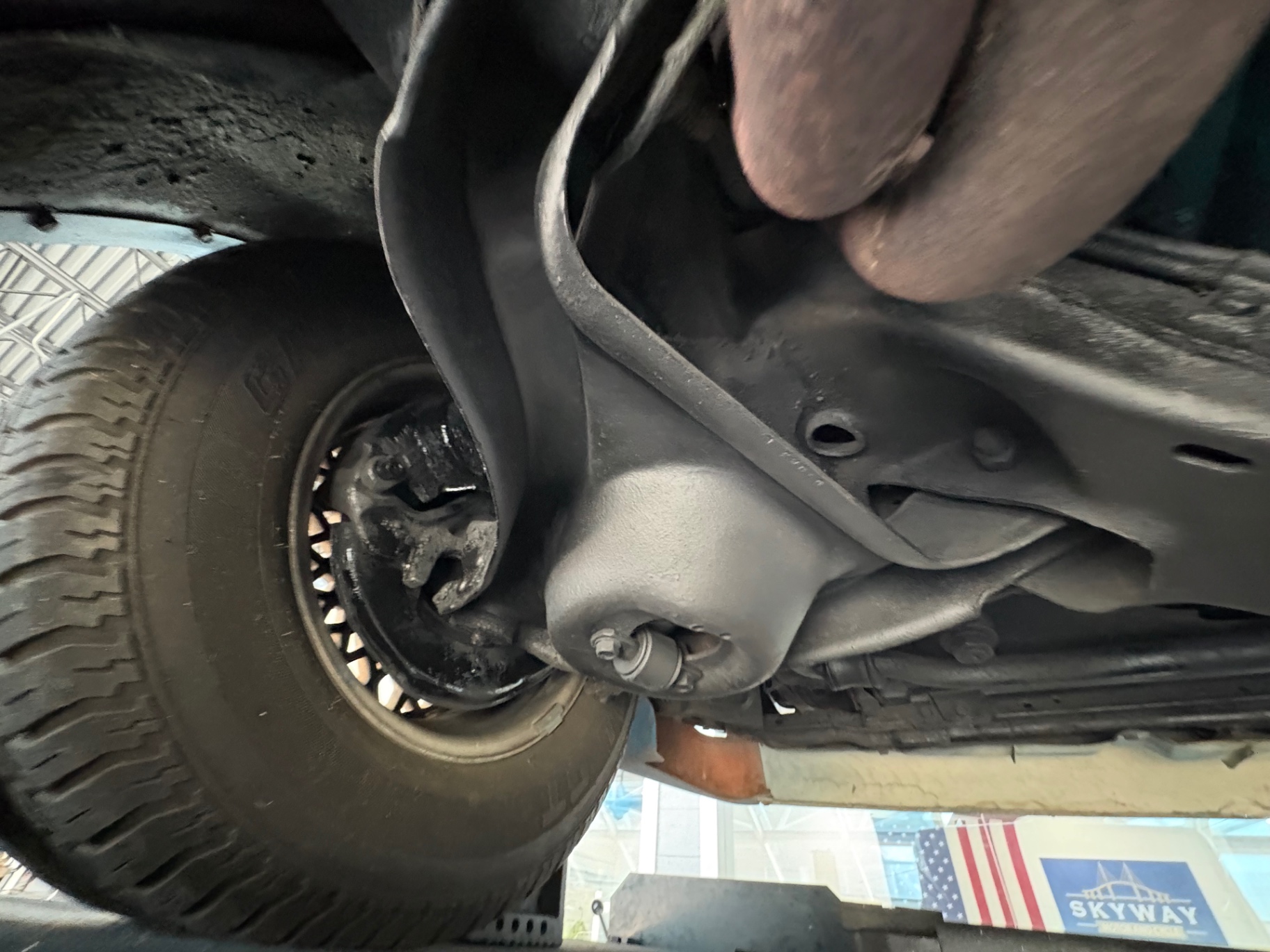
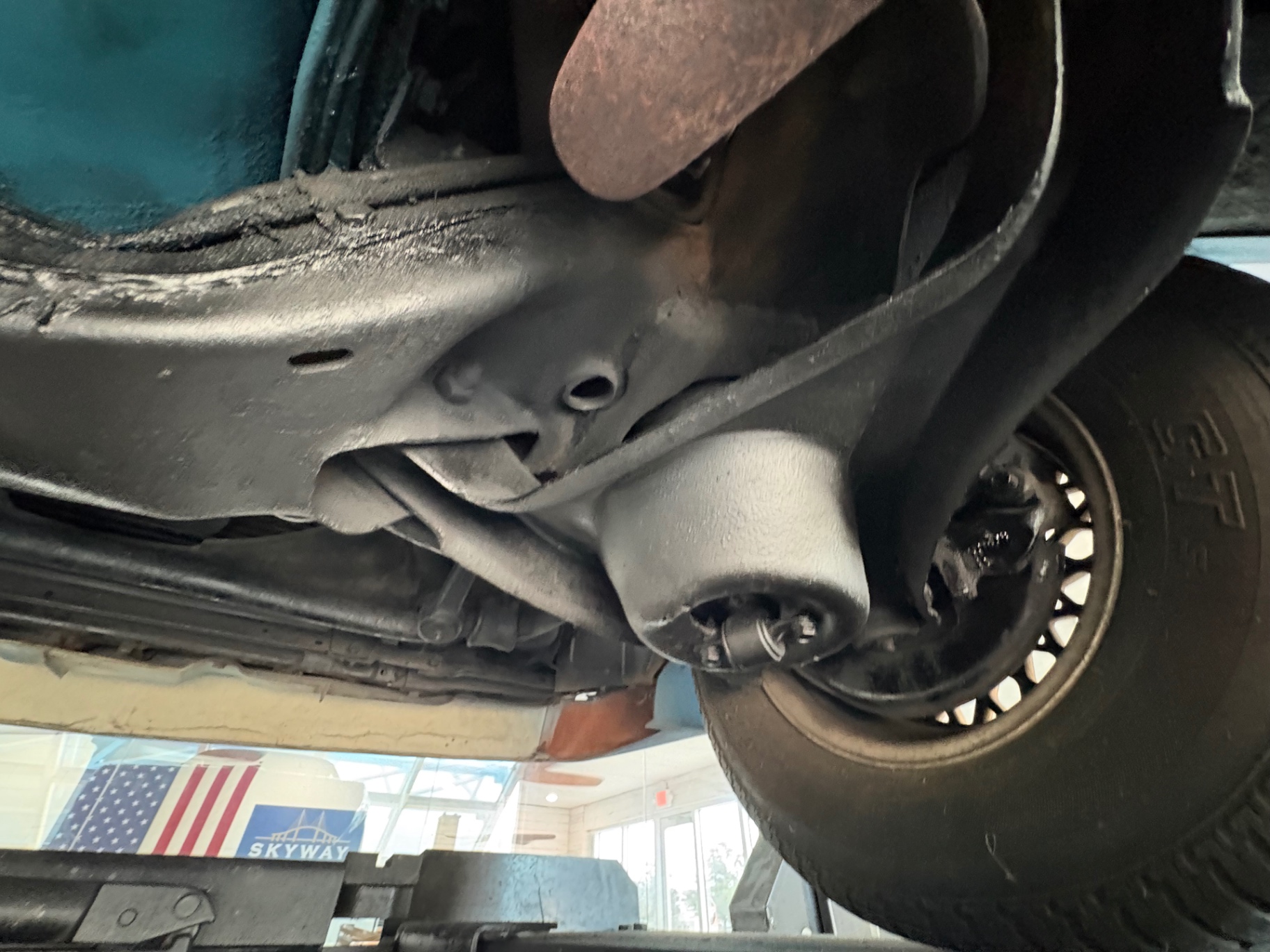
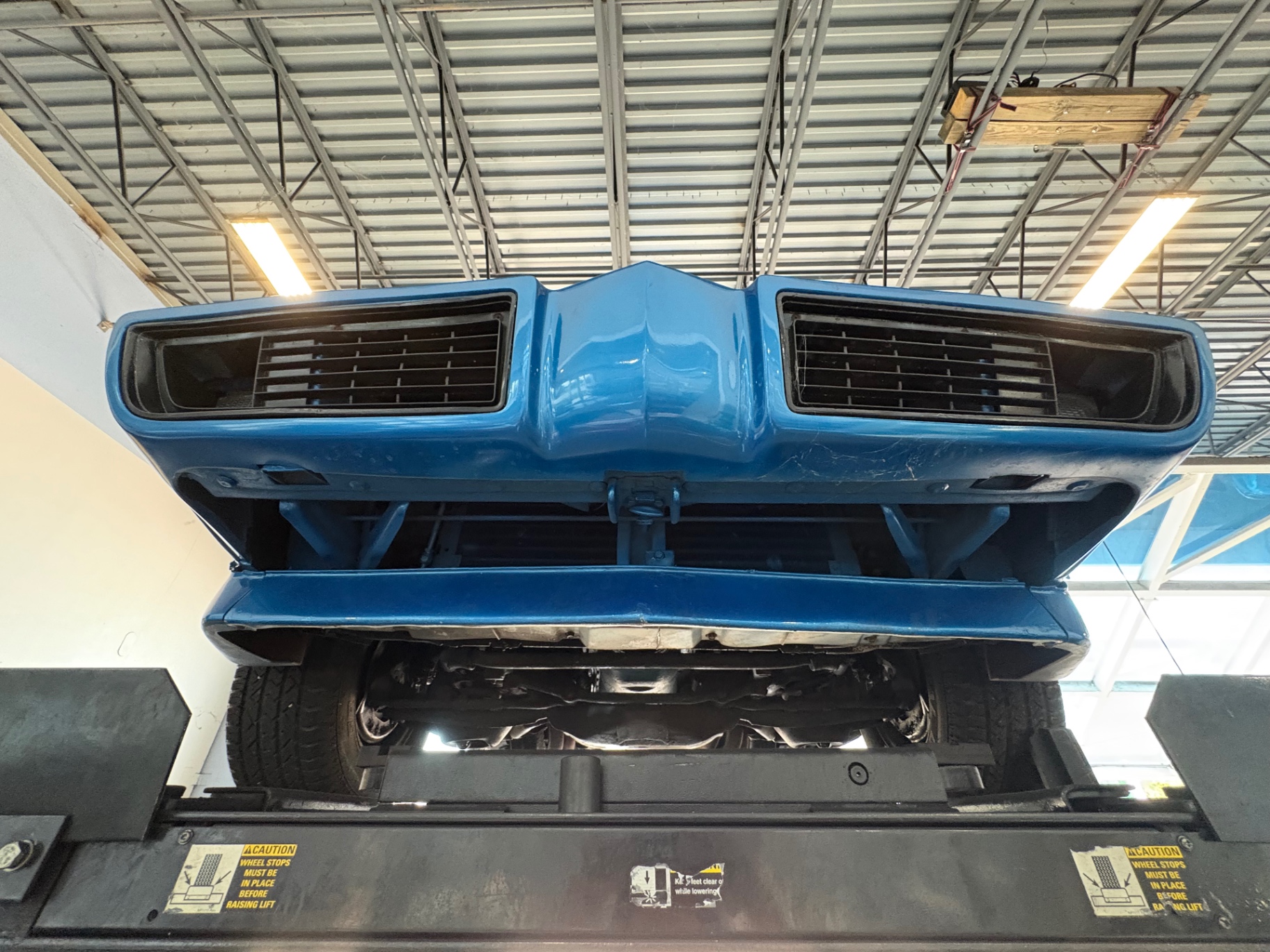
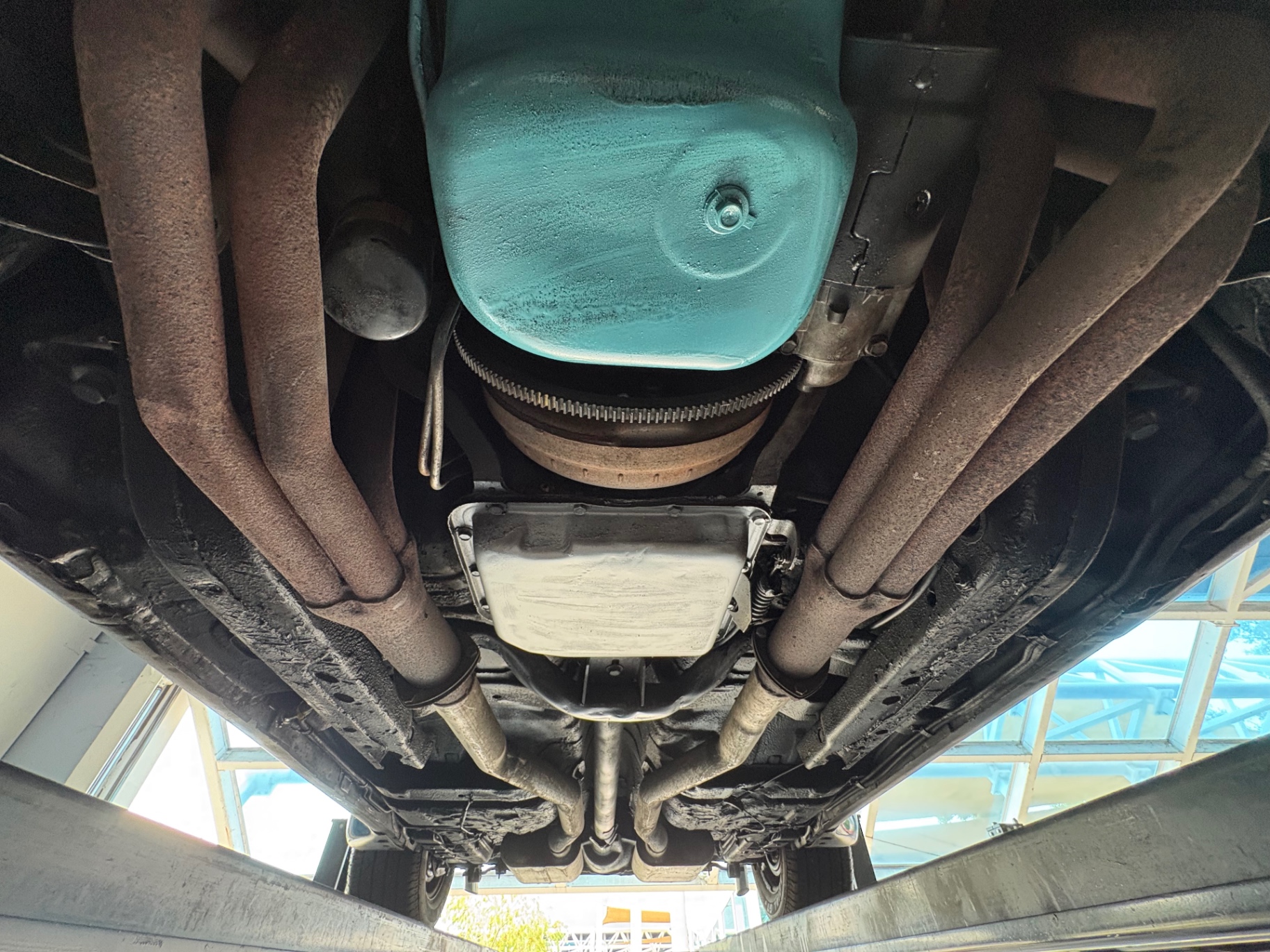
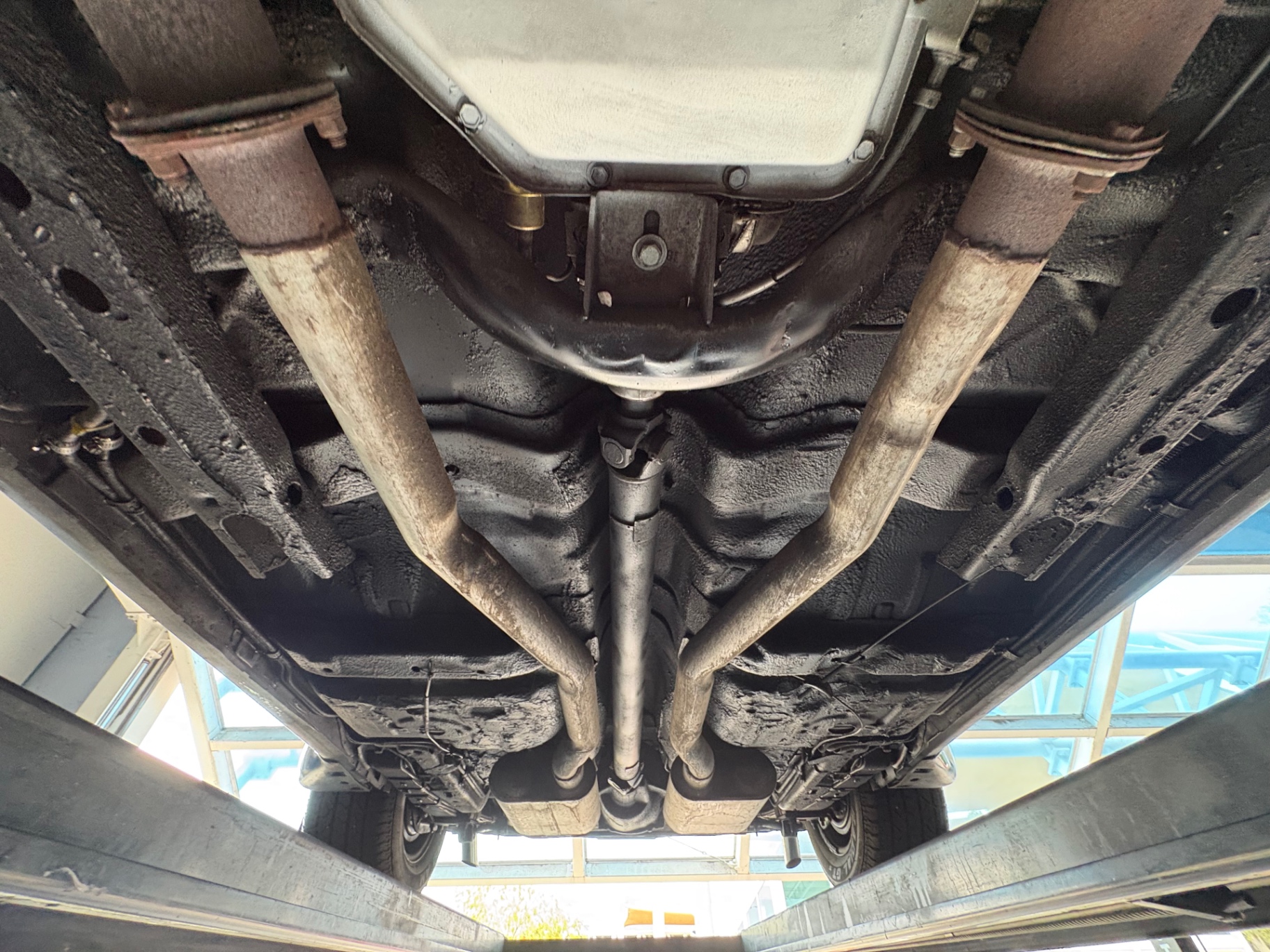
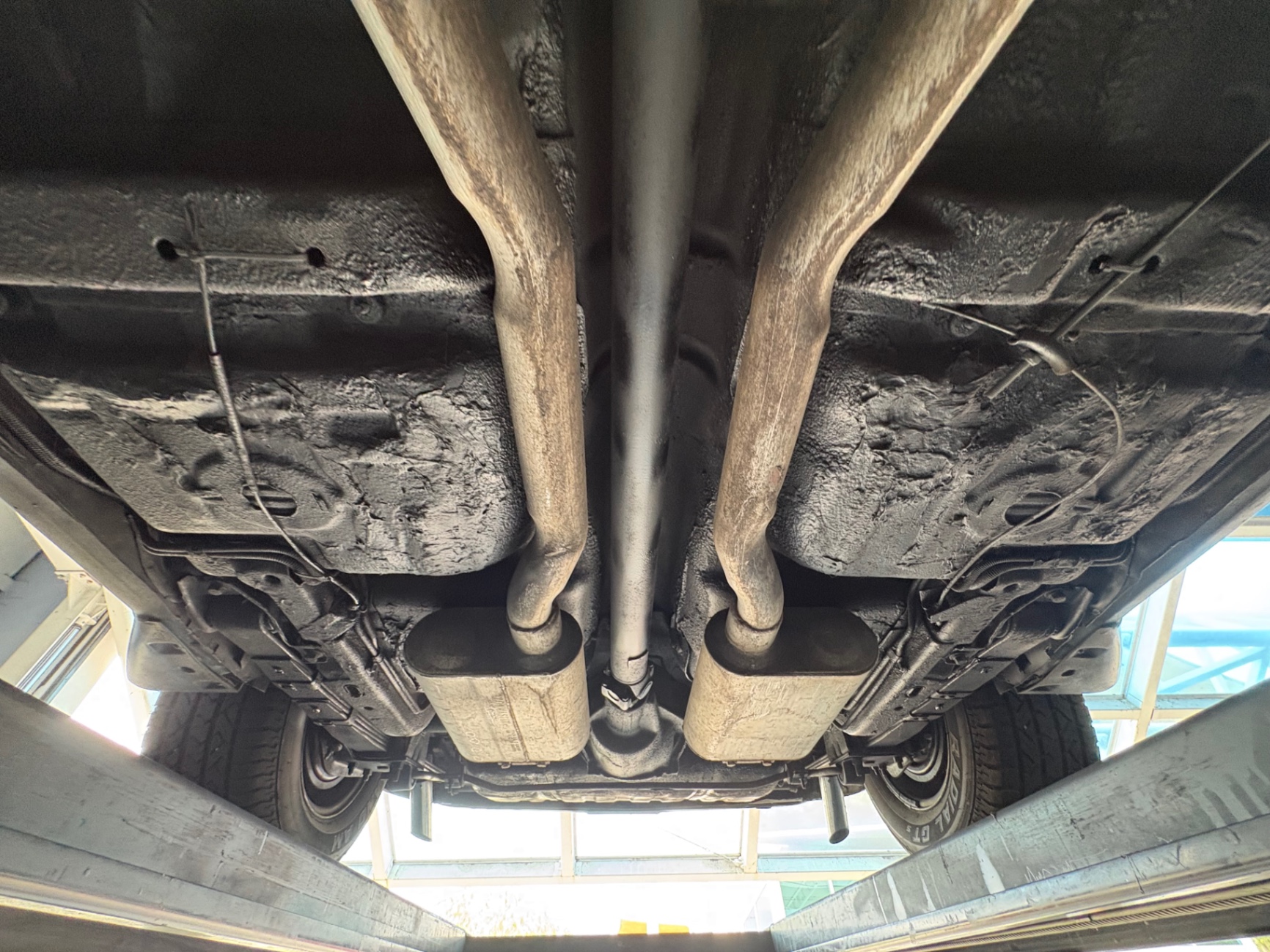
The undercarriage photos show a car that has lived in a climate that has been kind to it. The floor pans, framerails, and exhaust components visible from underneath show no significant rust or structural concerns — a meaningful detail for any buyer who has seen what road salt does to cars from northern states.
Conclusion
The 1979 Pontiac Firebird Trans Am has earned its place in the collector market on its own terms. It was the best-selling Trans Am of its generation, it carried the last of the real-displacement V8 engines before the 1980s brought further compression, and it remains one of the most visually complete expressions of what American performance looked like at the end of that era. This example — blue exterior, black interior, 403 V8, TH400, gold snowflake wheels, and a solid undercarriage — represents a driver-quality Trans Am that can be enjoyed as-is or built upon from a solid foundation. Cars in this condition and with this combination of features are becoming harder to source as the supply of honest, unmodified examples continues to shrink.
To schedule a time to see this 1979 Pontiac Firebird Trans Am in person, call Skyway Classics at 941-254-6608. We are located in Sarasota, Florida and are happy to answer questions, provide additional photographs, or arrange a pre-purchase inspection.
Disclaimer Information found on the website is presented as given to us by the owner of the car, whether on consignment or from the owner we bought it from. Some Photos, materials for videos, descriptions and other information are provided by the consignor/seller and is deemed reliable, but Skyway Classics does not warranty or guarantee this information. Skyway Classics is not responsible for information that may incorrect or a publishing error. The decision to purchase should be based solely on the buyers personal inspection of the vehicle or by a professional inspection service prior to offer or purchase being made.
1979 Pontiac Firebird Trans Am — 6.6L 403 V8, TH400, Blue over Black
Why This Car Is Special
The 1979 Pontiac Firebird Trans Am sits at an interesting crossroads in American automotive history. By 1979, the emissions and fuel economy squeeze of the mid-1970s had already taken a real toll on performance across the industry, yet the Trans Am remained one of the last credible performance cars you could walk into a dealership and buy. Pontiac sold over 117,000 Trans Ams for the 1979 model year — a record at the time — driven in no small part by the car's cultural moment following the 1977 film Smokey and the Bandit. That popularity has since made clean, honest 1979 Trans Ams increasingly hard to find in original, driver-quality condition.
This particular 1979 Pontiac Firebird Trans Am is equipped with the 6.6-liter 403 cubic inch V8, which is a detail worth understanding. In 1979, buyers who checked the box for the 6.6L engine received one of two different motors depending on where the car was built and what transmission was ordered. Cars equipped with the TH400 three-speed automatic received the Oldsmobile-sourced 403 cubic inch V8, while the four-speed manual cars got the Pontiac-built 400. This car has the TH400, which confirms the 403 Olds mill under the hood — and that combination is actually well-regarded. The 403 is a torquey, durable engine that responds well to basic modifications and has a strong following among Firebird enthusiasts. The TH400 is one of GM's most proven automatic transmissions, known for its strength and longevity. Together they make for a straightforward, reliable drivetrain that has held up well over the decades.
The VIN on this car decodes to a 1979 Pontiac Firebird (model code 87) built in the Norwood, Ohio assembly plant, with the 6.6L V8 engine designation confirmed in the powertrain position. Norwood-built Firebirds are well documented among collectors and the plant was one of GM's primary F-body production facilities throughout the second-generation run.
Features List
- 6.6L 403 cubic inch Oldsmobile V8 - TH400 3-Speed Automatic Transmission - Trans Am Badging - Gold Snowflake Wheels - Dashboard Tachometer - Center Console - Factory Bucket Seats - Factory Air Conditioning - Power Steering - Woodgrain Dash Trim - Firebird Door Emblems - Dual Exhaust - Black Vinyl Top - Black Vinyl Interior
Mechanical
Under the hood, the 403 cubic inch V8 is a familiar sight to anyone who spent time around late-1970s GM performance cars. Oldsmobile developed this engine as a displacement-efficient way to maintain torque output while meeting tightening federal emissions standards. In Trans Am trim, it was rated at 185 horsepower in 1979 — a number that looks modest on paper but translates into a car that moves with authority in real-world driving, especially given the 403's strong low-end torque characteristics. The aftermarket air cleaner visible in the engine bay photographs is a common and functional upgrade on these cars, improving airflow over the stock unit.
The TH400 three-speed automatic was one of the most robust transmissions GM produced during this era. Originally developed in the mid-1960s, it was used across a wide range of GM vehicles through the end of the 1970s and is well-supported by the rebuilding and parts community today. Power steering rounds out the driving experience, keeping effort manageable while maintaining enough road feel that the car stays engaging on longer drives. The dual exhaust setup gives the 403 a proper exhaust note and helps the engine breathe more freely than the single-exit configurations used on lower trim Firebirds.
Interior
The black vinyl interior is correct and period-appropriate for the 1979 Pontiac Firebird Trans Am. Factory bucket seats sit up front, flanking a center console that houses the shifter for the TH400. These consoles were a standard Trans Am feature and give the cabin a focused, driver-oriented layout. The woodgrain dash trim adds visual contrast against the black interior and was a popular factory option that Pontiac offered to blend the sporty feel of the Trans Am with a slightly more refined look inside.
The tachometer is mounted in the instrument cluster, which was standard on the Trans Am. Knowing your engine speed in a car like this is practical, not decorative — the TH400 responds well to manual gear hold strategies and knowing where the 403 is in its powerband matters if you want to use the car the way it was intended. The Firebird door emblems carry through to the interior panels, with the red and gold bird logo visible on each door card. The air conditioning system is present, which in Florida's climate is not a luxury — it is a necessity for anyone who plans to actually drive this car.
Exterior
The blue exterior on this 1979 Pontiac Firebird Trans Am is a high-visibility color that suits the second-generation body lines well. The sheetmetal on the second-gen Firebird — designed by Bill Porter and John Schinella and introduced for 1970 — held up remarkably well through the entire production run, and the 1979 cars benefited from refinements made over the preceding decade. The front fascia with its twin port air intakes and quad rectangular headlights gives the car a wide, low presence on the road.
The black vinyl top adds a two-tone element that was popular on late-1970s personal luxury and performance cars. On a blue car with gold wheels, it creates a color combination with a clear period identity. The gold snowflake wheels are one of the most recognized visual signatures of the second-generation Trans Am. Those five-spoke cast aluminum wheels were introduced in the mid-1970s and became closely associated with the Trans Am's image. They wear well, resist corrosion better than many steel wheel and hubcap combinations from the era, and remain highly sought after by restorers and collectors today. The Trans Am badging runs along the lower body stripe, and the dual exhaust exits are visible at the rear — functional details that confirm this car's specification at a glance.
The undercarriage photos show a car that has lived in a climate that has been kind to it. The floor pans, framerails, and exhaust components visible from underneath show no significant rust or structural concerns — a meaningful detail for any buyer who has seen what road salt does to cars from northern states.
Conclusion
The 1979 Pontiac Firebird Trans Am has earned its place in the collector market on its own terms. It was the best-selling Trans Am of its generation, it carried the last of the real-displacement V8 engines before the 1980s brought further compression, and it remains one of the most visually complete expressions of what American performance looked like at the end of that era. This example — blue exterior, black interior, 403 V8, TH400, gold snowflake wheels, and a solid undercarriage — represents a driver-quality Trans Am that can be enjoyed as-is or built upon from a solid foundation. Cars in this condition and with this combination of features are becoming harder to source as the supply of honest, unmodified examples continues to shrink.
To schedule a time to see this 1979 Pontiac Firebird Trans Am in person, call Skyway Classics at 941-254-6608. We are located in Sarasota, Florida and are happy to answer questions, provide additional photographs, or arrange a pre-purchase inspection.
Disclaimer Information found on the website is presented as given to us by the owner of the car, whether on consignment or from the owner we bought it from. Some Photos, materials for videos, descriptions and other information are provided by the consignor/seller and is deemed reliable, but Skyway Classics does not warranty or guarantee this information. Skyway Classics is not responsible for information that may incorrect or a publishing error. The decision to purchase should be based solely on the buyers personal inspection of the vehicle or by a professional inspection service prior to offer or purchase being made.
1979 Pontiac
Firebird Trans Am
Why Choose Skyway Classics?
Explore our curated inventory of classic and collector cars—thoughtfully selected, ready to drive, and supported by experts who make ownership simple.
Expert Curation
Every vehicle is hand-selected by our experts for quality, authenticity, and investment potential.
Fast Transactions
Streamlined buying and selling process with quick financing and immediate delivery options.
Only National Dealer With Classic Service & Repair
We’re the only national dealership that services and repairs the classics we sell—before and after the sale.
Nationwide Network
Access to our extensive network of collectors, restorers, and classic car enthusiasts nationwide.
Concierge Ownership Support
From financing and insurance to paperwork, shipping, and titling—we handle the details so you can enjoy the drive.
Passion-Driven Service
We're classic car enthusiasts first, providing personalized service with genuine passion for the hobby.