
1980 Chevrolet
Camaro Z28
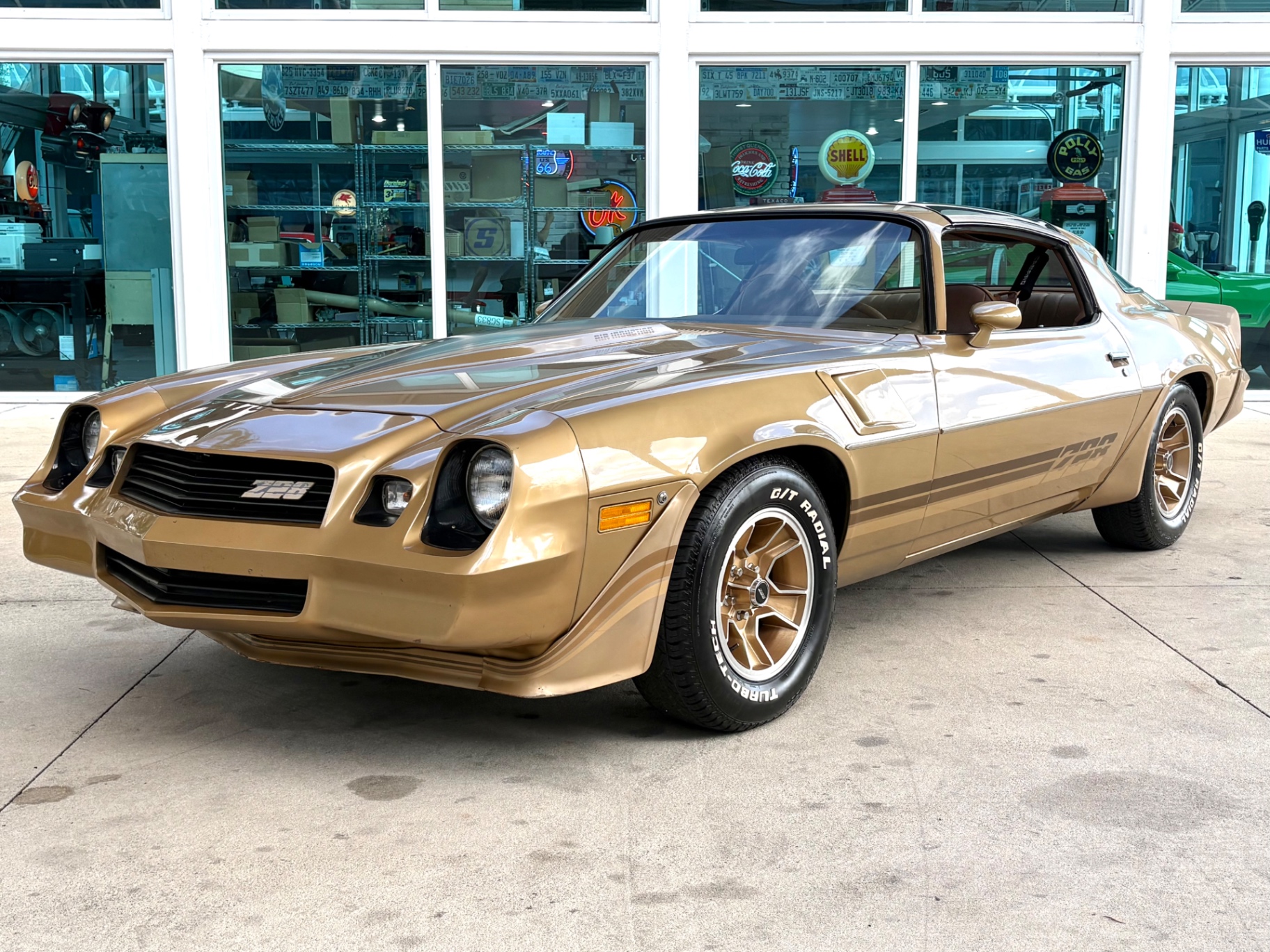
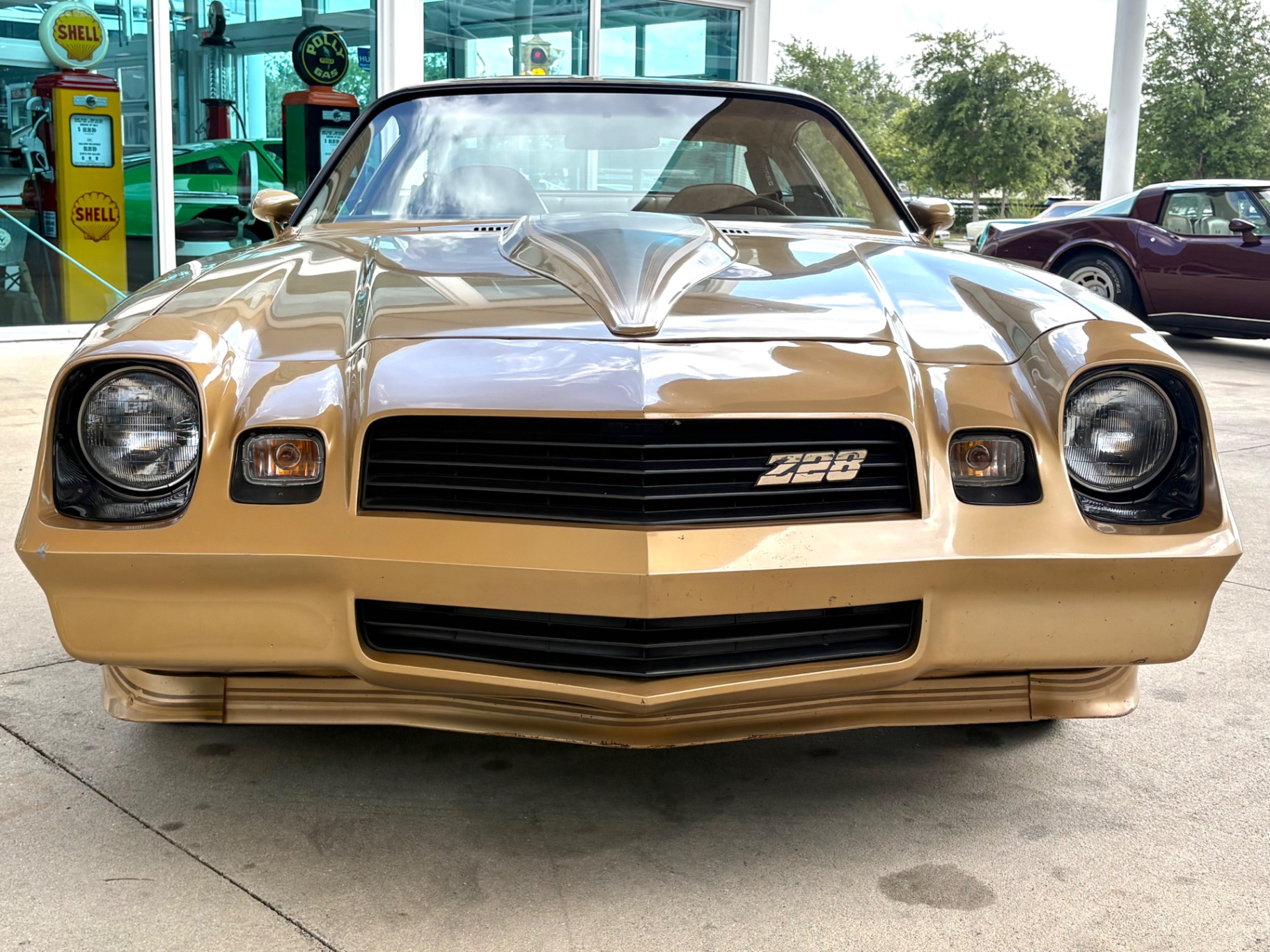
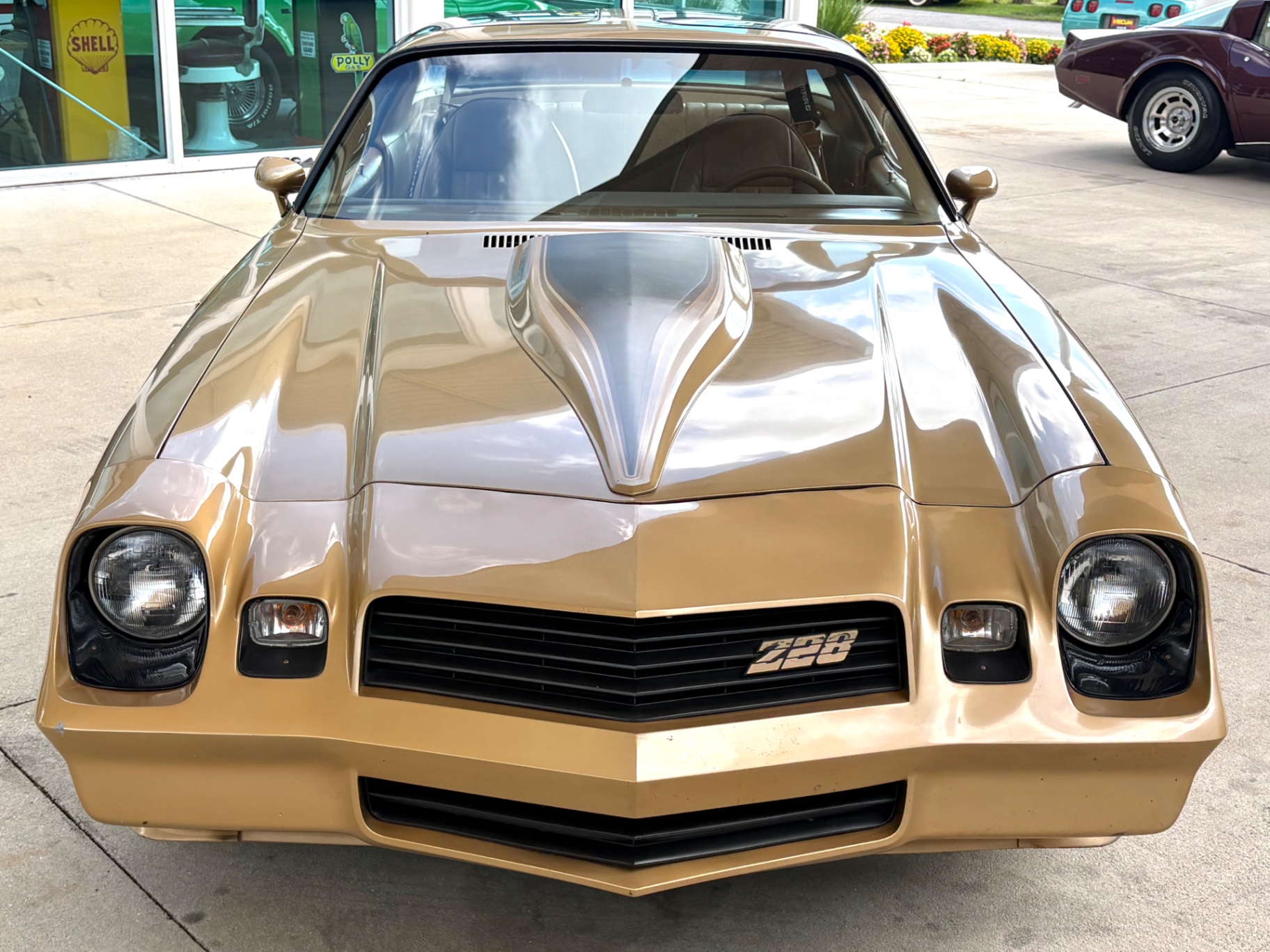
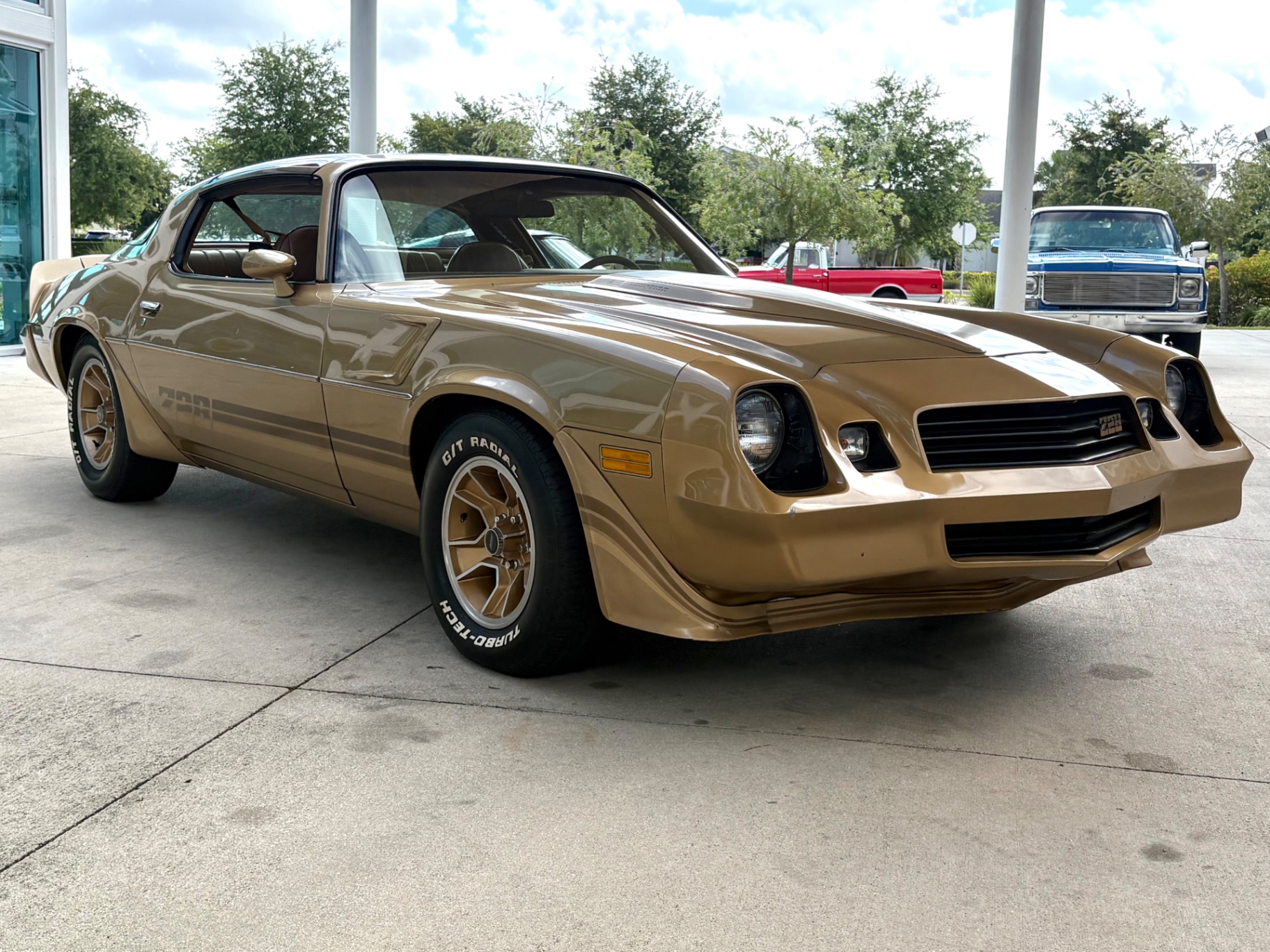
1980 Chevrolet Camaro Z28 — 350ci LM1 V8, Glass T-Tops, Camel Tan Leather, Solid Undercarriage
Why This Car Is Special
The 1980 Chevrolet Camaro Z28 occupies a complicated but genuinely interesting place in American muscle car history. By 1980, emissions regulations and insurance pressures had already defanged most of Detroit's performance lineup, yet the Z28 managed to survive that era with more character than most of its contemporaries. The second-generation Camaro body — introduced for 1970 and running through 1981 — was by 1980 one of the longest-running and most refined pony car platforms on the market. Chevrolet had spent a decade sorting out the chassis, the sheetmetal, and the interior packaging, and by the end of the run, these cars had a tightness and presence that newer designs from the same period simply couldn't match.
The Z28 was actually dropped after the 1974 model year due to tightening emissions and fuel economy concerns, then brought back for 1977 in response to sustained consumer demand. By 1980, it had found its footing again as a performance-oriented package built around the 5.7-liter LM1 350 cubic inch V8. That engine was not the high-compression screamer of the early 1970s, but it was a proven, durable small-block with real displacement and a dual exhaust setup that gave it a tone and throttle response the four- and six-cylinder alternatives of the day couldn't approach.
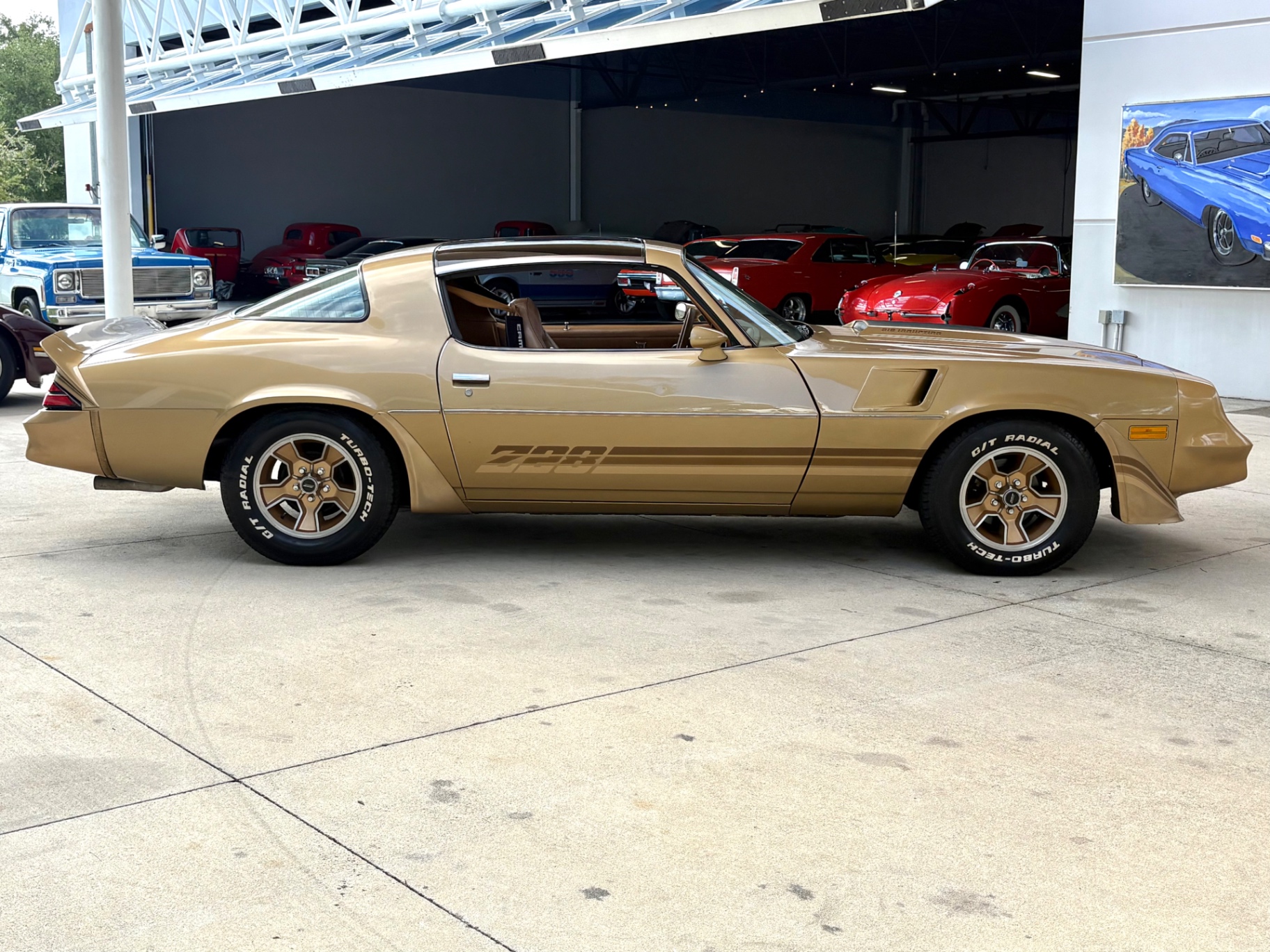
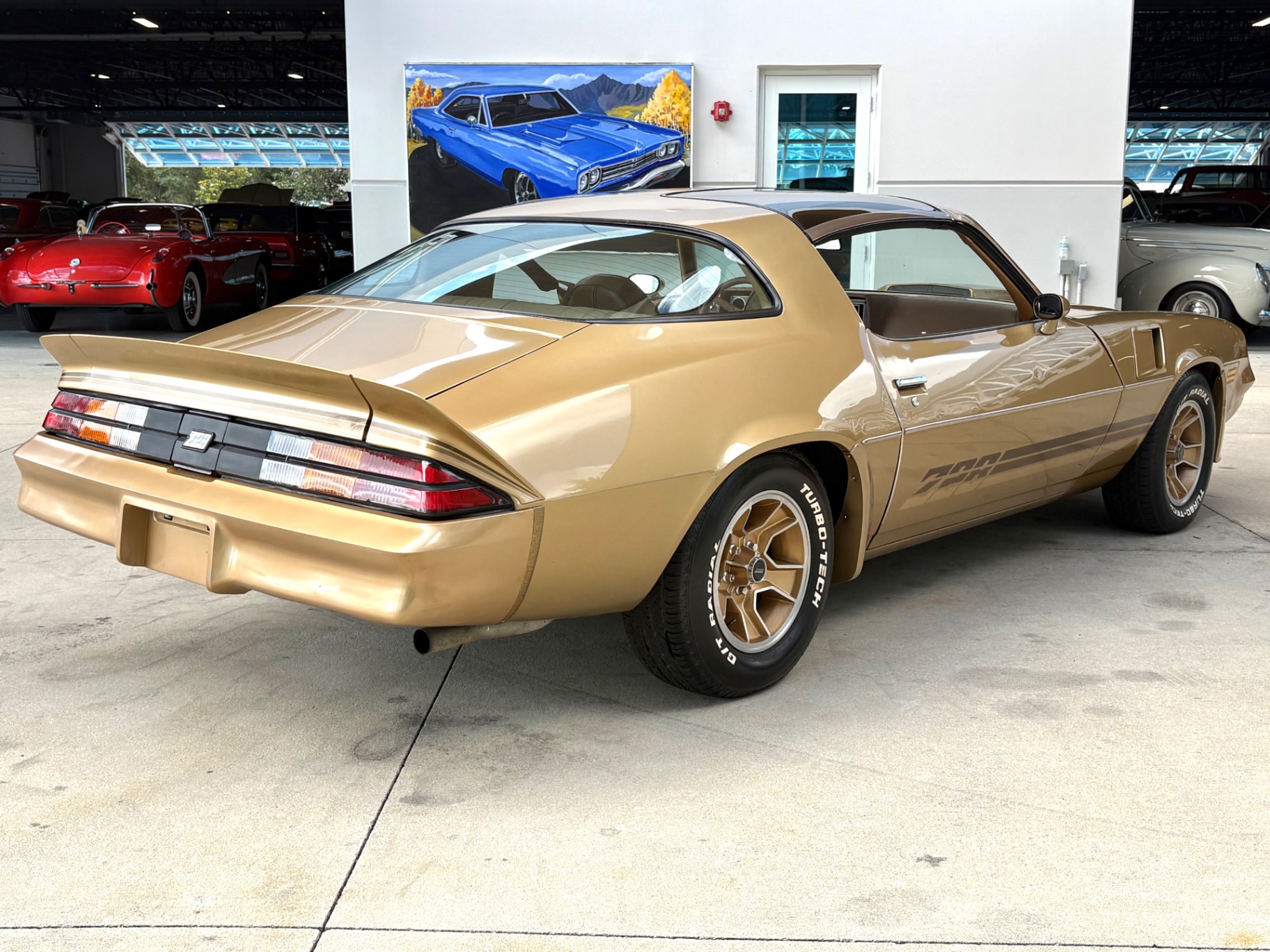
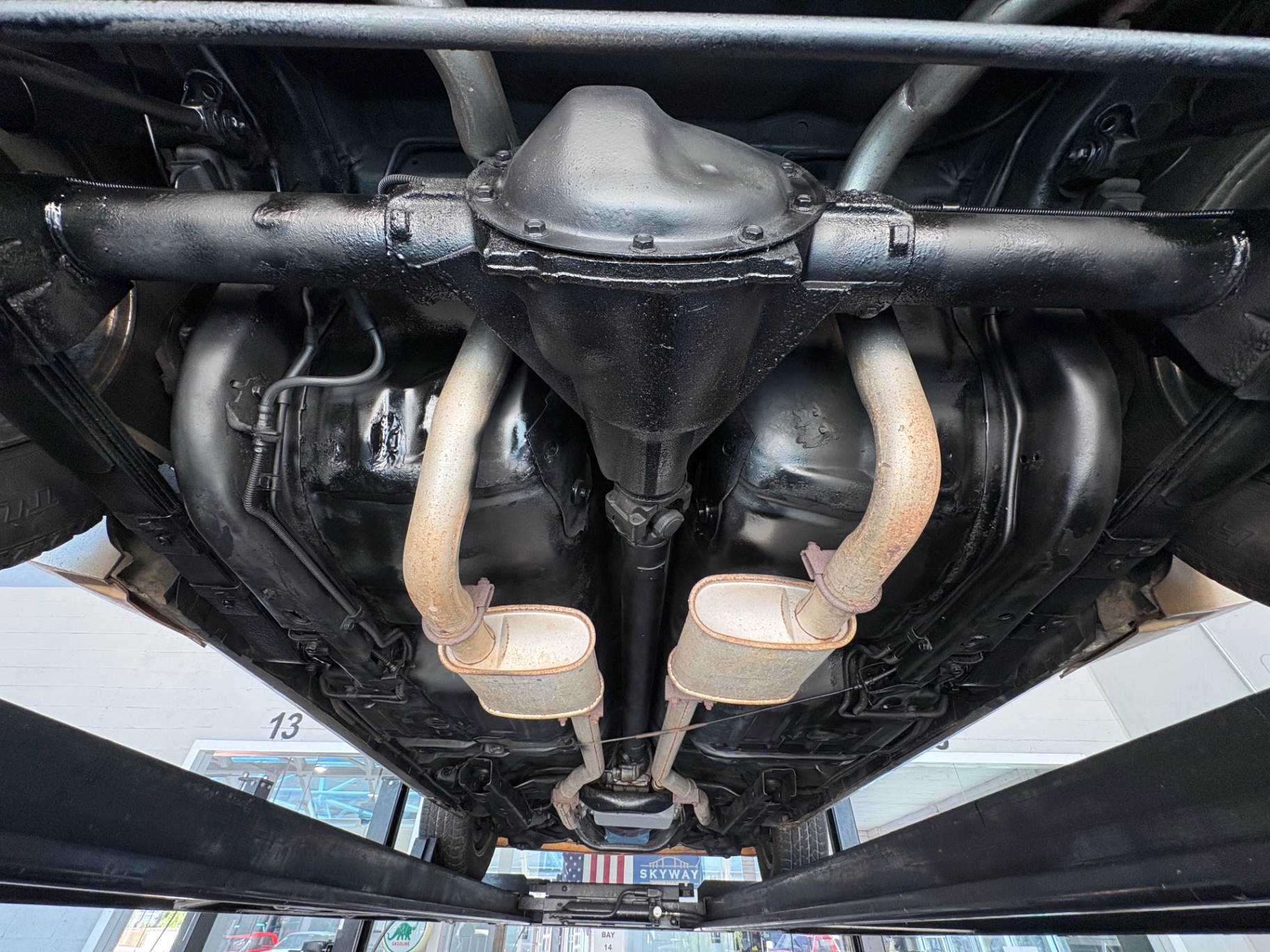
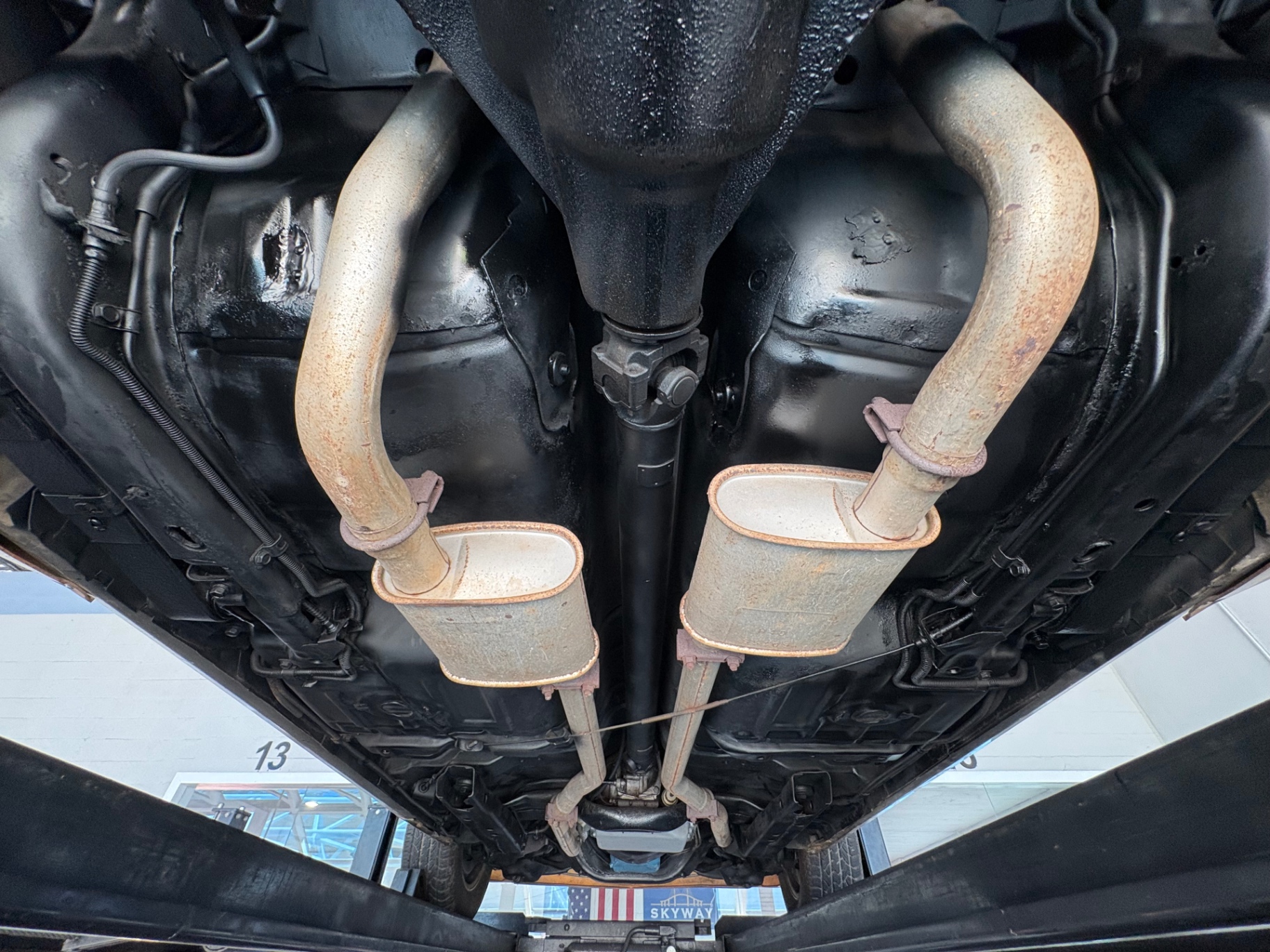
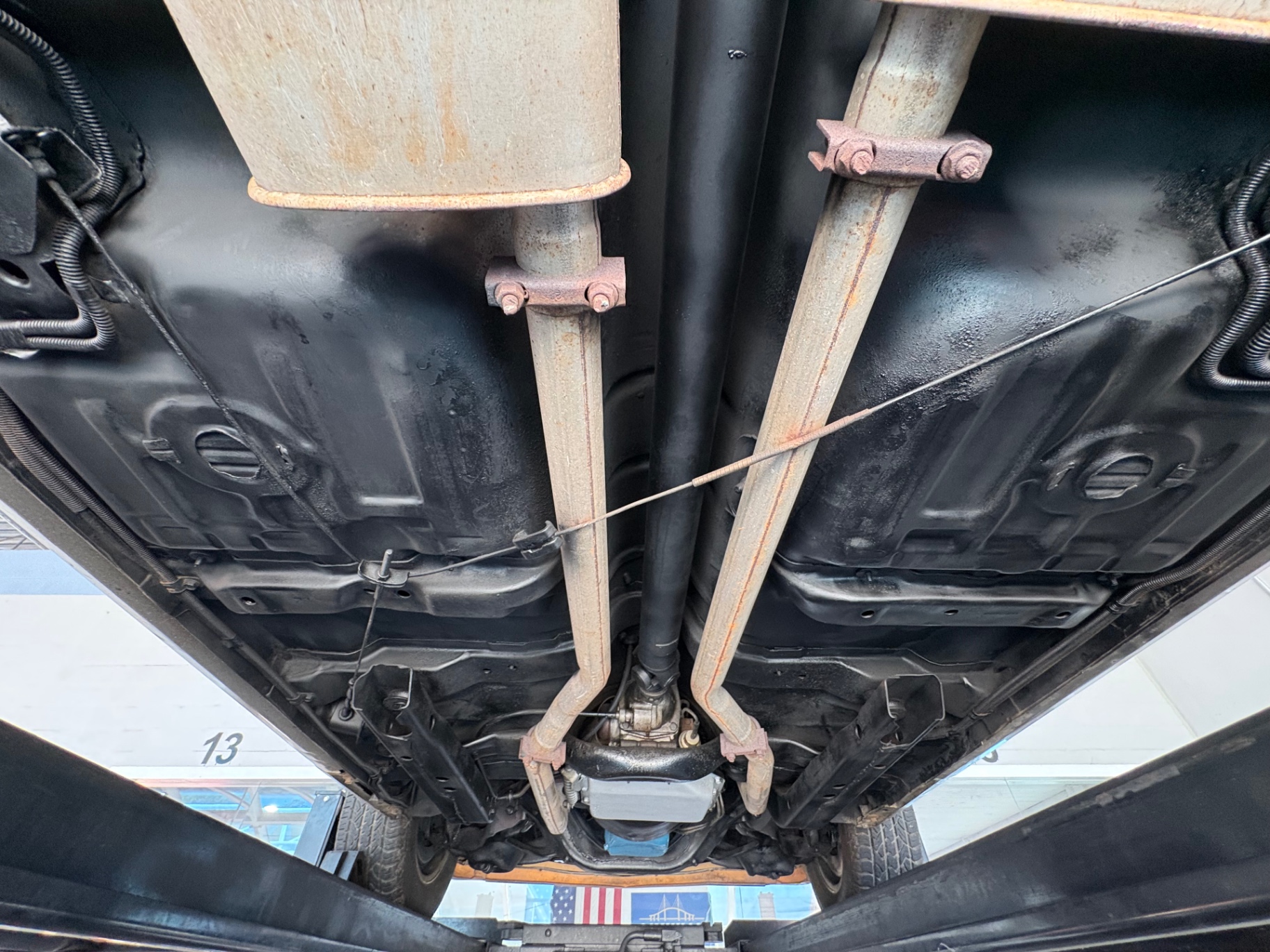
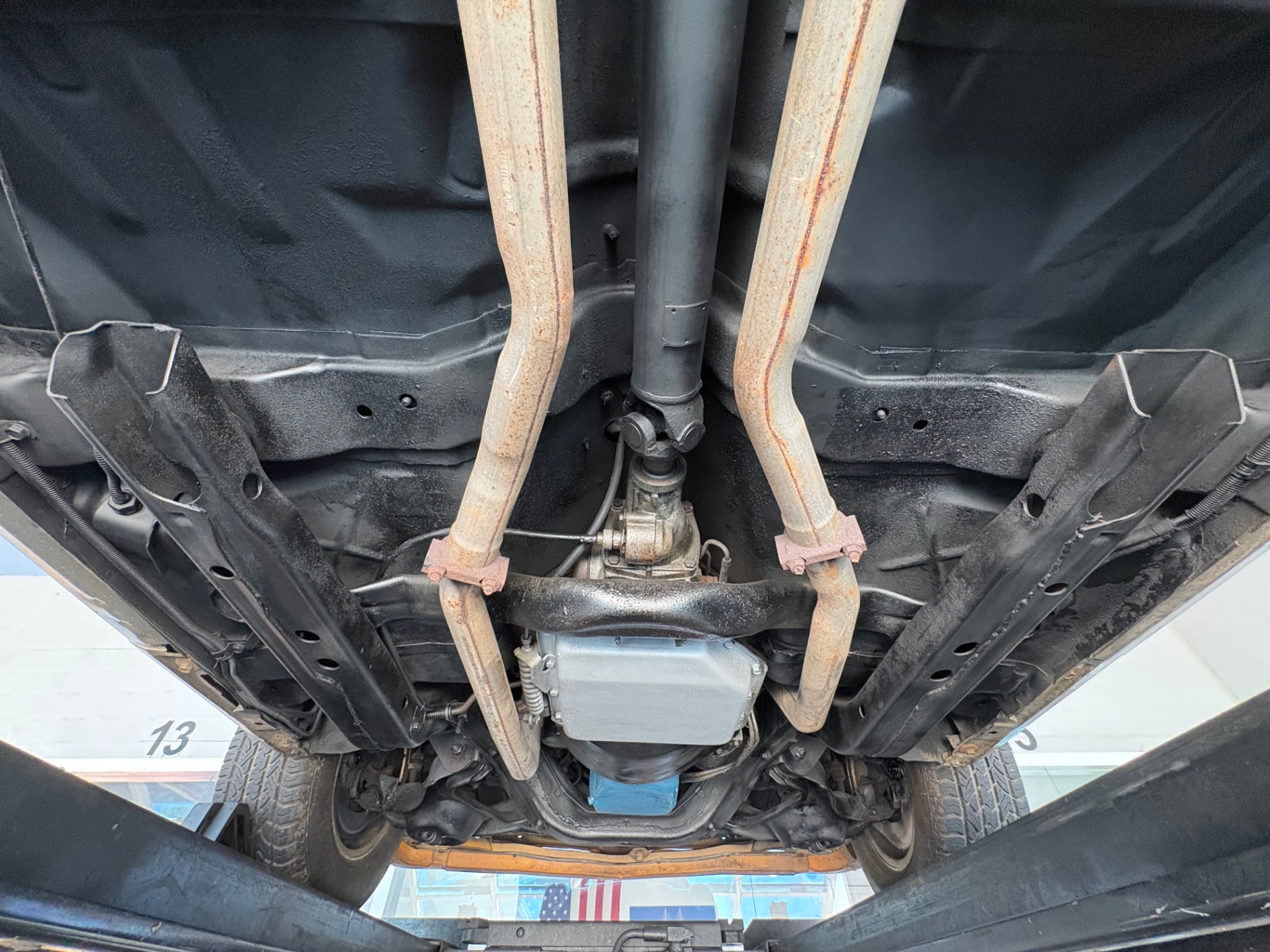
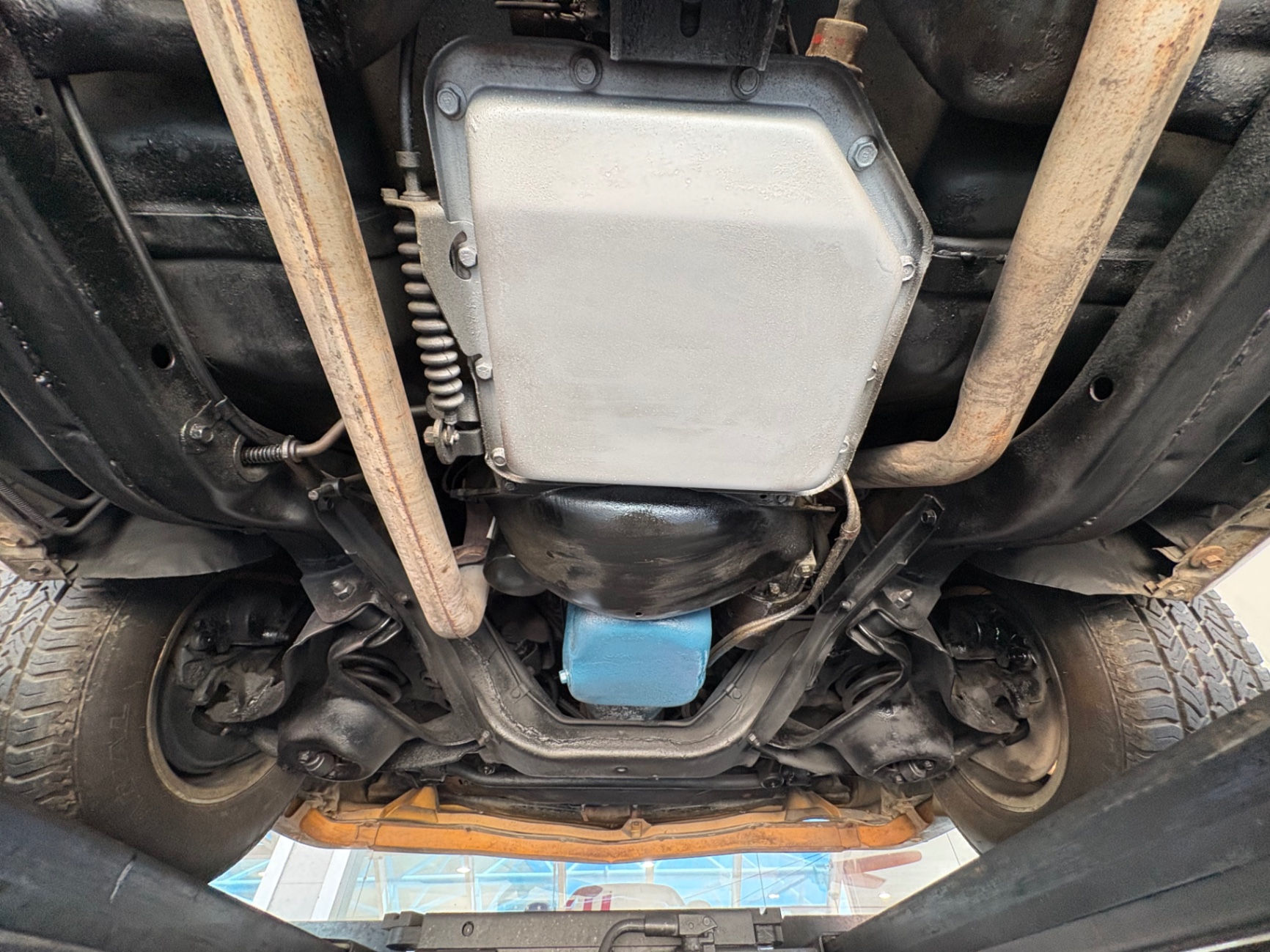
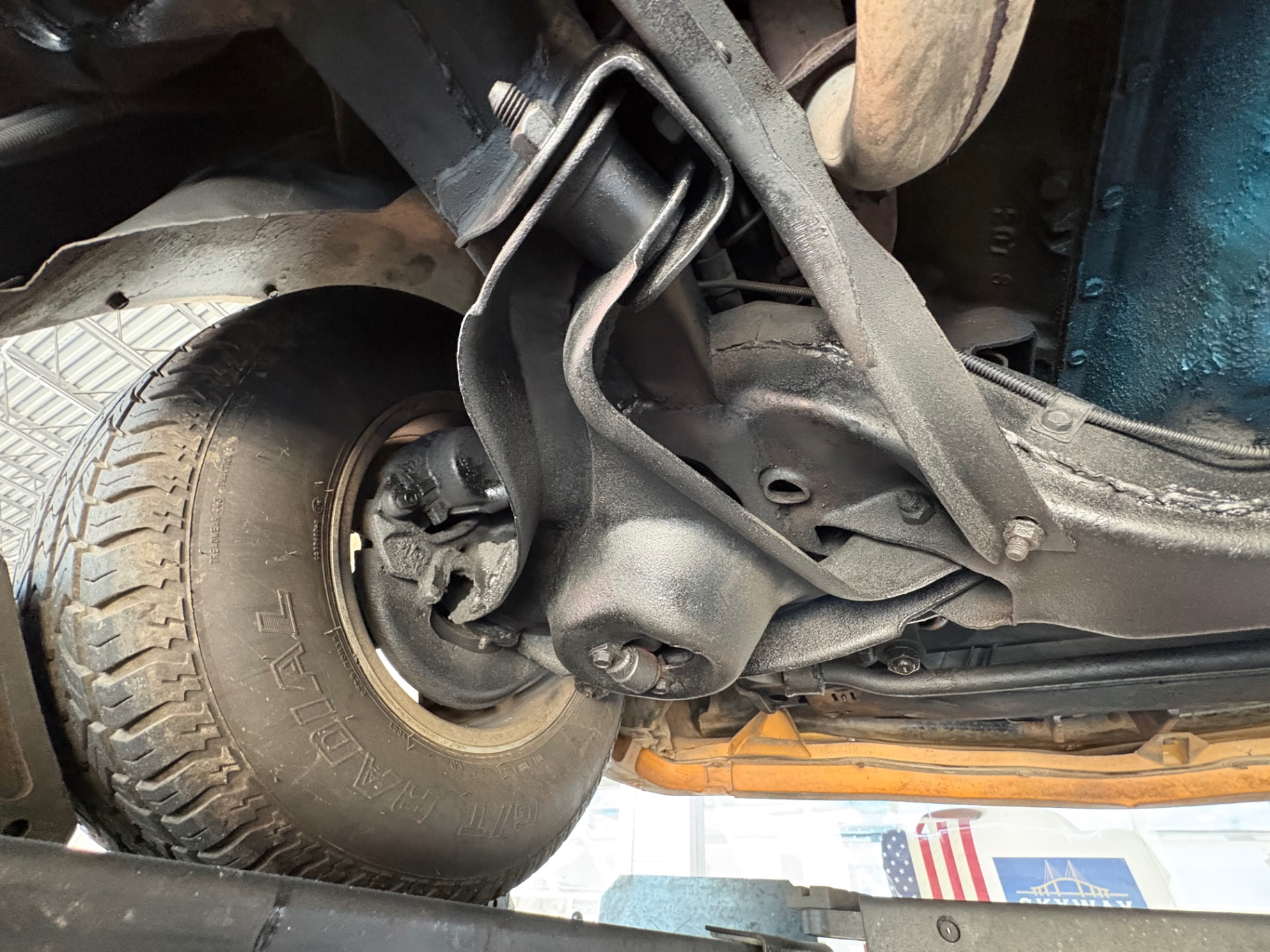
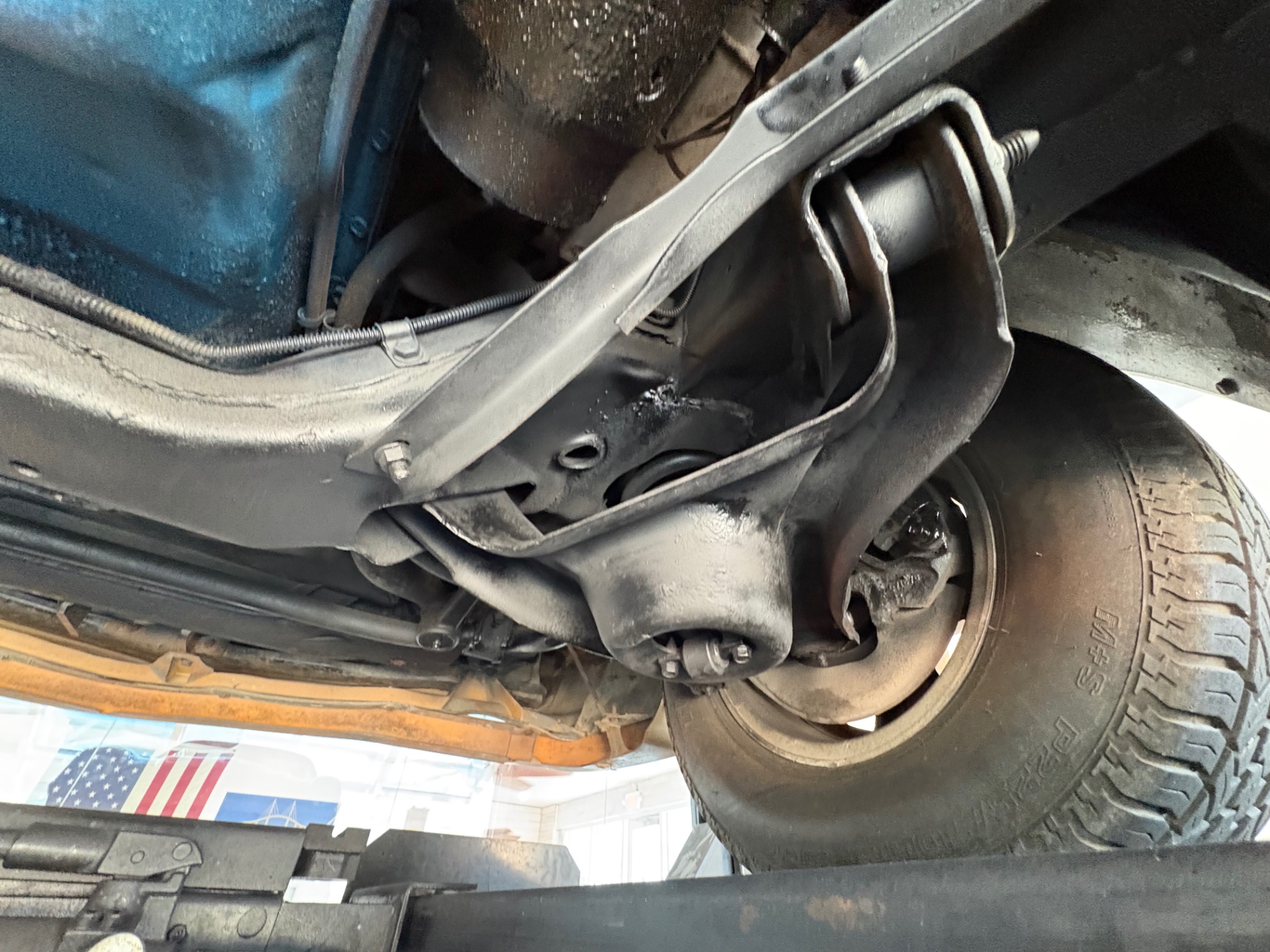
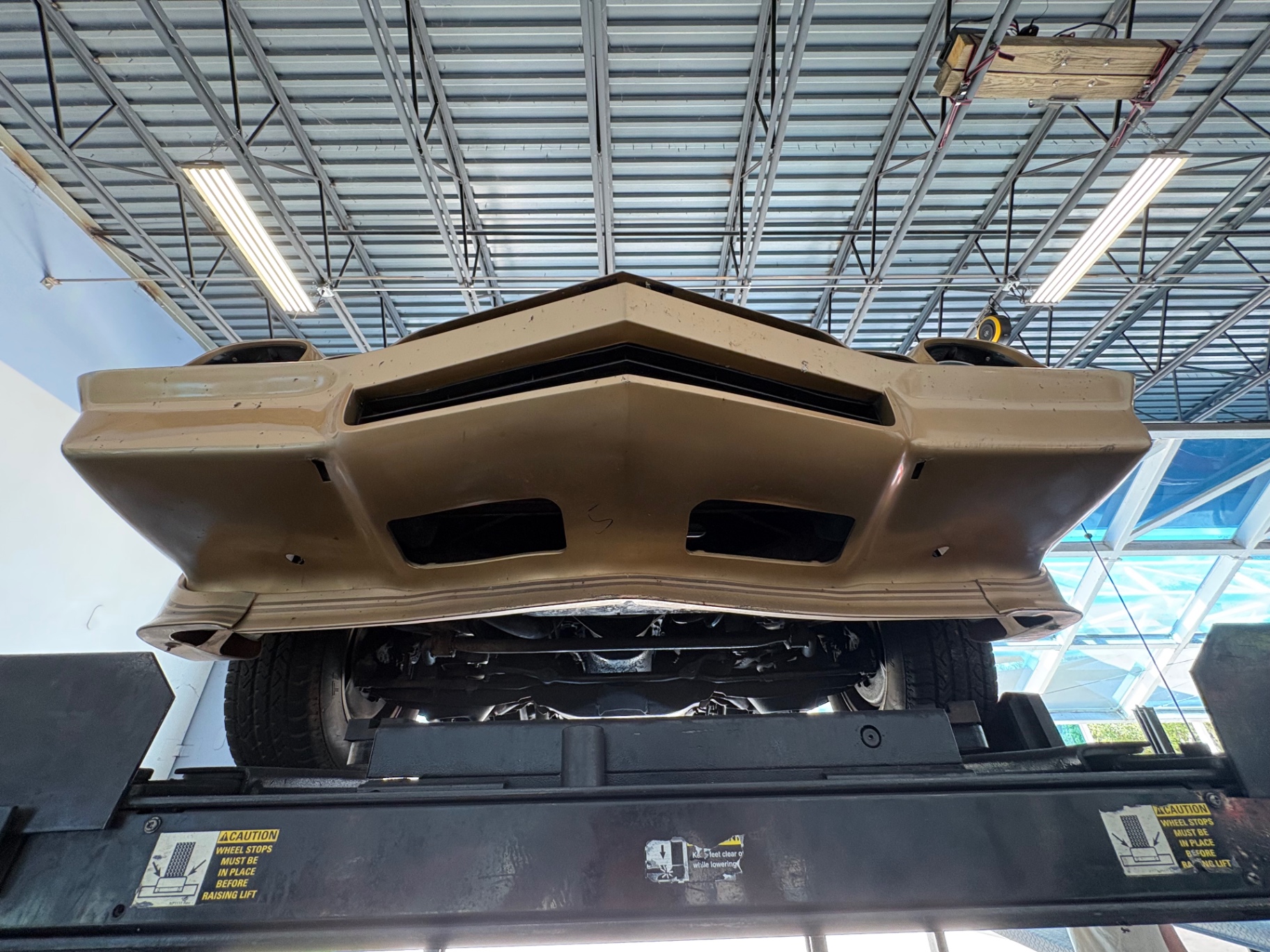
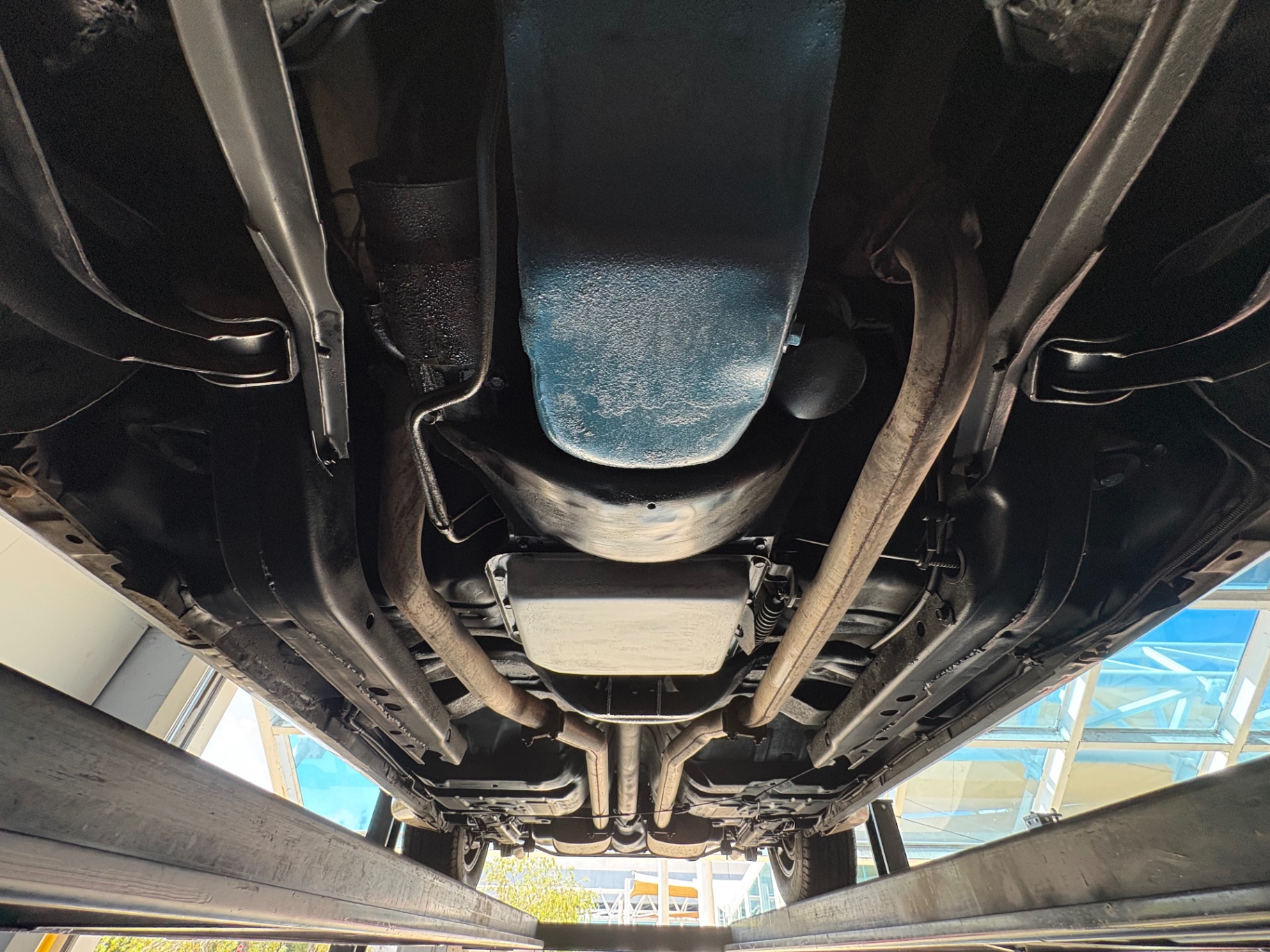
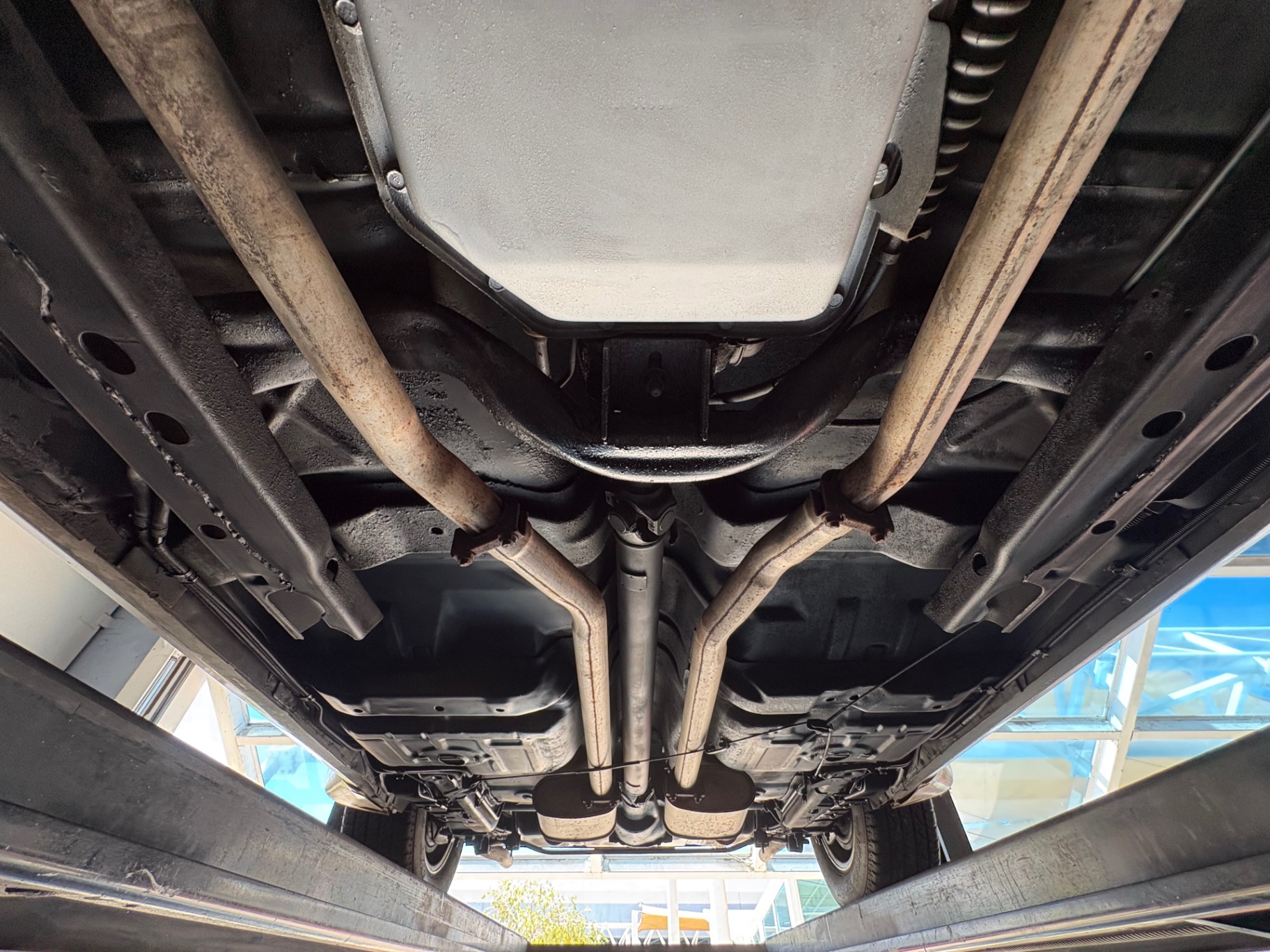
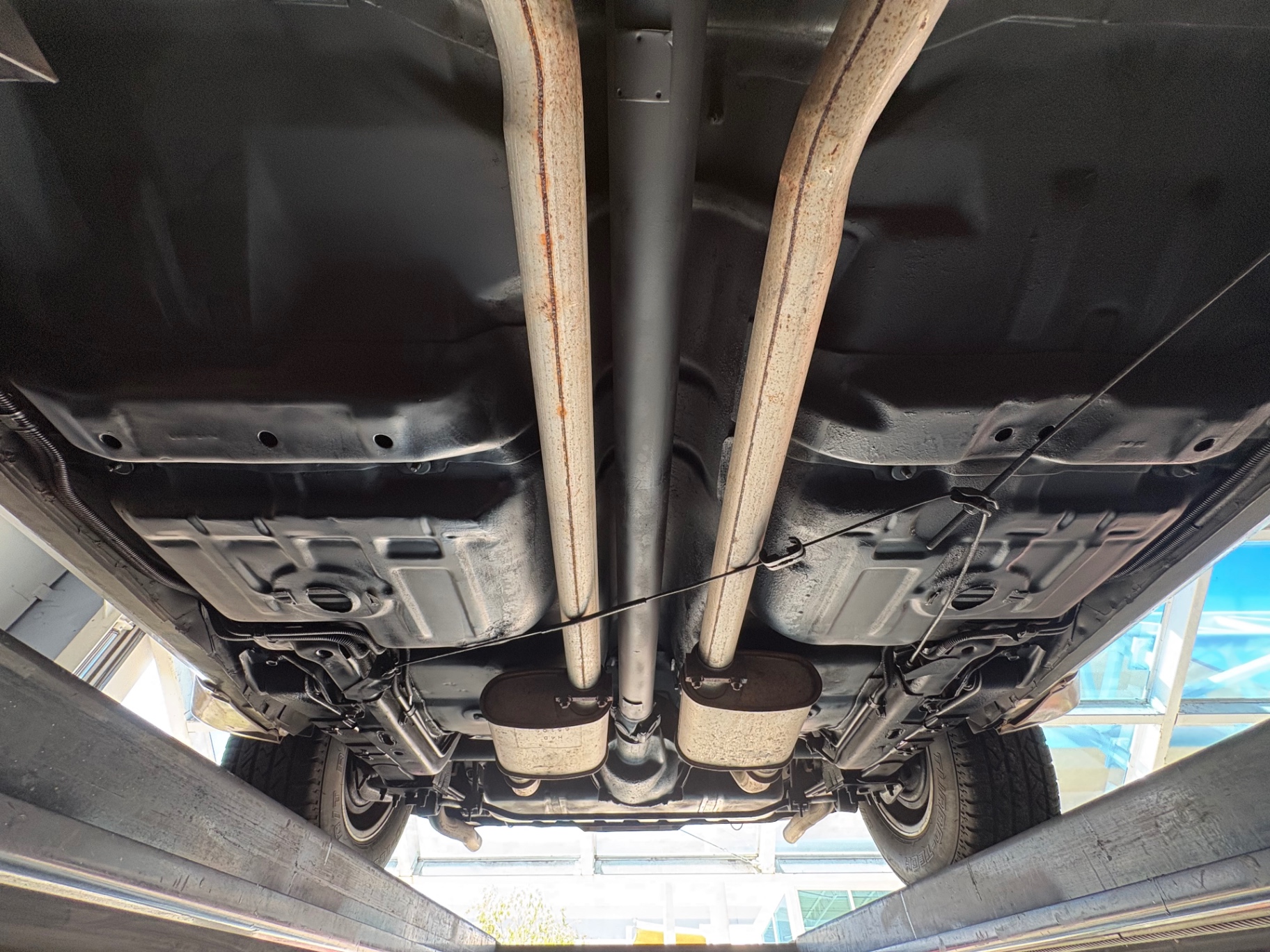
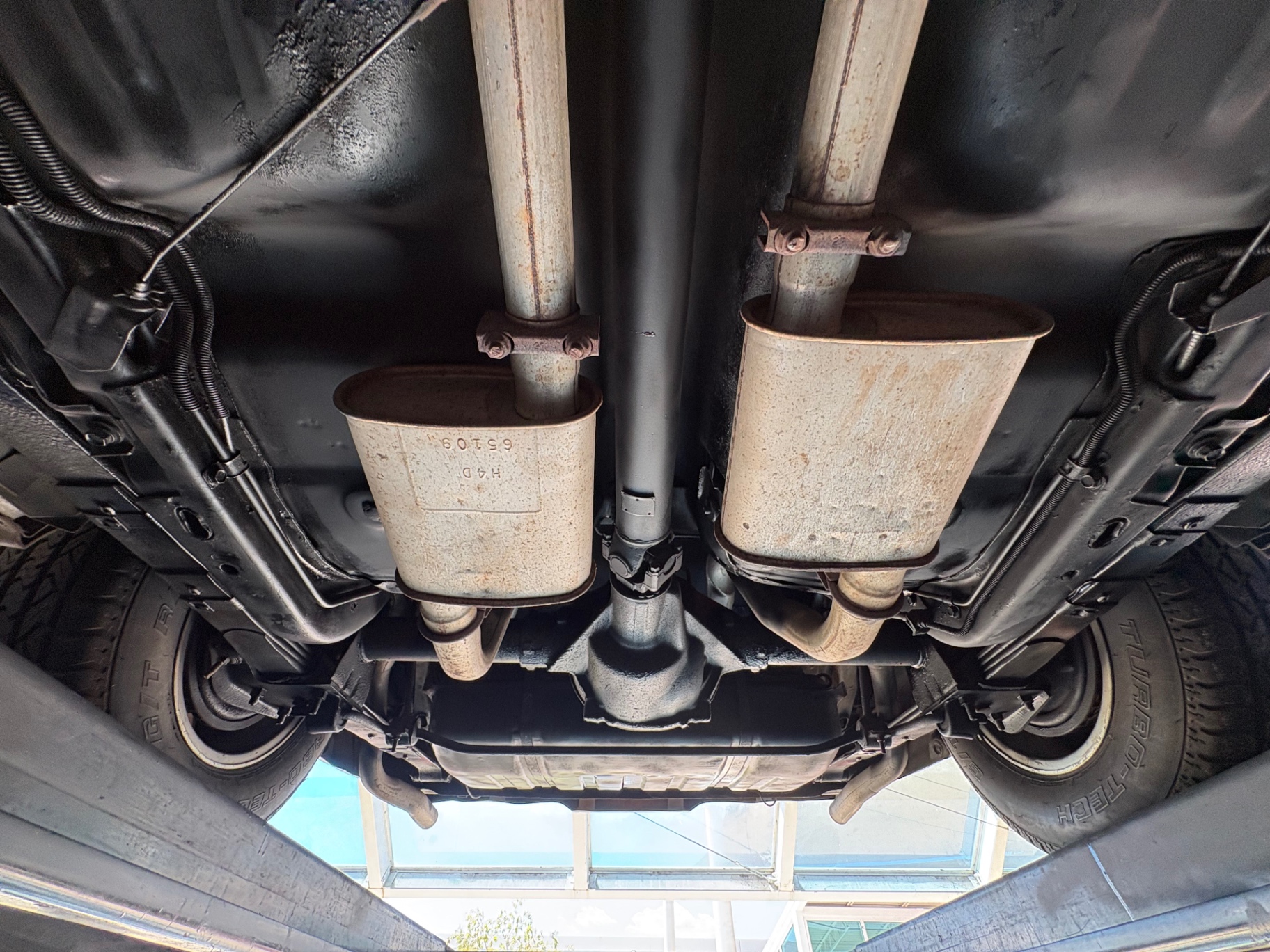
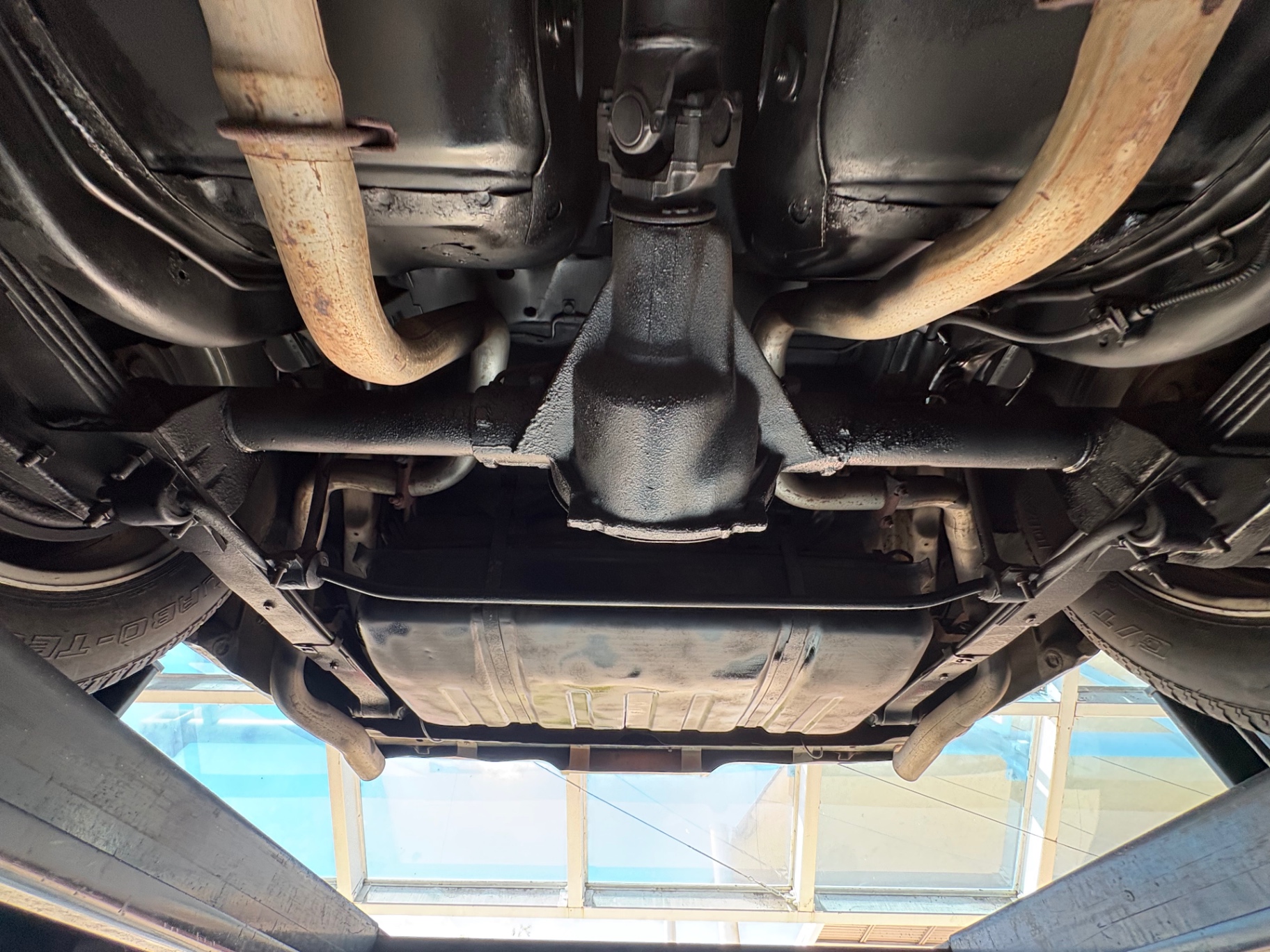
This particular 1980 Chevrolet Camaro Z28 presents in gold over a camel tan leather interior, which is one of the more period-correct and visually cohesive color combinations available on the car that year. The gold aluminum wheels, Z28 graphics package, front air dam, and rear spoiler all confirm this as a correctly configured Z28, not a base Camaro with badges added later. The undercarriage photos tell a significant story — the floorpans, framerails, and rear subframe are solid and well-preserved, which is the first thing any experienced buyer should verify on a 45-year-old unibody car. This one passes that test.
Features List
- 5.7-Liter 350ci LM1 V8 Engine - 3-Speed Automatic Transmission - Glass T-Tops - Camel Tan Leather Bucket Seats - Center Console - Z28 Sport Steering Wheel with Z28 Horn Badge - Tachometer, Voltmeter, Temperature Gauge, Electric Clock, Fuel Gauge - Dual Exhaust with Resonators - Gold Aluminum Alloy Wheels - Front Air Dam - Rear Spoiler - Z28 Graphics Package and Badging Throughout - Air Conditioning - Heating System with Flow-Through Ventilation - Power Steering - Power Brakes with Front Disc Brakes - Power Windows - Power Door Locks - Heavy-Duty Radiator - Concealed Windshield Wipers - Upgraded Aftermarket Stereo - Solid Undercarriage
Mechanical
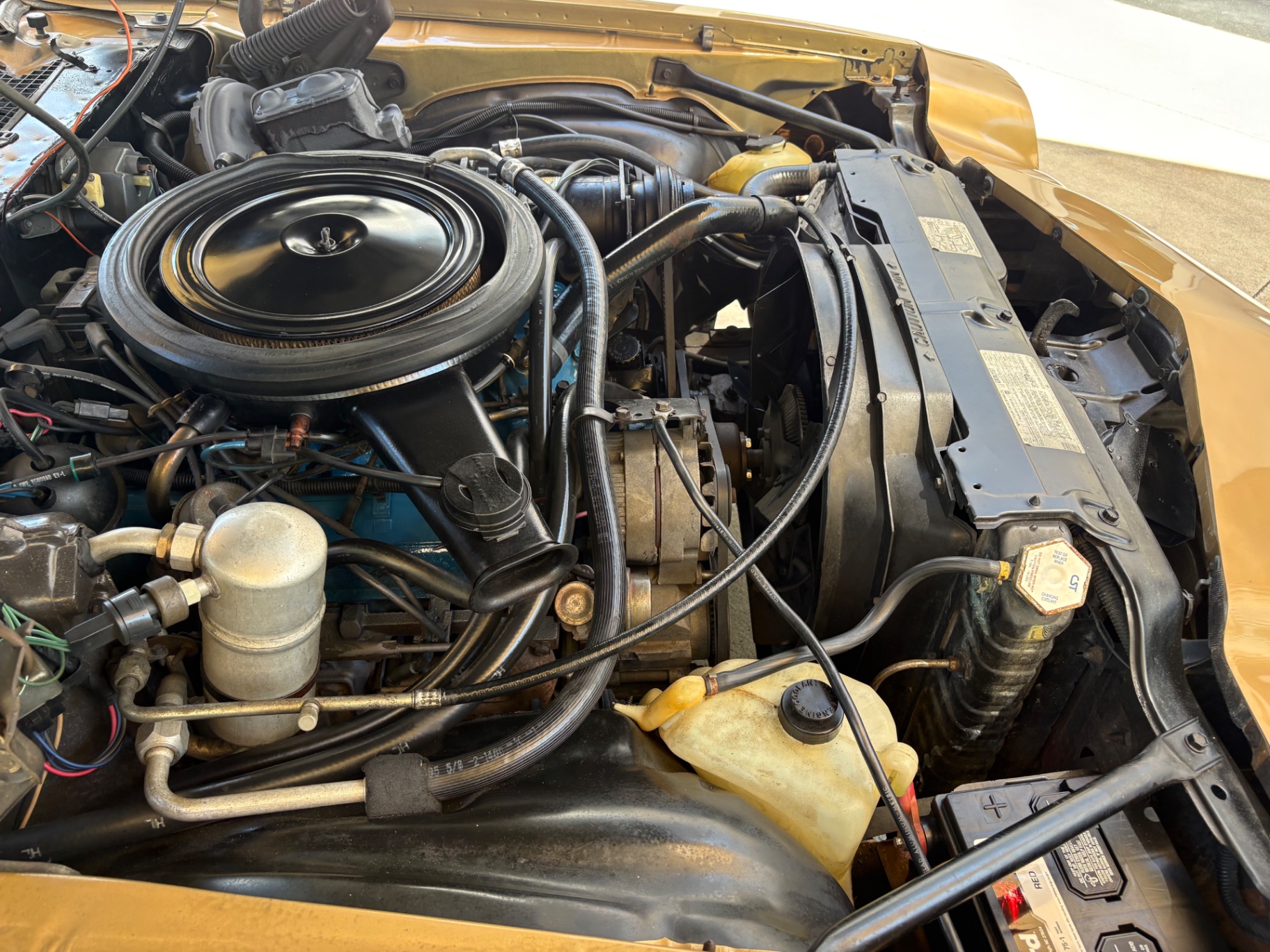
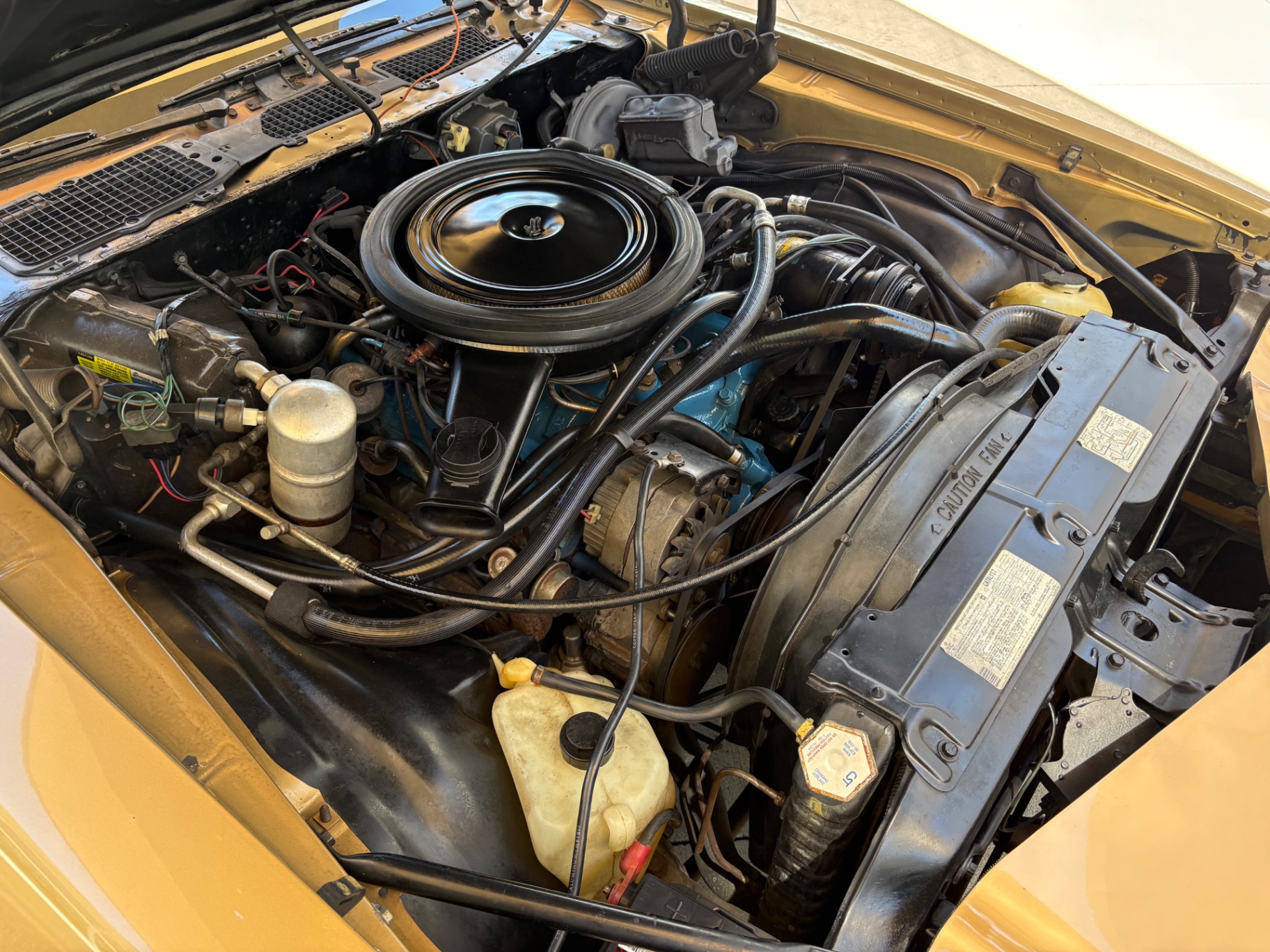
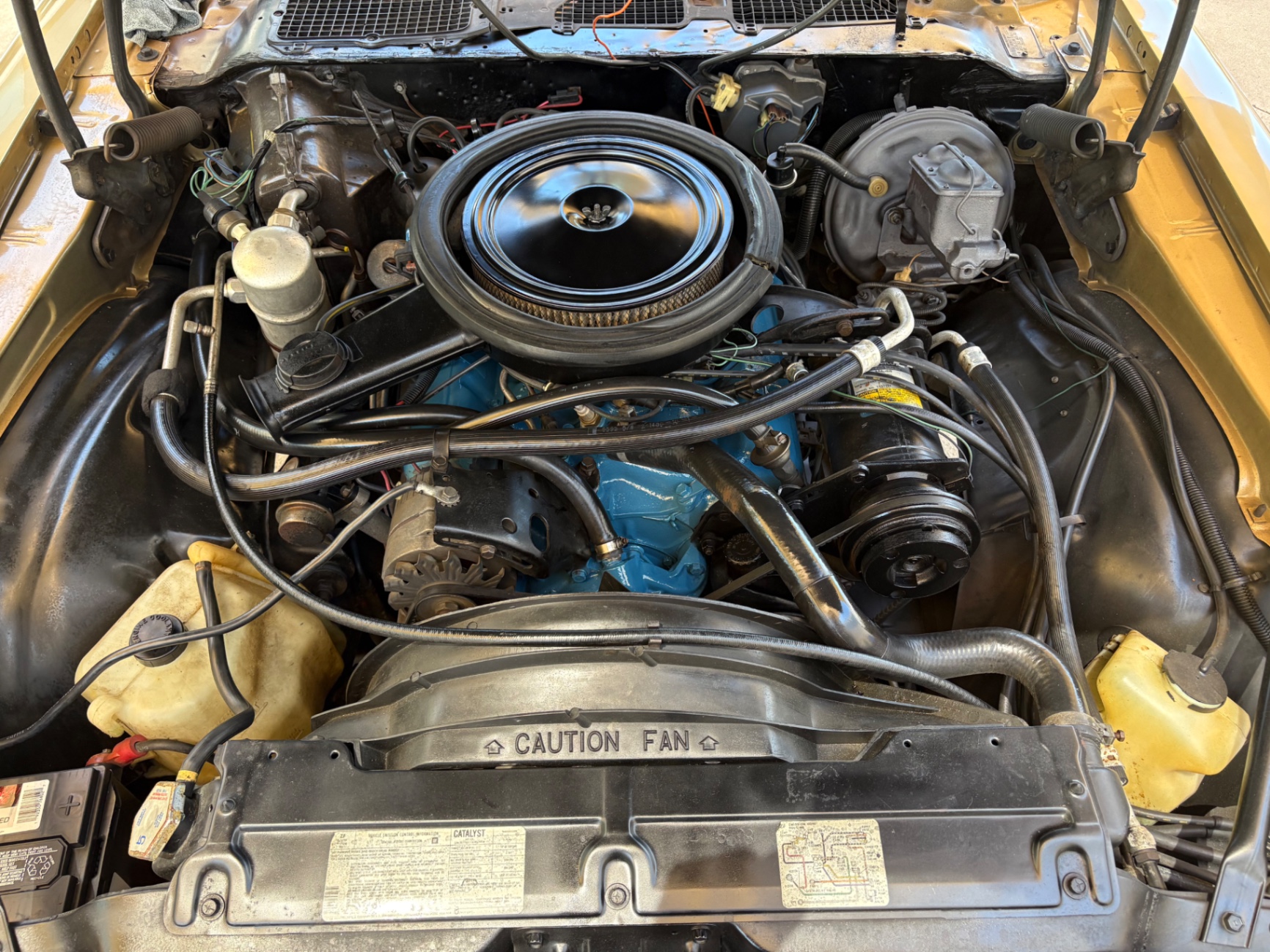
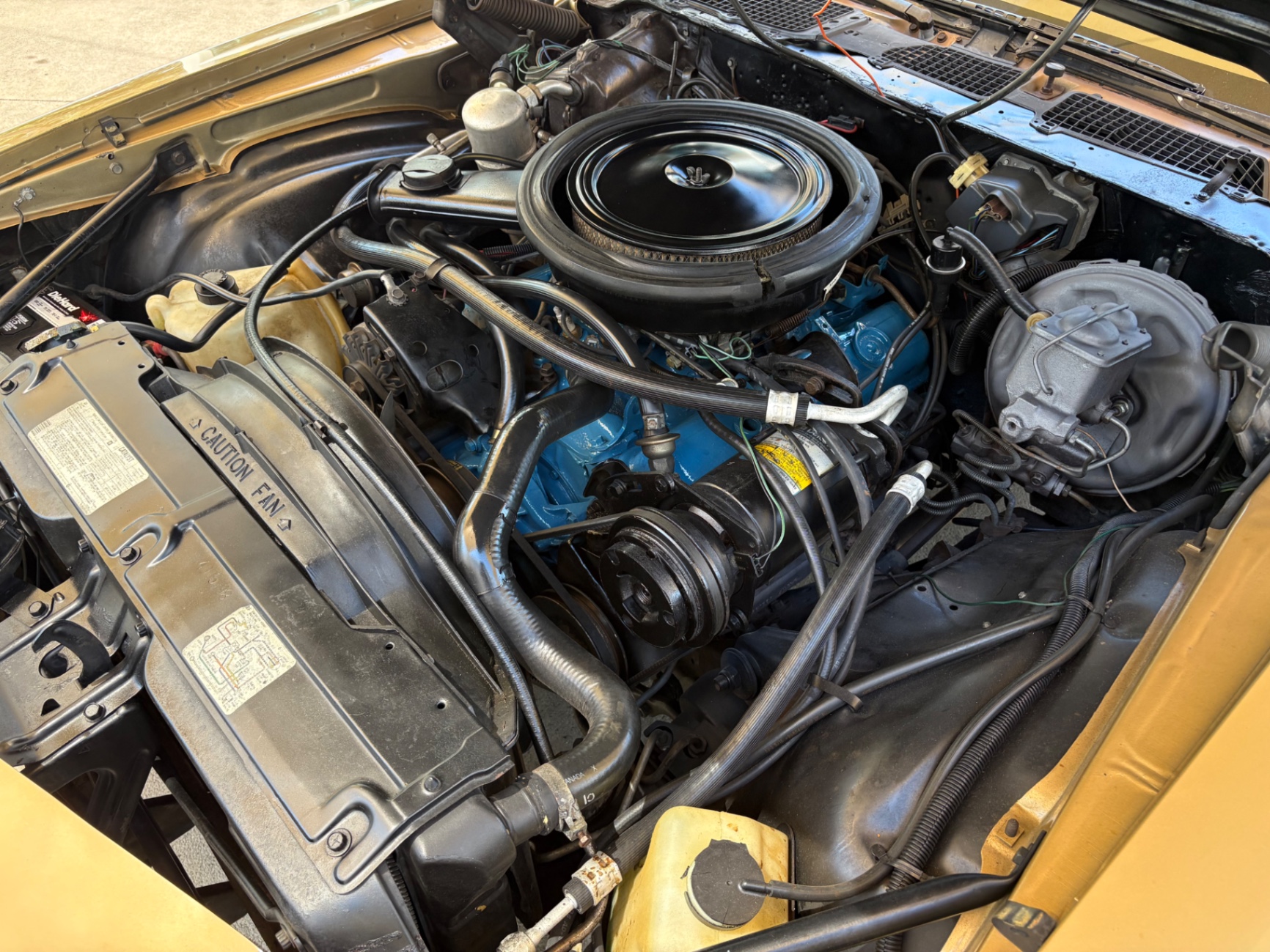
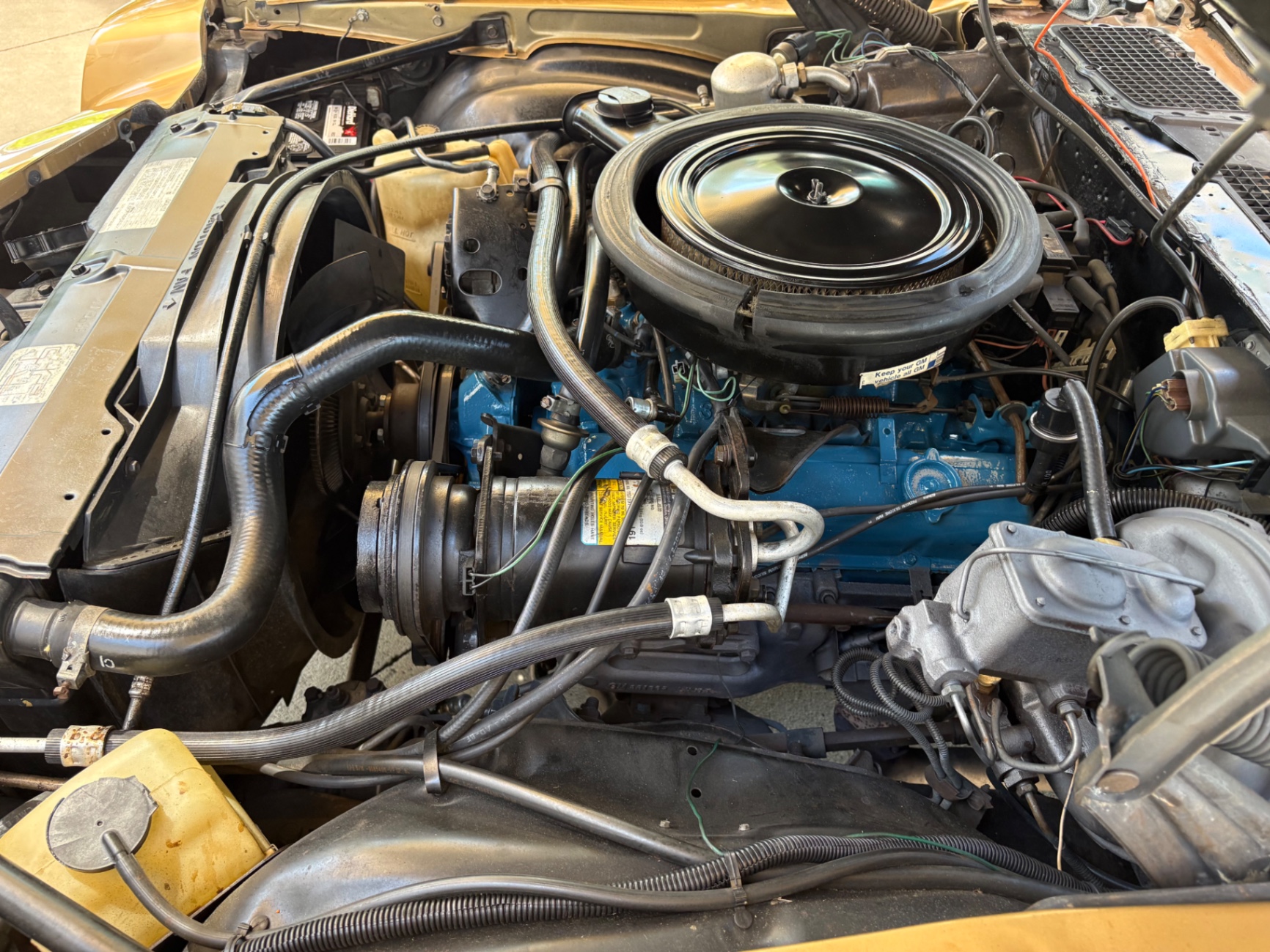
The engine under the hood of this 1980 Chevrolet Camaro Z28 is the 5.7-liter LM1 350 cubic inch V8, which was the standard Z28 powerplant for 1980. The LM1 was a two-barrel carbureted version of Chevrolet's small-block, emissions-compliant but still producing usable torque across a broad RPM range — characteristics that made it well-suited to daily driving and occasional spirited use alike. Paired with the 3-speed automatic transmission, the combination is smooth and straightforward to drive. The Turbo-Hydramatic behind the LM1 was a durable unit that held up well in regular service.
The Z28 package in 1980 included a heavy-duty radiator as standard equipment, and that component is present on this car. The dual exhaust system with resonators — also a Z28-specific feature — remains in place. The front disc and rear drum brake setup, boosted by power assist, provides adequate stopping power for the car's weight class. Power steering keeps the driving effort manageable.
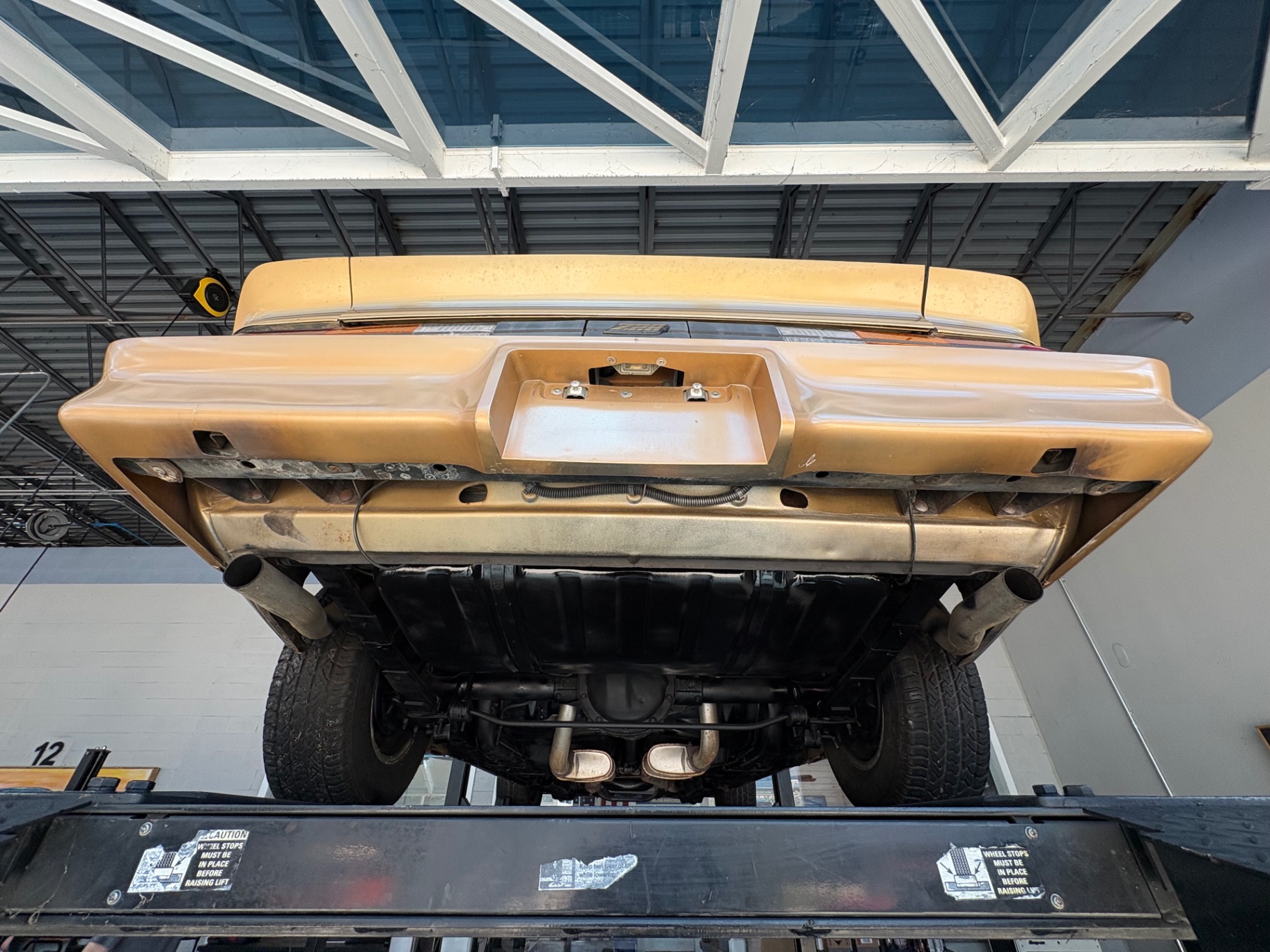
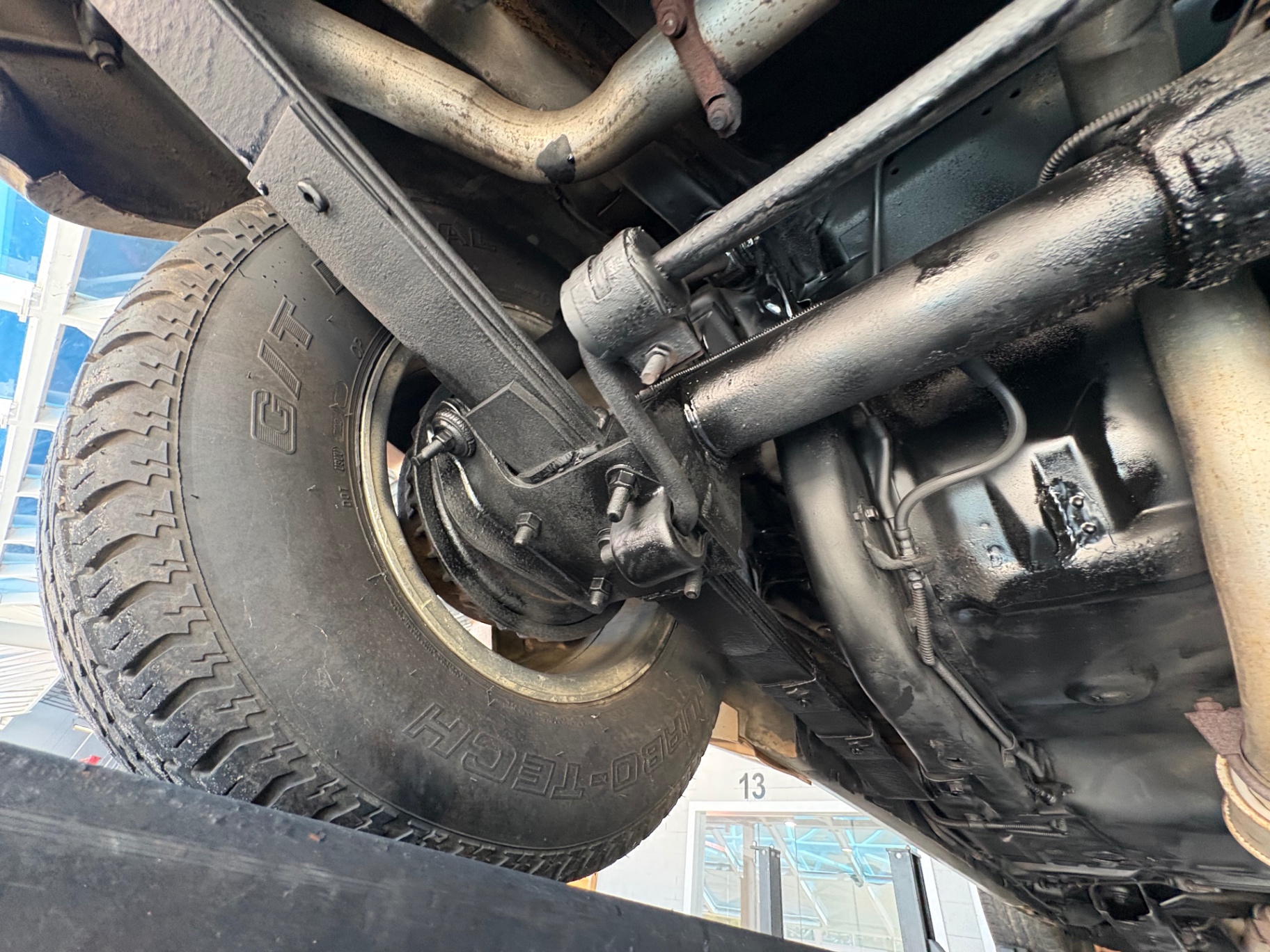
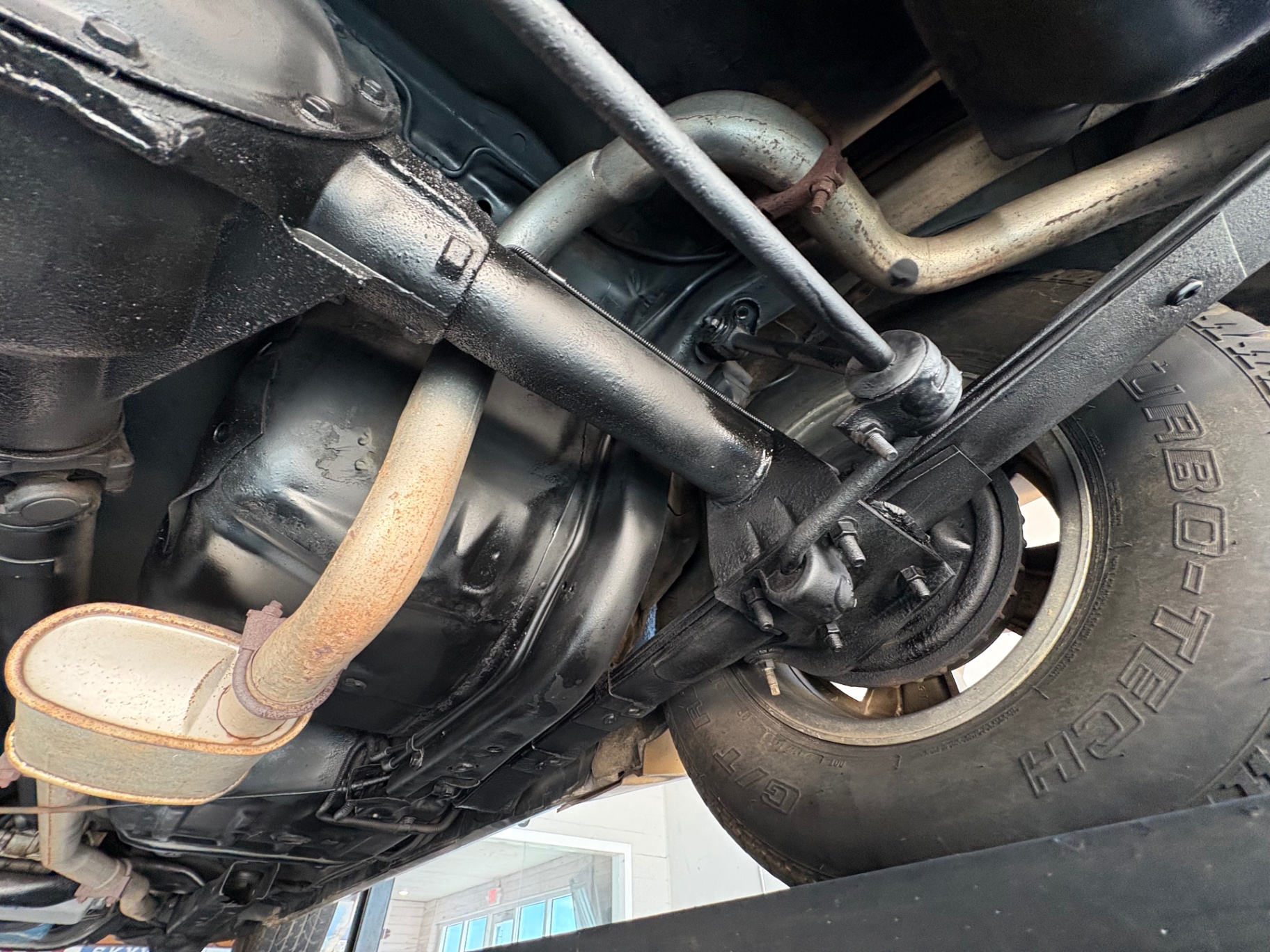
The undercarriage photographs are worth studying carefully. The floorpans show no evidence of patchwork or filler. The framerails are intact, the rear leaf spring mounts are solid, and the entire underside has been treated and is presented in clean, painted condition. For a 1980 car that has spent some portion of its life in what appears to be the Sun Belt based on the condition, this is exactly the foundation a buyer wants to find. There are no shortcuts hiding under this car.
Interior
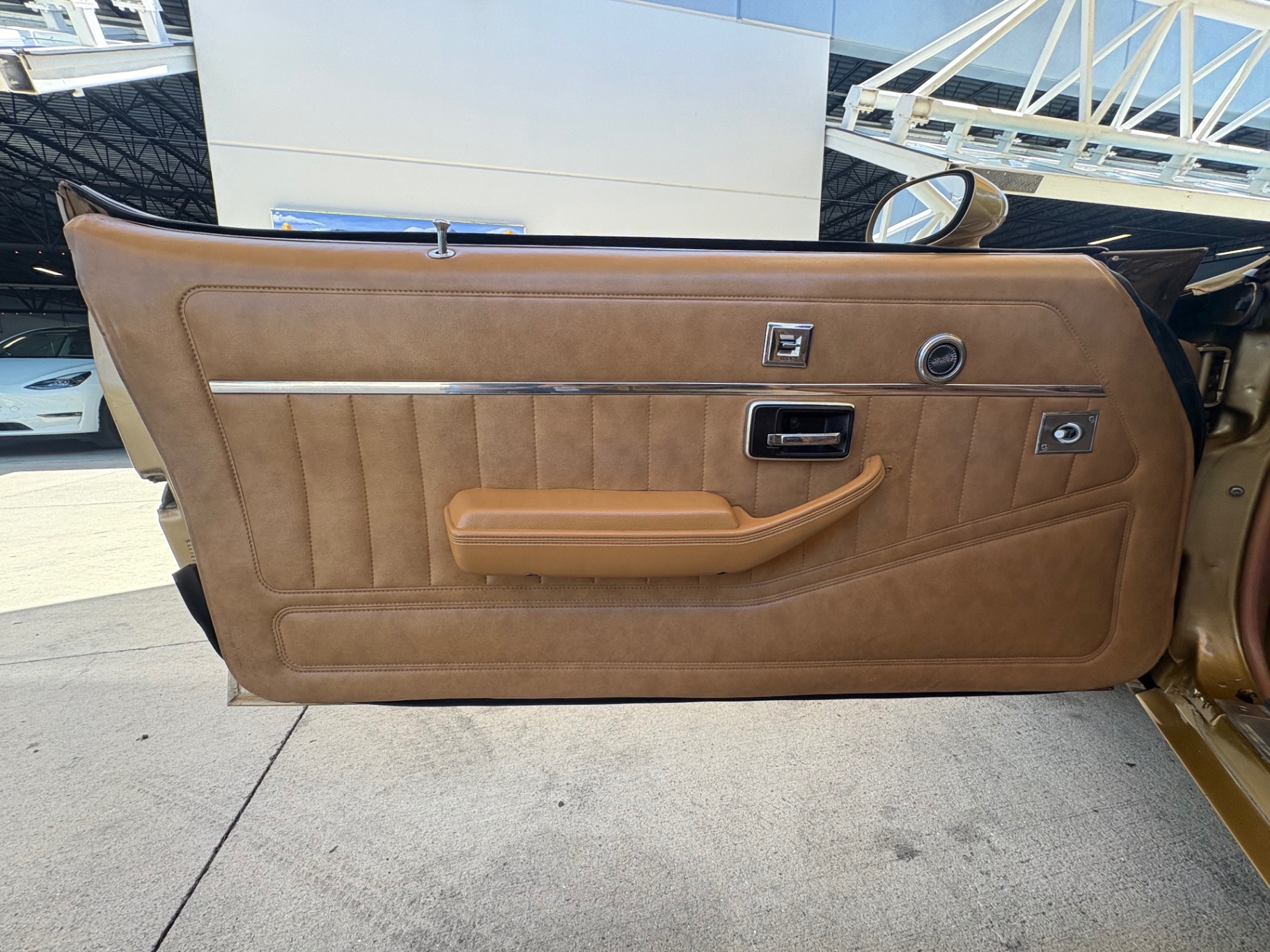
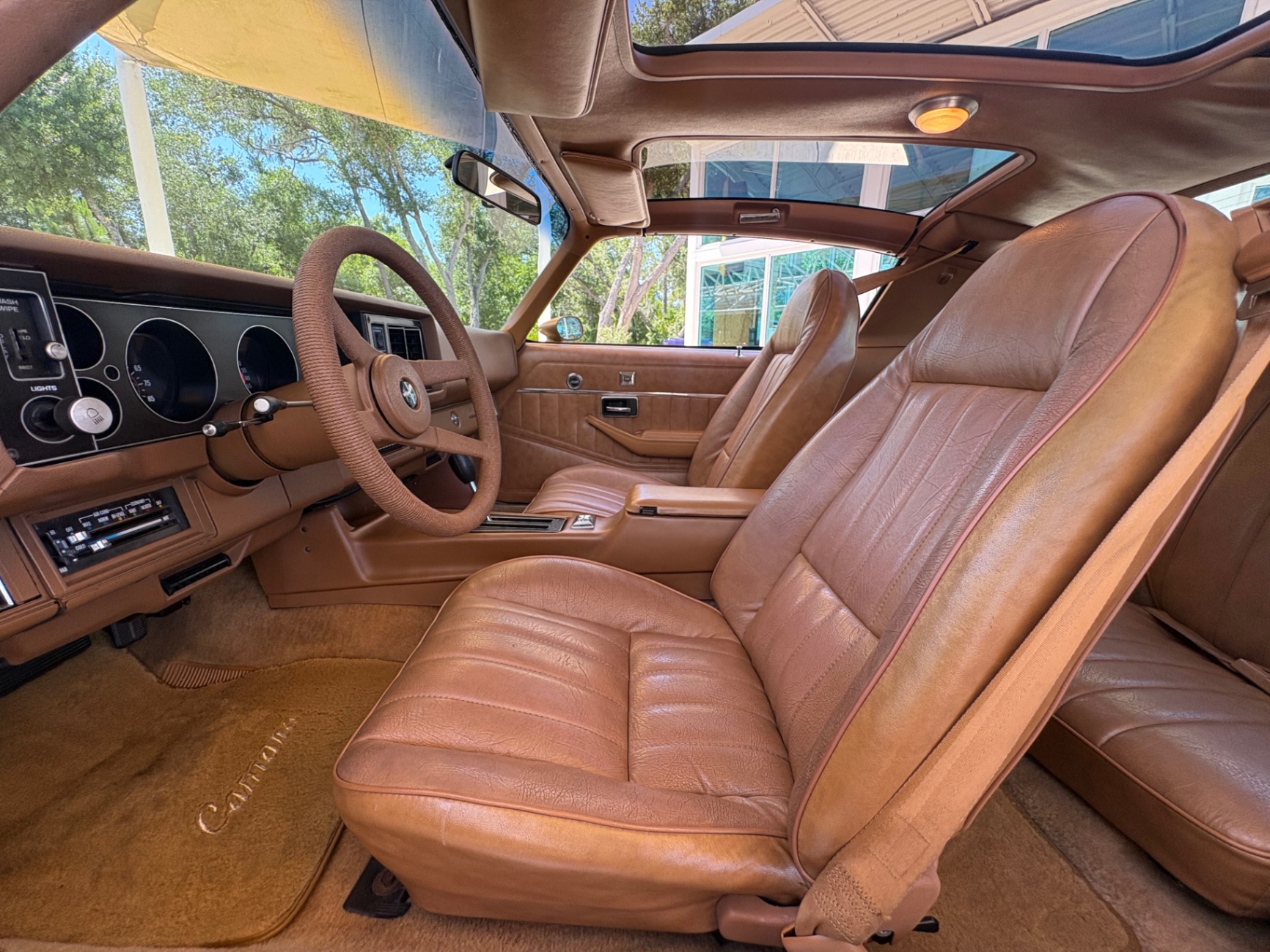
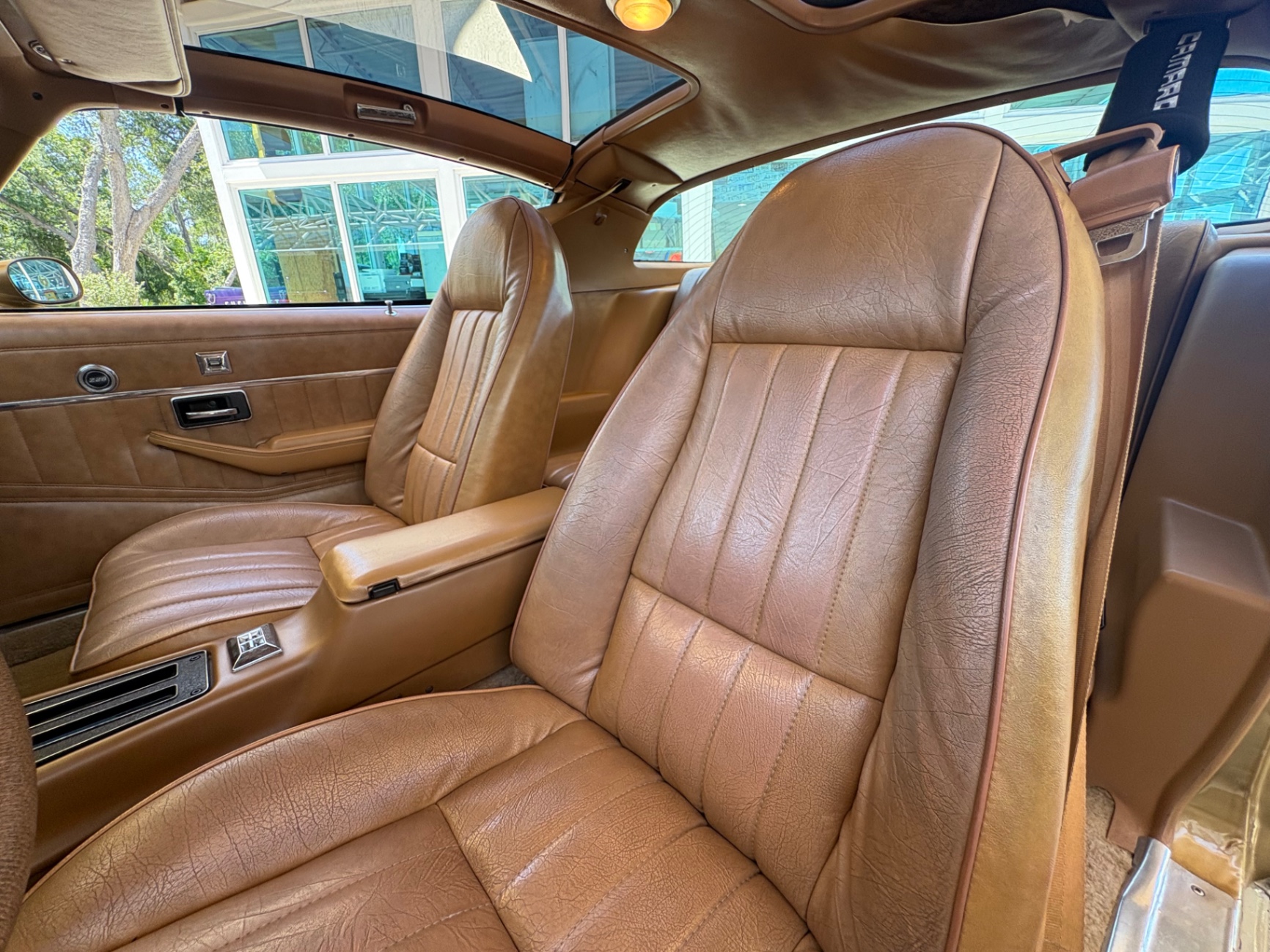
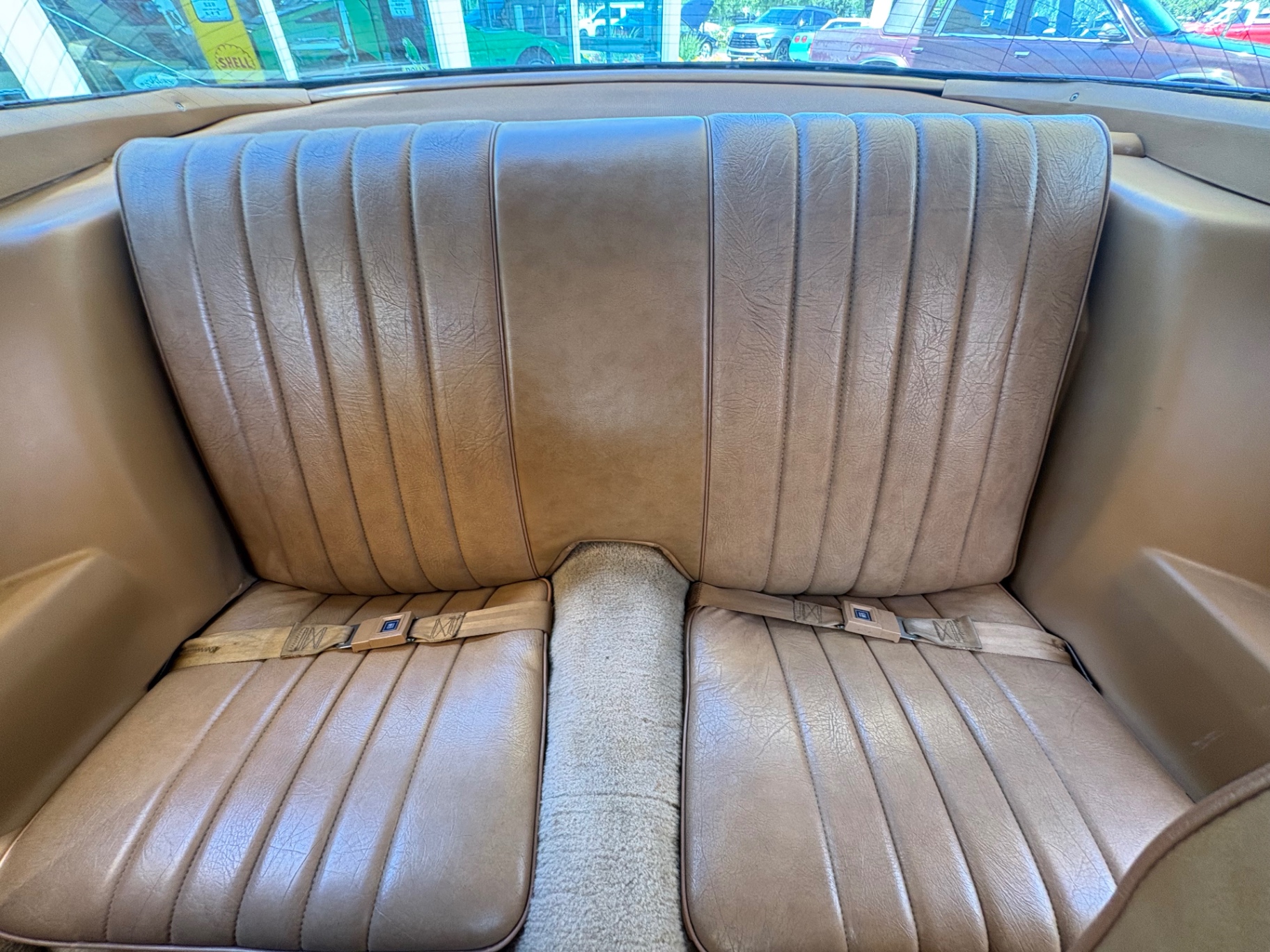
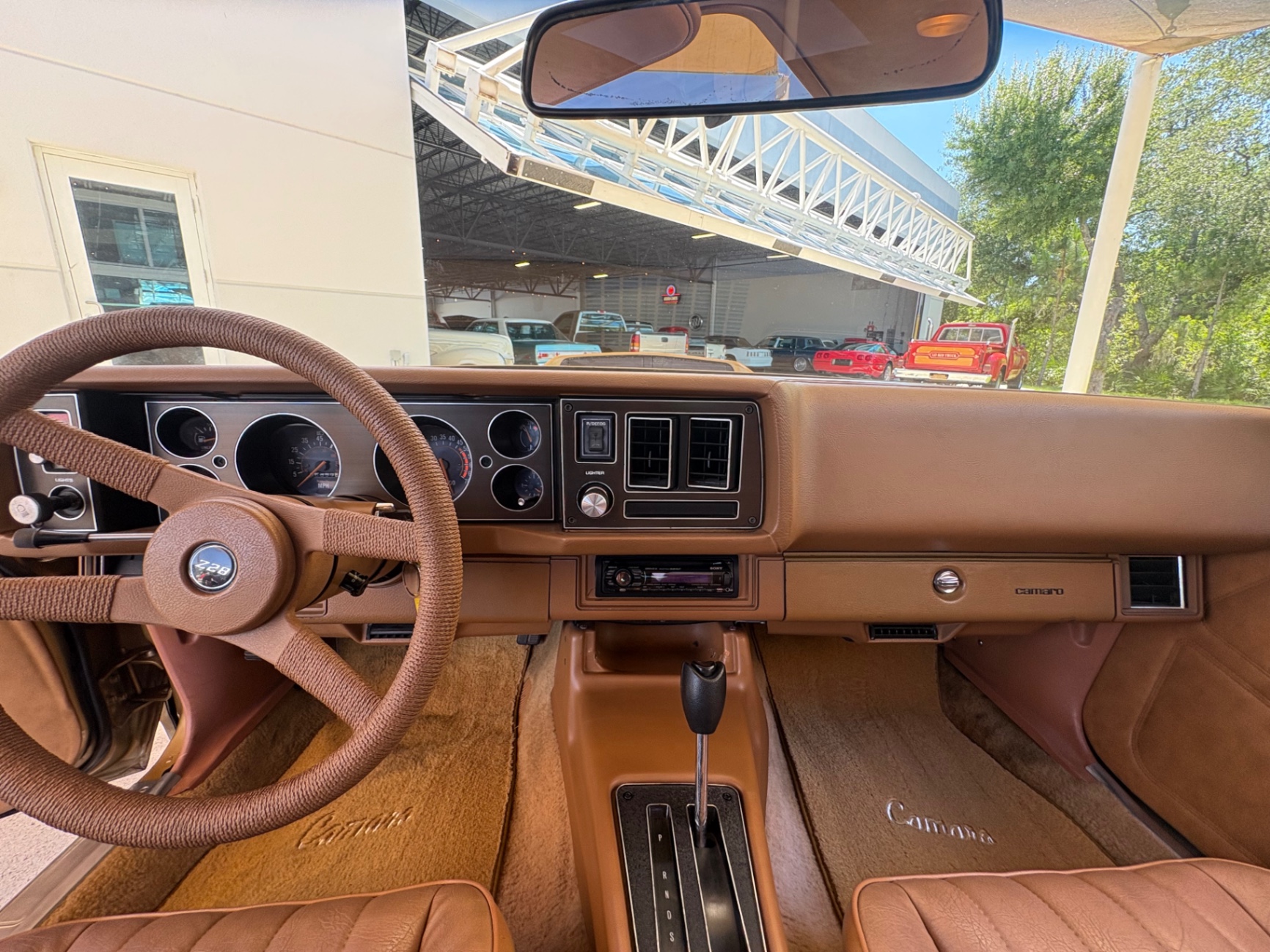
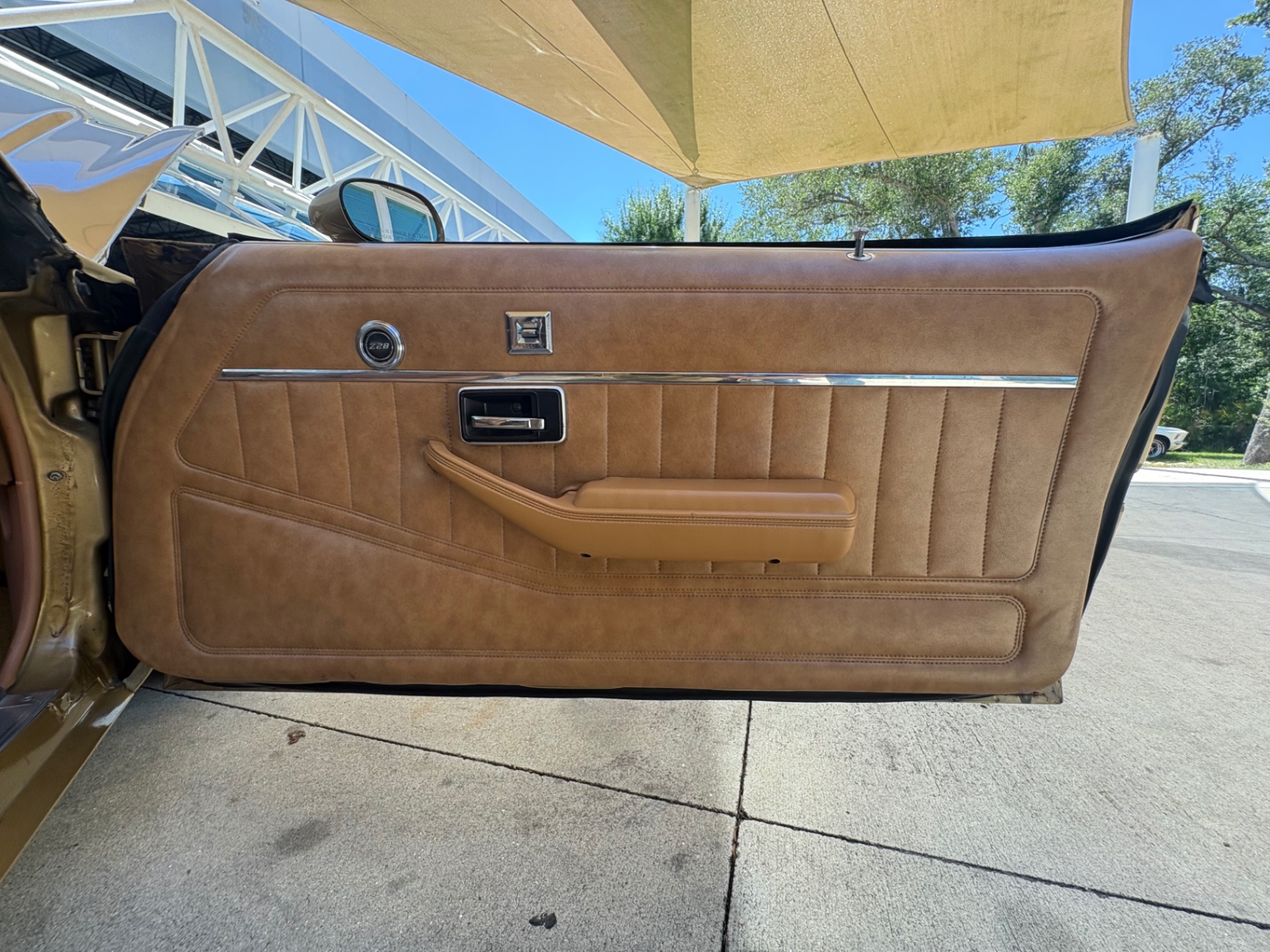
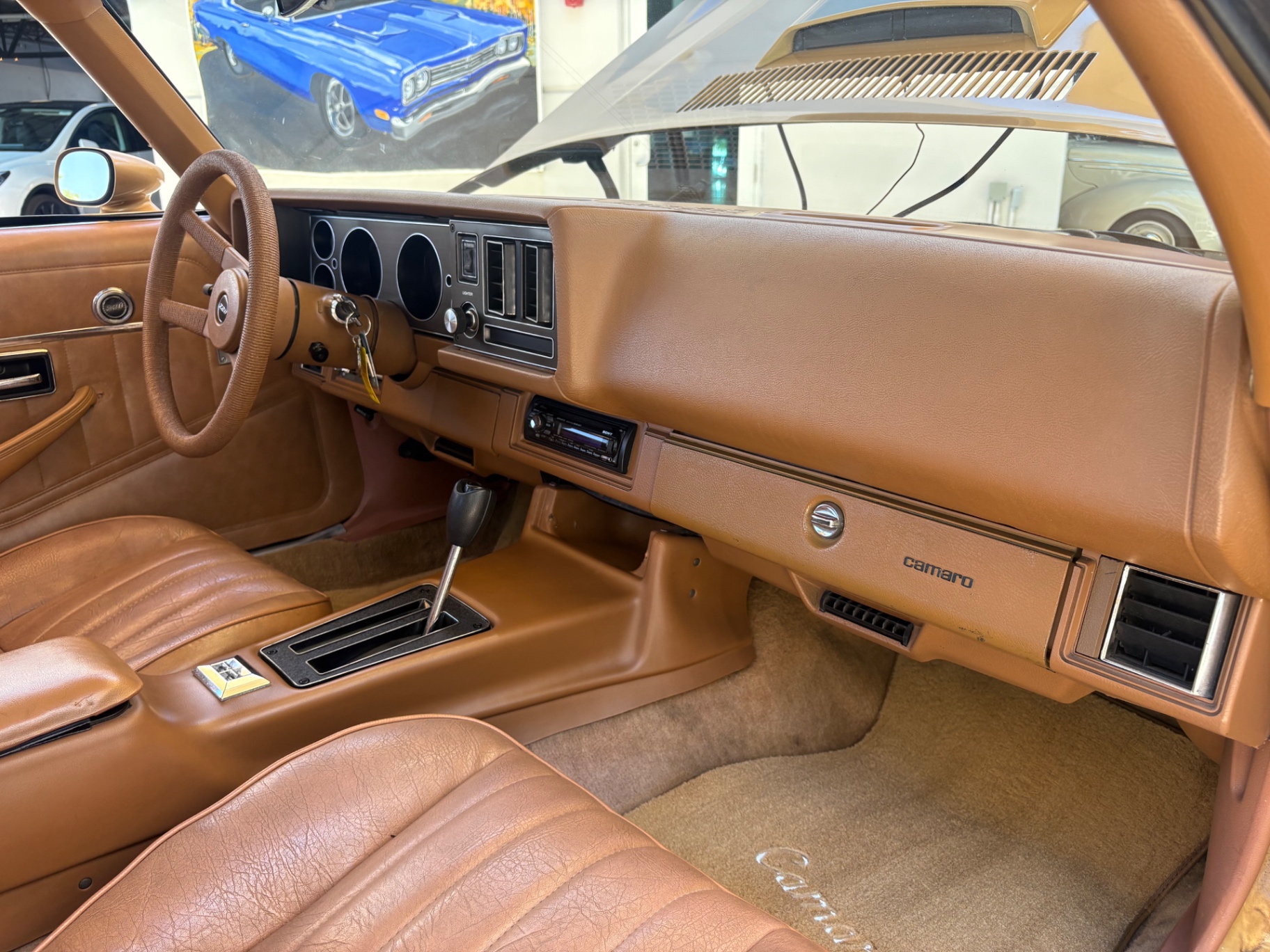
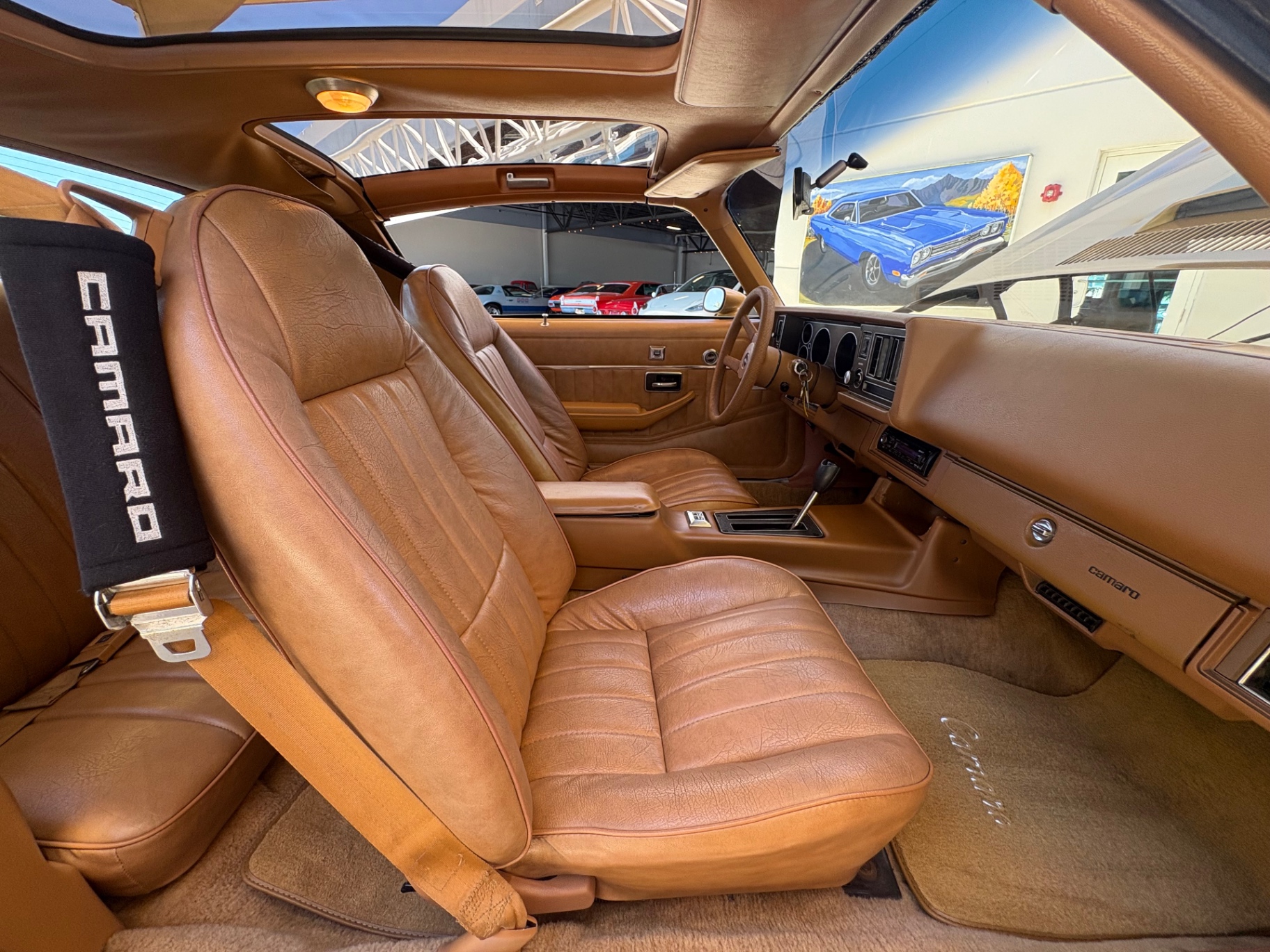
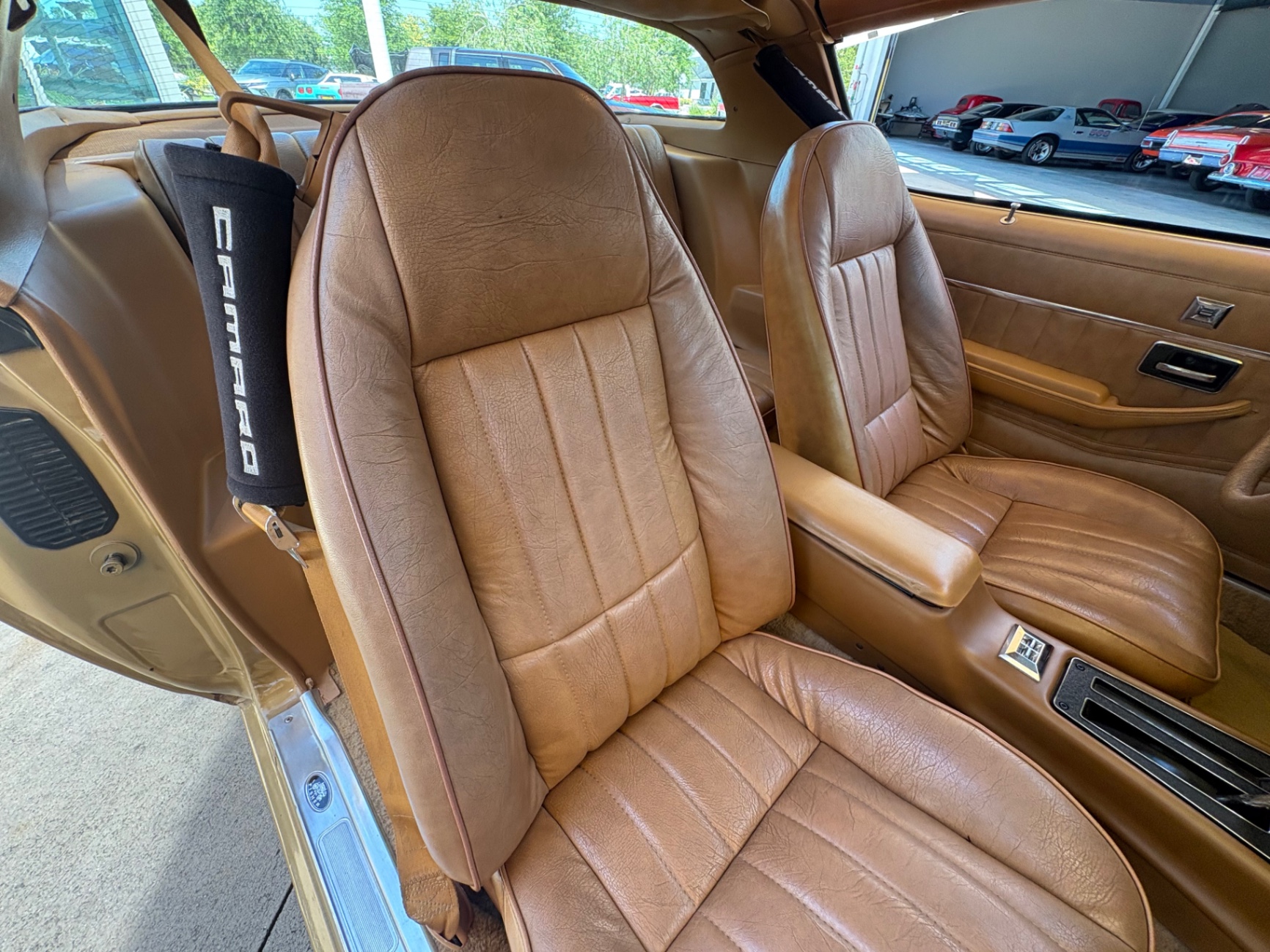
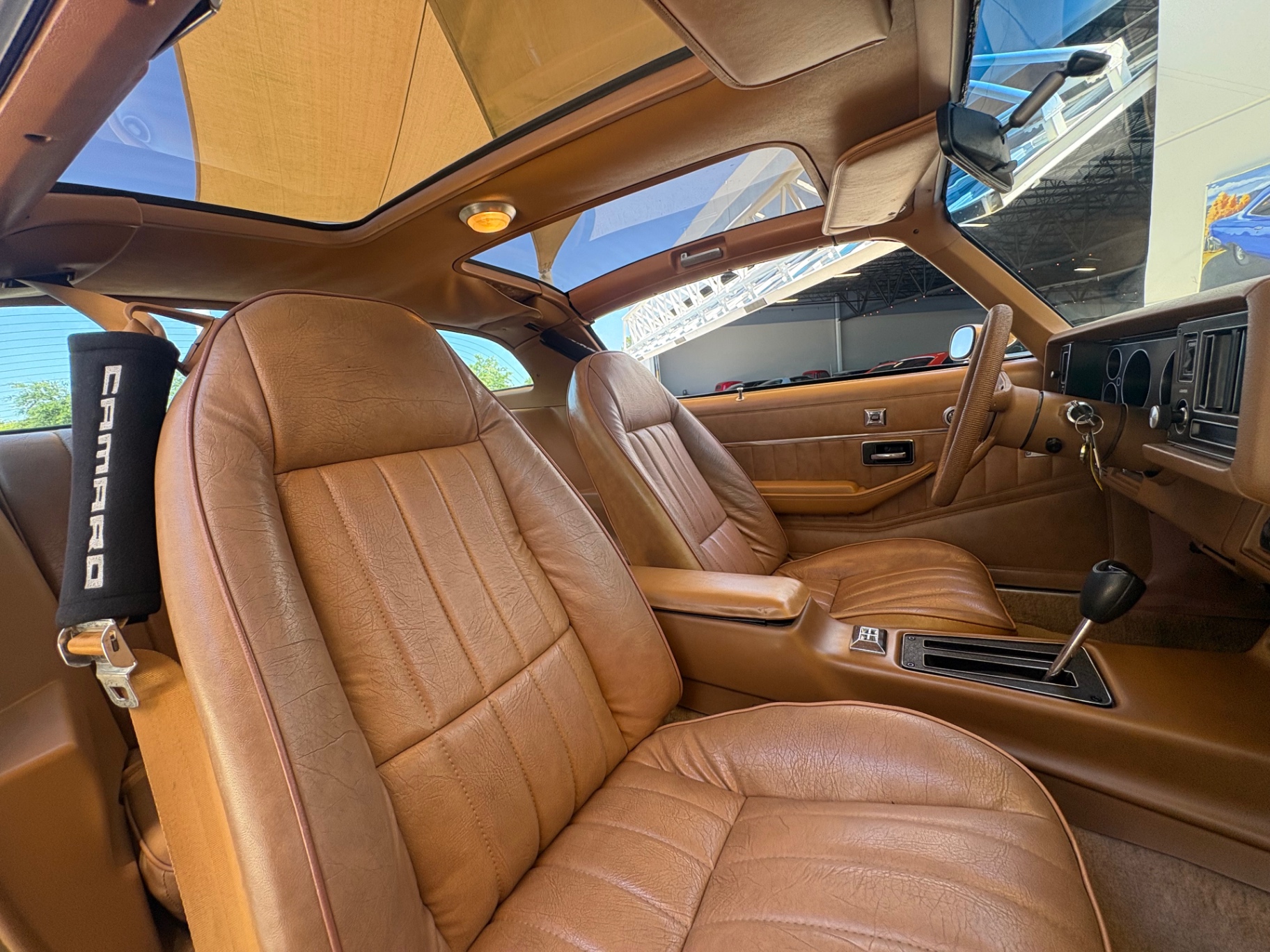
The interior of this 1980 Chevrolet Camaro Z28 is finished in camel tan leather throughout, covering the full foam bucket seats, door panels, and rear seat. The leather on the front buckets shows natural aging consistent with a 45-year-old car — some surface creasing is visible, which is expected and honest. The door panels retain their original leather and suede-like texture in good condition, with Z28 badging on each panel and the original chrome accent trim intact. The rear seat shows similar honest wear and has clearly seen limited use.
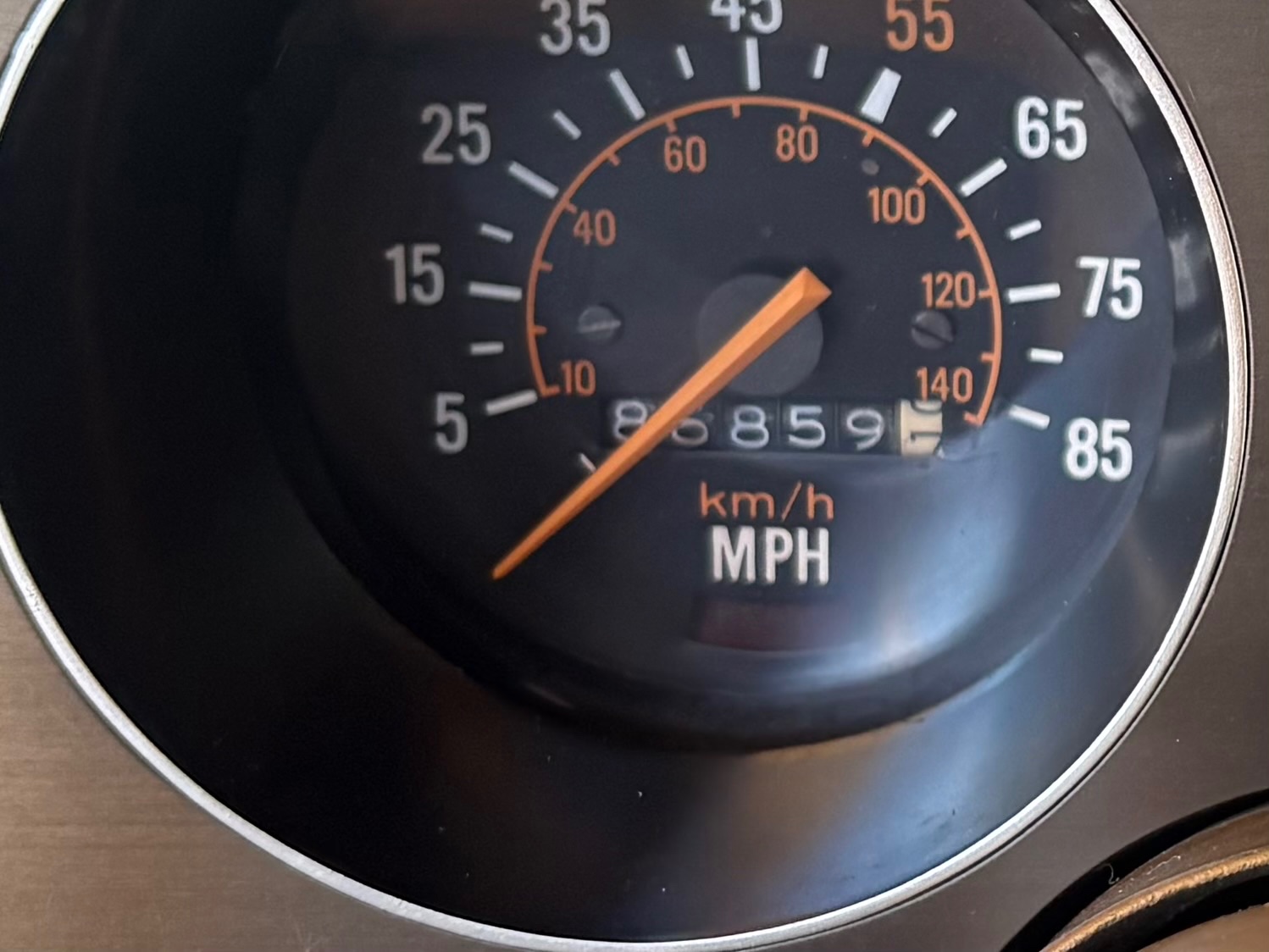
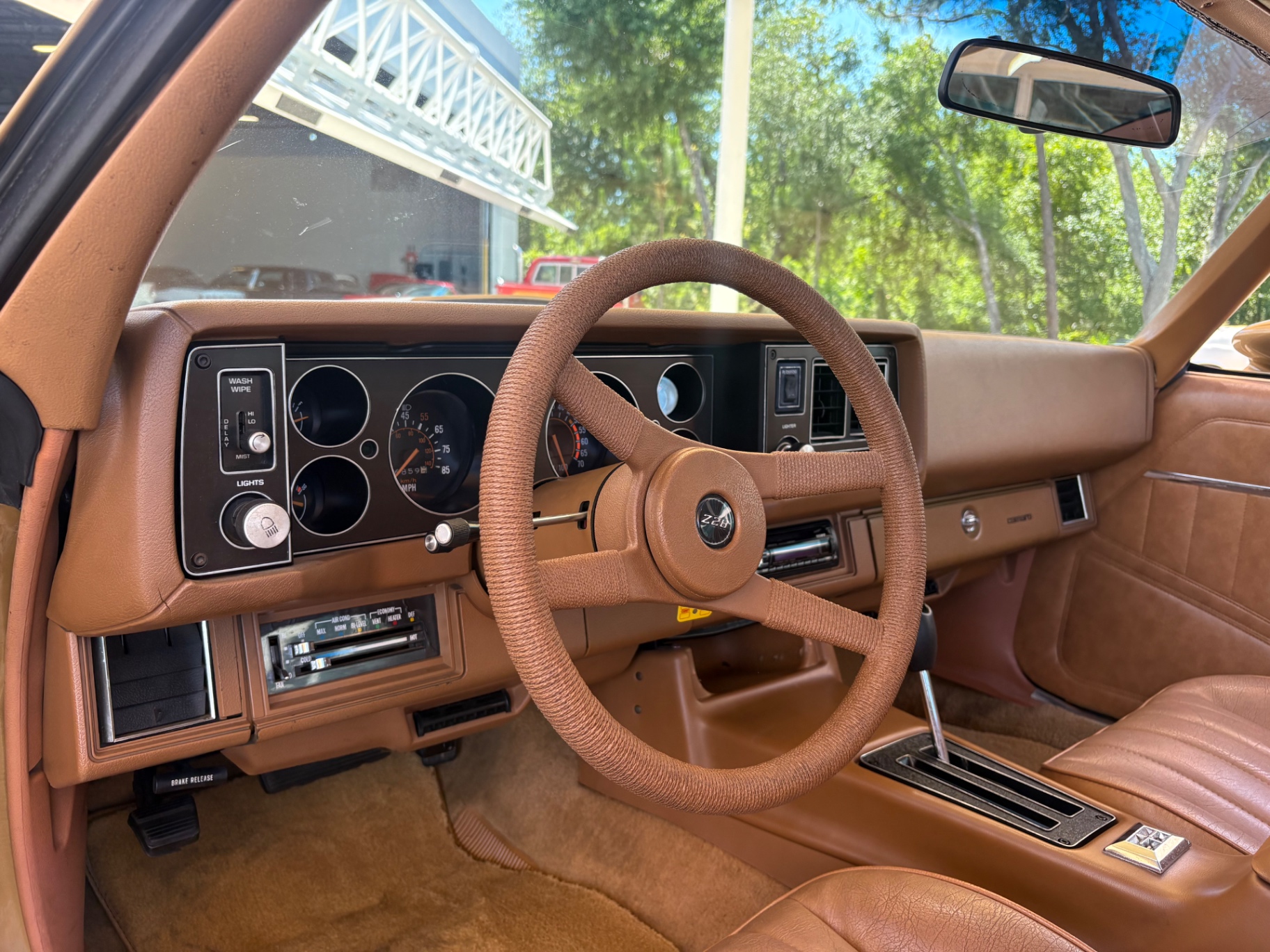
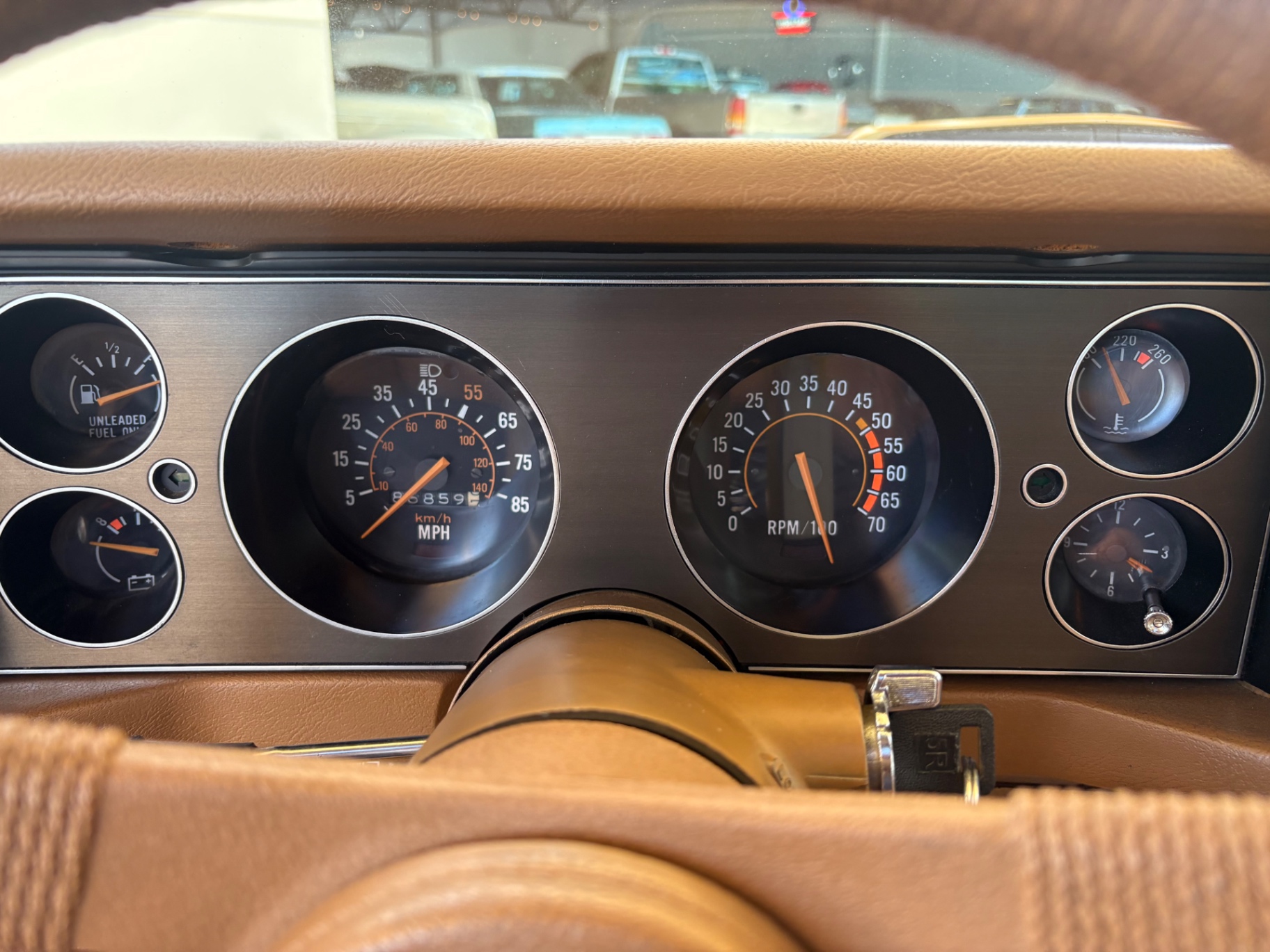
The dashboard is complete and correct. The Z28 instrument cluster includes a tachometer, voltmeter, temperature gauge, electric clock, and fuel gauge — all housed in a brushed-aluminum-trimmed panel that wraps across the dash in the style specific to the late second-generation Camaro. The Z28 sport steering wheel, finished in camel tan to match the interior, carries the Z28 center badge and is original to the car. The shifter sits in the floor-mounted center console, which is correct for this model.
Climate control is handled through a functional air conditioning and heating system with the factory flow-through ventilation. Power windows and power door locks add convenience. The concealed windshield wipers keep the cowl clean visually. An upgraded aftermarket stereo has been installed in the dash — it fits within the factory opening and is a practical addition for anyone who wants to use this car regularly. The Camaro-script floor mats visible in photos are a period-appropriate detail that adds to the cohesion of the interior presentation. The glass T-top panels are present and appear to seat correctly in their frames, with the interior headliner above the T-top openings showing no signs of water damage.
Exterior
The exterior of this 1980 Chevrolet Camaro Z28 is finished in gold, which pairs directly with the gold aluminum wheels to create a factory-correct, intentional look that Chevrolet marketed toward buyers who wanted a performance car with a more polished visual identity. The second-generation Camaro's long hood, fastback roofline, and wide rear haunches were penned in the late 1960s but remained fresh enough through the end of production that the 1980 cars still read as purposeful coupes rather than dated holdovers.
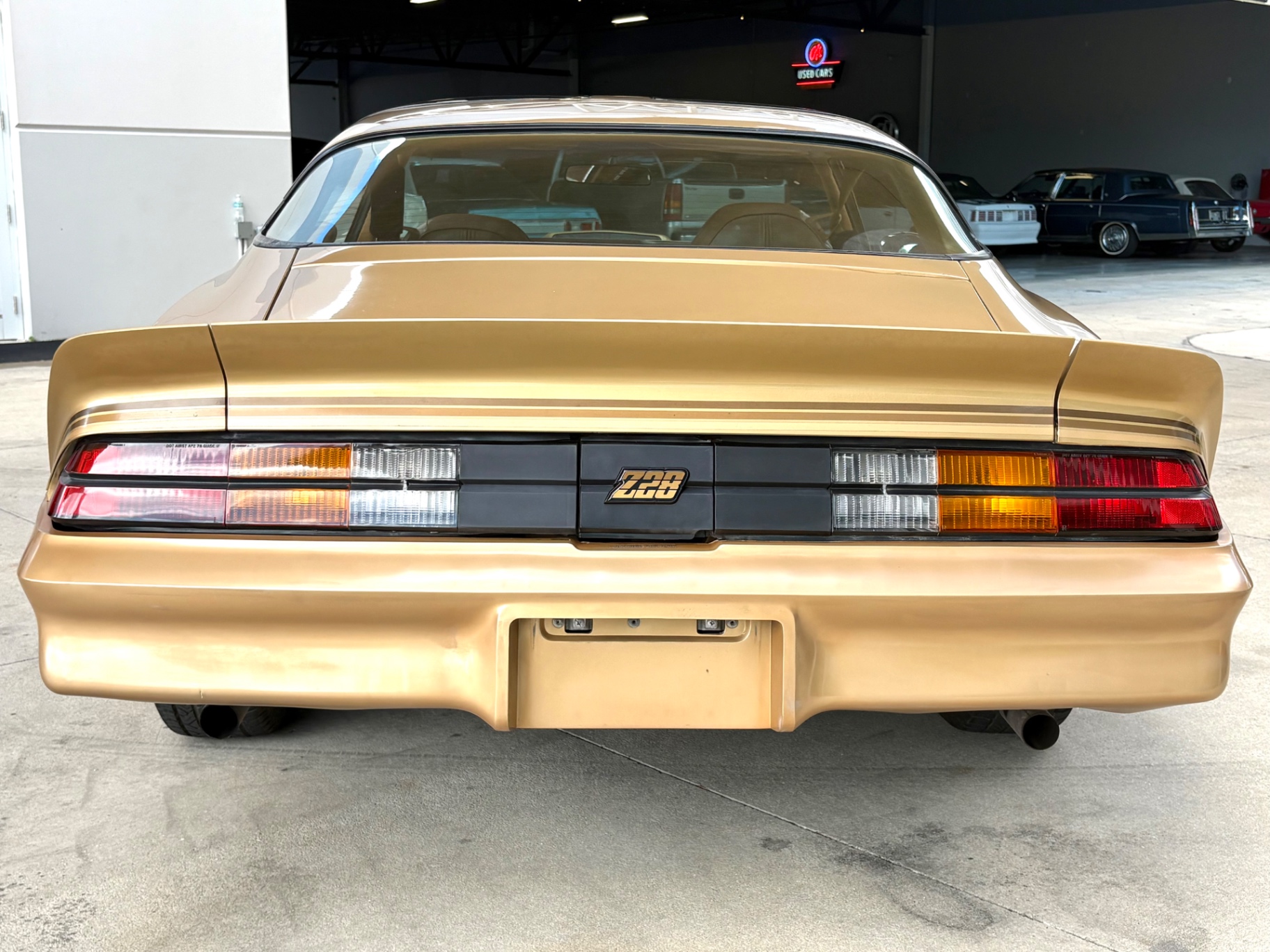
The Z28 graphics package — the body-side striping and Z28 lettering — is present and intact. The front air dam and rear spoiler are both in place, which is significant because these pieces are frequently cracked, missing, or replaced with incorrect aftermarket versions on surviving examples. On this car they appear original. The bumpers are the body-colored urethane units introduced on the second-gen Camaro in the mid-1970s, and they show no major damage or separation from the underlying structure. The glass T-top panels are visible in the exterior photos and appear to seal correctly against the roof framing. The gold aluminum wheels are correct for the Z28 in this period and are fitted with G/T Radial Turbo-Tech tires.
Panel fit is consistent across the car, the doors close with proper alignment, and the overall paint surface carries expected patina for a car of this age rather than signs of fresh respray to hide prior damage. The underside photos confirm the body structure is solid where it matters most — at the rockers, the floor, and the rear frame sections — which tells you what the paint surface alone cannot.
Conclusion
The 1980 Chevrolet Camaro Z28 is one of those cars that the collector market is beginning to properly reassess. For years, second-generation Z28s from the late 1970s and early 1980s were overlooked in favor of earlier high-compression examples, but that view has shifted as the supply of honest, well-preserved survivors has continued to shrink. What you have here is a correctly configured 1980 Camaro Z28 with its 350ci LM1 V8, matching Z28 trim, a solid and documented undercarriage, a camel tan leather interior that retains all its original components, and a color combination that works exactly as Chevrolet intended. It is not a restored car, and it is not represented as one — it is a preserved example that has held together well and presents honestly. That is increasingly difficult to find in the market for second-generation Camaros.
To schedule a viewing or ask any questions about this 1980 Chevrolet Camaro Z28, contact Skyway Classics in Sarasota, Florida at 941-254-6608.
Disclaimer Information found on the website is presented as given to us by the owner of the car, whether on consignment or from the owner we bought it from. Some Photos, materials for videos, descriptions and other information are provided by the consignor/seller and is deemed reliable, but Skyway Classics does not warranty or guarantee this information. Skyway Classics is not responsible for information that may incorrect or a publishing error. The decision to purchase should be based solely on the buyers personal inspection of the vehicle or by a professional inspection service prior to offer or purchase being made.
1980 Chevrolet Camaro Z28 — 350ci LM1 V8, Glass T-Tops, Camel Tan Leather, Solid Undercarriage
Why This Car Is Special
The 1980 Chevrolet Camaro Z28 occupies a complicated but genuinely interesting place in American muscle car history. By 1980, emissions regulations and insurance pressures had already defanged most of Detroit's performance lineup, yet the Z28 managed to survive that era with more character than most of its contemporaries. The second-generation Camaro body — introduced for 1970 and running through 1981 — was by 1980 one of the longest-running and most refined pony car platforms on the market. Chevrolet had spent a decade sorting out the chassis, the sheetmetal, and the interior packaging, and by the end of the run, these cars had a tightness and presence that newer designs from the same period simply couldn't match.
The Z28 was actually dropped after the 1974 model year due to tightening emissions and fuel economy concerns, then brought back for 1977 in response to sustained consumer demand. By 1980, it had found its footing again as a performance-oriented package built around the 5.7-liter LM1 350 cubic inch V8. That engine was not the high-compression screamer of the early 1970s, but it was a proven, durable small-block with real displacement and a dual exhaust setup that gave it a tone and throttle response the four- and six-cylinder alternatives of the day couldn't approach.
This particular 1980 Chevrolet Camaro Z28 presents in gold over a camel tan leather interior, which is one of the more period-correct and visually cohesive color combinations available on the car that year. The gold aluminum wheels, Z28 graphics package, front air dam, and rear spoiler all confirm this as a correctly configured Z28, not a base Camaro with badges added later. The undercarriage photos tell a significant story — the floorpans, framerails, and rear subframe are solid and well-preserved, which is the first thing any experienced buyer should verify on a 45-year-old unibody car. This one passes that test.
Features List
- 5.7-Liter 350ci LM1 V8 Engine - 3-Speed Automatic Transmission - Glass T-Tops - Camel Tan Leather Bucket Seats - Center Console - Z28 Sport Steering Wheel with Z28 Horn Badge - Tachometer, Voltmeter, Temperature Gauge, Electric Clock, Fuel Gauge - Dual Exhaust with Resonators - Gold Aluminum Alloy Wheels - Front Air Dam - Rear Spoiler - Z28 Graphics Package and Badging Throughout - Air Conditioning - Heating System with Flow-Through Ventilation - Power Steering - Power Brakes with Front Disc Brakes - Power Windows - Power Door Locks - Heavy-Duty Radiator - Concealed Windshield Wipers - Upgraded Aftermarket Stereo - Solid Undercarriage
Mechanical
The engine under the hood of this 1980 Chevrolet Camaro Z28 is the 5.7-liter LM1 350 cubic inch V8, which was the standard Z28 powerplant for 1980. The LM1 was a two-barrel carbureted version of Chevrolet's small-block, emissions-compliant but still producing usable torque across a broad RPM range — characteristics that made it well-suited to daily driving and occasional spirited use alike. Paired with the 3-speed automatic transmission, the combination is smooth and straightforward to drive. The Turbo-Hydramatic behind the LM1 was a durable unit that held up well in regular service.
The Z28 package in 1980 included a heavy-duty radiator as standard equipment, and that component is present on this car. The dual exhaust system with resonators — also a Z28-specific feature — remains in place. The front disc and rear drum brake setup, boosted by power assist, provides adequate stopping power for the car's weight class. Power steering keeps the driving effort manageable.
The undercarriage photographs are worth studying carefully. The floorpans show no evidence of patchwork or filler. The framerails are intact, the rear leaf spring mounts are solid, and the entire underside has been treated and is presented in clean, painted condition. For a 1980 car that has spent some portion of its life in what appears to be the Sun Belt based on the condition, this is exactly the foundation a buyer wants to find. There are no shortcuts hiding under this car.
Interior
The interior of this 1980 Chevrolet Camaro Z28 is finished in camel tan leather throughout, covering the full foam bucket seats, door panels, and rear seat. The leather on the front buckets shows natural aging consistent with a 45-year-old car — some surface creasing is visible, which is expected and honest. The door panels retain their original leather and suede-like texture in good condition, with Z28 badging on each panel and the original chrome accent trim intact. The rear seat shows similar honest wear and has clearly seen limited use.
The dashboard is complete and correct. The Z28 instrument cluster includes a tachometer, voltmeter, temperature gauge, electric clock, and fuel gauge — all housed in a brushed-aluminum-trimmed panel that wraps across the dash in the style specific to the late second-generation Camaro. The Z28 sport steering wheel, finished in camel tan to match the interior, carries the Z28 center badge and is original to the car. The shifter sits in the floor-mounted center console, which is correct for this model.
Climate control is handled through a functional air conditioning and heating system with the factory flow-through ventilation. Power windows and power door locks add convenience. The concealed windshield wipers keep the cowl clean visually. An upgraded aftermarket stereo has been installed in the dash — it fits within the factory opening and is a practical addition for anyone who wants to use this car regularly. The Camaro-script floor mats visible in photos are a period-appropriate detail that adds to the cohesion of the interior presentation. The glass T-top panels are present and appear to seat correctly in their frames, with the interior headliner above the T-top openings showing no signs of water damage.
Exterior
The exterior of this 1980 Chevrolet Camaro Z28 is finished in gold, which pairs directly with the gold aluminum wheels to create a factory-correct, intentional look that Chevrolet marketed toward buyers who wanted a performance car with a more polished visual identity. The second-generation Camaro's long hood, fastback roofline, and wide rear haunches were penned in the late 1960s but remained fresh enough through the end of production that the 1980 cars still read as purposeful coupes rather than dated holdovers.
The Z28 graphics package — the body-side striping and Z28 lettering — is present and intact. The front air dam and rear spoiler are both in place, which is significant because these pieces are frequently cracked, missing, or replaced with incorrect aftermarket versions on surviving examples. On this car they appear original. The bumpers are the body-colored urethane units introduced on the second-gen Camaro in the mid-1970s, and they show no major damage or separation from the underlying structure. The glass T-top panels are visible in the exterior photos and appear to seal correctly against the roof framing. The gold aluminum wheels are correct for the Z28 in this period and are fitted with G/T Radial Turbo-Tech tires.
Panel fit is consistent across the car, the doors close with proper alignment, and the overall paint surface carries expected patina for a car of this age rather than signs of fresh respray to hide prior damage. The underside photos confirm the body structure is solid where it matters most — at the rockers, the floor, and the rear frame sections — which tells you what the paint surface alone cannot.
Conclusion
The 1980 Chevrolet Camaro Z28 is one of those cars that the collector market is beginning to properly reassess. For years, second-generation Z28s from the late 1970s and early 1980s were overlooked in favor of earlier high-compression examples, but that view has shifted as the supply of honest, well-preserved survivors has continued to shrink. What you have here is a correctly configured 1980 Camaro Z28 with its 350ci LM1 V8, matching Z28 trim, a solid and documented undercarriage, a camel tan leather interior that retains all its original components, and a color combination that works exactly as Chevrolet intended. It is not a restored car, and it is not represented as one — it is a preserved example that has held together well and presents honestly. That is increasingly difficult to find in the market for second-generation Camaros.
To schedule a viewing or ask any questions about this 1980 Chevrolet Camaro Z28, contact Skyway Classics in Sarasota, Florida at 941-254-6608.
Disclaimer Information found on the website is presented as given to us by the owner of the car, whether on consignment or from the owner we bought it from. Some Photos, materials for videos, descriptions and other information are provided by the consignor/seller and is deemed reliable, but Skyway Classics does not warranty or guarantee this information. Skyway Classics is not responsible for information that may incorrect or a publishing error. The decision to purchase should be based solely on the buyers personal inspection of the vehicle or by a professional inspection service prior to offer or purchase being made.
1980 Chevrolet
Camaro Z28
Why Choose Skyway Classics?
Explore our curated inventory of classic and collector cars—thoughtfully selected, ready to drive, and supported by experts who make ownership simple.
Expert Curation
Every vehicle is hand-selected by our experts for quality, authenticity, and investment potential.
Fast Transactions
Streamlined buying and selling process with quick financing and immediate delivery options.
Only National Dealer With Classic Service & Repair
We’re the only national dealership that services and repairs the classics we sell—before and after the sale.
Nationwide Network
Access to our extensive network of collectors, restorers, and classic car enthusiasts nationwide.
Concierge Ownership Support
From financing and insurance to paperwork, shipping, and titling—we handle the details so you can enjoy the drive.
Passion-Driven Service
We're classic car enthusiasts first, providing personalized service with genuine passion for the hobby.