
1971 Toyota
Land Cruiser FJ40
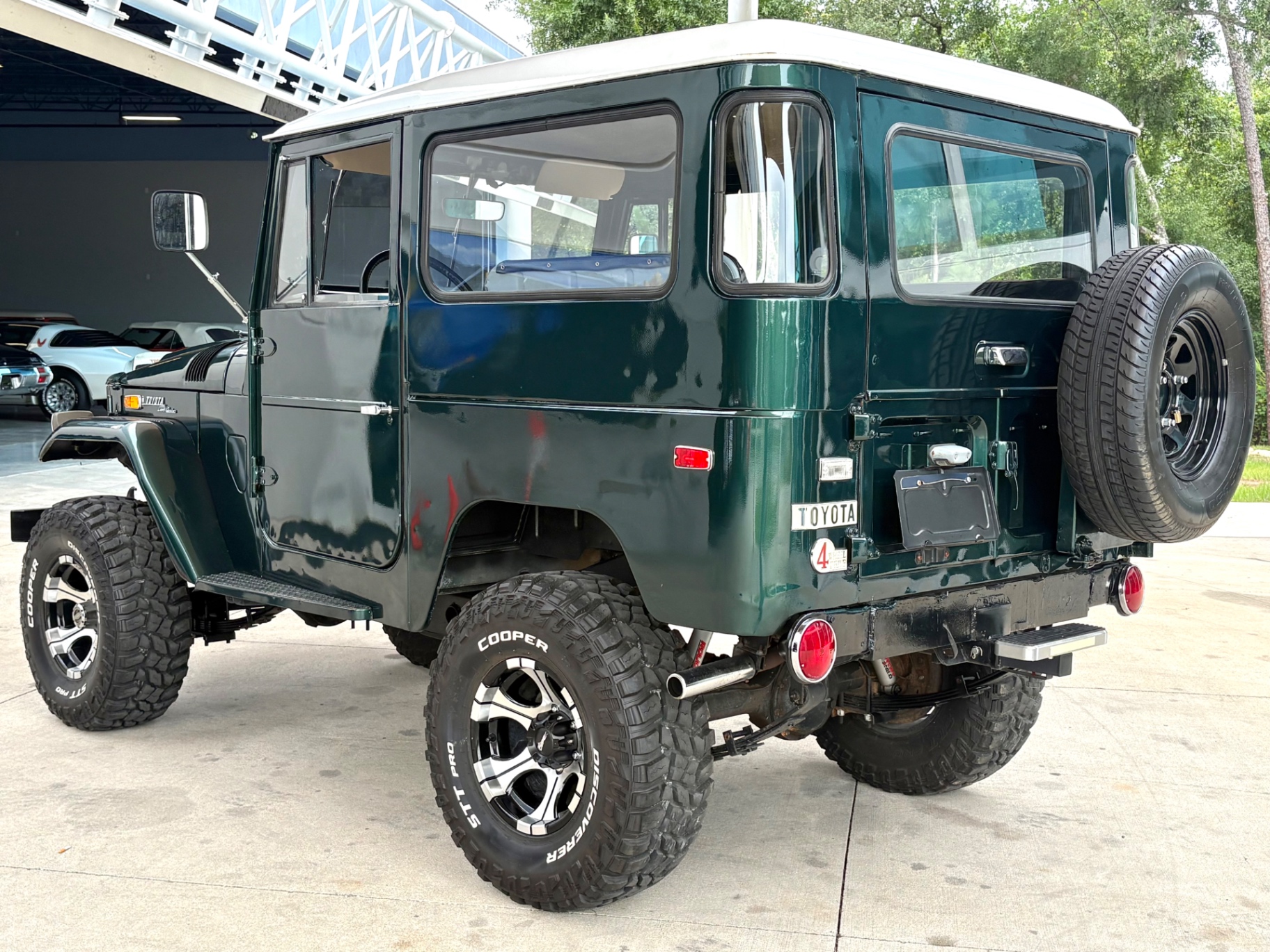
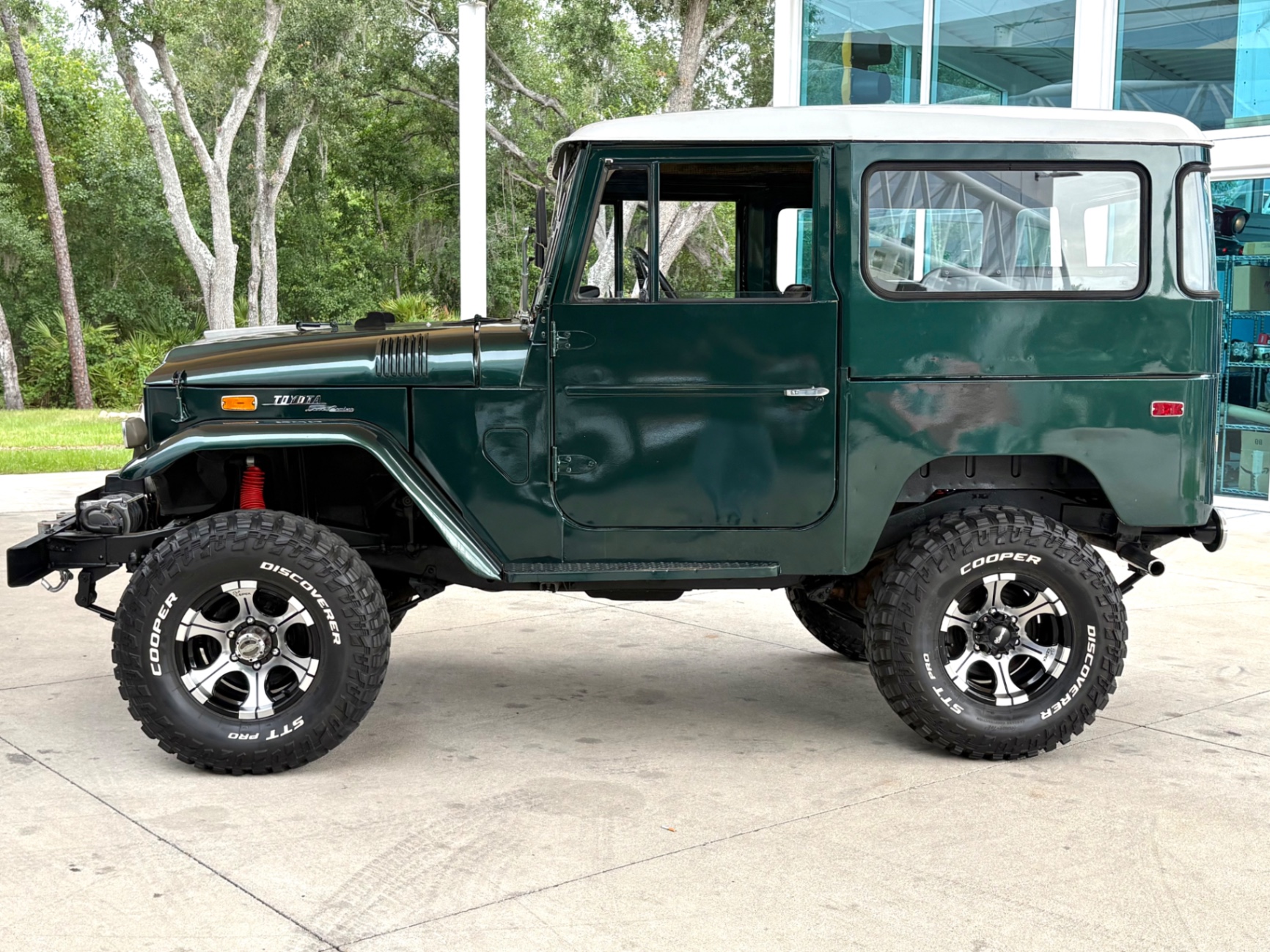
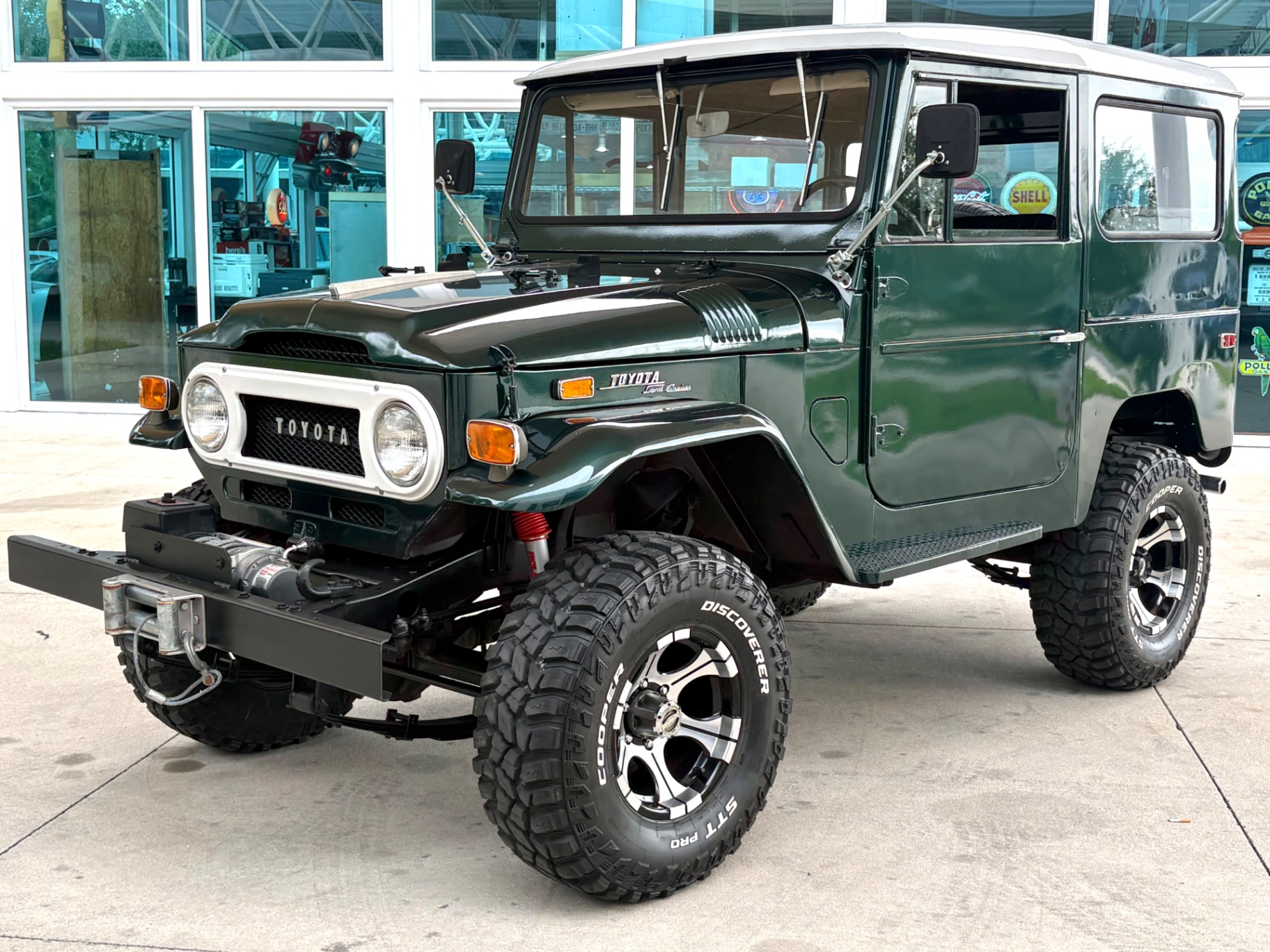
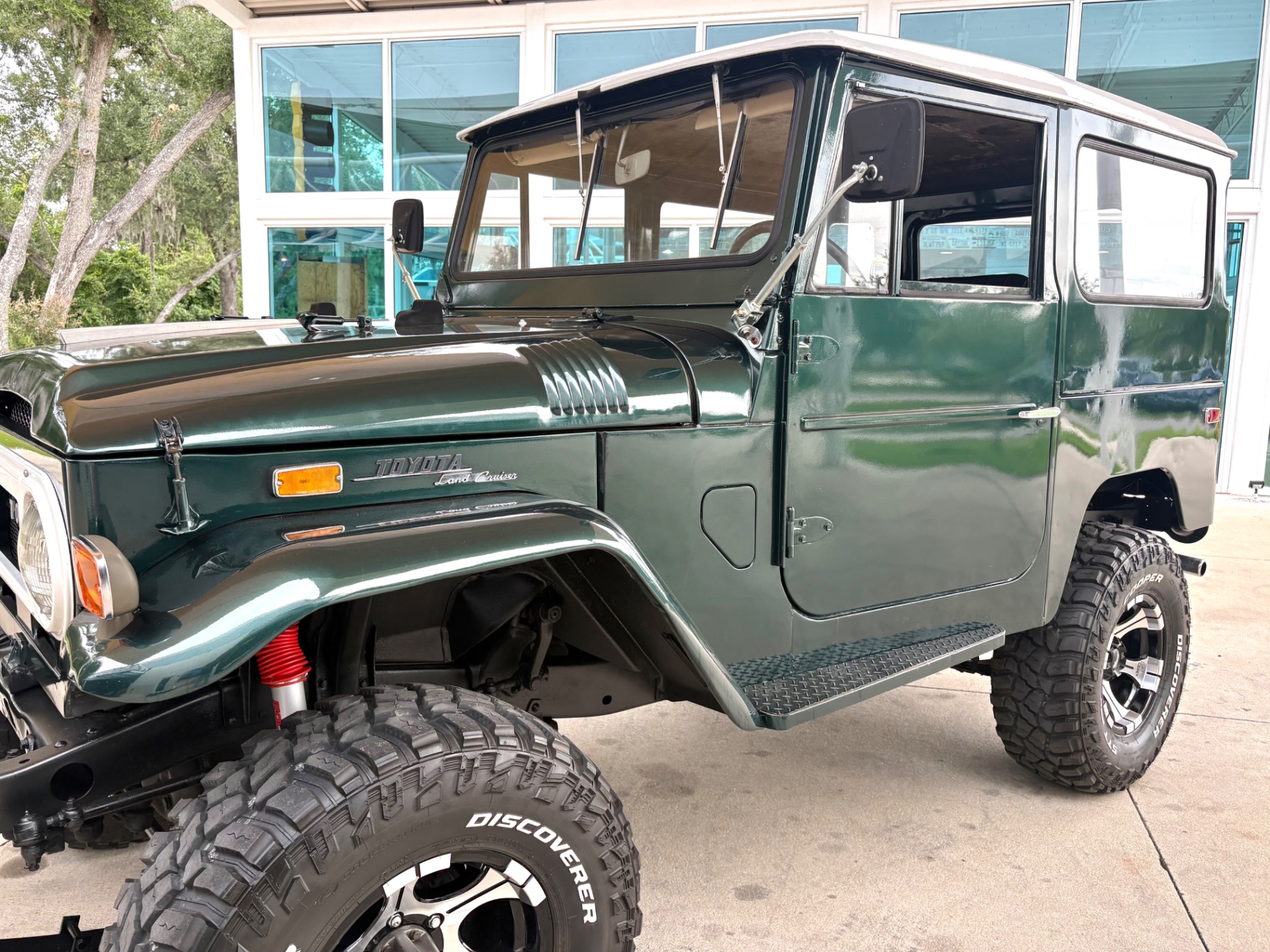

1971 Toyota Land Cruiser FJ40 — Trail-Ready 4x4 with F-Series Inline-6 and Warn Winch
Why This Car Is Special
The 1971 Toyota Land Cruiser FJ40 occupies a singular place in the history of four-wheel drive vehicles. While American buyers were familiar with the Jeep CJ and International Scout, the FJ40 offered something different: a body-on-frame truck built to handle sustained abuse in remote terrain without the need for constant mechanical attention. Toyota had been refining the Land Cruiser formula since the early 1950s, developing it initially for military and commercial use in rugged markets like Australia, the Middle East, and South America. By 1971, the FJ40 had earned a reputation that no amount of advertising could manufacture — it was simply the truck that came back when others didn't.
The FJ40 body style ran from 1960 through 1984, with meaningful mechanical updates introduced throughout that run. The early 1970s represent a particularly desirable window for collectors. These trucks had received the revised F-series inline-6 engine that would define the model's mechanical character for years, yet they retained the straightforward, fully mechanical systems that make ownership and repair genuinely manageable for someone who knows tools. There are no computers to fault out, no electronic throttle bodies, no canbus networks. Everything under this FJ40 does what it does through direct mechanical connection.
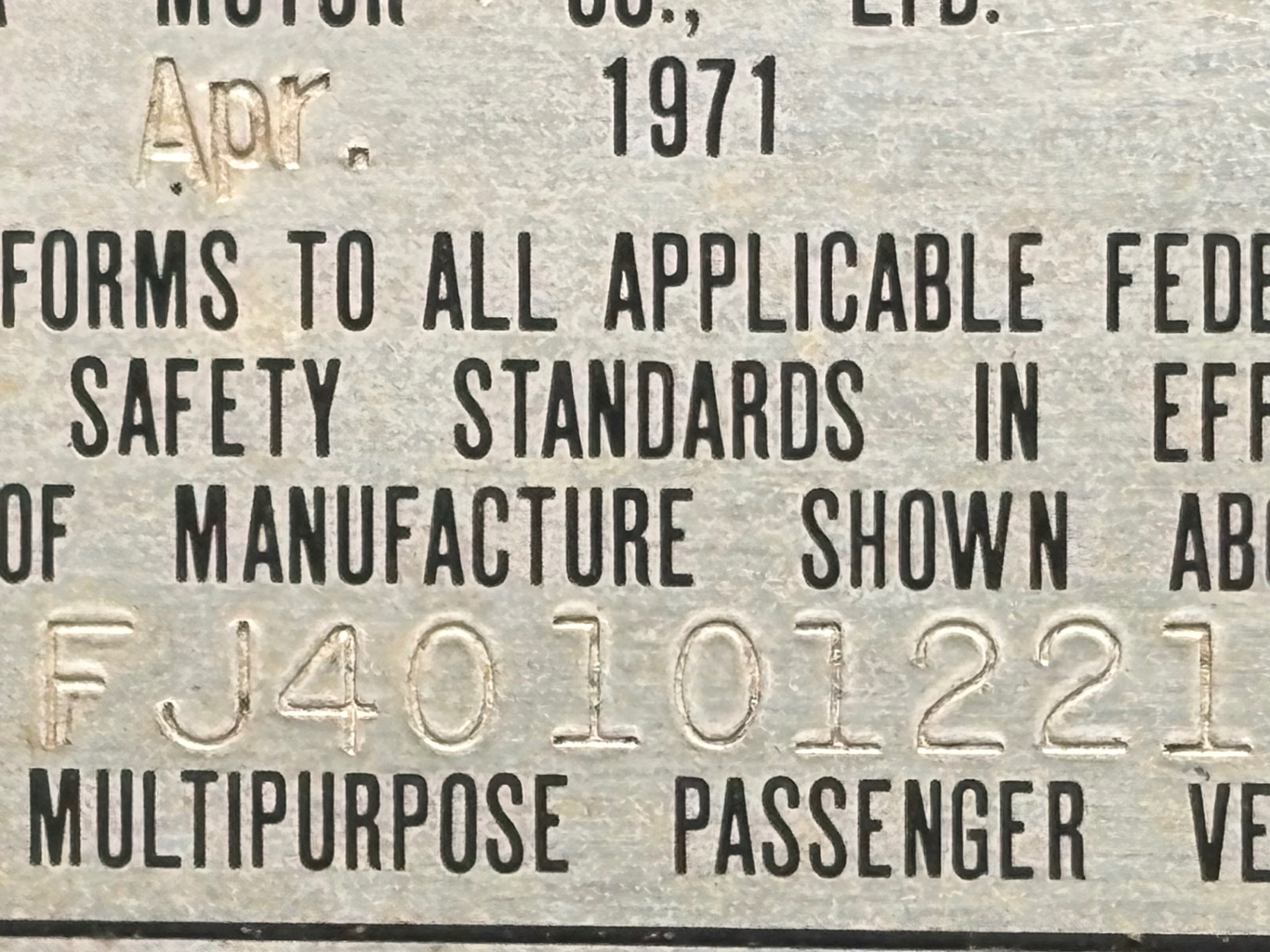
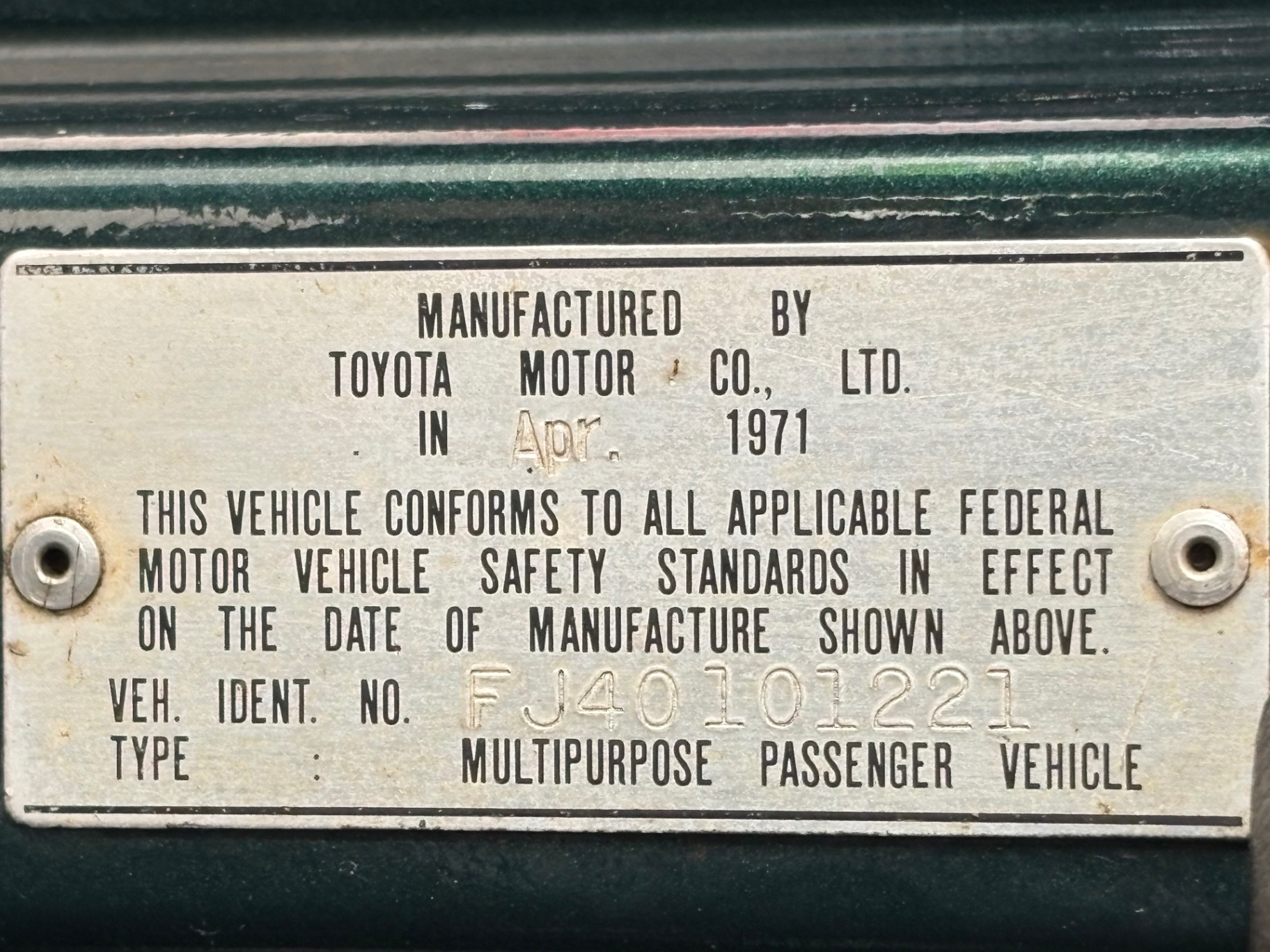
The chassis serial number on this truck begins with FJ40, confirming it is the standard short-wheelbase hardtop configuration — the body style most sought after by collectors and off-road enthusiasts alike. This is the version that defined the FJ40 identity: compact, capable, and honest about what it is.
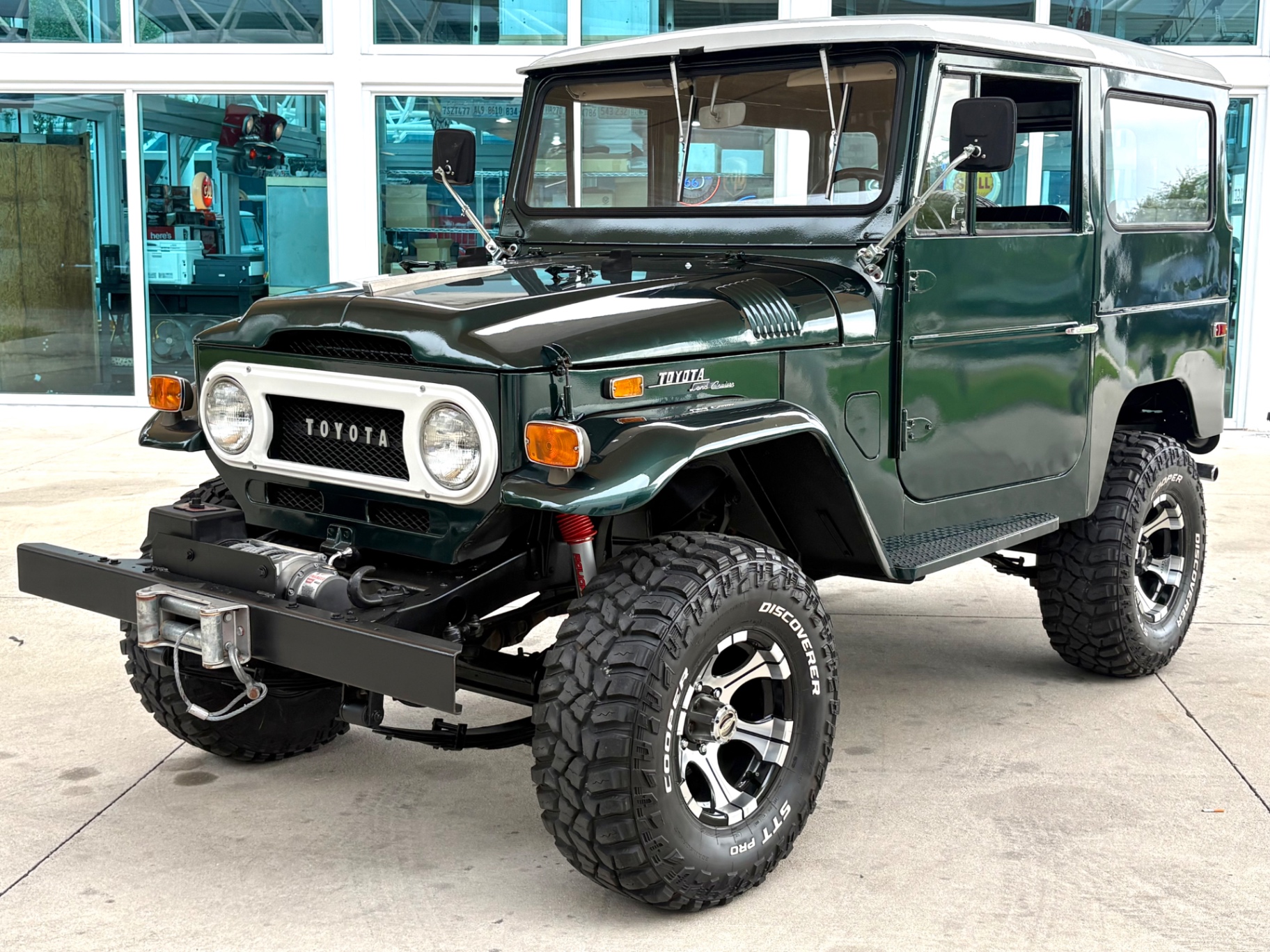
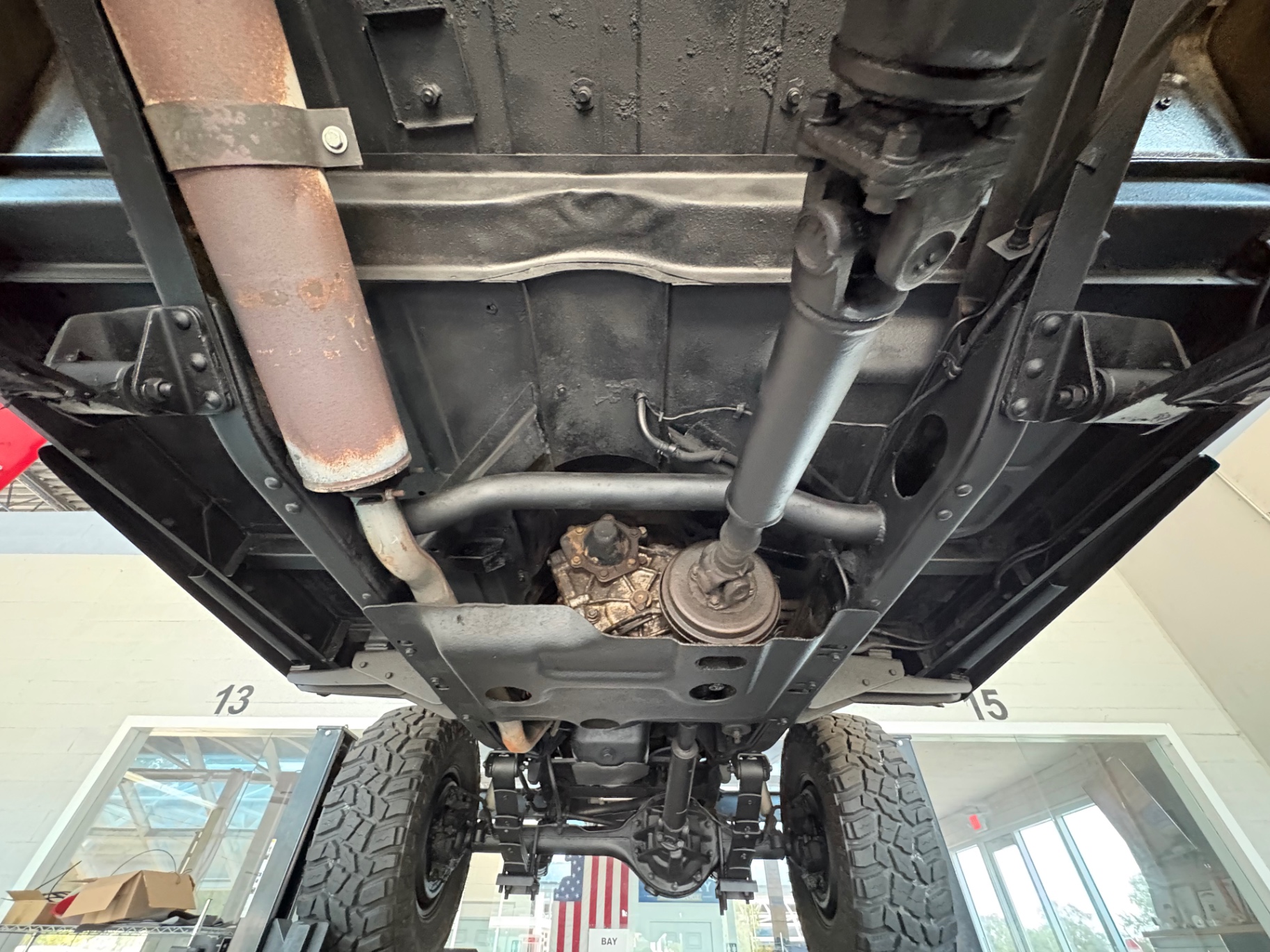
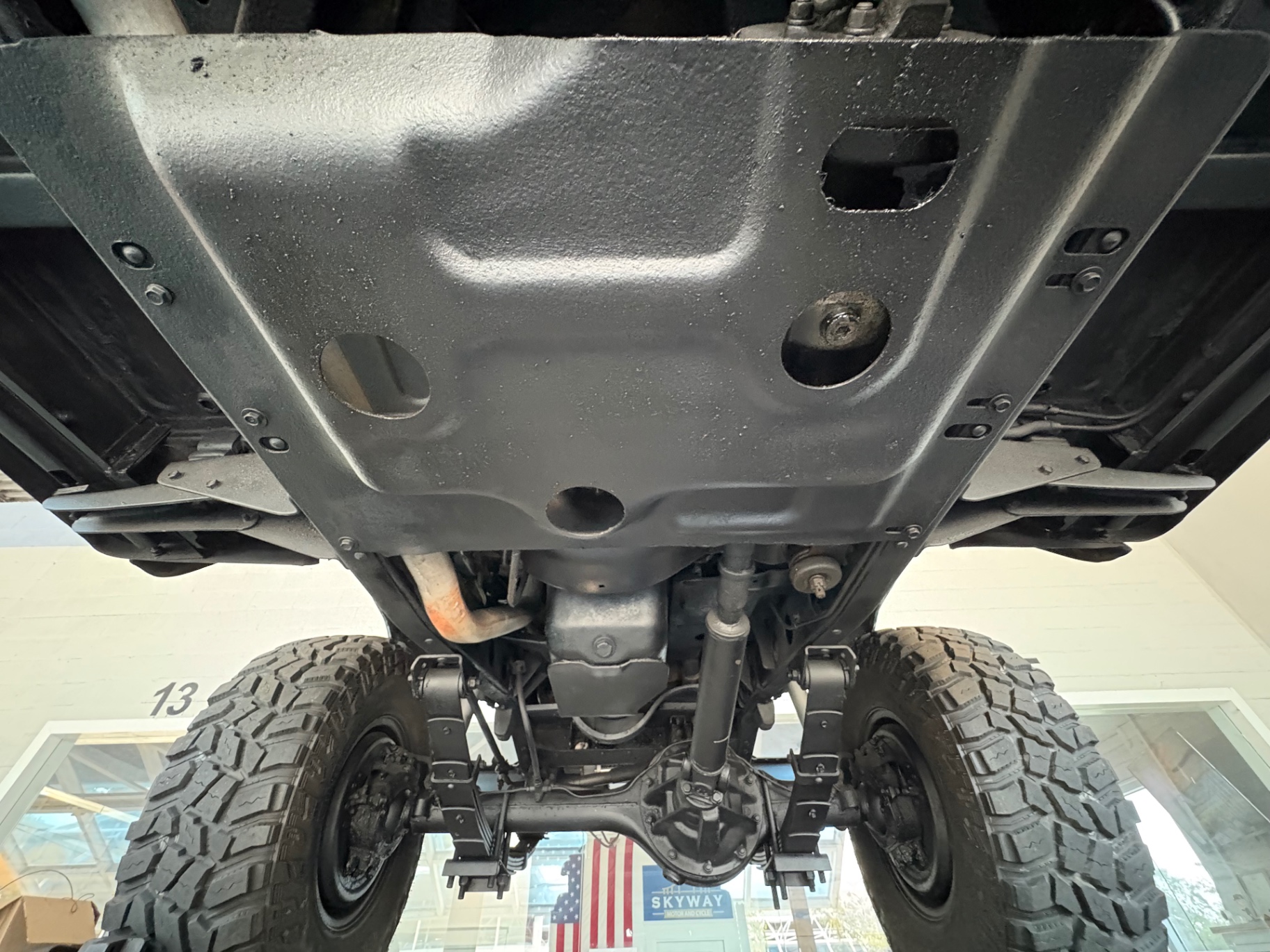
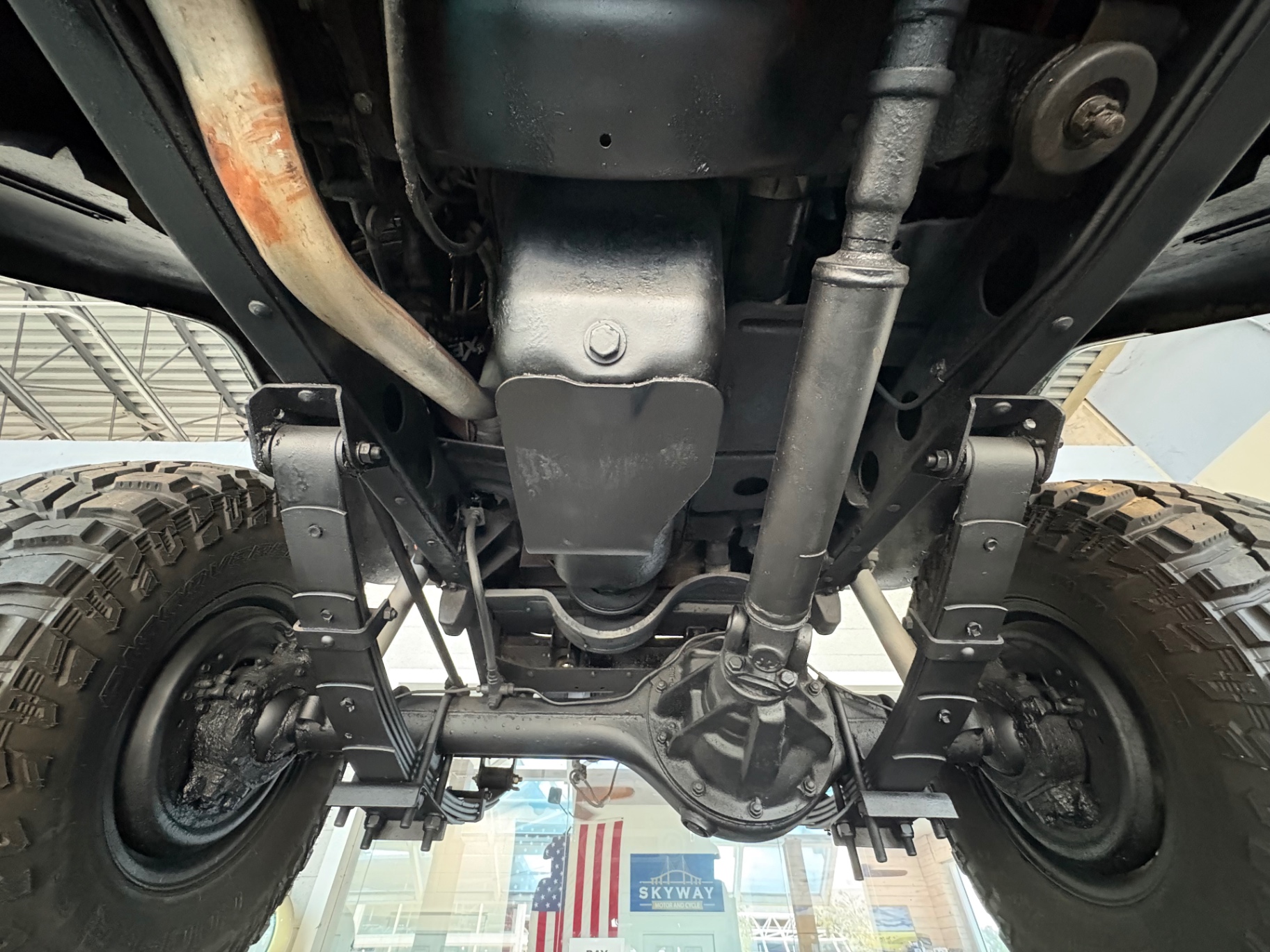
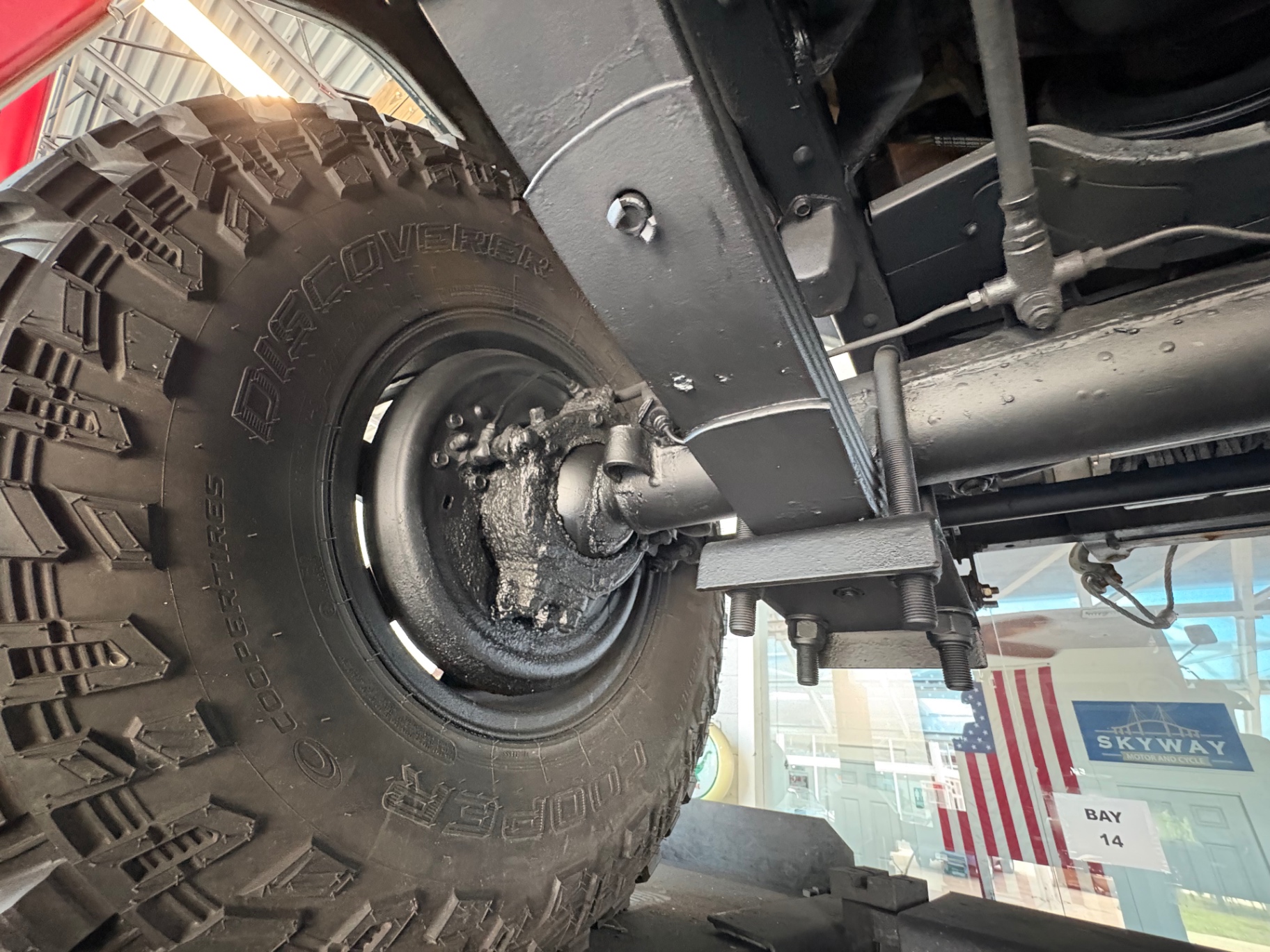
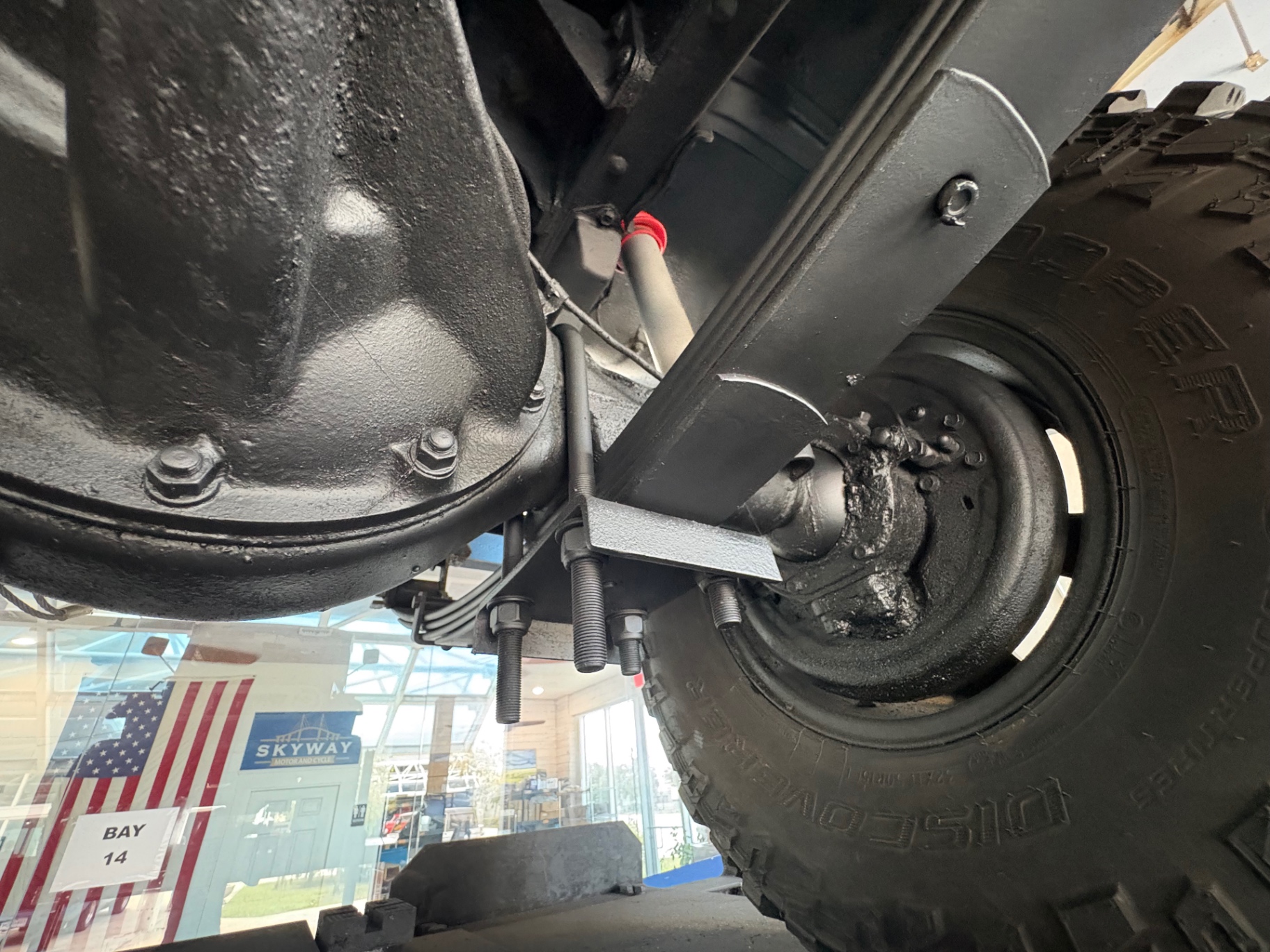
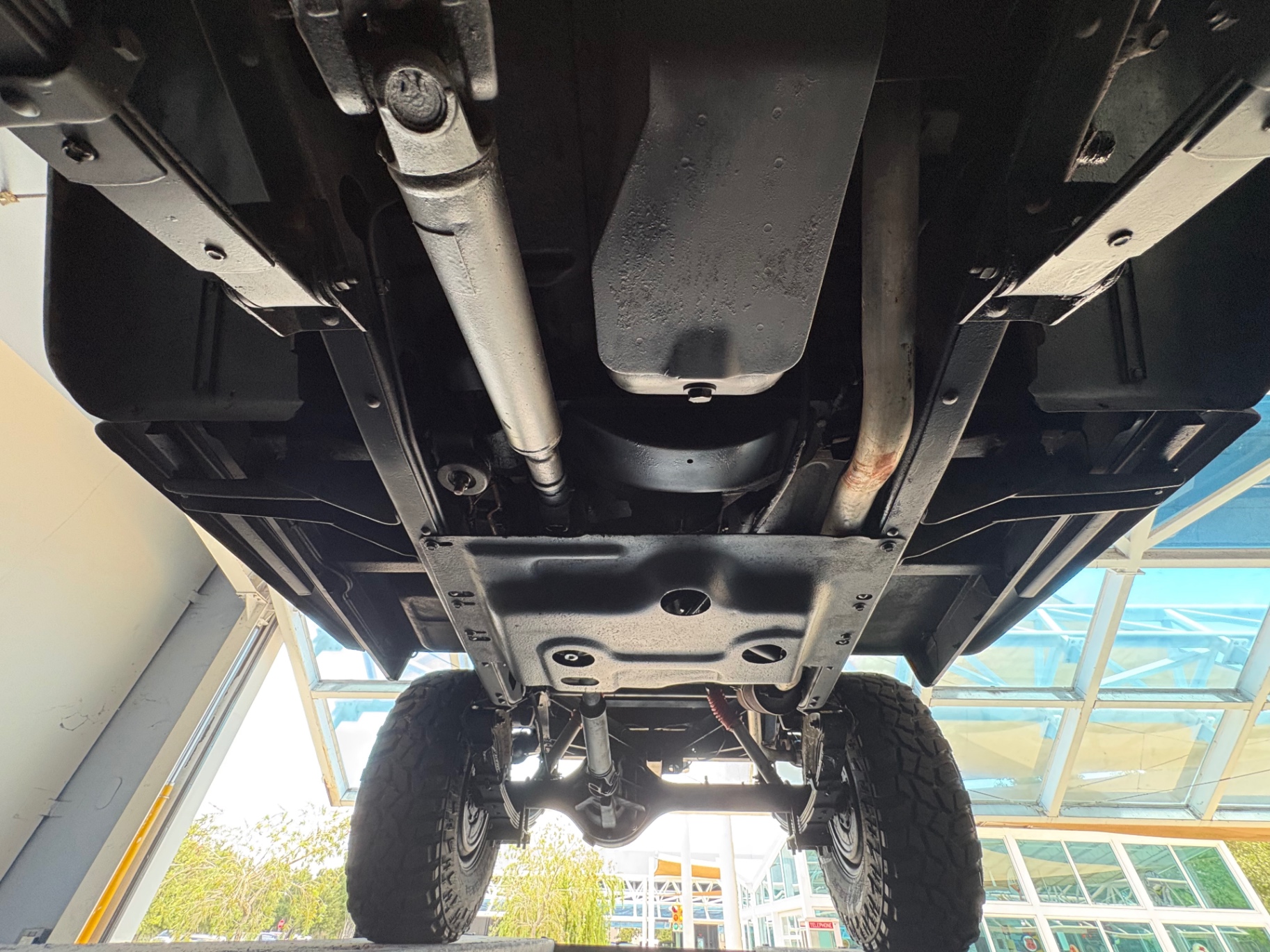
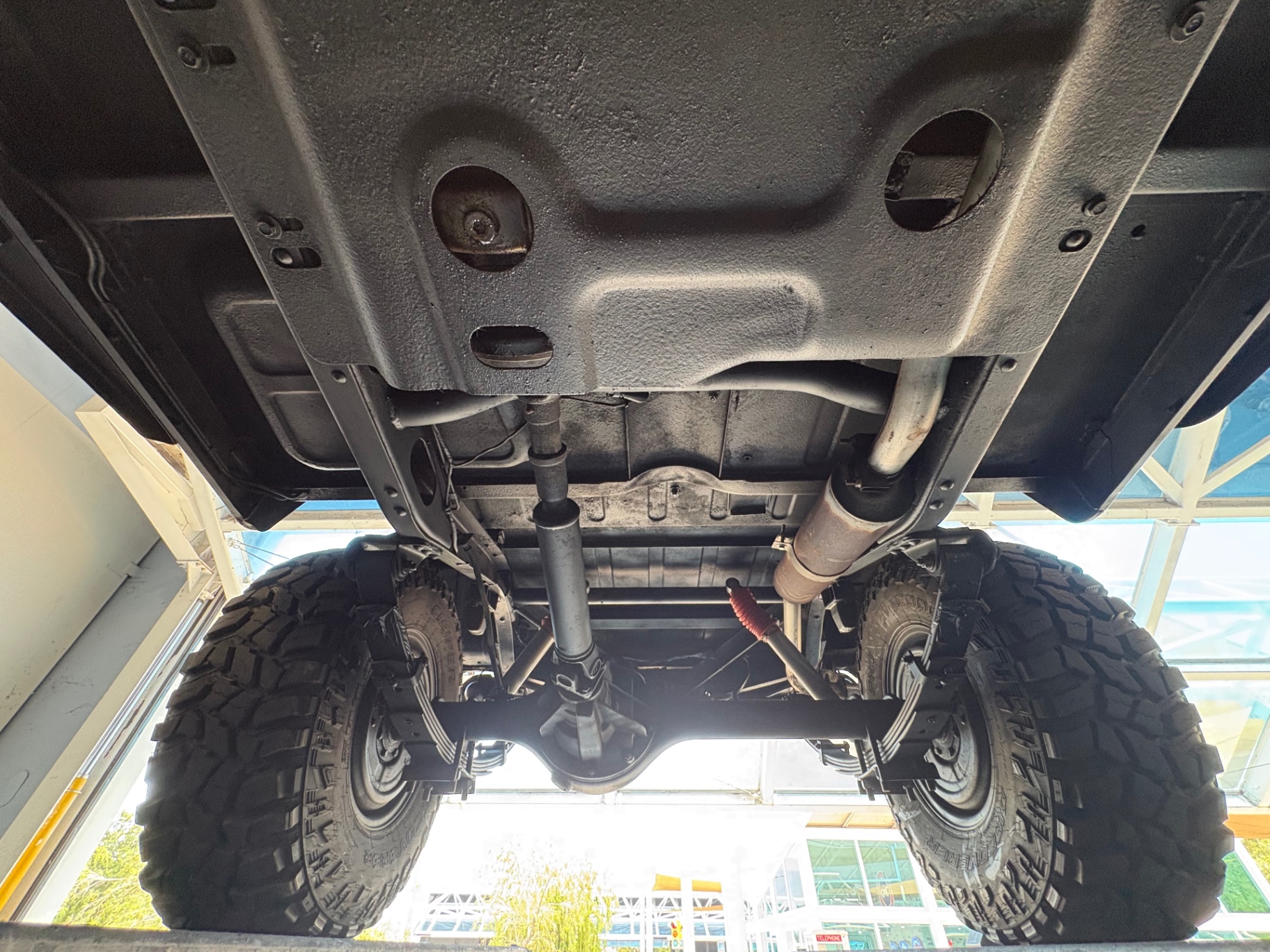
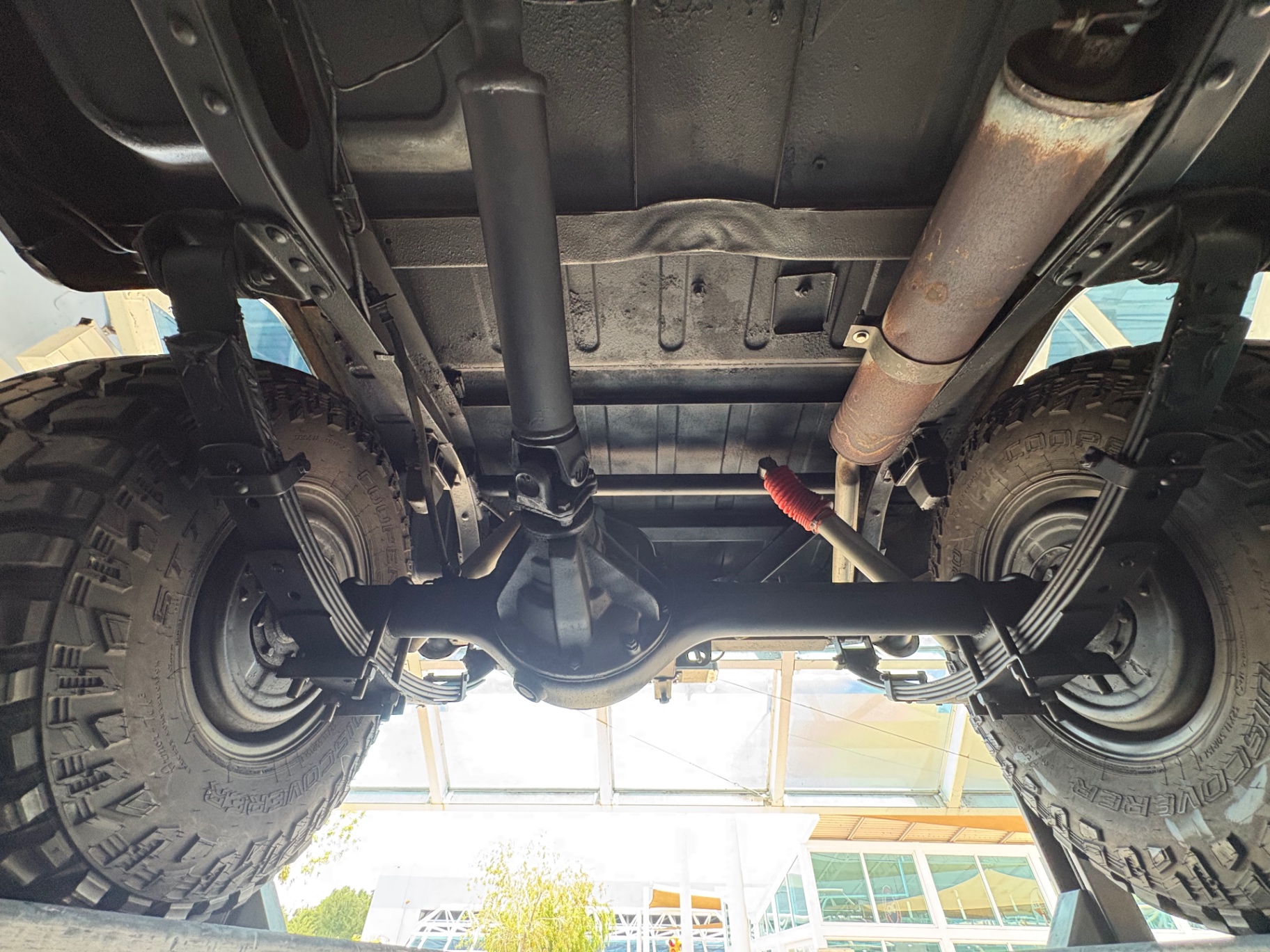
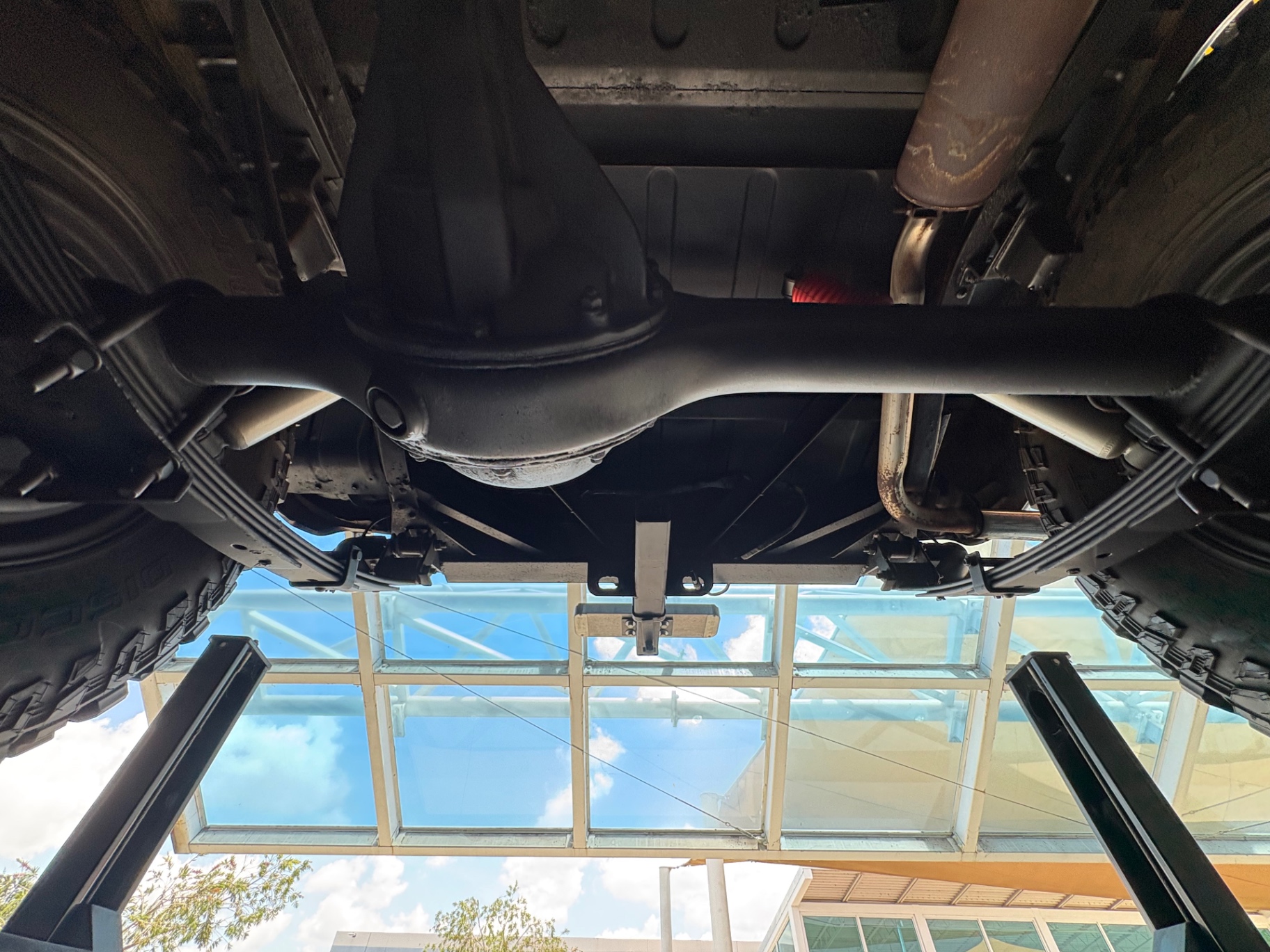
This particular 1971 Toyota Land Cruiser FJ40 has been outfitted with a well-chosen selection of off-road hardware that improves on-trail capability without compromising the character that makes these trucks worth owning. The undercarriage has been coated and presents cleanly on the lift. The green exterior and black interior combination suits the truck well, and the paint-matched hardtop with contrasting white roof is a period-correct look that works on a vehicle of this era.
Features List
- Toyota F-series 3.9L inline-6 engine
- 4-speed manual transmission
- Part-time 4-wheel drive with two-stick transfer case
- Warn electric front winch mounted to heavy-duty aftermarket steel bumper
- Lift kit with Rough Country N2.0 shocks, red-coated front shocks
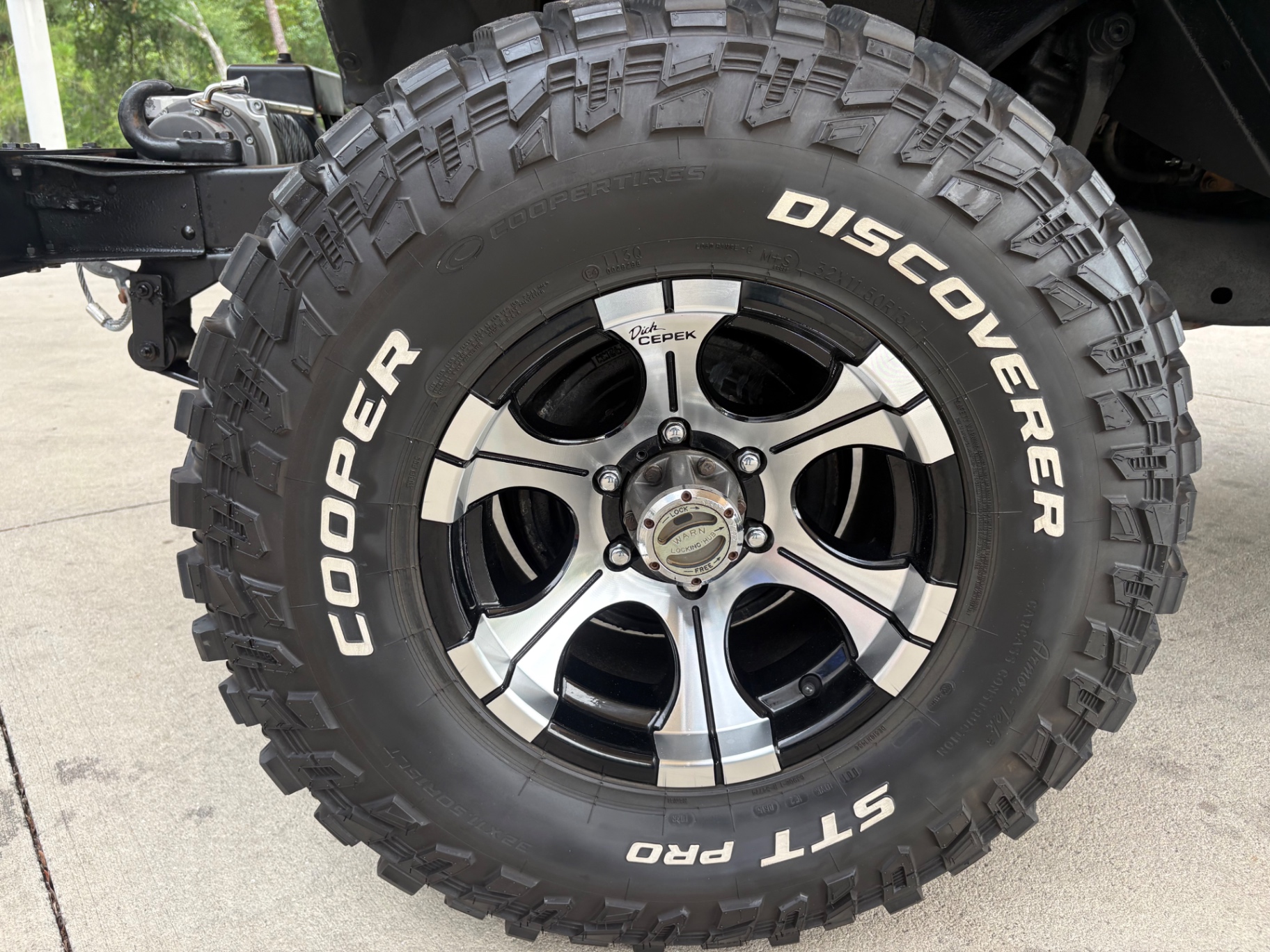
- Cooper Discoverer STT Pro mud-terrain tires
- Aftermarket 5-spoke alloy wheels
- Power steering
- Power brakes
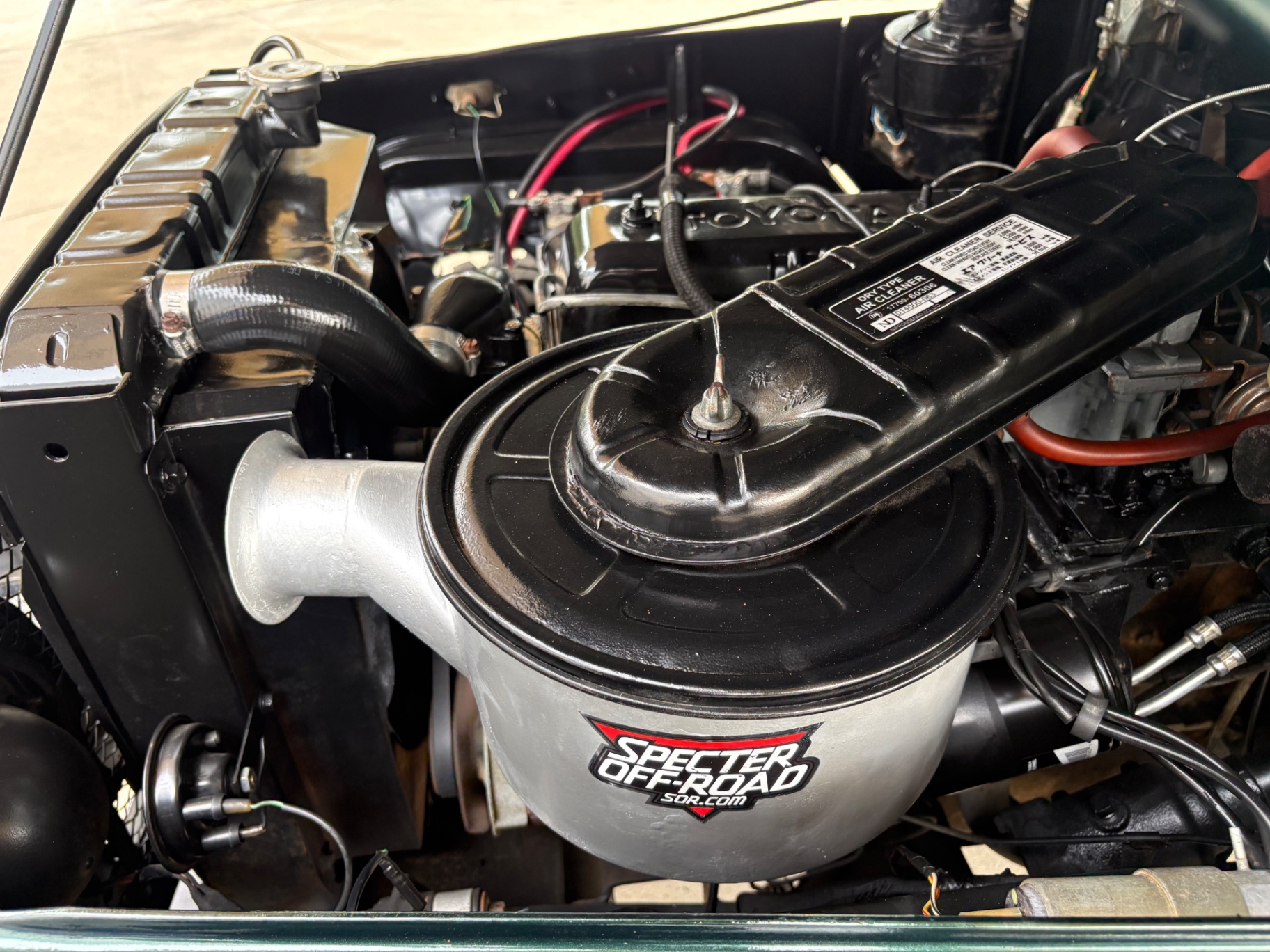
- Specter Off-Road snorkel-style air intake with Specter Off-Road air cleaner assembly
- Diamond plate aluminum flooring throughout cab
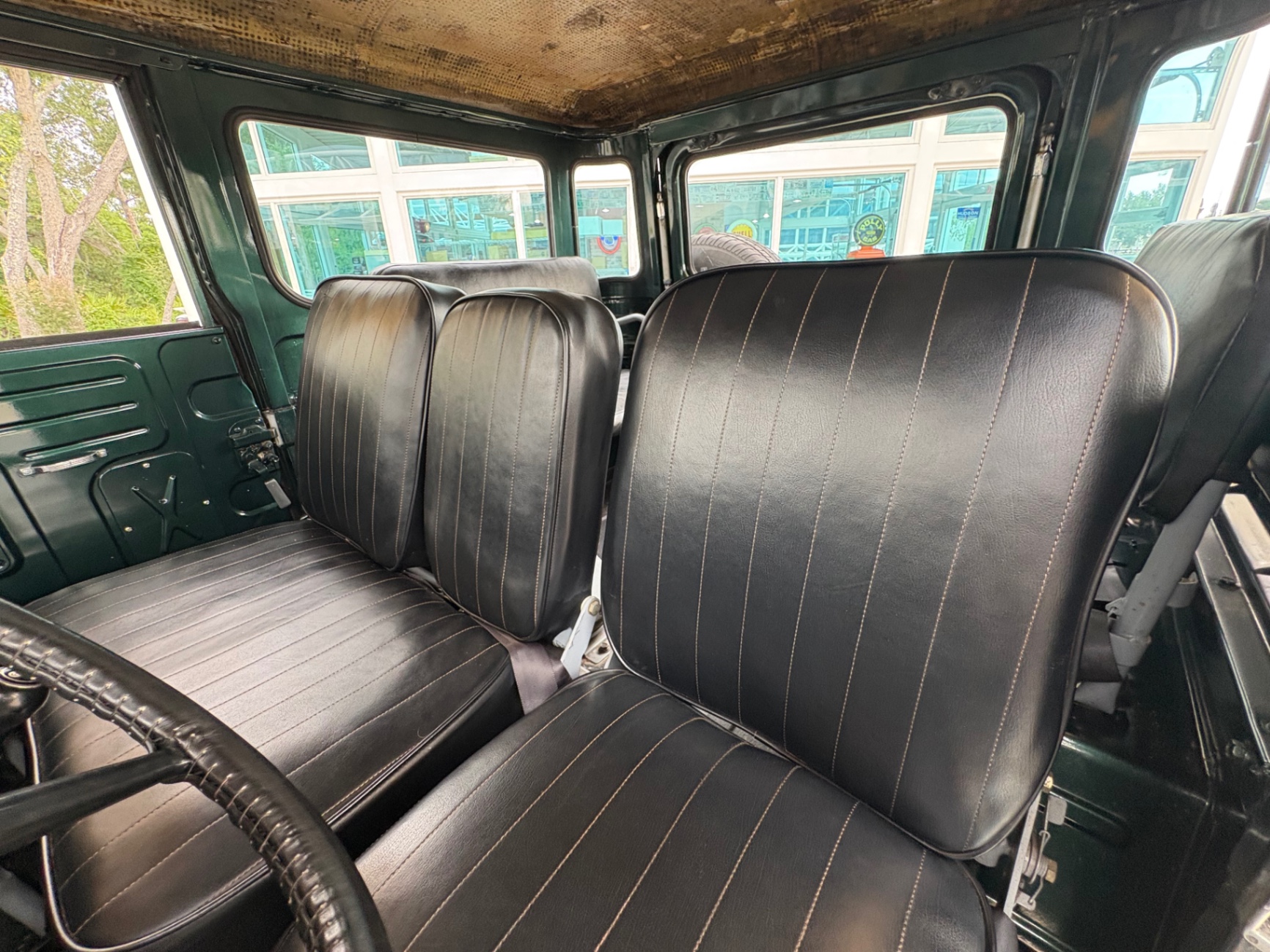
- Black vinyl front and rear bench seats
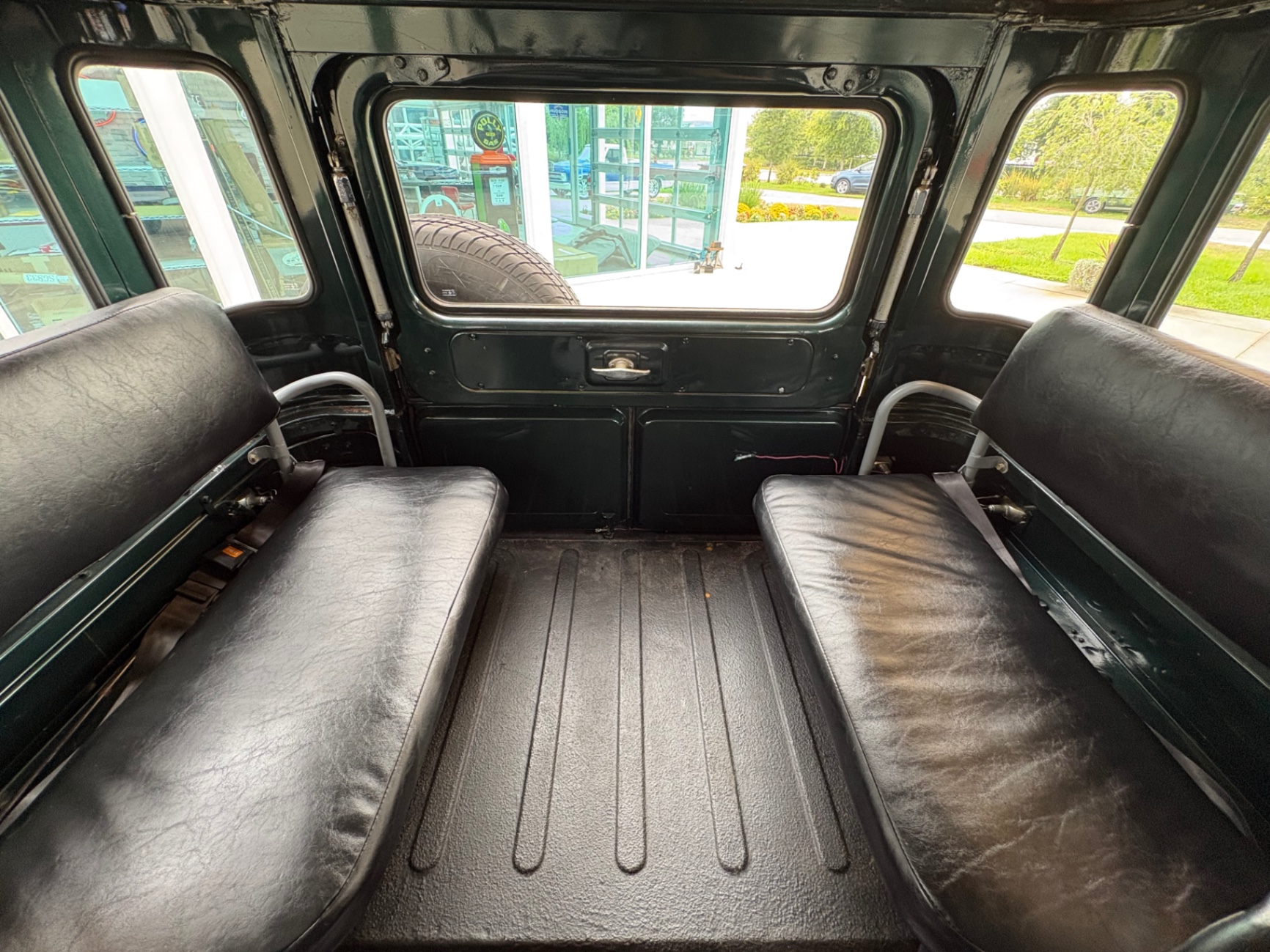
- Fold-flat and removable rear bench seat
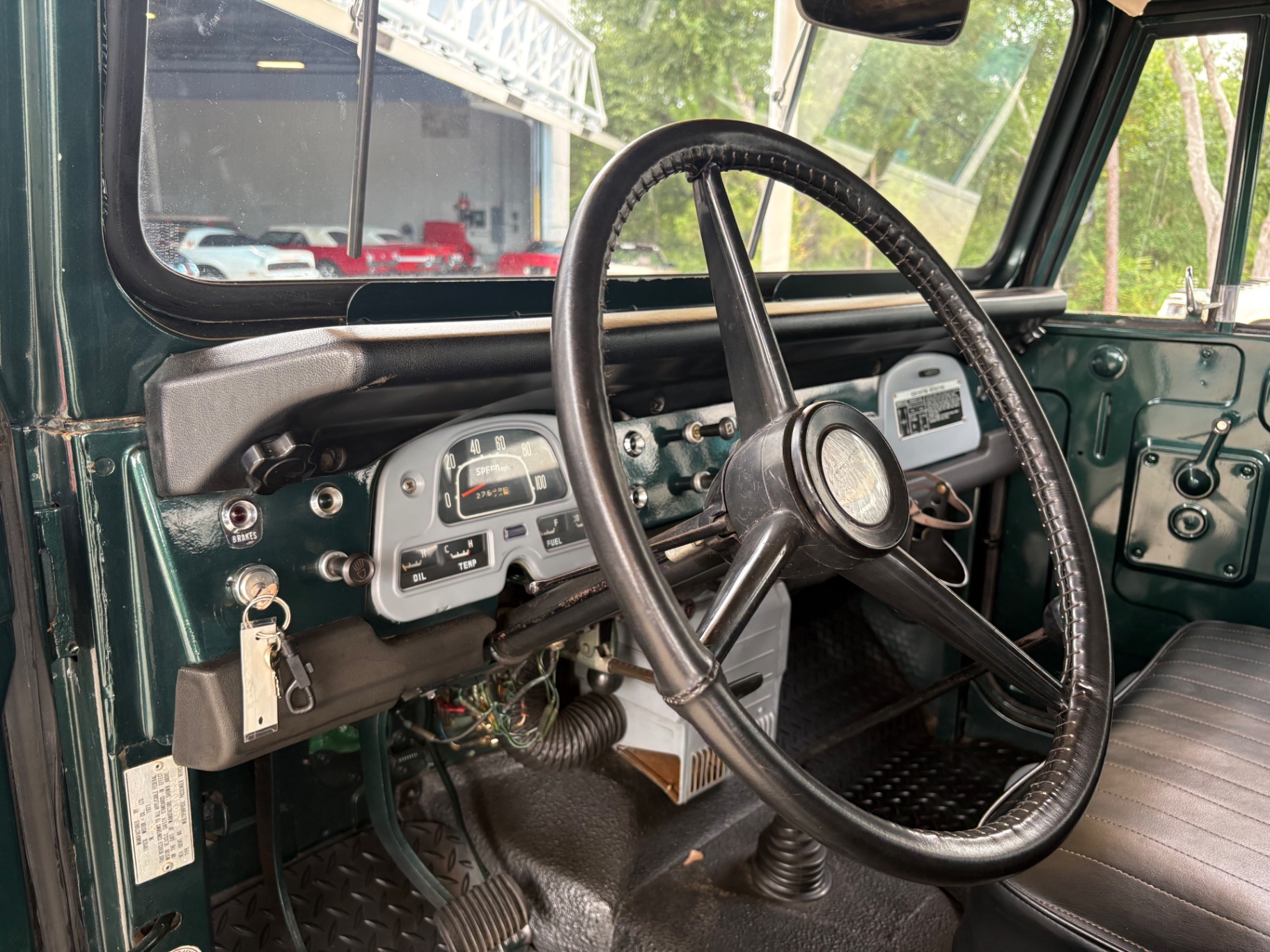
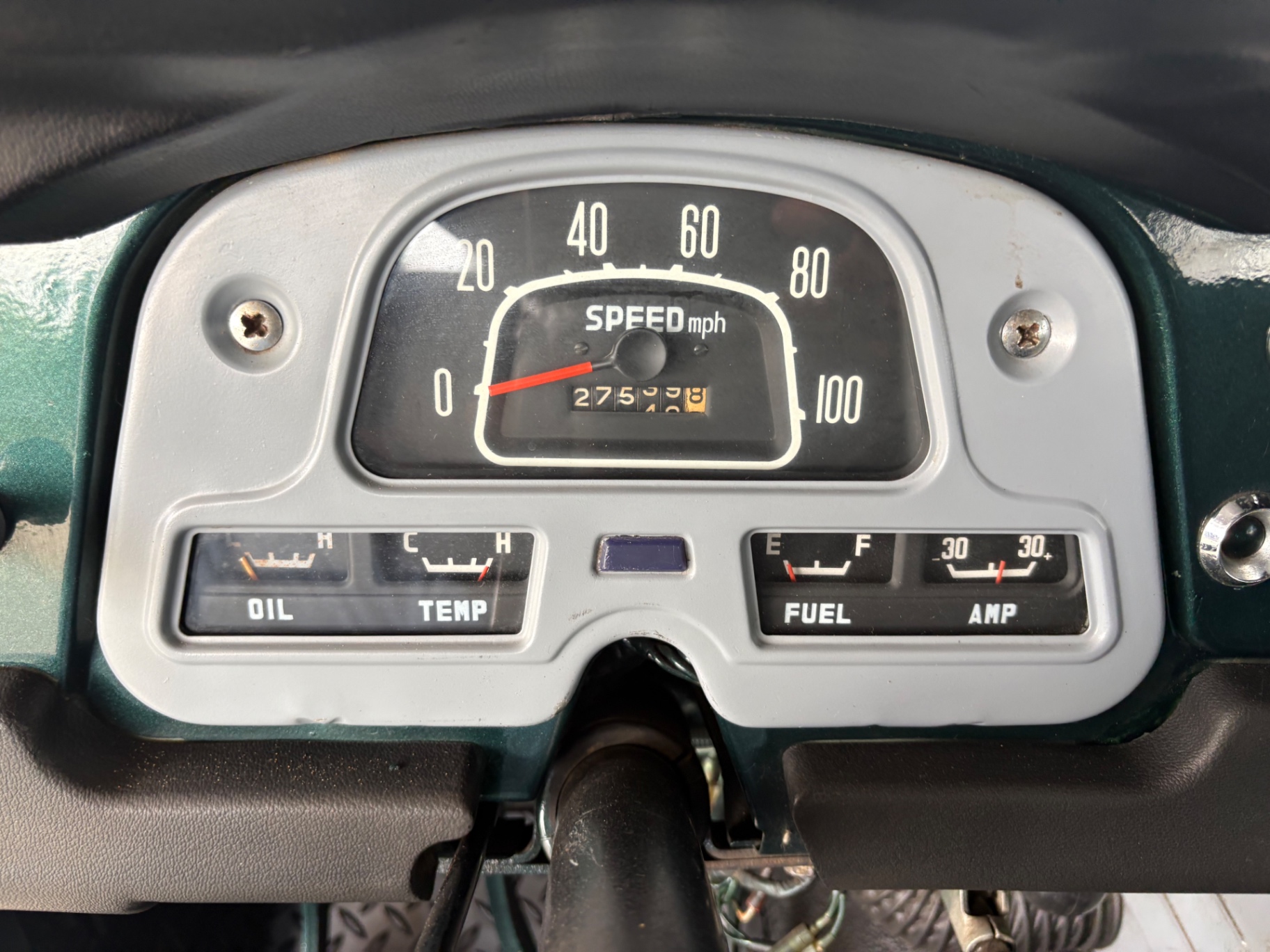
- Factory analog instrument cluster with oil pressure, temperature, fuel, and amp gauges
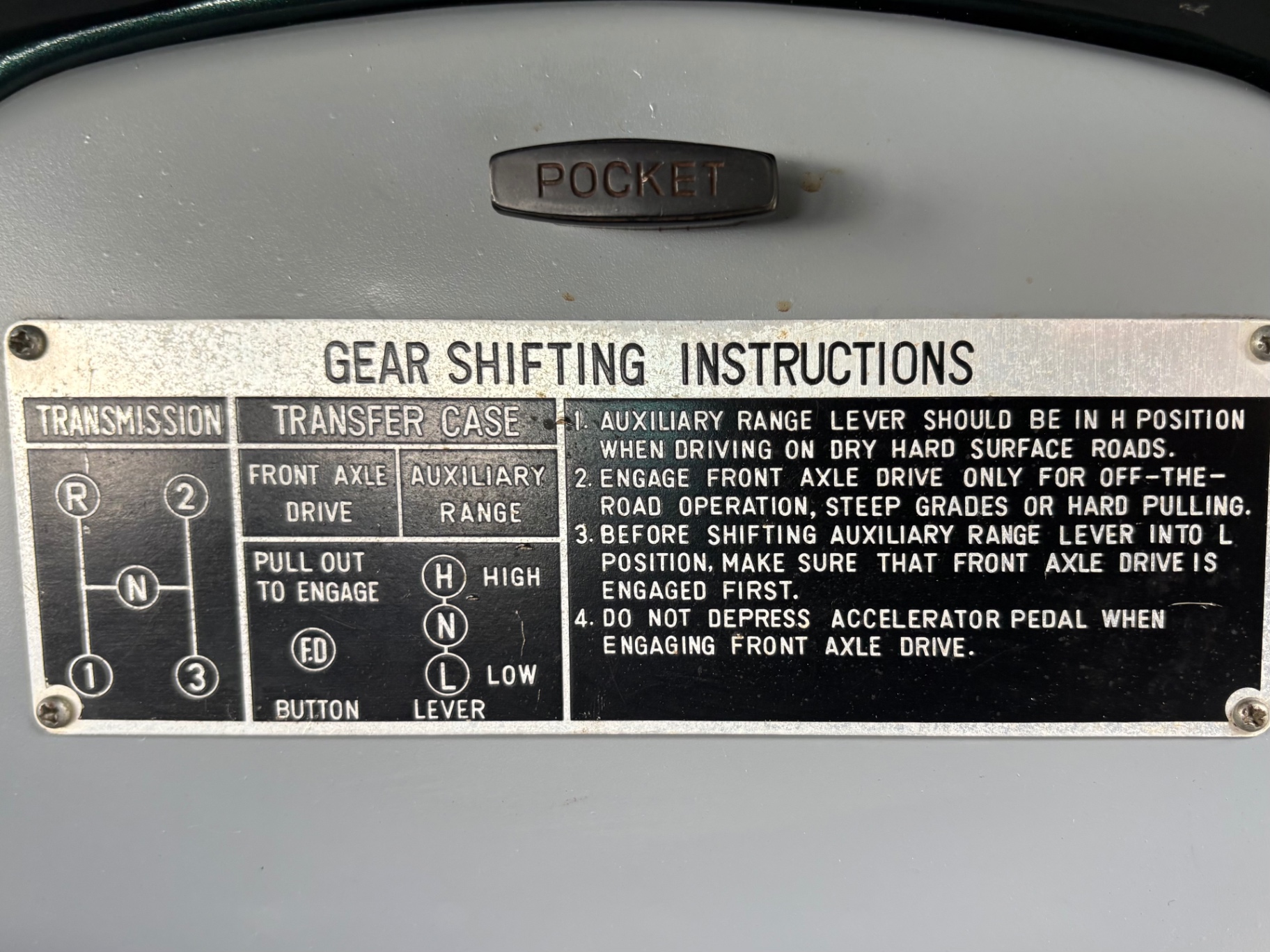
- Gear shifting instructions placard on dash
- Side-hinged rear tailgate with external spare tire mount
- Roof rack
- Running boards / side steps
- Tow hitch
- Paint-matched green hardtop with white roof
- Crank windows
- Aftermarket side mirrors
Mechanical
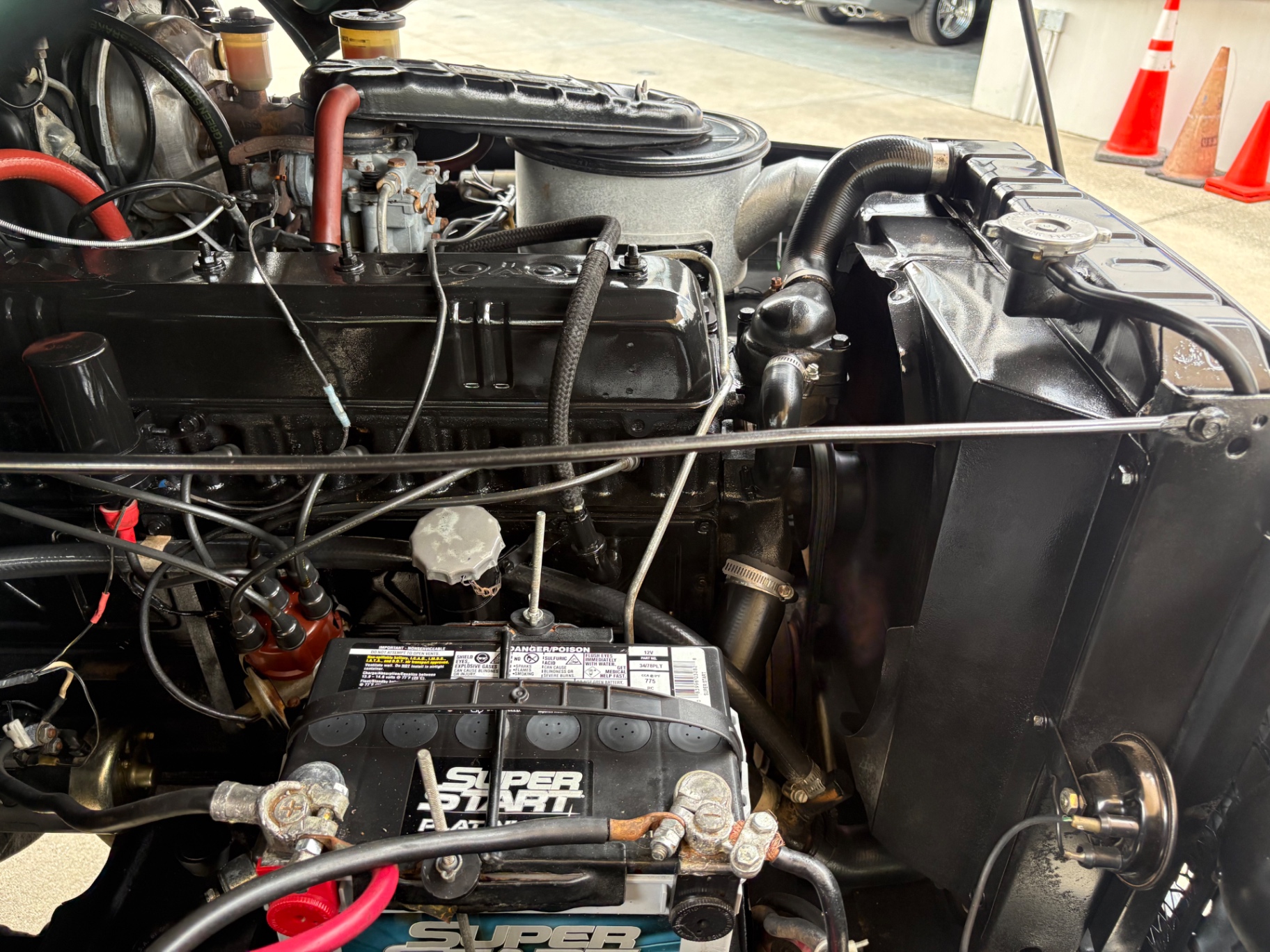
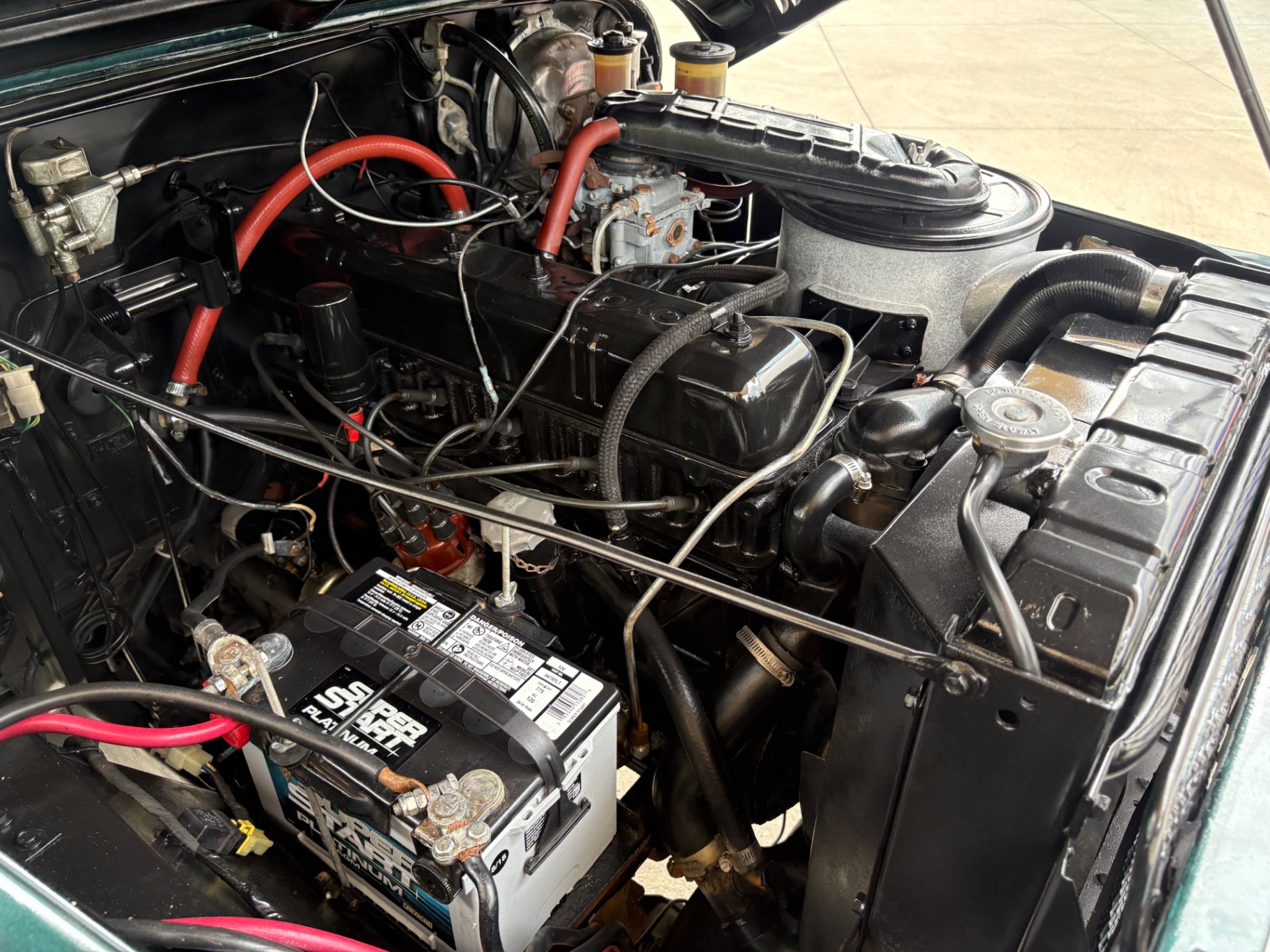
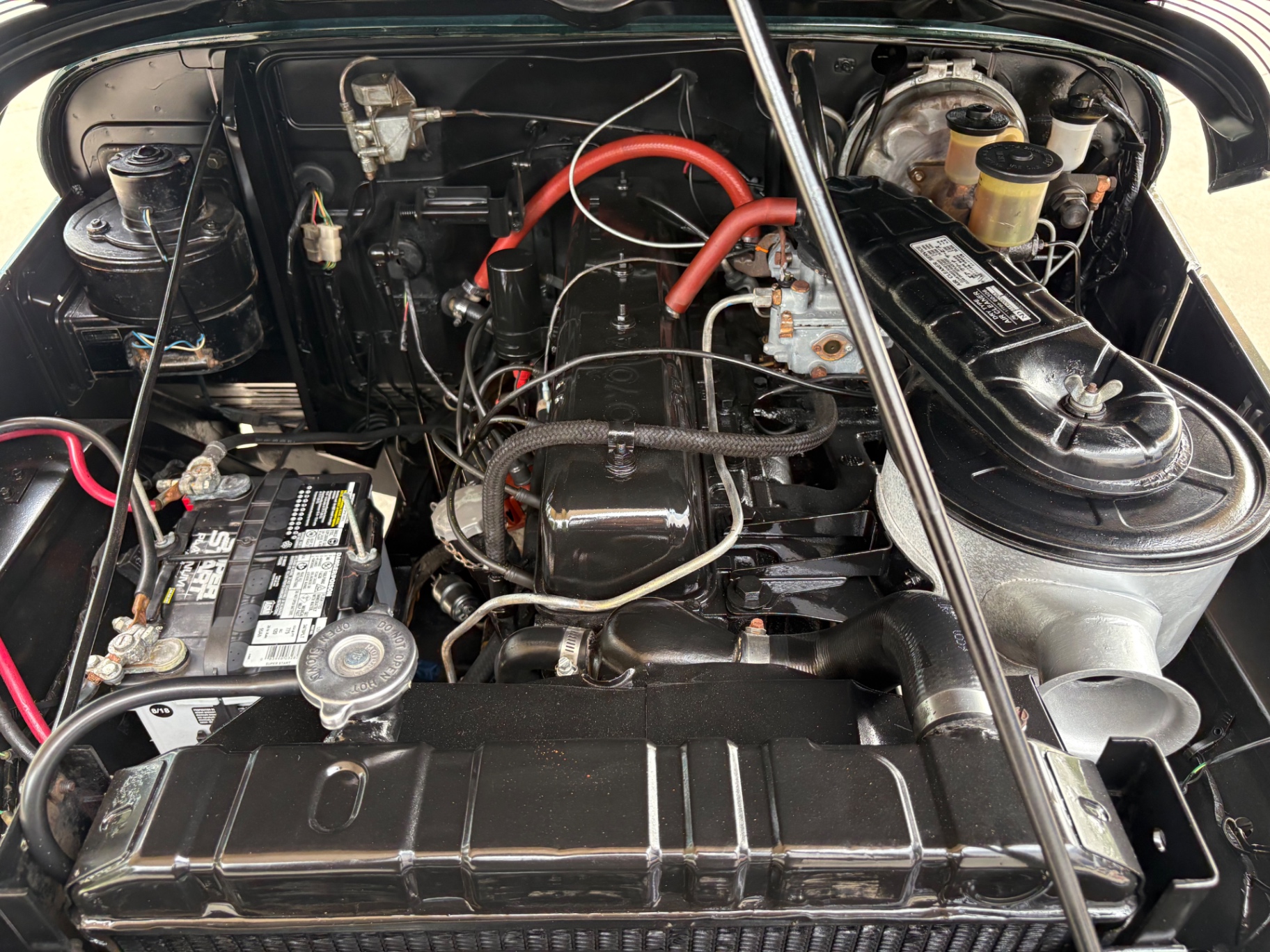
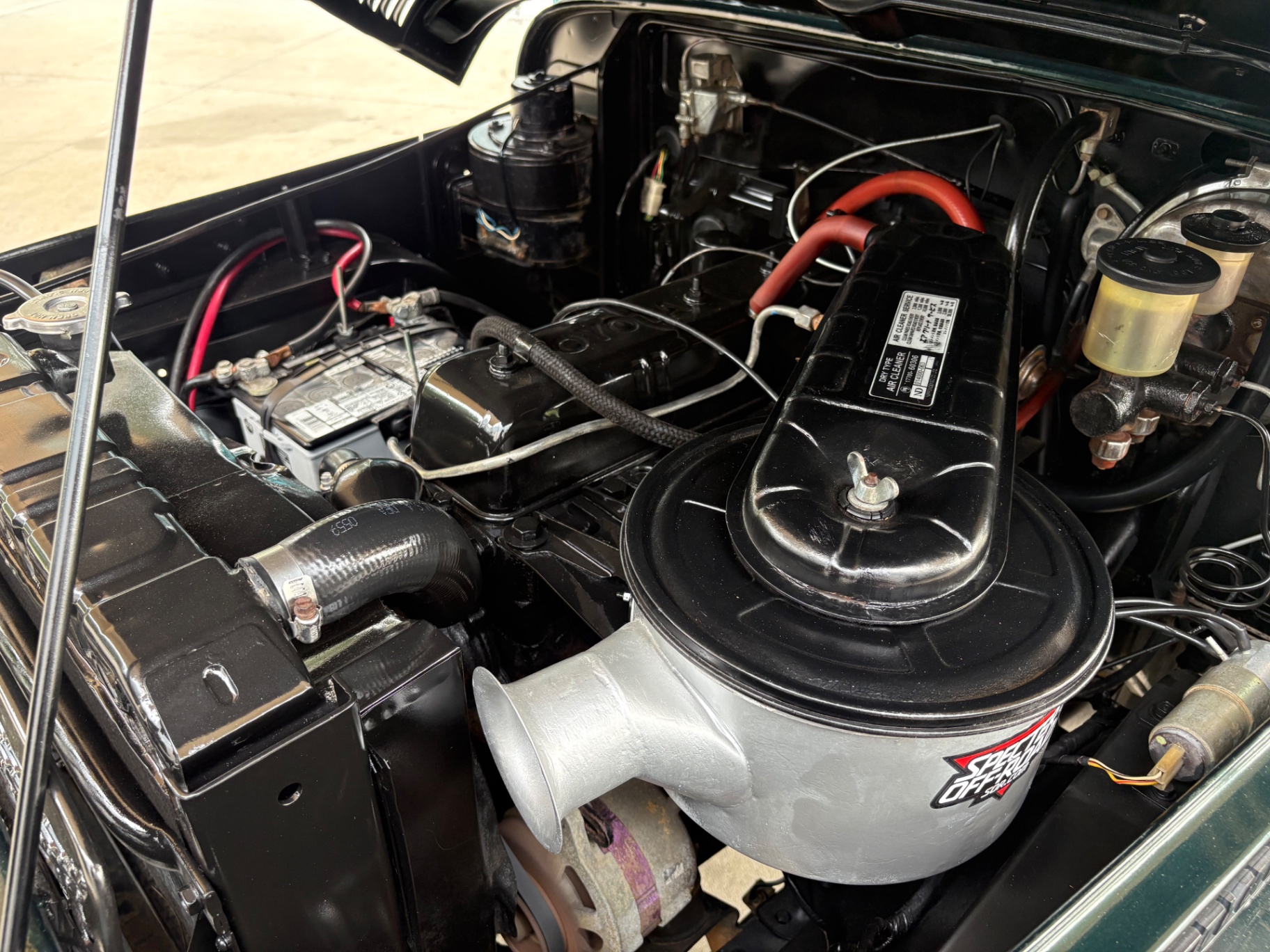
Power comes from Toyota's F-series 3.9-liter inline-6, the engine that carried the Land Cruiser name through decades of hard use on every continent. The F engine is an overhead-valve design with a cast-iron block and head, known for its long service life when maintained and its tolerance for heat and load. It is a straightforward engine to work on — parts availability in the FJ40 community is good, and the engine responds well to basic tune-up work. This truck pairs that engine with a 4-speed manual transmission, which is the correct choice for a vehicle used off-road. A manual gives the driver direct control over gear selection when picking a line through technical terrain, and it removes the automatic transmission's added heat and complexity from the equation.
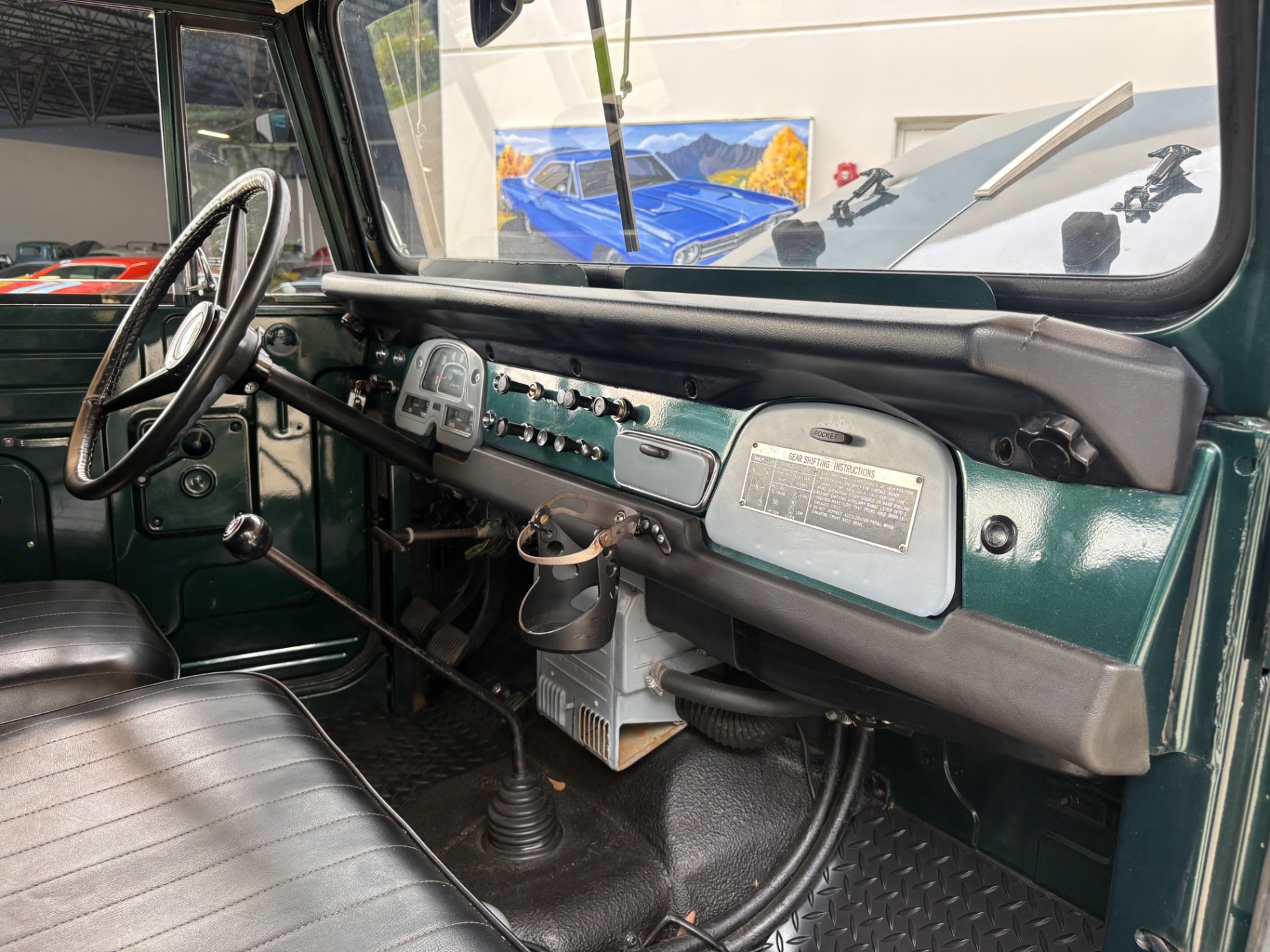
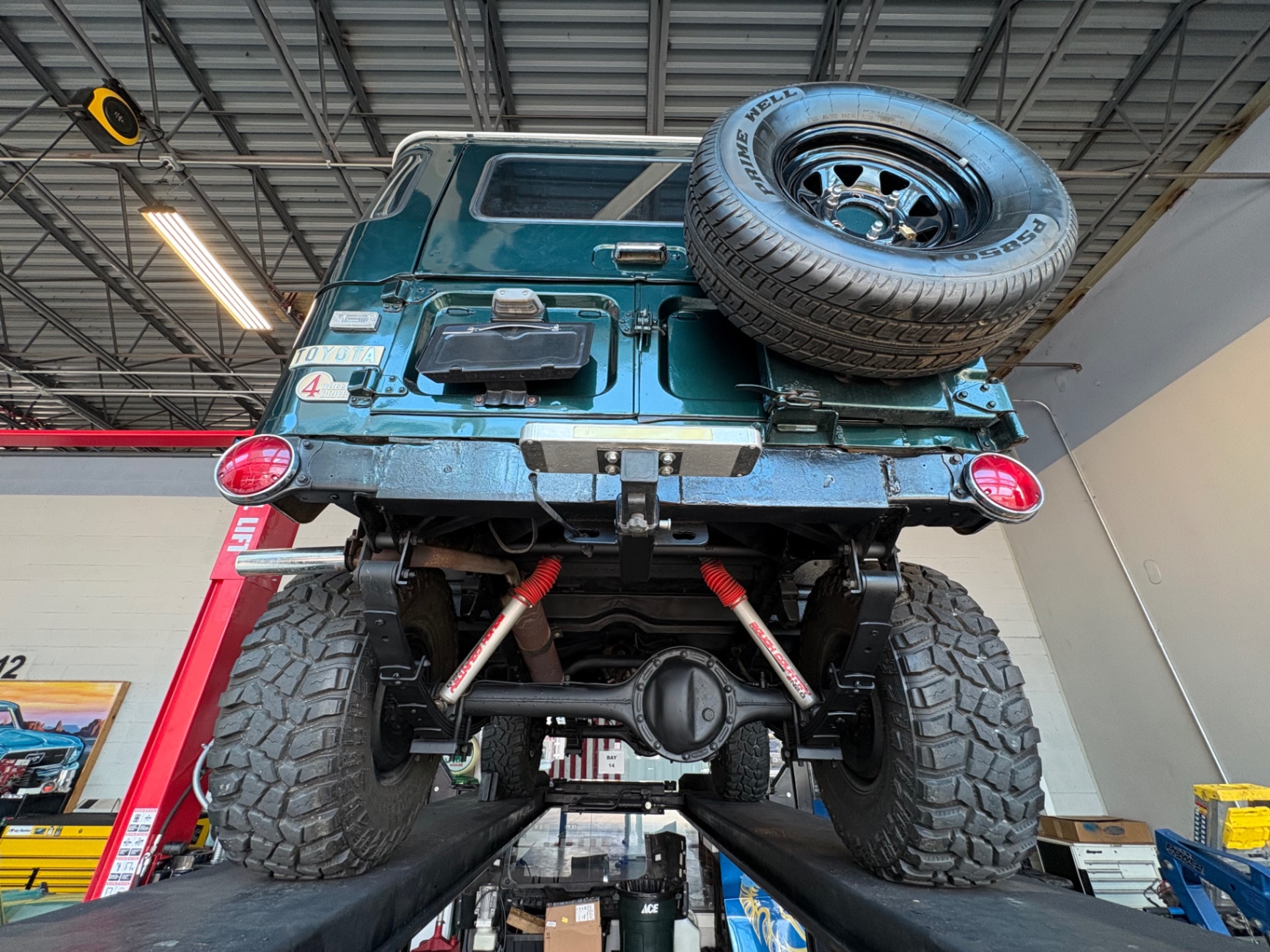
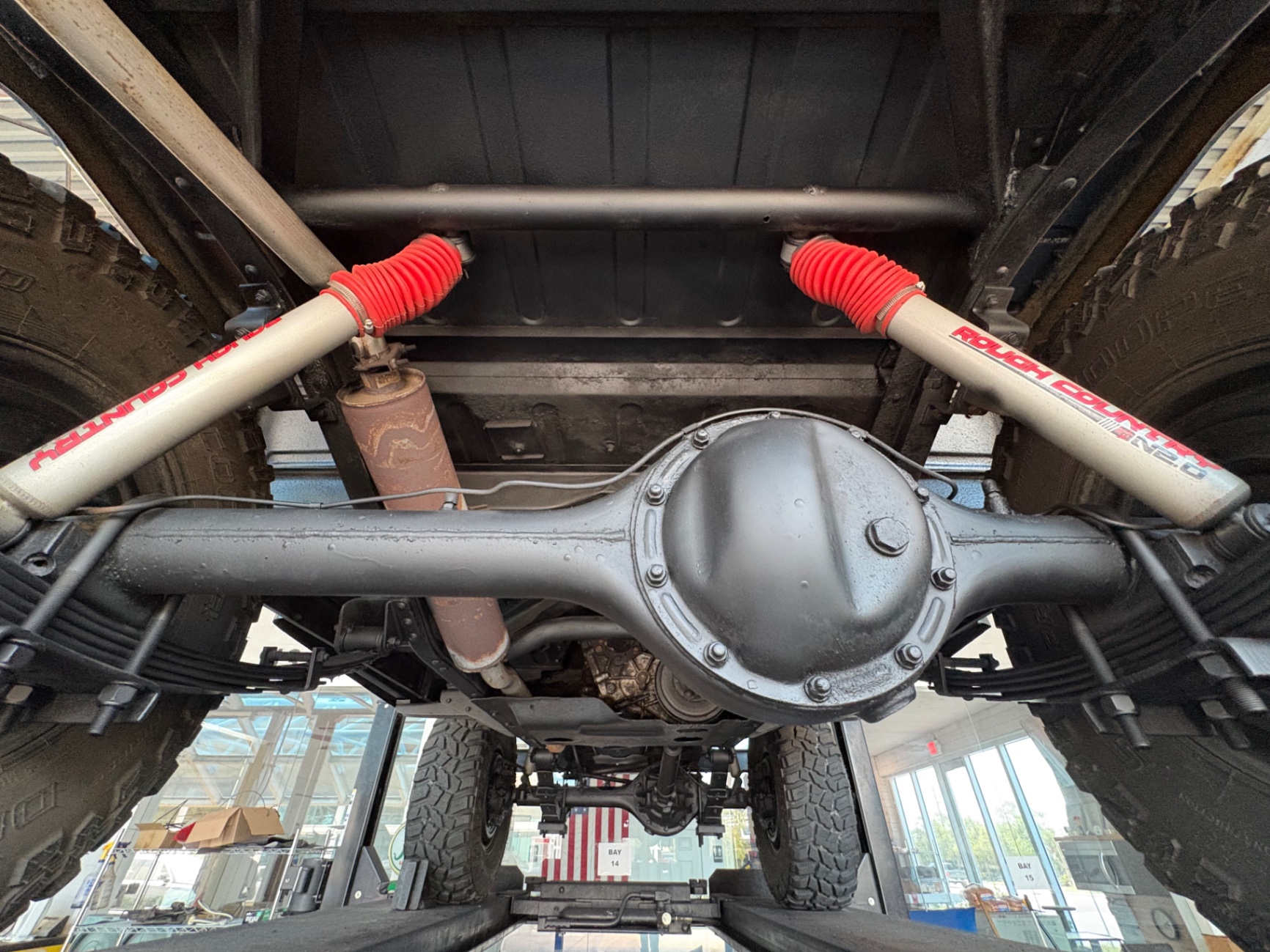
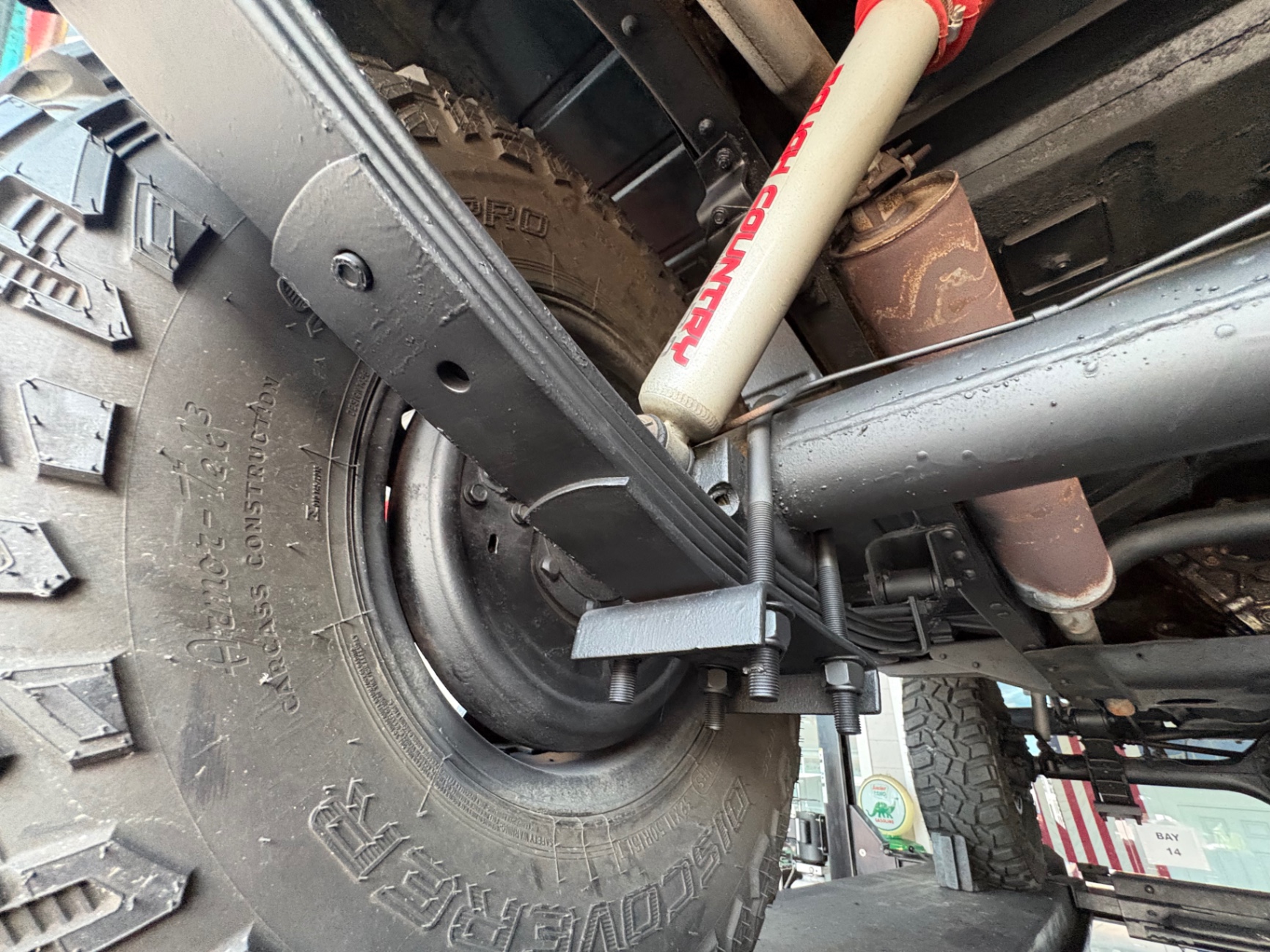
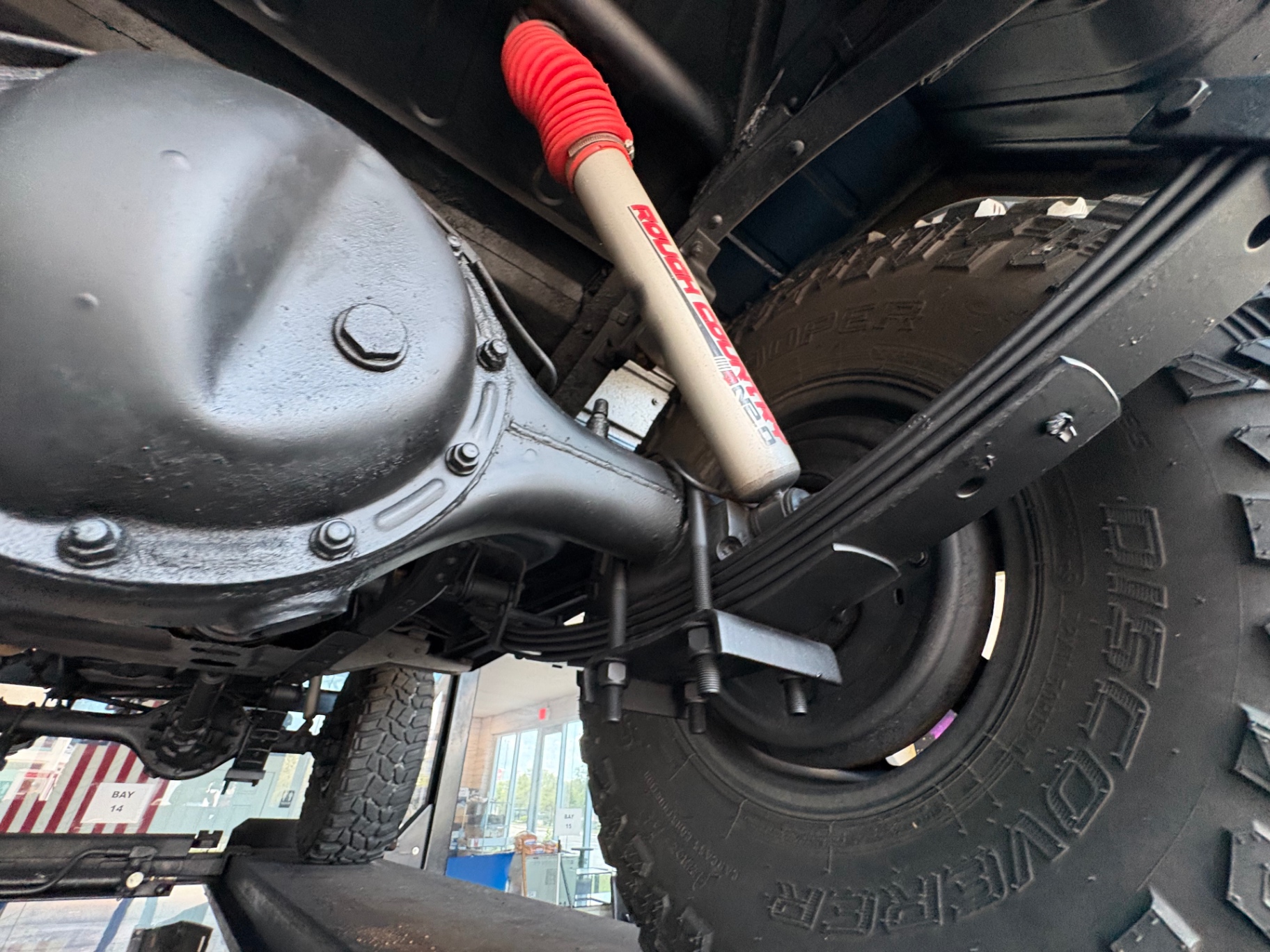
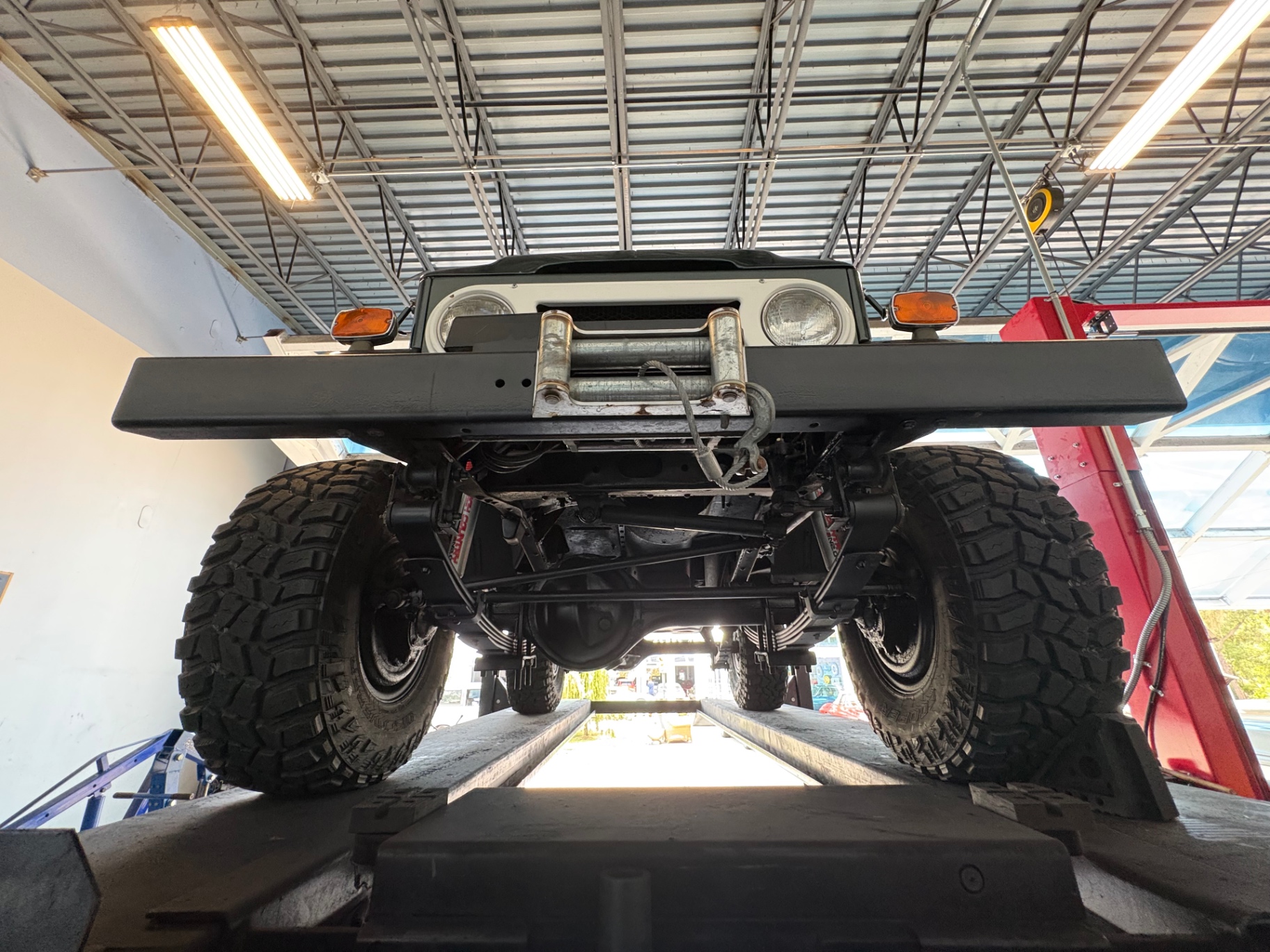
The 4-wheel drive system uses Toyota's two-stick transfer case, with one lever for the main transmission and a second for transferring power to the front axle and selecting between high and low range. This arrangement is familiar to anyone who has spent time in a classic Land Cruiser, and a gear shifting instruction placard remains on the dash for reference — a small detail that adds to the truck's authentic character. The solid front and rear axles are coated and visible on the lift shots; they present without the rot or significant corrosion that ruins so many examples from wet climates. Rough Country N2.0 shocks are fitted at all four corners, with the rear units wearing bright red boots that are visible in the undercarriage photos. The front end benefits from power steering, which is a meaningful upgrade on a vehicle with a solid front axle and large mud-terrain tires. Power brakes are also fitted.
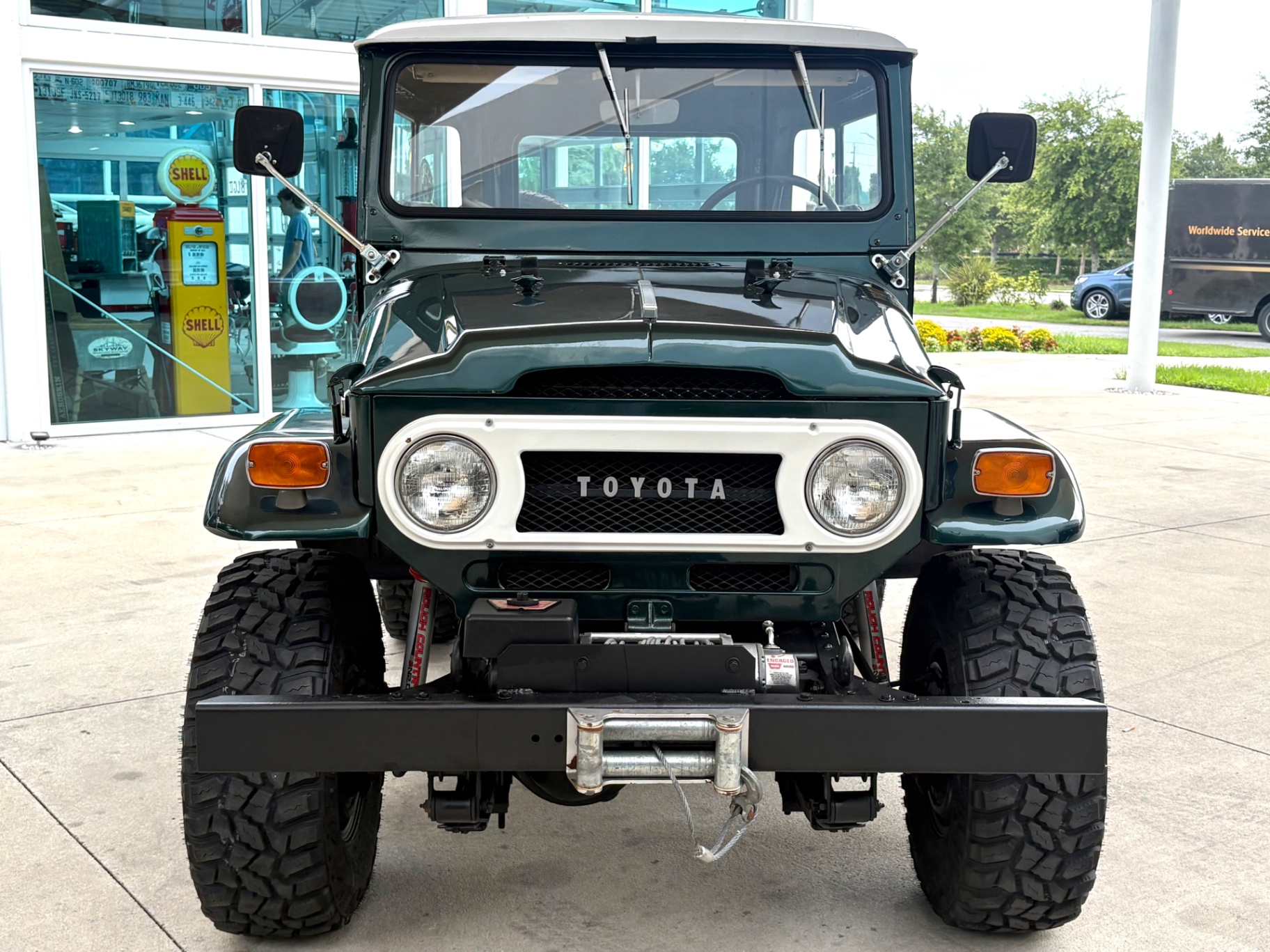
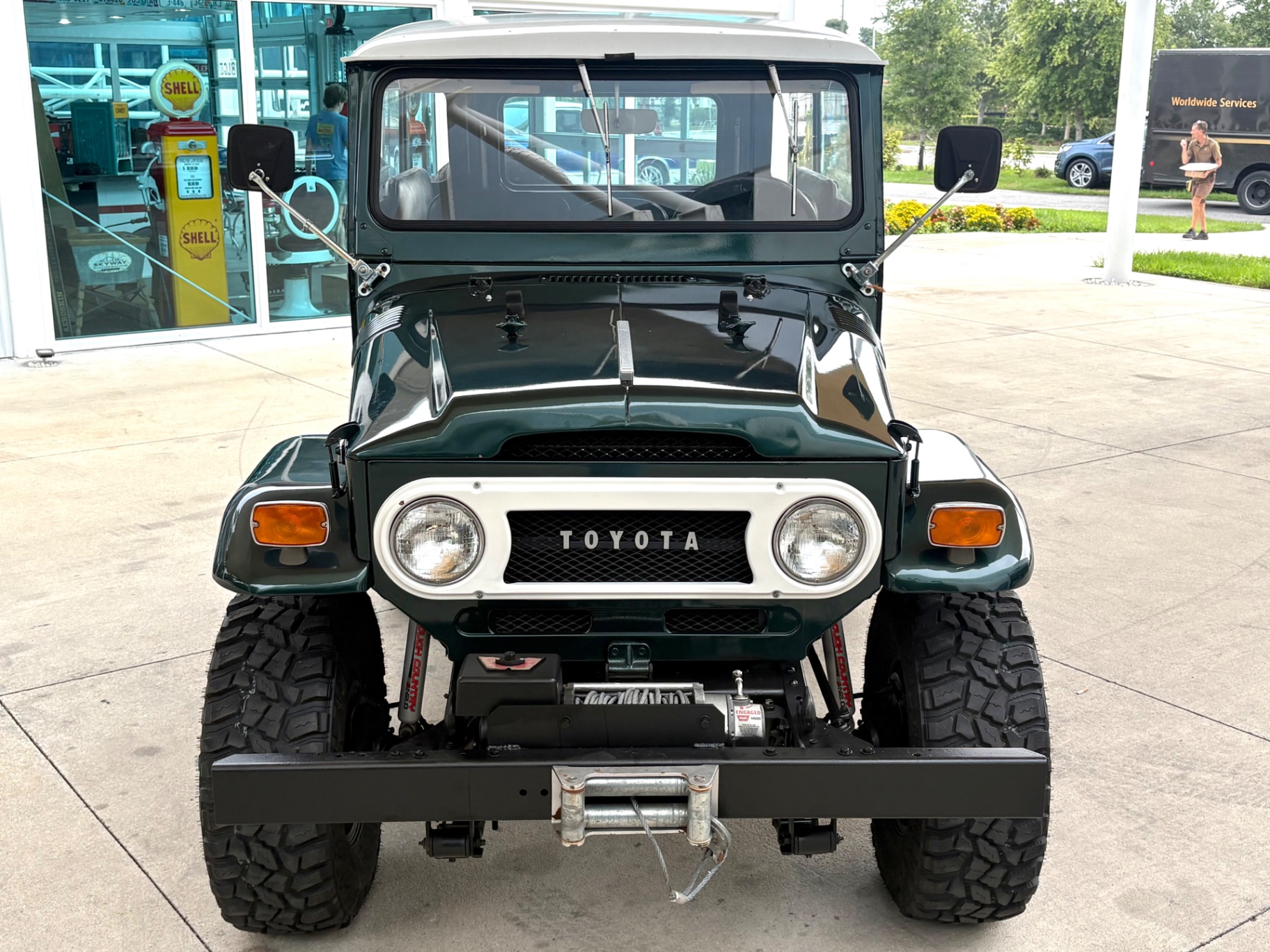
The Specter Off-Road air cleaner assembly is a well-known piece of FJ40-specific hardware from a company that has focused on Land Cruiser parts for decades. The snorkel-style intake routes cleaner air into the engine and raises the air entry point, which matters when crossing water or driving through dusty conditions. The Warn winch mounted to the heavy-duty steel front bumper adds genuine self-recovery capability. A winch is only useful if it is properly anchored, and a purpose-built steel bumper provides that anchor while also offering better frontal protection than the factory sheet metal unit.
Interior
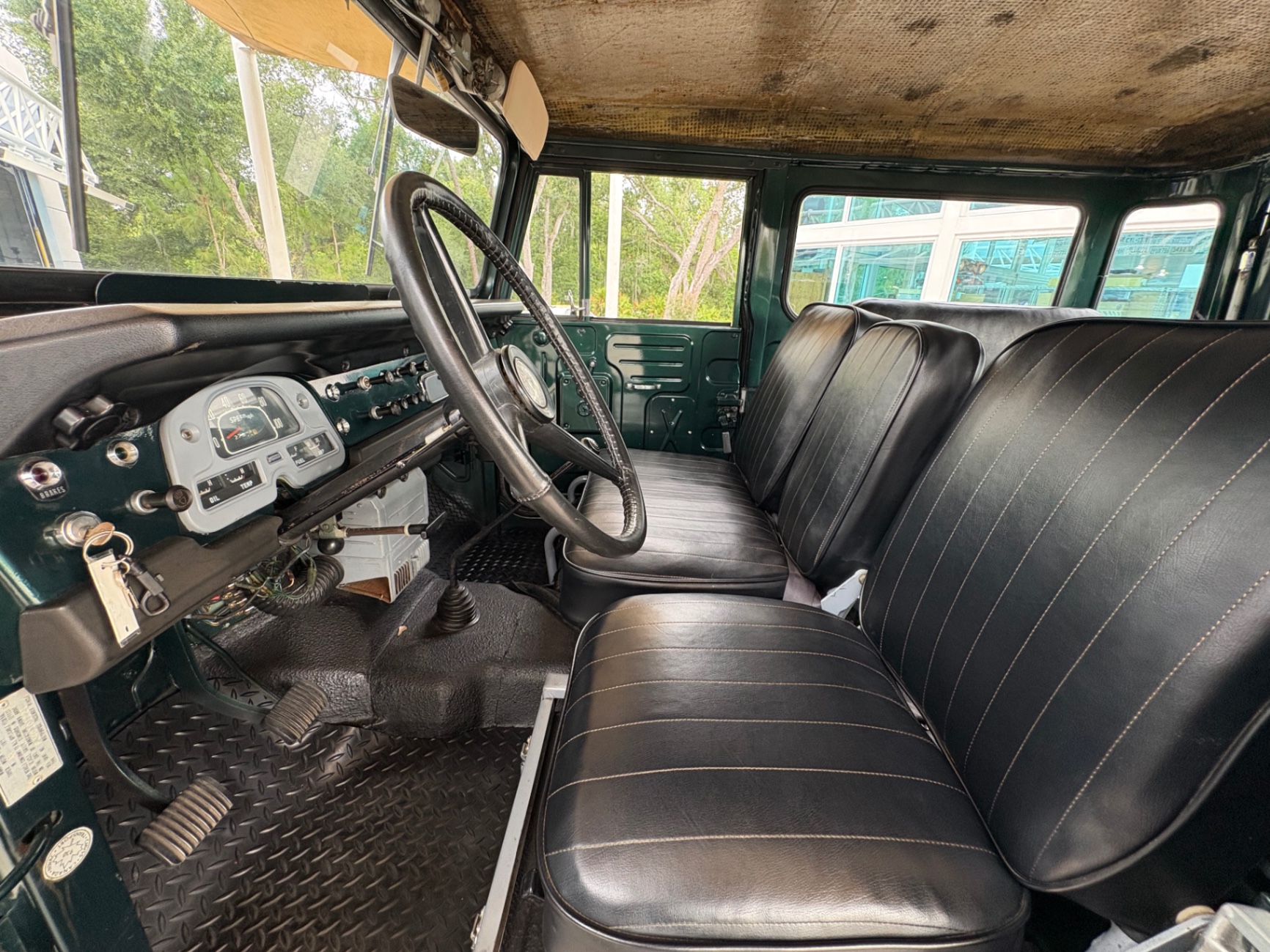
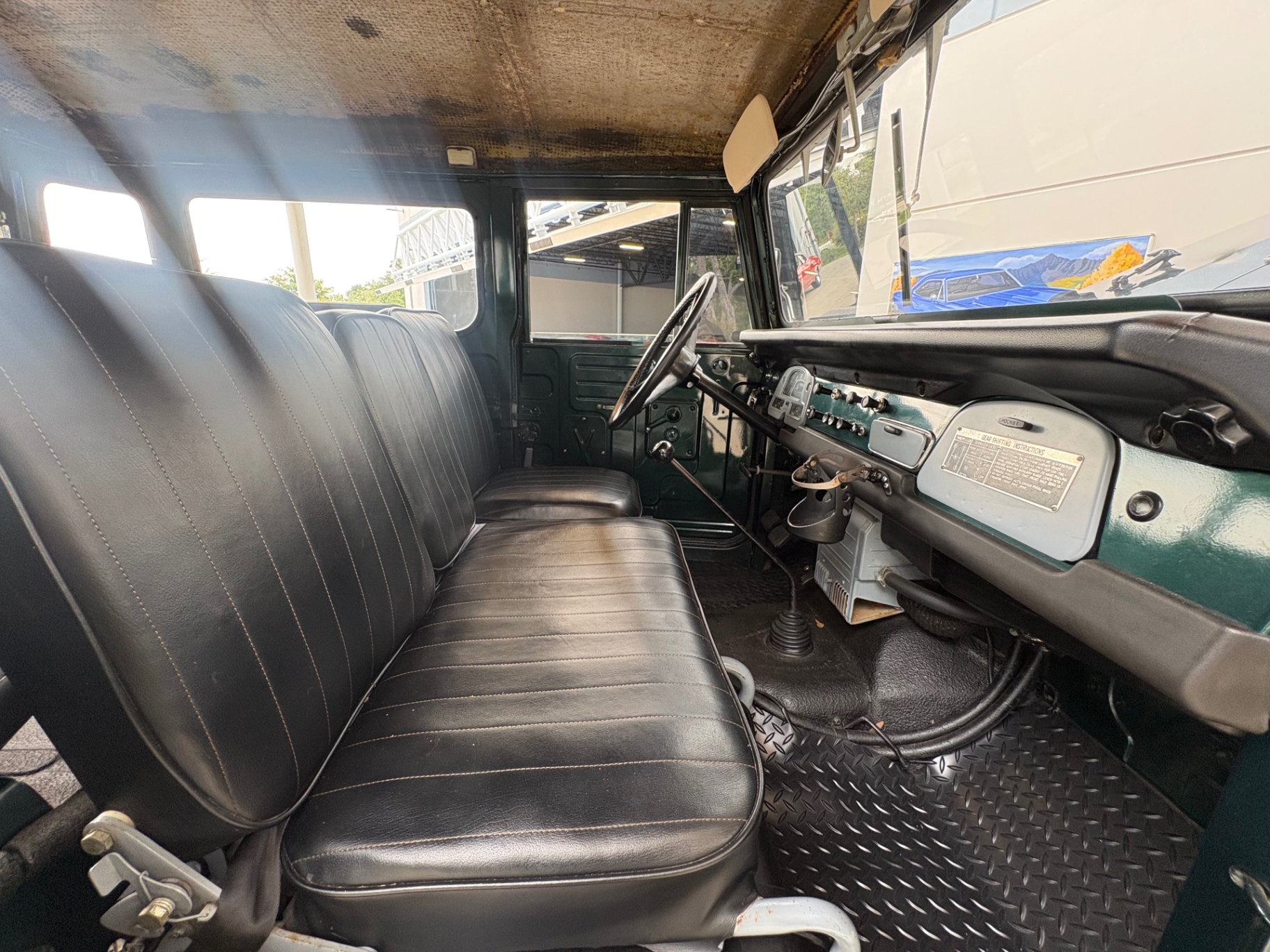
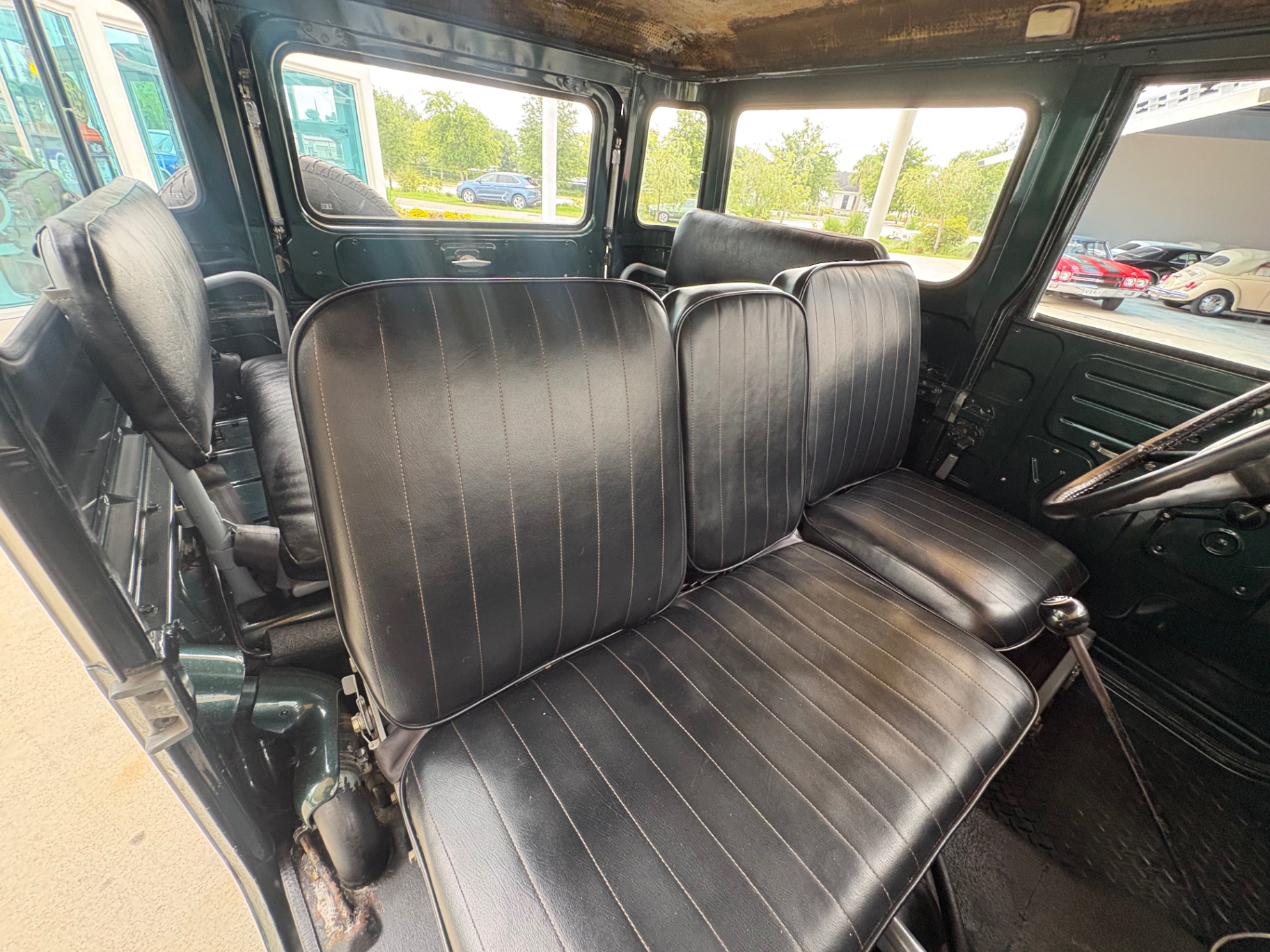
The interior of this 1971 Toyota Land Cruiser FJ40 is finished in black vinyl throughout. The front bench seat is in solid condition with clean stitching visible in the photos. The rear bench seat folds flat or can be removed entirely, which converts the rear of the cabin into a flat load area — a feature that made the FJ40 useful as both a passenger vehicle and a working truck. That flexibility is one reason these rigs were so widely adopted by ranchers, mining operations, and government agencies in markets around the world.
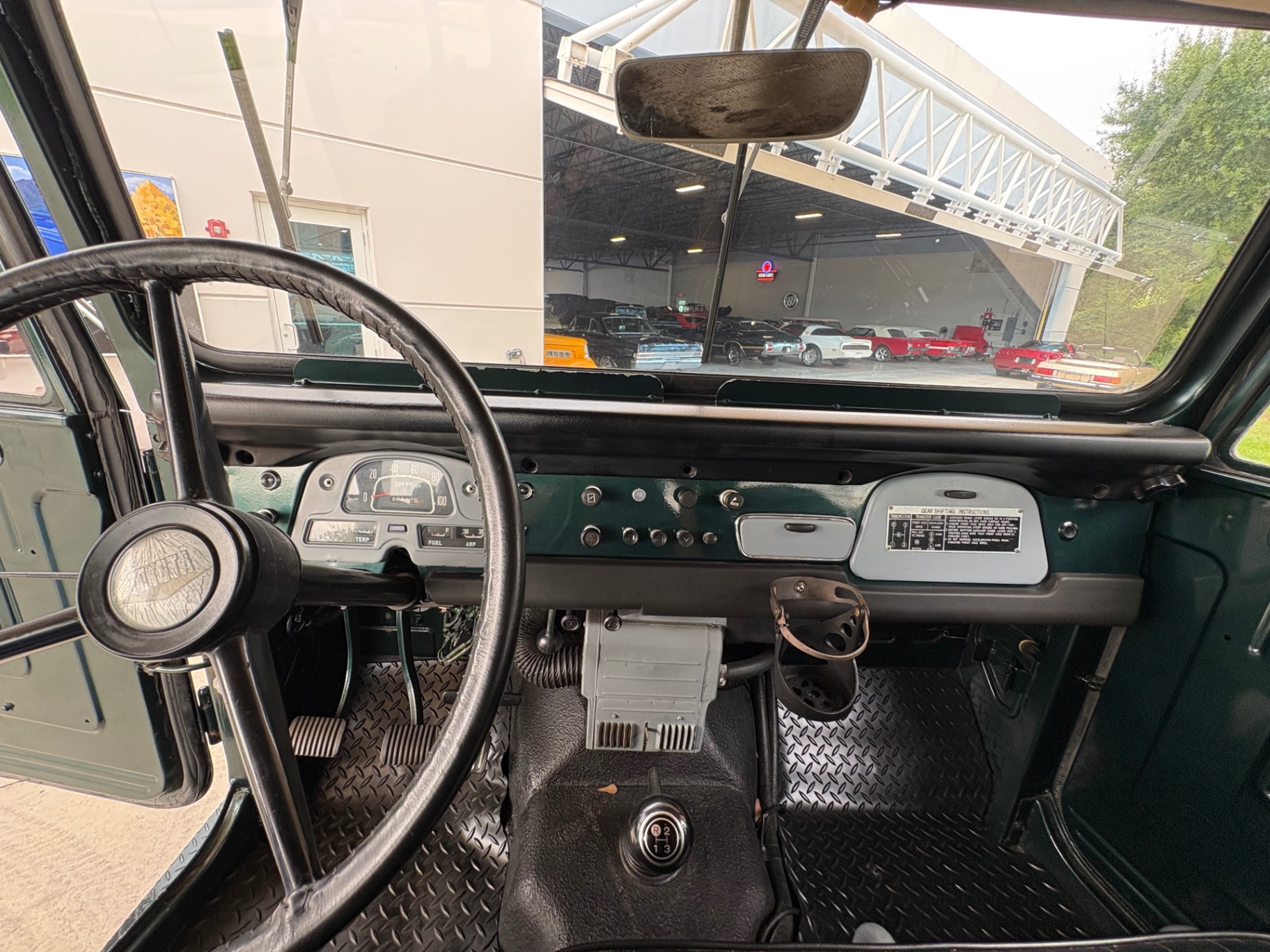
Diamond plate aluminum flooring covers the cab floor. This is a practical choice that protects the floor pan, cleans easily after trail use, and holds up to the kind of treatment the vehicle is built for. The factory analog instrument cluster is present and intact, displaying oil pressure, coolant temperature, fuel level, and amperage — the four gauges you actually need to monitor the health of the drivetrain on a trail. The dashboard retains the original gear shifting instructions placard, which details the transfer case and transmission shift pattern. This kind of detail is often lost over the course of fifty years and multiple owners, so its presence here is worth noting.
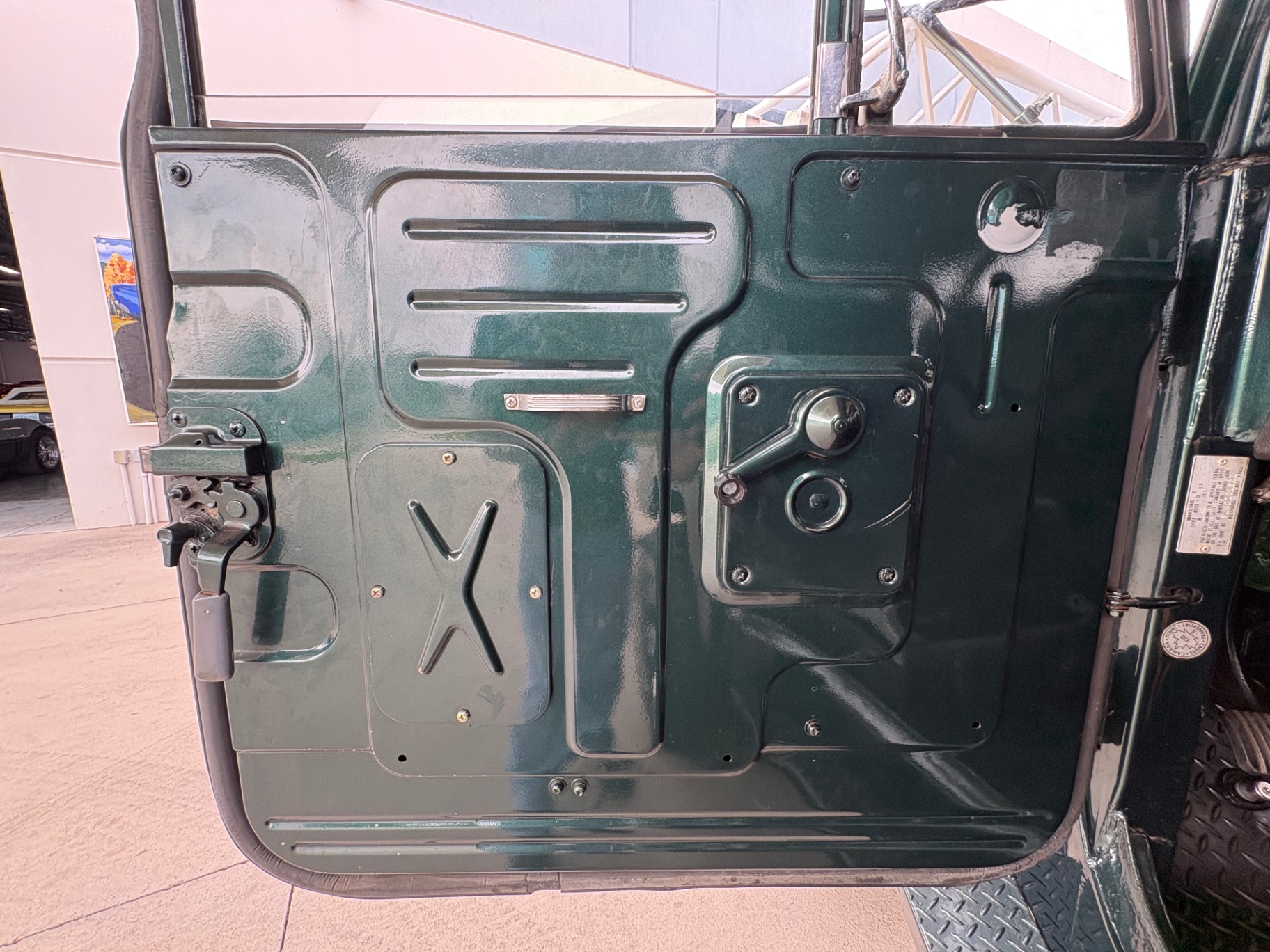
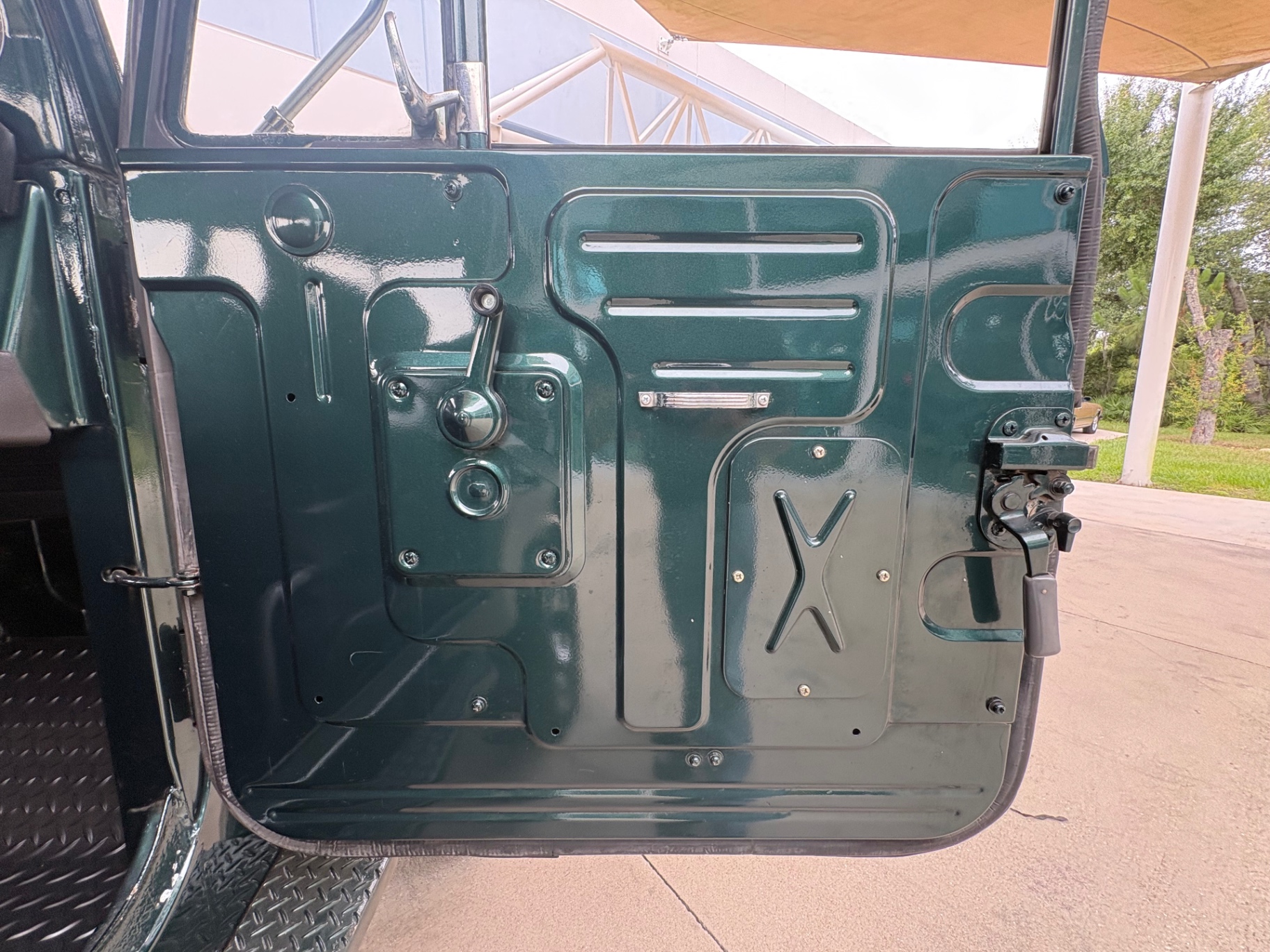
Crank windows operate as they should. Aftermarket side mirrors are fitted and functional. The two-stick transfer case shifter rises from the floor alongside the main gear lever, giving the center console area the purposeful, mechanical look that FJ40 enthusiasts expect.
Exterior
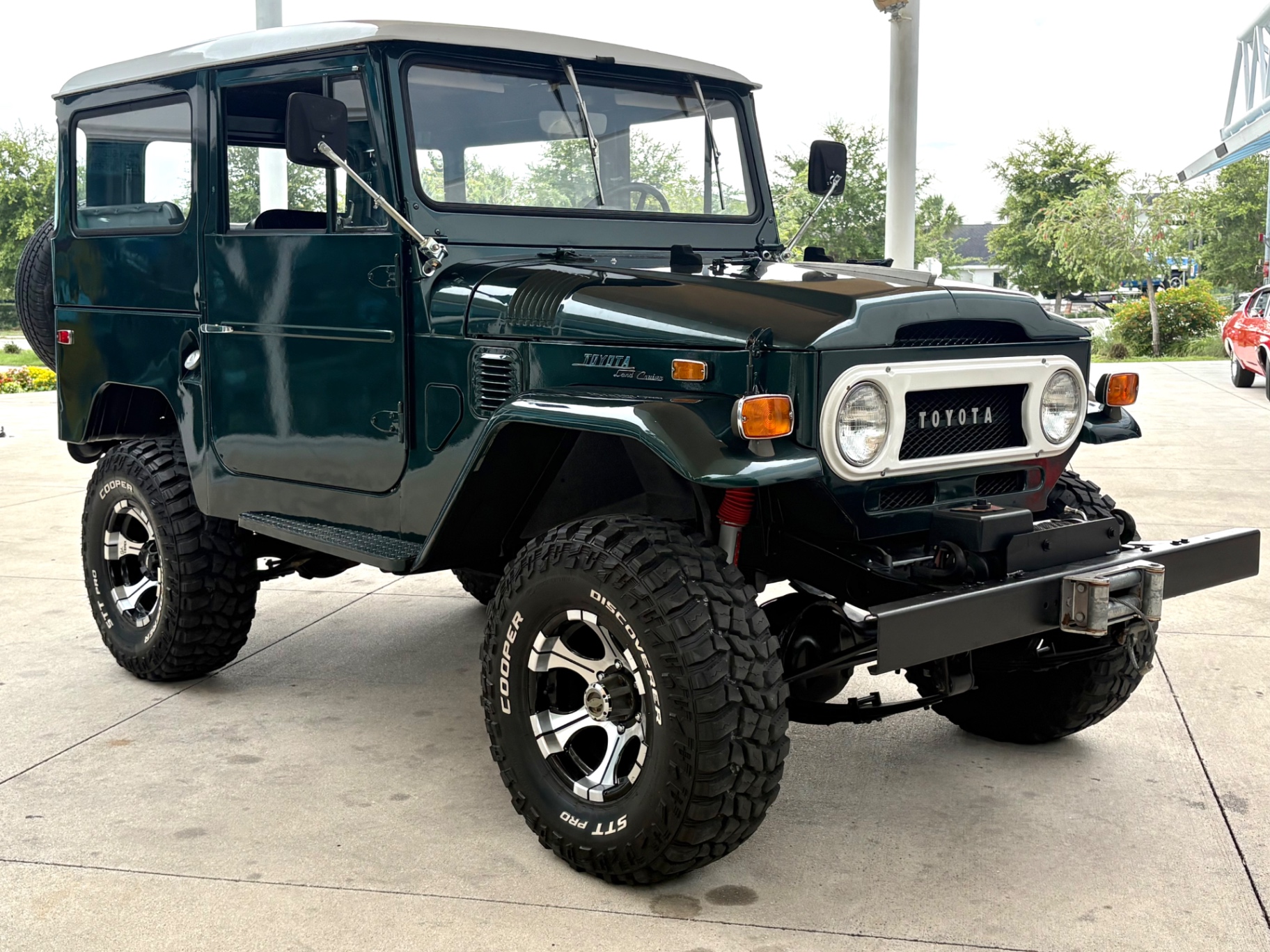
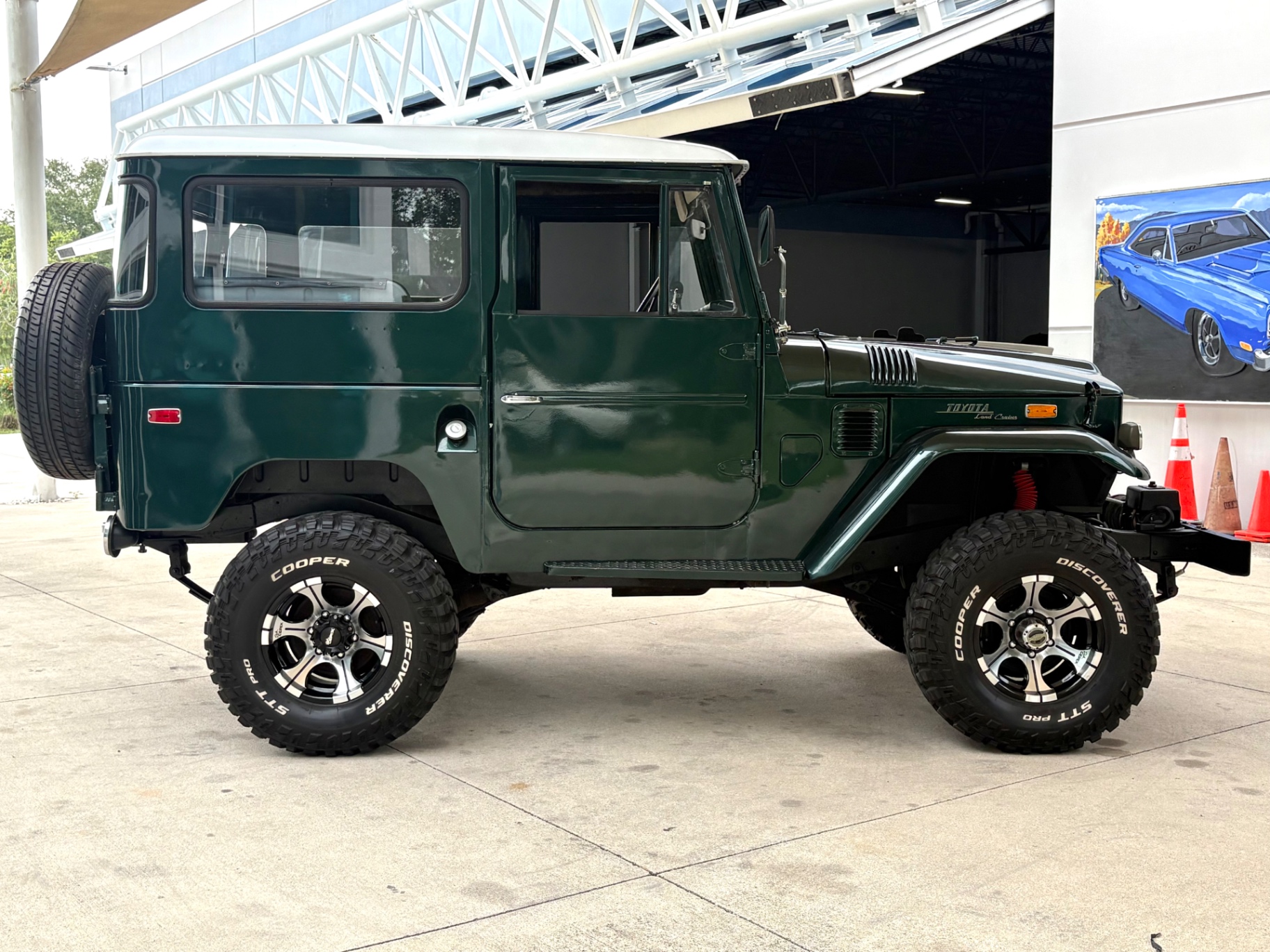
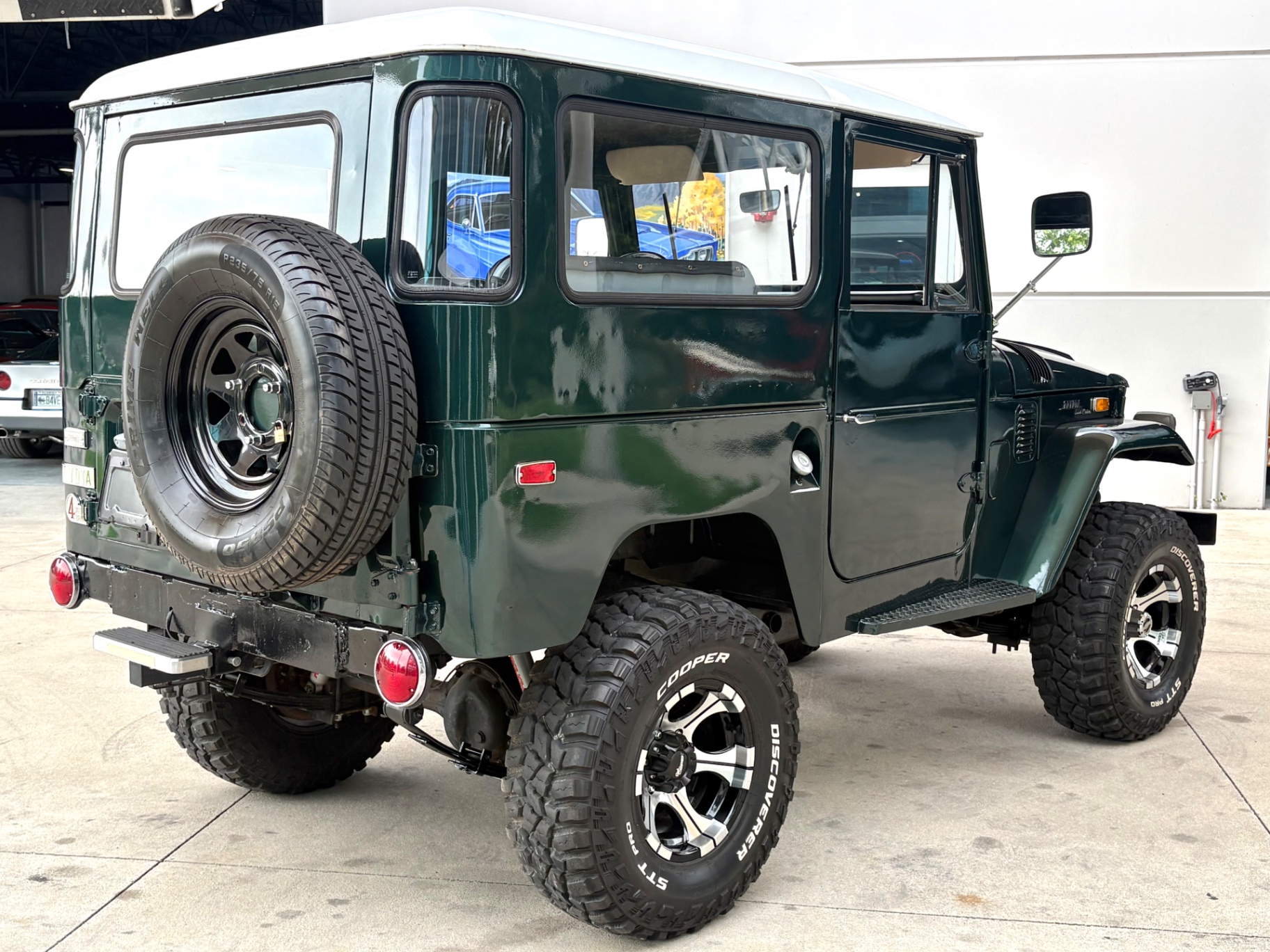
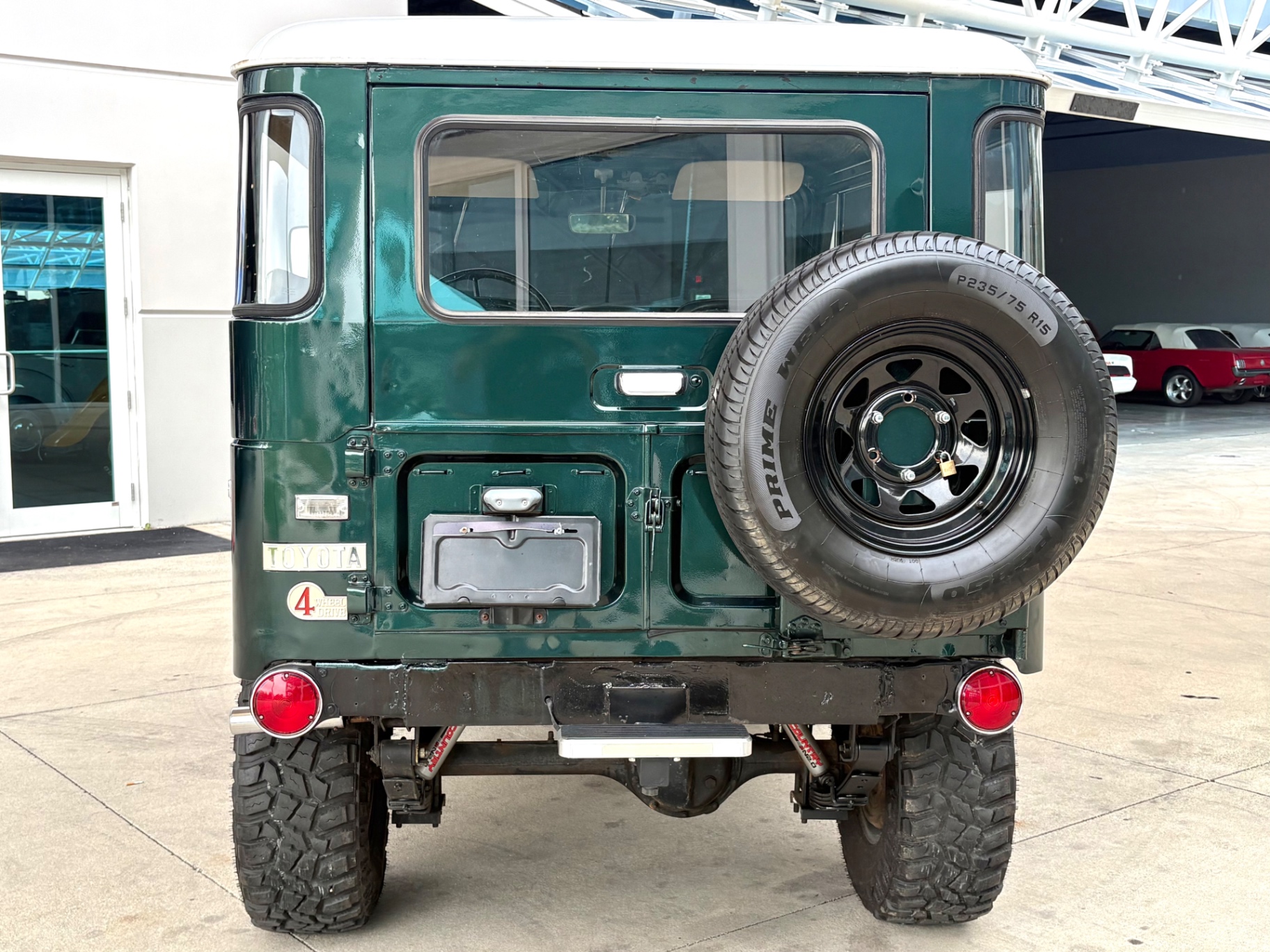
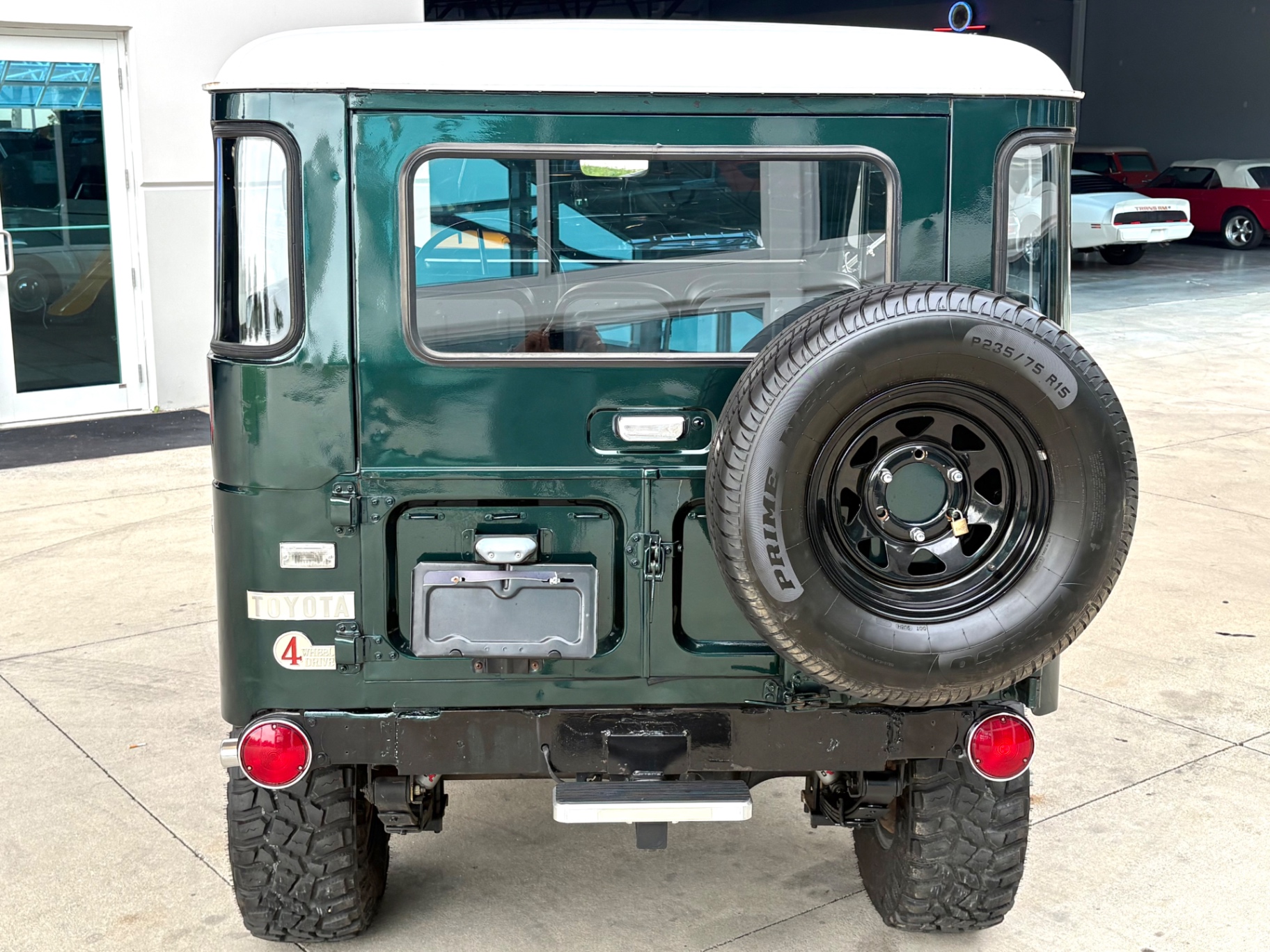
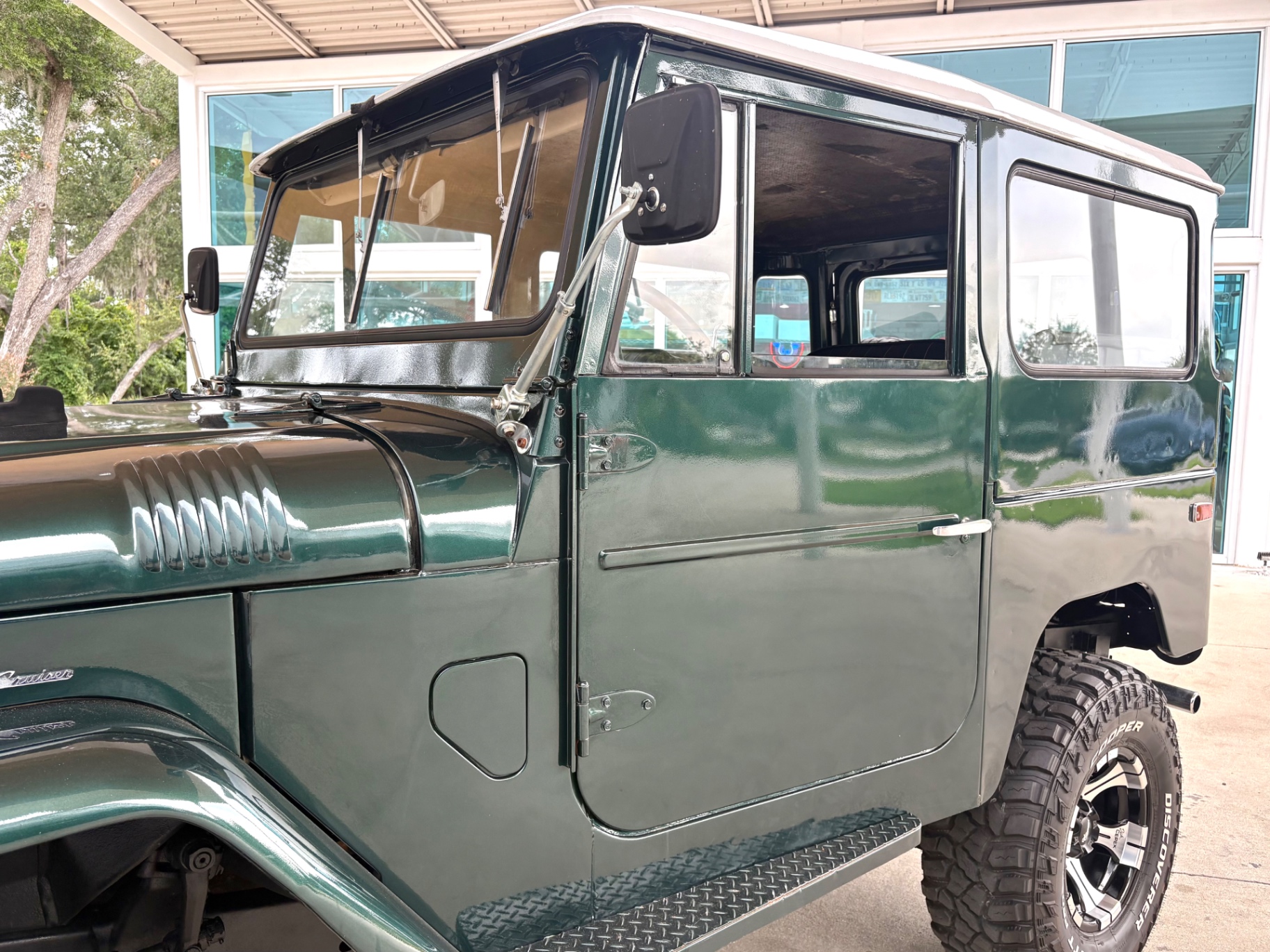
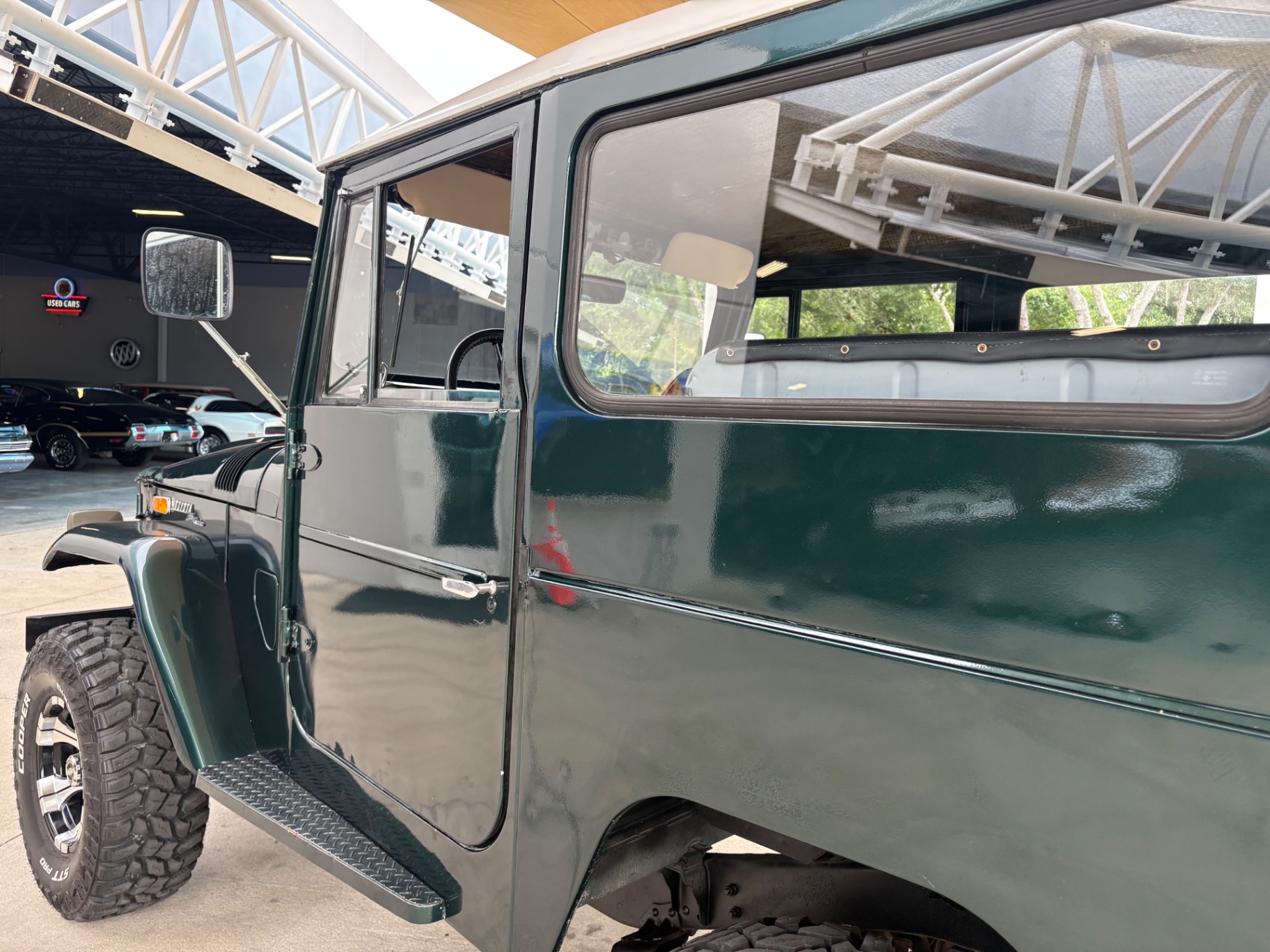
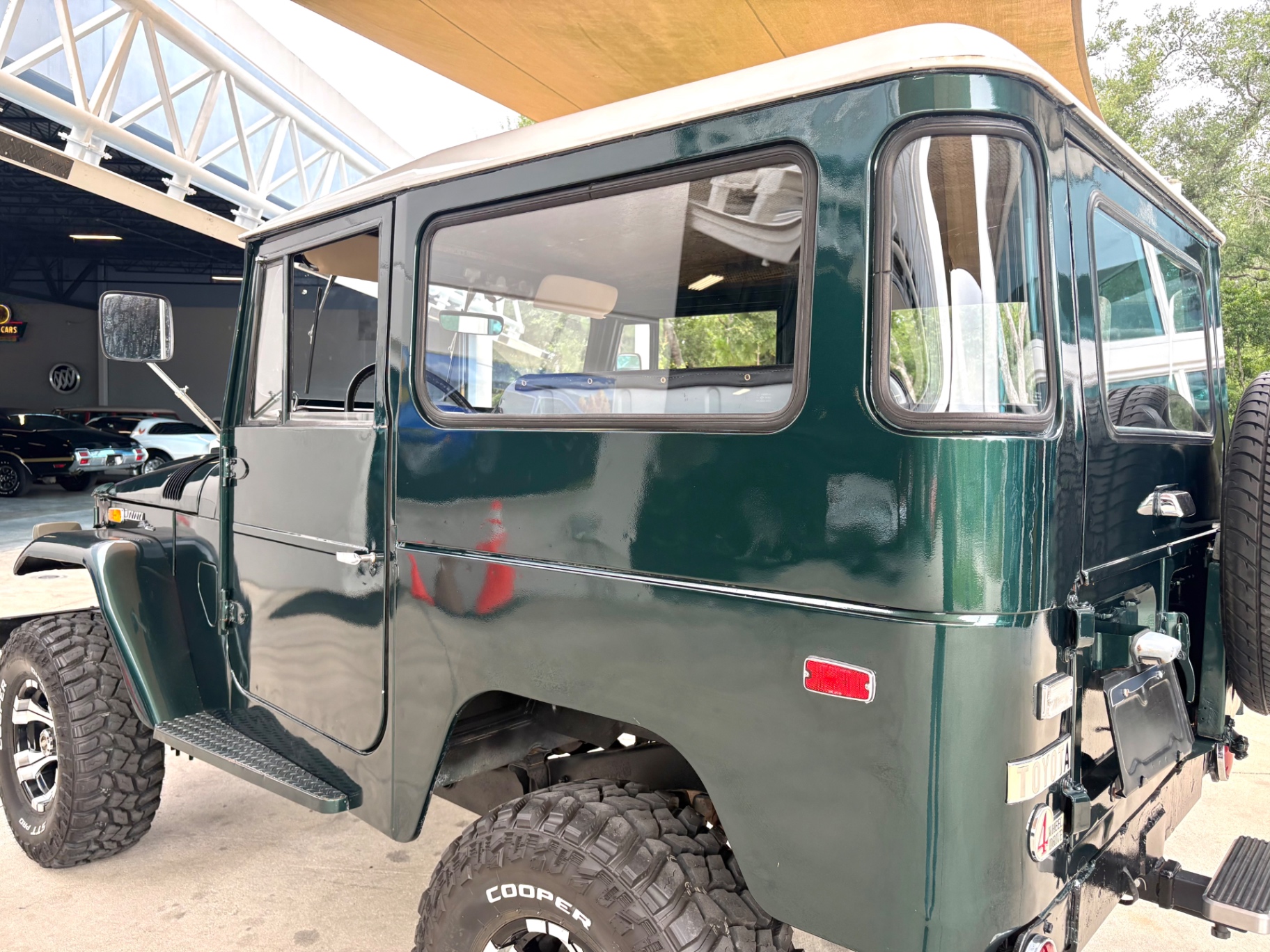
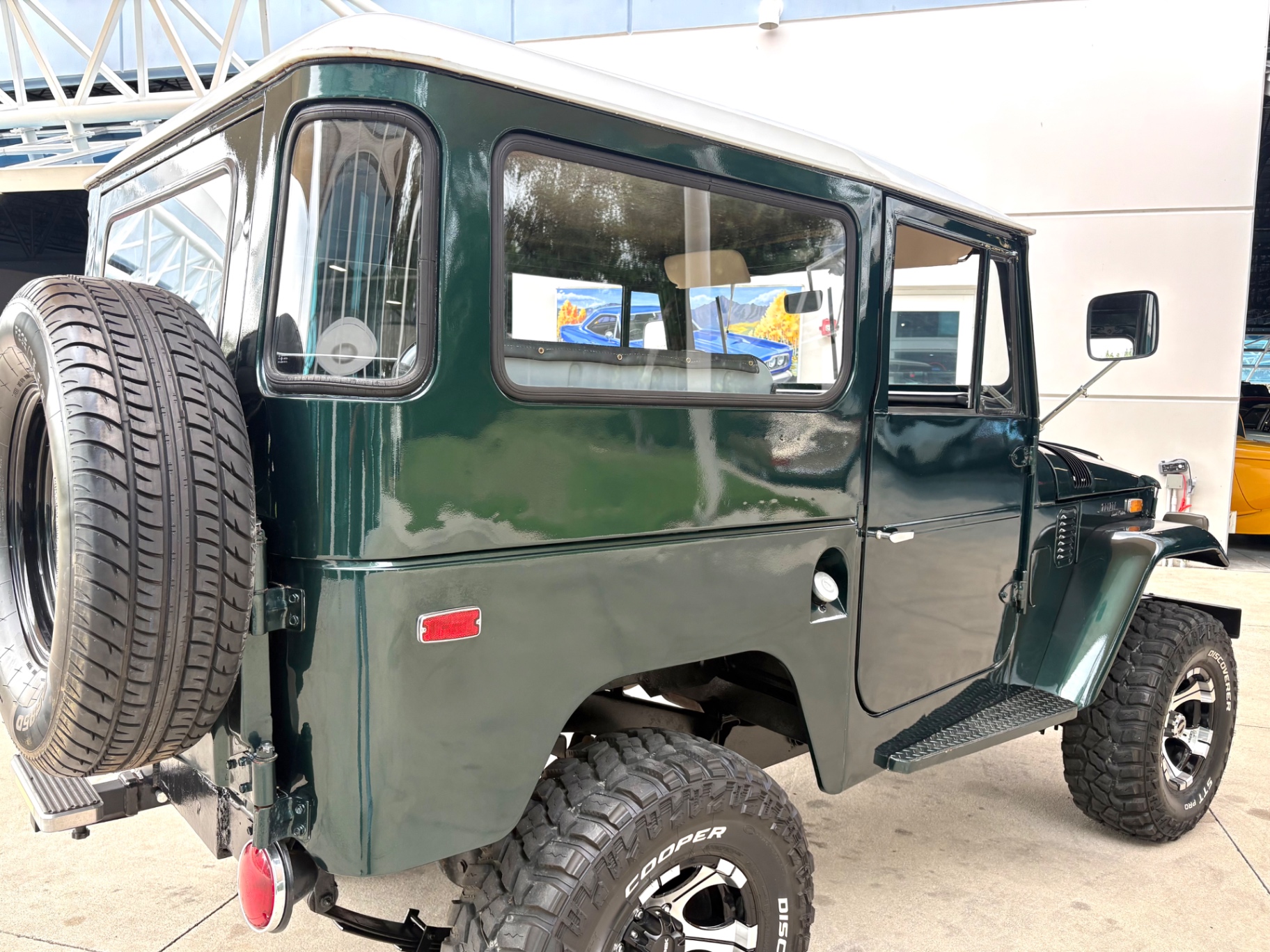
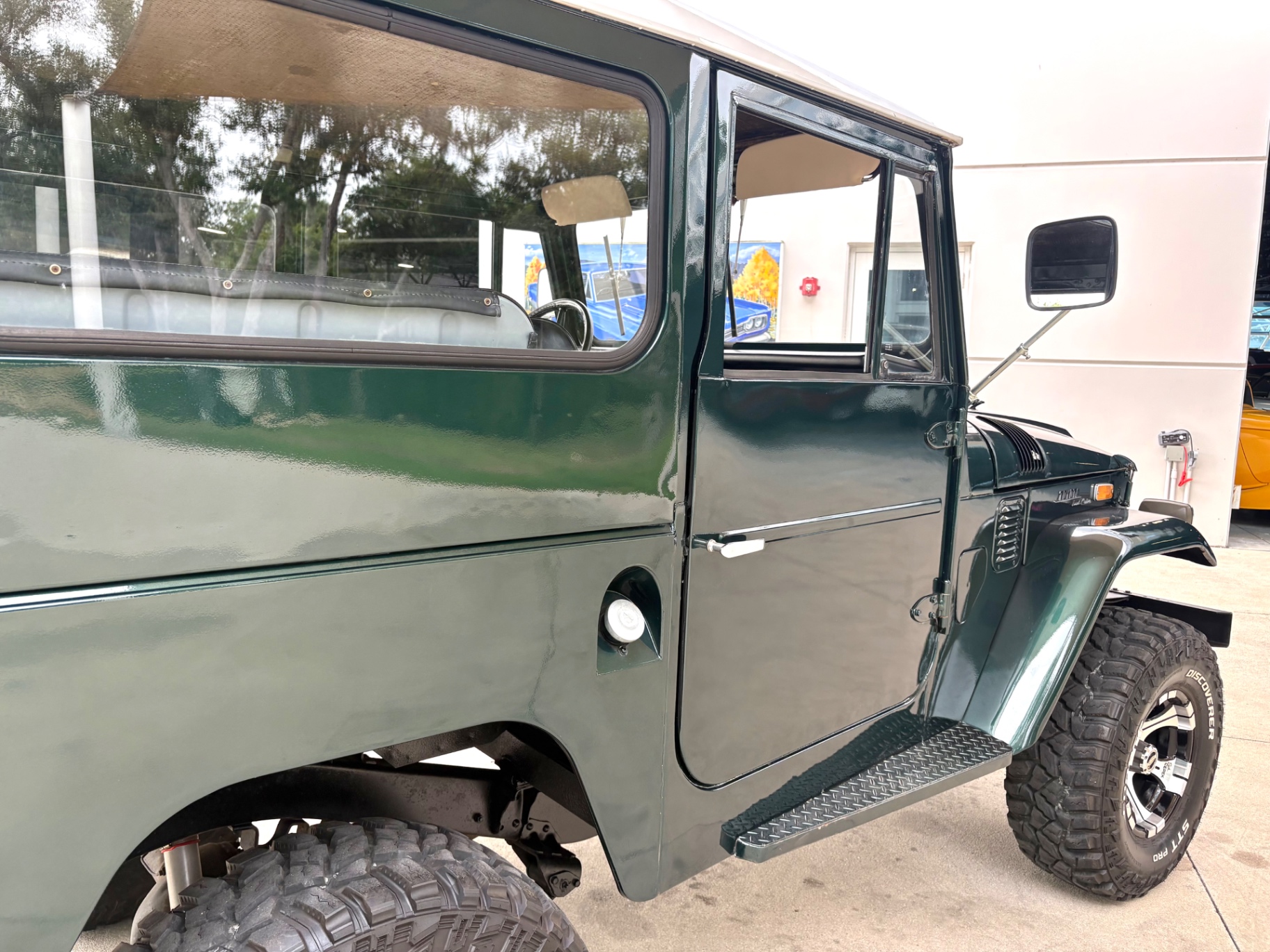
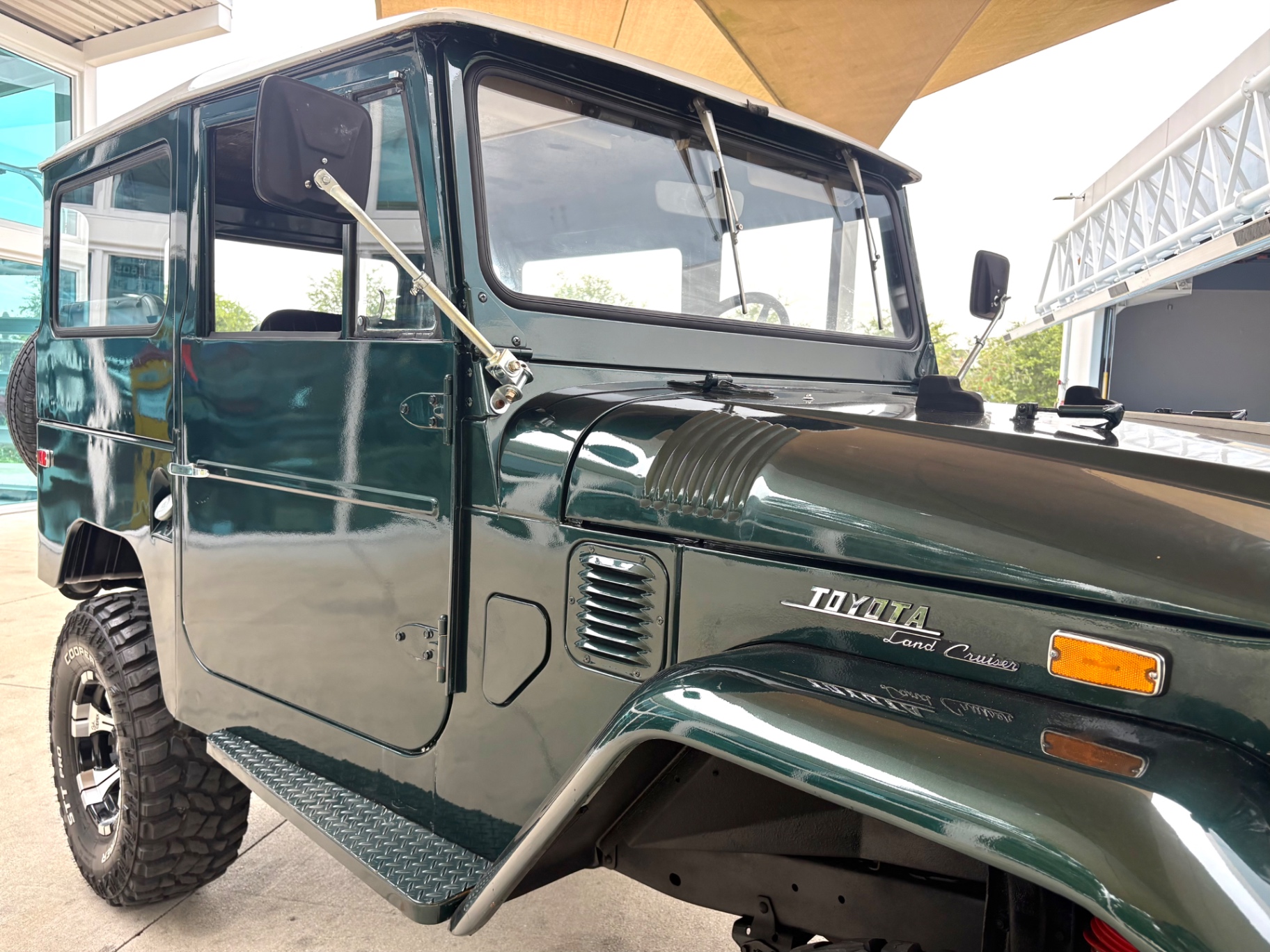
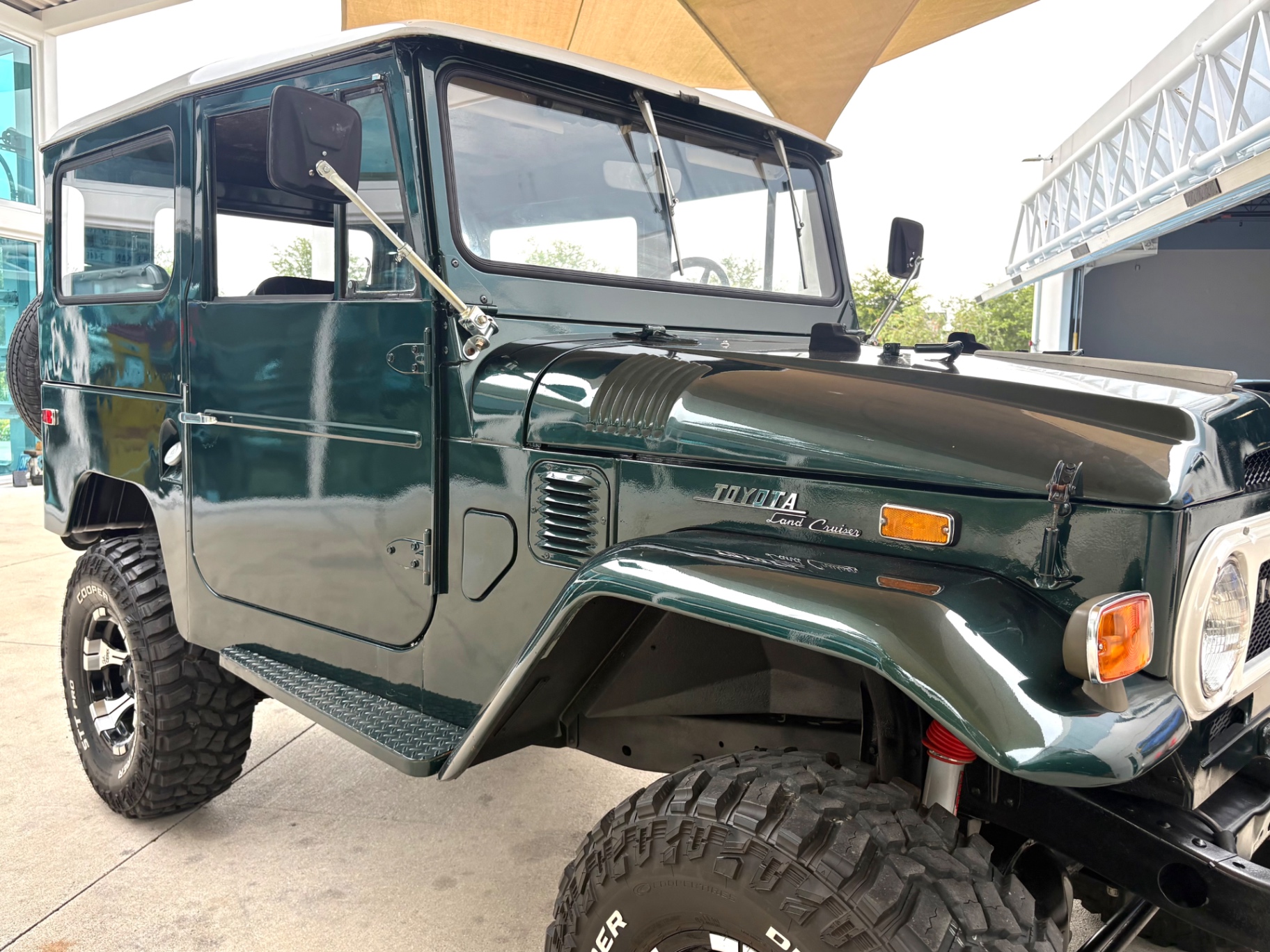
The 1971 Toyota Land Cruiser FJ40 wears a dark green exterior that suits the truck's proportions well. The body panels show the correct shape of an early 1970s FJ40 — upright, boxy, and functional in every dimension. The paint-matched hardtop with white roof is a period-appropriate combination. The rear tailgate is the correct side-hinged configuration for this body style, with the spare tire mounted externally on the tailgate. This keeps the spare accessible and preserves the interior load space.
The aftermarket steel front bumper is a substantial piece of hardware, finished in black and designed to carry the Warn winch. It replaces the factory bumper with something better suited to trail use, providing recovery points and frontal protection in a package that suits the FJ40's proportions without looking out of place. Cooper Discoverer STT Pro mud-terrain tires are mounted on 5-spoke aftermarket alloy wheels. The STT Pro is a capable mud-terrain tire with strong off-road traction and enough road manners for regular driving. A roof rack runs the length of the hardtop, providing additional carrying capacity for gear. Running boards are fitted on both sides, which is a practical addition given the FJ40's ride height with the lift installed. A tow hitch is fitted at the rear. The undercarriage photos, taken on a lift, show a coated floor pan and frame rails that are in solid condition.
Conclusion
The 1971 Toyota Land Cruiser FJ40 is not a vehicle that needs much explanation to the right buyer. Its reputation is built on documented performance in the most demanding conditions on earth, and the FJ40 community remains one of the most active and knowledgeable classic truck communities in existence. This example has been set up by someone who understood what the truck needed to be a capable and reliable off-road vehicle — a Warn winch, proper shocks, mud-terrain tires, a snorkel intake, and a solid undercarriage — without losing the mechanical simplicity that makes the FJ40 worth owning in the first place. It drives the way a classic Land Cruiser should: directly, mechanically, and with full driver involvement at every moment.
If you have questions about this 1971 Toyota Land Cruiser FJ40 or would like to schedule a time to see it in person, call Skyway Classics in Sarasota, Florida at 941-254-6608.
Disclaimer
Information found on the website is presented as given to us by the owner of the car, whether on consignment or from the owner we bought it from. Some Photos, materials for videos, descriptions and other information are provided by the consignor/seller and is deemed reliable, but Skyway Classics does not warranty or guarantee this information. Skyway Classics is not responsible for information that may incorrect or a publishing error. The decision to purchase should be based solely on the buyers personal inspection of the vehicle or by a professional inspection service prior to offer or purchase being made.
1971 Toyota Land Cruiser FJ40 — Trail-Ready 4x4 with F-Series Inline-6 and Warn Winch
Why This Car Is Special
The 1971 Toyota Land Cruiser FJ40 occupies a singular place in the history of four-wheel drive vehicles. While American buyers were familiar with the Jeep CJ and International Scout, the FJ40 offered something different: a body-on-frame truck built to handle sustained abuse in remote terrain without the need for constant mechanical attention. Toyota had been refining the Land Cruiser formula since the early 1950s, developing it initially for military and commercial use in rugged markets like Australia, the Middle East, and South America. By 1971, the FJ40 had earned a reputation that no amount of advertising could manufacture — it was simply the truck that came back when others didn't.
The FJ40 body style ran from 1960 through 1984, with meaningful mechanical updates introduced throughout that run. The early 1970s represent a particularly desirable window for collectors. These trucks had received the revised F-series inline-6 engine that would define the model's mechanical character for years, yet they retained the straightforward, fully mechanical systems that make ownership and repair genuinely manageable for someone who knows tools. There are no computers to fault out, no electronic throttle bodies, no canbus networks. Everything under this FJ40 does what it does through direct mechanical connection.
The chassis serial number on this truck begins with FJ40, confirming it is the standard short-wheelbase hardtop configuration — the body style most sought after by collectors and off-road enthusiasts alike. This is the version that defined the FJ40 identity: compact, capable, and honest about what it is.
This particular 1971 Toyota Land Cruiser FJ40 has been outfitted with a well-chosen selection of off-road hardware that improves on-trail capability without compromising the character that makes these trucks worth owning. The undercarriage has been coated and presents cleanly on the lift. The green exterior and black interior combination suits the truck well, and the paint-matched hardtop with contrasting white roof is a period-correct look that works on a vehicle of this era.
Features List
- Toyota F-series 3.9L inline-6 engine
- 4-speed manual transmission
- Part-time 4-wheel drive with two-stick transfer case
- Warn electric front winch mounted to heavy-duty aftermarket steel bumper
- Lift kit with Rough Country N2.0 shocks, red-coated front shocks
- Cooper Discoverer STT Pro mud-terrain tires
- Aftermarket 5-spoke alloy wheels
- Power steering
- Power brakes
- Specter Off-Road snorkel-style air intake with Specter Off-Road air cleaner assembly
- Diamond plate aluminum flooring throughout cab
- Black vinyl front and rear bench seats
- Fold-flat and removable rear bench seat
- Factory analog instrument cluster with oil pressure, temperature, fuel, and amp gauges
- Gear shifting instructions placard on dash
- Side-hinged rear tailgate with external spare tire mount
- Roof rack
- Running boards / side steps
- Tow hitch
- Paint-matched green hardtop with white roof
- Crank windows
- Aftermarket side mirrors
Mechanical
Power comes from Toyota's F-series 3.9-liter inline-6, the engine that carried the Land Cruiser name through decades of hard use on every continent. The F engine is an overhead-valve design with a cast-iron block and head, known for its long service life when maintained and its tolerance for heat and load. It is a straightforward engine to work on — parts availability in the FJ40 community is good, and the engine responds well to basic tune-up work. This truck pairs that engine with a 4-speed manual transmission, which is the correct choice for a vehicle used off-road. A manual gives the driver direct control over gear selection when picking a line through technical terrain, and it removes the automatic transmission's added heat and complexity from the equation.
The 4-wheel drive system uses Toyota's two-stick transfer case, with one lever for the main transmission and a second for transferring power to the front axle and selecting between high and low range. This arrangement is familiar to anyone who has spent time in a classic Land Cruiser, and a gear shifting instruction placard remains on the dash for reference — a small detail that adds to the truck's authentic character. The solid front and rear axles are coated and visible on the lift shots; they present without the rot or significant corrosion that ruins so many examples from wet climates. Rough Country N2.0 shocks are fitted at all four corners, with the rear units wearing bright red boots that are visible in the undercarriage photos. The front end benefits from power steering, which is a meaningful upgrade on a vehicle with a solid front axle and large mud-terrain tires. Power brakes are also fitted.
The Specter Off-Road air cleaner assembly is a well-known piece of FJ40-specific hardware from a company that has focused on Land Cruiser parts for decades. The snorkel-style intake routes cleaner air into the engine and raises the air entry point, which matters when crossing water or driving through dusty conditions. The Warn winch mounted to the heavy-duty steel front bumper adds genuine self-recovery capability. A winch is only useful if it is properly anchored, and a purpose-built steel bumper provides that anchor while also offering better frontal protection than the factory sheet metal unit.
Interior
The interior of this 1971 Toyota Land Cruiser FJ40 is finished in black vinyl throughout. The front bench seat is in solid condition with clean stitching visible in the photos. The rear bench seat folds flat or can be removed entirely, which converts the rear of the cabin into a flat load area — a feature that made the FJ40 useful as both a passenger vehicle and a working truck. That flexibility is one reason these rigs were so widely adopted by ranchers, mining operations, and government agencies in markets around the world.
Diamond plate aluminum flooring covers the cab floor. This is a practical choice that protects the floor pan, cleans easily after trail use, and holds up to the kind of treatment the vehicle is built for. The factory analog instrument cluster is present and intact, displaying oil pressure, coolant temperature, fuel level, and amperage — the four gauges you actually need to monitor the health of the drivetrain on a trail. The dashboard retains the original gear shifting instructions placard, which details the transfer case and transmission shift pattern. This kind of detail is often lost over the course of fifty years and multiple owners, so its presence here is worth noting.
Crank windows operate as they should. Aftermarket side mirrors are fitted and functional. The two-stick transfer case shifter rises from the floor alongside the main gear lever, giving the center console area the purposeful, mechanical look that FJ40 enthusiasts expect.
Exterior
The 1971 Toyota Land Cruiser FJ40 wears a dark green exterior that suits the truck's proportions well. The body panels show the correct shape of an early 1970s FJ40 — upright, boxy, and functional in every dimension. The paint-matched hardtop with white roof is a period-appropriate combination. The rear tailgate is the correct side-hinged configuration for this body style, with the spare tire mounted externally on the tailgate. This keeps the spare accessible and preserves the interior load space.
The aftermarket steel front bumper is a substantial piece of hardware, finished in black and designed to carry the Warn winch. It replaces the factory bumper with something better suited to trail use, providing recovery points and frontal protection in a package that suits the FJ40's proportions without looking out of place. Cooper Discoverer STT Pro mud-terrain tires are mounted on 5-spoke aftermarket alloy wheels. The STT Pro is a capable mud-terrain tire with strong off-road traction and enough road manners for regular driving. A roof rack runs the length of the hardtop, providing additional carrying capacity for gear. Running boards are fitted on both sides, which is a practical addition given the FJ40's ride height with the lift installed. A tow hitch is fitted at the rear. The undercarriage photos, taken on a lift, show a coated floor pan and frame rails that are in solid condition.
Conclusion
The 1971 Toyota Land Cruiser FJ40 is not a vehicle that needs much explanation to the right buyer. Its reputation is built on documented performance in the most demanding conditions on earth, and the FJ40 community remains one of the most active and knowledgeable classic truck communities in existence. This example has been set up by someone who understood what the truck needed to be a capable and reliable off-road vehicle — a Warn winch, proper shocks, mud-terrain tires, a snorkel intake, and a solid undercarriage — without losing the mechanical simplicity that makes the FJ40 worth owning in the first place. It drives the way a classic Land Cruiser should: directly, mechanically, and with full driver involvement at every moment.
If you have questions about this 1971 Toyota Land Cruiser FJ40 or would like to schedule a time to see it in person, call Skyway Classics in Sarasota, Florida at 941-254-6608.
Disclaimer
Information found on the website is presented as given to us by the owner of the car, whether on consignment or from the owner we bought it from. Some Photos, materials for videos, descriptions and other information are provided by the consignor/seller and is deemed reliable, but Skyway Classics does not warranty or guarantee this information. Skyway Classics is not responsible for information that may incorrect or a publishing error. The decision to purchase should be based solely on the buyers personal inspection of the vehicle or by a professional inspection service prior to offer or purchase being made.
1971 Toyota
Land Cruiser FJ40
Why Choose Skyway Classics?
Explore our curated inventory of classic and collector cars—thoughtfully selected, ready to drive, and supported by experts who make ownership simple.
Expert Curation
Every vehicle is hand-selected by our experts for quality, authenticity, and investment potential.
Fast Transactions
Streamlined buying and selling process with quick financing and immediate delivery options.
Only National Dealer With Classic Service & Repair
We’re the only national dealership that services and repairs the classics we sell—before and after the sale.
Nationwide Network
Access to our extensive network of collectors, restorers, and classic car enthusiasts nationwide.
Concierge Ownership Support
From financing and insurance to paperwork, shipping, and titling—we handle the details so you can enjoy the drive.
Passion-Driven Service
We're classic car enthusiasts first, providing personalized service with genuine passion for the hobby.