
1973 Ford
Mustang Base
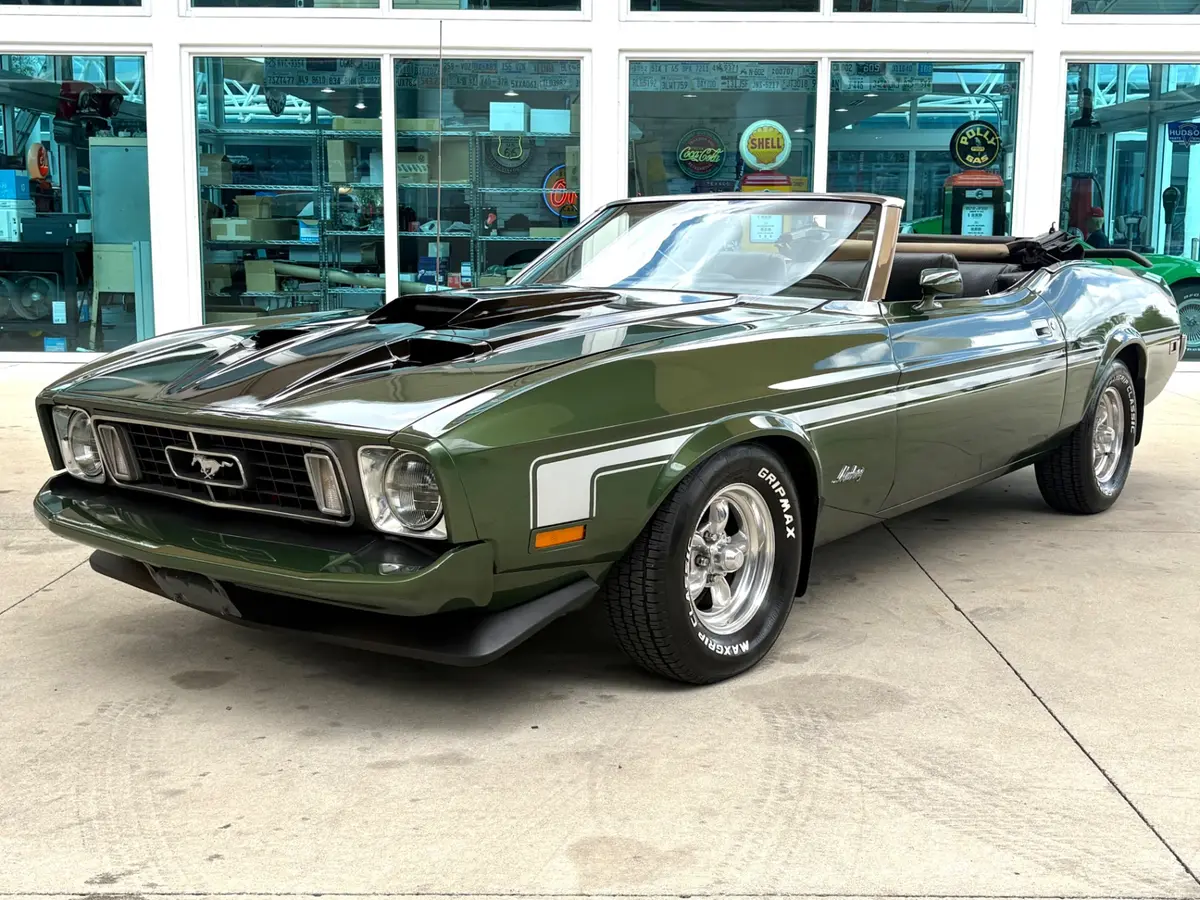
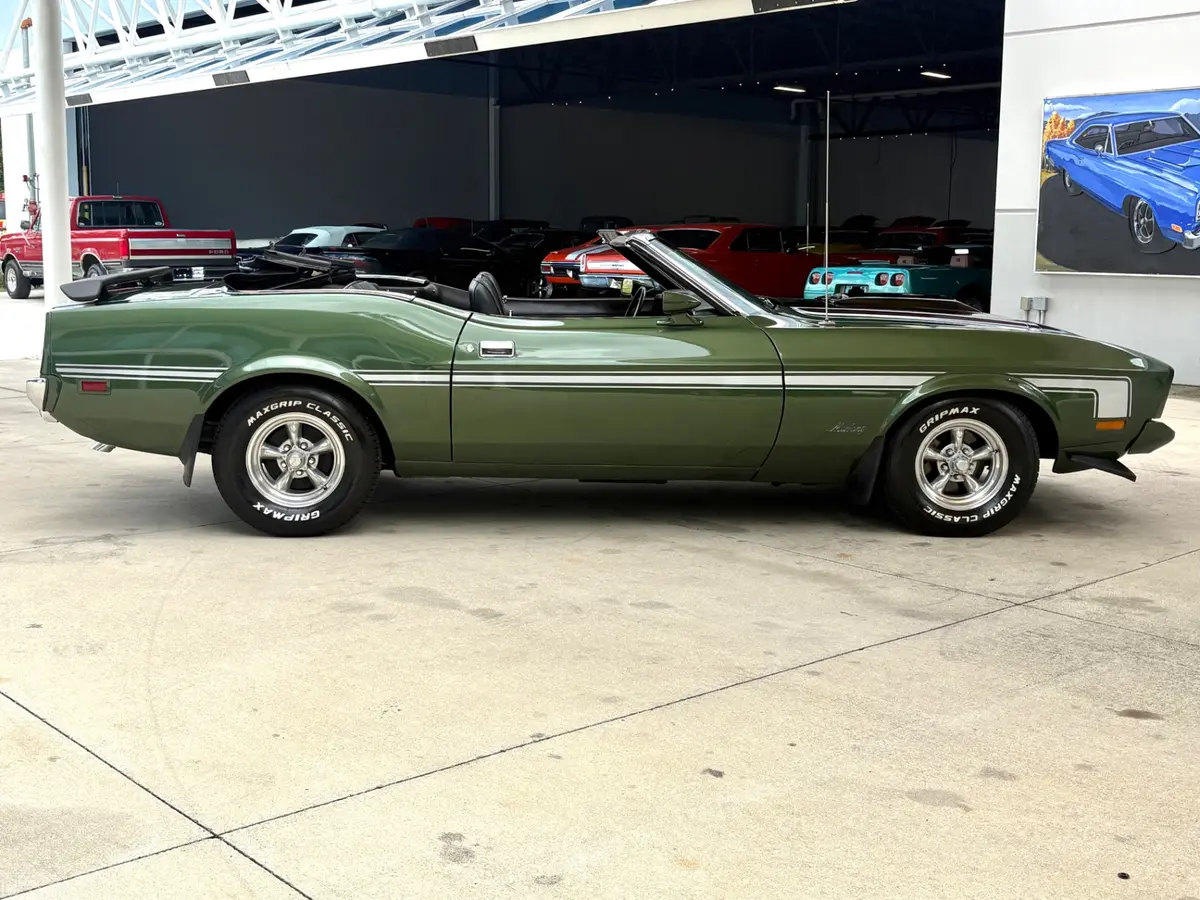
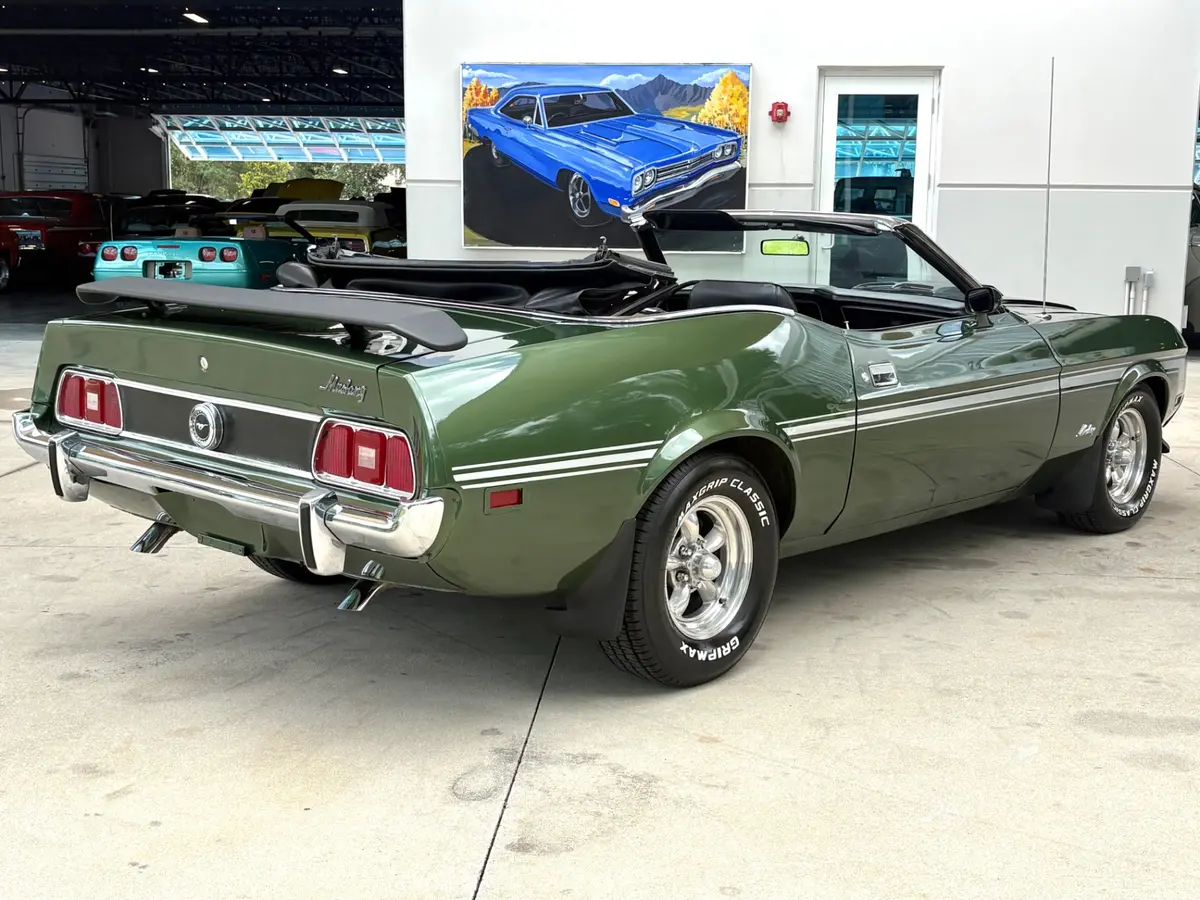
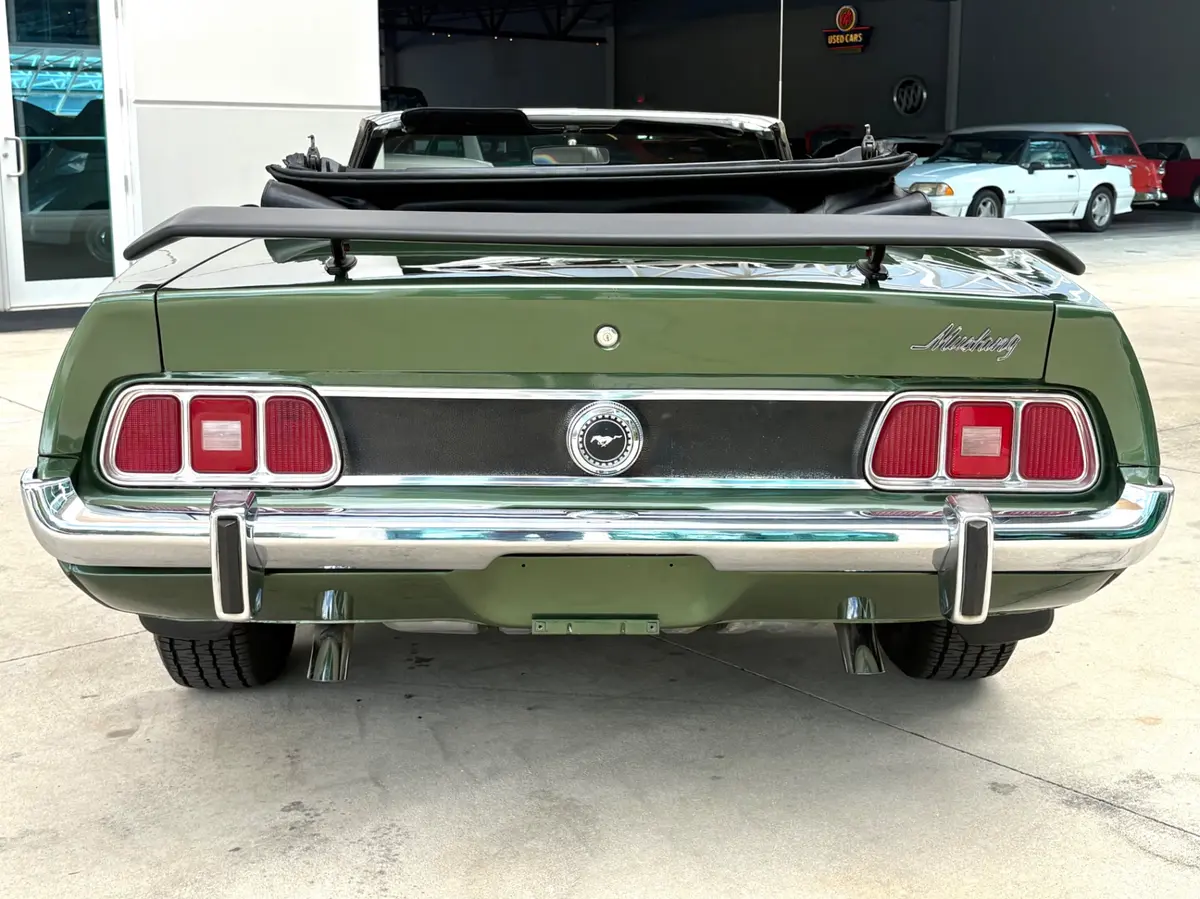
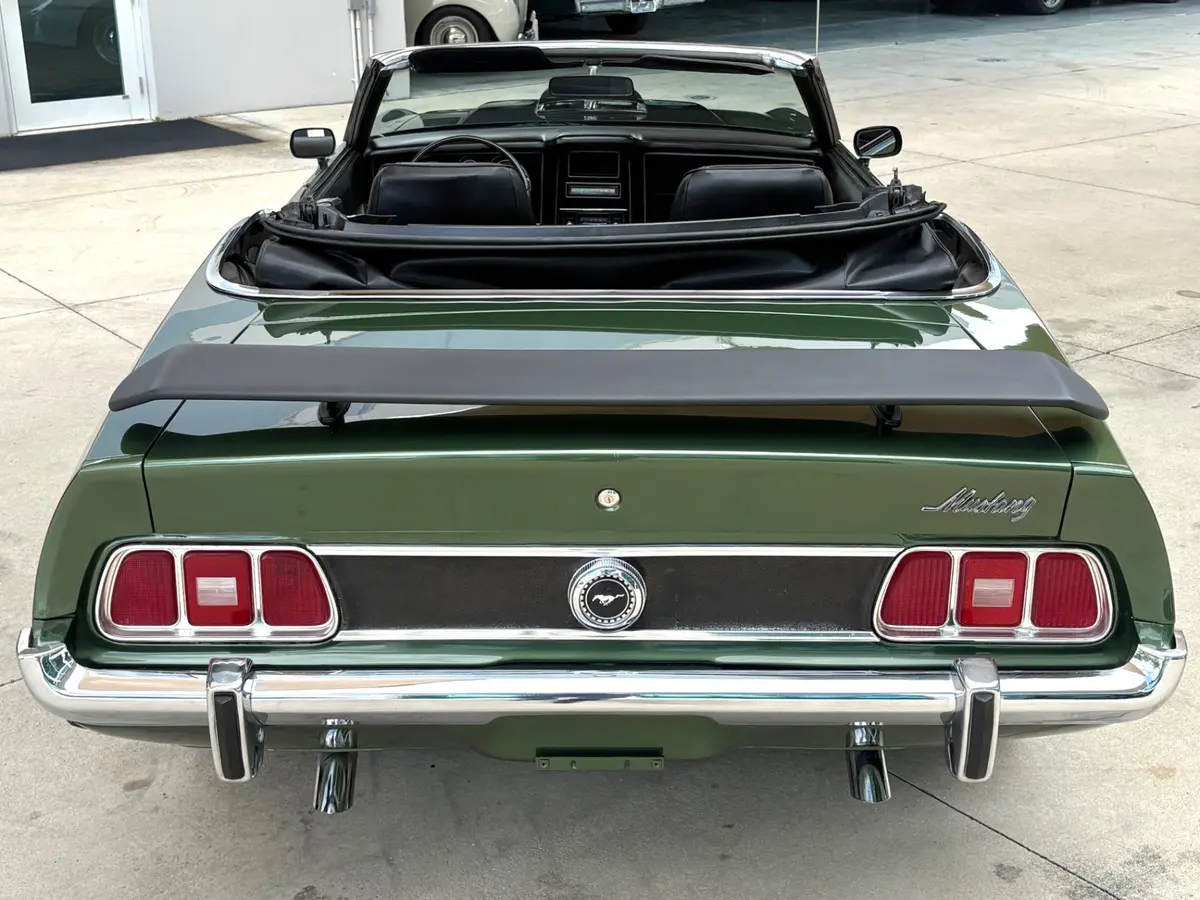
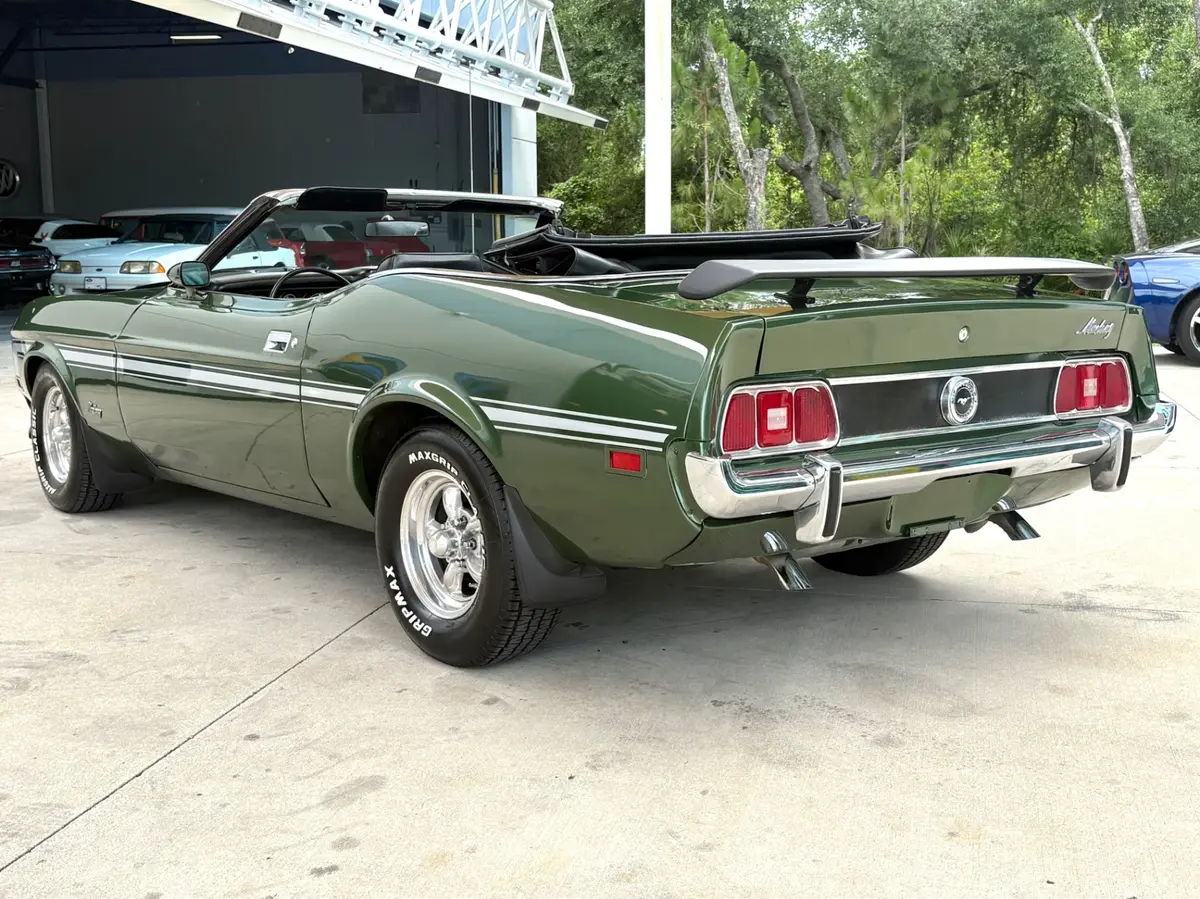
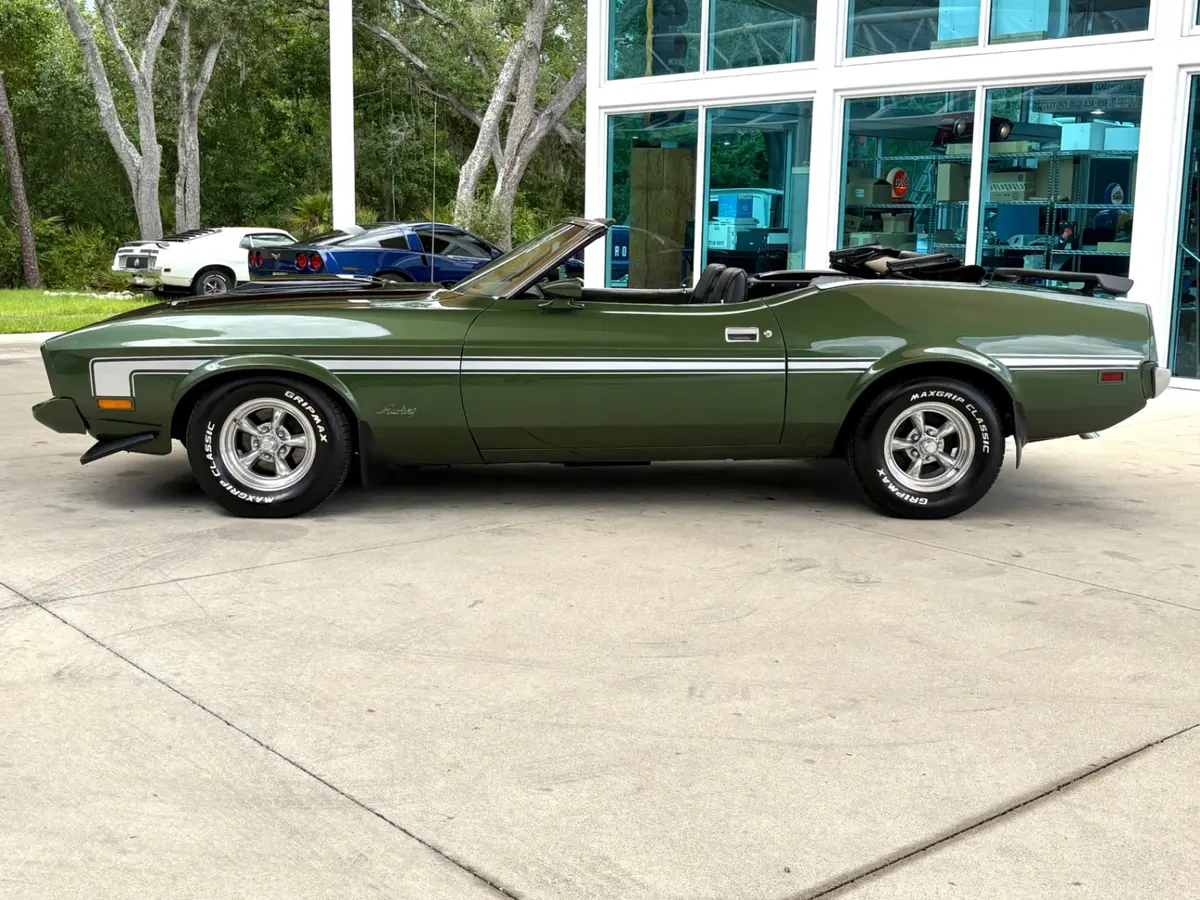
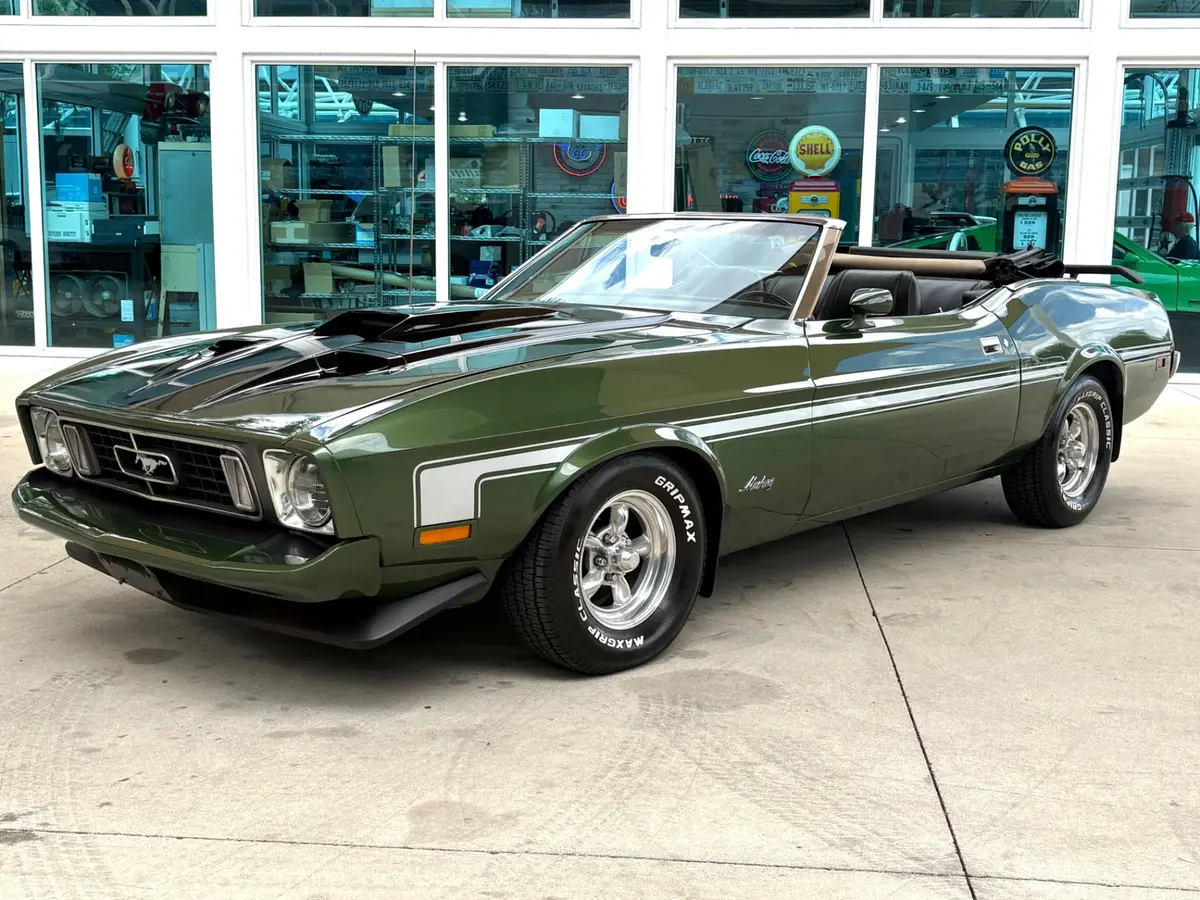
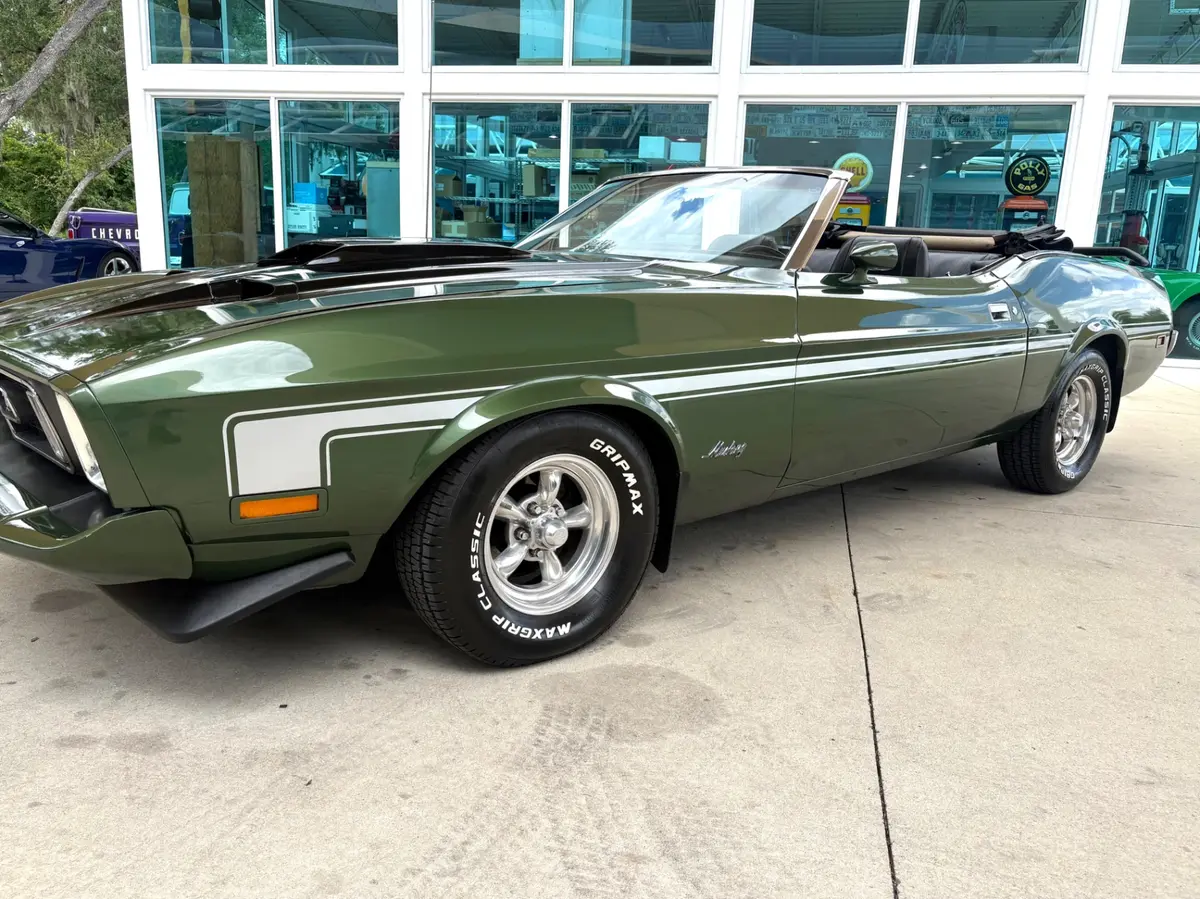
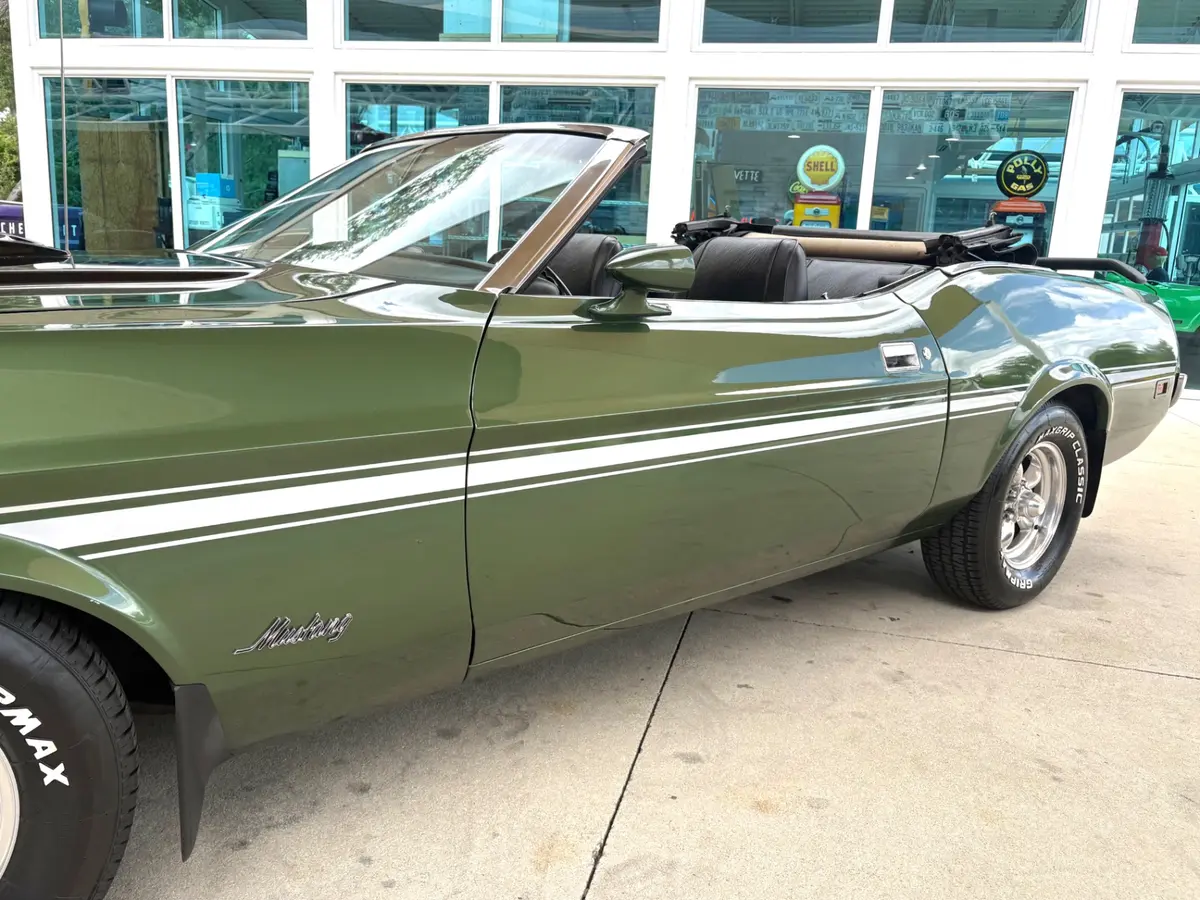
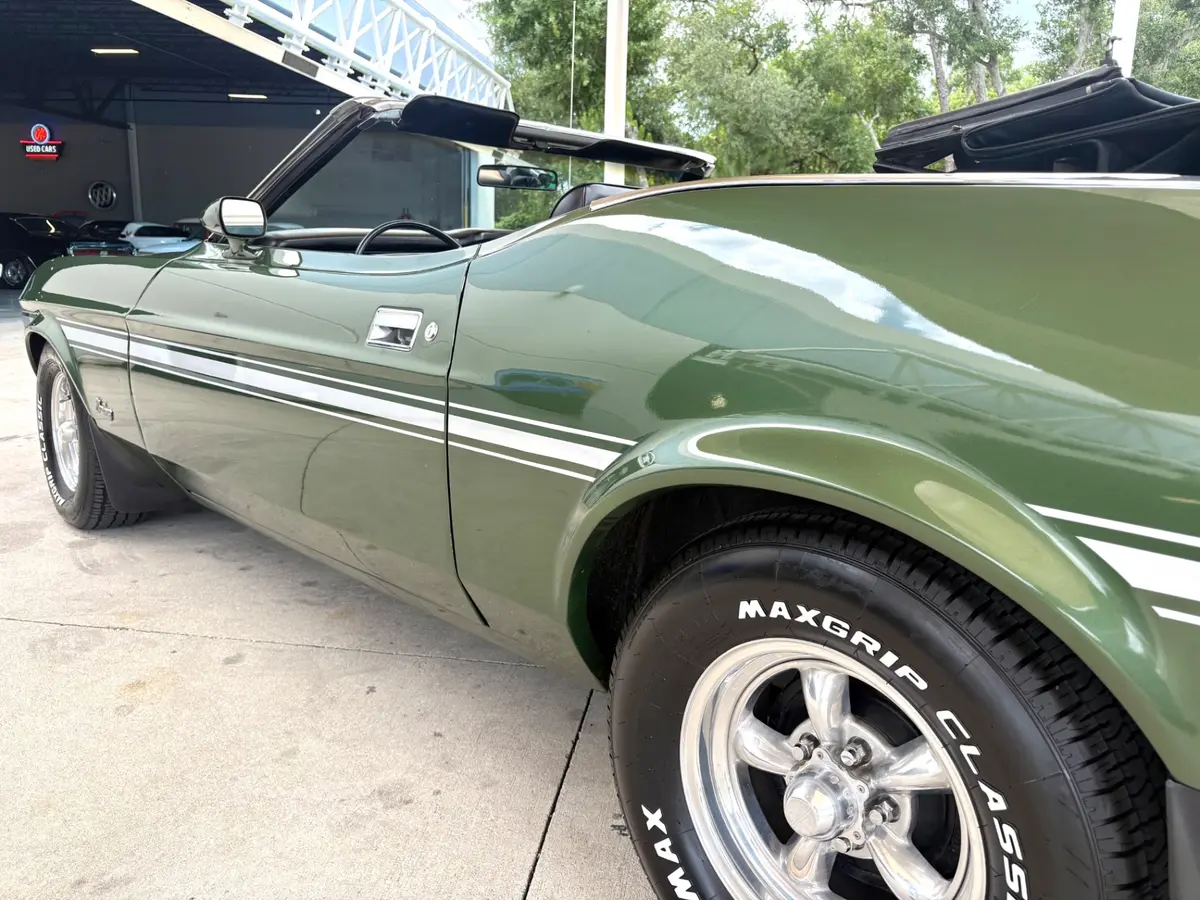
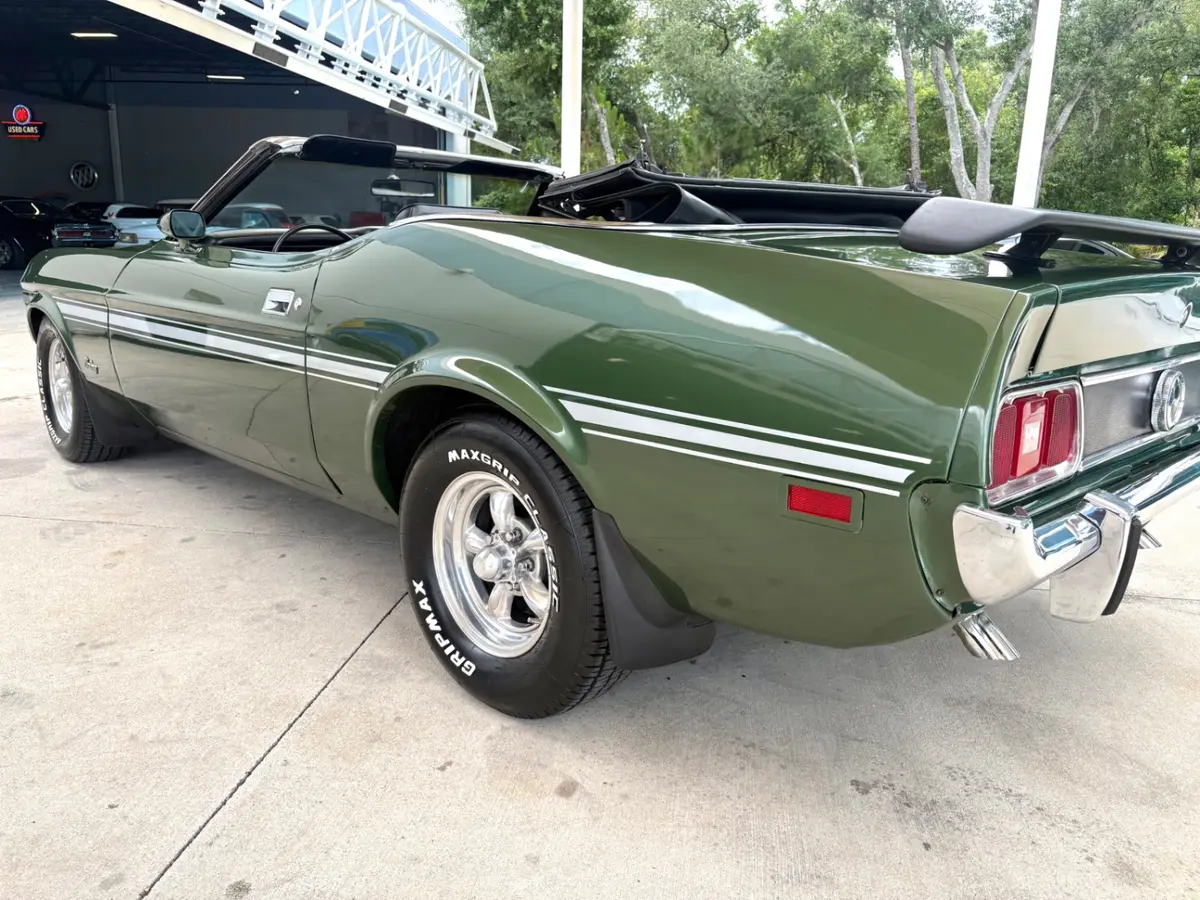
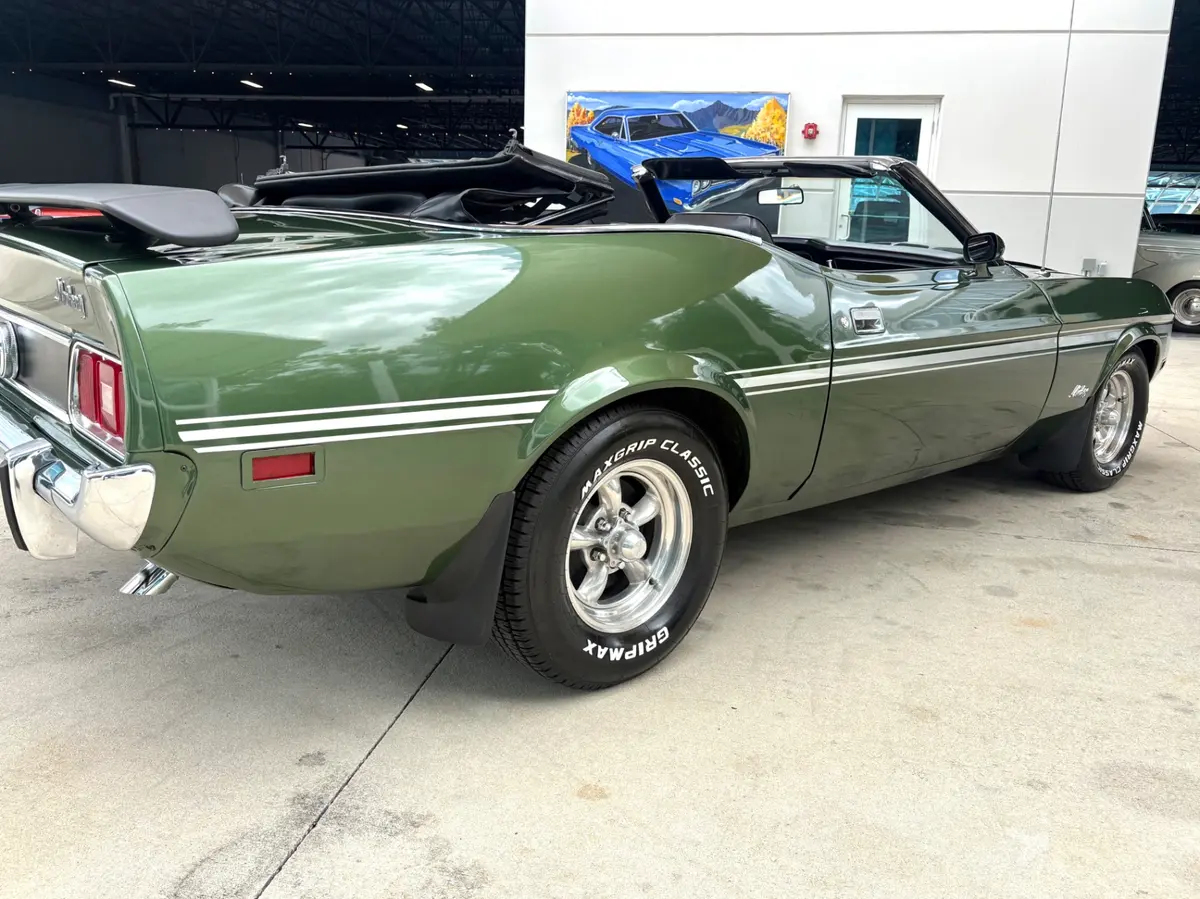
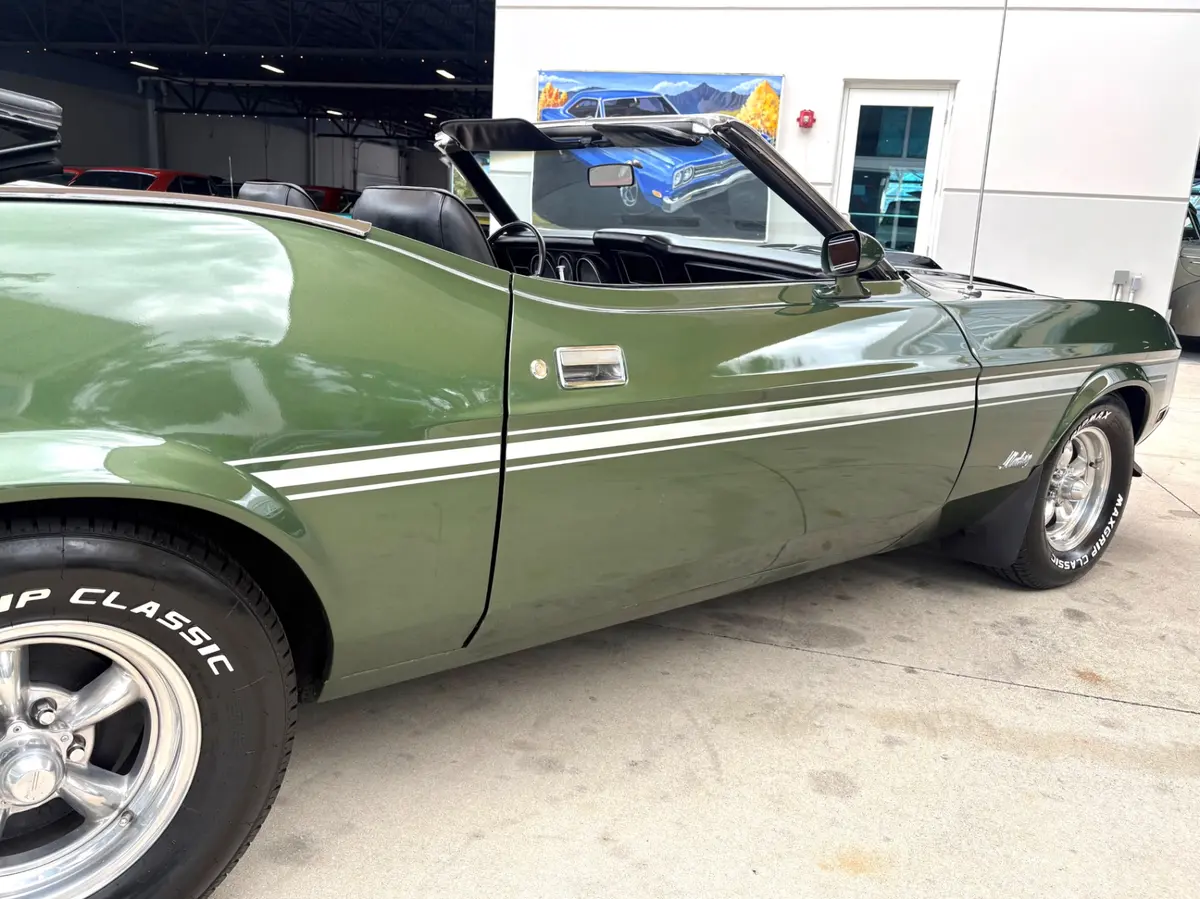
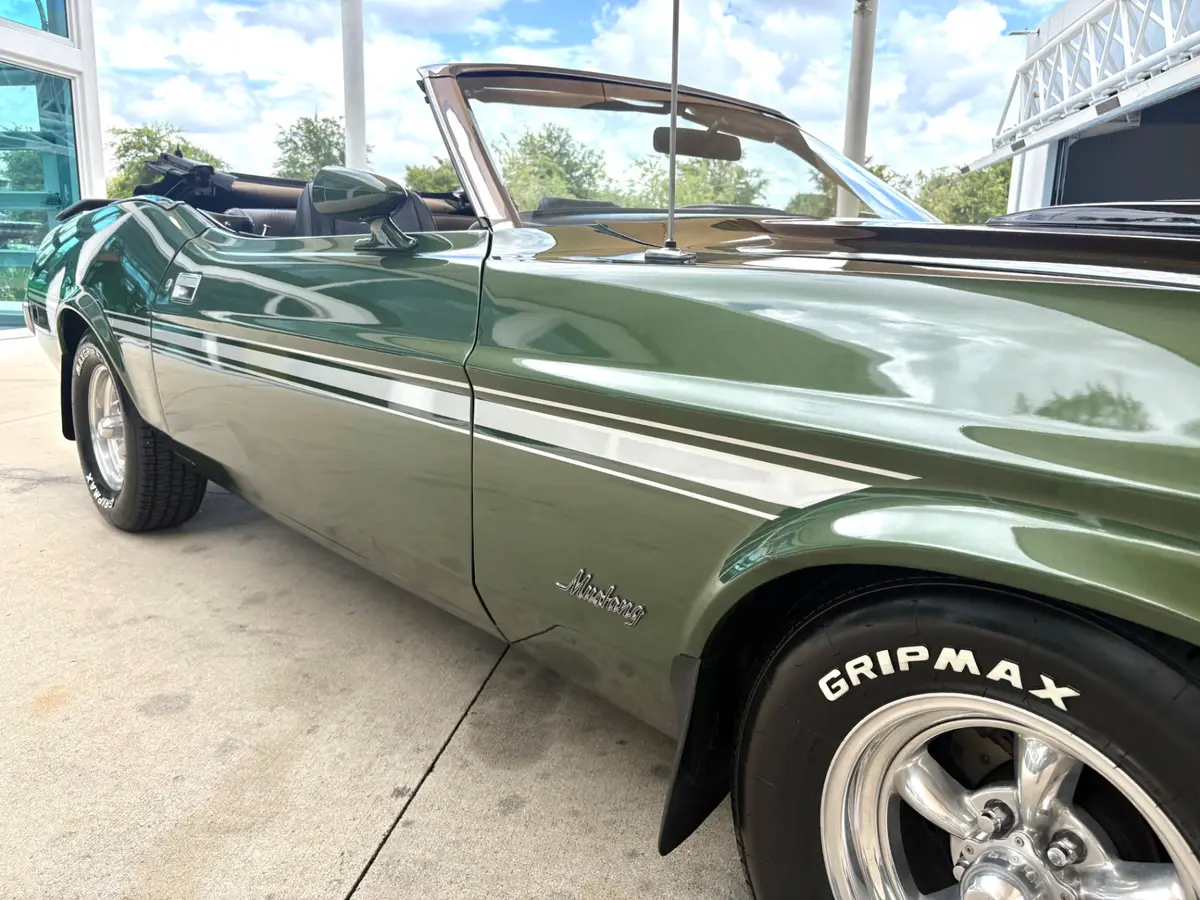
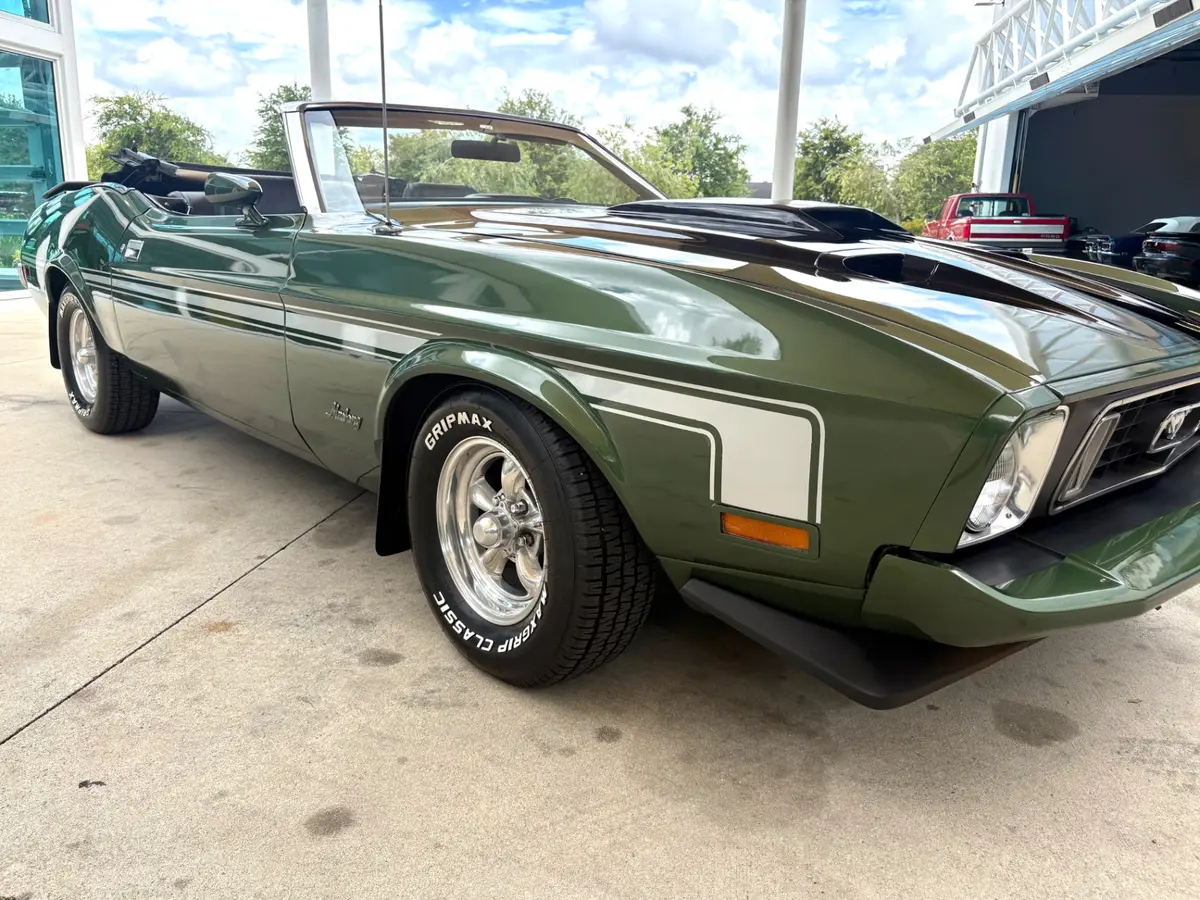
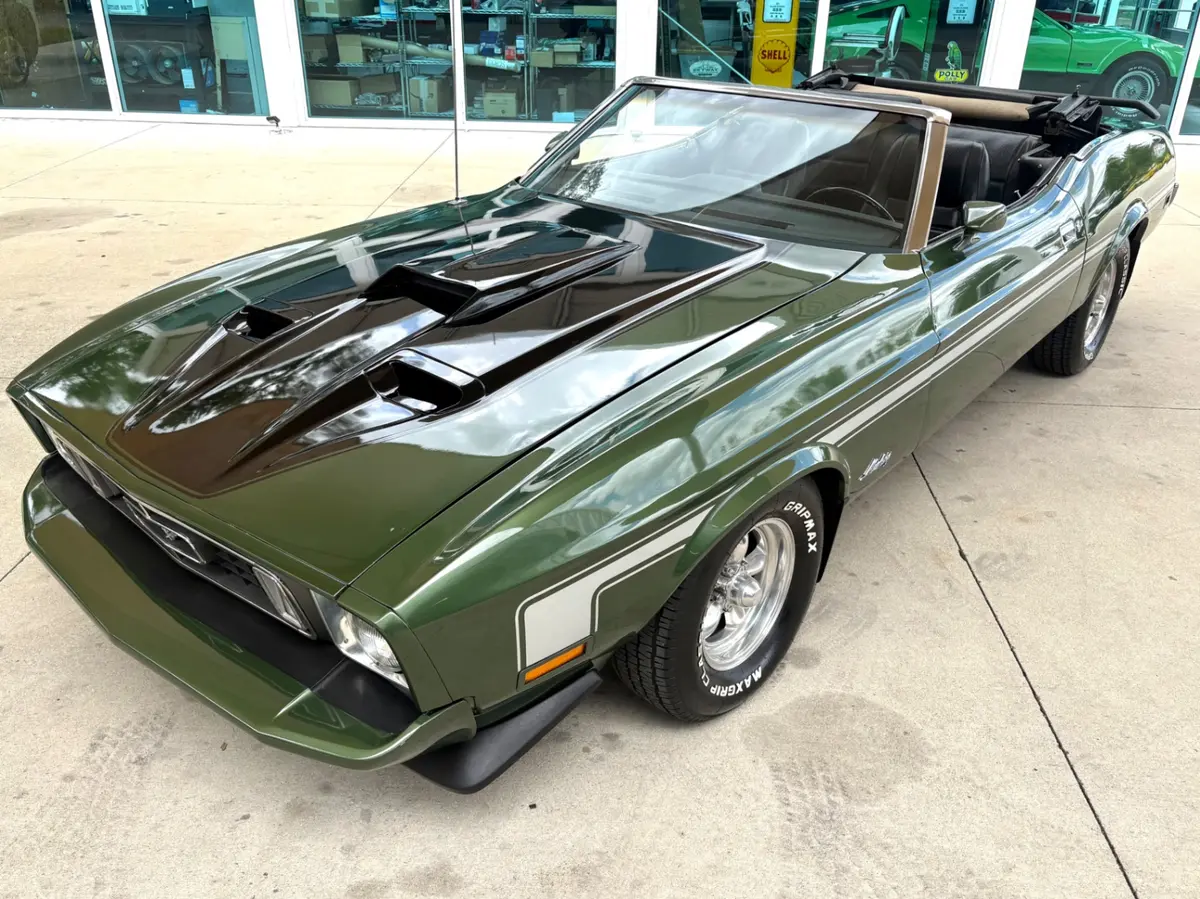
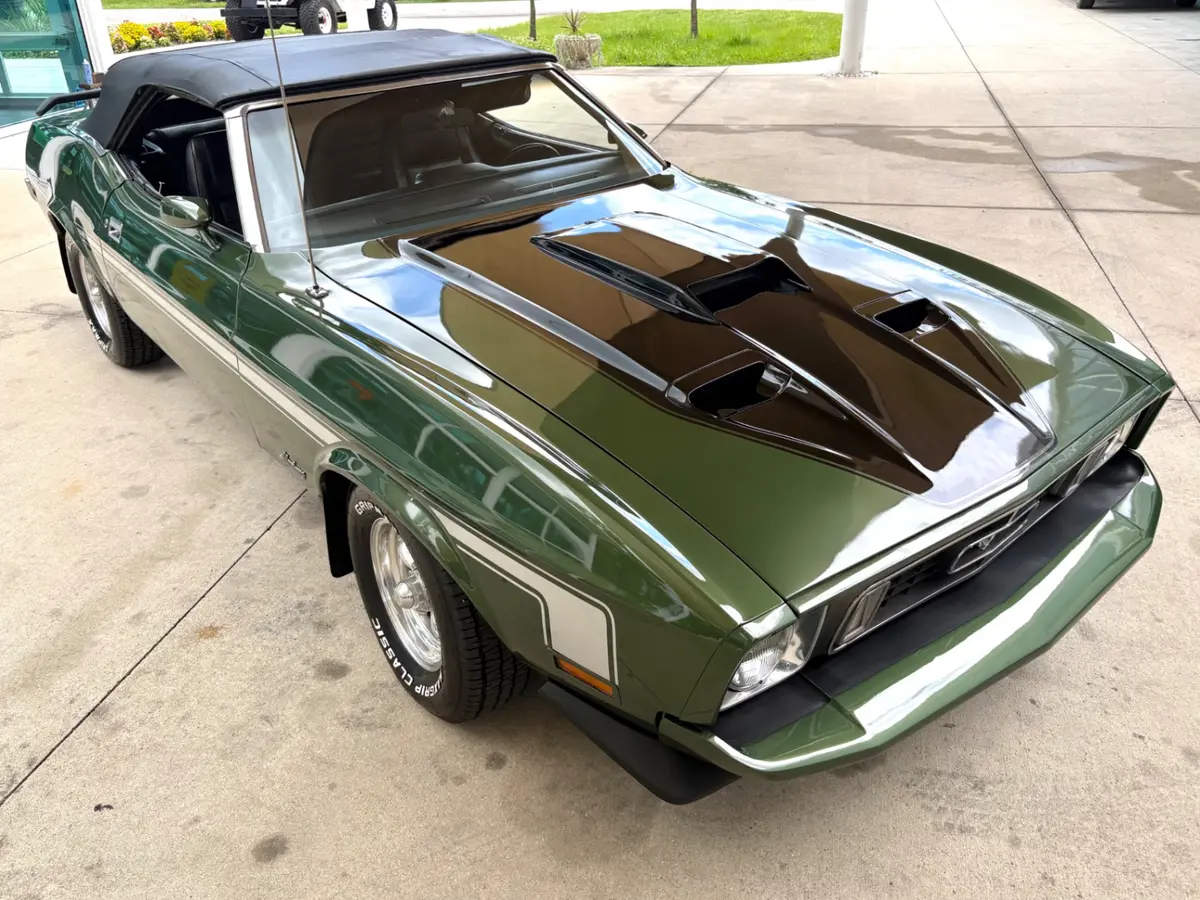
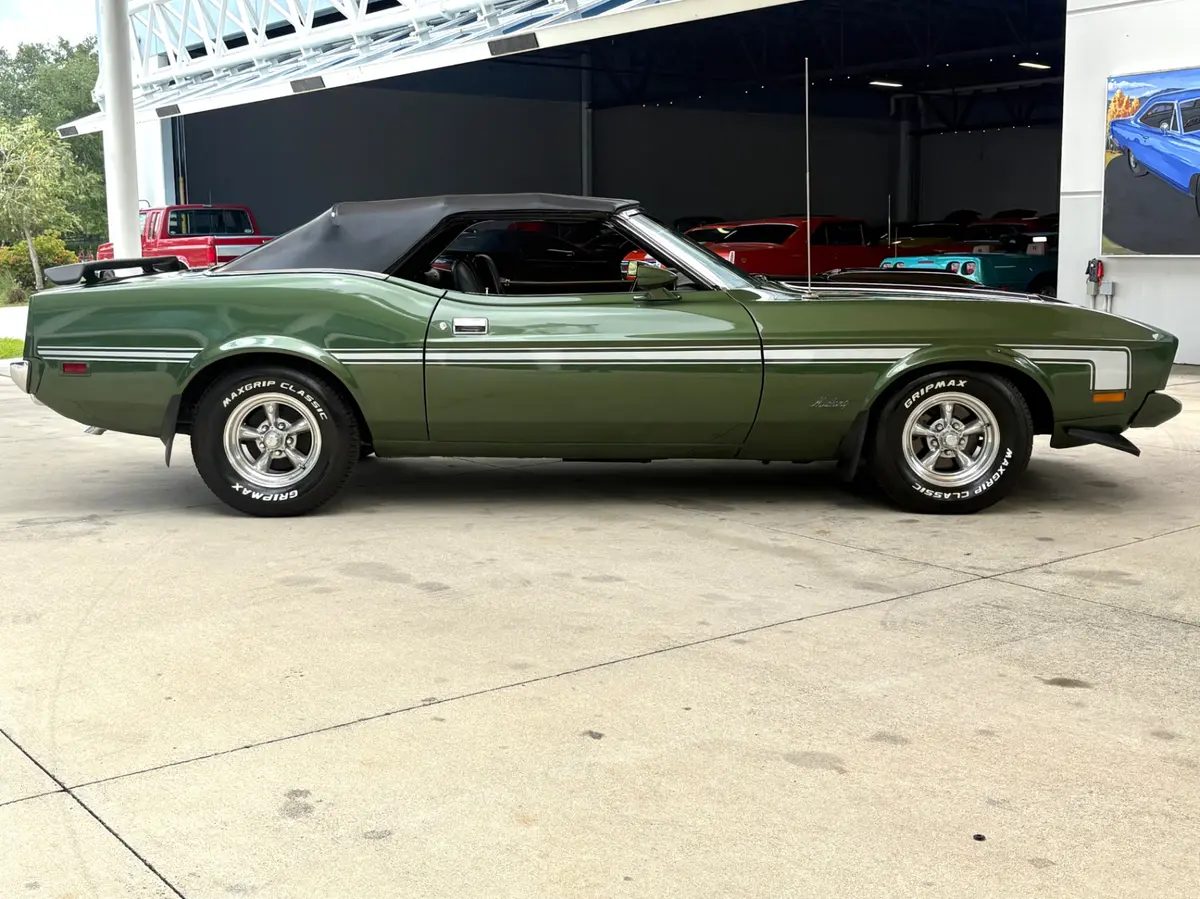
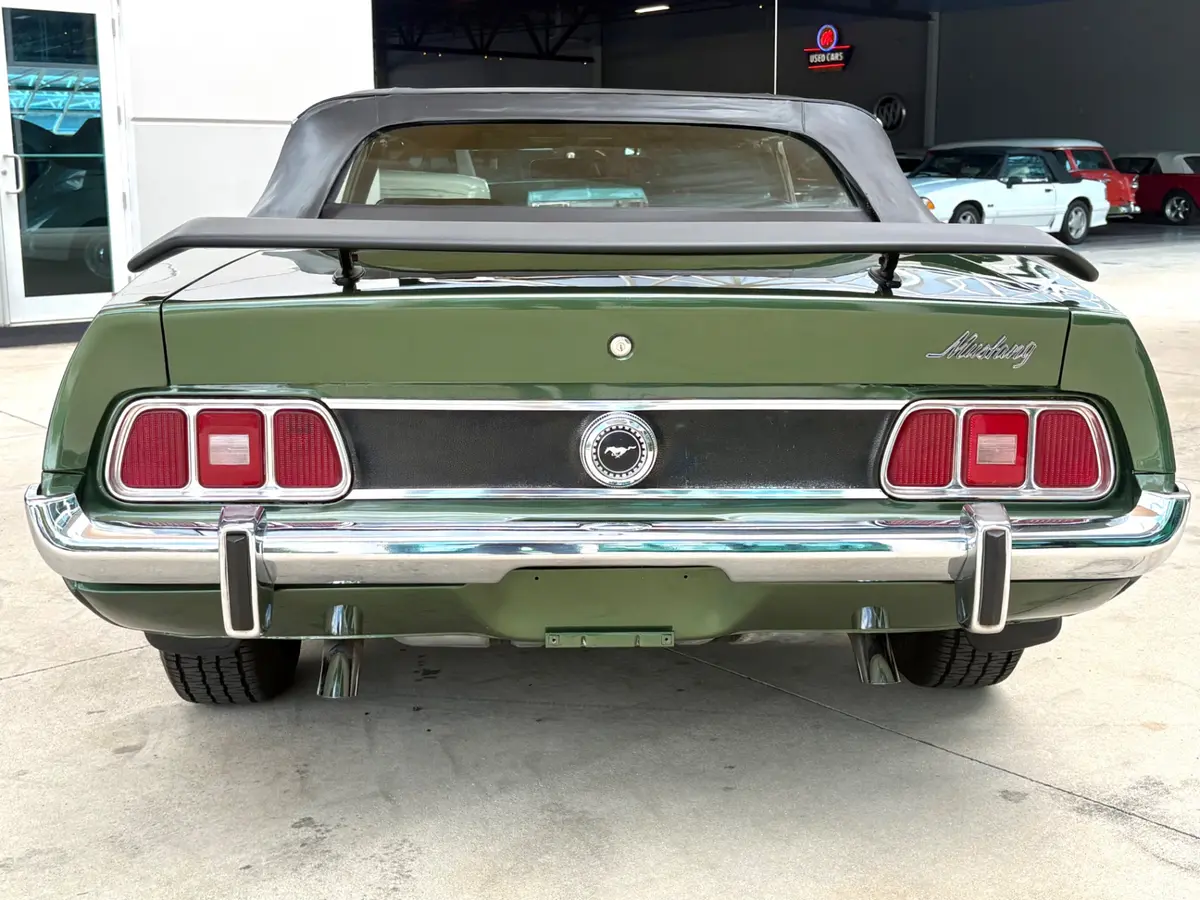
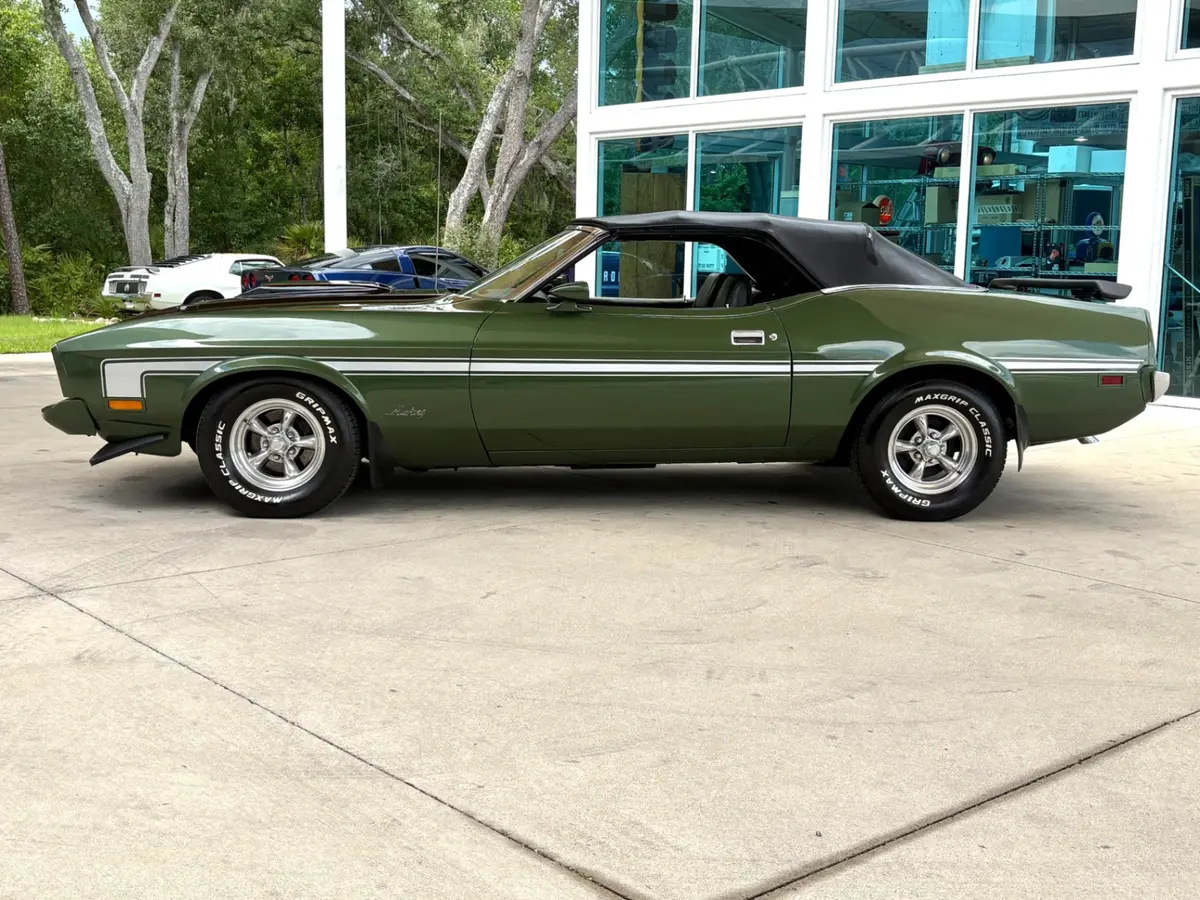

1973 Ford Mustang Convertible — Medium Green Metallic, 302 V8, Power Top, Solid Driver
Why This Car Is Special
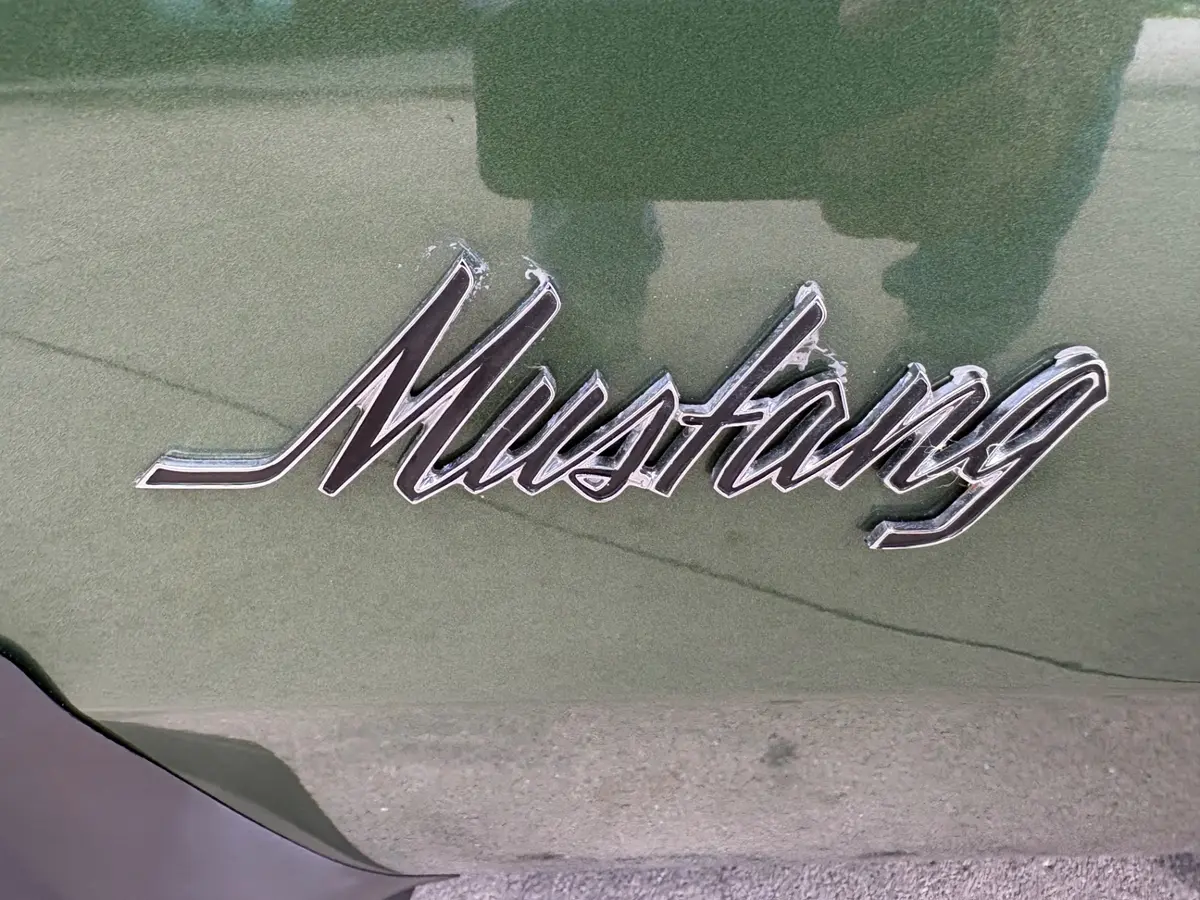
The 1973 Ford Mustang convertible holds a distinction that most Mustang enthusiasts know well: it was the last open-air Mustang Ford would build for ten years. When the Mustang II arrived for 1974, the convertible body style was gone, and it would not return until the 1983 model year. That single fact has driven steady collector interest in the 1973 Ford Mustang convertible for decades, and it shows no signs of softening.
The 1971–1973 generation is often called the "big Mustang" era, and for good reason. Ford stretched and widened the platform substantially over the 1969–1970 cars, giving the 1973 a longer hood, a wider stance, and a more muscular overall presence. The styling was polarizing when new — some felt it strayed too far from the original pony car formula — but time has been kind to these cars. The long hood, the sculpted body sides, the sequential turn signal taillights, and the aggressive fastback-influenced roofline on the convertible all read well in person, especially in a color like Medium Green Metallic.
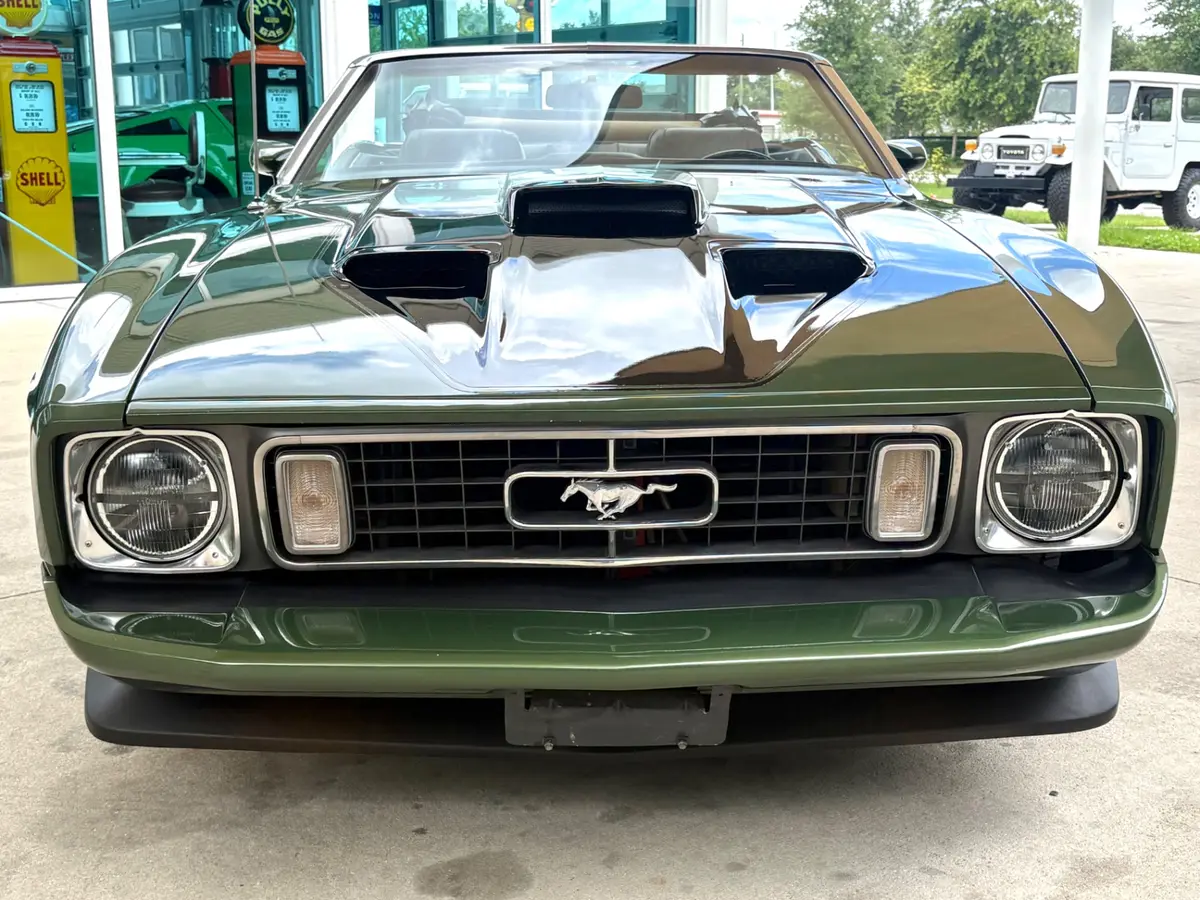
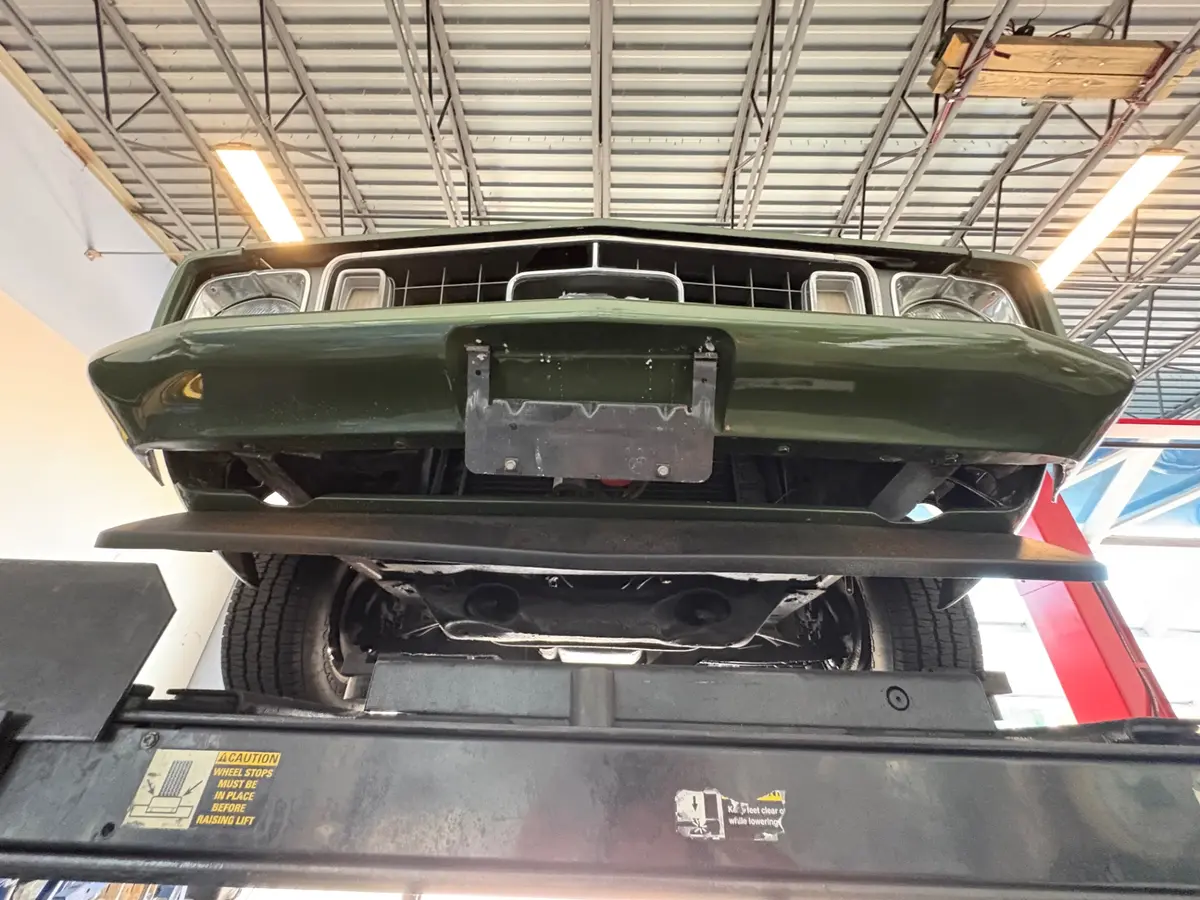
For 1973, Ford also made the front bumper system heavier to comply with new federal 5-mph impact standards, which added some visual weight up front but also gives the 1973 its own distinct look compared to the 1971 and 1972 models. The 1973 is easy to identify by that beefier front end, and it is a detail that helps collectors date the car at a glance.
Convertible production numbers for the 1973 Mustang were relatively modest. Ford built 11,853 convertibles for the model year out of total Mustang production of approximately 134,000 units — making the ragtop roughly one in eleven cars built that year. With the knowledge that this would be the last Mustang convertible for a decade, the 1973 has always carried a premium in the collector market over its coupe and SportsRoof counterparts.
This particular car is finished in Medium Green Metallic over a black vinyl interior and wears a black power convertible top. The 302ci 2-barrel V8 is backed by a 3-speed automatic transmission with a floor-mounted shifter. The car presents as an honest, well-optioned driver-quality example with a solid undercarriage and a factory-style option list that tells you this car was ordered by someone who wanted comfort and style in equal measure.
Features List
- 302ci 2-Barrel V8 engine
- 3-Speed Automatic Transmission
- Floor-Mounted Shifter
- Power Convertible Top
- Black Convertible Top
- Power Steering
- Power Brakes with Front Disc Brakes
- Ram Air Hood Scoops
- Front Chin Spoiler
- Deck Lid Spoiler
- Body Side Stripes
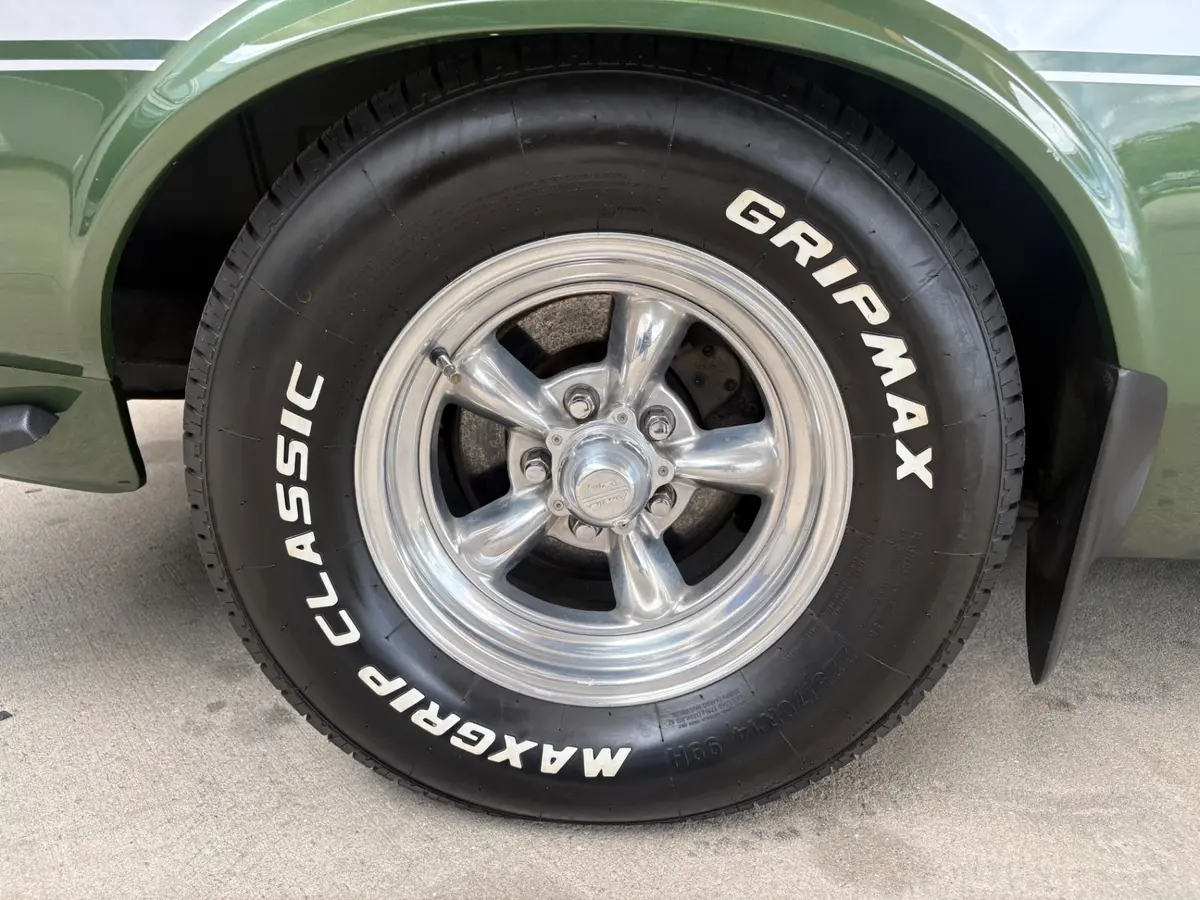
- Rally-Style Chrome Wheels
- White Letter Tires
- Mud Flaps
- Dual Exhaust
- Black Vinyl Bucket Seats (front)
- Rear Seat
- Center Console
- Woodgrain Door Panels
- Full Round Instrument Pod
- FM Stereo Radio
- 8-Track Player
- Heater and Defroster
- Ford 8-Inch Rear Axle
- Rear Leaf Springs
- Solid Undercarriage
- Modern Rubber Floor Mats
Mechanical
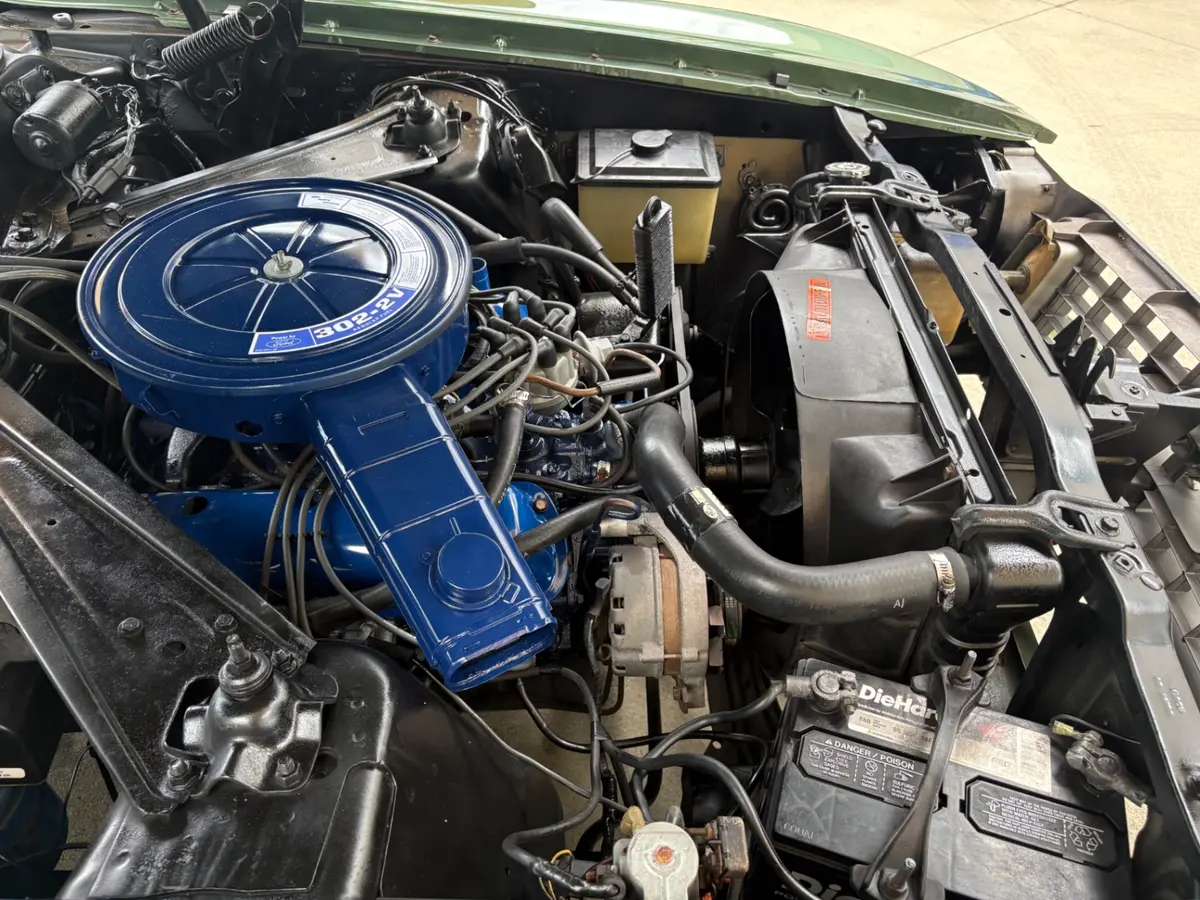
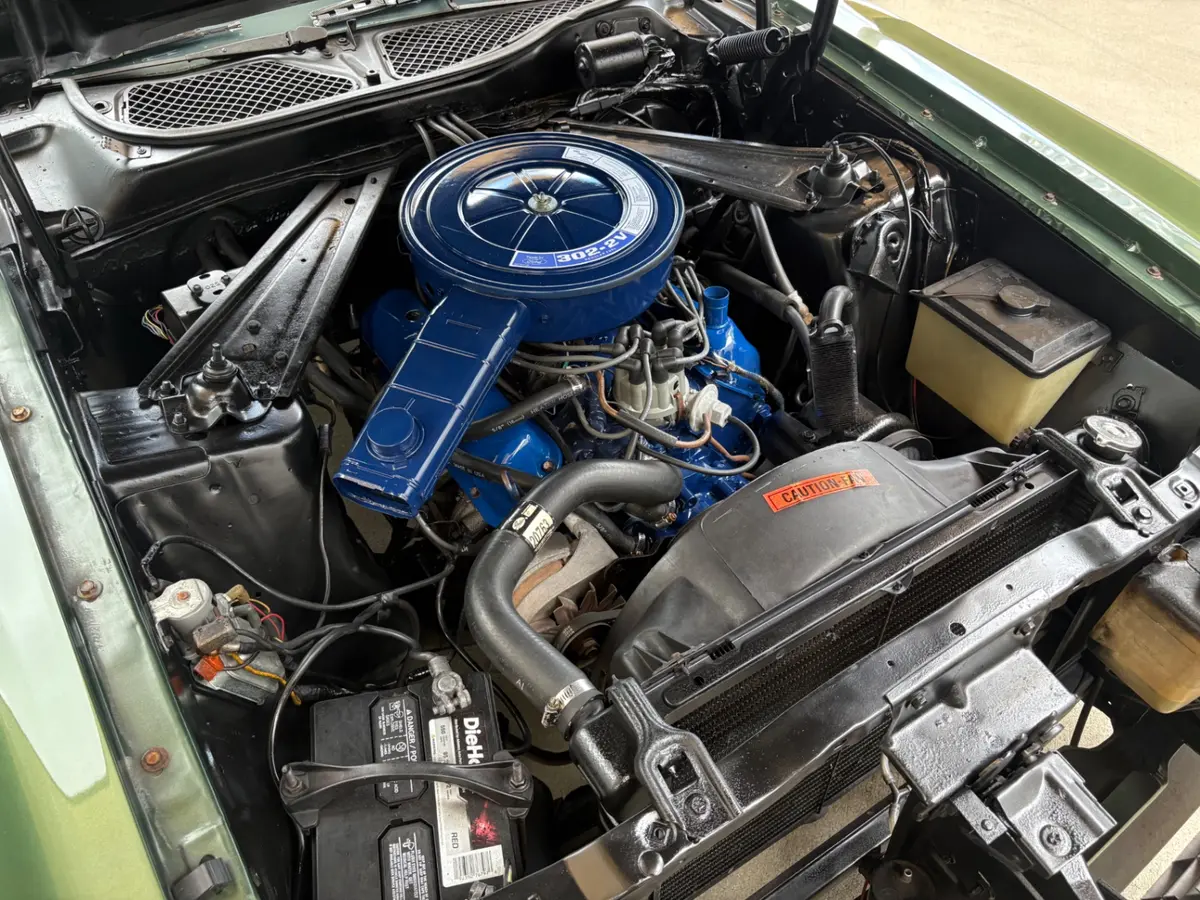
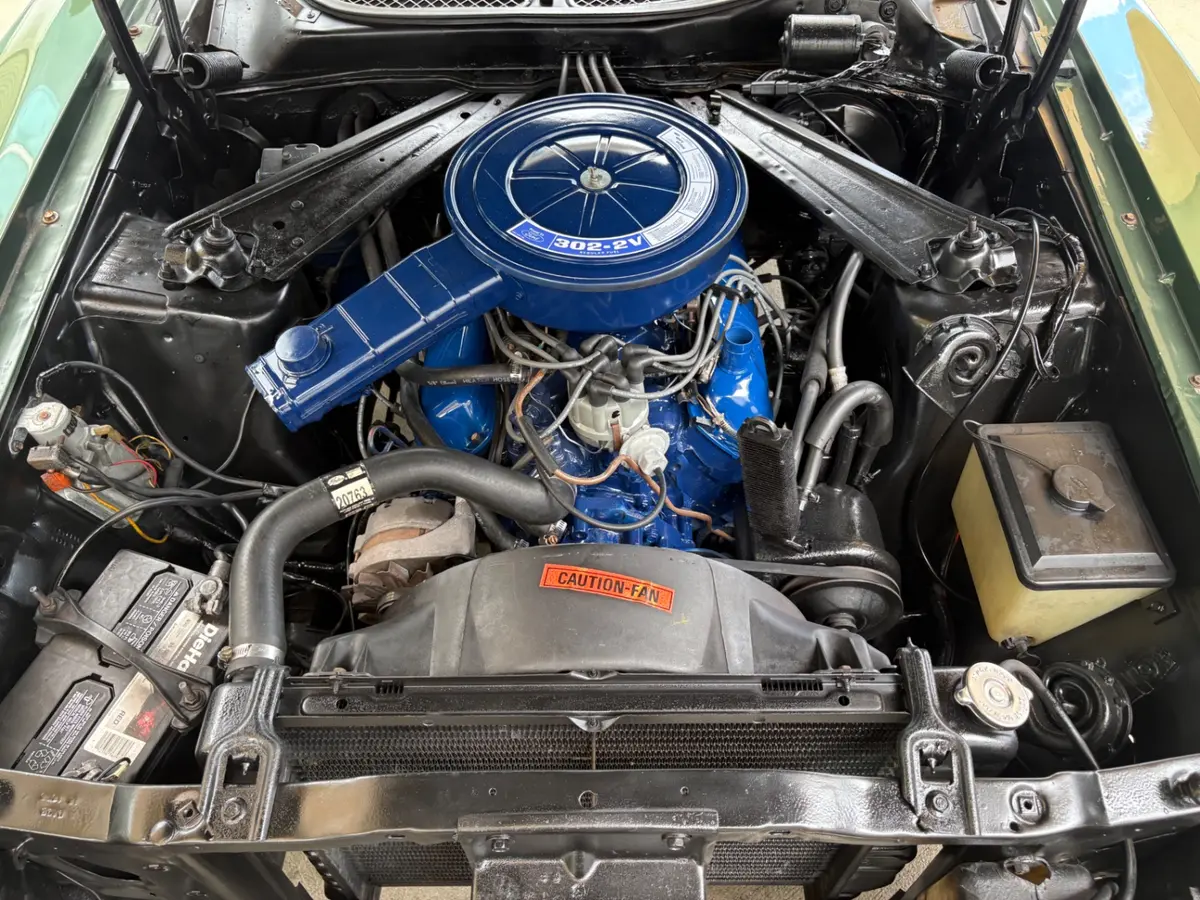
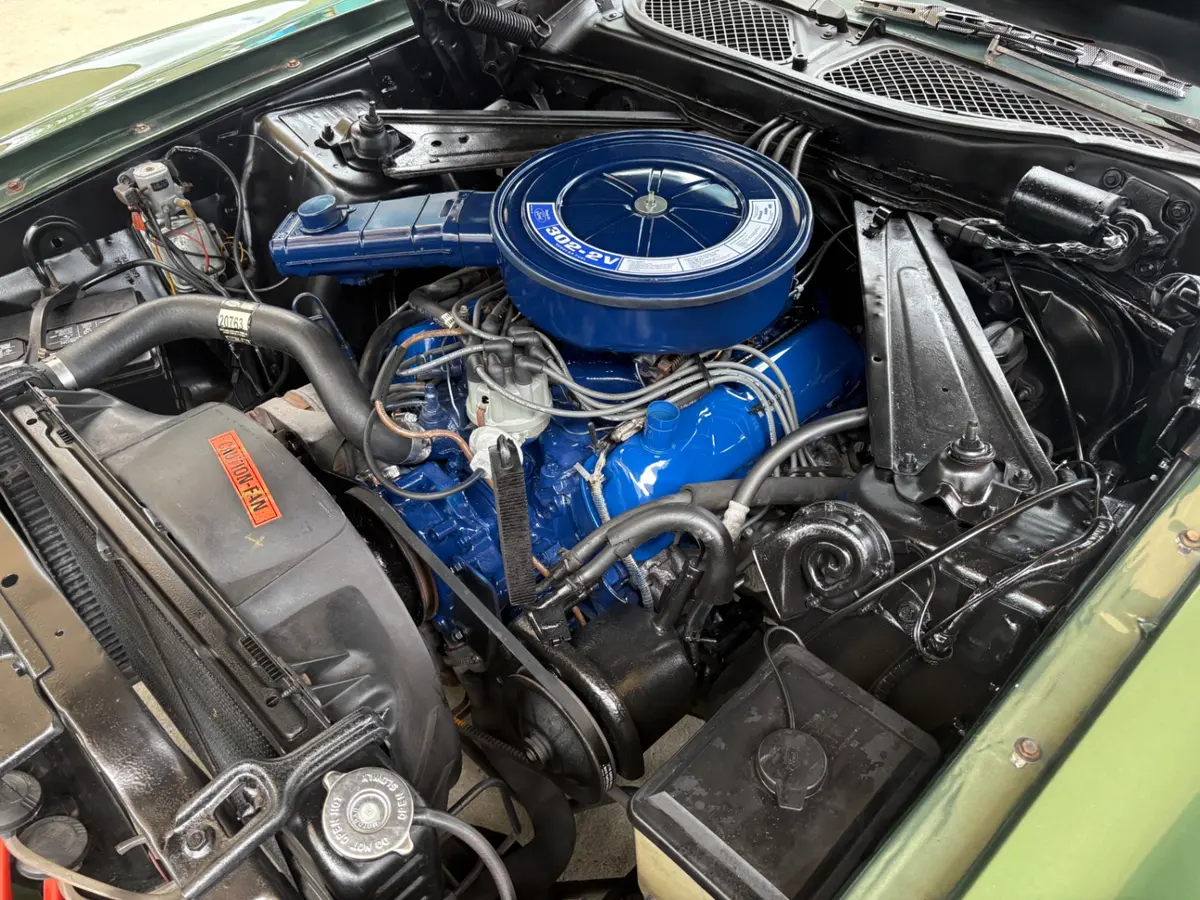
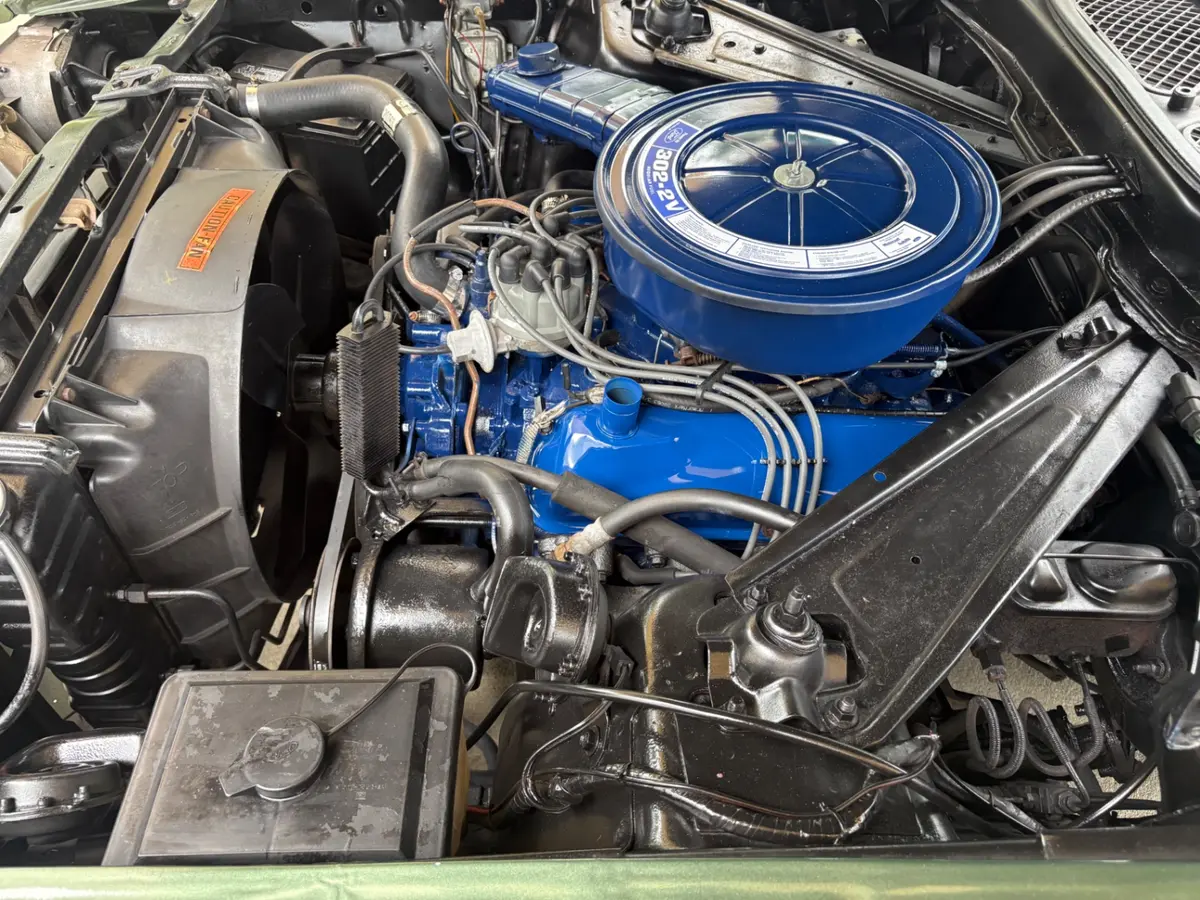
The 302 cubic inch V8 — Ford's small-block workhorse — was the standard V8 offering in the 1973 Mustang. By 1973, compression ratios and horsepower ratings had been reduced across the industry to meet emissions standards and accommodate lower-octane unleaded fuel, so the 302 2-barrel was not a performance engine in the traditional sense. What it is, however, is a reliable, well-understood, and parts-abundant powerplant that responds well to maintenance and modest upgrades if a future owner ever wants more from it. Ford built hundreds of thousands of these engines across multiple platforms, and the knowledge base for keeping them running is extensive.
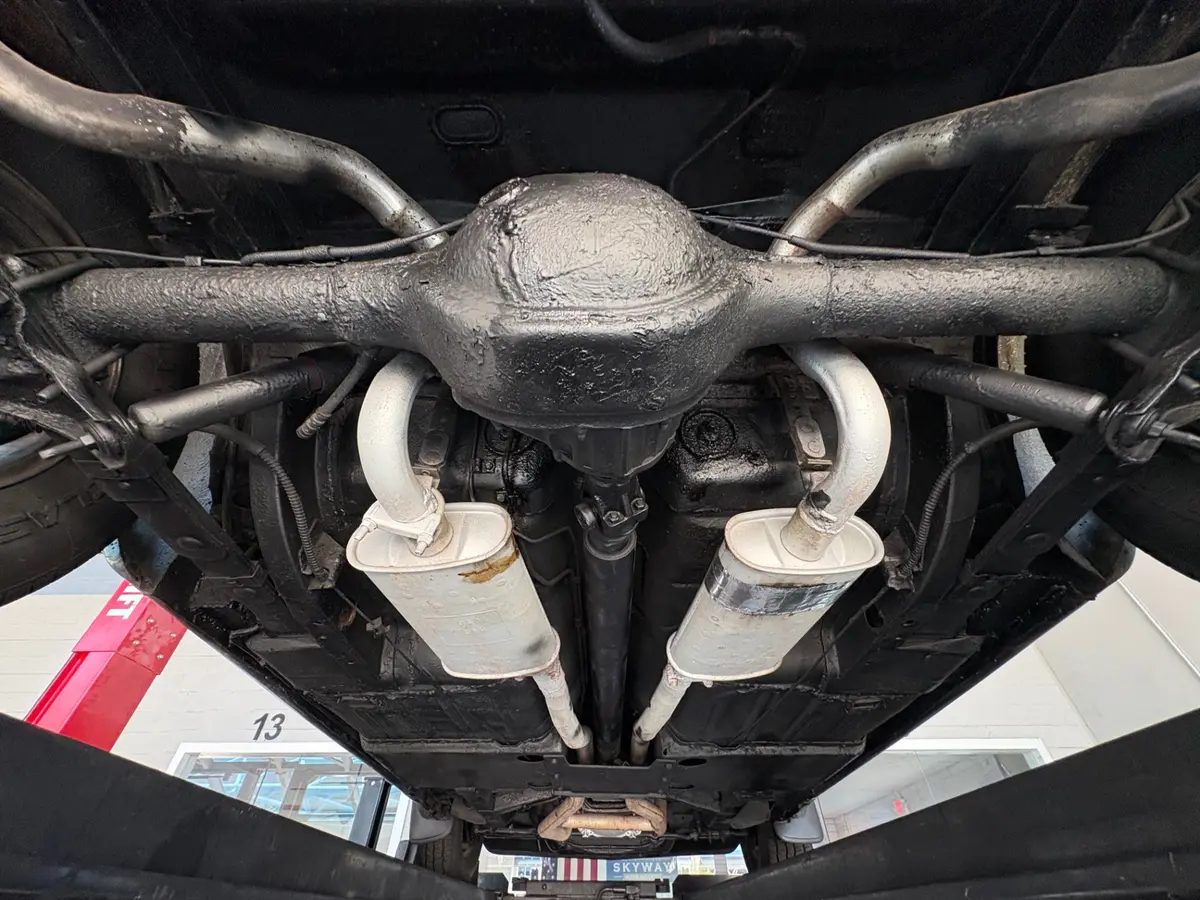
The engine bay on this 1973 Ford Mustang presents cleanly, with the factory Ford Blue valve covers and the correct 302-2V air cleaner lid in place. The 3-speed automatic sends power back through a driveshaft to the Ford 8-inch rear axle, which is the correct rear end for this drivetrain combination. The 8-inch is not the strongest axle Ford made — the 9-inch carries that reputation — but it is entirely appropriate for the 302 2-barrel and handles normal driving without issue. Rear leaf springs are in place as expected, consistent with the standard Mustang rear suspension setup for this generation.
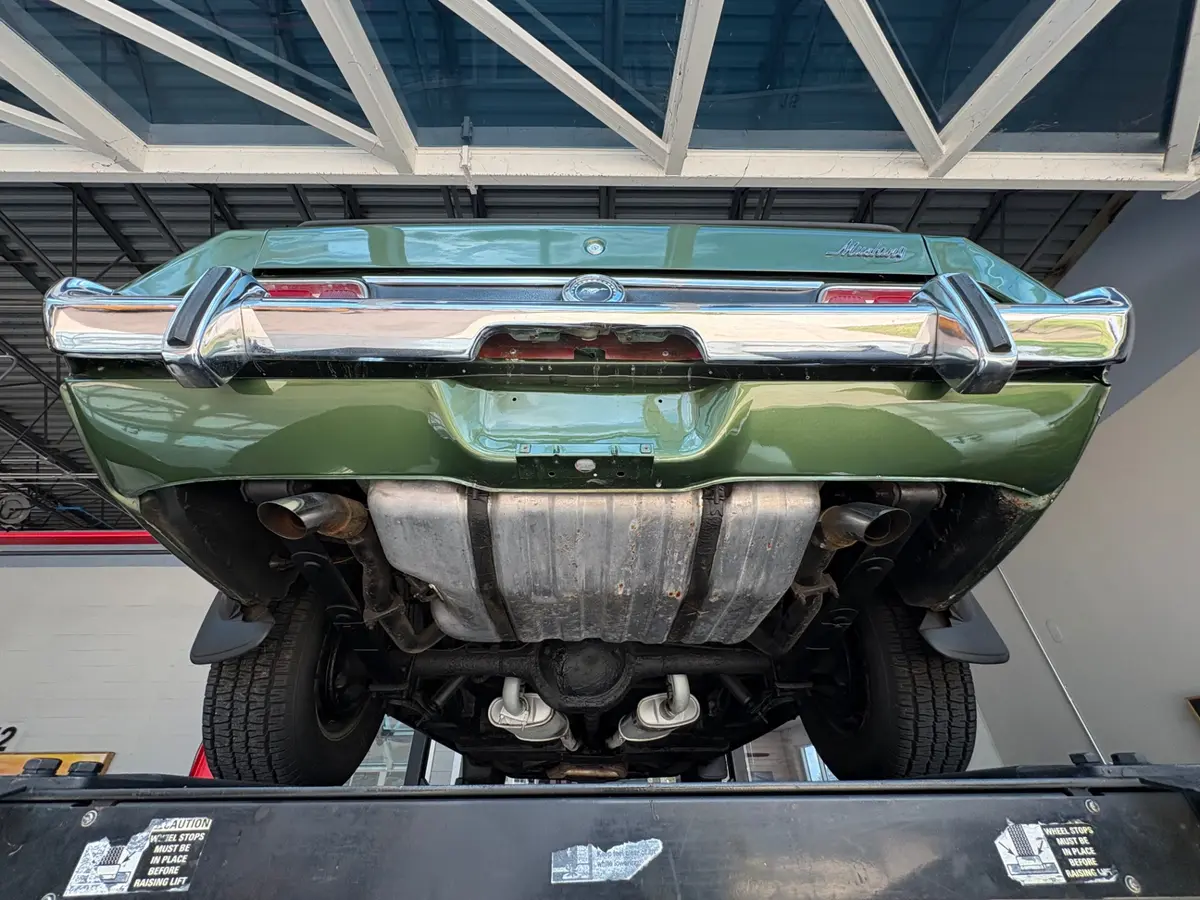
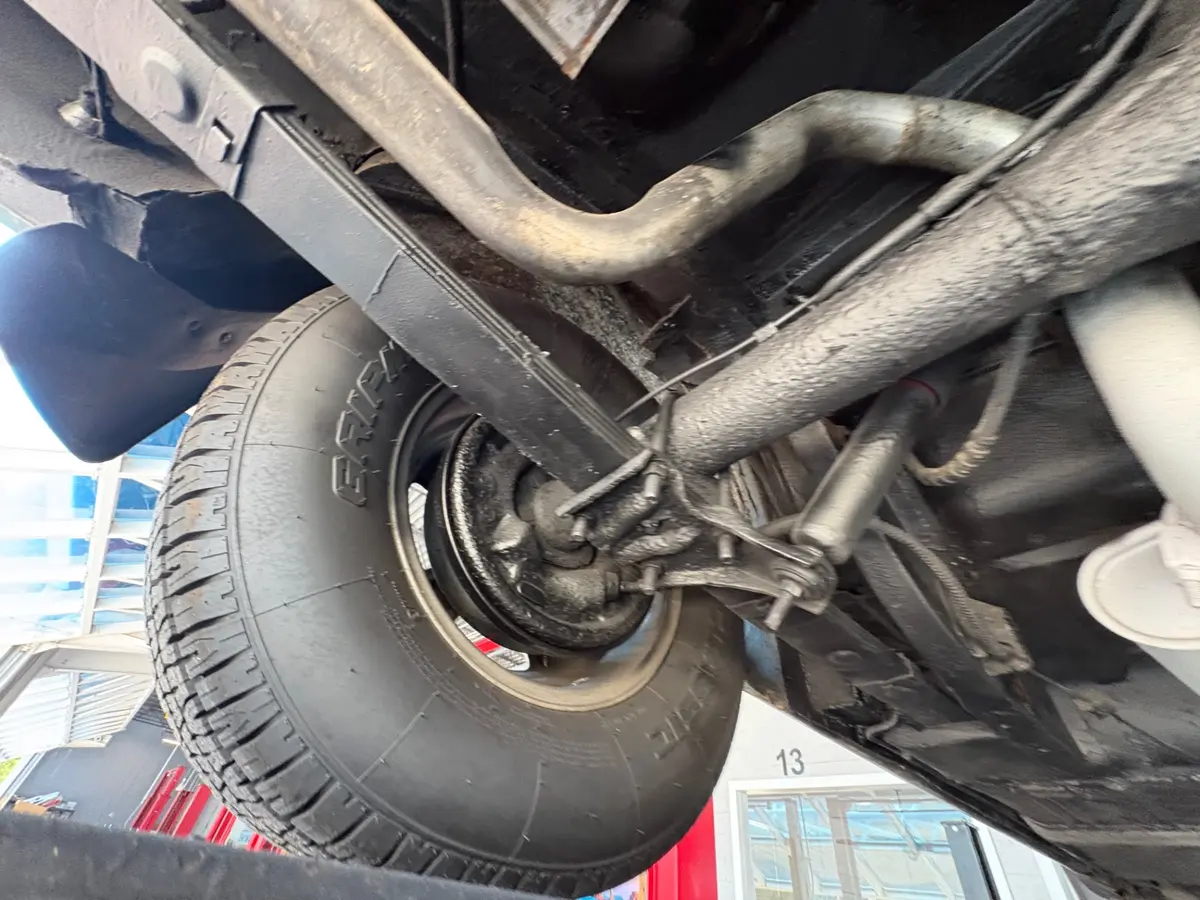
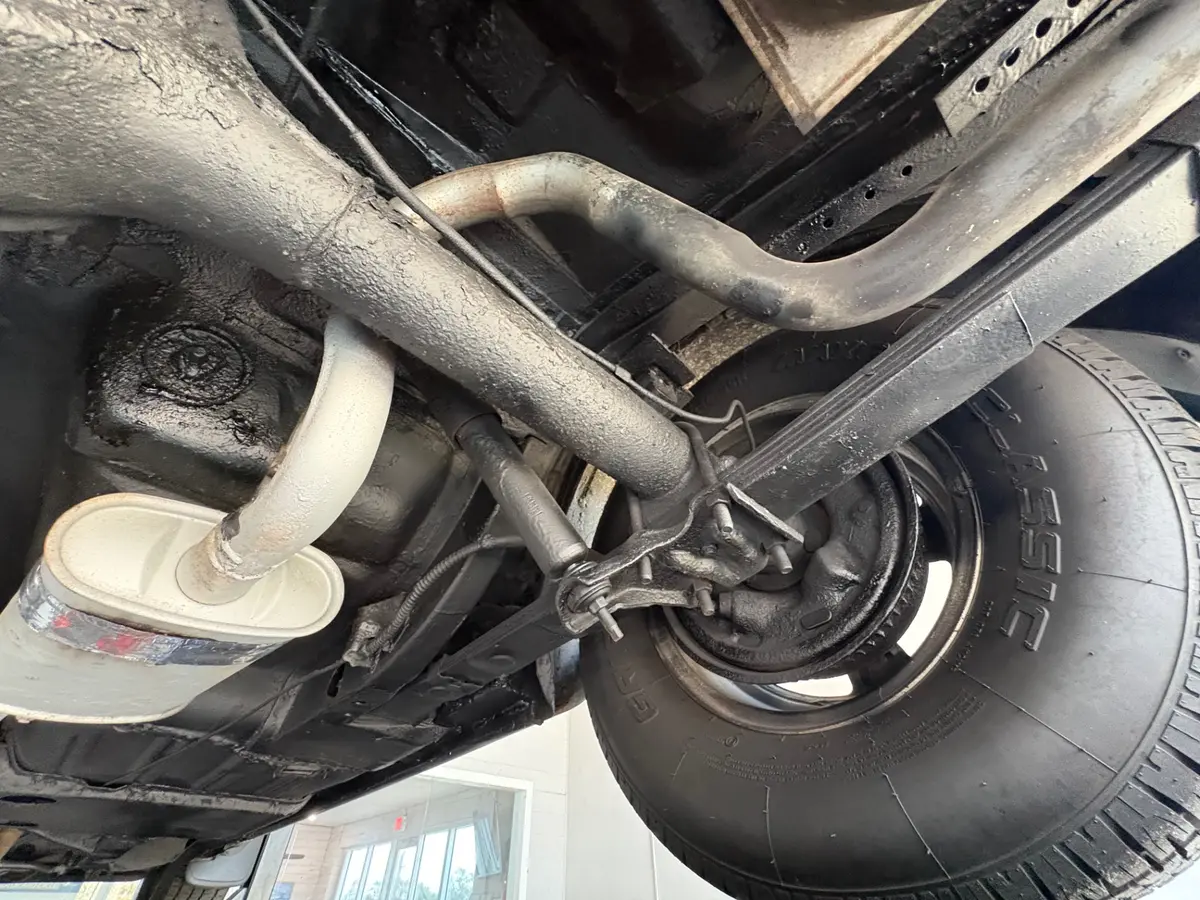
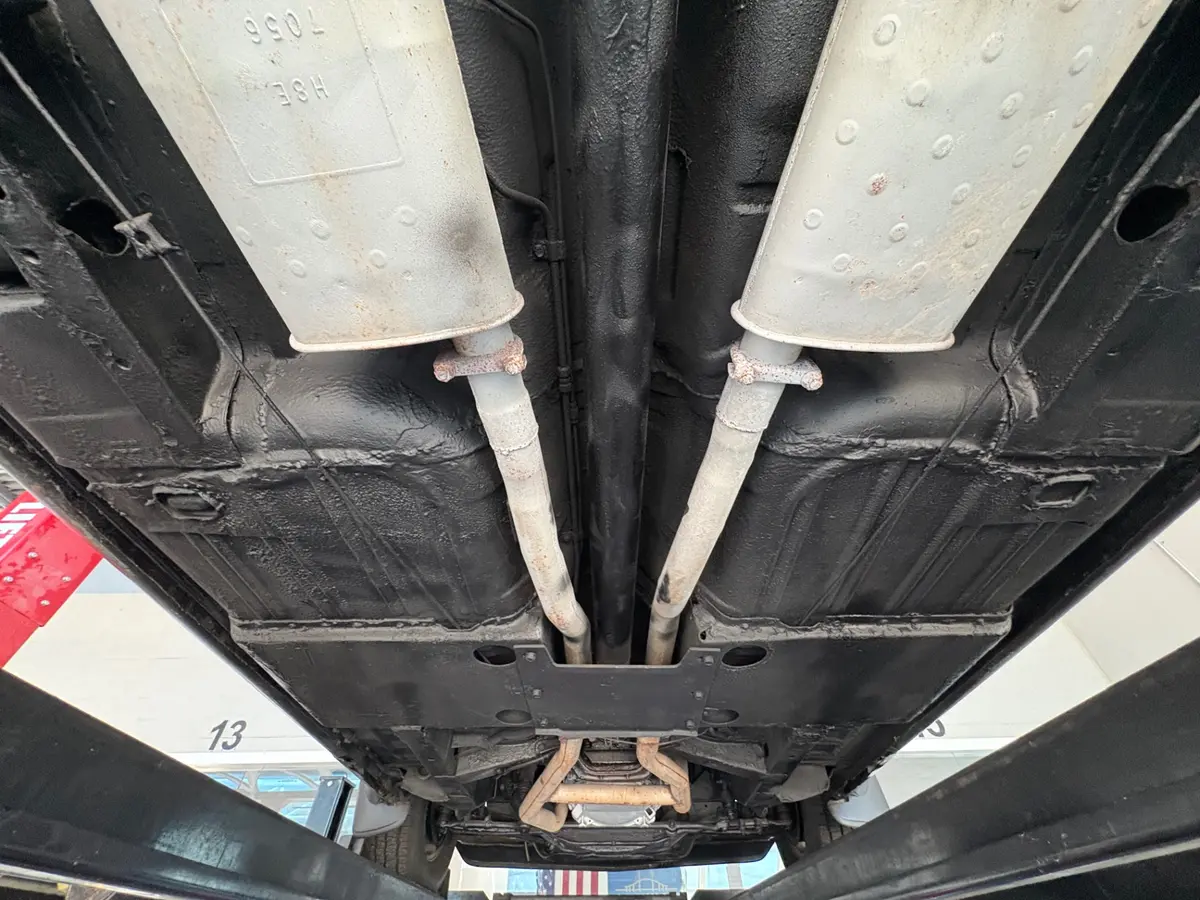
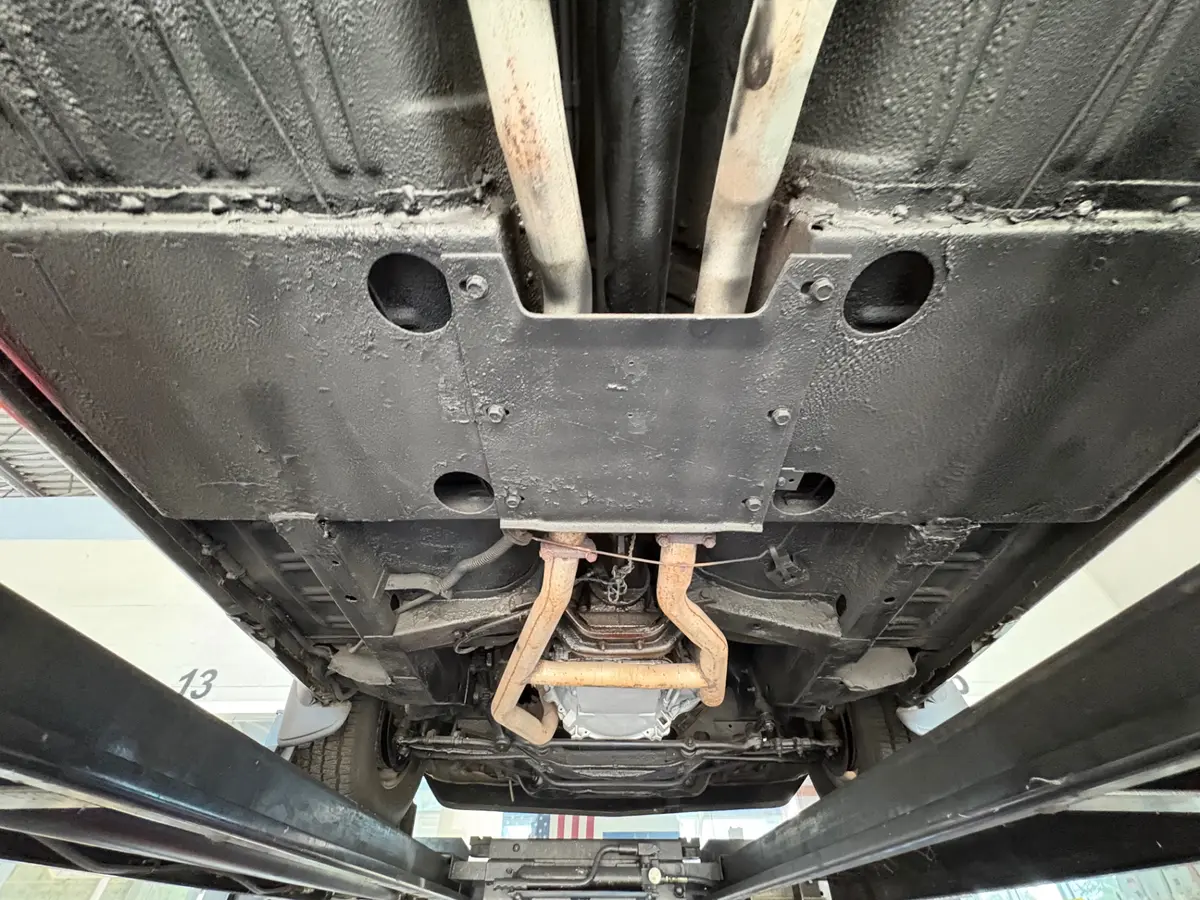
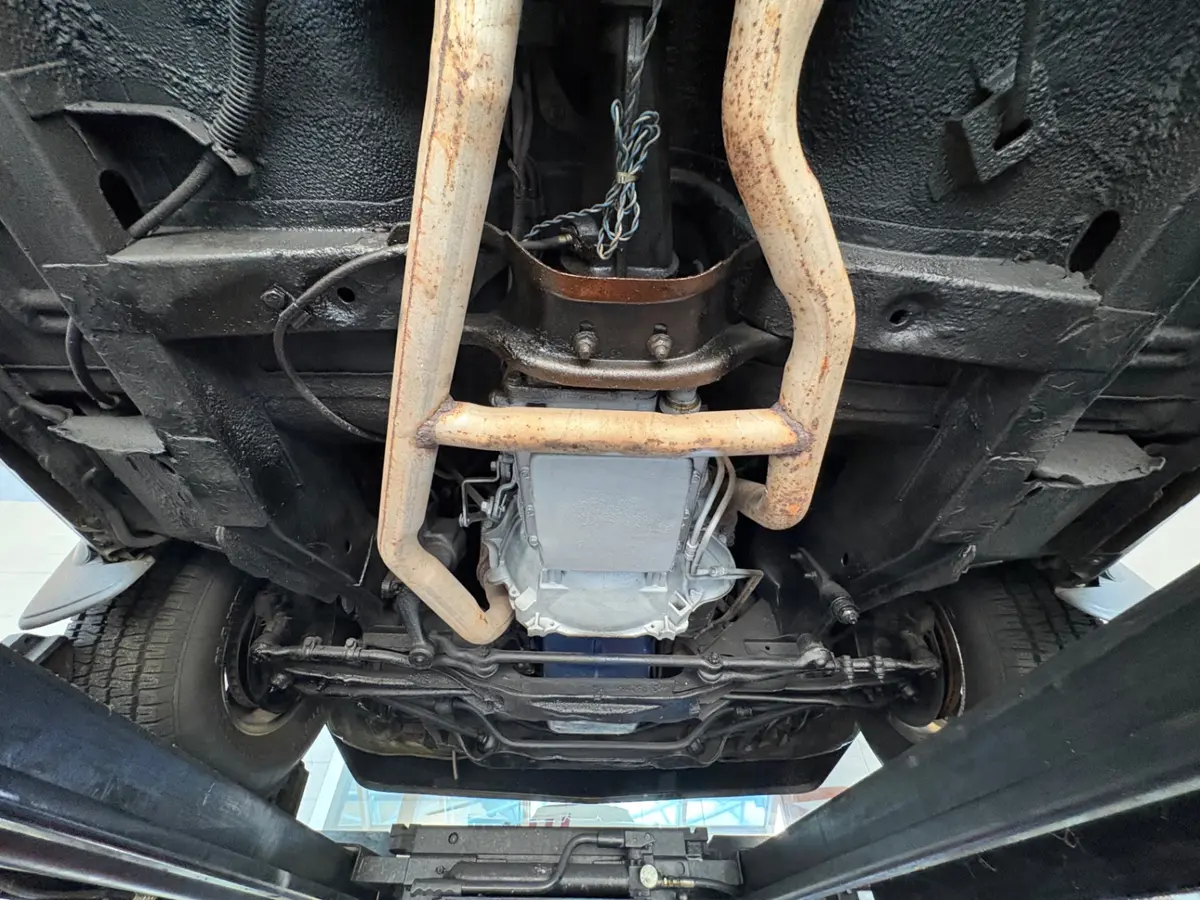
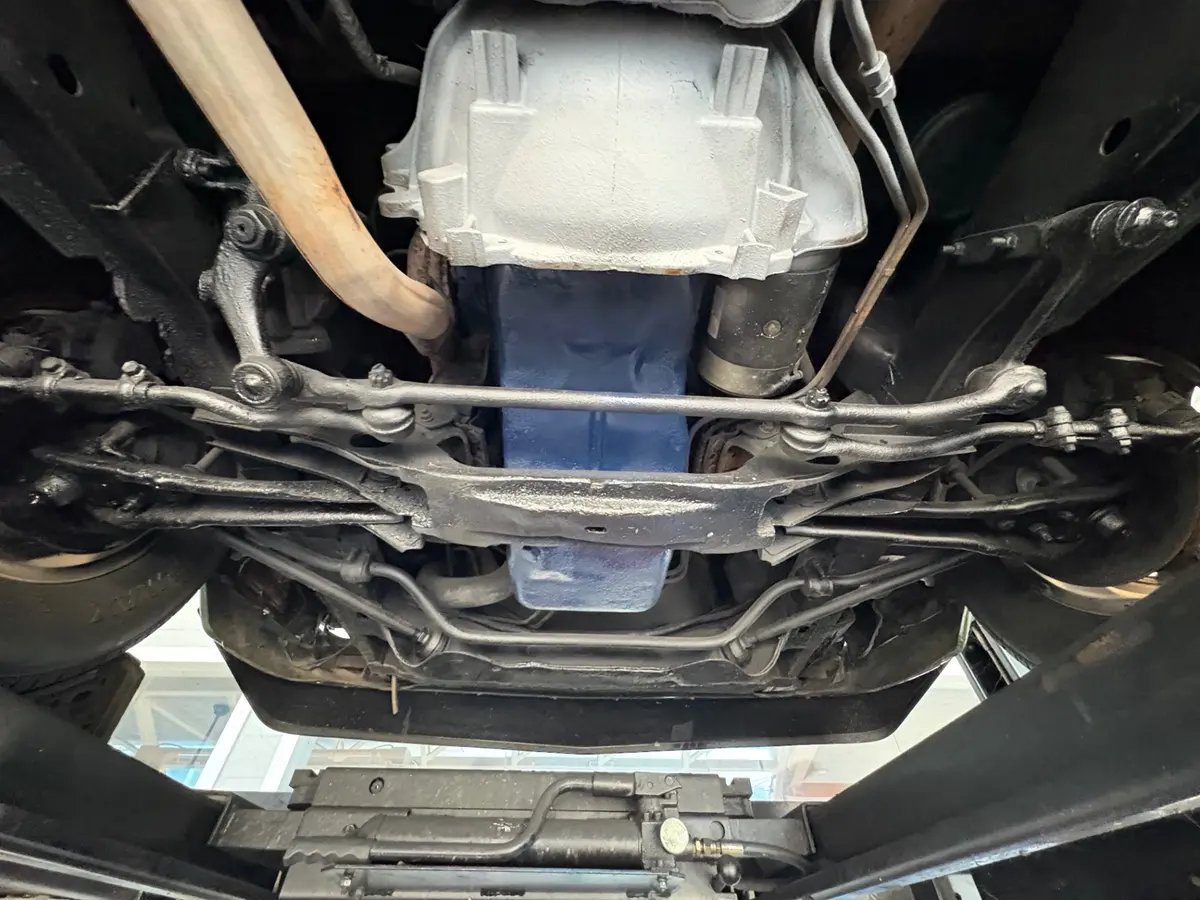
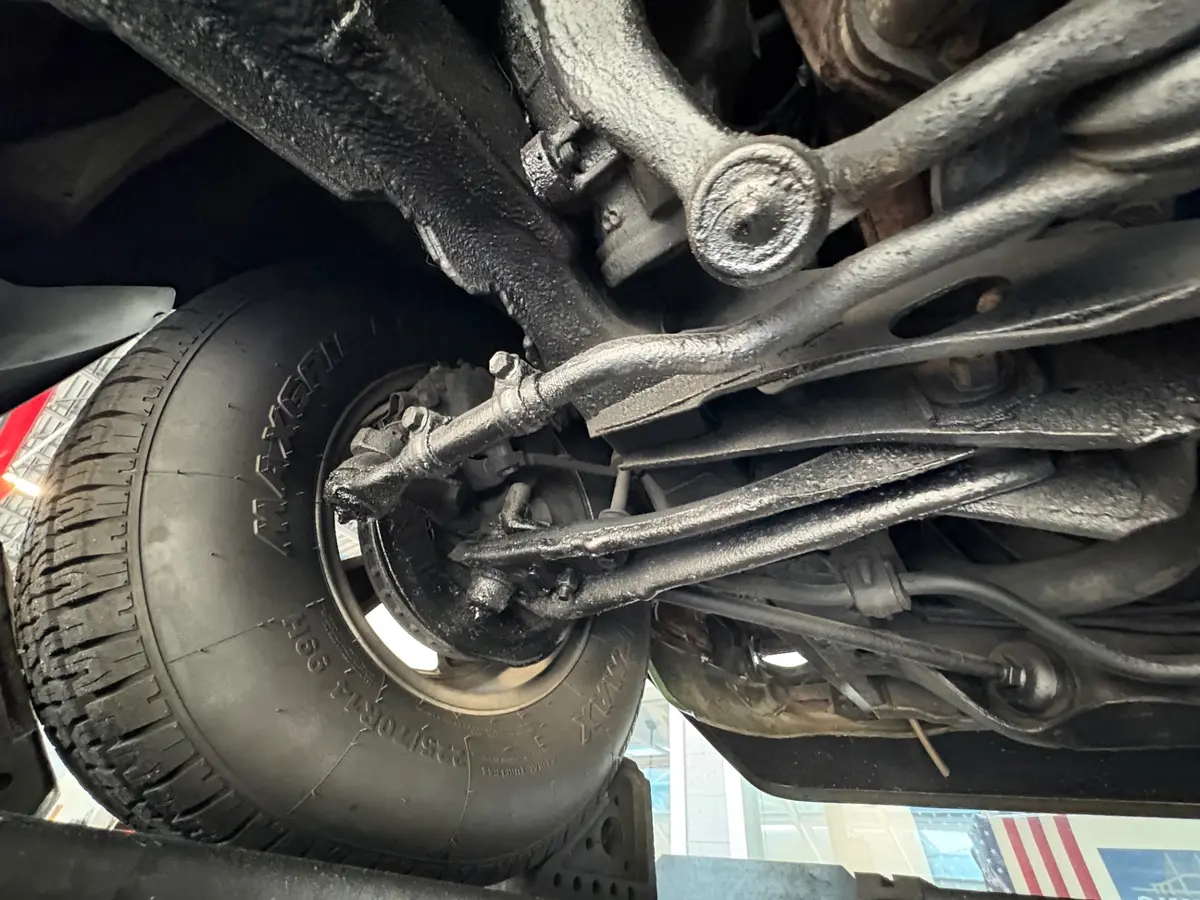
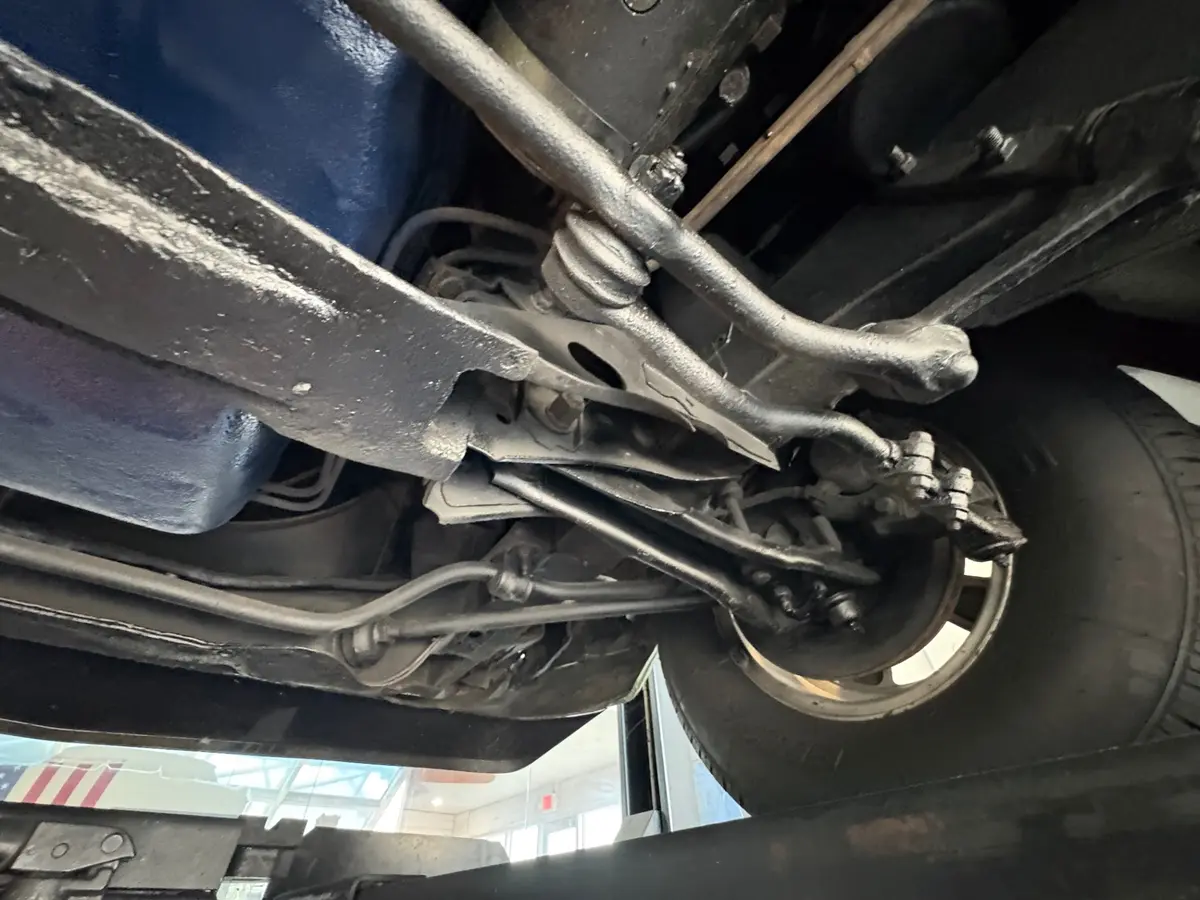
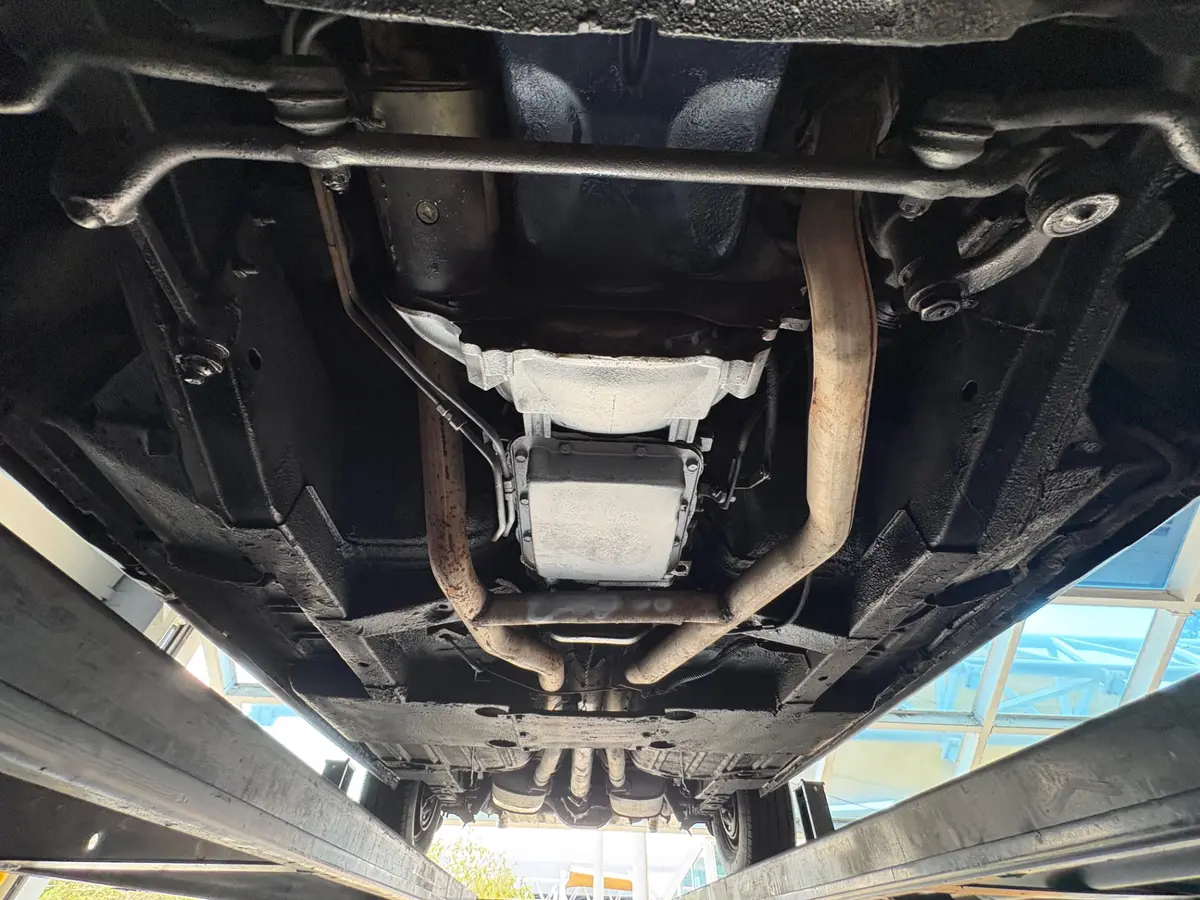
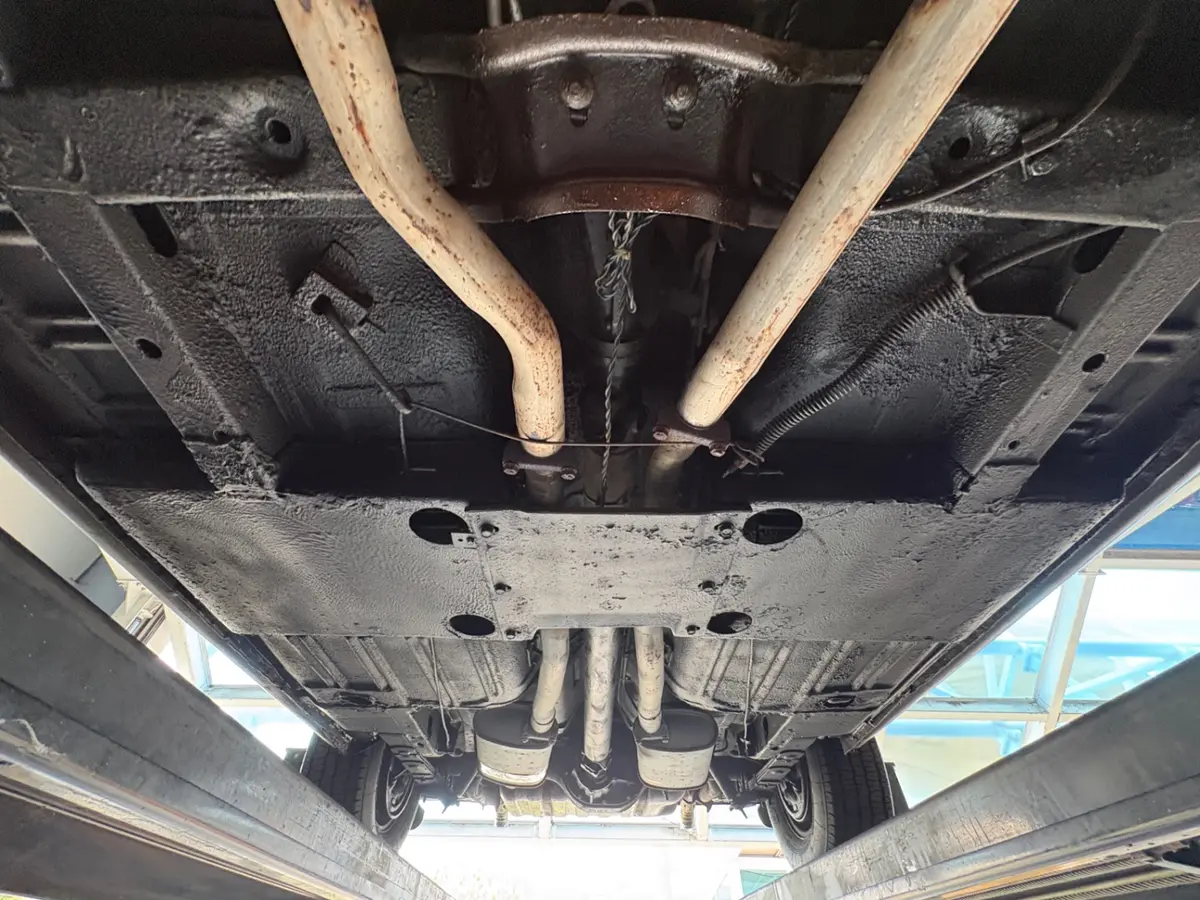
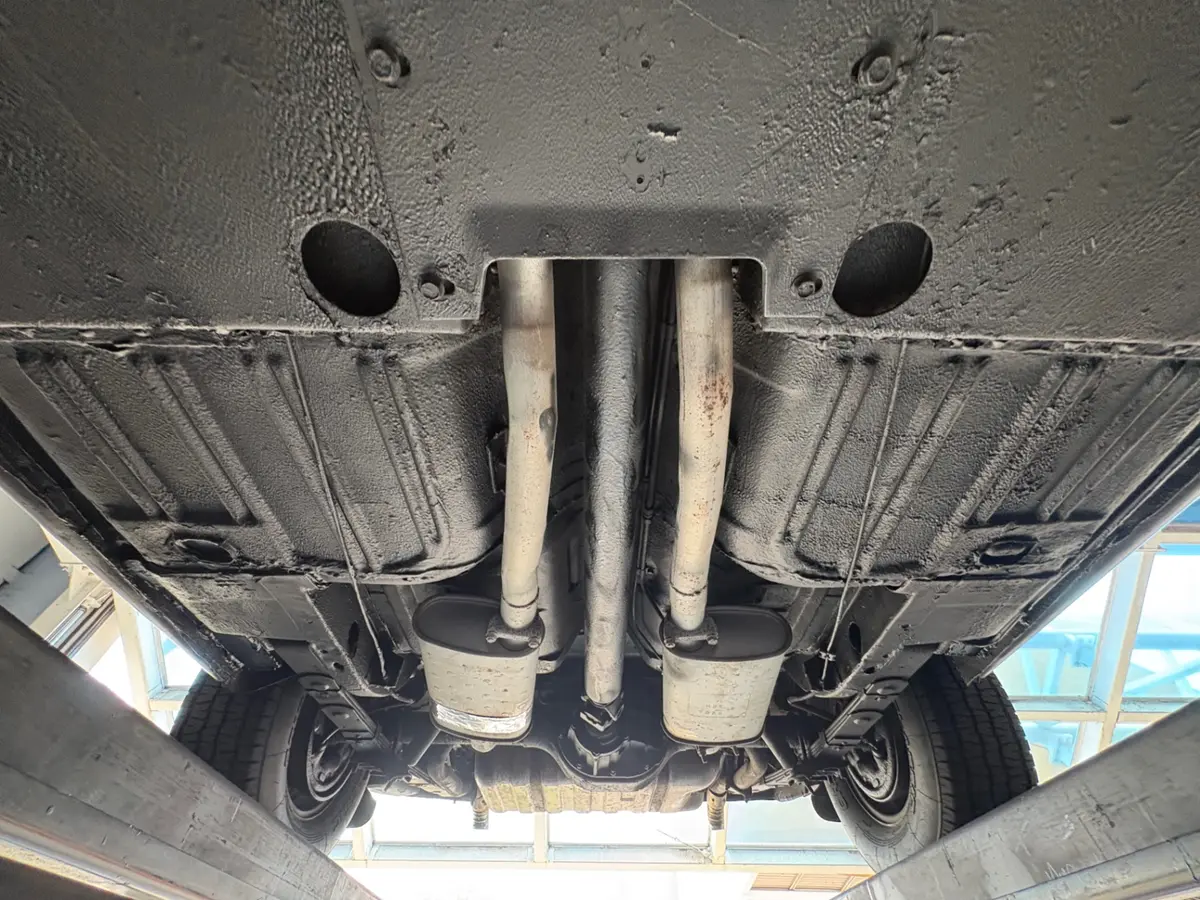
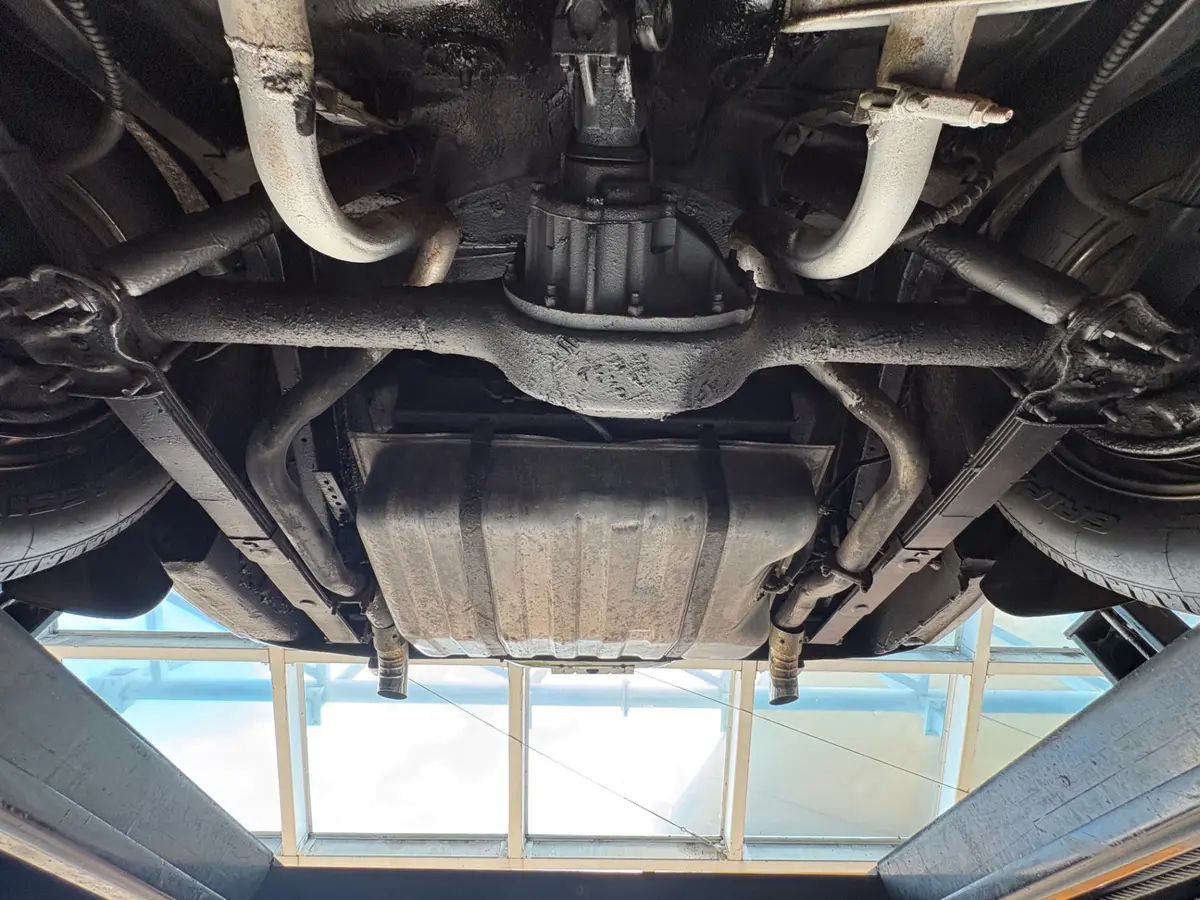
Power front disc brakes are fitted, which is an important detail on any early-1970s pony car. Drum brakes at all four corners were common on base models of this era, and the front disc upgrade provides meaningfully better stopping performance. Power steering is also on board, making the car pleasant to drive in modern traffic conditions without fighting the wheel. Dual exhaust exits from beneath the rear valance, giving the 302 a bit more presence at idle and under throttle than a single-outlet system would provide. The undercarriage shows solid structure with no rot or patch work — a significant finding on any fifty-year-old convertible, which by nature experiences more chassis flex and tends to attract more moisture than a fixed-roof car.
Interior
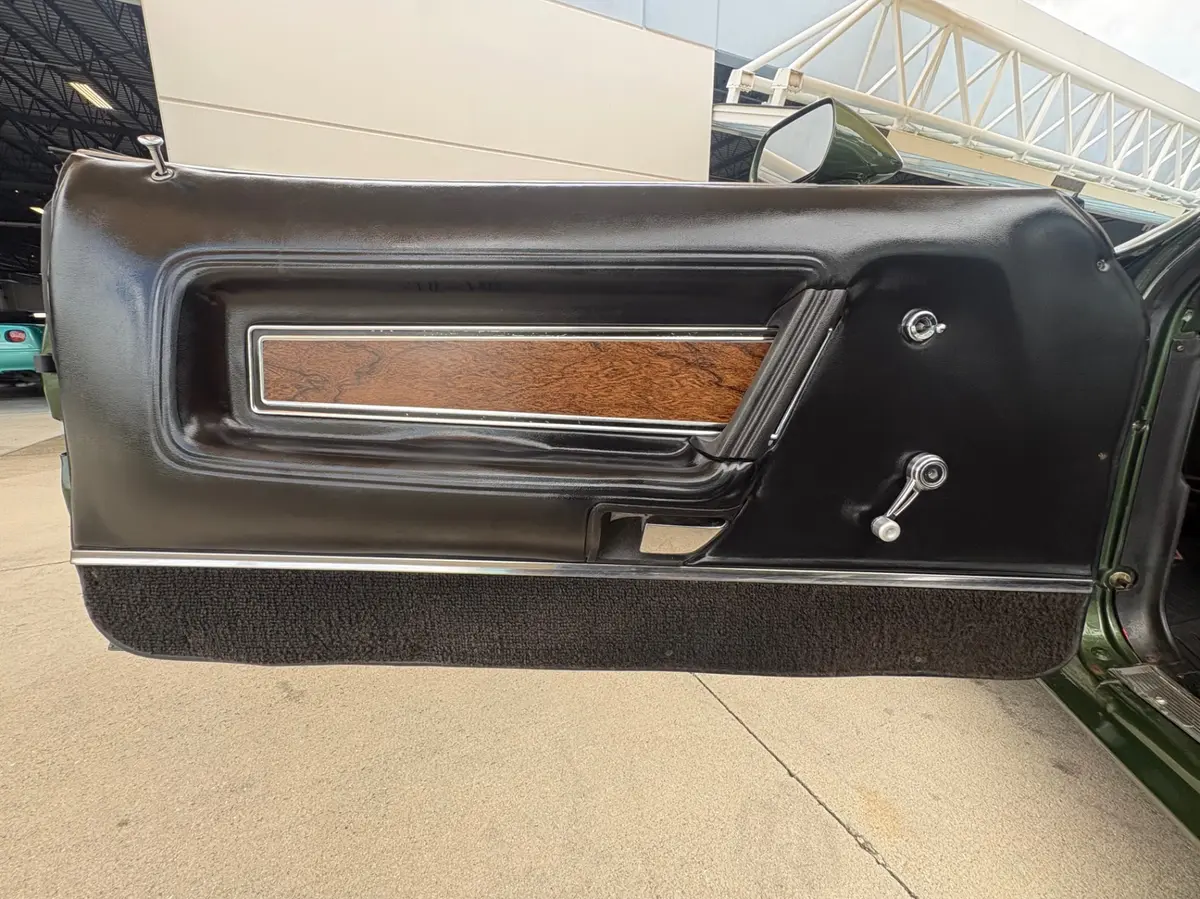
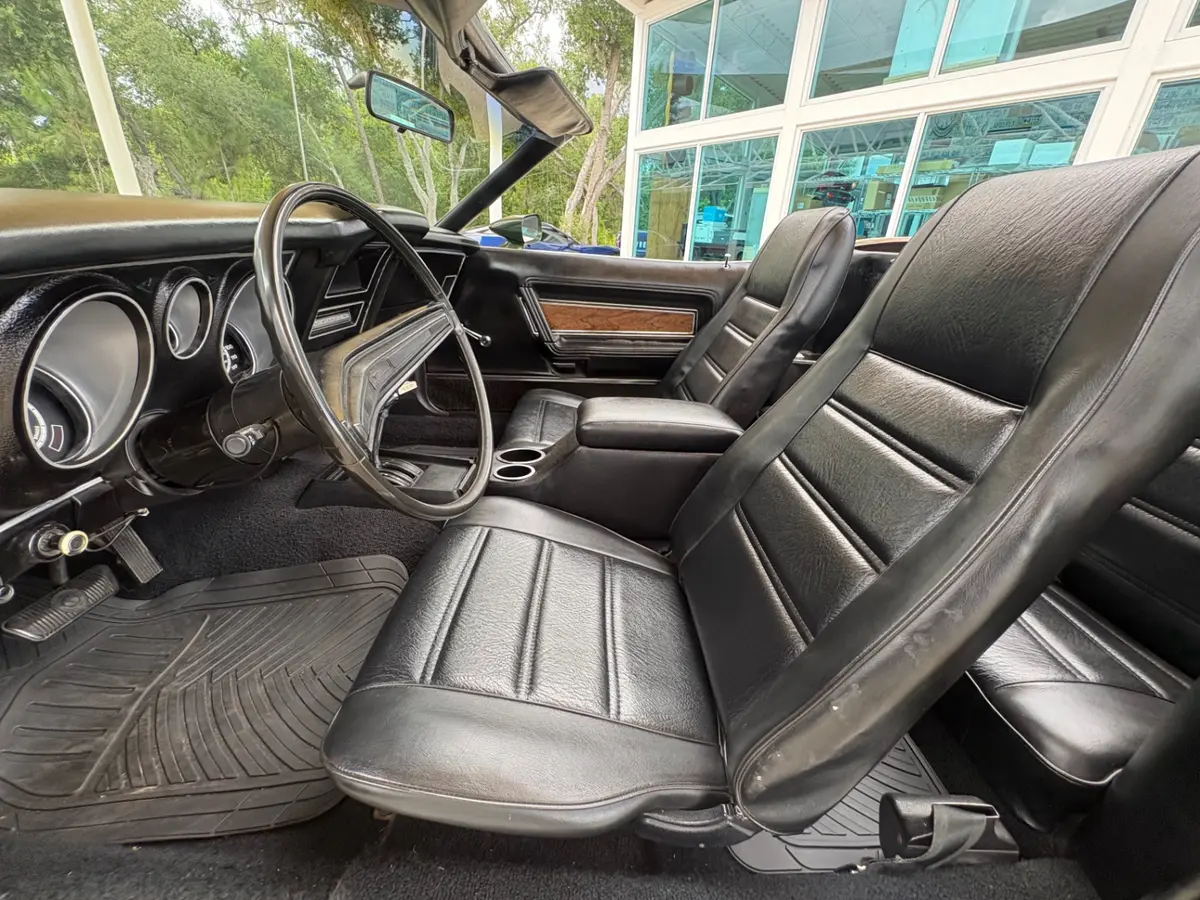
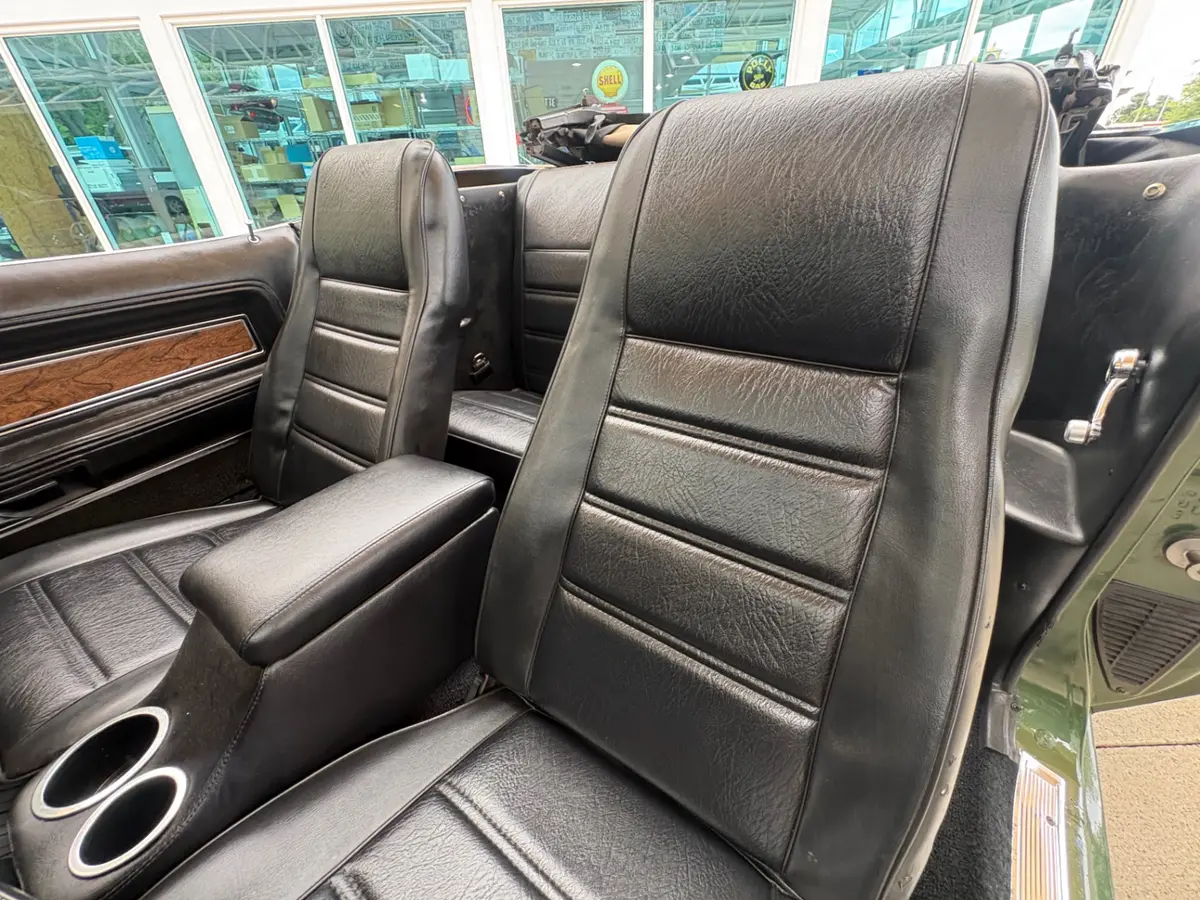
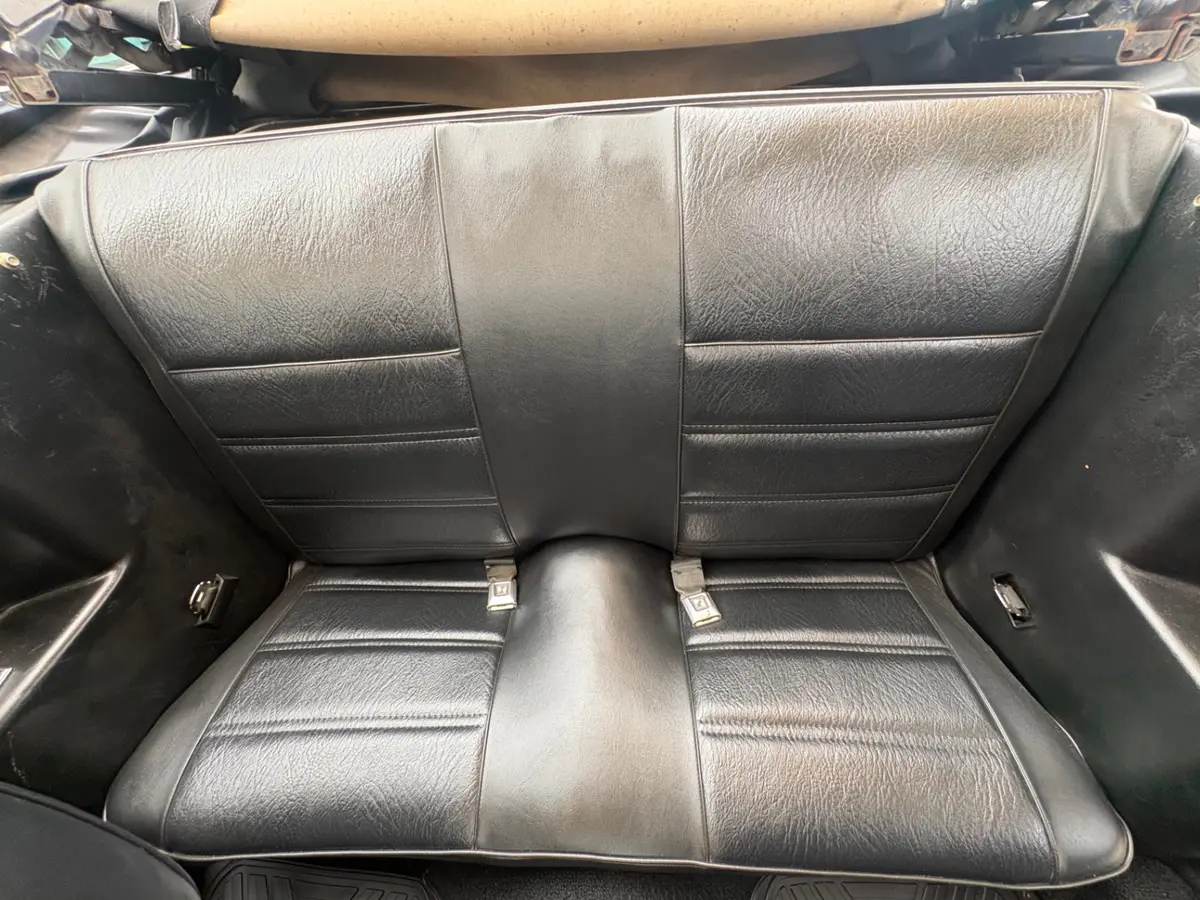
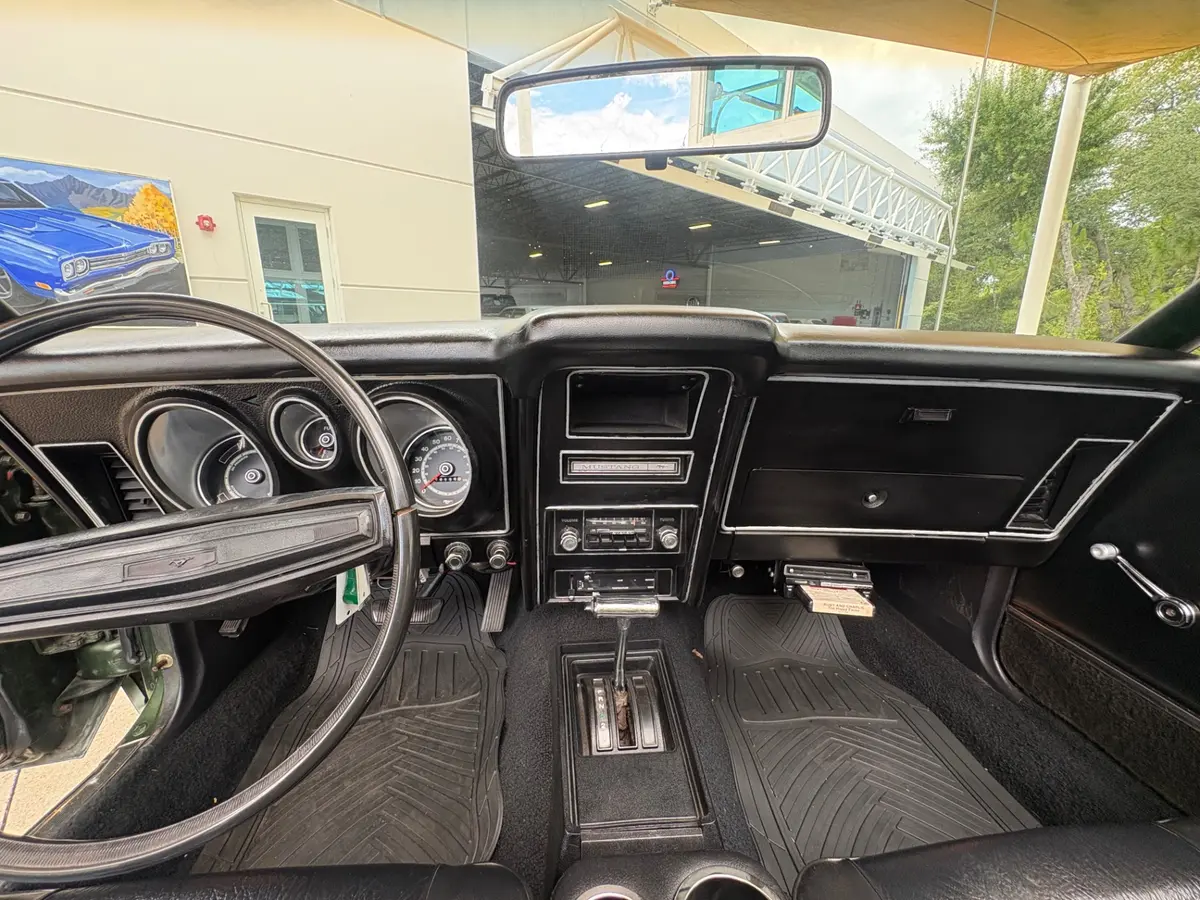
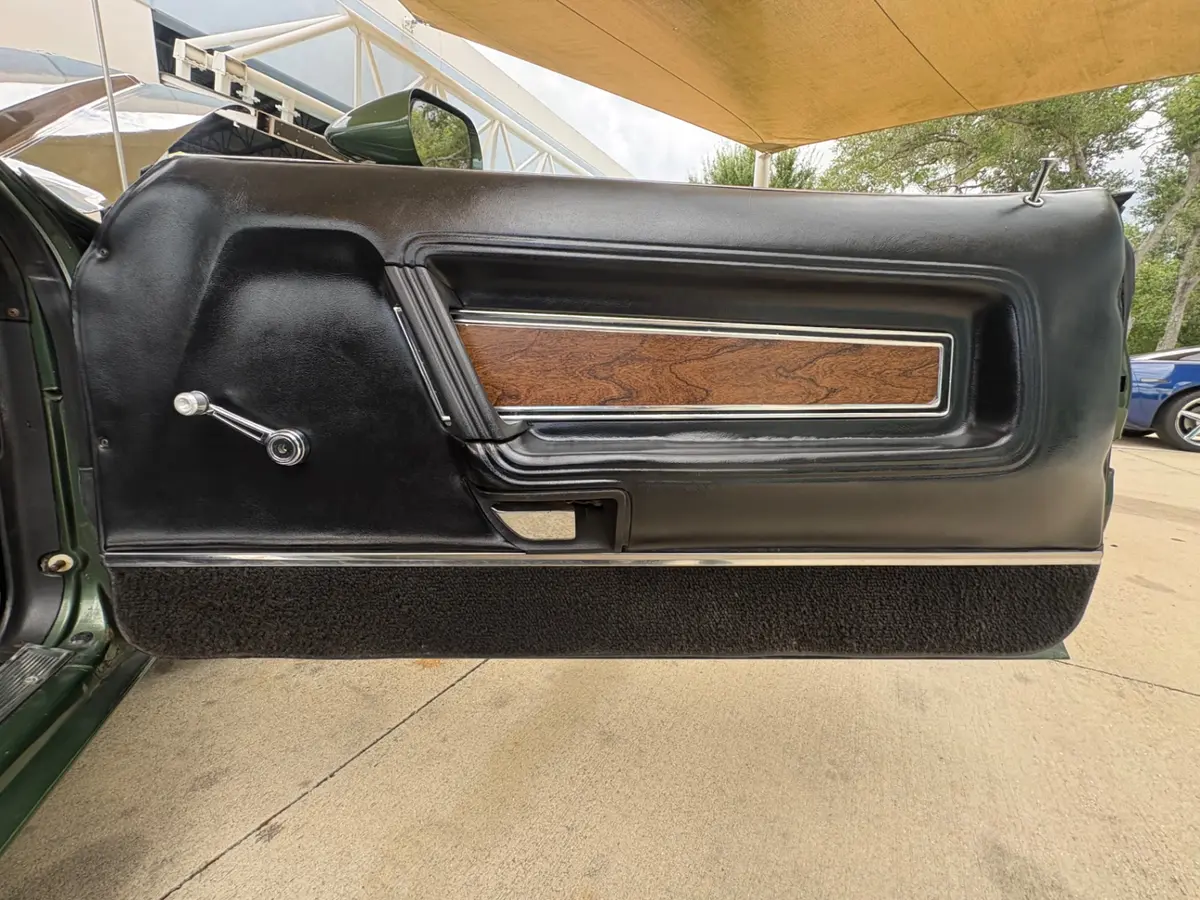
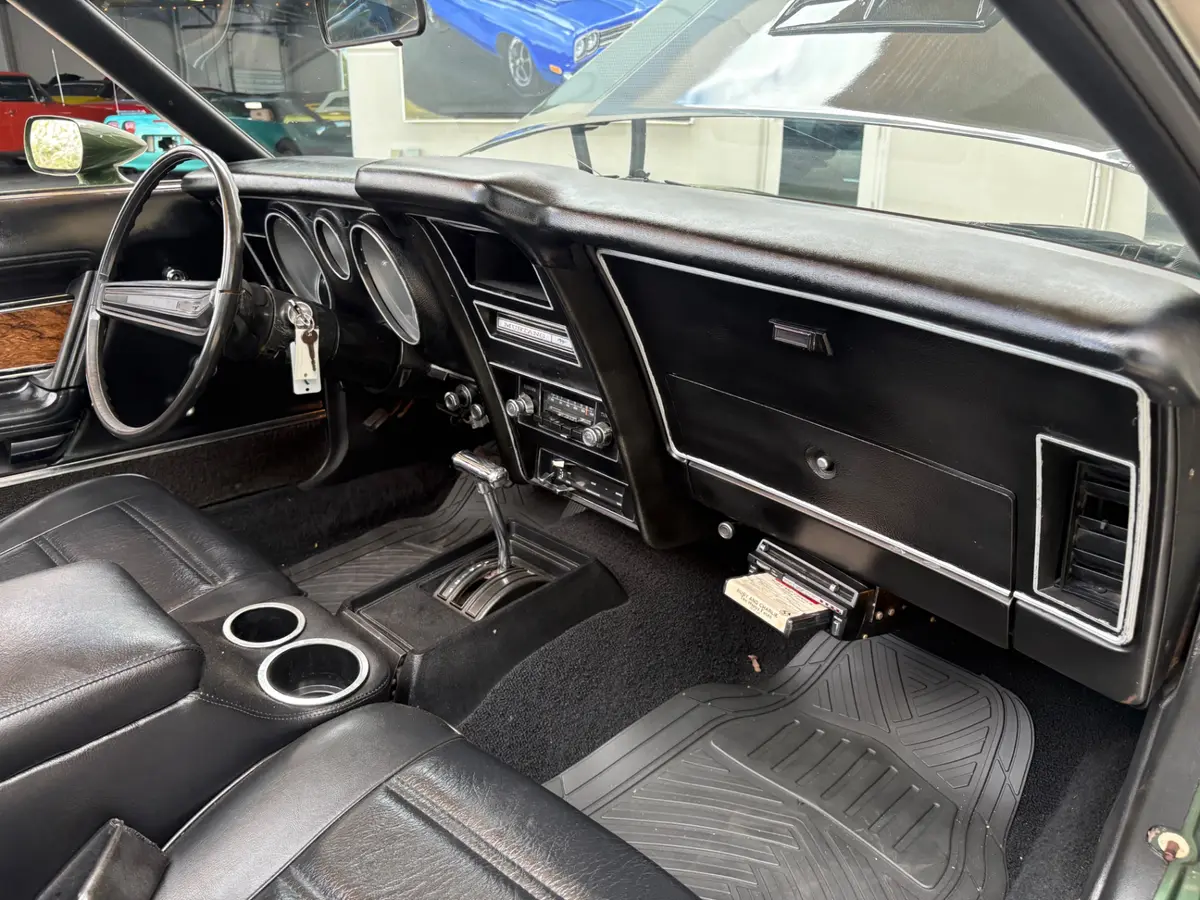
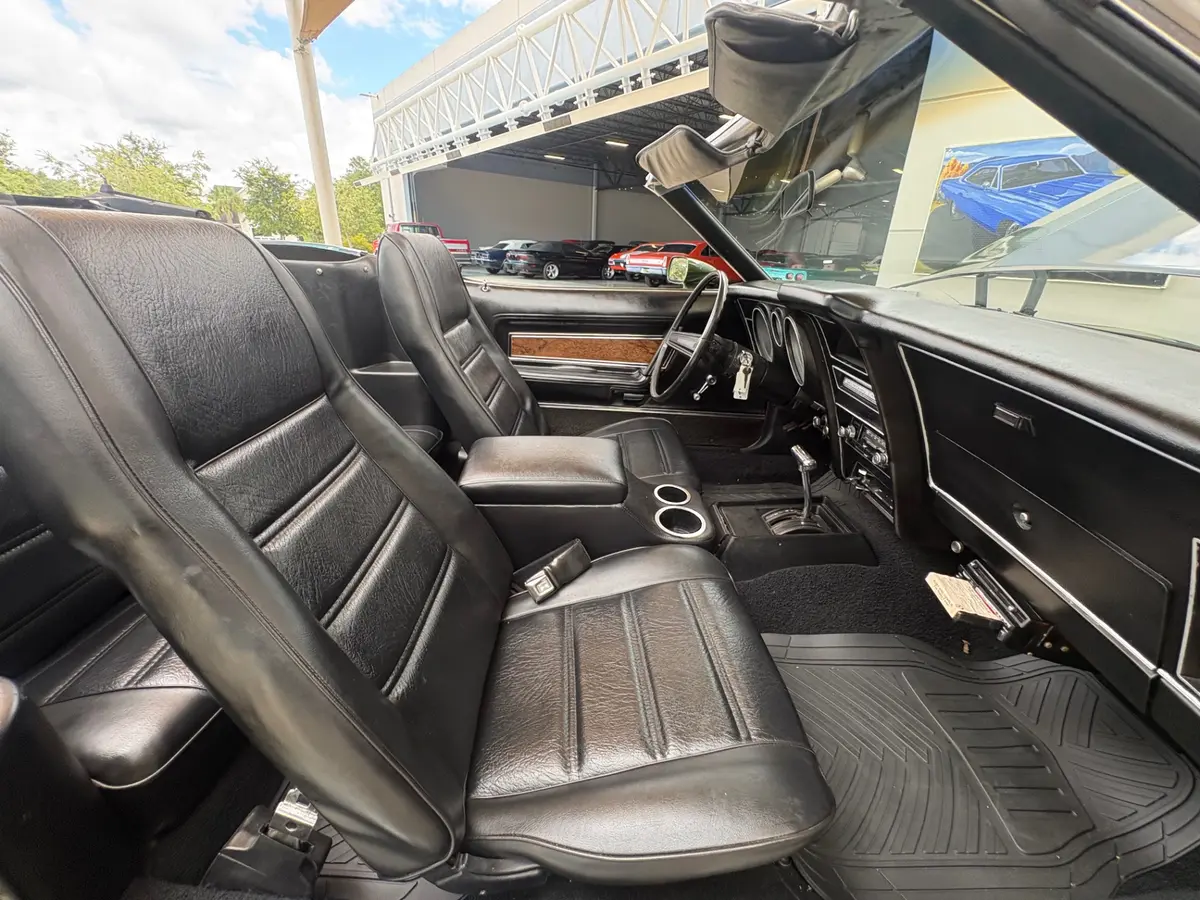
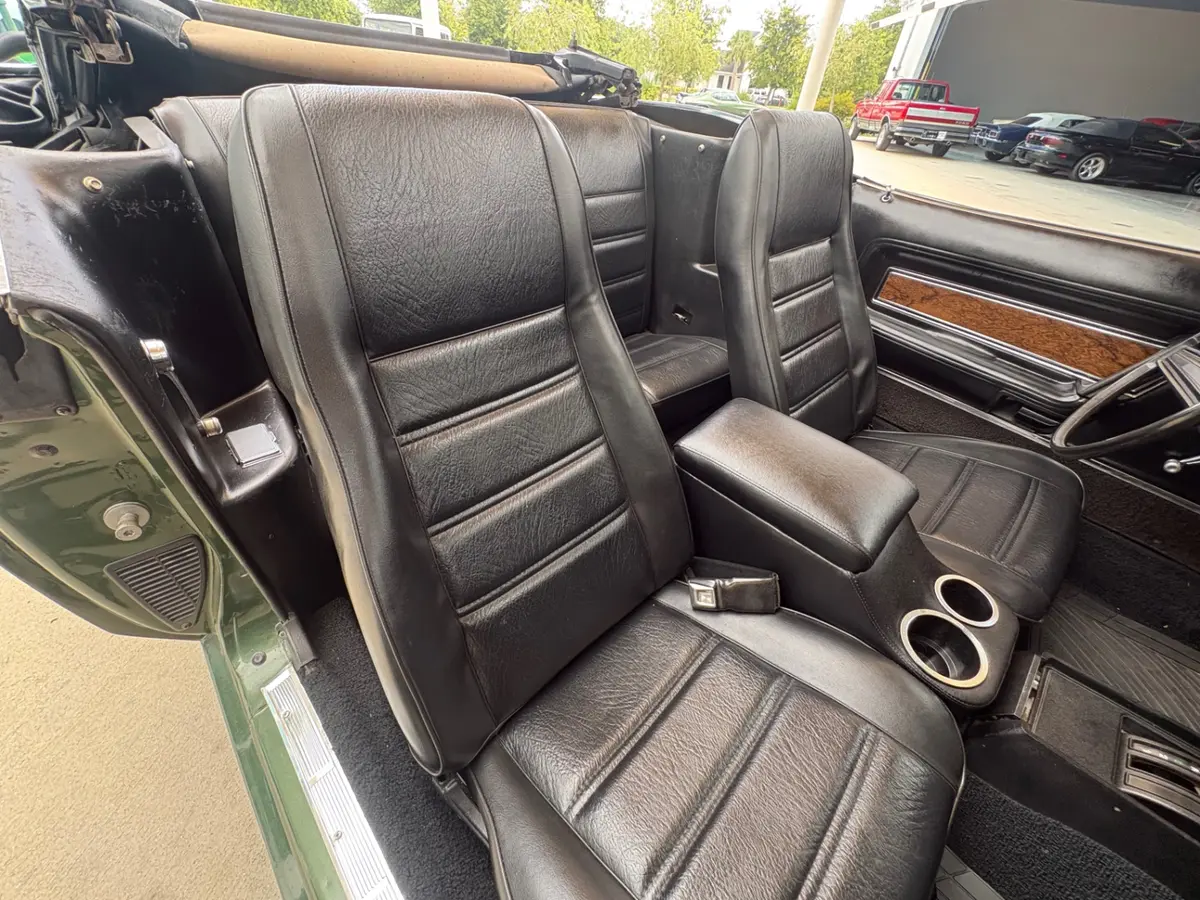
The interior of the 1973 Ford Mustang is finished in black vinyl throughout, and it shows the configuration that most buyers of the era preferred. Black vinyl bucket seats are fitted front and rear, with the center console running between the front buckets. The console integrates cleanly with the floor-mounted automatic shifter, giving the cabin a more purposeful feel than a column-shifted car would have. The woodgrain door panels add a period-correct touch that was common on Mustangs of this generation, contrasting against the black vinyl in a way that feels intentional rather than mismatched.
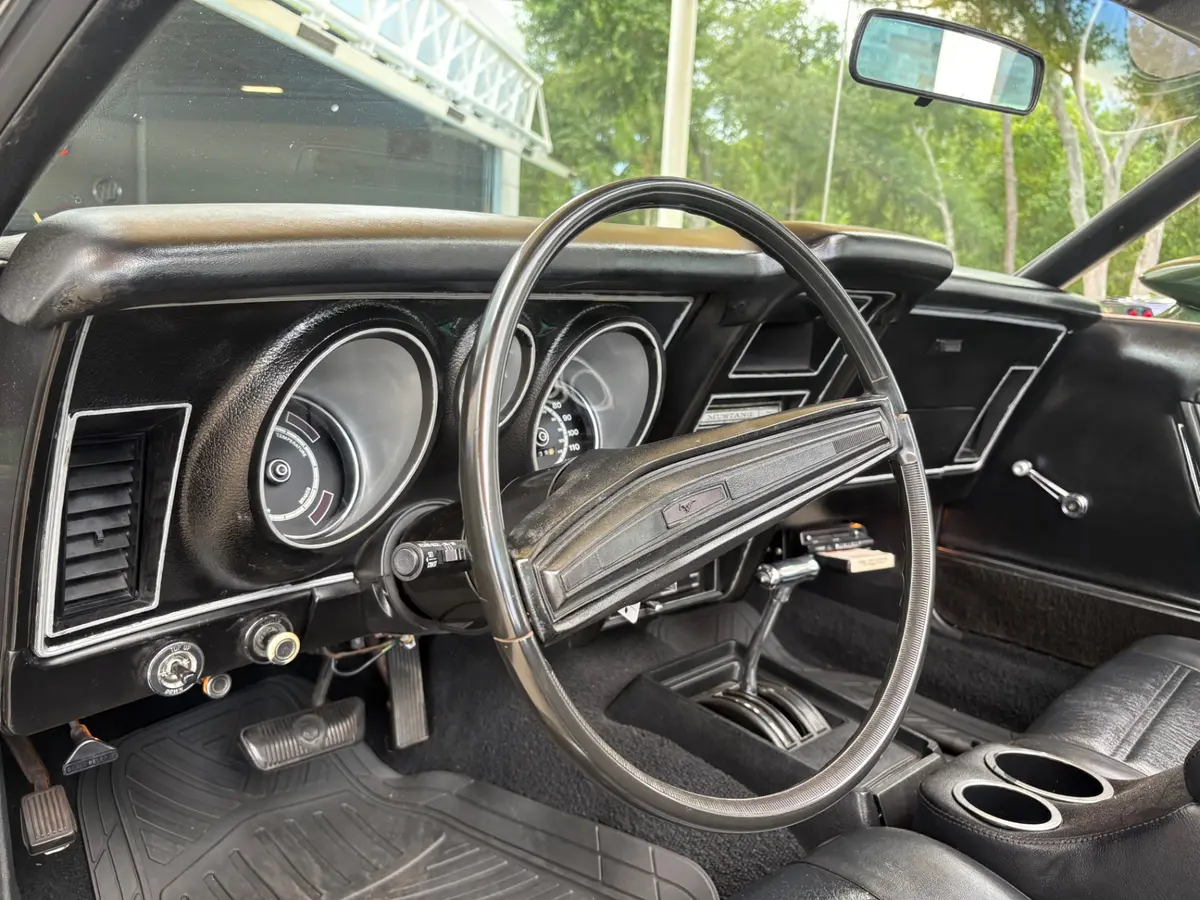
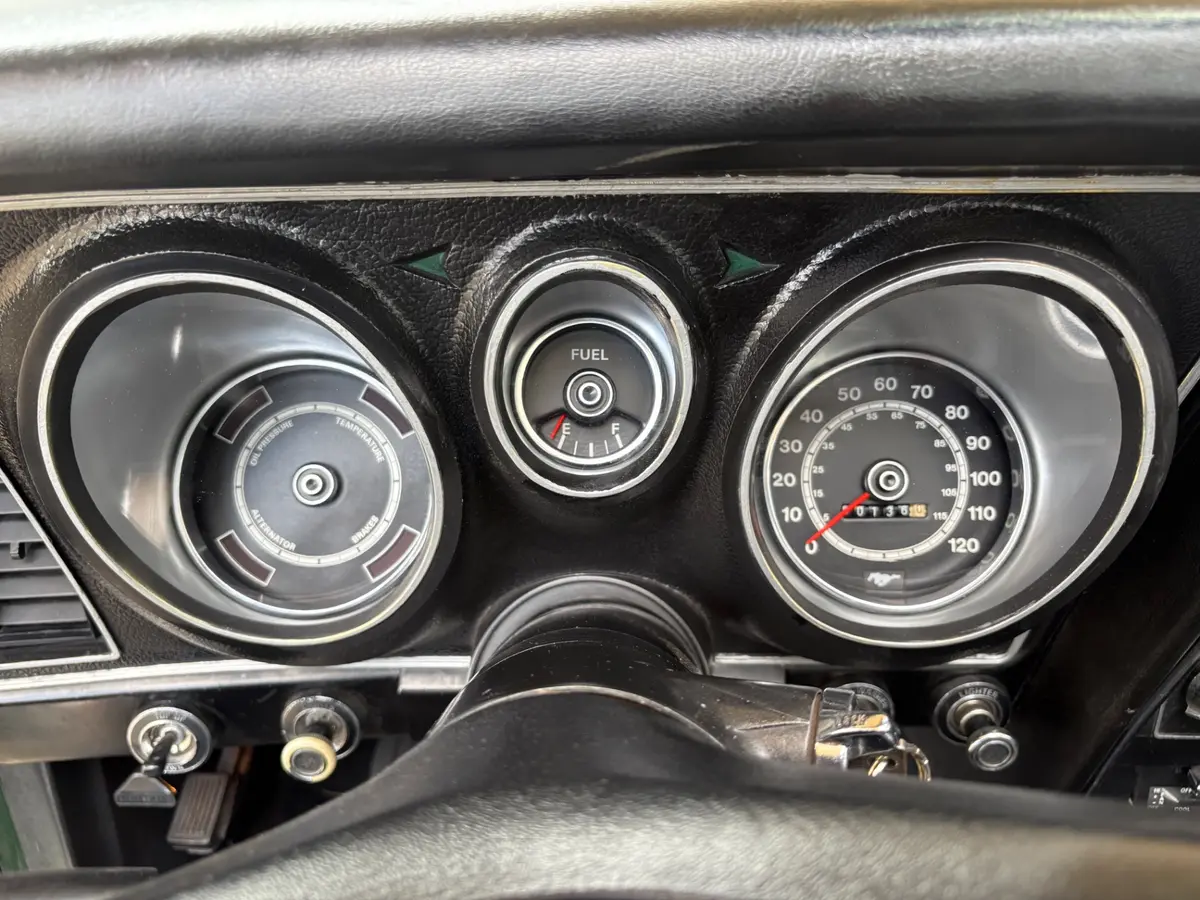
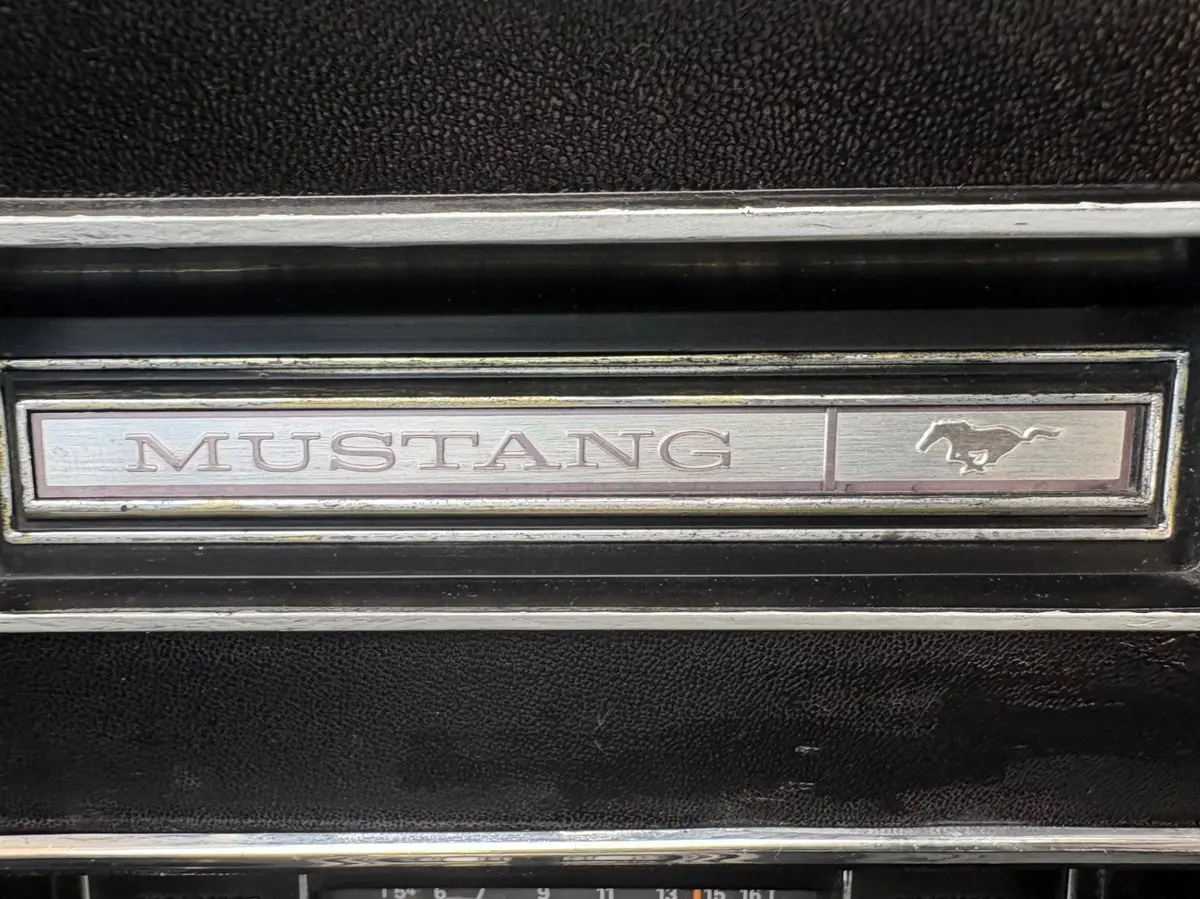
The full round instrument pod is one of the better interior design decisions Ford made on the 1971–1973 Mustang. Rather than the flat dashboard approach used on some competitors, the Mustang's gauge cluster is deeply recessed into a round binnacle directly in front of the driver. The gauges include a speedometer, fuel level, oil pressure, temperature, and alternator readout — giving the driver actual information rather than idiot lights. The steering wheel carries the galloping pony emblem at its center.
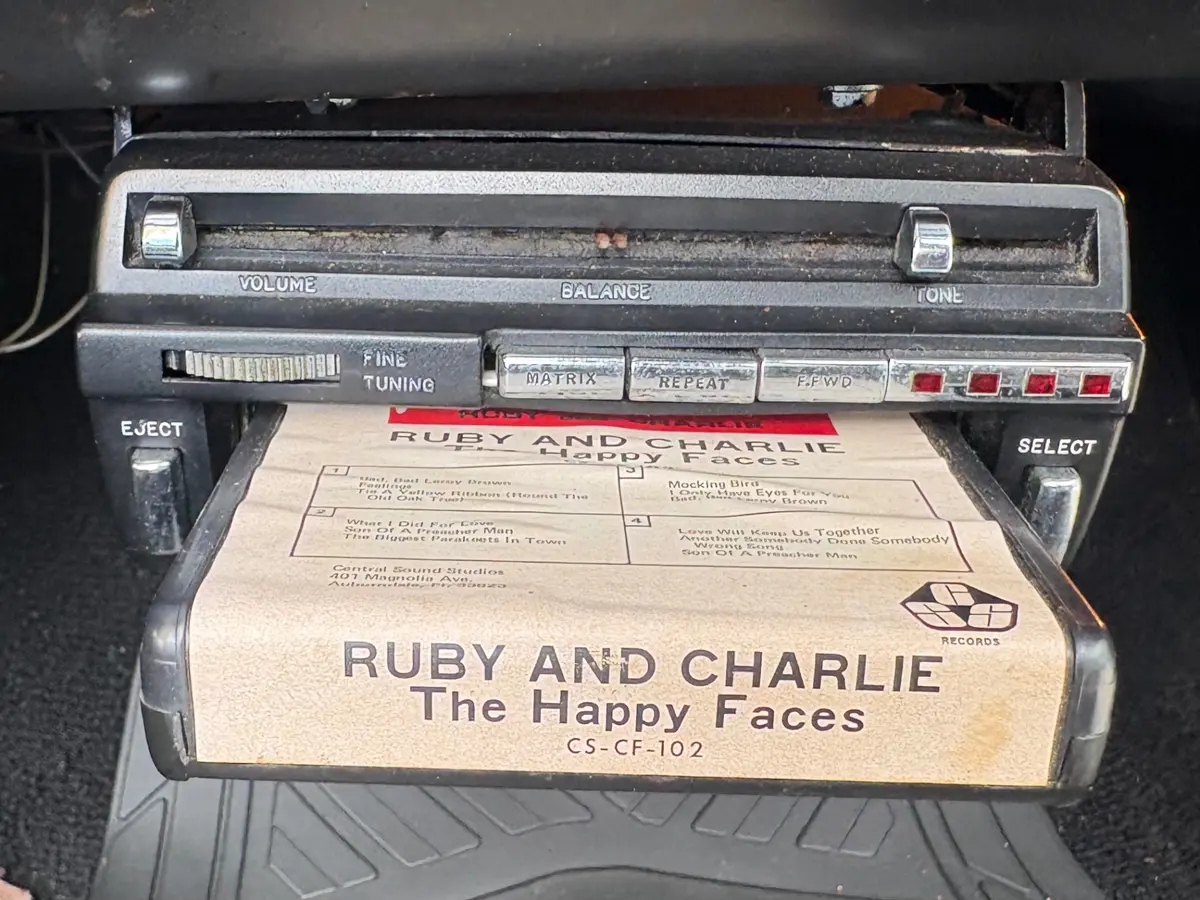
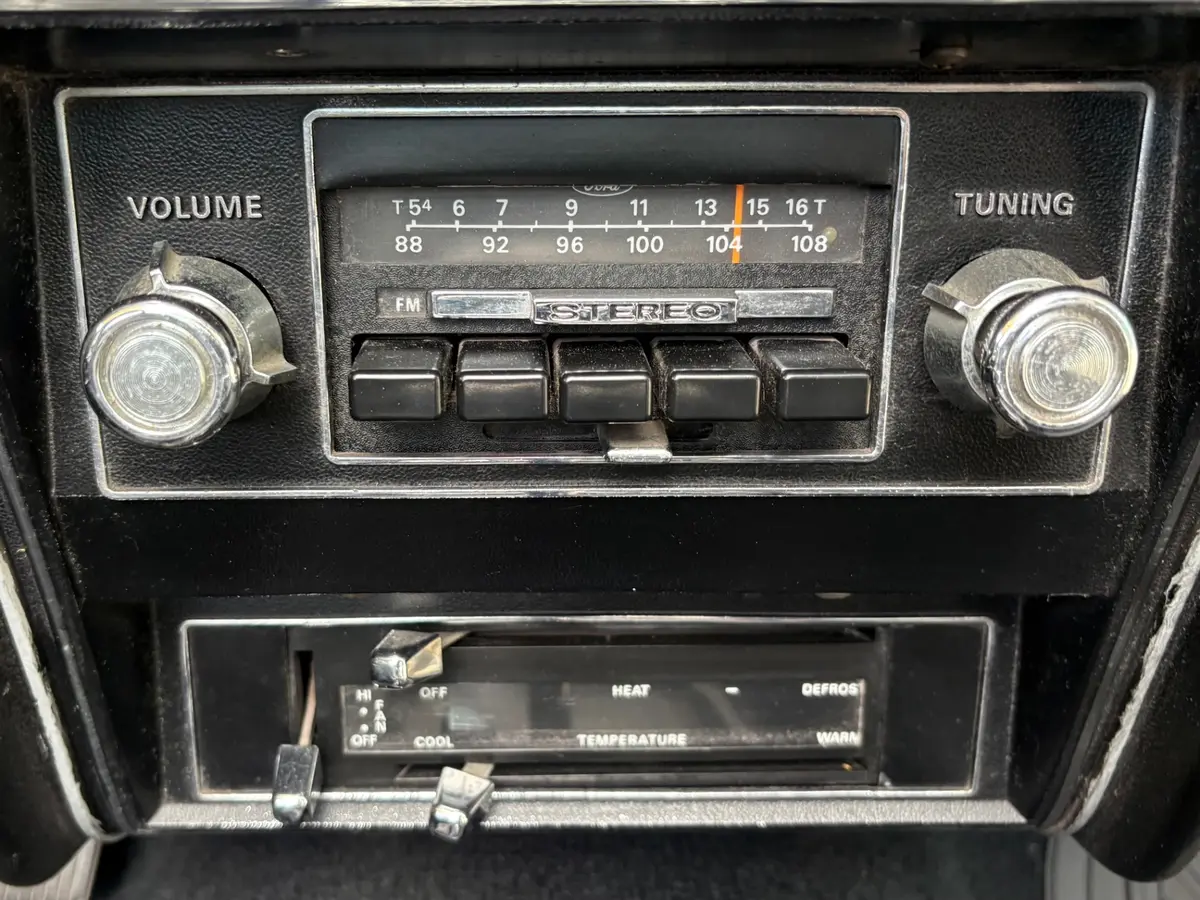
The radio setup is particularly well-preserved. The factory FM Stereo radio is mounted in the dash, and the 8-track player is installed below it in the console area — a combination that was a legitimate premium option in 1973. An 8-track tape is still loaded in the player, a detail that adds a layer of period authenticity you rarely see. The heater and defroster controls are intact and properly positioned below the radio. Modern rubber floor mats have been added over the original carpet, which is a practical choice that has likely protected whatever lies beneath them. The power convertible top operates as it should, and the black top itself appears in serviceable condition.
Exterior
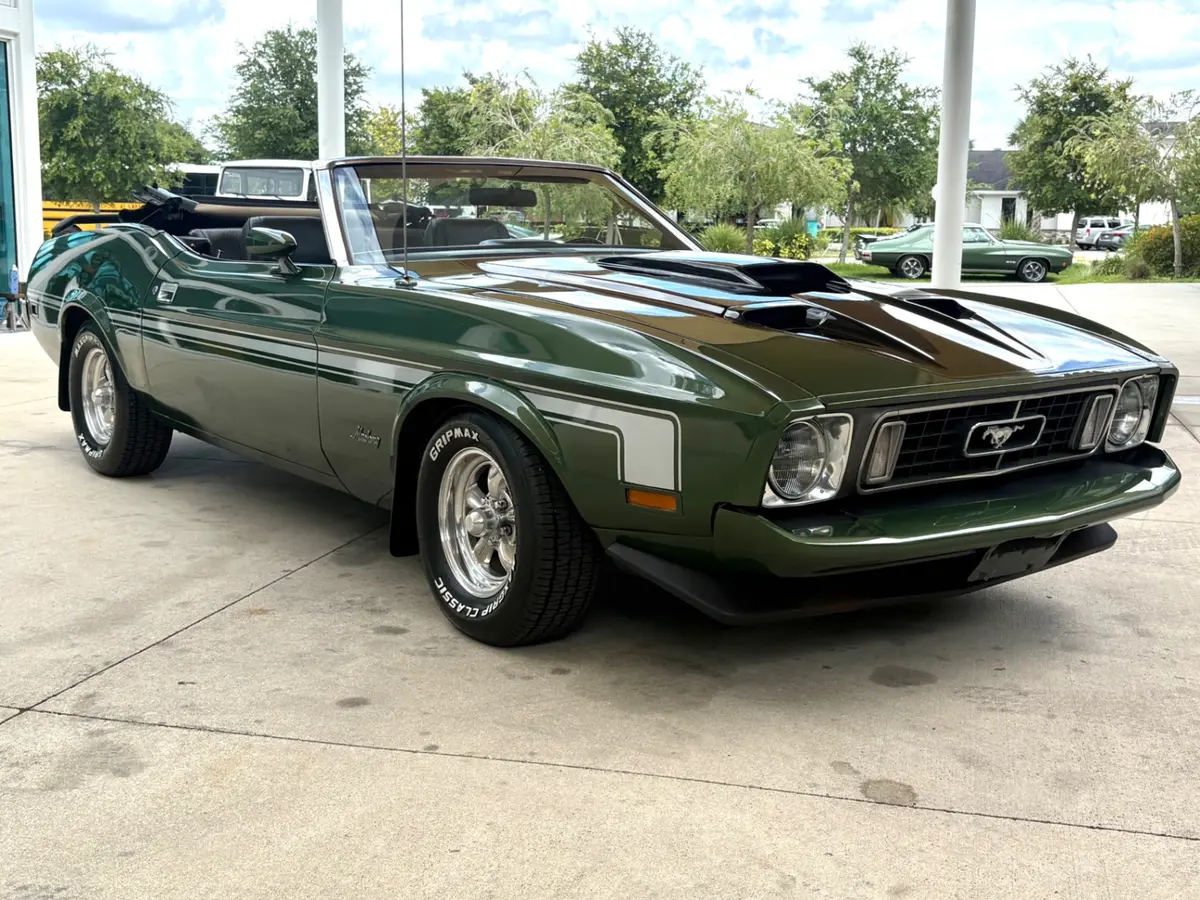
The Medium Green Metallic paint on this 1973 Ford Mustang convertible is a factory color that reads differently depending on light conditions — appearing as a deeper forest green in shade and picking up more brightness and depth in direct sunlight. It is not a common color choice today, which makes it stand out at shows and on the road without resorting to a respray in something non-original.
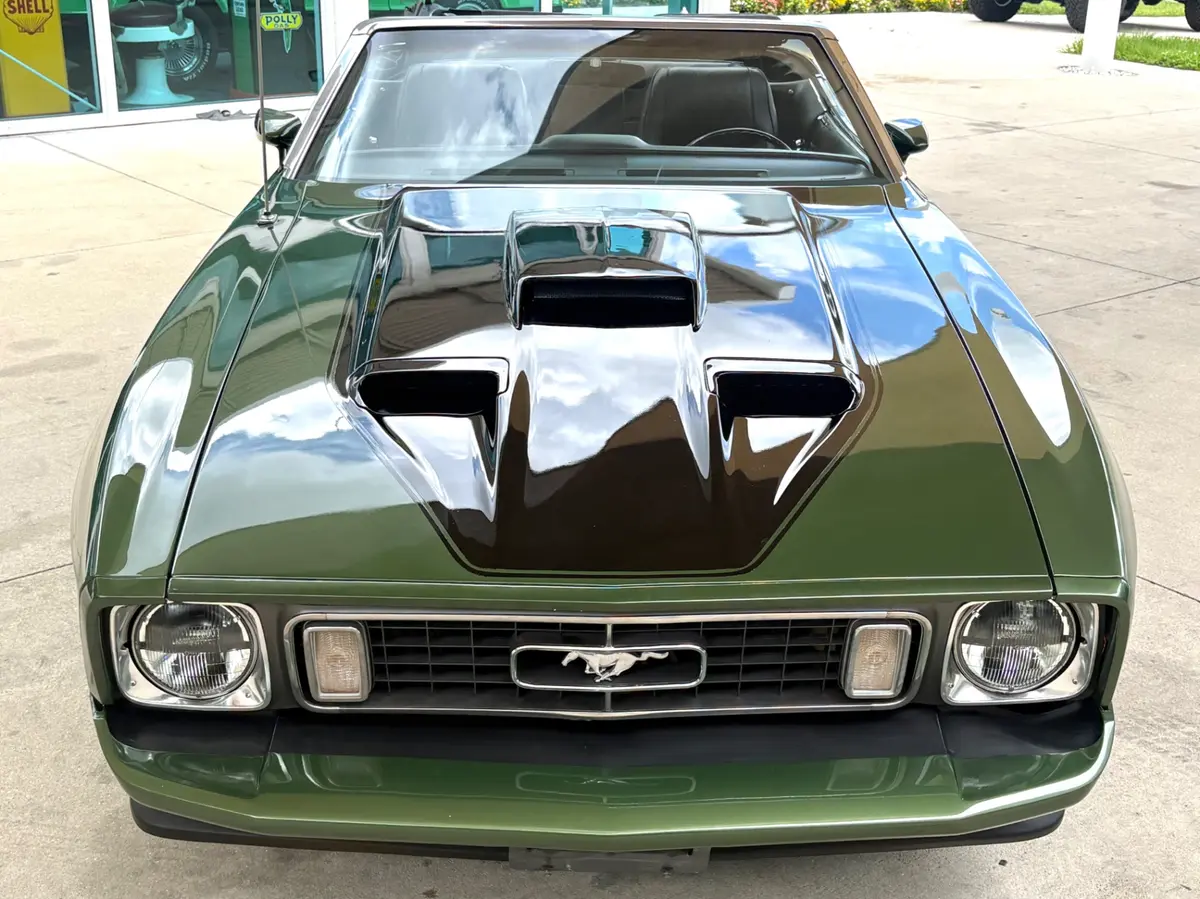
The exterior package on this car includes a front chin spoiler, a deck lid spoiler, ram air hood scoops, and body side stripes — a combination that gives the car more visual aggression than a base Mustang of the same era. The chin spoiler and deck lid spoiler were dealer-installed or factory options frequently grouped together on sport-oriented Mustangs in this period, and they work well with the long hood and wide body of the 1971–1973 platform. The ram air scoops on the hood are a visual signature of this generation, drawing the eye forward and breaking up what would otherwise be a very long, uninterrupted hood line.
The rally-style chrome wheels are fitted with white letter tires, which is the correct period look for a car like this. Mud flaps are in place front and rear. The convertible top mechanism and its surrounding body structure — typically a concern on any open-air car from this era — show no signs of the rust or body filler issues that commonly plague the sail panel and rear quarter areas of Mustang convertibles. The undercarriage photos tell the same story: solid floors, solid frame rails, and a dual exhaust system that exits cleanly at the rear. The rear bumper and taillight panel retain their chrome and are in good condition, presenting the wide, horizontal tail treatment that Ford used to close out the 1971–1973 design cycle.
Conclusion
The 1973 Ford Mustang convertible is a car that checks several important boxes simultaneously. It is the last of a body style that went away for a decade, it sits on one of the largest and most visually muscular Mustang platforms ever built, and it carries a factory option list that makes it a genuinely pleasant car to drive — not just to look at. This example in Medium Green Metallic with a black interior and black power top is a well-preserved, honest driver with a solid undercarriage and the right combination of comfort and style options. The 302 V8, disc brakes, power steering, and dual exhaust give it everything it needs for regular use, and the cosmetic package from the factory is more complete than most base examples you will find at this level.
If you have been searching for a 1973 Ford Mustang convertible that you can drive without apologizing for it, this is worth a close look.
Call Skyway Classics at 941-254-6608 to schedule a viewing or ask any questions about this 1973 Ford Mustang convertible.
Disclaimer
Information found on the website is presented as given to us by the owner of the car, whether on consignment or from the owner we bought it from. Some Photos, materials for videos, descriptions and other information are provided by the consignor/seller and is deemed reliable, but Skyway Classics does not warranty or guarantee this information. Skyway Classics is not responsible for information that may incorrect or a publishing error. The decision to purchase should be based solely on the buyers personal inspection of the vehicle or by a professional inspection service prior to offer or purchase being made.
1973 Ford Mustang Convertible — Medium Green Metallic, 302 V8, Power Top, Solid Driver
Why This Car Is Special
The 1973 Ford Mustang convertible holds a distinction that most Mustang enthusiasts know well: it was the last open-air Mustang Ford would build for ten years. When the Mustang II arrived for 1974, the convertible body style was gone, and it would not return until the 1983 model year. That single fact has driven steady collector interest in the 1973 Ford Mustang convertible for decades, and it shows no signs of softening.
The 1971–1973 generation is often called the "big Mustang" era, and for good reason. Ford stretched and widened the platform substantially over the 1969–1970 cars, giving the 1973 a longer hood, a wider stance, and a more muscular overall presence. The styling was polarizing when new — some felt it strayed too far from the original pony car formula — but time has been kind to these cars. The long hood, the sculpted body sides, the sequential turn signal taillights, and the aggressive fastback-influenced roofline on the convertible all read well in person, especially in a color like Medium Green Metallic.
For 1973, Ford also made the front bumper system heavier to comply with new federal 5-mph impact standards, which added some visual weight up front but also gives the 1973 its own distinct look compared to the 1971 and 1972 models. The 1973 is easy to identify by that beefier front end, and it is a detail that helps collectors date the car at a glance.
Convertible production numbers for the 1973 Mustang were relatively modest. Ford built 11,853 convertibles for the model year out of total Mustang production of approximately 134,000 units — making the ragtop roughly one in eleven cars built that year. With the knowledge that this would be the last Mustang convertible for a decade, the 1973 has always carried a premium in the collector market over its coupe and SportsRoof counterparts.
This particular car is finished in Medium Green Metallic over a black vinyl interior and wears a black power convertible top. The 302ci 2-barrel V8 is backed by a 3-speed automatic transmission with a floor-mounted shifter. The car presents as an honest, well-optioned driver-quality example with a solid undercarriage and a factory-style option list that tells you this car was ordered by someone who wanted comfort and style in equal measure.
Features List
- 302ci 2-Barrel V8 engine
- 3-Speed Automatic Transmission
- Floor-Mounted Shifter
- Power Convertible Top
- Black Convertible Top
- Power Steering
- Power Brakes with Front Disc Brakes
- Ram Air Hood Scoops
- Front Chin Spoiler
- Deck Lid Spoiler
- Body Side Stripes
- Rally-Style Chrome Wheels
- White Letter Tires
- Mud Flaps
- Dual Exhaust
- Black Vinyl Bucket Seats (front)
- Rear Seat
- Center Console
- Woodgrain Door Panels
- Full Round Instrument Pod
- FM Stereo Radio
- 8-Track Player
- Heater and Defroster
- Ford 8-Inch Rear Axle
- Rear Leaf Springs
- Solid Undercarriage
- Modern Rubber Floor Mats
Mechanical
The 302 cubic inch V8 — Ford's small-block workhorse — was the standard V8 offering in the 1973 Mustang. By 1973, compression ratios and horsepower ratings had been reduced across the industry to meet emissions standards and accommodate lower-octane unleaded fuel, so the 302 2-barrel was not a performance engine in the traditional sense. What it is, however, is a reliable, well-understood, and parts-abundant powerplant that responds well to maintenance and modest upgrades if a future owner ever wants more from it. Ford built hundreds of thousands of these engines across multiple platforms, and the knowledge base for keeping them running is extensive.
The engine bay on this 1973 Ford Mustang presents cleanly, with the factory Ford Blue valve covers and the correct 302-2V air cleaner lid in place. The 3-speed automatic sends power back through a driveshaft to the Ford 8-inch rear axle, which is the correct rear end for this drivetrain combination. The 8-inch is not the strongest axle Ford made — the 9-inch carries that reputation — but it is entirely appropriate for the 302 2-barrel and handles normal driving without issue. Rear leaf springs are in place as expected, consistent with the standard Mustang rear suspension setup for this generation.
Power front disc brakes are fitted, which is an important detail on any early-1970s pony car. Drum brakes at all four corners were common on base models of this era, and the front disc upgrade provides meaningfully better stopping performance. Power steering is also on board, making the car pleasant to drive in modern traffic conditions without fighting the wheel. Dual exhaust exits from beneath the rear valance, giving the 302 a bit more presence at idle and under throttle than a single-outlet system would provide. The undercarriage shows solid structure with no rot or patch work — a significant finding on any fifty-year-old convertible, which by nature experiences more chassis flex and tends to attract more moisture than a fixed-roof car.
Interior
The interior of the 1973 Ford Mustang is finished in black vinyl throughout, and it shows the configuration that most buyers of the era preferred. Black vinyl bucket seats are fitted front and rear, with the center console running between the front buckets. The console integrates cleanly with the floor-mounted automatic shifter, giving the cabin a more purposeful feel than a column-shifted car would have. The woodgrain door panels add a period-correct touch that was common on Mustangs of this generation, contrasting against the black vinyl in a way that feels intentional rather than mismatched.
The full round instrument pod is one of the better interior design decisions Ford made on the 1971–1973 Mustang. Rather than the flat dashboard approach used on some competitors, the Mustang's gauge cluster is deeply recessed into a round binnacle directly in front of the driver. The gauges include a speedometer, fuel level, oil pressure, temperature, and alternator readout — giving the driver actual information rather than idiot lights. The steering wheel carries the galloping pony emblem at its center.
The radio setup is particularly well-preserved. The factory FM Stereo radio is mounted in the dash, and the 8-track player is installed below it in the console area — a combination that was a legitimate premium option in 1973. An 8-track tape is still loaded in the player, a detail that adds a layer of period authenticity you rarely see. The heater and defroster controls are intact and properly positioned below the radio. Modern rubber floor mats have been added over the original carpet, which is a practical choice that has likely protected whatever lies beneath them. The power convertible top operates as it should, and the black top itself appears in serviceable condition.
Exterior
The Medium Green Metallic paint on this 1973 Ford Mustang convertible is a factory color that reads differently depending on light conditions — appearing as a deeper forest green in shade and picking up more brightness and depth in direct sunlight. It is not a common color choice today, which makes it stand out at shows and on the road without resorting to a respray in something non-original.
The exterior package on this car includes a front chin spoiler, a deck lid spoiler, ram air hood scoops, and body side stripes — a combination that gives the car more visual aggression than a base Mustang of the same era. The chin spoiler and deck lid spoiler were dealer-installed or factory options frequently grouped together on sport-oriented Mustangs in this period, and they work well with the long hood and wide body of the 1971–1973 platform. The ram air scoops on the hood are a visual signature of this generation, drawing the eye forward and breaking up what would otherwise be a very long, uninterrupted hood line.
The rally-style chrome wheels are fitted with white letter tires, which is the correct period look for a car like this. Mud flaps are in place front and rear. The convertible top mechanism and its surrounding body structure — typically a concern on any open-air car from this era — show no signs of the rust or body filler issues that commonly plague the sail panel and rear quarter areas of Mustang convertibles. The undercarriage photos tell the same story: solid floors, solid frame rails, and a dual exhaust system that exits cleanly at the rear. The rear bumper and taillight panel retain their chrome and are in good condition, presenting the wide, horizontal tail treatment that Ford used to close out the 1971–1973 design cycle.
Conclusion
The 1973 Ford Mustang convertible is a car that checks several important boxes simultaneously. It is the last of a body style that went away for a decade, it sits on one of the largest and most visually muscular Mustang platforms ever built, and it carries a factory option list that makes it a genuinely pleasant car to drive — not just to look at. This example in Medium Green Metallic with a black interior and black power top is a well-preserved, honest driver with a solid undercarriage and the right combination of comfort and style options. The 302 V8, disc brakes, power steering, and dual exhaust give it everything it needs for regular use, and the cosmetic package from the factory is more complete than most base examples you will find at this level.
If you have been searching for a 1973 Ford Mustang convertible that you can drive without apologizing for it, this is worth a close look.
Call Skyway Classics at 941-254-6608 to schedule a viewing or ask any questions about this 1973 Ford Mustang convertible.
Disclaimer
Information found on the website is presented as given to us by the owner of the car, whether on consignment or from the owner we bought it from. Some Photos, materials for videos, descriptions and other information are provided by the consignor/seller and is deemed reliable, but Skyway Classics does not warranty or guarantee this information. Skyway Classics is not responsible for information that may incorrect or a publishing error. The decision to purchase should be based solely on the buyers personal inspection of the vehicle or by a professional inspection service prior to offer or purchase being made.
1973 Ford
Mustang Base
Why Choose Skyway Classics?
Explore our curated inventory of classic and collector cars—thoughtfully selected, ready to drive, and supported by experts who make ownership simple.
Expert Curation
Every vehicle is hand-selected by our experts for quality, authenticity, and investment potential.
Fast Transactions
Streamlined buying and selling process with quick financing and immediate delivery options.
Only National Dealer With Classic Service & Repair
We’re the only national dealership that services and repairs the classics we sell—before and after the sale.
Nationwide Network
Access to our extensive network of collectors, restorers, and classic car enthusiasts nationwide.
Concierge Ownership Support
From financing and insurance to paperwork, shipping, and titling—we handle the details so you can enjoy the drive.
Passion-Driven Service
We're classic car enthusiasts first, providing personalized service with genuine passion for the hobby.