
1973 Ford
Mustang Resto Mod
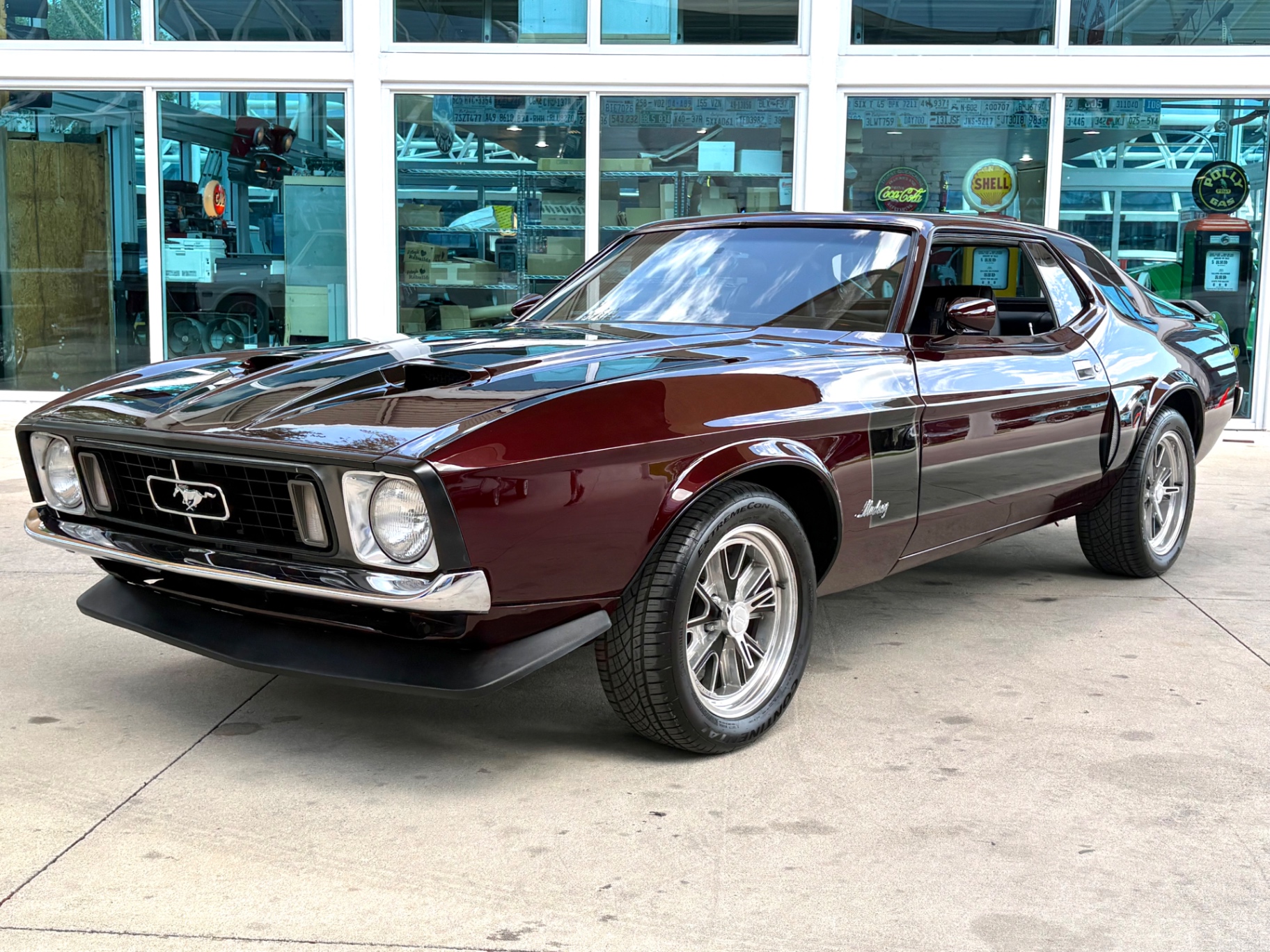
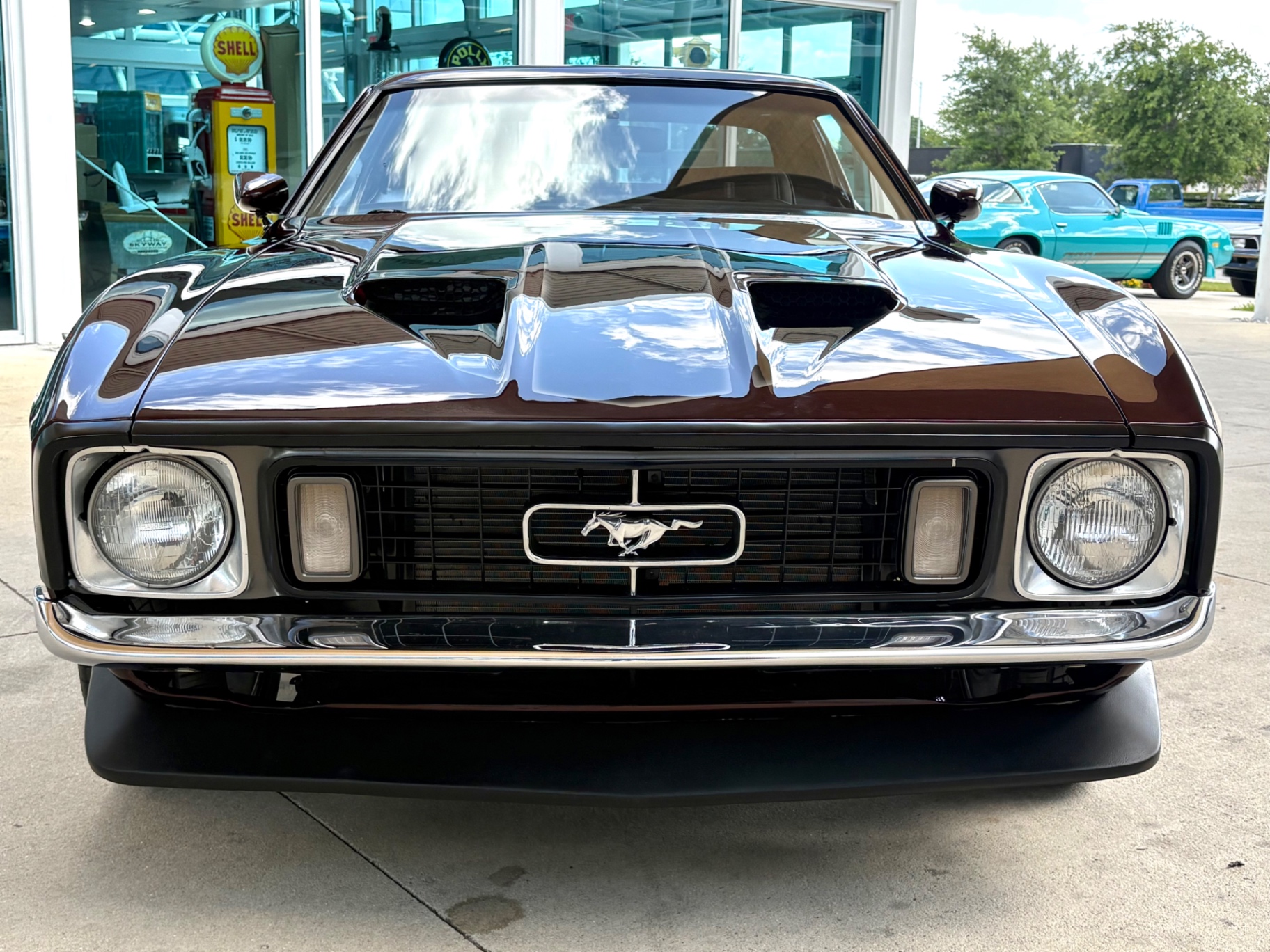
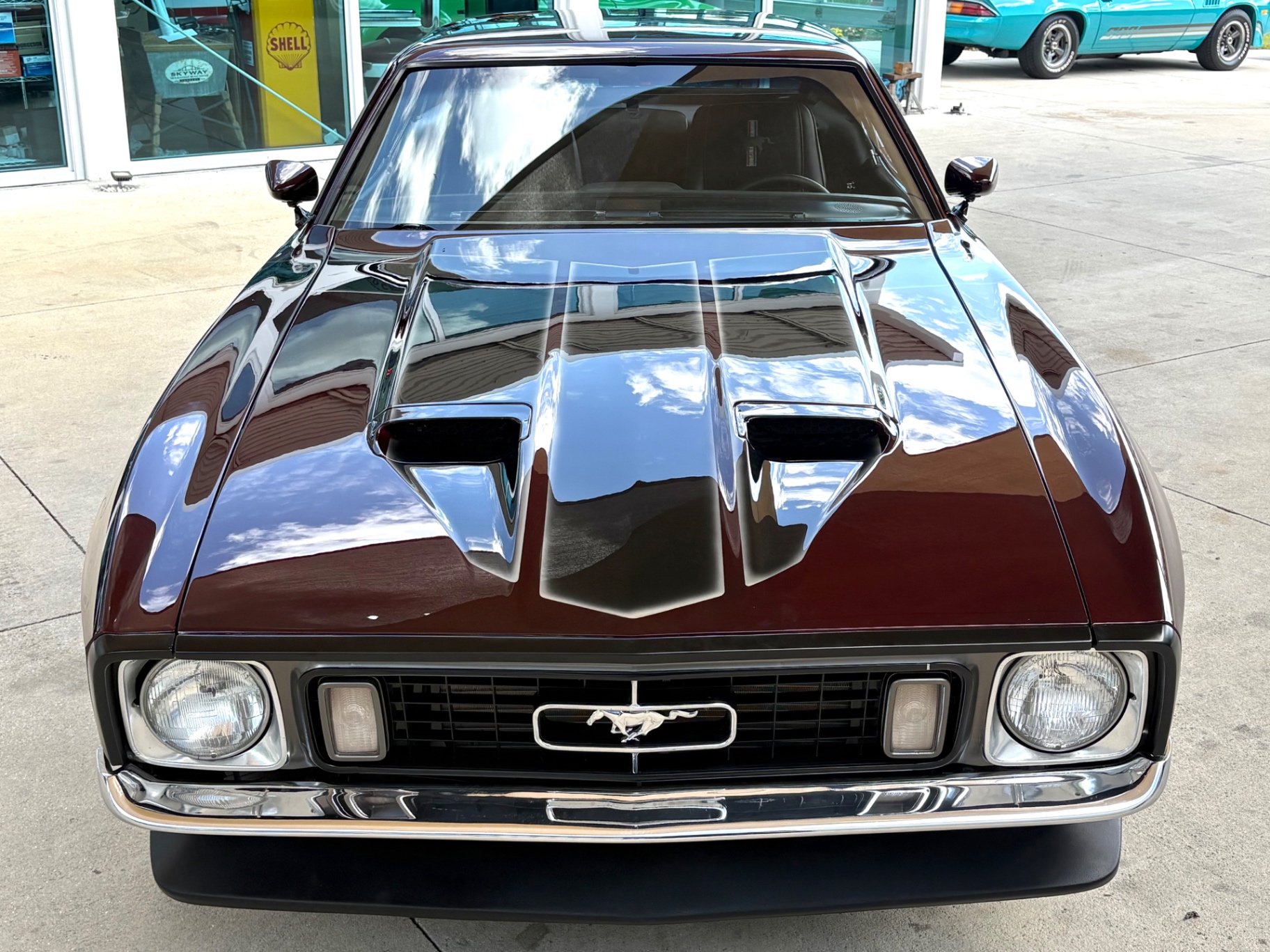
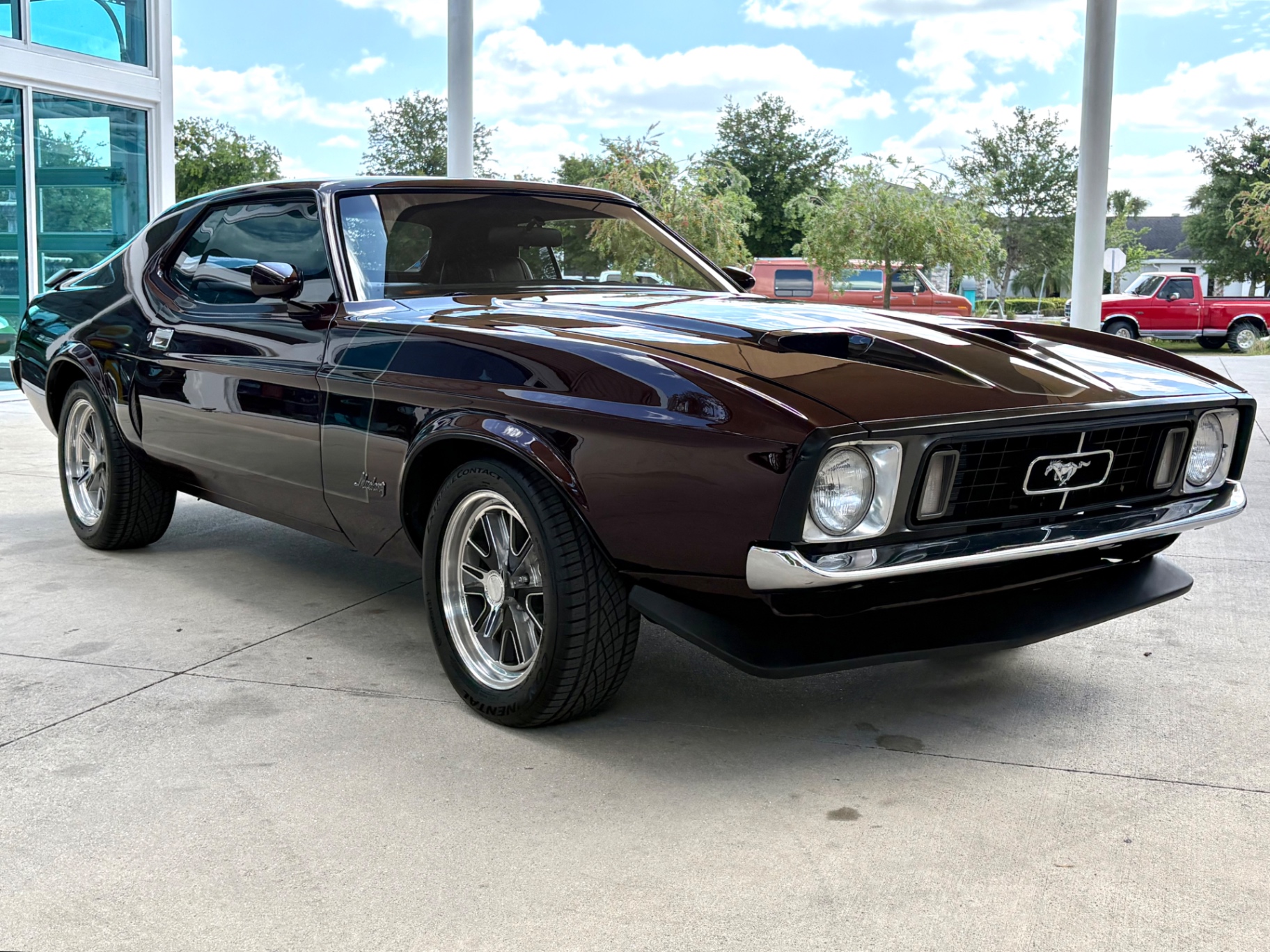
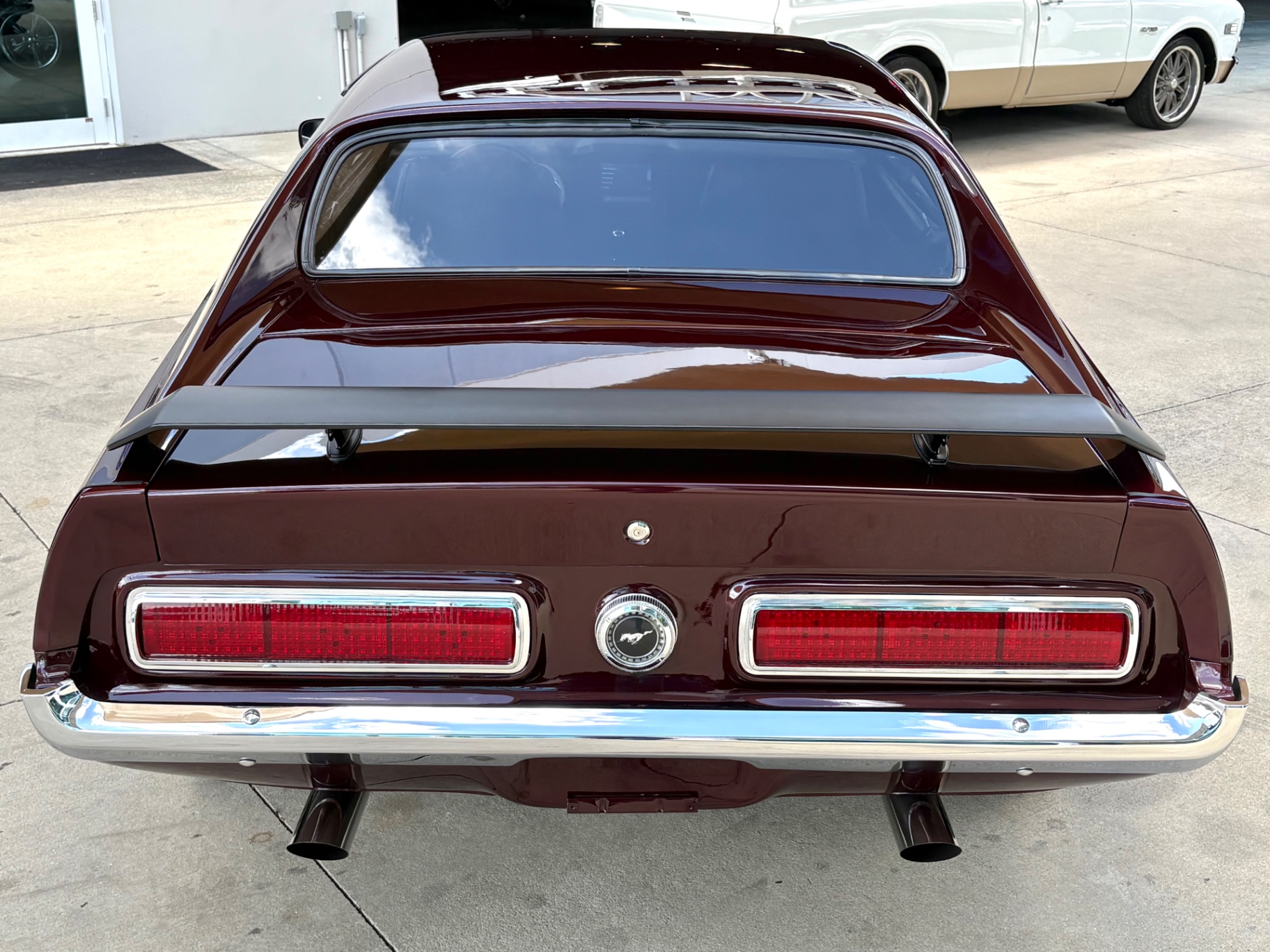
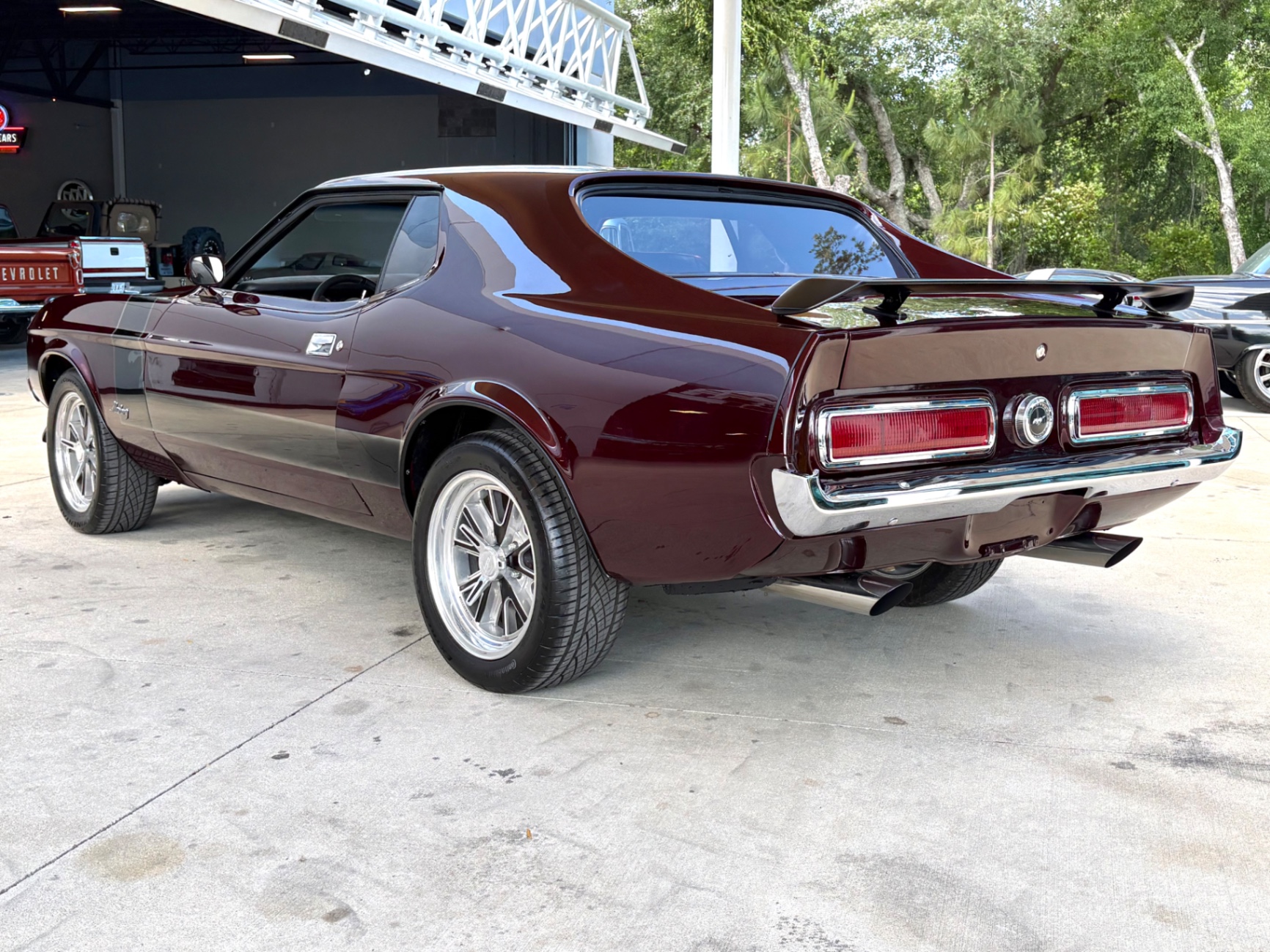
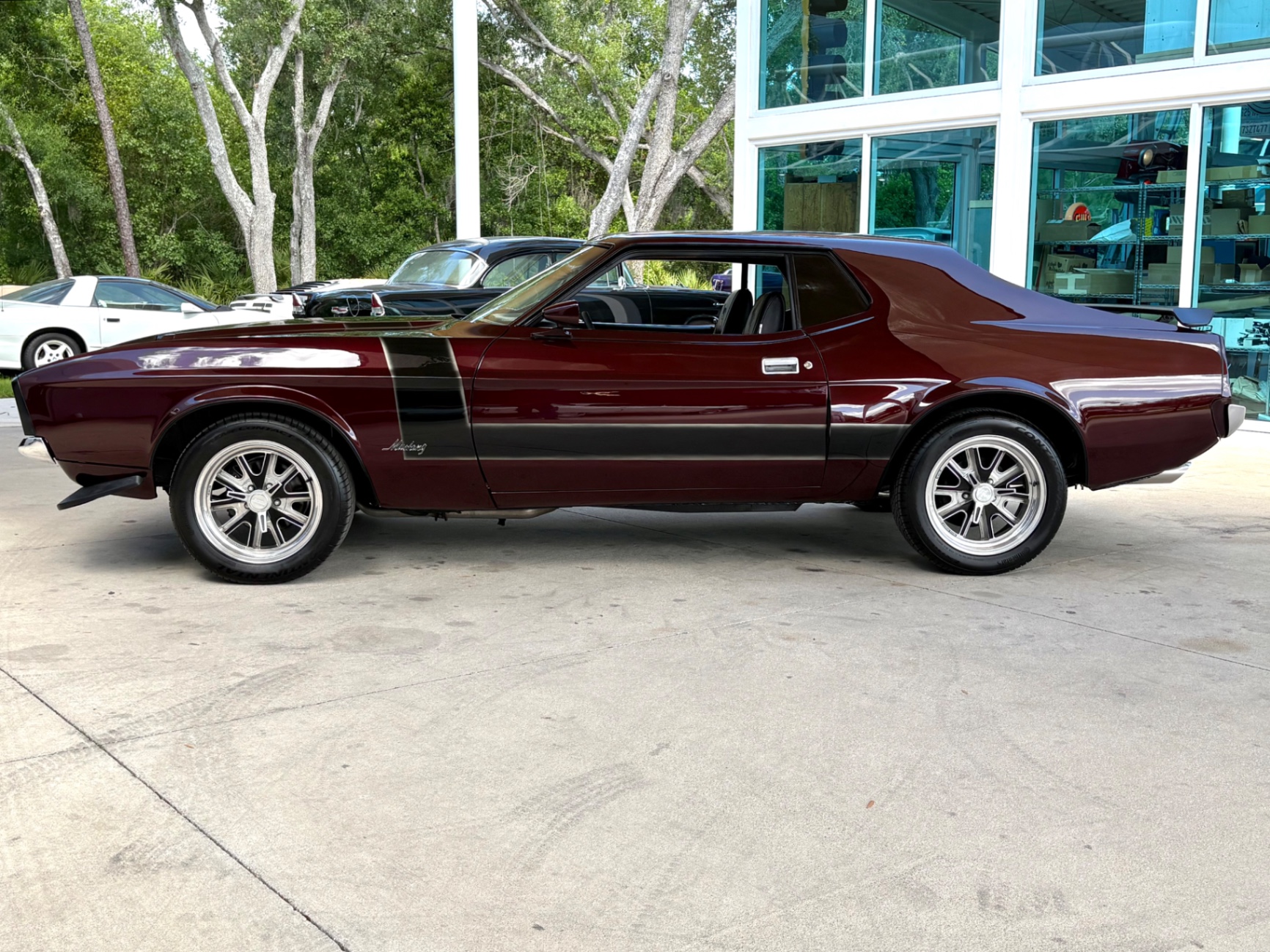
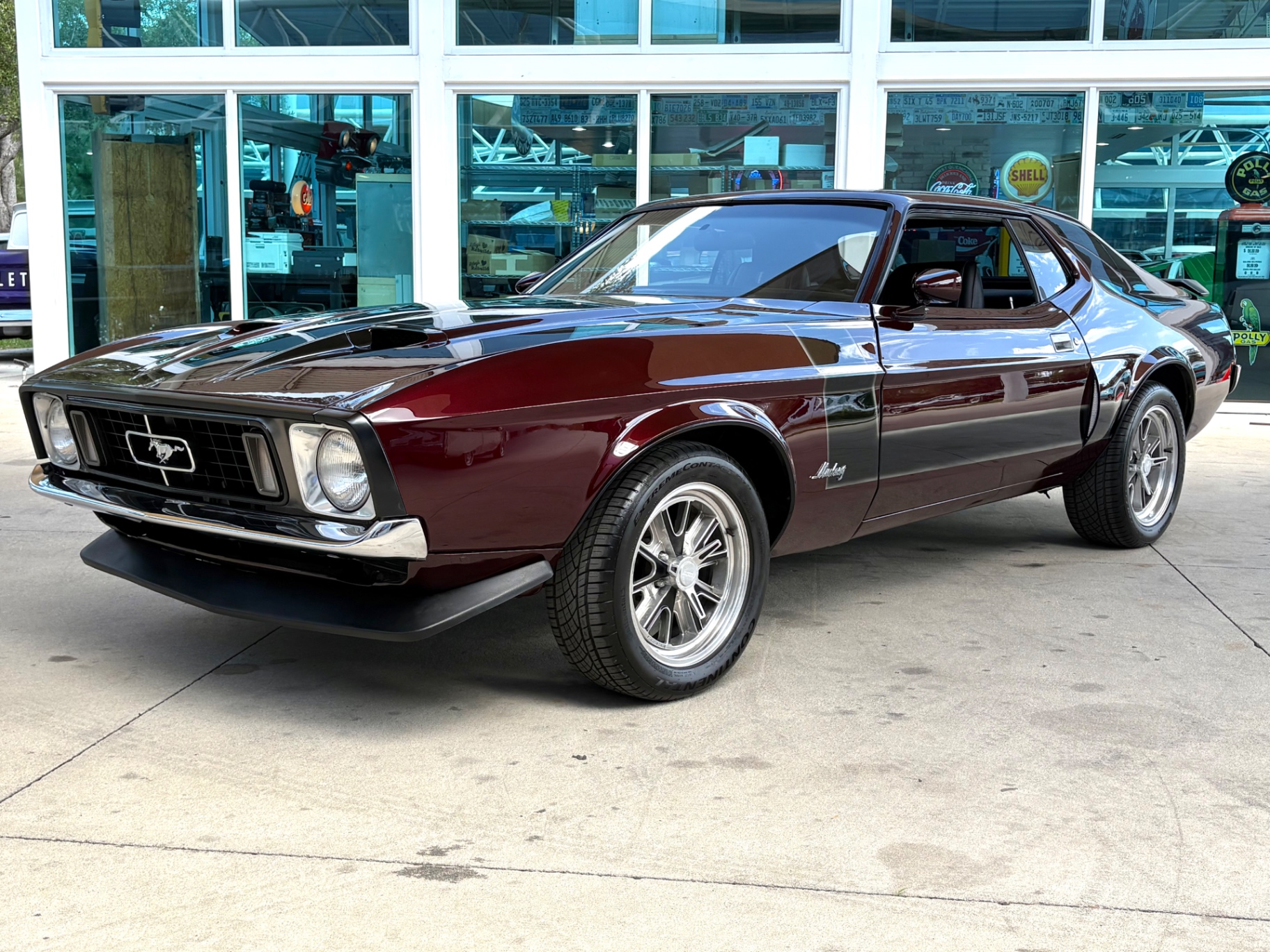

1973 Ford Mustang Fastback — Resto-Mod Build with Blueprint 347 V8 and Over $75,000 Invested
Why This Car Is Special
The 1973 Ford Mustang holds a specific and often underappreciated place in Mustang history. It was the last of the original "classic" Mustangs before Ford completely restyled the car into the much-maligned Mustang II for 1974. That makes the 1973 model year the closing chapter on nearly a decade of the body style that started it all. Ford sold just over 134,000 Mustangs that year across all body styles, and the fastback — formally called the SportsRoof — remains the most sought-after configuration of the bunch. The long roofline, the aggressive rear quarter treatment, and the overall proportions of the SportsRoof body are what most people picture when they close their eyes and think "Mustang."
What you have here is not a preserved survivor and it is not pretending to be one. This 1973 Ford Mustang has been fully transformed into a serious resto-mod over a two-year build process with more than $75,000 invested in the work. The philosophy behind a resto-mod like this is straightforward: keep the iconic shape, throw out everything that made the original drive like a 50-year-old car, and replace it with hardware that can actually keep up with modern traffic — and then some. Every major system on this car has been addressed, from the engine and transmission to the brakes, suspension, fuel delivery, exhaust, interior, and paint. This is the kind of build where the money spent is visible at every point of contact.
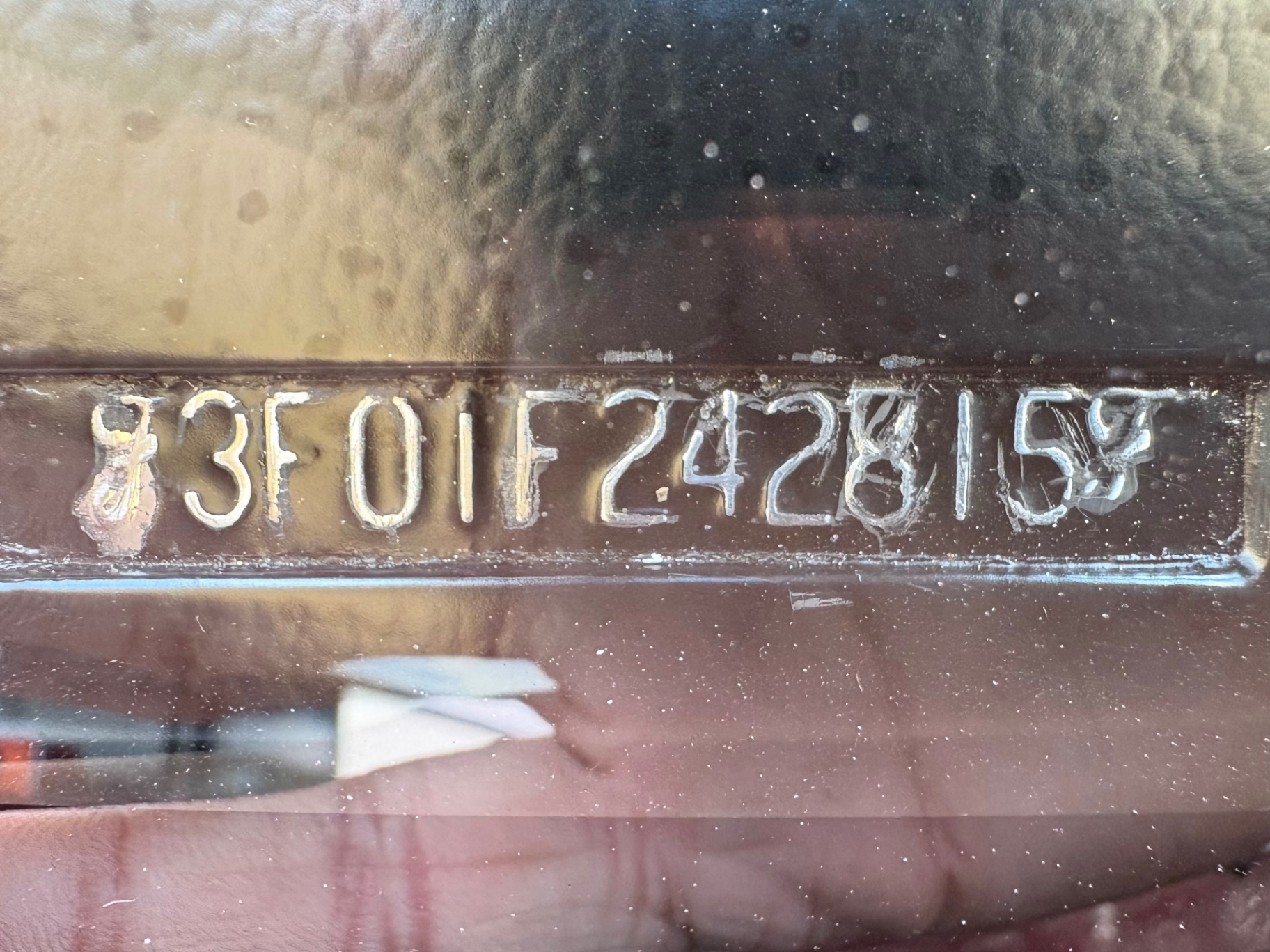
The VIN on this car decodes to confirm it is a 1973 Ford Mustang SportsRoof (fastback body style), built at the Dearborn, Michigan assembly plant — the same facility where the very first Mustangs rolled off the line in 1964. Dearborn-built Mustangs carry a certain historical weight for that reason alone.
Features List
- Blueprint Engines 347 cubic inch stroker V8, rated at 347 horsepower
- Tremec TKO 5-speed manual transmission
- Edelbrock intake manifold
- 2.5-inch Flowmaster dual exhaust
- Power disc brakes (front and rear)
- Power steering
- Upgraded suspension with subframe connectors
- Aluminum radiator with dual electric cooling fans
- 17-inch American Racing Shelby-style wheels
- Dakota Digital VHX gauge cluster with tachometer
- Alpine double-DIN stereo
- Sequential Shelby-style LED tail lights
- Complete new black vinyl interior
- Center console
- Sport steering wheel
- Dual functional hood scoops
- Front and rear spoilers
- Shelby-style quarter panel vents
- Custom PPG exterior paint
- Chrome rear bumper
Mechanical
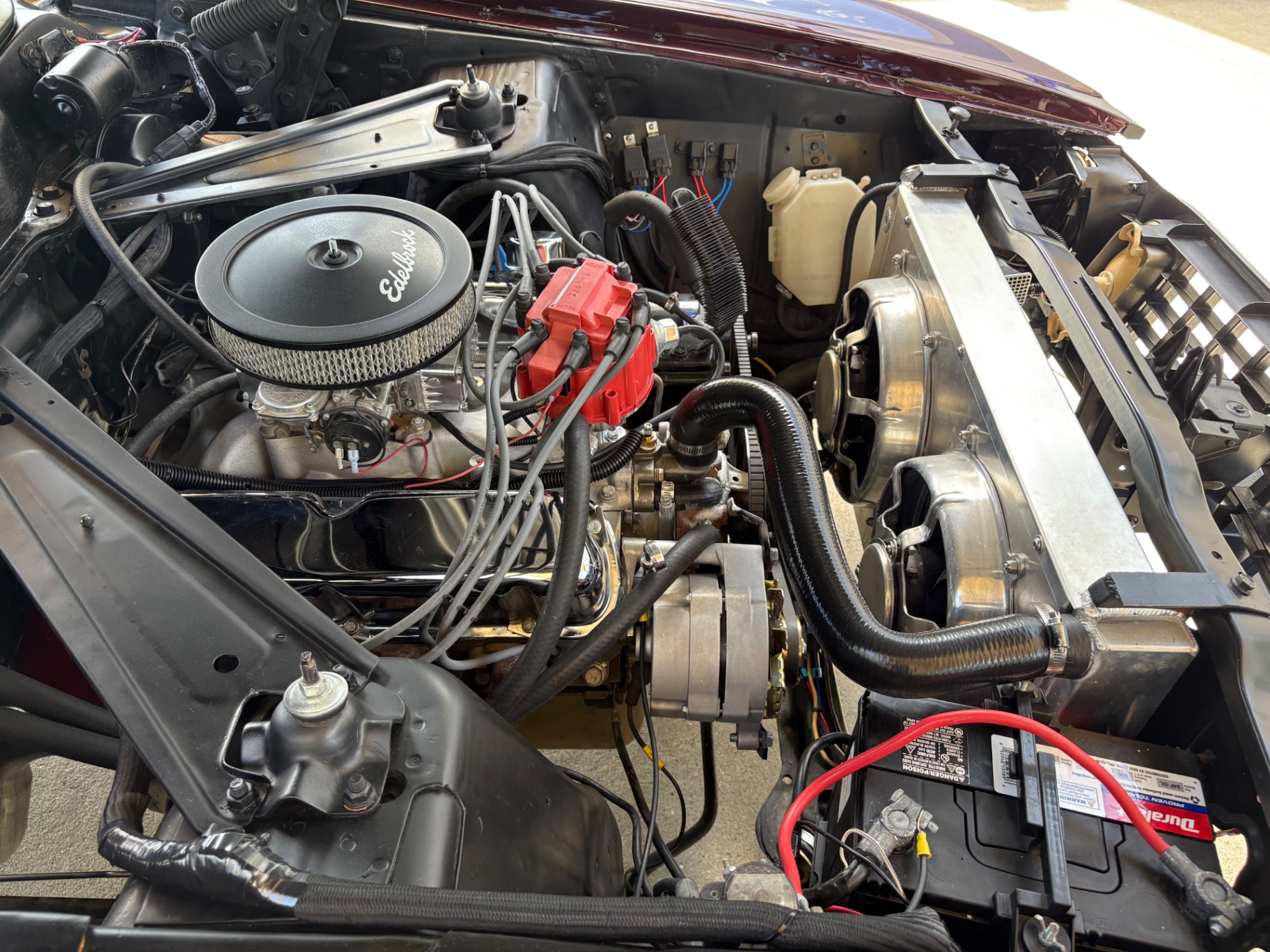
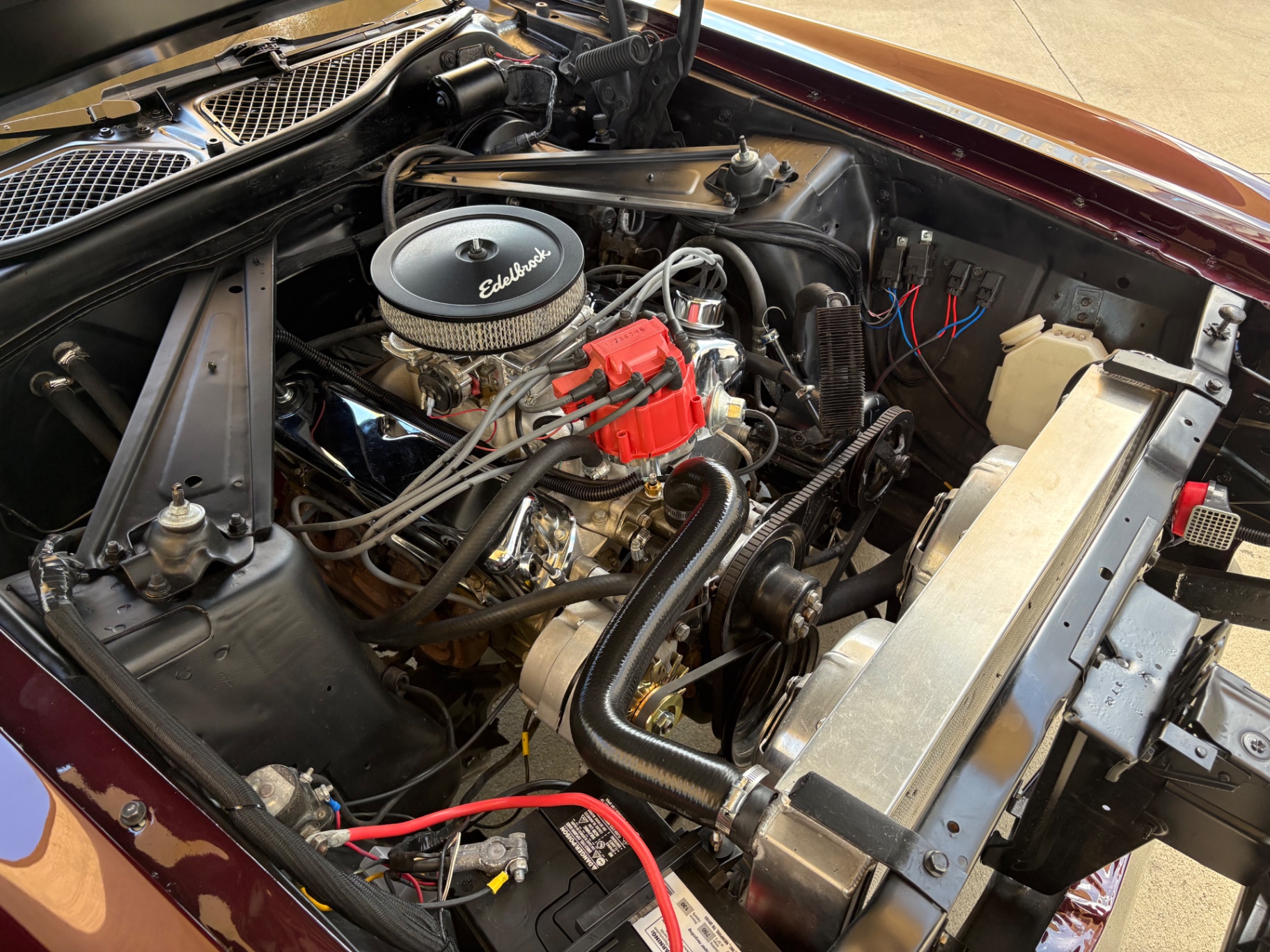
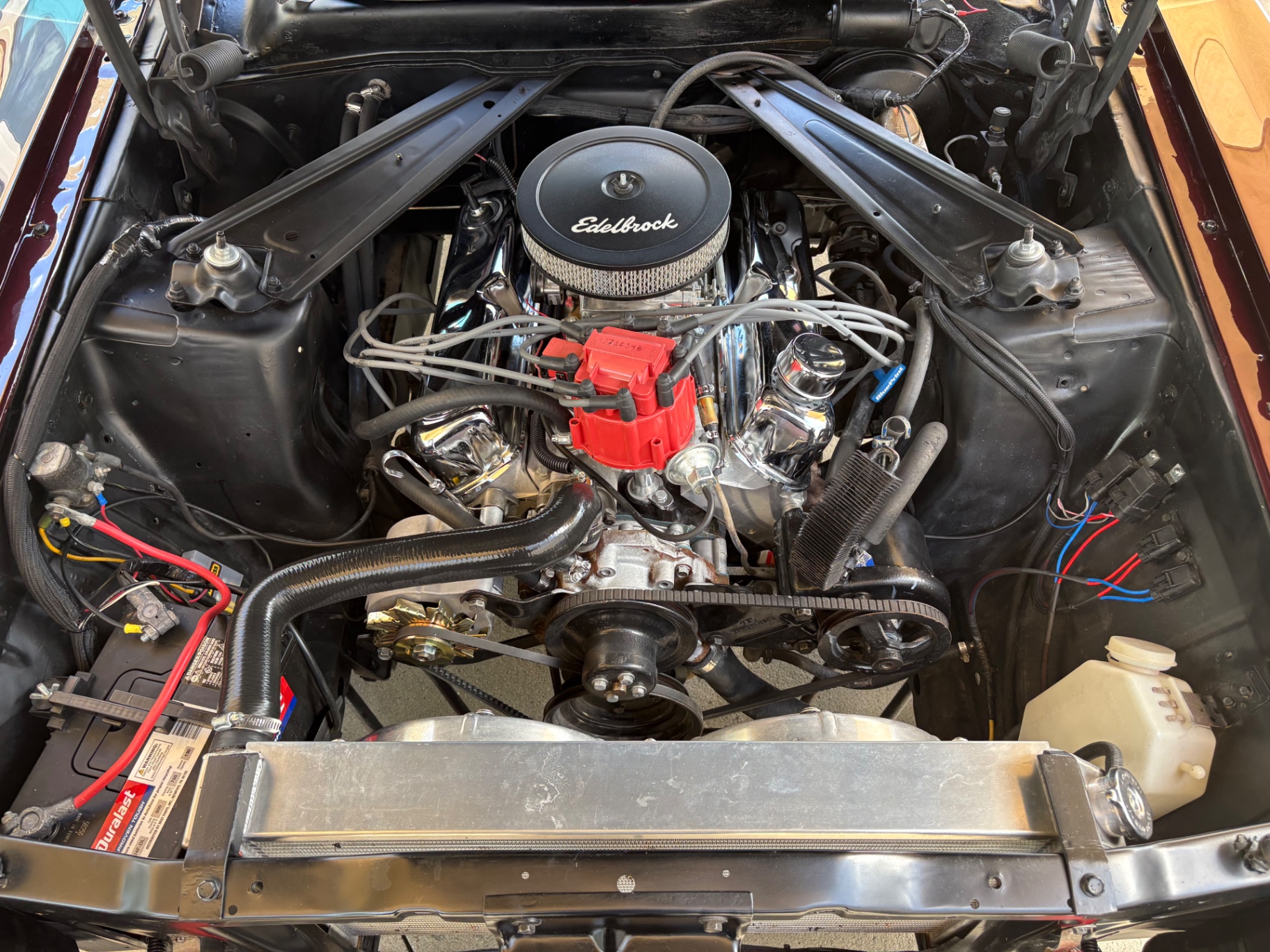
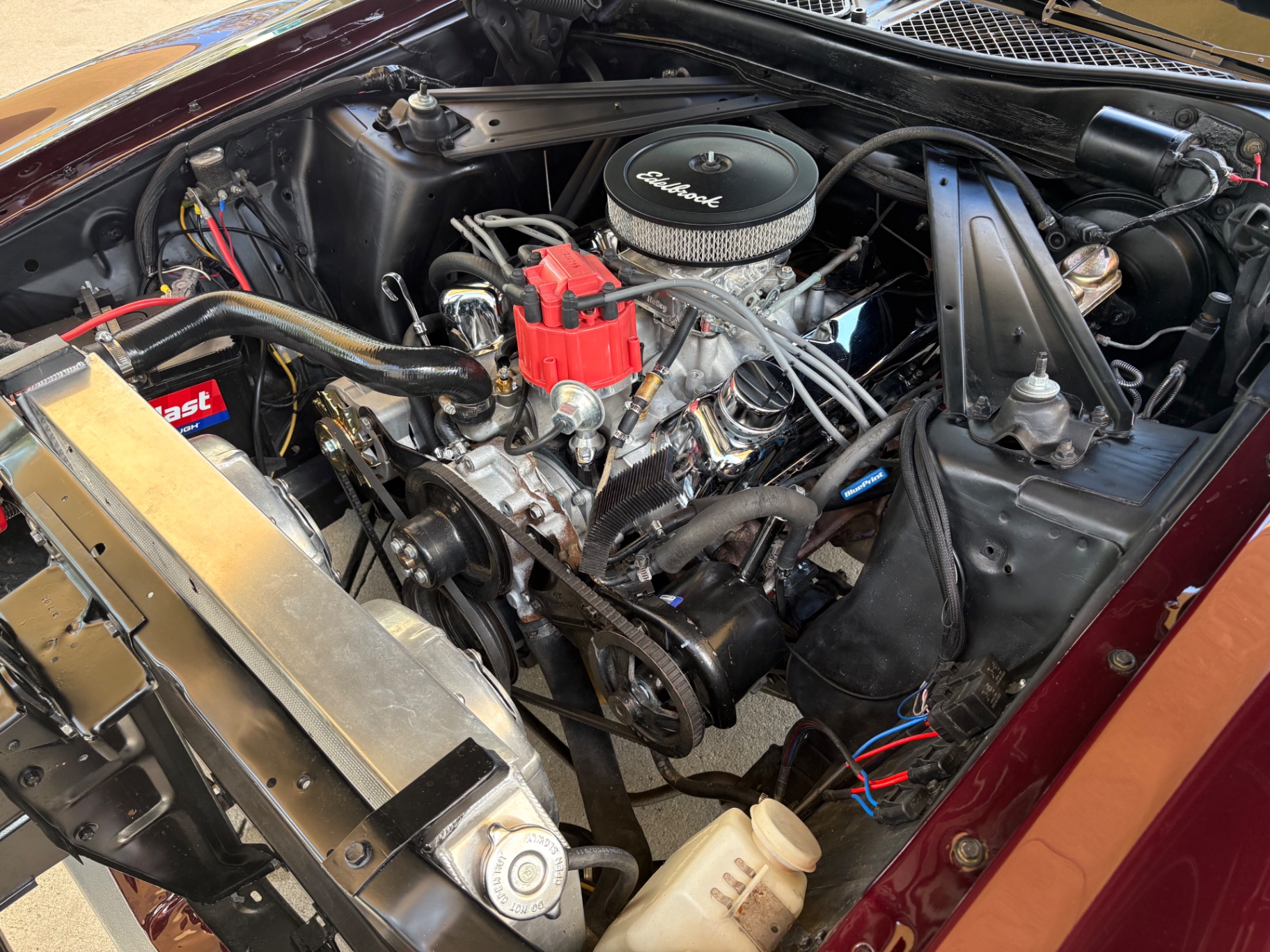
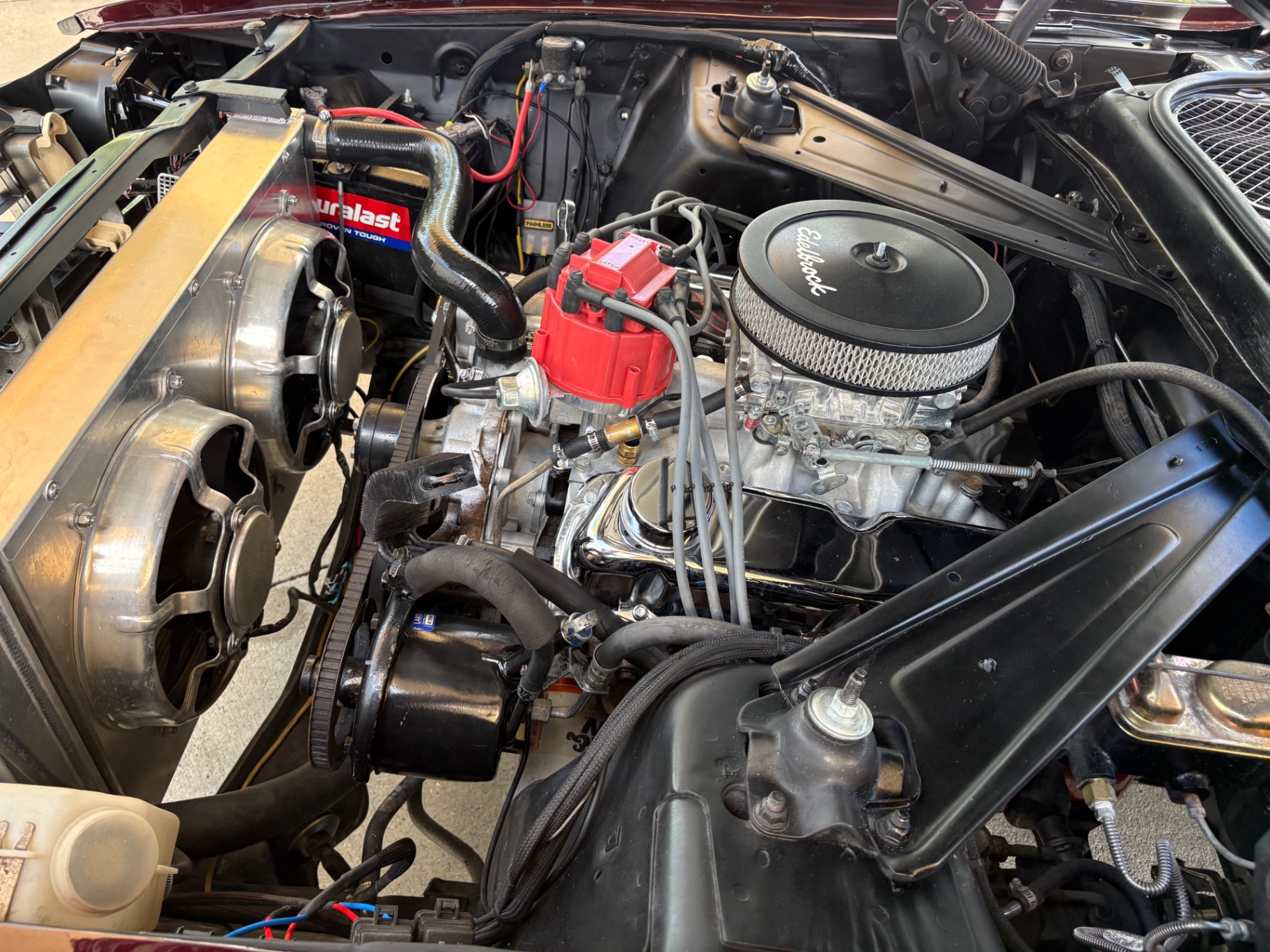
The engine is a Blueprint Engines 347 cubic inch stroker V8 producing 347 horsepower. Blueprint Engines, based in Kearney, Nebraska, builds their engines on CNC-machined short blocks with forged rotating assemblies and runs each engine on a dyno before it ships. The 347 stroker is built on the Ford small-block architecture — essentially a 302 block with a longer-stroke crankshaft that brings displacement up to 347 cubic inches — and it is a well-proven combination in the Mustang world. Topped with an Edelbrock intake manifold and a carburetor with a matching air cleaner assembly, the engine compartment is neatly laid out and clearly the work of someone who thought about how the finished product would look as well as perform.
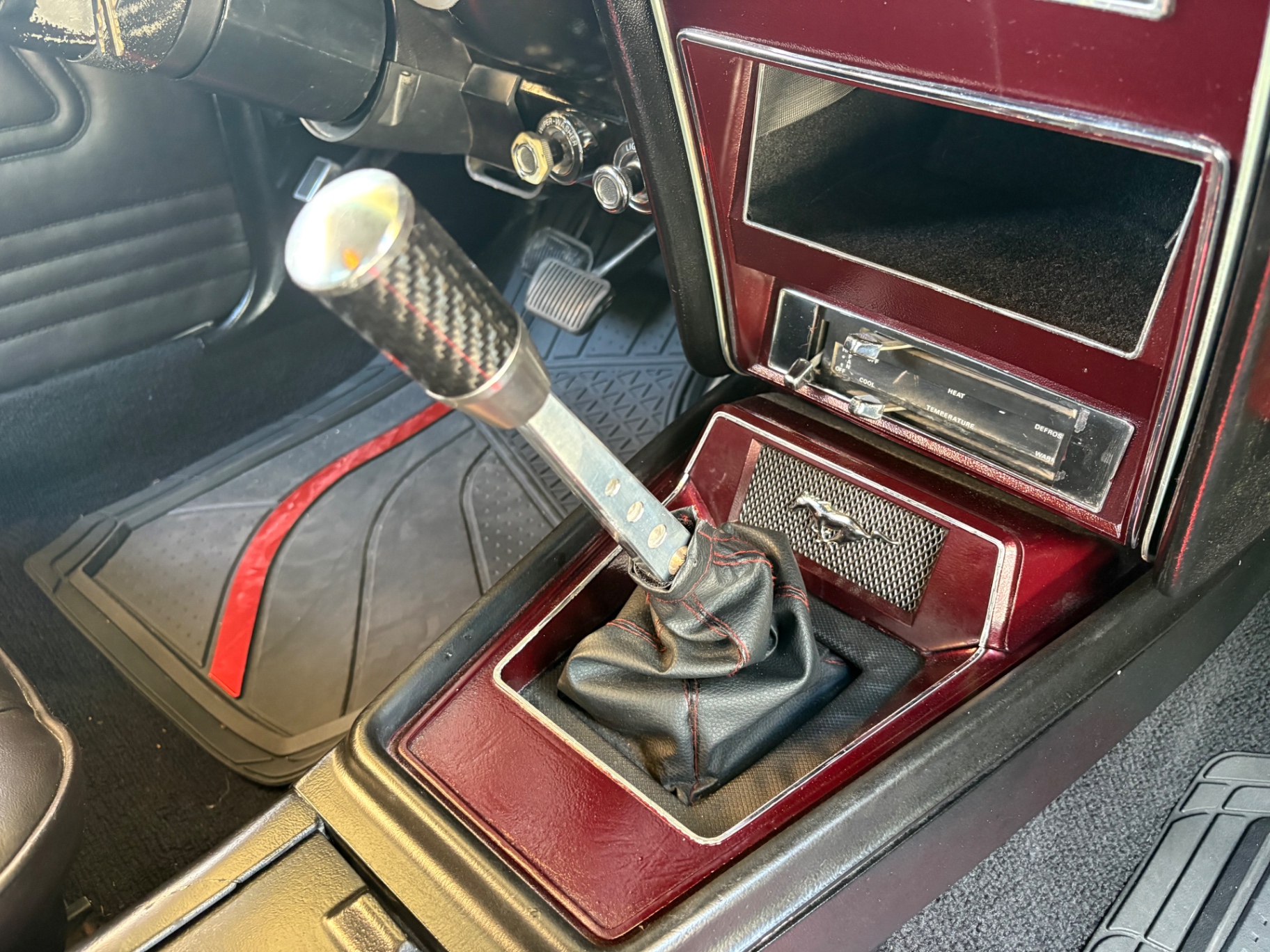
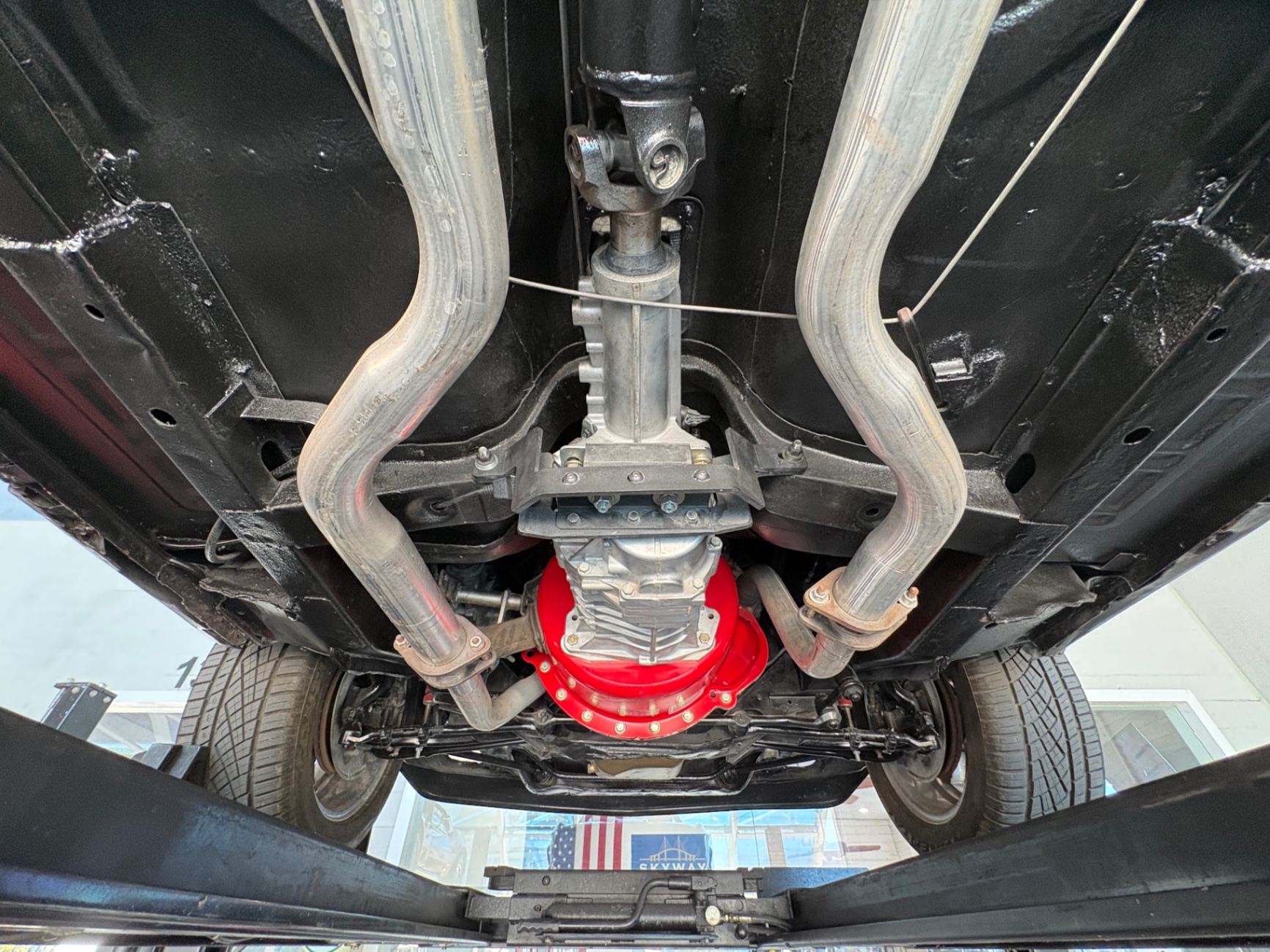
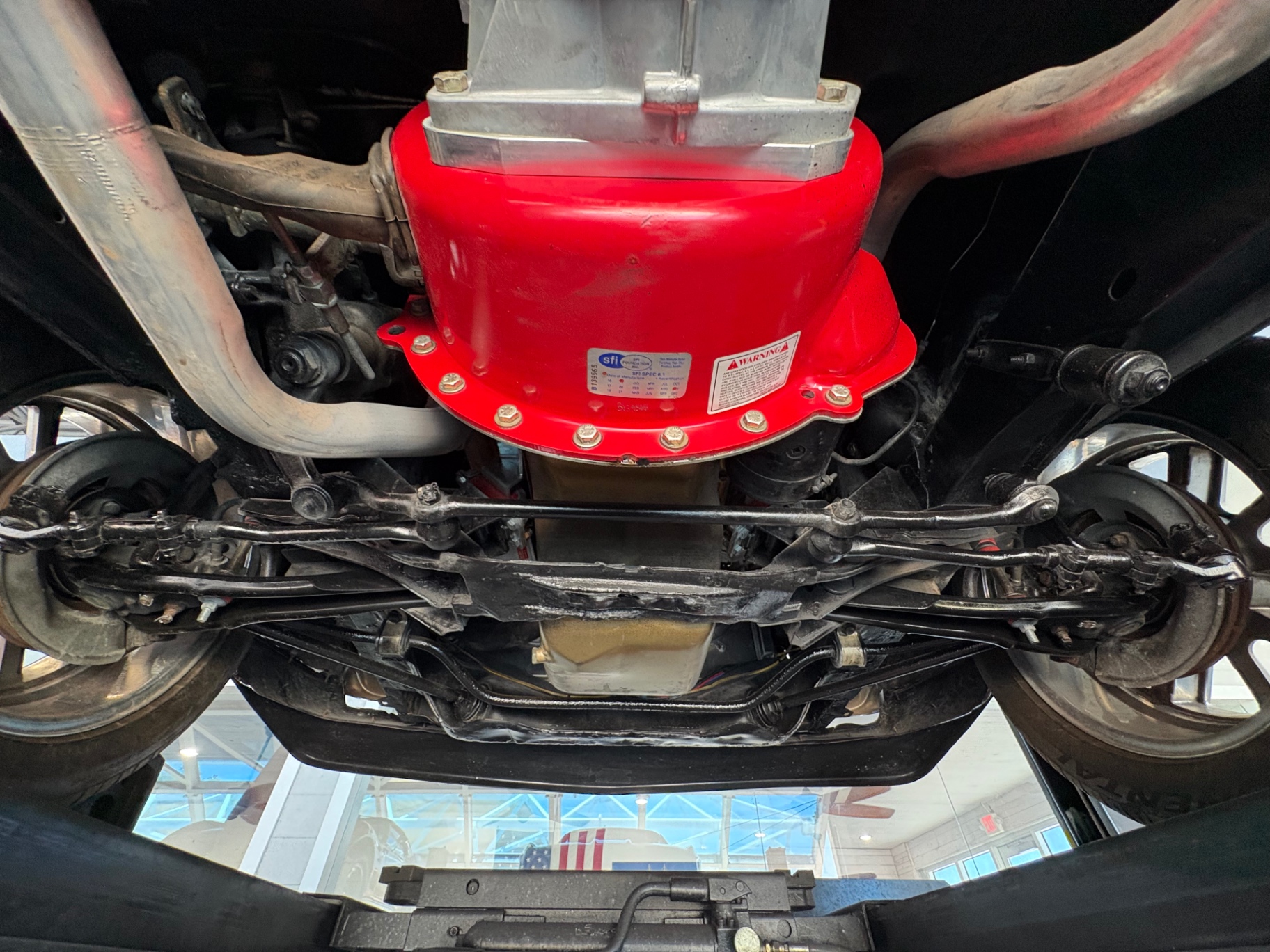
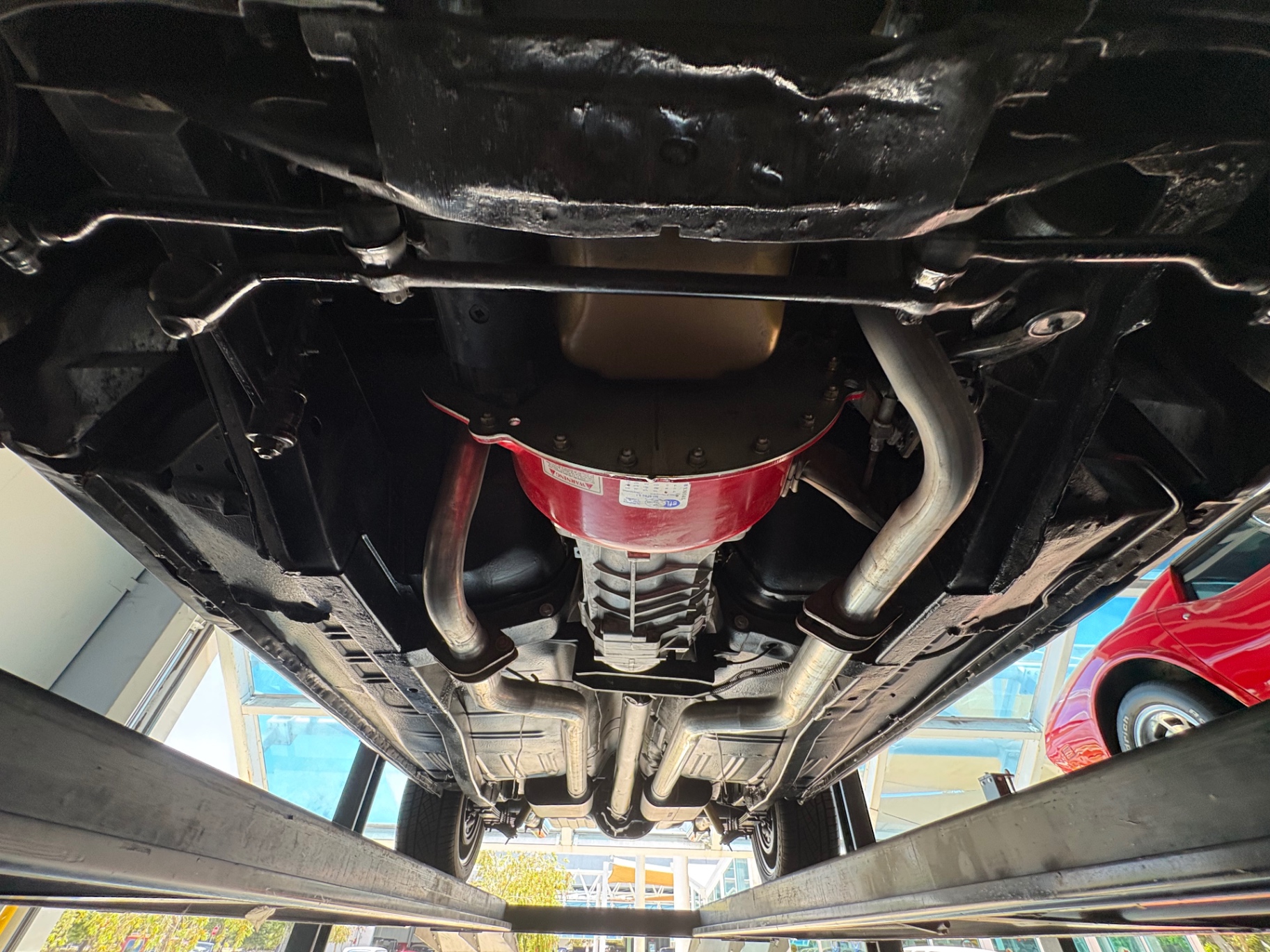
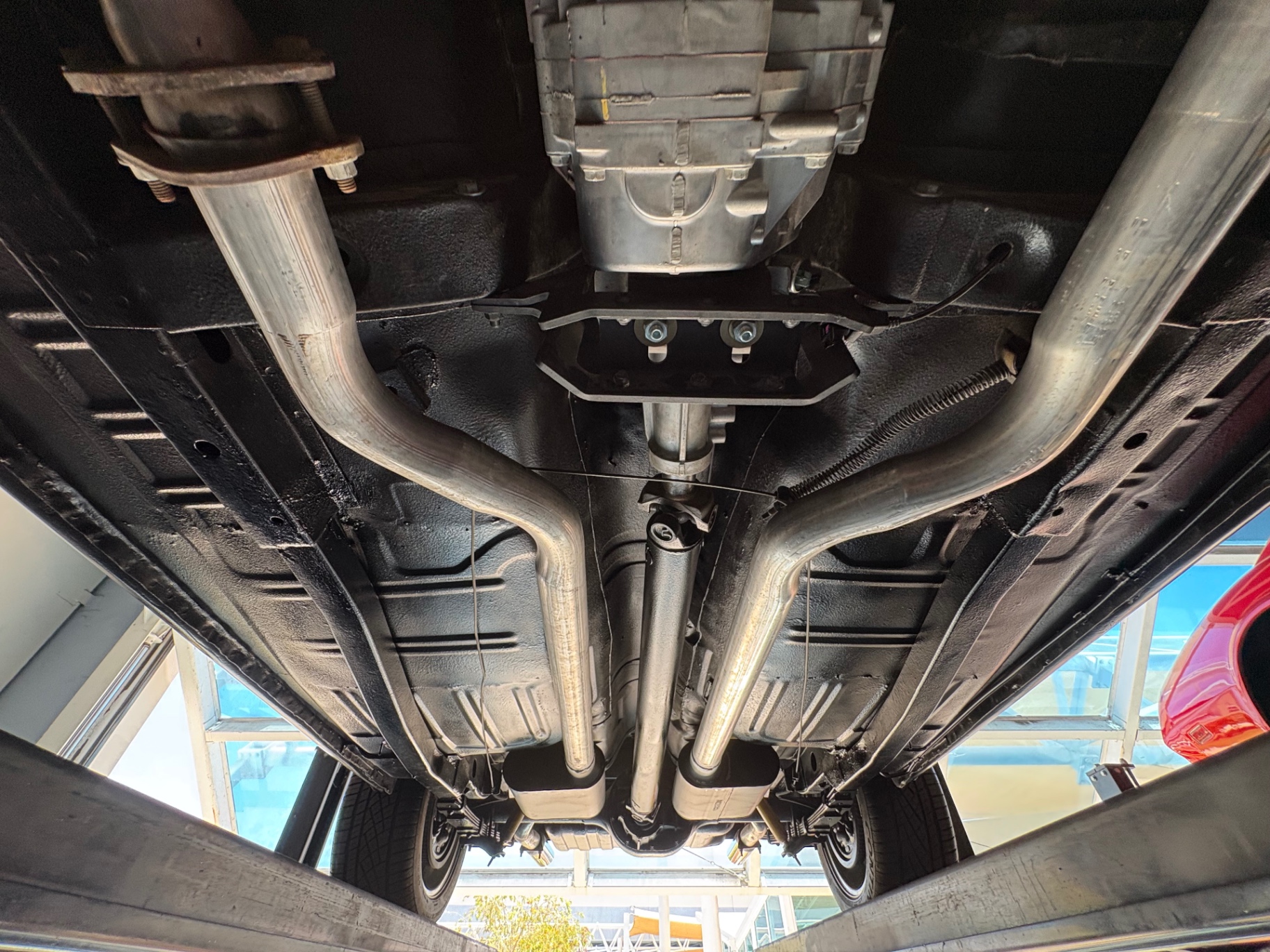
Power routes through a Tremec TKO 5-speed manual transmission, which is a significant upgrade over any period-correct gearbox. The TKO series was engineered specifically for high-torque small-block applications and is rated to handle up to 600 lb-ft of torque depending on the specific build. It offers tighter gear spacing than the old Toploader units and includes an overdrive fifth gear, which makes highway cruising at modern speeds practical without thrashing the engine. This is not a show car that gets trailered to events — it is set up to be driven.
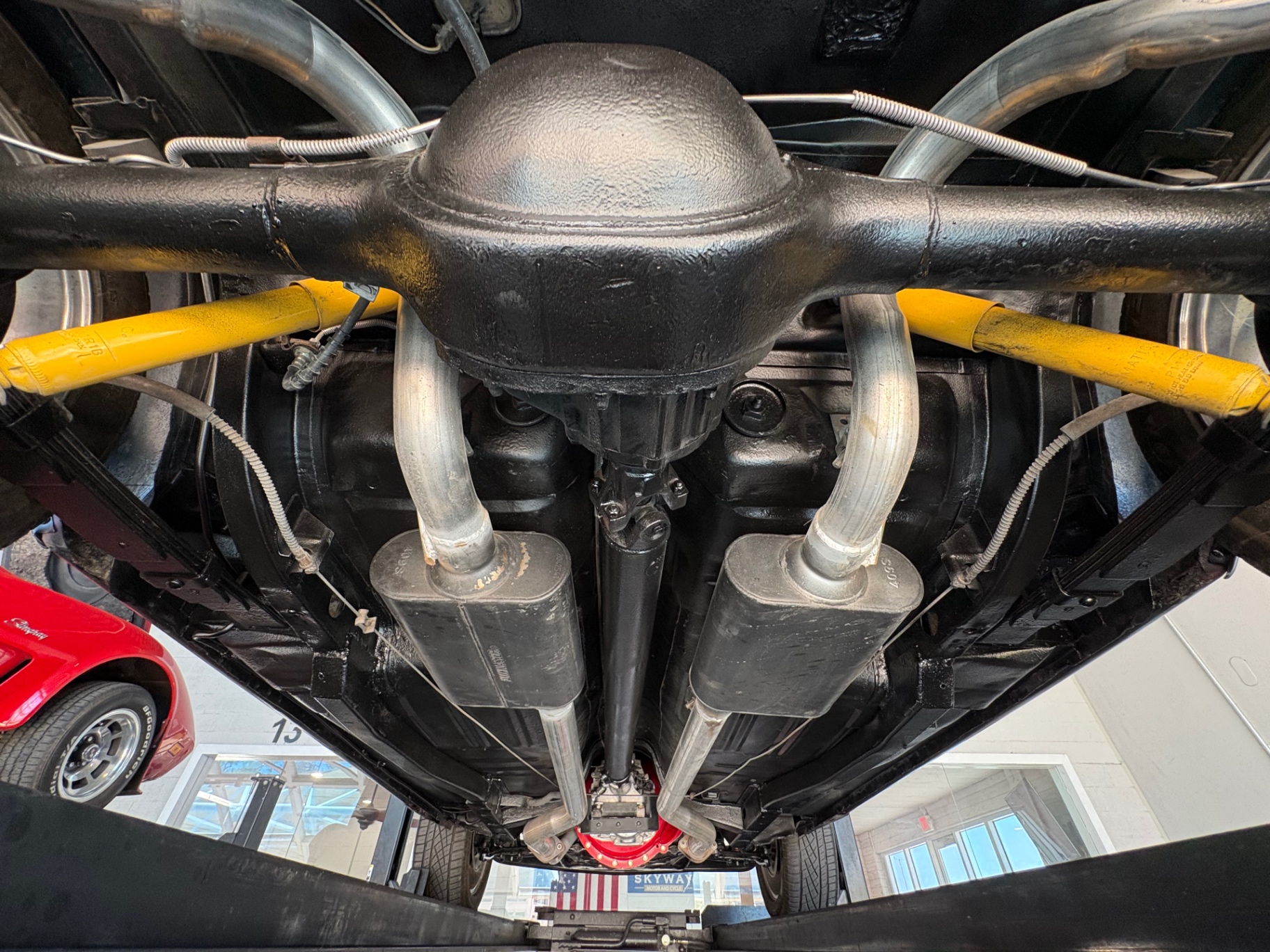
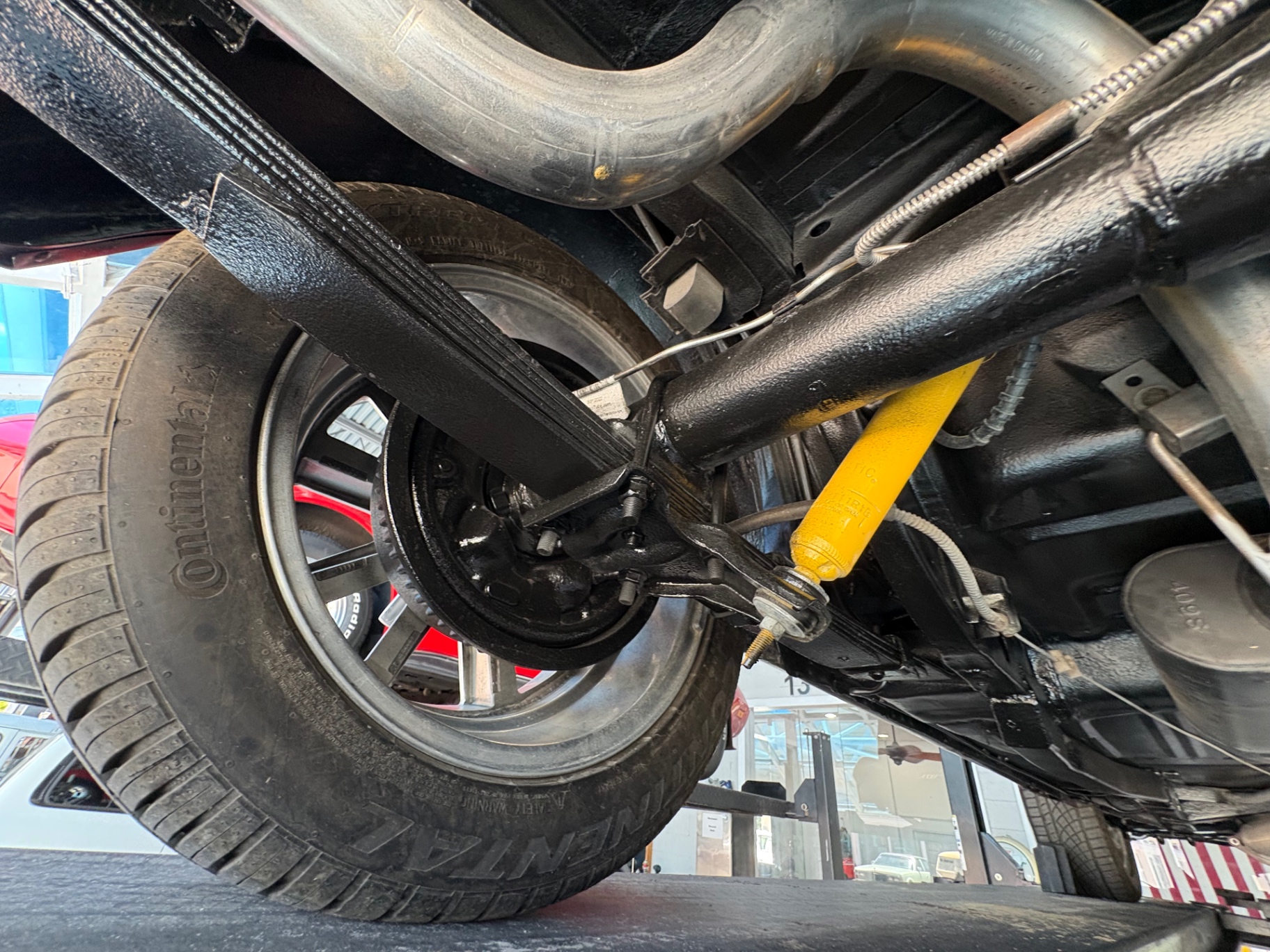
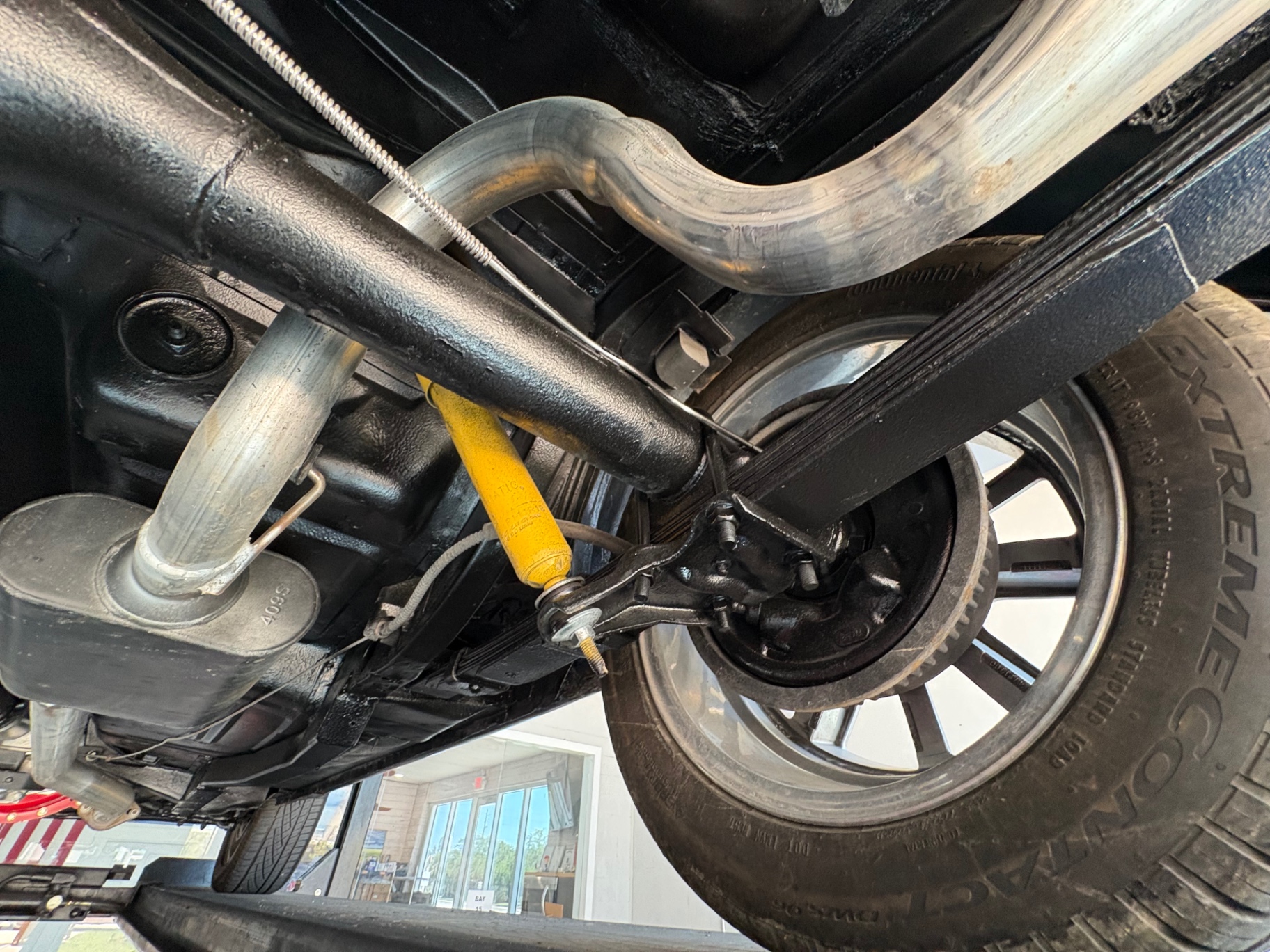
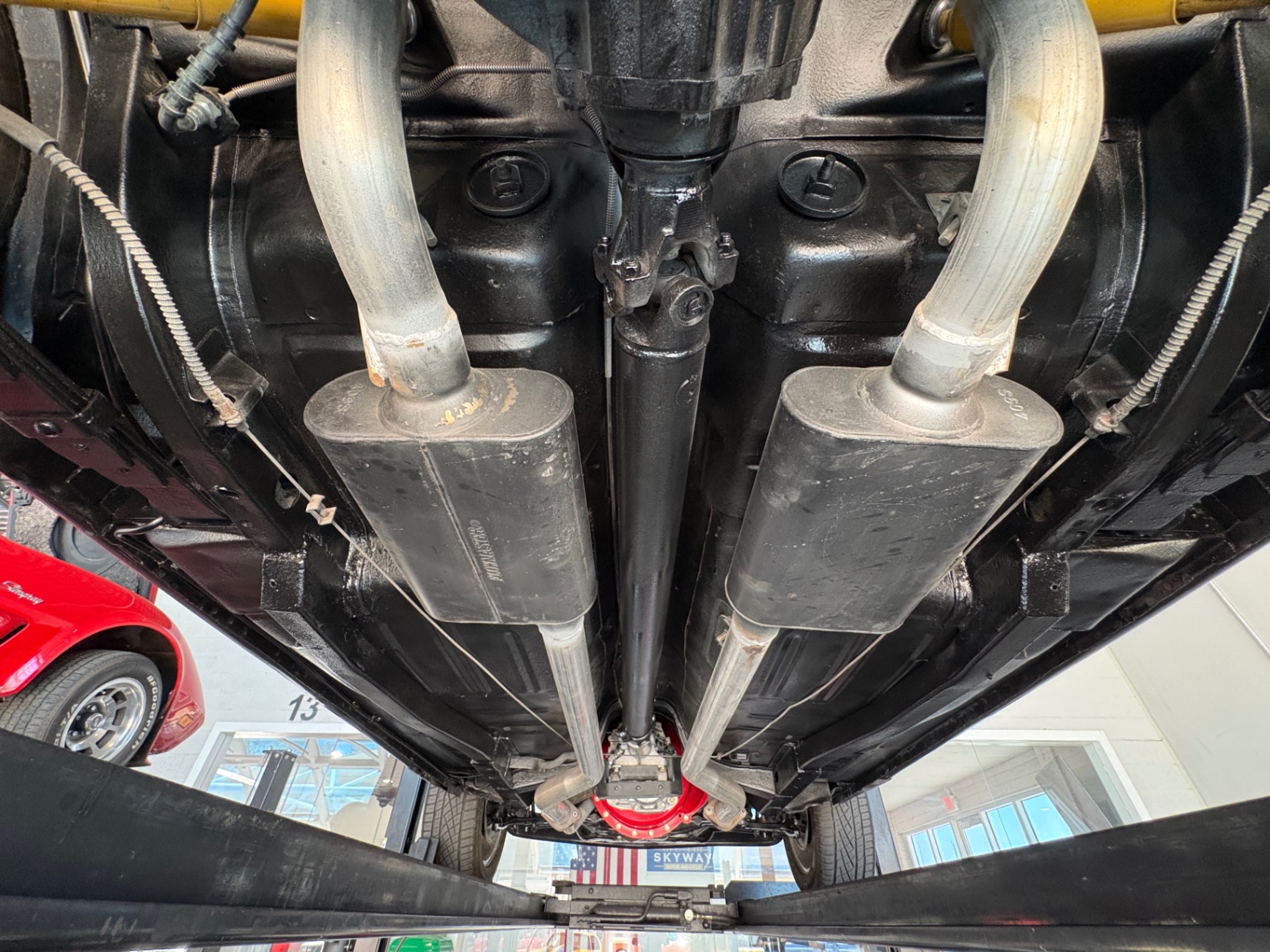
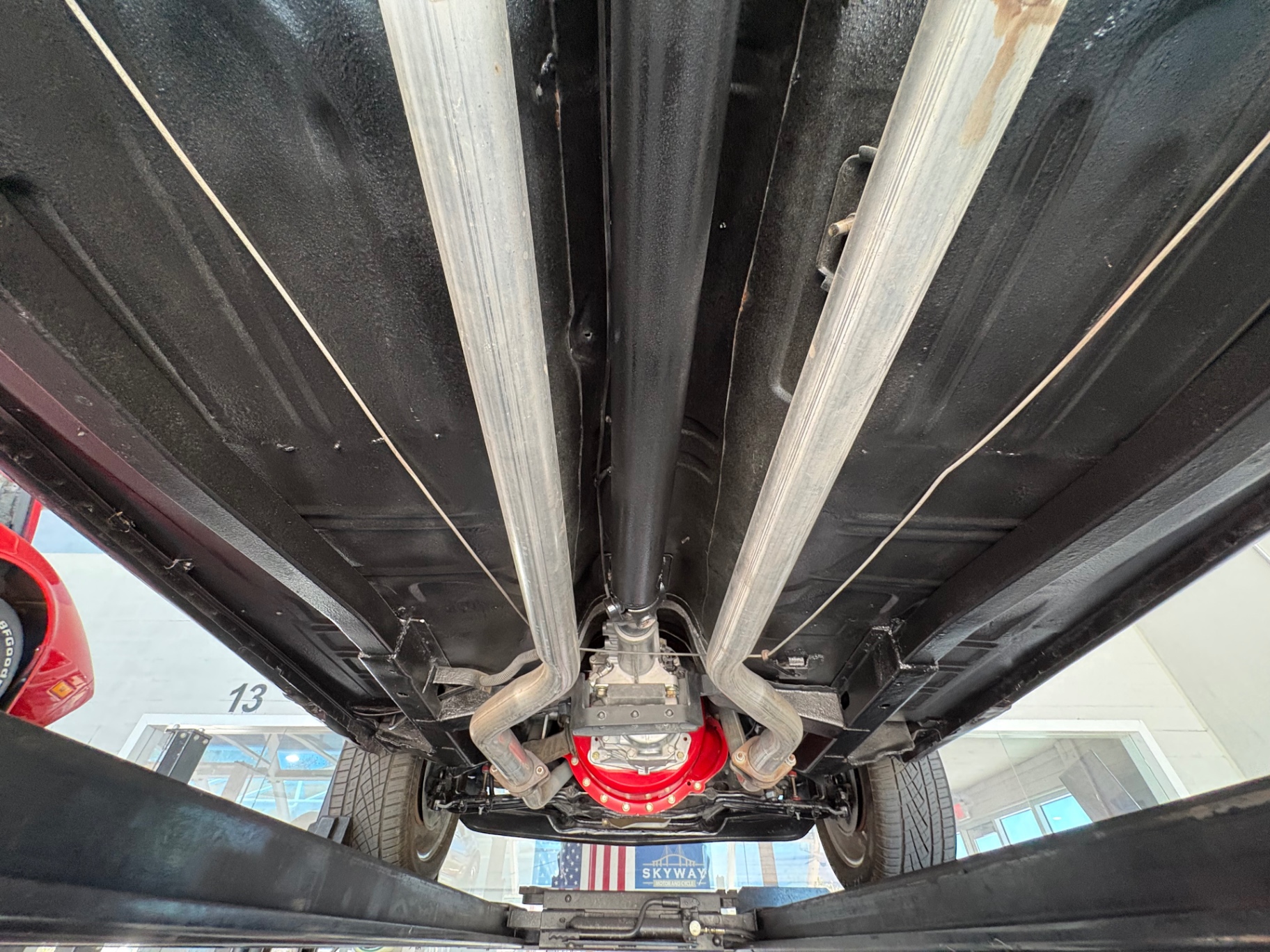
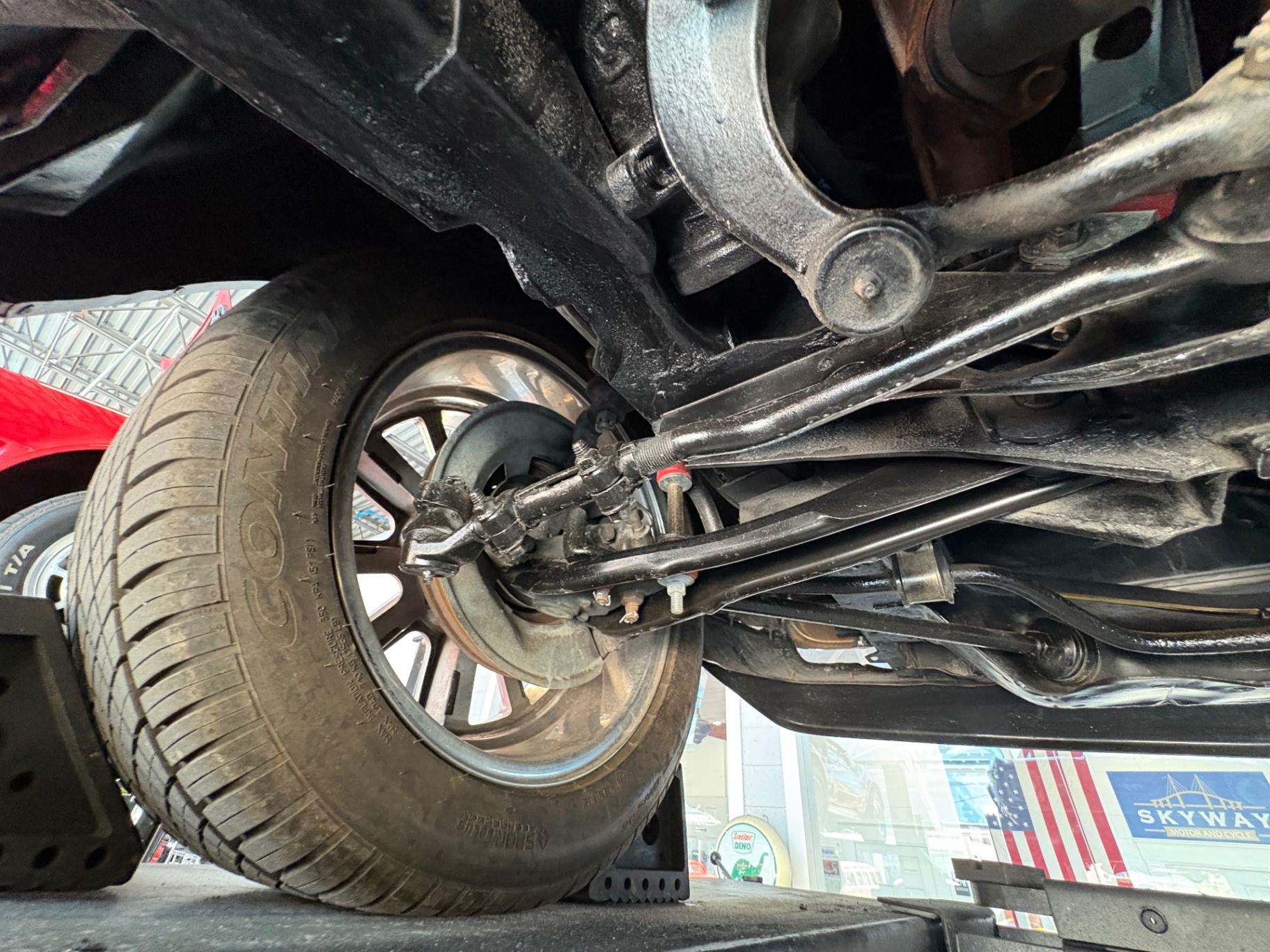
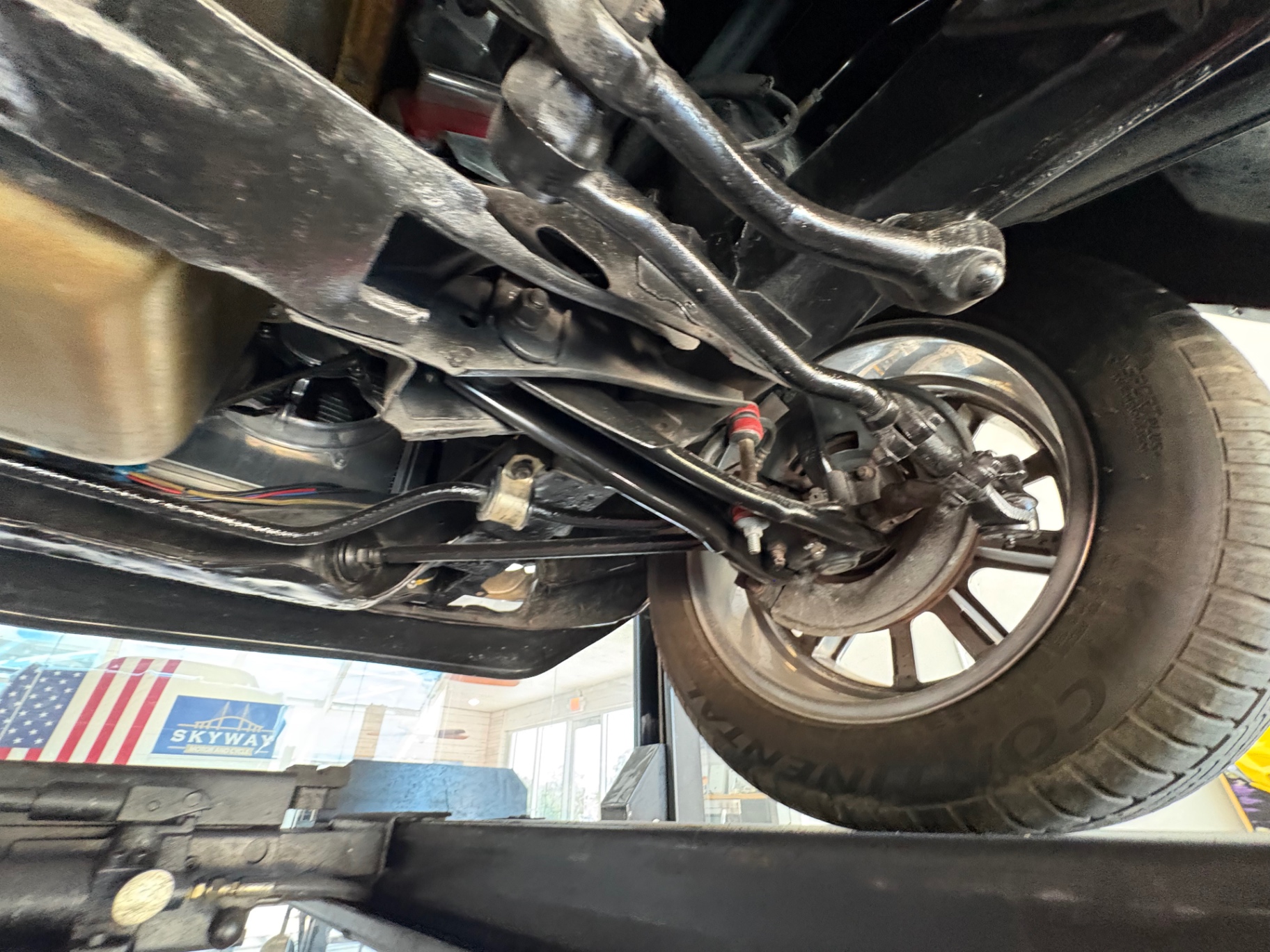
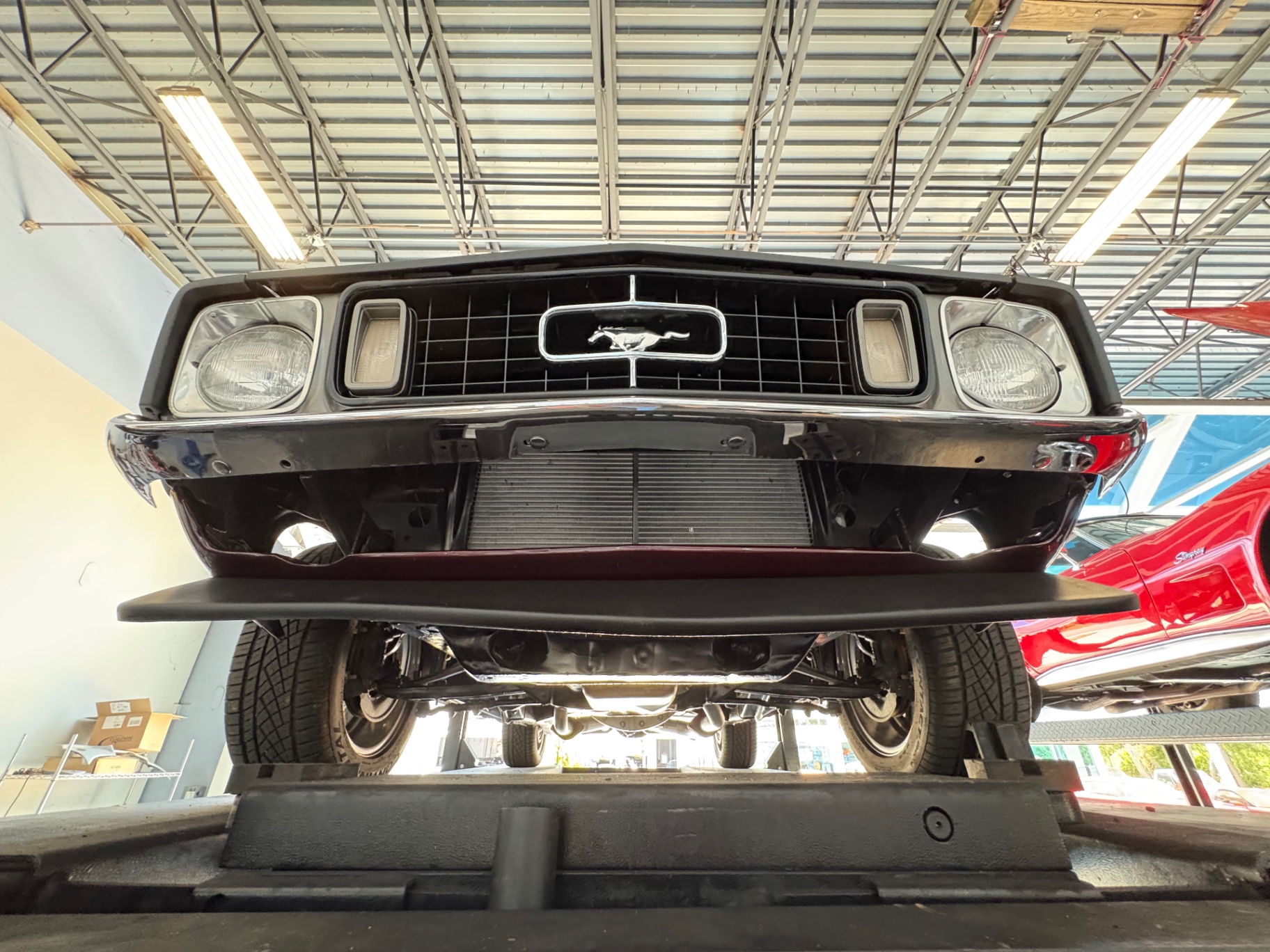
Stopping power comes from power-assisted disc brakes, a critical upgrade on a car this age. The factory 1973 Mustang used front discs as an available option but drum brakes in the rear were common. Having discs at all four corners with a power booster brings the braking capability in line with what the engine can produce. The suspension has been upgraded throughout and the chassis has been tied together with subframe connectors, which address one of the known structural weaknesses of the unitized Mustang body. Without subframe connectors, these cars flex noticeably under hard acceleration and cornering — with them, the chassis behaves significantly more like a true unibody and the suspension geometry stays predictable. Cooling is handled by an aluminum radiator paired with dual electric fans, a combination that keeps underhood temperatures in check even in slow traffic on a hot Florida afternoon.
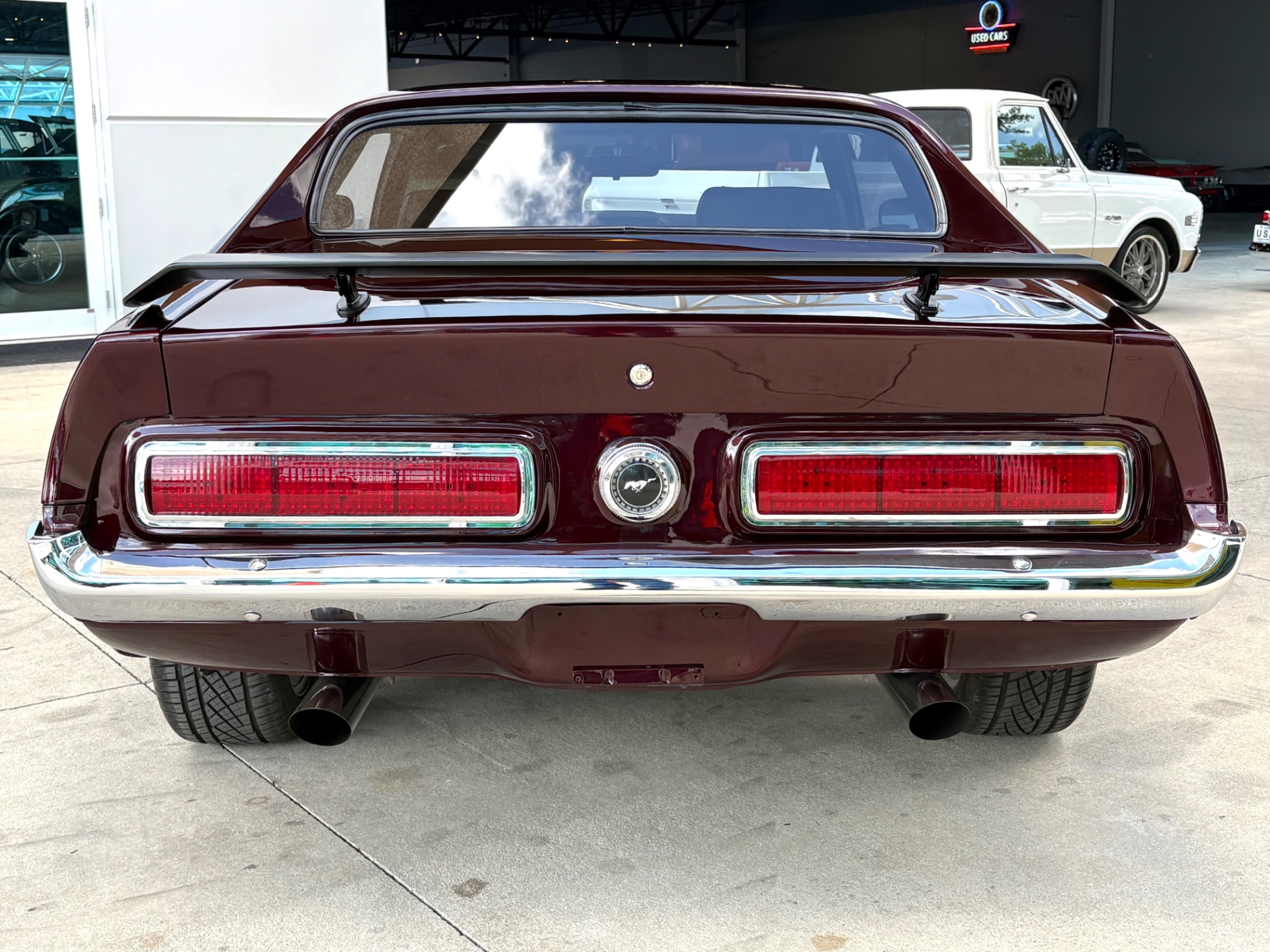
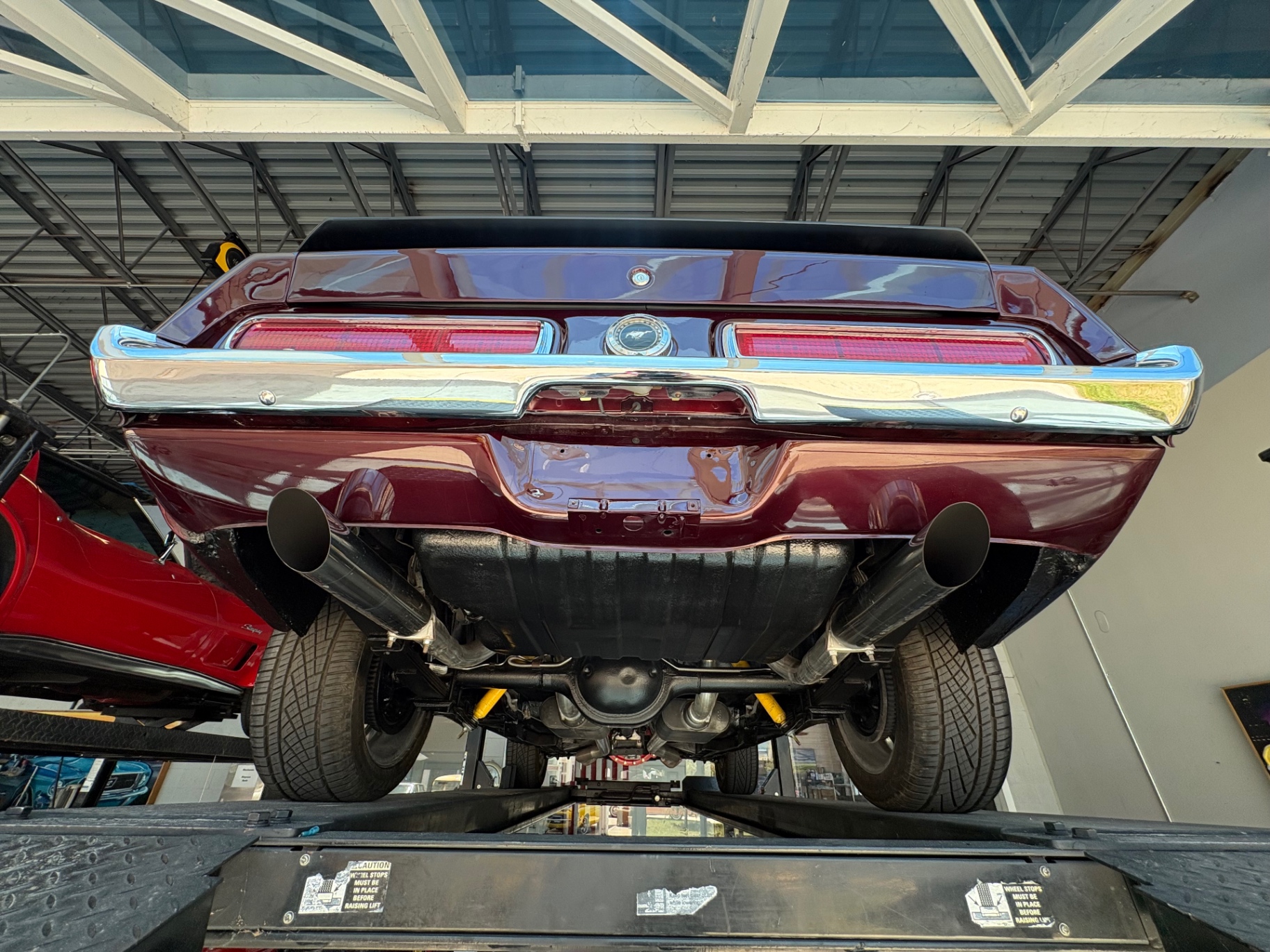
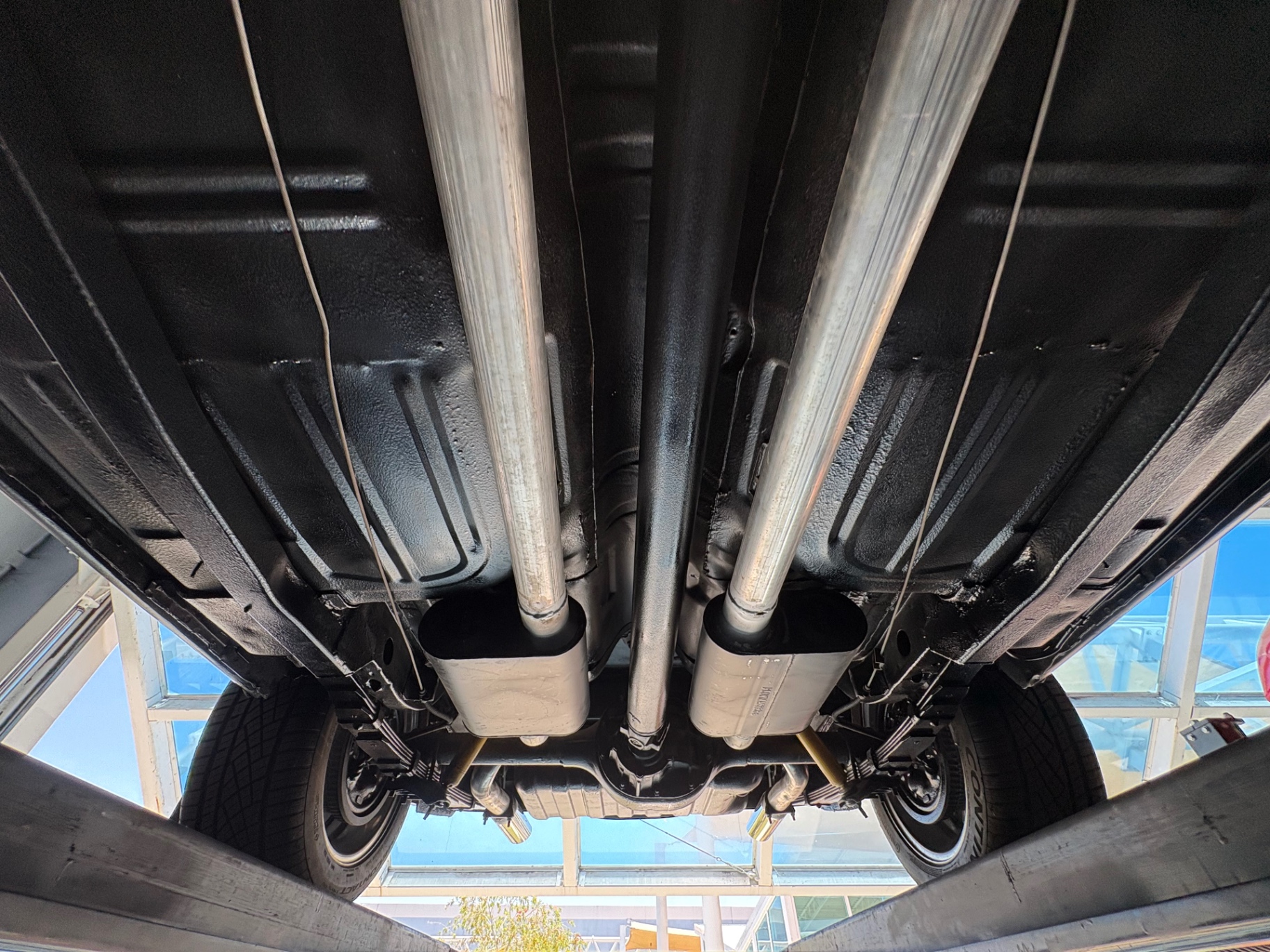
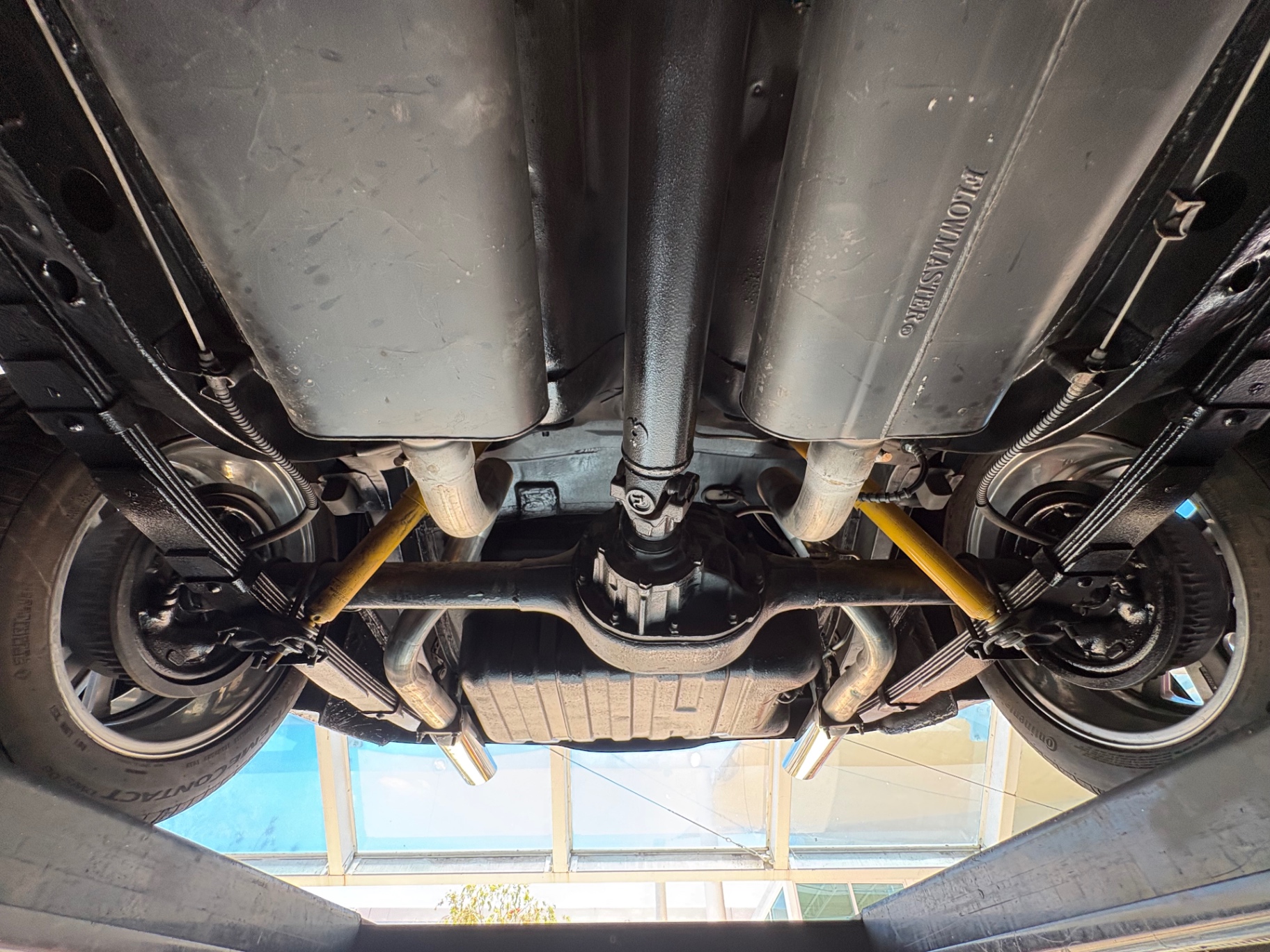
The exhaust exits through 2.5-inch Flowmaster pipes with dual tips exiting out the rear. Flowmaster mufflers use a laminar flow design that produces a distinctly American V8 sound without crossing into the kind of volume that makes long highway runs unpleasant.
Interior
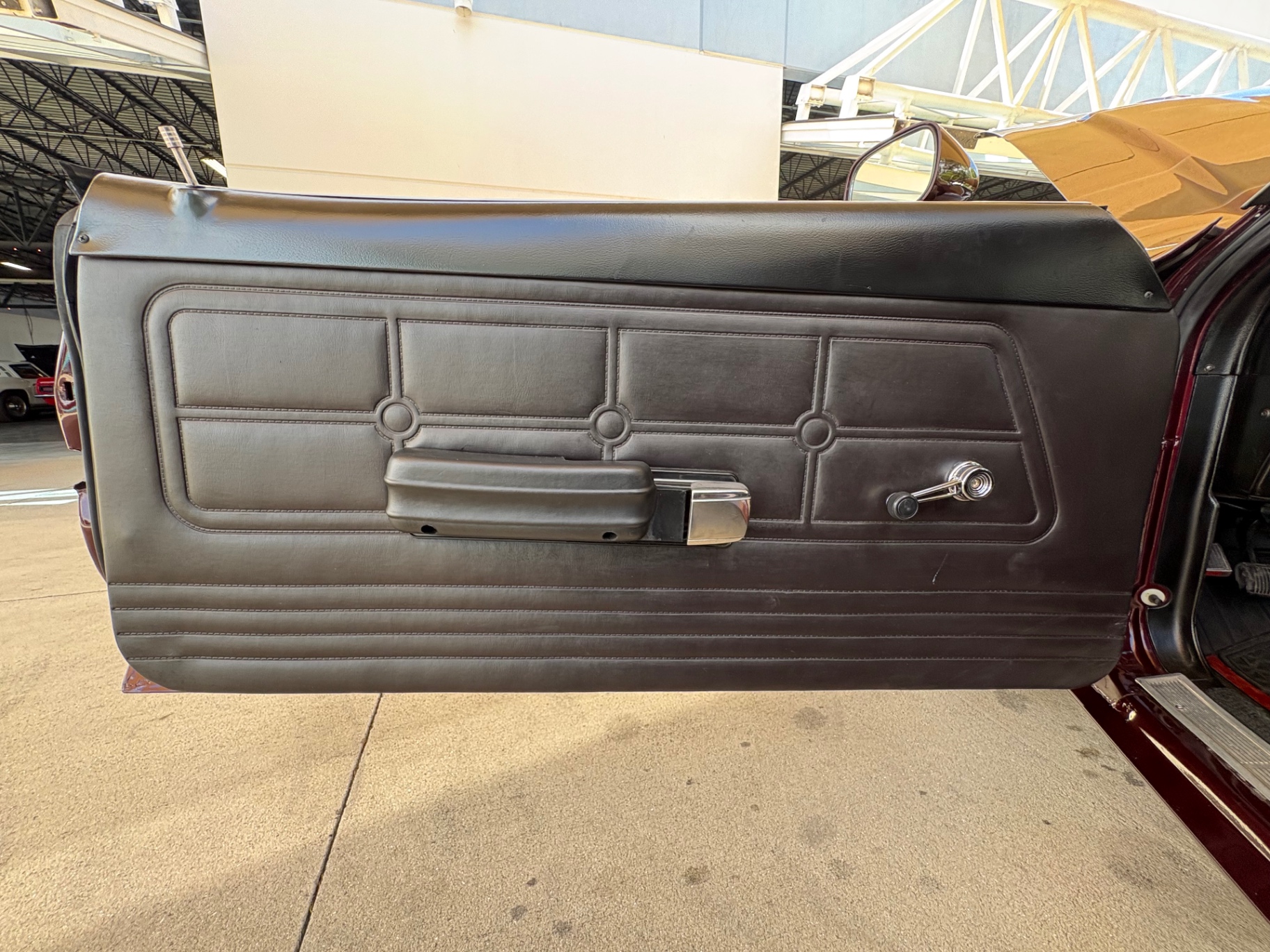
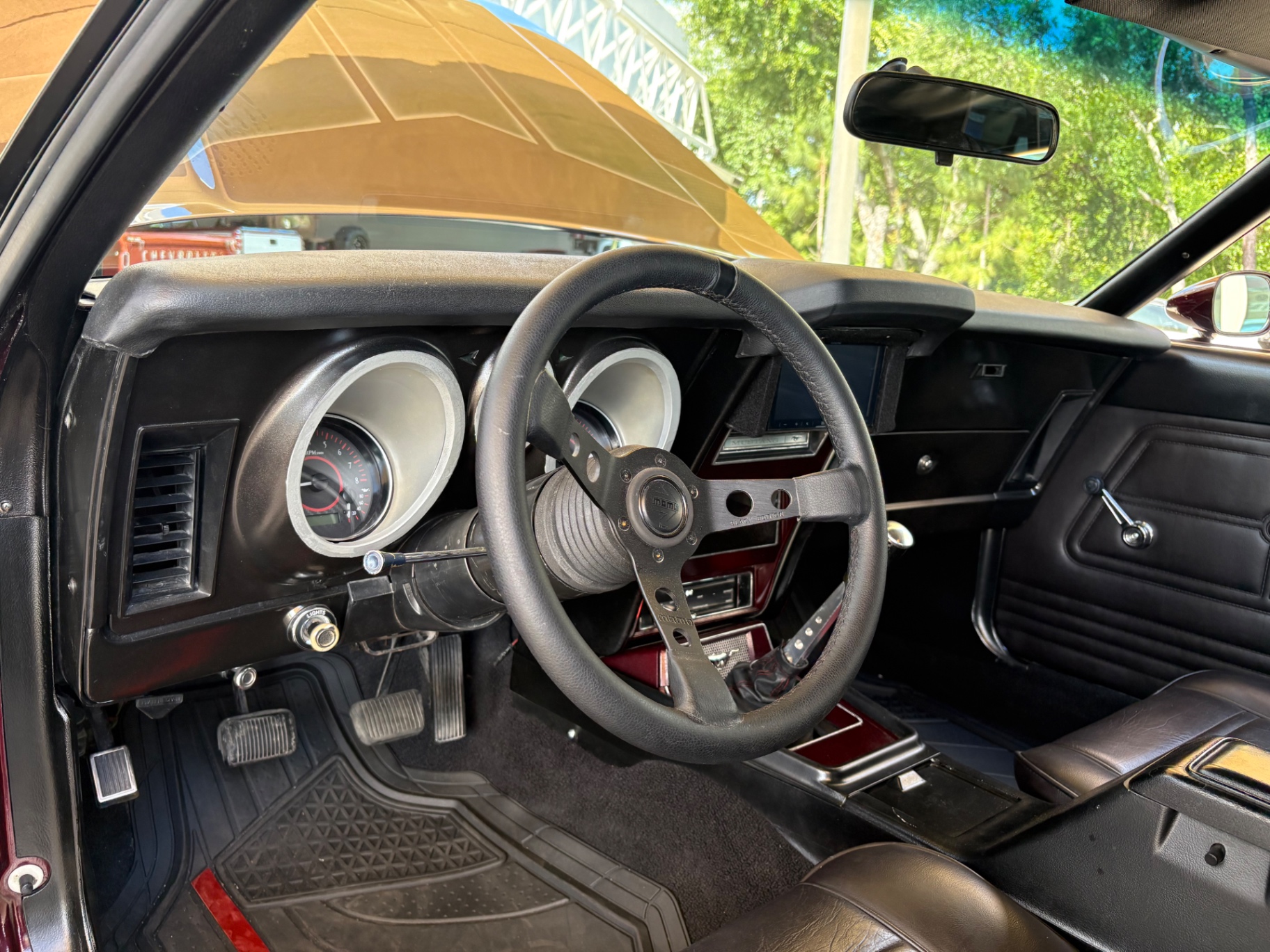
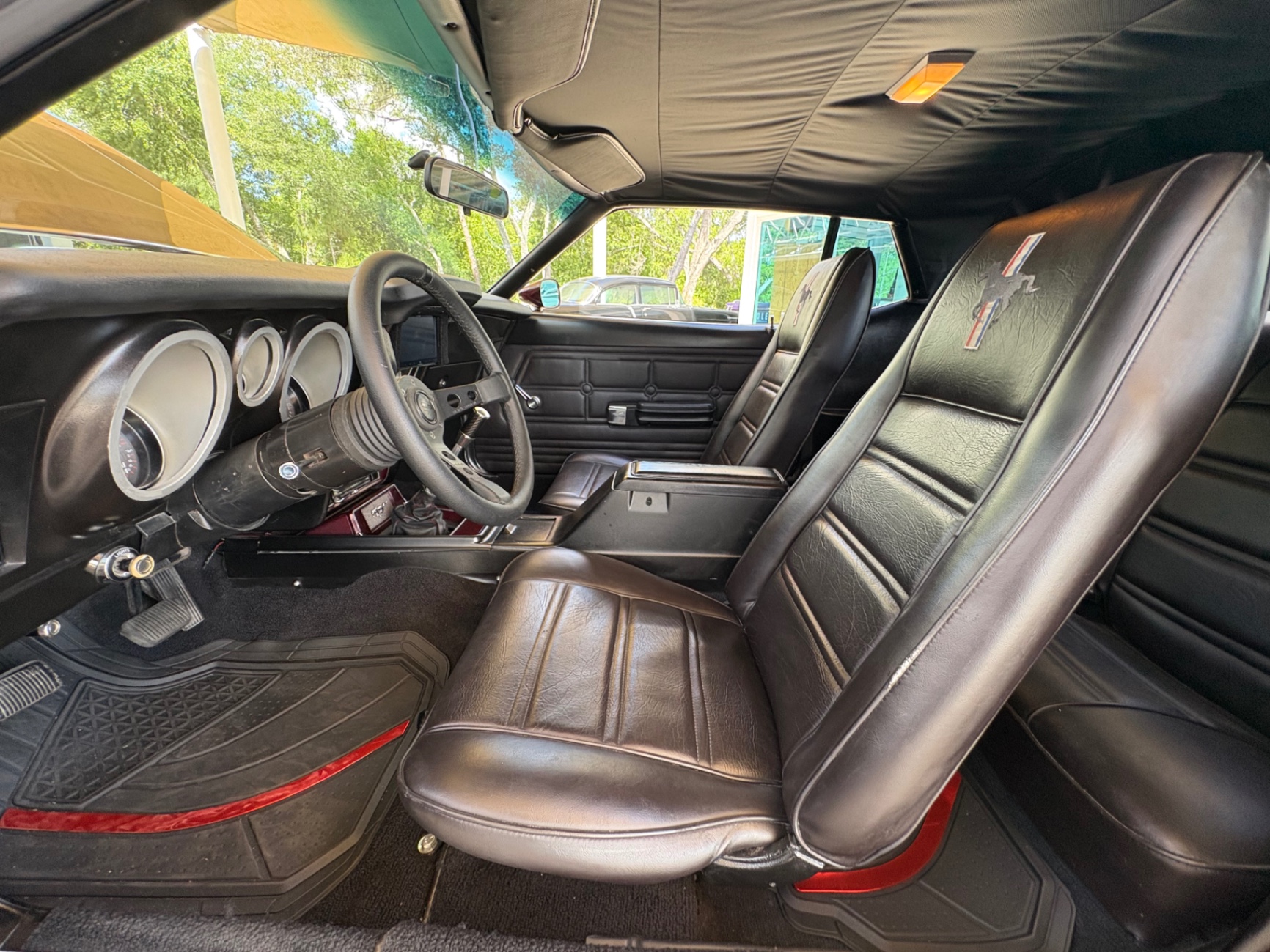
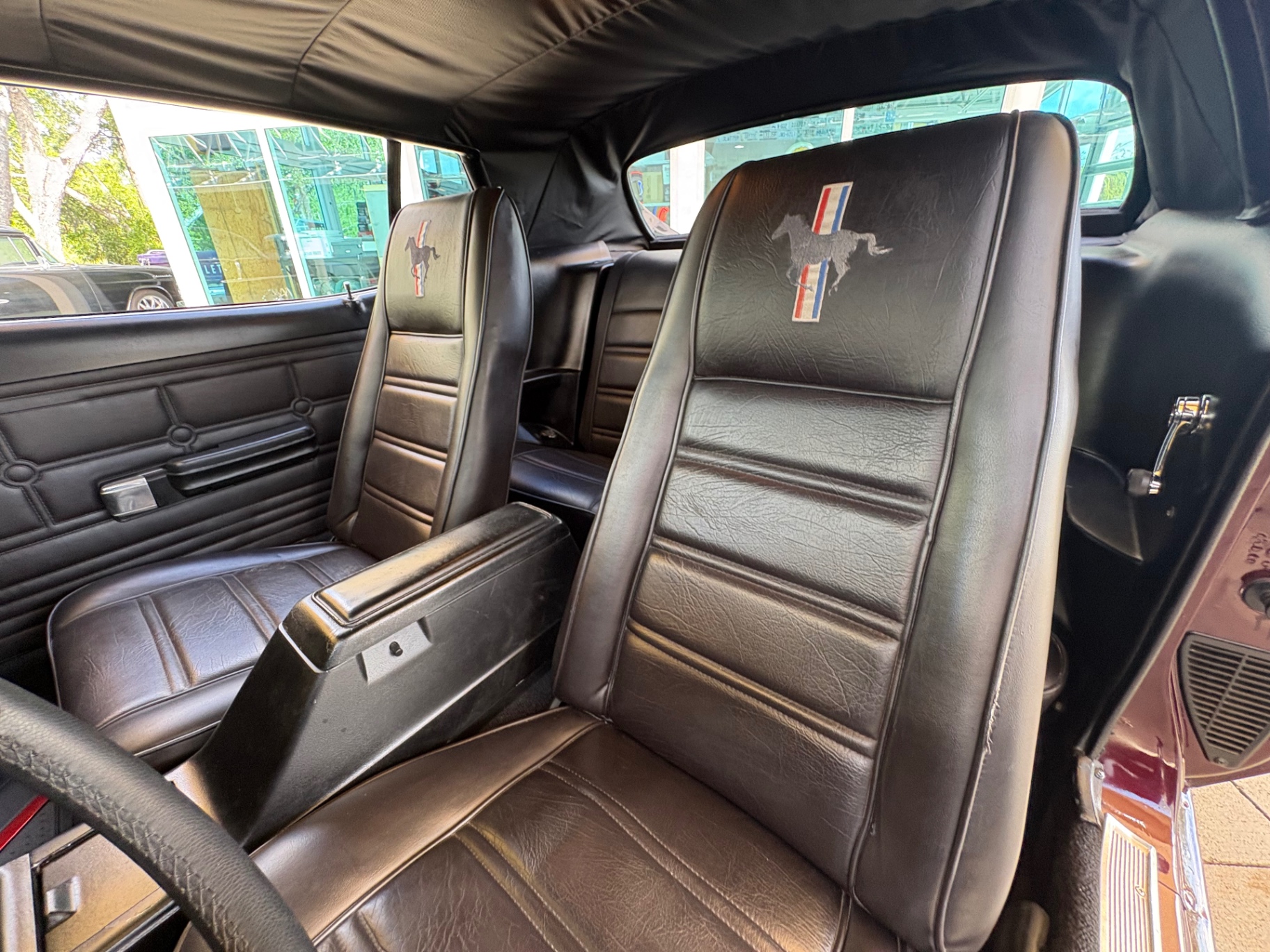
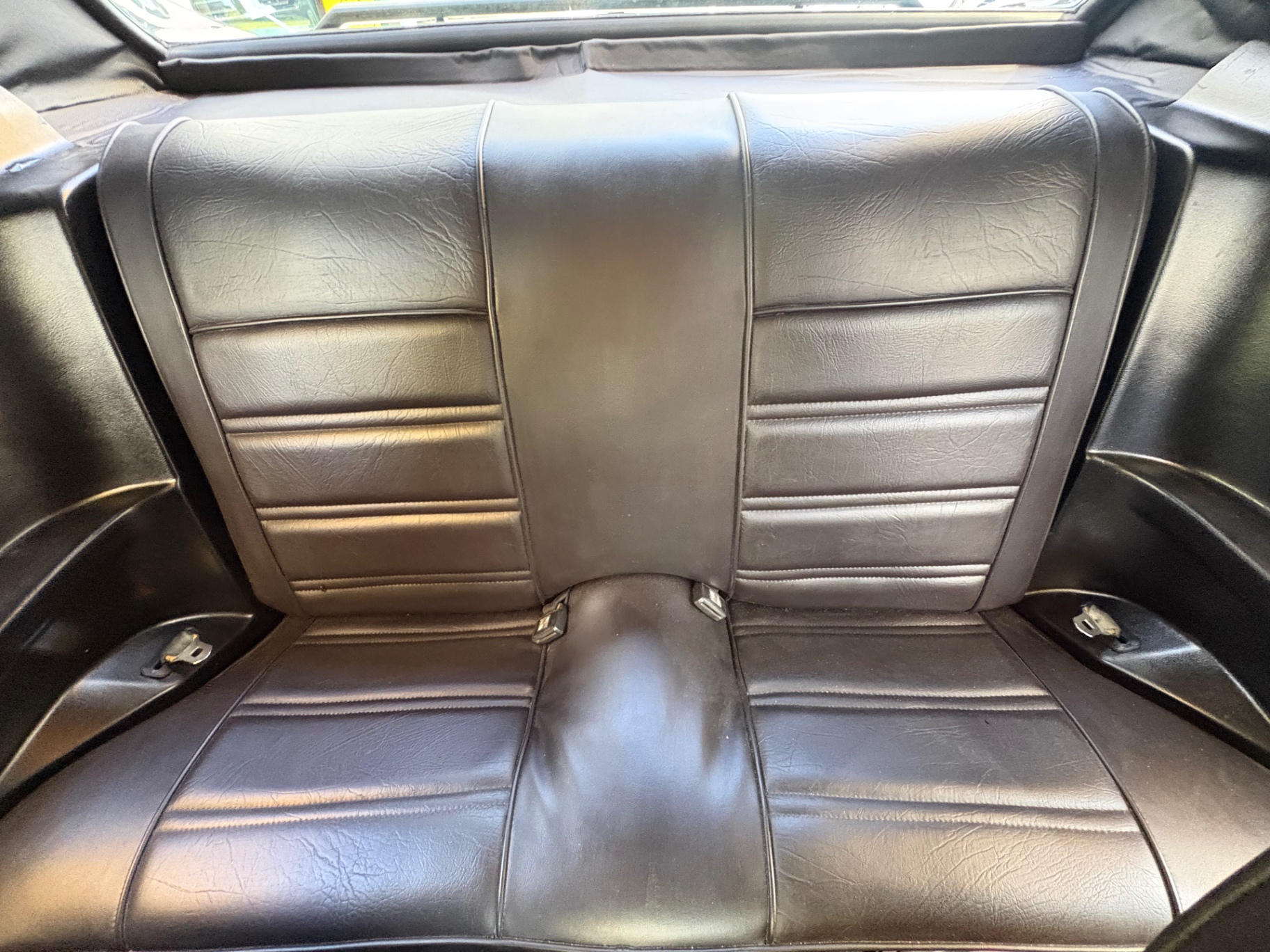
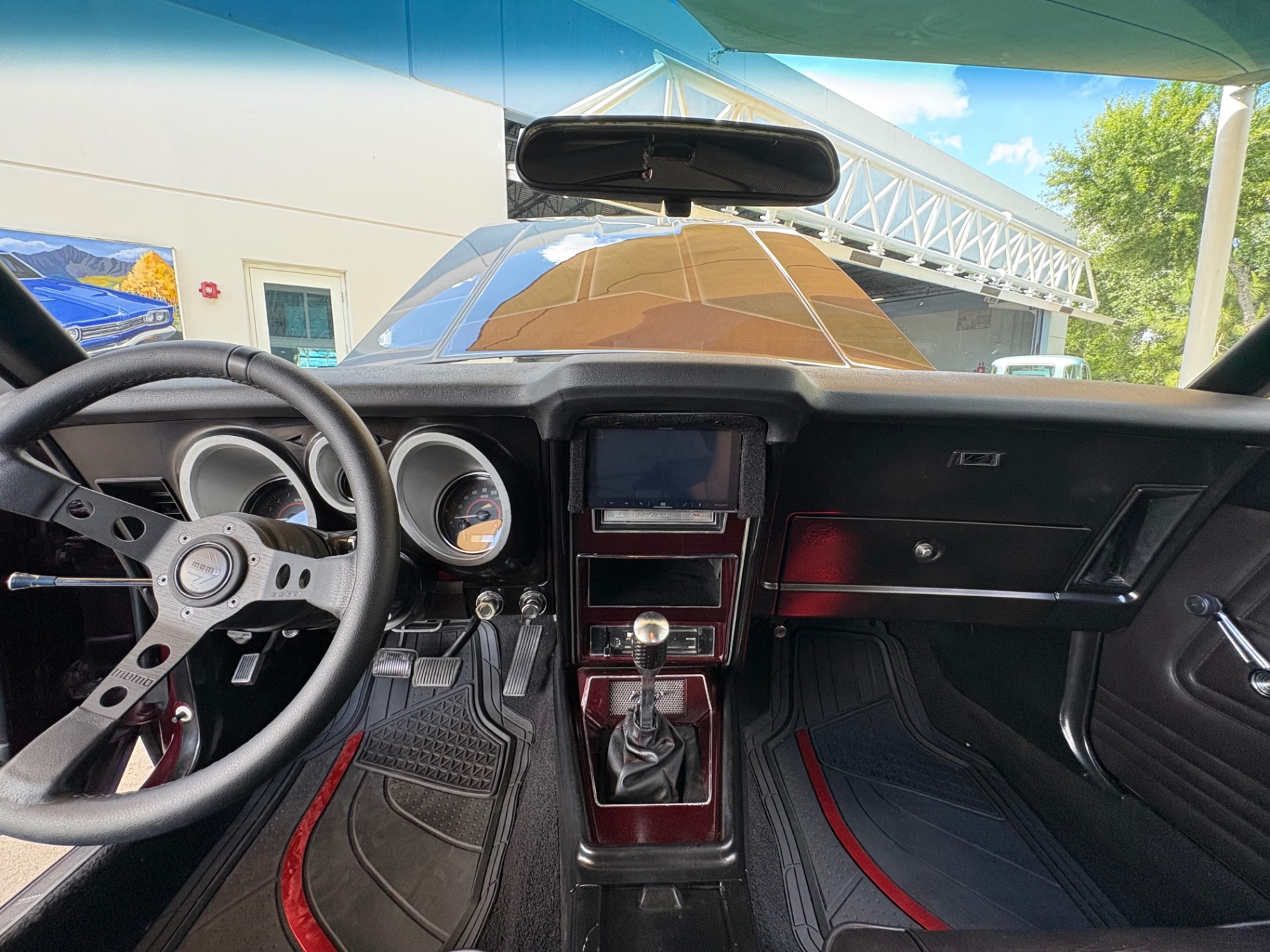
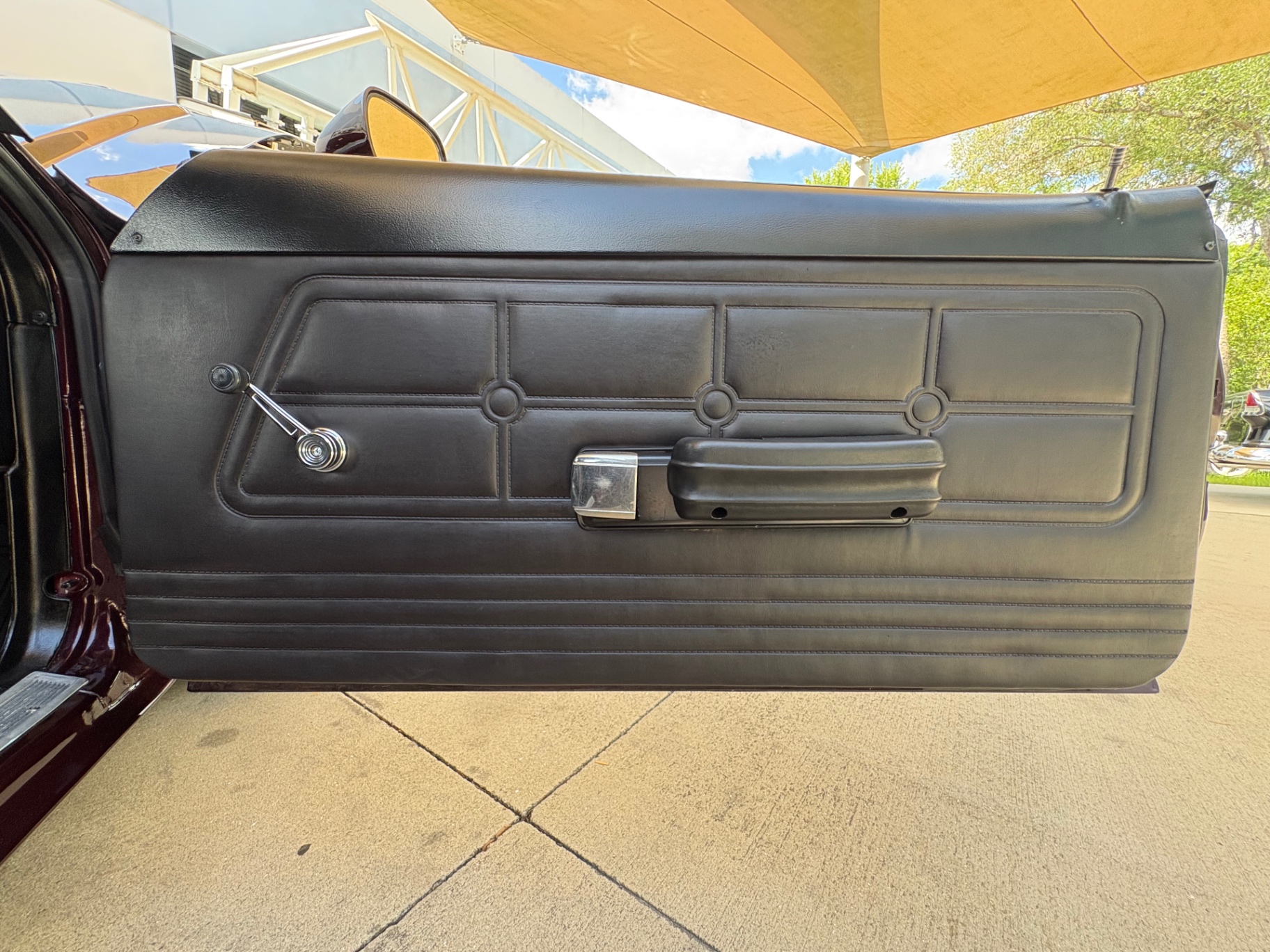
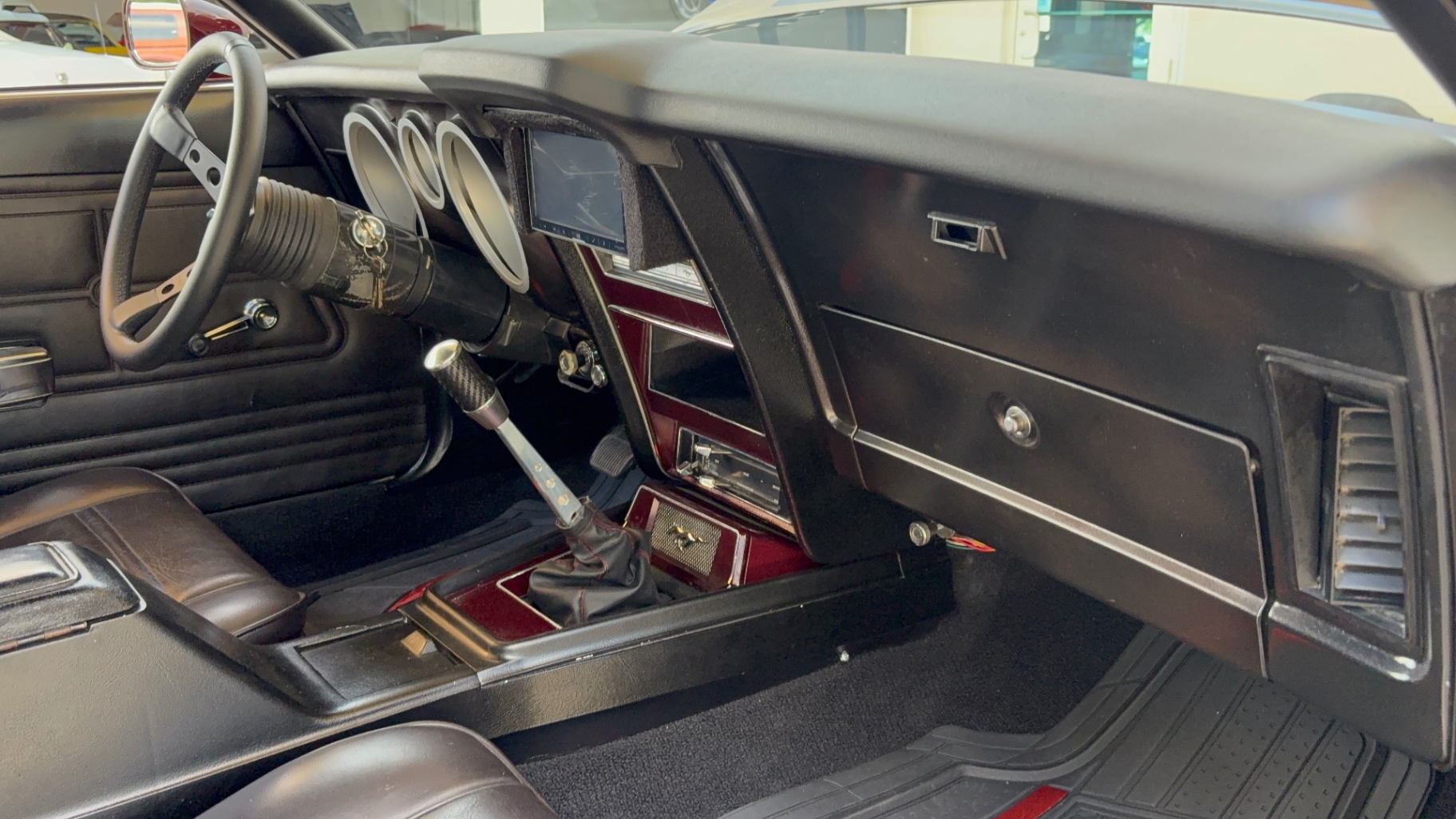
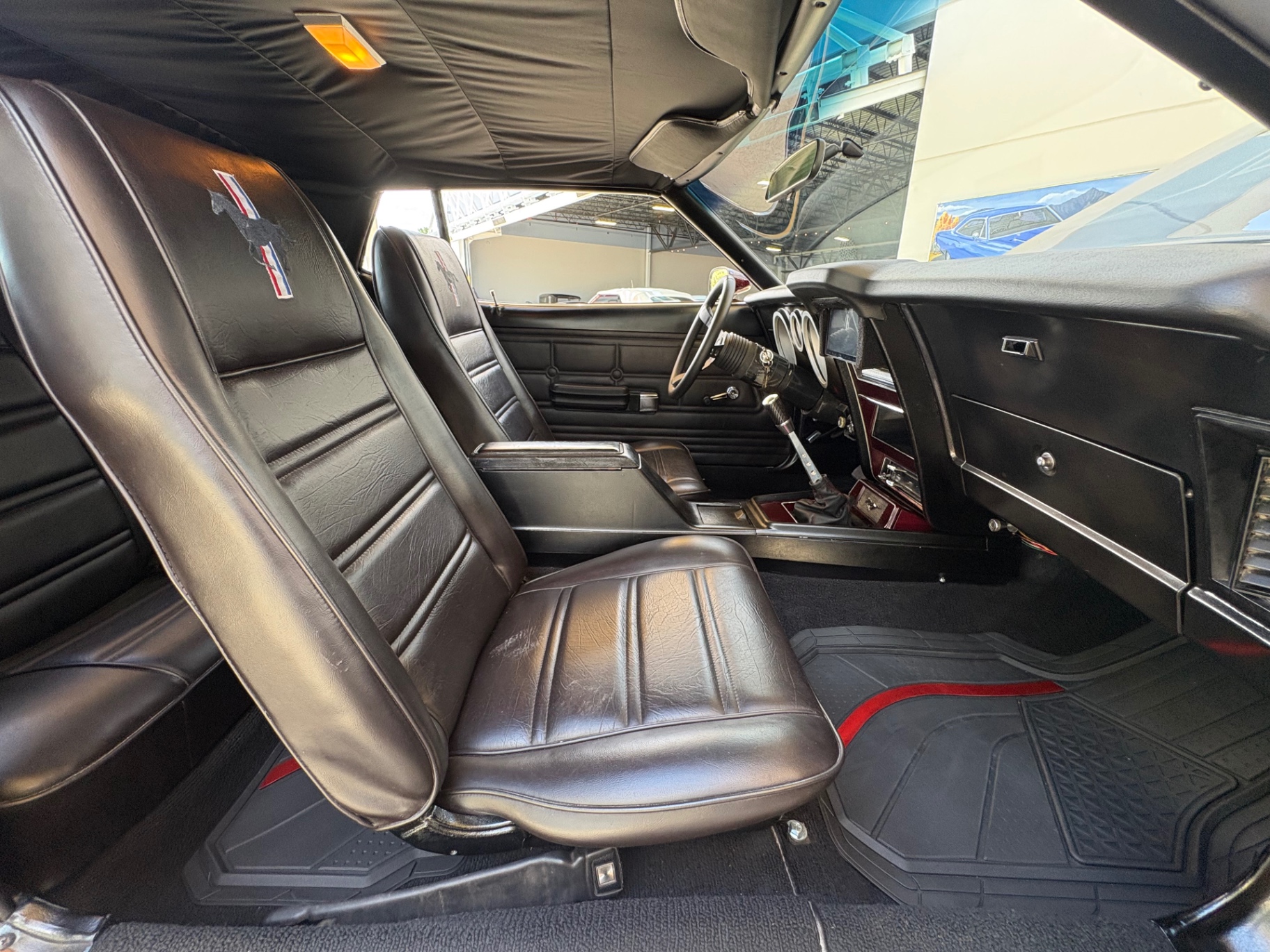
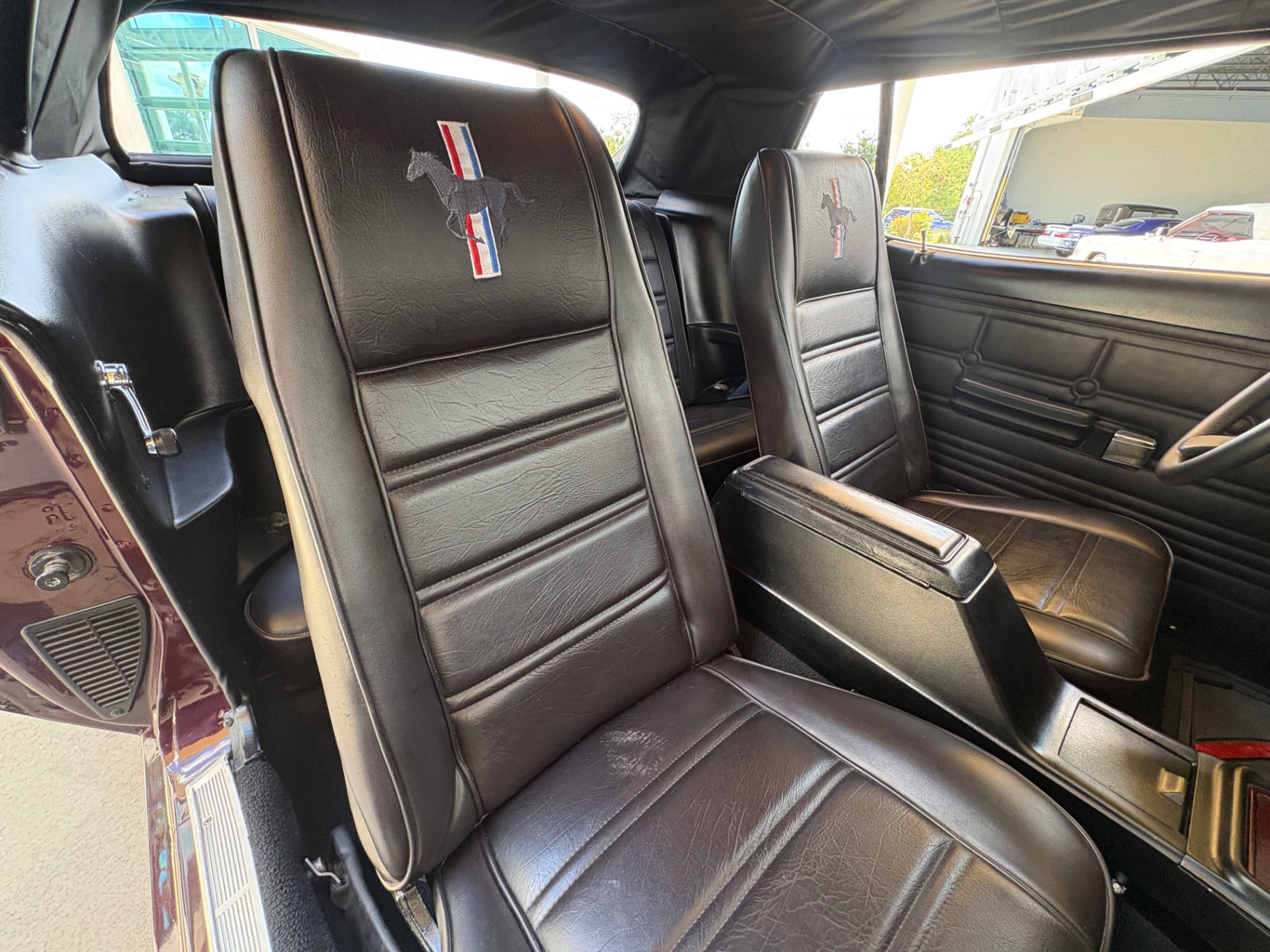
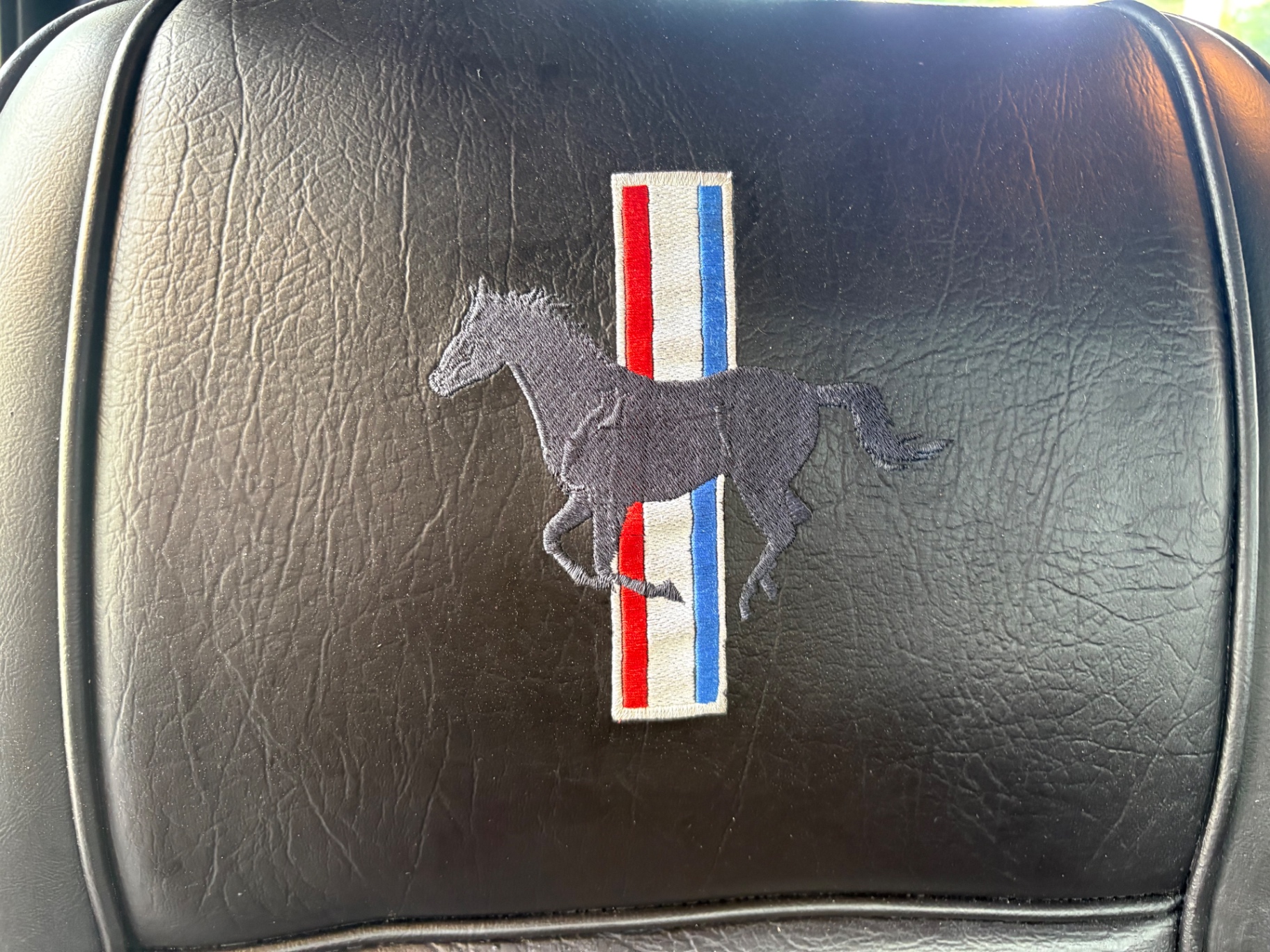
The interior on this 1973 Ford Mustang has been completely redone in black vinyl. The door panels, seats, and trim are all fresh, and the overall presentation is clean and purposeful. The factory-style layout has been retained in terms of basic structure, but the instrumentation has been replaced entirely with a Dakota Digital VHX gauge cluster. Dakota Digital's VHX system uses high-resolution LCD displays behind traditional-looking faces, so you get accurate, modern readouts — including programmable speedometer calibration — without making the dash look like a retrofit. The tachometer reads accurately with the Blueprint V8, giving the driver the feedback needed to use the Tremec's gear ratios properly.
The center console is in place between the bucket seats, which is where the Tremec shifter is located. A sport steering wheel has been fitted in place of the original, improving both feel and ergonomics. Audio is handled by an Alpine double-DIN head unit, which supports modern connectivity without requiring major modifications to the dash opening. The interior color is black throughout, which pairs well with the deep exterior finish and keeps the cabin feeling cohesive rather than assembled from mismatched parts.
Exterior
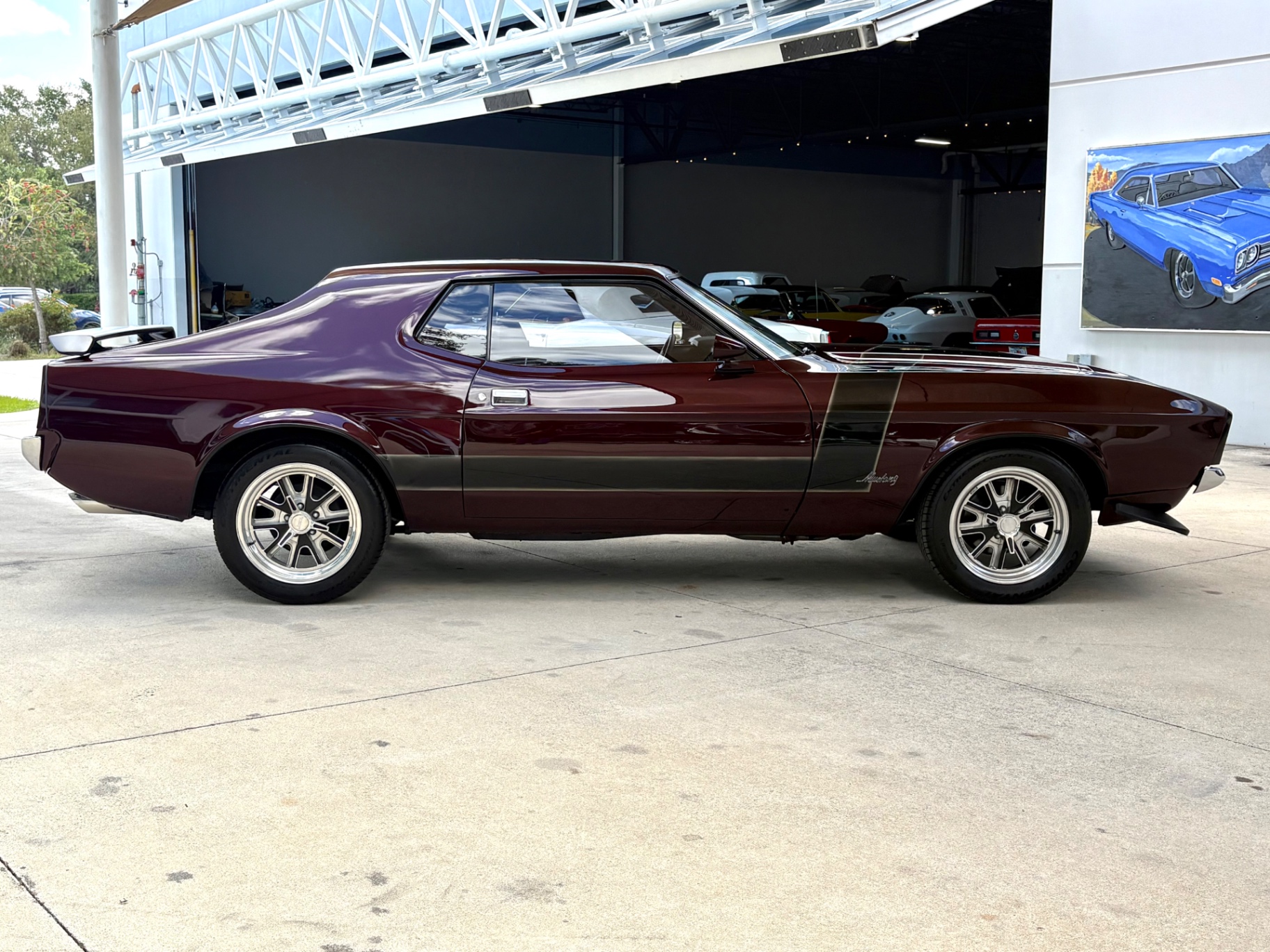
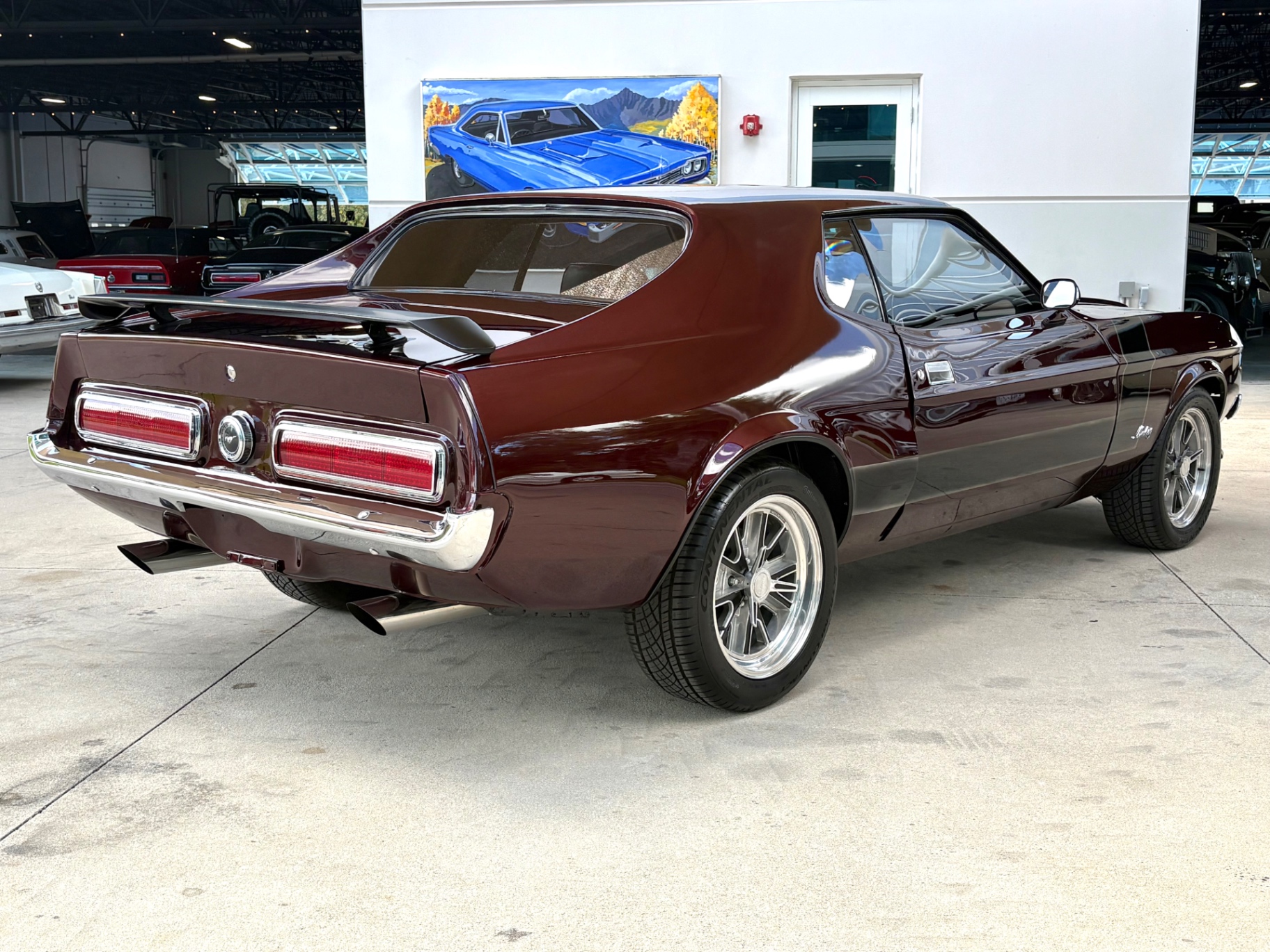
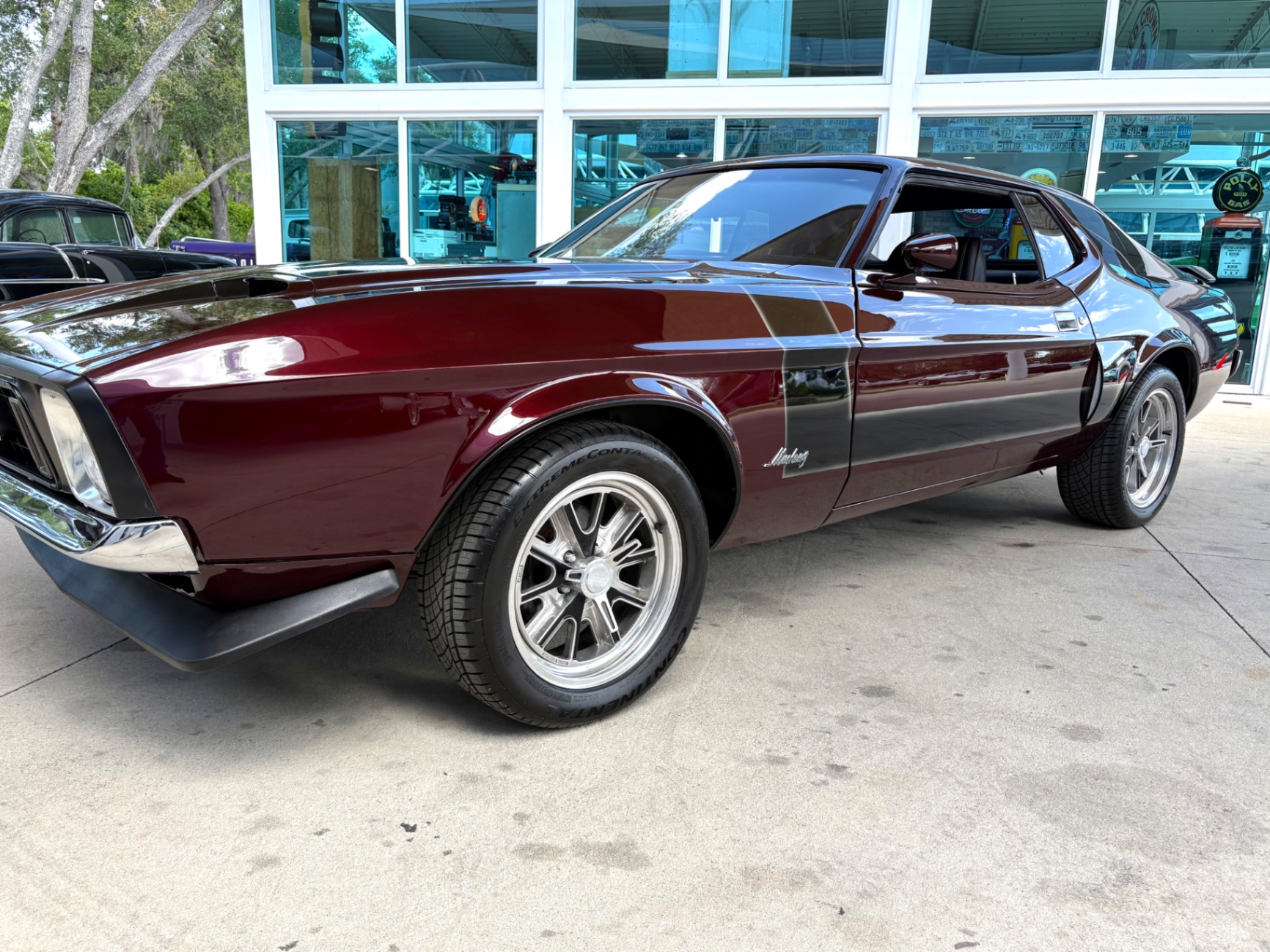
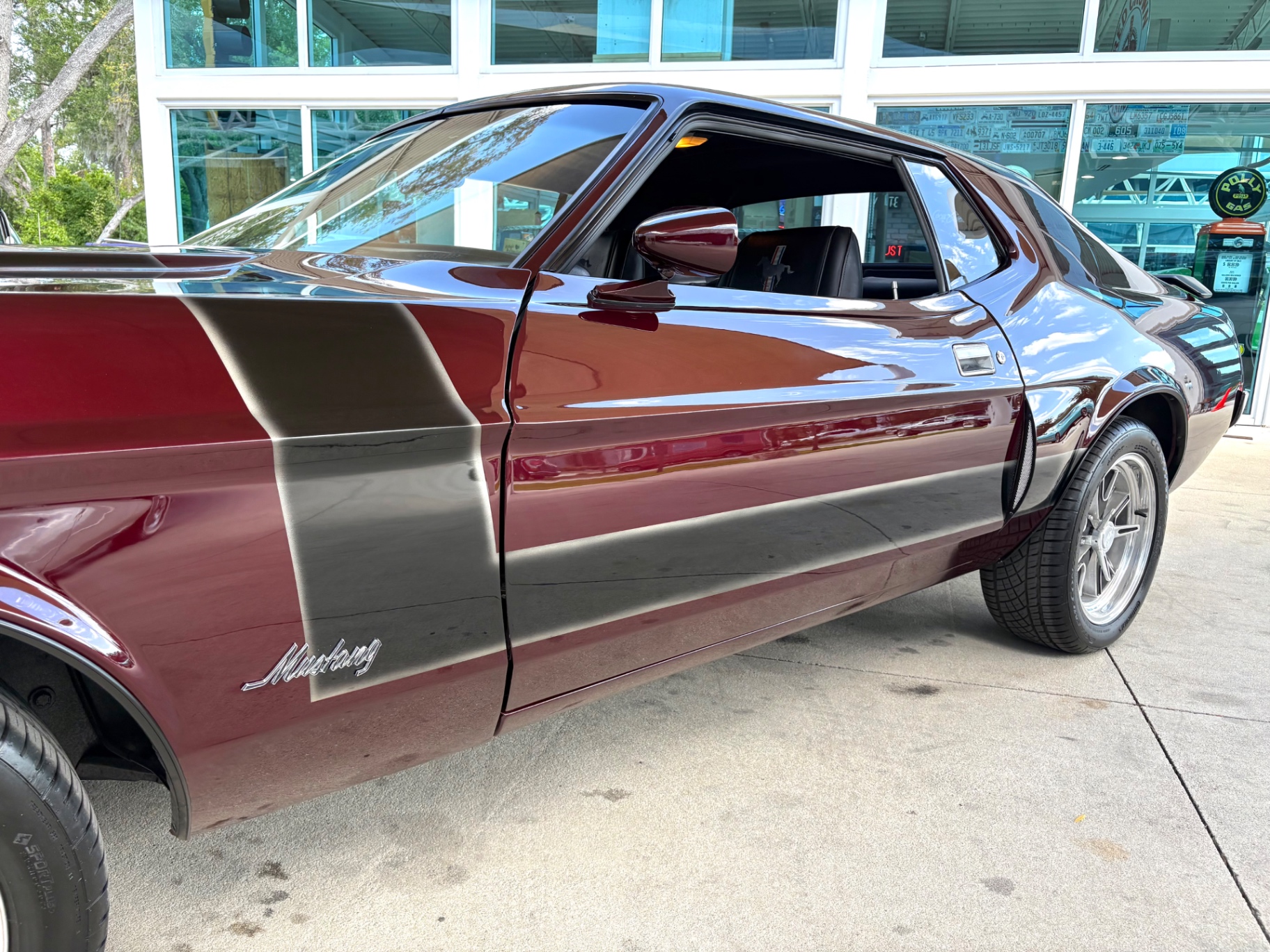
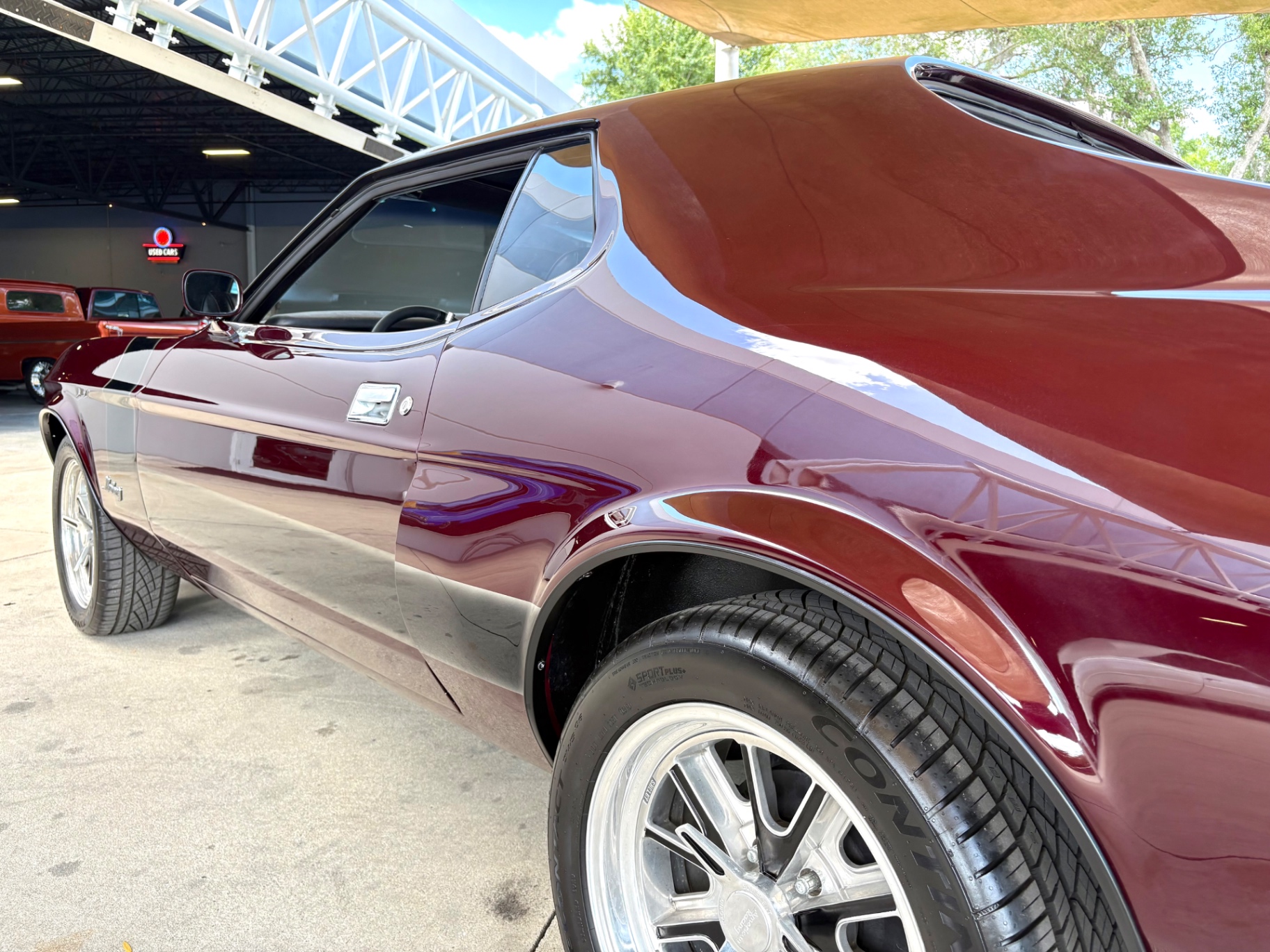
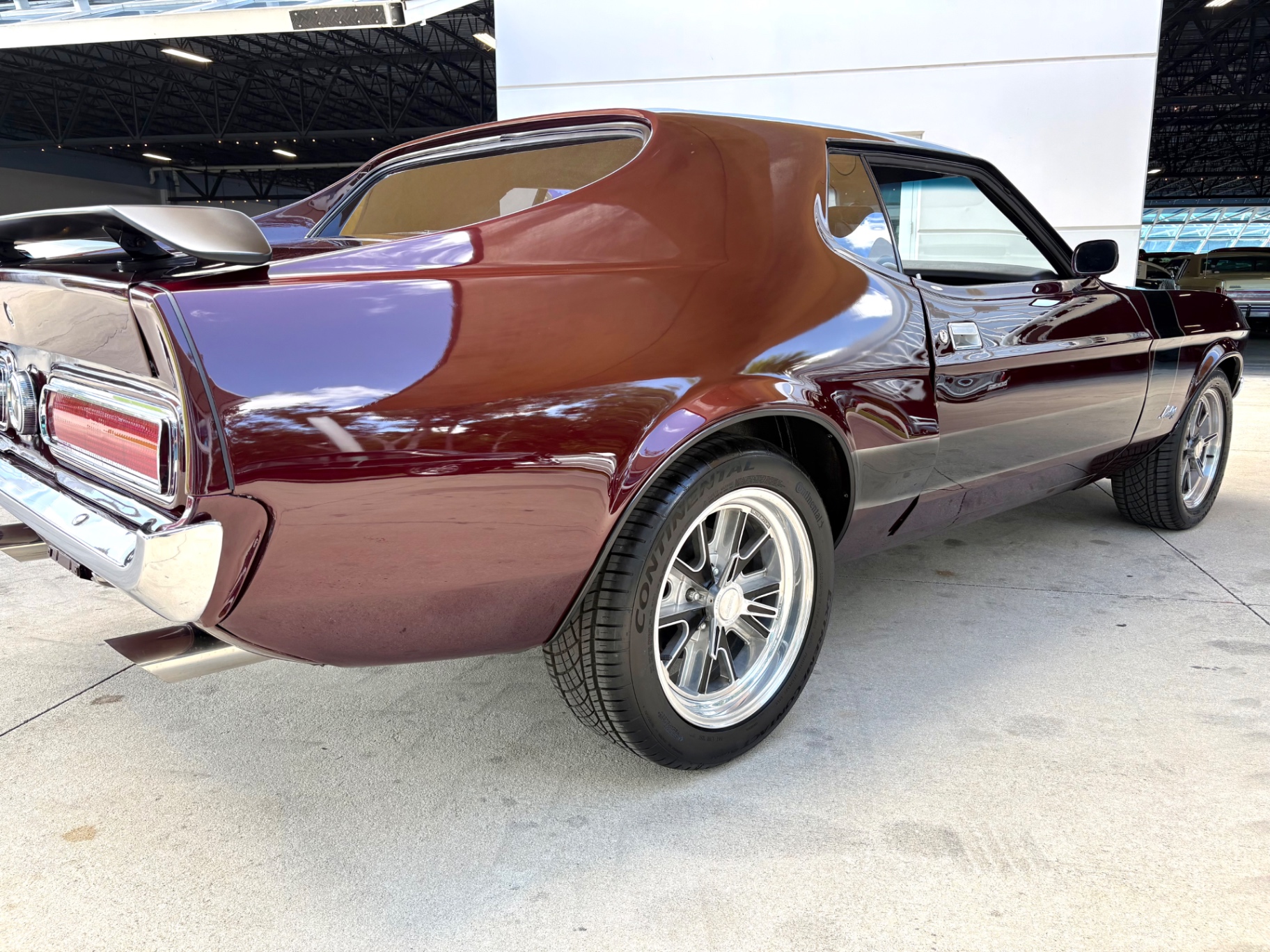
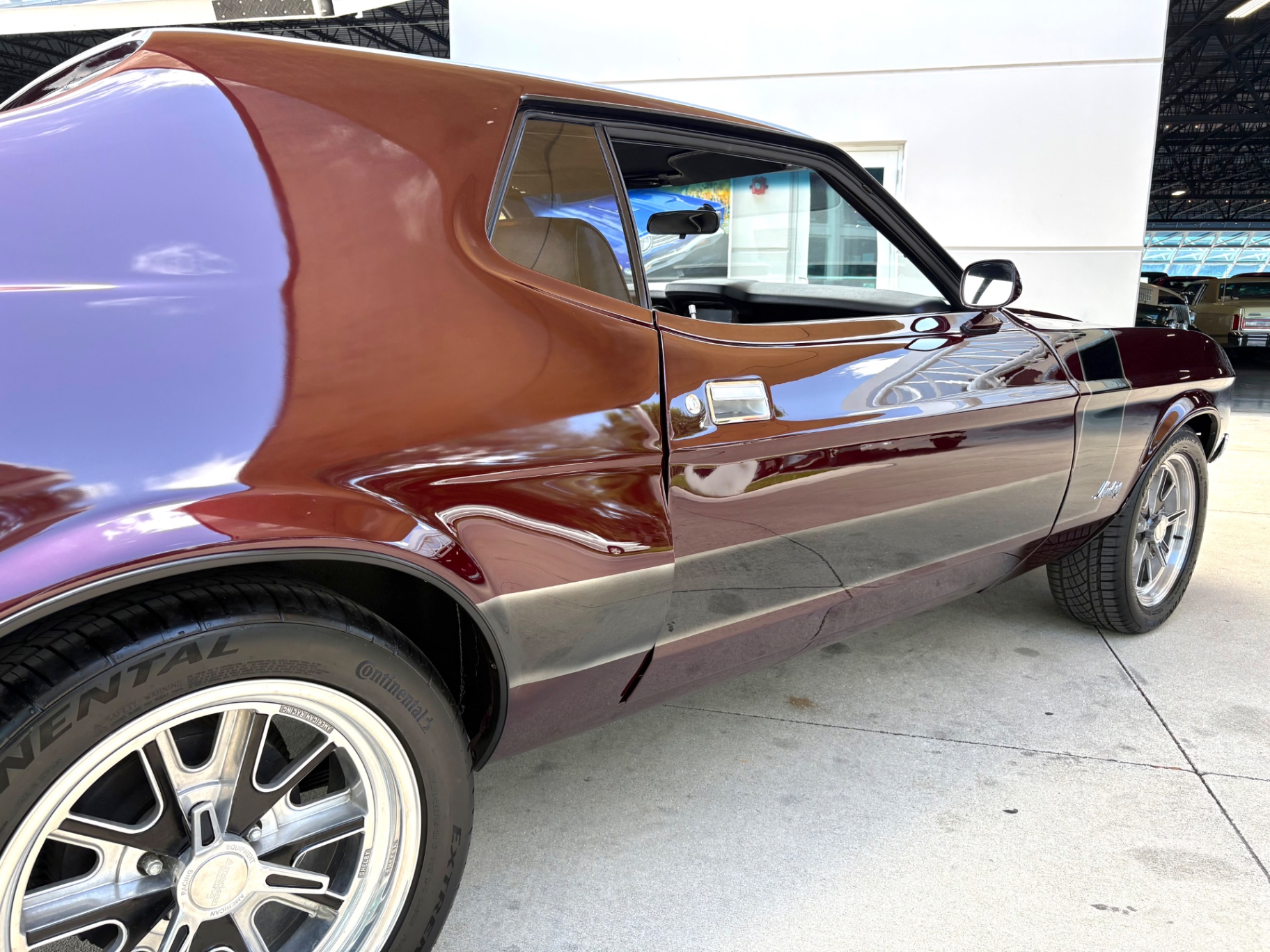
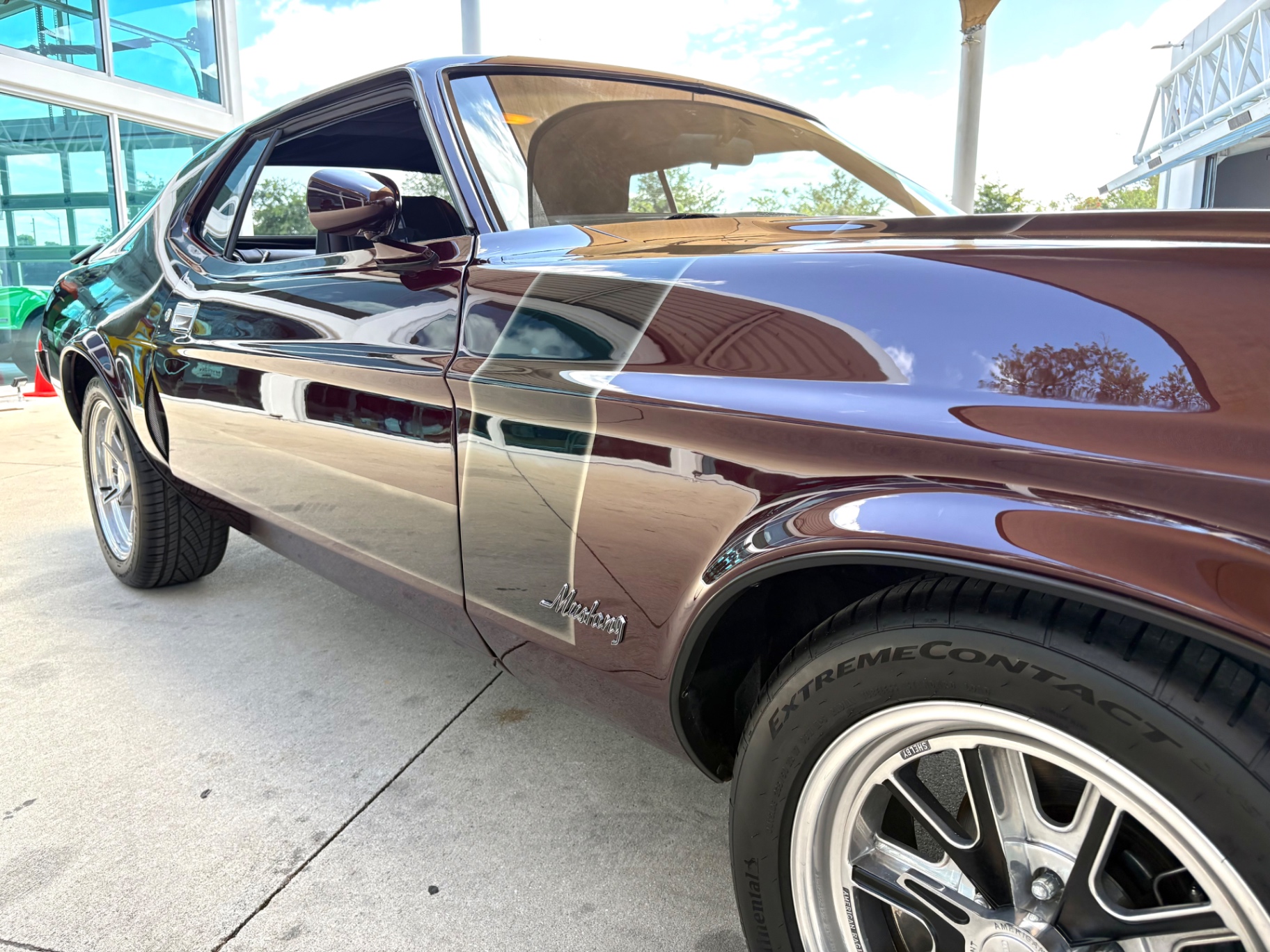
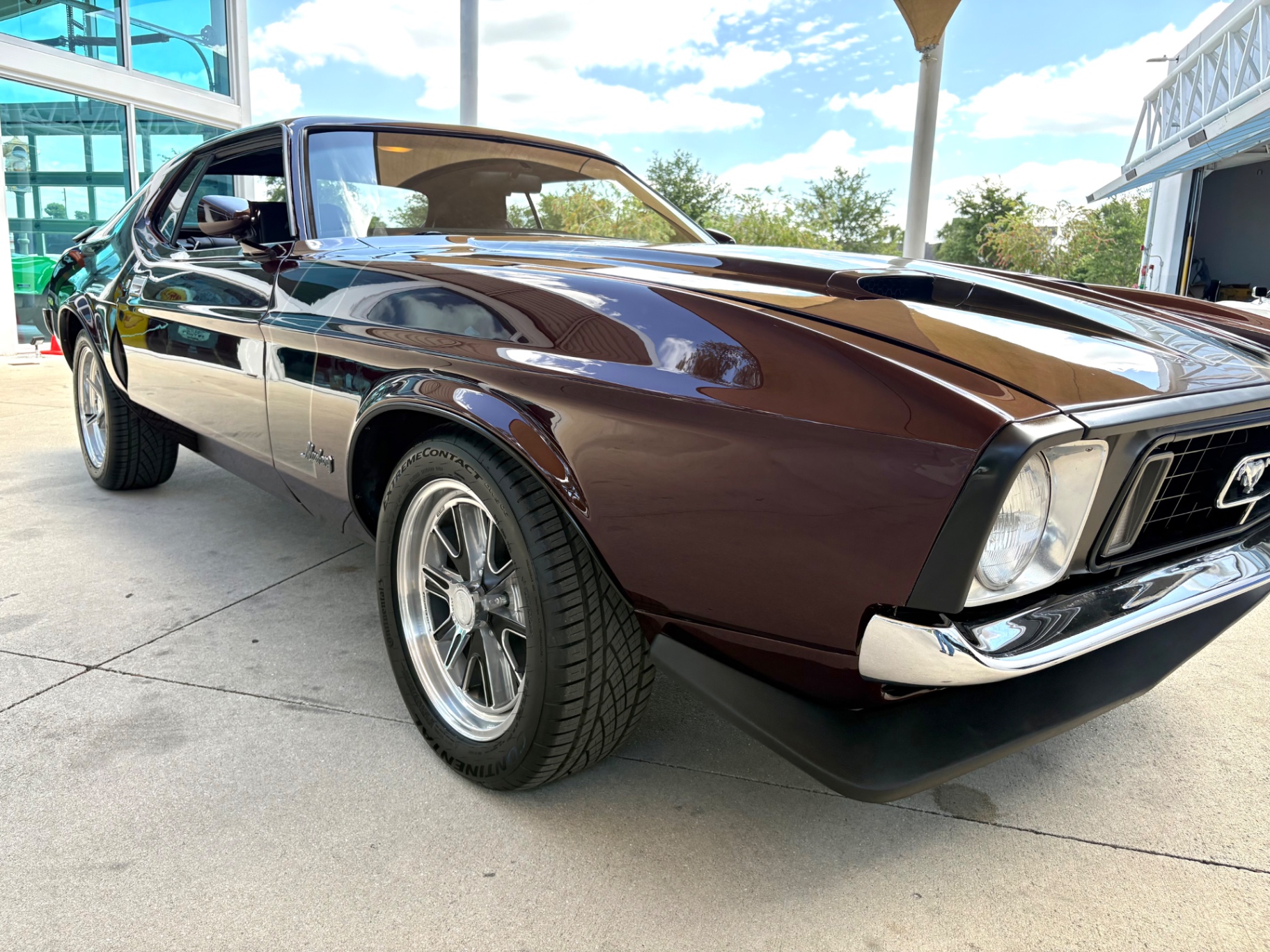
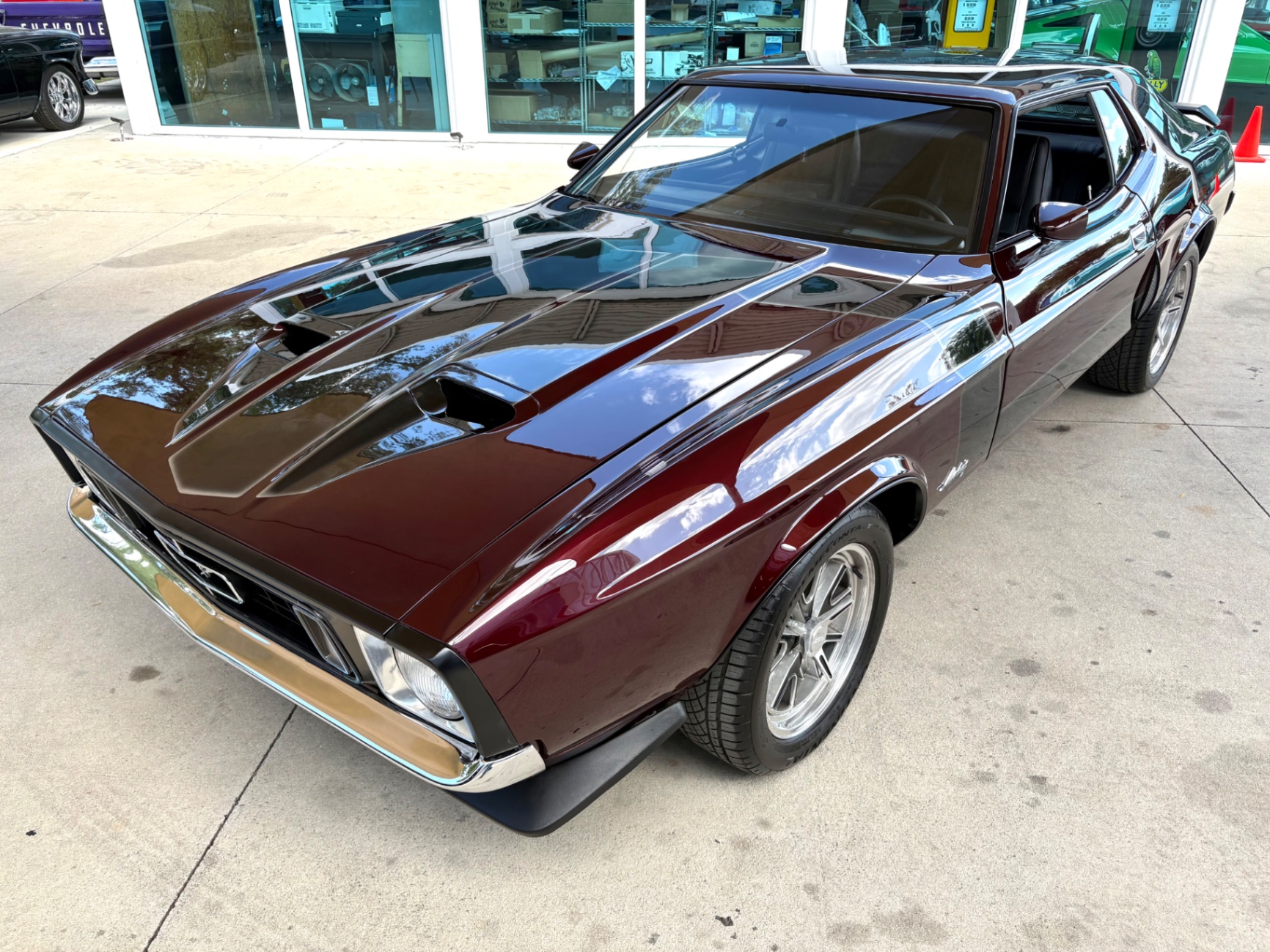
The body is finished in a deep custom PPG purple that reads almost like a dark wine or plum depending on the light — the kind of color that has real depth when the sun hits it at an angle, which the photos on this listing demonstrate clearly. PPG is a professional-grade automotive paint supplier used by OEM manufacturers and high-end custom shops alike, and the finish on this car reflects that quality. The paint has been applied over the SportsRoof body, which gives it that long, sloping rear roofline that defined the look of performance Mustangs in the early 1970s.
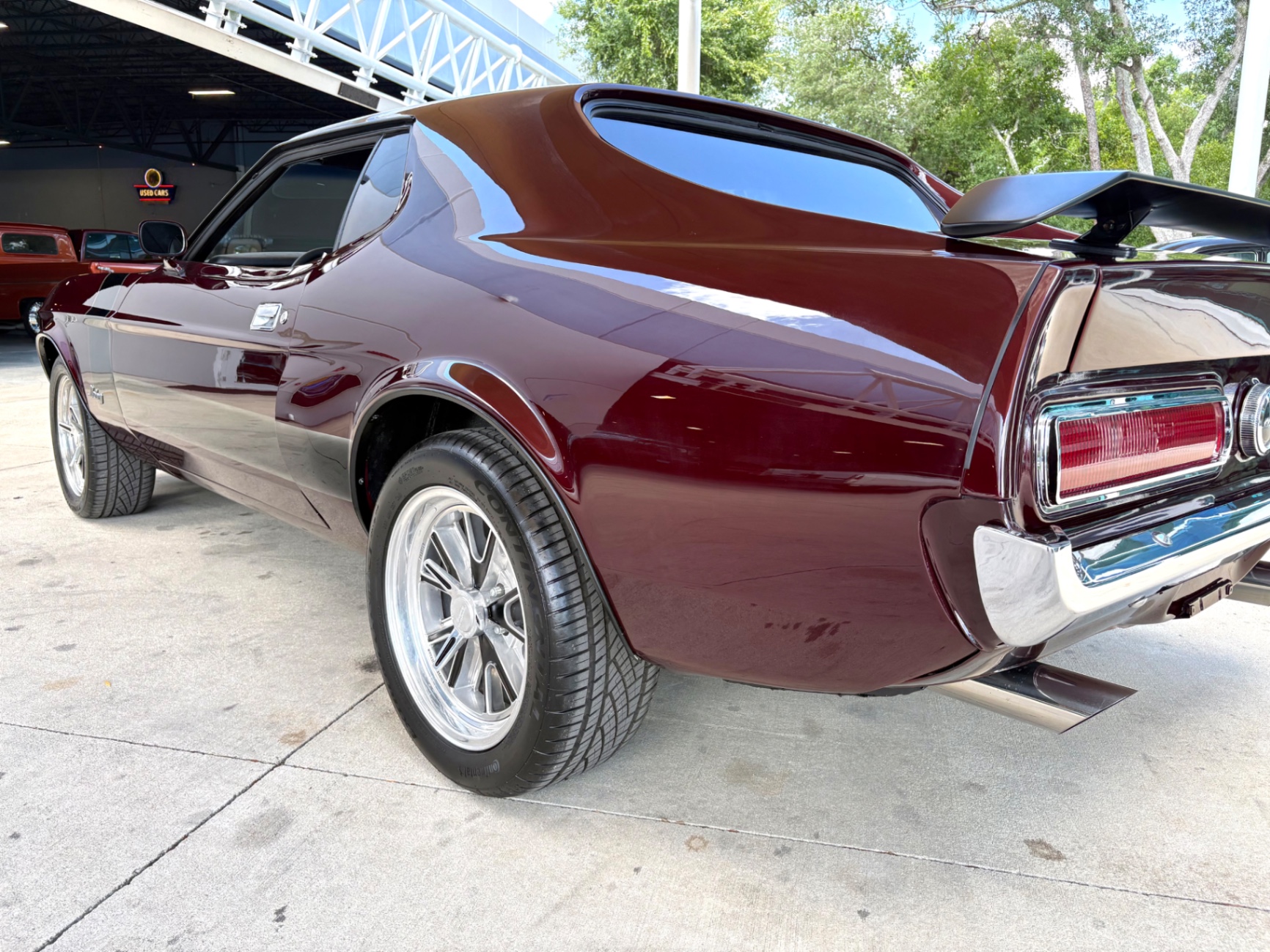
Shelby-style quarter panel vents have been added to the rear quarters, a cue taken directly from the GT500 models of the late 1960s. Sequential Shelby-style LED tail lights replace the stock units and add a functional visual element at the rear — the sequential flash pattern is immediately recognizable to anyone familiar with the original Shelby Mustangs. The chrome rear bumper provides a bright contrast against the dark paint. Dual hood scoops sit on the hood, and front and rear spoilers have been fitted to complete the profile. The car rides on 17-inch American Racing Shelby-style wheels, a design that references the classic five-spoke Shelby wheel while accommodating modern tire sizing. The wider rubber fills the wheel wells properly and contributes to the planted stance the upgraded suspension geometry produces.
Conclusion
This 1973 Ford Mustang SportsRoof represents a specific kind of build — one where someone put serious money and two years of time into creating a car that can be driven hard and driven often. The platform is the right one: the last of the classic Mustang body style, the most desirable SportsRoof configuration, built at the original Dearborn plant. The drivetrain is sorted, the chassis has been properly reinforced, and the interior and exterior have been redone to a level that matches the mechanical investment underneath. For a buyer who wants a Mustang that looks the part and actually performs to match — without the compromises of a stock 1973 or the expense of continuing someone else's unfinished project — this car is worth a close look.
To schedule a time to see this 1973 Ford Mustang in person, contact Skyway Classics in Sarasota, Florida at 941-254-6608.
Disclaimer
Information found on the website is presented as given to us by the owner of the car, whether on consignment or from the owner we bought it from. Some Photos, materials for videos, descriptions and other information are provided by the consignor/seller and is deemed reliable, but Skyway Classics does not warranty or guarantee this information. Skyway Classics is not responsible for information that may incorrect or a publishing error. The decision to purchase should be based solely on the buyers personal inspection of the vehicle or by a professional inspection service prior to offer or purchase being made.
1973 Ford Mustang Fastback — Resto-Mod Build with Blueprint 347 V8 and Over $75,000 Invested
Why This Car Is Special
The 1973 Ford Mustang holds a specific and often underappreciated place in Mustang history. It was the last of the original "classic" Mustangs before Ford completely restyled the car into the much-maligned Mustang II for 1974. That makes the 1973 model year the closing chapter on nearly a decade of the body style that started it all. Ford sold just over 134,000 Mustangs that year across all body styles, and the fastback — formally called the SportsRoof — remains the most sought-after configuration of the bunch. The long roofline, the aggressive rear quarter treatment, and the overall proportions of the SportsRoof body are what most people picture when they close their eyes and think "Mustang."
What you have here is not a preserved survivor and it is not pretending to be one. This 1973 Ford Mustang has been fully transformed into a serious resto-mod over a two-year build process with more than $75,000 invested in the work. The philosophy behind a resto-mod like this is straightforward: keep the iconic shape, throw out everything that made the original drive like a 50-year-old car, and replace it with hardware that can actually keep up with modern traffic — and then some. Every major system on this car has been addressed, from the engine and transmission to the brakes, suspension, fuel delivery, exhaust, interior, and paint. This is the kind of build where the money spent is visible at every point of contact.
The VIN on this car decodes to confirm it is a 1973 Ford Mustang SportsRoof (fastback body style), built at the Dearborn, Michigan assembly plant — the same facility where the very first Mustangs rolled off the line in 1964. Dearborn-built Mustangs carry a certain historical weight for that reason alone.
Features List
- Blueprint Engines 347 cubic inch stroker V8, rated at 347 horsepower
- Tremec TKO 5-speed manual transmission
- Edelbrock intake manifold
- 2.5-inch Flowmaster dual exhaust
- Power disc brakes (front and rear)
- Power steering
- Upgraded suspension with subframe connectors
- Aluminum radiator with dual electric cooling fans
- 17-inch American Racing Shelby-style wheels
- Dakota Digital VHX gauge cluster with tachometer
- Alpine double-DIN stereo
- Sequential Shelby-style LED tail lights
- Complete new black vinyl interior
- Center console
- Sport steering wheel
- Dual functional hood scoops
- Front and rear spoilers
- Shelby-style quarter panel vents
- Custom PPG exterior paint
- Chrome rear bumper
Mechanical
The engine is a Blueprint Engines 347 cubic inch stroker V8 producing 347 horsepower. Blueprint Engines, based in Kearney, Nebraska, builds their engines on CNC-machined short blocks with forged rotating assemblies and runs each engine on a dyno before it ships. The 347 stroker is built on the Ford small-block architecture — essentially a 302 block with a longer-stroke crankshaft that brings displacement up to 347 cubic inches — and it is a well-proven combination in the Mustang world. Topped with an Edelbrock intake manifold and a carburetor with a matching air cleaner assembly, the engine compartment is neatly laid out and clearly the work of someone who thought about how the finished product would look as well as perform.
Power routes through a Tremec TKO 5-speed manual transmission, which is a significant upgrade over any period-correct gearbox. The TKO series was engineered specifically for high-torque small-block applications and is rated to handle up to 600 lb-ft of torque depending on the specific build. It offers tighter gear spacing than the old Toploader units and includes an overdrive fifth gear, which makes highway cruising at modern speeds practical without thrashing the engine. This is not a show car that gets trailered to events — it is set up to be driven.
Stopping power comes from power-assisted disc brakes, a critical upgrade on a car this age. The factory 1973 Mustang used front discs as an available option but drum brakes in the rear were common. Having discs at all four corners with a power booster brings the braking capability in line with what the engine can produce. The suspension has been upgraded throughout and the chassis has been tied together with subframe connectors, which address one of the known structural weaknesses of the unitized Mustang body. Without subframe connectors, these cars flex noticeably under hard acceleration and cornering — with them, the chassis behaves significantly more like a true unibody and the suspension geometry stays predictable. Cooling is handled by an aluminum radiator paired with dual electric fans, a combination that keeps underhood temperatures in check even in slow traffic on a hot Florida afternoon.
The exhaust exits through 2.5-inch Flowmaster pipes with dual tips exiting out the rear. Flowmaster mufflers use a laminar flow design that produces a distinctly American V8 sound without crossing into the kind of volume that makes long highway runs unpleasant.
Interior
The interior on this 1973 Ford Mustang has been completely redone in black vinyl. The door panels, seats, and trim are all fresh, and the overall presentation is clean and purposeful. The factory-style layout has been retained in terms of basic structure, but the instrumentation has been replaced entirely with a Dakota Digital VHX gauge cluster. Dakota Digital's VHX system uses high-resolution LCD displays behind traditional-looking faces, so you get accurate, modern readouts — including programmable speedometer calibration — without making the dash look like a retrofit. The tachometer reads accurately with the Blueprint V8, giving the driver the feedback needed to use the Tremec's gear ratios properly.
The center console is in place between the bucket seats, which is where the Tremec shifter is located. A sport steering wheel has been fitted in place of the original, improving both feel and ergonomics. Audio is handled by an Alpine double-DIN head unit, which supports modern connectivity without requiring major modifications to the dash opening. The interior color is black throughout, which pairs well with the deep exterior finish and keeps the cabin feeling cohesive rather than assembled from mismatched parts.
Exterior
The body is finished in a deep custom PPG purple that reads almost like a dark wine or plum depending on the light — the kind of color that has real depth when the sun hits it at an angle, which the photos on this listing demonstrate clearly. PPG is a professional-grade automotive paint supplier used by OEM manufacturers and high-end custom shops alike, and the finish on this car reflects that quality. The paint has been applied over the SportsRoof body, which gives it that long, sloping rear roofline that defined the look of performance Mustangs in the early 1970s.
Shelby-style quarter panel vents have been added to the rear quarters, a cue taken directly from the GT500 models of the late 1960s. Sequential Shelby-style LED tail lights replace the stock units and add a functional visual element at the rear — the sequential flash pattern is immediately recognizable to anyone familiar with the original Shelby Mustangs. The chrome rear bumper provides a bright contrast against the dark paint. Dual hood scoops sit on the hood, and front and rear spoilers have been fitted to complete the profile. The car rides on 17-inch American Racing Shelby-style wheels, a design that references the classic five-spoke Shelby wheel while accommodating modern tire sizing. The wider rubber fills the wheel wells properly and contributes to the planted stance the upgraded suspension geometry produces.
Conclusion
This 1973 Ford Mustang SportsRoof represents a specific kind of build — one where someone put serious money and two years of time into creating a car that can be driven hard and driven often. The platform is the right one: the last of the classic Mustang body style, the most desirable SportsRoof configuration, built at the original Dearborn plant. The drivetrain is sorted, the chassis has been properly reinforced, and the interior and exterior have been redone to a level that matches the mechanical investment underneath. For a buyer who wants a Mustang that looks the part and actually performs to match — without the compromises of a stock 1973 or the expense of continuing someone else's unfinished project — this car is worth a close look.
To schedule a time to see this 1973 Ford Mustang in person, contact Skyway Classics in Sarasota, Florida at 941-254-6608.
Disclaimer
Information found on the website is presented as given to us by the owner of the car, whether on consignment or from the owner we bought it from. Some Photos, materials for videos, descriptions and other information are provided by the consignor/seller and is deemed reliable, but Skyway Classics does not warranty or guarantee this information. Skyway Classics is not responsible for information that may incorrect or a publishing error. The decision to purchase should be based solely on the buyers personal inspection of the vehicle or by a professional inspection service prior to offer or purchase being made.
1973 Ford
Mustang Resto Mod
Why Choose Skyway Classics?
Explore our curated inventory of classic and collector cars—thoughtfully selected, ready to drive, and supported by experts who make ownership simple.
Expert Curation
Every vehicle is hand-selected by our experts for quality, authenticity, and investment potential.
Fast Transactions
Streamlined buying and selling process with quick financing and immediate delivery options.
Only National Dealer With Classic Service & Repair
We’re the only national dealership that services and repairs the classics we sell—before and after the sale.
Nationwide Network
Access to our extensive network of collectors, restorers, and classic car enthusiasts nationwide.
Concierge Ownership Support
From financing and insurance to paperwork, shipping, and titling—we handle the details so you can enjoy the drive.
Passion-Driven Service
We're classic car enthusiasts first, providing personalized service with genuine passion for the hobby.