
1968 Chevrolet
Camaro SS
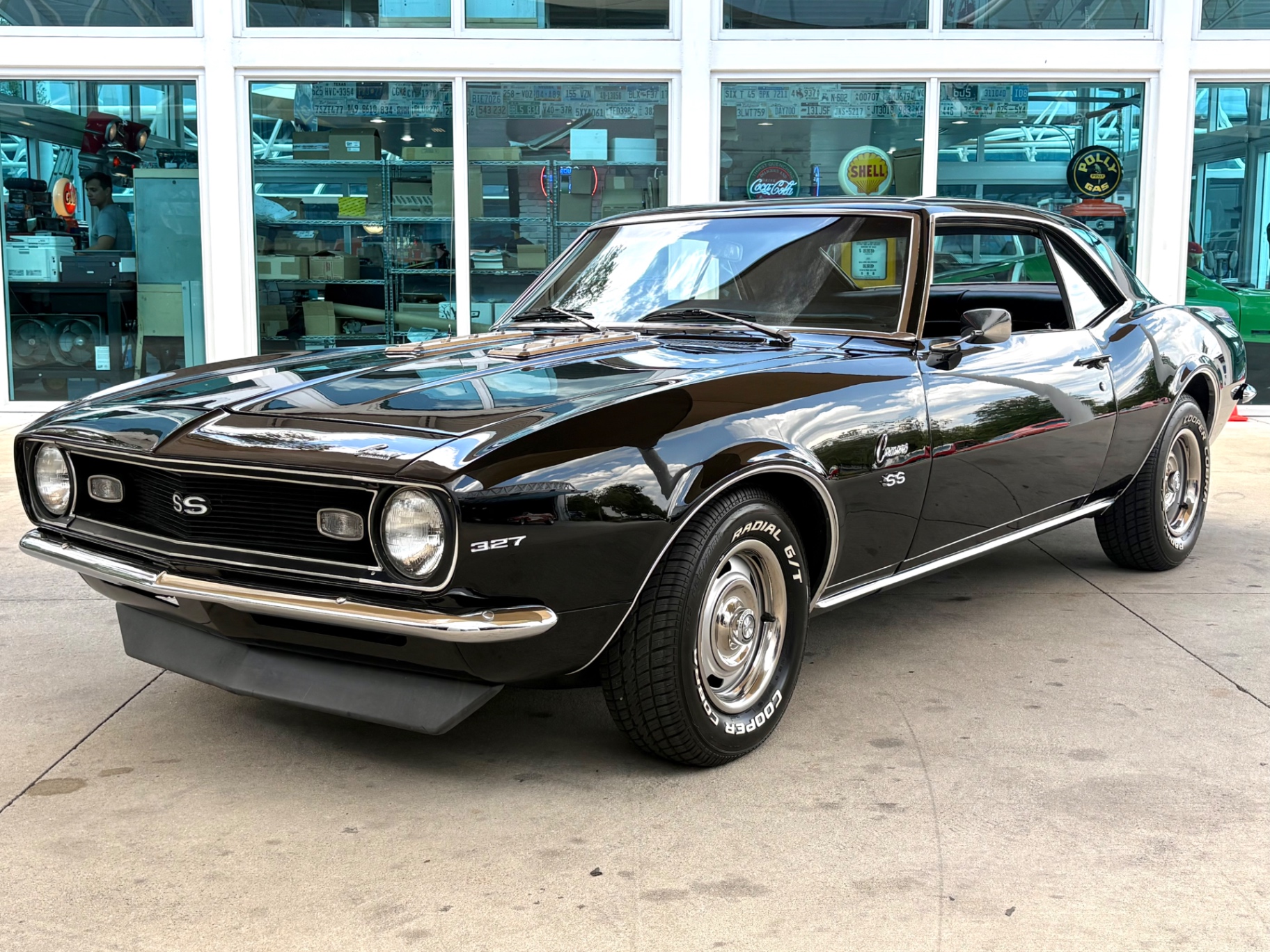
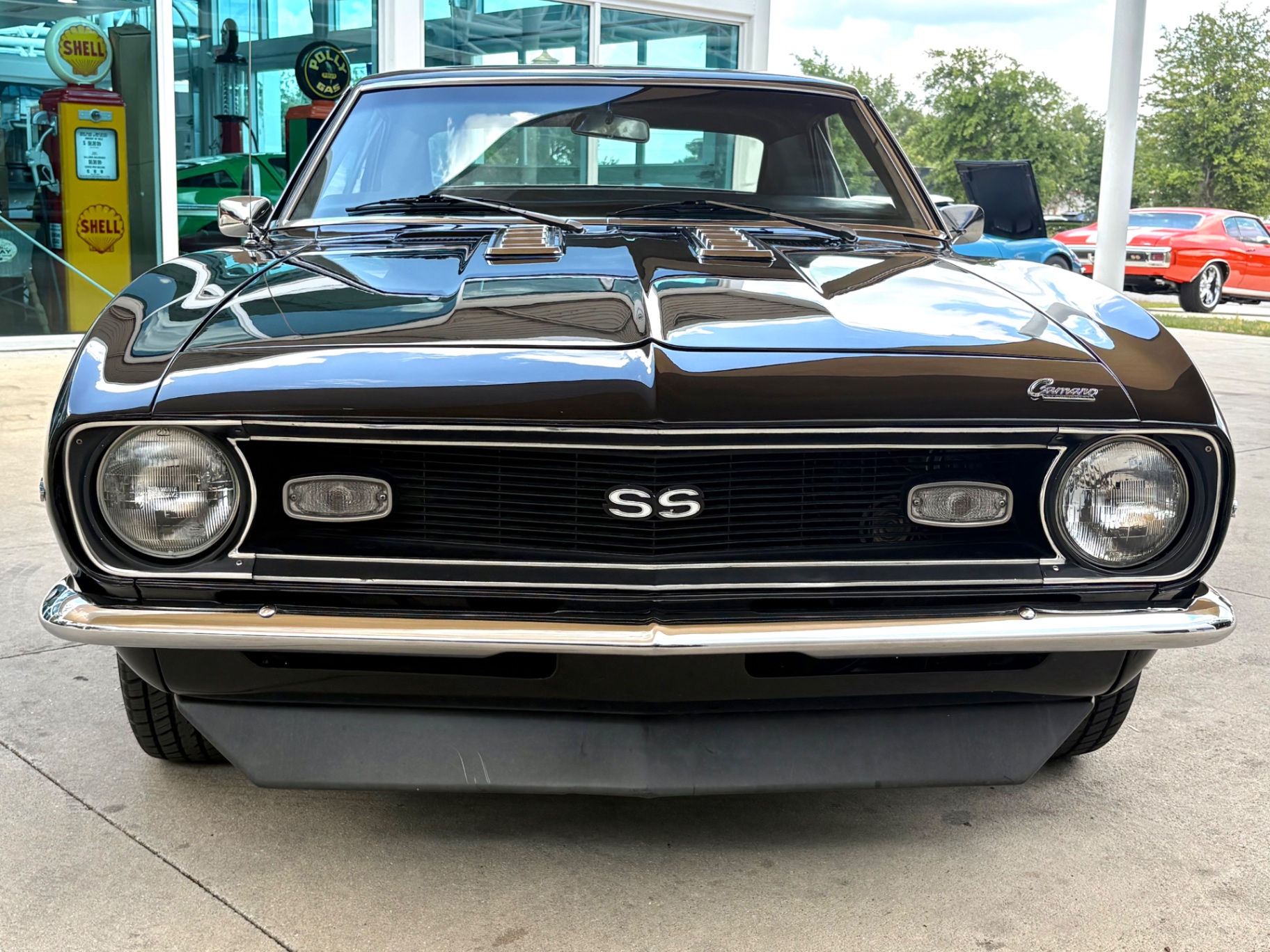
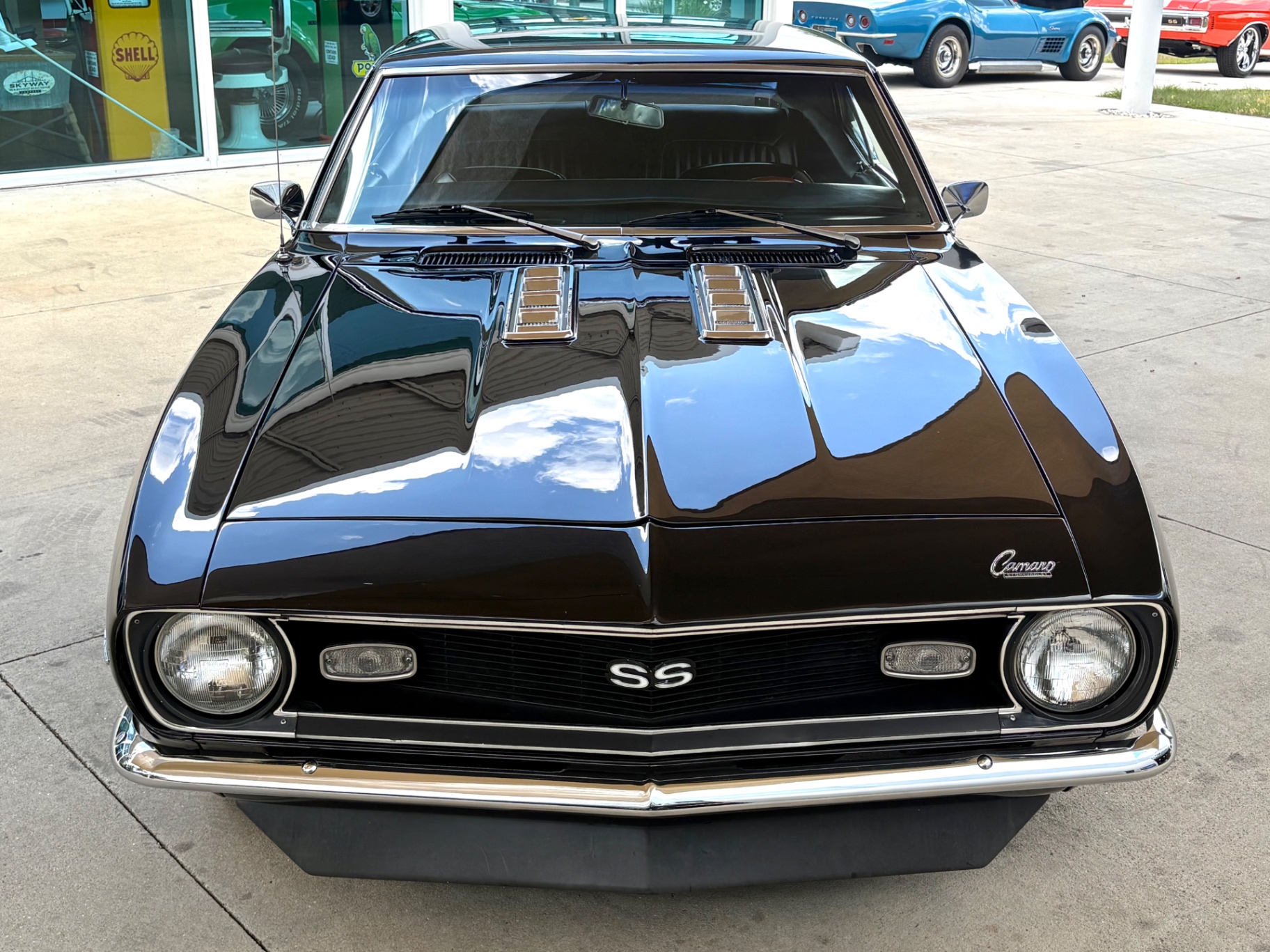
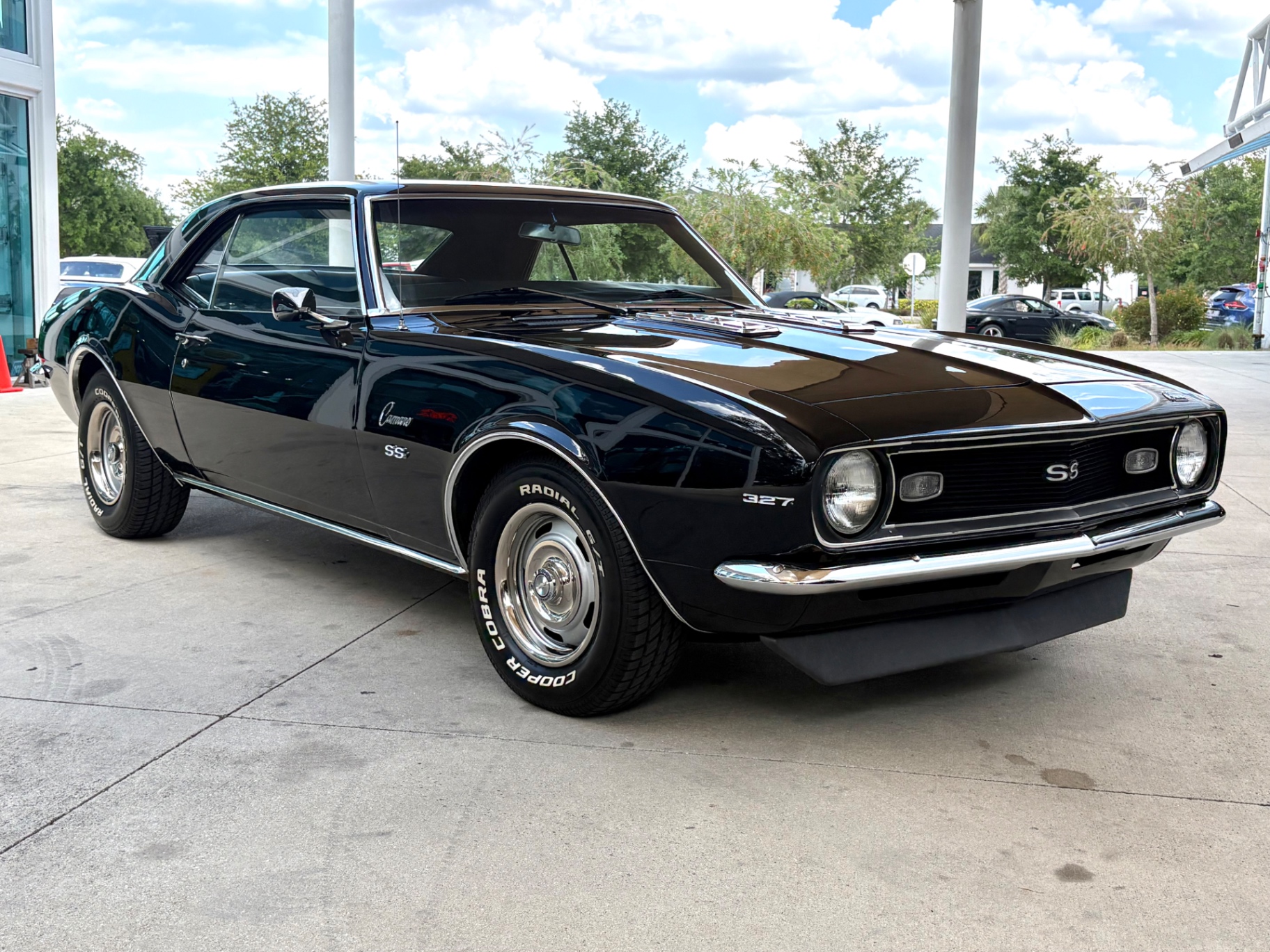
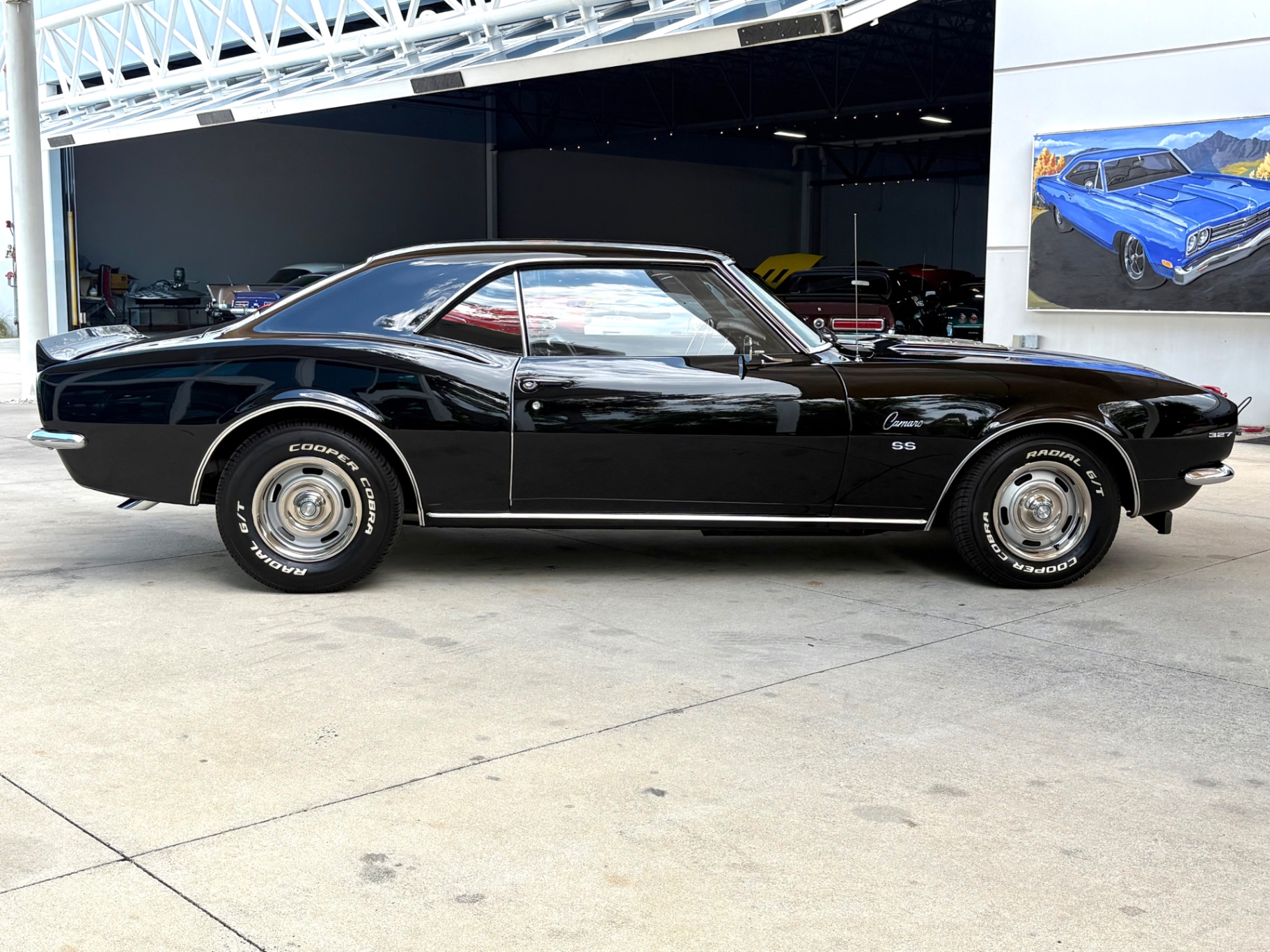
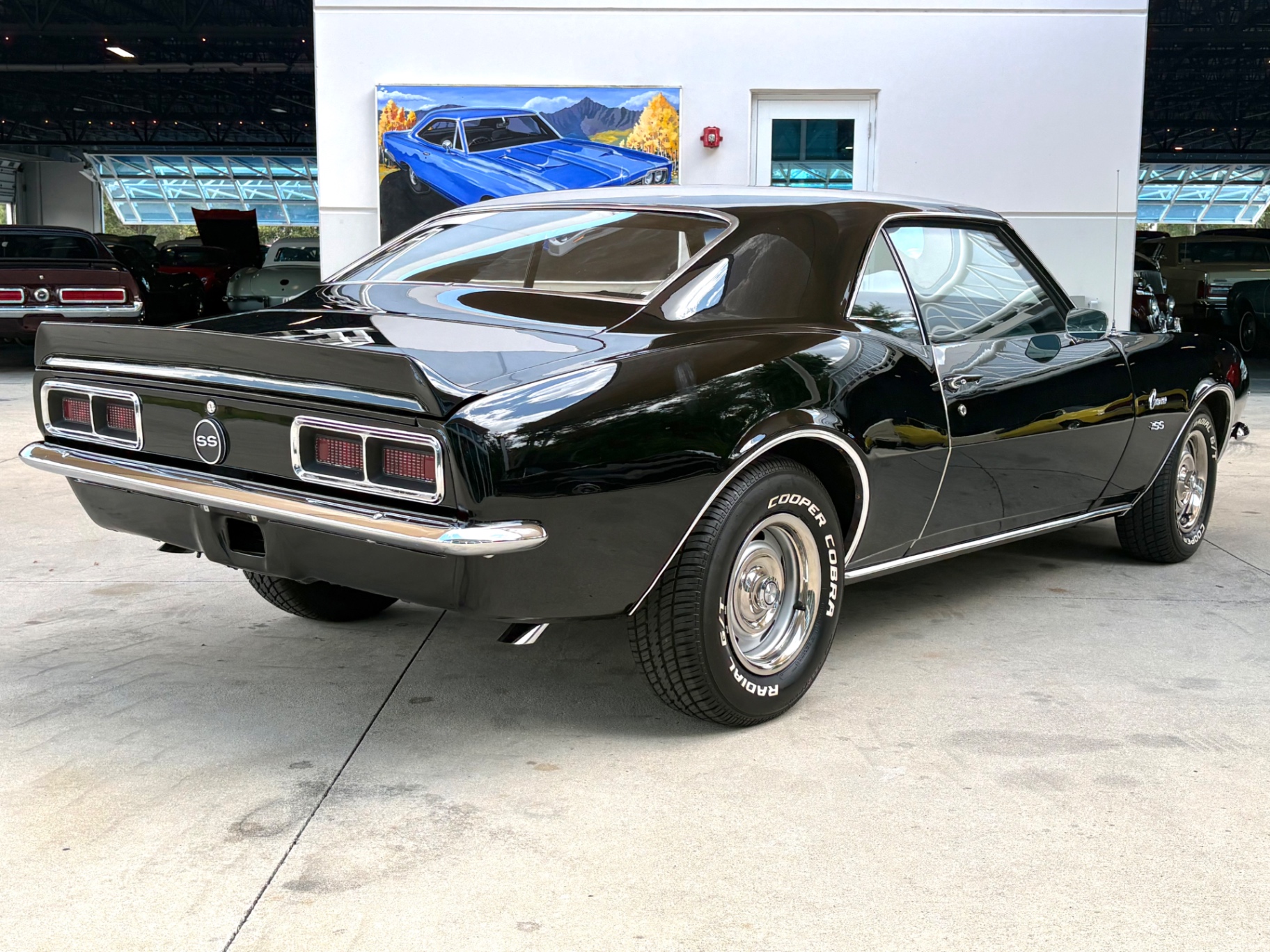
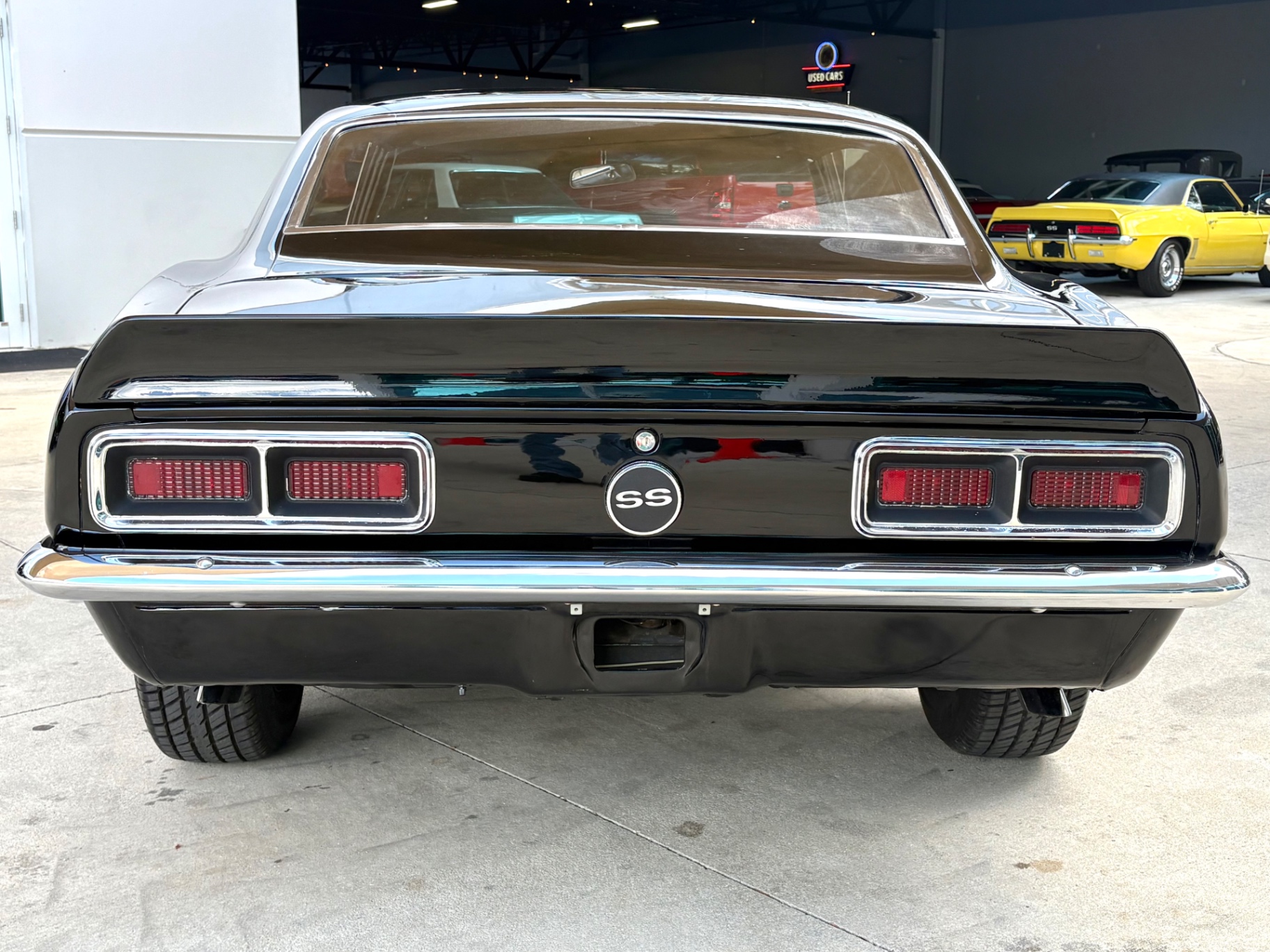
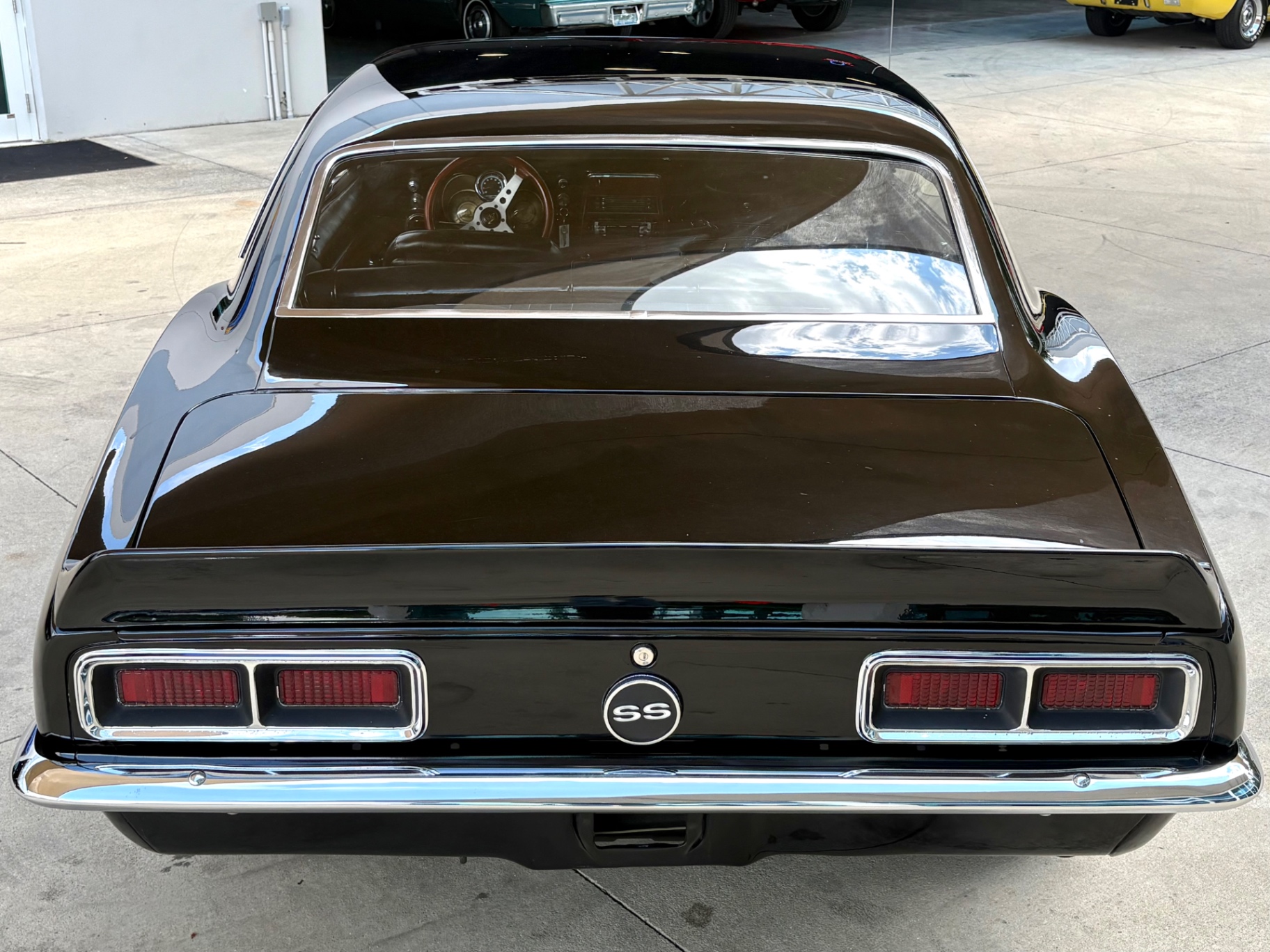
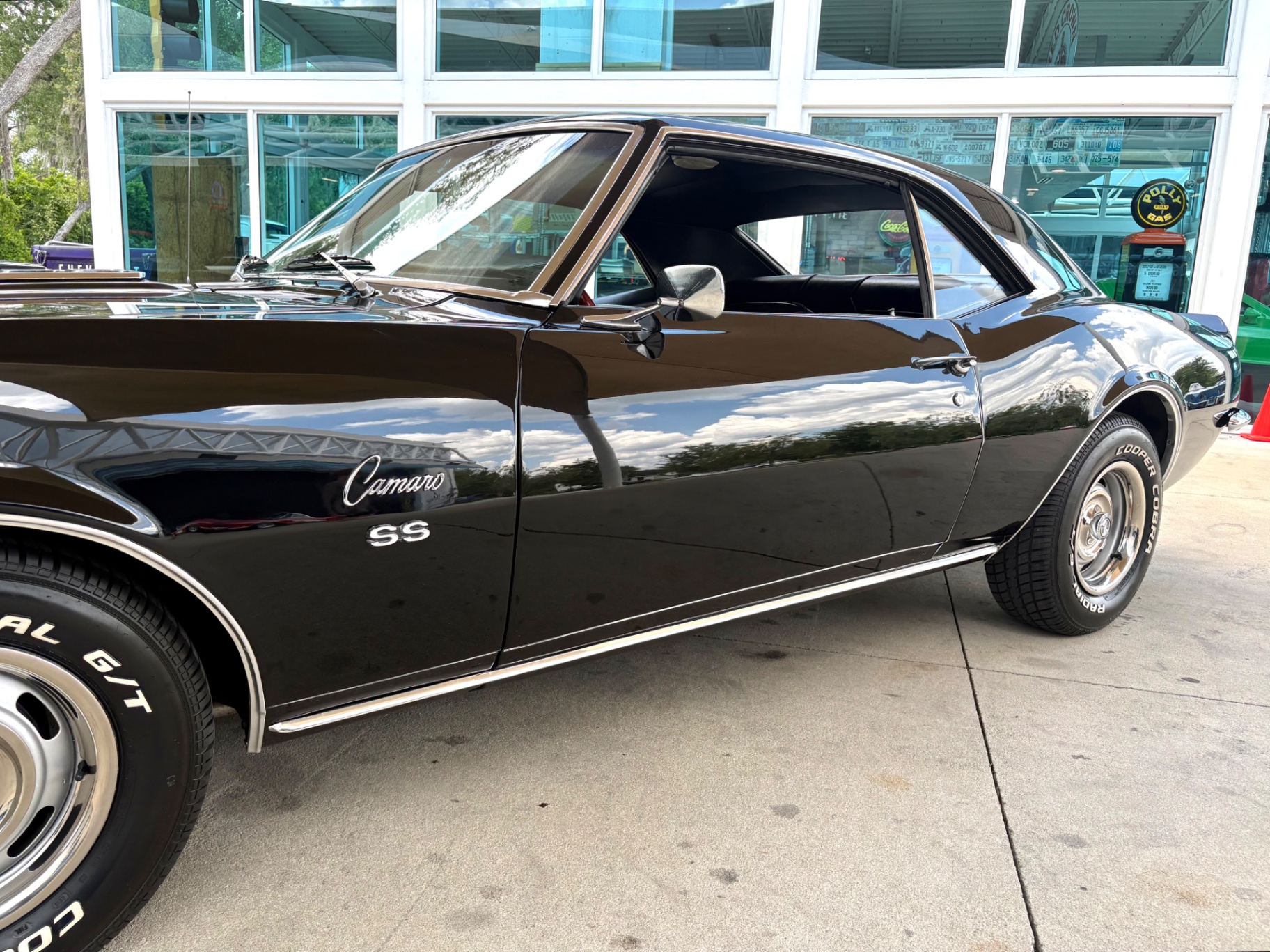
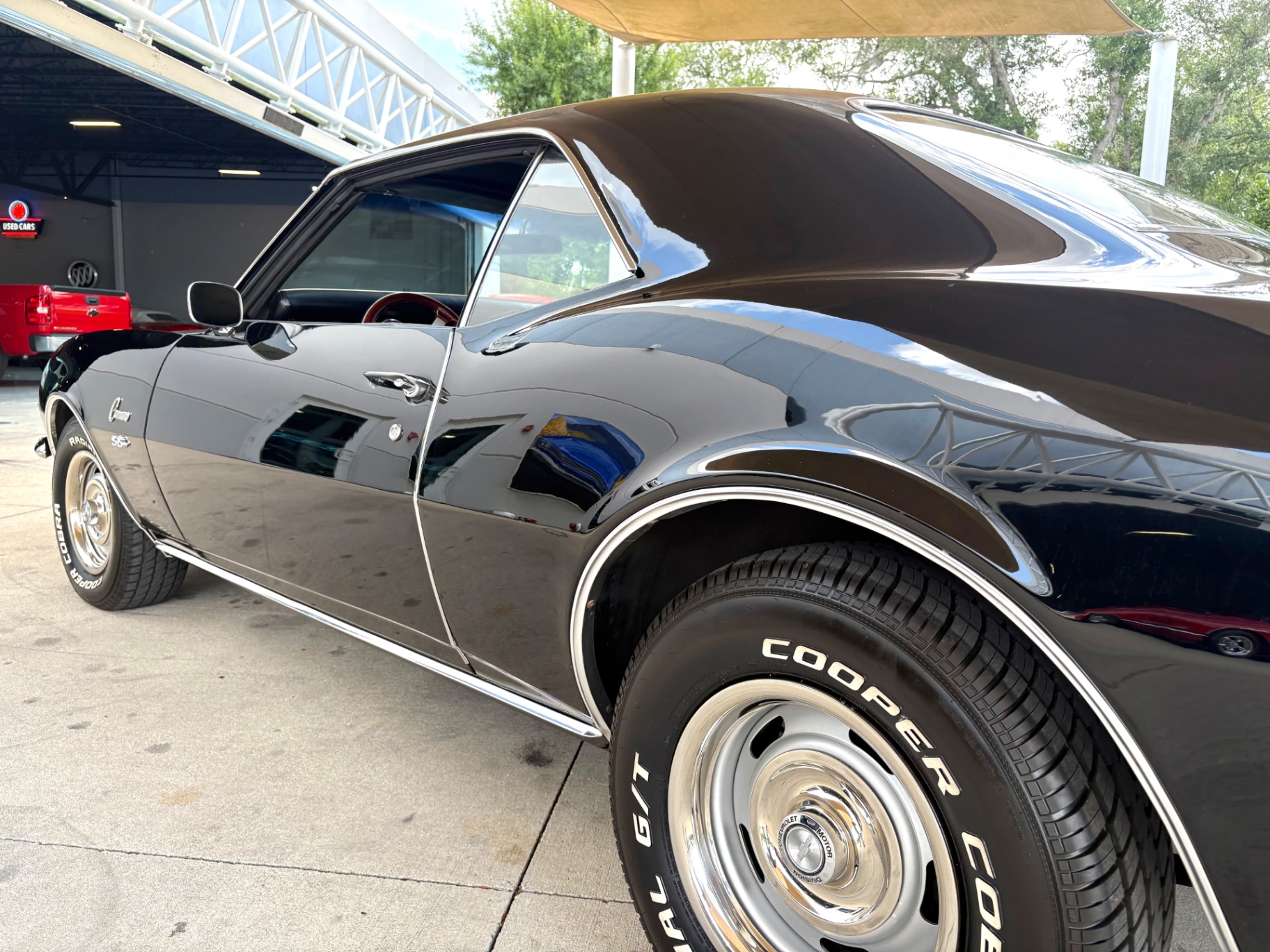
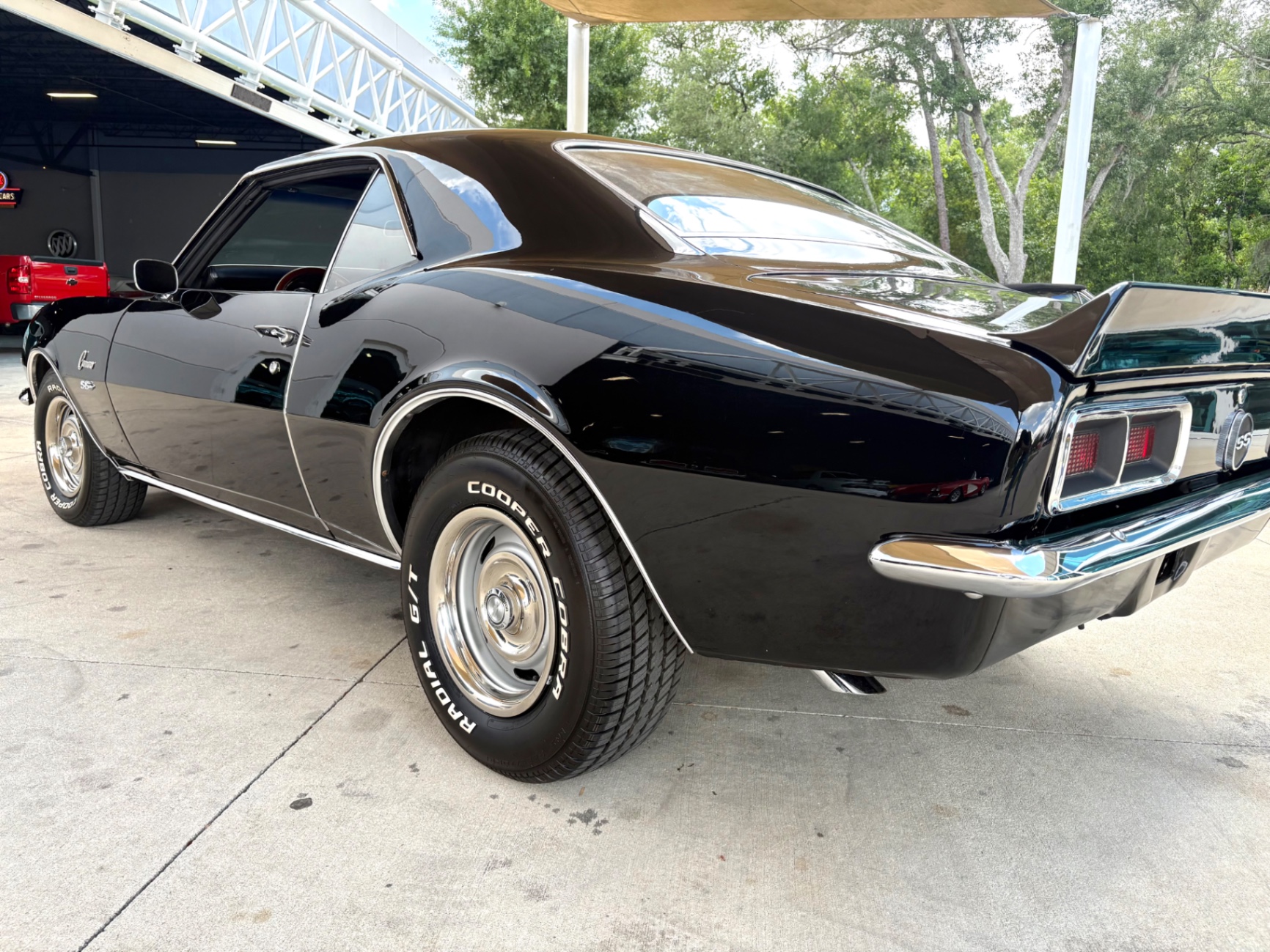
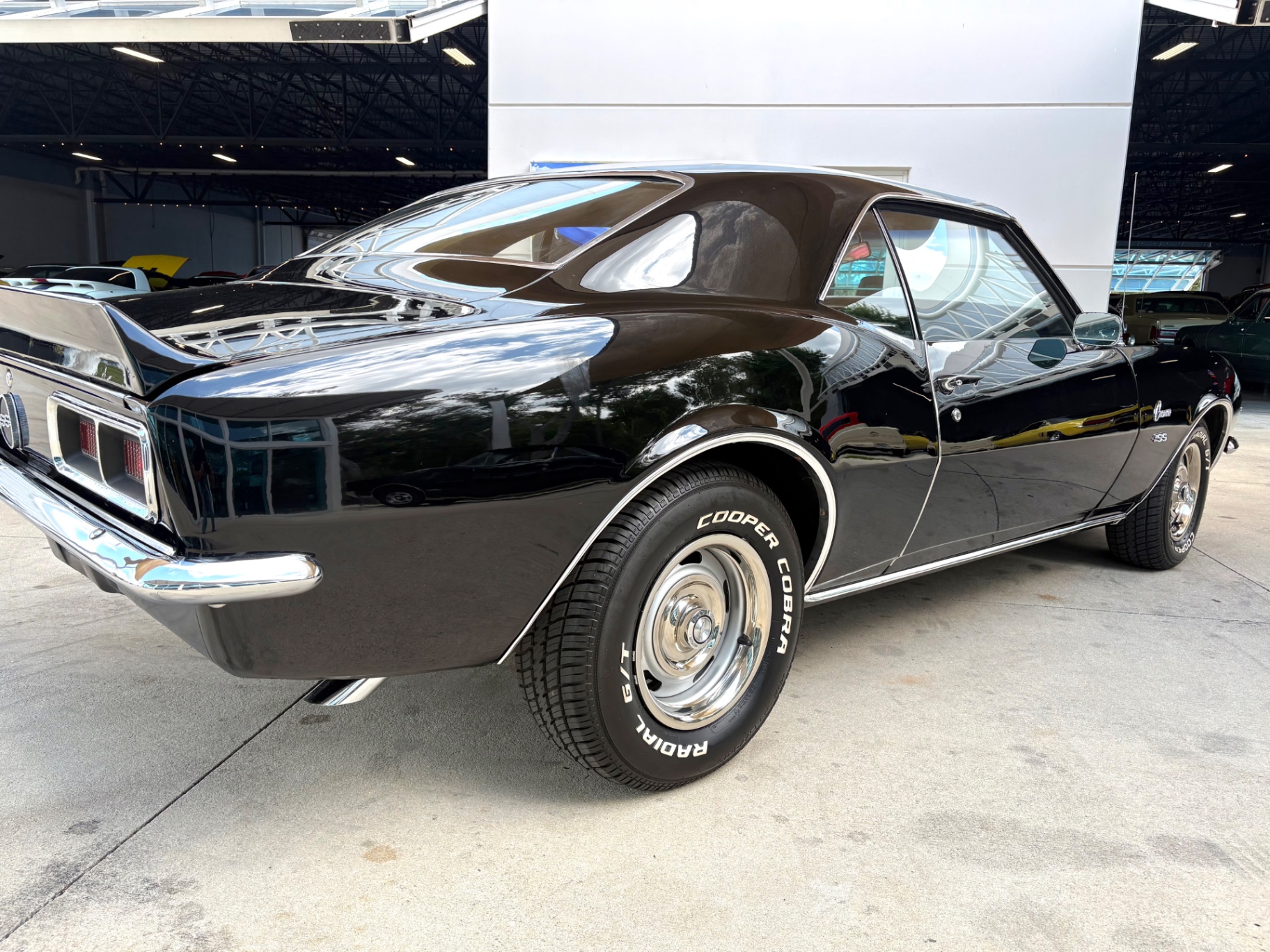
1968 Chevrolet Camaro SS 327 — Black on Black, 4-Speed, Restored Driver
Why This Car Is Special
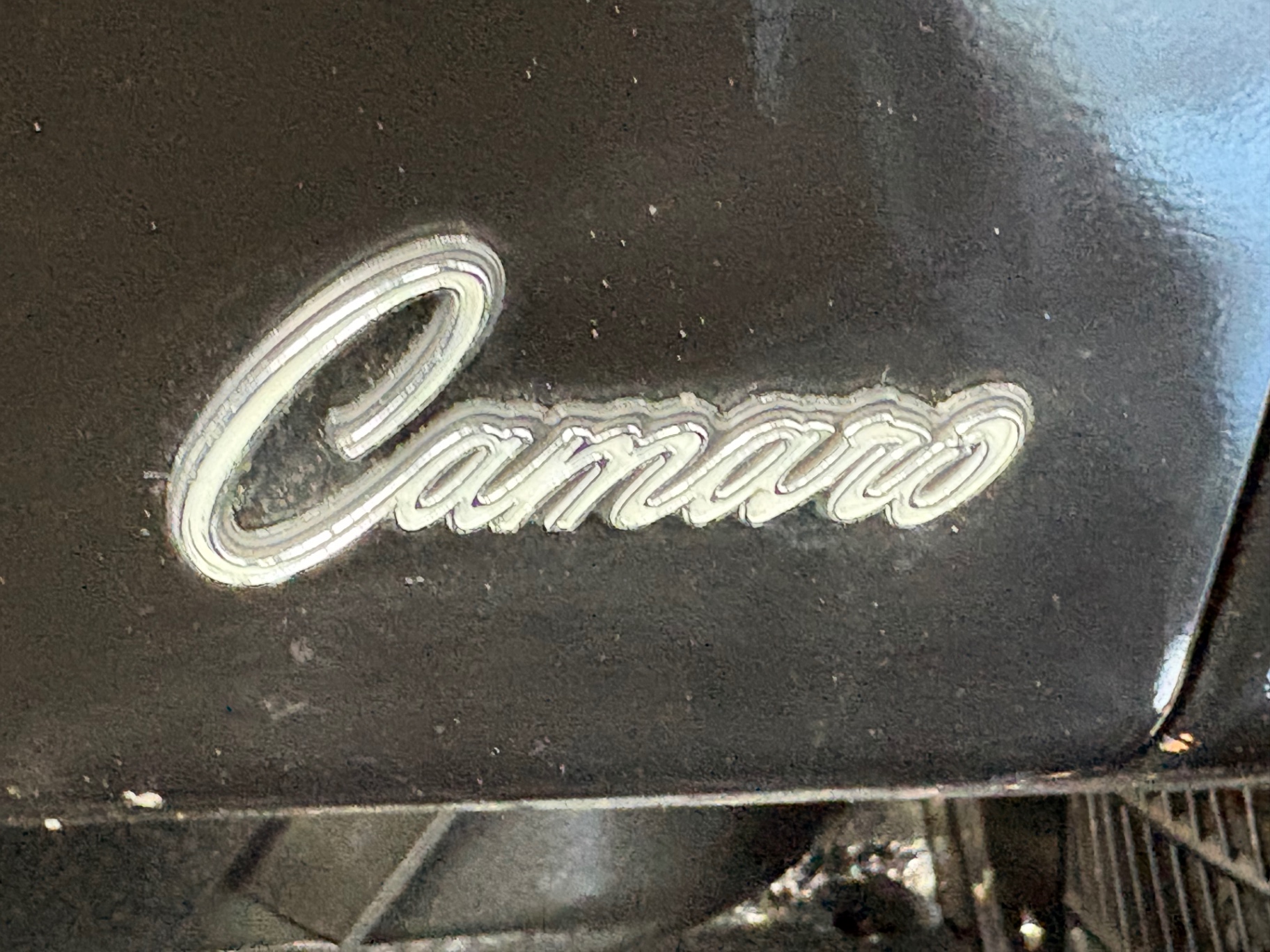
The 1968 Chevrolet Camaro SS 327 sits at an interesting crossroads in first-generation Camaro history. Chevrolet had refined the Camaro's body and chassis for its second model year, addressing several fit and finish criticisms from the 1967 launch car. The result was a cleaner, tighter package — and 1968 is widely regarded as the sweet spot of the first-generation run. The federally mandated side marker lights were new for '68, and the revised front end gave the car a sharper, more purposeful look. Underneath, Chevrolet continued offering the Super Sport package as a separate RPO (Regular Production Option) group, meaning the SS was a genuine factory designation, not a dealer badge job.
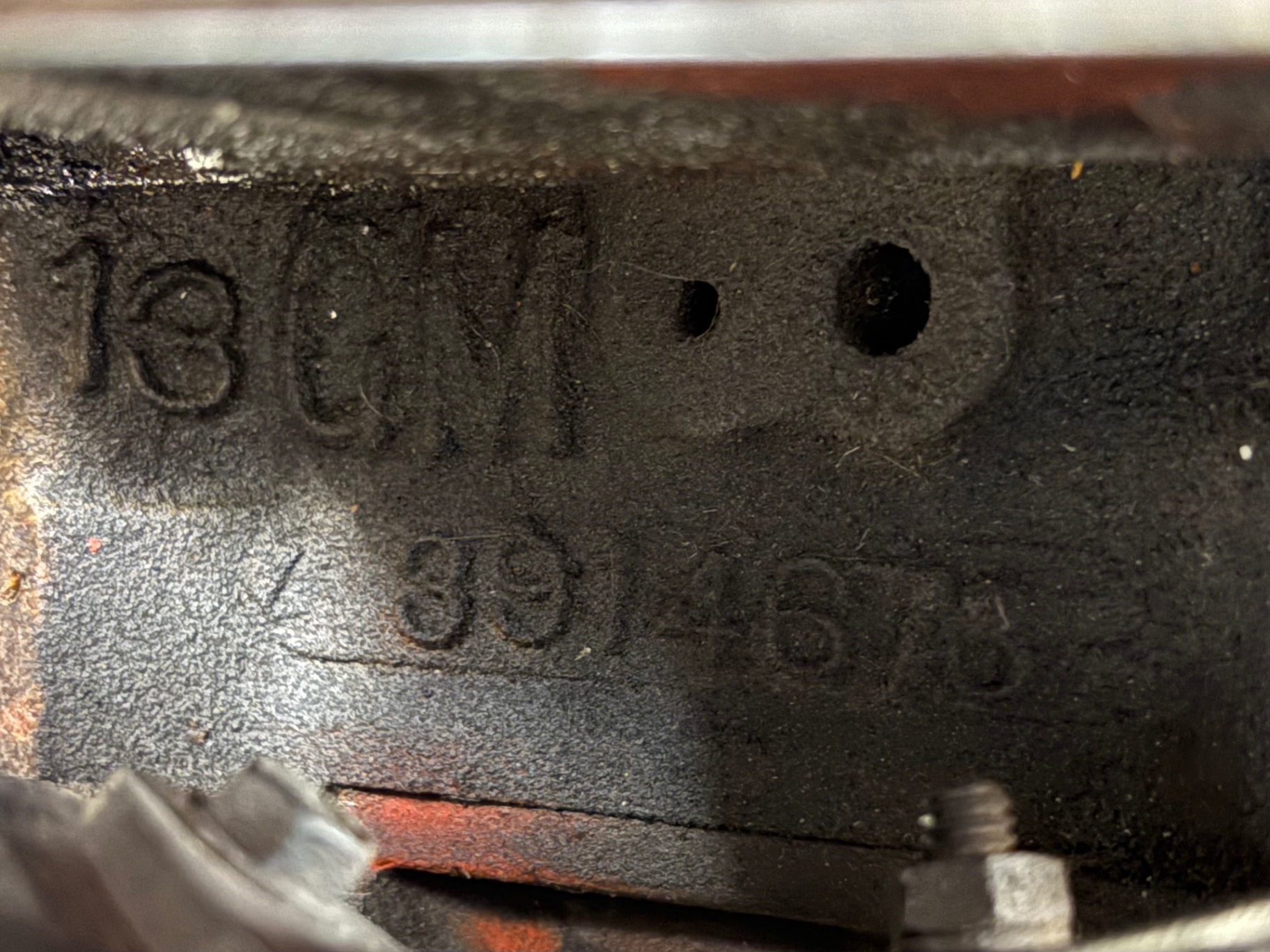
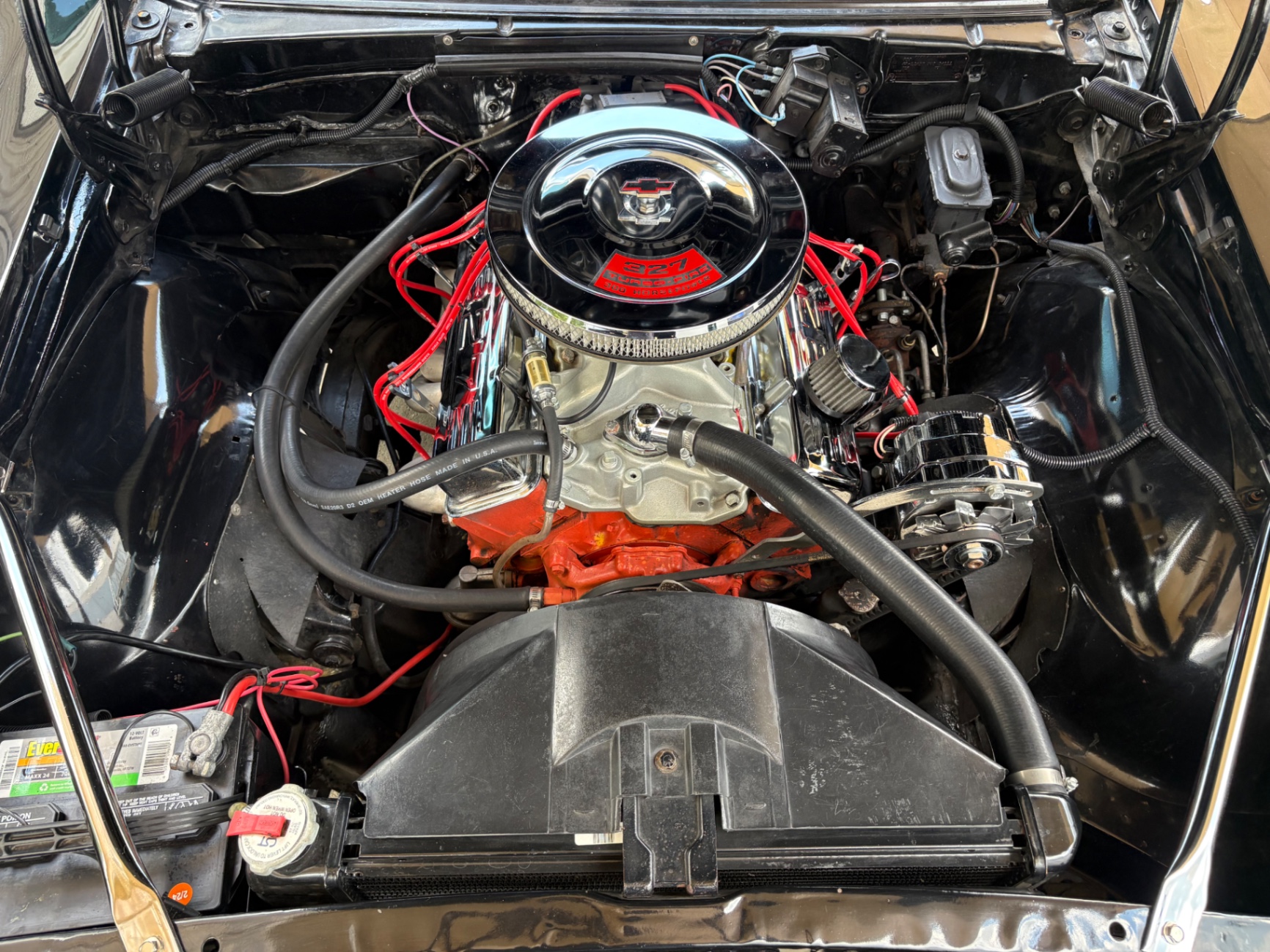
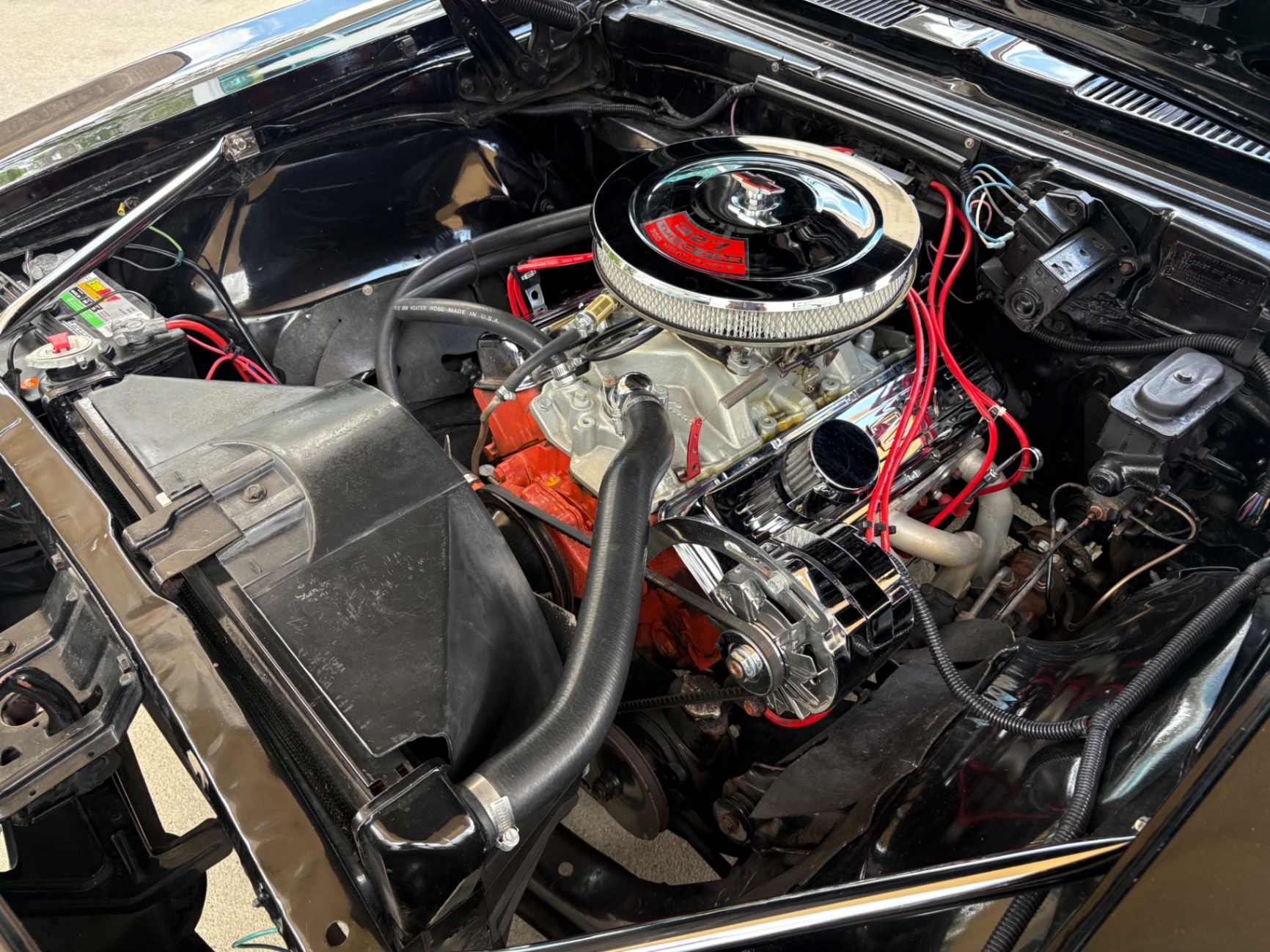
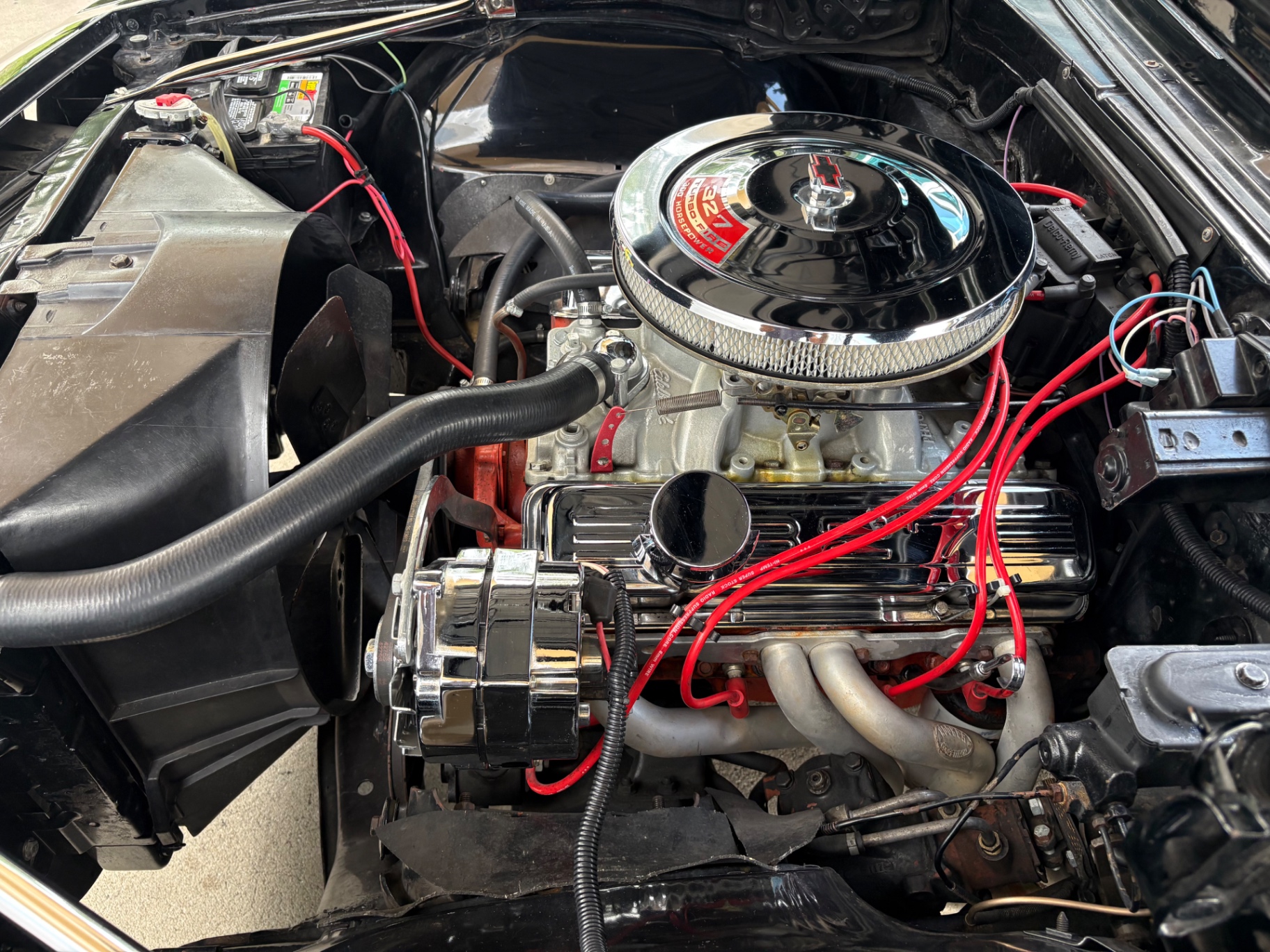
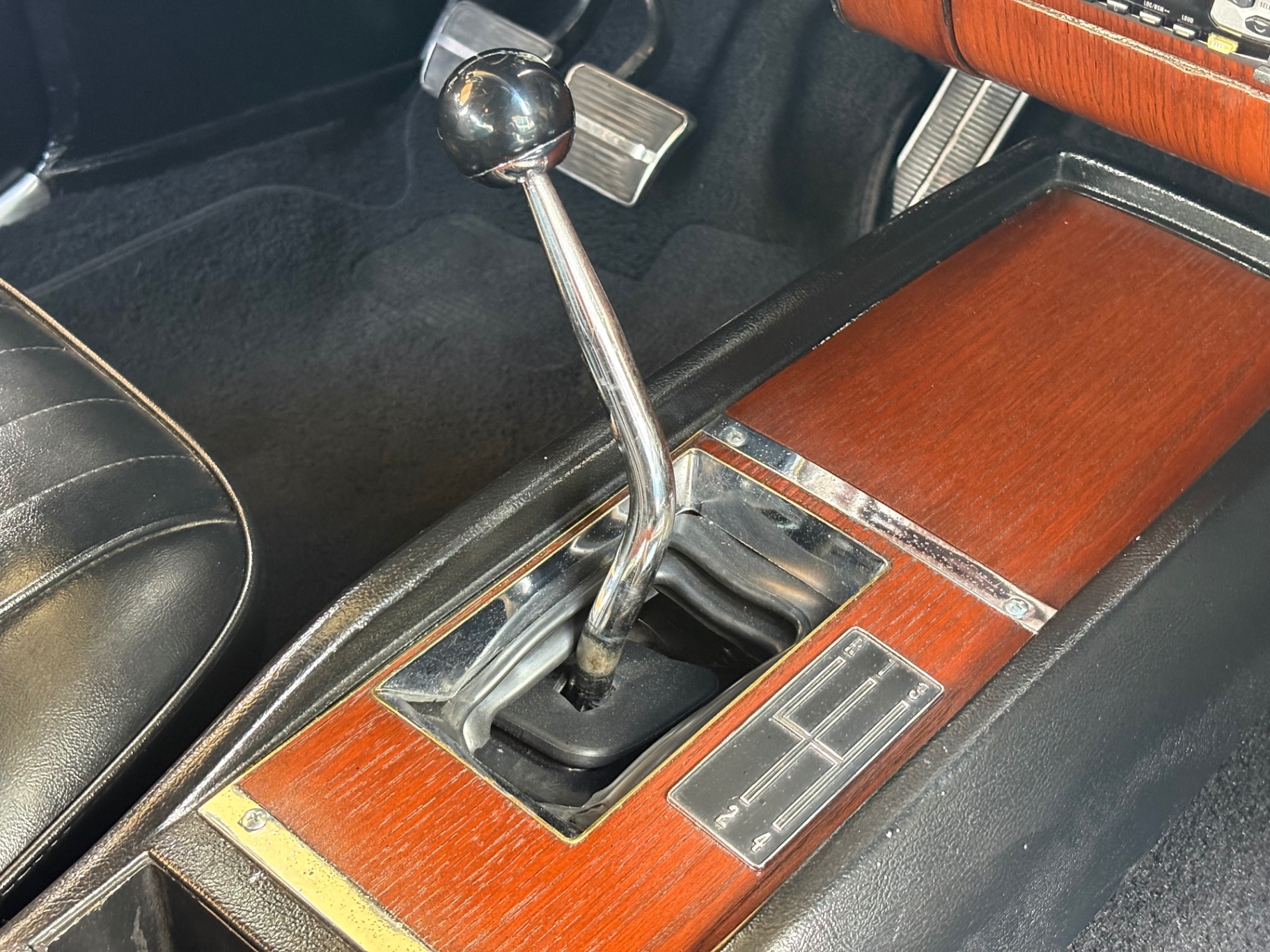
The 327 cubic inch V8 is a significant part of this car's identity. While the 396 big-block gets more headlines, the 327 small-block was Chevrolet's precision instrument — a high-revving, well-balanced engine that earned its reputation in Corvettes and Impalas long before the Camaro existed. In 300-horsepower trim, it was the more spirited of the two 327 SS options offered in 1968, paired here with a T10 close-ratio 4-speed manual transmission. This is a driver's combination, not a cruiser's. The T10 was a Borg-Warner unit known for strength and clean shifts, and it was the transmission serious buyers checked the box for when ordering.
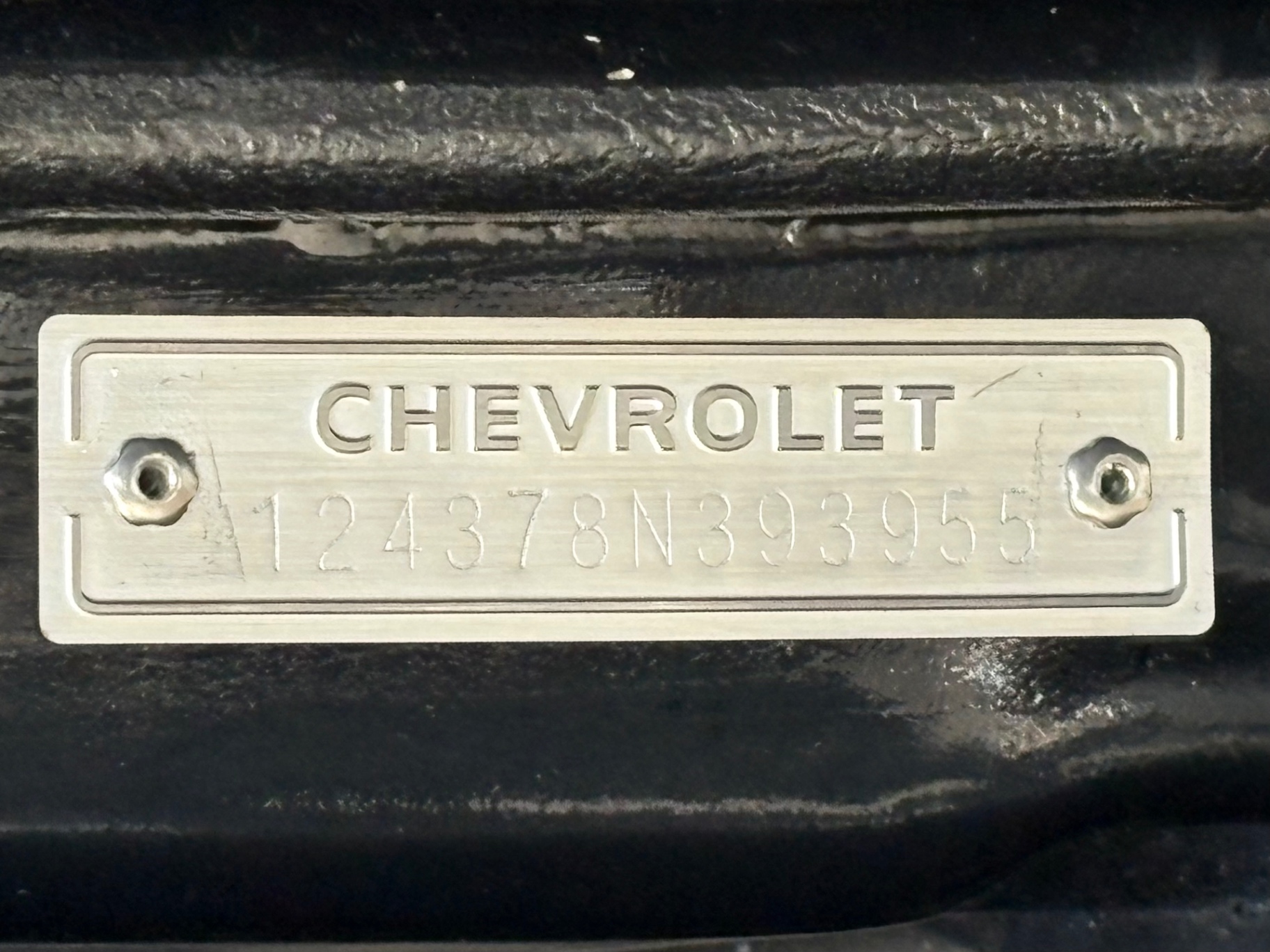
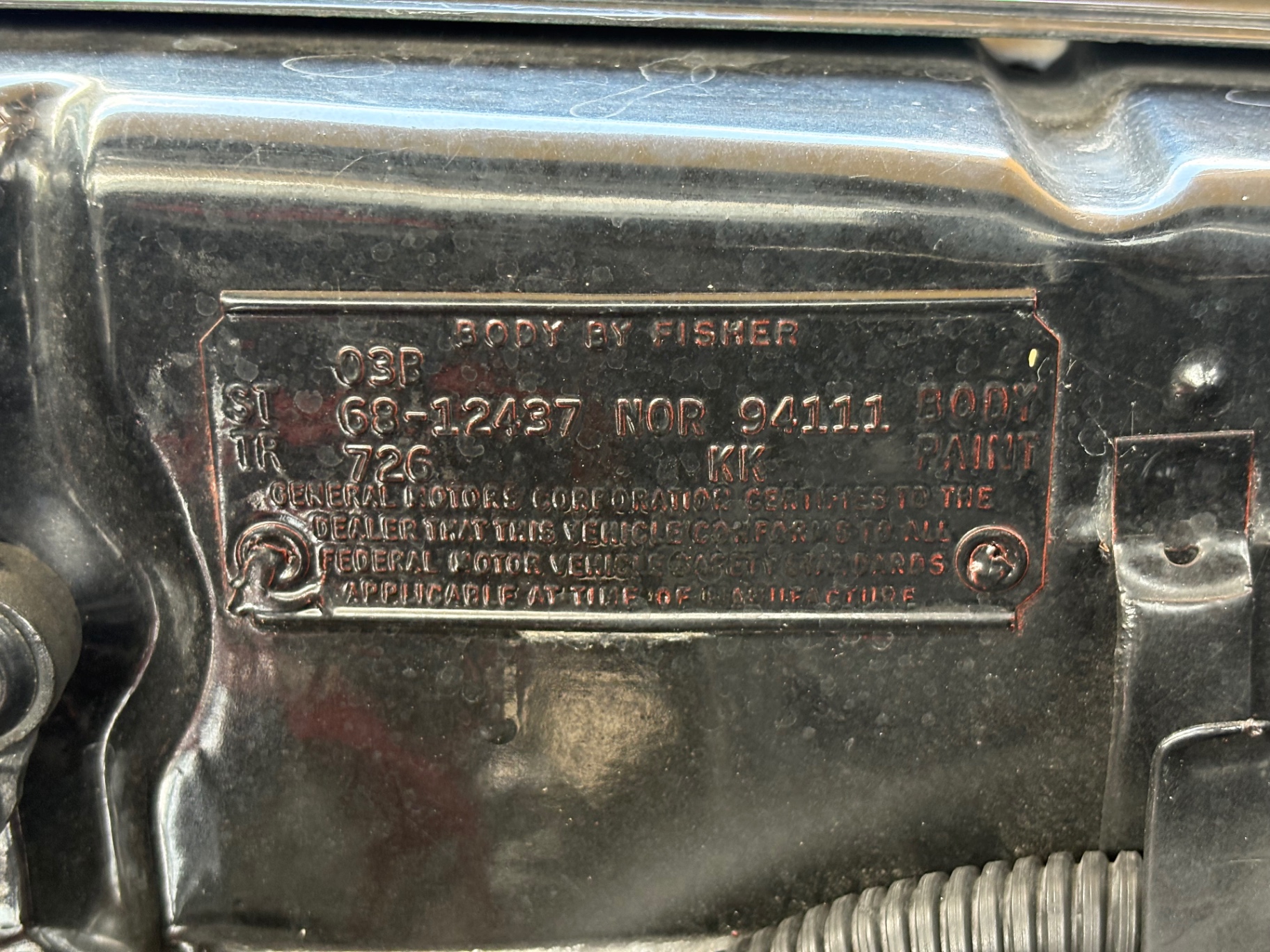
The VIN confirms this is a Norwood, Ohio-built car — the "N" in the plant code position tells you that. Norwood was one of two primary Camaro assembly plants in 1968, the other being Van Nuys, California. Norwood-built first-gens carry a consistent following among collectors who track assembly details.
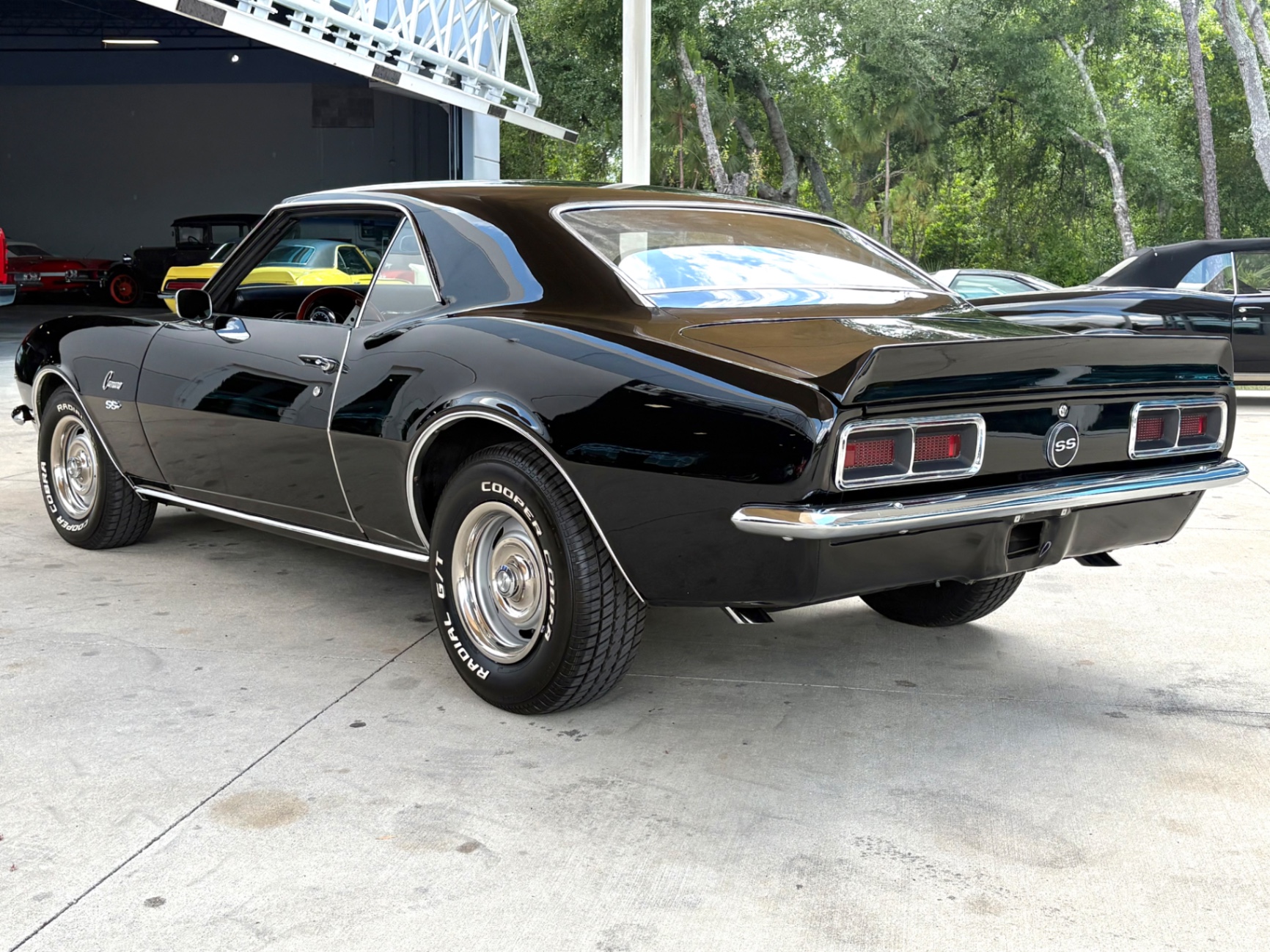
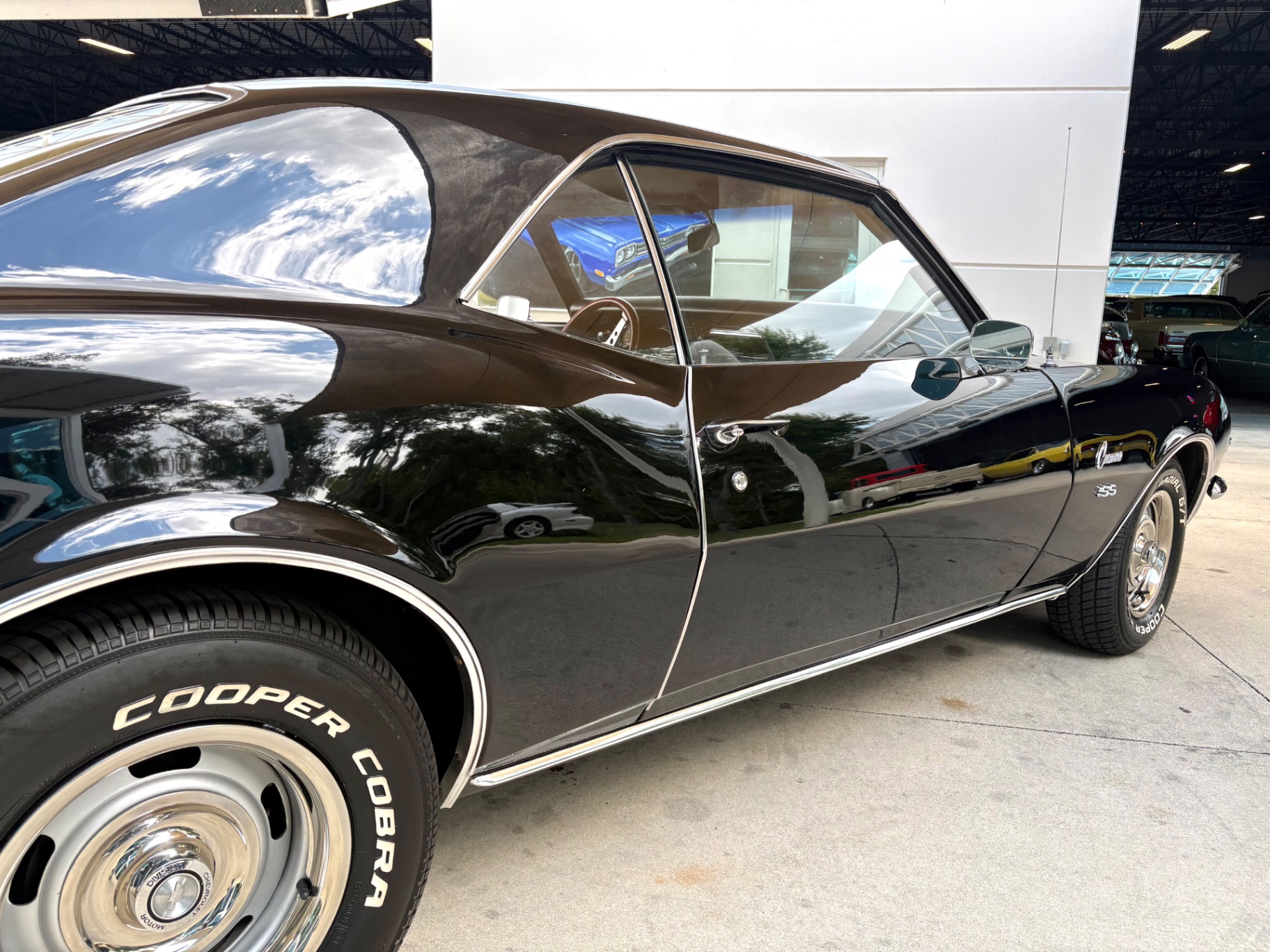
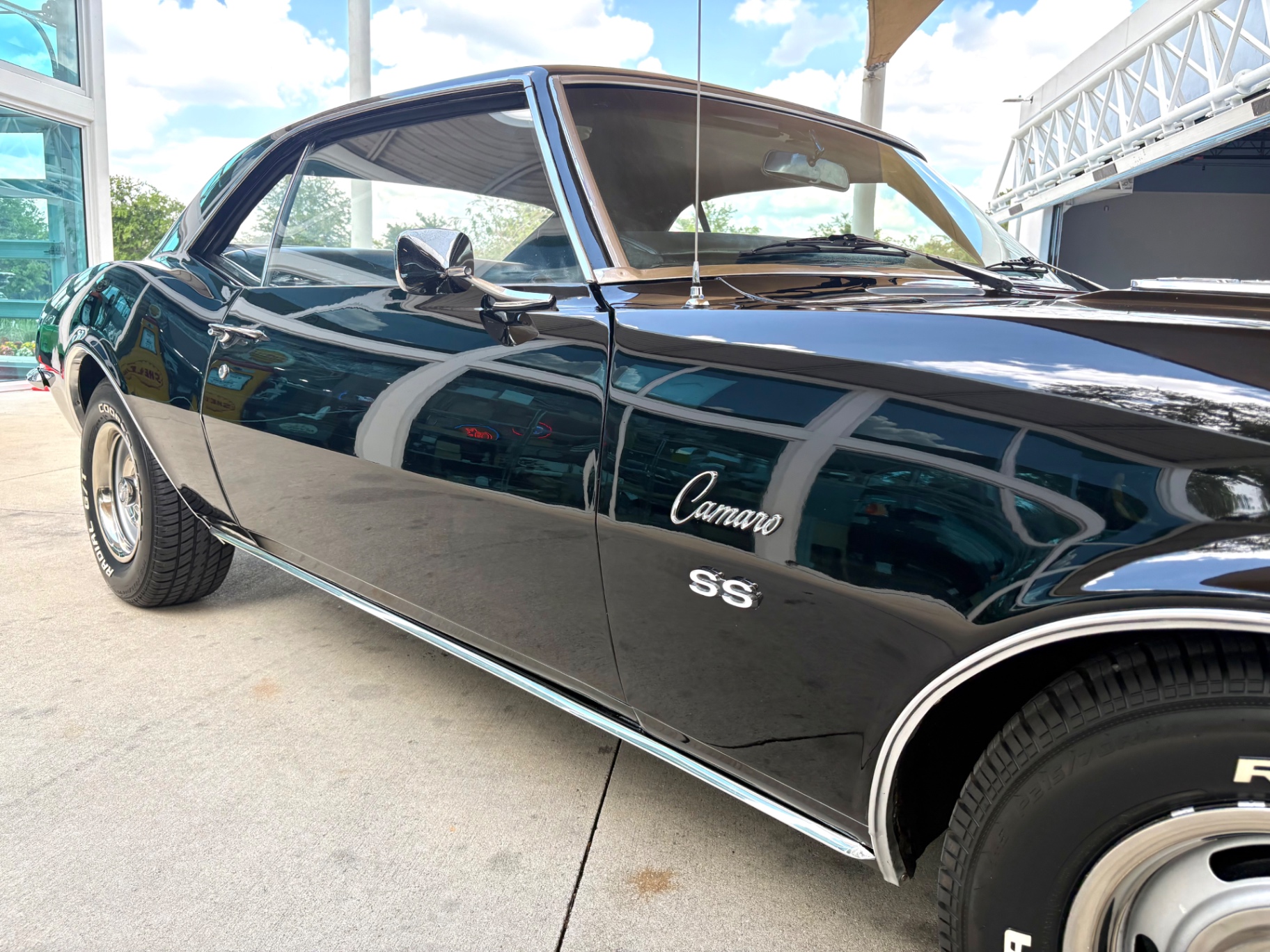
This specific car presents as an all-black driver — black exterior, black vinyl interior, black top — restored approximately six years ago and showing well for it. It is not a trailer queen. It is a car that was built to be used, was restored to be used, and is ready to be used again.
Features
- 327ci V8, 300 horsepower - T10 4-Speed Manual Transmission - SS Trim Package, factory option - Correct SS cowl induction hood - SS badging front and rear - Rally wheels with Cooper Cobra radial tires - Headers with Flowmaster mufflers - Chrome valve covers - Aftermarket tachometer - Grant GT steering wheel - Pioneer stereo head unit - Power steering - Black bucket seats - Center console - Black vinyl interior - Chrome front and rear bumpers - Clean undercarriage - Restored approximately six years ago
Mechanical
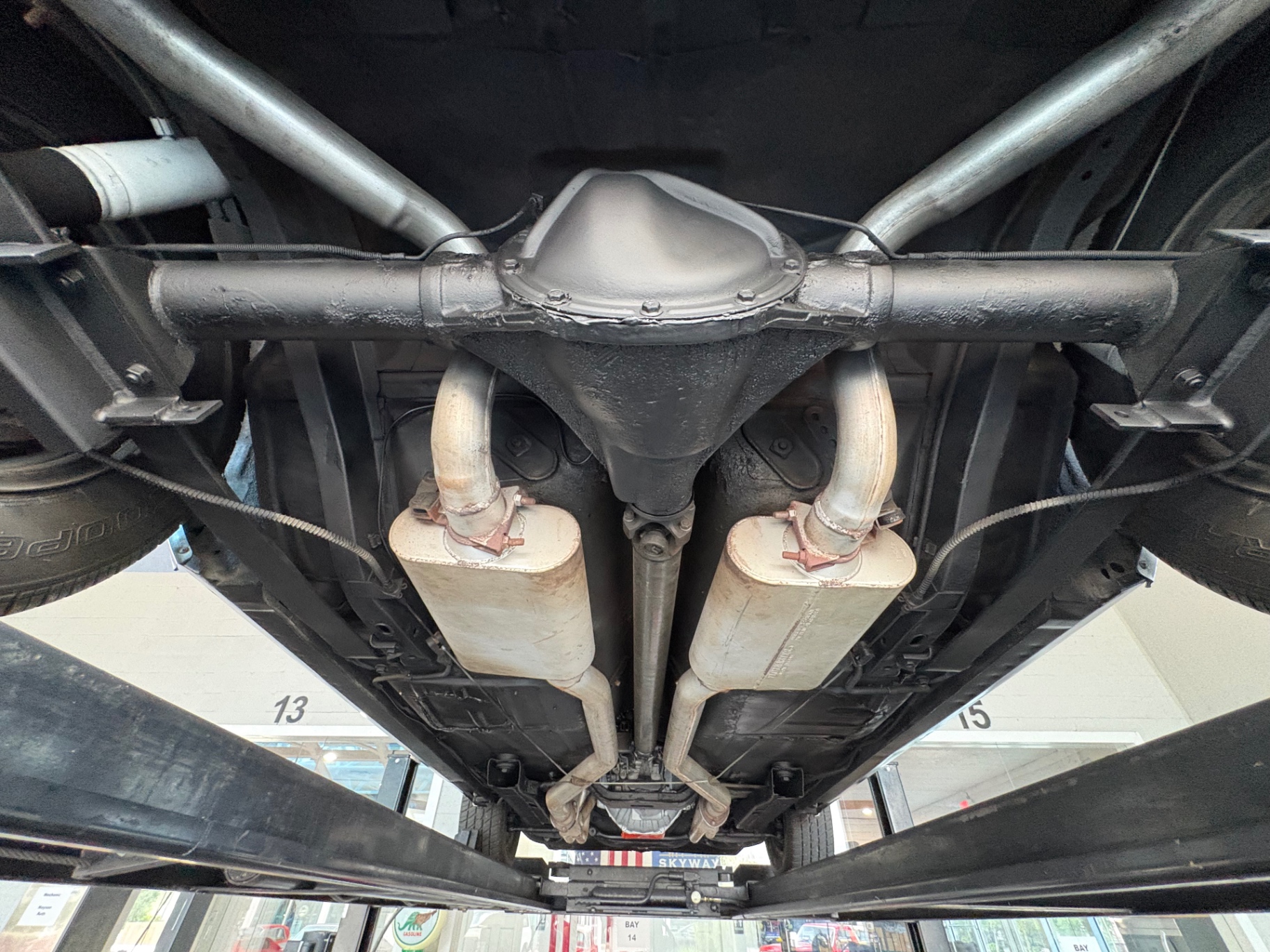
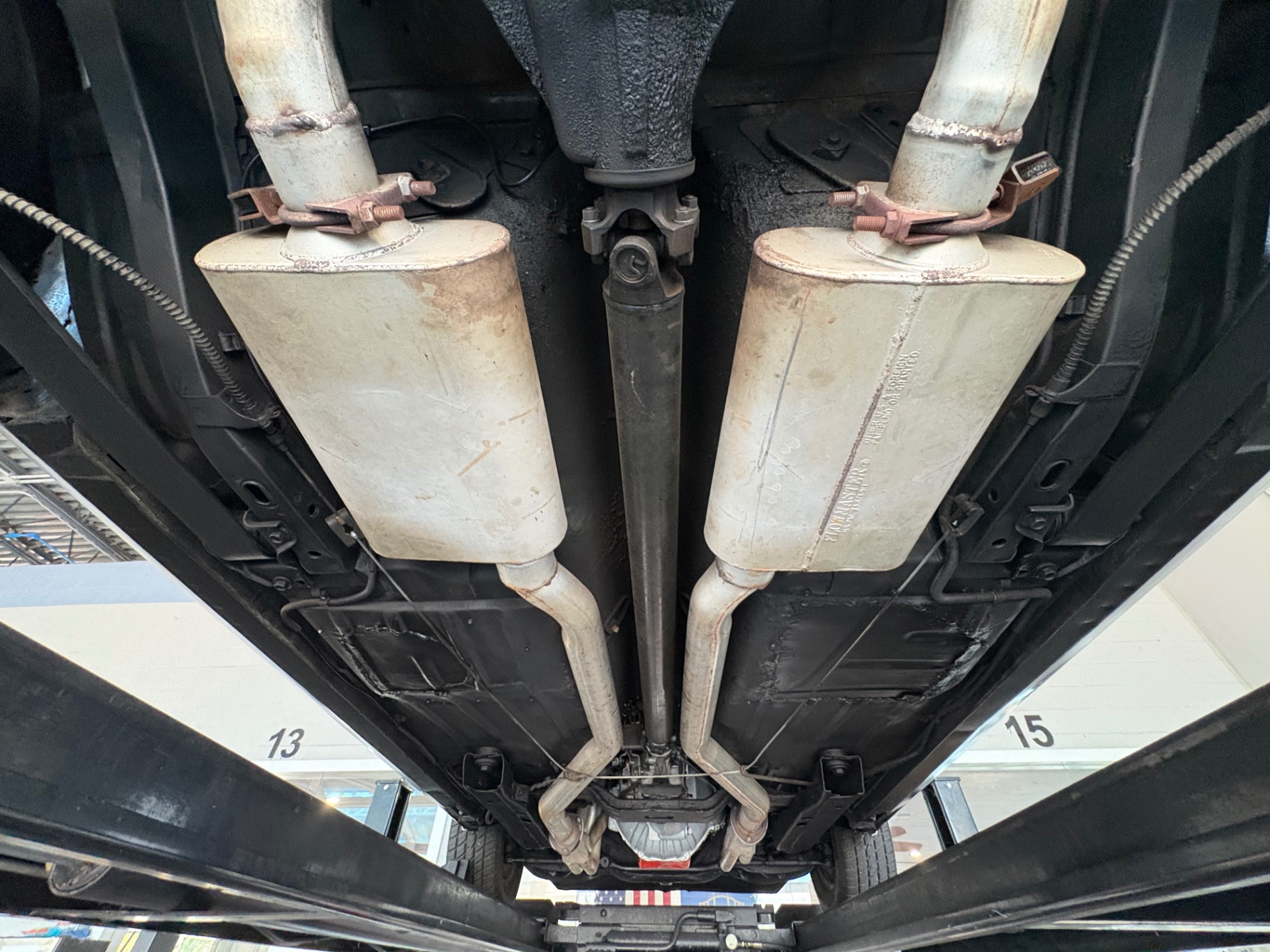
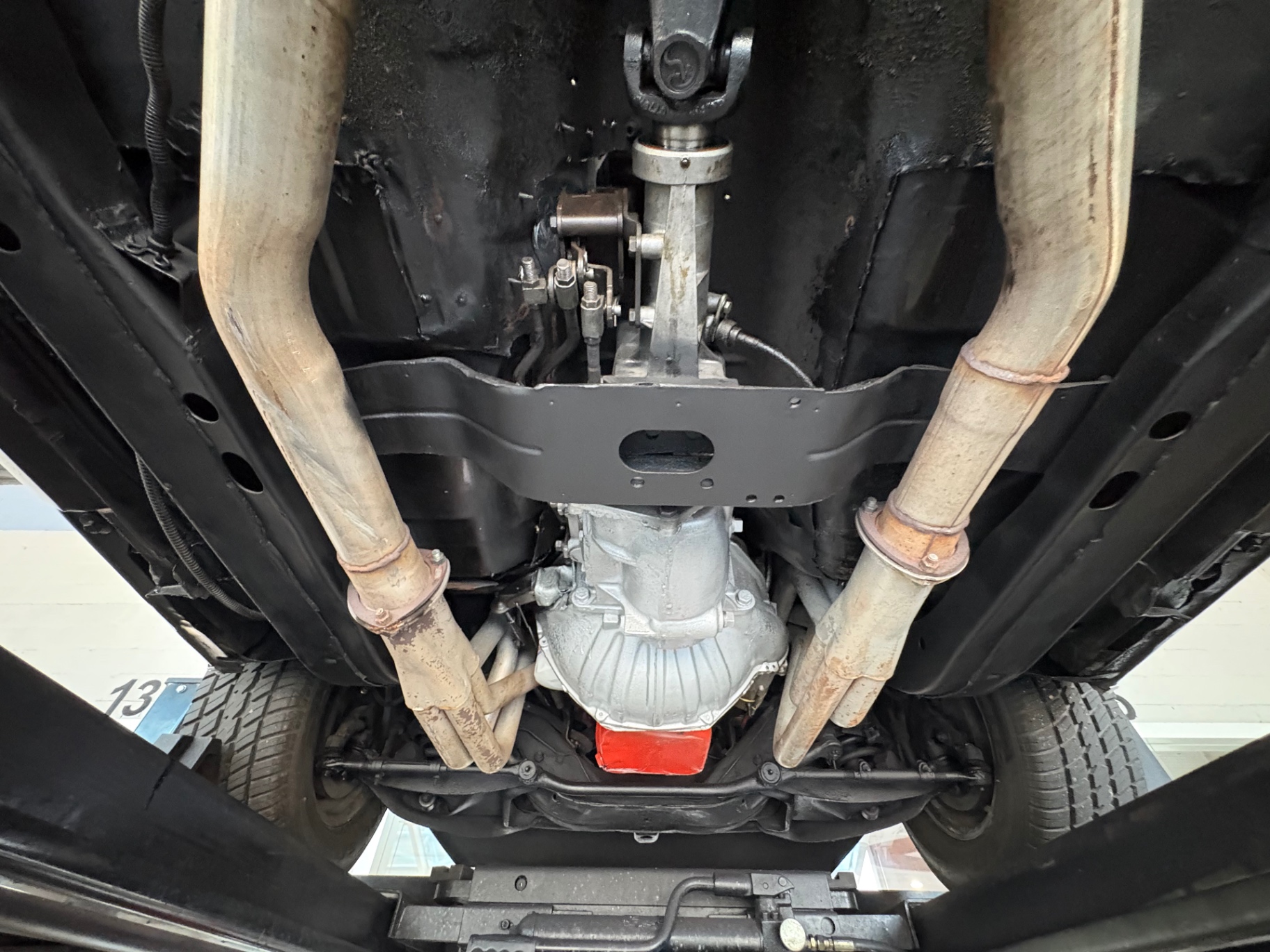
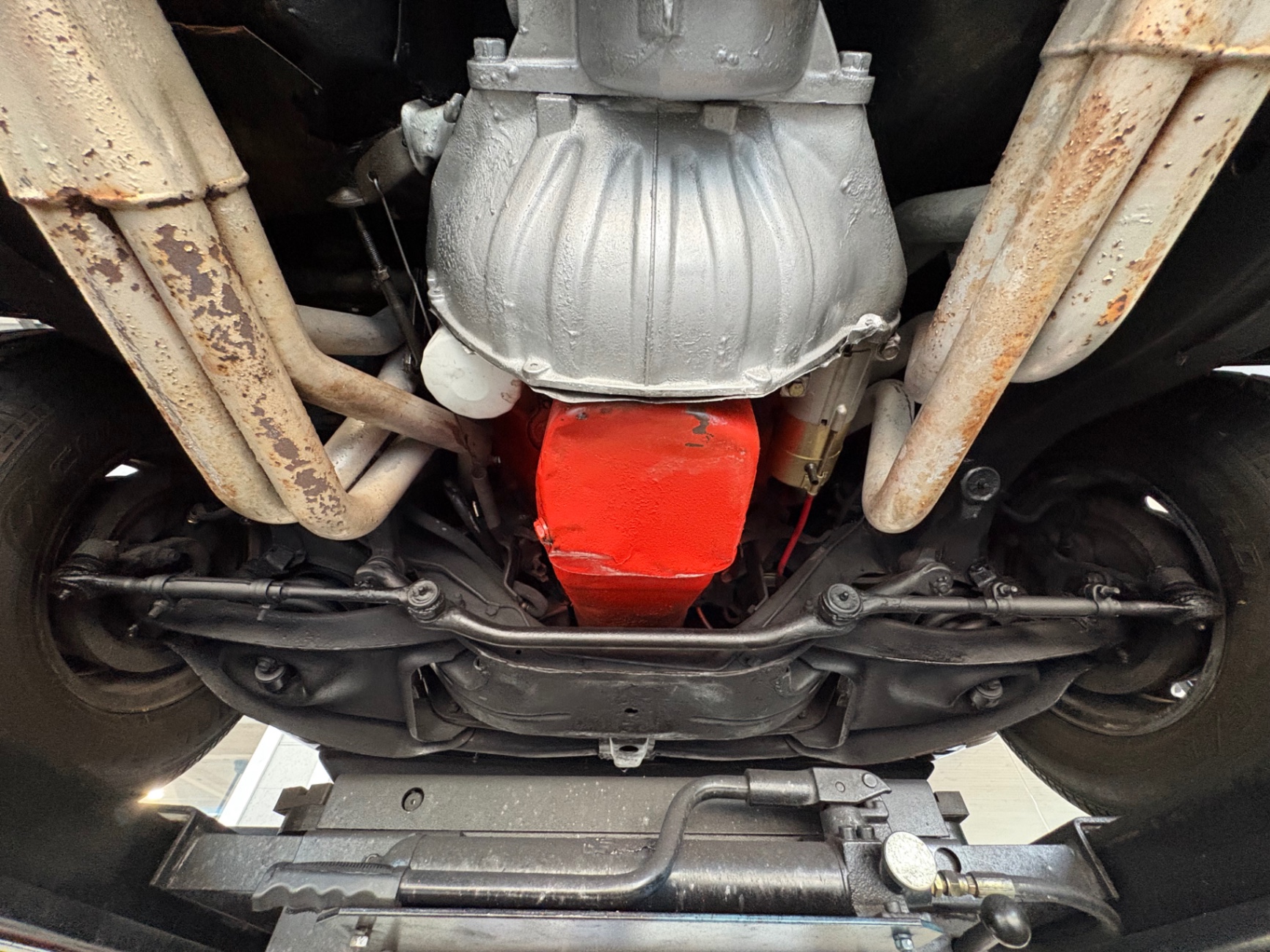
The 327 small-block under this hood is a 300-horsepower version, which in 1968 SS trim meant a four-barrel carburetor and a compression ratio that required premium fuel — this was a performance engine, not a commuter motor. The chrome valve covers visible in the engine bay are a nod to the show-car presentation common in the muscle car era, and they look correct on this black engine compartment. Headers have been installed in place of the factory cast-iron exhaust manifolds, feeding into Flowmaster mufflers out back. The result is a more free-flowing exhaust system that lets the 327 breathe more efficiently, and Flowmaster's chambered design gives it a tone that is audible without being obnoxious.
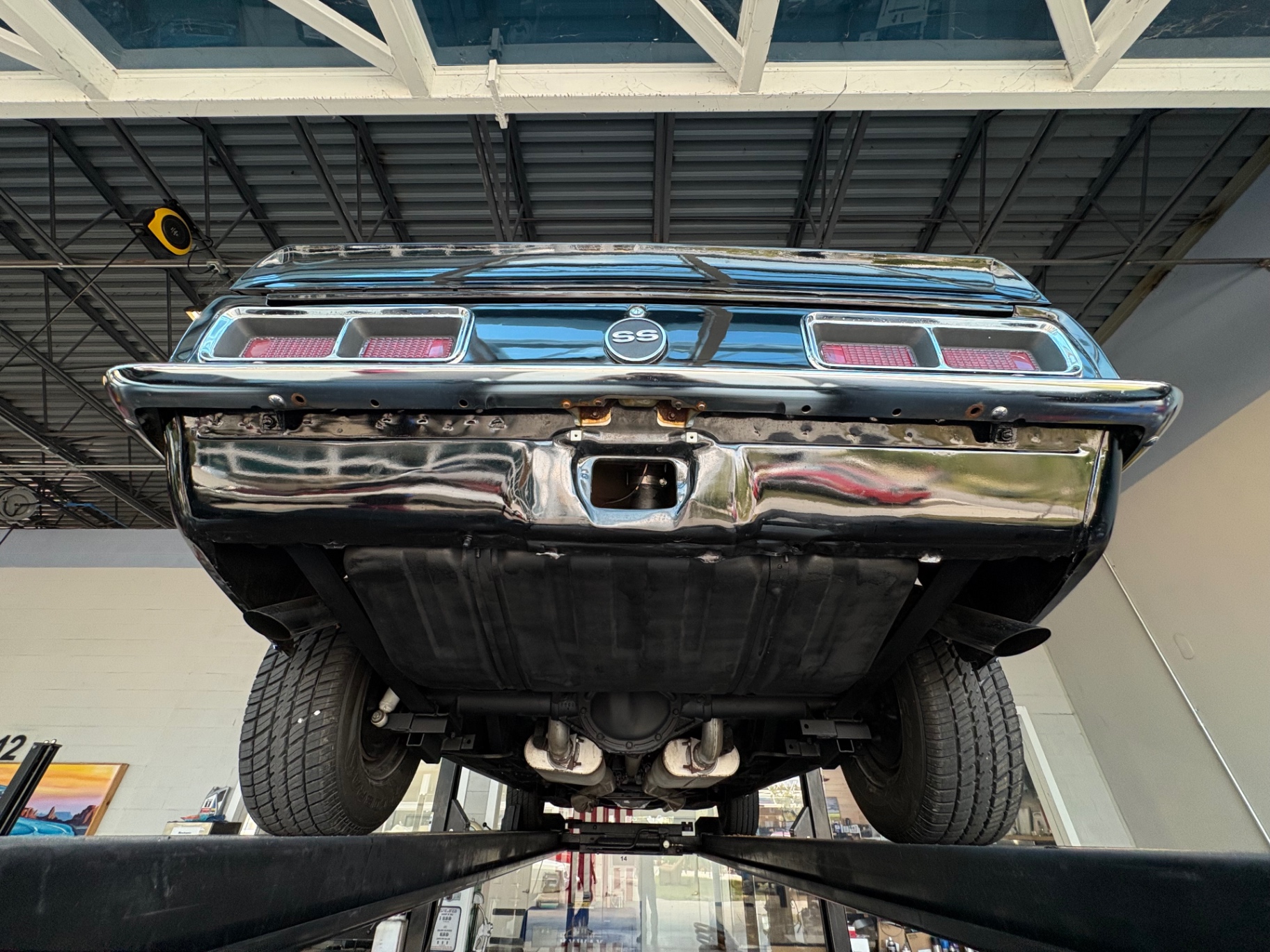
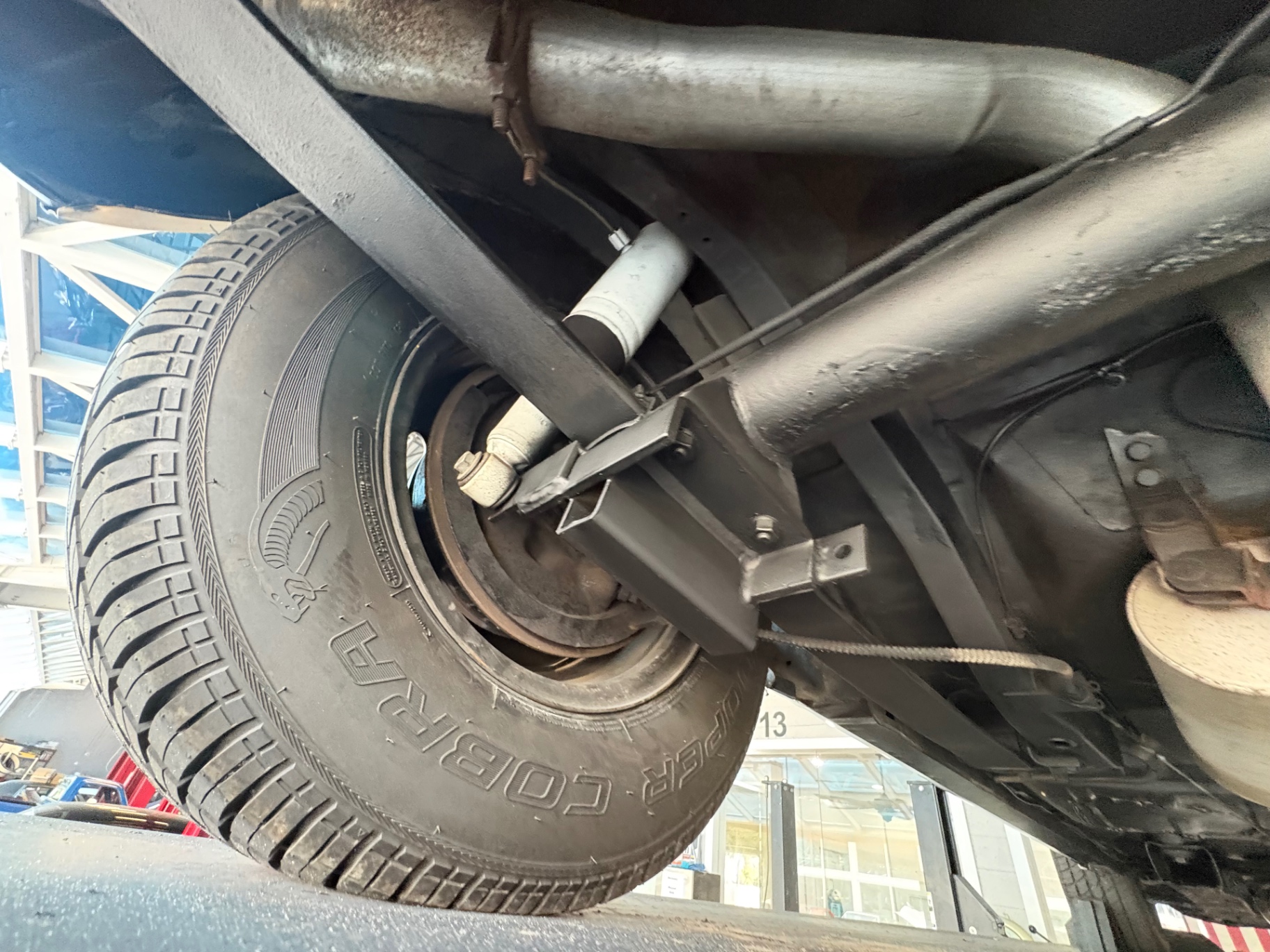
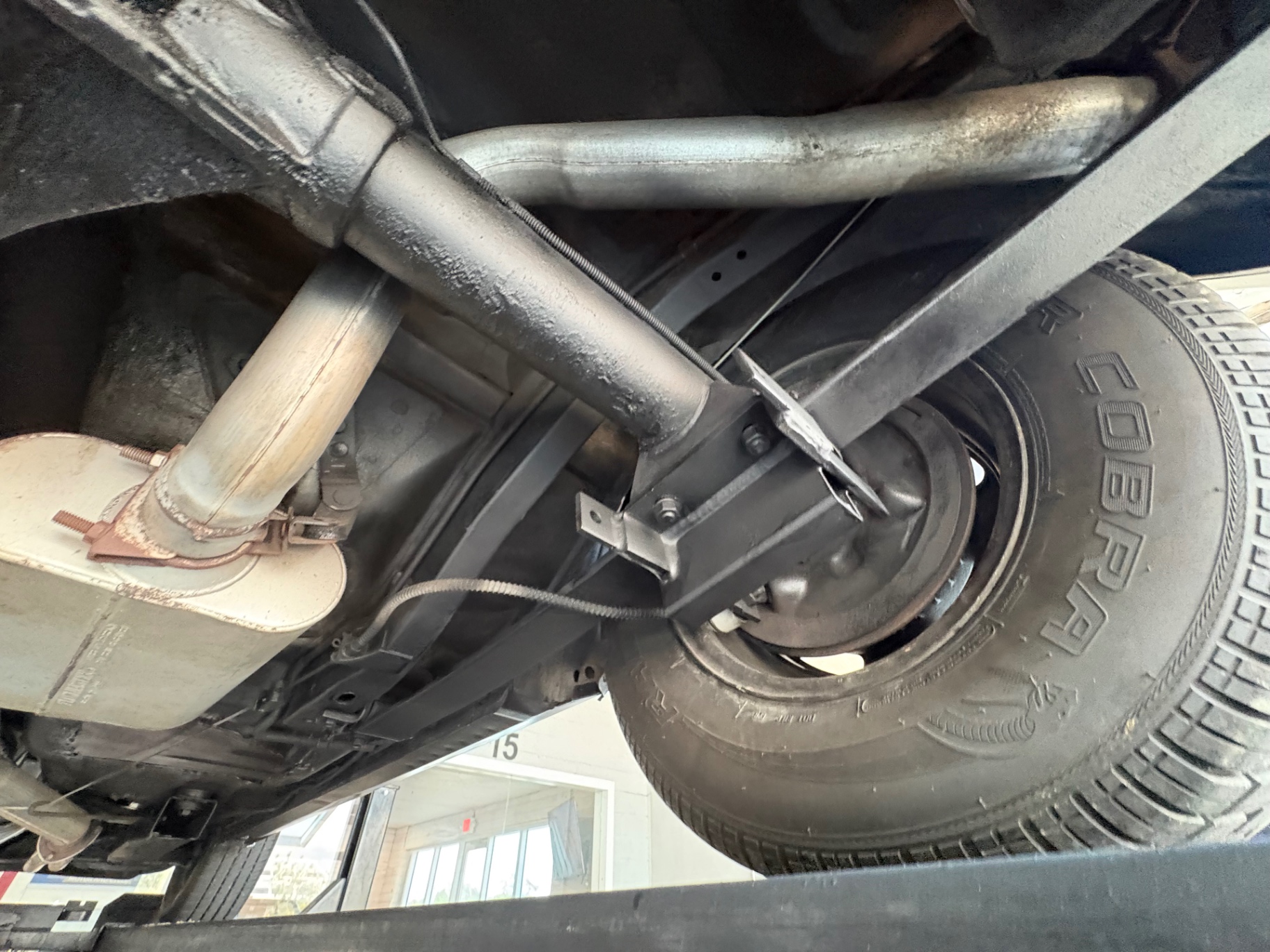
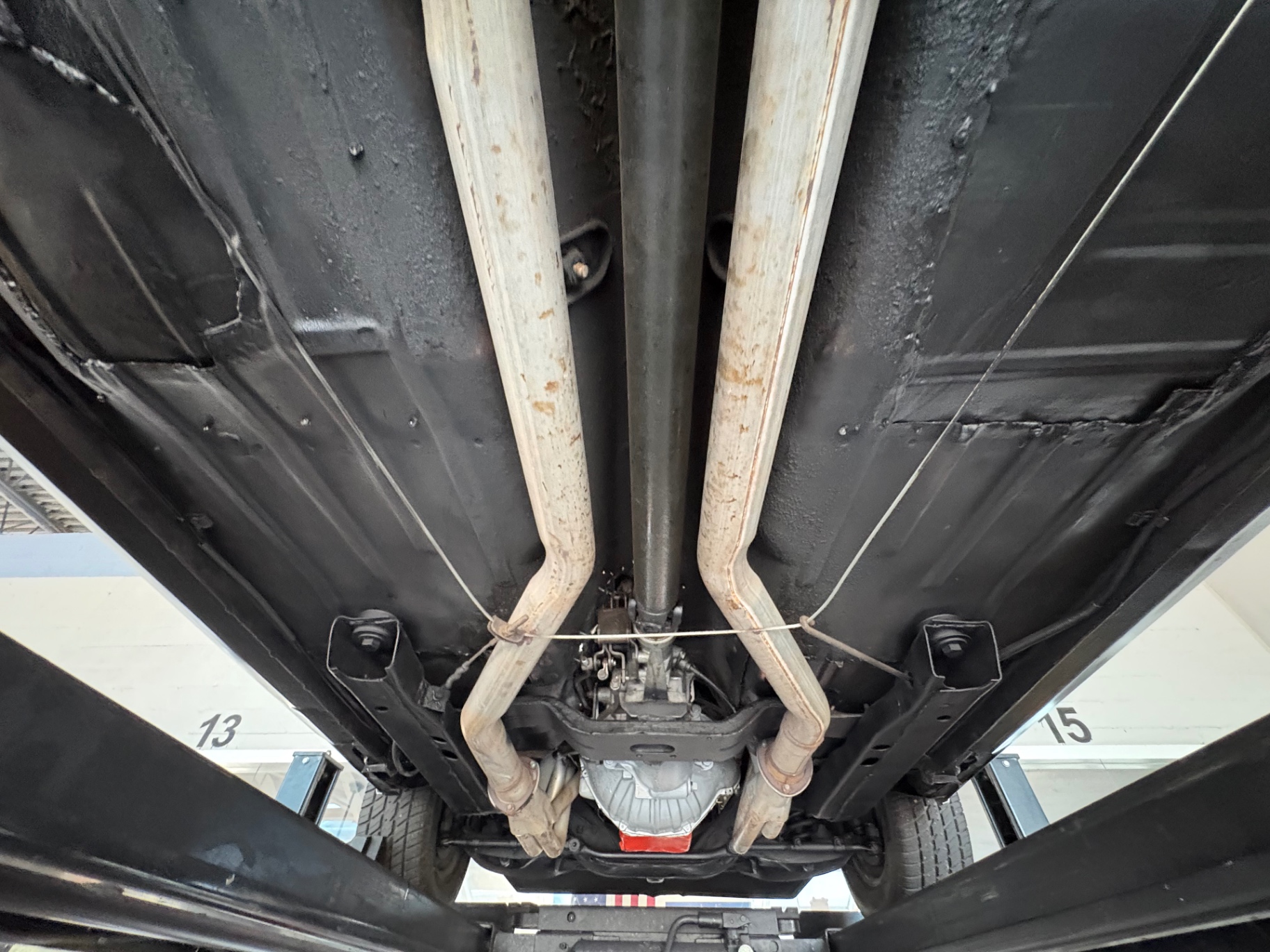
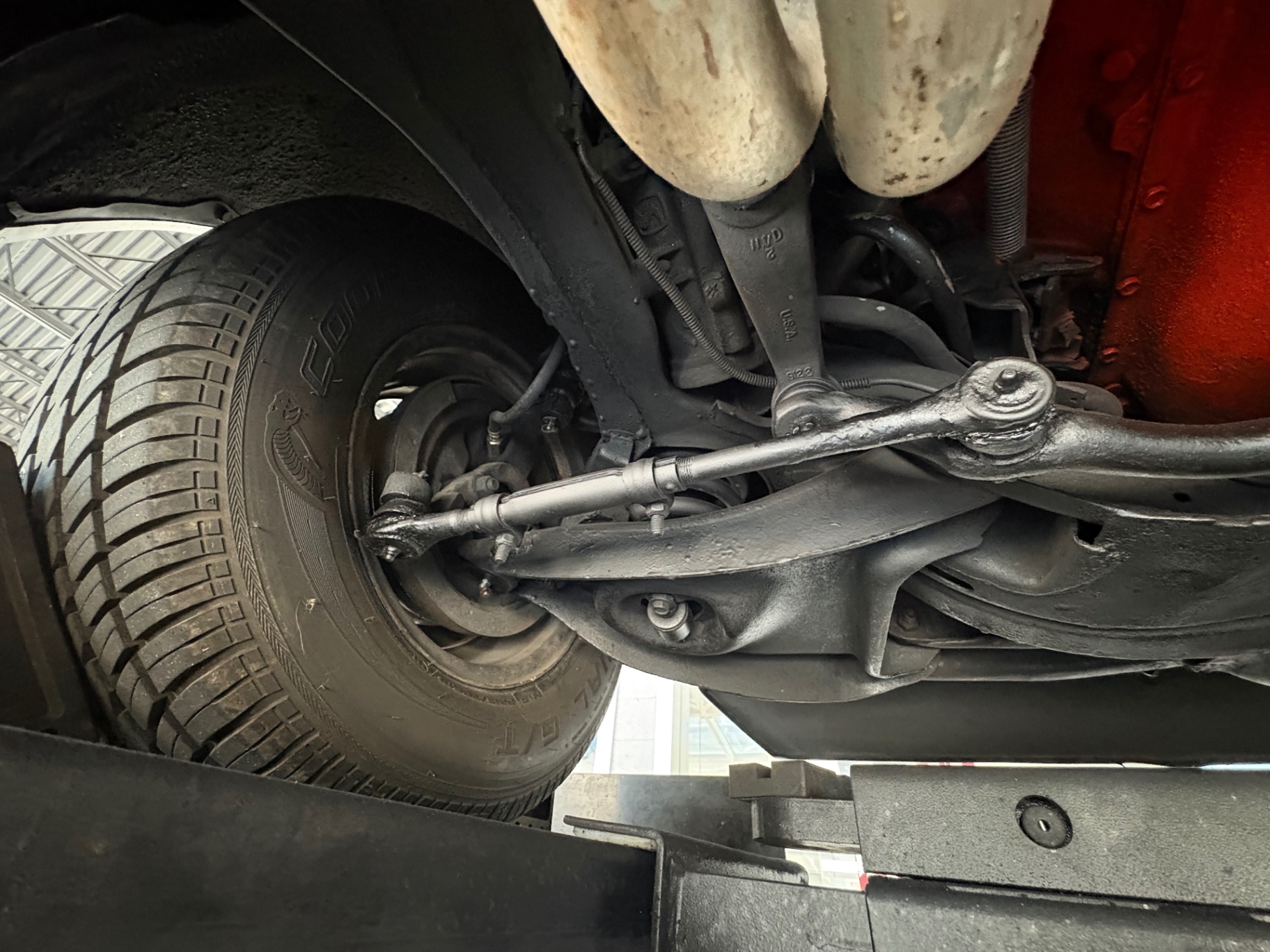
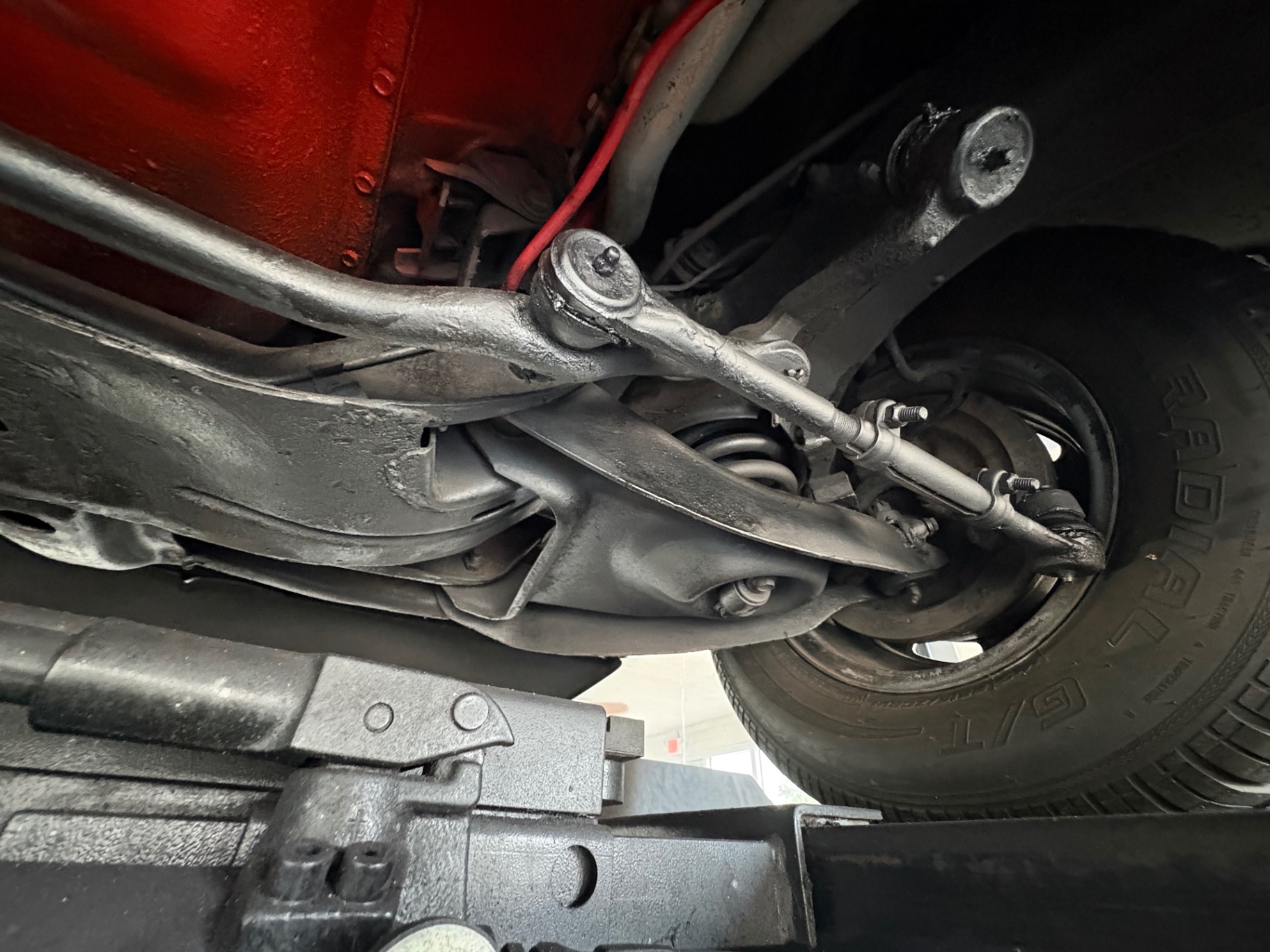
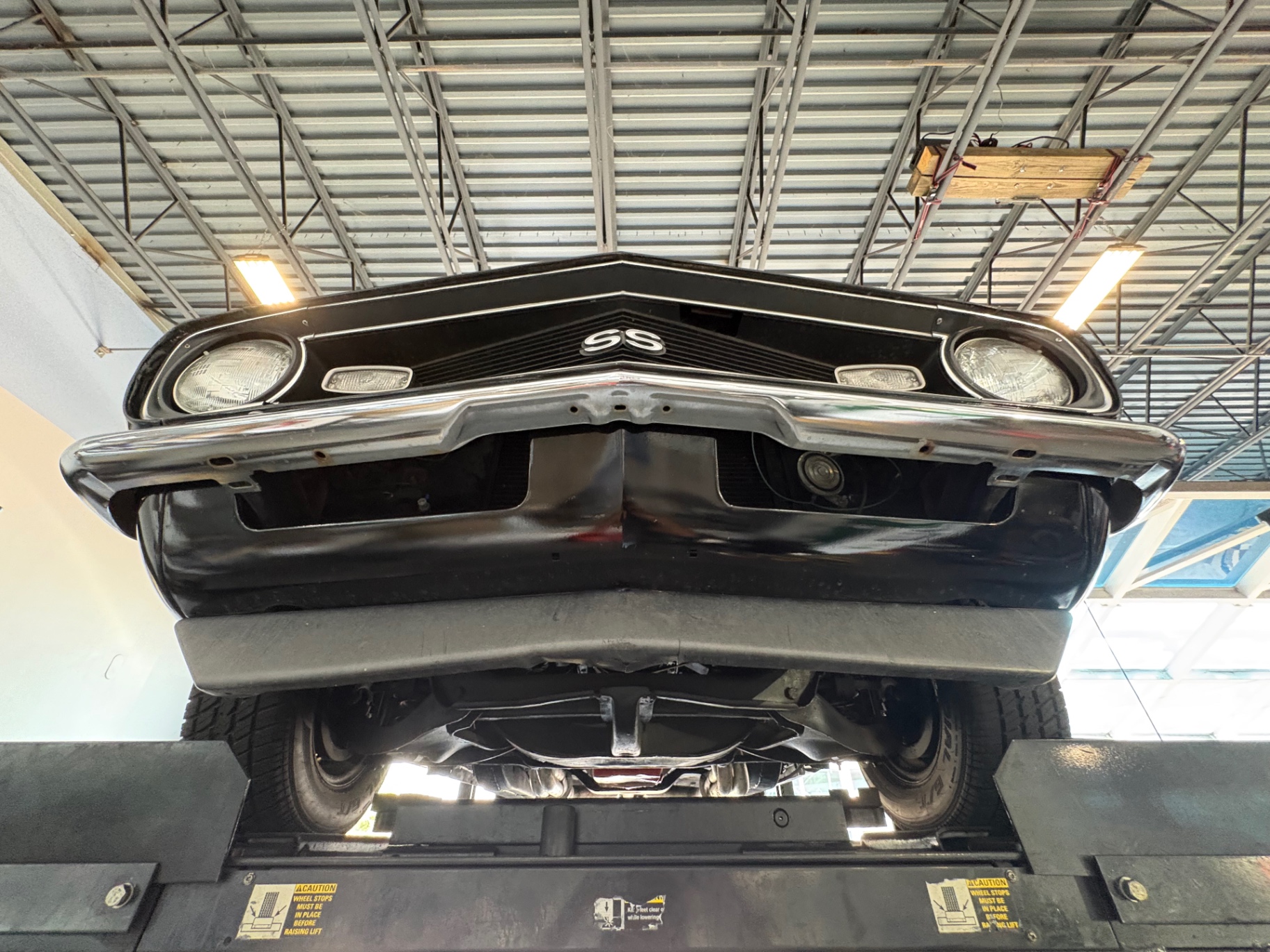
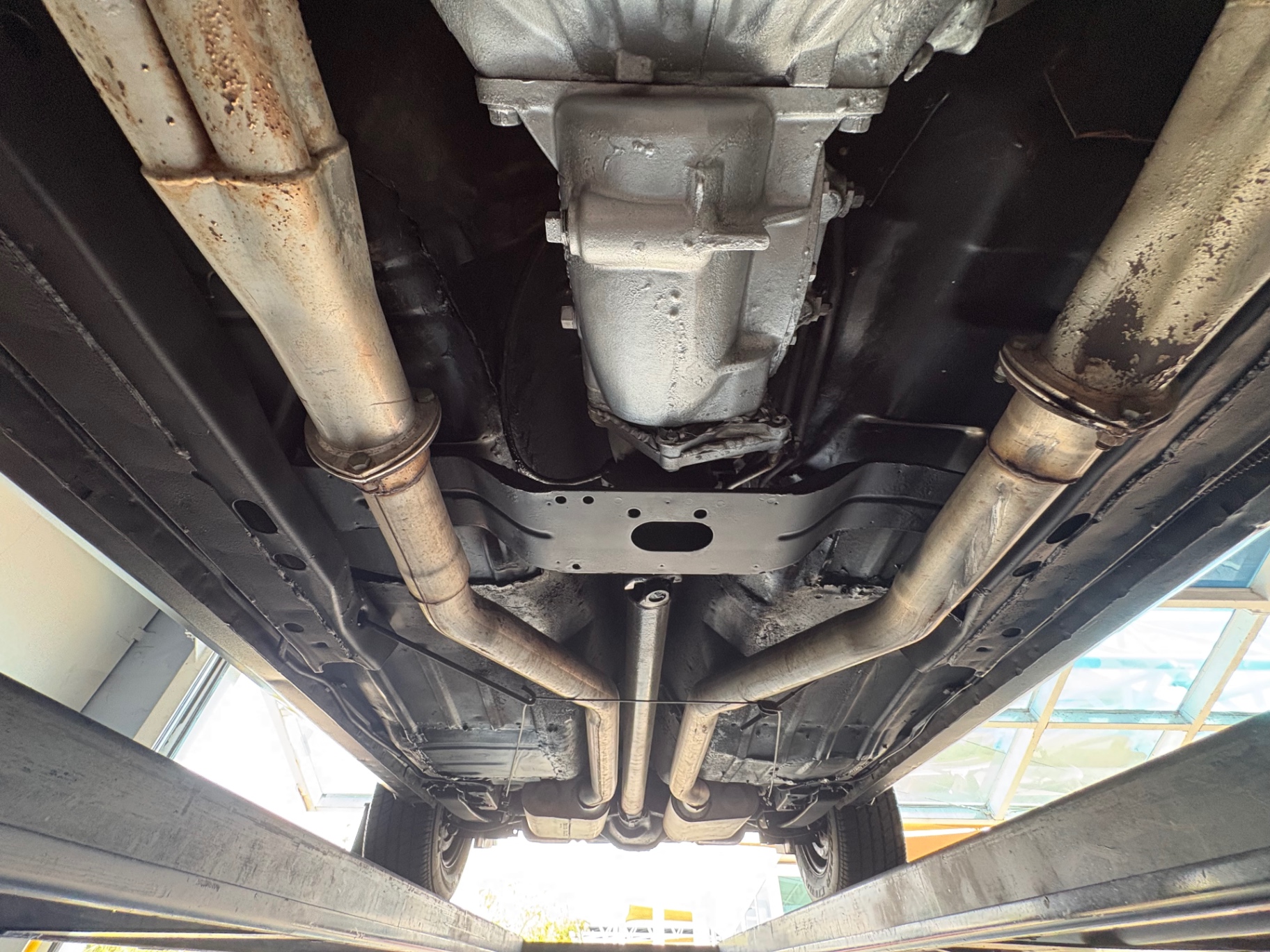
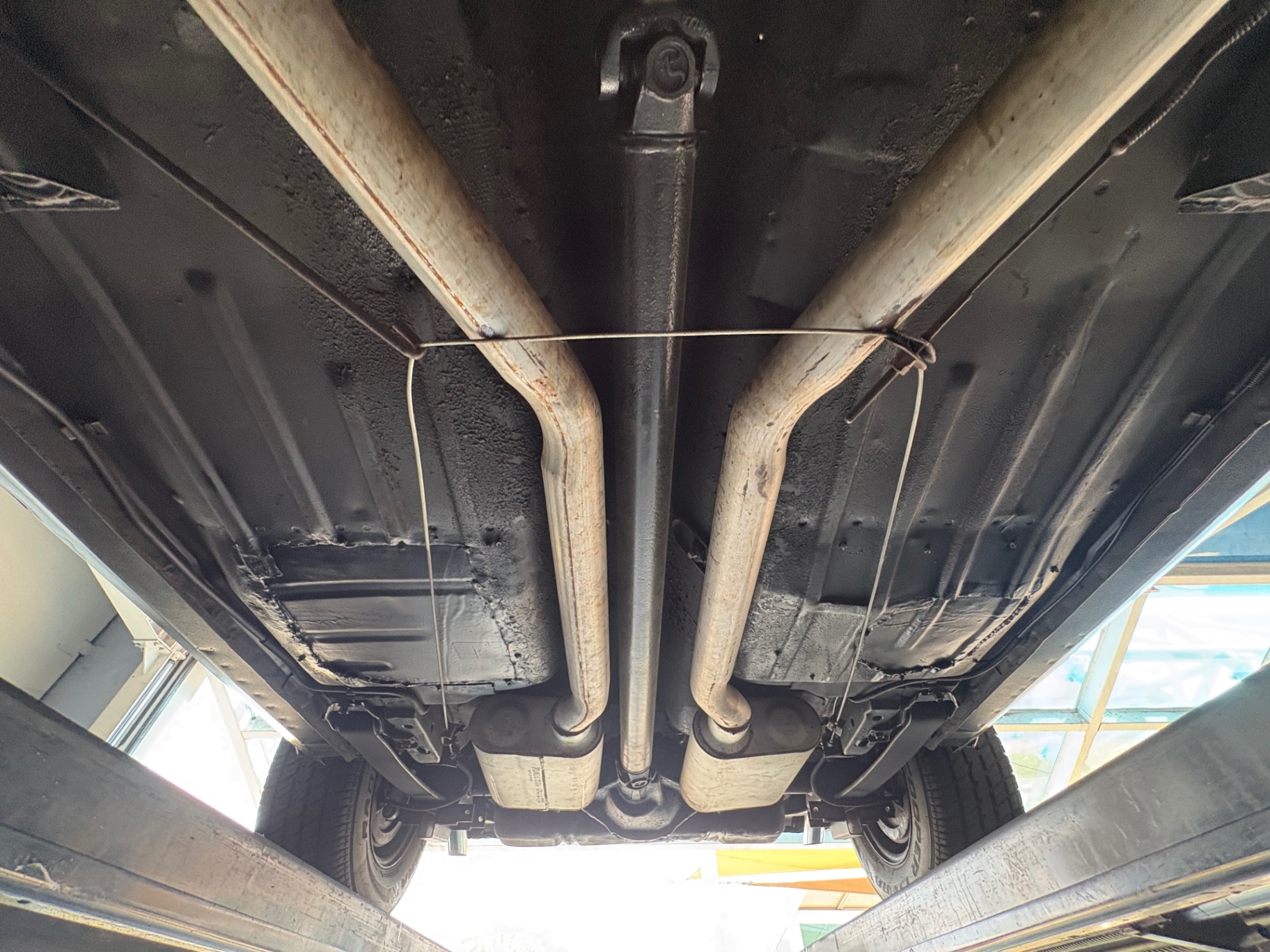
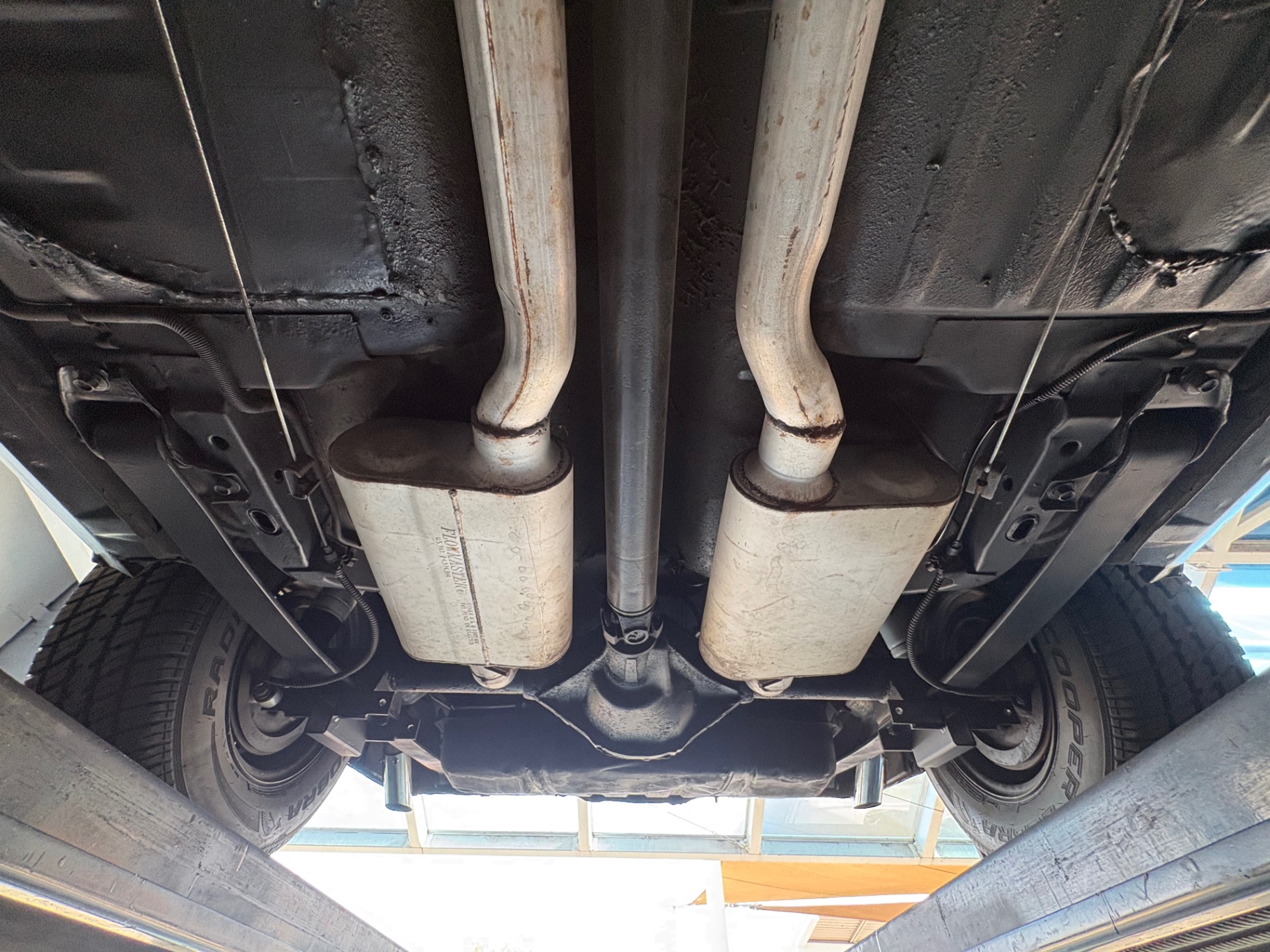
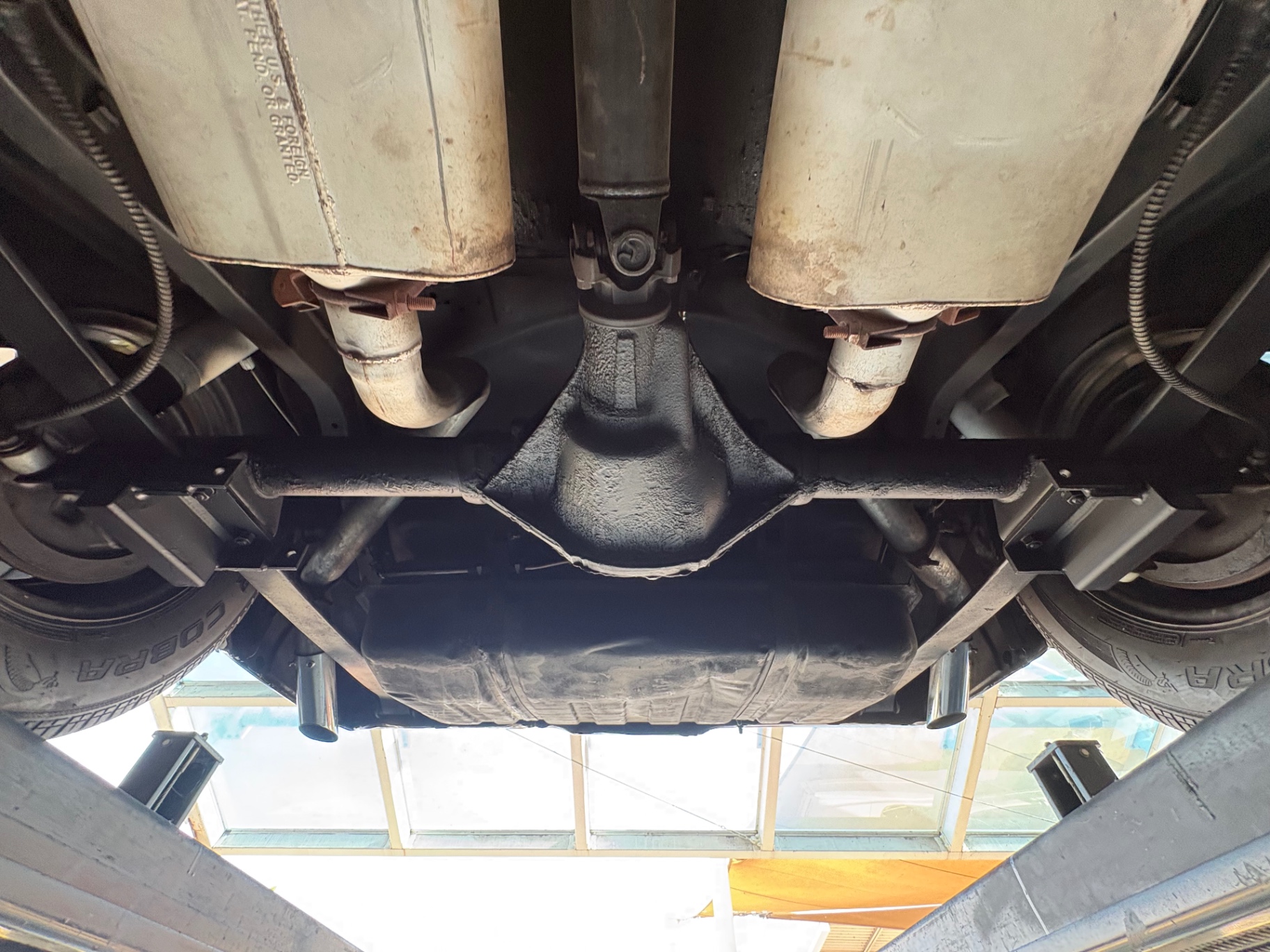
The T10 4-speed is bolted up and working as it should. Power steering is fitted, which makes the car significantly easier to drive in real-world conditions — early Camaros without power steering require serious effort at parking lot speeds, so this is a meaningful convenience for a car that gets driven. The undercarriage photos confirm what the seller states: this is a clean, solid car underneath. No visible rot, no heavy surface rust, no obvious patchwork. For a 56-year-old car, that matters more than almost any other single factor.
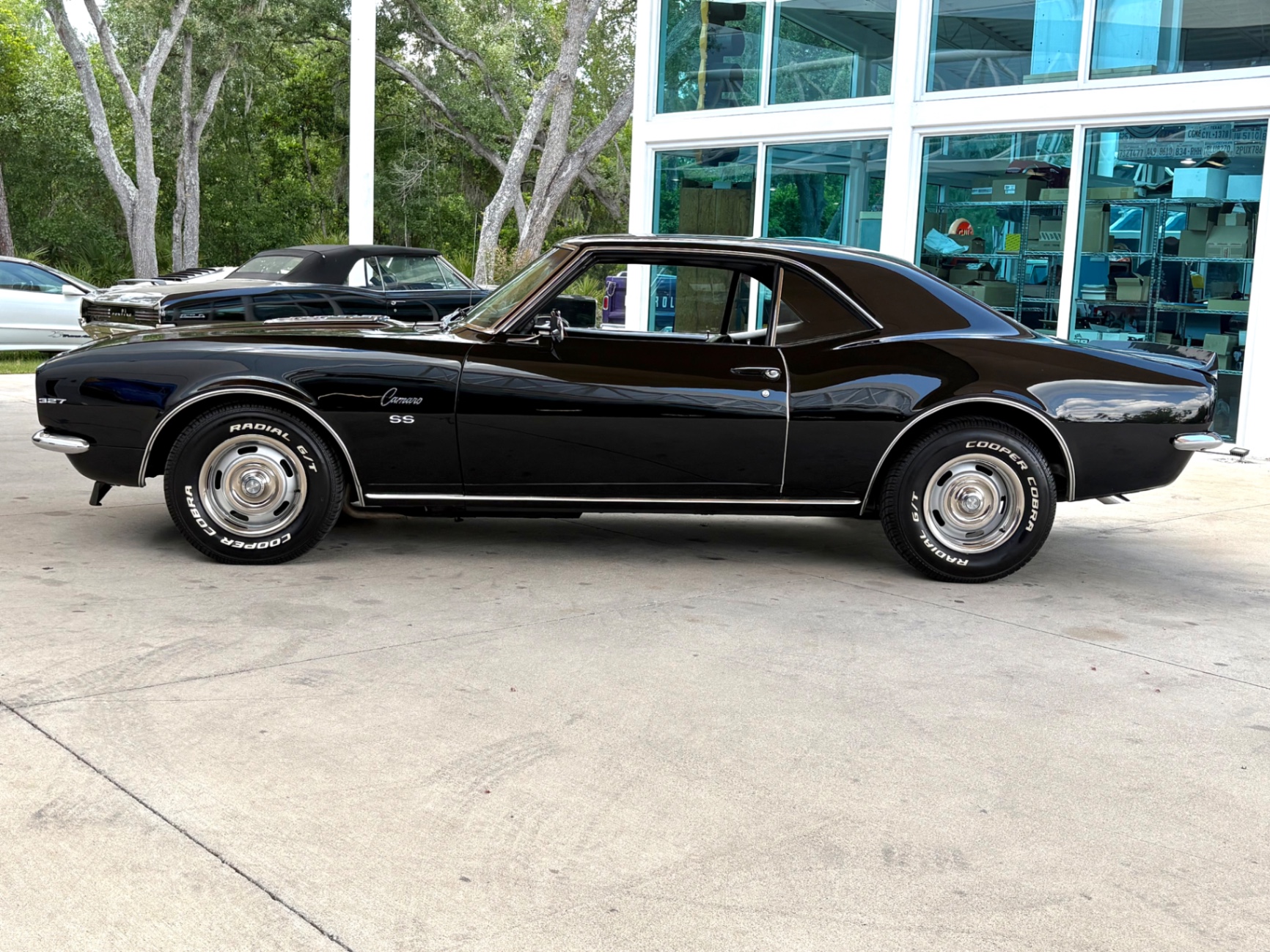
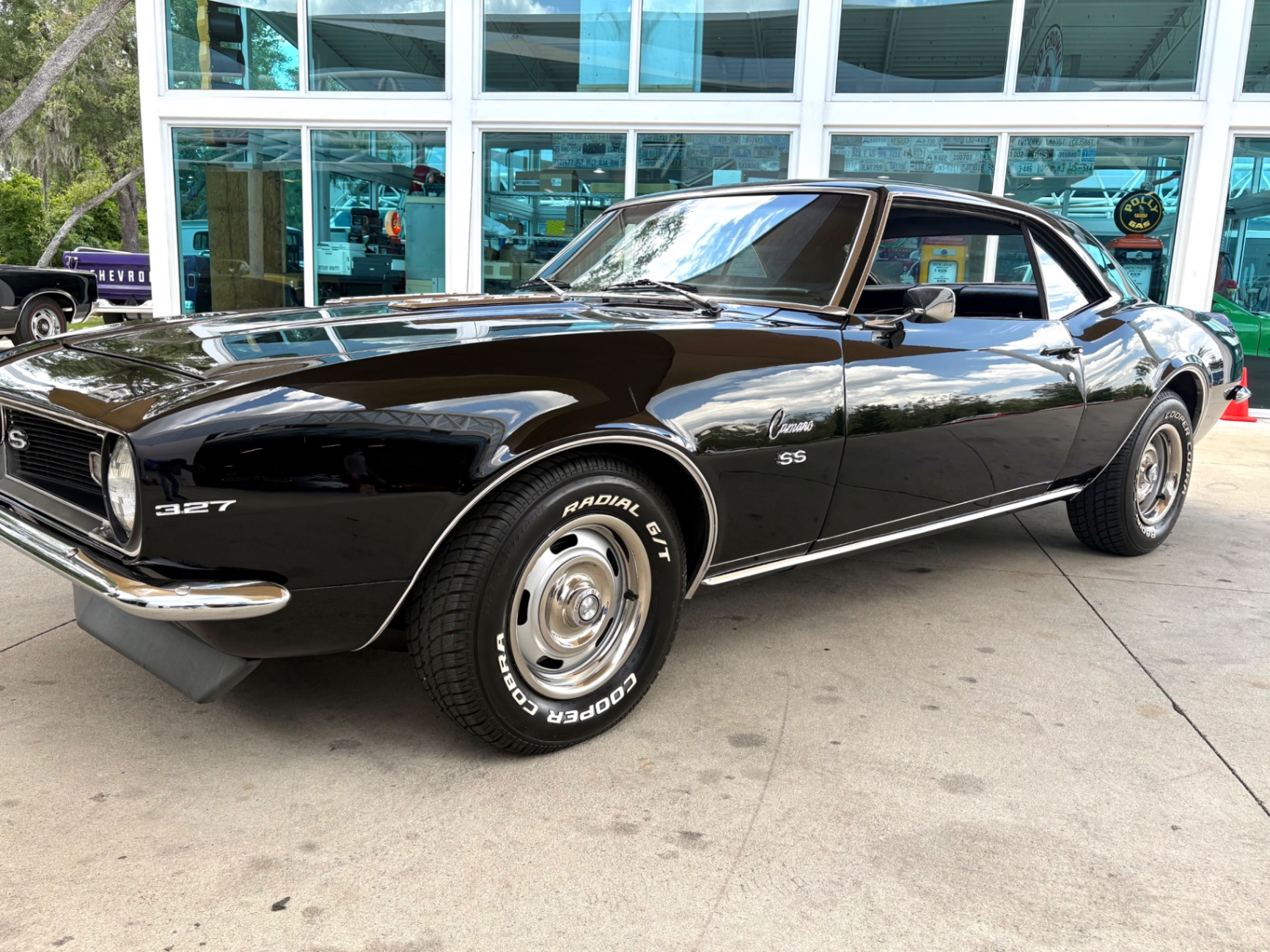
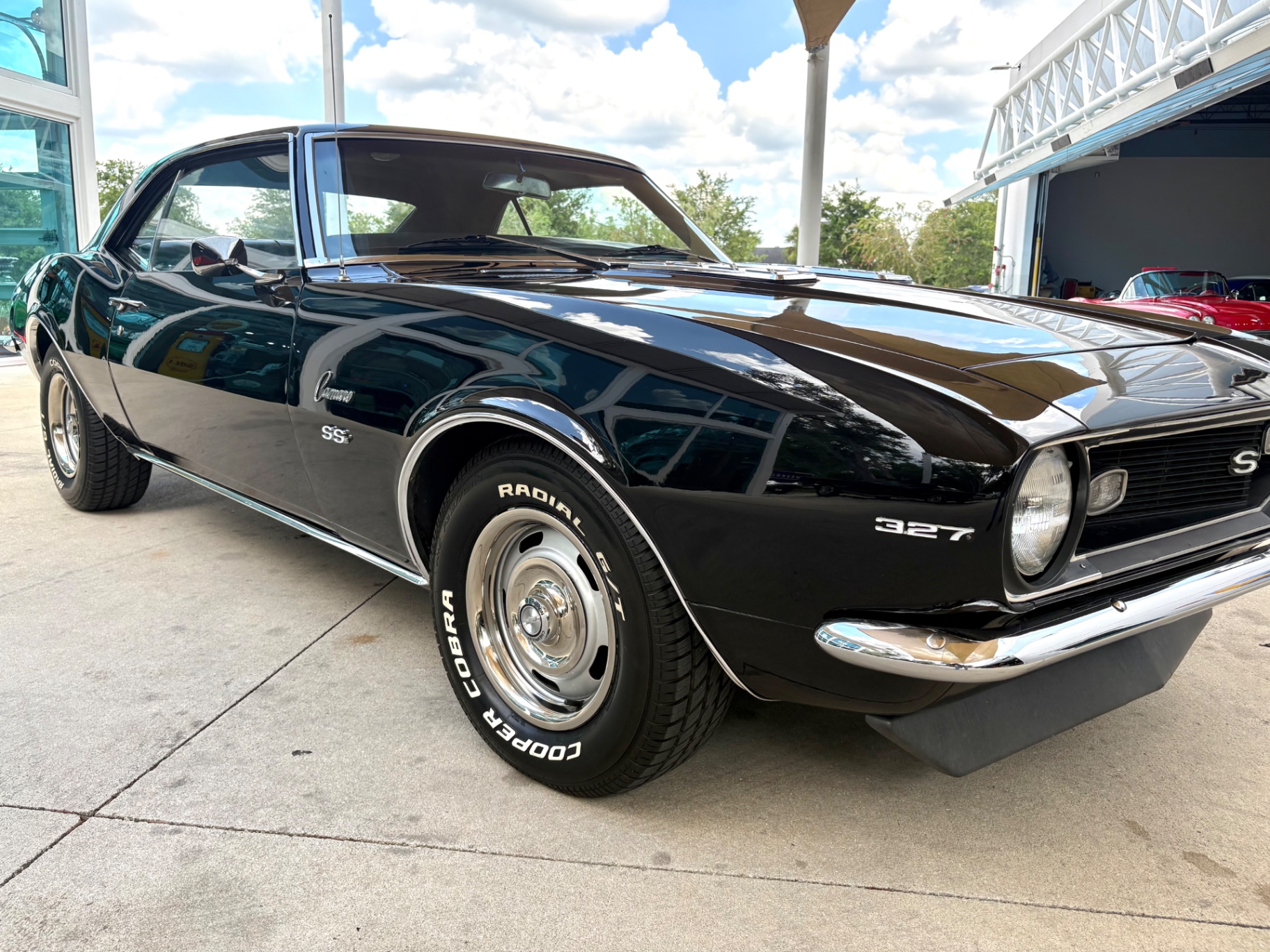
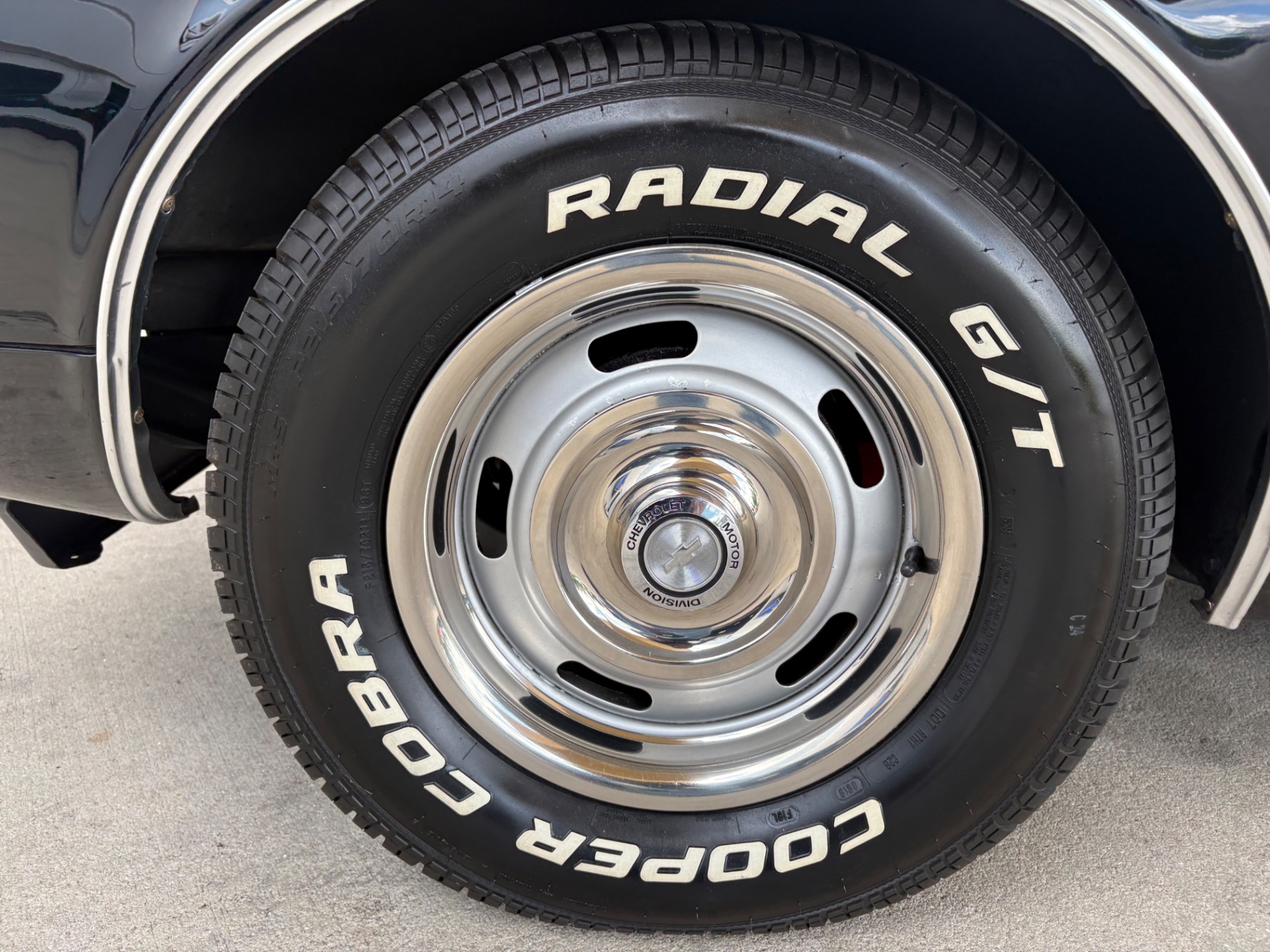
Cooper Cobra radial tires wrap the Rally wheels at all four corners. Cooper's Cobra G/T is a period-correct looking radial that carries the white-letter sidewall appearance collectors expect while offering modern radial construction — a reasonable compromise between looks and drivability.
Interior
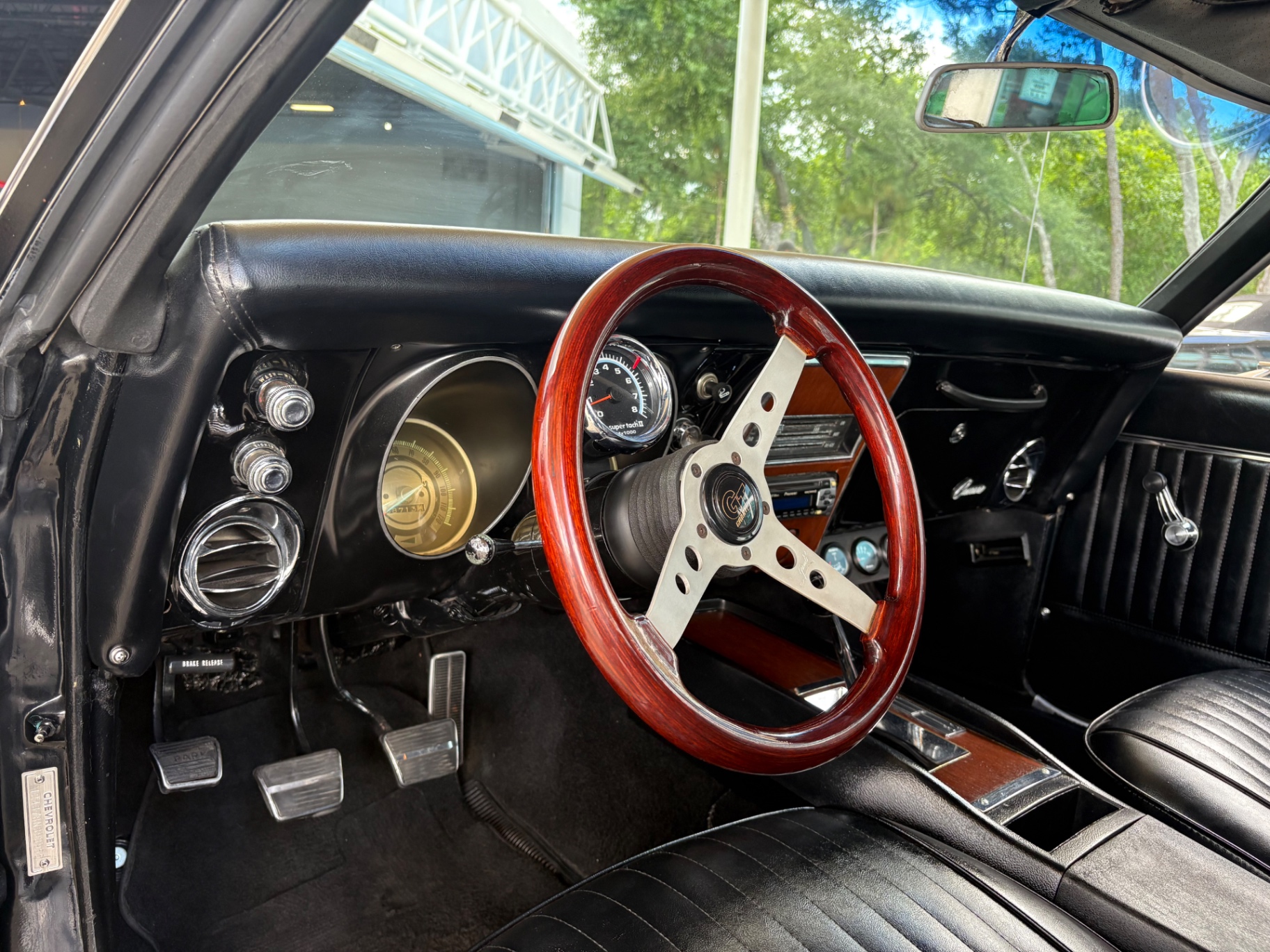
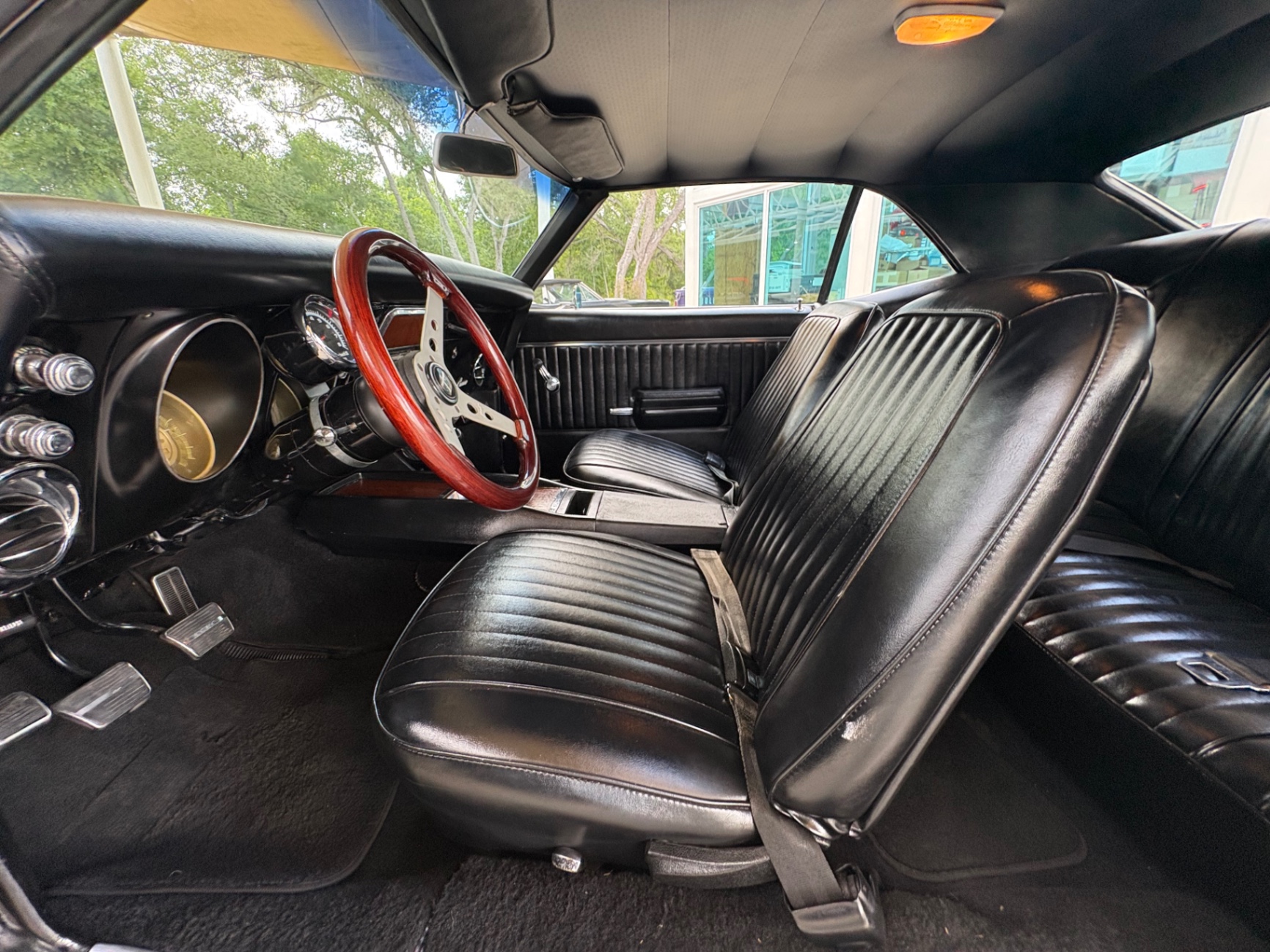
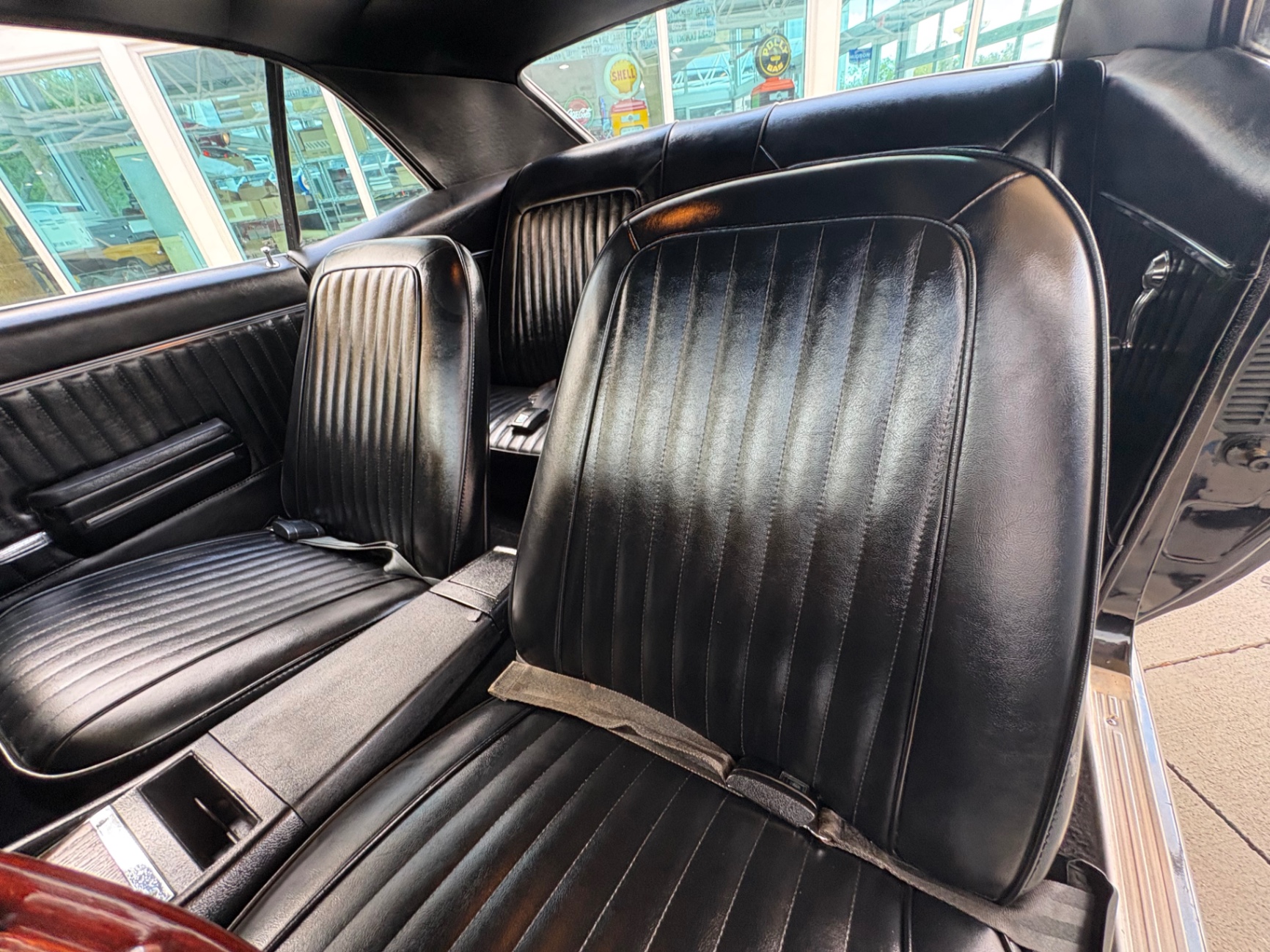
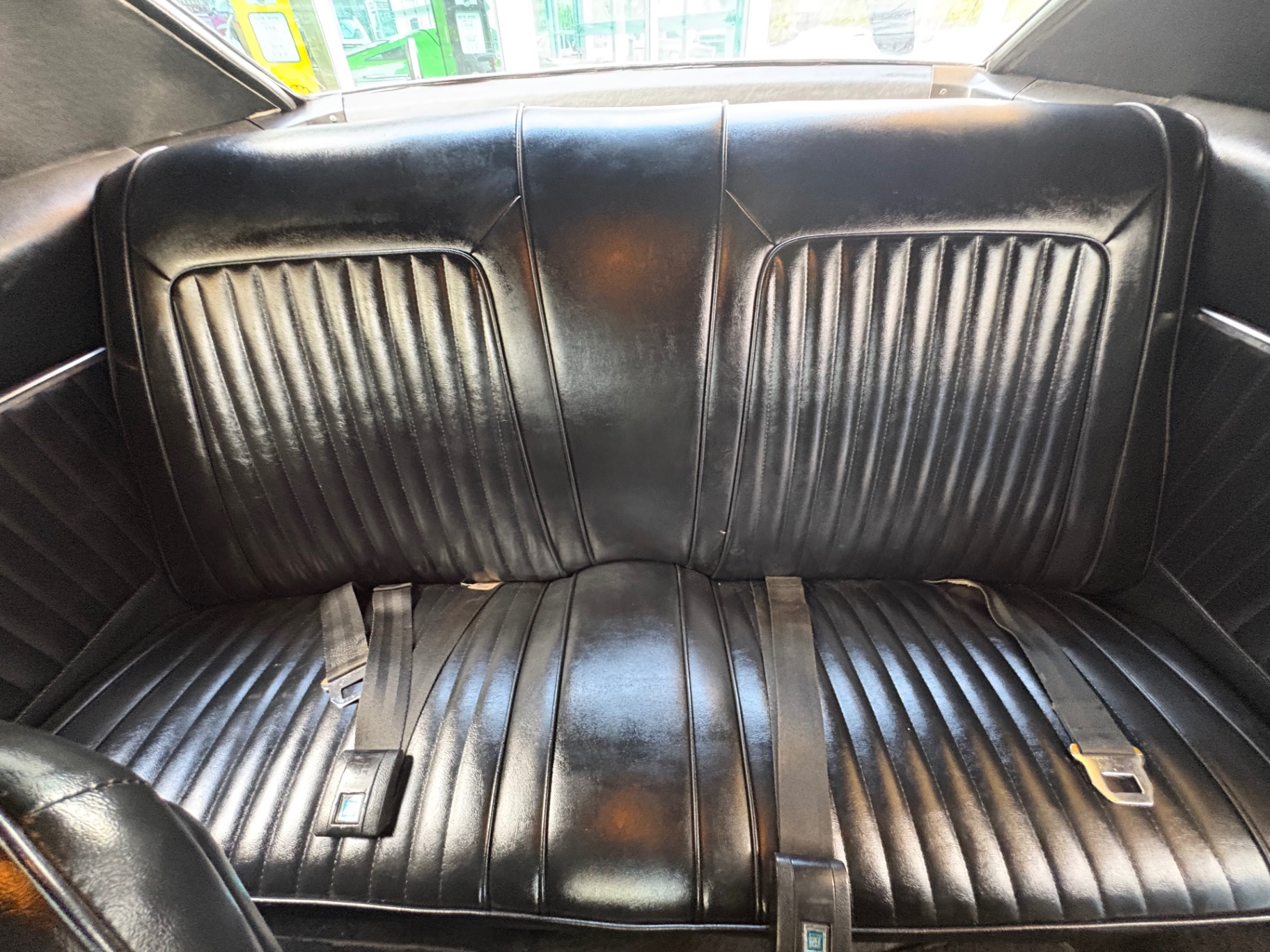
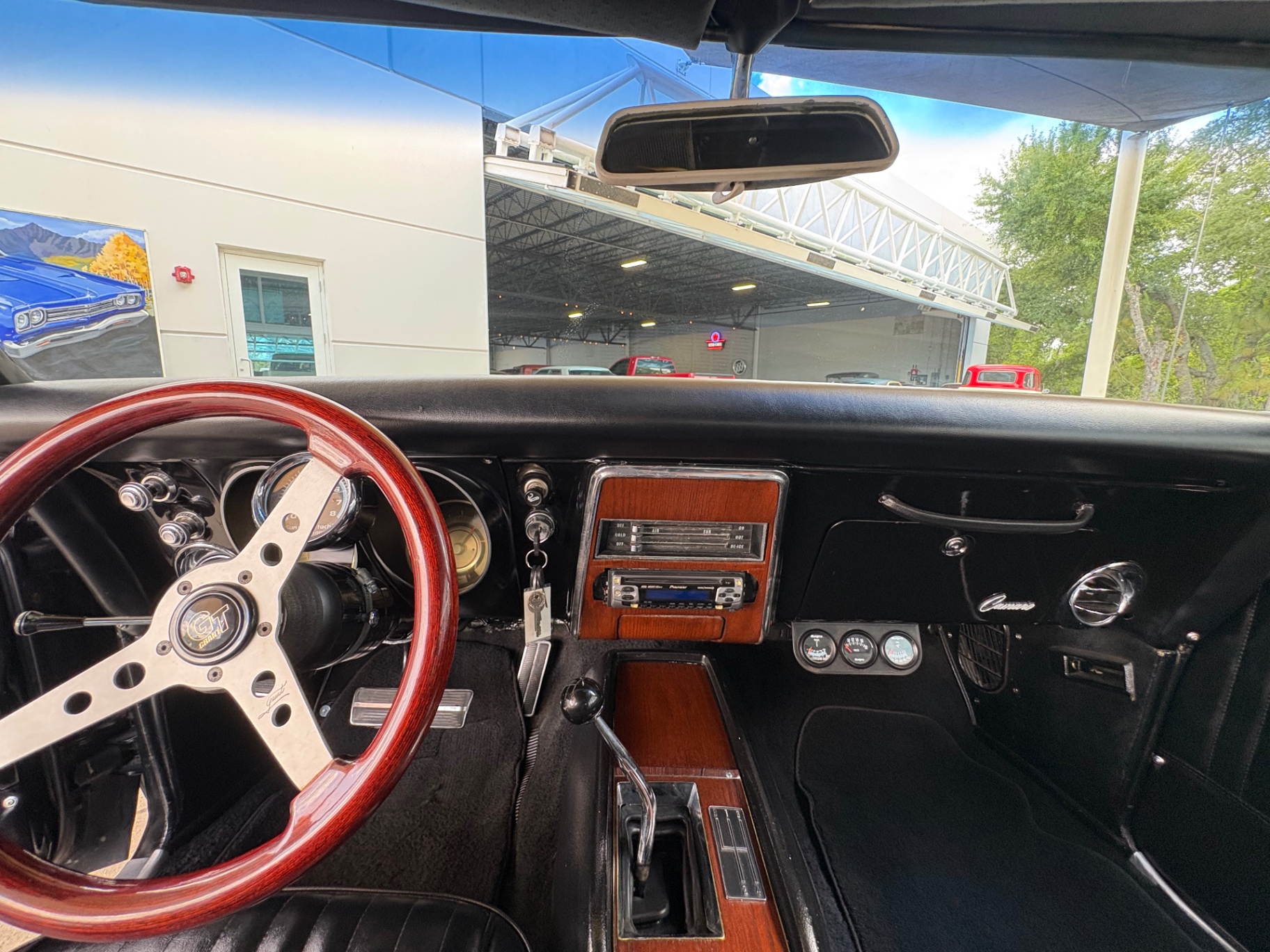
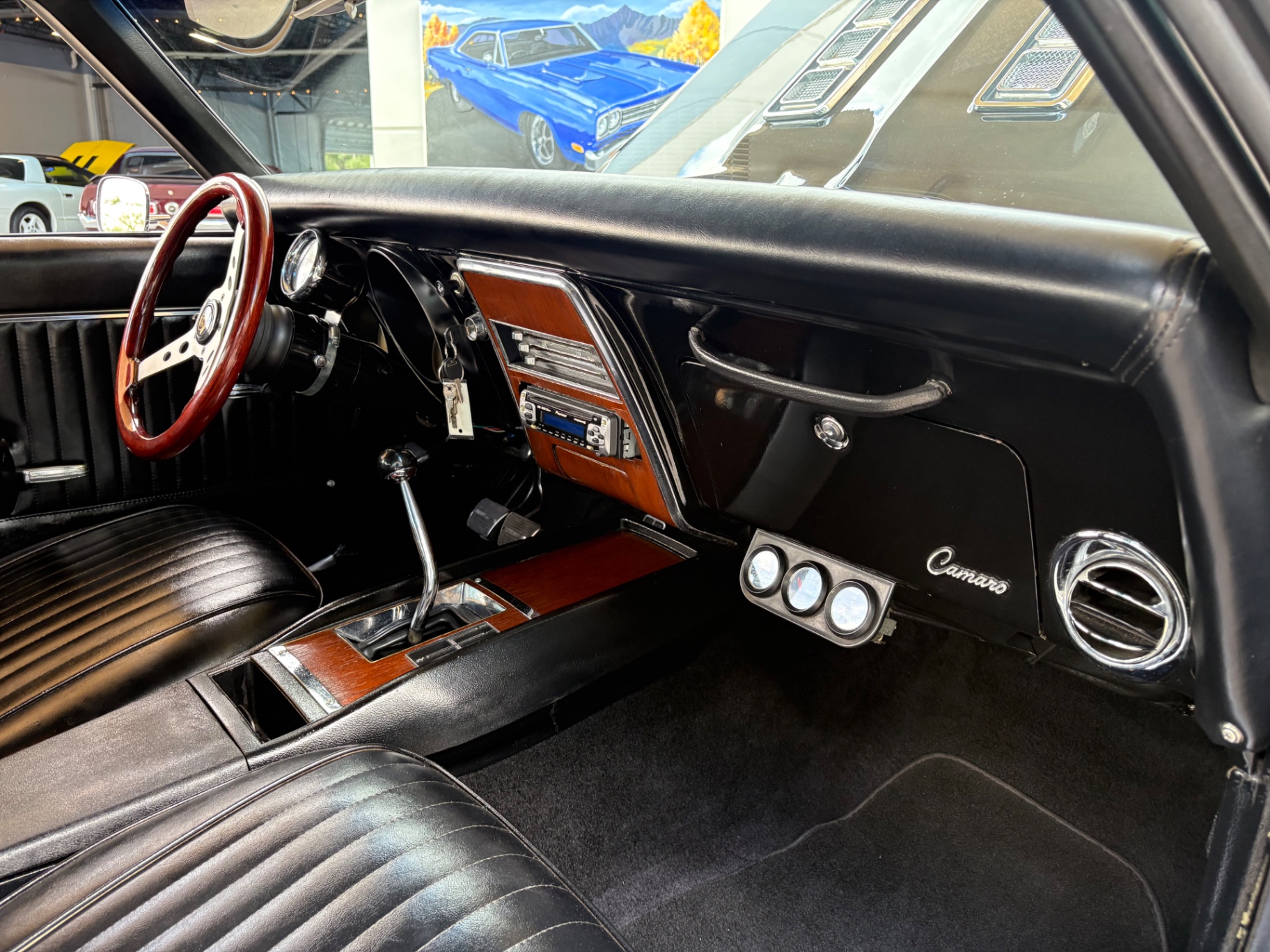
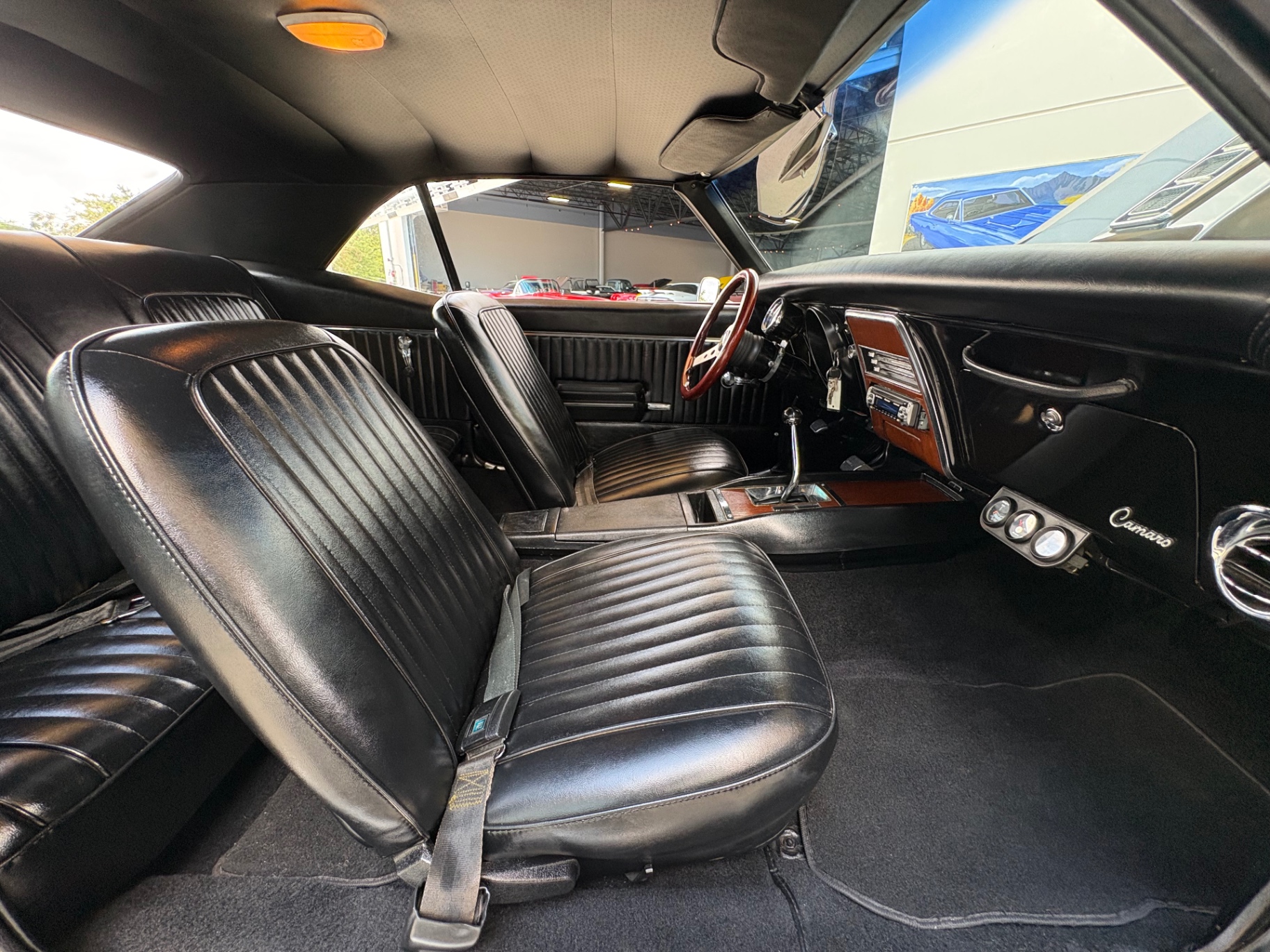
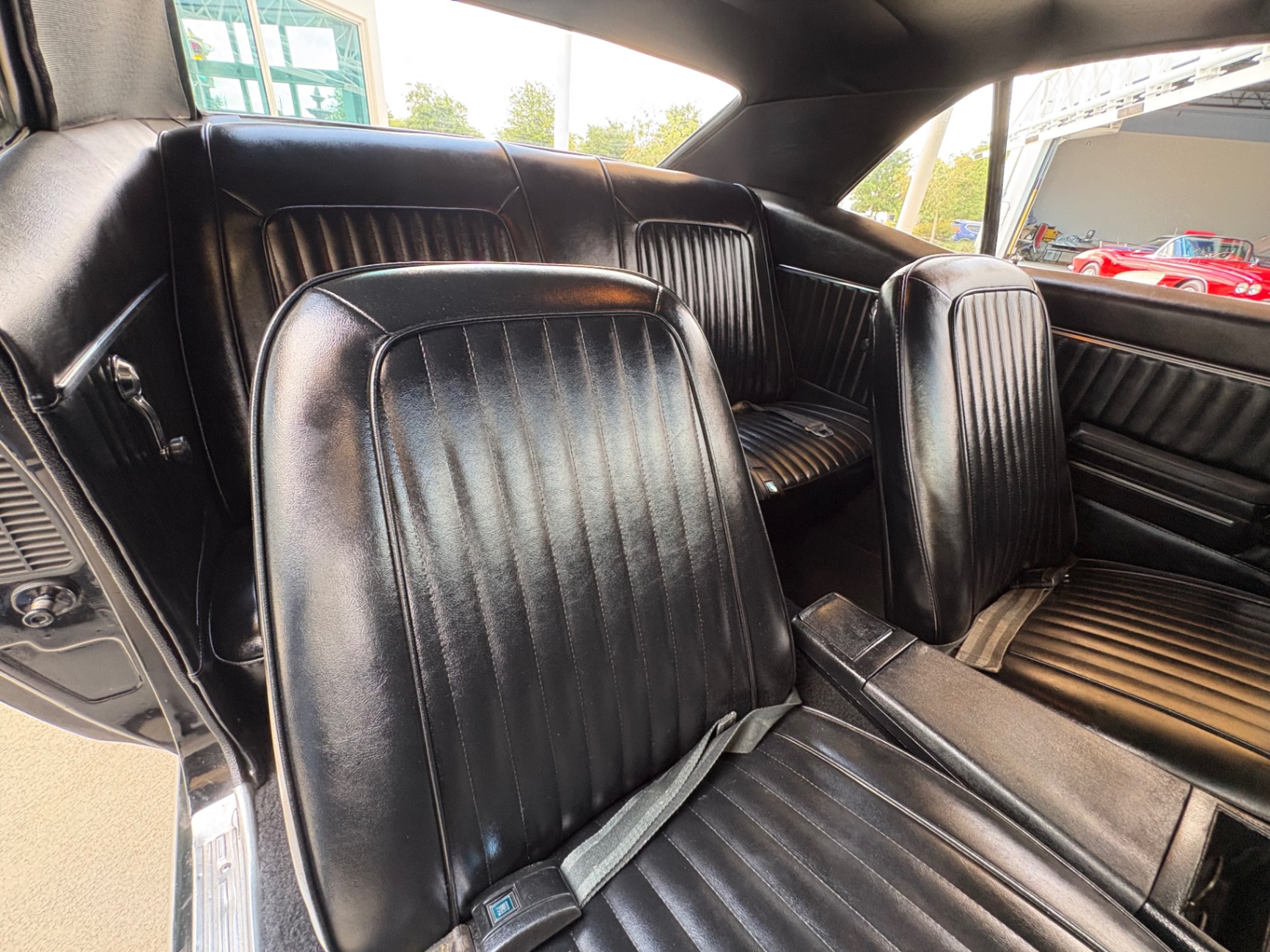
The interior is all black vinyl — correct and appropriate for this car. Bucket seats up front, center console between them, and the whole package presents the way Chevrolet intended the SS to be experienced. The SS package in 1968 was about the complete sporting experience, not just the powertrain, and the bucket seat and console combination is central to that.
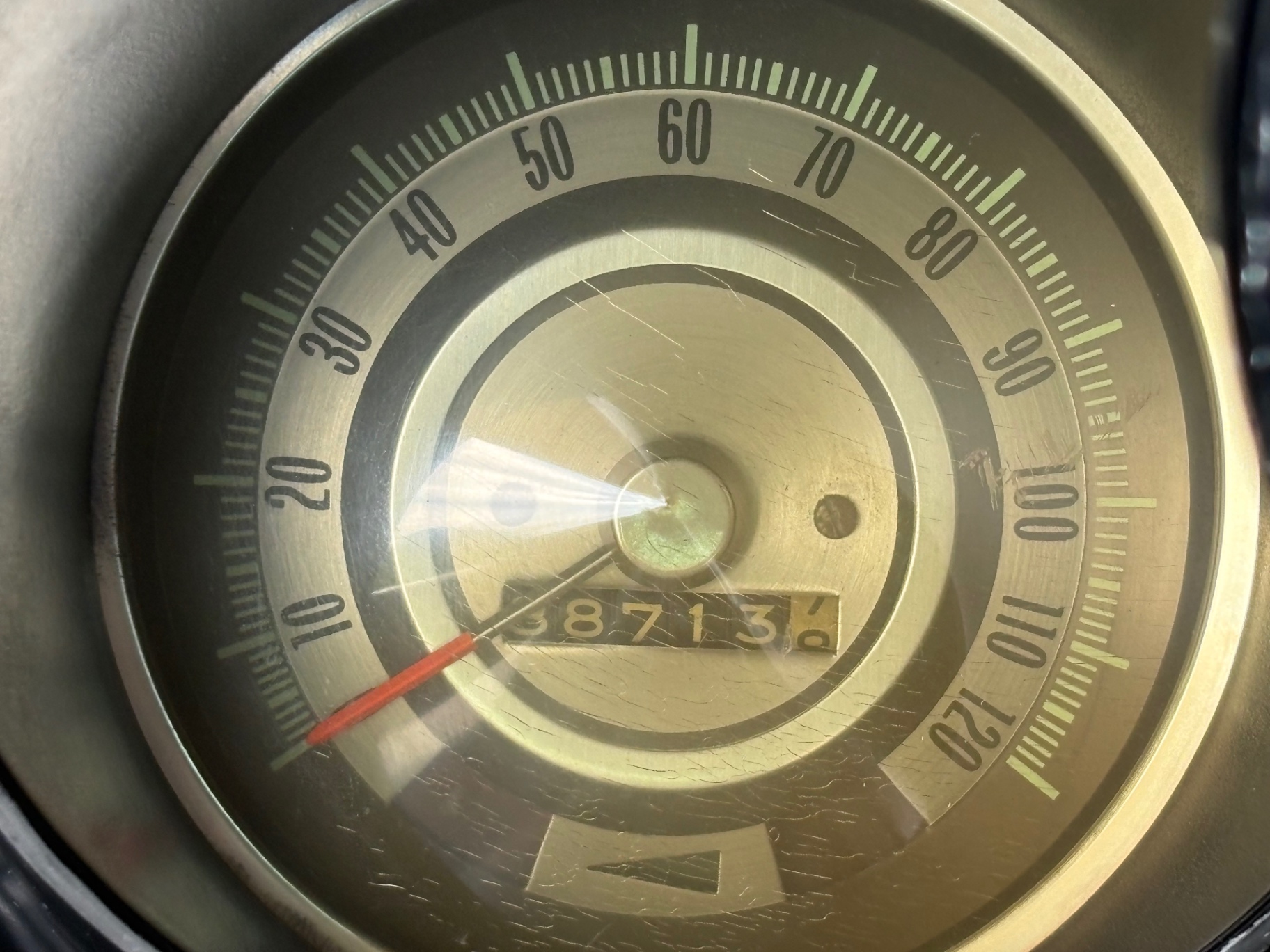
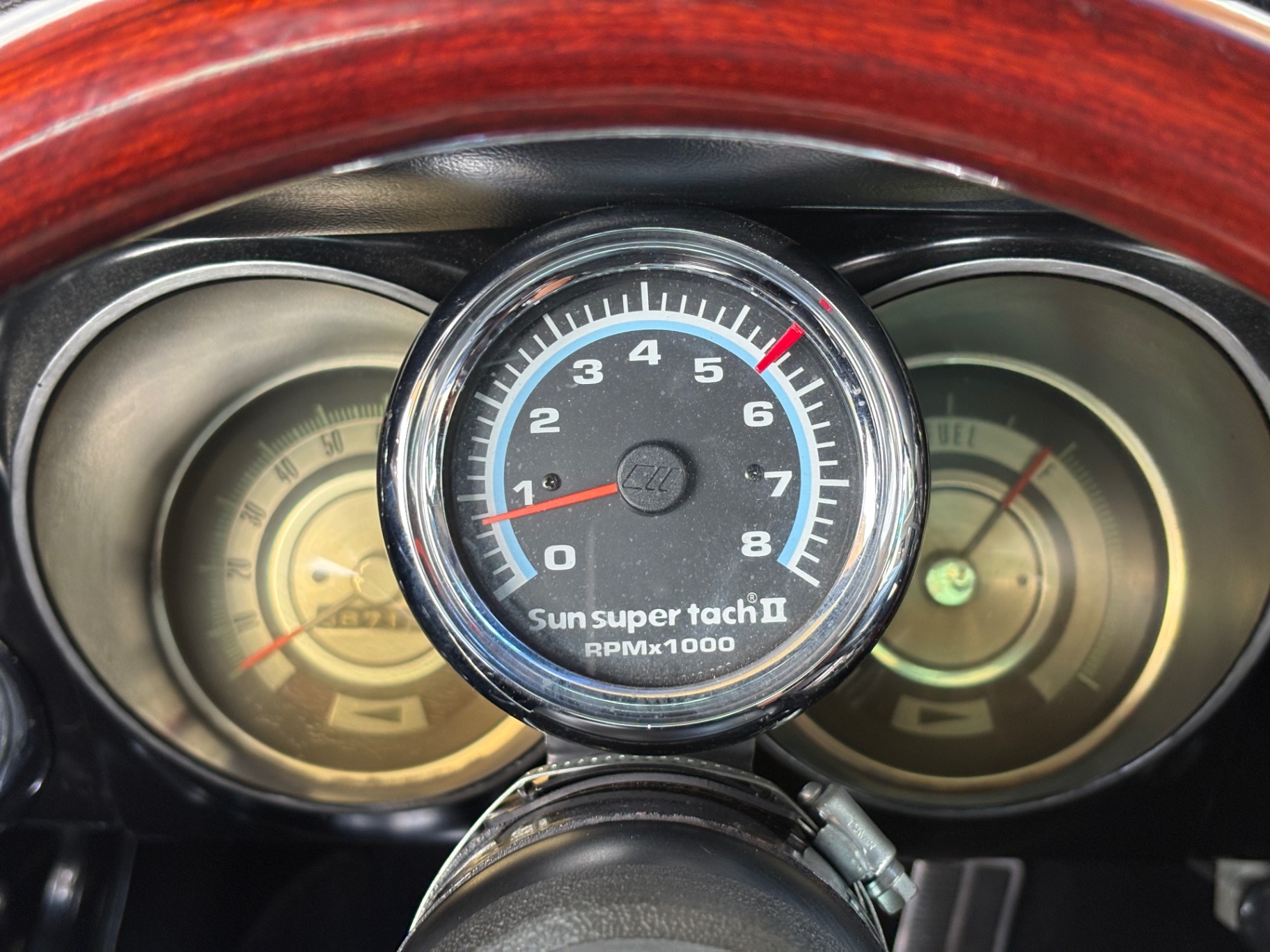
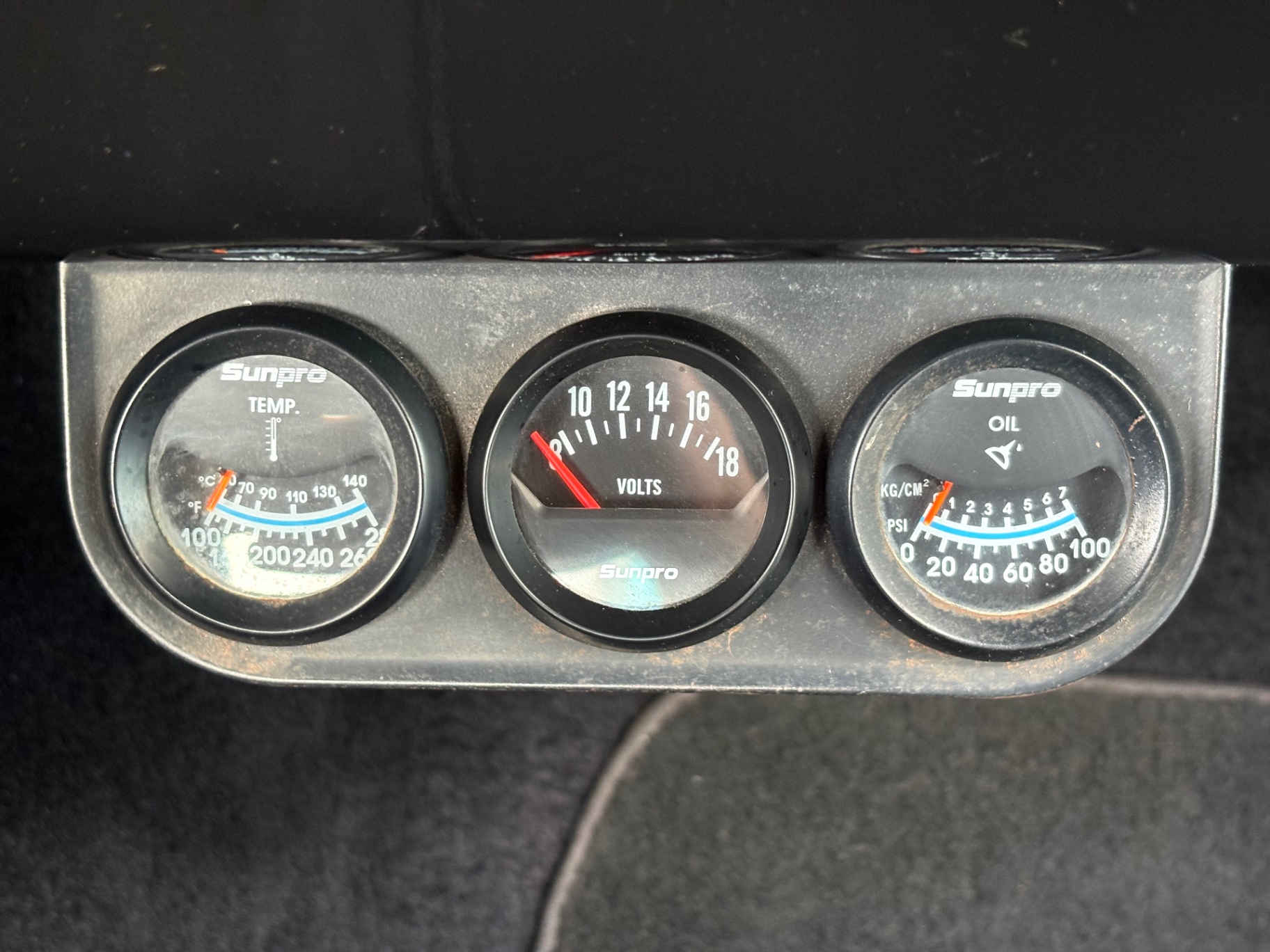
A Grant GT steering wheel has replaced the original. Grant wheels were enormously popular from the 1970s onward, and this one suits the car's character. It is not a factory piece, but it is a period-correct modification that fits the car's driver-oriented personality. An aftermarket tachometer has been added as well — mounted in the dash or on the column, depending on what the buyer sees in person — which is a practical addition for any car being driven with a manual transmission and a 300-horsepower engine. A Pioneer stereo handles audio duties, replacing whatever the original radio configuration was. Taken together, these modifications reflect a car that was restored for enjoyment, not concours competition.
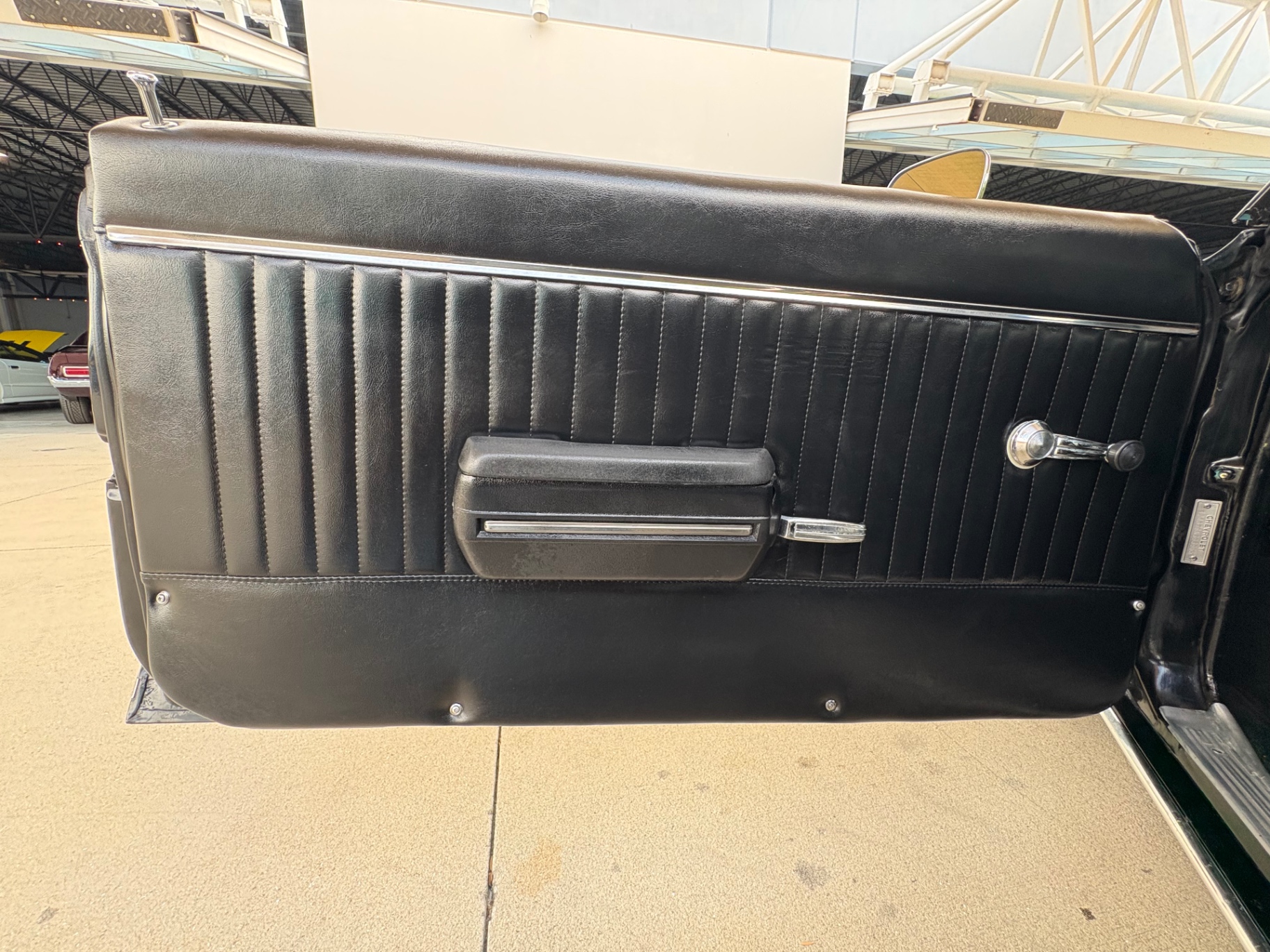
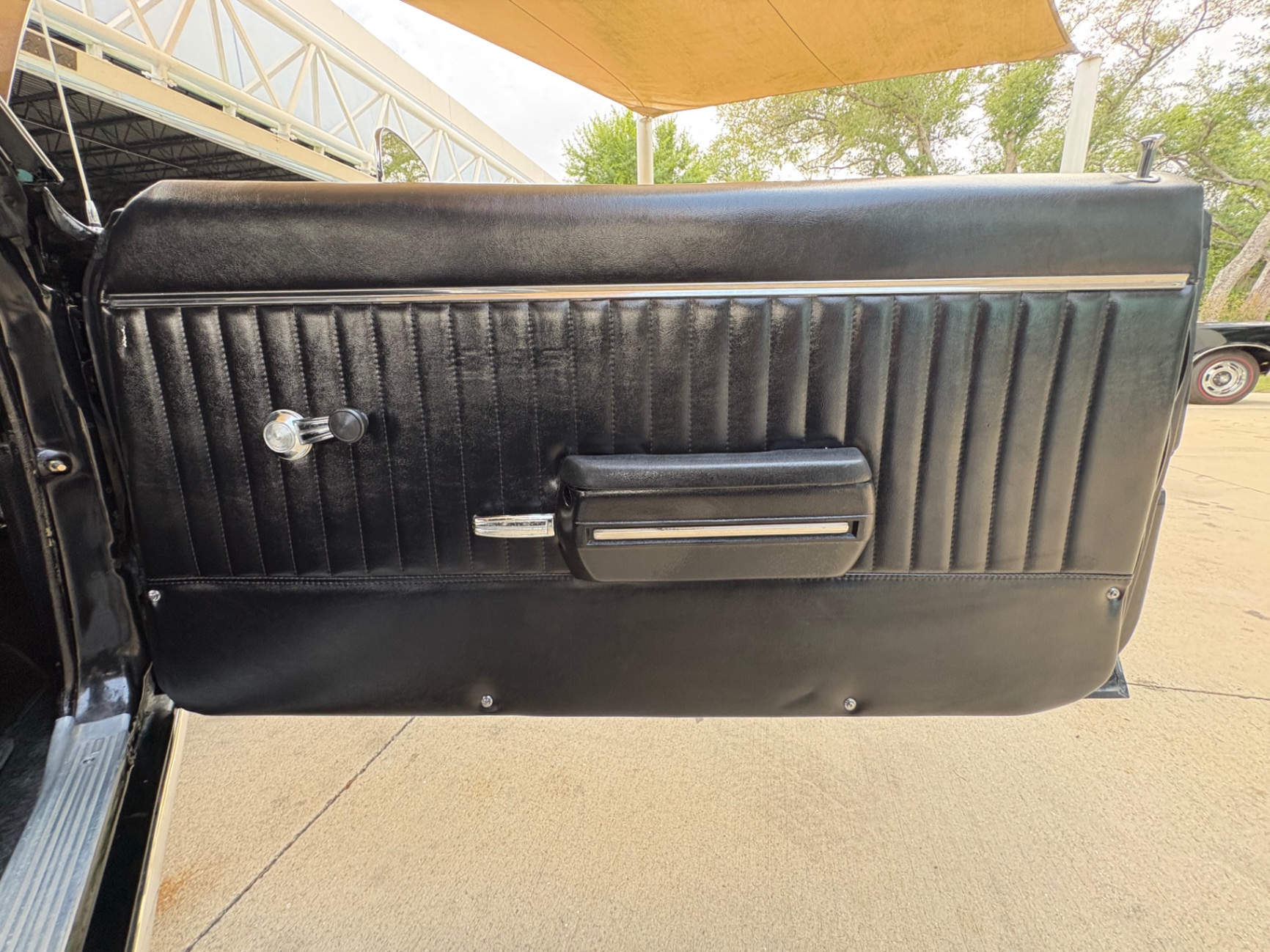
The door panels in the photos show clean, tight black vinyl with the characteristic vertical stitching pattern of the 1968 Camaro. The chrome trim pieces along the door panels are intact and straight.
Exterior
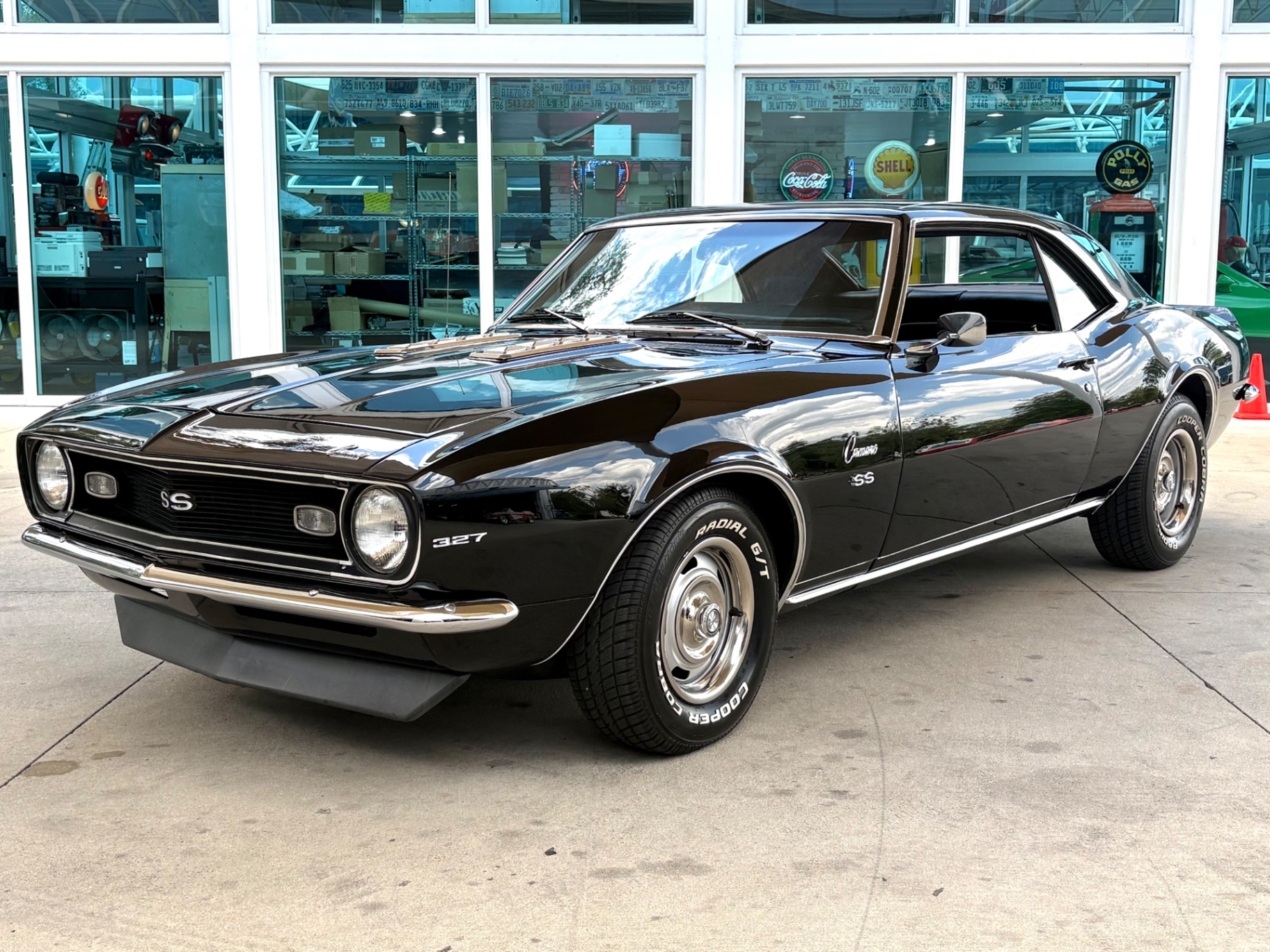
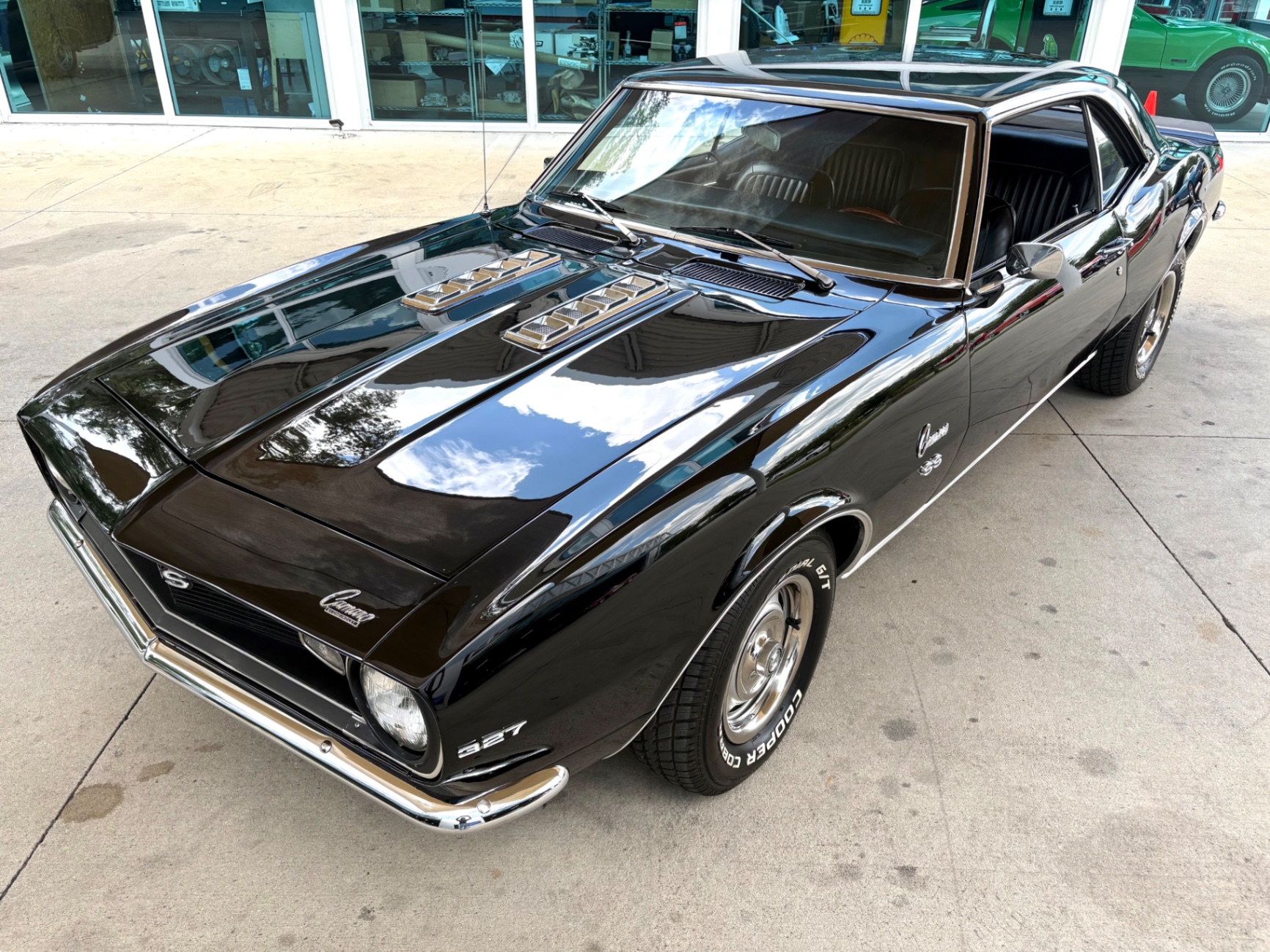
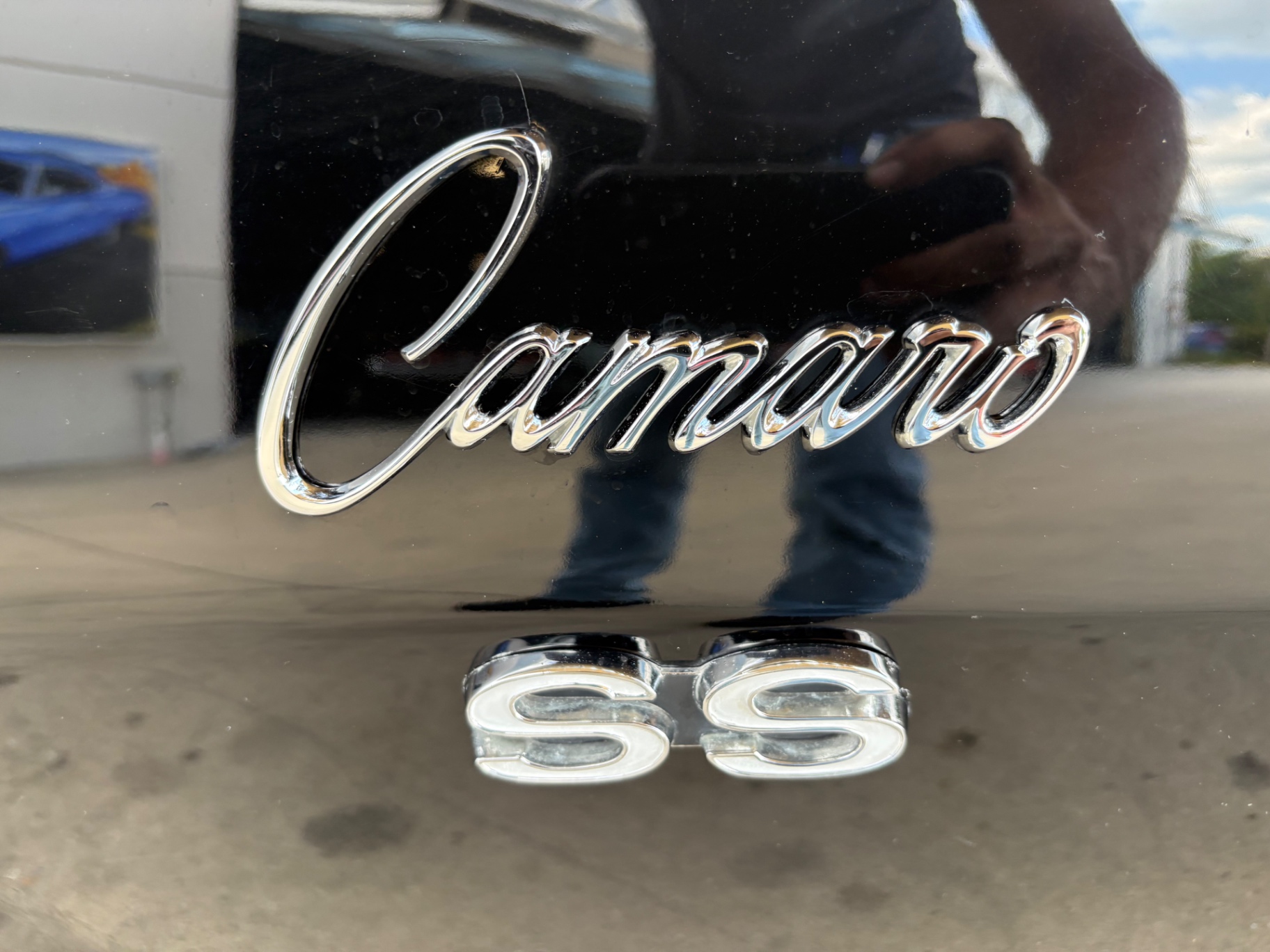
Black on a first-generation Camaro is a serious choice. The body lines of the 1968 Chevrolet Camaro SS are defined enough that the color reads as sharp and deliberate rather than flat. The chrome front and rear bumpers contrast cleanly against the black paint, and the SS badging on both ends is correct for the trim level. The rear of the car shows the full-width taillight treatment that is one of the design signatures of the first-gen — clean, symmetrical, and well-proportioned. The SS emblem centered in the rear panel is factory correct.
The cowl induction hood is the correct SS hood for this application. Chevrolet offered the cowl-style hood on SS-equipped Camaros, and having the correct piece on the car rather than an aftermarket substitute matters for both authenticity and resale. The hood vents are functional in design, drawing cooler air from the high-pressure zone at the base of the windshield. Rally wheels with the bright trim rings and center caps are the correct period wheel for an SS of this vintage, and they wear the Cooper Cobra radials evenly. The chrome bumpers are present front and rear and appear to be in solid condition based on the photos.
Conclusion
The 1968 Chevrolet Camaro SS 327 is not the rarest muscle car ever built, but it is one of the most honest. It was a genuine performance package built by a manufacturer that knew how to build performance cars, in a model year that represented the first generation at its most refined. This particular car pairs a correct factory SS package with a drivetrain that is genuinely enjoyable to operate — the 327 and T10 combination rewards drivers who know how to use a 4-speed, and the modifications made during the restoration improve the driving experience without compromising the character of the car.
At roughly six years out from its restoration, this 1968 Camaro SS 327 has had time to settle in and prove itself as a solid, road-ready car rather than a fresh build waiting for problems to surface. The undercarriage is clean, the body is straight, and the drivetrain combination is correct. This is a car for someone who intends to drive it.
To learn more about this 1968 Chevrolet Camaro SS 327 or to arrange an inspection, call Skyway Classics in Sarasota, Florida at 941-254-6608.
Disclaimer Information found on the website is presented as given to us by the owner of the car, whether on consignment or from the owner we bought it from. Some Photos, materials for videos, descriptions and other information are provided by the consignor/seller and is deemed reliable, but Skyway Classics does not warranty or guarantee this information. Skyway Classics is not responsible for information that may incorrect or a publishing error. The decision to purchase should be based solely on the buyers personal inspection of the vehicle or by a professional inspection service prior to offer or purchase being made.
1968 Chevrolet Camaro SS 327 — Black on Black, 4-Speed, Restored Driver
Why This Car Is Special
The 1968 Chevrolet Camaro SS 327 sits at an interesting crossroads in first-generation Camaro history. Chevrolet had refined the Camaro's body and chassis for its second model year, addressing several fit and finish criticisms from the 1967 launch car. The result was a cleaner, tighter package — and 1968 is widely regarded as the sweet spot of the first-generation run. The federally mandated side marker lights were new for '68, and the revised front end gave the car a sharper, more purposeful look. Underneath, Chevrolet continued offering the Super Sport package as a separate RPO (Regular Production Option) group, meaning the SS was a genuine factory designation, not a dealer badge job.
The 327 cubic inch V8 is a significant part of this car's identity. While the 396 big-block gets more headlines, the 327 small-block was Chevrolet's precision instrument — a high-revving, well-balanced engine that earned its reputation in Corvettes and Impalas long before the Camaro existed. In 300-horsepower trim, it was the more spirited of the two 327 SS options offered in 1968, paired here with a T10 close-ratio 4-speed manual transmission. This is a driver's combination, not a cruiser's. The T10 was a Borg-Warner unit known for strength and clean shifts, and it was the transmission serious buyers checked the box for when ordering.
The VIN confirms this is a Norwood, Ohio-built car — the "N" in the plant code position tells you that. Norwood was one of two primary Camaro assembly plants in 1968, the other being Van Nuys, California. Norwood-built first-gens carry a consistent following among collectors who track assembly details.
This specific car presents as an all-black driver — black exterior, black vinyl interior, black top — restored approximately six years ago and showing well for it. It is not a trailer queen. It is a car that was built to be used, was restored to be used, and is ready to be used again.
Features
- 327ci V8, 300 horsepower - T10 4-Speed Manual Transmission - SS Trim Package, factory option - Correct SS cowl induction hood - SS badging front and rear - Rally wheels with Cooper Cobra radial tires - Headers with Flowmaster mufflers - Chrome valve covers - Aftermarket tachometer - Grant GT steering wheel - Pioneer stereo head unit - Power steering - Black bucket seats - Center console - Black vinyl interior - Chrome front and rear bumpers - Clean undercarriage - Restored approximately six years ago
Mechanical
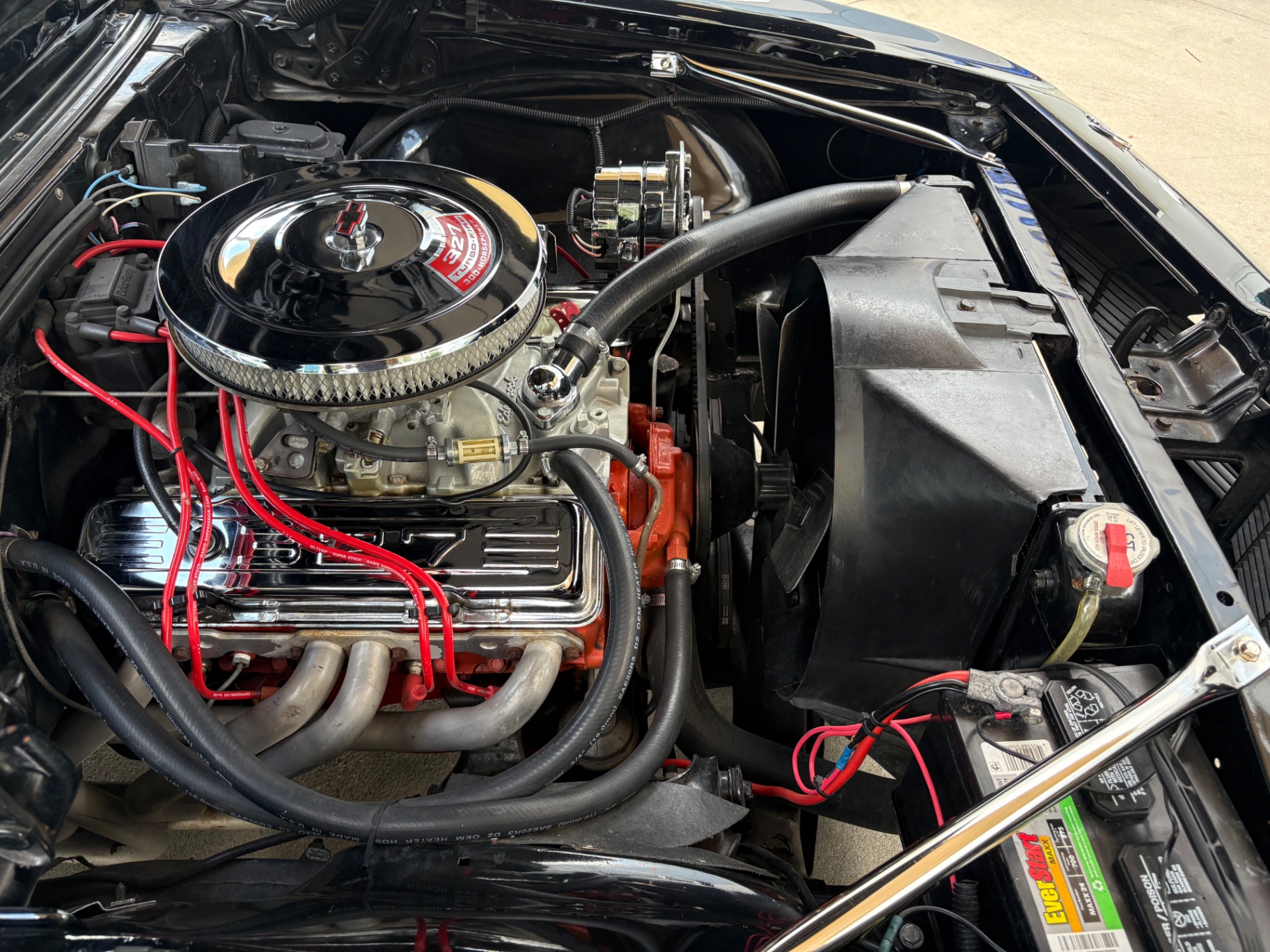
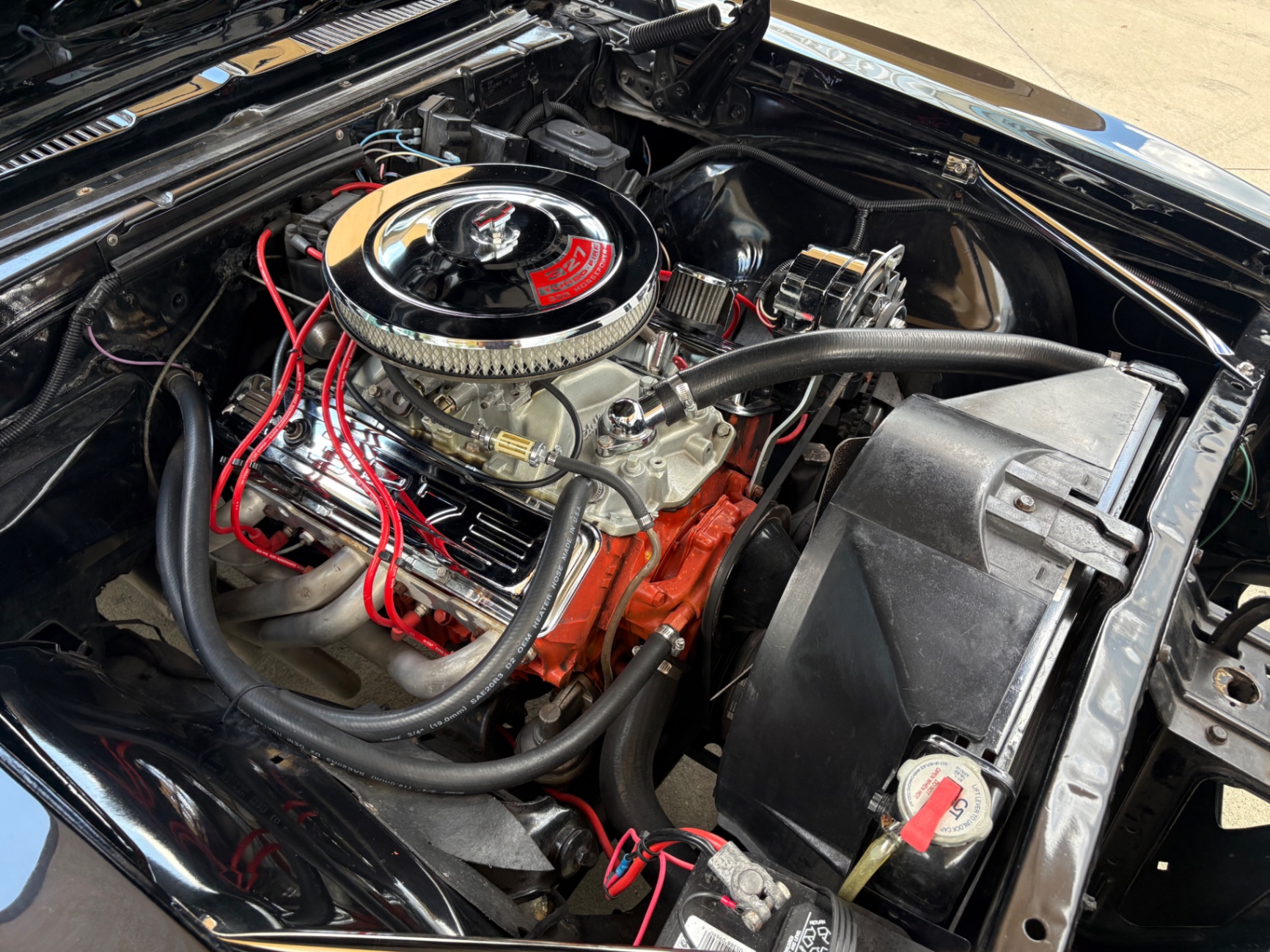
The 327 small-block under this hood is a 300-horsepower version, which in 1968 SS trim meant a four-barrel carburetor and a compression ratio that required premium fuel — this was a performance engine, not a commuter motor. The chrome valve covers visible in the engine bay are a nod to the show-car presentation common in the muscle car era, and they look correct on this black engine compartment. Headers have been installed in place of the factory cast-iron exhaust manifolds, feeding into Flowmaster mufflers out back. The result is a more free-flowing exhaust system that lets the 327 breathe more efficiently, and Flowmaster's chambered design gives it a tone that is audible without being obnoxious.
The T10 4-speed is bolted up and working as it should. Power steering is fitted, which makes the car significantly easier to drive in real-world conditions — early Camaros without power steering require serious effort at parking lot speeds, so this is a meaningful convenience for a car that gets driven. The undercarriage photos confirm what the seller states: this is a clean, solid car underneath. No visible rot, no heavy surface rust, no obvious patchwork. For a 56-year-old car, that matters more than almost any other single factor.
Cooper Cobra radial tires wrap the Rally wheels at all four corners. Cooper's Cobra G/T is a period-correct looking radial that carries the white-letter sidewall appearance collectors expect while offering modern radial construction — a reasonable compromise between looks and drivability.
Interior
The interior is all black vinyl — correct and appropriate for this car. Bucket seats up front, center console between them, and the whole package presents the way Chevrolet intended the SS to be experienced. The SS package in 1968 was about the complete sporting experience, not just the powertrain, and the bucket seat and console combination is central to that.
A Grant GT steering wheel has replaced the original. Grant wheels were enormously popular from the 1970s onward, and this one suits the car's character. It is not a factory piece, but it is a period-correct modification that fits the car's driver-oriented personality. An aftermarket tachometer has been added as well — mounted in the dash or on the column, depending on what the buyer sees in person — which is a practical addition for any car being driven with a manual transmission and a 300-horsepower engine. A Pioneer stereo handles audio duties, replacing whatever the original radio configuration was. Taken together, these modifications reflect a car that was restored for enjoyment, not concours competition.
The door panels in the photos show clean, tight black vinyl with the characteristic vertical stitching pattern of the 1968 Camaro. The chrome trim pieces along the door panels are intact and straight.
Exterior
Black on a first-generation Camaro is a serious choice. The body lines of the 1968 Chevrolet Camaro SS are defined enough that the color reads as sharp and deliberate rather than flat. The chrome front and rear bumpers contrast cleanly against the black paint, and the SS badging on both ends is correct for the trim level. The rear of the car shows the full-width taillight treatment that is one of the design signatures of the first-gen — clean, symmetrical, and well-proportioned. The SS emblem centered in the rear panel is factory correct.
The cowl induction hood is the correct SS hood for this application. Chevrolet offered the cowl-style hood on SS-equipped Camaros, and having the correct piece on the car rather than an aftermarket substitute matters for both authenticity and resale. The hood vents are functional in design, drawing cooler air from the high-pressure zone at the base of the windshield. Rally wheels with the bright trim rings and center caps are the correct period wheel for an SS of this vintage, and they wear the Cooper Cobra radials evenly. The chrome bumpers are present front and rear and appear to be in solid condition based on the photos.
Conclusion
The 1968 Chevrolet Camaro SS 327 is not the rarest muscle car ever built, but it is one of the most honest. It was a genuine performance package built by a manufacturer that knew how to build performance cars, in a model year that represented the first generation at its most refined. This particular car pairs a correct factory SS package with a drivetrain that is genuinely enjoyable to operate — the 327 and T10 combination rewards drivers who know how to use a 4-speed, and the modifications made during the restoration improve the driving experience without compromising the character of the car.
At roughly six years out from its restoration, this 1968 Camaro SS 327 has had time to settle in and prove itself as a solid, road-ready car rather than a fresh build waiting for problems to surface. The undercarriage is clean, the body is straight, and the drivetrain combination is correct. This is a car for someone who intends to drive it.
To learn more about this 1968 Chevrolet Camaro SS 327 or to arrange an inspection, call Skyway Classics in Sarasota, Florida at 941-254-6608.
Disclaimer Information found on the website is presented as given to us by the owner of the car, whether on consignment or from the owner we bought it from. Some Photos, materials for videos, descriptions and other information are provided by the consignor/seller and is deemed reliable, but Skyway Classics does not warranty or guarantee this information. Skyway Classics is not responsible for information that may incorrect or a publishing error. The decision to purchase should be based solely on the buyers personal inspection of the vehicle or by a professional inspection service prior to offer or purchase being made.
1968 Chevrolet
Camaro SS
Why Choose Skyway Classics?
Explore our curated inventory of classic and collector cars—thoughtfully selected, ready to drive, and supported by experts who make ownership simple.
Expert Curation
Every vehicle is hand-selected by our experts for quality, authenticity, and investment potential.
Fast Transactions
Streamlined buying and selling process with quick financing and immediate delivery options.
Only National Dealer With Classic Service & Repair
We’re the only national dealership that services and repairs the classics we sell—before and after the sale.
Nationwide Network
Access to our extensive network of collectors, restorers, and classic car enthusiasts nationwide.
Concierge Ownership Support
From financing and insurance to paperwork, shipping, and titling—we handle the details so you can enjoy the drive.
Passion-Driven Service
We're classic car enthusiasts first, providing personalized service with genuine passion for the hobby.